Contact:
N° of hits since January 2006:
This page uses images which re-size to maintain a constant appearance across all browsers and resolutions. Please allow scripts or ActiveX controls to run if asked.
Jump to:
Food Environment, housing and transport Wildlife Sports Clothes Descriptions of people Profanity Social structures Names Oddments Common colloquialisms
To start off with, I'm beginning with a Britpick which really should be in the Oddments section, but since it bears on the readers' understanding of the actual text of this page I'm going to lead with it. I have read that in the U.S. "quite" means "very", but here in the U.K. it only means that in front of an "ungradable" word which describes a state which is either on or off. To be quite dead or quite finished or quite done is to be entirely dead or finished or done, just as in the U.S., and to be "not quite all there" (also called "away with the fairies") is to be foolish, dreamy and deluded; but a single "quite" on its own in front of a gradable word is a tepid description which means something like "somewhat but not totally". In particular if you say something is "quite good" or "quite nice" you are probably just being polite about something that isn't very good at all.
Because the English language is very confusing and iregular, it does however become an intensifier, even in British English, if you double it. Someone who is "quite, quite drunk" is very drunk, but someone who is merely "quite drunk" is probably a little more than moderately drunk – enough for it to be noticeable, but not much more than that.
The word "Quite" used as a statement on its own can also mean "I agree with the point which you have just made". Also note that we say "quite an X", not "quite the X".
This page is intended as a sort of FAQ sheet to aid American and other non-British fan-writers trying to give their stories a convincing British setting. It lists common (and some less common) differences between U.S. and U.K. usage and customs which seem to pull a lot of writers up, plus a range of common British expressions which will help give your dialogue an authentically British feel. More will be added as I think of them.
Note that the differences covered on this page are for the most part mainstream usages common in London and Edinburgh and in "B.B.C. English" – there are also regional variants not all of which I know. Also note that over time, American usages tend to catch on in Britain: in 2010 for example I heard two instances of "pissed" being used here in the American sense. This resource is intended mainly for writers of Harry Potter stories set in the period 1960–2000; the closer you get to the present day, the less anomalous the anomalous Americanisms listed here become.
It must be horribly difficult to write stories in a convincing foreign setting – personally I wouldn't even know where to start writing a story set in the U.S. – but it's good manners to at least make the attempt, instead of just pinching the whole thing and re-working it for an American setting. And that's what this page is for – to make the attempt easier.
Why does it matter? To begin with, linguistic and cultural misunderstandings can have unexpected and even catastrophic results. The Louise Woodward "British nanny" case in 1997, for example, was confused by the fact that (according to some reports) the nanny stated to American officers that she had "popped the baby on the bed", which they took to mean that she had struck the baby, although in British English "popped" refers to a brief casual movement or placement of something; e.g. "I'm just popping down to the shops" or "I'll just pop this pie in the oven."
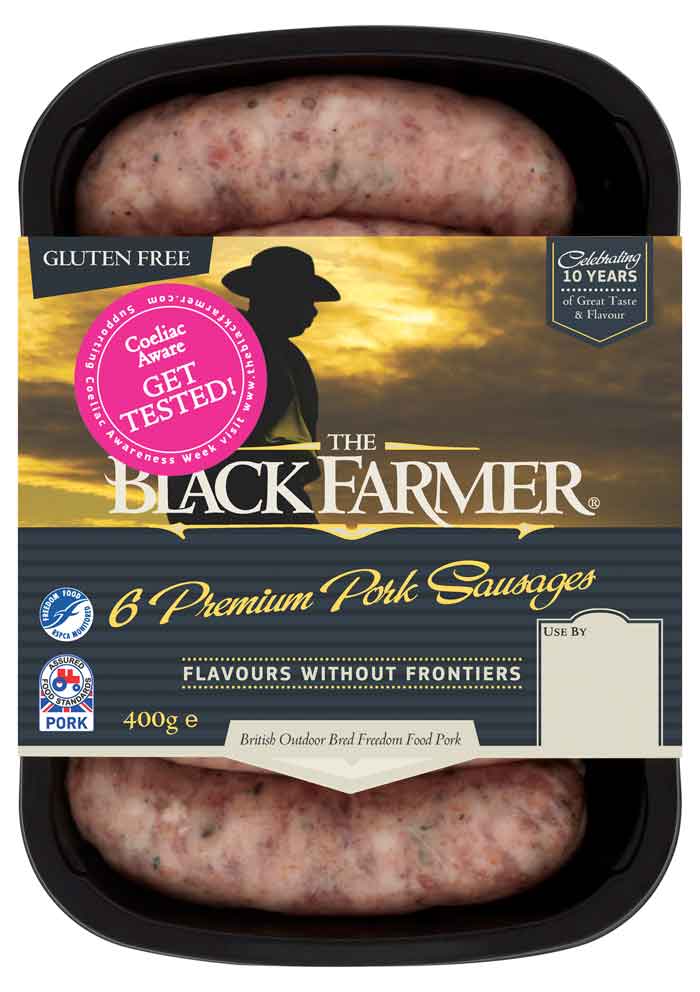
Six years earlier, we had the infamous Orkney Satanic Abuse scandal, in which nine children were violently ripped from their wholly innocent families for five weeks, and an elderly minister who was almost completely crippled with arthritis was accused of clambering down into a steep-sided quarry and there conducting Satanic rites whilst dressed as a Teenage Mutant Ninja Turtle. Meanwhile, a large family who really were being subjected to vicious (but not ritual) abuse by their deranged father were clumsily handled, and siblings were wrongly accused of abusing siblings and split up and scattered to care homes, where at least one was then raped by a member of staff. This spectacular mess supposedly came about in part because one little girl innocently told an American-born social worker, newly arrived in Britain, that her father had slaughtered a sheep, boiled up the blood and fed it to his family, and the social worker failed to recognise the process of making the popular British breakfast-sausage called "black pudding", and instead interpreted this scene as a Satanic rite.
Secondly, it causes a certain amount of resentment in Britain when the U.S. media apparently can't even show a generic British commedy like The Office without re-writing it in an American setting – and a whole lot more serious distress and resentment when American film and T.V. companies re-write our real-life military victories as if they had been won by Americans.
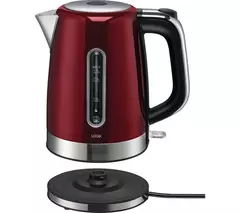
Thirdly, and perhaps most importantly from the author's point of view, having too many Britpicks is a good way of alienating a large part of your audience and losing about a quarter of your potential readership, not out of anger or resentment but simply because they cannot find the story convincing. When one is reading a story, one wants to feel as if the world it describes is real, to sink into it and believe it; but a glaring cultural anomaly, such as somebody calling their mother "Mom", or couples talking as if the age of consent was eighteen, or children playing baseball and calling it baseball instead of rounders, or somebody placing a kettle on the hob instead of plugging it in to an electricity power source, brings British or Australian or European readers up short and makes them go "Eh??" That ruins the flow of the story and stops it from feeling convincing, and if it doesn't feel convincing to a large part of your potential audience, they probably won't bother to come back for the next chapter.
Readers might also be interested in the Separated by a Common Language blog, which examines linguistic differences between British and American English. Be warned though that this is a serious academic site which uses a lot of linguists' jargon. There is also the interesting HP Britglish blog, where non-British Potterverse fan-writers can ask questions about British customs and speech, and I myself have a supplemental essay on British references in the Harry Potter books which looks at incidents and background details in the books which refer to British products, popular advertising and cultural tropes which non-British readers may not be aware of. Potterverse fanwriters may also be interested in my essay series Location Location, which examines likely real-life British locations for many of the fictional places in the Harry Potter books.
Readers may also appreciate the whoohoo! website, where you can translate standard English sentences into various British dialects.
Food (which seems to be an absolute cultural minefield)
"Cutlery" or sometimes "silverware", not "flatware". Food which requires cutting with a knife is eaten with the knife in the right hand and the fork in the left (unless you are left-handed, in which case it's vice versa): forks are not swapped from hand to hand in the American manner, and are only held in the right hand when eating food such as macaroni cheese which doesn't require cutting.
In British English an "entree" is another word for a "starter", a small initial snack by which you "enter" a three-course meal: it never refers to the main course as it does in the U.S..
Virtually all British homes use an electric kettle to heat water, and have done since at least the 1960s, which I gather is not the case in the U.S. owing to the electricity supply in the U.S. not being powerful enough. Stove-top kettles of the kind used in the U.S. are almost completely obsolete here, although a few people keep one as an emergency backup, in case the power for some reason goes off, and I am told that people who have the sort of expensive cast-iron Aga or Rayburn range which is always on often use hob kettles, since the hotplate is on anyway. Electric kettles rarely if ever whistle when they boil, but nearly all switch themselves off once they've boiled to protect the element from boiling dry, usually with a coloured light on the handle which switches on and off when the kettle itself does. If the element does fail, replacements are readily available. Coffee percolators and similar, though, are probably a lot less common here than in the States. Also note that since about 1990 it's been very rare to see a kettle which directly plugs into the wall. Instead, you have a round or oval base with a shielded plastic and metal prong about an inch across sticking up from the middle or edge of it. That base is connected to the wall by a short lead, and usually just stays there permanently. The kettle has a matching hole in its underside and to switch it on you sit it down on the base so that the prong on the base engages with the hole in the kettle, and then flick a switch on the handle of the kettle. The kettle itself may be jug-shaped or a more traditional squat, round "kettle" shape. In Britain a "hamper" is a large, usually wickerwork basket usually used for holding food, as in the phrases "picnic hamper" and "Christmas hamper". I gather in the U.S. it's used for what is here called a "laundry basket". Things Britons eat at breakfast:- Hot or cold cereal of all kinds. We are rather less fond of heavily-sweetened fancy cereals than seems to be the case in the U.S. (although they do exist here), and rather more fond of things like All-Bran and meusli. Porridge (or porage) may be taken with milk or cream, or plain, but is usually salted in Scotland and sugared (often with Golden Syrup, which is a kind of light molasses) elsewhere. Bread or toast with marmalade, jam or honey or sometimes (especially in poorer areas) chocolate spread. Occasionally with Marmite, which is a savoury spread, and is an acquired taste. Bread, fried bread or toast with one or more of the following: bacon, sausages, egg (boiled, fried, poached or scrambled), black pudding, mushrooms, baked beans (which I'm told are a lot more flavourful and zingy than the U.S. version) and/or fried tomatoes. Note that fried green tomatoes are impossible here, unless you have personal access to a greenhouse, because nobody sells green tomatoes. In Scotland you can also get white or red pudding, sliced haggis and/or Lorne sausage (which is a flat, skinless square of beef sausage-meat, and horribly greasy). N.B. I gather that in the U.S. "pudding" refers to some kind of custard thing. In the U.K. "pudding" can refer to dessert in general, or to a semi-solid paste-like dessert made of e.g. sago or tapioca cooked in milk, or to a range of both sweet and savoury dishes with suet in and often cooked by steaming, including suet pudding (which is a sweet dessert), steak and kidney pudding (meat cooked in a suety shell), Yorkshire pudding (puffy discs of batter, eaten with meat and cooked by roasting) and various types of sausage. Black pudding is basically a thick sausage made from meat-fat and congealed blood, usually pork in England and beef in Scotland, but sometimes also mutton: it may sound awful, but a good one is slightly chewy and has a pleasant, nutty taste (a bad one is sticky and gritty and tastes like the burnt bits in the bottom of the pan). Red pudding and white pudding are similar but contain increasing proportions of oatmeal. White pudding is basically just a slightly meat-flavoured, chewy white stodge; sometimes with raisins added to make it fruit pudding, which is even worse. Black, red, white and fruit pudding is always cut into thick slices when eaten at breakfast. Haggis may be a fat sausage-shape eaten sliced at breakfast, or may be served whole as an evening meal with "neeps and tatties" (swede/turnip and potato), when it takes the form of a rugby ball-shaped sausage made from a sheep's stomach (or nowadays often an artificial sausage skin): either way the stuffing is minced mutton-offal, oatmeal, nutmeg and white pepper. Kosher (made with offcuts of muscle-meat rather than offal) and vegetarian (made with nuts) versions exist. A bad haggis just tastes of pepper; a good one is quite pleasant, but it's never exactly a gem of world cusine and is often eaten just so people can "feel Scottish". Be aware that there is a tradition in Scotland of winding up innocent Americans by trying to convince them that the haggis is an actual animal. It isn't. All of these peculiarly British sausages may also be eaten whole, with or without batter but nearly always with chips, as a fast-food. [Fast-food haggis is generally sausage-shaped rather than rugby-ball shaped.] Other than haggis, they are rarely eaten at a sit-down dinner. Kippers (smoked herring fillets). These are now uncommon, and are not generally taken with anything else except bread and butter. They are usually either grilled, or poached in hot water or milk. However, I am assured that some people cook and serve them with home-made savoury custard: I can't even begin to imagine what this tastes like. Traditionally-smoked kippers are slightly orange. Most modern, mass-produced kippers are virulently orange, and are dyed. There is also a Scottish variant called an Arbroath Smokie, which is made from haddock rather than herring. Kidneys or kedgeree (a dish of smoked fish, hard-boiled eggs and rice), but usually only in old-fashioned aristocratic houses or in very posh hotels. French-style croissants with jam. Half a grapefruit, served in its skin and scooped out with a spoon. This was very popular in the 1970s and '80s. Tea, coffee and/or whole fruit-juice (usually orange). Note that tea is nearly always taken with milk. Lemon tea is known but very uncommon, and milkless black tea is rare. I've been told that when Americans say they put cream in tea, sometimes they mean cream, and sometimes they mean milk. I don't know anybody here who takes tea with cream, although builders are rumoured to drink it very strong and made with condensed milk. Nobody ever puts honey in tea, just sugar or artificial sweeteners. Tea here is a hot drink: iced tea is known of but is very very rare. British coffee is usually horrible, sickly instant stuff, taken black or with milk: cream though known is uncommon. Powdered coffee-whitener is likewise known but uncommon. Leftovers from last night's dinner. Nothing. Many Britons don't eat breakfast at all. Things Britons don't eat at breakfast (but Americans apparently do):- Waffles. As at 2015 these seem to be catching in big supermarkets on but I don't know if anybody eats them for breakfast, and they're not common at any other time, except as an Americanised affectation. [By an "affectation", I mean something which is eaten primarily because the eater wants to "feel American", in the same way that people eat haggis to feel Scots. There are plenty of American foods – hamburgers, American-style pizzas, Coke, chowder, Ben & Jerry's etc. – which people in Britain eat just because they are nice.] Eating them with maple syrup is out unless you're quite wealthy, as it's stunningly expensive. Pancakes. British pancakes are generally thin crepes about 10" across, wrapped around some sort of filling. We often eat pancakes as a dessert (generally with sugar, lemon and thick cream – not with chocolate chips). Wraps (pre-packaged savoury pancakes wrapped around a filling such as chicken-tikka) are a common snack and there's a fleet of up-market (and uncommon) fast-food vans which sell French-style pancakes with sweet or savoury fillings which are also sometimes eaten as a snack lunch: but no-one that I've ever met or heard of eats pancakes for breakfast. You could find Brits who ate sushi or cold leftover macaroni-cheese for breakfast, but not pancakes, except possibly in Scotland. "Scotch pancakes", as opposed to mere pancakes eaten in Scotland, are like American breakfast pancakes only smaller: I don't know if anyone eats them with breakfast or not. Strawberries, except when diced up small on cereal, or in the specific instance of the champagne breakfast. This is a university tradition whereby a group of young, probably upper-class students stay up the whole night and then have strawberries-and-cream and champagne for breakfast at about 5am. Other than that, Britons do not usually eat fruit at breakfast (fruit tends to be a lunchtime or evening thing), except sometimes a half-grapefruit, or small pieces of fruit (banana, apple, strawberries or whatever) chopped up as a garnish on meusli or other cereal. Pop-tarts (usually – although I'm told there was a craze for them recently among teens and twenties, and some people have retained a taste for them). "Biscuits and gravy". The thing Americans call a biscuit is roughly equivalent to a savoury scone, but scones here are generally a sweet afternoon-tea food, and gravy is a savoury sauce used to moisten meat. Ham – again, this is seen as a lunch or afternoon-tea food. Actually I myself occasionally do eat ham at breakfast because I gave up bacon because of its high cholesterol content – but I don't know anybody else here who does, and I got the idea from an American story. Different nomenclature:- The things Americans call muffins, we call "American muffins". An official English-style muffin is a kind of sweet bun, not as spongy as the U.S. version. When I was younger, however, in the 1970s and '80s, there was a great deal of confusion between different areas of England and Scotland over how to label scones, muffins etc, and the thing I knew in London as a muffin then was a sort of round, thick disc of very rubbery batter with little holes in the surface, similar to a crumpet or drop-scone and served hot with melted butter. I believe this is what Americans call an "English muffin". The things Americans call cookies, we call biscuits. "Cookie" here is generally used only of a sort of soft, moist, chewy biscuit (most frequently a chocolate-chip cookie, marketed as a consciously American affectation), whereas most biscuits are crunchy. And we take biscuits with tea or coffee, not milk. Some people like to dunk their biscuits in their tea or coffee; there is a thin, hard, sweet oblong plain biscuit called a Rich Tea Biscuit which is produced expressly for that purpose, because it holds together and doesn't instantly dissolve into mush when wet. The breakfast thing which Americans call "biscuits and gravy" doesn't exist here. The closest British thing to that sort of American "biscuit" would be a savoury scone, but scones are eaten as a sweet treat in the afternoon. Gravy here is a light brown, floury sauce which tastes of stock and is used to moisten otherwise dry meat and/or potato dishes. The kind of "gravy" in "biscuits and gravy" would here be called a Bechamel or white sauce with pieces of sausage and/or mushroom in it. The sticks of fried potato which Americans call French Fries, we call chips. "French Fries" in Britain refers only to a specialised type of chip, short, thin and crunchy and generally only served by American-owned burger bars. The thin, flat, crunchy ovals of fried potato which Americans call chips, we call crisps. "Candyfloss", not "cotton candy". "Toffee", not "taffy". What Americans call candy, we call sweets. "Candy" is here mainly reserved for certain types of sweets made of almost pure sugar, such as candyfloss, or for a type of caramelly near-chocolate, or for candied peel (fruit-rinds chopped up small and preserved in sugar, used when baking fruit-cakes). Candy cones, for example, are flat-backed sweets about an inch long, moulded into low-relief representations of ice-cream cones and made out of some sort of fondant which has a similar texture to chocolate, but which is tinted tan for the "cones" and white or pink for the "ice-cream". The shop which sells sweets is usually called a "sweetshop" or (at least in Scotland) a "sweetie shop". A very upmarket sweetshop, of the kind that sells handmade champagne truffles, is called a "confectioner's". The sort of fruit preserve which Americans call jelly, we call jam – except in old-fashioned Glaswegian dialect where "jeely" is sometimes heard. When most Britons (except some Glaswegians) say "jelly" they mean the rubbery, wobbly dessert which Americans call Jello, or a semi-solid sauce such as cranberry jelly. You do occasionally see "jelly" used of a jam which has no lumpy bits in it, but this is unusual; especially since nearly all British jam does have lumpy bits. "Apple sauce" here is a condiment you put on roast pork. A peeled and boiled cooked-apple dessert or pie-filling here is called stewed apple (as opposed to baked apple, which is cooked whole with the skin on). A stewed apple dish which has been mashed or beaten until very smooth is called apple purée – unless it is blended with whipped cream in which case it is apple fool, although "fool" is more usually made with raspberries or gooseberries. "Spring onions", not "scallions". "Gherkins", not "dill pickles". "Pickle" used on its own here usually refers to sweet pickle, a brown, sweetish savoury relish with chewy little lumps of turnip in it. "Pickles" in the plural means the whole class of pickled relishes – sweet pickle, gherkins, piccalilli, pickled onions, pickled walnuts etc.. There is an artistic modern office block in the City of London which is known as The Gherkin because of its shape and colour. "Courgette", not "zucchini". "Rocket", not "arugula". "Coriander leaves", not "cilantro". "Aubergine", not "eggplant". "Cracker" or "crispbread", not "saltine". "Rapeseed oil", not "canola" – and the plant it comes from is called oilseed rape. "Double cream", not "heavy cream", and "single cream" not "half and half". "Extra-thick double cream" is semi-stiff, and not really pourable. We also have "clotted cream", which has a slightly crunchy crust and a consistency like medium-firm butter: spreadable but keeping its shape, and much too stiff to pour. It keeps for months if sealed and in the fridge, and is used to make the filling in cream and jam scones. The things Americans call "bell peppers" are here more often called salad peppers, sweet peppers or red, green and yellow peppers. "Corn" in Britain is or at least used to be a general collective term for cereals such as wheat, barley and rye. The plant which Americans call corn may be called corn here too, especially when served as corn-on-the-cob, but is more often called sweetcorn or (especially when found in pet-food) maize. I've been told that what we call by the Turkish word "kebab" – a Near-Eastern dish involving reconstituted meat-paste which is spit-roasted, sliced and served with salad in a sort of purse made of unleavened bread – is in the U.S. more commonly known by the Greek term "gyro". Here a "Giro", thus spelled, is a sort of cheque which you cash through the Post Office – usually, a Benefit cheque from Social Services. "Lunchbox", not "lunch pail". Beware of the fact that "lunchbox" is also a slang term for the bulge a man's genitals make in his trousers, and that "meat and two veg" is both a standard British dinner, and slang for male genitalia. "Mince" is meat, usually beef, which has been mashed up by being forced through little holes: I think Americans call it ground meat. Confusingly mincemeat, however, is a rich mixture of candied fruit and nuts and often brandy, mixed with suet. [In the Middle Ages mincemeat was a mixture of meat and fruit, and the meat got dropped.] Mince pies are usually small (two or three bites each), round, sweet pastry cases filled with the fruit sort of mincemeat and eaten at Christmas; but in Scotland, at least, a mince pie may also be a large savoury pastry crust filled with minced beef. Also note that in Scotland "mince" is also a slang term for something hopelessly incompetent, such as a very bad football team, and everywhere in the U.K. to "make mincemeat" of some person or thing is to conclusively defeat or destroy them. You can also buy, at least in Scotland, a thing called a fruit slice which is a flat sheet of pastry with a thick slab of solidified fruit mincemeat, the consistency of very soft cake or very firm jam, stuck to one side. This is served mincemeat-side down and cut into oblong pieces about 3" by 1½", sometimes with white icing on top. Note that, confusingly, the British dish called Shepherd's Pie is not a pie. It consists of a deep dish of minced mutton with vegetable chunks such as onion and carrot, topped with a layer of mashed potato and then often sprinkled with grated cheese and finished off under the grill. Cottage Pie is the same but with beef instead of mutton. They're a bit like a moussaka except that the potato topping is mashed, not sliced. The expression "cold cuts" is not used here – "cold meats" is sometimes heard, but usually it's just sliced-whatever. Ham in particular usually does come ready-sliced, so one generally just says "ham" rather than "sliced ham", although "a ham" is a solid block of meat, and "ham on the bone" is a whole ham joint. The nomenclature of mealtimes themselves can be a social minefield. Some people call the midday meal "dinner" and the evening meal "tea": some call the midday meal "lunch" and the evening one "dinner". Some people call the main evening meal "supper", some use "supper" to refer to a snack eaten at bed-time. It used to be the case, although it is less clearcut now, that calling the midday meal "dinner" marked you out as working-class: it also tends to be a northern thing. The kind of "tea" which is a main evening meal should not be confused with "afternoon tea" or "high tea", which are formal, rather posh snack-meals with tea (the drink) and little cakes and sandwiches, eaten mid-afternoon. A snack eaten mid-morning may be called "elevenses" although this term is now rather old-fashioned. A sweet course eaten after a main meal may be called "dessert", "sweet", "pudding" or "afters". Calling it "afters" is always a bit common, often self-consciously and deliberately so. "Pudding" is sometimes seen as slighty common and is near-universal in the north of England but it is also, perversely, what they usually call it at posh public schools and in very upper-class circles, where "dessert" would be seen as pretentious. Some families have private local useages, such as reserving "dessert" for the selection of fruits, nuts and sweets nibbled at the end of Christmas dinner. A container you carry a packed lunch in is a "lunchbox", not a "lunch pail". Beware of the fact that "lunchbox" is sometimes used as a slang term for the bulge a man's genitals make in his pants. Popular tastes:- Fish-and-chips, and its almost equally popular relative chicken-and-chips, comes from a Fish Shop when in the south of England (not to be confused with a Fishmonger's, which sells fresh, raw fish), a Fish-and-Chip Shop in the north of England and from a Chip Shop or Chippie in Scotland. This reflects cultural differences in the menu. English Fish Shops sell several varieties of battered fish, chicken plus a few other items. Scottish Chippies sell only one or two varieties of fish but a whole list of different types of battered sausage, black, red and white pudding and haggis (all usually in batter), pies, king ribs (a sort of spicy, oblong burger, likewise battered), burgers, quite probably pizza and pasta as well and in some cases (mostly in Glasgow) deep-fried Mars Bars or other chocolate bars. I don't know what they call Chip Shops in Wales. Note that in Scotland, at least, anything which you buy from a chippie and which has chips with it is a "supper" – so e.g. a chicken supper is a piece of fried chicken plus chips, regardless of the time of day (even though in normal usage supper is a late evening meal). Fish and chips sold in the north of England often comes with mushy (processed) peas, which look a bit like lumpy guacamole. We are not nearly as prone as Americans are to serving food on sticks, aside from shish kebabs and ice-lollies. Battered sausages and deep-fried Mars Bars are just wrapped in grease-proof paper and held in the hand. Whatever you get from a Scottish Chippie, on the West Coast it is likely to be served with vinegar, and on the East Coast with brown sauce (usually diluted with vinegar), just referred to generically as "salt-'n-sauce". I don't know how far north the practice of serving brown sauce extends. Food which you buy from any sort of fast-food outlet, or have delivered ready to eat, is called a Take-Away in the south of England, a Take-Out in the middle of England and a Carry-Out in the north of England and Scotland. I don't know what it's called in Wales and Northern Ireland. Curry is at least as popular a fast-food meal as fish-and-chips. Pizza runs them a close third. For home delivery, pizza is not quite as big a thing here as it is in the U.S.; people who send out for a home-delivered meal usually send for a full Indian or Chinese dinner. Note that if a British person says "I could murder an Indian", unless you have strong evidence that they're a white supremacist they mean "I'm very hungry and I want to wolf down an Indian take-away dinner". Chips (our sort of chips) are quite often eaten in a soft bread-roll, often with mayonnaise or tomato sauce. This is called a chip butty. Crisps are also sometimes eaten as a sandwich filling. Non-Jews in Britain rarely eat bagels, except as an Americanised affectation – though they are available from larger supermarkets, and becoming more common. Ditto peanut butter is available here but not particularly popular – and doughnuts, although quite well-liked, are nowhere near as big a thing as in some parts of the U.S., and are usually the kind that's like a soft, pillowy dome of dough with jam or confectioner's custard in a concealed pocket inside. Italian and French fancy breads, such as ciabatta and baguettes, are widely available and very popular. Indian, Italian and Chinese restaurants are extremely common; Turkish (usually in the form of kebab shops) and Thai food is also popular. Other regional cuisines are less so; you might get one Mexican or Moroccan or Greek restaurant to every fifty Indian. And for some reason even the most authentic ethnic restaurants usually serve standard British desserts such as ice-cream, rather than anything more exotic. Hash-browns in their various forms are not eaten here under that name, although potato patties and fried potatoes are occasionally found. Grits are unknown here. Note that in Britain the word "hash" on its own refers to cannabis, not a foodstuff. If you say "hash-browns" to most Britons over about forty-five they will probably think you mean Sixties-style chocolate brownies laced with cannabis. Bologna sausage does not exist in Britain. The terms "liver sausage" and "liver paté" refer to a pre-cooked, usually pork-based pink object superficially resembling bologna, but it comes in an inedible plastic skin rather than a sausage skin, is fairly soft and is eaten spread, not sliced. The pork-derived British sausage-meat product which most closely resembles bologna is probably spam, a pink, rubbery block of low-grade processed ham which comes in an oblong tin. Another pre-cooked luncheon-meat which comes in oblong or slightly pyramidal tins is corned beef (as beloved of Molly Weasley in the Harry Potter books), which is only vaguely related to the dish called corned beef in the U.S.. I'm told it may in fact be what in the U.S. is called corned-beef hash. At any rate it's darker but even more violently pink than spam, and coarse and fibrous where spam is smooth. Corned beef is laden with fat and salt, and both smells and tastes like cheap dog-food: it bears about the same relationship to American corned beef as rubbery American processed cheese bears to a nice bit of Stilton. Neither spam nor corned-beef is even particularly cheap. Their only advantage is that they are very quick to prepare, since all you need do is tip them out of the tin and slice them. Spam is slightly less obnoxious than corned beef, as it is less aggressively salty and is at least tolerable if you put a lot of pickle on it. Minced beef (which Americans call ground beef) is popular, especially in Scotland, and beef sausage-meat is popular in Scotland although uncommon elsewhere. Nevertheless, and despite what you may have heard about the Roast Beef of Old England, both beef and lamb in Britain are expensive, and the sort of good-quality beef which can be eaten roasted tends to be a treat meat rather than a staple. Low-grade stewing beef is reasonably affordable but the staple meat of Britain is probably pork (closely followed by chicken) – just as beef seems to be the staple in the U.S., and mutton in some parts of Australia. Indeed, earning a good salary (itself derived from the word for salt, from a time when salt was a rare and expensive spice) is sometimes referred to as "bringing home the bacon". Chicken is in fact probably the most common meat eaten just as unprocessed roast or grilled or fried meat, but pork is commonest in processed meats: if you look at a supermarket display of cold sliced processed meat for sandwiches, for example, you might see two or three beef-derived products, four or five poultry and thirty pork. The standard default pie-meat is either pork or very low-grade beef. Beef, lamb and turkey are more expensive than pork or chicken, but lamb (actually the meat of a young adult sheep, not a baby) is available everywhere, in every butcher's shop and supermarket and restaurant, which I gather is not so in the U.S.. Venison and duck used to be very expensive but are getting cheaper and are now available in many large supermarkets, although venison tends to come as sausages or burgers rather than plain meat. Guinea fowl and even pheasant is available, but only in the more upmarket supermarkets (such as Sainsbury's or Waitrose) or fancy butchers. White veal is almost never eaten in Britain outside of certain restaurants, because of the humanitarian issues it raises. It would be easier to find venison, or even ostrich, in the average British supermarket than veal. In fact, most major supermarkets, at least in Scotland, carry venison at least occasionally, but I don't think I've seen veal on sale since the 1970s. I'm told that humanely reared "rosy" veal is available in England but I've never seen it on sale in Scotland. Paté de foi gras has similarly been written off the menu due to humanitarian concerns. Note incidentally that while the posh supermarket called Waitrose is very common in south and central England it's rare in Scotland and the north of England, and there were no Waitrose stores at all in Scotland prior to 2006. Up until 2015 there were so far as I know only three Waitroses in Scotland, two in Edinburgh and one in Glasgow, although the company is now in the process of expanding its stores in Scotland and northern England. I don't know if there are any in Wales or Ireland at all. If you want to show somebody in Scotland shopping in a really posh Muggle food store prior to 2006, go with Lakeland. Despite starting out with the unpromisingly industrial-sounding name Lakeland Plastic, this firm has evolved into a department store which sells inventive, ingenious household and kitchen equipment and also fancy food supplies such as chocolates, unusual cooking oils and flavourings, imported sweets etc.. Or they could go to a Marks & Spencer's Food Hall which sells the same sort of fancy food items as Lakeland along with more ordinary (but pricey) fare such as bread, vegetables and meat. Sweetcorn (maize) is eaten as niblets, either frozen or from a tin, or as whole corn-on-the-cob; creamed corn and polenta are more-or-less unknown here. Peas are usually eaten as whole seeds from frozen, as few people now have the time or patience to shell fresh peas from the pod, or in the form of whole edible pods (mange tout or Sugarsnap peas); but some people, especially from the north of England, prefer processed or mushy peas, which you get in a can. Most people in Britain now spread their bread with good-quality margarine, often olive oil-based, rather than butter. Where butter is used, the block it comes in is nearly always called a "pat" or a "block", not a "stick". A British pat of butter equates to two American sticks: half a pound or, since decimalisation, 250g. Miracle Whip salad dressing does not exist in Britain. Tesco apparently tried to market it between January 2006 and April 2007, but it didn't catch on. We use thin runny salad dressings and oils of all kinds – often including fancy things like balsamic vinegar – mayonaisse, and a strange runny pale yellow thing called salad cream, which I'm told is a mixture of mayonaisse, mustard and vinegar. I came across a reference in a fan story to somebody eating beignets and I actually had to look them up on the internet to find out what they were. They apparently exist in France, and I wouldn't rule out some fancy French patisserie in London selling them, but they really aren't a British thing. We tend to use different breeds of hens from those kept in the U.S., with the result that hens' eggs sold in Britain are almost invariably brown – ranging from light beige to dark tan and usually speckled – although you used to be able to get white hens' eggs up to the 1970s iirc. Since about 2005 some supermarkets also carry pastel blue, light pink or pale green eggs from specialised breeds of hen such as Cotswold Legbars. Duck eggs, widely available in the larger supermarkets, always seem to be chalk white in Scotland (despite the expression "duck-egg blue"), but I'm told pink and blue versions exist in England. "Free-range" eggs, from hens given at least some freedom to roam outside, are widely available and very popular on humanitarian grounds, even though they are slightly more expensive than battery/caged or barn eggs. [True battery farms were banned from the start of 2012 and replaced by a minimum standard for "enriched" cages, but some farms lagged behind on complying, and the new cages are still not that great.] Root beer is not drunk here. I believe that dandelion-and-burdock, as a soft-drink flavouring, is similar. However, locally produced, natural dandelion-and-burdock drinks probably went out of fashion in about 1930, and the mass-produced kind only became common again since about 2005. In Scotland there is a whole class of locally-produced, slightly fizzy (and usually violently-coloured and sickly-sweet) soft drinks which are known generically as "cola", and soft drinks in general, including colas, are often just called "juice" in the east of Scotland and "ginger" in the west. The colours of these Scottish colas are not only violent but often quite eccentric: there's a raspberry-flavoured one which is a dark, almost navy blue, for example. Scots are very fond of a sweet, bright-orange fizzy drink called Irn Bru: this is similar to the English Tizer and Lucozade, but much more popular. Note the popularity and ubiquity of Ribena, a blackcurrent fruit squash. "Squash" in the UK rarely refers to a gourd. Its usual meaning is a fruit-flavoured concentrate which you buy in a plastic or glass bottle, then pour about an inch into the bottom of a drinking glass and add water: although Ribena and some other squashes are also sold in small portion-sized cartons, ready-diluted and with a drinking straw. I don't even know what Americans call fruit squash, or whether they drink it, although it's one of the commonest forms of soft drink here. It can sometimes be referred to as [something]ade, e.g. lemonade, but that term is much more commonly reserved for ready-made-up, fizzy soft drinks such as Scottish "colas" (see above): often in alarmingly electric colours, although lemonade itself is always colourless. Home-made lemonade with actual lemon juice is much rarer than in the US. [The vegetables Americans call squashes are rarely eaten here, other than butternut squashes, marrows and courgettes a.k.a. zucchinis. Pumpkins are sold for making Hallowe'en lanterns, but are not eaten, despite what it says in Harry Potter.] In 2013 when I was first working on this, some American scriptwriter – in a film I think – had just committed a minor but irritating faux pas by having a British character drink a pint of "bitters". In fact, you drink a pint of "bitter", which is a type of beer, in the same way you would drink a pint of stout or lager. "Bitters" (as in e.g. Angostura Bitters) is a strong sour soft drink used as a mixer with spirits, and if you drank a pint of it your mouth would turn inside out. Some common British snack foods:- Pasty. This is a circle of pastry folded in half over a filling and then pinched together to form a crinkly ridge along the top. A true Cornish pasty is roughly triangular in cross-section – about the same shape as a Portuguese Man o' War jellyfish – and contains mutton or beef with potatoes and other vegetables, but you can get pasties with almost any filling, such as cheese and onion or chicken and mushroom. Some pasties, especially mass-produced, machine-made ones, are folded over flat with the crinkly bit along the edge rather than across the top, because they're easier to pack that way. Flat packets of flaky pastry containing any savoury filling are also sometimes called pasties, at least in Scotland. [N.B. Cornish pasties were originally designed as a sort of edible lunch box for tin-miners. There are cases on record of large pasties being made with a pastry barrier inside which divided them into two compartments, with a savoury course at one end and a dessert at the other, and the pastry rib was used as a handle and then discarded, so that the miners wouldn't get soot all over the bit they were actually eating.] Scotch pie. This is a purely Scottish delicacy which is eaten nowhere else (no-one else would want it). It consists of a circular, palm-sized, high-walled case made of a strange, greyish, rubbery, slightly translucent pastry. Inside, right at the bottom, is a dollop of greyish-white filling (theoretically mutton, but can be anything – macaroni cheese is a favourite) covered by a lid of the same translucent, rubbery pastry, set right down inside so there's a high wall of pastry round the edge of it containing nothing much but thin air. Often implicated in incidents of food-poisoning. Take-away pies – usually a square of pastry folded over a filling. Similar to the flat, flaky, Scottish sort of pasty, but generally much better quality. Samosas, spring-rolls (what Americans call egg rolls, although here that would be a bread-roll with a fried egg in it), bhajees and other Asian snack-foods. In Scotland you can sometimes get the famous Mrs Uni's haggis samosas and haggis pakoras, although not for a couple of years after May 2005, when her original Edinburgh factory burned down. Production resumed fifteen months later but I'm not sure if they're still doing the haggis samosas. Kebabs (what Americans call gyros) – especially when eaten by rough youths as an accompaniment to cans of lager. Pizza – often in the form of a burnt, rubbery, deep-fried orange triangle which bears little resemblance to anything an American or an Italian would be prepared to eat. I'm told however that the best British pizzas are more authentically Italian-style than U.S. ones are. Note that in Scotland Morrisons (large chain of moderately high-class supermarkets) sells haggis pizza. [Also note that Morrisons has only existed under that name since 2004/5: before that the same stores were called Safeway.] Sandwiches, rolls and wraps (savoury pancakes) – if bought in supermarkets, often come with exotic fillings such as Thai crispy-fried duck. In Scotland, baked potatoes with a savoury filling, such as prawn curry or chicken and sweetcorn (maize) in mayonaisse. In the 1970s Edinburgh was full of dedicated baked-potato shops, but these are now uncommon. Note that popcorn is not all that popular in Britain, and when it is eaten it is usually cold, heavily sweetened, wrapped in a sealed plastic bag and was made days or even months ago. Differing tastes in sweets and desserts:- British chocolate tends to be milky and sickly-sweet, made mostly with generic vegetable fats rather than cocoa, and is in fact not recognised as chocolate in continental Europe – although there are a few brands of good-quality organic chocolate (most notably Green & Black's and Lindt's) which are made with proper cocoa-solids. Hershey Bars and a few other iconic American sweets are available here, but are neither common nor popular. Cheap mass-produced American chocolate is produced with soured cream and so tastes quite different from ours, which isn't. Traditional Scots go in for some very sickly sweets – especially tablet, which is basically a big slab of crunchy fondant icing. The sweet called "rock" in Scotland is a small stick of semi-hard fondant, about as thick as your little finger, ribbed lengthwise and in solid soft colours, especially pink or green. In England "rock" is a much bigger stick of white sugar-paste, about an inch in diameter, hard enough to chip teeth, tinted pink or stripey on the outside, and generally sold at the seaside and usually with words ("A present from Blackpool" or some such) or pictures running right through the centre. Thanks to the suggestive mid 20th C comic songs of George Formby, a "little stick of Blackpool rock" is occasionally found as a euphemism for a penis. We do not put marshmallows in cocoa, unless it was being done consciously as an American affectation. In the U.S., celebratory cakes made to mark birthdays, weddings etc. seem to be always sponge cakes. In the U.K. they are traditionally fruit-cakes, often iced with fancy scenes: although supermarkets do now sell sponge birthday cakes, presumably because they are cheaper to make and store. Note that British Christmas cake is a heavy, iced fruit cake, often infused with alcohol, which is much more moist and flavourful and less violently-coloured than the hated U.S. version. Also note, the weird modern American custom of forcing the bride's face into the wedding cake, or of destroying the cake instead of eating it, does not exist here. On the contrary, since fruit cake lasts virtually forever, especially if it has alcohol in it, people sometimes take slices of such celebratory cakes home and preserve them as souvenirs. Also the bridesmaids walk behind the bride, not in front. Americans seem to be very fond of cinnamon as a general flavouring. We aren't. Other than at Christmas, when it is a popular component of mulled wine and e.g. mulled-wine-flavoured pudding, cinnamon here is almost exclusively a cooking-spice – for sprinkling on melon, for example. "Pumpkin spice", whatever that is, is also not a thing here. Ice-cream in England tends to be from one of the big chains – Walls, Lyons Maid (which was hugely popular in the 1970s, then was bought up by Nestlé in 1992, after which the name and brand went into mothballs until revived by another firm in late 2008) or one of the American ones such as Haagen-Dazs or Ben & Jerry's. Carte d'Or is one of the commonest suppliers of the sort of ice-cream you buy in a big plastic box to stick in the fridge. Scotland, however, has a proportionately larger Italian community than the rest of the U.K. and this has raised the bar for quality ice-cream, so that there are many small firms, both Scots and Italian in origin, producing individual top-quality brands – Mackie's, for example. Most of these top-brand ice-creams come as tubs for the fridge, not as cornets, but there are some little Italian shops in Scotland who do their own-brand cornets you can buy to eat in the street, or who have their own vans. Where I lived in West Calder, for example, 2008-2016, there was a little privately-owned ice-cream van which came round on a Sunday – all year round, even in heavy snow – selling cones of very good quality plain vanilla ice-cream (just that, no lollies or alternative flavours) and a few garnishes such as chocolate flake sticks and trickles of raspberry sauce, very cheap. [On the down side, you may also hear mention of the "Ice-Cream Wars". This was a late 20th C gangland feud in Glasgow between rival gangs who were using ice-cream vans as a front to sell drugs. And note that Britons generally say ice-CREAM, not ICE-cream.] The things Americans call popsicles are here called "ice-lollies", except possibly in the case of a soft clear plastic tube containing frozen water-ice, with no stick handle. A "mivvie" is or was an ice-lolly which has a block of creamy white ice-cream in the centre, coated in water-ice, although as at 2023 the term seems to have fallen out of use, although the thing itself is still popular. A "choc-ice" is an ice-lolly or hand-held oblong block of creamy white ice-cream coated in chocolate. From about 2010 onwards a very popular brand is Magnum, which sells elaborately flavoured choc-ices onna stick. "Lollipop", not "sucker" or "chupa chup". "Boiled sweets" not "hard candy". In Britain "sherbet" is not a drink but a white, sweet, fizzy powder which pops and crackles in the mouth. When I was a kid in the 1960s and '70s you could buy flying-saucer-shaped sweets about an inch and a half across, made of pastel-coloured, edible rice paper and filled with sherbet, or liquorice sticks (or hollow liquorice straws) with tubs of sherbet to dip them in (called a Sherbet Dab) – these things went out of production for a long time but since about 2000 the saucers, at least, have been revived for the nostalgia market. In the U.K. editions of the Harry Potter books the lemon sweets which Dumbledore eats are not lemon drops but sherbet lemons. These are yellow, rugby-ball-shaped, semi-translucent sweets made of a hard, sour lemon-flavoured sugar-paste, hollow inside and filled with sherbet – a bit like the American sweet called a Zot but sweet on the outside and sour inside. Black treacle, which is used as a cake-ingredient and sometimes as a spread, is very similar to what Americans call molasses, except it can be obtained from either sugar cane or sugar beet (a type of turnip), and according to Delia Smith the flavour of treacle isn't as rich as molasses (I've never eaten molasses so I can't comment). It's near-black and not nearly as sweet or as runny as golden syrup (which Americans don't have either, and which is a pale gold form of molasses obtained when sugar-cane is first refined), but not as bitter or as stiff as black-strap molasses. Treacle-toffees are rather black, bitter-tasting toffees. Alcohol:- Britons tend to drink far more alcohol than Americans. Nearly every restaurant or formal dinner includes wine, or sometimes a jug of margharita. A place where you go to drink alcohol is often called a "bar" in Scotland, the same as in America (although pub quizzes are still called pub quizzes). In England, however, it is usually a "pub" (short for public house). In England, a bar is a counter from which drinks are served, and by extension the room in which it is sited – there will usually be two or three bars (sometimes also called lounges) making up one pub. A shop which concentrates on selling bottles of alcohol to take home is an "Off-Licence" (because unlike pubs, they do not have an "on-licence" which would entitle customers to drink alcohol on the premises) – generally known in Scotland as an Offie. You can also buy alcohol to take home from supermarkets and convenience stores which have an off-licence – but these are not referred to as Off-Licences in the same way. Pubs in England are social hubs where people go to chat. Bars in Scotland tend more towards mere drinking dens: they have improved over the last forty years or so, but I can still think of at least one well-known Edinburgh bar where it's difficult to walk about because the floor is so sticky. Most pubs have juke boxes, but a substantial minority have live musicians: actual silence is rare. Pub quiz nights and karaoke evenings are common. Many modern pubs are based around a theme – although actual theme parks on the American model are rare. Beer is generally drunk at room temperature. Real Ale, which is rich in flavour and not fizzy and usually comes in glass bottles, is very popular, and any decent off-licence or supermarket will sell a dozen or more types of Real Ale, as well as the more mass-produced canned beers and lagers such as Tennants. Scots whisky and Irish whiskey (note the different spelling) are much drunk, but American whisky (bourbon) is much less popular. Whisky is divided into Single Malts, which are made from single varieties of grain, and blends: Single Malts are generally both much smoother, much stronger and much more expensive. Gin and tonic is very popular, as is vodka. I gather that in the U.S. there is a fizzy soft drink called Mountain Dew. Do not, ever, ask for Mountain Dew in Ireland unless you know what you're getting into. It's a nickname for the illegal, home-brewed, up-to-170-proof potato vodka called poteen. I've tasted "the rare old mountain dew" just once – it was very smooth and pleasant, but so close to being 100%-pure alcohol that it had a thick texture like olive oil. Please note that the American distinction between "hard" and "soft" cider does not exist here. In spring 2015 I saw a soft drink being labelled as cider and advertised as a kids' drink but this was a first and so far only example: that aside, ALL CIDER SOLD IN THE U.K. IS ALCOHOLIC. A non-alcoholic cider would be regarded, and labelled, as just a type of apple-juice, and the thing Americans call soft cider would be cloudy apple-juice. The strength of British cider generally ranges from around 4.5% alcohol by volume to 8.5%, most typically 7.5-8%although it seems to have an effect even greater than its alcohol content would suggest. Be aware that in some areas, especially in the English South-West (the home of cider-making), conning innocent American tourists into getting blinded on what they think is just apple-juice is a local sport. Scots tend not to drink cider as much as the English do, and in the past used sometimes get into trouble through not realizing how lethal it can be (there's a traditional folk-song about this, called Johnny Jump-Up). The strongest of all is the raw, locally-made West Country cider called scrumpy – there's a modern folk-song about this, to the tune Morning Has Broken, which begins "I bin drinkin' scrumpy//Although it were lumpy...." After scrumpy, the worst offender was probably White Lightning, which is no longer made but used to come in cans. My mother once drank half of a small can of White Lightning and ended up lying on her back on the floor, half in and half out of the kitchen, giggling uncontrollably. Hot cider is not normally drunk here – it would be like an American drinking hot Budweiser. If you want a British character to be drinking a hot, mildly alcoholic drink, it's usually best to go for mulled wine (heated red wine with spices in it). However, I am assured that as at 2015 hot spiced cider is catching on in Wiltshire and Oxfordshire. But it will be alcoholic – or as alcoholic as a hot drink can be, since alcohol readily evaporates when heated. Kosher wine used in Jewish ceremonies in Britain (at least when I was younger – I haven't been to a Jewish service for a while) tends to taste like Ribena and kick like a mule. I believe Palwin's N°9 is especially notorious. The unhealthy practice of binge-drinking – getting so drunk you are staggering and puking in the gutter – is fairly common among middle-aged men, and teens and twenties of both sexes. There are very, very stringent laws against drinking and driving. If people are planning to get home by car, therefore, one person in the party will be designated as the driver, and restricted to no more than one moderate-sized alcoholic drink in the course of the evening. All age-related restrictions on drinking alcohol are lifted at eighteen, except that Britons may not own a business which sells alcohol until they are twenty-one. Britons aged sixteen and seventeen may legally drink beer, cider or wine with food in a restaurant, or in a pub or hotel so long as they are in a room used to serve food and somebody else is buying the alcohol. Children may drink alcohol at home, in moderation and under adult supervision, from five years old in England and from birth in Scotland, and until 1992 the commonest commercial brand of "gripe water", used to settle the stomachs of colicky infants, was strongly alcoholic. Environment, housing and transport Major geographical and national boundaries:- Americans (and others) sometimes get confused about the structure of the British Isles and of the United Kingdom. Geographically, the British Isles are an archipelago off the northwest coat of continental Europe, consisting of the mainland of Great Britain plus Ireland, the Isle of Man, the Isle of Wight, Anglesey, Sheppey, the Scilly Isles, the Hebrides, Orkney, Shetland and thousands of smaller islands around the coast. The Channel Islands are not normally considered part of the British Isles, because they form a separate group very close to the coast of France. Conversely, the British Islands are those islands which form part of the U.K., which is to say Great Britain plus Nothern Ireland (but not the Republic of Ireland), the Isle of Wight, Anglesey, Sheppey, the Scilly Isles, the Hebrides, Orkney, Shetland and the many smaller islands around the coast, plus the Crown Dependencies – that is, the Isle of Man and the Channel Islands – which are independent for local purposes but share their defence and foreign policy with the U.K.. Great Britain is so-called not because it is important but because it is big, to distinguish it from Little Britain (a.k.a. Brittany or Bretagne), a coastal province of western France with which Great Britain has close historical and linguistic ties, although it does not count as part of the British Isles. In addition, the Romans referred to Britain and Ireland as Britannia Major and Britannia Minor. Politically, the United Kingdom of Great Britain and Northern Ireland includes Great Britain itself, six of the nine counties of the historical province of Ulster in Northern Ireland, and most but not all of the surrounding smaller islands. Great Britain itself is divided into the countries of England, Scotland and Wales plus Cornwall, which is considered to be part of England for most political purposes but is largely a separate entity culturally. The outline of Great Britain has been compared to an old witch riding a pig and shouting at a parrot. If you look at it that way, the witch's head, down to the chin, is Scotland; the pig's trotter at bottom left is Cornwall and the rest of its foreleg the English counties of Devon, Somerset and Dorset which, with Cornwall, make up the West Country; the pig's face and ear is Wales and all the rest is England. Ireland is the parrot, with Northern Ireland forming its face, and occupying the north-easternmost sixth of Ireland. Please remember that the terms "England" and "Britain" are not interchangeable. England, although only marginally bigger than Scotland in terms of area, has five times the population of Scotland, Wales and Northern Ireland combined but it is still a separate country, not just a synonym for Britain or for the U.K.. Also note that the adjectival form of Scotland is "Scots" or "Scottish" – "Scotch" is another word for Scottish-made whisky. It's sometimes used as a synonym for "Scottish" in slangy phrases such as "Scotch mist and fried snowballs" (meaning, "there's nothing for dinner but water") and the generally repellant Scotch pie, but this is incorrect in standard, mainstream English. Wales was annexed by England during the Middle Ages, and then in the late 15th C the half-Welsh Tudor family conquered England and married into the English and Scottish Royal lines. Following the childless death of Elizabeth Tudor (a.k.a. Elizabeth I), Queen of England, the English throne passed to her cousin James VI of Scotland, who then became also James I of England. England and Scotland were politically united in the early 18th C after the Scottish government invested all its money in a failed settlement in Central America and went bankrupt, but it is often forgotten that Scotland is the senior partner, and that the King of Scots inherited the English throne, not vice versa. Within the U.K., Scotland has always had a separate legal system, and since 1998 it has had its own parliament at Holyrood (in Edinburgh) which deals with purely Scottish issues, although the parliament at Westminster (in London) still deals with international issues even if they include Scotland. Northern Ireland and Wales have Assemblies, although these have less independent power than a parliament, and Northern Ireland to some extent has its own legal system although this is less distinctive than the Scottish one. The internal affairs of England are decided in Westminster. This leads to a certain amount of ill-feeling over the "West Lothian question" – that is, the fact that a Scottish MSP can vote on the internal affairs of England, but an English MP may not vote in the Scottish Parliament. Cornwall used to have its own parliament, the Stannery, which could not make laws but did have the right to veto laws made in Westminster. The Stannery has not sat for centuries, but theoretically it could still do so. The southern and western five-sixths of Ireland are a completely separate country, called Southern Ireland or Éire. Although it has cultural ties to the rest of the British Isles it is politically entirely distinct, and is a republic. The Isle of Man, and the Bailiwicks of Jersey and Guernsey (the Channel Islands), are Crown Dependencies, which means they are technically possessions of the British Crown but they are politically separate, are not part of the United Kingdom, and make a tidy living as tax havens. The Bailiwick of Guernsey has its own smaller Dependencies on the islands of Alderney, Sark, Herm, Jethou, Brecqhou and Lihou, as well as Guernsey itself. Culturally, the Channel Islands are as much French as they are British. You do not need, and never have needed, a passport to pass between the different countries which make up the United Kingdom – and while the U.K. was a member of the European Union, 1973–2020, you don't even need one to travel to the countries of the European Union, either. Even after Brexit you don't need, and so far as I know have never needed, a passport to pass between Northern Ireland and the Republic of Ireland, although at the height of the Troubles there were border checks. The countries of Great Britain and Ireland are sub-divided into counties, shires and districts many of which are themselves the remnants of small independent countries. You may hear references, for example, to the Kingdom of Fife – or to the Yorkshire Separatist Movement. Much ill-feeling was caused in the 1970s when the Ted Heath government abolished many of the ancient boundaries for administrative reasons – though many have since been reinstated after furious local protests. Everywhere in the British Isles people now understand English (which was once described as being the result of the efforts of a Norman man-at-arms to get off with a Saxon barmaid). However, there are several other native languages spoken in Britain. In Scotland we have Lallans (Lowland Scots) and Doric (in the Aberdeen area) – both Anglo-Saxon-derived tongues closely related to standard English and collectively described as Scots, but usually considered to be sufficiently distinct from English and from each other as to qualify as separate languages rather than mere dialects. Doric, for example, is about as close to mainstream English as Dutch is to German, and probably about as close to Lallans as Dutch is to Afrikaans. Confusingly, there was an extinct dialect in the English Lakelands which I was told was also called Lallans. When I was a student in the 1970s somebody taught me a greeting in this dialect: "Aisha marra, fash'e ganna?", which means "Good morning mate, where are you going to?" There are also five Celtic languages spoken here, divided into two linguistic families. Scots Gaelic (pronounced Gallic), Irish Gaelic (pronounced Gaylic) and Manx form the q-Celtic or Goidelic family, and Welsh, Cornish and Breton (spoken in Brittany) form the p-Celtic or Brythonic family. The two Gaelics are also sometimes collectively called Erse, a Scots corruption of the word "Irish". Irish Gaelic is mainly spoken in the south and west of Ireland, and Scots Gaelic mainly in the far north and west of Scotland. There is nobody left who speaks only a Celtic language and no English, but there are plenty of people for whom Welsh, or Irish or Scots Gaelic, is their first and main language. In theory the last native speaker of Cornish (that is, the last person who was raised in a continuous Cornish linguistic tradition and for whom Cornish was their main or only language) died in the 1790s and the last native Manx speaker in the 1970s, but there are flourishing Manx and Cornish revival movements and a new generation of children are being raised to be bilingual in English and Cornish or Manx. With the possible exceptions of Cornish and Manx, all of these languages, including mainstream English, are further subdivided into many dialects. The Channel Islands also have their own dialects derived from old Norman French: Jèrriais and Dgèrnésiais on Jersey and Guernsey and Sercquiais, a dialect of Jèrriais, on Sark. Auregnais, another Norman-derived language once spoken on Alderney, is now extinct. There was also a now-extinct Norse language called Norn spoken in Orkney and Shetland, and attempts are being made to revive it. Romany is spoken by British true gypsies, and "traveller's cant" by traditional travelling communities of (usually) Scots or Irish origin. Some communities or trades also speak, or have spoken in the past, deliberately obscure private languages such as rhyming slang, back-slang (a language especially favoured by butchers between the wars, in which a tuppeny bone for the dog becomes "owt ynnep enob rof eht gody") or Polari (used by gays when being gay was illegal, and still preserved as a cultural curiosity). Everybody in Britain, apart from some recent immigrants, understands the "received standard" form of English spoken on the TV – but not everybody can speak it. There are still a lot of people who speak using accents or dialect words which render them unintelligible to anybody who comes from more than about fifteen miles away. Some people speak in accents and dialects which make them unintelligible to people from three streets away (I'm thinking particularly of the Granton schemes in Edinburgh, or the fisher community in Aberdeen). Speakers of Celtic languages, however, generally also speak a very pure, clear form of English, and indeed standard "B.B.C. English" was modelled on the English spoken as a second language by Gaelic-speakers living in Inverness. If you want to get an idea of some of the major dialects spoken in various regions of Britain, incidentally, you can play around with the dialect-translation facility at whoohoo!. The idea that Scotland, Ireland, Wales, Man and Cornwall are Celtic countries and England isn't is something of a myth. There are only a very few and tiny almost-pure Celtic populations, mainly in the far west of Ireland, and the whole of the rest of Britain, recent immigrants aside, is populated by a mixture of Celtic and Norse/Germanic (with Celtic blood predominating), although it's different Norse in different areas; Vikings in Ireland and Yorkshire; Danes and Saxons in middle England; Angles in Kent and so on. Genetically, the English are just as Celtic as the Welsh or the Irish – it's just that they lost their Celtic language (which was similar to Welsh) and the more outlying areas kept theirs. Not only do the different countries which make up the U.K. have rather different cultures, but so do the major cities. For example, Glasgow has a lot of knife crime, but if you are struggling with heavy packages somebody will help you, and Glaswegians still tend to think it's wrong to comment on someone else's appearance, and even very rough types generally do not do so. Edinburgh has less violent crime but has more thieves to the square yard than any other place I've ever lived, and many of the young people openly jeer at or even stone anybody they consider to be in any way funny-looking. Liverpool in particular is strikingly different from the northern English towns around it (so much so that there is a joke in the north of England that you need a passport to get through the Mersey tunnel), probably because it is to a large extent an expatriot Irish rather than an English city. Climate:- The British Isles are an archipelago of around 5,000 islands, only two of which – Ireland and Great Britain – are very large. [N.B. The related term "British Islands" does not include the Republic of Ireland.] Mainland Great Britain is only about 600 miles long, but so complex is its coastline and so numerous its outlying islands that between them the British Islands have over 20,000 miles of coastline – without even needing to get very fractal about it. Perhaps the oddest thing about Britain is that if you start in the south of England and then travel north, you begin in lush green countryside, and then the further you go north through England the more "northerly" the countryside gets; high moorland and bare, lowering, rolling hills covered with purple heather. Then you cross over the border into Scotland, still travelling north, and suddenly it's all lush and green again, and except that the mix of trees is slightly different you might be back in the south of England. The landscape doesn't turn "northerly" again until you hit the Highlands. Also, despite its southerly position, London has one of the nastiest climates in the U.K., because most of the city lies in the bottom of a valley alongside the Thames. The damp air from the river means that hot weather is sticky and claggy and cold weather penetrates to the bone. I've been told that a visitor from nothern Canada who found themselves in London in winter said that it was the coldest they'd ever been. Edinburgh, on the other hand, although it is hundreds of miles to the north, has a relatively mild climate (aside from the occasional 100mph storms which rip off whole roofs and chimney-pots and dump them into the street – but that only happens once in three or four years). When it gets too hot, the sea-mist, the haar, rolls in and cools the city down, and when it's too sticky and damp the sea-breeze freshens it. Some people seem to think the north of England is a sort of European Canada, covered in forests. There are forests nearly everywhere in the U.K. – including artificial, planted coniferous ones all over Scotland, and a natural, deciduous one just north of London – and there are some good big forests in Wales and the north of England (most of them recent artificial planting) as well. But a quick glance at the Ordnance Survey Map will show that the wooded areas in northern England tend to be concentrated into a few large forests without much in between, whereas southern England and Scotland are scattered almost everywhere with woodland. The "typical" northern English scene is sheep country – all bare, rolling hills, scree, heather and bracken – and far from being dull, the play of light and the shape of the hills are so interesting that this area is one of the greatest glories of the British landscape. Note that the Forestry Commission, the body which oversees commercial tree-planting, has recently begun to seek to plant a more natural mix of native trees and to restore native woodlands: but for most of the 20th century it just covered large areas of Scotland, Wales and northern England with serried, corduroy ranks of monocultured foreign conifers, usually either larch or Sitka spruce. Britain, including Scotland, has a fairly equitable climate. The north of Scotland is very windy but it isn't too cold, except Perth and the Cairngorms, and right up in Orkney and Shetland. Spring in Scotland is bright and breezy, summers are if anything uncomfortably hot (and usually soggy), and autumn is full of golden light. Late summer and autumn in the north-west is also full of midges. From the mid-1980s up until 2012 (which was spectacularly wet and refilled the water-tables) England was increasingly dry in summer, and there was a hosepipe ban more or less every year, even when Scotland was virtually swimming. Nowhere in Britain is ever very dry, though, and nowhere is much over seventy miles from the sea. This does not mean that Britain is no more than a hundred and forty miles wide. The far north of Scotland may be only sixty miles across but much of the island is over two hundred miles wide – it's just that even at its widest it's frilled with tidal firths and washes which bring the sea inwards into the land Instead of deserts we have marshes and bogs – places where the ground is semi-liquid, so that grass and bushes can grow on it and it looks just like normal dry land, and will hold your weight just long enough for you to have walked too far out to be able to save yourself when the earth suddenly gives way beneath you. We also have quicksand – areas of beach where the sand contains so much water that you sink into it, sometimes fatally. It has been said that "Other countries have climates: Britain has weather". This is especially true in Scotland, where there is a saying "If you don't like the weather, wait five minutes" and this is, if anything, an underestimate of just how fast a Scottish day can switch from bright sun to freezing rain or hail and back again. Five or six weather-fronts meet in the skies above Britain and continually duke it out. Note that the further north you go, the darker it is in winter – and the lighter in summer. In Edinburgh in high summer you can sometimes read in the street by natural light at midnight, and further north you can sometimes see the aurora borealis in winter. Also note that in Scotland the expression "Baltic" or "pure Baltic" means "extremely cold". On the whole, the further north you go the colder it gets, but Edinburgh and the Lothians have their own temperate micro-climate, Tiree in the Inner Hebrides grows bulbs commercially and there's a patch near Oban, in the West Highlands, which is effectively sub-tropical. The village of Plockton, tucked into a sheltered cove on the West Highland coast somewhat north of Oban, is famous for its streets decorated with imported New Zealand "cabbage trees", which resemble tropical palms. This is due to the presence of the warm-water Gulf Stream, which circulates along the west coast of Great Britain, in between it and Ireland. I have frequently seen American writers mention sweet-corn growing in a British garden, but this is unlikely to succeed unless there's magic or a greenhouse involved. Out in the unmodified open, we don't usually get enough sunlight to ripen sweet-corn before the winter sets in and it rots where it stands. In England, the area around Ely and Cambridge tends to be bitterly cold, and I've heard that in Norfolk the wind can actually suck crops straight out of the ground, but the rest is quite mild. The Perth area in Scotland is also very bitter. Snow at Christmas was extremely rare, at least up until 2009, although in 2010/11 and 2011/12 there was extremely heavy snow which lay three or four feet deep for weeks. Snow in January and February and to a lesser extent March is common, and there are occasionally freak snowstorms in June. Britain is said to be one of the least tectonically active places in the world. In April 2007 we had what by our standards was one of the biggest quakes on record, in the sea just off Kent, and it resulted in five streets being evacuated due to structural damage, and one woman having to go to hospital with minor injuries. There are occasional mild earth-tremors along the great fault-line which runs through Loch Ness and separates the Highlands from the rest of Britain, and also sometimes tremors due to old mine-workings collapsing; but these rarely do more than break the occasional teacup. We have some extinct volcanoes – Holyrood Park in Edinburgh is one – but so far as I know we haven't had a live volcano since before humans came down from the trees. On the other hand there are areas of Britain – especially north Cornwall and north-east England – where the sea is eating the land at an alarming rate (as much as forty feet a year), and if you live near the coast you are liable to wake up and find your front garden has fallen into the sea overnight. On the night of 5th December 2013 there was a storm surge along the east coast of England during which seven bungalows were lost at a place called Hemsby in Norfolk after the sea advanced thirty feet in a couple of hours, sweeping away the cliff on which the bungalows had stood. People have been killed when the coastal path they were walking on simply broke away. In some places, especially in north Cornwall, the sea cuts in under the cliffs and excavates underground caverns which may be seventy yards inland, the roofs of which may suddenly collapse to form a boiling cauldron of water eighty feet deep and a hundred feet across. Yet at the same time there are also areas, such as the north-facing cost of Kent, where silt is building up in such a way that the coastline is getting farther and farther out. Effectively, Britain is crawling very slowly across the sea-bed. There are places around the coast of Britain where the beach goes out a long way, very shallow and flat – with the result that when the tide comes in it comes in much faster than you can run. There are places in Cornwall where it is reputed to come in faster than a horse can run, and a few years ago there was a terrible tragedy when a large party of Chinese migrant shellfish-diggers were overtaken by the tide in Morecombe Bay, and twenty-three people drowned. The Wash in Norfolk is especially dangerous, and the Bristol Channel is said to be the second most dangerous shipping lane in the world (the most dangerous being in Newfoundland). The Severn Estuary in the same area has the third-highest difference between high and low tide in the world – up to 50ft (the only higher ones are the Bay of Fundy, in Canada, which once reached 70ft, and Ungava Bay, also in Canada, at 55ft). The River Severn is famous for the Severn Bore, which occurs several times a month when a combination of wind and high tides causes a wall of water up to 9½ feet high (although usually less than 6ft) to be punched several miles up the course of the river – often ridden by whooping surfers. I am told that American rivers are usually set flush into the surrounding scenery. British ones tend to be set between more-or-less steep riverbanks, so that you have to scramble up or down between the normal ground level and the waterside. I imagine this is because nowhere in Britain is much over seventy miles from the sea: of course rivers meander about a bit but the longest river in Great Britain, the Severn, is only 220 miles long (the Shannon in the Republic of Ireland is 240 miles), and most are much shorter. This means that British rivers are always fairly close to their source and moving with some force, and they tend to carve their way into the landscape. Note that although "moss" in Britain refers to little primitive cushion-like plants, the same as it does elsewhere in the English-speaking world, in Scotland and in Northumberland in the far north of England "the moss" refers to wide expanses of bleak, damp heathland and peat bog, unsuitable for farming and covered in sphagnum moss, coarse grass and reeds. In past centuries Moss Troopers were brigands and cattle-thieves who patrolled the moss. Also note that human, or at least hominid, habitation in Britain goes back a very long way: footprints have been found in Norfolk which date from around 880,000 years ago. Neanderthals were making (not just using) fire in England 400,000 years ago. Much of the area now covered by the North Sea, in between the east coast of mainland Britain (including Norfolk) and Scandinavia and Germany in continental Europe, used to be low-lying dry land, known now as Doggerland after the surviving, drowned range of underwater hills called Dogger Bank. It was submerged by rising sea levels after the last Ice Age, and finished off by a catastrophic tsunami round about 6,200BC. There are also legends of a drowned land called Lyonesse off the coast of Cornwall, and there too there really was habitable land submerged after the last Ice Age, although in that case the land must have drowned slowly enough for people to move house ahead of the water. British townscapes:- "Tarmac", not "asphalt" or "blacktop". [It's short for tar-Macadam – a tough, flexible mixture for surfacing roads, invented by a guy called Macadam.] "Pavement", not "sidewalk" (although I've seen "sidewalk" used in a British book written in the 1930s). The term "footpath", which most commonly means a narrow, earth- or tarmac-floored track for pedestrians only, especially at the edge of a fiels or through woodland, is also sometimes applied to a pavement: especially one which is tarmac-ed rather than paved. In towns such as Edinburgh where many of the roads are sloping, you often find pavements which are quite far above the road-level and have to have steps down. Usually in these cases the pavement is only about 18" above the road – but I know of one pavement in Duke Street in the fishing village of Padstow in Cornwall which is three or four foot above road-level. Wider pavements, especially in residential or rural areas, often include a strip of grass, called a grass verge, between the walking surface and the road. Many roads in rural areas still don't have a pavement at all, just a fringe of grass (if you're lucky). "Zebra crossing" or "pedestrian crossing", not "crosswalk". We do not have fire hydrants sticking up in the streets. Instead there are occasional little trap-doors in the pavements, about 12" by 9", which give access to mains water-taps just below the surface, and there will be a paperback-sized yellow sign with a big H for "hydrant" nearby, either on a telegraph pole or lamp post or on a little knee-high sign at the landward edge of the pavement. This indicates "hydrant near this sign" and has numbers on it which give the water pressure (top) and the distance from the hydrant in metres (bottom), sometimes with an arrow pointing to the position of the hydrant if that's not obvious. You sometimes see an oblong box, about 30" high by 24" by 8" and usually painted a dull green, sticking up from the pavement – these contain telephone or broadband connections, or in some cases I believe power-cables. "Earth" or "ground", not "dirt". Dirt is something nasty you wash off; what you walk on is earth or the ground, and it is unusual for it to be referred to as dirt (although JK Rowling does it). The only common exception is the phrase "dirt track", meaning a pathway of bare earth. "Rubbish bin" or "dustbin", not "trash can" – which contains "rubbish", not "trash" or "garbage". Very large, wheeled, plastic rubbish bins which stand outside in the street are called wheelie-bins. Large, cylindrical outdoor bins made of ribbed metal or plastic are called dustbins, because of their original purpose of holding the ash and coal-dust from fires. The bags used to line the smaller bins, or to contain the rubbish within larger ones, are called black bags or bin-bags or bin-liners or refuse sacks. "Letter-box", not "mail slot". And we very rarely use those little private mail-box things, except as American-themed garden ornaments; post is delivered to your door, through a slot which is covered by a spring-loaded flap and is called a letter-box. If an item of post is too big to go through the slot (or requires to be signed for) and you are out, a card is put through the door telling you to either arrange for re-delivery or collect it from a post depot. Some business premises, and very, very, very occasionally private houses (as in, I've only seen one example in my life) have flat metal exterior mailboxes screwed to the wall alongside the front door, and I know of one small row of houses, built in Edinburgh probably in about 1900, which have U.S.-style mailboxes at the front gate (all of about 15ft from the door) as a design gimmick, but that's all. If you hear a reference to a "postbox" in Britain, it means a box you put post into to await collection and processing by the Royal Mail: this may be either a small free-standing tower, also called a "pillarbox", or a small box trapped to a lampost, or ditto recessed into a wall, generally bright red although they are occasionally painted other colours to mark special occasions (some e.g. were painted gold in 2012 to commemorate Olympic gold medallists). And it's "post", not "mail", although you may well be on some company's "mailing list" to receive a "mail-shot". "Messages", on the other hand, is a Scottish term for one's household shopping, although we do also use it for information passed on. Note that a shop is, well, a shop, somewhere you buy things,and to shop is the act of buying them. There is no class called "shop" at a British school. If I understand what Americans mean by this term, we would call it wood-working class or, where relevant, metal-working. "Porch", not "stoop". "Verandah" or veranda, not "porch"! A porch here is a sort of roofed box in front of the front door, often enclosed and itself having a door. A roofed but open-fronted wooden strip along the front or side of a building is a verandah. "Skirting board", not "baseboard". "Plasterboard", not "sheetrock". "Polyfilla", not "spackle". "Rawlplugs" (little grippy plastic things you stick in holes in plaster and then screw screws into), not "anchors". "Anchors" is actually more logical, but Rawlplug is the name of the firm which makes the commonest brand of the things here, and like biro and sellotape the name has become generic. "Sellotape", not "Scotch tape". "Lift", not "elevator". "Skip", not "dumpster". Usually "shop", not "store". "Store" tends to be reserved for "convenience stores" (small local shops which sell a little bit of everything – food, hardware, stationery etc.); "department stores" (great big multi-storey non-local shops which sell a lot of everything, arranged in different sections); and things like really enormous hardware suppliers. Private gardens in Britain almost without exception have walls, fences or hedges. I'm sixty-four as I write this, I've lived all over Britain all my life, and only a handful of times have I seen groups of houses which had the sort of open-to-the-street, unfenced front gardens which appear to be common in the U.S. – most of them on houses built since 1990. The term "yard" or "back yard" here generally refers to an area which is paved or concreted, not grassed. If it has grass it's a garden, even if it has no flowers – except in Scotland, where a small, grass-only garden shared between the flats of one or more tenements (see below) is called a drying-green. A garden or part of a garden used to grow edible produce is called a vegetable patch, a kitchen garden or vegetable garden. Work done in the garden is called "gardening", not "yard work". Many towns have allotments – that is, a nearby field divided into strips which householders can rent for an annual "peppercorn rent" (that is, a token payment) of a few pounds a year, usually with a communal water-supply. Allotments are used to house garden sheds and grow vegetables etc. and are a major social focus of the community, although the demand for land for new housing has caused many allotments to be closed down in recent years. American-style white picket fences are extremely rare in the U.K., except as a sort of theme-parkish garden ornament. Wooden fences are common but they are either left a natural grey-brown or stained in a dark colour, brown or tan or green. The uprights of the fence would usually be flat planks placed only a few inches apart – it's less common to find a British wooden fence where the slats are far enough apart to allow a cat to pass between them. Often the fence is made up of wide close-set horizontal planks fixed to a small number of uprights. In Britain, the storey of a house which is at ground-level is called the ground floor. The first floor is the first level above the ground. With the exception of a few "new towns" which are widely disliked, British cities are not laid out on a grid pattern; and even most new towns have only small areas of unbroken grid. British streets in general are curving, organic and tangled, and those towns which have been city-sized for a long time – such as London, Edinburgh and York – are riddled with little alleyways or "wynds" which emerge in improbable places. In Scotland, incidentally, an alley which passes through a building, so that there are rooms and a roof above it, is called a "pend". In fact, even the larger and more successful "new towns" have complex, curving street-maps. The two largest (so far as I know), Livingston and Milton Keynes, have a poor reputation but are actually quite nice and make an effort to present an interesting townscape, although they both suffer from too much centralization – it is difficult to live there if you don't drive, as there are few local shops, pubs, doctors etc., nearly everything being concentrated in the town centre. Because we do not go in for straight-line grids, British streets, especially streets of shops, are rarely very long. Streatham High Street, famous for being the longest continuous stretch of shops in Britain, is only a mile and a half long, and the norm for a "high street" (the central shopping street of a town) is probably about 600 yards. The old Roman road called Watling Street, however, stretches all the way from Dover on the south coast to Edinburgh – although its modern name changes every few miles. This is always the case for what very long built-up roads we do have. You rarely get house numbers higher than about 200 and never the sort of very high house-numbers such as 11350 which you get in the U.S.: instead, if the numbers start to get too high we change the name of the street and start the numbering over again. We do not go in for trailer-park homes on the American model. Shortly after World War Two the government did erect many housing-estates of "pre-fabs" – pre-fabricated, assemble-on-site cottages about the size and shape of trailer homes. Only a handful of these now survive – which is a pity, because they were actually rather nice. My aunt had one when she was first married. Trailers used for going on holiday in are here usually called caravans, and certainly not Winnebagoes, unless they are actually by that firm, which – well, I've never seen one, put it that way. British inner cities are usually full of ugly, crime-riddled high-rise blocks of flats, although the worst ones are gradually being pulled down. The large areas of devastation left by the Second World War meant that most cities also include a high proportion of post-war buildings in the concrete-brutalist style of the Fifties and Sixties. Houses are described as "terraced", (several properties joined together side by side – I think Americans call them "row homes"), "detached" (with space between it and neighbouring houses to either side) or "semi-detached" (joined to the neighbouring house on one side but separate on the other). The house at the end of a terrace is usually described as "end-terrace" rather than "semi-detached". Houses in Scotland, especially in Edinburgh, are often tenements – a communal block generally three to five storeys high, with a shared stair opening on the street, and two to four flats on each floor. Some of the older Edinburgh ones, along the ridge of the Royal Mile, are much higher. In the 16th>/17th C there were tenements on the Royal Mile fourteen storeys high. There's at least one eleven storey example still surviving, and there are several that are nine storeys (with spiral staircases and no lifts, and nowhere to install a lift). Tenements are often called "stairs", and people who live in the same tenement are said to live "on our stair". Some tenements date all the way back to the 16th C and some are modern, but the majority are 19th C. [N.B. historically a "flat" in Scotland was a floor or storey divided into several "apartments" – but the English habit of using "flat" to mean a single-storey apartment, and "floor" to mean a level on a stair which contains a group of such apartments, is now the norm in Scotland too. Large tenements in Scotland were historically called "lands" and named after their owner but this is no longer heard, although on the Royal Mile in Edinburgh there is an ancient tenement called Gladstone's Land which has been converted into a museum.] The reason for these early high-rises is that old Edinburgh was confined to a narrow stone ridgeway by surrounding lochs and marshes (drained during the 18th C), which forced it to build up, not out. It also built down, and many Edinburgh tenements have a basement level. Because Edinburgh is draped over the top of seven hills there are also many "garden flats" which are built on such steep slopes that they are ground-level at the back, and a storey below ground at the front. These below-ground flats usually have an "area" – a sort of narrow, sunken, stone-floored yard – along the front of the house, to allow light to get into the basement windows: there will be a railing around the top of the area, and steep steps up to pavement level. Edinburgh also has large numbers of what are called "colonies" – Victorian housing-estates designed to hold poor workers in a more comfortable environment than the tenements. Although they were designed for the very poor, and are tiny, the colonies are so pretty that they are now very up-market and much sought-after. A colony consists of a gridwork of little streets – generally a central spine with a series of short streets at right-angles to it – containing small but attractive two-storey houses with a garden at front and back. Each storey is actually a separate flat, with the garden on one side belonging to the ground floor and that on the other side to the top floor. Often, the top floor has an external staircase sloping down into the middle of the garden. More modern housing-estates in Scotland, especially council-owned ones, are called "schemes" and the people who live in them are called "schemies". This is not a compliment. Although there are undoubtedly many nice people living in Scottish housing-schemes, the ones around the outskirts of Edinburgh tend to be places where even police cars only venture in pairs, and where the local sport is setting fire to a building and then stoning the fire-brigade. Single-storey houses, often called bungalows, are fairly rare. In most towns the norm is two storeys but London houses are often three or more storeys, and in Edinburgh (despite the Craigleith area, which is mostly bungalows) the norm is four storeys and up. You may come across the term "maisonette". This generally means a home which spreads over more than one storey in a multi-storey building, but does not occupy the whole building. The names of the main rooms in a property vary from area to area and class to class. A dining room is a room, usually quite small, which has a large table in it and is reserved for eating: most houses are too small to have one. As I would use the terms, a living room is a room which is used for general purposes – dressmaking, watching the telly, kids playing, just general living stuff – while a sitting room is a slightly more formal room where you would have a nice sofa and so on and would entertain guests or set up the Christmas tree. If you only have room for one large room it will be called a living room. Some people, however, would call the smarter room the lounge (a very middle-class term, especially southern English middle class), and they might call the general-purpose room either a living room or a sitting room. A very formal small room which is only used for entertaining guests and for special occasions would be a parlour or a front room, but these are now rare: few houses are big enough and few Brits formal enough to have one. In Edinburgh you sometimes see older (18th-19th C) flats so large that even the central hallway is about forty foot by twelve: but a high proportion of Edinburgh flats are so small that they have no separate living room at all and instead have what's called a kitchen/living room: one medium-sized room where you have the cooker, the fridge, your telly, your sofa etc. all crammed in together. You sometimes see, especially in London, properties called bedsits (short for bed-sitting-rooms) which are a combined bedroom and living room with a shared communal bathroom and either a communal kitchen or just a hob in the bedsit itself. These are usually temporary, rented homes rather than long-term, bought ones. Air-conditioning is rare in Britain, except in some large supermarkets, and in high-tech. offices with no natural ventilation. Clearly, this reflects the fact that the air temperature in the U.K. is rarely above 75°F. I personally only consciously know of one private household which has air-conditioning, which they have as a medical necessity because the father has severe ME which makes it difficult for him to control his own body temperature. I gather from the comments of an American friend that American houses don't have a distinction between drinking- and non-drinking water. Here direct mains water, such as you would get in the cold tap of a kitchen sink, is considered safe for drinking and cooking (is "potable"). The water that feeds the cold tap in the bathroom basin may be from the mains, which is OK, or it may be coming from a cold-water tank in the loft, called the header tank, in which case it's not considered drinkable (is "non-potable") because of the risk that there may be things growing in it. [At my secondary school we used to drink water which came from a cold-water tank, and then somebody went up in the roof and found that the lid was off and there was a very dead pigeon floating in it.] If your hot water is heated in a tank then it's non-potable, whether in kitchen or bathroom, although I suppose hot water which was mains water passed through one of those little wall-mounted heaters would be OK. Post 2000, British houses are gradually moving over to the use of new-style "combi-boiler" hot-water systems, which do not require a header tank. On the subject of plumbing, note that many flats in Edinburgh (I can't really speak for elsewhere) are too small to fit a bath in, and only have a shower. When I left London in 1989 there were still some houses near us, in Crystal Palace, which had only an outdoor lavatory and no bathroom: I'm not sure if this is still the case. It is certainly likely that Snape's house in Spinner's End, in 1996 in a run-down area, only had an outdoor lavvy and no bath. In any case many Britons rarely use a bath, which is too time-consuming and leaves you sitting in your own dirty water, and prefer to shower every day. The shower may be in a separate cubicle, or over a bath, or in a wet-room. Note that except in houses whose bathroom fittings are over a hundred years old, or some industrial-strength decontamination units, British shower-heads are not fixed in place. The shower-head sits in a wall-mounted bracket over the bath or shower-cubicle when not in use, but it is linked to the shower-unit by a flexible metal tube, three to four feet long. To wash your hair you can just stand under it, American-fashion, but to wash the more inaccessible regions you lift the shower-head off its bracket and direct it. House prices are very high in most areas of Britain. As at 2023, even here in central Scotland, which is a cheap area, it's very rare nowadays to see a flat for less than £80,000 (about $110,000) or a house for less than £120,000, and prices are rising all the time. In the 1980s you could buy a small house, in need of renovation but in commuting range of London, for £4,000: nowadays a one-bedroom flat in a reasonably decent part of outer London will probably cost you a million or more. The sort of house you might want to buy as a starter home in your early twenties will cost you eight to ten times the annual salary you are likely to be earning in your early twenties. This causes problems in rural and inner-city communities where the less well-off are no longer able to buy a house in their own village, and locals are progressively forced out by wealthy commuters. I gather that utility companies (gas, electricity etc.) in the U.S. usually require a deposit before setting up a new account. British ones don't, although there is generally a fee for connecting a new 'phone-line, unless you sign up for a promotional special offer. The "burg" often seen on the end of German or Austrian town names is pronounced like the "burg" in "burger". However, note that the "burgh" seen on the end of many British town names is pronounced "borough" – that's roughly BUH-ruh. So it's e.g. Edin-borough (or if you're a local, Embra), not Edin-burg. The "shire" often seen on the end of British county names is pronounced "sheer", to rhyme with "beer", even though "shire" as a standalone word is pronounced to rhyme with "hire". Please note that when giving directions or booking a taxi people in the U.K. say e.g. "The junction of Shandwick Place and Manor Place", not "Shandwick and Manor", as I saw in an otherwise very good fanfic. This is because streets in Britain tend to be named after their destination – their far end, which may be hundreds of miles away. Famously, an American tourist once told a London taxi driver he wanted to go to "Oxford" rather than "Oxford Street", and ended up sixty expensive miles from where he wanted to be and in a completley diferent city. Spinner's End:- In the specific instance of the house at Spinner's End, as described in the Harry Potter books, this is a particular type of working-men's cottage, built by factory-owners to house their workers cheaply, and common in the north of England, Northern Ireland and some areas of Scotland. You can read a complete description of it in the Location, Location section. The houses in Spinner's End are almost certainly what's called two-up-and-two-down: that is, two rooms downstairs, two rooms upstairs. These houses were often built back-to-back: that is, they are two rooms wide and one room deep and there is no space at the back, the houses simply backing straight on to the ones in the next street over. However, the fact that the street door at Spinner's End opens directly into the living room (it does not have a central hallway) suggests that Snape's house is one room wide and two deep. This means that there will be some sort of yard or small garden at the back, to allow light into the rear rooms. The yard could be shared with the house behind, or there could be two yards backing on to each other – but most likely there will be a narrow alleyway between the yards of one row and the yards of the row behind them, and each yard will have a door onto that alley. Unless the houses have been modernised, there will be an outdoor lavatory in the yard, and no bathroom. The streets would be narrow and cobbled. If it is the north of England, as it appears to be, there would be no front gardens, except possibly a narrow strip the width of the house-front but only about 3ft to 6ft deep (although I am assured that similar houses in Wales do sometimes have small front gardens): but there might be a small back garden or yard and there might well be allotments. If there is a front strip of garden, even if it is only 3ft deep, it will have cast-iron railings and/or a low wall separating it from the street. Former mill-towns and workmen's cottages of the type of Spinner's End are common throughout Yorkshire, Lancashire, Derbyshire and Nottinghamshire in England, the Dundee, Fife and Lanarkshire areas of Scotland, and Belfast and Derry in Northern Ireland. Although it would be nice to think of Snape as a Yorkshireman Yorkshire is the least likely of the English possibilities, because Yorkshire is a very popular tourist destination, and by 1996 (when The Half-Blood Prince opens) most of the little mill-towns in Yorkshire had been renovated and Yuppified, although Huddersfield and parts of Bradford are still scruffy enough to be possible. In any case, if you accept Pottermore as canon, Pottermore has placed Spinner's End in the Midlands. Even without this, the most probable location of Spinner's End is probably somewhere close to Manchester, i.e. in south Lancashire or north Derbyshire, or somewhere like Blackburn in Lancashire. With the additional information that it's in the Midlands, we can narrow that down to probably north Derbyshire, a few miles from Manchester (which isn't in the Midlands, but abuts them). It's probably not right in the city itself. In part this is because if it was in a major city it seems unlikely Bellatrix would suggest that she and Narcissa might be the first pure-bloods ever to set foot there. But also, it has been stated on Pottermore that Spinner's End is in Cokeworth. Cokeworth is the location of the hotel Harry and the Dursleys stay at when they are fleeing the letters from Hogwarts, and which is described as being on the edge of a big city, but the letters which come there are just addressed to "Railview Hotel, Cokeworth". You would not expect to address a letter to "Red Lion, London" and have any hope of anybody knowing which Red Lion or where it was, whereas you could address a letter to a pub in a named small district of a city and expect it to get to the right address: the implication therefore is that Cokeworth is the name not of the city but of a suburb or satellite town of the city. If we want to wonder about the actual name Cokeworth, "worth" means "settlement" and there is a River Cocker in a silk-making district a few miles south of the Lancaster/Morecambe/Heysham conurbation and four miles north of Snape Wood Farm. There are a string of locations along the Cocker which are called Cock-this-or-that so Cokeworth could be a fictional silk-mill town on the Cocker, just outside Lancaster and immediately south of the real-life town of Galgate (which is on another river called the Conor which is sited just north of the Cocker). This however is only possible if you ignore Pottermore as regards Cokeworth being in the Midlands. There is a Cock Hill about six miles east of Manchester, close to Glossop and still just about in Derbyshire, and a Cockyard in between Buxton and New Mills (New Mills being a suitably industrial area), just east of Whaley Bridge. Alternatively, if we move away from the Manchester end of the Midlands and about 35 miles south, there's a hamlet of Cokhay and Cokhay Green in between Derby and Stoke on Trent, which could have grown into a town in the Potterverse. There's also a Cock Alley just east of Chesterfield, a Cocking Tor a few miles north-east of Matlock and a Cocktop about six miles west of Mansfield, all in Derbyshire, and a Cocker Beck a couple of miles north-east of Nottingham. Nottingham has the added benefit that it's where John Nettleship was from, but may not be grimly industrial enough for Spinner's End in the 1990s. Transport:- "Railway", not "railroad". "Goods wagon", not "boxcar". "Carriage" (as a passenger-carrying part of a train) or "coach", not "car". "Train-driver", not "engineer". I've also never heard anyone here use "engineer" to describe a designer of computer hardware or software (as seen in the Dilbert books). Here an engineer is somebody who designs physical machines – usually great big ones – or buildings where there are major structural stresses which have to be factored in. The Faculty of Engineering at Edinburgh University, for example, has, famously, a lecture theatre with a massive roof which opens and shuts like a clamshell, designed by the students. "Motorway" (of a major, high-speed road), not "highway", although we use the term highway in other contexts. We do not have motels, as such. Motorway service stations, however, often include a small cheap hotel. "Petrol", not "gas" or gasoline, and "petrol station" or "garage", not "gas station" – although a garage is also a sort of shed you park a car in, or a depot which repairs cars. "Speed bump", not "traffic calmer". "Car park", not "parking lot". "Car", not "automobile" (and remember we drive on the left). "Bonnet", not "hood" (of a car). "Boot", not "trunk" (of a car) (in this instance the U.S. version seems far more sensible). "Hooter", not "horn" (of a car). "Windscreen", not "windshield". "Wing", not "side" (of a car). "Car hire", not "Rent-a-car". I'm not 100% sure what a "gas pedal" is, but I imagine it's what we call an "accelerator". The traditional, bow-fronted small Volkswagon car which in the U.S. is called a Bug is here called a Beetle. The similarly-shaped but more angular Citroen 2CV or Deux Cheval is sometimes called a Tin Snail. We tend to prefer relatively small and understated cars here; not big things with fins, which are seen as garish. "Caravan", not "trailer" or "Winnebago". A trailer here is an open, flatbed thing for carrying e.g. bales of hay. "Motorbike", not "motorcycle". Most commonly and colloquially "biker", not "motorcyclist". Bicycles are often called bikes – or pushbikes, to distinguish them from motorbikes. The phrase "On yer bike" means "Hurry up" – often "Hurry up and go away". Note that it has been compulsory since 1973 for British motorcyclists to wear crash helmets. It has been compulsory for adults in the front seats of cars to wear seatbelts since 1983, and in the back seats since 1991, although the seatbelt laws are often flouted. Children aged 12 or more, or who are 5ft tall or more, must also wear adult seatbelts. Younger/smaller children aged 3-11 must wear a special child restraint if available, an adult belt if not. Children under 3 must use a specialised child restraint (usually a little seat with a harness) if one is available; if no child-restraint is available they must be carried only in the back of the car. Coach, bus and taxi passengers, however, do not have to wear seatbelts. Also note that we have very, very stringent rules on drink-driving, which are rigorously enforced. Since January 1966 the legal limit has been 80mg of alcohol in 100cc of blood, which effectively limits drivers to one small drink in the course of an evening, and there are frequent calls to reduce the limit to 50mg. It is normal, therefore, that when a group of friends go out for a drink they either leave their cars behind and take a taxi, or one person in the group is the designated driver and does not drink. In major cities, it often happens that on New Year's Eve one of the big breweries will actually pay to provide free buses all night, so that punters can drink as much as they like and then get home safely. I read somewhere that roundabouts, in the road rather than the fairground sense, are not widespread in all other countries as I had assumed. A roundabout is a crossroad or T-junction which has a round raised mound in the centre: cars circle round this in a clockwise direction until they reach their chosen exit. The roundabout itself can be anything from a slight hump in the tarmac with a white line painted round it, to something 40ft across and extravagantly landscaped. The larger ones have individual names and serve as identifiable points on the journey – "Turn left at Adambrae Roundabout" – and in the Livingston area of Scotland most of the roundabouts have large modern sculptures on them. The utility of this, apart from beautifying the townscape, is that drivers can tell at once where they are just by looking out for a particular sculpture, even if it's too dark to read the signs. Car ownership is not as near-universal here as in the U.S.. Public transport is fairly expensive and notoriously prone to cancellations and delays, but nevertheless it is much, much more thorough than in much of the U.S.. If you consider the twin cities of Edinburgh and Glasgow, which lie about 45 miles apart, for most of the day up until mid evening there are every hour at least six trains (taking 45 minutes) running on three different routes (one of which, via Bathgate, only opened in about 2011) and two or three coaches (taking 70 minutes) connecting the two cities in each direction, and services continue on at least one of the train-lines until around midnight. Coaches are always reasonably affordable. Trains can be startlingly expensive if you just turn up at the station and buy a ticket on the day, but if you book a fortnight in advance they are little dearer than the coaches. There are also internal flights to and from airports outside most major cities, but the long-distance trains are so fast (averaging almost 90mph, except when there are engineering works on the line) and frequent that it's rarely worth the extra expense of flying. There are underground train systems in London, Newcastle and Glasgow. The one in Glasgow is locally known as The Clockwork Orange, because of the colour of the trains. The London Underground is prone to disruption and a bit scruffy but nothing like as sinister as the New York Metro, and during peak times when everything is working OK (which is more often than not) there will probably be a train to your destination at least every ten minutes and often every two minutes. For reasons which are not clear, instead of the rats found on the New York subway, the London Underground has hordes of little grey mice, drifting about in the bed of the rails, pretending to be dust bunnies; and pigeons who actually fly down to the tunnels and hitch a ride on the trains. There also are, or certainly used to be in the 1980s and 1990s, catamaran taxis which ferry commuters along the Thames, and East London has small trains called the Docklands Light Railway which mainly run on bridges and pylons above the docks. There are regular "overground" trains which don't run right through the centre of London, but approach as close to it as Charing Cross, which is a short walk from Trafalgar Square. Trams, once almost universal, were phased out in the mid 20th C but are now making a comeback and can be seen in several cities. The tramway in Edinburgh opened in May 2014 after a great deal of delay, controversy and extra expense. Also note: British roads are often named after the town towards which they lead, so e.g. if you are in central London, the Edgware Road leads towards the outer suburb called Edgware. Consequently, when ordering taxis Britons always state the name in full: Edgware Road; Oxford Street; Vauxhall Lane etc. If you order a taxi to "Oxford" instead of "Oxford Street", you will end up in a completely different city, after a long and very expensive journey. Wildlife I don't care how romantic they make your latest slash epic seem – we do not have fireflies in Britain, or at least not in the sense in which that term is generally understood. Flying lights of the kind seen in the U.S. are as foreign in a British setting as a wild hippo in Arizona. What we have here is two species of bioluminescent beetle, Lampyris noctiluca and the much rarer Phosphaenus hemipterus, which are both called "glowworms", which are related to the firefly and are indeed very occasionally called fireflies or fire beetles, but which do not produce a flying light. Instead, they produce walking lights which glimmer in the bushes and crawl to the tips of the long grass. Phosphaenus hemipterus is tiny, both genders glow faintly and neither gender can fly. They are found in a few areas in England but you are very unlikely ever to come across one. If you do you will see that it has an armoured, segmented look. Lampyris noctiluca is much more common (although still rare) and is the only glowworm you are at all likely to see – or notice. The eggs sometimes have a faint glow, the crawling larvae can also produce a brief, dim twinkle, and the adult females, which have a long, segmented, rather worm-like body, produce a steady (not flashing), brilliant light about as big and bright as a Christmas tree fairy-light – but neither the larvae nor the adult females can fly. The adult males, which are much more obviously beetle-like, do fly to seek a mate; but the males produce no fire at all. Glowworm lights are seen only on warm, dry nights in summer. I've seen one source say they are active from May to August – another, only for a few weeks around midsummer, so you're probably safest to assume June and July. They occur mainly in the south and middle of England and in Wales. They are occasionally seen in the north of England, but are almost unknown in Scotland and not found at all in Man or in Ireland. Even where they are found, they're quite rare: I've lived in various different places in Britain for well over fifty years, much of it in the countryside, and I've never seen one. There are actual flying fireflies in some places in continental Europe – the nearest being in Belgium – so if you want a romantic scene with actual flying, dancing fireflies your characters will just have to go for a weekend break on the continent. British settlers in the Americas and Australasia often gave British names to birds which only vaguely resembled their European counterparts. Americans please note that a European robin is a smallish, usually quite chunky medium-brown songbird with a white belly and an orange or red breast and throat, extending up to just above the beak. Males are a darker red than females. They are unusual in being one of the few songbirds to stay around in Britain during the winter instead of migrating, and tend to be quite bold and will e.g. follow gardeners around to look for worms in freshly-turned soil. A European jay is a medium-sized crow, similar in appearance to an American bluejay but coloured a dusky, brownish pink. It has a white throat, black moustaches, some black, white and brown feathers in its wings and a flash of blue freckled with black on the front edge of each wing, just on the distal (=farther-from-the-body) side of the wrist. It has a speckled crest which can be erected into a little Mohican haircut but the crest doesn't stick out at the back the way a bluejay's does, and is seldom erect. Australians note that a European magpie is another medium-sized crow, very long-tailed, with a sooty-black head and back, white belly, shoulders and wingtips and iridescent blue-black tail and wings. They are very intelligent, notorious for stealing small shiny objects and for predating on song-birds, and the object of many superstitions, having been believed in the past to be in league with the Devil. Unlike Australian magpies, which are a kind of giant thrush, they do not sing – only squawk. "Cockerel" not "rooster", probably so-called because their tail-feathers are cocked, that is, tilted upwards. "Cock" is slang for a penis because it's a body-part which can cock upwards, and there used to be a style of tilted hat called a cock- or cocked-hat. A stop-cock is a tap which sticks out from a water-pipe and can be used to turn off the flow. By extension from cockerel, the male of many species of birds is called the cock-bird or cock and his mate is the hen-bird. Confusingly, however, a cocksparrow is not a male common or house sparrow, but either gender of a different species of sparrow, the hedge sparrow, also called a dunnet. It lacks the black face markings of the house sparrow, is generally a bit paler and greyer, carries its tail slightly higher and is immortalised in a Scottish comic verse which begins "A wee cocksparrow // Sat on a barrow". Since about the 1970s onwards seagulls have been progressively moving inland and are now a very common bird in British cities, where some are so bold that they've been known to walk into shops and help themselves to bread rolls or packets of crisps. Birds of prey – usually sparrowhawks as far as I know – and roe deer (small, usually solitary deer with simple antlers) are also fairly common in British cities, and red foxes very common. City foxes seem to be in the early stages of progressive domestication. The ecological niche which in the U.S. is filled by armadilloes is here occupied by hedgehogs. They are omnivorous tending towards insectivorous, nocturnal, solitary and fairly reclusive but because they have few natural predators they do not react as badly to being handled, or taken into captivity for medical treatment, as most wild animals do. They have two litters a year, in spring and autumn, and hibernate over winter. Despite their appearance, hedgehogs do not have short legs. Their basic body shape is quite leggy, like a fox terrier, with the spines carried on a blanket of muscle, called the mantle, which is draped over their back and hangs down to halfway down the legs all around. Their commonest defense is to roll up, tuck their noses down on their chests, pull their arms and legs up against their body and then tighten the mantle over them like a drawstring bag, with the spines erect and criss-crossing, although it's easier to see how this works on hedgehogs who have lost their spines, as they sometimes do. They can also raise small patches of their spines independently and point them at anyone who annoys them, or raise the spines along their backs and then do a vertical lift-off and spike anyone who leans over them. They have long, wide, flat, curiously prehensile tongues and two pointed, downwards-projecting teeth at the front, called rake-teeth; their other teeth resemble a dog's. Unusualy for mammals, their testicles are carried internally. The penis is set very far forward, where you would expect a navel to be, and is long and mobile so they can mate without the male pressing his belly too close to the female's spines. They have ridicuous little naked, worm-like tails. European hedgehogs and their slightly larger cousin the Scandinavian hedgehog are digging animals weighing around a kilo/two pounds, with curiously gorilla-like arms, large, spade-like feet and long claws like a bear's in miniature. In the U.K. they are usually dark grey-brown with a cream spot on the forehead, while those in continental Europe are paler, and have cream faces with brown muzzles. They have a long mobile nose like an oppossum's, complete with the blob on the end, and large, round, hairy ears. They have a near-naked belly, through which they sweat, and a ruff of long fur around the face and extending along the edge of the mantle. The fancy African pygmy hedgehogs sold as pets are much smaller and are running animals, with straight legs and little round paddy feet. Their noses are shorter, pointier and more turned-up and their ears are either round or long like a rabbit's. Unlike their European cousins, they are fatally allergic to tea-tree oil and similar products. All hedgehogs are prone to a behaviour called "self-anointing", where they find some substance they like the smell of, chew it until they have built up a mouthful of frothy, scented saliva and then contort themselves like a pretzel in order to use their long tongues to wipe this scented saliva across their backs. They groom themselves either by doing the wet-dog shimmy to shake dust out of their coats, or stretching their long hind legs right up over the back and raking through the spines with their claws. We do not have gophers here, or packrats, and therefore people who hoard things are not called packrats. They are called magpies, or sometimes squirrels – saving things up is sometimes referred to as "squirreling them away". Curiously enough, we do however have feral wallabies. There are at least two substantial colonies which have gone native, one in Wiltshire near Whipsnade Zoo, and one on the shores of Loch Lomond, and I believe there's also one in Wales. There are flocks of ring-necked parakeets living wild in the south of England. There are also persistent and fairly well-attested rumours of small colonies of big cats, especially pumas and black leopards, living wild in Britain, descended from individuals which were dumped in the 1960s when we introduced legislation preventing people from keeping dangerous wild animals without proper secure facilities. Note that all species of bat are extremely heavily protected in the U.K. and it is illegal to evict a bat colony without special permission. It's illegal even knowingly to disturb one, let alone to kill one. If you have bats in the loft, you just have to put up with them. The U.K. is effectively rabies-free. Very occasionally bats are found to have rabies, and in 2002 a Scot died after being bitten by a rabid bat, but this was the first and only case of a human contracting rabies in Britain for over a hundred years. IIRC there was one case of rabies in a dog – about forty years ago. Rabies does occur in continental Europe but is exceedingly rare. Other nasties sometimes found in the U.S. and elsewhere, such as bubonic plague and Hanta virus, are also unknown here. We also have no native poisonous snakes except the adder, which is only mildly toxic, though it can occasionally be dangerous to small children or the very frail. It comes in a very wide range of shades of fawn, brown, black, grey and silver, but always has an obvious zigzag pattern. In fact, we only have four species of snake – the adder, the common grass snake, the barred grass snake and the smooth snake (which is very very rare and only lives in a few areas in the south of England) – plus the slow-worm, which is a legless lizard. Britain has no native poisonous spiders (although we do have wolf spiders, which can give you a nasty nip and are quite aggressive about it). In the south of England there are a few colonies of a foreign spider (believed to have hitched a lift on some imported fruit in the late 19th C) called the false widow, which resembles, and is related to, the black widow; but its bite is only about as bad as a bad wasp sting, and is not dangerous unless you are unusually sensitive to it, or already frail. We do have native scorpions in the south of England, but they are rare, tiny, off-white, almost transparent – and not poisonous. Red deer stags can be dangerous if provoked – recently a British scientist was accidentally speared through the throat and nearly killed after she inadvertently got between a panicking stag and the exit from an enclosed garden, and he barged past her – and swans can turn nasty and beat you up with wings and beak, especially if they expect you to have a titbit for them and you don't. Aside from deer and swans if you annoy them, about the only halfway dangerous wildlife in Britain is the hornet (a sort of souped-up wasp), which has a very nasty sting – but you can go your whole life and never see one, and they're said to be quite good-tempered and rarely sting anyway. Oh, and Scottish wild cats. The Scottish wild cat looks like a large, blocky domestic tabby nearly the size of a Maine Coon – a kind of feline equivalent of a mastiff – with a wide flat head and a tail which is thicker at the tip than at the base. It is reputed to have a really bad attitude, somewhat reminiscent of a Tasmanian Devil: however there are two in a local zoo near me and they seem to be quite amiable animals, so it's probably only in defence of their young that they are aggressive. Nevertheless it is traditionally said that a Scottish wild cat once killed an armoured knight, and given their size and muscular build this is not impossible. However, they have mostly been diluted by interbreeding with domestic cats. The pureblooded traditional wild cat is now found only in a few remote areas, and isn't likely to bother you unless you are mad enough to interfere with a nest. We don't have contact-poisonous plants such as poison-ivy or poison oak in Britain, except for stinging nettles – and Giant Hogweed. Giant Hogweed, a fairly recent invader of our shores, makes poison-ivy look quite cuddly. Brushing against it can cause DNA damage to the skin wherever it touches, especially in children, rendering the affected area so sensitive to light that it blisters whenever it's exposed, and this damage may persist for years. If the toxins get into your eyes it can blind you – usually but not always temporarily. It is difficult to get mixed up with a full-grown Giant Hogweed by accident because it looks like an eighteen-foot triffid; but young ones can be dangerous because they can be mistaken for ordinary-sized common hogweed or for cow parsley: common, harmless hedgerow plants about 3ft tall. We do have plenty of things which are deadly poisonous to eat, and plenty of spiky things – 6ft thistles, fields of nettles and thickets of brambles etc.. About 70% of the plants in a typical British hedgerow will either scratch you or sting you. Our woodlands may seem tame and domestic compared with the vast forests of North America – but they tend to have dense undergrowth which means that if you go off the beaten path it is difficult to walk 20ft into an established British deciduous wood without getting spiked, scratched, stung and twisting your ankle. Typical mammalian wildlife your character might encounter in the woods include red, fallow, roe and Muntjac deer (the latter being a recent arrival), rabbits, brown and (in remote areas) mountain hares, red foxes, American grey squirrels (and native European reds in northern Scotland), Norway rats, fieldmice, field voles, water voles (aka water-rats), coypu (another recent import), badgers (with different facial stripes from the U.S. ones), stoats, weasels, polecats, otters, American mink (escaped or released from fur farms in the mid 20th C and now doing serious damage to the local ecosystem), moles, shrews and the European hedgehog. As at 2015, beavers were re-introduced a few years ago and are now spreading into the wild. The pine-marten – a chocolate-brown ferret-like animal with a yellow breast and a liking for dismantling bits of parked cars – was almost hunted to extinction in the Victorian era and is generally rare outside the Scottish Highlands, but can be seen in some Welsh and northern English forests, and as at 2015 is beginning to re-colonise the south. Typical birds would include sparrows, robins, blackbirds, thrushes, starlings, siskins, various types of finch and tit, pigeons and doves, assorted corvids (magpies, rooks, crows and jackdaws are common, ravens and jays uncommon, choughs very rare), sparrowhawks, kestrels and various types of gull and wading bird, and water birds including mallard ducks, coots, moorhens, swans and Canada geese. Flocks of green parakeets have gone native in the south of England. Also expect lizards, grass snakes, frogs and toads, and in late summer crane-flies, midges and occasionally aphids and even ladybirds can achieve plague proportions. In the towns, pigeons, starlings, corvids and gulls, foxes and hedgehogs are commonly seen, and towns like Livingston which incorporate a lot of greenery may have wild rabbits in unexpected places, such as living on roundabouts in the middle of busy roads. There is or used to be a colony of wild rabbits living in an ornamental bush-and-flower bed at the back of some government offices in the built-up middle of Edinburgh town centre. Moles are fairly rare in most areas but for some reason the Livingston area in Scotland is heaving with them, and even narrow grass strips along the edges of main roads are liable to be punctuated with strings of molehills. Roe and fallow deer have started to move into the green areas of some towns, such as cemetaries and parks. Despite the wartime song about "... bluebirds over // The white cliffs of Dover" we do not have U.S.-style bluebirds: only bluetits, which are small greenish-brown birds with yellow-buff undersides and black, white and blue flashes on head and wings. Note that there are numerous organisations in Britain which care for injured wildlife, of which the most famous is perhaps the hedgehog and general small animal hospital called St Tiggywinkle's. Almost nobody thinks this is odd – if you run over a badger or find an urban fox with mange in your garden shed it's generally expected that you will call somebody who will collect it and take it away to be patched up. Also note that the U.S. phenomenon of "kill shelters" which routinely put stray pets down is so little known here that when the phrase "no-kill shelter" cropped up on the erudite British panel show Q.I. the panelists all laughed, because they genuinely couldn't imagine what the alternative might be and thought that the suggestion that there might exist such a thing as a "kill shelter" must be a joke. I know that in the mid 20th C Battersea Dogs' Home in London used to put dogs down if nobody adopted them, but even then the waiting-period was I think six months, and they don't do it these days. Most animal shelters in Britain only put animals down if they have a severe untreatable medical problem, or are so aggressive that they represent a serious danger to the public. The exception to this is that owing to some badly-thought-out legislation which prevents them from being re-homed, some dogs from breeds deemed to be dangerous, and which are therefore required to be muzzled when in public places, have been put down because the owner was felt not to be managing them safely or was neglecting them, rather than because the dog had actually done anything nasty. Cross-bred domestic cats of no particular breed btw are called "moggies" but note that here a "mutt" is a slang term for any dog, including pedigrees, and "moggy" or "mog" can also sometimes jokingly be applied to a pedigree cat. A cross-bred dog is a mongrel – sometimes also called a Heinz 57-varieties, after a famous advert for the baked bean company. Bear in mind that although the wildife in Britain is almost all safe, the same cannot be said of domestic animals. The vast majority of cattle in Britain, and in Europe generally, live out in the fields except for a few months in winter. Farmers generally wouldn't put a bull into a field which has a public right-of-way (traditionally established footpath) across it – but cows can be just as dangerous, especially en masse and especially if they have calves with them and you have a dog. A few people are killed by cows in Britain every year. Little buff-coloured Jerseys are especially nasty – big hairy Highland cattle generally quite good-tempered. Sheep can also turn nasty and break people's bones, and are liable to crop up being used as organic lawnmowers in unexpected places, such as in churchyards. We do not, however, have a stray dog problem. In my entire life I've only seen one genuinely stray dog (whom I caught and handed in to the police) and three who were owned but were wandering around – in a sober and organised fashion – without their humans. That doesn't mean that dogs are always on a lead – you often see a dog running loose with their human walking along 40ft behind them – but you really don't have to worry about attacks by packs of strays. "Woodlouse", not "sow bug". Sports We do not play baseball in Britain, except as a deliberately American affectation. We do have a nearly-identical game called rounders, but it is regarded as a lightweight sport for primary-school children. Cricket is not nearly as popular as it used to be. The main sport is football – what Americans call soccer. American football is known but again played only as an American affectation. Rugby is also common: this is similar to American football but played without any sort of protective kit other than optional leather ear-guards – and yes, it's dangerous. Broken necks are not uncommon and recent research (2013) indicates that regular rugby players are at a small but not negligible risk of the same kind of early-onset dementia as boxers. I don't know whether it's just a coincidence, or whether it's to do with the difference between playing a genuinely risky sport and macho posturing, but whereas American football players seem to have a rough reputation, rugby players are – at least off the pitch – generally polite and civilised, even if on the pitch they try to stamp the opposing team into the mud and then stand on them. The game comes in two varieties, Rugby League and Rugby Union, each with its own clubs and fans. Rugby League is the more violent of the two. For some reason football attracts a fairly high incident of violent or sectarian supporters while rugby, although superficially similar, does not. In certain towns which have a high proportion of residents of Irish Catholic origin, support for football teams used to be very much divided along sectarian grounds, and to an extent it still is. In Scotland, Celtic in Glasgow and Hibernian (Hibs) in Edinburgh are Catholic-supported sides, and Rangers in Glasgow and Heart of Midlothian (Hearts) in Edinburgh are Protestant. The Protestant team supporters tend to be somewhat the more violent, and in recent years at least one Celtic fan was murdered just for supporting a Catholic side. As at 2015 ice-hockey is becoming popular, but up until recently it was rare and only really played here as a Canadian affectation, although ordinary hockey (what Americans call field hockey) is popular in girls' schools. Hurling and shinty, which are similar to ice-hockey except without the ice, are popular in Ireland and the Highlands of Scotland, respectively. Curling, which is rather like lawn-bowling on ice, is also quite popular in Scotland. Tennis, pool and snooker and also darts are also popular spectator and participation sports. Tennis, netball (more or less the same thing as American basketball, but with the nets carried on long metal poles), volleyball and hockey are very much played at girls' schools, but to play tennis as an adult is less common because of the limited availability of courts. Lacrosse used to be popular at posh girls' schools – I'm not sure if it still is. Cheer-leaders in Britain are a new thing (writing in 2010) and where they exist they are a sort of dance-cum-acrobatics troupe in their own right, not attached to a sports-team or university. Instead, teams often have strange mascots, such as people dressed as eight-foot chickens, and the terrifying Partick Thistle thistle. Certain areas, especially Kent for some reason, suffer extensively from drum majorettes. Clothes "Dressing-gown", not (usually) "bathrobe". A bathrobe here would usually be a shortish towelling thing to wear while drying your hair etc., and is uncommon; a dressing-gown (sometimes also called a house-coat) is a long floppy thing, usually fastened with ties or a soft belt, which you wear over sleepwear. The robes worn by students and staff in the Harry Potter books could be similar to academic gowns, which are full and billowing, knee-length and open down the front. However, if you accept material by JK Rowling outwith the books as canon, her own drawings show the students' robes to be like plain black ankle-length dresses, pulled on over the head with no obvious zips or other openings, and quite tight across the body. And worn, of course, with wide-brimmed pointed hats. "Pyjamas" (first syllable pronounced as in "pigeon"), sometimes also colloquially called "jimjams", not "pajamas". Girls may wear pyjamas or may sleep in a nightdress, a.k.a. a "nightie". "Waistcoat", not "vest". "Vest", not "undershirt" or "singlet" – except in the west of Scotland where it may be called a "singlet" or sometimes a "semmit". A vest in this sense is often worn underneath another garment and is usually white and made of much thinner fabric than a T-shirt; a "string vest" is made of an open-weave material with perforations right through it. Usually "dinner suit" or "dinner jacket" or "tail-coat", not "tuxedo". Smart clothes for special occasions are called "formal dress" or "evening dress" or similar. "Fancy-dress" in Britain is the sort of thing you'd wear on a carnival float – gorilla suits and fairy-wings and so-on. Do not ask a Briton to a "fancy dress" do unless you are prepared to have them turn up as Godzilla. Usually "swimming costume" for a woman and "swimming trunks" for a man, rather than "swim suit", which is known but less common. "Trousers" (or jeans or slacks etc.), not (usually) "pants". As far as I know we do not use the term "khakis", which would just be called casual slacks, although I'm told that "chinos" gained some traction among teenagers during the 1990s. Slacks generally are soft trousers which do not require to be pressed and creased; but jeans and sweat-suit, track-suit and shell-suit bottoms do not count as slacks. [A shell-suit is like a track-suit but made of a very lightweight, crisp, slighly waterproof fabric, usually in very bright colours. They were very popular in the early 1990s.] "Pants" are (usually) undergarments, also called "knickers" or "panties" for women and "underpants" (or boxers or Y-fronts) for men. Male undergarments are never knickers (except in transvestites and drag queens). Male pants are not usually called briefs – briefs are pants women wear which stop at the hip. It is rare to hear "pants" used to refer to trousers here, although the American usage is more logical, since the existence of underpants implies either the existence of overpants, or that under-pants are things worn under pants. "Tights", not "pantyhose". Garments for the upper body are collectively called "tops", especially for women. Underwear in general, including not only pants/knickers but also petticoats, bras and maybe vests, is often collectively called "smalls", "undergarments", "underwear" and sometimes "underthings". The term "lingerie" is also used (especially in shop displays), but tends to be reserved for women's wear. The American term "scanties" is not used. "Sweater" is only normally used of a knitted top which is quite thick and heavy. Traditional kinds of sweaters include cable-knit (often associated with the island of Arran in the west of Scotland), in which plain-coloured, usually natural off-white wool is bunched together into a complex pattern of raised, criss-crossing ridges; and Fair Isle, where the garment is made up of bands of small, repeated geometric patterns. A lighter-weight knitted top which does not open down the front is called a "jumper", or sometimes a "pullover". For some reason, a closed knitted top with a high neck, usually one which sort-of rolls over on itself (similar to an American turtle-neck but less floppy), is usually called a "polo-necked sweater" rather than a jumper, even if it is quite lightweight. Crew-necks and v-necks are the same as in the U.S.. A knitted top which opens right out all the way down the front and fastens with buttons or a zip is called a "cardigan" or "cardie". I'm told that the sleeveless dress which Americans call a jumper is similar to a British "pinafore dress". A "pinafore" or "pinnie" on its own, however, without the "dress" bit, is an overdress, similar to a lightweight apron, which you put on to protect your other clothes while cooking. A T-shirt with long sleeves is often called a sweatshirt. A sweat-suit top, however, is a one-sided fleece, as in the U.S.. Ties are no longer common here, except in very formal situations. A ready-made bow-tie which you don't have to tie yourself is called a "clip-on". An ordinary tie which is very wide is nicknamed a "kipper tie". In the Liverpool area sandals are sometimes called "Jesus boots". The sort of sandals which are held on by a strap passing between the first and second toe, and which Australians call "thongs", are here called "flipflops". A "thong" in Britain is a G-string, especially a leather one. Traditional "clogs" in Britain are shoes with a wooden sole, often backless – but the term is also sometimes used for a traditional shoe which used to be worn in the Netherlands and was entirely carved from wood. The kind of running shoes which Americans call sneakers or tennis shoes, we call trainers. Up to about 1980, before trainers became a fashion item, the simplest rubber-soled running shoes were known as plimsolls or gym shoes. I believe we do have the expression "high top" for a long-tongued trainer which covers the ankle, although British trainers generally seem to be quite padded and high-sided. We might use "tennis shoe" of a lightweight trainer actually worn for tennis, but not of one worn as a fashion statement. Since about 1980 Dr Marten's lace-up boots, known as "Doc Martens" or "Docs", which fit the leg tightly and come well above the ankle, have also become very popular with the under-25s – and in some areas they are now possibly more so than trainers. "Flies", not "placket" (of trousers). "Bra", not "brassiere". "Tartan", not "plaid". Here, "plaid" is a noun, not an adjective. A "great plaid" is a large tartan blanket which is folded and belted round the wearer in order to form a combination of kilt and cloak; an ordinary plaid is a smaller piece of tartan pinned at one shoulder and used to form a separate, mostly ornamental half-cloak to accessorise a modern-style kilt or trews. Facial hair is rarely worn, other than by devout Muslims, Orthodox Jews, bikers and ageing hippies. Descriptions of people There are some ways of describing people which are simply not used in the U.K.. These terms are perfectly legitimate if the author, as narrator, is using them – but they should not be credited to the thoughts or speech of a British character unless that character is known to be somewhat Americanised. "Snarky" and its variants – this Dutch-derived word, commonly used to describe Snape, and which I understand means short-tempered and/or nagging, is common in Australia but fairly rare in the U.S., and almost unknown in British English, outside of fandom and, apparently, some parts of Derbyshire. Here, "snark" is a thing in a Lewis Carroll poem, or an obscure piece of naval equipment, or a type of graph, or a sub-atomic particle (which is named after the thing in the Lewis Carroll poem). It's not even a common Americanism which a British person might be likely to have have picked up, since even a lot of Americans haven't heard of it. One of the most popular newspapers in Britain has a column for readers to ask questions, and in 2004 or 2005 someone actually asked whether the word "snark" had any meaning or was it just something Lewis Carroll made up, and out of their entire readership nobody suggested the "short-tempered" interpretation, or anything vaguely like it. It is, in effect, a dialect word almost exclusively peculiar to Harry Potter fandom, with little currency anywhere in the outside world except Australia and Derbyshire. As such, it's culturally fascinating, and it's fine if you use it as part of the narrator's overview – but it shouldn't be attributed to the thoughts or speech of a British character unless you've established that they have an Australian or Derbyshire cultural influence. Snape himself might use it, if you assume that Spinner's End is in Derbyshire, but other characters wouldn't use it of him. Possible substitutes for snarky would be snappish, snippy, stroppy, sarcy (short for sarcastic), shirty, catty, carping etc.. One very good substitute (thanks to Elsa2 for the suggestion) is the word "narky", meaning irritable. This should be treated with a certain amount of caution as so far as I know it is almost purely a London word, unlikely to be used by anybody from outside the Home Counties, but it is wonderfully apt for Snape, because although the adjective "narky" means irritable, the noun "nark" means an informer – most often heard in the phrase "copper's nark", a police informer. Although this too is a London expression it is one which is widely known, because it is often heard in TV cop-shows. The words "feisty", "sassy" or "sass" and "wussy" or "wuss" are also almost completely unknown in Britain. The nearest equivalents would probably be "fiery" for feisty, "bolshy" or "stroppy" for sassy, and "sissy" for wuss. The kind of stroppy behaviour which in the U.S. is called "acting out" is here called "acting up". Although the use of "smart" to mean "clever" is known in Britain it is comparatively uncommon. The main meaning of "smart" here is well-dressed or in a good, fresh state of repair – such as "a smart coat of paint". Possible substitutes would be clever or bright. The expression "punk" as used in the U.S. to mean something like "brat" or "yob" (in fact I'm not even sure what it means) is totally unknown here. A punk in Britain is somebody who plays or listens to Punk Rock, or who dresses in a punk style (purple hair, bondage gear, safety-pins etc.). Or it's rotted wood. People in Britain do not usually "stomp" – which is a pity because it's a useful little word. The nearest equivalents would be stamp or storm. However, although it's an uncommon word here, it's an uncommon word which JK Rowling herself uses, so you can get away with it in a Harry Potter fic. Nor do they "holler": I've heard the word used here precisely once, and never seen it in anything written by a Brit. Possible alternatives would be "yell", "shout" or "bellow". To be "pissed off" in Britain is to be annoyed. To be "pissed" is to be drunk. The American expression "pissy" has no meaning here – except possibly "covered in urine". As well as "pissed off" you may hear the equally inexplicable "browned off" or "cheesed off", which mean the same thing. However, although you can be "narked" in Britain, you are never "narked off". An annoying thing or person may also be said to "get on your wick". To be "mad with" someone can mean to be angry, as it does in the U.S., although it is rather slangy and Americanised; but in Britain "mad" on its own – as in "Are you mad?" – usually means to be insane, not angry. Try "angry" itself, or "cross" – "Are you cross with me?" rather than "Are you mad at me?" To be "mad about" someone or something can sometimes mean to be angry but it more often means to be very keen on them, to the point of obsession – see e.g. Noel Coward's song Mad About the Boy which emphatically did not mean angry with him. Americans on the other hand are sometimes puzzled by the British expression "barking", short for "barking mad". Again this definitely means insane, rather than angry, and is a stronger expression than "mad" on its own. A person may be said to be "mad" when one just means that they are behaving very foolishly, as if they were insane – but "barking" tends more to imply genuine psychosis. It is generally applied to people who are delusional or excessively eccentric, rather than violent. To be "mean" in Britain is usually to be excessively frugal, not nasty – although a mean-spirited person is one who is very petty and ungenerous. The expression "potty mouth" for someone who swears a lot is rarely used in Britain, although as at 2012 it's beginning to creep in. We say the person is "foul-mouthed", or that he or she "swears like a trooper" or "swears like a fishwife" – or sometimes just that he/she is "a bit of a fishwife". [Fishwives were famously rough and foul-mouthed women who used to buy fresh fish directly off the boats and then hawk it through the streets.] "Scared shitless", not "scared spitless". I know it's crude, but there it is. In Glasgow it is common to address young women as "doll", and older women as "hen". Men in Glasgow may be addressed as "Jimmy" (but this is often aggressive) or as "wee man" or "big man". In the north of England it is quite comon to address people of either sex affectionately as "duck" or (especially in Derbyshire) "miduck". However, the London habit of calling someone "ducky" is usually teasing and, if male, carries slight implications that either you or they are effeminate. North Derbyshire people also say "me owd" – probably derived from "me old mate". "Mate" itself is common – although also slightly common in the other sense. In many areas of Britain people of either sex to whom one is kindly-disposed are often addressed as "pet" or "love" without implying a deep and meaningful relationship: there are even areas in rural England where people may be addressed as "my lover", in the same casual way. In Liverpool and some areas in Ireland people of either sex may also be jokingly addressed as "petal". People in Newcastle are habitually addressed as "man" – even if they are female. Some of the above expressions are definitely affectionate – pet, petal, love, lover, duck, miduck, mi owd – and are used much the same way as "dear;" except that "dear" is sometimes used in a perfunctory or even a sarcastic way, and these regional variants rarely are. It is common to address somebody (usually but not always a male somebody) as "mate", "man" (especially in Newcastle) or, less commonly, as "mush" (rhyming with the first syllable of "cushion", not with "brush"). These expressions do not really mean anything; they're just a friendlier way of saying "Hey you". It seems to have gone rather out of fashion, but it used to be common in some areas to call someone whom you were fond of, but perhaps a bit irritated with, "fishface" – e.g. "Get a move on, fishface!", "Fishface here told me the play didn't start till eight" etc.. The rather cruder alternative "buggerlugs" is sometimes heard ("lugs" = ears), and I've also heard a bearded man referred to as "fungus-face". The American endearment "honey" is rarely used here. British equivalents would be "sweetheart", "sweetie" or "dear". Children may address an adult man whose name they don't know as "Mister", but for an adult to call somebody "Lady", "Missus" or "Mister" without adding an actual name is potentially offensive – often a challenge or an insult. Rough men on building-sites call women "Lady" when they want to annoy them. Male and female officers in the army or police-force are "Sir" and "Ma'am", and teachers at very formal, old-fashioned schools may be "Sir" and "Miss". "Sir" and "Madam" are sometimes heard outside schools/the Forces, but are terrifically formal to the point of self-parody, and "Madam" is in any case a bit of a minefield, because it can mean the proprietor of a brothel. "Madam" is sometimes used aggressively – "And just what do you think you're looking at, Madam?" – and "a right little Madam" is a stroppy, bossy, affected young girl. The norm is to call people Mr, Mrs, Miss or Ms (Miz) followed by their surname if you are being markedly formal, and to call them by their first-name if you are not. First names are often used even in quite formal conversations with strangers. The exception is persons whose job carries a specific form of address – "Doctor", "Sister", "Sergeant", "Vicar" or whatever – who are normally addressed by that job-title unless you know them very well. "Sprog" is an affectionate word for a child. The expression "breed", used as an insult, is not so far as I know ever used here. If you say "breed" to somebody here they'll think you mean a King Charles Spaniel, or a very formal injunction to "fuck off". The commonest, equivalent generic racist insult here is probably "wog". "Disrespect" is not used as a verb here ("He disrespected me") except by young persons trying too hard to sound cool. We say somebody "showed disrespect" to someone, rather than that they "disrespected" them. Note that in Harry Potter fanon there is a tendency to have students call Snape "an overgrown bat", "the great bat of the dungeons" etc.. In fact this is almost entirely unsupported. In the first book the Quirrel/Voldemort hybrid entity does call Snape "an overgrown bat", in the fourth book Hary and Ron speculate that he might be able to turn into a bat and there are three instances, one each in the second, sixth and seventh books, where the narrator/Harry's point of view thinks of him as bat-like because of his swooping dark robes; but no student ever actually calls him that. Ron calls Professor Trelawney an "old bat", George says it of Umbridge and Mundungus says the same to Mrs Figg – and in fact, in Britain "bat" or more commonly "old bat" is a term for an annoying older woman. Profanity The mildest insulting terms applied to males are probably "git" and "arse", which basically just mean "adult male whom I find annoying": similar to the American "jerk" but only about a third as strong. The female equivalent is "bint" – or "git" is occasionally used of a woman, although this is uncommon. These terms express only a very weak disapproval: in fact "git" is probably derived from "get", which just means "offspring", and can be seen as the adult male equivalent of "brat", except that it is if anything milder; the sort of word you would use of a friend who took the last toffee in the roll. A "chit" likewise is just a youngish girl, with slight implications of brattishness, although this term is now rare. "Old coot" and "old biddy" are similar mild expressions used of elderly men and women, respectively; they carry slight implications of silliness. "Geezer" or "old geezer" is another very mild term for a male – it's really just a slang word for "man", but tends to be used in situations where you are expressing irritation. A "diamond geezer" however is old-fashioned East London slang for a man who is "a gem" – a likeable or impressive or fun person. The next layer up would be "bugger" and "bleeder", both of which suggest the person is a nuisance in some way. Then "bastard" or "sod", which suggest they are unpleasant. All four are generally applied only to males. The female equivalent of "bastard" would be "bitch" or "cow", both of which imply spiteful nastiness. A "cat" would make snide remarks about you; a "bitch" would seriously damage you for personal gain; a "cow" would seriously damage you for fun. "Cow" does not imply ugliness or stupidity, as it does in the U.S., unless linked with a modifier – "fat cow", "dozy cow" etc. – "dozy mare" is also heard, but is generally said quite affectionately. For some reason "fat cow" or "dozy cow" do not imply viciousness, even though "cow" on its own does. A "bat" or "old bat" is an annoying older woman. None of these animal terms is applied directly to a male (unless he is a camp gay) but a male may be as "catty" or "bitchy" as a woman. "Arse" or "arsehole", not "ass". An ass is a donkey or a fool, and nothing else, and is seldom or never heard as an insult on its own, although "silly ass" is quite common for a foolish person ("silly arse" is also heard). Note that "bum" is your buttocks and anus, not a homeless wanderer! It can also mean scrounge, as in "She bummed some cigarettes off him". A "fag" btw is either a cigarette or a young boy at a boarding school who fetches and carries for an older boy in return for patronage – it does not usually mean a gay man, here, although "faggot" sometimes does (although it is also a bite-sized mini meat-loaf), and we do have the expression "fag-hag" for a straight woman with lots of gay male friends. A "fag end" btw is the burned-down stub of a cigarette, but "the fag end" of something other than a ciggie is the last trailing edge of it. The fag end of a century, for example, is its last few years, while the fag end of a town would be a poor, scruffy area at the edge of it. To pursue something to "the bitter end" on the other hand is to stick with a situation as long as is possible, long after it becomes probably-pointless. It might mean, for example, to continue to pursue a court-case you have little hope of winning, until you have explored every last possibility, or fighting a hopeless war until you've been flattened, rather than surrendering. But it can also be used of less obviously "bitter" situations – staying and watching all the credits of a film, for example, or staying at a party till everyone else has left or passed out. I suspect the "bitterness" referred to is not the bitterness of defeat, but drinking a bottle of wine or real ale right down to the acrid lees. Beware of the word "fanny" – as I understand it, in the U.S. it refers mainly to buttocks, but here it's the female genital mound. The belt-mounted, zipped bag which in the U.S. is called a "fanny pack" is here called a "bum bag". Also beware of nuts. A single nut, used as slang, is usually somebody's cranium, and "to nut" somebody is to assault them by crashing your forehead against theirs (also known as a Glasgow Kiss). A "nutter" is a mad person, usually meaning reckless or potentially violent rather than hospitalisable. But nuts, plural, are usually testicles, also called balls or bollocks – not to be confused with a bullock, who is a young bull. There is actually a traditional type of Scottish dagger which has rounded balls on the crossguards either side of the hilt, and is called a ballock knife. "Jerk" is sometimes used in Britain, although "prick", "wanker", "tosser", "dick" or "dickhead" are commoner. "Wazzock" and "berk" are heard but are less common. "Jackass" and "jerk-off" are not used. Among penis-based insults "bell-end" (the head of the penis, or an annoying idiot) is quite recent in origin. The word "wiener" does not exist here, either for a sausage or a penis, and "weenie" is just baby-talk for "tiny". "Toerag" and "scumbag" are both used of somebody who has behaved despicably, usually in a particularly underhand way – somebody who lies about you to the boss to get you into trouble, for example, or burgles your home while they're supposed to be babysitting. The alternative spelling "eejit" for "idiot" is sometimes used, especially in Ireland. "Pillock" and "prat" both suggest an idiot who is also uptight, self-righteous and annoying. A "dog" is an ugly woman. In Scotland a "minger" (to rhyme with "singer") is an ugly, unappealing or dirty person of either sex (but a "minge", to rhyme with "singe", is a set of female pubic hair). The word "bloody" (and its slightly old-fashioned variants "bleeding" and "ruddy"), is used to add emphasis – "bloody Hell, what's that bloody fool think he's doing?" – so casually and so commonly that it has lost all ability to shock. "Fucking" is going the same way, as are all variants of the f-word. "Fuck off" used to be shocking, but is now hardly stronger than "Piss off" (in the sense of "go away" rather than "make angry"). [Two more equally informal but less aggressive ways of telling someone to go away are "clear off" and its more joky cousin "buzz off".] "Piss" – or in Scotland "pish" – can also be an expression for something useless or rubbishy – "It wis pure pish, man". "Sodding" and "buggering" are used as emphatics in the same manner as "bloody" and "fucking", but are rarer and somewhat stronger (and are not seen as homophobic, since few people think about what they mean, any more than they think about "bloody" meaning "By Our Lady"). "Blasted", "damned" and "flaming" are also used, and are all slightly milder than "bloody". These expressions are sometimes doubled up e.g. "bleeding, buggering Hell". "Frigging" is sometimes heard as a milder alternative to "fucking". "Shit!" (or its variant "shite", which is more common in Scotland) used as a general expression of surprise or digust has also lost all power to shock, and almost ceased to count as a swear. You can also say "This is a load of shit" (or shite) to mean that something is rubbish. And note that the past-tense of shit, when used as a verb, is usually "shat", as in the expression "shat on from a great height", which means someone or something (often, fate itself) pulled a very nasty trick on you. The American word "trash" is seldom heard here; the British equivalent is "rubbish". However, the American usage of dismissing a person or group of persons as "trash" does not translate directly into British English. If you say that a person is "rubbish" it means they are useless at some specific task – e.g. "That new drummer is rubbish" means the drummer is an incompetent musician, not that he or she is personally worthless. The nearest you can get to it in British English is probably saying that a person or group is "scum", although that has implications of actual nastiness or criminality and can potentially be applied to persons in all walks of life, whereas as I understand it calling people "trash" is more a comment on their socio-economic and educational status. In Scotland a thing which is rubbish, no good etc. can also be described as "mince" – that is, as the thing which Americans call "ground meat" – and a person who is useless may be called a "tube" – usually coupled with the Scots "ya" instead of "you", e.g. "Wotcha do that for, ya tube?" During the scare about Bovine Spongiform Encephalitis Britain was forbidden to export beef to the continent; at the same time Scotland's football team did very badly at a foreign away match, and there was a joke that Scotland should be prosecuted for exporting mince to France. "Cunt" is still slightly shocking in some circumstances, but is also used affectionately between friends, and interestingly although it is a female genital reference it is rarely used of women, and almost never by women. "Twat", which has exactly the same meaning but is slightly less emphatic, is used of and by both sexes. Both words mean that the person is highly unpleasant or a major fool, but they do not have the sexual implications they have in America. A sexually-promiscuous female would be a "slapper", a "scrubber", an "old bag" or a plain "tart". Or a "bike" (everybody rides it) – although that last isn't common. "Twit", on the other hand, is just a word for somebody silly – often seen in the phrase "pompous twit". To "cock it up" means to fail badly at doing something. A "cock up" or "balls up" is a confusing, untidy failure at something. To say something is "balls" or "bollocks" means you think it is nonsense or rubbish, as in "You're talking a load of old bollocks", although "the dog's bollocks" means that something is excellent, and is also this printer's mark :- The specifically Glaswegian term "radge" (and all variant spellings thereof) means a nutter, a crazy person – again, usually coupled with the Scots "ya" for "you". It is common for British men of all ages to use insults as terms of endearment when in informal situations, addressing close male friends quite amicably as "cunt", "bastard" or – in Scotland – "bawbag", etc. – e.g., "How are you, yah mangy cunt?" Women sometimes address men this way as well. Men and women born before about 1975 do not address women in this amiably-insulting fashion; younger than that, the habit is pretty unisex. Use of profanity varies enormously between communities and individuals. Sandi Toksvig, a Danish-born humorous British writer who does a regular column for The Sunday Telegraph's magazine Seven, commented on 17th October 2010 that "some people [are] able to use a single word related to breeding as a verb, an adverb, an adjective, a command, an interjection and a noun, all, occasionally and impressively, in the same sentence". On the other hand, some very refined Scots still use nothing stronger than the exclamations "Gosh!" and "Jings!" Glaswegians, although they can be rough in other ways, often have a very firm belief that one should never make unkind personal remarks about other people's appearance, and do not do so. I gather that some American's use "bubbies" as a slang, rather coarse term for breasts. The closest British equivalent would be "boobies" or more commonly "boobs", but these are both now rather old-fashioned. The usual modern equivalent would be "tits". "Bristols" and "hooters" are also sometimes heard. "Bubbies" sounds very awkward here as it's very like "babbies", which is a regional (I think northern English but don't quote me on that) variant of "babies". The expression "dunderhead", which Snape uses in the Harry Potter books and which means an idiot, is extremely rare in most parts of Britain but I'm told by somebody who used to work in Buxton that it is or used to be common in the Peak District – a group of small towns in north Derbyshire including Buxton, Cromford, Matlock Bath and Leek. This is appropriate as Snape is supposed to be from the Midlands, and the Peak District is in the Midlands. There are some other insults which are very localised, including "radge", as described above, and the south-west English word "emmet", which strictly-speaking means an ant but is used disparagingly of tourists. Some swearwords also exist in a bowdlerised form. "Jings" is actually a variant of "Jesus". The word "bally", used as a substitute for "bloody", used to be common in e.g. the 1920s but is now extremely rare. The word "berk", which is now regarded as a mild and acceptable term with similar meaning and severity to "prat", is actually rhyming slang ("Berkshire Hunt") for "cunt". Some old-fashioned or consciously refined people still use "Sugar!" as a euphemistic alternative to "shit": however, this useage has so far been corrupted that some people (such as my mother) now use it as a double-emphatic, and say "Shit with sugar on". The projecting middle-finger gesture and "fuck you" comment, with its implied threat of rape, is uncommon here. The usual equivalent here is "fuck off" (that is, "go away and have sex"), often accompanied by sticking up the first and second fingers, opened into a V in imitation of a woman's spread legs, with the back of the hand towards the target. When I was a teenager in the 1970s people would occasionally stick the tip of their thumb through the "legs" made by their fingers, to create a penis, but that seems to have died out. Sticking up the first two fingers in a V with the palm towards the target is the famous wartime V-for-Victory sign (now often used to mean "peace"), and the "fuck off" gesture is sometimes also jokingly referred to as "the old V-sign". Nor do we "flip someone the bird" – instead we "Give them the old two-fingered salute". The hand signal may also be used on its own, and may be made more emphatic by waggling the hand back and forth or up and down. You also occasionally hear the expression "Away and poke yourself", where "poke" means "penetrate sexually". Social structures Health and wealth:- As regards the general cost of living, food in Britain is much cheaper than in Australia, but somewhat dearer than in the U.S. (except Alaska). Houses are much smaller than in either the U.S. or Australia (a typical new-build is 650 sq ft), and probably more expensive, especially in London. Petrol ("gas") is much more expensive than in the U.S. but the provision of public transport is enormously better, at least in urban and semi-urban areas. Long-distance trains travelling more than about 70 miles are startlingly expensive if you want to buy a ticket on the day, but affordable so long as you book at least two weeks in advance; and very cheap if you don't mind what time of day you arrive and are willing to travel on unpopular services which get in at e.g. 7:30pm. Electronic goods are substantially more expensive than in the U.S., and if you're younger than 75 you have to buy an annual licence costing £145.50 in order to view television, but internet services are much cheaper, and healthcare, including non-prescription medicines and medical equipment, costs a fraction of what you'd pay in the U.S.. Some of these items are covered in more detail below. I gather that banks in the U.S. try to provide some sort of personal service. British banks are run largely by machine and exist to soak the customer with as many charges as possible; few banks provide either private or business customers with an individual bank manager with whom you have any sort of ongoing connection, unless you are very rich. Individual bank staff are usually friendly and helpful but they are often under-trained (seriously: circa 2004 the daughter of a friend of a friend ended up filling in for someone else in a bank job which involved processing millions of pounds, and the bank said "If you end up doing this job for more than a month, we'll train you how to do it"), and frequently are unable to contact their own head office, or any other branch of the same bank, except by fax – which often goes unanswered. Note that the Bank of England is not a bank in the sense of being something you can choose to put your money into. It's a state-owned financial regulatory body which doubles as a bank for the British government. The Bank of Scotland and Royal Bank of Scotland, on the other hand, are regular high-street banks with bank cards and everything. The cost of living in Britain, proportionate to wages, is generally high: food, petrol and computer supplies in particular are far more expensive than in the States, and people generally have less disposable income. Housing costs and heating bills are astronomical, as is the cost of running a car, and train fares are startlingly expensive unless you buy your ticket at least two weeks in advance. Internet connections, however, are much cheaper than in the U.S.. Except in very remote rural areas, some of which have yet to experience broadband, internet connection speeds here are only slightly lower than in the U.S. but the monthly cost is much, much cheaper. Your internet connection will certainly cost less than half what it would in the U.S., and sometimes less than a third. It's rare in the 21st century to find a U.K. household which isn't on the internet – and astronomically rare to find one which doesn't own a front-loading washing machine, which can be picked up second hand for as little as £20. Medicines and medical equipment rarely cost above half of what they would be in the U.S., and often much less. An American friend told me that the exact same medicine which she bought here for £5 (about $8.50 at that point) would have cost her $50 back home. When I was running my own business I was able to buy my assistant (who has a twisted spine) a state-of-the-art, professional-quality Tens machine for £44 (about $75), although the going rate is somewhat higher. An Epipen which costs $300 in the States as at 2016 costs £50 (currently $65) in the U.K. if you have to pay full price for it, but normally you'd get it on prescription, which would be £7.65 in England and Wales and free in Scotland. If you want an idea of how much surgery costs here if you have to pay for it, in summer 2016 fundraisers raised £39,000 (at that point about a third of the price of a small house in most areas of the U.K. outside the more expensive cities), plus £10,000 donated by a charity, to pay for treatment for Ethan Suglo, a Ghanaian three-year-old who suffered from exomphalos, a sort of super-severe hernia in which all his abdominal organs were carried in a skin sack outside his abdominal cavity. That £49,000 includes Ethan's flights to and from the U.K., what probably ended up as several major operations and his nursing care while he recuperated. "Renew your prescription", not "re-fill your scrip". Prescription medicines in England have cost £7.65 (about $13.50) since early 2012, having increased steadily over the preceding few years. They were £6.25 up to about 2004, then £6.50 to summer 2006, then £6.65, then at some point they went up to £7.40. However, if you need a lot then for £33.90 (about $60) you can get a pre-paid prescription pass which pays for all your prescription medicines for four months. People who are on certain types of Social Security benefits, or over sixty, or under sixteen (used to be under twenty-five in Wales, when Wales still had prescription charges), or full-time students under nineteen, or suffering from certain types of lifelong illness, get their prescriptions free. In Wales, all prescriptions have been free to everybody since 2007, in Northern Ireland since 2010 and in Scotland since 2011. Crutches in Britain are braced against a frame worn on the fore-arm, not against the armpits, and this has been true at least since the 1960s. Spectacles are subsidised for children, the elderly and people on benefits etc.. If you qualify you are entitled to a new pair of spectacles every two years and you get a voucher which pays for the cost of a basic pair, and then if you want something fancier you pay the difference yourself. Until recently dental care had to be paid for everywhere, but was subsidised for those over sixty or on benefits etc., as for prescriptions in England, and was in any case not very dear. A few years ago I paid my NHS dentist £32 (about $55) for a complete descaling and the replacement of a large and very awkward lost filling. Since about 2011 however dental work seems to be free for those on benefits, at least here in Scotland. However, NHS dentists are fairly hard to find and tend to have long queues of patients waiting to join them: private dentists are dearer, though probably not as much so as in the States. On the subject of dental care, note that in Britain overlarge front teeth, called "buck teeth", or teeth which splay outwards all round, called "foof teeth", are corrected by braces in childhood – but other than that we tend to let our teeth do their own thing. The fact that Snape's teeth are crooked and yellow is not nearly as remarkable a thing in the U.K. as it would be in the U.S.. "Plaster" or "sticking-plaster", or occasionally "elastoplast" if the specific product is stretchy, but not (usually) "band-aid". The term is known here, at least as a brand-name, but it isn't used as a generic term for all plasters, and is best known as the punning name of a high-powered celebrity folk-rock band, formed in the mid 1980s to raise money for famine-victims in Ethiopia. Sticking plasters are individual strips of coarse fabric or plastic, usually a lurid pink and having at the centre a small piece of sterile padding which you place over the injury before sticking the plaster down around it. If you say "medical tape" in the U.K. you'll be given a product called Micropore, which is a roll of hypoallergenic white sticky tape, resembling very fine cloth or very strong paper, which you might use to hold a dressing in place. There is also a product called Mepore which is like a cross between the two: like a sticking plaster but with a sterile pad big enough to cover e.g. quite a large burn, and the sticky part around it is similar to Micropore rather than the pink, plasticky stuff usually used to make sticking plasters. "Cotton buds" or "ear buds", not "Q-tips". "Paper sutures" not "steri-strips". "Surgical spirit" not "rubbing alcohol". "Nappy", not "diaper". Also, I noticed the Anglophile American travel-writer Bill Bryson mentioning "incontinence nappies". Here, it's only a nappy if it's intended to be worn by a baby or toddler. If worn by a menstruating woman it's a "sanitary towel" and if by an adult with incontinent issues it's an "incontinence pad". Usually "post mortem", not "autopsy". "Paramedic", not "Emergency Medical Technician". Originally "Emergency services", not "first responders" – although as at 2015 the American term was becoming more common here. We have always said "first aid", however, which is immediate first-response treatment of an injured person – anything from a sticking plaster on a cut all the way up to manual CPR – which may be sufficient in itself, or may be used to stabilise a patient before moving them to a hospital. The emergency services are the police, fire brigade, ambulance/paramedic service and coast guard (lifeboats and air/sea rescue helicopters), although the Automobile Association advertises itself with the slogan "To our members we're the fourth emergency service", usurping the place of the coast guard. If your character is seriously sick, they will be admitted to hospital free of charge, although a bill will be sent to their local Health Board if they have one. The National Health Service is over-stretched and a bit scruffy, and waiting-times for non-urgent appointments tend to be measured in months: but on the whole it does a good job, especially as regards emergencies – teams of superfast paramedics will usually be at a crash scene or heart-attack in a few minutes to begin emergency first-aid, followed a few minutes later by an ambulance, and no faffing about asking about medical insurance. Bear in mind however that if you want to have a wizard or a stray elf being admitted to an NHS hospital, admin. staff will quite soon want to know their name, address, date of birth and National Health Service number and the name and address of their G.P. (General Practitioner), for record-keeping purposes. Note that Snape will actually have a National Health Service number and probably a G.P., since he was born and raised in a Muggle town. There are complaints that certain expensive medicines and treatments are only available in certain areas – this is known as the "post-code lottery", but at least it isn't dependent on wealth or class. In theory, and usually in practice, you will be treated the same whether you are an international film-star or a tramp found sleeping in a skip, except that if you're a tramp the staff won't ask for your autograph. [There is, ironically, an actual Post-Code Lottery prize draw which raises money for the NHS.] The British press is obsessed with the idea that the NHS is overstuffed with administrators, and that in the early to mid Nineties the NHS sacked vast numbers of saintly nurses and replaced then with wicked administrators: this is the result of a misunderstanding of the fact that at that time large numbers of senior nurses were re-classified as administrators. Public sector pay is nearly always poor compared with the private sector, but despite what the press would have us believe British nurses are moderately well-paid (it took me ten years of seniority as a junior NHS administrator to reach the level nurses start at) and they enjoy considerable independence, responsibility and power. Senior Nurse Practitioners have the same sort of expertise and authority as junior to middle-rank doctors, and may be authorised to carry out routine surgery such as hernia repair. Note that the standard medical degree in Britain, equivalent to an American MD, is called an MB BCh (Medical Bachelor and Bachelor of Chirurgy) or MB ChB. The degree of MD or "Medical Doctor" in Britain describes a doctorate awarded after at least two years of pure medical reasearch, and roughly equivalent to a PhD. There is also a medical degree called an LRCP & S, a Licentiate of the Royal Colleges of Physicians and Surgeons (or an LRCD for Dentists). This degree was phased out in the first few years of the 21st C but you may still encounter some older doctors who have it. It was granted after a course of study administered directly by the Royal Colleges (that is colleges with a royal charter) of Physicians and Surgeons, rather than by a university. These are professional bodies which oversee the standards of the medical profession: the oldest of them, the Royal College of Surgeons in London, was founded in the 12th C. The Royal College of Surgeons in Edinburgh, founded in 1505, is known as Surgeons' Hall. The degree of Licentiate, which until the late 19th C was the standard degree for a medical practitioner in the U.K., involved less theoretical work than an MB BCh, and more time acting as a hands-on assistant to a more senior physician or surgeon. Private hospitals do exist, paid for either directly or through private health insurance. You may get seen faster by going private, especially for non-urgent issues such as tattoo-removal or fertility treatment, and will almost certainly get more luxurious accommodation and nicer food: but it is unwise to go to a private hospital for a major operation and/or if your condition is likely to deteriorate rapidly. Private hospitals rarely have Intensive Care facilities anything like as good as those in large NHS hospitals, so in emergencies private patients have to be ferried by ambulance to an NHS facility, and the delay can be fatal. I'm not sure if it's still the case but it used to be so that you could also pay to be treated privately within an NHS hospital. This in fact meant that you got given the same treatment at the same speed as everybody else, but if you were an inpatient you got more luxurious accommodation, with a private room, a free TV and so on. By 2018, and probably before, free TVs, mounted on a jointed arm over the bed, were the norm for all patients, but as at the late 20th C this wasn't the case and you had to pay for one. Hospital theatre gowns here are leaf-green – I gather they're blue in the U.S.. The ward which admits and processes severely injured or sick patients is not called an ER (Emergency Room), as it is in the U.S.. It's called an A&E (Accident and Emergency) Department if it takes accident victims of all levels of severity, or an ARU (Acute Receiving Unit) if it only admits patients whose condition is very serious. One which only processes walking, self-referring accident victims, whose condition is not dangerous, is called a Minor Injuries Unit: I've never heard it called an MIU, but I have heard it just called "Minor Injuries". Because A&E is a very well-known term, people tend to just say "I'm going to A&E", sometimes even if they are going to Minor Injuries. A ward which deals with acutely sick and fragile patients who probably require high-tech. machinery to keep them alive is called an ITU (Intensive Therapy Unit) or ICU (Intensive Care Unit) – or a CCU (Coronary Care Unit) if it specialises in heart-disease. A ward which takes patients whose condition is slightly less precarious, but still more fragile and in need of mechanical support than the norm, is called an HDU (High Dependency Unit). The wheeled stretcher or narrow mobile bed which in the U.S. is called a "gurney" is here usually called a "trolley". Some common over-the-counter medicines which I gather aren't known in the U.S., or at least not under these names, include Ralgex and Radian B, which are warming, anaesthetic creams which come in a metal tube like a giant toothpaste tube and can be rubbed into the skin to ease muscular and joint pains (note that Ralgex ceased to be sold under that name round about 2012); Arret and Immodium, which are both small capsules taken by mouth to combat diarrhoea (the generic name for both is Loperamide); and Lemsip. Lemsip is a range of powders consisting of dried lemon or blackcurrant flavouring, paracetamol and a decongestant, and sometimes caffeine to combat the drowsiness caused by the decongestant, and/or menthol to improve the decongestant effect. You make it up with hot water and sweeten it to taste – very pleasant and warming, and it soothes away your aches, clears your head and to a limited extent settles your stomach. Beecham's Powder is similar to Lemsip but usually without the flavouring, and some supermarkets also do own-brand variations on the same theme. Circumcision is very rare in the U.K., other than for religious reasons or where there is a serious deformity of the foreskin. Note that all major political parties here support the NHS, although they may disagree over the details of how best to fund and organise it. Since its inception in 1948 the National Health Service has become central to British culture and sense of self, and it has a knock-on effect on all walks of life. Britons on average give far more per capita to charity than Americans do, for example, and the whole pace of life, even in business, is less commercially-minded than in the U.S. (except for the banks). Veterinary surgeons, for example, expect and are expected to provide a cut-price spaying and neutering service and to treat injured wildlife at cost, instead of trying to screw the customer for as much money as possible. In my opinion this is because of the NHS. In the U.S., having or not having money, or being or not being able to convince some insurance firm that anything which may have happened to you is someone else's fault, can make the difference between life and death for you or for your loved ones, so this is bound to bred both greed and a reluctance to take responsibility for your own actions. Here people can give whatever they have to spare to charity and know that if the firm they work for collapses, or they or their baby gets cancer, help will be available to them and they won't be left to drown just because they are suddenly poor. Psychiatry:- British psychologists, psychiatrists and counsellors do not, on the whole, invent new conditions and pathologise normal behaviours in the way so beloved of American practitioners, in order to keep patients in therapy. British mental health workers are usually paid a flat rate per year, or per clinic session, not per patient, so extra patients just mean extra work for no extra money. We in fact sometimes have the reverse problem, whereby patients are pronounced cured and shoved back out into the world before they are ready, to reduce the therapist's workload. In particular, the Care in the Community fad in the Eighties meant that many psychiatric hospitals were closed down and patients were pushed back into the general community, which it was genuinely believed would be better for them. Unfortunately nothing like enough resources were put into supporting them once they were in the community, and many ended up homeless and sleeping rough Places in psychiatric care are still in very short supply, and there have been a number of tragedies when violent or suicidal patients were left in the community because no bed was available for them. Consigning a violent or suicidal patient to psychiatric in-patient care without their consent, for their own or others' protection, is known as "Sectioning" them. This is a reference to some article (section) of the Mental Health Act, and is equivalent to the American expression "5150 hold". Welfare:- British Social Services are far from perfect, but they do exist and they do try. Charities and churches also distribute food to the homeless, in fixed cafeterias called "soup-kitchens" (although the food on offer is more likely to be surplus sandwiches donated by a local baker) or sometimes from mobile vans. From about 2015 local food banks, which distribute about two weeks' worth of food and washing supplies at a time, and (at least here in central Scotland) local organisations which collect surplus food from supermarkets and hand it out free from a community shop one or two days a week, are increasingly common. Sikh temples (called gurdwaras) are present in most large towns, and hand out free meals to the poor as part of their religious observance. If you want your character to be starving on the streets, or neglected and dying from some awful disease, you need to think up a plausible reason why they haven't simply been picked up by Social Services. Anybody living rough is certainly likely to have a Social Services Case Worker trying to get them a flat, and your character will be in receipt of fortnightly benefit payments, although processing their initial claim may take several weeks. If you are signing on to Universal Credit, the type of unemployment benefit which was phased in from 2013 onwards, it's paid a month behind, but if you are broke they will make an initial advanced payment up-front to get you through the first month, and then reclaim it in instalments by deducting a small amount from subsequent paynents. There are quite a lot of beds provided for the homeless in special hostels, but many people prefer to sleep rough because Britain has a major drugs-problem and hostels tend to be full of junkies and dealers and the displaced mentally-ill, and there are rarely enough staff on-site to keep order. Homeless people who can raise enough money, often by begging or by selling The Big Issue, are more likely to go into a cheap backpackers' hostel than into a shelter for the homeless. Bear in mind that the Welfare State isn't "charity" – it's a compulsory, government-owned insurance firm which is, on the down side, quite expensive (although the part of it that goes towards healthcare works out at less than half what Americans pay for their system), but on the plus side it provides a reasonably good service and it isn't allowed to weasel out of paying up when you need it. We've had some sort of Welfare State in Britain, and in Europe generally, for a thousand years or more. Throughout most of Britain, from about 900AD up until the Dissolution of the Monasteries (circa 1540) the Catholic church provided extensive social services such as free hospitals, overnight accommodation for travellers, retirement homes for the elderly and free education for able (male) scholars, in return for tithes, and in the far north up until about 1700 the Highland clan chiefs provided emergency social support for their clansmen (and were expected e.g. to sell the family silver to feed the clan if there was a poor harvest) in return for their political allegiance. After the Dissolution there was a brief period without social support, followed by the gradual reintroduction of Poor Visitors and workhouses which gradually improved until in the 20th C they finally got back to the standard of free-at-point-of-use care and sympathetic support which had been available in the Middle Ages. We do not have the American system of giving out food stamps or similar which constrain the recipient to spend their money on certain things, any more than a private insurance firm would force its recipients to spend their payments only on certain things. Welfare money is your legal entitlement from your (state-owned) insurers, paid out from money which you or your parents before you paid in in taxes, and what you may choose to spend it on is your business. Education:- The term "public school", in Britain, means a very grand, historic version of what Americans call a private school – a privately-run, fee-paying establishment, originally so-called to distinguish them from private family tutors and monastery schools. They date back around 600 years to a time when most schools existed specifically to train students for the church or the law, but "public" schools would take any boy who could pay. Public schools take students from age 13-18: they are often associated with a junior equivalent called a "prep" or preparatory school, which takes younger children and prepares them for a specific public school. We also use the term "private school" of less ancient and prestigious fee-paying seconday schools, or of a fee-paying junior school which is not a "prep" for public school. What Americans call a public school, i.e. a free one run by the government, is here called a state school. "School" is what you go to until you are sixteen, seventeen or eighteen, and may be subdivided into infant school, junior/primary school, secondary school (from age eleven in England and Wales, usually twelve in Scotland and Northern Ireland) and sixth-form college (sixteen to eighteen), although some secondary schools have their own internal sixth form and take pupils from eleven to eighteen. I am told that the usual practice is to say "primary school" of a school which takes children right from age four or five to eleven or twelve, "infant school" if it only takes ages four to seven and "junior school" if it only takes students from seven to eleven or twelve. This is however not universally true, as my own school (in London in the late 1960s) started at seven but was called a primary school. Despite the way they do it at Hogwarts, normal practice is to call the top two years of secondary education not "sixth year and seventh year" but "lower sixth and upper sixth", collectively known as "the sixth form". Some public schools seem to split other year-names like that – one hears references to e.g. "the lower fourth" – but I don't know how they work it. The terms "upperclassmen" and "underclassmen" are not used here; we say "sixth formers" and others, or sometimes seniors and juniors. At my school (north-west London, 1970s), incidentally, we would say "in second year", but in some other areas of England people say "in the second year" or "in our second year". "At school", not "in school". "Woodwork" or "metalwork", not "shop", as the name of a class. The Scottish school system is rather confusing because it has seven primary-school years, not six; but whereas pupils elsewhere in the U.K. begin primary school when they are five, Scottish pupils may start as young as 4½ or as old as 5½, according to their parents' preference, so some pupils will go on to secondary school when they are eleven and some when they are twelve, and some will go on to university at seventeen and others at eighteen. Nowadays eighteen is said to be commoner, but when I was a student in the 1970s most Scots students seemed to go on to university at seventeen. The school year starts with the autumn term and what year you end up in depends on how old you were at the end of August. In England you start school in early September of the year in which you are five on or before the end of August. In Scotland children born between March and August start school at the end of the August of or following their fifth birthday, while those born between September and February usually start school at the end of the August prior to their fifth birthday (that is, the cut-off date is 1st March, not 1st September), except that parents have or used to have the option of holding them back for a year if they preferred. Students in both England and Scotland used to take several GCE O-Levels (General Certificate of Education Ordinary Levels) at sixteen, but these have been replaced by GCSEs (General Certificate of Secondary Education) in England and Standard Grades in Scotland. When I was at school, in the '70s, exams then called CSEs were only taken by less able scholars, and the more able took O-Levels; but they've now been combined in the GCSE. If they stay on at school, scholars in England then take three or four A-Levels (Advanced Levels), to a quite advanced level of knowledge, until they are eighteen. Students in Scotland take a larger number of Highers, but to a less advanced level, and often finishing at seventeen. University courses for Scottish students are therefore one year longer, to allow them to catch up to A-level standard in their chosen specialization. These exams taken at the end of fifth year, and of sixth or seventh year, are externally invigilated: that is, they are marked by officials who are not paret of the school. Other exams in other years exist only to give the students an idea of how well they are doing with their studies, in preperation for the external exams. It is common for British pupils to leave school at sixteen. In the 1970s I went to a Grammar (i.e. highly academic) school which had a high proportion of both Jewish and Asian students, both groups which traditionally favour higher education, and even so only about half of us stayed on after sixteen. Successive governments have campaigned to persuade students to stay on at school as a way of cooking the unemployment figures, and the proportion of students staying on for higher education is now higher than it was in my day; but it's still perfectly acceptable to leave school at sixteen if you have a job or an apprenticeship to go to. Up until the early 1970s state secondary schools on the mainland were generally divided into Grammar schools, for the more academically gifted students, and Secondary Moderns, which concentrated more on vocational training. [Education in Northern Ireland was more often divided along religious lines.] Entry to a Grammar school was by passing an exam called the Eleven-Plus, sat in the last year of primary school. Since the 1970s Grammar and Secondary Modern schools have mostly been replaced by Comprehensive schools which take pupils of all abilities, with or without streaming, although some Grammar schools, and the Eleven-Plus, still survive in Northern Ireland and in certain English counties e.g. Kent, Buckinghamshire, Wiltshire and Lincolnshire and certain London boroughs such as Bromley and Redbridge. On the plus side, Comprehensive schools mean that pupils are no longer pigeon-holed at age eleven, and can switch to more academic or more vocational classes as their talents develop with age. On the down side, Comprehensives often tend towards the lowest common denominator rather than the highest, in terms of quality of education. They also tend to be massive and to have poor teacher/pupil ratios (= big classes). Tiny village primary-schools with a couple of staff and a handful of students do exist, but are now very rare. Students at state-run schools are expected to attend a school within a fairly close range of home. There is fierce competition to get into state schools with a good reputation. School buses, although they do occur, are nothing like as near-universal here as in the U.S.. Normal practice (at least when I was at school!) is for pupils to be issued with a pass enabling them to use public transport free of charge. "Playground", not "schoolyard". Most schools are unisex, but single-sex schools do exist and this is especially common at faith schools. Catholic, Jewish and Muslim faith schools are sometimes state-run, sometimes private. There are also specialist choir schools attached to some great churches, both Catholic and Protestant: students at these schools do get a regular education but their curriculum is heavily weighted towards music. If Hogwarts really existed it would probably be seen as similar to a choir school. From the early 2000s on, England and Wales introduced some "academy schools" which are run by a trust rather than by their local authority, in a not-always-successful attempt to revitalise failing state schools. Note that although it has its own government assembly, Wales is less independent within the U.K. than Scotland and Northern Ireland are, so when you look at things like education policies or crime statistics you tend to see "England and Wales" grouped as a single block. The word "master", as applied to Professors Snape and Flitwick in the Harry Potter books, is a generic term for a male teacher at a boarding school, the female equivalent being "mistress". Harry Potter fanfics which repeatedly assume that Snape's title of "Potions master" is some kind of superior degree, rather than his job title, are as jarring to British readers as it would be to an American to read an X-Files fanfic which repeatedly assumed that a congress-man was a male prostitute. In old-fashioned schools the teachers are or used to be addressed as "sir" and "miss", but nowadays they are more likely to be called by their surnames (Mrs Betts, Miss Painter, Mr Evans, Dr Farouk etc.). Corporal punishment was phased out of British schools from the 1960s on and was made illegal in state schools in 1987. Prior to that, English schools tended to use the cane and Scots schools the tawse (a wide leather strap), most commonly on the hands. Corporal punishment of children, other than a light tap, has also been illegal at home and in private schools since 1999. Many of the great public schools were at the forefront of the campaign to ban corporal punishment in the 1960s and 70s, and it was mainly Christian private schools which fought to maintain it. Faith clases such as Sunday schools still get allowances made for them, but as at 2012 there was a row going on about corporal punishment in Muslim Koran classes. A "paddle" here is something you use to power a canoe, and rather control-freaky American punishments such as time-out and grounding are rare here. It is generally the custom for British schools to take an annual photograph of the whole school gathered together, which pupils then get (or buy) copies of. The picture generally shows either the whole school (both pupils and staff) or a particular year lined up several ranks deep, the frontmost rank sitting, the middle rank standing and the rearmost rank or ranks standing on benches of increasing height, the photo' being taken with a special lens which gives you an image about 8" high and 18" wide. I've never heard of any British school keeping a Year Book in the American sense, and the word "annual", when used as a noun on its own, here refers to a collected comic-strip, or to a plant which lives and dies within one year. British students do not "graduate" from secondary school, only from college/university. I'm not sure about sixth-form colleges but certainly the students at Hogwarts (for example), or any other school which takes students from eleven or twelve through to eighteen, are not said to graduate when they leave school. They simply leave (or finish) school. Universities and colleges attended after leaving secondary school or sixth form college are not called "school". Some specialised types of college are called schools – Medical School, Drama School etc. – but attending them is called going to college or going to Medical School, never "going to school". "Doing Post-Graduate Studies" (or "doing post-grad work"), not "going to graduate school". Excluding specialised professional subjects such as medicine and law, first degrees are caled BA (Bachelor of Arts) or BSc (Bachelor of Sciences), which may be followed by either Ord (Ordinary) or Hons (Honours), as in "BA (Hon)". Students in Scotland normally take three years to get to BSc/BA Ordinary level, as opposed to two years elswhere in the U.K., due to Higher exams not covering subjects to as great a depth as A-levels; Honours are taken as an extra year. Honours are subdivided into First, Upper Second (2-1), Lower Second (2-2, sometimes known as a Desmond) and Third Class degrees. There are also alternative types of less academic qualification called a Higher National Certificate (HNC), roughly equivalent to one year of university study, and a Higher National Diploma (HND) which is roughly equivalent to an Ordinary degree. Post-graduate degrees are called MA or MSc ("Master of...") and more seniorly PhD ("Doctor of Philosophy" – regardless of the subject studied). Generally-speaking a "college" is a sub-division within a large university, but some very small universities, or insitutions which only teach one subject, such as nursing or Business Studies, or which teach less academic subjects such as hairdressing or IT to HNC or HND rather than degree level, also call themselves colleges. We used also to have a class of college called a Polytechnic which taught to degree-level, but mainly in practical subjects such as engineering. However, these practical subjects gradually aquired a bigger and bigger theoretical/academic component, until the differences in style and in academic excellence between polys and universities disappeared and in 1992 they were all re-named as universities. The oldest British universities are Oxford and Cambridge in England, both founded in the 12th century, with Oxford being slightly the older; St. Andrew's and Glasgow in Scotland, both founded in the 15th century; and Edinburgh, also in Scotland, founded in the 16th century. There are traditional, fairly friendly rivalries between Edinburgh and Glasgow and between Oxford and Cambridge, who famously hold an annual boat-race every spring, with Cambridge wearing light blue and Oxford dark blue. Oxford and Cambridge are collectively known as Oxbridge and are viewed here as Harvard and Yale are viewed in the U.S.. The oddest British University is probably the Open University, founded in 1969, which enables people to get proper, fully-academic degrees by studying at home and sending in essays by post (or nowadays presumably by e-mail). Open University lectures used to be shown on the B.B.C. during the wee small hours of the morning, but have recently decamped to the net. Students are expected to attend a summer school every year for more hands-on experience: these are reputed to be hands-on in more senses than one. "University" is commonly shortened in everyday speech to "uni". It used to be called "varsity" but this term is now almost obsolete. It is also traditional, although now rather old-fashioned, to refer to "going up" to university. To be chucked out of university is to be "sent down". Note that going home for the holidays, or leaving university altogether, is not called "going down" as this expression is reserved for oral sex. You still sometimes hear the old term "varsity rag". Rag-Week is a traditional university event where the students dress up and hold parades and perform wierd practical jokes and other stunts in towns all around their university, in order to raise money for charity. British universities do not have frat houses or secret societies, or anything like them (unless there are some set up as a joke). They have plenty of societies for chess or politics or world history or real-ale appreciation, and some universities have had trouble with some of the rougher sport societies introducing initiation rites (often involving potentially lethal alcohol consumption), although these are heavily suppressed where found. To the best of my knowledge, the practice of students being allowed an easy ride at college or in secondary school because they are good at some sport is unknown here. Class structures:- The British class system passeth all understanding – even if you live here. A modern celebrity culture, in which wealth and fame equate to status, is beginning to creep in, but to many people ostentatious wealth is still seen as vulgar and therefore low-class. Real aristocrats, even if they have wealth, don't make a show of it – and many of them are crippled by the cost of maintaining crumbling estates. Real aristocrats for the most part don't strut around acting all formal and posh. Real aristocrats wear old clothes covered in dog-drool, and get into fights in pubs, and generally do exactly as they please, because they have absolute confidence that whatever they choose to do must be the right thing to do because it's them that's doing it. They often have piercing, "cut glass" accents which can shatter the eardrum at fifty paces, and which have evolved from something designed to carry across a parade ground. Dumbledore is a quintessential aristocratic type, but Snape was always far too uptight to be truly posh. Arthur Weasley is way posher than Lucius Malfoy, who tries far too hard and hence comes across as "jumped up". The oldest aristocratic families look down on the Royal Family as having common tastes (the late Queen Mother, for example, had a thing for hideous tartan knick-knacks) and being less blue-blooded than some of the other old families. The press, both here and in the U.S., portrayed Diana Princess of Wales as some sort of representative of the common people, breaking into the stuffy Royal establishment, but in fact the Spencers are so old and aristicratic that they regard the Royal Family as parvenus. "Lower" social classes look down on aristocrats as effete wasters and Hooray Henrys. "Higher" social classes look down on neds as being ill-educated and probably criminal. "Neds" is a Scottish word for rough schemie youths in trainers and burberry baseball caps, in England also known as "chavs": they're called "schemies" because they often live in what are called "housing schemes" in Scotland, and "council estates" in England. Neds and chavs look down on everybody else, and are often much richer than the "higher" classes. Note that what in America is called the middle class would here be called the upper working class, or at best the lower middle class. When Britons speak of the middle classes they mean educated people probably in professional or management jobs. Lower working class types regard going to prison as a normal rite of passage. Middle middle class and above think it's kind-of cool. Only lower middle class and upper working class are ashamed of it. Education and style always confer high social status, at least among the middle classes. They are always more important than money, and anyone who thinks otherwise is de facto common. Intelligence, education and style can raise you all the way from the criminal underclass to upper middle class; however, to get into the upper class you have to either be born to it or marry it. Proper old-style aristocrats usually get on well with people of all classes – they may sometimes be slightly patronizing to working class people whom they may see as quaint, but they really rather like them. There is a saying about class prejudice that "The people who matter don't mind, and the people who mind don't matter" – that is, anybody who makes too much fuss about how upper class they are is just proving that they aren't. Lucius Malfoy minds way too much to really matter. There is nothing snobbier than a snobby provincial Lowland Scot. There is nothing classier than an upper-class Scottish Jew (see: Malcolm Rifkind). The Catholic community in England has an internal class structure peculiar to itself. Most English Catholics are descended from Irish, Italian or Polish immigrants, but a small minority are "old Catholics" – descendants of English families, usually aristocratic, who preserved their religion as an underground movement through the persecutions of the 16th and 17th centuries. Poshest of all are those families who own an ancient manor house with a "priest hole" – a secret room in which itinerant priests would stay whilst visiting the family and conducting mass, in the days when harbouring a priest could mean imprisonment or worse. Confusingly, there is also a modern religious splinter-group called Old Catholics, with a capital O, who retain the Latin liturgy etc.. Some groups – such as the London Irish, and the Chinese community – aren't really part of the British class hierarchy at all but stand alongside it, neither above nor below. Gender:- The flower of British girlhood tends to be a bit rough, especially in the inner cities. Female vandals, muggers, murderers and even rapists are increasingly common. The practice known as "perving at men" – where young girls dress up in racy clothes, get blind drunk and brandish their bits at passing males – is common in Glasgow. The song Saturday Night by Victoria Wood paints a grisly-but-affectionate picture of two working-class northern English girls having a night out: "They hit the pub, and Tracey's demeanour Reminds you of a loopy hyaena. They have sixteen gins and a rum and Ribena, And this is before they've sat down." How do we know they are northern English? Because their surnames, Clegg and Battersby, are typically northern. How do we know they are working class? Because Tracey is usually a working-class first name. [See under Names.] The kind of formalised dating scene with its rules and its high-school proms and corsages which one is always hearing about in American films etc. is almost unknown in the U.K. (although as at 2010 high-school proms do seem to be beginning to catch on). People meet in the pub, or at work, or through mutual friends, and if they like each other they just start hanging around together. They do go on dates, in the sense of going to the pictures or out to dinner, but it is very casual and free-style, and normally happens after they have become social friends and then established a potential sexual interest. People rarely go on dates to find out if they are interested, in the American manner: they go on dates because they know they are interested, and want to spend more time together. In part this is a hangover from a mid 20th custom whereby the parents of teenagers would chaperone them strictly and prevent them from getting too intimate at home, so they would go on a date to the cinema and then grope in the back row. This may be unjust, but I certainly get the impression, both from American media and from American friends, that relations between the sexes are often somewhat formal and strained in the U.S. – people always seem to be saying "Men always do this" or "Women always do that". Here, on the whole, people just get on with being whoever they are – although in poor inner-city areas of Scotland, at least, there are still some pockets of the old sexist prejudices whereby men regarded women as sex-objects, and women regarded men as meal-tickets. Also, I know there are sociology books about "guyland", the phenomenon in which young American men tend to hang around in overtly macho, exclusively male groups. This is much less marked here in the U.K. – in part because young men don't need to get away into all-male groups in order to let their hair down and behave like louts, because here lager-loutishness is a unisex phenomenon. Nor is it necessarily confined to the young. I was once on a bus in Edinburgh just before Christmas when a group of very respectably dressed middle-aged businesswomen got on, having evidently come from an office party. The most nearly sober one was wandering anxiously from passenger to passenger, obsessively apologizing for her mates – one of whom was doing an impromtu pole dance round one of the uprights of the bus while bellowing "Stop the bus I want a wee-wee; Stop the bus I want a wee-wee...." to the tune of "They Were Only Playing Leapfrog". There is much concern in Britain at the moment about the fact that boys are falling far behind girls in their general academic performance. Marriage and the age of consent:- For most purposes, the age of sexual consent in Britain is 16 in England, Wales and Scotland. In Northern Ireland it was 17 up till 2008 and is now also 16, and in Eire it's 17. This has been so since 1885, before which it was 13. Up until 1994 the age of consent for homosexual males was 21 and between then and late 2000 it was 18, but this has now been lowered to 16 in line with the heterosexual age of consent. Since late 1998 it has been illegal in Britain for a person in authority (such as a teacher) to have sex with a person under their authority who is younger than 18, even with consent, unless they are married. In England, Wales and Northern Ireland persons younger than 18 require parental consent if they wish to marry, although if parental consent is refused a court may in some cases nevertheless authorise marriage. Marriages under the age of 18 (but at least 16 of course) conducted without parental consent or court authorization are still valid and legally binding, but the partners have committed a criminal offence. Persons aged 16 or 17 may marry in Scotland without parental consent or court authorization, and persons aged 18 and over may marry as they please anywhere in the U.K.. It is perfectly legal for a couple one or both of whom are under 18 to travel to Scotland for the express purpose of marrying without parental consent. Until the mid 20th C marriage in Scotland did not even require a minister or a registrar – just a declaration of the desire to marry, in front of reputable witnesses. Nowadays legal marriage in Scotland normally requires "Both parties [to] submit, either in person or by post, completed marriage notices. The notices must be submitted to the registrar a minimum of 4-6 weeks, and a maximum of three months, prior to the date of the proposed marriage. This preliminary procedure applies for both civil and religious marriages. Documentation that must accompany the marriage notices includes original or certified birth certificates and original or certified divorce decrees". In England or Wales the registrar only requires 15 days' warning. However, up until 2006 Scotland still recognised "marriage by habit and repute", also sometimes referred to as "common law marriage", whereby a couple might be considered legally married if they had lived together and been known publicly as "Mr and Mrs" for several years. All the forms of Scottish marriage are legally binding in other countries, except one. Marriage conducted by a Unitarian minister is recognised as legal in Scotland but so far as I know it is not considered legally binding elsewhere in the U.K., even if the marriage was conducted in Scotland, because the Unitarian Church is not officially recognised outside Scotland. From December 2005 gay couples in the U.K. were able to form civil partnerships, which are marriages for all practical purposes. As at summer 2013 gay marriages were in the process of being legalised in England and Wales and there were plans to introduce full marriage for gay couples in Scotland: polls showed that just over half of Scots were actively in favour of this and less than one Scot in five was actively against it. Religious organisations were to be allowed to choose for themselves whether they wish to perform gay marriages or not, but since Scotland is, in its own rather grim, low key way, a very liberal society there will be no shortage of willing ministers. By June 2015, gay marriage was legal in England, Scotland and Wales and was being introduced in Eire, but it remined illegal in Northern Ireland until January 2020. Gay relationships are almost universally and casually acceptable here even among people who have theological doubts about gay marriage, and this is not seen as a particularly "left wing" or liberal attitude, nor are gay Britons themselves necessarily particularly trendy or counter-culture. Even in the 1980s we had a Shadow cabinet minister (Chris Smith) who used to take his boyfriend to "and partner" official functions and nobody seems to have batted an eyelid, and for several years the leader of the Scottish Tory party was a very short lesbian kickboxer who claimed to have come second in a Kim Jong Un lookalike contest, and sadly retired to spend more time with her new baby. Promiscuous gays who shag strangers in bushes or in public lavatories do exist here but are not particularly typical, and British gays generally seem to be no more promiscuous than British straights: one is always reading the obituary of some old boy who is survived by Peter Smith, his partner of forty years, and most prominent gay Brits such as e.g. Clare Balding or Elton John were very much married already in all but name, even before it became legal. The British public is so little exercised about gender issues that even the (by local standards) right-wing press has accepted, with only mild bemusement, the increasing prominence of Grayson Perry, high-art potter and political pundit. Perry is a large, butch-looking – and apparently entirely straight – bloke who dresses as his whim takes him, which is to say that whenever he appears to give his views on something there's a 50% chance he will turn up dressed as a rather cutesy six-year-old girl in a frilly dress, or in a lurid frock of his own design. When he got the CBE he attended the palace wearing a mother-of-the-bride dress, and nobody blinked. Although it is common for couples to stay together for years or for life, in my generation (born late '50s) and younger actual formal marriage is increasingly uncommon. Where couples do marry, they have often already been together for many years. Even for couples who do marry, abstaining from sex before marriage is exceedingly rare (other than in specifically religious communities, such as devout Muslims or Jews). Within my own extensive circle of friends and relations I am only aware of one couple who "waited"; that was in the early 1980s, and even then this was considered quaint. Prior to the 1960s promiscuity was rare, but even then it was very common for couples who were engaged to have sex before marriage. A survey done in the 1950s indicated that one third of British brides were pregnant when they walked up the aisle – and since not everybody gets pregant at once, that means at least half the brides had had pre-marital sex. This has a very long history; in the Highlands in the 17th/18th C it used to be the custom for a betrothed girl's father to leave a ladder out for her boyfriend. There have always been particular communities in Britain which dispensed with marriage altogether (e.g. the London Cockneys in the Victorian era), or where (especially in rural areas) a girl was expected to get pregnant before marriage to prove she was fertile. In rural North-East Scotland in the 19th C 19% of babies were born out of wedlock, and since most couples did eventually marry and married couples in that area tended to have five or more children each, this must mean that virtually all firstborn children were born before their parents' marriage. There is actually a Welsh joke about two old biddies leaning over a gate watching a young girl walk past, and one says to the other "Getting married and not even pregnant – there's posh!" An all-male party held for the groom the night before the wedding is called a "stag party" or "stag night". An all-female party held for the bride the night before the wedding is called a "hen party". A "hen night", however, is any women-only evening at a venue which is normally male or unisex, and often entails the hiring of male strippers. Cultural attitudes – journalism and other isms:- Documentaries and news programmes on British television are, with a few exceptions, honest, thoughtful and reasonably unbiased, like the better American papers. It caused a massive, headline-generating scandal, which dragged on for weeks, when it was found that a documentary on British TV had used actors to (accurately) reconstruct a minor scene a few seconds long, and hadn't labelled the scene "reconstruction". The British press is, with a few honourable exceptions, shoddy, dishonest, biased, sensationalist and largely fictional, like the worst American TV. Theoretically the accuracy of the press is overseen by the Press Complaints Commission, but the people who sit on the PCC are the same editors who allow or promote inaccuracy in the first place, so appealing to the PCC is, as they say, "Complaining about poaching to a committee of poachers". Britons generally distrust too much enthusiasm and "hard-sell" as being probably bogus. There's a saying that "A good wine needs no bush", which means that if a thing is genuinely good quality it won't need much advertizing (which isn't necessarily true – but that's the attitude). It dates right back to Roman times when inns that sold wine hung a bunch of vine branches over the door as a shop sign. Consequently British advertisements on TV are usually arty and quite low-key – sometimes to the point where it's difficult to work out what's being advertised. Note that not only are British adverts generally less frenetic than American ones, but there are also far fewer adverts on British TV than in the U.S.. The B.B.C. channels have no adverts, other than for their own programmes, and those only occur between the end of one programme and the beginning of the next. The commercial channels do interrupt their programmes for adverts, but a typical ad-break lasts about three minutes and they only occur every twenty minutes, or every fifteen minutes on Channel 5. Just long enough to bolt to the lavvy, or to put the (electric) kettle on. We also distrust slickness and glamour, especially in politicians. This is the columnist John MacLeod, writing in the Daily Mail on 13th November 2008, w. re. the U.S. elections: "... there is no tradition of glamour in British statesmanship and we have long had a healthy suspicion of leaders who seek to enchant rather than convince. // Gordon Brown's present strength [] lies in his comforting echoes of our past in governance: prime ministers who were grey, podgy, avuncular and understated." For the same reason, overt religious fervour is generally regarded as either insincere or nuts; as highly suspect, either way. British Christians (and others) do not normally talk about religion publicly in emotive terms the way Americans do. Here, religious feeling is intensely private, and "fancy" religious language is for private consumption by consenting adults, like mushy love-talk. Most people would be much happier telling a perfect stranger about their latest orgasm than laying bare their religious sentiments. Christian Fundamentalists and over-the-top Evangelists are rare in Britain, and where found are usually American imports. The Protestant churches can be a bit trendy and silly but in their dusty, well-meaning way the main Protestant groups – the Churches of England, Scotland, Wales and Ireland and the Episcopalians – do try to live up to the best of Christian ideals and to serve the poor and needy etc., without ramming their beliefs down people's throats. The Church of Scotland is reasonably content to let the Scottish pagan community hold its Samhain bash in the forecourt of St Giles' Cathedral. [The Free Church of Scotland, a.k.a. the Wee Frees, doesn't even tolerate itself: it spends most of its time schisming into ever-smaller splinter sects which then war with each other.] The attitude seen in some U.S. Protestant sects, that wealth is proof of God's favour and the poor must be sinful and can therefore be despised, is unknown in British Christianity. Belief in The Rapture and Creationism are widely seen as a big joke, even by the most devout Christians. Except in the Hebrides, active Christianity is a bit of a minority interest in the U.K., and few people – even those who profess to be Christian – go to church except for weddings and funerals and the big festivals such as Easter or Midnight Mass. Jews in Britain go to "shul" or "synagogue", not "temple", and come in four main groups: Chassidim, Orthodox, Reform and Liberal, in decreasing order of traditionalism. What America calls Progressive Judaism seems to be our Liberal Judaism, and what America calls Orthodox is our Reform. There are quite a lot of Chassidim in certain areas, especially Stamford Hill in north London and Gateshead near Newcastle, and they come in a wide variety of differing sects. The Lubavitch movement in Britain tend to be looked somewhat askance at by other Jews, because of their unJewish tendency to seek converts – the term "Loopy Lubies" is sometimes heard. American-style ecstatic Christians are widely referred to by other Christians as "happy clappies" – they retaliate by describing more formal Christian sects as "bells'n'smells". There has been a significant black community in Britain, especially in London, since the Middle Ages and a small one right back into at least the Roman period, but the modern black community in Britain is largely descended from Caribbeans who came here in the 1940s, '50s and '60s to work for the NHS and for London Transport: many arrived on a famous ship called the Empire Windrush in 1948. Either way, they tend to be city-dwellers. There are supposedly only two black farm-owners in Britain, one arable, the other livestock. The livestock one actually markets his produce (very successfully) under the trade name "The Black Farmer": his are among the best quality sausages you can get in a regular supermarket, without going to a specialist delicatessan. There has in the past been no significant black community of any size in Scotland (although as at 2023 this is beginning to change) – with the result that most black people you do meet in Scotland are probably doctors, academics or similar. There are however large Italian, Eastern European and Asian communities – both Far Eastern and Indian sub-continent – in Scotland. There are also some families of partial Native American descent living in the Orkneys. This is because some local men went to Canada and Alaska to trade or to trap for furs, married Native American women and then brought their brides home to Scotland with them. There are large Chinese-derived communities in Britain, but they tend to keep themselves to themselves and not to be very visible, apart from the occasional restaurant or specialist supermarket. One exception is the very large and colourful and dramatic Chinatown district at the edge of Soho in central London. Britain has very substantial Muslim and Hindu communities, and a fair number of Sikhs and Parsees, and there are very large Asian-derived communities in Scotland. There is even a Gaelic-speaking Asian-derived community in the Hebrides, at least one of whom runs, or used to run, a mobile grocery in a van. Indeed, a high proportion of local late-night convenience stores and small groceries are run (usually very well-run) by Asians from the Indian sub-continent: these shops are often known (at least in Scotland) as "Paki shops": this is now regarded as quite offensive, although the intention is not usually racist. Britain has racism and homophobia, just like the U.S. – but these attitudes are widely seen as typifying the urban underclass, and nobody with any pretensions to social cachet will admit to such prejudices openly. Despite occasional outbreaks of racial tension and violence on all sides (especially between the black and Asian communities in northern England), race is much less of a hot topic in the U.K. than it is in the U.S., and people generally get along [I don't mean all or most areas of the U.S. are racist, by any means – but even the most liberal areas seem to be sensitive about it as an "issue"]. Here, it is possible for a sex-education film to show a black man and a white woman simply because they look pretty together and it makes it easier to see which limb belongs to whom, without any lingering hangups or deliberate social engineering. Here, a black separatist preacher from the U.S. was refused a platform by a mainly black Baptist church because they were afraid he might insult the white members of their congregation. Racism is prevalent on some of the sink estates, and it's still unusual to see a mixed black/Asian couple, but in general relationships between people of differing skin-colour are hardly more remarked on or noticed than relationships between people of differing hair or eye-colour. Historically, there have been periods in the past when there was sectarian discrimination aginst Catholics and Jews (I say sectarian, not racist, because the discrimination ended if they converted), and up to about 1940 it would have been unusual for a non-white person to join the R.A.F. or become a commissioned army officer. That aside, although we of course had social racism, there hasn't been legal, official racism in Britain since the Norman invaders stopped discriminating against the Saxons, and if you were non-white and a white person attacked you you were always allowed to fight back, and so long as you didn't get disproportionately carried away, the courts would back you. If you think you see references to American chattel slavery in e.g. Kingsley Shaklebolt's name, you're probably imagining it. Slavery is not a hot issue here, or a thing that would cross most people's minds more than once or twice in a year, unless specifically reminded by e.g. a B.B.C. documentary. We are aware of and embarrassed by the fact that some prominent British merchants traded in and kept slaves in remote British colonies, but slavery hasn't been legal in England since 1100 A.D., never really existed in Scotland or Wales, and in Ireland it was a case of the native Irish being enslaved by invading Danes. Nor was slavery seen as strongly linked to race: how could it be, when the south coasts of Ireland, England and Wales were for centuries subject to slave-raids by North African slavers, at the same time that British merchants in the colonies were trading in African slaves; and when a famous English religious tradition tells of how in the late 6th C Pope Gregory the Great saw a group of golden-haired English children on sale in a slave-market, and declared them to be "Not Angles but angels", prompting him to send missionaries to convert the English to Christianity? Slavery was always a class thing: something that could happen to anybody, of any race, if they were unlucky. Also, although there are some traditional (and now almost completely obsolete) racist terms for people from southern Europe, such as "dago" and "spic", the idea that people from Spain, Portugal, Greece or Italy should be classed as non-white or seen as a discrete, oppressed group is absolutely unknown here. British Social Services sometimes suffer from a terrible sort of inverted racism whereby they are so afraid of appearing to be "racist" by interfering in the lives of black families that black families who genuinely need help may not get it, and e.g. black children may be kept in care homes rather than allow them to be adopted by someone of different race. There was the terrible case of little Victoria Climbie, for example, who was left with an abusive distant relative who eventually battered her to death, in part because the local Social Services maintained that children being obviously terrified of their adult guardians was just part of African culture; or the black British brothers, successful businessmen, whose concerns about their mother's increasingly bizarre behaviour were brushed aside as being a failure to appreciate her "authentic African culture", until the unfortunate woman had a full schizophrenic breakdown and allowed her diasabled adult daughter to starve to death. They also tend to regard black people as a monoculture and will e.g. foster an English-speaking Caribbean Baptist child with a non-English-speaking African Muslim family because of their "shared black culture", even though the poor kid would probably have more in common with some white Baptist family from deepest Wales. Please note – there is a common plot in Harry Potter-based slash fanfiction, whereby Hermione and Ron disown Harry because they find out he is gay. Even in Ron's case, this is unlikely: although we don't know for sure what the attitude of the wizarding world is to gays, Rita Skeeter's scandal-mongering book about Dumbledore didn't seem concerned about the mere fact that he had a quasi-romantic relationship with another teenage boy, only about the identity of the boy in question. It is very unlikely in Muggle-born Hermione's case. Hermione is fairly conventional – she likes to Do the Appropriate Thing – and also politically correct, and she seems to be from a white middle class English background. For somebody from her sort of background to admit to being prejudiced against somebody's gender-preference would be shocking and taboo – nearly as bad as announcing that you were a Nazi who wore coats made out of real kittens. So if your story requires Hermione to disown gay!Harry, and you want to have any semblance of realistic characterization, make it "Because he deceived Ginny" rather than just "Because he fancies blokes". Certain areas of Britain, especially Northern Ireland, Glasgow and Liverpool, suffer from serious tension between Protestants and Catholics – known locally as Prods and Papes. In the past this has led to murders, riots and terrorist bombings, especially in Northern Ireland, and support for football teams in Scotland is divided mainly along religious/racial grounds, with support for Celtic (Glasgow) and Hibernian (Edinburgh) coming mainly from the Catholic community, which itself is mainly of Irish ancestry, and support for Rangers (Glasgow) and Heart of Midlothian (Edinburgh) coming mainly from the Protestant community. Protestant organizations called Orange Lodges hold fife-and-drum marches in both Scotland and Ireland, to mark Protestant victories over the Catholics. Generally speaking this is a source of major friction, especially when they insist on marching through Catholic areas; though there is said to be one town in southern Ireland where the local Orange Lodge and a Republican (Catholic) organization clubbed together and bought a drum between them, painted orange on one side and green on the other. There is also a great deal of rivalry between Edinburgh and Glasgow, by no means all of it friendly. Round about Y2000 the mela – a major fair held by the Edinburgh Asian community every autumn – was disrupted by a racist bomb-threat... from an Asian from Glasgow. Also note that in the U.K. "Asian", not otherwise specified, means somebody with recent family origins in India, Pakistan, Sri Lanka or at a pinch Nepal or Bhutan: people from China, Japan etc. are "East Asian". There is widespread prejudice against the English in the so-called Celtic fringes, especially in Scotland. Usually this takes the form of fairly harmless teasing, refusing to support the England football team (English fans generally support England first, then Scotland; Scottish fans generally support Scotland first, then whoever is playing England) etc., but it can spill over onto serious nastiness – barracking, stone-throwing, glassing – and occasionally murder. Prejudice by the English against the Celts is less common, and where it occurs it is usually confined to being slightly rude about them behind their backs. Conversely, however, Scottish football fans, known as the Tartan Army when they travel abroad, tend to be much better behaved than English ones. There's a certain group of English fans who regard football as an excuse for a fight, whereas Scottish fans rarely do anything worse than pinch a bit of turf for a souvenir. The exception to this is when Scots Catholic and Protestant teams meet, which can result in sectarian violence. Britons have become more soppily emotional in recent years: accident black-spots, for example, rapidly become smothered in bunches of flowers and teddy-bears. There is still a sort of cheerful stoicism and tendency not to panic, however: even under circumstances where panicking might be a wise move. Round about 1998 when I was working for the Health Service the heating system in our building went haywire and steam began spurting from the radiators. A crowd of us stood in the window, watching boiling water pouring out onto the roof of a shed containing liquid nitrogen cylinders from a distance of 20ft and speculating cheerfully as to how big the resulting crater might be going to be, and whether we were going to be included in it: this is still a typical British attitude. Overt jollification of the Disneyland kind is regarded with distaste. The Blitz Spirit still survives, at least in Glasgow. In 2013 a faulty police helicopter tried to make a forced landing on the nearest flat surface, which turned out to be the roof of a pub called the Clutha Bar (which was so flat that from the air it may have looked like a car-park), and instead fell through the roof, killing the crew and several customers. Local people heard a loud explosion and ran towards it. By the time the emergency services arrived – only two or three minutes later – a team of locals was already on the spot guiding the survivors out of the rubble. Once the survivors were all safe and the bodies recovered, of course, other local people looted the ruins for booze. Britons tend to have a knee-jerk distrust of any kind of authority, whether political or governmental. The good side of this is independence of thought: the downside is teachers being raped or stabbed just for being teachers; ambulance and fire crews being stoned or even petrol-bombed whilst answering emergency calls; and large inner-city hospitals having to have a permanent police presence to protect the staff. The 2011 riots in England should be seen against this background and against the English tradition of football hooligans, Skinheads and Mods'n'Rockers. In his poem Et dona ferentes Kipling, writing in the Victorian era, presents rioting as a quintessentially English behaviour. The poem describes how a group of respectable, white English businessmen lose their collective temper, begin to be excessively polite (generally a warning sign) and then decide to demolish a casino for fun and profit: with affectionate amusement Kipling describes how they raised "the long hoarse yell for loot" and "removed, effaced, abolished all that man could heave or lift". Legal and political matters:- "Solicitor", not "attorney". "Procurator Fiscal" or (in casual speech) just "Fiscal", not "District Attorney" (in Scotland – I don't actually know what they call them in England). "Juror", not "jurist". The British police are reasonably decent, on the whole – but there are a few local forces which are, or at least used to be until recently, so corrupt they are virtually just another criminal gang, although there's been a lot of cleaning-up since the mid '90s. The police are known as "cops" or "coppers" or occasionally "rozzers", "the fuzz", "the old Bill" and, in Scotland, "the polis", pronounced like the first two syllables of "policy", i.e. with the emphasis on the first syllable. They are also sometimes insultingly called "pigs". From about 2014 there has been an increase in the number of police in Scotland who are authorised to carry guns on a regular basis, but other than this British police famously do not carry guns, except in very specialised circumstances, such as when an armed siege is in progress. When they do, they occasionally shoot the wrong people – but not nearly as often as in the U.S.: the police kill about two people a year in the U.K., and about two police a year are killed by suspects. The principle of the unarmed police force is widely seen as sacrosanct: it symbolises the fact that the law rules by right and by communal consent, not by force, and that people respect that – which by and large they do, at least as regards major rules about violence and theft and so on. The police are not, of course, completely unarmed – they carry batons which can be used as single-sticks, and sometimes also tasers. They are expected to be fit and to be able to chase suspects, rugby-tackle them to the floor and handcuff them, as well as being heavily trained in negotiation skills. And of course, if there is a serious firearms/terrorism incident they can call in an Armed Response Unit who will be there very fast: a recent terrorist attack in London took eight minutes from the start of the attack to the last terorrist being shot dead. Nor are the general public necessarily "unarmed" in the sense of being helpless: famously, a terrorist attack on a conference on rehabilitating ex-offenders, which was being held in a hall decorated with maritime souvenirs, ended with the terrorist being brought down by three ex-offenders armed with a fire extinguisher, a small plastic chair and a narwhal tusk. British prisons are far from perfect but the general trend is towards rehabilitation, not punishment. Corruption and ill-treatment do exist but are far less entrenched, and seen as enormously less acceptable, than seems to be the case in the U.S.. It seemed typical that when there were simultanous rows about ill-treatment of prisoners by guards in American-run and British prisons, the American accusations involved sexual abuse and torture, and the British ones concerned prison guards sticking incompatible prisoners in the same cell and then betting on the outcome of the resultant fight (which wasn't as funny as it sounded btw – somebody got killed as a result). The incidence of sexual assault in British prisons seems to be far lower than in the U.S.. There isn't really a debate about the Death Penalty. The right-wing press occasionally tries to stir one up, but like racism support for the Death Penalty is generally seen as low-class. Generally speaking our right-wing is America's medium-left-wing – writing as at 2013 it is the Tory party (mainstream right-wing) which has just successfully pushed to legalise gay marriage in England, and the current leader of the Scottish Tory Party is a very short lesbian kickboxer. A prominent Tory politician recently got into hot water for describing those Tory Party grass-roots members who dissaproved of gay marriage as a bunch of "swivel-eyed loons". The debates between left and right here are about different things than in the U.S.: all mainstream parties firmly support the National Health Service, for example, they just differ on how best to finance it. The major left-right divide here is about whether big state-level services such as the railways or the Post Office should be run by the government or by private companies. The press, in particular, splits in different ways from the U.S. press. The Daily Mail is widely regarded as the most right-wing of the reasonably intelligent papers, so probably equivalent to the less hysterical bits of Fox News, and indeed it is always ready to whip up fake hysteria and outrage over something or other. But – and I could be wrong about this – I personally have trouble believing that a right-wing American paper would run a strongly feminist and left-wing cartoon strip (Demented by Jacky Fleming); or have a weekly lifestyle column called "The Knackered Mothers' Wine Club"; or print a full-page pean to the social and psychological benefits of nudism; or a nearly full-page essay on why corporal punishment of children is always wrong under all circumstances; or this book review: "... explicitly detailed but comically rendered gay parties ... Gay fiction meets police procedural and campus novel meets comedy of manners in an extraordinary, great pudding of a novel which confirms Philip Hensher as one of the most entertaining writers of Britain today." Certainly not this review of a Lady Gaga concert, by one David Bennum writing for The Mail on Sunday: "For 30 minutes this is the most depraved and unsettling spectacle staged by a major pop act in recent memory. Which is just tremendous. That's what more major pop acts should be doing". And then there was the roundup review of British university student societies which gave them points depending on how drunk and rowdy they were.... And Fox News certainly wouldn't do as the Mail did and declare – even in a rather tepid, best-of-a-bad-bunch way – that in a U.S. presidential election its readers should root for Obama. In the early to mid 1990s when there was a debate about whether openly gay religious ministers were a good thing or not, The Daily Telegraph, another ostensibly right-wing paper, suggested that gay ministers should be positively encouraged as they tended to be better at pastoral care than straight ones (I don't know if that's actually true or not!); and at about the same time there was a debate about whether or not gay foster- or adoptive families could give a child a rounded upbringing, and The Telegraph carried a full page article by a very sensible lesbian couple who thought that it was a bad idea to foster children with the kind of lesbian separatists who preach that All Men Are Evil, and explained how they were careful to introduce their foster daughter to a wide range of male friends, both gay and straight, to make sure she had no trouble socialising with men or developing her own gender preferences. More recently, a reviewer in The Telegraph characterised Ayn Rand (almost unknown here) as "an unpleasant Russian/American fruitcake". [A fruitcake in this context is a person who is eccentric bordering on insane, probably from the association with the common combination fruit-and-nut, which in turn is associated with the term "nutcase", which itself is derived from the idea that the cranium resembles a nut.] Note also that in the U.K. blue is the colour associated with conservative (right wing, as far as that goes) politics, and red with the Labour Party. Somebody who is strongly Tory (Conservative Party) may be described as being True Blue, while somebody tending towards Communist is "a Red". Advertisements for saunas or massage are nearly always covers for prostitution: it's quite hard to find a real masseuse in Britain. In Edinburgh these so-called "saunas" are semi-legal – but nowhere else in the U.K.. High-class courtesan-type prostitutes are quite rare in Britain nowadays, largely because there is such an extensive "swingers" scene that nobody really needs to pay for casual sex. At the low-rent end of prostitution, however, there are reported to be shockingly high numbers of girls from Eastern Europe being conned into coming here effectively as sex-slaves. This is why brothels have been semi-legalised in Edinburgh – because it makes it easier for police and social workers to protect the girls from the worst sorts of exploitation and make sure they are not being coerced. Most activities, such as when you can drink in public, when you can have sex, when you can leave home without parental consent etc., are permitted at a markedly earlier age than in the U.S., but so far as I know the U.S. system whereby a teenager just below the age of majority may apply to be "emancipated" and treated as a full adult, able to sign contracts etc., does not exist here. Here, instead, a child younger than sixteen who can show that their parents are not acting in their best interests can apply to divorce their parents and be made a "Ward of Court", which means that the State in effect becomes their parent. Sixteen is the age of semi-majority in Britain (except Northern Ireland, where it's seventeen), at which point a person can leave home (unless they are found to be in some kind of danger, such as being a drug-addict or prostitute), choose their own school etc., and marry – without parental consent, if in Scotland, with it, elsewhere in the U.K. (although as at 2023 this may be going to be raised to eighteen in England and Wales). A sixteen-year-old who is considered to be in moral or physical danger may be returned to their parents or taken into care until they are seventeen. Eighteen is the age of full majority, at which point almost all age-related restrictions are lifted. So far as I know, as at 2006 there were only three things you could not do until age twenty-one: get an H.G.V. (Heavy Goods Vehicle) driving-licence; become a councillor or M.P.; or own a business which sells alcohol. Up until 2004 you also weren't allowed to become a magistrate until twenty-one, and in practice people were not accepted until twenty-seven; but in 2004 the law was changed to lower the age-bar to eighteen, and in September 2006 a nineteen-year-old law student indeed hit the headlines by being accepted as a magistrate. From 2015 the requirement to be twenty-one in order to get an H.G.V. licence also seems to have been waived, as a nineteen-year-old with an H.G.V. licence recently lost control of a gritter lorry and killed four people. Round about the end of 2006 or start of 2007 it was made possible to become an M.P. (or more properly an M.S.P. – Member of the Scottish Parliament) in Scotland at age eighteen. As far as I know this applies in England and Wales as well, and also applies to becoming a local councillor. That means that from 2007 the only things you needed to be twenty-one to do were to own a business which sells alcohol or drive a heavy lorry, and from 2015 on it's just the alcohol thing. Britain sometimes suffers from petty beaurocracy and nit-picking rules which serve no purpose except to look good on some minor official's C.V.; more so in some counties than in others. About ten years ago a man in Swansea (Wales) was fined £200, and ended up with a criminal record which will adversely affect his employment prospects for years to come, for unwittingly allowing someone else to place a single item of junk-mail, addressed to him, in a rubbish-bin reserved for glass and metal waste. The E.E.C. in Brussels wass notorious for coming up with petty rules about the precise permissible curvature of a banana etc.; other countries such as France just ignore these manic little whims, but U.K. officials not only enforced but embellished them. This contributed to the U.K.'s decision in 2016 to vote to leave the E.U., combined with the fact that at the time, the E.U, was in svere financial trouble and looked as if it was going to tank, although it has since recovered. There is actually a class of industrial action here called a "work to rule", which basically means that if the workers in any given industry actually obey all the myriad petty rules which govern that industry, it will grind to a shuddering halt. This sort of thing gives rise to terms such as "tin-pot Hitler", a control-freakish minor official who enjoys throwing his weight around, and "jobsworth", an official who sticks to the rules with obsessive rigidity because it's "more than my job's worth" to show any flexibility. It also engenders an ingrained contempt for rules, officials and government in general, which leads many Britons to see all minor laws – even quite sensible ones which are there for their own or society's protection – as just obstacles to be ignored or worked round. You would be very hard-placed, for example, to find anybody in Britain who would obey the Customs regulations if they thought they had a reasonable chance of getting away with breaking them. Currency:- British currency is often refered to as sterling. At time of writing, in May 2007, £1 (one pound sterling) equates to just under U.S.$2 [addendum: by May 2018 the pound had falled to $1:36, and by October 2023 it was $1:21]. Of course that only tells us the exchange rate, not the purchasing power. In terms of buying-power, in 2007 £1 equated to the cost of a short bus journey in an urban area (rural buses are more expensive), or about the supermarket price of a loaf of bread. In 2023 you can still get a supermarket own-brand loaf for £1 or less but bus fares have gone up a lot. The following coins are in circulation in the U.K.: 1p, called a penny or more commonly "one pee", which is bronze-coloured, round and just over ¾" across. 2p, called "two pee", which is bronze-coloured, round and about 1" across. 5p, "five pee", which is silver-coloured, round and about 11/16" across. 10p, called "ten pee", which is silver-coloured, round and just under 1" across. 20p, called "twenty pee", which is silver-coloured, has seven convex sides and is about 7/8" across. 50p, called "fifty pee", which is silver-coloured, has seven slightly convex sides and is a little over 1" across. £1, called "one pound", which is about 7/8" across. Up to spring 2017 it was plain gold and proportionately thick, with a ribbed rim with DECU.S. ET TUTAMEN ("an ornament and a shield") engraved on the edge surface, but this proved too easy to forge. From March 2017 on these plain rounds were gradually taken out of circulation, and ceased to be legal tender in mid October 2017. The new coins have a fractionally greater diameter but are slightly thinner, with a very complex design which is hard to copy. They are 12-sided, with alternate sides ribbed and plain. The centre of the coin is a silver-coloured roundel and the outer part gold, with the colour-change cutting right through the design on the tails side. Around the edge of both faces there is a ring of almost microscopically tiny writing which says "one pound" on the heads side and the year of issue on the tails. Below the queen's head is a shield-shaped ridged patch which is meant to work like a hologram and to look like "£" from some angles and "1" from others, but to me it looks like a duck from any angle. £2, called "two pound", which is gold-coloured around the outside with a round silver-coloured centre, round, proportionately thick and a little over 1" across. £5, called "five pound", which is silver-coloured, round and about 1½" across. These are rare, but small numbers are occasionally issued to commemorate some special event, such as the Queen Mother's hundredth birthday. Coins of more than one pee and less than a pound may be a something-pee-bit or a something-pence-piece, e.g. "fifty pee bit", "fifty pence piece". British folding or paper money is refered to as "notes", not "bills". England and Wales use notes issued by the Bank of England. Northern Ireland uses notes issued by the Bank of Ireland. Scotland has three different sets of notes in circulation, issued by the Bank of Scotland, the Royal Bank of Scotland and the Clydesdale Bank. Bank of England notes are legal tender everywhere. Notes issued by the other banks are considered to be promissary notes from the bank in question. In consequence some shops (and taxis) in England are reluctant to accept Scottish or Irish notes. This can be important if you find yourself e.g. stuck at an English airport at 3a.m. with a pocketful of Clydesdale Bank notes. Euros (homogenised European currency) have been legal tender in Britain since about the start of 2002, but I don't think I've ever seen one (despite having owned a shop in a capitol city). The Bank of England issues notes in the denominations £5, £10, £20 and £50. The Irish and Scottish banks also issue their own £100-notes. £1 notes were phased out in England and Wales during the 1980s. The Scottish banks continued to issue them, however (I don't know about the Bank of Ireland), and I believe the Royal Bank of Scotland still does issue £1 notes, although they are now rare (I don't think I've seen one since about 2003). Your chances of getting an English taxi to accept a Scottish £1 note are not good. £5 and £10 notes are referred to as "fivers" and "tenners". A pound is sometimes called a "quid". This word has no plural, so people say something cost "seven quid" not "seven quids", although somebody who has made a financial profit may be said to be "quids in". British currency was decimalised in 1971. Prior to that there were twenty-one shillings to a guinea, twenty shillings to a pound and twelve pence to a shilling. There were also thruppenny (three-penny) bits, sixpences, ha'pennies (half-pennies) and up to 1960 there were also farthings (fourths of a penny). Further up scale there were ten-shilling notes, crowns (five shillings) and half-crowns (two shillings and sixpence). Pre-decimalisation, shillings were often referred to as "bobs" and crowns, at least in northern England, as "dollars". The commonest slang expression for money or cash itself is probably "dough". Less common expressions include "bread" and "readies". More obscure and bizarre regional expressions include "wonga" and "spondulicks". Violence:- Aristocrats, some members of the farming community and intentionally conspicuous consumers such as City bankers and Russian plutocrats who are making a show of having taken over from the aristocracy still often hunt with guns, but hunting for sport (except fishing) is widely despised by other social classes, and guns are generally disapproved of. Ex-service personnel can shoot, but are unlikely to own a gun. Other than aristocratic sportsmen and women, the only people in Britain likely to have guns are farm-workers on sheep or poultry farms; hobbyists who target-shoot as a sport; historical reenacters (who fire ancient black-powder weapons); poachers and drug-dealers. As to why many aristocrats hunt when most other people don't, they tend to send their children to old-fashioned schools which instil old-fashioned attitudes; and many of them are landowners whose livelihood depends on selling shooting and fishing rights on their land, so they literally can't afford not to go in for blood-sports. And at least the animals they shoot are usually both edible and eaten, and the money so raised does contribute to the upkeep of a lot of semi-wild heathland which might otherwise be taken over by the Forestry Commission – although this last is less of a problem now that the Forestry Commission has started to plant a healthy mix of trees instead of a serried monoculture of Sitka spruce. NB I'm told that people who do hunt reserve the word "hunting" for chasing prey with hounds (which is now illegal), and refer to hunting with guns as shooting. To own a gun you have to be at least 14 and have a licence, and keep any guns stored separately from their ammunition, with both guns and ammunition contained in secure, locked cabinets. To get a licence you just have to tell the police why you want one, and satisfy them that you do not have a history of severe violence, criminality or mental illness. "To kill humans" is not an acceptable reason, even in self-defence, unless you live in Northern Ireland and can show reason to think that a paramilitary gang is after you, or you work in maritime security where you may have to deal with smugglers when there are no police around. Automatics are illegal for civilians unless you work in maritime security, and semi-automatics have to be .22. Since 1997 all handguns are illegal in the U.K. unless you are a veterinary surgeon or similar who may have to put down large, injured animals in a hurry or, again, you live in Northernm Ireland and have reason to think you are in danger from paramilitary gangs. The ban on handguns was the result of overwhelming public pressure after the Dunblane Massacre, the U.K.'s only mass school shooting, even though that was made possible not by lax gun-laws but by sloppy police not applying the gun-laws we already had: 96% of the U.K. public strongly support gun control, and most want restrictions to be even tighter than they are. As the result of a horrible incident in which an idiot with a shotgun shot at a small child, thinking it wouldn't do him much harm, and instead killed him, since 2000 shotgun licences require two detailed character references. Before that date controls were less stringent, which explains how Uncle Vernon got one. Other than that, anything goes, tanks, punt guns, massive black-powder cannon, whatever – although if you own a tank or an anti-aircraft gun you're only allowed to fire it at an army firing range, and you mustn't shoot too near a road in case your shot goes wide and hits a passerby. Whatever the American right-wing may think of British gun-laws, they do seem to work. There are around fifty-six million people on mainland Britain. I am now sixty-four years old, and during my entire lifetime there have only been four major Columbine-type mass shootings in the whole of Britain, in 1987, 1996, 2010 and 2021. There was also an attempted mass shooting by a deranged university student during World War Two, although the actual death-toll was low. Other than actual terrorist attacks, and military actions during political uprisings, those four mass shootings are so far as I am aware the only mass shootings in British history. [N.B. in September 2015 a youth was arrested for planning a Columbine-style massacre, but he didn't get to carry it out.] The big thing is that we impose far lighter sentences for crimes committed while unarmed than for crimes committed while carrying a weapon, especially a gun, and while British police are usually armed only with batons, tasers, two years of training in negotiating skills and unarmed combat and sometimes really big dogs, they can call in an entire Armed Response Team if they need one. There was a major terroist attack in London in 2017 which took just eight minutes from the start of the attack to all the terrorists having been shot and killed by armed police, and in extreme cases they are, unlike U.S. police, allowed to call in the army. Criminals know that carrying a gun to a crime means the difference between six months of community serveice and a decade in prison, and that the police won't (usually) kill them if they are unarmed, so they don't use guns, except in turf wars between drug gangs. It isn't that we don't have our share of homicidal maniacs – we have plenty. But ours when they run amok usually run amok with a knife or a sword – or in one memorable recent case, a small white van – which rarely results in more than one fatality per nutter, and often only flesh-wounds. In fairness, however, I suppose one must include the London nail-bombing attacks of the late 1990s, which killed several people and injured many more, and which were carried out by what was supposedly a white supremacist group called the White Wolves, who turned out to be just one guy. Knife fights, however, are quite common in some areas – especially in Glasgow – and it is illegal to carry a knife without good cause, except for folding pocket knives with blades not more than 3" long. To the best of my knowledge, mace sprays are illegal in the U.K.. The thing Americans call a wrist-rocket is legal here but very uncommon, and is just called a catapult with an arm-brace. Violence in Britain is very unevenly distributed. There are certain housing estates where violence is endemic; where even police cars only venture in pairs because a lone car will have its wheels pinched; where ambulance-crews refuse to go and where the local sport is setting light to buildings and then stoning or even fire-bombing the fire-brigade. There are pubs where hardly a fortnight seems to go by without a punch-up or a glassing (attack with a broken glass or bottle). Some cities are of course much more violent than others – London and Glasgow are probably the worst. The 2011 riots were confined to England, but it has to be admitted that there are some housing estates in Scotland where, if a riot were to break out, you wouldn't be able to tell the difference. On the other hand there are still plenty of areas in Britain – large towns, not just little villages – where provided you stay out of the low dives and the sink estates you could easily live your entire life and never see anything more violent than two drunks pushing each other. Theft and vandalism, however, are endemic nearly everywhere. In some towns you're doing well if you can hang on to a mobile 'phone for three months before some light-fingered bastard nicks it – and it is rare to find an underpass which doesn't double as a urinal. Holidays and Opening-Hours:- A period of time off is usually called a "holiday" or sometimes "leave" or "day(s) off", not a "vacation". Confusingly, a period of multiple days off can be randomly called "the holiday" or "the holidays". Despite what many American writers assume, the school holidays haven't been called "the hols" since about 1950. It used to be the custom that in towns where most people worked in a single industry, everybody took their holidays in the same two weeks and the factory they worked at just shut down for the duration. These collective holidays had various regional names such as "trades" or "wakes". There's a very famous play called Hindle Wakes, and the Falkirk Trades were still a thing in about 2004, although less wholesale than they used to be. Salaried workers in the U.K. expect to have five or six weeks of paid leave a year. New mothers get a few months of paid maternity leave, and these days fathers get paternity leave too, although I don't think that was the case in the 1990s. Almost all public holidays in Britain are celebrated on the Friday or Monday nearest to the significant date (so, for example, the May Day holiday is on the first Monday in May regardless of what day of the week May 1st falls on), in order to minimise the disruption of the working week. The only exceptions are Christmas, New Year and the Two-Minute Silence which is observed by some individuals and organizations between 11am and 11:02am on Armistice Day, 11th November; and also St Andrew's Day, but only in Scotland and only from 2007 on. Even the Two-Minute Silence and the parade at the Cenotaph are now officially held on Remembrance Sunday, the Sunday closest to Armistice Day, although some people observe the Silence on Armistice Day as well. Christmas Day, Boxing Day and New Year's Day are holidays throughout the U.K., and in Scotland 2nd January is also a holiday. If one of these days falls on a weekend the next avaialble weekday is made a holiday in lieu. If, for example, New Year's Day falls on a Saturday (and the 2nd on a Sunday) then the following Monday will be a holiday, and in Scotland also the Tuesday. In Scotland nowadays New Year's Eve (called Hogmanay in Scotland) is regarded as a more important and "Scottish" holiday than Christmas but this is a relatively recent, 19th C attitude which was deliberately fostered by the Protestant church, which saw the traditional Scottish Christmas as Popish. In Scotland during May and June local towns often have "Gala days", with parades of floats, houses dressed up as forts or space stations, and bunting criss-crossing the streets. Hallowe'en, although celebrated, is not nearly as big a deal as it is in the U.S.. The American custom of trick-or-treating is actually derived from the Scots custom of "guising" (i.e. disguising), where children would paint black patterns on their faces and then sing from door to door like Christmas carol singers, touting for pennies; but guising has more or less died out, and U.S.-style trick-or-treating is comparatively rare here: I know they do exist in some areas but I've never seen a trick-or-treater in my entire life, although I did just once see a group of traditional guisers. Hallowe'en-themed fancy-dress parties for children, however, are common and shops in October sell a lot of pumpkin ornaments and toy spiders. Here, the big autumn festival is Bonfire Night, a.k.a. Guy Fawkes Night, on November 5th, which is celebrated by lighting bonfires and letting off fireworks – both big municipal displays and little family ones. The night-time bangs start several days in advance and end several days later, and November 5th itself is always misty, because there's so much gunpowder in the air that it precipitates a fine rain. Some rural British towns have odd local festivals, some of them extremely dangerous. In Ottery St Mary in Devon, Guy Fawkes Night is celebrated by men wearing thick canvas jackets and gloves running through the streets carrying burning barrels of tar on their backs (when the gloves burn through, they pass the barrel on to someone else). The town of Lewes in southern England bases its traditional social life around six "Bonfire societies" which compete to put on the most spectaclar parades and firework displays on Bonfire Night: these celebrations originally commemorated various Protestant religious martyrs, and notoriously involve burning an effigy of a 17th C pope every year, as well as the eponymous Guy Fawkes (a militant Catholic who tried to blow up the Houses of Parliament in 1605). In Stonehaven in Scotland, Hogmanay is crowned by men and women walking through the streets swinging burning balls of tar on the ends of long chains, which they then throw into the harbour. Some towns in the Borders between Scotland and England have annual "Common Riding" events where mobs of people on horse-back charge round the county boundaries, carrying banners. The Cooper's Hill Cheese Rolling event in Gloucestershire in late May involves people chasing big round cheeses down an almost vertical slope, described by an unknown person as "twenty young men chase a cheese off a cliff and tumble 200 yards to the bottom, where they are scraped up by paramedics and packed off to hospital". And there are various mass "village football" games, most notably the Kirkwall Ba' (ball) in the Orkneys and the Haxey Hood game in Lincolnshire, which are pretty-much scheduled riots with goals. Note also the phenomenon of Morris Men. These are teams, known as "Morris sides", of traditional dancers who dress up in costume and perform energetic, bounding formation dances which involve highly-complicated formal steps and a lot of leaping up and down and clashing of staves. They are an English rather than a British phenomenon and most traditional sides are all-male, although even as early as the Victorian era there have been some revisionist women's or mixed-gender sides, and also some traditional mixed-gender sides in the Scots Borders. They appear on holidays during the summer, usually in rural villages but you occasionally see a side performing in a city as well. The Cotswold style, danced in southern and central England, usually involves loose white trouser suits decorated with ribons and bells. There are clog-dancers in the north-west of England, and very energetic, aggressive dancers in the Welsh Borders who wear face-paint and tunics decorated with hanging strips of coloured rags. There is often a character called a Fool who wears a different, more colourful costume and bridges the gap between dancers and audience, and a person or persons collecting money. This may be the Fool but often it is some sort of animal monster which mock-terrorises the audience and snaps up coins. Often an actual articulated horse's skull is used, mounted on a stick and draped in a cloak, although I've also seen an artificially-constructed goat-mask used for the purpose. Morris sides are related to other traditional celebrations in costume, often involving horse imagery, such as the elaborate May Day hobby-horse parades at Padstow in Cornwall (above left) and Minehead in Devon, and the Mari Llwyd, a decorated horse's skull escorted round some villages in Wales on New Year's Day by teams who call on householders and pub-regulars and engage them in back-and-forth singing games. Other similar traditional events include the Burryman, who parades around the town of South Queensferry in south-east Scotland on the second Friday in August, wearing a suit and hood entirely covered in burrs; the Abbotts Bromley Horn-Dance in Staffordshire in September, which uses antlers from reindeer who died a few years before the Norman Conquest; and numerous traditional Mummers' Plays. Official British public holidays (that is, days which most workers either get off or are paid extra for working on) are often "Bank Holidays" – that is, days on which the banks are shut – which are often only vaguely related to some traditional or historical date. Apart from Christmas and New Year, the Bank Holidays are Good Friday (only observed since 1996 in Scotland), Easter Monday, Early May (the first Monday in May), Spring (the last Monday in May) and Summer (the last Monday in August). Confusingly, in Scotland the Summer Bank Holiday is officially on the first Monday in August, not the last, but since 1996 onwards the Scottish banks have been shutting on the last Monday in August in line with banks in England, even though the Scottish Summer Bank Holiday is still said to be on the first Monday (even though the banks are now staying open that day). From 2007 on, Scotland is apparently also going to get the national saint's day, St Andrew's Day, off – that is, 30th November, or the following Monday if the 30th falls on a weekend. Various organizations and local councils may choose to observe other, more locally or historically significant public holidays as well, of course, and these tend to differ from area to area. In Scotland it used to be the custom that in any given town all or most businesses would shut for the same two weeks during summer (that is, the same two weeks for that town, but probably not the same as the town next door), to enable all workers to have a fortnight off; and these holidays were known as the "Trades" of that particular town. One speaks, for example, of "the Falkirk Trades". Similar collective holidays in some areas of England were known as "Wakes". Some businesses still observe these, and encourage their workers to all take the same holidays and just close the factory for two weeks. We do not celebrate Thanksgiving, and most people would probably be hard-placed to say when it was or what it was. Businesses used to nearly all close on a Sunday, but increasingly, from about the 1980s on, most large-scale businesses and many small ones now open for at least a few hours on a Sunday. We do not often have 24-hour shops, except at all-night garages, but supermarkets and local convenience stores routinely stay open till 6pm on Sundays and till 8pm or 10pm on weekdays. In Scotland (I'm not sure about elsewhere) even shops which normally close at 5:30pm or 6pm commonly stay open late on a Thursday. Some shops also stay open at Christmas and New Year although this is a constant source of debate, as workers may be pressurised into missing these important holidays. It used always to be the custom that, as well as getting Sundays off, workers in shops would also get one afternoon off during the week, known as an Early-Closing Day. These varied from place to place: the norm. was Wednesday or sometimes Thursday, but IIRC when I was first in Edinburgh in the late 1970s Edinburgh's Early-Closing Day was Monday. This practice has largely died out but some small shops and I believe also some post offices do still have Wednesday Early-Closing, and many post offices close at 1pm on a Saturday (and don't open on Sunday, except for large sorting-offices). Note incidentally that dedicated post offices which do nothing else are now quite rare: post office counters are usually set in the back of local convenience stores. But even if the shop itself is open till all hours, the post office counter will normally close at 1pm on Saturday. As regards holidays from work, I understand that we get more holidays than equivalent workers in the U.S.. Firms are not actually obliged to give workers public holidays off but the norm. for permanent employees is four to six weeks' paid holiday per year, plus public holidays and sick days. Names We are not nearly so fond of making up fancy new first-names as seems to be the case in the U.S. or Australia, and the practice where it does occur is usually regarded as "common". If you want to call your British character Kaylee-Jolene or some such this is by no means impossible, but bear in mind that other characters will tend to assume she is from the urban underclass ("white trash" in American terms), and respond to her accordingly. Names borrowed from place-names or surnames – girls called India, boys called Cameron etc. – are however considered quite up-market, as are very old-fashioned names such as Ptolemy. Another exception to the made-up-names-are-tacky rule is in the North-East of Scotland, in the Aberdeen/Buchan area, where it used to be common for parents to choose a male name for their unborn baby and then just bung "ina" on the end if it was a girl, leading to weird compounds such as Patrickina. One of my own north-eastern relatives (born in the 1890s) from my father's adoptive family was called Harveyna, presumably because Harveyina was too much of a mouthful. This practice is afaik much less widespread nowadays, so a woman called e.g. Johnina will probably have been born before 1960, at least. [The related compounds Edwina, Wilhelmina and Georgina, however, and the name Ina or Ena on its own, although all now very rare, were and are current throughout the British Isles.] Another exception is the black community, which often gives kids names which have no particular meaning but just sound nice, e.g. Lynthia. Aside from overly fancy, made-up names, certain ordinary names tend to be considered low-class, although exactly which names are low-class varies from generation to generation. Tracey and Wayne are especially non-U (not upper-class) at present, as are nearly all names which were obviously borrowed from a TV character. Names also go in and out of fashion from generation to generation. It probably passes many American Harry Potter readers by that Percy and Cedric both have names which went out of fashion in about 1925. Note that in Britain the word "randy" means what "horny" means in the U.S.. Poor benighted American youths called Randy come in for some serious teasing, and no British man would be called that. The name Robin in Britain is nearly always a boy's name, and where it is applied to girls it is usually spelled Robyn or Robynn. Hilary and Evelyn are unisex names but ones which are more commonly given to girls. There are certain names which are unisex in pronunciation but which are spelled differently according to sex – so generally speaking Linsey, Lynsey and Lesley are girls, Leslie is usually a boy and Lindsay or Lindsey could be either sex. Blaise, please note, is always a boy. Note that there is almost nobody in Britain much under fifty who is called Myra: this is because the name has become indelibly associated with the 1960s paedophile serial-killer Myra Hindley. Many surnames are largely confined to particular regions. Most people know that most names beginning Mac or Mc are from Scotland (although a few – including McGonagall – are of Irish origin) and that O' names are Irish. But there are many names such as Clegg, Entwhistle, Longbottom, Sidebottom, Clutterbuck, Battersby which are seldom seen outside the north of England, and names with a 'z' in them usually come from the south-west of England. There are some names which are confined to a handful of families all living in one town – such as the name Settatree in the Faversham area of Kent. N.B. JK Rowling probably didn't realise that the McGonagalls are an Irish family from Donegal, when she created the character Minerva McGonagall. People think of McGonagall as a Scots name because there was a famously bad Victorian Scots poet called William McGonagall: but his family were Irish emigres. There is, consequently, no such thing as a McGonagall tartan. In some rural districts, especially in Celtic areas, you can get whole villages where nearly everybody has the same surname. It's a standing joke (but also more or less true) that there are villages in Wales where everybody is called Jones and they have to be distinguished by their jobs or other characteristics (Jones the Post, Jones the Fish, Jones the Limp, Jones the Spy...); but there are also many areas in the Highlands and Islands of Scotland where almost everybody is from the same clan and shares the same surname. British place-names always mean things – usually in Anglo-Saxon, old French or one of the Celtic languages. Edinburgh, for example, is an Anglo-Saxon version of the old Gaelic name Dunedin, where both Dun and Burgh mean "fortified place", and Edin may be a person's name or may mean "sloping ground". The story The Man Who Sold the World by Meggory, for example, which otherwise does a remarkably good job of setting a post-apocalyptic British scene, includes an English village with the quite impossible name Greenblatt. Blattgreen would just about be feasible – a lot of Anglo-Saxon place-names are called Somethinggreen, and Blatt could be a person's name. But since Blatt per se has no meaning, and in Anglo-Saxon place-names the second half of the name describes what sort of thing is being named (green, burgh, hill, ham, to[w]n etc.), Greenblatt is just an impossibility. The implications of place-names can be quite subtle. For example, I'm not sure if JK Rowling herself (an Englishwoman living in Scotland) is actually aware of this, but although Hogwarts is supposed to be in Scotland, the neighbouring village of Hogsmeade has an aggressively English name. Hogsmeade sounds as though it must mean "Meadow where pigs are kept", but the "meade" element is not used in Scotland; the Scottish equivalent would be Hogslee, Hogsleigh, Hogsley or Hogsly. This may be deliberate, since the village is supposed to have been founded by an English wizard; or the "meade" element may be an Anglicization of the Gaelic "meadhanach", meaning the middle one of a series. British place-names are often rather weird, especially in the west and north of England. Prize-winning examples include Queen Camel, Rhyme Intrinsica and Splat in the West Country, and Wigtwizzle in Yorkshire. There is an assumption among Harry Potter fans that any large country house is called Something Manor. In fact "manor" is a comparatively uncommon term, especially in Scotland, and in any case properly refers to a large tract of land, usually with farmland and tenants, belonging to a particular lord. Such a tract of land will usually include a large "manor house" for the owner of the land, but the house is not itself the manor. Most large aristocratic/historic houses are called Something House – Traquair House, for example – even if they are manor houses. Oddments British children do not call their fathers "Sir", and haven't done so since about 1930. They never call their mothers "Mom", either (except in Birmingham, for some reason). British parents are called Mum and Dad, Mummy and Daddy, Mam and Dad, Ma and Da (or Pa) and, in Derbyshire, Mums and Dads. Parents of very posh children may be called Mater and Pater; or Mama and Papa, with the stress on the second syllable. Small children may call their parents Mamma and Dadda, with the stress on the first syllable. Pop or Pops is also sometimes used for a father, but it's jokey and slangy. Grandmothers may be called Gran, Granny, Grandma, Nana or Nan, grandfathers usually Grandad or Grandpa or sometimes Gramps. Even very polite British children also do not call men whose names they don't know "sir", unless the unknown man is a teacher, senior police or army officer, a judge or similar. If they're just some bloke, they either call them "mister", or they don't call them anything, but begin any conversation with a polite introduction such as "Excuse me". The practice of little boys calling adult men "sir" was recommended in an etiquette guide published in 1962 but it was written by Barbara Cartland, who was famously old-fashioned and over-formal, so you can assume that by the early 1960s only excessively well-brought-up and formal children would still be saying "sir". In 1963, eight-year-old Lucius Malfoy would probably say "sir", whilst three-year-old Severus Snape almost certainly would not. Note however that policemen/women and other officials such as traffic wardens do call random adult males "sir". The American system of sending children away to organised summer camps is almost completely unknown in Britain, except for children who belong to specific organizations such as the Scouts. The Pony Club, in particular, does hold summer schools for members to improve their riding technique. "Autumn", not "fall". But we do sometimes use the American expression "Indian summer". Note that leaf-fall happens six to eight weeks later in Britain than it appears to do in the U.S., which may explain why we don't call autumn "fall" – the leaves don't fall in earnest here until early winter. The leaves change colour between early to mid October and early November and a few species of trees do shed as early as late October, but most shed in mid to late November and there are still a few leaves on deciduous trees into December. I have seen roses still blooming in Edinburgh in early December, decades before climate change made that kind of thing normal. A period of two weeks is called a "fortnight" – which is a contraction of "fourteen nights". We also used to say "sennight", seven nights, for a week, but that one is now obsolete. Nobody in Britain as far as I know says "Anyways" – just "Anyway", But we say "towards", "forwards", "backwards", "upwards" etc., and be aware that "backward" without an "s" on the end usually means "has learning difficulties associated with a low IQ". Britons always sound the "h" in "herbs", unless they have the kind of local accent in which people go to the 'orspital to be treated for an 'ernia. The American habit of calling things like thyme and dill 'erbs sounds either French or Cockney to British ears – even though it is a 17th C survival and as such arguably more "correct" than the modern British version. The exact similarity of pronounciation between [car]toon and tune which occurs in many American accents does not exist in Britain, except in a few very rural dialects, and puns based on it do not work here. Here, "tune" and other native British words containing "tu" are pronounced as if they had an intrusive "y" in them – t'yoon – although "tu" occurring as a separate word in French and Latin quotations is pronounced more or less the American way. Many U.S. students find Gaelic very hard to pronounce because Gaelic includes not only the t'yoo sound but also m'yoo and n'yoo and p'yoo. "Plush" in America appears to mean luxurious, comfortable or similar. In Britain it is the name of a sort of long-pile, open-textured velvet, usually used for furnishings and soft toys. The American meaning seems to be creeping in here, which is just to say that outside of fandom I've seen it used that way in Britain several times now and by at least two writers, but all in the same newspaper and all since 2005. Americans seem to use the word "pounding" of a person being beaten, but I have only once seen it used in that sense in Britain [and that was in the Beau Peep cartoon strip which seems rather prone to Americanisms]. Here it is normally used only for beating objects, especially ones which make a noise, such as doors. Beating a person could also be a battering, thrashing or hiding (which exists only as a noun, not a verb in this context – you can thrash or batter somebody or you can give them a thrashing or battering, but you can only give somebody a hiding – you can't hide them, except in the sense of concealment). Of these, battering refers to the sort of random violence experienced in a brawl or a wild attack, and thrashing and hiding have slight implications of formal punishment (which btw would be illegal in the U.K.). Thrashing also has slight implications of the use of an implement. "Beating up" not "beating on". The expression "wedgie" is not used in the U.K., and I've never heard of anybody deliberately pulling anybody's underpants too tight here. That it can happen naturally is recognised in the phrase "Don't get your knickers in a twist", which means "Don't become needlessly overwrought", generally said with reference to somebody over-reacting to a trivial problem. Say "wedgie" to a Briton over fifty and they will probably think you are referring to the late politician Tony Benn, known in his youth as Anthony Wedgewood Benn or Wedgie Benn. The word "quite" in British English is a modifier which dampens down a statement, rather than emphasizing it as I'm told it does in American English. "Quite good" means goodish, but not extremely good, while "quite attractive" suggests that the speaker finds the person attractive, but fears they'll get into some sort of trouble if they say so too enthusiasticially. Exceptions are the phrase "quite dead", which means completely dead, and similarly "quite done" and "quite finished", and when "quite" is doubled up – "quite, quite correct" would mean absolutely correct. Where Australians would shorten a word and then add "o" on the end, Britons generally shorten it and add "ie" or "y", especially with personal names. A person surnamed Parkinson, for example, is likely to be known informally as Parkie. Britons seem to be more prone to verbal contractions than Americans are. Where an American would say "I would not have done X", a Briton will usually say "I wouldn't've done X." Here in Britain the French word "marquee" means a large tent, of the kind one might hold a circus or a wedding reception in. I gather that it's used in the U.S. to refer to an information-board on the front of a theatre, because such information used to be displayed on a tent-like canopy over the theatre door; and by extension it's also drifted to include the destination-display on the front of a bus. Here, the things over the theatre are just "boards", and the bus-type one is a destination-board. In most places, small mobile buildings which arrive on a truck and can be used temporarily to extend an existing building – adding clasrooms to a school, offices to a hospital, a site-hut to a building-site etc. – are called "portakabins" or "portacabins". This may well be the case in the U.S. as well – I don't know – but note that in the south-west of England and south of Wales they are, confusingly, usually called "terrapins", after the name of a local firm which makes them. In all other contexts a terrapin is a semi-aquatic chelonian reptile, usually a very small one kept as a pet. Also note that here a "turtle" is a chelonian which has flippers and spends most of its time swimming. A chelonian which lives mainly on land, and which definitely has feet rather than flippers, is a "tortoise". A "terrapin" is semi-aquatic and has intermediate, slightly flattened feet. "Adrenalin", not "adrenaline" – ordinarily I would ignore spelling differences, but in this case the actual pronunciation is different. Likewise, "aluminium", not "aluminum", although strictly the American version is older and more correct. Conversely "Lieutenant" is spelled the same but pronounced differently – "Loo-tenant" in the U.S. and "Leff-tenant" in the U.K.. Likewise, although the word "permit" is pronounced the American way – perMIT – when it's a verb ("I permit you to do X"), when it's a noun ("Do you have a permit to do X?") it's pronounced PERmit. Longer related words such as permission and permitted are pronounced with the stress on the second syllable. "Speciality", not "specialty" – except in the NHS, which for some reason has adopted the American spelling and pronunciation. "Rubber", not "eraser". "Condom", not "rubber"! "Christmas cracker" or just "cracker", not "noisemaker", when referring to a coloured paper tube, pinched into a waist close to either end and containing a novelty gift, a motto or joke and two thin strips of cardboard with overlapping ends dipped in gunpowder, which go BANG! when the cracker is pulled in half and the two gunpowdery ends of card are pulled across each other. A "firecracker" on the other hand is a small, noisy firework. "Cracker" is also slang for a very lively and attractive person, usually a young woman, and for the savoury biscuits which Americans call saltines. A "cream cracker" is a saltine-type cracker which has flaky little air-filled blisters on it, but to be "cream-crackered" is slang for being "knackered", which itself is slang for being so exhausted that if you were a horse they'd probably shoot you. "Frying pan", not "skillet". "Oven glove", not "hot pad". Usually "cooker", not "stove", when referring to something you cook on. A stove is usually a thing you burn fuel in to heat a room, although some of them also heat water or can be used for cooking as well. "Fringe", not "bangs". "Flannel", not "washcloth". "Washing-up liquid", not "dish soap". "Washing-up" is something you do to plates and cooking utensils, and "the washing-up" is what's in the kitchen sink waiting to be cleaned. Washing yourself is just called washing, although "the washing" refers to dirty clothes or bedding set aside to be washed. Dishwashing machines, while by no means universal, are fairly common. Top-loading washing machines died out in Britain in about the 1960s, although I've been told of two examples which survived into the 1990s. Virtually every household here has a front-loading washing machine which washes and spin-dries, usually just set up in the kitchen next to the sink, and these can readily be picked up second-hand for as little as £30, although £50 is more usual. It's as standard a piece of kit as a cooker or a fridge. Separate domestic tumble-driers, or washing machines with a heated tumble-dry capability, are known but uncommon. "Launderette" or "laundrette", not "laundromat", but self-service launderettes are now rare as virtually everybody has a front-loading washing machine, and has had since the 1980s. A few persist for use by travellers and students, or for special purposes: for example there's one on Falkirk which has really big machines which can handle whole duvets which would not fit into most domestic machines. "Hairgrip", not "bobby pin". "Nail varnish", not "nail polish". "Dummy", not "pacifier". "Cottonwool" or "cotton-wool", not "cotton fluff". "Wool" is also used to refer to anything with a texture similar to sheep's wool, so we have wood-wool, which is a springy tangle of long thin shavings, and wire-wool, which is a fine fluffy mat of wire used for scouring pans and sanding paint. A "purse" here is a palm-sized thing you put money in, like a wallet only not as flat, and with a zip or snap clasp. The bigger bag you put the purse into along with your keys and cheque-book and so on is a "handbag", or just a "bag". Usually "film", not "movie". "Cinema", not "movie theater". "Radio", not "wireless". In the U.K. a "solicitor" is a lawyer who deals with e.g. conveyancing and wills, not a salesperson. In the U.K. a "pot-plant" is usually just a small house-plant you grow in a flowerpot, not marijuana. In the U.K. "fancy dress" means dressing up in a costume as something other than yourself (similar to what Americans wear at Hallowe'en), not formal wear. "Dinner jacket" or black or white tie, not "tuxedo". "Cowpat", not "cowpie". "Bogey", not "booger". "Torch", not "flashlight". "Perspex", not "lucite". Usually, but not always, "bloke", not "guy". A "bloke" is always male and is used as a description, not a term of address ("Ask that bloke over there", not "Listen up, blokes!"), while "you guys" is sometimes unisex. "Notes", not "bills", when refering to paper money. A bill here is similar to an invoice – a document telling you that you owe x-amount of money for something. Usually "roundabout" or "merry-go-round" (or "merrygoround") or sometimes "gallopers", not "carousel", when applied to a fairground ride. "Merry-go-round" is also used of a playground ride consisting of a circular, spinning platform about 7ft across, with wooden seats on it, facing outwards, and handholds to prevent yourself from being thrown off. I haven't seen the American, standing version here. A "roundabout" is also a circular mound in the middle of a road junction, around which cars drive clockwise whilst seeking for their turning. This can be anything from a low circular swelling in the asphalt, about 6ft across, to an island 150ft across with grass, bushes, sculptures and the occasional rabbit warren on it. The Livingston area in Scotland has especially choice roundabouts, each with its own large, distinctive sculture, so you don't have to read the road signs or use satnav to know where you are: you just navigate by the sculptures. The use of "carousel" for the fairground ride is known but it is more commonly used for things like rotating metal display-frames on which goods are hung in a shop. Also note, for scene-setting purposes, that in Britain we do not (perhaps unfortunately) have the U.S. tradition of dramatic, realistically-sculpted carousel horses. British merry-go-rounds do sometimes have a few other mounts on them, such as tigers or cockerels or boat-like chariots, but horses (a.k.a. "gallopers") are commonest and are always of one standard pattern, every horse on the merry-go-round being more or less the same shape, with only minor variations. They have either a horsehair (or imitation horsehair) tail or a solid carved tail draped along one of the hind legs. The legs are nearly always stuck out rigidly fore and aft like a rocking horse's, with the head usually carried high and with an open mouth. Big teeth and a nose which points skyward are common. The whole horse is usually painted pale gold or golden-cream, and then decorated with swirls of carved or painted-on leaves or ribbons and a banner with the horse's name: you can see good historical examples at The Fairground Heritage Trust, and an example in actual use at Photoready. Some British merry-go-rounds however have the horses painted in different colours, black, chocolate and cream or even dapple, still with the gold ribbons on top, and I've seen a photograph of one atypical example where the horses were all white and all had their legs tucked up under them and their noses tucked down onto their chests. Whatever the gallopers are like, British merry-go-rounds turn clockwise (the reverse of U.S. ones), so the more decorated side of the horse is on its left, and whatever carousel rings are, we don't have them, at least under that name. Note also the existence of the common fairground and amusement-park ride called a helter-skelter, which seems not to exist in the U.S.. The basis of this is a tower two or three storeys high, usually wooden and painted in broad vertical stripes, with a sort of domed cabin on top – a bit like a candy-striped lighthouse. Inside the tower is a ladder, usually spiral, by which riders climb up to the cabin bit at the top. Once there, they step out onto a little landing, sit down on a mat, kick off and slide down a long smooth slide which spirals down around the outside of the tower. The effect is similar to a flume, only without the splash at the end. "Bedside table", not "nightstand", except possibly in the far south of England. "Dressing table", not "vanity". "Wardrobe", not "armoire", although your wardrobe is also, as in America, the collection of clothes which you store in the piece of furniture which is also your wardrobe. In a kitchen, usually "work-surface" or "work-top" rather than "counter-top". There seems to be a certain amount of confusion about the names of pieces of furniture, with the U.S. and U.K. using the same name for different things. Here, a small free-standing piece of bedroom furniture about hip- or waist-high, and consisting of one or two stacks of large drawers used for storing clothes, is called a "chest of drawers", not a "dresser" as I understand it is in the U.S.. Here in Britain, a "dresser" or "Welsh dresser" is a free-standing unit generally about 4ft wide and 7ft tall, having drawers or cupboards at the bottom, a work-surface at a convenient height and then a stack of shelves and plate-racks extending up the wall at the back, often with some sort of fancy pelmet round the top: similar to the thing Americans call a "Hoosier cabinet", but taller and more ornamental. It can be used to store and display good crockery in either the kitchen or the dining room, and as a work-surface for preparing food in the kitchen, and is a prestigious – and very expensive – item of furniture. A "sideboard" here is usually a hip- or waist-high, double-doored cupboard of reasonably ornamental appearance, used in a dining room or sitting room to hold glasses and bottles inside the cupboard, and to have serving-dishes etc. placed on the top during a meal, or e.g. to set out dishes of sweets at Christmas. It does not usually have any extension above the main top surface, except perhaps a low lip along the back to keep things from falling off, but I have seen some pieces of high-backed modern furniture which I would have called dressers being described as sideboards. I believe that to real purists it's only called a dresser if the cupboard bit at the bottom is laid out in a particular way, but I haven't been able to find out what the rules are. A "cot" in modern Britain, also sometimes called a "crib", is a miniature bed suitable for a baby, often with barred sides to prevent an infant from rolling out. It used to just mean a simple bed of any size, as I believe it still does in the U.S., but that meaning has almost completely died out here (although I've seen it used in a book written in about 1950). The folding camping bed which in America is called a cot is here just called a "camp bed". "Pushchair", not "stroller". "Pram" (short for "perambulator", i.e. "thing for walking about"), not "baby-carriage". Nowadays these are uncommon, and babies are more normally conveyed in a push-chair or a baby-buggy, or sometimes in a carry-cot or a baby-sling. Note that a "blanket" in Britain is a soft, probably woolly bed-cover, not a general term for all bed-covers. A quilt, for example, is not a blanket, in Britain; rather, quilts and blankets are both members of the general class of "bed-covers" or "bed-clothes". An ornamental cloth which goes on top of the bed-clothes is called a "bedspread". Most people now just use a bottom sheet, pillowcases and a duvet – a fat white quilt inside a removable, washable cover. "Fridge", not "icebox". The icebox here is a small, extra-cold compartment, found at the top of the fridge in older models, and used for making ice-cubes and storing e.g. frozen peas. "Tap", not "spigot". "Full stop", not "period" (of punctuation). One may say "a period of time" or "the Jacobean period", but "period" on its own here usually refers to menstruation. "Holiday" or "leave", not "vacation". We also sometimes say "the holidays" even when referring to a single block of multiple days off. The contraction "the hols", which many Americans seem to think is a British usage, hasn't been heard since about 1950. "Pony-trekking", not "trail-riding". "Piebald" (of a horse patched with large areas of black and white) or "skewbald" (any other colour and white), not "paint" or "pinto". An all-white or white-rumped horse with black or coloured spots which you see in Europe may be an American-style Appaloosa, or may be a slightly taller, heftier Danish breed called a Knabstrupper. An Appaloosa would be classed as a lightweight riding horse, whereas Knabstruppers, although rideable, were developed as carriage horses. "Donkey" or (less commonly) "ass", not "burro". The letter "Z" is pronounced "zed", not "zee". The letter "J" is traditionally pronounced "jay" in England and "jiy" in Scotland, although the English version is gradually taking over. "Blow off steam", not "vent" (in the emotional sense). "In the grounds", not "on the grounds". One may live either in or on a street, but "in" is commoner. Perversely, however, although we say "the farmer is in the field", we say "the soldier is on the field of battle/battlefield". "At the weekend", not "on the weekend". "Tramp", not "bum" or "hobo". A tramp can also (uncommonly) be a coarsely promiscuous woman, but she is more likely to be called a "slapper" or "slut". A bum in the U.K. is somebody's buttocks and anus, although there is a rarely heard verb "to bum" which means to scrounge or beg a specific item, e.g. "She bummed a cigarette off me". "Undertaker", not "mortician". "Optician", not "optometrist". "Fire Investigation Officer", not "Fire Marshal". "Shop owner" or "shop keeper" or "proprietor", not "shop keep". "Barman" or "barmaid", not "barkeep". "On sale" in the U.S. appears to mean that a thing is a cut-price special offer. In most parts of Britain "on sale" just means "available to be purchased" – the cut-price offer would be said to be "in a sale". Supermarket shopping bags are always plastic or, latterly, cloth, not brown paper. Brown paper bags are only found in some very expensive book shops and health-food shops and similar, and are thick and fancy and elaborate and just about big enough to hold a couple of small paperbacks. Standard supermarket plastic bags are flimsy and usually have small holes punched in the bottom, so that small children or pets won't suffocate if they become trapped in one. Nowadays there are concerns about environmental damage caused by discarded plastic bags, and shoppers are being encouraged to purchase cheap, long-lasting cloth bags, or thick heavy-duty plastic bags which can be re-used many times, but all grocery bags of any pattern have handles and are carried hanging around your shins, not up in your arms. From autumn 2014 on shops are obliged to charge at least 5p each for plastic bags, unless they are neccessitated by the fact that an item of shopping is leaking. Both the dental metalwork which Americans call "retainers" and the shoulder-straps which Americans call "suspenders" are here called "braces". Here, "retainers" are servants of an aristocratic family, and "suspenders" are straps you wear round your waist for holding stockings up. Britons generally have excellent dental health, but most of us prefer our teeth to look natural, and do not straighten or whiten them unless they are actively malformed. British boys are not circumcised unless they are Jewish or Muslim or have a deformity of the foreskin. "Newt", not "salamander" (except when referring to the mythical/heraldic lizard which lives in fire). Of a cat, "tortoiseshell" or "tortie", not "calico". "Burgled", not "burglarized". "Seesaw", not "teeter-totter". "Hide-and-seek", not "Hide-and-go-seek". "Reversed charge call", not "collect call". "Flyer", not "hand-bill" (probably derived from "fly-posting", which is sticking up posters without permission "on the fly" i.e. quickly and slyly). "Randy", not "horny". Unfortunate American boys called Randy come in for a lot of teasing. Usually "revision", not "study", when it's for an exam. Studying is what you do with new information, such as writing a thesis; going back over existing notes to refresh your memory before an exam is revising. "Timetable", not "schedule" – especially when referring to a lesson-plan. "Blackboard", not "chalkboard". Usually "lesson", not "class". Usually "charity shop", not "thrift store". "Mobile phone" or just "mobile", or "smartphone" (since about 2015), not "cell phone" or "cell". [Although a mobile is also a dangly multi-part ornament which hangs from the ceiling and jiggles about in the breeze.] Usually "transfers", not "decals", except on things like model aeroplanes. Piñatas do not exist here, except as a rare American affectation. I'm told some branches of Tescos now stock them, but I'd never even heard the word until about 2004 (and then it was in an American cartoon, and I had to look it up on the net to find out what it was). Be wary of the word "horrid". Many Americans seem to use it interchangeably with, or even in preference to, "horrible". In Britain there is a subtle difference. Theoretically they may mean much the same thing – but here "horrid" is a word which has "cute" or childish associations: the sort of word a rather manipulative five-year-old girl might use of a boy who stole her doll. Also beware the word "smelly" which in Britain is used almost exclusively by children, not by adults – except in certain parts of the north of England, which is of course why Snape uses it. Britons do not use the word "sure" as an emphatic in sentences such as "You sure look tired today". We would use "certainly", or just "do" – "You do look tired today" – or "really" or "really do". We don't normally say "Sure thing" to indicate compliance, either, except as a deliberate Americanism; the nearest British equivalent is probably "Will do". The use of "Sure" as an answer to a question is known but also fairly uncommon, especially among older Britons. If someobody offers you something, the casually friendly way to accept it is to say "OK" or "Thanks" or "Ta", not "Sure". If somebody asks if you want to do something you say "OK" or "Fine". If somebody asks if you're going to do something you might say "Sure", if you're being slangy, or "Yup" or "Yeah", although the commonest answer to that is probably "Uh-huh". "Uh-huh" or "mm-hm" incidentally mean "yes", "uh-uh" or "mm-mm" mean "no". "Oh-oh" or "uh-oh" means "I don't like the look/sound of this and it's worrying me." Usually "got", not "gotten", except in some parts of Scotland. But conversely American constructions such as "It was trod on", "He was bit", "it is writ" would be "It was trodden on", "He was bitten", "it is written" in the U.K.. I have even heard a Scots-speaker say "I had not been hitten by him", although that would not be standard usage. "Different from", not "different than". "Based on", not "based off of". "Shall" is only used when being emphatic – "Yes, Cinderella, you shall go to the ball". Otherwise use "will". "Couldn't care less about", not "could care less about". "What've you got?", not "What d'you got?" "A bit" or "slightly", not "some", in constructions such as U.S. "It's warmed up some" (U.K. "It's warmed up a bit"). Similarly, "a lot", not "plenty", in constructions such as "I like him plenty" (U.K. "I like him a lot"). Americans use expressions like "Write me", "You wrote your friends" etc., but I have only once seen that construction used in Britain [and that was in the Beau Peep cartoon strip which seems rather prone to Americanisms]. Britons normally say "Write to me", "You wrote to your friends" etc.. The single exception is the British expression "write home": but one certainly wouldn't say "I wrote the Tax Office". I've seen an American writer refer to somebody "catching somebody up" as meaning bringing them up-to-date on a situation. Here that would be "filling them in" or "bringing them up to speed". To "catch someone up" here means to draw level with them, approaching from behind – either physically, as when jogging, or in terms of something like exam marks or salary. Americans use "any" where we would use "at all" – so U.S. "I didn't help her any" becomes U.K. "I didn't help her at all". I've seen an American writer say that someone was "high off of the adrenaline" – we would say "high on adrenalin". Americans seem to insert "of" into sentences such as (actual examples) "it [] isn't all that terrible of a fate" or "[it] wasn't necessarily that big of a deal". We would just say "it isn't all that terrible a fate" or "[it] wasn't necessarily that big a deal". We only insert the "of" when selecting one thing from a range of multiple possible things, such as "it isn't the most terrible of fates" or "he was the best of men". "In quite a mess", not "Quite the mess". "Figured" is an Americanism – but one which is used quite commonly here, in a slangy way, especially among the fairly young. Tonks might say "I figured...." – McGonagall wouldn't. The phrase "it figures that [something would be the case]" extends to a slightly older age-group. "I guess" or "I guess that... is another one which is common among the younger generation but not among older Britons, who would say "I suppose that..." "I reckon" is common in some regional English dialects, but not widespread. Britons used the expression "I quit" in the present tense, to mean "I give up" or "I resign", but do not normally use it in the sort of "I quit smoking" past tense construction Americans often use. "He looked peeved" – here it would be more common to say "He looked peevish". The word "homey" to mean home-like doesn't exist in modern Britain (although I've seen it used in a British book written in the 1930s) – which is a shame, because it's a nice word. "Homely" probably originally meant much the same, but now more often means "not good-looking" (said of a person). "Cosy" is probably the closest British equivalent, or the rather clumsy "home-like". In the U.K. real Christmas trees come from a rack outside a supermarket, or from a pop-up vendor in some yard in an alley off the high street, not from a farm, and you never cut them yourself – or have an admission ticket, whatever the hell that means. I also came across a fanfic which had a vendor selling hot cocoa at Christmas. That's not a thing here, although all year round you often get vendors selling hot drinks in general, and snacks such as hot bacon rolls, from stalls contained in small trailers, or in re-purposed Tardis-type police boxes. Open-air hot chestnut vendors are a thing at Christmas, at least in Edinburgh. Frosty the Snowman is unknown here. The word "pop" is used very differently from its meanings in the U.S.. It is almost never used of a fizzy drink, here. "Pop" or "Pops" can be a slangy alternative to "Dad". It can be used of bursting something – e.g. "he popped the balloon" – and "he popped his clogs" means that the person died. It can mean to pawn something, although this usage (like pawn-shops themselves) is now rare. It can also be used in the old-fashioned phrase "he popped the question", meaning "he asked her to marry him", though you could probably also use it of something like asking for a raise. It can refer to almost any sudden and/or short action – "I'm just popping down to the shops"; "I'll just pop some toast on"; "We popped down to London for a few days" etc.. What it is not used for here is hitting someone, except very occasionally to describe a gentle, playful tap with the cupped palm, resulting in a popping sound. Much needless confusion was caused in the infamous British nanny case because the accused girl said that she "popped the baby on the bed" and her American interrogators thought she meant that she had struck the child – when in fact in British English this expression means that she put the baby on the bed as a sort of sudden passing impulse, without much prior planning and without meaning to leave it there for long. "Paddling" in Britain has only three meanings, which are to wade barefoot through shallow water, or to propel some sort of boat by use of a paddle, or to swim with the scrabbling, up-and-down action of a dog (also called the doggie-paddle). It does not mean to beat a child with an implement, which in any case would be illegal here. We do not use "lick" to describe a blow or defeating someone in a fight. Licking is something you do with your tongue, or occasionally a brush, as in the phrase "a lick of paint". In Britain, to "tick off" somebody is not to annoy them (that's "piss off" – although if you actually instruct somebody to "piss off", in the imperative mood, it means "go away") but to express sharp displeasure to them about something you think is their personal fault. A boss might "tick off" an employee, or "give them a ticking off", for doing a poor job. You don't "kiss up" to somebody in British English – you "butter them up". Beware of the word "simpering". In the north of England and in Scotland it often means much the same as whimpering or snivelling. However in the south, always, and sometimes in the north and in Scotland, it means to curry favour by false flattery and self-conscious winsomeness. Also beware of "seedy". In the south it means scruffy and unwell, like a plant "gone to seed" – in the north of England and in Scotland it means sexually unwholesome and lascivious. "It kills me that...." – nearest British equivalent is probably "It tears me up that...." "Stop it, you're killing me" means that something the other person has told you is so funny that you are, literally or figuratively, in danger of laughing yourself into severe breathlessness. In U.S. English the expression "That begs the question" means "That demands that question X be asked." In British English, however, it means "That leaves the pertinent question X unanswered." "Running your mouth" is an Americanism. I'm not quite sure what the British equivalent would be – "rabbitting on", perhaps, although that's closer to babbling. I don't think there really is a British equivalent. In American English, "momentarily" seems to mean "very soon". In British English we say "In a moment" for "very soon", while "momentarily" means "briefly", as in "She rested momentarily before resuming her run". Although it is commonly misused, in Britain as much as elsewhere, note that "of that ilk" does not mean "of the same kind" – it means "of the same name". Strictly, it's a Scots word used of clan chiefs whose ancestral seat has the same name as the clan itself, so that e.g. the chief of the Buchanans is called Buchanan of that Ilk, since the clan-seat of the Buchanans is called Buchanan Castle: whereas e.g. the chief of the Camerons is Cameron of Lochiel, not Cameron of that Ilk, because the original seat of the Camerons was on a small island in Loch Eil (which got corrupted over time into Lochiel). I gather that the expression "outwith", which in Britain is now nearly as standard a word as "under" or "beside", is almost unknown in the U.S.. It means "not within" in the sense of being beyond the limits of something – "outwith the town" or "outwith the norm". In the past we would have said "without", but that is now reserved almost exclusively to mean "not having", except in the case of certain old churches with names like St Swithin's Without the Walls. In most cases you can substitute "outside" for "outwith", but outside has slight implications of exlusion whereas outwith is an entirely neutral term meaning "not part of the set of". Americans say "Where do you think you're getting off" doing such-and-such, demanding in explanation of someone's actions; the British equivalent would be "Where do you get off" doing such-and-such. However, to "get off" with a person is to have sex, or at least heavy petting – equivalent to the American teenage slang usage of "hook up" with. It is usually said of a new or casual partner, rather than of someone with whom you are already routinely having sex. People who are fairly promiscuous may say "I got off last night", meaning that they had a one-night-stand. Americans seem to use "most" in a casual, slightly slangy way – e.g. I came across the phrase "Like most everything else". We would always use "almost" rather than "most" in that sort of construction. We do of course used "most" in sentences like "Most rabbits like carrots". The use of "scoot" or "scootch" to mean to move something along or over or out of the way is almost unknown here. Here, to scoot is to move very rapidly – often, to go away rapidly – which is why a child's two- or three-wheeled, foot-propelled platform with a handlebar, a miniature motorbike and a motorised mini-vehicle for use by the disabled are all called scooters. [You may also come across the now rather old-fashioned term "vamoose", which means "go away rapidly" – usually used as an instruction.] To move out of the way is to "budge" or "budge over". Here, "bug" means a pathogen, not generally an insect: "I've caught a bug" means "I am unwell", probably with something infectious. The jokey slang term "lurgy" (with a hard 'g' as in "green") or even "I feel a bit lurgified" is also sometimes heard. The insects and other invertebrates Americans refer to collectively as "bugs" are here more often lumped together as "creepy-crawlies". "Bug" is however sometimes used of specific insects – e.g. bed-bugs – and there was a wartime German flying bomb which was nicknamed a "doodlebug" because it droned like a large beetle. Covert listening devices are also called bugs. Conversely, the things Americans call "cooties" would here be lumped together as "bugs" or "germs". Children are not nearly as obsessed with them as they seem to be in the U.S.. Pimples are usually referred to as "spots" in England, and as "plukes" or "plooks" in Scotland. The American expression "charley horse" for a cramp or a bruised anterior thigh is not used here. The bruised thigh is a "dead leg", and cramp is just cramp. We don't say "John Hancock" for a signature or "John Doe" for an unknown person, either. Cute childish words for injuries, such as "owie" and "booboo", are rarely if ever used here. Here they're just called scrapes, bumps, grazes etc.. Cuteness in anything is not generally well-thought-of here, and most Brits find stories and films with cute or bratty children in them nauseating. The thing which Americans call a "sandbox" – a large box or pit full of sand for small children to play in – is here called a "sandpit". A "sandbox" in Britain is the same as a "litterbox" – a tray for cats to crap in. To a Briton, the American phrase "play in your sandbox" conjures up some very strange and repulsive images. On the other hand, Americans call the thing cats crap in a "catbox", and here that would usually refer to a carrying case you use to transport a cat e.g. to see the vet. "Friend" as a verb – to friend someone – is not found in the U.K. except possibly among LiveJournal users: we would say "befriend" or "make friends with" instead. On the other hand you do sometimes hear "chum", which is a slang word for friend, used as a verb in constructions like "I'll chum you to the shops". It is however very rare now to hear "chum" just used to mean friend, unless sarcastically; partly because the word has become inextricably linked with a famous brand of dog-food called Pedigree Chum. As at 2011 baby-showers are beginning to catch on here, but are still uncommon. I've seen a lot of American writers use phrases like "How did he deal?", in circumstances where we would say "How did he deal with it?" or "How did he cope with it?" I've also seen a New Zealander writer use "dealt to" where we would say "dealt with". Beware of having British characters say "deal" or "dealt" without indicating what was being dealt with. I've heard "deal" used in the American sense once on a British TV show, spoken by a Geordie character (i.e. from the city of Newcastle), but generally speaking, to a Brit, "deal" on its own suggests either dealing cards – or dealing drugs. "Dealt to" would always be cards, or some kind of illicit substance or trade. In Britain, the use of "redundant" to mean an extra, probably unecessary duplicate of something is largely confined to technology, where it refers to a back-up system. In Britain, the main meaning of "redundant" is "surplus to requirement" in the sense of e.g. a person whose job has ceased to exist, so that they must be dismissed, or a building whose former function has been moved elsewhere, such that it is being sold off. We do use the American terms "laid off" and "severence pay" as well, but the usual terms are "made redundant" and "redundancy pay". Americans seem to use "quite the" in places where Britons usually say "quite a" – e.g. "quite the hue and cry"/"quite a hue and cry". We only really use "quite the" when being snide, as in "Quite the hero, weren't we?" Note that here in Britain the contraction "vet" does not mean an army veteran, but what in the U.S. is called a veterinarian and here a veterinary surgeon. Army veterans tend to be called either "ex-servicemen and women" or "old soldiers". Common colloquialisms (which might lend a touch of authenticity to your fic) The phrases "Give over", "Cut it out" and "Come off it" are used to somebody who is being stuffy or mildly hostile or taking what you consider to be an unreasonable line, such as being unduly self-critical; "Give over" is generally the most friendly thing to say, and "Come off it" the least friendly. The Scots phrase "Gonnae nae do that" means "You're going to stop doing that now, because if you don't I'm going to get nasty about it". "Don't get your knickers in a twist" is an injuction not to become over-anxious and fraught about something. "Knocked up", "up the duff", "in the pudding club" and "got a bun in the oven" are all expressions for pregnancy (but to "duff someone up" is to beat them up slightly). N.B.: To "knock someone up" usually means to get them pregnant, as above, although it can occasionally mean to wake them by knocking on a door or window. A "knocker up" used to be someone who went round in the morning waking people who didn't have alarm clocks by rapping on their windows, so they wouldn't be late for work. But to knock something up is to make or assemble it in a hurry, usually in a slightly slapdash way – whether it's a dinner, a wardrobe or a new frock. A child who is born suspiciously soon after his or her parents' wedding, and who is not obviously premature, is sometimes said to have been "born short". To be "caught short", on the other hand, means to need the lavatory suddenly and urgently. To be "a bit short" is to not have enough money to cover some immediate expense. "Lead on, Macduff" indicates that you are willing to let the other person take the lead; this is a corruption of the Shakespearean quote "Lay on, Macduff". The British equivalent of "having a hissy fit" is "having kittens" or "laying an egg" or, much less commonly, "throwing a strop" or "getting into a paddy/wax/lather". To lose one's temper badly can also be called "going spare" or "going ballistic". You may come across the stylised greeting "Hail fellow well met" used – with or without quotes around it – as if the whole thing was an adjective. "She's very hail fellow well met." "He's a 'hail fellow well met' sort of fellow." It means that the person is very outgoing and jolly – and perhaps slightly drunk – and wants to make friends with everybody they meet in a back-slapping, bouncy sort of way. To be "in stitches" is to be helpless with laughter – a "stitch" in this sense being a painful spasm of the intercostal (rib) muscles. One may also get a stitch from e.g. running too fast. To do something "by the skin of your teeth" is to only just succeed in doing it. "In the nick of time" is similar, but more definitely time-related. You could pass an exam by the skin of your teeth, meaning you only just managed it; you could run for a bus and catch it both by the skin of your teeth and in the nick of time. To do something "in the blink of an eye" is to do it almost instantaneously, but if somebody is said to have done something "without batting an eye" or "without batting an eyelid" that means that they did not hesitate to do something or were not surprised or startled by something. "Pull the other one, it's got bells on" means you don't believe what the other person has just told you. Nobody is sure why, but it is generally believed to be related to Morris dancing (a traditional group folk-dance, mainly confined to England), since Morris dancers often wear bells on leather straps attached to their knees, and to "pull someone's leg" is to convince them of something untrue as a joke. On the other hand to "ring a bell" is to jog someone's memory ("Does that ring any bells?" etc.), so perhaps "pull the other one, it's got bells on" relates to bell-ringing, and means that what the person is saying is unbelievable and therefore "rings no bells", so they must be pulling on a bell-rope which isn't actually attached to a bell. To "use a bit of elbow grease" is a peculiar expression for hard manual labour, especially labour using strong arm-movements, such as scouring pans or whipping cream. "The apple doesn't fall far from the tree" means that people tend to end up like their parents; this is not a very common one. "Clogs to clogs in three generations", also now uncommon, means that the first generation was poor, the second generation was rich and the third generation was poor again (clogs in this context being cheap footwear worn by the Victorian poor) Certain expressions from Cockney Rhyming Slang have become fairly general – such as "plates of meat" for feet or "half-inch" for pinch (in the sense of theft). Strictly speaking to pinch something is to sieze a small quantity of the thing – as it might be, the skin on somebody's arm – using just your thumb and forefinger, and squeeze it. A pinch of something is the quantity you can take between thumb and forefinger. But it's become a very common slang expression for theft because of the action of whipping somebody's purse or other small saleable item away by pinching it surreptitiously with thumb and forefinger. To "blow the gaff" or "give the game away" is to reveal an enterprise which was meant to remain secret. To "give someone their marching orders" is to sack or dump them. To "cut to the chase" is to skip any unimportant discussion or preliminary action (such as foreplay) and move straight to the nub of the matter. "A cat may look at a queen" (or sometimes king) is a tradition British proverb, meaning that people of low-rank are entitled to look at the doings of those of higher rank. It has been suggested that it dates from a period when subjects were not supposed to look directly at the face of the sovereign. "You'll make someone a wonderful wife one day" is a British remark said to a male who is good at cooking or housework. A stupid person is "as thick as two short planks" or "as thick as two short ends", or sometimes "as thick as a yard of lard". "Well I never" or "well I never did" is an expression of amazement, but is now rather old-fashioned. In some areas – I'm not sure which – there is a variant "Well I'll go to the foot of our stairs". It probably means that (at least metaphorically) a flat-dweller will go to the foot of a common stair which they share with other flats, and will stand there and tell everybody all about it. To "make someone's hair curl" is to tell them something which alarms them, such as a sinister ghost story. To make their toes curl is to make them squirm, usually but not always with disgust. To "put someone's nose out of joint" is to make them feel annoyed and side-lined – as e.g. when being passed over for promotion. To "burst someone's bubble" is to destroy their cosy illusion about something, especially an illusory ambition. To be "knackered" is to be very tired – we would say "I'm knackered", not "I'm beat". A knacker was originally a slaughterman who put down large working animals which were old or injured, and which were not generally destined for human consumption, as opposed to a butcher who slaughters animals intended for the meat-trade; so to be "knackered" is to be so worn-out you think that if you were a horse you'd probably have to be put down. If an enterprise is "scuppered" (like an intentionally-sunk boat) its chances of success have been wrecked. "Well-and-truly" can be used to mean "thoroughly" – e.g. "His career is well-and-truly scuppered". This usage is a very old one – it turns up in a letter written by Richard III in the late 15th century. A man who is working very hard/making a great effort may be said to be "busting his balls". British euphemisms for sex include "getting your leg over", "a bit of the other" and "a bit of rumpy-pumpy". The last one may be confined to Kent, as I haven't heard it elsewhere. To "hump" someone is to have penetrative sex with them, or to imitate the action of so doing – a dog may be said to hump a table-leg, for example. To hump something is not usually to have sex with it (unless you are being kinky) but to carry it in a laborious way which makes your back bow, usually combined with some expression of distance or destination, such as "I humped the logs into the shed". To "have the hump" is to be in a bad temper. A person with whom you are cheating on your regular sexual partner is known as "a bit on the side". In general, to "put [something] on the side" or "set [it] to one side" is to move something out of the way of the main action, probably to be dealt with later. It does not literally require that it actually end up at the side of anything, as opposed to being on top of or under something. An action or problem, similarly, may be "put on hold" to be continued or dealt with later. When you hear "set-aside" used as if it was a single noun, however, it refers to the practice of paying farmers to "set aside" some of their land for natural wildlife. "Bully for you" literally means "That's great for you", but in British English it is always used sarcastically, to mean something like "I resent what you're doing" or "I resent your good fortune". It could be an appropriate response to something like "I'm here on a fact-finding tour" or "I've just won the Lottery". "Needs must" means that you would prefer not to do a thing, but it's necessary. Originally it was "Needs must when the devil drives", but I haven't heard it in full for fifty years. A thing which is "not a patch on" something else is very obviously not as good (in the sense of quality rather than virtue) as the other thing. If someone sneezes inadvertently (as opposed to blowing their nose) it is traditional for someone else in the vicinity to say "Bless you", or sometimes "Gesundheit". Afair this is because it used to be believed that you could sneeze your soul out and die if not blessed. If two people come up with the same idea, or accidentally say the same thing at the same time, it is common for one of them to say "Great minds think alike". The traditional response to this is "Fools seldom differ", but that's rarely heard nowadays. When two people part, you sometimes hear one person say "See you later, alligator", and the other reply "In a while, crocodile". This is no longer very common. In some areas, for example Newcastle, it is common to insert "like" or "leik" at the end of clauses. Working-class Edinburghers, especially in Leith, tend to finish sentences with "by the way" and West Lothian people insert "ken" or "y'ken". "Swinging the lead" (as in the metal, not as in the dog-leash) is to try to get more than you're entitled to, in a very brazen and cheeky fashion. As I wrote this entry, in June 2006, there was a story in the papers that day about a suspected car-thief who holed up on a roof. The police laid seige to him, but they very kindly sent him up some Kentucky Fried Chicken, a packet of cigarettes and a can of Pepsi. He sent the can of Pepsi back and demanded a two-litre bottle. That's swinging the lead. Said of food, something which is "a bit rich" is so heavy or flavoured or sweet you can only eat a small amount. An action which is "a bit rich", however, is one which is a bit cheeky and hypocritical, considering the source. Real life example – as I write this, in December 2010, the journalist Max Hastings has been fulminating that Prince Charles should never become king because he is too "eccentric", and I wrote in to say that this is "a bit rich" coming from somebody who I know (because he used to be my boss's boss) used to stride around the office in riding boots, whacking the side of his boots with a riding-crop, and dressed and acted as if he fancied himself as a South American dictator. To "hole up" is to take refuge from some sort of search or attack, probably somewhere small or precarious. If things are said to be "all much of a muchness" that means that they are all pretty-much the same – a bit like the American "Same old same old". You could say it of several days that were each much like the others, for example, or of a band whose albums were all very similar. "Taking the Micky", also known as "taking the piss" or "extracting the Michael", means to tease someone, usually by half-heartedly trying to convince them of something which isn't true and which they will probably soon realise isn't true; such as telling someone their new suit is lovely when they know it's hideous, and they know you know, or conning innocent American tourists into believing that the haggis is an actual animal. "Bugger this [or sometimes sod this or fuck this] for a game of soldiers", or "bugger this for a lark", means that something you have been doing is going disastrously wrong, and you want out of it. To "make a meal" of something is to do it rather more slowly, thoroughly or elaborately than it really needs. To "make a right dog's breakfast" or to "make a pig's ear" of something is to mess it up. A thing which is "the bee's knees" is very good (this term is now rather old-fashioned). Similar phrases for good things, all likewise now rare, include "the cat's pyjamas", "the cat's whiskers" and "the dog's bollocks". To have "not a sausage" or "not a bean" is to have none of something – usually either money or information/news. "Lug" as a noun is a slang expression for the sticking-out part of your ear. There used to be a strange, affectionate joke-insult "loppy lugs", now more or less obsolete, implying that the person's ears were so big they drooped, like the ears of a lop-eared rabbit. It and the similar joke-insult "droopy drawers" (=sagging underpants) could be used as a term of humorous affection even if there was no truth in them. As a verb, however, to "lug" something is to carry or drag something which is tiringly heavy to move, usually combined with an expression of destination, e.g. "I lugged the trunk upstairs". To "put someone up" is to let them sleep at your place. To "put up with" someone or something is to endure them reluctantly. To "lump it" is to put up with something. "Like it or lump it" means "Take what's on offer or do without". We do not use the related American expression "suck it up": the closest British equivalent is probably "Grin and bear it". We rarely say that something "sucks", meaning that it is bad, except as an Americanism. There is however a northern English/Scots expression "sooky", which means clingy and dependent, possibly by analogy with a suckling lamb, and we do say that somebody who is fawning on somebody they perceive as more powerful is "sucking up". The expression "Suck it and see" is occasionally heard, although it is uncommon. It means "Try it and see what it's like". This is probably a reference to an old-fashioned British sweet called a gobstopper: a large, opaque sphere built up from differently-coloured layers of hard sugar-paste, so that you have to suck each layer off before you can see what colour the next layer is. To do something "in the teeth of" something is to make a brave struggle for progress against a strong force which is trying to push you the other way; so one might fight to row "in the teeth of a gale", or try to make the truth about something known "in the teeth of heavy public opposition". To "push the boat out" is to do something in an especially lavish, probably expensive manner – such as having an excessively extravagant wedding celebration. To "really go to town" on some project has a similar meaning. "We had one of those, but the handle fell off" is a stock response when somebody says something very confusing and hard to follow. A thing – especially a joke – may be said to be "so old it's got whiskers on". I'm not sure if the reference is to elderly people growing beards, or to elderly fruit growing mould. To say that a person will "do [his] nut" means that that person will be extremely angry in a very loud and obvious way. One may also say that the person "blows [his] stack". Slightly milder explosions may be described as the person "going spare" or "losing [his] rag". To "tear a strip off" someone is to give them a severe telling-off; to "rip them off", on the other hand, is to cheat or over-charge them financially. A situation which is building towards some sort of climax or crisis is said to be "coming to a head" – presumably by analogy with boils. To "put a crimp in" some sort of enterprise is to make it suddenly much more difficult. The Cockney expression "Wotcher!" which Tonks uses in the Harry Potter books seems to be a source of confusion; I've seen an American fan writer use it as if it was some sort of general expletive or exclamation, but in fact it just means "Hello" or "Hi". It probably started out as a contraction of "What cheer?", an old way of saying "What's the news?", or possibly of "What are you doing?" which in London accents tends to end up as "What'cha doin'?" Something which has gone wrong in a random, confused way may be said to have "gone haywire" – I believe this relates to thin, springy wires used to bind bundles of hay, and which were/are prone to springing away in coils once cut, and becoming inextricably tangled. More vulgarly, any enterprise which has failed may be said to have "gone tits up" – or, more politely, "gone belly up", like a dead fish. Something which has actually physically overturned may be said to have gone "arse uppards" (a corruption of "upwards"), "arse over tip" or "arse over apex". To go "head over heels" however usually means to be dizzily enthusuastic about something, as in the phrase "head over heels in love". To be "tickled pink" about something is to be pleased and/or flattered, usually in an amusing or unexpected way. So one might be tickled pink to be asked to prove, when well into one's twenties, that one is old enough to go into a pub, or to hear that a friend has landed a surprizingly good job, or similar. To have "the screaming abdabs" or "screaming meemies" is to be badly freaked out about something. To have "the heebie-jeebies", or just "the heebies" or "the willies", is to be nervous about something in a creeped-out way. To have "the jitters" is to be very nervous about something in a restless, jumpy way. "Collywobbles" are usually similar to jitters or willies, but can also be used for a fluttery sensation due to pleasurable excitement or even to illness. To "set your cap" at something is to make a deliberate play to get it – often used of setting out to win over a potential love-interest, but could also be used of e.g. trying for a particular, much-desired job. "Sod's Law" refers to something that waits to go wrong until the most inconvenient moment – e.g. "It's Sod's Law that the one day all week that I didn't take a coat with me, it poured with rain". "...and Bob's your uncle" is a phrase used to indicate that some task has been completed correctly – e.g., "We just screw the little cap on like so and flip this little switch here and Bob's your uncle". There are several theories as to the origin of this phrase, which is not very old. "You're not as/so green as you're cabbage-looking" is said to somebody who has proved to be unexpectedly astute – "green" in this context meaning a new fruit or shoot which is unripe. A person who has lived a long life is said to have "had a good innings" – this is a reference to cricket. A thing said to be "something and nothing" might at first glance appear important but is not. "A storm in a teacup" is similar – a lot of fuss about quite a small thing, or which affects only a small millieu. To "top yourself" is to commit suicide. To do something "off your own bat" is to do it of your own will and without consulting anyone else. To be "up to no good", clearly, means being in the process of planning or doing something you shouldn't be doing. To be "up to something" means doing something you aren't openly admitting you're doing, whether good or bad (you could be planning a surprise party, for example). To be "up to" a specific task, or "up to this", however, means to be capable of it – so you might ask somebody who's been ill "Do you feel up to eating lunch today?" Britons from all areas, but especially south-east England, commonly say "ta" rather than "thanks". This is used in casual situations – you wouldn't say "ta" to someone who had just paid you a deeply moving compliment, unless you were deliberately being joky, but you would say it to someone who had e.g. offered you a chocolate. "Cheers" is similarly used as a casual form of "thanks". "Cheerio" on the other hand is a cheerful, joky way of saying goodbye – said to be derived from "Chair-ho", a cry used in the 18th C to attract a sedan chair (equivalent to shouting "taxi!"). Politeness is a bit of a social minefield. It is normal throughout Britain to thank somebody for something they have done for you, whether one says thank you, thanks, ta or cheers. In some areas it is considered correct to say "Please" and "Thank you" quite formally even for minor favours such as passing the salt. In other areas, saying "Please" and the formal "Thank you" for that sort of minor favour is actually considered insulting, as it suggests distance, coldness and that one is talking to the person as if they were a servant or other employee rather than a friend. In those areas, it would still be thought rather abrupt just to say "Pass the salt" but one would soften it by indicating a degree of uncertainty, e.g. "Pass the salt, would you?" or "Be a love and pass the salt"; and one would follow it with "Thanks", "Ta" or "Cheers" rather than the formal "Thank you". I'm not sure which areas go in for formal politeness and which don't, except that Londoners and southern Scots generally just say "Ta" and Northern Ireland and bits of north-east England seems to go for "Please" and "Thank you". Similarly, the words "I beg your pardon", which started life as a plea for forgiveness, at some point came to mean "I didn't hear what you just said, could you repeat it?" and are now generally seen as fighting talk and mean "I'm pretending I didn't hear what you just said and giving you a chance to retract it and say something else, because if you don't retract it I'm going to hit you". This is so well-known and of such long standing that Kipling actually wrote a poem about it in 1896, called Et dona ferentes, which compares different national styles of anger and of fighting, and includes the lines: But it never really mattered till the English grew polite; Till the men with polished toppers, till the men in long frockcoats, Till the men who do not duel, till the men who war with votes, Till the breed that take their pleasures as Saint Lawrence took his grid, Began to "beg your pardon" and—the knowing croupier hid. On the other hand "I do beg your pardon" actually is a genuine plea for forgiveness, or at worst a sarcastic parody of a plea for forgiveness, rather than an expression of outright aggression. "Beg pardon" or "pardon me" are also usually genuine, used for example to apologise for belching. "Well, excuse me" can be a sour response to somebody who is being over-critical, but "Excuse me" on its own – sometimes contracted to "scusi" – is used when you want to cut across or pass somebody physically, or to initiate a conversation. To be overly polite towards a friend can be seen as antagonistic, unless you are a person who is known to be always very formal, because it suggests "I no longer regard you as a friend, so I'm treating you like a stranger". It's like the French going "vous" to somebody who should be "tu". To "go in for" something is to favour it. It is used of activities rather than objects – one may "go in for" hill-walking, or Political Correctness, but not for fruit-cake, although one might go in for eating fruit-cake, or for baking it. One may however "go for" fruit-cake, although this expression is less common than "go in for". To "go for" a job is to apply for it: to "go for" a person usually means to attack them. If you fail to do something or match up to something by a wide margin you may say that you haven't succeeded, "not by a long chalk". This isn't always a bad thing – you could, for example, say "I may be fat, but I'm not as fat as you – not by a long chalk". The phrase always involves the word "not" – so you would say "I didn't succeed, not by a long chalk" rather than "I failed by a long chalk". The phrase "not by any means" or "by no means" is used in the same way. It must literally mean "there is no conceivable method [means] by which this could be the case", but it tends to be used more generally to mean "It is obvious that this is not the case." With reference to a bit of description in the Harry Potter books, for example, where the teenage Tom Riddle is said to be "by no means" the eldest in a group of teenagers, it would mean that there were several boys who were clearly at least a bit older than him, or a few boys who were very much older, so that there was no room to doubt the fact that he was not the eldest. You can also say "It is by no means clear that X is the case", meaning "It is not clear that X is the case, although it might be". In some areas a thing which is wearing out and will soon have to be abandoned may be said to be "going home". I'm not sure how widespread this is: the person I learned it from is from Norfolk. To "beetle" somewhere, or to "beetle about", is to move quite fast and with a slight suggestion of scuttling – often said of small cars. Nearly always followed by a qualifying word such as "over", "round" or "along" – "I'm just beetling over to Marge's place"; "I'll just beetle round to the shops"; "the car was beetling along at a great rate". For some reason, however, to "beetle your brows" is an old-fashioned term for frowning in a way which makes your eyebrows come together, and I think I've seen somebody described as "beetling at" somebody else in this sense. "A beetle", however, when it isn't an insect, is the small, curvy Volkswagon car which in the U.S. is called a "bug". The word "shower" may be applied to a group of irritating people – "What do that bloody shower think they're up to?" – possibly by analogy with raindrops: there are a bunch of them, and they're annoying. Said to have come via the army, and to be a corruption of a German word schar, meaning a group of people. The word "parcel" or "passel", used in the U.S. to mean a collection of somethings, does not exist in modern British English (although it certainly did exist in 18th C Scots). The nearest equivalent is probably "bunch" – or in some situations "shower" [above]. Note to Australian users: under no circumstances use the word "dogger" in a U.K. context without knowing what it means here. I read a book by an Australian author, and set in Australia, which said that a dogger was somebody who hunted wild dogs. That's absolutely not what it means here. We don't have wild dogs here, and barely even any strays. You very occasionally (maybe once or twice in a decade) see a well-behaved loose dog who is allowed to roam but has a home to go back to, but in nearly 70 years in the U.K. I've seen exactly one genuinely stray dog, circa 1979. A dogger here is someone who goes dogging, and dogging is when several couples drive to a pre-arranged spot in a secluded bit of countryside, usually in a wood, and then take it in turns to have sex while the others watch. Doggerland, however, is something different. The Dogger Bank is an area in the North Sea where the sea-floor is only just below sea-level. It is what remains of an area of fertile, inhabited land referred to as Doggerland, which used to link Britain to Denmark but was drowned by rising sea-levels between 10,000 and 7,000 years ago. Some colloquialisms are very regional. The north of England is an especially rich source for odd sayings. "Well I'll go to the foot of our stairs" means that some piece of news is impressive or exciting. It's still common in some areas (especially in Scotland) for poorer families to live in tenements, groups of small apartments on multiple floors all connected to a single common stair, so the idea is that you will go down to the street-door of your stair so you can share the gossip with passers-by. "It's looking black over Bill's mother's" means that you can see black rain-clouds, or an actual dark curtain of rain, in the far distance and you think it might be heading your way. Note that although both the U.K. and the U.S. have cartoon strips about a young boy called Dennis the Menace, they are completely different strips. The British Dennis has spiky black hair, a red and black-striped jumper and a spike-furred black dog called Gnasher and he is a rather dark character: a juvenile delinquent with a tendency to bully "swots" (children who actually study their classwork – "swotting" or "swotting up" is a slang term for studying intensively, such as before an exam). The American Dennis looks nauseatingly saccharine and twee to British eyes. If you want to use the old-fashioned terms thou (or in some dialects tha), thee, thy and thine, note that these are all singular forms of the second personal pronouns – that is, they are used when addressing a single person, not a group. When they were in common use (quite recently, in some rural dialects) they could also be used to signal informality, like using "tu" in French – the plural forms ye, you, your, yours being used either when addressing several people, or when addressing one person in a formal manner. Their modern equivalents are as follows: "Thou" or "tha" is the informal-singular form of "you" or of the old-fashioned and now obsolete "ye", when "you" is the subject (the person or thing which is doing something) – "You/ye said so"; "Thou/tha said so". "Thee" is the informal-singular form of "you", when "you" is the object (the person or thing to which something is being done) – "I'm telling you"; "He gave it to you"; "I'm telling thee"; "He gave it to thee". "Thy" is the informal-singular form of "your". "Thyself" is the informal-singular form of "yourself". "Thine" is the informal-singular form of "yours", but it is sometimes also used for "your" in front of a word beginning with a vowel, in order to avoid an awkward combination of vowel sounds (so usually e.g. "thine eyes" rather than "thy eyes"). "Ye" is, as mentioned above, an archaic and now obsolete form of "you", when "you" is the subject in the sentence, and in some dialects it can also be used for "you" where "you" is the object ("I'm telling ye"). But note that the "ye" which is found in cod-archaic spellings such as "Ye Olde Bar and Grille" is something quite different. There used to be, in Old English, a single letter which was called Thorn, which stood for the "th" sound, and which looked like a Y with a hook on one of the arms. So the "ye" in "Ye Olde Bar and Grille" is just a fancy way of spelling "the", and should be so pronounced.
Also note that since about 1990 it's been very rare to see a kettle which directly plugs into the wall. Instead, you have a round or oval base with a shielded plastic and metal prong about an inch across sticking up from the middle or edge of it. That base is connected to the wall by a short lead, and usually just stays there permanently. The kettle has a matching hole in its underside and to switch it on you sit it down on the base so that the prong on the base engages with the hole in the kettle, and then flick a switch on the handle of the kettle. The kettle itself may be jug-shaped or a more traditional squat, round "kettle" shape.
In Britain a "hamper" is a large, usually wickerwork basket usually used for holding food, as in the phrases "picnic hamper" and "Christmas hamper". I gather in the U.S. it's used for what is here called a "laundry basket".
Things Britons eat at breakfast:-
Hot or cold cereal of all kinds. We are rather less fond of heavily-sweetened fancy cereals than seems to be the case in the U.S. (although they do exist here), and rather more fond of things like All-Bran and meusli. Porridge (or porage) may be taken with milk or cream, or plain, but is usually salted in Scotland and sugared (often with Golden Syrup, which is a kind of light molasses) elsewhere.
Bread or toast with marmalade, jam or honey or sometimes (especially in poorer areas) chocolate spread. Occasionally with Marmite, which is a savoury spread, and is an acquired taste.
Bread, fried bread or toast with one or more of the following: bacon, sausages, egg (boiled, fried, poached or scrambled), black pudding, mushrooms, baked beans (which I'm told are a lot more flavourful and zingy than the U.S. version) and/or fried tomatoes.
Note that fried green tomatoes are impossible here, unless you have personal access to a greenhouse, because nobody sells green tomatoes.
In Scotland you can also get white or red pudding, sliced haggis and/or Lorne sausage (which is a flat, skinless square of beef sausage-meat, and horribly greasy).
N.B. I gather that in the U.S. "pudding" refers to some kind of custard thing. In the U.K. "pudding" can refer to dessert in general, or to a semi-solid paste-like dessert made of e.g. sago or tapioca cooked in milk, or to a range of both sweet and savoury dishes with suet in and often cooked by steaming, including suet pudding (which is a sweet dessert), steak and kidney pudding (meat cooked in a suety shell), Yorkshire pudding (puffy discs of batter, eaten with meat and cooked by roasting) and various types of sausage. Black pudding is basically a thick sausage made from meat-fat and congealed blood, usually pork in England and beef in Scotland, but sometimes also mutton: it may sound awful, but a good one is slightly chewy and has a pleasant, nutty taste (a bad one is sticky and gritty and tastes like the burnt bits in the bottom of the pan). Red pudding and white pudding are similar but contain increasing proportions of oatmeal. White pudding is basically just a slightly meat-flavoured, chewy white stodge; sometimes with raisins added to make it fruit pudding, which is even worse. Black, red, white and fruit pudding is always cut into thick slices when eaten at breakfast.
Haggis may be a fat sausage-shape eaten sliced at breakfast, or may be served whole as an evening meal with "neeps and tatties" (swede/turnip and potato), when it takes the form of a rugby ball-shaped sausage made from a sheep's stomach (or nowadays often an artificial sausage skin): either way the stuffing is minced mutton-offal, oatmeal, nutmeg and white pepper. Kosher (made with offcuts of muscle-meat rather than offal) and vegetarian (made with nuts) versions exist. A bad haggis just tastes of pepper; a good one is quite pleasant, but it's never exactly a gem of world cusine and is often eaten just so people can "feel Scottish". Be aware that there is a tradition in Scotland of winding up innocent Americans by trying to convince them that the haggis is an actual animal. It isn't. All of these peculiarly British sausages may also be eaten whole, with or without batter but nearly always with chips, as a fast-food. [Fast-food haggis is generally sausage-shaped rather than rugby-ball shaped.] Other than haggis, they are rarely eaten at a sit-down dinner.
Be aware that there is a tradition in Scotland of winding up innocent Americans by trying to convince them that the haggis is an actual animal. It isn't.
All of these peculiarly British sausages may also be eaten whole, with or without batter but nearly always with chips, as a fast-food. [Fast-food haggis is generally sausage-shaped rather than rugby-ball shaped.] Other than haggis, they are rarely eaten at a sit-down dinner.
Kippers (smoked herring fillets). These are now uncommon, and are not generally taken with anything else except bread and butter. They are usually either grilled, or poached in hot water or milk. However, I am assured that some people cook and serve them with home-made savoury custard: I can't even begin to imagine what this tastes like. Traditionally-smoked kippers are slightly orange. Most modern, mass-produced kippers are virulently orange, and are dyed. There is also a Scottish variant called an Arbroath Smokie, which is made from haddock rather than herring.
Kidneys or kedgeree (a dish of smoked fish, hard-boiled eggs and rice), but usually only in old-fashioned aristocratic houses or in very posh hotels.
French-style croissants with jam.
Half a grapefruit, served in its skin and scooped out with a spoon. This was very popular in the 1970s and '80s.
Tea, coffee and/or whole fruit-juice (usually orange). Note that tea is nearly always taken with milk. Lemon tea is known but very uncommon, and milkless black tea is rare. I've been told that when Americans say they put cream in tea, sometimes they mean cream, and sometimes they mean milk. I don't know anybody here who takes tea with cream, although builders are rumoured to drink it very strong and made with condensed milk. Nobody ever puts honey in tea, just sugar or artificial sweeteners. Tea here is a hot drink: iced tea is known of but is very very rare. British coffee is usually horrible, sickly instant stuff, taken black or with milk: cream though known is uncommon. Powdered coffee-whitener is likewise known but uncommon.
Leftovers from last night's dinner.
Nothing. Many Britons don't eat breakfast at all.
Things Britons don't eat at breakfast (but Americans apparently do):-
Waffles. As at 2015 these seem to be catching in big supermarkets on but I don't know if anybody eats them for breakfast, and they're not common at any other time, except as an Americanised affectation. [By an "affectation", I mean something which is eaten primarily because the eater wants to "feel American", in the same way that people eat haggis to feel Scots. There are plenty of American foods – hamburgers, American-style pizzas, Coke, chowder, Ben & Jerry's etc. – which people in Britain eat just because they are nice.] Eating them with maple syrup is out unless you're quite wealthy, as it's stunningly expensive.
Pancakes. British pancakes are generally thin crepes about 10" across, wrapped around some sort of filling. We often eat pancakes as a dessert (generally with sugar, lemon and thick cream – not with chocolate chips). Wraps (pre-packaged savoury pancakes wrapped around a filling such as chicken-tikka) are a common snack and there's a fleet of up-market (and uncommon) fast-food vans which sell French-style pancakes with sweet or savoury fillings which are also sometimes eaten as a snack lunch: but no-one that I've ever met or heard of eats pancakes for breakfast. You could find Brits who ate sushi or cold leftover macaroni-cheese for breakfast, but not pancakes, except possibly in Scotland. "Scotch pancakes", as opposed to mere pancakes eaten in Scotland, are like American breakfast pancakes only smaller: I don't know if anyone eats them with breakfast or not. Strawberries, except when diced up small on cereal, or in the specific instance of the champagne breakfast. This is a university tradition whereby a group of young, probably upper-class students stay up the whole night and then have strawberries-and-cream and champagne for breakfast at about 5am. Other than that, Britons do not usually eat fruit at breakfast (fruit tends to be a lunchtime or evening thing), except sometimes a half-grapefruit, or small pieces of fruit (banana, apple, strawberries or whatever) chopped up as a garnish on meusli or other cereal. Pop-tarts (usually – although I'm told there was a craze for them recently among teens and twenties, and some people have retained a taste for them). "Biscuits and gravy". The thing Americans call a biscuit is roughly equivalent to a savoury scone, but scones here are generally a sweet afternoon-tea food, and gravy is a savoury sauce used to moisten meat. Ham – again, this is seen as a lunch or afternoon-tea food. Actually I myself occasionally do eat ham at breakfast because I gave up bacon because of its high cholesterol content – but I don't know anybody else here who does, and I got the idea from an American story. Different nomenclature:- The things Americans call muffins, we call "American muffins". An official English-style muffin is a kind of sweet bun, not as spongy as the U.S. version. When I was younger, however, in the 1970s and '80s, there was a great deal of confusion between different areas of England and Scotland over how to label scones, muffins etc, and the thing I knew in London as a muffin then was a sort of round, thick disc of very rubbery batter with little holes in the surface, similar to a crumpet or drop-scone and served hot with melted butter. I believe this is what Americans call an "English muffin". The things Americans call cookies, we call biscuits. "Cookie" here is generally used only of a sort of soft, moist, chewy biscuit (most frequently a chocolate-chip cookie, marketed as a consciously American affectation), whereas most biscuits are crunchy. And we take biscuits with tea or coffee, not milk. Some people like to dunk their biscuits in their tea or coffee; there is a thin, hard, sweet oblong plain biscuit called a Rich Tea Biscuit which is produced expressly for that purpose, because it holds together and doesn't instantly dissolve into mush when wet. The breakfast thing which Americans call "biscuits and gravy" doesn't exist here. The closest British thing to that sort of American "biscuit" would be a savoury scone, but scones are eaten as a sweet treat in the afternoon. Gravy here is a light brown, floury sauce which tastes of stock and is used to moisten otherwise dry meat and/or potato dishes. The kind of "gravy" in "biscuits and gravy" would here be called a Bechamel or white sauce with pieces of sausage and/or mushroom in it. The sticks of fried potato which Americans call French Fries, we call chips. "French Fries" in Britain refers only to a specialised type of chip, short, thin and crunchy and generally only served by American-owned burger bars. The thin, flat, crunchy ovals of fried potato which Americans call chips, we call crisps. "Candyfloss", not "cotton candy". "Toffee", not "taffy". What Americans call candy, we call sweets. "Candy" is here mainly reserved for certain types of sweets made of almost pure sugar, such as candyfloss, or for a type of caramelly near-chocolate, or for candied peel (fruit-rinds chopped up small and preserved in sugar, used when baking fruit-cakes). Candy cones, for example, are flat-backed sweets about an inch long, moulded into low-relief representations of ice-cream cones and made out of some sort of fondant which has a similar texture to chocolate, but which is tinted tan for the "cones" and white or pink for the "ice-cream". The shop which sells sweets is usually called a "sweetshop" or (at least in Scotland) a "sweetie shop". A very upmarket sweetshop, of the kind that sells handmade champagne truffles, is called a "confectioner's". The sort of fruit preserve which Americans call jelly, we call jam – except in old-fashioned Glaswegian dialect where "jeely" is sometimes heard. When most Britons (except some Glaswegians) say "jelly" they mean the rubbery, wobbly dessert which Americans call Jello, or a semi-solid sauce such as cranberry jelly. You do occasionally see "jelly" used of a jam which has no lumpy bits in it, but this is unusual; especially since nearly all British jam does have lumpy bits. "Apple sauce" here is a condiment you put on roast pork. A peeled and boiled cooked-apple dessert or pie-filling here is called stewed apple (as opposed to baked apple, which is cooked whole with the skin on). A stewed apple dish which has been mashed or beaten until very smooth is called apple purée – unless it is blended with whipped cream in which case it is apple fool, although "fool" is more usually made with raspberries or gooseberries. "Spring onions", not "scallions". "Gherkins", not "dill pickles". "Pickle" used on its own here usually refers to sweet pickle, a brown, sweetish savoury relish with chewy little lumps of turnip in it. "Pickles" in the plural means the whole class of pickled relishes – sweet pickle, gherkins, piccalilli, pickled onions, pickled walnuts etc.. There is an artistic modern office block in the City of London which is known as The Gherkin because of its shape and colour. "Courgette", not "zucchini". "Rocket", not "arugula". "Coriander leaves", not "cilantro". "Aubergine", not "eggplant". "Cracker" or "crispbread", not "saltine". "Rapeseed oil", not "canola" – and the plant it comes from is called oilseed rape. "Double cream", not "heavy cream", and "single cream" not "half and half". "Extra-thick double cream" is semi-stiff, and not really pourable. We also have "clotted cream", which has a slightly crunchy crust and a consistency like medium-firm butter: spreadable but keeping its shape, and much too stiff to pour. It keeps for months if sealed and in the fridge, and is used to make the filling in cream and jam scones. The things Americans call "bell peppers" are here more often called salad peppers, sweet peppers or red, green and yellow peppers. "Corn" in Britain is or at least used to be a general collective term for cereals such as wheat, barley and rye. The plant which Americans call corn may be called corn here too, especially when served as corn-on-the-cob, but is more often called sweetcorn or (especially when found in pet-food) maize. I've been told that what we call by the Turkish word "kebab" – a Near-Eastern dish involving reconstituted meat-paste which is spit-roasted, sliced and served with salad in a sort of purse made of unleavened bread – is in the U.S. more commonly known by the Greek term "gyro". Here a "Giro", thus spelled, is a sort of cheque which you cash through the Post Office – usually, a Benefit cheque from Social Services. "Lunchbox", not "lunch pail". Beware of the fact that "lunchbox" is also a slang term for the bulge a man's genitals make in his trousers, and that "meat and two veg" is both a standard British dinner, and slang for male genitalia. "Mince" is meat, usually beef, which has been mashed up by being forced through little holes: I think Americans call it ground meat. Confusingly mincemeat, however, is a rich mixture of candied fruit and nuts and often brandy, mixed with suet. [In the Middle Ages mincemeat was a mixture of meat and fruit, and the meat got dropped.] Mince pies are usually small (two or three bites each), round, sweet pastry cases filled with the fruit sort of mincemeat and eaten at Christmas; but in Scotland, at least, a mince pie may also be a large savoury pastry crust filled with minced beef. Also note that in Scotland "mince" is also a slang term for something hopelessly incompetent, such as a very bad football team, and everywhere in the U.K. to "make mincemeat" of some person or thing is to conclusively defeat or destroy them. You can also buy, at least in Scotland, a thing called a fruit slice which is a flat sheet of pastry with a thick slab of solidified fruit mincemeat, the consistency of very soft cake or very firm jam, stuck to one side. This is served mincemeat-side down and cut into oblong pieces about 3" by 1½", sometimes with white icing on top. Note that, confusingly, the British dish called Shepherd's Pie is not a pie. It consists of a deep dish of minced mutton with vegetable chunks such as onion and carrot, topped with a layer of mashed potato and then often sprinkled with grated cheese and finished off under the grill. Cottage Pie is the same but with beef instead of mutton. They're a bit like a moussaka except that the potato topping is mashed, not sliced. The expression "cold cuts" is not used here – "cold meats" is sometimes heard, but usually it's just sliced-whatever. Ham in particular usually does come ready-sliced, so one generally just says "ham" rather than "sliced ham", although "a ham" is a solid block of meat, and "ham on the bone" is a whole ham joint. The nomenclature of mealtimes themselves can be a social minefield. Some people call the midday meal "dinner" and the evening meal "tea": some call the midday meal "lunch" and the evening one "dinner". Some people call the main evening meal "supper", some use "supper" to refer to a snack eaten at bed-time. It used to be the case, although it is less clearcut now, that calling the midday meal "dinner" marked you out as working-class: it also tends to be a northern thing. The kind of "tea" which is a main evening meal should not be confused with "afternoon tea" or "high tea", which are formal, rather posh snack-meals with tea (the drink) and little cakes and sandwiches, eaten mid-afternoon. A snack eaten mid-morning may be called "elevenses" although this term is now rather old-fashioned. A sweet course eaten after a main meal may be called "dessert", "sweet", "pudding" or "afters". Calling it "afters" is always a bit common, often self-consciously and deliberately so. "Pudding" is sometimes seen as slighty common and is near-universal in the north of England but it is also, perversely, what they usually call it at posh public schools and in very upper-class circles, where "dessert" would be seen as pretentious. Some families have private local useages, such as reserving "dessert" for the selection of fruits, nuts and sweets nibbled at the end of Christmas dinner. A container you carry a packed lunch in is a "lunchbox", not a "lunch pail". Beware of the fact that "lunchbox" is sometimes used as a slang term for the bulge a man's genitals make in his pants. Popular tastes:- Fish-and-chips, and its almost equally popular relative chicken-and-chips, comes from a Fish Shop when in the south of England (not to be confused with a Fishmonger's, which sells fresh, raw fish), a Fish-and-Chip Shop in the north of England and from a Chip Shop or Chippie in Scotland. This reflects cultural differences in the menu. English Fish Shops sell several varieties of battered fish, chicken plus a few other items. Scottish Chippies sell only one or two varieties of fish but a whole list of different types of battered sausage, black, red and white pudding and haggis (all usually in batter), pies, king ribs (a sort of spicy, oblong burger, likewise battered), burgers, quite probably pizza and pasta as well and in some cases (mostly in Glasgow) deep-fried Mars Bars or other chocolate bars. I don't know what they call Chip Shops in Wales. Note that in Scotland, at least, anything which you buy from a chippie and which has chips with it is a "supper" – so e.g. a chicken supper is a piece of fried chicken plus chips, regardless of the time of day (even though in normal usage supper is a late evening meal). Fish and chips sold in the north of England often comes with mushy (processed) peas, which look a bit like lumpy guacamole. We are not nearly as prone as Americans are to serving food on sticks, aside from shish kebabs and ice-lollies. Battered sausages and deep-fried Mars Bars are just wrapped in grease-proof paper and held in the hand. Whatever you get from a Scottish Chippie, on the West Coast it is likely to be served with vinegar, and on the East Coast with brown sauce (usually diluted with vinegar), just referred to generically as "salt-'n-sauce". I don't know how far north the practice of serving brown sauce extends. Food which you buy from any sort of fast-food outlet, or have delivered ready to eat, is called a Take-Away in the south of England, a Take-Out in the middle of England and a Carry-Out in the north of England and Scotland. I don't know what it's called in Wales and Northern Ireland. Curry is at least as popular a fast-food meal as fish-and-chips. Pizza runs them a close third. For home delivery, pizza is not quite as big a thing here as it is in the U.S.; people who send out for a home-delivered meal usually send for a full Indian or Chinese dinner. Note that if a British person says "I could murder an Indian", unless you have strong evidence that they're a white supremacist they mean "I'm very hungry and I want to wolf down an Indian take-away dinner". Chips (our sort of chips) are quite often eaten in a soft bread-roll, often with mayonnaise or tomato sauce. This is called a chip butty. Crisps are also sometimes eaten as a sandwich filling. Non-Jews in Britain rarely eat bagels, except as an Americanised affectation – though they are available from larger supermarkets, and becoming more common. Ditto peanut butter is available here but not particularly popular – and doughnuts, although quite well-liked, are nowhere near as big a thing as in some parts of the U.S., and are usually the kind that's like a soft, pillowy dome of dough with jam or confectioner's custard in a concealed pocket inside. Italian and French fancy breads, such as ciabatta and baguettes, are widely available and very popular. Indian, Italian and Chinese restaurants are extremely common; Turkish (usually in the form of kebab shops) and Thai food is also popular. Other regional cuisines are less so; you might get one Mexican or Moroccan or Greek restaurant to every fifty Indian. And for some reason even the most authentic ethnic restaurants usually serve standard British desserts such as ice-cream, rather than anything more exotic. Hash-browns in their various forms are not eaten here under that name, although potato patties and fried potatoes are occasionally found. Grits are unknown here. Note that in Britain the word "hash" on its own refers to cannabis, not a foodstuff. If you say "hash-browns" to most Britons over about forty-five they will probably think you mean Sixties-style chocolate brownies laced with cannabis. Bologna sausage does not exist in Britain. The terms "liver sausage" and "liver paté" refer to a pre-cooked, usually pork-based pink object superficially resembling bologna, but it comes in an inedible plastic skin rather than a sausage skin, is fairly soft and is eaten spread, not sliced. The pork-derived British sausage-meat product which most closely resembles bologna is probably spam, a pink, rubbery block of low-grade processed ham which comes in an oblong tin. Another pre-cooked luncheon-meat which comes in oblong or slightly pyramidal tins is corned beef (as beloved of Molly Weasley in the Harry Potter books), which is only vaguely related to the dish called corned beef in the U.S.. I'm told it may in fact be what in the U.S. is called corned-beef hash. At any rate it's darker but even more violently pink than spam, and coarse and fibrous where spam is smooth. Corned beef is laden with fat and salt, and both smells and tastes like cheap dog-food: it bears about the same relationship to American corned beef as rubbery American processed cheese bears to a nice bit of Stilton. Neither spam nor corned-beef is even particularly cheap. Their only advantage is that they are very quick to prepare, since all you need do is tip them out of the tin and slice them. Spam is slightly less obnoxious than corned beef, as it is less aggressively salty and is at least tolerable if you put a lot of pickle on it. Minced beef (which Americans call ground beef) is popular, especially in Scotland, and beef sausage-meat is popular in Scotland although uncommon elsewhere. Nevertheless, and despite what you may have heard about the Roast Beef of Old England, both beef and lamb in Britain are expensive, and the sort of good-quality beef which can be eaten roasted tends to be a treat meat rather than a staple. Low-grade stewing beef is reasonably affordable but the staple meat of Britain is probably pork (closely followed by chicken) – just as beef seems to be the staple in the U.S., and mutton in some parts of Australia. Indeed, earning a good salary (itself derived from the word for salt, from a time when salt was a rare and expensive spice) is sometimes referred to as "bringing home the bacon". Chicken is in fact probably the most common meat eaten just as unprocessed roast or grilled or fried meat, but pork is commonest in processed meats: if you look at a supermarket display of cold sliced processed meat for sandwiches, for example, you might see two or three beef-derived products, four or five poultry and thirty pork. The standard default pie-meat is either pork or very low-grade beef. Beef, lamb and turkey are more expensive than pork or chicken, but lamb (actually the meat of a young adult sheep, not a baby) is available everywhere, in every butcher's shop and supermarket and restaurant, which I gather is not so in the U.S.. Venison and duck used to be very expensive but are getting cheaper and are now available in many large supermarkets, although venison tends to come as sausages or burgers rather than plain meat. Guinea fowl and even pheasant is available, but only in the more upmarket supermarkets (such as Sainsbury's or Waitrose) or fancy butchers. White veal is almost never eaten in Britain outside of certain restaurants, because of the humanitarian issues it raises. It would be easier to find venison, or even ostrich, in the average British supermarket than veal. In fact, most major supermarkets, at least in Scotland, carry venison at least occasionally, but I don't think I've seen veal on sale since the 1970s. I'm told that humanely reared "rosy" veal is available in England but I've never seen it on sale in Scotland. Paté de foi gras has similarly been written off the menu due to humanitarian concerns. Note incidentally that while the posh supermarket called Waitrose is very common in south and central England it's rare in Scotland and the north of England, and there were no Waitrose stores at all in Scotland prior to 2006. Up until 2015 there were so far as I know only three Waitroses in Scotland, two in Edinburgh and one in Glasgow, although the company is now in the process of expanding its stores in Scotland and northern England. I don't know if there are any in Wales or Ireland at all. If you want to show somebody in Scotland shopping in a really posh Muggle food store prior to 2006, go with Lakeland. Despite starting out with the unpromisingly industrial-sounding name Lakeland Plastic, this firm has evolved into a department store which sells inventive, ingenious household and kitchen equipment and also fancy food supplies such as chocolates, unusual cooking oils and flavourings, imported sweets etc.. Or they could go to a Marks & Spencer's Food Hall which sells the same sort of fancy food items as Lakeland along with more ordinary (but pricey) fare such as bread, vegetables and meat. Sweetcorn (maize) is eaten as niblets, either frozen or from a tin, or as whole corn-on-the-cob; creamed corn and polenta are more-or-less unknown here. Peas are usually eaten as whole seeds from frozen, as few people now have the time or patience to shell fresh peas from the pod, or in the form of whole edible pods (mange tout or Sugarsnap peas); but some people, especially from the north of England, prefer processed or mushy peas, which you get in a can. Most people in Britain now spread their bread with good-quality margarine, often olive oil-based, rather than butter. Where butter is used, the block it comes in is nearly always called a "pat" or a "block", not a "stick". A British pat of butter equates to two American sticks: half a pound or, since decimalisation, 250g. Miracle Whip salad dressing does not exist in Britain. Tesco apparently tried to market it between January 2006 and April 2007, but it didn't catch on. We use thin runny salad dressings and oils of all kinds – often including fancy things like balsamic vinegar – mayonaisse, and a strange runny pale yellow thing called salad cream, which I'm told is a mixture of mayonaisse, mustard and vinegar. I came across a reference in a fan story to somebody eating beignets and I actually had to look them up on the internet to find out what they were. They apparently exist in France, and I wouldn't rule out some fancy French patisserie in London selling them, but they really aren't a British thing. We tend to use different breeds of hens from those kept in the U.S., with the result that hens' eggs sold in Britain are almost invariably brown – ranging from light beige to dark tan and usually speckled – although you used to be able to get white hens' eggs up to the 1970s iirc. Since about 2005 some supermarkets also carry pastel blue, light pink or pale green eggs from specialised breeds of hen such as Cotswold Legbars. Duck eggs, widely available in the larger supermarkets, always seem to be chalk white in Scotland (despite the expression "duck-egg blue"), but I'm told pink and blue versions exist in England. "Free-range" eggs, from hens given at least some freedom to roam outside, are widely available and very popular on humanitarian grounds, even though they are slightly more expensive than battery/caged or barn eggs. [True battery farms were banned from the start of 2012 and replaced by a minimum standard for "enriched" cages, but some farms lagged behind on complying, and the new cages are still not that great.] Root beer is not drunk here. I believe that dandelion-and-burdock, as a soft-drink flavouring, is similar. However, locally produced, natural dandelion-and-burdock drinks probably went out of fashion in about 1930, and the mass-produced kind only became common again since about 2005. In Scotland there is a whole class of locally-produced, slightly fizzy (and usually violently-coloured and sickly-sweet) soft drinks which are known generically as "cola", and soft drinks in general, including colas, are often just called "juice" in the east of Scotland and "ginger" in the west. The colours of these Scottish colas are not only violent but often quite eccentric: there's a raspberry-flavoured one which is a dark, almost navy blue, for example. Scots are very fond of a sweet, bright-orange fizzy drink called Irn Bru: this is similar to the English Tizer and Lucozade, but much more popular. Note the popularity and ubiquity of Ribena, a blackcurrent fruit squash. "Squash" in the UK rarely refers to a gourd. Its usual meaning is a fruit-flavoured concentrate which you buy in a plastic or glass bottle, then pour about an inch into the bottom of a drinking glass and add water: although Ribena and some other squashes are also sold in small portion-sized cartons, ready-diluted and with a drinking straw. I don't even know what Americans call fruit squash, or whether they drink it, although it's one of the commonest forms of soft drink here. It can sometimes be referred to as [something]ade, e.g. lemonade, but that term is much more commonly reserved for ready-made-up, fizzy soft drinks such as Scottish "colas" (see above): often in alarmingly electric colours, although lemonade itself is always colourless. Home-made lemonade with actual lemon juice is much rarer than in the US. [The vegetables Americans call squashes are rarely eaten here, other than butternut squashes, marrows and courgettes a.k.a. zucchinis. Pumpkins are sold for making Hallowe'en lanterns, but are not eaten, despite what it says in Harry Potter.] In 2013 when I was first working on this, some American scriptwriter – in a film I think – had just committed a minor but irritating faux pas by having a British character drink a pint of "bitters". In fact, you drink a pint of "bitter", which is a type of beer, in the same way you would drink a pint of stout or lager. "Bitters" (as in e.g. Angostura Bitters) is a strong sour soft drink used as a mixer with spirits, and if you drank a pint of it your mouth would turn inside out. Some common British snack foods:- Pasty. This is a circle of pastry folded in half over a filling and then pinched together to form a crinkly ridge along the top. A true Cornish pasty is roughly triangular in cross-section – about the same shape as a Portuguese Man o' War jellyfish – and contains mutton or beef with potatoes and other vegetables, but you can get pasties with almost any filling, such as cheese and onion or chicken and mushroom. Some pasties, especially mass-produced, machine-made ones, are folded over flat with the crinkly bit along the edge rather than across the top, because they're easier to pack that way. Flat packets of flaky pastry containing any savoury filling are also sometimes called pasties, at least in Scotland. [N.B. Cornish pasties were originally designed as a sort of edible lunch box for tin-miners. There are cases on record of large pasties being made with a pastry barrier inside which divided them into two compartments, with a savoury course at one end and a dessert at the other, and the pastry rib was used as a handle and then discarded, so that the miners wouldn't get soot all over the bit they were actually eating.] Scotch pie. This is a purely Scottish delicacy which is eaten nowhere else (no-one else would want it). It consists of a circular, palm-sized, high-walled case made of a strange, greyish, rubbery, slightly translucent pastry. Inside, right at the bottom, is a dollop of greyish-white filling (theoretically mutton, but can be anything – macaroni cheese is a favourite) covered by a lid of the same translucent, rubbery pastry, set right down inside so there's a high wall of pastry round the edge of it containing nothing much but thin air. Often implicated in incidents of food-poisoning. Take-away pies – usually a square of pastry folded over a filling. Similar to the flat, flaky, Scottish sort of pasty, but generally much better quality. Samosas, spring-rolls (what Americans call egg rolls, although here that would be a bread-roll with a fried egg in it), bhajees and other Asian snack-foods. In Scotland you can sometimes get the famous Mrs Uni's haggis samosas and haggis pakoras, although not for a couple of years after May 2005, when her original Edinburgh factory burned down. Production resumed fifteen months later but I'm not sure if they're still doing the haggis samosas. Kebabs (what Americans call gyros) – especially when eaten by rough youths as an accompaniment to cans of lager. Pizza – often in the form of a burnt, rubbery, deep-fried orange triangle which bears little resemblance to anything an American or an Italian would be prepared to eat. I'm told however that the best British pizzas are more authentically Italian-style than U.S. ones are. Note that in Scotland Morrisons (large chain of moderately high-class supermarkets) sells haggis pizza. [Also note that Morrisons has only existed under that name since 2004/5: before that the same stores were called Safeway.] Sandwiches, rolls and wraps (savoury pancakes) – if bought in supermarkets, often come with exotic fillings such as Thai crispy-fried duck. In Scotland, baked potatoes with a savoury filling, such as prawn curry or chicken and sweetcorn (maize) in mayonaisse. In the 1970s Edinburgh was full of dedicated baked-potato shops, but these are now uncommon. Note that popcorn is not all that popular in Britain, and when it is eaten it is usually cold, heavily sweetened, wrapped in a sealed plastic bag and was made days or even months ago. Differing tastes in sweets and desserts:- British chocolate tends to be milky and sickly-sweet, made mostly with generic vegetable fats rather than cocoa, and is in fact not recognised as chocolate in continental Europe – although there are a few brands of good-quality organic chocolate (most notably Green & Black's and Lindt's) which are made with proper cocoa-solids. Hershey Bars and a few other iconic American sweets are available here, but are neither common nor popular. Cheap mass-produced American chocolate is produced with soured cream and so tastes quite different from ours, which isn't. Traditional Scots go in for some very sickly sweets – especially tablet, which is basically a big slab of crunchy fondant icing. The sweet called "rock" in Scotland is a small stick of semi-hard fondant, about as thick as your little finger, ribbed lengthwise and in solid soft colours, especially pink or green. In England "rock" is a much bigger stick of white sugar-paste, about an inch in diameter, hard enough to chip teeth, tinted pink or stripey on the outside, and generally sold at the seaside and usually with words ("A present from Blackpool" or some such) or pictures running right through the centre. Thanks to the suggestive mid 20th C comic songs of George Formby, a "little stick of Blackpool rock" is occasionally found as a euphemism for a penis. We do not put marshmallows in cocoa, unless it was being done consciously as an American affectation. In the U.S., celebratory cakes made to mark birthdays, weddings etc. seem to be always sponge cakes. In the U.K. they are traditionally fruit-cakes, often iced with fancy scenes: although supermarkets do now sell sponge birthday cakes, presumably because they are cheaper to make and store. Note that British Christmas cake is a heavy, iced fruit cake, often infused with alcohol, which is much more moist and flavourful and less violently-coloured than the hated U.S. version. Also note, the weird modern American custom of forcing the bride's face into the wedding cake, or of destroying the cake instead of eating it, does not exist here. On the contrary, since fruit cake lasts virtually forever, especially if it has alcohol in it, people sometimes take slices of such celebratory cakes home and preserve them as souvenirs. Also the bridesmaids walk behind the bride, not in front. Americans seem to be very fond of cinnamon as a general flavouring. We aren't. Other than at Christmas, when it is a popular component of mulled wine and e.g. mulled-wine-flavoured pudding, cinnamon here is almost exclusively a cooking-spice – for sprinkling on melon, for example. "Pumpkin spice", whatever that is, is also not a thing here. Ice-cream in England tends to be from one of the big chains – Walls, Lyons Maid (which was hugely popular in the 1970s, then was bought up by Nestlé in 1992, after which the name and brand went into mothballs until revived by another firm in late 2008) or one of the American ones such as Haagen-Dazs or Ben & Jerry's. Carte d'Or is one of the commonest suppliers of the sort of ice-cream you buy in a big plastic box to stick in the fridge. Scotland, however, has a proportionately larger Italian community than the rest of the U.K. and this has raised the bar for quality ice-cream, so that there are many small firms, both Scots and Italian in origin, producing individual top-quality brands – Mackie's, for example. Most of these top-brand ice-creams come as tubs for the fridge, not as cornets, but there are some little Italian shops in Scotland who do their own-brand cornets you can buy to eat in the street, or who have their own vans. Where I lived in West Calder, for example, 2008-2016, there was a little privately-owned ice-cream van which came round on a Sunday – all year round, even in heavy snow – selling cones of very good quality plain vanilla ice-cream (just that, no lollies or alternative flavours) and a few garnishes such as chocolate flake sticks and trickles of raspberry sauce, very cheap. [On the down side, you may also hear mention of the "Ice-Cream Wars". This was a late 20th C gangland feud in Glasgow between rival gangs who were using ice-cream vans as a front to sell drugs. And note that Britons generally say ice-CREAM, not ICE-cream.] The things Americans call popsicles are here called "ice-lollies", except possibly in the case of a soft clear plastic tube containing frozen water-ice, with no stick handle. A "mivvie" is or was an ice-lolly which has a block of creamy white ice-cream in the centre, coated in water-ice, although as at 2023 the term seems to have fallen out of use, although the thing itself is still popular. A "choc-ice" is an ice-lolly or hand-held oblong block of creamy white ice-cream coated in chocolate. From about 2010 onwards a very popular brand is Magnum, which sells elaborately flavoured choc-ices onna stick. "Lollipop", not "sucker" or "chupa chup". "Boiled sweets" not "hard candy". In Britain "sherbet" is not a drink but a white, sweet, fizzy powder which pops and crackles in the mouth. When I was a kid in the 1960s and '70s you could buy flying-saucer-shaped sweets about an inch and a half across, made of pastel-coloured, edible rice paper and filled with sherbet, or liquorice sticks (or hollow liquorice straws) with tubs of sherbet to dip them in (called a Sherbet Dab) – these things went out of production for a long time but since about 2000 the saucers, at least, have been revived for the nostalgia market. In the U.K. editions of the Harry Potter books the lemon sweets which Dumbledore eats are not lemon drops but sherbet lemons. These are yellow, rugby-ball-shaped, semi-translucent sweets made of a hard, sour lemon-flavoured sugar-paste, hollow inside and filled with sherbet – a bit like the American sweet called a Zot but sweet on the outside and sour inside. Black treacle, which is used as a cake-ingredient and sometimes as a spread, is very similar to what Americans call molasses, except it can be obtained from either sugar cane or sugar beet (a type of turnip), and according to Delia Smith the flavour of treacle isn't as rich as molasses (I've never eaten molasses so I can't comment). It's near-black and not nearly as sweet or as runny as golden syrup (which Americans don't have either, and which is a pale gold form of molasses obtained when sugar-cane is first refined), but not as bitter or as stiff as black-strap molasses. Treacle-toffees are rather black, bitter-tasting toffees. Alcohol:- Britons tend to drink far more alcohol than Americans. Nearly every restaurant or formal dinner includes wine, or sometimes a jug of margharita. A place where you go to drink alcohol is often called a "bar" in Scotland, the same as in America (although pub quizzes are still called pub quizzes). In England, however, it is usually a "pub" (short for public house). In England, a bar is a counter from which drinks are served, and by extension the room in which it is sited – there will usually be two or three bars (sometimes also called lounges) making up one pub. A shop which concentrates on selling bottles of alcohol to take home is an "Off-Licence" (because unlike pubs, they do not have an "on-licence" which would entitle customers to drink alcohol on the premises) – generally known in Scotland as an Offie. You can also buy alcohol to take home from supermarkets and convenience stores which have an off-licence – but these are not referred to as Off-Licences in the same way. Pubs in England are social hubs where people go to chat. Bars in Scotland tend more towards mere drinking dens: they have improved over the last forty years or so, but I can still think of at least one well-known Edinburgh bar where it's difficult to walk about because the floor is so sticky. Most pubs have juke boxes, but a substantial minority have live musicians: actual silence is rare. Pub quiz nights and karaoke evenings are common. Many modern pubs are based around a theme – although actual theme parks on the American model are rare. Beer is generally drunk at room temperature. Real Ale, which is rich in flavour and not fizzy and usually comes in glass bottles, is very popular, and any decent off-licence or supermarket will sell a dozen or more types of Real Ale, as well as the more mass-produced canned beers and lagers such as Tennants. Scots whisky and Irish whiskey (note the different spelling) are much drunk, but American whisky (bourbon) is much less popular. Whisky is divided into Single Malts, which are made from single varieties of grain, and blends: Single Malts are generally both much smoother, much stronger and much more expensive. Gin and tonic is very popular, as is vodka. I gather that in the U.S. there is a fizzy soft drink called Mountain Dew. Do not, ever, ask for Mountain Dew in Ireland unless you know what you're getting into. It's a nickname for the illegal, home-brewed, up-to-170-proof potato vodka called poteen. I've tasted "the rare old mountain dew" just once – it was very smooth and pleasant, but so close to being 100%-pure alcohol that it had a thick texture like olive oil. Please note that the American distinction between "hard" and "soft" cider does not exist here. In spring 2015 I saw a soft drink being labelled as cider and advertised as a kids' drink but this was a first and so far only example: that aside, ALL CIDER SOLD IN THE U.K. IS ALCOHOLIC. A non-alcoholic cider would be regarded, and labelled, as just a type of apple-juice, and the thing Americans call soft cider would be cloudy apple-juice. The strength of British cider generally ranges from around 4.5% alcohol by volume to 8.5%, most typically 7.5-8%although it seems to have an effect even greater than its alcohol content would suggest. Be aware that in some areas, especially in the English South-West (the home of cider-making), conning innocent American tourists into getting blinded on what they think is just apple-juice is a local sport. Scots tend not to drink cider as much as the English do, and in the past used sometimes get into trouble through not realizing how lethal it can be (there's a traditional folk-song about this, called Johnny Jump-Up). The strongest of all is the raw, locally-made West Country cider called scrumpy – there's a modern folk-song about this, to the tune Morning Has Broken, which begins "I bin drinkin' scrumpy//Although it were lumpy...." After scrumpy, the worst offender was probably White Lightning, which is no longer made but used to come in cans. My mother once drank half of a small can of White Lightning and ended up lying on her back on the floor, half in and half out of the kitchen, giggling uncontrollably. Hot cider is not normally drunk here – it would be like an American drinking hot Budweiser. If you want a British character to be drinking a hot, mildly alcoholic drink, it's usually best to go for mulled wine (heated red wine with spices in it). However, I am assured that as at 2015 hot spiced cider is catching on in Wiltshire and Oxfordshire. But it will be alcoholic – or as alcoholic as a hot drink can be, since alcohol readily evaporates when heated. Kosher wine used in Jewish ceremonies in Britain (at least when I was younger – I haven't been to a Jewish service for a while) tends to taste like Ribena and kick like a mule. I believe Palwin's N°9 is especially notorious. The unhealthy practice of binge-drinking – getting so drunk you are staggering and puking in the gutter – is fairly common among middle-aged men, and teens and twenties of both sexes. There are very, very stringent laws against drinking and driving. If people are planning to get home by car, therefore, one person in the party will be designated as the driver, and restricted to no more than one moderate-sized alcoholic drink in the course of the evening. All age-related restrictions on drinking alcohol are lifted at eighteen, except that Britons may not own a business which sells alcohol until they are twenty-one. Britons aged sixteen and seventeen may legally drink beer, cider or wine with food in a restaurant, or in a pub or hotel so long as they are in a room used to serve food and somebody else is buying the alcohol. Children may drink alcohol at home, in moderation and under adult supervision, from five years old in England and from birth in Scotland, and until 1992 the commonest commercial brand of "gripe water", used to settle the stomachs of colicky infants, was strongly alcoholic. Environment, housing and transport Major geographical and national boundaries:- Americans (and others) sometimes get confused about the structure of the British Isles and of the United Kingdom. Geographically, the British Isles are an archipelago off the northwest coat of continental Europe, consisting of the mainland of Great Britain plus Ireland, the Isle of Man, the Isle of Wight, Anglesey, Sheppey, the Scilly Isles, the Hebrides, Orkney, Shetland and thousands of smaller islands around the coast. The Channel Islands are not normally considered part of the British Isles, because they form a separate group very close to the coast of France. Conversely, the British Islands are those islands which form part of the U.K., which is to say Great Britain plus Nothern Ireland (but not the Republic of Ireland), the Isle of Wight, Anglesey, Sheppey, the Scilly Isles, the Hebrides, Orkney, Shetland and the many smaller islands around the coast, plus the Crown Dependencies – that is, the Isle of Man and the Channel Islands – which are independent for local purposes but share their defence and foreign policy with the U.K.. Great Britain is so-called not because it is important but because it is big, to distinguish it from Little Britain (a.k.a. Brittany or Bretagne), a coastal province of western France with which Great Britain has close historical and linguistic ties, although it does not count as part of the British Isles. In addition, the Romans referred to Britain and Ireland as Britannia Major and Britannia Minor. Politically, the United Kingdom of Great Britain and Northern Ireland includes Great Britain itself, six of the nine counties of the historical province of Ulster in Northern Ireland, and most but not all of the surrounding smaller islands. Great Britain itself is divided into the countries of England, Scotland and Wales plus Cornwall, which is considered to be part of England for most political purposes but is largely a separate entity culturally. The outline of Great Britain has been compared to an old witch riding a pig and shouting at a parrot. If you look at it that way, the witch's head, down to the chin, is Scotland; the pig's trotter at bottom left is Cornwall and the rest of its foreleg the English counties of Devon, Somerset and Dorset which, with Cornwall, make up the West Country; the pig's face and ear is Wales and all the rest is England. Ireland is the parrot, with Northern Ireland forming its face, and occupying the north-easternmost sixth of Ireland. Please remember that the terms "England" and "Britain" are not interchangeable. England, although only marginally bigger than Scotland in terms of area, has five times the population of Scotland, Wales and Northern Ireland combined but it is still a separate country, not just a synonym for Britain or for the U.K.. Also note that the adjectival form of Scotland is "Scots" or "Scottish" – "Scotch" is another word for Scottish-made whisky. It's sometimes used as a synonym for "Scottish" in slangy phrases such as "Scotch mist and fried snowballs" (meaning, "there's nothing for dinner but water") and the generally repellant Scotch pie, but this is incorrect in standard, mainstream English. Wales was annexed by England during the Middle Ages, and then in the late 15th C the half-Welsh Tudor family conquered England and married into the English and Scottish Royal lines. Following the childless death of Elizabeth Tudor (a.k.a. Elizabeth I), Queen of England, the English throne passed to her cousin James VI of Scotland, who then became also James I of England. England and Scotland were politically united in the early 18th C after the Scottish government invested all its money in a failed settlement in Central America and went bankrupt, but it is often forgotten that Scotland is the senior partner, and that the King of Scots inherited the English throne, not vice versa. Within the U.K., Scotland has always had a separate legal system, and since 1998 it has had its own parliament at Holyrood (in Edinburgh) which deals with purely Scottish issues, although the parliament at Westminster (in London) still deals with international issues even if they include Scotland. Northern Ireland and Wales have Assemblies, although these have less independent power than a parliament, and Northern Ireland to some extent has its own legal system although this is less distinctive than the Scottish one. The internal affairs of England are decided in Westminster. This leads to a certain amount of ill-feeling over the "West Lothian question" – that is, the fact that a Scottish MSP can vote on the internal affairs of England, but an English MP may not vote in the Scottish Parliament. Cornwall used to have its own parliament, the Stannery, which could not make laws but did have the right to veto laws made in Westminster. The Stannery has not sat for centuries, but theoretically it could still do so. The southern and western five-sixths of Ireland are a completely separate country, called Southern Ireland or Éire. Although it has cultural ties to the rest of the British Isles it is politically entirely distinct, and is a republic. The Isle of Man, and the Bailiwicks of Jersey and Guernsey (the Channel Islands), are Crown Dependencies, which means they are technically possessions of the British Crown but they are politically separate, are not part of the United Kingdom, and make a tidy living as tax havens. The Bailiwick of Guernsey has its own smaller Dependencies on the islands of Alderney, Sark, Herm, Jethou, Brecqhou and Lihou, as well as Guernsey itself. Culturally, the Channel Islands are as much French as they are British. You do not need, and never have needed, a passport to pass between the different countries which make up the United Kingdom – and while the U.K. was a member of the European Union, 1973–2020, you don't even need one to travel to the countries of the European Union, either. Even after Brexit you don't need, and so far as I know have never needed, a passport to pass between Northern Ireland and the Republic of Ireland, although at the height of the Troubles there were border checks. The countries of Great Britain and Ireland are sub-divided into counties, shires and districts many of which are themselves the remnants of small independent countries. You may hear references, for example, to the Kingdom of Fife – or to the Yorkshire Separatist Movement. Much ill-feeling was caused in the 1970s when the Ted Heath government abolished many of the ancient boundaries for administrative reasons – though many have since been reinstated after furious local protests. Everywhere in the British Isles people now understand English (which was once described as being the result of the efforts of a Norman man-at-arms to get off with a Saxon barmaid). However, there are several other native languages spoken in Britain. In Scotland we have Lallans (Lowland Scots) and Doric (in the Aberdeen area) – both Anglo-Saxon-derived tongues closely related to standard English and collectively described as Scots, but usually considered to be sufficiently distinct from English and from each other as to qualify as separate languages rather than mere dialects. Doric, for example, is about as close to mainstream English as Dutch is to German, and probably about as close to Lallans as Dutch is to Afrikaans. Confusingly, there was an extinct dialect in the English Lakelands which I was told was also called Lallans. When I was a student in the 1970s somebody taught me a greeting in this dialect: "Aisha marra, fash'e ganna?", which means "Good morning mate, where are you going to?" There are also five Celtic languages spoken here, divided into two linguistic families. Scots Gaelic (pronounced Gallic), Irish Gaelic (pronounced Gaylic) and Manx form the q-Celtic or Goidelic family, and Welsh, Cornish and Breton (spoken in Brittany) form the p-Celtic or Brythonic family. The two Gaelics are also sometimes collectively called Erse, a Scots corruption of the word "Irish". Irish Gaelic is mainly spoken in the south and west of Ireland, and Scots Gaelic mainly in the far north and west of Scotland. There is nobody left who speaks only a Celtic language and no English, but there are plenty of people for whom Welsh, or Irish or Scots Gaelic, is their first and main language. In theory the last native speaker of Cornish (that is, the last person who was raised in a continuous Cornish linguistic tradition and for whom Cornish was their main or only language) died in the 1790s and the last native Manx speaker in the 1970s, but there are flourishing Manx and Cornish revival movements and a new generation of children are being raised to be bilingual in English and Cornish or Manx. With the possible exceptions of Cornish and Manx, all of these languages, including mainstream English, are further subdivided into many dialects. The Channel Islands also have their own dialects derived from old Norman French: Jèrriais and Dgèrnésiais on Jersey and Guernsey and Sercquiais, a dialect of Jèrriais, on Sark. Auregnais, another Norman-derived language once spoken on Alderney, is now extinct. There was also a now-extinct Norse language called Norn spoken in Orkney and Shetland, and attempts are being made to revive it. Romany is spoken by British true gypsies, and "traveller's cant" by traditional travelling communities of (usually) Scots or Irish origin. Some communities or trades also speak, or have spoken in the past, deliberately obscure private languages such as rhyming slang, back-slang (a language especially favoured by butchers between the wars, in which a tuppeny bone for the dog becomes "owt ynnep enob rof eht gody") or Polari (used by gays when being gay was illegal, and still preserved as a cultural curiosity). Everybody in Britain, apart from some recent immigrants, understands the "received standard" form of English spoken on the TV – but not everybody can speak it. There are still a lot of people who speak using accents or dialect words which render them unintelligible to anybody who comes from more than about fifteen miles away. Some people speak in accents and dialects which make them unintelligible to people from three streets away (I'm thinking particularly of the Granton schemes in Edinburgh, or the fisher community in Aberdeen). Speakers of Celtic languages, however, generally also speak a very pure, clear form of English, and indeed standard "B.B.C. English" was modelled on the English spoken as a second language by Gaelic-speakers living in Inverness. If you want to get an idea of some of the major dialects spoken in various regions of Britain, incidentally, you can play around with the dialect-translation facility at whoohoo!. The idea that Scotland, Ireland, Wales, Man and Cornwall are Celtic countries and England isn't is something of a myth. There are only a very few and tiny almost-pure Celtic populations, mainly in the far west of Ireland, and the whole of the rest of Britain, recent immigrants aside, is populated by a mixture of Celtic and Norse/Germanic (with Celtic blood predominating), although it's different Norse in different areas; Vikings in Ireland and Yorkshire; Danes and Saxons in middle England; Angles in Kent and so on. Genetically, the English are just as Celtic as the Welsh or the Irish – it's just that they lost their Celtic language (which was similar to Welsh) and the more outlying areas kept theirs. Not only do the different countries which make up the U.K. have rather different cultures, but so do the major cities. For example, Glasgow has a lot of knife crime, but if you are struggling with heavy packages somebody will help you, and Glaswegians still tend to think it's wrong to comment on someone else's appearance, and even very rough types generally do not do so. Edinburgh has less violent crime but has more thieves to the square yard than any other place I've ever lived, and many of the young people openly jeer at or even stone anybody they consider to be in any way funny-looking. Liverpool in particular is strikingly different from the northern English towns around it (so much so that there is a joke in the north of England that you need a passport to get through the Mersey tunnel), probably because it is to a large extent an expatriot Irish rather than an English city. Climate:- The British Isles are an archipelago of around 5,000 islands, only two of which – Ireland and Great Britain – are very large. [N.B. The related term "British Islands" does not include the Republic of Ireland.] Mainland Great Britain is only about 600 miles long, but so complex is its coastline and so numerous its outlying islands that between them the British Islands have over 20,000 miles of coastline – without even needing to get very fractal about it. Perhaps the oddest thing about Britain is that if you start in the south of England and then travel north, you begin in lush green countryside, and then the further you go north through England the more "northerly" the countryside gets; high moorland and bare, lowering, rolling hills covered with purple heather. Then you cross over the border into Scotland, still travelling north, and suddenly it's all lush and green again, and except that the mix of trees is slightly different you might be back in the south of England. The landscape doesn't turn "northerly" again until you hit the Highlands. Also, despite its southerly position, London has one of the nastiest climates in the U.K., because most of the city lies in the bottom of a valley alongside the Thames. The damp air from the river means that hot weather is sticky and claggy and cold weather penetrates to the bone. I've been told that a visitor from nothern Canada who found themselves in London in winter said that it was the coldest they'd ever been. Edinburgh, on the other hand, although it is hundreds of miles to the north, has a relatively mild climate (aside from the occasional 100mph storms which rip off whole roofs and chimney-pots and dump them into the street – but that only happens once in three or four years). When it gets too hot, the sea-mist, the haar, rolls in and cools the city down, and when it's too sticky and damp the sea-breeze freshens it. Some people seem to think the north of England is a sort of European Canada, covered in forests. There are forests nearly everywhere in the U.K. – including artificial, planted coniferous ones all over Scotland, and a natural, deciduous one just north of London – and there are some good big forests in Wales and the north of England (most of them recent artificial planting) as well. But a quick glance at the Ordnance Survey Map will show that the wooded areas in northern England tend to be concentrated into a few large forests without much in between, whereas southern England and Scotland are scattered almost everywhere with woodland. The "typical" northern English scene is sheep country – all bare, rolling hills, scree, heather and bracken – and far from being dull, the play of light and the shape of the hills are so interesting that this area is one of the greatest glories of the British landscape. Note that the Forestry Commission, the body which oversees commercial tree-planting, has recently begun to seek to plant a more natural mix of native trees and to restore native woodlands: but for most of the 20th century it just covered large areas of Scotland, Wales and northern England with serried, corduroy ranks of monocultured foreign conifers, usually either larch or Sitka spruce. Britain, including Scotland, has a fairly equitable climate. The north of Scotland is very windy but it isn't too cold, except Perth and the Cairngorms, and right up in Orkney and Shetland. Spring in Scotland is bright and breezy, summers are if anything uncomfortably hot (and usually soggy), and autumn is full of golden light. Late summer and autumn in the north-west is also full of midges. From the mid-1980s up until 2012 (which was spectacularly wet and refilled the water-tables) England was increasingly dry in summer, and there was a hosepipe ban more or less every year, even when Scotland was virtually swimming. Nowhere in Britain is ever very dry, though, and nowhere is much over seventy miles from the sea. This does not mean that Britain is no more than a hundred and forty miles wide. The far north of Scotland may be only sixty miles across but much of the island is over two hundred miles wide – it's just that even at its widest it's frilled with tidal firths and washes which bring the sea inwards into the land Instead of deserts we have marshes and bogs – places where the ground is semi-liquid, so that grass and bushes can grow on it and it looks just like normal dry land, and will hold your weight just long enough for you to have walked too far out to be able to save yourself when the earth suddenly gives way beneath you. We also have quicksand – areas of beach where the sand contains so much water that you sink into it, sometimes fatally. It has been said that "Other countries have climates: Britain has weather". This is especially true in Scotland, where there is a saying "If you don't like the weather, wait five minutes" and this is, if anything, an underestimate of just how fast a Scottish day can switch from bright sun to freezing rain or hail and back again. Five or six weather-fronts meet in the skies above Britain and continually duke it out. Note that the further north you go, the darker it is in winter – and the lighter in summer. In Edinburgh in high summer you can sometimes read in the street by natural light at midnight, and further north you can sometimes see the aurora borealis in winter. Also note that in Scotland the expression "Baltic" or "pure Baltic" means "extremely cold". On the whole, the further north you go the colder it gets, but Edinburgh and the Lothians have their own temperate micro-climate, Tiree in the Inner Hebrides grows bulbs commercially and there's a patch near Oban, in the West Highlands, which is effectively sub-tropical. The village of Plockton, tucked into a sheltered cove on the West Highland coast somewhat north of Oban, is famous for its streets decorated with imported New Zealand "cabbage trees", which resemble tropical palms. This is due to the presence of the warm-water Gulf Stream, which circulates along the west coast of Great Britain, in between it and Ireland. I have frequently seen American writers mention sweet-corn growing in a British garden, but this is unlikely to succeed unless there's magic or a greenhouse involved. Out in the unmodified open, we don't usually get enough sunlight to ripen sweet-corn before the winter sets in and it rots where it stands. In England, the area around Ely and Cambridge tends to be bitterly cold, and I've heard that in Norfolk the wind can actually suck crops straight out of the ground, but the rest is quite mild. The Perth area in Scotland is also very bitter. Snow at Christmas was extremely rare, at least up until 2009, although in 2010/11 and 2011/12 there was extremely heavy snow which lay three or four feet deep for weeks. Snow in January and February and to a lesser extent March is common, and there are occasionally freak snowstorms in June. Britain is said to be one of the least tectonically active places in the world. In April 2007 we had what by our standards was one of the biggest quakes on record, in the sea just off Kent, and it resulted in five streets being evacuated due to structural damage, and one woman having to go to hospital with minor injuries. There are occasional mild earth-tremors along the great fault-line which runs through Loch Ness and separates the Highlands from the rest of Britain, and also sometimes tremors due to old mine-workings collapsing; but these rarely do more than break the occasional teacup. We have some extinct volcanoes – Holyrood Park in Edinburgh is one – but so far as I know we haven't had a live volcano since before humans came down from the trees. On the other hand there are areas of Britain – especially north Cornwall and north-east England – where the sea is eating the land at an alarming rate (as much as forty feet a year), and if you live near the coast you are liable to wake up and find your front garden has fallen into the sea overnight. On the night of 5th December 2013 there was a storm surge along the east coast of England during which seven bungalows were lost at a place called Hemsby in Norfolk after the sea advanced thirty feet in a couple of hours, sweeping away the cliff on which the bungalows had stood. People have been killed when the coastal path they were walking on simply broke away. In some places, especially in north Cornwall, the sea cuts in under the cliffs and excavates underground caverns which may be seventy yards inland, the roofs of which may suddenly collapse to form a boiling cauldron of water eighty feet deep and a hundred feet across. Yet at the same time there are also areas, such as the north-facing cost of Kent, where silt is building up in such a way that the coastline is getting farther and farther out. Effectively, Britain is crawling very slowly across the sea-bed. There are places around the coast of Britain where the beach goes out a long way, very shallow and flat – with the result that when the tide comes in it comes in much faster than you can run. There are places in Cornwall where it is reputed to come in faster than a horse can run, and a few years ago there was a terrible tragedy when a large party of Chinese migrant shellfish-diggers were overtaken by the tide in Morecombe Bay, and twenty-three people drowned. The Wash in Norfolk is especially dangerous, and the Bristol Channel is said to be the second most dangerous shipping lane in the world (the most dangerous being in Newfoundland). The Severn Estuary in the same area has the third-highest difference between high and low tide in the world – up to 50ft (the only higher ones are the Bay of Fundy, in Canada, which once reached 70ft, and Ungava Bay, also in Canada, at 55ft). The River Severn is famous for the Severn Bore, which occurs several times a month when a combination of wind and high tides causes a wall of water up to 9½ feet high (although usually less than 6ft) to be punched several miles up the course of the river – often ridden by whooping surfers. I am told that American rivers are usually set flush into the surrounding scenery. British ones tend to be set between more-or-less steep riverbanks, so that you have to scramble up or down between the normal ground level and the waterside. I imagine this is because nowhere in Britain is much over seventy miles from the sea: of course rivers meander about a bit but the longest river in Great Britain, the Severn, is only 220 miles long (the Shannon in the Republic of Ireland is 240 miles), and most are much shorter. This means that British rivers are always fairly close to their source and moving with some force, and they tend to carve their way into the landscape. Note that although "moss" in Britain refers to little primitive cushion-like plants, the same as it does elsewhere in the English-speaking world, in Scotland and in Northumberland in the far north of England "the moss" refers to wide expanses of bleak, damp heathland and peat bog, unsuitable for farming and covered in sphagnum moss, coarse grass and reeds. In past centuries Moss Troopers were brigands and cattle-thieves who patrolled the moss. Also note that human, or at least hominid, habitation in Britain goes back a very long way: footprints have been found in Norfolk which date from around 880,000 years ago. Neanderthals were making (not just using) fire in England 400,000 years ago. Much of the area now covered by the North Sea, in between the east coast of mainland Britain (including Norfolk) and Scandinavia and Germany in continental Europe, used to be low-lying dry land, known now as Doggerland after the surviving, drowned range of underwater hills called Dogger Bank. It was submerged by rising sea levels after the last Ice Age, and finished off by a catastrophic tsunami round about 6,200BC. There are also legends of a drowned land called Lyonesse off the coast of Cornwall, and there too there really was habitable land submerged after the last Ice Age, although in that case the land must have drowned slowly enough for people to move house ahead of the water. British townscapes:- "Tarmac", not "asphalt" or "blacktop". [It's short for tar-Macadam – a tough, flexible mixture for surfacing roads, invented by a guy called Macadam.] "Pavement", not "sidewalk" (although I've seen "sidewalk" used in a British book written in the 1930s). The term "footpath", which most commonly means a narrow, earth- or tarmac-floored track for pedestrians only, especially at the edge of a fiels or through woodland, is also sometimes applied to a pavement: especially one which is tarmac-ed rather than paved. In towns such as Edinburgh where many of the roads are sloping, you often find pavements which are quite far above the road-level and have to have steps down. Usually in these cases the pavement is only about 18" above the road – but I know of one pavement in Duke Street in the fishing village of Padstow in Cornwall which is three or four foot above road-level. Wider pavements, especially in residential or rural areas, often include a strip of grass, called a grass verge, between the walking surface and the road. Many roads in rural areas still don't have a pavement at all, just a fringe of grass (if you're lucky). "Zebra crossing" or "pedestrian crossing", not "crosswalk". We do not have fire hydrants sticking up in the streets. Instead there are occasional little trap-doors in the pavements, about 12" by 9", which give access to mains water-taps just below the surface, and there will be a paperback-sized yellow sign with a big H for "hydrant" nearby, either on a telegraph pole or lamp post or on a little knee-high sign at the landward edge of the pavement. This indicates "hydrant near this sign" and has numbers on it which give the water pressure (top) and the distance from the hydrant in metres (bottom), sometimes with an arrow pointing to the position of the hydrant if that's not obvious. You sometimes see an oblong box, about 30" high by 24" by 8" and usually painted a dull green, sticking up from the pavement – these contain telephone or broadband connections, or in some cases I believe power-cables. "Earth" or "ground", not "dirt". Dirt is something nasty you wash off; what you walk on is earth or the ground, and it is unusual for it to be referred to as dirt (although JK Rowling does it). The only common exception is the phrase "dirt track", meaning a pathway of bare earth. "Rubbish bin" or "dustbin", not "trash can" – which contains "rubbish", not "trash" or "garbage". Very large, wheeled, plastic rubbish bins which stand outside in the street are called wheelie-bins. Large, cylindrical outdoor bins made of ribbed metal or plastic are called dustbins, because of their original purpose of holding the ash and coal-dust from fires. The bags used to line the smaller bins, or to contain the rubbish within larger ones, are called black bags or bin-bags or bin-liners or refuse sacks. "Letter-box", not "mail slot". And we very rarely use those little private mail-box things, except as American-themed garden ornaments; post is delivered to your door, through a slot which is covered by a spring-loaded flap and is called a letter-box. If an item of post is too big to go through the slot (or requires to be signed for) and you are out, a card is put through the door telling you to either arrange for re-delivery or collect it from a post depot. Some business premises, and very, very, very occasionally private houses (as in, I've only seen one example in my life) have flat metal exterior mailboxes screwed to the wall alongside the front door, and I know of one small row of houses, built in Edinburgh probably in about 1900, which have U.S.-style mailboxes at the front gate (all of about 15ft from the door) as a design gimmick, but that's all. If you hear a reference to a "postbox" in Britain, it means a box you put post into to await collection and processing by the Royal Mail: this may be either a small free-standing tower, also called a "pillarbox", or a small box trapped to a lampost, or ditto recessed into a wall, generally bright red although they are occasionally painted other colours to mark special occasions (some e.g. were painted gold in 2012 to commemorate Olympic gold medallists). And it's "post", not "mail", although you may well be on some company's "mailing list" to receive a "mail-shot". "Messages", on the other hand, is a Scottish term for one's household shopping, although we do also use it for information passed on. Note that a shop is, well, a shop, somewhere you buy things,and to shop is the act of buying them. There is no class called "shop" at a British school. If I understand what Americans mean by this term, we would call it wood-working class or, where relevant, metal-working. "Porch", not "stoop". "Verandah" or veranda, not "porch"! A porch here is a sort of roofed box in front of the front door, often enclosed and itself having a door. A roofed but open-fronted wooden strip along the front or side of a building is a verandah. "Skirting board", not "baseboard". "Plasterboard", not "sheetrock". "Polyfilla", not "spackle". "Rawlplugs" (little grippy plastic things you stick in holes in plaster and then screw screws into), not "anchors". "Anchors" is actually more logical, but Rawlplug is the name of the firm which makes the commonest brand of the things here, and like biro and sellotape the name has become generic. "Sellotape", not "Scotch tape". "Lift", not "elevator". "Skip", not "dumpster". Usually "shop", not "store". "Store" tends to be reserved for "convenience stores" (small local shops which sell a little bit of everything – food, hardware, stationery etc.); "department stores" (great big multi-storey non-local shops which sell a lot of everything, arranged in different sections); and things like really enormous hardware suppliers. Private gardens in Britain almost without exception have walls, fences or hedges. I'm sixty-four as I write this, I've lived all over Britain all my life, and only a handful of times have I seen groups of houses which had the sort of open-to-the-street, unfenced front gardens which appear to be common in the U.S. – most of them on houses built since 1990. The term "yard" or "back yard" here generally refers to an area which is paved or concreted, not grassed. If it has grass it's a garden, even if it has no flowers – except in Scotland, where a small, grass-only garden shared between the flats of one or more tenements (see below) is called a drying-green. A garden or part of a garden used to grow edible produce is called a vegetable patch, a kitchen garden or vegetable garden. Work done in the garden is called "gardening", not "yard work". Many towns have allotments – that is, a nearby field divided into strips which householders can rent for an annual "peppercorn rent" (that is, a token payment) of a few pounds a year, usually with a communal water-supply. Allotments are used to house garden sheds and grow vegetables etc. and are a major social focus of the community, although the demand for land for new housing has caused many allotments to be closed down in recent years. American-style white picket fences are extremely rare in the U.K., except as a sort of theme-parkish garden ornament. Wooden fences are common but they are either left a natural grey-brown or stained in a dark colour, brown or tan or green. The uprights of the fence would usually be flat planks placed only a few inches apart – it's less common to find a British wooden fence where the slats are far enough apart to allow a cat to pass between them. Often the fence is made up of wide close-set horizontal planks fixed to a small number of uprights. In Britain, the storey of a house which is at ground-level is called the ground floor. The first floor is the first level above the ground. With the exception of a few "new towns" which are widely disliked, British cities are not laid out on a grid pattern; and even most new towns have only small areas of unbroken grid. British streets in general are curving, organic and tangled, and those towns which have been city-sized for a long time – such as London, Edinburgh and York – are riddled with little alleyways or "wynds" which emerge in improbable places. In Scotland, incidentally, an alley which passes through a building, so that there are rooms and a roof above it, is called a "pend". In fact, even the larger and more successful "new towns" have complex, curving street-maps. The two largest (so far as I know), Livingston and Milton Keynes, have a poor reputation but are actually quite nice and make an effort to present an interesting townscape, although they both suffer from too much centralization – it is difficult to live there if you don't drive, as there are few local shops, pubs, doctors etc., nearly everything being concentrated in the town centre. Because we do not go in for straight-line grids, British streets, especially streets of shops, are rarely very long. Streatham High Street, famous for being the longest continuous stretch of shops in Britain, is only a mile and a half long, and the norm for a "high street" (the central shopping street of a town) is probably about 600 yards. The old Roman road called Watling Street, however, stretches all the way from Dover on the south coast to Edinburgh – although its modern name changes every few miles. This is always the case for what very long built-up roads we do have. You rarely get house numbers higher than about 200 and never the sort of very high house-numbers such as 11350 which you get in the U.S.: instead, if the numbers start to get too high we change the name of the street and start the numbering over again. We do not go in for trailer-park homes on the American model. Shortly after World War Two the government did erect many housing-estates of "pre-fabs" – pre-fabricated, assemble-on-site cottages about the size and shape of trailer homes. Only a handful of these now survive – which is a pity, because they were actually rather nice. My aunt had one when she was first married. Trailers used for going on holiday in are here usually called caravans, and certainly not Winnebagoes, unless they are actually by that firm, which – well, I've never seen one, put it that way. British inner cities are usually full of ugly, crime-riddled high-rise blocks of flats, although the worst ones are gradually being pulled down. The large areas of devastation left by the Second World War meant that most cities also include a high proportion of post-war buildings in the concrete-brutalist style of the Fifties and Sixties. Houses are described as "terraced", (several properties joined together side by side – I think Americans call them "row homes"), "detached" (with space between it and neighbouring houses to either side) or "semi-detached" (joined to the neighbouring house on one side but separate on the other). The house at the end of a terrace is usually described as "end-terrace" rather than "semi-detached". Houses in Scotland, especially in Edinburgh, are often tenements – a communal block generally three to five storeys high, with a shared stair opening on the street, and two to four flats on each floor. Some of the older Edinburgh ones, along the ridge of the Royal Mile, are much higher. In the 16th>/17th C there were tenements on the Royal Mile fourteen storeys high. There's at least one eleven storey example still surviving, and there are several that are nine storeys (with spiral staircases and no lifts, and nowhere to install a lift). Tenements are often called "stairs", and people who live in the same tenement are said to live "on our stair". Some tenements date all the way back to the 16th C and some are modern, but the majority are 19th C. [N.B. historically a "flat" in Scotland was a floor or storey divided into several "apartments" – but the English habit of using "flat" to mean a single-storey apartment, and "floor" to mean a level on a stair which contains a group of such apartments, is now the norm in Scotland too. Large tenements in Scotland were historically called "lands" and named after their owner but this is no longer heard, although on the Royal Mile in Edinburgh there is an ancient tenement called Gladstone's Land which has been converted into a museum.] The reason for these early high-rises is that old Edinburgh was confined to a narrow stone ridgeway by surrounding lochs and marshes (drained during the 18th C), which forced it to build up, not out. It also built down, and many Edinburgh tenements have a basement level. Because Edinburgh is draped over the top of seven hills there are also many "garden flats" which are built on such steep slopes that they are ground-level at the back, and a storey below ground at the front. These below-ground flats usually have an "area" – a sort of narrow, sunken, stone-floored yard – along the front of the house, to allow light to get into the basement windows: there will be a railing around the top of the area, and steep steps up to pavement level. Edinburgh also has large numbers of what are called "colonies" – Victorian housing-estates designed to hold poor workers in a more comfortable environment than the tenements. Although they were designed for the very poor, and are tiny, the colonies are so pretty that they are now very up-market and much sought-after. A colony consists of a gridwork of little streets – generally a central spine with a series of short streets at right-angles to it – containing small but attractive two-storey houses with a garden at front and back. Each storey is actually a separate flat, with the garden on one side belonging to the ground floor and that on the other side to the top floor. Often, the top floor has an external staircase sloping down into the middle of the garden. More modern housing-estates in Scotland, especially council-owned ones, are called "schemes" and the people who live in them are called "schemies". This is not a compliment. Although there are undoubtedly many nice people living in Scottish housing-schemes, the ones around the outskirts of Edinburgh tend to be places where even police cars only venture in pairs, and where the local sport is setting fire to a building and then stoning the fire-brigade. Single-storey houses, often called bungalows, are fairly rare. In most towns the norm is two storeys but London houses are often three or more storeys, and in Edinburgh (despite the Craigleith area, which is mostly bungalows) the norm is four storeys and up. You may come across the term "maisonette". This generally means a home which spreads over more than one storey in a multi-storey building, but does not occupy the whole building. The names of the main rooms in a property vary from area to area and class to class. A dining room is a room, usually quite small, which has a large table in it and is reserved for eating: most houses are too small to have one. As I would use the terms, a living room is a room which is used for general purposes – dressmaking, watching the telly, kids playing, just general living stuff – while a sitting room is a slightly more formal room where you would have a nice sofa and so on and would entertain guests or set up the Christmas tree. If you only have room for one large room it will be called a living room. Some people, however, would call the smarter room the lounge (a very middle-class term, especially southern English middle class), and they might call the general-purpose room either a living room or a sitting room. A very formal small room which is only used for entertaining guests and for special occasions would be a parlour or a front room, but these are now rare: few houses are big enough and few Brits formal enough to have one. In Edinburgh you sometimes see older (18th-19th C) flats so large that even the central hallway is about forty foot by twelve: but a high proportion of Edinburgh flats are so small that they have no separate living room at all and instead have what's called a kitchen/living room: one medium-sized room where you have the cooker, the fridge, your telly, your sofa etc. all crammed in together. You sometimes see, especially in London, properties called bedsits (short for bed-sitting-rooms) which are a combined bedroom and living room with a shared communal bathroom and either a communal kitchen or just a hob in the bedsit itself. These are usually temporary, rented homes rather than long-term, bought ones. Air-conditioning is rare in Britain, except in some large supermarkets, and in high-tech. offices with no natural ventilation. Clearly, this reflects the fact that the air temperature in the U.K. is rarely above 75°F. I personally only consciously know of one private household which has air-conditioning, which they have as a medical necessity because the father has severe ME which makes it difficult for him to control his own body temperature. I gather from the comments of an American friend that American houses don't have a distinction between drinking- and non-drinking water. Here direct mains water, such as you would get in the cold tap of a kitchen sink, is considered safe for drinking and cooking (is "potable"). The water that feeds the cold tap in the bathroom basin may be from the mains, which is OK, or it may be coming from a cold-water tank in the loft, called the header tank, in which case it's not considered drinkable (is "non-potable") because of the risk that there may be things growing in it. [At my secondary school we used to drink water which came from a cold-water tank, and then somebody went up in the roof and found that the lid was off and there was a very dead pigeon floating in it.] If your hot water is heated in a tank then it's non-potable, whether in kitchen or bathroom, although I suppose hot water which was mains water passed through one of those little wall-mounted heaters would be OK. Post 2000, British houses are gradually moving over to the use of new-style "combi-boiler" hot-water systems, which do not require a header tank. On the subject of plumbing, note that many flats in Edinburgh (I can't really speak for elsewhere) are too small to fit a bath in, and only have a shower. When I left London in 1989 there were still some houses near us, in Crystal Palace, which had only an outdoor lavatory and no bathroom: I'm not sure if this is still the case. It is certainly likely that Snape's house in Spinner's End, in 1996 in a run-down area, only had an outdoor lavvy and no bath. In any case many Britons rarely use a bath, which is too time-consuming and leaves you sitting in your own dirty water, and prefer to shower every day. The shower may be in a separate cubicle, or over a bath, or in a wet-room. Note that except in houses whose bathroom fittings are over a hundred years old, or some industrial-strength decontamination units, British shower-heads are not fixed in place. The shower-head sits in a wall-mounted bracket over the bath or shower-cubicle when not in use, but it is linked to the shower-unit by a flexible metal tube, three to four feet long. To wash your hair you can just stand under it, American-fashion, but to wash the more inaccessible regions you lift the shower-head off its bracket and direct it. House prices are very high in most areas of Britain. As at 2023, even here in central Scotland, which is a cheap area, it's very rare nowadays to see a flat for less than £80,000 (about $110,000) or a house for less than £120,000, and prices are rising all the time. In the 1980s you could buy a small house, in need of renovation but in commuting range of London, for £4,000: nowadays a one-bedroom flat in a reasonably decent part of outer London will probably cost you a million or more. The sort of house you might want to buy as a starter home in your early twenties will cost you eight to ten times the annual salary you are likely to be earning in your early twenties. This causes problems in rural and inner-city communities where the less well-off are no longer able to buy a house in their own village, and locals are progressively forced out by wealthy commuters. I gather that utility companies (gas, electricity etc.) in the U.S. usually require a deposit before setting up a new account. British ones don't, although there is generally a fee for connecting a new 'phone-line, unless you sign up for a promotional special offer. The "burg" often seen on the end of German or Austrian town names is pronounced like the "burg" in "burger". However, note that the "burgh" seen on the end of many British town names is pronounced "borough" – that's roughly BUH-ruh. So it's e.g. Edin-borough (or if you're a local, Embra), not Edin-burg. The "shire" often seen on the end of British county names is pronounced "sheer", to rhyme with "beer", even though "shire" as a standalone word is pronounced to rhyme with "hire". Please note that when giving directions or booking a taxi people in the U.K. say e.g. "The junction of Shandwick Place and Manor Place", not "Shandwick and Manor", as I saw in an otherwise very good fanfic. This is because streets in Britain tend to be named after their destination – their far end, which may be hundreds of miles away. Famously, an American tourist once told a London taxi driver he wanted to go to "Oxford" rather than "Oxford Street", and ended up sixty expensive miles from where he wanted to be and in a completley diferent city. Spinner's End:- In the specific instance of the house at Spinner's End, as described in the Harry Potter books, this is a particular type of working-men's cottage, built by factory-owners to house their workers cheaply, and common in the north of England, Northern Ireland and some areas of Scotland. You can read a complete description of it in the Location, Location section. The houses in Spinner's End are almost certainly what's called two-up-and-two-down: that is, two rooms downstairs, two rooms upstairs. These houses were often built back-to-back: that is, they are two rooms wide and one room deep and there is no space at the back, the houses simply backing straight on to the ones in the next street over. However, the fact that the street door at Spinner's End opens directly into the living room (it does not have a central hallway) suggests that Snape's house is one room wide and two deep. This means that there will be some sort of yard or small garden at the back, to allow light into the rear rooms. The yard could be shared with the house behind, or there could be two yards backing on to each other – but most likely there will be a narrow alleyway between the yards of one row and the yards of the row behind them, and each yard will have a door onto that alley. Unless the houses have been modernised, there will be an outdoor lavatory in the yard, and no bathroom. The streets would be narrow and cobbled. If it is the north of England, as it appears to be, there would be no front gardens, except possibly a narrow strip the width of the house-front but only about 3ft to 6ft deep (although I am assured that similar houses in Wales do sometimes have small front gardens): but there might be a small back garden or yard and there might well be allotments. If there is a front strip of garden, even if it is only 3ft deep, it will have cast-iron railings and/or a low wall separating it from the street. Former mill-towns and workmen's cottages of the type of Spinner's End are common throughout Yorkshire, Lancashire, Derbyshire and Nottinghamshire in England, the Dundee, Fife and Lanarkshire areas of Scotland, and Belfast and Derry in Northern Ireland. Although it would be nice to think of Snape as a Yorkshireman Yorkshire is the least likely of the English possibilities, because Yorkshire is a very popular tourist destination, and by 1996 (when The Half-Blood Prince opens) most of the little mill-towns in Yorkshire had been renovated and Yuppified, although Huddersfield and parts of Bradford are still scruffy enough to be possible. In any case, if you accept Pottermore as canon, Pottermore has placed Spinner's End in the Midlands. Even without this, the most probable location of Spinner's End is probably somewhere close to Manchester, i.e. in south Lancashire or north Derbyshire, or somewhere like Blackburn in Lancashire. With the additional information that it's in the Midlands, we can narrow that down to probably north Derbyshire, a few miles from Manchester (which isn't in the Midlands, but abuts them). It's probably not right in the city itself. In part this is because if it was in a major city it seems unlikely Bellatrix would suggest that she and Narcissa might be the first pure-bloods ever to set foot there. But also, it has been stated on Pottermore that Spinner's End is in Cokeworth. Cokeworth is the location of the hotel Harry and the Dursleys stay at when they are fleeing the letters from Hogwarts, and which is described as being on the edge of a big city, but the letters which come there are just addressed to "Railview Hotel, Cokeworth". You would not expect to address a letter to "Red Lion, London" and have any hope of anybody knowing which Red Lion or where it was, whereas you could address a letter to a pub in a named small district of a city and expect it to get to the right address: the implication therefore is that Cokeworth is the name not of the city but of a suburb or satellite town of the city. If we want to wonder about the actual name Cokeworth, "worth" means "settlement" and there is a River Cocker in a silk-making district a few miles south of the Lancaster/Morecambe/Heysham conurbation and four miles north of Snape Wood Farm. There are a string of locations along the Cocker which are called Cock-this-or-that so Cokeworth could be a fictional silk-mill town on the Cocker, just outside Lancaster and immediately south of the real-life town of Galgate (which is on another river called the Conor which is sited just north of the Cocker). This however is only possible if you ignore Pottermore as regards Cokeworth being in the Midlands. There is a Cock Hill about six miles east of Manchester, close to Glossop and still just about in Derbyshire, and a Cockyard in between Buxton and New Mills (New Mills being a suitably industrial area), just east of Whaley Bridge. Alternatively, if we move away from the Manchester end of the Midlands and about 35 miles south, there's a hamlet of Cokhay and Cokhay Green in between Derby and Stoke on Trent, which could have grown into a town in the Potterverse. There's also a Cock Alley just east of Chesterfield, a Cocking Tor a few miles north-east of Matlock and a Cocktop about six miles west of Mansfield, all in Derbyshire, and a Cocker Beck a couple of miles north-east of Nottingham. Nottingham has the added benefit that it's where John Nettleship was from, but may not be grimly industrial enough for Spinner's End in the 1990s. Transport:- "Railway", not "railroad". "Goods wagon", not "boxcar". "Carriage" (as a passenger-carrying part of a train) or "coach", not "car". "Train-driver", not "engineer". I've also never heard anyone here use "engineer" to describe a designer of computer hardware or software (as seen in the Dilbert books). Here an engineer is somebody who designs physical machines – usually great big ones – or buildings where there are major structural stresses which have to be factored in. The Faculty of Engineering at Edinburgh University, for example, has, famously, a lecture theatre with a massive roof which opens and shuts like a clamshell, designed by the students. "Motorway" (of a major, high-speed road), not "highway", although we use the term highway in other contexts. We do not have motels, as such. Motorway service stations, however, often include a small cheap hotel. "Petrol", not "gas" or gasoline, and "petrol station" or "garage", not "gas station" – although a garage is also a sort of shed you park a car in, or a depot which repairs cars. "Speed bump", not "traffic calmer". "Car park", not "parking lot". "Car", not "automobile" (and remember we drive on the left). "Bonnet", not "hood" (of a car). "Boot", not "trunk" (of a car) (in this instance the U.S. version seems far more sensible). "Hooter", not "horn" (of a car). "Windscreen", not "windshield". "Wing", not "side" (of a car). "Car hire", not "Rent-a-car". I'm not 100% sure what a "gas pedal" is, but I imagine it's what we call an "accelerator". The traditional, bow-fronted small Volkswagon car which in the U.S. is called a Bug is here called a Beetle. The similarly-shaped but more angular Citroen 2CV or Deux Cheval is sometimes called a Tin Snail. We tend to prefer relatively small and understated cars here; not big things with fins, which are seen as garish. "Caravan", not "trailer" or "Winnebago". A trailer here is an open, flatbed thing for carrying e.g. bales of hay. "Motorbike", not "motorcycle". Most commonly and colloquially "biker", not "motorcyclist". Bicycles are often called bikes – or pushbikes, to distinguish them from motorbikes. The phrase "On yer bike" means "Hurry up" – often "Hurry up and go away". Note that it has been compulsory since 1973 for British motorcyclists to wear crash helmets. It has been compulsory for adults in the front seats of cars to wear seatbelts since 1983, and in the back seats since 1991, although the seatbelt laws are often flouted. Children aged 12 or more, or who are 5ft tall or more, must also wear adult seatbelts. Younger/smaller children aged 3-11 must wear a special child restraint if available, an adult belt if not. Children under 3 must use a specialised child restraint (usually a little seat with a harness) if one is available; if no child-restraint is available they must be carried only in the back of the car. Coach, bus and taxi passengers, however, do not have to wear seatbelts. Also note that we have very, very stringent rules on drink-driving, which are rigorously enforced. Since January 1966 the legal limit has been 80mg of alcohol in 100cc of blood, which effectively limits drivers to one small drink in the course of an evening, and there are frequent calls to reduce the limit to 50mg. It is normal, therefore, that when a group of friends go out for a drink they either leave their cars behind and take a taxi, or one person in the group is the designated driver and does not drink. In major cities, it often happens that on New Year's Eve one of the big breweries will actually pay to provide free buses all night, so that punters can drink as much as they like and then get home safely. I read somewhere that roundabouts, in the road rather than the fairground sense, are not widespread in all other countries as I had assumed. A roundabout is a crossroad or T-junction which has a round raised mound in the centre: cars circle round this in a clockwise direction until they reach their chosen exit. The roundabout itself can be anything from a slight hump in the tarmac with a white line painted round it, to something 40ft across and extravagantly landscaped. The larger ones have individual names and serve as identifiable points on the journey – "Turn left at Adambrae Roundabout" – and in the Livingston area of Scotland most of the roundabouts have large modern sculptures on them. The utility of this, apart from beautifying the townscape, is that drivers can tell at once where they are just by looking out for a particular sculpture, even if it's too dark to read the signs. Car ownership is not as near-universal here as in the U.S.. Public transport is fairly expensive and notoriously prone to cancellations and delays, but nevertheless it is much, much more thorough than in much of the U.S.. If you consider the twin cities of Edinburgh and Glasgow, which lie about 45 miles apart, for most of the day up until mid evening there are every hour at least six trains (taking 45 minutes) running on three different routes (one of which, via Bathgate, only opened in about 2011) and two or three coaches (taking 70 minutes) connecting the two cities in each direction, and services continue on at least one of the train-lines until around midnight. Coaches are always reasonably affordable. Trains can be startlingly expensive if you just turn up at the station and buy a ticket on the day, but if you book a fortnight in advance they are little dearer than the coaches. There are also internal flights to and from airports outside most major cities, but the long-distance trains are so fast (averaging almost 90mph, except when there are engineering works on the line) and frequent that it's rarely worth the extra expense of flying. There are underground train systems in London, Newcastle and Glasgow. The one in Glasgow is locally known as The Clockwork Orange, because of the colour of the trains. The London Underground is prone to disruption and a bit scruffy but nothing like as sinister as the New York Metro, and during peak times when everything is working OK (which is more often than not) there will probably be a train to your destination at least every ten minutes and often every two minutes. For reasons which are not clear, instead of the rats found on the New York subway, the London Underground has hordes of little grey mice, drifting about in the bed of the rails, pretending to be dust bunnies; and pigeons who actually fly down to the tunnels and hitch a ride on the trains. There also are, or certainly used to be in the 1980s and 1990s, catamaran taxis which ferry commuters along the Thames, and East London has small trains called the Docklands Light Railway which mainly run on bridges and pylons above the docks. There are regular "overground" trains which don't run right through the centre of London, but approach as close to it as Charing Cross, which is a short walk from Trafalgar Square. Trams, once almost universal, were phased out in the mid 20th C but are now making a comeback and can be seen in several cities. The tramway in Edinburgh opened in May 2014 after a great deal of delay, controversy and extra expense. Also note: British roads are often named after the town towards which they lead, so e.g. if you are in central London, the Edgware Road leads towards the outer suburb called Edgware. Consequently, when ordering taxis Britons always state the name in full: Edgware Road; Oxford Street; Vauxhall Lane etc. If you order a taxi to "Oxford" instead of "Oxford Street", you will end up in a completely different city, after a long and very expensive journey. Wildlife I don't care how romantic they make your latest slash epic seem – we do not have fireflies in Britain, or at least not in the sense in which that term is generally understood. Flying lights of the kind seen in the U.S. are as foreign in a British setting as a wild hippo in Arizona. What we have here is two species of bioluminescent beetle, Lampyris noctiluca and the much rarer Phosphaenus hemipterus, which are both called "glowworms", which are related to the firefly and are indeed very occasionally called fireflies or fire beetles, but which do not produce a flying light. Instead, they produce walking lights which glimmer in the bushes and crawl to the tips of the long grass. Phosphaenus hemipterus is tiny, both genders glow faintly and neither gender can fly. They are found in a few areas in England but you are very unlikely ever to come across one. If you do you will see that it has an armoured, segmented look. Lampyris noctiluca is much more common (although still rare) and is the only glowworm you are at all likely to see – or notice. The eggs sometimes have a faint glow, the crawling larvae can also produce a brief, dim twinkle, and the adult females, which have a long, segmented, rather worm-like body, produce a steady (not flashing), brilliant light about as big and bright as a Christmas tree fairy-light – but neither the larvae nor the adult females can fly. The adult males, which are much more obviously beetle-like, do fly to seek a mate; but the males produce no fire at all. Glowworm lights are seen only on warm, dry nights in summer. I've seen one source say they are active from May to August – another, only for a few weeks around midsummer, so you're probably safest to assume June and July. They occur mainly in the south and middle of England and in Wales. They are occasionally seen in the north of England, but are almost unknown in Scotland and not found at all in Man or in Ireland. Even where they are found, they're quite rare: I've lived in various different places in Britain for well over fifty years, much of it in the countryside, and I've never seen one. There are actual flying fireflies in some places in continental Europe – the nearest being in Belgium – so if you want a romantic scene with actual flying, dancing fireflies your characters will just have to go for a weekend break on the continent. British settlers in the Americas and Australasia often gave British names to birds which only vaguely resembled their European counterparts. Americans please note that a European robin is a smallish, usually quite chunky medium-brown songbird with a white belly and an orange or red breast and throat, extending up to just above the beak. Males are a darker red than females. They are unusual in being one of the few songbirds to stay around in Britain during the winter instead of migrating, and tend to be quite bold and will e.g. follow gardeners around to look for worms in freshly-turned soil. A European jay is a medium-sized crow, similar in appearance to an American bluejay but coloured a dusky, brownish pink. It has a white throat, black moustaches, some black, white and brown feathers in its wings and a flash of blue freckled with black on the front edge of each wing, just on the distal (=farther-from-the-body) side of the wrist. It has a speckled crest which can be erected into a little Mohican haircut but the crest doesn't stick out at the back the way a bluejay's does, and is seldom erect. Australians note that a European magpie is another medium-sized crow, very long-tailed, with a sooty-black head and back, white belly, shoulders and wingtips and iridescent blue-black tail and wings. They are very intelligent, notorious for stealing small shiny objects and for predating on song-birds, and the object of many superstitions, having been believed in the past to be in league with the Devil. Unlike Australian magpies, which are a kind of giant thrush, they do not sing – only squawk. "Cockerel" not "rooster", probably so-called because their tail-feathers are cocked, that is, tilted upwards. "Cock" is slang for a penis because it's a body-part which can cock upwards, and there used to be a style of tilted hat called a cock- or cocked-hat. A stop-cock is a tap which sticks out from a water-pipe and can be used to turn off the flow. By extension from cockerel, the male of many species of birds is called the cock-bird or cock and his mate is the hen-bird. Confusingly, however, a cocksparrow is not a male common or house sparrow, but either gender of a different species of sparrow, the hedge sparrow, also called a dunnet. It lacks the black face markings of the house sparrow, is generally a bit paler and greyer, carries its tail slightly higher and is immortalised in a Scottish comic verse which begins "A wee cocksparrow // Sat on a barrow". Since about the 1970s onwards seagulls have been progressively moving inland and are now a very common bird in British cities, where some are so bold that they've been known to walk into shops and help themselves to bread rolls or packets of crisps. Birds of prey – usually sparrowhawks as far as I know – and roe deer (small, usually solitary deer with simple antlers) are also fairly common in British cities, and red foxes very common. City foxes seem to be in the early stages of progressive domestication. The ecological niche which in the U.S. is filled by armadilloes is here occupied by hedgehogs. They are omnivorous tending towards insectivorous, nocturnal, solitary and fairly reclusive but because they have few natural predators they do not react as badly to being handled, or taken into captivity for medical treatment, as most wild animals do. They have two litters a year, in spring and autumn, and hibernate over winter. Despite their appearance, hedgehogs do not have short legs. Their basic body shape is quite leggy, like a fox terrier, with the spines carried on a blanket of muscle, called the mantle, which is draped over their back and hangs down to halfway down the legs all around. Their commonest defense is to roll up, tuck their noses down on their chests, pull their arms and legs up against their body and then tighten the mantle over them like a drawstring bag, with the spines erect and criss-crossing, although it's easier to see how this works on hedgehogs who have lost their spines, as they sometimes do. They can also raise small patches of their spines independently and point them at anyone who annoys them, or raise the spines along their backs and then do a vertical lift-off and spike anyone who leans over them. They have long, wide, flat, curiously prehensile tongues and two pointed, downwards-projecting teeth at the front, called rake-teeth; their other teeth resemble a dog's. Unusualy for mammals, their testicles are carried internally. The penis is set very far forward, where you would expect a navel to be, and is long and mobile so they can mate without the male pressing his belly too close to the female's spines. They have ridicuous little naked, worm-like tails. European hedgehogs and their slightly larger cousin the Scandinavian hedgehog are digging animals weighing around a kilo/two pounds, with curiously gorilla-like arms, large, spade-like feet and long claws like a bear's in miniature. In the U.K. they are usually dark grey-brown with a cream spot on the forehead, while those in continental Europe are paler, and have cream faces with brown muzzles. They have a long mobile nose like an oppossum's, complete with the blob on the end, and large, round, hairy ears. They have a near-naked belly, through which they sweat, and a ruff of long fur around the face and extending along the edge of the mantle. The fancy African pygmy hedgehogs sold as pets are much smaller and are running animals, with straight legs and little round paddy feet. Their noses are shorter, pointier and more turned-up and their ears are either round or long like a rabbit's. Unlike their European cousins, they are fatally allergic to tea-tree oil and similar products. All hedgehogs are prone to a behaviour called "self-anointing", where they find some substance they like the smell of, chew it until they have built up a mouthful of frothy, scented saliva and then contort themselves like a pretzel in order to use their long tongues to wipe this scented saliva across their backs. They groom themselves either by doing the wet-dog shimmy to shake dust out of their coats, or stretching their long hind legs right up over the back and raking through the spines with their claws. We do not have gophers here, or packrats, and therefore people who hoard things are not called packrats. They are called magpies, or sometimes squirrels – saving things up is sometimes referred to as "squirreling them away". Curiously enough, we do however have feral wallabies. There are at least two substantial colonies which have gone native, one in Wiltshire near Whipsnade Zoo, and one on the shores of Loch Lomond, and I believe there's also one in Wales. There are flocks of ring-necked parakeets living wild in the south of England. There are also persistent and fairly well-attested rumours of small colonies of big cats, especially pumas and black leopards, living wild in Britain, descended from individuals which were dumped in the 1960s when we introduced legislation preventing people from keeping dangerous wild animals without proper secure facilities. Note that all species of bat are extremely heavily protected in the U.K. and it is illegal to evict a bat colony without special permission. It's illegal even knowingly to disturb one, let alone to kill one. If you have bats in the loft, you just have to put up with them. The U.K. is effectively rabies-free. Very occasionally bats are found to have rabies, and in 2002 a Scot died after being bitten by a rabid bat, but this was the first and only case of a human contracting rabies in Britain for over a hundred years. IIRC there was one case of rabies in a dog – about forty years ago. Rabies does occur in continental Europe but is exceedingly rare. Other nasties sometimes found in the U.S. and elsewhere, such as bubonic plague and Hanta virus, are also unknown here. We also have no native poisonous snakes except the adder, which is only mildly toxic, though it can occasionally be dangerous to small children or the very frail. It comes in a very wide range of shades of fawn, brown, black, grey and silver, but always has an obvious zigzag pattern. In fact, we only have four species of snake – the adder, the common grass snake, the barred grass snake and the smooth snake (which is very very rare and only lives in a few areas in the south of England) – plus the slow-worm, which is a legless lizard. Britain has no native poisonous spiders (although we do have wolf spiders, which can give you a nasty nip and are quite aggressive about it). In the south of England there are a few colonies of a foreign spider (believed to have hitched a lift on some imported fruit in the late 19th C) called the false widow, which resembles, and is related to, the black widow; but its bite is only about as bad as a bad wasp sting, and is not dangerous unless you are unusually sensitive to it, or already frail. We do have native scorpions in the south of England, but they are rare, tiny, off-white, almost transparent – and not poisonous. Red deer stags can be dangerous if provoked – recently a British scientist was accidentally speared through the throat and nearly killed after she inadvertently got between a panicking stag and the exit from an enclosed garden, and he barged past her – and swans can turn nasty and beat you up with wings and beak, especially if they expect you to have a titbit for them and you don't. Aside from deer and swans if you annoy them, about the only halfway dangerous wildlife in Britain is the hornet (a sort of souped-up wasp), which has a very nasty sting – but you can go your whole life and never see one, and they're said to be quite good-tempered and rarely sting anyway. Oh, and Scottish wild cats. The Scottish wild cat looks like a large, blocky domestic tabby nearly the size of a Maine Coon – a kind of feline equivalent of a mastiff – with a wide flat head and a tail which is thicker at the tip than at the base. It is reputed to have a really bad attitude, somewhat reminiscent of a Tasmanian Devil: however there are two in a local zoo near me and they seem to be quite amiable animals, so it's probably only in defence of their young that they are aggressive. Nevertheless it is traditionally said that a Scottish wild cat once killed an armoured knight, and given their size and muscular build this is not impossible. However, they have mostly been diluted by interbreeding with domestic cats. The pureblooded traditional wild cat is now found only in a few remote areas, and isn't likely to bother you unless you are mad enough to interfere with a nest. We don't have contact-poisonous plants such as poison-ivy or poison oak in Britain, except for stinging nettles – and Giant Hogweed. Giant Hogweed, a fairly recent invader of our shores, makes poison-ivy look quite cuddly. Brushing against it can cause DNA damage to the skin wherever it touches, especially in children, rendering the affected area so sensitive to light that it blisters whenever it's exposed, and this damage may persist for years. If the toxins get into your eyes it can blind you – usually but not always temporarily. It is difficult to get mixed up with a full-grown Giant Hogweed by accident because it looks like an eighteen-foot triffid; but young ones can be dangerous because they can be mistaken for ordinary-sized common hogweed or for cow parsley: common, harmless hedgerow plants about 3ft tall. We do have plenty of things which are deadly poisonous to eat, and plenty of spiky things – 6ft thistles, fields of nettles and thickets of brambles etc.. About 70% of the plants in a typical British hedgerow will either scratch you or sting you. Our woodlands may seem tame and domestic compared with the vast forests of North America – but they tend to have dense undergrowth which means that if you go off the beaten path it is difficult to walk 20ft into an established British deciduous wood without getting spiked, scratched, stung and twisting your ankle. Typical mammalian wildlife your character might encounter in the woods include red, fallow, roe and Muntjac deer (the latter being a recent arrival), rabbits, brown and (in remote areas) mountain hares, red foxes, American grey squirrels (and native European reds in northern Scotland), Norway rats, fieldmice, field voles, water voles (aka water-rats), coypu (another recent import), badgers (with different facial stripes from the U.S. ones), stoats, weasels, polecats, otters, American mink (escaped or released from fur farms in the mid 20th C and now doing serious damage to the local ecosystem), moles, shrews and the European hedgehog. As at 2015, beavers were re-introduced a few years ago and are now spreading into the wild. The pine-marten – a chocolate-brown ferret-like animal with a yellow breast and a liking for dismantling bits of parked cars – was almost hunted to extinction in the Victorian era and is generally rare outside the Scottish Highlands, but can be seen in some Welsh and northern English forests, and as at 2015 is beginning to re-colonise the south. Typical birds would include sparrows, robins, blackbirds, thrushes, starlings, siskins, various types of finch and tit, pigeons and doves, assorted corvids (magpies, rooks, crows and jackdaws are common, ravens and jays uncommon, choughs very rare), sparrowhawks, kestrels and various types of gull and wading bird, and water birds including mallard ducks, coots, moorhens, swans and Canada geese. Flocks of green parakeets have gone native in the south of England. Also expect lizards, grass snakes, frogs and toads, and in late summer crane-flies, midges and occasionally aphids and even ladybirds can achieve plague proportions. In the towns, pigeons, starlings, corvids and gulls, foxes and hedgehogs are commonly seen, and towns like Livingston which incorporate a lot of greenery may have wild rabbits in unexpected places, such as living on roundabouts in the middle of busy roads. There is or used to be a colony of wild rabbits living in an ornamental bush-and-flower bed at the back of some government offices in the built-up middle of Edinburgh town centre. Moles are fairly rare in most areas but for some reason the Livingston area in Scotland is heaving with them, and even narrow grass strips along the edges of main roads are liable to be punctuated with strings of molehills. Roe and fallow deer have started to move into the green areas of some towns, such as cemetaries and parks. Despite the wartime song about "... bluebirds over // The white cliffs of Dover" we do not have U.S.-style bluebirds: only bluetits, which are small greenish-brown birds with yellow-buff undersides and black, white and blue flashes on head and wings. Note that there are numerous organisations in Britain which care for injured wildlife, of which the most famous is perhaps the hedgehog and general small animal hospital called St Tiggywinkle's. Almost nobody thinks this is odd – if you run over a badger or find an urban fox with mange in your garden shed it's generally expected that you will call somebody who will collect it and take it away to be patched up. Also note that the U.S. phenomenon of "kill shelters" which routinely put stray pets down is so little known here that when the phrase "no-kill shelter" cropped up on the erudite British panel show Q.I. the panelists all laughed, because they genuinely couldn't imagine what the alternative might be and thought that the suggestion that there might exist such a thing as a "kill shelter" must be a joke. I know that in the mid 20th C Battersea Dogs' Home in London used to put dogs down if nobody adopted them, but even then the waiting-period was I think six months, and they don't do it these days. Most animal shelters in Britain only put animals down if they have a severe untreatable medical problem, or are so aggressive that they represent a serious danger to the public. The exception to this is that owing to some badly-thought-out legislation which prevents them from being re-homed, some dogs from breeds deemed to be dangerous, and which are therefore required to be muzzled when in public places, have been put down because the owner was felt not to be managing them safely or was neglecting them, rather than because the dog had actually done anything nasty. Cross-bred domestic cats of no particular breed btw are called "moggies" but note that here a "mutt" is a slang term for any dog, including pedigrees, and "moggy" or "mog" can also sometimes jokingly be applied to a pedigree cat. A cross-bred dog is a mongrel – sometimes also called a Heinz 57-varieties, after a famous advert for the baked bean company. Bear in mind that although the wildife in Britain is almost all safe, the same cannot be said of domestic animals. The vast majority of cattle in Britain, and in Europe generally, live out in the fields except for a few months in winter. Farmers generally wouldn't put a bull into a field which has a public right-of-way (traditionally established footpath) across it – but cows can be just as dangerous, especially en masse and especially if they have calves with them and you have a dog. A few people are killed by cows in Britain every year. Little buff-coloured Jerseys are especially nasty – big hairy Highland cattle generally quite good-tempered. Sheep can also turn nasty and break people's bones, and are liable to crop up being used as organic lawnmowers in unexpected places, such as in churchyards. We do not, however, have a stray dog problem. In my entire life I've only seen one genuinely stray dog (whom I caught and handed in to the police) and three who were owned but were wandering around – in a sober and organised fashion – without their humans. That doesn't mean that dogs are always on a lead – you often see a dog running loose with their human walking along 40ft behind them – but you really don't have to worry about attacks by packs of strays. "Woodlouse", not "sow bug". Sports We do not play baseball in Britain, except as a deliberately American affectation. We do have a nearly-identical game called rounders, but it is regarded as a lightweight sport for primary-school children. Cricket is not nearly as popular as it used to be. The main sport is football – what Americans call soccer. American football is known but again played only as an American affectation. Rugby is also common: this is similar to American football but played without any sort of protective kit other than optional leather ear-guards – and yes, it's dangerous. Broken necks are not uncommon and recent research (2013) indicates that regular rugby players are at a small but not negligible risk of the same kind of early-onset dementia as boxers. I don't know whether it's just a coincidence, or whether it's to do with the difference between playing a genuinely risky sport and macho posturing, but whereas American football players seem to have a rough reputation, rugby players are – at least off the pitch – generally polite and civilised, even if on the pitch they try to stamp the opposing team into the mud and then stand on them. The game comes in two varieties, Rugby League and Rugby Union, each with its own clubs and fans. Rugby League is the more violent of the two. For some reason football attracts a fairly high incident of violent or sectarian supporters while rugby, although superficially similar, does not. In certain towns which have a high proportion of residents of Irish Catholic origin, support for football teams used to be very much divided along sectarian grounds, and to an extent it still is. In Scotland, Celtic in Glasgow and Hibernian (Hibs) in Edinburgh are Catholic-supported sides, and Rangers in Glasgow and Heart of Midlothian (Hearts) in Edinburgh are Protestant. The Protestant team supporters tend to be somewhat the more violent, and in recent years at least one Celtic fan was murdered just for supporting a Catholic side. As at 2015 ice-hockey is becoming popular, but up until recently it was rare and only really played here as a Canadian affectation, although ordinary hockey (what Americans call field hockey) is popular in girls' schools. Hurling and shinty, which are similar to ice-hockey except without the ice, are popular in Ireland and the Highlands of Scotland, respectively. Curling, which is rather like lawn-bowling on ice, is also quite popular in Scotland. Tennis, pool and snooker and also darts are also popular spectator and participation sports. Tennis, netball (more or less the same thing as American basketball, but with the nets carried on long metal poles), volleyball and hockey are very much played at girls' schools, but to play tennis as an adult is less common because of the limited availability of courts. Lacrosse used to be popular at posh girls' schools – I'm not sure if it still is. Cheer-leaders in Britain are a new thing (writing in 2010) and where they exist they are a sort of dance-cum-acrobatics troupe in their own right, not attached to a sports-team or university. Instead, teams often have strange mascots, such as people dressed as eight-foot chickens, and the terrifying Partick Thistle thistle. Certain areas, especially Kent for some reason, suffer extensively from drum majorettes. Clothes "Dressing-gown", not (usually) "bathrobe". A bathrobe here would usually be a shortish towelling thing to wear while drying your hair etc., and is uncommon; a dressing-gown (sometimes also called a house-coat) is a long floppy thing, usually fastened with ties or a soft belt, which you wear over sleepwear. The robes worn by students and staff in the Harry Potter books could be similar to academic gowns, which are full and billowing, knee-length and open down the front. However, if you accept material by JK Rowling outwith the books as canon, her own drawings show the students' robes to be like plain black ankle-length dresses, pulled on over the head with no obvious zips or other openings, and quite tight across the body. And worn, of course, with wide-brimmed pointed hats. "Pyjamas" (first syllable pronounced as in "pigeon"), sometimes also colloquially called "jimjams", not "pajamas". Girls may wear pyjamas or may sleep in a nightdress, a.k.a. a "nightie". "Waistcoat", not "vest". "Vest", not "undershirt" or "singlet" – except in the west of Scotland where it may be called a "singlet" or sometimes a "semmit". A vest in this sense is often worn underneath another garment and is usually white and made of much thinner fabric than a T-shirt; a "string vest" is made of an open-weave material with perforations right through it. Usually "dinner suit" or "dinner jacket" or "tail-coat", not "tuxedo". Smart clothes for special occasions are called "formal dress" or "evening dress" or similar. "Fancy-dress" in Britain is the sort of thing you'd wear on a carnival float – gorilla suits and fairy-wings and so-on. Do not ask a Briton to a "fancy dress" do unless you are prepared to have them turn up as Godzilla. Usually "swimming costume" for a woman and "swimming trunks" for a man, rather than "swim suit", which is known but less common. "Trousers" (or jeans or slacks etc.), not (usually) "pants". As far as I know we do not use the term "khakis", which would just be called casual slacks, although I'm told that "chinos" gained some traction among teenagers during the 1990s. Slacks generally are soft trousers which do not require to be pressed and creased; but jeans and sweat-suit, track-suit and shell-suit bottoms do not count as slacks. [A shell-suit is like a track-suit but made of a very lightweight, crisp, slighly waterproof fabric, usually in very bright colours. They were very popular in the early 1990s.] "Pants" are (usually) undergarments, also called "knickers" or "panties" for women and "underpants" (or boxers or Y-fronts) for men. Male undergarments are never knickers (except in transvestites and drag queens). Male pants are not usually called briefs – briefs are pants women wear which stop at the hip. It is rare to hear "pants" used to refer to trousers here, although the American usage is more logical, since the existence of underpants implies either the existence of overpants, or that under-pants are things worn under pants. "Tights", not "pantyhose". Garments for the upper body are collectively called "tops", especially for women. Underwear in general, including not only pants/knickers but also petticoats, bras and maybe vests, is often collectively called "smalls", "undergarments", "underwear" and sometimes "underthings". The term "lingerie" is also used (especially in shop displays), but tends to be reserved for women's wear. The American term "scanties" is not used. "Sweater" is only normally used of a knitted top which is quite thick and heavy. Traditional kinds of sweaters include cable-knit (often associated with the island of Arran in the west of Scotland), in which plain-coloured, usually natural off-white wool is bunched together into a complex pattern of raised, criss-crossing ridges; and Fair Isle, where the garment is made up of bands of small, repeated geometric patterns. A lighter-weight knitted top which does not open down the front is called a "jumper", or sometimes a "pullover". For some reason, a closed knitted top with a high neck, usually one which sort-of rolls over on itself (similar to an American turtle-neck but less floppy), is usually called a "polo-necked sweater" rather than a jumper, even if it is quite lightweight. Crew-necks and v-necks are the same as in the U.S.. A knitted top which opens right out all the way down the front and fastens with buttons or a zip is called a "cardigan" or "cardie". I'm told that the sleeveless dress which Americans call a jumper is similar to a British "pinafore dress". A "pinafore" or "pinnie" on its own, however, without the "dress" bit, is an overdress, similar to a lightweight apron, which you put on to protect your other clothes while cooking. A T-shirt with long sleeves is often called a sweatshirt. A sweat-suit top, however, is a one-sided fleece, as in the U.S.. Ties are no longer common here, except in very formal situations. A ready-made bow-tie which you don't have to tie yourself is called a "clip-on". An ordinary tie which is very wide is nicknamed a "kipper tie". In the Liverpool area sandals are sometimes called "Jesus boots". The sort of sandals which are held on by a strap passing between the first and second toe, and which Australians call "thongs", are here called "flipflops". A "thong" in Britain is a G-string, especially a leather one. Traditional "clogs" in Britain are shoes with a wooden sole, often backless – but the term is also sometimes used for a traditional shoe which used to be worn in the Netherlands and was entirely carved from wood. The kind of running shoes which Americans call sneakers or tennis shoes, we call trainers. Up to about 1980, before trainers became a fashion item, the simplest rubber-soled running shoes were known as plimsolls or gym shoes. I believe we do have the expression "high top" for a long-tongued trainer which covers the ankle, although British trainers generally seem to be quite padded and high-sided. We might use "tennis shoe" of a lightweight trainer actually worn for tennis, but not of one worn as a fashion statement. Since about 1980 Dr Marten's lace-up boots, known as "Doc Martens" or "Docs", which fit the leg tightly and come well above the ankle, have also become very popular with the under-25s – and in some areas they are now possibly more so than trainers. "Flies", not "placket" (of trousers). "Bra", not "brassiere". "Tartan", not "plaid". Here, "plaid" is a noun, not an adjective. A "great plaid" is a large tartan blanket which is folded and belted round the wearer in order to form a combination of kilt and cloak; an ordinary plaid is a smaller piece of tartan pinned at one shoulder and used to form a separate, mostly ornamental half-cloak to accessorise a modern-style kilt or trews. Facial hair is rarely worn, other than by devout Muslims, Orthodox Jews, bikers and ageing hippies. Descriptions of people There are some ways of describing people which are simply not used in the U.K.. These terms are perfectly legitimate if the author, as narrator, is using them – but they should not be credited to the thoughts or speech of a British character unless that character is known to be somewhat Americanised. "Snarky" and its variants – this Dutch-derived word, commonly used to describe Snape, and which I understand means short-tempered and/or nagging, is common in Australia but fairly rare in the U.S., and almost unknown in British English, outside of fandom and, apparently, some parts of Derbyshire. Here, "snark" is a thing in a Lewis Carroll poem, or an obscure piece of naval equipment, or a type of graph, or a sub-atomic particle (which is named after the thing in the Lewis Carroll poem). It's not even a common Americanism which a British person might be likely to have have picked up, since even a lot of Americans haven't heard of it. One of the most popular newspapers in Britain has a column for readers to ask questions, and in 2004 or 2005 someone actually asked whether the word "snark" had any meaning or was it just something Lewis Carroll made up, and out of their entire readership nobody suggested the "short-tempered" interpretation, or anything vaguely like it. It is, in effect, a dialect word almost exclusively peculiar to Harry Potter fandom, with little currency anywhere in the outside world except Australia and Derbyshire. As such, it's culturally fascinating, and it's fine if you use it as part of the narrator's overview – but it shouldn't be attributed to the thoughts or speech of a British character unless you've established that they have an Australian or Derbyshire cultural influence. Snape himself might use it, if you assume that Spinner's End is in Derbyshire, but other characters wouldn't use it of him. Possible substitutes for snarky would be snappish, snippy, stroppy, sarcy (short for sarcastic), shirty, catty, carping etc.. One very good substitute (thanks to Elsa2 for the suggestion) is the word "narky", meaning irritable. This should be treated with a certain amount of caution as so far as I know it is almost purely a London word, unlikely to be used by anybody from outside the Home Counties, but it is wonderfully apt for Snape, because although the adjective "narky" means irritable, the noun "nark" means an informer – most often heard in the phrase "copper's nark", a police informer. Although this too is a London expression it is one which is widely known, because it is often heard in TV cop-shows. The words "feisty", "sassy" or "sass" and "wussy" or "wuss" are also almost completely unknown in Britain. The nearest equivalents would probably be "fiery" for feisty, "bolshy" or "stroppy" for sassy, and "sissy" for wuss. The kind of stroppy behaviour which in the U.S. is called "acting out" is here called "acting up". Although the use of "smart" to mean "clever" is known in Britain it is comparatively uncommon. The main meaning of "smart" here is well-dressed or in a good, fresh state of repair – such as "a smart coat of paint". Possible substitutes would be clever or bright. The expression "punk" as used in the U.S. to mean something like "brat" or "yob" (in fact I'm not even sure what it means) is totally unknown here. A punk in Britain is somebody who plays or listens to Punk Rock, or who dresses in a punk style (purple hair, bondage gear, safety-pins etc.). Or it's rotted wood. People in Britain do not usually "stomp" – which is a pity because it's a useful little word. The nearest equivalents would be stamp or storm. However, although it's an uncommon word here, it's an uncommon word which JK Rowling herself uses, so you can get away with it in a Harry Potter fic. Nor do they "holler": I've heard the word used here precisely once, and never seen it in anything written by a Brit. Possible alternatives would be "yell", "shout" or "bellow". To be "pissed off" in Britain is to be annoyed. To be "pissed" is to be drunk. The American expression "pissy" has no meaning here – except possibly "covered in urine". As well as "pissed off" you may hear the equally inexplicable "browned off" or "cheesed off", which mean the same thing. However, although you can be "narked" in Britain, you are never "narked off". An annoying thing or person may also be said to "get on your wick". To be "mad with" someone can mean to be angry, as it does in the U.S., although it is rather slangy and Americanised; but in Britain "mad" on its own – as in "Are you mad?" – usually means to be insane, not angry. Try "angry" itself, or "cross" – "Are you cross with me?" rather than "Are you mad at me?" To be "mad about" someone or something can sometimes mean to be angry but it more often means to be very keen on them, to the point of obsession – see e.g. Noel Coward's song Mad About the Boy which emphatically did not mean angry with him. Americans on the other hand are sometimes puzzled by the British expression "barking", short for "barking mad". Again this definitely means insane, rather than angry, and is a stronger expression than "mad" on its own. A person may be said to be "mad" when one just means that they are behaving very foolishly, as if they were insane – but "barking" tends more to imply genuine psychosis. It is generally applied to people who are delusional or excessively eccentric, rather than violent. To be "mean" in Britain is usually to be excessively frugal, not nasty – although a mean-spirited person is one who is very petty and ungenerous. The expression "potty mouth" for someone who swears a lot is rarely used in Britain, although as at 2012 it's beginning to creep in. We say the person is "foul-mouthed", or that he or she "swears like a trooper" or "swears like a fishwife" – or sometimes just that he/she is "a bit of a fishwife". [Fishwives were famously rough and foul-mouthed women who used to buy fresh fish directly off the boats and then hawk it through the streets.] "Scared shitless", not "scared spitless". I know it's crude, but there it is. In Glasgow it is common to address young women as "doll", and older women as "hen". Men in Glasgow may be addressed as "Jimmy" (but this is often aggressive) or as "wee man" or "big man". In the north of England it is quite comon to address people of either sex affectionately as "duck" or (especially in Derbyshire) "miduck". However, the London habit of calling someone "ducky" is usually teasing and, if male, carries slight implications that either you or they are effeminate. North Derbyshire people also say "me owd" – probably derived from "me old mate". "Mate" itself is common – although also slightly common in the other sense. In many areas of Britain people of either sex to whom one is kindly-disposed are often addressed as "pet" or "love" without implying a deep and meaningful relationship: there are even areas in rural England where people may be addressed as "my lover", in the same casual way. In Liverpool and some areas in Ireland people of either sex may also be jokingly addressed as "petal". People in Newcastle are habitually addressed as "man" – even if they are female. Some of the above expressions are definitely affectionate – pet, petal, love, lover, duck, miduck, mi owd – and are used much the same way as "dear;" except that "dear" is sometimes used in a perfunctory or even a sarcastic way, and these regional variants rarely are. It is common to address somebody (usually but not always a male somebody) as "mate", "man" (especially in Newcastle) or, less commonly, as "mush" (rhyming with the first syllable of "cushion", not with "brush"). These expressions do not really mean anything; they're just a friendlier way of saying "Hey you". It seems to have gone rather out of fashion, but it used to be common in some areas to call someone whom you were fond of, but perhaps a bit irritated with, "fishface" – e.g. "Get a move on, fishface!", "Fishface here told me the play didn't start till eight" etc.. The rather cruder alternative "buggerlugs" is sometimes heard ("lugs" = ears), and I've also heard a bearded man referred to as "fungus-face". The American endearment "honey" is rarely used here. British equivalents would be "sweetheart", "sweetie" or "dear". Children may address an adult man whose name they don't know as "Mister", but for an adult to call somebody "Lady", "Missus" or "Mister" without adding an actual name is potentially offensive – often a challenge or an insult. Rough men on building-sites call women "Lady" when they want to annoy them. Male and female officers in the army or police-force are "Sir" and "Ma'am", and teachers at very formal, old-fashioned schools may be "Sir" and "Miss". "Sir" and "Madam" are sometimes heard outside schools/the Forces, but are terrifically formal to the point of self-parody, and "Madam" is in any case a bit of a minefield, because it can mean the proprietor of a brothel. "Madam" is sometimes used aggressively – "And just what do you think you're looking at, Madam?" – and "a right little Madam" is a stroppy, bossy, affected young girl. The norm is to call people Mr, Mrs, Miss or Ms (Miz) followed by their surname if you are being markedly formal, and to call them by their first-name if you are not. First names are often used even in quite formal conversations with strangers. The exception is persons whose job carries a specific form of address – "Doctor", "Sister", "Sergeant", "Vicar" or whatever – who are normally addressed by that job-title unless you know them very well. "Sprog" is an affectionate word for a child. The expression "breed", used as an insult, is not so far as I know ever used here. If you say "breed" to somebody here they'll think you mean a King Charles Spaniel, or a very formal injunction to "fuck off". The commonest, equivalent generic racist insult here is probably "wog". "Disrespect" is not used as a verb here ("He disrespected me") except by young persons trying too hard to sound cool. We say somebody "showed disrespect" to someone, rather than that they "disrespected" them. Note that in Harry Potter fanon there is a tendency to have students call Snape "an overgrown bat", "the great bat of the dungeons" etc.. In fact this is almost entirely unsupported. In the first book the Quirrel/Voldemort hybrid entity does call Snape "an overgrown bat", in the fourth book Hary and Ron speculate that he might be able to turn into a bat and there are three instances, one each in the second, sixth and seventh books, where the narrator/Harry's point of view thinks of him as bat-like because of his swooping dark robes; but no student ever actually calls him that. Ron calls Professor Trelawney an "old bat", George says it of Umbridge and Mundungus says the same to Mrs Figg – and in fact, in Britain "bat" or more commonly "old bat" is a term for an annoying older woman. Profanity The mildest insulting terms applied to males are probably "git" and "arse", which basically just mean "adult male whom I find annoying": similar to the American "jerk" but only about a third as strong. The female equivalent is "bint" – or "git" is occasionally used of a woman, although this is uncommon. These terms express only a very weak disapproval: in fact "git" is probably derived from "get", which just means "offspring", and can be seen as the adult male equivalent of "brat", except that it is if anything milder; the sort of word you would use of a friend who took the last toffee in the roll. A "chit" likewise is just a youngish girl, with slight implications of brattishness, although this term is now rare. "Old coot" and "old biddy" are similar mild expressions used of elderly men and women, respectively; they carry slight implications of silliness. "Geezer" or "old geezer" is another very mild term for a male – it's really just a slang word for "man", but tends to be used in situations where you are expressing irritation. A "diamond geezer" however is old-fashioned East London slang for a man who is "a gem" – a likeable or impressive or fun person. The next layer up would be "bugger" and "bleeder", both of which suggest the person is a nuisance in some way. Then "bastard" or "sod", which suggest they are unpleasant. All four are generally applied only to males. The female equivalent of "bastard" would be "bitch" or "cow", both of which imply spiteful nastiness. A "cat" would make snide remarks about you; a "bitch" would seriously damage you for personal gain; a "cow" would seriously damage you for fun. "Cow" does not imply ugliness or stupidity, as it does in the U.S., unless linked with a modifier – "fat cow", "dozy cow" etc. – "dozy mare" is also heard, but is generally said quite affectionately. For some reason "fat cow" or "dozy cow" do not imply viciousness, even though "cow" on its own does. A "bat" or "old bat" is an annoying older woman. None of these animal terms is applied directly to a male (unless he is a camp gay) but a male may be as "catty" or "bitchy" as a woman. "Arse" or "arsehole", not "ass". An ass is a donkey or a fool, and nothing else, and is seldom or never heard as an insult on its own, although "silly ass" is quite common for a foolish person ("silly arse" is also heard). Note that "bum" is your buttocks and anus, not a homeless wanderer! It can also mean scrounge, as in "She bummed some cigarettes off him". A "fag" btw is either a cigarette or a young boy at a boarding school who fetches and carries for an older boy in return for patronage – it does not usually mean a gay man, here, although "faggot" sometimes does (although it is also a bite-sized mini meat-loaf), and we do have the expression "fag-hag" for a straight woman with lots of gay male friends. A "fag end" btw is the burned-down stub of a cigarette, but "the fag end" of something other than a ciggie is the last trailing edge of it. The fag end of a century, for example, is its last few years, while the fag end of a town would be a poor, scruffy area at the edge of it. To pursue something to "the bitter end" on the other hand is to stick with a situation as long as is possible, long after it becomes probably-pointless. It might mean, for example, to continue to pursue a court-case you have little hope of winning, until you have explored every last possibility, or fighting a hopeless war until you've been flattened, rather than surrendering. But it can also be used of less obviously "bitter" situations – staying and watching all the credits of a film, for example, or staying at a party till everyone else has left or passed out. I suspect the "bitterness" referred to is not the bitterness of defeat, but drinking a bottle of wine or real ale right down to the acrid lees. Beware of the word "fanny" – as I understand it, in the U.S. it refers mainly to buttocks, but here it's the female genital mound. The belt-mounted, zipped bag which in the U.S. is called a "fanny pack" is here called a "bum bag". Also beware of nuts. A single nut, used as slang, is usually somebody's cranium, and "to nut" somebody is to assault them by crashing your forehead against theirs (also known as a Glasgow Kiss). A "nutter" is a mad person, usually meaning reckless or potentially violent rather than hospitalisable. But nuts, plural, are usually testicles, also called balls or bollocks – not to be confused with a bullock, who is a young bull. There is actually a traditional type of Scottish dagger which has rounded balls on the crossguards either side of the hilt, and is called a ballock knife. "Jerk" is sometimes used in Britain, although "prick", "wanker", "tosser", "dick" or "dickhead" are commoner. "Wazzock" and "berk" are heard but are less common. "Jackass" and "jerk-off" are not used. Among penis-based insults "bell-end" (the head of the penis, or an annoying idiot) is quite recent in origin. The word "wiener" does not exist here, either for a sausage or a penis, and "weenie" is just baby-talk for "tiny". "Toerag" and "scumbag" are both used of somebody who has behaved despicably, usually in a particularly underhand way – somebody who lies about you to the boss to get you into trouble, for example, or burgles your home while they're supposed to be babysitting. The alternative spelling "eejit" for "idiot" is sometimes used, especially in Ireland. "Pillock" and "prat" both suggest an idiot who is also uptight, self-righteous and annoying. A "dog" is an ugly woman. In Scotland a "minger" (to rhyme with "singer") is an ugly, unappealing or dirty person of either sex (but a "minge", to rhyme with "singe", is a set of female pubic hair). The word "bloody" (and its slightly old-fashioned variants "bleeding" and "ruddy"), is used to add emphasis – "bloody Hell, what's that bloody fool think he's doing?" – so casually and so commonly that it has lost all ability to shock. "Fucking" is going the same way, as are all variants of the f-word. "Fuck off" used to be shocking, but is now hardly stronger than "Piss off" (in the sense of "go away" rather than "make angry"). [Two more equally informal but less aggressive ways of telling someone to go away are "clear off" and its more joky cousin "buzz off".] "Piss" – or in Scotland "pish" – can also be an expression for something useless or rubbishy – "It wis pure pish, man". "Sodding" and "buggering" are used as emphatics in the same manner as "bloody" and "fucking", but are rarer and somewhat stronger (and are not seen as homophobic, since few people think about what they mean, any more than they think about "bloody" meaning "By Our Lady"). "Blasted", "damned" and "flaming" are also used, and are all slightly milder than "bloody". These expressions are sometimes doubled up e.g. "bleeding, buggering Hell". "Frigging" is sometimes heard as a milder alternative to "fucking". "Shit!" (or its variant "shite", which is more common in Scotland) used as a general expression of surprise or digust has also lost all power to shock, and almost ceased to count as a swear. You can also say "This is a load of shit" (or shite) to mean that something is rubbish. And note that the past-tense of shit, when used as a verb, is usually "shat", as in the expression "shat on from a great height", which means someone or something (often, fate itself) pulled a very nasty trick on you. The American word "trash" is seldom heard here; the British equivalent is "rubbish". However, the American usage of dismissing a person or group of persons as "trash" does not translate directly into British English. If you say that a person is "rubbish" it means they are useless at some specific task – e.g. "That new drummer is rubbish" means the drummer is an incompetent musician, not that he or she is personally worthless. The nearest you can get to it in British English is probably saying that a person or group is "scum", although that has implications of actual nastiness or criminality and can potentially be applied to persons in all walks of life, whereas as I understand it calling people "trash" is more a comment on their socio-economic and educational status. In Scotland a thing which is rubbish, no good etc. can also be described as "mince" – that is, as the thing which Americans call "ground meat" – and a person who is useless may be called a "tube" – usually coupled with the Scots "ya" instead of "you", e.g. "Wotcha do that for, ya tube?" During the scare about Bovine Spongiform Encephalitis Britain was forbidden to export beef to the continent; at the same time Scotland's football team did very badly at a foreign away match, and there was a joke that Scotland should be prosecuted for exporting mince to France. "Cunt" is still slightly shocking in some circumstances, but is also used affectionately between friends, and interestingly although it is a female genital reference it is rarely used of women, and almost never by women. "Twat", which has exactly the same meaning but is slightly less emphatic, is used of and by both sexes. Both words mean that the person is highly unpleasant or a major fool, but they do not have the sexual implications they have in America. A sexually-promiscuous female would be a "slapper", a "scrubber", an "old bag" or a plain "tart". Or a "bike" (everybody rides it) – although that last isn't common. "Twit", on the other hand, is just a word for somebody silly – often seen in the phrase "pompous twit". To "cock it up" means to fail badly at doing something. A "cock up" or "balls up" is a confusing, untidy failure at something. To say something is "balls" or "bollocks" means you think it is nonsense or rubbish, as in "You're talking a load of old bollocks", although "the dog's bollocks" means that something is excellent, and is also this printer's mark :- The specifically Glaswegian term "radge" (and all variant spellings thereof) means a nutter, a crazy person – again, usually coupled with the Scots "ya" for "you". It is common for British men of all ages to use insults as terms of endearment when in informal situations, addressing close male friends quite amicably as "cunt", "bastard" or – in Scotland – "bawbag", etc. – e.g., "How are you, yah mangy cunt?" Women sometimes address men this way as well. Men and women born before about 1975 do not address women in this amiably-insulting fashion; younger than that, the habit is pretty unisex. Use of profanity varies enormously between communities and individuals. Sandi Toksvig, a Danish-born humorous British writer who does a regular column for The Sunday Telegraph's magazine Seven, commented on 17th October 2010 that "some people [are] able to use a single word related to breeding as a verb, an adverb, an adjective, a command, an interjection and a noun, all, occasionally and impressively, in the same sentence". On the other hand, some very refined Scots still use nothing stronger than the exclamations "Gosh!" and "Jings!" Glaswegians, although they can be rough in other ways, often have a very firm belief that one should never make unkind personal remarks about other people's appearance, and do not do so. I gather that some American's use "bubbies" as a slang, rather coarse term for breasts. The closest British equivalent would be "boobies" or more commonly "boobs", but these are both now rather old-fashioned. The usual modern equivalent would be "tits". "Bristols" and "hooters" are also sometimes heard. "Bubbies" sounds very awkward here as it's very like "babbies", which is a regional (I think northern English but don't quote me on that) variant of "babies". The expression "dunderhead", which Snape uses in the Harry Potter books and which means an idiot, is extremely rare in most parts of Britain but I'm told by somebody who used to work in Buxton that it is or used to be common in the Peak District – a group of small towns in north Derbyshire including Buxton, Cromford, Matlock Bath and Leek. This is appropriate as Snape is supposed to be from the Midlands, and the Peak District is in the Midlands. There are some other insults which are very localised, including "radge", as described above, and the south-west English word "emmet", which strictly-speaking means an ant but is used disparagingly of tourists. Some swearwords also exist in a bowdlerised form. "Jings" is actually a variant of "Jesus". The word "bally", used as a substitute for "bloody", used to be common in e.g. the 1920s but is now extremely rare. The word "berk", which is now regarded as a mild and acceptable term with similar meaning and severity to "prat", is actually rhyming slang ("Berkshire Hunt") for "cunt". Some old-fashioned or consciously refined people still use "Sugar!" as a euphemistic alternative to "shit": however, this useage has so far been corrupted that some people (such as my mother) now use it as a double-emphatic, and say "Shit with sugar on". The projecting middle-finger gesture and "fuck you" comment, with its implied threat of rape, is uncommon here. The usual equivalent here is "fuck off" (that is, "go away and have sex"), often accompanied by sticking up the first and second fingers, opened into a V in imitation of a woman's spread legs, with the back of the hand towards the target. When I was a teenager in the 1970s people would occasionally stick the tip of their thumb through the "legs" made by their fingers, to create a penis, but that seems to have died out. Sticking up the first two fingers in a V with the palm towards the target is the famous wartime V-for-Victory sign (now often used to mean "peace"), and the "fuck off" gesture is sometimes also jokingly referred to as "the old V-sign". Nor do we "flip someone the bird" – instead we "Give them the old two-fingered salute". The hand signal may also be used on its own, and may be made more emphatic by waggling the hand back and forth or up and down. You also occasionally hear the expression "Away and poke yourself", where "poke" means "penetrate sexually". Social structures Health and wealth:- As regards the general cost of living, food in Britain is much cheaper than in Australia, but somewhat dearer than in the U.S. (except Alaska). Houses are much smaller than in either the U.S. or Australia (a typical new-build is 650 sq ft), and probably more expensive, especially in London. Petrol ("gas") is much more expensive than in the U.S. but the provision of public transport is enormously better, at least in urban and semi-urban areas. Long-distance trains travelling more than about 70 miles are startlingly expensive if you want to buy a ticket on the day, but affordable so long as you book at least two weeks in advance; and very cheap if you don't mind what time of day you arrive and are willing to travel on unpopular services which get in at e.g. 7:30pm. Electronic goods are substantially more expensive than in the U.S., and if you're younger than 75 you have to buy an annual licence costing £145.50 in order to view television, but internet services are much cheaper, and healthcare, including non-prescription medicines and medical equipment, costs a fraction of what you'd pay in the U.S.. Some of these items are covered in more detail below. I gather that banks in the U.S. try to provide some sort of personal service. British banks are run largely by machine and exist to soak the customer with as many charges as possible; few banks provide either private or business customers with an individual bank manager with whom you have any sort of ongoing connection, unless you are very rich. Individual bank staff are usually friendly and helpful but they are often under-trained (seriously: circa 2004 the daughter of a friend of a friend ended up filling in for someone else in a bank job which involved processing millions of pounds, and the bank said "If you end up doing this job for more than a month, we'll train you how to do it"), and frequently are unable to contact their own head office, or any other branch of the same bank, except by fax – which often goes unanswered. Note that the Bank of England is not a bank in the sense of being something you can choose to put your money into. It's a state-owned financial regulatory body which doubles as a bank for the British government. The Bank of Scotland and Royal Bank of Scotland, on the other hand, are regular high-street banks with bank cards and everything. The cost of living in Britain, proportionate to wages, is generally high: food, petrol and computer supplies in particular are far more expensive than in the States, and people generally have less disposable income. Housing costs and heating bills are astronomical, as is the cost of running a car, and train fares are startlingly expensive unless you buy your ticket at least two weeks in advance. Internet connections, however, are much cheaper than in the U.S.. Except in very remote rural areas, some of which have yet to experience broadband, internet connection speeds here are only slightly lower than in the U.S. but the monthly cost is much, much cheaper. Your internet connection will certainly cost less than half what it would in the U.S., and sometimes less than a third. It's rare in the 21st century to find a U.K. household which isn't on the internet – and astronomically rare to find one which doesn't own a front-loading washing machine, which can be picked up second hand for as little as £20. Medicines and medical equipment rarely cost above half of what they would be in the U.S., and often much less. An American friend told me that the exact same medicine which she bought here for £5 (about $8.50 at that point) would have cost her $50 back home. When I was running my own business I was able to buy my assistant (who has a twisted spine) a state-of-the-art, professional-quality Tens machine for £44 (about $75), although the going rate is somewhat higher. An Epipen which costs $300 in the States as at 2016 costs £50 (currently $65) in the U.K. if you have to pay full price for it, but normally you'd get it on prescription, which would be £7.65 in England and Wales and free in Scotland. If you want an idea of how much surgery costs here if you have to pay for it, in summer 2016 fundraisers raised £39,000 (at that point about a third of the price of a small house in most areas of the U.K. outside the more expensive cities), plus £10,000 donated by a charity, to pay for treatment for Ethan Suglo, a Ghanaian three-year-old who suffered from exomphalos, a sort of super-severe hernia in which all his abdominal organs were carried in a skin sack outside his abdominal cavity. That £49,000 includes Ethan's flights to and from the U.K., what probably ended up as several major operations and his nursing care while he recuperated. "Renew your prescription", not "re-fill your scrip". Prescription medicines in England have cost £7.65 (about $13.50) since early 2012, having increased steadily over the preceding few years. They were £6.25 up to about 2004, then £6.50 to summer 2006, then £6.65, then at some point they went up to £7.40. However, if you need a lot then for £33.90 (about $60) you can get a pre-paid prescription pass which pays for all your prescription medicines for four months. People who are on certain types of Social Security benefits, or over sixty, or under sixteen (used to be under twenty-five in Wales, when Wales still had prescription charges), or full-time students under nineteen, or suffering from certain types of lifelong illness, get their prescriptions free. In Wales, all prescriptions have been free to everybody since 2007, in Northern Ireland since 2010 and in Scotland since 2011. Crutches in Britain are braced against a frame worn on the fore-arm, not against the armpits, and this has been true at least since the 1960s. Spectacles are subsidised for children, the elderly and people on benefits etc.. If you qualify you are entitled to a new pair of spectacles every two years and you get a voucher which pays for the cost of a basic pair, and then if you want something fancier you pay the difference yourself. Until recently dental care had to be paid for everywhere, but was subsidised for those over sixty or on benefits etc., as for prescriptions in England, and was in any case not very dear. A few years ago I paid my NHS dentist £32 (about $55) for a complete descaling and the replacement of a large and very awkward lost filling. Since about 2011 however dental work seems to be free for those on benefits, at least here in Scotland. However, NHS dentists are fairly hard to find and tend to have long queues of patients waiting to join them: private dentists are dearer, though probably not as much so as in the States. On the subject of dental care, note that in Britain overlarge front teeth, called "buck teeth", or teeth which splay outwards all round, called "foof teeth", are corrected by braces in childhood – but other than that we tend to let our teeth do their own thing. The fact that Snape's teeth are crooked and yellow is not nearly as remarkable a thing in the U.K. as it would be in the U.S.. "Plaster" or "sticking-plaster", or occasionally "elastoplast" if the specific product is stretchy, but not (usually) "band-aid". The term is known here, at least as a brand-name, but it isn't used as a generic term for all plasters, and is best known as the punning name of a high-powered celebrity folk-rock band, formed in the mid 1980s to raise money for famine-victims in Ethiopia. Sticking plasters are individual strips of coarse fabric or plastic, usually a lurid pink and having at the centre a small piece of sterile padding which you place over the injury before sticking the plaster down around it. If you say "medical tape" in the U.K. you'll be given a product called Micropore, which is a roll of hypoallergenic white sticky tape, resembling very fine cloth or very strong paper, which you might use to hold a dressing in place. There is also a product called Mepore which is like a cross between the two: like a sticking plaster but with a sterile pad big enough to cover e.g. quite a large burn, and the sticky part around it is similar to Micropore rather than the pink, plasticky stuff usually used to make sticking plasters. "Cotton buds" or "ear buds", not "Q-tips". "Paper sutures" not "steri-strips". "Surgical spirit" not "rubbing alcohol". "Nappy", not "diaper". Also, I noticed the Anglophile American travel-writer Bill Bryson mentioning "incontinence nappies". Here, it's only a nappy if it's intended to be worn by a baby or toddler. If worn by a menstruating woman it's a "sanitary towel" and if by an adult with incontinent issues it's an "incontinence pad". Usually "post mortem", not "autopsy". "Paramedic", not "Emergency Medical Technician". Originally "Emergency services", not "first responders" – although as at 2015 the American term was becoming more common here. We have always said "first aid", however, which is immediate first-response treatment of an injured person – anything from a sticking plaster on a cut all the way up to manual CPR – which may be sufficient in itself, or may be used to stabilise a patient before moving them to a hospital. The emergency services are the police, fire brigade, ambulance/paramedic service and coast guard (lifeboats and air/sea rescue helicopters), although the Automobile Association advertises itself with the slogan "To our members we're the fourth emergency service", usurping the place of the coast guard. If your character is seriously sick, they will be admitted to hospital free of charge, although a bill will be sent to their local Health Board if they have one. The National Health Service is over-stretched and a bit scruffy, and waiting-times for non-urgent appointments tend to be measured in months: but on the whole it does a good job, especially as regards emergencies – teams of superfast paramedics will usually be at a crash scene or heart-attack in a few minutes to begin emergency first-aid, followed a few minutes later by an ambulance, and no faffing about asking about medical insurance. Bear in mind however that if you want to have a wizard or a stray elf being admitted to an NHS hospital, admin. staff will quite soon want to know their name, address, date of birth and National Health Service number and the name and address of their G.P. (General Practitioner), for record-keeping purposes. Note that Snape will actually have a National Health Service number and probably a G.P., since he was born and raised in a Muggle town. There are complaints that certain expensive medicines and treatments are only available in certain areas – this is known as the "post-code lottery", but at least it isn't dependent on wealth or class. In theory, and usually in practice, you will be treated the same whether you are an international film-star or a tramp found sleeping in a skip, except that if you're a tramp the staff won't ask for your autograph. [There is, ironically, an actual Post-Code Lottery prize draw which raises money for the NHS.] The British press is obsessed with the idea that the NHS is overstuffed with administrators, and that in the early to mid Nineties the NHS sacked vast numbers of saintly nurses and replaced then with wicked administrators: this is the result of a misunderstanding of the fact that at that time large numbers of senior nurses were re-classified as administrators. Public sector pay is nearly always poor compared with the private sector, but despite what the press would have us believe British nurses are moderately well-paid (it took me ten years of seniority as a junior NHS administrator to reach the level nurses start at) and they enjoy considerable independence, responsibility and power. Senior Nurse Practitioners have the same sort of expertise and authority as junior to middle-rank doctors, and may be authorised to carry out routine surgery such as hernia repair. Note that the standard medical degree in Britain, equivalent to an American MD, is called an MB BCh (Medical Bachelor and Bachelor of Chirurgy) or MB ChB. The degree of MD or "Medical Doctor" in Britain describes a doctorate awarded after at least two years of pure medical reasearch, and roughly equivalent to a PhD. There is also a medical degree called an LRCP & S, a Licentiate of the Royal Colleges of Physicians and Surgeons (or an LRCD for Dentists). This degree was phased out in the first few years of the 21st C but you may still encounter some older doctors who have it. It was granted after a course of study administered directly by the Royal Colleges (that is colleges with a royal charter) of Physicians and Surgeons, rather than by a university. These are professional bodies which oversee the standards of the medical profession: the oldest of them, the Royal College of Surgeons in London, was founded in the 12th C. The Royal College of Surgeons in Edinburgh, founded in 1505, is known as Surgeons' Hall. The degree of Licentiate, which until the late 19th C was the standard degree for a medical practitioner in the U.K., involved less theoretical work than an MB BCh, and more time acting as a hands-on assistant to a more senior physician or surgeon. Private hospitals do exist, paid for either directly or through private health insurance. You may get seen faster by going private, especially for non-urgent issues such as tattoo-removal or fertility treatment, and will almost certainly get more luxurious accommodation and nicer food: but it is unwise to go to a private hospital for a major operation and/or if your condition is likely to deteriorate rapidly. Private hospitals rarely have Intensive Care facilities anything like as good as those in large NHS hospitals, so in emergencies private patients have to be ferried by ambulance to an NHS facility, and the delay can be fatal. I'm not sure if it's still the case but it used to be so that you could also pay to be treated privately within an NHS hospital. This in fact meant that you got given the same treatment at the same speed as everybody else, but if you were an inpatient you got more luxurious accommodation, with a private room, a free TV and so on. By 2018, and probably before, free TVs, mounted on a jointed arm over the bed, were the norm for all patients, but as at the late 20th C this wasn't the case and you had to pay for one. Hospital theatre gowns here are leaf-green – I gather they're blue in the U.S.. The ward which admits and processes severely injured or sick patients is not called an ER (Emergency Room), as it is in the U.S.. It's called an A&E (Accident and Emergency) Department if it takes accident victims of all levels of severity, or an ARU (Acute Receiving Unit) if it only admits patients whose condition is very serious. One which only processes walking, self-referring accident victims, whose condition is not dangerous, is called a Minor Injuries Unit: I've never heard it called an MIU, but I have heard it just called "Minor Injuries". Because A&E is a very well-known term, people tend to just say "I'm going to A&E", sometimes even if they are going to Minor Injuries. A ward which deals with acutely sick and fragile patients who probably require high-tech. machinery to keep them alive is called an ITU (Intensive Therapy Unit) or ICU (Intensive Care Unit) – or a CCU (Coronary Care Unit) if it specialises in heart-disease. A ward which takes patients whose condition is slightly less precarious, but still more fragile and in need of mechanical support than the norm, is called an HDU (High Dependency Unit). The wheeled stretcher or narrow mobile bed which in the U.S. is called a "gurney" is here usually called a "trolley". Some common over-the-counter medicines which I gather aren't known in the U.S., or at least not under these names, include Ralgex and Radian B, which are warming, anaesthetic creams which come in a metal tube like a giant toothpaste tube and can be rubbed into the skin to ease muscular and joint pains (note that Ralgex ceased to be sold under that name round about 2012); Arret and Immodium, which are both small capsules taken by mouth to combat diarrhoea (the generic name for both is Loperamide); and Lemsip. Lemsip is a range of powders consisting of dried lemon or blackcurrant flavouring, paracetamol and a decongestant, and sometimes caffeine to combat the drowsiness caused by the decongestant, and/or menthol to improve the decongestant effect. You make it up with hot water and sweeten it to taste – very pleasant and warming, and it soothes away your aches, clears your head and to a limited extent settles your stomach. Beecham's Powder is similar to Lemsip but usually without the flavouring, and some supermarkets also do own-brand variations on the same theme. Circumcision is very rare in the U.K., other than for religious reasons or where there is a serious deformity of the foreskin. Note that all major political parties here support the NHS, although they may disagree over the details of how best to fund and organise it. Since its inception in 1948 the National Health Service has become central to British culture and sense of self, and it has a knock-on effect on all walks of life. Britons on average give far more per capita to charity than Americans do, for example, and the whole pace of life, even in business, is less commercially-minded than in the U.S. (except for the banks). Veterinary surgeons, for example, expect and are expected to provide a cut-price spaying and neutering service and to treat injured wildlife at cost, instead of trying to screw the customer for as much money as possible. In my opinion this is because of the NHS. In the U.S., having or not having money, or being or not being able to convince some insurance firm that anything which may have happened to you is someone else's fault, can make the difference between life and death for you or for your loved ones, so this is bound to bred both greed and a reluctance to take responsibility for your own actions. Here people can give whatever they have to spare to charity and know that if the firm they work for collapses, or they or their baby gets cancer, help will be available to them and they won't be left to drown just because they are suddenly poor. Psychiatry:- British psychologists, psychiatrists and counsellors do not, on the whole, invent new conditions and pathologise normal behaviours in the way so beloved of American practitioners, in order to keep patients in therapy. British mental health workers are usually paid a flat rate per year, or per clinic session, not per patient, so extra patients just mean extra work for no extra money. We in fact sometimes have the reverse problem, whereby patients are pronounced cured and shoved back out into the world before they are ready, to reduce the therapist's workload. In particular, the Care in the Community fad in the Eighties meant that many psychiatric hospitals were closed down and patients were pushed back into the general community, which it was genuinely believed would be better for them. Unfortunately nothing like enough resources were put into supporting them once they were in the community, and many ended up homeless and sleeping rough Places in psychiatric care are still in very short supply, and there have been a number of tragedies when violent or suicidal patients were left in the community because no bed was available for them. Consigning a violent or suicidal patient to psychiatric in-patient care without their consent, for their own or others' protection, is known as "Sectioning" them. This is a reference to some article (section) of the Mental Health Act, and is equivalent to the American expression "5150 hold". Welfare:- British Social Services are far from perfect, but they do exist and they do try. Charities and churches also distribute food to the homeless, in fixed cafeterias called "soup-kitchens" (although the food on offer is more likely to be surplus sandwiches donated by a local baker) or sometimes from mobile vans. From about 2015 local food banks, which distribute about two weeks' worth of food and washing supplies at a time, and (at least here in central Scotland) local organisations which collect surplus food from supermarkets and hand it out free from a community shop one or two days a week, are increasingly common. Sikh temples (called gurdwaras) are present in most large towns, and hand out free meals to the poor as part of their religious observance. If you want your character to be starving on the streets, or neglected and dying from some awful disease, you need to think up a plausible reason why they haven't simply been picked up by Social Services. Anybody living rough is certainly likely to have a Social Services Case Worker trying to get them a flat, and your character will be in receipt of fortnightly benefit payments, although processing their initial claim may take several weeks. If you are signing on to Universal Credit, the type of unemployment benefit which was phased in from 2013 onwards, it's paid a month behind, but if you are broke they will make an initial advanced payment up-front to get you through the first month, and then reclaim it in instalments by deducting a small amount from subsequent paynents. There are quite a lot of beds provided for the homeless in special hostels, but many people prefer to sleep rough because Britain has a major drugs-problem and hostels tend to be full of junkies and dealers and the displaced mentally-ill, and there are rarely enough staff on-site to keep order. Homeless people who can raise enough money, often by begging or by selling The Big Issue, are more likely to go into a cheap backpackers' hostel than into a shelter for the homeless. Bear in mind that the Welfare State isn't "charity" – it's a compulsory, government-owned insurance firm which is, on the down side, quite expensive (although the part of it that goes towards healthcare works out at less than half what Americans pay for their system), but on the plus side it provides a reasonably good service and it isn't allowed to weasel out of paying up when you need it. We've had some sort of Welfare State in Britain, and in Europe generally, for a thousand years or more. Throughout most of Britain, from about 900AD up until the Dissolution of the Monasteries (circa 1540) the Catholic church provided extensive social services such as free hospitals, overnight accommodation for travellers, retirement homes for the elderly and free education for able (male) scholars, in return for tithes, and in the far north up until about 1700 the Highland clan chiefs provided emergency social support for their clansmen (and were expected e.g. to sell the family silver to feed the clan if there was a poor harvest) in return for their political allegiance. After the Dissolution there was a brief period without social support, followed by the gradual reintroduction of Poor Visitors and workhouses which gradually improved until in the 20th C they finally got back to the standard of free-at-point-of-use care and sympathetic support which had been available in the Middle Ages. We do not have the American system of giving out food stamps or similar which constrain the recipient to spend their money on certain things, any more than a private insurance firm would force its recipients to spend their payments only on certain things. Welfare money is your legal entitlement from your (state-owned) insurers, paid out from money which you or your parents before you paid in in taxes, and what you may choose to spend it on is your business. Education:- The term "public school", in Britain, means a very grand, historic version of what Americans call a private school – a privately-run, fee-paying establishment, originally so-called to distinguish them from private family tutors and monastery schools. They date back around 600 years to a time when most schools existed specifically to train students for the church or the law, but "public" schools would take any boy who could pay. Public schools take students from age 13-18: they are often associated with a junior equivalent called a "prep" or preparatory school, which takes younger children and prepares them for a specific public school. We also use the term "private school" of less ancient and prestigious fee-paying seconday schools, or of a fee-paying junior school which is not a "prep" for public school. What Americans call a public school, i.e. a free one run by the government, is here called a state school. "School" is what you go to until you are sixteen, seventeen or eighteen, and may be subdivided into infant school, junior/primary school, secondary school (from age eleven in England and Wales, usually twelve in Scotland and Northern Ireland) and sixth-form college (sixteen to eighteen), although some secondary schools have their own internal sixth form and take pupils from eleven to eighteen. I am told that the usual practice is to say "primary school" of a school which takes children right from age four or five to eleven or twelve, "infant school" if it only takes ages four to seven and "junior school" if it only takes students from seven to eleven or twelve. This is however not universally true, as my own school (in London in the late 1960s) started at seven but was called a primary school. Despite the way they do it at Hogwarts, normal practice is to call the top two years of secondary education not "sixth year and seventh year" but "lower sixth and upper sixth", collectively known as "the sixth form". Some public schools seem to split other year-names like that – one hears references to e.g. "the lower fourth" – but I don't know how they work it. The terms "upperclassmen" and "underclassmen" are not used here; we say "sixth formers" and others, or sometimes seniors and juniors. At my school (north-west London, 1970s), incidentally, we would say "in second year", but in some other areas of England people say "in the second year" or "in our second year". "At school", not "in school". "Woodwork" or "metalwork", not "shop", as the name of a class. The Scottish school system is rather confusing because it has seven primary-school years, not six; but whereas pupils elsewhere in the U.K. begin primary school when they are five, Scottish pupils may start as young as 4½ or as old as 5½, according to their parents' preference, so some pupils will go on to secondary school when they are eleven and some when they are twelve, and some will go on to university at seventeen and others at eighteen. Nowadays eighteen is said to be commoner, but when I was a student in the 1970s most Scots students seemed to go on to university at seventeen. The school year starts with the autumn term and what year you end up in depends on how old you were at the end of August. In England you start school in early September of the year in which you are five on or before the end of August. In Scotland children born between March and August start school at the end of the August of or following their fifth birthday, while those born between September and February usually start school at the end of the August prior to their fifth birthday (that is, the cut-off date is 1st March, not 1st September), except that parents have or used to have the option of holding them back for a year if they preferred. Students in both England and Scotland used to take several GCE O-Levels (General Certificate of Education Ordinary Levels) at sixteen, but these have been replaced by GCSEs (General Certificate of Secondary Education) in England and Standard Grades in Scotland. When I was at school, in the '70s, exams then called CSEs were only taken by less able scholars, and the more able took O-Levels; but they've now been combined in the GCSE. If they stay on at school, scholars in England then take three or four A-Levels (Advanced Levels), to a quite advanced level of knowledge, until they are eighteen. Students in Scotland take a larger number of Highers, but to a less advanced level, and often finishing at seventeen. University courses for Scottish students are therefore one year longer, to allow them to catch up to A-level standard in their chosen specialization. These exams taken at the end of fifth year, and of sixth or seventh year, are externally invigilated: that is, they are marked by officials who are not paret of the school. Other exams in other years exist only to give the students an idea of how well they are doing with their studies, in preperation for the external exams. It is common for British pupils to leave school at sixteen. In the 1970s I went to a Grammar (i.e. highly academic) school which had a high proportion of both Jewish and Asian students, both groups which traditionally favour higher education, and even so only about half of us stayed on after sixteen. Successive governments have campaigned to persuade students to stay on at school as a way of cooking the unemployment figures, and the proportion of students staying on for higher education is now higher than it was in my day; but it's still perfectly acceptable to leave school at sixteen if you have a job or an apprenticeship to go to. Up until the early 1970s state secondary schools on the mainland were generally divided into Grammar schools, for the more academically gifted students, and Secondary Moderns, which concentrated more on vocational training. [Education in Northern Ireland was more often divided along religious lines.] Entry to a Grammar school was by passing an exam called the Eleven-Plus, sat in the last year of primary school. Since the 1970s Grammar and Secondary Modern schools have mostly been replaced by Comprehensive schools which take pupils of all abilities, with or without streaming, although some Grammar schools, and the Eleven-Plus, still survive in Northern Ireland and in certain English counties e.g. Kent, Buckinghamshire, Wiltshire and Lincolnshire and certain London boroughs such as Bromley and Redbridge. On the plus side, Comprehensive schools mean that pupils are no longer pigeon-holed at age eleven, and can switch to more academic or more vocational classes as their talents develop with age. On the down side, Comprehensives often tend towards the lowest common denominator rather than the highest, in terms of quality of education. They also tend to be massive and to have poor teacher/pupil ratios (= big classes). Tiny village primary-schools with a couple of staff and a handful of students do exist, but are now very rare. Students at state-run schools are expected to attend a school within a fairly close range of home. There is fierce competition to get into state schools with a good reputation. School buses, although they do occur, are nothing like as near-universal here as in the U.S.. Normal practice (at least when I was at school!) is for pupils to be issued with a pass enabling them to use public transport free of charge. "Playground", not "schoolyard". Most schools are unisex, but single-sex schools do exist and this is especially common at faith schools. Catholic, Jewish and Muslim faith schools are sometimes state-run, sometimes private. There are also specialist choir schools attached to some great churches, both Catholic and Protestant: students at these schools do get a regular education but their curriculum is heavily weighted towards music. If Hogwarts really existed it would probably be seen as similar to a choir school. From the early 2000s on, England and Wales introduced some "academy schools" which are run by a trust rather than by their local authority, in a not-always-successful attempt to revitalise failing state schools. Note that although it has its own government assembly, Wales is less independent within the U.K. than Scotland and Northern Ireland are, so when you look at things like education policies or crime statistics you tend to see "England and Wales" grouped as a single block. The word "master", as applied to Professors Snape and Flitwick in the Harry Potter books, is a generic term for a male teacher at a boarding school, the female equivalent being "mistress". Harry Potter fanfics which repeatedly assume that Snape's title of "Potions master" is some kind of superior degree, rather than his job title, are as jarring to British readers as it would be to an American to read an X-Files fanfic which repeatedly assumed that a congress-man was a male prostitute. In old-fashioned schools the teachers are or used to be addressed as "sir" and "miss", but nowadays they are more likely to be called by their surnames (Mrs Betts, Miss Painter, Mr Evans, Dr Farouk etc.). Corporal punishment was phased out of British schools from the 1960s on and was made illegal in state schools in 1987. Prior to that, English schools tended to use the cane and Scots schools the tawse (a wide leather strap), most commonly on the hands. Corporal punishment of children, other than a light tap, has also been illegal at home and in private schools since 1999. Many of the great public schools were at the forefront of the campaign to ban corporal punishment in the 1960s and 70s, and it was mainly Christian private schools which fought to maintain it. Faith clases such as Sunday schools still get allowances made for them, but as at 2012 there was a row going on about corporal punishment in Muslim Koran classes. A "paddle" here is something you use to power a canoe, and rather control-freaky American punishments such as time-out and grounding are rare here. It is generally the custom for British schools to take an annual photograph of the whole school gathered together, which pupils then get (or buy) copies of. The picture generally shows either the whole school (both pupils and staff) or a particular year lined up several ranks deep, the frontmost rank sitting, the middle rank standing and the rearmost rank or ranks standing on benches of increasing height, the photo' being taken with a special lens which gives you an image about 8" high and 18" wide. I've never heard of any British school keeping a Year Book in the American sense, and the word "annual", when used as a noun on its own, here refers to a collected comic-strip, or to a plant which lives and dies within one year. British students do not "graduate" from secondary school, only from college/university. I'm not sure about sixth-form colleges but certainly the students at Hogwarts (for example), or any other school which takes students from eleven or twelve through to eighteen, are not said to graduate when they leave school. They simply leave (or finish) school. Universities and colleges attended after leaving secondary school or sixth form college are not called "school". Some specialised types of college are called schools – Medical School, Drama School etc. – but attending them is called going to college or going to Medical School, never "going to school". "Doing Post-Graduate Studies" (or "doing post-grad work"), not "going to graduate school". Excluding specialised professional subjects such as medicine and law, first degrees are caled BA (Bachelor of Arts) or BSc (Bachelor of Sciences), which may be followed by either Ord (Ordinary) or Hons (Honours), as in "BA (Hon)". Students in Scotland normally take three years to get to BSc/BA Ordinary level, as opposed to two years elswhere in the U.K., due to Higher exams not covering subjects to as great a depth as A-levels; Honours are taken as an extra year. Honours are subdivided into First, Upper Second (2-1), Lower Second (2-2, sometimes known as a Desmond) and Third Class degrees. There are also alternative types of less academic qualification called a Higher National Certificate (HNC), roughly equivalent to one year of university study, and a Higher National Diploma (HND) which is roughly equivalent to an Ordinary degree. Post-graduate degrees are called MA or MSc ("Master of...") and more seniorly PhD ("Doctor of Philosophy" – regardless of the subject studied). Generally-speaking a "college" is a sub-division within a large university, but some very small universities, or insitutions which only teach one subject, such as nursing or Business Studies, or which teach less academic subjects such as hairdressing or IT to HNC or HND rather than degree level, also call themselves colleges. We used also to have a class of college called a Polytechnic which taught to degree-level, but mainly in practical subjects such as engineering. However, these practical subjects gradually aquired a bigger and bigger theoretical/academic component, until the differences in style and in academic excellence between polys and universities disappeared and in 1992 they were all re-named as universities. The oldest British universities are Oxford and Cambridge in England, both founded in the 12th century, with Oxford being slightly the older; St. Andrew's and Glasgow in Scotland, both founded in the 15th century; and Edinburgh, also in Scotland, founded in the 16th century. There are traditional, fairly friendly rivalries between Edinburgh and Glasgow and between Oxford and Cambridge, who famously hold an annual boat-race every spring, with Cambridge wearing light blue and Oxford dark blue. Oxford and Cambridge are collectively known as Oxbridge and are viewed here as Harvard and Yale are viewed in the U.S.. The oddest British University is probably the Open University, founded in 1969, which enables people to get proper, fully-academic degrees by studying at home and sending in essays by post (or nowadays presumably by e-mail). Open University lectures used to be shown on the B.B.C. during the wee small hours of the morning, but have recently decamped to the net. Students are expected to attend a summer school every year for more hands-on experience: these are reputed to be hands-on in more senses than one. "University" is commonly shortened in everyday speech to "uni". It used to be called "varsity" but this term is now almost obsolete. It is also traditional, although now rather old-fashioned, to refer to "going up" to university. To be chucked out of university is to be "sent down". Note that going home for the holidays, or leaving university altogether, is not called "going down" as this expression is reserved for oral sex. You still sometimes hear the old term "varsity rag". Rag-Week is a traditional university event where the students dress up and hold parades and perform wierd practical jokes and other stunts in towns all around their university, in order to raise money for charity. British universities do not have frat houses or secret societies, or anything like them (unless there are some set up as a joke). They have plenty of societies for chess or politics or world history or real-ale appreciation, and some universities have had trouble with some of the rougher sport societies introducing initiation rites (often involving potentially lethal alcohol consumption), although these are heavily suppressed where found. To the best of my knowledge, the practice of students being allowed an easy ride at college or in secondary school because they are good at some sport is unknown here. Class structures:- The British class system passeth all understanding – even if you live here. A modern celebrity culture, in which wealth and fame equate to status, is beginning to creep in, but to many people ostentatious wealth is still seen as vulgar and therefore low-class. Real aristocrats, even if they have wealth, don't make a show of it – and many of them are crippled by the cost of maintaining crumbling estates. Real aristocrats for the most part don't strut around acting all formal and posh. Real aristocrats wear old clothes covered in dog-drool, and get into fights in pubs, and generally do exactly as they please, because they have absolute confidence that whatever they choose to do must be the right thing to do because it's them that's doing it. They often have piercing, "cut glass" accents which can shatter the eardrum at fifty paces, and which have evolved from something designed to carry across a parade ground. Dumbledore is a quintessential aristocratic type, but Snape was always far too uptight to be truly posh. Arthur Weasley is way posher than Lucius Malfoy, who tries far too hard and hence comes across as "jumped up". The oldest aristocratic families look down on the Royal Family as having common tastes (the late Queen Mother, for example, had a thing for hideous tartan knick-knacks) and being less blue-blooded than some of the other old families. The press, both here and in the U.S., portrayed Diana Princess of Wales as some sort of representative of the common people, breaking into the stuffy Royal establishment, but in fact the Spencers are so old and aristicratic that they regard the Royal Family as parvenus. "Lower" social classes look down on aristocrats as effete wasters and Hooray Henrys. "Higher" social classes look down on neds as being ill-educated and probably criminal. "Neds" is a Scottish word for rough schemie youths in trainers and burberry baseball caps, in England also known as "chavs": they're called "schemies" because they often live in what are called "housing schemes" in Scotland, and "council estates" in England. Neds and chavs look down on everybody else, and are often much richer than the "higher" classes. Note that what in America is called the middle class would here be called the upper working class, or at best the lower middle class. When Britons speak of the middle classes they mean educated people probably in professional or management jobs. Lower working class types regard going to prison as a normal rite of passage. Middle middle class and above think it's kind-of cool. Only lower middle class and upper working class are ashamed of it. Education and style always confer high social status, at least among the middle classes. They are always more important than money, and anyone who thinks otherwise is de facto common. Intelligence, education and style can raise you all the way from the criminal underclass to upper middle class; however, to get into the upper class you have to either be born to it or marry it. Proper old-style aristocrats usually get on well with people of all classes – they may sometimes be slightly patronizing to working class people whom they may see as quaint, but they really rather like them. There is a saying about class prejudice that "The people who matter don't mind, and the people who mind don't matter" – that is, anybody who makes too much fuss about how upper class they are is just proving that they aren't. Lucius Malfoy minds way too much to really matter. There is nothing snobbier than a snobby provincial Lowland Scot. There is nothing classier than an upper-class Scottish Jew (see: Malcolm Rifkind). The Catholic community in England has an internal class structure peculiar to itself. Most English Catholics are descended from Irish, Italian or Polish immigrants, but a small minority are "old Catholics" – descendants of English families, usually aristocratic, who preserved their religion as an underground movement through the persecutions of the 16th and 17th centuries. Poshest of all are those families who own an ancient manor house with a "priest hole" – a secret room in which itinerant priests would stay whilst visiting the family and conducting mass, in the days when harbouring a priest could mean imprisonment or worse. Confusingly, there is also a modern religious splinter-group called Old Catholics, with a capital O, who retain the Latin liturgy etc.. Some groups – such as the London Irish, and the Chinese community – aren't really part of the British class hierarchy at all but stand alongside it, neither above nor below. Gender:- The flower of British girlhood tends to be a bit rough, especially in the inner cities. Female vandals, muggers, murderers and even rapists are increasingly common. The practice known as "perving at men" – where young girls dress up in racy clothes, get blind drunk and brandish their bits at passing males – is common in Glasgow. The song Saturday Night by Victoria Wood paints a grisly-but-affectionate picture of two working-class northern English girls having a night out: "They hit the pub, and Tracey's demeanour Reminds you of a loopy hyaena. They have sixteen gins and a rum and Ribena, And this is before they've sat down." How do we know they are northern English? Because their surnames, Clegg and Battersby, are typically northern. How do we know they are working class? Because Tracey is usually a working-class first name. [See under Names.] The kind of formalised dating scene with its rules and its high-school proms and corsages which one is always hearing about in American films etc. is almost unknown in the U.K. (although as at 2010 high-school proms do seem to be beginning to catch on). People meet in the pub, or at work, or through mutual friends, and if they like each other they just start hanging around together. They do go on dates, in the sense of going to the pictures or out to dinner, but it is very casual and free-style, and normally happens after they have become social friends and then established a potential sexual interest. People rarely go on dates to find out if they are interested, in the American manner: they go on dates because they know they are interested, and want to spend more time together. In part this is a hangover from a mid 20th custom whereby the parents of teenagers would chaperone them strictly and prevent them from getting too intimate at home, so they would go on a date to the cinema and then grope in the back row. This may be unjust, but I certainly get the impression, both from American media and from American friends, that relations between the sexes are often somewhat formal and strained in the U.S. – people always seem to be saying "Men always do this" or "Women always do that". Here, on the whole, people just get on with being whoever they are – although in poor inner-city areas of Scotland, at least, there are still some pockets of the old sexist prejudices whereby men regarded women as sex-objects, and women regarded men as meal-tickets. Also, I know there are sociology books about "guyland", the phenomenon in which young American men tend to hang around in overtly macho, exclusively male groups. This is much less marked here in the U.K. – in part because young men don't need to get away into all-male groups in order to let their hair down and behave like louts, because here lager-loutishness is a unisex phenomenon. Nor is it necessarily confined to the young. I was once on a bus in Edinburgh just before Christmas when a group of very respectably dressed middle-aged businesswomen got on, having evidently come from an office party. The most nearly sober one was wandering anxiously from passenger to passenger, obsessively apologizing for her mates – one of whom was doing an impromtu pole dance round one of the uprights of the bus while bellowing "Stop the bus I want a wee-wee; Stop the bus I want a wee-wee...." to the tune of "They Were Only Playing Leapfrog". There is much concern in Britain at the moment about the fact that boys are falling far behind girls in their general academic performance. Marriage and the age of consent:- For most purposes, the age of sexual consent in Britain is 16 in England, Wales and Scotland. In Northern Ireland it was 17 up till 2008 and is now also 16, and in Eire it's 17. This has been so since 1885, before which it was 13. Up until 1994 the age of consent for homosexual males was 21 and between then and late 2000 it was 18, but this has now been lowered to 16 in line with the heterosexual age of consent. Since late 1998 it has been illegal in Britain for a person in authority (such as a teacher) to have sex with a person under their authority who is younger than 18, even with consent, unless they are married. In England, Wales and Northern Ireland persons younger than 18 require parental consent if they wish to marry, although if parental consent is refused a court may in some cases nevertheless authorise marriage. Marriages under the age of 18 (but at least 16 of course) conducted without parental consent or court authorization are still valid and legally binding, but the partners have committed a criminal offence. Persons aged 16 or 17 may marry in Scotland without parental consent or court authorization, and persons aged 18 and over may marry as they please anywhere in the U.K.. It is perfectly legal for a couple one or both of whom are under 18 to travel to Scotland for the express purpose of marrying without parental consent. Until the mid 20th C marriage in Scotland did not even require a minister or a registrar – just a declaration of the desire to marry, in front of reputable witnesses. Nowadays legal marriage in Scotland normally requires "Both parties [to] submit, either in person or by post, completed marriage notices. The notices must be submitted to the registrar a minimum of 4-6 weeks, and a maximum of three months, prior to the date of the proposed marriage. This preliminary procedure applies for both civil and religious marriages. Documentation that must accompany the marriage notices includes original or certified birth certificates and original or certified divorce decrees". In England or Wales the registrar only requires 15 days' warning. However, up until 2006 Scotland still recognised "marriage by habit and repute", also sometimes referred to as "common law marriage", whereby a couple might be considered legally married if they had lived together and been known publicly as "Mr and Mrs" for several years. All the forms of Scottish marriage are legally binding in other countries, except one. Marriage conducted by a Unitarian minister is recognised as legal in Scotland but so far as I know it is not considered legally binding elsewhere in the U.K., even if the marriage was conducted in Scotland, because the Unitarian Church is not officially recognised outside Scotland. From December 2005 gay couples in the U.K. were able to form civil partnerships, which are marriages for all practical purposes. As at summer 2013 gay marriages were in the process of being legalised in England and Wales and there were plans to introduce full marriage for gay couples in Scotland: polls showed that just over half of Scots were actively in favour of this and less than one Scot in five was actively against it. Religious organisations were to be allowed to choose for themselves whether they wish to perform gay marriages or not, but since Scotland is, in its own rather grim, low key way, a very liberal society there will be no shortage of willing ministers. By June 2015, gay marriage was legal in England, Scotland and Wales and was being introduced in Eire, but it remined illegal in Northern Ireland until January 2020. Gay relationships are almost universally and casually acceptable here even among people who have theological doubts about gay marriage, and this is not seen as a particularly "left wing" or liberal attitude, nor are gay Britons themselves necessarily particularly trendy or counter-culture. Even in the 1980s we had a Shadow cabinet minister (Chris Smith) who used to take his boyfriend to "and partner" official functions and nobody seems to have batted an eyelid, and for several years the leader of the Scottish Tory party was a very short lesbian kickboxer who claimed to have come second in a Kim Jong Un lookalike contest, and sadly retired to spend more time with her new baby. Promiscuous gays who shag strangers in bushes or in public lavatories do exist here but are not particularly typical, and British gays generally seem to be no more promiscuous than British straights: one is always reading the obituary of some old boy who is survived by Peter Smith, his partner of forty years, and most prominent gay Brits such as e.g. Clare Balding or Elton John were very much married already in all but name, even before it became legal. The British public is so little exercised about gender issues that even the (by local standards) right-wing press has accepted, with only mild bemusement, the increasing prominence of Grayson Perry, high-art potter and political pundit. Perry is a large, butch-looking – and apparently entirely straight – bloke who dresses as his whim takes him, which is to say that whenever he appears to give his views on something there's a 50% chance he will turn up dressed as a rather cutesy six-year-old girl in a frilly dress, or in a lurid frock of his own design. When he got the CBE he attended the palace wearing a mother-of-the-bride dress, and nobody blinked. Although it is common for couples to stay together for years or for life, in my generation (born late '50s) and younger actual formal marriage is increasingly uncommon. Where couples do marry, they have often already been together for many years. Even for couples who do marry, abstaining from sex before marriage is exceedingly rare (other than in specifically religious communities, such as devout Muslims or Jews). Within my own extensive circle of friends and relations I am only aware of one couple who "waited"; that was in the early 1980s, and even then this was considered quaint. Prior to the 1960s promiscuity was rare, but even then it was very common for couples who were engaged to have sex before marriage. A survey done in the 1950s indicated that one third of British brides were pregnant when they walked up the aisle – and since not everybody gets pregant at once, that means at least half the brides had had pre-marital sex. This has a very long history; in the Highlands in the 17th/18th C it used to be the custom for a betrothed girl's father to leave a ladder out for her boyfriend. There have always been particular communities in Britain which dispensed with marriage altogether (e.g. the London Cockneys in the Victorian era), or where (especially in rural areas) a girl was expected to get pregnant before marriage to prove she was fertile. In rural North-East Scotland in the 19th C 19% of babies were born out of wedlock, and since most couples did eventually marry and married couples in that area tended to have five or more children each, this must mean that virtually all firstborn children were born before their parents' marriage. There is actually a Welsh joke about two old biddies leaning over a gate watching a young girl walk past, and one says to the other "Getting married and not even pregnant – there's posh!" An all-male party held for the groom the night before the wedding is called a "stag party" or "stag night". An all-female party held for the bride the night before the wedding is called a "hen party". A "hen night", however, is any women-only evening at a venue which is normally male or unisex, and often entails the hiring of male strippers. Cultural attitudes – journalism and other isms:- Documentaries and news programmes on British television are, with a few exceptions, honest, thoughtful and reasonably unbiased, like the better American papers. It caused a massive, headline-generating scandal, which dragged on for weeks, when it was found that a documentary on British TV had used actors to (accurately) reconstruct a minor scene a few seconds long, and hadn't labelled the scene "reconstruction". The British press is, with a few honourable exceptions, shoddy, dishonest, biased, sensationalist and largely fictional, like the worst American TV. Theoretically the accuracy of the press is overseen by the Press Complaints Commission, but the people who sit on the PCC are the same editors who allow or promote inaccuracy in the first place, so appealing to the PCC is, as they say, "Complaining about poaching to a committee of poachers". Britons generally distrust too much enthusiasm and "hard-sell" as being probably bogus. There's a saying that "A good wine needs no bush", which means that if a thing is genuinely good quality it won't need much advertizing (which isn't necessarily true – but that's the attitude). It dates right back to Roman times when inns that sold wine hung a bunch of vine branches over the door as a shop sign. Consequently British advertisements on TV are usually arty and quite low-key – sometimes to the point where it's difficult to work out what's being advertised. Note that not only are British adverts generally less frenetic than American ones, but there are also far fewer adverts on British TV than in the U.S.. The B.B.C. channels have no adverts, other than for their own programmes, and those only occur between the end of one programme and the beginning of the next. The commercial channels do interrupt their programmes for adverts, but a typical ad-break lasts about three minutes and they only occur every twenty minutes, or every fifteen minutes on Channel 5. Just long enough to bolt to the lavvy, or to put the (electric) kettle on. We also distrust slickness and glamour, especially in politicians. This is the columnist John MacLeod, writing in the Daily Mail on 13th November 2008, w. re. the U.S. elections: "... there is no tradition of glamour in British statesmanship and we have long had a healthy suspicion of leaders who seek to enchant rather than convince. // Gordon Brown's present strength [] lies in his comforting echoes of our past in governance: prime ministers who were grey, podgy, avuncular and understated." For the same reason, overt religious fervour is generally regarded as either insincere or nuts; as highly suspect, either way. British Christians (and others) do not normally talk about religion publicly in emotive terms the way Americans do. Here, religious feeling is intensely private, and "fancy" religious language is for private consumption by consenting adults, like mushy love-talk. Most people would be much happier telling a perfect stranger about their latest orgasm than laying bare their religious sentiments. Christian Fundamentalists and over-the-top Evangelists are rare in Britain, and where found are usually American imports. The Protestant churches can be a bit trendy and silly but in their dusty, well-meaning way the main Protestant groups – the Churches of England, Scotland, Wales and Ireland and the Episcopalians – do try to live up to the best of Christian ideals and to serve the poor and needy etc., without ramming their beliefs down people's throats. The Church of Scotland is reasonably content to let the Scottish pagan community hold its Samhain bash in the forecourt of St Giles' Cathedral. [The Free Church of Scotland, a.k.a. the Wee Frees, doesn't even tolerate itself: it spends most of its time schisming into ever-smaller splinter sects which then war with each other.] The attitude seen in some U.S. Protestant sects, that wealth is proof of God's favour and the poor must be sinful and can therefore be despised, is unknown in British Christianity. Belief in The Rapture and Creationism are widely seen as a big joke, even by the most devout Christians. Except in the Hebrides, active Christianity is a bit of a minority interest in the U.K., and few people – even those who profess to be Christian – go to church except for weddings and funerals and the big festivals such as Easter or Midnight Mass. Jews in Britain go to "shul" or "synagogue", not "temple", and come in four main groups: Chassidim, Orthodox, Reform and Liberal, in decreasing order of traditionalism. What America calls Progressive Judaism seems to be our Liberal Judaism, and what America calls Orthodox is our Reform. There are quite a lot of Chassidim in certain areas, especially Stamford Hill in north London and Gateshead near Newcastle, and they come in a wide variety of differing sects. The Lubavitch movement in Britain tend to be looked somewhat askance at by other Jews, because of their unJewish tendency to seek converts – the term "Loopy Lubies" is sometimes heard. American-style ecstatic Christians are widely referred to by other Christians as "happy clappies" – they retaliate by describing more formal Christian sects as "bells'n'smells". There has been a significant black community in Britain, especially in London, since the Middle Ages and a small one right back into at least the Roman period, but the modern black community in Britain is largely descended from Caribbeans who came here in the 1940s, '50s and '60s to work for the NHS and for London Transport: many arrived on a famous ship called the Empire Windrush in 1948. Either way, they tend to be city-dwellers. There are supposedly only two black farm-owners in Britain, one arable, the other livestock. The livestock one actually markets his produce (very successfully) under the trade name "The Black Farmer": his are among the best quality sausages you can get in a regular supermarket, without going to a specialist delicatessan. There has in the past been no significant black community of any size in Scotland (although as at 2023 this is beginning to change) – with the result that most black people you do meet in Scotland are probably doctors, academics or similar. There are however large Italian, Eastern European and Asian communities – both Far Eastern and Indian sub-continent – in Scotland. There are also some families of partial Native American descent living in the Orkneys. This is because some local men went to Canada and Alaska to trade or to trap for furs, married Native American women and then brought their brides home to Scotland with them. There are large Chinese-derived communities in Britain, but they tend to keep themselves to themselves and not to be very visible, apart from the occasional restaurant or specialist supermarket. One exception is the very large and colourful and dramatic Chinatown district at the edge of Soho in central London. Britain has very substantial Muslim and Hindu communities, and a fair number of Sikhs and Parsees, and there are very large Asian-derived communities in Scotland. There is even a Gaelic-speaking Asian-derived community in the Hebrides, at least one of whom runs, or used to run, a mobile grocery in a van. Indeed, a high proportion of local late-night convenience stores and small groceries are run (usually very well-run) by Asians from the Indian sub-continent: these shops are often known (at least in Scotland) as "Paki shops": this is now regarded as quite offensive, although the intention is not usually racist. Britain has racism and homophobia, just like the U.S. – but these attitudes are widely seen as typifying the urban underclass, and nobody with any pretensions to social cachet will admit to such prejudices openly. Despite occasional outbreaks of racial tension and violence on all sides (especially between the black and Asian communities in northern England), race is much less of a hot topic in the U.K. than it is in the U.S., and people generally get along [I don't mean all or most areas of the U.S. are racist, by any means – but even the most liberal areas seem to be sensitive about it as an "issue"]. Here, it is possible for a sex-education film to show a black man and a white woman simply because they look pretty together and it makes it easier to see which limb belongs to whom, without any lingering hangups or deliberate social engineering. Here, a black separatist preacher from the U.S. was refused a platform by a mainly black Baptist church because they were afraid he might insult the white members of their congregation. Racism is prevalent on some of the sink estates, and it's still unusual to see a mixed black/Asian couple, but in general relationships between people of differing skin-colour are hardly more remarked on or noticed than relationships between people of differing hair or eye-colour. Historically, there have been periods in the past when there was sectarian discrimination aginst Catholics and Jews (I say sectarian, not racist, because the discrimination ended if they converted), and up to about 1940 it would have been unusual for a non-white person to join the R.A.F. or become a commissioned army officer. That aside, although we of course had social racism, there hasn't been legal, official racism in Britain since the Norman invaders stopped discriminating against the Saxons, and if you were non-white and a white person attacked you you were always allowed to fight back, and so long as you didn't get disproportionately carried away, the courts would back you. If you think you see references to American chattel slavery in e.g. Kingsley Shaklebolt's name, you're probably imagining it. Slavery is not a hot issue here, or a thing that would cross most people's minds more than once or twice in a year, unless specifically reminded by e.g. a B.B.C. documentary. We are aware of and embarrassed by the fact that some prominent British merchants traded in and kept slaves in remote British colonies, but slavery hasn't been legal in England since 1100 A.D., never really existed in Scotland or Wales, and in Ireland it was a case of the native Irish being enslaved by invading Danes. Nor was slavery seen as strongly linked to race: how could it be, when the south coasts of Ireland, England and Wales were for centuries subject to slave-raids by North African slavers, at the same time that British merchants in the colonies were trading in African slaves; and when a famous English religious tradition tells of how in the late 6th C Pope Gregory the Great saw a group of golden-haired English children on sale in a slave-market, and declared them to be "Not Angles but angels", prompting him to send missionaries to convert the English to Christianity? Slavery was always a class thing: something that could happen to anybody, of any race, if they were unlucky. Also, although there are some traditional (and now almost completely obsolete) racist terms for people from southern Europe, such as "dago" and "spic", the idea that people from Spain, Portugal, Greece or Italy should be classed as non-white or seen as a discrete, oppressed group is absolutely unknown here. British Social Services sometimes suffer from a terrible sort of inverted racism whereby they are so afraid of appearing to be "racist" by interfering in the lives of black families that black families who genuinely need help may not get it, and e.g. black children may be kept in care homes rather than allow them to be adopted by someone of different race. There was the terrible case of little Victoria Climbie, for example, who was left with an abusive distant relative who eventually battered her to death, in part because the local Social Services maintained that children being obviously terrified of their adult guardians was just part of African culture; or the black British brothers, successful businessmen, whose concerns about their mother's increasingly bizarre behaviour were brushed aside as being a failure to appreciate her "authentic African culture", until the unfortunate woman had a full schizophrenic breakdown and allowed her diasabled adult daughter to starve to death. They also tend to regard black people as a monoculture and will e.g. foster an English-speaking Caribbean Baptist child with a non-English-speaking African Muslim family because of their "shared black culture", even though the poor kid would probably have more in common with some white Baptist family from deepest Wales. Please note – there is a common plot in Harry Potter-based slash fanfiction, whereby Hermione and Ron disown Harry because they find out he is gay. Even in Ron's case, this is unlikely: although we don't know for sure what the attitude of the wizarding world is to gays, Rita Skeeter's scandal-mongering book about Dumbledore didn't seem concerned about the mere fact that he had a quasi-romantic relationship with another teenage boy, only about the identity of the boy in question. It is very unlikely in Muggle-born Hermione's case. Hermione is fairly conventional – she likes to Do the Appropriate Thing – and also politically correct, and she seems to be from a white middle class English background. For somebody from her sort of background to admit to being prejudiced against somebody's gender-preference would be shocking and taboo – nearly as bad as announcing that you were a Nazi who wore coats made out of real kittens. So if your story requires Hermione to disown gay!Harry, and you want to have any semblance of realistic characterization, make it "Because he deceived Ginny" rather than just "Because he fancies blokes". Certain areas of Britain, especially Northern Ireland, Glasgow and Liverpool, suffer from serious tension between Protestants and Catholics – known locally as Prods and Papes. In the past this has led to murders, riots and terrorist bombings, especially in Northern Ireland, and support for football teams in Scotland is divided mainly along religious/racial grounds, with support for Celtic (Glasgow) and Hibernian (Edinburgh) coming mainly from the Catholic community, which itself is mainly of Irish ancestry, and support for Rangers (Glasgow) and Heart of Midlothian (Edinburgh) coming mainly from the Protestant community. Protestant organizations called Orange Lodges hold fife-and-drum marches in both Scotland and Ireland, to mark Protestant victories over the Catholics. Generally speaking this is a source of major friction, especially when they insist on marching through Catholic areas; though there is said to be one town in southern Ireland where the local Orange Lodge and a Republican (Catholic) organization clubbed together and bought a drum between them, painted orange on one side and green on the other. There is also a great deal of rivalry between Edinburgh and Glasgow, by no means all of it friendly. Round about Y2000 the mela – a major fair held by the Edinburgh Asian community every autumn – was disrupted by a racist bomb-threat... from an Asian from Glasgow. Also note that in the U.K. "Asian", not otherwise specified, means somebody with recent family origins in India, Pakistan, Sri Lanka or at a pinch Nepal or Bhutan: people from China, Japan etc. are "East Asian". There is widespread prejudice against the English in the so-called Celtic fringes, especially in Scotland. Usually this takes the form of fairly harmless teasing, refusing to support the England football team (English fans generally support England first, then Scotland; Scottish fans generally support Scotland first, then whoever is playing England) etc., but it can spill over onto serious nastiness – barracking, stone-throwing, glassing – and occasionally murder. Prejudice by the English against the Celts is less common, and where it occurs it is usually confined to being slightly rude about them behind their backs. Conversely, however, Scottish football fans, known as the Tartan Army when they travel abroad, tend to be much better behaved than English ones. There's a certain group of English fans who regard football as an excuse for a fight, whereas Scottish fans rarely do anything worse than pinch a bit of turf for a souvenir. The exception to this is when Scots Catholic and Protestant teams meet, which can result in sectarian violence. Britons have become more soppily emotional in recent years: accident black-spots, for example, rapidly become smothered in bunches of flowers and teddy-bears. There is still a sort of cheerful stoicism and tendency not to panic, however: even under circumstances where panicking might be a wise move. Round about 1998 when I was working for the Health Service the heating system in our building went haywire and steam began spurting from the radiators. A crowd of us stood in the window, watching boiling water pouring out onto the roof of a shed containing liquid nitrogen cylinders from a distance of 20ft and speculating cheerfully as to how big the resulting crater might be going to be, and whether we were going to be included in it: this is still a typical British attitude. Overt jollification of the Disneyland kind is regarded with distaste. The Blitz Spirit still survives, at least in Glasgow. In 2013 a faulty police helicopter tried to make a forced landing on the nearest flat surface, which turned out to be the roof of a pub called the Clutha Bar (which was so flat that from the air it may have looked like a car-park), and instead fell through the roof, killing the crew and several customers. Local people heard a loud explosion and ran towards it. By the time the emergency services arrived – only two or three minutes later – a team of locals was already on the spot guiding the survivors out of the rubble. Once the survivors were all safe and the bodies recovered, of course, other local people looted the ruins for booze. Britons tend to have a knee-jerk distrust of any kind of authority, whether political or governmental. The good side of this is independence of thought: the downside is teachers being raped or stabbed just for being teachers; ambulance and fire crews being stoned or even petrol-bombed whilst answering emergency calls; and large inner-city hospitals having to have a permanent police presence to protect the staff. The 2011 riots in England should be seen against this background and against the English tradition of football hooligans, Skinheads and Mods'n'Rockers. In his poem Et dona ferentes Kipling, writing in the Victorian era, presents rioting as a quintessentially English behaviour. The poem describes how a group of respectable, white English businessmen lose their collective temper, begin to be excessively polite (generally a warning sign) and then decide to demolish a casino for fun and profit: with affectionate amusement Kipling describes how they raised "the long hoarse yell for loot" and "removed, effaced, abolished all that man could heave or lift". Legal and political matters:- "Solicitor", not "attorney". "Procurator Fiscal" or (in casual speech) just "Fiscal", not "District Attorney" (in Scotland – I don't actually know what they call them in England). "Juror", not "jurist". The British police are reasonably decent, on the whole – but there are a few local forces which are, or at least used to be until recently, so corrupt they are virtually just another criminal gang, although there's been a lot of cleaning-up since the mid '90s. The police are known as "cops" or "coppers" or occasionally "rozzers", "the fuzz", "the old Bill" and, in Scotland, "the polis", pronounced like the first two syllables of "policy", i.e. with the emphasis on the first syllable. They are also sometimes insultingly called "pigs". From about 2014 there has been an increase in the number of police in Scotland who are authorised to carry guns on a regular basis, but other than this British police famously do not carry guns, except in very specialised circumstances, such as when an armed siege is in progress. When they do, they occasionally shoot the wrong people – but not nearly as often as in the U.S.: the police kill about two people a year in the U.K., and about two police a year are killed by suspects. The principle of the unarmed police force is widely seen as sacrosanct: it symbolises the fact that the law rules by right and by communal consent, not by force, and that people respect that – which by and large they do, at least as regards major rules about violence and theft and so on. The police are not, of course, completely unarmed – they carry batons which can be used as single-sticks, and sometimes also tasers. They are expected to be fit and to be able to chase suspects, rugby-tackle them to the floor and handcuff them, as well as being heavily trained in negotiation skills. And of course, if there is a serious firearms/terrorism incident they can call in an Armed Response Unit who will be there very fast: a recent terrorist attack in London took eight minutes from the start of the attack to the last terorrist being shot dead. Nor are the general public necessarily "unarmed" in the sense of being helpless: famously, a terrorist attack on a conference on rehabilitating ex-offenders, which was being held in a hall decorated with maritime souvenirs, ended with the terrorist being brought down by three ex-offenders armed with a fire extinguisher, a small plastic chair and a narwhal tusk. British prisons are far from perfect but the general trend is towards rehabilitation, not punishment. Corruption and ill-treatment do exist but are far less entrenched, and seen as enormously less acceptable, than seems to be the case in the U.S.. It seemed typical that when there were simultanous rows about ill-treatment of prisoners by guards in American-run and British prisons, the American accusations involved sexual abuse and torture, and the British ones concerned prison guards sticking incompatible prisoners in the same cell and then betting on the outcome of the resultant fight (which wasn't as funny as it sounded btw – somebody got killed as a result). The incidence of sexual assault in British prisons seems to be far lower than in the U.S.. There isn't really a debate about the Death Penalty. The right-wing press occasionally tries to stir one up, but like racism support for the Death Penalty is generally seen as low-class. Generally speaking our right-wing is America's medium-left-wing – writing as at 2013 it is the Tory party (mainstream right-wing) which has just successfully pushed to legalise gay marriage in England, and the current leader of the Scottish Tory Party is a very short lesbian kickboxer. A prominent Tory politician recently got into hot water for describing those Tory Party grass-roots members who dissaproved of gay marriage as a bunch of "swivel-eyed loons". The debates between left and right here are about different things than in the U.S.: all mainstream parties firmly support the National Health Service, for example, they just differ on how best to finance it. The major left-right divide here is about whether big state-level services such as the railways or the Post Office should be run by the government or by private companies. The press, in particular, splits in different ways from the U.S. press. The Daily Mail is widely regarded as the most right-wing of the reasonably intelligent papers, so probably equivalent to the less hysterical bits of Fox News, and indeed it is always ready to whip up fake hysteria and outrage over something or other. But – and I could be wrong about this – I personally have trouble believing that a right-wing American paper would run a strongly feminist and left-wing cartoon strip (Demented by Jacky Fleming); or have a weekly lifestyle column called "The Knackered Mothers' Wine Club"; or print a full-page pean to the social and psychological benefits of nudism; or a nearly full-page essay on why corporal punishment of children is always wrong under all circumstances; or this book review: "... explicitly detailed but comically rendered gay parties ... Gay fiction meets police procedural and campus novel meets comedy of manners in an extraordinary, great pudding of a novel which confirms Philip Hensher as one of the most entertaining writers of Britain today." Certainly not this review of a Lady Gaga concert, by one David Bennum writing for The Mail on Sunday: "For 30 minutes this is the most depraved and unsettling spectacle staged by a major pop act in recent memory. Which is just tremendous. That's what more major pop acts should be doing". And then there was the roundup review of British university student societies which gave them points depending on how drunk and rowdy they were.... And Fox News certainly wouldn't do as the Mail did and declare – even in a rather tepid, best-of-a-bad-bunch way – that in a U.S. presidential election its readers should root for Obama. In the early to mid 1990s when there was a debate about whether openly gay religious ministers were a good thing or not, The Daily Telegraph, another ostensibly right-wing paper, suggested that gay ministers should be positively encouraged as they tended to be better at pastoral care than straight ones (I don't know if that's actually true or not!); and at about the same time there was a debate about whether or not gay foster- or adoptive families could give a child a rounded upbringing, and The Telegraph carried a full page article by a very sensible lesbian couple who thought that it was a bad idea to foster children with the kind of lesbian separatists who preach that All Men Are Evil, and explained how they were careful to introduce their foster daughter to a wide range of male friends, both gay and straight, to make sure she had no trouble socialising with men or developing her own gender preferences. More recently, a reviewer in The Telegraph characterised Ayn Rand (almost unknown here) as "an unpleasant Russian/American fruitcake". [A fruitcake in this context is a person who is eccentric bordering on insane, probably from the association with the common combination fruit-and-nut, which in turn is associated with the term "nutcase", which itself is derived from the idea that the cranium resembles a nut.] Note also that in the U.K. blue is the colour associated with conservative (right wing, as far as that goes) politics, and red with the Labour Party. Somebody who is strongly Tory (Conservative Party) may be described as being True Blue, while somebody tending towards Communist is "a Red". Advertisements for saunas or massage are nearly always covers for prostitution: it's quite hard to find a real masseuse in Britain. In Edinburgh these so-called "saunas" are semi-legal – but nowhere else in the U.K.. High-class courtesan-type prostitutes are quite rare in Britain nowadays, largely because there is such an extensive "swingers" scene that nobody really needs to pay for casual sex. At the low-rent end of prostitution, however, there are reported to be shockingly high numbers of girls from Eastern Europe being conned into coming here effectively as sex-slaves. This is why brothels have been semi-legalised in Edinburgh – because it makes it easier for police and social workers to protect the girls from the worst sorts of exploitation and make sure they are not being coerced. Most activities, such as when you can drink in public, when you can have sex, when you can leave home without parental consent etc., are permitted at a markedly earlier age than in the U.S., but so far as I know the U.S. system whereby a teenager just below the age of majority may apply to be "emancipated" and treated as a full adult, able to sign contracts etc., does not exist here. Here, instead, a child younger than sixteen who can show that their parents are not acting in their best interests can apply to divorce their parents and be made a "Ward of Court", which means that the State in effect becomes their parent. Sixteen is the age of semi-majority in Britain (except Northern Ireland, where it's seventeen), at which point a person can leave home (unless they are found to be in some kind of danger, such as being a drug-addict or prostitute), choose their own school etc., and marry – without parental consent, if in Scotland, with it, elsewhere in the U.K. (although as at 2023 this may be going to be raised to eighteen in England and Wales). A sixteen-year-old who is considered to be in moral or physical danger may be returned to their parents or taken into care until they are seventeen. Eighteen is the age of full majority, at which point almost all age-related restrictions are lifted. So far as I know, as at 2006 there were only three things you could not do until age twenty-one: get an H.G.V. (Heavy Goods Vehicle) driving-licence; become a councillor or M.P.; or own a business which sells alcohol. Up until 2004 you also weren't allowed to become a magistrate until twenty-one, and in practice people were not accepted until twenty-seven; but in 2004 the law was changed to lower the age-bar to eighteen, and in September 2006 a nineteen-year-old law student indeed hit the headlines by being accepted as a magistrate. From 2015 the requirement to be twenty-one in order to get an H.G.V. licence also seems to have been waived, as a nineteen-year-old with an H.G.V. licence recently lost control of a gritter lorry and killed four people. Round about the end of 2006 or start of 2007 it was made possible to become an M.P. (or more properly an M.S.P. – Member of the Scottish Parliament) in Scotland at age eighteen. As far as I know this applies in England and Wales as well, and also applies to becoming a local councillor. That means that from 2007 the only things you needed to be twenty-one to do were to own a business which sells alcohol or drive a heavy lorry, and from 2015 on it's just the alcohol thing. Britain sometimes suffers from petty beaurocracy and nit-picking rules which serve no purpose except to look good on some minor official's C.V.; more so in some counties than in others. About ten years ago a man in Swansea (Wales) was fined £200, and ended up with a criminal record which will adversely affect his employment prospects for years to come, for unwittingly allowing someone else to place a single item of junk-mail, addressed to him, in a rubbish-bin reserved for glass and metal waste. The E.E.C. in Brussels wass notorious for coming up with petty rules about the precise permissible curvature of a banana etc.; other countries such as France just ignore these manic little whims, but U.K. officials not only enforced but embellished them. This contributed to the U.K.'s decision in 2016 to vote to leave the E.U., combined with the fact that at the time, the E.U, was in svere financial trouble and looked as if it was going to tank, although it has since recovered. There is actually a class of industrial action here called a "work to rule", which basically means that if the workers in any given industry actually obey all the myriad petty rules which govern that industry, it will grind to a shuddering halt. This sort of thing gives rise to terms such as "tin-pot Hitler", a control-freakish minor official who enjoys throwing his weight around, and "jobsworth", an official who sticks to the rules with obsessive rigidity because it's "more than my job's worth" to show any flexibility. It also engenders an ingrained contempt for rules, officials and government in general, which leads many Britons to see all minor laws – even quite sensible ones which are there for their own or society's protection – as just obstacles to be ignored or worked round. You would be very hard-placed, for example, to find anybody in Britain who would obey the Customs regulations if they thought they had a reasonable chance of getting away with breaking them. Currency:- British currency is often refered to as sterling. At time of writing, in May 2007, £1 (one pound sterling) equates to just under U.S.$2 [addendum: by May 2018 the pound had falled to $1:36, and by October 2023 it was $1:21]. Of course that only tells us the exchange rate, not the purchasing power. In terms of buying-power, in 2007 £1 equated to the cost of a short bus journey in an urban area (rural buses are more expensive), or about the supermarket price of a loaf of bread. In 2023 you can still get a supermarket own-brand loaf for £1 or less but bus fares have gone up a lot. The following coins are in circulation in the U.K.: 1p, called a penny or more commonly "one pee", which is bronze-coloured, round and just over ¾" across. 2p, called "two pee", which is bronze-coloured, round and about 1" across. 5p, "five pee", which is silver-coloured, round and about 11/16" across. 10p, called "ten pee", which is silver-coloured, round and just under 1" across. 20p, called "twenty pee", which is silver-coloured, has seven convex sides and is about 7/8" across. 50p, called "fifty pee", which is silver-coloured, has seven slightly convex sides and is a little over 1" across. £1, called "one pound", which is about 7/8" across. Up to spring 2017 it was plain gold and proportionately thick, with a ribbed rim with DECU.S. ET TUTAMEN ("an ornament and a shield") engraved on the edge surface, but this proved too easy to forge. From March 2017 on these plain rounds were gradually taken out of circulation, and ceased to be legal tender in mid October 2017. The new coins have a fractionally greater diameter but are slightly thinner, with a very complex design which is hard to copy. They are 12-sided, with alternate sides ribbed and plain. The centre of the coin is a silver-coloured roundel and the outer part gold, with the colour-change cutting right through the design on the tails side. Around the edge of both faces there is a ring of almost microscopically tiny writing which says "one pound" on the heads side and the year of issue on the tails. Below the queen's head is a shield-shaped ridged patch which is meant to work like a hologram and to look like "£" from some angles and "1" from others, but to me it looks like a duck from any angle. £2, called "two pound", which is gold-coloured around the outside with a round silver-coloured centre, round, proportionately thick and a little over 1" across. £5, called "five pound", which is silver-coloured, round and about 1½" across. These are rare, but small numbers are occasionally issued to commemorate some special event, such as the Queen Mother's hundredth birthday. Coins of more than one pee and less than a pound may be a something-pee-bit or a something-pence-piece, e.g. "fifty pee bit", "fifty pence piece". British folding or paper money is refered to as "notes", not "bills". England and Wales use notes issued by the Bank of England. Northern Ireland uses notes issued by the Bank of Ireland. Scotland has three different sets of notes in circulation, issued by the Bank of Scotland, the Royal Bank of Scotland and the Clydesdale Bank. Bank of England notes are legal tender everywhere. Notes issued by the other banks are considered to be promissary notes from the bank in question. In consequence some shops (and taxis) in England are reluctant to accept Scottish or Irish notes. This can be important if you find yourself e.g. stuck at an English airport at 3a.m. with a pocketful of Clydesdale Bank notes. Euros (homogenised European currency) have been legal tender in Britain since about the start of 2002, but I don't think I've ever seen one (despite having owned a shop in a capitol city). The Bank of England issues notes in the denominations £5, £10, £20 and £50. The Irish and Scottish banks also issue their own £100-notes. £1 notes were phased out in England and Wales during the 1980s. The Scottish banks continued to issue them, however (I don't know about the Bank of Ireland), and I believe the Royal Bank of Scotland still does issue £1 notes, although they are now rare (I don't think I've seen one since about 2003). Your chances of getting an English taxi to accept a Scottish £1 note are not good. £5 and £10 notes are referred to as "fivers" and "tenners". A pound is sometimes called a "quid". This word has no plural, so people say something cost "seven quid" not "seven quids", although somebody who has made a financial profit may be said to be "quids in". British currency was decimalised in 1971. Prior to that there were twenty-one shillings to a guinea, twenty shillings to a pound and twelve pence to a shilling. There were also thruppenny (three-penny) bits, sixpences, ha'pennies (half-pennies) and up to 1960 there were also farthings (fourths of a penny). Further up scale there were ten-shilling notes, crowns (five shillings) and half-crowns (two shillings and sixpence). Pre-decimalisation, shillings were often referred to as "bobs" and crowns, at least in northern England, as "dollars". The commonest slang expression for money or cash itself is probably "dough". Less common expressions include "bread" and "readies". More obscure and bizarre regional expressions include "wonga" and "spondulicks". Violence:- Aristocrats, some members of the farming community and intentionally conspicuous consumers such as City bankers and Russian plutocrats who are making a show of having taken over from the aristocracy still often hunt with guns, but hunting for sport (except fishing) is widely despised by other social classes, and guns are generally disapproved of. Ex-service personnel can shoot, but are unlikely to own a gun. Other than aristocratic sportsmen and women, the only people in Britain likely to have guns are farm-workers on sheep or poultry farms; hobbyists who target-shoot as a sport; historical reenacters (who fire ancient black-powder weapons); poachers and drug-dealers. As to why many aristocrats hunt when most other people don't, they tend to send their children to old-fashioned schools which instil old-fashioned attitudes; and many of them are landowners whose livelihood depends on selling shooting and fishing rights on their land, so they literally can't afford not to go in for blood-sports. And at least the animals they shoot are usually both edible and eaten, and the money so raised does contribute to the upkeep of a lot of semi-wild heathland which might otherwise be taken over by the Forestry Commission – although this last is less of a problem now that the Forestry Commission has started to plant a healthy mix of trees instead of a serried monoculture of Sitka spruce. NB I'm told that people who do hunt reserve the word "hunting" for chasing prey with hounds (which is now illegal), and refer to hunting with guns as shooting. To own a gun you have to be at least 14 and have a licence, and keep any guns stored separately from their ammunition, with both guns and ammunition contained in secure, locked cabinets. To get a licence you just have to tell the police why you want one, and satisfy them that you do not have a history of severe violence, criminality or mental illness. "To kill humans" is not an acceptable reason, even in self-defence, unless you live in Northern Ireland and can show reason to think that a paramilitary gang is after you, or you work in maritime security where you may have to deal with smugglers when there are no police around. Automatics are illegal for civilians unless you work in maritime security, and semi-automatics have to be .22. Since 1997 all handguns are illegal in the U.K. unless you are a veterinary surgeon or similar who may have to put down large, injured animals in a hurry or, again, you live in Northernm Ireland and have reason to think you are in danger from paramilitary gangs. The ban on handguns was the result of overwhelming public pressure after the Dunblane Massacre, the U.K.'s only mass school shooting, even though that was made possible not by lax gun-laws but by sloppy police not applying the gun-laws we already had: 96% of the U.K. public strongly support gun control, and most want restrictions to be even tighter than they are. As the result of a horrible incident in which an idiot with a shotgun shot at a small child, thinking it wouldn't do him much harm, and instead killed him, since 2000 shotgun licences require two detailed character references. Before that date controls were less stringent, which explains how Uncle Vernon got one. Other than that, anything goes, tanks, punt guns, massive black-powder cannon, whatever – although if you own a tank or an anti-aircraft gun you're only allowed to fire it at an army firing range, and you mustn't shoot too near a road in case your shot goes wide and hits a passerby. Whatever the American right-wing may think of British gun-laws, they do seem to work. There are around fifty-six million people on mainland Britain. I am now sixty-four years old, and during my entire lifetime there have only been four major Columbine-type mass shootings in the whole of Britain, in 1987, 1996, 2010 and 2021. There was also an attempted mass shooting by a deranged university student during World War Two, although the actual death-toll was low. Other than actual terrorist attacks, and military actions during political uprisings, those four mass shootings are so far as I am aware the only mass shootings in British history. [N.B. in September 2015 a youth was arrested for planning a Columbine-style massacre, but he didn't get to carry it out.] The big thing is that we impose far lighter sentences for crimes committed while unarmed than for crimes committed while carrying a weapon, especially a gun, and while British police are usually armed only with batons, tasers, two years of training in negotiating skills and unarmed combat and sometimes really big dogs, they can call in an entire Armed Response Team if they need one. There was a major terroist attack in London in 2017 which took just eight minutes from the start of the attack to all the terrorists having been shot and killed by armed police, and in extreme cases they are, unlike U.S. police, allowed to call in the army. Criminals know that carrying a gun to a crime means the difference between six months of community serveice and a decade in prison, and that the police won't (usually) kill them if they are unarmed, so they don't use guns, except in turf wars between drug gangs. It isn't that we don't have our share of homicidal maniacs – we have plenty. But ours when they run amok usually run amok with a knife or a sword – or in one memorable recent case, a small white van – which rarely results in more than one fatality per nutter, and often only flesh-wounds. In fairness, however, I suppose one must include the London nail-bombing attacks of the late 1990s, which killed several people and injured many more, and which were carried out by what was supposedly a white supremacist group called the White Wolves, who turned out to be just one guy. Knife fights, however, are quite common in some areas – especially in Glasgow – and it is illegal to carry a knife without good cause, except for folding pocket knives with blades not more than 3" long. To the best of my knowledge, mace sprays are illegal in the U.K.. The thing Americans call a wrist-rocket is legal here but very uncommon, and is just called a catapult with an arm-brace. Violence in Britain is very unevenly distributed. There are certain housing estates where violence is endemic; where even police cars only venture in pairs because a lone car will have its wheels pinched; where ambulance-crews refuse to go and where the local sport is setting light to buildings and then stoning or even fire-bombing the fire-brigade. There are pubs where hardly a fortnight seems to go by without a punch-up or a glassing (attack with a broken glass or bottle). Some cities are of course much more violent than others – London and Glasgow are probably the worst. The 2011 riots were confined to England, but it has to be admitted that there are some housing estates in Scotland where, if a riot were to break out, you wouldn't be able to tell the difference. On the other hand there are still plenty of areas in Britain – large towns, not just little villages – where provided you stay out of the low dives and the sink estates you could easily live your entire life and never see anything more violent than two drunks pushing each other. Theft and vandalism, however, are endemic nearly everywhere. In some towns you're doing well if you can hang on to a mobile 'phone for three months before some light-fingered bastard nicks it – and it is rare to find an underpass which doesn't double as a urinal. Holidays and Opening-Hours:- A period of time off is usually called a "holiday" or sometimes "leave" or "day(s) off", not a "vacation". Confusingly, a period of multiple days off can be randomly called "the holiday" or "the holidays". Despite what many American writers assume, the school holidays haven't been called "the hols" since about 1950. It used to be the custom that in towns where most people worked in a single industry, everybody took their holidays in the same two weeks and the factory they worked at just shut down for the duration. These collective holidays had various regional names such as "trades" or "wakes". There's a very famous play called Hindle Wakes, and the Falkirk Trades were still a thing in about 2004, although less wholesale than they used to be. Salaried workers in the U.K. expect to have five or six weeks of paid leave a year. New mothers get a few months of paid maternity leave, and these days fathers get paternity leave too, although I don't think that was the case in the 1990s. Almost all public holidays in Britain are celebrated on the Friday or Monday nearest to the significant date (so, for example, the May Day holiday is on the first Monday in May regardless of what day of the week May 1st falls on), in order to minimise the disruption of the working week. The only exceptions are Christmas, New Year and the Two-Minute Silence which is observed by some individuals and organizations between 11am and 11:02am on Armistice Day, 11th November; and also St Andrew's Day, but only in Scotland and only from 2007 on. Even the Two-Minute Silence and the parade at the Cenotaph are now officially held on Remembrance Sunday, the Sunday closest to Armistice Day, although some people observe the Silence on Armistice Day as well. Christmas Day, Boxing Day and New Year's Day are holidays throughout the U.K., and in Scotland 2nd January is also a holiday. If one of these days falls on a weekend the next avaialble weekday is made a holiday in lieu. If, for example, New Year's Day falls on a Saturday (and the 2nd on a Sunday) then the following Monday will be a holiday, and in Scotland also the Tuesday. In Scotland nowadays New Year's Eve (called Hogmanay in Scotland) is regarded as a more important and "Scottish" holiday than Christmas but this is a relatively recent, 19th C attitude which was deliberately fostered by the Protestant church, which saw the traditional Scottish Christmas as Popish. In Scotland during May and June local towns often have "Gala days", with parades of floats, houses dressed up as forts or space stations, and bunting criss-crossing the streets. Hallowe'en, although celebrated, is not nearly as big a deal as it is in the U.S.. The American custom of trick-or-treating is actually derived from the Scots custom of "guising" (i.e. disguising), where children would paint black patterns on their faces and then sing from door to door like Christmas carol singers, touting for pennies; but guising has more or less died out, and U.S.-style trick-or-treating is comparatively rare here: I know they do exist in some areas but I've never seen a trick-or-treater in my entire life, although I did just once see a group of traditional guisers. Hallowe'en-themed fancy-dress parties for children, however, are common and shops in October sell a lot of pumpkin ornaments and toy spiders. Here, the big autumn festival is Bonfire Night, a.k.a. Guy Fawkes Night, on November 5th, which is celebrated by lighting bonfires and letting off fireworks – both big municipal displays and little family ones. The night-time bangs start several days in advance and end several days later, and November 5th itself is always misty, because there's so much gunpowder in the air that it precipitates a fine rain. Some rural British towns have odd local festivals, some of them extremely dangerous. In Ottery St Mary in Devon, Guy Fawkes Night is celebrated by men wearing thick canvas jackets and gloves running through the streets carrying burning barrels of tar on their backs (when the gloves burn through, they pass the barrel on to someone else). The town of Lewes in southern England bases its traditional social life around six "Bonfire societies" which compete to put on the most spectaclar parades and firework displays on Bonfire Night: these celebrations originally commemorated various Protestant religious martyrs, and notoriously involve burning an effigy of a 17th C pope every year, as well as the eponymous Guy Fawkes (a militant Catholic who tried to blow up the Houses of Parliament in 1605). In Stonehaven in Scotland, Hogmanay is crowned by men and women walking through the streets swinging burning balls of tar on the ends of long chains, which they then throw into the harbour. Some towns in the Borders between Scotland and England have annual "Common Riding" events where mobs of people on horse-back charge round the county boundaries, carrying banners. The Cooper's Hill Cheese Rolling event in Gloucestershire in late May involves people chasing big round cheeses down an almost vertical slope, described by an unknown person as "twenty young men chase a cheese off a cliff and tumble 200 yards to the bottom, where they are scraped up by paramedics and packed off to hospital". And there are various mass "village football" games, most notably the Kirkwall Ba' (ball) in the Orkneys and the Haxey Hood game in Lincolnshire, which are pretty-much scheduled riots with goals. Note also the phenomenon of Morris Men. These are teams, known as "Morris sides", of traditional dancers who dress up in costume and perform energetic, bounding formation dances which involve highly-complicated formal steps and a lot of leaping up and down and clashing of staves. They are an English rather than a British phenomenon and most traditional sides are all-male, although even as early as the Victorian era there have been some revisionist women's or mixed-gender sides, and also some traditional mixed-gender sides in the Scots Borders. They appear on holidays during the summer, usually in rural villages but you occasionally see a side performing in a city as well. The Cotswold style, danced in southern and central England, usually involves loose white trouser suits decorated with ribons and bells. There are clog-dancers in the north-west of England, and very energetic, aggressive dancers in the Welsh Borders who wear face-paint and tunics decorated with hanging strips of coloured rags. There is often a character called a Fool who wears a different, more colourful costume and bridges the gap between dancers and audience, and a person or persons collecting money. This may be the Fool but often it is some sort of animal monster which mock-terrorises the audience and snaps up coins. Often an actual articulated horse's skull is used, mounted on a stick and draped in a cloak, although I've also seen an artificially-constructed goat-mask used for the purpose. Morris sides are related to other traditional celebrations in costume, often involving horse imagery, such as the elaborate May Day hobby-horse parades at Padstow in Cornwall (above left) and Minehead in Devon, and the Mari Llwyd, a decorated horse's skull escorted round some villages in Wales on New Year's Day by teams who call on householders and pub-regulars and engage them in back-and-forth singing games. Other similar traditional events include the Burryman, who parades around the town of South Queensferry in south-east Scotland on the second Friday in August, wearing a suit and hood entirely covered in burrs; the Abbotts Bromley Horn-Dance in Staffordshire in September, which uses antlers from reindeer who died a few years before the Norman Conquest; and numerous traditional Mummers' Plays. Official British public holidays (that is, days which most workers either get off or are paid extra for working on) are often "Bank Holidays" – that is, days on which the banks are shut – which are often only vaguely related to some traditional or historical date. Apart from Christmas and New Year, the Bank Holidays are Good Friday (only observed since 1996 in Scotland), Easter Monday, Early May (the first Monday in May), Spring (the last Monday in May) and Summer (the last Monday in August). Confusingly, in Scotland the Summer Bank Holiday is officially on the first Monday in August, not the last, but since 1996 onwards the Scottish banks have been shutting on the last Monday in August in line with banks in England, even though the Scottish Summer Bank Holiday is still said to be on the first Monday (even though the banks are now staying open that day). From 2007 on, Scotland is apparently also going to get the national saint's day, St Andrew's Day, off – that is, 30th November, or the following Monday if the 30th falls on a weekend. Various organizations and local councils may choose to observe other, more locally or historically significant public holidays as well, of course, and these tend to differ from area to area. In Scotland it used to be the custom that in any given town all or most businesses would shut for the same two weeks during summer (that is, the same two weeks for that town, but probably not the same as the town next door), to enable all workers to have a fortnight off; and these holidays were known as the "Trades" of that particular town. One speaks, for example, of "the Falkirk Trades". Similar collective holidays in some areas of England were known as "Wakes". Some businesses still observe these, and encourage their workers to all take the same holidays and just close the factory for two weeks. We do not celebrate Thanksgiving, and most people would probably be hard-placed to say when it was or what it was. Businesses used to nearly all close on a Sunday, but increasingly, from about the 1980s on, most large-scale businesses and many small ones now open for at least a few hours on a Sunday. We do not often have 24-hour shops, except at all-night garages, but supermarkets and local convenience stores routinely stay open till 6pm on Sundays and till 8pm or 10pm on weekdays. In Scotland (I'm not sure about elsewhere) even shops which normally close at 5:30pm or 6pm commonly stay open late on a Thursday. Some shops also stay open at Christmas and New Year although this is a constant source of debate, as workers may be pressurised into missing these important holidays. It used always to be the custom that, as well as getting Sundays off, workers in shops would also get one afternoon off during the week, known as an Early-Closing Day. These varied from place to place: the norm. was Wednesday or sometimes Thursday, but IIRC when I was first in Edinburgh in the late 1970s Edinburgh's Early-Closing Day was Monday. This practice has largely died out but some small shops and I believe also some post offices do still have Wednesday Early-Closing, and many post offices close at 1pm on a Saturday (and don't open on Sunday, except for large sorting-offices). Note incidentally that dedicated post offices which do nothing else are now quite rare: post office counters are usually set in the back of local convenience stores. But even if the shop itself is open till all hours, the post office counter will normally close at 1pm on Saturday. As regards holidays from work, I understand that we get more holidays than equivalent workers in the U.S.. Firms are not actually obliged to give workers public holidays off but the norm. for permanent employees is four to six weeks' paid holiday per year, plus public holidays and sick days. Names We are not nearly so fond of making up fancy new first-names as seems to be the case in the U.S. or Australia, and the practice where it does occur is usually regarded as "common". If you want to call your British character Kaylee-Jolene or some such this is by no means impossible, but bear in mind that other characters will tend to assume she is from the urban underclass ("white trash" in American terms), and respond to her accordingly. Names borrowed from place-names or surnames – girls called India, boys called Cameron etc. – are however considered quite up-market, as are very old-fashioned names such as Ptolemy. Another exception to the made-up-names-are-tacky rule is in the North-East of Scotland, in the Aberdeen/Buchan area, where it used to be common for parents to choose a male name for their unborn baby and then just bung "ina" on the end if it was a girl, leading to weird compounds such as Patrickina. One of my own north-eastern relatives (born in the 1890s) from my father's adoptive family was called Harveyna, presumably because Harveyina was too much of a mouthful. This practice is afaik much less widespread nowadays, so a woman called e.g. Johnina will probably have been born before 1960, at least. [The related compounds Edwina, Wilhelmina and Georgina, however, and the name Ina or Ena on its own, although all now very rare, were and are current throughout the British Isles.] Another exception is the black community, which often gives kids names which have no particular meaning but just sound nice, e.g. Lynthia. Aside from overly fancy, made-up names, certain ordinary names tend to be considered low-class, although exactly which names are low-class varies from generation to generation. Tracey and Wayne are especially non-U (not upper-class) at present, as are nearly all names which were obviously borrowed from a TV character. Names also go in and out of fashion from generation to generation. It probably passes many American Harry Potter readers by that Percy and Cedric both have names which went out of fashion in about 1925. Note that in Britain the word "randy" means what "horny" means in the U.S.. Poor benighted American youths called Randy come in for some serious teasing, and no British man would be called that. The name Robin in Britain is nearly always a boy's name, and where it is applied to girls it is usually spelled Robyn or Robynn. Hilary and Evelyn are unisex names but ones which are more commonly given to girls. There are certain names which are unisex in pronunciation but which are spelled differently according to sex – so generally speaking Linsey, Lynsey and Lesley are girls, Leslie is usually a boy and Lindsay or Lindsey could be either sex. Blaise, please note, is always a boy. Note that there is almost nobody in Britain much under fifty who is called Myra: this is because the name has become indelibly associated with the 1960s paedophile serial-killer Myra Hindley. Many surnames are largely confined to particular regions. Most people know that most names beginning Mac or Mc are from Scotland (although a few – including McGonagall – are of Irish origin) and that O' names are Irish. But there are many names such as Clegg, Entwhistle, Longbottom, Sidebottom, Clutterbuck, Battersby which are seldom seen outside the north of England, and names with a 'z' in them usually come from the south-west of England. There are some names which are confined to a handful of families all living in one town – such as the name Settatree in the Faversham area of Kent. N.B. JK Rowling probably didn't realise that the McGonagalls are an Irish family from Donegal, when she created the character Minerva McGonagall. People think of McGonagall as a Scots name because there was a famously bad Victorian Scots poet called William McGonagall: but his family were Irish emigres. There is, consequently, no such thing as a McGonagall tartan. In some rural districts, especially in Celtic areas, you can get whole villages where nearly everybody has the same surname. It's a standing joke (but also more or less true) that there are villages in Wales where everybody is called Jones and they have to be distinguished by their jobs or other characteristics (Jones the Post, Jones the Fish, Jones the Limp, Jones the Spy...); but there are also many areas in the Highlands and Islands of Scotland where almost everybody is from the same clan and shares the same surname. British place-names always mean things – usually in Anglo-Saxon, old French or one of the Celtic languages. Edinburgh, for example, is an Anglo-Saxon version of the old Gaelic name Dunedin, where both Dun and Burgh mean "fortified place", and Edin may be a person's name or may mean "sloping ground". The story The Man Who Sold the World by Meggory, for example, which otherwise does a remarkably good job of setting a post-apocalyptic British scene, includes an English village with the quite impossible name Greenblatt. Blattgreen would just about be feasible – a lot of Anglo-Saxon place-names are called Somethinggreen, and Blatt could be a person's name. But since Blatt per se has no meaning, and in Anglo-Saxon place-names the second half of the name describes what sort of thing is being named (green, burgh, hill, ham, to[w]n etc.), Greenblatt is just an impossibility. The implications of place-names can be quite subtle. For example, I'm not sure if JK Rowling herself (an Englishwoman living in Scotland) is actually aware of this, but although Hogwarts is supposed to be in Scotland, the neighbouring village of Hogsmeade has an aggressively English name. Hogsmeade sounds as though it must mean "Meadow where pigs are kept", but the "meade" element is not used in Scotland; the Scottish equivalent would be Hogslee, Hogsleigh, Hogsley or Hogsly. This may be deliberate, since the village is supposed to have been founded by an English wizard; or the "meade" element may be an Anglicization of the Gaelic "meadhanach", meaning the middle one of a series. British place-names are often rather weird, especially in the west and north of England. Prize-winning examples include Queen Camel, Rhyme Intrinsica and Splat in the West Country, and Wigtwizzle in Yorkshire. There is an assumption among Harry Potter fans that any large country house is called Something Manor. In fact "manor" is a comparatively uncommon term, especially in Scotland, and in any case properly refers to a large tract of land, usually with farmland and tenants, belonging to a particular lord. Such a tract of land will usually include a large "manor house" for the owner of the land, but the house is not itself the manor. Most large aristocratic/historic houses are called Something House – Traquair House, for example – even if they are manor houses. Oddments British children do not call their fathers "Sir", and haven't done so since about 1930. They never call their mothers "Mom", either (except in Birmingham, for some reason). British parents are called Mum and Dad, Mummy and Daddy, Mam and Dad, Ma and Da (or Pa) and, in Derbyshire, Mums and Dads. Parents of very posh children may be called Mater and Pater; or Mama and Papa, with the stress on the second syllable. Small children may call their parents Mamma and Dadda, with the stress on the first syllable. Pop or Pops is also sometimes used for a father, but it's jokey and slangy. Grandmothers may be called Gran, Granny, Grandma, Nana or Nan, grandfathers usually Grandad or Grandpa or sometimes Gramps. Even very polite British children also do not call men whose names they don't know "sir", unless the unknown man is a teacher, senior police or army officer, a judge or similar. If they're just some bloke, they either call them "mister", or they don't call them anything, but begin any conversation with a polite introduction such as "Excuse me". The practice of little boys calling adult men "sir" was recommended in an etiquette guide published in 1962 but it was written by Barbara Cartland, who was famously old-fashioned and over-formal, so you can assume that by the early 1960s only excessively well-brought-up and formal children would still be saying "sir". In 1963, eight-year-old Lucius Malfoy would probably say "sir", whilst three-year-old Severus Snape almost certainly would not. Note however that policemen/women and other officials such as traffic wardens do call random adult males "sir". The American system of sending children away to organised summer camps is almost completely unknown in Britain, except for children who belong to specific organizations such as the Scouts. The Pony Club, in particular, does hold summer schools for members to improve their riding technique. "Autumn", not "fall". But we do sometimes use the American expression "Indian summer". Note that leaf-fall happens six to eight weeks later in Britain than it appears to do in the U.S., which may explain why we don't call autumn "fall" – the leaves don't fall in earnest here until early winter. The leaves change colour between early to mid October and early November and a few species of trees do shed as early as late October, but most shed in mid to late November and there are still a few leaves on deciduous trees into December. I have seen roses still blooming in Edinburgh in early December, decades before climate change made that kind of thing normal. A period of two weeks is called a "fortnight" – which is a contraction of "fourteen nights". We also used to say "sennight", seven nights, for a week, but that one is now obsolete. Nobody in Britain as far as I know says "Anyways" – just "Anyway", But we say "towards", "forwards", "backwards", "upwards" etc., and be aware that "backward" without an "s" on the end usually means "has learning difficulties associated with a low IQ". Britons always sound the "h" in "herbs", unless they have the kind of local accent in which people go to the 'orspital to be treated for an 'ernia. The American habit of calling things like thyme and dill 'erbs sounds either French or Cockney to British ears – even though it is a 17th C survival and as such arguably more "correct" than the modern British version. The exact similarity of pronounciation between [car]toon and tune which occurs in many American accents does not exist in Britain, except in a few very rural dialects, and puns based on it do not work here. Here, "tune" and other native British words containing "tu" are pronounced as if they had an intrusive "y" in them – t'yoon – although "tu" occurring as a separate word in French and Latin quotations is pronounced more or less the American way. Many U.S. students find Gaelic very hard to pronounce because Gaelic includes not only the t'yoo sound but also m'yoo and n'yoo and p'yoo. "Plush" in America appears to mean luxurious, comfortable or similar. In Britain it is the name of a sort of long-pile, open-textured velvet, usually used for furnishings and soft toys. The American meaning seems to be creeping in here, which is just to say that outside of fandom I've seen it used that way in Britain several times now and by at least two writers, but all in the same newspaper and all since 2005. Americans seem to use the word "pounding" of a person being beaten, but I have only once seen it used in that sense in Britain [and that was in the Beau Peep cartoon strip which seems rather prone to Americanisms]. Here it is normally used only for beating objects, especially ones which make a noise, such as doors. Beating a person could also be a battering, thrashing or hiding (which exists only as a noun, not a verb in this context – you can thrash or batter somebody or you can give them a thrashing or battering, but you can only give somebody a hiding – you can't hide them, except in the sense of concealment). Of these, battering refers to the sort of random violence experienced in a brawl or a wild attack, and thrashing and hiding have slight implications of formal punishment (which btw would be illegal in the U.K.). Thrashing also has slight implications of the use of an implement. "Beating up" not "beating on". The expression "wedgie" is not used in the U.K., and I've never heard of anybody deliberately pulling anybody's underpants too tight here. That it can happen naturally is recognised in the phrase "Don't get your knickers in a twist", which means "Don't become needlessly overwrought", generally said with reference to somebody over-reacting to a trivial problem. Say "wedgie" to a Briton over fifty and they will probably think you are referring to the late politician Tony Benn, known in his youth as Anthony Wedgewood Benn or Wedgie Benn. The word "quite" in British English is a modifier which dampens down a statement, rather than emphasizing it as I'm told it does in American English. "Quite good" means goodish, but not extremely good, while "quite attractive" suggests that the speaker finds the person attractive, but fears they'll get into some sort of trouble if they say so too enthusiasticially. Exceptions are the phrase "quite dead", which means completely dead, and similarly "quite done" and "quite finished", and when "quite" is doubled up – "quite, quite correct" would mean absolutely correct. Where Australians would shorten a word and then add "o" on the end, Britons generally shorten it and add "ie" or "y", especially with personal names. A person surnamed Parkinson, for example, is likely to be known informally as Parkie. Britons seem to be more prone to verbal contractions than Americans are. Where an American would say "I would not have done X", a Briton will usually say "I wouldn't've done X." Here in Britain the French word "marquee" means a large tent, of the kind one might hold a circus or a wedding reception in. I gather that it's used in the U.S. to refer to an information-board on the front of a theatre, because such information used to be displayed on a tent-like canopy over the theatre door; and by extension it's also drifted to include the destination-display on the front of a bus. Here, the things over the theatre are just "boards", and the bus-type one is a destination-board. In most places, small mobile buildings which arrive on a truck and can be used temporarily to extend an existing building – adding clasrooms to a school, offices to a hospital, a site-hut to a building-site etc. – are called "portakabins" or "portacabins". This may well be the case in the U.S. as well – I don't know – but note that in the south-west of England and south of Wales they are, confusingly, usually called "terrapins", after the name of a local firm which makes them. In all other contexts a terrapin is a semi-aquatic chelonian reptile, usually a very small one kept as a pet. Also note that here a "turtle" is a chelonian which has flippers and spends most of its time swimming. A chelonian which lives mainly on land, and which definitely has feet rather than flippers, is a "tortoise". A "terrapin" is semi-aquatic and has intermediate, slightly flattened feet. "Adrenalin", not "adrenaline" – ordinarily I would ignore spelling differences, but in this case the actual pronunciation is different. Likewise, "aluminium", not "aluminum", although strictly the American version is older and more correct. Conversely "Lieutenant" is spelled the same but pronounced differently – "Loo-tenant" in the U.S. and "Leff-tenant" in the U.K.. Likewise, although the word "permit" is pronounced the American way – perMIT – when it's a verb ("I permit you to do X"), when it's a noun ("Do you have a permit to do X?") it's pronounced PERmit. Longer related words such as permission and permitted are pronounced with the stress on the second syllable. "Speciality", not "specialty" – except in the NHS, which for some reason has adopted the American spelling and pronunciation. "Rubber", not "eraser". "Condom", not "rubber"! "Christmas cracker" or just "cracker", not "noisemaker", when referring to a coloured paper tube, pinched into a waist close to either end and containing a novelty gift, a motto or joke and two thin strips of cardboard with overlapping ends dipped in gunpowder, which go BANG! when the cracker is pulled in half and the two gunpowdery ends of card are pulled across each other. A "firecracker" on the other hand is a small, noisy firework. "Cracker" is also slang for a very lively and attractive person, usually a young woman, and for the savoury biscuits which Americans call saltines. A "cream cracker" is a saltine-type cracker which has flaky little air-filled blisters on it, but to be "cream-crackered" is slang for being "knackered", which itself is slang for being so exhausted that if you were a horse they'd probably shoot you. "Frying pan", not "skillet". "Oven glove", not "hot pad". Usually "cooker", not "stove", when referring to something you cook on. A stove is usually a thing you burn fuel in to heat a room, although some of them also heat water or can be used for cooking as well. "Fringe", not "bangs". "Flannel", not "washcloth". "Washing-up liquid", not "dish soap". "Washing-up" is something you do to plates and cooking utensils, and "the washing-up" is what's in the kitchen sink waiting to be cleaned. Washing yourself is just called washing, although "the washing" refers to dirty clothes or bedding set aside to be washed. Dishwashing machines, while by no means universal, are fairly common. Top-loading washing machines died out in Britain in about the 1960s, although I've been told of two examples which survived into the 1990s. Virtually every household here has a front-loading washing machine which washes and spin-dries, usually just set up in the kitchen next to the sink, and these can readily be picked up second-hand for as little as £30, although £50 is more usual. It's as standard a piece of kit as a cooker or a fridge. Separate domestic tumble-driers, or washing machines with a heated tumble-dry capability, are known but uncommon. "Launderette" or "laundrette", not "laundromat", but self-service launderettes are now rare as virtually everybody has a front-loading washing machine, and has had since the 1980s. A few persist for use by travellers and students, or for special purposes: for example there's one on Falkirk which has really big machines which can handle whole duvets which would not fit into most domestic machines. "Hairgrip", not "bobby pin". "Nail varnish", not "nail polish". "Dummy", not "pacifier". "Cottonwool" or "cotton-wool", not "cotton fluff". "Wool" is also used to refer to anything with a texture similar to sheep's wool, so we have wood-wool, which is a springy tangle of long thin shavings, and wire-wool, which is a fine fluffy mat of wire used for scouring pans and sanding paint. A "purse" here is a palm-sized thing you put money in, like a wallet only not as flat, and with a zip or snap clasp. The bigger bag you put the purse into along with your keys and cheque-book and so on is a "handbag", or just a "bag". Usually "film", not "movie". "Cinema", not "movie theater". "Radio", not "wireless". In the U.K. a "solicitor" is a lawyer who deals with e.g. conveyancing and wills, not a salesperson. In the U.K. a "pot-plant" is usually just a small house-plant you grow in a flowerpot, not marijuana. In the U.K. "fancy dress" means dressing up in a costume as something other than yourself (similar to what Americans wear at Hallowe'en), not formal wear. "Dinner jacket" or black or white tie, not "tuxedo". "Cowpat", not "cowpie". "Bogey", not "booger". "Torch", not "flashlight". "Perspex", not "lucite". Usually, but not always, "bloke", not "guy". A "bloke" is always male and is used as a description, not a term of address ("Ask that bloke over there", not "Listen up, blokes!"), while "you guys" is sometimes unisex. "Notes", not "bills", when refering to paper money. A bill here is similar to an invoice – a document telling you that you owe x-amount of money for something. Usually "roundabout" or "merry-go-round" (or "merrygoround") or sometimes "gallopers", not "carousel", when applied to a fairground ride. "Merry-go-round" is also used of a playground ride consisting of a circular, spinning platform about 7ft across, with wooden seats on it, facing outwards, and handholds to prevent yourself from being thrown off. I haven't seen the American, standing version here. A "roundabout" is also a circular mound in the middle of a road junction, around which cars drive clockwise whilst seeking for their turning. This can be anything from a low circular swelling in the asphalt, about 6ft across, to an island 150ft across with grass, bushes, sculptures and the occasional rabbit warren on it. The Livingston area in Scotland has especially choice roundabouts, each with its own large, distinctive sculture, so you don't have to read the road signs or use satnav to know where you are: you just navigate by the sculptures. The use of "carousel" for the fairground ride is known but it is more commonly used for things like rotating metal display-frames on which goods are hung in a shop. Also note, for scene-setting purposes, that in Britain we do not (perhaps unfortunately) have the U.S. tradition of dramatic, realistically-sculpted carousel horses. British merry-go-rounds do sometimes have a few other mounts on them, such as tigers or cockerels or boat-like chariots, but horses (a.k.a. "gallopers") are commonest and are always of one standard pattern, every horse on the merry-go-round being more or less the same shape, with only minor variations. They have either a horsehair (or imitation horsehair) tail or a solid carved tail draped along one of the hind legs. The legs are nearly always stuck out rigidly fore and aft like a rocking horse's, with the head usually carried high and with an open mouth. Big teeth and a nose which points skyward are common. The whole horse is usually painted pale gold or golden-cream, and then decorated with swirls of carved or painted-on leaves or ribbons and a banner with the horse's name: you can see good historical examples at The Fairground Heritage Trust, and an example in actual use at Photoready. Some British merry-go-rounds however have the horses painted in different colours, black, chocolate and cream or even dapple, still with the gold ribbons on top, and I've seen a photograph of one atypical example where the horses were all white and all had their legs tucked up under them and their noses tucked down onto their chests. Whatever the gallopers are like, British merry-go-rounds turn clockwise (the reverse of U.S. ones), so the more decorated side of the horse is on its left, and whatever carousel rings are, we don't have them, at least under that name. Note also the existence of the common fairground and amusement-park ride called a helter-skelter, which seems not to exist in the U.S.. The basis of this is a tower two or three storeys high, usually wooden and painted in broad vertical stripes, with a sort of domed cabin on top – a bit like a candy-striped lighthouse. Inside the tower is a ladder, usually spiral, by which riders climb up to the cabin bit at the top. Once there, they step out onto a little landing, sit down on a mat, kick off and slide down a long smooth slide which spirals down around the outside of the tower. The effect is similar to a flume, only without the splash at the end. "Bedside table", not "nightstand", except possibly in the far south of England. "Dressing table", not "vanity". "Wardrobe", not "armoire", although your wardrobe is also, as in America, the collection of clothes which you store in the piece of furniture which is also your wardrobe. In a kitchen, usually "work-surface" or "work-top" rather than "counter-top". There seems to be a certain amount of confusion about the names of pieces of furniture, with the U.S. and U.K. using the same name for different things. Here, a small free-standing piece of bedroom furniture about hip- or waist-high, and consisting of one or two stacks of large drawers used for storing clothes, is called a "chest of drawers", not a "dresser" as I understand it is in the U.S.. Here in Britain, a "dresser" or "Welsh dresser" is a free-standing unit generally about 4ft wide and 7ft tall, having drawers or cupboards at the bottom, a work-surface at a convenient height and then a stack of shelves and plate-racks extending up the wall at the back, often with some sort of fancy pelmet round the top: similar to the thing Americans call a "Hoosier cabinet", but taller and more ornamental. It can be used to store and display good crockery in either the kitchen or the dining room, and as a work-surface for preparing food in the kitchen, and is a prestigious – and very expensive – item of furniture. A "sideboard" here is usually a hip- or waist-high, double-doored cupboard of reasonably ornamental appearance, used in a dining room or sitting room to hold glasses and bottles inside the cupboard, and to have serving-dishes etc. placed on the top during a meal, or e.g. to set out dishes of sweets at Christmas. It does not usually have any extension above the main top surface, except perhaps a low lip along the back to keep things from falling off, but I have seen some pieces of high-backed modern furniture which I would have called dressers being described as sideboards. I believe that to real purists it's only called a dresser if the cupboard bit at the bottom is laid out in a particular way, but I haven't been able to find out what the rules are. A "cot" in modern Britain, also sometimes called a "crib", is a miniature bed suitable for a baby, often with barred sides to prevent an infant from rolling out. It used to just mean a simple bed of any size, as I believe it still does in the U.S., but that meaning has almost completely died out here (although I've seen it used in a book written in about 1950). The folding camping bed which in America is called a cot is here just called a "camp bed". "Pushchair", not "stroller". "Pram" (short for "perambulator", i.e. "thing for walking about"), not "baby-carriage". Nowadays these are uncommon, and babies are more normally conveyed in a push-chair or a baby-buggy, or sometimes in a carry-cot or a baby-sling. Note that a "blanket" in Britain is a soft, probably woolly bed-cover, not a general term for all bed-covers. A quilt, for example, is not a blanket, in Britain; rather, quilts and blankets are both members of the general class of "bed-covers" or "bed-clothes". An ornamental cloth which goes on top of the bed-clothes is called a "bedspread". Most people now just use a bottom sheet, pillowcases and a duvet – a fat white quilt inside a removable, washable cover. "Fridge", not "icebox". The icebox here is a small, extra-cold compartment, found at the top of the fridge in older models, and used for making ice-cubes and storing e.g. frozen peas. "Tap", not "spigot". "Full stop", not "period" (of punctuation). One may say "a period of time" or "the Jacobean period", but "period" on its own here usually refers to menstruation. "Holiday" or "leave", not "vacation". We also sometimes say "the holidays" even when referring to a single block of multiple days off. The contraction "the hols", which many Americans seem to think is a British usage, hasn't been heard since about 1950. "Pony-trekking", not "trail-riding". "Piebald" (of a horse patched with large areas of black and white) or "skewbald" (any other colour and white), not "paint" or "pinto". An all-white or white-rumped horse with black or coloured spots which you see in Europe may be an American-style Appaloosa, or may be a slightly taller, heftier Danish breed called a Knabstrupper. An Appaloosa would be classed as a lightweight riding horse, whereas Knabstruppers, although rideable, were developed as carriage horses. "Donkey" or (less commonly) "ass", not "burro". The letter "Z" is pronounced "zed", not "zee". The letter "J" is traditionally pronounced "jay" in England and "jiy" in Scotland, although the English version is gradually taking over. "Blow off steam", not "vent" (in the emotional sense). "In the grounds", not "on the grounds". One may live either in or on a street, but "in" is commoner. Perversely, however, although we say "the farmer is in the field", we say "the soldier is on the field of battle/battlefield". "At the weekend", not "on the weekend". "Tramp", not "bum" or "hobo". A tramp can also (uncommonly) be a coarsely promiscuous woman, but she is more likely to be called a "slapper" or "slut". A bum in the U.K. is somebody's buttocks and anus, although there is a rarely heard verb "to bum" which means to scrounge or beg a specific item, e.g. "She bummed a cigarette off me". "Undertaker", not "mortician". "Optician", not "optometrist". "Fire Investigation Officer", not "Fire Marshal". "Shop owner" or "shop keeper" or "proprietor", not "shop keep". "Barman" or "barmaid", not "barkeep". "On sale" in the U.S. appears to mean that a thing is a cut-price special offer. In most parts of Britain "on sale" just means "available to be purchased" – the cut-price offer would be said to be "in a sale". Supermarket shopping bags are always plastic or, latterly, cloth, not brown paper. Brown paper bags are only found in some very expensive book shops and health-food shops and similar, and are thick and fancy and elaborate and just about big enough to hold a couple of small paperbacks. Standard supermarket plastic bags are flimsy and usually have small holes punched in the bottom, so that small children or pets won't suffocate if they become trapped in one. Nowadays there are concerns about environmental damage caused by discarded plastic bags, and shoppers are being encouraged to purchase cheap, long-lasting cloth bags, or thick heavy-duty plastic bags which can be re-used many times, but all grocery bags of any pattern have handles and are carried hanging around your shins, not up in your arms. From autumn 2014 on shops are obliged to charge at least 5p each for plastic bags, unless they are neccessitated by the fact that an item of shopping is leaking. Both the dental metalwork which Americans call "retainers" and the shoulder-straps which Americans call "suspenders" are here called "braces". Here, "retainers" are servants of an aristocratic family, and "suspenders" are straps you wear round your waist for holding stockings up. Britons generally have excellent dental health, but most of us prefer our teeth to look natural, and do not straighten or whiten them unless they are actively malformed. British boys are not circumcised unless they are Jewish or Muslim or have a deformity of the foreskin. "Newt", not "salamander" (except when referring to the mythical/heraldic lizard which lives in fire). Of a cat, "tortoiseshell" or "tortie", not "calico". "Burgled", not "burglarized". "Seesaw", not "teeter-totter". "Hide-and-seek", not "Hide-and-go-seek". "Reversed charge call", not "collect call". "Flyer", not "hand-bill" (probably derived from "fly-posting", which is sticking up posters without permission "on the fly" i.e. quickly and slyly). "Randy", not "horny". Unfortunate American boys called Randy come in for a lot of teasing. Usually "revision", not "study", when it's for an exam. Studying is what you do with new information, such as writing a thesis; going back over existing notes to refresh your memory before an exam is revising. "Timetable", not "schedule" – especially when referring to a lesson-plan. "Blackboard", not "chalkboard". Usually "lesson", not "class". Usually "charity shop", not "thrift store". "Mobile phone" or just "mobile", or "smartphone" (since about 2015), not "cell phone" or "cell". [Although a mobile is also a dangly multi-part ornament which hangs from the ceiling and jiggles about in the breeze.] Usually "transfers", not "decals", except on things like model aeroplanes. Piñatas do not exist here, except as a rare American affectation. I'm told some branches of Tescos now stock them, but I'd never even heard the word until about 2004 (and then it was in an American cartoon, and I had to look it up on the net to find out what it was). Be wary of the word "horrid". Many Americans seem to use it interchangeably with, or even in preference to, "horrible". In Britain there is a subtle difference. Theoretically they may mean much the same thing – but here "horrid" is a word which has "cute" or childish associations: the sort of word a rather manipulative five-year-old girl might use of a boy who stole her doll. Also beware the word "smelly" which in Britain is used almost exclusively by children, not by adults – except in certain parts of the north of England, which is of course why Snape uses it. Britons do not use the word "sure" as an emphatic in sentences such as "You sure look tired today". We would use "certainly", or just "do" – "You do look tired today" – or "really" or "really do". We don't normally say "Sure thing" to indicate compliance, either, except as a deliberate Americanism; the nearest British equivalent is probably "Will do". The use of "Sure" as an answer to a question is known but also fairly uncommon, especially among older Britons. If someobody offers you something, the casually friendly way to accept it is to say "OK" or "Thanks" or "Ta", not "Sure". If somebody asks if you want to do something you say "OK" or "Fine". If somebody asks if you're going to do something you might say "Sure", if you're being slangy, or "Yup" or "Yeah", although the commonest answer to that is probably "Uh-huh". "Uh-huh" or "mm-hm" incidentally mean "yes", "uh-uh" or "mm-mm" mean "no". "Oh-oh" or "uh-oh" means "I don't like the look/sound of this and it's worrying me." Usually "got", not "gotten", except in some parts of Scotland. But conversely American constructions such as "It was trod on", "He was bit", "it is writ" would be "It was trodden on", "He was bitten", "it is written" in the U.K.. I have even heard a Scots-speaker say "I had not been hitten by him", although that would not be standard usage. "Different from", not "different than". "Based on", not "based off of". "Shall" is only used when being emphatic – "Yes, Cinderella, you shall go to the ball". Otherwise use "will". "Couldn't care less about", not "could care less about". "What've you got?", not "What d'you got?" "A bit" or "slightly", not "some", in constructions such as U.S. "It's warmed up some" (U.K. "It's warmed up a bit"). Similarly, "a lot", not "plenty", in constructions such as "I like him plenty" (U.K. "I like him a lot"). Americans use expressions like "Write me", "You wrote your friends" etc., but I have only once seen that construction used in Britain [and that was in the Beau Peep cartoon strip which seems rather prone to Americanisms]. Britons normally say "Write to me", "You wrote to your friends" etc.. The single exception is the British expression "write home": but one certainly wouldn't say "I wrote the Tax Office". I've seen an American writer refer to somebody "catching somebody up" as meaning bringing them up-to-date on a situation. Here that would be "filling them in" or "bringing them up to speed". To "catch someone up" here means to draw level with them, approaching from behind – either physically, as when jogging, or in terms of something like exam marks or salary. Americans use "any" where we would use "at all" – so U.S. "I didn't help her any" becomes U.K. "I didn't help her at all". I've seen an American writer say that someone was "high off of the adrenaline" – we would say "high on adrenalin". Americans seem to insert "of" into sentences such as (actual examples) "it [] isn't all that terrible of a fate" or "[it] wasn't necessarily that big of a deal". We would just say "it isn't all that terrible a fate" or "[it] wasn't necessarily that big a deal". We only insert the "of" when selecting one thing from a range of multiple possible things, such as "it isn't the most terrible of fates" or "he was the best of men". "In quite a mess", not "Quite the mess". "Figured" is an Americanism – but one which is used quite commonly here, in a slangy way, especially among the fairly young. Tonks might say "I figured...." – McGonagall wouldn't. The phrase "it figures that [something would be the case]" extends to a slightly older age-group. "I guess" or "I guess that... is another one which is common among the younger generation but not among older Britons, who would say "I suppose that..." "I reckon" is common in some regional English dialects, but not widespread. Britons used the expression "I quit" in the present tense, to mean "I give up" or "I resign", but do not normally use it in the sort of "I quit smoking" past tense construction Americans often use. "He looked peeved" – here it would be more common to say "He looked peevish". The word "homey" to mean home-like doesn't exist in modern Britain (although I've seen it used in a British book written in the 1930s) – which is a shame, because it's a nice word. "Homely" probably originally meant much the same, but now more often means "not good-looking" (said of a person). "Cosy" is probably the closest British equivalent, or the rather clumsy "home-like". In the U.K. real Christmas trees come from a rack outside a supermarket, or from a pop-up vendor in some yard in an alley off the high street, not from a farm, and you never cut them yourself – or have an admission ticket, whatever the hell that means. I also came across a fanfic which had a vendor selling hot cocoa at Christmas. That's not a thing here, although all year round you often get vendors selling hot drinks in general, and snacks such as hot bacon rolls, from stalls contained in small trailers, or in re-purposed Tardis-type police boxes. Open-air hot chestnut vendors are a thing at Christmas, at least in Edinburgh. Frosty the Snowman is unknown here. The word "pop" is used very differently from its meanings in the U.S.. It is almost never used of a fizzy drink, here. "Pop" or "Pops" can be a slangy alternative to "Dad". It can be used of bursting something – e.g. "he popped the balloon" – and "he popped his clogs" means that the person died. It can mean to pawn something, although this usage (like pawn-shops themselves) is now rare. It can also be used in the old-fashioned phrase "he popped the question", meaning "he asked her to marry him", though you could probably also use it of something like asking for a raise. It can refer to almost any sudden and/or short action – "I'm just popping down to the shops"; "I'll just pop some toast on"; "We popped down to London for a few days" etc.. What it is not used for here is hitting someone, except very occasionally to describe a gentle, playful tap with the cupped palm, resulting in a popping sound. Much needless confusion was caused in the infamous British nanny case because the accused girl said that she "popped the baby on the bed" and her American interrogators thought she meant that she had struck the child – when in fact in British English this expression means that she put the baby on the bed as a sort of sudden passing impulse, without much prior planning and without meaning to leave it there for long. "Paddling" in Britain has only three meanings, which are to wade barefoot through shallow water, or to propel some sort of boat by use of a paddle, or to swim with the scrabbling, up-and-down action of a dog (also called the doggie-paddle). It does not mean to beat a child with an implement, which in any case would be illegal here. We do not use "lick" to describe a blow or defeating someone in a fight. Licking is something you do with your tongue, or occasionally a brush, as in the phrase "a lick of paint". In Britain, to "tick off" somebody is not to annoy them (that's "piss off" – although if you actually instruct somebody to "piss off", in the imperative mood, it means "go away") but to express sharp displeasure to them about something you think is their personal fault. A boss might "tick off" an employee, or "give them a ticking off", for doing a poor job. You don't "kiss up" to somebody in British English – you "butter them up". Beware of the word "simpering". In the north of England and in Scotland it often means much the same as whimpering or snivelling. However in the south, always, and sometimes in the north and in Scotland, it means to curry favour by false flattery and self-conscious winsomeness. Also beware of "seedy". In the south it means scruffy and unwell, like a plant "gone to seed" – in the north of England and in Scotland it means sexually unwholesome and lascivious. "It kills me that...." – nearest British equivalent is probably "It tears me up that...." "Stop it, you're killing me" means that something the other person has told you is so funny that you are, literally or figuratively, in danger of laughing yourself into severe breathlessness. In U.S. English the expression "That begs the question" means "That demands that question X be asked." In British English, however, it means "That leaves the pertinent question X unanswered." "Running your mouth" is an Americanism. I'm not quite sure what the British equivalent would be – "rabbitting on", perhaps, although that's closer to babbling. I don't think there really is a British equivalent. In American English, "momentarily" seems to mean "very soon". In British English we say "In a moment" for "very soon", while "momentarily" means "briefly", as in "She rested momentarily before resuming her run". Although it is commonly misused, in Britain as much as elsewhere, note that "of that ilk" does not mean "of the same kind" – it means "of the same name". Strictly, it's a Scots word used of clan chiefs whose ancestral seat has the same name as the clan itself, so that e.g. the chief of the Buchanans is called Buchanan of that Ilk, since the clan-seat of the Buchanans is called Buchanan Castle: whereas e.g. the chief of the Camerons is Cameron of Lochiel, not Cameron of that Ilk, because the original seat of the Camerons was on a small island in Loch Eil (which got corrupted over time into Lochiel). I gather that the expression "outwith", which in Britain is now nearly as standard a word as "under" or "beside", is almost unknown in the U.S.. It means "not within" in the sense of being beyond the limits of something – "outwith the town" or "outwith the norm". In the past we would have said "without", but that is now reserved almost exclusively to mean "not having", except in the case of certain old churches with names like St Swithin's Without the Walls. In most cases you can substitute "outside" for "outwith", but outside has slight implications of exlusion whereas outwith is an entirely neutral term meaning "not part of the set of". Americans say "Where do you think you're getting off" doing such-and-such, demanding in explanation of someone's actions; the British equivalent would be "Where do you get off" doing such-and-such. However, to "get off" with a person is to have sex, or at least heavy petting – equivalent to the American teenage slang usage of "hook up" with. It is usually said of a new or casual partner, rather than of someone with whom you are already routinely having sex. People who are fairly promiscuous may say "I got off last night", meaning that they had a one-night-stand. Americans seem to use "most" in a casual, slightly slangy way – e.g. I came across the phrase "Like most everything else". We would always use "almost" rather than "most" in that sort of construction. We do of course used "most" in sentences like "Most rabbits like carrots". The use of "scoot" or "scootch" to mean to move something along or over or out of the way is almost unknown here. Here, to scoot is to move very rapidly – often, to go away rapidly – which is why a child's two- or three-wheeled, foot-propelled platform with a handlebar, a miniature motorbike and a motorised mini-vehicle for use by the disabled are all called scooters. [You may also come across the now rather old-fashioned term "vamoose", which means "go away rapidly" – usually used as an instruction.] To move out of the way is to "budge" or "budge over". Here, "bug" means a pathogen, not generally an insect: "I've caught a bug" means "I am unwell", probably with something infectious. The jokey slang term "lurgy" (with a hard 'g' as in "green") or even "I feel a bit lurgified" is also sometimes heard. The insects and other invertebrates Americans refer to collectively as "bugs" are here more often lumped together as "creepy-crawlies". "Bug" is however sometimes used of specific insects – e.g. bed-bugs – and there was a wartime German flying bomb which was nicknamed a "doodlebug" because it droned like a large beetle. Covert listening devices are also called bugs. Conversely, the things Americans call "cooties" would here be lumped together as "bugs" or "germs". Children are not nearly as obsessed with them as they seem to be in the U.S.. Pimples are usually referred to as "spots" in England, and as "plukes" or "plooks" in Scotland. The American expression "charley horse" for a cramp or a bruised anterior thigh is not used here. The bruised thigh is a "dead leg", and cramp is just cramp. We don't say "John Hancock" for a signature or "John Doe" for an unknown person, either. Cute childish words for injuries, such as "owie" and "booboo", are rarely if ever used here. Here they're just called scrapes, bumps, grazes etc.. Cuteness in anything is not generally well-thought-of here, and most Brits find stories and films with cute or bratty children in them nauseating. The thing which Americans call a "sandbox" – a large box or pit full of sand for small children to play in – is here called a "sandpit". A "sandbox" in Britain is the same as a "litterbox" – a tray for cats to crap in. To a Briton, the American phrase "play in your sandbox" conjures up some very strange and repulsive images. On the other hand, Americans call the thing cats crap in a "catbox", and here that would usually refer to a carrying case you use to transport a cat e.g. to see the vet. "Friend" as a verb – to friend someone – is not found in the U.K. except possibly among LiveJournal users: we would say "befriend" or "make friends with" instead. On the other hand you do sometimes hear "chum", which is a slang word for friend, used as a verb in constructions like "I'll chum you to the shops". It is however very rare now to hear "chum" just used to mean friend, unless sarcastically; partly because the word has become inextricably linked with a famous brand of dog-food called Pedigree Chum. As at 2011 baby-showers are beginning to catch on here, but are still uncommon. I've seen a lot of American writers use phrases like "How did he deal?", in circumstances where we would say "How did he deal with it?" or "How did he cope with it?" I've also seen a New Zealander writer use "dealt to" where we would say "dealt with". Beware of having British characters say "deal" or "dealt" without indicating what was being dealt with. I've heard "deal" used in the American sense once on a British TV show, spoken by a Geordie character (i.e. from the city of Newcastle), but generally speaking, to a Brit, "deal" on its own suggests either dealing cards – or dealing drugs. "Dealt to" would always be cards, or some kind of illicit substance or trade. In Britain, the use of "redundant" to mean an extra, probably unecessary duplicate of something is largely confined to technology, where it refers to a back-up system. In Britain, the main meaning of "redundant" is "surplus to requirement" in the sense of e.g. a person whose job has ceased to exist, so that they must be dismissed, or a building whose former function has been moved elsewhere, such that it is being sold off. We do use the American terms "laid off" and "severence pay" as well, but the usual terms are "made redundant" and "redundancy pay". Americans seem to use "quite the" in places where Britons usually say "quite a" – e.g. "quite the hue and cry"/"quite a hue and cry". We only really use "quite the" when being snide, as in "Quite the hero, weren't we?" Note that here in Britain the contraction "vet" does not mean an army veteran, but what in the U.S. is called a veterinarian and here a veterinary surgeon. Army veterans tend to be called either "ex-servicemen and women" or "old soldiers". Common colloquialisms (which might lend a touch of authenticity to your fic) The phrases "Give over", "Cut it out" and "Come off it" are used to somebody who is being stuffy or mildly hostile or taking what you consider to be an unreasonable line, such as being unduly self-critical; "Give over" is generally the most friendly thing to say, and "Come off it" the least friendly. The Scots phrase "Gonnae nae do that" means "You're going to stop doing that now, because if you don't I'm going to get nasty about it". "Don't get your knickers in a twist" is an injuction not to become over-anxious and fraught about something. "Knocked up", "up the duff", "in the pudding club" and "got a bun in the oven" are all expressions for pregnancy (but to "duff someone up" is to beat them up slightly). N.B.: To "knock someone up" usually means to get them pregnant, as above, although it can occasionally mean to wake them by knocking on a door or window. A "knocker up" used to be someone who went round in the morning waking people who didn't have alarm clocks by rapping on their windows, so they wouldn't be late for work. But to knock something up is to make or assemble it in a hurry, usually in a slightly slapdash way – whether it's a dinner, a wardrobe or a new frock. A child who is born suspiciously soon after his or her parents' wedding, and who is not obviously premature, is sometimes said to have been "born short". To be "caught short", on the other hand, means to need the lavatory suddenly and urgently. To be "a bit short" is to not have enough money to cover some immediate expense. "Lead on, Macduff" indicates that you are willing to let the other person take the lead; this is a corruption of the Shakespearean quote "Lay on, Macduff". The British equivalent of "having a hissy fit" is "having kittens" or "laying an egg" or, much less commonly, "throwing a strop" or "getting into a paddy/wax/lather". To lose one's temper badly can also be called "going spare" or "going ballistic". You may come across the stylised greeting "Hail fellow well met" used – with or without quotes around it – as if the whole thing was an adjective. "She's very hail fellow well met." "He's a 'hail fellow well met' sort of fellow." It means that the person is very outgoing and jolly – and perhaps slightly drunk – and wants to make friends with everybody they meet in a back-slapping, bouncy sort of way. To be "in stitches" is to be helpless with laughter – a "stitch" in this sense being a painful spasm of the intercostal (rib) muscles. One may also get a stitch from e.g. running too fast. To do something "by the skin of your teeth" is to only just succeed in doing it. "In the nick of time" is similar, but more definitely time-related. You could pass an exam by the skin of your teeth, meaning you only just managed it; you could run for a bus and catch it both by the skin of your teeth and in the nick of time. To do something "in the blink of an eye" is to do it almost instantaneously, but if somebody is said to have done something "without batting an eye" or "without batting an eyelid" that means that they did not hesitate to do something or were not surprised or startled by something. "Pull the other one, it's got bells on" means you don't believe what the other person has just told you. Nobody is sure why, but it is generally believed to be related to Morris dancing (a traditional group folk-dance, mainly confined to England), since Morris dancers often wear bells on leather straps attached to their knees, and to "pull someone's leg" is to convince them of something untrue as a joke. On the other hand to "ring a bell" is to jog someone's memory ("Does that ring any bells?" etc.), so perhaps "pull the other one, it's got bells on" relates to bell-ringing, and means that what the person is saying is unbelievable and therefore "rings no bells", so they must be pulling on a bell-rope which isn't actually attached to a bell. To "use a bit of elbow grease" is a peculiar expression for hard manual labour, especially labour using strong arm-movements, such as scouring pans or whipping cream. "The apple doesn't fall far from the tree" means that people tend to end up like their parents; this is not a very common one. "Clogs to clogs in three generations", also now uncommon, means that the first generation was poor, the second generation was rich and the third generation was poor again (clogs in this context being cheap footwear worn by the Victorian poor) Certain expressions from Cockney Rhyming Slang have become fairly general – such as "plates of meat" for feet or "half-inch" for pinch (in the sense of theft). Strictly speaking to pinch something is to sieze a small quantity of the thing – as it might be, the skin on somebody's arm – using just your thumb and forefinger, and squeeze it. A pinch of something is the quantity you can take between thumb and forefinger. But it's become a very common slang expression for theft because of the action of whipping somebody's purse or other small saleable item away by pinching it surreptitiously with thumb and forefinger. To "blow the gaff" or "give the game away" is to reveal an enterprise which was meant to remain secret. To "give someone their marching orders" is to sack or dump them. To "cut to the chase" is to skip any unimportant discussion or preliminary action (such as foreplay) and move straight to the nub of the matter. "A cat may look at a queen" (or sometimes king) is a tradition British proverb, meaning that people of low-rank are entitled to look at the doings of those of higher rank. It has been suggested that it dates from a period when subjects were not supposed to look directly at the face of the sovereign. "You'll make someone a wonderful wife one day" is a British remark said to a male who is good at cooking or housework. A stupid person is "as thick as two short planks" or "as thick as two short ends", or sometimes "as thick as a yard of lard". "Well I never" or "well I never did" is an expression of amazement, but is now rather old-fashioned. In some areas – I'm not sure which – there is a variant "Well I'll go to the foot of our stairs". It probably means that (at least metaphorically) a flat-dweller will go to the foot of a common stair which they share with other flats, and will stand there and tell everybody all about it. To "make someone's hair curl" is to tell them something which alarms them, such as a sinister ghost story. To make their toes curl is to make them squirm, usually but not always with disgust. To "put someone's nose out of joint" is to make them feel annoyed and side-lined – as e.g. when being passed over for promotion. To "burst someone's bubble" is to destroy their cosy illusion about something, especially an illusory ambition. To be "knackered" is to be very tired – we would say "I'm knackered", not "I'm beat". A knacker was originally a slaughterman who put down large working animals which were old or injured, and which were not generally destined for human consumption, as opposed to a butcher who slaughters animals intended for the meat-trade; so to be "knackered" is to be so worn-out you think that if you were a horse you'd probably have to be put down. If an enterprise is "scuppered" (like an intentionally-sunk boat) its chances of success have been wrecked. "Well-and-truly" can be used to mean "thoroughly" – e.g. "His career is well-and-truly scuppered". This usage is a very old one – it turns up in a letter written by Richard III in the late 15th century. A man who is working very hard/making a great effort may be said to be "busting his balls". British euphemisms for sex include "getting your leg over", "a bit of the other" and "a bit of rumpy-pumpy". The last one may be confined to Kent, as I haven't heard it elsewhere. To "hump" someone is to have penetrative sex with them, or to imitate the action of so doing – a dog may be said to hump a table-leg, for example. To hump something is not usually to have sex with it (unless you are being kinky) but to carry it in a laborious way which makes your back bow, usually combined with some expression of distance or destination, such as "I humped the logs into the shed". To "have the hump" is to be in a bad temper. A person with whom you are cheating on your regular sexual partner is known as "a bit on the side". In general, to "put [something] on the side" or "set [it] to one side" is to move something out of the way of the main action, probably to be dealt with later. It does not literally require that it actually end up at the side of anything, as opposed to being on top of or under something. An action or problem, similarly, may be "put on hold" to be continued or dealt with later. When you hear "set-aside" used as if it was a single noun, however, it refers to the practice of paying farmers to "set aside" some of their land for natural wildlife. "Bully for you" literally means "That's great for you", but in British English it is always used sarcastically, to mean something like "I resent what you're doing" or "I resent your good fortune". It could be an appropriate response to something like "I'm here on a fact-finding tour" or "I've just won the Lottery". "Needs must" means that you would prefer not to do a thing, but it's necessary. Originally it was "Needs must when the devil drives", but I haven't heard it in full for fifty years. A thing which is "not a patch on" something else is very obviously not as good (in the sense of quality rather than virtue) as the other thing. If someone sneezes inadvertently (as opposed to blowing their nose) it is traditional for someone else in the vicinity to say "Bless you", or sometimes "Gesundheit". Afair this is because it used to be believed that you could sneeze your soul out and die if not blessed. If two people come up with the same idea, or accidentally say the same thing at the same time, it is common for one of them to say "Great minds think alike". The traditional response to this is "Fools seldom differ", but that's rarely heard nowadays. When two people part, you sometimes hear one person say "See you later, alligator", and the other reply "In a while, crocodile". This is no longer very common. In some areas, for example Newcastle, it is common to insert "like" or "leik" at the end of clauses. Working-class Edinburghers, especially in Leith, tend to finish sentences with "by the way" and West Lothian people insert "ken" or "y'ken". "Swinging the lead" (as in the metal, not as in the dog-leash) is to try to get more than you're entitled to, in a very brazen and cheeky fashion. As I wrote this entry, in June 2006, there was a story in the papers that day about a suspected car-thief who holed up on a roof. The police laid seige to him, but they very kindly sent him up some Kentucky Fried Chicken, a packet of cigarettes and a can of Pepsi. He sent the can of Pepsi back and demanded a two-litre bottle. That's swinging the lead. Said of food, something which is "a bit rich" is so heavy or flavoured or sweet you can only eat a small amount. An action which is "a bit rich", however, is one which is a bit cheeky and hypocritical, considering the source. Real life example – as I write this, in December 2010, the journalist Max Hastings has been fulminating that Prince Charles should never become king because he is too "eccentric", and I wrote in to say that this is "a bit rich" coming from somebody who I know (because he used to be my boss's boss) used to stride around the office in riding boots, whacking the side of his boots with a riding-crop, and dressed and acted as if he fancied himself as a South American dictator. To "hole up" is to take refuge from some sort of search or attack, probably somewhere small or precarious. If things are said to be "all much of a muchness" that means that they are all pretty-much the same – a bit like the American "Same old same old". You could say it of several days that were each much like the others, for example, or of a band whose albums were all very similar. "Taking the Micky", also known as "taking the piss" or "extracting the Michael", means to tease someone, usually by half-heartedly trying to convince them of something which isn't true and which they will probably soon realise isn't true; such as telling someone their new suit is lovely when they know it's hideous, and they know you know, or conning innocent American tourists into believing that the haggis is an actual animal. "Bugger this [or sometimes sod this or fuck this] for a game of soldiers", or "bugger this for a lark", means that something you have been doing is going disastrously wrong, and you want out of it. To "make a meal" of something is to do it rather more slowly, thoroughly or elaborately than it really needs. To "make a right dog's breakfast" or to "make a pig's ear" of something is to mess it up. A thing which is "the bee's knees" is very good (this term is now rather old-fashioned). Similar phrases for good things, all likewise now rare, include "the cat's pyjamas", "the cat's whiskers" and "the dog's bollocks". To have "not a sausage" or "not a bean" is to have none of something – usually either money or information/news. "Lug" as a noun is a slang expression for the sticking-out part of your ear. There used to be a strange, affectionate joke-insult "loppy lugs", now more or less obsolete, implying that the person's ears were so big they drooped, like the ears of a lop-eared rabbit. It and the similar joke-insult "droopy drawers" (=sagging underpants) could be used as a term of humorous affection even if there was no truth in them. As a verb, however, to "lug" something is to carry or drag something which is tiringly heavy to move, usually combined with an expression of destination, e.g. "I lugged the trunk upstairs". To "put someone up" is to let them sleep at your place. To "put up with" someone or something is to endure them reluctantly. To "lump it" is to put up with something. "Like it or lump it" means "Take what's on offer or do without". We do not use the related American expression "suck it up": the closest British equivalent is probably "Grin and bear it". We rarely say that something "sucks", meaning that it is bad, except as an Americanism. There is however a northern English/Scots expression "sooky", which means clingy and dependent, possibly by analogy with a suckling lamb, and we do say that somebody who is fawning on somebody they perceive as more powerful is "sucking up". The expression "Suck it and see" is occasionally heard, although it is uncommon. It means "Try it and see what it's like". This is probably a reference to an old-fashioned British sweet called a gobstopper: a large, opaque sphere built up from differently-coloured layers of hard sugar-paste, so that you have to suck each layer off before you can see what colour the next layer is. To do something "in the teeth of" something is to make a brave struggle for progress against a strong force which is trying to push you the other way; so one might fight to row "in the teeth of a gale", or try to make the truth about something known "in the teeth of heavy public opposition". To "push the boat out" is to do something in an especially lavish, probably expensive manner – such as having an excessively extravagant wedding celebration. To "really go to town" on some project has a similar meaning. "We had one of those, but the handle fell off" is a stock response when somebody says something very confusing and hard to follow. A thing – especially a joke – may be said to be "so old it's got whiskers on". I'm not sure if the reference is to elderly people growing beards, or to elderly fruit growing mould. To say that a person will "do [his] nut" means that that person will be extremely angry in a very loud and obvious way. One may also say that the person "blows [his] stack". Slightly milder explosions may be described as the person "going spare" or "losing [his] rag". To "tear a strip off" someone is to give them a severe telling-off; to "rip them off", on the other hand, is to cheat or over-charge them financially. A situation which is building towards some sort of climax or crisis is said to be "coming to a head" – presumably by analogy with boils. To "put a crimp in" some sort of enterprise is to make it suddenly much more difficult. The Cockney expression "Wotcher!" which Tonks uses in the Harry Potter books seems to be a source of confusion; I've seen an American fan writer use it as if it was some sort of general expletive or exclamation, but in fact it just means "Hello" or "Hi". It probably started out as a contraction of "What cheer?", an old way of saying "What's the news?", or possibly of "What are you doing?" which in London accents tends to end up as "What'cha doin'?" Something which has gone wrong in a random, confused way may be said to have "gone haywire" – I believe this relates to thin, springy wires used to bind bundles of hay, and which were/are prone to springing away in coils once cut, and becoming inextricably tangled. More vulgarly, any enterprise which has failed may be said to have "gone tits up" – or, more politely, "gone belly up", like a dead fish. Something which has actually physically overturned may be said to have gone "arse uppards" (a corruption of "upwards"), "arse over tip" or "arse over apex". To go "head over heels" however usually means to be dizzily enthusuastic about something, as in the phrase "head over heels in love". To be "tickled pink" about something is to be pleased and/or flattered, usually in an amusing or unexpected way. So one might be tickled pink to be asked to prove, when well into one's twenties, that one is old enough to go into a pub, or to hear that a friend has landed a surprizingly good job, or similar. To have "the screaming abdabs" or "screaming meemies" is to be badly freaked out about something. To have "the heebie-jeebies", or just "the heebies" or "the willies", is to be nervous about something in a creeped-out way. To have "the jitters" is to be very nervous about something in a restless, jumpy way. "Collywobbles" are usually similar to jitters or willies, but can also be used for a fluttery sensation due to pleasurable excitement or even to illness. To "set your cap" at something is to make a deliberate play to get it – often used of setting out to win over a potential love-interest, but could also be used of e.g. trying for a particular, much-desired job. "Sod's Law" refers to something that waits to go wrong until the most inconvenient moment – e.g. "It's Sod's Law that the one day all week that I didn't take a coat with me, it poured with rain". "...and Bob's your uncle" is a phrase used to indicate that some task has been completed correctly – e.g., "We just screw the little cap on like so and flip this little switch here and Bob's your uncle". There are several theories as to the origin of this phrase, which is not very old. "You're not as/so green as you're cabbage-looking" is said to somebody who has proved to be unexpectedly astute – "green" in this context meaning a new fruit or shoot which is unripe. A person who has lived a long life is said to have "had a good innings" – this is a reference to cricket. A thing said to be "something and nothing" might at first glance appear important but is not. "A storm in a teacup" is similar – a lot of fuss about quite a small thing, or which affects only a small millieu. To "top yourself" is to commit suicide. To do something "off your own bat" is to do it of your own will and without consulting anyone else. To be "up to no good", clearly, means being in the process of planning or doing something you shouldn't be doing. To be "up to something" means doing something you aren't openly admitting you're doing, whether good or bad (you could be planning a surprise party, for example). To be "up to" a specific task, or "up to this", however, means to be capable of it – so you might ask somebody who's been ill "Do you feel up to eating lunch today?" Britons from all areas, but especially south-east England, commonly say "ta" rather than "thanks". This is used in casual situations – you wouldn't say "ta" to someone who had just paid you a deeply moving compliment, unless you were deliberately being joky, but you would say it to someone who had e.g. offered you a chocolate. "Cheers" is similarly used as a casual form of "thanks". "Cheerio" on the other hand is a cheerful, joky way of saying goodbye – said to be derived from "Chair-ho", a cry used in the 18th C to attract a sedan chair (equivalent to shouting "taxi!"). Politeness is a bit of a social minefield. It is normal throughout Britain to thank somebody for something they have done for you, whether one says thank you, thanks, ta or cheers. In some areas it is considered correct to say "Please" and "Thank you" quite formally even for minor favours such as passing the salt. In other areas, saying "Please" and the formal "Thank you" for that sort of minor favour is actually considered insulting, as it suggests distance, coldness and that one is talking to the person as if they were a servant or other employee rather than a friend. In those areas, it would still be thought rather abrupt just to say "Pass the salt" but one would soften it by indicating a degree of uncertainty, e.g. "Pass the salt, would you?" or "Be a love and pass the salt"; and one would follow it with "Thanks", "Ta" or "Cheers" rather than the formal "Thank you". I'm not sure which areas go in for formal politeness and which don't, except that Londoners and southern Scots generally just say "Ta" and Northern Ireland and bits of north-east England seems to go for "Please" and "Thank you". Similarly, the words "I beg your pardon", which started life as a plea for forgiveness, at some point came to mean "I didn't hear what you just said, could you repeat it?" and are now generally seen as fighting talk and mean "I'm pretending I didn't hear what you just said and giving you a chance to retract it and say something else, because if you don't retract it I'm going to hit you". This is so well-known and of such long standing that Kipling actually wrote a poem about it in 1896, called Et dona ferentes, which compares different national styles of anger and of fighting, and includes the lines: But it never really mattered till the English grew polite; Till the men with polished toppers, till the men in long frockcoats, Till the men who do not duel, till the men who war with votes, Till the breed that take their pleasures as Saint Lawrence took his grid, Began to "beg your pardon" and—the knowing croupier hid. On the other hand "I do beg your pardon" actually is a genuine plea for forgiveness, or at worst a sarcastic parody of a plea for forgiveness, rather than an expression of outright aggression. "Beg pardon" or "pardon me" are also usually genuine, used for example to apologise for belching. "Well, excuse me" can be a sour response to somebody who is being over-critical, but "Excuse me" on its own – sometimes contracted to "scusi" – is used when you want to cut across or pass somebody physically, or to initiate a conversation. To be overly polite towards a friend can be seen as antagonistic, unless you are a person who is known to be always very formal, because it suggests "I no longer regard you as a friend, so I'm treating you like a stranger". It's like the French going "vous" to somebody who should be "tu". To "go in for" something is to favour it. It is used of activities rather than objects – one may "go in for" hill-walking, or Political Correctness, but not for fruit-cake, although one might go in for eating fruit-cake, or for baking it. One may however "go for" fruit-cake, although this expression is less common than "go in for". To "go for" a job is to apply for it: to "go for" a person usually means to attack them. If you fail to do something or match up to something by a wide margin you may say that you haven't succeeded, "not by a long chalk". This isn't always a bad thing – you could, for example, say "I may be fat, but I'm not as fat as you – not by a long chalk". The phrase always involves the word "not" – so you would say "I didn't succeed, not by a long chalk" rather than "I failed by a long chalk". The phrase "not by any means" or "by no means" is used in the same way. It must literally mean "there is no conceivable method [means] by which this could be the case", but it tends to be used more generally to mean "It is obvious that this is not the case." With reference to a bit of description in the Harry Potter books, for example, where the teenage Tom Riddle is said to be "by no means" the eldest in a group of teenagers, it would mean that there were several boys who were clearly at least a bit older than him, or a few boys who were very much older, so that there was no room to doubt the fact that he was not the eldest. You can also say "It is by no means clear that X is the case", meaning "It is not clear that X is the case, although it might be". In some areas a thing which is wearing out and will soon have to be abandoned may be said to be "going home". I'm not sure how widespread this is: the person I learned it from is from Norfolk. To "beetle" somewhere, or to "beetle about", is to move quite fast and with a slight suggestion of scuttling – often said of small cars. Nearly always followed by a qualifying word such as "over", "round" or "along" – "I'm just beetling over to Marge's place"; "I'll just beetle round to the shops"; "the car was beetling along at a great rate". For some reason, however, to "beetle your brows" is an old-fashioned term for frowning in a way which makes your eyebrows come together, and I think I've seen somebody described as "beetling at" somebody else in this sense. "A beetle", however, when it isn't an insect, is the small, curvy Volkswagon car which in the U.S. is called a "bug". The word "shower" may be applied to a group of irritating people – "What do that bloody shower think they're up to?" – possibly by analogy with raindrops: there are a bunch of them, and they're annoying. Said to have come via the army, and to be a corruption of a German word schar, meaning a group of people. The word "parcel" or "passel", used in the U.S. to mean a collection of somethings, does not exist in modern British English (although it certainly did exist in 18th C Scots). The nearest equivalent is probably "bunch" – or in some situations "shower" [above]. Note to Australian users: under no circumstances use the word "dogger" in a U.K. context without knowing what it means here. I read a book by an Australian author, and set in Australia, which said that a dogger was somebody who hunted wild dogs. That's absolutely not what it means here. We don't have wild dogs here, and barely even any strays. You very occasionally (maybe once or twice in a decade) see a well-behaved loose dog who is allowed to roam but has a home to go back to, but in nearly 70 years in the U.K. I've seen exactly one genuinely stray dog, circa 1979. A dogger here is someone who goes dogging, and dogging is when several couples drive to a pre-arranged spot in a secluded bit of countryside, usually in a wood, and then take it in turns to have sex while the others watch. Doggerland, however, is something different. The Dogger Bank is an area in the North Sea where the sea-floor is only just below sea-level. It is what remains of an area of fertile, inhabited land referred to as Doggerland, which used to link Britain to Denmark but was drowned by rising sea-levels between 10,000 and 7,000 years ago. Some colloquialisms are very regional. The north of England is an especially rich source for odd sayings. "Well I'll go to the foot of our stairs" means that some piece of news is impressive or exciting. It's still common in some areas (especially in Scotland) for poorer families to live in tenements, groups of small apartments on multiple floors all connected to a single common stair, so the idea is that you will go down to the street-door of your stair so you can share the gossip with passers-by. "It's looking black over Bill's mother's" means that you can see black rain-clouds, or an actual dark curtain of rain, in the far distance and you think it might be heading your way. Note that although both the U.K. and the U.S. have cartoon strips about a young boy called Dennis the Menace, they are completely different strips. The British Dennis has spiky black hair, a red and black-striped jumper and a spike-furred black dog called Gnasher and he is a rather dark character: a juvenile delinquent with a tendency to bully "swots" (children who actually study their classwork – "swotting" or "swotting up" is a slang term for studying intensively, such as before an exam). The American Dennis looks nauseatingly saccharine and twee to British eyes. If you want to use the old-fashioned terms thou (or in some dialects tha), thee, thy and thine, note that these are all singular forms of the second personal pronouns – that is, they are used when addressing a single person, not a group. When they were in common use (quite recently, in some rural dialects) they could also be used to signal informality, like using "tu" in French – the plural forms ye, you, your, yours being used either when addressing several people, or when addressing one person in a formal manner. Their modern equivalents are as follows: "Thou" or "tha" is the informal-singular form of "you" or of the old-fashioned and now obsolete "ye", when "you" is the subject (the person or thing which is doing something) – "You/ye said so"; "Thou/tha said so". "Thee" is the informal-singular form of "you", when "you" is the object (the person or thing to which something is being done) – "I'm telling you"; "He gave it to you"; "I'm telling thee"; "He gave it to thee". "Thy" is the informal-singular form of "your". "Thyself" is the informal-singular form of "yourself". "Thine" is the informal-singular form of "yours", but it is sometimes also used for "your" in front of a word beginning with a vowel, in order to avoid an awkward combination of vowel sounds (so usually e.g. "thine eyes" rather than "thy eyes"). "Ye" is, as mentioned above, an archaic and now obsolete form of "you", when "you" is the subject in the sentence, and in some dialects it can also be used for "you" where "you" is the object ("I'm telling ye"). But note that the "ye" which is found in cod-archaic spellings such as "Ye Olde Bar and Grille" is something quite different. There used to be, in Old English, a single letter which was called Thorn, which stood for the "th" sound, and which looked like a Y with a hook on one of the arms. So the "ye" in "Ye Olde Bar and Grille" is just a fancy way of spelling "the", and should be so pronounced.
Strawberries, except when diced up small on cereal, or in the specific instance of the champagne breakfast. This is a university tradition whereby a group of young, probably upper-class students stay up the whole night and then have strawberries-and-cream and champagne for breakfast at about 5am. Other than that, Britons do not usually eat fruit at breakfast (fruit tends to be a lunchtime or evening thing), except sometimes a half-grapefruit, or small pieces of fruit (banana, apple, strawberries or whatever) chopped up as a garnish on meusli or other cereal.
Pop-tarts (usually – although I'm told there was a craze for them recently among teens and twenties, and some people have retained a taste for them).
"Biscuits and gravy". The thing Americans call a biscuit is roughly equivalent to a savoury scone, but scones here are generally a sweet afternoon-tea food, and gravy is a savoury sauce used to moisten meat.
Ham – again, this is seen as a lunch or afternoon-tea food. Actually I myself occasionally do eat ham at breakfast because I gave up bacon because of its high cholesterol content – but I don't know anybody else here who does, and I got the idea from an American story.
Different nomenclature:-
The things Americans call muffins, we call "American muffins". An official English-style muffin is a kind of sweet bun, not as spongy as the U.S. version. When I was younger, however, in the 1970s and '80s, there was a great deal of confusion between different areas of England and Scotland over how to label scones, muffins etc, and the thing I knew in London as a muffin then was a sort of round, thick disc of very rubbery batter with little holes in the surface, similar to a crumpet or drop-scone and served hot with melted butter. I believe this is what Americans call an "English muffin". The things Americans call cookies, we call biscuits. "Cookie" here is generally used only of a sort of soft, moist, chewy biscuit (most frequently a chocolate-chip cookie, marketed as a consciously American affectation), whereas most biscuits are crunchy. And we take biscuits with tea or coffee, not milk. Some people like to dunk their biscuits in their tea or coffee; there is a thin, hard, sweet oblong plain biscuit called a Rich Tea Biscuit which is produced expressly for that purpose, because it holds together and doesn't instantly dissolve into mush when wet. The breakfast thing which Americans call "biscuits and gravy" doesn't exist here. The closest British thing to that sort of American "biscuit" would be a savoury scone, but scones are eaten as a sweet treat in the afternoon. Gravy here is a light brown, floury sauce which tastes of stock and is used to moisten otherwise dry meat and/or potato dishes. The kind of "gravy" in "biscuits and gravy" would here be called a Bechamel or white sauce with pieces of sausage and/or mushroom in it. The sticks of fried potato which Americans call French Fries, we call chips. "French Fries" in Britain refers only to a specialised type of chip, short, thin and crunchy and generally only served by American-owned burger bars. The thin, flat, crunchy ovals of fried potato which Americans call chips, we call crisps. "Candyfloss", not "cotton candy". "Toffee", not "taffy". What Americans call candy, we call sweets. "Candy" is here mainly reserved for certain types of sweets made of almost pure sugar, such as candyfloss, or for a type of caramelly near-chocolate, or for candied peel (fruit-rinds chopped up small and preserved in sugar, used when baking fruit-cakes). Candy cones, for example, are flat-backed sweets about an inch long, moulded into low-relief representations of ice-cream cones and made out of some sort of fondant which has a similar texture to chocolate, but which is tinted tan for the "cones" and white or pink for the "ice-cream". The shop which sells sweets is usually called a "sweetshop" or (at least in Scotland) a "sweetie shop". A very upmarket sweetshop, of the kind that sells handmade champagne truffles, is called a "confectioner's". The sort of fruit preserve which Americans call jelly, we call jam – except in old-fashioned Glaswegian dialect where "jeely" is sometimes heard. When most Britons (except some Glaswegians) say "jelly" they mean the rubbery, wobbly dessert which Americans call Jello, or a semi-solid sauce such as cranberry jelly. You do occasionally see "jelly" used of a jam which has no lumpy bits in it, but this is unusual; especially since nearly all British jam does have lumpy bits. "Apple sauce" here is a condiment you put on roast pork. A peeled and boiled cooked-apple dessert or pie-filling here is called stewed apple (as opposed to baked apple, which is cooked whole with the skin on). A stewed apple dish which has been mashed or beaten until very smooth is called apple purée – unless it is blended with whipped cream in which case it is apple fool, although "fool" is more usually made with raspberries or gooseberries. "Spring onions", not "scallions". "Gherkins", not "dill pickles". "Pickle" used on its own here usually refers to sweet pickle, a brown, sweetish savoury relish with chewy little lumps of turnip in it. "Pickles" in the plural means the whole class of pickled relishes – sweet pickle, gherkins, piccalilli, pickled onions, pickled walnuts etc.. There is an artistic modern office block in the City of London which is known as The Gherkin because of its shape and colour. "Courgette", not "zucchini". "Rocket", not "arugula". "Coriander leaves", not "cilantro". "Aubergine", not "eggplant". "Cracker" or "crispbread", not "saltine". "Rapeseed oil", not "canola" – and the plant it comes from is called oilseed rape. "Double cream", not "heavy cream", and "single cream" not "half and half". "Extra-thick double cream" is semi-stiff, and not really pourable. We also have "clotted cream", which has a slightly crunchy crust and a consistency like medium-firm butter: spreadable but keeping its shape, and much too stiff to pour. It keeps for months if sealed and in the fridge, and is used to make the filling in cream and jam scones. The things Americans call "bell peppers" are here more often called salad peppers, sweet peppers or red, green and yellow peppers. "Corn" in Britain is or at least used to be a general collective term for cereals such as wheat, barley and rye. The plant which Americans call corn may be called corn here too, especially when served as corn-on-the-cob, but is more often called sweetcorn or (especially when found in pet-food) maize. I've been told that what we call by the Turkish word "kebab" – a Near-Eastern dish involving reconstituted meat-paste which is spit-roasted, sliced and served with salad in a sort of purse made of unleavened bread – is in the U.S. more commonly known by the Greek term "gyro". Here a "Giro", thus spelled, is a sort of cheque which you cash through the Post Office – usually, a Benefit cheque from Social Services. "Lunchbox", not "lunch pail". Beware of the fact that "lunchbox" is also a slang term for the bulge a man's genitals make in his trousers, and that "meat and two veg" is both a standard British dinner, and slang for male genitalia. "Mince" is meat, usually beef, which has been mashed up by being forced through little holes: I think Americans call it ground meat. Confusingly mincemeat, however, is a rich mixture of candied fruit and nuts and often brandy, mixed with suet. [In the Middle Ages mincemeat was a mixture of meat and fruit, and the meat got dropped.] Mince pies are usually small (two or three bites each), round, sweet pastry cases filled with the fruit sort of mincemeat and eaten at Christmas; but in Scotland, at least, a mince pie may also be a large savoury pastry crust filled with minced beef. Also note that in Scotland "mince" is also a slang term for something hopelessly incompetent, such as a very bad football team, and everywhere in the U.K. to "make mincemeat" of some person or thing is to conclusively defeat or destroy them. You can also buy, at least in Scotland, a thing called a fruit slice which is a flat sheet of pastry with a thick slab of solidified fruit mincemeat, the consistency of very soft cake or very firm jam, stuck to one side. This is served mincemeat-side down and cut into oblong pieces about 3" by 1½", sometimes with white icing on top. Note that, confusingly, the British dish called Shepherd's Pie is not a pie. It consists of a deep dish of minced mutton with vegetable chunks such as onion and carrot, topped with a layer of mashed potato and then often sprinkled with grated cheese and finished off under the grill. Cottage Pie is the same but with beef instead of mutton. They're a bit like a moussaka except that the potato topping is mashed, not sliced. The expression "cold cuts" is not used here – "cold meats" is sometimes heard, but usually it's just sliced-whatever. Ham in particular usually does come ready-sliced, so one generally just says "ham" rather than "sliced ham", although "a ham" is a solid block of meat, and "ham on the bone" is a whole ham joint. The nomenclature of mealtimes themselves can be a social minefield. Some people call the midday meal "dinner" and the evening meal "tea": some call the midday meal "lunch" and the evening one "dinner". Some people call the main evening meal "supper", some use "supper" to refer to a snack eaten at bed-time. It used to be the case, although it is less clearcut now, that calling the midday meal "dinner" marked you out as working-class: it also tends to be a northern thing. The kind of "tea" which is a main evening meal should not be confused with "afternoon tea" or "high tea", which are formal, rather posh snack-meals with tea (the drink) and little cakes and sandwiches, eaten mid-afternoon. A snack eaten mid-morning may be called "elevenses" although this term is now rather old-fashioned. A sweet course eaten after a main meal may be called "dessert", "sweet", "pudding" or "afters". Calling it "afters" is always a bit common, often self-consciously and deliberately so. "Pudding" is sometimes seen as slighty common and is near-universal in the north of England but it is also, perversely, what they usually call it at posh public schools and in very upper-class circles, where "dessert" would be seen as pretentious. Some families have private local useages, such as reserving "dessert" for the selection of fruits, nuts and sweets nibbled at the end of Christmas dinner. A container you carry a packed lunch in is a "lunchbox", not a "lunch pail". Beware of the fact that "lunchbox" is sometimes used as a slang term for the bulge a man's genitals make in his pants. Popular tastes:- Fish-and-chips, and its almost equally popular relative chicken-and-chips, comes from a Fish Shop when in the south of England (not to be confused with a Fishmonger's, which sells fresh, raw fish), a Fish-and-Chip Shop in the north of England and from a Chip Shop or Chippie in Scotland. This reflects cultural differences in the menu. English Fish Shops sell several varieties of battered fish, chicken plus a few other items. Scottish Chippies sell only one or two varieties of fish but a whole list of different types of battered sausage, black, red and white pudding and haggis (all usually in batter), pies, king ribs (a sort of spicy, oblong burger, likewise battered), burgers, quite probably pizza and pasta as well and in some cases (mostly in Glasgow) deep-fried Mars Bars or other chocolate bars. I don't know what they call Chip Shops in Wales. Note that in Scotland, at least, anything which you buy from a chippie and which has chips with it is a "supper" – so e.g. a chicken supper is a piece of fried chicken plus chips, regardless of the time of day (even though in normal usage supper is a late evening meal). Fish and chips sold in the north of England often comes with mushy (processed) peas, which look a bit like lumpy guacamole. We are not nearly as prone as Americans are to serving food on sticks, aside from shish kebabs and ice-lollies. Battered sausages and deep-fried Mars Bars are just wrapped in grease-proof paper and held in the hand. Whatever you get from a Scottish Chippie, on the West Coast it is likely to be served with vinegar, and on the East Coast with brown sauce (usually diluted with vinegar), just referred to generically as "salt-'n-sauce". I don't know how far north the practice of serving brown sauce extends. Food which you buy from any sort of fast-food outlet, or have delivered ready to eat, is called a Take-Away in the south of England, a Take-Out in the middle of England and a Carry-Out in the north of England and Scotland. I don't know what it's called in Wales and Northern Ireland. Curry is at least as popular a fast-food meal as fish-and-chips. Pizza runs them a close third. For home delivery, pizza is not quite as big a thing here as it is in the U.S.; people who send out for a home-delivered meal usually send for a full Indian or Chinese dinner. Note that if a British person says "I could murder an Indian", unless you have strong evidence that they're a white supremacist they mean "I'm very hungry and I want to wolf down an Indian take-away dinner". Chips (our sort of chips) are quite often eaten in a soft bread-roll, often with mayonnaise or tomato sauce. This is called a chip butty. Crisps are also sometimes eaten as a sandwich filling. Non-Jews in Britain rarely eat bagels, except as an Americanised affectation – though they are available from larger supermarkets, and becoming more common. Ditto peanut butter is available here but not particularly popular – and doughnuts, although quite well-liked, are nowhere near as big a thing as in some parts of the U.S., and are usually the kind that's like a soft, pillowy dome of dough with jam or confectioner's custard in a concealed pocket inside. Italian and French fancy breads, such as ciabatta and baguettes, are widely available and very popular. Indian, Italian and Chinese restaurants are extremely common; Turkish (usually in the form of kebab shops) and Thai food is also popular. Other regional cuisines are less so; you might get one Mexican or Moroccan or Greek restaurant to every fifty Indian. And for some reason even the most authentic ethnic restaurants usually serve standard British desserts such as ice-cream, rather than anything more exotic. Hash-browns in their various forms are not eaten here under that name, although potato patties and fried potatoes are occasionally found. Grits are unknown here. Note that in Britain the word "hash" on its own refers to cannabis, not a foodstuff. If you say "hash-browns" to most Britons over about forty-five they will probably think you mean Sixties-style chocolate brownies laced with cannabis. Bologna sausage does not exist in Britain. The terms "liver sausage" and "liver paté" refer to a pre-cooked, usually pork-based pink object superficially resembling bologna, but it comes in an inedible plastic skin rather than a sausage skin, is fairly soft and is eaten spread, not sliced. The pork-derived British sausage-meat product which most closely resembles bologna is probably spam, a pink, rubbery block of low-grade processed ham which comes in an oblong tin. Another pre-cooked luncheon-meat which comes in oblong or slightly pyramidal tins is corned beef (as beloved of Molly Weasley in the Harry Potter books), which is only vaguely related to the dish called corned beef in the U.S.. I'm told it may in fact be what in the U.S. is called corned-beef hash. At any rate it's darker but even more violently pink than spam, and coarse and fibrous where spam is smooth. Corned beef is laden with fat and salt, and both smells and tastes like cheap dog-food: it bears about the same relationship to American corned beef as rubbery American processed cheese bears to a nice bit of Stilton. Neither spam nor corned-beef is even particularly cheap. Their only advantage is that they are very quick to prepare, since all you need do is tip them out of the tin and slice them. Spam is slightly less obnoxious than corned beef, as it is less aggressively salty and is at least tolerable if you put a lot of pickle on it. Minced beef (which Americans call ground beef) is popular, especially in Scotland, and beef sausage-meat is popular in Scotland although uncommon elsewhere. Nevertheless, and despite what you may have heard about the Roast Beef of Old England, both beef and lamb in Britain are expensive, and the sort of good-quality beef which can be eaten roasted tends to be a treat meat rather than a staple. Low-grade stewing beef is reasonably affordable but the staple meat of Britain is probably pork (closely followed by chicken) – just as beef seems to be the staple in the U.S., and mutton in some parts of Australia. Indeed, earning a good salary (itself derived from the word for salt, from a time when salt was a rare and expensive spice) is sometimes referred to as "bringing home the bacon". Chicken is in fact probably the most common meat eaten just as unprocessed roast or grilled or fried meat, but pork is commonest in processed meats: if you look at a supermarket display of cold sliced processed meat for sandwiches, for example, you might see two or three beef-derived products, four or five poultry and thirty pork. The standard default pie-meat is either pork or very low-grade beef. Beef, lamb and turkey are more expensive than pork or chicken, but lamb (actually the meat of a young adult sheep, not a baby) is available everywhere, in every butcher's shop and supermarket and restaurant, which I gather is not so in the U.S.. Venison and duck used to be very expensive but are getting cheaper and are now available in many large supermarkets, although venison tends to come as sausages or burgers rather than plain meat. Guinea fowl and even pheasant is available, but only in the more upmarket supermarkets (such as Sainsbury's or Waitrose) or fancy butchers. White veal is almost never eaten in Britain outside of certain restaurants, because of the humanitarian issues it raises. It would be easier to find venison, or even ostrich, in the average British supermarket than veal. In fact, most major supermarkets, at least in Scotland, carry venison at least occasionally, but I don't think I've seen veal on sale since the 1970s. I'm told that humanely reared "rosy" veal is available in England but I've never seen it on sale in Scotland. Paté de foi gras has similarly been written off the menu due to humanitarian concerns. Note incidentally that while the posh supermarket called Waitrose is very common in south and central England it's rare in Scotland and the north of England, and there were no Waitrose stores at all in Scotland prior to 2006. Up until 2015 there were so far as I know only three Waitroses in Scotland, two in Edinburgh and one in Glasgow, although the company is now in the process of expanding its stores in Scotland and northern England. I don't know if there are any in Wales or Ireland at all. If you want to show somebody in Scotland shopping in a really posh Muggle food store prior to 2006, go with Lakeland. Despite starting out with the unpromisingly industrial-sounding name Lakeland Plastic, this firm has evolved into a department store which sells inventive, ingenious household and kitchen equipment and also fancy food supplies such as chocolates, unusual cooking oils and flavourings, imported sweets etc.. Or they could go to a Marks & Spencer's Food Hall which sells the same sort of fancy food items as Lakeland along with more ordinary (but pricey) fare such as bread, vegetables and meat. Sweetcorn (maize) is eaten as niblets, either frozen or from a tin, or as whole corn-on-the-cob; creamed corn and polenta are more-or-less unknown here. Peas are usually eaten as whole seeds from frozen, as few people now have the time or patience to shell fresh peas from the pod, or in the form of whole edible pods (mange tout or Sugarsnap peas); but some people, especially from the north of England, prefer processed or mushy peas, which you get in a can. Most people in Britain now spread their bread with good-quality margarine, often olive oil-based, rather than butter. Where butter is used, the block it comes in is nearly always called a "pat" or a "block", not a "stick". A British pat of butter equates to two American sticks: half a pound or, since decimalisation, 250g. Miracle Whip salad dressing does not exist in Britain. Tesco apparently tried to market it between January 2006 and April 2007, but it didn't catch on. We use thin runny salad dressings and oils of all kinds – often including fancy things like balsamic vinegar – mayonaisse, and a strange runny pale yellow thing called salad cream, which I'm told is a mixture of mayonaisse, mustard and vinegar. I came across a reference in a fan story to somebody eating beignets and I actually had to look them up on the internet to find out what they were. They apparently exist in France, and I wouldn't rule out some fancy French patisserie in London selling them, but they really aren't a British thing. We tend to use different breeds of hens from those kept in the U.S., with the result that hens' eggs sold in Britain are almost invariably brown – ranging from light beige to dark tan and usually speckled – although you used to be able to get white hens' eggs up to the 1970s iirc. Since about 2005 some supermarkets also carry pastel blue, light pink or pale green eggs from specialised breeds of hen such as Cotswold Legbars. Duck eggs, widely available in the larger supermarkets, always seem to be chalk white in Scotland (despite the expression "duck-egg blue"), but I'm told pink and blue versions exist in England. "Free-range" eggs, from hens given at least some freedom to roam outside, are widely available and very popular on humanitarian grounds, even though they are slightly more expensive than battery/caged or barn eggs. [True battery farms were banned from the start of 2012 and replaced by a minimum standard for "enriched" cages, but some farms lagged behind on complying, and the new cages are still not that great.] Root beer is not drunk here. I believe that dandelion-and-burdock, as a soft-drink flavouring, is similar. However, locally produced, natural dandelion-and-burdock drinks probably went out of fashion in about 1930, and the mass-produced kind only became common again since about 2005. In Scotland there is a whole class of locally-produced, slightly fizzy (and usually violently-coloured and sickly-sweet) soft drinks which are known generically as "cola", and soft drinks in general, including colas, are often just called "juice" in the east of Scotland and "ginger" in the west. The colours of these Scottish colas are not only violent but often quite eccentric: there's a raspberry-flavoured one which is a dark, almost navy blue, for example. Scots are very fond of a sweet, bright-orange fizzy drink called Irn Bru: this is similar to the English Tizer and Lucozade, but much more popular. Note the popularity and ubiquity of Ribena, a blackcurrent fruit squash. "Squash" in the UK rarely refers to a gourd. Its usual meaning is a fruit-flavoured concentrate which you buy in a plastic or glass bottle, then pour about an inch into the bottom of a drinking glass and add water: although Ribena and some other squashes are also sold in small portion-sized cartons, ready-diluted and with a drinking straw. I don't even know what Americans call fruit squash, or whether they drink it, although it's one of the commonest forms of soft drink here. It can sometimes be referred to as [something]ade, e.g. lemonade, but that term is much more commonly reserved for ready-made-up, fizzy soft drinks such as Scottish "colas" (see above): often in alarmingly electric colours, although lemonade itself is always colourless. Home-made lemonade with actual lemon juice is much rarer than in the US. [The vegetables Americans call squashes are rarely eaten here, other than butternut squashes, marrows and courgettes a.k.a. zucchinis. Pumpkins are sold for making Hallowe'en lanterns, but are not eaten, despite what it says in Harry Potter.] In 2013 when I was first working on this, some American scriptwriter – in a film I think – had just committed a minor but irritating faux pas by having a British character drink a pint of "bitters". In fact, you drink a pint of "bitter", which is a type of beer, in the same way you would drink a pint of stout or lager. "Bitters" (as in e.g. Angostura Bitters) is a strong sour soft drink used as a mixer with spirits, and if you drank a pint of it your mouth would turn inside out. Some common British snack foods:- Pasty. This is a circle of pastry folded in half over a filling and then pinched together to form a crinkly ridge along the top. A true Cornish pasty is roughly triangular in cross-section – about the same shape as a Portuguese Man o' War jellyfish – and contains mutton or beef with potatoes and other vegetables, but you can get pasties with almost any filling, such as cheese and onion or chicken and mushroom. Some pasties, especially mass-produced, machine-made ones, are folded over flat with the crinkly bit along the edge rather than across the top, because they're easier to pack that way. Flat packets of flaky pastry containing any savoury filling are also sometimes called pasties, at least in Scotland. [N.B. Cornish pasties were originally designed as a sort of edible lunch box for tin-miners. There are cases on record of large pasties being made with a pastry barrier inside which divided them into two compartments, with a savoury course at one end and a dessert at the other, and the pastry rib was used as a handle and then discarded, so that the miners wouldn't get soot all over the bit they were actually eating.] Scotch pie. This is a purely Scottish delicacy which is eaten nowhere else (no-one else would want it). It consists of a circular, palm-sized, high-walled case made of a strange, greyish, rubbery, slightly translucent pastry. Inside, right at the bottom, is a dollop of greyish-white filling (theoretically mutton, but can be anything – macaroni cheese is a favourite) covered by a lid of the same translucent, rubbery pastry, set right down inside so there's a high wall of pastry round the edge of it containing nothing much but thin air. Often implicated in incidents of food-poisoning. Take-away pies – usually a square of pastry folded over a filling. Similar to the flat, flaky, Scottish sort of pasty, but generally much better quality. Samosas, spring-rolls (what Americans call egg rolls, although here that would be a bread-roll with a fried egg in it), bhajees and other Asian snack-foods. In Scotland you can sometimes get the famous Mrs Uni's haggis samosas and haggis pakoras, although not for a couple of years after May 2005, when her original Edinburgh factory burned down. Production resumed fifteen months later but I'm not sure if they're still doing the haggis samosas. Kebabs (what Americans call gyros) – especially when eaten by rough youths as an accompaniment to cans of lager. Pizza – often in the form of a burnt, rubbery, deep-fried orange triangle which bears little resemblance to anything an American or an Italian would be prepared to eat. I'm told however that the best British pizzas are more authentically Italian-style than U.S. ones are. Note that in Scotland Morrisons (large chain of moderately high-class supermarkets) sells haggis pizza. [Also note that Morrisons has only existed under that name since 2004/5: before that the same stores were called Safeway.] Sandwiches, rolls and wraps (savoury pancakes) – if bought in supermarkets, often come with exotic fillings such as Thai crispy-fried duck. In Scotland, baked potatoes with a savoury filling, such as prawn curry or chicken and sweetcorn (maize) in mayonaisse. In the 1970s Edinburgh was full of dedicated baked-potato shops, but these are now uncommon. Note that popcorn is not all that popular in Britain, and when it is eaten it is usually cold, heavily sweetened, wrapped in a sealed plastic bag and was made days or even months ago. Differing tastes in sweets and desserts:- British chocolate tends to be milky and sickly-sweet, made mostly with generic vegetable fats rather than cocoa, and is in fact not recognised as chocolate in continental Europe – although there are a few brands of good-quality organic chocolate (most notably Green & Black's and Lindt's) which are made with proper cocoa-solids. Hershey Bars and a few other iconic American sweets are available here, but are neither common nor popular. Cheap mass-produced American chocolate is produced with soured cream and so tastes quite different from ours, which isn't. Traditional Scots go in for some very sickly sweets – especially tablet, which is basically a big slab of crunchy fondant icing. The sweet called "rock" in Scotland is a small stick of semi-hard fondant, about as thick as your little finger, ribbed lengthwise and in solid soft colours, especially pink or green. In England "rock" is a much bigger stick of white sugar-paste, about an inch in diameter, hard enough to chip teeth, tinted pink or stripey on the outside, and generally sold at the seaside and usually with words ("A present from Blackpool" or some such) or pictures running right through the centre. Thanks to the suggestive mid 20th C comic songs of George Formby, a "little stick of Blackpool rock" is occasionally found as a euphemism for a penis. We do not put marshmallows in cocoa, unless it was being done consciously as an American affectation. In the U.S., celebratory cakes made to mark birthdays, weddings etc. seem to be always sponge cakes. In the U.K. they are traditionally fruit-cakes, often iced with fancy scenes: although supermarkets do now sell sponge birthday cakes, presumably because they are cheaper to make and store. Note that British Christmas cake is a heavy, iced fruit cake, often infused with alcohol, which is much more moist and flavourful and less violently-coloured than the hated U.S. version. Also note, the weird modern American custom of forcing the bride's face into the wedding cake, or of destroying the cake instead of eating it, does not exist here. On the contrary, since fruit cake lasts virtually forever, especially if it has alcohol in it, people sometimes take slices of such celebratory cakes home and preserve them as souvenirs. Also the bridesmaids walk behind the bride, not in front. Americans seem to be very fond of cinnamon as a general flavouring. We aren't. Other than at Christmas, when it is a popular component of mulled wine and e.g. mulled-wine-flavoured pudding, cinnamon here is almost exclusively a cooking-spice – for sprinkling on melon, for example. "Pumpkin spice", whatever that is, is also not a thing here. Ice-cream in England tends to be from one of the big chains – Walls, Lyons Maid (which was hugely popular in the 1970s, then was bought up by Nestlé in 1992, after which the name and brand went into mothballs until revived by another firm in late 2008) or one of the American ones such as Haagen-Dazs or Ben & Jerry's. Carte d'Or is one of the commonest suppliers of the sort of ice-cream you buy in a big plastic box to stick in the fridge. Scotland, however, has a proportionately larger Italian community than the rest of the U.K. and this has raised the bar for quality ice-cream, so that there are many small firms, both Scots and Italian in origin, producing individual top-quality brands – Mackie's, for example. Most of these top-brand ice-creams come as tubs for the fridge, not as cornets, but there are some little Italian shops in Scotland who do their own-brand cornets you can buy to eat in the street, or who have their own vans. Where I lived in West Calder, for example, 2008-2016, there was a little privately-owned ice-cream van which came round on a Sunday – all year round, even in heavy snow – selling cones of very good quality plain vanilla ice-cream (just that, no lollies or alternative flavours) and a few garnishes such as chocolate flake sticks and trickles of raspberry sauce, very cheap. [On the down side, you may also hear mention of the "Ice-Cream Wars". This was a late 20th C gangland feud in Glasgow between rival gangs who were using ice-cream vans as a front to sell drugs. And note that Britons generally say ice-CREAM, not ICE-cream.] The things Americans call popsicles are here called "ice-lollies", except possibly in the case of a soft clear plastic tube containing frozen water-ice, with no stick handle. A "mivvie" is or was an ice-lolly which has a block of creamy white ice-cream in the centre, coated in water-ice, although as at 2023 the term seems to have fallen out of use, although the thing itself is still popular. A "choc-ice" is an ice-lolly or hand-held oblong block of creamy white ice-cream coated in chocolate. From about 2010 onwards a very popular brand is Magnum, which sells elaborately flavoured choc-ices onna stick. "Lollipop", not "sucker" or "chupa chup". "Boiled sweets" not "hard candy". In Britain "sherbet" is not a drink but a white, sweet, fizzy powder which pops and crackles in the mouth. When I was a kid in the 1960s and '70s you could buy flying-saucer-shaped sweets about an inch and a half across, made of pastel-coloured, edible rice paper and filled with sherbet, or liquorice sticks (or hollow liquorice straws) with tubs of sherbet to dip them in (called a Sherbet Dab) – these things went out of production for a long time but since about 2000 the saucers, at least, have been revived for the nostalgia market. In the U.K. editions of the Harry Potter books the lemon sweets which Dumbledore eats are not lemon drops but sherbet lemons. These are yellow, rugby-ball-shaped, semi-translucent sweets made of a hard, sour lemon-flavoured sugar-paste, hollow inside and filled with sherbet – a bit like the American sweet called a Zot but sweet on the outside and sour inside. Black treacle, which is used as a cake-ingredient and sometimes as a spread, is very similar to what Americans call molasses, except it can be obtained from either sugar cane or sugar beet (a type of turnip), and according to Delia Smith the flavour of treacle isn't as rich as molasses (I've never eaten molasses so I can't comment). It's near-black and not nearly as sweet or as runny as golden syrup (which Americans don't have either, and which is a pale gold form of molasses obtained when sugar-cane is first refined), but not as bitter or as stiff as black-strap molasses. Treacle-toffees are rather black, bitter-tasting toffees. Alcohol:- Britons tend to drink far more alcohol than Americans. Nearly every restaurant or formal dinner includes wine, or sometimes a jug of margharita. A place where you go to drink alcohol is often called a "bar" in Scotland, the same as in America (although pub quizzes are still called pub quizzes). In England, however, it is usually a "pub" (short for public house). In England, a bar is a counter from which drinks are served, and by extension the room in which it is sited – there will usually be two or three bars (sometimes also called lounges) making up one pub. A shop which concentrates on selling bottles of alcohol to take home is an "Off-Licence" (because unlike pubs, they do not have an "on-licence" which would entitle customers to drink alcohol on the premises) – generally known in Scotland as an Offie. You can also buy alcohol to take home from supermarkets and convenience stores which have an off-licence – but these are not referred to as Off-Licences in the same way. Pubs in England are social hubs where people go to chat. Bars in Scotland tend more towards mere drinking dens: they have improved over the last forty years or so, but I can still think of at least one well-known Edinburgh bar where it's difficult to walk about because the floor is so sticky. Most pubs have juke boxes, but a substantial minority have live musicians: actual silence is rare. Pub quiz nights and karaoke evenings are common. Many modern pubs are based around a theme – although actual theme parks on the American model are rare. Beer is generally drunk at room temperature. Real Ale, which is rich in flavour and not fizzy and usually comes in glass bottles, is very popular, and any decent off-licence or supermarket will sell a dozen or more types of Real Ale, as well as the more mass-produced canned beers and lagers such as Tennants. Scots whisky and Irish whiskey (note the different spelling) are much drunk, but American whisky (bourbon) is much less popular. Whisky is divided into Single Malts, which are made from single varieties of grain, and blends: Single Malts are generally both much smoother, much stronger and much more expensive. Gin and tonic is very popular, as is vodka. I gather that in the U.S. there is a fizzy soft drink called Mountain Dew. Do not, ever, ask for Mountain Dew in Ireland unless you know what you're getting into. It's a nickname for the illegal, home-brewed, up-to-170-proof potato vodka called poteen. I've tasted "the rare old mountain dew" just once – it was very smooth and pleasant, but so close to being 100%-pure alcohol that it had a thick texture like olive oil. Please note that the American distinction between "hard" and "soft" cider does not exist here. In spring 2015 I saw a soft drink being labelled as cider and advertised as a kids' drink but this was a first and so far only example: that aside, ALL CIDER SOLD IN THE U.K. IS ALCOHOLIC. A non-alcoholic cider would be regarded, and labelled, as just a type of apple-juice, and the thing Americans call soft cider would be cloudy apple-juice. The strength of British cider generally ranges from around 4.5% alcohol by volume to 8.5%, most typically 7.5-8%although it seems to have an effect even greater than its alcohol content would suggest. Be aware that in some areas, especially in the English South-West (the home of cider-making), conning innocent American tourists into getting blinded on what they think is just apple-juice is a local sport. Scots tend not to drink cider as much as the English do, and in the past used sometimes get into trouble through not realizing how lethal it can be (there's a traditional folk-song about this, called Johnny Jump-Up). The strongest of all is the raw, locally-made West Country cider called scrumpy – there's a modern folk-song about this, to the tune Morning Has Broken, which begins "I bin drinkin' scrumpy//Although it were lumpy...." After scrumpy, the worst offender was probably White Lightning, which is no longer made but used to come in cans. My mother once drank half of a small can of White Lightning and ended up lying on her back on the floor, half in and half out of the kitchen, giggling uncontrollably. Hot cider is not normally drunk here – it would be like an American drinking hot Budweiser. If you want a British character to be drinking a hot, mildly alcoholic drink, it's usually best to go for mulled wine (heated red wine with spices in it). However, I am assured that as at 2015 hot spiced cider is catching on in Wiltshire and Oxfordshire. But it will be alcoholic – or as alcoholic as a hot drink can be, since alcohol readily evaporates when heated. Kosher wine used in Jewish ceremonies in Britain (at least when I was younger – I haven't been to a Jewish service for a while) tends to taste like Ribena and kick like a mule. I believe Palwin's N°9 is especially notorious. The unhealthy practice of binge-drinking – getting so drunk you are staggering and puking in the gutter – is fairly common among middle-aged men, and teens and twenties of both sexes. There are very, very stringent laws against drinking and driving. If people are planning to get home by car, therefore, one person in the party will be designated as the driver, and restricted to no more than one moderate-sized alcoholic drink in the course of the evening. All age-related restrictions on drinking alcohol are lifted at eighteen, except that Britons may not own a business which sells alcohol until they are twenty-one. Britons aged sixteen and seventeen may legally drink beer, cider or wine with food in a restaurant, or in a pub or hotel so long as they are in a room used to serve food and somebody else is buying the alcohol. Children may drink alcohol at home, in moderation and under adult supervision, from five years old in England and from birth in Scotland, and until 1992 the commonest commercial brand of "gripe water", used to settle the stomachs of colicky infants, was strongly alcoholic. Environment, housing and transport Major geographical and national boundaries:- Americans (and others) sometimes get confused about the structure of the British Isles and of the United Kingdom. Geographically, the British Isles are an archipelago off the northwest coat of continental Europe, consisting of the mainland of Great Britain plus Ireland, the Isle of Man, the Isle of Wight, Anglesey, Sheppey, the Scilly Isles, the Hebrides, Orkney, Shetland and thousands of smaller islands around the coast. The Channel Islands are not normally considered part of the British Isles, because they form a separate group very close to the coast of France. Conversely, the British Islands are those islands which form part of the U.K., which is to say Great Britain plus Nothern Ireland (but not the Republic of Ireland), the Isle of Wight, Anglesey, Sheppey, the Scilly Isles, the Hebrides, Orkney, Shetland and the many smaller islands around the coast, plus the Crown Dependencies – that is, the Isle of Man and the Channel Islands – which are independent for local purposes but share their defence and foreign policy with the U.K.. Great Britain is so-called not because it is important but because it is big, to distinguish it from Little Britain (a.k.a. Brittany or Bretagne), a coastal province of western France with which Great Britain has close historical and linguistic ties, although it does not count as part of the British Isles. In addition, the Romans referred to Britain and Ireland as Britannia Major and Britannia Minor. Politically, the United Kingdom of Great Britain and Northern Ireland includes Great Britain itself, six of the nine counties of the historical province of Ulster in Northern Ireland, and most but not all of the surrounding smaller islands. Great Britain itself is divided into the countries of England, Scotland and Wales plus Cornwall, which is considered to be part of England for most political purposes but is largely a separate entity culturally. The outline of Great Britain has been compared to an old witch riding a pig and shouting at a parrot. If you look at it that way, the witch's head, down to the chin, is Scotland; the pig's trotter at bottom left is Cornwall and the rest of its foreleg the English counties of Devon, Somerset and Dorset which, with Cornwall, make up the West Country; the pig's face and ear is Wales and all the rest is England. Ireland is the parrot, with Northern Ireland forming its face, and occupying the north-easternmost sixth of Ireland. Please remember that the terms "England" and "Britain" are not interchangeable. England, although only marginally bigger than Scotland in terms of area, has five times the population of Scotland, Wales and Northern Ireland combined but it is still a separate country, not just a synonym for Britain or for the U.K.. Also note that the adjectival form of Scotland is "Scots" or "Scottish" – "Scotch" is another word for Scottish-made whisky. It's sometimes used as a synonym for "Scottish" in slangy phrases such as "Scotch mist and fried snowballs" (meaning, "there's nothing for dinner but water") and the generally repellant Scotch pie, but this is incorrect in standard, mainstream English. Wales was annexed by England during the Middle Ages, and then in the late 15th C the half-Welsh Tudor family conquered England and married into the English and Scottish Royal lines. Following the childless death of Elizabeth Tudor (a.k.a. Elizabeth I), Queen of England, the English throne passed to her cousin James VI of Scotland, who then became also James I of England. England and Scotland were politically united in the early 18th C after the Scottish government invested all its money in a failed settlement in Central America and went bankrupt, but it is often forgotten that Scotland is the senior partner, and that the King of Scots inherited the English throne, not vice versa. Within the U.K., Scotland has always had a separate legal system, and since 1998 it has had its own parliament at Holyrood (in Edinburgh) which deals with purely Scottish issues, although the parliament at Westminster (in London) still deals with international issues even if they include Scotland. Northern Ireland and Wales have Assemblies, although these have less independent power than a parliament, and Northern Ireland to some extent has its own legal system although this is less distinctive than the Scottish one. The internal affairs of England are decided in Westminster. This leads to a certain amount of ill-feeling over the "West Lothian question" – that is, the fact that a Scottish MSP can vote on the internal affairs of England, but an English MP may not vote in the Scottish Parliament. Cornwall used to have its own parliament, the Stannery, which could not make laws but did have the right to veto laws made in Westminster. The Stannery has not sat for centuries, but theoretically it could still do so. The southern and western five-sixths of Ireland are a completely separate country, called Southern Ireland or Éire. Although it has cultural ties to the rest of the British Isles it is politically entirely distinct, and is a republic. The Isle of Man, and the Bailiwicks of Jersey and Guernsey (the Channel Islands), are Crown Dependencies, which means they are technically possessions of the British Crown but they are politically separate, are not part of the United Kingdom, and make a tidy living as tax havens. The Bailiwick of Guernsey has its own smaller Dependencies on the islands of Alderney, Sark, Herm, Jethou, Brecqhou and Lihou, as well as Guernsey itself. Culturally, the Channel Islands are as much French as they are British. You do not need, and never have needed, a passport to pass between the different countries which make up the United Kingdom – and while the U.K. was a member of the European Union, 1973–2020, you don't even need one to travel to the countries of the European Union, either. Even after Brexit you don't need, and so far as I know have never needed, a passport to pass between Northern Ireland and the Republic of Ireland, although at the height of the Troubles there were border checks. The countries of Great Britain and Ireland are sub-divided into counties, shires and districts many of which are themselves the remnants of small independent countries. You may hear references, for example, to the Kingdom of Fife – or to the Yorkshire Separatist Movement. Much ill-feeling was caused in the 1970s when the Ted Heath government abolished many of the ancient boundaries for administrative reasons – though many have since been reinstated after furious local protests. Everywhere in the British Isles people now understand English (which was once described as being the result of the efforts of a Norman man-at-arms to get off with a Saxon barmaid). However, there are several other native languages spoken in Britain. In Scotland we have Lallans (Lowland Scots) and Doric (in the Aberdeen area) – both Anglo-Saxon-derived tongues closely related to standard English and collectively described as Scots, but usually considered to be sufficiently distinct from English and from each other as to qualify as separate languages rather than mere dialects. Doric, for example, is about as close to mainstream English as Dutch is to German, and probably about as close to Lallans as Dutch is to Afrikaans. Confusingly, there was an extinct dialect in the English Lakelands which I was told was also called Lallans. When I was a student in the 1970s somebody taught me a greeting in this dialect: "Aisha marra, fash'e ganna?", which means "Good morning mate, where are you going to?" There are also five Celtic languages spoken here, divided into two linguistic families. Scots Gaelic (pronounced Gallic), Irish Gaelic (pronounced Gaylic) and Manx form the q-Celtic or Goidelic family, and Welsh, Cornish and Breton (spoken in Brittany) form the p-Celtic or Brythonic family. The two Gaelics are also sometimes collectively called Erse, a Scots corruption of the word "Irish". Irish Gaelic is mainly spoken in the south and west of Ireland, and Scots Gaelic mainly in the far north and west of Scotland. There is nobody left who speaks only a Celtic language and no English, but there are plenty of people for whom Welsh, or Irish or Scots Gaelic, is their first and main language. In theory the last native speaker of Cornish (that is, the last person who was raised in a continuous Cornish linguistic tradition and for whom Cornish was their main or only language) died in the 1790s and the last native Manx speaker in the 1970s, but there are flourishing Manx and Cornish revival movements and a new generation of children are being raised to be bilingual in English and Cornish or Manx. With the possible exceptions of Cornish and Manx, all of these languages, including mainstream English, are further subdivided into many dialects. The Channel Islands also have their own dialects derived from old Norman French: Jèrriais and Dgèrnésiais on Jersey and Guernsey and Sercquiais, a dialect of Jèrriais, on Sark. Auregnais, another Norman-derived language once spoken on Alderney, is now extinct. There was also a now-extinct Norse language called Norn spoken in Orkney and Shetland, and attempts are being made to revive it. Romany is spoken by British true gypsies, and "traveller's cant" by traditional travelling communities of (usually) Scots or Irish origin. Some communities or trades also speak, or have spoken in the past, deliberately obscure private languages such as rhyming slang, back-slang (a language especially favoured by butchers between the wars, in which a tuppeny bone for the dog becomes "owt ynnep enob rof eht gody") or Polari (used by gays when being gay was illegal, and still preserved as a cultural curiosity). Everybody in Britain, apart from some recent immigrants, understands the "received standard" form of English spoken on the TV – but not everybody can speak it. There are still a lot of people who speak using accents or dialect words which render them unintelligible to anybody who comes from more than about fifteen miles away. Some people speak in accents and dialects which make them unintelligible to people from three streets away (I'm thinking particularly of the Granton schemes in Edinburgh, or the fisher community in Aberdeen). Speakers of Celtic languages, however, generally also speak a very pure, clear form of English, and indeed standard "B.B.C. English" was modelled on the English spoken as a second language by Gaelic-speakers living in Inverness. If you want to get an idea of some of the major dialects spoken in various regions of Britain, incidentally, you can play around with the dialect-translation facility at whoohoo!. The idea that Scotland, Ireland, Wales, Man and Cornwall are Celtic countries and England isn't is something of a myth. There are only a very few and tiny almost-pure Celtic populations, mainly in the far west of Ireland, and the whole of the rest of Britain, recent immigrants aside, is populated by a mixture of Celtic and Norse/Germanic (with Celtic blood predominating), although it's different Norse in different areas; Vikings in Ireland and Yorkshire; Danes and Saxons in middle England; Angles in Kent and so on. Genetically, the English are just as Celtic as the Welsh or the Irish – it's just that they lost their Celtic language (which was similar to Welsh) and the more outlying areas kept theirs. Not only do the different countries which make up the U.K. have rather different cultures, but so do the major cities. For example, Glasgow has a lot of knife crime, but if you are struggling with heavy packages somebody will help you, and Glaswegians still tend to think it's wrong to comment on someone else's appearance, and even very rough types generally do not do so. Edinburgh has less violent crime but has more thieves to the square yard than any other place I've ever lived, and many of the young people openly jeer at or even stone anybody they consider to be in any way funny-looking. Liverpool in particular is strikingly different from the northern English towns around it (so much so that there is a joke in the north of England that you need a passport to get through the Mersey tunnel), probably because it is to a large extent an expatriot Irish rather than an English city. Climate:- The British Isles are an archipelago of around 5,000 islands, only two of which – Ireland and Great Britain – are very large. [N.B. The related term "British Islands" does not include the Republic of Ireland.] Mainland Great Britain is only about 600 miles long, but so complex is its coastline and so numerous its outlying islands that between them the British Islands have over 20,000 miles of coastline – without even needing to get very fractal about it. Perhaps the oddest thing about Britain is that if you start in the south of England and then travel north, you begin in lush green countryside, and then the further you go north through England the more "northerly" the countryside gets; high moorland and bare, lowering, rolling hills covered with purple heather. Then you cross over the border into Scotland, still travelling north, and suddenly it's all lush and green again, and except that the mix of trees is slightly different you might be back in the south of England. The landscape doesn't turn "northerly" again until you hit the Highlands. Also, despite its southerly position, London has one of the nastiest climates in the U.K., because most of the city lies in the bottom of a valley alongside the Thames. The damp air from the river means that hot weather is sticky and claggy and cold weather penetrates to the bone. I've been told that a visitor from nothern Canada who found themselves in London in winter said that it was the coldest they'd ever been. Edinburgh, on the other hand, although it is hundreds of miles to the north, has a relatively mild climate (aside from the occasional 100mph storms which rip off whole roofs and chimney-pots and dump them into the street – but that only happens once in three or four years). When it gets too hot, the sea-mist, the haar, rolls in and cools the city down, and when it's too sticky and damp the sea-breeze freshens it. Some people seem to think the north of England is a sort of European Canada, covered in forests. There are forests nearly everywhere in the U.K. – including artificial, planted coniferous ones all over Scotland, and a natural, deciduous one just north of London – and there are some good big forests in Wales and the north of England (most of them recent artificial planting) as well. But a quick glance at the Ordnance Survey Map will show that the wooded areas in northern England tend to be concentrated into a few large forests without much in between, whereas southern England and Scotland are scattered almost everywhere with woodland. The "typical" northern English scene is sheep country – all bare, rolling hills, scree, heather and bracken – and far from being dull, the play of light and the shape of the hills are so interesting that this area is one of the greatest glories of the British landscape. Note that the Forestry Commission, the body which oversees commercial tree-planting, has recently begun to seek to plant a more natural mix of native trees and to restore native woodlands: but for most of the 20th century it just covered large areas of Scotland, Wales and northern England with serried, corduroy ranks of monocultured foreign conifers, usually either larch or Sitka spruce. Britain, including Scotland, has a fairly equitable climate. The north of Scotland is very windy but it isn't too cold, except Perth and the Cairngorms, and right up in Orkney and Shetland. Spring in Scotland is bright and breezy, summers are if anything uncomfortably hot (and usually soggy), and autumn is full of golden light. Late summer and autumn in the north-west is also full of midges. From the mid-1980s up until 2012 (which was spectacularly wet and refilled the water-tables) England was increasingly dry in summer, and there was a hosepipe ban more or less every year, even when Scotland was virtually swimming. Nowhere in Britain is ever very dry, though, and nowhere is much over seventy miles from the sea. This does not mean that Britain is no more than a hundred and forty miles wide. The far north of Scotland may be only sixty miles across but much of the island is over two hundred miles wide – it's just that even at its widest it's frilled with tidal firths and washes which bring the sea inwards into the land Instead of deserts we have marshes and bogs – places where the ground is semi-liquid, so that grass and bushes can grow on it and it looks just like normal dry land, and will hold your weight just long enough for you to have walked too far out to be able to save yourself when the earth suddenly gives way beneath you. We also have quicksand – areas of beach where the sand contains so much water that you sink into it, sometimes fatally. It has been said that "Other countries have climates: Britain has weather". This is especially true in Scotland, where there is a saying "If you don't like the weather, wait five minutes" and this is, if anything, an underestimate of just how fast a Scottish day can switch from bright sun to freezing rain or hail and back again. Five or six weather-fronts meet in the skies above Britain and continually duke it out. Note that the further north you go, the darker it is in winter – and the lighter in summer. In Edinburgh in high summer you can sometimes read in the street by natural light at midnight, and further north you can sometimes see the aurora borealis in winter. Also note that in Scotland the expression "Baltic" or "pure Baltic" means "extremely cold". On the whole, the further north you go the colder it gets, but Edinburgh and the Lothians have their own temperate micro-climate, Tiree in the Inner Hebrides grows bulbs commercially and there's a patch near Oban, in the West Highlands, which is effectively sub-tropical. The village of Plockton, tucked into a sheltered cove on the West Highland coast somewhat north of Oban, is famous for its streets decorated with imported New Zealand "cabbage trees", which resemble tropical palms. This is due to the presence of the warm-water Gulf Stream, which circulates along the west coast of Great Britain, in between it and Ireland. I have frequently seen American writers mention sweet-corn growing in a British garden, but this is unlikely to succeed unless there's magic or a greenhouse involved. Out in the unmodified open, we don't usually get enough sunlight to ripen sweet-corn before the winter sets in and it rots where it stands. In England, the area around Ely and Cambridge tends to be bitterly cold, and I've heard that in Norfolk the wind can actually suck crops straight out of the ground, but the rest is quite mild. The Perth area in Scotland is also very bitter. Snow at Christmas was extremely rare, at least up until 2009, although in 2010/11 and 2011/12 there was extremely heavy snow which lay three or four feet deep for weeks. Snow in January and February and to a lesser extent March is common, and there are occasionally freak snowstorms in June. Britain is said to be one of the least tectonically active places in the world. In April 2007 we had what by our standards was one of the biggest quakes on record, in the sea just off Kent, and it resulted in five streets being evacuated due to structural damage, and one woman having to go to hospital with minor injuries. There are occasional mild earth-tremors along the great fault-line which runs through Loch Ness and separates the Highlands from the rest of Britain, and also sometimes tremors due to old mine-workings collapsing; but these rarely do more than break the occasional teacup. We have some extinct volcanoes – Holyrood Park in Edinburgh is one – but so far as I know we haven't had a live volcano since before humans came down from the trees. On the other hand there are areas of Britain – especially north Cornwall and north-east England – where the sea is eating the land at an alarming rate (as much as forty feet a year), and if you live near the coast you are liable to wake up and find your front garden has fallen into the sea overnight. On the night of 5th December 2013 there was a storm surge along the east coast of England during which seven bungalows were lost at a place called Hemsby in Norfolk after the sea advanced thirty feet in a couple of hours, sweeping away the cliff on which the bungalows had stood. People have been killed when the coastal path they were walking on simply broke away. In some places, especially in north Cornwall, the sea cuts in under the cliffs and excavates underground caverns which may be seventy yards inland, the roofs of which may suddenly collapse to form a boiling cauldron of water eighty feet deep and a hundred feet across. Yet at the same time there are also areas, such as the north-facing cost of Kent, where silt is building up in such a way that the coastline is getting farther and farther out. Effectively, Britain is crawling very slowly across the sea-bed. There are places around the coast of Britain where the beach goes out a long way, very shallow and flat – with the result that when the tide comes in it comes in much faster than you can run. There are places in Cornwall where it is reputed to come in faster than a horse can run, and a few years ago there was a terrible tragedy when a large party of Chinese migrant shellfish-diggers were overtaken by the tide in Morecombe Bay, and twenty-three people drowned. The Wash in Norfolk is especially dangerous, and the Bristol Channel is said to be the second most dangerous shipping lane in the world (the most dangerous being in Newfoundland). The Severn Estuary in the same area has the third-highest difference between high and low tide in the world – up to 50ft (the only higher ones are the Bay of Fundy, in Canada, which once reached 70ft, and Ungava Bay, also in Canada, at 55ft). The River Severn is famous for the Severn Bore, which occurs several times a month when a combination of wind and high tides causes a wall of water up to 9½ feet high (although usually less than 6ft) to be punched several miles up the course of the river – often ridden by whooping surfers. I am told that American rivers are usually set flush into the surrounding scenery. British ones tend to be set between more-or-less steep riverbanks, so that you have to scramble up or down between the normal ground level and the waterside. I imagine this is because nowhere in Britain is much over seventy miles from the sea: of course rivers meander about a bit but the longest river in Great Britain, the Severn, is only 220 miles long (the Shannon in the Republic of Ireland is 240 miles), and most are much shorter. This means that British rivers are always fairly close to their source and moving with some force, and they tend to carve their way into the landscape. Note that although "moss" in Britain refers to little primitive cushion-like plants, the same as it does elsewhere in the English-speaking world, in Scotland and in Northumberland in the far north of England "the moss" refers to wide expanses of bleak, damp heathland and peat bog, unsuitable for farming and covered in sphagnum moss, coarse grass and reeds. In past centuries Moss Troopers were brigands and cattle-thieves who patrolled the moss. Also note that human, or at least hominid, habitation in Britain goes back a very long way: footprints have been found in Norfolk which date from around 880,000 years ago. Neanderthals were making (not just using) fire in England 400,000 years ago. Much of the area now covered by the North Sea, in between the east coast of mainland Britain (including Norfolk) and Scandinavia and Germany in continental Europe, used to be low-lying dry land, known now as Doggerland after the surviving, drowned range of underwater hills called Dogger Bank. It was submerged by rising sea levels after the last Ice Age, and finished off by a catastrophic tsunami round about 6,200BC. There are also legends of a drowned land called Lyonesse off the coast of Cornwall, and there too there really was habitable land submerged after the last Ice Age, although in that case the land must have drowned slowly enough for people to move house ahead of the water. British townscapes:- "Tarmac", not "asphalt" or "blacktop". [It's short for tar-Macadam – a tough, flexible mixture for surfacing roads, invented by a guy called Macadam.] "Pavement", not "sidewalk" (although I've seen "sidewalk" used in a British book written in the 1930s). The term "footpath", which most commonly means a narrow, earth- or tarmac-floored track for pedestrians only, especially at the edge of a fiels or through woodland, is also sometimes applied to a pavement: especially one which is tarmac-ed rather than paved. In towns such as Edinburgh where many of the roads are sloping, you often find pavements which are quite far above the road-level and have to have steps down. Usually in these cases the pavement is only about 18" above the road – but I know of one pavement in Duke Street in the fishing village of Padstow in Cornwall which is three or four foot above road-level. Wider pavements, especially in residential or rural areas, often include a strip of grass, called a grass verge, between the walking surface and the road. Many roads in rural areas still don't have a pavement at all, just a fringe of grass (if you're lucky). "Zebra crossing" or "pedestrian crossing", not "crosswalk". We do not have fire hydrants sticking up in the streets. Instead there are occasional little trap-doors in the pavements, about 12" by 9", which give access to mains water-taps just below the surface, and there will be a paperback-sized yellow sign with a big H for "hydrant" nearby, either on a telegraph pole or lamp post or on a little knee-high sign at the landward edge of the pavement. This indicates "hydrant near this sign" and has numbers on it which give the water pressure (top) and the distance from the hydrant in metres (bottom), sometimes with an arrow pointing to the position of the hydrant if that's not obvious. You sometimes see an oblong box, about 30" high by 24" by 8" and usually painted a dull green, sticking up from the pavement – these contain telephone or broadband connections, or in some cases I believe power-cables. "Earth" or "ground", not "dirt". Dirt is something nasty you wash off; what you walk on is earth or the ground, and it is unusual for it to be referred to as dirt (although JK Rowling does it). The only common exception is the phrase "dirt track", meaning a pathway of bare earth. "Rubbish bin" or "dustbin", not "trash can" – which contains "rubbish", not "trash" or "garbage". Very large, wheeled, plastic rubbish bins which stand outside in the street are called wheelie-bins. Large, cylindrical outdoor bins made of ribbed metal or plastic are called dustbins, because of their original purpose of holding the ash and coal-dust from fires. The bags used to line the smaller bins, or to contain the rubbish within larger ones, are called black bags or bin-bags or bin-liners or refuse sacks. "Letter-box", not "mail slot". And we very rarely use those little private mail-box things, except as American-themed garden ornaments; post is delivered to your door, through a slot which is covered by a spring-loaded flap and is called a letter-box. If an item of post is too big to go through the slot (or requires to be signed for) and you are out, a card is put through the door telling you to either arrange for re-delivery or collect it from a post depot. Some business premises, and very, very, very occasionally private houses (as in, I've only seen one example in my life) have flat metal exterior mailboxes screwed to the wall alongside the front door, and I know of one small row of houses, built in Edinburgh probably in about 1900, which have U.S.-style mailboxes at the front gate (all of about 15ft from the door) as a design gimmick, but that's all. If you hear a reference to a "postbox" in Britain, it means a box you put post into to await collection and processing by the Royal Mail: this may be either a small free-standing tower, also called a "pillarbox", or a small box trapped to a lampost, or ditto recessed into a wall, generally bright red although they are occasionally painted other colours to mark special occasions (some e.g. were painted gold in 2012 to commemorate Olympic gold medallists). And it's "post", not "mail", although you may well be on some company's "mailing list" to receive a "mail-shot". "Messages", on the other hand, is a Scottish term for one's household shopping, although we do also use it for information passed on. Note that a shop is, well, a shop, somewhere you buy things,and to shop is the act of buying them. There is no class called "shop" at a British school. If I understand what Americans mean by this term, we would call it wood-working class or, where relevant, metal-working. "Porch", not "stoop". "Verandah" or veranda, not "porch"! A porch here is a sort of roofed box in front of the front door, often enclosed and itself having a door. A roofed but open-fronted wooden strip along the front or side of a building is a verandah. "Skirting board", not "baseboard". "Plasterboard", not "sheetrock". "Polyfilla", not "spackle". "Rawlplugs" (little grippy plastic things you stick in holes in plaster and then screw screws into), not "anchors". "Anchors" is actually more logical, but Rawlplug is the name of the firm which makes the commonest brand of the things here, and like biro and sellotape the name has become generic. "Sellotape", not "Scotch tape". "Lift", not "elevator". "Skip", not "dumpster". Usually "shop", not "store". "Store" tends to be reserved for "convenience stores" (small local shops which sell a little bit of everything – food, hardware, stationery etc.); "department stores" (great big multi-storey non-local shops which sell a lot of everything, arranged in different sections); and things like really enormous hardware suppliers. Private gardens in Britain almost without exception have walls, fences or hedges. I'm sixty-four as I write this, I've lived all over Britain all my life, and only a handful of times have I seen groups of houses which had the sort of open-to-the-street, unfenced front gardens which appear to be common in the U.S. – most of them on houses built since 1990. The term "yard" or "back yard" here generally refers to an area which is paved or concreted, not grassed. If it has grass it's a garden, even if it has no flowers – except in Scotland, where a small, grass-only garden shared between the flats of one or more tenements (see below) is called a drying-green. A garden or part of a garden used to grow edible produce is called a vegetable patch, a kitchen garden or vegetable garden. Work done in the garden is called "gardening", not "yard work". Many towns have allotments – that is, a nearby field divided into strips which householders can rent for an annual "peppercorn rent" (that is, a token payment) of a few pounds a year, usually with a communal water-supply. Allotments are used to house garden sheds and grow vegetables etc. and are a major social focus of the community, although the demand for land for new housing has caused many allotments to be closed down in recent years. American-style white picket fences are extremely rare in the U.K., except as a sort of theme-parkish garden ornament. Wooden fences are common but they are either left a natural grey-brown or stained in a dark colour, brown or tan or green. The uprights of the fence would usually be flat planks placed only a few inches apart – it's less common to find a British wooden fence where the slats are far enough apart to allow a cat to pass between them. Often the fence is made up of wide close-set horizontal planks fixed to a small number of uprights. In Britain, the storey of a house which is at ground-level is called the ground floor. The first floor is the first level above the ground. With the exception of a few "new towns" which are widely disliked, British cities are not laid out on a grid pattern; and even most new towns have only small areas of unbroken grid. British streets in general are curving, organic and tangled, and those towns which have been city-sized for a long time – such as London, Edinburgh and York – are riddled with little alleyways or "wynds" which emerge in improbable places. In Scotland, incidentally, an alley which passes through a building, so that there are rooms and a roof above it, is called a "pend". In fact, even the larger and more successful "new towns" have complex, curving street-maps. The two largest (so far as I know), Livingston and Milton Keynes, have a poor reputation but are actually quite nice and make an effort to present an interesting townscape, although they both suffer from too much centralization – it is difficult to live there if you don't drive, as there are few local shops, pubs, doctors etc., nearly everything being concentrated in the town centre. Because we do not go in for straight-line grids, British streets, especially streets of shops, are rarely very long. Streatham High Street, famous for being the longest continuous stretch of shops in Britain, is only a mile and a half long, and the norm for a "high street" (the central shopping street of a town) is probably about 600 yards. The old Roman road called Watling Street, however, stretches all the way from Dover on the south coast to Edinburgh – although its modern name changes every few miles. This is always the case for what very long built-up roads we do have. You rarely get house numbers higher than about 200 and never the sort of very high house-numbers such as 11350 which you get in the U.S.: instead, if the numbers start to get too high we change the name of the street and start the numbering over again. We do not go in for trailer-park homes on the American model. Shortly after World War Two the government did erect many housing-estates of "pre-fabs" – pre-fabricated, assemble-on-site cottages about the size and shape of trailer homes. Only a handful of these now survive – which is a pity, because they were actually rather nice. My aunt had one when she was first married. Trailers used for going on holiday in are here usually called caravans, and certainly not Winnebagoes, unless they are actually by that firm, which – well, I've never seen one, put it that way. British inner cities are usually full of ugly, crime-riddled high-rise blocks of flats, although the worst ones are gradually being pulled down. The large areas of devastation left by the Second World War meant that most cities also include a high proportion of post-war buildings in the concrete-brutalist style of the Fifties and Sixties. Houses are described as "terraced", (several properties joined together side by side – I think Americans call them "row homes"), "detached" (with space between it and neighbouring houses to either side) or "semi-detached" (joined to the neighbouring house on one side but separate on the other). The house at the end of a terrace is usually described as "end-terrace" rather than "semi-detached". Houses in Scotland, especially in Edinburgh, are often tenements – a communal block generally three to five storeys high, with a shared stair opening on the street, and two to four flats on each floor. Some of the older Edinburgh ones, along the ridge of the Royal Mile, are much higher. In the 16th>/17th C there were tenements on the Royal Mile fourteen storeys high. There's at least one eleven storey example still surviving, and there are several that are nine storeys (with spiral staircases and no lifts, and nowhere to install a lift). Tenements are often called "stairs", and people who live in the same tenement are said to live "on our stair". Some tenements date all the way back to the 16th C and some are modern, but the majority are 19th C. [N.B. historically a "flat" in Scotland was a floor or storey divided into several "apartments" – but the English habit of using "flat" to mean a single-storey apartment, and "floor" to mean a level on a stair which contains a group of such apartments, is now the norm in Scotland too. Large tenements in Scotland were historically called "lands" and named after their owner but this is no longer heard, although on the Royal Mile in Edinburgh there is an ancient tenement called Gladstone's Land which has been converted into a museum.] The reason for these early high-rises is that old Edinburgh was confined to a narrow stone ridgeway by surrounding lochs and marshes (drained during the 18th C), which forced it to build up, not out. It also built down, and many Edinburgh tenements have a basement level. Because Edinburgh is draped over the top of seven hills there are also many "garden flats" which are built on such steep slopes that they are ground-level at the back, and a storey below ground at the front. These below-ground flats usually have an "area" – a sort of narrow, sunken, stone-floored yard – along the front of the house, to allow light to get into the basement windows: there will be a railing around the top of the area, and steep steps up to pavement level. Edinburgh also has large numbers of what are called "colonies" – Victorian housing-estates designed to hold poor workers in a more comfortable environment than the tenements. Although they were designed for the very poor, and are tiny, the colonies are so pretty that they are now very up-market and much sought-after. A colony consists of a gridwork of little streets – generally a central spine with a series of short streets at right-angles to it – containing small but attractive two-storey houses with a garden at front and back. Each storey is actually a separate flat, with the garden on one side belonging to the ground floor and that on the other side to the top floor. Often, the top floor has an external staircase sloping down into the middle of the garden. More modern housing-estates in Scotland, especially council-owned ones, are called "schemes" and the people who live in them are called "schemies". This is not a compliment. Although there are undoubtedly many nice people living in Scottish housing-schemes, the ones around the outskirts of Edinburgh tend to be places where even police cars only venture in pairs, and where the local sport is setting fire to a building and then stoning the fire-brigade. Single-storey houses, often called bungalows, are fairly rare. In most towns the norm is two storeys but London houses are often three or more storeys, and in Edinburgh (despite the Craigleith area, which is mostly bungalows) the norm is four storeys and up. You may come across the term "maisonette". This generally means a home which spreads over more than one storey in a multi-storey building, but does not occupy the whole building. The names of the main rooms in a property vary from area to area and class to class. A dining room is a room, usually quite small, which has a large table in it and is reserved for eating: most houses are too small to have one. As I would use the terms, a living room is a room which is used for general purposes – dressmaking, watching the telly, kids playing, just general living stuff – while a sitting room is a slightly more formal room where you would have a nice sofa and so on and would entertain guests or set up the Christmas tree. If you only have room for one large room it will be called a living room. Some people, however, would call the smarter room the lounge (a very middle-class term, especially southern English middle class), and they might call the general-purpose room either a living room or a sitting room. A very formal small room which is only used for entertaining guests and for special occasions would be a parlour or a front room, but these are now rare: few houses are big enough and few Brits formal enough to have one. In Edinburgh you sometimes see older (18th-19th C) flats so large that even the central hallway is about forty foot by twelve: but a high proportion of Edinburgh flats are so small that they have no separate living room at all and instead have what's called a kitchen/living room: one medium-sized room where you have the cooker, the fridge, your telly, your sofa etc. all crammed in together. You sometimes see, especially in London, properties called bedsits (short for bed-sitting-rooms) which are a combined bedroom and living room with a shared communal bathroom and either a communal kitchen or just a hob in the bedsit itself. These are usually temporary, rented homes rather than long-term, bought ones. Air-conditioning is rare in Britain, except in some large supermarkets, and in high-tech. offices with no natural ventilation. Clearly, this reflects the fact that the air temperature in the U.K. is rarely above 75°F. I personally only consciously know of one private household which has air-conditioning, which they have as a medical necessity because the father has severe ME which makes it difficult for him to control his own body temperature. I gather from the comments of an American friend that American houses don't have a distinction between drinking- and non-drinking water. Here direct mains water, such as you would get in the cold tap of a kitchen sink, is considered safe for drinking and cooking (is "potable"). The water that feeds the cold tap in the bathroom basin may be from the mains, which is OK, or it may be coming from a cold-water tank in the loft, called the header tank, in which case it's not considered drinkable (is "non-potable") because of the risk that there may be things growing in it. [At my secondary school we used to drink water which came from a cold-water tank, and then somebody went up in the roof and found that the lid was off and there was a very dead pigeon floating in it.] If your hot water is heated in a tank then it's non-potable, whether in kitchen or bathroom, although I suppose hot water which was mains water passed through one of those little wall-mounted heaters would be OK. Post 2000, British houses are gradually moving over to the use of new-style "combi-boiler" hot-water systems, which do not require a header tank. On the subject of plumbing, note that many flats in Edinburgh (I can't really speak for elsewhere) are too small to fit a bath in, and only have a shower. When I left London in 1989 there were still some houses near us, in Crystal Palace, which had only an outdoor lavatory and no bathroom: I'm not sure if this is still the case. It is certainly likely that Snape's house in Spinner's End, in 1996 in a run-down area, only had an outdoor lavvy and no bath. In any case many Britons rarely use a bath, which is too time-consuming and leaves you sitting in your own dirty water, and prefer to shower every day. The shower may be in a separate cubicle, or over a bath, or in a wet-room. Note that except in houses whose bathroom fittings are over a hundred years old, or some industrial-strength decontamination units, British shower-heads are not fixed in place. The shower-head sits in a wall-mounted bracket over the bath or shower-cubicle when not in use, but it is linked to the shower-unit by a flexible metal tube, three to four feet long. To wash your hair you can just stand under it, American-fashion, but to wash the more inaccessible regions you lift the shower-head off its bracket and direct it. House prices are very high in most areas of Britain. As at 2023, even here in central Scotland, which is a cheap area, it's very rare nowadays to see a flat for less than £80,000 (about $110,000) or a house for less than £120,000, and prices are rising all the time. In the 1980s you could buy a small house, in need of renovation but in commuting range of London, for £4,000: nowadays a one-bedroom flat in a reasonably decent part of outer London will probably cost you a million or more. The sort of house you might want to buy as a starter home in your early twenties will cost you eight to ten times the annual salary you are likely to be earning in your early twenties. This causes problems in rural and inner-city communities where the less well-off are no longer able to buy a house in their own village, and locals are progressively forced out by wealthy commuters. I gather that utility companies (gas, electricity etc.) in the U.S. usually require a deposit before setting up a new account. British ones don't, although there is generally a fee for connecting a new 'phone-line, unless you sign up for a promotional special offer. The "burg" often seen on the end of German or Austrian town names is pronounced like the "burg" in "burger". However, note that the "burgh" seen on the end of many British town names is pronounced "borough" – that's roughly BUH-ruh. So it's e.g. Edin-borough (or if you're a local, Embra), not Edin-burg. The "shire" often seen on the end of British county names is pronounced "sheer", to rhyme with "beer", even though "shire" as a standalone word is pronounced to rhyme with "hire". Please note that when giving directions or booking a taxi people in the U.K. say e.g. "The junction of Shandwick Place and Manor Place", not "Shandwick and Manor", as I saw in an otherwise very good fanfic. This is because streets in Britain tend to be named after their destination – their far end, which may be hundreds of miles away. Famously, an American tourist once told a London taxi driver he wanted to go to "Oxford" rather than "Oxford Street", and ended up sixty expensive miles from where he wanted to be and in a completley diferent city. Spinner's End:- In the specific instance of the house at Spinner's End, as described in the Harry Potter books, this is a particular type of working-men's cottage, built by factory-owners to house their workers cheaply, and common in the north of England, Northern Ireland and some areas of Scotland. You can read a complete description of it in the Location, Location section. The houses in Spinner's End are almost certainly what's called two-up-and-two-down: that is, two rooms downstairs, two rooms upstairs. These houses were often built back-to-back: that is, they are two rooms wide and one room deep and there is no space at the back, the houses simply backing straight on to the ones in the next street over. However, the fact that the street door at Spinner's End opens directly into the living room (it does not have a central hallway) suggests that Snape's house is one room wide and two deep. This means that there will be some sort of yard or small garden at the back, to allow light into the rear rooms. The yard could be shared with the house behind, or there could be two yards backing on to each other – but most likely there will be a narrow alleyway between the yards of one row and the yards of the row behind them, and each yard will have a door onto that alley. Unless the houses have been modernised, there will be an outdoor lavatory in the yard, and no bathroom. The streets would be narrow and cobbled. If it is the north of England, as it appears to be, there would be no front gardens, except possibly a narrow strip the width of the house-front but only about 3ft to 6ft deep (although I am assured that similar houses in Wales do sometimes have small front gardens): but there might be a small back garden or yard and there might well be allotments. If there is a front strip of garden, even if it is only 3ft deep, it will have cast-iron railings and/or a low wall separating it from the street. Former mill-towns and workmen's cottages of the type of Spinner's End are common throughout Yorkshire, Lancashire, Derbyshire and Nottinghamshire in England, the Dundee, Fife and Lanarkshire areas of Scotland, and Belfast and Derry in Northern Ireland. Although it would be nice to think of Snape as a Yorkshireman Yorkshire is the least likely of the English possibilities, because Yorkshire is a very popular tourist destination, and by 1996 (when The Half-Blood Prince opens) most of the little mill-towns in Yorkshire had been renovated and Yuppified, although Huddersfield and parts of Bradford are still scruffy enough to be possible. In any case, if you accept Pottermore as canon, Pottermore has placed Spinner's End in the Midlands. Even without this, the most probable location of Spinner's End is probably somewhere close to Manchester, i.e. in south Lancashire or north Derbyshire, or somewhere like Blackburn in Lancashire. With the additional information that it's in the Midlands, we can narrow that down to probably north Derbyshire, a few miles from Manchester (which isn't in the Midlands, but abuts them). It's probably not right in the city itself. In part this is because if it was in a major city it seems unlikely Bellatrix would suggest that she and Narcissa might be the first pure-bloods ever to set foot there. But also, it has been stated on Pottermore that Spinner's End is in Cokeworth. Cokeworth is the location of the hotel Harry and the Dursleys stay at when they are fleeing the letters from Hogwarts, and which is described as being on the edge of a big city, but the letters which come there are just addressed to "Railview Hotel, Cokeworth". You would not expect to address a letter to "Red Lion, London" and have any hope of anybody knowing which Red Lion or where it was, whereas you could address a letter to a pub in a named small district of a city and expect it to get to the right address: the implication therefore is that Cokeworth is the name not of the city but of a suburb or satellite town of the city. If we want to wonder about the actual name Cokeworth, "worth" means "settlement" and there is a River Cocker in a silk-making district a few miles south of the Lancaster/Morecambe/Heysham conurbation and four miles north of Snape Wood Farm. There are a string of locations along the Cocker which are called Cock-this-or-that so Cokeworth could be a fictional silk-mill town on the Cocker, just outside Lancaster and immediately south of the real-life town of Galgate (which is on another river called the Conor which is sited just north of the Cocker). This however is only possible if you ignore Pottermore as regards Cokeworth being in the Midlands. There is a Cock Hill about six miles east of Manchester, close to Glossop and still just about in Derbyshire, and a Cockyard in between Buxton and New Mills (New Mills being a suitably industrial area), just east of Whaley Bridge. Alternatively, if we move away from the Manchester end of the Midlands and about 35 miles south, there's a hamlet of Cokhay and Cokhay Green in between Derby and Stoke on Trent, which could have grown into a town in the Potterverse. There's also a Cock Alley just east of Chesterfield, a Cocking Tor a few miles north-east of Matlock and a Cocktop about six miles west of Mansfield, all in Derbyshire, and a Cocker Beck a couple of miles north-east of Nottingham. Nottingham has the added benefit that it's where John Nettleship was from, but may not be grimly industrial enough for Spinner's End in the 1990s. Transport:- "Railway", not "railroad". "Goods wagon", not "boxcar". "Carriage" (as a passenger-carrying part of a train) or "coach", not "car". "Train-driver", not "engineer". I've also never heard anyone here use "engineer" to describe a designer of computer hardware or software (as seen in the Dilbert books). Here an engineer is somebody who designs physical machines – usually great big ones – or buildings where there are major structural stresses which have to be factored in. The Faculty of Engineering at Edinburgh University, for example, has, famously, a lecture theatre with a massive roof which opens and shuts like a clamshell, designed by the students. "Motorway" (of a major, high-speed road), not "highway", although we use the term highway in other contexts. We do not have motels, as such. Motorway service stations, however, often include a small cheap hotel. "Petrol", not "gas" or gasoline, and "petrol station" or "garage", not "gas station" – although a garage is also a sort of shed you park a car in, or a depot which repairs cars. "Speed bump", not "traffic calmer". "Car park", not "parking lot". "Car", not "automobile" (and remember we drive on the left). "Bonnet", not "hood" (of a car). "Boot", not "trunk" (of a car) (in this instance the U.S. version seems far more sensible). "Hooter", not "horn" (of a car). "Windscreen", not "windshield". "Wing", not "side" (of a car). "Car hire", not "Rent-a-car". I'm not 100% sure what a "gas pedal" is, but I imagine it's what we call an "accelerator". The traditional, bow-fronted small Volkswagon car which in the U.S. is called a Bug is here called a Beetle. The similarly-shaped but more angular Citroen 2CV or Deux Cheval is sometimes called a Tin Snail. We tend to prefer relatively small and understated cars here; not big things with fins, which are seen as garish. "Caravan", not "trailer" or "Winnebago". A trailer here is an open, flatbed thing for carrying e.g. bales of hay. "Motorbike", not "motorcycle". Most commonly and colloquially "biker", not "motorcyclist". Bicycles are often called bikes – or pushbikes, to distinguish them from motorbikes. The phrase "On yer bike" means "Hurry up" – often "Hurry up and go away". Note that it has been compulsory since 1973 for British motorcyclists to wear crash helmets. It has been compulsory for adults in the front seats of cars to wear seatbelts since 1983, and in the back seats since 1991, although the seatbelt laws are often flouted. Children aged 12 or more, or who are 5ft tall or more, must also wear adult seatbelts. Younger/smaller children aged 3-11 must wear a special child restraint if available, an adult belt if not. Children under 3 must use a specialised child restraint (usually a little seat with a harness) if one is available; if no child-restraint is available they must be carried only in the back of the car. Coach, bus and taxi passengers, however, do not have to wear seatbelts. Also note that we have very, very stringent rules on drink-driving, which are rigorously enforced. Since January 1966 the legal limit has been 80mg of alcohol in 100cc of blood, which effectively limits drivers to one small drink in the course of an evening, and there are frequent calls to reduce the limit to 50mg. It is normal, therefore, that when a group of friends go out for a drink they either leave their cars behind and take a taxi, or one person in the group is the designated driver and does not drink. In major cities, it often happens that on New Year's Eve one of the big breweries will actually pay to provide free buses all night, so that punters can drink as much as they like and then get home safely. I read somewhere that roundabouts, in the road rather than the fairground sense, are not widespread in all other countries as I had assumed. A roundabout is a crossroad or T-junction which has a round raised mound in the centre: cars circle round this in a clockwise direction until they reach their chosen exit. The roundabout itself can be anything from a slight hump in the tarmac with a white line painted round it, to something 40ft across and extravagantly landscaped. The larger ones have individual names and serve as identifiable points on the journey – "Turn left at Adambrae Roundabout" – and in the Livingston area of Scotland most of the roundabouts have large modern sculptures on them. The utility of this, apart from beautifying the townscape, is that drivers can tell at once where they are just by looking out for a particular sculpture, even if it's too dark to read the signs. Car ownership is not as near-universal here as in the U.S.. Public transport is fairly expensive and notoriously prone to cancellations and delays, but nevertheless it is much, much more thorough than in much of the U.S.. If you consider the twin cities of Edinburgh and Glasgow, which lie about 45 miles apart, for most of the day up until mid evening there are every hour at least six trains (taking 45 minutes) running on three different routes (one of which, via Bathgate, only opened in about 2011) and two or three coaches (taking 70 minutes) connecting the two cities in each direction, and services continue on at least one of the train-lines until around midnight. Coaches are always reasonably affordable. Trains can be startlingly expensive if you just turn up at the station and buy a ticket on the day, but if you book a fortnight in advance they are little dearer than the coaches. There are also internal flights to and from airports outside most major cities, but the long-distance trains are so fast (averaging almost 90mph, except when there are engineering works on the line) and frequent that it's rarely worth the extra expense of flying. There are underground train systems in London, Newcastle and Glasgow. The one in Glasgow is locally known as The Clockwork Orange, because of the colour of the trains. The London Underground is prone to disruption and a bit scruffy but nothing like as sinister as the New York Metro, and during peak times when everything is working OK (which is more often than not) there will probably be a train to your destination at least every ten minutes and often every two minutes. For reasons which are not clear, instead of the rats found on the New York subway, the London Underground has hordes of little grey mice, drifting about in the bed of the rails, pretending to be dust bunnies; and pigeons who actually fly down to the tunnels and hitch a ride on the trains. There also are, or certainly used to be in the 1980s and 1990s, catamaran taxis which ferry commuters along the Thames, and East London has small trains called the Docklands Light Railway which mainly run on bridges and pylons above the docks. There are regular "overground" trains which don't run right through the centre of London, but approach as close to it as Charing Cross, which is a short walk from Trafalgar Square. Trams, once almost universal, were phased out in the mid 20th C but are now making a comeback and can be seen in several cities. The tramway in Edinburgh opened in May 2014 after a great deal of delay, controversy and extra expense. Also note: British roads are often named after the town towards which they lead, so e.g. if you are in central London, the Edgware Road leads towards the outer suburb called Edgware. Consequently, when ordering taxis Britons always state the name in full: Edgware Road; Oxford Street; Vauxhall Lane etc. If you order a taxi to "Oxford" instead of "Oxford Street", you will end up in a completely different city, after a long and very expensive journey. Wildlife I don't care how romantic they make your latest slash epic seem – we do not have fireflies in Britain, or at least not in the sense in which that term is generally understood. Flying lights of the kind seen in the U.S. are as foreign in a British setting as a wild hippo in Arizona. What we have here is two species of bioluminescent beetle, Lampyris noctiluca and the much rarer Phosphaenus hemipterus, which are both called "glowworms", which are related to the firefly and are indeed very occasionally called fireflies or fire beetles, but which do not produce a flying light. Instead, they produce walking lights which glimmer in the bushes and crawl to the tips of the long grass. Phosphaenus hemipterus is tiny, both genders glow faintly and neither gender can fly. They are found in a few areas in England but you are very unlikely ever to come across one. If you do you will see that it has an armoured, segmented look. Lampyris noctiluca is much more common (although still rare) and is the only glowworm you are at all likely to see – or notice. The eggs sometimes have a faint glow, the crawling larvae can also produce a brief, dim twinkle, and the adult females, which have a long, segmented, rather worm-like body, produce a steady (not flashing), brilliant light about as big and bright as a Christmas tree fairy-light – but neither the larvae nor the adult females can fly. The adult males, which are much more obviously beetle-like, do fly to seek a mate; but the males produce no fire at all. Glowworm lights are seen only on warm, dry nights in summer. I've seen one source say they are active from May to August – another, only for a few weeks around midsummer, so you're probably safest to assume June and July. They occur mainly in the south and middle of England and in Wales. They are occasionally seen in the north of England, but are almost unknown in Scotland and not found at all in Man or in Ireland. Even where they are found, they're quite rare: I've lived in various different places in Britain for well over fifty years, much of it in the countryside, and I've never seen one. There are actual flying fireflies in some places in continental Europe – the nearest being in Belgium – so if you want a romantic scene with actual flying, dancing fireflies your characters will just have to go for a weekend break on the continent. British settlers in the Americas and Australasia often gave British names to birds which only vaguely resembled their European counterparts. Americans please note that a European robin is a smallish, usually quite chunky medium-brown songbird with a white belly and an orange or red breast and throat, extending up to just above the beak. Males are a darker red than females. They are unusual in being one of the few songbirds to stay around in Britain during the winter instead of migrating, and tend to be quite bold and will e.g. follow gardeners around to look for worms in freshly-turned soil. A European jay is a medium-sized crow, similar in appearance to an American bluejay but coloured a dusky, brownish pink. It has a white throat, black moustaches, some black, white and brown feathers in its wings and a flash of blue freckled with black on the front edge of each wing, just on the distal (=farther-from-the-body) side of the wrist. It has a speckled crest which can be erected into a little Mohican haircut but the crest doesn't stick out at the back the way a bluejay's does, and is seldom erect. Australians note that a European magpie is another medium-sized crow, very long-tailed, with a sooty-black head and back, white belly, shoulders and wingtips and iridescent blue-black tail and wings. They are very intelligent, notorious for stealing small shiny objects and for predating on song-birds, and the object of many superstitions, having been believed in the past to be in league with the Devil. Unlike Australian magpies, which are a kind of giant thrush, they do not sing – only squawk. "Cockerel" not "rooster", probably so-called because their tail-feathers are cocked, that is, tilted upwards. "Cock" is slang for a penis because it's a body-part which can cock upwards, and there used to be a style of tilted hat called a cock- or cocked-hat. A stop-cock is a tap which sticks out from a water-pipe and can be used to turn off the flow. By extension from cockerel, the male of many species of birds is called the cock-bird or cock and his mate is the hen-bird. Confusingly, however, a cocksparrow is not a male common or house sparrow, but either gender of a different species of sparrow, the hedge sparrow, also called a dunnet. It lacks the black face markings of the house sparrow, is generally a bit paler and greyer, carries its tail slightly higher and is immortalised in a Scottish comic verse which begins "A wee cocksparrow // Sat on a barrow". Since about the 1970s onwards seagulls have been progressively moving inland and are now a very common bird in British cities, where some are so bold that they've been known to walk into shops and help themselves to bread rolls or packets of crisps. Birds of prey – usually sparrowhawks as far as I know – and roe deer (small, usually solitary deer with simple antlers) are also fairly common in British cities, and red foxes very common. City foxes seem to be in the early stages of progressive domestication. The ecological niche which in the U.S. is filled by armadilloes is here occupied by hedgehogs. They are omnivorous tending towards insectivorous, nocturnal, solitary and fairly reclusive but because they have few natural predators they do not react as badly to being handled, or taken into captivity for medical treatment, as most wild animals do. They have two litters a year, in spring and autumn, and hibernate over winter. Despite their appearance, hedgehogs do not have short legs. Their basic body shape is quite leggy, like a fox terrier, with the spines carried on a blanket of muscle, called the mantle, which is draped over their back and hangs down to halfway down the legs all around. Their commonest defense is to roll up, tuck their noses down on their chests, pull their arms and legs up against their body and then tighten the mantle over them like a drawstring bag, with the spines erect and criss-crossing, although it's easier to see how this works on hedgehogs who have lost their spines, as they sometimes do. They can also raise small patches of their spines independently and point them at anyone who annoys them, or raise the spines along their backs and then do a vertical lift-off and spike anyone who leans over them. They have long, wide, flat, curiously prehensile tongues and two pointed, downwards-projecting teeth at the front, called rake-teeth; their other teeth resemble a dog's. Unusualy for mammals, their testicles are carried internally. The penis is set very far forward, where you would expect a navel to be, and is long and mobile so they can mate without the male pressing his belly too close to the female's spines. They have ridicuous little naked, worm-like tails. European hedgehogs and their slightly larger cousin the Scandinavian hedgehog are digging animals weighing around a kilo/two pounds, with curiously gorilla-like arms, large, spade-like feet and long claws like a bear's in miniature. In the U.K. they are usually dark grey-brown with a cream spot on the forehead, while those in continental Europe are paler, and have cream faces with brown muzzles. They have a long mobile nose like an oppossum's, complete with the blob on the end, and large, round, hairy ears. They have a near-naked belly, through which they sweat, and a ruff of long fur around the face and extending along the edge of the mantle. The fancy African pygmy hedgehogs sold as pets are much smaller and are running animals, with straight legs and little round paddy feet. Their noses are shorter, pointier and more turned-up and their ears are either round or long like a rabbit's. Unlike their European cousins, they are fatally allergic to tea-tree oil and similar products. All hedgehogs are prone to a behaviour called "self-anointing", where they find some substance they like the smell of, chew it until they have built up a mouthful of frothy, scented saliva and then contort themselves like a pretzel in order to use their long tongues to wipe this scented saliva across their backs. They groom themselves either by doing the wet-dog shimmy to shake dust out of their coats, or stretching their long hind legs right up over the back and raking through the spines with their claws. We do not have gophers here, or packrats, and therefore people who hoard things are not called packrats. They are called magpies, or sometimes squirrels – saving things up is sometimes referred to as "squirreling them away". Curiously enough, we do however have feral wallabies. There are at least two substantial colonies which have gone native, one in Wiltshire near Whipsnade Zoo, and one on the shores of Loch Lomond, and I believe there's also one in Wales. There are flocks of ring-necked parakeets living wild in the south of England. There are also persistent and fairly well-attested rumours of small colonies of big cats, especially pumas and black leopards, living wild in Britain, descended from individuals which were dumped in the 1960s when we introduced legislation preventing people from keeping dangerous wild animals without proper secure facilities. Note that all species of bat are extremely heavily protected in the U.K. and it is illegal to evict a bat colony without special permission. It's illegal even knowingly to disturb one, let alone to kill one. If you have bats in the loft, you just have to put up with them. The U.K. is effectively rabies-free. Very occasionally bats are found to have rabies, and in 2002 a Scot died after being bitten by a rabid bat, but this was the first and only case of a human contracting rabies in Britain for over a hundred years. IIRC there was one case of rabies in a dog – about forty years ago. Rabies does occur in continental Europe but is exceedingly rare. Other nasties sometimes found in the U.S. and elsewhere, such as bubonic plague and Hanta virus, are also unknown here. We also have no native poisonous snakes except the adder, which is only mildly toxic, though it can occasionally be dangerous to small children or the very frail. It comes in a very wide range of shades of fawn, brown, black, grey and silver, but always has an obvious zigzag pattern. In fact, we only have four species of snake – the adder, the common grass snake, the barred grass snake and the smooth snake (which is very very rare and only lives in a few areas in the south of England) – plus the slow-worm, which is a legless lizard. Britain has no native poisonous spiders (although we do have wolf spiders, which can give you a nasty nip and are quite aggressive about it). In the south of England there are a few colonies of a foreign spider (believed to have hitched a lift on some imported fruit in the late 19th C) called the false widow, which resembles, and is related to, the black widow; but its bite is only about as bad as a bad wasp sting, and is not dangerous unless you are unusually sensitive to it, or already frail. We do have native scorpions in the south of England, but they are rare, tiny, off-white, almost transparent – and not poisonous. Red deer stags can be dangerous if provoked – recently a British scientist was accidentally speared through the throat and nearly killed after she inadvertently got between a panicking stag and the exit from an enclosed garden, and he barged past her – and swans can turn nasty and beat you up with wings and beak, especially if they expect you to have a titbit for them and you don't. Aside from deer and swans if you annoy them, about the only halfway dangerous wildlife in Britain is the hornet (a sort of souped-up wasp), which has a very nasty sting – but you can go your whole life and never see one, and they're said to be quite good-tempered and rarely sting anyway. Oh, and Scottish wild cats. The Scottish wild cat looks like a large, blocky domestic tabby nearly the size of a Maine Coon – a kind of feline equivalent of a mastiff – with a wide flat head and a tail which is thicker at the tip than at the base. It is reputed to have a really bad attitude, somewhat reminiscent of a Tasmanian Devil: however there are two in a local zoo near me and they seem to be quite amiable animals, so it's probably only in defence of their young that they are aggressive. Nevertheless it is traditionally said that a Scottish wild cat once killed an armoured knight, and given their size and muscular build this is not impossible. However, they have mostly been diluted by interbreeding with domestic cats. The pureblooded traditional wild cat is now found only in a few remote areas, and isn't likely to bother you unless you are mad enough to interfere with a nest. We don't have contact-poisonous plants such as poison-ivy or poison oak in Britain, except for stinging nettles – and Giant Hogweed. Giant Hogweed, a fairly recent invader of our shores, makes poison-ivy look quite cuddly. Brushing against it can cause DNA damage to the skin wherever it touches, especially in children, rendering the affected area so sensitive to light that it blisters whenever it's exposed, and this damage may persist for years. If the toxins get into your eyes it can blind you – usually but not always temporarily. It is difficult to get mixed up with a full-grown Giant Hogweed by accident because it looks like an eighteen-foot triffid; but young ones can be dangerous because they can be mistaken for ordinary-sized common hogweed or for cow parsley: common, harmless hedgerow plants about 3ft tall. We do have plenty of things which are deadly poisonous to eat, and plenty of spiky things – 6ft thistles, fields of nettles and thickets of brambles etc.. About 70% of the plants in a typical British hedgerow will either scratch you or sting you. Our woodlands may seem tame and domestic compared with the vast forests of North America – but they tend to have dense undergrowth which means that if you go off the beaten path it is difficult to walk 20ft into an established British deciduous wood without getting spiked, scratched, stung and twisting your ankle. Typical mammalian wildlife your character might encounter in the woods include red, fallow, roe and Muntjac deer (the latter being a recent arrival), rabbits, brown and (in remote areas) mountain hares, red foxes, American grey squirrels (and native European reds in northern Scotland), Norway rats, fieldmice, field voles, water voles (aka water-rats), coypu (another recent import), badgers (with different facial stripes from the U.S. ones), stoats, weasels, polecats, otters, American mink (escaped or released from fur farms in the mid 20th C and now doing serious damage to the local ecosystem), moles, shrews and the European hedgehog. As at 2015, beavers were re-introduced a few years ago and are now spreading into the wild. The pine-marten – a chocolate-brown ferret-like animal with a yellow breast and a liking for dismantling bits of parked cars – was almost hunted to extinction in the Victorian era and is generally rare outside the Scottish Highlands, but can be seen in some Welsh and northern English forests, and as at 2015 is beginning to re-colonise the south. Typical birds would include sparrows, robins, blackbirds, thrushes, starlings, siskins, various types of finch and tit, pigeons and doves, assorted corvids (magpies, rooks, crows and jackdaws are common, ravens and jays uncommon, choughs very rare), sparrowhawks, kestrels and various types of gull and wading bird, and water birds including mallard ducks, coots, moorhens, swans and Canada geese. Flocks of green parakeets have gone native in the south of England. Also expect lizards, grass snakes, frogs and toads, and in late summer crane-flies, midges and occasionally aphids and even ladybirds can achieve plague proportions. In the towns, pigeons, starlings, corvids and gulls, foxes and hedgehogs are commonly seen, and towns like Livingston which incorporate a lot of greenery may have wild rabbits in unexpected places, such as living on roundabouts in the middle of busy roads. There is or used to be a colony of wild rabbits living in an ornamental bush-and-flower bed at the back of some government offices in the built-up middle of Edinburgh town centre. Moles are fairly rare in most areas but for some reason the Livingston area in Scotland is heaving with them, and even narrow grass strips along the edges of main roads are liable to be punctuated with strings of molehills. Roe and fallow deer have started to move into the green areas of some towns, such as cemetaries and parks. Despite the wartime song about "... bluebirds over // The white cliffs of Dover" we do not have U.S.-style bluebirds: only bluetits, which are small greenish-brown birds with yellow-buff undersides and black, white and blue flashes on head and wings. Note that there are numerous organisations in Britain which care for injured wildlife, of which the most famous is perhaps the hedgehog and general small animal hospital called St Tiggywinkle's. Almost nobody thinks this is odd – if you run over a badger or find an urban fox with mange in your garden shed it's generally expected that you will call somebody who will collect it and take it away to be patched up. Also note that the U.S. phenomenon of "kill shelters" which routinely put stray pets down is so little known here that when the phrase "no-kill shelter" cropped up on the erudite British panel show Q.I. the panelists all laughed, because they genuinely couldn't imagine what the alternative might be and thought that the suggestion that there might exist such a thing as a "kill shelter" must be a joke. I know that in the mid 20th C Battersea Dogs' Home in London used to put dogs down if nobody adopted them, but even then the waiting-period was I think six months, and they don't do it these days. Most animal shelters in Britain only put animals down if they have a severe untreatable medical problem, or are so aggressive that they represent a serious danger to the public. The exception to this is that owing to some badly-thought-out legislation which prevents them from being re-homed, some dogs from breeds deemed to be dangerous, and which are therefore required to be muzzled when in public places, have been put down because the owner was felt not to be managing them safely or was neglecting them, rather than because the dog had actually done anything nasty. Cross-bred domestic cats of no particular breed btw are called "moggies" but note that here a "mutt" is a slang term for any dog, including pedigrees, and "moggy" or "mog" can also sometimes jokingly be applied to a pedigree cat. A cross-bred dog is a mongrel – sometimes also called a Heinz 57-varieties, after a famous advert for the baked bean company. Bear in mind that although the wildife in Britain is almost all safe, the same cannot be said of domestic animals. The vast majority of cattle in Britain, and in Europe generally, live out in the fields except for a few months in winter. Farmers generally wouldn't put a bull into a field which has a public right-of-way (traditionally established footpath) across it – but cows can be just as dangerous, especially en masse and especially if they have calves with them and you have a dog. A few people are killed by cows in Britain every year. Little buff-coloured Jerseys are especially nasty – big hairy Highland cattle generally quite good-tempered. Sheep can also turn nasty and break people's bones, and are liable to crop up being used as organic lawnmowers in unexpected places, such as in churchyards. We do not, however, have a stray dog problem. In my entire life I've only seen one genuinely stray dog (whom I caught and handed in to the police) and three who were owned but were wandering around – in a sober and organised fashion – without their humans. That doesn't mean that dogs are always on a lead – you often see a dog running loose with their human walking along 40ft behind them – but you really don't have to worry about attacks by packs of strays. "Woodlouse", not "sow bug". Sports We do not play baseball in Britain, except as a deliberately American affectation. We do have a nearly-identical game called rounders, but it is regarded as a lightweight sport for primary-school children. Cricket is not nearly as popular as it used to be. The main sport is football – what Americans call soccer. American football is known but again played only as an American affectation. Rugby is also common: this is similar to American football but played without any sort of protective kit other than optional leather ear-guards – and yes, it's dangerous. Broken necks are not uncommon and recent research (2013) indicates that regular rugby players are at a small but not negligible risk of the same kind of early-onset dementia as boxers. I don't know whether it's just a coincidence, or whether it's to do with the difference between playing a genuinely risky sport and macho posturing, but whereas American football players seem to have a rough reputation, rugby players are – at least off the pitch – generally polite and civilised, even if on the pitch they try to stamp the opposing team into the mud and then stand on them. The game comes in two varieties, Rugby League and Rugby Union, each with its own clubs and fans. Rugby League is the more violent of the two. For some reason football attracts a fairly high incident of violent or sectarian supporters while rugby, although superficially similar, does not. In certain towns which have a high proportion of residents of Irish Catholic origin, support for football teams used to be very much divided along sectarian grounds, and to an extent it still is. In Scotland, Celtic in Glasgow and Hibernian (Hibs) in Edinburgh are Catholic-supported sides, and Rangers in Glasgow and Heart of Midlothian (Hearts) in Edinburgh are Protestant. The Protestant team supporters tend to be somewhat the more violent, and in recent years at least one Celtic fan was murdered just for supporting a Catholic side. As at 2015 ice-hockey is becoming popular, but up until recently it was rare and only really played here as a Canadian affectation, although ordinary hockey (what Americans call field hockey) is popular in girls' schools. Hurling and shinty, which are similar to ice-hockey except without the ice, are popular in Ireland and the Highlands of Scotland, respectively. Curling, which is rather like lawn-bowling on ice, is also quite popular in Scotland. Tennis, pool and snooker and also darts are also popular spectator and participation sports. Tennis, netball (more or less the same thing as American basketball, but with the nets carried on long metal poles), volleyball and hockey are very much played at girls' schools, but to play tennis as an adult is less common because of the limited availability of courts. Lacrosse used to be popular at posh girls' schools – I'm not sure if it still is. Cheer-leaders in Britain are a new thing (writing in 2010) and where they exist they are a sort of dance-cum-acrobatics troupe in their own right, not attached to a sports-team or university. Instead, teams often have strange mascots, such as people dressed as eight-foot chickens, and the terrifying Partick Thistle thistle. Certain areas, especially Kent for some reason, suffer extensively from drum majorettes. Clothes "Dressing-gown", not (usually) "bathrobe". A bathrobe here would usually be a shortish towelling thing to wear while drying your hair etc., and is uncommon; a dressing-gown (sometimes also called a house-coat) is a long floppy thing, usually fastened with ties or a soft belt, which you wear over sleepwear. The robes worn by students and staff in the Harry Potter books could be similar to academic gowns, which are full and billowing, knee-length and open down the front. However, if you accept material by JK Rowling outwith the books as canon, her own drawings show the students' robes to be like plain black ankle-length dresses, pulled on over the head with no obvious zips or other openings, and quite tight across the body. And worn, of course, with wide-brimmed pointed hats. "Pyjamas" (first syllable pronounced as in "pigeon"), sometimes also colloquially called "jimjams", not "pajamas". Girls may wear pyjamas or may sleep in a nightdress, a.k.a. a "nightie". "Waistcoat", not "vest". "Vest", not "undershirt" or "singlet" – except in the west of Scotland where it may be called a "singlet" or sometimes a "semmit". A vest in this sense is often worn underneath another garment and is usually white and made of much thinner fabric than a T-shirt; a "string vest" is made of an open-weave material with perforations right through it. Usually "dinner suit" or "dinner jacket" or "tail-coat", not "tuxedo". Smart clothes for special occasions are called "formal dress" or "evening dress" or similar. "Fancy-dress" in Britain is the sort of thing you'd wear on a carnival float – gorilla suits and fairy-wings and so-on. Do not ask a Briton to a "fancy dress" do unless you are prepared to have them turn up as Godzilla. Usually "swimming costume" for a woman and "swimming trunks" for a man, rather than "swim suit", which is known but less common. "Trousers" (or jeans or slacks etc.), not (usually) "pants". As far as I know we do not use the term "khakis", which would just be called casual slacks, although I'm told that "chinos" gained some traction among teenagers during the 1990s. Slacks generally are soft trousers which do not require to be pressed and creased; but jeans and sweat-suit, track-suit and shell-suit bottoms do not count as slacks. [A shell-suit is like a track-suit but made of a very lightweight, crisp, slighly waterproof fabric, usually in very bright colours. They were very popular in the early 1990s.] "Pants" are (usually) undergarments, also called "knickers" or "panties" for women and "underpants" (or boxers or Y-fronts) for men. Male undergarments are never knickers (except in transvestites and drag queens). Male pants are not usually called briefs – briefs are pants women wear which stop at the hip. It is rare to hear "pants" used to refer to trousers here, although the American usage is more logical, since the existence of underpants implies either the existence of overpants, or that under-pants are things worn under pants. "Tights", not "pantyhose". Garments for the upper body are collectively called "tops", especially for women. Underwear in general, including not only pants/knickers but also petticoats, bras and maybe vests, is often collectively called "smalls", "undergarments", "underwear" and sometimes "underthings". The term "lingerie" is also used (especially in shop displays), but tends to be reserved for women's wear. The American term "scanties" is not used. "Sweater" is only normally used of a knitted top which is quite thick and heavy. Traditional kinds of sweaters include cable-knit (often associated with the island of Arran in the west of Scotland), in which plain-coloured, usually natural off-white wool is bunched together into a complex pattern of raised, criss-crossing ridges; and Fair Isle, where the garment is made up of bands of small, repeated geometric patterns. A lighter-weight knitted top which does not open down the front is called a "jumper", or sometimes a "pullover". For some reason, a closed knitted top with a high neck, usually one which sort-of rolls over on itself (similar to an American turtle-neck but less floppy), is usually called a "polo-necked sweater" rather than a jumper, even if it is quite lightweight. Crew-necks and v-necks are the same as in the U.S.. A knitted top which opens right out all the way down the front and fastens with buttons or a zip is called a "cardigan" or "cardie". I'm told that the sleeveless dress which Americans call a jumper is similar to a British "pinafore dress". A "pinafore" or "pinnie" on its own, however, without the "dress" bit, is an overdress, similar to a lightweight apron, which you put on to protect your other clothes while cooking. A T-shirt with long sleeves is often called a sweatshirt. A sweat-suit top, however, is a one-sided fleece, as in the U.S.. Ties are no longer common here, except in very formal situations. A ready-made bow-tie which you don't have to tie yourself is called a "clip-on". An ordinary tie which is very wide is nicknamed a "kipper tie". In the Liverpool area sandals are sometimes called "Jesus boots". The sort of sandals which are held on by a strap passing between the first and second toe, and which Australians call "thongs", are here called "flipflops". A "thong" in Britain is a G-string, especially a leather one. Traditional "clogs" in Britain are shoes with a wooden sole, often backless – but the term is also sometimes used for a traditional shoe which used to be worn in the Netherlands and was entirely carved from wood. The kind of running shoes which Americans call sneakers or tennis shoes, we call trainers. Up to about 1980, before trainers became a fashion item, the simplest rubber-soled running shoes were known as plimsolls or gym shoes. I believe we do have the expression "high top" for a long-tongued trainer which covers the ankle, although British trainers generally seem to be quite padded and high-sided. We might use "tennis shoe" of a lightweight trainer actually worn for tennis, but not of one worn as a fashion statement. Since about 1980 Dr Marten's lace-up boots, known as "Doc Martens" or "Docs", which fit the leg tightly and come well above the ankle, have also become very popular with the under-25s – and in some areas they are now possibly more so than trainers. "Flies", not "placket" (of trousers). "Bra", not "brassiere". "Tartan", not "plaid". Here, "plaid" is a noun, not an adjective. A "great plaid" is a large tartan blanket which is folded and belted round the wearer in order to form a combination of kilt and cloak; an ordinary plaid is a smaller piece of tartan pinned at one shoulder and used to form a separate, mostly ornamental half-cloak to accessorise a modern-style kilt or trews. Facial hair is rarely worn, other than by devout Muslims, Orthodox Jews, bikers and ageing hippies. Descriptions of people There are some ways of describing people which are simply not used in the U.K.. These terms are perfectly legitimate if the author, as narrator, is using them – but they should not be credited to the thoughts or speech of a British character unless that character is known to be somewhat Americanised. "Snarky" and its variants – this Dutch-derived word, commonly used to describe Snape, and which I understand means short-tempered and/or nagging, is common in Australia but fairly rare in the U.S., and almost unknown in British English, outside of fandom and, apparently, some parts of Derbyshire. Here, "snark" is a thing in a Lewis Carroll poem, or an obscure piece of naval equipment, or a type of graph, or a sub-atomic particle (which is named after the thing in the Lewis Carroll poem). It's not even a common Americanism which a British person might be likely to have have picked up, since even a lot of Americans haven't heard of it. One of the most popular newspapers in Britain has a column for readers to ask questions, and in 2004 or 2005 someone actually asked whether the word "snark" had any meaning or was it just something Lewis Carroll made up, and out of their entire readership nobody suggested the "short-tempered" interpretation, or anything vaguely like it. It is, in effect, a dialect word almost exclusively peculiar to Harry Potter fandom, with little currency anywhere in the outside world except Australia and Derbyshire. As such, it's culturally fascinating, and it's fine if you use it as part of the narrator's overview – but it shouldn't be attributed to the thoughts or speech of a British character unless you've established that they have an Australian or Derbyshire cultural influence. Snape himself might use it, if you assume that Spinner's End is in Derbyshire, but other characters wouldn't use it of him. Possible substitutes for snarky would be snappish, snippy, stroppy, sarcy (short for sarcastic), shirty, catty, carping etc.. One very good substitute (thanks to Elsa2 for the suggestion) is the word "narky", meaning irritable. This should be treated with a certain amount of caution as so far as I know it is almost purely a London word, unlikely to be used by anybody from outside the Home Counties, but it is wonderfully apt for Snape, because although the adjective "narky" means irritable, the noun "nark" means an informer – most often heard in the phrase "copper's nark", a police informer. Although this too is a London expression it is one which is widely known, because it is often heard in TV cop-shows. The words "feisty", "sassy" or "sass" and "wussy" or "wuss" are also almost completely unknown in Britain. The nearest equivalents would probably be "fiery" for feisty, "bolshy" or "stroppy" for sassy, and "sissy" for wuss. The kind of stroppy behaviour which in the U.S. is called "acting out" is here called "acting up". Although the use of "smart" to mean "clever" is known in Britain it is comparatively uncommon. The main meaning of "smart" here is well-dressed or in a good, fresh state of repair – such as "a smart coat of paint". Possible substitutes would be clever or bright. The expression "punk" as used in the U.S. to mean something like "brat" or "yob" (in fact I'm not even sure what it means) is totally unknown here. A punk in Britain is somebody who plays or listens to Punk Rock, or who dresses in a punk style (purple hair, bondage gear, safety-pins etc.). Or it's rotted wood. People in Britain do not usually "stomp" – which is a pity because it's a useful little word. The nearest equivalents would be stamp or storm. However, although it's an uncommon word here, it's an uncommon word which JK Rowling herself uses, so you can get away with it in a Harry Potter fic. Nor do they "holler": I've heard the word used here precisely once, and never seen it in anything written by a Brit. Possible alternatives would be "yell", "shout" or "bellow". To be "pissed off" in Britain is to be annoyed. To be "pissed" is to be drunk. The American expression "pissy" has no meaning here – except possibly "covered in urine". As well as "pissed off" you may hear the equally inexplicable "browned off" or "cheesed off", which mean the same thing. However, although you can be "narked" in Britain, you are never "narked off". An annoying thing or person may also be said to "get on your wick". To be "mad with" someone can mean to be angry, as it does in the U.S., although it is rather slangy and Americanised; but in Britain "mad" on its own – as in "Are you mad?" – usually means to be insane, not angry. Try "angry" itself, or "cross" – "Are you cross with me?" rather than "Are you mad at me?" To be "mad about" someone or something can sometimes mean to be angry but it more often means to be very keen on them, to the point of obsession – see e.g. Noel Coward's song Mad About the Boy which emphatically did not mean angry with him. Americans on the other hand are sometimes puzzled by the British expression "barking", short for "barking mad". Again this definitely means insane, rather than angry, and is a stronger expression than "mad" on its own. A person may be said to be "mad" when one just means that they are behaving very foolishly, as if they were insane – but "barking" tends more to imply genuine psychosis. It is generally applied to people who are delusional or excessively eccentric, rather than violent. To be "mean" in Britain is usually to be excessively frugal, not nasty – although a mean-spirited person is one who is very petty and ungenerous. The expression "potty mouth" for someone who swears a lot is rarely used in Britain, although as at 2012 it's beginning to creep in. We say the person is "foul-mouthed", or that he or she "swears like a trooper" or "swears like a fishwife" – or sometimes just that he/she is "a bit of a fishwife". [Fishwives were famously rough and foul-mouthed women who used to buy fresh fish directly off the boats and then hawk it through the streets.] "Scared shitless", not "scared spitless". I know it's crude, but there it is. In Glasgow it is common to address young women as "doll", and older women as "hen". Men in Glasgow may be addressed as "Jimmy" (but this is often aggressive) or as "wee man" or "big man". In the north of England it is quite comon to address people of either sex affectionately as "duck" or (especially in Derbyshire) "miduck". However, the London habit of calling someone "ducky" is usually teasing and, if male, carries slight implications that either you or they are effeminate. North Derbyshire people also say "me owd" – probably derived from "me old mate". "Mate" itself is common – although also slightly common in the other sense. In many areas of Britain people of either sex to whom one is kindly-disposed are often addressed as "pet" or "love" without implying a deep and meaningful relationship: there are even areas in rural England where people may be addressed as "my lover", in the same casual way. In Liverpool and some areas in Ireland people of either sex may also be jokingly addressed as "petal". People in Newcastle are habitually addressed as "man" – even if they are female. Some of the above expressions are definitely affectionate – pet, petal, love, lover, duck, miduck, mi owd – and are used much the same way as "dear;" except that "dear" is sometimes used in a perfunctory or even a sarcastic way, and these regional variants rarely are. It is common to address somebody (usually but not always a male somebody) as "mate", "man" (especially in Newcastle) or, less commonly, as "mush" (rhyming with the first syllable of "cushion", not with "brush"). These expressions do not really mean anything; they're just a friendlier way of saying "Hey you". It seems to have gone rather out of fashion, but it used to be common in some areas to call someone whom you were fond of, but perhaps a bit irritated with, "fishface" – e.g. "Get a move on, fishface!", "Fishface here told me the play didn't start till eight" etc.. The rather cruder alternative "buggerlugs" is sometimes heard ("lugs" = ears), and I've also heard a bearded man referred to as "fungus-face". The American endearment "honey" is rarely used here. British equivalents would be "sweetheart", "sweetie" or "dear". Children may address an adult man whose name they don't know as "Mister", but for an adult to call somebody "Lady", "Missus" or "Mister" without adding an actual name is potentially offensive – often a challenge or an insult. Rough men on building-sites call women "Lady" when they want to annoy them. Male and female officers in the army or police-force are "Sir" and "Ma'am", and teachers at very formal, old-fashioned schools may be "Sir" and "Miss". "Sir" and "Madam" are sometimes heard outside schools/the Forces, but are terrifically formal to the point of self-parody, and "Madam" is in any case a bit of a minefield, because it can mean the proprietor of a brothel. "Madam" is sometimes used aggressively – "And just what do you think you're looking at, Madam?" – and "a right little Madam" is a stroppy, bossy, affected young girl. The norm is to call people Mr, Mrs, Miss or Ms (Miz) followed by their surname if you are being markedly formal, and to call them by their first-name if you are not. First names are often used even in quite formal conversations with strangers. The exception is persons whose job carries a specific form of address – "Doctor", "Sister", "Sergeant", "Vicar" or whatever – who are normally addressed by that job-title unless you know them very well. "Sprog" is an affectionate word for a child. The expression "breed", used as an insult, is not so far as I know ever used here. If you say "breed" to somebody here they'll think you mean a King Charles Spaniel, or a very formal injunction to "fuck off". The commonest, equivalent generic racist insult here is probably "wog". "Disrespect" is not used as a verb here ("He disrespected me") except by young persons trying too hard to sound cool. We say somebody "showed disrespect" to someone, rather than that they "disrespected" them. Note that in Harry Potter fanon there is a tendency to have students call Snape "an overgrown bat", "the great bat of the dungeons" etc.. In fact this is almost entirely unsupported. In the first book the Quirrel/Voldemort hybrid entity does call Snape "an overgrown bat", in the fourth book Hary and Ron speculate that he might be able to turn into a bat and there are three instances, one each in the second, sixth and seventh books, where the narrator/Harry's point of view thinks of him as bat-like because of his swooping dark robes; but no student ever actually calls him that. Ron calls Professor Trelawney an "old bat", George says it of Umbridge and Mundungus says the same to Mrs Figg – and in fact, in Britain "bat" or more commonly "old bat" is a term for an annoying older woman. Profanity The mildest insulting terms applied to males are probably "git" and "arse", which basically just mean "adult male whom I find annoying": similar to the American "jerk" but only about a third as strong. The female equivalent is "bint" – or "git" is occasionally used of a woman, although this is uncommon. These terms express only a very weak disapproval: in fact "git" is probably derived from "get", which just means "offspring", and can be seen as the adult male equivalent of "brat", except that it is if anything milder; the sort of word you would use of a friend who took the last toffee in the roll. A "chit" likewise is just a youngish girl, with slight implications of brattishness, although this term is now rare. "Old coot" and "old biddy" are similar mild expressions used of elderly men and women, respectively; they carry slight implications of silliness. "Geezer" or "old geezer" is another very mild term for a male – it's really just a slang word for "man", but tends to be used in situations where you are expressing irritation. A "diamond geezer" however is old-fashioned East London slang for a man who is "a gem" – a likeable or impressive or fun person. The next layer up would be "bugger" and "bleeder", both of which suggest the person is a nuisance in some way. Then "bastard" or "sod", which suggest they are unpleasant. All four are generally applied only to males. The female equivalent of "bastard" would be "bitch" or "cow", both of which imply spiteful nastiness. A "cat" would make snide remarks about you; a "bitch" would seriously damage you for personal gain; a "cow" would seriously damage you for fun. "Cow" does not imply ugliness or stupidity, as it does in the U.S., unless linked with a modifier – "fat cow", "dozy cow" etc. – "dozy mare" is also heard, but is generally said quite affectionately. For some reason "fat cow" or "dozy cow" do not imply viciousness, even though "cow" on its own does. A "bat" or "old bat" is an annoying older woman. None of these animal terms is applied directly to a male (unless he is a camp gay) but a male may be as "catty" or "bitchy" as a woman. "Arse" or "arsehole", not "ass". An ass is a donkey or a fool, and nothing else, and is seldom or never heard as an insult on its own, although "silly ass" is quite common for a foolish person ("silly arse" is also heard). Note that "bum" is your buttocks and anus, not a homeless wanderer! It can also mean scrounge, as in "She bummed some cigarettes off him". A "fag" btw is either a cigarette or a young boy at a boarding school who fetches and carries for an older boy in return for patronage – it does not usually mean a gay man, here, although "faggot" sometimes does (although it is also a bite-sized mini meat-loaf), and we do have the expression "fag-hag" for a straight woman with lots of gay male friends. A "fag end" btw is the burned-down stub of a cigarette, but "the fag end" of something other than a ciggie is the last trailing edge of it. The fag end of a century, for example, is its last few years, while the fag end of a town would be a poor, scruffy area at the edge of it. To pursue something to "the bitter end" on the other hand is to stick with a situation as long as is possible, long after it becomes probably-pointless. It might mean, for example, to continue to pursue a court-case you have little hope of winning, until you have explored every last possibility, or fighting a hopeless war until you've been flattened, rather than surrendering. But it can also be used of less obviously "bitter" situations – staying and watching all the credits of a film, for example, or staying at a party till everyone else has left or passed out. I suspect the "bitterness" referred to is not the bitterness of defeat, but drinking a bottle of wine or real ale right down to the acrid lees. Beware of the word "fanny" – as I understand it, in the U.S. it refers mainly to buttocks, but here it's the female genital mound. The belt-mounted, zipped bag which in the U.S. is called a "fanny pack" is here called a "bum bag". Also beware of nuts. A single nut, used as slang, is usually somebody's cranium, and "to nut" somebody is to assault them by crashing your forehead against theirs (also known as a Glasgow Kiss). A "nutter" is a mad person, usually meaning reckless or potentially violent rather than hospitalisable. But nuts, plural, are usually testicles, also called balls or bollocks – not to be confused with a bullock, who is a young bull. There is actually a traditional type of Scottish dagger which has rounded balls on the crossguards either side of the hilt, and is called a ballock knife. "Jerk" is sometimes used in Britain, although "prick", "wanker", "tosser", "dick" or "dickhead" are commoner. "Wazzock" and "berk" are heard but are less common. "Jackass" and "jerk-off" are not used. Among penis-based insults "bell-end" (the head of the penis, or an annoying idiot) is quite recent in origin. The word "wiener" does not exist here, either for a sausage or a penis, and "weenie" is just baby-talk for "tiny". "Toerag" and "scumbag" are both used of somebody who has behaved despicably, usually in a particularly underhand way – somebody who lies about you to the boss to get you into trouble, for example, or burgles your home while they're supposed to be babysitting. The alternative spelling "eejit" for "idiot" is sometimes used, especially in Ireland. "Pillock" and "prat" both suggest an idiot who is also uptight, self-righteous and annoying. A "dog" is an ugly woman. In Scotland a "minger" (to rhyme with "singer") is an ugly, unappealing or dirty person of either sex (but a "minge", to rhyme with "singe", is a set of female pubic hair). The word "bloody" (and its slightly old-fashioned variants "bleeding" and "ruddy"), is used to add emphasis – "bloody Hell, what's that bloody fool think he's doing?" – so casually and so commonly that it has lost all ability to shock. "Fucking" is going the same way, as are all variants of the f-word. "Fuck off" used to be shocking, but is now hardly stronger than "Piss off" (in the sense of "go away" rather than "make angry"). [Two more equally informal but less aggressive ways of telling someone to go away are "clear off" and its more joky cousin "buzz off".] "Piss" – or in Scotland "pish" – can also be an expression for something useless or rubbishy – "It wis pure pish, man". "Sodding" and "buggering" are used as emphatics in the same manner as "bloody" and "fucking", but are rarer and somewhat stronger (and are not seen as homophobic, since few people think about what they mean, any more than they think about "bloody" meaning "By Our Lady"). "Blasted", "damned" and "flaming" are also used, and are all slightly milder than "bloody". These expressions are sometimes doubled up e.g. "bleeding, buggering Hell". "Frigging" is sometimes heard as a milder alternative to "fucking". "Shit!" (or its variant "shite", which is more common in Scotland) used as a general expression of surprise or digust has also lost all power to shock, and almost ceased to count as a swear. You can also say "This is a load of shit" (or shite) to mean that something is rubbish. And note that the past-tense of shit, when used as a verb, is usually "shat", as in the expression "shat on from a great height", which means someone or something (often, fate itself) pulled a very nasty trick on you. The American word "trash" is seldom heard here; the British equivalent is "rubbish". However, the American usage of dismissing a person or group of persons as "trash" does not translate directly into British English. If you say that a person is "rubbish" it means they are useless at some specific task – e.g. "That new drummer is rubbish" means the drummer is an incompetent musician, not that he or she is personally worthless. The nearest you can get to it in British English is probably saying that a person or group is "scum", although that has implications of actual nastiness or criminality and can potentially be applied to persons in all walks of life, whereas as I understand it calling people "trash" is more a comment on their socio-economic and educational status. In Scotland a thing which is rubbish, no good etc. can also be described as "mince" – that is, as the thing which Americans call "ground meat" – and a person who is useless may be called a "tube" – usually coupled with the Scots "ya" instead of "you", e.g. "Wotcha do that for, ya tube?" During the scare about Bovine Spongiform Encephalitis Britain was forbidden to export beef to the continent; at the same time Scotland's football team did very badly at a foreign away match, and there was a joke that Scotland should be prosecuted for exporting mince to France. "Cunt" is still slightly shocking in some circumstances, but is also used affectionately between friends, and interestingly although it is a female genital reference it is rarely used of women, and almost never by women. "Twat", which has exactly the same meaning but is slightly less emphatic, is used of and by both sexes. Both words mean that the person is highly unpleasant or a major fool, but they do not have the sexual implications they have in America. A sexually-promiscuous female would be a "slapper", a "scrubber", an "old bag" or a plain "tart". Or a "bike" (everybody rides it) – although that last isn't common. "Twit", on the other hand, is just a word for somebody silly – often seen in the phrase "pompous twit". To "cock it up" means to fail badly at doing something. A "cock up" or "balls up" is a confusing, untidy failure at something. To say something is "balls" or "bollocks" means you think it is nonsense or rubbish, as in "You're talking a load of old bollocks", although "the dog's bollocks" means that something is excellent, and is also this printer's mark :- The specifically Glaswegian term "radge" (and all variant spellings thereof) means a nutter, a crazy person – again, usually coupled with the Scots "ya" for "you". It is common for British men of all ages to use insults as terms of endearment when in informal situations, addressing close male friends quite amicably as "cunt", "bastard" or – in Scotland – "bawbag", etc. – e.g., "How are you, yah mangy cunt?" Women sometimes address men this way as well. Men and women born before about 1975 do not address women in this amiably-insulting fashion; younger than that, the habit is pretty unisex. Use of profanity varies enormously between communities and individuals. Sandi Toksvig, a Danish-born humorous British writer who does a regular column for The Sunday Telegraph's magazine Seven, commented on 17th October 2010 that "some people [are] able to use a single word related to breeding as a verb, an adverb, an adjective, a command, an interjection and a noun, all, occasionally and impressively, in the same sentence". On the other hand, some very refined Scots still use nothing stronger than the exclamations "Gosh!" and "Jings!" Glaswegians, although they can be rough in other ways, often have a very firm belief that one should never make unkind personal remarks about other people's appearance, and do not do so. I gather that some American's use "bubbies" as a slang, rather coarse term for breasts. The closest British equivalent would be "boobies" or more commonly "boobs", but these are both now rather old-fashioned. The usual modern equivalent would be "tits". "Bristols" and "hooters" are also sometimes heard. "Bubbies" sounds very awkward here as it's very like "babbies", which is a regional (I think northern English but don't quote me on that) variant of "babies". The expression "dunderhead", which Snape uses in the Harry Potter books and which means an idiot, is extremely rare in most parts of Britain but I'm told by somebody who used to work in Buxton that it is or used to be common in the Peak District – a group of small towns in north Derbyshire including Buxton, Cromford, Matlock Bath and Leek. This is appropriate as Snape is supposed to be from the Midlands, and the Peak District is in the Midlands. There are some other insults which are very localised, including "radge", as described above, and the south-west English word "emmet", which strictly-speaking means an ant but is used disparagingly of tourists. Some swearwords also exist in a bowdlerised form. "Jings" is actually a variant of "Jesus". The word "bally", used as a substitute for "bloody", used to be common in e.g. the 1920s but is now extremely rare. The word "berk", which is now regarded as a mild and acceptable term with similar meaning and severity to "prat", is actually rhyming slang ("Berkshire Hunt") for "cunt". Some old-fashioned or consciously refined people still use "Sugar!" as a euphemistic alternative to "shit": however, this useage has so far been corrupted that some people (such as my mother) now use it as a double-emphatic, and say "Shit with sugar on". The projecting middle-finger gesture and "fuck you" comment, with its implied threat of rape, is uncommon here. The usual equivalent here is "fuck off" (that is, "go away and have sex"), often accompanied by sticking up the first and second fingers, opened into a V in imitation of a woman's spread legs, with the back of the hand towards the target. When I was a teenager in the 1970s people would occasionally stick the tip of their thumb through the "legs" made by their fingers, to create a penis, but that seems to have died out. Sticking up the first two fingers in a V with the palm towards the target is the famous wartime V-for-Victory sign (now often used to mean "peace"), and the "fuck off" gesture is sometimes also jokingly referred to as "the old V-sign". Nor do we "flip someone the bird" – instead we "Give them the old two-fingered salute". The hand signal may also be used on its own, and may be made more emphatic by waggling the hand back and forth or up and down. You also occasionally hear the expression "Away and poke yourself", where "poke" means "penetrate sexually". Social structures Health and wealth:- As regards the general cost of living, food in Britain is much cheaper than in Australia, but somewhat dearer than in the U.S. (except Alaska). Houses are much smaller than in either the U.S. or Australia (a typical new-build is 650 sq ft), and probably more expensive, especially in London. Petrol ("gas") is much more expensive than in the U.S. but the provision of public transport is enormously better, at least in urban and semi-urban areas. Long-distance trains travelling more than about 70 miles are startlingly expensive if you want to buy a ticket on the day, but affordable so long as you book at least two weeks in advance; and very cheap if you don't mind what time of day you arrive and are willing to travel on unpopular services which get in at e.g. 7:30pm. Electronic goods are substantially more expensive than in the U.S., and if you're younger than 75 you have to buy an annual licence costing £145.50 in order to view television, but internet services are much cheaper, and healthcare, including non-prescription medicines and medical equipment, costs a fraction of what you'd pay in the U.S.. Some of these items are covered in more detail below. I gather that banks in the U.S. try to provide some sort of personal service. British banks are run largely by machine and exist to soak the customer with as many charges as possible; few banks provide either private or business customers with an individual bank manager with whom you have any sort of ongoing connection, unless you are very rich. Individual bank staff are usually friendly and helpful but they are often under-trained (seriously: circa 2004 the daughter of a friend of a friend ended up filling in for someone else in a bank job which involved processing millions of pounds, and the bank said "If you end up doing this job for more than a month, we'll train you how to do it"), and frequently are unable to contact their own head office, or any other branch of the same bank, except by fax – which often goes unanswered. Note that the Bank of England is not a bank in the sense of being something you can choose to put your money into. It's a state-owned financial regulatory body which doubles as a bank for the British government. The Bank of Scotland and Royal Bank of Scotland, on the other hand, are regular high-street banks with bank cards and everything. The cost of living in Britain, proportionate to wages, is generally high: food, petrol and computer supplies in particular are far more expensive than in the States, and people generally have less disposable income. Housing costs and heating bills are astronomical, as is the cost of running a car, and train fares are startlingly expensive unless you buy your ticket at least two weeks in advance. Internet connections, however, are much cheaper than in the U.S.. Except in very remote rural areas, some of which have yet to experience broadband, internet connection speeds here are only slightly lower than in the U.S. but the monthly cost is much, much cheaper. Your internet connection will certainly cost less than half what it would in the U.S., and sometimes less than a third. It's rare in the 21st century to find a U.K. household which isn't on the internet – and astronomically rare to find one which doesn't own a front-loading washing machine, which can be picked up second hand for as little as £20. Medicines and medical equipment rarely cost above half of what they would be in the U.S., and often much less. An American friend told me that the exact same medicine which she bought here for £5 (about $8.50 at that point) would have cost her $50 back home. When I was running my own business I was able to buy my assistant (who has a twisted spine) a state-of-the-art, professional-quality Tens machine for £44 (about $75), although the going rate is somewhat higher. An Epipen which costs $300 in the States as at 2016 costs £50 (currently $65) in the U.K. if you have to pay full price for it, but normally you'd get it on prescription, which would be £7.65 in England and Wales and free in Scotland. If you want an idea of how much surgery costs here if you have to pay for it, in summer 2016 fundraisers raised £39,000 (at that point about a third of the price of a small house in most areas of the U.K. outside the more expensive cities), plus £10,000 donated by a charity, to pay for treatment for Ethan Suglo, a Ghanaian three-year-old who suffered from exomphalos, a sort of super-severe hernia in which all his abdominal organs were carried in a skin sack outside his abdominal cavity. That £49,000 includes Ethan's flights to and from the U.K., what probably ended up as several major operations and his nursing care while he recuperated. "Renew your prescription", not "re-fill your scrip". Prescription medicines in England have cost £7.65 (about $13.50) since early 2012, having increased steadily over the preceding few years. They were £6.25 up to about 2004, then £6.50 to summer 2006, then £6.65, then at some point they went up to £7.40. However, if you need a lot then for £33.90 (about $60) you can get a pre-paid prescription pass which pays for all your prescription medicines for four months. People who are on certain types of Social Security benefits, or over sixty, or under sixteen (used to be under twenty-five in Wales, when Wales still had prescription charges), or full-time students under nineteen, or suffering from certain types of lifelong illness, get their prescriptions free. In Wales, all prescriptions have been free to everybody since 2007, in Northern Ireland since 2010 and in Scotland since 2011. Crutches in Britain are braced against a frame worn on the fore-arm, not against the armpits, and this has been true at least since the 1960s. Spectacles are subsidised for children, the elderly and people on benefits etc.. If you qualify you are entitled to a new pair of spectacles every two years and you get a voucher which pays for the cost of a basic pair, and then if you want something fancier you pay the difference yourself. Until recently dental care had to be paid for everywhere, but was subsidised for those over sixty or on benefits etc., as for prescriptions in England, and was in any case not very dear. A few years ago I paid my NHS dentist £32 (about $55) for a complete descaling and the replacement of a large and very awkward lost filling. Since about 2011 however dental work seems to be free for those on benefits, at least here in Scotland. However, NHS dentists are fairly hard to find and tend to have long queues of patients waiting to join them: private dentists are dearer, though probably not as much so as in the States. On the subject of dental care, note that in Britain overlarge front teeth, called "buck teeth", or teeth which splay outwards all round, called "foof teeth", are corrected by braces in childhood – but other than that we tend to let our teeth do their own thing. The fact that Snape's teeth are crooked and yellow is not nearly as remarkable a thing in the U.K. as it would be in the U.S.. "Plaster" or "sticking-plaster", or occasionally "elastoplast" if the specific product is stretchy, but not (usually) "band-aid". The term is known here, at least as a brand-name, but it isn't used as a generic term for all plasters, and is best known as the punning name of a high-powered celebrity folk-rock band, formed in the mid 1980s to raise money for famine-victims in Ethiopia. Sticking plasters are individual strips of coarse fabric or plastic, usually a lurid pink and having at the centre a small piece of sterile padding which you place over the injury before sticking the plaster down around it. If you say "medical tape" in the U.K. you'll be given a product called Micropore, which is a roll of hypoallergenic white sticky tape, resembling very fine cloth or very strong paper, which you might use to hold a dressing in place. There is also a product called Mepore which is like a cross between the two: like a sticking plaster but with a sterile pad big enough to cover e.g. quite a large burn, and the sticky part around it is similar to Micropore rather than the pink, plasticky stuff usually used to make sticking plasters. "Cotton buds" or "ear buds", not "Q-tips". "Paper sutures" not "steri-strips". "Surgical spirit" not "rubbing alcohol". "Nappy", not "diaper". Also, I noticed the Anglophile American travel-writer Bill Bryson mentioning "incontinence nappies". Here, it's only a nappy if it's intended to be worn by a baby or toddler. If worn by a menstruating woman it's a "sanitary towel" and if by an adult with incontinent issues it's an "incontinence pad". Usually "post mortem", not "autopsy". "Paramedic", not "Emergency Medical Technician". Originally "Emergency services", not "first responders" – although as at 2015 the American term was becoming more common here. We have always said "first aid", however, which is immediate first-response treatment of an injured person – anything from a sticking plaster on a cut all the way up to manual CPR – which may be sufficient in itself, or may be used to stabilise a patient before moving them to a hospital. The emergency services are the police, fire brigade, ambulance/paramedic service and coast guard (lifeboats and air/sea rescue helicopters), although the Automobile Association advertises itself with the slogan "To our members we're the fourth emergency service", usurping the place of the coast guard. If your character is seriously sick, they will be admitted to hospital free of charge, although a bill will be sent to their local Health Board if they have one. The National Health Service is over-stretched and a bit scruffy, and waiting-times for non-urgent appointments tend to be measured in months: but on the whole it does a good job, especially as regards emergencies – teams of superfast paramedics will usually be at a crash scene or heart-attack in a few minutes to begin emergency first-aid, followed a few minutes later by an ambulance, and no faffing about asking about medical insurance. Bear in mind however that if you want to have a wizard or a stray elf being admitted to an NHS hospital, admin. staff will quite soon want to know their name, address, date of birth and National Health Service number and the name and address of their G.P. (General Practitioner), for record-keeping purposes. Note that Snape will actually have a National Health Service number and probably a G.P., since he was born and raised in a Muggle town. There are complaints that certain expensive medicines and treatments are only available in certain areas – this is known as the "post-code lottery", but at least it isn't dependent on wealth or class. In theory, and usually in practice, you will be treated the same whether you are an international film-star or a tramp found sleeping in a skip, except that if you're a tramp the staff won't ask for your autograph. [There is, ironically, an actual Post-Code Lottery prize draw which raises money for the NHS.] The British press is obsessed with the idea that the NHS is overstuffed with administrators, and that in the early to mid Nineties the NHS sacked vast numbers of saintly nurses and replaced then with wicked administrators: this is the result of a misunderstanding of the fact that at that time large numbers of senior nurses were re-classified as administrators. Public sector pay is nearly always poor compared with the private sector, but despite what the press would have us believe British nurses are moderately well-paid (it took me ten years of seniority as a junior NHS administrator to reach the level nurses start at) and they enjoy considerable independence, responsibility and power. Senior Nurse Practitioners have the same sort of expertise and authority as junior to middle-rank doctors, and may be authorised to carry out routine surgery such as hernia repair. Note that the standard medical degree in Britain, equivalent to an American MD, is called an MB BCh (Medical Bachelor and Bachelor of Chirurgy) or MB ChB. The degree of MD or "Medical Doctor" in Britain describes a doctorate awarded after at least two years of pure medical reasearch, and roughly equivalent to a PhD. There is also a medical degree called an LRCP & S, a Licentiate of the Royal Colleges of Physicians and Surgeons (or an LRCD for Dentists). This degree was phased out in the first few years of the 21st C but you may still encounter some older doctors who have it. It was granted after a course of study administered directly by the Royal Colleges (that is colleges with a royal charter) of Physicians and Surgeons, rather than by a university. These are professional bodies which oversee the standards of the medical profession: the oldest of them, the Royal College of Surgeons in London, was founded in the 12th C. The Royal College of Surgeons in Edinburgh, founded in 1505, is known as Surgeons' Hall. The degree of Licentiate, which until the late 19th C was the standard degree for a medical practitioner in the U.K., involved less theoretical work than an MB BCh, and more time acting as a hands-on assistant to a more senior physician or surgeon. Private hospitals do exist, paid for either directly or through private health insurance. You may get seen faster by going private, especially for non-urgent issues such as tattoo-removal or fertility treatment, and will almost certainly get more luxurious accommodation and nicer food: but it is unwise to go to a private hospital for a major operation and/or if your condition is likely to deteriorate rapidly. Private hospitals rarely have Intensive Care facilities anything like as good as those in large NHS hospitals, so in emergencies private patients have to be ferried by ambulance to an NHS facility, and the delay can be fatal. I'm not sure if it's still the case but it used to be so that you could also pay to be treated privately within an NHS hospital. This in fact meant that you got given the same treatment at the same speed as everybody else, but if you were an inpatient you got more luxurious accommodation, with a private room, a free TV and so on. By 2018, and probably before, free TVs, mounted on a jointed arm over the bed, were the norm for all patients, but as at the late 20th C this wasn't the case and you had to pay for one. Hospital theatre gowns here are leaf-green – I gather they're blue in the U.S.. The ward which admits and processes severely injured or sick patients is not called an ER (Emergency Room), as it is in the U.S.. It's called an A&E (Accident and Emergency) Department if it takes accident victims of all levels of severity, or an ARU (Acute Receiving Unit) if it only admits patients whose condition is very serious. One which only processes walking, self-referring accident victims, whose condition is not dangerous, is called a Minor Injuries Unit: I've never heard it called an MIU, but I have heard it just called "Minor Injuries". Because A&E is a very well-known term, people tend to just say "I'm going to A&E", sometimes even if they are going to Minor Injuries. A ward which deals with acutely sick and fragile patients who probably require high-tech. machinery to keep them alive is called an ITU (Intensive Therapy Unit) or ICU (Intensive Care Unit) – or a CCU (Coronary Care Unit) if it specialises in heart-disease. A ward which takes patients whose condition is slightly less precarious, but still more fragile and in need of mechanical support than the norm, is called an HDU (High Dependency Unit). The wheeled stretcher or narrow mobile bed which in the U.S. is called a "gurney" is here usually called a "trolley". Some common over-the-counter medicines which I gather aren't known in the U.S., or at least not under these names, include Ralgex and Radian B, which are warming, anaesthetic creams which come in a metal tube like a giant toothpaste tube and can be rubbed into the skin to ease muscular and joint pains (note that Ralgex ceased to be sold under that name round about 2012); Arret and Immodium, which are both small capsules taken by mouth to combat diarrhoea (the generic name for both is Loperamide); and Lemsip. Lemsip is a range of powders consisting of dried lemon or blackcurrant flavouring, paracetamol and a decongestant, and sometimes caffeine to combat the drowsiness caused by the decongestant, and/or menthol to improve the decongestant effect. You make it up with hot water and sweeten it to taste – very pleasant and warming, and it soothes away your aches, clears your head and to a limited extent settles your stomach. Beecham's Powder is similar to Lemsip but usually without the flavouring, and some supermarkets also do own-brand variations on the same theme. Circumcision is very rare in the U.K., other than for religious reasons or where there is a serious deformity of the foreskin. Note that all major political parties here support the NHS, although they may disagree over the details of how best to fund and organise it. Since its inception in 1948 the National Health Service has become central to British culture and sense of self, and it has a knock-on effect on all walks of life. Britons on average give far more per capita to charity than Americans do, for example, and the whole pace of life, even in business, is less commercially-minded than in the U.S. (except for the banks). Veterinary surgeons, for example, expect and are expected to provide a cut-price spaying and neutering service and to treat injured wildlife at cost, instead of trying to screw the customer for as much money as possible. In my opinion this is because of the NHS. In the U.S., having or not having money, or being or not being able to convince some insurance firm that anything which may have happened to you is someone else's fault, can make the difference between life and death for you or for your loved ones, so this is bound to bred both greed and a reluctance to take responsibility for your own actions. Here people can give whatever they have to spare to charity and know that if the firm they work for collapses, or they or their baby gets cancer, help will be available to them and they won't be left to drown just because they are suddenly poor. Psychiatry:- British psychologists, psychiatrists and counsellors do not, on the whole, invent new conditions and pathologise normal behaviours in the way so beloved of American practitioners, in order to keep patients in therapy. British mental health workers are usually paid a flat rate per year, or per clinic session, not per patient, so extra patients just mean extra work for no extra money. We in fact sometimes have the reverse problem, whereby patients are pronounced cured and shoved back out into the world before they are ready, to reduce the therapist's workload. In particular, the Care in the Community fad in the Eighties meant that many psychiatric hospitals were closed down and patients were pushed back into the general community, which it was genuinely believed would be better for them. Unfortunately nothing like enough resources were put into supporting them once they were in the community, and many ended up homeless and sleeping rough Places in psychiatric care are still in very short supply, and there have been a number of tragedies when violent or suicidal patients were left in the community because no bed was available for them. Consigning a violent or suicidal patient to psychiatric in-patient care without their consent, for their own or others' protection, is known as "Sectioning" them. This is a reference to some article (section) of the Mental Health Act, and is equivalent to the American expression "5150 hold". Welfare:- British Social Services are far from perfect, but they do exist and they do try. Charities and churches also distribute food to the homeless, in fixed cafeterias called "soup-kitchens" (although the food on offer is more likely to be surplus sandwiches donated by a local baker) or sometimes from mobile vans. From about 2015 local food banks, which distribute about two weeks' worth of food and washing supplies at a time, and (at least here in central Scotland) local organisations which collect surplus food from supermarkets and hand it out free from a community shop one or two days a week, are increasingly common. Sikh temples (called gurdwaras) are present in most large towns, and hand out free meals to the poor as part of their religious observance. If you want your character to be starving on the streets, or neglected and dying from some awful disease, you need to think up a plausible reason why they haven't simply been picked up by Social Services. Anybody living rough is certainly likely to have a Social Services Case Worker trying to get them a flat, and your character will be in receipt of fortnightly benefit payments, although processing their initial claim may take several weeks. If you are signing on to Universal Credit, the type of unemployment benefit which was phased in from 2013 onwards, it's paid a month behind, but if you are broke they will make an initial advanced payment up-front to get you through the first month, and then reclaim it in instalments by deducting a small amount from subsequent paynents. There are quite a lot of beds provided for the homeless in special hostels, but many people prefer to sleep rough because Britain has a major drugs-problem and hostels tend to be full of junkies and dealers and the displaced mentally-ill, and there are rarely enough staff on-site to keep order. Homeless people who can raise enough money, often by begging or by selling The Big Issue, are more likely to go into a cheap backpackers' hostel than into a shelter for the homeless. Bear in mind that the Welfare State isn't "charity" – it's a compulsory, government-owned insurance firm which is, on the down side, quite expensive (although the part of it that goes towards healthcare works out at less than half what Americans pay for their system), but on the plus side it provides a reasonably good service and it isn't allowed to weasel out of paying up when you need it. We've had some sort of Welfare State in Britain, and in Europe generally, for a thousand years or more. Throughout most of Britain, from about 900AD up until the Dissolution of the Monasteries (circa 1540) the Catholic church provided extensive social services such as free hospitals, overnight accommodation for travellers, retirement homes for the elderly and free education for able (male) scholars, in return for tithes, and in the far north up until about 1700 the Highland clan chiefs provided emergency social support for their clansmen (and were expected e.g. to sell the family silver to feed the clan if there was a poor harvest) in return for their political allegiance. After the Dissolution there was a brief period without social support, followed by the gradual reintroduction of Poor Visitors and workhouses which gradually improved until in the 20th C they finally got back to the standard of free-at-point-of-use care and sympathetic support which had been available in the Middle Ages. We do not have the American system of giving out food stamps or similar which constrain the recipient to spend their money on certain things, any more than a private insurance firm would force its recipients to spend their payments only on certain things. Welfare money is your legal entitlement from your (state-owned) insurers, paid out from money which you or your parents before you paid in in taxes, and what you may choose to spend it on is your business. Education:- The term "public school", in Britain, means a very grand, historic version of what Americans call a private school – a privately-run, fee-paying establishment, originally so-called to distinguish them from private family tutors and monastery schools. They date back around 600 years to a time when most schools existed specifically to train students for the church or the law, but "public" schools would take any boy who could pay. Public schools take students from age 13-18: they are often associated with a junior equivalent called a "prep" or preparatory school, which takes younger children and prepares them for a specific public school. We also use the term "private school" of less ancient and prestigious fee-paying seconday schools, or of a fee-paying junior school which is not a "prep" for public school. What Americans call a public school, i.e. a free one run by the government, is here called a state school. "School" is what you go to until you are sixteen, seventeen or eighteen, and may be subdivided into infant school, junior/primary school, secondary school (from age eleven in England and Wales, usually twelve in Scotland and Northern Ireland) and sixth-form college (sixteen to eighteen), although some secondary schools have their own internal sixth form and take pupils from eleven to eighteen. I am told that the usual practice is to say "primary school" of a school which takes children right from age four or five to eleven or twelve, "infant school" if it only takes ages four to seven and "junior school" if it only takes students from seven to eleven or twelve. This is however not universally true, as my own school (in London in the late 1960s) started at seven but was called a primary school. Despite the way they do it at Hogwarts, normal practice is to call the top two years of secondary education not "sixth year and seventh year" but "lower sixth and upper sixth", collectively known as "the sixth form". Some public schools seem to split other year-names like that – one hears references to e.g. "the lower fourth" – but I don't know how they work it. The terms "upperclassmen" and "underclassmen" are not used here; we say "sixth formers" and others, or sometimes seniors and juniors. At my school (north-west London, 1970s), incidentally, we would say "in second year", but in some other areas of England people say "in the second year" or "in our second year". "At school", not "in school". "Woodwork" or "metalwork", not "shop", as the name of a class. The Scottish school system is rather confusing because it has seven primary-school years, not six; but whereas pupils elsewhere in the U.K. begin primary school when they are five, Scottish pupils may start as young as 4½ or as old as 5½, according to their parents' preference, so some pupils will go on to secondary school when they are eleven and some when they are twelve, and some will go on to university at seventeen and others at eighteen. Nowadays eighteen is said to be commoner, but when I was a student in the 1970s most Scots students seemed to go on to university at seventeen. The school year starts with the autumn term and what year you end up in depends on how old you were at the end of August. In England you start school in early September of the year in which you are five on or before the end of August. In Scotland children born between March and August start school at the end of the August of or following their fifth birthday, while those born between September and February usually start school at the end of the August prior to their fifth birthday (that is, the cut-off date is 1st March, not 1st September), except that parents have or used to have the option of holding them back for a year if they preferred. Students in both England and Scotland used to take several GCE O-Levels (General Certificate of Education Ordinary Levels) at sixteen, but these have been replaced by GCSEs (General Certificate of Secondary Education) in England and Standard Grades in Scotland. When I was at school, in the '70s, exams then called CSEs were only taken by less able scholars, and the more able took O-Levels; but they've now been combined in the GCSE. If they stay on at school, scholars in England then take three or four A-Levels (Advanced Levels), to a quite advanced level of knowledge, until they are eighteen. Students in Scotland take a larger number of Highers, but to a less advanced level, and often finishing at seventeen. University courses for Scottish students are therefore one year longer, to allow them to catch up to A-level standard in their chosen specialization. These exams taken at the end of fifth year, and of sixth or seventh year, are externally invigilated: that is, they are marked by officials who are not paret of the school. Other exams in other years exist only to give the students an idea of how well they are doing with their studies, in preperation for the external exams. It is common for British pupils to leave school at sixteen. In the 1970s I went to a Grammar (i.e. highly academic) school which had a high proportion of both Jewish and Asian students, both groups which traditionally favour higher education, and even so only about half of us stayed on after sixteen. Successive governments have campaigned to persuade students to stay on at school as a way of cooking the unemployment figures, and the proportion of students staying on for higher education is now higher than it was in my day; but it's still perfectly acceptable to leave school at sixteen if you have a job or an apprenticeship to go to. Up until the early 1970s state secondary schools on the mainland were generally divided into Grammar schools, for the more academically gifted students, and Secondary Moderns, which concentrated more on vocational training. [Education in Northern Ireland was more often divided along religious lines.] Entry to a Grammar school was by passing an exam called the Eleven-Plus, sat in the last year of primary school. Since the 1970s Grammar and Secondary Modern schools have mostly been replaced by Comprehensive schools which take pupils of all abilities, with or without streaming, although some Grammar schools, and the Eleven-Plus, still survive in Northern Ireland and in certain English counties e.g. Kent, Buckinghamshire, Wiltshire and Lincolnshire and certain London boroughs such as Bromley and Redbridge. On the plus side, Comprehensive schools mean that pupils are no longer pigeon-holed at age eleven, and can switch to more academic or more vocational classes as their talents develop with age. On the down side, Comprehensives often tend towards the lowest common denominator rather than the highest, in terms of quality of education. They also tend to be massive and to have poor teacher/pupil ratios (= big classes). Tiny village primary-schools with a couple of staff and a handful of students do exist, but are now very rare. Students at state-run schools are expected to attend a school within a fairly close range of home. There is fierce competition to get into state schools with a good reputation. School buses, although they do occur, are nothing like as near-universal here as in the U.S.. Normal practice (at least when I was at school!) is for pupils to be issued with a pass enabling them to use public transport free of charge. "Playground", not "schoolyard". Most schools are unisex, but single-sex schools do exist and this is especially common at faith schools. Catholic, Jewish and Muslim faith schools are sometimes state-run, sometimes private. There are also specialist choir schools attached to some great churches, both Catholic and Protestant: students at these schools do get a regular education but their curriculum is heavily weighted towards music. If Hogwarts really existed it would probably be seen as similar to a choir school. From the early 2000s on, England and Wales introduced some "academy schools" which are run by a trust rather than by their local authority, in a not-always-successful attempt to revitalise failing state schools. Note that although it has its own government assembly, Wales is less independent within the U.K. than Scotland and Northern Ireland are, so when you look at things like education policies or crime statistics you tend to see "England and Wales" grouped as a single block. The word "master", as applied to Professors Snape and Flitwick in the Harry Potter books, is a generic term for a male teacher at a boarding school, the female equivalent being "mistress". Harry Potter fanfics which repeatedly assume that Snape's title of "Potions master" is some kind of superior degree, rather than his job title, are as jarring to British readers as it would be to an American to read an X-Files fanfic which repeatedly assumed that a congress-man was a male prostitute. In old-fashioned schools the teachers are or used to be addressed as "sir" and "miss", but nowadays they are more likely to be called by their surnames (Mrs Betts, Miss Painter, Mr Evans, Dr Farouk etc.). Corporal punishment was phased out of British schools from the 1960s on and was made illegal in state schools in 1987. Prior to that, English schools tended to use the cane and Scots schools the tawse (a wide leather strap), most commonly on the hands. Corporal punishment of children, other than a light tap, has also been illegal at home and in private schools since 1999. Many of the great public schools were at the forefront of the campaign to ban corporal punishment in the 1960s and 70s, and it was mainly Christian private schools which fought to maintain it. Faith clases such as Sunday schools still get allowances made for them, but as at 2012 there was a row going on about corporal punishment in Muslim Koran classes. A "paddle" here is something you use to power a canoe, and rather control-freaky American punishments such as time-out and grounding are rare here. It is generally the custom for British schools to take an annual photograph of the whole school gathered together, which pupils then get (or buy) copies of. The picture generally shows either the whole school (both pupils and staff) or a particular year lined up several ranks deep, the frontmost rank sitting, the middle rank standing and the rearmost rank or ranks standing on benches of increasing height, the photo' being taken with a special lens which gives you an image about 8" high and 18" wide. I've never heard of any British school keeping a Year Book in the American sense, and the word "annual", when used as a noun on its own, here refers to a collected comic-strip, or to a plant which lives and dies within one year. British students do not "graduate" from secondary school, only from college/university. I'm not sure about sixth-form colleges but certainly the students at Hogwarts (for example), or any other school which takes students from eleven or twelve through to eighteen, are not said to graduate when they leave school. They simply leave (or finish) school. Universities and colleges attended after leaving secondary school or sixth form college are not called "school". Some specialised types of college are called schools – Medical School, Drama School etc. – but attending them is called going to college or going to Medical School, never "going to school". "Doing Post-Graduate Studies" (or "doing post-grad work"), not "going to graduate school". Excluding specialised professional subjects such as medicine and law, first degrees are caled BA (Bachelor of Arts) or BSc (Bachelor of Sciences), which may be followed by either Ord (Ordinary) or Hons (Honours), as in "BA (Hon)". Students in Scotland normally take three years to get to BSc/BA Ordinary level, as opposed to two years elswhere in the U.K., due to Higher exams not covering subjects to as great a depth as A-levels; Honours are taken as an extra year. Honours are subdivided into First, Upper Second (2-1), Lower Second (2-2, sometimes known as a Desmond) and Third Class degrees. There are also alternative types of less academic qualification called a Higher National Certificate (HNC), roughly equivalent to one year of university study, and a Higher National Diploma (HND) which is roughly equivalent to an Ordinary degree. Post-graduate degrees are called MA or MSc ("Master of...") and more seniorly PhD ("Doctor of Philosophy" – regardless of the subject studied). Generally-speaking a "college" is a sub-division within a large university, but some very small universities, or insitutions which only teach one subject, such as nursing or Business Studies, or which teach less academic subjects such as hairdressing or IT to HNC or HND rather than degree level, also call themselves colleges. We used also to have a class of college called a Polytechnic which taught to degree-level, but mainly in practical subjects such as engineering. However, these practical subjects gradually aquired a bigger and bigger theoretical/academic component, until the differences in style and in academic excellence between polys and universities disappeared and in 1992 they were all re-named as universities. The oldest British universities are Oxford and Cambridge in England, both founded in the 12th century, with Oxford being slightly the older; St. Andrew's and Glasgow in Scotland, both founded in the 15th century; and Edinburgh, also in Scotland, founded in the 16th century. There are traditional, fairly friendly rivalries between Edinburgh and Glasgow and between Oxford and Cambridge, who famously hold an annual boat-race every spring, with Cambridge wearing light blue and Oxford dark blue. Oxford and Cambridge are collectively known as Oxbridge and are viewed here as Harvard and Yale are viewed in the U.S.. The oddest British University is probably the Open University, founded in 1969, which enables people to get proper, fully-academic degrees by studying at home and sending in essays by post (or nowadays presumably by e-mail). Open University lectures used to be shown on the B.B.C. during the wee small hours of the morning, but have recently decamped to the net. Students are expected to attend a summer school every year for more hands-on experience: these are reputed to be hands-on in more senses than one. "University" is commonly shortened in everyday speech to "uni". It used to be called "varsity" but this term is now almost obsolete. It is also traditional, although now rather old-fashioned, to refer to "going up" to university. To be chucked out of university is to be "sent down". Note that going home for the holidays, or leaving university altogether, is not called "going down" as this expression is reserved for oral sex. You still sometimes hear the old term "varsity rag". Rag-Week is a traditional university event where the students dress up and hold parades and perform wierd practical jokes and other stunts in towns all around their university, in order to raise money for charity. British universities do not have frat houses or secret societies, or anything like them (unless there are some set up as a joke). They have plenty of societies for chess or politics or world history or real-ale appreciation, and some universities have had trouble with some of the rougher sport societies introducing initiation rites (often involving potentially lethal alcohol consumption), although these are heavily suppressed where found. To the best of my knowledge, the practice of students being allowed an easy ride at college or in secondary school because they are good at some sport is unknown here. Class structures:- The British class system passeth all understanding – even if you live here. A modern celebrity culture, in which wealth and fame equate to status, is beginning to creep in, but to many people ostentatious wealth is still seen as vulgar and therefore low-class. Real aristocrats, even if they have wealth, don't make a show of it – and many of them are crippled by the cost of maintaining crumbling estates. Real aristocrats for the most part don't strut around acting all formal and posh. Real aristocrats wear old clothes covered in dog-drool, and get into fights in pubs, and generally do exactly as they please, because they have absolute confidence that whatever they choose to do must be the right thing to do because it's them that's doing it. They often have piercing, "cut glass" accents which can shatter the eardrum at fifty paces, and which have evolved from something designed to carry across a parade ground. Dumbledore is a quintessential aristocratic type, but Snape was always far too uptight to be truly posh. Arthur Weasley is way posher than Lucius Malfoy, who tries far too hard and hence comes across as "jumped up". The oldest aristocratic families look down on the Royal Family as having common tastes (the late Queen Mother, for example, had a thing for hideous tartan knick-knacks) and being less blue-blooded than some of the other old families. The press, both here and in the U.S., portrayed Diana Princess of Wales as some sort of representative of the common people, breaking into the stuffy Royal establishment, but in fact the Spencers are so old and aristicratic that they regard the Royal Family as parvenus. "Lower" social classes look down on aristocrats as effete wasters and Hooray Henrys. "Higher" social classes look down on neds as being ill-educated and probably criminal. "Neds" is a Scottish word for rough schemie youths in trainers and burberry baseball caps, in England also known as "chavs": they're called "schemies" because they often live in what are called "housing schemes" in Scotland, and "council estates" in England. Neds and chavs look down on everybody else, and are often much richer than the "higher" classes. Note that what in America is called the middle class would here be called the upper working class, or at best the lower middle class. When Britons speak of the middle classes they mean educated people probably in professional or management jobs. Lower working class types regard going to prison as a normal rite of passage. Middle middle class and above think it's kind-of cool. Only lower middle class and upper working class are ashamed of it. Education and style always confer high social status, at least among the middle classes. They are always more important than money, and anyone who thinks otherwise is de facto common. Intelligence, education and style can raise you all the way from the criminal underclass to upper middle class; however, to get into the upper class you have to either be born to it or marry it. Proper old-style aristocrats usually get on well with people of all classes – they may sometimes be slightly patronizing to working class people whom they may see as quaint, but they really rather like them. There is a saying about class prejudice that "The people who matter don't mind, and the people who mind don't matter" – that is, anybody who makes too much fuss about how upper class they are is just proving that they aren't. Lucius Malfoy minds way too much to really matter. There is nothing snobbier than a snobby provincial Lowland Scot. There is nothing classier than an upper-class Scottish Jew (see: Malcolm Rifkind). The Catholic community in England has an internal class structure peculiar to itself. Most English Catholics are descended from Irish, Italian or Polish immigrants, but a small minority are "old Catholics" – descendants of English families, usually aristocratic, who preserved their religion as an underground movement through the persecutions of the 16th and 17th centuries. Poshest of all are those families who own an ancient manor house with a "priest hole" – a secret room in which itinerant priests would stay whilst visiting the family and conducting mass, in the days when harbouring a priest could mean imprisonment or worse. Confusingly, there is also a modern religious splinter-group called Old Catholics, with a capital O, who retain the Latin liturgy etc.. Some groups – such as the London Irish, and the Chinese community – aren't really part of the British class hierarchy at all but stand alongside it, neither above nor below. Gender:- The flower of British girlhood tends to be a bit rough, especially in the inner cities. Female vandals, muggers, murderers and even rapists are increasingly common. The practice known as "perving at men" – where young girls dress up in racy clothes, get blind drunk and brandish their bits at passing males – is common in Glasgow. The song Saturday Night by Victoria Wood paints a grisly-but-affectionate picture of two working-class northern English girls having a night out: "They hit the pub, and Tracey's demeanour Reminds you of a loopy hyaena. They have sixteen gins and a rum and Ribena, And this is before they've sat down." How do we know they are northern English? Because their surnames, Clegg and Battersby, are typically northern. How do we know they are working class? Because Tracey is usually a working-class first name. [See under Names.] The kind of formalised dating scene with its rules and its high-school proms and corsages which one is always hearing about in American films etc. is almost unknown in the U.K. (although as at 2010 high-school proms do seem to be beginning to catch on). People meet in the pub, or at work, or through mutual friends, and if they like each other they just start hanging around together. They do go on dates, in the sense of going to the pictures or out to dinner, but it is very casual and free-style, and normally happens after they have become social friends and then established a potential sexual interest. People rarely go on dates to find out if they are interested, in the American manner: they go on dates because they know they are interested, and want to spend more time together. In part this is a hangover from a mid 20th custom whereby the parents of teenagers would chaperone them strictly and prevent them from getting too intimate at home, so they would go on a date to the cinema and then grope in the back row. This may be unjust, but I certainly get the impression, both from American media and from American friends, that relations between the sexes are often somewhat formal and strained in the U.S. – people always seem to be saying "Men always do this" or "Women always do that". Here, on the whole, people just get on with being whoever they are – although in poor inner-city areas of Scotland, at least, there are still some pockets of the old sexist prejudices whereby men regarded women as sex-objects, and women regarded men as meal-tickets. Also, I know there are sociology books about "guyland", the phenomenon in which young American men tend to hang around in overtly macho, exclusively male groups. This is much less marked here in the U.K. – in part because young men don't need to get away into all-male groups in order to let their hair down and behave like louts, because here lager-loutishness is a unisex phenomenon. Nor is it necessarily confined to the young. I was once on a bus in Edinburgh just before Christmas when a group of very respectably dressed middle-aged businesswomen got on, having evidently come from an office party. The most nearly sober one was wandering anxiously from passenger to passenger, obsessively apologizing for her mates – one of whom was doing an impromtu pole dance round one of the uprights of the bus while bellowing "Stop the bus I want a wee-wee; Stop the bus I want a wee-wee...." to the tune of "They Were Only Playing Leapfrog". There is much concern in Britain at the moment about the fact that boys are falling far behind girls in their general academic performance. Marriage and the age of consent:- For most purposes, the age of sexual consent in Britain is 16 in England, Wales and Scotland. In Northern Ireland it was 17 up till 2008 and is now also 16, and in Eire it's 17. This has been so since 1885, before which it was 13. Up until 1994 the age of consent for homosexual males was 21 and between then and late 2000 it was 18, but this has now been lowered to 16 in line with the heterosexual age of consent. Since late 1998 it has been illegal in Britain for a person in authority (such as a teacher) to have sex with a person under their authority who is younger than 18, even with consent, unless they are married. In England, Wales and Northern Ireland persons younger than 18 require parental consent if they wish to marry, although if parental consent is refused a court may in some cases nevertheless authorise marriage. Marriages under the age of 18 (but at least 16 of course) conducted without parental consent or court authorization are still valid and legally binding, but the partners have committed a criminal offence. Persons aged 16 or 17 may marry in Scotland without parental consent or court authorization, and persons aged 18 and over may marry as they please anywhere in the U.K.. It is perfectly legal for a couple one or both of whom are under 18 to travel to Scotland for the express purpose of marrying without parental consent. Until the mid 20th C marriage in Scotland did not even require a minister or a registrar – just a declaration of the desire to marry, in front of reputable witnesses. Nowadays legal marriage in Scotland normally requires "Both parties [to] submit, either in person or by post, completed marriage notices. The notices must be submitted to the registrar a minimum of 4-6 weeks, and a maximum of three months, prior to the date of the proposed marriage. This preliminary procedure applies for both civil and religious marriages. Documentation that must accompany the marriage notices includes original or certified birth certificates and original or certified divorce decrees". In England or Wales the registrar only requires 15 days' warning. However, up until 2006 Scotland still recognised "marriage by habit and repute", also sometimes referred to as "common law marriage", whereby a couple might be considered legally married if they had lived together and been known publicly as "Mr and Mrs" for several years. All the forms of Scottish marriage are legally binding in other countries, except one. Marriage conducted by a Unitarian minister is recognised as legal in Scotland but so far as I know it is not considered legally binding elsewhere in the U.K., even if the marriage was conducted in Scotland, because the Unitarian Church is not officially recognised outside Scotland. From December 2005 gay couples in the U.K. were able to form civil partnerships, which are marriages for all practical purposes. As at summer 2013 gay marriages were in the process of being legalised in England and Wales and there were plans to introduce full marriage for gay couples in Scotland: polls showed that just over half of Scots were actively in favour of this and less than one Scot in five was actively against it. Religious organisations were to be allowed to choose for themselves whether they wish to perform gay marriages or not, but since Scotland is, in its own rather grim, low key way, a very liberal society there will be no shortage of willing ministers. By June 2015, gay marriage was legal in England, Scotland and Wales and was being introduced in Eire, but it remined illegal in Northern Ireland until January 2020. Gay relationships are almost universally and casually acceptable here even among people who have theological doubts about gay marriage, and this is not seen as a particularly "left wing" or liberal attitude, nor are gay Britons themselves necessarily particularly trendy or counter-culture. Even in the 1980s we had a Shadow cabinet minister (Chris Smith) who used to take his boyfriend to "and partner" official functions and nobody seems to have batted an eyelid, and for several years the leader of the Scottish Tory party was a very short lesbian kickboxer who claimed to have come second in a Kim Jong Un lookalike contest, and sadly retired to spend more time with her new baby. Promiscuous gays who shag strangers in bushes or in public lavatories do exist here but are not particularly typical, and British gays generally seem to be no more promiscuous than British straights: one is always reading the obituary of some old boy who is survived by Peter Smith, his partner of forty years, and most prominent gay Brits such as e.g. Clare Balding or Elton John were very much married already in all but name, even before it became legal. The British public is so little exercised about gender issues that even the (by local standards) right-wing press has accepted, with only mild bemusement, the increasing prominence of Grayson Perry, high-art potter and political pundit. Perry is a large, butch-looking – and apparently entirely straight – bloke who dresses as his whim takes him, which is to say that whenever he appears to give his views on something there's a 50% chance he will turn up dressed as a rather cutesy six-year-old girl in a frilly dress, or in a lurid frock of his own design. When he got the CBE he attended the palace wearing a mother-of-the-bride dress, and nobody blinked. Although it is common for couples to stay together for years or for life, in my generation (born late '50s) and younger actual formal marriage is increasingly uncommon. Where couples do marry, they have often already been together for many years. Even for couples who do marry, abstaining from sex before marriage is exceedingly rare (other than in specifically religious communities, such as devout Muslims or Jews). Within my own extensive circle of friends and relations I am only aware of one couple who "waited"; that was in the early 1980s, and even then this was considered quaint. Prior to the 1960s promiscuity was rare, but even then it was very common for couples who were engaged to have sex before marriage. A survey done in the 1950s indicated that one third of British brides were pregnant when they walked up the aisle – and since not everybody gets pregant at once, that means at least half the brides had had pre-marital sex. This has a very long history; in the Highlands in the 17th/18th C it used to be the custom for a betrothed girl's father to leave a ladder out for her boyfriend. There have always been particular communities in Britain which dispensed with marriage altogether (e.g. the London Cockneys in the Victorian era), or where (especially in rural areas) a girl was expected to get pregnant before marriage to prove she was fertile. In rural North-East Scotland in the 19th C 19% of babies were born out of wedlock, and since most couples did eventually marry and married couples in that area tended to have five or more children each, this must mean that virtually all firstborn children were born before their parents' marriage. There is actually a Welsh joke about two old biddies leaning over a gate watching a young girl walk past, and one says to the other "Getting married and not even pregnant – there's posh!" An all-male party held for the groom the night before the wedding is called a "stag party" or "stag night". An all-female party held for the bride the night before the wedding is called a "hen party". A "hen night", however, is any women-only evening at a venue which is normally male or unisex, and often entails the hiring of male strippers. Cultural attitudes – journalism and other isms:- Documentaries and news programmes on British television are, with a few exceptions, honest, thoughtful and reasonably unbiased, like the better American papers. It caused a massive, headline-generating scandal, which dragged on for weeks, when it was found that a documentary on British TV had used actors to (accurately) reconstruct a minor scene a few seconds long, and hadn't labelled the scene "reconstruction". The British press is, with a few honourable exceptions, shoddy, dishonest, biased, sensationalist and largely fictional, like the worst American TV. Theoretically the accuracy of the press is overseen by the Press Complaints Commission, but the people who sit on the PCC are the same editors who allow or promote inaccuracy in the first place, so appealing to the PCC is, as they say, "Complaining about poaching to a committee of poachers". Britons generally distrust too much enthusiasm and "hard-sell" as being probably bogus. There's a saying that "A good wine needs no bush", which means that if a thing is genuinely good quality it won't need much advertizing (which isn't necessarily true – but that's the attitude). It dates right back to Roman times when inns that sold wine hung a bunch of vine branches over the door as a shop sign. Consequently British advertisements on TV are usually arty and quite low-key – sometimes to the point where it's difficult to work out what's being advertised. Note that not only are British adverts generally less frenetic than American ones, but there are also far fewer adverts on British TV than in the U.S.. The B.B.C. channels have no adverts, other than for their own programmes, and those only occur between the end of one programme and the beginning of the next. The commercial channels do interrupt their programmes for adverts, but a typical ad-break lasts about three minutes and they only occur every twenty minutes, or every fifteen minutes on Channel 5. Just long enough to bolt to the lavvy, or to put the (electric) kettle on. We also distrust slickness and glamour, especially in politicians. This is the columnist John MacLeod, writing in the Daily Mail on 13th November 2008, w. re. the U.S. elections: "... there is no tradition of glamour in British statesmanship and we have long had a healthy suspicion of leaders who seek to enchant rather than convince. // Gordon Brown's present strength [] lies in his comforting echoes of our past in governance: prime ministers who were grey, podgy, avuncular and understated." For the same reason, overt religious fervour is generally regarded as either insincere or nuts; as highly suspect, either way. British Christians (and others) do not normally talk about religion publicly in emotive terms the way Americans do. Here, religious feeling is intensely private, and "fancy" religious language is for private consumption by consenting adults, like mushy love-talk. Most people would be much happier telling a perfect stranger about their latest orgasm than laying bare their religious sentiments. Christian Fundamentalists and over-the-top Evangelists are rare in Britain, and where found are usually American imports. The Protestant churches can be a bit trendy and silly but in their dusty, well-meaning way the main Protestant groups – the Churches of England, Scotland, Wales and Ireland and the Episcopalians – do try to live up to the best of Christian ideals and to serve the poor and needy etc., without ramming their beliefs down people's throats. The Church of Scotland is reasonably content to let the Scottish pagan community hold its Samhain bash in the forecourt of St Giles' Cathedral. [The Free Church of Scotland, a.k.a. the Wee Frees, doesn't even tolerate itself: it spends most of its time schisming into ever-smaller splinter sects which then war with each other.] The attitude seen in some U.S. Protestant sects, that wealth is proof of God's favour and the poor must be sinful and can therefore be despised, is unknown in British Christianity. Belief in The Rapture and Creationism are widely seen as a big joke, even by the most devout Christians. Except in the Hebrides, active Christianity is a bit of a minority interest in the U.K., and few people – even those who profess to be Christian – go to church except for weddings and funerals and the big festivals such as Easter or Midnight Mass. Jews in Britain go to "shul" or "synagogue", not "temple", and come in four main groups: Chassidim, Orthodox, Reform and Liberal, in decreasing order of traditionalism. What America calls Progressive Judaism seems to be our Liberal Judaism, and what America calls Orthodox is our Reform. There are quite a lot of Chassidim in certain areas, especially Stamford Hill in north London and Gateshead near Newcastle, and they come in a wide variety of differing sects. The Lubavitch movement in Britain tend to be looked somewhat askance at by other Jews, because of their unJewish tendency to seek converts – the term "Loopy Lubies" is sometimes heard. American-style ecstatic Christians are widely referred to by other Christians as "happy clappies" – they retaliate by describing more formal Christian sects as "bells'n'smells". There has been a significant black community in Britain, especially in London, since the Middle Ages and a small one right back into at least the Roman period, but the modern black community in Britain is largely descended from Caribbeans who came here in the 1940s, '50s and '60s to work for the NHS and for London Transport: many arrived on a famous ship called the Empire Windrush in 1948. Either way, they tend to be city-dwellers. There are supposedly only two black farm-owners in Britain, one arable, the other livestock. The livestock one actually markets his produce (very successfully) under the trade name "The Black Farmer": his are among the best quality sausages you can get in a regular supermarket, without going to a specialist delicatessan. There has in the past been no significant black community of any size in Scotland (although as at 2023 this is beginning to change) – with the result that most black people you do meet in Scotland are probably doctors, academics or similar. There are however large Italian, Eastern European and Asian communities – both Far Eastern and Indian sub-continent – in Scotland. There are also some families of partial Native American descent living in the Orkneys. This is because some local men went to Canada and Alaska to trade or to trap for furs, married Native American women and then brought their brides home to Scotland with them. There are large Chinese-derived communities in Britain, but they tend to keep themselves to themselves and not to be very visible, apart from the occasional restaurant or specialist supermarket. One exception is the very large and colourful and dramatic Chinatown district at the edge of Soho in central London. Britain has very substantial Muslim and Hindu communities, and a fair number of Sikhs and Parsees, and there are very large Asian-derived communities in Scotland. There is even a Gaelic-speaking Asian-derived community in the Hebrides, at least one of whom runs, or used to run, a mobile grocery in a van. Indeed, a high proportion of local late-night convenience stores and small groceries are run (usually very well-run) by Asians from the Indian sub-continent: these shops are often known (at least in Scotland) as "Paki shops": this is now regarded as quite offensive, although the intention is not usually racist. Britain has racism and homophobia, just like the U.S. – but these attitudes are widely seen as typifying the urban underclass, and nobody with any pretensions to social cachet will admit to such prejudices openly. Despite occasional outbreaks of racial tension and violence on all sides (especially between the black and Asian communities in northern England), race is much less of a hot topic in the U.K. than it is in the U.S., and people generally get along [I don't mean all or most areas of the U.S. are racist, by any means – but even the most liberal areas seem to be sensitive about it as an "issue"]. Here, it is possible for a sex-education film to show a black man and a white woman simply because they look pretty together and it makes it easier to see which limb belongs to whom, without any lingering hangups or deliberate social engineering. Here, a black separatist preacher from the U.S. was refused a platform by a mainly black Baptist church because they were afraid he might insult the white members of their congregation. Racism is prevalent on some of the sink estates, and it's still unusual to see a mixed black/Asian couple, but in general relationships between people of differing skin-colour are hardly more remarked on or noticed than relationships between people of differing hair or eye-colour. Historically, there have been periods in the past when there was sectarian discrimination aginst Catholics and Jews (I say sectarian, not racist, because the discrimination ended if they converted), and up to about 1940 it would have been unusual for a non-white person to join the R.A.F. or become a commissioned army officer. That aside, although we of course had social racism, there hasn't been legal, official racism in Britain since the Norman invaders stopped discriminating against the Saxons, and if you were non-white and a white person attacked you you were always allowed to fight back, and so long as you didn't get disproportionately carried away, the courts would back you. If you think you see references to American chattel slavery in e.g. Kingsley Shaklebolt's name, you're probably imagining it. Slavery is not a hot issue here, or a thing that would cross most people's minds more than once or twice in a year, unless specifically reminded by e.g. a B.B.C. documentary. We are aware of and embarrassed by the fact that some prominent British merchants traded in and kept slaves in remote British colonies, but slavery hasn't been legal in England since 1100 A.D., never really existed in Scotland or Wales, and in Ireland it was a case of the native Irish being enslaved by invading Danes. Nor was slavery seen as strongly linked to race: how could it be, when the south coasts of Ireland, England and Wales were for centuries subject to slave-raids by North African slavers, at the same time that British merchants in the colonies were trading in African slaves; and when a famous English religious tradition tells of how in the late 6th C Pope Gregory the Great saw a group of golden-haired English children on sale in a slave-market, and declared them to be "Not Angles but angels", prompting him to send missionaries to convert the English to Christianity? Slavery was always a class thing: something that could happen to anybody, of any race, if they were unlucky. Also, although there are some traditional (and now almost completely obsolete) racist terms for people from southern Europe, such as "dago" and "spic", the idea that people from Spain, Portugal, Greece or Italy should be classed as non-white or seen as a discrete, oppressed group is absolutely unknown here. British Social Services sometimes suffer from a terrible sort of inverted racism whereby they are so afraid of appearing to be "racist" by interfering in the lives of black families that black families who genuinely need help may not get it, and e.g. black children may be kept in care homes rather than allow them to be adopted by someone of different race. There was the terrible case of little Victoria Climbie, for example, who was left with an abusive distant relative who eventually battered her to death, in part because the local Social Services maintained that children being obviously terrified of their adult guardians was just part of African culture; or the black British brothers, successful businessmen, whose concerns about their mother's increasingly bizarre behaviour were brushed aside as being a failure to appreciate her "authentic African culture", until the unfortunate woman had a full schizophrenic breakdown and allowed her diasabled adult daughter to starve to death. They also tend to regard black people as a monoculture and will e.g. foster an English-speaking Caribbean Baptist child with a non-English-speaking African Muslim family because of their "shared black culture", even though the poor kid would probably have more in common with some white Baptist family from deepest Wales. Please note – there is a common plot in Harry Potter-based slash fanfiction, whereby Hermione and Ron disown Harry because they find out he is gay. Even in Ron's case, this is unlikely: although we don't know for sure what the attitude of the wizarding world is to gays, Rita Skeeter's scandal-mongering book about Dumbledore didn't seem concerned about the mere fact that he had a quasi-romantic relationship with another teenage boy, only about the identity of the boy in question. It is very unlikely in Muggle-born Hermione's case. Hermione is fairly conventional – she likes to Do the Appropriate Thing – and also politically correct, and she seems to be from a white middle class English background. For somebody from her sort of background to admit to being prejudiced against somebody's gender-preference would be shocking and taboo – nearly as bad as announcing that you were a Nazi who wore coats made out of real kittens. So if your story requires Hermione to disown gay!Harry, and you want to have any semblance of realistic characterization, make it "Because he deceived Ginny" rather than just "Because he fancies blokes". Certain areas of Britain, especially Northern Ireland, Glasgow and Liverpool, suffer from serious tension between Protestants and Catholics – known locally as Prods and Papes. In the past this has led to murders, riots and terrorist bombings, especially in Northern Ireland, and support for football teams in Scotland is divided mainly along religious/racial grounds, with support for Celtic (Glasgow) and Hibernian (Edinburgh) coming mainly from the Catholic community, which itself is mainly of Irish ancestry, and support for Rangers (Glasgow) and Heart of Midlothian (Edinburgh) coming mainly from the Protestant community. Protestant organizations called Orange Lodges hold fife-and-drum marches in both Scotland and Ireland, to mark Protestant victories over the Catholics. Generally speaking this is a source of major friction, especially when they insist on marching through Catholic areas; though there is said to be one town in southern Ireland where the local Orange Lodge and a Republican (Catholic) organization clubbed together and bought a drum between them, painted orange on one side and green on the other. There is also a great deal of rivalry between Edinburgh and Glasgow, by no means all of it friendly. Round about Y2000 the mela – a major fair held by the Edinburgh Asian community every autumn – was disrupted by a racist bomb-threat... from an Asian from Glasgow. Also note that in the U.K. "Asian", not otherwise specified, means somebody with recent family origins in India, Pakistan, Sri Lanka or at a pinch Nepal or Bhutan: people from China, Japan etc. are "East Asian". There is widespread prejudice against the English in the so-called Celtic fringes, especially in Scotland. Usually this takes the form of fairly harmless teasing, refusing to support the England football team (English fans generally support England first, then Scotland; Scottish fans generally support Scotland first, then whoever is playing England) etc., but it can spill over onto serious nastiness – barracking, stone-throwing, glassing – and occasionally murder. Prejudice by the English against the Celts is less common, and where it occurs it is usually confined to being slightly rude about them behind their backs. Conversely, however, Scottish football fans, known as the Tartan Army when they travel abroad, tend to be much better behaved than English ones. There's a certain group of English fans who regard football as an excuse for a fight, whereas Scottish fans rarely do anything worse than pinch a bit of turf for a souvenir. The exception to this is when Scots Catholic and Protestant teams meet, which can result in sectarian violence. Britons have become more soppily emotional in recent years: accident black-spots, for example, rapidly become smothered in bunches of flowers and teddy-bears. There is still a sort of cheerful stoicism and tendency not to panic, however: even under circumstances where panicking might be a wise move. Round about 1998 when I was working for the Health Service the heating system in our building went haywire and steam began spurting from the radiators. A crowd of us stood in the window, watching boiling water pouring out onto the roof of a shed containing liquid nitrogen cylinders from a distance of 20ft and speculating cheerfully as to how big the resulting crater might be going to be, and whether we were going to be included in it: this is still a typical British attitude. Overt jollification of the Disneyland kind is regarded with distaste. The Blitz Spirit still survives, at least in Glasgow. In 2013 a faulty police helicopter tried to make a forced landing on the nearest flat surface, which turned out to be the roof of a pub called the Clutha Bar (which was so flat that from the air it may have looked like a car-park), and instead fell through the roof, killing the crew and several customers. Local people heard a loud explosion and ran towards it. By the time the emergency services arrived – only two or three minutes later – a team of locals was already on the spot guiding the survivors out of the rubble. Once the survivors were all safe and the bodies recovered, of course, other local people looted the ruins for booze. Britons tend to have a knee-jerk distrust of any kind of authority, whether political or governmental. The good side of this is independence of thought: the downside is teachers being raped or stabbed just for being teachers; ambulance and fire crews being stoned or even petrol-bombed whilst answering emergency calls; and large inner-city hospitals having to have a permanent police presence to protect the staff. The 2011 riots in England should be seen against this background and against the English tradition of football hooligans, Skinheads and Mods'n'Rockers. In his poem Et dona ferentes Kipling, writing in the Victorian era, presents rioting as a quintessentially English behaviour. The poem describes how a group of respectable, white English businessmen lose their collective temper, begin to be excessively polite (generally a warning sign) and then decide to demolish a casino for fun and profit: with affectionate amusement Kipling describes how they raised "the long hoarse yell for loot" and "removed, effaced, abolished all that man could heave or lift". Legal and political matters:- "Solicitor", not "attorney". "Procurator Fiscal" or (in casual speech) just "Fiscal", not "District Attorney" (in Scotland – I don't actually know what they call them in England). "Juror", not "jurist". The British police are reasonably decent, on the whole – but there are a few local forces which are, or at least used to be until recently, so corrupt they are virtually just another criminal gang, although there's been a lot of cleaning-up since the mid '90s. The police are known as "cops" or "coppers" or occasionally "rozzers", "the fuzz", "the old Bill" and, in Scotland, "the polis", pronounced like the first two syllables of "policy", i.e. with the emphasis on the first syllable. They are also sometimes insultingly called "pigs". From about 2014 there has been an increase in the number of police in Scotland who are authorised to carry guns on a regular basis, but other than this British police famously do not carry guns, except in very specialised circumstances, such as when an armed siege is in progress. When they do, they occasionally shoot the wrong people – but not nearly as often as in the U.S.: the police kill about two people a year in the U.K., and about two police a year are killed by suspects. The principle of the unarmed police force is widely seen as sacrosanct: it symbolises the fact that the law rules by right and by communal consent, not by force, and that people respect that – which by and large they do, at least as regards major rules about violence and theft and so on. The police are not, of course, completely unarmed – they carry batons which can be used as single-sticks, and sometimes also tasers. They are expected to be fit and to be able to chase suspects, rugby-tackle them to the floor and handcuff them, as well as being heavily trained in negotiation skills. And of course, if there is a serious firearms/terrorism incident they can call in an Armed Response Unit who will be there very fast: a recent terrorist attack in London took eight minutes from the start of the attack to the last terorrist being shot dead. Nor are the general public necessarily "unarmed" in the sense of being helpless: famously, a terrorist attack on a conference on rehabilitating ex-offenders, which was being held in a hall decorated with maritime souvenirs, ended with the terrorist being brought down by three ex-offenders armed with a fire extinguisher, a small plastic chair and a narwhal tusk. British prisons are far from perfect but the general trend is towards rehabilitation, not punishment. Corruption and ill-treatment do exist but are far less entrenched, and seen as enormously less acceptable, than seems to be the case in the U.S.. It seemed typical that when there were simultanous rows about ill-treatment of prisoners by guards in American-run and British prisons, the American accusations involved sexual abuse and torture, and the British ones concerned prison guards sticking incompatible prisoners in the same cell and then betting on the outcome of the resultant fight (which wasn't as funny as it sounded btw – somebody got killed as a result). The incidence of sexual assault in British prisons seems to be far lower than in the U.S.. There isn't really a debate about the Death Penalty. The right-wing press occasionally tries to stir one up, but like racism support for the Death Penalty is generally seen as low-class. Generally speaking our right-wing is America's medium-left-wing – writing as at 2013 it is the Tory party (mainstream right-wing) which has just successfully pushed to legalise gay marriage in England, and the current leader of the Scottish Tory Party is a very short lesbian kickboxer. A prominent Tory politician recently got into hot water for describing those Tory Party grass-roots members who dissaproved of gay marriage as a bunch of "swivel-eyed loons". The debates between left and right here are about different things than in the U.S.: all mainstream parties firmly support the National Health Service, for example, they just differ on how best to finance it. The major left-right divide here is about whether big state-level services such as the railways or the Post Office should be run by the government or by private companies. The press, in particular, splits in different ways from the U.S. press. The Daily Mail is widely regarded as the most right-wing of the reasonably intelligent papers, so probably equivalent to the less hysterical bits of Fox News, and indeed it is always ready to whip up fake hysteria and outrage over something or other. But – and I could be wrong about this – I personally have trouble believing that a right-wing American paper would run a strongly feminist and left-wing cartoon strip (Demented by Jacky Fleming); or have a weekly lifestyle column called "The Knackered Mothers' Wine Club"; or print a full-page pean to the social and psychological benefits of nudism; or a nearly full-page essay on why corporal punishment of children is always wrong under all circumstances; or this book review: "... explicitly detailed but comically rendered gay parties ... Gay fiction meets police procedural and campus novel meets comedy of manners in an extraordinary, great pudding of a novel which confirms Philip Hensher as one of the most entertaining writers of Britain today." Certainly not this review of a Lady Gaga concert, by one David Bennum writing for The Mail on Sunday: "For 30 minutes this is the most depraved and unsettling spectacle staged by a major pop act in recent memory. Which is just tremendous. That's what more major pop acts should be doing". And then there was the roundup review of British university student societies which gave them points depending on how drunk and rowdy they were.... And Fox News certainly wouldn't do as the Mail did and declare – even in a rather tepid, best-of-a-bad-bunch way – that in a U.S. presidential election its readers should root for Obama. In the early to mid 1990s when there was a debate about whether openly gay religious ministers were a good thing or not, The Daily Telegraph, another ostensibly right-wing paper, suggested that gay ministers should be positively encouraged as they tended to be better at pastoral care than straight ones (I don't know if that's actually true or not!); and at about the same time there was a debate about whether or not gay foster- or adoptive families could give a child a rounded upbringing, and The Telegraph carried a full page article by a very sensible lesbian couple who thought that it was a bad idea to foster children with the kind of lesbian separatists who preach that All Men Are Evil, and explained how they were careful to introduce their foster daughter to a wide range of male friends, both gay and straight, to make sure she had no trouble socialising with men or developing her own gender preferences. More recently, a reviewer in The Telegraph characterised Ayn Rand (almost unknown here) as "an unpleasant Russian/American fruitcake". [A fruitcake in this context is a person who is eccentric bordering on insane, probably from the association with the common combination fruit-and-nut, which in turn is associated with the term "nutcase", which itself is derived from the idea that the cranium resembles a nut.] Note also that in the U.K. blue is the colour associated with conservative (right wing, as far as that goes) politics, and red with the Labour Party. Somebody who is strongly Tory (Conservative Party) may be described as being True Blue, while somebody tending towards Communist is "a Red". Advertisements for saunas or massage are nearly always covers for prostitution: it's quite hard to find a real masseuse in Britain. In Edinburgh these so-called "saunas" are semi-legal – but nowhere else in the U.K.. High-class courtesan-type prostitutes are quite rare in Britain nowadays, largely because there is such an extensive "swingers" scene that nobody really needs to pay for casual sex. At the low-rent end of prostitution, however, there are reported to be shockingly high numbers of girls from Eastern Europe being conned into coming here effectively as sex-slaves. This is why brothels have been semi-legalised in Edinburgh – because it makes it easier for police and social workers to protect the girls from the worst sorts of exploitation and make sure they are not being coerced. Most activities, such as when you can drink in public, when you can have sex, when you can leave home without parental consent etc., are permitted at a markedly earlier age than in the U.S., but so far as I know the U.S. system whereby a teenager just below the age of majority may apply to be "emancipated" and treated as a full adult, able to sign contracts etc., does not exist here. Here, instead, a child younger than sixteen who can show that their parents are not acting in their best interests can apply to divorce their parents and be made a "Ward of Court", which means that the State in effect becomes their parent. Sixteen is the age of semi-majority in Britain (except Northern Ireland, where it's seventeen), at which point a person can leave home (unless they are found to be in some kind of danger, such as being a drug-addict or prostitute), choose their own school etc., and marry – without parental consent, if in Scotland, with it, elsewhere in the U.K. (although as at 2023 this may be going to be raised to eighteen in England and Wales). A sixteen-year-old who is considered to be in moral or physical danger may be returned to their parents or taken into care until they are seventeen. Eighteen is the age of full majority, at which point almost all age-related restrictions are lifted. So far as I know, as at 2006 there were only three things you could not do until age twenty-one: get an H.G.V. (Heavy Goods Vehicle) driving-licence; become a councillor or M.P.; or own a business which sells alcohol. Up until 2004 you also weren't allowed to become a magistrate until twenty-one, and in practice people were not accepted until twenty-seven; but in 2004 the law was changed to lower the age-bar to eighteen, and in September 2006 a nineteen-year-old law student indeed hit the headlines by being accepted as a magistrate. From 2015 the requirement to be twenty-one in order to get an H.G.V. licence also seems to have been waived, as a nineteen-year-old with an H.G.V. licence recently lost control of a gritter lorry and killed four people. Round about the end of 2006 or start of 2007 it was made possible to become an M.P. (or more properly an M.S.P. – Member of the Scottish Parliament) in Scotland at age eighteen. As far as I know this applies in England and Wales as well, and also applies to becoming a local councillor. That means that from 2007 the only things you needed to be twenty-one to do were to own a business which sells alcohol or drive a heavy lorry, and from 2015 on it's just the alcohol thing. Britain sometimes suffers from petty beaurocracy and nit-picking rules which serve no purpose except to look good on some minor official's C.V.; more so in some counties than in others. About ten years ago a man in Swansea (Wales) was fined £200, and ended up with a criminal record which will adversely affect his employment prospects for years to come, for unwittingly allowing someone else to place a single item of junk-mail, addressed to him, in a rubbish-bin reserved for glass and metal waste. The E.E.C. in Brussels wass notorious for coming up with petty rules about the precise permissible curvature of a banana etc.; other countries such as France just ignore these manic little whims, but U.K. officials not only enforced but embellished them. This contributed to the U.K.'s decision in 2016 to vote to leave the E.U., combined with the fact that at the time, the E.U, was in svere financial trouble and looked as if it was going to tank, although it has since recovered. There is actually a class of industrial action here called a "work to rule", which basically means that if the workers in any given industry actually obey all the myriad petty rules which govern that industry, it will grind to a shuddering halt. This sort of thing gives rise to terms such as "tin-pot Hitler", a control-freakish minor official who enjoys throwing his weight around, and "jobsworth", an official who sticks to the rules with obsessive rigidity because it's "more than my job's worth" to show any flexibility. It also engenders an ingrained contempt for rules, officials and government in general, which leads many Britons to see all minor laws – even quite sensible ones which are there for their own or society's protection – as just obstacles to be ignored or worked round. You would be very hard-placed, for example, to find anybody in Britain who would obey the Customs regulations if they thought they had a reasonable chance of getting away with breaking them. Currency:- British currency is often refered to as sterling. At time of writing, in May 2007, £1 (one pound sterling) equates to just under U.S.$2 [addendum: by May 2018 the pound had falled to $1:36, and by October 2023 it was $1:21]. Of course that only tells us the exchange rate, not the purchasing power. In terms of buying-power, in 2007 £1 equated to the cost of a short bus journey in an urban area (rural buses are more expensive), or about the supermarket price of a loaf of bread. In 2023 you can still get a supermarket own-brand loaf for £1 or less but bus fares have gone up a lot. The following coins are in circulation in the U.K.: 1p, called a penny or more commonly "one pee", which is bronze-coloured, round and just over ¾" across. 2p, called "two pee", which is bronze-coloured, round and about 1" across. 5p, "five pee", which is silver-coloured, round and about 11/16" across. 10p, called "ten pee", which is silver-coloured, round and just under 1" across. 20p, called "twenty pee", which is silver-coloured, has seven convex sides and is about 7/8" across. 50p, called "fifty pee", which is silver-coloured, has seven slightly convex sides and is a little over 1" across. £1, called "one pound", which is about 7/8" across. Up to spring 2017 it was plain gold and proportionately thick, with a ribbed rim with DECU.S. ET TUTAMEN ("an ornament and a shield") engraved on the edge surface, but this proved too easy to forge. From March 2017 on these plain rounds were gradually taken out of circulation, and ceased to be legal tender in mid October 2017. The new coins have a fractionally greater diameter but are slightly thinner, with a very complex design which is hard to copy. They are 12-sided, with alternate sides ribbed and plain. The centre of the coin is a silver-coloured roundel and the outer part gold, with the colour-change cutting right through the design on the tails side. Around the edge of both faces there is a ring of almost microscopically tiny writing which says "one pound" on the heads side and the year of issue on the tails. Below the queen's head is a shield-shaped ridged patch which is meant to work like a hologram and to look like "£" from some angles and "1" from others, but to me it looks like a duck from any angle. £2, called "two pound", which is gold-coloured around the outside with a round silver-coloured centre, round, proportionately thick and a little over 1" across. £5, called "five pound", which is silver-coloured, round and about 1½" across. These are rare, but small numbers are occasionally issued to commemorate some special event, such as the Queen Mother's hundredth birthday. Coins of more than one pee and less than a pound may be a something-pee-bit or a something-pence-piece, e.g. "fifty pee bit", "fifty pence piece". British folding or paper money is refered to as "notes", not "bills". England and Wales use notes issued by the Bank of England. Northern Ireland uses notes issued by the Bank of Ireland. Scotland has three different sets of notes in circulation, issued by the Bank of Scotland, the Royal Bank of Scotland and the Clydesdale Bank. Bank of England notes are legal tender everywhere. Notes issued by the other banks are considered to be promissary notes from the bank in question. In consequence some shops (and taxis) in England are reluctant to accept Scottish or Irish notes. This can be important if you find yourself e.g. stuck at an English airport at 3a.m. with a pocketful of Clydesdale Bank notes. Euros (homogenised European currency) have been legal tender in Britain since about the start of 2002, but I don't think I've ever seen one (despite having owned a shop in a capitol city). The Bank of England issues notes in the denominations £5, £10, £20 and £50. The Irish and Scottish banks also issue their own £100-notes. £1 notes were phased out in England and Wales during the 1980s. The Scottish banks continued to issue them, however (I don't know about the Bank of Ireland), and I believe the Royal Bank of Scotland still does issue £1 notes, although they are now rare (I don't think I've seen one since about 2003). Your chances of getting an English taxi to accept a Scottish £1 note are not good. £5 and £10 notes are referred to as "fivers" and "tenners". A pound is sometimes called a "quid". This word has no plural, so people say something cost "seven quid" not "seven quids", although somebody who has made a financial profit may be said to be "quids in". British currency was decimalised in 1971. Prior to that there were twenty-one shillings to a guinea, twenty shillings to a pound and twelve pence to a shilling. There were also thruppenny (three-penny) bits, sixpences, ha'pennies (half-pennies) and up to 1960 there were also farthings (fourths of a penny). Further up scale there were ten-shilling notes, crowns (five shillings) and half-crowns (two shillings and sixpence). Pre-decimalisation, shillings were often referred to as "bobs" and crowns, at least in northern England, as "dollars". The commonest slang expression for money or cash itself is probably "dough". Less common expressions include "bread" and "readies". More obscure and bizarre regional expressions include "wonga" and "spondulicks". Violence:- Aristocrats, some members of the farming community and intentionally conspicuous consumers such as City bankers and Russian plutocrats who are making a show of having taken over from the aristocracy still often hunt with guns, but hunting for sport (except fishing) is widely despised by other social classes, and guns are generally disapproved of. Ex-service personnel can shoot, but are unlikely to own a gun. Other than aristocratic sportsmen and women, the only people in Britain likely to have guns are farm-workers on sheep or poultry farms; hobbyists who target-shoot as a sport; historical reenacters (who fire ancient black-powder weapons); poachers and drug-dealers. As to why many aristocrats hunt when most other people don't, they tend to send their children to old-fashioned schools which instil old-fashioned attitudes; and many of them are landowners whose livelihood depends on selling shooting and fishing rights on their land, so they literally can't afford not to go in for blood-sports. And at least the animals they shoot are usually both edible and eaten, and the money so raised does contribute to the upkeep of a lot of semi-wild heathland which might otherwise be taken over by the Forestry Commission – although this last is less of a problem now that the Forestry Commission has started to plant a healthy mix of trees instead of a serried monoculture of Sitka spruce. NB I'm told that people who do hunt reserve the word "hunting" for chasing prey with hounds (which is now illegal), and refer to hunting with guns as shooting. To own a gun you have to be at least 14 and have a licence, and keep any guns stored separately from their ammunition, with both guns and ammunition contained in secure, locked cabinets. To get a licence you just have to tell the police why you want one, and satisfy them that you do not have a history of severe violence, criminality or mental illness. "To kill humans" is not an acceptable reason, even in self-defence, unless you live in Northern Ireland and can show reason to think that a paramilitary gang is after you, or you work in maritime security where you may have to deal with smugglers when there are no police around. Automatics are illegal for civilians unless you work in maritime security, and semi-automatics have to be .22. Since 1997 all handguns are illegal in the U.K. unless you are a veterinary surgeon or similar who may have to put down large, injured animals in a hurry or, again, you live in Northernm Ireland and have reason to think you are in danger from paramilitary gangs. The ban on handguns was the result of overwhelming public pressure after the Dunblane Massacre, the U.K.'s only mass school shooting, even though that was made possible not by lax gun-laws but by sloppy police not applying the gun-laws we already had: 96% of the U.K. public strongly support gun control, and most want restrictions to be even tighter than they are. As the result of a horrible incident in which an idiot with a shotgun shot at a small child, thinking it wouldn't do him much harm, and instead killed him, since 2000 shotgun licences require two detailed character references. Before that date controls were less stringent, which explains how Uncle Vernon got one. Other than that, anything goes, tanks, punt guns, massive black-powder cannon, whatever – although if you own a tank or an anti-aircraft gun you're only allowed to fire it at an army firing range, and you mustn't shoot too near a road in case your shot goes wide and hits a passerby. Whatever the American right-wing may think of British gun-laws, they do seem to work. There are around fifty-six million people on mainland Britain. I am now sixty-four years old, and during my entire lifetime there have only been four major Columbine-type mass shootings in the whole of Britain, in 1987, 1996, 2010 and 2021. There was also an attempted mass shooting by a deranged university student during World War Two, although the actual death-toll was low. Other than actual terrorist attacks, and military actions during political uprisings, those four mass shootings are so far as I am aware the only mass shootings in British history. [N.B. in September 2015 a youth was arrested for planning a Columbine-style massacre, but he didn't get to carry it out.] The big thing is that we impose far lighter sentences for crimes committed while unarmed than for crimes committed while carrying a weapon, especially a gun, and while British police are usually armed only with batons, tasers, two years of training in negotiating skills and unarmed combat and sometimes really big dogs, they can call in an entire Armed Response Team if they need one. There was a major terroist attack in London in 2017 which took just eight minutes from the start of the attack to all the terrorists having been shot and killed by armed police, and in extreme cases they are, unlike U.S. police, allowed to call in the army. Criminals know that carrying a gun to a crime means the difference between six months of community serveice and a decade in prison, and that the police won't (usually) kill them if they are unarmed, so they don't use guns, except in turf wars between drug gangs. It isn't that we don't have our share of homicidal maniacs – we have plenty. But ours when they run amok usually run amok with a knife or a sword – or in one memorable recent case, a small white van – which rarely results in more than one fatality per nutter, and often only flesh-wounds. In fairness, however, I suppose one must include the London nail-bombing attacks of the late 1990s, which killed several people and injured many more, and which were carried out by what was supposedly a white supremacist group called the White Wolves, who turned out to be just one guy. Knife fights, however, are quite common in some areas – especially in Glasgow – and it is illegal to carry a knife without good cause, except for folding pocket knives with blades not more than 3" long. To the best of my knowledge, mace sprays are illegal in the U.K.. The thing Americans call a wrist-rocket is legal here but very uncommon, and is just called a catapult with an arm-brace. Violence in Britain is very unevenly distributed. There are certain housing estates where violence is endemic; where even police cars only venture in pairs because a lone car will have its wheels pinched; where ambulance-crews refuse to go and where the local sport is setting light to buildings and then stoning or even fire-bombing the fire-brigade. There are pubs where hardly a fortnight seems to go by without a punch-up or a glassing (attack with a broken glass or bottle). Some cities are of course much more violent than others – London and Glasgow are probably the worst. The 2011 riots were confined to England, but it has to be admitted that there are some housing estates in Scotland where, if a riot were to break out, you wouldn't be able to tell the difference. On the other hand there are still plenty of areas in Britain – large towns, not just little villages – where provided you stay out of the low dives and the sink estates you could easily live your entire life and never see anything more violent than two drunks pushing each other. Theft and vandalism, however, are endemic nearly everywhere. In some towns you're doing well if you can hang on to a mobile 'phone for three months before some light-fingered bastard nicks it – and it is rare to find an underpass which doesn't double as a urinal. Holidays and Opening-Hours:- A period of time off is usually called a "holiday" or sometimes "leave" or "day(s) off", not a "vacation". Confusingly, a period of multiple days off can be randomly called "the holiday" or "the holidays". Despite what many American writers assume, the school holidays haven't been called "the hols" since about 1950. It used to be the custom that in towns where most people worked in a single industry, everybody took their holidays in the same two weeks and the factory they worked at just shut down for the duration. These collective holidays had various regional names such as "trades" or "wakes". There's a very famous play called Hindle Wakes, and the Falkirk Trades were still a thing in about 2004, although less wholesale than they used to be. Salaried workers in the U.K. expect to have five or six weeks of paid leave a year. New mothers get a few months of paid maternity leave, and these days fathers get paternity leave too, although I don't think that was the case in the 1990s. Almost all public holidays in Britain are celebrated on the Friday or Monday nearest to the significant date (so, for example, the May Day holiday is on the first Monday in May regardless of what day of the week May 1st falls on), in order to minimise the disruption of the working week. The only exceptions are Christmas, New Year and the Two-Minute Silence which is observed by some individuals and organizations between 11am and 11:02am on Armistice Day, 11th November; and also St Andrew's Day, but only in Scotland and only from 2007 on. Even the Two-Minute Silence and the parade at the Cenotaph are now officially held on Remembrance Sunday, the Sunday closest to Armistice Day, although some people observe the Silence on Armistice Day as well. Christmas Day, Boxing Day and New Year's Day are holidays throughout the U.K., and in Scotland 2nd January is also a holiday. If one of these days falls on a weekend the next avaialble weekday is made a holiday in lieu. If, for example, New Year's Day falls on a Saturday (and the 2nd on a Sunday) then the following Monday will be a holiday, and in Scotland also the Tuesday. In Scotland nowadays New Year's Eve (called Hogmanay in Scotland) is regarded as a more important and "Scottish" holiday than Christmas but this is a relatively recent, 19th C attitude which was deliberately fostered by the Protestant church, which saw the traditional Scottish Christmas as Popish. In Scotland during May and June local towns often have "Gala days", with parades of floats, houses dressed up as forts or space stations, and bunting criss-crossing the streets. Hallowe'en, although celebrated, is not nearly as big a deal as it is in the U.S.. The American custom of trick-or-treating is actually derived from the Scots custom of "guising" (i.e. disguising), where children would paint black patterns on their faces and then sing from door to door like Christmas carol singers, touting for pennies; but guising has more or less died out, and U.S.-style trick-or-treating is comparatively rare here: I know they do exist in some areas but I've never seen a trick-or-treater in my entire life, although I did just once see a group of traditional guisers. Hallowe'en-themed fancy-dress parties for children, however, are common and shops in October sell a lot of pumpkin ornaments and toy spiders. Here, the big autumn festival is Bonfire Night, a.k.a. Guy Fawkes Night, on November 5th, which is celebrated by lighting bonfires and letting off fireworks – both big municipal displays and little family ones. The night-time bangs start several days in advance and end several days later, and November 5th itself is always misty, because there's so much gunpowder in the air that it precipitates a fine rain. Some rural British towns have odd local festivals, some of them extremely dangerous. In Ottery St Mary in Devon, Guy Fawkes Night is celebrated by men wearing thick canvas jackets and gloves running through the streets carrying burning barrels of tar on their backs (when the gloves burn through, they pass the barrel on to someone else). The town of Lewes in southern England bases its traditional social life around six "Bonfire societies" which compete to put on the most spectaclar parades and firework displays on Bonfire Night: these celebrations originally commemorated various Protestant religious martyrs, and notoriously involve burning an effigy of a 17th C pope every year, as well as the eponymous Guy Fawkes (a militant Catholic who tried to blow up the Houses of Parliament in 1605). In Stonehaven in Scotland, Hogmanay is crowned by men and women walking through the streets swinging burning balls of tar on the ends of long chains, which they then throw into the harbour. Some towns in the Borders between Scotland and England have annual "Common Riding" events where mobs of people on horse-back charge round the county boundaries, carrying banners. The Cooper's Hill Cheese Rolling event in Gloucestershire in late May involves people chasing big round cheeses down an almost vertical slope, described by an unknown person as "twenty young men chase a cheese off a cliff and tumble 200 yards to the bottom, where they are scraped up by paramedics and packed off to hospital". And there are various mass "village football" games, most notably the Kirkwall Ba' (ball) in the Orkneys and the Haxey Hood game in Lincolnshire, which are pretty-much scheduled riots with goals. Note also the phenomenon of Morris Men. These are teams, known as "Morris sides", of traditional dancers who dress up in costume and perform energetic, bounding formation dances which involve highly-complicated formal steps and a lot of leaping up and down and clashing of staves. They are an English rather than a British phenomenon and most traditional sides are all-male, although even as early as the Victorian era there have been some revisionist women's or mixed-gender sides, and also some traditional mixed-gender sides in the Scots Borders. They appear on holidays during the summer, usually in rural villages but you occasionally see a side performing in a city as well. The Cotswold style, danced in southern and central England, usually involves loose white trouser suits decorated with ribons and bells. There are clog-dancers in the north-west of England, and very energetic, aggressive dancers in the Welsh Borders who wear face-paint and tunics decorated with hanging strips of coloured rags. There is often a character called a Fool who wears a different, more colourful costume and bridges the gap between dancers and audience, and a person or persons collecting money. This may be the Fool but often it is some sort of animal monster which mock-terrorises the audience and snaps up coins. Often an actual articulated horse's skull is used, mounted on a stick and draped in a cloak, although I've also seen an artificially-constructed goat-mask used for the purpose. Morris sides are related to other traditional celebrations in costume, often involving horse imagery, such as the elaborate May Day hobby-horse parades at Padstow in Cornwall (above left) and Minehead in Devon, and the Mari Llwyd, a decorated horse's skull escorted round some villages in Wales on New Year's Day by teams who call on householders and pub-regulars and engage them in back-and-forth singing games. Other similar traditional events include the Burryman, who parades around the town of South Queensferry in south-east Scotland on the second Friday in August, wearing a suit and hood entirely covered in burrs; the Abbotts Bromley Horn-Dance in Staffordshire in September, which uses antlers from reindeer who died a few years before the Norman Conquest; and numerous traditional Mummers' Plays. Official British public holidays (that is, days which most workers either get off or are paid extra for working on) are often "Bank Holidays" – that is, days on which the banks are shut – which are often only vaguely related to some traditional or historical date. Apart from Christmas and New Year, the Bank Holidays are Good Friday (only observed since 1996 in Scotland), Easter Monday, Early May (the first Monday in May), Spring (the last Monday in May) and Summer (the last Monday in August). Confusingly, in Scotland the Summer Bank Holiday is officially on the first Monday in August, not the last, but since 1996 onwards the Scottish banks have been shutting on the last Monday in August in line with banks in England, even though the Scottish Summer Bank Holiday is still said to be on the first Monday (even though the banks are now staying open that day). From 2007 on, Scotland is apparently also going to get the national saint's day, St Andrew's Day, off – that is, 30th November, or the following Monday if the 30th falls on a weekend. Various organizations and local councils may choose to observe other, more locally or historically significant public holidays as well, of course, and these tend to differ from area to area. In Scotland it used to be the custom that in any given town all or most businesses would shut for the same two weeks during summer (that is, the same two weeks for that town, but probably not the same as the town next door), to enable all workers to have a fortnight off; and these holidays were known as the "Trades" of that particular town. One speaks, for example, of "the Falkirk Trades". Similar collective holidays in some areas of England were known as "Wakes". Some businesses still observe these, and encourage their workers to all take the same holidays and just close the factory for two weeks. We do not celebrate Thanksgiving, and most people would probably be hard-placed to say when it was or what it was. Businesses used to nearly all close on a Sunday, but increasingly, from about the 1980s on, most large-scale businesses and many small ones now open for at least a few hours on a Sunday. We do not often have 24-hour shops, except at all-night garages, but supermarkets and local convenience stores routinely stay open till 6pm on Sundays and till 8pm or 10pm on weekdays. In Scotland (I'm not sure about elsewhere) even shops which normally close at 5:30pm or 6pm commonly stay open late on a Thursday. Some shops also stay open at Christmas and New Year although this is a constant source of debate, as workers may be pressurised into missing these important holidays. It used always to be the custom that, as well as getting Sundays off, workers in shops would also get one afternoon off during the week, known as an Early-Closing Day. These varied from place to place: the norm. was Wednesday or sometimes Thursday, but IIRC when I was first in Edinburgh in the late 1970s Edinburgh's Early-Closing Day was Monday. This practice has largely died out but some small shops and I believe also some post offices do still have Wednesday Early-Closing, and many post offices close at 1pm on a Saturday (and don't open on Sunday, except for large sorting-offices). Note incidentally that dedicated post offices which do nothing else are now quite rare: post office counters are usually set in the back of local convenience stores. But even if the shop itself is open till all hours, the post office counter will normally close at 1pm on Saturday. As regards holidays from work, I understand that we get more holidays than equivalent workers in the U.S.. Firms are not actually obliged to give workers public holidays off but the norm. for permanent employees is four to six weeks' paid holiday per year, plus public holidays and sick days. Names We are not nearly so fond of making up fancy new first-names as seems to be the case in the U.S. or Australia, and the practice where it does occur is usually regarded as "common". If you want to call your British character Kaylee-Jolene or some such this is by no means impossible, but bear in mind that other characters will tend to assume she is from the urban underclass ("white trash" in American terms), and respond to her accordingly. Names borrowed from place-names or surnames – girls called India, boys called Cameron etc. – are however considered quite up-market, as are very old-fashioned names such as Ptolemy. Another exception to the made-up-names-are-tacky rule is in the North-East of Scotland, in the Aberdeen/Buchan area, where it used to be common for parents to choose a male name for their unborn baby and then just bung "ina" on the end if it was a girl, leading to weird compounds such as Patrickina. One of my own north-eastern relatives (born in the 1890s) from my father's adoptive family was called Harveyna, presumably because Harveyina was too much of a mouthful. This practice is afaik much less widespread nowadays, so a woman called e.g. Johnina will probably have been born before 1960, at least. [The related compounds Edwina, Wilhelmina and Georgina, however, and the name Ina or Ena on its own, although all now very rare, were and are current throughout the British Isles.] Another exception is the black community, which often gives kids names which have no particular meaning but just sound nice, e.g. Lynthia. Aside from overly fancy, made-up names, certain ordinary names tend to be considered low-class, although exactly which names are low-class varies from generation to generation. Tracey and Wayne are especially non-U (not upper-class) at present, as are nearly all names which were obviously borrowed from a TV character. Names also go in and out of fashion from generation to generation. It probably passes many American Harry Potter readers by that Percy and Cedric both have names which went out of fashion in about 1925. Note that in Britain the word "randy" means what "horny" means in the U.S.. Poor benighted American youths called Randy come in for some serious teasing, and no British man would be called that. The name Robin in Britain is nearly always a boy's name, and where it is applied to girls it is usually spelled Robyn or Robynn. Hilary and Evelyn are unisex names but ones which are more commonly given to girls. There are certain names which are unisex in pronunciation but which are spelled differently according to sex – so generally speaking Linsey, Lynsey and Lesley are girls, Leslie is usually a boy and Lindsay or Lindsey could be either sex. Blaise, please note, is always a boy. Note that there is almost nobody in Britain much under fifty who is called Myra: this is because the name has become indelibly associated with the 1960s paedophile serial-killer Myra Hindley. Many surnames are largely confined to particular regions. Most people know that most names beginning Mac or Mc are from Scotland (although a few – including McGonagall – are of Irish origin) and that O' names are Irish. But there are many names such as Clegg, Entwhistle, Longbottom, Sidebottom, Clutterbuck, Battersby which are seldom seen outside the north of England, and names with a 'z' in them usually come from the south-west of England. There are some names which are confined to a handful of families all living in one town – such as the name Settatree in the Faversham area of Kent. N.B. JK Rowling probably didn't realise that the McGonagalls are an Irish family from Donegal, when she created the character Minerva McGonagall. People think of McGonagall as a Scots name because there was a famously bad Victorian Scots poet called William McGonagall: but his family were Irish emigres. There is, consequently, no such thing as a McGonagall tartan. In some rural districts, especially in Celtic areas, you can get whole villages where nearly everybody has the same surname. It's a standing joke (but also more or less true) that there are villages in Wales where everybody is called Jones and they have to be distinguished by their jobs or other characteristics (Jones the Post, Jones the Fish, Jones the Limp, Jones the Spy...); but there are also many areas in the Highlands and Islands of Scotland where almost everybody is from the same clan and shares the same surname. British place-names always mean things – usually in Anglo-Saxon, old French or one of the Celtic languages. Edinburgh, for example, is an Anglo-Saxon version of the old Gaelic name Dunedin, where both Dun and Burgh mean "fortified place", and Edin may be a person's name or may mean "sloping ground". The story The Man Who Sold the World by Meggory, for example, which otherwise does a remarkably good job of setting a post-apocalyptic British scene, includes an English village with the quite impossible name Greenblatt. Blattgreen would just about be feasible – a lot of Anglo-Saxon place-names are called Somethinggreen, and Blatt could be a person's name. But since Blatt per se has no meaning, and in Anglo-Saxon place-names the second half of the name describes what sort of thing is being named (green, burgh, hill, ham, to[w]n etc.), Greenblatt is just an impossibility. The implications of place-names can be quite subtle. For example, I'm not sure if JK Rowling herself (an Englishwoman living in Scotland) is actually aware of this, but although Hogwarts is supposed to be in Scotland, the neighbouring village of Hogsmeade has an aggressively English name. Hogsmeade sounds as though it must mean "Meadow where pigs are kept", but the "meade" element is not used in Scotland; the Scottish equivalent would be Hogslee, Hogsleigh, Hogsley or Hogsly. This may be deliberate, since the village is supposed to have been founded by an English wizard; or the "meade" element may be an Anglicization of the Gaelic "meadhanach", meaning the middle one of a series. British place-names are often rather weird, especially in the west and north of England. Prize-winning examples include Queen Camel, Rhyme Intrinsica and Splat in the West Country, and Wigtwizzle in Yorkshire. There is an assumption among Harry Potter fans that any large country house is called Something Manor. In fact "manor" is a comparatively uncommon term, especially in Scotland, and in any case properly refers to a large tract of land, usually with farmland and tenants, belonging to a particular lord. Such a tract of land will usually include a large "manor house" for the owner of the land, but the house is not itself the manor. Most large aristocratic/historic houses are called Something House – Traquair House, for example – even if they are manor houses. Oddments British children do not call their fathers "Sir", and haven't done so since about 1930. They never call their mothers "Mom", either (except in Birmingham, for some reason). British parents are called Mum and Dad, Mummy and Daddy, Mam and Dad, Ma and Da (or Pa) and, in Derbyshire, Mums and Dads. Parents of very posh children may be called Mater and Pater; or Mama and Papa, with the stress on the second syllable. Small children may call their parents Mamma and Dadda, with the stress on the first syllable. Pop or Pops is also sometimes used for a father, but it's jokey and slangy. Grandmothers may be called Gran, Granny, Grandma, Nana or Nan, grandfathers usually Grandad or Grandpa or sometimes Gramps. Even very polite British children also do not call men whose names they don't know "sir", unless the unknown man is a teacher, senior police or army officer, a judge or similar. If they're just some bloke, they either call them "mister", or they don't call them anything, but begin any conversation with a polite introduction such as "Excuse me". The practice of little boys calling adult men "sir" was recommended in an etiquette guide published in 1962 but it was written by Barbara Cartland, who was famously old-fashioned and over-formal, so you can assume that by the early 1960s only excessively well-brought-up and formal children would still be saying "sir". In 1963, eight-year-old Lucius Malfoy would probably say "sir", whilst three-year-old Severus Snape almost certainly would not. Note however that policemen/women and other officials such as traffic wardens do call random adult males "sir". The American system of sending children away to organised summer camps is almost completely unknown in Britain, except for children who belong to specific organizations such as the Scouts. The Pony Club, in particular, does hold summer schools for members to improve their riding technique. "Autumn", not "fall". But we do sometimes use the American expression "Indian summer". Note that leaf-fall happens six to eight weeks later in Britain than it appears to do in the U.S., which may explain why we don't call autumn "fall" – the leaves don't fall in earnest here until early winter. The leaves change colour between early to mid October and early November and a few species of trees do shed as early as late October, but most shed in mid to late November and there are still a few leaves on deciduous trees into December. I have seen roses still blooming in Edinburgh in early December, decades before climate change made that kind of thing normal. A period of two weeks is called a "fortnight" – which is a contraction of "fourteen nights". We also used to say "sennight", seven nights, for a week, but that one is now obsolete. Nobody in Britain as far as I know says "Anyways" – just "Anyway", But we say "towards", "forwards", "backwards", "upwards" etc., and be aware that "backward" without an "s" on the end usually means "has learning difficulties associated with a low IQ". Britons always sound the "h" in "herbs", unless they have the kind of local accent in which people go to the 'orspital to be treated for an 'ernia. The American habit of calling things like thyme and dill 'erbs sounds either French or Cockney to British ears – even though it is a 17th C survival and as such arguably more "correct" than the modern British version. The exact similarity of pronounciation between [car]toon and tune which occurs in many American accents does not exist in Britain, except in a few very rural dialects, and puns based on it do not work here. Here, "tune" and other native British words containing "tu" are pronounced as if they had an intrusive "y" in them – t'yoon – although "tu" occurring as a separate word in French and Latin quotations is pronounced more or less the American way. Many U.S. students find Gaelic very hard to pronounce because Gaelic includes not only the t'yoo sound but also m'yoo and n'yoo and p'yoo. "Plush" in America appears to mean luxurious, comfortable or similar. In Britain it is the name of a sort of long-pile, open-textured velvet, usually used for furnishings and soft toys. The American meaning seems to be creeping in here, which is just to say that outside of fandom I've seen it used that way in Britain several times now and by at least two writers, but all in the same newspaper and all since 2005. Americans seem to use the word "pounding" of a person being beaten, but I have only once seen it used in that sense in Britain [and that was in the Beau Peep cartoon strip which seems rather prone to Americanisms]. Here it is normally used only for beating objects, especially ones which make a noise, such as doors. Beating a person could also be a battering, thrashing or hiding (which exists only as a noun, not a verb in this context – you can thrash or batter somebody or you can give them a thrashing or battering, but you can only give somebody a hiding – you can't hide them, except in the sense of concealment). Of these, battering refers to the sort of random violence experienced in a brawl or a wild attack, and thrashing and hiding have slight implications of formal punishment (which btw would be illegal in the U.K.). Thrashing also has slight implications of the use of an implement. "Beating up" not "beating on". The expression "wedgie" is not used in the U.K., and I've never heard of anybody deliberately pulling anybody's underpants too tight here. That it can happen naturally is recognised in the phrase "Don't get your knickers in a twist", which means "Don't become needlessly overwrought", generally said with reference to somebody over-reacting to a trivial problem. Say "wedgie" to a Briton over fifty and they will probably think you are referring to the late politician Tony Benn, known in his youth as Anthony Wedgewood Benn or Wedgie Benn. The word "quite" in British English is a modifier which dampens down a statement, rather than emphasizing it as I'm told it does in American English. "Quite good" means goodish, but not extremely good, while "quite attractive" suggests that the speaker finds the person attractive, but fears they'll get into some sort of trouble if they say so too enthusiasticially. Exceptions are the phrase "quite dead", which means completely dead, and similarly "quite done" and "quite finished", and when "quite" is doubled up – "quite, quite correct" would mean absolutely correct. Where Australians would shorten a word and then add "o" on the end, Britons generally shorten it and add "ie" or "y", especially with personal names. A person surnamed Parkinson, for example, is likely to be known informally as Parkie. Britons seem to be more prone to verbal contractions than Americans are. Where an American would say "I would not have done X", a Briton will usually say "I wouldn't've done X." Here in Britain the French word "marquee" means a large tent, of the kind one might hold a circus or a wedding reception in. I gather that it's used in the U.S. to refer to an information-board on the front of a theatre, because such information used to be displayed on a tent-like canopy over the theatre door; and by extension it's also drifted to include the destination-display on the front of a bus. Here, the things over the theatre are just "boards", and the bus-type one is a destination-board. In most places, small mobile buildings which arrive on a truck and can be used temporarily to extend an existing building – adding clasrooms to a school, offices to a hospital, a site-hut to a building-site etc. – are called "portakabins" or "portacabins". This may well be the case in the U.S. as well – I don't know – but note that in the south-west of England and south of Wales they are, confusingly, usually called "terrapins", after the name of a local firm which makes them. In all other contexts a terrapin is a semi-aquatic chelonian reptile, usually a very small one kept as a pet. Also note that here a "turtle" is a chelonian which has flippers and spends most of its time swimming. A chelonian which lives mainly on land, and which definitely has feet rather than flippers, is a "tortoise". A "terrapin" is semi-aquatic and has intermediate, slightly flattened feet. "Adrenalin", not "adrenaline" – ordinarily I would ignore spelling differences, but in this case the actual pronunciation is different. Likewise, "aluminium", not "aluminum", although strictly the American version is older and more correct. Conversely "Lieutenant" is spelled the same but pronounced differently – "Loo-tenant" in the U.S. and "Leff-tenant" in the U.K.. Likewise, although the word "permit" is pronounced the American way – perMIT – when it's a verb ("I permit you to do X"), when it's a noun ("Do you have a permit to do X?") it's pronounced PERmit. Longer related words such as permission and permitted are pronounced with the stress on the second syllable. "Speciality", not "specialty" – except in the NHS, which for some reason has adopted the American spelling and pronunciation. "Rubber", not "eraser". "Condom", not "rubber"! "Christmas cracker" or just "cracker", not "noisemaker", when referring to a coloured paper tube, pinched into a waist close to either end and containing a novelty gift, a motto or joke and two thin strips of cardboard with overlapping ends dipped in gunpowder, which go BANG! when the cracker is pulled in half and the two gunpowdery ends of card are pulled across each other. A "firecracker" on the other hand is a small, noisy firework. "Cracker" is also slang for a very lively and attractive person, usually a young woman, and for the savoury biscuits which Americans call saltines. A "cream cracker" is a saltine-type cracker which has flaky little air-filled blisters on it, but to be "cream-crackered" is slang for being "knackered", which itself is slang for being so exhausted that if you were a horse they'd probably shoot you. "Frying pan", not "skillet". "Oven glove", not "hot pad". Usually "cooker", not "stove", when referring to something you cook on. A stove is usually a thing you burn fuel in to heat a room, although some of them also heat water or can be used for cooking as well. "Fringe", not "bangs". "Flannel", not "washcloth". "Washing-up liquid", not "dish soap". "Washing-up" is something you do to plates and cooking utensils, and "the washing-up" is what's in the kitchen sink waiting to be cleaned. Washing yourself is just called washing, although "the washing" refers to dirty clothes or bedding set aside to be washed. Dishwashing machines, while by no means universal, are fairly common. Top-loading washing machines died out in Britain in about the 1960s, although I've been told of two examples which survived into the 1990s. Virtually every household here has a front-loading washing machine which washes and spin-dries, usually just set up in the kitchen next to the sink, and these can readily be picked up second-hand for as little as £30, although £50 is more usual. It's as standard a piece of kit as a cooker or a fridge. Separate domestic tumble-driers, or washing machines with a heated tumble-dry capability, are known but uncommon. "Launderette" or "laundrette", not "laundromat", but self-service launderettes are now rare as virtually everybody has a front-loading washing machine, and has had since the 1980s. A few persist for use by travellers and students, or for special purposes: for example there's one on Falkirk which has really big machines which can handle whole duvets which would not fit into most domestic machines. "Hairgrip", not "bobby pin". "Nail varnish", not "nail polish". "Dummy", not "pacifier". "Cottonwool" or "cotton-wool", not "cotton fluff". "Wool" is also used to refer to anything with a texture similar to sheep's wool, so we have wood-wool, which is a springy tangle of long thin shavings, and wire-wool, which is a fine fluffy mat of wire used for scouring pans and sanding paint. A "purse" here is a palm-sized thing you put money in, like a wallet only not as flat, and with a zip or snap clasp. The bigger bag you put the purse into along with your keys and cheque-book and so on is a "handbag", or just a "bag". Usually "film", not "movie". "Cinema", not "movie theater". "Radio", not "wireless". In the U.K. a "solicitor" is a lawyer who deals with e.g. conveyancing and wills, not a salesperson. In the U.K. a "pot-plant" is usually just a small house-plant you grow in a flowerpot, not marijuana. In the U.K. "fancy dress" means dressing up in a costume as something other than yourself (similar to what Americans wear at Hallowe'en), not formal wear. "Dinner jacket" or black or white tie, not "tuxedo". "Cowpat", not "cowpie". "Bogey", not "booger". "Torch", not "flashlight". "Perspex", not "lucite". Usually, but not always, "bloke", not "guy". A "bloke" is always male and is used as a description, not a term of address ("Ask that bloke over there", not "Listen up, blokes!"), while "you guys" is sometimes unisex. "Notes", not "bills", when refering to paper money. A bill here is similar to an invoice – a document telling you that you owe x-amount of money for something. Usually "roundabout" or "merry-go-round" (or "merrygoround") or sometimes "gallopers", not "carousel", when applied to a fairground ride. "Merry-go-round" is also used of a playground ride consisting of a circular, spinning platform about 7ft across, with wooden seats on it, facing outwards, and handholds to prevent yourself from being thrown off. I haven't seen the American, standing version here. A "roundabout" is also a circular mound in the middle of a road junction, around which cars drive clockwise whilst seeking for their turning. This can be anything from a low circular swelling in the asphalt, about 6ft across, to an island 150ft across with grass, bushes, sculptures and the occasional rabbit warren on it. The Livingston area in Scotland has especially choice roundabouts, each with its own large, distinctive sculture, so you don't have to read the road signs or use satnav to know where you are: you just navigate by the sculptures. The use of "carousel" for the fairground ride is known but it is more commonly used for things like rotating metal display-frames on which goods are hung in a shop. Also note, for scene-setting purposes, that in Britain we do not (perhaps unfortunately) have the U.S. tradition of dramatic, realistically-sculpted carousel horses. British merry-go-rounds do sometimes have a few other mounts on them, such as tigers or cockerels or boat-like chariots, but horses (a.k.a. "gallopers") are commonest and are always of one standard pattern, every horse on the merry-go-round being more or less the same shape, with only minor variations. They have either a horsehair (or imitation horsehair) tail or a solid carved tail draped along one of the hind legs. The legs are nearly always stuck out rigidly fore and aft like a rocking horse's, with the head usually carried high and with an open mouth. Big teeth and a nose which points skyward are common. The whole horse is usually painted pale gold or golden-cream, and then decorated with swirls of carved or painted-on leaves or ribbons and a banner with the horse's name: you can see good historical examples at The Fairground Heritage Trust, and an example in actual use at Photoready. Some British merry-go-rounds however have the horses painted in different colours, black, chocolate and cream or even dapple, still with the gold ribbons on top, and I've seen a photograph of one atypical example where the horses were all white and all had their legs tucked up under them and their noses tucked down onto their chests. Whatever the gallopers are like, British merry-go-rounds turn clockwise (the reverse of U.S. ones), so the more decorated side of the horse is on its left, and whatever carousel rings are, we don't have them, at least under that name. Note also the existence of the common fairground and amusement-park ride called a helter-skelter, which seems not to exist in the U.S.. The basis of this is a tower two or three storeys high, usually wooden and painted in broad vertical stripes, with a sort of domed cabin on top – a bit like a candy-striped lighthouse. Inside the tower is a ladder, usually spiral, by which riders climb up to the cabin bit at the top. Once there, they step out onto a little landing, sit down on a mat, kick off and slide down a long smooth slide which spirals down around the outside of the tower. The effect is similar to a flume, only without the splash at the end. "Bedside table", not "nightstand", except possibly in the far south of England. "Dressing table", not "vanity". "Wardrobe", not "armoire", although your wardrobe is also, as in America, the collection of clothes which you store in the piece of furniture which is also your wardrobe. In a kitchen, usually "work-surface" or "work-top" rather than "counter-top". There seems to be a certain amount of confusion about the names of pieces of furniture, with the U.S. and U.K. using the same name for different things. Here, a small free-standing piece of bedroom furniture about hip- or waist-high, and consisting of one or two stacks of large drawers used for storing clothes, is called a "chest of drawers", not a "dresser" as I understand it is in the U.S.. Here in Britain, a "dresser" or "Welsh dresser" is a free-standing unit generally about 4ft wide and 7ft tall, having drawers or cupboards at the bottom, a work-surface at a convenient height and then a stack of shelves and plate-racks extending up the wall at the back, often with some sort of fancy pelmet round the top: similar to the thing Americans call a "Hoosier cabinet", but taller and more ornamental. It can be used to store and display good crockery in either the kitchen or the dining room, and as a work-surface for preparing food in the kitchen, and is a prestigious – and very expensive – item of furniture. A "sideboard" here is usually a hip- or waist-high, double-doored cupboard of reasonably ornamental appearance, used in a dining room or sitting room to hold glasses and bottles inside the cupboard, and to have serving-dishes etc. placed on the top during a meal, or e.g. to set out dishes of sweets at Christmas. It does not usually have any extension above the main top surface, except perhaps a low lip along the back to keep things from falling off, but I have seen some pieces of high-backed modern furniture which I would have called dressers being described as sideboards. I believe that to real purists it's only called a dresser if the cupboard bit at the bottom is laid out in a particular way, but I haven't been able to find out what the rules are. A "cot" in modern Britain, also sometimes called a "crib", is a miniature bed suitable for a baby, often with barred sides to prevent an infant from rolling out. It used to just mean a simple bed of any size, as I believe it still does in the U.S., but that meaning has almost completely died out here (although I've seen it used in a book written in about 1950). The folding camping bed which in America is called a cot is here just called a "camp bed". "Pushchair", not "stroller". "Pram" (short for "perambulator", i.e. "thing for walking about"), not "baby-carriage". Nowadays these are uncommon, and babies are more normally conveyed in a push-chair or a baby-buggy, or sometimes in a carry-cot or a baby-sling. Note that a "blanket" in Britain is a soft, probably woolly bed-cover, not a general term for all bed-covers. A quilt, for example, is not a blanket, in Britain; rather, quilts and blankets are both members of the general class of "bed-covers" or "bed-clothes". An ornamental cloth which goes on top of the bed-clothes is called a "bedspread". Most people now just use a bottom sheet, pillowcases and a duvet – a fat white quilt inside a removable, washable cover. "Fridge", not "icebox". The icebox here is a small, extra-cold compartment, found at the top of the fridge in older models, and used for making ice-cubes and storing e.g. frozen peas. "Tap", not "spigot". "Full stop", not "period" (of punctuation). One may say "a period of time" or "the Jacobean period", but "period" on its own here usually refers to menstruation. "Holiday" or "leave", not "vacation". We also sometimes say "the holidays" even when referring to a single block of multiple days off. The contraction "the hols", which many Americans seem to think is a British usage, hasn't been heard since about 1950. "Pony-trekking", not "trail-riding". "Piebald" (of a horse patched with large areas of black and white) or "skewbald" (any other colour and white), not "paint" or "pinto". An all-white or white-rumped horse with black or coloured spots which you see in Europe may be an American-style Appaloosa, or may be a slightly taller, heftier Danish breed called a Knabstrupper. An Appaloosa would be classed as a lightweight riding horse, whereas Knabstruppers, although rideable, were developed as carriage horses. "Donkey" or (less commonly) "ass", not "burro". The letter "Z" is pronounced "zed", not "zee". The letter "J" is traditionally pronounced "jay" in England and "jiy" in Scotland, although the English version is gradually taking over. "Blow off steam", not "vent" (in the emotional sense). "In the grounds", not "on the grounds". One may live either in or on a street, but "in" is commoner. Perversely, however, although we say "the farmer is in the field", we say "the soldier is on the field of battle/battlefield". "At the weekend", not "on the weekend". "Tramp", not "bum" or "hobo". A tramp can also (uncommonly) be a coarsely promiscuous woman, but she is more likely to be called a "slapper" or "slut". A bum in the U.K. is somebody's buttocks and anus, although there is a rarely heard verb "to bum" which means to scrounge or beg a specific item, e.g. "She bummed a cigarette off me". "Undertaker", not "mortician". "Optician", not "optometrist". "Fire Investigation Officer", not "Fire Marshal". "Shop owner" or "shop keeper" or "proprietor", not "shop keep". "Barman" or "barmaid", not "barkeep". "On sale" in the U.S. appears to mean that a thing is a cut-price special offer. In most parts of Britain "on sale" just means "available to be purchased" – the cut-price offer would be said to be "in a sale". Supermarket shopping bags are always plastic or, latterly, cloth, not brown paper. Brown paper bags are only found in some very expensive book shops and health-food shops and similar, and are thick and fancy and elaborate and just about big enough to hold a couple of small paperbacks. Standard supermarket plastic bags are flimsy and usually have small holes punched in the bottom, so that small children or pets won't suffocate if they become trapped in one. Nowadays there are concerns about environmental damage caused by discarded plastic bags, and shoppers are being encouraged to purchase cheap, long-lasting cloth bags, or thick heavy-duty plastic bags which can be re-used many times, but all grocery bags of any pattern have handles and are carried hanging around your shins, not up in your arms. From autumn 2014 on shops are obliged to charge at least 5p each for plastic bags, unless they are neccessitated by the fact that an item of shopping is leaking. Both the dental metalwork which Americans call "retainers" and the shoulder-straps which Americans call "suspenders" are here called "braces". Here, "retainers" are servants of an aristocratic family, and "suspenders" are straps you wear round your waist for holding stockings up. Britons generally have excellent dental health, but most of us prefer our teeth to look natural, and do not straighten or whiten them unless they are actively malformed. British boys are not circumcised unless they are Jewish or Muslim or have a deformity of the foreskin. "Newt", not "salamander" (except when referring to the mythical/heraldic lizard which lives in fire). Of a cat, "tortoiseshell" or "tortie", not "calico". "Burgled", not "burglarized". "Seesaw", not "teeter-totter". "Hide-and-seek", not "Hide-and-go-seek". "Reversed charge call", not "collect call". "Flyer", not "hand-bill" (probably derived from "fly-posting", which is sticking up posters without permission "on the fly" i.e. quickly and slyly). "Randy", not "horny". Unfortunate American boys called Randy come in for a lot of teasing. Usually "revision", not "study", when it's for an exam. Studying is what you do with new information, such as writing a thesis; going back over existing notes to refresh your memory before an exam is revising. "Timetable", not "schedule" – especially when referring to a lesson-plan. "Blackboard", not "chalkboard". Usually "lesson", not "class". Usually "charity shop", not "thrift store". "Mobile phone" or just "mobile", or "smartphone" (since about 2015), not "cell phone" or "cell". [Although a mobile is also a dangly multi-part ornament which hangs from the ceiling and jiggles about in the breeze.] Usually "transfers", not "decals", except on things like model aeroplanes. Piñatas do not exist here, except as a rare American affectation. I'm told some branches of Tescos now stock them, but I'd never even heard the word until about 2004 (and then it was in an American cartoon, and I had to look it up on the net to find out what it was). Be wary of the word "horrid". Many Americans seem to use it interchangeably with, or even in preference to, "horrible". In Britain there is a subtle difference. Theoretically they may mean much the same thing – but here "horrid" is a word which has "cute" or childish associations: the sort of word a rather manipulative five-year-old girl might use of a boy who stole her doll. Also beware the word "smelly" which in Britain is used almost exclusively by children, not by adults – except in certain parts of the north of England, which is of course why Snape uses it. Britons do not use the word "sure" as an emphatic in sentences such as "You sure look tired today". We would use "certainly", or just "do" – "You do look tired today" – or "really" or "really do". We don't normally say "Sure thing" to indicate compliance, either, except as a deliberate Americanism; the nearest British equivalent is probably "Will do". The use of "Sure" as an answer to a question is known but also fairly uncommon, especially among older Britons. If someobody offers you something, the casually friendly way to accept it is to say "OK" or "Thanks" or "Ta", not "Sure". If somebody asks if you want to do something you say "OK" or "Fine". If somebody asks if you're going to do something you might say "Sure", if you're being slangy, or "Yup" or "Yeah", although the commonest answer to that is probably "Uh-huh". "Uh-huh" or "mm-hm" incidentally mean "yes", "uh-uh" or "mm-mm" mean "no". "Oh-oh" or "uh-oh" means "I don't like the look/sound of this and it's worrying me." Usually "got", not "gotten", except in some parts of Scotland. But conversely American constructions such as "It was trod on", "He was bit", "it is writ" would be "It was trodden on", "He was bitten", "it is written" in the U.K.. I have even heard a Scots-speaker say "I had not been hitten by him", although that would not be standard usage. "Different from", not "different than". "Based on", not "based off of". "Shall" is only used when being emphatic – "Yes, Cinderella, you shall go to the ball". Otherwise use "will". "Couldn't care less about", not "could care less about". "What've you got?", not "What d'you got?" "A bit" or "slightly", not "some", in constructions such as U.S. "It's warmed up some" (U.K. "It's warmed up a bit"). Similarly, "a lot", not "plenty", in constructions such as "I like him plenty" (U.K. "I like him a lot"). Americans use expressions like "Write me", "You wrote your friends" etc., but I have only once seen that construction used in Britain [and that was in the Beau Peep cartoon strip which seems rather prone to Americanisms]. Britons normally say "Write to me", "You wrote to your friends" etc.. The single exception is the British expression "write home": but one certainly wouldn't say "I wrote the Tax Office". I've seen an American writer refer to somebody "catching somebody up" as meaning bringing them up-to-date on a situation. Here that would be "filling them in" or "bringing them up to speed". To "catch someone up" here means to draw level with them, approaching from behind – either physically, as when jogging, or in terms of something like exam marks or salary. Americans use "any" where we would use "at all" – so U.S. "I didn't help her any" becomes U.K. "I didn't help her at all". I've seen an American writer say that someone was "high off of the adrenaline" – we would say "high on adrenalin". Americans seem to insert "of" into sentences such as (actual examples) "it [] isn't all that terrible of a fate" or "[it] wasn't necessarily that big of a deal". We would just say "it isn't all that terrible a fate" or "[it] wasn't necessarily that big a deal". We only insert the "of" when selecting one thing from a range of multiple possible things, such as "it isn't the most terrible of fates" or "he was the best of men". "In quite a mess", not "Quite the mess". "Figured" is an Americanism – but one which is used quite commonly here, in a slangy way, especially among the fairly young. Tonks might say "I figured...." – McGonagall wouldn't. The phrase "it figures that [something would be the case]" extends to a slightly older age-group. "I guess" or "I guess that... is another one which is common among the younger generation but not among older Britons, who would say "I suppose that..." "I reckon" is common in some regional English dialects, but not widespread. Britons used the expression "I quit" in the present tense, to mean "I give up" or "I resign", but do not normally use it in the sort of "I quit smoking" past tense construction Americans often use. "He looked peeved" – here it would be more common to say "He looked peevish". The word "homey" to mean home-like doesn't exist in modern Britain (although I've seen it used in a British book written in the 1930s) – which is a shame, because it's a nice word. "Homely" probably originally meant much the same, but now more often means "not good-looking" (said of a person). "Cosy" is probably the closest British equivalent, or the rather clumsy "home-like". In the U.K. real Christmas trees come from a rack outside a supermarket, or from a pop-up vendor in some yard in an alley off the high street, not from a farm, and you never cut them yourself – or have an admission ticket, whatever the hell that means. I also came across a fanfic which had a vendor selling hot cocoa at Christmas. That's not a thing here, although all year round you often get vendors selling hot drinks in general, and snacks such as hot bacon rolls, from stalls contained in small trailers, or in re-purposed Tardis-type police boxes. Open-air hot chestnut vendors are a thing at Christmas, at least in Edinburgh. Frosty the Snowman is unknown here. The word "pop" is used very differently from its meanings in the U.S.. It is almost never used of a fizzy drink, here. "Pop" or "Pops" can be a slangy alternative to "Dad". It can be used of bursting something – e.g. "he popped the balloon" – and "he popped his clogs" means that the person died. It can mean to pawn something, although this usage (like pawn-shops themselves) is now rare. It can also be used in the old-fashioned phrase "he popped the question", meaning "he asked her to marry him", though you could probably also use it of something like asking for a raise. It can refer to almost any sudden and/or short action – "I'm just popping down to the shops"; "I'll just pop some toast on"; "We popped down to London for a few days" etc.. What it is not used for here is hitting someone, except very occasionally to describe a gentle, playful tap with the cupped palm, resulting in a popping sound. Much needless confusion was caused in the infamous British nanny case because the accused girl said that she "popped the baby on the bed" and her American interrogators thought she meant that she had struck the child – when in fact in British English this expression means that she put the baby on the bed as a sort of sudden passing impulse, without much prior planning and without meaning to leave it there for long. "Paddling" in Britain has only three meanings, which are to wade barefoot through shallow water, or to propel some sort of boat by use of a paddle, or to swim with the scrabbling, up-and-down action of a dog (also called the doggie-paddle). It does not mean to beat a child with an implement, which in any case would be illegal here. We do not use "lick" to describe a blow or defeating someone in a fight. Licking is something you do with your tongue, or occasionally a brush, as in the phrase "a lick of paint". In Britain, to "tick off" somebody is not to annoy them (that's "piss off" – although if you actually instruct somebody to "piss off", in the imperative mood, it means "go away") but to express sharp displeasure to them about something you think is their personal fault. A boss might "tick off" an employee, or "give them a ticking off", for doing a poor job. You don't "kiss up" to somebody in British English – you "butter them up". Beware of the word "simpering". In the north of England and in Scotland it often means much the same as whimpering or snivelling. However in the south, always, and sometimes in the north and in Scotland, it means to curry favour by false flattery and self-conscious winsomeness. Also beware of "seedy". In the south it means scruffy and unwell, like a plant "gone to seed" – in the north of England and in Scotland it means sexually unwholesome and lascivious. "It kills me that...." – nearest British equivalent is probably "It tears me up that...." "Stop it, you're killing me" means that something the other person has told you is so funny that you are, literally or figuratively, in danger of laughing yourself into severe breathlessness. In U.S. English the expression "That begs the question" means "That demands that question X be asked." In British English, however, it means "That leaves the pertinent question X unanswered." "Running your mouth" is an Americanism. I'm not quite sure what the British equivalent would be – "rabbitting on", perhaps, although that's closer to babbling. I don't think there really is a British equivalent. In American English, "momentarily" seems to mean "very soon". In British English we say "In a moment" for "very soon", while "momentarily" means "briefly", as in "She rested momentarily before resuming her run". Although it is commonly misused, in Britain as much as elsewhere, note that "of that ilk" does not mean "of the same kind" – it means "of the same name". Strictly, it's a Scots word used of clan chiefs whose ancestral seat has the same name as the clan itself, so that e.g. the chief of the Buchanans is called Buchanan of that Ilk, since the clan-seat of the Buchanans is called Buchanan Castle: whereas e.g. the chief of the Camerons is Cameron of Lochiel, not Cameron of that Ilk, because the original seat of the Camerons was on a small island in Loch Eil (which got corrupted over time into Lochiel). I gather that the expression "outwith", which in Britain is now nearly as standard a word as "under" or "beside", is almost unknown in the U.S.. It means "not within" in the sense of being beyond the limits of something – "outwith the town" or "outwith the norm". In the past we would have said "without", but that is now reserved almost exclusively to mean "not having", except in the case of certain old churches with names like St Swithin's Without the Walls. In most cases you can substitute "outside" for "outwith", but outside has slight implications of exlusion whereas outwith is an entirely neutral term meaning "not part of the set of". Americans say "Where do you think you're getting off" doing such-and-such, demanding in explanation of someone's actions; the British equivalent would be "Where do you get off" doing such-and-such. However, to "get off" with a person is to have sex, or at least heavy petting – equivalent to the American teenage slang usage of "hook up" with. It is usually said of a new or casual partner, rather than of someone with whom you are already routinely having sex. People who are fairly promiscuous may say "I got off last night", meaning that they had a one-night-stand. Americans seem to use "most" in a casual, slightly slangy way – e.g. I came across the phrase "Like most everything else". We would always use "almost" rather than "most" in that sort of construction. We do of course used "most" in sentences like "Most rabbits like carrots". The use of "scoot" or "scootch" to mean to move something along or over or out of the way is almost unknown here. Here, to scoot is to move very rapidly – often, to go away rapidly – which is why a child's two- or three-wheeled, foot-propelled platform with a handlebar, a miniature motorbike and a motorised mini-vehicle for use by the disabled are all called scooters. [You may also come across the now rather old-fashioned term "vamoose", which means "go away rapidly" – usually used as an instruction.] To move out of the way is to "budge" or "budge over". Here, "bug" means a pathogen, not generally an insect: "I've caught a bug" means "I am unwell", probably with something infectious. The jokey slang term "lurgy" (with a hard 'g' as in "green") or even "I feel a bit lurgified" is also sometimes heard. The insects and other invertebrates Americans refer to collectively as "bugs" are here more often lumped together as "creepy-crawlies". "Bug" is however sometimes used of specific insects – e.g. bed-bugs – and there was a wartime German flying bomb which was nicknamed a "doodlebug" because it droned like a large beetle. Covert listening devices are also called bugs. Conversely, the things Americans call "cooties" would here be lumped together as "bugs" or "germs". Children are not nearly as obsessed with them as they seem to be in the U.S.. Pimples are usually referred to as "spots" in England, and as "plukes" or "plooks" in Scotland. The American expression "charley horse" for a cramp or a bruised anterior thigh is not used here. The bruised thigh is a "dead leg", and cramp is just cramp. We don't say "John Hancock" for a signature or "John Doe" for an unknown person, either. Cute childish words for injuries, such as "owie" and "booboo", are rarely if ever used here. Here they're just called scrapes, bumps, grazes etc.. Cuteness in anything is not generally well-thought-of here, and most Brits find stories and films with cute or bratty children in them nauseating. The thing which Americans call a "sandbox" – a large box or pit full of sand for small children to play in – is here called a "sandpit". A "sandbox" in Britain is the same as a "litterbox" – a tray for cats to crap in. To a Briton, the American phrase "play in your sandbox" conjures up some very strange and repulsive images. On the other hand, Americans call the thing cats crap in a "catbox", and here that would usually refer to a carrying case you use to transport a cat e.g. to see the vet. "Friend" as a verb – to friend someone – is not found in the U.K. except possibly among LiveJournal users: we would say "befriend" or "make friends with" instead. On the other hand you do sometimes hear "chum", which is a slang word for friend, used as a verb in constructions like "I'll chum you to the shops". It is however very rare now to hear "chum" just used to mean friend, unless sarcastically; partly because the word has become inextricably linked with a famous brand of dog-food called Pedigree Chum. As at 2011 baby-showers are beginning to catch on here, but are still uncommon. I've seen a lot of American writers use phrases like "How did he deal?", in circumstances where we would say "How did he deal with it?" or "How did he cope with it?" I've also seen a New Zealander writer use "dealt to" where we would say "dealt with". Beware of having British characters say "deal" or "dealt" without indicating what was being dealt with. I've heard "deal" used in the American sense once on a British TV show, spoken by a Geordie character (i.e. from the city of Newcastle), but generally speaking, to a Brit, "deal" on its own suggests either dealing cards – or dealing drugs. "Dealt to" would always be cards, or some kind of illicit substance or trade. In Britain, the use of "redundant" to mean an extra, probably unecessary duplicate of something is largely confined to technology, where it refers to a back-up system. In Britain, the main meaning of "redundant" is "surplus to requirement" in the sense of e.g. a person whose job has ceased to exist, so that they must be dismissed, or a building whose former function has been moved elsewhere, such that it is being sold off. We do use the American terms "laid off" and "severence pay" as well, but the usual terms are "made redundant" and "redundancy pay". Americans seem to use "quite the" in places where Britons usually say "quite a" – e.g. "quite the hue and cry"/"quite a hue and cry". We only really use "quite the" when being snide, as in "Quite the hero, weren't we?" Note that here in Britain the contraction "vet" does not mean an army veteran, but what in the U.S. is called a veterinarian and here a veterinary surgeon. Army veterans tend to be called either "ex-servicemen and women" or "old soldiers". Common colloquialisms (which might lend a touch of authenticity to your fic) The phrases "Give over", "Cut it out" and "Come off it" are used to somebody who is being stuffy or mildly hostile or taking what you consider to be an unreasonable line, such as being unduly self-critical; "Give over" is generally the most friendly thing to say, and "Come off it" the least friendly. The Scots phrase "Gonnae nae do that" means "You're going to stop doing that now, because if you don't I'm going to get nasty about it". "Don't get your knickers in a twist" is an injuction not to become over-anxious and fraught about something. "Knocked up", "up the duff", "in the pudding club" and "got a bun in the oven" are all expressions for pregnancy (but to "duff someone up" is to beat them up slightly). N.B.: To "knock someone up" usually means to get them pregnant, as above, although it can occasionally mean to wake them by knocking on a door or window. A "knocker up" used to be someone who went round in the morning waking people who didn't have alarm clocks by rapping on their windows, so they wouldn't be late for work. But to knock something up is to make or assemble it in a hurry, usually in a slightly slapdash way – whether it's a dinner, a wardrobe or a new frock. A child who is born suspiciously soon after his or her parents' wedding, and who is not obviously premature, is sometimes said to have been "born short". To be "caught short", on the other hand, means to need the lavatory suddenly and urgently. To be "a bit short" is to not have enough money to cover some immediate expense. "Lead on, Macduff" indicates that you are willing to let the other person take the lead; this is a corruption of the Shakespearean quote "Lay on, Macduff". The British equivalent of "having a hissy fit" is "having kittens" or "laying an egg" or, much less commonly, "throwing a strop" or "getting into a paddy/wax/lather". To lose one's temper badly can also be called "going spare" or "going ballistic". You may come across the stylised greeting "Hail fellow well met" used – with or without quotes around it – as if the whole thing was an adjective. "She's very hail fellow well met." "He's a 'hail fellow well met' sort of fellow." It means that the person is very outgoing and jolly – and perhaps slightly drunk – and wants to make friends with everybody they meet in a back-slapping, bouncy sort of way. To be "in stitches" is to be helpless with laughter – a "stitch" in this sense being a painful spasm of the intercostal (rib) muscles. One may also get a stitch from e.g. running too fast. To do something "by the skin of your teeth" is to only just succeed in doing it. "In the nick of time" is similar, but more definitely time-related. You could pass an exam by the skin of your teeth, meaning you only just managed it; you could run for a bus and catch it both by the skin of your teeth and in the nick of time. To do something "in the blink of an eye" is to do it almost instantaneously, but if somebody is said to have done something "without batting an eye" or "without batting an eyelid" that means that they did not hesitate to do something or were not surprised or startled by something. "Pull the other one, it's got bells on" means you don't believe what the other person has just told you. Nobody is sure why, but it is generally believed to be related to Morris dancing (a traditional group folk-dance, mainly confined to England), since Morris dancers often wear bells on leather straps attached to their knees, and to "pull someone's leg" is to convince them of something untrue as a joke. On the other hand to "ring a bell" is to jog someone's memory ("Does that ring any bells?" etc.), so perhaps "pull the other one, it's got bells on" relates to bell-ringing, and means that what the person is saying is unbelievable and therefore "rings no bells", so they must be pulling on a bell-rope which isn't actually attached to a bell. To "use a bit of elbow grease" is a peculiar expression for hard manual labour, especially labour using strong arm-movements, such as scouring pans or whipping cream. "The apple doesn't fall far from the tree" means that people tend to end up like their parents; this is not a very common one. "Clogs to clogs in three generations", also now uncommon, means that the first generation was poor, the second generation was rich and the third generation was poor again (clogs in this context being cheap footwear worn by the Victorian poor) Certain expressions from Cockney Rhyming Slang have become fairly general – such as "plates of meat" for feet or "half-inch" for pinch (in the sense of theft). Strictly speaking to pinch something is to sieze a small quantity of the thing – as it might be, the skin on somebody's arm – using just your thumb and forefinger, and squeeze it. A pinch of something is the quantity you can take between thumb and forefinger. But it's become a very common slang expression for theft because of the action of whipping somebody's purse or other small saleable item away by pinching it surreptitiously with thumb and forefinger. To "blow the gaff" or "give the game away" is to reveal an enterprise which was meant to remain secret. To "give someone their marching orders" is to sack or dump them. To "cut to the chase" is to skip any unimportant discussion or preliminary action (such as foreplay) and move straight to the nub of the matter. "A cat may look at a queen" (or sometimes king) is a tradition British proverb, meaning that people of low-rank are entitled to look at the doings of those of higher rank. It has been suggested that it dates from a period when subjects were not supposed to look directly at the face of the sovereign. "You'll make someone a wonderful wife one day" is a British remark said to a male who is good at cooking or housework. A stupid person is "as thick as two short planks" or "as thick as two short ends", or sometimes "as thick as a yard of lard". "Well I never" or "well I never did" is an expression of amazement, but is now rather old-fashioned. In some areas – I'm not sure which – there is a variant "Well I'll go to the foot of our stairs". It probably means that (at least metaphorically) a flat-dweller will go to the foot of a common stair which they share with other flats, and will stand there and tell everybody all about it. To "make someone's hair curl" is to tell them something which alarms them, such as a sinister ghost story. To make their toes curl is to make them squirm, usually but not always with disgust. To "put someone's nose out of joint" is to make them feel annoyed and side-lined – as e.g. when being passed over for promotion. To "burst someone's bubble" is to destroy their cosy illusion about something, especially an illusory ambition. To be "knackered" is to be very tired – we would say "I'm knackered", not "I'm beat". A knacker was originally a slaughterman who put down large working animals which were old or injured, and which were not generally destined for human consumption, as opposed to a butcher who slaughters animals intended for the meat-trade; so to be "knackered" is to be so worn-out you think that if you were a horse you'd probably have to be put down. If an enterprise is "scuppered" (like an intentionally-sunk boat) its chances of success have been wrecked. "Well-and-truly" can be used to mean "thoroughly" – e.g. "His career is well-and-truly scuppered". This usage is a very old one – it turns up in a letter written by Richard III in the late 15th century. A man who is working very hard/making a great effort may be said to be "busting his balls". British euphemisms for sex include "getting your leg over", "a bit of the other" and "a bit of rumpy-pumpy". The last one may be confined to Kent, as I haven't heard it elsewhere. To "hump" someone is to have penetrative sex with them, or to imitate the action of so doing – a dog may be said to hump a table-leg, for example. To hump something is not usually to have sex with it (unless you are being kinky) but to carry it in a laborious way which makes your back bow, usually combined with some expression of distance or destination, such as "I humped the logs into the shed". To "have the hump" is to be in a bad temper. A person with whom you are cheating on your regular sexual partner is known as "a bit on the side". In general, to "put [something] on the side" or "set [it] to one side" is to move something out of the way of the main action, probably to be dealt with later. It does not literally require that it actually end up at the side of anything, as opposed to being on top of or under something. An action or problem, similarly, may be "put on hold" to be continued or dealt with later. When you hear "set-aside" used as if it was a single noun, however, it refers to the practice of paying farmers to "set aside" some of their land for natural wildlife. "Bully for you" literally means "That's great for you", but in British English it is always used sarcastically, to mean something like "I resent what you're doing" or "I resent your good fortune". It could be an appropriate response to something like "I'm here on a fact-finding tour" or "I've just won the Lottery". "Needs must" means that you would prefer not to do a thing, but it's necessary. Originally it was "Needs must when the devil drives", but I haven't heard it in full for fifty years. A thing which is "not a patch on" something else is very obviously not as good (in the sense of quality rather than virtue) as the other thing. If someone sneezes inadvertently (as opposed to blowing their nose) it is traditional for someone else in the vicinity to say "Bless you", or sometimes "Gesundheit". Afair this is because it used to be believed that you could sneeze your soul out and die if not blessed. If two people come up with the same idea, or accidentally say the same thing at the same time, it is common for one of them to say "Great minds think alike". The traditional response to this is "Fools seldom differ", but that's rarely heard nowadays. When two people part, you sometimes hear one person say "See you later, alligator", and the other reply "In a while, crocodile". This is no longer very common. In some areas, for example Newcastle, it is common to insert "like" or "leik" at the end of clauses. Working-class Edinburghers, especially in Leith, tend to finish sentences with "by the way" and West Lothian people insert "ken" or "y'ken". "Swinging the lead" (as in the metal, not as in the dog-leash) is to try to get more than you're entitled to, in a very brazen and cheeky fashion. As I wrote this entry, in June 2006, there was a story in the papers that day about a suspected car-thief who holed up on a roof. The police laid seige to him, but they very kindly sent him up some Kentucky Fried Chicken, a packet of cigarettes and a can of Pepsi. He sent the can of Pepsi back and demanded a two-litre bottle. That's swinging the lead. Said of food, something which is "a bit rich" is so heavy or flavoured or sweet you can only eat a small amount. An action which is "a bit rich", however, is one which is a bit cheeky and hypocritical, considering the source. Real life example – as I write this, in December 2010, the journalist Max Hastings has been fulminating that Prince Charles should never become king because he is too "eccentric", and I wrote in to say that this is "a bit rich" coming from somebody who I know (because he used to be my boss's boss) used to stride around the office in riding boots, whacking the side of his boots with a riding-crop, and dressed and acted as if he fancied himself as a South American dictator. To "hole up" is to take refuge from some sort of search or attack, probably somewhere small or precarious. If things are said to be "all much of a muchness" that means that they are all pretty-much the same – a bit like the American "Same old same old". You could say it of several days that were each much like the others, for example, or of a band whose albums were all very similar. "Taking the Micky", also known as "taking the piss" or "extracting the Michael", means to tease someone, usually by half-heartedly trying to convince them of something which isn't true and which they will probably soon realise isn't true; such as telling someone their new suit is lovely when they know it's hideous, and they know you know, or conning innocent American tourists into believing that the haggis is an actual animal. "Bugger this [or sometimes sod this or fuck this] for a game of soldiers", or "bugger this for a lark", means that something you have been doing is going disastrously wrong, and you want out of it. To "make a meal" of something is to do it rather more slowly, thoroughly or elaborately than it really needs. To "make a right dog's breakfast" or to "make a pig's ear" of something is to mess it up. A thing which is "the bee's knees" is very good (this term is now rather old-fashioned). Similar phrases for good things, all likewise now rare, include "the cat's pyjamas", "the cat's whiskers" and "the dog's bollocks". To have "not a sausage" or "not a bean" is to have none of something – usually either money or information/news. "Lug" as a noun is a slang expression for the sticking-out part of your ear. There used to be a strange, affectionate joke-insult "loppy lugs", now more or less obsolete, implying that the person's ears were so big they drooped, like the ears of a lop-eared rabbit. It and the similar joke-insult "droopy drawers" (=sagging underpants) could be used as a term of humorous affection even if there was no truth in them. As a verb, however, to "lug" something is to carry or drag something which is tiringly heavy to move, usually combined with an expression of destination, e.g. "I lugged the trunk upstairs". To "put someone up" is to let them sleep at your place. To "put up with" someone or something is to endure them reluctantly. To "lump it" is to put up with something. "Like it or lump it" means "Take what's on offer or do without". We do not use the related American expression "suck it up": the closest British equivalent is probably "Grin and bear it". We rarely say that something "sucks", meaning that it is bad, except as an Americanism. There is however a northern English/Scots expression "sooky", which means clingy and dependent, possibly by analogy with a suckling lamb, and we do say that somebody who is fawning on somebody they perceive as more powerful is "sucking up". The expression "Suck it and see" is occasionally heard, although it is uncommon. It means "Try it and see what it's like". This is probably a reference to an old-fashioned British sweet called a gobstopper: a large, opaque sphere built up from differently-coloured layers of hard sugar-paste, so that you have to suck each layer off before you can see what colour the next layer is. To do something "in the teeth of" something is to make a brave struggle for progress against a strong force which is trying to push you the other way; so one might fight to row "in the teeth of a gale", or try to make the truth about something known "in the teeth of heavy public opposition". To "push the boat out" is to do something in an especially lavish, probably expensive manner – such as having an excessively extravagant wedding celebration. To "really go to town" on some project has a similar meaning. "We had one of those, but the handle fell off" is a stock response when somebody says something very confusing and hard to follow. A thing – especially a joke – may be said to be "so old it's got whiskers on". I'm not sure if the reference is to elderly people growing beards, or to elderly fruit growing mould. To say that a person will "do [his] nut" means that that person will be extremely angry in a very loud and obvious way. One may also say that the person "blows [his] stack". Slightly milder explosions may be described as the person "going spare" or "losing [his] rag". To "tear a strip off" someone is to give them a severe telling-off; to "rip them off", on the other hand, is to cheat or over-charge them financially. A situation which is building towards some sort of climax or crisis is said to be "coming to a head" – presumably by analogy with boils. To "put a crimp in" some sort of enterprise is to make it suddenly much more difficult. The Cockney expression "Wotcher!" which Tonks uses in the Harry Potter books seems to be a source of confusion; I've seen an American fan writer use it as if it was some sort of general expletive or exclamation, but in fact it just means "Hello" or "Hi". It probably started out as a contraction of "What cheer?", an old way of saying "What's the news?", or possibly of "What are you doing?" which in London accents tends to end up as "What'cha doin'?" Something which has gone wrong in a random, confused way may be said to have "gone haywire" – I believe this relates to thin, springy wires used to bind bundles of hay, and which were/are prone to springing away in coils once cut, and becoming inextricably tangled. More vulgarly, any enterprise which has failed may be said to have "gone tits up" – or, more politely, "gone belly up", like a dead fish. Something which has actually physically overturned may be said to have gone "arse uppards" (a corruption of "upwards"), "arse over tip" or "arse over apex". To go "head over heels" however usually means to be dizzily enthusuastic about something, as in the phrase "head over heels in love". To be "tickled pink" about something is to be pleased and/or flattered, usually in an amusing or unexpected way. So one might be tickled pink to be asked to prove, when well into one's twenties, that one is old enough to go into a pub, or to hear that a friend has landed a surprizingly good job, or similar. To have "the screaming abdabs" or "screaming meemies" is to be badly freaked out about something. To have "the heebie-jeebies", or just "the heebies" or "the willies", is to be nervous about something in a creeped-out way. To have "the jitters" is to be very nervous about something in a restless, jumpy way. "Collywobbles" are usually similar to jitters or willies, but can also be used for a fluttery sensation due to pleasurable excitement or even to illness. To "set your cap" at something is to make a deliberate play to get it – often used of setting out to win over a potential love-interest, but could also be used of e.g. trying for a particular, much-desired job. "Sod's Law" refers to something that waits to go wrong until the most inconvenient moment – e.g. "It's Sod's Law that the one day all week that I didn't take a coat with me, it poured with rain". "...and Bob's your uncle" is a phrase used to indicate that some task has been completed correctly – e.g., "We just screw the little cap on like so and flip this little switch here and Bob's your uncle". There are several theories as to the origin of this phrase, which is not very old. "You're not as/so green as you're cabbage-looking" is said to somebody who has proved to be unexpectedly astute – "green" in this context meaning a new fruit or shoot which is unripe. A person who has lived a long life is said to have "had a good innings" – this is a reference to cricket. A thing said to be "something and nothing" might at first glance appear important but is not. "A storm in a teacup" is similar – a lot of fuss about quite a small thing, or which affects only a small millieu. To "top yourself" is to commit suicide. To do something "off your own bat" is to do it of your own will and without consulting anyone else. To be "up to no good", clearly, means being in the process of planning or doing something you shouldn't be doing. To be "up to something" means doing something you aren't openly admitting you're doing, whether good or bad (you could be planning a surprise party, for example). To be "up to" a specific task, or "up to this", however, means to be capable of it – so you might ask somebody who's been ill "Do you feel up to eating lunch today?" Britons from all areas, but especially south-east England, commonly say "ta" rather than "thanks". This is used in casual situations – you wouldn't say "ta" to someone who had just paid you a deeply moving compliment, unless you were deliberately being joky, but you would say it to someone who had e.g. offered you a chocolate. "Cheers" is similarly used as a casual form of "thanks". "Cheerio" on the other hand is a cheerful, joky way of saying goodbye – said to be derived from "Chair-ho", a cry used in the 18th C to attract a sedan chair (equivalent to shouting "taxi!"). Politeness is a bit of a social minefield. It is normal throughout Britain to thank somebody for something they have done for you, whether one says thank you, thanks, ta or cheers. In some areas it is considered correct to say "Please" and "Thank you" quite formally even for minor favours such as passing the salt. In other areas, saying "Please" and the formal "Thank you" for that sort of minor favour is actually considered insulting, as it suggests distance, coldness and that one is talking to the person as if they were a servant or other employee rather than a friend. In those areas, it would still be thought rather abrupt just to say "Pass the salt" but one would soften it by indicating a degree of uncertainty, e.g. "Pass the salt, would you?" or "Be a love and pass the salt"; and one would follow it with "Thanks", "Ta" or "Cheers" rather than the formal "Thank you". I'm not sure which areas go in for formal politeness and which don't, except that Londoners and southern Scots generally just say "Ta" and Northern Ireland and bits of north-east England seems to go for "Please" and "Thank you". Similarly, the words "I beg your pardon", which started life as a plea for forgiveness, at some point came to mean "I didn't hear what you just said, could you repeat it?" and are now generally seen as fighting talk and mean "I'm pretending I didn't hear what you just said and giving you a chance to retract it and say something else, because if you don't retract it I'm going to hit you". This is so well-known and of such long standing that Kipling actually wrote a poem about it in 1896, called Et dona ferentes, which compares different national styles of anger and of fighting, and includes the lines: But it never really mattered till the English grew polite; Till the men with polished toppers, till the men in long frockcoats, Till the men who do not duel, till the men who war with votes, Till the breed that take their pleasures as Saint Lawrence took his grid, Began to "beg your pardon" and—the knowing croupier hid. On the other hand "I do beg your pardon" actually is a genuine plea for forgiveness, or at worst a sarcastic parody of a plea for forgiveness, rather than an expression of outright aggression. "Beg pardon" or "pardon me" are also usually genuine, used for example to apologise for belching. "Well, excuse me" can be a sour response to somebody who is being over-critical, but "Excuse me" on its own – sometimes contracted to "scusi" – is used when you want to cut across or pass somebody physically, or to initiate a conversation. To be overly polite towards a friend can be seen as antagonistic, unless you are a person who is known to be always very formal, because it suggests "I no longer regard you as a friend, so I'm treating you like a stranger". It's like the French going "vous" to somebody who should be "tu". To "go in for" something is to favour it. It is used of activities rather than objects – one may "go in for" hill-walking, or Political Correctness, but not for fruit-cake, although one might go in for eating fruit-cake, or for baking it. One may however "go for" fruit-cake, although this expression is less common than "go in for". To "go for" a job is to apply for it: to "go for" a person usually means to attack them. If you fail to do something or match up to something by a wide margin you may say that you haven't succeeded, "not by a long chalk". This isn't always a bad thing – you could, for example, say "I may be fat, but I'm not as fat as you – not by a long chalk". The phrase always involves the word "not" – so you would say "I didn't succeed, not by a long chalk" rather than "I failed by a long chalk". The phrase "not by any means" or "by no means" is used in the same way. It must literally mean "there is no conceivable method [means] by which this could be the case", but it tends to be used more generally to mean "It is obvious that this is not the case." With reference to a bit of description in the Harry Potter books, for example, where the teenage Tom Riddle is said to be "by no means" the eldest in a group of teenagers, it would mean that there were several boys who were clearly at least a bit older than him, or a few boys who were very much older, so that there was no room to doubt the fact that he was not the eldest. You can also say "It is by no means clear that X is the case", meaning "It is not clear that X is the case, although it might be". In some areas a thing which is wearing out and will soon have to be abandoned may be said to be "going home". I'm not sure how widespread this is: the person I learned it from is from Norfolk. To "beetle" somewhere, or to "beetle about", is to move quite fast and with a slight suggestion of scuttling – often said of small cars. Nearly always followed by a qualifying word such as "over", "round" or "along" – "I'm just beetling over to Marge's place"; "I'll just beetle round to the shops"; "the car was beetling along at a great rate". For some reason, however, to "beetle your brows" is an old-fashioned term for frowning in a way which makes your eyebrows come together, and I think I've seen somebody described as "beetling at" somebody else in this sense. "A beetle", however, when it isn't an insect, is the small, curvy Volkswagon car which in the U.S. is called a "bug". The word "shower" may be applied to a group of irritating people – "What do that bloody shower think they're up to?" – possibly by analogy with raindrops: there are a bunch of them, and they're annoying. Said to have come via the army, and to be a corruption of a German word schar, meaning a group of people. The word "parcel" or "passel", used in the U.S. to mean a collection of somethings, does not exist in modern British English (although it certainly did exist in 18th C Scots). The nearest equivalent is probably "bunch" – or in some situations "shower" [above]. Note to Australian users: under no circumstances use the word "dogger" in a U.K. context without knowing what it means here. I read a book by an Australian author, and set in Australia, which said that a dogger was somebody who hunted wild dogs. That's absolutely not what it means here. We don't have wild dogs here, and barely even any strays. You very occasionally (maybe once or twice in a decade) see a well-behaved loose dog who is allowed to roam but has a home to go back to, but in nearly 70 years in the U.K. I've seen exactly one genuinely stray dog, circa 1979. A dogger here is someone who goes dogging, and dogging is when several couples drive to a pre-arranged spot in a secluded bit of countryside, usually in a wood, and then take it in turns to have sex while the others watch. Doggerland, however, is something different. The Dogger Bank is an area in the North Sea where the sea-floor is only just below sea-level. It is what remains of an area of fertile, inhabited land referred to as Doggerland, which used to link Britain to Denmark but was drowned by rising sea-levels between 10,000 and 7,000 years ago. Some colloquialisms are very regional. The north of England is an especially rich source for odd sayings. "Well I'll go to the foot of our stairs" means that some piece of news is impressive or exciting. It's still common in some areas (especially in Scotland) for poorer families to live in tenements, groups of small apartments on multiple floors all connected to a single common stair, so the idea is that you will go down to the street-door of your stair so you can share the gossip with passers-by. "It's looking black over Bill's mother's" means that you can see black rain-clouds, or an actual dark curtain of rain, in the far distance and you think it might be heading your way. Note that although both the U.K. and the U.S. have cartoon strips about a young boy called Dennis the Menace, they are completely different strips. The British Dennis has spiky black hair, a red and black-striped jumper and a spike-furred black dog called Gnasher and he is a rather dark character: a juvenile delinquent with a tendency to bully "swots" (children who actually study their classwork – "swotting" or "swotting up" is a slang term for studying intensively, such as before an exam). The American Dennis looks nauseatingly saccharine and twee to British eyes. If you want to use the old-fashioned terms thou (or in some dialects tha), thee, thy and thine, note that these are all singular forms of the second personal pronouns – that is, they are used when addressing a single person, not a group. When they were in common use (quite recently, in some rural dialects) they could also be used to signal informality, like using "tu" in French – the plural forms ye, you, your, yours being used either when addressing several people, or when addressing one person in a formal manner. Their modern equivalents are as follows: "Thou" or "tha" is the informal-singular form of "you" or of the old-fashioned and now obsolete "ye", when "you" is the subject (the person or thing which is doing something) – "You/ye said so"; "Thou/tha said so". "Thee" is the informal-singular form of "you", when "you" is the object (the person or thing to which something is being done) – "I'm telling you"; "He gave it to you"; "I'm telling thee"; "He gave it to thee". "Thy" is the informal-singular form of "your". "Thyself" is the informal-singular form of "yourself". "Thine" is the informal-singular form of "yours", but it is sometimes also used for "your" in front of a word beginning with a vowel, in order to avoid an awkward combination of vowel sounds (so usually e.g. "thine eyes" rather than "thy eyes"). "Ye" is, as mentioned above, an archaic and now obsolete form of "you", when "you" is the subject in the sentence, and in some dialects it can also be used for "you" where "you" is the object ("I'm telling ye"). But note that the "ye" which is found in cod-archaic spellings such as "Ye Olde Bar and Grille" is something quite different. There used to be, in Old English, a single letter which was called Thorn, which stood for the "th" sound, and which looked like a Y with a hook on one of the arms. So the "ye" in "Ye Olde Bar and Grille" is just a fancy way of spelling "the", and should be so pronounced.
The things Americans call cookies, we call biscuits. "Cookie" here is generally used only of a sort of soft, moist, chewy biscuit (most frequently a chocolate-chip cookie, marketed as a consciously American affectation), whereas most biscuits are crunchy. And we take biscuits with tea or coffee, not milk. Some people like to dunk their biscuits in their tea or coffee; there is a thin, hard, sweet oblong plain biscuit called a Rich Tea Biscuit which is produced expressly for that purpose, because it holds together and doesn't instantly dissolve into mush when wet. The breakfast thing which Americans call "biscuits and gravy" doesn't exist here. The closest British thing to that sort of American "biscuit" would be a savoury scone, but scones are eaten as a sweet treat in the afternoon. Gravy here is a light brown, floury sauce which tastes of stock and is used to moisten otherwise dry meat and/or potato dishes. The kind of "gravy" in "biscuits and gravy" would here be called a Bechamel or white sauce with pieces of sausage and/or mushroom in it. The sticks of fried potato which Americans call French Fries, we call chips. "French Fries" in Britain refers only to a specialised type of chip, short, thin and crunchy and generally only served by American-owned burger bars. The thin, flat, crunchy ovals of fried potato which Americans call chips, we call crisps. "Candyfloss", not "cotton candy". "Toffee", not "taffy". What Americans call candy, we call sweets. "Candy" is here mainly reserved for certain types of sweets made of almost pure sugar, such as candyfloss, or for a type of caramelly near-chocolate, or for candied peel (fruit-rinds chopped up small and preserved in sugar, used when baking fruit-cakes). Candy cones, for example, are flat-backed sweets about an inch long, moulded into low-relief representations of ice-cream cones and made out of some sort of fondant which has a similar texture to chocolate, but which is tinted tan for the "cones" and white or pink for the "ice-cream". The shop which sells sweets is usually called a "sweetshop" or (at least in Scotland) a "sweetie shop". A very upmarket sweetshop, of the kind that sells handmade champagne truffles, is called a "confectioner's". The sort of fruit preserve which Americans call jelly, we call jam – except in old-fashioned Glaswegian dialect where "jeely" is sometimes heard. When most Britons (except some Glaswegians) say "jelly" they mean the rubbery, wobbly dessert which Americans call Jello, or a semi-solid sauce such as cranberry jelly. You do occasionally see "jelly" used of a jam which has no lumpy bits in it, but this is unusual; especially since nearly all British jam does have lumpy bits. "Apple sauce" here is a condiment you put on roast pork. A peeled and boiled cooked-apple dessert or pie-filling here is called stewed apple (as opposed to baked apple, which is cooked whole with the skin on). A stewed apple dish which has been mashed or beaten until very smooth is called apple purée – unless it is blended with whipped cream in which case it is apple fool, although "fool" is more usually made with raspberries or gooseberries. "Spring onions", not "scallions". "Gherkins", not "dill pickles". "Pickle" used on its own here usually refers to sweet pickle, a brown, sweetish savoury relish with chewy little lumps of turnip in it. "Pickles" in the plural means the whole class of pickled relishes – sweet pickle, gherkins, piccalilli, pickled onions, pickled walnuts etc.. There is an artistic modern office block in the City of London which is known as The Gherkin because of its shape and colour. "Courgette", not "zucchini". "Rocket", not "arugula". "Coriander leaves", not "cilantro". "Aubergine", not "eggplant". "Cracker" or "crispbread", not "saltine". "Rapeseed oil", not "canola" – and the plant it comes from is called oilseed rape. "Double cream", not "heavy cream", and "single cream" not "half and half". "Extra-thick double cream" is semi-stiff, and not really pourable. We also have "clotted cream", which has a slightly crunchy crust and a consistency like medium-firm butter: spreadable but keeping its shape, and much too stiff to pour. It keeps for months if sealed and in the fridge, and is used to make the filling in cream and jam scones. The things Americans call "bell peppers" are here more often called salad peppers, sweet peppers or red, green and yellow peppers. "Corn" in Britain is or at least used to be a general collective term for cereals such as wheat, barley and rye. The plant which Americans call corn may be called corn here too, especially when served as corn-on-the-cob, but is more often called sweetcorn or (especially when found in pet-food) maize. I've been told that what we call by the Turkish word "kebab" – a Near-Eastern dish involving reconstituted meat-paste which is spit-roasted, sliced and served with salad in a sort of purse made of unleavened bread – is in the U.S. more commonly known by the Greek term "gyro". Here a "Giro", thus spelled, is a sort of cheque which you cash through the Post Office – usually, a Benefit cheque from Social Services. "Lunchbox", not "lunch pail". Beware of the fact that "lunchbox" is also a slang term for the bulge a man's genitals make in his trousers, and that "meat and two veg" is both a standard British dinner, and slang for male genitalia. "Mince" is meat, usually beef, which has been mashed up by being forced through little holes: I think Americans call it ground meat. Confusingly mincemeat, however, is a rich mixture of candied fruit and nuts and often brandy, mixed with suet. [In the Middle Ages mincemeat was a mixture of meat and fruit, and the meat got dropped.] Mince pies are usually small (two or three bites each), round, sweet pastry cases filled with the fruit sort of mincemeat and eaten at Christmas; but in Scotland, at least, a mince pie may also be a large savoury pastry crust filled with minced beef. Also note that in Scotland "mince" is also a slang term for something hopelessly incompetent, such as a very bad football team, and everywhere in the U.K. to "make mincemeat" of some person or thing is to conclusively defeat or destroy them. You can also buy, at least in Scotland, a thing called a fruit slice which is a flat sheet of pastry with a thick slab of solidified fruit mincemeat, the consistency of very soft cake or very firm jam, stuck to one side. This is served mincemeat-side down and cut into oblong pieces about 3" by 1½", sometimes with white icing on top. Note that, confusingly, the British dish called Shepherd's Pie is not a pie. It consists of a deep dish of minced mutton with vegetable chunks such as onion and carrot, topped with a layer of mashed potato and then often sprinkled with grated cheese and finished off under the grill. Cottage Pie is the same but with beef instead of mutton. They're a bit like a moussaka except that the potato topping is mashed, not sliced. The expression "cold cuts" is not used here – "cold meats" is sometimes heard, but usually it's just sliced-whatever. Ham in particular usually does come ready-sliced, so one generally just says "ham" rather than "sliced ham", although "a ham" is a solid block of meat, and "ham on the bone" is a whole ham joint. The nomenclature of mealtimes themselves can be a social minefield. Some people call the midday meal "dinner" and the evening meal "tea": some call the midday meal "lunch" and the evening one "dinner". Some people call the main evening meal "supper", some use "supper" to refer to a snack eaten at bed-time. It used to be the case, although it is less clearcut now, that calling the midday meal "dinner" marked you out as working-class: it also tends to be a northern thing. The kind of "tea" which is a main evening meal should not be confused with "afternoon tea" or "high tea", which are formal, rather posh snack-meals with tea (the drink) and little cakes and sandwiches, eaten mid-afternoon. A snack eaten mid-morning may be called "elevenses" although this term is now rather old-fashioned. A sweet course eaten after a main meal may be called "dessert", "sweet", "pudding" or "afters". Calling it "afters" is always a bit common, often self-consciously and deliberately so. "Pudding" is sometimes seen as slighty common and is near-universal in the north of England but it is also, perversely, what they usually call it at posh public schools and in very upper-class circles, where "dessert" would be seen as pretentious. Some families have private local useages, such as reserving "dessert" for the selection of fruits, nuts and sweets nibbled at the end of Christmas dinner. A container you carry a packed lunch in is a "lunchbox", not a "lunch pail". Beware of the fact that "lunchbox" is sometimes used as a slang term for the bulge a man's genitals make in his pants. Popular tastes:- Fish-and-chips, and its almost equally popular relative chicken-and-chips, comes from a Fish Shop when in the south of England (not to be confused with a Fishmonger's, which sells fresh, raw fish), a Fish-and-Chip Shop in the north of England and from a Chip Shop or Chippie in Scotland. This reflects cultural differences in the menu. English Fish Shops sell several varieties of battered fish, chicken plus a few other items. Scottish Chippies sell only one or two varieties of fish but a whole list of different types of battered sausage, black, red and white pudding and haggis (all usually in batter), pies, king ribs (a sort of spicy, oblong burger, likewise battered), burgers, quite probably pizza and pasta as well and in some cases (mostly in Glasgow) deep-fried Mars Bars or other chocolate bars. I don't know what they call Chip Shops in Wales. Note that in Scotland, at least, anything which you buy from a chippie and which has chips with it is a "supper" – so e.g. a chicken supper is a piece of fried chicken plus chips, regardless of the time of day (even though in normal usage supper is a late evening meal). Fish and chips sold in the north of England often comes with mushy (processed) peas, which look a bit like lumpy guacamole. We are not nearly as prone as Americans are to serving food on sticks, aside from shish kebabs and ice-lollies. Battered sausages and deep-fried Mars Bars are just wrapped in grease-proof paper and held in the hand. Whatever you get from a Scottish Chippie, on the West Coast it is likely to be served with vinegar, and on the East Coast with brown sauce (usually diluted with vinegar), just referred to generically as "salt-'n-sauce". I don't know how far north the practice of serving brown sauce extends. Food which you buy from any sort of fast-food outlet, or have delivered ready to eat, is called a Take-Away in the south of England, a Take-Out in the middle of England and a Carry-Out in the north of England and Scotland. I don't know what it's called in Wales and Northern Ireland. Curry is at least as popular a fast-food meal as fish-and-chips. Pizza runs them a close third. For home delivery, pizza is not quite as big a thing here as it is in the U.S.; people who send out for a home-delivered meal usually send for a full Indian or Chinese dinner. Note that if a British person says "I could murder an Indian", unless you have strong evidence that they're a white supremacist they mean "I'm very hungry and I want to wolf down an Indian take-away dinner". Chips (our sort of chips) are quite often eaten in a soft bread-roll, often with mayonnaise or tomato sauce. This is called a chip butty. Crisps are also sometimes eaten as a sandwich filling. Non-Jews in Britain rarely eat bagels, except as an Americanised affectation – though they are available from larger supermarkets, and becoming more common. Ditto peanut butter is available here but not particularly popular – and doughnuts, although quite well-liked, are nowhere near as big a thing as in some parts of the U.S., and are usually the kind that's like a soft, pillowy dome of dough with jam or confectioner's custard in a concealed pocket inside. Italian and French fancy breads, such as ciabatta and baguettes, are widely available and very popular. Indian, Italian and Chinese restaurants are extremely common; Turkish (usually in the form of kebab shops) and Thai food is also popular. Other regional cuisines are less so; you might get one Mexican or Moroccan or Greek restaurant to every fifty Indian. And for some reason even the most authentic ethnic restaurants usually serve standard British desserts such as ice-cream, rather than anything more exotic. Hash-browns in their various forms are not eaten here under that name, although potato patties and fried potatoes are occasionally found. Grits are unknown here. Note that in Britain the word "hash" on its own refers to cannabis, not a foodstuff. If you say "hash-browns" to most Britons over about forty-five they will probably think you mean Sixties-style chocolate brownies laced with cannabis. Bologna sausage does not exist in Britain. The terms "liver sausage" and "liver paté" refer to a pre-cooked, usually pork-based pink object superficially resembling bologna, but it comes in an inedible plastic skin rather than a sausage skin, is fairly soft and is eaten spread, not sliced. The pork-derived British sausage-meat product which most closely resembles bologna is probably spam, a pink, rubbery block of low-grade processed ham which comes in an oblong tin. Another pre-cooked luncheon-meat which comes in oblong or slightly pyramidal tins is corned beef (as beloved of Molly Weasley in the Harry Potter books), which is only vaguely related to the dish called corned beef in the U.S.. I'm told it may in fact be what in the U.S. is called corned-beef hash. At any rate it's darker but even more violently pink than spam, and coarse and fibrous where spam is smooth. Corned beef is laden with fat and salt, and both smells and tastes like cheap dog-food: it bears about the same relationship to American corned beef as rubbery American processed cheese bears to a nice bit of Stilton. Neither spam nor corned-beef is even particularly cheap. Their only advantage is that they are very quick to prepare, since all you need do is tip them out of the tin and slice them. Spam is slightly less obnoxious than corned beef, as it is less aggressively salty and is at least tolerable if you put a lot of pickle on it. Minced beef (which Americans call ground beef) is popular, especially in Scotland, and beef sausage-meat is popular in Scotland although uncommon elsewhere. Nevertheless, and despite what you may have heard about the Roast Beef of Old England, both beef and lamb in Britain are expensive, and the sort of good-quality beef which can be eaten roasted tends to be a treat meat rather than a staple. Low-grade stewing beef is reasonably affordable but the staple meat of Britain is probably pork (closely followed by chicken) – just as beef seems to be the staple in the U.S., and mutton in some parts of Australia. Indeed, earning a good salary (itself derived from the word for salt, from a time when salt was a rare and expensive spice) is sometimes referred to as "bringing home the bacon". Chicken is in fact probably the most common meat eaten just as unprocessed roast or grilled or fried meat, but pork is commonest in processed meats: if you look at a supermarket display of cold sliced processed meat for sandwiches, for example, you might see two or three beef-derived products, four or five poultry and thirty pork. The standard default pie-meat is either pork or very low-grade beef. Beef, lamb and turkey are more expensive than pork or chicken, but lamb (actually the meat of a young adult sheep, not a baby) is available everywhere, in every butcher's shop and supermarket and restaurant, which I gather is not so in the U.S.. Venison and duck used to be very expensive but are getting cheaper and are now available in many large supermarkets, although venison tends to come as sausages or burgers rather than plain meat. Guinea fowl and even pheasant is available, but only in the more upmarket supermarkets (such as Sainsbury's or Waitrose) or fancy butchers. White veal is almost never eaten in Britain outside of certain restaurants, because of the humanitarian issues it raises. It would be easier to find venison, or even ostrich, in the average British supermarket than veal. In fact, most major supermarkets, at least in Scotland, carry venison at least occasionally, but I don't think I've seen veal on sale since the 1970s. I'm told that humanely reared "rosy" veal is available in England but I've never seen it on sale in Scotland. Paté de foi gras has similarly been written off the menu due to humanitarian concerns. Note incidentally that while the posh supermarket called Waitrose is very common in south and central England it's rare in Scotland and the north of England, and there were no Waitrose stores at all in Scotland prior to 2006. Up until 2015 there were so far as I know only three Waitroses in Scotland, two in Edinburgh and one in Glasgow, although the company is now in the process of expanding its stores in Scotland and northern England. I don't know if there are any in Wales or Ireland at all. If you want to show somebody in Scotland shopping in a really posh Muggle food store prior to 2006, go with Lakeland. Despite starting out with the unpromisingly industrial-sounding name Lakeland Plastic, this firm has evolved into a department store which sells inventive, ingenious household and kitchen equipment and also fancy food supplies such as chocolates, unusual cooking oils and flavourings, imported sweets etc.. Or they could go to a Marks & Spencer's Food Hall which sells the same sort of fancy food items as Lakeland along with more ordinary (but pricey) fare such as bread, vegetables and meat. Sweetcorn (maize) is eaten as niblets, either frozen or from a tin, or as whole corn-on-the-cob; creamed corn and polenta are more-or-less unknown here. Peas are usually eaten as whole seeds from frozen, as few people now have the time or patience to shell fresh peas from the pod, or in the form of whole edible pods (mange tout or Sugarsnap peas); but some people, especially from the north of England, prefer processed or mushy peas, which you get in a can. Most people in Britain now spread their bread with good-quality margarine, often olive oil-based, rather than butter. Where butter is used, the block it comes in is nearly always called a "pat" or a "block", not a "stick". A British pat of butter equates to two American sticks: half a pound or, since decimalisation, 250g. Miracle Whip salad dressing does not exist in Britain. Tesco apparently tried to market it between January 2006 and April 2007, but it didn't catch on. We use thin runny salad dressings and oils of all kinds – often including fancy things like balsamic vinegar – mayonaisse, and a strange runny pale yellow thing called salad cream, which I'm told is a mixture of mayonaisse, mustard and vinegar. I came across a reference in a fan story to somebody eating beignets and I actually had to look them up on the internet to find out what they were. They apparently exist in France, and I wouldn't rule out some fancy French patisserie in London selling them, but they really aren't a British thing. We tend to use different breeds of hens from those kept in the U.S., with the result that hens' eggs sold in Britain are almost invariably brown – ranging from light beige to dark tan and usually speckled – although you used to be able to get white hens' eggs up to the 1970s iirc. Since about 2005 some supermarkets also carry pastel blue, light pink or pale green eggs from specialised breeds of hen such as Cotswold Legbars. Duck eggs, widely available in the larger supermarkets, always seem to be chalk white in Scotland (despite the expression "duck-egg blue"), but I'm told pink and blue versions exist in England. "Free-range" eggs, from hens given at least some freedom to roam outside, are widely available and very popular on humanitarian grounds, even though they are slightly more expensive than battery/caged or barn eggs. [True battery farms were banned from the start of 2012 and replaced by a minimum standard for "enriched" cages, but some farms lagged behind on complying, and the new cages are still not that great.] Root beer is not drunk here. I believe that dandelion-and-burdock, as a soft-drink flavouring, is similar. However, locally produced, natural dandelion-and-burdock drinks probably went out of fashion in about 1930, and the mass-produced kind only became common again since about 2005. In Scotland there is a whole class of locally-produced, slightly fizzy (and usually violently-coloured and sickly-sweet) soft drinks which are known generically as "cola", and soft drinks in general, including colas, are often just called "juice" in the east of Scotland and "ginger" in the west. The colours of these Scottish colas are not only violent but often quite eccentric: there's a raspberry-flavoured one which is a dark, almost navy blue, for example. Scots are very fond of a sweet, bright-orange fizzy drink called Irn Bru: this is similar to the English Tizer and Lucozade, but much more popular. Note the popularity and ubiquity of Ribena, a blackcurrent fruit squash. "Squash" in the UK rarely refers to a gourd. Its usual meaning is a fruit-flavoured concentrate which you buy in a plastic or glass bottle, then pour about an inch into the bottom of a drinking glass and add water: although Ribena and some other squashes are also sold in small portion-sized cartons, ready-diluted and with a drinking straw. I don't even know what Americans call fruit squash, or whether they drink it, although it's one of the commonest forms of soft drink here. It can sometimes be referred to as [something]ade, e.g. lemonade, but that term is much more commonly reserved for ready-made-up, fizzy soft drinks such as Scottish "colas" (see above): often in alarmingly electric colours, although lemonade itself is always colourless. Home-made lemonade with actual lemon juice is much rarer than in the US. [The vegetables Americans call squashes are rarely eaten here, other than butternut squashes, marrows and courgettes a.k.a. zucchinis. Pumpkins are sold for making Hallowe'en lanterns, but are not eaten, despite what it says in Harry Potter.] In 2013 when I was first working on this, some American scriptwriter – in a film I think – had just committed a minor but irritating faux pas by having a British character drink a pint of "bitters". In fact, you drink a pint of "bitter", which is a type of beer, in the same way you would drink a pint of stout or lager. "Bitters" (as in e.g. Angostura Bitters) is a strong sour soft drink used as a mixer with spirits, and if you drank a pint of it your mouth would turn inside out. Some common British snack foods:- Pasty. This is a circle of pastry folded in half over a filling and then pinched together to form a crinkly ridge along the top. A true Cornish pasty is roughly triangular in cross-section – about the same shape as a Portuguese Man o' War jellyfish – and contains mutton or beef with potatoes and other vegetables, but you can get pasties with almost any filling, such as cheese and onion or chicken and mushroom. Some pasties, especially mass-produced, machine-made ones, are folded over flat with the crinkly bit along the edge rather than across the top, because they're easier to pack that way. Flat packets of flaky pastry containing any savoury filling are also sometimes called pasties, at least in Scotland. [N.B. Cornish pasties were originally designed as a sort of edible lunch box for tin-miners. There are cases on record of large pasties being made with a pastry barrier inside which divided them into two compartments, with a savoury course at one end and a dessert at the other, and the pastry rib was used as a handle and then discarded, so that the miners wouldn't get soot all over the bit they were actually eating.] Scotch pie. This is a purely Scottish delicacy which is eaten nowhere else (no-one else would want it). It consists of a circular, palm-sized, high-walled case made of a strange, greyish, rubbery, slightly translucent pastry. Inside, right at the bottom, is a dollop of greyish-white filling (theoretically mutton, but can be anything – macaroni cheese is a favourite) covered by a lid of the same translucent, rubbery pastry, set right down inside so there's a high wall of pastry round the edge of it containing nothing much but thin air. Often implicated in incidents of food-poisoning. Take-away pies – usually a square of pastry folded over a filling. Similar to the flat, flaky, Scottish sort of pasty, but generally much better quality. Samosas, spring-rolls (what Americans call egg rolls, although here that would be a bread-roll with a fried egg in it), bhajees and other Asian snack-foods. In Scotland you can sometimes get the famous Mrs Uni's haggis samosas and haggis pakoras, although not for a couple of years after May 2005, when her original Edinburgh factory burned down. Production resumed fifteen months later but I'm not sure if they're still doing the haggis samosas. Kebabs (what Americans call gyros) – especially when eaten by rough youths as an accompaniment to cans of lager. Pizza – often in the form of a burnt, rubbery, deep-fried orange triangle which bears little resemblance to anything an American or an Italian would be prepared to eat. I'm told however that the best British pizzas are more authentically Italian-style than U.S. ones are. Note that in Scotland Morrisons (large chain of moderately high-class supermarkets) sells haggis pizza. [Also note that Morrisons has only existed under that name since 2004/5: before that the same stores were called Safeway.] Sandwiches, rolls and wraps (savoury pancakes) – if bought in supermarkets, often come with exotic fillings such as Thai crispy-fried duck. In Scotland, baked potatoes with a savoury filling, such as prawn curry or chicken and sweetcorn (maize) in mayonaisse. In the 1970s Edinburgh was full of dedicated baked-potato shops, but these are now uncommon. Note that popcorn is not all that popular in Britain, and when it is eaten it is usually cold, heavily sweetened, wrapped in a sealed plastic bag and was made days or even months ago. Differing tastes in sweets and desserts:- British chocolate tends to be milky and sickly-sweet, made mostly with generic vegetable fats rather than cocoa, and is in fact not recognised as chocolate in continental Europe – although there are a few brands of good-quality organic chocolate (most notably Green & Black's and Lindt's) which are made with proper cocoa-solids. Hershey Bars and a few other iconic American sweets are available here, but are neither common nor popular. Cheap mass-produced American chocolate is produced with soured cream and so tastes quite different from ours, which isn't. Traditional Scots go in for some very sickly sweets – especially tablet, which is basically a big slab of crunchy fondant icing. The sweet called "rock" in Scotland is a small stick of semi-hard fondant, about as thick as your little finger, ribbed lengthwise and in solid soft colours, especially pink or green. In England "rock" is a much bigger stick of white sugar-paste, about an inch in diameter, hard enough to chip teeth, tinted pink or stripey on the outside, and generally sold at the seaside and usually with words ("A present from Blackpool" or some such) or pictures running right through the centre. Thanks to the suggestive mid 20th C comic songs of George Formby, a "little stick of Blackpool rock" is occasionally found as a euphemism for a penis. We do not put marshmallows in cocoa, unless it was being done consciously as an American affectation. In the U.S., celebratory cakes made to mark birthdays, weddings etc. seem to be always sponge cakes. In the U.K. they are traditionally fruit-cakes, often iced with fancy scenes: although supermarkets do now sell sponge birthday cakes, presumably because they are cheaper to make and store. Note that British Christmas cake is a heavy, iced fruit cake, often infused with alcohol, which is much more moist and flavourful and less violently-coloured than the hated U.S. version. Also note, the weird modern American custom of forcing the bride's face into the wedding cake, or of destroying the cake instead of eating it, does not exist here. On the contrary, since fruit cake lasts virtually forever, especially if it has alcohol in it, people sometimes take slices of such celebratory cakes home and preserve them as souvenirs. Also the bridesmaids walk behind the bride, not in front. Americans seem to be very fond of cinnamon as a general flavouring. We aren't. Other than at Christmas, when it is a popular component of mulled wine and e.g. mulled-wine-flavoured pudding, cinnamon here is almost exclusively a cooking-spice – for sprinkling on melon, for example. "Pumpkin spice", whatever that is, is also not a thing here. Ice-cream in England tends to be from one of the big chains – Walls, Lyons Maid (which was hugely popular in the 1970s, then was bought up by Nestlé in 1992, after which the name and brand went into mothballs until revived by another firm in late 2008) or one of the American ones such as Haagen-Dazs or Ben & Jerry's. Carte d'Or is one of the commonest suppliers of the sort of ice-cream you buy in a big plastic box to stick in the fridge. Scotland, however, has a proportionately larger Italian community than the rest of the U.K. and this has raised the bar for quality ice-cream, so that there are many small firms, both Scots and Italian in origin, producing individual top-quality brands – Mackie's, for example. Most of these top-brand ice-creams come as tubs for the fridge, not as cornets, but there are some little Italian shops in Scotland who do their own-brand cornets you can buy to eat in the street, or who have their own vans. Where I lived in West Calder, for example, 2008-2016, there was a little privately-owned ice-cream van which came round on a Sunday – all year round, even in heavy snow – selling cones of very good quality plain vanilla ice-cream (just that, no lollies or alternative flavours) and a few garnishes such as chocolate flake sticks and trickles of raspberry sauce, very cheap. [On the down side, you may also hear mention of the "Ice-Cream Wars". This was a late 20th C gangland feud in Glasgow between rival gangs who were using ice-cream vans as a front to sell drugs. And note that Britons generally say ice-CREAM, not ICE-cream.] The things Americans call popsicles are here called "ice-lollies", except possibly in the case of a soft clear plastic tube containing frozen water-ice, with no stick handle. A "mivvie" is or was an ice-lolly which has a block of creamy white ice-cream in the centre, coated in water-ice, although as at 2023 the term seems to have fallen out of use, although the thing itself is still popular. A "choc-ice" is an ice-lolly or hand-held oblong block of creamy white ice-cream coated in chocolate. From about 2010 onwards a very popular brand is Magnum, which sells elaborately flavoured choc-ices onna stick. "Lollipop", not "sucker" or "chupa chup". "Boiled sweets" not "hard candy". In Britain "sherbet" is not a drink but a white, sweet, fizzy powder which pops and crackles in the mouth. When I was a kid in the 1960s and '70s you could buy flying-saucer-shaped sweets about an inch and a half across, made of pastel-coloured, edible rice paper and filled with sherbet, or liquorice sticks (or hollow liquorice straws) with tubs of sherbet to dip them in (called a Sherbet Dab) – these things went out of production for a long time but since about 2000 the saucers, at least, have been revived for the nostalgia market. In the U.K. editions of the Harry Potter books the lemon sweets which Dumbledore eats are not lemon drops but sherbet lemons. These are yellow, rugby-ball-shaped, semi-translucent sweets made of a hard, sour lemon-flavoured sugar-paste, hollow inside and filled with sherbet – a bit like the American sweet called a Zot but sweet on the outside and sour inside. Black treacle, which is used as a cake-ingredient and sometimes as a spread, is very similar to what Americans call molasses, except it can be obtained from either sugar cane or sugar beet (a type of turnip), and according to Delia Smith the flavour of treacle isn't as rich as molasses (I've never eaten molasses so I can't comment). It's near-black and not nearly as sweet or as runny as golden syrup (which Americans don't have either, and which is a pale gold form of molasses obtained when sugar-cane is first refined), but not as bitter or as stiff as black-strap molasses. Treacle-toffees are rather black, bitter-tasting toffees. Alcohol:- Britons tend to drink far more alcohol than Americans. Nearly every restaurant or formal dinner includes wine, or sometimes a jug of margharita. A place where you go to drink alcohol is often called a "bar" in Scotland, the same as in America (although pub quizzes are still called pub quizzes). In England, however, it is usually a "pub" (short for public house). In England, a bar is a counter from which drinks are served, and by extension the room in which it is sited – there will usually be two or three bars (sometimes also called lounges) making up one pub. A shop which concentrates on selling bottles of alcohol to take home is an "Off-Licence" (because unlike pubs, they do not have an "on-licence" which would entitle customers to drink alcohol on the premises) – generally known in Scotland as an Offie. You can also buy alcohol to take home from supermarkets and convenience stores which have an off-licence – but these are not referred to as Off-Licences in the same way. Pubs in England are social hubs where people go to chat. Bars in Scotland tend more towards mere drinking dens: they have improved over the last forty years or so, but I can still think of at least one well-known Edinburgh bar where it's difficult to walk about because the floor is so sticky. Most pubs have juke boxes, but a substantial minority have live musicians: actual silence is rare. Pub quiz nights and karaoke evenings are common. Many modern pubs are based around a theme – although actual theme parks on the American model are rare. Beer is generally drunk at room temperature. Real Ale, which is rich in flavour and not fizzy and usually comes in glass bottles, is very popular, and any decent off-licence or supermarket will sell a dozen or more types of Real Ale, as well as the more mass-produced canned beers and lagers such as Tennants. Scots whisky and Irish whiskey (note the different spelling) are much drunk, but American whisky (bourbon) is much less popular. Whisky is divided into Single Malts, which are made from single varieties of grain, and blends: Single Malts are generally both much smoother, much stronger and much more expensive. Gin and tonic is very popular, as is vodka. I gather that in the U.S. there is a fizzy soft drink called Mountain Dew. Do not, ever, ask for Mountain Dew in Ireland unless you know what you're getting into. It's a nickname for the illegal, home-brewed, up-to-170-proof potato vodka called poteen. I've tasted "the rare old mountain dew" just once – it was very smooth and pleasant, but so close to being 100%-pure alcohol that it had a thick texture like olive oil. Please note that the American distinction between "hard" and "soft" cider does not exist here. In spring 2015 I saw a soft drink being labelled as cider and advertised as a kids' drink but this was a first and so far only example: that aside, ALL CIDER SOLD IN THE U.K. IS ALCOHOLIC. A non-alcoholic cider would be regarded, and labelled, as just a type of apple-juice, and the thing Americans call soft cider would be cloudy apple-juice. The strength of British cider generally ranges from around 4.5% alcohol by volume to 8.5%, most typically 7.5-8%although it seems to have an effect even greater than its alcohol content would suggest. Be aware that in some areas, especially in the English South-West (the home of cider-making), conning innocent American tourists into getting blinded on what they think is just apple-juice is a local sport. Scots tend not to drink cider as much as the English do, and in the past used sometimes get into trouble through not realizing how lethal it can be (there's a traditional folk-song about this, called Johnny Jump-Up). The strongest of all is the raw, locally-made West Country cider called scrumpy – there's a modern folk-song about this, to the tune Morning Has Broken, which begins "I bin drinkin' scrumpy//Although it were lumpy...." After scrumpy, the worst offender was probably White Lightning, which is no longer made but used to come in cans. My mother once drank half of a small can of White Lightning and ended up lying on her back on the floor, half in and half out of the kitchen, giggling uncontrollably. Hot cider is not normally drunk here – it would be like an American drinking hot Budweiser. If you want a British character to be drinking a hot, mildly alcoholic drink, it's usually best to go for mulled wine (heated red wine with spices in it). However, I am assured that as at 2015 hot spiced cider is catching on in Wiltshire and Oxfordshire. But it will be alcoholic – or as alcoholic as a hot drink can be, since alcohol readily evaporates when heated. Kosher wine used in Jewish ceremonies in Britain (at least when I was younger – I haven't been to a Jewish service for a while) tends to taste like Ribena and kick like a mule. I believe Palwin's N°9 is especially notorious. The unhealthy practice of binge-drinking – getting so drunk you are staggering and puking in the gutter – is fairly common among middle-aged men, and teens and twenties of both sexes. There are very, very stringent laws against drinking and driving. If people are planning to get home by car, therefore, one person in the party will be designated as the driver, and restricted to no more than one moderate-sized alcoholic drink in the course of the evening. All age-related restrictions on drinking alcohol are lifted at eighteen, except that Britons may not own a business which sells alcohol until they are twenty-one. Britons aged sixteen and seventeen may legally drink beer, cider or wine with food in a restaurant, or in a pub or hotel so long as they are in a room used to serve food and somebody else is buying the alcohol. Children may drink alcohol at home, in moderation and under adult supervision, from five years old in England and from birth in Scotland, and until 1992 the commonest commercial brand of "gripe water", used to settle the stomachs of colicky infants, was strongly alcoholic. Environment, housing and transport Major geographical and national boundaries:- Americans (and others) sometimes get confused about the structure of the British Isles and of the United Kingdom. Geographically, the British Isles are an archipelago off the northwest coat of continental Europe, consisting of the mainland of Great Britain plus Ireland, the Isle of Man, the Isle of Wight, Anglesey, Sheppey, the Scilly Isles, the Hebrides, Orkney, Shetland and thousands of smaller islands around the coast. The Channel Islands are not normally considered part of the British Isles, because they form a separate group very close to the coast of France. Conversely, the British Islands are those islands which form part of the U.K., which is to say Great Britain plus Nothern Ireland (but not the Republic of Ireland), the Isle of Wight, Anglesey, Sheppey, the Scilly Isles, the Hebrides, Orkney, Shetland and the many smaller islands around the coast, plus the Crown Dependencies – that is, the Isle of Man and the Channel Islands – which are independent for local purposes but share their defence and foreign policy with the U.K.. Great Britain is so-called not because it is important but because it is big, to distinguish it from Little Britain (a.k.a. Brittany or Bretagne), a coastal province of western France with which Great Britain has close historical and linguistic ties, although it does not count as part of the British Isles. In addition, the Romans referred to Britain and Ireland as Britannia Major and Britannia Minor. Politically, the United Kingdom of Great Britain and Northern Ireland includes Great Britain itself, six of the nine counties of the historical province of Ulster in Northern Ireland, and most but not all of the surrounding smaller islands. Great Britain itself is divided into the countries of England, Scotland and Wales plus Cornwall, which is considered to be part of England for most political purposes but is largely a separate entity culturally. The outline of Great Britain has been compared to an old witch riding a pig and shouting at a parrot. If you look at it that way, the witch's head, down to the chin, is Scotland; the pig's trotter at bottom left is Cornwall and the rest of its foreleg the English counties of Devon, Somerset and Dorset which, with Cornwall, make up the West Country; the pig's face and ear is Wales and all the rest is England. Ireland is the parrot, with Northern Ireland forming its face, and occupying the north-easternmost sixth of Ireland. Please remember that the terms "England" and "Britain" are not interchangeable. England, although only marginally bigger than Scotland in terms of area, has five times the population of Scotland, Wales and Northern Ireland combined but it is still a separate country, not just a synonym for Britain or for the U.K.. Also note that the adjectival form of Scotland is "Scots" or "Scottish" – "Scotch" is another word for Scottish-made whisky. It's sometimes used as a synonym for "Scottish" in slangy phrases such as "Scotch mist and fried snowballs" (meaning, "there's nothing for dinner but water") and the generally repellant Scotch pie, but this is incorrect in standard, mainstream English. Wales was annexed by England during the Middle Ages, and then in the late 15th C the half-Welsh Tudor family conquered England and married into the English and Scottish Royal lines. Following the childless death of Elizabeth Tudor (a.k.a. Elizabeth I), Queen of England, the English throne passed to her cousin James VI of Scotland, who then became also James I of England. England and Scotland were politically united in the early 18th C after the Scottish government invested all its money in a failed settlement in Central America and went bankrupt, but it is often forgotten that Scotland is the senior partner, and that the King of Scots inherited the English throne, not vice versa. Within the U.K., Scotland has always had a separate legal system, and since 1998 it has had its own parliament at Holyrood (in Edinburgh) which deals with purely Scottish issues, although the parliament at Westminster (in London) still deals with international issues even if they include Scotland. Northern Ireland and Wales have Assemblies, although these have less independent power than a parliament, and Northern Ireland to some extent has its own legal system although this is less distinctive than the Scottish one. The internal affairs of England are decided in Westminster. This leads to a certain amount of ill-feeling over the "West Lothian question" – that is, the fact that a Scottish MSP can vote on the internal affairs of England, but an English MP may not vote in the Scottish Parliament. Cornwall used to have its own parliament, the Stannery, which could not make laws but did have the right to veto laws made in Westminster. The Stannery has not sat for centuries, but theoretically it could still do so. The southern and western five-sixths of Ireland are a completely separate country, called Southern Ireland or Éire. Although it has cultural ties to the rest of the British Isles it is politically entirely distinct, and is a republic. The Isle of Man, and the Bailiwicks of Jersey and Guernsey (the Channel Islands), are Crown Dependencies, which means they are technically possessions of the British Crown but they are politically separate, are not part of the United Kingdom, and make a tidy living as tax havens. The Bailiwick of Guernsey has its own smaller Dependencies on the islands of Alderney, Sark, Herm, Jethou, Brecqhou and Lihou, as well as Guernsey itself. Culturally, the Channel Islands are as much French as they are British. You do not need, and never have needed, a passport to pass between the different countries which make up the United Kingdom – and while the U.K. was a member of the European Union, 1973–2020, you don't even need one to travel to the countries of the European Union, either. Even after Brexit you don't need, and so far as I know have never needed, a passport to pass between Northern Ireland and the Republic of Ireland, although at the height of the Troubles there were border checks. The countries of Great Britain and Ireland are sub-divided into counties, shires and districts many of which are themselves the remnants of small independent countries. You may hear references, for example, to the Kingdom of Fife – or to the Yorkshire Separatist Movement. Much ill-feeling was caused in the 1970s when the Ted Heath government abolished many of the ancient boundaries for administrative reasons – though many have since been reinstated after furious local protests. Everywhere in the British Isles people now understand English (which was once described as being the result of the efforts of a Norman man-at-arms to get off with a Saxon barmaid). However, there are several other native languages spoken in Britain. In Scotland we have Lallans (Lowland Scots) and Doric (in the Aberdeen area) – both Anglo-Saxon-derived tongues closely related to standard English and collectively described as Scots, but usually considered to be sufficiently distinct from English and from each other as to qualify as separate languages rather than mere dialects. Doric, for example, is about as close to mainstream English as Dutch is to German, and probably about as close to Lallans as Dutch is to Afrikaans. Confusingly, there was an extinct dialect in the English Lakelands which I was told was also called Lallans. When I was a student in the 1970s somebody taught me a greeting in this dialect: "Aisha marra, fash'e ganna?", which means "Good morning mate, where are you going to?" There are also five Celtic languages spoken here, divided into two linguistic families. Scots Gaelic (pronounced Gallic), Irish Gaelic (pronounced Gaylic) and Manx form the q-Celtic or Goidelic family, and Welsh, Cornish and Breton (spoken in Brittany) form the p-Celtic or Brythonic family. The two Gaelics are also sometimes collectively called Erse, a Scots corruption of the word "Irish". Irish Gaelic is mainly spoken in the south and west of Ireland, and Scots Gaelic mainly in the far north and west of Scotland. There is nobody left who speaks only a Celtic language and no English, but there are plenty of people for whom Welsh, or Irish or Scots Gaelic, is their first and main language. In theory the last native speaker of Cornish (that is, the last person who was raised in a continuous Cornish linguistic tradition and for whom Cornish was their main or only language) died in the 1790s and the last native Manx speaker in the 1970s, but there are flourishing Manx and Cornish revival movements and a new generation of children are being raised to be bilingual in English and Cornish or Manx. With the possible exceptions of Cornish and Manx, all of these languages, including mainstream English, are further subdivided into many dialects. The Channel Islands also have their own dialects derived from old Norman French: Jèrriais and Dgèrnésiais on Jersey and Guernsey and Sercquiais, a dialect of Jèrriais, on Sark. Auregnais, another Norman-derived language once spoken on Alderney, is now extinct. There was also a now-extinct Norse language called Norn spoken in Orkney and Shetland, and attempts are being made to revive it. Romany is spoken by British true gypsies, and "traveller's cant" by traditional travelling communities of (usually) Scots or Irish origin. Some communities or trades also speak, or have spoken in the past, deliberately obscure private languages such as rhyming slang, back-slang (a language especially favoured by butchers between the wars, in which a tuppeny bone for the dog becomes "owt ynnep enob rof eht gody") or Polari (used by gays when being gay was illegal, and still preserved as a cultural curiosity). Everybody in Britain, apart from some recent immigrants, understands the "received standard" form of English spoken on the TV – but not everybody can speak it. There are still a lot of people who speak using accents or dialect words which render them unintelligible to anybody who comes from more than about fifteen miles away. Some people speak in accents and dialects which make them unintelligible to people from three streets away (I'm thinking particularly of the Granton schemes in Edinburgh, or the fisher community in Aberdeen). Speakers of Celtic languages, however, generally also speak a very pure, clear form of English, and indeed standard "B.B.C. English" was modelled on the English spoken as a second language by Gaelic-speakers living in Inverness. If you want to get an idea of some of the major dialects spoken in various regions of Britain, incidentally, you can play around with the dialect-translation facility at whoohoo!. The idea that Scotland, Ireland, Wales, Man and Cornwall are Celtic countries and England isn't is something of a myth. There are only a very few and tiny almost-pure Celtic populations, mainly in the far west of Ireland, and the whole of the rest of Britain, recent immigrants aside, is populated by a mixture of Celtic and Norse/Germanic (with Celtic blood predominating), although it's different Norse in different areas; Vikings in Ireland and Yorkshire; Danes and Saxons in middle England; Angles in Kent and so on. Genetically, the English are just as Celtic as the Welsh or the Irish – it's just that they lost their Celtic language (which was similar to Welsh) and the more outlying areas kept theirs. Not only do the different countries which make up the U.K. have rather different cultures, but so do the major cities. For example, Glasgow has a lot of knife crime, but if you are struggling with heavy packages somebody will help you, and Glaswegians still tend to think it's wrong to comment on someone else's appearance, and even very rough types generally do not do so. Edinburgh has less violent crime but has more thieves to the square yard than any other place I've ever lived, and many of the young people openly jeer at or even stone anybody they consider to be in any way funny-looking. Liverpool in particular is strikingly different from the northern English towns around it (so much so that there is a joke in the north of England that you need a passport to get through the Mersey tunnel), probably because it is to a large extent an expatriot Irish rather than an English city. Climate:- The British Isles are an archipelago of around 5,000 islands, only two of which – Ireland and Great Britain – are very large. [N.B. The related term "British Islands" does not include the Republic of Ireland.] Mainland Great Britain is only about 600 miles long, but so complex is its coastline and so numerous its outlying islands that between them the British Islands have over 20,000 miles of coastline – without even needing to get very fractal about it. Perhaps the oddest thing about Britain is that if you start in the south of England and then travel north, you begin in lush green countryside, and then the further you go north through England the more "northerly" the countryside gets; high moorland and bare, lowering, rolling hills covered with purple heather. Then you cross over the border into Scotland, still travelling north, and suddenly it's all lush and green again, and except that the mix of trees is slightly different you might be back in the south of England. The landscape doesn't turn "northerly" again until you hit the Highlands. Also, despite its southerly position, London has one of the nastiest climates in the U.K., because most of the city lies in the bottom of a valley alongside the Thames. The damp air from the river means that hot weather is sticky and claggy and cold weather penetrates to the bone. I've been told that a visitor from nothern Canada who found themselves in London in winter said that it was the coldest they'd ever been. Edinburgh, on the other hand, although it is hundreds of miles to the north, has a relatively mild climate (aside from the occasional 100mph storms which rip off whole roofs and chimney-pots and dump them into the street – but that only happens once in three or four years). When it gets too hot, the sea-mist, the haar, rolls in and cools the city down, and when it's too sticky and damp the sea-breeze freshens it. Some people seem to think the north of England is a sort of European Canada, covered in forests. There are forests nearly everywhere in the U.K. – including artificial, planted coniferous ones all over Scotland, and a natural, deciduous one just north of London – and there are some good big forests in Wales and the north of England (most of them recent artificial planting) as well. But a quick glance at the Ordnance Survey Map will show that the wooded areas in northern England tend to be concentrated into a few large forests without much in between, whereas southern England and Scotland are scattered almost everywhere with woodland. The "typical" northern English scene is sheep country – all bare, rolling hills, scree, heather and bracken – and far from being dull, the play of light and the shape of the hills are so interesting that this area is one of the greatest glories of the British landscape. Note that the Forestry Commission, the body which oversees commercial tree-planting, has recently begun to seek to plant a more natural mix of native trees and to restore native woodlands: but for most of the 20th century it just covered large areas of Scotland, Wales and northern England with serried, corduroy ranks of monocultured foreign conifers, usually either larch or Sitka spruce. Britain, including Scotland, has a fairly equitable climate. The north of Scotland is very windy but it isn't too cold, except Perth and the Cairngorms, and right up in Orkney and Shetland. Spring in Scotland is bright and breezy, summers are if anything uncomfortably hot (and usually soggy), and autumn is full of golden light. Late summer and autumn in the north-west is also full of midges. From the mid-1980s up until 2012 (which was spectacularly wet and refilled the water-tables) England was increasingly dry in summer, and there was a hosepipe ban more or less every year, even when Scotland was virtually swimming. Nowhere in Britain is ever very dry, though, and nowhere is much over seventy miles from the sea. This does not mean that Britain is no more than a hundred and forty miles wide. The far north of Scotland may be only sixty miles across but much of the island is over two hundred miles wide – it's just that even at its widest it's frilled with tidal firths and washes which bring the sea inwards into the land Instead of deserts we have marshes and bogs – places where the ground is semi-liquid, so that grass and bushes can grow on it and it looks just like normal dry land, and will hold your weight just long enough for you to have walked too far out to be able to save yourself when the earth suddenly gives way beneath you. We also have quicksand – areas of beach where the sand contains so much water that you sink into it, sometimes fatally. It has been said that "Other countries have climates: Britain has weather". This is especially true in Scotland, where there is a saying "If you don't like the weather, wait five minutes" and this is, if anything, an underestimate of just how fast a Scottish day can switch from bright sun to freezing rain or hail and back again. Five or six weather-fronts meet in the skies above Britain and continually duke it out. Note that the further north you go, the darker it is in winter – and the lighter in summer. In Edinburgh in high summer you can sometimes read in the street by natural light at midnight, and further north you can sometimes see the aurora borealis in winter. Also note that in Scotland the expression "Baltic" or "pure Baltic" means "extremely cold". On the whole, the further north you go the colder it gets, but Edinburgh and the Lothians have their own temperate micro-climate, Tiree in the Inner Hebrides grows bulbs commercially and there's a patch near Oban, in the West Highlands, which is effectively sub-tropical. The village of Plockton, tucked into a sheltered cove on the West Highland coast somewhat north of Oban, is famous for its streets decorated with imported New Zealand "cabbage trees", which resemble tropical palms. This is due to the presence of the warm-water Gulf Stream, which circulates along the west coast of Great Britain, in between it and Ireland. I have frequently seen American writers mention sweet-corn growing in a British garden, but this is unlikely to succeed unless there's magic or a greenhouse involved. Out in the unmodified open, we don't usually get enough sunlight to ripen sweet-corn before the winter sets in and it rots where it stands. In England, the area around Ely and Cambridge tends to be bitterly cold, and I've heard that in Norfolk the wind can actually suck crops straight out of the ground, but the rest is quite mild. The Perth area in Scotland is also very bitter. Snow at Christmas was extremely rare, at least up until 2009, although in 2010/11 and 2011/12 there was extremely heavy snow which lay three or four feet deep for weeks. Snow in January and February and to a lesser extent March is common, and there are occasionally freak snowstorms in June. Britain is said to be one of the least tectonically active places in the world. In April 2007 we had what by our standards was one of the biggest quakes on record, in the sea just off Kent, and it resulted in five streets being evacuated due to structural damage, and one woman having to go to hospital with minor injuries. There are occasional mild earth-tremors along the great fault-line which runs through Loch Ness and separates the Highlands from the rest of Britain, and also sometimes tremors due to old mine-workings collapsing; but these rarely do more than break the occasional teacup. We have some extinct volcanoes – Holyrood Park in Edinburgh is one – but so far as I know we haven't had a live volcano since before humans came down from the trees. On the other hand there are areas of Britain – especially north Cornwall and north-east England – where the sea is eating the land at an alarming rate (as much as forty feet a year), and if you live near the coast you are liable to wake up and find your front garden has fallen into the sea overnight. On the night of 5th December 2013 there was a storm surge along the east coast of England during which seven bungalows were lost at a place called Hemsby in Norfolk after the sea advanced thirty feet in a couple of hours, sweeping away the cliff on which the bungalows had stood. People have been killed when the coastal path they were walking on simply broke away. In some places, especially in north Cornwall, the sea cuts in under the cliffs and excavates underground caverns which may be seventy yards inland, the roofs of which may suddenly collapse to form a boiling cauldron of water eighty feet deep and a hundred feet across. Yet at the same time there are also areas, such as the north-facing cost of Kent, where silt is building up in such a way that the coastline is getting farther and farther out. Effectively, Britain is crawling very slowly across the sea-bed. There are places around the coast of Britain where the beach goes out a long way, very shallow and flat – with the result that when the tide comes in it comes in much faster than you can run. There are places in Cornwall where it is reputed to come in faster than a horse can run, and a few years ago there was a terrible tragedy when a large party of Chinese migrant shellfish-diggers were overtaken by the tide in Morecombe Bay, and twenty-three people drowned. The Wash in Norfolk is especially dangerous, and the Bristol Channel is said to be the second most dangerous shipping lane in the world (the most dangerous being in Newfoundland). The Severn Estuary in the same area has the third-highest difference between high and low tide in the world – up to 50ft (the only higher ones are the Bay of Fundy, in Canada, which once reached 70ft, and Ungava Bay, also in Canada, at 55ft). The River Severn is famous for the Severn Bore, which occurs several times a month when a combination of wind and high tides causes a wall of water up to 9½ feet high (although usually less than 6ft) to be punched several miles up the course of the river – often ridden by whooping surfers. I am told that American rivers are usually set flush into the surrounding scenery. British ones tend to be set between more-or-less steep riverbanks, so that you have to scramble up or down between the normal ground level and the waterside. I imagine this is because nowhere in Britain is much over seventy miles from the sea: of course rivers meander about a bit but the longest river in Great Britain, the Severn, is only 220 miles long (the Shannon in the Republic of Ireland is 240 miles), and most are much shorter. This means that British rivers are always fairly close to their source and moving with some force, and they tend to carve their way into the landscape. Note that although "moss" in Britain refers to little primitive cushion-like plants, the same as it does elsewhere in the English-speaking world, in Scotland and in Northumberland in the far north of England "the moss" refers to wide expanses of bleak, damp heathland and peat bog, unsuitable for farming and covered in sphagnum moss, coarse grass and reeds. In past centuries Moss Troopers were brigands and cattle-thieves who patrolled the moss. Also note that human, or at least hominid, habitation in Britain goes back a very long way: footprints have been found in Norfolk which date from around 880,000 years ago. Neanderthals were making (not just using) fire in England 400,000 years ago. Much of the area now covered by the North Sea, in between the east coast of mainland Britain (including Norfolk) and Scandinavia and Germany in continental Europe, used to be low-lying dry land, known now as Doggerland after the surviving, drowned range of underwater hills called Dogger Bank. It was submerged by rising sea levels after the last Ice Age, and finished off by a catastrophic tsunami round about 6,200BC. There are also legends of a drowned land called Lyonesse off the coast of Cornwall, and there too there really was habitable land submerged after the last Ice Age, although in that case the land must have drowned slowly enough for people to move house ahead of the water. British townscapes:- "Tarmac", not "asphalt" or "blacktop". [It's short for tar-Macadam – a tough, flexible mixture for surfacing roads, invented by a guy called Macadam.] "Pavement", not "sidewalk" (although I've seen "sidewalk" used in a British book written in the 1930s). The term "footpath", which most commonly means a narrow, earth- or tarmac-floored track for pedestrians only, especially at the edge of a fiels or through woodland, is also sometimes applied to a pavement: especially one which is tarmac-ed rather than paved. In towns such as Edinburgh where many of the roads are sloping, you often find pavements which are quite far above the road-level and have to have steps down. Usually in these cases the pavement is only about 18" above the road – but I know of one pavement in Duke Street in the fishing village of Padstow in Cornwall which is three or four foot above road-level. Wider pavements, especially in residential or rural areas, often include a strip of grass, called a grass verge, between the walking surface and the road. Many roads in rural areas still don't have a pavement at all, just a fringe of grass (if you're lucky). "Zebra crossing" or "pedestrian crossing", not "crosswalk". We do not have fire hydrants sticking up in the streets. Instead there are occasional little trap-doors in the pavements, about 12" by 9", which give access to mains water-taps just below the surface, and there will be a paperback-sized yellow sign with a big H for "hydrant" nearby, either on a telegraph pole or lamp post or on a little knee-high sign at the landward edge of the pavement. This indicates "hydrant near this sign" and has numbers on it which give the water pressure (top) and the distance from the hydrant in metres (bottom), sometimes with an arrow pointing to the position of the hydrant if that's not obvious. You sometimes see an oblong box, about 30" high by 24" by 8" and usually painted a dull green, sticking up from the pavement – these contain telephone or broadband connections, or in some cases I believe power-cables. "Earth" or "ground", not "dirt". Dirt is something nasty you wash off; what you walk on is earth or the ground, and it is unusual for it to be referred to as dirt (although JK Rowling does it). The only common exception is the phrase "dirt track", meaning a pathway of bare earth. "Rubbish bin" or "dustbin", not "trash can" – which contains "rubbish", not "trash" or "garbage". Very large, wheeled, plastic rubbish bins which stand outside in the street are called wheelie-bins. Large, cylindrical outdoor bins made of ribbed metal or plastic are called dustbins, because of their original purpose of holding the ash and coal-dust from fires. The bags used to line the smaller bins, or to contain the rubbish within larger ones, are called black bags or bin-bags or bin-liners or refuse sacks. "Letter-box", not "mail slot". And we very rarely use those little private mail-box things, except as American-themed garden ornaments; post is delivered to your door, through a slot which is covered by a spring-loaded flap and is called a letter-box. If an item of post is too big to go through the slot (or requires to be signed for) and you are out, a card is put through the door telling you to either arrange for re-delivery or collect it from a post depot. Some business premises, and very, very, very occasionally private houses (as in, I've only seen one example in my life) have flat metal exterior mailboxes screwed to the wall alongside the front door, and I know of one small row of houses, built in Edinburgh probably in about 1900, which have U.S.-style mailboxes at the front gate (all of about 15ft from the door) as a design gimmick, but that's all. If you hear a reference to a "postbox" in Britain, it means a box you put post into to await collection and processing by the Royal Mail: this may be either a small free-standing tower, also called a "pillarbox", or a small box trapped to a lampost, or ditto recessed into a wall, generally bright red although they are occasionally painted other colours to mark special occasions (some e.g. were painted gold in 2012 to commemorate Olympic gold medallists). And it's "post", not "mail", although you may well be on some company's "mailing list" to receive a "mail-shot". "Messages", on the other hand, is a Scottish term for one's household shopping, although we do also use it for information passed on. Note that a shop is, well, a shop, somewhere you buy things,and to shop is the act of buying them. There is no class called "shop" at a British school. If I understand what Americans mean by this term, we would call it wood-working class or, where relevant, metal-working. "Porch", not "stoop". "Verandah" or veranda, not "porch"! A porch here is a sort of roofed box in front of the front door, often enclosed and itself having a door. A roofed but open-fronted wooden strip along the front or side of a building is a verandah. "Skirting board", not "baseboard". "Plasterboard", not "sheetrock". "Polyfilla", not "spackle". "Rawlplugs" (little grippy plastic things you stick in holes in plaster and then screw screws into), not "anchors". "Anchors" is actually more logical, but Rawlplug is the name of the firm which makes the commonest brand of the things here, and like biro and sellotape the name has become generic. "Sellotape", not "Scotch tape". "Lift", not "elevator". "Skip", not "dumpster". Usually "shop", not "store". "Store" tends to be reserved for "convenience stores" (small local shops which sell a little bit of everything – food, hardware, stationery etc.); "department stores" (great big multi-storey non-local shops which sell a lot of everything, arranged in different sections); and things like really enormous hardware suppliers. Private gardens in Britain almost without exception have walls, fences or hedges. I'm sixty-four as I write this, I've lived all over Britain all my life, and only a handful of times have I seen groups of houses which had the sort of open-to-the-street, unfenced front gardens which appear to be common in the U.S. – most of them on houses built since 1990. The term "yard" or "back yard" here generally refers to an area which is paved or concreted, not grassed. If it has grass it's a garden, even if it has no flowers – except in Scotland, where a small, grass-only garden shared between the flats of one or more tenements (see below) is called a drying-green. A garden or part of a garden used to grow edible produce is called a vegetable patch, a kitchen garden or vegetable garden. Work done in the garden is called "gardening", not "yard work". Many towns have allotments – that is, a nearby field divided into strips which householders can rent for an annual "peppercorn rent" (that is, a token payment) of a few pounds a year, usually with a communal water-supply. Allotments are used to house garden sheds and grow vegetables etc. and are a major social focus of the community, although the demand for land for new housing has caused many allotments to be closed down in recent years. American-style white picket fences are extremely rare in the U.K., except as a sort of theme-parkish garden ornament. Wooden fences are common but they are either left a natural grey-brown or stained in a dark colour, brown or tan or green. The uprights of the fence would usually be flat planks placed only a few inches apart – it's less common to find a British wooden fence where the slats are far enough apart to allow a cat to pass between them. Often the fence is made up of wide close-set horizontal planks fixed to a small number of uprights. In Britain, the storey of a house which is at ground-level is called the ground floor. The first floor is the first level above the ground. With the exception of a few "new towns" which are widely disliked, British cities are not laid out on a grid pattern; and even most new towns have only small areas of unbroken grid. British streets in general are curving, organic and tangled, and those towns which have been city-sized for a long time – such as London, Edinburgh and York – are riddled with little alleyways or "wynds" which emerge in improbable places. In Scotland, incidentally, an alley which passes through a building, so that there are rooms and a roof above it, is called a "pend". In fact, even the larger and more successful "new towns" have complex, curving street-maps. The two largest (so far as I know), Livingston and Milton Keynes, have a poor reputation but are actually quite nice and make an effort to present an interesting townscape, although they both suffer from too much centralization – it is difficult to live there if you don't drive, as there are few local shops, pubs, doctors etc., nearly everything being concentrated in the town centre. Because we do not go in for straight-line grids, British streets, especially streets of shops, are rarely very long. Streatham High Street, famous for being the longest continuous stretch of shops in Britain, is only a mile and a half long, and the norm for a "high street" (the central shopping street of a town) is probably about 600 yards. The old Roman road called Watling Street, however, stretches all the way from Dover on the south coast to Edinburgh – although its modern name changes every few miles. This is always the case for what very long built-up roads we do have. You rarely get house numbers higher than about 200 and never the sort of very high house-numbers such as 11350 which you get in the U.S.: instead, if the numbers start to get too high we change the name of the street and start the numbering over again. We do not go in for trailer-park homes on the American model. Shortly after World War Two the government did erect many housing-estates of "pre-fabs" – pre-fabricated, assemble-on-site cottages about the size and shape of trailer homes. Only a handful of these now survive – which is a pity, because they were actually rather nice. My aunt had one when she was first married. Trailers used for going on holiday in are here usually called caravans, and certainly not Winnebagoes, unless they are actually by that firm, which – well, I've never seen one, put it that way. British inner cities are usually full of ugly, crime-riddled high-rise blocks of flats, although the worst ones are gradually being pulled down. The large areas of devastation left by the Second World War meant that most cities also include a high proportion of post-war buildings in the concrete-brutalist style of the Fifties and Sixties. Houses are described as "terraced", (several properties joined together side by side – I think Americans call them "row homes"), "detached" (with space between it and neighbouring houses to either side) or "semi-detached" (joined to the neighbouring house on one side but separate on the other). The house at the end of a terrace is usually described as "end-terrace" rather than "semi-detached". Houses in Scotland, especially in Edinburgh, are often tenements – a communal block generally three to five storeys high, with a shared stair opening on the street, and two to four flats on each floor. Some of the older Edinburgh ones, along the ridge of the Royal Mile, are much higher. In the 16th>/17th C there were tenements on the Royal Mile fourteen storeys high. There's at least one eleven storey example still surviving, and there are several that are nine storeys (with spiral staircases and no lifts, and nowhere to install a lift). Tenements are often called "stairs", and people who live in the same tenement are said to live "on our stair". Some tenements date all the way back to the 16th C and some are modern, but the majority are 19th C. [N.B. historically a "flat" in Scotland was a floor or storey divided into several "apartments" – but the English habit of using "flat" to mean a single-storey apartment, and "floor" to mean a level on a stair which contains a group of such apartments, is now the norm in Scotland too. Large tenements in Scotland were historically called "lands" and named after their owner but this is no longer heard, although on the Royal Mile in Edinburgh there is an ancient tenement called Gladstone's Land which has been converted into a museum.] The reason for these early high-rises is that old Edinburgh was confined to a narrow stone ridgeway by surrounding lochs and marshes (drained during the 18th C), which forced it to build up, not out. It also built down, and many Edinburgh tenements have a basement level. Because Edinburgh is draped over the top of seven hills there are also many "garden flats" which are built on such steep slopes that they are ground-level at the back, and a storey below ground at the front. These below-ground flats usually have an "area" – a sort of narrow, sunken, stone-floored yard – along the front of the house, to allow light to get into the basement windows: there will be a railing around the top of the area, and steep steps up to pavement level. Edinburgh also has large numbers of what are called "colonies" – Victorian housing-estates designed to hold poor workers in a more comfortable environment than the tenements. Although they were designed for the very poor, and are tiny, the colonies are so pretty that they are now very up-market and much sought-after. A colony consists of a gridwork of little streets – generally a central spine with a series of short streets at right-angles to it – containing small but attractive two-storey houses with a garden at front and back. Each storey is actually a separate flat, with the garden on one side belonging to the ground floor and that on the other side to the top floor. Often, the top floor has an external staircase sloping down into the middle of the garden. More modern housing-estates in Scotland, especially council-owned ones, are called "schemes" and the people who live in them are called "schemies". This is not a compliment. Although there are undoubtedly many nice people living in Scottish housing-schemes, the ones around the outskirts of Edinburgh tend to be places where even police cars only venture in pairs, and where the local sport is setting fire to a building and then stoning the fire-brigade. Single-storey houses, often called bungalows, are fairly rare. In most towns the norm is two storeys but London houses are often three or more storeys, and in Edinburgh (despite the Craigleith area, which is mostly bungalows) the norm is four storeys and up. You may come across the term "maisonette". This generally means a home which spreads over more than one storey in a multi-storey building, but does not occupy the whole building. The names of the main rooms in a property vary from area to area and class to class. A dining room is a room, usually quite small, which has a large table in it and is reserved for eating: most houses are too small to have one. As I would use the terms, a living room is a room which is used for general purposes – dressmaking, watching the telly, kids playing, just general living stuff – while a sitting room is a slightly more formal room where you would have a nice sofa and so on and would entertain guests or set up the Christmas tree. If you only have room for one large room it will be called a living room. Some people, however, would call the smarter room the lounge (a very middle-class term, especially southern English middle class), and they might call the general-purpose room either a living room or a sitting room. A very formal small room which is only used for entertaining guests and for special occasions would be a parlour or a front room, but these are now rare: few houses are big enough and few Brits formal enough to have one. In Edinburgh you sometimes see older (18th-19th C) flats so large that even the central hallway is about forty foot by twelve: but a high proportion of Edinburgh flats are so small that they have no separate living room at all and instead have what's called a kitchen/living room: one medium-sized room where you have the cooker, the fridge, your telly, your sofa etc. all crammed in together. You sometimes see, especially in London, properties called bedsits (short for bed-sitting-rooms) which are a combined bedroom and living room with a shared communal bathroom and either a communal kitchen or just a hob in the bedsit itself. These are usually temporary, rented homes rather than long-term, bought ones. Air-conditioning is rare in Britain, except in some large supermarkets, and in high-tech. offices with no natural ventilation. Clearly, this reflects the fact that the air temperature in the U.K. is rarely above 75°F. I personally only consciously know of one private household which has air-conditioning, which they have as a medical necessity because the father has severe ME which makes it difficult for him to control his own body temperature. I gather from the comments of an American friend that American houses don't have a distinction between drinking- and non-drinking water. Here direct mains water, such as you would get in the cold tap of a kitchen sink, is considered safe for drinking and cooking (is "potable"). The water that feeds the cold tap in the bathroom basin may be from the mains, which is OK, or it may be coming from a cold-water tank in the loft, called the header tank, in which case it's not considered drinkable (is "non-potable") because of the risk that there may be things growing in it. [At my secondary school we used to drink water which came from a cold-water tank, and then somebody went up in the roof and found that the lid was off and there was a very dead pigeon floating in it.] If your hot water is heated in a tank then it's non-potable, whether in kitchen or bathroom, although I suppose hot water which was mains water passed through one of those little wall-mounted heaters would be OK. Post 2000, British houses are gradually moving over to the use of new-style "combi-boiler" hot-water systems, which do not require a header tank. On the subject of plumbing, note that many flats in Edinburgh (I can't really speak for elsewhere) are too small to fit a bath in, and only have a shower. When I left London in 1989 there were still some houses near us, in Crystal Palace, which had only an outdoor lavatory and no bathroom: I'm not sure if this is still the case. It is certainly likely that Snape's house in Spinner's End, in 1996 in a run-down area, only had an outdoor lavvy and no bath. In any case many Britons rarely use a bath, which is too time-consuming and leaves you sitting in your own dirty water, and prefer to shower every day. The shower may be in a separate cubicle, or over a bath, or in a wet-room. Note that except in houses whose bathroom fittings are over a hundred years old, or some industrial-strength decontamination units, British shower-heads are not fixed in place. The shower-head sits in a wall-mounted bracket over the bath or shower-cubicle when not in use, but it is linked to the shower-unit by a flexible metal tube, three to four feet long. To wash your hair you can just stand under it, American-fashion, but to wash the more inaccessible regions you lift the shower-head off its bracket and direct it. House prices are very high in most areas of Britain. As at 2023, even here in central Scotland, which is a cheap area, it's very rare nowadays to see a flat for less than £80,000 (about $110,000) or a house for less than £120,000, and prices are rising all the time. In the 1980s you could buy a small house, in need of renovation but in commuting range of London, for £4,000: nowadays a one-bedroom flat in a reasonably decent part of outer London will probably cost you a million or more. The sort of house you might want to buy as a starter home in your early twenties will cost you eight to ten times the annual salary you are likely to be earning in your early twenties. This causes problems in rural and inner-city communities where the less well-off are no longer able to buy a house in their own village, and locals are progressively forced out by wealthy commuters. I gather that utility companies (gas, electricity etc.) in the U.S. usually require a deposit before setting up a new account. British ones don't, although there is generally a fee for connecting a new 'phone-line, unless you sign up for a promotional special offer. The "burg" often seen on the end of German or Austrian town names is pronounced like the "burg" in "burger". However, note that the "burgh" seen on the end of many British town names is pronounced "borough" – that's roughly BUH-ruh. So it's e.g. Edin-borough (or if you're a local, Embra), not Edin-burg. The "shire" often seen on the end of British county names is pronounced "sheer", to rhyme with "beer", even though "shire" as a standalone word is pronounced to rhyme with "hire". Please note that when giving directions or booking a taxi people in the U.K. say e.g. "The junction of Shandwick Place and Manor Place", not "Shandwick and Manor", as I saw in an otherwise very good fanfic. This is because streets in Britain tend to be named after their destination – their far end, which may be hundreds of miles away. Famously, an American tourist once told a London taxi driver he wanted to go to "Oxford" rather than "Oxford Street", and ended up sixty expensive miles from where he wanted to be and in a completley diferent city. Spinner's End:- In the specific instance of the house at Spinner's End, as described in the Harry Potter books, this is a particular type of working-men's cottage, built by factory-owners to house their workers cheaply, and common in the north of England, Northern Ireland and some areas of Scotland. You can read a complete description of it in the Location, Location section. The houses in Spinner's End are almost certainly what's called two-up-and-two-down: that is, two rooms downstairs, two rooms upstairs. These houses were often built back-to-back: that is, they are two rooms wide and one room deep and there is no space at the back, the houses simply backing straight on to the ones in the next street over. However, the fact that the street door at Spinner's End opens directly into the living room (it does not have a central hallway) suggests that Snape's house is one room wide and two deep. This means that there will be some sort of yard or small garden at the back, to allow light into the rear rooms. The yard could be shared with the house behind, or there could be two yards backing on to each other – but most likely there will be a narrow alleyway between the yards of one row and the yards of the row behind them, and each yard will have a door onto that alley. Unless the houses have been modernised, there will be an outdoor lavatory in the yard, and no bathroom. The streets would be narrow and cobbled. If it is the north of England, as it appears to be, there would be no front gardens, except possibly a narrow strip the width of the house-front but only about 3ft to 6ft deep (although I am assured that similar houses in Wales do sometimes have small front gardens): but there might be a small back garden or yard and there might well be allotments. If there is a front strip of garden, even if it is only 3ft deep, it will have cast-iron railings and/or a low wall separating it from the street. Former mill-towns and workmen's cottages of the type of Spinner's End are common throughout Yorkshire, Lancashire, Derbyshire and Nottinghamshire in England, the Dundee, Fife and Lanarkshire areas of Scotland, and Belfast and Derry in Northern Ireland. Although it would be nice to think of Snape as a Yorkshireman Yorkshire is the least likely of the English possibilities, because Yorkshire is a very popular tourist destination, and by 1996 (when The Half-Blood Prince opens) most of the little mill-towns in Yorkshire had been renovated and Yuppified, although Huddersfield and parts of Bradford are still scruffy enough to be possible. In any case, if you accept Pottermore as canon, Pottermore has placed Spinner's End in the Midlands. Even without this, the most probable location of Spinner's End is probably somewhere close to Manchester, i.e. in south Lancashire or north Derbyshire, or somewhere like Blackburn in Lancashire. With the additional information that it's in the Midlands, we can narrow that down to probably north Derbyshire, a few miles from Manchester (which isn't in the Midlands, but abuts them). It's probably not right in the city itself. In part this is because if it was in a major city it seems unlikely Bellatrix would suggest that she and Narcissa might be the first pure-bloods ever to set foot there. But also, it has been stated on Pottermore that Spinner's End is in Cokeworth. Cokeworth is the location of the hotel Harry and the Dursleys stay at when they are fleeing the letters from Hogwarts, and which is described as being on the edge of a big city, but the letters which come there are just addressed to "Railview Hotel, Cokeworth". You would not expect to address a letter to "Red Lion, London" and have any hope of anybody knowing which Red Lion or where it was, whereas you could address a letter to a pub in a named small district of a city and expect it to get to the right address: the implication therefore is that Cokeworth is the name not of the city but of a suburb or satellite town of the city. If we want to wonder about the actual name Cokeworth, "worth" means "settlement" and there is a River Cocker in a silk-making district a few miles south of the Lancaster/Morecambe/Heysham conurbation and four miles north of Snape Wood Farm. There are a string of locations along the Cocker which are called Cock-this-or-that so Cokeworth could be a fictional silk-mill town on the Cocker, just outside Lancaster and immediately south of the real-life town of Galgate (which is on another river called the Conor which is sited just north of the Cocker). This however is only possible if you ignore Pottermore as regards Cokeworth being in the Midlands. There is a Cock Hill about six miles east of Manchester, close to Glossop and still just about in Derbyshire, and a Cockyard in between Buxton and New Mills (New Mills being a suitably industrial area), just east of Whaley Bridge. Alternatively, if we move away from the Manchester end of the Midlands and about 35 miles south, there's a hamlet of Cokhay and Cokhay Green in between Derby and Stoke on Trent, which could have grown into a town in the Potterverse. There's also a Cock Alley just east of Chesterfield, a Cocking Tor a few miles north-east of Matlock and a Cocktop about six miles west of Mansfield, all in Derbyshire, and a Cocker Beck a couple of miles north-east of Nottingham. Nottingham has the added benefit that it's where John Nettleship was from, but may not be grimly industrial enough for Spinner's End in the 1990s. Transport:- "Railway", not "railroad". "Goods wagon", not "boxcar". "Carriage" (as a passenger-carrying part of a train) or "coach", not "car". "Train-driver", not "engineer". I've also never heard anyone here use "engineer" to describe a designer of computer hardware or software (as seen in the Dilbert books). Here an engineer is somebody who designs physical machines – usually great big ones – or buildings where there are major structural stresses which have to be factored in. The Faculty of Engineering at Edinburgh University, for example, has, famously, a lecture theatre with a massive roof which opens and shuts like a clamshell, designed by the students. "Motorway" (of a major, high-speed road), not "highway", although we use the term highway in other contexts. We do not have motels, as such. Motorway service stations, however, often include a small cheap hotel. "Petrol", not "gas" or gasoline, and "petrol station" or "garage", not "gas station" – although a garage is also a sort of shed you park a car in, or a depot which repairs cars. "Speed bump", not "traffic calmer". "Car park", not "parking lot". "Car", not "automobile" (and remember we drive on the left). "Bonnet", not "hood" (of a car). "Boot", not "trunk" (of a car) (in this instance the U.S. version seems far more sensible). "Hooter", not "horn" (of a car). "Windscreen", not "windshield". "Wing", not "side" (of a car). "Car hire", not "Rent-a-car". I'm not 100% sure what a "gas pedal" is, but I imagine it's what we call an "accelerator". The traditional, bow-fronted small Volkswagon car which in the U.S. is called a Bug is here called a Beetle. The similarly-shaped but more angular Citroen 2CV or Deux Cheval is sometimes called a Tin Snail. We tend to prefer relatively small and understated cars here; not big things with fins, which are seen as garish. "Caravan", not "trailer" or "Winnebago". A trailer here is an open, flatbed thing for carrying e.g. bales of hay. "Motorbike", not "motorcycle". Most commonly and colloquially "biker", not "motorcyclist". Bicycles are often called bikes – or pushbikes, to distinguish them from motorbikes. The phrase "On yer bike" means "Hurry up" – often "Hurry up and go away". Note that it has been compulsory since 1973 for British motorcyclists to wear crash helmets. It has been compulsory for adults in the front seats of cars to wear seatbelts since 1983, and in the back seats since 1991, although the seatbelt laws are often flouted. Children aged 12 or more, or who are 5ft tall or more, must also wear adult seatbelts. Younger/smaller children aged 3-11 must wear a special child restraint if available, an adult belt if not. Children under 3 must use a specialised child restraint (usually a little seat with a harness) if one is available; if no child-restraint is available they must be carried only in the back of the car. Coach, bus and taxi passengers, however, do not have to wear seatbelts. Also note that we have very, very stringent rules on drink-driving, which are rigorously enforced. Since January 1966 the legal limit has been 80mg of alcohol in 100cc of blood, which effectively limits drivers to one small drink in the course of an evening, and there are frequent calls to reduce the limit to 50mg. It is normal, therefore, that when a group of friends go out for a drink they either leave their cars behind and take a taxi, or one person in the group is the designated driver and does not drink. In major cities, it often happens that on New Year's Eve one of the big breweries will actually pay to provide free buses all night, so that punters can drink as much as they like and then get home safely. I read somewhere that roundabouts, in the road rather than the fairground sense, are not widespread in all other countries as I had assumed. A roundabout is a crossroad or T-junction which has a round raised mound in the centre: cars circle round this in a clockwise direction until they reach their chosen exit. The roundabout itself can be anything from a slight hump in the tarmac with a white line painted round it, to something 40ft across and extravagantly landscaped. The larger ones have individual names and serve as identifiable points on the journey – "Turn left at Adambrae Roundabout" – and in the Livingston area of Scotland most of the roundabouts have large modern sculptures on them. The utility of this, apart from beautifying the townscape, is that drivers can tell at once where they are just by looking out for a particular sculpture, even if it's too dark to read the signs. Car ownership is not as near-universal here as in the U.S.. Public transport is fairly expensive and notoriously prone to cancellations and delays, but nevertheless it is much, much more thorough than in much of the U.S.. If you consider the twin cities of Edinburgh and Glasgow, which lie about 45 miles apart, for most of the day up until mid evening there are every hour at least six trains (taking 45 minutes) running on three different routes (one of which, via Bathgate, only opened in about 2011) and two or three coaches (taking 70 minutes) connecting the two cities in each direction, and services continue on at least one of the train-lines until around midnight. Coaches are always reasonably affordable. Trains can be startlingly expensive if you just turn up at the station and buy a ticket on the day, but if you book a fortnight in advance they are little dearer than the coaches. There are also internal flights to and from airports outside most major cities, but the long-distance trains are so fast (averaging almost 90mph, except when there are engineering works on the line) and frequent that it's rarely worth the extra expense of flying. There are underground train systems in London, Newcastle and Glasgow. The one in Glasgow is locally known as The Clockwork Orange, because of the colour of the trains. The London Underground is prone to disruption and a bit scruffy but nothing like as sinister as the New York Metro, and during peak times when everything is working OK (which is more often than not) there will probably be a train to your destination at least every ten minutes and often every two minutes. For reasons which are not clear, instead of the rats found on the New York subway, the London Underground has hordes of little grey mice, drifting about in the bed of the rails, pretending to be dust bunnies; and pigeons who actually fly down to the tunnels and hitch a ride on the trains. There also are, or certainly used to be in the 1980s and 1990s, catamaran taxis which ferry commuters along the Thames, and East London has small trains called the Docklands Light Railway which mainly run on bridges and pylons above the docks. There are regular "overground" trains which don't run right through the centre of London, but approach as close to it as Charing Cross, which is a short walk from Trafalgar Square. Trams, once almost universal, were phased out in the mid 20th C but are now making a comeback and can be seen in several cities. The tramway in Edinburgh opened in May 2014 after a great deal of delay, controversy and extra expense. Also note: British roads are often named after the town towards which they lead, so e.g. if you are in central London, the Edgware Road leads towards the outer suburb called Edgware. Consequently, when ordering taxis Britons always state the name in full: Edgware Road; Oxford Street; Vauxhall Lane etc. If you order a taxi to "Oxford" instead of "Oxford Street", you will end up in a completely different city, after a long and very expensive journey. Wildlife I don't care how romantic they make your latest slash epic seem – we do not have fireflies in Britain, or at least not in the sense in which that term is generally understood. Flying lights of the kind seen in the U.S. are as foreign in a British setting as a wild hippo in Arizona. What we have here is two species of bioluminescent beetle, Lampyris noctiluca and the much rarer Phosphaenus hemipterus, which are both called "glowworms", which are related to the firefly and are indeed very occasionally called fireflies or fire beetles, but which do not produce a flying light. Instead, they produce walking lights which glimmer in the bushes and crawl to the tips of the long grass. Phosphaenus hemipterus is tiny, both genders glow faintly and neither gender can fly. They are found in a few areas in England but you are very unlikely ever to come across one. If you do you will see that it has an armoured, segmented look. Lampyris noctiluca is much more common (although still rare) and is the only glowworm you are at all likely to see – or notice. The eggs sometimes have a faint glow, the crawling larvae can also produce a brief, dim twinkle, and the adult females, which have a long, segmented, rather worm-like body, produce a steady (not flashing), brilliant light about as big and bright as a Christmas tree fairy-light – but neither the larvae nor the adult females can fly. The adult males, which are much more obviously beetle-like, do fly to seek a mate; but the males produce no fire at all. Glowworm lights are seen only on warm, dry nights in summer. I've seen one source say they are active from May to August – another, only for a few weeks around midsummer, so you're probably safest to assume June and July. They occur mainly in the south and middle of England and in Wales. They are occasionally seen in the north of England, but are almost unknown in Scotland and not found at all in Man or in Ireland. Even where they are found, they're quite rare: I've lived in various different places in Britain for well over fifty years, much of it in the countryside, and I've never seen one. There are actual flying fireflies in some places in continental Europe – the nearest being in Belgium – so if you want a romantic scene with actual flying, dancing fireflies your characters will just have to go for a weekend break on the continent. British settlers in the Americas and Australasia often gave British names to birds which only vaguely resembled their European counterparts. Americans please note that a European robin is a smallish, usually quite chunky medium-brown songbird with a white belly and an orange or red breast and throat, extending up to just above the beak. Males are a darker red than females. They are unusual in being one of the few songbirds to stay around in Britain during the winter instead of migrating, and tend to be quite bold and will e.g. follow gardeners around to look for worms in freshly-turned soil. A European jay is a medium-sized crow, similar in appearance to an American bluejay but coloured a dusky, brownish pink. It has a white throat, black moustaches, some black, white and brown feathers in its wings and a flash of blue freckled with black on the front edge of each wing, just on the distal (=farther-from-the-body) side of the wrist. It has a speckled crest which can be erected into a little Mohican haircut but the crest doesn't stick out at the back the way a bluejay's does, and is seldom erect. Australians note that a European magpie is another medium-sized crow, very long-tailed, with a sooty-black head and back, white belly, shoulders and wingtips and iridescent blue-black tail and wings. They are very intelligent, notorious for stealing small shiny objects and for predating on song-birds, and the object of many superstitions, having been believed in the past to be in league with the Devil. Unlike Australian magpies, which are a kind of giant thrush, they do not sing – only squawk. "Cockerel" not "rooster", probably so-called because their tail-feathers are cocked, that is, tilted upwards. "Cock" is slang for a penis because it's a body-part which can cock upwards, and there used to be a style of tilted hat called a cock- or cocked-hat. A stop-cock is a tap which sticks out from a water-pipe and can be used to turn off the flow. By extension from cockerel, the male of many species of birds is called the cock-bird or cock and his mate is the hen-bird. Confusingly, however, a cocksparrow is not a male common or house sparrow, but either gender of a different species of sparrow, the hedge sparrow, also called a dunnet. It lacks the black face markings of the house sparrow, is generally a bit paler and greyer, carries its tail slightly higher and is immortalised in a Scottish comic verse which begins "A wee cocksparrow // Sat on a barrow". Since about the 1970s onwards seagulls have been progressively moving inland and are now a very common bird in British cities, where some are so bold that they've been known to walk into shops and help themselves to bread rolls or packets of crisps. Birds of prey – usually sparrowhawks as far as I know – and roe deer (small, usually solitary deer with simple antlers) are also fairly common in British cities, and red foxes very common. City foxes seem to be in the early stages of progressive domestication. The ecological niche which in the U.S. is filled by armadilloes is here occupied by hedgehogs. They are omnivorous tending towards insectivorous, nocturnal, solitary and fairly reclusive but because they have few natural predators they do not react as badly to being handled, or taken into captivity for medical treatment, as most wild animals do. They have two litters a year, in spring and autumn, and hibernate over winter. Despite their appearance, hedgehogs do not have short legs. Their basic body shape is quite leggy, like a fox terrier, with the spines carried on a blanket of muscle, called the mantle, which is draped over their back and hangs down to halfway down the legs all around. Their commonest defense is to roll up, tuck their noses down on their chests, pull their arms and legs up against their body and then tighten the mantle over them like a drawstring bag, with the spines erect and criss-crossing, although it's easier to see how this works on hedgehogs who have lost their spines, as they sometimes do. They can also raise small patches of their spines independently and point them at anyone who annoys them, or raise the spines along their backs and then do a vertical lift-off and spike anyone who leans over them. They have long, wide, flat, curiously prehensile tongues and two pointed, downwards-projecting teeth at the front, called rake-teeth; their other teeth resemble a dog's. Unusualy for mammals, their testicles are carried internally. The penis is set very far forward, where you would expect a navel to be, and is long and mobile so they can mate without the male pressing his belly too close to the female's spines. They have ridicuous little naked, worm-like tails. European hedgehogs and their slightly larger cousin the Scandinavian hedgehog are digging animals weighing around a kilo/two pounds, with curiously gorilla-like arms, large, spade-like feet and long claws like a bear's in miniature. In the U.K. they are usually dark grey-brown with a cream spot on the forehead, while those in continental Europe are paler, and have cream faces with brown muzzles. They have a long mobile nose like an oppossum's, complete with the blob on the end, and large, round, hairy ears. They have a near-naked belly, through which they sweat, and a ruff of long fur around the face and extending along the edge of the mantle. The fancy African pygmy hedgehogs sold as pets are much smaller and are running animals, with straight legs and little round paddy feet. Their noses are shorter, pointier and more turned-up and their ears are either round or long like a rabbit's. Unlike their European cousins, they are fatally allergic to tea-tree oil and similar products. All hedgehogs are prone to a behaviour called "self-anointing", where they find some substance they like the smell of, chew it until they have built up a mouthful of frothy, scented saliva and then contort themselves like a pretzel in order to use their long tongues to wipe this scented saliva across their backs. They groom themselves either by doing the wet-dog shimmy to shake dust out of their coats, or stretching their long hind legs right up over the back and raking through the spines with their claws. We do not have gophers here, or packrats, and therefore people who hoard things are not called packrats. They are called magpies, or sometimes squirrels – saving things up is sometimes referred to as "squirreling them away". Curiously enough, we do however have feral wallabies. There are at least two substantial colonies which have gone native, one in Wiltshire near Whipsnade Zoo, and one on the shores of Loch Lomond, and I believe there's also one in Wales. There are flocks of ring-necked parakeets living wild in the south of England. There are also persistent and fairly well-attested rumours of small colonies of big cats, especially pumas and black leopards, living wild in Britain, descended from individuals which were dumped in the 1960s when we introduced legislation preventing people from keeping dangerous wild animals without proper secure facilities. Note that all species of bat are extremely heavily protected in the U.K. and it is illegal to evict a bat colony without special permission. It's illegal even knowingly to disturb one, let alone to kill one. If you have bats in the loft, you just have to put up with them. The U.K. is effectively rabies-free. Very occasionally bats are found to have rabies, and in 2002 a Scot died after being bitten by a rabid bat, but this was the first and only case of a human contracting rabies in Britain for over a hundred years. IIRC there was one case of rabies in a dog – about forty years ago. Rabies does occur in continental Europe but is exceedingly rare. Other nasties sometimes found in the U.S. and elsewhere, such as bubonic plague and Hanta virus, are also unknown here. We also have no native poisonous snakes except the adder, which is only mildly toxic, though it can occasionally be dangerous to small children or the very frail. It comes in a very wide range of shades of fawn, brown, black, grey and silver, but always has an obvious zigzag pattern. In fact, we only have four species of snake – the adder, the common grass snake, the barred grass snake and the smooth snake (which is very very rare and only lives in a few areas in the south of England) – plus the slow-worm, which is a legless lizard. Britain has no native poisonous spiders (although we do have wolf spiders, which can give you a nasty nip and are quite aggressive about it). In the south of England there are a few colonies of a foreign spider (believed to have hitched a lift on some imported fruit in the late 19th C) called the false widow, which resembles, and is related to, the black widow; but its bite is only about as bad as a bad wasp sting, and is not dangerous unless you are unusually sensitive to it, or already frail. We do have native scorpions in the south of England, but they are rare, tiny, off-white, almost transparent – and not poisonous. Red deer stags can be dangerous if provoked – recently a British scientist was accidentally speared through the throat and nearly killed after she inadvertently got between a panicking stag and the exit from an enclosed garden, and he barged past her – and swans can turn nasty and beat you up with wings and beak, especially if they expect you to have a titbit for them and you don't. Aside from deer and swans if you annoy them, about the only halfway dangerous wildlife in Britain is the hornet (a sort of souped-up wasp), which has a very nasty sting – but you can go your whole life and never see one, and they're said to be quite good-tempered and rarely sting anyway. Oh, and Scottish wild cats. The Scottish wild cat looks like a large, blocky domestic tabby nearly the size of a Maine Coon – a kind of feline equivalent of a mastiff – with a wide flat head and a tail which is thicker at the tip than at the base. It is reputed to have a really bad attitude, somewhat reminiscent of a Tasmanian Devil: however there are two in a local zoo near me and they seem to be quite amiable animals, so it's probably only in defence of their young that they are aggressive. Nevertheless it is traditionally said that a Scottish wild cat once killed an armoured knight, and given their size and muscular build this is not impossible. However, they have mostly been diluted by interbreeding with domestic cats. The pureblooded traditional wild cat is now found only in a few remote areas, and isn't likely to bother you unless you are mad enough to interfere with a nest. We don't have contact-poisonous plants such as poison-ivy or poison oak in Britain, except for stinging nettles – and Giant Hogweed. Giant Hogweed, a fairly recent invader of our shores, makes poison-ivy look quite cuddly. Brushing against it can cause DNA damage to the skin wherever it touches, especially in children, rendering the affected area so sensitive to light that it blisters whenever it's exposed, and this damage may persist for years. If the toxins get into your eyes it can blind you – usually but not always temporarily. It is difficult to get mixed up with a full-grown Giant Hogweed by accident because it looks like an eighteen-foot triffid; but young ones can be dangerous because they can be mistaken for ordinary-sized common hogweed or for cow parsley: common, harmless hedgerow plants about 3ft tall. We do have plenty of things which are deadly poisonous to eat, and plenty of spiky things – 6ft thistles, fields of nettles and thickets of brambles etc.. About 70% of the plants in a typical British hedgerow will either scratch you or sting you. Our woodlands may seem tame and domestic compared with the vast forests of North America – but they tend to have dense undergrowth which means that if you go off the beaten path it is difficult to walk 20ft into an established British deciduous wood without getting spiked, scratched, stung and twisting your ankle. Typical mammalian wildlife your character might encounter in the woods include red, fallow, roe and Muntjac deer (the latter being a recent arrival), rabbits, brown and (in remote areas) mountain hares, red foxes, American grey squirrels (and native European reds in northern Scotland), Norway rats, fieldmice, field voles, water voles (aka water-rats), coypu (another recent import), badgers (with different facial stripes from the U.S. ones), stoats, weasels, polecats, otters, American mink (escaped or released from fur farms in the mid 20th C and now doing serious damage to the local ecosystem), moles, shrews and the European hedgehog. As at 2015, beavers were re-introduced a few years ago and are now spreading into the wild. The pine-marten – a chocolate-brown ferret-like animal with a yellow breast and a liking for dismantling bits of parked cars – was almost hunted to extinction in the Victorian era and is generally rare outside the Scottish Highlands, but can be seen in some Welsh and northern English forests, and as at 2015 is beginning to re-colonise the south. Typical birds would include sparrows, robins, blackbirds, thrushes, starlings, siskins, various types of finch and tit, pigeons and doves, assorted corvids (magpies, rooks, crows and jackdaws are common, ravens and jays uncommon, choughs very rare), sparrowhawks, kestrels and various types of gull and wading bird, and water birds including mallard ducks, coots, moorhens, swans and Canada geese. Flocks of green parakeets have gone native in the south of England. Also expect lizards, grass snakes, frogs and toads, and in late summer crane-flies, midges and occasionally aphids and even ladybirds can achieve plague proportions. In the towns, pigeons, starlings, corvids and gulls, foxes and hedgehogs are commonly seen, and towns like Livingston which incorporate a lot of greenery may have wild rabbits in unexpected places, such as living on roundabouts in the middle of busy roads. There is or used to be a colony of wild rabbits living in an ornamental bush-and-flower bed at the back of some government offices in the built-up middle of Edinburgh town centre. Moles are fairly rare in most areas but for some reason the Livingston area in Scotland is heaving with them, and even narrow grass strips along the edges of main roads are liable to be punctuated with strings of molehills. Roe and fallow deer have started to move into the green areas of some towns, such as cemetaries and parks. Despite the wartime song about "... bluebirds over // The white cliffs of Dover" we do not have U.S.-style bluebirds: only bluetits, which are small greenish-brown birds with yellow-buff undersides and black, white and blue flashes on head and wings. Note that there are numerous organisations in Britain which care for injured wildlife, of which the most famous is perhaps the hedgehog and general small animal hospital called St Tiggywinkle's. Almost nobody thinks this is odd – if you run over a badger or find an urban fox with mange in your garden shed it's generally expected that you will call somebody who will collect it and take it away to be patched up. Also note that the U.S. phenomenon of "kill shelters" which routinely put stray pets down is so little known here that when the phrase "no-kill shelter" cropped up on the erudite British panel show Q.I. the panelists all laughed, because they genuinely couldn't imagine what the alternative might be and thought that the suggestion that there might exist such a thing as a "kill shelter" must be a joke. I know that in the mid 20th C Battersea Dogs' Home in London used to put dogs down if nobody adopted them, but even then the waiting-period was I think six months, and they don't do it these days. Most animal shelters in Britain only put animals down if they have a severe untreatable medical problem, or are so aggressive that they represent a serious danger to the public. The exception to this is that owing to some badly-thought-out legislation which prevents them from being re-homed, some dogs from breeds deemed to be dangerous, and which are therefore required to be muzzled when in public places, have been put down because the owner was felt not to be managing them safely or was neglecting them, rather than because the dog had actually done anything nasty. Cross-bred domestic cats of no particular breed btw are called "moggies" but note that here a "mutt" is a slang term for any dog, including pedigrees, and "moggy" or "mog" can also sometimes jokingly be applied to a pedigree cat. A cross-bred dog is a mongrel – sometimes also called a Heinz 57-varieties, after a famous advert for the baked bean company. Bear in mind that although the wildife in Britain is almost all safe, the same cannot be said of domestic animals. The vast majority of cattle in Britain, and in Europe generally, live out in the fields except for a few months in winter. Farmers generally wouldn't put a bull into a field which has a public right-of-way (traditionally established footpath) across it – but cows can be just as dangerous, especially en masse and especially if they have calves with them and you have a dog. A few people are killed by cows in Britain every year. Little buff-coloured Jerseys are especially nasty – big hairy Highland cattle generally quite good-tempered. Sheep can also turn nasty and break people's bones, and are liable to crop up being used as organic lawnmowers in unexpected places, such as in churchyards. We do not, however, have a stray dog problem. In my entire life I've only seen one genuinely stray dog (whom I caught and handed in to the police) and three who were owned but were wandering around – in a sober and organised fashion – without their humans. That doesn't mean that dogs are always on a lead – you often see a dog running loose with their human walking along 40ft behind them – but you really don't have to worry about attacks by packs of strays. "Woodlouse", not "sow bug". Sports We do not play baseball in Britain, except as a deliberately American affectation. We do have a nearly-identical game called rounders, but it is regarded as a lightweight sport for primary-school children. Cricket is not nearly as popular as it used to be. The main sport is football – what Americans call soccer. American football is known but again played only as an American affectation. Rugby is also common: this is similar to American football but played without any sort of protective kit other than optional leather ear-guards – and yes, it's dangerous. Broken necks are not uncommon and recent research (2013) indicates that regular rugby players are at a small but not negligible risk of the same kind of early-onset dementia as boxers. I don't know whether it's just a coincidence, or whether it's to do with the difference between playing a genuinely risky sport and macho posturing, but whereas American football players seem to have a rough reputation, rugby players are – at least off the pitch – generally polite and civilised, even if on the pitch they try to stamp the opposing team into the mud and then stand on them. The game comes in two varieties, Rugby League and Rugby Union, each with its own clubs and fans. Rugby League is the more violent of the two. For some reason football attracts a fairly high incident of violent or sectarian supporters while rugby, although superficially similar, does not. In certain towns which have a high proportion of residents of Irish Catholic origin, support for football teams used to be very much divided along sectarian grounds, and to an extent it still is. In Scotland, Celtic in Glasgow and Hibernian (Hibs) in Edinburgh are Catholic-supported sides, and Rangers in Glasgow and Heart of Midlothian (Hearts) in Edinburgh are Protestant. The Protestant team supporters tend to be somewhat the more violent, and in recent years at least one Celtic fan was murdered just for supporting a Catholic side. As at 2015 ice-hockey is becoming popular, but up until recently it was rare and only really played here as a Canadian affectation, although ordinary hockey (what Americans call field hockey) is popular in girls' schools. Hurling and shinty, which are similar to ice-hockey except without the ice, are popular in Ireland and the Highlands of Scotland, respectively. Curling, which is rather like lawn-bowling on ice, is also quite popular in Scotland. Tennis, pool and snooker and also darts are also popular spectator and participation sports. Tennis, netball (more or less the same thing as American basketball, but with the nets carried on long metal poles), volleyball and hockey are very much played at girls' schools, but to play tennis as an adult is less common because of the limited availability of courts. Lacrosse used to be popular at posh girls' schools – I'm not sure if it still is. Cheer-leaders in Britain are a new thing (writing in 2010) and where they exist they are a sort of dance-cum-acrobatics troupe in their own right, not attached to a sports-team or university. Instead, teams often have strange mascots, such as people dressed as eight-foot chickens, and the terrifying Partick Thistle thistle. Certain areas, especially Kent for some reason, suffer extensively from drum majorettes. Clothes "Dressing-gown", not (usually) "bathrobe". A bathrobe here would usually be a shortish towelling thing to wear while drying your hair etc., and is uncommon; a dressing-gown (sometimes also called a house-coat) is a long floppy thing, usually fastened with ties or a soft belt, which you wear over sleepwear. The robes worn by students and staff in the Harry Potter books could be similar to academic gowns, which are full and billowing, knee-length and open down the front. However, if you accept material by JK Rowling outwith the books as canon, her own drawings show the students' robes to be like plain black ankle-length dresses, pulled on over the head with no obvious zips or other openings, and quite tight across the body. And worn, of course, with wide-brimmed pointed hats. "Pyjamas" (first syllable pronounced as in "pigeon"), sometimes also colloquially called "jimjams", not "pajamas". Girls may wear pyjamas or may sleep in a nightdress, a.k.a. a "nightie". "Waistcoat", not "vest". "Vest", not "undershirt" or "singlet" – except in the west of Scotland where it may be called a "singlet" or sometimes a "semmit". A vest in this sense is often worn underneath another garment and is usually white and made of much thinner fabric than a T-shirt; a "string vest" is made of an open-weave material with perforations right through it. Usually "dinner suit" or "dinner jacket" or "tail-coat", not "tuxedo". Smart clothes for special occasions are called "formal dress" or "evening dress" or similar. "Fancy-dress" in Britain is the sort of thing you'd wear on a carnival float – gorilla suits and fairy-wings and so-on. Do not ask a Briton to a "fancy dress" do unless you are prepared to have them turn up as Godzilla. Usually "swimming costume" for a woman and "swimming trunks" for a man, rather than "swim suit", which is known but less common. "Trousers" (or jeans or slacks etc.), not (usually) "pants". As far as I know we do not use the term "khakis", which would just be called casual slacks, although I'm told that "chinos" gained some traction among teenagers during the 1990s. Slacks generally are soft trousers which do not require to be pressed and creased; but jeans and sweat-suit, track-suit and shell-suit bottoms do not count as slacks. [A shell-suit is like a track-suit but made of a very lightweight, crisp, slighly waterproof fabric, usually in very bright colours. They were very popular in the early 1990s.] "Pants" are (usually) undergarments, also called "knickers" or "panties" for women and "underpants" (or boxers or Y-fronts) for men. Male undergarments are never knickers (except in transvestites and drag queens). Male pants are not usually called briefs – briefs are pants women wear which stop at the hip. It is rare to hear "pants" used to refer to trousers here, although the American usage is more logical, since the existence of underpants implies either the existence of overpants, or that under-pants are things worn under pants. "Tights", not "pantyhose". Garments for the upper body are collectively called "tops", especially for women. Underwear in general, including not only pants/knickers but also petticoats, bras and maybe vests, is often collectively called "smalls", "undergarments", "underwear" and sometimes "underthings". The term "lingerie" is also used (especially in shop displays), but tends to be reserved for women's wear. The American term "scanties" is not used. "Sweater" is only normally used of a knitted top which is quite thick and heavy. Traditional kinds of sweaters include cable-knit (often associated with the island of Arran in the west of Scotland), in which plain-coloured, usually natural off-white wool is bunched together into a complex pattern of raised, criss-crossing ridges; and Fair Isle, where the garment is made up of bands of small, repeated geometric patterns. A lighter-weight knitted top which does not open down the front is called a "jumper", or sometimes a "pullover". For some reason, a closed knitted top with a high neck, usually one which sort-of rolls over on itself (similar to an American turtle-neck but less floppy), is usually called a "polo-necked sweater" rather than a jumper, even if it is quite lightweight. Crew-necks and v-necks are the same as in the U.S.. A knitted top which opens right out all the way down the front and fastens with buttons or a zip is called a "cardigan" or "cardie". I'm told that the sleeveless dress which Americans call a jumper is similar to a British "pinafore dress". A "pinafore" or "pinnie" on its own, however, without the "dress" bit, is an overdress, similar to a lightweight apron, which you put on to protect your other clothes while cooking. A T-shirt with long sleeves is often called a sweatshirt. A sweat-suit top, however, is a one-sided fleece, as in the U.S.. Ties are no longer common here, except in very formal situations. A ready-made bow-tie which you don't have to tie yourself is called a "clip-on". An ordinary tie which is very wide is nicknamed a "kipper tie". In the Liverpool area sandals are sometimes called "Jesus boots". The sort of sandals which are held on by a strap passing between the first and second toe, and which Australians call "thongs", are here called "flipflops". A "thong" in Britain is a G-string, especially a leather one. Traditional "clogs" in Britain are shoes with a wooden sole, often backless – but the term is also sometimes used for a traditional shoe which used to be worn in the Netherlands and was entirely carved from wood. The kind of running shoes which Americans call sneakers or tennis shoes, we call trainers. Up to about 1980, before trainers became a fashion item, the simplest rubber-soled running shoes were known as plimsolls or gym shoes. I believe we do have the expression "high top" for a long-tongued trainer which covers the ankle, although British trainers generally seem to be quite padded and high-sided. We might use "tennis shoe" of a lightweight trainer actually worn for tennis, but not of one worn as a fashion statement. Since about 1980 Dr Marten's lace-up boots, known as "Doc Martens" or "Docs", which fit the leg tightly and come well above the ankle, have also become very popular with the under-25s – and in some areas they are now possibly more so than trainers. "Flies", not "placket" (of trousers). "Bra", not "brassiere". "Tartan", not "plaid". Here, "plaid" is a noun, not an adjective. A "great plaid" is a large tartan blanket which is folded and belted round the wearer in order to form a combination of kilt and cloak; an ordinary plaid is a smaller piece of tartan pinned at one shoulder and used to form a separate, mostly ornamental half-cloak to accessorise a modern-style kilt or trews. Facial hair is rarely worn, other than by devout Muslims, Orthodox Jews, bikers and ageing hippies. Descriptions of people There are some ways of describing people which are simply not used in the U.K.. These terms are perfectly legitimate if the author, as narrator, is using them – but they should not be credited to the thoughts or speech of a British character unless that character is known to be somewhat Americanised. "Snarky" and its variants – this Dutch-derived word, commonly used to describe Snape, and which I understand means short-tempered and/or nagging, is common in Australia but fairly rare in the U.S., and almost unknown in British English, outside of fandom and, apparently, some parts of Derbyshire. Here, "snark" is a thing in a Lewis Carroll poem, or an obscure piece of naval equipment, or a type of graph, or a sub-atomic particle (which is named after the thing in the Lewis Carroll poem). It's not even a common Americanism which a British person might be likely to have have picked up, since even a lot of Americans haven't heard of it. One of the most popular newspapers in Britain has a column for readers to ask questions, and in 2004 or 2005 someone actually asked whether the word "snark" had any meaning or was it just something Lewis Carroll made up, and out of their entire readership nobody suggested the "short-tempered" interpretation, or anything vaguely like it. It is, in effect, a dialect word almost exclusively peculiar to Harry Potter fandom, with little currency anywhere in the outside world except Australia and Derbyshire. As such, it's culturally fascinating, and it's fine if you use it as part of the narrator's overview – but it shouldn't be attributed to the thoughts or speech of a British character unless you've established that they have an Australian or Derbyshire cultural influence. Snape himself might use it, if you assume that Spinner's End is in Derbyshire, but other characters wouldn't use it of him. Possible substitutes for snarky would be snappish, snippy, stroppy, sarcy (short for sarcastic), shirty, catty, carping etc.. One very good substitute (thanks to Elsa2 for the suggestion) is the word "narky", meaning irritable. This should be treated with a certain amount of caution as so far as I know it is almost purely a London word, unlikely to be used by anybody from outside the Home Counties, but it is wonderfully apt for Snape, because although the adjective "narky" means irritable, the noun "nark" means an informer – most often heard in the phrase "copper's nark", a police informer. Although this too is a London expression it is one which is widely known, because it is often heard in TV cop-shows. The words "feisty", "sassy" or "sass" and "wussy" or "wuss" are also almost completely unknown in Britain. The nearest equivalents would probably be "fiery" for feisty, "bolshy" or "stroppy" for sassy, and "sissy" for wuss. The kind of stroppy behaviour which in the U.S. is called "acting out" is here called "acting up". Although the use of "smart" to mean "clever" is known in Britain it is comparatively uncommon. The main meaning of "smart" here is well-dressed or in a good, fresh state of repair – such as "a smart coat of paint". Possible substitutes would be clever or bright. The expression "punk" as used in the U.S. to mean something like "brat" or "yob" (in fact I'm not even sure what it means) is totally unknown here. A punk in Britain is somebody who plays or listens to Punk Rock, or who dresses in a punk style (purple hair, bondage gear, safety-pins etc.). Or it's rotted wood. People in Britain do not usually "stomp" – which is a pity because it's a useful little word. The nearest equivalents would be stamp or storm. However, although it's an uncommon word here, it's an uncommon word which JK Rowling herself uses, so you can get away with it in a Harry Potter fic. Nor do they "holler": I've heard the word used here precisely once, and never seen it in anything written by a Brit. Possible alternatives would be "yell", "shout" or "bellow". To be "pissed off" in Britain is to be annoyed. To be "pissed" is to be drunk. The American expression "pissy" has no meaning here – except possibly "covered in urine". As well as "pissed off" you may hear the equally inexplicable "browned off" or "cheesed off", which mean the same thing. However, although you can be "narked" in Britain, you are never "narked off". An annoying thing or person may also be said to "get on your wick". To be "mad with" someone can mean to be angry, as it does in the U.S., although it is rather slangy and Americanised; but in Britain "mad" on its own – as in "Are you mad?" – usually means to be insane, not angry. Try "angry" itself, or "cross" – "Are you cross with me?" rather than "Are you mad at me?" To be "mad about" someone or something can sometimes mean to be angry but it more often means to be very keen on them, to the point of obsession – see e.g. Noel Coward's song Mad About the Boy which emphatically did not mean angry with him. Americans on the other hand are sometimes puzzled by the British expression "barking", short for "barking mad". Again this definitely means insane, rather than angry, and is a stronger expression than "mad" on its own. A person may be said to be "mad" when one just means that they are behaving very foolishly, as if they were insane – but "barking" tends more to imply genuine psychosis. It is generally applied to people who are delusional or excessively eccentric, rather than violent. To be "mean" in Britain is usually to be excessively frugal, not nasty – although a mean-spirited person is one who is very petty and ungenerous. The expression "potty mouth" for someone who swears a lot is rarely used in Britain, although as at 2012 it's beginning to creep in. We say the person is "foul-mouthed", or that he or she "swears like a trooper" or "swears like a fishwife" – or sometimes just that he/she is "a bit of a fishwife". [Fishwives were famously rough and foul-mouthed women who used to buy fresh fish directly off the boats and then hawk it through the streets.] "Scared shitless", not "scared spitless". I know it's crude, but there it is. In Glasgow it is common to address young women as "doll", and older women as "hen". Men in Glasgow may be addressed as "Jimmy" (but this is often aggressive) or as "wee man" or "big man". In the north of England it is quite comon to address people of either sex affectionately as "duck" or (especially in Derbyshire) "miduck". However, the London habit of calling someone "ducky" is usually teasing and, if male, carries slight implications that either you or they are effeminate. North Derbyshire people also say "me owd" – probably derived from "me old mate". "Mate" itself is common – although also slightly common in the other sense. In many areas of Britain people of either sex to whom one is kindly-disposed are often addressed as "pet" or "love" without implying a deep and meaningful relationship: there are even areas in rural England where people may be addressed as "my lover", in the same casual way. In Liverpool and some areas in Ireland people of either sex may also be jokingly addressed as "petal". People in Newcastle are habitually addressed as "man" – even if they are female. Some of the above expressions are definitely affectionate – pet, petal, love, lover, duck, miduck, mi owd – and are used much the same way as "dear;" except that "dear" is sometimes used in a perfunctory or even a sarcastic way, and these regional variants rarely are. It is common to address somebody (usually but not always a male somebody) as "mate", "man" (especially in Newcastle) or, less commonly, as "mush" (rhyming with the first syllable of "cushion", not with "brush"). These expressions do not really mean anything; they're just a friendlier way of saying "Hey you". It seems to have gone rather out of fashion, but it used to be common in some areas to call someone whom you were fond of, but perhaps a bit irritated with, "fishface" – e.g. "Get a move on, fishface!", "Fishface here told me the play didn't start till eight" etc.. The rather cruder alternative "buggerlugs" is sometimes heard ("lugs" = ears), and I've also heard a bearded man referred to as "fungus-face". The American endearment "honey" is rarely used here. British equivalents would be "sweetheart", "sweetie" or "dear". Children may address an adult man whose name they don't know as "Mister", but for an adult to call somebody "Lady", "Missus" or "Mister" without adding an actual name is potentially offensive – often a challenge or an insult. Rough men on building-sites call women "Lady" when they want to annoy them. Male and female officers in the army or police-force are "Sir" and "Ma'am", and teachers at very formal, old-fashioned schools may be "Sir" and "Miss". "Sir" and "Madam" are sometimes heard outside schools/the Forces, but are terrifically formal to the point of self-parody, and "Madam" is in any case a bit of a minefield, because it can mean the proprietor of a brothel. "Madam" is sometimes used aggressively – "And just what do you think you're looking at, Madam?" – and "a right little Madam" is a stroppy, bossy, affected young girl. The norm is to call people Mr, Mrs, Miss or Ms (Miz) followed by their surname if you are being markedly formal, and to call them by their first-name if you are not. First names are often used even in quite formal conversations with strangers. The exception is persons whose job carries a specific form of address – "Doctor", "Sister", "Sergeant", "Vicar" or whatever – who are normally addressed by that job-title unless you know them very well. "Sprog" is an affectionate word for a child. The expression "breed", used as an insult, is not so far as I know ever used here. If you say "breed" to somebody here they'll think you mean a King Charles Spaniel, or a very formal injunction to "fuck off". The commonest, equivalent generic racist insult here is probably "wog". "Disrespect" is not used as a verb here ("He disrespected me") except by young persons trying too hard to sound cool. We say somebody "showed disrespect" to someone, rather than that they "disrespected" them. Note that in Harry Potter fanon there is a tendency to have students call Snape "an overgrown bat", "the great bat of the dungeons" etc.. In fact this is almost entirely unsupported. In the first book the Quirrel/Voldemort hybrid entity does call Snape "an overgrown bat", in the fourth book Hary and Ron speculate that he might be able to turn into a bat and there are three instances, one each in the second, sixth and seventh books, where the narrator/Harry's point of view thinks of him as bat-like because of his swooping dark robes; but no student ever actually calls him that. Ron calls Professor Trelawney an "old bat", George says it of Umbridge and Mundungus says the same to Mrs Figg – and in fact, in Britain "bat" or more commonly "old bat" is a term for an annoying older woman. Profanity The mildest insulting terms applied to males are probably "git" and "arse", which basically just mean "adult male whom I find annoying": similar to the American "jerk" but only about a third as strong. The female equivalent is "bint" – or "git" is occasionally used of a woman, although this is uncommon. These terms express only a very weak disapproval: in fact "git" is probably derived from "get", which just means "offspring", and can be seen as the adult male equivalent of "brat", except that it is if anything milder; the sort of word you would use of a friend who took the last toffee in the roll. A "chit" likewise is just a youngish girl, with slight implications of brattishness, although this term is now rare. "Old coot" and "old biddy" are similar mild expressions used of elderly men and women, respectively; they carry slight implications of silliness. "Geezer" or "old geezer" is another very mild term for a male – it's really just a slang word for "man", but tends to be used in situations where you are expressing irritation. A "diamond geezer" however is old-fashioned East London slang for a man who is "a gem" – a likeable or impressive or fun person. The next layer up would be "bugger" and "bleeder", both of which suggest the person is a nuisance in some way. Then "bastard" or "sod", which suggest they are unpleasant. All four are generally applied only to males. The female equivalent of "bastard" would be "bitch" or "cow", both of which imply spiteful nastiness. A "cat" would make snide remarks about you; a "bitch" would seriously damage you for personal gain; a "cow" would seriously damage you for fun. "Cow" does not imply ugliness or stupidity, as it does in the U.S., unless linked with a modifier – "fat cow", "dozy cow" etc. – "dozy mare" is also heard, but is generally said quite affectionately. For some reason "fat cow" or "dozy cow" do not imply viciousness, even though "cow" on its own does. A "bat" or "old bat" is an annoying older woman. None of these animal terms is applied directly to a male (unless he is a camp gay) but a male may be as "catty" or "bitchy" as a woman. "Arse" or "arsehole", not "ass". An ass is a donkey or a fool, and nothing else, and is seldom or never heard as an insult on its own, although "silly ass" is quite common for a foolish person ("silly arse" is also heard). Note that "bum" is your buttocks and anus, not a homeless wanderer! It can also mean scrounge, as in "She bummed some cigarettes off him". A "fag" btw is either a cigarette or a young boy at a boarding school who fetches and carries for an older boy in return for patronage – it does not usually mean a gay man, here, although "faggot" sometimes does (although it is also a bite-sized mini meat-loaf), and we do have the expression "fag-hag" for a straight woman with lots of gay male friends. A "fag end" btw is the burned-down stub of a cigarette, but "the fag end" of something other than a ciggie is the last trailing edge of it. The fag end of a century, for example, is its last few years, while the fag end of a town would be a poor, scruffy area at the edge of it. To pursue something to "the bitter end" on the other hand is to stick with a situation as long as is possible, long after it becomes probably-pointless. It might mean, for example, to continue to pursue a court-case you have little hope of winning, until you have explored every last possibility, or fighting a hopeless war until you've been flattened, rather than surrendering. But it can also be used of less obviously "bitter" situations – staying and watching all the credits of a film, for example, or staying at a party till everyone else has left or passed out. I suspect the "bitterness" referred to is not the bitterness of defeat, but drinking a bottle of wine or real ale right down to the acrid lees. Beware of the word "fanny" – as I understand it, in the U.S. it refers mainly to buttocks, but here it's the female genital mound. The belt-mounted, zipped bag which in the U.S. is called a "fanny pack" is here called a "bum bag". Also beware of nuts. A single nut, used as slang, is usually somebody's cranium, and "to nut" somebody is to assault them by crashing your forehead against theirs (also known as a Glasgow Kiss). A "nutter" is a mad person, usually meaning reckless or potentially violent rather than hospitalisable. But nuts, plural, are usually testicles, also called balls or bollocks – not to be confused with a bullock, who is a young bull. There is actually a traditional type of Scottish dagger which has rounded balls on the crossguards either side of the hilt, and is called a ballock knife. "Jerk" is sometimes used in Britain, although "prick", "wanker", "tosser", "dick" or "dickhead" are commoner. "Wazzock" and "berk" are heard but are less common. "Jackass" and "jerk-off" are not used. Among penis-based insults "bell-end" (the head of the penis, or an annoying idiot) is quite recent in origin. The word "wiener" does not exist here, either for a sausage or a penis, and "weenie" is just baby-talk for "tiny". "Toerag" and "scumbag" are both used of somebody who has behaved despicably, usually in a particularly underhand way – somebody who lies about you to the boss to get you into trouble, for example, or burgles your home while they're supposed to be babysitting. The alternative spelling "eejit" for "idiot" is sometimes used, especially in Ireland. "Pillock" and "prat" both suggest an idiot who is also uptight, self-righteous and annoying. A "dog" is an ugly woman. In Scotland a "minger" (to rhyme with "singer") is an ugly, unappealing or dirty person of either sex (but a "minge", to rhyme with "singe", is a set of female pubic hair). The word "bloody" (and its slightly old-fashioned variants "bleeding" and "ruddy"), is used to add emphasis – "bloody Hell, what's that bloody fool think he's doing?" – so casually and so commonly that it has lost all ability to shock. "Fucking" is going the same way, as are all variants of the f-word. "Fuck off" used to be shocking, but is now hardly stronger than "Piss off" (in the sense of "go away" rather than "make angry"). [Two more equally informal but less aggressive ways of telling someone to go away are "clear off" and its more joky cousin "buzz off".] "Piss" – or in Scotland "pish" – can also be an expression for something useless or rubbishy – "It wis pure pish, man". "Sodding" and "buggering" are used as emphatics in the same manner as "bloody" and "fucking", but are rarer and somewhat stronger (and are not seen as homophobic, since few people think about what they mean, any more than they think about "bloody" meaning "By Our Lady"). "Blasted", "damned" and "flaming" are also used, and are all slightly milder than "bloody". These expressions are sometimes doubled up e.g. "bleeding, buggering Hell". "Frigging" is sometimes heard as a milder alternative to "fucking". "Shit!" (or its variant "shite", which is more common in Scotland) used as a general expression of surprise or digust has also lost all power to shock, and almost ceased to count as a swear. You can also say "This is a load of shit" (or shite) to mean that something is rubbish. And note that the past-tense of shit, when used as a verb, is usually "shat", as in the expression "shat on from a great height", which means someone or something (often, fate itself) pulled a very nasty trick on you. The American word "trash" is seldom heard here; the British equivalent is "rubbish". However, the American usage of dismissing a person or group of persons as "trash" does not translate directly into British English. If you say that a person is "rubbish" it means they are useless at some specific task – e.g. "That new drummer is rubbish" means the drummer is an incompetent musician, not that he or she is personally worthless. The nearest you can get to it in British English is probably saying that a person or group is "scum", although that has implications of actual nastiness or criminality and can potentially be applied to persons in all walks of life, whereas as I understand it calling people "trash" is more a comment on their socio-economic and educational status. In Scotland a thing which is rubbish, no good etc. can also be described as "mince" – that is, as the thing which Americans call "ground meat" – and a person who is useless may be called a "tube" – usually coupled with the Scots "ya" instead of "you", e.g. "Wotcha do that for, ya tube?" During the scare about Bovine Spongiform Encephalitis Britain was forbidden to export beef to the continent; at the same time Scotland's football team did very badly at a foreign away match, and there was a joke that Scotland should be prosecuted for exporting mince to France. "Cunt" is still slightly shocking in some circumstances, but is also used affectionately between friends, and interestingly although it is a female genital reference it is rarely used of women, and almost never by women. "Twat", which has exactly the same meaning but is slightly less emphatic, is used of and by both sexes. Both words mean that the person is highly unpleasant or a major fool, but they do not have the sexual implications they have in America. A sexually-promiscuous female would be a "slapper", a "scrubber", an "old bag" or a plain "tart". Or a "bike" (everybody rides it) – although that last isn't common. "Twit", on the other hand, is just a word for somebody silly – often seen in the phrase "pompous twit". To "cock it up" means to fail badly at doing something. A "cock up" or "balls up" is a confusing, untidy failure at something. To say something is "balls" or "bollocks" means you think it is nonsense or rubbish, as in "You're talking a load of old bollocks", although "the dog's bollocks" means that something is excellent, and is also this printer's mark :- The specifically Glaswegian term "radge" (and all variant spellings thereof) means a nutter, a crazy person – again, usually coupled with the Scots "ya" for "you". It is common for British men of all ages to use insults as terms of endearment when in informal situations, addressing close male friends quite amicably as "cunt", "bastard" or – in Scotland – "bawbag", etc. – e.g., "How are you, yah mangy cunt?" Women sometimes address men this way as well. Men and women born before about 1975 do not address women in this amiably-insulting fashion; younger than that, the habit is pretty unisex. Use of profanity varies enormously between communities and individuals. Sandi Toksvig, a Danish-born humorous British writer who does a regular column for The Sunday Telegraph's magazine Seven, commented on 17th October 2010 that "some people [are] able to use a single word related to breeding as a verb, an adverb, an adjective, a command, an interjection and a noun, all, occasionally and impressively, in the same sentence". On the other hand, some very refined Scots still use nothing stronger than the exclamations "Gosh!" and "Jings!" Glaswegians, although they can be rough in other ways, often have a very firm belief that one should never make unkind personal remarks about other people's appearance, and do not do so. I gather that some American's use "bubbies" as a slang, rather coarse term for breasts. The closest British equivalent would be "boobies" or more commonly "boobs", but these are both now rather old-fashioned. The usual modern equivalent would be "tits". "Bristols" and "hooters" are also sometimes heard. "Bubbies" sounds very awkward here as it's very like "babbies", which is a regional (I think northern English but don't quote me on that) variant of "babies". The expression "dunderhead", which Snape uses in the Harry Potter books and which means an idiot, is extremely rare in most parts of Britain but I'm told by somebody who used to work in Buxton that it is or used to be common in the Peak District – a group of small towns in north Derbyshire including Buxton, Cromford, Matlock Bath and Leek. This is appropriate as Snape is supposed to be from the Midlands, and the Peak District is in the Midlands. There are some other insults which are very localised, including "radge", as described above, and the south-west English word "emmet", which strictly-speaking means an ant but is used disparagingly of tourists. Some swearwords also exist in a bowdlerised form. "Jings" is actually a variant of "Jesus". The word "bally", used as a substitute for "bloody", used to be common in e.g. the 1920s but is now extremely rare. The word "berk", which is now regarded as a mild and acceptable term with similar meaning and severity to "prat", is actually rhyming slang ("Berkshire Hunt") for "cunt". Some old-fashioned or consciously refined people still use "Sugar!" as a euphemistic alternative to "shit": however, this useage has so far been corrupted that some people (such as my mother) now use it as a double-emphatic, and say "Shit with sugar on". The projecting middle-finger gesture and "fuck you" comment, with its implied threat of rape, is uncommon here. The usual equivalent here is "fuck off" (that is, "go away and have sex"), often accompanied by sticking up the first and second fingers, opened into a V in imitation of a woman's spread legs, with the back of the hand towards the target. When I was a teenager in the 1970s people would occasionally stick the tip of their thumb through the "legs" made by their fingers, to create a penis, but that seems to have died out. Sticking up the first two fingers in a V with the palm towards the target is the famous wartime V-for-Victory sign (now often used to mean "peace"), and the "fuck off" gesture is sometimes also jokingly referred to as "the old V-sign". Nor do we "flip someone the bird" – instead we "Give them the old two-fingered salute". The hand signal may also be used on its own, and may be made more emphatic by waggling the hand back and forth or up and down. You also occasionally hear the expression "Away and poke yourself", where "poke" means "penetrate sexually". Social structures Health and wealth:- As regards the general cost of living, food in Britain is much cheaper than in Australia, but somewhat dearer than in the U.S. (except Alaska). Houses are much smaller than in either the U.S. or Australia (a typical new-build is 650 sq ft), and probably more expensive, especially in London. Petrol ("gas") is much more expensive than in the U.S. but the provision of public transport is enormously better, at least in urban and semi-urban areas. Long-distance trains travelling more than about 70 miles are startlingly expensive if you want to buy a ticket on the day, but affordable so long as you book at least two weeks in advance; and very cheap if you don't mind what time of day you arrive and are willing to travel on unpopular services which get in at e.g. 7:30pm. Electronic goods are substantially more expensive than in the U.S., and if you're younger than 75 you have to buy an annual licence costing £145.50 in order to view television, but internet services are much cheaper, and healthcare, including non-prescription medicines and medical equipment, costs a fraction of what you'd pay in the U.S.. Some of these items are covered in more detail below. I gather that banks in the U.S. try to provide some sort of personal service. British banks are run largely by machine and exist to soak the customer with as many charges as possible; few banks provide either private or business customers with an individual bank manager with whom you have any sort of ongoing connection, unless you are very rich. Individual bank staff are usually friendly and helpful but they are often under-trained (seriously: circa 2004 the daughter of a friend of a friend ended up filling in for someone else in a bank job which involved processing millions of pounds, and the bank said "If you end up doing this job for more than a month, we'll train you how to do it"), and frequently are unable to contact their own head office, or any other branch of the same bank, except by fax – which often goes unanswered. Note that the Bank of England is not a bank in the sense of being something you can choose to put your money into. It's a state-owned financial regulatory body which doubles as a bank for the British government. The Bank of Scotland and Royal Bank of Scotland, on the other hand, are regular high-street banks with bank cards and everything. The cost of living in Britain, proportionate to wages, is generally high: food, petrol and computer supplies in particular are far more expensive than in the States, and people generally have less disposable income. Housing costs and heating bills are astronomical, as is the cost of running a car, and train fares are startlingly expensive unless you buy your ticket at least two weeks in advance. Internet connections, however, are much cheaper than in the U.S.. Except in very remote rural areas, some of which have yet to experience broadband, internet connection speeds here are only slightly lower than in the U.S. but the monthly cost is much, much cheaper. Your internet connection will certainly cost less than half what it would in the U.S., and sometimes less than a third. It's rare in the 21st century to find a U.K. household which isn't on the internet – and astronomically rare to find one which doesn't own a front-loading washing machine, which can be picked up second hand for as little as £20. Medicines and medical equipment rarely cost above half of what they would be in the U.S., and often much less. An American friend told me that the exact same medicine which she bought here for £5 (about $8.50 at that point) would have cost her $50 back home. When I was running my own business I was able to buy my assistant (who has a twisted spine) a state-of-the-art, professional-quality Tens machine for £44 (about $75), although the going rate is somewhat higher. An Epipen which costs $300 in the States as at 2016 costs £50 (currently $65) in the U.K. if you have to pay full price for it, but normally you'd get it on prescription, which would be £7.65 in England and Wales and free in Scotland. If you want an idea of how much surgery costs here if you have to pay for it, in summer 2016 fundraisers raised £39,000 (at that point about a third of the price of a small house in most areas of the U.K. outside the more expensive cities), plus £10,000 donated by a charity, to pay for treatment for Ethan Suglo, a Ghanaian three-year-old who suffered from exomphalos, a sort of super-severe hernia in which all his abdominal organs were carried in a skin sack outside his abdominal cavity. That £49,000 includes Ethan's flights to and from the U.K., what probably ended up as several major operations and his nursing care while he recuperated. "Renew your prescription", not "re-fill your scrip". Prescription medicines in England have cost £7.65 (about $13.50) since early 2012, having increased steadily over the preceding few years. They were £6.25 up to about 2004, then £6.50 to summer 2006, then £6.65, then at some point they went up to £7.40. However, if you need a lot then for £33.90 (about $60) you can get a pre-paid prescription pass which pays for all your prescription medicines for four months. People who are on certain types of Social Security benefits, or over sixty, or under sixteen (used to be under twenty-five in Wales, when Wales still had prescription charges), or full-time students under nineteen, or suffering from certain types of lifelong illness, get their prescriptions free. In Wales, all prescriptions have been free to everybody since 2007, in Northern Ireland since 2010 and in Scotland since 2011. Crutches in Britain are braced against a frame worn on the fore-arm, not against the armpits, and this has been true at least since the 1960s. Spectacles are subsidised for children, the elderly and people on benefits etc.. If you qualify you are entitled to a new pair of spectacles every two years and you get a voucher which pays for the cost of a basic pair, and then if you want something fancier you pay the difference yourself. Until recently dental care had to be paid for everywhere, but was subsidised for those over sixty or on benefits etc., as for prescriptions in England, and was in any case not very dear. A few years ago I paid my NHS dentist £32 (about $55) for a complete descaling and the replacement of a large and very awkward lost filling. Since about 2011 however dental work seems to be free for those on benefits, at least here in Scotland. However, NHS dentists are fairly hard to find and tend to have long queues of patients waiting to join them: private dentists are dearer, though probably not as much so as in the States. On the subject of dental care, note that in Britain overlarge front teeth, called "buck teeth", or teeth which splay outwards all round, called "foof teeth", are corrected by braces in childhood – but other than that we tend to let our teeth do their own thing. The fact that Snape's teeth are crooked and yellow is not nearly as remarkable a thing in the U.K. as it would be in the U.S.. "Plaster" or "sticking-plaster", or occasionally "elastoplast" if the specific product is stretchy, but not (usually) "band-aid". The term is known here, at least as a brand-name, but it isn't used as a generic term for all plasters, and is best known as the punning name of a high-powered celebrity folk-rock band, formed in the mid 1980s to raise money for famine-victims in Ethiopia. Sticking plasters are individual strips of coarse fabric or plastic, usually a lurid pink and having at the centre a small piece of sterile padding which you place over the injury before sticking the plaster down around it. If you say "medical tape" in the U.K. you'll be given a product called Micropore, which is a roll of hypoallergenic white sticky tape, resembling very fine cloth or very strong paper, which you might use to hold a dressing in place. There is also a product called Mepore which is like a cross between the two: like a sticking plaster but with a sterile pad big enough to cover e.g. quite a large burn, and the sticky part around it is similar to Micropore rather than the pink, plasticky stuff usually used to make sticking plasters. "Cotton buds" or "ear buds", not "Q-tips". "Paper sutures" not "steri-strips". "Surgical spirit" not "rubbing alcohol". "Nappy", not "diaper". Also, I noticed the Anglophile American travel-writer Bill Bryson mentioning "incontinence nappies". Here, it's only a nappy if it's intended to be worn by a baby or toddler. If worn by a menstruating woman it's a "sanitary towel" and if by an adult with incontinent issues it's an "incontinence pad". Usually "post mortem", not "autopsy". "Paramedic", not "Emergency Medical Technician". Originally "Emergency services", not "first responders" – although as at 2015 the American term was becoming more common here. We have always said "first aid", however, which is immediate first-response treatment of an injured person – anything from a sticking plaster on a cut all the way up to manual CPR – which may be sufficient in itself, or may be used to stabilise a patient before moving them to a hospital. The emergency services are the police, fire brigade, ambulance/paramedic service and coast guard (lifeboats and air/sea rescue helicopters), although the Automobile Association advertises itself with the slogan "To our members we're the fourth emergency service", usurping the place of the coast guard. If your character is seriously sick, they will be admitted to hospital free of charge, although a bill will be sent to their local Health Board if they have one. The National Health Service is over-stretched and a bit scruffy, and waiting-times for non-urgent appointments tend to be measured in months: but on the whole it does a good job, especially as regards emergencies – teams of superfast paramedics will usually be at a crash scene or heart-attack in a few minutes to begin emergency first-aid, followed a few minutes later by an ambulance, and no faffing about asking about medical insurance. Bear in mind however that if you want to have a wizard or a stray elf being admitted to an NHS hospital, admin. staff will quite soon want to know their name, address, date of birth and National Health Service number and the name and address of their G.P. (General Practitioner), for record-keeping purposes. Note that Snape will actually have a National Health Service number and probably a G.P., since he was born and raised in a Muggle town. There are complaints that certain expensive medicines and treatments are only available in certain areas – this is known as the "post-code lottery", but at least it isn't dependent on wealth or class. In theory, and usually in practice, you will be treated the same whether you are an international film-star or a tramp found sleeping in a skip, except that if you're a tramp the staff won't ask for your autograph. [There is, ironically, an actual Post-Code Lottery prize draw which raises money for the NHS.] The British press is obsessed with the idea that the NHS is overstuffed with administrators, and that in the early to mid Nineties the NHS sacked vast numbers of saintly nurses and replaced then with wicked administrators: this is the result of a misunderstanding of the fact that at that time large numbers of senior nurses were re-classified as administrators. Public sector pay is nearly always poor compared with the private sector, but despite what the press would have us believe British nurses are moderately well-paid (it took me ten years of seniority as a junior NHS administrator to reach the level nurses start at) and they enjoy considerable independence, responsibility and power. Senior Nurse Practitioners have the same sort of expertise and authority as junior to middle-rank doctors, and may be authorised to carry out routine surgery such as hernia repair. Note that the standard medical degree in Britain, equivalent to an American MD, is called an MB BCh (Medical Bachelor and Bachelor of Chirurgy) or MB ChB. The degree of MD or "Medical Doctor" in Britain describes a doctorate awarded after at least two years of pure medical reasearch, and roughly equivalent to a PhD. There is also a medical degree called an LRCP & S, a Licentiate of the Royal Colleges of Physicians and Surgeons (or an LRCD for Dentists). This degree was phased out in the first few years of the 21st C but you may still encounter some older doctors who have it. It was granted after a course of study administered directly by the Royal Colleges (that is colleges with a royal charter) of Physicians and Surgeons, rather than by a university. These are professional bodies which oversee the standards of the medical profession: the oldest of them, the Royal College of Surgeons in London, was founded in the 12th C. The Royal College of Surgeons in Edinburgh, founded in 1505, is known as Surgeons' Hall. The degree of Licentiate, which until the late 19th C was the standard degree for a medical practitioner in the U.K., involved less theoretical work than an MB BCh, and more time acting as a hands-on assistant to a more senior physician or surgeon. Private hospitals do exist, paid for either directly or through private health insurance. You may get seen faster by going private, especially for non-urgent issues such as tattoo-removal or fertility treatment, and will almost certainly get more luxurious accommodation and nicer food: but it is unwise to go to a private hospital for a major operation and/or if your condition is likely to deteriorate rapidly. Private hospitals rarely have Intensive Care facilities anything like as good as those in large NHS hospitals, so in emergencies private patients have to be ferried by ambulance to an NHS facility, and the delay can be fatal. I'm not sure if it's still the case but it used to be so that you could also pay to be treated privately within an NHS hospital. This in fact meant that you got given the same treatment at the same speed as everybody else, but if you were an inpatient you got more luxurious accommodation, with a private room, a free TV and so on. By 2018, and probably before, free TVs, mounted on a jointed arm over the bed, were the norm for all patients, but as at the late 20th C this wasn't the case and you had to pay for one. Hospital theatre gowns here are leaf-green – I gather they're blue in the U.S.. The ward which admits and processes severely injured or sick patients is not called an ER (Emergency Room), as it is in the U.S.. It's called an A&E (Accident and Emergency) Department if it takes accident victims of all levels of severity, or an ARU (Acute Receiving Unit) if it only admits patients whose condition is very serious. One which only processes walking, self-referring accident victims, whose condition is not dangerous, is called a Minor Injuries Unit: I've never heard it called an MIU, but I have heard it just called "Minor Injuries". Because A&E is a very well-known term, people tend to just say "I'm going to A&E", sometimes even if they are going to Minor Injuries. A ward which deals with acutely sick and fragile patients who probably require high-tech. machinery to keep them alive is called an ITU (Intensive Therapy Unit) or ICU (Intensive Care Unit) – or a CCU (Coronary Care Unit) if it specialises in heart-disease. A ward which takes patients whose condition is slightly less precarious, but still more fragile and in need of mechanical support than the norm, is called an HDU (High Dependency Unit). The wheeled stretcher or narrow mobile bed which in the U.S. is called a "gurney" is here usually called a "trolley". Some common over-the-counter medicines which I gather aren't known in the U.S., or at least not under these names, include Ralgex and Radian B, which are warming, anaesthetic creams which come in a metal tube like a giant toothpaste tube and can be rubbed into the skin to ease muscular and joint pains (note that Ralgex ceased to be sold under that name round about 2012); Arret and Immodium, which are both small capsules taken by mouth to combat diarrhoea (the generic name for both is Loperamide); and Lemsip. Lemsip is a range of powders consisting of dried lemon or blackcurrant flavouring, paracetamol and a decongestant, and sometimes caffeine to combat the drowsiness caused by the decongestant, and/or menthol to improve the decongestant effect. You make it up with hot water and sweeten it to taste – very pleasant and warming, and it soothes away your aches, clears your head and to a limited extent settles your stomach. Beecham's Powder is similar to Lemsip but usually without the flavouring, and some supermarkets also do own-brand variations on the same theme. Circumcision is very rare in the U.K., other than for religious reasons or where there is a serious deformity of the foreskin. Note that all major political parties here support the NHS, although they may disagree over the details of how best to fund and organise it. Since its inception in 1948 the National Health Service has become central to British culture and sense of self, and it has a knock-on effect on all walks of life. Britons on average give far more per capita to charity than Americans do, for example, and the whole pace of life, even in business, is less commercially-minded than in the U.S. (except for the banks). Veterinary surgeons, for example, expect and are expected to provide a cut-price spaying and neutering service and to treat injured wildlife at cost, instead of trying to screw the customer for as much money as possible. In my opinion this is because of the NHS. In the U.S., having or not having money, or being or not being able to convince some insurance firm that anything which may have happened to you is someone else's fault, can make the difference between life and death for you or for your loved ones, so this is bound to bred both greed and a reluctance to take responsibility for your own actions. Here people can give whatever they have to spare to charity and know that if the firm they work for collapses, or they or their baby gets cancer, help will be available to them and they won't be left to drown just because they are suddenly poor. Psychiatry:- British psychologists, psychiatrists and counsellors do not, on the whole, invent new conditions and pathologise normal behaviours in the way so beloved of American practitioners, in order to keep patients in therapy. British mental health workers are usually paid a flat rate per year, or per clinic session, not per patient, so extra patients just mean extra work for no extra money. We in fact sometimes have the reverse problem, whereby patients are pronounced cured and shoved back out into the world before they are ready, to reduce the therapist's workload. In particular, the Care in the Community fad in the Eighties meant that many psychiatric hospitals were closed down and patients were pushed back into the general community, which it was genuinely believed would be better for them. Unfortunately nothing like enough resources were put into supporting them once they were in the community, and many ended up homeless and sleeping rough Places in psychiatric care are still in very short supply, and there have been a number of tragedies when violent or suicidal patients were left in the community because no bed was available for them. Consigning a violent or suicidal patient to psychiatric in-patient care without their consent, for their own or others' protection, is known as "Sectioning" them. This is a reference to some article (section) of the Mental Health Act, and is equivalent to the American expression "5150 hold". Welfare:- British Social Services are far from perfect, but they do exist and they do try. Charities and churches also distribute food to the homeless, in fixed cafeterias called "soup-kitchens" (although the food on offer is more likely to be surplus sandwiches donated by a local baker) or sometimes from mobile vans. From about 2015 local food banks, which distribute about two weeks' worth of food and washing supplies at a time, and (at least here in central Scotland) local organisations which collect surplus food from supermarkets and hand it out free from a community shop one or two days a week, are increasingly common. Sikh temples (called gurdwaras) are present in most large towns, and hand out free meals to the poor as part of their religious observance. If you want your character to be starving on the streets, or neglected and dying from some awful disease, you need to think up a plausible reason why they haven't simply been picked up by Social Services. Anybody living rough is certainly likely to have a Social Services Case Worker trying to get them a flat, and your character will be in receipt of fortnightly benefit payments, although processing their initial claim may take several weeks. If you are signing on to Universal Credit, the type of unemployment benefit which was phased in from 2013 onwards, it's paid a month behind, but if you are broke they will make an initial advanced payment up-front to get you through the first month, and then reclaim it in instalments by deducting a small amount from subsequent paynents. There are quite a lot of beds provided for the homeless in special hostels, but many people prefer to sleep rough because Britain has a major drugs-problem and hostels tend to be full of junkies and dealers and the displaced mentally-ill, and there are rarely enough staff on-site to keep order. Homeless people who can raise enough money, often by begging or by selling The Big Issue, are more likely to go into a cheap backpackers' hostel than into a shelter for the homeless. Bear in mind that the Welfare State isn't "charity" – it's a compulsory, government-owned insurance firm which is, on the down side, quite expensive (although the part of it that goes towards healthcare works out at less than half what Americans pay for their system), but on the plus side it provides a reasonably good service and it isn't allowed to weasel out of paying up when you need it. We've had some sort of Welfare State in Britain, and in Europe generally, for a thousand years or more. Throughout most of Britain, from about 900AD up until the Dissolution of the Monasteries (circa 1540) the Catholic church provided extensive social services such as free hospitals, overnight accommodation for travellers, retirement homes for the elderly and free education for able (male) scholars, in return for tithes, and in the far north up until about 1700 the Highland clan chiefs provided emergency social support for their clansmen (and were expected e.g. to sell the family silver to feed the clan if there was a poor harvest) in return for their political allegiance. After the Dissolution there was a brief period without social support, followed by the gradual reintroduction of Poor Visitors and workhouses which gradually improved until in the 20th C they finally got back to the standard of free-at-point-of-use care and sympathetic support which had been available in the Middle Ages. We do not have the American system of giving out food stamps or similar which constrain the recipient to spend their money on certain things, any more than a private insurance firm would force its recipients to spend their payments only on certain things. Welfare money is your legal entitlement from your (state-owned) insurers, paid out from money which you or your parents before you paid in in taxes, and what you may choose to spend it on is your business. Education:- The term "public school", in Britain, means a very grand, historic version of what Americans call a private school – a privately-run, fee-paying establishment, originally so-called to distinguish them from private family tutors and monastery schools. They date back around 600 years to a time when most schools existed specifically to train students for the church or the law, but "public" schools would take any boy who could pay. Public schools take students from age 13-18: they are often associated with a junior equivalent called a "prep" or preparatory school, which takes younger children and prepares them for a specific public school. We also use the term "private school" of less ancient and prestigious fee-paying seconday schools, or of a fee-paying junior school which is not a "prep" for public school. What Americans call a public school, i.e. a free one run by the government, is here called a state school. "School" is what you go to until you are sixteen, seventeen or eighteen, and may be subdivided into infant school, junior/primary school, secondary school (from age eleven in England and Wales, usually twelve in Scotland and Northern Ireland) and sixth-form college (sixteen to eighteen), although some secondary schools have their own internal sixth form and take pupils from eleven to eighteen. I am told that the usual practice is to say "primary school" of a school which takes children right from age four or five to eleven or twelve, "infant school" if it only takes ages four to seven and "junior school" if it only takes students from seven to eleven or twelve. This is however not universally true, as my own school (in London in the late 1960s) started at seven but was called a primary school. Despite the way they do it at Hogwarts, normal practice is to call the top two years of secondary education not "sixth year and seventh year" but "lower sixth and upper sixth", collectively known as "the sixth form". Some public schools seem to split other year-names like that – one hears references to e.g. "the lower fourth" – but I don't know how they work it. The terms "upperclassmen" and "underclassmen" are not used here; we say "sixth formers" and others, or sometimes seniors and juniors. At my school (north-west London, 1970s), incidentally, we would say "in second year", but in some other areas of England people say "in the second year" or "in our second year". "At school", not "in school". "Woodwork" or "metalwork", not "shop", as the name of a class. The Scottish school system is rather confusing because it has seven primary-school years, not six; but whereas pupils elsewhere in the U.K. begin primary school when they are five, Scottish pupils may start as young as 4½ or as old as 5½, according to their parents' preference, so some pupils will go on to secondary school when they are eleven and some when they are twelve, and some will go on to university at seventeen and others at eighteen. Nowadays eighteen is said to be commoner, but when I was a student in the 1970s most Scots students seemed to go on to university at seventeen. The school year starts with the autumn term and what year you end up in depends on how old you were at the end of August. In England you start school in early September of the year in which you are five on or before the end of August. In Scotland children born between March and August start school at the end of the August of or following their fifth birthday, while those born between September and February usually start school at the end of the August prior to their fifth birthday (that is, the cut-off date is 1st March, not 1st September), except that parents have or used to have the option of holding them back for a year if they preferred. Students in both England and Scotland used to take several GCE O-Levels (General Certificate of Education Ordinary Levels) at sixteen, but these have been replaced by GCSEs (General Certificate of Secondary Education) in England and Standard Grades in Scotland. When I was at school, in the '70s, exams then called CSEs were only taken by less able scholars, and the more able took O-Levels; but they've now been combined in the GCSE. If they stay on at school, scholars in England then take three or four A-Levels (Advanced Levels), to a quite advanced level of knowledge, until they are eighteen. Students in Scotland take a larger number of Highers, but to a less advanced level, and often finishing at seventeen. University courses for Scottish students are therefore one year longer, to allow them to catch up to A-level standard in their chosen specialization. These exams taken at the end of fifth year, and of sixth or seventh year, are externally invigilated: that is, they are marked by officials who are not paret of the school. Other exams in other years exist only to give the students an idea of how well they are doing with their studies, in preperation for the external exams. It is common for British pupils to leave school at sixteen. In the 1970s I went to a Grammar (i.e. highly academic) school which had a high proportion of both Jewish and Asian students, both groups which traditionally favour higher education, and even so only about half of us stayed on after sixteen. Successive governments have campaigned to persuade students to stay on at school as a way of cooking the unemployment figures, and the proportion of students staying on for higher education is now higher than it was in my day; but it's still perfectly acceptable to leave school at sixteen if you have a job or an apprenticeship to go to. Up until the early 1970s state secondary schools on the mainland were generally divided into Grammar schools, for the more academically gifted students, and Secondary Moderns, which concentrated more on vocational training. [Education in Northern Ireland was more often divided along religious lines.] Entry to a Grammar school was by passing an exam called the Eleven-Plus, sat in the last year of primary school. Since the 1970s Grammar and Secondary Modern schools have mostly been replaced by Comprehensive schools which take pupils of all abilities, with or without streaming, although some Grammar schools, and the Eleven-Plus, still survive in Northern Ireland and in certain English counties e.g. Kent, Buckinghamshire, Wiltshire and Lincolnshire and certain London boroughs such as Bromley and Redbridge. On the plus side, Comprehensive schools mean that pupils are no longer pigeon-holed at age eleven, and can switch to more academic or more vocational classes as their talents develop with age. On the down side, Comprehensives often tend towards the lowest common denominator rather than the highest, in terms of quality of education. They also tend to be massive and to have poor teacher/pupil ratios (= big classes). Tiny village primary-schools with a couple of staff and a handful of students do exist, but are now very rare. Students at state-run schools are expected to attend a school within a fairly close range of home. There is fierce competition to get into state schools with a good reputation. School buses, although they do occur, are nothing like as near-universal here as in the U.S.. Normal practice (at least when I was at school!) is for pupils to be issued with a pass enabling them to use public transport free of charge. "Playground", not "schoolyard". Most schools are unisex, but single-sex schools do exist and this is especially common at faith schools. Catholic, Jewish and Muslim faith schools are sometimes state-run, sometimes private. There are also specialist choir schools attached to some great churches, both Catholic and Protestant: students at these schools do get a regular education but their curriculum is heavily weighted towards music. If Hogwarts really existed it would probably be seen as similar to a choir school. From the early 2000s on, England and Wales introduced some "academy schools" which are run by a trust rather than by their local authority, in a not-always-successful attempt to revitalise failing state schools. Note that although it has its own government assembly, Wales is less independent within the U.K. than Scotland and Northern Ireland are, so when you look at things like education policies or crime statistics you tend to see "England and Wales" grouped as a single block. The word "master", as applied to Professors Snape and Flitwick in the Harry Potter books, is a generic term for a male teacher at a boarding school, the female equivalent being "mistress". Harry Potter fanfics which repeatedly assume that Snape's title of "Potions master" is some kind of superior degree, rather than his job title, are as jarring to British readers as it would be to an American to read an X-Files fanfic which repeatedly assumed that a congress-man was a male prostitute. In old-fashioned schools the teachers are or used to be addressed as "sir" and "miss", but nowadays they are more likely to be called by their surnames (Mrs Betts, Miss Painter, Mr Evans, Dr Farouk etc.). Corporal punishment was phased out of British schools from the 1960s on and was made illegal in state schools in 1987. Prior to that, English schools tended to use the cane and Scots schools the tawse (a wide leather strap), most commonly on the hands. Corporal punishment of children, other than a light tap, has also been illegal at home and in private schools since 1999. Many of the great public schools were at the forefront of the campaign to ban corporal punishment in the 1960s and 70s, and it was mainly Christian private schools which fought to maintain it. Faith clases such as Sunday schools still get allowances made for them, but as at 2012 there was a row going on about corporal punishment in Muslim Koran classes. A "paddle" here is something you use to power a canoe, and rather control-freaky American punishments such as time-out and grounding are rare here. It is generally the custom for British schools to take an annual photograph of the whole school gathered together, which pupils then get (or buy) copies of. The picture generally shows either the whole school (both pupils and staff) or a particular year lined up several ranks deep, the frontmost rank sitting, the middle rank standing and the rearmost rank or ranks standing on benches of increasing height, the photo' being taken with a special lens which gives you an image about 8" high and 18" wide. I've never heard of any British school keeping a Year Book in the American sense, and the word "annual", when used as a noun on its own, here refers to a collected comic-strip, or to a plant which lives and dies within one year. British students do not "graduate" from secondary school, only from college/university. I'm not sure about sixth-form colleges but certainly the students at Hogwarts (for example), or any other school which takes students from eleven or twelve through to eighteen, are not said to graduate when they leave school. They simply leave (or finish) school. Universities and colleges attended after leaving secondary school or sixth form college are not called "school". Some specialised types of college are called schools – Medical School, Drama School etc. – but attending them is called going to college or going to Medical School, never "going to school". "Doing Post-Graduate Studies" (or "doing post-grad work"), not "going to graduate school". Excluding specialised professional subjects such as medicine and law, first degrees are caled BA (Bachelor of Arts) or BSc (Bachelor of Sciences), which may be followed by either Ord (Ordinary) or Hons (Honours), as in "BA (Hon)". Students in Scotland normally take three years to get to BSc/BA Ordinary level, as opposed to two years elswhere in the U.K., due to Higher exams not covering subjects to as great a depth as A-levels; Honours are taken as an extra year. Honours are subdivided into First, Upper Second (2-1), Lower Second (2-2, sometimes known as a Desmond) and Third Class degrees. There are also alternative types of less academic qualification called a Higher National Certificate (HNC), roughly equivalent to one year of university study, and a Higher National Diploma (HND) which is roughly equivalent to an Ordinary degree. Post-graduate degrees are called MA or MSc ("Master of...") and more seniorly PhD ("Doctor of Philosophy" – regardless of the subject studied). Generally-speaking a "college" is a sub-division within a large university, but some very small universities, or insitutions which only teach one subject, such as nursing or Business Studies, or which teach less academic subjects such as hairdressing or IT to HNC or HND rather than degree level, also call themselves colleges. We used also to have a class of college called a Polytechnic which taught to degree-level, but mainly in practical subjects such as engineering. However, these practical subjects gradually aquired a bigger and bigger theoretical/academic component, until the differences in style and in academic excellence between polys and universities disappeared and in 1992 they were all re-named as universities. The oldest British universities are Oxford and Cambridge in England, both founded in the 12th century, with Oxford being slightly the older; St. Andrew's and Glasgow in Scotland, both founded in the 15th century; and Edinburgh, also in Scotland, founded in the 16th century. There are traditional, fairly friendly rivalries between Edinburgh and Glasgow and between Oxford and Cambridge, who famously hold an annual boat-race every spring, with Cambridge wearing light blue and Oxford dark blue. Oxford and Cambridge are collectively known as Oxbridge and are viewed here as Harvard and Yale are viewed in the U.S.. The oddest British University is probably the Open University, founded in 1969, which enables people to get proper, fully-academic degrees by studying at home and sending in essays by post (or nowadays presumably by e-mail). Open University lectures used to be shown on the B.B.C. during the wee small hours of the morning, but have recently decamped to the net. Students are expected to attend a summer school every year for more hands-on experience: these are reputed to be hands-on in more senses than one. "University" is commonly shortened in everyday speech to "uni". It used to be called "varsity" but this term is now almost obsolete. It is also traditional, although now rather old-fashioned, to refer to "going up" to university. To be chucked out of university is to be "sent down". Note that going home for the holidays, or leaving university altogether, is not called "going down" as this expression is reserved for oral sex. You still sometimes hear the old term "varsity rag". Rag-Week is a traditional university event where the students dress up and hold parades and perform wierd practical jokes and other stunts in towns all around their university, in order to raise money for charity. British universities do not have frat houses or secret societies, or anything like them (unless there are some set up as a joke). They have plenty of societies for chess or politics or world history or real-ale appreciation, and some universities have had trouble with some of the rougher sport societies introducing initiation rites (often involving potentially lethal alcohol consumption), although these are heavily suppressed where found. To the best of my knowledge, the practice of students being allowed an easy ride at college or in secondary school because they are good at some sport is unknown here. Class structures:- The British class system passeth all understanding – even if you live here. A modern celebrity culture, in which wealth and fame equate to status, is beginning to creep in, but to many people ostentatious wealth is still seen as vulgar and therefore low-class. Real aristocrats, even if they have wealth, don't make a show of it – and many of them are crippled by the cost of maintaining crumbling estates. Real aristocrats for the most part don't strut around acting all formal and posh. Real aristocrats wear old clothes covered in dog-drool, and get into fights in pubs, and generally do exactly as they please, because they have absolute confidence that whatever they choose to do must be the right thing to do because it's them that's doing it. They often have piercing, "cut glass" accents which can shatter the eardrum at fifty paces, and which have evolved from something designed to carry across a parade ground. Dumbledore is a quintessential aristocratic type, but Snape was always far too uptight to be truly posh. Arthur Weasley is way posher than Lucius Malfoy, who tries far too hard and hence comes across as "jumped up". The oldest aristocratic families look down on the Royal Family as having common tastes (the late Queen Mother, for example, had a thing for hideous tartan knick-knacks) and being less blue-blooded than some of the other old families. The press, both here and in the U.S., portrayed Diana Princess of Wales as some sort of representative of the common people, breaking into the stuffy Royal establishment, but in fact the Spencers are so old and aristicratic that they regard the Royal Family as parvenus. "Lower" social classes look down on aristocrats as effete wasters and Hooray Henrys. "Higher" social classes look down on neds as being ill-educated and probably criminal. "Neds" is a Scottish word for rough schemie youths in trainers and burberry baseball caps, in England also known as "chavs": they're called "schemies" because they often live in what are called "housing schemes" in Scotland, and "council estates" in England. Neds and chavs look down on everybody else, and are often much richer than the "higher" classes. Note that what in America is called the middle class would here be called the upper working class, or at best the lower middle class. When Britons speak of the middle classes they mean educated people probably in professional or management jobs. Lower working class types regard going to prison as a normal rite of passage. Middle middle class and above think it's kind-of cool. Only lower middle class and upper working class are ashamed of it. Education and style always confer high social status, at least among the middle classes. They are always more important than money, and anyone who thinks otherwise is de facto common. Intelligence, education and style can raise you all the way from the criminal underclass to upper middle class; however, to get into the upper class you have to either be born to it or marry it. Proper old-style aristocrats usually get on well with people of all classes – they may sometimes be slightly patronizing to working class people whom they may see as quaint, but they really rather like them. There is a saying about class prejudice that "The people who matter don't mind, and the people who mind don't matter" – that is, anybody who makes too much fuss about how upper class they are is just proving that they aren't. Lucius Malfoy minds way too much to really matter. There is nothing snobbier than a snobby provincial Lowland Scot. There is nothing classier than an upper-class Scottish Jew (see: Malcolm Rifkind). The Catholic community in England has an internal class structure peculiar to itself. Most English Catholics are descended from Irish, Italian or Polish immigrants, but a small minority are "old Catholics" – descendants of English families, usually aristocratic, who preserved their religion as an underground movement through the persecutions of the 16th and 17th centuries. Poshest of all are those families who own an ancient manor house with a "priest hole" – a secret room in which itinerant priests would stay whilst visiting the family and conducting mass, in the days when harbouring a priest could mean imprisonment or worse. Confusingly, there is also a modern religious splinter-group called Old Catholics, with a capital O, who retain the Latin liturgy etc.. Some groups – such as the London Irish, and the Chinese community – aren't really part of the British class hierarchy at all but stand alongside it, neither above nor below. Gender:- The flower of British girlhood tends to be a bit rough, especially in the inner cities. Female vandals, muggers, murderers and even rapists are increasingly common. The practice known as "perving at men" – where young girls dress up in racy clothes, get blind drunk and brandish their bits at passing males – is common in Glasgow. The song Saturday Night by Victoria Wood paints a grisly-but-affectionate picture of two working-class northern English girls having a night out: "They hit the pub, and Tracey's demeanour Reminds you of a loopy hyaena. They have sixteen gins and a rum and Ribena, And this is before they've sat down." How do we know they are northern English? Because their surnames, Clegg and Battersby, are typically northern. How do we know they are working class? Because Tracey is usually a working-class first name. [See under Names.] The kind of formalised dating scene with its rules and its high-school proms and corsages which one is always hearing about in American films etc. is almost unknown in the U.K. (although as at 2010 high-school proms do seem to be beginning to catch on). People meet in the pub, or at work, or through mutual friends, and if they like each other they just start hanging around together. They do go on dates, in the sense of going to the pictures or out to dinner, but it is very casual and free-style, and normally happens after they have become social friends and then established a potential sexual interest. People rarely go on dates to find out if they are interested, in the American manner: they go on dates because they know they are interested, and want to spend more time together. In part this is a hangover from a mid 20th custom whereby the parents of teenagers would chaperone them strictly and prevent them from getting too intimate at home, so they would go on a date to the cinema and then grope in the back row. This may be unjust, but I certainly get the impression, both from American media and from American friends, that relations between the sexes are often somewhat formal and strained in the U.S. – people always seem to be saying "Men always do this" or "Women always do that". Here, on the whole, people just get on with being whoever they are – although in poor inner-city areas of Scotland, at least, there are still some pockets of the old sexist prejudices whereby men regarded women as sex-objects, and women regarded men as meal-tickets. Also, I know there are sociology books about "guyland", the phenomenon in which young American men tend to hang around in overtly macho, exclusively male groups. This is much less marked here in the U.K. – in part because young men don't need to get away into all-male groups in order to let their hair down and behave like louts, because here lager-loutishness is a unisex phenomenon. Nor is it necessarily confined to the young. I was once on a bus in Edinburgh just before Christmas when a group of very respectably dressed middle-aged businesswomen got on, having evidently come from an office party. The most nearly sober one was wandering anxiously from passenger to passenger, obsessively apologizing for her mates – one of whom was doing an impromtu pole dance round one of the uprights of the bus while bellowing "Stop the bus I want a wee-wee; Stop the bus I want a wee-wee...." to the tune of "They Were Only Playing Leapfrog". There is much concern in Britain at the moment about the fact that boys are falling far behind girls in their general academic performance. Marriage and the age of consent:- For most purposes, the age of sexual consent in Britain is 16 in England, Wales and Scotland. In Northern Ireland it was 17 up till 2008 and is now also 16, and in Eire it's 17. This has been so since 1885, before which it was 13. Up until 1994 the age of consent for homosexual males was 21 and between then and late 2000 it was 18, but this has now been lowered to 16 in line with the heterosexual age of consent. Since late 1998 it has been illegal in Britain for a person in authority (such as a teacher) to have sex with a person under their authority who is younger than 18, even with consent, unless they are married. In England, Wales and Northern Ireland persons younger than 18 require parental consent if they wish to marry, although if parental consent is refused a court may in some cases nevertheless authorise marriage. Marriages under the age of 18 (but at least 16 of course) conducted without parental consent or court authorization are still valid and legally binding, but the partners have committed a criminal offence. Persons aged 16 or 17 may marry in Scotland without parental consent or court authorization, and persons aged 18 and over may marry as they please anywhere in the U.K.. It is perfectly legal for a couple one or both of whom are under 18 to travel to Scotland for the express purpose of marrying without parental consent. Until the mid 20th C marriage in Scotland did not even require a minister or a registrar – just a declaration of the desire to marry, in front of reputable witnesses. Nowadays legal marriage in Scotland normally requires "Both parties [to] submit, either in person or by post, completed marriage notices. The notices must be submitted to the registrar a minimum of 4-6 weeks, and a maximum of three months, prior to the date of the proposed marriage. This preliminary procedure applies for both civil and religious marriages. Documentation that must accompany the marriage notices includes original or certified birth certificates and original or certified divorce decrees". In England or Wales the registrar only requires 15 days' warning. However, up until 2006 Scotland still recognised "marriage by habit and repute", also sometimes referred to as "common law marriage", whereby a couple might be considered legally married if they had lived together and been known publicly as "Mr and Mrs" for several years. All the forms of Scottish marriage are legally binding in other countries, except one. Marriage conducted by a Unitarian minister is recognised as legal in Scotland but so far as I know it is not considered legally binding elsewhere in the U.K., even if the marriage was conducted in Scotland, because the Unitarian Church is not officially recognised outside Scotland. From December 2005 gay couples in the U.K. were able to form civil partnerships, which are marriages for all practical purposes. As at summer 2013 gay marriages were in the process of being legalised in England and Wales and there were plans to introduce full marriage for gay couples in Scotland: polls showed that just over half of Scots were actively in favour of this and less than one Scot in five was actively against it. Religious organisations were to be allowed to choose for themselves whether they wish to perform gay marriages or not, but since Scotland is, in its own rather grim, low key way, a very liberal society there will be no shortage of willing ministers. By June 2015, gay marriage was legal in England, Scotland and Wales and was being introduced in Eire, but it remined illegal in Northern Ireland until January 2020. Gay relationships are almost universally and casually acceptable here even among people who have theological doubts about gay marriage, and this is not seen as a particularly "left wing" or liberal attitude, nor are gay Britons themselves necessarily particularly trendy or counter-culture. Even in the 1980s we had a Shadow cabinet minister (Chris Smith) who used to take his boyfriend to "and partner" official functions and nobody seems to have batted an eyelid, and for several years the leader of the Scottish Tory party was a very short lesbian kickboxer who claimed to have come second in a Kim Jong Un lookalike contest, and sadly retired to spend more time with her new baby. Promiscuous gays who shag strangers in bushes or in public lavatories do exist here but are not particularly typical, and British gays generally seem to be no more promiscuous than British straights: one is always reading the obituary of some old boy who is survived by Peter Smith, his partner of forty years, and most prominent gay Brits such as e.g. Clare Balding or Elton John were very much married already in all but name, even before it became legal. The British public is so little exercised about gender issues that even the (by local standards) right-wing press has accepted, with only mild bemusement, the increasing prominence of Grayson Perry, high-art potter and political pundit. Perry is a large, butch-looking – and apparently entirely straight – bloke who dresses as his whim takes him, which is to say that whenever he appears to give his views on something there's a 50% chance he will turn up dressed as a rather cutesy six-year-old girl in a frilly dress, or in a lurid frock of his own design. When he got the CBE he attended the palace wearing a mother-of-the-bride dress, and nobody blinked. Although it is common for couples to stay together for years or for life, in my generation (born late '50s) and younger actual formal marriage is increasingly uncommon. Where couples do marry, they have often already been together for many years. Even for couples who do marry, abstaining from sex before marriage is exceedingly rare (other than in specifically religious communities, such as devout Muslims or Jews). Within my own extensive circle of friends and relations I am only aware of one couple who "waited"; that was in the early 1980s, and even then this was considered quaint. Prior to the 1960s promiscuity was rare, but even then it was very common for couples who were engaged to have sex before marriage. A survey done in the 1950s indicated that one third of British brides were pregnant when they walked up the aisle – and since not everybody gets pregant at once, that means at least half the brides had had pre-marital sex. This has a very long history; in the Highlands in the 17th/18th C it used to be the custom for a betrothed girl's father to leave a ladder out for her boyfriend. There have always been particular communities in Britain which dispensed with marriage altogether (e.g. the London Cockneys in the Victorian era), or where (especially in rural areas) a girl was expected to get pregnant before marriage to prove she was fertile. In rural North-East Scotland in the 19th C 19% of babies were born out of wedlock, and since most couples did eventually marry and married couples in that area tended to have five or more children each, this must mean that virtually all firstborn children were born before their parents' marriage. There is actually a Welsh joke about two old biddies leaning over a gate watching a young girl walk past, and one says to the other "Getting married and not even pregnant – there's posh!" An all-male party held for the groom the night before the wedding is called a "stag party" or "stag night". An all-female party held for the bride the night before the wedding is called a "hen party". A "hen night", however, is any women-only evening at a venue which is normally male or unisex, and often entails the hiring of male strippers. Cultural attitudes – journalism and other isms:- Documentaries and news programmes on British television are, with a few exceptions, honest, thoughtful and reasonably unbiased, like the better American papers. It caused a massive, headline-generating scandal, which dragged on for weeks, when it was found that a documentary on British TV had used actors to (accurately) reconstruct a minor scene a few seconds long, and hadn't labelled the scene "reconstruction". The British press is, with a few honourable exceptions, shoddy, dishonest, biased, sensationalist and largely fictional, like the worst American TV. Theoretically the accuracy of the press is overseen by the Press Complaints Commission, but the people who sit on the PCC are the same editors who allow or promote inaccuracy in the first place, so appealing to the PCC is, as they say, "Complaining about poaching to a committee of poachers". Britons generally distrust too much enthusiasm and "hard-sell" as being probably bogus. There's a saying that "A good wine needs no bush", which means that if a thing is genuinely good quality it won't need much advertizing (which isn't necessarily true – but that's the attitude). It dates right back to Roman times when inns that sold wine hung a bunch of vine branches over the door as a shop sign. Consequently British advertisements on TV are usually arty and quite low-key – sometimes to the point where it's difficult to work out what's being advertised. Note that not only are British adverts generally less frenetic than American ones, but there are also far fewer adverts on British TV than in the U.S.. The B.B.C. channels have no adverts, other than for their own programmes, and those only occur between the end of one programme and the beginning of the next. The commercial channels do interrupt their programmes for adverts, but a typical ad-break lasts about three minutes and they only occur every twenty minutes, or every fifteen minutes on Channel 5. Just long enough to bolt to the lavvy, or to put the (electric) kettle on. We also distrust slickness and glamour, especially in politicians. This is the columnist John MacLeod, writing in the Daily Mail on 13th November 2008, w. re. the U.S. elections: "... there is no tradition of glamour in British statesmanship and we have long had a healthy suspicion of leaders who seek to enchant rather than convince. // Gordon Brown's present strength [] lies in his comforting echoes of our past in governance: prime ministers who were grey, podgy, avuncular and understated." For the same reason, overt religious fervour is generally regarded as either insincere or nuts; as highly suspect, either way. British Christians (and others) do not normally talk about religion publicly in emotive terms the way Americans do. Here, religious feeling is intensely private, and "fancy" religious language is for private consumption by consenting adults, like mushy love-talk. Most people would be much happier telling a perfect stranger about their latest orgasm than laying bare their religious sentiments. Christian Fundamentalists and over-the-top Evangelists are rare in Britain, and where found are usually American imports. The Protestant churches can be a bit trendy and silly but in their dusty, well-meaning way the main Protestant groups – the Churches of England, Scotland, Wales and Ireland and the Episcopalians – do try to live up to the best of Christian ideals and to serve the poor and needy etc., without ramming their beliefs down people's throats. The Church of Scotland is reasonably content to let the Scottish pagan community hold its Samhain bash in the forecourt of St Giles' Cathedral. [The Free Church of Scotland, a.k.a. the Wee Frees, doesn't even tolerate itself: it spends most of its time schisming into ever-smaller splinter sects which then war with each other.] The attitude seen in some U.S. Protestant sects, that wealth is proof of God's favour and the poor must be sinful and can therefore be despised, is unknown in British Christianity. Belief in The Rapture and Creationism are widely seen as a big joke, even by the most devout Christians. Except in the Hebrides, active Christianity is a bit of a minority interest in the U.K., and few people – even those who profess to be Christian – go to church except for weddings and funerals and the big festivals such as Easter or Midnight Mass. Jews in Britain go to "shul" or "synagogue", not "temple", and come in four main groups: Chassidim, Orthodox, Reform and Liberal, in decreasing order of traditionalism. What America calls Progressive Judaism seems to be our Liberal Judaism, and what America calls Orthodox is our Reform. There are quite a lot of Chassidim in certain areas, especially Stamford Hill in north London and Gateshead near Newcastle, and they come in a wide variety of differing sects. The Lubavitch movement in Britain tend to be looked somewhat askance at by other Jews, because of their unJewish tendency to seek converts – the term "Loopy Lubies" is sometimes heard. American-style ecstatic Christians are widely referred to by other Christians as "happy clappies" – they retaliate by describing more formal Christian sects as "bells'n'smells". There has been a significant black community in Britain, especially in London, since the Middle Ages and a small one right back into at least the Roman period, but the modern black community in Britain is largely descended from Caribbeans who came here in the 1940s, '50s and '60s to work for the NHS and for London Transport: many arrived on a famous ship called the Empire Windrush in 1948. Either way, they tend to be city-dwellers. There are supposedly only two black farm-owners in Britain, one arable, the other livestock. The livestock one actually markets his produce (very successfully) under the trade name "The Black Farmer": his are among the best quality sausages you can get in a regular supermarket, without going to a specialist delicatessan. There has in the past been no significant black community of any size in Scotland (although as at 2023 this is beginning to change) – with the result that most black people you do meet in Scotland are probably doctors, academics or similar. There are however large Italian, Eastern European and Asian communities – both Far Eastern and Indian sub-continent – in Scotland. There are also some families of partial Native American descent living in the Orkneys. This is because some local men went to Canada and Alaska to trade or to trap for furs, married Native American women and then brought their brides home to Scotland with them. There are large Chinese-derived communities in Britain, but they tend to keep themselves to themselves and not to be very visible, apart from the occasional restaurant or specialist supermarket. One exception is the very large and colourful and dramatic Chinatown district at the edge of Soho in central London. Britain has very substantial Muslim and Hindu communities, and a fair number of Sikhs and Parsees, and there are very large Asian-derived communities in Scotland. There is even a Gaelic-speaking Asian-derived community in the Hebrides, at least one of whom runs, or used to run, a mobile grocery in a van. Indeed, a high proportion of local late-night convenience stores and small groceries are run (usually very well-run) by Asians from the Indian sub-continent: these shops are often known (at least in Scotland) as "Paki shops": this is now regarded as quite offensive, although the intention is not usually racist. Britain has racism and homophobia, just like the U.S. – but these attitudes are widely seen as typifying the urban underclass, and nobody with any pretensions to social cachet will admit to such prejudices openly. Despite occasional outbreaks of racial tension and violence on all sides (especially between the black and Asian communities in northern England), race is much less of a hot topic in the U.K. than it is in the U.S., and people generally get along [I don't mean all or most areas of the U.S. are racist, by any means – but even the most liberal areas seem to be sensitive about it as an "issue"]. Here, it is possible for a sex-education film to show a black man and a white woman simply because they look pretty together and it makes it easier to see which limb belongs to whom, without any lingering hangups or deliberate social engineering. Here, a black separatist preacher from the U.S. was refused a platform by a mainly black Baptist church because they were afraid he might insult the white members of their congregation. Racism is prevalent on some of the sink estates, and it's still unusual to see a mixed black/Asian couple, but in general relationships between people of differing skin-colour are hardly more remarked on or noticed than relationships between people of differing hair or eye-colour. Historically, there have been periods in the past when there was sectarian discrimination aginst Catholics and Jews (I say sectarian, not racist, because the discrimination ended if they converted), and up to about 1940 it would have been unusual for a non-white person to join the R.A.F. or become a commissioned army officer. That aside, although we of course had social racism, there hasn't been legal, official racism in Britain since the Norman invaders stopped discriminating against the Saxons, and if you were non-white and a white person attacked you you were always allowed to fight back, and so long as you didn't get disproportionately carried away, the courts would back you. If you think you see references to American chattel slavery in e.g. Kingsley Shaklebolt's name, you're probably imagining it. Slavery is not a hot issue here, or a thing that would cross most people's minds more than once or twice in a year, unless specifically reminded by e.g. a B.B.C. documentary. We are aware of and embarrassed by the fact that some prominent British merchants traded in and kept slaves in remote British colonies, but slavery hasn't been legal in England since 1100 A.D., never really existed in Scotland or Wales, and in Ireland it was a case of the native Irish being enslaved by invading Danes. Nor was slavery seen as strongly linked to race: how could it be, when the south coasts of Ireland, England and Wales were for centuries subject to slave-raids by North African slavers, at the same time that British merchants in the colonies were trading in African slaves; and when a famous English religious tradition tells of how in the late 6th C Pope Gregory the Great saw a group of golden-haired English children on sale in a slave-market, and declared them to be "Not Angles but angels", prompting him to send missionaries to convert the English to Christianity? Slavery was always a class thing: something that could happen to anybody, of any race, if they were unlucky. Also, although there are some traditional (and now almost completely obsolete) racist terms for people from southern Europe, such as "dago" and "spic", the idea that people from Spain, Portugal, Greece or Italy should be classed as non-white or seen as a discrete, oppressed group is absolutely unknown here. British Social Services sometimes suffer from a terrible sort of inverted racism whereby they are so afraid of appearing to be "racist" by interfering in the lives of black families that black families who genuinely need help may not get it, and e.g. black children may be kept in care homes rather than allow them to be adopted by someone of different race. There was the terrible case of little Victoria Climbie, for example, who was left with an abusive distant relative who eventually battered her to death, in part because the local Social Services maintained that children being obviously terrified of their adult guardians was just part of African culture; or the black British brothers, successful businessmen, whose concerns about their mother's increasingly bizarre behaviour were brushed aside as being a failure to appreciate her "authentic African culture", until the unfortunate woman had a full schizophrenic breakdown and allowed her diasabled adult daughter to starve to death. They also tend to regard black people as a monoculture and will e.g. foster an English-speaking Caribbean Baptist child with a non-English-speaking African Muslim family because of their "shared black culture", even though the poor kid would probably have more in common with some white Baptist family from deepest Wales. Please note – there is a common plot in Harry Potter-based slash fanfiction, whereby Hermione and Ron disown Harry because they find out he is gay. Even in Ron's case, this is unlikely: although we don't know for sure what the attitude of the wizarding world is to gays, Rita Skeeter's scandal-mongering book about Dumbledore didn't seem concerned about the mere fact that he had a quasi-romantic relationship with another teenage boy, only about the identity of the boy in question. It is very unlikely in Muggle-born Hermione's case. Hermione is fairly conventional – she likes to Do the Appropriate Thing – and also politically correct, and she seems to be from a white middle class English background. For somebody from her sort of background to admit to being prejudiced against somebody's gender-preference would be shocking and taboo – nearly as bad as announcing that you were a Nazi who wore coats made out of real kittens. So if your story requires Hermione to disown gay!Harry, and you want to have any semblance of realistic characterization, make it "Because he deceived Ginny" rather than just "Because he fancies blokes". Certain areas of Britain, especially Northern Ireland, Glasgow and Liverpool, suffer from serious tension between Protestants and Catholics – known locally as Prods and Papes. In the past this has led to murders, riots and terrorist bombings, especially in Northern Ireland, and support for football teams in Scotland is divided mainly along religious/racial grounds, with support for Celtic (Glasgow) and Hibernian (Edinburgh) coming mainly from the Catholic community, which itself is mainly of Irish ancestry, and support for Rangers (Glasgow) and Heart of Midlothian (Edinburgh) coming mainly from the Protestant community. Protestant organizations called Orange Lodges hold fife-and-drum marches in both Scotland and Ireland, to mark Protestant victories over the Catholics. Generally speaking this is a source of major friction, especially when they insist on marching through Catholic areas; though there is said to be one town in southern Ireland where the local Orange Lodge and a Republican (Catholic) organization clubbed together and bought a drum between them, painted orange on one side and green on the other. There is also a great deal of rivalry between Edinburgh and Glasgow, by no means all of it friendly. Round about Y2000 the mela – a major fair held by the Edinburgh Asian community every autumn – was disrupted by a racist bomb-threat... from an Asian from Glasgow. Also note that in the U.K. "Asian", not otherwise specified, means somebody with recent family origins in India, Pakistan, Sri Lanka or at a pinch Nepal or Bhutan: people from China, Japan etc. are "East Asian". There is widespread prejudice against the English in the so-called Celtic fringes, especially in Scotland. Usually this takes the form of fairly harmless teasing, refusing to support the England football team (English fans generally support England first, then Scotland; Scottish fans generally support Scotland first, then whoever is playing England) etc., but it can spill over onto serious nastiness – barracking, stone-throwing, glassing – and occasionally murder. Prejudice by the English against the Celts is less common, and where it occurs it is usually confined to being slightly rude about them behind their backs. Conversely, however, Scottish football fans, known as the Tartan Army when they travel abroad, tend to be much better behaved than English ones. There's a certain group of English fans who regard football as an excuse for a fight, whereas Scottish fans rarely do anything worse than pinch a bit of turf for a souvenir. The exception to this is when Scots Catholic and Protestant teams meet, which can result in sectarian violence. Britons have become more soppily emotional in recent years: accident black-spots, for example, rapidly become smothered in bunches of flowers and teddy-bears. There is still a sort of cheerful stoicism and tendency not to panic, however: even under circumstances where panicking might be a wise move. Round about 1998 when I was working for the Health Service the heating system in our building went haywire and steam began spurting from the radiators. A crowd of us stood in the window, watching boiling water pouring out onto the roof of a shed containing liquid nitrogen cylinders from a distance of 20ft and speculating cheerfully as to how big the resulting crater might be going to be, and whether we were going to be included in it: this is still a typical British attitude. Overt jollification of the Disneyland kind is regarded with distaste. The Blitz Spirit still survives, at least in Glasgow. In 2013 a faulty police helicopter tried to make a forced landing on the nearest flat surface, which turned out to be the roof of a pub called the Clutha Bar (which was so flat that from the air it may have looked like a car-park), and instead fell through the roof, killing the crew and several customers. Local people heard a loud explosion and ran towards it. By the time the emergency services arrived – only two or three minutes later – a team of locals was already on the spot guiding the survivors out of the rubble. Once the survivors were all safe and the bodies recovered, of course, other local people looted the ruins for booze. Britons tend to have a knee-jerk distrust of any kind of authority, whether political or governmental. The good side of this is independence of thought: the downside is teachers being raped or stabbed just for being teachers; ambulance and fire crews being stoned or even petrol-bombed whilst answering emergency calls; and large inner-city hospitals having to have a permanent police presence to protect the staff. The 2011 riots in England should be seen against this background and against the English tradition of football hooligans, Skinheads and Mods'n'Rockers. In his poem Et dona ferentes Kipling, writing in the Victorian era, presents rioting as a quintessentially English behaviour. The poem describes how a group of respectable, white English businessmen lose their collective temper, begin to be excessively polite (generally a warning sign) and then decide to demolish a casino for fun and profit: with affectionate amusement Kipling describes how they raised "the long hoarse yell for loot" and "removed, effaced, abolished all that man could heave or lift". Legal and political matters:- "Solicitor", not "attorney". "Procurator Fiscal" or (in casual speech) just "Fiscal", not "District Attorney" (in Scotland – I don't actually know what they call them in England). "Juror", not "jurist". The British police are reasonably decent, on the whole – but there are a few local forces which are, or at least used to be until recently, so corrupt they are virtually just another criminal gang, although there's been a lot of cleaning-up since the mid '90s. The police are known as "cops" or "coppers" or occasionally "rozzers", "the fuzz", "the old Bill" and, in Scotland, "the polis", pronounced like the first two syllables of "policy", i.e. with the emphasis on the first syllable. They are also sometimes insultingly called "pigs". From about 2014 there has been an increase in the number of police in Scotland who are authorised to carry guns on a regular basis, but other than this British police famously do not carry guns, except in very specialised circumstances, such as when an armed siege is in progress. When they do, they occasionally shoot the wrong people – but not nearly as often as in the U.S.: the police kill about two people a year in the U.K., and about two police a year are killed by suspects. The principle of the unarmed police force is widely seen as sacrosanct: it symbolises the fact that the law rules by right and by communal consent, not by force, and that people respect that – which by and large they do, at least as regards major rules about violence and theft and so on. The police are not, of course, completely unarmed – they carry batons which can be used as single-sticks, and sometimes also tasers. They are expected to be fit and to be able to chase suspects, rugby-tackle them to the floor and handcuff them, as well as being heavily trained in negotiation skills. And of course, if there is a serious firearms/terrorism incident they can call in an Armed Response Unit who will be there very fast: a recent terrorist attack in London took eight minutes from the start of the attack to the last terorrist being shot dead. Nor are the general public necessarily "unarmed" in the sense of being helpless: famously, a terrorist attack on a conference on rehabilitating ex-offenders, which was being held in a hall decorated with maritime souvenirs, ended with the terrorist being brought down by three ex-offenders armed with a fire extinguisher, a small plastic chair and a narwhal tusk. British prisons are far from perfect but the general trend is towards rehabilitation, not punishment. Corruption and ill-treatment do exist but are far less entrenched, and seen as enormously less acceptable, than seems to be the case in the U.S.. It seemed typical that when there were simultanous rows about ill-treatment of prisoners by guards in American-run and British prisons, the American accusations involved sexual abuse and torture, and the British ones concerned prison guards sticking incompatible prisoners in the same cell and then betting on the outcome of the resultant fight (which wasn't as funny as it sounded btw – somebody got killed as a result). The incidence of sexual assault in British prisons seems to be far lower than in the U.S.. There isn't really a debate about the Death Penalty. The right-wing press occasionally tries to stir one up, but like racism support for the Death Penalty is generally seen as low-class. Generally speaking our right-wing is America's medium-left-wing – writing as at 2013 it is the Tory party (mainstream right-wing) which has just successfully pushed to legalise gay marriage in England, and the current leader of the Scottish Tory Party is a very short lesbian kickboxer. A prominent Tory politician recently got into hot water for describing those Tory Party grass-roots members who dissaproved of gay marriage as a bunch of "swivel-eyed loons". The debates between left and right here are about different things than in the U.S.: all mainstream parties firmly support the National Health Service, for example, they just differ on how best to finance it. The major left-right divide here is about whether big state-level services such as the railways or the Post Office should be run by the government or by private companies. The press, in particular, splits in different ways from the U.S. press. The Daily Mail is widely regarded as the most right-wing of the reasonably intelligent papers, so probably equivalent to the less hysterical bits of Fox News, and indeed it is always ready to whip up fake hysteria and outrage over something or other. But – and I could be wrong about this – I personally have trouble believing that a right-wing American paper would run a strongly feminist and left-wing cartoon strip (Demented by Jacky Fleming); or have a weekly lifestyle column called "The Knackered Mothers' Wine Club"; or print a full-page pean to the social and psychological benefits of nudism; or a nearly full-page essay on why corporal punishment of children is always wrong under all circumstances; or this book review: "... explicitly detailed but comically rendered gay parties ... Gay fiction meets police procedural and campus novel meets comedy of manners in an extraordinary, great pudding of a novel which confirms Philip Hensher as one of the most entertaining writers of Britain today." Certainly not this review of a Lady Gaga concert, by one David Bennum writing for The Mail on Sunday: "For 30 minutes this is the most depraved and unsettling spectacle staged by a major pop act in recent memory. Which is just tremendous. That's what more major pop acts should be doing". And then there was the roundup review of British university student societies which gave them points depending on how drunk and rowdy they were.... And Fox News certainly wouldn't do as the Mail did and declare – even in a rather tepid, best-of-a-bad-bunch way – that in a U.S. presidential election its readers should root for Obama. In the early to mid 1990s when there was a debate about whether openly gay religious ministers were a good thing or not, The Daily Telegraph, another ostensibly right-wing paper, suggested that gay ministers should be positively encouraged as they tended to be better at pastoral care than straight ones (I don't know if that's actually true or not!); and at about the same time there was a debate about whether or not gay foster- or adoptive families could give a child a rounded upbringing, and The Telegraph carried a full page article by a very sensible lesbian couple who thought that it was a bad idea to foster children with the kind of lesbian separatists who preach that All Men Are Evil, and explained how they were careful to introduce their foster daughter to a wide range of male friends, both gay and straight, to make sure she had no trouble socialising with men or developing her own gender preferences. More recently, a reviewer in The Telegraph characterised Ayn Rand (almost unknown here) as "an unpleasant Russian/American fruitcake". [A fruitcake in this context is a person who is eccentric bordering on insane, probably from the association with the common combination fruit-and-nut, which in turn is associated with the term "nutcase", which itself is derived from the idea that the cranium resembles a nut.] Note also that in the U.K. blue is the colour associated with conservative (right wing, as far as that goes) politics, and red with the Labour Party. Somebody who is strongly Tory (Conservative Party) may be described as being True Blue, while somebody tending towards Communist is "a Red". Advertisements for saunas or massage are nearly always covers for prostitution: it's quite hard to find a real masseuse in Britain. In Edinburgh these so-called "saunas" are semi-legal – but nowhere else in the U.K.. High-class courtesan-type prostitutes are quite rare in Britain nowadays, largely because there is such an extensive "swingers" scene that nobody really needs to pay for casual sex. At the low-rent end of prostitution, however, there are reported to be shockingly high numbers of girls from Eastern Europe being conned into coming here effectively as sex-slaves. This is why brothels have been semi-legalised in Edinburgh – because it makes it easier for police and social workers to protect the girls from the worst sorts of exploitation and make sure they are not being coerced. Most activities, such as when you can drink in public, when you can have sex, when you can leave home without parental consent etc., are permitted at a markedly earlier age than in the U.S., but so far as I know the U.S. system whereby a teenager just below the age of majority may apply to be "emancipated" and treated as a full adult, able to sign contracts etc., does not exist here. Here, instead, a child younger than sixteen who can show that their parents are not acting in their best interests can apply to divorce their parents and be made a "Ward of Court", which means that the State in effect becomes their parent. Sixteen is the age of semi-majority in Britain (except Northern Ireland, where it's seventeen), at which point a person can leave home (unless they are found to be in some kind of danger, such as being a drug-addict or prostitute), choose their own school etc., and marry – without parental consent, if in Scotland, with it, elsewhere in the U.K. (although as at 2023 this may be going to be raised to eighteen in England and Wales). A sixteen-year-old who is considered to be in moral or physical danger may be returned to their parents or taken into care until they are seventeen. Eighteen is the age of full majority, at which point almost all age-related restrictions are lifted. So far as I know, as at 2006 there were only three things you could not do until age twenty-one: get an H.G.V. (Heavy Goods Vehicle) driving-licence; become a councillor or M.P.; or own a business which sells alcohol. Up until 2004 you also weren't allowed to become a magistrate until twenty-one, and in practice people were not accepted until twenty-seven; but in 2004 the law was changed to lower the age-bar to eighteen, and in September 2006 a nineteen-year-old law student indeed hit the headlines by being accepted as a magistrate. From 2015 the requirement to be twenty-one in order to get an H.G.V. licence also seems to have been waived, as a nineteen-year-old with an H.G.V. licence recently lost control of a gritter lorry and killed four people. Round about the end of 2006 or start of 2007 it was made possible to become an M.P. (or more properly an M.S.P. – Member of the Scottish Parliament) in Scotland at age eighteen. As far as I know this applies in England and Wales as well, and also applies to becoming a local councillor. That means that from 2007 the only things you needed to be twenty-one to do were to own a business which sells alcohol or drive a heavy lorry, and from 2015 on it's just the alcohol thing. Britain sometimes suffers from petty beaurocracy and nit-picking rules which serve no purpose except to look good on some minor official's C.V.; more so in some counties than in others. About ten years ago a man in Swansea (Wales) was fined £200, and ended up with a criminal record which will adversely affect his employment prospects for years to come, for unwittingly allowing someone else to place a single item of junk-mail, addressed to him, in a rubbish-bin reserved for glass and metal waste. The E.E.C. in Brussels wass notorious for coming up with petty rules about the precise permissible curvature of a banana etc.; other countries such as France just ignore these manic little whims, but U.K. officials not only enforced but embellished them. This contributed to the U.K.'s decision in 2016 to vote to leave the E.U., combined with the fact that at the time, the E.U, was in svere financial trouble and looked as if it was going to tank, although it has since recovered. There is actually a class of industrial action here called a "work to rule", which basically means that if the workers in any given industry actually obey all the myriad petty rules which govern that industry, it will grind to a shuddering halt. This sort of thing gives rise to terms such as "tin-pot Hitler", a control-freakish minor official who enjoys throwing his weight around, and "jobsworth", an official who sticks to the rules with obsessive rigidity because it's "more than my job's worth" to show any flexibility. It also engenders an ingrained contempt for rules, officials and government in general, which leads many Britons to see all minor laws – even quite sensible ones which are there for their own or society's protection – as just obstacles to be ignored or worked round. You would be very hard-placed, for example, to find anybody in Britain who would obey the Customs regulations if they thought they had a reasonable chance of getting away with breaking them. Currency:- British currency is often refered to as sterling. At time of writing, in May 2007, £1 (one pound sterling) equates to just under U.S.$2 [addendum: by May 2018 the pound had falled to $1:36, and by October 2023 it was $1:21]. Of course that only tells us the exchange rate, not the purchasing power. In terms of buying-power, in 2007 £1 equated to the cost of a short bus journey in an urban area (rural buses are more expensive), or about the supermarket price of a loaf of bread. In 2023 you can still get a supermarket own-brand loaf for £1 or less but bus fares have gone up a lot. The following coins are in circulation in the U.K.: 1p, called a penny or more commonly "one pee", which is bronze-coloured, round and just over ¾" across. 2p, called "two pee", which is bronze-coloured, round and about 1" across. 5p, "five pee", which is silver-coloured, round and about 11/16" across. 10p, called "ten pee", which is silver-coloured, round and just under 1" across. 20p, called "twenty pee", which is silver-coloured, has seven convex sides and is about 7/8" across. 50p, called "fifty pee", which is silver-coloured, has seven slightly convex sides and is a little over 1" across. £1, called "one pound", which is about 7/8" across. Up to spring 2017 it was plain gold and proportionately thick, with a ribbed rim with DECU.S. ET TUTAMEN ("an ornament and a shield") engraved on the edge surface, but this proved too easy to forge. From March 2017 on these plain rounds were gradually taken out of circulation, and ceased to be legal tender in mid October 2017. The new coins have a fractionally greater diameter but are slightly thinner, with a very complex design which is hard to copy. They are 12-sided, with alternate sides ribbed and plain. The centre of the coin is a silver-coloured roundel and the outer part gold, with the colour-change cutting right through the design on the tails side. Around the edge of both faces there is a ring of almost microscopically tiny writing which says "one pound" on the heads side and the year of issue on the tails. Below the queen's head is a shield-shaped ridged patch which is meant to work like a hologram and to look like "£" from some angles and "1" from others, but to me it looks like a duck from any angle. £2, called "two pound", which is gold-coloured around the outside with a round silver-coloured centre, round, proportionately thick and a little over 1" across. £5, called "five pound", which is silver-coloured, round and about 1½" across. These are rare, but small numbers are occasionally issued to commemorate some special event, such as the Queen Mother's hundredth birthday. Coins of more than one pee and less than a pound may be a something-pee-bit or a something-pence-piece, e.g. "fifty pee bit", "fifty pence piece". British folding or paper money is refered to as "notes", not "bills". England and Wales use notes issued by the Bank of England. Northern Ireland uses notes issued by the Bank of Ireland. Scotland has three different sets of notes in circulation, issued by the Bank of Scotland, the Royal Bank of Scotland and the Clydesdale Bank. Bank of England notes are legal tender everywhere. Notes issued by the other banks are considered to be promissary notes from the bank in question. In consequence some shops (and taxis) in England are reluctant to accept Scottish or Irish notes. This can be important if you find yourself e.g. stuck at an English airport at 3a.m. with a pocketful of Clydesdale Bank notes. Euros (homogenised European currency) have been legal tender in Britain since about the start of 2002, but I don't think I've ever seen one (despite having owned a shop in a capitol city). The Bank of England issues notes in the denominations £5, £10, £20 and £50. The Irish and Scottish banks also issue their own £100-notes. £1 notes were phased out in England and Wales during the 1980s. The Scottish banks continued to issue them, however (I don't know about the Bank of Ireland), and I believe the Royal Bank of Scotland still does issue £1 notes, although they are now rare (I don't think I've seen one since about 2003). Your chances of getting an English taxi to accept a Scottish £1 note are not good. £5 and £10 notes are referred to as "fivers" and "tenners". A pound is sometimes called a "quid". This word has no plural, so people say something cost "seven quid" not "seven quids", although somebody who has made a financial profit may be said to be "quids in". British currency was decimalised in 1971. Prior to that there were twenty-one shillings to a guinea, twenty shillings to a pound and twelve pence to a shilling. There were also thruppenny (three-penny) bits, sixpences, ha'pennies (half-pennies) and up to 1960 there were also farthings (fourths of a penny). Further up scale there were ten-shilling notes, crowns (five shillings) and half-crowns (two shillings and sixpence). Pre-decimalisation, shillings were often referred to as "bobs" and crowns, at least in northern England, as "dollars". The commonest slang expression for money or cash itself is probably "dough". Less common expressions include "bread" and "readies". More obscure and bizarre regional expressions include "wonga" and "spondulicks". Violence:- Aristocrats, some members of the farming community and intentionally conspicuous consumers such as City bankers and Russian plutocrats who are making a show of having taken over from the aristocracy still often hunt with guns, but hunting for sport (except fishing) is widely despised by other social classes, and guns are generally disapproved of. Ex-service personnel can shoot, but are unlikely to own a gun. Other than aristocratic sportsmen and women, the only people in Britain likely to have guns are farm-workers on sheep or poultry farms; hobbyists who target-shoot as a sport; historical reenacters (who fire ancient black-powder weapons); poachers and drug-dealers. As to why many aristocrats hunt when most other people don't, they tend to send their children to old-fashioned schools which instil old-fashioned attitudes; and many of them are landowners whose livelihood depends on selling shooting and fishing rights on their land, so they literally can't afford not to go in for blood-sports. And at least the animals they shoot are usually both edible and eaten, and the money so raised does contribute to the upkeep of a lot of semi-wild heathland which might otherwise be taken over by the Forestry Commission – although this last is less of a problem now that the Forestry Commission has started to plant a healthy mix of trees instead of a serried monoculture of Sitka spruce. NB I'm told that people who do hunt reserve the word "hunting" for chasing prey with hounds (which is now illegal), and refer to hunting with guns as shooting. To own a gun you have to be at least 14 and have a licence, and keep any guns stored separately from their ammunition, with both guns and ammunition contained in secure, locked cabinets. To get a licence you just have to tell the police why you want one, and satisfy them that you do not have a history of severe violence, criminality or mental illness. "To kill humans" is not an acceptable reason, even in self-defence, unless you live in Northern Ireland and can show reason to think that a paramilitary gang is after you, or you work in maritime security where you may have to deal with smugglers when there are no police around. Automatics are illegal for civilians unless you work in maritime security, and semi-automatics have to be .22. Since 1997 all handguns are illegal in the U.K. unless you are a veterinary surgeon or similar who may have to put down large, injured animals in a hurry or, again, you live in Northernm Ireland and have reason to think you are in danger from paramilitary gangs. The ban on handguns was the result of overwhelming public pressure after the Dunblane Massacre, the U.K.'s only mass school shooting, even though that was made possible not by lax gun-laws but by sloppy police not applying the gun-laws we already had: 96% of the U.K. public strongly support gun control, and most want restrictions to be even tighter than they are. As the result of a horrible incident in which an idiot with a shotgun shot at a small child, thinking it wouldn't do him much harm, and instead killed him, since 2000 shotgun licences require two detailed character references. Before that date controls were less stringent, which explains how Uncle Vernon got one. Other than that, anything goes, tanks, punt guns, massive black-powder cannon, whatever – although if you own a tank or an anti-aircraft gun you're only allowed to fire it at an army firing range, and you mustn't shoot too near a road in case your shot goes wide and hits a passerby. Whatever the American right-wing may think of British gun-laws, they do seem to work. There are around fifty-six million people on mainland Britain. I am now sixty-four years old, and during my entire lifetime there have only been four major Columbine-type mass shootings in the whole of Britain, in 1987, 1996, 2010 and 2021. There was also an attempted mass shooting by a deranged university student during World War Two, although the actual death-toll was low. Other than actual terrorist attacks, and military actions during political uprisings, those four mass shootings are so far as I am aware the only mass shootings in British history. [N.B. in September 2015 a youth was arrested for planning a Columbine-style massacre, but he didn't get to carry it out.] The big thing is that we impose far lighter sentences for crimes committed while unarmed than for crimes committed while carrying a weapon, especially a gun, and while British police are usually armed only with batons, tasers, two years of training in negotiating skills and unarmed combat and sometimes really big dogs, they can call in an entire Armed Response Team if they need one. There was a major terroist attack in London in 2017 which took just eight minutes from the start of the attack to all the terrorists having been shot and killed by armed police, and in extreme cases they are, unlike U.S. police, allowed to call in the army. Criminals know that carrying a gun to a crime means the difference between six months of community serveice and a decade in prison, and that the police won't (usually) kill them if they are unarmed, so they don't use guns, except in turf wars between drug gangs. It isn't that we don't have our share of homicidal maniacs – we have plenty. But ours when they run amok usually run amok with a knife or a sword – or in one memorable recent case, a small white van – which rarely results in more than one fatality per nutter, and often only flesh-wounds. In fairness, however, I suppose one must include the London nail-bombing attacks of the late 1990s, which killed several people and injured many more, and which were carried out by what was supposedly a white supremacist group called the White Wolves, who turned out to be just one guy. Knife fights, however, are quite common in some areas – especially in Glasgow – and it is illegal to carry a knife without good cause, except for folding pocket knives with blades not more than 3" long. To the best of my knowledge, mace sprays are illegal in the U.K.. The thing Americans call a wrist-rocket is legal here but very uncommon, and is just called a catapult with an arm-brace. Violence in Britain is very unevenly distributed. There are certain housing estates where violence is endemic; where even police cars only venture in pairs because a lone car will have its wheels pinched; where ambulance-crews refuse to go and where the local sport is setting light to buildings and then stoning or even fire-bombing the fire-brigade. There are pubs where hardly a fortnight seems to go by without a punch-up or a glassing (attack with a broken glass or bottle). Some cities are of course much more violent than others – London and Glasgow are probably the worst. The 2011 riots were confined to England, but it has to be admitted that there are some housing estates in Scotland where, if a riot were to break out, you wouldn't be able to tell the difference. On the other hand there are still plenty of areas in Britain – large towns, not just little villages – where provided you stay out of the low dives and the sink estates you could easily live your entire life and never see anything more violent than two drunks pushing each other. Theft and vandalism, however, are endemic nearly everywhere. In some towns you're doing well if you can hang on to a mobile 'phone for three months before some light-fingered bastard nicks it – and it is rare to find an underpass which doesn't double as a urinal. Holidays and Opening-Hours:- A period of time off is usually called a "holiday" or sometimes "leave" or "day(s) off", not a "vacation". Confusingly, a period of multiple days off can be randomly called "the holiday" or "the holidays". Despite what many American writers assume, the school holidays haven't been called "the hols" since about 1950. It used to be the custom that in towns where most people worked in a single industry, everybody took their holidays in the same two weeks and the factory they worked at just shut down for the duration. These collective holidays had various regional names such as "trades" or "wakes". There's a very famous play called Hindle Wakes, and the Falkirk Trades were still a thing in about 2004, although less wholesale than they used to be. Salaried workers in the U.K. expect to have five or six weeks of paid leave a year. New mothers get a few months of paid maternity leave, and these days fathers get paternity leave too, although I don't think that was the case in the 1990s. Almost all public holidays in Britain are celebrated on the Friday or Monday nearest to the significant date (so, for example, the May Day holiday is on the first Monday in May regardless of what day of the week May 1st falls on), in order to minimise the disruption of the working week. The only exceptions are Christmas, New Year and the Two-Minute Silence which is observed by some individuals and organizations between 11am and 11:02am on Armistice Day, 11th November; and also St Andrew's Day, but only in Scotland and only from 2007 on. Even the Two-Minute Silence and the parade at the Cenotaph are now officially held on Remembrance Sunday, the Sunday closest to Armistice Day, although some people observe the Silence on Armistice Day as well. Christmas Day, Boxing Day and New Year's Day are holidays throughout the U.K., and in Scotland 2nd January is also a holiday. If one of these days falls on a weekend the next avaialble weekday is made a holiday in lieu. If, for example, New Year's Day falls on a Saturday (and the 2nd on a Sunday) then the following Monday will be a holiday, and in Scotland also the Tuesday. In Scotland nowadays New Year's Eve (called Hogmanay in Scotland) is regarded as a more important and "Scottish" holiday than Christmas but this is a relatively recent, 19th C attitude which was deliberately fostered by the Protestant church, which saw the traditional Scottish Christmas as Popish. In Scotland during May and June local towns often have "Gala days", with parades of floats, houses dressed up as forts or space stations, and bunting criss-crossing the streets. Hallowe'en, although celebrated, is not nearly as big a deal as it is in the U.S.. The American custom of trick-or-treating is actually derived from the Scots custom of "guising" (i.e. disguising), where children would paint black patterns on their faces and then sing from door to door like Christmas carol singers, touting for pennies; but guising has more or less died out, and U.S.-style trick-or-treating is comparatively rare here: I know they do exist in some areas but I've never seen a trick-or-treater in my entire life, although I did just once see a group of traditional guisers. Hallowe'en-themed fancy-dress parties for children, however, are common and shops in October sell a lot of pumpkin ornaments and toy spiders. Here, the big autumn festival is Bonfire Night, a.k.a. Guy Fawkes Night, on November 5th, which is celebrated by lighting bonfires and letting off fireworks – both big municipal displays and little family ones. The night-time bangs start several days in advance and end several days later, and November 5th itself is always misty, because there's so much gunpowder in the air that it precipitates a fine rain. Some rural British towns have odd local festivals, some of them extremely dangerous. In Ottery St Mary in Devon, Guy Fawkes Night is celebrated by men wearing thick canvas jackets and gloves running through the streets carrying burning barrels of tar on their backs (when the gloves burn through, they pass the barrel on to someone else). The town of Lewes in southern England bases its traditional social life around six "Bonfire societies" which compete to put on the most spectaclar parades and firework displays on Bonfire Night: these celebrations originally commemorated various Protestant religious martyrs, and notoriously involve burning an effigy of a 17th C pope every year, as well as the eponymous Guy Fawkes (a militant Catholic who tried to blow up the Houses of Parliament in 1605). In Stonehaven in Scotland, Hogmanay is crowned by men and women walking through the streets swinging burning balls of tar on the ends of long chains, which they then throw into the harbour. Some towns in the Borders between Scotland and England have annual "Common Riding" events where mobs of people on horse-back charge round the county boundaries, carrying banners. The Cooper's Hill Cheese Rolling event in Gloucestershire in late May involves people chasing big round cheeses down an almost vertical slope, described by an unknown person as "twenty young men chase a cheese off a cliff and tumble 200 yards to the bottom, where they are scraped up by paramedics and packed off to hospital". And there are various mass "village football" games, most notably the Kirkwall Ba' (ball) in the Orkneys and the Haxey Hood game in Lincolnshire, which are pretty-much scheduled riots with goals. Note also the phenomenon of Morris Men. These are teams, known as "Morris sides", of traditional dancers who dress up in costume and perform energetic, bounding formation dances which involve highly-complicated formal steps and a lot of leaping up and down and clashing of staves. They are an English rather than a British phenomenon and most traditional sides are all-male, although even as early as the Victorian era there have been some revisionist women's or mixed-gender sides, and also some traditional mixed-gender sides in the Scots Borders. They appear on holidays during the summer, usually in rural villages but you occasionally see a side performing in a city as well. The Cotswold style, danced in southern and central England, usually involves loose white trouser suits decorated with ribons and bells. There are clog-dancers in the north-west of England, and very energetic, aggressive dancers in the Welsh Borders who wear face-paint and tunics decorated with hanging strips of coloured rags. There is often a character called a Fool who wears a different, more colourful costume and bridges the gap between dancers and audience, and a person or persons collecting money. This may be the Fool but often it is some sort of animal monster which mock-terrorises the audience and snaps up coins. Often an actual articulated horse's skull is used, mounted on a stick and draped in a cloak, although I've also seen an artificially-constructed goat-mask used for the purpose. Morris sides are related to other traditional celebrations in costume, often involving horse imagery, such as the elaborate May Day hobby-horse parades at Padstow in Cornwall (above left) and Minehead in Devon, and the Mari Llwyd, a decorated horse's skull escorted round some villages in Wales on New Year's Day by teams who call on householders and pub-regulars and engage them in back-and-forth singing games. Other similar traditional events include the Burryman, who parades around the town of South Queensferry in south-east Scotland on the second Friday in August, wearing a suit and hood entirely covered in burrs; the Abbotts Bromley Horn-Dance in Staffordshire in September, which uses antlers from reindeer who died a few years before the Norman Conquest; and numerous traditional Mummers' Plays. Official British public holidays (that is, days which most workers either get off or are paid extra for working on) are often "Bank Holidays" – that is, days on which the banks are shut – which are often only vaguely related to some traditional or historical date. Apart from Christmas and New Year, the Bank Holidays are Good Friday (only observed since 1996 in Scotland), Easter Monday, Early May (the first Monday in May), Spring (the last Monday in May) and Summer (the last Monday in August). Confusingly, in Scotland the Summer Bank Holiday is officially on the first Monday in August, not the last, but since 1996 onwards the Scottish banks have been shutting on the last Monday in August in line with banks in England, even though the Scottish Summer Bank Holiday is still said to be on the first Monday (even though the banks are now staying open that day). From 2007 on, Scotland is apparently also going to get the national saint's day, St Andrew's Day, off – that is, 30th November, or the following Monday if the 30th falls on a weekend. Various organizations and local councils may choose to observe other, more locally or historically significant public holidays as well, of course, and these tend to differ from area to area. In Scotland it used to be the custom that in any given town all or most businesses would shut for the same two weeks during summer (that is, the same two weeks for that town, but probably not the same as the town next door), to enable all workers to have a fortnight off; and these holidays were known as the "Trades" of that particular town. One speaks, for example, of "the Falkirk Trades". Similar collective holidays in some areas of England were known as "Wakes". Some businesses still observe these, and encourage their workers to all take the same holidays and just close the factory for two weeks. We do not celebrate Thanksgiving, and most people would probably be hard-placed to say when it was or what it was. Businesses used to nearly all close on a Sunday, but increasingly, from about the 1980s on, most large-scale businesses and many small ones now open for at least a few hours on a Sunday. We do not often have 24-hour shops, except at all-night garages, but supermarkets and local convenience stores routinely stay open till 6pm on Sundays and till 8pm or 10pm on weekdays. In Scotland (I'm not sure about elsewhere) even shops which normally close at 5:30pm or 6pm commonly stay open late on a Thursday. Some shops also stay open at Christmas and New Year although this is a constant source of debate, as workers may be pressurised into missing these important holidays. It used always to be the custom that, as well as getting Sundays off, workers in shops would also get one afternoon off during the week, known as an Early-Closing Day. These varied from place to place: the norm. was Wednesday or sometimes Thursday, but IIRC when I was first in Edinburgh in the late 1970s Edinburgh's Early-Closing Day was Monday. This practice has largely died out but some small shops and I believe also some post offices do still have Wednesday Early-Closing, and many post offices close at 1pm on a Saturday (and don't open on Sunday, except for large sorting-offices). Note incidentally that dedicated post offices which do nothing else are now quite rare: post office counters are usually set in the back of local convenience stores. But even if the shop itself is open till all hours, the post office counter will normally close at 1pm on Saturday. As regards holidays from work, I understand that we get more holidays than equivalent workers in the U.S.. Firms are not actually obliged to give workers public holidays off but the norm. for permanent employees is four to six weeks' paid holiday per year, plus public holidays and sick days. Names We are not nearly so fond of making up fancy new first-names as seems to be the case in the U.S. or Australia, and the practice where it does occur is usually regarded as "common". If you want to call your British character Kaylee-Jolene or some such this is by no means impossible, but bear in mind that other characters will tend to assume she is from the urban underclass ("white trash" in American terms), and respond to her accordingly. Names borrowed from place-names or surnames – girls called India, boys called Cameron etc. – are however considered quite up-market, as are very old-fashioned names such as Ptolemy. Another exception to the made-up-names-are-tacky rule is in the North-East of Scotland, in the Aberdeen/Buchan area, where it used to be common for parents to choose a male name for their unborn baby and then just bung "ina" on the end if it was a girl, leading to weird compounds such as Patrickina. One of my own north-eastern relatives (born in the 1890s) from my father's adoptive family was called Harveyna, presumably because Harveyina was too much of a mouthful. This practice is afaik much less widespread nowadays, so a woman called e.g. Johnina will probably have been born before 1960, at least. [The related compounds Edwina, Wilhelmina and Georgina, however, and the name Ina or Ena on its own, although all now very rare, were and are current throughout the British Isles.] Another exception is the black community, which often gives kids names which have no particular meaning but just sound nice, e.g. Lynthia. Aside from overly fancy, made-up names, certain ordinary names tend to be considered low-class, although exactly which names are low-class varies from generation to generation. Tracey and Wayne are especially non-U (not upper-class) at present, as are nearly all names which were obviously borrowed from a TV character. Names also go in and out of fashion from generation to generation. It probably passes many American Harry Potter readers by that Percy and Cedric both have names which went out of fashion in about 1925. Note that in Britain the word "randy" means what "horny" means in the U.S.. Poor benighted American youths called Randy come in for some serious teasing, and no British man would be called that. The name Robin in Britain is nearly always a boy's name, and where it is applied to girls it is usually spelled Robyn or Robynn. Hilary and Evelyn are unisex names but ones which are more commonly given to girls. There are certain names which are unisex in pronunciation but which are spelled differently according to sex – so generally speaking Linsey, Lynsey and Lesley are girls, Leslie is usually a boy and Lindsay or Lindsey could be either sex. Blaise, please note, is always a boy. Note that there is almost nobody in Britain much under fifty who is called Myra: this is because the name has become indelibly associated with the 1960s paedophile serial-killer Myra Hindley. Many surnames are largely confined to particular regions. Most people know that most names beginning Mac or Mc are from Scotland (although a few – including McGonagall – are of Irish origin) and that O' names are Irish. But there are many names such as Clegg, Entwhistle, Longbottom, Sidebottom, Clutterbuck, Battersby which are seldom seen outside the north of England, and names with a 'z' in them usually come from the south-west of England. There are some names which are confined to a handful of families all living in one town – such as the name Settatree in the Faversham area of Kent. N.B. JK Rowling probably didn't realise that the McGonagalls are an Irish family from Donegal, when she created the character Minerva McGonagall. People think of McGonagall as a Scots name because there was a famously bad Victorian Scots poet called William McGonagall: but his family were Irish emigres. There is, consequently, no such thing as a McGonagall tartan. In some rural districts, especially in Celtic areas, you can get whole villages where nearly everybody has the same surname. It's a standing joke (but also more or less true) that there are villages in Wales where everybody is called Jones and they have to be distinguished by their jobs or other characteristics (Jones the Post, Jones the Fish, Jones the Limp, Jones the Spy...); but there are also many areas in the Highlands and Islands of Scotland where almost everybody is from the same clan and shares the same surname. British place-names always mean things – usually in Anglo-Saxon, old French or one of the Celtic languages. Edinburgh, for example, is an Anglo-Saxon version of the old Gaelic name Dunedin, where both Dun and Burgh mean "fortified place", and Edin may be a person's name or may mean "sloping ground". The story The Man Who Sold the World by Meggory, for example, which otherwise does a remarkably good job of setting a post-apocalyptic British scene, includes an English village with the quite impossible name Greenblatt. Blattgreen would just about be feasible – a lot of Anglo-Saxon place-names are called Somethinggreen, and Blatt could be a person's name. But since Blatt per se has no meaning, and in Anglo-Saxon place-names the second half of the name describes what sort of thing is being named (green, burgh, hill, ham, to[w]n etc.), Greenblatt is just an impossibility. The implications of place-names can be quite subtle. For example, I'm not sure if JK Rowling herself (an Englishwoman living in Scotland) is actually aware of this, but although Hogwarts is supposed to be in Scotland, the neighbouring village of Hogsmeade has an aggressively English name. Hogsmeade sounds as though it must mean "Meadow where pigs are kept", but the "meade" element is not used in Scotland; the Scottish equivalent would be Hogslee, Hogsleigh, Hogsley or Hogsly. This may be deliberate, since the village is supposed to have been founded by an English wizard; or the "meade" element may be an Anglicization of the Gaelic "meadhanach", meaning the middle one of a series. British place-names are often rather weird, especially in the west and north of England. Prize-winning examples include Queen Camel, Rhyme Intrinsica and Splat in the West Country, and Wigtwizzle in Yorkshire. There is an assumption among Harry Potter fans that any large country house is called Something Manor. In fact "manor" is a comparatively uncommon term, especially in Scotland, and in any case properly refers to a large tract of land, usually with farmland and tenants, belonging to a particular lord. Such a tract of land will usually include a large "manor house" for the owner of the land, but the house is not itself the manor. Most large aristocratic/historic houses are called Something House – Traquair House, for example – even if they are manor houses. Oddments British children do not call their fathers "Sir", and haven't done so since about 1930. They never call their mothers "Mom", either (except in Birmingham, for some reason). British parents are called Mum and Dad, Mummy and Daddy, Mam and Dad, Ma and Da (or Pa) and, in Derbyshire, Mums and Dads. Parents of very posh children may be called Mater and Pater; or Mama and Papa, with the stress on the second syllable. Small children may call their parents Mamma and Dadda, with the stress on the first syllable. Pop or Pops is also sometimes used for a father, but it's jokey and slangy. Grandmothers may be called Gran, Granny, Grandma, Nana or Nan, grandfathers usually Grandad or Grandpa or sometimes Gramps. Even very polite British children also do not call men whose names they don't know "sir", unless the unknown man is a teacher, senior police or army officer, a judge or similar. If they're just some bloke, they either call them "mister", or they don't call them anything, but begin any conversation with a polite introduction such as "Excuse me". The practice of little boys calling adult men "sir" was recommended in an etiquette guide published in 1962 but it was written by Barbara Cartland, who was famously old-fashioned and over-formal, so you can assume that by the early 1960s only excessively well-brought-up and formal children would still be saying "sir". In 1963, eight-year-old Lucius Malfoy would probably say "sir", whilst three-year-old Severus Snape almost certainly would not. Note however that policemen/women and other officials such as traffic wardens do call random adult males "sir". The American system of sending children away to organised summer camps is almost completely unknown in Britain, except for children who belong to specific organizations such as the Scouts. The Pony Club, in particular, does hold summer schools for members to improve their riding technique. "Autumn", not "fall". But we do sometimes use the American expression "Indian summer". Note that leaf-fall happens six to eight weeks later in Britain than it appears to do in the U.S., which may explain why we don't call autumn "fall" – the leaves don't fall in earnest here until early winter. The leaves change colour between early to mid October and early November and a few species of trees do shed as early as late October, but most shed in mid to late November and there are still a few leaves on deciduous trees into December. I have seen roses still blooming in Edinburgh in early December, decades before climate change made that kind of thing normal. A period of two weeks is called a "fortnight" – which is a contraction of "fourteen nights". We also used to say "sennight", seven nights, for a week, but that one is now obsolete. Nobody in Britain as far as I know says "Anyways" – just "Anyway", But we say "towards", "forwards", "backwards", "upwards" etc., and be aware that "backward" without an "s" on the end usually means "has learning difficulties associated with a low IQ". Britons always sound the "h" in "herbs", unless they have the kind of local accent in which people go to the 'orspital to be treated for an 'ernia. The American habit of calling things like thyme and dill 'erbs sounds either French or Cockney to British ears – even though it is a 17th C survival and as such arguably more "correct" than the modern British version. The exact similarity of pronounciation between [car]toon and tune which occurs in many American accents does not exist in Britain, except in a few very rural dialects, and puns based on it do not work here. Here, "tune" and other native British words containing "tu" are pronounced as if they had an intrusive "y" in them – t'yoon – although "tu" occurring as a separate word in French and Latin quotations is pronounced more or less the American way. Many U.S. students find Gaelic very hard to pronounce because Gaelic includes not only the t'yoo sound but also m'yoo and n'yoo and p'yoo. "Plush" in America appears to mean luxurious, comfortable or similar. In Britain it is the name of a sort of long-pile, open-textured velvet, usually used for furnishings and soft toys. The American meaning seems to be creeping in here, which is just to say that outside of fandom I've seen it used that way in Britain several times now and by at least two writers, but all in the same newspaper and all since 2005. Americans seem to use the word "pounding" of a person being beaten, but I have only once seen it used in that sense in Britain [and that was in the Beau Peep cartoon strip which seems rather prone to Americanisms]. Here it is normally used only for beating objects, especially ones which make a noise, such as doors. Beating a person could also be a battering, thrashing or hiding (which exists only as a noun, not a verb in this context – you can thrash or batter somebody or you can give them a thrashing or battering, but you can only give somebody a hiding – you can't hide them, except in the sense of concealment). Of these, battering refers to the sort of random violence experienced in a brawl or a wild attack, and thrashing and hiding have slight implications of formal punishment (which btw would be illegal in the U.K.). Thrashing also has slight implications of the use of an implement. "Beating up" not "beating on". The expression "wedgie" is not used in the U.K., and I've never heard of anybody deliberately pulling anybody's underpants too tight here. That it can happen naturally is recognised in the phrase "Don't get your knickers in a twist", which means "Don't become needlessly overwrought", generally said with reference to somebody over-reacting to a trivial problem. Say "wedgie" to a Briton over fifty and they will probably think you are referring to the late politician Tony Benn, known in his youth as Anthony Wedgewood Benn or Wedgie Benn. The word "quite" in British English is a modifier which dampens down a statement, rather than emphasizing it as I'm told it does in American English. "Quite good" means goodish, but not extremely good, while "quite attractive" suggests that the speaker finds the person attractive, but fears they'll get into some sort of trouble if they say so too enthusiasticially. Exceptions are the phrase "quite dead", which means completely dead, and similarly "quite done" and "quite finished", and when "quite" is doubled up – "quite, quite correct" would mean absolutely correct. Where Australians would shorten a word and then add "o" on the end, Britons generally shorten it and add "ie" or "y", especially with personal names. A person surnamed Parkinson, for example, is likely to be known informally as Parkie. Britons seem to be more prone to verbal contractions than Americans are. Where an American would say "I would not have done X", a Briton will usually say "I wouldn't've done X." Here in Britain the French word "marquee" means a large tent, of the kind one might hold a circus or a wedding reception in. I gather that it's used in the U.S. to refer to an information-board on the front of a theatre, because such information used to be displayed on a tent-like canopy over the theatre door; and by extension it's also drifted to include the destination-display on the front of a bus. Here, the things over the theatre are just "boards", and the bus-type one is a destination-board. In most places, small mobile buildings which arrive on a truck and can be used temporarily to extend an existing building – adding clasrooms to a school, offices to a hospital, a site-hut to a building-site etc. – are called "portakabins" or "portacabins". This may well be the case in the U.S. as well – I don't know – but note that in the south-west of England and south of Wales they are, confusingly, usually called "terrapins", after the name of a local firm which makes them. In all other contexts a terrapin is a semi-aquatic chelonian reptile, usually a very small one kept as a pet. Also note that here a "turtle" is a chelonian which has flippers and spends most of its time swimming. A chelonian which lives mainly on land, and which definitely has feet rather than flippers, is a "tortoise". A "terrapin" is semi-aquatic and has intermediate, slightly flattened feet. "Adrenalin", not "adrenaline" – ordinarily I would ignore spelling differences, but in this case the actual pronunciation is different. Likewise, "aluminium", not "aluminum", although strictly the American version is older and more correct. Conversely "Lieutenant" is spelled the same but pronounced differently – "Loo-tenant" in the U.S. and "Leff-tenant" in the U.K.. Likewise, although the word "permit" is pronounced the American way – perMIT – when it's a verb ("I permit you to do X"), when it's a noun ("Do you have a permit to do X?") it's pronounced PERmit. Longer related words such as permission and permitted are pronounced with the stress on the second syllable. "Speciality", not "specialty" – except in the NHS, which for some reason has adopted the American spelling and pronunciation. "Rubber", not "eraser". "Condom", not "rubber"! "Christmas cracker" or just "cracker", not "noisemaker", when referring to a coloured paper tube, pinched into a waist close to either end and containing a novelty gift, a motto or joke and two thin strips of cardboard with overlapping ends dipped in gunpowder, which go BANG! when the cracker is pulled in half and the two gunpowdery ends of card are pulled across each other. A "firecracker" on the other hand is a small, noisy firework. "Cracker" is also slang for a very lively and attractive person, usually a young woman, and for the savoury biscuits which Americans call saltines. A "cream cracker" is a saltine-type cracker which has flaky little air-filled blisters on it, but to be "cream-crackered" is slang for being "knackered", which itself is slang for being so exhausted that if you were a horse they'd probably shoot you. "Frying pan", not "skillet". "Oven glove", not "hot pad". Usually "cooker", not "stove", when referring to something you cook on. A stove is usually a thing you burn fuel in to heat a room, although some of them also heat water or can be used for cooking as well. "Fringe", not "bangs". "Flannel", not "washcloth". "Washing-up liquid", not "dish soap". "Washing-up" is something you do to plates and cooking utensils, and "the washing-up" is what's in the kitchen sink waiting to be cleaned. Washing yourself is just called washing, although "the washing" refers to dirty clothes or bedding set aside to be washed. Dishwashing machines, while by no means universal, are fairly common. Top-loading washing machines died out in Britain in about the 1960s, although I've been told of two examples which survived into the 1990s. Virtually every household here has a front-loading washing machine which washes and spin-dries, usually just set up in the kitchen next to the sink, and these can readily be picked up second-hand for as little as £30, although £50 is more usual. It's as standard a piece of kit as a cooker or a fridge. Separate domestic tumble-driers, or washing machines with a heated tumble-dry capability, are known but uncommon. "Launderette" or "laundrette", not "laundromat", but self-service launderettes are now rare as virtually everybody has a front-loading washing machine, and has had since the 1980s. A few persist for use by travellers and students, or for special purposes: for example there's one on Falkirk which has really big machines which can handle whole duvets which would not fit into most domestic machines. "Hairgrip", not "bobby pin". "Nail varnish", not "nail polish". "Dummy", not "pacifier". "Cottonwool" or "cotton-wool", not "cotton fluff". "Wool" is also used to refer to anything with a texture similar to sheep's wool, so we have wood-wool, which is a springy tangle of long thin shavings, and wire-wool, which is a fine fluffy mat of wire used for scouring pans and sanding paint. A "purse" here is a palm-sized thing you put money in, like a wallet only not as flat, and with a zip or snap clasp. The bigger bag you put the purse into along with your keys and cheque-book and so on is a "handbag", or just a "bag". Usually "film", not "movie". "Cinema", not "movie theater". "Radio", not "wireless". In the U.K. a "solicitor" is a lawyer who deals with e.g. conveyancing and wills, not a salesperson. In the U.K. a "pot-plant" is usually just a small house-plant you grow in a flowerpot, not marijuana. In the U.K. "fancy dress" means dressing up in a costume as something other than yourself (similar to what Americans wear at Hallowe'en), not formal wear. "Dinner jacket" or black or white tie, not "tuxedo". "Cowpat", not "cowpie". "Bogey", not "booger". "Torch", not "flashlight". "Perspex", not "lucite". Usually, but not always, "bloke", not "guy". A "bloke" is always male and is used as a description, not a term of address ("Ask that bloke over there", not "Listen up, blokes!"), while "you guys" is sometimes unisex. "Notes", not "bills", when refering to paper money. A bill here is similar to an invoice – a document telling you that you owe x-amount of money for something. Usually "roundabout" or "merry-go-round" (or "merrygoround") or sometimes "gallopers", not "carousel", when applied to a fairground ride. "Merry-go-round" is also used of a playground ride consisting of a circular, spinning platform about 7ft across, with wooden seats on it, facing outwards, and handholds to prevent yourself from being thrown off. I haven't seen the American, standing version here. A "roundabout" is also a circular mound in the middle of a road junction, around which cars drive clockwise whilst seeking for their turning. This can be anything from a low circular swelling in the asphalt, about 6ft across, to an island 150ft across with grass, bushes, sculptures and the occasional rabbit warren on it. The Livingston area in Scotland has especially choice roundabouts, each with its own large, distinctive sculture, so you don't have to read the road signs or use satnav to know where you are: you just navigate by the sculptures. The use of "carousel" for the fairground ride is known but it is more commonly used for things like rotating metal display-frames on which goods are hung in a shop. Also note, for scene-setting purposes, that in Britain we do not (perhaps unfortunately) have the U.S. tradition of dramatic, realistically-sculpted carousel horses. British merry-go-rounds do sometimes have a few other mounts on them, such as tigers or cockerels or boat-like chariots, but horses (a.k.a. "gallopers") are commonest and are always of one standard pattern, every horse on the merry-go-round being more or less the same shape, with only minor variations. They have either a horsehair (or imitation horsehair) tail or a solid carved tail draped along one of the hind legs. The legs are nearly always stuck out rigidly fore and aft like a rocking horse's, with the head usually carried high and with an open mouth. Big teeth and a nose which points skyward are common. The whole horse is usually painted pale gold or golden-cream, and then decorated with swirls of carved or painted-on leaves or ribbons and a banner with the horse's name: you can see good historical examples at The Fairground Heritage Trust, and an example in actual use at Photoready. Some British merry-go-rounds however have the horses painted in different colours, black, chocolate and cream or even dapple, still with the gold ribbons on top, and I've seen a photograph of one atypical example where the horses were all white and all had their legs tucked up under them and their noses tucked down onto their chests. Whatever the gallopers are like, British merry-go-rounds turn clockwise (the reverse of U.S. ones), so the more decorated side of the horse is on its left, and whatever carousel rings are, we don't have them, at least under that name. Note also the existence of the common fairground and amusement-park ride called a helter-skelter, which seems not to exist in the U.S.. The basis of this is a tower two or three storeys high, usually wooden and painted in broad vertical stripes, with a sort of domed cabin on top – a bit like a candy-striped lighthouse. Inside the tower is a ladder, usually spiral, by which riders climb up to the cabin bit at the top. Once there, they step out onto a little landing, sit down on a mat, kick off and slide down a long smooth slide which spirals down around the outside of the tower. The effect is similar to a flume, only without the splash at the end. "Bedside table", not "nightstand", except possibly in the far south of England. "Dressing table", not "vanity". "Wardrobe", not "armoire", although your wardrobe is also, as in America, the collection of clothes which you store in the piece of furniture which is also your wardrobe. In a kitchen, usually "work-surface" or "work-top" rather than "counter-top". There seems to be a certain amount of confusion about the names of pieces of furniture, with the U.S. and U.K. using the same name for different things. Here, a small free-standing piece of bedroom furniture about hip- or waist-high, and consisting of one or two stacks of large drawers used for storing clothes, is called a "chest of drawers", not a "dresser" as I understand it is in the U.S.. Here in Britain, a "dresser" or "Welsh dresser" is a free-standing unit generally about 4ft wide and 7ft tall, having drawers or cupboards at the bottom, a work-surface at a convenient height and then a stack of shelves and plate-racks extending up the wall at the back, often with some sort of fancy pelmet round the top: similar to the thing Americans call a "Hoosier cabinet", but taller and more ornamental. It can be used to store and display good crockery in either the kitchen or the dining room, and as a work-surface for preparing food in the kitchen, and is a prestigious – and very expensive – item of furniture. A "sideboard" here is usually a hip- or waist-high, double-doored cupboard of reasonably ornamental appearance, used in a dining room or sitting room to hold glasses and bottles inside the cupboard, and to have serving-dishes etc. placed on the top during a meal, or e.g. to set out dishes of sweets at Christmas. It does not usually have any extension above the main top surface, except perhaps a low lip along the back to keep things from falling off, but I have seen some pieces of high-backed modern furniture which I would have called dressers being described as sideboards. I believe that to real purists it's only called a dresser if the cupboard bit at the bottom is laid out in a particular way, but I haven't been able to find out what the rules are. A "cot" in modern Britain, also sometimes called a "crib", is a miniature bed suitable for a baby, often with barred sides to prevent an infant from rolling out. It used to just mean a simple bed of any size, as I believe it still does in the U.S., but that meaning has almost completely died out here (although I've seen it used in a book written in about 1950). The folding camping bed which in America is called a cot is here just called a "camp bed". "Pushchair", not "stroller". "Pram" (short for "perambulator", i.e. "thing for walking about"), not "baby-carriage". Nowadays these are uncommon, and babies are more normally conveyed in a push-chair or a baby-buggy, or sometimes in a carry-cot or a baby-sling. Note that a "blanket" in Britain is a soft, probably woolly bed-cover, not a general term for all bed-covers. A quilt, for example, is not a blanket, in Britain; rather, quilts and blankets are both members of the general class of "bed-covers" or "bed-clothes". An ornamental cloth which goes on top of the bed-clothes is called a "bedspread". Most people now just use a bottom sheet, pillowcases and a duvet – a fat white quilt inside a removable, washable cover. "Fridge", not "icebox". The icebox here is a small, extra-cold compartment, found at the top of the fridge in older models, and used for making ice-cubes and storing e.g. frozen peas. "Tap", not "spigot". "Full stop", not "period" (of punctuation). One may say "a period of time" or "the Jacobean period", but "period" on its own here usually refers to menstruation. "Holiday" or "leave", not "vacation". We also sometimes say "the holidays" even when referring to a single block of multiple days off. The contraction "the hols", which many Americans seem to think is a British usage, hasn't been heard since about 1950. "Pony-trekking", not "trail-riding". "Piebald" (of a horse patched with large areas of black and white) or "skewbald" (any other colour and white), not "paint" or "pinto". An all-white or white-rumped horse with black or coloured spots which you see in Europe may be an American-style Appaloosa, or may be a slightly taller, heftier Danish breed called a Knabstrupper. An Appaloosa would be classed as a lightweight riding horse, whereas Knabstruppers, although rideable, were developed as carriage horses. "Donkey" or (less commonly) "ass", not "burro". The letter "Z" is pronounced "zed", not "zee". The letter "J" is traditionally pronounced "jay" in England and "jiy" in Scotland, although the English version is gradually taking over. "Blow off steam", not "vent" (in the emotional sense). "In the grounds", not "on the grounds". One may live either in or on a street, but "in" is commoner. Perversely, however, although we say "the farmer is in the field", we say "the soldier is on the field of battle/battlefield". "At the weekend", not "on the weekend". "Tramp", not "bum" or "hobo". A tramp can also (uncommonly) be a coarsely promiscuous woman, but she is more likely to be called a "slapper" or "slut". A bum in the U.K. is somebody's buttocks and anus, although there is a rarely heard verb "to bum" which means to scrounge or beg a specific item, e.g. "She bummed a cigarette off me". "Undertaker", not "mortician". "Optician", not "optometrist". "Fire Investigation Officer", not "Fire Marshal". "Shop owner" or "shop keeper" or "proprietor", not "shop keep". "Barman" or "barmaid", not "barkeep". "On sale" in the U.S. appears to mean that a thing is a cut-price special offer. In most parts of Britain "on sale" just means "available to be purchased" – the cut-price offer would be said to be "in a sale". Supermarket shopping bags are always plastic or, latterly, cloth, not brown paper. Brown paper bags are only found in some very expensive book shops and health-food shops and similar, and are thick and fancy and elaborate and just about big enough to hold a couple of small paperbacks. Standard supermarket plastic bags are flimsy and usually have small holes punched in the bottom, so that small children or pets won't suffocate if they become trapped in one. Nowadays there are concerns about environmental damage caused by discarded plastic bags, and shoppers are being encouraged to purchase cheap, long-lasting cloth bags, or thick heavy-duty plastic bags which can be re-used many times, but all grocery bags of any pattern have handles and are carried hanging around your shins, not up in your arms. From autumn 2014 on shops are obliged to charge at least 5p each for plastic bags, unless they are neccessitated by the fact that an item of shopping is leaking. Both the dental metalwork which Americans call "retainers" and the shoulder-straps which Americans call "suspenders" are here called "braces". Here, "retainers" are servants of an aristocratic family, and "suspenders" are straps you wear round your waist for holding stockings up. Britons generally have excellent dental health, but most of us prefer our teeth to look natural, and do not straighten or whiten them unless they are actively malformed. British boys are not circumcised unless they are Jewish or Muslim or have a deformity of the foreskin. "Newt", not "salamander" (except when referring to the mythical/heraldic lizard which lives in fire). Of a cat, "tortoiseshell" or "tortie", not "calico". "Burgled", not "burglarized". "Seesaw", not "teeter-totter". "Hide-and-seek", not "Hide-and-go-seek". "Reversed charge call", not "collect call". "Flyer", not "hand-bill" (probably derived from "fly-posting", which is sticking up posters without permission "on the fly" i.e. quickly and slyly). "Randy", not "horny". Unfortunate American boys called Randy come in for a lot of teasing. Usually "revision", not "study", when it's for an exam. Studying is what you do with new information, such as writing a thesis; going back over existing notes to refresh your memory before an exam is revising. "Timetable", not "schedule" – especially when referring to a lesson-plan. "Blackboard", not "chalkboard". Usually "lesson", not "class". Usually "charity shop", not "thrift store". "Mobile phone" or just "mobile", or "smartphone" (since about 2015), not "cell phone" or "cell". [Although a mobile is also a dangly multi-part ornament which hangs from the ceiling and jiggles about in the breeze.] Usually "transfers", not "decals", except on things like model aeroplanes. Piñatas do not exist here, except as a rare American affectation. I'm told some branches of Tescos now stock them, but I'd never even heard the word until about 2004 (and then it was in an American cartoon, and I had to look it up on the net to find out what it was). Be wary of the word "horrid". Many Americans seem to use it interchangeably with, or even in preference to, "horrible". In Britain there is a subtle difference. Theoretically they may mean much the same thing – but here "horrid" is a word which has "cute" or childish associations: the sort of word a rather manipulative five-year-old girl might use of a boy who stole her doll. Also beware the word "smelly" which in Britain is used almost exclusively by children, not by adults – except in certain parts of the north of England, which is of course why Snape uses it. Britons do not use the word "sure" as an emphatic in sentences such as "You sure look tired today". We would use "certainly", or just "do" – "You do look tired today" – or "really" or "really do". We don't normally say "Sure thing" to indicate compliance, either, except as a deliberate Americanism; the nearest British equivalent is probably "Will do". The use of "Sure" as an answer to a question is known but also fairly uncommon, especially among older Britons. If someobody offers you something, the casually friendly way to accept it is to say "OK" or "Thanks" or "Ta", not "Sure". If somebody asks if you want to do something you say "OK" or "Fine". If somebody asks if you're going to do something you might say "Sure", if you're being slangy, or "Yup" or "Yeah", although the commonest answer to that is probably "Uh-huh". "Uh-huh" or "mm-hm" incidentally mean "yes", "uh-uh" or "mm-mm" mean "no". "Oh-oh" or "uh-oh" means "I don't like the look/sound of this and it's worrying me." Usually "got", not "gotten", except in some parts of Scotland. But conversely American constructions such as "It was trod on", "He was bit", "it is writ" would be "It was trodden on", "He was bitten", "it is written" in the U.K.. I have even heard a Scots-speaker say "I had not been hitten by him", although that would not be standard usage. "Different from", not "different than". "Based on", not "based off of". "Shall" is only used when being emphatic – "Yes, Cinderella, you shall go to the ball". Otherwise use "will". "Couldn't care less about", not "could care less about". "What've you got?", not "What d'you got?" "A bit" or "slightly", not "some", in constructions such as U.S. "It's warmed up some" (U.K. "It's warmed up a bit"). Similarly, "a lot", not "plenty", in constructions such as "I like him plenty" (U.K. "I like him a lot"). Americans use expressions like "Write me", "You wrote your friends" etc., but I have only once seen that construction used in Britain [and that was in the Beau Peep cartoon strip which seems rather prone to Americanisms]. Britons normally say "Write to me", "You wrote to your friends" etc.. The single exception is the British expression "write home": but one certainly wouldn't say "I wrote the Tax Office". I've seen an American writer refer to somebody "catching somebody up" as meaning bringing them up-to-date on a situation. Here that would be "filling them in" or "bringing them up to speed". To "catch someone up" here means to draw level with them, approaching from behind – either physically, as when jogging, or in terms of something like exam marks or salary. Americans use "any" where we would use "at all" – so U.S. "I didn't help her any" becomes U.K. "I didn't help her at all". I've seen an American writer say that someone was "high off of the adrenaline" – we would say "high on adrenalin". Americans seem to insert "of" into sentences such as (actual examples) "it [] isn't all that terrible of a fate" or "[it] wasn't necessarily that big of a deal". We would just say "it isn't all that terrible a fate" or "[it] wasn't necessarily that big a deal". We only insert the "of" when selecting one thing from a range of multiple possible things, such as "it isn't the most terrible of fates" or "he was the best of men". "In quite a mess", not "Quite the mess". "Figured" is an Americanism – but one which is used quite commonly here, in a slangy way, especially among the fairly young. Tonks might say "I figured...." – McGonagall wouldn't. The phrase "it figures that [something would be the case]" extends to a slightly older age-group. "I guess" or "I guess that... is another one which is common among the younger generation but not among older Britons, who would say "I suppose that..." "I reckon" is common in some regional English dialects, but not widespread. Britons used the expression "I quit" in the present tense, to mean "I give up" or "I resign", but do not normally use it in the sort of "I quit smoking" past tense construction Americans often use. "He looked peeved" – here it would be more common to say "He looked peevish". The word "homey" to mean home-like doesn't exist in modern Britain (although I've seen it used in a British book written in the 1930s) – which is a shame, because it's a nice word. "Homely" probably originally meant much the same, but now more often means "not good-looking" (said of a person). "Cosy" is probably the closest British equivalent, or the rather clumsy "home-like". In the U.K. real Christmas trees come from a rack outside a supermarket, or from a pop-up vendor in some yard in an alley off the high street, not from a farm, and you never cut them yourself – or have an admission ticket, whatever the hell that means. I also came across a fanfic which had a vendor selling hot cocoa at Christmas. That's not a thing here, although all year round you often get vendors selling hot drinks in general, and snacks such as hot bacon rolls, from stalls contained in small trailers, or in re-purposed Tardis-type police boxes. Open-air hot chestnut vendors are a thing at Christmas, at least in Edinburgh. Frosty the Snowman is unknown here. The word "pop" is used very differently from its meanings in the U.S.. It is almost never used of a fizzy drink, here. "Pop" or "Pops" can be a slangy alternative to "Dad". It can be used of bursting something – e.g. "he popped the balloon" – and "he popped his clogs" means that the person died. It can mean to pawn something, although this usage (like pawn-shops themselves) is now rare. It can also be used in the old-fashioned phrase "he popped the question", meaning "he asked her to marry him", though you could probably also use it of something like asking for a raise. It can refer to almost any sudden and/or short action – "I'm just popping down to the shops"; "I'll just pop some toast on"; "We popped down to London for a few days" etc.. What it is not used for here is hitting someone, except very occasionally to describe a gentle, playful tap with the cupped palm, resulting in a popping sound. Much needless confusion was caused in the infamous British nanny case because the accused girl said that she "popped the baby on the bed" and her American interrogators thought she meant that she had struck the child – when in fact in British English this expression means that she put the baby on the bed as a sort of sudden passing impulse, without much prior planning and without meaning to leave it there for long. "Paddling" in Britain has only three meanings, which are to wade barefoot through shallow water, or to propel some sort of boat by use of a paddle, or to swim with the scrabbling, up-and-down action of a dog (also called the doggie-paddle). It does not mean to beat a child with an implement, which in any case would be illegal here. We do not use "lick" to describe a blow or defeating someone in a fight. Licking is something you do with your tongue, or occasionally a brush, as in the phrase "a lick of paint". In Britain, to "tick off" somebody is not to annoy them (that's "piss off" – although if you actually instruct somebody to "piss off", in the imperative mood, it means "go away") but to express sharp displeasure to them about something you think is their personal fault. A boss might "tick off" an employee, or "give them a ticking off", for doing a poor job. You don't "kiss up" to somebody in British English – you "butter them up". Beware of the word "simpering". In the north of England and in Scotland it often means much the same as whimpering or snivelling. However in the south, always, and sometimes in the north and in Scotland, it means to curry favour by false flattery and self-conscious winsomeness. Also beware of "seedy". In the south it means scruffy and unwell, like a plant "gone to seed" – in the north of England and in Scotland it means sexually unwholesome and lascivious. "It kills me that...." – nearest British equivalent is probably "It tears me up that...." "Stop it, you're killing me" means that something the other person has told you is so funny that you are, literally or figuratively, in danger of laughing yourself into severe breathlessness. In U.S. English the expression "That begs the question" means "That demands that question X be asked." In British English, however, it means "That leaves the pertinent question X unanswered." "Running your mouth" is an Americanism. I'm not quite sure what the British equivalent would be – "rabbitting on", perhaps, although that's closer to babbling. I don't think there really is a British equivalent. In American English, "momentarily" seems to mean "very soon". In British English we say "In a moment" for "very soon", while "momentarily" means "briefly", as in "She rested momentarily before resuming her run". Although it is commonly misused, in Britain as much as elsewhere, note that "of that ilk" does not mean "of the same kind" – it means "of the same name". Strictly, it's a Scots word used of clan chiefs whose ancestral seat has the same name as the clan itself, so that e.g. the chief of the Buchanans is called Buchanan of that Ilk, since the clan-seat of the Buchanans is called Buchanan Castle: whereas e.g. the chief of the Camerons is Cameron of Lochiel, not Cameron of that Ilk, because the original seat of the Camerons was on a small island in Loch Eil (which got corrupted over time into Lochiel). I gather that the expression "outwith", which in Britain is now nearly as standard a word as "under" or "beside", is almost unknown in the U.S.. It means "not within" in the sense of being beyond the limits of something – "outwith the town" or "outwith the norm". In the past we would have said "without", but that is now reserved almost exclusively to mean "not having", except in the case of certain old churches with names like St Swithin's Without the Walls. In most cases you can substitute "outside" for "outwith", but outside has slight implications of exlusion whereas outwith is an entirely neutral term meaning "not part of the set of". Americans say "Where do you think you're getting off" doing such-and-such, demanding in explanation of someone's actions; the British equivalent would be "Where do you get off" doing such-and-such. However, to "get off" with a person is to have sex, or at least heavy petting – equivalent to the American teenage slang usage of "hook up" with. It is usually said of a new or casual partner, rather than of someone with whom you are already routinely having sex. People who are fairly promiscuous may say "I got off last night", meaning that they had a one-night-stand. Americans seem to use "most" in a casual, slightly slangy way – e.g. I came across the phrase "Like most everything else". We would always use "almost" rather than "most" in that sort of construction. We do of course used "most" in sentences like "Most rabbits like carrots". The use of "scoot" or "scootch" to mean to move something along or over or out of the way is almost unknown here. Here, to scoot is to move very rapidly – often, to go away rapidly – which is why a child's two- or three-wheeled, foot-propelled platform with a handlebar, a miniature motorbike and a motorised mini-vehicle for use by the disabled are all called scooters. [You may also come across the now rather old-fashioned term "vamoose", which means "go away rapidly" – usually used as an instruction.] To move out of the way is to "budge" or "budge over". Here, "bug" means a pathogen, not generally an insect: "I've caught a bug" means "I am unwell", probably with something infectious. The jokey slang term "lurgy" (with a hard 'g' as in "green") or even "I feel a bit lurgified" is also sometimes heard. The insects and other invertebrates Americans refer to collectively as "bugs" are here more often lumped together as "creepy-crawlies". "Bug" is however sometimes used of specific insects – e.g. bed-bugs – and there was a wartime German flying bomb which was nicknamed a "doodlebug" because it droned like a large beetle. Covert listening devices are also called bugs. Conversely, the things Americans call "cooties" would here be lumped together as "bugs" or "germs". Children are not nearly as obsessed with them as they seem to be in the U.S.. Pimples are usually referred to as "spots" in England, and as "plukes" or "plooks" in Scotland. The American expression "charley horse" for a cramp or a bruised anterior thigh is not used here. The bruised thigh is a "dead leg", and cramp is just cramp. We don't say "John Hancock" for a signature or "John Doe" for an unknown person, either. Cute childish words for injuries, such as "owie" and "booboo", are rarely if ever used here. Here they're just called scrapes, bumps, grazes etc.. Cuteness in anything is not generally well-thought-of here, and most Brits find stories and films with cute or bratty children in them nauseating. The thing which Americans call a "sandbox" – a large box or pit full of sand for small children to play in – is here called a "sandpit". A "sandbox" in Britain is the same as a "litterbox" – a tray for cats to crap in. To a Briton, the American phrase "play in your sandbox" conjures up some very strange and repulsive images. On the other hand, Americans call the thing cats crap in a "catbox", and here that would usually refer to a carrying case you use to transport a cat e.g. to see the vet. "Friend" as a verb – to friend someone – is not found in the U.K. except possibly among LiveJournal users: we would say "befriend" or "make friends with" instead. On the other hand you do sometimes hear "chum", which is a slang word for friend, used as a verb in constructions like "I'll chum you to the shops". It is however very rare now to hear "chum" just used to mean friend, unless sarcastically; partly because the word has become inextricably linked with a famous brand of dog-food called Pedigree Chum. As at 2011 baby-showers are beginning to catch on here, but are still uncommon. I've seen a lot of American writers use phrases like "How did he deal?", in circumstances where we would say "How did he deal with it?" or "How did he cope with it?" I've also seen a New Zealander writer use "dealt to" where we would say "dealt with". Beware of having British characters say "deal" or "dealt" without indicating what was being dealt with. I've heard "deal" used in the American sense once on a British TV show, spoken by a Geordie character (i.e. from the city of Newcastle), but generally speaking, to a Brit, "deal" on its own suggests either dealing cards – or dealing drugs. "Dealt to" would always be cards, or some kind of illicit substance or trade. In Britain, the use of "redundant" to mean an extra, probably unecessary duplicate of something is largely confined to technology, where it refers to a back-up system. In Britain, the main meaning of "redundant" is "surplus to requirement" in the sense of e.g. a person whose job has ceased to exist, so that they must be dismissed, or a building whose former function has been moved elsewhere, such that it is being sold off. We do use the American terms "laid off" and "severence pay" as well, but the usual terms are "made redundant" and "redundancy pay". Americans seem to use "quite the" in places where Britons usually say "quite a" – e.g. "quite the hue and cry"/"quite a hue and cry". We only really use "quite the" when being snide, as in "Quite the hero, weren't we?" Note that here in Britain the contraction "vet" does not mean an army veteran, but what in the U.S. is called a veterinarian and here a veterinary surgeon. Army veterans tend to be called either "ex-servicemen and women" or "old soldiers". Common colloquialisms (which might lend a touch of authenticity to your fic) The phrases "Give over", "Cut it out" and "Come off it" are used to somebody who is being stuffy or mildly hostile or taking what you consider to be an unreasonable line, such as being unduly self-critical; "Give over" is generally the most friendly thing to say, and "Come off it" the least friendly. The Scots phrase "Gonnae nae do that" means "You're going to stop doing that now, because if you don't I'm going to get nasty about it". "Don't get your knickers in a twist" is an injuction not to become over-anxious and fraught about something. "Knocked up", "up the duff", "in the pudding club" and "got a bun in the oven" are all expressions for pregnancy (but to "duff someone up" is to beat them up slightly). N.B.: To "knock someone up" usually means to get them pregnant, as above, although it can occasionally mean to wake them by knocking on a door or window. A "knocker up" used to be someone who went round in the morning waking people who didn't have alarm clocks by rapping on their windows, so they wouldn't be late for work. But to knock something up is to make or assemble it in a hurry, usually in a slightly slapdash way – whether it's a dinner, a wardrobe or a new frock. A child who is born suspiciously soon after his or her parents' wedding, and who is not obviously premature, is sometimes said to have been "born short". To be "caught short", on the other hand, means to need the lavatory suddenly and urgently. To be "a bit short" is to not have enough money to cover some immediate expense. "Lead on, Macduff" indicates that you are willing to let the other person take the lead; this is a corruption of the Shakespearean quote "Lay on, Macduff". The British equivalent of "having a hissy fit" is "having kittens" or "laying an egg" or, much less commonly, "throwing a strop" or "getting into a paddy/wax/lather". To lose one's temper badly can also be called "going spare" or "going ballistic". You may come across the stylised greeting "Hail fellow well met" used – with or without quotes around it – as if the whole thing was an adjective. "She's very hail fellow well met." "He's a 'hail fellow well met' sort of fellow." It means that the person is very outgoing and jolly – and perhaps slightly drunk – and wants to make friends with everybody they meet in a back-slapping, bouncy sort of way. To be "in stitches" is to be helpless with laughter – a "stitch" in this sense being a painful spasm of the intercostal (rib) muscles. One may also get a stitch from e.g. running too fast. To do something "by the skin of your teeth" is to only just succeed in doing it. "In the nick of time" is similar, but more definitely time-related. You could pass an exam by the skin of your teeth, meaning you only just managed it; you could run for a bus and catch it both by the skin of your teeth and in the nick of time. To do something "in the blink of an eye" is to do it almost instantaneously, but if somebody is said to have done something "without batting an eye" or "without batting an eyelid" that means that they did not hesitate to do something or were not surprised or startled by something. "Pull the other one, it's got bells on" means you don't believe what the other person has just told you. Nobody is sure why, but it is generally believed to be related to Morris dancing (a traditional group folk-dance, mainly confined to England), since Morris dancers often wear bells on leather straps attached to their knees, and to "pull someone's leg" is to convince them of something untrue as a joke. On the other hand to "ring a bell" is to jog someone's memory ("Does that ring any bells?" etc.), so perhaps "pull the other one, it's got bells on" relates to bell-ringing, and means that what the person is saying is unbelievable and therefore "rings no bells", so they must be pulling on a bell-rope which isn't actually attached to a bell. To "use a bit of elbow grease" is a peculiar expression for hard manual labour, especially labour using strong arm-movements, such as scouring pans or whipping cream. "The apple doesn't fall far from the tree" means that people tend to end up like their parents; this is not a very common one. "Clogs to clogs in three generations", also now uncommon, means that the first generation was poor, the second generation was rich and the third generation was poor again (clogs in this context being cheap footwear worn by the Victorian poor) Certain expressions from Cockney Rhyming Slang have become fairly general – such as "plates of meat" for feet or "half-inch" for pinch (in the sense of theft). Strictly speaking to pinch something is to sieze a small quantity of the thing – as it might be, the skin on somebody's arm – using just your thumb and forefinger, and squeeze it. A pinch of something is the quantity you can take between thumb and forefinger. But it's become a very common slang expression for theft because of the action of whipping somebody's purse or other small saleable item away by pinching it surreptitiously with thumb and forefinger. To "blow the gaff" or "give the game away" is to reveal an enterprise which was meant to remain secret. To "give someone their marching orders" is to sack or dump them. To "cut to the chase" is to skip any unimportant discussion or preliminary action (such as foreplay) and move straight to the nub of the matter. "A cat may look at a queen" (or sometimes king) is a tradition British proverb, meaning that people of low-rank are entitled to look at the doings of those of higher rank. It has been suggested that it dates from a period when subjects were not supposed to look directly at the face of the sovereign. "You'll make someone a wonderful wife one day" is a British remark said to a male who is good at cooking or housework. A stupid person is "as thick as two short planks" or "as thick as two short ends", or sometimes "as thick as a yard of lard". "Well I never" or "well I never did" is an expression of amazement, but is now rather old-fashioned. In some areas – I'm not sure which – there is a variant "Well I'll go to the foot of our stairs". It probably means that (at least metaphorically) a flat-dweller will go to the foot of a common stair which they share with other flats, and will stand there and tell everybody all about it. To "make someone's hair curl" is to tell them something which alarms them, such as a sinister ghost story. To make their toes curl is to make them squirm, usually but not always with disgust. To "put someone's nose out of joint" is to make them feel annoyed and side-lined – as e.g. when being passed over for promotion. To "burst someone's bubble" is to destroy their cosy illusion about something, especially an illusory ambition. To be "knackered" is to be very tired – we would say "I'm knackered", not "I'm beat". A knacker was originally a slaughterman who put down large working animals which were old or injured, and which were not generally destined for human consumption, as opposed to a butcher who slaughters animals intended for the meat-trade; so to be "knackered" is to be so worn-out you think that if you were a horse you'd probably have to be put down. If an enterprise is "scuppered" (like an intentionally-sunk boat) its chances of success have been wrecked. "Well-and-truly" can be used to mean "thoroughly" – e.g. "His career is well-and-truly scuppered". This usage is a very old one – it turns up in a letter written by Richard III in the late 15th century. A man who is working very hard/making a great effort may be said to be "busting his balls". British euphemisms for sex include "getting your leg over", "a bit of the other" and "a bit of rumpy-pumpy". The last one may be confined to Kent, as I haven't heard it elsewhere. To "hump" someone is to have penetrative sex with them, or to imitate the action of so doing – a dog may be said to hump a table-leg, for example. To hump something is not usually to have sex with it (unless you are being kinky) but to carry it in a laborious way which makes your back bow, usually combined with some expression of distance or destination, such as "I humped the logs into the shed". To "have the hump" is to be in a bad temper. A person with whom you are cheating on your regular sexual partner is known as "a bit on the side". In general, to "put [something] on the side" or "set [it] to one side" is to move something out of the way of the main action, probably to be dealt with later. It does not literally require that it actually end up at the side of anything, as opposed to being on top of or under something. An action or problem, similarly, may be "put on hold" to be continued or dealt with later. When you hear "set-aside" used as if it was a single noun, however, it refers to the practice of paying farmers to "set aside" some of their land for natural wildlife. "Bully for you" literally means "That's great for you", but in British English it is always used sarcastically, to mean something like "I resent what you're doing" or "I resent your good fortune". It could be an appropriate response to something like "I'm here on a fact-finding tour" or "I've just won the Lottery". "Needs must" means that you would prefer not to do a thing, but it's necessary. Originally it was "Needs must when the devil drives", but I haven't heard it in full for fifty years. A thing which is "not a patch on" something else is very obviously not as good (in the sense of quality rather than virtue) as the other thing. If someone sneezes inadvertently (as opposed to blowing their nose) it is traditional for someone else in the vicinity to say "Bless you", or sometimes "Gesundheit". Afair this is because it used to be believed that you could sneeze your soul out and die if not blessed. If two people come up with the same idea, or accidentally say the same thing at the same time, it is common for one of them to say "Great minds think alike". The traditional response to this is "Fools seldom differ", but that's rarely heard nowadays. When two people part, you sometimes hear one person say "See you later, alligator", and the other reply "In a while, crocodile". This is no longer very common. In some areas, for example Newcastle, it is common to insert "like" or "leik" at the end of clauses. Working-class Edinburghers, especially in Leith, tend to finish sentences with "by the way" and West Lothian people insert "ken" or "y'ken". "Swinging the lead" (as in the metal, not as in the dog-leash) is to try to get more than you're entitled to, in a very brazen and cheeky fashion. As I wrote this entry, in June 2006, there was a story in the papers that day about a suspected car-thief who holed up on a roof. The police laid seige to him, but they very kindly sent him up some Kentucky Fried Chicken, a packet of cigarettes and a can of Pepsi. He sent the can of Pepsi back and demanded a two-litre bottle. That's swinging the lead. Said of food, something which is "a bit rich" is so heavy or flavoured or sweet you can only eat a small amount. An action which is "a bit rich", however, is one which is a bit cheeky and hypocritical, considering the source. Real life example – as I write this, in December 2010, the journalist Max Hastings has been fulminating that Prince Charles should never become king because he is too "eccentric", and I wrote in to say that this is "a bit rich" coming from somebody who I know (because he used to be my boss's boss) used to stride around the office in riding boots, whacking the side of his boots with a riding-crop, and dressed and acted as if he fancied himself as a South American dictator. To "hole up" is to take refuge from some sort of search or attack, probably somewhere small or precarious. If things are said to be "all much of a muchness" that means that they are all pretty-much the same – a bit like the American "Same old same old". You could say it of several days that were each much like the others, for example, or of a band whose albums were all very similar. "Taking the Micky", also known as "taking the piss" or "extracting the Michael", means to tease someone, usually by half-heartedly trying to convince them of something which isn't true and which they will probably soon realise isn't true; such as telling someone their new suit is lovely when they know it's hideous, and they know you know, or conning innocent American tourists into believing that the haggis is an actual animal. "Bugger this [or sometimes sod this or fuck this] for a game of soldiers", or "bugger this for a lark", means that something you have been doing is going disastrously wrong, and you want out of it. To "make a meal" of something is to do it rather more slowly, thoroughly or elaborately than it really needs. To "make a right dog's breakfast" or to "make a pig's ear" of something is to mess it up. A thing which is "the bee's knees" is very good (this term is now rather old-fashioned). Similar phrases for good things, all likewise now rare, include "the cat's pyjamas", "the cat's whiskers" and "the dog's bollocks". To have "not a sausage" or "not a bean" is to have none of something – usually either money or information/news. "Lug" as a noun is a slang expression for the sticking-out part of your ear. There used to be a strange, affectionate joke-insult "loppy lugs", now more or less obsolete, implying that the person's ears were so big they drooped, like the ears of a lop-eared rabbit. It and the similar joke-insult "droopy drawers" (=sagging underpants) could be used as a term of humorous affection even if there was no truth in them. As a verb, however, to "lug" something is to carry or drag something which is tiringly heavy to move, usually combined with an expression of destination, e.g. "I lugged the trunk upstairs". To "put someone up" is to let them sleep at your place. To "put up with" someone or something is to endure them reluctantly. To "lump it" is to put up with something. "Like it or lump it" means "Take what's on offer or do without". We do not use the related American expression "suck it up": the closest British equivalent is probably "Grin and bear it". We rarely say that something "sucks", meaning that it is bad, except as an Americanism. There is however a northern English/Scots expression "sooky", which means clingy and dependent, possibly by analogy with a suckling lamb, and we do say that somebody who is fawning on somebody they perceive as more powerful is "sucking up". The expression "Suck it and see" is occasionally heard, although it is uncommon. It means "Try it and see what it's like". This is probably a reference to an old-fashioned British sweet called a gobstopper: a large, opaque sphere built up from differently-coloured layers of hard sugar-paste, so that you have to suck each layer off before you can see what colour the next layer is. To do something "in the teeth of" something is to make a brave struggle for progress against a strong force which is trying to push you the other way; so one might fight to row "in the teeth of a gale", or try to make the truth about something known "in the teeth of heavy public opposition". To "push the boat out" is to do something in an especially lavish, probably expensive manner – such as having an excessively extravagant wedding celebration. To "really go to town" on some project has a similar meaning. "We had one of those, but the handle fell off" is a stock response when somebody says something very confusing and hard to follow. A thing – especially a joke – may be said to be "so old it's got whiskers on". I'm not sure if the reference is to elderly people growing beards, or to elderly fruit growing mould. To say that a person will "do [his] nut" means that that person will be extremely angry in a very loud and obvious way. One may also say that the person "blows [his] stack". Slightly milder explosions may be described as the person "going spare" or "losing [his] rag". To "tear a strip off" someone is to give them a severe telling-off; to "rip them off", on the other hand, is to cheat or over-charge them financially. A situation which is building towards some sort of climax or crisis is said to be "coming to a head" – presumably by analogy with boils. To "put a crimp in" some sort of enterprise is to make it suddenly much more difficult. The Cockney expression "Wotcher!" which Tonks uses in the Harry Potter books seems to be a source of confusion; I've seen an American fan writer use it as if it was some sort of general expletive or exclamation, but in fact it just means "Hello" or "Hi". It probably started out as a contraction of "What cheer?", an old way of saying "What's the news?", or possibly of "What are you doing?" which in London accents tends to end up as "What'cha doin'?" Something which has gone wrong in a random, confused way may be said to have "gone haywire" – I believe this relates to thin, springy wires used to bind bundles of hay, and which were/are prone to springing away in coils once cut, and becoming inextricably tangled. More vulgarly, any enterprise which has failed may be said to have "gone tits up" – or, more politely, "gone belly up", like a dead fish. Something which has actually physically overturned may be said to have gone "arse uppards" (a corruption of "upwards"), "arse over tip" or "arse over apex". To go "head over heels" however usually means to be dizzily enthusuastic about something, as in the phrase "head over heels in love". To be "tickled pink" about something is to be pleased and/or flattered, usually in an amusing or unexpected way. So one might be tickled pink to be asked to prove, when well into one's twenties, that one is old enough to go into a pub, or to hear that a friend has landed a surprizingly good job, or similar. To have "the screaming abdabs" or "screaming meemies" is to be badly freaked out about something. To have "the heebie-jeebies", or just "the heebies" or "the willies", is to be nervous about something in a creeped-out way. To have "the jitters" is to be very nervous about something in a restless, jumpy way. "Collywobbles" are usually similar to jitters or willies, but can also be used for a fluttery sensation due to pleasurable excitement or even to illness. To "set your cap" at something is to make a deliberate play to get it – often used of setting out to win over a potential love-interest, but could also be used of e.g. trying for a particular, much-desired job. "Sod's Law" refers to something that waits to go wrong until the most inconvenient moment – e.g. "It's Sod's Law that the one day all week that I didn't take a coat with me, it poured with rain". "...and Bob's your uncle" is a phrase used to indicate that some task has been completed correctly – e.g., "We just screw the little cap on like so and flip this little switch here and Bob's your uncle". There are several theories as to the origin of this phrase, which is not very old. "You're not as/so green as you're cabbage-looking" is said to somebody who has proved to be unexpectedly astute – "green" in this context meaning a new fruit or shoot which is unripe. A person who has lived a long life is said to have "had a good innings" – this is a reference to cricket. A thing said to be "something and nothing" might at first glance appear important but is not. "A storm in a teacup" is similar – a lot of fuss about quite a small thing, or which affects only a small millieu. To "top yourself" is to commit suicide. To do something "off your own bat" is to do it of your own will and without consulting anyone else. To be "up to no good", clearly, means being in the process of planning or doing something you shouldn't be doing. To be "up to something" means doing something you aren't openly admitting you're doing, whether good or bad (you could be planning a surprise party, for example). To be "up to" a specific task, or "up to this", however, means to be capable of it – so you might ask somebody who's been ill "Do you feel up to eating lunch today?" Britons from all areas, but especially south-east England, commonly say "ta" rather than "thanks". This is used in casual situations – you wouldn't say "ta" to someone who had just paid you a deeply moving compliment, unless you were deliberately being joky, but you would say it to someone who had e.g. offered you a chocolate. "Cheers" is similarly used as a casual form of "thanks". "Cheerio" on the other hand is a cheerful, joky way of saying goodbye – said to be derived from "Chair-ho", a cry used in the 18th C to attract a sedan chair (equivalent to shouting "taxi!"). Politeness is a bit of a social minefield. It is normal throughout Britain to thank somebody for something they have done for you, whether one says thank you, thanks, ta or cheers. In some areas it is considered correct to say "Please" and "Thank you" quite formally even for minor favours such as passing the salt. In other areas, saying "Please" and the formal "Thank you" for that sort of minor favour is actually considered insulting, as it suggests distance, coldness and that one is talking to the person as if they were a servant or other employee rather than a friend. In those areas, it would still be thought rather abrupt just to say "Pass the salt" but one would soften it by indicating a degree of uncertainty, e.g. "Pass the salt, would you?" or "Be a love and pass the salt"; and one would follow it with "Thanks", "Ta" or "Cheers" rather than the formal "Thank you". I'm not sure which areas go in for formal politeness and which don't, except that Londoners and southern Scots generally just say "Ta" and Northern Ireland and bits of north-east England seems to go for "Please" and "Thank you". Similarly, the words "I beg your pardon", which started life as a plea for forgiveness, at some point came to mean "I didn't hear what you just said, could you repeat it?" and are now generally seen as fighting talk and mean "I'm pretending I didn't hear what you just said and giving you a chance to retract it and say something else, because if you don't retract it I'm going to hit you". This is so well-known and of such long standing that Kipling actually wrote a poem about it in 1896, called Et dona ferentes, which compares different national styles of anger and of fighting, and includes the lines: But it never really mattered till the English grew polite; Till the men with polished toppers, till the men in long frockcoats, Till the men who do not duel, till the men who war with votes, Till the breed that take their pleasures as Saint Lawrence took his grid, Began to "beg your pardon" and—the knowing croupier hid. On the other hand "I do beg your pardon" actually is a genuine plea for forgiveness, or at worst a sarcastic parody of a plea for forgiveness, rather than an expression of outright aggression. "Beg pardon" or "pardon me" are also usually genuine, used for example to apologise for belching. "Well, excuse me" can be a sour response to somebody who is being over-critical, but "Excuse me" on its own – sometimes contracted to "scusi" – is used when you want to cut across or pass somebody physically, or to initiate a conversation. To be overly polite towards a friend can be seen as antagonistic, unless you are a person who is known to be always very formal, because it suggests "I no longer regard you as a friend, so I'm treating you like a stranger". It's like the French going "vous" to somebody who should be "tu". To "go in for" something is to favour it. It is used of activities rather than objects – one may "go in for" hill-walking, or Political Correctness, but not for fruit-cake, although one might go in for eating fruit-cake, or for baking it. One may however "go for" fruit-cake, although this expression is less common than "go in for". To "go for" a job is to apply for it: to "go for" a person usually means to attack them. If you fail to do something or match up to something by a wide margin you may say that you haven't succeeded, "not by a long chalk". This isn't always a bad thing – you could, for example, say "I may be fat, but I'm not as fat as you – not by a long chalk". The phrase always involves the word "not" – so you would say "I didn't succeed, not by a long chalk" rather than "I failed by a long chalk". The phrase "not by any means" or "by no means" is used in the same way. It must literally mean "there is no conceivable method [means] by which this could be the case", but it tends to be used more generally to mean "It is obvious that this is not the case." With reference to a bit of description in the Harry Potter books, for example, where the teenage Tom Riddle is said to be "by no means" the eldest in a group of teenagers, it would mean that there were several boys who were clearly at least a bit older than him, or a few boys who were very much older, so that there was no room to doubt the fact that he was not the eldest. You can also say "It is by no means clear that X is the case", meaning "It is not clear that X is the case, although it might be". In some areas a thing which is wearing out and will soon have to be abandoned may be said to be "going home". I'm not sure how widespread this is: the person I learned it from is from Norfolk. To "beetle" somewhere, or to "beetle about", is to move quite fast and with a slight suggestion of scuttling – often said of small cars. Nearly always followed by a qualifying word such as "over", "round" or "along" – "I'm just beetling over to Marge's place"; "I'll just beetle round to the shops"; "the car was beetling along at a great rate". For some reason, however, to "beetle your brows" is an old-fashioned term for frowning in a way which makes your eyebrows come together, and I think I've seen somebody described as "beetling at" somebody else in this sense. "A beetle", however, when it isn't an insect, is the small, curvy Volkswagon car which in the U.S. is called a "bug". The word "shower" may be applied to a group of irritating people – "What do that bloody shower think they're up to?" – possibly by analogy with raindrops: there are a bunch of them, and they're annoying. Said to have come via the army, and to be a corruption of a German word schar, meaning a group of people. The word "parcel" or "passel", used in the U.S. to mean a collection of somethings, does not exist in modern British English (although it certainly did exist in 18th C Scots). The nearest equivalent is probably "bunch" – or in some situations "shower" [above]. Note to Australian users: under no circumstances use the word "dogger" in a U.K. context without knowing what it means here. I read a book by an Australian author, and set in Australia, which said that a dogger was somebody who hunted wild dogs. That's absolutely not what it means here. We don't have wild dogs here, and barely even any strays. You very occasionally (maybe once or twice in a decade) see a well-behaved loose dog who is allowed to roam but has a home to go back to, but in nearly 70 years in the U.K. I've seen exactly one genuinely stray dog, circa 1979. A dogger here is someone who goes dogging, and dogging is when several couples drive to a pre-arranged spot in a secluded bit of countryside, usually in a wood, and then take it in turns to have sex while the others watch. Doggerland, however, is something different. The Dogger Bank is an area in the North Sea where the sea-floor is only just below sea-level. It is what remains of an area of fertile, inhabited land referred to as Doggerland, which used to link Britain to Denmark but was drowned by rising sea-levels between 10,000 and 7,000 years ago. Some colloquialisms are very regional. The north of England is an especially rich source for odd sayings. "Well I'll go to the foot of our stairs" means that some piece of news is impressive or exciting. It's still common in some areas (especially in Scotland) for poorer families to live in tenements, groups of small apartments on multiple floors all connected to a single common stair, so the idea is that you will go down to the street-door of your stair so you can share the gossip with passers-by. "It's looking black over Bill's mother's" means that you can see black rain-clouds, or an actual dark curtain of rain, in the far distance and you think it might be heading your way. Note that although both the U.K. and the U.S. have cartoon strips about a young boy called Dennis the Menace, they are completely different strips. The British Dennis has spiky black hair, a red and black-striped jumper and a spike-furred black dog called Gnasher and he is a rather dark character: a juvenile delinquent with a tendency to bully "swots" (children who actually study their classwork – "swotting" or "swotting up" is a slang term for studying intensively, such as before an exam). The American Dennis looks nauseatingly saccharine and twee to British eyes. If you want to use the old-fashioned terms thou (or in some dialects tha), thee, thy and thine, note that these are all singular forms of the second personal pronouns – that is, they are used when addressing a single person, not a group. When they were in common use (quite recently, in some rural dialects) they could also be used to signal informality, like using "tu" in French – the plural forms ye, you, your, yours being used either when addressing several people, or when addressing one person in a formal manner. Their modern equivalents are as follows: "Thou" or "tha" is the informal-singular form of "you" or of the old-fashioned and now obsolete "ye", when "you" is the subject (the person or thing which is doing something) – "You/ye said so"; "Thou/tha said so". "Thee" is the informal-singular form of "you", when "you" is the object (the person or thing to which something is being done) – "I'm telling you"; "He gave it to you"; "I'm telling thee"; "He gave it to thee". "Thy" is the informal-singular form of "your". "Thyself" is the informal-singular form of "yourself". "Thine" is the informal-singular form of "yours", but it is sometimes also used for "your" in front of a word beginning with a vowel, in order to avoid an awkward combination of vowel sounds (so usually e.g. "thine eyes" rather than "thy eyes"). "Ye" is, as mentioned above, an archaic and now obsolete form of "you", when "you" is the subject in the sentence, and in some dialects it can also be used for "you" where "you" is the object ("I'm telling ye"). But note that the "ye" which is found in cod-archaic spellings such as "Ye Olde Bar and Grille" is something quite different. There used to be, in Old English, a single letter which was called Thorn, which stood for the "th" sound, and which looked like a Y with a hook on one of the arms. So the "ye" in "Ye Olde Bar and Grille" is just a fancy way of spelling "the", and should be so pronounced.
The breakfast thing which Americans call "biscuits and gravy" doesn't exist here. The closest British thing to that sort of American "biscuit" would be a savoury scone, but scones are eaten as a sweet treat in the afternoon. Gravy here is a light brown, floury sauce which tastes of stock and is used to moisten otherwise dry meat and/or potato dishes. The kind of "gravy" in "biscuits and gravy" would here be called a Bechamel or white sauce with pieces of sausage and/or mushroom in it.
The sticks of fried potato which Americans call French Fries, we call chips. "French Fries" in Britain refers only to a specialised type of chip, short, thin and crunchy and generally only served by American-owned burger bars.
The thin, flat, crunchy ovals of fried potato which Americans call chips, we call crisps.
"Candyfloss", not "cotton candy".
"Toffee", not "taffy".
What Americans call candy, we call sweets. "Candy" is here mainly reserved for certain types of sweets made of almost pure sugar, such as candyfloss, or for a type of caramelly near-chocolate, or for candied peel (fruit-rinds chopped up small and preserved in sugar, used when baking fruit-cakes). Candy cones, for example, are flat-backed sweets about an inch long, moulded into low-relief representations of ice-cream cones and made out of some sort of fondant which has a similar texture to chocolate, but which is tinted tan for the "cones" and white or pink for the "ice-cream". The shop which sells sweets is usually called a "sweetshop" or (at least in Scotland) a "sweetie shop". A very upmarket sweetshop, of the kind that sells handmade champagne truffles, is called a "confectioner's". The sort of fruit preserve which Americans call jelly, we call jam – except in old-fashioned Glaswegian dialect where "jeely" is sometimes heard. When most Britons (except some Glaswegians) say "jelly" they mean the rubbery, wobbly dessert which Americans call Jello, or a semi-solid sauce such as cranberry jelly. You do occasionally see "jelly" used of a jam which has no lumpy bits in it, but this is unusual; especially since nearly all British jam does have lumpy bits. "Apple sauce" here is a condiment you put on roast pork. A peeled and boiled cooked-apple dessert or pie-filling here is called stewed apple (as opposed to baked apple, which is cooked whole with the skin on). A stewed apple dish which has been mashed or beaten until very smooth is called apple purée – unless it is blended with whipped cream in which case it is apple fool, although "fool" is more usually made with raspberries or gooseberries. "Spring onions", not "scallions". "Gherkins", not "dill pickles". "Pickle" used on its own here usually refers to sweet pickle, a brown, sweetish savoury relish with chewy little lumps of turnip in it. "Pickles" in the plural means the whole class of pickled relishes – sweet pickle, gherkins, piccalilli, pickled onions, pickled walnuts etc.. There is an artistic modern office block in the City of London which is known as The Gherkin because of its shape and colour. "Courgette", not "zucchini". "Rocket", not "arugula". "Coriander leaves", not "cilantro". "Aubergine", not "eggplant". "Cracker" or "crispbread", not "saltine". "Rapeseed oil", not "canola" – and the plant it comes from is called oilseed rape. "Double cream", not "heavy cream", and "single cream" not "half and half". "Extra-thick double cream" is semi-stiff, and not really pourable. We also have "clotted cream", which has a slightly crunchy crust and a consistency like medium-firm butter: spreadable but keeping its shape, and much too stiff to pour. It keeps for months if sealed and in the fridge, and is used to make the filling in cream and jam scones. The things Americans call "bell peppers" are here more often called salad peppers, sweet peppers or red, green and yellow peppers. "Corn" in Britain is or at least used to be a general collective term for cereals such as wheat, barley and rye. The plant which Americans call corn may be called corn here too, especially when served as corn-on-the-cob, but is more often called sweetcorn or (especially when found in pet-food) maize. I've been told that what we call by the Turkish word "kebab" – a Near-Eastern dish involving reconstituted meat-paste which is spit-roasted, sliced and served with salad in a sort of purse made of unleavened bread – is in the U.S. more commonly known by the Greek term "gyro". Here a "Giro", thus spelled, is a sort of cheque which you cash through the Post Office – usually, a Benefit cheque from Social Services. "Lunchbox", not "lunch pail". Beware of the fact that "lunchbox" is also a slang term for the bulge a man's genitals make in his trousers, and that "meat and two veg" is both a standard British dinner, and slang for male genitalia. "Mince" is meat, usually beef, which has been mashed up by being forced through little holes: I think Americans call it ground meat. Confusingly mincemeat, however, is a rich mixture of candied fruit and nuts and often brandy, mixed with suet. [In the Middle Ages mincemeat was a mixture of meat and fruit, and the meat got dropped.] Mince pies are usually small (two or three bites each), round, sweet pastry cases filled with the fruit sort of mincemeat and eaten at Christmas; but in Scotland, at least, a mince pie may also be a large savoury pastry crust filled with minced beef. Also note that in Scotland "mince" is also a slang term for something hopelessly incompetent, such as a very bad football team, and everywhere in the U.K. to "make mincemeat" of some person or thing is to conclusively defeat or destroy them. You can also buy, at least in Scotland, a thing called a fruit slice which is a flat sheet of pastry with a thick slab of solidified fruit mincemeat, the consistency of very soft cake or very firm jam, stuck to one side. This is served mincemeat-side down and cut into oblong pieces about 3" by 1½", sometimes with white icing on top. Note that, confusingly, the British dish called Shepherd's Pie is not a pie. It consists of a deep dish of minced mutton with vegetable chunks such as onion and carrot, topped with a layer of mashed potato and then often sprinkled with grated cheese and finished off under the grill. Cottage Pie is the same but with beef instead of mutton. They're a bit like a moussaka except that the potato topping is mashed, not sliced. The expression "cold cuts" is not used here – "cold meats" is sometimes heard, but usually it's just sliced-whatever. Ham in particular usually does come ready-sliced, so one generally just says "ham" rather than "sliced ham", although "a ham" is a solid block of meat, and "ham on the bone" is a whole ham joint. The nomenclature of mealtimes themselves can be a social minefield. Some people call the midday meal "dinner" and the evening meal "tea": some call the midday meal "lunch" and the evening one "dinner". Some people call the main evening meal "supper", some use "supper" to refer to a snack eaten at bed-time. It used to be the case, although it is less clearcut now, that calling the midday meal "dinner" marked you out as working-class: it also tends to be a northern thing. The kind of "tea" which is a main evening meal should not be confused with "afternoon tea" or "high tea", which are formal, rather posh snack-meals with tea (the drink) and little cakes and sandwiches, eaten mid-afternoon. A snack eaten mid-morning may be called "elevenses" although this term is now rather old-fashioned. A sweet course eaten after a main meal may be called "dessert", "sweet", "pudding" or "afters". Calling it "afters" is always a bit common, often self-consciously and deliberately so. "Pudding" is sometimes seen as slighty common and is near-universal in the north of England but it is also, perversely, what they usually call it at posh public schools and in very upper-class circles, where "dessert" would be seen as pretentious. Some families have private local useages, such as reserving "dessert" for the selection of fruits, nuts and sweets nibbled at the end of Christmas dinner. A container you carry a packed lunch in is a "lunchbox", not a "lunch pail". Beware of the fact that "lunchbox" is sometimes used as a slang term for the bulge a man's genitals make in his pants. Popular tastes:- Fish-and-chips, and its almost equally popular relative chicken-and-chips, comes from a Fish Shop when in the south of England (not to be confused with a Fishmonger's, which sells fresh, raw fish), a Fish-and-Chip Shop in the north of England and from a Chip Shop or Chippie in Scotland. This reflects cultural differences in the menu. English Fish Shops sell several varieties of battered fish, chicken plus a few other items. Scottish Chippies sell only one or two varieties of fish but a whole list of different types of battered sausage, black, red and white pudding and haggis (all usually in batter), pies, king ribs (a sort of spicy, oblong burger, likewise battered), burgers, quite probably pizza and pasta as well and in some cases (mostly in Glasgow) deep-fried Mars Bars or other chocolate bars. I don't know what they call Chip Shops in Wales. Note that in Scotland, at least, anything which you buy from a chippie and which has chips with it is a "supper" – so e.g. a chicken supper is a piece of fried chicken plus chips, regardless of the time of day (even though in normal usage supper is a late evening meal). Fish and chips sold in the north of England often comes with mushy (processed) peas, which look a bit like lumpy guacamole. We are not nearly as prone as Americans are to serving food on sticks, aside from shish kebabs and ice-lollies. Battered sausages and deep-fried Mars Bars are just wrapped in grease-proof paper and held in the hand. Whatever you get from a Scottish Chippie, on the West Coast it is likely to be served with vinegar, and on the East Coast with brown sauce (usually diluted with vinegar), just referred to generically as "salt-'n-sauce". I don't know how far north the practice of serving brown sauce extends. Food which you buy from any sort of fast-food outlet, or have delivered ready to eat, is called a Take-Away in the south of England, a Take-Out in the middle of England and a Carry-Out in the north of England and Scotland. I don't know what it's called in Wales and Northern Ireland. Curry is at least as popular a fast-food meal as fish-and-chips. Pizza runs them a close third. For home delivery, pizza is not quite as big a thing here as it is in the U.S.; people who send out for a home-delivered meal usually send for a full Indian or Chinese dinner. Note that if a British person says "I could murder an Indian", unless you have strong evidence that they're a white supremacist they mean "I'm very hungry and I want to wolf down an Indian take-away dinner". Chips (our sort of chips) are quite often eaten in a soft bread-roll, often with mayonnaise or tomato sauce. This is called a chip butty. Crisps are also sometimes eaten as a sandwich filling. Non-Jews in Britain rarely eat bagels, except as an Americanised affectation – though they are available from larger supermarkets, and becoming more common. Ditto peanut butter is available here but not particularly popular – and doughnuts, although quite well-liked, are nowhere near as big a thing as in some parts of the U.S., and are usually the kind that's like a soft, pillowy dome of dough with jam or confectioner's custard in a concealed pocket inside. Italian and French fancy breads, such as ciabatta and baguettes, are widely available and very popular. Indian, Italian and Chinese restaurants are extremely common; Turkish (usually in the form of kebab shops) and Thai food is also popular. Other regional cuisines are less so; you might get one Mexican or Moroccan or Greek restaurant to every fifty Indian. And for some reason even the most authentic ethnic restaurants usually serve standard British desserts such as ice-cream, rather than anything more exotic. Hash-browns in their various forms are not eaten here under that name, although potato patties and fried potatoes are occasionally found. Grits are unknown here. Note that in Britain the word "hash" on its own refers to cannabis, not a foodstuff. If you say "hash-browns" to most Britons over about forty-five they will probably think you mean Sixties-style chocolate brownies laced with cannabis. Bologna sausage does not exist in Britain. The terms "liver sausage" and "liver paté" refer to a pre-cooked, usually pork-based pink object superficially resembling bologna, but it comes in an inedible plastic skin rather than a sausage skin, is fairly soft and is eaten spread, not sliced. The pork-derived British sausage-meat product which most closely resembles bologna is probably spam, a pink, rubbery block of low-grade processed ham which comes in an oblong tin. Another pre-cooked luncheon-meat which comes in oblong or slightly pyramidal tins is corned beef (as beloved of Molly Weasley in the Harry Potter books), which is only vaguely related to the dish called corned beef in the U.S.. I'm told it may in fact be what in the U.S. is called corned-beef hash. At any rate it's darker but even more violently pink than spam, and coarse and fibrous where spam is smooth. Corned beef is laden with fat and salt, and both smells and tastes like cheap dog-food: it bears about the same relationship to American corned beef as rubbery American processed cheese bears to a nice bit of Stilton. Neither spam nor corned-beef is even particularly cheap. Their only advantage is that they are very quick to prepare, since all you need do is tip them out of the tin and slice them. Spam is slightly less obnoxious than corned beef, as it is less aggressively salty and is at least tolerable if you put a lot of pickle on it. Minced beef (which Americans call ground beef) is popular, especially in Scotland, and beef sausage-meat is popular in Scotland although uncommon elsewhere. Nevertheless, and despite what you may have heard about the Roast Beef of Old England, both beef and lamb in Britain are expensive, and the sort of good-quality beef which can be eaten roasted tends to be a treat meat rather than a staple. Low-grade stewing beef is reasonably affordable but the staple meat of Britain is probably pork (closely followed by chicken) – just as beef seems to be the staple in the U.S., and mutton in some parts of Australia. Indeed, earning a good salary (itself derived from the word for salt, from a time when salt was a rare and expensive spice) is sometimes referred to as "bringing home the bacon". Chicken is in fact probably the most common meat eaten just as unprocessed roast or grilled or fried meat, but pork is commonest in processed meats: if you look at a supermarket display of cold sliced processed meat for sandwiches, for example, you might see two or three beef-derived products, four or five poultry and thirty pork. The standard default pie-meat is either pork or very low-grade beef. Beef, lamb and turkey are more expensive than pork or chicken, but lamb (actually the meat of a young adult sheep, not a baby) is available everywhere, in every butcher's shop and supermarket and restaurant, which I gather is not so in the U.S.. Venison and duck used to be very expensive but are getting cheaper and are now available in many large supermarkets, although venison tends to come as sausages or burgers rather than plain meat. Guinea fowl and even pheasant is available, but only in the more upmarket supermarkets (such as Sainsbury's or Waitrose) or fancy butchers. White veal is almost never eaten in Britain outside of certain restaurants, because of the humanitarian issues it raises. It would be easier to find venison, or even ostrich, in the average British supermarket than veal. In fact, most major supermarkets, at least in Scotland, carry venison at least occasionally, but I don't think I've seen veal on sale since the 1970s. I'm told that humanely reared "rosy" veal is available in England but I've never seen it on sale in Scotland. Paté de foi gras has similarly been written off the menu due to humanitarian concerns. Note incidentally that while the posh supermarket called Waitrose is very common in south and central England it's rare in Scotland and the north of England, and there were no Waitrose stores at all in Scotland prior to 2006. Up until 2015 there were so far as I know only three Waitroses in Scotland, two in Edinburgh and one in Glasgow, although the company is now in the process of expanding its stores in Scotland and northern England. I don't know if there are any in Wales or Ireland at all. If you want to show somebody in Scotland shopping in a really posh Muggle food store prior to 2006, go with Lakeland. Despite starting out with the unpromisingly industrial-sounding name Lakeland Plastic, this firm has evolved into a department store which sells inventive, ingenious household and kitchen equipment and also fancy food supplies such as chocolates, unusual cooking oils and flavourings, imported sweets etc.. Or they could go to a Marks & Spencer's Food Hall which sells the same sort of fancy food items as Lakeland along with more ordinary (but pricey) fare such as bread, vegetables and meat. Sweetcorn (maize) is eaten as niblets, either frozen or from a tin, or as whole corn-on-the-cob; creamed corn and polenta are more-or-less unknown here. Peas are usually eaten as whole seeds from frozen, as few people now have the time or patience to shell fresh peas from the pod, or in the form of whole edible pods (mange tout or Sugarsnap peas); but some people, especially from the north of England, prefer processed or mushy peas, which you get in a can. Most people in Britain now spread their bread with good-quality margarine, often olive oil-based, rather than butter. Where butter is used, the block it comes in is nearly always called a "pat" or a "block", not a "stick". A British pat of butter equates to two American sticks: half a pound or, since decimalisation, 250g. Miracle Whip salad dressing does not exist in Britain. Tesco apparently tried to market it between January 2006 and April 2007, but it didn't catch on. We use thin runny salad dressings and oils of all kinds – often including fancy things like balsamic vinegar – mayonaisse, and a strange runny pale yellow thing called salad cream, which I'm told is a mixture of mayonaisse, mustard and vinegar. I came across a reference in a fan story to somebody eating beignets and I actually had to look them up on the internet to find out what they were. They apparently exist in France, and I wouldn't rule out some fancy French patisserie in London selling them, but they really aren't a British thing. We tend to use different breeds of hens from those kept in the U.S., with the result that hens' eggs sold in Britain are almost invariably brown – ranging from light beige to dark tan and usually speckled – although you used to be able to get white hens' eggs up to the 1970s iirc. Since about 2005 some supermarkets also carry pastel blue, light pink or pale green eggs from specialised breeds of hen such as Cotswold Legbars. Duck eggs, widely available in the larger supermarkets, always seem to be chalk white in Scotland (despite the expression "duck-egg blue"), but I'm told pink and blue versions exist in England. "Free-range" eggs, from hens given at least some freedom to roam outside, are widely available and very popular on humanitarian grounds, even though they are slightly more expensive than battery/caged or barn eggs. [True battery farms were banned from the start of 2012 and replaced by a minimum standard for "enriched" cages, but some farms lagged behind on complying, and the new cages are still not that great.] Root beer is not drunk here. I believe that dandelion-and-burdock, as a soft-drink flavouring, is similar. However, locally produced, natural dandelion-and-burdock drinks probably went out of fashion in about 1930, and the mass-produced kind only became common again since about 2005. In Scotland there is a whole class of locally-produced, slightly fizzy (and usually violently-coloured and sickly-sweet) soft drinks which are known generically as "cola", and soft drinks in general, including colas, are often just called "juice" in the east of Scotland and "ginger" in the west. The colours of these Scottish colas are not only violent but often quite eccentric: there's a raspberry-flavoured one which is a dark, almost navy blue, for example. Scots are very fond of a sweet, bright-orange fizzy drink called Irn Bru: this is similar to the English Tizer and Lucozade, but much more popular. Note the popularity and ubiquity of Ribena, a blackcurrent fruit squash. "Squash" in the UK rarely refers to a gourd. Its usual meaning is a fruit-flavoured concentrate which you buy in a plastic or glass bottle, then pour about an inch into the bottom of a drinking glass and add water: although Ribena and some other squashes are also sold in small portion-sized cartons, ready-diluted and with a drinking straw. I don't even know what Americans call fruit squash, or whether they drink it, although it's one of the commonest forms of soft drink here. It can sometimes be referred to as [something]ade, e.g. lemonade, but that term is much more commonly reserved for ready-made-up, fizzy soft drinks such as Scottish "colas" (see above): often in alarmingly electric colours, although lemonade itself is always colourless. Home-made lemonade with actual lemon juice is much rarer than in the US. [The vegetables Americans call squashes are rarely eaten here, other than butternut squashes, marrows and courgettes a.k.a. zucchinis. Pumpkins are sold for making Hallowe'en lanterns, but are not eaten, despite what it says in Harry Potter.] In 2013 when I was first working on this, some American scriptwriter – in a film I think – had just committed a minor but irritating faux pas by having a British character drink a pint of "bitters". In fact, you drink a pint of "bitter", which is a type of beer, in the same way you would drink a pint of stout or lager. "Bitters" (as in e.g. Angostura Bitters) is a strong sour soft drink used as a mixer with spirits, and if you drank a pint of it your mouth would turn inside out. Some common British snack foods:- Pasty. This is a circle of pastry folded in half over a filling and then pinched together to form a crinkly ridge along the top. A true Cornish pasty is roughly triangular in cross-section – about the same shape as a Portuguese Man o' War jellyfish – and contains mutton or beef with potatoes and other vegetables, but you can get pasties with almost any filling, such as cheese and onion or chicken and mushroom. Some pasties, especially mass-produced, machine-made ones, are folded over flat with the crinkly bit along the edge rather than across the top, because they're easier to pack that way. Flat packets of flaky pastry containing any savoury filling are also sometimes called pasties, at least in Scotland. [N.B. Cornish pasties were originally designed as a sort of edible lunch box for tin-miners. There are cases on record of large pasties being made with a pastry barrier inside which divided them into two compartments, with a savoury course at one end and a dessert at the other, and the pastry rib was used as a handle and then discarded, so that the miners wouldn't get soot all over the bit they were actually eating.] Scotch pie. This is a purely Scottish delicacy which is eaten nowhere else (no-one else would want it). It consists of a circular, palm-sized, high-walled case made of a strange, greyish, rubbery, slightly translucent pastry. Inside, right at the bottom, is a dollop of greyish-white filling (theoretically mutton, but can be anything – macaroni cheese is a favourite) covered by a lid of the same translucent, rubbery pastry, set right down inside so there's a high wall of pastry round the edge of it containing nothing much but thin air. Often implicated in incidents of food-poisoning. Take-away pies – usually a square of pastry folded over a filling. Similar to the flat, flaky, Scottish sort of pasty, but generally much better quality. Samosas, spring-rolls (what Americans call egg rolls, although here that would be a bread-roll with a fried egg in it), bhajees and other Asian snack-foods. In Scotland you can sometimes get the famous Mrs Uni's haggis samosas and haggis pakoras, although not for a couple of years after May 2005, when her original Edinburgh factory burned down. Production resumed fifteen months later but I'm not sure if they're still doing the haggis samosas. Kebabs (what Americans call gyros) – especially when eaten by rough youths as an accompaniment to cans of lager. Pizza – often in the form of a burnt, rubbery, deep-fried orange triangle which bears little resemblance to anything an American or an Italian would be prepared to eat. I'm told however that the best British pizzas are more authentically Italian-style than U.S. ones are. Note that in Scotland Morrisons (large chain of moderately high-class supermarkets) sells haggis pizza. [Also note that Morrisons has only existed under that name since 2004/5: before that the same stores were called Safeway.] Sandwiches, rolls and wraps (savoury pancakes) – if bought in supermarkets, often come with exotic fillings such as Thai crispy-fried duck. In Scotland, baked potatoes with a savoury filling, such as prawn curry or chicken and sweetcorn (maize) in mayonaisse. In the 1970s Edinburgh was full of dedicated baked-potato shops, but these are now uncommon. Note that popcorn is not all that popular in Britain, and when it is eaten it is usually cold, heavily sweetened, wrapped in a sealed plastic bag and was made days or even months ago. Differing tastes in sweets and desserts:- British chocolate tends to be milky and sickly-sweet, made mostly with generic vegetable fats rather than cocoa, and is in fact not recognised as chocolate in continental Europe – although there are a few brands of good-quality organic chocolate (most notably Green & Black's and Lindt's) which are made with proper cocoa-solids. Hershey Bars and a few other iconic American sweets are available here, but are neither common nor popular. Cheap mass-produced American chocolate is produced with soured cream and so tastes quite different from ours, which isn't. Traditional Scots go in for some very sickly sweets – especially tablet, which is basically a big slab of crunchy fondant icing. The sweet called "rock" in Scotland is a small stick of semi-hard fondant, about as thick as your little finger, ribbed lengthwise and in solid soft colours, especially pink or green. In England "rock" is a much bigger stick of white sugar-paste, about an inch in diameter, hard enough to chip teeth, tinted pink or stripey on the outside, and generally sold at the seaside and usually with words ("A present from Blackpool" or some such) or pictures running right through the centre. Thanks to the suggestive mid 20th C comic songs of George Formby, a "little stick of Blackpool rock" is occasionally found as a euphemism for a penis. We do not put marshmallows in cocoa, unless it was being done consciously as an American affectation. In the U.S., celebratory cakes made to mark birthdays, weddings etc. seem to be always sponge cakes. In the U.K. they are traditionally fruit-cakes, often iced with fancy scenes: although supermarkets do now sell sponge birthday cakes, presumably because they are cheaper to make and store. Note that British Christmas cake is a heavy, iced fruit cake, often infused with alcohol, which is much more moist and flavourful and less violently-coloured than the hated U.S. version. Also note, the weird modern American custom of forcing the bride's face into the wedding cake, or of destroying the cake instead of eating it, does not exist here. On the contrary, since fruit cake lasts virtually forever, especially if it has alcohol in it, people sometimes take slices of such celebratory cakes home and preserve them as souvenirs. Also the bridesmaids walk behind the bride, not in front. Americans seem to be very fond of cinnamon as a general flavouring. We aren't. Other than at Christmas, when it is a popular component of mulled wine and e.g. mulled-wine-flavoured pudding, cinnamon here is almost exclusively a cooking-spice – for sprinkling on melon, for example. "Pumpkin spice", whatever that is, is also not a thing here. Ice-cream in England tends to be from one of the big chains – Walls, Lyons Maid (which was hugely popular in the 1970s, then was bought up by Nestlé in 1992, after which the name and brand went into mothballs until revived by another firm in late 2008) or one of the American ones such as Haagen-Dazs or Ben & Jerry's. Carte d'Or is one of the commonest suppliers of the sort of ice-cream you buy in a big plastic box to stick in the fridge. Scotland, however, has a proportionately larger Italian community than the rest of the U.K. and this has raised the bar for quality ice-cream, so that there are many small firms, both Scots and Italian in origin, producing individual top-quality brands – Mackie's, for example. Most of these top-brand ice-creams come as tubs for the fridge, not as cornets, but there are some little Italian shops in Scotland who do their own-brand cornets you can buy to eat in the street, or who have their own vans. Where I lived in West Calder, for example, 2008-2016, there was a little privately-owned ice-cream van which came round on a Sunday – all year round, even in heavy snow – selling cones of very good quality plain vanilla ice-cream (just that, no lollies or alternative flavours) and a few garnishes such as chocolate flake sticks and trickles of raspberry sauce, very cheap. [On the down side, you may also hear mention of the "Ice-Cream Wars". This was a late 20th C gangland feud in Glasgow between rival gangs who were using ice-cream vans as a front to sell drugs. And note that Britons generally say ice-CREAM, not ICE-cream.] The things Americans call popsicles are here called "ice-lollies", except possibly in the case of a soft clear plastic tube containing frozen water-ice, with no stick handle. A "mivvie" is or was an ice-lolly which has a block of creamy white ice-cream in the centre, coated in water-ice, although as at 2023 the term seems to have fallen out of use, although the thing itself is still popular. A "choc-ice" is an ice-lolly or hand-held oblong block of creamy white ice-cream coated in chocolate. From about 2010 onwards a very popular brand is Magnum, which sells elaborately flavoured choc-ices onna stick. "Lollipop", not "sucker" or "chupa chup". "Boiled sweets" not "hard candy". In Britain "sherbet" is not a drink but a white, sweet, fizzy powder which pops and crackles in the mouth. When I was a kid in the 1960s and '70s you could buy flying-saucer-shaped sweets about an inch and a half across, made of pastel-coloured, edible rice paper and filled with sherbet, or liquorice sticks (or hollow liquorice straws) with tubs of sherbet to dip them in (called a Sherbet Dab) – these things went out of production for a long time but since about 2000 the saucers, at least, have been revived for the nostalgia market. In the U.K. editions of the Harry Potter books the lemon sweets which Dumbledore eats are not lemon drops but sherbet lemons. These are yellow, rugby-ball-shaped, semi-translucent sweets made of a hard, sour lemon-flavoured sugar-paste, hollow inside and filled with sherbet – a bit like the American sweet called a Zot but sweet on the outside and sour inside. Black treacle, which is used as a cake-ingredient and sometimes as a spread, is very similar to what Americans call molasses, except it can be obtained from either sugar cane or sugar beet (a type of turnip), and according to Delia Smith the flavour of treacle isn't as rich as molasses (I've never eaten molasses so I can't comment). It's near-black and not nearly as sweet or as runny as golden syrup (which Americans don't have either, and which is a pale gold form of molasses obtained when sugar-cane is first refined), but not as bitter or as stiff as black-strap molasses. Treacle-toffees are rather black, bitter-tasting toffees. Alcohol:- Britons tend to drink far more alcohol than Americans. Nearly every restaurant or formal dinner includes wine, or sometimes a jug of margharita. A place where you go to drink alcohol is often called a "bar" in Scotland, the same as in America (although pub quizzes are still called pub quizzes). In England, however, it is usually a "pub" (short for public house). In England, a bar is a counter from which drinks are served, and by extension the room in which it is sited – there will usually be two or three bars (sometimes also called lounges) making up one pub. A shop which concentrates on selling bottles of alcohol to take home is an "Off-Licence" (because unlike pubs, they do not have an "on-licence" which would entitle customers to drink alcohol on the premises) – generally known in Scotland as an Offie. You can also buy alcohol to take home from supermarkets and convenience stores which have an off-licence – but these are not referred to as Off-Licences in the same way. Pubs in England are social hubs where people go to chat. Bars in Scotland tend more towards mere drinking dens: they have improved over the last forty years or so, but I can still think of at least one well-known Edinburgh bar where it's difficult to walk about because the floor is so sticky. Most pubs have juke boxes, but a substantial minority have live musicians: actual silence is rare. Pub quiz nights and karaoke evenings are common. Many modern pubs are based around a theme – although actual theme parks on the American model are rare. Beer is generally drunk at room temperature. Real Ale, which is rich in flavour and not fizzy and usually comes in glass bottles, is very popular, and any decent off-licence or supermarket will sell a dozen or more types of Real Ale, as well as the more mass-produced canned beers and lagers such as Tennants. Scots whisky and Irish whiskey (note the different spelling) are much drunk, but American whisky (bourbon) is much less popular. Whisky is divided into Single Malts, which are made from single varieties of grain, and blends: Single Malts are generally both much smoother, much stronger and much more expensive. Gin and tonic is very popular, as is vodka. I gather that in the U.S. there is a fizzy soft drink called Mountain Dew. Do not, ever, ask for Mountain Dew in Ireland unless you know what you're getting into. It's a nickname for the illegal, home-brewed, up-to-170-proof potato vodka called poteen. I've tasted "the rare old mountain dew" just once – it was very smooth and pleasant, but so close to being 100%-pure alcohol that it had a thick texture like olive oil. Please note that the American distinction between "hard" and "soft" cider does not exist here. In spring 2015 I saw a soft drink being labelled as cider and advertised as a kids' drink but this was a first and so far only example: that aside, ALL CIDER SOLD IN THE U.K. IS ALCOHOLIC. A non-alcoholic cider would be regarded, and labelled, as just a type of apple-juice, and the thing Americans call soft cider would be cloudy apple-juice. The strength of British cider generally ranges from around 4.5% alcohol by volume to 8.5%, most typically 7.5-8%although it seems to have an effect even greater than its alcohol content would suggest. Be aware that in some areas, especially in the English South-West (the home of cider-making), conning innocent American tourists into getting blinded on what they think is just apple-juice is a local sport. Scots tend not to drink cider as much as the English do, and in the past used sometimes get into trouble through not realizing how lethal it can be (there's a traditional folk-song about this, called Johnny Jump-Up). The strongest of all is the raw, locally-made West Country cider called scrumpy – there's a modern folk-song about this, to the tune Morning Has Broken, which begins "I bin drinkin' scrumpy//Although it were lumpy...." After scrumpy, the worst offender was probably White Lightning, which is no longer made but used to come in cans. My mother once drank half of a small can of White Lightning and ended up lying on her back on the floor, half in and half out of the kitchen, giggling uncontrollably. Hot cider is not normally drunk here – it would be like an American drinking hot Budweiser. If you want a British character to be drinking a hot, mildly alcoholic drink, it's usually best to go for mulled wine (heated red wine with spices in it). However, I am assured that as at 2015 hot spiced cider is catching on in Wiltshire and Oxfordshire. But it will be alcoholic – or as alcoholic as a hot drink can be, since alcohol readily evaporates when heated. Kosher wine used in Jewish ceremonies in Britain (at least when I was younger – I haven't been to a Jewish service for a while) tends to taste like Ribena and kick like a mule. I believe Palwin's N°9 is especially notorious. The unhealthy practice of binge-drinking – getting so drunk you are staggering and puking in the gutter – is fairly common among middle-aged men, and teens and twenties of both sexes. There are very, very stringent laws against drinking and driving. If people are planning to get home by car, therefore, one person in the party will be designated as the driver, and restricted to no more than one moderate-sized alcoholic drink in the course of the evening. All age-related restrictions on drinking alcohol are lifted at eighteen, except that Britons may not own a business which sells alcohol until they are twenty-one. Britons aged sixteen and seventeen may legally drink beer, cider or wine with food in a restaurant, or in a pub or hotel so long as they are in a room used to serve food and somebody else is buying the alcohol. Children may drink alcohol at home, in moderation and under adult supervision, from five years old in England and from birth in Scotland, and until 1992 the commonest commercial brand of "gripe water", used to settle the stomachs of colicky infants, was strongly alcoholic. Environment, housing and transport Major geographical and national boundaries:- Americans (and others) sometimes get confused about the structure of the British Isles and of the United Kingdom. Geographically, the British Isles are an archipelago off the northwest coat of continental Europe, consisting of the mainland of Great Britain plus Ireland, the Isle of Man, the Isle of Wight, Anglesey, Sheppey, the Scilly Isles, the Hebrides, Orkney, Shetland and thousands of smaller islands around the coast. The Channel Islands are not normally considered part of the British Isles, because they form a separate group very close to the coast of France. Conversely, the British Islands are those islands which form part of the U.K., which is to say Great Britain plus Nothern Ireland (but not the Republic of Ireland), the Isle of Wight, Anglesey, Sheppey, the Scilly Isles, the Hebrides, Orkney, Shetland and the many smaller islands around the coast, plus the Crown Dependencies – that is, the Isle of Man and the Channel Islands – which are independent for local purposes but share their defence and foreign policy with the U.K.. Great Britain is so-called not because it is important but because it is big, to distinguish it from Little Britain (a.k.a. Brittany or Bretagne), a coastal province of western France with which Great Britain has close historical and linguistic ties, although it does not count as part of the British Isles. In addition, the Romans referred to Britain and Ireland as Britannia Major and Britannia Minor. Politically, the United Kingdom of Great Britain and Northern Ireland includes Great Britain itself, six of the nine counties of the historical province of Ulster in Northern Ireland, and most but not all of the surrounding smaller islands. Great Britain itself is divided into the countries of England, Scotland and Wales plus Cornwall, which is considered to be part of England for most political purposes but is largely a separate entity culturally. The outline of Great Britain has been compared to an old witch riding a pig and shouting at a parrot. If you look at it that way, the witch's head, down to the chin, is Scotland; the pig's trotter at bottom left is Cornwall and the rest of its foreleg the English counties of Devon, Somerset and Dorset which, with Cornwall, make up the West Country; the pig's face and ear is Wales and all the rest is England. Ireland is the parrot, with Northern Ireland forming its face, and occupying the north-easternmost sixth of Ireland. Please remember that the terms "England" and "Britain" are not interchangeable. England, although only marginally bigger than Scotland in terms of area, has five times the population of Scotland, Wales and Northern Ireland combined but it is still a separate country, not just a synonym for Britain or for the U.K.. Also note that the adjectival form of Scotland is "Scots" or "Scottish" – "Scotch" is another word for Scottish-made whisky. It's sometimes used as a synonym for "Scottish" in slangy phrases such as "Scotch mist and fried snowballs" (meaning, "there's nothing for dinner but water") and the generally repellant Scotch pie, but this is incorrect in standard, mainstream English. Wales was annexed by England during the Middle Ages, and then in the late 15th C the half-Welsh Tudor family conquered England and married into the English and Scottish Royal lines. Following the childless death of Elizabeth Tudor (a.k.a. Elizabeth I), Queen of England, the English throne passed to her cousin James VI of Scotland, who then became also James I of England. England and Scotland were politically united in the early 18th C after the Scottish government invested all its money in a failed settlement in Central America and went bankrupt, but it is often forgotten that Scotland is the senior partner, and that the King of Scots inherited the English throne, not vice versa. Within the U.K., Scotland has always had a separate legal system, and since 1998 it has had its own parliament at Holyrood (in Edinburgh) which deals with purely Scottish issues, although the parliament at Westminster (in London) still deals with international issues even if they include Scotland. Northern Ireland and Wales have Assemblies, although these have less independent power than a parliament, and Northern Ireland to some extent has its own legal system although this is less distinctive than the Scottish one. The internal affairs of England are decided in Westminster. This leads to a certain amount of ill-feeling over the "West Lothian question" – that is, the fact that a Scottish MSP can vote on the internal affairs of England, but an English MP may not vote in the Scottish Parliament. Cornwall used to have its own parliament, the Stannery, which could not make laws but did have the right to veto laws made in Westminster. The Stannery has not sat for centuries, but theoretically it could still do so. The southern and western five-sixths of Ireland are a completely separate country, called Southern Ireland or Éire. Although it has cultural ties to the rest of the British Isles it is politically entirely distinct, and is a republic. The Isle of Man, and the Bailiwicks of Jersey and Guernsey (the Channel Islands), are Crown Dependencies, which means they are technically possessions of the British Crown but they are politically separate, are not part of the United Kingdom, and make a tidy living as tax havens. The Bailiwick of Guernsey has its own smaller Dependencies on the islands of Alderney, Sark, Herm, Jethou, Brecqhou and Lihou, as well as Guernsey itself. Culturally, the Channel Islands are as much French as they are British. You do not need, and never have needed, a passport to pass between the different countries which make up the United Kingdom – and while the U.K. was a member of the European Union, 1973–2020, you don't even need one to travel to the countries of the European Union, either. Even after Brexit you don't need, and so far as I know have never needed, a passport to pass between Northern Ireland and the Republic of Ireland, although at the height of the Troubles there were border checks. The countries of Great Britain and Ireland are sub-divided into counties, shires and districts many of which are themselves the remnants of small independent countries. You may hear references, for example, to the Kingdom of Fife – or to the Yorkshire Separatist Movement. Much ill-feeling was caused in the 1970s when the Ted Heath government abolished many of the ancient boundaries for administrative reasons – though many have since been reinstated after furious local protests. Everywhere in the British Isles people now understand English (which was once described as being the result of the efforts of a Norman man-at-arms to get off with a Saxon barmaid). However, there are several other native languages spoken in Britain. In Scotland we have Lallans (Lowland Scots) and Doric (in the Aberdeen area) – both Anglo-Saxon-derived tongues closely related to standard English and collectively described as Scots, but usually considered to be sufficiently distinct from English and from each other as to qualify as separate languages rather than mere dialects. Doric, for example, is about as close to mainstream English as Dutch is to German, and probably about as close to Lallans as Dutch is to Afrikaans. Confusingly, there was an extinct dialect in the English Lakelands which I was told was also called Lallans. When I was a student in the 1970s somebody taught me a greeting in this dialect: "Aisha marra, fash'e ganna?", which means "Good morning mate, where are you going to?" There are also five Celtic languages spoken here, divided into two linguistic families. Scots Gaelic (pronounced Gallic), Irish Gaelic (pronounced Gaylic) and Manx form the q-Celtic or Goidelic family, and Welsh, Cornish and Breton (spoken in Brittany) form the p-Celtic or Brythonic family. The two Gaelics are also sometimes collectively called Erse, a Scots corruption of the word "Irish". Irish Gaelic is mainly spoken in the south and west of Ireland, and Scots Gaelic mainly in the far north and west of Scotland. There is nobody left who speaks only a Celtic language and no English, but there are plenty of people for whom Welsh, or Irish or Scots Gaelic, is their first and main language. In theory the last native speaker of Cornish (that is, the last person who was raised in a continuous Cornish linguistic tradition and for whom Cornish was their main or only language) died in the 1790s and the last native Manx speaker in the 1970s, but there are flourishing Manx and Cornish revival movements and a new generation of children are being raised to be bilingual in English and Cornish or Manx. With the possible exceptions of Cornish and Manx, all of these languages, including mainstream English, are further subdivided into many dialects. The Channel Islands also have their own dialects derived from old Norman French: Jèrriais and Dgèrnésiais on Jersey and Guernsey and Sercquiais, a dialect of Jèrriais, on Sark. Auregnais, another Norman-derived language once spoken on Alderney, is now extinct. There was also a now-extinct Norse language called Norn spoken in Orkney and Shetland, and attempts are being made to revive it. Romany is spoken by British true gypsies, and "traveller's cant" by traditional travelling communities of (usually) Scots or Irish origin. Some communities or trades also speak, or have spoken in the past, deliberately obscure private languages such as rhyming slang, back-slang (a language especially favoured by butchers between the wars, in which a tuppeny bone for the dog becomes "owt ynnep enob rof eht gody") or Polari (used by gays when being gay was illegal, and still preserved as a cultural curiosity). Everybody in Britain, apart from some recent immigrants, understands the "received standard" form of English spoken on the TV – but not everybody can speak it. There are still a lot of people who speak using accents or dialect words which render them unintelligible to anybody who comes from more than about fifteen miles away. Some people speak in accents and dialects which make them unintelligible to people from three streets away (I'm thinking particularly of the Granton schemes in Edinburgh, or the fisher community in Aberdeen). Speakers of Celtic languages, however, generally also speak a very pure, clear form of English, and indeed standard "B.B.C. English" was modelled on the English spoken as a second language by Gaelic-speakers living in Inverness. If you want to get an idea of some of the major dialects spoken in various regions of Britain, incidentally, you can play around with the dialect-translation facility at whoohoo!. The idea that Scotland, Ireland, Wales, Man and Cornwall are Celtic countries and England isn't is something of a myth. There are only a very few and tiny almost-pure Celtic populations, mainly in the far west of Ireland, and the whole of the rest of Britain, recent immigrants aside, is populated by a mixture of Celtic and Norse/Germanic (with Celtic blood predominating), although it's different Norse in different areas; Vikings in Ireland and Yorkshire; Danes and Saxons in middle England; Angles in Kent and so on. Genetically, the English are just as Celtic as the Welsh or the Irish – it's just that they lost their Celtic language (which was similar to Welsh) and the more outlying areas kept theirs. Not only do the different countries which make up the U.K. have rather different cultures, but so do the major cities. For example, Glasgow has a lot of knife crime, but if you are struggling with heavy packages somebody will help you, and Glaswegians still tend to think it's wrong to comment on someone else's appearance, and even very rough types generally do not do so. Edinburgh has less violent crime but has more thieves to the square yard than any other place I've ever lived, and many of the young people openly jeer at or even stone anybody they consider to be in any way funny-looking. Liverpool in particular is strikingly different from the northern English towns around it (so much so that there is a joke in the north of England that you need a passport to get through the Mersey tunnel), probably because it is to a large extent an expatriot Irish rather than an English city. Climate:- The British Isles are an archipelago of around 5,000 islands, only two of which – Ireland and Great Britain – are very large. [N.B. The related term "British Islands" does not include the Republic of Ireland.] Mainland Great Britain is only about 600 miles long, but so complex is its coastline and so numerous its outlying islands that between them the British Islands have over 20,000 miles of coastline – without even needing to get very fractal about it. Perhaps the oddest thing about Britain is that if you start in the south of England and then travel north, you begin in lush green countryside, and then the further you go north through England the more "northerly" the countryside gets; high moorland and bare, lowering, rolling hills covered with purple heather. Then you cross over the border into Scotland, still travelling north, and suddenly it's all lush and green again, and except that the mix of trees is slightly different you might be back in the south of England. The landscape doesn't turn "northerly" again until you hit the Highlands. Also, despite its southerly position, London has one of the nastiest climates in the U.K., because most of the city lies in the bottom of a valley alongside the Thames. The damp air from the river means that hot weather is sticky and claggy and cold weather penetrates to the bone. I've been told that a visitor from nothern Canada who found themselves in London in winter said that it was the coldest they'd ever been. Edinburgh, on the other hand, although it is hundreds of miles to the north, has a relatively mild climate (aside from the occasional 100mph storms which rip off whole roofs and chimney-pots and dump them into the street – but that only happens once in three or four years). When it gets too hot, the sea-mist, the haar, rolls in and cools the city down, and when it's too sticky and damp the sea-breeze freshens it. Some people seem to think the north of England is a sort of European Canada, covered in forests. There are forests nearly everywhere in the U.K. – including artificial, planted coniferous ones all over Scotland, and a natural, deciduous one just north of London – and there are some good big forests in Wales and the north of England (most of them recent artificial planting) as well. But a quick glance at the Ordnance Survey Map will show that the wooded areas in northern England tend to be concentrated into a few large forests without much in between, whereas southern England and Scotland are scattered almost everywhere with woodland. The "typical" northern English scene is sheep country – all bare, rolling hills, scree, heather and bracken – and far from being dull, the play of light and the shape of the hills are so interesting that this area is one of the greatest glories of the British landscape. Note that the Forestry Commission, the body which oversees commercial tree-planting, has recently begun to seek to plant a more natural mix of native trees and to restore native woodlands: but for most of the 20th century it just covered large areas of Scotland, Wales and northern England with serried, corduroy ranks of monocultured foreign conifers, usually either larch or Sitka spruce. Britain, including Scotland, has a fairly equitable climate. The north of Scotland is very windy but it isn't too cold, except Perth and the Cairngorms, and right up in Orkney and Shetland. Spring in Scotland is bright and breezy, summers are if anything uncomfortably hot (and usually soggy), and autumn is full of golden light. Late summer and autumn in the north-west is also full of midges. From the mid-1980s up until 2012 (which was spectacularly wet and refilled the water-tables) England was increasingly dry in summer, and there was a hosepipe ban more or less every year, even when Scotland was virtually swimming. Nowhere in Britain is ever very dry, though, and nowhere is much over seventy miles from the sea. This does not mean that Britain is no more than a hundred and forty miles wide. The far north of Scotland may be only sixty miles across but much of the island is over two hundred miles wide – it's just that even at its widest it's frilled with tidal firths and washes which bring the sea inwards into the land Instead of deserts we have marshes and bogs – places where the ground is semi-liquid, so that grass and bushes can grow on it and it looks just like normal dry land, and will hold your weight just long enough for you to have walked too far out to be able to save yourself when the earth suddenly gives way beneath you. We also have quicksand – areas of beach where the sand contains so much water that you sink into it, sometimes fatally. It has been said that "Other countries have climates: Britain has weather". This is especially true in Scotland, where there is a saying "If you don't like the weather, wait five minutes" and this is, if anything, an underestimate of just how fast a Scottish day can switch from bright sun to freezing rain or hail and back again. Five or six weather-fronts meet in the skies above Britain and continually duke it out. Note that the further north you go, the darker it is in winter – and the lighter in summer. In Edinburgh in high summer you can sometimes read in the street by natural light at midnight, and further north you can sometimes see the aurora borealis in winter. Also note that in Scotland the expression "Baltic" or "pure Baltic" means "extremely cold". On the whole, the further north you go the colder it gets, but Edinburgh and the Lothians have their own temperate micro-climate, Tiree in the Inner Hebrides grows bulbs commercially and there's a patch near Oban, in the West Highlands, which is effectively sub-tropical. The village of Plockton, tucked into a sheltered cove on the West Highland coast somewhat north of Oban, is famous for its streets decorated with imported New Zealand "cabbage trees", which resemble tropical palms. This is due to the presence of the warm-water Gulf Stream, which circulates along the west coast of Great Britain, in between it and Ireland. I have frequently seen American writers mention sweet-corn growing in a British garden, but this is unlikely to succeed unless there's magic or a greenhouse involved. Out in the unmodified open, we don't usually get enough sunlight to ripen sweet-corn before the winter sets in and it rots where it stands. In England, the area around Ely and Cambridge tends to be bitterly cold, and I've heard that in Norfolk the wind can actually suck crops straight out of the ground, but the rest is quite mild. The Perth area in Scotland is also very bitter. Snow at Christmas was extremely rare, at least up until 2009, although in 2010/11 and 2011/12 there was extremely heavy snow which lay three or four feet deep for weeks. Snow in January and February and to a lesser extent March is common, and there are occasionally freak snowstorms in June. Britain is said to be one of the least tectonically active places in the world. In April 2007 we had what by our standards was one of the biggest quakes on record, in the sea just off Kent, and it resulted in five streets being evacuated due to structural damage, and one woman having to go to hospital with minor injuries. There are occasional mild earth-tremors along the great fault-line which runs through Loch Ness and separates the Highlands from the rest of Britain, and also sometimes tremors due to old mine-workings collapsing; but these rarely do more than break the occasional teacup. We have some extinct volcanoes – Holyrood Park in Edinburgh is one – but so far as I know we haven't had a live volcano since before humans came down from the trees. On the other hand there are areas of Britain – especially north Cornwall and north-east England – where the sea is eating the land at an alarming rate (as much as forty feet a year), and if you live near the coast you are liable to wake up and find your front garden has fallen into the sea overnight. On the night of 5th December 2013 there was a storm surge along the east coast of England during which seven bungalows were lost at a place called Hemsby in Norfolk after the sea advanced thirty feet in a couple of hours, sweeping away the cliff on which the bungalows had stood. People have been killed when the coastal path they were walking on simply broke away. In some places, especially in north Cornwall, the sea cuts in under the cliffs and excavates underground caverns which may be seventy yards inland, the roofs of which may suddenly collapse to form a boiling cauldron of water eighty feet deep and a hundred feet across. Yet at the same time there are also areas, such as the north-facing cost of Kent, where silt is building up in such a way that the coastline is getting farther and farther out. Effectively, Britain is crawling very slowly across the sea-bed. There are places around the coast of Britain where the beach goes out a long way, very shallow and flat – with the result that when the tide comes in it comes in much faster than you can run. There are places in Cornwall where it is reputed to come in faster than a horse can run, and a few years ago there was a terrible tragedy when a large party of Chinese migrant shellfish-diggers were overtaken by the tide in Morecombe Bay, and twenty-three people drowned. The Wash in Norfolk is especially dangerous, and the Bristol Channel is said to be the second most dangerous shipping lane in the world (the most dangerous being in Newfoundland). The Severn Estuary in the same area has the third-highest difference between high and low tide in the world – up to 50ft (the only higher ones are the Bay of Fundy, in Canada, which once reached 70ft, and Ungava Bay, also in Canada, at 55ft). The River Severn is famous for the Severn Bore, which occurs several times a month when a combination of wind and high tides causes a wall of water up to 9½ feet high (although usually less than 6ft) to be punched several miles up the course of the river – often ridden by whooping surfers. I am told that American rivers are usually set flush into the surrounding scenery. British ones tend to be set between more-or-less steep riverbanks, so that you have to scramble up or down between the normal ground level and the waterside. I imagine this is because nowhere in Britain is much over seventy miles from the sea: of course rivers meander about a bit but the longest river in Great Britain, the Severn, is only 220 miles long (the Shannon in the Republic of Ireland is 240 miles), and most are much shorter. This means that British rivers are always fairly close to their source and moving with some force, and they tend to carve their way into the landscape. Note that although "moss" in Britain refers to little primitive cushion-like plants, the same as it does elsewhere in the English-speaking world, in Scotland and in Northumberland in the far north of England "the moss" refers to wide expanses of bleak, damp heathland and peat bog, unsuitable for farming and covered in sphagnum moss, coarse grass and reeds. In past centuries Moss Troopers were brigands and cattle-thieves who patrolled the moss. Also note that human, or at least hominid, habitation in Britain goes back a very long way: footprints have been found in Norfolk which date from around 880,000 years ago. Neanderthals were making (not just using) fire in England 400,000 years ago. Much of the area now covered by the North Sea, in between the east coast of mainland Britain (including Norfolk) and Scandinavia and Germany in continental Europe, used to be low-lying dry land, known now as Doggerland after the surviving, drowned range of underwater hills called Dogger Bank. It was submerged by rising sea levels after the last Ice Age, and finished off by a catastrophic tsunami round about 6,200BC. There are also legends of a drowned land called Lyonesse off the coast of Cornwall, and there too there really was habitable land submerged after the last Ice Age, although in that case the land must have drowned slowly enough for people to move house ahead of the water. British townscapes:- "Tarmac", not "asphalt" or "blacktop". [It's short for tar-Macadam – a tough, flexible mixture for surfacing roads, invented by a guy called Macadam.] "Pavement", not "sidewalk" (although I've seen "sidewalk" used in a British book written in the 1930s). The term "footpath", which most commonly means a narrow, earth- or tarmac-floored track for pedestrians only, especially at the edge of a fiels or through woodland, is also sometimes applied to a pavement: especially one which is tarmac-ed rather than paved. In towns such as Edinburgh where many of the roads are sloping, you often find pavements which are quite far above the road-level and have to have steps down. Usually in these cases the pavement is only about 18" above the road – but I know of one pavement in Duke Street in the fishing village of Padstow in Cornwall which is three or four foot above road-level. Wider pavements, especially in residential or rural areas, often include a strip of grass, called a grass verge, between the walking surface and the road. Many roads in rural areas still don't have a pavement at all, just a fringe of grass (if you're lucky). "Zebra crossing" or "pedestrian crossing", not "crosswalk". We do not have fire hydrants sticking up in the streets. Instead there are occasional little trap-doors in the pavements, about 12" by 9", which give access to mains water-taps just below the surface, and there will be a paperback-sized yellow sign with a big H for "hydrant" nearby, either on a telegraph pole or lamp post or on a little knee-high sign at the landward edge of the pavement. This indicates "hydrant near this sign" and has numbers on it which give the water pressure (top) and the distance from the hydrant in metres (bottom), sometimes with an arrow pointing to the position of the hydrant if that's not obvious. You sometimes see an oblong box, about 30" high by 24" by 8" and usually painted a dull green, sticking up from the pavement – these contain telephone or broadband connections, or in some cases I believe power-cables. "Earth" or "ground", not "dirt". Dirt is something nasty you wash off; what you walk on is earth or the ground, and it is unusual for it to be referred to as dirt (although JK Rowling does it). The only common exception is the phrase "dirt track", meaning a pathway of bare earth. "Rubbish bin" or "dustbin", not "trash can" – which contains "rubbish", not "trash" or "garbage". Very large, wheeled, plastic rubbish bins which stand outside in the street are called wheelie-bins. Large, cylindrical outdoor bins made of ribbed metal or plastic are called dustbins, because of their original purpose of holding the ash and coal-dust from fires. The bags used to line the smaller bins, or to contain the rubbish within larger ones, are called black bags or bin-bags or bin-liners or refuse sacks. "Letter-box", not "mail slot". And we very rarely use those little private mail-box things, except as American-themed garden ornaments; post is delivered to your door, through a slot which is covered by a spring-loaded flap and is called a letter-box. If an item of post is too big to go through the slot (or requires to be signed for) and you are out, a card is put through the door telling you to either arrange for re-delivery or collect it from a post depot. Some business premises, and very, very, very occasionally private houses (as in, I've only seen one example in my life) have flat metal exterior mailboxes screwed to the wall alongside the front door, and I know of one small row of houses, built in Edinburgh probably in about 1900, which have U.S.-style mailboxes at the front gate (all of about 15ft from the door) as a design gimmick, but that's all. If you hear a reference to a "postbox" in Britain, it means a box you put post into to await collection and processing by the Royal Mail: this may be either a small free-standing tower, also called a "pillarbox", or a small box trapped to a lampost, or ditto recessed into a wall, generally bright red although they are occasionally painted other colours to mark special occasions (some e.g. were painted gold in 2012 to commemorate Olympic gold medallists). And it's "post", not "mail", although you may well be on some company's "mailing list" to receive a "mail-shot". "Messages", on the other hand, is a Scottish term for one's household shopping, although we do also use it for information passed on. Note that a shop is, well, a shop, somewhere you buy things,and to shop is the act of buying them. There is no class called "shop" at a British school. If I understand what Americans mean by this term, we would call it wood-working class or, where relevant, metal-working. "Porch", not "stoop". "Verandah" or veranda, not "porch"! A porch here is a sort of roofed box in front of the front door, often enclosed and itself having a door. A roofed but open-fronted wooden strip along the front or side of a building is a verandah. "Skirting board", not "baseboard". "Plasterboard", not "sheetrock". "Polyfilla", not "spackle". "Rawlplugs" (little grippy plastic things you stick in holes in plaster and then screw screws into), not "anchors". "Anchors" is actually more logical, but Rawlplug is the name of the firm which makes the commonest brand of the things here, and like biro and sellotape the name has become generic. "Sellotape", not "Scotch tape". "Lift", not "elevator". "Skip", not "dumpster". Usually "shop", not "store". "Store" tends to be reserved for "convenience stores" (small local shops which sell a little bit of everything – food, hardware, stationery etc.); "department stores" (great big multi-storey non-local shops which sell a lot of everything, arranged in different sections); and things like really enormous hardware suppliers. Private gardens in Britain almost without exception have walls, fences or hedges. I'm sixty-four as I write this, I've lived all over Britain all my life, and only a handful of times have I seen groups of houses which had the sort of open-to-the-street, unfenced front gardens which appear to be common in the U.S. – most of them on houses built since 1990. The term "yard" or "back yard" here generally refers to an area which is paved or concreted, not grassed. If it has grass it's a garden, even if it has no flowers – except in Scotland, where a small, grass-only garden shared between the flats of one or more tenements (see below) is called a drying-green. A garden or part of a garden used to grow edible produce is called a vegetable patch, a kitchen garden or vegetable garden. Work done in the garden is called "gardening", not "yard work". Many towns have allotments – that is, a nearby field divided into strips which householders can rent for an annual "peppercorn rent" (that is, a token payment) of a few pounds a year, usually with a communal water-supply. Allotments are used to house garden sheds and grow vegetables etc. and are a major social focus of the community, although the demand for land for new housing has caused many allotments to be closed down in recent years. American-style white picket fences are extremely rare in the U.K., except as a sort of theme-parkish garden ornament. Wooden fences are common but they are either left a natural grey-brown or stained in a dark colour, brown or tan or green. The uprights of the fence would usually be flat planks placed only a few inches apart – it's less common to find a British wooden fence where the slats are far enough apart to allow a cat to pass between them. Often the fence is made up of wide close-set horizontal planks fixed to a small number of uprights. In Britain, the storey of a house which is at ground-level is called the ground floor. The first floor is the first level above the ground. With the exception of a few "new towns" which are widely disliked, British cities are not laid out on a grid pattern; and even most new towns have only small areas of unbroken grid. British streets in general are curving, organic and tangled, and those towns which have been city-sized for a long time – such as London, Edinburgh and York – are riddled with little alleyways or "wynds" which emerge in improbable places. In Scotland, incidentally, an alley which passes through a building, so that there are rooms and a roof above it, is called a "pend". In fact, even the larger and more successful "new towns" have complex, curving street-maps. The two largest (so far as I know), Livingston and Milton Keynes, have a poor reputation but are actually quite nice and make an effort to present an interesting townscape, although they both suffer from too much centralization – it is difficult to live there if you don't drive, as there are few local shops, pubs, doctors etc., nearly everything being concentrated in the town centre. Because we do not go in for straight-line grids, British streets, especially streets of shops, are rarely very long. Streatham High Street, famous for being the longest continuous stretch of shops in Britain, is only a mile and a half long, and the norm for a "high street" (the central shopping street of a town) is probably about 600 yards. The old Roman road called Watling Street, however, stretches all the way from Dover on the south coast to Edinburgh – although its modern name changes every few miles. This is always the case for what very long built-up roads we do have. You rarely get house numbers higher than about 200 and never the sort of very high house-numbers such as 11350 which you get in the U.S.: instead, if the numbers start to get too high we change the name of the street and start the numbering over again. We do not go in for trailer-park homes on the American model. Shortly after World War Two the government did erect many housing-estates of "pre-fabs" – pre-fabricated, assemble-on-site cottages about the size and shape of trailer homes. Only a handful of these now survive – which is a pity, because they were actually rather nice. My aunt had one when she was first married. Trailers used for going on holiday in are here usually called caravans, and certainly not Winnebagoes, unless they are actually by that firm, which – well, I've never seen one, put it that way. British inner cities are usually full of ugly, crime-riddled high-rise blocks of flats, although the worst ones are gradually being pulled down. The large areas of devastation left by the Second World War meant that most cities also include a high proportion of post-war buildings in the concrete-brutalist style of the Fifties and Sixties. Houses are described as "terraced", (several properties joined together side by side – I think Americans call them "row homes"), "detached" (with space between it and neighbouring houses to either side) or "semi-detached" (joined to the neighbouring house on one side but separate on the other). The house at the end of a terrace is usually described as "end-terrace" rather than "semi-detached". Houses in Scotland, especially in Edinburgh, are often tenements – a communal block generally three to five storeys high, with a shared stair opening on the street, and two to four flats on each floor. Some of the older Edinburgh ones, along the ridge of the Royal Mile, are much higher. In the 16th>/17th C there were tenements on the Royal Mile fourteen storeys high. There's at least one eleven storey example still surviving, and there are several that are nine storeys (with spiral staircases and no lifts, and nowhere to install a lift). Tenements are often called "stairs", and people who live in the same tenement are said to live "on our stair". Some tenements date all the way back to the 16th C and some are modern, but the majority are 19th C. [N.B. historically a "flat" in Scotland was a floor or storey divided into several "apartments" – but the English habit of using "flat" to mean a single-storey apartment, and "floor" to mean a level on a stair which contains a group of such apartments, is now the norm in Scotland too. Large tenements in Scotland were historically called "lands" and named after their owner but this is no longer heard, although on the Royal Mile in Edinburgh there is an ancient tenement called Gladstone's Land which has been converted into a museum.] The reason for these early high-rises is that old Edinburgh was confined to a narrow stone ridgeway by surrounding lochs and marshes (drained during the 18th C), which forced it to build up, not out. It also built down, and many Edinburgh tenements have a basement level. Because Edinburgh is draped over the top of seven hills there are also many "garden flats" which are built on such steep slopes that they are ground-level at the back, and a storey below ground at the front. These below-ground flats usually have an "area" – a sort of narrow, sunken, stone-floored yard – along the front of the house, to allow light to get into the basement windows: there will be a railing around the top of the area, and steep steps up to pavement level. Edinburgh also has large numbers of what are called "colonies" – Victorian housing-estates designed to hold poor workers in a more comfortable environment than the tenements. Although they were designed for the very poor, and are tiny, the colonies are so pretty that they are now very up-market and much sought-after. A colony consists of a gridwork of little streets – generally a central spine with a series of short streets at right-angles to it – containing small but attractive two-storey houses with a garden at front and back. Each storey is actually a separate flat, with the garden on one side belonging to the ground floor and that on the other side to the top floor. Often, the top floor has an external staircase sloping down into the middle of the garden. More modern housing-estates in Scotland, especially council-owned ones, are called "schemes" and the people who live in them are called "schemies". This is not a compliment. Although there are undoubtedly many nice people living in Scottish housing-schemes, the ones around the outskirts of Edinburgh tend to be places where even police cars only venture in pairs, and where the local sport is setting fire to a building and then stoning the fire-brigade. Single-storey houses, often called bungalows, are fairly rare. In most towns the norm is two storeys but London houses are often three or more storeys, and in Edinburgh (despite the Craigleith area, which is mostly bungalows) the norm is four storeys and up. You may come across the term "maisonette". This generally means a home which spreads over more than one storey in a multi-storey building, but does not occupy the whole building. The names of the main rooms in a property vary from area to area and class to class. A dining room is a room, usually quite small, which has a large table in it and is reserved for eating: most houses are too small to have one. As I would use the terms, a living room is a room which is used for general purposes – dressmaking, watching the telly, kids playing, just general living stuff – while a sitting room is a slightly more formal room where you would have a nice sofa and so on and would entertain guests or set up the Christmas tree. If you only have room for one large room it will be called a living room. Some people, however, would call the smarter room the lounge (a very middle-class term, especially southern English middle class), and they might call the general-purpose room either a living room or a sitting room. A very formal small room which is only used for entertaining guests and for special occasions would be a parlour or a front room, but these are now rare: few houses are big enough and few Brits formal enough to have one. In Edinburgh you sometimes see older (18th-19th C) flats so large that even the central hallway is about forty foot by twelve: but a high proportion of Edinburgh flats are so small that they have no separate living room at all and instead have what's called a kitchen/living room: one medium-sized room where you have the cooker, the fridge, your telly, your sofa etc. all crammed in together. You sometimes see, especially in London, properties called bedsits (short for bed-sitting-rooms) which are a combined bedroom and living room with a shared communal bathroom and either a communal kitchen or just a hob in the bedsit itself. These are usually temporary, rented homes rather than long-term, bought ones. Air-conditioning is rare in Britain, except in some large supermarkets, and in high-tech. offices with no natural ventilation. Clearly, this reflects the fact that the air temperature in the U.K. is rarely above 75°F. I personally only consciously know of one private household which has air-conditioning, which they have as a medical necessity because the father has severe ME which makes it difficult for him to control his own body temperature. I gather from the comments of an American friend that American houses don't have a distinction between drinking- and non-drinking water. Here direct mains water, such as you would get in the cold tap of a kitchen sink, is considered safe for drinking and cooking (is "potable"). The water that feeds the cold tap in the bathroom basin may be from the mains, which is OK, or it may be coming from a cold-water tank in the loft, called the header tank, in which case it's not considered drinkable (is "non-potable") because of the risk that there may be things growing in it. [At my secondary school we used to drink water which came from a cold-water tank, and then somebody went up in the roof and found that the lid was off and there was a very dead pigeon floating in it.] If your hot water is heated in a tank then it's non-potable, whether in kitchen or bathroom, although I suppose hot water which was mains water passed through one of those little wall-mounted heaters would be OK. Post 2000, British houses are gradually moving over to the use of new-style "combi-boiler" hot-water systems, which do not require a header tank. On the subject of plumbing, note that many flats in Edinburgh (I can't really speak for elsewhere) are too small to fit a bath in, and only have a shower. When I left London in 1989 there were still some houses near us, in Crystal Palace, which had only an outdoor lavatory and no bathroom: I'm not sure if this is still the case. It is certainly likely that Snape's house in Spinner's End, in 1996 in a run-down area, only had an outdoor lavvy and no bath. In any case many Britons rarely use a bath, which is too time-consuming and leaves you sitting in your own dirty water, and prefer to shower every day. The shower may be in a separate cubicle, or over a bath, or in a wet-room. Note that except in houses whose bathroom fittings are over a hundred years old, or some industrial-strength decontamination units, British shower-heads are not fixed in place. The shower-head sits in a wall-mounted bracket over the bath or shower-cubicle when not in use, but it is linked to the shower-unit by a flexible metal tube, three to four feet long. To wash your hair you can just stand under it, American-fashion, but to wash the more inaccessible regions you lift the shower-head off its bracket and direct it. House prices are very high in most areas of Britain. As at 2023, even here in central Scotland, which is a cheap area, it's very rare nowadays to see a flat for less than £80,000 (about $110,000) or a house for less than £120,000, and prices are rising all the time. In the 1980s you could buy a small house, in need of renovation but in commuting range of London, for £4,000: nowadays a one-bedroom flat in a reasonably decent part of outer London will probably cost you a million or more. The sort of house you might want to buy as a starter home in your early twenties will cost you eight to ten times the annual salary you are likely to be earning in your early twenties. This causes problems in rural and inner-city communities where the less well-off are no longer able to buy a house in their own village, and locals are progressively forced out by wealthy commuters. I gather that utility companies (gas, electricity etc.) in the U.S. usually require a deposit before setting up a new account. British ones don't, although there is generally a fee for connecting a new 'phone-line, unless you sign up for a promotional special offer. The "burg" often seen on the end of German or Austrian town names is pronounced like the "burg" in "burger". However, note that the "burgh" seen on the end of many British town names is pronounced "borough" – that's roughly BUH-ruh. So it's e.g. Edin-borough (or if you're a local, Embra), not Edin-burg. The "shire" often seen on the end of British county names is pronounced "sheer", to rhyme with "beer", even though "shire" as a standalone word is pronounced to rhyme with "hire". Please note that when giving directions or booking a taxi people in the U.K. say e.g. "The junction of Shandwick Place and Manor Place", not "Shandwick and Manor", as I saw in an otherwise very good fanfic. This is because streets in Britain tend to be named after their destination – their far end, which may be hundreds of miles away. Famously, an American tourist once told a London taxi driver he wanted to go to "Oxford" rather than "Oxford Street", and ended up sixty expensive miles from where he wanted to be and in a completley diferent city. Spinner's End:- In the specific instance of the house at Spinner's End, as described in the Harry Potter books, this is a particular type of working-men's cottage, built by factory-owners to house their workers cheaply, and common in the north of England, Northern Ireland and some areas of Scotland. You can read a complete description of it in the Location, Location section. The houses in Spinner's End are almost certainly what's called two-up-and-two-down: that is, two rooms downstairs, two rooms upstairs. These houses were often built back-to-back: that is, they are two rooms wide and one room deep and there is no space at the back, the houses simply backing straight on to the ones in the next street over. However, the fact that the street door at Spinner's End opens directly into the living room (it does not have a central hallway) suggests that Snape's house is one room wide and two deep. This means that there will be some sort of yard or small garden at the back, to allow light into the rear rooms. The yard could be shared with the house behind, or there could be two yards backing on to each other – but most likely there will be a narrow alleyway between the yards of one row and the yards of the row behind them, and each yard will have a door onto that alley. Unless the houses have been modernised, there will be an outdoor lavatory in the yard, and no bathroom. The streets would be narrow and cobbled. If it is the north of England, as it appears to be, there would be no front gardens, except possibly a narrow strip the width of the house-front but only about 3ft to 6ft deep (although I am assured that similar houses in Wales do sometimes have small front gardens): but there might be a small back garden or yard and there might well be allotments. If there is a front strip of garden, even if it is only 3ft deep, it will have cast-iron railings and/or a low wall separating it from the street. Former mill-towns and workmen's cottages of the type of Spinner's End are common throughout Yorkshire, Lancashire, Derbyshire and Nottinghamshire in England, the Dundee, Fife and Lanarkshire areas of Scotland, and Belfast and Derry in Northern Ireland. Although it would be nice to think of Snape as a Yorkshireman Yorkshire is the least likely of the English possibilities, because Yorkshire is a very popular tourist destination, and by 1996 (when The Half-Blood Prince opens) most of the little mill-towns in Yorkshire had been renovated and Yuppified, although Huddersfield and parts of Bradford are still scruffy enough to be possible. In any case, if you accept Pottermore as canon, Pottermore has placed Spinner's End in the Midlands. Even without this, the most probable location of Spinner's End is probably somewhere close to Manchester, i.e. in south Lancashire or north Derbyshire, or somewhere like Blackburn in Lancashire. With the additional information that it's in the Midlands, we can narrow that down to probably north Derbyshire, a few miles from Manchester (which isn't in the Midlands, but abuts them). It's probably not right in the city itself. In part this is because if it was in a major city it seems unlikely Bellatrix would suggest that she and Narcissa might be the first pure-bloods ever to set foot there. But also, it has been stated on Pottermore that Spinner's End is in Cokeworth. Cokeworth is the location of the hotel Harry and the Dursleys stay at when they are fleeing the letters from Hogwarts, and which is described as being on the edge of a big city, but the letters which come there are just addressed to "Railview Hotel, Cokeworth". You would not expect to address a letter to "Red Lion, London" and have any hope of anybody knowing which Red Lion or where it was, whereas you could address a letter to a pub in a named small district of a city and expect it to get to the right address: the implication therefore is that Cokeworth is the name not of the city but of a suburb or satellite town of the city. If we want to wonder about the actual name Cokeworth, "worth" means "settlement" and there is a River Cocker in a silk-making district a few miles south of the Lancaster/Morecambe/Heysham conurbation and four miles north of Snape Wood Farm. There are a string of locations along the Cocker which are called Cock-this-or-that so Cokeworth could be a fictional silk-mill town on the Cocker, just outside Lancaster and immediately south of the real-life town of Galgate (which is on another river called the Conor which is sited just north of the Cocker). This however is only possible if you ignore Pottermore as regards Cokeworth being in the Midlands. There is a Cock Hill about six miles east of Manchester, close to Glossop and still just about in Derbyshire, and a Cockyard in between Buxton and New Mills (New Mills being a suitably industrial area), just east of Whaley Bridge. Alternatively, if we move away from the Manchester end of the Midlands and about 35 miles south, there's a hamlet of Cokhay and Cokhay Green in between Derby and Stoke on Trent, which could have grown into a town in the Potterverse. There's also a Cock Alley just east of Chesterfield, a Cocking Tor a few miles north-east of Matlock and a Cocktop about six miles west of Mansfield, all in Derbyshire, and a Cocker Beck a couple of miles north-east of Nottingham. Nottingham has the added benefit that it's where John Nettleship was from, but may not be grimly industrial enough for Spinner's End in the 1990s. Transport:- "Railway", not "railroad". "Goods wagon", not "boxcar". "Carriage" (as a passenger-carrying part of a train) or "coach", not "car". "Train-driver", not "engineer". I've also never heard anyone here use "engineer" to describe a designer of computer hardware or software (as seen in the Dilbert books). Here an engineer is somebody who designs physical machines – usually great big ones – or buildings where there are major structural stresses which have to be factored in. The Faculty of Engineering at Edinburgh University, for example, has, famously, a lecture theatre with a massive roof which opens and shuts like a clamshell, designed by the students. "Motorway" (of a major, high-speed road), not "highway", although we use the term highway in other contexts. We do not have motels, as such. Motorway service stations, however, often include a small cheap hotel. "Petrol", not "gas" or gasoline, and "petrol station" or "garage", not "gas station" – although a garage is also a sort of shed you park a car in, or a depot which repairs cars. "Speed bump", not "traffic calmer". "Car park", not "parking lot". "Car", not "automobile" (and remember we drive on the left). "Bonnet", not "hood" (of a car). "Boot", not "trunk" (of a car) (in this instance the U.S. version seems far more sensible). "Hooter", not "horn" (of a car). "Windscreen", not "windshield". "Wing", not "side" (of a car). "Car hire", not "Rent-a-car". I'm not 100% sure what a "gas pedal" is, but I imagine it's what we call an "accelerator". The traditional, bow-fronted small Volkswagon car which in the U.S. is called a Bug is here called a Beetle. The similarly-shaped but more angular Citroen 2CV or Deux Cheval is sometimes called a Tin Snail. We tend to prefer relatively small and understated cars here; not big things with fins, which are seen as garish. "Caravan", not "trailer" or "Winnebago". A trailer here is an open, flatbed thing for carrying e.g. bales of hay. "Motorbike", not "motorcycle". Most commonly and colloquially "biker", not "motorcyclist". Bicycles are often called bikes – or pushbikes, to distinguish them from motorbikes. The phrase "On yer bike" means "Hurry up" – often "Hurry up and go away". Note that it has been compulsory since 1973 for British motorcyclists to wear crash helmets. It has been compulsory for adults in the front seats of cars to wear seatbelts since 1983, and in the back seats since 1991, although the seatbelt laws are often flouted. Children aged 12 or more, or who are 5ft tall or more, must also wear adult seatbelts. Younger/smaller children aged 3-11 must wear a special child restraint if available, an adult belt if not. Children under 3 must use a specialised child restraint (usually a little seat with a harness) if one is available; if no child-restraint is available they must be carried only in the back of the car. Coach, bus and taxi passengers, however, do not have to wear seatbelts. Also note that we have very, very stringent rules on drink-driving, which are rigorously enforced. Since January 1966 the legal limit has been 80mg of alcohol in 100cc of blood, which effectively limits drivers to one small drink in the course of an evening, and there are frequent calls to reduce the limit to 50mg. It is normal, therefore, that when a group of friends go out for a drink they either leave their cars behind and take a taxi, or one person in the group is the designated driver and does not drink. In major cities, it often happens that on New Year's Eve one of the big breweries will actually pay to provide free buses all night, so that punters can drink as much as they like and then get home safely. I read somewhere that roundabouts, in the road rather than the fairground sense, are not widespread in all other countries as I had assumed. A roundabout is a crossroad or T-junction which has a round raised mound in the centre: cars circle round this in a clockwise direction until they reach their chosen exit. The roundabout itself can be anything from a slight hump in the tarmac with a white line painted round it, to something 40ft across and extravagantly landscaped. The larger ones have individual names and serve as identifiable points on the journey – "Turn left at Adambrae Roundabout" – and in the Livingston area of Scotland most of the roundabouts have large modern sculptures on them. The utility of this, apart from beautifying the townscape, is that drivers can tell at once where they are just by looking out for a particular sculpture, even if it's too dark to read the signs. Car ownership is not as near-universal here as in the U.S.. Public transport is fairly expensive and notoriously prone to cancellations and delays, but nevertheless it is much, much more thorough than in much of the U.S.. If you consider the twin cities of Edinburgh and Glasgow, which lie about 45 miles apart, for most of the day up until mid evening there are every hour at least six trains (taking 45 minutes) running on three different routes (one of which, via Bathgate, only opened in about 2011) and two or three coaches (taking 70 minutes) connecting the two cities in each direction, and services continue on at least one of the train-lines until around midnight. Coaches are always reasonably affordable. Trains can be startlingly expensive if you just turn up at the station and buy a ticket on the day, but if you book a fortnight in advance they are little dearer than the coaches. There are also internal flights to and from airports outside most major cities, but the long-distance trains are so fast (averaging almost 90mph, except when there are engineering works on the line) and frequent that it's rarely worth the extra expense of flying. There are underground train systems in London, Newcastle and Glasgow. The one in Glasgow is locally known as The Clockwork Orange, because of the colour of the trains. The London Underground is prone to disruption and a bit scruffy but nothing like as sinister as the New York Metro, and during peak times when everything is working OK (which is more often than not) there will probably be a train to your destination at least every ten minutes and often every two minutes. For reasons which are not clear, instead of the rats found on the New York subway, the London Underground has hordes of little grey mice, drifting about in the bed of the rails, pretending to be dust bunnies; and pigeons who actually fly down to the tunnels and hitch a ride on the trains. There also are, or certainly used to be in the 1980s and 1990s, catamaran taxis which ferry commuters along the Thames, and East London has small trains called the Docklands Light Railway which mainly run on bridges and pylons above the docks. There are regular "overground" trains which don't run right through the centre of London, but approach as close to it as Charing Cross, which is a short walk from Trafalgar Square. Trams, once almost universal, were phased out in the mid 20th C but are now making a comeback and can be seen in several cities. The tramway in Edinburgh opened in May 2014 after a great deal of delay, controversy and extra expense. Also note: British roads are often named after the town towards which they lead, so e.g. if you are in central London, the Edgware Road leads towards the outer suburb called Edgware. Consequently, when ordering taxis Britons always state the name in full: Edgware Road; Oxford Street; Vauxhall Lane etc. If you order a taxi to "Oxford" instead of "Oxford Street", you will end up in a completely different city, after a long and very expensive journey. Wildlife I don't care how romantic they make your latest slash epic seem – we do not have fireflies in Britain, or at least not in the sense in which that term is generally understood. Flying lights of the kind seen in the U.S. are as foreign in a British setting as a wild hippo in Arizona. What we have here is two species of bioluminescent beetle, Lampyris noctiluca and the much rarer Phosphaenus hemipterus, which are both called "glowworms", which are related to the firefly and are indeed very occasionally called fireflies or fire beetles, but which do not produce a flying light. Instead, they produce walking lights which glimmer in the bushes and crawl to the tips of the long grass. Phosphaenus hemipterus is tiny, both genders glow faintly and neither gender can fly. They are found in a few areas in England but you are very unlikely ever to come across one. If you do you will see that it has an armoured, segmented look. Lampyris noctiluca is much more common (although still rare) and is the only glowworm you are at all likely to see – or notice. The eggs sometimes have a faint glow, the crawling larvae can also produce a brief, dim twinkle, and the adult females, which have a long, segmented, rather worm-like body, produce a steady (not flashing), brilliant light about as big and bright as a Christmas tree fairy-light – but neither the larvae nor the adult females can fly. The adult males, which are much more obviously beetle-like, do fly to seek a mate; but the males produce no fire at all. Glowworm lights are seen only on warm, dry nights in summer. I've seen one source say they are active from May to August – another, only for a few weeks around midsummer, so you're probably safest to assume June and July. They occur mainly in the south and middle of England and in Wales. They are occasionally seen in the north of England, but are almost unknown in Scotland and not found at all in Man or in Ireland. Even where they are found, they're quite rare: I've lived in various different places in Britain for well over fifty years, much of it in the countryside, and I've never seen one. There are actual flying fireflies in some places in continental Europe – the nearest being in Belgium – so if you want a romantic scene with actual flying, dancing fireflies your characters will just have to go for a weekend break on the continent. British settlers in the Americas and Australasia often gave British names to birds which only vaguely resembled their European counterparts. Americans please note that a European robin is a smallish, usually quite chunky medium-brown songbird with a white belly and an orange or red breast and throat, extending up to just above the beak. Males are a darker red than females. They are unusual in being one of the few songbirds to stay around in Britain during the winter instead of migrating, and tend to be quite bold and will e.g. follow gardeners around to look for worms in freshly-turned soil. A European jay is a medium-sized crow, similar in appearance to an American bluejay but coloured a dusky, brownish pink. It has a white throat, black moustaches, some black, white and brown feathers in its wings and a flash of blue freckled with black on the front edge of each wing, just on the distal (=farther-from-the-body) side of the wrist. It has a speckled crest which can be erected into a little Mohican haircut but the crest doesn't stick out at the back the way a bluejay's does, and is seldom erect. Australians note that a European magpie is another medium-sized crow, very long-tailed, with a sooty-black head and back, white belly, shoulders and wingtips and iridescent blue-black tail and wings. They are very intelligent, notorious for stealing small shiny objects and for predating on song-birds, and the object of many superstitions, having been believed in the past to be in league with the Devil. Unlike Australian magpies, which are a kind of giant thrush, they do not sing – only squawk. "Cockerel" not "rooster", probably so-called because their tail-feathers are cocked, that is, tilted upwards. "Cock" is slang for a penis because it's a body-part which can cock upwards, and there used to be a style of tilted hat called a cock- or cocked-hat. A stop-cock is a tap which sticks out from a water-pipe and can be used to turn off the flow. By extension from cockerel, the male of many species of birds is called the cock-bird or cock and his mate is the hen-bird. Confusingly, however, a cocksparrow is not a male common or house sparrow, but either gender of a different species of sparrow, the hedge sparrow, also called a dunnet. It lacks the black face markings of the house sparrow, is generally a bit paler and greyer, carries its tail slightly higher and is immortalised in a Scottish comic verse which begins "A wee cocksparrow // Sat on a barrow". Since about the 1970s onwards seagulls have been progressively moving inland and are now a very common bird in British cities, where some are so bold that they've been known to walk into shops and help themselves to bread rolls or packets of crisps. Birds of prey – usually sparrowhawks as far as I know – and roe deer (small, usually solitary deer with simple antlers) are also fairly common in British cities, and red foxes very common. City foxes seem to be in the early stages of progressive domestication. The ecological niche which in the U.S. is filled by armadilloes is here occupied by hedgehogs. They are omnivorous tending towards insectivorous, nocturnal, solitary and fairly reclusive but because they have few natural predators they do not react as badly to being handled, or taken into captivity for medical treatment, as most wild animals do. They have two litters a year, in spring and autumn, and hibernate over winter. Despite their appearance, hedgehogs do not have short legs. Their basic body shape is quite leggy, like a fox terrier, with the spines carried on a blanket of muscle, called the mantle, which is draped over their back and hangs down to halfway down the legs all around. Their commonest defense is to roll up, tuck their noses down on their chests, pull their arms and legs up against their body and then tighten the mantle over them like a drawstring bag, with the spines erect and criss-crossing, although it's easier to see how this works on hedgehogs who have lost their spines, as they sometimes do. They can also raise small patches of their spines independently and point them at anyone who annoys them, or raise the spines along their backs and then do a vertical lift-off and spike anyone who leans over them. They have long, wide, flat, curiously prehensile tongues and two pointed, downwards-projecting teeth at the front, called rake-teeth; their other teeth resemble a dog's. Unusualy for mammals, their testicles are carried internally. The penis is set very far forward, where you would expect a navel to be, and is long and mobile so they can mate without the male pressing his belly too close to the female's spines. They have ridicuous little naked, worm-like tails. European hedgehogs and their slightly larger cousin the Scandinavian hedgehog are digging animals weighing around a kilo/two pounds, with curiously gorilla-like arms, large, spade-like feet and long claws like a bear's in miniature. In the U.K. they are usually dark grey-brown with a cream spot on the forehead, while those in continental Europe are paler, and have cream faces with brown muzzles. They have a long mobile nose like an oppossum's, complete with the blob on the end, and large, round, hairy ears. They have a near-naked belly, through which they sweat, and a ruff of long fur around the face and extending along the edge of the mantle. The fancy African pygmy hedgehogs sold as pets are much smaller and are running animals, with straight legs and little round paddy feet. Their noses are shorter, pointier and more turned-up and their ears are either round or long like a rabbit's. Unlike their European cousins, they are fatally allergic to tea-tree oil and similar products. All hedgehogs are prone to a behaviour called "self-anointing", where they find some substance they like the smell of, chew it until they have built up a mouthful of frothy, scented saliva and then contort themselves like a pretzel in order to use their long tongues to wipe this scented saliva across their backs. They groom themselves either by doing the wet-dog shimmy to shake dust out of their coats, or stretching their long hind legs right up over the back and raking through the spines with their claws. We do not have gophers here, or packrats, and therefore people who hoard things are not called packrats. They are called magpies, or sometimes squirrels – saving things up is sometimes referred to as "squirreling them away". Curiously enough, we do however have feral wallabies. There are at least two substantial colonies which have gone native, one in Wiltshire near Whipsnade Zoo, and one on the shores of Loch Lomond, and I believe there's also one in Wales. There are flocks of ring-necked parakeets living wild in the south of England. There are also persistent and fairly well-attested rumours of small colonies of big cats, especially pumas and black leopards, living wild in Britain, descended from individuals which were dumped in the 1960s when we introduced legislation preventing people from keeping dangerous wild animals without proper secure facilities. Note that all species of bat are extremely heavily protected in the U.K. and it is illegal to evict a bat colony without special permission. It's illegal even knowingly to disturb one, let alone to kill one. If you have bats in the loft, you just have to put up with them. The U.K. is effectively rabies-free. Very occasionally bats are found to have rabies, and in 2002 a Scot died after being bitten by a rabid bat, but this was the first and only case of a human contracting rabies in Britain for over a hundred years. IIRC there was one case of rabies in a dog – about forty years ago. Rabies does occur in continental Europe but is exceedingly rare. Other nasties sometimes found in the U.S. and elsewhere, such as bubonic plague and Hanta virus, are also unknown here. We also have no native poisonous snakes except the adder, which is only mildly toxic, though it can occasionally be dangerous to small children or the very frail. It comes in a very wide range of shades of fawn, brown, black, grey and silver, but always has an obvious zigzag pattern. In fact, we only have four species of snake – the adder, the common grass snake, the barred grass snake and the smooth snake (which is very very rare and only lives in a few areas in the south of England) – plus the slow-worm, which is a legless lizard. Britain has no native poisonous spiders (although we do have wolf spiders, which can give you a nasty nip and are quite aggressive about it). In the south of England there are a few colonies of a foreign spider (believed to have hitched a lift on some imported fruit in the late 19th C) called the false widow, which resembles, and is related to, the black widow; but its bite is only about as bad as a bad wasp sting, and is not dangerous unless you are unusually sensitive to it, or already frail. We do have native scorpions in the south of England, but they are rare, tiny, off-white, almost transparent – and not poisonous. Red deer stags can be dangerous if provoked – recently a British scientist was accidentally speared through the throat and nearly killed after she inadvertently got between a panicking stag and the exit from an enclosed garden, and he barged past her – and swans can turn nasty and beat you up with wings and beak, especially if they expect you to have a titbit for them and you don't. Aside from deer and swans if you annoy them, about the only halfway dangerous wildlife in Britain is the hornet (a sort of souped-up wasp), which has a very nasty sting – but you can go your whole life and never see one, and they're said to be quite good-tempered and rarely sting anyway. Oh, and Scottish wild cats. The Scottish wild cat looks like a large, blocky domestic tabby nearly the size of a Maine Coon – a kind of feline equivalent of a mastiff – with a wide flat head and a tail which is thicker at the tip than at the base. It is reputed to have a really bad attitude, somewhat reminiscent of a Tasmanian Devil: however there are two in a local zoo near me and they seem to be quite amiable animals, so it's probably only in defence of their young that they are aggressive. Nevertheless it is traditionally said that a Scottish wild cat once killed an armoured knight, and given their size and muscular build this is not impossible. However, they have mostly been diluted by interbreeding with domestic cats. The pureblooded traditional wild cat is now found only in a few remote areas, and isn't likely to bother you unless you are mad enough to interfere with a nest. We don't have contact-poisonous plants such as poison-ivy or poison oak in Britain, except for stinging nettles – and Giant Hogweed. Giant Hogweed, a fairly recent invader of our shores, makes poison-ivy look quite cuddly. Brushing against it can cause DNA damage to the skin wherever it touches, especially in children, rendering the affected area so sensitive to light that it blisters whenever it's exposed, and this damage may persist for years. If the toxins get into your eyes it can blind you – usually but not always temporarily. It is difficult to get mixed up with a full-grown Giant Hogweed by accident because it looks like an eighteen-foot triffid; but young ones can be dangerous because they can be mistaken for ordinary-sized common hogweed or for cow parsley: common, harmless hedgerow plants about 3ft tall. We do have plenty of things which are deadly poisonous to eat, and plenty of spiky things – 6ft thistles, fields of nettles and thickets of brambles etc.. About 70% of the plants in a typical British hedgerow will either scratch you or sting you. Our woodlands may seem tame and domestic compared with the vast forests of North America – but they tend to have dense undergrowth which means that if you go off the beaten path it is difficult to walk 20ft into an established British deciduous wood without getting spiked, scratched, stung and twisting your ankle. Typical mammalian wildlife your character might encounter in the woods include red, fallow, roe and Muntjac deer (the latter being a recent arrival), rabbits, brown and (in remote areas) mountain hares, red foxes, American grey squirrels (and native European reds in northern Scotland), Norway rats, fieldmice, field voles, water voles (aka water-rats), coypu (another recent import), badgers (with different facial stripes from the U.S. ones), stoats, weasels, polecats, otters, American mink (escaped or released from fur farms in the mid 20th C and now doing serious damage to the local ecosystem), moles, shrews and the European hedgehog. As at 2015, beavers were re-introduced a few years ago and are now spreading into the wild. The pine-marten – a chocolate-brown ferret-like animal with a yellow breast and a liking for dismantling bits of parked cars – was almost hunted to extinction in the Victorian era and is generally rare outside the Scottish Highlands, but can be seen in some Welsh and northern English forests, and as at 2015 is beginning to re-colonise the south. Typical birds would include sparrows, robins, blackbirds, thrushes, starlings, siskins, various types of finch and tit, pigeons and doves, assorted corvids (magpies, rooks, crows and jackdaws are common, ravens and jays uncommon, choughs very rare), sparrowhawks, kestrels and various types of gull and wading bird, and water birds including mallard ducks, coots, moorhens, swans and Canada geese. Flocks of green parakeets have gone native in the south of England. Also expect lizards, grass snakes, frogs and toads, and in late summer crane-flies, midges and occasionally aphids and even ladybirds can achieve plague proportions. In the towns, pigeons, starlings, corvids and gulls, foxes and hedgehogs are commonly seen, and towns like Livingston which incorporate a lot of greenery may have wild rabbits in unexpected places, such as living on roundabouts in the middle of busy roads. There is or used to be a colony of wild rabbits living in an ornamental bush-and-flower bed at the back of some government offices in the built-up middle of Edinburgh town centre. Moles are fairly rare in most areas but for some reason the Livingston area in Scotland is heaving with them, and even narrow grass strips along the edges of main roads are liable to be punctuated with strings of molehills. Roe and fallow deer have started to move into the green areas of some towns, such as cemetaries and parks. Despite the wartime song about "... bluebirds over // The white cliffs of Dover" we do not have U.S.-style bluebirds: only bluetits, which are small greenish-brown birds with yellow-buff undersides and black, white and blue flashes on head and wings. Note that there are numerous organisations in Britain which care for injured wildlife, of which the most famous is perhaps the hedgehog and general small animal hospital called St Tiggywinkle's. Almost nobody thinks this is odd – if you run over a badger or find an urban fox with mange in your garden shed it's generally expected that you will call somebody who will collect it and take it away to be patched up. Also note that the U.S. phenomenon of "kill shelters" which routinely put stray pets down is so little known here that when the phrase "no-kill shelter" cropped up on the erudite British panel show Q.I. the panelists all laughed, because they genuinely couldn't imagine what the alternative might be and thought that the suggestion that there might exist such a thing as a "kill shelter" must be a joke. I know that in the mid 20th C Battersea Dogs' Home in London used to put dogs down if nobody adopted them, but even then the waiting-period was I think six months, and they don't do it these days. Most animal shelters in Britain only put animals down if they have a severe untreatable medical problem, or are so aggressive that they represent a serious danger to the public. The exception to this is that owing to some badly-thought-out legislation which prevents them from being re-homed, some dogs from breeds deemed to be dangerous, and which are therefore required to be muzzled when in public places, have been put down because the owner was felt not to be managing them safely or was neglecting them, rather than because the dog had actually done anything nasty. Cross-bred domestic cats of no particular breed btw are called "moggies" but note that here a "mutt" is a slang term for any dog, including pedigrees, and "moggy" or "mog" can also sometimes jokingly be applied to a pedigree cat. A cross-bred dog is a mongrel – sometimes also called a Heinz 57-varieties, after a famous advert for the baked bean company. Bear in mind that although the wildife in Britain is almost all safe, the same cannot be said of domestic animals. The vast majority of cattle in Britain, and in Europe generally, live out in the fields except for a few months in winter. Farmers generally wouldn't put a bull into a field which has a public right-of-way (traditionally established footpath) across it – but cows can be just as dangerous, especially en masse and especially if they have calves with them and you have a dog. A few people are killed by cows in Britain every year. Little buff-coloured Jerseys are especially nasty – big hairy Highland cattle generally quite good-tempered. Sheep can also turn nasty and break people's bones, and are liable to crop up being used as organic lawnmowers in unexpected places, such as in churchyards. We do not, however, have a stray dog problem. In my entire life I've only seen one genuinely stray dog (whom I caught and handed in to the police) and three who were owned but were wandering around – in a sober and organised fashion – without their humans. That doesn't mean that dogs are always on a lead – you often see a dog running loose with their human walking along 40ft behind them – but you really don't have to worry about attacks by packs of strays. "Woodlouse", not "sow bug". Sports We do not play baseball in Britain, except as a deliberately American affectation. We do have a nearly-identical game called rounders, but it is regarded as a lightweight sport for primary-school children. Cricket is not nearly as popular as it used to be. The main sport is football – what Americans call soccer. American football is known but again played only as an American affectation. Rugby is also common: this is similar to American football but played without any sort of protective kit other than optional leather ear-guards – and yes, it's dangerous. Broken necks are not uncommon and recent research (2013) indicates that regular rugby players are at a small but not negligible risk of the same kind of early-onset dementia as boxers. I don't know whether it's just a coincidence, or whether it's to do with the difference between playing a genuinely risky sport and macho posturing, but whereas American football players seem to have a rough reputation, rugby players are – at least off the pitch – generally polite and civilised, even if on the pitch they try to stamp the opposing team into the mud and then stand on them. The game comes in two varieties, Rugby League and Rugby Union, each with its own clubs and fans. Rugby League is the more violent of the two. For some reason football attracts a fairly high incident of violent or sectarian supporters while rugby, although superficially similar, does not. In certain towns which have a high proportion of residents of Irish Catholic origin, support for football teams used to be very much divided along sectarian grounds, and to an extent it still is. In Scotland, Celtic in Glasgow and Hibernian (Hibs) in Edinburgh are Catholic-supported sides, and Rangers in Glasgow and Heart of Midlothian (Hearts) in Edinburgh are Protestant. The Protestant team supporters tend to be somewhat the more violent, and in recent years at least one Celtic fan was murdered just for supporting a Catholic side. As at 2015 ice-hockey is becoming popular, but up until recently it was rare and only really played here as a Canadian affectation, although ordinary hockey (what Americans call field hockey) is popular in girls' schools. Hurling and shinty, which are similar to ice-hockey except without the ice, are popular in Ireland and the Highlands of Scotland, respectively. Curling, which is rather like lawn-bowling on ice, is also quite popular in Scotland. Tennis, pool and snooker and also darts are also popular spectator and participation sports. Tennis, netball (more or less the same thing as American basketball, but with the nets carried on long metal poles), volleyball and hockey are very much played at girls' schools, but to play tennis as an adult is less common because of the limited availability of courts. Lacrosse used to be popular at posh girls' schools – I'm not sure if it still is. Cheer-leaders in Britain are a new thing (writing in 2010) and where they exist they are a sort of dance-cum-acrobatics troupe in their own right, not attached to a sports-team or university. Instead, teams often have strange mascots, such as people dressed as eight-foot chickens, and the terrifying Partick Thistle thistle. Certain areas, especially Kent for some reason, suffer extensively from drum majorettes. Clothes "Dressing-gown", not (usually) "bathrobe". A bathrobe here would usually be a shortish towelling thing to wear while drying your hair etc., and is uncommon; a dressing-gown (sometimes also called a house-coat) is a long floppy thing, usually fastened with ties or a soft belt, which you wear over sleepwear. The robes worn by students and staff in the Harry Potter books could be similar to academic gowns, which are full and billowing, knee-length and open down the front. However, if you accept material by JK Rowling outwith the books as canon, her own drawings show the students' robes to be like plain black ankle-length dresses, pulled on over the head with no obvious zips or other openings, and quite tight across the body. And worn, of course, with wide-brimmed pointed hats. "Pyjamas" (first syllable pronounced as in "pigeon"), sometimes also colloquially called "jimjams", not "pajamas". Girls may wear pyjamas or may sleep in a nightdress, a.k.a. a "nightie". "Waistcoat", not "vest". "Vest", not "undershirt" or "singlet" – except in the west of Scotland where it may be called a "singlet" or sometimes a "semmit". A vest in this sense is often worn underneath another garment and is usually white and made of much thinner fabric than a T-shirt; a "string vest" is made of an open-weave material with perforations right through it. Usually "dinner suit" or "dinner jacket" or "tail-coat", not "tuxedo". Smart clothes for special occasions are called "formal dress" or "evening dress" or similar. "Fancy-dress" in Britain is the sort of thing you'd wear on a carnival float – gorilla suits and fairy-wings and so-on. Do not ask a Briton to a "fancy dress" do unless you are prepared to have them turn up as Godzilla. Usually "swimming costume" for a woman and "swimming trunks" for a man, rather than "swim suit", which is known but less common. "Trousers" (or jeans or slacks etc.), not (usually) "pants". As far as I know we do not use the term "khakis", which would just be called casual slacks, although I'm told that "chinos" gained some traction among teenagers during the 1990s. Slacks generally are soft trousers which do not require to be pressed and creased; but jeans and sweat-suit, track-suit and shell-suit bottoms do not count as slacks. [A shell-suit is like a track-suit but made of a very lightweight, crisp, slighly waterproof fabric, usually in very bright colours. They were very popular in the early 1990s.] "Pants" are (usually) undergarments, also called "knickers" or "panties" for women and "underpants" (or boxers or Y-fronts) for men. Male undergarments are never knickers (except in transvestites and drag queens). Male pants are not usually called briefs – briefs are pants women wear which stop at the hip. It is rare to hear "pants" used to refer to trousers here, although the American usage is more logical, since the existence of underpants implies either the existence of overpants, or that under-pants are things worn under pants. "Tights", not "pantyhose". Garments for the upper body are collectively called "tops", especially for women. Underwear in general, including not only pants/knickers but also petticoats, bras and maybe vests, is often collectively called "smalls", "undergarments", "underwear" and sometimes "underthings". The term "lingerie" is also used (especially in shop displays), but tends to be reserved for women's wear. The American term "scanties" is not used. "Sweater" is only normally used of a knitted top which is quite thick and heavy. Traditional kinds of sweaters include cable-knit (often associated with the island of Arran in the west of Scotland), in which plain-coloured, usually natural off-white wool is bunched together into a complex pattern of raised, criss-crossing ridges; and Fair Isle, where the garment is made up of bands of small, repeated geometric patterns. A lighter-weight knitted top which does not open down the front is called a "jumper", or sometimes a "pullover". For some reason, a closed knitted top with a high neck, usually one which sort-of rolls over on itself (similar to an American turtle-neck but less floppy), is usually called a "polo-necked sweater" rather than a jumper, even if it is quite lightweight. Crew-necks and v-necks are the same as in the U.S.. A knitted top which opens right out all the way down the front and fastens with buttons or a zip is called a "cardigan" or "cardie". I'm told that the sleeveless dress which Americans call a jumper is similar to a British "pinafore dress". A "pinafore" or "pinnie" on its own, however, without the "dress" bit, is an overdress, similar to a lightweight apron, which you put on to protect your other clothes while cooking. A T-shirt with long sleeves is often called a sweatshirt. A sweat-suit top, however, is a one-sided fleece, as in the U.S.. Ties are no longer common here, except in very formal situations. A ready-made bow-tie which you don't have to tie yourself is called a "clip-on". An ordinary tie which is very wide is nicknamed a "kipper tie". In the Liverpool area sandals are sometimes called "Jesus boots". The sort of sandals which are held on by a strap passing between the first and second toe, and which Australians call "thongs", are here called "flipflops". A "thong" in Britain is a G-string, especially a leather one. Traditional "clogs" in Britain are shoes with a wooden sole, often backless – but the term is also sometimes used for a traditional shoe which used to be worn in the Netherlands and was entirely carved from wood. The kind of running shoes which Americans call sneakers or tennis shoes, we call trainers. Up to about 1980, before trainers became a fashion item, the simplest rubber-soled running shoes were known as plimsolls or gym shoes. I believe we do have the expression "high top" for a long-tongued trainer which covers the ankle, although British trainers generally seem to be quite padded and high-sided. We might use "tennis shoe" of a lightweight trainer actually worn for tennis, but not of one worn as a fashion statement. Since about 1980 Dr Marten's lace-up boots, known as "Doc Martens" or "Docs", which fit the leg tightly and come well above the ankle, have also become very popular with the under-25s – and in some areas they are now possibly more so than trainers. "Flies", not "placket" (of trousers). "Bra", not "brassiere". "Tartan", not "plaid". Here, "plaid" is a noun, not an adjective. A "great plaid" is a large tartan blanket which is folded and belted round the wearer in order to form a combination of kilt and cloak; an ordinary plaid is a smaller piece of tartan pinned at one shoulder and used to form a separate, mostly ornamental half-cloak to accessorise a modern-style kilt or trews. Facial hair is rarely worn, other than by devout Muslims, Orthodox Jews, bikers and ageing hippies. Descriptions of people There are some ways of describing people which are simply not used in the U.K.. These terms are perfectly legitimate if the author, as narrator, is using them – but they should not be credited to the thoughts or speech of a British character unless that character is known to be somewhat Americanised. "Snarky" and its variants – this Dutch-derived word, commonly used to describe Snape, and which I understand means short-tempered and/or nagging, is common in Australia but fairly rare in the U.S., and almost unknown in British English, outside of fandom and, apparently, some parts of Derbyshire. Here, "snark" is a thing in a Lewis Carroll poem, or an obscure piece of naval equipment, or a type of graph, or a sub-atomic particle (which is named after the thing in the Lewis Carroll poem). It's not even a common Americanism which a British person might be likely to have have picked up, since even a lot of Americans haven't heard of it. One of the most popular newspapers in Britain has a column for readers to ask questions, and in 2004 or 2005 someone actually asked whether the word "snark" had any meaning or was it just something Lewis Carroll made up, and out of their entire readership nobody suggested the "short-tempered" interpretation, or anything vaguely like it. It is, in effect, a dialect word almost exclusively peculiar to Harry Potter fandom, with little currency anywhere in the outside world except Australia and Derbyshire. As such, it's culturally fascinating, and it's fine if you use it as part of the narrator's overview – but it shouldn't be attributed to the thoughts or speech of a British character unless you've established that they have an Australian or Derbyshire cultural influence. Snape himself might use it, if you assume that Spinner's End is in Derbyshire, but other characters wouldn't use it of him. Possible substitutes for snarky would be snappish, snippy, stroppy, sarcy (short for sarcastic), shirty, catty, carping etc.. One very good substitute (thanks to Elsa2 for the suggestion) is the word "narky", meaning irritable. This should be treated with a certain amount of caution as so far as I know it is almost purely a London word, unlikely to be used by anybody from outside the Home Counties, but it is wonderfully apt for Snape, because although the adjective "narky" means irritable, the noun "nark" means an informer – most often heard in the phrase "copper's nark", a police informer. Although this too is a London expression it is one which is widely known, because it is often heard in TV cop-shows. The words "feisty", "sassy" or "sass" and "wussy" or "wuss" are also almost completely unknown in Britain. The nearest equivalents would probably be "fiery" for feisty, "bolshy" or "stroppy" for sassy, and "sissy" for wuss. The kind of stroppy behaviour which in the U.S. is called "acting out" is here called "acting up". Although the use of "smart" to mean "clever" is known in Britain it is comparatively uncommon. The main meaning of "smart" here is well-dressed or in a good, fresh state of repair – such as "a smart coat of paint". Possible substitutes would be clever or bright. The expression "punk" as used in the U.S. to mean something like "brat" or "yob" (in fact I'm not even sure what it means) is totally unknown here. A punk in Britain is somebody who plays or listens to Punk Rock, or who dresses in a punk style (purple hair, bondage gear, safety-pins etc.). Or it's rotted wood. People in Britain do not usually "stomp" – which is a pity because it's a useful little word. The nearest equivalents would be stamp or storm. However, although it's an uncommon word here, it's an uncommon word which JK Rowling herself uses, so you can get away with it in a Harry Potter fic. Nor do they "holler": I've heard the word used here precisely once, and never seen it in anything written by a Brit. Possible alternatives would be "yell", "shout" or "bellow". To be "pissed off" in Britain is to be annoyed. To be "pissed" is to be drunk. The American expression "pissy" has no meaning here – except possibly "covered in urine". As well as "pissed off" you may hear the equally inexplicable "browned off" or "cheesed off", which mean the same thing. However, although you can be "narked" in Britain, you are never "narked off". An annoying thing or person may also be said to "get on your wick". To be "mad with" someone can mean to be angry, as it does in the U.S., although it is rather slangy and Americanised; but in Britain "mad" on its own – as in "Are you mad?" – usually means to be insane, not angry. Try "angry" itself, or "cross" – "Are you cross with me?" rather than "Are you mad at me?" To be "mad about" someone or something can sometimes mean to be angry but it more often means to be very keen on them, to the point of obsession – see e.g. Noel Coward's song Mad About the Boy which emphatically did not mean angry with him. Americans on the other hand are sometimes puzzled by the British expression "barking", short for "barking mad". Again this definitely means insane, rather than angry, and is a stronger expression than "mad" on its own. A person may be said to be "mad" when one just means that they are behaving very foolishly, as if they were insane – but "barking" tends more to imply genuine psychosis. It is generally applied to people who are delusional or excessively eccentric, rather than violent. To be "mean" in Britain is usually to be excessively frugal, not nasty – although a mean-spirited person is one who is very petty and ungenerous. The expression "potty mouth" for someone who swears a lot is rarely used in Britain, although as at 2012 it's beginning to creep in. We say the person is "foul-mouthed", or that he or she "swears like a trooper" or "swears like a fishwife" – or sometimes just that he/she is "a bit of a fishwife". [Fishwives were famously rough and foul-mouthed women who used to buy fresh fish directly off the boats and then hawk it through the streets.] "Scared shitless", not "scared spitless". I know it's crude, but there it is. In Glasgow it is common to address young women as "doll", and older women as "hen". Men in Glasgow may be addressed as "Jimmy" (but this is often aggressive) or as "wee man" or "big man". In the north of England it is quite comon to address people of either sex affectionately as "duck" or (especially in Derbyshire) "miduck". However, the London habit of calling someone "ducky" is usually teasing and, if male, carries slight implications that either you or they are effeminate. North Derbyshire people also say "me owd" – probably derived from "me old mate". "Mate" itself is common – although also slightly common in the other sense. In many areas of Britain people of either sex to whom one is kindly-disposed are often addressed as "pet" or "love" without implying a deep and meaningful relationship: there are even areas in rural England where people may be addressed as "my lover", in the same casual way. In Liverpool and some areas in Ireland people of either sex may also be jokingly addressed as "petal". People in Newcastle are habitually addressed as "man" – even if they are female. Some of the above expressions are definitely affectionate – pet, petal, love, lover, duck, miduck, mi owd – and are used much the same way as "dear;" except that "dear" is sometimes used in a perfunctory or even a sarcastic way, and these regional variants rarely are. It is common to address somebody (usually but not always a male somebody) as "mate", "man" (especially in Newcastle) or, less commonly, as "mush" (rhyming with the first syllable of "cushion", not with "brush"). These expressions do not really mean anything; they're just a friendlier way of saying "Hey you". It seems to have gone rather out of fashion, but it used to be common in some areas to call someone whom you were fond of, but perhaps a bit irritated with, "fishface" – e.g. "Get a move on, fishface!", "Fishface here told me the play didn't start till eight" etc.. The rather cruder alternative "buggerlugs" is sometimes heard ("lugs" = ears), and I've also heard a bearded man referred to as "fungus-face". The American endearment "honey" is rarely used here. British equivalents would be "sweetheart", "sweetie" or "dear". Children may address an adult man whose name they don't know as "Mister", but for an adult to call somebody "Lady", "Missus" or "Mister" without adding an actual name is potentially offensive – often a challenge or an insult. Rough men on building-sites call women "Lady" when they want to annoy them. Male and female officers in the army or police-force are "Sir" and "Ma'am", and teachers at very formal, old-fashioned schools may be "Sir" and "Miss". "Sir" and "Madam" are sometimes heard outside schools/the Forces, but are terrifically formal to the point of self-parody, and "Madam" is in any case a bit of a minefield, because it can mean the proprietor of a brothel. "Madam" is sometimes used aggressively – "And just what do you think you're looking at, Madam?" – and "a right little Madam" is a stroppy, bossy, affected young girl. The norm is to call people Mr, Mrs, Miss or Ms (Miz) followed by their surname if you are being markedly formal, and to call them by their first-name if you are not. First names are often used even in quite formal conversations with strangers. The exception is persons whose job carries a specific form of address – "Doctor", "Sister", "Sergeant", "Vicar" or whatever – who are normally addressed by that job-title unless you know them very well. "Sprog" is an affectionate word for a child. The expression "breed", used as an insult, is not so far as I know ever used here. If you say "breed" to somebody here they'll think you mean a King Charles Spaniel, or a very formal injunction to "fuck off". The commonest, equivalent generic racist insult here is probably "wog". "Disrespect" is not used as a verb here ("He disrespected me") except by young persons trying too hard to sound cool. We say somebody "showed disrespect" to someone, rather than that they "disrespected" them. Note that in Harry Potter fanon there is a tendency to have students call Snape "an overgrown bat", "the great bat of the dungeons" etc.. In fact this is almost entirely unsupported. In the first book the Quirrel/Voldemort hybrid entity does call Snape "an overgrown bat", in the fourth book Hary and Ron speculate that he might be able to turn into a bat and there are three instances, one each in the second, sixth and seventh books, where the narrator/Harry's point of view thinks of him as bat-like because of his swooping dark robes; but no student ever actually calls him that. Ron calls Professor Trelawney an "old bat", George says it of Umbridge and Mundungus says the same to Mrs Figg – and in fact, in Britain "bat" or more commonly "old bat" is a term for an annoying older woman. Profanity The mildest insulting terms applied to males are probably "git" and "arse", which basically just mean "adult male whom I find annoying": similar to the American "jerk" but only about a third as strong. The female equivalent is "bint" – or "git" is occasionally used of a woman, although this is uncommon. These terms express only a very weak disapproval: in fact "git" is probably derived from "get", which just means "offspring", and can be seen as the adult male equivalent of "brat", except that it is if anything milder; the sort of word you would use of a friend who took the last toffee in the roll. A "chit" likewise is just a youngish girl, with slight implications of brattishness, although this term is now rare. "Old coot" and "old biddy" are similar mild expressions used of elderly men and women, respectively; they carry slight implications of silliness. "Geezer" or "old geezer" is another very mild term for a male – it's really just a slang word for "man", but tends to be used in situations where you are expressing irritation. A "diamond geezer" however is old-fashioned East London slang for a man who is "a gem" – a likeable or impressive or fun person. The next layer up would be "bugger" and "bleeder", both of which suggest the person is a nuisance in some way. Then "bastard" or "sod", which suggest they are unpleasant. All four are generally applied only to males. The female equivalent of "bastard" would be "bitch" or "cow", both of which imply spiteful nastiness. A "cat" would make snide remarks about you; a "bitch" would seriously damage you for personal gain; a "cow" would seriously damage you for fun. "Cow" does not imply ugliness or stupidity, as it does in the U.S., unless linked with a modifier – "fat cow", "dozy cow" etc. – "dozy mare" is also heard, but is generally said quite affectionately. For some reason "fat cow" or "dozy cow" do not imply viciousness, even though "cow" on its own does. A "bat" or "old bat" is an annoying older woman. None of these animal terms is applied directly to a male (unless he is a camp gay) but a male may be as "catty" or "bitchy" as a woman. "Arse" or "arsehole", not "ass". An ass is a donkey or a fool, and nothing else, and is seldom or never heard as an insult on its own, although "silly ass" is quite common for a foolish person ("silly arse" is also heard). Note that "bum" is your buttocks and anus, not a homeless wanderer! It can also mean scrounge, as in "She bummed some cigarettes off him". A "fag" btw is either a cigarette or a young boy at a boarding school who fetches and carries for an older boy in return for patronage – it does not usually mean a gay man, here, although "faggot" sometimes does (although it is also a bite-sized mini meat-loaf), and we do have the expression "fag-hag" for a straight woman with lots of gay male friends. A "fag end" btw is the burned-down stub of a cigarette, but "the fag end" of something other than a ciggie is the last trailing edge of it. The fag end of a century, for example, is its last few years, while the fag end of a town would be a poor, scruffy area at the edge of it. To pursue something to "the bitter end" on the other hand is to stick with a situation as long as is possible, long after it becomes probably-pointless. It might mean, for example, to continue to pursue a court-case you have little hope of winning, until you have explored every last possibility, or fighting a hopeless war until you've been flattened, rather than surrendering. But it can also be used of less obviously "bitter" situations – staying and watching all the credits of a film, for example, or staying at a party till everyone else has left or passed out. I suspect the "bitterness" referred to is not the bitterness of defeat, but drinking a bottle of wine or real ale right down to the acrid lees. Beware of the word "fanny" – as I understand it, in the U.S. it refers mainly to buttocks, but here it's the female genital mound. The belt-mounted, zipped bag which in the U.S. is called a "fanny pack" is here called a "bum bag". Also beware of nuts. A single nut, used as slang, is usually somebody's cranium, and "to nut" somebody is to assault them by crashing your forehead against theirs (also known as a Glasgow Kiss). A "nutter" is a mad person, usually meaning reckless or potentially violent rather than hospitalisable. But nuts, plural, are usually testicles, also called balls or bollocks – not to be confused with a bullock, who is a young bull. There is actually a traditional type of Scottish dagger which has rounded balls on the crossguards either side of the hilt, and is called a ballock knife. "Jerk" is sometimes used in Britain, although "prick", "wanker", "tosser", "dick" or "dickhead" are commoner. "Wazzock" and "berk" are heard but are less common. "Jackass" and "jerk-off" are not used. Among penis-based insults "bell-end" (the head of the penis, or an annoying idiot) is quite recent in origin. The word "wiener" does not exist here, either for a sausage or a penis, and "weenie" is just baby-talk for "tiny". "Toerag" and "scumbag" are both used of somebody who has behaved despicably, usually in a particularly underhand way – somebody who lies about you to the boss to get you into trouble, for example, or burgles your home while they're supposed to be babysitting. The alternative spelling "eejit" for "idiot" is sometimes used, especially in Ireland. "Pillock" and "prat" both suggest an idiot who is also uptight, self-righteous and annoying. A "dog" is an ugly woman. In Scotland a "minger" (to rhyme with "singer") is an ugly, unappealing or dirty person of either sex (but a "minge", to rhyme with "singe", is a set of female pubic hair). The word "bloody" (and its slightly old-fashioned variants "bleeding" and "ruddy"), is used to add emphasis – "bloody Hell, what's that bloody fool think he's doing?" – so casually and so commonly that it has lost all ability to shock. "Fucking" is going the same way, as are all variants of the f-word. "Fuck off" used to be shocking, but is now hardly stronger than "Piss off" (in the sense of "go away" rather than "make angry"). [Two more equally informal but less aggressive ways of telling someone to go away are "clear off" and its more joky cousin "buzz off".] "Piss" – or in Scotland "pish" – can also be an expression for something useless or rubbishy – "It wis pure pish, man". "Sodding" and "buggering" are used as emphatics in the same manner as "bloody" and "fucking", but are rarer and somewhat stronger (and are not seen as homophobic, since few people think about what they mean, any more than they think about "bloody" meaning "By Our Lady"). "Blasted", "damned" and "flaming" are also used, and are all slightly milder than "bloody". These expressions are sometimes doubled up e.g. "bleeding, buggering Hell". "Frigging" is sometimes heard as a milder alternative to "fucking". "Shit!" (or its variant "shite", which is more common in Scotland) used as a general expression of surprise or digust has also lost all power to shock, and almost ceased to count as a swear. You can also say "This is a load of shit" (or shite) to mean that something is rubbish. And note that the past-tense of shit, when used as a verb, is usually "shat", as in the expression "shat on from a great height", which means someone or something (often, fate itself) pulled a very nasty trick on you. The American word "trash" is seldom heard here; the British equivalent is "rubbish". However, the American usage of dismissing a person or group of persons as "trash" does not translate directly into British English. If you say that a person is "rubbish" it means they are useless at some specific task – e.g. "That new drummer is rubbish" means the drummer is an incompetent musician, not that he or she is personally worthless. The nearest you can get to it in British English is probably saying that a person or group is "scum", although that has implications of actual nastiness or criminality and can potentially be applied to persons in all walks of life, whereas as I understand it calling people "trash" is more a comment on their socio-economic and educational status. In Scotland a thing which is rubbish, no good etc. can also be described as "mince" – that is, as the thing which Americans call "ground meat" – and a person who is useless may be called a "tube" – usually coupled with the Scots "ya" instead of "you", e.g. "Wotcha do that for, ya tube?" During the scare about Bovine Spongiform Encephalitis Britain was forbidden to export beef to the continent; at the same time Scotland's football team did very badly at a foreign away match, and there was a joke that Scotland should be prosecuted for exporting mince to France. "Cunt" is still slightly shocking in some circumstances, but is also used affectionately between friends, and interestingly although it is a female genital reference it is rarely used of women, and almost never by women. "Twat", which has exactly the same meaning but is slightly less emphatic, is used of and by both sexes. Both words mean that the person is highly unpleasant or a major fool, but they do not have the sexual implications they have in America. A sexually-promiscuous female would be a "slapper", a "scrubber", an "old bag" or a plain "tart". Or a "bike" (everybody rides it) – although that last isn't common. "Twit", on the other hand, is just a word for somebody silly – often seen in the phrase "pompous twit". To "cock it up" means to fail badly at doing something. A "cock up" or "balls up" is a confusing, untidy failure at something. To say something is "balls" or "bollocks" means you think it is nonsense or rubbish, as in "You're talking a load of old bollocks", although "the dog's bollocks" means that something is excellent, and is also this printer's mark :- The specifically Glaswegian term "radge" (and all variant spellings thereof) means a nutter, a crazy person – again, usually coupled with the Scots "ya" for "you". It is common for British men of all ages to use insults as terms of endearment when in informal situations, addressing close male friends quite amicably as "cunt", "bastard" or – in Scotland – "bawbag", etc. – e.g., "How are you, yah mangy cunt?" Women sometimes address men this way as well. Men and women born before about 1975 do not address women in this amiably-insulting fashion; younger than that, the habit is pretty unisex. Use of profanity varies enormously between communities and individuals. Sandi Toksvig, a Danish-born humorous British writer who does a regular column for The Sunday Telegraph's magazine Seven, commented on 17th October 2010 that "some people [are] able to use a single word related to breeding as a verb, an adverb, an adjective, a command, an interjection and a noun, all, occasionally and impressively, in the same sentence". On the other hand, some very refined Scots still use nothing stronger than the exclamations "Gosh!" and "Jings!" Glaswegians, although they can be rough in other ways, often have a very firm belief that one should never make unkind personal remarks about other people's appearance, and do not do so. I gather that some American's use "bubbies" as a slang, rather coarse term for breasts. The closest British equivalent would be "boobies" or more commonly "boobs", but these are both now rather old-fashioned. The usual modern equivalent would be "tits". "Bristols" and "hooters" are also sometimes heard. "Bubbies" sounds very awkward here as it's very like "babbies", which is a regional (I think northern English but don't quote me on that) variant of "babies". The expression "dunderhead", which Snape uses in the Harry Potter books and which means an idiot, is extremely rare in most parts of Britain but I'm told by somebody who used to work in Buxton that it is or used to be common in the Peak District – a group of small towns in north Derbyshire including Buxton, Cromford, Matlock Bath and Leek. This is appropriate as Snape is supposed to be from the Midlands, and the Peak District is in the Midlands. There are some other insults which are very localised, including "radge", as described above, and the south-west English word "emmet", which strictly-speaking means an ant but is used disparagingly of tourists. Some swearwords also exist in a bowdlerised form. "Jings" is actually a variant of "Jesus". The word "bally", used as a substitute for "bloody", used to be common in e.g. the 1920s but is now extremely rare. The word "berk", which is now regarded as a mild and acceptable term with similar meaning and severity to "prat", is actually rhyming slang ("Berkshire Hunt") for "cunt". Some old-fashioned or consciously refined people still use "Sugar!" as a euphemistic alternative to "shit": however, this useage has so far been corrupted that some people (such as my mother) now use it as a double-emphatic, and say "Shit with sugar on". The projecting middle-finger gesture and "fuck you" comment, with its implied threat of rape, is uncommon here. The usual equivalent here is "fuck off" (that is, "go away and have sex"), often accompanied by sticking up the first and second fingers, opened into a V in imitation of a woman's spread legs, with the back of the hand towards the target. When I was a teenager in the 1970s people would occasionally stick the tip of their thumb through the "legs" made by their fingers, to create a penis, but that seems to have died out. Sticking up the first two fingers in a V with the palm towards the target is the famous wartime V-for-Victory sign (now often used to mean "peace"), and the "fuck off" gesture is sometimes also jokingly referred to as "the old V-sign". Nor do we "flip someone the bird" – instead we "Give them the old two-fingered salute". The hand signal may also be used on its own, and may be made more emphatic by waggling the hand back and forth or up and down. You also occasionally hear the expression "Away and poke yourself", where "poke" means "penetrate sexually". Social structures Health and wealth:- As regards the general cost of living, food in Britain is much cheaper than in Australia, but somewhat dearer than in the U.S. (except Alaska). Houses are much smaller than in either the U.S. or Australia (a typical new-build is 650 sq ft), and probably more expensive, especially in London. Petrol ("gas") is much more expensive than in the U.S. but the provision of public transport is enormously better, at least in urban and semi-urban areas. Long-distance trains travelling more than about 70 miles are startlingly expensive if you want to buy a ticket on the day, but affordable so long as you book at least two weeks in advance; and very cheap if you don't mind what time of day you arrive and are willing to travel on unpopular services which get in at e.g. 7:30pm. Electronic goods are substantially more expensive than in the U.S., and if you're younger than 75 you have to buy an annual licence costing £145.50 in order to view television, but internet services are much cheaper, and healthcare, including non-prescription medicines and medical equipment, costs a fraction of what you'd pay in the U.S.. Some of these items are covered in more detail below. I gather that banks in the U.S. try to provide some sort of personal service. British banks are run largely by machine and exist to soak the customer with as many charges as possible; few banks provide either private or business customers with an individual bank manager with whom you have any sort of ongoing connection, unless you are very rich. Individual bank staff are usually friendly and helpful but they are often under-trained (seriously: circa 2004 the daughter of a friend of a friend ended up filling in for someone else in a bank job which involved processing millions of pounds, and the bank said "If you end up doing this job for more than a month, we'll train you how to do it"), and frequently are unable to contact their own head office, or any other branch of the same bank, except by fax – which often goes unanswered. Note that the Bank of England is not a bank in the sense of being something you can choose to put your money into. It's a state-owned financial regulatory body which doubles as a bank for the British government. The Bank of Scotland and Royal Bank of Scotland, on the other hand, are regular high-street banks with bank cards and everything. The cost of living in Britain, proportionate to wages, is generally high: food, petrol and computer supplies in particular are far more expensive than in the States, and people generally have less disposable income. Housing costs and heating bills are astronomical, as is the cost of running a car, and train fares are startlingly expensive unless you buy your ticket at least two weeks in advance. Internet connections, however, are much cheaper than in the U.S.. Except in very remote rural areas, some of which have yet to experience broadband, internet connection speeds here are only slightly lower than in the U.S. but the monthly cost is much, much cheaper. Your internet connection will certainly cost less than half what it would in the U.S., and sometimes less than a third. It's rare in the 21st century to find a U.K. household which isn't on the internet – and astronomically rare to find one which doesn't own a front-loading washing machine, which can be picked up second hand for as little as £20. Medicines and medical equipment rarely cost above half of what they would be in the U.S., and often much less. An American friend told me that the exact same medicine which she bought here for £5 (about $8.50 at that point) would have cost her $50 back home. When I was running my own business I was able to buy my assistant (who has a twisted spine) a state-of-the-art, professional-quality Tens machine for £44 (about $75), although the going rate is somewhat higher. An Epipen which costs $300 in the States as at 2016 costs £50 (currently $65) in the U.K. if you have to pay full price for it, but normally you'd get it on prescription, which would be £7.65 in England and Wales and free in Scotland. If you want an idea of how much surgery costs here if you have to pay for it, in summer 2016 fundraisers raised £39,000 (at that point about a third of the price of a small house in most areas of the U.K. outside the more expensive cities), plus £10,000 donated by a charity, to pay for treatment for Ethan Suglo, a Ghanaian three-year-old who suffered from exomphalos, a sort of super-severe hernia in which all his abdominal organs were carried in a skin sack outside his abdominal cavity. That £49,000 includes Ethan's flights to and from the U.K., what probably ended up as several major operations and his nursing care while he recuperated. "Renew your prescription", not "re-fill your scrip". Prescription medicines in England have cost £7.65 (about $13.50) since early 2012, having increased steadily over the preceding few years. They were £6.25 up to about 2004, then £6.50 to summer 2006, then £6.65, then at some point they went up to £7.40. However, if you need a lot then for £33.90 (about $60) you can get a pre-paid prescription pass which pays for all your prescription medicines for four months. People who are on certain types of Social Security benefits, or over sixty, or under sixteen (used to be under twenty-five in Wales, when Wales still had prescription charges), or full-time students under nineteen, or suffering from certain types of lifelong illness, get their prescriptions free. In Wales, all prescriptions have been free to everybody since 2007, in Northern Ireland since 2010 and in Scotland since 2011. Crutches in Britain are braced against a frame worn on the fore-arm, not against the armpits, and this has been true at least since the 1960s. Spectacles are subsidised for children, the elderly and people on benefits etc.. If you qualify you are entitled to a new pair of spectacles every two years and you get a voucher which pays for the cost of a basic pair, and then if you want something fancier you pay the difference yourself. Until recently dental care had to be paid for everywhere, but was subsidised for those over sixty or on benefits etc., as for prescriptions in England, and was in any case not very dear. A few years ago I paid my NHS dentist £32 (about $55) for a complete descaling and the replacement of a large and very awkward lost filling. Since about 2011 however dental work seems to be free for those on benefits, at least here in Scotland. However, NHS dentists are fairly hard to find and tend to have long queues of patients waiting to join them: private dentists are dearer, though probably not as much so as in the States. On the subject of dental care, note that in Britain overlarge front teeth, called "buck teeth", or teeth which splay outwards all round, called "foof teeth", are corrected by braces in childhood – but other than that we tend to let our teeth do their own thing. The fact that Snape's teeth are crooked and yellow is not nearly as remarkable a thing in the U.K. as it would be in the U.S.. "Plaster" or "sticking-plaster", or occasionally "elastoplast" if the specific product is stretchy, but not (usually) "band-aid". The term is known here, at least as a brand-name, but it isn't used as a generic term for all plasters, and is best known as the punning name of a high-powered celebrity folk-rock band, formed in the mid 1980s to raise money for famine-victims in Ethiopia. Sticking plasters are individual strips of coarse fabric or plastic, usually a lurid pink and having at the centre a small piece of sterile padding which you place over the injury before sticking the plaster down around it. If you say "medical tape" in the U.K. you'll be given a product called Micropore, which is a roll of hypoallergenic white sticky tape, resembling very fine cloth or very strong paper, which you might use to hold a dressing in place. There is also a product called Mepore which is like a cross between the two: like a sticking plaster but with a sterile pad big enough to cover e.g. quite a large burn, and the sticky part around it is similar to Micropore rather than the pink, plasticky stuff usually used to make sticking plasters. "Cotton buds" or "ear buds", not "Q-tips". "Paper sutures" not "steri-strips". "Surgical spirit" not "rubbing alcohol". "Nappy", not "diaper". Also, I noticed the Anglophile American travel-writer Bill Bryson mentioning "incontinence nappies". Here, it's only a nappy if it's intended to be worn by a baby or toddler. If worn by a menstruating woman it's a "sanitary towel" and if by an adult with incontinent issues it's an "incontinence pad". Usually "post mortem", not "autopsy". "Paramedic", not "Emergency Medical Technician". Originally "Emergency services", not "first responders" – although as at 2015 the American term was becoming more common here. We have always said "first aid", however, which is immediate first-response treatment of an injured person – anything from a sticking plaster on a cut all the way up to manual CPR – which may be sufficient in itself, or may be used to stabilise a patient before moving them to a hospital. The emergency services are the police, fire brigade, ambulance/paramedic service and coast guard (lifeboats and air/sea rescue helicopters), although the Automobile Association advertises itself with the slogan "To our members we're the fourth emergency service", usurping the place of the coast guard. If your character is seriously sick, they will be admitted to hospital free of charge, although a bill will be sent to their local Health Board if they have one. The National Health Service is over-stretched and a bit scruffy, and waiting-times for non-urgent appointments tend to be measured in months: but on the whole it does a good job, especially as regards emergencies – teams of superfast paramedics will usually be at a crash scene or heart-attack in a few minutes to begin emergency first-aid, followed a few minutes later by an ambulance, and no faffing about asking about medical insurance. Bear in mind however that if you want to have a wizard or a stray elf being admitted to an NHS hospital, admin. staff will quite soon want to know their name, address, date of birth and National Health Service number and the name and address of their G.P. (General Practitioner), for record-keeping purposes. Note that Snape will actually have a National Health Service number and probably a G.P., since he was born and raised in a Muggle town. There are complaints that certain expensive medicines and treatments are only available in certain areas – this is known as the "post-code lottery", but at least it isn't dependent on wealth or class. In theory, and usually in practice, you will be treated the same whether you are an international film-star or a tramp found sleeping in a skip, except that if you're a tramp the staff won't ask for your autograph. [There is, ironically, an actual Post-Code Lottery prize draw which raises money for the NHS.] The British press is obsessed with the idea that the NHS is overstuffed with administrators, and that in the early to mid Nineties the NHS sacked vast numbers of saintly nurses and replaced then with wicked administrators: this is the result of a misunderstanding of the fact that at that time large numbers of senior nurses were re-classified as administrators. Public sector pay is nearly always poor compared with the private sector, but despite what the press would have us believe British nurses are moderately well-paid (it took me ten years of seniority as a junior NHS administrator to reach the level nurses start at) and they enjoy considerable independence, responsibility and power. Senior Nurse Practitioners have the same sort of expertise and authority as junior to middle-rank doctors, and may be authorised to carry out routine surgery such as hernia repair. Note that the standard medical degree in Britain, equivalent to an American MD, is called an MB BCh (Medical Bachelor and Bachelor of Chirurgy) or MB ChB. The degree of MD or "Medical Doctor" in Britain describes a doctorate awarded after at least two years of pure medical reasearch, and roughly equivalent to a PhD. There is also a medical degree called an LRCP & S, a Licentiate of the Royal Colleges of Physicians and Surgeons (or an LRCD for Dentists). This degree was phased out in the first few years of the 21st C but you may still encounter some older doctors who have it. It was granted after a course of study administered directly by the Royal Colleges (that is colleges with a royal charter) of Physicians and Surgeons, rather than by a university. These are professional bodies which oversee the standards of the medical profession: the oldest of them, the Royal College of Surgeons in London, was founded in the 12th C. The Royal College of Surgeons in Edinburgh, founded in 1505, is known as Surgeons' Hall. The degree of Licentiate, which until the late 19th C was the standard degree for a medical practitioner in the U.K., involved less theoretical work than an MB BCh, and more time acting as a hands-on assistant to a more senior physician or surgeon. Private hospitals do exist, paid for either directly or through private health insurance. You may get seen faster by going private, especially for non-urgent issues such as tattoo-removal or fertility treatment, and will almost certainly get more luxurious accommodation and nicer food: but it is unwise to go to a private hospital for a major operation and/or if your condition is likely to deteriorate rapidly. Private hospitals rarely have Intensive Care facilities anything like as good as those in large NHS hospitals, so in emergencies private patients have to be ferried by ambulance to an NHS facility, and the delay can be fatal. I'm not sure if it's still the case but it used to be so that you could also pay to be treated privately within an NHS hospital. This in fact meant that you got given the same treatment at the same speed as everybody else, but if you were an inpatient you got more luxurious accommodation, with a private room, a free TV and so on. By 2018, and probably before, free TVs, mounted on a jointed arm over the bed, were the norm for all patients, but as at the late 20th C this wasn't the case and you had to pay for one. Hospital theatre gowns here are leaf-green – I gather they're blue in the U.S.. The ward which admits and processes severely injured or sick patients is not called an ER (Emergency Room), as it is in the U.S.. It's called an A&E (Accident and Emergency) Department if it takes accident victims of all levels of severity, or an ARU (Acute Receiving Unit) if it only admits patients whose condition is very serious. One which only processes walking, self-referring accident victims, whose condition is not dangerous, is called a Minor Injuries Unit: I've never heard it called an MIU, but I have heard it just called "Minor Injuries". Because A&E is a very well-known term, people tend to just say "I'm going to A&E", sometimes even if they are going to Minor Injuries. A ward which deals with acutely sick and fragile patients who probably require high-tech. machinery to keep them alive is called an ITU (Intensive Therapy Unit) or ICU (Intensive Care Unit) – or a CCU (Coronary Care Unit) if it specialises in heart-disease. A ward which takes patients whose condition is slightly less precarious, but still more fragile and in need of mechanical support than the norm, is called an HDU (High Dependency Unit). The wheeled stretcher or narrow mobile bed which in the U.S. is called a "gurney" is here usually called a "trolley". Some common over-the-counter medicines which I gather aren't known in the U.S., or at least not under these names, include Ralgex and Radian B, which are warming, anaesthetic creams which come in a metal tube like a giant toothpaste tube and can be rubbed into the skin to ease muscular and joint pains (note that Ralgex ceased to be sold under that name round about 2012); Arret and Immodium, which are both small capsules taken by mouth to combat diarrhoea (the generic name for both is Loperamide); and Lemsip. Lemsip is a range of powders consisting of dried lemon or blackcurrant flavouring, paracetamol and a decongestant, and sometimes caffeine to combat the drowsiness caused by the decongestant, and/or menthol to improve the decongestant effect. You make it up with hot water and sweeten it to taste – very pleasant and warming, and it soothes away your aches, clears your head and to a limited extent settles your stomach. Beecham's Powder is similar to Lemsip but usually without the flavouring, and some supermarkets also do own-brand variations on the same theme. Circumcision is very rare in the U.K., other than for religious reasons or where there is a serious deformity of the foreskin. Note that all major political parties here support the NHS, although they may disagree over the details of how best to fund and organise it. Since its inception in 1948 the National Health Service has become central to British culture and sense of self, and it has a knock-on effect on all walks of life. Britons on average give far more per capita to charity than Americans do, for example, and the whole pace of life, even in business, is less commercially-minded than in the U.S. (except for the banks). Veterinary surgeons, for example, expect and are expected to provide a cut-price spaying and neutering service and to treat injured wildlife at cost, instead of trying to screw the customer for as much money as possible. In my opinion this is because of the NHS. In the U.S., having or not having money, or being or not being able to convince some insurance firm that anything which may have happened to you is someone else's fault, can make the difference between life and death for you or for your loved ones, so this is bound to bred both greed and a reluctance to take responsibility for your own actions. Here people can give whatever they have to spare to charity and know that if the firm they work for collapses, or they or their baby gets cancer, help will be available to them and they won't be left to drown just because they are suddenly poor. Psychiatry:- British psychologists, psychiatrists and counsellors do not, on the whole, invent new conditions and pathologise normal behaviours in the way so beloved of American practitioners, in order to keep patients in therapy. British mental health workers are usually paid a flat rate per year, or per clinic session, not per patient, so extra patients just mean extra work for no extra money. We in fact sometimes have the reverse problem, whereby patients are pronounced cured and shoved back out into the world before they are ready, to reduce the therapist's workload. In particular, the Care in the Community fad in the Eighties meant that many psychiatric hospitals were closed down and patients were pushed back into the general community, which it was genuinely believed would be better for them. Unfortunately nothing like enough resources were put into supporting them once they were in the community, and many ended up homeless and sleeping rough Places in psychiatric care are still in very short supply, and there have been a number of tragedies when violent or suicidal patients were left in the community because no bed was available for them. Consigning a violent or suicidal patient to psychiatric in-patient care without their consent, for their own or others' protection, is known as "Sectioning" them. This is a reference to some article (section) of the Mental Health Act, and is equivalent to the American expression "5150 hold". Welfare:- British Social Services are far from perfect, but they do exist and they do try. Charities and churches also distribute food to the homeless, in fixed cafeterias called "soup-kitchens" (although the food on offer is more likely to be surplus sandwiches donated by a local baker) or sometimes from mobile vans. From about 2015 local food banks, which distribute about two weeks' worth of food and washing supplies at a time, and (at least here in central Scotland) local organisations which collect surplus food from supermarkets and hand it out free from a community shop one or two days a week, are increasingly common. Sikh temples (called gurdwaras) are present in most large towns, and hand out free meals to the poor as part of their religious observance. If you want your character to be starving on the streets, or neglected and dying from some awful disease, you need to think up a plausible reason why they haven't simply been picked up by Social Services. Anybody living rough is certainly likely to have a Social Services Case Worker trying to get them a flat, and your character will be in receipt of fortnightly benefit payments, although processing their initial claim may take several weeks. If you are signing on to Universal Credit, the type of unemployment benefit which was phased in from 2013 onwards, it's paid a month behind, but if you are broke they will make an initial advanced payment up-front to get you through the first month, and then reclaim it in instalments by deducting a small amount from subsequent paynents. There are quite a lot of beds provided for the homeless in special hostels, but many people prefer to sleep rough because Britain has a major drugs-problem and hostels tend to be full of junkies and dealers and the displaced mentally-ill, and there are rarely enough staff on-site to keep order. Homeless people who can raise enough money, often by begging or by selling The Big Issue, are more likely to go into a cheap backpackers' hostel than into a shelter for the homeless. Bear in mind that the Welfare State isn't "charity" – it's a compulsory, government-owned insurance firm which is, on the down side, quite expensive (although the part of it that goes towards healthcare works out at less than half what Americans pay for their system), but on the plus side it provides a reasonably good service and it isn't allowed to weasel out of paying up when you need it. We've had some sort of Welfare State in Britain, and in Europe generally, for a thousand years or more. Throughout most of Britain, from about 900AD up until the Dissolution of the Monasteries (circa 1540) the Catholic church provided extensive social services such as free hospitals, overnight accommodation for travellers, retirement homes for the elderly and free education for able (male) scholars, in return for tithes, and in the far north up until about 1700 the Highland clan chiefs provided emergency social support for their clansmen (and were expected e.g. to sell the family silver to feed the clan if there was a poor harvest) in return for their political allegiance. After the Dissolution there was a brief period without social support, followed by the gradual reintroduction of Poor Visitors and workhouses which gradually improved until in the 20th C they finally got back to the standard of free-at-point-of-use care and sympathetic support which had been available in the Middle Ages. We do not have the American system of giving out food stamps or similar which constrain the recipient to spend their money on certain things, any more than a private insurance firm would force its recipients to spend their payments only on certain things. Welfare money is your legal entitlement from your (state-owned) insurers, paid out from money which you or your parents before you paid in in taxes, and what you may choose to spend it on is your business. Education:- The term "public school", in Britain, means a very grand, historic version of what Americans call a private school – a privately-run, fee-paying establishment, originally so-called to distinguish them from private family tutors and monastery schools. They date back around 600 years to a time when most schools existed specifically to train students for the church or the law, but "public" schools would take any boy who could pay. Public schools take students from age 13-18: they are often associated with a junior equivalent called a "prep" or preparatory school, which takes younger children and prepares them for a specific public school. We also use the term "private school" of less ancient and prestigious fee-paying seconday schools, or of a fee-paying junior school which is not a "prep" for public school. What Americans call a public school, i.e. a free one run by the government, is here called a state school. "School" is what you go to until you are sixteen, seventeen or eighteen, and may be subdivided into infant school, junior/primary school, secondary school (from age eleven in England and Wales, usually twelve in Scotland and Northern Ireland) and sixth-form college (sixteen to eighteen), although some secondary schools have their own internal sixth form and take pupils from eleven to eighteen. I am told that the usual practice is to say "primary school" of a school which takes children right from age four or five to eleven or twelve, "infant school" if it only takes ages four to seven and "junior school" if it only takes students from seven to eleven or twelve. This is however not universally true, as my own school (in London in the late 1960s) started at seven but was called a primary school. Despite the way they do it at Hogwarts, normal practice is to call the top two years of secondary education not "sixth year and seventh year" but "lower sixth and upper sixth", collectively known as "the sixth form". Some public schools seem to split other year-names like that – one hears references to e.g. "the lower fourth" – but I don't know how they work it. The terms "upperclassmen" and "underclassmen" are not used here; we say "sixth formers" and others, or sometimes seniors and juniors. At my school (north-west London, 1970s), incidentally, we would say "in second year", but in some other areas of England people say "in the second year" or "in our second year". "At school", not "in school". "Woodwork" or "metalwork", not "shop", as the name of a class. The Scottish school system is rather confusing because it has seven primary-school years, not six; but whereas pupils elsewhere in the U.K. begin primary school when they are five, Scottish pupils may start as young as 4½ or as old as 5½, according to their parents' preference, so some pupils will go on to secondary school when they are eleven and some when they are twelve, and some will go on to university at seventeen and others at eighteen. Nowadays eighteen is said to be commoner, but when I was a student in the 1970s most Scots students seemed to go on to university at seventeen. The school year starts with the autumn term and what year you end up in depends on how old you were at the end of August. In England you start school in early September of the year in which you are five on or before the end of August. In Scotland children born between March and August start school at the end of the August of or following their fifth birthday, while those born between September and February usually start school at the end of the August prior to their fifth birthday (that is, the cut-off date is 1st March, not 1st September), except that parents have or used to have the option of holding them back for a year if they preferred. Students in both England and Scotland used to take several GCE O-Levels (General Certificate of Education Ordinary Levels) at sixteen, but these have been replaced by GCSEs (General Certificate of Secondary Education) in England and Standard Grades in Scotland. When I was at school, in the '70s, exams then called CSEs were only taken by less able scholars, and the more able took O-Levels; but they've now been combined in the GCSE. If they stay on at school, scholars in England then take three or four A-Levels (Advanced Levels), to a quite advanced level of knowledge, until they are eighteen. Students in Scotland take a larger number of Highers, but to a less advanced level, and often finishing at seventeen. University courses for Scottish students are therefore one year longer, to allow them to catch up to A-level standard in their chosen specialization. These exams taken at the end of fifth year, and of sixth or seventh year, are externally invigilated: that is, they are marked by officials who are not paret of the school. Other exams in other years exist only to give the students an idea of how well they are doing with their studies, in preperation for the external exams. It is common for British pupils to leave school at sixteen. In the 1970s I went to a Grammar (i.e. highly academic) school which had a high proportion of both Jewish and Asian students, both groups which traditionally favour higher education, and even so only about half of us stayed on after sixteen. Successive governments have campaigned to persuade students to stay on at school as a way of cooking the unemployment figures, and the proportion of students staying on for higher education is now higher than it was in my day; but it's still perfectly acceptable to leave school at sixteen if you have a job or an apprenticeship to go to. Up until the early 1970s state secondary schools on the mainland were generally divided into Grammar schools, for the more academically gifted students, and Secondary Moderns, which concentrated more on vocational training. [Education in Northern Ireland was more often divided along religious lines.] Entry to a Grammar school was by passing an exam called the Eleven-Plus, sat in the last year of primary school. Since the 1970s Grammar and Secondary Modern schools have mostly been replaced by Comprehensive schools which take pupils of all abilities, with or without streaming, although some Grammar schools, and the Eleven-Plus, still survive in Northern Ireland and in certain English counties e.g. Kent, Buckinghamshire, Wiltshire and Lincolnshire and certain London boroughs such as Bromley and Redbridge. On the plus side, Comprehensive schools mean that pupils are no longer pigeon-holed at age eleven, and can switch to more academic or more vocational classes as their talents develop with age. On the down side, Comprehensives often tend towards the lowest common denominator rather than the highest, in terms of quality of education. They also tend to be massive and to have poor teacher/pupil ratios (= big classes). Tiny village primary-schools with a couple of staff and a handful of students do exist, but are now very rare. Students at state-run schools are expected to attend a school within a fairly close range of home. There is fierce competition to get into state schools with a good reputation. School buses, although they do occur, are nothing like as near-universal here as in the U.S.. Normal practice (at least when I was at school!) is for pupils to be issued with a pass enabling them to use public transport free of charge. "Playground", not "schoolyard". Most schools are unisex, but single-sex schools do exist and this is especially common at faith schools. Catholic, Jewish and Muslim faith schools are sometimes state-run, sometimes private. There are also specialist choir schools attached to some great churches, both Catholic and Protestant: students at these schools do get a regular education but their curriculum is heavily weighted towards music. If Hogwarts really existed it would probably be seen as similar to a choir school. From the early 2000s on, England and Wales introduced some "academy schools" which are run by a trust rather than by their local authority, in a not-always-successful attempt to revitalise failing state schools. Note that although it has its own government assembly, Wales is less independent within the U.K. than Scotland and Northern Ireland are, so when you look at things like education policies or crime statistics you tend to see "England and Wales" grouped as a single block. The word "master", as applied to Professors Snape and Flitwick in the Harry Potter books, is a generic term for a male teacher at a boarding school, the female equivalent being "mistress". Harry Potter fanfics which repeatedly assume that Snape's title of "Potions master" is some kind of superior degree, rather than his job title, are as jarring to British readers as it would be to an American to read an X-Files fanfic which repeatedly assumed that a congress-man was a male prostitute. In old-fashioned schools the teachers are or used to be addressed as "sir" and "miss", but nowadays they are more likely to be called by their surnames (Mrs Betts, Miss Painter, Mr Evans, Dr Farouk etc.). Corporal punishment was phased out of British schools from the 1960s on and was made illegal in state schools in 1987. Prior to that, English schools tended to use the cane and Scots schools the tawse (a wide leather strap), most commonly on the hands. Corporal punishment of children, other than a light tap, has also been illegal at home and in private schools since 1999. Many of the great public schools were at the forefront of the campaign to ban corporal punishment in the 1960s and 70s, and it was mainly Christian private schools which fought to maintain it. Faith clases such as Sunday schools still get allowances made for them, but as at 2012 there was a row going on about corporal punishment in Muslim Koran classes. A "paddle" here is something you use to power a canoe, and rather control-freaky American punishments such as time-out and grounding are rare here. It is generally the custom for British schools to take an annual photograph of the whole school gathered together, which pupils then get (or buy) copies of. The picture generally shows either the whole school (both pupils and staff) or a particular year lined up several ranks deep, the frontmost rank sitting, the middle rank standing and the rearmost rank or ranks standing on benches of increasing height, the photo' being taken with a special lens which gives you an image about 8" high and 18" wide. I've never heard of any British school keeping a Year Book in the American sense, and the word "annual", when used as a noun on its own, here refers to a collected comic-strip, or to a plant which lives and dies within one year. British students do not "graduate" from secondary school, only from college/university. I'm not sure about sixth-form colleges but certainly the students at Hogwarts (for example), or any other school which takes students from eleven or twelve through to eighteen, are not said to graduate when they leave school. They simply leave (or finish) school. Universities and colleges attended after leaving secondary school or sixth form college are not called "school". Some specialised types of college are called schools – Medical School, Drama School etc. – but attending them is called going to college or going to Medical School, never "going to school". "Doing Post-Graduate Studies" (or "doing post-grad work"), not "going to graduate school". Excluding specialised professional subjects such as medicine and law, first degrees are caled BA (Bachelor of Arts) or BSc (Bachelor of Sciences), which may be followed by either Ord (Ordinary) or Hons (Honours), as in "BA (Hon)". Students in Scotland normally take three years to get to BSc/BA Ordinary level, as opposed to two years elswhere in the U.K., due to Higher exams not covering subjects to as great a depth as A-levels; Honours are taken as an extra year. Honours are subdivided into First, Upper Second (2-1), Lower Second (2-2, sometimes known as a Desmond) and Third Class degrees. There are also alternative types of less academic qualification called a Higher National Certificate (HNC), roughly equivalent to one year of university study, and a Higher National Diploma (HND) which is roughly equivalent to an Ordinary degree. Post-graduate degrees are called MA or MSc ("Master of...") and more seniorly PhD ("Doctor of Philosophy" – regardless of the subject studied). Generally-speaking a "college" is a sub-division within a large university, but some very small universities, or insitutions which only teach one subject, such as nursing or Business Studies, or which teach less academic subjects such as hairdressing or IT to HNC or HND rather than degree level, also call themselves colleges. We used also to have a class of college called a Polytechnic which taught to degree-level, but mainly in practical subjects such as engineering. However, these practical subjects gradually aquired a bigger and bigger theoretical/academic component, until the differences in style and in academic excellence between polys and universities disappeared and in 1992 they were all re-named as universities. The oldest British universities are Oxford and Cambridge in England, both founded in the 12th century, with Oxford being slightly the older; St. Andrew's and Glasgow in Scotland, both founded in the 15th century; and Edinburgh, also in Scotland, founded in the 16th century. There are traditional, fairly friendly rivalries between Edinburgh and Glasgow and between Oxford and Cambridge, who famously hold an annual boat-race every spring, with Cambridge wearing light blue and Oxford dark blue. Oxford and Cambridge are collectively known as Oxbridge and are viewed here as Harvard and Yale are viewed in the U.S.. The oddest British University is probably the Open University, founded in 1969, which enables people to get proper, fully-academic degrees by studying at home and sending in essays by post (or nowadays presumably by e-mail). Open University lectures used to be shown on the B.B.C. during the wee small hours of the morning, but have recently decamped to the net. Students are expected to attend a summer school every year for more hands-on experience: these are reputed to be hands-on in more senses than one. "University" is commonly shortened in everyday speech to "uni". It used to be called "varsity" but this term is now almost obsolete. It is also traditional, although now rather old-fashioned, to refer to "going up" to university. To be chucked out of university is to be "sent down". Note that going home for the holidays, or leaving university altogether, is not called "going down" as this expression is reserved for oral sex. You still sometimes hear the old term "varsity rag". Rag-Week is a traditional university event where the students dress up and hold parades and perform wierd practical jokes and other stunts in towns all around their university, in order to raise money for charity. British universities do not have frat houses or secret societies, or anything like them (unless there are some set up as a joke). They have plenty of societies for chess or politics or world history or real-ale appreciation, and some universities have had trouble with some of the rougher sport societies introducing initiation rites (often involving potentially lethal alcohol consumption), although these are heavily suppressed where found. To the best of my knowledge, the practice of students being allowed an easy ride at college or in secondary school because they are good at some sport is unknown here. Class structures:- The British class system passeth all understanding – even if you live here. A modern celebrity culture, in which wealth and fame equate to status, is beginning to creep in, but to many people ostentatious wealth is still seen as vulgar and therefore low-class. Real aristocrats, even if they have wealth, don't make a show of it – and many of them are crippled by the cost of maintaining crumbling estates. Real aristocrats for the most part don't strut around acting all formal and posh. Real aristocrats wear old clothes covered in dog-drool, and get into fights in pubs, and generally do exactly as they please, because they have absolute confidence that whatever they choose to do must be the right thing to do because it's them that's doing it. They often have piercing, "cut glass" accents which can shatter the eardrum at fifty paces, and which have evolved from something designed to carry across a parade ground. Dumbledore is a quintessential aristocratic type, but Snape was always far too uptight to be truly posh. Arthur Weasley is way posher than Lucius Malfoy, who tries far too hard and hence comes across as "jumped up". The oldest aristocratic families look down on the Royal Family as having common tastes (the late Queen Mother, for example, had a thing for hideous tartan knick-knacks) and being less blue-blooded than some of the other old families. The press, both here and in the U.S., portrayed Diana Princess of Wales as some sort of representative of the common people, breaking into the stuffy Royal establishment, but in fact the Spencers are so old and aristicratic that they regard the Royal Family as parvenus. "Lower" social classes look down on aristocrats as effete wasters and Hooray Henrys. "Higher" social classes look down on neds as being ill-educated and probably criminal. "Neds" is a Scottish word for rough schemie youths in trainers and burberry baseball caps, in England also known as "chavs": they're called "schemies" because they often live in what are called "housing schemes" in Scotland, and "council estates" in England. Neds and chavs look down on everybody else, and are often much richer than the "higher" classes. Note that what in America is called the middle class would here be called the upper working class, or at best the lower middle class. When Britons speak of the middle classes they mean educated people probably in professional or management jobs. Lower working class types regard going to prison as a normal rite of passage. Middle middle class and above think it's kind-of cool. Only lower middle class and upper working class are ashamed of it. Education and style always confer high social status, at least among the middle classes. They are always more important than money, and anyone who thinks otherwise is de facto common. Intelligence, education and style can raise you all the way from the criminal underclass to upper middle class; however, to get into the upper class you have to either be born to it or marry it. Proper old-style aristocrats usually get on well with people of all classes – they may sometimes be slightly patronizing to working class people whom they may see as quaint, but they really rather like them. There is a saying about class prejudice that "The people who matter don't mind, and the people who mind don't matter" – that is, anybody who makes too much fuss about how upper class they are is just proving that they aren't. Lucius Malfoy minds way too much to really matter. There is nothing snobbier than a snobby provincial Lowland Scot. There is nothing classier than an upper-class Scottish Jew (see: Malcolm Rifkind). The Catholic community in England has an internal class structure peculiar to itself. Most English Catholics are descended from Irish, Italian or Polish immigrants, but a small minority are "old Catholics" – descendants of English families, usually aristocratic, who preserved their religion as an underground movement through the persecutions of the 16th and 17th centuries. Poshest of all are those families who own an ancient manor house with a "priest hole" – a secret room in which itinerant priests would stay whilst visiting the family and conducting mass, in the days when harbouring a priest could mean imprisonment or worse. Confusingly, there is also a modern religious splinter-group called Old Catholics, with a capital O, who retain the Latin liturgy etc.. Some groups – such as the London Irish, and the Chinese community – aren't really part of the British class hierarchy at all but stand alongside it, neither above nor below. Gender:- The flower of British girlhood tends to be a bit rough, especially in the inner cities. Female vandals, muggers, murderers and even rapists are increasingly common. The practice known as "perving at men" – where young girls dress up in racy clothes, get blind drunk and brandish their bits at passing males – is common in Glasgow. The song Saturday Night by Victoria Wood paints a grisly-but-affectionate picture of two working-class northern English girls having a night out: "They hit the pub, and Tracey's demeanour Reminds you of a loopy hyaena. They have sixteen gins and a rum and Ribena, And this is before they've sat down." How do we know they are northern English? Because their surnames, Clegg and Battersby, are typically northern. How do we know they are working class? Because Tracey is usually a working-class first name. [See under Names.] The kind of formalised dating scene with its rules and its high-school proms and corsages which one is always hearing about in American films etc. is almost unknown in the U.K. (although as at 2010 high-school proms do seem to be beginning to catch on). People meet in the pub, or at work, or through mutual friends, and if they like each other they just start hanging around together. They do go on dates, in the sense of going to the pictures or out to dinner, but it is very casual and free-style, and normally happens after they have become social friends and then established a potential sexual interest. People rarely go on dates to find out if they are interested, in the American manner: they go on dates because they know they are interested, and want to spend more time together. In part this is a hangover from a mid 20th custom whereby the parents of teenagers would chaperone them strictly and prevent them from getting too intimate at home, so they would go on a date to the cinema and then grope in the back row. This may be unjust, but I certainly get the impression, both from American media and from American friends, that relations between the sexes are often somewhat formal and strained in the U.S. – people always seem to be saying "Men always do this" or "Women always do that". Here, on the whole, people just get on with being whoever they are – although in poor inner-city areas of Scotland, at least, there are still some pockets of the old sexist prejudices whereby men regarded women as sex-objects, and women regarded men as meal-tickets. Also, I know there are sociology books about "guyland", the phenomenon in which young American men tend to hang around in overtly macho, exclusively male groups. This is much less marked here in the U.K. – in part because young men don't need to get away into all-male groups in order to let their hair down and behave like louts, because here lager-loutishness is a unisex phenomenon. Nor is it necessarily confined to the young. I was once on a bus in Edinburgh just before Christmas when a group of very respectably dressed middle-aged businesswomen got on, having evidently come from an office party. The most nearly sober one was wandering anxiously from passenger to passenger, obsessively apologizing for her mates – one of whom was doing an impromtu pole dance round one of the uprights of the bus while bellowing "Stop the bus I want a wee-wee; Stop the bus I want a wee-wee...." to the tune of "They Were Only Playing Leapfrog". There is much concern in Britain at the moment about the fact that boys are falling far behind girls in their general academic performance. Marriage and the age of consent:- For most purposes, the age of sexual consent in Britain is 16 in England, Wales and Scotland. In Northern Ireland it was 17 up till 2008 and is now also 16, and in Eire it's 17. This has been so since 1885, before which it was 13. Up until 1994 the age of consent for homosexual males was 21 and between then and late 2000 it was 18, but this has now been lowered to 16 in line with the heterosexual age of consent. Since late 1998 it has been illegal in Britain for a person in authority (such as a teacher) to have sex with a person under their authority who is younger than 18, even with consent, unless they are married. In England, Wales and Northern Ireland persons younger than 18 require parental consent if they wish to marry, although if parental consent is refused a court may in some cases nevertheless authorise marriage. Marriages under the age of 18 (but at least 16 of course) conducted without parental consent or court authorization are still valid and legally binding, but the partners have committed a criminal offence. Persons aged 16 or 17 may marry in Scotland without parental consent or court authorization, and persons aged 18 and over may marry as they please anywhere in the U.K.. It is perfectly legal for a couple one or both of whom are under 18 to travel to Scotland for the express purpose of marrying without parental consent. Until the mid 20th C marriage in Scotland did not even require a minister or a registrar – just a declaration of the desire to marry, in front of reputable witnesses. Nowadays legal marriage in Scotland normally requires "Both parties [to] submit, either in person or by post, completed marriage notices. The notices must be submitted to the registrar a minimum of 4-6 weeks, and a maximum of three months, prior to the date of the proposed marriage. This preliminary procedure applies for both civil and religious marriages. Documentation that must accompany the marriage notices includes original or certified birth certificates and original or certified divorce decrees". In England or Wales the registrar only requires 15 days' warning. However, up until 2006 Scotland still recognised "marriage by habit and repute", also sometimes referred to as "common law marriage", whereby a couple might be considered legally married if they had lived together and been known publicly as "Mr and Mrs" for several years. All the forms of Scottish marriage are legally binding in other countries, except one. Marriage conducted by a Unitarian minister is recognised as legal in Scotland but so far as I know it is not considered legally binding elsewhere in the U.K., even if the marriage was conducted in Scotland, because the Unitarian Church is not officially recognised outside Scotland. From December 2005 gay couples in the U.K. were able to form civil partnerships, which are marriages for all practical purposes. As at summer 2013 gay marriages were in the process of being legalised in England and Wales and there were plans to introduce full marriage for gay couples in Scotland: polls showed that just over half of Scots were actively in favour of this and less than one Scot in five was actively against it. Religious organisations were to be allowed to choose for themselves whether they wish to perform gay marriages or not, but since Scotland is, in its own rather grim, low key way, a very liberal society there will be no shortage of willing ministers. By June 2015, gay marriage was legal in England, Scotland and Wales and was being introduced in Eire, but it remined illegal in Northern Ireland until January 2020. Gay relationships are almost universally and casually acceptable here even among people who have theological doubts about gay marriage, and this is not seen as a particularly "left wing" or liberal attitude, nor are gay Britons themselves necessarily particularly trendy or counter-culture. Even in the 1980s we had a Shadow cabinet minister (Chris Smith) who used to take his boyfriend to "and partner" official functions and nobody seems to have batted an eyelid, and for several years the leader of the Scottish Tory party was a very short lesbian kickboxer who claimed to have come second in a Kim Jong Un lookalike contest, and sadly retired to spend more time with her new baby. Promiscuous gays who shag strangers in bushes or in public lavatories do exist here but are not particularly typical, and British gays generally seem to be no more promiscuous than British straights: one is always reading the obituary of some old boy who is survived by Peter Smith, his partner of forty years, and most prominent gay Brits such as e.g. Clare Balding or Elton John were very much married already in all but name, even before it became legal. The British public is so little exercised about gender issues that even the (by local standards) right-wing press has accepted, with only mild bemusement, the increasing prominence of Grayson Perry, high-art potter and political pundit. Perry is a large, butch-looking – and apparently entirely straight – bloke who dresses as his whim takes him, which is to say that whenever he appears to give his views on something there's a 50% chance he will turn up dressed as a rather cutesy six-year-old girl in a frilly dress, or in a lurid frock of his own design. When he got the CBE he attended the palace wearing a mother-of-the-bride dress, and nobody blinked. Although it is common for couples to stay together for years or for life, in my generation (born late '50s) and younger actual formal marriage is increasingly uncommon. Where couples do marry, they have often already been together for many years. Even for couples who do marry, abstaining from sex before marriage is exceedingly rare (other than in specifically religious communities, such as devout Muslims or Jews). Within my own extensive circle of friends and relations I am only aware of one couple who "waited"; that was in the early 1980s, and even then this was considered quaint. Prior to the 1960s promiscuity was rare, but even then it was very common for couples who were engaged to have sex before marriage. A survey done in the 1950s indicated that one third of British brides were pregnant when they walked up the aisle – and since not everybody gets pregant at once, that means at least half the brides had had pre-marital sex. This has a very long history; in the Highlands in the 17th/18th C it used to be the custom for a betrothed girl's father to leave a ladder out for her boyfriend. There have always been particular communities in Britain which dispensed with marriage altogether (e.g. the London Cockneys in the Victorian era), or where (especially in rural areas) a girl was expected to get pregnant before marriage to prove she was fertile. In rural North-East Scotland in the 19th C 19% of babies were born out of wedlock, and since most couples did eventually marry and married couples in that area tended to have five or more children each, this must mean that virtually all firstborn children were born before their parents' marriage. There is actually a Welsh joke about two old biddies leaning over a gate watching a young girl walk past, and one says to the other "Getting married and not even pregnant – there's posh!" An all-male party held for the groom the night before the wedding is called a "stag party" or "stag night". An all-female party held for the bride the night before the wedding is called a "hen party". A "hen night", however, is any women-only evening at a venue which is normally male or unisex, and often entails the hiring of male strippers. Cultural attitudes – journalism and other isms:- Documentaries and news programmes on British television are, with a few exceptions, honest, thoughtful and reasonably unbiased, like the better American papers. It caused a massive, headline-generating scandal, which dragged on for weeks, when it was found that a documentary on British TV had used actors to (accurately) reconstruct a minor scene a few seconds long, and hadn't labelled the scene "reconstruction". The British press is, with a few honourable exceptions, shoddy, dishonest, biased, sensationalist and largely fictional, like the worst American TV. Theoretically the accuracy of the press is overseen by the Press Complaints Commission, but the people who sit on the PCC are the same editors who allow or promote inaccuracy in the first place, so appealing to the PCC is, as they say, "Complaining about poaching to a committee of poachers". Britons generally distrust too much enthusiasm and "hard-sell" as being probably bogus. There's a saying that "A good wine needs no bush", which means that if a thing is genuinely good quality it won't need much advertizing (which isn't necessarily true – but that's the attitude). It dates right back to Roman times when inns that sold wine hung a bunch of vine branches over the door as a shop sign. Consequently British advertisements on TV are usually arty and quite low-key – sometimes to the point where it's difficult to work out what's being advertised. Note that not only are British adverts generally less frenetic than American ones, but there are also far fewer adverts on British TV than in the U.S.. The B.B.C. channels have no adverts, other than for their own programmes, and those only occur between the end of one programme and the beginning of the next. The commercial channels do interrupt their programmes for adverts, but a typical ad-break lasts about three minutes and they only occur every twenty minutes, or every fifteen minutes on Channel 5. Just long enough to bolt to the lavvy, or to put the (electric) kettle on. We also distrust slickness and glamour, especially in politicians. This is the columnist John MacLeod, writing in the Daily Mail on 13th November 2008, w. re. the U.S. elections: "... there is no tradition of glamour in British statesmanship and we have long had a healthy suspicion of leaders who seek to enchant rather than convince. // Gordon Brown's present strength [] lies in his comforting echoes of our past in governance: prime ministers who were grey, podgy, avuncular and understated." For the same reason, overt religious fervour is generally regarded as either insincere or nuts; as highly suspect, either way. British Christians (and others) do not normally talk about religion publicly in emotive terms the way Americans do. Here, religious feeling is intensely private, and "fancy" religious language is for private consumption by consenting adults, like mushy love-talk. Most people would be much happier telling a perfect stranger about their latest orgasm than laying bare their religious sentiments. Christian Fundamentalists and over-the-top Evangelists are rare in Britain, and where found are usually American imports. The Protestant churches can be a bit trendy and silly but in their dusty, well-meaning way the main Protestant groups – the Churches of England, Scotland, Wales and Ireland and the Episcopalians – do try to live up to the best of Christian ideals and to serve the poor and needy etc., without ramming their beliefs down people's throats. The Church of Scotland is reasonably content to let the Scottish pagan community hold its Samhain bash in the forecourt of St Giles' Cathedral. [The Free Church of Scotland, a.k.a. the Wee Frees, doesn't even tolerate itself: it spends most of its time schisming into ever-smaller splinter sects which then war with each other.] The attitude seen in some U.S. Protestant sects, that wealth is proof of God's favour and the poor must be sinful and can therefore be despised, is unknown in British Christianity. Belief in The Rapture and Creationism are widely seen as a big joke, even by the most devout Christians. Except in the Hebrides, active Christianity is a bit of a minority interest in the U.K., and few people – even those who profess to be Christian – go to church except for weddings and funerals and the big festivals such as Easter or Midnight Mass. Jews in Britain go to "shul" or "synagogue", not "temple", and come in four main groups: Chassidim, Orthodox, Reform and Liberal, in decreasing order of traditionalism. What America calls Progressive Judaism seems to be our Liberal Judaism, and what America calls Orthodox is our Reform. There are quite a lot of Chassidim in certain areas, especially Stamford Hill in north London and Gateshead near Newcastle, and they come in a wide variety of differing sects. The Lubavitch movement in Britain tend to be looked somewhat askance at by other Jews, because of their unJewish tendency to seek converts – the term "Loopy Lubies" is sometimes heard. American-style ecstatic Christians are widely referred to by other Christians as "happy clappies" – they retaliate by describing more formal Christian sects as "bells'n'smells". There has been a significant black community in Britain, especially in London, since the Middle Ages and a small one right back into at least the Roman period, but the modern black community in Britain is largely descended from Caribbeans who came here in the 1940s, '50s and '60s to work for the NHS and for London Transport: many arrived on a famous ship called the Empire Windrush in 1948. Either way, they tend to be city-dwellers. There are supposedly only two black farm-owners in Britain, one arable, the other livestock. The livestock one actually markets his produce (very successfully) under the trade name "The Black Farmer": his are among the best quality sausages you can get in a regular supermarket, without going to a specialist delicatessan. There has in the past been no significant black community of any size in Scotland (although as at 2023 this is beginning to change) – with the result that most black people you do meet in Scotland are probably doctors, academics or similar. There are however large Italian, Eastern European and Asian communities – both Far Eastern and Indian sub-continent – in Scotland. There are also some families of partial Native American descent living in the Orkneys. This is because some local men went to Canada and Alaska to trade or to trap for furs, married Native American women and then brought their brides home to Scotland with them. There are large Chinese-derived communities in Britain, but they tend to keep themselves to themselves and not to be very visible, apart from the occasional restaurant or specialist supermarket. One exception is the very large and colourful and dramatic Chinatown district at the edge of Soho in central London. Britain has very substantial Muslim and Hindu communities, and a fair number of Sikhs and Parsees, and there are very large Asian-derived communities in Scotland. There is even a Gaelic-speaking Asian-derived community in the Hebrides, at least one of whom runs, or used to run, a mobile grocery in a van. Indeed, a high proportion of local late-night convenience stores and small groceries are run (usually very well-run) by Asians from the Indian sub-continent: these shops are often known (at least in Scotland) as "Paki shops": this is now regarded as quite offensive, although the intention is not usually racist. Britain has racism and homophobia, just like the U.S. – but these attitudes are widely seen as typifying the urban underclass, and nobody with any pretensions to social cachet will admit to such prejudices openly. Despite occasional outbreaks of racial tension and violence on all sides (especially between the black and Asian communities in northern England), race is much less of a hot topic in the U.K. than it is in the U.S., and people generally get along [I don't mean all or most areas of the U.S. are racist, by any means – but even the most liberal areas seem to be sensitive about it as an "issue"]. Here, it is possible for a sex-education film to show a black man and a white woman simply because they look pretty together and it makes it easier to see which limb belongs to whom, without any lingering hangups or deliberate social engineering. Here, a black separatist preacher from the U.S. was refused a platform by a mainly black Baptist church because they were afraid he might insult the white members of their congregation. Racism is prevalent on some of the sink estates, and it's still unusual to see a mixed black/Asian couple, but in general relationships between people of differing skin-colour are hardly more remarked on or noticed than relationships between people of differing hair or eye-colour. Historically, there have been periods in the past when there was sectarian discrimination aginst Catholics and Jews (I say sectarian, not racist, because the discrimination ended if they converted), and up to about 1940 it would have been unusual for a non-white person to join the R.A.F. or become a commissioned army officer. That aside, although we of course had social racism, there hasn't been legal, official racism in Britain since the Norman invaders stopped discriminating against the Saxons, and if you were non-white and a white person attacked you you were always allowed to fight back, and so long as you didn't get disproportionately carried away, the courts would back you. If you think you see references to American chattel slavery in e.g. Kingsley Shaklebolt's name, you're probably imagining it. Slavery is not a hot issue here, or a thing that would cross most people's minds more than once or twice in a year, unless specifically reminded by e.g. a B.B.C. documentary. We are aware of and embarrassed by the fact that some prominent British merchants traded in and kept slaves in remote British colonies, but slavery hasn't been legal in England since 1100 A.D., never really existed in Scotland or Wales, and in Ireland it was a case of the native Irish being enslaved by invading Danes. Nor was slavery seen as strongly linked to race: how could it be, when the south coasts of Ireland, England and Wales were for centuries subject to slave-raids by North African slavers, at the same time that British merchants in the colonies were trading in African slaves; and when a famous English religious tradition tells of how in the late 6th C Pope Gregory the Great saw a group of golden-haired English children on sale in a slave-market, and declared them to be "Not Angles but angels", prompting him to send missionaries to convert the English to Christianity? Slavery was always a class thing: something that could happen to anybody, of any race, if they were unlucky. Also, although there are some traditional (and now almost completely obsolete) racist terms for people from southern Europe, such as "dago" and "spic", the idea that people from Spain, Portugal, Greece or Italy should be classed as non-white or seen as a discrete, oppressed group is absolutely unknown here. British Social Services sometimes suffer from a terrible sort of inverted racism whereby they are so afraid of appearing to be "racist" by interfering in the lives of black families that black families who genuinely need help may not get it, and e.g. black children may be kept in care homes rather than allow them to be adopted by someone of different race. There was the terrible case of little Victoria Climbie, for example, who was left with an abusive distant relative who eventually battered her to death, in part because the local Social Services maintained that children being obviously terrified of their adult guardians was just part of African culture; or the black British brothers, successful businessmen, whose concerns about their mother's increasingly bizarre behaviour were brushed aside as being a failure to appreciate her "authentic African culture", until the unfortunate woman had a full schizophrenic breakdown and allowed her diasabled adult daughter to starve to death. They also tend to regard black people as a monoculture and will e.g. foster an English-speaking Caribbean Baptist child with a non-English-speaking African Muslim family because of their "shared black culture", even though the poor kid would probably have more in common with some white Baptist family from deepest Wales. Please note – there is a common plot in Harry Potter-based slash fanfiction, whereby Hermione and Ron disown Harry because they find out he is gay. Even in Ron's case, this is unlikely: although we don't know for sure what the attitude of the wizarding world is to gays, Rita Skeeter's scandal-mongering book about Dumbledore didn't seem concerned about the mere fact that he had a quasi-romantic relationship with another teenage boy, only about the identity of the boy in question. It is very unlikely in Muggle-born Hermione's case. Hermione is fairly conventional – she likes to Do the Appropriate Thing – and also politically correct, and she seems to be from a white middle class English background. For somebody from her sort of background to admit to being prejudiced against somebody's gender-preference would be shocking and taboo – nearly as bad as announcing that you were a Nazi who wore coats made out of real kittens. So if your story requires Hermione to disown gay!Harry, and you want to have any semblance of realistic characterization, make it "Because he deceived Ginny" rather than just "Because he fancies blokes". Certain areas of Britain, especially Northern Ireland, Glasgow and Liverpool, suffer from serious tension between Protestants and Catholics – known locally as Prods and Papes. In the past this has led to murders, riots and terrorist bombings, especially in Northern Ireland, and support for football teams in Scotland is divided mainly along religious/racial grounds, with support for Celtic (Glasgow) and Hibernian (Edinburgh) coming mainly from the Catholic community, which itself is mainly of Irish ancestry, and support for Rangers (Glasgow) and Heart of Midlothian (Edinburgh) coming mainly from the Protestant community. Protestant organizations called Orange Lodges hold fife-and-drum marches in both Scotland and Ireland, to mark Protestant victories over the Catholics. Generally speaking this is a source of major friction, especially when they insist on marching through Catholic areas; though there is said to be one town in southern Ireland where the local Orange Lodge and a Republican (Catholic) organization clubbed together and bought a drum between them, painted orange on one side and green on the other. There is also a great deal of rivalry between Edinburgh and Glasgow, by no means all of it friendly. Round about Y2000 the mela – a major fair held by the Edinburgh Asian community every autumn – was disrupted by a racist bomb-threat... from an Asian from Glasgow. Also note that in the U.K. "Asian", not otherwise specified, means somebody with recent family origins in India, Pakistan, Sri Lanka or at a pinch Nepal or Bhutan: people from China, Japan etc. are "East Asian". There is widespread prejudice against the English in the so-called Celtic fringes, especially in Scotland. Usually this takes the form of fairly harmless teasing, refusing to support the England football team (English fans generally support England first, then Scotland; Scottish fans generally support Scotland first, then whoever is playing England) etc., but it can spill over onto serious nastiness – barracking, stone-throwing, glassing – and occasionally murder. Prejudice by the English against the Celts is less common, and where it occurs it is usually confined to being slightly rude about them behind their backs. Conversely, however, Scottish football fans, known as the Tartan Army when they travel abroad, tend to be much better behaved than English ones. There's a certain group of English fans who regard football as an excuse for a fight, whereas Scottish fans rarely do anything worse than pinch a bit of turf for a souvenir. The exception to this is when Scots Catholic and Protestant teams meet, which can result in sectarian violence. Britons have become more soppily emotional in recent years: accident black-spots, for example, rapidly become smothered in bunches of flowers and teddy-bears. There is still a sort of cheerful stoicism and tendency not to panic, however: even under circumstances where panicking might be a wise move. Round about 1998 when I was working for the Health Service the heating system in our building went haywire and steam began spurting from the radiators. A crowd of us stood in the window, watching boiling water pouring out onto the roof of a shed containing liquid nitrogen cylinders from a distance of 20ft and speculating cheerfully as to how big the resulting crater might be going to be, and whether we were going to be included in it: this is still a typical British attitude. Overt jollification of the Disneyland kind is regarded with distaste. The Blitz Spirit still survives, at least in Glasgow. In 2013 a faulty police helicopter tried to make a forced landing on the nearest flat surface, which turned out to be the roof of a pub called the Clutha Bar (which was so flat that from the air it may have looked like a car-park), and instead fell through the roof, killing the crew and several customers. Local people heard a loud explosion and ran towards it. By the time the emergency services arrived – only two or three minutes later – a team of locals was already on the spot guiding the survivors out of the rubble. Once the survivors were all safe and the bodies recovered, of course, other local people looted the ruins for booze. Britons tend to have a knee-jerk distrust of any kind of authority, whether political or governmental. The good side of this is independence of thought: the downside is teachers being raped or stabbed just for being teachers; ambulance and fire crews being stoned or even petrol-bombed whilst answering emergency calls; and large inner-city hospitals having to have a permanent police presence to protect the staff. The 2011 riots in England should be seen against this background and against the English tradition of football hooligans, Skinheads and Mods'n'Rockers. In his poem Et dona ferentes Kipling, writing in the Victorian era, presents rioting as a quintessentially English behaviour. The poem describes how a group of respectable, white English businessmen lose their collective temper, begin to be excessively polite (generally a warning sign) and then decide to demolish a casino for fun and profit: with affectionate amusement Kipling describes how they raised "the long hoarse yell for loot" and "removed, effaced, abolished all that man could heave or lift". Legal and political matters:- "Solicitor", not "attorney". "Procurator Fiscal" or (in casual speech) just "Fiscal", not "District Attorney" (in Scotland – I don't actually know what they call them in England). "Juror", not "jurist". The British police are reasonably decent, on the whole – but there are a few local forces which are, or at least used to be until recently, so corrupt they are virtually just another criminal gang, although there's been a lot of cleaning-up since the mid '90s. The police are known as "cops" or "coppers" or occasionally "rozzers", "the fuzz", "the old Bill" and, in Scotland, "the polis", pronounced like the first two syllables of "policy", i.e. with the emphasis on the first syllable. They are also sometimes insultingly called "pigs". From about 2014 there has been an increase in the number of police in Scotland who are authorised to carry guns on a regular basis, but other than this British police famously do not carry guns, except in very specialised circumstances, such as when an armed siege is in progress. When they do, they occasionally shoot the wrong people – but not nearly as often as in the U.S.: the police kill about two people a year in the U.K., and about two police a year are killed by suspects. The principle of the unarmed police force is widely seen as sacrosanct: it symbolises the fact that the law rules by right and by communal consent, not by force, and that people respect that – which by and large they do, at least as regards major rules about violence and theft and so on. The police are not, of course, completely unarmed – they carry batons which can be used as single-sticks, and sometimes also tasers. They are expected to be fit and to be able to chase suspects, rugby-tackle them to the floor and handcuff them, as well as being heavily trained in negotiation skills. And of course, if there is a serious firearms/terrorism incident they can call in an Armed Response Unit who will be there very fast: a recent terrorist attack in London took eight minutes from the start of the attack to the last terorrist being shot dead. Nor are the general public necessarily "unarmed" in the sense of being helpless: famously, a terrorist attack on a conference on rehabilitating ex-offenders, which was being held in a hall decorated with maritime souvenirs, ended with the terrorist being brought down by three ex-offenders armed with a fire extinguisher, a small plastic chair and a narwhal tusk. British prisons are far from perfect but the general trend is towards rehabilitation, not punishment. Corruption and ill-treatment do exist but are far less entrenched, and seen as enormously less acceptable, than seems to be the case in the U.S.. It seemed typical that when there were simultanous rows about ill-treatment of prisoners by guards in American-run and British prisons, the American accusations involved sexual abuse and torture, and the British ones concerned prison guards sticking incompatible prisoners in the same cell and then betting on the outcome of the resultant fight (which wasn't as funny as it sounded btw – somebody got killed as a result). The incidence of sexual assault in British prisons seems to be far lower than in the U.S.. There isn't really a debate about the Death Penalty. The right-wing press occasionally tries to stir one up, but like racism support for the Death Penalty is generally seen as low-class. Generally speaking our right-wing is America's medium-left-wing – writing as at 2013 it is the Tory party (mainstream right-wing) which has just successfully pushed to legalise gay marriage in England, and the current leader of the Scottish Tory Party is a very short lesbian kickboxer. A prominent Tory politician recently got into hot water for describing those Tory Party grass-roots members who dissaproved of gay marriage as a bunch of "swivel-eyed loons". The debates between left and right here are about different things than in the U.S.: all mainstream parties firmly support the National Health Service, for example, they just differ on how best to finance it. The major left-right divide here is about whether big state-level services such as the railways or the Post Office should be run by the government or by private companies. The press, in particular, splits in different ways from the U.S. press. The Daily Mail is widely regarded as the most right-wing of the reasonably intelligent papers, so probably equivalent to the less hysterical bits of Fox News, and indeed it is always ready to whip up fake hysteria and outrage over something or other. But – and I could be wrong about this – I personally have trouble believing that a right-wing American paper would run a strongly feminist and left-wing cartoon strip (Demented by Jacky Fleming); or have a weekly lifestyle column called "The Knackered Mothers' Wine Club"; or print a full-page pean to the social and psychological benefits of nudism; or a nearly full-page essay on why corporal punishment of children is always wrong under all circumstances; or this book review: "... explicitly detailed but comically rendered gay parties ... Gay fiction meets police procedural and campus novel meets comedy of manners in an extraordinary, great pudding of a novel which confirms Philip Hensher as one of the most entertaining writers of Britain today." Certainly not this review of a Lady Gaga concert, by one David Bennum writing for The Mail on Sunday: "For 30 minutes this is the most depraved and unsettling spectacle staged by a major pop act in recent memory. Which is just tremendous. That's what more major pop acts should be doing". And then there was the roundup review of British university student societies which gave them points depending on how drunk and rowdy they were.... And Fox News certainly wouldn't do as the Mail did and declare – even in a rather tepid, best-of-a-bad-bunch way – that in a U.S. presidential election its readers should root for Obama. In the early to mid 1990s when there was a debate about whether openly gay religious ministers were a good thing or not, The Daily Telegraph, another ostensibly right-wing paper, suggested that gay ministers should be positively encouraged as they tended to be better at pastoral care than straight ones (I don't know if that's actually true or not!); and at about the same time there was a debate about whether or not gay foster- or adoptive families could give a child a rounded upbringing, and The Telegraph carried a full page article by a very sensible lesbian couple who thought that it was a bad idea to foster children with the kind of lesbian separatists who preach that All Men Are Evil, and explained how they were careful to introduce their foster daughter to a wide range of male friends, both gay and straight, to make sure she had no trouble socialising with men or developing her own gender preferences. More recently, a reviewer in The Telegraph characterised Ayn Rand (almost unknown here) as "an unpleasant Russian/American fruitcake". [A fruitcake in this context is a person who is eccentric bordering on insane, probably from the association with the common combination fruit-and-nut, which in turn is associated with the term "nutcase", which itself is derived from the idea that the cranium resembles a nut.] Note also that in the U.K. blue is the colour associated with conservative (right wing, as far as that goes) politics, and red with the Labour Party. Somebody who is strongly Tory (Conservative Party) may be described as being True Blue, while somebody tending towards Communist is "a Red". Advertisements for saunas or massage are nearly always covers for prostitution: it's quite hard to find a real masseuse in Britain. In Edinburgh these so-called "saunas" are semi-legal – but nowhere else in the U.K.. High-class courtesan-type prostitutes are quite rare in Britain nowadays, largely because there is such an extensive "swingers" scene that nobody really needs to pay for casual sex. At the low-rent end of prostitution, however, there are reported to be shockingly high numbers of girls from Eastern Europe being conned into coming here effectively as sex-slaves. This is why brothels have been semi-legalised in Edinburgh – because it makes it easier for police and social workers to protect the girls from the worst sorts of exploitation and make sure they are not being coerced. Most activities, such as when you can drink in public, when you can have sex, when you can leave home without parental consent etc., are permitted at a markedly earlier age than in the U.S., but so far as I know the U.S. system whereby a teenager just below the age of majority may apply to be "emancipated" and treated as a full adult, able to sign contracts etc., does not exist here. Here, instead, a child younger than sixteen who can show that their parents are not acting in their best interests can apply to divorce their parents and be made a "Ward of Court", which means that the State in effect becomes their parent. Sixteen is the age of semi-majority in Britain (except Northern Ireland, where it's seventeen), at which point a person can leave home (unless they are found to be in some kind of danger, such as being a drug-addict or prostitute), choose their own school etc., and marry – without parental consent, if in Scotland, with it, elsewhere in the U.K. (although as at 2023 this may be going to be raised to eighteen in England and Wales). A sixteen-year-old who is considered to be in moral or physical danger may be returned to their parents or taken into care until they are seventeen. Eighteen is the age of full majority, at which point almost all age-related restrictions are lifted. So far as I know, as at 2006 there were only three things you could not do until age twenty-one: get an H.G.V. (Heavy Goods Vehicle) driving-licence; become a councillor or M.P.; or own a business which sells alcohol. Up until 2004 you also weren't allowed to become a magistrate until twenty-one, and in practice people were not accepted until twenty-seven; but in 2004 the law was changed to lower the age-bar to eighteen, and in September 2006 a nineteen-year-old law student indeed hit the headlines by being accepted as a magistrate. From 2015 the requirement to be twenty-one in order to get an H.G.V. licence also seems to have been waived, as a nineteen-year-old with an H.G.V. licence recently lost control of a gritter lorry and killed four people. Round about the end of 2006 or start of 2007 it was made possible to become an M.P. (or more properly an M.S.P. – Member of the Scottish Parliament) in Scotland at age eighteen. As far as I know this applies in England and Wales as well, and also applies to becoming a local councillor. That means that from 2007 the only things you needed to be twenty-one to do were to own a business which sells alcohol or drive a heavy lorry, and from 2015 on it's just the alcohol thing. Britain sometimes suffers from petty beaurocracy and nit-picking rules which serve no purpose except to look good on some minor official's C.V.; more so in some counties than in others. About ten years ago a man in Swansea (Wales) was fined £200, and ended up with a criminal record which will adversely affect his employment prospects for years to come, for unwittingly allowing someone else to place a single item of junk-mail, addressed to him, in a rubbish-bin reserved for glass and metal waste. The E.E.C. in Brussels wass notorious for coming up with petty rules about the precise permissible curvature of a banana etc.; other countries such as France just ignore these manic little whims, but U.K. officials not only enforced but embellished them. This contributed to the U.K.'s decision in 2016 to vote to leave the E.U., combined with the fact that at the time, the E.U, was in svere financial trouble and looked as if it was going to tank, although it has since recovered. There is actually a class of industrial action here called a "work to rule", which basically means that if the workers in any given industry actually obey all the myriad petty rules which govern that industry, it will grind to a shuddering halt. This sort of thing gives rise to terms such as "tin-pot Hitler", a control-freakish minor official who enjoys throwing his weight around, and "jobsworth", an official who sticks to the rules with obsessive rigidity because it's "more than my job's worth" to show any flexibility. It also engenders an ingrained contempt for rules, officials and government in general, which leads many Britons to see all minor laws – even quite sensible ones which are there for their own or society's protection – as just obstacles to be ignored or worked round. You would be very hard-placed, for example, to find anybody in Britain who would obey the Customs regulations if they thought they had a reasonable chance of getting away with breaking them. Currency:- British currency is often refered to as sterling. At time of writing, in May 2007, £1 (one pound sterling) equates to just under U.S.$2 [addendum: by May 2018 the pound had falled to $1:36, and by October 2023 it was $1:21]. Of course that only tells us the exchange rate, not the purchasing power. In terms of buying-power, in 2007 £1 equated to the cost of a short bus journey in an urban area (rural buses are more expensive), or about the supermarket price of a loaf of bread. In 2023 you can still get a supermarket own-brand loaf for £1 or less but bus fares have gone up a lot. The following coins are in circulation in the U.K.: 1p, called a penny or more commonly "one pee", which is bronze-coloured, round and just over ¾" across. 2p, called "two pee", which is bronze-coloured, round and about 1" across. 5p, "five pee", which is silver-coloured, round and about 11/16" across. 10p, called "ten pee", which is silver-coloured, round and just under 1" across. 20p, called "twenty pee", which is silver-coloured, has seven convex sides and is about 7/8" across. 50p, called "fifty pee", which is silver-coloured, has seven slightly convex sides and is a little over 1" across. £1, called "one pound", which is about 7/8" across. Up to spring 2017 it was plain gold and proportionately thick, with a ribbed rim with DECU.S. ET TUTAMEN ("an ornament and a shield") engraved on the edge surface, but this proved too easy to forge. From March 2017 on these plain rounds were gradually taken out of circulation, and ceased to be legal tender in mid October 2017. The new coins have a fractionally greater diameter but are slightly thinner, with a very complex design which is hard to copy. They are 12-sided, with alternate sides ribbed and plain. The centre of the coin is a silver-coloured roundel and the outer part gold, with the colour-change cutting right through the design on the tails side. Around the edge of both faces there is a ring of almost microscopically tiny writing which says "one pound" on the heads side and the year of issue on the tails. Below the queen's head is a shield-shaped ridged patch which is meant to work like a hologram and to look like "£" from some angles and "1" from others, but to me it looks like a duck from any angle. £2, called "two pound", which is gold-coloured around the outside with a round silver-coloured centre, round, proportionately thick and a little over 1" across. £5, called "five pound", which is silver-coloured, round and about 1½" across. These are rare, but small numbers are occasionally issued to commemorate some special event, such as the Queen Mother's hundredth birthday. Coins of more than one pee and less than a pound may be a something-pee-bit or a something-pence-piece, e.g. "fifty pee bit", "fifty pence piece". British folding or paper money is refered to as "notes", not "bills". England and Wales use notes issued by the Bank of England. Northern Ireland uses notes issued by the Bank of Ireland. Scotland has three different sets of notes in circulation, issued by the Bank of Scotland, the Royal Bank of Scotland and the Clydesdale Bank. Bank of England notes are legal tender everywhere. Notes issued by the other banks are considered to be promissary notes from the bank in question. In consequence some shops (and taxis) in England are reluctant to accept Scottish or Irish notes. This can be important if you find yourself e.g. stuck at an English airport at 3a.m. with a pocketful of Clydesdale Bank notes. Euros (homogenised European currency) have been legal tender in Britain since about the start of 2002, but I don't think I've ever seen one (despite having owned a shop in a capitol city). The Bank of England issues notes in the denominations £5, £10, £20 and £50. The Irish and Scottish banks also issue their own £100-notes. £1 notes were phased out in England and Wales during the 1980s. The Scottish banks continued to issue them, however (I don't know about the Bank of Ireland), and I believe the Royal Bank of Scotland still does issue £1 notes, although they are now rare (I don't think I've seen one since about 2003). Your chances of getting an English taxi to accept a Scottish £1 note are not good. £5 and £10 notes are referred to as "fivers" and "tenners". A pound is sometimes called a "quid". This word has no plural, so people say something cost "seven quid" not "seven quids", although somebody who has made a financial profit may be said to be "quids in". British currency was decimalised in 1971. Prior to that there were twenty-one shillings to a guinea, twenty shillings to a pound and twelve pence to a shilling. There were also thruppenny (three-penny) bits, sixpences, ha'pennies (half-pennies) and up to 1960 there were also farthings (fourths of a penny). Further up scale there were ten-shilling notes, crowns (five shillings) and half-crowns (two shillings and sixpence). Pre-decimalisation, shillings were often referred to as "bobs" and crowns, at least in northern England, as "dollars". The commonest slang expression for money or cash itself is probably "dough". Less common expressions include "bread" and "readies". More obscure and bizarre regional expressions include "wonga" and "spondulicks". Violence:- Aristocrats, some members of the farming community and intentionally conspicuous consumers such as City bankers and Russian plutocrats who are making a show of having taken over from the aristocracy still often hunt with guns, but hunting for sport (except fishing) is widely despised by other social classes, and guns are generally disapproved of. Ex-service personnel can shoot, but are unlikely to own a gun. Other than aristocratic sportsmen and women, the only people in Britain likely to have guns are farm-workers on sheep or poultry farms; hobbyists who target-shoot as a sport; historical reenacters (who fire ancient black-powder weapons); poachers and drug-dealers. As to why many aristocrats hunt when most other people don't, they tend to send their children to old-fashioned schools which instil old-fashioned attitudes; and many of them are landowners whose livelihood depends on selling shooting and fishing rights on their land, so they literally can't afford not to go in for blood-sports. And at least the animals they shoot are usually both edible and eaten, and the money so raised does contribute to the upkeep of a lot of semi-wild heathland which might otherwise be taken over by the Forestry Commission – although this last is less of a problem now that the Forestry Commission has started to plant a healthy mix of trees instead of a serried monoculture of Sitka spruce. NB I'm told that people who do hunt reserve the word "hunting" for chasing prey with hounds (which is now illegal), and refer to hunting with guns as shooting. To own a gun you have to be at least 14 and have a licence, and keep any guns stored separately from their ammunition, with both guns and ammunition contained in secure, locked cabinets. To get a licence you just have to tell the police why you want one, and satisfy them that you do not have a history of severe violence, criminality or mental illness. "To kill humans" is not an acceptable reason, even in self-defence, unless you live in Northern Ireland and can show reason to think that a paramilitary gang is after you, or you work in maritime security where you may have to deal with smugglers when there are no police around. Automatics are illegal for civilians unless you work in maritime security, and semi-automatics have to be .22. Since 1997 all handguns are illegal in the U.K. unless you are a veterinary surgeon or similar who may have to put down large, injured animals in a hurry or, again, you live in Northernm Ireland and have reason to think you are in danger from paramilitary gangs. The ban on handguns was the result of overwhelming public pressure after the Dunblane Massacre, the U.K.'s only mass school shooting, even though that was made possible not by lax gun-laws but by sloppy police not applying the gun-laws we already had: 96% of the U.K. public strongly support gun control, and most want restrictions to be even tighter than they are. As the result of a horrible incident in which an idiot with a shotgun shot at a small child, thinking it wouldn't do him much harm, and instead killed him, since 2000 shotgun licences require two detailed character references. Before that date controls were less stringent, which explains how Uncle Vernon got one. Other than that, anything goes, tanks, punt guns, massive black-powder cannon, whatever – although if you own a tank or an anti-aircraft gun you're only allowed to fire it at an army firing range, and you mustn't shoot too near a road in case your shot goes wide and hits a passerby. Whatever the American right-wing may think of British gun-laws, they do seem to work. There are around fifty-six million people on mainland Britain. I am now sixty-four years old, and during my entire lifetime there have only been four major Columbine-type mass shootings in the whole of Britain, in 1987, 1996, 2010 and 2021. There was also an attempted mass shooting by a deranged university student during World War Two, although the actual death-toll was low. Other than actual terrorist attacks, and military actions during political uprisings, those four mass shootings are so far as I am aware the only mass shootings in British history. [N.B. in September 2015 a youth was arrested for planning a Columbine-style massacre, but he didn't get to carry it out.] The big thing is that we impose far lighter sentences for crimes committed while unarmed than for crimes committed while carrying a weapon, especially a gun, and while British police are usually armed only with batons, tasers, two years of training in negotiating skills and unarmed combat and sometimes really big dogs, they can call in an entire Armed Response Team if they need one. There was a major terroist attack in London in 2017 which took just eight minutes from the start of the attack to all the terrorists having been shot and killed by armed police, and in extreme cases they are, unlike U.S. police, allowed to call in the army. Criminals know that carrying a gun to a crime means the difference between six months of community serveice and a decade in prison, and that the police won't (usually) kill them if they are unarmed, so they don't use guns, except in turf wars between drug gangs. It isn't that we don't have our share of homicidal maniacs – we have plenty. But ours when they run amok usually run amok with a knife or a sword – or in one memorable recent case, a small white van – which rarely results in more than one fatality per nutter, and often only flesh-wounds. In fairness, however, I suppose one must include the London nail-bombing attacks of the late 1990s, which killed several people and injured many more, and which were carried out by what was supposedly a white supremacist group called the White Wolves, who turned out to be just one guy. Knife fights, however, are quite common in some areas – especially in Glasgow – and it is illegal to carry a knife without good cause, except for folding pocket knives with blades not more than 3" long. To the best of my knowledge, mace sprays are illegal in the U.K.. The thing Americans call a wrist-rocket is legal here but very uncommon, and is just called a catapult with an arm-brace. Violence in Britain is very unevenly distributed. There are certain housing estates where violence is endemic; where even police cars only venture in pairs because a lone car will have its wheels pinched; where ambulance-crews refuse to go and where the local sport is setting light to buildings and then stoning or even fire-bombing the fire-brigade. There are pubs where hardly a fortnight seems to go by without a punch-up or a glassing (attack with a broken glass or bottle). Some cities are of course much more violent than others – London and Glasgow are probably the worst. The 2011 riots were confined to England, but it has to be admitted that there are some housing estates in Scotland where, if a riot were to break out, you wouldn't be able to tell the difference. On the other hand there are still plenty of areas in Britain – large towns, not just little villages – where provided you stay out of the low dives and the sink estates you could easily live your entire life and never see anything more violent than two drunks pushing each other. Theft and vandalism, however, are endemic nearly everywhere. In some towns you're doing well if you can hang on to a mobile 'phone for three months before some light-fingered bastard nicks it – and it is rare to find an underpass which doesn't double as a urinal. Holidays and Opening-Hours:- A period of time off is usually called a "holiday" or sometimes "leave" or "day(s) off", not a "vacation". Confusingly, a period of multiple days off can be randomly called "the holiday" or "the holidays". Despite what many American writers assume, the school holidays haven't been called "the hols" since about 1950. It used to be the custom that in towns where most people worked in a single industry, everybody took their holidays in the same two weeks and the factory they worked at just shut down for the duration. These collective holidays had various regional names such as "trades" or "wakes". There's a very famous play called Hindle Wakes, and the Falkirk Trades were still a thing in about 2004, although less wholesale than they used to be. Salaried workers in the U.K. expect to have five or six weeks of paid leave a year. New mothers get a few months of paid maternity leave, and these days fathers get paternity leave too, although I don't think that was the case in the 1990s. Almost all public holidays in Britain are celebrated on the Friday or Monday nearest to the significant date (so, for example, the May Day holiday is on the first Monday in May regardless of what day of the week May 1st falls on), in order to minimise the disruption of the working week. The only exceptions are Christmas, New Year and the Two-Minute Silence which is observed by some individuals and organizations between 11am and 11:02am on Armistice Day, 11th November; and also St Andrew's Day, but only in Scotland and only from 2007 on. Even the Two-Minute Silence and the parade at the Cenotaph are now officially held on Remembrance Sunday, the Sunday closest to Armistice Day, although some people observe the Silence on Armistice Day as well. Christmas Day, Boxing Day and New Year's Day are holidays throughout the U.K., and in Scotland 2nd January is also a holiday. If one of these days falls on a weekend the next avaialble weekday is made a holiday in lieu. If, for example, New Year's Day falls on a Saturday (and the 2nd on a Sunday) then the following Monday will be a holiday, and in Scotland also the Tuesday. In Scotland nowadays New Year's Eve (called Hogmanay in Scotland) is regarded as a more important and "Scottish" holiday than Christmas but this is a relatively recent, 19th C attitude which was deliberately fostered by the Protestant church, which saw the traditional Scottish Christmas as Popish. In Scotland during May and June local towns often have "Gala days", with parades of floats, houses dressed up as forts or space stations, and bunting criss-crossing the streets. Hallowe'en, although celebrated, is not nearly as big a deal as it is in the U.S.. The American custom of trick-or-treating is actually derived from the Scots custom of "guising" (i.e. disguising), where children would paint black patterns on their faces and then sing from door to door like Christmas carol singers, touting for pennies; but guising has more or less died out, and U.S.-style trick-or-treating is comparatively rare here: I know they do exist in some areas but I've never seen a trick-or-treater in my entire life, although I did just once see a group of traditional guisers. Hallowe'en-themed fancy-dress parties for children, however, are common and shops in October sell a lot of pumpkin ornaments and toy spiders. Here, the big autumn festival is Bonfire Night, a.k.a. Guy Fawkes Night, on November 5th, which is celebrated by lighting bonfires and letting off fireworks – both big municipal displays and little family ones. The night-time bangs start several days in advance and end several days later, and November 5th itself is always misty, because there's so much gunpowder in the air that it precipitates a fine rain. Some rural British towns have odd local festivals, some of them extremely dangerous. In Ottery St Mary in Devon, Guy Fawkes Night is celebrated by men wearing thick canvas jackets and gloves running through the streets carrying burning barrels of tar on their backs (when the gloves burn through, they pass the barrel on to someone else). The town of Lewes in southern England bases its traditional social life around six "Bonfire societies" which compete to put on the most spectaclar parades and firework displays on Bonfire Night: these celebrations originally commemorated various Protestant religious martyrs, and notoriously involve burning an effigy of a 17th C pope every year, as well as the eponymous Guy Fawkes (a militant Catholic who tried to blow up the Houses of Parliament in 1605). In Stonehaven in Scotland, Hogmanay is crowned by men and women walking through the streets swinging burning balls of tar on the ends of long chains, which they then throw into the harbour. Some towns in the Borders between Scotland and England have annual "Common Riding" events where mobs of people on horse-back charge round the county boundaries, carrying banners. The Cooper's Hill Cheese Rolling event in Gloucestershire in late May involves people chasing big round cheeses down an almost vertical slope, described by an unknown person as "twenty young men chase a cheese off a cliff and tumble 200 yards to the bottom, where they are scraped up by paramedics and packed off to hospital". And there are various mass "village football" games, most notably the Kirkwall Ba' (ball) in the Orkneys and the Haxey Hood game in Lincolnshire, which are pretty-much scheduled riots with goals. Note also the phenomenon of Morris Men. These are teams, known as "Morris sides", of traditional dancers who dress up in costume and perform energetic, bounding formation dances which involve highly-complicated formal steps and a lot of leaping up and down and clashing of staves. They are an English rather than a British phenomenon and most traditional sides are all-male, although even as early as the Victorian era there have been some revisionist women's or mixed-gender sides, and also some traditional mixed-gender sides in the Scots Borders. They appear on holidays during the summer, usually in rural villages but you occasionally see a side performing in a city as well. The Cotswold style, danced in southern and central England, usually involves loose white trouser suits decorated with ribons and bells. There are clog-dancers in the north-west of England, and very energetic, aggressive dancers in the Welsh Borders who wear face-paint and tunics decorated with hanging strips of coloured rags. There is often a character called a Fool who wears a different, more colourful costume and bridges the gap between dancers and audience, and a person or persons collecting money. This may be the Fool but often it is some sort of animal monster which mock-terrorises the audience and snaps up coins. Often an actual articulated horse's skull is used, mounted on a stick and draped in a cloak, although I've also seen an artificially-constructed goat-mask used for the purpose. Morris sides are related to other traditional celebrations in costume, often involving horse imagery, such as the elaborate May Day hobby-horse parades at Padstow in Cornwall (above left) and Minehead in Devon, and the Mari Llwyd, a decorated horse's skull escorted round some villages in Wales on New Year's Day by teams who call on householders and pub-regulars and engage them in back-and-forth singing games. Other similar traditional events include the Burryman, who parades around the town of South Queensferry in south-east Scotland on the second Friday in August, wearing a suit and hood entirely covered in burrs; the Abbotts Bromley Horn-Dance in Staffordshire in September, which uses antlers from reindeer who died a few years before the Norman Conquest; and numerous traditional Mummers' Plays. Official British public holidays (that is, days which most workers either get off or are paid extra for working on) are often "Bank Holidays" – that is, days on which the banks are shut – which are often only vaguely related to some traditional or historical date. Apart from Christmas and New Year, the Bank Holidays are Good Friday (only observed since 1996 in Scotland), Easter Monday, Early May (the first Monday in May), Spring (the last Monday in May) and Summer (the last Monday in August). Confusingly, in Scotland the Summer Bank Holiday is officially on the first Monday in August, not the last, but since 1996 onwards the Scottish banks have been shutting on the last Monday in August in line with banks in England, even though the Scottish Summer Bank Holiday is still said to be on the first Monday (even though the banks are now staying open that day). From 2007 on, Scotland is apparently also going to get the national saint's day, St Andrew's Day, off – that is, 30th November, or the following Monday if the 30th falls on a weekend. Various organizations and local councils may choose to observe other, more locally or historically significant public holidays as well, of course, and these tend to differ from area to area. In Scotland it used to be the custom that in any given town all or most businesses would shut for the same two weeks during summer (that is, the same two weeks for that town, but probably not the same as the town next door), to enable all workers to have a fortnight off; and these holidays were known as the "Trades" of that particular town. One speaks, for example, of "the Falkirk Trades". Similar collective holidays in some areas of England were known as "Wakes". Some businesses still observe these, and encourage their workers to all take the same holidays and just close the factory for two weeks. We do not celebrate Thanksgiving, and most people would probably be hard-placed to say when it was or what it was. Businesses used to nearly all close on a Sunday, but increasingly, from about the 1980s on, most large-scale businesses and many small ones now open for at least a few hours on a Sunday. We do not often have 24-hour shops, except at all-night garages, but supermarkets and local convenience stores routinely stay open till 6pm on Sundays and till 8pm or 10pm on weekdays. In Scotland (I'm not sure about elsewhere) even shops which normally close at 5:30pm or 6pm commonly stay open late on a Thursday. Some shops also stay open at Christmas and New Year although this is a constant source of debate, as workers may be pressurised into missing these important holidays. It used always to be the custom that, as well as getting Sundays off, workers in shops would also get one afternoon off during the week, known as an Early-Closing Day. These varied from place to place: the norm. was Wednesday or sometimes Thursday, but IIRC when I was first in Edinburgh in the late 1970s Edinburgh's Early-Closing Day was Monday. This practice has largely died out but some small shops and I believe also some post offices do still have Wednesday Early-Closing, and many post offices close at 1pm on a Saturday (and don't open on Sunday, except for large sorting-offices). Note incidentally that dedicated post offices which do nothing else are now quite rare: post office counters are usually set in the back of local convenience stores. But even if the shop itself is open till all hours, the post office counter will normally close at 1pm on Saturday. As regards holidays from work, I understand that we get more holidays than equivalent workers in the U.S.. Firms are not actually obliged to give workers public holidays off but the norm. for permanent employees is four to six weeks' paid holiday per year, plus public holidays and sick days. Names We are not nearly so fond of making up fancy new first-names as seems to be the case in the U.S. or Australia, and the practice where it does occur is usually regarded as "common". If you want to call your British character Kaylee-Jolene or some such this is by no means impossible, but bear in mind that other characters will tend to assume she is from the urban underclass ("white trash" in American terms), and respond to her accordingly. Names borrowed from place-names or surnames – girls called India, boys called Cameron etc. – are however considered quite up-market, as are very old-fashioned names such as Ptolemy. Another exception to the made-up-names-are-tacky rule is in the North-East of Scotland, in the Aberdeen/Buchan area, where it used to be common for parents to choose a male name for their unborn baby and then just bung "ina" on the end if it was a girl, leading to weird compounds such as Patrickina. One of my own north-eastern relatives (born in the 1890s) from my father's adoptive family was called Harveyna, presumably because Harveyina was too much of a mouthful. This practice is afaik much less widespread nowadays, so a woman called e.g. Johnina will probably have been born before 1960, at least. [The related compounds Edwina, Wilhelmina and Georgina, however, and the name Ina or Ena on its own, although all now very rare, were and are current throughout the British Isles.] Another exception is the black community, which often gives kids names which have no particular meaning but just sound nice, e.g. Lynthia. Aside from overly fancy, made-up names, certain ordinary names tend to be considered low-class, although exactly which names are low-class varies from generation to generation. Tracey and Wayne are especially non-U (not upper-class) at present, as are nearly all names which were obviously borrowed from a TV character. Names also go in and out of fashion from generation to generation. It probably passes many American Harry Potter readers by that Percy and Cedric both have names which went out of fashion in about 1925. Note that in Britain the word "randy" means what "horny" means in the U.S.. Poor benighted American youths called Randy come in for some serious teasing, and no British man would be called that. The name Robin in Britain is nearly always a boy's name, and where it is applied to girls it is usually spelled Robyn or Robynn. Hilary and Evelyn are unisex names but ones which are more commonly given to girls. There are certain names which are unisex in pronunciation but which are spelled differently according to sex – so generally speaking Linsey, Lynsey and Lesley are girls, Leslie is usually a boy and Lindsay or Lindsey could be either sex. Blaise, please note, is always a boy. Note that there is almost nobody in Britain much under fifty who is called Myra: this is because the name has become indelibly associated with the 1960s paedophile serial-killer Myra Hindley. Many surnames are largely confined to particular regions. Most people know that most names beginning Mac or Mc are from Scotland (although a few – including McGonagall – are of Irish origin) and that O' names are Irish. But there are many names such as Clegg, Entwhistle, Longbottom, Sidebottom, Clutterbuck, Battersby which are seldom seen outside the north of England, and names with a 'z' in them usually come from the south-west of England. There are some names which are confined to a handful of families all living in one town – such as the name Settatree in the Faversham area of Kent. N.B. JK Rowling probably didn't realise that the McGonagalls are an Irish family from Donegal, when she created the character Minerva McGonagall. People think of McGonagall as a Scots name because there was a famously bad Victorian Scots poet called William McGonagall: but his family were Irish emigres. There is, consequently, no such thing as a McGonagall tartan. In some rural districts, especially in Celtic areas, you can get whole villages where nearly everybody has the same surname. It's a standing joke (but also more or less true) that there are villages in Wales where everybody is called Jones and they have to be distinguished by their jobs or other characteristics (Jones the Post, Jones the Fish, Jones the Limp, Jones the Spy...); but there are also many areas in the Highlands and Islands of Scotland where almost everybody is from the same clan and shares the same surname. British place-names always mean things – usually in Anglo-Saxon, old French or one of the Celtic languages. Edinburgh, for example, is an Anglo-Saxon version of the old Gaelic name Dunedin, where both Dun and Burgh mean "fortified place", and Edin may be a person's name or may mean "sloping ground". The story The Man Who Sold the World by Meggory, for example, which otherwise does a remarkably good job of setting a post-apocalyptic British scene, includes an English village with the quite impossible name Greenblatt. Blattgreen would just about be feasible – a lot of Anglo-Saxon place-names are called Somethinggreen, and Blatt could be a person's name. But since Blatt per se has no meaning, and in Anglo-Saxon place-names the second half of the name describes what sort of thing is being named (green, burgh, hill, ham, to[w]n etc.), Greenblatt is just an impossibility. The implications of place-names can be quite subtle. For example, I'm not sure if JK Rowling herself (an Englishwoman living in Scotland) is actually aware of this, but although Hogwarts is supposed to be in Scotland, the neighbouring village of Hogsmeade has an aggressively English name. Hogsmeade sounds as though it must mean "Meadow where pigs are kept", but the "meade" element is not used in Scotland; the Scottish equivalent would be Hogslee, Hogsleigh, Hogsley or Hogsly. This may be deliberate, since the village is supposed to have been founded by an English wizard; or the "meade" element may be an Anglicization of the Gaelic "meadhanach", meaning the middle one of a series. British place-names are often rather weird, especially in the west and north of England. Prize-winning examples include Queen Camel, Rhyme Intrinsica and Splat in the West Country, and Wigtwizzle in Yorkshire. There is an assumption among Harry Potter fans that any large country house is called Something Manor. In fact "manor" is a comparatively uncommon term, especially in Scotland, and in any case properly refers to a large tract of land, usually with farmland and tenants, belonging to a particular lord. Such a tract of land will usually include a large "manor house" for the owner of the land, but the house is not itself the manor. Most large aristocratic/historic houses are called Something House – Traquair House, for example – even if they are manor houses. Oddments British children do not call their fathers "Sir", and haven't done so since about 1930. They never call their mothers "Mom", either (except in Birmingham, for some reason). British parents are called Mum and Dad, Mummy and Daddy, Mam and Dad, Ma and Da (or Pa) and, in Derbyshire, Mums and Dads. Parents of very posh children may be called Mater and Pater; or Mama and Papa, with the stress on the second syllable. Small children may call their parents Mamma and Dadda, with the stress on the first syllable. Pop or Pops is also sometimes used for a father, but it's jokey and slangy. Grandmothers may be called Gran, Granny, Grandma, Nana or Nan, grandfathers usually Grandad or Grandpa or sometimes Gramps. Even very polite British children also do not call men whose names they don't know "sir", unless the unknown man is a teacher, senior police or army officer, a judge or similar. If they're just some bloke, they either call them "mister", or they don't call them anything, but begin any conversation with a polite introduction such as "Excuse me". The practice of little boys calling adult men "sir" was recommended in an etiquette guide published in 1962 but it was written by Barbara Cartland, who was famously old-fashioned and over-formal, so you can assume that by the early 1960s only excessively well-brought-up and formal children would still be saying "sir". In 1963, eight-year-old Lucius Malfoy would probably say "sir", whilst three-year-old Severus Snape almost certainly would not. Note however that policemen/women and other officials such as traffic wardens do call random adult males "sir". The American system of sending children away to organised summer camps is almost completely unknown in Britain, except for children who belong to specific organizations such as the Scouts. The Pony Club, in particular, does hold summer schools for members to improve their riding technique. "Autumn", not "fall". But we do sometimes use the American expression "Indian summer". Note that leaf-fall happens six to eight weeks later in Britain than it appears to do in the U.S., which may explain why we don't call autumn "fall" – the leaves don't fall in earnest here until early winter. The leaves change colour between early to mid October and early November and a few species of trees do shed as early as late October, but most shed in mid to late November and there are still a few leaves on deciduous trees into December. I have seen roses still blooming in Edinburgh in early December, decades before climate change made that kind of thing normal. A period of two weeks is called a "fortnight" – which is a contraction of "fourteen nights". We also used to say "sennight", seven nights, for a week, but that one is now obsolete. Nobody in Britain as far as I know says "Anyways" – just "Anyway", But we say "towards", "forwards", "backwards", "upwards" etc., and be aware that "backward" without an "s" on the end usually means "has learning difficulties associated with a low IQ". Britons always sound the "h" in "herbs", unless they have the kind of local accent in which people go to the 'orspital to be treated for an 'ernia. The American habit of calling things like thyme and dill 'erbs sounds either French or Cockney to British ears – even though it is a 17th C survival and as such arguably more "correct" than the modern British version. The exact similarity of pronounciation between [car]toon and tune which occurs in many American accents does not exist in Britain, except in a few very rural dialects, and puns based on it do not work here. Here, "tune" and other native British words containing "tu" are pronounced as if they had an intrusive "y" in them – t'yoon – although "tu" occurring as a separate word in French and Latin quotations is pronounced more or less the American way. Many U.S. students find Gaelic very hard to pronounce because Gaelic includes not only the t'yoo sound but also m'yoo and n'yoo and p'yoo. "Plush" in America appears to mean luxurious, comfortable or similar. In Britain it is the name of a sort of long-pile, open-textured velvet, usually used for furnishings and soft toys. The American meaning seems to be creeping in here, which is just to say that outside of fandom I've seen it used that way in Britain several times now and by at least two writers, but all in the same newspaper and all since 2005. Americans seem to use the word "pounding" of a person being beaten, but I have only once seen it used in that sense in Britain [and that was in the Beau Peep cartoon strip which seems rather prone to Americanisms]. Here it is normally used only for beating objects, especially ones which make a noise, such as doors. Beating a person could also be a battering, thrashing or hiding (which exists only as a noun, not a verb in this context – you can thrash or batter somebody or you can give them a thrashing or battering, but you can only give somebody a hiding – you can't hide them, except in the sense of concealment). Of these, battering refers to the sort of random violence experienced in a brawl or a wild attack, and thrashing and hiding have slight implications of formal punishment (which btw would be illegal in the U.K.). Thrashing also has slight implications of the use of an implement. "Beating up" not "beating on". The expression "wedgie" is not used in the U.K., and I've never heard of anybody deliberately pulling anybody's underpants too tight here. That it can happen naturally is recognised in the phrase "Don't get your knickers in a twist", which means "Don't become needlessly overwrought", generally said with reference to somebody over-reacting to a trivial problem. Say "wedgie" to a Briton over fifty and they will probably think you are referring to the late politician Tony Benn, known in his youth as Anthony Wedgewood Benn or Wedgie Benn. The word "quite" in British English is a modifier which dampens down a statement, rather than emphasizing it as I'm told it does in American English. "Quite good" means goodish, but not extremely good, while "quite attractive" suggests that the speaker finds the person attractive, but fears they'll get into some sort of trouble if they say so too enthusiasticially. Exceptions are the phrase "quite dead", which means completely dead, and similarly "quite done" and "quite finished", and when "quite" is doubled up – "quite, quite correct" would mean absolutely correct. Where Australians would shorten a word and then add "o" on the end, Britons generally shorten it and add "ie" or "y", especially with personal names. A person surnamed Parkinson, for example, is likely to be known informally as Parkie. Britons seem to be more prone to verbal contractions than Americans are. Where an American would say "I would not have done X", a Briton will usually say "I wouldn't've done X." Here in Britain the French word "marquee" means a large tent, of the kind one might hold a circus or a wedding reception in. I gather that it's used in the U.S. to refer to an information-board on the front of a theatre, because such information used to be displayed on a tent-like canopy over the theatre door; and by extension it's also drifted to include the destination-display on the front of a bus. Here, the things over the theatre are just "boards", and the bus-type one is a destination-board. In most places, small mobile buildings which arrive on a truck and can be used temporarily to extend an existing building – adding clasrooms to a school, offices to a hospital, a site-hut to a building-site etc. – are called "portakabins" or "portacabins". This may well be the case in the U.S. as well – I don't know – but note that in the south-west of England and south of Wales they are, confusingly, usually called "terrapins", after the name of a local firm which makes them. In all other contexts a terrapin is a semi-aquatic chelonian reptile, usually a very small one kept as a pet. Also note that here a "turtle" is a chelonian which has flippers and spends most of its time swimming. A chelonian which lives mainly on land, and which definitely has feet rather than flippers, is a "tortoise". A "terrapin" is semi-aquatic and has intermediate, slightly flattened feet. "Adrenalin", not "adrenaline" – ordinarily I would ignore spelling differences, but in this case the actual pronunciation is different. Likewise, "aluminium", not "aluminum", although strictly the American version is older and more correct. Conversely "Lieutenant" is spelled the same but pronounced differently – "Loo-tenant" in the U.S. and "Leff-tenant" in the U.K.. Likewise, although the word "permit" is pronounced the American way – perMIT – when it's a verb ("I permit you to do X"), when it's a noun ("Do you have a permit to do X?") it's pronounced PERmit. Longer related words such as permission and permitted are pronounced with the stress on the second syllable. "Speciality", not "specialty" – except in the NHS, which for some reason has adopted the American spelling and pronunciation. "Rubber", not "eraser". "Condom", not "rubber"! "Christmas cracker" or just "cracker", not "noisemaker", when referring to a coloured paper tube, pinched into a waist close to either end and containing a novelty gift, a motto or joke and two thin strips of cardboard with overlapping ends dipped in gunpowder, which go BANG! when the cracker is pulled in half and the two gunpowdery ends of card are pulled across each other. A "firecracker" on the other hand is a small, noisy firework. "Cracker" is also slang for a very lively and attractive person, usually a young woman, and for the savoury biscuits which Americans call saltines. A "cream cracker" is a saltine-type cracker which has flaky little air-filled blisters on it, but to be "cream-crackered" is slang for being "knackered", which itself is slang for being so exhausted that if you were a horse they'd probably shoot you. "Frying pan", not "skillet". "Oven glove", not "hot pad". Usually "cooker", not "stove", when referring to something you cook on. A stove is usually a thing you burn fuel in to heat a room, although some of them also heat water or can be used for cooking as well. "Fringe", not "bangs". "Flannel", not "washcloth". "Washing-up liquid", not "dish soap". "Washing-up" is something you do to plates and cooking utensils, and "the washing-up" is what's in the kitchen sink waiting to be cleaned. Washing yourself is just called washing, although "the washing" refers to dirty clothes or bedding set aside to be washed. Dishwashing machines, while by no means universal, are fairly common. Top-loading washing machines died out in Britain in about the 1960s, although I've been told of two examples which survived into the 1990s. Virtually every household here has a front-loading washing machine which washes and spin-dries, usually just set up in the kitchen next to the sink, and these can readily be picked up second-hand for as little as £30, although £50 is more usual. It's as standard a piece of kit as a cooker or a fridge. Separate domestic tumble-driers, or washing machines with a heated tumble-dry capability, are known but uncommon. "Launderette" or "laundrette", not "laundromat", but self-service launderettes are now rare as virtually everybody has a front-loading washing machine, and has had since the 1980s. A few persist for use by travellers and students, or for special purposes: for example there's one on Falkirk which has really big machines which can handle whole duvets which would not fit into most domestic machines. "Hairgrip", not "bobby pin". "Nail varnish", not "nail polish". "Dummy", not "pacifier". "Cottonwool" or "cotton-wool", not "cotton fluff". "Wool" is also used to refer to anything with a texture similar to sheep's wool, so we have wood-wool, which is a springy tangle of long thin shavings, and wire-wool, which is a fine fluffy mat of wire used for scouring pans and sanding paint. A "purse" here is a palm-sized thing you put money in, like a wallet only not as flat, and with a zip or snap clasp. The bigger bag you put the purse into along with your keys and cheque-book and so on is a "handbag", or just a "bag". Usually "film", not "movie". "Cinema", not "movie theater". "Radio", not "wireless". In the U.K. a "solicitor" is a lawyer who deals with e.g. conveyancing and wills, not a salesperson. In the U.K. a "pot-plant" is usually just a small house-plant you grow in a flowerpot, not marijuana. In the U.K. "fancy dress" means dressing up in a costume as something other than yourself (similar to what Americans wear at Hallowe'en), not formal wear. "Dinner jacket" or black or white tie, not "tuxedo". "Cowpat", not "cowpie". "Bogey", not "booger". "Torch", not "flashlight". "Perspex", not "lucite". Usually, but not always, "bloke", not "guy". A "bloke" is always male and is used as a description, not a term of address ("Ask that bloke over there", not "Listen up, blokes!"), while "you guys" is sometimes unisex. "Notes", not "bills", when refering to paper money. A bill here is similar to an invoice – a document telling you that you owe x-amount of money for something. Usually "roundabout" or "merry-go-round" (or "merrygoround") or sometimes "gallopers", not "carousel", when applied to a fairground ride. "Merry-go-round" is also used of a playground ride consisting of a circular, spinning platform about 7ft across, with wooden seats on it, facing outwards, and handholds to prevent yourself from being thrown off. I haven't seen the American, standing version here. A "roundabout" is also a circular mound in the middle of a road junction, around which cars drive clockwise whilst seeking for their turning. This can be anything from a low circular swelling in the asphalt, about 6ft across, to an island 150ft across with grass, bushes, sculptures and the occasional rabbit warren on it. The Livingston area in Scotland has especially choice roundabouts, each with its own large, distinctive sculture, so you don't have to read the road signs or use satnav to know where you are: you just navigate by the sculptures. The use of "carousel" for the fairground ride is known but it is more commonly used for things like rotating metal display-frames on which goods are hung in a shop. Also note, for scene-setting purposes, that in Britain we do not (perhaps unfortunately) have the U.S. tradition of dramatic, realistically-sculpted carousel horses. British merry-go-rounds do sometimes have a few other mounts on them, such as tigers or cockerels or boat-like chariots, but horses (a.k.a. "gallopers") are commonest and are always of one standard pattern, every horse on the merry-go-round being more or less the same shape, with only minor variations. They have either a horsehair (or imitation horsehair) tail or a solid carved tail draped along one of the hind legs. The legs are nearly always stuck out rigidly fore and aft like a rocking horse's, with the head usually carried high and with an open mouth. Big teeth and a nose which points skyward are common. The whole horse is usually painted pale gold or golden-cream, and then decorated with swirls of carved or painted-on leaves or ribbons and a banner with the horse's name: you can see good historical examples at The Fairground Heritage Trust, and an example in actual use at Photoready. Some British merry-go-rounds however have the horses painted in different colours, black, chocolate and cream or even dapple, still with the gold ribbons on top, and I've seen a photograph of one atypical example where the horses were all white and all had their legs tucked up under them and their noses tucked down onto their chests. Whatever the gallopers are like, British merry-go-rounds turn clockwise (the reverse of U.S. ones), so the more decorated side of the horse is on its left, and whatever carousel rings are, we don't have them, at least under that name. Note also the existence of the common fairground and amusement-park ride called a helter-skelter, which seems not to exist in the U.S.. The basis of this is a tower two or three storeys high, usually wooden and painted in broad vertical stripes, with a sort of domed cabin on top – a bit like a candy-striped lighthouse. Inside the tower is a ladder, usually spiral, by which riders climb up to the cabin bit at the top. Once there, they step out onto a little landing, sit down on a mat, kick off and slide down a long smooth slide which spirals down around the outside of the tower. The effect is similar to a flume, only without the splash at the end. "Bedside table", not "nightstand", except possibly in the far south of England. "Dressing table", not "vanity". "Wardrobe", not "armoire", although your wardrobe is also, as in America, the collection of clothes which you store in the piece of furniture which is also your wardrobe. In a kitchen, usually "work-surface" or "work-top" rather than "counter-top". There seems to be a certain amount of confusion about the names of pieces of furniture, with the U.S. and U.K. using the same name for different things. Here, a small free-standing piece of bedroom furniture about hip- or waist-high, and consisting of one or two stacks of large drawers used for storing clothes, is called a "chest of drawers", not a "dresser" as I understand it is in the U.S.. Here in Britain, a "dresser" or "Welsh dresser" is a free-standing unit generally about 4ft wide and 7ft tall, having drawers or cupboards at the bottom, a work-surface at a convenient height and then a stack of shelves and plate-racks extending up the wall at the back, often with some sort of fancy pelmet round the top: similar to the thing Americans call a "Hoosier cabinet", but taller and more ornamental. It can be used to store and display good crockery in either the kitchen or the dining room, and as a work-surface for preparing food in the kitchen, and is a prestigious – and very expensive – item of furniture. A "sideboard" here is usually a hip- or waist-high, double-doored cupboard of reasonably ornamental appearance, used in a dining room or sitting room to hold glasses and bottles inside the cupboard, and to have serving-dishes etc. placed on the top during a meal, or e.g. to set out dishes of sweets at Christmas. It does not usually have any extension above the main top surface, except perhaps a low lip along the back to keep things from falling off, but I have seen some pieces of high-backed modern furniture which I would have called dressers being described as sideboards. I believe that to real purists it's only called a dresser if the cupboard bit at the bottom is laid out in a particular way, but I haven't been able to find out what the rules are. A "cot" in modern Britain, also sometimes called a "crib", is a miniature bed suitable for a baby, often with barred sides to prevent an infant from rolling out. It used to just mean a simple bed of any size, as I believe it still does in the U.S., but that meaning has almost completely died out here (although I've seen it used in a book written in about 1950). The folding camping bed which in America is called a cot is here just called a "camp bed". "Pushchair", not "stroller". "Pram" (short for "perambulator", i.e. "thing for walking about"), not "baby-carriage". Nowadays these are uncommon, and babies are more normally conveyed in a push-chair or a baby-buggy, or sometimes in a carry-cot or a baby-sling. Note that a "blanket" in Britain is a soft, probably woolly bed-cover, not a general term for all bed-covers. A quilt, for example, is not a blanket, in Britain; rather, quilts and blankets are both members of the general class of "bed-covers" or "bed-clothes". An ornamental cloth which goes on top of the bed-clothes is called a "bedspread". Most people now just use a bottom sheet, pillowcases and a duvet – a fat white quilt inside a removable, washable cover. "Fridge", not "icebox". The icebox here is a small, extra-cold compartment, found at the top of the fridge in older models, and used for making ice-cubes and storing e.g. frozen peas. "Tap", not "spigot". "Full stop", not "period" (of punctuation). One may say "a period of time" or "the Jacobean period", but "period" on its own here usually refers to menstruation. "Holiday" or "leave", not "vacation". We also sometimes say "the holidays" even when referring to a single block of multiple days off. The contraction "the hols", which many Americans seem to think is a British usage, hasn't been heard since about 1950. "Pony-trekking", not "trail-riding". "Piebald" (of a horse patched with large areas of black and white) or "skewbald" (any other colour and white), not "paint" or "pinto". An all-white or white-rumped horse with black or coloured spots which you see in Europe may be an American-style Appaloosa, or may be a slightly taller, heftier Danish breed called a Knabstrupper. An Appaloosa would be classed as a lightweight riding horse, whereas Knabstruppers, although rideable, were developed as carriage horses. "Donkey" or (less commonly) "ass", not "burro". The letter "Z" is pronounced "zed", not "zee". The letter "J" is traditionally pronounced "jay" in England and "jiy" in Scotland, although the English version is gradually taking over. "Blow off steam", not "vent" (in the emotional sense). "In the grounds", not "on the grounds". One may live either in or on a street, but "in" is commoner. Perversely, however, although we say "the farmer is in the field", we say "the soldier is on the field of battle/battlefield". "At the weekend", not "on the weekend". "Tramp", not "bum" or "hobo". A tramp can also (uncommonly) be a coarsely promiscuous woman, but she is more likely to be called a "slapper" or "slut". A bum in the U.K. is somebody's buttocks and anus, although there is a rarely heard verb "to bum" which means to scrounge or beg a specific item, e.g. "She bummed a cigarette off me". "Undertaker", not "mortician". "Optician", not "optometrist". "Fire Investigation Officer", not "Fire Marshal". "Shop owner" or "shop keeper" or "proprietor", not "shop keep". "Barman" or "barmaid", not "barkeep". "On sale" in the U.S. appears to mean that a thing is a cut-price special offer. In most parts of Britain "on sale" just means "available to be purchased" – the cut-price offer would be said to be "in a sale". Supermarket shopping bags are always plastic or, latterly, cloth, not brown paper. Brown paper bags are only found in some very expensive book shops and health-food shops and similar, and are thick and fancy and elaborate and just about big enough to hold a couple of small paperbacks. Standard supermarket plastic bags are flimsy and usually have small holes punched in the bottom, so that small children or pets won't suffocate if they become trapped in one. Nowadays there are concerns about environmental damage caused by discarded plastic bags, and shoppers are being encouraged to purchase cheap, long-lasting cloth bags, or thick heavy-duty plastic bags which can be re-used many times, but all grocery bags of any pattern have handles and are carried hanging around your shins, not up in your arms. From autumn 2014 on shops are obliged to charge at least 5p each for plastic bags, unless they are neccessitated by the fact that an item of shopping is leaking. Both the dental metalwork which Americans call "retainers" and the shoulder-straps which Americans call "suspenders" are here called "braces". Here, "retainers" are servants of an aristocratic family, and "suspenders" are straps you wear round your waist for holding stockings up. Britons generally have excellent dental health, but most of us prefer our teeth to look natural, and do not straighten or whiten them unless they are actively malformed. British boys are not circumcised unless they are Jewish or Muslim or have a deformity of the foreskin. "Newt", not "salamander" (except when referring to the mythical/heraldic lizard which lives in fire). Of a cat, "tortoiseshell" or "tortie", not "calico". "Burgled", not "burglarized". "Seesaw", not "teeter-totter". "Hide-and-seek", not "Hide-and-go-seek". "Reversed charge call", not "collect call". "Flyer", not "hand-bill" (probably derived from "fly-posting", which is sticking up posters without permission "on the fly" i.e. quickly and slyly). "Randy", not "horny". Unfortunate American boys called Randy come in for a lot of teasing. Usually "revision", not "study", when it's for an exam. Studying is what you do with new information, such as writing a thesis; going back over existing notes to refresh your memory before an exam is revising. "Timetable", not "schedule" – especially when referring to a lesson-plan. "Blackboard", not "chalkboard". Usually "lesson", not "class". Usually "charity shop", not "thrift store". "Mobile phone" or just "mobile", or "smartphone" (since about 2015), not "cell phone" or "cell". [Although a mobile is also a dangly multi-part ornament which hangs from the ceiling and jiggles about in the breeze.] Usually "transfers", not "decals", except on things like model aeroplanes. Piñatas do not exist here, except as a rare American affectation. I'm told some branches of Tescos now stock them, but I'd never even heard the word until about 2004 (and then it was in an American cartoon, and I had to look it up on the net to find out what it was). Be wary of the word "horrid". Many Americans seem to use it interchangeably with, or even in preference to, "horrible". In Britain there is a subtle difference. Theoretically they may mean much the same thing – but here "horrid" is a word which has "cute" or childish associations: the sort of word a rather manipulative five-year-old girl might use of a boy who stole her doll. Also beware the word "smelly" which in Britain is used almost exclusively by children, not by adults – except in certain parts of the north of England, which is of course why Snape uses it. Britons do not use the word "sure" as an emphatic in sentences such as "You sure look tired today". We would use "certainly", or just "do" – "You do look tired today" – or "really" or "really do". We don't normally say "Sure thing" to indicate compliance, either, except as a deliberate Americanism; the nearest British equivalent is probably "Will do". The use of "Sure" as an answer to a question is known but also fairly uncommon, especially among older Britons. If someobody offers you something, the casually friendly way to accept it is to say "OK" or "Thanks" or "Ta", not "Sure". If somebody asks if you want to do something you say "OK" or "Fine". If somebody asks if you're going to do something you might say "Sure", if you're being slangy, or "Yup" or "Yeah", although the commonest answer to that is probably "Uh-huh". "Uh-huh" or "mm-hm" incidentally mean "yes", "uh-uh" or "mm-mm" mean "no". "Oh-oh" or "uh-oh" means "I don't like the look/sound of this and it's worrying me." Usually "got", not "gotten", except in some parts of Scotland. But conversely American constructions such as "It was trod on", "He was bit", "it is writ" would be "It was trodden on", "He was bitten", "it is written" in the U.K.. I have even heard a Scots-speaker say "I had not been hitten by him", although that would not be standard usage. "Different from", not "different than". "Based on", not "based off of". "Shall" is only used when being emphatic – "Yes, Cinderella, you shall go to the ball". Otherwise use "will". "Couldn't care less about", not "could care less about". "What've you got?", not "What d'you got?" "A bit" or "slightly", not "some", in constructions such as U.S. "It's warmed up some" (U.K. "It's warmed up a bit"). Similarly, "a lot", not "plenty", in constructions such as "I like him plenty" (U.K. "I like him a lot"). Americans use expressions like "Write me", "You wrote your friends" etc., but I have only once seen that construction used in Britain [and that was in the Beau Peep cartoon strip which seems rather prone to Americanisms]. Britons normally say "Write to me", "You wrote to your friends" etc.. The single exception is the British expression "write home": but one certainly wouldn't say "I wrote the Tax Office". I've seen an American writer refer to somebody "catching somebody up" as meaning bringing them up-to-date on a situation. Here that would be "filling them in" or "bringing them up to speed". To "catch someone up" here means to draw level with them, approaching from behind – either physically, as when jogging, or in terms of something like exam marks or salary. Americans use "any" where we would use "at all" – so U.S. "I didn't help her any" becomes U.K. "I didn't help her at all". I've seen an American writer say that someone was "high off of the adrenaline" – we would say "high on adrenalin". Americans seem to insert "of" into sentences such as (actual examples) "it [] isn't all that terrible of a fate" or "[it] wasn't necessarily that big of a deal". We would just say "it isn't all that terrible a fate" or "[it] wasn't necessarily that big a deal". We only insert the "of" when selecting one thing from a range of multiple possible things, such as "it isn't the most terrible of fates" or "he was the best of men". "In quite a mess", not "Quite the mess". "Figured" is an Americanism – but one which is used quite commonly here, in a slangy way, especially among the fairly young. Tonks might say "I figured...." – McGonagall wouldn't. The phrase "it figures that [something would be the case]" extends to a slightly older age-group. "I guess" or "I guess that... is another one which is common among the younger generation but not among older Britons, who would say "I suppose that..." "I reckon" is common in some regional English dialects, but not widespread. Britons used the expression "I quit" in the present tense, to mean "I give up" or "I resign", but do not normally use it in the sort of "I quit smoking" past tense construction Americans often use. "He looked peeved" – here it would be more common to say "He looked peevish". The word "homey" to mean home-like doesn't exist in modern Britain (although I've seen it used in a British book written in the 1930s) – which is a shame, because it's a nice word. "Homely" probably originally meant much the same, but now more often means "not good-looking" (said of a person). "Cosy" is probably the closest British equivalent, or the rather clumsy "home-like". In the U.K. real Christmas trees come from a rack outside a supermarket, or from a pop-up vendor in some yard in an alley off the high street, not from a farm, and you never cut them yourself – or have an admission ticket, whatever the hell that means. I also came across a fanfic which had a vendor selling hot cocoa at Christmas. That's not a thing here, although all year round you often get vendors selling hot drinks in general, and snacks such as hot bacon rolls, from stalls contained in small trailers, or in re-purposed Tardis-type police boxes. Open-air hot chestnut vendors are a thing at Christmas, at least in Edinburgh. Frosty the Snowman is unknown here. The word "pop" is used very differently from its meanings in the U.S.. It is almost never used of a fizzy drink, here. "Pop" or "Pops" can be a slangy alternative to "Dad". It can be used of bursting something – e.g. "he popped the balloon" – and "he popped his clogs" means that the person died. It can mean to pawn something, although this usage (like pawn-shops themselves) is now rare. It can also be used in the old-fashioned phrase "he popped the question", meaning "he asked her to marry him", though you could probably also use it of something like asking for a raise. It can refer to almost any sudden and/or short action – "I'm just popping down to the shops"; "I'll just pop some toast on"; "We popped down to London for a few days" etc.. What it is not used for here is hitting someone, except very occasionally to describe a gentle, playful tap with the cupped palm, resulting in a popping sound. Much needless confusion was caused in the infamous British nanny case because the accused girl said that she "popped the baby on the bed" and her American interrogators thought she meant that she had struck the child – when in fact in British English this expression means that she put the baby on the bed as a sort of sudden passing impulse, without much prior planning and without meaning to leave it there for long. "Paddling" in Britain has only three meanings, which are to wade barefoot through shallow water, or to propel some sort of boat by use of a paddle, or to swim with the scrabbling, up-and-down action of a dog (also called the doggie-paddle). It does not mean to beat a child with an implement, which in any case would be illegal here. We do not use "lick" to describe a blow or defeating someone in a fight. Licking is something you do with your tongue, or occasionally a brush, as in the phrase "a lick of paint". In Britain, to "tick off" somebody is not to annoy them (that's "piss off" – although if you actually instruct somebody to "piss off", in the imperative mood, it means "go away") but to express sharp displeasure to them about something you think is their personal fault. A boss might "tick off" an employee, or "give them a ticking off", for doing a poor job. You don't "kiss up" to somebody in British English – you "butter them up". Beware of the word "simpering". In the north of England and in Scotland it often means much the same as whimpering or snivelling. However in the south, always, and sometimes in the north and in Scotland, it means to curry favour by false flattery and self-conscious winsomeness. Also beware of "seedy". In the south it means scruffy and unwell, like a plant "gone to seed" – in the north of England and in Scotland it means sexually unwholesome and lascivious. "It kills me that...." – nearest British equivalent is probably "It tears me up that...." "Stop it, you're killing me" means that something the other person has told you is so funny that you are, literally or figuratively, in danger of laughing yourself into severe breathlessness. In U.S. English the expression "That begs the question" means "That demands that question X be asked." In British English, however, it means "That leaves the pertinent question X unanswered." "Running your mouth" is an Americanism. I'm not quite sure what the British equivalent would be – "rabbitting on", perhaps, although that's closer to babbling. I don't think there really is a British equivalent. In American English, "momentarily" seems to mean "very soon". In British English we say "In a moment" for "very soon", while "momentarily" means "briefly", as in "She rested momentarily before resuming her run". Although it is commonly misused, in Britain as much as elsewhere, note that "of that ilk" does not mean "of the same kind" – it means "of the same name". Strictly, it's a Scots word used of clan chiefs whose ancestral seat has the same name as the clan itself, so that e.g. the chief of the Buchanans is called Buchanan of that Ilk, since the clan-seat of the Buchanans is called Buchanan Castle: whereas e.g. the chief of the Camerons is Cameron of Lochiel, not Cameron of that Ilk, because the original seat of the Camerons was on a small island in Loch Eil (which got corrupted over time into Lochiel). I gather that the expression "outwith", which in Britain is now nearly as standard a word as "under" or "beside", is almost unknown in the U.S.. It means "not within" in the sense of being beyond the limits of something – "outwith the town" or "outwith the norm". In the past we would have said "without", but that is now reserved almost exclusively to mean "not having", except in the case of certain old churches with names like St Swithin's Without the Walls. In most cases you can substitute "outside" for "outwith", but outside has slight implications of exlusion whereas outwith is an entirely neutral term meaning "not part of the set of". Americans say "Where do you think you're getting off" doing such-and-such, demanding in explanation of someone's actions; the British equivalent would be "Where do you get off" doing such-and-such. However, to "get off" with a person is to have sex, or at least heavy petting – equivalent to the American teenage slang usage of "hook up" with. It is usually said of a new or casual partner, rather than of someone with whom you are already routinely having sex. People who are fairly promiscuous may say "I got off last night", meaning that they had a one-night-stand. Americans seem to use "most" in a casual, slightly slangy way – e.g. I came across the phrase "Like most everything else". We would always use "almost" rather than "most" in that sort of construction. We do of course used "most" in sentences like "Most rabbits like carrots". The use of "scoot" or "scootch" to mean to move something along or over or out of the way is almost unknown here. Here, to scoot is to move very rapidly – often, to go away rapidly – which is why a child's two- or three-wheeled, foot-propelled platform with a handlebar, a miniature motorbike and a motorised mini-vehicle for use by the disabled are all called scooters. [You may also come across the now rather old-fashioned term "vamoose", which means "go away rapidly" – usually used as an instruction.] To move out of the way is to "budge" or "budge over". Here, "bug" means a pathogen, not generally an insect: "I've caught a bug" means "I am unwell", probably with something infectious. The jokey slang term "lurgy" (with a hard 'g' as in "green") or even "I feel a bit lurgified" is also sometimes heard. The insects and other invertebrates Americans refer to collectively as "bugs" are here more often lumped together as "creepy-crawlies". "Bug" is however sometimes used of specific insects – e.g. bed-bugs – and there was a wartime German flying bomb which was nicknamed a "doodlebug" because it droned like a large beetle. Covert listening devices are also called bugs. Conversely, the things Americans call "cooties" would here be lumped together as "bugs" or "germs". Children are not nearly as obsessed with them as they seem to be in the U.S.. Pimples are usually referred to as "spots" in England, and as "plukes" or "plooks" in Scotland. The American expression "charley horse" for a cramp or a bruised anterior thigh is not used here. The bruised thigh is a "dead leg", and cramp is just cramp. We don't say "John Hancock" for a signature or "John Doe" for an unknown person, either. Cute childish words for injuries, such as "owie" and "booboo", are rarely if ever used here. Here they're just called scrapes, bumps, grazes etc.. Cuteness in anything is not generally well-thought-of here, and most Brits find stories and films with cute or bratty children in them nauseating. The thing which Americans call a "sandbox" – a large box or pit full of sand for small children to play in – is here called a "sandpit". A "sandbox" in Britain is the same as a "litterbox" – a tray for cats to crap in. To a Briton, the American phrase "play in your sandbox" conjures up some very strange and repulsive images. On the other hand, Americans call the thing cats crap in a "catbox", and here that would usually refer to a carrying case you use to transport a cat e.g. to see the vet. "Friend" as a verb – to friend someone – is not found in the U.K. except possibly among LiveJournal users: we would say "befriend" or "make friends with" instead. On the other hand you do sometimes hear "chum", which is a slang word for friend, used as a verb in constructions like "I'll chum you to the shops". It is however very rare now to hear "chum" just used to mean friend, unless sarcastically; partly because the word has become inextricably linked with a famous brand of dog-food called Pedigree Chum. As at 2011 baby-showers are beginning to catch on here, but are still uncommon. I've seen a lot of American writers use phrases like "How did he deal?", in circumstances where we would say "How did he deal with it?" or "How did he cope with it?" I've also seen a New Zealander writer use "dealt to" where we would say "dealt with". Beware of having British characters say "deal" or "dealt" without indicating what was being dealt with. I've heard "deal" used in the American sense once on a British TV show, spoken by a Geordie character (i.e. from the city of Newcastle), but generally speaking, to a Brit, "deal" on its own suggests either dealing cards – or dealing drugs. "Dealt to" would always be cards, or some kind of illicit substance or trade. In Britain, the use of "redundant" to mean an extra, probably unecessary duplicate of something is largely confined to technology, where it refers to a back-up system. In Britain, the main meaning of "redundant" is "surplus to requirement" in the sense of e.g. a person whose job has ceased to exist, so that they must be dismissed, or a building whose former function has been moved elsewhere, such that it is being sold off. We do use the American terms "laid off" and "severence pay" as well, but the usual terms are "made redundant" and "redundancy pay". Americans seem to use "quite the" in places where Britons usually say "quite a" – e.g. "quite the hue and cry"/"quite a hue and cry". We only really use "quite the" when being snide, as in "Quite the hero, weren't we?" Note that here in Britain the contraction "vet" does not mean an army veteran, but what in the U.S. is called a veterinarian and here a veterinary surgeon. Army veterans tend to be called either "ex-servicemen and women" or "old soldiers". Common colloquialisms (which might lend a touch of authenticity to your fic) The phrases "Give over", "Cut it out" and "Come off it" are used to somebody who is being stuffy or mildly hostile or taking what you consider to be an unreasonable line, such as being unduly self-critical; "Give over" is generally the most friendly thing to say, and "Come off it" the least friendly. The Scots phrase "Gonnae nae do that" means "You're going to stop doing that now, because if you don't I'm going to get nasty about it". "Don't get your knickers in a twist" is an injuction not to become over-anxious and fraught about something. "Knocked up", "up the duff", "in the pudding club" and "got a bun in the oven" are all expressions for pregnancy (but to "duff someone up" is to beat them up slightly). N.B.: To "knock someone up" usually means to get them pregnant, as above, although it can occasionally mean to wake them by knocking on a door or window. A "knocker up" used to be someone who went round in the morning waking people who didn't have alarm clocks by rapping on their windows, so they wouldn't be late for work. But to knock something up is to make or assemble it in a hurry, usually in a slightly slapdash way – whether it's a dinner, a wardrobe or a new frock. A child who is born suspiciously soon after his or her parents' wedding, and who is not obviously premature, is sometimes said to have been "born short". To be "caught short", on the other hand, means to need the lavatory suddenly and urgently. To be "a bit short" is to not have enough money to cover some immediate expense. "Lead on, Macduff" indicates that you are willing to let the other person take the lead; this is a corruption of the Shakespearean quote "Lay on, Macduff". The British equivalent of "having a hissy fit" is "having kittens" or "laying an egg" or, much less commonly, "throwing a strop" or "getting into a paddy/wax/lather". To lose one's temper badly can also be called "going spare" or "going ballistic". You may come across the stylised greeting "Hail fellow well met" used – with or without quotes around it – as if the whole thing was an adjective. "She's very hail fellow well met." "He's a 'hail fellow well met' sort of fellow." It means that the person is very outgoing and jolly – and perhaps slightly drunk – and wants to make friends with everybody they meet in a back-slapping, bouncy sort of way. To be "in stitches" is to be helpless with laughter – a "stitch" in this sense being a painful spasm of the intercostal (rib) muscles. One may also get a stitch from e.g. running too fast. To do something "by the skin of your teeth" is to only just succeed in doing it. "In the nick of time" is similar, but more definitely time-related. You could pass an exam by the skin of your teeth, meaning you only just managed it; you could run for a bus and catch it both by the skin of your teeth and in the nick of time. To do something "in the blink of an eye" is to do it almost instantaneously, but if somebody is said to have done something "without batting an eye" or "without batting an eyelid" that means that they did not hesitate to do something or were not surprised or startled by something. "Pull the other one, it's got bells on" means you don't believe what the other person has just told you. Nobody is sure why, but it is generally believed to be related to Morris dancing (a traditional group folk-dance, mainly confined to England), since Morris dancers often wear bells on leather straps attached to their knees, and to "pull someone's leg" is to convince them of something untrue as a joke. On the other hand to "ring a bell" is to jog someone's memory ("Does that ring any bells?" etc.), so perhaps "pull the other one, it's got bells on" relates to bell-ringing, and means that what the person is saying is unbelievable and therefore "rings no bells", so they must be pulling on a bell-rope which isn't actually attached to a bell. To "use a bit of elbow grease" is a peculiar expression for hard manual labour, especially labour using strong arm-movements, such as scouring pans or whipping cream. "The apple doesn't fall far from the tree" means that people tend to end up like their parents; this is not a very common one. "Clogs to clogs in three generations", also now uncommon, means that the first generation was poor, the second generation was rich and the third generation was poor again (clogs in this context being cheap footwear worn by the Victorian poor) Certain expressions from Cockney Rhyming Slang have become fairly general – such as "plates of meat" for feet or "half-inch" for pinch (in the sense of theft). Strictly speaking to pinch something is to sieze a small quantity of the thing – as it might be, the skin on somebody's arm – using just your thumb and forefinger, and squeeze it. A pinch of something is the quantity you can take between thumb and forefinger. But it's become a very common slang expression for theft because of the action of whipping somebody's purse or other small saleable item away by pinching it surreptitiously with thumb and forefinger. To "blow the gaff" or "give the game away" is to reveal an enterprise which was meant to remain secret. To "give someone their marching orders" is to sack or dump them. To "cut to the chase" is to skip any unimportant discussion or preliminary action (such as foreplay) and move straight to the nub of the matter. "A cat may look at a queen" (or sometimes king) is a tradition British proverb, meaning that people of low-rank are entitled to look at the doings of those of higher rank. It has been suggested that it dates from a period when subjects were not supposed to look directly at the face of the sovereign. "You'll make someone a wonderful wife one day" is a British remark said to a male who is good at cooking or housework. A stupid person is "as thick as two short planks" or "as thick as two short ends", or sometimes "as thick as a yard of lard". "Well I never" or "well I never did" is an expression of amazement, but is now rather old-fashioned. In some areas – I'm not sure which – there is a variant "Well I'll go to the foot of our stairs". It probably means that (at least metaphorically) a flat-dweller will go to the foot of a common stair which they share with other flats, and will stand there and tell everybody all about it. To "make someone's hair curl" is to tell them something which alarms them, such as a sinister ghost story. To make their toes curl is to make them squirm, usually but not always with disgust. To "put someone's nose out of joint" is to make them feel annoyed and side-lined – as e.g. when being passed over for promotion. To "burst someone's bubble" is to destroy their cosy illusion about something, especially an illusory ambition. To be "knackered" is to be very tired – we would say "I'm knackered", not "I'm beat". A knacker was originally a slaughterman who put down large working animals which were old or injured, and which were not generally destined for human consumption, as opposed to a butcher who slaughters animals intended for the meat-trade; so to be "knackered" is to be so worn-out you think that if you were a horse you'd probably have to be put down. If an enterprise is "scuppered" (like an intentionally-sunk boat) its chances of success have been wrecked. "Well-and-truly" can be used to mean "thoroughly" – e.g. "His career is well-and-truly scuppered". This usage is a very old one – it turns up in a letter written by Richard III in the late 15th century. A man who is working very hard/making a great effort may be said to be "busting his balls". British euphemisms for sex include "getting your leg over", "a bit of the other" and "a bit of rumpy-pumpy". The last one may be confined to Kent, as I haven't heard it elsewhere. To "hump" someone is to have penetrative sex with them, or to imitate the action of so doing – a dog may be said to hump a table-leg, for example. To hump something is not usually to have sex with it (unless you are being kinky) but to carry it in a laborious way which makes your back bow, usually combined with some expression of distance or destination, such as "I humped the logs into the shed". To "have the hump" is to be in a bad temper. A person with whom you are cheating on your regular sexual partner is known as "a bit on the side". In general, to "put [something] on the side" or "set [it] to one side" is to move something out of the way of the main action, probably to be dealt with later. It does not literally require that it actually end up at the side of anything, as opposed to being on top of or under something. An action or problem, similarly, may be "put on hold" to be continued or dealt with later. When you hear "set-aside" used as if it was a single noun, however, it refers to the practice of paying farmers to "set aside" some of their land for natural wildlife. "Bully for you" literally means "That's great for you", but in British English it is always used sarcastically, to mean something like "I resent what you're doing" or "I resent your good fortune". It could be an appropriate response to something like "I'm here on a fact-finding tour" or "I've just won the Lottery". "Needs must" means that you would prefer not to do a thing, but it's necessary. Originally it was "Needs must when the devil drives", but I haven't heard it in full for fifty years. A thing which is "not a patch on" something else is very obviously not as good (in the sense of quality rather than virtue) as the other thing. If someone sneezes inadvertently (as opposed to blowing their nose) it is traditional for someone else in the vicinity to say "Bless you", or sometimes "Gesundheit". Afair this is because it used to be believed that you could sneeze your soul out and die if not blessed. If two people come up with the same idea, or accidentally say the same thing at the same time, it is common for one of them to say "Great minds think alike". The traditional response to this is "Fools seldom differ", but that's rarely heard nowadays. When two people part, you sometimes hear one person say "See you later, alligator", and the other reply "In a while, crocodile". This is no longer very common. In some areas, for example Newcastle, it is common to insert "like" or "leik" at the end of clauses. Working-class Edinburghers, especially in Leith, tend to finish sentences with "by the way" and West Lothian people insert "ken" or "y'ken". "Swinging the lead" (as in the metal, not as in the dog-leash) is to try to get more than you're entitled to, in a very brazen and cheeky fashion. As I wrote this entry, in June 2006, there was a story in the papers that day about a suspected car-thief who holed up on a roof. The police laid seige to him, but they very kindly sent him up some Kentucky Fried Chicken, a packet of cigarettes and a can of Pepsi. He sent the can of Pepsi back and demanded a two-litre bottle. That's swinging the lead. Said of food, something which is "a bit rich" is so heavy or flavoured or sweet you can only eat a small amount. An action which is "a bit rich", however, is one which is a bit cheeky and hypocritical, considering the source. Real life example – as I write this, in December 2010, the journalist Max Hastings has been fulminating that Prince Charles should never become king because he is too "eccentric", and I wrote in to say that this is "a bit rich" coming from somebody who I know (because he used to be my boss's boss) used to stride around the office in riding boots, whacking the side of his boots with a riding-crop, and dressed and acted as if he fancied himself as a South American dictator. To "hole up" is to take refuge from some sort of search or attack, probably somewhere small or precarious. If things are said to be "all much of a muchness" that means that they are all pretty-much the same – a bit like the American "Same old same old". You could say it of several days that were each much like the others, for example, or of a band whose albums were all very similar. "Taking the Micky", also known as "taking the piss" or "extracting the Michael", means to tease someone, usually by half-heartedly trying to convince them of something which isn't true and which they will probably soon realise isn't true; such as telling someone their new suit is lovely when they know it's hideous, and they know you know, or conning innocent American tourists into believing that the haggis is an actual animal. "Bugger this [or sometimes sod this or fuck this] for a game of soldiers", or "bugger this for a lark", means that something you have been doing is going disastrously wrong, and you want out of it. To "make a meal" of something is to do it rather more slowly, thoroughly or elaborately than it really needs. To "make a right dog's breakfast" or to "make a pig's ear" of something is to mess it up. A thing which is "the bee's knees" is very good (this term is now rather old-fashioned). Similar phrases for good things, all likewise now rare, include "the cat's pyjamas", "the cat's whiskers" and "the dog's bollocks". To have "not a sausage" or "not a bean" is to have none of something – usually either money or information/news. "Lug" as a noun is a slang expression for the sticking-out part of your ear. There used to be a strange, affectionate joke-insult "loppy lugs", now more or less obsolete, implying that the person's ears were so big they drooped, like the ears of a lop-eared rabbit. It and the similar joke-insult "droopy drawers" (=sagging underpants) could be used as a term of humorous affection even if there was no truth in them. As a verb, however, to "lug" something is to carry or drag something which is tiringly heavy to move, usually combined with an expression of destination, e.g. "I lugged the trunk upstairs". To "put someone up" is to let them sleep at your place. To "put up with" someone or something is to endure them reluctantly. To "lump it" is to put up with something. "Like it or lump it" means "Take what's on offer or do without". We do not use the related American expression "suck it up": the closest British equivalent is probably "Grin and bear it". We rarely say that something "sucks", meaning that it is bad, except as an Americanism. There is however a northern English/Scots expression "sooky", which means clingy and dependent, possibly by analogy with a suckling lamb, and we do say that somebody who is fawning on somebody they perceive as more powerful is "sucking up". The expression "Suck it and see" is occasionally heard, although it is uncommon. It means "Try it and see what it's like". This is probably a reference to an old-fashioned British sweet called a gobstopper: a large, opaque sphere built up from differently-coloured layers of hard sugar-paste, so that you have to suck each layer off before you can see what colour the next layer is. To do something "in the teeth of" something is to make a brave struggle for progress against a strong force which is trying to push you the other way; so one might fight to row "in the teeth of a gale", or try to make the truth about something known "in the teeth of heavy public opposition". To "push the boat out" is to do something in an especially lavish, probably expensive manner – such as having an excessively extravagant wedding celebration. To "really go to town" on some project has a similar meaning. "We had one of those, but the handle fell off" is a stock response when somebody says something very confusing and hard to follow. A thing – especially a joke – may be said to be "so old it's got whiskers on". I'm not sure if the reference is to elderly people growing beards, or to elderly fruit growing mould. To say that a person will "do [his] nut" means that that person will be extremely angry in a very loud and obvious way. One may also say that the person "blows [his] stack". Slightly milder explosions may be described as the person "going spare" or "losing [his] rag". To "tear a strip off" someone is to give them a severe telling-off; to "rip them off", on the other hand, is to cheat or over-charge them financially. A situation which is building towards some sort of climax or crisis is said to be "coming to a head" – presumably by analogy with boils. To "put a crimp in" some sort of enterprise is to make it suddenly much more difficult. The Cockney expression "Wotcher!" which Tonks uses in the Harry Potter books seems to be a source of confusion; I've seen an American fan writer use it as if it was some sort of general expletive or exclamation, but in fact it just means "Hello" or "Hi". It probably started out as a contraction of "What cheer?", an old way of saying "What's the news?", or possibly of "What are you doing?" which in London accents tends to end up as "What'cha doin'?" Something which has gone wrong in a random, confused way may be said to have "gone haywire" – I believe this relates to thin, springy wires used to bind bundles of hay, and which were/are prone to springing away in coils once cut, and becoming inextricably tangled. More vulgarly, any enterprise which has failed may be said to have "gone tits up" – or, more politely, "gone belly up", like a dead fish. Something which has actually physically overturned may be said to have gone "arse uppards" (a corruption of "upwards"), "arse over tip" or "arse over apex". To go "head over heels" however usually means to be dizzily enthusuastic about something, as in the phrase "head over heels in love". To be "tickled pink" about something is to be pleased and/or flattered, usually in an amusing or unexpected way. So one might be tickled pink to be asked to prove, when well into one's twenties, that one is old enough to go into a pub, or to hear that a friend has landed a surprizingly good job, or similar. To have "the screaming abdabs" or "screaming meemies" is to be badly freaked out about something. To have "the heebie-jeebies", or just "the heebies" or "the willies", is to be nervous about something in a creeped-out way. To have "the jitters" is to be very nervous about something in a restless, jumpy way. "Collywobbles" are usually similar to jitters or willies, but can also be used for a fluttery sensation due to pleasurable excitement or even to illness. To "set your cap" at something is to make a deliberate play to get it – often used of setting out to win over a potential love-interest, but could also be used of e.g. trying for a particular, much-desired job. "Sod's Law" refers to something that waits to go wrong until the most inconvenient moment – e.g. "It's Sod's Law that the one day all week that I didn't take a coat with me, it poured with rain". "...and Bob's your uncle" is a phrase used to indicate that some task has been completed correctly – e.g., "We just screw the little cap on like so and flip this little switch here and Bob's your uncle". There are several theories as to the origin of this phrase, which is not very old. "You're not as/so green as you're cabbage-looking" is said to somebody who has proved to be unexpectedly astute – "green" in this context meaning a new fruit or shoot which is unripe. A person who has lived a long life is said to have "had a good innings" – this is a reference to cricket. A thing said to be "something and nothing" might at first glance appear important but is not. "A storm in a teacup" is similar – a lot of fuss about quite a small thing, or which affects only a small millieu. To "top yourself" is to commit suicide. To do something "off your own bat" is to do it of your own will and without consulting anyone else. To be "up to no good", clearly, means being in the process of planning or doing something you shouldn't be doing. To be "up to something" means doing something you aren't openly admitting you're doing, whether good or bad (you could be planning a surprise party, for example). To be "up to" a specific task, or "up to this", however, means to be capable of it – so you might ask somebody who's been ill "Do you feel up to eating lunch today?" Britons from all areas, but especially south-east England, commonly say "ta" rather than "thanks". This is used in casual situations – you wouldn't say "ta" to someone who had just paid you a deeply moving compliment, unless you were deliberately being joky, but you would say it to someone who had e.g. offered you a chocolate. "Cheers" is similarly used as a casual form of "thanks". "Cheerio" on the other hand is a cheerful, joky way of saying goodbye – said to be derived from "Chair-ho", a cry used in the 18th C to attract a sedan chair (equivalent to shouting "taxi!"). Politeness is a bit of a social minefield. It is normal throughout Britain to thank somebody for something they have done for you, whether one says thank you, thanks, ta or cheers. In some areas it is considered correct to say "Please" and "Thank you" quite formally even for minor favours such as passing the salt. In other areas, saying "Please" and the formal "Thank you" for that sort of minor favour is actually considered insulting, as it suggests distance, coldness and that one is talking to the person as if they were a servant or other employee rather than a friend. In those areas, it would still be thought rather abrupt just to say "Pass the salt" but one would soften it by indicating a degree of uncertainty, e.g. "Pass the salt, would you?" or "Be a love and pass the salt"; and one would follow it with "Thanks", "Ta" or "Cheers" rather than the formal "Thank you". I'm not sure which areas go in for formal politeness and which don't, except that Londoners and southern Scots generally just say "Ta" and Northern Ireland and bits of north-east England seems to go for "Please" and "Thank you". Similarly, the words "I beg your pardon", which started life as a plea for forgiveness, at some point came to mean "I didn't hear what you just said, could you repeat it?" and are now generally seen as fighting talk and mean "I'm pretending I didn't hear what you just said and giving you a chance to retract it and say something else, because if you don't retract it I'm going to hit you". This is so well-known and of such long standing that Kipling actually wrote a poem about it in 1896, called Et dona ferentes, which compares different national styles of anger and of fighting, and includes the lines: But it never really mattered till the English grew polite; Till the men with polished toppers, till the men in long frockcoats, Till the men who do not duel, till the men who war with votes, Till the breed that take their pleasures as Saint Lawrence took his grid, Began to "beg your pardon" and—the knowing croupier hid. On the other hand "I do beg your pardon" actually is a genuine plea for forgiveness, or at worst a sarcastic parody of a plea for forgiveness, rather than an expression of outright aggression. "Beg pardon" or "pardon me" are also usually genuine, used for example to apologise for belching. "Well, excuse me" can be a sour response to somebody who is being over-critical, but "Excuse me" on its own – sometimes contracted to "scusi" – is used when you want to cut across or pass somebody physically, or to initiate a conversation. To be overly polite towards a friend can be seen as antagonistic, unless you are a person who is known to be always very formal, because it suggests "I no longer regard you as a friend, so I'm treating you like a stranger". It's like the French going "vous" to somebody who should be "tu". To "go in for" something is to favour it. It is used of activities rather than objects – one may "go in for" hill-walking, or Political Correctness, but not for fruit-cake, although one might go in for eating fruit-cake, or for baking it. One may however "go for" fruit-cake, although this expression is less common than "go in for". To "go for" a job is to apply for it: to "go for" a person usually means to attack them. If you fail to do something or match up to something by a wide margin you may say that you haven't succeeded, "not by a long chalk". This isn't always a bad thing – you could, for example, say "I may be fat, but I'm not as fat as you – not by a long chalk". The phrase always involves the word "not" – so you would say "I didn't succeed, not by a long chalk" rather than "I failed by a long chalk". The phrase "not by any means" or "by no means" is used in the same way. It must literally mean "there is no conceivable method [means] by which this could be the case", but it tends to be used more generally to mean "It is obvious that this is not the case." With reference to a bit of description in the Harry Potter books, for example, where the teenage Tom Riddle is said to be "by no means" the eldest in a group of teenagers, it would mean that there were several boys who were clearly at least a bit older than him, or a few boys who were very much older, so that there was no room to doubt the fact that he was not the eldest. You can also say "It is by no means clear that X is the case", meaning "It is not clear that X is the case, although it might be". In some areas a thing which is wearing out and will soon have to be abandoned may be said to be "going home". I'm not sure how widespread this is: the person I learned it from is from Norfolk. To "beetle" somewhere, or to "beetle about", is to move quite fast and with a slight suggestion of scuttling – often said of small cars. Nearly always followed by a qualifying word such as "over", "round" or "along" – "I'm just beetling over to Marge's place"; "I'll just beetle round to the shops"; "the car was beetling along at a great rate". For some reason, however, to "beetle your brows" is an old-fashioned term for frowning in a way which makes your eyebrows come together, and I think I've seen somebody described as "beetling at" somebody else in this sense. "A beetle", however, when it isn't an insect, is the small, curvy Volkswagon car which in the U.S. is called a "bug". The word "shower" may be applied to a group of irritating people – "What do that bloody shower think they're up to?" – possibly by analogy with raindrops: there are a bunch of them, and they're annoying. Said to have come via the army, and to be a corruption of a German word schar, meaning a group of people. The word "parcel" or "passel", used in the U.S. to mean a collection of somethings, does not exist in modern British English (although it certainly did exist in 18th C Scots). The nearest equivalent is probably "bunch" – or in some situations "shower" [above]. Note to Australian users: under no circumstances use the word "dogger" in a U.K. context without knowing what it means here. I read a book by an Australian author, and set in Australia, which said that a dogger was somebody who hunted wild dogs. That's absolutely not what it means here. We don't have wild dogs here, and barely even any strays. You very occasionally (maybe once or twice in a decade) see a well-behaved loose dog who is allowed to roam but has a home to go back to, but in nearly 70 years in the U.K. I've seen exactly one genuinely stray dog, circa 1979. A dogger here is someone who goes dogging, and dogging is when several couples drive to a pre-arranged spot in a secluded bit of countryside, usually in a wood, and then take it in turns to have sex while the others watch. Doggerland, however, is something different. The Dogger Bank is an area in the North Sea where the sea-floor is only just below sea-level. It is what remains of an area of fertile, inhabited land referred to as Doggerland, which used to link Britain to Denmark but was drowned by rising sea-levels between 10,000 and 7,000 years ago. Some colloquialisms are very regional. The north of England is an especially rich source for odd sayings. "Well I'll go to the foot of our stairs" means that some piece of news is impressive or exciting. It's still common in some areas (especially in Scotland) for poorer families to live in tenements, groups of small apartments on multiple floors all connected to a single common stair, so the idea is that you will go down to the street-door of your stair so you can share the gossip with passers-by. "It's looking black over Bill's mother's" means that you can see black rain-clouds, or an actual dark curtain of rain, in the far distance and you think it might be heading your way. Note that although both the U.K. and the U.S. have cartoon strips about a young boy called Dennis the Menace, they are completely different strips. The British Dennis has spiky black hair, a red and black-striped jumper and a spike-furred black dog called Gnasher and he is a rather dark character: a juvenile delinquent with a tendency to bully "swots" (children who actually study their classwork – "swotting" or "swotting up" is a slang term for studying intensively, such as before an exam). The American Dennis looks nauseatingly saccharine and twee to British eyes. If you want to use the old-fashioned terms thou (or in some dialects tha), thee, thy and thine, note that these are all singular forms of the second personal pronouns – that is, they are used when addressing a single person, not a group. When they were in common use (quite recently, in some rural dialects) they could also be used to signal informality, like using "tu" in French – the plural forms ye, you, your, yours being used either when addressing several people, or when addressing one person in a formal manner. Their modern equivalents are as follows: "Thou" or "tha" is the informal-singular form of "you" or of the old-fashioned and now obsolete "ye", when "you" is the subject (the person or thing which is doing something) – "You/ye said so"; "Thou/tha said so". "Thee" is the informal-singular form of "you", when "you" is the object (the person or thing to which something is being done) – "I'm telling you"; "He gave it to you"; "I'm telling thee"; "He gave it to thee". "Thy" is the informal-singular form of "your". "Thyself" is the informal-singular form of "yourself". "Thine" is the informal-singular form of "yours", but it is sometimes also used for "your" in front of a word beginning with a vowel, in order to avoid an awkward combination of vowel sounds (so usually e.g. "thine eyes" rather than "thy eyes"). "Ye" is, as mentioned above, an archaic and now obsolete form of "you", when "you" is the subject in the sentence, and in some dialects it can also be used for "you" where "you" is the object ("I'm telling ye"). But note that the "ye" which is found in cod-archaic spellings such as "Ye Olde Bar and Grille" is something quite different. There used to be, in Old English, a single letter which was called Thorn, which stood for the "th" sound, and which looked like a Y with a hook on one of the arms. So the "ye" in "Ye Olde Bar and Grille" is just a fancy way of spelling "the", and should be so pronounced.
The shop which sells sweets is usually called a "sweetshop" or (at least in Scotland) a "sweetie shop". A very upmarket sweetshop, of the kind that sells handmade champagne truffles, is called a "confectioner's".
The sort of fruit preserve which Americans call jelly, we call jam – except in old-fashioned Glaswegian dialect where "jeely" is sometimes heard. When most Britons (except some Glaswegians) say "jelly" they mean the rubbery, wobbly dessert which Americans call Jello, or a semi-solid sauce such as cranberry jelly. You do occasionally see "jelly" used of a jam which has no lumpy bits in it, but this is unusual; especially since nearly all British jam does have lumpy bits.
"Apple sauce" here is a condiment you put on roast pork. A peeled and boiled cooked-apple dessert or pie-filling here is called stewed apple (as opposed to baked apple, which is cooked whole with the skin on). A stewed apple dish which has been mashed or beaten until very smooth is called apple purée – unless it is blended with whipped cream in which case it is apple fool, although "fool" is more usually made with raspberries or gooseberries.
"Spring onions", not "scallions". "Gherkins", not "dill pickles". "Pickle" used on its own here usually refers to sweet pickle, a brown, sweetish savoury relish with chewy little lumps of turnip in it. "Pickles" in the plural means the whole class of pickled relishes – sweet pickle, gherkins, piccalilli, pickled onions, pickled walnuts etc.. There is an artistic modern office block in the City of London which is known as The Gherkin because of its shape and colour. "Courgette", not "zucchini". "Rocket", not "arugula". "Coriander leaves", not "cilantro". "Aubergine", not "eggplant". "Cracker" or "crispbread", not "saltine". "Rapeseed oil", not "canola" – and the plant it comes from is called oilseed rape. "Double cream", not "heavy cream", and "single cream" not "half and half". "Extra-thick double cream" is semi-stiff, and not really pourable. We also have "clotted cream", which has a slightly crunchy crust and a consistency like medium-firm butter: spreadable but keeping its shape, and much too stiff to pour. It keeps for months if sealed and in the fridge, and is used to make the filling in cream and jam scones. The things Americans call "bell peppers" are here more often called salad peppers, sweet peppers or red, green and yellow peppers. "Corn" in Britain is or at least used to be a general collective term for cereals such as wheat, barley and rye. The plant which Americans call corn may be called corn here too, especially when served as corn-on-the-cob, but is more often called sweetcorn or (especially when found in pet-food) maize. I've been told that what we call by the Turkish word "kebab" – a Near-Eastern dish involving reconstituted meat-paste which is spit-roasted, sliced and served with salad in a sort of purse made of unleavened bread – is in the U.S. more commonly known by the Greek term "gyro". Here a "Giro", thus spelled, is a sort of cheque which you cash through the Post Office – usually, a Benefit cheque from Social Services. "Lunchbox", not "lunch pail". Beware of the fact that "lunchbox" is also a slang term for the bulge a man's genitals make in his trousers, and that "meat and two veg" is both a standard British dinner, and slang for male genitalia. "Mince" is meat, usually beef, which has been mashed up by being forced through little holes: I think Americans call it ground meat. Confusingly mincemeat, however, is a rich mixture of candied fruit and nuts and often brandy, mixed with suet. [In the Middle Ages mincemeat was a mixture of meat and fruit, and the meat got dropped.] Mince pies are usually small (two or three bites each), round, sweet pastry cases filled with the fruit sort of mincemeat and eaten at Christmas; but in Scotland, at least, a mince pie may also be a large savoury pastry crust filled with minced beef. Also note that in Scotland "mince" is also a slang term for something hopelessly incompetent, such as a very bad football team, and everywhere in the U.K. to "make mincemeat" of some person or thing is to conclusively defeat or destroy them. You can also buy, at least in Scotland, a thing called a fruit slice which is a flat sheet of pastry with a thick slab of solidified fruit mincemeat, the consistency of very soft cake or very firm jam, stuck to one side. This is served mincemeat-side down and cut into oblong pieces about 3" by 1½", sometimes with white icing on top. Note that, confusingly, the British dish called Shepherd's Pie is not a pie. It consists of a deep dish of minced mutton with vegetable chunks such as onion and carrot, topped with a layer of mashed potato and then often sprinkled with grated cheese and finished off under the grill. Cottage Pie is the same but with beef instead of mutton. They're a bit like a moussaka except that the potato topping is mashed, not sliced. The expression "cold cuts" is not used here – "cold meats" is sometimes heard, but usually it's just sliced-whatever. Ham in particular usually does come ready-sliced, so one generally just says "ham" rather than "sliced ham", although "a ham" is a solid block of meat, and "ham on the bone" is a whole ham joint. The nomenclature of mealtimes themselves can be a social minefield. Some people call the midday meal "dinner" and the evening meal "tea": some call the midday meal "lunch" and the evening one "dinner". Some people call the main evening meal "supper", some use "supper" to refer to a snack eaten at bed-time. It used to be the case, although it is less clearcut now, that calling the midday meal "dinner" marked you out as working-class: it also tends to be a northern thing. The kind of "tea" which is a main evening meal should not be confused with "afternoon tea" or "high tea", which are formal, rather posh snack-meals with tea (the drink) and little cakes and sandwiches, eaten mid-afternoon. A snack eaten mid-morning may be called "elevenses" although this term is now rather old-fashioned. A sweet course eaten after a main meal may be called "dessert", "sweet", "pudding" or "afters". Calling it "afters" is always a bit common, often self-consciously and deliberately so. "Pudding" is sometimes seen as slighty common and is near-universal in the north of England but it is also, perversely, what they usually call it at posh public schools and in very upper-class circles, where "dessert" would be seen as pretentious. Some families have private local useages, such as reserving "dessert" for the selection of fruits, nuts and sweets nibbled at the end of Christmas dinner. A container you carry a packed lunch in is a "lunchbox", not a "lunch pail". Beware of the fact that "lunchbox" is sometimes used as a slang term for the bulge a man's genitals make in his pants. Popular tastes:- Fish-and-chips, and its almost equally popular relative chicken-and-chips, comes from a Fish Shop when in the south of England (not to be confused with a Fishmonger's, which sells fresh, raw fish), a Fish-and-Chip Shop in the north of England and from a Chip Shop or Chippie in Scotland. This reflects cultural differences in the menu. English Fish Shops sell several varieties of battered fish, chicken plus a few other items. Scottish Chippies sell only one or two varieties of fish but a whole list of different types of battered sausage, black, red and white pudding and haggis (all usually in batter), pies, king ribs (a sort of spicy, oblong burger, likewise battered), burgers, quite probably pizza and pasta as well and in some cases (mostly in Glasgow) deep-fried Mars Bars or other chocolate bars. I don't know what they call Chip Shops in Wales. Note that in Scotland, at least, anything which you buy from a chippie and which has chips with it is a "supper" – so e.g. a chicken supper is a piece of fried chicken plus chips, regardless of the time of day (even though in normal usage supper is a late evening meal). Fish and chips sold in the north of England often comes with mushy (processed) peas, which look a bit like lumpy guacamole. We are not nearly as prone as Americans are to serving food on sticks, aside from shish kebabs and ice-lollies. Battered sausages and deep-fried Mars Bars are just wrapped in grease-proof paper and held in the hand. Whatever you get from a Scottish Chippie, on the West Coast it is likely to be served with vinegar, and on the East Coast with brown sauce (usually diluted with vinegar), just referred to generically as "salt-'n-sauce". I don't know how far north the practice of serving brown sauce extends. Food which you buy from any sort of fast-food outlet, or have delivered ready to eat, is called a Take-Away in the south of England, a Take-Out in the middle of England and a Carry-Out in the north of England and Scotland. I don't know what it's called in Wales and Northern Ireland. Curry is at least as popular a fast-food meal as fish-and-chips. Pizza runs them a close third. For home delivery, pizza is not quite as big a thing here as it is in the U.S.; people who send out for a home-delivered meal usually send for a full Indian or Chinese dinner. Note that if a British person says "I could murder an Indian", unless you have strong evidence that they're a white supremacist they mean "I'm very hungry and I want to wolf down an Indian take-away dinner". Chips (our sort of chips) are quite often eaten in a soft bread-roll, often with mayonnaise or tomato sauce. This is called a chip butty. Crisps are also sometimes eaten as a sandwich filling. Non-Jews in Britain rarely eat bagels, except as an Americanised affectation – though they are available from larger supermarkets, and becoming more common. Ditto peanut butter is available here but not particularly popular – and doughnuts, although quite well-liked, are nowhere near as big a thing as in some parts of the U.S., and are usually the kind that's like a soft, pillowy dome of dough with jam or confectioner's custard in a concealed pocket inside. Italian and French fancy breads, such as ciabatta and baguettes, are widely available and very popular. Indian, Italian and Chinese restaurants are extremely common; Turkish (usually in the form of kebab shops) and Thai food is also popular. Other regional cuisines are less so; you might get one Mexican or Moroccan or Greek restaurant to every fifty Indian. And for some reason even the most authentic ethnic restaurants usually serve standard British desserts such as ice-cream, rather than anything more exotic. Hash-browns in their various forms are not eaten here under that name, although potato patties and fried potatoes are occasionally found. Grits are unknown here. Note that in Britain the word "hash" on its own refers to cannabis, not a foodstuff. If you say "hash-browns" to most Britons over about forty-five they will probably think you mean Sixties-style chocolate brownies laced with cannabis. Bologna sausage does not exist in Britain. The terms "liver sausage" and "liver paté" refer to a pre-cooked, usually pork-based pink object superficially resembling bologna, but it comes in an inedible plastic skin rather than a sausage skin, is fairly soft and is eaten spread, not sliced. The pork-derived British sausage-meat product which most closely resembles bologna is probably spam, a pink, rubbery block of low-grade processed ham which comes in an oblong tin. Another pre-cooked luncheon-meat which comes in oblong or slightly pyramidal tins is corned beef (as beloved of Molly Weasley in the Harry Potter books), which is only vaguely related to the dish called corned beef in the U.S.. I'm told it may in fact be what in the U.S. is called corned-beef hash. At any rate it's darker but even more violently pink than spam, and coarse and fibrous where spam is smooth. Corned beef is laden with fat and salt, and both smells and tastes like cheap dog-food: it bears about the same relationship to American corned beef as rubbery American processed cheese bears to a nice bit of Stilton. Neither spam nor corned-beef is even particularly cheap. Their only advantage is that they are very quick to prepare, since all you need do is tip them out of the tin and slice them. Spam is slightly less obnoxious than corned beef, as it is less aggressively salty and is at least tolerable if you put a lot of pickle on it. Minced beef (which Americans call ground beef) is popular, especially in Scotland, and beef sausage-meat is popular in Scotland although uncommon elsewhere. Nevertheless, and despite what you may have heard about the Roast Beef of Old England, both beef and lamb in Britain are expensive, and the sort of good-quality beef which can be eaten roasted tends to be a treat meat rather than a staple. Low-grade stewing beef is reasonably affordable but the staple meat of Britain is probably pork (closely followed by chicken) – just as beef seems to be the staple in the U.S., and mutton in some parts of Australia. Indeed, earning a good salary (itself derived from the word for salt, from a time when salt was a rare and expensive spice) is sometimes referred to as "bringing home the bacon". Chicken is in fact probably the most common meat eaten just as unprocessed roast or grilled or fried meat, but pork is commonest in processed meats: if you look at a supermarket display of cold sliced processed meat for sandwiches, for example, you might see two or three beef-derived products, four or five poultry and thirty pork. The standard default pie-meat is either pork or very low-grade beef. Beef, lamb and turkey are more expensive than pork or chicken, but lamb (actually the meat of a young adult sheep, not a baby) is available everywhere, in every butcher's shop and supermarket and restaurant, which I gather is not so in the U.S.. Venison and duck used to be very expensive but are getting cheaper and are now available in many large supermarkets, although venison tends to come as sausages or burgers rather than plain meat. Guinea fowl and even pheasant is available, but only in the more upmarket supermarkets (such as Sainsbury's or Waitrose) or fancy butchers. White veal is almost never eaten in Britain outside of certain restaurants, because of the humanitarian issues it raises. It would be easier to find venison, or even ostrich, in the average British supermarket than veal. In fact, most major supermarkets, at least in Scotland, carry venison at least occasionally, but I don't think I've seen veal on sale since the 1970s. I'm told that humanely reared "rosy" veal is available in England but I've never seen it on sale in Scotland. Paté de foi gras has similarly been written off the menu due to humanitarian concerns. Note incidentally that while the posh supermarket called Waitrose is very common in south and central England it's rare in Scotland and the north of England, and there were no Waitrose stores at all in Scotland prior to 2006. Up until 2015 there were so far as I know only three Waitroses in Scotland, two in Edinburgh and one in Glasgow, although the company is now in the process of expanding its stores in Scotland and northern England. I don't know if there are any in Wales or Ireland at all. If you want to show somebody in Scotland shopping in a really posh Muggle food store prior to 2006, go with Lakeland. Despite starting out with the unpromisingly industrial-sounding name Lakeland Plastic, this firm has evolved into a department store which sells inventive, ingenious household and kitchen equipment and also fancy food supplies such as chocolates, unusual cooking oils and flavourings, imported sweets etc.. Or they could go to a Marks & Spencer's Food Hall which sells the same sort of fancy food items as Lakeland along with more ordinary (but pricey) fare such as bread, vegetables and meat. Sweetcorn (maize) is eaten as niblets, either frozen or from a tin, or as whole corn-on-the-cob; creamed corn and polenta are more-or-less unknown here. Peas are usually eaten as whole seeds from frozen, as few people now have the time or patience to shell fresh peas from the pod, or in the form of whole edible pods (mange tout or Sugarsnap peas); but some people, especially from the north of England, prefer processed or mushy peas, which you get in a can. Most people in Britain now spread their bread with good-quality margarine, often olive oil-based, rather than butter. Where butter is used, the block it comes in is nearly always called a "pat" or a "block", not a "stick". A British pat of butter equates to two American sticks: half a pound or, since decimalisation, 250g. Miracle Whip salad dressing does not exist in Britain. Tesco apparently tried to market it between January 2006 and April 2007, but it didn't catch on. We use thin runny salad dressings and oils of all kinds – often including fancy things like balsamic vinegar – mayonaisse, and a strange runny pale yellow thing called salad cream, which I'm told is a mixture of mayonaisse, mustard and vinegar. I came across a reference in a fan story to somebody eating beignets and I actually had to look them up on the internet to find out what they were. They apparently exist in France, and I wouldn't rule out some fancy French patisserie in London selling them, but they really aren't a British thing. We tend to use different breeds of hens from those kept in the U.S., with the result that hens' eggs sold in Britain are almost invariably brown – ranging from light beige to dark tan and usually speckled – although you used to be able to get white hens' eggs up to the 1970s iirc. Since about 2005 some supermarkets also carry pastel blue, light pink or pale green eggs from specialised breeds of hen such as Cotswold Legbars. Duck eggs, widely available in the larger supermarkets, always seem to be chalk white in Scotland (despite the expression "duck-egg blue"), but I'm told pink and blue versions exist in England. "Free-range" eggs, from hens given at least some freedom to roam outside, are widely available and very popular on humanitarian grounds, even though they are slightly more expensive than battery/caged or barn eggs. [True battery farms were banned from the start of 2012 and replaced by a minimum standard for "enriched" cages, but some farms lagged behind on complying, and the new cages are still not that great.] Root beer is not drunk here. I believe that dandelion-and-burdock, as a soft-drink flavouring, is similar. However, locally produced, natural dandelion-and-burdock drinks probably went out of fashion in about 1930, and the mass-produced kind only became common again since about 2005. In Scotland there is a whole class of locally-produced, slightly fizzy (and usually violently-coloured and sickly-sweet) soft drinks which are known generically as "cola", and soft drinks in general, including colas, are often just called "juice" in the east of Scotland and "ginger" in the west. The colours of these Scottish colas are not only violent but often quite eccentric: there's a raspberry-flavoured one which is a dark, almost navy blue, for example. Scots are very fond of a sweet, bright-orange fizzy drink called Irn Bru: this is similar to the English Tizer and Lucozade, but much more popular. Note the popularity and ubiquity of Ribena, a blackcurrent fruit squash. "Squash" in the UK rarely refers to a gourd. Its usual meaning is a fruit-flavoured concentrate which you buy in a plastic or glass bottle, then pour about an inch into the bottom of a drinking glass and add water: although Ribena and some other squashes are also sold in small portion-sized cartons, ready-diluted and with a drinking straw. I don't even know what Americans call fruit squash, or whether they drink it, although it's one of the commonest forms of soft drink here. It can sometimes be referred to as [something]ade, e.g. lemonade, but that term is much more commonly reserved for ready-made-up, fizzy soft drinks such as Scottish "colas" (see above): often in alarmingly electric colours, although lemonade itself is always colourless. Home-made lemonade with actual lemon juice is much rarer than in the US. [The vegetables Americans call squashes are rarely eaten here, other than butternut squashes, marrows and courgettes a.k.a. zucchinis. Pumpkins are sold for making Hallowe'en lanterns, but are not eaten, despite what it says in Harry Potter.] In 2013 when I was first working on this, some American scriptwriter – in a film I think – had just committed a minor but irritating faux pas by having a British character drink a pint of "bitters". In fact, you drink a pint of "bitter", which is a type of beer, in the same way you would drink a pint of stout or lager. "Bitters" (as in e.g. Angostura Bitters) is a strong sour soft drink used as a mixer with spirits, and if you drank a pint of it your mouth would turn inside out. Some common British snack foods:- Pasty. This is a circle of pastry folded in half over a filling and then pinched together to form a crinkly ridge along the top. A true Cornish pasty is roughly triangular in cross-section – about the same shape as a Portuguese Man o' War jellyfish – and contains mutton or beef with potatoes and other vegetables, but you can get pasties with almost any filling, such as cheese and onion or chicken and mushroom. Some pasties, especially mass-produced, machine-made ones, are folded over flat with the crinkly bit along the edge rather than across the top, because they're easier to pack that way. Flat packets of flaky pastry containing any savoury filling are also sometimes called pasties, at least in Scotland. [N.B. Cornish pasties were originally designed as a sort of edible lunch box for tin-miners. There are cases on record of large pasties being made with a pastry barrier inside which divided them into two compartments, with a savoury course at one end and a dessert at the other, and the pastry rib was used as a handle and then discarded, so that the miners wouldn't get soot all over the bit they were actually eating.] Scotch pie. This is a purely Scottish delicacy which is eaten nowhere else (no-one else would want it). It consists of a circular, palm-sized, high-walled case made of a strange, greyish, rubbery, slightly translucent pastry. Inside, right at the bottom, is a dollop of greyish-white filling (theoretically mutton, but can be anything – macaroni cheese is a favourite) covered by a lid of the same translucent, rubbery pastry, set right down inside so there's a high wall of pastry round the edge of it containing nothing much but thin air. Often implicated in incidents of food-poisoning. Take-away pies – usually a square of pastry folded over a filling. Similar to the flat, flaky, Scottish sort of pasty, but generally much better quality. Samosas, spring-rolls (what Americans call egg rolls, although here that would be a bread-roll with a fried egg in it), bhajees and other Asian snack-foods. In Scotland you can sometimes get the famous Mrs Uni's haggis samosas and haggis pakoras, although not for a couple of years after May 2005, when her original Edinburgh factory burned down. Production resumed fifteen months later but I'm not sure if they're still doing the haggis samosas. Kebabs (what Americans call gyros) – especially when eaten by rough youths as an accompaniment to cans of lager. Pizza – often in the form of a burnt, rubbery, deep-fried orange triangle which bears little resemblance to anything an American or an Italian would be prepared to eat. I'm told however that the best British pizzas are more authentically Italian-style than U.S. ones are. Note that in Scotland Morrisons (large chain of moderately high-class supermarkets) sells haggis pizza. [Also note that Morrisons has only existed under that name since 2004/5: before that the same stores were called Safeway.] Sandwiches, rolls and wraps (savoury pancakes) – if bought in supermarkets, often come with exotic fillings such as Thai crispy-fried duck. In Scotland, baked potatoes with a savoury filling, such as prawn curry or chicken and sweetcorn (maize) in mayonaisse. In the 1970s Edinburgh was full of dedicated baked-potato shops, but these are now uncommon. Note that popcorn is not all that popular in Britain, and when it is eaten it is usually cold, heavily sweetened, wrapped in a sealed plastic bag and was made days or even months ago. Differing tastes in sweets and desserts:- British chocolate tends to be milky and sickly-sweet, made mostly with generic vegetable fats rather than cocoa, and is in fact not recognised as chocolate in continental Europe – although there are a few brands of good-quality organic chocolate (most notably Green & Black's and Lindt's) which are made with proper cocoa-solids. Hershey Bars and a few other iconic American sweets are available here, but are neither common nor popular. Cheap mass-produced American chocolate is produced with soured cream and so tastes quite different from ours, which isn't. Traditional Scots go in for some very sickly sweets – especially tablet, which is basically a big slab of crunchy fondant icing. The sweet called "rock" in Scotland is a small stick of semi-hard fondant, about as thick as your little finger, ribbed lengthwise and in solid soft colours, especially pink or green. In England "rock" is a much bigger stick of white sugar-paste, about an inch in diameter, hard enough to chip teeth, tinted pink or stripey on the outside, and generally sold at the seaside and usually with words ("A present from Blackpool" or some such) or pictures running right through the centre. Thanks to the suggestive mid 20th C comic songs of George Formby, a "little stick of Blackpool rock" is occasionally found as a euphemism for a penis. We do not put marshmallows in cocoa, unless it was being done consciously as an American affectation. In the U.S., celebratory cakes made to mark birthdays, weddings etc. seem to be always sponge cakes. In the U.K. they are traditionally fruit-cakes, often iced with fancy scenes: although supermarkets do now sell sponge birthday cakes, presumably because they are cheaper to make and store. Note that British Christmas cake is a heavy, iced fruit cake, often infused with alcohol, which is much more moist and flavourful and less violently-coloured than the hated U.S. version. Also note, the weird modern American custom of forcing the bride's face into the wedding cake, or of destroying the cake instead of eating it, does not exist here. On the contrary, since fruit cake lasts virtually forever, especially if it has alcohol in it, people sometimes take slices of such celebratory cakes home and preserve them as souvenirs. Also the bridesmaids walk behind the bride, not in front. Americans seem to be very fond of cinnamon as a general flavouring. We aren't. Other than at Christmas, when it is a popular component of mulled wine and e.g. mulled-wine-flavoured pudding, cinnamon here is almost exclusively a cooking-spice – for sprinkling on melon, for example. "Pumpkin spice", whatever that is, is also not a thing here. Ice-cream in England tends to be from one of the big chains – Walls, Lyons Maid (which was hugely popular in the 1970s, then was bought up by Nestlé in 1992, after which the name and brand went into mothballs until revived by another firm in late 2008) or one of the American ones such as Haagen-Dazs or Ben & Jerry's. Carte d'Or is one of the commonest suppliers of the sort of ice-cream you buy in a big plastic box to stick in the fridge. Scotland, however, has a proportionately larger Italian community than the rest of the U.K. and this has raised the bar for quality ice-cream, so that there are many small firms, both Scots and Italian in origin, producing individual top-quality brands – Mackie's, for example. Most of these top-brand ice-creams come as tubs for the fridge, not as cornets, but there are some little Italian shops in Scotland who do their own-brand cornets you can buy to eat in the street, or who have their own vans. Where I lived in West Calder, for example, 2008-2016, there was a little privately-owned ice-cream van which came round on a Sunday – all year round, even in heavy snow – selling cones of very good quality plain vanilla ice-cream (just that, no lollies or alternative flavours) and a few garnishes such as chocolate flake sticks and trickles of raspberry sauce, very cheap. [On the down side, you may also hear mention of the "Ice-Cream Wars". This was a late 20th C gangland feud in Glasgow between rival gangs who were using ice-cream vans as a front to sell drugs. And note that Britons generally say ice-CREAM, not ICE-cream.] The things Americans call popsicles are here called "ice-lollies", except possibly in the case of a soft clear plastic tube containing frozen water-ice, with no stick handle. A "mivvie" is or was an ice-lolly which has a block of creamy white ice-cream in the centre, coated in water-ice, although as at 2023 the term seems to have fallen out of use, although the thing itself is still popular. A "choc-ice" is an ice-lolly or hand-held oblong block of creamy white ice-cream coated in chocolate. From about 2010 onwards a very popular brand is Magnum, which sells elaborately flavoured choc-ices onna stick. "Lollipop", not "sucker" or "chupa chup". "Boiled sweets" not "hard candy". In Britain "sherbet" is not a drink but a white, sweet, fizzy powder which pops and crackles in the mouth. When I was a kid in the 1960s and '70s you could buy flying-saucer-shaped sweets about an inch and a half across, made of pastel-coloured, edible rice paper and filled with sherbet, or liquorice sticks (or hollow liquorice straws) with tubs of sherbet to dip them in (called a Sherbet Dab) – these things went out of production for a long time but since about 2000 the saucers, at least, have been revived for the nostalgia market. In the U.K. editions of the Harry Potter books the lemon sweets which Dumbledore eats are not lemon drops but sherbet lemons. These are yellow, rugby-ball-shaped, semi-translucent sweets made of a hard, sour lemon-flavoured sugar-paste, hollow inside and filled with sherbet – a bit like the American sweet called a Zot but sweet on the outside and sour inside. Black treacle, which is used as a cake-ingredient and sometimes as a spread, is very similar to what Americans call molasses, except it can be obtained from either sugar cane or sugar beet (a type of turnip), and according to Delia Smith the flavour of treacle isn't as rich as molasses (I've never eaten molasses so I can't comment). It's near-black and not nearly as sweet or as runny as golden syrup (which Americans don't have either, and which is a pale gold form of molasses obtained when sugar-cane is first refined), but not as bitter or as stiff as black-strap molasses. Treacle-toffees are rather black, bitter-tasting toffees. Alcohol:- Britons tend to drink far more alcohol than Americans. Nearly every restaurant or formal dinner includes wine, or sometimes a jug of margharita. A place where you go to drink alcohol is often called a "bar" in Scotland, the same as in America (although pub quizzes are still called pub quizzes). In England, however, it is usually a "pub" (short for public house). In England, a bar is a counter from which drinks are served, and by extension the room in which it is sited – there will usually be two or three bars (sometimes also called lounges) making up one pub. A shop which concentrates on selling bottles of alcohol to take home is an "Off-Licence" (because unlike pubs, they do not have an "on-licence" which would entitle customers to drink alcohol on the premises) – generally known in Scotland as an Offie. You can also buy alcohol to take home from supermarkets and convenience stores which have an off-licence – but these are not referred to as Off-Licences in the same way. Pubs in England are social hubs where people go to chat. Bars in Scotland tend more towards mere drinking dens: they have improved over the last forty years or so, but I can still think of at least one well-known Edinburgh bar where it's difficult to walk about because the floor is so sticky. Most pubs have juke boxes, but a substantial minority have live musicians: actual silence is rare. Pub quiz nights and karaoke evenings are common. Many modern pubs are based around a theme – although actual theme parks on the American model are rare. Beer is generally drunk at room temperature. Real Ale, which is rich in flavour and not fizzy and usually comes in glass bottles, is very popular, and any decent off-licence or supermarket will sell a dozen or more types of Real Ale, as well as the more mass-produced canned beers and lagers such as Tennants. Scots whisky and Irish whiskey (note the different spelling) are much drunk, but American whisky (bourbon) is much less popular. Whisky is divided into Single Malts, which are made from single varieties of grain, and blends: Single Malts are generally both much smoother, much stronger and much more expensive. Gin and tonic is very popular, as is vodka. I gather that in the U.S. there is a fizzy soft drink called Mountain Dew. Do not, ever, ask for Mountain Dew in Ireland unless you know what you're getting into. It's a nickname for the illegal, home-brewed, up-to-170-proof potato vodka called poteen. I've tasted "the rare old mountain dew" just once – it was very smooth and pleasant, but so close to being 100%-pure alcohol that it had a thick texture like olive oil. Please note that the American distinction between "hard" and "soft" cider does not exist here. In spring 2015 I saw a soft drink being labelled as cider and advertised as a kids' drink but this was a first and so far only example: that aside, ALL CIDER SOLD IN THE U.K. IS ALCOHOLIC. A non-alcoholic cider would be regarded, and labelled, as just a type of apple-juice, and the thing Americans call soft cider would be cloudy apple-juice. The strength of British cider generally ranges from around 4.5% alcohol by volume to 8.5%, most typically 7.5-8%although it seems to have an effect even greater than its alcohol content would suggest. Be aware that in some areas, especially in the English South-West (the home of cider-making), conning innocent American tourists into getting blinded on what they think is just apple-juice is a local sport. Scots tend not to drink cider as much as the English do, and in the past used sometimes get into trouble through not realizing how lethal it can be (there's a traditional folk-song about this, called Johnny Jump-Up). The strongest of all is the raw, locally-made West Country cider called scrumpy – there's a modern folk-song about this, to the tune Morning Has Broken, which begins "I bin drinkin' scrumpy//Although it were lumpy...." After scrumpy, the worst offender was probably White Lightning, which is no longer made but used to come in cans. My mother once drank half of a small can of White Lightning and ended up lying on her back on the floor, half in and half out of the kitchen, giggling uncontrollably. Hot cider is not normally drunk here – it would be like an American drinking hot Budweiser. If you want a British character to be drinking a hot, mildly alcoholic drink, it's usually best to go for mulled wine (heated red wine with spices in it). However, I am assured that as at 2015 hot spiced cider is catching on in Wiltshire and Oxfordshire. But it will be alcoholic – or as alcoholic as a hot drink can be, since alcohol readily evaporates when heated. Kosher wine used in Jewish ceremonies in Britain (at least when I was younger – I haven't been to a Jewish service for a while) tends to taste like Ribena and kick like a mule. I believe Palwin's N°9 is especially notorious. The unhealthy practice of binge-drinking – getting so drunk you are staggering and puking in the gutter – is fairly common among middle-aged men, and teens and twenties of both sexes. There are very, very stringent laws against drinking and driving. If people are planning to get home by car, therefore, one person in the party will be designated as the driver, and restricted to no more than one moderate-sized alcoholic drink in the course of the evening. All age-related restrictions on drinking alcohol are lifted at eighteen, except that Britons may not own a business which sells alcohol until they are twenty-one. Britons aged sixteen and seventeen may legally drink beer, cider or wine with food in a restaurant, or in a pub or hotel so long as they are in a room used to serve food and somebody else is buying the alcohol. Children may drink alcohol at home, in moderation and under adult supervision, from five years old in England and from birth in Scotland, and until 1992 the commonest commercial brand of "gripe water", used to settle the stomachs of colicky infants, was strongly alcoholic. Environment, housing and transport Major geographical and national boundaries:- Americans (and others) sometimes get confused about the structure of the British Isles and of the United Kingdom. Geographically, the British Isles are an archipelago off the northwest coat of continental Europe, consisting of the mainland of Great Britain plus Ireland, the Isle of Man, the Isle of Wight, Anglesey, Sheppey, the Scilly Isles, the Hebrides, Orkney, Shetland and thousands of smaller islands around the coast. The Channel Islands are not normally considered part of the British Isles, because they form a separate group very close to the coast of France. Conversely, the British Islands are those islands which form part of the U.K., which is to say Great Britain plus Nothern Ireland (but not the Republic of Ireland), the Isle of Wight, Anglesey, Sheppey, the Scilly Isles, the Hebrides, Orkney, Shetland and the many smaller islands around the coast, plus the Crown Dependencies – that is, the Isle of Man and the Channel Islands – which are independent for local purposes but share their defence and foreign policy with the U.K.. Great Britain is so-called not because it is important but because it is big, to distinguish it from Little Britain (a.k.a. Brittany or Bretagne), a coastal province of western France with which Great Britain has close historical and linguistic ties, although it does not count as part of the British Isles. In addition, the Romans referred to Britain and Ireland as Britannia Major and Britannia Minor. Politically, the United Kingdom of Great Britain and Northern Ireland includes Great Britain itself, six of the nine counties of the historical province of Ulster in Northern Ireland, and most but not all of the surrounding smaller islands. Great Britain itself is divided into the countries of England, Scotland and Wales plus Cornwall, which is considered to be part of England for most political purposes but is largely a separate entity culturally. The outline of Great Britain has been compared to an old witch riding a pig and shouting at a parrot. If you look at it that way, the witch's head, down to the chin, is Scotland; the pig's trotter at bottom left is Cornwall and the rest of its foreleg the English counties of Devon, Somerset and Dorset which, with Cornwall, make up the West Country; the pig's face and ear is Wales and all the rest is England. Ireland is the parrot, with Northern Ireland forming its face, and occupying the north-easternmost sixth of Ireland. Please remember that the terms "England" and "Britain" are not interchangeable. England, although only marginally bigger than Scotland in terms of area, has five times the population of Scotland, Wales and Northern Ireland combined but it is still a separate country, not just a synonym for Britain or for the U.K.. Also note that the adjectival form of Scotland is "Scots" or "Scottish" – "Scotch" is another word for Scottish-made whisky. It's sometimes used as a synonym for "Scottish" in slangy phrases such as "Scotch mist and fried snowballs" (meaning, "there's nothing for dinner but water") and the generally repellant Scotch pie, but this is incorrect in standard, mainstream English. Wales was annexed by England during the Middle Ages, and then in the late 15th C the half-Welsh Tudor family conquered England and married into the English and Scottish Royal lines. Following the childless death of Elizabeth Tudor (a.k.a. Elizabeth I), Queen of England, the English throne passed to her cousin James VI of Scotland, who then became also James I of England. England and Scotland were politically united in the early 18th C after the Scottish government invested all its money in a failed settlement in Central America and went bankrupt, but it is often forgotten that Scotland is the senior partner, and that the King of Scots inherited the English throne, not vice versa. Within the U.K., Scotland has always had a separate legal system, and since 1998 it has had its own parliament at Holyrood (in Edinburgh) which deals with purely Scottish issues, although the parliament at Westminster (in London) still deals with international issues even if they include Scotland. Northern Ireland and Wales have Assemblies, although these have less independent power than a parliament, and Northern Ireland to some extent has its own legal system although this is less distinctive than the Scottish one. The internal affairs of England are decided in Westminster. This leads to a certain amount of ill-feeling over the "West Lothian question" – that is, the fact that a Scottish MSP can vote on the internal affairs of England, but an English MP may not vote in the Scottish Parliament. Cornwall used to have its own parliament, the Stannery, which could not make laws but did have the right to veto laws made in Westminster. The Stannery has not sat for centuries, but theoretically it could still do so. The southern and western five-sixths of Ireland are a completely separate country, called Southern Ireland or Éire. Although it has cultural ties to the rest of the British Isles it is politically entirely distinct, and is a republic. The Isle of Man, and the Bailiwicks of Jersey and Guernsey (the Channel Islands), are Crown Dependencies, which means they are technically possessions of the British Crown but they are politically separate, are not part of the United Kingdom, and make a tidy living as tax havens. The Bailiwick of Guernsey has its own smaller Dependencies on the islands of Alderney, Sark, Herm, Jethou, Brecqhou and Lihou, as well as Guernsey itself. Culturally, the Channel Islands are as much French as they are British. You do not need, and never have needed, a passport to pass between the different countries which make up the United Kingdom – and while the U.K. was a member of the European Union, 1973–2020, you don't even need one to travel to the countries of the European Union, either. Even after Brexit you don't need, and so far as I know have never needed, a passport to pass between Northern Ireland and the Republic of Ireland, although at the height of the Troubles there were border checks. The countries of Great Britain and Ireland are sub-divided into counties, shires and districts many of which are themselves the remnants of small independent countries. You may hear references, for example, to the Kingdom of Fife – or to the Yorkshire Separatist Movement. Much ill-feeling was caused in the 1970s when the Ted Heath government abolished many of the ancient boundaries for administrative reasons – though many have since been reinstated after furious local protests. Everywhere in the British Isles people now understand English (which was once described as being the result of the efforts of a Norman man-at-arms to get off with a Saxon barmaid). However, there are several other native languages spoken in Britain. In Scotland we have Lallans (Lowland Scots) and Doric (in the Aberdeen area) – both Anglo-Saxon-derived tongues closely related to standard English and collectively described as Scots, but usually considered to be sufficiently distinct from English and from each other as to qualify as separate languages rather than mere dialects. Doric, for example, is about as close to mainstream English as Dutch is to German, and probably about as close to Lallans as Dutch is to Afrikaans. Confusingly, there was an extinct dialect in the English Lakelands which I was told was also called Lallans. When I was a student in the 1970s somebody taught me a greeting in this dialect: "Aisha marra, fash'e ganna?", which means "Good morning mate, where are you going to?" There are also five Celtic languages spoken here, divided into two linguistic families. Scots Gaelic (pronounced Gallic), Irish Gaelic (pronounced Gaylic) and Manx form the q-Celtic or Goidelic family, and Welsh, Cornish and Breton (spoken in Brittany) form the p-Celtic or Brythonic family. The two Gaelics are also sometimes collectively called Erse, a Scots corruption of the word "Irish". Irish Gaelic is mainly spoken in the south and west of Ireland, and Scots Gaelic mainly in the far north and west of Scotland. There is nobody left who speaks only a Celtic language and no English, but there are plenty of people for whom Welsh, or Irish or Scots Gaelic, is their first and main language. In theory the last native speaker of Cornish (that is, the last person who was raised in a continuous Cornish linguistic tradition and for whom Cornish was their main or only language) died in the 1790s and the last native Manx speaker in the 1970s, but there are flourishing Manx and Cornish revival movements and a new generation of children are being raised to be bilingual in English and Cornish or Manx. With the possible exceptions of Cornish and Manx, all of these languages, including mainstream English, are further subdivided into many dialects. The Channel Islands also have their own dialects derived from old Norman French: Jèrriais and Dgèrnésiais on Jersey and Guernsey and Sercquiais, a dialect of Jèrriais, on Sark. Auregnais, another Norman-derived language once spoken on Alderney, is now extinct. There was also a now-extinct Norse language called Norn spoken in Orkney and Shetland, and attempts are being made to revive it. Romany is spoken by British true gypsies, and "traveller's cant" by traditional travelling communities of (usually) Scots or Irish origin. Some communities or trades also speak, or have spoken in the past, deliberately obscure private languages such as rhyming slang, back-slang (a language especially favoured by butchers between the wars, in which a tuppeny bone for the dog becomes "owt ynnep enob rof eht gody") or Polari (used by gays when being gay was illegal, and still preserved as a cultural curiosity). Everybody in Britain, apart from some recent immigrants, understands the "received standard" form of English spoken on the TV – but not everybody can speak it. There are still a lot of people who speak using accents or dialect words which render them unintelligible to anybody who comes from more than about fifteen miles away. Some people speak in accents and dialects which make them unintelligible to people from three streets away (I'm thinking particularly of the Granton schemes in Edinburgh, or the fisher community in Aberdeen). Speakers of Celtic languages, however, generally also speak a very pure, clear form of English, and indeed standard "B.B.C. English" was modelled on the English spoken as a second language by Gaelic-speakers living in Inverness. If you want to get an idea of some of the major dialects spoken in various regions of Britain, incidentally, you can play around with the dialect-translation facility at whoohoo!. The idea that Scotland, Ireland, Wales, Man and Cornwall are Celtic countries and England isn't is something of a myth. There are only a very few and tiny almost-pure Celtic populations, mainly in the far west of Ireland, and the whole of the rest of Britain, recent immigrants aside, is populated by a mixture of Celtic and Norse/Germanic (with Celtic blood predominating), although it's different Norse in different areas; Vikings in Ireland and Yorkshire; Danes and Saxons in middle England; Angles in Kent and so on. Genetically, the English are just as Celtic as the Welsh or the Irish – it's just that they lost their Celtic language (which was similar to Welsh) and the more outlying areas kept theirs. Not only do the different countries which make up the U.K. have rather different cultures, but so do the major cities. For example, Glasgow has a lot of knife crime, but if you are struggling with heavy packages somebody will help you, and Glaswegians still tend to think it's wrong to comment on someone else's appearance, and even very rough types generally do not do so. Edinburgh has less violent crime but has more thieves to the square yard than any other place I've ever lived, and many of the young people openly jeer at or even stone anybody they consider to be in any way funny-looking. Liverpool in particular is strikingly different from the northern English towns around it (so much so that there is a joke in the north of England that you need a passport to get through the Mersey tunnel), probably because it is to a large extent an expatriot Irish rather than an English city. Climate:- The British Isles are an archipelago of around 5,000 islands, only two of which – Ireland and Great Britain – are very large. [N.B. The related term "British Islands" does not include the Republic of Ireland.] Mainland Great Britain is only about 600 miles long, but so complex is its coastline and so numerous its outlying islands that between them the British Islands have over 20,000 miles of coastline – without even needing to get very fractal about it. Perhaps the oddest thing about Britain is that if you start in the south of England and then travel north, you begin in lush green countryside, and then the further you go north through England the more "northerly" the countryside gets; high moorland and bare, lowering, rolling hills covered with purple heather. Then you cross over the border into Scotland, still travelling north, and suddenly it's all lush and green again, and except that the mix of trees is slightly different you might be back in the south of England. The landscape doesn't turn "northerly" again until you hit the Highlands. Also, despite its southerly position, London has one of the nastiest climates in the U.K., because most of the city lies in the bottom of a valley alongside the Thames. The damp air from the river means that hot weather is sticky and claggy and cold weather penetrates to the bone. I've been told that a visitor from nothern Canada who found themselves in London in winter said that it was the coldest they'd ever been. Edinburgh, on the other hand, although it is hundreds of miles to the north, has a relatively mild climate (aside from the occasional 100mph storms which rip off whole roofs and chimney-pots and dump them into the street – but that only happens once in three or four years). When it gets too hot, the sea-mist, the haar, rolls in and cools the city down, and when it's too sticky and damp the sea-breeze freshens it. Some people seem to think the north of England is a sort of European Canada, covered in forests. There are forests nearly everywhere in the U.K. – including artificial, planted coniferous ones all over Scotland, and a natural, deciduous one just north of London – and there are some good big forests in Wales and the north of England (most of them recent artificial planting) as well. But a quick glance at the Ordnance Survey Map will show that the wooded areas in northern England tend to be concentrated into a few large forests without much in between, whereas southern England and Scotland are scattered almost everywhere with woodland. The "typical" northern English scene is sheep country – all bare, rolling hills, scree, heather and bracken – and far from being dull, the play of light and the shape of the hills are so interesting that this area is one of the greatest glories of the British landscape. Note that the Forestry Commission, the body which oversees commercial tree-planting, has recently begun to seek to plant a more natural mix of native trees and to restore native woodlands: but for most of the 20th century it just covered large areas of Scotland, Wales and northern England with serried, corduroy ranks of monocultured foreign conifers, usually either larch or Sitka spruce. Britain, including Scotland, has a fairly equitable climate. The north of Scotland is very windy but it isn't too cold, except Perth and the Cairngorms, and right up in Orkney and Shetland. Spring in Scotland is bright and breezy, summers are if anything uncomfortably hot (and usually soggy), and autumn is full of golden light. Late summer and autumn in the north-west is also full of midges. From the mid-1980s up until 2012 (which was spectacularly wet and refilled the water-tables) England was increasingly dry in summer, and there was a hosepipe ban more or less every year, even when Scotland was virtually swimming. Nowhere in Britain is ever very dry, though, and nowhere is much over seventy miles from the sea. This does not mean that Britain is no more than a hundred and forty miles wide. The far north of Scotland may be only sixty miles across but much of the island is over two hundred miles wide – it's just that even at its widest it's frilled with tidal firths and washes which bring the sea inwards into the land Instead of deserts we have marshes and bogs – places where the ground is semi-liquid, so that grass and bushes can grow on it and it looks just like normal dry land, and will hold your weight just long enough for you to have walked too far out to be able to save yourself when the earth suddenly gives way beneath you. We also have quicksand – areas of beach where the sand contains so much water that you sink into it, sometimes fatally. It has been said that "Other countries have climates: Britain has weather". This is especially true in Scotland, where there is a saying "If you don't like the weather, wait five minutes" and this is, if anything, an underestimate of just how fast a Scottish day can switch from bright sun to freezing rain or hail and back again. Five or six weather-fronts meet in the skies above Britain and continually duke it out. Note that the further north you go, the darker it is in winter – and the lighter in summer. In Edinburgh in high summer you can sometimes read in the street by natural light at midnight, and further north you can sometimes see the aurora borealis in winter. Also note that in Scotland the expression "Baltic" or "pure Baltic" means "extremely cold". On the whole, the further north you go the colder it gets, but Edinburgh and the Lothians have their own temperate micro-climate, Tiree in the Inner Hebrides grows bulbs commercially and there's a patch near Oban, in the West Highlands, which is effectively sub-tropical. The village of Plockton, tucked into a sheltered cove on the West Highland coast somewhat north of Oban, is famous for its streets decorated with imported New Zealand "cabbage trees", which resemble tropical palms. This is due to the presence of the warm-water Gulf Stream, which circulates along the west coast of Great Britain, in between it and Ireland. I have frequently seen American writers mention sweet-corn growing in a British garden, but this is unlikely to succeed unless there's magic or a greenhouse involved. Out in the unmodified open, we don't usually get enough sunlight to ripen sweet-corn before the winter sets in and it rots where it stands. In England, the area around Ely and Cambridge tends to be bitterly cold, and I've heard that in Norfolk the wind can actually suck crops straight out of the ground, but the rest is quite mild. The Perth area in Scotland is also very bitter. Snow at Christmas was extremely rare, at least up until 2009, although in 2010/11 and 2011/12 there was extremely heavy snow which lay three or four feet deep for weeks. Snow in January and February and to a lesser extent March is common, and there are occasionally freak snowstorms in June. Britain is said to be one of the least tectonically active places in the world. In April 2007 we had what by our standards was one of the biggest quakes on record, in the sea just off Kent, and it resulted in five streets being evacuated due to structural damage, and one woman having to go to hospital with minor injuries. There are occasional mild earth-tremors along the great fault-line which runs through Loch Ness and separates the Highlands from the rest of Britain, and also sometimes tremors due to old mine-workings collapsing; but these rarely do more than break the occasional teacup. We have some extinct volcanoes – Holyrood Park in Edinburgh is one – but so far as I know we haven't had a live volcano since before humans came down from the trees. On the other hand there are areas of Britain – especially north Cornwall and north-east England – where the sea is eating the land at an alarming rate (as much as forty feet a year), and if you live near the coast you are liable to wake up and find your front garden has fallen into the sea overnight. On the night of 5th December 2013 there was a storm surge along the east coast of England during which seven bungalows were lost at a place called Hemsby in Norfolk after the sea advanced thirty feet in a couple of hours, sweeping away the cliff on which the bungalows had stood. People have been killed when the coastal path they were walking on simply broke away. In some places, especially in north Cornwall, the sea cuts in under the cliffs and excavates underground caverns which may be seventy yards inland, the roofs of which may suddenly collapse to form a boiling cauldron of water eighty feet deep and a hundred feet across. Yet at the same time there are also areas, such as the north-facing cost of Kent, where silt is building up in such a way that the coastline is getting farther and farther out. Effectively, Britain is crawling very slowly across the sea-bed. There are places around the coast of Britain where the beach goes out a long way, very shallow and flat – with the result that when the tide comes in it comes in much faster than you can run. There are places in Cornwall where it is reputed to come in faster than a horse can run, and a few years ago there was a terrible tragedy when a large party of Chinese migrant shellfish-diggers were overtaken by the tide in Morecombe Bay, and twenty-three people drowned. The Wash in Norfolk is especially dangerous, and the Bristol Channel is said to be the second most dangerous shipping lane in the world (the most dangerous being in Newfoundland). The Severn Estuary in the same area has the third-highest difference between high and low tide in the world – up to 50ft (the only higher ones are the Bay of Fundy, in Canada, which once reached 70ft, and Ungava Bay, also in Canada, at 55ft). The River Severn is famous for the Severn Bore, which occurs several times a month when a combination of wind and high tides causes a wall of water up to 9½ feet high (although usually less than 6ft) to be punched several miles up the course of the river – often ridden by whooping surfers. I am told that American rivers are usually set flush into the surrounding scenery. British ones tend to be set between more-or-less steep riverbanks, so that you have to scramble up or down between the normal ground level and the waterside. I imagine this is because nowhere in Britain is much over seventy miles from the sea: of course rivers meander about a bit but the longest river in Great Britain, the Severn, is only 220 miles long (the Shannon in the Republic of Ireland is 240 miles), and most are much shorter. This means that British rivers are always fairly close to their source and moving with some force, and they tend to carve their way into the landscape. Note that although "moss" in Britain refers to little primitive cushion-like plants, the same as it does elsewhere in the English-speaking world, in Scotland and in Northumberland in the far north of England "the moss" refers to wide expanses of bleak, damp heathland and peat bog, unsuitable for farming and covered in sphagnum moss, coarse grass and reeds. In past centuries Moss Troopers were brigands and cattle-thieves who patrolled the moss. Also note that human, or at least hominid, habitation in Britain goes back a very long way: footprints have been found in Norfolk which date from around 880,000 years ago. Neanderthals were making (not just using) fire in England 400,000 years ago. Much of the area now covered by the North Sea, in between the east coast of mainland Britain (including Norfolk) and Scandinavia and Germany in continental Europe, used to be low-lying dry land, known now as Doggerland after the surviving, drowned range of underwater hills called Dogger Bank. It was submerged by rising sea levels after the last Ice Age, and finished off by a catastrophic tsunami round about 6,200BC. There are also legends of a drowned land called Lyonesse off the coast of Cornwall, and there too there really was habitable land submerged after the last Ice Age, although in that case the land must have drowned slowly enough for people to move house ahead of the water. British townscapes:- "Tarmac", not "asphalt" or "blacktop". [It's short for tar-Macadam – a tough, flexible mixture for surfacing roads, invented by a guy called Macadam.] "Pavement", not "sidewalk" (although I've seen "sidewalk" used in a British book written in the 1930s). The term "footpath", which most commonly means a narrow, earth- or tarmac-floored track for pedestrians only, especially at the edge of a fiels or through woodland, is also sometimes applied to a pavement: especially one which is tarmac-ed rather than paved. In towns such as Edinburgh where many of the roads are sloping, you often find pavements which are quite far above the road-level and have to have steps down. Usually in these cases the pavement is only about 18" above the road – but I know of one pavement in Duke Street in the fishing village of Padstow in Cornwall which is three or four foot above road-level. Wider pavements, especially in residential or rural areas, often include a strip of grass, called a grass verge, between the walking surface and the road. Many roads in rural areas still don't have a pavement at all, just a fringe of grass (if you're lucky). "Zebra crossing" or "pedestrian crossing", not "crosswalk". We do not have fire hydrants sticking up in the streets. Instead there are occasional little trap-doors in the pavements, about 12" by 9", which give access to mains water-taps just below the surface, and there will be a paperback-sized yellow sign with a big H for "hydrant" nearby, either on a telegraph pole or lamp post or on a little knee-high sign at the landward edge of the pavement. This indicates "hydrant near this sign" and has numbers on it which give the water pressure (top) and the distance from the hydrant in metres (bottom), sometimes with an arrow pointing to the position of the hydrant if that's not obvious. You sometimes see an oblong box, about 30" high by 24" by 8" and usually painted a dull green, sticking up from the pavement – these contain telephone or broadband connections, or in some cases I believe power-cables. "Earth" or "ground", not "dirt". Dirt is something nasty you wash off; what you walk on is earth or the ground, and it is unusual for it to be referred to as dirt (although JK Rowling does it). The only common exception is the phrase "dirt track", meaning a pathway of bare earth. "Rubbish bin" or "dustbin", not "trash can" – which contains "rubbish", not "trash" or "garbage". Very large, wheeled, plastic rubbish bins which stand outside in the street are called wheelie-bins. Large, cylindrical outdoor bins made of ribbed metal or plastic are called dustbins, because of their original purpose of holding the ash and coal-dust from fires. The bags used to line the smaller bins, or to contain the rubbish within larger ones, are called black bags or bin-bags or bin-liners or refuse sacks. "Letter-box", not "mail slot". And we very rarely use those little private mail-box things, except as American-themed garden ornaments; post is delivered to your door, through a slot which is covered by a spring-loaded flap and is called a letter-box. If an item of post is too big to go through the slot (or requires to be signed for) and you are out, a card is put through the door telling you to either arrange for re-delivery or collect it from a post depot. Some business premises, and very, very, very occasionally private houses (as in, I've only seen one example in my life) have flat metal exterior mailboxes screwed to the wall alongside the front door, and I know of one small row of houses, built in Edinburgh probably in about 1900, which have U.S.-style mailboxes at the front gate (all of about 15ft from the door) as a design gimmick, but that's all. If you hear a reference to a "postbox" in Britain, it means a box you put post into to await collection and processing by the Royal Mail: this may be either a small free-standing tower, also called a "pillarbox", or a small box trapped to a lampost, or ditto recessed into a wall, generally bright red although they are occasionally painted other colours to mark special occasions (some e.g. were painted gold in 2012 to commemorate Olympic gold medallists). And it's "post", not "mail", although you may well be on some company's "mailing list" to receive a "mail-shot". "Messages", on the other hand, is a Scottish term for one's household shopping, although we do also use it for information passed on. Note that a shop is, well, a shop, somewhere you buy things,and to shop is the act of buying them. There is no class called "shop" at a British school. If I understand what Americans mean by this term, we would call it wood-working class or, where relevant, metal-working. "Porch", not "stoop". "Verandah" or veranda, not "porch"! A porch here is a sort of roofed box in front of the front door, often enclosed and itself having a door. A roofed but open-fronted wooden strip along the front or side of a building is a verandah. "Skirting board", not "baseboard". "Plasterboard", not "sheetrock". "Polyfilla", not "spackle". "Rawlplugs" (little grippy plastic things you stick in holes in plaster and then screw screws into), not "anchors". "Anchors" is actually more logical, but Rawlplug is the name of the firm which makes the commonest brand of the things here, and like biro and sellotape the name has become generic. "Sellotape", not "Scotch tape". "Lift", not "elevator". "Skip", not "dumpster". Usually "shop", not "store". "Store" tends to be reserved for "convenience stores" (small local shops which sell a little bit of everything – food, hardware, stationery etc.); "department stores" (great big multi-storey non-local shops which sell a lot of everything, arranged in different sections); and things like really enormous hardware suppliers. Private gardens in Britain almost without exception have walls, fences or hedges. I'm sixty-four as I write this, I've lived all over Britain all my life, and only a handful of times have I seen groups of houses which had the sort of open-to-the-street, unfenced front gardens which appear to be common in the U.S. – most of them on houses built since 1990. The term "yard" or "back yard" here generally refers to an area which is paved or concreted, not grassed. If it has grass it's a garden, even if it has no flowers – except in Scotland, where a small, grass-only garden shared between the flats of one or more tenements (see below) is called a drying-green. A garden or part of a garden used to grow edible produce is called a vegetable patch, a kitchen garden or vegetable garden. Work done in the garden is called "gardening", not "yard work". Many towns have allotments – that is, a nearby field divided into strips which householders can rent for an annual "peppercorn rent" (that is, a token payment) of a few pounds a year, usually with a communal water-supply. Allotments are used to house garden sheds and grow vegetables etc. and are a major social focus of the community, although the demand for land for new housing has caused many allotments to be closed down in recent years. American-style white picket fences are extremely rare in the U.K., except as a sort of theme-parkish garden ornament. Wooden fences are common but they are either left a natural grey-brown or stained in a dark colour, brown or tan or green. The uprights of the fence would usually be flat planks placed only a few inches apart – it's less common to find a British wooden fence where the slats are far enough apart to allow a cat to pass between them. Often the fence is made up of wide close-set horizontal planks fixed to a small number of uprights. In Britain, the storey of a house which is at ground-level is called the ground floor. The first floor is the first level above the ground. With the exception of a few "new towns" which are widely disliked, British cities are not laid out on a grid pattern; and even most new towns have only small areas of unbroken grid. British streets in general are curving, organic and tangled, and those towns which have been city-sized for a long time – such as London, Edinburgh and York – are riddled with little alleyways or "wynds" which emerge in improbable places. In Scotland, incidentally, an alley which passes through a building, so that there are rooms and a roof above it, is called a "pend". In fact, even the larger and more successful "new towns" have complex, curving street-maps. The two largest (so far as I know), Livingston and Milton Keynes, have a poor reputation but are actually quite nice and make an effort to present an interesting townscape, although they both suffer from too much centralization – it is difficult to live there if you don't drive, as there are few local shops, pubs, doctors etc., nearly everything being concentrated in the town centre. Because we do not go in for straight-line grids, British streets, especially streets of shops, are rarely very long. Streatham High Street, famous for being the longest continuous stretch of shops in Britain, is only a mile and a half long, and the norm for a "high street" (the central shopping street of a town) is probably about 600 yards. The old Roman road called Watling Street, however, stretches all the way from Dover on the south coast to Edinburgh – although its modern name changes every few miles. This is always the case for what very long built-up roads we do have. You rarely get house numbers higher than about 200 and never the sort of very high house-numbers such as 11350 which you get in the U.S.: instead, if the numbers start to get too high we change the name of the street and start the numbering over again. We do not go in for trailer-park homes on the American model. Shortly after World War Two the government did erect many housing-estates of "pre-fabs" – pre-fabricated, assemble-on-site cottages about the size and shape of trailer homes. Only a handful of these now survive – which is a pity, because they were actually rather nice. My aunt had one when she was first married. Trailers used for going on holiday in are here usually called caravans, and certainly not Winnebagoes, unless they are actually by that firm, which – well, I've never seen one, put it that way. British inner cities are usually full of ugly, crime-riddled high-rise blocks of flats, although the worst ones are gradually being pulled down. The large areas of devastation left by the Second World War meant that most cities also include a high proportion of post-war buildings in the concrete-brutalist style of the Fifties and Sixties. Houses are described as "terraced", (several properties joined together side by side – I think Americans call them "row homes"), "detached" (with space between it and neighbouring houses to either side) or "semi-detached" (joined to the neighbouring house on one side but separate on the other). The house at the end of a terrace is usually described as "end-terrace" rather than "semi-detached". Houses in Scotland, especially in Edinburgh, are often tenements – a communal block generally three to five storeys high, with a shared stair opening on the street, and two to four flats on each floor. Some of the older Edinburgh ones, along the ridge of the Royal Mile, are much higher. In the 16th>/17th C there were tenements on the Royal Mile fourteen storeys high. There's at least one eleven storey example still surviving, and there are several that are nine storeys (with spiral staircases and no lifts, and nowhere to install a lift). Tenements are often called "stairs", and people who live in the same tenement are said to live "on our stair". Some tenements date all the way back to the 16th C and some are modern, but the majority are 19th C. [N.B. historically a "flat" in Scotland was a floor or storey divided into several "apartments" – but the English habit of using "flat" to mean a single-storey apartment, and "floor" to mean a level on a stair which contains a group of such apartments, is now the norm in Scotland too. Large tenements in Scotland were historically called "lands" and named after their owner but this is no longer heard, although on the Royal Mile in Edinburgh there is an ancient tenement called Gladstone's Land which has been converted into a museum.] The reason for these early high-rises is that old Edinburgh was confined to a narrow stone ridgeway by surrounding lochs and marshes (drained during the 18th C), which forced it to build up, not out. It also built down, and many Edinburgh tenements have a basement level. Because Edinburgh is draped over the top of seven hills there are also many "garden flats" which are built on such steep slopes that they are ground-level at the back, and a storey below ground at the front. These below-ground flats usually have an "area" – a sort of narrow, sunken, stone-floored yard – along the front of the house, to allow light to get into the basement windows: there will be a railing around the top of the area, and steep steps up to pavement level. Edinburgh also has large numbers of what are called "colonies" – Victorian housing-estates designed to hold poor workers in a more comfortable environment than the tenements. Although they were designed for the very poor, and are tiny, the colonies are so pretty that they are now very up-market and much sought-after. A colony consists of a gridwork of little streets – generally a central spine with a series of short streets at right-angles to it – containing small but attractive two-storey houses with a garden at front and back. Each storey is actually a separate flat, with the garden on one side belonging to the ground floor and that on the other side to the top floor. Often, the top floor has an external staircase sloping down into the middle of the garden. More modern housing-estates in Scotland, especially council-owned ones, are called "schemes" and the people who live in them are called "schemies". This is not a compliment. Although there are undoubtedly many nice people living in Scottish housing-schemes, the ones around the outskirts of Edinburgh tend to be places where even police cars only venture in pairs, and where the local sport is setting fire to a building and then stoning the fire-brigade. Single-storey houses, often called bungalows, are fairly rare. In most towns the norm is two storeys but London houses are often three or more storeys, and in Edinburgh (despite the Craigleith area, which is mostly bungalows) the norm is four storeys and up. You may come across the term "maisonette". This generally means a home which spreads over more than one storey in a multi-storey building, but does not occupy the whole building. The names of the main rooms in a property vary from area to area and class to class. A dining room is a room, usually quite small, which has a large table in it and is reserved for eating: most houses are too small to have one. As I would use the terms, a living room is a room which is used for general purposes – dressmaking, watching the telly, kids playing, just general living stuff – while a sitting room is a slightly more formal room where you would have a nice sofa and so on and would entertain guests or set up the Christmas tree. If you only have room for one large room it will be called a living room. Some people, however, would call the smarter room the lounge (a very middle-class term, especially southern English middle class), and they might call the general-purpose room either a living room or a sitting room. A very formal small room which is only used for entertaining guests and for special occasions would be a parlour or a front room, but these are now rare: few houses are big enough and few Brits formal enough to have one. In Edinburgh you sometimes see older (18th-19th C) flats so large that even the central hallway is about forty foot by twelve: but a high proportion of Edinburgh flats are so small that they have no separate living room at all and instead have what's called a kitchen/living room: one medium-sized room where you have the cooker, the fridge, your telly, your sofa etc. all crammed in together. You sometimes see, especially in London, properties called bedsits (short for bed-sitting-rooms) which are a combined bedroom and living room with a shared communal bathroom and either a communal kitchen or just a hob in the bedsit itself. These are usually temporary, rented homes rather than long-term, bought ones. Air-conditioning is rare in Britain, except in some large supermarkets, and in high-tech. offices with no natural ventilation. Clearly, this reflects the fact that the air temperature in the U.K. is rarely above 75°F. I personally only consciously know of one private household which has air-conditioning, which they have as a medical necessity because the father has severe ME which makes it difficult for him to control his own body temperature. I gather from the comments of an American friend that American houses don't have a distinction between drinking- and non-drinking water. Here direct mains water, such as you would get in the cold tap of a kitchen sink, is considered safe for drinking and cooking (is "potable"). The water that feeds the cold tap in the bathroom basin may be from the mains, which is OK, or it may be coming from a cold-water tank in the loft, called the header tank, in which case it's not considered drinkable (is "non-potable") because of the risk that there may be things growing in it. [At my secondary school we used to drink water which came from a cold-water tank, and then somebody went up in the roof and found that the lid was off and there was a very dead pigeon floating in it.] If your hot water is heated in a tank then it's non-potable, whether in kitchen or bathroom, although I suppose hot water which was mains water passed through one of those little wall-mounted heaters would be OK. Post 2000, British houses are gradually moving over to the use of new-style "combi-boiler" hot-water systems, which do not require a header tank. On the subject of plumbing, note that many flats in Edinburgh (I can't really speak for elsewhere) are too small to fit a bath in, and only have a shower. When I left London in 1989 there were still some houses near us, in Crystal Palace, which had only an outdoor lavatory and no bathroom: I'm not sure if this is still the case. It is certainly likely that Snape's house in Spinner's End, in 1996 in a run-down area, only had an outdoor lavvy and no bath. In any case many Britons rarely use a bath, which is too time-consuming and leaves you sitting in your own dirty water, and prefer to shower every day. The shower may be in a separate cubicle, or over a bath, or in a wet-room. Note that except in houses whose bathroom fittings are over a hundred years old, or some industrial-strength decontamination units, British shower-heads are not fixed in place. The shower-head sits in a wall-mounted bracket over the bath or shower-cubicle when not in use, but it is linked to the shower-unit by a flexible metal tube, three to four feet long. To wash your hair you can just stand under it, American-fashion, but to wash the more inaccessible regions you lift the shower-head off its bracket and direct it. House prices are very high in most areas of Britain. As at 2023, even here in central Scotland, which is a cheap area, it's very rare nowadays to see a flat for less than £80,000 (about $110,000) or a house for less than £120,000, and prices are rising all the time. In the 1980s you could buy a small house, in need of renovation but in commuting range of London, for £4,000: nowadays a one-bedroom flat in a reasonably decent part of outer London will probably cost you a million or more. The sort of house you might want to buy as a starter home in your early twenties will cost you eight to ten times the annual salary you are likely to be earning in your early twenties. This causes problems in rural and inner-city communities where the less well-off are no longer able to buy a house in their own village, and locals are progressively forced out by wealthy commuters. I gather that utility companies (gas, electricity etc.) in the U.S. usually require a deposit before setting up a new account. British ones don't, although there is generally a fee for connecting a new 'phone-line, unless you sign up for a promotional special offer. The "burg" often seen on the end of German or Austrian town names is pronounced like the "burg" in "burger". However, note that the "burgh" seen on the end of many British town names is pronounced "borough" – that's roughly BUH-ruh. So it's e.g. Edin-borough (or if you're a local, Embra), not Edin-burg. The "shire" often seen on the end of British county names is pronounced "sheer", to rhyme with "beer", even though "shire" as a standalone word is pronounced to rhyme with "hire". Please note that when giving directions or booking a taxi people in the U.K. say e.g. "The junction of Shandwick Place and Manor Place", not "Shandwick and Manor", as I saw in an otherwise very good fanfic. This is because streets in Britain tend to be named after their destination – their far end, which may be hundreds of miles away. Famously, an American tourist once told a London taxi driver he wanted to go to "Oxford" rather than "Oxford Street", and ended up sixty expensive miles from where he wanted to be and in a completley diferent city. Spinner's End:- In the specific instance of the house at Spinner's End, as described in the Harry Potter books, this is a particular type of working-men's cottage, built by factory-owners to house their workers cheaply, and common in the north of England, Northern Ireland and some areas of Scotland. You can read a complete description of it in the Location, Location section. The houses in Spinner's End are almost certainly what's called two-up-and-two-down: that is, two rooms downstairs, two rooms upstairs. These houses were often built back-to-back: that is, they are two rooms wide and one room deep and there is no space at the back, the houses simply backing straight on to the ones in the next street over. However, the fact that the street door at Spinner's End opens directly into the living room (it does not have a central hallway) suggests that Snape's house is one room wide and two deep. This means that there will be some sort of yard or small garden at the back, to allow light into the rear rooms. The yard could be shared with the house behind, or there could be two yards backing on to each other – but most likely there will be a narrow alleyway between the yards of one row and the yards of the row behind them, and each yard will have a door onto that alley. Unless the houses have been modernised, there will be an outdoor lavatory in the yard, and no bathroom. The streets would be narrow and cobbled. If it is the north of England, as it appears to be, there would be no front gardens, except possibly a narrow strip the width of the house-front but only about 3ft to 6ft deep (although I am assured that similar houses in Wales do sometimes have small front gardens): but there might be a small back garden or yard and there might well be allotments. If there is a front strip of garden, even if it is only 3ft deep, it will have cast-iron railings and/or a low wall separating it from the street. Former mill-towns and workmen's cottages of the type of Spinner's End are common throughout Yorkshire, Lancashire, Derbyshire and Nottinghamshire in England, the Dundee, Fife and Lanarkshire areas of Scotland, and Belfast and Derry in Northern Ireland. Although it would be nice to think of Snape as a Yorkshireman Yorkshire is the least likely of the English possibilities, because Yorkshire is a very popular tourist destination, and by 1996 (when The Half-Blood Prince opens) most of the little mill-towns in Yorkshire had been renovated and Yuppified, although Huddersfield and parts of Bradford are still scruffy enough to be possible. In any case, if you accept Pottermore as canon, Pottermore has placed Spinner's End in the Midlands. Even without this, the most probable location of Spinner's End is probably somewhere close to Manchester, i.e. in south Lancashire or north Derbyshire, or somewhere like Blackburn in Lancashire. With the additional information that it's in the Midlands, we can narrow that down to probably north Derbyshire, a few miles from Manchester (which isn't in the Midlands, but abuts them). It's probably not right in the city itself. In part this is because if it was in a major city it seems unlikely Bellatrix would suggest that she and Narcissa might be the first pure-bloods ever to set foot there. But also, it has been stated on Pottermore that Spinner's End is in Cokeworth. Cokeworth is the location of the hotel Harry and the Dursleys stay at when they are fleeing the letters from Hogwarts, and which is described as being on the edge of a big city, but the letters which come there are just addressed to "Railview Hotel, Cokeworth". You would not expect to address a letter to "Red Lion, London" and have any hope of anybody knowing which Red Lion or where it was, whereas you could address a letter to a pub in a named small district of a city and expect it to get to the right address: the implication therefore is that Cokeworth is the name not of the city but of a suburb or satellite town of the city. If we want to wonder about the actual name Cokeworth, "worth" means "settlement" and there is a River Cocker in a silk-making district a few miles south of the Lancaster/Morecambe/Heysham conurbation and four miles north of Snape Wood Farm. There are a string of locations along the Cocker which are called Cock-this-or-that so Cokeworth could be a fictional silk-mill town on the Cocker, just outside Lancaster and immediately south of the real-life town of Galgate (which is on another river called the Conor which is sited just north of the Cocker). This however is only possible if you ignore Pottermore as regards Cokeworth being in the Midlands. There is a Cock Hill about six miles east of Manchester, close to Glossop and still just about in Derbyshire, and a Cockyard in between Buxton and New Mills (New Mills being a suitably industrial area), just east of Whaley Bridge. Alternatively, if we move away from the Manchester end of the Midlands and about 35 miles south, there's a hamlet of Cokhay and Cokhay Green in between Derby and Stoke on Trent, which could have grown into a town in the Potterverse. There's also a Cock Alley just east of Chesterfield, a Cocking Tor a few miles north-east of Matlock and a Cocktop about six miles west of Mansfield, all in Derbyshire, and a Cocker Beck a couple of miles north-east of Nottingham. Nottingham has the added benefit that it's where John Nettleship was from, but may not be grimly industrial enough for Spinner's End in the 1990s. Transport:- "Railway", not "railroad". "Goods wagon", not "boxcar". "Carriage" (as a passenger-carrying part of a train) or "coach", not "car". "Train-driver", not "engineer". I've also never heard anyone here use "engineer" to describe a designer of computer hardware or software (as seen in the Dilbert books). Here an engineer is somebody who designs physical machines – usually great big ones – or buildings where there are major structural stresses which have to be factored in. The Faculty of Engineering at Edinburgh University, for example, has, famously, a lecture theatre with a massive roof which opens and shuts like a clamshell, designed by the students. "Motorway" (of a major, high-speed road), not "highway", although we use the term highway in other contexts. We do not have motels, as such. Motorway service stations, however, often include a small cheap hotel. "Petrol", not "gas" or gasoline, and "petrol station" or "garage", not "gas station" – although a garage is also a sort of shed you park a car in, or a depot which repairs cars. "Speed bump", not "traffic calmer". "Car park", not "parking lot". "Car", not "automobile" (and remember we drive on the left). "Bonnet", not "hood" (of a car). "Boot", not "trunk" (of a car) (in this instance the U.S. version seems far more sensible). "Hooter", not "horn" (of a car). "Windscreen", not "windshield". "Wing", not "side" (of a car). "Car hire", not "Rent-a-car". I'm not 100% sure what a "gas pedal" is, but I imagine it's what we call an "accelerator". The traditional, bow-fronted small Volkswagon car which in the U.S. is called a Bug is here called a Beetle. The similarly-shaped but more angular Citroen 2CV or Deux Cheval is sometimes called a Tin Snail. We tend to prefer relatively small and understated cars here; not big things with fins, which are seen as garish. "Caravan", not "trailer" or "Winnebago". A trailer here is an open, flatbed thing for carrying e.g. bales of hay. "Motorbike", not "motorcycle". Most commonly and colloquially "biker", not "motorcyclist". Bicycles are often called bikes – or pushbikes, to distinguish them from motorbikes. The phrase "On yer bike" means "Hurry up" – often "Hurry up and go away". Note that it has been compulsory since 1973 for British motorcyclists to wear crash helmets. It has been compulsory for adults in the front seats of cars to wear seatbelts since 1983, and in the back seats since 1991, although the seatbelt laws are often flouted. Children aged 12 or more, or who are 5ft tall or more, must also wear adult seatbelts. Younger/smaller children aged 3-11 must wear a special child restraint if available, an adult belt if not. Children under 3 must use a specialised child restraint (usually a little seat with a harness) if one is available; if no child-restraint is available they must be carried only in the back of the car. Coach, bus and taxi passengers, however, do not have to wear seatbelts. Also note that we have very, very stringent rules on drink-driving, which are rigorously enforced. Since January 1966 the legal limit has been 80mg of alcohol in 100cc of blood, which effectively limits drivers to one small drink in the course of an evening, and there are frequent calls to reduce the limit to 50mg. It is normal, therefore, that when a group of friends go out for a drink they either leave their cars behind and take a taxi, or one person in the group is the designated driver and does not drink. In major cities, it often happens that on New Year's Eve one of the big breweries will actually pay to provide free buses all night, so that punters can drink as much as they like and then get home safely. I read somewhere that roundabouts, in the road rather than the fairground sense, are not widespread in all other countries as I had assumed. A roundabout is a crossroad or T-junction which has a round raised mound in the centre: cars circle round this in a clockwise direction until they reach their chosen exit. The roundabout itself can be anything from a slight hump in the tarmac with a white line painted round it, to something 40ft across and extravagantly landscaped. The larger ones have individual names and serve as identifiable points on the journey – "Turn left at Adambrae Roundabout" – and in the Livingston area of Scotland most of the roundabouts have large modern sculptures on them. The utility of this, apart from beautifying the townscape, is that drivers can tell at once where they are just by looking out for a particular sculpture, even if it's too dark to read the signs. Car ownership is not as near-universal here as in the U.S.. Public transport is fairly expensive and notoriously prone to cancellations and delays, but nevertheless it is much, much more thorough than in much of the U.S.. If you consider the twin cities of Edinburgh and Glasgow, which lie about 45 miles apart, for most of the day up until mid evening there are every hour at least six trains (taking 45 minutes) running on three different routes (one of which, via Bathgate, only opened in about 2011) and two or three coaches (taking 70 minutes) connecting the two cities in each direction, and services continue on at least one of the train-lines until around midnight. Coaches are always reasonably affordable. Trains can be startlingly expensive if you just turn up at the station and buy a ticket on the day, but if you book a fortnight in advance they are little dearer than the coaches. There are also internal flights to and from airports outside most major cities, but the long-distance trains are so fast (averaging almost 90mph, except when there are engineering works on the line) and frequent that it's rarely worth the extra expense of flying. There are underground train systems in London, Newcastle and Glasgow. The one in Glasgow is locally known as The Clockwork Orange, because of the colour of the trains. The London Underground is prone to disruption and a bit scruffy but nothing like as sinister as the New York Metro, and during peak times when everything is working OK (which is more often than not) there will probably be a train to your destination at least every ten minutes and often every two minutes. For reasons which are not clear, instead of the rats found on the New York subway, the London Underground has hordes of little grey mice, drifting about in the bed of the rails, pretending to be dust bunnies; and pigeons who actually fly down to the tunnels and hitch a ride on the trains. There also are, or certainly used to be in the 1980s and 1990s, catamaran taxis which ferry commuters along the Thames, and East London has small trains called the Docklands Light Railway which mainly run on bridges and pylons above the docks. There are regular "overground" trains which don't run right through the centre of London, but approach as close to it as Charing Cross, which is a short walk from Trafalgar Square. Trams, once almost universal, were phased out in the mid 20th C but are now making a comeback and can be seen in several cities. The tramway in Edinburgh opened in May 2014 after a great deal of delay, controversy and extra expense. Also note: British roads are often named after the town towards which they lead, so e.g. if you are in central London, the Edgware Road leads towards the outer suburb called Edgware. Consequently, when ordering taxis Britons always state the name in full: Edgware Road; Oxford Street; Vauxhall Lane etc. If you order a taxi to "Oxford" instead of "Oxford Street", you will end up in a completely different city, after a long and very expensive journey. Wildlife I don't care how romantic they make your latest slash epic seem – we do not have fireflies in Britain, or at least not in the sense in which that term is generally understood. Flying lights of the kind seen in the U.S. are as foreign in a British setting as a wild hippo in Arizona. What we have here is two species of bioluminescent beetle, Lampyris noctiluca and the much rarer Phosphaenus hemipterus, which are both called "glowworms", which are related to the firefly and are indeed very occasionally called fireflies or fire beetles, but which do not produce a flying light. Instead, they produce walking lights which glimmer in the bushes and crawl to the tips of the long grass. Phosphaenus hemipterus is tiny, both genders glow faintly and neither gender can fly. They are found in a few areas in England but you are very unlikely ever to come across one. If you do you will see that it has an armoured, segmented look. Lampyris noctiluca is much more common (although still rare) and is the only glowworm you are at all likely to see – or notice. The eggs sometimes have a faint glow, the crawling larvae can also produce a brief, dim twinkle, and the adult females, which have a long, segmented, rather worm-like body, produce a steady (not flashing), brilliant light about as big and bright as a Christmas tree fairy-light – but neither the larvae nor the adult females can fly. The adult males, which are much more obviously beetle-like, do fly to seek a mate; but the males produce no fire at all. Glowworm lights are seen only on warm, dry nights in summer. I've seen one source say they are active from May to August – another, only for a few weeks around midsummer, so you're probably safest to assume June and July. They occur mainly in the south and middle of England and in Wales. They are occasionally seen in the north of England, but are almost unknown in Scotland and not found at all in Man or in Ireland. Even where they are found, they're quite rare: I've lived in various different places in Britain for well over fifty years, much of it in the countryside, and I've never seen one. There are actual flying fireflies in some places in continental Europe – the nearest being in Belgium – so if you want a romantic scene with actual flying, dancing fireflies your characters will just have to go for a weekend break on the continent. British settlers in the Americas and Australasia often gave British names to birds which only vaguely resembled their European counterparts. Americans please note that a European robin is a smallish, usually quite chunky medium-brown songbird with a white belly and an orange or red breast and throat, extending up to just above the beak. Males are a darker red than females. They are unusual in being one of the few songbirds to stay around in Britain during the winter instead of migrating, and tend to be quite bold and will e.g. follow gardeners around to look for worms in freshly-turned soil. A European jay is a medium-sized crow, similar in appearance to an American bluejay but coloured a dusky, brownish pink. It has a white throat, black moustaches, some black, white and brown feathers in its wings and a flash of blue freckled with black on the front edge of each wing, just on the distal (=farther-from-the-body) side of the wrist. It has a speckled crest which can be erected into a little Mohican haircut but the crest doesn't stick out at the back the way a bluejay's does, and is seldom erect. Australians note that a European magpie is another medium-sized crow, very long-tailed, with a sooty-black head and back, white belly, shoulders and wingtips and iridescent blue-black tail and wings. They are very intelligent, notorious for stealing small shiny objects and for predating on song-birds, and the object of many superstitions, having been believed in the past to be in league with the Devil. Unlike Australian magpies, which are a kind of giant thrush, they do not sing – only squawk. "Cockerel" not "rooster", probably so-called because their tail-feathers are cocked, that is, tilted upwards. "Cock" is slang for a penis because it's a body-part which can cock upwards, and there used to be a style of tilted hat called a cock- or cocked-hat. A stop-cock is a tap which sticks out from a water-pipe and can be used to turn off the flow. By extension from cockerel, the male of many species of birds is called the cock-bird or cock and his mate is the hen-bird. Confusingly, however, a cocksparrow is not a male common or house sparrow, but either gender of a different species of sparrow, the hedge sparrow, also called a dunnet. It lacks the black face markings of the house sparrow, is generally a bit paler and greyer, carries its tail slightly higher and is immortalised in a Scottish comic verse which begins "A wee cocksparrow // Sat on a barrow". Since about the 1970s onwards seagulls have been progressively moving inland and are now a very common bird in British cities, where some are so bold that they've been known to walk into shops and help themselves to bread rolls or packets of crisps. Birds of prey – usually sparrowhawks as far as I know – and roe deer (small, usually solitary deer with simple antlers) are also fairly common in British cities, and red foxes very common. City foxes seem to be in the early stages of progressive domestication. The ecological niche which in the U.S. is filled by armadilloes is here occupied by hedgehogs. They are omnivorous tending towards insectivorous, nocturnal, solitary and fairly reclusive but because they have few natural predators they do not react as badly to being handled, or taken into captivity for medical treatment, as most wild animals do. They have two litters a year, in spring and autumn, and hibernate over winter. Despite their appearance, hedgehogs do not have short legs. Their basic body shape is quite leggy, like a fox terrier, with the spines carried on a blanket of muscle, called the mantle, which is draped over their back and hangs down to halfway down the legs all around. Their commonest defense is to roll up, tuck their noses down on their chests, pull their arms and legs up against their body and then tighten the mantle over them like a drawstring bag, with the spines erect and criss-crossing, although it's easier to see how this works on hedgehogs who have lost their spines, as they sometimes do. They can also raise small patches of their spines independently and point them at anyone who annoys them, or raise the spines along their backs and then do a vertical lift-off and spike anyone who leans over them. They have long, wide, flat, curiously prehensile tongues and two pointed, downwards-projecting teeth at the front, called rake-teeth; their other teeth resemble a dog's. Unusualy for mammals, their testicles are carried internally. The penis is set very far forward, where you would expect a navel to be, and is long and mobile so they can mate without the male pressing his belly too close to the female's spines. They have ridicuous little naked, worm-like tails. European hedgehogs and their slightly larger cousin the Scandinavian hedgehog are digging animals weighing around a kilo/two pounds, with curiously gorilla-like arms, large, spade-like feet and long claws like a bear's in miniature. In the U.K. they are usually dark grey-brown with a cream spot on the forehead, while those in continental Europe are paler, and have cream faces with brown muzzles. They have a long mobile nose like an oppossum's, complete with the blob on the end, and large, round, hairy ears. They have a near-naked belly, through which they sweat, and a ruff of long fur around the face and extending along the edge of the mantle. The fancy African pygmy hedgehogs sold as pets are much smaller and are running animals, with straight legs and little round paddy feet. Their noses are shorter, pointier and more turned-up and their ears are either round or long like a rabbit's. Unlike their European cousins, they are fatally allergic to tea-tree oil and similar products. All hedgehogs are prone to a behaviour called "self-anointing", where they find some substance they like the smell of, chew it until they have built up a mouthful of frothy, scented saliva and then contort themselves like a pretzel in order to use their long tongues to wipe this scented saliva across their backs. They groom themselves either by doing the wet-dog shimmy to shake dust out of their coats, or stretching their long hind legs right up over the back and raking through the spines with their claws. We do not have gophers here, or packrats, and therefore people who hoard things are not called packrats. They are called magpies, or sometimes squirrels – saving things up is sometimes referred to as "squirreling them away". Curiously enough, we do however have feral wallabies. There are at least two substantial colonies which have gone native, one in Wiltshire near Whipsnade Zoo, and one on the shores of Loch Lomond, and I believe there's also one in Wales. There are flocks of ring-necked parakeets living wild in the south of England. There are also persistent and fairly well-attested rumours of small colonies of big cats, especially pumas and black leopards, living wild in Britain, descended from individuals which were dumped in the 1960s when we introduced legislation preventing people from keeping dangerous wild animals without proper secure facilities. Note that all species of bat are extremely heavily protected in the U.K. and it is illegal to evict a bat colony without special permission. It's illegal even knowingly to disturb one, let alone to kill one. If you have bats in the loft, you just have to put up with them. The U.K. is effectively rabies-free. Very occasionally bats are found to have rabies, and in 2002 a Scot died after being bitten by a rabid bat, but this was the first and only case of a human contracting rabies in Britain for over a hundred years. IIRC there was one case of rabies in a dog – about forty years ago. Rabies does occur in continental Europe but is exceedingly rare. Other nasties sometimes found in the U.S. and elsewhere, such as bubonic plague and Hanta virus, are also unknown here. We also have no native poisonous snakes except the adder, which is only mildly toxic, though it can occasionally be dangerous to small children or the very frail. It comes in a very wide range of shades of fawn, brown, black, grey and silver, but always has an obvious zigzag pattern. In fact, we only have four species of snake – the adder, the common grass snake, the barred grass snake and the smooth snake (which is very very rare and only lives in a few areas in the south of England) – plus the slow-worm, which is a legless lizard. Britain has no native poisonous spiders (although we do have wolf spiders, which can give you a nasty nip and are quite aggressive about it). In the south of England there are a few colonies of a foreign spider (believed to have hitched a lift on some imported fruit in the late 19th C) called the false widow, which resembles, and is related to, the black widow; but its bite is only about as bad as a bad wasp sting, and is not dangerous unless you are unusually sensitive to it, or already frail. We do have native scorpions in the south of England, but they are rare, tiny, off-white, almost transparent – and not poisonous. Red deer stags can be dangerous if provoked – recently a British scientist was accidentally speared through the throat and nearly killed after she inadvertently got between a panicking stag and the exit from an enclosed garden, and he barged past her – and swans can turn nasty and beat you up with wings and beak, especially if they expect you to have a titbit for them and you don't. Aside from deer and swans if you annoy them, about the only halfway dangerous wildlife in Britain is the hornet (a sort of souped-up wasp), which has a very nasty sting – but you can go your whole life and never see one, and they're said to be quite good-tempered and rarely sting anyway. Oh, and Scottish wild cats. The Scottish wild cat looks like a large, blocky domestic tabby nearly the size of a Maine Coon – a kind of feline equivalent of a mastiff – with a wide flat head and a tail which is thicker at the tip than at the base. It is reputed to have a really bad attitude, somewhat reminiscent of a Tasmanian Devil: however there are two in a local zoo near me and they seem to be quite amiable animals, so it's probably only in defence of their young that they are aggressive. Nevertheless it is traditionally said that a Scottish wild cat once killed an armoured knight, and given their size and muscular build this is not impossible. However, they have mostly been diluted by interbreeding with domestic cats. The pureblooded traditional wild cat is now found only in a few remote areas, and isn't likely to bother you unless you are mad enough to interfere with a nest. We don't have contact-poisonous plants such as poison-ivy or poison oak in Britain, except for stinging nettles – and Giant Hogweed. Giant Hogweed, a fairly recent invader of our shores, makes poison-ivy look quite cuddly. Brushing against it can cause DNA damage to the skin wherever it touches, especially in children, rendering the affected area so sensitive to light that it blisters whenever it's exposed, and this damage may persist for years. If the toxins get into your eyes it can blind you – usually but not always temporarily. It is difficult to get mixed up with a full-grown Giant Hogweed by accident because it looks like an eighteen-foot triffid; but young ones can be dangerous because they can be mistaken for ordinary-sized common hogweed or for cow parsley: common, harmless hedgerow plants about 3ft tall. We do have plenty of things which are deadly poisonous to eat, and plenty of spiky things – 6ft thistles, fields of nettles and thickets of brambles etc.. About 70% of the plants in a typical British hedgerow will either scratch you or sting you. Our woodlands may seem tame and domestic compared with the vast forests of North America – but they tend to have dense undergrowth which means that if you go off the beaten path it is difficult to walk 20ft into an established British deciduous wood without getting spiked, scratched, stung and twisting your ankle. Typical mammalian wildlife your character might encounter in the woods include red, fallow, roe and Muntjac deer (the latter being a recent arrival), rabbits, brown and (in remote areas) mountain hares, red foxes, American grey squirrels (and native European reds in northern Scotland), Norway rats, fieldmice, field voles, water voles (aka water-rats), coypu (another recent import), badgers (with different facial stripes from the U.S. ones), stoats, weasels, polecats, otters, American mink (escaped or released from fur farms in the mid 20th C and now doing serious damage to the local ecosystem), moles, shrews and the European hedgehog. As at 2015, beavers were re-introduced a few years ago and are now spreading into the wild. The pine-marten – a chocolate-brown ferret-like animal with a yellow breast and a liking for dismantling bits of parked cars – was almost hunted to extinction in the Victorian era and is generally rare outside the Scottish Highlands, but can be seen in some Welsh and northern English forests, and as at 2015 is beginning to re-colonise the south. Typical birds would include sparrows, robins, blackbirds, thrushes, starlings, siskins, various types of finch and tit, pigeons and doves, assorted corvids (magpies, rooks, crows and jackdaws are common, ravens and jays uncommon, choughs very rare), sparrowhawks, kestrels and various types of gull and wading bird, and water birds including mallard ducks, coots, moorhens, swans and Canada geese. Flocks of green parakeets have gone native in the south of England. Also expect lizards, grass snakes, frogs and toads, and in late summer crane-flies, midges and occasionally aphids and even ladybirds can achieve plague proportions. In the towns, pigeons, starlings, corvids and gulls, foxes and hedgehogs are commonly seen, and towns like Livingston which incorporate a lot of greenery may have wild rabbits in unexpected places, such as living on roundabouts in the middle of busy roads. There is or used to be a colony of wild rabbits living in an ornamental bush-and-flower bed at the back of some government offices in the built-up middle of Edinburgh town centre. Moles are fairly rare in most areas but for some reason the Livingston area in Scotland is heaving with them, and even narrow grass strips along the edges of main roads are liable to be punctuated with strings of molehills. Roe and fallow deer have started to move into the green areas of some towns, such as cemetaries and parks. Despite the wartime song about "... bluebirds over // The white cliffs of Dover" we do not have U.S.-style bluebirds: only bluetits, which are small greenish-brown birds with yellow-buff undersides and black, white and blue flashes on head and wings. Note that there are numerous organisations in Britain which care for injured wildlife, of which the most famous is perhaps the hedgehog and general small animal hospital called St Tiggywinkle's. Almost nobody thinks this is odd – if you run over a badger or find an urban fox with mange in your garden shed it's generally expected that you will call somebody who will collect it and take it away to be patched up. Also note that the U.S. phenomenon of "kill shelters" which routinely put stray pets down is so little known here that when the phrase "no-kill shelter" cropped up on the erudite British panel show Q.I. the panelists all laughed, because they genuinely couldn't imagine what the alternative might be and thought that the suggestion that there might exist such a thing as a "kill shelter" must be a joke. I know that in the mid 20th C Battersea Dogs' Home in London used to put dogs down if nobody adopted them, but even then the waiting-period was I think six months, and they don't do it these days. Most animal shelters in Britain only put animals down if they have a severe untreatable medical problem, or are so aggressive that they represent a serious danger to the public. The exception to this is that owing to some badly-thought-out legislation which prevents them from being re-homed, some dogs from breeds deemed to be dangerous, and which are therefore required to be muzzled when in public places, have been put down because the owner was felt not to be managing them safely or was neglecting them, rather than because the dog had actually done anything nasty. Cross-bred domestic cats of no particular breed btw are called "moggies" but note that here a "mutt" is a slang term for any dog, including pedigrees, and "moggy" or "mog" can also sometimes jokingly be applied to a pedigree cat. A cross-bred dog is a mongrel – sometimes also called a Heinz 57-varieties, after a famous advert for the baked bean company. Bear in mind that although the wildife in Britain is almost all safe, the same cannot be said of domestic animals. The vast majority of cattle in Britain, and in Europe generally, live out in the fields except for a few months in winter. Farmers generally wouldn't put a bull into a field which has a public right-of-way (traditionally established footpath) across it – but cows can be just as dangerous, especially en masse and especially if they have calves with them and you have a dog. A few people are killed by cows in Britain every year. Little buff-coloured Jerseys are especially nasty – big hairy Highland cattle generally quite good-tempered. Sheep can also turn nasty and break people's bones, and are liable to crop up being used as organic lawnmowers in unexpected places, such as in churchyards. We do not, however, have a stray dog problem. In my entire life I've only seen one genuinely stray dog (whom I caught and handed in to the police) and three who were owned but were wandering around – in a sober and organised fashion – without their humans. That doesn't mean that dogs are always on a lead – you often see a dog running loose with their human walking along 40ft behind them – but you really don't have to worry about attacks by packs of strays. "Woodlouse", not "sow bug". Sports We do not play baseball in Britain, except as a deliberately American affectation. We do have a nearly-identical game called rounders, but it is regarded as a lightweight sport for primary-school children. Cricket is not nearly as popular as it used to be. The main sport is football – what Americans call soccer. American football is known but again played only as an American affectation. Rugby is also common: this is similar to American football but played without any sort of protective kit other than optional leather ear-guards – and yes, it's dangerous. Broken necks are not uncommon and recent research (2013) indicates that regular rugby players are at a small but not negligible risk of the same kind of early-onset dementia as boxers. I don't know whether it's just a coincidence, or whether it's to do with the difference between playing a genuinely risky sport and macho posturing, but whereas American football players seem to have a rough reputation, rugby players are – at least off the pitch – generally polite and civilised, even if on the pitch they try to stamp the opposing team into the mud and then stand on them. The game comes in two varieties, Rugby League and Rugby Union, each with its own clubs and fans. Rugby League is the more violent of the two. For some reason football attracts a fairly high incident of violent or sectarian supporters while rugby, although superficially similar, does not. In certain towns which have a high proportion of residents of Irish Catholic origin, support for football teams used to be very much divided along sectarian grounds, and to an extent it still is. In Scotland, Celtic in Glasgow and Hibernian (Hibs) in Edinburgh are Catholic-supported sides, and Rangers in Glasgow and Heart of Midlothian (Hearts) in Edinburgh are Protestant. The Protestant team supporters tend to be somewhat the more violent, and in recent years at least one Celtic fan was murdered just for supporting a Catholic side. As at 2015 ice-hockey is becoming popular, but up until recently it was rare and only really played here as a Canadian affectation, although ordinary hockey (what Americans call field hockey) is popular in girls' schools. Hurling and shinty, which are similar to ice-hockey except without the ice, are popular in Ireland and the Highlands of Scotland, respectively. Curling, which is rather like lawn-bowling on ice, is also quite popular in Scotland. Tennis, pool and snooker and also darts are also popular spectator and participation sports. Tennis, netball (more or less the same thing as American basketball, but with the nets carried on long metal poles), volleyball and hockey are very much played at girls' schools, but to play tennis as an adult is less common because of the limited availability of courts. Lacrosse used to be popular at posh girls' schools – I'm not sure if it still is. Cheer-leaders in Britain are a new thing (writing in 2010) and where they exist they are a sort of dance-cum-acrobatics troupe in their own right, not attached to a sports-team or university. Instead, teams often have strange mascots, such as people dressed as eight-foot chickens, and the terrifying Partick Thistle thistle. Certain areas, especially Kent for some reason, suffer extensively from drum majorettes. Clothes "Dressing-gown", not (usually) "bathrobe". A bathrobe here would usually be a shortish towelling thing to wear while drying your hair etc., and is uncommon; a dressing-gown (sometimes also called a house-coat) is a long floppy thing, usually fastened with ties or a soft belt, which you wear over sleepwear. The robes worn by students and staff in the Harry Potter books could be similar to academic gowns, which are full and billowing, knee-length and open down the front. However, if you accept material by JK Rowling outwith the books as canon, her own drawings show the students' robes to be like plain black ankle-length dresses, pulled on over the head with no obvious zips or other openings, and quite tight across the body. And worn, of course, with wide-brimmed pointed hats. "Pyjamas" (first syllable pronounced as in "pigeon"), sometimes also colloquially called "jimjams", not "pajamas". Girls may wear pyjamas or may sleep in a nightdress, a.k.a. a "nightie". "Waistcoat", not "vest". "Vest", not "undershirt" or "singlet" – except in the west of Scotland where it may be called a "singlet" or sometimes a "semmit". A vest in this sense is often worn underneath another garment and is usually white and made of much thinner fabric than a T-shirt; a "string vest" is made of an open-weave material with perforations right through it. Usually "dinner suit" or "dinner jacket" or "tail-coat", not "tuxedo". Smart clothes for special occasions are called "formal dress" or "evening dress" or similar. "Fancy-dress" in Britain is the sort of thing you'd wear on a carnival float – gorilla suits and fairy-wings and so-on. Do not ask a Briton to a "fancy dress" do unless you are prepared to have them turn up as Godzilla. Usually "swimming costume" for a woman and "swimming trunks" for a man, rather than "swim suit", which is known but less common. "Trousers" (or jeans or slacks etc.), not (usually) "pants". As far as I know we do not use the term "khakis", which would just be called casual slacks, although I'm told that "chinos" gained some traction among teenagers during the 1990s. Slacks generally are soft trousers which do not require to be pressed and creased; but jeans and sweat-suit, track-suit and shell-suit bottoms do not count as slacks. [A shell-suit is like a track-suit but made of a very lightweight, crisp, slighly waterproof fabric, usually in very bright colours. They were very popular in the early 1990s.] "Pants" are (usually) undergarments, also called "knickers" or "panties" for women and "underpants" (or boxers or Y-fronts) for men. Male undergarments are never knickers (except in transvestites and drag queens). Male pants are not usually called briefs – briefs are pants women wear which stop at the hip. It is rare to hear "pants" used to refer to trousers here, although the American usage is more logical, since the existence of underpants implies either the existence of overpants, or that under-pants are things worn under pants. "Tights", not "pantyhose". Garments for the upper body are collectively called "tops", especially for women. Underwear in general, including not only pants/knickers but also petticoats, bras and maybe vests, is often collectively called "smalls", "undergarments", "underwear" and sometimes "underthings". The term "lingerie" is also used (especially in shop displays), but tends to be reserved for women's wear. The American term "scanties" is not used. "Sweater" is only normally used of a knitted top which is quite thick and heavy. Traditional kinds of sweaters include cable-knit (often associated with the island of Arran in the west of Scotland), in which plain-coloured, usually natural off-white wool is bunched together into a complex pattern of raised, criss-crossing ridges; and Fair Isle, where the garment is made up of bands of small, repeated geometric patterns. A lighter-weight knitted top which does not open down the front is called a "jumper", or sometimes a "pullover". For some reason, a closed knitted top with a high neck, usually one which sort-of rolls over on itself (similar to an American turtle-neck but less floppy), is usually called a "polo-necked sweater" rather than a jumper, even if it is quite lightweight. Crew-necks and v-necks are the same as in the U.S.. A knitted top which opens right out all the way down the front and fastens with buttons or a zip is called a "cardigan" or "cardie". I'm told that the sleeveless dress which Americans call a jumper is similar to a British "pinafore dress". A "pinafore" or "pinnie" on its own, however, without the "dress" bit, is an overdress, similar to a lightweight apron, which you put on to protect your other clothes while cooking. A T-shirt with long sleeves is often called a sweatshirt. A sweat-suit top, however, is a one-sided fleece, as in the U.S.. Ties are no longer common here, except in very formal situations. A ready-made bow-tie which you don't have to tie yourself is called a "clip-on". An ordinary tie which is very wide is nicknamed a "kipper tie". In the Liverpool area sandals are sometimes called "Jesus boots". The sort of sandals which are held on by a strap passing between the first and second toe, and which Australians call "thongs", are here called "flipflops". A "thong" in Britain is a G-string, especially a leather one. Traditional "clogs" in Britain are shoes with a wooden sole, often backless – but the term is also sometimes used for a traditional shoe which used to be worn in the Netherlands and was entirely carved from wood. The kind of running shoes which Americans call sneakers or tennis shoes, we call trainers. Up to about 1980, before trainers became a fashion item, the simplest rubber-soled running shoes were known as plimsolls or gym shoes. I believe we do have the expression "high top" for a long-tongued trainer which covers the ankle, although British trainers generally seem to be quite padded and high-sided. We might use "tennis shoe" of a lightweight trainer actually worn for tennis, but not of one worn as a fashion statement. Since about 1980 Dr Marten's lace-up boots, known as "Doc Martens" or "Docs", which fit the leg tightly and come well above the ankle, have also become very popular with the under-25s – and in some areas they are now possibly more so than trainers. "Flies", not "placket" (of trousers). "Bra", not "brassiere". "Tartan", not "plaid". Here, "plaid" is a noun, not an adjective. A "great plaid" is a large tartan blanket which is folded and belted round the wearer in order to form a combination of kilt and cloak; an ordinary plaid is a smaller piece of tartan pinned at one shoulder and used to form a separate, mostly ornamental half-cloak to accessorise a modern-style kilt or trews. Facial hair is rarely worn, other than by devout Muslims, Orthodox Jews, bikers and ageing hippies. Descriptions of people There are some ways of describing people which are simply not used in the U.K.. These terms are perfectly legitimate if the author, as narrator, is using them – but they should not be credited to the thoughts or speech of a British character unless that character is known to be somewhat Americanised. "Snarky" and its variants – this Dutch-derived word, commonly used to describe Snape, and which I understand means short-tempered and/or nagging, is common in Australia but fairly rare in the U.S., and almost unknown in British English, outside of fandom and, apparently, some parts of Derbyshire. Here, "snark" is a thing in a Lewis Carroll poem, or an obscure piece of naval equipment, or a type of graph, or a sub-atomic particle (which is named after the thing in the Lewis Carroll poem). It's not even a common Americanism which a British person might be likely to have have picked up, since even a lot of Americans haven't heard of it. One of the most popular newspapers in Britain has a column for readers to ask questions, and in 2004 or 2005 someone actually asked whether the word "snark" had any meaning or was it just something Lewis Carroll made up, and out of their entire readership nobody suggested the "short-tempered" interpretation, or anything vaguely like it. It is, in effect, a dialect word almost exclusively peculiar to Harry Potter fandom, with little currency anywhere in the outside world except Australia and Derbyshire. As such, it's culturally fascinating, and it's fine if you use it as part of the narrator's overview – but it shouldn't be attributed to the thoughts or speech of a British character unless you've established that they have an Australian or Derbyshire cultural influence. Snape himself might use it, if you assume that Spinner's End is in Derbyshire, but other characters wouldn't use it of him. Possible substitutes for snarky would be snappish, snippy, stroppy, sarcy (short for sarcastic), shirty, catty, carping etc.. One very good substitute (thanks to Elsa2 for the suggestion) is the word "narky", meaning irritable. This should be treated with a certain amount of caution as so far as I know it is almost purely a London word, unlikely to be used by anybody from outside the Home Counties, but it is wonderfully apt for Snape, because although the adjective "narky" means irritable, the noun "nark" means an informer – most often heard in the phrase "copper's nark", a police informer. Although this too is a London expression it is one which is widely known, because it is often heard in TV cop-shows. The words "feisty", "sassy" or "sass" and "wussy" or "wuss" are also almost completely unknown in Britain. The nearest equivalents would probably be "fiery" for feisty, "bolshy" or "stroppy" for sassy, and "sissy" for wuss. The kind of stroppy behaviour which in the U.S. is called "acting out" is here called "acting up". Although the use of "smart" to mean "clever" is known in Britain it is comparatively uncommon. The main meaning of "smart" here is well-dressed or in a good, fresh state of repair – such as "a smart coat of paint". Possible substitutes would be clever or bright. The expression "punk" as used in the U.S. to mean something like "brat" or "yob" (in fact I'm not even sure what it means) is totally unknown here. A punk in Britain is somebody who plays or listens to Punk Rock, or who dresses in a punk style (purple hair, bondage gear, safety-pins etc.). Or it's rotted wood. People in Britain do not usually "stomp" – which is a pity because it's a useful little word. The nearest equivalents would be stamp or storm. However, although it's an uncommon word here, it's an uncommon word which JK Rowling herself uses, so you can get away with it in a Harry Potter fic. Nor do they "holler": I've heard the word used here precisely once, and never seen it in anything written by a Brit. Possible alternatives would be "yell", "shout" or "bellow". To be "pissed off" in Britain is to be annoyed. To be "pissed" is to be drunk. The American expression "pissy" has no meaning here – except possibly "covered in urine". As well as "pissed off" you may hear the equally inexplicable "browned off" or "cheesed off", which mean the same thing. However, although you can be "narked" in Britain, you are never "narked off". An annoying thing or person may also be said to "get on your wick". To be "mad with" someone can mean to be angry, as it does in the U.S., although it is rather slangy and Americanised; but in Britain "mad" on its own – as in "Are you mad?" – usually means to be insane, not angry. Try "angry" itself, or "cross" – "Are you cross with me?" rather than "Are you mad at me?" To be "mad about" someone or something can sometimes mean to be angry but it more often means to be very keen on them, to the point of obsession – see e.g. Noel Coward's song Mad About the Boy which emphatically did not mean angry with him. Americans on the other hand are sometimes puzzled by the British expression "barking", short for "barking mad". Again this definitely means insane, rather than angry, and is a stronger expression than "mad" on its own. A person may be said to be "mad" when one just means that they are behaving very foolishly, as if they were insane – but "barking" tends more to imply genuine psychosis. It is generally applied to people who are delusional or excessively eccentric, rather than violent. To be "mean" in Britain is usually to be excessively frugal, not nasty – although a mean-spirited person is one who is very petty and ungenerous. The expression "potty mouth" for someone who swears a lot is rarely used in Britain, although as at 2012 it's beginning to creep in. We say the person is "foul-mouthed", or that he or she "swears like a trooper" or "swears like a fishwife" – or sometimes just that he/she is "a bit of a fishwife". [Fishwives were famously rough and foul-mouthed women who used to buy fresh fish directly off the boats and then hawk it through the streets.] "Scared shitless", not "scared spitless". I know it's crude, but there it is. In Glasgow it is common to address young women as "doll", and older women as "hen". Men in Glasgow may be addressed as "Jimmy" (but this is often aggressive) or as "wee man" or "big man". In the north of England it is quite comon to address people of either sex affectionately as "duck" or (especially in Derbyshire) "miduck". However, the London habit of calling someone "ducky" is usually teasing and, if male, carries slight implications that either you or they are effeminate. North Derbyshire people also say "me owd" – probably derived from "me old mate". "Mate" itself is common – although also slightly common in the other sense. In many areas of Britain people of either sex to whom one is kindly-disposed are often addressed as "pet" or "love" without implying a deep and meaningful relationship: there are even areas in rural England where people may be addressed as "my lover", in the same casual way. In Liverpool and some areas in Ireland people of either sex may also be jokingly addressed as "petal". People in Newcastle are habitually addressed as "man" – even if they are female. Some of the above expressions are definitely affectionate – pet, petal, love, lover, duck, miduck, mi owd – and are used much the same way as "dear;" except that "dear" is sometimes used in a perfunctory or even a sarcastic way, and these regional variants rarely are. It is common to address somebody (usually but not always a male somebody) as "mate", "man" (especially in Newcastle) or, less commonly, as "mush" (rhyming with the first syllable of "cushion", not with "brush"). These expressions do not really mean anything; they're just a friendlier way of saying "Hey you". It seems to have gone rather out of fashion, but it used to be common in some areas to call someone whom you were fond of, but perhaps a bit irritated with, "fishface" – e.g. "Get a move on, fishface!", "Fishface here told me the play didn't start till eight" etc.. The rather cruder alternative "buggerlugs" is sometimes heard ("lugs" = ears), and I've also heard a bearded man referred to as "fungus-face". The American endearment "honey" is rarely used here. British equivalents would be "sweetheart", "sweetie" or "dear". Children may address an adult man whose name they don't know as "Mister", but for an adult to call somebody "Lady", "Missus" or "Mister" without adding an actual name is potentially offensive – often a challenge or an insult. Rough men on building-sites call women "Lady" when they want to annoy them. Male and female officers in the army or police-force are "Sir" and "Ma'am", and teachers at very formal, old-fashioned schools may be "Sir" and "Miss". "Sir" and "Madam" are sometimes heard outside schools/the Forces, but are terrifically formal to the point of self-parody, and "Madam" is in any case a bit of a minefield, because it can mean the proprietor of a brothel. "Madam" is sometimes used aggressively – "And just what do you think you're looking at, Madam?" – and "a right little Madam" is a stroppy, bossy, affected young girl. The norm is to call people Mr, Mrs, Miss or Ms (Miz) followed by their surname if you are being markedly formal, and to call them by their first-name if you are not. First names are often used even in quite formal conversations with strangers. The exception is persons whose job carries a specific form of address – "Doctor", "Sister", "Sergeant", "Vicar" or whatever – who are normally addressed by that job-title unless you know them very well. "Sprog" is an affectionate word for a child. The expression "breed", used as an insult, is not so far as I know ever used here. If you say "breed" to somebody here they'll think you mean a King Charles Spaniel, or a very formal injunction to "fuck off". The commonest, equivalent generic racist insult here is probably "wog". "Disrespect" is not used as a verb here ("He disrespected me") except by young persons trying too hard to sound cool. We say somebody "showed disrespect" to someone, rather than that they "disrespected" them. Note that in Harry Potter fanon there is a tendency to have students call Snape "an overgrown bat", "the great bat of the dungeons" etc.. In fact this is almost entirely unsupported. In the first book the Quirrel/Voldemort hybrid entity does call Snape "an overgrown bat", in the fourth book Hary and Ron speculate that he might be able to turn into a bat and there are three instances, one each in the second, sixth and seventh books, where the narrator/Harry's point of view thinks of him as bat-like because of his swooping dark robes; but no student ever actually calls him that. Ron calls Professor Trelawney an "old bat", George says it of Umbridge and Mundungus says the same to Mrs Figg – and in fact, in Britain "bat" or more commonly "old bat" is a term for an annoying older woman. Profanity The mildest insulting terms applied to males are probably "git" and "arse", which basically just mean "adult male whom I find annoying": similar to the American "jerk" but only about a third as strong. The female equivalent is "bint" – or "git" is occasionally used of a woman, although this is uncommon. These terms express only a very weak disapproval: in fact "git" is probably derived from "get", which just means "offspring", and can be seen as the adult male equivalent of "brat", except that it is if anything milder; the sort of word you would use of a friend who took the last toffee in the roll. A "chit" likewise is just a youngish girl, with slight implications of brattishness, although this term is now rare. "Old coot" and "old biddy" are similar mild expressions used of elderly men and women, respectively; they carry slight implications of silliness. "Geezer" or "old geezer" is another very mild term for a male – it's really just a slang word for "man", but tends to be used in situations where you are expressing irritation. A "diamond geezer" however is old-fashioned East London slang for a man who is "a gem" – a likeable or impressive or fun person. The next layer up would be "bugger" and "bleeder", both of which suggest the person is a nuisance in some way. Then "bastard" or "sod", which suggest they are unpleasant. All four are generally applied only to males. The female equivalent of "bastard" would be "bitch" or "cow", both of which imply spiteful nastiness. A "cat" would make snide remarks about you; a "bitch" would seriously damage you for personal gain; a "cow" would seriously damage you for fun. "Cow" does not imply ugliness or stupidity, as it does in the U.S., unless linked with a modifier – "fat cow", "dozy cow" etc. – "dozy mare" is also heard, but is generally said quite affectionately. For some reason "fat cow" or "dozy cow" do not imply viciousness, even though "cow" on its own does. A "bat" or "old bat" is an annoying older woman. None of these animal terms is applied directly to a male (unless he is a camp gay) but a male may be as "catty" or "bitchy" as a woman. "Arse" or "arsehole", not "ass". An ass is a donkey or a fool, and nothing else, and is seldom or never heard as an insult on its own, although "silly ass" is quite common for a foolish person ("silly arse" is also heard). Note that "bum" is your buttocks and anus, not a homeless wanderer! It can also mean scrounge, as in "She bummed some cigarettes off him". A "fag" btw is either a cigarette or a young boy at a boarding school who fetches and carries for an older boy in return for patronage – it does not usually mean a gay man, here, although "faggot" sometimes does (although it is also a bite-sized mini meat-loaf), and we do have the expression "fag-hag" for a straight woman with lots of gay male friends. A "fag end" btw is the burned-down stub of a cigarette, but "the fag end" of something other than a ciggie is the last trailing edge of it. The fag end of a century, for example, is its last few years, while the fag end of a town would be a poor, scruffy area at the edge of it. To pursue something to "the bitter end" on the other hand is to stick with a situation as long as is possible, long after it becomes probably-pointless. It might mean, for example, to continue to pursue a court-case you have little hope of winning, until you have explored every last possibility, or fighting a hopeless war until you've been flattened, rather than surrendering. But it can also be used of less obviously "bitter" situations – staying and watching all the credits of a film, for example, or staying at a party till everyone else has left or passed out. I suspect the "bitterness" referred to is not the bitterness of defeat, but drinking a bottle of wine or real ale right down to the acrid lees. Beware of the word "fanny" – as I understand it, in the U.S. it refers mainly to buttocks, but here it's the female genital mound. The belt-mounted, zipped bag which in the U.S. is called a "fanny pack" is here called a "bum bag". Also beware of nuts. A single nut, used as slang, is usually somebody's cranium, and "to nut" somebody is to assault them by crashing your forehead against theirs (also known as a Glasgow Kiss). A "nutter" is a mad person, usually meaning reckless or potentially violent rather than hospitalisable. But nuts, plural, are usually testicles, also called balls or bollocks – not to be confused with a bullock, who is a young bull. There is actually a traditional type of Scottish dagger which has rounded balls on the crossguards either side of the hilt, and is called a ballock knife. "Jerk" is sometimes used in Britain, although "prick", "wanker", "tosser", "dick" or "dickhead" are commoner. "Wazzock" and "berk" are heard but are less common. "Jackass" and "jerk-off" are not used. Among penis-based insults "bell-end" (the head of the penis, or an annoying idiot) is quite recent in origin. The word "wiener" does not exist here, either for a sausage or a penis, and "weenie" is just baby-talk for "tiny". "Toerag" and "scumbag" are both used of somebody who has behaved despicably, usually in a particularly underhand way – somebody who lies about you to the boss to get you into trouble, for example, or burgles your home while they're supposed to be babysitting. The alternative spelling "eejit" for "idiot" is sometimes used, especially in Ireland. "Pillock" and "prat" both suggest an idiot who is also uptight, self-righteous and annoying. A "dog" is an ugly woman. In Scotland a "minger" (to rhyme with "singer") is an ugly, unappealing or dirty person of either sex (but a "minge", to rhyme with "singe", is a set of female pubic hair). The word "bloody" (and its slightly old-fashioned variants "bleeding" and "ruddy"), is used to add emphasis – "bloody Hell, what's that bloody fool think he's doing?" – so casually and so commonly that it has lost all ability to shock. "Fucking" is going the same way, as are all variants of the f-word. "Fuck off" used to be shocking, but is now hardly stronger than "Piss off" (in the sense of "go away" rather than "make angry"). [Two more equally informal but less aggressive ways of telling someone to go away are "clear off" and its more joky cousin "buzz off".] "Piss" – or in Scotland "pish" – can also be an expression for something useless or rubbishy – "It wis pure pish, man". "Sodding" and "buggering" are used as emphatics in the same manner as "bloody" and "fucking", but are rarer and somewhat stronger (and are not seen as homophobic, since few people think about what they mean, any more than they think about "bloody" meaning "By Our Lady"). "Blasted", "damned" and "flaming" are also used, and are all slightly milder than "bloody". These expressions are sometimes doubled up e.g. "bleeding, buggering Hell". "Frigging" is sometimes heard as a milder alternative to "fucking". "Shit!" (or its variant "shite", which is more common in Scotland) used as a general expression of surprise or digust has also lost all power to shock, and almost ceased to count as a swear. You can also say "This is a load of shit" (or shite) to mean that something is rubbish. And note that the past-tense of shit, when used as a verb, is usually "shat", as in the expression "shat on from a great height", which means someone or something (often, fate itself) pulled a very nasty trick on you. The American word "trash" is seldom heard here; the British equivalent is "rubbish". However, the American usage of dismissing a person or group of persons as "trash" does not translate directly into British English. If you say that a person is "rubbish" it means they are useless at some specific task – e.g. "That new drummer is rubbish" means the drummer is an incompetent musician, not that he or she is personally worthless. The nearest you can get to it in British English is probably saying that a person or group is "scum", although that has implications of actual nastiness or criminality and can potentially be applied to persons in all walks of life, whereas as I understand it calling people "trash" is more a comment on their socio-economic and educational status. In Scotland a thing which is rubbish, no good etc. can also be described as "mince" – that is, as the thing which Americans call "ground meat" – and a person who is useless may be called a "tube" – usually coupled with the Scots "ya" instead of "you", e.g. "Wotcha do that for, ya tube?" During the scare about Bovine Spongiform Encephalitis Britain was forbidden to export beef to the continent; at the same time Scotland's football team did very badly at a foreign away match, and there was a joke that Scotland should be prosecuted for exporting mince to France. "Cunt" is still slightly shocking in some circumstances, but is also used affectionately between friends, and interestingly although it is a female genital reference it is rarely used of women, and almost never by women. "Twat", which has exactly the same meaning but is slightly less emphatic, is used of and by both sexes. Both words mean that the person is highly unpleasant or a major fool, but they do not have the sexual implications they have in America. A sexually-promiscuous female would be a "slapper", a "scrubber", an "old bag" or a plain "tart". Or a "bike" (everybody rides it) – although that last isn't common. "Twit", on the other hand, is just a word for somebody silly – often seen in the phrase "pompous twit". To "cock it up" means to fail badly at doing something. A "cock up" or "balls up" is a confusing, untidy failure at something. To say something is "balls" or "bollocks" means you think it is nonsense or rubbish, as in "You're talking a load of old bollocks", although "the dog's bollocks" means that something is excellent, and is also this printer's mark :- The specifically Glaswegian term "radge" (and all variant spellings thereof) means a nutter, a crazy person – again, usually coupled with the Scots "ya" for "you". It is common for British men of all ages to use insults as terms of endearment when in informal situations, addressing close male friends quite amicably as "cunt", "bastard" or – in Scotland – "bawbag", etc. – e.g., "How are you, yah mangy cunt?" Women sometimes address men this way as well. Men and women born before about 1975 do not address women in this amiably-insulting fashion; younger than that, the habit is pretty unisex. Use of profanity varies enormously between communities and individuals. Sandi Toksvig, a Danish-born humorous British writer who does a regular column for The Sunday Telegraph's magazine Seven, commented on 17th October 2010 that "some people [are] able to use a single word related to breeding as a verb, an adverb, an adjective, a command, an interjection and a noun, all, occasionally and impressively, in the same sentence". On the other hand, some very refined Scots still use nothing stronger than the exclamations "Gosh!" and "Jings!" Glaswegians, although they can be rough in other ways, often have a very firm belief that one should never make unkind personal remarks about other people's appearance, and do not do so. I gather that some American's use "bubbies" as a slang, rather coarse term for breasts. The closest British equivalent would be "boobies" or more commonly "boobs", but these are both now rather old-fashioned. The usual modern equivalent would be "tits". "Bristols" and "hooters" are also sometimes heard. "Bubbies" sounds very awkward here as it's very like "babbies", which is a regional (I think northern English but don't quote me on that) variant of "babies". The expression "dunderhead", which Snape uses in the Harry Potter books and which means an idiot, is extremely rare in most parts of Britain but I'm told by somebody who used to work in Buxton that it is or used to be common in the Peak District – a group of small towns in north Derbyshire including Buxton, Cromford, Matlock Bath and Leek. This is appropriate as Snape is supposed to be from the Midlands, and the Peak District is in the Midlands. There are some other insults which are very localised, including "radge", as described above, and the south-west English word "emmet", which strictly-speaking means an ant but is used disparagingly of tourists. Some swearwords also exist in a bowdlerised form. "Jings" is actually a variant of "Jesus". The word "bally", used as a substitute for "bloody", used to be common in e.g. the 1920s but is now extremely rare. The word "berk", which is now regarded as a mild and acceptable term with similar meaning and severity to "prat", is actually rhyming slang ("Berkshire Hunt") for "cunt". Some old-fashioned or consciously refined people still use "Sugar!" as a euphemistic alternative to "shit": however, this useage has so far been corrupted that some people (such as my mother) now use it as a double-emphatic, and say "Shit with sugar on". The projecting middle-finger gesture and "fuck you" comment, with its implied threat of rape, is uncommon here. The usual equivalent here is "fuck off" (that is, "go away and have sex"), often accompanied by sticking up the first and second fingers, opened into a V in imitation of a woman's spread legs, with the back of the hand towards the target. When I was a teenager in the 1970s people would occasionally stick the tip of their thumb through the "legs" made by their fingers, to create a penis, but that seems to have died out. Sticking up the first two fingers in a V with the palm towards the target is the famous wartime V-for-Victory sign (now often used to mean "peace"), and the "fuck off" gesture is sometimes also jokingly referred to as "the old V-sign". Nor do we "flip someone the bird" – instead we "Give them the old two-fingered salute". The hand signal may also be used on its own, and may be made more emphatic by waggling the hand back and forth or up and down. You also occasionally hear the expression "Away and poke yourself", where "poke" means "penetrate sexually". Social structures Health and wealth:- As regards the general cost of living, food in Britain is much cheaper than in Australia, but somewhat dearer than in the U.S. (except Alaska). Houses are much smaller than in either the U.S. or Australia (a typical new-build is 650 sq ft), and probably more expensive, especially in London. Petrol ("gas") is much more expensive than in the U.S. but the provision of public transport is enormously better, at least in urban and semi-urban areas. Long-distance trains travelling more than about 70 miles are startlingly expensive if you want to buy a ticket on the day, but affordable so long as you book at least two weeks in advance; and very cheap if you don't mind what time of day you arrive and are willing to travel on unpopular services which get in at e.g. 7:30pm. Electronic goods are substantially more expensive than in the U.S., and if you're younger than 75 you have to buy an annual licence costing £145.50 in order to view television, but internet services are much cheaper, and healthcare, including non-prescription medicines and medical equipment, costs a fraction of what you'd pay in the U.S.. Some of these items are covered in more detail below. I gather that banks in the U.S. try to provide some sort of personal service. British banks are run largely by machine and exist to soak the customer with as many charges as possible; few banks provide either private or business customers with an individual bank manager with whom you have any sort of ongoing connection, unless you are very rich. Individual bank staff are usually friendly and helpful but they are often under-trained (seriously: circa 2004 the daughter of a friend of a friend ended up filling in for someone else in a bank job which involved processing millions of pounds, and the bank said "If you end up doing this job for more than a month, we'll train you how to do it"), and frequently are unable to contact their own head office, or any other branch of the same bank, except by fax – which often goes unanswered. Note that the Bank of England is not a bank in the sense of being something you can choose to put your money into. It's a state-owned financial regulatory body which doubles as a bank for the British government. The Bank of Scotland and Royal Bank of Scotland, on the other hand, are regular high-street banks with bank cards and everything. The cost of living in Britain, proportionate to wages, is generally high: food, petrol and computer supplies in particular are far more expensive than in the States, and people generally have less disposable income. Housing costs and heating bills are astronomical, as is the cost of running a car, and train fares are startlingly expensive unless you buy your ticket at least two weeks in advance. Internet connections, however, are much cheaper than in the U.S.. Except in very remote rural areas, some of which have yet to experience broadband, internet connection speeds here are only slightly lower than in the U.S. but the monthly cost is much, much cheaper. Your internet connection will certainly cost less than half what it would in the U.S., and sometimes less than a third. It's rare in the 21st century to find a U.K. household which isn't on the internet – and astronomically rare to find one which doesn't own a front-loading washing machine, which can be picked up second hand for as little as £20. Medicines and medical equipment rarely cost above half of what they would be in the U.S., and often much less. An American friend told me that the exact same medicine which she bought here for £5 (about $8.50 at that point) would have cost her $50 back home. When I was running my own business I was able to buy my assistant (who has a twisted spine) a state-of-the-art, professional-quality Tens machine for £44 (about $75), although the going rate is somewhat higher. An Epipen which costs $300 in the States as at 2016 costs £50 (currently $65) in the U.K. if you have to pay full price for it, but normally you'd get it on prescription, which would be £7.65 in England and Wales and free in Scotland. If you want an idea of how much surgery costs here if you have to pay for it, in summer 2016 fundraisers raised £39,000 (at that point about a third of the price of a small house in most areas of the U.K. outside the more expensive cities), plus £10,000 donated by a charity, to pay for treatment for Ethan Suglo, a Ghanaian three-year-old who suffered from exomphalos, a sort of super-severe hernia in which all his abdominal organs were carried in a skin sack outside his abdominal cavity. That £49,000 includes Ethan's flights to and from the U.K., what probably ended up as several major operations and his nursing care while he recuperated. "Renew your prescription", not "re-fill your scrip". Prescription medicines in England have cost £7.65 (about $13.50) since early 2012, having increased steadily over the preceding few years. They were £6.25 up to about 2004, then £6.50 to summer 2006, then £6.65, then at some point they went up to £7.40. However, if you need a lot then for £33.90 (about $60) you can get a pre-paid prescription pass which pays for all your prescription medicines for four months. People who are on certain types of Social Security benefits, or over sixty, or under sixteen (used to be under twenty-five in Wales, when Wales still had prescription charges), or full-time students under nineteen, or suffering from certain types of lifelong illness, get their prescriptions free. In Wales, all prescriptions have been free to everybody since 2007, in Northern Ireland since 2010 and in Scotland since 2011. Crutches in Britain are braced against a frame worn on the fore-arm, not against the armpits, and this has been true at least since the 1960s. Spectacles are subsidised for children, the elderly and people on benefits etc.. If you qualify you are entitled to a new pair of spectacles every two years and you get a voucher which pays for the cost of a basic pair, and then if you want something fancier you pay the difference yourself. Until recently dental care had to be paid for everywhere, but was subsidised for those over sixty or on benefits etc., as for prescriptions in England, and was in any case not very dear. A few years ago I paid my NHS dentist £32 (about $55) for a complete descaling and the replacement of a large and very awkward lost filling. Since about 2011 however dental work seems to be free for those on benefits, at least here in Scotland. However, NHS dentists are fairly hard to find and tend to have long queues of patients waiting to join them: private dentists are dearer, though probably not as much so as in the States. On the subject of dental care, note that in Britain overlarge front teeth, called "buck teeth", or teeth which splay outwards all round, called "foof teeth", are corrected by braces in childhood – but other than that we tend to let our teeth do their own thing. The fact that Snape's teeth are crooked and yellow is not nearly as remarkable a thing in the U.K. as it would be in the U.S.. "Plaster" or "sticking-plaster", or occasionally "elastoplast" if the specific product is stretchy, but not (usually) "band-aid". The term is known here, at least as a brand-name, but it isn't used as a generic term for all plasters, and is best known as the punning name of a high-powered celebrity folk-rock band, formed in the mid 1980s to raise money for famine-victims in Ethiopia. Sticking plasters are individual strips of coarse fabric or plastic, usually a lurid pink and having at the centre a small piece of sterile padding which you place over the injury before sticking the plaster down around it. If you say "medical tape" in the U.K. you'll be given a product called Micropore, which is a roll of hypoallergenic white sticky tape, resembling very fine cloth or very strong paper, which you might use to hold a dressing in place. There is also a product called Mepore which is like a cross between the two: like a sticking plaster but with a sterile pad big enough to cover e.g. quite a large burn, and the sticky part around it is similar to Micropore rather than the pink, plasticky stuff usually used to make sticking plasters. "Cotton buds" or "ear buds", not "Q-tips". "Paper sutures" not "steri-strips". "Surgical spirit" not "rubbing alcohol". "Nappy", not "diaper". Also, I noticed the Anglophile American travel-writer Bill Bryson mentioning "incontinence nappies". Here, it's only a nappy if it's intended to be worn by a baby or toddler. If worn by a menstruating woman it's a "sanitary towel" and if by an adult with incontinent issues it's an "incontinence pad". Usually "post mortem", not "autopsy". "Paramedic", not "Emergency Medical Technician". Originally "Emergency services", not "first responders" – although as at 2015 the American term was becoming more common here. We have always said "first aid", however, which is immediate first-response treatment of an injured person – anything from a sticking plaster on a cut all the way up to manual CPR – which may be sufficient in itself, or may be used to stabilise a patient before moving them to a hospital. The emergency services are the police, fire brigade, ambulance/paramedic service and coast guard (lifeboats and air/sea rescue helicopters), although the Automobile Association advertises itself with the slogan "To our members we're the fourth emergency service", usurping the place of the coast guard. If your character is seriously sick, they will be admitted to hospital free of charge, although a bill will be sent to their local Health Board if they have one. The National Health Service is over-stretched and a bit scruffy, and waiting-times for non-urgent appointments tend to be measured in months: but on the whole it does a good job, especially as regards emergencies – teams of superfast paramedics will usually be at a crash scene or heart-attack in a few minutes to begin emergency first-aid, followed a few minutes later by an ambulance, and no faffing about asking about medical insurance. Bear in mind however that if you want to have a wizard or a stray elf being admitted to an NHS hospital, admin. staff will quite soon want to know their name, address, date of birth and National Health Service number and the name and address of their G.P. (General Practitioner), for record-keeping purposes. Note that Snape will actually have a National Health Service number and probably a G.P., since he was born and raised in a Muggle town. There are complaints that certain expensive medicines and treatments are only available in certain areas – this is known as the "post-code lottery", but at least it isn't dependent on wealth or class. In theory, and usually in practice, you will be treated the same whether you are an international film-star or a tramp found sleeping in a skip, except that if you're a tramp the staff won't ask for your autograph. [There is, ironically, an actual Post-Code Lottery prize draw which raises money for the NHS.] The British press is obsessed with the idea that the NHS is overstuffed with administrators, and that in the early to mid Nineties the NHS sacked vast numbers of saintly nurses and replaced then with wicked administrators: this is the result of a misunderstanding of the fact that at that time large numbers of senior nurses were re-classified as administrators. Public sector pay is nearly always poor compared with the private sector, but despite what the press would have us believe British nurses are moderately well-paid (it took me ten years of seniority as a junior NHS administrator to reach the level nurses start at) and they enjoy considerable independence, responsibility and power. Senior Nurse Practitioners have the same sort of expertise and authority as junior to middle-rank doctors, and may be authorised to carry out routine surgery such as hernia repair. Note that the standard medical degree in Britain, equivalent to an American MD, is called an MB BCh (Medical Bachelor and Bachelor of Chirurgy) or MB ChB. The degree of MD or "Medical Doctor" in Britain describes a doctorate awarded after at least two years of pure medical reasearch, and roughly equivalent to a PhD. There is also a medical degree called an LRCP & S, a Licentiate of the Royal Colleges of Physicians and Surgeons (or an LRCD for Dentists). This degree was phased out in the first few years of the 21st C but you may still encounter some older doctors who have it. It was granted after a course of study administered directly by the Royal Colleges (that is colleges with a royal charter) of Physicians and Surgeons, rather than by a university. These are professional bodies which oversee the standards of the medical profession: the oldest of them, the Royal College of Surgeons in London, was founded in the 12th C. The Royal College of Surgeons in Edinburgh, founded in 1505, is known as Surgeons' Hall. The degree of Licentiate, which until the late 19th C was the standard degree for a medical practitioner in the U.K., involved less theoretical work than an MB BCh, and more time acting as a hands-on assistant to a more senior physician or surgeon. Private hospitals do exist, paid for either directly or through private health insurance. You may get seen faster by going private, especially for non-urgent issues such as tattoo-removal or fertility treatment, and will almost certainly get more luxurious accommodation and nicer food: but it is unwise to go to a private hospital for a major operation and/or if your condition is likely to deteriorate rapidly. Private hospitals rarely have Intensive Care facilities anything like as good as those in large NHS hospitals, so in emergencies private patients have to be ferried by ambulance to an NHS facility, and the delay can be fatal. I'm not sure if it's still the case but it used to be so that you could also pay to be treated privately within an NHS hospital. This in fact meant that you got given the same treatment at the same speed as everybody else, but if you were an inpatient you got more luxurious accommodation, with a private room, a free TV and so on. By 2018, and probably before, free TVs, mounted on a jointed arm over the bed, were the norm for all patients, but as at the late 20th C this wasn't the case and you had to pay for one. Hospital theatre gowns here are leaf-green – I gather they're blue in the U.S.. The ward which admits and processes severely injured or sick patients is not called an ER (Emergency Room), as it is in the U.S.. It's called an A&E (Accident and Emergency) Department if it takes accident victims of all levels of severity, or an ARU (Acute Receiving Unit) if it only admits patients whose condition is very serious. One which only processes walking, self-referring accident victims, whose condition is not dangerous, is called a Minor Injuries Unit: I've never heard it called an MIU, but I have heard it just called "Minor Injuries". Because A&E is a very well-known term, people tend to just say "I'm going to A&E", sometimes even if they are going to Minor Injuries. A ward which deals with acutely sick and fragile patients who probably require high-tech. machinery to keep them alive is called an ITU (Intensive Therapy Unit) or ICU (Intensive Care Unit) – or a CCU (Coronary Care Unit) if it specialises in heart-disease. A ward which takes patients whose condition is slightly less precarious, but still more fragile and in need of mechanical support than the norm, is called an HDU (High Dependency Unit). The wheeled stretcher or narrow mobile bed which in the U.S. is called a "gurney" is here usually called a "trolley". Some common over-the-counter medicines which I gather aren't known in the U.S., or at least not under these names, include Ralgex and Radian B, which are warming, anaesthetic creams which come in a metal tube like a giant toothpaste tube and can be rubbed into the skin to ease muscular and joint pains (note that Ralgex ceased to be sold under that name round about 2012); Arret and Immodium, which are both small capsules taken by mouth to combat diarrhoea (the generic name for both is Loperamide); and Lemsip. Lemsip is a range of powders consisting of dried lemon or blackcurrant flavouring, paracetamol and a decongestant, and sometimes caffeine to combat the drowsiness caused by the decongestant, and/or menthol to improve the decongestant effect. You make it up with hot water and sweeten it to taste – very pleasant and warming, and it soothes away your aches, clears your head and to a limited extent settles your stomach. Beecham's Powder is similar to Lemsip but usually without the flavouring, and some supermarkets also do own-brand variations on the same theme. Circumcision is very rare in the U.K., other than for religious reasons or where there is a serious deformity of the foreskin. Note that all major political parties here support the NHS, although they may disagree over the details of how best to fund and organise it. Since its inception in 1948 the National Health Service has become central to British culture and sense of self, and it has a knock-on effect on all walks of life. Britons on average give far more per capita to charity than Americans do, for example, and the whole pace of life, even in business, is less commercially-minded than in the U.S. (except for the banks). Veterinary surgeons, for example, expect and are expected to provide a cut-price spaying and neutering service and to treat injured wildlife at cost, instead of trying to screw the customer for as much money as possible. In my opinion this is because of the NHS. In the U.S., having or not having money, or being or not being able to convince some insurance firm that anything which may have happened to you is someone else's fault, can make the difference between life and death for you or for your loved ones, so this is bound to bred both greed and a reluctance to take responsibility for your own actions. Here people can give whatever they have to spare to charity and know that if the firm they work for collapses, or they or their baby gets cancer, help will be available to them and they won't be left to drown just because they are suddenly poor. Psychiatry:- British psychologists, psychiatrists and counsellors do not, on the whole, invent new conditions and pathologise normal behaviours in the way so beloved of American practitioners, in order to keep patients in therapy. British mental health workers are usually paid a flat rate per year, or per clinic session, not per patient, so extra patients just mean extra work for no extra money. We in fact sometimes have the reverse problem, whereby patients are pronounced cured and shoved back out into the world before they are ready, to reduce the therapist's workload. In particular, the Care in the Community fad in the Eighties meant that many psychiatric hospitals were closed down and patients were pushed back into the general community, which it was genuinely believed would be better for them. Unfortunately nothing like enough resources were put into supporting them once they were in the community, and many ended up homeless and sleeping rough Places in psychiatric care are still in very short supply, and there have been a number of tragedies when violent or suicidal patients were left in the community because no bed was available for them. Consigning a violent or suicidal patient to psychiatric in-patient care without their consent, for their own or others' protection, is known as "Sectioning" them. This is a reference to some article (section) of the Mental Health Act, and is equivalent to the American expression "5150 hold". Welfare:- British Social Services are far from perfect, but they do exist and they do try. Charities and churches also distribute food to the homeless, in fixed cafeterias called "soup-kitchens" (although the food on offer is more likely to be surplus sandwiches donated by a local baker) or sometimes from mobile vans. From about 2015 local food banks, which distribute about two weeks' worth of food and washing supplies at a time, and (at least here in central Scotland) local organisations which collect surplus food from supermarkets and hand it out free from a community shop one or two days a week, are increasingly common. Sikh temples (called gurdwaras) are present in most large towns, and hand out free meals to the poor as part of their religious observance. If you want your character to be starving on the streets, or neglected and dying from some awful disease, you need to think up a plausible reason why they haven't simply been picked up by Social Services. Anybody living rough is certainly likely to have a Social Services Case Worker trying to get them a flat, and your character will be in receipt of fortnightly benefit payments, although processing their initial claim may take several weeks. If you are signing on to Universal Credit, the type of unemployment benefit which was phased in from 2013 onwards, it's paid a month behind, but if you are broke they will make an initial advanced payment up-front to get you through the first month, and then reclaim it in instalments by deducting a small amount from subsequent paynents. There are quite a lot of beds provided for the homeless in special hostels, but many people prefer to sleep rough because Britain has a major drugs-problem and hostels tend to be full of junkies and dealers and the displaced mentally-ill, and there are rarely enough staff on-site to keep order. Homeless people who can raise enough money, often by begging or by selling The Big Issue, are more likely to go into a cheap backpackers' hostel than into a shelter for the homeless. Bear in mind that the Welfare State isn't "charity" – it's a compulsory, government-owned insurance firm which is, on the down side, quite expensive (although the part of it that goes towards healthcare works out at less than half what Americans pay for their system), but on the plus side it provides a reasonably good service and it isn't allowed to weasel out of paying up when you need it. We've had some sort of Welfare State in Britain, and in Europe generally, for a thousand years or more. Throughout most of Britain, from about 900AD up until the Dissolution of the Monasteries (circa 1540) the Catholic church provided extensive social services such as free hospitals, overnight accommodation for travellers, retirement homes for the elderly and free education for able (male) scholars, in return for tithes, and in the far north up until about 1700 the Highland clan chiefs provided emergency social support for their clansmen (and were expected e.g. to sell the family silver to feed the clan if there was a poor harvest) in return for their political allegiance. After the Dissolution there was a brief period without social support, followed by the gradual reintroduction of Poor Visitors and workhouses which gradually improved until in the 20th C they finally got back to the standard of free-at-point-of-use care and sympathetic support which had been available in the Middle Ages. We do not have the American system of giving out food stamps or similar which constrain the recipient to spend their money on certain things, any more than a private insurance firm would force its recipients to spend their payments only on certain things. Welfare money is your legal entitlement from your (state-owned) insurers, paid out from money which you or your parents before you paid in in taxes, and what you may choose to spend it on is your business. Education:- The term "public school", in Britain, means a very grand, historic version of what Americans call a private school – a privately-run, fee-paying establishment, originally so-called to distinguish them from private family tutors and monastery schools. They date back around 600 years to a time when most schools existed specifically to train students for the church or the law, but "public" schools would take any boy who could pay. Public schools take students from age 13-18: they are often associated with a junior equivalent called a "prep" or preparatory school, which takes younger children and prepares them for a specific public school. We also use the term "private school" of less ancient and prestigious fee-paying seconday schools, or of a fee-paying junior school which is not a "prep" for public school. What Americans call a public school, i.e. a free one run by the government, is here called a state school. "School" is what you go to until you are sixteen, seventeen or eighteen, and may be subdivided into infant school, junior/primary school, secondary school (from age eleven in England and Wales, usually twelve in Scotland and Northern Ireland) and sixth-form college (sixteen to eighteen), although some secondary schools have their own internal sixth form and take pupils from eleven to eighteen. I am told that the usual practice is to say "primary school" of a school which takes children right from age four or five to eleven or twelve, "infant school" if it only takes ages four to seven and "junior school" if it only takes students from seven to eleven or twelve. This is however not universally true, as my own school (in London in the late 1960s) started at seven but was called a primary school. Despite the way they do it at Hogwarts, normal practice is to call the top two years of secondary education not "sixth year and seventh year" but "lower sixth and upper sixth", collectively known as "the sixth form". Some public schools seem to split other year-names like that – one hears references to e.g. "the lower fourth" – but I don't know how they work it. The terms "upperclassmen" and "underclassmen" are not used here; we say "sixth formers" and others, or sometimes seniors and juniors. At my school (north-west London, 1970s), incidentally, we would say "in second year", but in some other areas of England people say "in the second year" or "in our second year". "At school", not "in school". "Woodwork" or "metalwork", not "shop", as the name of a class. The Scottish school system is rather confusing because it has seven primary-school years, not six; but whereas pupils elsewhere in the U.K. begin primary school when they are five, Scottish pupils may start as young as 4½ or as old as 5½, according to their parents' preference, so some pupils will go on to secondary school when they are eleven and some when they are twelve, and some will go on to university at seventeen and others at eighteen. Nowadays eighteen is said to be commoner, but when I was a student in the 1970s most Scots students seemed to go on to university at seventeen. The school year starts with the autumn term and what year you end up in depends on how old you were at the end of August. In England you start school in early September of the year in which you are five on or before the end of August. In Scotland children born between March and August start school at the end of the August of or following their fifth birthday, while those born between September and February usually start school at the end of the August prior to their fifth birthday (that is, the cut-off date is 1st March, not 1st September), except that parents have or used to have the option of holding them back for a year if they preferred. Students in both England and Scotland used to take several GCE O-Levels (General Certificate of Education Ordinary Levels) at sixteen, but these have been replaced by GCSEs (General Certificate of Secondary Education) in England and Standard Grades in Scotland. When I was at school, in the '70s, exams then called CSEs were only taken by less able scholars, and the more able took O-Levels; but they've now been combined in the GCSE. If they stay on at school, scholars in England then take three or four A-Levels (Advanced Levels), to a quite advanced level of knowledge, until they are eighteen. Students in Scotland take a larger number of Highers, but to a less advanced level, and often finishing at seventeen. University courses for Scottish students are therefore one year longer, to allow them to catch up to A-level standard in their chosen specialization. These exams taken at the end of fifth year, and of sixth or seventh year, are externally invigilated: that is, they are marked by officials who are not paret of the school. Other exams in other years exist only to give the students an idea of how well they are doing with their studies, in preperation for the external exams. It is common for British pupils to leave school at sixteen. In the 1970s I went to a Grammar (i.e. highly academic) school which had a high proportion of both Jewish and Asian students, both groups which traditionally favour higher education, and even so only about half of us stayed on after sixteen. Successive governments have campaigned to persuade students to stay on at school as a way of cooking the unemployment figures, and the proportion of students staying on for higher education is now higher than it was in my day; but it's still perfectly acceptable to leave school at sixteen if you have a job or an apprenticeship to go to. Up until the early 1970s state secondary schools on the mainland were generally divided into Grammar schools, for the more academically gifted students, and Secondary Moderns, which concentrated more on vocational training. [Education in Northern Ireland was more often divided along religious lines.] Entry to a Grammar school was by passing an exam called the Eleven-Plus, sat in the last year of primary school. Since the 1970s Grammar and Secondary Modern schools have mostly been replaced by Comprehensive schools which take pupils of all abilities, with or without streaming, although some Grammar schools, and the Eleven-Plus, still survive in Northern Ireland and in certain English counties e.g. Kent, Buckinghamshire, Wiltshire and Lincolnshire and certain London boroughs such as Bromley and Redbridge. On the plus side, Comprehensive schools mean that pupils are no longer pigeon-holed at age eleven, and can switch to more academic or more vocational classes as their talents develop with age. On the down side, Comprehensives often tend towards the lowest common denominator rather than the highest, in terms of quality of education. They also tend to be massive and to have poor teacher/pupil ratios (= big classes). Tiny village primary-schools with a couple of staff and a handful of students do exist, but are now very rare. Students at state-run schools are expected to attend a school within a fairly close range of home. There is fierce competition to get into state schools with a good reputation. School buses, although they do occur, are nothing like as near-universal here as in the U.S.. Normal practice (at least when I was at school!) is for pupils to be issued with a pass enabling them to use public transport free of charge. "Playground", not "schoolyard". Most schools are unisex, but single-sex schools do exist and this is especially common at faith schools. Catholic, Jewish and Muslim faith schools are sometimes state-run, sometimes private. There are also specialist choir schools attached to some great churches, both Catholic and Protestant: students at these schools do get a regular education but their curriculum is heavily weighted towards music. If Hogwarts really existed it would probably be seen as similar to a choir school. From the early 2000s on, England and Wales introduced some "academy schools" which are run by a trust rather than by their local authority, in a not-always-successful attempt to revitalise failing state schools. Note that although it has its own government assembly, Wales is less independent within the U.K. than Scotland and Northern Ireland are, so when you look at things like education policies or crime statistics you tend to see "England and Wales" grouped as a single block. The word "master", as applied to Professors Snape and Flitwick in the Harry Potter books, is a generic term for a male teacher at a boarding school, the female equivalent being "mistress". Harry Potter fanfics which repeatedly assume that Snape's title of "Potions master" is some kind of superior degree, rather than his job title, are as jarring to British readers as it would be to an American to read an X-Files fanfic which repeatedly assumed that a congress-man was a male prostitute. In old-fashioned schools the teachers are or used to be addressed as "sir" and "miss", but nowadays they are more likely to be called by their surnames (Mrs Betts, Miss Painter, Mr Evans, Dr Farouk etc.). Corporal punishment was phased out of British schools from the 1960s on and was made illegal in state schools in 1987. Prior to that, English schools tended to use the cane and Scots schools the tawse (a wide leather strap), most commonly on the hands. Corporal punishment of children, other than a light tap, has also been illegal at home and in private schools since 1999. Many of the great public schools were at the forefront of the campaign to ban corporal punishment in the 1960s and 70s, and it was mainly Christian private schools which fought to maintain it. Faith clases such as Sunday schools still get allowances made for them, but as at 2012 there was a row going on about corporal punishment in Muslim Koran classes. A "paddle" here is something you use to power a canoe, and rather control-freaky American punishments such as time-out and grounding are rare here. It is generally the custom for British schools to take an annual photograph of the whole school gathered together, which pupils then get (or buy) copies of. The picture generally shows either the whole school (both pupils and staff) or a particular year lined up several ranks deep, the frontmost rank sitting, the middle rank standing and the rearmost rank or ranks standing on benches of increasing height, the photo' being taken with a special lens which gives you an image about 8" high and 18" wide. I've never heard of any British school keeping a Year Book in the American sense, and the word "annual", when used as a noun on its own, here refers to a collected comic-strip, or to a plant which lives and dies within one year. British students do not "graduate" from secondary school, only from college/university. I'm not sure about sixth-form colleges but certainly the students at Hogwarts (for example), or any other school which takes students from eleven or twelve through to eighteen, are not said to graduate when they leave school. They simply leave (or finish) school. Universities and colleges attended after leaving secondary school or sixth form college are not called "school". Some specialised types of college are called schools – Medical School, Drama School etc. – but attending them is called going to college or going to Medical School, never "going to school". "Doing Post-Graduate Studies" (or "doing post-grad work"), not "going to graduate school". Excluding specialised professional subjects such as medicine and law, first degrees are caled BA (Bachelor of Arts) or BSc (Bachelor of Sciences), which may be followed by either Ord (Ordinary) or Hons (Honours), as in "BA (Hon)". Students in Scotland normally take three years to get to BSc/BA Ordinary level, as opposed to two years elswhere in the U.K., due to Higher exams not covering subjects to as great a depth as A-levels; Honours are taken as an extra year. Honours are subdivided into First, Upper Second (2-1), Lower Second (2-2, sometimes known as a Desmond) and Third Class degrees. There are also alternative types of less academic qualification called a Higher National Certificate (HNC), roughly equivalent to one year of university study, and a Higher National Diploma (HND) which is roughly equivalent to an Ordinary degree. Post-graduate degrees are called MA or MSc ("Master of...") and more seniorly PhD ("Doctor of Philosophy" – regardless of the subject studied). Generally-speaking a "college" is a sub-division within a large university, but some very small universities, or insitutions which only teach one subject, such as nursing or Business Studies, or which teach less academic subjects such as hairdressing or IT to HNC or HND rather than degree level, also call themselves colleges. We used also to have a class of college called a Polytechnic which taught to degree-level, but mainly in practical subjects such as engineering. However, these practical subjects gradually aquired a bigger and bigger theoretical/academic component, until the differences in style and in academic excellence between polys and universities disappeared and in 1992 they were all re-named as universities. The oldest British universities are Oxford and Cambridge in England, both founded in the 12th century, with Oxford being slightly the older; St. Andrew's and Glasgow in Scotland, both founded in the 15th century; and Edinburgh, also in Scotland, founded in the 16th century. There are traditional, fairly friendly rivalries between Edinburgh and Glasgow and between Oxford and Cambridge, who famously hold an annual boat-race every spring, with Cambridge wearing light blue and Oxford dark blue. Oxford and Cambridge are collectively known as Oxbridge and are viewed here as Harvard and Yale are viewed in the U.S.. The oddest British University is probably the Open University, founded in 1969, which enables people to get proper, fully-academic degrees by studying at home and sending in essays by post (or nowadays presumably by e-mail). Open University lectures used to be shown on the B.B.C. during the wee small hours of the morning, but have recently decamped to the net. Students are expected to attend a summer school every year for more hands-on experience: these are reputed to be hands-on in more senses than one. "University" is commonly shortened in everyday speech to "uni". It used to be called "varsity" but this term is now almost obsolete. It is also traditional, although now rather old-fashioned, to refer to "going up" to university. To be chucked out of university is to be "sent down". Note that going home for the holidays, or leaving university altogether, is not called "going down" as this expression is reserved for oral sex. You still sometimes hear the old term "varsity rag". Rag-Week is a traditional university event where the students dress up and hold parades and perform wierd practical jokes and other stunts in towns all around their university, in order to raise money for charity. British universities do not have frat houses or secret societies, or anything like them (unless there are some set up as a joke). They have plenty of societies for chess or politics or world history or real-ale appreciation, and some universities have had trouble with some of the rougher sport societies introducing initiation rites (often involving potentially lethal alcohol consumption), although these are heavily suppressed where found. To the best of my knowledge, the practice of students being allowed an easy ride at college or in secondary school because they are good at some sport is unknown here. Class structures:- The British class system passeth all understanding – even if you live here. A modern celebrity culture, in which wealth and fame equate to status, is beginning to creep in, but to many people ostentatious wealth is still seen as vulgar and therefore low-class. Real aristocrats, even if they have wealth, don't make a show of it – and many of them are crippled by the cost of maintaining crumbling estates. Real aristocrats for the most part don't strut around acting all formal and posh. Real aristocrats wear old clothes covered in dog-drool, and get into fights in pubs, and generally do exactly as they please, because they have absolute confidence that whatever they choose to do must be the right thing to do because it's them that's doing it. They often have piercing, "cut glass" accents which can shatter the eardrum at fifty paces, and which have evolved from something designed to carry across a parade ground. Dumbledore is a quintessential aristocratic type, but Snape was always far too uptight to be truly posh. Arthur Weasley is way posher than Lucius Malfoy, who tries far too hard and hence comes across as "jumped up". The oldest aristocratic families look down on the Royal Family as having common tastes (the late Queen Mother, for example, had a thing for hideous tartan knick-knacks) and being less blue-blooded than some of the other old families. The press, both here and in the U.S., portrayed Diana Princess of Wales as some sort of representative of the common people, breaking into the stuffy Royal establishment, but in fact the Spencers are so old and aristicratic that they regard the Royal Family as parvenus. "Lower" social classes look down on aristocrats as effete wasters and Hooray Henrys. "Higher" social classes look down on neds as being ill-educated and probably criminal. "Neds" is a Scottish word for rough schemie youths in trainers and burberry baseball caps, in England also known as "chavs": they're called "schemies" because they often live in what are called "housing schemes" in Scotland, and "council estates" in England. Neds and chavs look down on everybody else, and are often much richer than the "higher" classes. Note that what in America is called the middle class would here be called the upper working class, or at best the lower middle class. When Britons speak of the middle classes they mean educated people probably in professional or management jobs. Lower working class types regard going to prison as a normal rite of passage. Middle middle class and above think it's kind-of cool. Only lower middle class and upper working class are ashamed of it. Education and style always confer high social status, at least among the middle classes. They are always more important than money, and anyone who thinks otherwise is de facto common. Intelligence, education and style can raise you all the way from the criminal underclass to upper middle class; however, to get into the upper class you have to either be born to it or marry it. Proper old-style aristocrats usually get on well with people of all classes – they may sometimes be slightly patronizing to working class people whom they may see as quaint, but they really rather like them. There is a saying about class prejudice that "The people who matter don't mind, and the people who mind don't matter" – that is, anybody who makes too much fuss about how upper class they are is just proving that they aren't. Lucius Malfoy minds way too much to really matter. There is nothing snobbier than a snobby provincial Lowland Scot. There is nothing classier than an upper-class Scottish Jew (see: Malcolm Rifkind). The Catholic community in England has an internal class structure peculiar to itself. Most English Catholics are descended from Irish, Italian or Polish immigrants, but a small minority are "old Catholics" – descendants of English families, usually aristocratic, who preserved their religion as an underground movement through the persecutions of the 16th and 17th centuries. Poshest of all are those families who own an ancient manor house with a "priest hole" – a secret room in which itinerant priests would stay whilst visiting the family and conducting mass, in the days when harbouring a priest could mean imprisonment or worse. Confusingly, there is also a modern religious splinter-group called Old Catholics, with a capital O, who retain the Latin liturgy etc.. Some groups – such as the London Irish, and the Chinese community – aren't really part of the British class hierarchy at all but stand alongside it, neither above nor below. Gender:- The flower of British girlhood tends to be a bit rough, especially in the inner cities. Female vandals, muggers, murderers and even rapists are increasingly common. The practice known as "perving at men" – where young girls dress up in racy clothes, get blind drunk and brandish their bits at passing males – is common in Glasgow. The song Saturday Night by Victoria Wood paints a grisly-but-affectionate picture of two working-class northern English girls having a night out: "They hit the pub, and Tracey's demeanour Reminds you of a loopy hyaena. They have sixteen gins and a rum and Ribena, And this is before they've sat down." How do we know they are northern English? Because their surnames, Clegg and Battersby, are typically northern. How do we know they are working class? Because Tracey is usually a working-class first name. [See under Names.] The kind of formalised dating scene with its rules and its high-school proms and corsages which one is always hearing about in American films etc. is almost unknown in the U.K. (although as at 2010 high-school proms do seem to be beginning to catch on). People meet in the pub, or at work, or through mutual friends, and if they like each other they just start hanging around together. They do go on dates, in the sense of going to the pictures or out to dinner, but it is very casual and free-style, and normally happens after they have become social friends and then established a potential sexual interest. People rarely go on dates to find out if they are interested, in the American manner: they go on dates because they know they are interested, and want to spend more time together. In part this is a hangover from a mid 20th custom whereby the parents of teenagers would chaperone them strictly and prevent them from getting too intimate at home, so they would go on a date to the cinema and then grope in the back row. This may be unjust, but I certainly get the impression, both from American media and from American friends, that relations between the sexes are often somewhat formal and strained in the U.S. – people always seem to be saying "Men always do this" or "Women always do that". Here, on the whole, people just get on with being whoever they are – although in poor inner-city areas of Scotland, at least, there are still some pockets of the old sexist prejudices whereby men regarded women as sex-objects, and women regarded men as meal-tickets. Also, I know there are sociology books about "guyland", the phenomenon in which young American men tend to hang around in overtly macho, exclusively male groups. This is much less marked here in the U.K. – in part because young men don't need to get away into all-male groups in order to let their hair down and behave like louts, because here lager-loutishness is a unisex phenomenon. Nor is it necessarily confined to the young. I was once on a bus in Edinburgh just before Christmas when a group of very respectably dressed middle-aged businesswomen got on, having evidently come from an office party. The most nearly sober one was wandering anxiously from passenger to passenger, obsessively apologizing for her mates – one of whom was doing an impromtu pole dance round one of the uprights of the bus while bellowing "Stop the bus I want a wee-wee; Stop the bus I want a wee-wee...." to the tune of "They Were Only Playing Leapfrog". There is much concern in Britain at the moment about the fact that boys are falling far behind girls in their general academic performance. Marriage and the age of consent:- For most purposes, the age of sexual consent in Britain is 16 in England, Wales and Scotland. In Northern Ireland it was 17 up till 2008 and is now also 16, and in Eire it's 17. This has been so since 1885, before which it was 13. Up until 1994 the age of consent for homosexual males was 21 and between then and late 2000 it was 18, but this has now been lowered to 16 in line with the heterosexual age of consent. Since late 1998 it has been illegal in Britain for a person in authority (such as a teacher) to have sex with a person under their authority who is younger than 18, even with consent, unless they are married. In England, Wales and Northern Ireland persons younger than 18 require parental consent if they wish to marry, although if parental consent is refused a court may in some cases nevertheless authorise marriage. Marriages under the age of 18 (but at least 16 of course) conducted without parental consent or court authorization are still valid and legally binding, but the partners have committed a criminal offence. Persons aged 16 or 17 may marry in Scotland without parental consent or court authorization, and persons aged 18 and over may marry as they please anywhere in the U.K.. It is perfectly legal for a couple one or both of whom are under 18 to travel to Scotland for the express purpose of marrying without parental consent. Until the mid 20th C marriage in Scotland did not even require a minister or a registrar – just a declaration of the desire to marry, in front of reputable witnesses. Nowadays legal marriage in Scotland normally requires "Both parties [to] submit, either in person or by post, completed marriage notices. The notices must be submitted to the registrar a minimum of 4-6 weeks, and a maximum of three months, prior to the date of the proposed marriage. This preliminary procedure applies for both civil and religious marriages. Documentation that must accompany the marriage notices includes original or certified birth certificates and original or certified divorce decrees". In England or Wales the registrar only requires 15 days' warning. However, up until 2006 Scotland still recognised "marriage by habit and repute", also sometimes referred to as "common law marriage", whereby a couple might be considered legally married if they had lived together and been known publicly as "Mr and Mrs" for several years. All the forms of Scottish marriage are legally binding in other countries, except one. Marriage conducted by a Unitarian minister is recognised as legal in Scotland but so far as I know it is not considered legally binding elsewhere in the U.K., even if the marriage was conducted in Scotland, because the Unitarian Church is not officially recognised outside Scotland. From December 2005 gay couples in the U.K. were able to form civil partnerships, which are marriages for all practical purposes. As at summer 2013 gay marriages were in the process of being legalised in England and Wales and there were plans to introduce full marriage for gay couples in Scotland: polls showed that just over half of Scots were actively in favour of this and less than one Scot in five was actively against it. Religious organisations were to be allowed to choose for themselves whether they wish to perform gay marriages or not, but since Scotland is, in its own rather grim, low key way, a very liberal society there will be no shortage of willing ministers. By June 2015, gay marriage was legal in England, Scotland and Wales and was being introduced in Eire, but it remined illegal in Northern Ireland until January 2020. Gay relationships are almost universally and casually acceptable here even among people who have theological doubts about gay marriage, and this is not seen as a particularly "left wing" or liberal attitude, nor are gay Britons themselves necessarily particularly trendy or counter-culture. Even in the 1980s we had a Shadow cabinet minister (Chris Smith) who used to take his boyfriend to "and partner" official functions and nobody seems to have batted an eyelid, and for several years the leader of the Scottish Tory party was a very short lesbian kickboxer who claimed to have come second in a Kim Jong Un lookalike contest, and sadly retired to spend more time with her new baby. Promiscuous gays who shag strangers in bushes or in public lavatories do exist here but are not particularly typical, and British gays generally seem to be no more promiscuous than British straights: one is always reading the obituary of some old boy who is survived by Peter Smith, his partner of forty years, and most prominent gay Brits such as e.g. Clare Balding or Elton John were very much married already in all but name, even before it became legal. The British public is so little exercised about gender issues that even the (by local standards) right-wing press has accepted, with only mild bemusement, the increasing prominence of Grayson Perry, high-art potter and political pundit. Perry is a large, butch-looking – and apparently entirely straight – bloke who dresses as his whim takes him, which is to say that whenever he appears to give his views on something there's a 50% chance he will turn up dressed as a rather cutesy six-year-old girl in a frilly dress, or in a lurid frock of his own design. When he got the CBE he attended the palace wearing a mother-of-the-bride dress, and nobody blinked. Although it is common for couples to stay together for years or for life, in my generation (born late '50s) and younger actual formal marriage is increasingly uncommon. Where couples do marry, they have often already been together for many years. Even for couples who do marry, abstaining from sex before marriage is exceedingly rare (other than in specifically religious communities, such as devout Muslims or Jews). Within my own extensive circle of friends and relations I am only aware of one couple who "waited"; that was in the early 1980s, and even then this was considered quaint. Prior to the 1960s promiscuity was rare, but even then it was very common for couples who were engaged to have sex before marriage. A survey done in the 1950s indicated that one third of British brides were pregnant when they walked up the aisle – and since not everybody gets pregant at once, that means at least half the brides had had pre-marital sex. This has a very long history; in the Highlands in the 17th/18th C it used to be the custom for a betrothed girl's father to leave a ladder out for her boyfriend. There have always been particular communities in Britain which dispensed with marriage altogether (e.g. the London Cockneys in the Victorian era), or where (especially in rural areas) a girl was expected to get pregnant before marriage to prove she was fertile. In rural North-East Scotland in the 19th C 19% of babies were born out of wedlock, and since most couples did eventually marry and married couples in that area tended to have five or more children each, this must mean that virtually all firstborn children were born before their parents' marriage. There is actually a Welsh joke about two old biddies leaning over a gate watching a young girl walk past, and one says to the other "Getting married and not even pregnant – there's posh!" An all-male party held for the groom the night before the wedding is called a "stag party" or "stag night". An all-female party held for the bride the night before the wedding is called a "hen party". A "hen night", however, is any women-only evening at a venue which is normally male or unisex, and often entails the hiring of male strippers. Cultural attitudes – journalism and other isms:- Documentaries and news programmes on British television are, with a few exceptions, honest, thoughtful and reasonably unbiased, like the better American papers. It caused a massive, headline-generating scandal, which dragged on for weeks, when it was found that a documentary on British TV had used actors to (accurately) reconstruct a minor scene a few seconds long, and hadn't labelled the scene "reconstruction". The British press is, with a few honourable exceptions, shoddy, dishonest, biased, sensationalist and largely fictional, like the worst American TV. Theoretically the accuracy of the press is overseen by the Press Complaints Commission, but the people who sit on the PCC are the same editors who allow or promote inaccuracy in the first place, so appealing to the PCC is, as they say, "Complaining about poaching to a committee of poachers". Britons generally distrust too much enthusiasm and "hard-sell" as being probably bogus. There's a saying that "A good wine needs no bush", which means that if a thing is genuinely good quality it won't need much advertizing (which isn't necessarily true – but that's the attitude). It dates right back to Roman times when inns that sold wine hung a bunch of vine branches over the door as a shop sign. Consequently British advertisements on TV are usually arty and quite low-key – sometimes to the point where it's difficult to work out what's being advertised. Note that not only are British adverts generally less frenetic than American ones, but there are also far fewer adverts on British TV than in the U.S.. The B.B.C. channels have no adverts, other than for their own programmes, and those only occur between the end of one programme and the beginning of the next. The commercial channels do interrupt their programmes for adverts, but a typical ad-break lasts about three minutes and they only occur every twenty minutes, or every fifteen minutes on Channel 5. Just long enough to bolt to the lavvy, or to put the (electric) kettle on. We also distrust slickness and glamour, especially in politicians. This is the columnist John MacLeod, writing in the Daily Mail on 13th November 2008, w. re. the U.S. elections: "... there is no tradition of glamour in British statesmanship and we have long had a healthy suspicion of leaders who seek to enchant rather than convince. // Gordon Brown's present strength [] lies in his comforting echoes of our past in governance: prime ministers who were grey, podgy, avuncular and understated." For the same reason, overt religious fervour is generally regarded as either insincere or nuts; as highly suspect, either way. British Christians (and others) do not normally talk about religion publicly in emotive terms the way Americans do. Here, religious feeling is intensely private, and "fancy" religious language is for private consumption by consenting adults, like mushy love-talk. Most people would be much happier telling a perfect stranger about their latest orgasm than laying bare their religious sentiments. Christian Fundamentalists and over-the-top Evangelists are rare in Britain, and where found are usually American imports. The Protestant churches can be a bit trendy and silly but in their dusty, well-meaning way the main Protestant groups – the Churches of England, Scotland, Wales and Ireland and the Episcopalians – do try to live up to the best of Christian ideals and to serve the poor and needy etc., without ramming their beliefs down people's throats. The Church of Scotland is reasonably content to let the Scottish pagan community hold its Samhain bash in the forecourt of St Giles' Cathedral. [The Free Church of Scotland, a.k.a. the Wee Frees, doesn't even tolerate itself: it spends most of its time schisming into ever-smaller splinter sects which then war with each other.] The attitude seen in some U.S. Protestant sects, that wealth is proof of God's favour and the poor must be sinful and can therefore be despised, is unknown in British Christianity. Belief in The Rapture and Creationism are widely seen as a big joke, even by the most devout Christians. Except in the Hebrides, active Christianity is a bit of a minority interest in the U.K., and few people – even those who profess to be Christian – go to church except for weddings and funerals and the big festivals such as Easter or Midnight Mass. Jews in Britain go to "shul" or "synagogue", not "temple", and come in four main groups: Chassidim, Orthodox, Reform and Liberal, in decreasing order of traditionalism. What America calls Progressive Judaism seems to be our Liberal Judaism, and what America calls Orthodox is our Reform. There are quite a lot of Chassidim in certain areas, especially Stamford Hill in north London and Gateshead near Newcastle, and they come in a wide variety of differing sects. The Lubavitch movement in Britain tend to be looked somewhat askance at by other Jews, because of their unJewish tendency to seek converts – the term "Loopy Lubies" is sometimes heard. American-style ecstatic Christians are widely referred to by other Christians as "happy clappies" – they retaliate by describing more formal Christian sects as "bells'n'smells". There has been a significant black community in Britain, especially in London, since the Middle Ages and a small one right back into at least the Roman period, but the modern black community in Britain is largely descended from Caribbeans who came here in the 1940s, '50s and '60s to work for the NHS and for London Transport: many arrived on a famous ship called the Empire Windrush in 1948. Either way, they tend to be city-dwellers. There are supposedly only two black farm-owners in Britain, one arable, the other livestock. The livestock one actually markets his produce (very successfully) under the trade name "The Black Farmer": his are among the best quality sausages you can get in a regular supermarket, without going to a specialist delicatessan. There has in the past been no significant black community of any size in Scotland (although as at 2023 this is beginning to change) – with the result that most black people you do meet in Scotland are probably doctors, academics or similar. There are however large Italian, Eastern European and Asian communities – both Far Eastern and Indian sub-continent – in Scotland. There are also some families of partial Native American descent living in the Orkneys. This is because some local men went to Canada and Alaska to trade or to trap for furs, married Native American women and then brought their brides home to Scotland with them. There are large Chinese-derived communities in Britain, but they tend to keep themselves to themselves and not to be very visible, apart from the occasional restaurant or specialist supermarket. One exception is the very large and colourful and dramatic Chinatown district at the edge of Soho in central London. Britain has very substantial Muslim and Hindu communities, and a fair number of Sikhs and Parsees, and there are very large Asian-derived communities in Scotland. There is even a Gaelic-speaking Asian-derived community in the Hebrides, at least one of whom runs, or used to run, a mobile grocery in a van. Indeed, a high proportion of local late-night convenience stores and small groceries are run (usually very well-run) by Asians from the Indian sub-continent: these shops are often known (at least in Scotland) as "Paki shops": this is now regarded as quite offensive, although the intention is not usually racist. Britain has racism and homophobia, just like the U.S. – but these attitudes are widely seen as typifying the urban underclass, and nobody with any pretensions to social cachet will admit to such prejudices openly. Despite occasional outbreaks of racial tension and violence on all sides (especially between the black and Asian communities in northern England), race is much less of a hot topic in the U.K. than it is in the U.S., and people generally get along [I don't mean all or most areas of the U.S. are racist, by any means – but even the most liberal areas seem to be sensitive about it as an "issue"]. Here, it is possible for a sex-education film to show a black man and a white woman simply because they look pretty together and it makes it easier to see which limb belongs to whom, without any lingering hangups or deliberate social engineering. Here, a black separatist preacher from the U.S. was refused a platform by a mainly black Baptist church because they were afraid he might insult the white members of their congregation. Racism is prevalent on some of the sink estates, and it's still unusual to see a mixed black/Asian couple, but in general relationships between people of differing skin-colour are hardly more remarked on or noticed than relationships between people of differing hair or eye-colour. Historically, there have been periods in the past when there was sectarian discrimination aginst Catholics and Jews (I say sectarian, not racist, because the discrimination ended if they converted), and up to about 1940 it would have been unusual for a non-white person to join the R.A.F. or become a commissioned army officer. That aside, although we of course had social racism, there hasn't been legal, official racism in Britain since the Norman invaders stopped discriminating against the Saxons, and if you were non-white and a white person attacked you you were always allowed to fight back, and so long as you didn't get disproportionately carried away, the courts would back you. If you think you see references to American chattel slavery in e.g. Kingsley Shaklebolt's name, you're probably imagining it. Slavery is not a hot issue here, or a thing that would cross most people's minds more than once or twice in a year, unless specifically reminded by e.g. a B.B.C. documentary. We are aware of and embarrassed by the fact that some prominent British merchants traded in and kept slaves in remote British colonies, but slavery hasn't been legal in England since 1100 A.D., never really existed in Scotland or Wales, and in Ireland it was a case of the native Irish being enslaved by invading Danes. Nor was slavery seen as strongly linked to race: how could it be, when the south coasts of Ireland, England and Wales were for centuries subject to slave-raids by North African slavers, at the same time that British merchants in the colonies were trading in African slaves; and when a famous English religious tradition tells of how in the late 6th C Pope Gregory the Great saw a group of golden-haired English children on sale in a slave-market, and declared them to be "Not Angles but angels", prompting him to send missionaries to convert the English to Christianity? Slavery was always a class thing: something that could happen to anybody, of any race, if they were unlucky. Also, although there are some traditional (and now almost completely obsolete) racist terms for people from southern Europe, such as "dago" and "spic", the idea that people from Spain, Portugal, Greece or Italy should be classed as non-white or seen as a discrete, oppressed group is absolutely unknown here. British Social Services sometimes suffer from a terrible sort of inverted racism whereby they are so afraid of appearing to be "racist" by interfering in the lives of black families that black families who genuinely need help may not get it, and e.g. black children may be kept in care homes rather than allow them to be adopted by someone of different race. There was the terrible case of little Victoria Climbie, for example, who was left with an abusive distant relative who eventually battered her to death, in part because the local Social Services maintained that children being obviously terrified of their adult guardians was just part of African culture; or the black British brothers, successful businessmen, whose concerns about their mother's increasingly bizarre behaviour were brushed aside as being a failure to appreciate her "authentic African culture", until the unfortunate woman had a full schizophrenic breakdown and allowed her diasabled adult daughter to starve to death. They also tend to regard black people as a monoculture and will e.g. foster an English-speaking Caribbean Baptist child with a non-English-speaking African Muslim family because of their "shared black culture", even though the poor kid would probably have more in common with some white Baptist family from deepest Wales. Please note – there is a common plot in Harry Potter-based slash fanfiction, whereby Hermione and Ron disown Harry because they find out he is gay. Even in Ron's case, this is unlikely: although we don't know for sure what the attitude of the wizarding world is to gays, Rita Skeeter's scandal-mongering book about Dumbledore didn't seem concerned about the mere fact that he had a quasi-romantic relationship with another teenage boy, only about the identity of the boy in question. It is very unlikely in Muggle-born Hermione's case. Hermione is fairly conventional – she likes to Do the Appropriate Thing – and also politically correct, and she seems to be from a white middle class English background. For somebody from her sort of background to admit to being prejudiced against somebody's gender-preference would be shocking and taboo – nearly as bad as announcing that you were a Nazi who wore coats made out of real kittens. So if your story requires Hermione to disown gay!Harry, and you want to have any semblance of realistic characterization, make it "Because he deceived Ginny" rather than just "Because he fancies blokes". Certain areas of Britain, especially Northern Ireland, Glasgow and Liverpool, suffer from serious tension between Protestants and Catholics – known locally as Prods and Papes. In the past this has led to murders, riots and terrorist bombings, especially in Northern Ireland, and support for football teams in Scotland is divided mainly along religious/racial grounds, with support for Celtic (Glasgow) and Hibernian (Edinburgh) coming mainly from the Catholic community, which itself is mainly of Irish ancestry, and support for Rangers (Glasgow) and Heart of Midlothian (Edinburgh) coming mainly from the Protestant community. Protestant organizations called Orange Lodges hold fife-and-drum marches in both Scotland and Ireland, to mark Protestant victories over the Catholics. Generally speaking this is a source of major friction, especially when they insist on marching through Catholic areas; though there is said to be one town in southern Ireland where the local Orange Lodge and a Republican (Catholic) organization clubbed together and bought a drum between them, painted orange on one side and green on the other. There is also a great deal of rivalry between Edinburgh and Glasgow, by no means all of it friendly. Round about Y2000 the mela – a major fair held by the Edinburgh Asian community every autumn – was disrupted by a racist bomb-threat... from an Asian from Glasgow. Also note that in the U.K. "Asian", not otherwise specified, means somebody with recent family origins in India, Pakistan, Sri Lanka or at a pinch Nepal or Bhutan: people from China, Japan etc. are "East Asian". There is widespread prejudice against the English in the so-called Celtic fringes, especially in Scotland. Usually this takes the form of fairly harmless teasing, refusing to support the England football team (English fans generally support England first, then Scotland; Scottish fans generally support Scotland first, then whoever is playing England) etc., but it can spill over onto serious nastiness – barracking, stone-throwing, glassing – and occasionally murder. Prejudice by the English against the Celts is less common, and where it occurs it is usually confined to being slightly rude about them behind their backs. Conversely, however, Scottish football fans, known as the Tartan Army when they travel abroad, tend to be much better behaved than English ones. There's a certain group of English fans who regard football as an excuse for a fight, whereas Scottish fans rarely do anything worse than pinch a bit of turf for a souvenir. The exception to this is when Scots Catholic and Protestant teams meet, which can result in sectarian violence. Britons have become more soppily emotional in recent years: accident black-spots, for example, rapidly become smothered in bunches of flowers and teddy-bears. There is still a sort of cheerful stoicism and tendency not to panic, however: even under circumstances where panicking might be a wise move. Round about 1998 when I was working for the Health Service the heating system in our building went haywire and steam began spurting from the radiators. A crowd of us stood in the window, watching boiling water pouring out onto the roof of a shed containing liquid nitrogen cylinders from a distance of 20ft and speculating cheerfully as to how big the resulting crater might be going to be, and whether we were going to be included in it: this is still a typical British attitude. Overt jollification of the Disneyland kind is regarded with distaste. The Blitz Spirit still survives, at least in Glasgow. In 2013 a faulty police helicopter tried to make a forced landing on the nearest flat surface, which turned out to be the roof of a pub called the Clutha Bar (which was so flat that from the air it may have looked like a car-park), and instead fell through the roof, killing the crew and several customers. Local people heard a loud explosion and ran towards it. By the time the emergency services arrived – only two or three minutes later – a team of locals was already on the spot guiding the survivors out of the rubble. Once the survivors were all safe and the bodies recovered, of course, other local people looted the ruins for booze. Britons tend to have a knee-jerk distrust of any kind of authority, whether political or governmental. The good side of this is independence of thought: the downside is teachers being raped or stabbed just for being teachers; ambulance and fire crews being stoned or even petrol-bombed whilst answering emergency calls; and large inner-city hospitals having to have a permanent police presence to protect the staff. The 2011 riots in England should be seen against this background and against the English tradition of football hooligans, Skinheads and Mods'n'Rockers. In his poem Et dona ferentes Kipling, writing in the Victorian era, presents rioting as a quintessentially English behaviour. The poem describes how a group of respectable, white English businessmen lose their collective temper, begin to be excessively polite (generally a warning sign) and then decide to demolish a casino for fun and profit: with affectionate amusement Kipling describes how they raised "the long hoarse yell for loot" and "removed, effaced, abolished all that man could heave or lift". Legal and political matters:- "Solicitor", not "attorney". "Procurator Fiscal" or (in casual speech) just "Fiscal", not "District Attorney" (in Scotland – I don't actually know what they call them in England). "Juror", not "jurist". The British police are reasonably decent, on the whole – but there are a few local forces which are, or at least used to be until recently, so corrupt they are virtually just another criminal gang, although there's been a lot of cleaning-up since the mid '90s. The police are known as "cops" or "coppers" or occasionally "rozzers", "the fuzz", "the old Bill" and, in Scotland, "the polis", pronounced like the first two syllables of "policy", i.e. with the emphasis on the first syllable. They are also sometimes insultingly called "pigs". From about 2014 there has been an increase in the number of police in Scotland who are authorised to carry guns on a regular basis, but other than this British police famously do not carry guns, except in very specialised circumstances, such as when an armed siege is in progress. When they do, they occasionally shoot the wrong people – but not nearly as often as in the U.S.: the police kill about two people a year in the U.K., and about two police a year are killed by suspects. The principle of the unarmed police force is widely seen as sacrosanct: it symbolises the fact that the law rules by right and by communal consent, not by force, and that people respect that – which by and large they do, at least as regards major rules about violence and theft and so on. The police are not, of course, completely unarmed – they carry batons which can be used as single-sticks, and sometimes also tasers. They are expected to be fit and to be able to chase suspects, rugby-tackle them to the floor and handcuff them, as well as being heavily trained in negotiation skills. And of course, if there is a serious firearms/terrorism incident they can call in an Armed Response Unit who will be there very fast: a recent terrorist attack in London took eight minutes from the start of the attack to the last terorrist being shot dead. Nor are the general public necessarily "unarmed" in the sense of being helpless: famously, a terrorist attack on a conference on rehabilitating ex-offenders, which was being held in a hall decorated with maritime souvenirs, ended with the terrorist being brought down by three ex-offenders armed with a fire extinguisher, a small plastic chair and a narwhal tusk. British prisons are far from perfect but the general trend is towards rehabilitation, not punishment. Corruption and ill-treatment do exist but are far less entrenched, and seen as enormously less acceptable, than seems to be the case in the U.S.. It seemed typical that when there were simultanous rows about ill-treatment of prisoners by guards in American-run and British prisons, the American accusations involved sexual abuse and torture, and the British ones concerned prison guards sticking incompatible prisoners in the same cell and then betting on the outcome of the resultant fight (which wasn't as funny as it sounded btw – somebody got killed as a result). The incidence of sexual assault in British prisons seems to be far lower than in the U.S.. There isn't really a debate about the Death Penalty. The right-wing press occasionally tries to stir one up, but like racism support for the Death Penalty is generally seen as low-class. Generally speaking our right-wing is America's medium-left-wing – writing as at 2013 it is the Tory party (mainstream right-wing) which has just successfully pushed to legalise gay marriage in England, and the current leader of the Scottish Tory Party is a very short lesbian kickboxer. A prominent Tory politician recently got into hot water for describing those Tory Party grass-roots members who dissaproved of gay marriage as a bunch of "swivel-eyed loons". The debates between left and right here are about different things than in the U.S.: all mainstream parties firmly support the National Health Service, for example, they just differ on how best to finance it. The major left-right divide here is about whether big state-level services such as the railways or the Post Office should be run by the government or by private companies. The press, in particular, splits in different ways from the U.S. press. The Daily Mail is widely regarded as the most right-wing of the reasonably intelligent papers, so probably equivalent to the less hysterical bits of Fox News, and indeed it is always ready to whip up fake hysteria and outrage over something or other. But – and I could be wrong about this – I personally have trouble believing that a right-wing American paper would run a strongly feminist and left-wing cartoon strip (Demented by Jacky Fleming); or have a weekly lifestyle column called "The Knackered Mothers' Wine Club"; or print a full-page pean to the social and psychological benefits of nudism; or a nearly full-page essay on why corporal punishment of children is always wrong under all circumstances; or this book review: "... explicitly detailed but comically rendered gay parties ... Gay fiction meets police procedural and campus novel meets comedy of manners in an extraordinary, great pudding of a novel which confirms Philip Hensher as one of the most entertaining writers of Britain today." Certainly not this review of a Lady Gaga concert, by one David Bennum writing for The Mail on Sunday: "For 30 minutes this is the most depraved and unsettling spectacle staged by a major pop act in recent memory. Which is just tremendous. That's what more major pop acts should be doing". And then there was the roundup review of British university student societies which gave them points depending on how drunk and rowdy they were.... And Fox News certainly wouldn't do as the Mail did and declare – even in a rather tepid, best-of-a-bad-bunch way – that in a U.S. presidential election its readers should root for Obama. In the early to mid 1990s when there was a debate about whether openly gay religious ministers were a good thing or not, The Daily Telegraph, another ostensibly right-wing paper, suggested that gay ministers should be positively encouraged as they tended to be better at pastoral care than straight ones (I don't know if that's actually true or not!); and at about the same time there was a debate about whether or not gay foster- or adoptive families could give a child a rounded upbringing, and The Telegraph carried a full page article by a very sensible lesbian couple who thought that it was a bad idea to foster children with the kind of lesbian separatists who preach that All Men Are Evil, and explained how they were careful to introduce their foster daughter to a wide range of male friends, both gay and straight, to make sure she had no trouble socialising with men or developing her own gender preferences. More recently, a reviewer in The Telegraph characterised Ayn Rand (almost unknown here) as "an unpleasant Russian/American fruitcake". [A fruitcake in this context is a person who is eccentric bordering on insane, probably from the association with the common combination fruit-and-nut, which in turn is associated with the term "nutcase", which itself is derived from the idea that the cranium resembles a nut.] Note also that in the U.K. blue is the colour associated with conservative (right wing, as far as that goes) politics, and red with the Labour Party. Somebody who is strongly Tory (Conservative Party) may be described as being True Blue, while somebody tending towards Communist is "a Red". Advertisements for saunas or massage are nearly always covers for prostitution: it's quite hard to find a real masseuse in Britain. In Edinburgh these so-called "saunas" are semi-legal – but nowhere else in the U.K.. High-class courtesan-type prostitutes are quite rare in Britain nowadays, largely because there is such an extensive "swingers" scene that nobody really needs to pay for casual sex. At the low-rent end of prostitution, however, there are reported to be shockingly high numbers of girls from Eastern Europe being conned into coming here effectively as sex-slaves. This is why brothels have been semi-legalised in Edinburgh – because it makes it easier for police and social workers to protect the girls from the worst sorts of exploitation and make sure they are not being coerced. Most activities, such as when you can drink in public, when you can have sex, when you can leave home without parental consent etc., are permitted at a markedly earlier age than in the U.S., but so far as I know the U.S. system whereby a teenager just below the age of majority may apply to be "emancipated" and treated as a full adult, able to sign contracts etc., does not exist here. Here, instead, a child younger than sixteen who can show that their parents are not acting in their best interests can apply to divorce their parents and be made a "Ward of Court", which means that the State in effect becomes their parent. Sixteen is the age of semi-majority in Britain (except Northern Ireland, where it's seventeen), at which point a person can leave home (unless they are found to be in some kind of danger, such as being a drug-addict or prostitute), choose their own school etc., and marry – without parental consent, if in Scotland, with it, elsewhere in the U.K. (although as at 2023 this may be going to be raised to eighteen in England and Wales). A sixteen-year-old who is considered to be in moral or physical danger may be returned to their parents or taken into care until they are seventeen. Eighteen is the age of full majority, at which point almost all age-related restrictions are lifted. So far as I know, as at 2006 there were only three things you could not do until age twenty-one: get an H.G.V. (Heavy Goods Vehicle) driving-licence; become a councillor or M.P.; or own a business which sells alcohol. Up until 2004 you also weren't allowed to become a magistrate until twenty-one, and in practice people were not accepted until twenty-seven; but in 2004 the law was changed to lower the age-bar to eighteen, and in September 2006 a nineteen-year-old law student indeed hit the headlines by being accepted as a magistrate. From 2015 the requirement to be twenty-one in order to get an H.G.V. licence also seems to have been waived, as a nineteen-year-old with an H.G.V. licence recently lost control of a gritter lorry and killed four people. Round about the end of 2006 or start of 2007 it was made possible to become an M.P. (or more properly an M.S.P. – Member of the Scottish Parliament) in Scotland at age eighteen. As far as I know this applies in England and Wales as well, and also applies to becoming a local councillor. That means that from 2007 the only things you needed to be twenty-one to do were to own a business which sells alcohol or drive a heavy lorry, and from 2015 on it's just the alcohol thing. Britain sometimes suffers from petty beaurocracy and nit-picking rules which serve no purpose except to look good on some minor official's C.V.; more so in some counties than in others. About ten years ago a man in Swansea (Wales) was fined £200, and ended up with a criminal record which will adversely affect his employment prospects for years to come, for unwittingly allowing someone else to place a single item of junk-mail, addressed to him, in a rubbish-bin reserved for glass and metal waste. The E.E.C. in Brussels wass notorious for coming up with petty rules about the precise permissible curvature of a banana etc.; other countries such as France just ignore these manic little whims, but U.K. officials not only enforced but embellished them. This contributed to the U.K.'s decision in 2016 to vote to leave the E.U., combined with the fact that at the time, the E.U, was in svere financial trouble and looked as if it was going to tank, although it has since recovered. There is actually a class of industrial action here called a "work to rule", which basically means that if the workers in any given industry actually obey all the myriad petty rules which govern that industry, it will grind to a shuddering halt. This sort of thing gives rise to terms such as "tin-pot Hitler", a control-freakish minor official who enjoys throwing his weight around, and "jobsworth", an official who sticks to the rules with obsessive rigidity because it's "more than my job's worth" to show any flexibility. It also engenders an ingrained contempt for rules, officials and government in general, which leads many Britons to see all minor laws – even quite sensible ones which are there for their own or society's protection – as just obstacles to be ignored or worked round. You would be very hard-placed, for example, to find anybody in Britain who would obey the Customs regulations if they thought they had a reasonable chance of getting away with breaking them. Currency:- British currency is often refered to as sterling. At time of writing, in May 2007, £1 (one pound sterling) equates to just under U.S.$2 [addendum: by May 2018 the pound had falled to $1:36, and by October 2023 it was $1:21]. Of course that only tells us the exchange rate, not the purchasing power. In terms of buying-power, in 2007 £1 equated to the cost of a short bus journey in an urban area (rural buses are more expensive), or about the supermarket price of a loaf of bread. In 2023 you can still get a supermarket own-brand loaf for £1 or less but bus fares have gone up a lot. The following coins are in circulation in the U.K.: 1p, called a penny or more commonly "one pee", which is bronze-coloured, round and just over ¾" across. 2p, called "two pee", which is bronze-coloured, round and about 1" across. 5p, "five pee", which is silver-coloured, round and about 11/16" across. 10p, called "ten pee", which is silver-coloured, round and just under 1" across. 20p, called "twenty pee", which is silver-coloured, has seven convex sides and is about 7/8" across. 50p, called "fifty pee", which is silver-coloured, has seven slightly convex sides and is a little over 1" across. £1, called "one pound", which is about 7/8" across. Up to spring 2017 it was plain gold and proportionately thick, with a ribbed rim with DECU.S. ET TUTAMEN ("an ornament and a shield") engraved on the edge surface, but this proved too easy to forge. From March 2017 on these plain rounds were gradually taken out of circulation, and ceased to be legal tender in mid October 2017. The new coins have a fractionally greater diameter but are slightly thinner, with a very complex design which is hard to copy. They are 12-sided, with alternate sides ribbed and plain. The centre of the coin is a silver-coloured roundel and the outer part gold, with the colour-change cutting right through the design on the tails side. Around the edge of both faces there is a ring of almost microscopically tiny writing which says "one pound" on the heads side and the year of issue on the tails. Below the queen's head is a shield-shaped ridged patch which is meant to work like a hologram and to look like "£" from some angles and "1" from others, but to me it looks like a duck from any angle. £2, called "two pound", which is gold-coloured around the outside with a round silver-coloured centre, round, proportionately thick and a little over 1" across. £5, called "five pound", which is silver-coloured, round and about 1½" across. These are rare, but small numbers are occasionally issued to commemorate some special event, such as the Queen Mother's hundredth birthday. Coins of more than one pee and less than a pound may be a something-pee-bit or a something-pence-piece, e.g. "fifty pee bit", "fifty pence piece". British folding or paper money is refered to as "notes", not "bills". England and Wales use notes issued by the Bank of England. Northern Ireland uses notes issued by the Bank of Ireland. Scotland has three different sets of notes in circulation, issued by the Bank of Scotland, the Royal Bank of Scotland and the Clydesdale Bank. Bank of England notes are legal tender everywhere. Notes issued by the other banks are considered to be promissary notes from the bank in question. In consequence some shops (and taxis) in England are reluctant to accept Scottish or Irish notes. This can be important if you find yourself e.g. stuck at an English airport at 3a.m. with a pocketful of Clydesdale Bank notes. Euros (homogenised European currency) have been legal tender in Britain since about the start of 2002, but I don't think I've ever seen one (despite having owned a shop in a capitol city). The Bank of England issues notes in the denominations £5, £10, £20 and £50. The Irish and Scottish banks also issue their own £100-notes. £1 notes were phased out in England and Wales during the 1980s. The Scottish banks continued to issue them, however (I don't know about the Bank of Ireland), and I believe the Royal Bank of Scotland still does issue £1 notes, although they are now rare (I don't think I've seen one since about 2003). Your chances of getting an English taxi to accept a Scottish £1 note are not good. £5 and £10 notes are referred to as "fivers" and "tenners". A pound is sometimes called a "quid". This word has no plural, so people say something cost "seven quid" not "seven quids", although somebody who has made a financial profit may be said to be "quids in". British currency was decimalised in 1971. Prior to that there were twenty-one shillings to a guinea, twenty shillings to a pound and twelve pence to a shilling. There were also thruppenny (three-penny) bits, sixpences, ha'pennies (half-pennies) and up to 1960 there were also farthings (fourths of a penny). Further up scale there were ten-shilling notes, crowns (five shillings) and half-crowns (two shillings and sixpence). Pre-decimalisation, shillings were often referred to as "bobs" and crowns, at least in northern England, as "dollars". The commonest slang expression for money or cash itself is probably "dough". Less common expressions include "bread" and "readies". More obscure and bizarre regional expressions include "wonga" and "spondulicks". Violence:- Aristocrats, some members of the farming community and intentionally conspicuous consumers such as City bankers and Russian plutocrats who are making a show of having taken over from the aristocracy still often hunt with guns, but hunting for sport (except fishing) is widely despised by other social classes, and guns are generally disapproved of. Ex-service personnel can shoot, but are unlikely to own a gun. Other than aristocratic sportsmen and women, the only people in Britain likely to have guns are farm-workers on sheep or poultry farms; hobbyists who target-shoot as a sport; historical reenacters (who fire ancient black-powder weapons); poachers and drug-dealers. As to why many aristocrats hunt when most other people don't, they tend to send their children to old-fashioned schools which instil old-fashioned attitudes; and many of them are landowners whose livelihood depends on selling shooting and fishing rights on their land, so they literally can't afford not to go in for blood-sports. And at least the animals they shoot are usually both edible and eaten, and the money so raised does contribute to the upkeep of a lot of semi-wild heathland which might otherwise be taken over by the Forestry Commission – although this last is less of a problem now that the Forestry Commission has started to plant a healthy mix of trees instead of a serried monoculture of Sitka spruce. NB I'm told that people who do hunt reserve the word "hunting" for chasing prey with hounds (which is now illegal), and refer to hunting with guns as shooting. To own a gun you have to be at least 14 and have a licence, and keep any guns stored separately from their ammunition, with both guns and ammunition contained in secure, locked cabinets. To get a licence you just have to tell the police why you want one, and satisfy them that you do not have a history of severe violence, criminality or mental illness. "To kill humans" is not an acceptable reason, even in self-defence, unless you live in Northern Ireland and can show reason to think that a paramilitary gang is after you, or you work in maritime security where you may have to deal with smugglers when there are no police around. Automatics are illegal for civilians unless you work in maritime security, and semi-automatics have to be .22. Since 1997 all handguns are illegal in the U.K. unless you are a veterinary surgeon or similar who may have to put down large, injured animals in a hurry or, again, you live in Northernm Ireland and have reason to think you are in danger from paramilitary gangs. The ban on handguns was the result of overwhelming public pressure after the Dunblane Massacre, the U.K.'s only mass school shooting, even though that was made possible not by lax gun-laws but by sloppy police not applying the gun-laws we already had: 96% of the U.K. public strongly support gun control, and most want restrictions to be even tighter than they are. As the result of a horrible incident in which an idiot with a shotgun shot at a small child, thinking it wouldn't do him much harm, and instead killed him, since 2000 shotgun licences require two detailed character references. Before that date controls were less stringent, which explains how Uncle Vernon got one. Other than that, anything goes, tanks, punt guns, massive black-powder cannon, whatever – although if you own a tank or an anti-aircraft gun you're only allowed to fire it at an army firing range, and you mustn't shoot too near a road in case your shot goes wide and hits a passerby. Whatever the American right-wing may think of British gun-laws, they do seem to work. There are around fifty-six million people on mainland Britain. I am now sixty-four years old, and during my entire lifetime there have only been four major Columbine-type mass shootings in the whole of Britain, in 1987, 1996, 2010 and 2021. There was also an attempted mass shooting by a deranged university student during World War Two, although the actual death-toll was low. Other than actual terrorist attacks, and military actions during political uprisings, those four mass shootings are so far as I am aware the only mass shootings in British history. [N.B. in September 2015 a youth was arrested for planning a Columbine-style massacre, but he didn't get to carry it out.] The big thing is that we impose far lighter sentences for crimes committed while unarmed than for crimes committed while carrying a weapon, especially a gun, and while British police are usually armed only with batons, tasers, two years of training in negotiating skills and unarmed combat and sometimes really big dogs, they can call in an entire Armed Response Team if they need one. There was a major terroist attack in London in 2017 which took just eight minutes from the start of the attack to all the terrorists having been shot and killed by armed police, and in extreme cases they are, unlike U.S. police, allowed to call in the army. Criminals know that carrying a gun to a crime means the difference between six months of community serveice and a decade in prison, and that the police won't (usually) kill them if they are unarmed, so they don't use guns, except in turf wars between drug gangs. It isn't that we don't have our share of homicidal maniacs – we have plenty. But ours when they run amok usually run amok with a knife or a sword – or in one memorable recent case, a small white van – which rarely results in more than one fatality per nutter, and often only flesh-wounds. In fairness, however, I suppose one must include the London nail-bombing attacks of the late 1990s, which killed several people and injured many more, and which were carried out by what was supposedly a white supremacist group called the White Wolves, who turned out to be just one guy. Knife fights, however, are quite common in some areas – especially in Glasgow – and it is illegal to carry a knife without good cause, except for folding pocket knives with blades not more than 3" long. To the best of my knowledge, mace sprays are illegal in the U.K.. The thing Americans call a wrist-rocket is legal here but very uncommon, and is just called a catapult with an arm-brace. Violence in Britain is very unevenly distributed. There are certain housing estates where violence is endemic; where even police cars only venture in pairs because a lone car will have its wheels pinched; where ambulance-crews refuse to go and where the local sport is setting light to buildings and then stoning or even fire-bombing the fire-brigade. There are pubs where hardly a fortnight seems to go by without a punch-up or a glassing (attack with a broken glass or bottle). Some cities are of course much more violent than others – London and Glasgow are probably the worst. The 2011 riots were confined to England, but it has to be admitted that there are some housing estates in Scotland where, if a riot were to break out, you wouldn't be able to tell the difference. On the other hand there are still plenty of areas in Britain – large towns, not just little villages – where provided you stay out of the low dives and the sink estates you could easily live your entire life and never see anything more violent than two drunks pushing each other. Theft and vandalism, however, are endemic nearly everywhere. In some towns you're doing well if you can hang on to a mobile 'phone for three months before some light-fingered bastard nicks it – and it is rare to find an underpass which doesn't double as a urinal. Holidays and Opening-Hours:- A period of time off is usually called a "holiday" or sometimes "leave" or "day(s) off", not a "vacation". Confusingly, a period of multiple days off can be randomly called "the holiday" or "the holidays". Despite what many American writers assume, the school holidays haven't been called "the hols" since about 1950. It used to be the custom that in towns where most people worked in a single industry, everybody took their holidays in the same two weeks and the factory they worked at just shut down for the duration. These collective holidays had various regional names such as "trades" or "wakes". There's a very famous play called Hindle Wakes, and the Falkirk Trades were still a thing in about 2004, although less wholesale than they used to be. Salaried workers in the U.K. expect to have five or six weeks of paid leave a year. New mothers get a few months of paid maternity leave, and these days fathers get paternity leave too, although I don't think that was the case in the 1990s. Almost all public holidays in Britain are celebrated on the Friday or Monday nearest to the significant date (so, for example, the May Day holiday is on the first Monday in May regardless of what day of the week May 1st falls on), in order to minimise the disruption of the working week. The only exceptions are Christmas, New Year and the Two-Minute Silence which is observed by some individuals and organizations between 11am and 11:02am on Armistice Day, 11th November; and also St Andrew's Day, but only in Scotland and only from 2007 on. Even the Two-Minute Silence and the parade at the Cenotaph are now officially held on Remembrance Sunday, the Sunday closest to Armistice Day, although some people observe the Silence on Armistice Day as well. Christmas Day, Boxing Day and New Year's Day are holidays throughout the U.K., and in Scotland 2nd January is also a holiday. If one of these days falls on a weekend the next avaialble weekday is made a holiday in lieu. If, for example, New Year's Day falls on a Saturday (and the 2nd on a Sunday) then the following Monday will be a holiday, and in Scotland also the Tuesday. In Scotland nowadays New Year's Eve (called Hogmanay in Scotland) is regarded as a more important and "Scottish" holiday than Christmas but this is a relatively recent, 19th C attitude which was deliberately fostered by the Protestant church, which saw the traditional Scottish Christmas as Popish. In Scotland during May and June local towns often have "Gala days", with parades of floats, houses dressed up as forts or space stations, and bunting criss-crossing the streets. Hallowe'en, although celebrated, is not nearly as big a deal as it is in the U.S.. The American custom of trick-or-treating is actually derived from the Scots custom of "guising" (i.e. disguising), where children would paint black patterns on their faces and then sing from door to door like Christmas carol singers, touting for pennies; but guising has more or less died out, and U.S.-style trick-or-treating is comparatively rare here: I know they do exist in some areas but I've never seen a trick-or-treater in my entire life, although I did just once see a group of traditional guisers. Hallowe'en-themed fancy-dress parties for children, however, are common and shops in October sell a lot of pumpkin ornaments and toy spiders. Here, the big autumn festival is Bonfire Night, a.k.a. Guy Fawkes Night, on November 5th, which is celebrated by lighting bonfires and letting off fireworks – both big municipal displays and little family ones. The night-time bangs start several days in advance and end several days later, and November 5th itself is always misty, because there's so much gunpowder in the air that it precipitates a fine rain. Some rural British towns have odd local festivals, some of them extremely dangerous. In Ottery St Mary in Devon, Guy Fawkes Night is celebrated by men wearing thick canvas jackets and gloves running through the streets carrying burning barrels of tar on their backs (when the gloves burn through, they pass the barrel on to someone else). The town of Lewes in southern England bases its traditional social life around six "Bonfire societies" which compete to put on the most spectaclar parades and firework displays on Bonfire Night: these celebrations originally commemorated various Protestant religious martyrs, and notoriously involve burning an effigy of a 17th C pope every year, as well as the eponymous Guy Fawkes (a militant Catholic who tried to blow up the Houses of Parliament in 1605). In Stonehaven in Scotland, Hogmanay is crowned by men and women walking through the streets swinging burning balls of tar on the ends of long chains, which they then throw into the harbour. Some towns in the Borders between Scotland and England have annual "Common Riding" events where mobs of people on horse-back charge round the county boundaries, carrying banners. The Cooper's Hill Cheese Rolling event in Gloucestershire in late May involves people chasing big round cheeses down an almost vertical slope, described by an unknown person as "twenty young men chase a cheese off a cliff and tumble 200 yards to the bottom, where they are scraped up by paramedics and packed off to hospital". And there are various mass "village football" games, most notably the Kirkwall Ba' (ball) in the Orkneys and the Haxey Hood game in Lincolnshire, which are pretty-much scheduled riots with goals. Note also the phenomenon of Morris Men. These are teams, known as "Morris sides", of traditional dancers who dress up in costume and perform energetic, bounding formation dances which involve highly-complicated formal steps and a lot of leaping up and down and clashing of staves. They are an English rather than a British phenomenon and most traditional sides are all-male, although even as early as the Victorian era there have been some revisionist women's or mixed-gender sides, and also some traditional mixed-gender sides in the Scots Borders. They appear on holidays during the summer, usually in rural villages but you occasionally see a side performing in a city as well. The Cotswold style, danced in southern and central England, usually involves loose white trouser suits decorated with ribons and bells. There are clog-dancers in the north-west of England, and very energetic, aggressive dancers in the Welsh Borders who wear face-paint and tunics decorated with hanging strips of coloured rags. There is often a character called a Fool who wears a different, more colourful costume and bridges the gap between dancers and audience, and a person or persons collecting money. This may be the Fool but often it is some sort of animal monster which mock-terrorises the audience and snaps up coins. Often an actual articulated horse's skull is used, mounted on a stick and draped in a cloak, although I've also seen an artificially-constructed goat-mask used for the purpose. Morris sides are related to other traditional celebrations in costume, often involving horse imagery, such as the elaborate May Day hobby-horse parades at Padstow in Cornwall (above left) and Minehead in Devon, and the Mari Llwyd, a decorated horse's skull escorted round some villages in Wales on New Year's Day by teams who call on householders and pub-regulars and engage them in back-and-forth singing games. Other similar traditional events include the Burryman, who parades around the town of South Queensferry in south-east Scotland on the second Friday in August, wearing a suit and hood entirely covered in burrs; the Abbotts Bromley Horn-Dance in Staffordshire in September, which uses antlers from reindeer who died a few years before the Norman Conquest; and numerous traditional Mummers' Plays. Official British public holidays (that is, days which most workers either get off or are paid extra for working on) are often "Bank Holidays" – that is, days on which the banks are shut – which are often only vaguely related to some traditional or historical date. Apart from Christmas and New Year, the Bank Holidays are Good Friday (only observed since 1996 in Scotland), Easter Monday, Early May (the first Monday in May), Spring (the last Monday in May) and Summer (the last Monday in August). Confusingly, in Scotland the Summer Bank Holiday is officially on the first Monday in August, not the last, but since 1996 onwards the Scottish banks have been shutting on the last Monday in August in line with banks in England, even though the Scottish Summer Bank Holiday is still said to be on the first Monday (even though the banks are now staying open that day). From 2007 on, Scotland is apparently also going to get the national saint's day, St Andrew's Day, off – that is, 30th November, or the following Monday if the 30th falls on a weekend. Various organizations and local councils may choose to observe other, more locally or historically significant public holidays as well, of course, and these tend to differ from area to area. In Scotland it used to be the custom that in any given town all or most businesses would shut for the same two weeks during summer (that is, the same two weeks for that town, but probably not the same as the town next door), to enable all workers to have a fortnight off; and these holidays were known as the "Trades" of that particular town. One speaks, for example, of "the Falkirk Trades". Similar collective holidays in some areas of England were known as "Wakes". Some businesses still observe these, and encourage their workers to all take the same holidays and just close the factory for two weeks. We do not celebrate Thanksgiving, and most people would probably be hard-placed to say when it was or what it was. Businesses used to nearly all close on a Sunday, but increasingly, from about the 1980s on, most large-scale businesses and many small ones now open for at least a few hours on a Sunday. We do not often have 24-hour shops, except at all-night garages, but supermarkets and local convenience stores routinely stay open till 6pm on Sundays and till 8pm or 10pm on weekdays. In Scotland (I'm not sure about elsewhere) even shops which normally close at 5:30pm or 6pm commonly stay open late on a Thursday. Some shops also stay open at Christmas and New Year although this is a constant source of debate, as workers may be pressurised into missing these important holidays. It used always to be the custom that, as well as getting Sundays off, workers in shops would also get one afternoon off during the week, known as an Early-Closing Day. These varied from place to place: the norm. was Wednesday or sometimes Thursday, but IIRC when I was first in Edinburgh in the late 1970s Edinburgh's Early-Closing Day was Monday. This practice has largely died out but some small shops and I believe also some post offices do still have Wednesday Early-Closing, and many post offices close at 1pm on a Saturday (and don't open on Sunday, except for large sorting-offices). Note incidentally that dedicated post offices which do nothing else are now quite rare: post office counters are usually set in the back of local convenience stores. But even if the shop itself is open till all hours, the post office counter will normally close at 1pm on Saturday. As regards holidays from work, I understand that we get more holidays than equivalent workers in the U.S.. Firms are not actually obliged to give workers public holidays off but the norm. for permanent employees is four to six weeks' paid holiday per year, plus public holidays and sick days. Names We are not nearly so fond of making up fancy new first-names as seems to be the case in the U.S. or Australia, and the practice where it does occur is usually regarded as "common". If you want to call your British character Kaylee-Jolene or some such this is by no means impossible, but bear in mind that other characters will tend to assume she is from the urban underclass ("white trash" in American terms), and respond to her accordingly. Names borrowed from place-names or surnames – girls called India, boys called Cameron etc. – are however considered quite up-market, as are very old-fashioned names such as Ptolemy. Another exception to the made-up-names-are-tacky rule is in the North-East of Scotland, in the Aberdeen/Buchan area, where it used to be common for parents to choose a male name for their unborn baby and then just bung "ina" on the end if it was a girl, leading to weird compounds such as Patrickina. One of my own north-eastern relatives (born in the 1890s) from my father's adoptive family was called Harveyna, presumably because Harveyina was too much of a mouthful. This practice is afaik much less widespread nowadays, so a woman called e.g. Johnina will probably have been born before 1960, at least. [The related compounds Edwina, Wilhelmina and Georgina, however, and the name Ina or Ena on its own, although all now very rare, were and are current throughout the British Isles.] Another exception is the black community, which often gives kids names which have no particular meaning but just sound nice, e.g. Lynthia. Aside from overly fancy, made-up names, certain ordinary names tend to be considered low-class, although exactly which names are low-class varies from generation to generation. Tracey and Wayne are especially non-U (not upper-class) at present, as are nearly all names which were obviously borrowed from a TV character. Names also go in and out of fashion from generation to generation. It probably passes many American Harry Potter readers by that Percy and Cedric both have names which went out of fashion in about 1925. Note that in Britain the word "randy" means what "horny" means in the U.S.. Poor benighted American youths called Randy come in for some serious teasing, and no British man would be called that. The name Robin in Britain is nearly always a boy's name, and where it is applied to girls it is usually spelled Robyn or Robynn. Hilary and Evelyn are unisex names but ones which are more commonly given to girls. There are certain names which are unisex in pronunciation but which are spelled differently according to sex – so generally speaking Linsey, Lynsey and Lesley are girls, Leslie is usually a boy and Lindsay or Lindsey could be either sex. Blaise, please note, is always a boy. Note that there is almost nobody in Britain much under fifty who is called Myra: this is because the name has become indelibly associated with the 1960s paedophile serial-killer Myra Hindley. Many surnames are largely confined to particular regions. Most people know that most names beginning Mac or Mc are from Scotland (although a few – including McGonagall – are of Irish origin) and that O' names are Irish. But there are many names such as Clegg, Entwhistle, Longbottom, Sidebottom, Clutterbuck, Battersby which are seldom seen outside the north of England, and names with a 'z' in them usually come from the south-west of England. There are some names which are confined to a handful of families all living in one town – such as the name Settatree in the Faversham area of Kent. N.B. JK Rowling probably didn't realise that the McGonagalls are an Irish family from Donegal, when she created the character Minerva McGonagall. People think of McGonagall as a Scots name because there was a famously bad Victorian Scots poet called William McGonagall: but his family were Irish emigres. There is, consequently, no such thing as a McGonagall tartan. In some rural districts, especially in Celtic areas, you can get whole villages where nearly everybody has the same surname. It's a standing joke (but also more or less true) that there are villages in Wales where everybody is called Jones and they have to be distinguished by their jobs or other characteristics (Jones the Post, Jones the Fish, Jones the Limp, Jones the Spy...); but there are also many areas in the Highlands and Islands of Scotland where almost everybody is from the same clan and shares the same surname. British place-names always mean things – usually in Anglo-Saxon, old French or one of the Celtic languages. Edinburgh, for example, is an Anglo-Saxon version of the old Gaelic name Dunedin, where both Dun and Burgh mean "fortified place", and Edin may be a person's name or may mean "sloping ground". The story The Man Who Sold the World by Meggory, for example, which otherwise does a remarkably good job of setting a post-apocalyptic British scene, includes an English village with the quite impossible name Greenblatt. Blattgreen would just about be feasible – a lot of Anglo-Saxon place-names are called Somethinggreen, and Blatt could be a person's name. But since Blatt per se has no meaning, and in Anglo-Saxon place-names the second half of the name describes what sort of thing is being named (green, burgh, hill, ham, to[w]n etc.), Greenblatt is just an impossibility. The implications of place-names can be quite subtle. For example, I'm not sure if JK Rowling herself (an Englishwoman living in Scotland) is actually aware of this, but although Hogwarts is supposed to be in Scotland, the neighbouring village of Hogsmeade has an aggressively English name. Hogsmeade sounds as though it must mean "Meadow where pigs are kept", but the "meade" element is not used in Scotland; the Scottish equivalent would be Hogslee, Hogsleigh, Hogsley or Hogsly. This may be deliberate, since the village is supposed to have been founded by an English wizard; or the "meade" element may be an Anglicization of the Gaelic "meadhanach", meaning the middle one of a series. British place-names are often rather weird, especially in the west and north of England. Prize-winning examples include Queen Camel, Rhyme Intrinsica and Splat in the West Country, and Wigtwizzle in Yorkshire. There is an assumption among Harry Potter fans that any large country house is called Something Manor. In fact "manor" is a comparatively uncommon term, especially in Scotland, and in any case properly refers to a large tract of land, usually with farmland and tenants, belonging to a particular lord. Such a tract of land will usually include a large "manor house" for the owner of the land, but the house is not itself the manor. Most large aristocratic/historic houses are called Something House – Traquair House, for example – even if they are manor houses. Oddments British children do not call their fathers "Sir", and haven't done so since about 1930. They never call their mothers "Mom", either (except in Birmingham, for some reason). British parents are called Mum and Dad, Mummy and Daddy, Mam and Dad, Ma and Da (or Pa) and, in Derbyshire, Mums and Dads. Parents of very posh children may be called Mater and Pater; or Mama and Papa, with the stress on the second syllable. Small children may call their parents Mamma and Dadda, with the stress on the first syllable. Pop or Pops is also sometimes used for a father, but it's jokey and slangy. Grandmothers may be called Gran, Granny, Grandma, Nana or Nan, grandfathers usually Grandad or Grandpa or sometimes Gramps. Even very polite British children also do not call men whose names they don't know "sir", unless the unknown man is a teacher, senior police or army officer, a judge or similar. If they're just some bloke, they either call them "mister", or they don't call them anything, but begin any conversation with a polite introduction such as "Excuse me". The practice of little boys calling adult men "sir" was recommended in an etiquette guide published in 1962 but it was written by Barbara Cartland, who was famously old-fashioned and over-formal, so you can assume that by the early 1960s only excessively well-brought-up and formal children would still be saying "sir". In 1963, eight-year-old Lucius Malfoy would probably say "sir", whilst three-year-old Severus Snape almost certainly would not. Note however that policemen/women and other officials such as traffic wardens do call random adult males "sir". The American system of sending children away to organised summer camps is almost completely unknown in Britain, except for children who belong to specific organizations such as the Scouts. The Pony Club, in particular, does hold summer schools for members to improve their riding technique. "Autumn", not "fall". But we do sometimes use the American expression "Indian summer". Note that leaf-fall happens six to eight weeks later in Britain than it appears to do in the U.S., which may explain why we don't call autumn "fall" – the leaves don't fall in earnest here until early winter. The leaves change colour between early to mid October and early November and a few species of trees do shed as early as late October, but most shed in mid to late November and there are still a few leaves on deciduous trees into December. I have seen roses still blooming in Edinburgh in early December, decades before climate change made that kind of thing normal. A period of two weeks is called a "fortnight" – which is a contraction of "fourteen nights". We also used to say "sennight", seven nights, for a week, but that one is now obsolete. Nobody in Britain as far as I know says "Anyways" – just "Anyway", But we say "towards", "forwards", "backwards", "upwards" etc., and be aware that "backward" without an "s" on the end usually means "has learning difficulties associated with a low IQ". Britons always sound the "h" in "herbs", unless they have the kind of local accent in which people go to the 'orspital to be treated for an 'ernia. The American habit of calling things like thyme and dill 'erbs sounds either French or Cockney to British ears – even though it is a 17th C survival and as such arguably more "correct" than the modern British version. The exact similarity of pronounciation between [car]toon and tune which occurs in many American accents does not exist in Britain, except in a few very rural dialects, and puns based on it do not work here. Here, "tune" and other native British words containing "tu" are pronounced as if they had an intrusive "y" in them – t'yoon – although "tu" occurring as a separate word in French and Latin quotations is pronounced more or less the American way. Many U.S. students find Gaelic very hard to pronounce because Gaelic includes not only the t'yoo sound but also m'yoo and n'yoo and p'yoo. "Plush" in America appears to mean luxurious, comfortable or similar. In Britain it is the name of a sort of long-pile, open-textured velvet, usually used for furnishings and soft toys. The American meaning seems to be creeping in here, which is just to say that outside of fandom I've seen it used that way in Britain several times now and by at least two writers, but all in the same newspaper and all since 2005. Americans seem to use the word "pounding" of a person being beaten, but I have only once seen it used in that sense in Britain [and that was in the Beau Peep cartoon strip which seems rather prone to Americanisms]. Here it is normally used only for beating objects, especially ones which make a noise, such as doors. Beating a person could also be a battering, thrashing or hiding (which exists only as a noun, not a verb in this context – you can thrash or batter somebody or you can give them a thrashing or battering, but you can only give somebody a hiding – you can't hide them, except in the sense of concealment). Of these, battering refers to the sort of random violence experienced in a brawl or a wild attack, and thrashing and hiding have slight implications of formal punishment (which btw would be illegal in the U.K.). Thrashing also has slight implications of the use of an implement. "Beating up" not "beating on". The expression "wedgie" is not used in the U.K., and I've never heard of anybody deliberately pulling anybody's underpants too tight here. That it can happen naturally is recognised in the phrase "Don't get your knickers in a twist", which means "Don't become needlessly overwrought", generally said with reference to somebody over-reacting to a trivial problem. Say "wedgie" to a Briton over fifty and they will probably think you are referring to the late politician Tony Benn, known in his youth as Anthony Wedgewood Benn or Wedgie Benn. The word "quite" in British English is a modifier which dampens down a statement, rather than emphasizing it as I'm told it does in American English. "Quite good" means goodish, but not extremely good, while "quite attractive" suggests that the speaker finds the person attractive, but fears they'll get into some sort of trouble if they say so too enthusiasticially. Exceptions are the phrase "quite dead", which means completely dead, and similarly "quite done" and "quite finished", and when "quite" is doubled up – "quite, quite correct" would mean absolutely correct. Where Australians would shorten a word and then add "o" on the end, Britons generally shorten it and add "ie" or "y", especially with personal names. A person surnamed Parkinson, for example, is likely to be known informally as Parkie. Britons seem to be more prone to verbal contractions than Americans are. Where an American would say "I would not have done X", a Briton will usually say "I wouldn't've done X." Here in Britain the French word "marquee" means a large tent, of the kind one might hold a circus or a wedding reception in. I gather that it's used in the U.S. to refer to an information-board on the front of a theatre, because such information used to be displayed on a tent-like canopy over the theatre door; and by extension it's also drifted to include the destination-display on the front of a bus. Here, the things over the theatre are just "boards", and the bus-type one is a destination-board. In most places, small mobile buildings which arrive on a truck and can be used temporarily to extend an existing building – adding clasrooms to a school, offices to a hospital, a site-hut to a building-site etc. – are called "portakabins" or "portacabins". This may well be the case in the U.S. as well – I don't know – but note that in the south-west of England and south of Wales they are, confusingly, usually called "terrapins", after the name of a local firm which makes them. In all other contexts a terrapin is a semi-aquatic chelonian reptile, usually a very small one kept as a pet. Also note that here a "turtle" is a chelonian which has flippers and spends most of its time swimming. A chelonian which lives mainly on land, and which definitely has feet rather than flippers, is a "tortoise". A "terrapin" is semi-aquatic and has intermediate, slightly flattened feet. "Adrenalin", not "adrenaline" – ordinarily I would ignore spelling differences, but in this case the actual pronunciation is different. Likewise, "aluminium", not "aluminum", although strictly the American version is older and more correct. Conversely "Lieutenant" is spelled the same but pronounced differently – "Loo-tenant" in the U.S. and "Leff-tenant" in the U.K.. Likewise, although the word "permit" is pronounced the American way – perMIT – when it's a verb ("I permit you to do X"), when it's a noun ("Do you have a permit to do X?") it's pronounced PERmit. Longer related words such as permission and permitted are pronounced with the stress on the second syllable. "Speciality", not "specialty" – except in the NHS, which for some reason has adopted the American spelling and pronunciation. "Rubber", not "eraser". "Condom", not "rubber"! "Christmas cracker" or just "cracker", not "noisemaker", when referring to a coloured paper tube, pinched into a waist close to either end and containing a novelty gift, a motto or joke and two thin strips of cardboard with overlapping ends dipped in gunpowder, which go BANG! when the cracker is pulled in half and the two gunpowdery ends of card are pulled across each other. A "firecracker" on the other hand is a small, noisy firework. "Cracker" is also slang for a very lively and attractive person, usually a young woman, and for the savoury biscuits which Americans call saltines. A "cream cracker" is a saltine-type cracker which has flaky little air-filled blisters on it, but to be "cream-crackered" is slang for being "knackered", which itself is slang for being so exhausted that if you were a horse they'd probably shoot you. "Frying pan", not "skillet". "Oven glove", not "hot pad". Usually "cooker", not "stove", when referring to something you cook on. A stove is usually a thing you burn fuel in to heat a room, although some of them also heat water or can be used for cooking as well. "Fringe", not "bangs". "Flannel", not "washcloth". "Washing-up liquid", not "dish soap". "Washing-up" is something you do to plates and cooking utensils, and "the washing-up" is what's in the kitchen sink waiting to be cleaned. Washing yourself is just called washing, although "the washing" refers to dirty clothes or bedding set aside to be washed. Dishwashing machines, while by no means universal, are fairly common. Top-loading washing machines died out in Britain in about the 1960s, although I've been told of two examples which survived into the 1990s. Virtually every household here has a front-loading washing machine which washes and spin-dries, usually just set up in the kitchen next to the sink, and these can readily be picked up second-hand for as little as £30, although £50 is more usual. It's as standard a piece of kit as a cooker or a fridge. Separate domestic tumble-driers, or washing machines with a heated tumble-dry capability, are known but uncommon. "Launderette" or "laundrette", not "laundromat", but self-service launderettes are now rare as virtually everybody has a front-loading washing machine, and has had since the 1980s. A few persist for use by travellers and students, or for special purposes: for example there's one on Falkirk which has really big machines which can handle whole duvets which would not fit into most domestic machines. "Hairgrip", not "bobby pin". "Nail varnish", not "nail polish". "Dummy", not "pacifier". "Cottonwool" or "cotton-wool", not "cotton fluff". "Wool" is also used to refer to anything with a texture similar to sheep's wool, so we have wood-wool, which is a springy tangle of long thin shavings, and wire-wool, which is a fine fluffy mat of wire used for scouring pans and sanding paint. A "purse" here is a palm-sized thing you put money in, like a wallet only not as flat, and with a zip or snap clasp. The bigger bag you put the purse into along with your keys and cheque-book and so on is a "handbag", or just a "bag". Usually "film", not "movie". "Cinema", not "movie theater". "Radio", not "wireless". In the U.K. a "solicitor" is a lawyer who deals with e.g. conveyancing and wills, not a salesperson. In the U.K. a "pot-plant" is usually just a small house-plant you grow in a flowerpot, not marijuana. In the U.K. "fancy dress" means dressing up in a costume as something other than yourself (similar to what Americans wear at Hallowe'en), not formal wear. "Dinner jacket" or black or white tie, not "tuxedo". "Cowpat", not "cowpie". "Bogey", not "booger". "Torch", not "flashlight". "Perspex", not "lucite". Usually, but not always, "bloke", not "guy". A "bloke" is always male and is used as a description, not a term of address ("Ask that bloke over there", not "Listen up, blokes!"), while "you guys" is sometimes unisex. "Notes", not "bills", when refering to paper money. A bill here is similar to an invoice – a document telling you that you owe x-amount of money for something. Usually "roundabout" or "merry-go-round" (or "merrygoround") or sometimes "gallopers", not "carousel", when applied to a fairground ride. "Merry-go-round" is also used of a playground ride consisting of a circular, spinning platform about 7ft across, with wooden seats on it, facing outwards, and handholds to prevent yourself from being thrown off. I haven't seen the American, standing version here. A "roundabout" is also a circular mound in the middle of a road junction, around which cars drive clockwise whilst seeking for their turning. This can be anything from a low circular swelling in the asphalt, about 6ft across, to an island 150ft across with grass, bushes, sculptures and the occasional rabbit warren on it. The Livingston area in Scotland has especially choice roundabouts, each with its own large, distinctive sculture, so you don't have to read the road signs or use satnav to know where you are: you just navigate by the sculptures. The use of "carousel" for the fairground ride is known but it is more commonly used for things like rotating metal display-frames on which goods are hung in a shop. Also note, for scene-setting purposes, that in Britain we do not (perhaps unfortunately) have the U.S. tradition of dramatic, realistically-sculpted carousel horses. British merry-go-rounds do sometimes have a few other mounts on them, such as tigers or cockerels or boat-like chariots, but horses (a.k.a. "gallopers") are commonest and are always of one standard pattern, every horse on the merry-go-round being more or less the same shape, with only minor variations. They have either a horsehair (or imitation horsehair) tail or a solid carved tail draped along one of the hind legs. The legs are nearly always stuck out rigidly fore and aft like a rocking horse's, with the head usually carried high and with an open mouth. Big teeth and a nose which points skyward are common. The whole horse is usually painted pale gold or golden-cream, and then decorated with swirls of carved or painted-on leaves or ribbons and a banner with the horse's name: you can see good historical examples at The Fairground Heritage Trust, and an example in actual use at Photoready. Some British merry-go-rounds however have the horses painted in different colours, black, chocolate and cream or even dapple, still with the gold ribbons on top, and I've seen a photograph of one atypical example where the horses were all white and all had their legs tucked up under them and their noses tucked down onto their chests. Whatever the gallopers are like, British merry-go-rounds turn clockwise (the reverse of U.S. ones), so the more decorated side of the horse is on its left, and whatever carousel rings are, we don't have them, at least under that name. Note also the existence of the common fairground and amusement-park ride called a helter-skelter, which seems not to exist in the U.S.. The basis of this is a tower two or three storeys high, usually wooden and painted in broad vertical stripes, with a sort of domed cabin on top – a bit like a candy-striped lighthouse. Inside the tower is a ladder, usually spiral, by which riders climb up to the cabin bit at the top. Once there, they step out onto a little landing, sit down on a mat, kick off and slide down a long smooth slide which spirals down around the outside of the tower. The effect is similar to a flume, only without the splash at the end. "Bedside table", not "nightstand", except possibly in the far south of England. "Dressing table", not "vanity". "Wardrobe", not "armoire", although your wardrobe is also, as in America, the collection of clothes which you store in the piece of furniture which is also your wardrobe. In a kitchen, usually "work-surface" or "work-top" rather than "counter-top". There seems to be a certain amount of confusion about the names of pieces of furniture, with the U.S. and U.K. using the same name for different things. Here, a small free-standing piece of bedroom furniture about hip- or waist-high, and consisting of one or two stacks of large drawers used for storing clothes, is called a "chest of drawers", not a "dresser" as I understand it is in the U.S.. Here in Britain, a "dresser" or "Welsh dresser" is a free-standing unit generally about 4ft wide and 7ft tall, having drawers or cupboards at the bottom, a work-surface at a convenient height and then a stack of shelves and plate-racks extending up the wall at the back, often with some sort of fancy pelmet round the top: similar to the thing Americans call a "Hoosier cabinet", but taller and more ornamental. It can be used to store and display good crockery in either the kitchen or the dining room, and as a work-surface for preparing food in the kitchen, and is a prestigious – and very expensive – item of furniture. A "sideboard" here is usually a hip- or waist-high, double-doored cupboard of reasonably ornamental appearance, used in a dining room or sitting room to hold glasses and bottles inside the cupboard, and to have serving-dishes etc. placed on the top during a meal, or e.g. to set out dishes of sweets at Christmas. It does not usually have any extension above the main top surface, except perhaps a low lip along the back to keep things from falling off, but I have seen some pieces of high-backed modern furniture which I would have called dressers being described as sideboards. I believe that to real purists it's only called a dresser if the cupboard bit at the bottom is laid out in a particular way, but I haven't been able to find out what the rules are. A "cot" in modern Britain, also sometimes called a "crib", is a miniature bed suitable for a baby, often with barred sides to prevent an infant from rolling out. It used to just mean a simple bed of any size, as I believe it still does in the U.S., but that meaning has almost completely died out here (although I've seen it used in a book written in about 1950). The folding camping bed which in America is called a cot is here just called a "camp bed". "Pushchair", not "stroller". "Pram" (short for "perambulator", i.e. "thing for walking about"), not "baby-carriage". Nowadays these are uncommon, and babies are more normally conveyed in a push-chair or a baby-buggy, or sometimes in a carry-cot or a baby-sling. Note that a "blanket" in Britain is a soft, probably woolly bed-cover, not a general term for all bed-covers. A quilt, for example, is not a blanket, in Britain; rather, quilts and blankets are both members of the general class of "bed-covers" or "bed-clothes". An ornamental cloth which goes on top of the bed-clothes is called a "bedspread". Most people now just use a bottom sheet, pillowcases and a duvet – a fat white quilt inside a removable, washable cover. "Fridge", not "icebox". The icebox here is a small, extra-cold compartment, found at the top of the fridge in older models, and used for making ice-cubes and storing e.g. frozen peas. "Tap", not "spigot". "Full stop", not "period" (of punctuation). One may say "a period of time" or "the Jacobean period", but "period" on its own here usually refers to menstruation. "Holiday" or "leave", not "vacation". We also sometimes say "the holidays" even when referring to a single block of multiple days off. The contraction "the hols", which many Americans seem to think is a British usage, hasn't been heard since about 1950. "Pony-trekking", not "trail-riding". "Piebald" (of a horse patched with large areas of black and white) or "skewbald" (any other colour and white), not "paint" or "pinto". An all-white or white-rumped horse with black or coloured spots which you see in Europe may be an American-style Appaloosa, or may be a slightly taller, heftier Danish breed called a Knabstrupper. An Appaloosa would be classed as a lightweight riding horse, whereas Knabstruppers, although rideable, were developed as carriage horses. "Donkey" or (less commonly) "ass", not "burro". The letter "Z" is pronounced "zed", not "zee". The letter "J" is traditionally pronounced "jay" in England and "jiy" in Scotland, although the English version is gradually taking over. "Blow off steam", not "vent" (in the emotional sense). "In the grounds", not "on the grounds". One may live either in or on a street, but "in" is commoner. Perversely, however, although we say "the farmer is in the field", we say "the soldier is on the field of battle/battlefield". "At the weekend", not "on the weekend". "Tramp", not "bum" or "hobo". A tramp can also (uncommonly) be a coarsely promiscuous woman, but she is more likely to be called a "slapper" or "slut". A bum in the U.K. is somebody's buttocks and anus, although there is a rarely heard verb "to bum" which means to scrounge or beg a specific item, e.g. "She bummed a cigarette off me". "Undertaker", not "mortician". "Optician", not "optometrist". "Fire Investigation Officer", not "Fire Marshal". "Shop owner" or "shop keeper" or "proprietor", not "shop keep". "Barman" or "barmaid", not "barkeep". "On sale" in the U.S. appears to mean that a thing is a cut-price special offer. In most parts of Britain "on sale" just means "available to be purchased" – the cut-price offer would be said to be "in a sale". Supermarket shopping bags are always plastic or, latterly, cloth, not brown paper. Brown paper bags are only found in some very expensive book shops and health-food shops and similar, and are thick and fancy and elaborate and just about big enough to hold a couple of small paperbacks. Standard supermarket plastic bags are flimsy and usually have small holes punched in the bottom, so that small children or pets won't suffocate if they become trapped in one. Nowadays there are concerns about environmental damage caused by discarded plastic bags, and shoppers are being encouraged to purchase cheap, long-lasting cloth bags, or thick heavy-duty plastic bags which can be re-used many times, but all grocery bags of any pattern have handles and are carried hanging around your shins, not up in your arms. From autumn 2014 on shops are obliged to charge at least 5p each for plastic bags, unless they are neccessitated by the fact that an item of shopping is leaking. Both the dental metalwork which Americans call "retainers" and the shoulder-straps which Americans call "suspenders" are here called "braces". Here, "retainers" are servants of an aristocratic family, and "suspenders" are straps you wear round your waist for holding stockings up. Britons generally have excellent dental health, but most of us prefer our teeth to look natural, and do not straighten or whiten them unless they are actively malformed. British boys are not circumcised unless they are Jewish or Muslim or have a deformity of the foreskin. "Newt", not "salamander" (except when referring to the mythical/heraldic lizard which lives in fire). Of a cat, "tortoiseshell" or "tortie", not "calico". "Burgled", not "burglarized". "Seesaw", not "teeter-totter". "Hide-and-seek", not "Hide-and-go-seek". "Reversed charge call", not "collect call". "Flyer", not "hand-bill" (probably derived from "fly-posting", which is sticking up posters without permission "on the fly" i.e. quickly and slyly). "Randy", not "horny". Unfortunate American boys called Randy come in for a lot of teasing. Usually "revision", not "study", when it's for an exam. Studying is what you do with new information, such as writing a thesis; going back over existing notes to refresh your memory before an exam is revising. "Timetable", not "schedule" – especially when referring to a lesson-plan. "Blackboard", not "chalkboard". Usually "lesson", not "class". Usually "charity shop", not "thrift store". "Mobile phone" or just "mobile", or "smartphone" (since about 2015), not "cell phone" or "cell". [Although a mobile is also a dangly multi-part ornament which hangs from the ceiling and jiggles about in the breeze.] Usually "transfers", not "decals", except on things like model aeroplanes. Piñatas do not exist here, except as a rare American affectation. I'm told some branches of Tescos now stock them, but I'd never even heard the word until about 2004 (and then it was in an American cartoon, and I had to look it up on the net to find out what it was). Be wary of the word "horrid". Many Americans seem to use it interchangeably with, or even in preference to, "horrible". In Britain there is a subtle difference. Theoretically they may mean much the same thing – but here "horrid" is a word which has "cute" or childish associations: the sort of word a rather manipulative five-year-old girl might use of a boy who stole her doll. Also beware the word "smelly" which in Britain is used almost exclusively by children, not by adults – except in certain parts of the north of England, which is of course why Snape uses it. Britons do not use the word "sure" as an emphatic in sentences such as "You sure look tired today". We would use "certainly", or just "do" – "You do look tired today" – or "really" or "really do". We don't normally say "Sure thing" to indicate compliance, either, except as a deliberate Americanism; the nearest British equivalent is probably "Will do". The use of "Sure" as an answer to a question is known but also fairly uncommon, especially among older Britons. If someobody offers you something, the casually friendly way to accept it is to say "OK" or "Thanks" or "Ta", not "Sure". If somebody asks if you want to do something you say "OK" or "Fine". If somebody asks if you're going to do something you might say "Sure", if you're being slangy, or "Yup" or "Yeah", although the commonest answer to that is probably "Uh-huh". "Uh-huh" or "mm-hm" incidentally mean "yes", "uh-uh" or "mm-mm" mean "no". "Oh-oh" or "uh-oh" means "I don't like the look/sound of this and it's worrying me." Usually "got", not "gotten", except in some parts of Scotland. But conversely American constructions such as "It was trod on", "He was bit", "it is writ" would be "It was trodden on", "He was bitten", "it is written" in the U.K.. I have even heard a Scots-speaker say "I had not been hitten by him", although that would not be standard usage. "Different from", not "different than". "Based on", not "based off of". "Shall" is only used when being emphatic – "Yes, Cinderella, you shall go to the ball". Otherwise use "will". "Couldn't care less about", not "could care less about". "What've you got?", not "What d'you got?" "A bit" or "slightly", not "some", in constructions such as U.S. "It's warmed up some" (U.K. "It's warmed up a bit"). Similarly, "a lot", not "plenty", in constructions such as "I like him plenty" (U.K. "I like him a lot"). Americans use expressions like "Write me", "You wrote your friends" etc., but I have only once seen that construction used in Britain [and that was in the Beau Peep cartoon strip which seems rather prone to Americanisms]. Britons normally say "Write to me", "You wrote to your friends" etc.. The single exception is the British expression "write home": but one certainly wouldn't say "I wrote the Tax Office". I've seen an American writer refer to somebody "catching somebody up" as meaning bringing them up-to-date on a situation. Here that would be "filling them in" or "bringing them up to speed". To "catch someone up" here means to draw level with them, approaching from behind – either physically, as when jogging, or in terms of something like exam marks or salary. Americans use "any" where we would use "at all" – so U.S. "I didn't help her any" becomes U.K. "I didn't help her at all". I've seen an American writer say that someone was "high off of the adrenaline" – we would say "high on adrenalin". Americans seem to insert "of" into sentences such as (actual examples) "it [] isn't all that terrible of a fate" or "[it] wasn't necessarily that big of a deal". We would just say "it isn't all that terrible a fate" or "[it] wasn't necessarily that big a deal". We only insert the "of" when selecting one thing from a range of multiple possible things, such as "it isn't the most terrible of fates" or "he was the best of men". "In quite a mess", not "Quite the mess". "Figured" is an Americanism – but one which is used quite commonly here, in a slangy way, especially among the fairly young. Tonks might say "I figured...." – McGonagall wouldn't. The phrase "it figures that [something would be the case]" extends to a slightly older age-group. "I guess" or "I guess that... is another one which is common among the younger generation but not among older Britons, who would say "I suppose that..." "I reckon" is common in some regional English dialects, but not widespread. Britons used the expression "I quit" in the present tense, to mean "I give up" or "I resign", but do not normally use it in the sort of "I quit smoking" past tense construction Americans often use. "He looked peeved" – here it would be more common to say "He looked peevish". The word "homey" to mean home-like doesn't exist in modern Britain (although I've seen it used in a British book written in the 1930s) – which is a shame, because it's a nice word. "Homely" probably originally meant much the same, but now more often means "not good-looking" (said of a person). "Cosy" is probably the closest British equivalent, or the rather clumsy "home-like". In the U.K. real Christmas trees come from a rack outside a supermarket, or from a pop-up vendor in some yard in an alley off the high street, not from a farm, and you never cut them yourself – or have an admission ticket, whatever the hell that means. I also came across a fanfic which had a vendor selling hot cocoa at Christmas. That's not a thing here, although all year round you often get vendors selling hot drinks in general, and snacks such as hot bacon rolls, from stalls contained in small trailers, or in re-purposed Tardis-type police boxes. Open-air hot chestnut vendors are a thing at Christmas, at least in Edinburgh. Frosty the Snowman is unknown here. The word "pop" is used very differently from its meanings in the U.S.. It is almost never used of a fizzy drink, here. "Pop" or "Pops" can be a slangy alternative to "Dad". It can be used of bursting something – e.g. "he popped the balloon" – and "he popped his clogs" means that the person died. It can mean to pawn something, although this usage (like pawn-shops themselves) is now rare. It can also be used in the old-fashioned phrase "he popped the question", meaning "he asked her to marry him", though you could probably also use it of something like asking for a raise. It can refer to almost any sudden and/or short action – "I'm just popping down to the shops"; "I'll just pop some toast on"; "We popped down to London for a few days" etc.. What it is not used for here is hitting someone, except very occasionally to describe a gentle, playful tap with the cupped palm, resulting in a popping sound. Much needless confusion was caused in the infamous British nanny case because the accused girl said that she "popped the baby on the bed" and her American interrogators thought she meant that she had struck the child – when in fact in British English this expression means that she put the baby on the bed as a sort of sudden passing impulse, without much prior planning and without meaning to leave it there for long. "Paddling" in Britain has only three meanings, which are to wade barefoot through shallow water, or to propel some sort of boat by use of a paddle, or to swim with the scrabbling, up-and-down action of a dog (also called the doggie-paddle). It does not mean to beat a child with an implement, which in any case would be illegal here. We do not use "lick" to describe a blow or defeating someone in a fight. Licking is something you do with your tongue, or occasionally a brush, as in the phrase "a lick of paint". In Britain, to "tick off" somebody is not to annoy them (that's "piss off" – although if you actually instruct somebody to "piss off", in the imperative mood, it means "go away") but to express sharp displeasure to them about something you think is their personal fault. A boss might "tick off" an employee, or "give them a ticking off", for doing a poor job. You don't "kiss up" to somebody in British English – you "butter them up". Beware of the word "simpering". In the north of England and in Scotland it often means much the same as whimpering or snivelling. However in the south, always, and sometimes in the north and in Scotland, it means to curry favour by false flattery and self-conscious winsomeness. Also beware of "seedy". In the south it means scruffy and unwell, like a plant "gone to seed" – in the north of England and in Scotland it means sexually unwholesome and lascivious. "It kills me that...." – nearest British equivalent is probably "It tears me up that...." "Stop it, you're killing me" means that something the other person has told you is so funny that you are, literally or figuratively, in danger of laughing yourself into severe breathlessness. In U.S. English the expression "That begs the question" means "That demands that question X be asked." In British English, however, it means "That leaves the pertinent question X unanswered." "Running your mouth" is an Americanism. I'm not quite sure what the British equivalent would be – "rabbitting on", perhaps, although that's closer to babbling. I don't think there really is a British equivalent. In American English, "momentarily" seems to mean "very soon". In British English we say "In a moment" for "very soon", while "momentarily" means "briefly", as in "She rested momentarily before resuming her run". Although it is commonly misused, in Britain as much as elsewhere, note that "of that ilk" does not mean "of the same kind" – it means "of the same name". Strictly, it's a Scots word used of clan chiefs whose ancestral seat has the same name as the clan itself, so that e.g. the chief of the Buchanans is called Buchanan of that Ilk, since the clan-seat of the Buchanans is called Buchanan Castle: whereas e.g. the chief of the Camerons is Cameron of Lochiel, not Cameron of that Ilk, because the original seat of the Camerons was on a small island in Loch Eil (which got corrupted over time into Lochiel). I gather that the expression "outwith", which in Britain is now nearly as standard a word as "under" or "beside", is almost unknown in the U.S.. It means "not within" in the sense of being beyond the limits of something – "outwith the town" or "outwith the norm". In the past we would have said "without", but that is now reserved almost exclusively to mean "not having", except in the case of certain old churches with names like St Swithin's Without the Walls. In most cases you can substitute "outside" for "outwith", but outside has slight implications of exlusion whereas outwith is an entirely neutral term meaning "not part of the set of". Americans say "Where do you think you're getting off" doing such-and-such, demanding in explanation of someone's actions; the British equivalent would be "Where do you get off" doing such-and-such. However, to "get off" with a person is to have sex, or at least heavy petting – equivalent to the American teenage slang usage of "hook up" with. It is usually said of a new or casual partner, rather than of someone with whom you are already routinely having sex. People who are fairly promiscuous may say "I got off last night", meaning that they had a one-night-stand. Americans seem to use "most" in a casual, slightly slangy way – e.g. I came across the phrase "Like most everything else". We would always use "almost" rather than "most" in that sort of construction. We do of course used "most" in sentences like "Most rabbits like carrots". The use of "scoot" or "scootch" to mean to move something along or over or out of the way is almost unknown here. Here, to scoot is to move very rapidly – often, to go away rapidly – which is why a child's two- or three-wheeled, foot-propelled platform with a handlebar, a miniature motorbike and a motorised mini-vehicle for use by the disabled are all called scooters. [You may also come across the now rather old-fashioned term "vamoose", which means "go away rapidly" – usually used as an instruction.] To move out of the way is to "budge" or "budge over". Here, "bug" means a pathogen, not generally an insect: "I've caught a bug" means "I am unwell", probably with something infectious. The jokey slang term "lurgy" (with a hard 'g' as in "green") or even "I feel a bit lurgified" is also sometimes heard. The insects and other invertebrates Americans refer to collectively as "bugs" are here more often lumped together as "creepy-crawlies". "Bug" is however sometimes used of specific insects – e.g. bed-bugs – and there was a wartime German flying bomb which was nicknamed a "doodlebug" because it droned like a large beetle. Covert listening devices are also called bugs. Conversely, the things Americans call "cooties" would here be lumped together as "bugs" or "germs". Children are not nearly as obsessed with them as they seem to be in the U.S.. Pimples are usually referred to as "spots" in England, and as "plukes" or "plooks" in Scotland. The American expression "charley horse" for a cramp or a bruised anterior thigh is not used here. The bruised thigh is a "dead leg", and cramp is just cramp. We don't say "John Hancock" for a signature or "John Doe" for an unknown person, either. Cute childish words for injuries, such as "owie" and "booboo", are rarely if ever used here. Here they're just called scrapes, bumps, grazes etc.. Cuteness in anything is not generally well-thought-of here, and most Brits find stories and films with cute or bratty children in them nauseating. The thing which Americans call a "sandbox" – a large box or pit full of sand for small children to play in – is here called a "sandpit". A "sandbox" in Britain is the same as a "litterbox" – a tray for cats to crap in. To a Briton, the American phrase "play in your sandbox" conjures up some very strange and repulsive images. On the other hand, Americans call the thing cats crap in a "catbox", and here that would usually refer to a carrying case you use to transport a cat e.g. to see the vet. "Friend" as a verb – to friend someone – is not found in the U.K. except possibly among LiveJournal users: we would say "befriend" or "make friends with" instead. On the other hand you do sometimes hear "chum", which is a slang word for friend, used as a verb in constructions like "I'll chum you to the shops". It is however very rare now to hear "chum" just used to mean friend, unless sarcastically; partly because the word has become inextricably linked with a famous brand of dog-food called Pedigree Chum. As at 2011 baby-showers are beginning to catch on here, but are still uncommon. I've seen a lot of American writers use phrases like "How did he deal?", in circumstances where we would say "How did he deal with it?" or "How did he cope with it?" I've also seen a New Zealander writer use "dealt to" where we would say "dealt with". Beware of having British characters say "deal" or "dealt" without indicating what was being dealt with. I've heard "deal" used in the American sense once on a British TV show, spoken by a Geordie character (i.e. from the city of Newcastle), but generally speaking, to a Brit, "deal" on its own suggests either dealing cards – or dealing drugs. "Dealt to" would always be cards, or some kind of illicit substance or trade. In Britain, the use of "redundant" to mean an extra, probably unecessary duplicate of something is largely confined to technology, where it refers to a back-up system. In Britain, the main meaning of "redundant" is "surplus to requirement" in the sense of e.g. a person whose job has ceased to exist, so that they must be dismissed, or a building whose former function has been moved elsewhere, such that it is being sold off. We do use the American terms "laid off" and "severence pay" as well, but the usual terms are "made redundant" and "redundancy pay". Americans seem to use "quite the" in places where Britons usually say "quite a" – e.g. "quite the hue and cry"/"quite a hue and cry". We only really use "quite the" when being snide, as in "Quite the hero, weren't we?" Note that here in Britain the contraction "vet" does not mean an army veteran, but what in the U.S. is called a veterinarian and here a veterinary surgeon. Army veterans tend to be called either "ex-servicemen and women" or "old soldiers". Common colloquialisms (which might lend a touch of authenticity to your fic) The phrases "Give over", "Cut it out" and "Come off it" are used to somebody who is being stuffy or mildly hostile or taking what you consider to be an unreasonable line, such as being unduly self-critical; "Give over" is generally the most friendly thing to say, and "Come off it" the least friendly. The Scots phrase "Gonnae nae do that" means "You're going to stop doing that now, because if you don't I'm going to get nasty about it". "Don't get your knickers in a twist" is an injuction not to become over-anxious and fraught about something. "Knocked up", "up the duff", "in the pudding club" and "got a bun in the oven" are all expressions for pregnancy (but to "duff someone up" is to beat them up slightly). N.B.: To "knock someone up" usually means to get them pregnant, as above, although it can occasionally mean to wake them by knocking on a door or window. A "knocker up" used to be someone who went round in the morning waking people who didn't have alarm clocks by rapping on their windows, so they wouldn't be late for work. But to knock something up is to make or assemble it in a hurry, usually in a slightly slapdash way – whether it's a dinner, a wardrobe or a new frock. A child who is born suspiciously soon after his or her parents' wedding, and who is not obviously premature, is sometimes said to have been "born short". To be "caught short", on the other hand, means to need the lavatory suddenly and urgently. To be "a bit short" is to not have enough money to cover some immediate expense. "Lead on, Macduff" indicates that you are willing to let the other person take the lead; this is a corruption of the Shakespearean quote "Lay on, Macduff". The British equivalent of "having a hissy fit" is "having kittens" or "laying an egg" or, much less commonly, "throwing a strop" or "getting into a paddy/wax/lather". To lose one's temper badly can also be called "going spare" or "going ballistic". You may come across the stylised greeting "Hail fellow well met" used – with or without quotes around it – as if the whole thing was an adjective. "She's very hail fellow well met." "He's a 'hail fellow well met' sort of fellow." It means that the person is very outgoing and jolly – and perhaps slightly drunk – and wants to make friends with everybody they meet in a back-slapping, bouncy sort of way. To be "in stitches" is to be helpless with laughter – a "stitch" in this sense being a painful spasm of the intercostal (rib) muscles. One may also get a stitch from e.g. running too fast. To do something "by the skin of your teeth" is to only just succeed in doing it. "In the nick of time" is similar, but more definitely time-related. You could pass an exam by the skin of your teeth, meaning you only just managed it; you could run for a bus and catch it both by the skin of your teeth and in the nick of time. To do something "in the blink of an eye" is to do it almost instantaneously, but if somebody is said to have done something "without batting an eye" or "without batting an eyelid" that means that they did not hesitate to do something or were not surprised or startled by something. "Pull the other one, it's got bells on" means you don't believe what the other person has just told you. Nobody is sure why, but it is generally believed to be related to Morris dancing (a traditional group folk-dance, mainly confined to England), since Morris dancers often wear bells on leather straps attached to their knees, and to "pull someone's leg" is to convince them of something untrue as a joke. On the other hand to "ring a bell" is to jog someone's memory ("Does that ring any bells?" etc.), so perhaps "pull the other one, it's got bells on" relates to bell-ringing, and means that what the person is saying is unbelievable and therefore "rings no bells", so they must be pulling on a bell-rope which isn't actually attached to a bell. To "use a bit of elbow grease" is a peculiar expression for hard manual labour, especially labour using strong arm-movements, such as scouring pans or whipping cream. "The apple doesn't fall far from the tree" means that people tend to end up like their parents; this is not a very common one. "Clogs to clogs in three generations", also now uncommon, means that the first generation was poor, the second generation was rich and the third generation was poor again (clogs in this context being cheap footwear worn by the Victorian poor) Certain expressions from Cockney Rhyming Slang have become fairly general – such as "plates of meat" for feet or "half-inch" for pinch (in the sense of theft). Strictly speaking to pinch something is to sieze a small quantity of the thing – as it might be, the skin on somebody's arm – using just your thumb and forefinger, and squeeze it. A pinch of something is the quantity you can take between thumb and forefinger. But it's become a very common slang expression for theft because of the action of whipping somebody's purse or other small saleable item away by pinching it surreptitiously with thumb and forefinger. To "blow the gaff" or "give the game away" is to reveal an enterprise which was meant to remain secret. To "give someone their marching orders" is to sack or dump them. To "cut to the chase" is to skip any unimportant discussion or preliminary action (such as foreplay) and move straight to the nub of the matter. "A cat may look at a queen" (or sometimes king) is a tradition British proverb, meaning that people of low-rank are entitled to look at the doings of those of higher rank. It has been suggested that it dates from a period when subjects were not supposed to look directly at the face of the sovereign. "You'll make someone a wonderful wife one day" is a British remark said to a male who is good at cooking or housework. A stupid person is "as thick as two short planks" or "as thick as two short ends", or sometimes "as thick as a yard of lard". "Well I never" or "well I never did" is an expression of amazement, but is now rather old-fashioned. In some areas – I'm not sure which – there is a variant "Well I'll go to the foot of our stairs". It probably means that (at least metaphorically) a flat-dweller will go to the foot of a common stair which they share with other flats, and will stand there and tell everybody all about it. To "make someone's hair curl" is to tell them something which alarms them, such as a sinister ghost story. To make their toes curl is to make them squirm, usually but not always with disgust. To "put someone's nose out of joint" is to make them feel annoyed and side-lined – as e.g. when being passed over for promotion. To "burst someone's bubble" is to destroy their cosy illusion about something, especially an illusory ambition. To be "knackered" is to be very tired – we would say "I'm knackered", not "I'm beat". A knacker was originally a slaughterman who put down large working animals which were old or injured, and which were not generally destined for human consumption, as opposed to a butcher who slaughters animals intended for the meat-trade; so to be "knackered" is to be so worn-out you think that if you were a horse you'd probably have to be put down. If an enterprise is "scuppered" (like an intentionally-sunk boat) its chances of success have been wrecked. "Well-and-truly" can be used to mean "thoroughly" – e.g. "His career is well-and-truly scuppered". This usage is a very old one – it turns up in a letter written by Richard III in the late 15th century. A man who is working very hard/making a great effort may be said to be "busting his balls". British euphemisms for sex include "getting your leg over", "a bit of the other" and "a bit of rumpy-pumpy". The last one may be confined to Kent, as I haven't heard it elsewhere. To "hump" someone is to have penetrative sex with them, or to imitate the action of so doing – a dog may be said to hump a table-leg, for example. To hump something is not usually to have sex with it (unless you are being kinky) but to carry it in a laborious way which makes your back bow, usually combined with some expression of distance or destination, such as "I humped the logs into the shed". To "have the hump" is to be in a bad temper. A person with whom you are cheating on your regular sexual partner is known as "a bit on the side". In general, to "put [something] on the side" or "set [it] to one side" is to move something out of the way of the main action, probably to be dealt with later. It does not literally require that it actually end up at the side of anything, as opposed to being on top of or under something. An action or problem, similarly, may be "put on hold" to be continued or dealt with later. When you hear "set-aside" used as if it was a single noun, however, it refers to the practice of paying farmers to "set aside" some of their land for natural wildlife. "Bully for you" literally means "That's great for you", but in British English it is always used sarcastically, to mean something like "I resent what you're doing" or "I resent your good fortune". It could be an appropriate response to something like "I'm here on a fact-finding tour" or "I've just won the Lottery". "Needs must" means that you would prefer not to do a thing, but it's necessary. Originally it was "Needs must when the devil drives", but I haven't heard it in full for fifty years. A thing which is "not a patch on" something else is very obviously not as good (in the sense of quality rather than virtue) as the other thing. If someone sneezes inadvertently (as opposed to blowing their nose) it is traditional for someone else in the vicinity to say "Bless you", or sometimes "Gesundheit". Afair this is because it used to be believed that you could sneeze your soul out and die if not blessed. If two people come up with the same idea, or accidentally say the same thing at the same time, it is common for one of them to say "Great minds think alike". The traditional response to this is "Fools seldom differ", but that's rarely heard nowadays. When two people part, you sometimes hear one person say "See you later, alligator", and the other reply "In a while, crocodile". This is no longer very common. In some areas, for example Newcastle, it is common to insert "like" or "leik" at the end of clauses. Working-class Edinburghers, especially in Leith, tend to finish sentences with "by the way" and West Lothian people insert "ken" or "y'ken". "Swinging the lead" (as in the metal, not as in the dog-leash) is to try to get more than you're entitled to, in a very brazen and cheeky fashion. As I wrote this entry, in June 2006, there was a story in the papers that day about a suspected car-thief who holed up on a roof. The police laid seige to him, but they very kindly sent him up some Kentucky Fried Chicken, a packet of cigarettes and a can of Pepsi. He sent the can of Pepsi back and demanded a two-litre bottle. That's swinging the lead. Said of food, something which is "a bit rich" is so heavy or flavoured or sweet you can only eat a small amount. An action which is "a bit rich", however, is one which is a bit cheeky and hypocritical, considering the source. Real life example – as I write this, in December 2010, the journalist Max Hastings has been fulminating that Prince Charles should never become king because he is too "eccentric", and I wrote in to say that this is "a bit rich" coming from somebody who I know (because he used to be my boss's boss) used to stride around the office in riding boots, whacking the side of his boots with a riding-crop, and dressed and acted as if he fancied himself as a South American dictator. To "hole up" is to take refuge from some sort of search or attack, probably somewhere small or precarious. If things are said to be "all much of a muchness" that means that they are all pretty-much the same – a bit like the American "Same old same old". You could say it of several days that were each much like the others, for example, or of a band whose albums were all very similar. "Taking the Micky", also known as "taking the piss" or "extracting the Michael", means to tease someone, usually by half-heartedly trying to convince them of something which isn't true and which they will probably soon realise isn't true; such as telling someone their new suit is lovely when they know it's hideous, and they know you know, or conning innocent American tourists into believing that the haggis is an actual animal. "Bugger this [or sometimes sod this or fuck this] for a game of soldiers", or "bugger this for a lark", means that something you have been doing is going disastrously wrong, and you want out of it. To "make a meal" of something is to do it rather more slowly, thoroughly or elaborately than it really needs. To "make a right dog's breakfast" or to "make a pig's ear" of something is to mess it up. A thing which is "the bee's knees" is very good (this term is now rather old-fashioned). Similar phrases for good things, all likewise now rare, include "the cat's pyjamas", "the cat's whiskers" and "the dog's bollocks". To have "not a sausage" or "not a bean" is to have none of something – usually either money or information/news. "Lug" as a noun is a slang expression for the sticking-out part of your ear. There used to be a strange, affectionate joke-insult "loppy lugs", now more or less obsolete, implying that the person's ears were so big they drooped, like the ears of a lop-eared rabbit. It and the similar joke-insult "droopy drawers" (=sagging underpants) could be used as a term of humorous affection even if there was no truth in them. As a verb, however, to "lug" something is to carry or drag something which is tiringly heavy to move, usually combined with an expression of destination, e.g. "I lugged the trunk upstairs". To "put someone up" is to let them sleep at your place. To "put up with" someone or something is to endure them reluctantly. To "lump it" is to put up with something. "Like it or lump it" means "Take what's on offer or do without". We do not use the related American expression "suck it up": the closest British equivalent is probably "Grin and bear it". We rarely say that something "sucks", meaning that it is bad, except as an Americanism. There is however a northern English/Scots expression "sooky", which means clingy and dependent, possibly by analogy with a suckling lamb, and we do say that somebody who is fawning on somebody they perceive as more powerful is "sucking up". The expression "Suck it and see" is occasionally heard, although it is uncommon. It means "Try it and see what it's like". This is probably a reference to an old-fashioned British sweet called a gobstopper: a large, opaque sphere built up from differently-coloured layers of hard sugar-paste, so that you have to suck each layer off before you can see what colour the next layer is. To do something "in the teeth of" something is to make a brave struggle for progress against a strong force which is trying to push you the other way; so one might fight to row "in the teeth of a gale", or try to make the truth about something known "in the teeth of heavy public opposition". To "push the boat out" is to do something in an especially lavish, probably expensive manner – such as having an excessively extravagant wedding celebration. To "really go to town" on some project has a similar meaning. "We had one of those, but the handle fell off" is a stock response when somebody says something very confusing and hard to follow. A thing – especially a joke – may be said to be "so old it's got whiskers on". I'm not sure if the reference is to elderly people growing beards, or to elderly fruit growing mould. To say that a person will "do [his] nut" means that that person will be extremely angry in a very loud and obvious way. One may also say that the person "blows [his] stack". Slightly milder explosions may be described as the person "going spare" or "losing [his] rag". To "tear a strip off" someone is to give them a severe telling-off; to "rip them off", on the other hand, is to cheat or over-charge them financially. A situation which is building towards some sort of climax or crisis is said to be "coming to a head" – presumably by analogy with boils. To "put a crimp in" some sort of enterprise is to make it suddenly much more difficult. The Cockney expression "Wotcher!" which Tonks uses in the Harry Potter books seems to be a source of confusion; I've seen an American fan writer use it as if it was some sort of general expletive or exclamation, but in fact it just means "Hello" or "Hi". It probably started out as a contraction of "What cheer?", an old way of saying "What's the news?", or possibly of "What are you doing?" which in London accents tends to end up as "What'cha doin'?" Something which has gone wrong in a random, confused way may be said to have "gone haywire" – I believe this relates to thin, springy wires used to bind bundles of hay, and which were/are prone to springing away in coils once cut, and becoming inextricably tangled. More vulgarly, any enterprise which has failed may be said to have "gone tits up" – or, more politely, "gone belly up", like a dead fish. Something which has actually physically overturned may be said to have gone "arse uppards" (a corruption of "upwards"), "arse over tip" or "arse over apex". To go "head over heels" however usually means to be dizzily enthusuastic about something, as in the phrase "head over heels in love". To be "tickled pink" about something is to be pleased and/or flattered, usually in an amusing or unexpected way. So one might be tickled pink to be asked to prove, when well into one's twenties, that one is old enough to go into a pub, or to hear that a friend has landed a surprizingly good job, or similar. To have "the screaming abdabs" or "screaming meemies" is to be badly freaked out about something. To have "the heebie-jeebies", or just "the heebies" or "the willies", is to be nervous about something in a creeped-out way. To have "the jitters" is to be very nervous about something in a restless, jumpy way. "Collywobbles" are usually similar to jitters or willies, but can also be used for a fluttery sensation due to pleasurable excitement or even to illness. To "set your cap" at something is to make a deliberate play to get it – often used of setting out to win over a potential love-interest, but could also be used of e.g. trying for a particular, much-desired job. "Sod's Law" refers to something that waits to go wrong until the most inconvenient moment – e.g. "It's Sod's Law that the one day all week that I didn't take a coat with me, it poured with rain". "...and Bob's your uncle" is a phrase used to indicate that some task has been completed correctly – e.g., "We just screw the little cap on like so and flip this little switch here and Bob's your uncle". There are several theories as to the origin of this phrase, which is not very old. "You're not as/so green as you're cabbage-looking" is said to somebody who has proved to be unexpectedly astute – "green" in this context meaning a new fruit or shoot which is unripe. A person who has lived a long life is said to have "had a good innings" – this is a reference to cricket. A thing said to be "something and nothing" might at first glance appear important but is not. "A storm in a teacup" is similar – a lot of fuss about quite a small thing, or which affects only a small millieu. To "top yourself" is to commit suicide. To do something "off your own bat" is to do it of your own will and without consulting anyone else. To be "up to no good", clearly, means being in the process of planning or doing something you shouldn't be doing. To be "up to something" means doing something you aren't openly admitting you're doing, whether good or bad (you could be planning a surprise party, for example). To be "up to" a specific task, or "up to this", however, means to be capable of it – so you might ask somebody who's been ill "Do you feel up to eating lunch today?" Britons from all areas, but especially south-east England, commonly say "ta" rather than "thanks". This is used in casual situations – you wouldn't say "ta" to someone who had just paid you a deeply moving compliment, unless you were deliberately being joky, but you would say it to someone who had e.g. offered you a chocolate. "Cheers" is similarly used as a casual form of "thanks". "Cheerio" on the other hand is a cheerful, joky way of saying goodbye – said to be derived from "Chair-ho", a cry used in the 18th C to attract a sedan chair (equivalent to shouting "taxi!"). Politeness is a bit of a social minefield. It is normal throughout Britain to thank somebody for something they have done for you, whether one says thank you, thanks, ta or cheers. In some areas it is considered correct to say "Please" and "Thank you" quite formally even for minor favours such as passing the salt. In other areas, saying "Please" and the formal "Thank you" for that sort of minor favour is actually considered insulting, as it suggests distance, coldness and that one is talking to the person as if they were a servant or other employee rather than a friend. In those areas, it would still be thought rather abrupt just to say "Pass the salt" but one would soften it by indicating a degree of uncertainty, e.g. "Pass the salt, would you?" or "Be a love and pass the salt"; and one would follow it with "Thanks", "Ta" or "Cheers" rather than the formal "Thank you". I'm not sure which areas go in for formal politeness and which don't, except that Londoners and southern Scots generally just say "Ta" and Northern Ireland and bits of north-east England seems to go for "Please" and "Thank you". Similarly, the words "I beg your pardon", which started life as a plea for forgiveness, at some point came to mean "I didn't hear what you just said, could you repeat it?" and are now generally seen as fighting talk and mean "I'm pretending I didn't hear what you just said and giving you a chance to retract it and say something else, because if you don't retract it I'm going to hit you". This is so well-known and of such long standing that Kipling actually wrote a poem about it in 1896, called Et dona ferentes, which compares different national styles of anger and of fighting, and includes the lines: But it never really mattered till the English grew polite; Till the men with polished toppers, till the men in long frockcoats, Till the men who do not duel, till the men who war with votes, Till the breed that take their pleasures as Saint Lawrence took his grid, Began to "beg your pardon" and—the knowing croupier hid. On the other hand "I do beg your pardon" actually is a genuine plea for forgiveness, or at worst a sarcastic parody of a plea for forgiveness, rather than an expression of outright aggression. "Beg pardon" or "pardon me" are also usually genuine, used for example to apologise for belching. "Well, excuse me" can be a sour response to somebody who is being over-critical, but "Excuse me" on its own – sometimes contracted to "scusi" – is used when you want to cut across or pass somebody physically, or to initiate a conversation. To be overly polite towards a friend can be seen as antagonistic, unless you are a person who is known to be always very formal, because it suggests "I no longer regard you as a friend, so I'm treating you like a stranger". It's like the French going "vous" to somebody who should be "tu". To "go in for" something is to favour it. It is used of activities rather than objects – one may "go in for" hill-walking, or Political Correctness, but not for fruit-cake, although one might go in for eating fruit-cake, or for baking it. One may however "go for" fruit-cake, although this expression is less common than "go in for". To "go for" a job is to apply for it: to "go for" a person usually means to attack them. If you fail to do something or match up to something by a wide margin you may say that you haven't succeeded, "not by a long chalk". This isn't always a bad thing – you could, for example, say "I may be fat, but I'm not as fat as you – not by a long chalk". The phrase always involves the word "not" – so you would say "I didn't succeed, not by a long chalk" rather than "I failed by a long chalk". The phrase "not by any means" or "by no means" is used in the same way. It must literally mean "there is no conceivable method [means] by which this could be the case", but it tends to be used more generally to mean "It is obvious that this is not the case." With reference to a bit of description in the Harry Potter books, for example, where the teenage Tom Riddle is said to be "by no means" the eldest in a group of teenagers, it would mean that there were several boys who were clearly at least a bit older than him, or a few boys who were very much older, so that there was no room to doubt the fact that he was not the eldest. You can also say "It is by no means clear that X is the case", meaning "It is not clear that X is the case, although it might be". In some areas a thing which is wearing out and will soon have to be abandoned may be said to be "going home". I'm not sure how widespread this is: the person I learned it from is from Norfolk. To "beetle" somewhere, or to "beetle about", is to move quite fast and with a slight suggestion of scuttling – often said of small cars. Nearly always followed by a qualifying word such as "over", "round" or "along" – "I'm just beetling over to Marge's place"; "I'll just beetle round to the shops"; "the car was beetling along at a great rate". For some reason, however, to "beetle your brows" is an old-fashioned term for frowning in a way which makes your eyebrows come together, and I think I've seen somebody described as "beetling at" somebody else in this sense. "A beetle", however, when it isn't an insect, is the small, curvy Volkswagon car which in the U.S. is called a "bug". The word "shower" may be applied to a group of irritating people – "What do that bloody shower think they're up to?" – possibly by analogy with raindrops: there are a bunch of them, and they're annoying. Said to have come via the army, and to be a corruption of a German word schar, meaning a group of people. The word "parcel" or "passel", used in the U.S. to mean a collection of somethings, does not exist in modern British English (although it certainly did exist in 18th C Scots). The nearest equivalent is probably "bunch" – or in some situations "shower" [above]. Note to Australian users: under no circumstances use the word "dogger" in a U.K. context without knowing what it means here. I read a book by an Australian author, and set in Australia, which said that a dogger was somebody who hunted wild dogs. That's absolutely not what it means here. We don't have wild dogs here, and barely even any strays. You very occasionally (maybe once or twice in a decade) see a well-behaved loose dog who is allowed to roam but has a home to go back to, but in nearly 70 years in the U.K. I've seen exactly one genuinely stray dog, circa 1979. A dogger here is someone who goes dogging, and dogging is when several couples drive to a pre-arranged spot in a secluded bit of countryside, usually in a wood, and then take it in turns to have sex while the others watch. Doggerland, however, is something different. The Dogger Bank is an area in the North Sea where the sea-floor is only just below sea-level. It is what remains of an area of fertile, inhabited land referred to as Doggerland, which used to link Britain to Denmark but was drowned by rising sea-levels between 10,000 and 7,000 years ago. Some colloquialisms are very regional. The north of England is an especially rich source for odd sayings. "Well I'll go to the foot of our stairs" means that some piece of news is impressive or exciting. It's still common in some areas (especially in Scotland) for poorer families to live in tenements, groups of small apartments on multiple floors all connected to a single common stair, so the idea is that you will go down to the street-door of your stair so you can share the gossip with passers-by. "It's looking black over Bill's mother's" means that you can see black rain-clouds, or an actual dark curtain of rain, in the far distance and you think it might be heading your way. Note that although both the U.K. and the U.S. have cartoon strips about a young boy called Dennis the Menace, they are completely different strips. The British Dennis has spiky black hair, a red and black-striped jumper and a spike-furred black dog called Gnasher and he is a rather dark character: a juvenile delinquent with a tendency to bully "swots" (children who actually study their classwork – "swotting" or "swotting up" is a slang term for studying intensively, such as before an exam). The American Dennis looks nauseatingly saccharine and twee to British eyes. If you want to use the old-fashioned terms thou (or in some dialects tha), thee, thy and thine, note that these are all singular forms of the second personal pronouns – that is, they are used when addressing a single person, not a group. When they were in common use (quite recently, in some rural dialects) they could also be used to signal informality, like using "tu" in French – the plural forms ye, you, your, yours being used either when addressing several people, or when addressing one person in a formal manner. Their modern equivalents are as follows: "Thou" or "tha" is the informal-singular form of "you" or of the old-fashioned and now obsolete "ye", when "you" is the subject (the person or thing which is doing something) – "You/ye said so"; "Thou/tha said so". "Thee" is the informal-singular form of "you", when "you" is the object (the person or thing to which something is being done) – "I'm telling you"; "He gave it to you"; "I'm telling thee"; "He gave it to thee". "Thy" is the informal-singular form of "your". "Thyself" is the informal-singular form of "yourself". "Thine" is the informal-singular form of "yours", but it is sometimes also used for "your" in front of a word beginning with a vowel, in order to avoid an awkward combination of vowel sounds (so usually e.g. "thine eyes" rather than "thy eyes"). "Ye" is, as mentioned above, an archaic and now obsolete form of "you", when "you" is the subject in the sentence, and in some dialects it can also be used for "you" where "you" is the object ("I'm telling ye"). But note that the "ye" which is found in cod-archaic spellings such as "Ye Olde Bar and Grille" is something quite different. There used to be, in Old English, a single letter which was called Thorn, which stood for the "th" sound, and which looked like a Y with a hook on one of the arms. So the "ye" in "Ye Olde Bar and Grille" is just a fancy way of spelling "the", and should be so pronounced.
"Gherkins", not "dill pickles". "Pickle" used on its own here usually refers to sweet pickle, a brown, sweetish savoury relish with chewy little lumps of turnip in it. "Pickles" in the plural means the whole class of pickled relishes – sweet pickle, gherkins, piccalilli, pickled onions, pickled walnuts etc.. There is an artistic modern office block in the City of London which is known as The Gherkin because of its shape and colour.
"Courgette", not "zucchini".
"Rocket", not "arugula".
"Coriander leaves", not "cilantro".
"Aubergine", not "eggplant".
"Cracker" or "crispbread", not "saltine".
"Rapeseed oil", not "canola" – and the plant it comes from is called oilseed rape.
"Double cream", not "heavy cream", and "single cream" not "half and half". "Extra-thick double cream" is semi-stiff, and not really pourable. We also have "clotted cream", which has a slightly crunchy crust and a consistency like medium-firm butter: spreadable but keeping its shape, and much too stiff to pour. It keeps for months if sealed and in the fridge, and is used to make the filling in cream and jam scones.
The things Americans call "bell peppers" are here more often called salad peppers, sweet peppers or red, green and yellow peppers.
"Corn" in Britain is or at least used to be a general collective term for cereals such as wheat, barley and rye. The plant which Americans call corn may be called corn here too, especially when served as corn-on-the-cob, but is more often called sweetcorn or (especially when found in pet-food) maize.
I've been told that what we call by the Turkish word "kebab" – a Near-Eastern dish involving reconstituted meat-paste which is spit-roasted, sliced and served with salad in a sort of purse made of unleavened bread – is in the U.S. more commonly known by the Greek term "gyro". Here a "Giro", thus spelled, is a sort of cheque which you cash through the Post Office – usually, a Benefit cheque from Social Services.
"Lunchbox", not "lunch pail".
Beware of the fact that "lunchbox" is also a slang term for the bulge a man's genitals make in his trousers, and that "meat and two veg" is both a standard British dinner, and slang for male genitalia.
"Mince" is meat, usually beef, which has been mashed up by being forced through little holes: I think Americans call it ground meat. Confusingly mincemeat, however, is a rich mixture of candied fruit and nuts and often brandy, mixed with suet. [In the Middle Ages mincemeat was a mixture of meat and fruit, and the meat got dropped.] Mince pies are usually small (two or three bites each), round, sweet pastry cases filled with the fruit sort of mincemeat and eaten at Christmas; but in Scotland, at least, a mince pie may also be a large savoury pastry crust filled with minced beef. Also note that in Scotland "mince" is also a slang term for something hopelessly incompetent, such as a very bad football team, and everywhere in the U.K. to "make mincemeat" of some person or thing is to conclusively defeat or destroy them. You can also buy, at least in Scotland, a thing called a fruit slice which is a flat sheet of pastry with a thick slab of solidified fruit mincemeat, the consistency of very soft cake or very firm jam, stuck to one side. This is served mincemeat-side down and cut into oblong pieces about 3" by 1½", sometimes with white icing on top. Note that, confusingly, the British dish called Shepherd's Pie is not a pie. It consists of a deep dish of minced mutton with vegetable chunks such as onion and carrot, topped with a layer of mashed potato and then often sprinkled with grated cheese and finished off under the grill. Cottage Pie is the same but with beef instead of mutton. They're a bit like a moussaka except that the potato topping is mashed, not sliced. The expression "cold cuts" is not used here – "cold meats" is sometimes heard, but usually it's just sliced-whatever. Ham in particular usually does come ready-sliced, so one generally just says "ham" rather than "sliced ham", although "a ham" is a solid block of meat, and "ham on the bone" is a whole ham joint. The nomenclature of mealtimes themselves can be a social minefield. Some people call the midday meal "dinner" and the evening meal "tea": some call the midday meal "lunch" and the evening one "dinner". Some people call the main evening meal "supper", some use "supper" to refer to a snack eaten at bed-time. It used to be the case, although it is less clearcut now, that calling the midday meal "dinner" marked you out as working-class: it also tends to be a northern thing. The kind of "tea" which is a main evening meal should not be confused with "afternoon tea" or "high tea", which are formal, rather posh snack-meals with tea (the drink) and little cakes and sandwiches, eaten mid-afternoon. A snack eaten mid-morning may be called "elevenses" although this term is now rather old-fashioned. A sweet course eaten after a main meal may be called "dessert", "sweet", "pudding" or "afters". Calling it "afters" is always a bit common, often self-consciously and deliberately so. "Pudding" is sometimes seen as slighty common and is near-universal in the north of England but it is also, perversely, what they usually call it at posh public schools and in very upper-class circles, where "dessert" would be seen as pretentious. Some families have private local useages, such as reserving "dessert" for the selection of fruits, nuts and sweets nibbled at the end of Christmas dinner. A container you carry a packed lunch in is a "lunchbox", not a "lunch pail". Beware of the fact that "lunchbox" is sometimes used as a slang term for the bulge a man's genitals make in his pants. Popular tastes:- Fish-and-chips, and its almost equally popular relative chicken-and-chips, comes from a Fish Shop when in the south of England (not to be confused with a Fishmonger's, which sells fresh, raw fish), a Fish-and-Chip Shop in the north of England and from a Chip Shop or Chippie in Scotland. This reflects cultural differences in the menu. English Fish Shops sell several varieties of battered fish, chicken plus a few other items. Scottish Chippies sell only one or two varieties of fish but a whole list of different types of battered sausage, black, red and white pudding and haggis (all usually in batter), pies, king ribs (a sort of spicy, oblong burger, likewise battered), burgers, quite probably pizza and pasta as well and in some cases (mostly in Glasgow) deep-fried Mars Bars or other chocolate bars. I don't know what they call Chip Shops in Wales. Note that in Scotland, at least, anything which you buy from a chippie and which has chips with it is a "supper" – so e.g. a chicken supper is a piece of fried chicken plus chips, regardless of the time of day (even though in normal usage supper is a late evening meal). Fish and chips sold in the north of England often comes with mushy (processed) peas, which look a bit like lumpy guacamole. We are not nearly as prone as Americans are to serving food on sticks, aside from shish kebabs and ice-lollies. Battered sausages and deep-fried Mars Bars are just wrapped in grease-proof paper and held in the hand. Whatever you get from a Scottish Chippie, on the West Coast it is likely to be served with vinegar, and on the East Coast with brown sauce (usually diluted with vinegar), just referred to generically as "salt-'n-sauce". I don't know how far north the practice of serving brown sauce extends. Food which you buy from any sort of fast-food outlet, or have delivered ready to eat, is called a Take-Away in the south of England, a Take-Out in the middle of England and a Carry-Out in the north of England and Scotland. I don't know what it's called in Wales and Northern Ireland. Curry is at least as popular a fast-food meal as fish-and-chips. Pizza runs them a close third. For home delivery, pizza is not quite as big a thing here as it is in the U.S.; people who send out for a home-delivered meal usually send for a full Indian or Chinese dinner. Note that if a British person says "I could murder an Indian", unless you have strong evidence that they're a white supremacist they mean "I'm very hungry and I want to wolf down an Indian take-away dinner". Chips (our sort of chips) are quite often eaten in a soft bread-roll, often with mayonnaise or tomato sauce. This is called a chip butty. Crisps are also sometimes eaten as a sandwich filling. Non-Jews in Britain rarely eat bagels, except as an Americanised affectation – though they are available from larger supermarkets, and becoming more common. Ditto peanut butter is available here but not particularly popular – and doughnuts, although quite well-liked, are nowhere near as big a thing as in some parts of the U.S., and are usually the kind that's like a soft, pillowy dome of dough with jam or confectioner's custard in a concealed pocket inside. Italian and French fancy breads, such as ciabatta and baguettes, are widely available and very popular. Indian, Italian and Chinese restaurants are extremely common; Turkish (usually in the form of kebab shops) and Thai food is also popular. Other regional cuisines are less so; you might get one Mexican or Moroccan or Greek restaurant to every fifty Indian. And for some reason even the most authentic ethnic restaurants usually serve standard British desserts such as ice-cream, rather than anything more exotic. Hash-browns in their various forms are not eaten here under that name, although potato patties and fried potatoes are occasionally found. Grits are unknown here. Note that in Britain the word "hash" on its own refers to cannabis, not a foodstuff. If you say "hash-browns" to most Britons over about forty-five they will probably think you mean Sixties-style chocolate brownies laced with cannabis. Bologna sausage does not exist in Britain. The terms "liver sausage" and "liver paté" refer to a pre-cooked, usually pork-based pink object superficially resembling bologna, but it comes in an inedible plastic skin rather than a sausage skin, is fairly soft and is eaten spread, not sliced. The pork-derived British sausage-meat product which most closely resembles bologna is probably spam, a pink, rubbery block of low-grade processed ham which comes in an oblong tin. Another pre-cooked luncheon-meat which comes in oblong or slightly pyramidal tins is corned beef (as beloved of Molly Weasley in the Harry Potter books), which is only vaguely related to the dish called corned beef in the U.S.. I'm told it may in fact be what in the U.S. is called corned-beef hash. At any rate it's darker but even more violently pink than spam, and coarse and fibrous where spam is smooth. Corned beef is laden with fat and salt, and both smells and tastes like cheap dog-food: it bears about the same relationship to American corned beef as rubbery American processed cheese bears to a nice bit of Stilton. Neither spam nor corned-beef is even particularly cheap. Their only advantage is that they are very quick to prepare, since all you need do is tip them out of the tin and slice them. Spam is slightly less obnoxious than corned beef, as it is less aggressively salty and is at least tolerable if you put a lot of pickle on it. Minced beef (which Americans call ground beef) is popular, especially in Scotland, and beef sausage-meat is popular in Scotland although uncommon elsewhere. Nevertheless, and despite what you may have heard about the Roast Beef of Old England, both beef and lamb in Britain are expensive, and the sort of good-quality beef which can be eaten roasted tends to be a treat meat rather than a staple. Low-grade stewing beef is reasonably affordable but the staple meat of Britain is probably pork (closely followed by chicken) – just as beef seems to be the staple in the U.S., and mutton in some parts of Australia. Indeed, earning a good salary (itself derived from the word for salt, from a time when salt was a rare and expensive spice) is sometimes referred to as "bringing home the bacon". Chicken is in fact probably the most common meat eaten just as unprocessed roast or grilled or fried meat, but pork is commonest in processed meats: if you look at a supermarket display of cold sliced processed meat for sandwiches, for example, you might see two or three beef-derived products, four or five poultry and thirty pork. The standard default pie-meat is either pork or very low-grade beef. Beef, lamb and turkey are more expensive than pork or chicken, but lamb (actually the meat of a young adult sheep, not a baby) is available everywhere, in every butcher's shop and supermarket and restaurant, which I gather is not so in the U.S.. Venison and duck used to be very expensive but are getting cheaper and are now available in many large supermarkets, although venison tends to come as sausages or burgers rather than plain meat. Guinea fowl and even pheasant is available, but only in the more upmarket supermarkets (such as Sainsbury's or Waitrose) or fancy butchers. White veal is almost never eaten in Britain outside of certain restaurants, because of the humanitarian issues it raises. It would be easier to find venison, or even ostrich, in the average British supermarket than veal. In fact, most major supermarkets, at least in Scotland, carry venison at least occasionally, but I don't think I've seen veal on sale since the 1970s. I'm told that humanely reared "rosy" veal is available in England but I've never seen it on sale in Scotland. Paté de foi gras has similarly been written off the menu due to humanitarian concerns. Note incidentally that while the posh supermarket called Waitrose is very common in south and central England it's rare in Scotland and the north of England, and there were no Waitrose stores at all in Scotland prior to 2006. Up until 2015 there were so far as I know only three Waitroses in Scotland, two in Edinburgh and one in Glasgow, although the company is now in the process of expanding its stores in Scotland and northern England. I don't know if there are any in Wales or Ireland at all. If you want to show somebody in Scotland shopping in a really posh Muggle food store prior to 2006, go with Lakeland. Despite starting out with the unpromisingly industrial-sounding name Lakeland Plastic, this firm has evolved into a department store which sells inventive, ingenious household and kitchen equipment and also fancy food supplies such as chocolates, unusual cooking oils and flavourings, imported sweets etc.. Or they could go to a Marks & Spencer's Food Hall which sells the same sort of fancy food items as Lakeland along with more ordinary (but pricey) fare such as bread, vegetables and meat. Sweetcorn (maize) is eaten as niblets, either frozen or from a tin, or as whole corn-on-the-cob; creamed corn and polenta are more-or-less unknown here. Peas are usually eaten as whole seeds from frozen, as few people now have the time or patience to shell fresh peas from the pod, or in the form of whole edible pods (mange tout or Sugarsnap peas); but some people, especially from the north of England, prefer processed or mushy peas, which you get in a can. Most people in Britain now spread their bread with good-quality margarine, often olive oil-based, rather than butter. Where butter is used, the block it comes in is nearly always called a "pat" or a "block", not a "stick". A British pat of butter equates to two American sticks: half a pound or, since decimalisation, 250g. Miracle Whip salad dressing does not exist in Britain. Tesco apparently tried to market it between January 2006 and April 2007, but it didn't catch on. We use thin runny salad dressings and oils of all kinds – often including fancy things like balsamic vinegar – mayonaisse, and a strange runny pale yellow thing called salad cream, which I'm told is a mixture of mayonaisse, mustard and vinegar. I came across a reference in a fan story to somebody eating beignets and I actually had to look them up on the internet to find out what they were. They apparently exist in France, and I wouldn't rule out some fancy French patisserie in London selling them, but they really aren't a British thing. We tend to use different breeds of hens from those kept in the U.S., with the result that hens' eggs sold in Britain are almost invariably brown – ranging from light beige to dark tan and usually speckled – although you used to be able to get white hens' eggs up to the 1970s iirc. Since about 2005 some supermarkets also carry pastel blue, light pink or pale green eggs from specialised breeds of hen such as Cotswold Legbars. Duck eggs, widely available in the larger supermarkets, always seem to be chalk white in Scotland (despite the expression "duck-egg blue"), but I'm told pink and blue versions exist in England. "Free-range" eggs, from hens given at least some freedom to roam outside, are widely available and very popular on humanitarian grounds, even though they are slightly more expensive than battery/caged or barn eggs. [True battery farms were banned from the start of 2012 and replaced by a minimum standard for "enriched" cages, but some farms lagged behind on complying, and the new cages are still not that great.] Root beer is not drunk here. I believe that dandelion-and-burdock, as a soft-drink flavouring, is similar. However, locally produced, natural dandelion-and-burdock drinks probably went out of fashion in about 1930, and the mass-produced kind only became common again since about 2005. In Scotland there is a whole class of locally-produced, slightly fizzy (and usually violently-coloured and sickly-sweet) soft drinks which are known generically as "cola", and soft drinks in general, including colas, are often just called "juice" in the east of Scotland and "ginger" in the west. The colours of these Scottish colas are not only violent but often quite eccentric: there's a raspberry-flavoured one which is a dark, almost navy blue, for example. Scots are very fond of a sweet, bright-orange fizzy drink called Irn Bru: this is similar to the English Tizer and Lucozade, but much more popular. Note the popularity and ubiquity of Ribena, a blackcurrent fruit squash. "Squash" in the UK rarely refers to a gourd. Its usual meaning is a fruit-flavoured concentrate which you buy in a plastic or glass bottle, then pour about an inch into the bottom of a drinking glass and add water: although Ribena and some other squashes are also sold in small portion-sized cartons, ready-diluted and with a drinking straw. I don't even know what Americans call fruit squash, or whether they drink it, although it's one of the commonest forms of soft drink here. It can sometimes be referred to as [something]ade, e.g. lemonade, but that term is much more commonly reserved for ready-made-up, fizzy soft drinks such as Scottish "colas" (see above): often in alarmingly electric colours, although lemonade itself is always colourless. Home-made lemonade with actual lemon juice is much rarer than in the US. [The vegetables Americans call squashes are rarely eaten here, other than butternut squashes, marrows and courgettes a.k.a. zucchinis. Pumpkins are sold for making Hallowe'en lanterns, but are not eaten, despite what it says in Harry Potter.] In 2013 when I was first working on this, some American scriptwriter – in a film I think – had just committed a minor but irritating faux pas by having a British character drink a pint of "bitters". In fact, you drink a pint of "bitter", which is a type of beer, in the same way you would drink a pint of stout or lager. "Bitters" (as in e.g. Angostura Bitters) is a strong sour soft drink used as a mixer with spirits, and if you drank a pint of it your mouth would turn inside out. Some common British snack foods:- Pasty. This is a circle of pastry folded in half over a filling and then pinched together to form a crinkly ridge along the top. A true Cornish pasty is roughly triangular in cross-section – about the same shape as a Portuguese Man o' War jellyfish – and contains mutton or beef with potatoes and other vegetables, but you can get pasties with almost any filling, such as cheese and onion or chicken and mushroom. Some pasties, especially mass-produced, machine-made ones, are folded over flat with the crinkly bit along the edge rather than across the top, because they're easier to pack that way. Flat packets of flaky pastry containing any savoury filling are also sometimes called pasties, at least in Scotland. [N.B. Cornish pasties were originally designed as a sort of edible lunch box for tin-miners. There are cases on record of large pasties being made with a pastry barrier inside which divided them into two compartments, with a savoury course at one end and a dessert at the other, and the pastry rib was used as a handle and then discarded, so that the miners wouldn't get soot all over the bit they were actually eating.] Scotch pie. This is a purely Scottish delicacy which is eaten nowhere else (no-one else would want it). It consists of a circular, palm-sized, high-walled case made of a strange, greyish, rubbery, slightly translucent pastry. Inside, right at the bottom, is a dollop of greyish-white filling (theoretically mutton, but can be anything – macaroni cheese is a favourite) covered by a lid of the same translucent, rubbery pastry, set right down inside so there's a high wall of pastry round the edge of it containing nothing much but thin air. Often implicated in incidents of food-poisoning. Take-away pies – usually a square of pastry folded over a filling. Similar to the flat, flaky, Scottish sort of pasty, but generally much better quality. Samosas, spring-rolls (what Americans call egg rolls, although here that would be a bread-roll with a fried egg in it), bhajees and other Asian snack-foods. In Scotland you can sometimes get the famous Mrs Uni's haggis samosas and haggis pakoras, although not for a couple of years after May 2005, when her original Edinburgh factory burned down. Production resumed fifteen months later but I'm not sure if they're still doing the haggis samosas. Kebabs (what Americans call gyros) – especially when eaten by rough youths as an accompaniment to cans of lager. Pizza – often in the form of a burnt, rubbery, deep-fried orange triangle which bears little resemblance to anything an American or an Italian would be prepared to eat. I'm told however that the best British pizzas are more authentically Italian-style than U.S. ones are. Note that in Scotland Morrisons (large chain of moderately high-class supermarkets) sells haggis pizza. [Also note that Morrisons has only existed under that name since 2004/5: before that the same stores were called Safeway.] Sandwiches, rolls and wraps (savoury pancakes) – if bought in supermarkets, often come with exotic fillings such as Thai crispy-fried duck. In Scotland, baked potatoes with a savoury filling, such as prawn curry or chicken and sweetcorn (maize) in mayonaisse. In the 1970s Edinburgh was full of dedicated baked-potato shops, but these are now uncommon. Note that popcorn is not all that popular in Britain, and when it is eaten it is usually cold, heavily sweetened, wrapped in a sealed plastic bag and was made days or even months ago. Differing tastes in sweets and desserts:- British chocolate tends to be milky and sickly-sweet, made mostly with generic vegetable fats rather than cocoa, and is in fact not recognised as chocolate in continental Europe – although there are a few brands of good-quality organic chocolate (most notably Green & Black's and Lindt's) which are made with proper cocoa-solids. Hershey Bars and a few other iconic American sweets are available here, but are neither common nor popular. Cheap mass-produced American chocolate is produced with soured cream and so tastes quite different from ours, which isn't. Traditional Scots go in for some very sickly sweets – especially tablet, which is basically a big slab of crunchy fondant icing. The sweet called "rock" in Scotland is a small stick of semi-hard fondant, about as thick as your little finger, ribbed lengthwise and in solid soft colours, especially pink or green. In England "rock" is a much bigger stick of white sugar-paste, about an inch in diameter, hard enough to chip teeth, tinted pink or stripey on the outside, and generally sold at the seaside and usually with words ("A present from Blackpool" or some such) or pictures running right through the centre. Thanks to the suggestive mid 20th C comic songs of George Formby, a "little stick of Blackpool rock" is occasionally found as a euphemism for a penis. We do not put marshmallows in cocoa, unless it was being done consciously as an American affectation. In the U.S., celebratory cakes made to mark birthdays, weddings etc. seem to be always sponge cakes. In the U.K. they are traditionally fruit-cakes, often iced with fancy scenes: although supermarkets do now sell sponge birthday cakes, presumably because they are cheaper to make and store. Note that British Christmas cake is a heavy, iced fruit cake, often infused with alcohol, which is much more moist and flavourful and less violently-coloured than the hated U.S. version. Also note, the weird modern American custom of forcing the bride's face into the wedding cake, or of destroying the cake instead of eating it, does not exist here. On the contrary, since fruit cake lasts virtually forever, especially if it has alcohol in it, people sometimes take slices of such celebratory cakes home and preserve them as souvenirs. Also the bridesmaids walk behind the bride, not in front. Americans seem to be very fond of cinnamon as a general flavouring. We aren't. Other than at Christmas, when it is a popular component of mulled wine and e.g. mulled-wine-flavoured pudding, cinnamon here is almost exclusively a cooking-spice – for sprinkling on melon, for example. "Pumpkin spice", whatever that is, is also not a thing here. Ice-cream in England tends to be from one of the big chains – Walls, Lyons Maid (which was hugely popular in the 1970s, then was bought up by Nestlé in 1992, after which the name and brand went into mothballs until revived by another firm in late 2008) or one of the American ones such as Haagen-Dazs or Ben & Jerry's. Carte d'Or is one of the commonest suppliers of the sort of ice-cream you buy in a big plastic box to stick in the fridge. Scotland, however, has a proportionately larger Italian community than the rest of the U.K. and this has raised the bar for quality ice-cream, so that there are many small firms, both Scots and Italian in origin, producing individual top-quality brands – Mackie's, for example. Most of these top-brand ice-creams come as tubs for the fridge, not as cornets, but there are some little Italian shops in Scotland who do their own-brand cornets you can buy to eat in the street, or who have their own vans. Where I lived in West Calder, for example, 2008-2016, there was a little privately-owned ice-cream van which came round on a Sunday – all year round, even in heavy snow – selling cones of very good quality plain vanilla ice-cream (just that, no lollies or alternative flavours) and a few garnishes such as chocolate flake sticks and trickles of raspberry sauce, very cheap. [On the down side, you may also hear mention of the "Ice-Cream Wars". This was a late 20th C gangland feud in Glasgow between rival gangs who were using ice-cream vans as a front to sell drugs. And note that Britons generally say ice-CREAM, not ICE-cream.] The things Americans call popsicles are here called "ice-lollies", except possibly in the case of a soft clear plastic tube containing frozen water-ice, with no stick handle. A "mivvie" is or was an ice-lolly which has a block of creamy white ice-cream in the centre, coated in water-ice, although as at 2023 the term seems to have fallen out of use, although the thing itself is still popular. A "choc-ice" is an ice-lolly or hand-held oblong block of creamy white ice-cream coated in chocolate. From about 2010 onwards a very popular brand is Magnum, which sells elaborately flavoured choc-ices onna stick. "Lollipop", not "sucker" or "chupa chup". "Boiled sweets" not "hard candy". In Britain "sherbet" is not a drink but a white, sweet, fizzy powder which pops and crackles in the mouth. When I was a kid in the 1960s and '70s you could buy flying-saucer-shaped sweets about an inch and a half across, made of pastel-coloured, edible rice paper and filled with sherbet, or liquorice sticks (or hollow liquorice straws) with tubs of sherbet to dip them in (called a Sherbet Dab) – these things went out of production for a long time but since about 2000 the saucers, at least, have been revived for the nostalgia market. In the U.K. editions of the Harry Potter books the lemon sweets which Dumbledore eats are not lemon drops but sherbet lemons. These are yellow, rugby-ball-shaped, semi-translucent sweets made of a hard, sour lemon-flavoured sugar-paste, hollow inside and filled with sherbet – a bit like the American sweet called a Zot but sweet on the outside and sour inside. Black treacle, which is used as a cake-ingredient and sometimes as a spread, is very similar to what Americans call molasses, except it can be obtained from either sugar cane or sugar beet (a type of turnip), and according to Delia Smith the flavour of treacle isn't as rich as molasses (I've never eaten molasses so I can't comment). It's near-black and not nearly as sweet or as runny as golden syrup (which Americans don't have either, and which is a pale gold form of molasses obtained when sugar-cane is first refined), but not as bitter or as stiff as black-strap molasses. Treacle-toffees are rather black, bitter-tasting toffees. Alcohol:- Britons tend to drink far more alcohol than Americans. Nearly every restaurant or formal dinner includes wine, or sometimes a jug of margharita. A place where you go to drink alcohol is often called a "bar" in Scotland, the same as in America (although pub quizzes are still called pub quizzes). In England, however, it is usually a "pub" (short for public house). In England, a bar is a counter from which drinks are served, and by extension the room in which it is sited – there will usually be two or three bars (sometimes also called lounges) making up one pub. A shop which concentrates on selling bottles of alcohol to take home is an "Off-Licence" (because unlike pubs, they do not have an "on-licence" which would entitle customers to drink alcohol on the premises) – generally known in Scotland as an Offie. You can also buy alcohol to take home from supermarkets and convenience stores which have an off-licence – but these are not referred to as Off-Licences in the same way. Pubs in England are social hubs where people go to chat. Bars in Scotland tend more towards mere drinking dens: they have improved over the last forty years or so, but I can still think of at least one well-known Edinburgh bar where it's difficult to walk about because the floor is so sticky. Most pubs have juke boxes, but a substantial minority have live musicians: actual silence is rare. Pub quiz nights and karaoke evenings are common. Many modern pubs are based around a theme – although actual theme parks on the American model are rare. Beer is generally drunk at room temperature. Real Ale, which is rich in flavour and not fizzy and usually comes in glass bottles, is very popular, and any decent off-licence or supermarket will sell a dozen or more types of Real Ale, as well as the more mass-produced canned beers and lagers such as Tennants. Scots whisky and Irish whiskey (note the different spelling) are much drunk, but American whisky (bourbon) is much less popular. Whisky is divided into Single Malts, which are made from single varieties of grain, and blends: Single Malts are generally both much smoother, much stronger and much more expensive. Gin and tonic is very popular, as is vodka. I gather that in the U.S. there is a fizzy soft drink called Mountain Dew. Do not, ever, ask for Mountain Dew in Ireland unless you know what you're getting into. It's a nickname for the illegal, home-brewed, up-to-170-proof potato vodka called poteen. I've tasted "the rare old mountain dew" just once – it was very smooth and pleasant, but so close to being 100%-pure alcohol that it had a thick texture like olive oil. Please note that the American distinction between "hard" and "soft" cider does not exist here. In spring 2015 I saw a soft drink being labelled as cider and advertised as a kids' drink but this was a first and so far only example: that aside, ALL CIDER SOLD IN THE U.K. IS ALCOHOLIC. A non-alcoholic cider would be regarded, and labelled, as just a type of apple-juice, and the thing Americans call soft cider would be cloudy apple-juice. The strength of British cider generally ranges from around 4.5% alcohol by volume to 8.5%, most typically 7.5-8%although it seems to have an effect even greater than its alcohol content would suggest. Be aware that in some areas, especially in the English South-West (the home of cider-making), conning innocent American tourists into getting blinded on what they think is just apple-juice is a local sport. Scots tend not to drink cider as much as the English do, and in the past used sometimes get into trouble through not realizing how lethal it can be (there's a traditional folk-song about this, called Johnny Jump-Up). The strongest of all is the raw, locally-made West Country cider called scrumpy – there's a modern folk-song about this, to the tune Morning Has Broken, which begins "I bin drinkin' scrumpy//Although it were lumpy...." After scrumpy, the worst offender was probably White Lightning, which is no longer made but used to come in cans. My mother once drank half of a small can of White Lightning and ended up lying on her back on the floor, half in and half out of the kitchen, giggling uncontrollably. Hot cider is not normally drunk here – it would be like an American drinking hot Budweiser. If you want a British character to be drinking a hot, mildly alcoholic drink, it's usually best to go for mulled wine (heated red wine with spices in it). However, I am assured that as at 2015 hot spiced cider is catching on in Wiltshire and Oxfordshire. But it will be alcoholic – or as alcoholic as a hot drink can be, since alcohol readily evaporates when heated. Kosher wine used in Jewish ceremonies in Britain (at least when I was younger – I haven't been to a Jewish service for a while) tends to taste like Ribena and kick like a mule. I believe Palwin's N°9 is especially notorious. The unhealthy practice of binge-drinking – getting so drunk you are staggering and puking in the gutter – is fairly common among middle-aged men, and teens and twenties of both sexes. There are very, very stringent laws against drinking and driving. If people are planning to get home by car, therefore, one person in the party will be designated as the driver, and restricted to no more than one moderate-sized alcoholic drink in the course of the evening. All age-related restrictions on drinking alcohol are lifted at eighteen, except that Britons may not own a business which sells alcohol until they are twenty-one. Britons aged sixteen and seventeen may legally drink beer, cider or wine with food in a restaurant, or in a pub or hotel so long as they are in a room used to serve food and somebody else is buying the alcohol. Children may drink alcohol at home, in moderation and under adult supervision, from five years old in England and from birth in Scotland, and until 1992 the commonest commercial brand of "gripe water", used to settle the stomachs of colicky infants, was strongly alcoholic. Environment, housing and transport Major geographical and national boundaries:- Americans (and others) sometimes get confused about the structure of the British Isles and of the United Kingdom. Geographically, the British Isles are an archipelago off the northwest coat of continental Europe, consisting of the mainland of Great Britain plus Ireland, the Isle of Man, the Isle of Wight, Anglesey, Sheppey, the Scilly Isles, the Hebrides, Orkney, Shetland and thousands of smaller islands around the coast. The Channel Islands are not normally considered part of the British Isles, because they form a separate group very close to the coast of France. Conversely, the British Islands are those islands which form part of the U.K., which is to say Great Britain plus Nothern Ireland (but not the Republic of Ireland), the Isle of Wight, Anglesey, Sheppey, the Scilly Isles, the Hebrides, Orkney, Shetland and the many smaller islands around the coast, plus the Crown Dependencies – that is, the Isle of Man and the Channel Islands – which are independent for local purposes but share their defence and foreign policy with the U.K.. Great Britain is so-called not because it is important but because it is big, to distinguish it from Little Britain (a.k.a. Brittany or Bretagne), a coastal province of western France with which Great Britain has close historical and linguistic ties, although it does not count as part of the British Isles. In addition, the Romans referred to Britain and Ireland as Britannia Major and Britannia Minor. Politically, the United Kingdom of Great Britain and Northern Ireland includes Great Britain itself, six of the nine counties of the historical province of Ulster in Northern Ireland, and most but not all of the surrounding smaller islands. Great Britain itself is divided into the countries of England, Scotland and Wales plus Cornwall, which is considered to be part of England for most political purposes but is largely a separate entity culturally. The outline of Great Britain has been compared to an old witch riding a pig and shouting at a parrot. If you look at it that way, the witch's head, down to the chin, is Scotland; the pig's trotter at bottom left is Cornwall and the rest of its foreleg the English counties of Devon, Somerset and Dorset which, with Cornwall, make up the West Country; the pig's face and ear is Wales and all the rest is England. Ireland is the parrot, with Northern Ireland forming its face, and occupying the north-easternmost sixth of Ireland. Please remember that the terms "England" and "Britain" are not interchangeable. England, although only marginally bigger than Scotland in terms of area, has five times the population of Scotland, Wales and Northern Ireland combined but it is still a separate country, not just a synonym for Britain or for the U.K.. Also note that the adjectival form of Scotland is "Scots" or "Scottish" – "Scotch" is another word for Scottish-made whisky. It's sometimes used as a synonym for "Scottish" in slangy phrases such as "Scotch mist and fried snowballs" (meaning, "there's nothing for dinner but water") and the generally repellant Scotch pie, but this is incorrect in standard, mainstream English. Wales was annexed by England during the Middle Ages, and then in the late 15th C the half-Welsh Tudor family conquered England and married into the English and Scottish Royal lines. Following the childless death of Elizabeth Tudor (a.k.a. Elizabeth I), Queen of England, the English throne passed to her cousin James VI of Scotland, who then became also James I of England. England and Scotland were politically united in the early 18th C after the Scottish government invested all its money in a failed settlement in Central America and went bankrupt, but it is often forgotten that Scotland is the senior partner, and that the King of Scots inherited the English throne, not vice versa. Within the U.K., Scotland has always had a separate legal system, and since 1998 it has had its own parliament at Holyrood (in Edinburgh) which deals with purely Scottish issues, although the parliament at Westminster (in London) still deals with international issues even if they include Scotland. Northern Ireland and Wales have Assemblies, although these have less independent power than a parliament, and Northern Ireland to some extent has its own legal system although this is less distinctive than the Scottish one. The internal affairs of England are decided in Westminster. This leads to a certain amount of ill-feeling over the "West Lothian question" – that is, the fact that a Scottish MSP can vote on the internal affairs of England, but an English MP may not vote in the Scottish Parliament. Cornwall used to have its own parliament, the Stannery, which could not make laws but did have the right to veto laws made in Westminster. The Stannery has not sat for centuries, but theoretically it could still do so. The southern and western five-sixths of Ireland are a completely separate country, called Southern Ireland or Éire. Although it has cultural ties to the rest of the British Isles it is politically entirely distinct, and is a republic. The Isle of Man, and the Bailiwicks of Jersey and Guernsey (the Channel Islands), are Crown Dependencies, which means they are technically possessions of the British Crown but they are politically separate, are not part of the United Kingdom, and make a tidy living as tax havens. The Bailiwick of Guernsey has its own smaller Dependencies on the islands of Alderney, Sark, Herm, Jethou, Brecqhou and Lihou, as well as Guernsey itself. Culturally, the Channel Islands are as much French as they are British. You do not need, and never have needed, a passport to pass between the different countries which make up the United Kingdom – and while the U.K. was a member of the European Union, 1973–2020, you don't even need one to travel to the countries of the European Union, either. Even after Brexit you don't need, and so far as I know have never needed, a passport to pass between Northern Ireland and the Republic of Ireland, although at the height of the Troubles there were border checks. The countries of Great Britain and Ireland are sub-divided into counties, shires and districts many of which are themselves the remnants of small independent countries. You may hear references, for example, to the Kingdom of Fife – or to the Yorkshire Separatist Movement. Much ill-feeling was caused in the 1970s when the Ted Heath government abolished many of the ancient boundaries for administrative reasons – though many have since been reinstated after furious local protests. Everywhere in the British Isles people now understand English (which was once described as being the result of the efforts of a Norman man-at-arms to get off with a Saxon barmaid). However, there are several other native languages spoken in Britain. In Scotland we have Lallans (Lowland Scots) and Doric (in the Aberdeen area) – both Anglo-Saxon-derived tongues closely related to standard English and collectively described as Scots, but usually considered to be sufficiently distinct from English and from each other as to qualify as separate languages rather than mere dialects. Doric, for example, is about as close to mainstream English as Dutch is to German, and probably about as close to Lallans as Dutch is to Afrikaans. Confusingly, there was an extinct dialect in the English Lakelands which I was told was also called Lallans. When I was a student in the 1970s somebody taught me a greeting in this dialect: "Aisha marra, fash'e ganna?", which means "Good morning mate, where are you going to?" There are also five Celtic languages spoken here, divided into two linguistic families. Scots Gaelic (pronounced Gallic), Irish Gaelic (pronounced Gaylic) and Manx form the q-Celtic or Goidelic family, and Welsh, Cornish and Breton (spoken in Brittany) form the p-Celtic or Brythonic family. The two Gaelics are also sometimes collectively called Erse, a Scots corruption of the word "Irish". Irish Gaelic is mainly spoken in the south and west of Ireland, and Scots Gaelic mainly in the far north and west of Scotland. There is nobody left who speaks only a Celtic language and no English, but there are plenty of people for whom Welsh, or Irish or Scots Gaelic, is their first and main language. In theory the last native speaker of Cornish (that is, the last person who was raised in a continuous Cornish linguistic tradition and for whom Cornish was their main or only language) died in the 1790s and the last native Manx speaker in the 1970s, but there are flourishing Manx and Cornish revival movements and a new generation of children are being raised to be bilingual in English and Cornish or Manx. With the possible exceptions of Cornish and Manx, all of these languages, including mainstream English, are further subdivided into many dialects. The Channel Islands also have their own dialects derived from old Norman French: Jèrriais and Dgèrnésiais on Jersey and Guernsey and Sercquiais, a dialect of Jèrriais, on Sark. Auregnais, another Norman-derived language once spoken on Alderney, is now extinct. There was also a now-extinct Norse language called Norn spoken in Orkney and Shetland, and attempts are being made to revive it. Romany is spoken by British true gypsies, and "traveller's cant" by traditional travelling communities of (usually) Scots or Irish origin. Some communities or trades also speak, or have spoken in the past, deliberately obscure private languages such as rhyming slang, back-slang (a language especially favoured by butchers between the wars, in which a tuppeny bone for the dog becomes "owt ynnep enob rof eht gody") or Polari (used by gays when being gay was illegal, and still preserved as a cultural curiosity). Everybody in Britain, apart from some recent immigrants, understands the "received standard" form of English spoken on the TV – but not everybody can speak it. There are still a lot of people who speak using accents or dialect words which render them unintelligible to anybody who comes from more than about fifteen miles away. Some people speak in accents and dialects which make them unintelligible to people from three streets away (I'm thinking particularly of the Granton schemes in Edinburgh, or the fisher community in Aberdeen). Speakers of Celtic languages, however, generally also speak a very pure, clear form of English, and indeed standard "B.B.C. English" was modelled on the English spoken as a second language by Gaelic-speakers living in Inverness. If you want to get an idea of some of the major dialects spoken in various regions of Britain, incidentally, you can play around with the dialect-translation facility at whoohoo!. The idea that Scotland, Ireland, Wales, Man and Cornwall are Celtic countries and England isn't is something of a myth. There are only a very few and tiny almost-pure Celtic populations, mainly in the far west of Ireland, and the whole of the rest of Britain, recent immigrants aside, is populated by a mixture of Celtic and Norse/Germanic (with Celtic blood predominating), although it's different Norse in different areas; Vikings in Ireland and Yorkshire; Danes and Saxons in middle England; Angles in Kent and so on. Genetically, the English are just as Celtic as the Welsh or the Irish – it's just that they lost their Celtic language (which was similar to Welsh) and the more outlying areas kept theirs. Not only do the different countries which make up the U.K. have rather different cultures, but so do the major cities. For example, Glasgow has a lot of knife crime, but if you are struggling with heavy packages somebody will help you, and Glaswegians still tend to think it's wrong to comment on someone else's appearance, and even very rough types generally do not do so. Edinburgh has less violent crime but has more thieves to the square yard than any other place I've ever lived, and many of the young people openly jeer at or even stone anybody they consider to be in any way funny-looking. Liverpool in particular is strikingly different from the northern English towns around it (so much so that there is a joke in the north of England that you need a passport to get through the Mersey tunnel), probably because it is to a large extent an expatriot Irish rather than an English city. Climate:- The British Isles are an archipelago of around 5,000 islands, only two of which – Ireland and Great Britain – are very large. [N.B. The related term "British Islands" does not include the Republic of Ireland.] Mainland Great Britain is only about 600 miles long, but so complex is its coastline and so numerous its outlying islands that between them the British Islands have over 20,000 miles of coastline – without even needing to get very fractal about it. Perhaps the oddest thing about Britain is that if you start in the south of England and then travel north, you begin in lush green countryside, and then the further you go north through England the more "northerly" the countryside gets; high moorland and bare, lowering, rolling hills covered with purple heather. Then you cross over the border into Scotland, still travelling north, and suddenly it's all lush and green again, and except that the mix of trees is slightly different you might be back in the south of England. The landscape doesn't turn "northerly" again until you hit the Highlands. Also, despite its southerly position, London has one of the nastiest climates in the U.K., because most of the city lies in the bottom of a valley alongside the Thames. The damp air from the river means that hot weather is sticky and claggy and cold weather penetrates to the bone. I've been told that a visitor from nothern Canada who found themselves in London in winter said that it was the coldest they'd ever been. Edinburgh, on the other hand, although it is hundreds of miles to the north, has a relatively mild climate (aside from the occasional 100mph storms which rip off whole roofs and chimney-pots and dump them into the street – but that only happens once in three or four years). When it gets too hot, the sea-mist, the haar, rolls in and cools the city down, and when it's too sticky and damp the sea-breeze freshens it. Some people seem to think the north of England is a sort of European Canada, covered in forests. There are forests nearly everywhere in the U.K. – including artificial, planted coniferous ones all over Scotland, and a natural, deciduous one just north of London – and there are some good big forests in Wales and the north of England (most of them recent artificial planting) as well. But a quick glance at the Ordnance Survey Map will show that the wooded areas in northern England tend to be concentrated into a few large forests without much in between, whereas southern England and Scotland are scattered almost everywhere with woodland. The "typical" northern English scene is sheep country – all bare, rolling hills, scree, heather and bracken – and far from being dull, the play of light and the shape of the hills are so interesting that this area is one of the greatest glories of the British landscape. Note that the Forestry Commission, the body which oversees commercial tree-planting, has recently begun to seek to plant a more natural mix of native trees and to restore native woodlands: but for most of the 20th century it just covered large areas of Scotland, Wales and northern England with serried, corduroy ranks of monocultured foreign conifers, usually either larch or Sitka spruce. Britain, including Scotland, has a fairly equitable climate. The north of Scotland is very windy but it isn't too cold, except Perth and the Cairngorms, and right up in Orkney and Shetland. Spring in Scotland is bright and breezy, summers are if anything uncomfortably hot (and usually soggy), and autumn is full of golden light. Late summer and autumn in the north-west is also full of midges. From the mid-1980s up until 2012 (which was spectacularly wet and refilled the water-tables) England was increasingly dry in summer, and there was a hosepipe ban more or less every year, even when Scotland was virtually swimming. Nowhere in Britain is ever very dry, though, and nowhere is much over seventy miles from the sea. This does not mean that Britain is no more than a hundred and forty miles wide. The far north of Scotland may be only sixty miles across but much of the island is over two hundred miles wide – it's just that even at its widest it's frilled with tidal firths and washes which bring the sea inwards into the land Instead of deserts we have marshes and bogs – places where the ground is semi-liquid, so that grass and bushes can grow on it and it looks just like normal dry land, and will hold your weight just long enough for you to have walked too far out to be able to save yourself when the earth suddenly gives way beneath you. We also have quicksand – areas of beach where the sand contains so much water that you sink into it, sometimes fatally. It has been said that "Other countries have climates: Britain has weather". This is especially true in Scotland, where there is a saying "If you don't like the weather, wait five minutes" and this is, if anything, an underestimate of just how fast a Scottish day can switch from bright sun to freezing rain or hail and back again. Five or six weather-fronts meet in the skies above Britain and continually duke it out. Note that the further north you go, the darker it is in winter – and the lighter in summer. In Edinburgh in high summer you can sometimes read in the street by natural light at midnight, and further north you can sometimes see the aurora borealis in winter. Also note that in Scotland the expression "Baltic" or "pure Baltic" means "extremely cold". On the whole, the further north you go the colder it gets, but Edinburgh and the Lothians have their own temperate micro-climate, Tiree in the Inner Hebrides grows bulbs commercially and there's a patch near Oban, in the West Highlands, which is effectively sub-tropical. The village of Plockton, tucked into a sheltered cove on the West Highland coast somewhat north of Oban, is famous for its streets decorated with imported New Zealand "cabbage trees", which resemble tropical palms. This is due to the presence of the warm-water Gulf Stream, which circulates along the west coast of Great Britain, in between it and Ireland. I have frequently seen American writers mention sweet-corn growing in a British garden, but this is unlikely to succeed unless there's magic or a greenhouse involved. Out in the unmodified open, we don't usually get enough sunlight to ripen sweet-corn before the winter sets in and it rots where it stands. In England, the area around Ely and Cambridge tends to be bitterly cold, and I've heard that in Norfolk the wind can actually suck crops straight out of the ground, but the rest is quite mild. The Perth area in Scotland is also very bitter. Snow at Christmas was extremely rare, at least up until 2009, although in 2010/11 and 2011/12 there was extremely heavy snow which lay three or four feet deep for weeks. Snow in January and February and to a lesser extent March is common, and there are occasionally freak snowstorms in June. Britain is said to be one of the least tectonically active places in the world. In April 2007 we had what by our standards was one of the biggest quakes on record, in the sea just off Kent, and it resulted in five streets being evacuated due to structural damage, and one woman having to go to hospital with minor injuries. There are occasional mild earth-tremors along the great fault-line which runs through Loch Ness and separates the Highlands from the rest of Britain, and also sometimes tremors due to old mine-workings collapsing; but these rarely do more than break the occasional teacup. We have some extinct volcanoes – Holyrood Park in Edinburgh is one – but so far as I know we haven't had a live volcano since before humans came down from the trees. On the other hand there are areas of Britain – especially north Cornwall and north-east England – where the sea is eating the land at an alarming rate (as much as forty feet a year), and if you live near the coast you are liable to wake up and find your front garden has fallen into the sea overnight. On the night of 5th December 2013 there was a storm surge along the east coast of England during which seven bungalows were lost at a place called Hemsby in Norfolk after the sea advanced thirty feet in a couple of hours, sweeping away the cliff on which the bungalows had stood. People have been killed when the coastal path they were walking on simply broke away. In some places, especially in north Cornwall, the sea cuts in under the cliffs and excavates underground caverns which may be seventy yards inland, the roofs of which may suddenly collapse to form a boiling cauldron of water eighty feet deep and a hundred feet across. Yet at the same time there are also areas, such as the north-facing cost of Kent, where silt is building up in such a way that the coastline is getting farther and farther out. Effectively, Britain is crawling very slowly across the sea-bed. There are places around the coast of Britain where the beach goes out a long way, very shallow and flat – with the result that when the tide comes in it comes in much faster than you can run. There are places in Cornwall where it is reputed to come in faster than a horse can run, and a few years ago there was a terrible tragedy when a large party of Chinese migrant shellfish-diggers were overtaken by the tide in Morecombe Bay, and twenty-three people drowned. The Wash in Norfolk is especially dangerous, and the Bristol Channel is said to be the second most dangerous shipping lane in the world (the most dangerous being in Newfoundland). The Severn Estuary in the same area has the third-highest difference between high and low tide in the world – up to 50ft (the only higher ones are the Bay of Fundy, in Canada, which once reached 70ft, and Ungava Bay, also in Canada, at 55ft). The River Severn is famous for the Severn Bore, which occurs several times a month when a combination of wind and high tides causes a wall of water up to 9½ feet high (although usually less than 6ft) to be punched several miles up the course of the river – often ridden by whooping surfers. I am told that American rivers are usually set flush into the surrounding scenery. British ones tend to be set between more-or-less steep riverbanks, so that you have to scramble up or down between the normal ground level and the waterside. I imagine this is because nowhere in Britain is much over seventy miles from the sea: of course rivers meander about a bit but the longest river in Great Britain, the Severn, is only 220 miles long (the Shannon in the Republic of Ireland is 240 miles), and most are much shorter. This means that British rivers are always fairly close to their source and moving with some force, and they tend to carve their way into the landscape. Note that although "moss" in Britain refers to little primitive cushion-like plants, the same as it does elsewhere in the English-speaking world, in Scotland and in Northumberland in the far north of England "the moss" refers to wide expanses of bleak, damp heathland and peat bog, unsuitable for farming and covered in sphagnum moss, coarse grass and reeds. In past centuries Moss Troopers were brigands and cattle-thieves who patrolled the moss. Also note that human, or at least hominid, habitation in Britain goes back a very long way: footprints have been found in Norfolk which date from around 880,000 years ago. Neanderthals were making (not just using) fire in England 400,000 years ago. Much of the area now covered by the North Sea, in between the east coast of mainland Britain (including Norfolk) and Scandinavia and Germany in continental Europe, used to be low-lying dry land, known now as Doggerland after the surviving, drowned range of underwater hills called Dogger Bank. It was submerged by rising sea levels after the last Ice Age, and finished off by a catastrophic tsunami round about 6,200BC. There are also legends of a drowned land called Lyonesse off the coast of Cornwall, and there too there really was habitable land submerged after the last Ice Age, although in that case the land must have drowned slowly enough for people to move house ahead of the water. British townscapes:- "Tarmac", not "asphalt" or "blacktop". [It's short for tar-Macadam – a tough, flexible mixture for surfacing roads, invented by a guy called Macadam.] "Pavement", not "sidewalk" (although I've seen "sidewalk" used in a British book written in the 1930s). The term "footpath", which most commonly means a narrow, earth- or tarmac-floored track for pedestrians only, especially at the edge of a fiels or through woodland, is also sometimes applied to a pavement: especially one which is tarmac-ed rather than paved. In towns such as Edinburgh where many of the roads are sloping, you often find pavements which are quite far above the road-level and have to have steps down. Usually in these cases the pavement is only about 18" above the road – but I know of one pavement in Duke Street in the fishing village of Padstow in Cornwall which is three or four foot above road-level. Wider pavements, especially in residential or rural areas, often include a strip of grass, called a grass verge, between the walking surface and the road. Many roads in rural areas still don't have a pavement at all, just a fringe of grass (if you're lucky). "Zebra crossing" or "pedestrian crossing", not "crosswalk". We do not have fire hydrants sticking up in the streets. Instead there are occasional little trap-doors in the pavements, about 12" by 9", which give access to mains water-taps just below the surface, and there will be a paperback-sized yellow sign with a big H for "hydrant" nearby, either on a telegraph pole or lamp post or on a little knee-high sign at the landward edge of the pavement. This indicates "hydrant near this sign" and has numbers on it which give the water pressure (top) and the distance from the hydrant in metres (bottom), sometimes with an arrow pointing to the position of the hydrant if that's not obvious. You sometimes see an oblong box, about 30" high by 24" by 8" and usually painted a dull green, sticking up from the pavement – these contain telephone or broadband connections, or in some cases I believe power-cables. "Earth" or "ground", not "dirt". Dirt is something nasty you wash off; what you walk on is earth or the ground, and it is unusual for it to be referred to as dirt (although JK Rowling does it). The only common exception is the phrase "dirt track", meaning a pathway of bare earth. "Rubbish bin" or "dustbin", not "trash can" – which contains "rubbish", not "trash" or "garbage". Very large, wheeled, plastic rubbish bins which stand outside in the street are called wheelie-bins. Large, cylindrical outdoor bins made of ribbed metal or plastic are called dustbins, because of their original purpose of holding the ash and coal-dust from fires. The bags used to line the smaller bins, or to contain the rubbish within larger ones, are called black bags or bin-bags or bin-liners or refuse sacks. "Letter-box", not "mail slot". And we very rarely use those little private mail-box things, except as American-themed garden ornaments; post is delivered to your door, through a slot which is covered by a spring-loaded flap and is called a letter-box. If an item of post is too big to go through the slot (or requires to be signed for) and you are out, a card is put through the door telling you to either arrange for re-delivery or collect it from a post depot. Some business premises, and very, very, very occasionally private houses (as in, I've only seen one example in my life) have flat metal exterior mailboxes screwed to the wall alongside the front door, and I know of one small row of houses, built in Edinburgh probably in about 1900, which have U.S.-style mailboxes at the front gate (all of about 15ft from the door) as a design gimmick, but that's all. If you hear a reference to a "postbox" in Britain, it means a box you put post into to await collection and processing by the Royal Mail: this may be either a small free-standing tower, also called a "pillarbox", or a small box trapped to a lampost, or ditto recessed into a wall, generally bright red although they are occasionally painted other colours to mark special occasions (some e.g. were painted gold in 2012 to commemorate Olympic gold medallists). And it's "post", not "mail", although you may well be on some company's "mailing list" to receive a "mail-shot". "Messages", on the other hand, is a Scottish term for one's household shopping, although we do also use it for information passed on. Note that a shop is, well, a shop, somewhere you buy things,and to shop is the act of buying them. There is no class called "shop" at a British school. If I understand what Americans mean by this term, we would call it wood-working class or, where relevant, metal-working. "Porch", not "stoop". "Verandah" or veranda, not "porch"! A porch here is a sort of roofed box in front of the front door, often enclosed and itself having a door. A roofed but open-fronted wooden strip along the front or side of a building is a verandah. "Skirting board", not "baseboard". "Plasterboard", not "sheetrock". "Polyfilla", not "spackle". "Rawlplugs" (little grippy plastic things you stick in holes in plaster and then screw screws into), not "anchors". "Anchors" is actually more logical, but Rawlplug is the name of the firm which makes the commonest brand of the things here, and like biro and sellotape the name has become generic. "Sellotape", not "Scotch tape". "Lift", not "elevator". "Skip", not "dumpster". Usually "shop", not "store". "Store" tends to be reserved for "convenience stores" (small local shops which sell a little bit of everything – food, hardware, stationery etc.); "department stores" (great big multi-storey non-local shops which sell a lot of everything, arranged in different sections); and things like really enormous hardware suppliers. Private gardens in Britain almost without exception have walls, fences or hedges. I'm sixty-four as I write this, I've lived all over Britain all my life, and only a handful of times have I seen groups of houses which had the sort of open-to-the-street, unfenced front gardens which appear to be common in the U.S. – most of them on houses built since 1990. The term "yard" or "back yard" here generally refers to an area which is paved or concreted, not grassed. If it has grass it's a garden, even if it has no flowers – except in Scotland, where a small, grass-only garden shared between the flats of one or more tenements (see below) is called a drying-green. A garden or part of a garden used to grow edible produce is called a vegetable patch, a kitchen garden or vegetable garden. Work done in the garden is called "gardening", not "yard work". Many towns have allotments – that is, a nearby field divided into strips which householders can rent for an annual "peppercorn rent" (that is, a token payment) of a few pounds a year, usually with a communal water-supply. Allotments are used to house garden sheds and grow vegetables etc. and are a major social focus of the community, although the demand for land for new housing has caused many allotments to be closed down in recent years. American-style white picket fences are extremely rare in the U.K., except as a sort of theme-parkish garden ornament. Wooden fences are common but they are either left a natural grey-brown or stained in a dark colour, brown or tan or green. The uprights of the fence would usually be flat planks placed only a few inches apart – it's less common to find a British wooden fence where the slats are far enough apart to allow a cat to pass between them. Often the fence is made up of wide close-set horizontal planks fixed to a small number of uprights. In Britain, the storey of a house which is at ground-level is called the ground floor. The first floor is the first level above the ground. With the exception of a few "new towns" which are widely disliked, British cities are not laid out on a grid pattern; and even most new towns have only small areas of unbroken grid. British streets in general are curving, organic and tangled, and those towns which have been city-sized for a long time – such as London, Edinburgh and York – are riddled with little alleyways or "wynds" which emerge in improbable places. In Scotland, incidentally, an alley which passes through a building, so that there are rooms and a roof above it, is called a "pend". In fact, even the larger and more successful "new towns" have complex, curving street-maps. The two largest (so far as I know), Livingston and Milton Keynes, have a poor reputation but are actually quite nice and make an effort to present an interesting townscape, although they both suffer from too much centralization – it is difficult to live there if you don't drive, as there are few local shops, pubs, doctors etc., nearly everything being concentrated in the town centre. Because we do not go in for straight-line grids, British streets, especially streets of shops, are rarely very long. Streatham High Street, famous for being the longest continuous stretch of shops in Britain, is only a mile and a half long, and the norm for a "high street" (the central shopping street of a town) is probably about 600 yards. The old Roman road called Watling Street, however, stretches all the way from Dover on the south coast to Edinburgh – although its modern name changes every few miles. This is always the case for what very long built-up roads we do have. You rarely get house numbers higher than about 200 and never the sort of very high house-numbers such as 11350 which you get in the U.S.: instead, if the numbers start to get too high we change the name of the street and start the numbering over again. We do not go in for trailer-park homes on the American model. Shortly after World War Two the government did erect many housing-estates of "pre-fabs" – pre-fabricated, assemble-on-site cottages about the size and shape of trailer homes. Only a handful of these now survive – which is a pity, because they were actually rather nice. My aunt had one when she was first married. Trailers used for going on holiday in are here usually called caravans, and certainly not Winnebagoes, unless they are actually by that firm, which – well, I've never seen one, put it that way. British inner cities are usually full of ugly, crime-riddled high-rise blocks of flats, although the worst ones are gradually being pulled down. The large areas of devastation left by the Second World War meant that most cities also include a high proportion of post-war buildings in the concrete-brutalist style of the Fifties and Sixties. Houses are described as "terraced", (several properties joined together side by side – I think Americans call them "row homes"), "detached" (with space between it and neighbouring houses to either side) or "semi-detached" (joined to the neighbouring house on one side but separate on the other). The house at the end of a terrace is usually described as "end-terrace" rather than "semi-detached". Houses in Scotland, especially in Edinburgh, are often tenements – a communal block generally three to five storeys high, with a shared stair opening on the street, and two to four flats on each floor. Some of the older Edinburgh ones, along the ridge of the Royal Mile, are much higher. In the 16th>/17th C there were tenements on the Royal Mile fourteen storeys high. There's at least one eleven storey example still surviving, and there are several that are nine storeys (with spiral staircases and no lifts, and nowhere to install a lift). Tenements are often called "stairs", and people who live in the same tenement are said to live "on our stair". Some tenements date all the way back to the 16th C and some are modern, but the majority are 19th C. [N.B. historically a "flat" in Scotland was a floor or storey divided into several "apartments" – but the English habit of using "flat" to mean a single-storey apartment, and "floor" to mean a level on a stair which contains a group of such apartments, is now the norm in Scotland too. Large tenements in Scotland were historically called "lands" and named after their owner but this is no longer heard, although on the Royal Mile in Edinburgh there is an ancient tenement called Gladstone's Land which has been converted into a museum.] The reason for these early high-rises is that old Edinburgh was confined to a narrow stone ridgeway by surrounding lochs and marshes (drained during the 18th C), which forced it to build up, not out. It also built down, and many Edinburgh tenements have a basement level. Because Edinburgh is draped over the top of seven hills there are also many "garden flats" which are built on such steep slopes that they are ground-level at the back, and a storey below ground at the front. These below-ground flats usually have an "area" – a sort of narrow, sunken, stone-floored yard – along the front of the house, to allow light to get into the basement windows: there will be a railing around the top of the area, and steep steps up to pavement level. Edinburgh also has large numbers of what are called "colonies" – Victorian housing-estates designed to hold poor workers in a more comfortable environment than the tenements. Although they were designed for the very poor, and are tiny, the colonies are so pretty that they are now very up-market and much sought-after. A colony consists of a gridwork of little streets – generally a central spine with a series of short streets at right-angles to it – containing small but attractive two-storey houses with a garden at front and back. Each storey is actually a separate flat, with the garden on one side belonging to the ground floor and that on the other side to the top floor. Often, the top floor has an external staircase sloping down into the middle of the garden. More modern housing-estates in Scotland, especially council-owned ones, are called "schemes" and the people who live in them are called "schemies". This is not a compliment. Although there are undoubtedly many nice people living in Scottish housing-schemes, the ones around the outskirts of Edinburgh tend to be places where even police cars only venture in pairs, and where the local sport is setting fire to a building and then stoning the fire-brigade. Single-storey houses, often called bungalows, are fairly rare. In most towns the norm is two storeys but London houses are often three or more storeys, and in Edinburgh (despite the Craigleith area, which is mostly bungalows) the norm is four storeys and up. You may come across the term "maisonette". This generally means a home which spreads over more than one storey in a multi-storey building, but does not occupy the whole building. The names of the main rooms in a property vary from area to area and class to class. A dining room is a room, usually quite small, which has a large table in it and is reserved for eating: most houses are too small to have one. As I would use the terms, a living room is a room which is used for general purposes – dressmaking, watching the telly, kids playing, just general living stuff – while a sitting room is a slightly more formal room where you would have a nice sofa and so on and would entertain guests or set up the Christmas tree. If you only have room for one large room it will be called a living room. Some people, however, would call the smarter room the lounge (a very middle-class term, especially southern English middle class), and they might call the general-purpose room either a living room or a sitting room. A very formal small room which is only used for entertaining guests and for special occasions would be a parlour or a front room, but these are now rare: few houses are big enough and few Brits formal enough to have one. In Edinburgh you sometimes see older (18th-19th C) flats so large that even the central hallway is about forty foot by twelve: but a high proportion of Edinburgh flats are so small that they have no separate living room at all and instead have what's called a kitchen/living room: one medium-sized room where you have the cooker, the fridge, your telly, your sofa etc. all crammed in together. You sometimes see, especially in London, properties called bedsits (short for bed-sitting-rooms) which are a combined bedroom and living room with a shared communal bathroom and either a communal kitchen or just a hob in the bedsit itself. These are usually temporary, rented homes rather than long-term, bought ones. Air-conditioning is rare in Britain, except in some large supermarkets, and in high-tech. offices with no natural ventilation. Clearly, this reflects the fact that the air temperature in the U.K. is rarely above 75°F. I personally only consciously know of one private household which has air-conditioning, which they have as a medical necessity because the father has severe ME which makes it difficult for him to control his own body temperature. I gather from the comments of an American friend that American houses don't have a distinction between drinking- and non-drinking water. Here direct mains water, such as you would get in the cold tap of a kitchen sink, is considered safe for drinking and cooking (is "potable"). The water that feeds the cold tap in the bathroom basin may be from the mains, which is OK, or it may be coming from a cold-water tank in the loft, called the header tank, in which case it's not considered drinkable (is "non-potable") because of the risk that there may be things growing in it. [At my secondary school we used to drink water which came from a cold-water tank, and then somebody went up in the roof and found that the lid was off and there was a very dead pigeon floating in it.] If your hot water is heated in a tank then it's non-potable, whether in kitchen or bathroom, although I suppose hot water which was mains water passed through one of those little wall-mounted heaters would be OK. Post 2000, British houses are gradually moving over to the use of new-style "combi-boiler" hot-water systems, which do not require a header tank. On the subject of plumbing, note that many flats in Edinburgh (I can't really speak for elsewhere) are too small to fit a bath in, and only have a shower. When I left London in 1989 there were still some houses near us, in Crystal Palace, which had only an outdoor lavatory and no bathroom: I'm not sure if this is still the case. It is certainly likely that Snape's house in Spinner's End, in 1996 in a run-down area, only had an outdoor lavvy and no bath. In any case many Britons rarely use a bath, which is too time-consuming and leaves you sitting in your own dirty water, and prefer to shower every day. The shower may be in a separate cubicle, or over a bath, or in a wet-room. Note that except in houses whose bathroom fittings are over a hundred years old, or some industrial-strength decontamination units, British shower-heads are not fixed in place. The shower-head sits in a wall-mounted bracket over the bath or shower-cubicle when not in use, but it is linked to the shower-unit by a flexible metal tube, three to four feet long. To wash your hair you can just stand under it, American-fashion, but to wash the more inaccessible regions you lift the shower-head off its bracket and direct it. House prices are very high in most areas of Britain. As at 2023, even here in central Scotland, which is a cheap area, it's very rare nowadays to see a flat for less than £80,000 (about $110,000) or a house for less than £120,000, and prices are rising all the time. In the 1980s you could buy a small house, in need of renovation but in commuting range of London, for £4,000: nowadays a one-bedroom flat in a reasonably decent part of outer London will probably cost you a million or more. The sort of house you might want to buy as a starter home in your early twenties will cost you eight to ten times the annual salary you are likely to be earning in your early twenties. This causes problems in rural and inner-city communities where the less well-off are no longer able to buy a house in their own village, and locals are progressively forced out by wealthy commuters. I gather that utility companies (gas, electricity etc.) in the U.S. usually require a deposit before setting up a new account. British ones don't, although there is generally a fee for connecting a new 'phone-line, unless you sign up for a promotional special offer. The "burg" often seen on the end of German or Austrian town names is pronounced like the "burg" in "burger". However, note that the "burgh" seen on the end of many British town names is pronounced "borough" – that's roughly BUH-ruh. So it's e.g. Edin-borough (or if you're a local, Embra), not Edin-burg. The "shire" often seen on the end of British county names is pronounced "sheer", to rhyme with "beer", even though "shire" as a standalone word is pronounced to rhyme with "hire". Please note that when giving directions or booking a taxi people in the U.K. say e.g. "The junction of Shandwick Place and Manor Place", not "Shandwick and Manor", as I saw in an otherwise very good fanfic. This is because streets in Britain tend to be named after their destination – their far end, which may be hundreds of miles away. Famously, an American tourist once told a London taxi driver he wanted to go to "Oxford" rather than "Oxford Street", and ended up sixty expensive miles from where he wanted to be and in a completley diferent city. Spinner's End:- In the specific instance of the house at Spinner's End, as described in the Harry Potter books, this is a particular type of working-men's cottage, built by factory-owners to house their workers cheaply, and common in the north of England, Northern Ireland and some areas of Scotland. You can read a complete description of it in the Location, Location section. The houses in Spinner's End are almost certainly what's called two-up-and-two-down: that is, two rooms downstairs, two rooms upstairs. These houses were often built back-to-back: that is, they are two rooms wide and one room deep and there is no space at the back, the houses simply backing straight on to the ones in the next street over. However, the fact that the street door at Spinner's End opens directly into the living room (it does not have a central hallway) suggests that Snape's house is one room wide and two deep. This means that there will be some sort of yard or small garden at the back, to allow light into the rear rooms. The yard could be shared with the house behind, or there could be two yards backing on to each other – but most likely there will be a narrow alleyway between the yards of one row and the yards of the row behind them, and each yard will have a door onto that alley. Unless the houses have been modernised, there will be an outdoor lavatory in the yard, and no bathroom. The streets would be narrow and cobbled. If it is the north of England, as it appears to be, there would be no front gardens, except possibly a narrow strip the width of the house-front but only about 3ft to 6ft deep (although I am assured that similar houses in Wales do sometimes have small front gardens): but there might be a small back garden or yard and there might well be allotments. If there is a front strip of garden, even if it is only 3ft deep, it will have cast-iron railings and/or a low wall separating it from the street. Former mill-towns and workmen's cottages of the type of Spinner's End are common throughout Yorkshire, Lancashire, Derbyshire and Nottinghamshire in England, the Dundee, Fife and Lanarkshire areas of Scotland, and Belfast and Derry in Northern Ireland. Although it would be nice to think of Snape as a Yorkshireman Yorkshire is the least likely of the English possibilities, because Yorkshire is a very popular tourist destination, and by 1996 (when The Half-Blood Prince opens) most of the little mill-towns in Yorkshire had been renovated and Yuppified, although Huddersfield and parts of Bradford are still scruffy enough to be possible. In any case, if you accept Pottermore as canon, Pottermore has placed Spinner's End in the Midlands. Even without this, the most probable location of Spinner's End is probably somewhere close to Manchester, i.e. in south Lancashire or north Derbyshire, or somewhere like Blackburn in Lancashire. With the additional information that it's in the Midlands, we can narrow that down to probably north Derbyshire, a few miles from Manchester (which isn't in the Midlands, but abuts them). It's probably not right in the city itself. In part this is because if it was in a major city it seems unlikely Bellatrix would suggest that she and Narcissa might be the first pure-bloods ever to set foot there. But also, it has been stated on Pottermore that Spinner's End is in Cokeworth. Cokeworth is the location of the hotel Harry and the Dursleys stay at when they are fleeing the letters from Hogwarts, and which is described as being on the edge of a big city, but the letters which come there are just addressed to "Railview Hotel, Cokeworth". You would not expect to address a letter to "Red Lion, London" and have any hope of anybody knowing which Red Lion or where it was, whereas you could address a letter to a pub in a named small district of a city and expect it to get to the right address: the implication therefore is that Cokeworth is the name not of the city but of a suburb or satellite town of the city. If we want to wonder about the actual name Cokeworth, "worth" means "settlement" and there is a River Cocker in a silk-making district a few miles south of the Lancaster/Morecambe/Heysham conurbation and four miles north of Snape Wood Farm. There are a string of locations along the Cocker which are called Cock-this-or-that so Cokeworth could be a fictional silk-mill town on the Cocker, just outside Lancaster and immediately south of the real-life town of Galgate (which is on another river called the Conor which is sited just north of the Cocker). This however is only possible if you ignore Pottermore as regards Cokeworth being in the Midlands. There is a Cock Hill about six miles east of Manchester, close to Glossop and still just about in Derbyshire, and a Cockyard in between Buxton and New Mills (New Mills being a suitably industrial area), just east of Whaley Bridge. Alternatively, if we move away from the Manchester end of the Midlands and about 35 miles south, there's a hamlet of Cokhay and Cokhay Green in between Derby and Stoke on Trent, which could have grown into a town in the Potterverse. There's also a Cock Alley just east of Chesterfield, a Cocking Tor a few miles north-east of Matlock and a Cocktop about six miles west of Mansfield, all in Derbyshire, and a Cocker Beck a couple of miles north-east of Nottingham. Nottingham has the added benefit that it's where John Nettleship was from, but may not be grimly industrial enough for Spinner's End in the 1990s. Transport:- "Railway", not "railroad". "Goods wagon", not "boxcar". "Carriage" (as a passenger-carrying part of a train) or "coach", not "car". "Train-driver", not "engineer". I've also never heard anyone here use "engineer" to describe a designer of computer hardware or software (as seen in the Dilbert books). Here an engineer is somebody who designs physical machines – usually great big ones – or buildings where there are major structural stresses which have to be factored in. The Faculty of Engineering at Edinburgh University, for example, has, famously, a lecture theatre with a massive roof which opens and shuts like a clamshell, designed by the students. "Motorway" (of a major, high-speed road), not "highway", although we use the term highway in other contexts. We do not have motels, as such. Motorway service stations, however, often include a small cheap hotel. "Petrol", not "gas" or gasoline, and "petrol station" or "garage", not "gas station" – although a garage is also a sort of shed you park a car in, or a depot which repairs cars. "Speed bump", not "traffic calmer". "Car park", not "parking lot". "Car", not "automobile" (and remember we drive on the left). "Bonnet", not "hood" (of a car). "Boot", not "trunk" (of a car) (in this instance the U.S. version seems far more sensible). "Hooter", not "horn" (of a car). "Windscreen", not "windshield". "Wing", not "side" (of a car). "Car hire", not "Rent-a-car". I'm not 100% sure what a "gas pedal" is, but I imagine it's what we call an "accelerator". The traditional, bow-fronted small Volkswagon car which in the U.S. is called a Bug is here called a Beetle. The similarly-shaped but more angular Citroen 2CV or Deux Cheval is sometimes called a Tin Snail. We tend to prefer relatively small and understated cars here; not big things with fins, which are seen as garish. "Caravan", not "trailer" or "Winnebago". A trailer here is an open, flatbed thing for carrying e.g. bales of hay. "Motorbike", not "motorcycle". Most commonly and colloquially "biker", not "motorcyclist". Bicycles are often called bikes – or pushbikes, to distinguish them from motorbikes. The phrase "On yer bike" means "Hurry up" – often "Hurry up and go away". Note that it has been compulsory since 1973 for British motorcyclists to wear crash helmets. It has been compulsory for adults in the front seats of cars to wear seatbelts since 1983, and in the back seats since 1991, although the seatbelt laws are often flouted. Children aged 12 or more, or who are 5ft tall or more, must also wear adult seatbelts. Younger/smaller children aged 3-11 must wear a special child restraint if available, an adult belt if not. Children under 3 must use a specialised child restraint (usually a little seat with a harness) if one is available; if no child-restraint is available they must be carried only in the back of the car. Coach, bus and taxi passengers, however, do not have to wear seatbelts. Also note that we have very, very stringent rules on drink-driving, which are rigorously enforced. Since January 1966 the legal limit has been 80mg of alcohol in 100cc of blood, which effectively limits drivers to one small drink in the course of an evening, and there are frequent calls to reduce the limit to 50mg. It is normal, therefore, that when a group of friends go out for a drink they either leave their cars behind and take a taxi, or one person in the group is the designated driver and does not drink. In major cities, it often happens that on New Year's Eve one of the big breweries will actually pay to provide free buses all night, so that punters can drink as much as they like and then get home safely. I read somewhere that roundabouts, in the road rather than the fairground sense, are not widespread in all other countries as I had assumed. A roundabout is a crossroad or T-junction which has a round raised mound in the centre: cars circle round this in a clockwise direction until they reach their chosen exit. The roundabout itself can be anything from a slight hump in the tarmac with a white line painted round it, to something 40ft across and extravagantly landscaped. The larger ones have individual names and serve as identifiable points on the journey – "Turn left at Adambrae Roundabout" – and in the Livingston area of Scotland most of the roundabouts have large modern sculptures on them. The utility of this, apart from beautifying the townscape, is that drivers can tell at once where they are just by looking out for a particular sculpture, even if it's too dark to read the signs. Car ownership is not as near-universal here as in the U.S.. Public transport is fairly expensive and notoriously prone to cancellations and delays, but nevertheless it is much, much more thorough than in much of the U.S.. If you consider the twin cities of Edinburgh and Glasgow, which lie about 45 miles apart, for most of the day up until mid evening there are every hour at least six trains (taking 45 minutes) running on three different routes (one of which, via Bathgate, only opened in about 2011) and two or three coaches (taking 70 minutes) connecting the two cities in each direction, and services continue on at least one of the train-lines until around midnight. Coaches are always reasonably affordable. Trains can be startlingly expensive if you just turn up at the station and buy a ticket on the day, but if you book a fortnight in advance they are little dearer than the coaches. There are also internal flights to and from airports outside most major cities, but the long-distance trains are so fast (averaging almost 90mph, except when there are engineering works on the line) and frequent that it's rarely worth the extra expense of flying. There are underground train systems in London, Newcastle and Glasgow. The one in Glasgow is locally known as The Clockwork Orange, because of the colour of the trains. The London Underground is prone to disruption and a bit scruffy but nothing like as sinister as the New York Metro, and during peak times when everything is working OK (which is more often than not) there will probably be a train to your destination at least every ten minutes and often every two minutes. For reasons which are not clear, instead of the rats found on the New York subway, the London Underground has hordes of little grey mice, drifting about in the bed of the rails, pretending to be dust bunnies; and pigeons who actually fly down to the tunnels and hitch a ride on the trains. There also are, or certainly used to be in the 1980s and 1990s, catamaran taxis which ferry commuters along the Thames, and East London has small trains called the Docklands Light Railway which mainly run on bridges and pylons above the docks. There are regular "overground" trains which don't run right through the centre of London, but approach as close to it as Charing Cross, which is a short walk from Trafalgar Square. Trams, once almost universal, were phased out in the mid 20th C but are now making a comeback and can be seen in several cities. The tramway in Edinburgh opened in May 2014 after a great deal of delay, controversy and extra expense. Also note: British roads are often named after the town towards which they lead, so e.g. if you are in central London, the Edgware Road leads towards the outer suburb called Edgware. Consequently, when ordering taxis Britons always state the name in full: Edgware Road; Oxford Street; Vauxhall Lane etc. If you order a taxi to "Oxford" instead of "Oxford Street", you will end up in a completely different city, after a long and very expensive journey. Wildlife I don't care how romantic they make your latest slash epic seem – we do not have fireflies in Britain, or at least not in the sense in which that term is generally understood. Flying lights of the kind seen in the U.S. are as foreign in a British setting as a wild hippo in Arizona. What we have here is two species of bioluminescent beetle, Lampyris noctiluca and the much rarer Phosphaenus hemipterus, which are both called "glowworms", which are related to the firefly and are indeed very occasionally called fireflies or fire beetles, but which do not produce a flying light. Instead, they produce walking lights which glimmer in the bushes and crawl to the tips of the long grass. Phosphaenus hemipterus is tiny, both genders glow faintly and neither gender can fly. They are found in a few areas in England but you are very unlikely ever to come across one. If you do you will see that it has an armoured, segmented look. Lampyris noctiluca is much more common (although still rare) and is the only glowworm you are at all likely to see – or notice. The eggs sometimes have a faint glow, the crawling larvae can also produce a brief, dim twinkle, and the adult females, which have a long, segmented, rather worm-like body, produce a steady (not flashing), brilliant light about as big and bright as a Christmas tree fairy-light – but neither the larvae nor the adult females can fly. The adult males, which are much more obviously beetle-like, do fly to seek a mate; but the males produce no fire at all. Glowworm lights are seen only on warm, dry nights in summer. I've seen one source say they are active from May to August – another, only for a few weeks around midsummer, so you're probably safest to assume June and July. They occur mainly in the south and middle of England and in Wales. They are occasionally seen in the north of England, but are almost unknown in Scotland and not found at all in Man or in Ireland. Even where they are found, they're quite rare: I've lived in various different places in Britain for well over fifty years, much of it in the countryside, and I've never seen one. There are actual flying fireflies in some places in continental Europe – the nearest being in Belgium – so if you want a romantic scene with actual flying, dancing fireflies your characters will just have to go for a weekend break on the continent. British settlers in the Americas and Australasia often gave British names to birds which only vaguely resembled their European counterparts. Americans please note that a European robin is a smallish, usually quite chunky medium-brown songbird with a white belly and an orange or red breast and throat, extending up to just above the beak. Males are a darker red than females. They are unusual in being one of the few songbirds to stay around in Britain during the winter instead of migrating, and tend to be quite bold and will e.g. follow gardeners around to look for worms in freshly-turned soil. A European jay is a medium-sized crow, similar in appearance to an American bluejay but coloured a dusky, brownish pink. It has a white throat, black moustaches, some black, white and brown feathers in its wings and a flash of blue freckled with black on the front edge of each wing, just on the distal (=farther-from-the-body) side of the wrist. It has a speckled crest which can be erected into a little Mohican haircut but the crest doesn't stick out at the back the way a bluejay's does, and is seldom erect. Australians note that a European magpie is another medium-sized crow, very long-tailed, with a sooty-black head and back, white belly, shoulders and wingtips and iridescent blue-black tail and wings. They are very intelligent, notorious for stealing small shiny objects and for predating on song-birds, and the object of many superstitions, having been believed in the past to be in league with the Devil. Unlike Australian magpies, which are a kind of giant thrush, they do not sing – only squawk. "Cockerel" not "rooster", probably so-called because their tail-feathers are cocked, that is, tilted upwards. "Cock" is slang for a penis because it's a body-part which can cock upwards, and there used to be a style of tilted hat called a cock- or cocked-hat. A stop-cock is a tap which sticks out from a water-pipe and can be used to turn off the flow. By extension from cockerel, the male of many species of birds is called the cock-bird or cock and his mate is the hen-bird. Confusingly, however, a cocksparrow is not a male common or house sparrow, but either gender of a different species of sparrow, the hedge sparrow, also called a dunnet. It lacks the black face markings of the house sparrow, is generally a bit paler and greyer, carries its tail slightly higher and is immortalised in a Scottish comic verse which begins "A wee cocksparrow // Sat on a barrow". Since about the 1970s onwards seagulls have been progressively moving inland and are now a very common bird in British cities, where some are so bold that they've been known to walk into shops and help themselves to bread rolls or packets of crisps. Birds of prey – usually sparrowhawks as far as I know – and roe deer (small, usually solitary deer with simple antlers) are also fairly common in British cities, and red foxes very common. City foxes seem to be in the early stages of progressive domestication. The ecological niche which in the U.S. is filled by armadilloes is here occupied by hedgehogs. They are omnivorous tending towards insectivorous, nocturnal, solitary and fairly reclusive but because they have few natural predators they do not react as badly to being handled, or taken into captivity for medical treatment, as most wild animals do. They have two litters a year, in spring and autumn, and hibernate over winter. Despite their appearance, hedgehogs do not have short legs. Their basic body shape is quite leggy, like a fox terrier, with the spines carried on a blanket of muscle, called the mantle, which is draped over their back and hangs down to halfway down the legs all around. Their commonest defense is to roll up, tuck their noses down on their chests, pull their arms and legs up against their body and then tighten the mantle over them like a drawstring bag, with the spines erect and criss-crossing, although it's easier to see how this works on hedgehogs who have lost their spines, as they sometimes do. They can also raise small patches of their spines independently and point them at anyone who annoys them, or raise the spines along their backs and then do a vertical lift-off and spike anyone who leans over them. They have long, wide, flat, curiously prehensile tongues and two pointed, downwards-projecting teeth at the front, called rake-teeth; their other teeth resemble a dog's. Unusualy for mammals, their testicles are carried internally. The penis is set very far forward, where you would expect a navel to be, and is long and mobile so they can mate without the male pressing his belly too close to the female's spines. They have ridicuous little naked, worm-like tails. European hedgehogs and their slightly larger cousin the Scandinavian hedgehog are digging animals weighing around a kilo/two pounds, with curiously gorilla-like arms, large, spade-like feet and long claws like a bear's in miniature. In the U.K. they are usually dark grey-brown with a cream spot on the forehead, while those in continental Europe are paler, and have cream faces with brown muzzles. They have a long mobile nose like an oppossum's, complete with the blob on the end, and large, round, hairy ears. They have a near-naked belly, through which they sweat, and a ruff of long fur around the face and extending along the edge of the mantle. The fancy African pygmy hedgehogs sold as pets are much smaller and are running animals, with straight legs and little round paddy feet. Their noses are shorter, pointier and more turned-up and their ears are either round or long like a rabbit's. Unlike their European cousins, they are fatally allergic to tea-tree oil and similar products. All hedgehogs are prone to a behaviour called "self-anointing", where they find some substance they like the smell of, chew it until they have built up a mouthful of frothy, scented saliva and then contort themselves like a pretzel in order to use their long tongues to wipe this scented saliva across their backs. They groom themselves either by doing the wet-dog shimmy to shake dust out of their coats, or stretching their long hind legs right up over the back and raking through the spines with their claws. We do not have gophers here, or packrats, and therefore people who hoard things are not called packrats. They are called magpies, or sometimes squirrels – saving things up is sometimes referred to as "squirreling them away". Curiously enough, we do however have feral wallabies. There are at least two substantial colonies which have gone native, one in Wiltshire near Whipsnade Zoo, and one on the shores of Loch Lomond, and I believe there's also one in Wales. There are flocks of ring-necked parakeets living wild in the south of England. There are also persistent and fairly well-attested rumours of small colonies of big cats, especially pumas and black leopards, living wild in Britain, descended from individuals which were dumped in the 1960s when we introduced legislation preventing people from keeping dangerous wild animals without proper secure facilities. Note that all species of bat are extremely heavily protected in the U.K. and it is illegal to evict a bat colony without special permission. It's illegal even knowingly to disturb one, let alone to kill one. If you have bats in the loft, you just have to put up with them. The U.K. is effectively rabies-free. Very occasionally bats are found to have rabies, and in 2002 a Scot died after being bitten by a rabid bat, but this was the first and only case of a human contracting rabies in Britain for over a hundred years. IIRC there was one case of rabies in a dog – about forty years ago. Rabies does occur in continental Europe but is exceedingly rare. Other nasties sometimes found in the U.S. and elsewhere, such as bubonic plague and Hanta virus, are also unknown here. We also have no native poisonous snakes except the adder, which is only mildly toxic, though it can occasionally be dangerous to small children or the very frail. It comes in a very wide range of shades of fawn, brown, black, grey and silver, but always has an obvious zigzag pattern. In fact, we only have four species of snake – the adder, the common grass snake, the barred grass snake and the smooth snake (which is very very rare and only lives in a few areas in the south of England) – plus the slow-worm, which is a legless lizard. Britain has no native poisonous spiders (although we do have wolf spiders, which can give you a nasty nip and are quite aggressive about it). In the south of England there are a few colonies of a foreign spider (believed to have hitched a lift on some imported fruit in the late 19th C) called the false widow, which resembles, and is related to, the black widow; but its bite is only about as bad as a bad wasp sting, and is not dangerous unless you are unusually sensitive to it, or already frail. We do have native scorpions in the south of England, but they are rare, tiny, off-white, almost transparent – and not poisonous. Red deer stags can be dangerous if provoked – recently a British scientist was accidentally speared through the throat and nearly killed after she inadvertently got between a panicking stag and the exit from an enclosed garden, and he barged past her – and swans can turn nasty and beat you up with wings and beak, especially if they expect you to have a titbit for them and you don't. Aside from deer and swans if you annoy them, about the only halfway dangerous wildlife in Britain is the hornet (a sort of souped-up wasp), which has a very nasty sting – but you can go your whole life and never see one, and they're said to be quite good-tempered and rarely sting anyway. Oh, and Scottish wild cats. The Scottish wild cat looks like a large, blocky domestic tabby nearly the size of a Maine Coon – a kind of feline equivalent of a mastiff – with a wide flat head and a tail which is thicker at the tip than at the base. It is reputed to have a really bad attitude, somewhat reminiscent of a Tasmanian Devil: however there are two in a local zoo near me and they seem to be quite amiable animals, so it's probably only in defence of their young that they are aggressive. Nevertheless it is traditionally said that a Scottish wild cat once killed an armoured knight, and given their size and muscular build this is not impossible. However, they have mostly been diluted by interbreeding with domestic cats. The pureblooded traditional wild cat is now found only in a few remote areas, and isn't likely to bother you unless you are mad enough to interfere with a nest. We don't have contact-poisonous plants such as poison-ivy or poison oak in Britain, except for stinging nettles – and Giant Hogweed. Giant Hogweed, a fairly recent invader of our shores, makes poison-ivy look quite cuddly. Brushing against it can cause DNA damage to the skin wherever it touches, especially in children, rendering the affected area so sensitive to light that it blisters whenever it's exposed, and this damage may persist for years. If the toxins get into your eyes it can blind you – usually but not always temporarily. It is difficult to get mixed up with a full-grown Giant Hogweed by accident because it looks like an eighteen-foot triffid; but young ones can be dangerous because they can be mistaken for ordinary-sized common hogweed or for cow parsley: common, harmless hedgerow plants about 3ft tall. We do have plenty of things which are deadly poisonous to eat, and plenty of spiky things – 6ft thistles, fields of nettles and thickets of brambles etc.. About 70% of the plants in a typical British hedgerow will either scratch you or sting you. Our woodlands may seem tame and domestic compared with the vast forests of North America – but they tend to have dense undergrowth which means that if you go off the beaten path it is difficult to walk 20ft into an established British deciduous wood without getting spiked, scratched, stung and twisting your ankle. Typical mammalian wildlife your character might encounter in the woods include red, fallow, roe and Muntjac deer (the latter being a recent arrival), rabbits, brown and (in remote areas) mountain hares, red foxes, American grey squirrels (and native European reds in northern Scotland), Norway rats, fieldmice, field voles, water voles (aka water-rats), coypu (another recent import), badgers (with different facial stripes from the U.S. ones), stoats, weasels, polecats, otters, American mink (escaped or released from fur farms in the mid 20th C and now doing serious damage to the local ecosystem), moles, shrews and the European hedgehog. As at 2015, beavers were re-introduced a few years ago and are now spreading into the wild. The pine-marten – a chocolate-brown ferret-like animal with a yellow breast and a liking for dismantling bits of parked cars – was almost hunted to extinction in the Victorian era and is generally rare outside the Scottish Highlands, but can be seen in some Welsh and northern English forests, and as at 2015 is beginning to re-colonise the south. Typical birds would include sparrows, robins, blackbirds, thrushes, starlings, siskins, various types of finch and tit, pigeons and doves, assorted corvids (magpies, rooks, crows and jackdaws are common, ravens and jays uncommon, choughs very rare), sparrowhawks, kestrels and various types of gull and wading bird, and water birds including mallard ducks, coots, moorhens, swans and Canada geese. Flocks of green parakeets have gone native in the south of England. Also expect lizards, grass snakes, frogs and toads, and in late summer crane-flies, midges and occasionally aphids and even ladybirds can achieve plague proportions. In the towns, pigeons, starlings, corvids and gulls, foxes and hedgehogs are commonly seen, and towns like Livingston which incorporate a lot of greenery may have wild rabbits in unexpected places, such as living on roundabouts in the middle of busy roads. There is or used to be a colony of wild rabbits living in an ornamental bush-and-flower bed at the back of some government offices in the built-up middle of Edinburgh town centre. Moles are fairly rare in most areas but for some reason the Livingston area in Scotland is heaving with them, and even narrow grass strips along the edges of main roads are liable to be punctuated with strings of molehills. Roe and fallow deer have started to move into the green areas of some towns, such as cemetaries and parks. Despite the wartime song about "... bluebirds over // The white cliffs of Dover" we do not have U.S.-style bluebirds: only bluetits, which are small greenish-brown birds with yellow-buff undersides and black, white and blue flashes on head and wings. Note that there are numerous organisations in Britain which care for injured wildlife, of which the most famous is perhaps the hedgehog and general small animal hospital called St Tiggywinkle's. Almost nobody thinks this is odd – if you run over a badger or find an urban fox with mange in your garden shed it's generally expected that you will call somebody who will collect it and take it away to be patched up. Also note that the U.S. phenomenon of "kill shelters" which routinely put stray pets down is so little known here that when the phrase "no-kill shelter" cropped up on the erudite British panel show Q.I. the panelists all laughed, because they genuinely couldn't imagine what the alternative might be and thought that the suggestion that there might exist such a thing as a "kill shelter" must be a joke. I know that in the mid 20th C Battersea Dogs' Home in London used to put dogs down if nobody adopted them, but even then the waiting-period was I think six months, and they don't do it these days. Most animal shelters in Britain only put animals down if they have a severe untreatable medical problem, or are so aggressive that they represent a serious danger to the public. The exception to this is that owing to some badly-thought-out legislation which prevents them from being re-homed, some dogs from breeds deemed to be dangerous, and which are therefore required to be muzzled when in public places, have been put down because the owner was felt not to be managing them safely or was neglecting them, rather than because the dog had actually done anything nasty. Cross-bred domestic cats of no particular breed btw are called "moggies" but note that here a "mutt" is a slang term for any dog, including pedigrees, and "moggy" or "mog" can also sometimes jokingly be applied to a pedigree cat. A cross-bred dog is a mongrel – sometimes also called a Heinz 57-varieties, after a famous advert for the baked bean company. Bear in mind that although the wildife in Britain is almost all safe, the same cannot be said of domestic animals. The vast majority of cattle in Britain, and in Europe generally, live out in the fields except for a few months in winter. Farmers generally wouldn't put a bull into a field which has a public right-of-way (traditionally established footpath) across it – but cows can be just as dangerous, especially en masse and especially if they have calves with them and you have a dog. A few people are killed by cows in Britain every year. Little buff-coloured Jerseys are especially nasty – big hairy Highland cattle generally quite good-tempered. Sheep can also turn nasty and break people's bones, and are liable to crop up being used as organic lawnmowers in unexpected places, such as in churchyards. We do not, however, have a stray dog problem. In my entire life I've only seen one genuinely stray dog (whom I caught and handed in to the police) and three who were owned but were wandering around – in a sober and organised fashion – without their humans. That doesn't mean that dogs are always on a lead – you often see a dog running loose with their human walking along 40ft behind them – but you really don't have to worry about attacks by packs of strays. "Woodlouse", not "sow bug". Sports We do not play baseball in Britain, except as a deliberately American affectation. We do have a nearly-identical game called rounders, but it is regarded as a lightweight sport for primary-school children. Cricket is not nearly as popular as it used to be. The main sport is football – what Americans call soccer. American football is known but again played only as an American affectation. Rugby is also common: this is similar to American football but played without any sort of protective kit other than optional leather ear-guards – and yes, it's dangerous. Broken necks are not uncommon and recent research (2013) indicates that regular rugby players are at a small but not negligible risk of the same kind of early-onset dementia as boxers. I don't know whether it's just a coincidence, or whether it's to do with the difference between playing a genuinely risky sport and macho posturing, but whereas American football players seem to have a rough reputation, rugby players are – at least off the pitch – generally polite and civilised, even if on the pitch they try to stamp the opposing team into the mud and then stand on them. The game comes in two varieties, Rugby League and Rugby Union, each with its own clubs and fans. Rugby League is the more violent of the two. For some reason football attracts a fairly high incident of violent or sectarian supporters while rugby, although superficially similar, does not. In certain towns which have a high proportion of residents of Irish Catholic origin, support for football teams used to be very much divided along sectarian grounds, and to an extent it still is. In Scotland, Celtic in Glasgow and Hibernian (Hibs) in Edinburgh are Catholic-supported sides, and Rangers in Glasgow and Heart of Midlothian (Hearts) in Edinburgh are Protestant. The Protestant team supporters tend to be somewhat the more violent, and in recent years at least one Celtic fan was murdered just for supporting a Catholic side. As at 2015 ice-hockey is becoming popular, but up until recently it was rare and only really played here as a Canadian affectation, although ordinary hockey (what Americans call field hockey) is popular in girls' schools. Hurling and shinty, which are similar to ice-hockey except without the ice, are popular in Ireland and the Highlands of Scotland, respectively. Curling, which is rather like lawn-bowling on ice, is also quite popular in Scotland. Tennis, pool and snooker and also darts are also popular spectator and participation sports. Tennis, netball (more or less the same thing as American basketball, but with the nets carried on long metal poles), volleyball and hockey are very much played at girls' schools, but to play tennis as an adult is less common because of the limited availability of courts. Lacrosse used to be popular at posh girls' schools – I'm not sure if it still is. Cheer-leaders in Britain are a new thing (writing in 2010) and where they exist they are a sort of dance-cum-acrobatics troupe in their own right, not attached to a sports-team or university. Instead, teams often have strange mascots, such as people dressed as eight-foot chickens, and the terrifying Partick Thistle thistle. Certain areas, especially Kent for some reason, suffer extensively from drum majorettes. Clothes "Dressing-gown", not (usually) "bathrobe". A bathrobe here would usually be a shortish towelling thing to wear while drying your hair etc., and is uncommon; a dressing-gown (sometimes also called a house-coat) is a long floppy thing, usually fastened with ties or a soft belt, which you wear over sleepwear. The robes worn by students and staff in the Harry Potter books could be similar to academic gowns, which are full and billowing, knee-length and open down the front. However, if you accept material by JK Rowling outwith the books as canon, her own drawings show the students' robes to be like plain black ankle-length dresses, pulled on over the head with no obvious zips or other openings, and quite tight across the body. And worn, of course, with wide-brimmed pointed hats. "Pyjamas" (first syllable pronounced as in "pigeon"), sometimes also colloquially called "jimjams", not "pajamas". Girls may wear pyjamas or may sleep in a nightdress, a.k.a. a "nightie". "Waistcoat", not "vest". "Vest", not "undershirt" or "singlet" – except in the west of Scotland where it may be called a "singlet" or sometimes a "semmit". A vest in this sense is often worn underneath another garment and is usually white and made of much thinner fabric than a T-shirt; a "string vest" is made of an open-weave material with perforations right through it. Usually "dinner suit" or "dinner jacket" or "tail-coat", not "tuxedo". Smart clothes for special occasions are called "formal dress" or "evening dress" or similar. "Fancy-dress" in Britain is the sort of thing you'd wear on a carnival float – gorilla suits and fairy-wings and so-on. Do not ask a Briton to a "fancy dress" do unless you are prepared to have them turn up as Godzilla. Usually "swimming costume" for a woman and "swimming trunks" for a man, rather than "swim suit", which is known but less common. "Trousers" (or jeans or slacks etc.), not (usually) "pants". As far as I know we do not use the term "khakis", which would just be called casual slacks, although I'm told that "chinos" gained some traction among teenagers during the 1990s. Slacks generally are soft trousers which do not require to be pressed and creased; but jeans and sweat-suit, track-suit and shell-suit bottoms do not count as slacks. [A shell-suit is like a track-suit but made of a very lightweight, crisp, slighly waterproof fabric, usually in very bright colours. They were very popular in the early 1990s.] "Pants" are (usually) undergarments, also called "knickers" or "panties" for women and "underpants" (or boxers or Y-fronts) for men. Male undergarments are never knickers (except in transvestites and drag queens). Male pants are not usually called briefs – briefs are pants women wear which stop at the hip. It is rare to hear "pants" used to refer to trousers here, although the American usage is more logical, since the existence of underpants implies either the existence of overpants, or that under-pants are things worn under pants. "Tights", not "pantyhose". Garments for the upper body are collectively called "tops", especially for women. Underwear in general, including not only pants/knickers but also petticoats, bras and maybe vests, is often collectively called "smalls", "undergarments", "underwear" and sometimes "underthings". The term "lingerie" is also used (especially in shop displays), but tends to be reserved for women's wear. The American term "scanties" is not used. "Sweater" is only normally used of a knitted top which is quite thick and heavy. Traditional kinds of sweaters include cable-knit (often associated with the island of Arran in the west of Scotland), in which plain-coloured, usually natural off-white wool is bunched together into a complex pattern of raised, criss-crossing ridges; and Fair Isle, where the garment is made up of bands of small, repeated geometric patterns. A lighter-weight knitted top which does not open down the front is called a "jumper", or sometimes a "pullover". For some reason, a closed knitted top with a high neck, usually one which sort-of rolls over on itself (similar to an American turtle-neck but less floppy), is usually called a "polo-necked sweater" rather than a jumper, even if it is quite lightweight. Crew-necks and v-necks are the same as in the U.S.. A knitted top which opens right out all the way down the front and fastens with buttons or a zip is called a "cardigan" or "cardie". I'm told that the sleeveless dress which Americans call a jumper is similar to a British "pinafore dress". A "pinafore" or "pinnie" on its own, however, without the "dress" bit, is an overdress, similar to a lightweight apron, which you put on to protect your other clothes while cooking. A T-shirt with long sleeves is often called a sweatshirt. A sweat-suit top, however, is a one-sided fleece, as in the U.S.. Ties are no longer common here, except in very formal situations. A ready-made bow-tie which you don't have to tie yourself is called a "clip-on". An ordinary tie which is very wide is nicknamed a "kipper tie". In the Liverpool area sandals are sometimes called "Jesus boots". The sort of sandals which are held on by a strap passing between the first and second toe, and which Australians call "thongs", are here called "flipflops". A "thong" in Britain is a G-string, especially a leather one. Traditional "clogs" in Britain are shoes with a wooden sole, often backless – but the term is also sometimes used for a traditional shoe which used to be worn in the Netherlands and was entirely carved from wood. The kind of running shoes which Americans call sneakers or tennis shoes, we call trainers. Up to about 1980, before trainers became a fashion item, the simplest rubber-soled running shoes were known as plimsolls or gym shoes. I believe we do have the expression "high top" for a long-tongued trainer which covers the ankle, although British trainers generally seem to be quite padded and high-sided. We might use "tennis shoe" of a lightweight trainer actually worn for tennis, but not of one worn as a fashion statement. Since about 1980 Dr Marten's lace-up boots, known as "Doc Martens" or "Docs", which fit the leg tightly and come well above the ankle, have also become very popular with the under-25s – and in some areas they are now possibly more so than trainers. "Flies", not "placket" (of trousers). "Bra", not "brassiere". "Tartan", not "plaid". Here, "plaid" is a noun, not an adjective. A "great plaid" is a large tartan blanket which is folded and belted round the wearer in order to form a combination of kilt and cloak; an ordinary plaid is a smaller piece of tartan pinned at one shoulder and used to form a separate, mostly ornamental half-cloak to accessorise a modern-style kilt or trews. Facial hair is rarely worn, other than by devout Muslims, Orthodox Jews, bikers and ageing hippies. Descriptions of people There are some ways of describing people which are simply not used in the U.K.. These terms are perfectly legitimate if the author, as narrator, is using them – but they should not be credited to the thoughts or speech of a British character unless that character is known to be somewhat Americanised. "Snarky" and its variants – this Dutch-derived word, commonly used to describe Snape, and which I understand means short-tempered and/or nagging, is common in Australia but fairly rare in the U.S., and almost unknown in British English, outside of fandom and, apparently, some parts of Derbyshire. Here, "snark" is a thing in a Lewis Carroll poem, or an obscure piece of naval equipment, or a type of graph, or a sub-atomic particle (which is named after the thing in the Lewis Carroll poem). It's not even a common Americanism which a British person might be likely to have have picked up, since even a lot of Americans haven't heard of it. One of the most popular newspapers in Britain has a column for readers to ask questions, and in 2004 or 2005 someone actually asked whether the word "snark" had any meaning or was it just something Lewis Carroll made up, and out of their entire readership nobody suggested the "short-tempered" interpretation, or anything vaguely like it. It is, in effect, a dialect word almost exclusively peculiar to Harry Potter fandom, with little currency anywhere in the outside world except Australia and Derbyshire. As such, it's culturally fascinating, and it's fine if you use it as part of the narrator's overview – but it shouldn't be attributed to the thoughts or speech of a British character unless you've established that they have an Australian or Derbyshire cultural influence. Snape himself might use it, if you assume that Spinner's End is in Derbyshire, but other characters wouldn't use it of him. Possible substitutes for snarky would be snappish, snippy, stroppy, sarcy (short for sarcastic), shirty, catty, carping etc.. One very good substitute (thanks to Elsa2 for the suggestion) is the word "narky", meaning irritable. This should be treated with a certain amount of caution as so far as I know it is almost purely a London word, unlikely to be used by anybody from outside the Home Counties, but it is wonderfully apt for Snape, because although the adjective "narky" means irritable, the noun "nark" means an informer – most often heard in the phrase "copper's nark", a police informer. Although this too is a London expression it is one which is widely known, because it is often heard in TV cop-shows. The words "feisty", "sassy" or "sass" and "wussy" or "wuss" are also almost completely unknown in Britain. The nearest equivalents would probably be "fiery" for feisty, "bolshy" or "stroppy" for sassy, and "sissy" for wuss. The kind of stroppy behaviour which in the U.S. is called "acting out" is here called "acting up". Although the use of "smart" to mean "clever" is known in Britain it is comparatively uncommon. The main meaning of "smart" here is well-dressed or in a good, fresh state of repair – such as "a smart coat of paint". Possible substitutes would be clever or bright. The expression "punk" as used in the U.S. to mean something like "brat" or "yob" (in fact I'm not even sure what it means) is totally unknown here. A punk in Britain is somebody who plays or listens to Punk Rock, or who dresses in a punk style (purple hair, bondage gear, safety-pins etc.). Or it's rotted wood. People in Britain do not usually "stomp" – which is a pity because it's a useful little word. The nearest equivalents would be stamp or storm. However, although it's an uncommon word here, it's an uncommon word which JK Rowling herself uses, so you can get away with it in a Harry Potter fic. Nor do they "holler": I've heard the word used here precisely once, and never seen it in anything written by a Brit. Possible alternatives would be "yell", "shout" or "bellow". To be "pissed off" in Britain is to be annoyed. To be "pissed" is to be drunk. The American expression "pissy" has no meaning here – except possibly "covered in urine". As well as "pissed off" you may hear the equally inexplicable "browned off" or "cheesed off", which mean the same thing. However, although you can be "narked" in Britain, you are never "narked off". An annoying thing or person may also be said to "get on your wick". To be "mad with" someone can mean to be angry, as it does in the U.S., although it is rather slangy and Americanised; but in Britain "mad" on its own – as in "Are you mad?" – usually means to be insane, not angry. Try "angry" itself, or "cross" – "Are you cross with me?" rather than "Are you mad at me?" To be "mad about" someone or something can sometimes mean to be angry but it more often means to be very keen on them, to the point of obsession – see e.g. Noel Coward's song Mad About the Boy which emphatically did not mean angry with him. Americans on the other hand are sometimes puzzled by the British expression "barking", short for "barking mad". Again this definitely means insane, rather than angry, and is a stronger expression than "mad" on its own. A person may be said to be "mad" when one just means that they are behaving very foolishly, as if they were insane – but "barking" tends more to imply genuine psychosis. It is generally applied to people who are delusional or excessively eccentric, rather than violent. To be "mean" in Britain is usually to be excessively frugal, not nasty – although a mean-spirited person is one who is very petty and ungenerous. The expression "potty mouth" for someone who swears a lot is rarely used in Britain, although as at 2012 it's beginning to creep in. We say the person is "foul-mouthed", or that he or she "swears like a trooper" or "swears like a fishwife" – or sometimes just that he/she is "a bit of a fishwife". [Fishwives were famously rough and foul-mouthed women who used to buy fresh fish directly off the boats and then hawk it through the streets.] "Scared shitless", not "scared spitless". I know it's crude, but there it is. In Glasgow it is common to address young women as "doll", and older women as "hen". Men in Glasgow may be addressed as "Jimmy" (but this is often aggressive) or as "wee man" or "big man". In the north of England it is quite comon to address people of either sex affectionately as "duck" or (especially in Derbyshire) "miduck". However, the London habit of calling someone "ducky" is usually teasing and, if male, carries slight implications that either you or they are effeminate. North Derbyshire people also say "me owd" – probably derived from "me old mate". "Mate" itself is common – although also slightly common in the other sense. In many areas of Britain people of either sex to whom one is kindly-disposed are often addressed as "pet" or "love" without implying a deep and meaningful relationship: there are even areas in rural England where people may be addressed as "my lover", in the same casual way. In Liverpool and some areas in Ireland people of either sex may also be jokingly addressed as "petal". People in Newcastle are habitually addressed as "man" – even if they are female. Some of the above expressions are definitely affectionate – pet, petal, love, lover, duck, miduck, mi owd – and are used much the same way as "dear;" except that "dear" is sometimes used in a perfunctory or even a sarcastic way, and these regional variants rarely are. It is common to address somebody (usually but not always a male somebody) as "mate", "man" (especially in Newcastle) or, less commonly, as "mush" (rhyming with the first syllable of "cushion", not with "brush"). These expressions do not really mean anything; they're just a friendlier way of saying "Hey you". It seems to have gone rather out of fashion, but it used to be common in some areas to call someone whom you were fond of, but perhaps a bit irritated with, "fishface" – e.g. "Get a move on, fishface!", "Fishface here told me the play didn't start till eight" etc.. The rather cruder alternative "buggerlugs" is sometimes heard ("lugs" = ears), and I've also heard a bearded man referred to as "fungus-face". The American endearment "honey" is rarely used here. British equivalents would be "sweetheart", "sweetie" or "dear". Children may address an adult man whose name they don't know as "Mister", but for an adult to call somebody "Lady", "Missus" or "Mister" without adding an actual name is potentially offensive – often a challenge or an insult. Rough men on building-sites call women "Lady" when they want to annoy them. Male and female officers in the army or police-force are "Sir" and "Ma'am", and teachers at very formal, old-fashioned schools may be "Sir" and "Miss". "Sir" and "Madam" are sometimes heard outside schools/the Forces, but are terrifically formal to the point of self-parody, and "Madam" is in any case a bit of a minefield, because it can mean the proprietor of a brothel. "Madam" is sometimes used aggressively – "And just what do you think you're looking at, Madam?" – and "a right little Madam" is a stroppy, bossy, affected young girl. The norm is to call people Mr, Mrs, Miss or Ms (Miz) followed by their surname if you are being markedly formal, and to call them by their first-name if you are not. First names are often used even in quite formal conversations with strangers. The exception is persons whose job carries a specific form of address – "Doctor", "Sister", "Sergeant", "Vicar" or whatever – who are normally addressed by that job-title unless you know them very well. "Sprog" is an affectionate word for a child. The expression "breed", used as an insult, is not so far as I know ever used here. If you say "breed" to somebody here they'll think you mean a King Charles Spaniel, or a very formal injunction to "fuck off". The commonest, equivalent generic racist insult here is probably "wog". "Disrespect" is not used as a verb here ("He disrespected me") except by young persons trying too hard to sound cool. We say somebody "showed disrespect" to someone, rather than that they "disrespected" them. Note that in Harry Potter fanon there is a tendency to have students call Snape "an overgrown bat", "the great bat of the dungeons" etc.. In fact this is almost entirely unsupported. In the first book the Quirrel/Voldemort hybrid entity does call Snape "an overgrown bat", in the fourth book Hary and Ron speculate that he might be able to turn into a bat and there are three instances, one each in the second, sixth and seventh books, where the narrator/Harry's point of view thinks of him as bat-like because of his swooping dark robes; but no student ever actually calls him that. Ron calls Professor Trelawney an "old bat", George says it of Umbridge and Mundungus says the same to Mrs Figg – and in fact, in Britain "bat" or more commonly "old bat" is a term for an annoying older woman. Profanity The mildest insulting terms applied to males are probably "git" and "arse", which basically just mean "adult male whom I find annoying": similar to the American "jerk" but only about a third as strong. The female equivalent is "bint" – or "git" is occasionally used of a woman, although this is uncommon. These terms express only a very weak disapproval: in fact "git" is probably derived from "get", which just means "offspring", and can be seen as the adult male equivalent of "brat", except that it is if anything milder; the sort of word you would use of a friend who took the last toffee in the roll. A "chit" likewise is just a youngish girl, with slight implications of brattishness, although this term is now rare. "Old coot" and "old biddy" are similar mild expressions used of elderly men and women, respectively; they carry slight implications of silliness. "Geezer" or "old geezer" is another very mild term for a male – it's really just a slang word for "man", but tends to be used in situations where you are expressing irritation. A "diamond geezer" however is old-fashioned East London slang for a man who is "a gem" – a likeable or impressive or fun person. The next layer up would be "bugger" and "bleeder", both of which suggest the person is a nuisance in some way. Then "bastard" or "sod", which suggest they are unpleasant. All four are generally applied only to males. The female equivalent of "bastard" would be "bitch" or "cow", both of which imply spiteful nastiness. A "cat" would make snide remarks about you; a "bitch" would seriously damage you for personal gain; a "cow" would seriously damage you for fun. "Cow" does not imply ugliness or stupidity, as it does in the U.S., unless linked with a modifier – "fat cow", "dozy cow" etc. – "dozy mare" is also heard, but is generally said quite affectionately. For some reason "fat cow" or "dozy cow" do not imply viciousness, even though "cow" on its own does. A "bat" or "old bat" is an annoying older woman. None of these animal terms is applied directly to a male (unless he is a camp gay) but a male may be as "catty" or "bitchy" as a woman. "Arse" or "arsehole", not "ass". An ass is a donkey or a fool, and nothing else, and is seldom or never heard as an insult on its own, although "silly ass" is quite common for a foolish person ("silly arse" is also heard). Note that "bum" is your buttocks and anus, not a homeless wanderer! It can also mean scrounge, as in "She bummed some cigarettes off him". A "fag" btw is either a cigarette or a young boy at a boarding school who fetches and carries for an older boy in return for patronage – it does not usually mean a gay man, here, although "faggot" sometimes does (although it is also a bite-sized mini meat-loaf), and we do have the expression "fag-hag" for a straight woman with lots of gay male friends. A "fag end" btw is the burned-down stub of a cigarette, but "the fag end" of something other than a ciggie is the last trailing edge of it. The fag end of a century, for example, is its last few years, while the fag end of a town would be a poor, scruffy area at the edge of it. To pursue something to "the bitter end" on the other hand is to stick with a situation as long as is possible, long after it becomes probably-pointless. It might mean, for example, to continue to pursue a court-case you have little hope of winning, until you have explored every last possibility, or fighting a hopeless war until you've been flattened, rather than surrendering. But it can also be used of less obviously "bitter" situations – staying and watching all the credits of a film, for example, or staying at a party till everyone else has left or passed out. I suspect the "bitterness" referred to is not the bitterness of defeat, but drinking a bottle of wine or real ale right down to the acrid lees. Beware of the word "fanny" – as I understand it, in the U.S. it refers mainly to buttocks, but here it's the female genital mound. The belt-mounted, zipped bag which in the U.S. is called a "fanny pack" is here called a "bum bag". Also beware of nuts. A single nut, used as slang, is usually somebody's cranium, and "to nut" somebody is to assault them by crashing your forehead against theirs (also known as a Glasgow Kiss). A "nutter" is a mad person, usually meaning reckless or potentially violent rather than hospitalisable. But nuts, plural, are usually testicles, also called balls or bollocks – not to be confused with a bullock, who is a young bull. There is actually a traditional type of Scottish dagger which has rounded balls on the crossguards either side of the hilt, and is called a ballock knife. "Jerk" is sometimes used in Britain, although "prick", "wanker", "tosser", "dick" or "dickhead" are commoner. "Wazzock" and "berk" are heard but are less common. "Jackass" and "jerk-off" are not used. Among penis-based insults "bell-end" (the head of the penis, or an annoying idiot) is quite recent in origin. The word "wiener" does not exist here, either for a sausage or a penis, and "weenie" is just baby-talk for "tiny". "Toerag" and "scumbag" are both used of somebody who has behaved despicably, usually in a particularly underhand way – somebody who lies about you to the boss to get you into trouble, for example, or burgles your home while they're supposed to be babysitting. The alternative spelling "eejit" for "idiot" is sometimes used, especially in Ireland. "Pillock" and "prat" both suggest an idiot who is also uptight, self-righteous and annoying. A "dog" is an ugly woman. In Scotland a "minger" (to rhyme with "singer") is an ugly, unappealing or dirty person of either sex (but a "minge", to rhyme with "singe", is a set of female pubic hair). The word "bloody" (and its slightly old-fashioned variants "bleeding" and "ruddy"), is used to add emphasis – "bloody Hell, what's that bloody fool think he's doing?" – so casually and so commonly that it has lost all ability to shock. "Fucking" is going the same way, as are all variants of the f-word. "Fuck off" used to be shocking, but is now hardly stronger than "Piss off" (in the sense of "go away" rather than "make angry"). [Two more equally informal but less aggressive ways of telling someone to go away are "clear off" and its more joky cousin "buzz off".] "Piss" – or in Scotland "pish" – can also be an expression for something useless or rubbishy – "It wis pure pish, man". "Sodding" and "buggering" are used as emphatics in the same manner as "bloody" and "fucking", but are rarer and somewhat stronger (and are not seen as homophobic, since few people think about what they mean, any more than they think about "bloody" meaning "By Our Lady"). "Blasted", "damned" and "flaming" are also used, and are all slightly milder than "bloody". These expressions are sometimes doubled up e.g. "bleeding, buggering Hell". "Frigging" is sometimes heard as a milder alternative to "fucking". "Shit!" (or its variant "shite", which is more common in Scotland) used as a general expression of surprise or digust has also lost all power to shock, and almost ceased to count as a swear. You can also say "This is a load of shit" (or shite) to mean that something is rubbish. And note that the past-tense of shit, when used as a verb, is usually "shat", as in the expression "shat on from a great height", which means someone or something (often, fate itself) pulled a very nasty trick on you. The American word "trash" is seldom heard here; the British equivalent is "rubbish". However, the American usage of dismissing a person or group of persons as "trash" does not translate directly into British English. If you say that a person is "rubbish" it means they are useless at some specific task – e.g. "That new drummer is rubbish" means the drummer is an incompetent musician, not that he or she is personally worthless. The nearest you can get to it in British English is probably saying that a person or group is "scum", although that has implications of actual nastiness or criminality and can potentially be applied to persons in all walks of life, whereas as I understand it calling people "trash" is more a comment on their socio-economic and educational status. In Scotland a thing which is rubbish, no good etc. can also be described as "mince" – that is, as the thing which Americans call "ground meat" – and a person who is useless may be called a "tube" – usually coupled with the Scots "ya" instead of "you", e.g. "Wotcha do that for, ya tube?" During the scare about Bovine Spongiform Encephalitis Britain was forbidden to export beef to the continent; at the same time Scotland's football team did very badly at a foreign away match, and there was a joke that Scotland should be prosecuted for exporting mince to France. "Cunt" is still slightly shocking in some circumstances, but is also used affectionately between friends, and interestingly although it is a female genital reference it is rarely used of women, and almost never by women. "Twat", which has exactly the same meaning but is slightly less emphatic, is used of and by both sexes. Both words mean that the person is highly unpleasant or a major fool, but they do not have the sexual implications they have in America. A sexually-promiscuous female would be a "slapper", a "scrubber", an "old bag" or a plain "tart". Or a "bike" (everybody rides it) – although that last isn't common. "Twit", on the other hand, is just a word for somebody silly – often seen in the phrase "pompous twit". To "cock it up" means to fail badly at doing something. A "cock up" or "balls up" is a confusing, untidy failure at something. To say something is "balls" or "bollocks" means you think it is nonsense or rubbish, as in "You're talking a load of old bollocks", although "the dog's bollocks" means that something is excellent, and is also this printer's mark :- The specifically Glaswegian term "radge" (and all variant spellings thereof) means a nutter, a crazy person – again, usually coupled with the Scots "ya" for "you". It is common for British men of all ages to use insults as terms of endearment when in informal situations, addressing close male friends quite amicably as "cunt", "bastard" or – in Scotland – "bawbag", etc. – e.g., "How are you, yah mangy cunt?" Women sometimes address men this way as well. Men and women born before about 1975 do not address women in this amiably-insulting fashion; younger than that, the habit is pretty unisex. Use of profanity varies enormously between communities and individuals. Sandi Toksvig, a Danish-born humorous British writer who does a regular column for The Sunday Telegraph's magazine Seven, commented on 17th October 2010 that "some people [are] able to use a single word related to breeding as a verb, an adverb, an adjective, a command, an interjection and a noun, all, occasionally and impressively, in the same sentence". On the other hand, some very refined Scots still use nothing stronger than the exclamations "Gosh!" and "Jings!" Glaswegians, although they can be rough in other ways, often have a very firm belief that one should never make unkind personal remarks about other people's appearance, and do not do so. I gather that some American's use "bubbies" as a slang, rather coarse term for breasts. The closest British equivalent would be "boobies" or more commonly "boobs", but these are both now rather old-fashioned. The usual modern equivalent would be "tits". "Bristols" and "hooters" are also sometimes heard. "Bubbies" sounds very awkward here as it's very like "babbies", which is a regional (I think northern English but don't quote me on that) variant of "babies". The expression "dunderhead", which Snape uses in the Harry Potter books and which means an idiot, is extremely rare in most parts of Britain but I'm told by somebody who used to work in Buxton that it is or used to be common in the Peak District – a group of small towns in north Derbyshire including Buxton, Cromford, Matlock Bath and Leek. This is appropriate as Snape is supposed to be from the Midlands, and the Peak District is in the Midlands. There are some other insults which are very localised, including "radge", as described above, and the south-west English word "emmet", which strictly-speaking means an ant but is used disparagingly of tourists. Some swearwords also exist in a bowdlerised form. "Jings" is actually a variant of "Jesus". The word "bally", used as a substitute for "bloody", used to be common in e.g. the 1920s but is now extremely rare. The word "berk", which is now regarded as a mild and acceptable term with similar meaning and severity to "prat", is actually rhyming slang ("Berkshire Hunt") for "cunt". Some old-fashioned or consciously refined people still use "Sugar!" as a euphemistic alternative to "shit": however, this useage has so far been corrupted that some people (such as my mother) now use it as a double-emphatic, and say "Shit with sugar on". The projecting middle-finger gesture and "fuck you" comment, with its implied threat of rape, is uncommon here. The usual equivalent here is "fuck off" (that is, "go away and have sex"), often accompanied by sticking up the first and second fingers, opened into a V in imitation of a woman's spread legs, with the back of the hand towards the target. When I was a teenager in the 1970s people would occasionally stick the tip of their thumb through the "legs" made by their fingers, to create a penis, but that seems to have died out. Sticking up the first two fingers in a V with the palm towards the target is the famous wartime V-for-Victory sign (now often used to mean "peace"), and the "fuck off" gesture is sometimes also jokingly referred to as "the old V-sign". Nor do we "flip someone the bird" – instead we "Give them the old two-fingered salute". The hand signal may also be used on its own, and may be made more emphatic by waggling the hand back and forth or up and down. You also occasionally hear the expression "Away and poke yourself", where "poke" means "penetrate sexually". Social structures Health and wealth:- As regards the general cost of living, food in Britain is much cheaper than in Australia, but somewhat dearer than in the U.S. (except Alaska). Houses are much smaller than in either the U.S. or Australia (a typical new-build is 650 sq ft), and probably more expensive, especially in London. Petrol ("gas") is much more expensive than in the U.S. but the provision of public transport is enormously better, at least in urban and semi-urban areas. Long-distance trains travelling more than about 70 miles are startlingly expensive if you want to buy a ticket on the day, but affordable so long as you book at least two weeks in advance; and very cheap if you don't mind what time of day you arrive and are willing to travel on unpopular services which get in at e.g. 7:30pm. Electronic goods are substantially more expensive than in the U.S., and if you're younger than 75 you have to buy an annual licence costing £145.50 in order to view television, but internet services are much cheaper, and healthcare, including non-prescription medicines and medical equipment, costs a fraction of what you'd pay in the U.S.. Some of these items are covered in more detail below. I gather that banks in the U.S. try to provide some sort of personal service. British banks are run largely by machine and exist to soak the customer with as many charges as possible; few banks provide either private or business customers with an individual bank manager with whom you have any sort of ongoing connection, unless you are very rich. Individual bank staff are usually friendly and helpful but they are often under-trained (seriously: circa 2004 the daughter of a friend of a friend ended up filling in for someone else in a bank job which involved processing millions of pounds, and the bank said "If you end up doing this job for more than a month, we'll train you how to do it"), and frequently are unable to contact their own head office, or any other branch of the same bank, except by fax – which often goes unanswered. Note that the Bank of England is not a bank in the sense of being something you can choose to put your money into. It's a state-owned financial regulatory body which doubles as a bank for the British government. The Bank of Scotland and Royal Bank of Scotland, on the other hand, are regular high-street banks with bank cards and everything. The cost of living in Britain, proportionate to wages, is generally high: food, petrol and computer supplies in particular are far more expensive than in the States, and people generally have less disposable income. Housing costs and heating bills are astronomical, as is the cost of running a car, and train fares are startlingly expensive unless you buy your ticket at least two weeks in advance. Internet connections, however, are much cheaper than in the U.S.. Except in very remote rural areas, some of which have yet to experience broadband, internet connection speeds here are only slightly lower than in the U.S. but the monthly cost is much, much cheaper. Your internet connection will certainly cost less than half what it would in the U.S., and sometimes less than a third. It's rare in the 21st century to find a U.K. household which isn't on the internet – and astronomically rare to find one which doesn't own a front-loading washing machine, which can be picked up second hand for as little as £20. Medicines and medical equipment rarely cost above half of what they would be in the U.S., and often much less. An American friend told me that the exact same medicine which she bought here for £5 (about $8.50 at that point) would have cost her $50 back home. When I was running my own business I was able to buy my assistant (who has a twisted spine) a state-of-the-art, professional-quality Tens machine for £44 (about $75), although the going rate is somewhat higher. An Epipen which costs $300 in the States as at 2016 costs £50 (currently $65) in the U.K. if you have to pay full price for it, but normally you'd get it on prescription, which would be £7.65 in England and Wales and free in Scotland. If you want an idea of how much surgery costs here if you have to pay for it, in summer 2016 fundraisers raised £39,000 (at that point about a third of the price of a small house in most areas of the U.K. outside the more expensive cities), plus £10,000 donated by a charity, to pay for treatment for Ethan Suglo, a Ghanaian three-year-old who suffered from exomphalos, a sort of super-severe hernia in which all his abdominal organs were carried in a skin sack outside his abdominal cavity. That £49,000 includes Ethan's flights to and from the U.K., what probably ended up as several major operations and his nursing care while he recuperated. "Renew your prescription", not "re-fill your scrip". Prescription medicines in England have cost £7.65 (about $13.50) since early 2012, having increased steadily over the preceding few years. They were £6.25 up to about 2004, then £6.50 to summer 2006, then £6.65, then at some point they went up to £7.40. However, if you need a lot then for £33.90 (about $60) you can get a pre-paid prescription pass which pays for all your prescription medicines for four months. People who are on certain types of Social Security benefits, or over sixty, or under sixteen (used to be under twenty-five in Wales, when Wales still had prescription charges), or full-time students under nineteen, or suffering from certain types of lifelong illness, get their prescriptions free. In Wales, all prescriptions have been free to everybody since 2007, in Northern Ireland since 2010 and in Scotland since 2011. Crutches in Britain are braced against a frame worn on the fore-arm, not against the armpits, and this has been true at least since the 1960s. Spectacles are subsidised for children, the elderly and people on benefits etc.. If you qualify you are entitled to a new pair of spectacles every two years and you get a voucher which pays for the cost of a basic pair, and then if you want something fancier you pay the difference yourself. Until recently dental care had to be paid for everywhere, but was subsidised for those over sixty or on benefits etc., as for prescriptions in England, and was in any case not very dear. A few years ago I paid my NHS dentist £32 (about $55) for a complete descaling and the replacement of a large and very awkward lost filling. Since about 2011 however dental work seems to be free for those on benefits, at least here in Scotland. However, NHS dentists are fairly hard to find and tend to have long queues of patients waiting to join them: private dentists are dearer, though probably not as much so as in the States. On the subject of dental care, note that in Britain overlarge front teeth, called "buck teeth", or teeth which splay outwards all round, called "foof teeth", are corrected by braces in childhood – but other than that we tend to let our teeth do their own thing. The fact that Snape's teeth are crooked and yellow is not nearly as remarkable a thing in the U.K. as it would be in the U.S.. "Plaster" or "sticking-plaster", or occasionally "elastoplast" if the specific product is stretchy, but not (usually) "band-aid". The term is known here, at least as a brand-name, but it isn't used as a generic term for all plasters, and is best known as the punning name of a high-powered celebrity folk-rock band, formed in the mid 1980s to raise money for famine-victims in Ethiopia. Sticking plasters are individual strips of coarse fabric or plastic, usually a lurid pink and having at the centre a small piece of sterile padding which you place over the injury before sticking the plaster down around it. If you say "medical tape" in the U.K. you'll be given a product called Micropore, which is a roll of hypoallergenic white sticky tape, resembling very fine cloth or very strong paper, which you might use to hold a dressing in place. There is also a product called Mepore which is like a cross between the two: like a sticking plaster but with a sterile pad big enough to cover e.g. quite a large burn, and the sticky part around it is similar to Micropore rather than the pink, plasticky stuff usually used to make sticking plasters. "Cotton buds" or "ear buds", not "Q-tips". "Paper sutures" not "steri-strips". "Surgical spirit" not "rubbing alcohol". "Nappy", not "diaper". Also, I noticed the Anglophile American travel-writer Bill Bryson mentioning "incontinence nappies". Here, it's only a nappy if it's intended to be worn by a baby or toddler. If worn by a menstruating woman it's a "sanitary towel" and if by an adult with incontinent issues it's an "incontinence pad". Usually "post mortem", not "autopsy". "Paramedic", not "Emergency Medical Technician". Originally "Emergency services", not "first responders" – although as at 2015 the American term was becoming more common here. We have always said "first aid", however, which is immediate first-response treatment of an injured person – anything from a sticking plaster on a cut all the way up to manual CPR – which may be sufficient in itself, or may be used to stabilise a patient before moving them to a hospital. The emergency services are the police, fire brigade, ambulance/paramedic service and coast guard (lifeboats and air/sea rescue helicopters), although the Automobile Association advertises itself with the slogan "To our members we're the fourth emergency service", usurping the place of the coast guard. If your character is seriously sick, they will be admitted to hospital free of charge, although a bill will be sent to their local Health Board if they have one. The National Health Service is over-stretched and a bit scruffy, and waiting-times for non-urgent appointments tend to be measured in months: but on the whole it does a good job, especially as regards emergencies – teams of superfast paramedics will usually be at a crash scene or heart-attack in a few minutes to begin emergency first-aid, followed a few minutes later by an ambulance, and no faffing about asking about medical insurance. Bear in mind however that if you want to have a wizard or a stray elf being admitted to an NHS hospital, admin. staff will quite soon want to know their name, address, date of birth and National Health Service number and the name and address of their G.P. (General Practitioner), for record-keeping purposes. Note that Snape will actually have a National Health Service number and probably a G.P., since he was born and raised in a Muggle town. There are complaints that certain expensive medicines and treatments are only available in certain areas – this is known as the "post-code lottery", but at least it isn't dependent on wealth or class. In theory, and usually in practice, you will be treated the same whether you are an international film-star or a tramp found sleeping in a skip, except that if you're a tramp the staff won't ask for your autograph. [There is, ironically, an actual Post-Code Lottery prize draw which raises money for the NHS.] The British press is obsessed with the idea that the NHS is overstuffed with administrators, and that in the early to mid Nineties the NHS sacked vast numbers of saintly nurses and replaced then with wicked administrators: this is the result of a misunderstanding of the fact that at that time large numbers of senior nurses were re-classified as administrators. Public sector pay is nearly always poor compared with the private sector, but despite what the press would have us believe British nurses are moderately well-paid (it took me ten years of seniority as a junior NHS administrator to reach the level nurses start at) and they enjoy considerable independence, responsibility and power. Senior Nurse Practitioners have the same sort of expertise and authority as junior to middle-rank doctors, and may be authorised to carry out routine surgery such as hernia repair. Note that the standard medical degree in Britain, equivalent to an American MD, is called an MB BCh (Medical Bachelor and Bachelor of Chirurgy) or MB ChB. The degree of MD or "Medical Doctor" in Britain describes a doctorate awarded after at least two years of pure medical reasearch, and roughly equivalent to a PhD. There is also a medical degree called an LRCP & S, a Licentiate of the Royal Colleges of Physicians and Surgeons (or an LRCD for Dentists). This degree was phased out in the first few years of the 21st C but you may still encounter some older doctors who have it. It was granted after a course of study administered directly by the Royal Colleges (that is colleges with a royal charter) of Physicians and Surgeons, rather than by a university. These are professional bodies which oversee the standards of the medical profession: the oldest of them, the Royal College of Surgeons in London, was founded in the 12th C. The Royal College of Surgeons in Edinburgh, founded in 1505, is known as Surgeons' Hall. The degree of Licentiate, which until the late 19th C was the standard degree for a medical practitioner in the U.K., involved less theoretical work than an MB BCh, and more time acting as a hands-on assistant to a more senior physician or surgeon. Private hospitals do exist, paid for either directly or through private health insurance. You may get seen faster by going private, especially for non-urgent issues such as tattoo-removal or fertility treatment, and will almost certainly get more luxurious accommodation and nicer food: but it is unwise to go to a private hospital for a major operation and/or if your condition is likely to deteriorate rapidly. Private hospitals rarely have Intensive Care facilities anything like as good as those in large NHS hospitals, so in emergencies private patients have to be ferried by ambulance to an NHS facility, and the delay can be fatal. I'm not sure if it's still the case but it used to be so that you could also pay to be treated privately within an NHS hospital. This in fact meant that you got given the same treatment at the same speed as everybody else, but if you were an inpatient you got more luxurious accommodation, with a private room, a free TV and so on. By 2018, and probably before, free TVs, mounted on a jointed arm over the bed, were the norm for all patients, but as at the late 20th C this wasn't the case and you had to pay for one. Hospital theatre gowns here are leaf-green – I gather they're blue in the U.S.. The ward which admits and processes severely injured or sick patients is not called an ER (Emergency Room), as it is in the U.S.. It's called an A&E (Accident and Emergency) Department if it takes accident victims of all levels of severity, or an ARU (Acute Receiving Unit) if it only admits patients whose condition is very serious. One which only processes walking, self-referring accident victims, whose condition is not dangerous, is called a Minor Injuries Unit: I've never heard it called an MIU, but I have heard it just called "Minor Injuries". Because A&E is a very well-known term, people tend to just say "I'm going to A&E", sometimes even if they are going to Minor Injuries. A ward which deals with acutely sick and fragile patients who probably require high-tech. machinery to keep them alive is called an ITU (Intensive Therapy Unit) or ICU (Intensive Care Unit) – or a CCU (Coronary Care Unit) if it specialises in heart-disease. A ward which takes patients whose condition is slightly less precarious, but still more fragile and in need of mechanical support than the norm, is called an HDU (High Dependency Unit). The wheeled stretcher or narrow mobile bed which in the U.S. is called a "gurney" is here usually called a "trolley". Some common over-the-counter medicines which I gather aren't known in the U.S., or at least not under these names, include Ralgex and Radian B, which are warming, anaesthetic creams which come in a metal tube like a giant toothpaste tube and can be rubbed into the skin to ease muscular and joint pains (note that Ralgex ceased to be sold under that name round about 2012); Arret and Immodium, which are both small capsules taken by mouth to combat diarrhoea (the generic name for both is Loperamide); and Lemsip. Lemsip is a range of powders consisting of dried lemon or blackcurrant flavouring, paracetamol and a decongestant, and sometimes caffeine to combat the drowsiness caused by the decongestant, and/or menthol to improve the decongestant effect. You make it up with hot water and sweeten it to taste – very pleasant and warming, and it soothes away your aches, clears your head and to a limited extent settles your stomach. Beecham's Powder is similar to Lemsip but usually without the flavouring, and some supermarkets also do own-brand variations on the same theme. Circumcision is very rare in the U.K., other than for religious reasons or where there is a serious deformity of the foreskin. Note that all major political parties here support the NHS, although they may disagree over the details of how best to fund and organise it. Since its inception in 1948 the National Health Service has become central to British culture and sense of self, and it has a knock-on effect on all walks of life. Britons on average give far more per capita to charity than Americans do, for example, and the whole pace of life, even in business, is less commercially-minded than in the U.S. (except for the banks). Veterinary surgeons, for example, expect and are expected to provide a cut-price spaying and neutering service and to treat injured wildlife at cost, instead of trying to screw the customer for as much money as possible. In my opinion this is because of the NHS. In the U.S., having or not having money, or being or not being able to convince some insurance firm that anything which may have happened to you is someone else's fault, can make the difference between life and death for you or for your loved ones, so this is bound to bred both greed and a reluctance to take responsibility for your own actions. Here people can give whatever they have to spare to charity and know that if the firm they work for collapses, or they or their baby gets cancer, help will be available to them and they won't be left to drown just because they are suddenly poor. Psychiatry:- British psychologists, psychiatrists and counsellors do not, on the whole, invent new conditions and pathologise normal behaviours in the way so beloved of American practitioners, in order to keep patients in therapy. British mental health workers are usually paid a flat rate per year, or per clinic session, not per patient, so extra patients just mean extra work for no extra money. We in fact sometimes have the reverse problem, whereby patients are pronounced cured and shoved back out into the world before they are ready, to reduce the therapist's workload. In particular, the Care in the Community fad in the Eighties meant that many psychiatric hospitals were closed down and patients were pushed back into the general community, which it was genuinely believed would be better for them. Unfortunately nothing like enough resources were put into supporting them once they were in the community, and many ended up homeless and sleeping rough Places in psychiatric care are still in very short supply, and there have been a number of tragedies when violent or suicidal patients were left in the community because no bed was available for them. Consigning a violent or suicidal patient to psychiatric in-patient care without their consent, for their own or others' protection, is known as "Sectioning" them. This is a reference to some article (section) of the Mental Health Act, and is equivalent to the American expression "5150 hold". Welfare:- British Social Services are far from perfect, but they do exist and they do try. Charities and churches also distribute food to the homeless, in fixed cafeterias called "soup-kitchens" (although the food on offer is more likely to be surplus sandwiches donated by a local baker) or sometimes from mobile vans. From about 2015 local food banks, which distribute about two weeks' worth of food and washing supplies at a time, and (at least here in central Scotland) local organisations which collect surplus food from supermarkets and hand it out free from a community shop one or two days a week, are increasingly common. Sikh temples (called gurdwaras) are present in most large towns, and hand out free meals to the poor as part of their religious observance. If you want your character to be starving on the streets, or neglected and dying from some awful disease, you need to think up a plausible reason why they haven't simply been picked up by Social Services. Anybody living rough is certainly likely to have a Social Services Case Worker trying to get them a flat, and your character will be in receipt of fortnightly benefit payments, although processing their initial claim may take several weeks. If you are signing on to Universal Credit, the type of unemployment benefit which was phased in from 2013 onwards, it's paid a month behind, but if you are broke they will make an initial advanced payment up-front to get you through the first month, and then reclaim it in instalments by deducting a small amount from subsequent paynents. There are quite a lot of beds provided for the homeless in special hostels, but many people prefer to sleep rough because Britain has a major drugs-problem and hostels tend to be full of junkies and dealers and the displaced mentally-ill, and there are rarely enough staff on-site to keep order. Homeless people who can raise enough money, often by begging or by selling The Big Issue, are more likely to go into a cheap backpackers' hostel than into a shelter for the homeless. Bear in mind that the Welfare State isn't "charity" – it's a compulsory, government-owned insurance firm which is, on the down side, quite expensive (although the part of it that goes towards healthcare works out at less than half what Americans pay for their system), but on the plus side it provides a reasonably good service and it isn't allowed to weasel out of paying up when you need it. We've had some sort of Welfare State in Britain, and in Europe generally, for a thousand years or more. Throughout most of Britain, from about 900AD up until the Dissolution of the Monasteries (circa 1540) the Catholic church provided extensive social services such as free hospitals, overnight accommodation for travellers, retirement homes for the elderly and free education for able (male) scholars, in return for tithes, and in the far north up until about 1700 the Highland clan chiefs provided emergency social support for their clansmen (and were expected e.g. to sell the family silver to feed the clan if there was a poor harvest) in return for their political allegiance. After the Dissolution there was a brief period without social support, followed by the gradual reintroduction of Poor Visitors and workhouses which gradually improved until in the 20th C they finally got back to the standard of free-at-point-of-use care and sympathetic support which had been available in the Middle Ages. We do not have the American system of giving out food stamps or similar which constrain the recipient to spend their money on certain things, any more than a private insurance firm would force its recipients to spend their payments only on certain things. Welfare money is your legal entitlement from your (state-owned) insurers, paid out from money which you or your parents before you paid in in taxes, and what you may choose to spend it on is your business. Education:- The term "public school", in Britain, means a very grand, historic version of what Americans call a private school – a privately-run, fee-paying establishment, originally so-called to distinguish them from private family tutors and monastery schools. They date back around 600 years to a time when most schools existed specifically to train students for the church or the law, but "public" schools would take any boy who could pay. Public schools take students from age 13-18: they are often associated with a junior equivalent called a "prep" or preparatory school, which takes younger children and prepares them for a specific public school. We also use the term "private school" of less ancient and prestigious fee-paying seconday schools, or of a fee-paying junior school which is not a "prep" for public school. What Americans call a public school, i.e. a free one run by the government, is here called a state school. "School" is what you go to until you are sixteen, seventeen or eighteen, and may be subdivided into infant school, junior/primary school, secondary school (from age eleven in England and Wales, usually twelve in Scotland and Northern Ireland) and sixth-form college (sixteen to eighteen), although some secondary schools have their own internal sixth form and take pupils from eleven to eighteen. I am told that the usual practice is to say "primary school" of a school which takes children right from age four or five to eleven or twelve, "infant school" if it only takes ages four to seven and "junior school" if it only takes students from seven to eleven or twelve. This is however not universally true, as my own school (in London in the late 1960s) started at seven but was called a primary school. Despite the way they do it at Hogwarts, normal practice is to call the top two years of secondary education not "sixth year and seventh year" but "lower sixth and upper sixth", collectively known as "the sixth form". Some public schools seem to split other year-names like that – one hears references to e.g. "the lower fourth" – but I don't know how they work it. The terms "upperclassmen" and "underclassmen" are not used here; we say "sixth formers" and others, or sometimes seniors and juniors. At my school (north-west London, 1970s), incidentally, we would say "in second year", but in some other areas of England people say "in the second year" or "in our second year". "At school", not "in school". "Woodwork" or "metalwork", not "shop", as the name of a class. The Scottish school system is rather confusing because it has seven primary-school years, not six; but whereas pupils elsewhere in the U.K. begin primary school when they are five, Scottish pupils may start as young as 4½ or as old as 5½, according to their parents' preference, so some pupils will go on to secondary school when they are eleven and some when they are twelve, and some will go on to university at seventeen and others at eighteen. Nowadays eighteen is said to be commoner, but when I was a student in the 1970s most Scots students seemed to go on to university at seventeen. The school year starts with the autumn term and what year you end up in depends on how old you were at the end of August. In England you start school in early September of the year in which you are five on or before the end of August. In Scotland children born between March and August start school at the end of the August of or following their fifth birthday, while those born between September and February usually start school at the end of the August prior to their fifth birthday (that is, the cut-off date is 1st March, not 1st September), except that parents have or used to have the option of holding them back for a year if they preferred. Students in both England and Scotland used to take several GCE O-Levels (General Certificate of Education Ordinary Levels) at sixteen, but these have been replaced by GCSEs (General Certificate of Secondary Education) in England and Standard Grades in Scotland. When I was at school, in the '70s, exams then called CSEs were only taken by less able scholars, and the more able took O-Levels; but they've now been combined in the GCSE. If they stay on at school, scholars in England then take three or four A-Levels (Advanced Levels), to a quite advanced level of knowledge, until they are eighteen. Students in Scotland take a larger number of Highers, but to a less advanced level, and often finishing at seventeen. University courses for Scottish students are therefore one year longer, to allow them to catch up to A-level standard in their chosen specialization. These exams taken at the end of fifth year, and of sixth or seventh year, are externally invigilated: that is, they are marked by officials who are not paret of the school. Other exams in other years exist only to give the students an idea of how well they are doing with their studies, in preperation for the external exams. It is common for British pupils to leave school at sixteen. In the 1970s I went to a Grammar (i.e. highly academic) school which had a high proportion of both Jewish and Asian students, both groups which traditionally favour higher education, and even so only about half of us stayed on after sixteen. Successive governments have campaigned to persuade students to stay on at school as a way of cooking the unemployment figures, and the proportion of students staying on for higher education is now higher than it was in my day; but it's still perfectly acceptable to leave school at sixteen if you have a job or an apprenticeship to go to. Up until the early 1970s state secondary schools on the mainland were generally divided into Grammar schools, for the more academically gifted students, and Secondary Moderns, which concentrated more on vocational training. [Education in Northern Ireland was more often divided along religious lines.] Entry to a Grammar school was by passing an exam called the Eleven-Plus, sat in the last year of primary school. Since the 1970s Grammar and Secondary Modern schools have mostly been replaced by Comprehensive schools which take pupils of all abilities, with or without streaming, although some Grammar schools, and the Eleven-Plus, still survive in Northern Ireland and in certain English counties e.g. Kent, Buckinghamshire, Wiltshire and Lincolnshire and certain London boroughs such as Bromley and Redbridge. On the plus side, Comprehensive schools mean that pupils are no longer pigeon-holed at age eleven, and can switch to more academic or more vocational classes as their talents develop with age. On the down side, Comprehensives often tend towards the lowest common denominator rather than the highest, in terms of quality of education. They also tend to be massive and to have poor teacher/pupil ratios (= big classes). Tiny village primary-schools with a couple of staff and a handful of students do exist, but are now very rare. Students at state-run schools are expected to attend a school within a fairly close range of home. There is fierce competition to get into state schools with a good reputation. School buses, although they do occur, are nothing like as near-universal here as in the U.S.. Normal practice (at least when I was at school!) is for pupils to be issued with a pass enabling them to use public transport free of charge. "Playground", not "schoolyard". Most schools are unisex, but single-sex schools do exist and this is especially common at faith schools. Catholic, Jewish and Muslim faith schools are sometimes state-run, sometimes private. There are also specialist choir schools attached to some great churches, both Catholic and Protestant: students at these schools do get a regular education but their curriculum is heavily weighted towards music. If Hogwarts really existed it would probably be seen as similar to a choir school. From the early 2000s on, England and Wales introduced some "academy schools" which are run by a trust rather than by their local authority, in a not-always-successful attempt to revitalise failing state schools. Note that although it has its own government assembly, Wales is less independent within the U.K. than Scotland and Northern Ireland are, so when you look at things like education policies or crime statistics you tend to see "England and Wales" grouped as a single block. The word "master", as applied to Professors Snape and Flitwick in the Harry Potter books, is a generic term for a male teacher at a boarding school, the female equivalent being "mistress". Harry Potter fanfics which repeatedly assume that Snape's title of "Potions master" is some kind of superior degree, rather than his job title, are as jarring to British readers as it would be to an American to read an X-Files fanfic which repeatedly assumed that a congress-man was a male prostitute. In old-fashioned schools the teachers are or used to be addressed as "sir" and "miss", but nowadays they are more likely to be called by their surnames (Mrs Betts, Miss Painter, Mr Evans, Dr Farouk etc.). Corporal punishment was phased out of British schools from the 1960s on and was made illegal in state schools in 1987. Prior to that, English schools tended to use the cane and Scots schools the tawse (a wide leather strap), most commonly on the hands. Corporal punishment of children, other than a light tap, has also been illegal at home and in private schools since 1999. Many of the great public schools were at the forefront of the campaign to ban corporal punishment in the 1960s and 70s, and it was mainly Christian private schools which fought to maintain it. Faith clases such as Sunday schools still get allowances made for them, but as at 2012 there was a row going on about corporal punishment in Muslim Koran classes. A "paddle" here is something you use to power a canoe, and rather control-freaky American punishments such as time-out and grounding are rare here. It is generally the custom for British schools to take an annual photograph of the whole school gathered together, which pupils then get (or buy) copies of. The picture generally shows either the whole school (both pupils and staff) or a particular year lined up several ranks deep, the frontmost rank sitting, the middle rank standing and the rearmost rank or ranks standing on benches of increasing height, the photo' being taken with a special lens which gives you an image about 8" high and 18" wide. I've never heard of any British school keeping a Year Book in the American sense, and the word "annual", when used as a noun on its own, here refers to a collected comic-strip, or to a plant which lives and dies within one year. British students do not "graduate" from secondary school, only from college/university. I'm not sure about sixth-form colleges but certainly the students at Hogwarts (for example), or any other school which takes students from eleven or twelve through to eighteen, are not said to graduate when they leave school. They simply leave (or finish) school. Universities and colleges attended after leaving secondary school or sixth form college are not called "school". Some specialised types of college are called schools – Medical School, Drama School etc. – but attending them is called going to college or going to Medical School, never "going to school". "Doing Post-Graduate Studies" (or "doing post-grad work"), not "going to graduate school". Excluding specialised professional subjects such as medicine and law, first degrees are caled BA (Bachelor of Arts) or BSc (Bachelor of Sciences), which may be followed by either Ord (Ordinary) or Hons (Honours), as in "BA (Hon)". Students in Scotland normally take three years to get to BSc/BA Ordinary level, as opposed to two years elswhere in the U.K., due to Higher exams not covering subjects to as great a depth as A-levels; Honours are taken as an extra year. Honours are subdivided into First, Upper Second (2-1), Lower Second (2-2, sometimes known as a Desmond) and Third Class degrees. There are also alternative types of less academic qualification called a Higher National Certificate (HNC), roughly equivalent to one year of university study, and a Higher National Diploma (HND) which is roughly equivalent to an Ordinary degree. Post-graduate degrees are called MA or MSc ("Master of...") and more seniorly PhD ("Doctor of Philosophy" – regardless of the subject studied). Generally-speaking a "college" is a sub-division within a large university, but some very small universities, or insitutions which only teach one subject, such as nursing or Business Studies, or which teach less academic subjects such as hairdressing or IT to HNC or HND rather than degree level, also call themselves colleges. We used also to have a class of college called a Polytechnic which taught to degree-level, but mainly in practical subjects such as engineering. However, these practical subjects gradually aquired a bigger and bigger theoretical/academic component, until the differences in style and in academic excellence between polys and universities disappeared and in 1992 they were all re-named as universities. The oldest British universities are Oxford and Cambridge in England, both founded in the 12th century, with Oxford being slightly the older; St. Andrew's and Glasgow in Scotland, both founded in the 15th century; and Edinburgh, also in Scotland, founded in the 16th century. There are traditional, fairly friendly rivalries between Edinburgh and Glasgow and between Oxford and Cambridge, who famously hold an annual boat-race every spring, with Cambridge wearing light blue and Oxford dark blue. Oxford and Cambridge are collectively known as Oxbridge and are viewed here as Harvard and Yale are viewed in the U.S.. The oddest British University is probably the Open University, founded in 1969, which enables people to get proper, fully-academic degrees by studying at home and sending in essays by post (or nowadays presumably by e-mail). Open University lectures used to be shown on the B.B.C. during the wee small hours of the morning, but have recently decamped to the net. Students are expected to attend a summer school every year for more hands-on experience: these are reputed to be hands-on in more senses than one. "University" is commonly shortened in everyday speech to "uni". It used to be called "varsity" but this term is now almost obsolete. It is also traditional, although now rather old-fashioned, to refer to "going up" to university. To be chucked out of university is to be "sent down". Note that going home for the holidays, or leaving university altogether, is not called "going down" as this expression is reserved for oral sex. You still sometimes hear the old term "varsity rag". Rag-Week is a traditional university event where the students dress up and hold parades and perform wierd practical jokes and other stunts in towns all around their university, in order to raise money for charity. British universities do not have frat houses or secret societies, or anything like them (unless there are some set up as a joke). They have plenty of societies for chess or politics or world history or real-ale appreciation, and some universities have had trouble with some of the rougher sport societies introducing initiation rites (often involving potentially lethal alcohol consumption), although these are heavily suppressed where found. To the best of my knowledge, the practice of students being allowed an easy ride at college or in secondary school because they are good at some sport is unknown here. Class structures:- The British class system passeth all understanding – even if you live here. A modern celebrity culture, in which wealth and fame equate to status, is beginning to creep in, but to many people ostentatious wealth is still seen as vulgar and therefore low-class. Real aristocrats, even if they have wealth, don't make a show of it – and many of them are crippled by the cost of maintaining crumbling estates. Real aristocrats for the most part don't strut around acting all formal and posh. Real aristocrats wear old clothes covered in dog-drool, and get into fights in pubs, and generally do exactly as they please, because they have absolute confidence that whatever they choose to do must be the right thing to do because it's them that's doing it. They often have piercing, "cut glass" accents which can shatter the eardrum at fifty paces, and which have evolved from something designed to carry across a parade ground. Dumbledore is a quintessential aristocratic type, but Snape was always far too uptight to be truly posh. Arthur Weasley is way posher than Lucius Malfoy, who tries far too hard and hence comes across as "jumped up". The oldest aristocratic families look down on the Royal Family as having common tastes (the late Queen Mother, for example, had a thing for hideous tartan knick-knacks) and being less blue-blooded than some of the other old families. The press, both here and in the U.S., portrayed Diana Princess of Wales as some sort of representative of the common people, breaking into the stuffy Royal establishment, but in fact the Spencers are so old and aristicratic that they regard the Royal Family as parvenus. "Lower" social classes look down on aristocrats as effete wasters and Hooray Henrys. "Higher" social classes look down on neds as being ill-educated and probably criminal. "Neds" is a Scottish word for rough schemie youths in trainers and burberry baseball caps, in England also known as "chavs": they're called "schemies" because they often live in what are called "housing schemes" in Scotland, and "council estates" in England. Neds and chavs look down on everybody else, and are often much richer than the "higher" classes. Note that what in America is called the middle class would here be called the upper working class, or at best the lower middle class. When Britons speak of the middle classes they mean educated people probably in professional or management jobs. Lower working class types regard going to prison as a normal rite of passage. Middle middle class and above think it's kind-of cool. Only lower middle class and upper working class are ashamed of it. Education and style always confer high social status, at least among the middle classes. They are always more important than money, and anyone who thinks otherwise is de facto common. Intelligence, education and style can raise you all the way from the criminal underclass to upper middle class; however, to get into the upper class you have to either be born to it or marry it. Proper old-style aristocrats usually get on well with people of all classes – they may sometimes be slightly patronizing to working class people whom they may see as quaint, but they really rather like them. There is a saying about class prejudice that "The people who matter don't mind, and the people who mind don't matter" – that is, anybody who makes too much fuss about how upper class they are is just proving that they aren't. Lucius Malfoy minds way too much to really matter. There is nothing snobbier than a snobby provincial Lowland Scot. There is nothing classier than an upper-class Scottish Jew (see: Malcolm Rifkind). The Catholic community in England has an internal class structure peculiar to itself. Most English Catholics are descended from Irish, Italian or Polish immigrants, but a small minority are "old Catholics" – descendants of English families, usually aristocratic, who preserved their religion as an underground movement through the persecutions of the 16th and 17th centuries. Poshest of all are those families who own an ancient manor house with a "priest hole" – a secret room in which itinerant priests would stay whilst visiting the family and conducting mass, in the days when harbouring a priest could mean imprisonment or worse. Confusingly, there is also a modern religious splinter-group called Old Catholics, with a capital O, who retain the Latin liturgy etc.. Some groups – such as the London Irish, and the Chinese community – aren't really part of the British class hierarchy at all but stand alongside it, neither above nor below. Gender:- The flower of British girlhood tends to be a bit rough, especially in the inner cities. Female vandals, muggers, murderers and even rapists are increasingly common. The practice known as "perving at men" – where young girls dress up in racy clothes, get blind drunk and brandish their bits at passing males – is common in Glasgow. The song Saturday Night by Victoria Wood paints a grisly-but-affectionate picture of two working-class northern English girls having a night out: "They hit the pub, and Tracey's demeanour Reminds you of a loopy hyaena. They have sixteen gins and a rum and Ribena, And this is before they've sat down." How do we know they are northern English? Because their surnames, Clegg and Battersby, are typically northern. How do we know they are working class? Because Tracey is usually a working-class first name. [See under Names.] The kind of formalised dating scene with its rules and its high-school proms and corsages which one is always hearing about in American films etc. is almost unknown in the U.K. (although as at 2010 high-school proms do seem to be beginning to catch on). People meet in the pub, or at work, or through mutual friends, and if they like each other they just start hanging around together. They do go on dates, in the sense of going to the pictures or out to dinner, but it is very casual and free-style, and normally happens after they have become social friends and then established a potential sexual interest. People rarely go on dates to find out if they are interested, in the American manner: they go on dates because they know they are interested, and want to spend more time together. In part this is a hangover from a mid 20th custom whereby the parents of teenagers would chaperone them strictly and prevent them from getting too intimate at home, so they would go on a date to the cinema and then grope in the back row. This may be unjust, but I certainly get the impression, both from American media and from American friends, that relations between the sexes are often somewhat formal and strained in the U.S. – people always seem to be saying "Men always do this" or "Women always do that". Here, on the whole, people just get on with being whoever they are – although in poor inner-city areas of Scotland, at least, there are still some pockets of the old sexist prejudices whereby men regarded women as sex-objects, and women regarded men as meal-tickets. Also, I know there are sociology books about "guyland", the phenomenon in which young American men tend to hang around in overtly macho, exclusively male groups. This is much less marked here in the U.K. – in part because young men don't need to get away into all-male groups in order to let their hair down and behave like louts, because here lager-loutishness is a unisex phenomenon. Nor is it necessarily confined to the young. I was once on a bus in Edinburgh just before Christmas when a group of very respectably dressed middle-aged businesswomen got on, having evidently come from an office party. The most nearly sober one was wandering anxiously from passenger to passenger, obsessively apologizing for her mates – one of whom was doing an impromtu pole dance round one of the uprights of the bus while bellowing "Stop the bus I want a wee-wee; Stop the bus I want a wee-wee...." to the tune of "They Were Only Playing Leapfrog". There is much concern in Britain at the moment about the fact that boys are falling far behind girls in their general academic performance. Marriage and the age of consent:- For most purposes, the age of sexual consent in Britain is 16 in England, Wales and Scotland. In Northern Ireland it was 17 up till 2008 and is now also 16, and in Eire it's 17. This has been so since 1885, before which it was 13. Up until 1994 the age of consent for homosexual males was 21 and between then and late 2000 it was 18, but this has now been lowered to 16 in line with the heterosexual age of consent. Since late 1998 it has been illegal in Britain for a person in authority (such as a teacher) to have sex with a person under their authority who is younger than 18, even with consent, unless they are married. In England, Wales and Northern Ireland persons younger than 18 require parental consent if they wish to marry, although if parental consent is refused a court may in some cases nevertheless authorise marriage. Marriages under the age of 18 (but at least 16 of course) conducted without parental consent or court authorization are still valid and legally binding, but the partners have committed a criminal offence. Persons aged 16 or 17 may marry in Scotland without parental consent or court authorization, and persons aged 18 and over may marry as they please anywhere in the U.K.. It is perfectly legal for a couple one or both of whom are under 18 to travel to Scotland for the express purpose of marrying without parental consent. Until the mid 20th C marriage in Scotland did not even require a minister or a registrar – just a declaration of the desire to marry, in front of reputable witnesses. Nowadays legal marriage in Scotland normally requires "Both parties [to] submit, either in person or by post, completed marriage notices. The notices must be submitted to the registrar a minimum of 4-6 weeks, and a maximum of three months, prior to the date of the proposed marriage. This preliminary procedure applies for both civil and religious marriages. Documentation that must accompany the marriage notices includes original or certified birth certificates and original or certified divorce decrees". In England or Wales the registrar only requires 15 days' warning. However, up until 2006 Scotland still recognised "marriage by habit and repute", also sometimes referred to as "common law marriage", whereby a couple might be considered legally married if they had lived together and been known publicly as "Mr and Mrs" for several years. All the forms of Scottish marriage are legally binding in other countries, except one. Marriage conducted by a Unitarian minister is recognised as legal in Scotland but so far as I know it is not considered legally binding elsewhere in the U.K., even if the marriage was conducted in Scotland, because the Unitarian Church is not officially recognised outside Scotland. From December 2005 gay couples in the U.K. were able to form civil partnerships, which are marriages for all practical purposes. As at summer 2013 gay marriages were in the process of being legalised in England and Wales and there were plans to introduce full marriage for gay couples in Scotland: polls showed that just over half of Scots were actively in favour of this and less than one Scot in five was actively against it. Religious organisations were to be allowed to choose for themselves whether they wish to perform gay marriages or not, but since Scotland is, in its own rather grim, low key way, a very liberal society there will be no shortage of willing ministers. By June 2015, gay marriage was legal in England, Scotland and Wales and was being introduced in Eire, but it remined illegal in Northern Ireland until January 2020. Gay relationships are almost universally and casually acceptable here even among people who have theological doubts about gay marriage, and this is not seen as a particularly "left wing" or liberal attitude, nor are gay Britons themselves necessarily particularly trendy or counter-culture. Even in the 1980s we had a Shadow cabinet minister (Chris Smith) who used to take his boyfriend to "and partner" official functions and nobody seems to have batted an eyelid, and for several years the leader of the Scottish Tory party was a very short lesbian kickboxer who claimed to have come second in a Kim Jong Un lookalike contest, and sadly retired to spend more time with her new baby. Promiscuous gays who shag strangers in bushes or in public lavatories do exist here but are not particularly typical, and British gays generally seem to be no more promiscuous than British straights: one is always reading the obituary of some old boy who is survived by Peter Smith, his partner of forty years, and most prominent gay Brits such as e.g. Clare Balding or Elton John were very much married already in all but name, even before it became legal. The British public is so little exercised about gender issues that even the (by local standards) right-wing press has accepted, with only mild bemusement, the increasing prominence of Grayson Perry, high-art potter and political pundit. Perry is a large, butch-looking – and apparently entirely straight – bloke who dresses as his whim takes him, which is to say that whenever he appears to give his views on something there's a 50% chance he will turn up dressed as a rather cutesy six-year-old girl in a frilly dress, or in a lurid frock of his own design. When he got the CBE he attended the palace wearing a mother-of-the-bride dress, and nobody blinked. Although it is common for couples to stay together for years or for life, in my generation (born late '50s) and younger actual formal marriage is increasingly uncommon. Where couples do marry, they have often already been together for many years. Even for couples who do marry, abstaining from sex before marriage is exceedingly rare (other than in specifically religious communities, such as devout Muslims or Jews). Within my own extensive circle of friends and relations I am only aware of one couple who "waited"; that was in the early 1980s, and even then this was considered quaint. Prior to the 1960s promiscuity was rare, but even then it was very common for couples who were engaged to have sex before marriage. A survey done in the 1950s indicated that one third of British brides were pregnant when they walked up the aisle – and since not everybody gets pregant at once, that means at least half the brides had had pre-marital sex. This has a very long history; in the Highlands in the 17th/18th C it used to be the custom for a betrothed girl's father to leave a ladder out for her boyfriend. There have always been particular communities in Britain which dispensed with marriage altogether (e.g. the London Cockneys in the Victorian era), or where (especially in rural areas) a girl was expected to get pregnant before marriage to prove she was fertile. In rural North-East Scotland in the 19th C 19% of babies were born out of wedlock, and since most couples did eventually marry and married couples in that area tended to have five or more children each, this must mean that virtually all firstborn children were born before their parents' marriage. There is actually a Welsh joke about two old biddies leaning over a gate watching a young girl walk past, and one says to the other "Getting married and not even pregnant – there's posh!" An all-male party held for the groom the night before the wedding is called a "stag party" or "stag night". An all-female party held for the bride the night before the wedding is called a "hen party". A "hen night", however, is any women-only evening at a venue which is normally male or unisex, and often entails the hiring of male strippers. Cultural attitudes – journalism and other isms:- Documentaries and news programmes on British television are, with a few exceptions, honest, thoughtful and reasonably unbiased, like the better American papers. It caused a massive, headline-generating scandal, which dragged on for weeks, when it was found that a documentary on British TV had used actors to (accurately) reconstruct a minor scene a few seconds long, and hadn't labelled the scene "reconstruction". The British press is, with a few honourable exceptions, shoddy, dishonest, biased, sensationalist and largely fictional, like the worst American TV. Theoretically the accuracy of the press is overseen by the Press Complaints Commission, but the people who sit on the PCC are the same editors who allow or promote inaccuracy in the first place, so appealing to the PCC is, as they say, "Complaining about poaching to a committee of poachers". Britons generally distrust too much enthusiasm and "hard-sell" as being probably bogus. There's a saying that "A good wine needs no bush", which means that if a thing is genuinely good quality it won't need much advertizing (which isn't necessarily true – but that's the attitude). It dates right back to Roman times when inns that sold wine hung a bunch of vine branches over the door as a shop sign. Consequently British advertisements on TV are usually arty and quite low-key – sometimes to the point where it's difficult to work out what's being advertised. Note that not only are British adverts generally less frenetic than American ones, but there are also far fewer adverts on British TV than in the U.S.. The B.B.C. channels have no adverts, other than for their own programmes, and those only occur between the end of one programme and the beginning of the next. The commercial channels do interrupt their programmes for adverts, but a typical ad-break lasts about three minutes and they only occur every twenty minutes, or every fifteen minutes on Channel 5. Just long enough to bolt to the lavvy, or to put the (electric) kettle on. We also distrust slickness and glamour, especially in politicians. This is the columnist John MacLeod, writing in the Daily Mail on 13th November 2008, w. re. the U.S. elections: "... there is no tradition of glamour in British statesmanship and we have long had a healthy suspicion of leaders who seek to enchant rather than convince. // Gordon Brown's present strength [] lies in his comforting echoes of our past in governance: prime ministers who were grey, podgy, avuncular and understated." For the same reason, overt religious fervour is generally regarded as either insincere or nuts; as highly suspect, either way. British Christians (and others) do not normally talk about religion publicly in emotive terms the way Americans do. Here, religious feeling is intensely private, and "fancy" religious language is for private consumption by consenting adults, like mushy love-talk. Most people would be much happier telling a perfect stranger about their latest orgasm than laying bare their religious sentiments. Christian Fundamentalists and over-the-top Evangelists are rare in Britain, and where found are usually American imports. The Protestant churches can be a bit trendy and silly but in their dusty, well-meaning way the main Protestant groups – the Churches of England, Scotland, Wales and Ireland and the Episcopalians – do try to live up to the best of Christian ideals and to serve the poor and needy etc., without ramming their beliefs down people's throats. The Church of Scotland is reasonably content to let the Scottish pagan community hold its Samhain bash in the forecourt of St Giles' Cathedral. [The Free Church of Scotland, a.k.a. the Wee Frees, doesn't even tolerate itself: it spends most of its time schisming into ever-smaller splinter sects which then war with each other.] The attitude seen in some U.S. Protestant sects, that wealth is proof of God's favour and the poor must be sinful and can therefore be despised, is unknown in British Christianity. Belief in The Rapture and Creationism are widely seen as a big joke, even by the most devout Christians. Except in the Hebrides, active Christianity is a bit of a minority interest in the U.K., and few people – even those who profess to be Christian – go to church except for weddings and funerals and the big festivals such as Easter or Midnight Mass. Jews in Britain go to "shul" or "synagogue", not "temple", and come in four main groups: Chassidim, Orthodox, Reform and Liberal, in decreasing order of traditionalism. What America calls Progressive Judaism seems to be our Liberal Judaism, and what America calls Orthodox is our Reform. There are quite a lot of Chassidim in certain areas, especially Stamford Hill in north London and Gateshead near Newcastle, and they come in a wide variety of differing sects. The Lubavitch movement in Britain tend to be looked somewhat askance at by other Jews, because of their unJewish tendency to seek converts – the term "Loopy Lubies" is sometimes heard. American-style ecstatic Christians are widely referred to by other Christians as "happy clappies" – they retaliate by describing more formal Christian sects as "bells'n'smells". There has been a significant black community in Britain, especially in London, since the Middle Ages and a small one right back into at least the Roman period, but the modern black community in Britain is largely descended from Caribbeans who came here in the 1940s, '50s and '60s to work for the NHS and for London Transport: many arrived on a famous ship called the Empire Windrush in 1948. Either way, they tend to be city-dwellers. There are supposedly only two black farm-owners in Britain, one arable, the other livestock. The livestock one actually markets his produce (very successfully) under the trade name "The Black Farmer": his are among the best quality sausages you can get in a regular supermarket, without going to a specialist delicatessan. There has in the past been no significant black community of any size in Scotland (although as at 2023 this is beginning to change) – with the result that most black people you do meet in Scotland are probably doctors, academics or similar. There are however large Italian, Eastern European and Asian communities – both Far Eastern and Indian sub-continent – in Scotland. There are also some families of partial Native American descent living in the Orkneys. This is because some local men went to Canada and Alaska to trade or to trap for furs, married Native American women and then brought their brides home to Scotland with them. There are large Chinese-derived communities in Britain, but they tend to keep themselves to themselves and not to be very visible, apart from the occasional restaurant or specialist supermarket. One exception is the very large and colourful and dramatic Chinatown district at the edge of Soho in central London. Britain has very substantial Muslim and Hindu communities, and a fair number of Sikhs and Parsees, and there are very large Asian-derived communities in Scotland. There is even a Gaelic-speaking Asian-derived community in the Hebrides, at least one of whom runs, or used to run, a mobile grocery in a van. Indeed, a high proportion of local late-night convenience stores and small groceries are run (usually very well-run) by Asians from the Indian sub-continent: these shops are often known (at least in Scotland) as "Paki shops": this is now regarded as quite offensive, although the intention is not usually racist. Britain has racism and homophobia, just like the U.S. – but these attitudes are widely seen as typifying the urban underclass, and nobody with any pretensions to social cachet will admit to such prejudices openly. Despite occasional outbreaks of racial tension and violence on all sides (especially between the black and Asian communities in northern England), race is much less of a hot topic in the U.K. than it is in the U.S., and people generally get along [I don't mean all or most areas of the U.S. are racist, by any means – but even the most liberal areas seem to be sensitive about it as an "issue"]. Here, it is possible for a sex-education film to show a black man and a white woman simply because they look pretty together and it makes it easier to see which limb belongs to whom, without any lingering hangups or deliberate social engineering. Here, a black separatist preacher from the U.S. was refused a platform by a mainly black Baptist church because they were afraid he might insult the white members of their congregation. Racism is prevalent on some of the sink estates, and it's still unusual to see a mixed black/Asian couple, but in general relationships between people of differing skin-colour are hardly more remarked on or noticed than relationships between people of differing hair or eye-colour. Historically, there have been periods in the past when there was sectarian discrimination aginst Catholics and Jews (I say sectarian, not racist, because the discrimination ended if they converted), and up to about 1940 it would have been unusual for a non-white person to join the R.A.F. or become a commissioned army officer. That aside, although we of course had social racism, there hasn't been legal, official racism in Britain since the Norman invaders stopped discriminating against the Saxons, and if you were non-white and a white person attacked you you were always allowed to fight back, and so long as you didn't get disproportionately carried away, the courts would back you. If you think you see references to American chattel slavery in e.g. Kingsley Shaklebolt's name, you're probably imagining it. Slavery is not a hot issue here, or a thing that would cross most people's minds more than once or twice in a year, unless specifically reminded by e.g. a B.B.C. documentary. We are aware of and embarrassed by the fact that some prominent British merchants traded in and kept slaves in remote British colonies, but slavery hasn't been legal in England since 1100 A.D., never really existed in Scotland or Wales, and in Ireland it was a case of the native Irish being enslaved by invading Danes. Nor was slavery seen as strongly linked to race: how could it be, when the south coasts of Ireland, England and Wales were for centuries subject to slave-raids by North African slavers, at the same time that British merchants in the colonies were trading in African slaves; and when a famous English religious tradition tells of how in the late 6th C Pope Gregory the Great saw a group of golden-haired English children on sale in a slave-market, and declared them to be "Not Angles but angels", prompting him to send missionaries to convert the English to Christianity? Slavery was always a class thing: something that could happen to anybody, of any race, if they were unlucky. Also, although there are some traditional (and now almost completely obsolete) racist terms for people from southern Europe, such as "dago" and "spic", the idea that people from Spain, Portugal, Greece or Italy should be classed as non-white or seen as a discrete, oppressed group is absolutely unknown here. British Social Services sometimes suffer from a terrible sort of inverted racism whereby they are so afraid of appearing to be "racist" by interfering in the lives of black families that black families who genuinely need help may not get it, and e.g. black children may be kept in care homes rather than allow them to be adopted by someone of different race. There was the terrible case of little Victoria Climbie, for example, who was left with an abusive distant relative who eventually battered her to death, in part because the local Social Services maintained that children being obviously terrified of their adult guardians was just part of African culture; or the black British brothers, successful businessmen, whose concerns about their mother's increasingly bizarre behaviour were brushed aside as being a failure to appreciate her "authentic African culture", until the unfortunate woman had a full schizophrenic breakdown and allowed her diasabled adult daughter to starve to death. They also tend to regard black people as a monoculture and will e.g. foster an English-speaking Caribbean Baptist child with a non-English-speaking African Muslim family because of their "shared black culture", even though the poor kid would probably have more in common with some white Baptist family from deepest Wales. Please note – there is a common plot in Harry Potter-based slash fanfiction, whereby Hermione and Ron disown Harry because they find out he is gay. Even in Ron's case, this is unlikely: although we don't know for sure what the attitude of the wizarding world is to gays, Rita Skeeter's scandal-mongering book about Dumbledore didn't seem concerned about the mere fact that he had a quasi-romantic relationship with another teenage boy, only about the identity of the boy in question. It is very unlikely in Muggle-born Hermione's case. Hermione is fairly conventional – she likes to Do the Appropriate Thing – and also politically correct, and she seems to be from a white middle class English background. For somebody from her sort of background to admit to being prejudiced against somebody's gender-preference would be shocking and taboo – nearly as bad as announcing that you were a Nazi who wore coats made out of real kittens. So if your story requires Hermione to disown gay!Harry, and you want to have any semblance of realistic characterization, make it "Because he deceived Ginny" rather than just "Because he fancies blokes". Certain areas of Britain, especially Northern Ireland, Glasgow and Liverpool, suffer from serious tension between Protestants and Catholics – known locally as Prods and Papes. In the past this has led to murders, riots and terrorist bombings, especially in Northern Ireland, and support for football teams in Scotland is divided mainly along religious/racial grounds, with support for Celtic (Glasgow) and Hibernian (Edinburgh) coming mainly from the Catholic community, which itself is mainly of Irish ancestry, and support for Rangers (Glasgow) and Heart of Midlothian (Edinburgh) coming mainly from the Protestant community. Protestant organizations called Orange Lodges hold fife-and-drum marches in both Scotland and Ireland, to mark Protestant victories over the Catholics. Generally speaking this is a source of major friction, especially when they insist on marching through Catholic areas; though there is said to be one town in southern Ireland where the local Orange Lodge and a Republican (Catholic) organization clubbed together and bought a drum between them, painted orange on one side and green on the other. There is also a great deal of rivalry between Edinburgh and Glasgow, by no means all of it friendly. Round about Y2000 the mela – a major fair held by the Edinburgh Asian community every autumn – was disrupted by a racist bomb-threat... from an Asian from Glasgow. Also note that in the U.K. "Asian", not otherwise specified, means somebody with recent family origins in India, Pakistan, Sri Lanka or at a pinch Nepal or Bhutan: people from China, Japan etc. are "East Asian". There is widespread prejudice against the English in the so-called Celtic fringes, especially in Scotland. Usually this takes the form of fairly harmless teasing, refusing to support the England football team (English fans generally support England first, then Scotland; Scottish fans generally support Scotland first, then whoever is playing England) etc., but it can spill over onto serious nastiness – barracking, stone-throwing, glassing – and occasionally murder. Prejudice by the English against the Celts is less common, and where it occurs it is usually confined to being slightly rude about them behind their backs. Conversely, however, Scottish football fans, known as the Tartan Army when they travel abroad, tend to be much better behaved than English ones. There's a certain group of English fans who regard football as an excuse for a fight, whereas Scottish fans rarely do anything worse than pinch a bit of turf for a souvenir. The exception to this is when Scots Catholic and Protestant teams meet, which can result in sectarian violence. Britons have become more soppily emotional in recent years: accident black-spots, for example, rapidly become smothered in bunches of flowers and teddy-bears. There is still a sort of cheerful stoicism and tendency not to panic, however: even under circumstances where panicking might be a wise move. Round about 1998 when I was working for the Health Service the heating system in our building went haywire and steam began spurting from the radiators. A crowd of us stood in the window, watching boiling water pouring out onto the roof of a shed containing liquid nitrogen cylinders from a distance of 20ft and speculating cheerfully as to how big the resulting crater might be going to be, and whether we were going to be included in it: this is still a typical British attitude. Overt jollification of the Disneyland kind is regarded with distaste. The Blitz Spirit still survives, at least in Glasgow. In 2013 a faulty police helicopter tried to make a forced landing on the nearest flat surface, which turned out to be the roof of a pub called the Clutha Bar (which was so flat that from the air it may have looked like a car-park), and instead fell through the roof, killing the crew and several customers. Local people heard a loud explosion and ran towards it. By the time the emergency services arrived – only two or three minutes later – a team of locals was already on the spot guiding the survivors out of the rubble. Once the survivors were all safe and the bodies recovered, of course, other local people looted the ruins for booze. Britons tend to have a knee-jerk distrust of any kind of authority, whether political or governmental. The good side of this is independence of thought: the downside is teachers being raped or stabbed just for being teachers; ambulance and fire crews being stoned or even petrol-bombed whilst answering emergency calls; and large inner-city hospitals having to have a permanent police presence to protect the staff. The 2011 riots in England should be seen against this background and against the English tradition of football hooligans, Skinheads and Mods'n'Rockers. In his poem Et dona ferentes Kipling, writing in the Victorian era, presents rioting as a quintessentially English behaviour. The poem describes how a group of respectable, white English businessmen lose their collective temper, begin to be excessively polite (generally a warning sign) and then decide to demolish a casino for fun and profit: with affectionate amusement Kipling describes how they raised "the long hoarse yell for loot" and "removed, effaced, abolished all that man could heave or lift". Legal and political matters:- "Solicitor", not "attorney". "Procurator Fiscal" or (in casual speech) just "Fiscal", not "District Attorney" (in Scotland – I don't actually know what they call them in England). "Juror", not "jurist". The British police are reasonably decent, on the whole – but there are a few local forces which are, or at least used to be until recently, so corrupt they are virtually just another criminal gang, although there's been a lot of cleaning-up since the mid '90s. The police are known as "cops" or "coppers" or occasionally "rozzers", "the fuzz", "the old Bill" and, in Scotland, "the polis", pronounced like the first two syllables of "policy", i.e. with the emphasis on the first syllable. They are also sometimes insultingly called "pigs". From about 2014 there has been an increase in the number of police in Scotland who are authorised to carry guns on a regular basis, but other than this British police famously do not carry guns, except in very specialised circumstances, such as when an armed siege is in progress. When they do, they occasionally shoot the wrong people – but not nearly as often as in the U.S.: the police kill about two people a year in the U.K., and about two police a year are killed by suspects. The principle of the unarmed police force is widely seen as sacrosanct: it symbolises the fact that the law rules by right and by communal consent, not by force, and that people respect that – which by and large they do, at least as regards major rules about violence and theft and so on. The police are not, of course, completely unarmed – they carry batons which can be used as single-sticks, and sometimes also tasers. They are expected to be fit and to be able to chase suspects, rugby-tackle them to the floor and handcuff them, as well as being heavily trained in negotiation skills. And of course, if there is a serious firearms/terrorism incident they can call in an Armed Response Unit who will be there very fast: a recent terrorist attack in London took eight minutes from the start of the attack to the last terorrist being shot dead. Nor are the general public necessarily "unarmed" in the sense of being helpless: famously, a terrorist attack on a conference on rehabilitating ex-offenders, which was being held in a hall decorated with maritime souvenirs, ended with the terrorist being brought down by three ex-offenders armed with a fire extinguisher, a small plastic chair and a narwhal tusk. British prisons are far from perfect but the general trend is towards rehabilitation, not punishment. Corruption and ill-treatment do exist but are far less entrenched, and seen as enormously less acceptable, than seems to be the case in the U.S.. It seemed typical that when there were simultanous rows about ill-treatment of prisoners by guards in American-run and British prisons, the American accusations involved sexual abuse and torture, and the British ones concerned prison guards sticking incompatible prisoners in the same cell and then betting on the outcome of the resultant fight (which wasn't as funny as it sounded btw – somebody got killed as a result). The incidence of sexual assault in British prisons seems to be far lower than in the U.S.. There isn't really a debate about the Death Penalty. The right-wing press occasionally tries to stir one up, but like racism support for the Death Penalty is generally seen as low-class. Generally speaking our right-wing is America's medium-left-wing – writing as at 2013 it is the Tory party (mainstream right-wing) which has just successfully pushed to legalise gay marriage in England, and the current leader of the Scottish Tory Party is a very short lesbian kickboxer. A prominent Tory politician recently got into hot water for describing those Tory Party grass-roots members who dissaproved of gay marriage as a bunch of "swivel-eyed loons". The debates between left and right here are about different things than in the U.S.: all mainstream parties firmly support the National Health Service, for example, they just differ on how best to finance it. The major left-right divide here is about whether big state-level services such as the railways or the Post Office should be run by the government or by private companies. The press, in particular, splits in different ways from the U.S. press. The Daily Mail is widely regarded as the most right-wing of the reasonably intelligent papers, so probably equivalent to the less hysterical bits of Fox News, and indeed it is always ready to whip up fake hysteria and outrage over something or other. But – and I could be wrong about this – I personally have trouble believing that a right-wing American paper would run a strongly feminist and left-wing cartoon strip (Demented by Jacky Fleming); or have a weekly lifestyle column called "The Knackered Mothers' Wine Club"; or print a full-page pean to the social and psychological benefits of nudism; or a nearly full-page essay on why corporal punishment of children is always wrong under all circumstances; or this book review: "... explicitly detailed but comically rendered gay parties ... Gay fiction meets police procedural and campus novel meets comedy of manners in an extraordinary, great pudding of a novel which confirms Philip Hensher as one of the most entertaining writers of Britain today." Certainly not this review of a Lady Gaga concert, by one David Bennum writing for The Mail on Sunday: "For 30 minutes this is the most depraved and unsettling spectacle staged by a major pop act in recent memory. Which is just tremendous. That's what more major pop acts should be doing". And then there was the roundup review of British university student societies which gave them points depending on how drunk and rowdy they were.... And Fox News certainly wouldn't do as the Mail did and declare – even in a rather tepid, best-of-a-bad-bunch way – that in a U.S. presidential election its readers should root for Obama. In the early to mid 1990s when there was a debate about whether openly gay religious ministers were a good thing or not, The Daily Telegraph, another ostensibly right-wing paper, suggested that gay ministers should be positively encouraged as they tended to be better at pastoral care than straight ones (I don't know if that's actually true or not!); and at about the same time there was a debate about whether or not gay foster- or adoptive families could give a child a rounded upbringing, and The Telegraph carried a full page article by a very sensible lesbian couple who thought that it was a bad idea to foster children with the kind of lesbian separatists who preach that All Men Are Evil, and explained how they were careful to introduce their foster daughter to a wide range of male friends, both gay and straight, to make sure she had no trouble socialising with men or developing her own gender preferences. More recently, a reviewer in The Telegraph characterised Ayn Rand (almost unknown here) as "an unpleasant Russian/American fruitcake". [A fruitcake in this context is a person who is eccentric bordering on insane, probably from the association with the common combination fruit-and-nut, which in turn is associated with the term "nutcase", which itself is derived from the idea that the cranium resembles a nut.] Note also that in the U.K. blue is the colour associated with conservative (right wing, as far as that goes) politics, and red with the Labour Party. Somebody who is strongly Tory (Conservative Party) may be described as being True Blue, while somebody tending towards Communist is "a Red". Advertisements for saunas or massage are nearly always covers for prostitution: it's quite hard to find a real masseuse in Britain. In Edinburgh these so-called "saunas" are semi-legal – but nowhere else in the U.K.. High-class courtesan-type prostitutes are quite rare in Britain nowadays, largely because there is such an extensive "swingers" scene that nobody really needs to pay for casual sex. At the low-rent end of prostitution, however, there are reported to be shockingly high numbers of girls from Eastern Europe being conned into coming here effectively as sex-slaves. This is why brothels have been semi-legalised in Edinburgh – because it makes it easier for police and social workers to protect the girls from the worst sorts of exploitation and make sure they are not being coerced. Most activities, such as when you can drink in public, when you can have sex, when you can leave home without parental consent etc., are permitted at a markedly earlier age than in the U.S., but so far as I know the U.S. system whereby a teenager just below the age of majority may apply to be "emancipated" and treated as a full adult, able to sign contracts etc., does not exist here. Here, instead, a child younger than sixteen who can show that their parents are not acting in their best interests can apply to divorce their parents and be made a "Ward of Court", which means that the State in effect becomes their parent. Sixteen is the age of semi-majority in Britain (except Northern Ireland, where it's seventeen), at which point a person can leave home (unless they are found to be in some kind of danger, such as being a drug-addict or prostitute), choose their own school etc., and marry – without parental consent, if in Scotland, with it, elsewhere in the U.K. (although as at 2023 this may be going to be raised to eighteen in England and Wales). A sixteen-year-old who is considered to be in moral or physical danger may be returned to their parents or taken into care until they are seventeen. Eighteen is the age of full majority, at which point almost all age-related restrictions are lifted. So far as I know, as at 2006 there were only three things you could not do until age twenty-one: get an H.G.V. (Heavy Goods Vehicle) driving-licence; become a councillor or M.P.; or own a business which sells alcohol. Up until 2004 you also weren't allowed to become a magistrate until twenty-one, and in practice people were not accepted until twenty-seven; but in 2004 the law was changed to lower the age-bar to eighteen, and in September 2006 a nineteen-year-old law student indeed hit the headlines by being accepted as a magistrate. From 2015 the requirement to be twenty-one in order to get an H.G.V. licence also seems to have been waived, as a nineteen-year-old with an H.G.V. licence recently lost control of a gritter lorry and killed four people. Round about the end of 2006 or start of 2007 it was made possible to become an M.P. (or more properly an M.S.P. – Member of the Scottish Parliament) in Scotland at age eighteen. As far as I know this applies in England and Wales as well, and also applies to becoming a local councillor. That means that from 2007 the only things you needed to be twenty-one to do were to own a business which sells alcohol or drive a heavy lorry, and from 2015 on it's just the alcohol thing. Britain sometimes suffers from petty beaurocracy and nit-picking rules which serve no purpose except to look good on some minor official's C.V.; more so in some counties than in others. About ten years ago a man in Swansea (Wales) was fined £200, and ended up with a criminal record which will adversely affect his employment prospects for years to come, for unwittingly allowing someone else to place a single item of junk-mail, addressed to him, in a rubbish-bin reserved for glass and metal waste. The E.E.C. in Brussels wass notorious for coming up with petty rules about the precise permissible curvature of a banana etc.; other countries such as France just ignore these manic little whims, but U.K. officials not only enforced but embellished them. This contributed to the U.K.'s decision in 2016 to vote to leave the E.U., combined with the fact that at the time, the E.U, was in svere financial trouble and looked as if it was going to tank, although it has since recovered. There is actually a class of industrial action here called a "work to rule", which basically means that if the workers in any given industry actually obey all the myriad petty rules which govern that industry, it will grind to a shuddering halt. This sort of thing gives rise to terms such as "tin-pot Hitler", a control-freakish minor official who enjoys throwing his weight around, and "jobsworth", an official who sticks to the rules with obsessive rigidity because it's "more than my job's worth" to show any flexibility. It also engenders an ingrained contempt for rules, officials and government in general, which leads many Britons to see all minor laws – even quite sensible ones which are there for their own or society's protection – as just obstacles to be ignored or worked round. You would be very hard-placed, for example, to find anybody in Britain who would obey the Customs regulations if they thought they had a reasonable chance of getting away with breaking them. Currency:- British currency is often refered to as sterling. At time of writing, in May 2007, £1 (one pound sterling) equates to just under U.S.$2 [addendum: by May 2018 the pound had falled to $1:36, and by October 2023 it was $1:21]. Of course that only tells us the exchange rate, not the purchasing power. In terms of buying-power, in 2007 £1 equated to the cost of a short bus journey in an urban area (rural buses are more expensive), or about the supermarket price of a loaf of bread. In 2023 you can still get a supermarket own-brand loaf for £1 or less but bus fares have gone up a lot. The following coins are in circulation in the U.K.: 1p, called a penny or more commonly "one pee", which is bronze-coloured, round and just over ¾" across. 2p, called "two pee", which is bronze-coloured, round and about 1" across. 5p, "five pee", which is silver-coloured, round and about 11/16" across. 10p, called "ten pee", which is silver-coloured, round and just under 1" across. 20p, called "twenty pee", which is silver-coloured, has seven convex sides and is about 7/8" across. 50p, called "fifty pee", which is silver-coloured, has seven slightly convex sides and is a little over 1" across. £1, called "one pound", which is about 7/8" across. Up to spring 2017 it was plain gold and proportionately thick, with a ribbed rim with DECU.S. ET TUTAMEN ("an ornament and a shield") engraved on the edge surface, but this proved too easy to forge. From March 2017 on these plain rounds were gradually taken out of circulation, and ceased to be legal tender in mid October 2017. The new coins have a fractionally greater diameter but are slightly thinner, with a very complex design which is hard to copy. They are 12-sided, with alternate sides ribbed and plain. The centre of the coin is a silver-coloured roundel and the outer part gold, with the colour-change cutting right through the design on the tails side. Around the edge of both faces there is a ring of almost microscopically tiny writing which says "one pound" on the heads side and the year of issue on the tails. Below the queen's head is a shield-shaped ridged patch which is meant to work like a hologram and to look like "£" from some angles and "1" from others, but to me it looks like a duck from any angle. £2, called "two pound", which is gold-coloured around the outside with a round silver-coloured centre, round, proportionately thick and a little over 1" across. £5, called "five pound", which is silver-coloured, round and about 1½" across. These are rare, but small numbers are occasionally issued to commemorate some special event, such as the Queen Mother's hundredth birthday. Coins of more than one pee and less than a pound may be a something-pee-bit or a something-pence-piece, e.g. "fifty pee bit", "fifty pence piece". British folding or paper money is refered to as "notes", not "bills". England and Wales use notes issued by the Bank of England. Northern Ireland uses notes issued by the Bank of Ireland. Scotland has three different sets of notes in circulation, issued by the Bank of Scotland, the Royal Bank of Scotland and the Clydesdale Bank. Bank of England notes are legal tender everywhere. Notes issued by the other banks are considered to be promissary notes from the bank in question. In consequence some shops (and taxis) in England are reluctant to accept Scottish or Irish notes. This can be important if you find yourself e.g. stuck at an English airport at 3a.m. with a pocketful of Clydesdale Bank notes. Euros (homogenised European currency) have been legal tender in Britain since about the start of 2002, but I don't think I've ever seen one (despite having owned a shop in a capitol city). The Bank of England issues notes in the denominations £5, £10, £20 and £50. The Irish and Scottish banks also issue their own £100-notes. £1 notes were phased out in England and Wales during the 1980s. The Scottish banks continued to issue them, however (I don't know about the Bank of Ireland), and I believe the Royal Bank of Scotland still does issue £1 notes, although they are now rare (I don't think I've seen one since about 2003). Your chances of getting an English taxi to accept a Scottish £1 note are not good. £5 and £10 notes are referred to as "fivers" and "tenners". A pound is sometimes called a "quid". This word has no plural, so people say something cost "seven quid" not "seven quids", although somebody who has made a financial profit may be said to be "quids in". British currency was decimalised in 1971. Prior to that there were twenty-one shillings to a guinea, twenty shillings to a pound and twelve pence to a shilling. There were also thruppenny (three-penny) bits, sixpences, ha'pennies (half-pennies) and up to 1960 there were also farthings (fourths of a penny). Further up scale there were ten-shilling notes, crowns (five shillings) and half-crowns (two shillings and sixpence). Pre-decimalisation, shillings were often referred to as "bobs" and crowns, at least in northern England, as "dollars". The commonest slang expression for money or cash itself is probably "dough". Less common expressions include "bread" and "readies". More obscure and bizarre regional expressions include "wonga" and "spondulicks". Violence:- Aristocrats, some members of the farming community and intentionally conspicuous consumers such as City bankers and Russian plutocrats who are making a show of having taken over from the aristocracy still often hunt with guns, but hunting for sport (except fishing) is widely despised by other social classes, and guns are generally disapproved of. Ex-service personnel can shoot, but are unlikely to own a gun. Other than aristocratic sportsmen and women, the only people in Britain likely to have guns are farm-workers on sheep or poultry farms; hobbyists who target-shoot as a sport; historical reenacters (who fire ancient black-powder weapons); poachers and drug-dealers. As to why many aristocrats hunt when most other people don't, they tend to send their children to old-fashioned schools which instil old-fashioned attitudes; and many of them are landowners whose livelihood depends on selling shooting and fishing rights on their land, so they literally can't afford not to go in for blood-sports. And at least the animals they shoot are usually both edible and eaten, and the money so raised does contribute to the upkeep of a lot of semi-wild heathland which might otherwise be taken over by the Forestry Commission – although this last is less of a problem now that the Forestry Commission has started to plant a healthy mix of trees instead of a serried monoculture of Sitka spruce. NB I'm told that people who do hunt reserve the word "hunting" for chasing prey with hounds (which is now illegal), and refer to hunting with guns as shooting. To own a gun you have to be at least 14 and have a licence, and keep any guns stored separately from their ammunition, with both guns and ammunition contained in secure, locked cabinets. To get a licence you just have to tell the police why you want one, and satisfy them that you do not have a history of severe violence, criminality or mental illness. "To kill humans" is not an acceptable reason, even in self-defence, unless you live in Northern Ireland and can show reason to think that a paramilitary gang is after you, or you work in maritime security where you may have to deal with smugglers when there are no police around. Automatics are illegal for civilians unless you work in maritime security, and semi-automatics have to be .22. Since 1997 all handguns are illegal in the U.K. unless you are a veterinary surgeon or similar who may have to put down large, injured animals in a hurry or, again, you live in Northernm Ireland and have reason to think you are in danger from paramilitary gangs. The ban on handguns was the result of overwhelming public pressure after the Dunblane Massacre, the U.K.'s only mass school shooting, even though that was made possible not by lax gun-laws but by sloppy police not applying the gun-laws we already had: 96% of the U.K. public strongly support gun control, and most want restrictions to be even tighter than they are. As the result of a horrible incident in which an idiot with a shotgun shot at a small child, thinking it wouldn't do him much harm, and instead killed him, since 2000 shotgun licences require two detailed character references. Before that date controls were less stringent, which explains how Uncle Vernon got one. Other than that, anything goes, tanks, punt guns, massive black-powder cannon, whatever – although if you own a tank or an anti-aircraft gun you're only allowed to fire it at an army firing range, and you mustn't shoot too near a road in case your shot goes wide and hits a passerby. Whatever the American right-wing may think of British gun-laws, they do seem to work. There are around fifty-six million people on mainland Britain. I am now sixty-four years old, and during my entire lifetime there have only been four major Columbine-type mass shootings in the whole of Britain, in 1987, 1996, 2010 and 2021. There was also an attempted mass shooting by a deranged university student during World War Two, although the actual death-toll was low. Other than actual terrorist attacks, and military actions during political uprisings, those four mass shootings are so far as I am aware the only mass shootings in British history. [N.B. in September 2015 a youth was arrested for planning a Columbine-style massacre, but he didn't get to carry it out.] The big thing is that we impose far lighter sentences for crimes committed while unarmed than for crimes committed while carrying a weapon, especially a gun, and while British police are usually armed only with batons, tasers, two years of training in negotiating skills and unarmed combat and sometimes really big dogs, they can call in an entire Armed Response Team if they need one. There was a major terroist attack in London in 2017 which took just eight minutes from the start of the attack to all the terrorists having been shot and killed by armed police, and in extreme cases they are, unlike U.S. police, allowed to call in the army. Criminals know that carrying a gun to a crime means the difference between six months of community serveice and a decade in prison, and that the police won't (usually) kill them if they are unarmed, so they don't use guns, except in turf wars between drug gangs. It isn't that we don't have our share of homicidal maniacs – we have plenty. But ours when they run amok usually run amok with a knife or a sword – or in one memorable recent case, a small white van – which rarely results in more than one fatality per nutter, and often only flesh-wounds. In fairness, however, I suppose one must include the London nail-bombing attacks of the late 1990s, which killed several people and injured many more, and which were carried out by what was supposedly a white supremacist group called the White Wolves, who turned out to be just one guy. Knife fights, however, are quite common in some areas – especially in Glasgow – and it is illegal to carry a knife without good cause, except for folding pocket knives with blades not more than 3" long. To the best of my knowledge, mace sprays are illegal in the U.K.. The thing Americans call a wrist-rocket is legal here but very uncommon, and is just called a catapult with an arm-brace. Violence in Britain is very unevenly distributed. There are certain housing estates where violence is endemic; where even police cars only venture in pairs because a lone car will have its wheels pinched; where ambulance-crews refuse to go and where the local sport is setting light to buildings and then stoning or even fire-bombing the fire-brigade. There are pubs where hardly a fortnight seems to go by without a punch-up or a glassing (attack with a broken glass or bottle). Some cities are of course much more violent than others – London and Glasgow are probably the worst. The 2011 riots were confined to England, but it has to be admitted that there are some housing estates in Scotland where, if a riot were to break out, you wouldn't be able to tell the difference. On the other hand there are still plenty of areas in Britain – large towns, not just little villages – where provided you stay out of the low dives and the sink estates you could easily live your entire life and never see anything more violent than two drunks pushing each other. Theft and vandalism, however, are endemic nearly everywhere. In some towns you're doing well if you can hang on to a mobile 'phone for three months before some light-fingered bastard nicks it – and it is rare to find an underpass which doesn't double as a urinal. Holidays and Opening-Hours:- A period of time off is usually called a "holiday" or sometimes "leave" or "day(s) off", not a "vacation". Confusingly, a period of multiple days off can be randomly called "the holiday" or "the holidays". Despite what many American writers assume, the school holidays haven't been called "the hols" since about 1950. It used to be the custom that in towns where most people worked in a single industry, everybody took their holidays in the same two weeks and the factory they worked at just shut down for the duration. These collective holidays had various regional names such as "trades" or "wakes". There's a very famous play called Hindle Wakes, and the Falkirk Trades were still a thing in about 2004, although less wholesale than they used to be. Salaried workers in the U.K. expect to have five or six weeks of paid leave a year. New mothers get a few months of paid maternity leave, and these days fathers get paternity leave too, although I don't think that was the case in the 1990s. Almost all public holidays in Britain are celebrated on the Friday or Monday nearest to the significant date (so, for example, the May Day holiday is on the first Monday in May regardless of what day of the week May 1st falls on), in order to minimise the disruption of the working week. The only exceptions are Christmas, New Year and the Two-Minute Silence which is observed by some individuals and organizations between 11am and 11:02am on Armistice Day, 11th November; and also St Andrew's Day, but only in Scotland and only from 2007 on. Even the Two-Minute Silence and the parade at the Cenotaph are now officially held on Remembrance Sunday, the Sunday closest to Armistice Day, although some people observe the Silence on Armistice Day as well. Christmas Day, Boxing Day and New Year's Day are holidays throughout the U.K., and in Scotland 2nd January is also a holiday. If one of these days falls on a weekend the next avaialble weekday is made a holiday in lieu. If, for example, New Year's Day falls on a Saturday (and the 2nd on a Sunday) then the following Monday will be a holiday, and in Scotland also the Tuesday. In Scotland nowadays New Year's Eve (called Hogmanay in Scotland) is regarded as a more important and "Scottish" holiday than Christmas but this is a relatively recent, 19th C attitude which was deliberately fostered by the Protestant church, which saw the traditional Scottish Christmas as Popish. In Scotland during May and June local towns often have "Gala days", with parades of floats, houses dressed up as forts or space stations, and bunting criss-crossing the streets. Hallowe'en, although celebrated, is not nearly as big a deal as it is in the U.S.. The American custom of trick-or-treating is actually derived from the Scots custom of "guising" (i.e. disguising), where children would paint black patterns on their faces and then sing from door to door like Christmas carol singers, touting for pennies; but guising has more or less died out, and U.S.-style trick-or-treating is comparatively rare here: I know they do exist in some areas but I've never seen a trick-or-treater in my entire life, although I did just once see a group of traditional guisers. Hallowe'en-themed fancy-dress parties for children, however, are common and shops in October sell a lot of pumpkin ornaments and toy spiders. Here, the big autumn festival is Bonfire Night, a.k.a. Guy Fawkes Night, on November 5th, which is celebrated by lighting bonfires and letting off fireworks – both big municipal displays and little family ones. The night-time bangs start several days in advance and end several days later, and November 5th itself is always misty, because there's so much gunpowder in the air that it precipitates a fine rain. Some rural British towns have odd local festivals, some of them extremely dangerous. In Ottery St Mary in Devon, Guy Fawkes Night is celebrated by men wearing thick canvas jackets and gloves running through the streets carrying burning barrels of tar on their backs (when the gloves burn through, they pass the barrel on to someone else). The town of Lewes in southern England bases its traditional social life around six "Bonfire societies" which compete to put on the most spectaclar parades and firework displays on Bonfire Night: these celebrations originally commemorated various Protestant religious martyrs, and notoriously involve burning an effigy of a 17th C pope every year, as well as the eponymous Guy Fawkes (a militant Catholic who tried to blow up the Houses of Parliament in 1605). In Stonehaven in Scotland, Hogmanay is crowned by men and women walking through the streets swinging burning balls of tar on the ends of long chains, which they then throw into the harbour. Some towns in the Borders between Scotland and England have annual "Common Riding" events where mobs of people on horse-back charge round the county boundaries, carrying banners. The Cooper's Hill Cheese Rolling event in Gloucestershire in late May involves people chasing big round cheeses down an almost vertical slope, described by an unknown person as "twenty young men chase a cheese off a cliff and tumble 200 yards to the bottom, where they are scraped up by paramedics and packed off to hospital". And there are various mass "village football" games, most notably the Kirkwall Ba' (ball) in the Orkneys and the Haxey Hood game in Lincolnshire, which are pretty-much scheduled riots with goals. Note also the phenomenon of Morris Men. These are teams, known as "Morris sides", of traditional dancers who dress up in costume and perform energetic, bounding formation dances which involve highly-complicated formal steps and a lot of leaping up and down and clashing of staves. They are an English rather than a British phenomenon and most traditional sides are all-male, although even as early as the Victorian era there have been some revisionist women's or mixed-gender sides, and also some traditional mixed-gender sides in the Scots Borders. They appear on holidays during the summer, usually in rural villages but you occasionally see a side performing in a city as well. The Cotswold style, danced in southern and central England, usually involves loose white trouser suits decorated with ribons and bells. There are clog-dancers in the north-west of England, and very energetic, aggressive dancers in the Welsh Borders who wear face-paint and tunics decorated with hanging strips of coloured rags. There is often a character called a Fool who wears a different, more colourful costume and bridges the gap between dancers and audience, and a person or persons collecting money. This may be the Fool but often it is some sort of animal monster which mock-terrorises the audience and snaps up coins. Often an actual articulated horse's skull is used, mounted on a stick and draped in a cloak, although I've also seen an artificially-constructed goat-mask used for the purpose. Morris sides are related to other traditional celebrations in costume, often involving horse imagery, such as the elaborate May Day hobby-horse parades at Padstow in Cornwall (above left) and Minehead in Devon, and the Mari Llwyd, a decorated horse's skull escorted round some villages in Wales on New Year's Day by teams who call on householders and pub-regulars and engage them in back-and-forth singing games. Other similar traditional events include the Burryman, who parades around the town of South Queensferry in south-east Scotland on the second Friday in August, wearing a suit and hood entirely covered in burrs; the Abbotts Bromley Horn-Dance in Staffordshire in September, which uses antlers from reindeer who died a few years before the Norman Conquest; and numerous traditional Mummers' Plays. Official British public holidays (that is, days which most workers either get off or are paid extra for working on) are often "Bank Holidays" – that is, days on which the banks are shut – which are often only vaguely related to some traditional or historical date. Apart from Christmas and New Year, the Bank Holidays are Good Friday (only observed since 1996 in Scotland), Easter Monday, Early May (the first Monday in May), Spring (the last Monday in May) and Summer (the last Monday in August). Confusingly, in Scotland the Summer Bank Holiday is officially on the first Monday in August, not the last, but since 1996 onwards the Scottish banks have been shutting on the last Monday in August in line with banks in England, even though the Scottish Summer Bank Holiday is still said to be on the first Monday (even though the banks are now staying open that day). From 2007 on, Scotland is apparently also going to get the national saint's day, St Andrew's Day, off – that is, 30th November, or the following Monday if the 30th falls on a weekend. Various organizations and local councils may choose to observe other, more locally or historically significant public holidays as well, of course, and these tend to differ from area to area. In Scotland it used to be the custom that in any given town all or most businesses would shut for the same two weeks during summer (that is, the same two weeks for that town, but probably not the same as the town next door), to enable all workers to have a fortnight off; and these holidays were known as the "Trades" of that particular town. One speaks, for example, of "the Falkirk Trades". Similar collective holidays in some areas of England were known as "Wakes". Some businesses still observe these, and encourage their workers to all take the same holidays and just close the factory for two weeks. We do not celebrate Thanksgiving, and most people would probably be hard-placed to say when it was or what it was. Businesses used to nearly all close on a Sunday, but increasingly, from about the 1980s on, most large-scale businesses and many small ones now open for at least a few hours on a Sunday. We do not often have 24-hour shops, except at all-night garages, but supermarkets and local convenience stores routinely stay open till 6pm on Sundays and till 8pm or 10pm on weekdays. In Scotland (I'm not sure about elsewhere) even shops which normally close at 5:30pm or 6pm commonly stay open late on a Thursday. Some shops also stay open at Christmas and New Year although this is a constant source of debate, as workers may be pressurised into missing these important holidays. It used always to be the custom that, as well as getting Sundays off, workers in shops would also get one afternoon off during the week, known as an Early-Closing Day. These varied from place to place: the norm. was Wednesday or sometimes Thursday, but IIRC when I was first in Edinburgh in the late 1970s Edinburgh's Early-Closing Day was Monday. This practice has largely died out but some small shops and I believe also some post offices do still have Wednesday Early-Closing, and many post offices close at 1pm on a Saturday (and don't open on Sunday, except for large sorting-offices). Note incidentally that dedicated post offices which do nothing else are now quite rare: post office counters are usually set in the back of local convenience stores. But even if the shop itself is open till all hours, the post office counter will normally close at 1pm on Saturday. As regards holidays from work, I understand that we get more holidays than equivalent workers in the U.S.. Firms are not actually obliged to give workers public holidays off but the norm. for permanent employees is four to six weeks' paid holiday per year, plus public holidays and sick days. Names We are not nearly so fond of making up fancy new first-names as seems to be the case in the U.S. or Australia, and the practice where it does occur is usually regarded as "common". If you want to call your British character Kaylee-Jolene or some such this is by no means impossible, but bear in mind that other characters will tend to assume she is from the urban underclass ("white trash" in American terms), and respond to her accordingly. Names borrowed from place-names or surnames – girls called India, boys called Cameron etc. – are however considered quite up-market, as are very old-fashioned names such as Ptolemy. Another exception to the made-up-names-are-tacky rule is in the North-East of Scotland, in the Aberdeen/Buchan area, where it used to be common for parents to choose a male name for their unborn baby and then just bung "ina" on the end if it was a girl, leading to weird compounds such as Patrickina. One of my own north-eastern relatives (born in the 1890s) from my father's adoptive family was called Harveyna, presumably because Harveyina was too much of a mouthful. This practice is afaik much less widespread nowadays, so a woman called e.g. Johnina will probably have been born before 1960, at least. [The related compounds Edwina, Wilhelmina and Georgina, however, and the name Ina or Ena on its own, although all now very rare, were and are current throughout the British Isles.] Another exception is the black community, which often gives kids names which have no particular meaning but just sound nice, e.g. Lynthia. Aside from overly fancy, made-up names, certain ordinary names tend to be considered low-class, although exactly which names are low-class varies from generation to generation. Tracey and Wayne are especially non-U (not upper-class) at present, as are nearly all names which were obviously borrowed from a TV character. Names also go in and out of fashion from generation to generation. It probably passes many American Harry Potter readers by that Percy and Cedric both have names which went out of fashion in about 1925. Note that in Britain the word "randy" means what "horny" means in the U.S.. Poor benighted American youths called Randy come in for some serious teasing, and no British man would be called that. The name Robin in Britain is nearly always a boy's name, and where it is applied to girls it is usually spelled Robyn or Robynn. Hilary and Evelyn are unisex names but ones which are more commonly given to girls. There are certain names which are unisex in pronunciation but which are spelled differently according to sex – so generally speaking Linsey, Lynsey and Lesley are girls, Leslie is usually a boy and Lindsay or Lindsey could be either sex. Blaise, please note, is always a boy. Note that there is almost nobody in Britain much under fifty who is called Myra: this is because the name has become indelibly associated with the 1960s paedophile serial-killer Myra Hindley. Many surnames are largely confined to particular regions. Most people know that most names beginning Mac or Mc are from Scotland (although a few – including McGonagall – are of Irish origin) and that O' names are Irish. But there are many names such as Clegg, Entwhistle, Longbottom, Sidebottom, Clutterbuck, Battersby which are seldom seen outside the north of England, and names with a 'z' in them usually come from the south-west of England. There are some names which are confined to a handful of families all living in one town – such as the name Settatree in the Faversham area of Kent. N.B. JK Rowling probably didn't realise that the McGonagalls are an Irish family from Donegal, when she created the character Minerva McGonagall. People think of McGonagall as a Scots name because there was a famously bad Victorian Scots poet called William McGonagall: but his family were Irish emigres. There is, consequently, no such thing as a McGonagall tartan. In some rural districts, especially in Celtic areas, you can get whole villages where nearly everybody has the same surname. It's a standing joke (but also more or less true) that there are villages in Wales where everybody is called Jones and they have to be distinguished by their jobs or other characteristics (Jones the Post, Jones the Fish, Jones the Limp, Jones the Spy...); but there are also many areas in the Highlands and Islands of Scotland where almost everybody is from the same clan and shares the same surname. British place-names always mean things – usually in Anglo-Saxon, old French or one of the Celtic languages. Edinburgh, for example, is an Anglo-Saxon version of the old Gaelic name Dunedin, where both Dun and Burgh mean "fortified place", and Edin may be a person's name or may mean "sloping ground". The story The Man Who Sold the World by Meggory, for example, which otherwise does a remarkably good job of setting a post-apocalyptic British scene, includes an English village with the quite impossible name Greenblatt. Blattgreen would just about be feasible – a lot of Anglo-Saxon place-names are called Somethinggreen, and Blatt could be a person's name. But since Blatt per se has no meaning, and in Anglo-Saxon place-names the second half of the name describes what sort of thing is being named (green, burgh, hill, ham, to[w]n etc.), Greenblatt is just an impossibility. The implications of place-names can be quite subtle. For example, I'm not sure if JK Rowling herself (an Englishwoman living in Scotland) is actually aware of this, but although Hogwarts is supposed to be in Scotland, the neighbouring village of Hogsmeade has an aggressively English name. Hogsmeade sounds as though it must mean "Meadow where pigs are kept", but the "meade" element is not used in Scotland; the Scottish equivalent would be Hogslee, Hogsleigh, Hogsley or Hogsly. This may be deliberate, since the village is supposed to have been founded by an English wizard; or the "meade" element may be an Anglicization of the Gaelic "meadhanach", meaning the middle one of a series. British place-names are often rather weird, especially in the west and north of England. Prize-winning examples include Queen Camel, Rhyme Intrinsica and Splat in the West Country, and Wigtwizzle in Yorkshire. There is an assumption among Harry Potter fans that any large country house is called Something Manor. In fact "manor" is a comparatively uncommon term, especially in Scotland, and in any case properly refers to a large tract of land, usually with farmland and tenants, belonging to a particular lord. Such a tract of land will usually include a large "manor house" for the owner of the land, but the house is not itself the manor. Most large aristocratic/historic houses are called Something House – Traquair House, for example – even if they are manor houses. Oddments British children do not call their fathers "Sir", and haven't done so since about 1930. They never call their mothers "Mom", either (except in Birmingham, for some reason). British parents are called Mum and Dad, Mummy and Daddy, Mam and Dad, Ma and Da (or Pa) and, in Derbyshire, Mums and Dads. Parents of very posh children may be called Mater and Pater; or Mama and Papa, with the stress on the second syllable. Small children may call their parents Mamma and Dadda, with the stress on the first syllable. Pop or Pops is also sometimes used for a father, but it's jokey and slangy. Grandmothers may be called Gran, Granny, Grandma, Nana or Nan, grandfathers usually Grandad or Grandpa or sometimes Gramps. Even very polite British children also do not call men whose names they don't know "sir", unless the unknown man is a teacher, senior police or army officer, a judge or similar. If they're just some bloke, they either call them "mister", or they don't call them anything, but begin any conversation with a polite introduction such as "Excuse me". The practice of little boys calling adult men "sir" was recommended in an etiquette guide published in 1962 but it was written by Barbara Cartland, who was famously old-fashioned and over-formal, so you can assume that by the early 1960s only excessively well-brought-up and formal children would still be saying "sir". In 1963, eight-year-old Lucius Malfoy would probably say "sir", whilst three-year-old Severus Snape almost certainly would not. Note however that policemen/women and other officials such as traffic wardens do call random adult males "sir". The American system of sending children away to organised summer camps is almost completely unknown in Britain, except for children who belong to specific organizations such as the Scouts. The Pony Club, in particular, does hold summer schools for members to improve their riding technique. "Autumn", not "fall". But we do sometimes use the American expression "Indian summer". Note that leaf-fall happens six to eight weeks later in Britain than it appears to do in the U.S., which may explain why we don't call autumn "fall" – the leaves don't fall in earnest here until early winter. The leaves change colour between early to mid October and early November and a few species of trees do shed as early as late October, but most shed in mid to late November and there are still a few leaves on deciduous trees into December. I have seen roses still blooming in Edinburgh in early December, decades before climate change made that kind of thing normal. A period of two weeks is called a "fortnight" – which is a contraction of "fourteen nights". We also used to say "sennight", seven nights, for a week, but that one is now obsolete. Nobody in Britain as far as I know says "Anyways" – just "Anyway", But we say "towards", "forwards", "backwards", "upwards" etc., and be aware that "backward" without an "s" on the end usually means "has learning difficulties associated with a low IQ". Britons always sound the "h" in "herbs", unless they have the kind of local accent in which people go to the 'orspital to be treated for an 'ernia. The American habit of calling things like thyme and dill 'erbs sounds either French or Cockney to British ears – even though it is a 17th C survival and as such arguably more "correct" than the modern British version. The exact similarity of pronounciation between [car]toon and tune which occurs in many American accents does not exist in Britain, except in a few very rural dialects, and puns based on it do not work here. Here, "tune" and other native British words containing "tu" are pronounced as if they had an intrusive "y" in them – t'yoon – although "tu" occurring as a separate word in French and Latin quotations is pronounced more or less the American way. Many U.S. students find Gaelic very hard to pronounce because Gaelic includes not only the t'yoo sound but also m'yoo and n'yoo and p'yoo. "Plush" in America appears to mean luxurious, comfortable or similar. In Britain it is the name of a sort of long-pile, open-textured velvet, usually used for furnishings and soft toys. The American meaning seems to be creeping in here, which is just to say that outside of fandom I've seen it used that way in Britain several times now and by at least two writers, but all in the same newspaper and all since 2005. Americans seem to use the word "pounding" of a person being beaten, but I have only once seen it used in that sense in Britain [and that was in the Beau Peep cartoon strip which seems rather prone to Americanisms]. Here it is normally used only for beating objects, especially ones which make a noise, such as doors. Beating a person could also be a battering, thrashing or hiding (which exists only as a noun, not a verb in this context – you can thrash or batter somebody or you can give them a thrashing or battering, but you can only give somebody a hiding – you can't hide them, except in the sense of concealment). Of these, battering refers to the sort of random violence experienced in a brawl or a wild attack, and thrashing and hiding have slight implications of formal punishment (which btw would be illegal in the U.K.). Thrashing also has slight implications of the use of an implement. "Beating up" not "beating on". The expression "wedgie" is not used in the U.K., and I've never heard of anybody deliberately pulling anybody's underpants too tight here. That it can happen naturally is recognised in the phrase "Don't get your knickers in a twist", which means "Don't become needlessly overwrought", generally said with reference to somebody over-reacting to a trivial problem. Say "wedgie" to a Briton over fifty and they will probably think you are referring to the late politician Tony Benn, known in his youth as Anthony Wedgewood Benn or Wedgie Benn. The word "quite" in British English is a modifier which dampens down a statement, rather than emphasizing it as I'm told it does in American English. "Quite good" means goodish, but not extremely good, while "quite attractive" suggests that the speaker finds the person attractive, but fears they'll get into some sort of trouble if they say so too enthusiasticially. Exceptions are the phrase "quite dead", which means completely dead, and similarly "quite done" and "quite finished", and when "quite" is doubled up – "quite, quite correct" would mean absolutely correct. Where Australians would shorten a word and then add "o" on the end, Britons generally shorten it and add "ie" or "y", especially with personal names. A person surnamed Parkinson, for example, is likely to be known informally as Parkie. Britons seem to be more prone to verbal contractions than Americans are. Where an American would say "I would not have done X", a Briton will usually say "I wouldn't've done X." Here in Britain the French word "marquee" means a large tent, of the kind one might hold a circus or a wedding reception in. I gather that it's used in the U.S. to refer to an information-board on the front of a theatre, because such information used to be displayed on a tent-like canopy over the theatre door; and by extension it's also drifted to include the destination-display on the front of a bus. Here, the things over the theatre are just "boards", and the bus-type one is a destination-board. In most places, small mobile buildings which arrive on a truck and can be used temporarily to extend an existing building – adding clasrooms to a school, offices to a hospital, a site-hut to a building-site etc. – are called "portakabins" or "portacabins". This may well be the case in the U.S. as well – I don't know – but note that in the south-west of England and south of Wales they are, confusingly, usually called "terrapins", after the name of a local firm which makes them. In all other contexts a terrapin is a semi-aquatic chelonian reptile, usually a very small one kept as a pet. Also note that here a "turtle" is a chelonian which has flippers and spends most of its time swimming. A chelonian which lives mainly on land, and which definitely has feet rather than flippers, is a "tortoise". A "terrapin" is semi-aquatic and has intermediate, slightly flattened feet. "Adrenalin", not "adrenaline" – ordinarily I would ignore spelling differences, but in this case the actual pronunciation is different. Likewise, "aluminium", not "aluminum", although strictly the American version is older and more correct. Conversely "Lieutenant" is spelled the same but pronounced differently – "Loo-tenant" in the U.S. and "Leff-tenant" in the U.K.. Likewise, although the word "permit" is pronounced the American way – perMIT – when it's a verb ("I permit you to do X"), when it's a noun ("Do you have a permit to do X?") it's pronounced PERmit. Longer related words such as permission and permitted are pronounced with the stress on the second syllable. "Speciality", not "specialty" – except in the NHS, which for some reason has adopted the American spelling and pronunciation. "Rubber", not "eraser". "Condom", not "rubber"! "Christmas cracker" or just "cracker", not "noisemaker", when referring to a coloured paper tube, pinched into a waist close to either end and containing a novelty gift, a motto or joke and two thin strips of cardboard with overlapping ends dipped in gunpowder, which go BANG! when the cracker is pulled in half and the two gunpowdery ends of card are pulled across each other. A "firecracker" on the other hand is a small, noisy firework. "Cracker" is also slang for a very lively and attractive person, usually a young woman, and for the savoury biscuits which Americans call saltines. A "cream cracker" is a saltine-type cracker which has flaky little air-filled blisters on it, but to be "cream-crackered" is slang for being "knackered", which itself is slang for being so exhausted that if you were a horse they'd probably shoot you. "Frying pan", not "skillet". "Oven glove", not "hot pad". Usually "cooker", not "stove", when referring to something you cook on. A stove is usually a thing you burn fuel in to heat a room, although some of them also heat water or can be used for cooking as well. "Fringe", not "bangs". "Flannel", not "washcloth". "Washing-up liquid", not "dish soap". "Washing-up" is something you do to plates and cooking utensils, and "the washing-up" is what's in the kitchen sink waiting to be cleaned. Washing yourself is just called washing, although "the washing" refers to dirty clothes or bedding set aside to be washed. Dishwashing machines, while by no means universal, are fairly common. Top-loading washing machines died out in Britain in about the 1960s, although I've been told of two examples which survived into the 1990s. Virtually every household here has a front-loading washing machine which washes and spin-dries, usually just set up in the kitchen next to the sink, and these can readily be picked up second-hand for as little as £30, although £50 is more usual. It's as standard a piece of kit as a cooker or a fridge. Separate domestic tumble-driers, or washing machines with a heated tumble-dry capability, are known but uncommon. "Launderette" or "laundrette", not "laundromat", but self-service launderettes are now rare as virtually everybody has a front-loading washing machine, and has had since the 1980s. A few persist for use by travellers and students, or for special purposes: for example there's one on Falkirk which has really big machines which can handle whole duvets which would not fit into most domestic machines. "Hairgrip", not "bobby pin". "Nail varnish", not "nail polish". "Dummy", not "pacifier". "Cottonwool" or "cotton-wool", not "cotton fluff". "Wool" is also used to refer to anything with a texture similar to sheep's wool, so we have wood-wool, which is a springy tangle of long thin shavings, and wire-wool, which is a fine fluffy mat of wire used for scouring pans and sanding paint. A "purse" here is a palm-sized thing you put money in, like a wallet only not as flat, and with a zip or snap clasp. The bigger bag you put the purse into along with your keys and cheque-book and so on is a "handbag", or just a "bag". Usually "film", not "movie". "Cinema", not "movie theater". "Radio", not "wireless". In the U.K. a "solicitor" is a lawyer who deals with e.g. conveyancing and wills, not a salesperson. In the U.K. a "pot-plant" is usually just a small house-plant you grow in a flowerpot, not marijuana. In the U.K. "fancy dress" means dressing up in a costume as something other than yourself (similar to what Americans wear at Hallowe'en), not formal wear. "Dinner jacket" or black or white tie, not "tuxedo". "Cowpat", not "cowpie". "Bogey", not "booger". "Torch", not "flashlight". "Perspex", not "lucite". Usually, but not always, "bloke", not "guy". A "bloke" is always male and is used as a description, not a term of address ("Ask that bloke over there", not "Listen up, blokes!"), while "you guys" is sometimes unisex. "Notes", not "bills", when refering to paper money. A bill here is similar to an invoice – a document telling you that you owe x-amount of money for something. Usually "roundabout" or "merry-go-round" (or "merrygoround") or sometimes "gallopers", not "carousel", when applied to a fairground ride. "Merry-go-round" is also used of a playground ride consisting of a circular, spinning platform about 7ft across, with wooden seats on it, facing outwards, and handholds to prevent yourself from being thrown off. I haven't seen the American, standing version here. A "roundabout" is also a circular mound in the middle of a road junction, around which cars drive clockwise whilst seeking for their turning. This can be anything from a low circular swelling in the asphalt, about 6ft across, to an island 150ft across with grass, bushes, sculptures and the occasional rabbit warren on it. The Livingston area in Scotland has especially choice roundabouts, each with its own large, distinctive sculture, so you don't have to read the road signs or use satnav to know where you are: you just navigate by the sculptures. The use of "carousel" for the fairground ride is known but it is more commonly used for things like rotating metal display-frames on which goods are hung in a shop. Also note, for scene-setting purposes, that in Britain we do not (perhaps unfortunately) have the U.S. tradition of dramatic, realistically-sculpted carousel horses. British merry-go-rounds do sometimes have a few other mounts on them, such as tigers or cockerels or boat-like chariots, but horses (a.k.a. "gallopers") are commonest and are always of one standard pattern, every horse on the merry-go-round being more or less the same shape, with only minor variations. They have either a horsehair (or imitation horsehair) tail or a solid carved tail draped along one of the hind legs. The legs are nearly always stuck out rigidly fore and aft like a rocking horse's, with the head usually carried high and with an open mouth. Big teeth and a nose which points skyward are common. The whole horse is usually painted pale gold or golden-cream, and then decorated with swirls of carved or painted-on leaves or ribbons and a banner with the horse's name: you can see good historical examples at The Fairground Heritage Trust, and an example in actual use at Photoready. Some British merry-go-rounds however have the horses painted in different colours, black, chocolate and cream or even dapple, still with the gold ribbons on top, and I've seen a photograph of one atypical example where the horses were all white and all had their legs tucked up under them and their noses tucked down onto their chests. Whatever the gallopers are like, British merry-go-rounds turn clockwise (the reverse of U.S. ones), so the more decorated side of the horse is on its left, and whatever carousel rings are, we don't have them, at least under that name. Note also the existence of the common fairground and amusement-park ride called a helter-skelter, which seems not to exist in the U.S.. The basis of this is a tower two or three storeys high, usually wooden and painted in broad vertical stripes, with a sort of domed cabin on top – a bit like a candy-striped lighthouse. Inside the tower is a ladder, usually spiral, by which riders climb up to the cabin bit at the top. Once there, they step out onto a little landing, sit down on a mat, kick off and slide down a long smooth slide which spirals down around the outside of the tower. The effect is similar to a flume, only without the splash at the end. "Bedside table", not "nightstand", except possibly in the far south of England. "Dressing table", not "vanity". "Wardrobe", not "armoire", although your wardrobe is also, as in America, the collection of clothes which you store in the piece of furniture which is also your wardrobe. In a kitchen, usually "work-surface" or "work-top" rather than "counter-top". There seems to be a certain amount of confusion about the names of pieces of furniture, with the U.S. and U.K. using the same name for different things. Here, a small free-standing piece of bedroom furniture about hip- or waist-high, and consisting of one or two stacks of large drawers used for storing clothes, is called a "chest of drawers", not a "dresser" as I understand it is in the U.S.. Here in Britain, a "dresser" or "Welsh dresser" is a free-standing unit generally about 4ft wide and 7ft tall, having drawers or cupboards at the bottom, a work-surface at a convenient height and then a stack of shelves and plate-racks extending up the wall at the back, often with some sort of fancy pelmet round the top: similar to the thing Americans call a "Hoosier cabinet", but taller and more ornamental. It can be used to store and display good crockery in either the kitchen or the dining room, and as a work-surface for preparing food in the kitchen, and is a prestigious – and very expensive – item of furniture. A "sideboard" here is usually a hip- or waist-high, double-doored cupboard of reasonably ornamental appearance, used in a dining room or sitting room to hold glasses and bottles inside the cupboard, and to have serving-dishes etc. placed on the top during a meal, or e.g. to set out dishes of sweets at Christmas. It does not usually have any extension above the main top surface, except perhaps a low lip along the back to keep things from falling off, but I have seen some pieces of high-backed modern furniture which I would have called dressers being described as sideboards. I believe that to real purists it's only called a dresser if the cupboard bit at the bottom is laid out in a particular way, but I haven't been able to find out what the rules are. A "cot" in modern Britain, also sometimes called a "crib", is a miniature bed suitable for a baby, often with barred sides to prevent an infant from rolling out. It used to just mean a simple bed of any size, as I believe it still does in the U.S., but that meaning has almost completely died out here (although I've seen it used in a book written in about 1950). The folding camping bed which in America is called a cot is here just called a "camp bed". "Pushchair", not "stroller". "Pram" (short for "perambulator", i.e. "thing for walking about"), not "baby-carriage". Nowadays these are uncommon, and babies are more normally conveyed in a push-chair or a baby-buggy, or sometimes in a carry-cot or a baby-sling. Note that a "blanket" in Britain is a soft, probably woolly bed-cover, not a general term for all bed-covers. A quilt, for example, is not a blanket, in Britain; rather, quilts and blankets are both members of the general class of "bed-covers" or "bed-clothes". An ornamental cloth which goes on top of the bed-clothes is called a "bedspread". Most people now just use a bottom sheet, pillowcases and a duvet – a fat white quilt inside a removable, washable cover. "Fridge", not "icebox". The icebox here is a small, extra-cold compartment, found at the top of the fridge in older models, and used for making ice-cubes and storing e.g. frozen peas. "Tap", not "spigot". "Full stop", not "period" (of punctuation). One may say "a period of time" or "the Jacobean period", but "period" on its own here usually refers to menstruation. "Holiday" or "leave", not "vacation". We also sometimes say "the holidays" even when referring to a single block of multiple days off. The contraction "the hols", which many Americans seem to think is a British usage, hasn't been heard since about 1950. "Pony-trekking", not "trail-riding". "Piebald" (of a horse patched with large areas of black and white) or "skewbald" (any other colour and white), not "paint" or "pinto". An all-white or white-rumped horse with black or coloured spots which you see in Europe may be an American-style Appaloosa, or may be a slightly taller, heftier Danish breed called a Knabstrupper. An Appaloosa would be classed as a lightweight riding horse, whereas Knabstruppers, although rideable, were developed as carriage horses. "Donkey" or (less commonly) "ass", not "burro". The letter "Z" is pronounced "zed", not "zee". The letter "J" is traditionally pronounced "jay" in England and "jiy" in Scotland, although the English version is gradually taking over. "Blow off steam", not "vent" (in the emotional sense). "In the grounds", not "on the grounds". One may live either in or on a street, but "in" is commoner. Perversely, however, although we say "the farmer is in the field", we say "the soldier is on the field of battle/battlefield". "At the weekend", not "on the weekend". "Tramp", not "bum" or "hobo". A tramp can also (uncommonly) be a coarsely promiscuous woman, but she is more likely to be called a "slapper" or "slut". A bum in the U.K. is somebody's buttocks and anus, although there is a rarely heard verb "to bum" which means to scrounge or beg a specific item, e.g. "She bummed a cigarette off me". "Undertaker", not "mortician". "Optician", not "optometrist". "Fire Investigation Officer", not "Fire Marshal". "Shop owner" or "shop keeper" or "proprietor", not "shop keep". "Barman" or "barmaid", not "barkeep". "On sale" in the U.S. appears to mean that a thing is a cut-price special offer. In most parts of Britain "on sale" just means "available to be purchased" – the cut-price offer would be said to be "in a sale". Supermarket shopping bags are always plastic or, latterly, cloth, not brown paper. Brown paper bags are only found in some very expensive book shops and health-food shops and similar, and are thick and fancy and elaborate and just about big enough to hold a couple of small paperbacks. Standard supermarket plastic bags are flimsy and usually have small holes punched in the bottom, so that small children or pets won't suffocate if they become trapped in one. Nowadays there are concerns about environmental damage caused by discarded plastic bags, and shoppers are being encouraged to purchase cheap, long-lasting cloth bags, or thick heavy-duty plastic bags which can be re-used many times, but all grocery bags of any pattern have handles and are carried hanging around your shins, not up in your arms. From autumn 2014 on shops are obliged to charge at least 5p each for plastic bags, unless they are neccessitated by the fact that an item of shopping is leaking. Both the dental metalwork which Americans call "retainers" and the shoulder-straps which Americans call "suspenders" are here called "braces". Here, "retainers" are servants of an aristocratic family, and "suspenders" are straps you wear round your waist for holding stockings up. Britons generally have excellent dental health, but most of us prefer our teeth to look natural, and do not straighten or whiten them unless they are actively malformed. British boys are not circumcised unless they are Jewish or Muslim or have a deformity of the foreskin. "Newt", not "salamander" (except when referring to the mythical/heraldic lizard which lives in fire). Of a cat, "tortoiseshell" or "tortie", not "calico". "Burgled", not "burglarized". "Seesaw", not "teeter-totter". "Hide-and-seek", not "Hide-and-go-seek". "Reversed charge call", not "collect call". "Flyer", not "hand-bill" (probably derived from "fly-posting", which is sticking up posters without permission "on the fly" i.e. quickly and slyly). "Randy", not "horny". Unfortunate American boys called Randy come in for a lot of teasing. Usually "revision", not "study", when it's for an exam. Studying is what you do with new information, such as writing a thesis; going back over existing notes to refresh your memory before an exam is revising. "Timetable", not "schedule" – especially when referring to a lesson-plan. "Blackboard", not "chalkboard". Usually "lesson", not "class". Usually "charity shop", not "thrift store". "Mobile phone" or just "mobile", or "smartphone" (since about 2015), not "cell phone" or "cell". [Although a mobile is also a dangly multi-part ornament which hangs from the ceiling and jiggles about in the breeze.] Usually "transfers", not "decals", except on things like model aeroplanes. Piñatas do not exist here, except as a rare American affectation. I'm told some branches of Tescos now stock them, but I'd never even heard the word until about 2004 (and then it was in an American cartoon, and I had to look it up on the net to find out what it was). Be wary of the word "horrid". Many Americans seem to use it interchangeably with, or even in preference to, "horrible". In Britain there is a subtle difference. Theoretically they may mean much the same thing – but here "horrid" is a word which has "cute" or childish associations: the sort of word a rather manipulative five-year-old girl might use of a boy who stole her doll. Also beware the word "smelly" which in Britain is used almost exclusively by children, not by adults – except in certain parts of the north of England, which is of course why Snape uses it. Britons do not use the word "sure" as an emphatic in sentences such as "You sure look tired today". We would use "certainly", or just "do" – "You do look tired today" – or "really" or "really do". We don't normally say "Sure thing" to indicate compliance, either, except as a deliberate Americanism; the nearest British equivalent is probably "Will do". The use of "Sure" as an answer to a question is known but also fairly uncommon, especially among older Britons. If someobody offers you something, the casually friendly way to accept it is to say "OK" or "Thanks" or "Ta", not "Sure". If somebody asks if you want to do something you say "OK" or "Fine". If somebody asks if you're going to do something you might say "Sure", if you're being slangy, or "Yup" or "Yeah", although the commonest answer to that is probably "Uh-huh". "Uh-huh" or "mm-hm" incidentally mean "yes", "uh-uh" or "mm-mm" mean "no". "Oh-oh" or "uh-oh" means "I don't like the look/sound of this and it's worrying me." Usually "got", not "gotten", except in some parts of Scotland. But conversely American constructions such as "It was trod on", "He was bit", "it is writ" would be "It was trodden on", "He was bitten", "it is written" in the U.K.. I have even heard a Scots-speaker say "I had not been hitten by him", although that would not be standard usage. "Different from", not "different than". "Based on", not "based off of". "Shall" is only used when being emphatic – "Yes, Cinderella, you shall go to the ball". Otherwise use "will". "Couldn't care less about", not "could care less about". "What've you got?", not "What d'you got?" "A bit" or "slightly", not "some", in constructions such as U.S. "It's warmed up some" (U.K. "It's warmed up a bit"). Similarly, "a lot", not "plenty", in constructions such as "I like him plenty" (U.K. "I like him a lot"). Americans use expressions like "Write me", "You wrote your friends" etc., but I have only once seen that construction used in Britain [and that was in the Beau Peep cartoon strip which seems rather prone to Americanisms]. Britons normally say "Write to me", "You wrote to your friends" etc.. The single exception is the British expression "write home": but one certainly wouldn't say "I wrote the Tax Office". I've seen an American writer refer to somebody "catching somebody up" as meaning bringing them up-to-date on a situation. Here that would be "filling them in" or "bringing them up to speed". To "catch someone up" here means to draw level with them, approaching from behind – either physically, as when jogging, or in terms of something like exam marks or salary. Americans use "any" where we would use "at all" – so U.S. "I didn't help her any" becomes U.K. "I didn't help her at all". I've seen an American writer say that someone was "high off of the adrenaline" – we would say "high on adrenalin". Americans seem to insert "of" into sentences such as (actual examples) "it [] isn't all that terrible of a fate" or "[it] wasn't necessarily that big of a deal". We would just say "it isn't all that terrible a fate" or "[it] wasn't necessarily that big a deal". We only insert the "of" when selecting one thing from a range of multiple possible things, such as "it isn't the most terrible of fates" or "he was the best of men". "In quite a mess", not "Quite the mess". "Figured" is an Americanism – but one which is used quite commonly here, in a slangy way, especially among the fairly young. Tonks might say "I figured...." – McGonagall wouldn't. The phrase "it figures that [something would be the case]" extends to a slightly older age-group. "I guess" or "I guess that... is another one which is common among the younger generation but not among older Britons, who would say "I suppose that..." "I reckon" is common in some regional English dialects, but not widespread. Britons used the expression "I quit" in the present tense, to mean "I give up" or "I resign", but do not normally use it in the sort of "I quit smoking" past tense construction Americans often use. "He looked peeved" – here it would be more common to say "He looked peevish". The word "homey" to mean home-like doesn't exist in modern Britain (although I've seen it used in a British book written in the 1930s) – which is a shame, because it's a nice word. "Homely" probably originally meant much the same, but now more often means "not good-looking" (said of a person). "Cosy" is probably the closest British equivalent, or the rather clumsy "home-like". In the U.K. real Christmas trees come from a rack outside a supermarket, or from a pop-up vendor in some yard in an alley off the high street, not from a farm, and you never cut them yourself – or have an admission ticket, whatever the hell that means. I also came across a fanfic which had a vendor selling hot cocoa at Christmas. That's not a thing here, although all year round you often get vendors selling hot drinks in general, and snacks such as hot bacon rolls, from stalls contained in small trailers, or in re-purposed Tardis-type police boxes. Open-air hot chestnut vendors are a thing at Christmas, at least in Edinburgh. Frosty the Snowman is unknown here. The word "pop" is used very differently from its meanings in the U.S.. It is almost never used of a fizzy drink, here. "Pop" or "Pops" can be a slangy alternative to "Dad". It can be used of bursting something – e.g. "he popped the balloon" – and "he popped his clogs" means that the person died. It can mean to pawn something, although this usage (like pawn-shops themselves) is now rare. It can also be used in the old-fashioned phrase "he popped the question", meaning "he asked her to marry him", though you could probably also use it of something like asking for a raise. It can refer to almost any sudden and/or short action – "I'm just popping down to the shops"; "I'll just pop some toast on"; "We popped down to London for a few days" etc.. What it is not used for here is hitting someone, except very occasionally to describe a gentle, playful tap with the cupped palm, resulting in a popping sound. Much needless confusion was caused in the infamous British nanny case because the accused girl said that she "popped the baby on the bed" and her American interrogators thought she meant that she had struck the child – when in fact in British English this expression means that she put the baby on the bed as a sort of sudden passing impulse, without much prior planning and without meaning to leave it there for long. "Paddling" in Britain has only three meanings, which are to wade barefoot through shallow water, or to propel some sort of boat by use of a paddle, or to swim with the scrabbling, up-and-down action of a dog (also called the doggie-paddle). It does not mean to beat a child with an implement, which in any case would be illegal here. We do not use "lick" to describe a blow or defeating someone in a fight. Licking is something you do with your tongue, or occasionally a brush, as in the phrase "a lick of paint". In Britain, to "tick off" somebody is not to annoy them (that's "piss off" – although if you actually instruct somebody to "piss off", in the imperative mood, it means "go away") but to express sharp displeasure to them about something you think is their personal fault. A boss might "tick off" an employee, or "give them a ticking off", for doing a poor job. You don't "kiss up" to somebody in British English – you "butter them up". Beware of the word "simpering". In the north of England and in Scotland it often means much the same as whimpering or snivelling. However in the south, always, and sometimes in the north and in Scotland, it means to curry favour by false flattery and self-conscious winsomeness. Also beware of "seedy". In the south it means scruffy and unwell, like a plant "gone to seed" – in the north of England and in Scotland it means sexually unwholesome and lascivious. "It kills me that...." – nearest British equivalent is probably "It tears me up that...." "Stop it, you're killing me" means that something the other person has told you is so funny that you are, literally or figuratively, in danger of laughing yourself into severe breathlessness. In U.S. English the expression "That begs the question" means "That demands that question X be asked." In British English, however, it means "That leaves the pertinent question X unanswered." "Running your mouth" is an Americanism. I'm not quite sure what the British equivalent would be – "rabbitting on", perhaps, although that's closer to babbling. I don't think there really is a British equivalent. In American English, "momentarily" seems to mean "very soon". In British English we say "In a moment" for "very soon", while "momentarily" means "briefly", as in "She rested momentarily before resuming her run". Although it is commonly misused, in Britain as much as elsewhere, note that "of that ilk" does not mean "of the same kind" – it means "of the same name". Strictly, it's a Scots word used of clan chiefs whose ancestral seat has the same name as the clan itself, so that e.g. the chief of the Buchanans is called Buchanan of that Ilk, since the clan-seat of the Buchanans is called Buchanan Castle: whereas e.g. the chief of the Camerons is Cameron of Lochiel, not Cameron of that Ilk, because the original seat of the Camerons was on a small island in Loch Eil (which got corrupted over time into Lochiel). I gather that the expression "outwith", which in Britain is now nearly as standard a word as "under" or "beside", is almost unknown in the U.S.. It means "not within" in the sense of being beyond the limits of something – "outwith the town" or "outwith the norm". In the past we would have said "without", but that is now reserved almost exclusively to mean "not having", except in the case of certain old churches with names like St Swithin's Without the Walls. In most cases you can substitute "outside" for "outwith", but outside has slight implications of exlusion whereas outwith is an entirely neutral term meaning "not part of the set of". Americans say "Where do you think you're getting off" doing such-and-such, demanding in explanation of someone's actions; the British equivalent would be "Where do you get off" doing such-and-such. However, to "get off" with a person is to have sex, or at least heavy petting – equivalent to the American teenage slang usage of "hook up" with. It is usually said of a new or casual partner, rather than of someone with whom you are already routinely having sex. People who are fairly promiscuous may say "I got off last night", meaning that they had a one-night-stand. Americans seem to use "most" in a casual, slightly slangy way – e.g. I came across the phrase "Like most everything else". We would always use "almost" rather than "most" in that sort of construction. We do of course used "most" in sentences like "Most rabbits like carrots". The use of "scoot" or "scootch" to mean to move something along or over or out of the way is almost unknown here. Here, to scoot is to move very rapidly – often, to go away rapidly – which is why a child's two- or three-wheeled, foot-propelled platform with a handlebar, a miniature motorbike and a motorised mini-vehicle for use by the disabled are all called scooters. [You may also come across the now rather old-fashioned term "vamoose", which means "go away rapidly" – usually used as an instruction.] To move out of the way is to "budge" or "budge over". Here, "bug" means a pathogen, not generally an insect: "I've caught a bug" means "I am unwell", probably with something infectious. The jokey slang term "lurgy" (with a hard 'g' as in "green") or even "I feel a bit lurgified" is also sometimes heard. The insects and other invertebrates Americans refer to collectively as "bugs" are here more often lumped together as "creepy-crawlies". "Bug" is however sometimes used of specific insects – e.g. bed-bugs – and there was a wartime German flying bomb which was nicknamed a "doodlebug" because it droned like a large beetle. Covert listening devices are also called bugs. Conversely, the things Americans call "cooties" would here be lumped together as "bugs" or "germs". Children are not nearly as obsessed with them as they seem to be in the U.S.. Pimples are usually referred to as "spots" in England, and as "plukes" or "plooks" in Scotland. The American expression "charley horse" for a cramp or a bruised anterior thigh is not used here. The bruised thigh is a "dead leg", and cramp is just cramp. We don't say "John Hancock" for a signature or "John Doe" for an unknown person, either. Cute childish words for injuries, such as "owie" and "booboo", are rarely if ever used here. Here they're just called scrapes, bumps, grazes etc.. Cuteness in anything is not generally well-thought-of here, and most Brits find stories and films with cute or bratty children in them nauseating. The thing which Americans call a "sandbox" – a large box or pit full of sand for small children to play in – is here called a "sandpit". A "sandbox" in Britain is the same as a "litterbox" – a tray for cats to crap in. To a Briton, the American phrase "play in your sandbox" conjures up some very strange and repulsive images. On the other hand, Americans call the thing cats crap in a "catbox", and here that would usually refer to a carrying case you use to transport a cat e.g. to see the vet. "Friend" as a verb – to friend someone – is not found in the U.K. except possibly among LiveJournal users: we would say "befriend" or "make friends with" instead. On the other hand you do sometimes hear "chum", which is a slang word for friend, used as a verb in constructions like "I'll chum you to the shops". It is however very rare now to hear "chum" just used to mean friend, unless sarcastically; partly because the word has become inextricably linked with a famous brand of dog-food called Pedigree Chum. As at 2011 baby-showers are beginning to catch on here, but are still uncommon. I've seen a lot of American writers use phrases like "How did he deal?", in circumstances where we would say "How did he deal with it?" or "How did he cope with it?" I've also seen a New Zealander writer use "dealt to" where we would say "dealt with". Beware of having British characters say "deal" or "dealt" without indicating what was being dealt with. I've heard "deal" used in the American sense once on a British TV show, spoken by a Geordie character (i.e. from the city of Newcastle), but generally speaking, to a Brit, "deal" on its own suggests either dealing cards – or dealing drugs. "Dealt to" would always be cards, or some kind of illicit substance or trade. In Britain, the use of "redundant" to mean an extra, probably unecessary duplicate of something is largely confined to technology, where it refers to a back-up system. In Britain, the main meaning of "redundant" is "surplus to requirement" in the sense of e.g. a person whose job has ceased to exist, so that they must be dismissed, or a building whose former function has been moved elsewhere, such that it is being sold off. We do use the American terms "laid off" and "severence pay" as well, but the usual terms are "made redundant" and "redundancy pay". Americans seem to use "quite the" in places where Britons usually say "quite a" – e.g. "quite the hue and cry"/"quite a hue and cry". We only really use "quite the" when being snide, as in "Quite the hero, weren't we?" Note that here in Britain the contraction "vet" does not mean an army veteran, but what in the U.S. is called a veterinarian and here a veterinary surgeon. Army veterans tend to be called either "ex-servicemen and women" or "old soldiers". Common colloquialisms (which might lend a touch of authenticity to your fic) The phrases "Give over", "Cut it out" and "Come off it" are used to somebody who is being stuffy or mildly hostile or taking what you consider to be an unreasonable line, such as being unduly self-critical; "Give over" is generally the most friendly thing to say, and "Come off it" the least friendly. The Scots phrase "Gonnae nae do that" means "You're going to stop doing that now, because if you don't I'm going to get nasty about it". "Don't get your knickers in a twist" is an injuction not to become over-anxious and fraught about something. "Knocked up", "up the duff", "in the pudding club" and "got a bun in the oven" are all expressions for pregnancy (but to "duff someone up" is to beat them up slightly). N.B.: To "knock someone up" usually means to get them pregnant, as above, although it can occasionally mean to wake them by knocking on a door or window. A "knocker up" used to be someone who went round in the morning waking people who didn't have alarm clocks by rapping on their windows, so they wouldn't be late for work. But to knock something up is to make or assemble it in a hurry, usually in a slightly slapdash way – whether it's a dinner, a wardrobe or a new frock. A child who is born suspiciously soon after his or her parents' wedding, and who is not obviously premature, is sometimes said to have been "born short". To be "caught short", on the other hand, means to need the lavatory suddenly and urgently. To be "a bit short" is to not have enough money to cover some immediate expense. "Lead on, Macduff" indicates that you are willing to let the other person take the lead; this is a corruption of the Shakespearean quote "Lay on, Macduff". The British equivalent of "having a hissy fit" is "having kittens" or "laying an egg" or, much less commonly, "throwing a strop" or "getting into a paddy/wax/lather". To lose one's temper badly can also be called "going spare" or "going ballistic". You may come across the stylised greeting "Hail fellow well met" used – with or without quotes around it – as if the whole thing was an adjective. "She's very hail fellow well met." "He's a 'hail fellow well met' sort of fellow." It means that the person is very outgoing and jolly – and perhaps slightly drunk – and wants to make friends with everybody they meet in a back-slapping, bouncy sort of way. To be "in stitches" is to be helpless with laughter – a "stitch" in this sense being a painful spasm of the intercostal (rib) muscles. One may also get a stitch from e.g. running too fast. To do something "by the skin of your teeth" is to only just succeed in doing it. "In the nick of time" is similar, but more definitely time-related. You could pass an exam by the skin of your teeth, meaning you only just managed it; you could run for a bus and catch it both by the skin of your teeth and in the nick of time. To do something "in the blink of an eye" is to do it almost instantaneously, but if somebody is said to have done something "without batting an eye" or "without batting an eyelid" that means that they did not hesitate to do something or were not surprised or startled by something. "Pull the other one, it's got bells on" means you don't believe what the other person has just told you. Nobody is sure why, but it is generally believed to be related to Morris dancing (a traditional group folk-dance, mainly confined to England), since Morris dancers often wear bells on leather straps attached to their knees, and to "pull someone's leg" is to convince them of something untrue as a joke. On the other hand to "ring a bell" is to jog someone's memory ("Does that ring any bells?" etc.), so perhaps "pull the other one, it's got bells on" relates to bell-ringing, and means that what the person is saying is unbelievable and therefore "rings no bells", so they must be pulling on a bell-rope which isn't actually attached to a bell. To "use a bit of elbow grease" is a peculiar expression for hard manual labour, especially labour using strong arm-movements, such as scouring pans or whipping cream. "The apple doesn't fall far from the tree" means that people tend to end up like their parents; this is not a very common one. "Clogs to clogs in three generations", also now uncommon, means that the first generation was poor, the second generation was rich and the third generation was poor again (clogs in this context being cheap footwear worn by the Victorian poor) Certain expressions from Cockney Rhyming Slang have become fairly general – such as "plates of meat" for feet or "half-inch" for pinch (in the sense of theft). Strictly speaking to pinch something is to sieze a small quantity of the thing – as it might be, the skin on somebody's arm – using just your thumb and forefinger, and squeeze it. A pinch of something is the quantity you can take between thumb and forefinger. But it's become a very common slang expression for theft because of the action of whipping somebody's purse or other small saleable item away by pinching it surreptitiously with thumb and forefinger. To "blow the gaff" or "give the game away" is to reveal an enterprise which was meant to remain secret. To "give someone their marching orders" is to sack or dump them. To "cut to the chase" is to skip any unimportant discussion or preliminary action (such as foreplay) and move straight to the nub of the matter. "A cat may look at a queen" (or sometimes king) is a tradition British proverb, meaning that people of low-rank are entitled to look at the doings of those of higher rank. It has been suggested that it dates from a period when subjects were not supposed to look directly at the face of the sovereign. "You'll make someone a wonderful wife one day" is a British remark said to a male who is good at cooking or housework. A stupid person is "as thick as two short planks" or "as thick as two short ends", or sometimes "as thick as a yard of lard". "Well I never" or "well I never did" is an expression of amazement, but is now rather old-fashioned. In some areas – I'm not sure which – there is a variant "Well I'll go to the foot of our stairs". It probably means that (at least metaphorically) a flat-dweller will go to the foot of a common stair which they share with other flats, and will stand there and tell everybody all about it. To "make someone's hair curl" is to tell them something which alarms them, such as a sinister ghost story. To make their toes curl is to make them squirm, usually but not always with disgust. To "put someone's nose out of joint" is to make them feel annoyed and side-lined – as e.g. when being passed over for promotion. To "burst someone's bubble" is to destroy their cosy illusion about something, especially an illusory ambition. To be "knackered" is to be very tired – we would say "I'm knackered", not "I'm beat". A knacker was originally a slaughterman who put down large working animals which were old or injured, and which were not generally destined for human consumption, as opposed to a butcher who slaughters animals intended for the meat-trade; so to be "knackered" is to be so worn-out you think that if you were a horse you'd probably have to be put down. If an enterprise is "scuppered" (like an intentionally-sunk boat) its chances of success have been wrecked. "Well-and-truly" can be used to mean "thoroughly" – e.g. "His career is well-and-truly scuppered". This usage is a very old one – it turns up in a letter written by Richard III in the late 15th century. A man who is working very hard/making a great effort may be said to be "busting his balls". British euphemisms for sex include "getting your leg over", "a bit of the other" and "a bit of rumpy-pumpy". The last one may be confined to Kent, as I haven't heard it elsewhere. To "hump" someone is to have penetrative sex with them, or to imitate the action of so doing – a dog may be said to hump a table-leg, for example. To hump something is not usually to have sex with it (unless you are being kinky) but to carry it in a laborious way which makes your back bow, usually combined with some expression of distance or destination, such as "I humped the logs into the shed". To "have the hump" is to be in a bad temper. A person with whom you are cheating on your regular sexual partner is known as "a bit on the side". In general, to "put [something] on the side" or "set [it] to one side" is to move something out of the way of the main action, probably to be dealt with later. It does not literally require that it actually end up at the side of anything, as opposed to being on top of or under something. An action or problem, similarly, may be "put on hold" to be continued or dealt with later. When you hear "set-aside" used as if it was a single noun, however, it refers to the practice of paying farmers to "set aside" some of their land for natural wildlife. "Bully for you" literally means "That's great for you", but in British English it is always used sarcastically, to mean something like "I resent what you're doing" or "I resent your good fortune". It could be an appropriate response to something like "I'm here on a fact-finding tour" or "I've just won the Lottery". "Needs must" means that you would prefer not to do a thing, but it's necessary. Originally it was "Needs must when the devil drives", but I haven't heard it in full for fifty years. A thing which is "not a patch on" something else is very obviously not as good (in the sense of quality rather than virtue) as the other thing. If someone sneezes inadvertently (as opposed to blowing their nose) it is traditional for someone else in the vicinity to say "Bless you", or sometimes "Gesundheit". Afair this is because it used to be believed that you could sneeze your soul out and die if not blessed. If two people come up with the same idea, or accidentally say the same thing at the same time, it is common for one of them to say "Great minds think alike". The traditional response to this is "Fools seldom differ", but that's rarely heard nowadays. When two people part, you sometimes hear one person say "See you later, alligator", and the other reply "In a while, crocodile". This is no longer very common. In some areas, for example Newcastle, it is common to insert "like" or "leik" at the end of clauses. Working-class Edinburghers, especially in Leith, tend to finish sentences with "by the way" and West Lothian people insert "ken" or "y'ken". "Swinging the lead" (as in the metal, not as in the dog-leash) is to try to get more than you're entitled to, in a very brazen and cheeky fashion. As I wrote this entry, in June 2006, there was a story in the papers that day about a suspected car-thief who holed up on a roof. The police laid seige to him, but they very kindly sent him up some Kentucky Fried Chicken, a packet of cigarettes and a can of Pepsi. He sent the can of Pepsi back and demanded a two-litre bottle. That's swinging the lead. Said of food, something which is "a bit rich" is so heavy or flavoured or sweet you can only eat a small amount. An action which is "a bit rich", however, is one which is a bit cheeky and hypocritical, considering the source. Real life example – as I write this, in December 2010, the journalist Max Hastings has been fulminating that Prince Charles should never become king because he is too "eccentric", and I wrote in to say that this is "a bit rich" coming from somebody who I know (because he used to be my boss's boss) used to stride around the office in riding boots, whacking the side of his boots with a riding-crop, and dressed and acted as if he fancied himself as a South American dictator. To "hole up" is to take refuge from some sort of search or attack, probably somewhere small or precarious. If things are said to be "all much of a muchness" that means that they are all pretty-much the same – a bit like the American "Same old same old". You could say it of several days that were each much like the others, for example, or of a band whose albums were all very similar. "Taking the Micky", also known as "taking the piss" or "extracting the Michael", means to tease someone, usually by half-heartedly trying to convince them of something which isn't true and which they will probably soon realise isn't true; such as telling someone their new suit is lovely when they know it's hideous, and they know you know, or conning innocent American tourists into believing that the haggis is an actual animal. "Bugger this [or sometimes sod this or fuck this] for a game of soldiers", or "bugger this for a lark", means that something you have been doing is going disastrously wrong, and you want out of it. To "make a meal" of something is to do it rather more slowly, thoroughly or elaborately than it really needs. To "make a right dog's breakfast" or to "make a pig's ear" of something is to mess it up. A thing which is "the bee's knees" is very good (this term is now rather old-fashioned). Similar phrases for good things, all likewise now rare, include "the cat's pyjamas", "the cat's whiskers" and "the dog's bollocks". To have "not a sausage" or "not a bean" is to have none of something – usually either money or information/news. "Lug" as a noun is a slang expression for the sticking-out part of your ear. There used to be a strange, affectionate joke-insult "loppy lugs", now more or less obsolete, implying that the person's ears were so big they drooped, like the ears of a lop-eared rabbit. It and the similar joke-insult "droopy drawers" (=sagging underpants) could be used as a term of humorous affection even if there was no truth in them. As a verb, however, to "lug" something is to carry or drag something which is tiringly heavy to move, usually combined with an expression of destination, e.g. "I lugged the trunk upstairs". To "put someone up" is to let them sleep at your place. To "put up with" someone or something is to endure them reluctantly. To "lump it" is to put up with something. "Like it or lump it" means "Take what's on offer or do without". We do not use the related American expression "suck it up": the closest British equivalent is probably "Grin and bear it". We rarely say that something "sucks", meaning that it is bad, except as an Americanism. There is however a northern English/Scots expression "sooky", which means clingy and dependent, possibly by analogy with a suckling lamb, and we do say that somebody who is fawning on somebody they perceive as more powerful is "sucking up". The expression "Suck it and see" is occasionally heard, although it is uncommon. It means "Try it and see what it's like". This is probably a reference to an old-fashioned British sweet called a gobstopper: a large, opaque sphere built up from differently-coloured layers of hard sugar-paste, so that you have to suck each layer off before you can see what colour the next layer is. To do something "in the teeth of" something is to make a brave struggle for progress against a strong force which is trying to push you the other way; so one might fight to row "in the teeth of a gale", or try to make the truth about something known "in the teeth of heavy public opposition". To "push the boat out" is to do something in an especially lavish, probably expensive manner – such as having an excessively extravagant wedding celebration. To "really go to town" on some project has a similar meaning. "We had one of those, but the handle fell off" is a stock response when somebody says something very confusing and hard to follow. A thing – especially a joke – may be said to be "so old it's got whiskers on". I'm not sure if the reference is to elderly people growing beards, or to elderly fruit growing mould. To say that a person will "do [his] nut" means that that person will be extremely angry in a very loud and obvious way. One may also say that the person "blows [his] stack". Slightly milder explosions may be described as the person "going spare" or "losing [his] rag". To "tear a strip off" someone is to give them a severe telling-off; to "rip them off", on the other hand, is to cheat or over-charge them financially. A situation which is building towards some sort of climax or crisis is said to be "coming to a head" – presumably by analogy with boils. To "put a crimp in" some sort of enterprise is to make it suddenly much more difficult. The Cockney expression "Wotcher!" which Tonks uses in the Harry Potter books seems to be a source of confusion; I've seen an American fan writer use it as if it was some sort of general expletive or exclamation, but in fact it just means "Hello" or "Hi". It probably started out as a contraction of "What cheer?", an old way of saying "What's the news?", or possibly of "What are you doing?" which in London accents tends to end up as "What'cha doin'?" Something which has gone wrong in a random, confused way may be said to have "gone haywire" – I believe this relates to thin, springy wires used to bind bundles of hay, and which were/are prone to springing away in coils once cut, and becoming inextricably tangled. More vulgarly, any enterprise which has failed may be said to have "gone tits up" – or, more politely, "gone belly up", like a dead fish. Something which has actually physically overturned may be said to have gone "arse uppards" (a corruption of "upwards"), "arse over tip" or "arse over apex". To go "head over heels" however usually means to be dizzily enthusuastic about something, as in the phrase "head over heels in love". To be "tickled pink" about something is to be pleased and/or flattered, usually in an amusing or unexpected way. So one might be tickled pink to be asked to prove, when well into one's twenties, that one is old enough to go into a pub, or to hear that a friend has landed a surprizingly good job, or similar. To have "the screaming abdabs" or "screaming meemies" is to be badly freaked out about something. To have "the heebie-jeebies", or just "the heebies" or "the willies", is to be nervous about something in a creeped-out way. To have "the jitters" is to be very nervous about something in a restless, jumpy way. "Collywobbles" are usually similar to jitters or willies, but can also be used for a fluttery sensation due to pleasurable excitement or even to illness. To "set your cap" at something is to make a deliberate play to get it – often used of setting out to win over a potential love-interest, but could also be used of e.g. trying for a particular, much-desired job. "Sod's Law" refers to something that waits to go wrong until the most inconvenient moment – e.g. "It's Sod's Law that the one day all week that I didn't take a coat with me, it poured with rain". "...and Bob's your uncle" is a phrase used to indicate that some task has been completed correctly – e.g., "We just screw the little cap on like so and flip this little switch here and Bob's your uncle". There are several theories as to the origin of this phrase, which is not very old. "You're not as/so green as you're cabbage-looking" is said to somebody who has proved to be unexpectedly astute – "green" in this context meaning a new fruit or shoot which is unripe. A person who has lived a long life is said to have "had a good innings" – this is a reference to cricket. A thing said to be "something and nothing" might at first glance appear important but is not. "A storm in a teacup" is similar – a lot of fuss about quite a small thing, or which affects only a small millieu. To "top yourself" is to commit suicide. To do something "off your own bat" is to do it of your own will and without consulting anyone else. To be "up to no good", clearly, means being in the process of planning or doing something you shouldn't be doing. To be "up to something" means doing something you aren't openly admitting you're doing, whether good or bad (you could be planning a surprise party, for example). To be "up to" a specific task, or "up to this", however, means to be capable of it – so you might ask somebody who's been ill "Do you feel up to eating lunch today?" Britons from all areas, but especially south-east England, commonly say "ta" rather than "thanks". This is used in casual situations – you wouldn't say "ta" to someone who had just paid you a deeply moving compliment, unless you were deliberately being joky, but you would say it to someone who had e.g. offered you a chocolate. "Cheers" is similarly used as a casual form of "thanks". "Cheerio" on the other hand is a cheerful, joky way of saying goodbye – said to be derived from "Chair-ho", a cry used in the 18th C to attract a sedan chair (equivalent to shouting "taxi!"). Politeness is a bit of a social minefield. It is normal throughout Britain to thank somebody for something they have done for you, whether one says thank you, thanks, ta or cheers. In some areas it is considered correct to say "Please" and "Thank you" quite formally even for minor favours such as passing the salt. In other areas, saying "Please" and the formal "Thank you" for that sort of minor favour is actually considered insulting, as it suggests distance, coldness and that one is talking to the person as if they were a servant or other employee rather than a friend. In those areas, it would still be thought rather abrupt just to say "Pass the salt" but one would soften it by indicating a degree of uncertainty, e.g. "Pass the salt, would you?" or "Be a love and pass the salt"; and one would follow it with "Thanks", "Ta" or "Cheers" rather than the formal "Thank you". I'm not sure which areas go in for formal politeness and which don't, except that Londoners and southern Scots generally just say "Ta" and Northern Ireland and bits of north-east England seems to go for "Please" and "Thank you". Similarly, the words "I beg your pardon", which started life as a plea for forgiveness, at some point came to mean "I didn't hear what you just said, could you repeat it?" and are now generally seen as fighting talk and mean "I'm pretending I didn't hear what you just said and giving you a chance to retract it and say something else, because if you don't retract it I'm going to hit you". This is so well-known and of such long standing that Kipling actually wrote a poem about it in 1896, called Et dona ferentes, which compares different national styles of anger and of fighting, and includes the lines: But it never really mattered till the English grew polite; Till the men with polished toppers, till the men in long frockcoats, Till the men who do not duel, till the men who war with votes, Till the breed that take their pleasures as Saint Lawrence took his grid, Began to "beg your pardon" and—the knowing croupier hid. On the other hand "I do beg your pardon" actually is a genuine plea for forgiveness, or at worst a sarcastic parody of a plea for forgiveness, rather than an expression of outright aggression. "Beg pardon" or "pardon me" are also usually genuine, used for example to apologise for belching. "Well, excuse me" can be a sour response to somebody who is being over-critical, but "Excuse me" on its own – sometimes contracted to "scusi" – is used when you want to cut across or pass somebody physically, or to initiate a conversation. To be overly polite towards a friend can be seen as antagonistic, unless you are a person who is known to be always very formal, because it suggests "I no longer regard you as a friend, so I'm treating you like a stranger". It's like the French going "vous" to somebody who should be "tu". To "go in for" something is to favour it. It is used of activities rather than objects – one may "go in for" hill-walking, or Political Correctness, but not for fruit-cake, although one might go in for eating fruit-cake, or for baking it. One may however "go for" fruit-cake, although this expression is less common than "go in for". To "go for" a job is to apply for it: to "go for" a person usually means to attack them. If you fail to do something or match up to something by a wide margin you may say that you haven't succeeded, "not by a long chalk". This isn't always a bad thing – you could, for example, say "I may be fat, but I'm not as fat as you – not by a long chalk". The phrase always involves the word "not" – so you would say "I didn't succeed, not by a long chalk" rather than "I failed by a long chalk". The phrase "not by any means" or "by no means" is used in the same way. It must literally mean "there is no conceivable method [means] by which this could be the case", but it tends to be used more generally to mean "It is obvious that this is not the case." With reference to a bit of description in the Harry Potter books, for example, where the teenage Tom Riddle is said to be "by no means" the eldest in a group of teenagers, it would mean that there were several boys who were clearly at least a bit older than him, or a few boys who were very much older, so that there was no room to doubt the fact that he was not the eldest. You can also say "It is by no means clear that X is the case", meaning "It is not clear that X is the case, although it might be". In some areas a thing which is wearing out and will soon have to be abandoned may be said to be "going home". I'm not sure how widespread this is: the person I learned it from is from Norfolk. To "beetle" somewhere, or to "beetle about", is to move quite fast and with a slight suggestion of scuttling – often said of small cars. Nearly always followed by a qualifying word such as "over", "round" or "along" – "I'm just beetling over to Marge's place"; "I'll just beetle round to the shops"; "the car was beetling along at a great rate". For some reason, however, to "beetle your brows" is an old-fashioned term for frowning in a way which makes your eyebrows come together, and I think I've seen somebody described as "beetling at" somebody else in this sense. "A beetle", however, when it isn't an insect, is the small, curvy Volkswagon car which in the U.S. is called a "bug". The word "shower" may be applied to a group of irritating people – "What do that bloody shower think they're up to?" – possibly by analogy with raindrops: there are a bunch of them, and they're annoying. Said to have come via the army, and to be a corruption of a German word schar, meaning a group of people. The word "parcel" or "passel", used in the U.S. to mean a collection of somethings, does not exist in modern British English (although it certainly did exist in 18th C Scots). The nearest equivalent is probably "bunch" – or in some situations "shower" [above]. Note to Australian users: under no circumstances use the word "dogger" in a U.K. context without knowing what it means here. I read a book by an Australian author, and set in Australia, which said that a dogger was somebody who hunted wild dogs. That's absolutely not what it means here. We don't have wild dogs here, and barely even any strays. You very occasionally (maybe once or twice in a decade) see a well-behaved loose dog who is allowed to roam but has a home to go back to, but in nearly 70 years in the U.K. I've seen exactly one genuinely stray dog, circa 1979. A dogger here is someone who goes dogging, and dogging is when several couples drive to a pre-arranged spot in a secluded bit of countryside, usually in a wood, and then take it in turns to have sex while the others watch. Doggerland, however, is something different. The Dogger Bank is an area in the North Sea where the sea-floor is only just below sea-level. It is what remains of an area of fertile, inhabited land referred to as Doggerland, which used to link Britain to Denmark but was drowned by rising sea-levels between 10,000 and 7,000 years ago. Some colloquialisms are very regional. The north of England is an especially rich source for odd sayings. "Well I'll go to the foot of our stairs" means that some piece of news is impressive or exciting. It's still common in some areas (especially in Scotland) for poorer families to live in tenements, groups of small apartments on multiple floors all connected to a single common stair, so the idea is that you will go down to the street-door of your stair so you can share the gossip with passers-by. "It's looking black over Bill's mother's" means that you can see black rain-clouds, or an actual dark curtain of rain, in the far distance and you think it might be heading your way. Note that although both the U.K. and the U.S. have cartoon strips about a young boy called Dennis the Menace, they are completely different strips. The British Dennis has spiky black hair, a red and black-striped jumper and a spike-furred black dog called Gnasher and he is a rather dark character: a juvenile delinquent with a tendency to bully "swots" (children who actually study their classwork – "swotting" or "swotting up" is a slang term for studying intensively, such as before an exam). The American Dennis looks nauseatingly saccharine and twee to British eyes. If you want to use the old-fashioned terms thou (or in some dialects tha), thee, thy and thine, note that these are all singular forms of the second personal pronouns – that is, they are used when addressing a single person, not a group. When they were in common use (quite recently, in some rural dialects) they could also be used to signal informality, like using "tu" in French – the plural forms ye, you, your, yours being used either when addressing several people, or when addressing one person in a formal manner. Their modern equivalents are as follows: "Thou" or "tha" is the informal-singular form of "you" or of the old-fashioned and now obsolete "ye", when "you" is the subject (the person or thing which is doing something) – "You/ye said so"; "Thou/tha said so". "Thee" is the informal-singular form of "you", when "you" is the object (the person or thing to which something is being done) – "I'm telling you"; "He gave it to you"; "I'm telling thee"; "He gave it to thee". "Thy" is the informal-singular form of "your". "Thyself" is the informal-singular form of "yourself". "Thine" is the informal-singular form of "yours", but it is sometimes also used for "your" in front of a word beginning with a vowel, in order to avoid an awkward combination of vowel sounds (so usually e.g. "thine eyes" rather than "thy eyes"). "Ye" is, as mentioned above, an archaic and now obsolete form of "you", when "you" is the subject in the sentence, and in some dialects it can also be used for "you" where "you" is the object ("I'm telling ye"). But note that the "ye" which is found in cod-archaic spellings such as "Ye Olde Bar and Grille" is something quite different. There used to be, in Old English, a single letter which was called Thorn, which stood for the "th" sound, and which looked like a Y with a hook on one of the arms. So the "ye" in "Ye Olde Bar and Grille" is just a fancy way of spelling "the", and should be so pronounced.
You can also buy, at least in Scotland, a thing called a fruit slice which is a flat sheet of pastry with a thick slab of solidified fruit mincemeat, the consistency of very soft cake or very firm jam, stuck to one side. This is served mincemeat-side down and cut into oblong pieces about 3" by 1½", sometimes with white icing on top.
Note that, confusingly, the British dish called Shepherd's Pie is not a pie. It consists of a deep dish of minced mutton with vegetable chunks such as onion and carrot, topped with a layer of mashed potato and then often sprinkled with grated cheese and finished off under the grill. Cottage Pie is the same but with beef instead of mutton. They're a bit like a moussaka except that the potato topping is mashed, not sliced.
The expression "cold cuts" is not used here – "cold meats" is sometimes heard, but usually it's just sliced-whatever. Ham in particular usually does come ready-sliced, so one generally just says "ham" rather than "sliced ham", although "a ham" is a solid block of meat, and "ham on the bone" is a whole ham joint.
The nomenclature of mealtimes themselves can be a social minefield. Some people call the midday meal "dinner" and the evening meal "tea": some call the midday meal "lunch" and the evening one "dinner". Some people call the main evening meal "supper", some use "supper" to refer to a snack eaten at bed-time. It used to be the case, although it is less clearcut now, that calling the midday meal "dinner" marked you out as working-class: it also tends to be a northern thing.
The kind of "tea" which is a main evening meal should not be confused with "afternoon tea" or "high tea", which are formal, rather posh snack-meals with tea (the drink) and little cakes and sandwiches, eaten mid-afternoon. A snack eaten mid-morning may be called "elevenses" although this term is now rather old-fashioned.
A sweet course eaten after a main meal may be called "dessert", "sweet", "pudding" or "afters". Calling it "afters" is always a bit common, often self-consciously and deliberately so. "Pudding" is sometimes seen as slighty common and is near-universal in the north of England but it is also, perversely, what they usually call it at posh public schools and in very upper-class circles, where "dessert" would be seen as pretentious. Some families have private local useages, such as reserving "dessert" for the selection of fruits, nuts and sweets nibbled at the end of Christmas dinner.
A container you carry a packed lunch in is a "lunchbox", not a "lunch pail". Beware of the fact that "lunchbox" is sometimes used as a slang term for the bulge a man's genitals make in his pants.
Popular tastes:-
Fish-and-chips, and its almost equally popular relative chicken-and-chips, comes from a Fish Shop when in the south of England (not to be confused with a Fishmonger's, which sells fresh, raw fish), a Fish-and-Chip Shop in the north of England and from a Chip Shop or Chippie in Scotland. This reflects cultural differences in the menu. English Fish Shops sell several varieties of battered fish, chicken plus a few other items. Scottish Chippies sell only one or two varieties of fish but a whole list of different types of battered sausage, black, red and white pudding and haggis (all usually in batter), pies, king ribs (a sort of spicy, oblong burger, likewise battered), burgers, quite probably pizza and pasta as well and in some cases (mostly in Glasgow) deep-fried Mars Bars or other chocolate bars. I don't know what they call Chip Shops in Wales. Note that in Scotland, at least, anything which you buy from a chippie and which has chips with it is a "supper" – so e.g. a chicken supper is a piece of fried chicken plus chips, regardless of the time of day (even though in normal usage supper is a late evening meal). Fish and chips sold in the north of England often comes with mushy (processed) peas, which look a bit like lumpy guacamole. We are not nearly as prone as Americans are to serving food on sticks, aside from shish kebabs and ice-lollies. Battered sausages and deep-fried Mars Bars are just wrapped in grease-proof paper and held in the hand. Whatever you get from a Scottish Chippie, on the West Coast it is likely to be served with vinegar, and on the East Coast with brown sauce (usually diluted with vinegar), just referred to generically as "salt-'n-sauce". I don't know how far north the practice of serving brown sauce extends. Food which you buy from any sort of fast-food outlet, or have delivered ready to eat, is called a Take-Away in the south of England, a Take-Out in the middle of England and a Carry-Out in the north of England and Scotland. I don't know what it's called in Wales and Northern Ireland. Curry is at least as popular a fast-food meal as fish-and-chips. Pizza runs them a close third. For home delivery, pizza is not quite as big a thing here as it is in the U.S.; people who send out for a home-delivered meal usually send for a full Indian or Chinese dinner. Note that if a British person says "I could murder an Indian", unless you have strong evidence that they're a white supremacist they mean "I'm very hungry and I want to wolf down an Indian take-away dinner". Chips (our sort of chips) are quite often eaten in a soft bread-roll, often with mayonnaise or tomato sauce. This is called a chip butty. Crisps are also sometimes eaten as a sandwich filling. Non-Jews in Britain rarely eat bagels, except as an Americanised affectation – though they are available from larger supermarkets, and becoming more common. Ditto peanut butter is available here but not particularly popular – and doughnuts, although quite well-liked, are nowhere near as big a thing as in some parts of the U.S., and are usually the kind that's like a soft, pillowy dome of dough with jam or confectioner's custard in a concealed pocket inside. Italian and French fancy breads, such as ciabatta and baguettes, are widely available and very popular. Indian, Italian and Chinese restaurants are extremely common; Turkish (usually in the form of kebab shops) and Thai food is also popular. Other regional cuisines are less so; you might get one Mexican or Moroccan or Greek restaurant to every fifty Indian. And for some reason even the most authentic ethnic restaurants usually serve standard British desserts such as ice-cream, rather than anything more exotic. Hash-browns in their various forms are not eaten here under that name, although potato patties and fried potatoes are occasionally found. Grits are unknown here. Note that in Britain the word "hash" on its own refers to cannabis, not a foodstuff. If you say "hash-browns" to most Britons over about forty-five they will probably think you mean Sixties-style chocolate brownies laced with cannabis. Bologna sausage does not exist in Britain. The terms "liver sausage" and "liver paté" refer to a pre-cooked, usually pork-based pink object superficially resembling bologna, but it comes in an inedible plastic skin rather than a sausage skin, is fairly soft and is eaten spread, not sliced. The pork-derived British sausage-meat product which most closely resembles bologna is probably spam, a pink, rubbery block of low-grade processed ham which comes in an oblong tin. Another pre-cooked luncheon-meat which comes in oblong or slightly pyramidal tins is corned beef (as beloved of Molly Weasley in the Harry Potter books), which is only vaguely related to the dish called corned beef in the U.S.. I'm told it may in fact be what in the U.S. is called corned-beef hash. At any rate it's darker but even more violently pink than spam, and coarse and fibrous where spam is smooth. Corned beef is laden with fat and salt, and both smells and tastes like cheap dog-food: it bears about the same relationship to American corned beef as rubbery American processed cheese bears to a nice bit of Stilton. Neither spam nor corned-beef is even particularly cheap. Their only advantage is that they are very quick to prepare, since all you need do is tip them out of the tin and slice them. Spam is slightly less obnoxious than corned beef, as it is less aggressively salty and is at least tolerable if you put a lot of pickle on it. Minced beef (which Americans call ground beef) is popular, especially in Scotland, and beef sausage-meat is popular in Scotland although uncommon elsewhere. Nevertheless, and despite what you may have heard about the Roast Beef of Old England, both beef and lamb in Britain are expensive, and the sort of good-quality beef which can be eaten roasted tends to be a treat meat rather than a staple. Low-grade stewing beef is reasonably affordable but the staple meat of Britain is probably pork (closely followed by chicken) – just as beef seems to be the staple in the U.S., and mutton in some parts of Australia. Indeed, earning a good salary (itself derived from the word for salt, from a time when salt was a rare and expensive spice) is sometimes referred to as "bringing home the bacon". Chicken is in fact probably the most common meat eaten just as unprocessed roast or grilled or fried meat, but pork is commonest in processed meats: if you look at a supermarket display of cold sliced processed meat for sandwiches, for example, you might see two or three beef-derived products, four or five poultry and thirty pork. The standard default pie-meat is either pork or very low-grade beef. Beef, lamb and turkey are more expensive than pork or chicken, but lamb (actually the meat of a young adult sheep, not a baby) is available everywhere, in every butcher's shop and supermarket and restaurant, which I gather is not so in the U.S.. Venison and duck used to be very expensive but are getting cheaper and are now available in many large supermarkets, although venison tends to come as sausages or burgers rather than plain meat. Guinea fowl and even pheasant is available, but only in the more upmarket supermarkets (such as Sainsbury's or Waitrose) or fancy butchers. White veal is almost never eaten in Britain outside of certain restaurants, because of the humanitarian issues it raises. It would be easier to find venison, or even ostrich, in the average British supermarket than veal. In fact, most major supermarkets, at least in Scotland, carry venison at least occasionally, but I don't think I've seen veal on sale since the 1970s. I'm told that humanely reared "rosy" veal is available in England but I've never seen it on sale in Scotland. Paté de foi gras has similarly been written off the menu due to humanitarian concerns. Note incidentally that while the posh supermarket called Waitrose is very common in south and central England it's rare in Scotland and the north of England, and there were no Waitrose stores at all in Scotland prior to 2006. Up until 2015 there were so far as I know only three Waitroses in Scotland, two in Edinburgh and one in Glasgow, although the company is now in the process of expanding its stores in Scotland and northern England. I don't know if there are any in Wales or Ireland at all. If you want to show somebody in Scotland shopping in a really posh Muggle food store prior to 2006, go with Lakeland. Despite starting out with the unpromisingly industrial-sounding name Lakeland Plastic, this firm has evolved into a department store which sells inventive, ingenious household and kitchen equipment and also fancy food supplies such as chocolates, unusual cooking oils and flavourings, imported sweets etc.. Or they could go to a Marks & Spencer's Food Hall which sells the same sort of fancy food items as Lakeland along with more ordinary (but pricey) fare such as bread, vegetables and meat. Sweetcorn (maize) is eaten as niblets, either frozen or from a tin, or as whole corn-on-the-cob; creamed corn and polenta are more-or-less unknown here. Peas are usually eaten as whole seeds from frozen, as few people now have the time or patience to shell fresh peas from the pod, or in the form of whole edible pods (mange tout or Sugarsnap peas); but some people, especially from the north of England, prefer processed or mushy peas, which you get in a can. Most people in Britain now spread their bread with good-quality margarine, often olive oil-based, rather than butter. Where butter is used, the block it comes in is nearly always called a "pat" or a "block", not a "stick". A British pat of butter equates to two American sticks: half a pound or, since decimalisation, 250g. Miracle Whip salad dressing does not exist in Britain. Tesco apparently tried to market it between January 2006 and April 2007, but it didn't catch on. We use thin runny salad dressings and oils of all kinds – often including fancy things like balsamic vinegar – mayonaisse, and a strange runny pale yellow thing called salad cream, which I'm told is a mixture of mayonaisse, mustard and vinegar. I came across a reference in a fan story to somebody eating beignets and I actually had to look them up on the internet to find out what they were. They apparently exist in France, and I wouldn't rule out some fancy French patisserie in London selling them, but they really aren't a British thing. We tend to use different breeds of hens from those kept in the U.S., with the result that hens' eggs sold in Britain are almost invariably brown – ranging from light beige to dark tan and usually speckled – although you used to be able to get white hens' eggs up to the 1970s iirc. Since about 2005 some supermarkets also carry pastel blue, light pink or pale green eggs from specialised breeds of hen such as Cotswold Legbars. Duck eggs, widely available in the larger supermarkets, always seem to be chalk white in Scotland (despite the expression "duck-egg blue"), but I'm told pink and blue versions exist in England. "Free-range" eggs, from hens given at least some freedom to roam outside, are widely available and very popular on humanitarian grounds, even though they are slightly more expensive than battery/caged or barn eggs. [True battery farms were banned from the start of 2012 and replaced by a minimum standard for "enriched" cages, but some farms lagged behind on complying, and the new cages are still not that great.] Root beer is not drunk here. I believe that dandelion-and-burdock, as a soft-drink flavouring, is similar. However, locally produced, natural dandelion-and-burdock drinks probably went out of fashion in about 1930, and the mass-produced kind only became common again since about 2005. In Scotland there is a whole class of locally-produced, slightly fizzy (and usually violently-coloured and sickly-sweet) soft drinks which are known generically as "cola", and soft drinks in general, including colas, are often just called "juice" in the east of Scotland and "ginger" in the west. The colours of these Scottish colas are not only violent but often quite eccentric: there's a raspberry-flavoured one which is a dark, almost navy blue, for example. Scots are very fond of a sweet, bright-orange fizzy drink called Irn Bru: this is similar to the English Tizer and Lucozade, but much more popular. Note the popularity and ubiquity of Ribena, a blackcurrent fruit squash. "Squash" in the UK rarely refers to a gourd. Its usual meaning is a fruit-flavoured concentrate which you buy in a plastic or glass bottle, then pour about an inch into the bottom of a drinking glass and add water: although Ribena and some other squashes are also sold in small portion-sized cartons, ready-diluted and with a drinking straw. I don't even know what Americans call fruit squash, or whether they drink it, although it's one of the commonest forms of soft drink here. It can sometimes be referred to as [something]ade, e.g. lemonade, but that term is much more commonly reserved for ready-made-up, fizzy soft drinks such as Scottish "colas" (see above): often in alarmingly electric colours, although lemonade itself is always colourless. Home-made lemonade with actual lemon juice is much rarer than in the US. [The vegetables Americans call squashes are rarely eaten here, other than butternut squashes, marrows and courgettes a.k.a. zucchinis. Pumpkins are sold for making Hallowe'en lanterns, but are not eaten, despite what it says in Harry Potter.] In 2013 when I was first working on this, some American scriptwriter – in a film I think – had just committed a minor but irritating faux pas by having a British character drink a pint of "bitters". In fact, you drink a pint of "bitter", which is a type of beer, in the same way you would drink a pint of stout or lager. "Bitters" (as in e.g. Angostura Bitters) is a strong sour soft drink used as a mixer with spirits, and if you drank a pint of it your mouth would turn inside out. Some common British snack foods:- Pasty. This is a circle of pastry folded in half over a filling and then pinched together to form a crinkly ridge along the top. A true Cornish pasty is roughly triangular in cross-section – about the same shape as a Portuguese Man o' War jellyfish – and contains mutton or beef with potatoes and other vegetables, but you can get pasties with almost any filling, such as cheese and onion or chicken and mushroom. Some pasties, especially mass-produced, machine-made ones, are folded over flat with the crinkly bit along the edge rather than across the top, because they're easier to pack that way. Flat packets of flaky pastry containing any savoury filling are also sometimes called pasties, at least in Scotland. [N.B. Cornish pasties were originally designed as a sort of edible lunch box for tin-miners. There are cases on record of large pasties being made with a pastry barrier inside which divided them into two compartments, with a savoury course at one end and a dessert at the other, and the pastry rib was used as a handle and then discarded, so that the miners wouldn't get soot all over the bit they were actually eating.] Scotch pie. This is a purely Scottish delicacy which is eaten nowhere else (no-one else would want it). It consists of a circular, palm-sized, high-walled case made of a strange, greyish, rubbery, slightly translucent pastry. Inside, right at the bottom, is a dollop of greyish-white filling (theoretically mutton, but can be anything – macaroni cheese is a favourite) covered by a lid of the same translucent, rubbery pastry, set right down inside so there's a high wall of pastry round the edge of it containing nothing much but thin air. Often implicated in incidents of food-poisoning. Take-away pies – usually a square of pastry folded over a filling. Similar to the flat, flaky, Scottish sort of pasty, but generally much better quality. Samosas, spring-rolls (what Americans call egg rolls, although here that would be a bread-roll with a fried egg in it), bhajees and other Asian snack-foods. In Scotland you can sometimes get the famous Mrs Uni's haggis samosas and haggis pakoras, although not for a couple of years after May 2005, when her original Edinburgh factory burned down. Production resumed fifteen months later but I'm not sure if they're still doing the haggis samosas. Kebabs (what Americans call gyros) – especially when eaten by rough youths as an accompaniment to cans of lager. Pizza – often in the form of a burnt, rubbery, deep-fried orange triangle which bears little resemblance to anything an American or an Italian would be prepared to eat. I'm told however that the best British pizzas are more authentically Italian-style than U.S. ones are. Note that in Scotland Morrisons (large chain of moderately high-class supermarkets) sells haggis pizza. [Also note that Morrisons has only existed under that name since 2004/5: before that the same stores were called Safeway.] Sandwiches, rolls and wraps (savoury pancakes) – if bought in supermarkets, often come with exotic fillings such as Thai crispy-fried duck. In Scotland, baked potatoes with a savoury filling, such as prawn curry or chicken and sweetcorn (maize) in mayonaisse. In the 1970s Edinburgh was full of dedicated baked-potato shops, but these are now uncommon. Note that popcorn is not all that popular in Britain, and when it is eaten it is usually cold, heavily sweetened, wrapped in a sealed plastic bag and was made days or even months ago. Differing tastes in sweets and desserts:- British chocolate tends to be milky and sickly-sweet, made mostly with generic vegetable fats rather than cocoa, and is in fact not recognised as chocolate in continental Europe – although there are a few brands of good-quality organic chocolate (most notably Green & Black's and Lindt's) which are made with proper cocoa-solids. Hershey Bars and a few other iconic American sweets are available here, but are neither common nor popular. Cheap mass-produced American chocolate is produced with soured cream and so tastes quite different from ours, which isn't. Traditional Scots go in for some very sickly sweets – especially tablet, which is basically a big slab of crunchy fondant icing. The sweet called "rock" in Scotland is a small stick of semi-hard fondant, about as thick as your little finger, ribbed lengthwise and in solid soft colours, especially pink or green. In England "rock" is a much bigger stick of white sugar-paste, about an inch in diameter, hard enough to chip teeth, tinted pink or stripey on the outside, and generally sold at the seaside and usually with words ("A present from Blackpool" or some such) or pictures running right through the centre. Thanks to the suggestive mid 20th C comic songs of George Formby, a "little stick of Blackpool rock" is occasionally found as a euphemism for a penis. We do not put marshmallows in cocoa, unless it was being done consciously as an American affectation. In the U.S., celebratory cakes made to mark birthdays, weddings etc. seem to be always sponge cakes. In the U.K. they are traditionally fruit-cakes, often iced with fancy scenes: although supermarkets do now sell sponge birthday cakes, presumably because they are cheaper to make and store. Note that British Christmas cake is a heavy, iced fruit cake, often infused with alcohol, which is much more moist and flavourful and less violently-coloured than the hated U.S. version. Also note, the weird modern American custom of forcing the bride's face into the wedding cake, or of destroying the cake instead of eating it, does not exist here. On the contrary, since fruit cake lasts virtually forever, especially if it has alcohol in it, people sometimes take slices of such celebratory cakes home and preserve them as souvenirs. Also the bridesmaids walk behind the bride, not in front. Americans seem to be very fond of cinnamon as a general flavouring. We aren't. Other than at Christmas, when it is a popular component of mulled wine and e.g. mulled-wine-flavoured pudding, cinnamon here is almost exclusively a cooking-spice – for sprinkling on melon, for example. "Pumpkin spice", whatever that is, is also not a thing here. Ice-cream in England tends to be from one of the big chains – Walls, Lyons Maid (which was hugely popular in the 1970s, then was bought up by Nestlé in 1992, after which the name and brand went into mothballs until revived by another firm in late 2008) or one of the American ones such as Haagen-Dazs or Ben & Jerry's. Carte d'Or is one of the commonest suppliers of the sort of ice-cream you buy in a big plastic box to stick in the fridge. Scotland, however, has a proportionately larger Italian community than the rest of the U.K. and this has raised the bar for quality ice-cream, so that there are many small firms, both Scots and Italian in origin, producing individual top-quality brands – Mackie's, for example. Most of these top-brand ice-creams come as tubs for the fridge, not as cornets, but there are some little Italian shops in Scotland who do their own-brand cornets you can buy to eat in the street, or who have their own vans. Where I lived in West Calder, for example, 2008-2016, there was a little privately-owned ice-cream van which came round on a Sunday – all year round, even in heavy snow – selling cones of very good quality plain vanilla ice-cream (just that, no lollies or alternative flavours) and a few garnishes such as chocolate flake sticks and trickles of raspberry sauce, very cheap. [On the down side, you may also hear mention of the "Ice-Cream Wars". This was a late 20th C gangland feud in Glasgow between rival gangs who were using ice-cream vans as a front to sell drugs. And note that Britons generally say ice-CREAM, not ICE-cream.] The things Americans call popsicles are here called "ice-lollies", except possibly in the case of a soft clear plastic tube containing frozen water-ice, with no stick handle. A "mivvie" is or was an ice-lolly which has a block of creamy white ice-cream in the centre, coated in water-ice, although as at 2023 the term seems to have fallen out of use, although the thing itself is still popular. A "choc-ice" is an ice-lolly or hand-held oblong block of creamy white ice-cream coated in chocolate. From about 2010 onwards a very popular brand is Magnum, which sells elaborately flavoured choc-ices onna stick. "Lollipop", not "sucker" or "chupa chup". "Boiled sweets" not "hard candy". In Britain "sherbet" is not a drink but a white, sweet, fizzy powder which pops and crackles in the mouth. When I was a kid in the 1960s and '70s you could buy flying-saucer-shaped sweets about an inch and a half across, made of pastel-coloured, edible rice paper and filled with sherbet, or liquorice sticks (or hollow liquorice straws) with tubs of sherbet to dip them in (called a Sherbet Dab) – these things went out of production for a long time but since about 2000 the saucers, at least, have been revived for the nostalgia market. In the U.K. editions of the Harry Potter books the lemon sweets which Dumbledore eats are not lemon drops but sherbet lemons. These are yellow, rugby-ball-shaped, semi-translucent sweets made of a hard, sour lemon-flavoured sugar-paste, hollow inside and filled with sherbet – a bit like the American sweet called a Zot but sweet on the outside and sour inside. Black treacle, which is used as a cake-ingredient and sometimes as a spread, is very similar to what Americans call molasses, except it can be obtained from either sugar cane or sugar beet (a type of turnip), and according to Delia Smith the flavour of treacle isn't as rich as molasses (I've never eaten molasses so I can't comment). It's near-black and not nearly as sweet or as runny as golden syrup (which Americans don't have either, and which is a pale gold form of molasses obtained when sugar-cane is first refined), but not as bitter or as stiff as black-strap molasses. Treacle-toffees are rather black, bitter-tasting toffees. Alcohol:- Britons tend to drink far more alcohol than Americans. Nearly every restaurant or formal dinner includes wine, or sometimes a jug of margharita. A place where you go to drink alcohol is often called a "bar" in Scotland, the same as in America (although pub quizzes are still called pub quizzes). In England, however, it is usually a "pub" (short for public house). In England, a bar is a counter from which drinks are served, and by extension the room in which it is sited – there will usually be two or three bars (sometimes also called lounges) making up one pub. A shop which concentrates on selling bottles of alcohol to take home is an "Off-Licence" (because unlike pubs, they do not have an "on-licence" which would entitle customers to drink alcohol on the premises) – generally known in Scotland as an Offie. You can also buy alcohol to take home from supermarkets and convenience stores which have an off-licence – but these are not referred to as Off-Licences in the same way. Pubs in England are social hubs where people go to chat. Bars in Scotland tend more towards mere drinking dens: they have improved over the last forty years or so, but I can still think of at least one well-known Edinburgh bar where it's difficult to walk about because the floor is so sticky. Most pubs have juke boxes, but a substantial minority have live musicians: actual silence is rare. Pub quiz nights and karaoke evenings are common. Many modern pubs are based around a theme – although actual theme parks on the American model are rare. Beer is generally drunk at room temperature. Real Ale, which is rich in flavour and not fizzy and usually comes in glass bottles, is very popular, and any decent off-licence or supermarket will sell a dozen or more types of Real Ale, as well as the more mass-produced canned beers and lagers such as Tennants. Scots whisky and Irish whiskey (note the different spelling) are much drunk, but American whisky (bourbon) is much less popular. Whisky is divided into Single Malts, which are made from single varieties of grain, and blends: Single Malts are generally both much smoother, much stronger and much more expensive. Gin and tonic is very popular, as is vodka. I gather that in the U.S. there is a fizzy soft drink called Mountain Dew. Do not, ever, ask for Mountain Dew in Ireland unless you know what you're getting into. It's a nickname for the illegal, home-brewed, up-to-170-proof potato vodka called poteen. I've tasted "the rare old mountain dew" just once – it was very smooth and pleasant, but so close to being 100%-pure alcohol that it had a thick texture like olive oil. Please note that the American distinction between "hard" and "soft" cider does not exist here. In spring 2015 I saw a soft drink being labelled as cider and advertised as a kids' drink but this was a first and so far only example: that aside, ALL CIDER SOLD IN THE U.K. IS ALCOHOLIC. A non-alcoholic cider would be regarded, and labelled, as just a type of apple-juice, and the thing Americans call soft cider would be cloudy apple-juice. The strength of British cider generally ranges from around 4.5% alcohol by volume to 8.5%, most typically 7.5-8%although it seems to have an effect even greater than its alcohol content would suggest. Be aware that in some areas, especially in the English South-West (the home of cider-making), conning innocent American tourists into getting blinded on what they think is just apple-juice is a local sport. Scots tend not to drink cider as much as the English do, and in the past used sometimes get into trouble through not realizing how lethal it can be (there's a traditional folk-song about this, called Johnny Jump-Up). The strongest of all is the raw, locally-made West Country cider called scrumpy – there's a modern folk-song about this, to the tune Morning Has Broken, which begins "I bin drinkin' scrumpy//Although it were lumpy...." After scrumpy, the worst offender was probably White Lightning, which is no longer made but used to come in cans. My mother once drank half of a small can of White Lightning and ended up lying on her back on the floor, half in and half out of the kitchen, giggling uncontrollably. Hot cider is not normally drunk here – it would be like an American drinking hot Budweiser. If you want a British character to be drinking a hot, mildly alcoholic drink, it's usually best to go for mulled wine (heated red wine with spices in it). However, I am assured that as at 2015 hot spiced cider is catching on in Wiltshire and Oxfordshire. But it will be alcoholic – or as alcoholic as a hot drink can be, since alcohol readily evaporates when heated. Kosher wine used in Jewish ceremonies in Britain (at least when I was younger – I haven't been to a Jewish service for a while) tends to taste like Ribena and kick like a mule. I believe Palwin's N°9 is especially notorious. The unhealthy practice of binge-drinking – getting so drunk you are staggering and puking in the gutter – is fairly common among middle-aged men, and teens and twenties of both sexes. There are very, very stringent laws against drinking and driving. If people are planning to get home by car, therefore, one person in the party will be designated as the driver, and restricted to no more than one moderate-sized alcoholic drink in the course of the evening. All age-related restrictions on drinking alcohol are lifted at eighteen, except that Britons may not own a business which sells alcohol until they are twenty-one. Britons aged sixteen and seventeen may legally drink beer, cider or wine with food in a restaurant, or in a pub or hotel so long as they are in a room used to serve food and somebody else is buying the alcohol. Children may drink alcohol at home, in moderation and under adult supervision, from five years old in England and from birth in Scotland, and until 1992 the commonest commercial brand of "gripe water", used to settle the stomachs of colicky infants, was strongly alcoholic. Environment, housing and transport Major geographical and national boundaries:- Americans (and others) sometimes get confused about the structure of the British Isles and of the United Kingdom. Geographically, the British Isles are an archipelago off the northwest coat of continental Europe, consisting of the mainland of Great Britain plus Ireland, the Isle of Man, the Isle of Wight, Anglesey, Sheppey, the Scilly Isles, the Hebrides, Orkney, Shetland and thousands of smaller islands around the coast. The Channel Islands are not normally considered part of the British Isles, because they form a separate group very close to the coast of France. Conversely, the British Islands are those islands which form part of the U.K., which is to say Great Britain plus Nothern Ireland (but not the Republic of Ireland), the Isle of Wight, Anglesey, Sheppey, the Scilly Isles, the Hebrides, Orkney, Shetland and the many smaller islands around the coast, plus the Crown Dependencies – that is, the Isle of Man and the Channel Islands – which are independent for local purposes but share their defence and foreign policy with the U.K.. Great Britain is so-called not because it is important but because it is big, to distinguish it from Little Britain (a.k.a. Brittany or Bretagne), a coastal province of western France with which Great Britain has close historical and linguistic ties, although it does not count as part of the British Isles. In addition, the Romans referred to Britain and Ireland as Britannia Major and Britannia Minor. Politically, the United Kingdom of Great Britain and Northern Ireland includes Great Britain itself, six of the nine counties of the historical province of Ulster in Northern Ireland, and most but not all of the surrounding smaller islands. Great Britain itself is divided into the countries of England, Scotland and Wales plus Cornwall, which is considered to be part of England for most political purposes but is largely a separate entity culturally. The outline of Great Britain has been compared to an old witch riding a pig and shouting at a parrot. If you look at it that way, the witch's head, down to the chin, is Scotland; the pig's trotter at bottom left is Cornwall and the rest of its foreleg the English counties of Devon, Somerset and Dorset which, with Cornwall, make up the West Country; the pig's face and ear is Wales and all the rest is England. Ireland is the parrot, with Northern Ireland forming its face, and occupying the north-easternmost sixth of Ireland. Please remember that the terms "England" and "Britain" are not interchangeable. England, although only marginally bigger than Scotland in terms of area, has five times the population of Scotland, Wales and Northern Ireland combined but it is still a separate country, not just a synonym for Britain or for the U.K.. Also note that the adjectival form of Scotland is "Scots" or "Scottish" – "Scotch" is another word for Scottish-made whisky. It's sometimes used as a synonym for "Scottish" in slangy phrases such as "Scotch mist and fried snowballs" (meaning, "there's nothing for dinner but water") and the generally repellant Scotch pie, but this is incorrect in standard, mainstream English. Wales was annexed by England during the Middle Ages, and then in the late 15th C the half-Welsh Tudor family conquered England and married into the English and Scottish Royal lines. Following the childless death of Elizabeth Tudor (a.k.a. Elizabeth I), Queen of England, the English throne passed to her cousin James VI of Scotland, who then became also James I of England. England and Scotland were politically united in the early 18th C after the Scottish government invested all its money in a failed settlement in Central America and went bankrupt, but it is often forgotten that Scotland is the senior partner, and that the King of Scots inherited the English throne, not vice versa. Within the U.K., Scotland has always had a separate legal system, and since 1998 it has had its own parliament at Holyrood (in Edinburgh) which deals with purely Scottish issues, although the parliament at Westminster (in London) still deals with international issues even if they include Scotland. Northern Ireland and Wales have Assemblies, although these have less independent power than a parliament, and Northern Ireland to some extent has its own legal system although this is less distinctive than the Scottish one. The internal affairs of England are decided in Westminster. This leads to a certain amount of ill-feeling over the "West Lothian question" – that is, the fact that a Scottish MSP can vote on the internal affairs of England, but an English MP may not vote in the Scottish Parliament. Cornwall used to have its own parliament, the Stannery, which could not make laws but did have the right to veto laws made in Westminster. The Stannery has not sat for centuries, but theoretically it could still do so. The southern and western five-sixths of Ireland are a completely separate country, called Southern Ireland or Éire. Although it has cultural ties to the rest of the British Isles it is politically entirely distinct, and is a republic. The Isle of Man, and the Bailiwicks of Jersey and Guernsey (the Channel Islands), are Crown Dependencies, which means they are technically possessions of the British Crown but they are politically separate, are not part of the United Kingdom, and make a tidy living as tax havens. The Bailiwick of Guernsey has its own smaller Dependencies on the islands of Alderney, Sark, Herm, Jethou, Brecqhou and Lihou, as well as Guernsey itself. Culturally, the Channel Islands are as much French as they are British. You do not need, and never have needed, a passport to pass between the different countries which make up the United Kingdom – and while the U.K. was a member of the European Union, 1973–2020, you don't even need one to travel to the countries of the European Union, either. Even after Brexit you don't need, and so far as I know have never needed, a passport to pass between Northern Ireland and the Republic of Ireland, although at the height of the Troubles there were border checks. The countries of Great Britain and Ireland are sub-divided into counties, shires and districts many of which are themselves the remnants of small independent countries. You may hear references, for example, to the Kingdom of Fife – or to the Yorkshire Separatist Movement. Much ill-feeling was caused in the 1970s when the Ted Heath government abolished many of the ancient boundaries for administrative reasons – though many have since been reinstated after furious local protests. Everywhere in the British Isles people now understand English (which was once described as being the result of the efforts of a Norman man-at-arms to get off with a Saxon barmaid). However, there are several other native languages spoken in Britain. In Scotland we have Lallans (Lowland Scots) and Doric (in the Aberdeen area) – both Anglo-Saxon-derived tongues closely related to standard English and collectively described as Scots, but usually considered to be sufficiently distinct from English and from each other as to qualify as separate languages rather than mere dialects. Doric, for example, is about as close to mainstream English as Dutch is to German, and probably about as close to Lallans as Dutch is to Afrikaans. Confusingly, there was an extinct dialect in the English Lakelands which I was told was also called Lallans. When I was a student in the 1970s somebody taught me a greeting in this dialect: "Aisha marra, fash'e ganna?", which means "Good morning mate, where are you going to?" There are also five Celtic languages spoken here, divided into two linguistic families. Scots Gaelic (pronounced Gallic), Irish Gaelic (pronounced Gaylic) and Manx form the q-Celtic or Goidelic family, and Welsh, Cornish and Breton (spoken in Brittany) form the p-Celtic or Brythonic family. The two Gaelics are also sometimes collectively called Erse, a Scots corruption of the word "Irish". Irish Gaelic is mainly spoken in the south and west of Ireland, and Scots Gaelic mainly in the far north and west of Scotland. There is nobody left who speaks only a Celtic language and no English, but there are plenty of people for whom Welsh, or Irish or Scots Gaelic, is their first and main language. In theory the last native speaker of Cornish (that is, the last person who was raised in a continuous Cornish linguistic tradition and for whom Cornish was their main or only language) died in the 1790s and the last native Manx speaker in the 1970s, but there are flourishing Manx and Cornish revival movements and a new generation of children are being raised to be bilingual in English and Cornish or Manx. With the possible exceptions of Cornish and Manx, all of these languages, including mainstream English, are further subdivided into many dialects. The Channel Islands also have their own dialects derived from old Norman French: Jèrriais and Dgèrnésiais on Jersey and Guernsey and Sercquiais, a dialect of Jèrriais, on Sark. Auregnais, another Norman-derived language once spoken on Alderney, is now extinct. There was also a now-extinct Norse language called Norn spoken in Orkney and Shetland, and attempts are being made to revive it. Romany is spoken by British true gypsies, and "traveller's cant" by traditional travelling communities of (usually) Scots or Irish origin. Some communities or trades also speak, or have spoken in the past, deliberately obscure private languages such as rhyming slang, back-slang (a language especially favoured by butchers between the wars, in which a tuppeny bone for the dog becomes "owt ynnep enob rof eht gody") or Polari (used by gays when being gay was illegal, and still preserved as a cultural curiosity). Everybody in Britain, apart from some recent immigrants, understands the "received standard" form of English spoken on the TV – but not everybody can speak it. There are still a lot of people who speak using accents or dialect words which render them unintelligible to anybody who comes from more than about fifteen miles away. Some people speak in accents and dialects which make them unintelligible to people from three streets away (I'm thinking particularly of the Granton schemes in Edinburgh, or the fisher community in Aberdeen). Speakers of Celtic languages, however, generally also speak a very pure, clear form of English, and indeed standard "B.B.C. English" was modelled on the English spoken as a second language by Gaelic-speakers living in Inverness. If you want to get an idea of some of the major dialects spoken in various regions of Britain, incidentally, you can play around with the dialect-translation facility at whoohoo!. The idea that Scotland, Ireland, Wales, Man and Cornwall are Celtic countries and England isn't is something of a myth. There are only a very few and tiny almost-pure Celtic populations, mainly in the far west of Ireland, and the whole of the rest of Britain, recent immigrants aside, is populated by a mixture of Celtic and Norse/Germanic (with Celtic blood predominating), although it's different Norse in different areas; Vikings in Ireland and Yorkshire; Danes and Saxons in middle England; Angles in Kent and so on. Genetically, the English are just as Celtic as the Welsh or the Irish – it's just that they lost their Celtic language (which was similar to Welsh) and the more outlying areas kept theirs. Not only do the different countries which make up the U.K. have rather different cultures, but so do the major cities. For example, Glasgow has a lot of knife crime, but if you are struggling with heavy packages somebody will help you, and Glaswegians still tend to think it's wrong to comment on someone else's appearance, and even very rough types generally do not do so. Edinburgh has less violent crime but has more thieves to the square yard than any other place I've ever lived, and many of the young people openly jeer at or even stone anybody they consider to be in any way funny-looking. Liverpool in particular is strikingly different from the northern English towns around it (so much so that there is a joke in the north of England that you need a passport to get through the Mersey tunnel), probably because it is to a large extent an expatriot Irish rather than an English city. Climate:- The British Isles are an archipelago of around 5,000 islands, only two of which – Ireland and Great Britain – are very large. [N.B. The related term "British Islands" does not include the Republic of Ireland.] Mainland Great Britain is only about 600 miles long, but so complex is its coastline and so numerous its outlying islands that between them the British Islands have over 20,000 miles of coastline – without even needing to get very fractal about it. Perhaps the oddest thing about Britain is that if you start in the south of England and then travel north, you begin in lush green countryside, and then the further you go north through England the more "northerly" the countryside gets; high moorland and bare, lowering, rolling hills covered with purple heather. Then you cross over the border into Scotland, still travelling north, and suddenly it's all lush and green again, and except that the mix of trees is slightly different you might be back in the south of England. The landscape doesn't turn "northerly" again until you hit the Highlands. Also, despite its southerly position, London has one of the nastiest climates in the U.K., because most of the city lies in the bottom of a valley alongside the Thames. The damp air from the river means that hot weather is sticky and claggy and cold weather penetrates to the bone. I've been told that a visitor from nothern Canada who found themselves in London in winter said that it was the coldest they'd ever been. Edinburgh, on the other hand, although it is hundreds of miles to the north, has a relatively mild climate (aside from the occasional 100mph storms which rip off whole roofs and chimney-pots and dump them into the street – but that only happens once in three or four years). When it gets too hot, the sea-mist, the haar, rolls in and cools the city down, and when it's too sticky and damp the sea-breeze freshens it. Some people seem to think the north of England is a sort of European Canada, covered in forests. There are forests nearly everywhere in the U.K. – including artificial, planted coniferous ones all over Scotland, and a natural, deciduous one just north of London – and there are some good big forests in Wales and the north of England (most of them recent artificial planting) as well. But a quick glance at the Ordnance Survey Map will show that the wooded areas in northern England tend to be concentrated into a few large forests without much in between, whereas southern England and Scotland are scattered almost everywhere with woodland. The "typical" northern English scene is sheep country – all bare, rolling hills, scree, heather and bracken – and far from being dull, the play of light and the shape of the hills are so interesting that this area is one of the greatest glories of the British landscape. Note that the Forestry Commission, the body which oversees commercial tree-planting, has recently begun to seek to plant a more natural mix of native trees and to restore native woodlands: but for most of the 20th century it just covered large areas of Scotland, Wales and northern England with serried, corduroy ranks of monocultured foreign conifers, usually either larch or Sitka spruce. Britain, including Scotland, has a fairly equitable climate. The north of Scotland is very windy but it isn't too cold, except Perth and the Cairngorms, and right up in Orkney and Shetland. Spring in Scotland is bright and breezy, summers are if anything uncomfortably hot (and usually soggy), and autumn is full of golden light. Late summer and autumn in the north-west is also full of midges. From the mid-1980s up until 2012 (which was spectacularly wet and refilled the water-tables) England was increasingly dry in summer, and there was a hosepipe ban more or less every year, even when Scotland was virtually swimming. Nowhere in Britain is ever very dry, though, and nowhere is much over seventy miles from the sea. This does not mean that Britain is no more than a hundred and forty miles wide. The far north of Scotland may be only sixty miles across but much of the island is over two hundred miles wide – it's just that even at its widest it's frilled with tidal firths and washes which bring the sea inwards into the land Instead of deserts we have marshes and bogs – places where the ground is semi-liquid, so that grass and bushes can grow on it and it looks just like normal dry land, and will hold your weight just long enough for you to have walked too far out to be able to save yourself when the earth suddenly gives way beneath you. We also have quicksand – areas of beach where the sand contains so much water that you sink into it, sometimes fatally. It has been said that "Other countries have climates: Britain has weather". This is especially true in Scotland, where there is a saying "If you don't like the weather, wait five minutes" and this is, if anything, an underestimate of just how fast a Scottish day can switch from bright sun to freezing rain or hail and back again. Five or six weather-fronts meet in the skies above Britain and continually duke it out. Note that the further north you go, the darker it is in winter – and the lighter in summer. In Edinburgh in high summer you can sometimes read in the street by natural light at midnight, and further north you can sometimes see the aurora borealis in winter. Also note that in Scotland the expression "Baltic" or "pure Baltic" means "extremely cold". On the whole, the further north you go the colder it gets, but Edinburgh and the Lothians have their own temperate micro-climate, Tiree in the Inner Hebrides grows bulbs commercially and there's a patch near Oban, in the West Highlands, which is effectively sub-tropical. The village of Plockton, tucked into a sheltered cove on the West Highland coast somewhat north of Oban, is famous for its streets decorated with imported New Zealand "cabbage trees", which resemble tropical palms. This is due to the presence of the warm-water Gulf Stream, which circulates along the west coast of Great Britain, in between it and Ireland. I have frequently seen American writers mention sweet-corn growing in a British garden, but this is unlikely to succeed unless there's magic or a greenhouse involved. Out in the unmodified open, we don't usually get enough sunlight to ripen sweet-corn before the winter sets in and it rots where it stands. In England, the area around Ely and Cambridge tends to be bitterly cold, and I've heard that in Norfolk the wind can actually suck crops straight out of the ground, but the rest is quite mild. The Perth area in Scotland is also very bitter. Snow at Christmas was extremely rare, at least up until 2009, although in 2010/11 and 2011/12 there was extremely heavy snow which lay three or four feet deep for weeks. Snow in January and February and to a lesser extent March is common, and there are occasionally freak snowstorms in June. Britain is said to be one of the least tectonically active places in the world. In April 2007 we had what by our standards was one of the biggest quakes on record, in the sea just off Kent, and it resulted in five streets being evacuated due to structural damage, and one woman having to go to hospital with minor injuries. There are occasional mild earth-tremors along the great fault-line which runs through Loch Ness and separates the Highlands from the rest of Britain, and also sometimes tremors due to old mine-workings collapsing; but these rarely do more than break the occasional teacup. We have some extinct volcanoes – Holyrood Park in Edinburgh is one – but so far as I know we haven't had a live volcano since before humans came down from the trees. On the other hand there are areas of Britain – especially north Cornwall and north-east England – where the sea is eating the land at an alarming rate (as much as forty feet a year), and if you live near the coast you are liable to wake up and find your front garden has fallen into the sea overnight. On the night of 5th December 2013 there was a storm surge along the east coast of England during which seven bungalows were lost at a place called Hemsby in Norfolk after the sea advanced thirty feet in a couple of hours, sweeping away the cliff on which the bungalows had stood. People have been killed when the coastal path they were walking on simply broke away. In some places, especially in north Cornwall, the sea cuts in under the cliffs and excavates underground caverns which may be seventy yards inland, the roofs of which may suddenly collapse to form a boiling cauldron of water eighty feet deep and a hundred feet across. Yet at the same time there are also areas, such as the north-facing cost of Kent, where silt is building up in such a way that the coastline is getting farther and farther out. Effectively, Britain is crawling very slowly across the sea-bed. There are places around the coast of Britain where the beach goes out a long way, very shallow and flat – with the result that when the tide comes in it comes in much faster than you can run. There are places in Cornwall where it is reputed to come in faster than a horse can run, and a few years ago there was a terrible tragedy when a large party of Chinese migrant shellfish-diggers were overtaken by the tide in Morecombe Bay, and twenty-three people drowned. The Wash in Norfolk is especially dangerous, and the Bristol Channel is said to be the second most dangerous shipping lane in the world (the most dangerous being in Newfoundland). The Severn Estuary in the same area has the third-highest difference between high and low tide in the world – up to 50ft (the only higher ones are the Bay of Fundy, in Canada, which once reached 70ft, and Ungava Bay, also in Canada, at 55ft). The River Severn is famous for the Severn Bore, which occurs several times a month when a combination of wind and high tides causes a wall of water up to 9½ feet high (although usually less than 6ft) to be punched several miles up the course of the river – often ridden by whooping surfers. I am told that American rivers are usually set flush into the surrounding scenery. British ones tend to be set between more-or-less steep riverbanks, so that you have to scramble up or down between the normal ground level and the waterside. I imagine this is because nowhere in Britain is much over seventy miles from the sea: of course rivers meander about a bit but the longest river in Great Britain, the Severn, is only 220 miles long (the Shannon in the Republic of Ireland is 240 miles), and most are much shorter. This means that British rivers are always fairly close to their source and moving with some force, and they tend to carve their way into the landscape. Note that although "moss" in Britain refers to little primitive cushion-like plants, the same as it does elsewhere in the English-speaking world, in Scotland and in Northumberland in the far north of England "the moss" refers to wide expanses of bleak, damp heathland and peat bog, unsuitable for farming and covered in sphagnum moss, coarse grass and reeds. In past centuries Moss Troopers were brigands and cattle-thieves who patrolled the moss. Also note that human, or at least hominid, habitation in Britain goes back a very long way: footprints have been found in Norfolk which date from around 880,000 years ago. Neanderthals were making (not just using) fire in England 400,000 years ago. Much of the area now covered by the North Sea, in between the east coast of mainland Britain (including Norfolk) and Scandinavia and Germany in continental Europe, used to be low-lying dry land, known now as Doggerland after the surviving, drowned range of underwater hills called Dogger Bank. It was submerged by rising sea levels after the last Ice Age, and finished off by a catastrophic tsunami round about 6,200BC. There are also legends of a drowned land called Lyonesse off the coast of Cornwall, and there too there really was habitable land submerged after the last Ice Age, although in that case the land must have drowned slowly enough for people to move house ahead of the water. British townscapes:- "Tarmac", not "asphalt" or "blacktop". [It's short for tar-Macadam – a tough, flexible mixture for surfacing roads, invented by a guy called Macadam.] "Pavement", not "sidewalk" (although I've seen "sidewalk" used in a British book written in the 1930s). The term "footpath", which most commonly means a narrow, earth- or tarmac-floored track for pedestrians only, especially at the edge of a fiels or through woodland, is also sometimes applied to a pavement: especially one which is tarmac-ed rather than paved. In towns such as Edinburgh where many of the roads are sloping, you often find pavements which are quite far above the road-level and have to have steps down. Usually in these cases the pavement is only about 18" above the road – but I know of one pavement in Duke Street in the fishing village of Padstow in Cornwall which is three or four foot above road-level. Wider pavements, especially in residential or rural areas, often include a strip of grass, called a grass verge, between the walking surface and the road. Many roads in rural areas still don't have a pavement at all, just a fringe of grass (if you're lucky). "Zebra crossing" or "pedestrian crossing", not "crosswalk". We do not have fire hydrants sticking up in the streets. Instead there are occasional little trap-doors in the pavements, about 12" by 9", which give access to mains water-taps just below the surface, and there will be a paperback-sized yellow sign with a big H for "hydrant" nearby, either on a telegraph pole or lamp post or on a little knee-high sign at the landward edge of the pavement. This indicates "hydrant near this sign" and has numbers on it which give the water pressure (top) and the distance from the hydrant in metres (bottom), sometimes with an arrow pointing to the position of the hydrant if that's not obvious. You sometimes see an oblong box, about 30" high by 24" by 8" and usually painted a dull green, sticking up from the pavement – these contain telephone or broadband connections, or in some cases I believe power-cables. "Earth" or "ground", not "dirt". Dirt is something nasty you wash off; what you walk on is earth or the ground, and it is unusual for it to be referred to as dirt (although JK Rowling does it). The only common exception is the phrase "dirt track", meaning a pathway of bare earth. "Rubbish bin" or "dustbin", not "trash can" – which contains "rubbish", not "trash" or "garbage". Very large, wheeled, plastic rubbish bins which stand outside in the street are called wheelie-bins. Large, cylindrical outdoor bins made of ribbed metal or plastic are called dustbins, because of their original purpose of holding the ash and coal-dust from fires. The bags used to line the smaller bins, or to contain the rubbish within larger ones, are called black bags or bin-bags or bin-liners or refuse sacks. "Letter-box", not "mail slot". And we very rarely use those little private mail-box things, except as American-themed garden ornaments; post is delivered to your door, through a slot which is covered by a spring-loaded flap and is called a letter-box. If an item of post is too big to go through the slot (or requires to be signed for) and you are out, a card is put through the door telling you to either arrange for re-delivery or collect it from a post depot. Some business premises, and very, very, very occasionally private houses (as in, I've only seen one example in my life) have flat metal exterior mailboxes screwed to the wall alongside the front door, and I know of one small row of houses, built in Edinburgh probably in about 1900, which have U.S.-style mailboxes at the front gate (all of about 15ft from the door) as a design gimmick, but that's all. If you hear a reference to a "postbox" in Britain, it means a box you put post into to await collection and processing by the Royal Mail: this may be either a small free-standing tower, also called a "pillarbox", or a small box trapped to a lampost, or ditto recessed into a wall, generally bright red although they are occasionally painted other colours to mark special occasions (some e.g. were painted gold in 2012 to commemorate Olympic gold medallists). And it's "post", not "mail", although you may well be on some company's "mailing list" to receive a "mail-shot". "Messages", on the other hand, is a Scottish term for one's household shopping, although we do also use it for information passed on. Note that a shop is, well, a shop, somewhere you buy things,and to shop is the act of buying them. There is no class called "shop" at a British school. If I understand what Americans mean by this term, we would call it wood-working class or, where relevant, metal-working. "Porch", not "stoop". "Verandah" or veranda, not "porch"! A porch here is a sort of roofed box in front of the front door, often enclosed and itself having a door. A roofed but open-fronted wooden strip along the front or side of a building is a verandah. "Skirting board", not "baseboard". "Plasterboard", not "sheetrock". "Polyfilla", not "spackle". "Rawlplugs" (little grippy plastic things you stick in holes in plaster and then screw screws into), not "anchors". "Anchors" is actually more logical, but Rawlplug is the name of the firm which makes the commonest brand of the things here, and like biro and sellotape the name has become generic. "Sellotape", not "Scotch tape". "Lift", not "elevator". "Skip", not "dumpster". Usually "shop", not "store". "Store" tends to be reserved for "convenience stores" (small local shops which sell a little bit of everything – food, hardware, stationery etc.); "department stores" (great big multi-storey non-local shops which sell a lot of everything, arranged in different sections); and things like really enormous hardware suppliers. Private gardens in Britain almost without exception have walls, fences or hedges. I'm sixty-four as I write this, I've lived all over Britain all my life, and only a handful of times have I seen groups of houses which had the sort of open-to-the-street, unfenced front gardens which appear to be common in the U.S. – most of them on houses built since 1990. The term "yard" or "back yard" here generally refers to an area which is paved or concreted, not grassed. If it has grass it's a garden, even if it has no flowers – except in Scotland, where a small, grass-only garden shared between the flats of one or more tenements (see below) is called a drying-green. A garden or part of a garden used to grow edible produce is called a vegetable patch, a kitchen garden or vegetable garden. Work done in the garden is called "gardening", not "yard work". Many towns have allotments – that is, a nearby field divided into strips which householders can rent for an annual "peppercorn rent" (that is, a token payment) of a few pounds a year, usually with a communal water-supply. Allotments are used to house garden sheds and grow vegetables etc. and are a major social focus of the community, although the demand for land for new housing has caused many allotments to be closed down in recent years. American-style white picket fences are extremely rare in the U.K., except as a sort of theme-parkish garden ornament. Wooden fences are common but they are either left a natural grey-brown or stained in a dark colour, brown or tan or green. The uprights of the fence would usually be flat planks placed only a few inches apart – it's less common to find a British wooden fence where the slats are far enough apart to allow a cat to pass between them. Often the fence is made up of wide close-set horizontal planks fixed to a small number of uprights. In Britain, the storey of a house which is at ground-level is called the ground floor. The first floor is the first level above the ground. With the exception of a few "new towns" which are widely disliked, British cities are not laid out on a grid pattern; and even most new towns have only small areas of unbroken grid. British streets in general are curving, organic and tangled, and those towns which have been city-sized for a long time – such as London, Edinburgh and York – are riddled with little alleyways or "wynds" which emerge in improbable places. In Scotland, incidentally, an alley which passes through a building, so that there are rooms and a roof above it, is called a "pend". In fact, even the larger and more successful "new towns" have complex, curving street-maps. The two largest (so far as I know), Livingston and Milton Keynes, have a poor reputation but are actually quite nice and make an effort to present an interesting townscape, although they both suffer from too much centralization – it is difficult to live there if you don't drive, as there are few local shops, pubs, doctors etc., nearly everything being concentrated in the town centre. Because we do not go in for straight-line grids, British streets, especially streets of shops, are rarely very long. Streatham High Street, famous for being the longest continuous stretch of shops in Britain, is only a mile and a half long, and the norm for a "high street" (the central shopping street of a town) is probably about 600 yards. The old Roman road called Watling Street, however, stretches all the way from Dover on the south coast to Edinburgh – although its modern name changes every few miles. This is always the case for what very long built-up roads we do have. You rarely get house numbers higher than about 200 and never the sort of very high house-numbers such as 11350 which you get in the U.S.: instead, if the numbers start to get too high we change the name of the street and start the numbering over again. We do not go in for trailer-park homes on the American model. Shortly after World War Two the government did erect many housing-estates of "pre-fabs" – pre-fabricated, assemble-on-site cottages about the size and shape of trailer homes. Only a handful of these now survive – which is a pity, because they were actually rather nice. My aunt had one when she was first married. Trailers used for going on holiday in are here usually called caravans, and certainly not Winnebagoes, unless they are actually by that firm, which – well, I've never seen one, put it that way. British inner cities are usually full of ugly, crime-riddled high-rise blocks of flats, although the worst ones are gradually being pulled down. The large areas of devastation left by the Second World War meant that most cities also include a high proportion of post-war buildings in the concrete-brutalist style of the Fifties and Sixties. Houses are described as "terraced", (several properties joined together side by side – I think Americans call them "row homes"), "detached" (with space between it and neighbouring houses to either side) or "semi-detached" (joined to the neighbouring house on one side but separate on the other). The house at the end of a terrace is usually described as "end-terrace" rather than "semi-detached". Houses in Scotland, especially in Edinburgh, are often tenements – a communal block generally three to five storeys high, with a shared stair opening on the street, and two to four flats on each floor. Some of the older Edinburgh ones, along the ridge of the Royal Mile, are much higher. In the 16th>/17th C there were tenements on the Royal Mile fourteen storeys high. There's at least one eleven storey example still surviving, and there are several that are nine storeys (with spiral staircases and no lifts, and nowhere to install a lift). Tenements are often called "stairs", and people who live in the same tenement are said to live "on our stair". Some tenements date all the way back to the 16th C and some are modern, but the majority are 19th C. [N.B. historically a "flat" in Scotland was a floor or storey divided into several "apartments" – but the English habit of using "flat" to mean a single-storey apartment, and "floor" to mean a level on a stair which contains a group of such apartments, is now the norm in Scotland too. Large tenements in Scotland were historically called "lands" and named after their owner but this is no longer heard, although on the Royal Mile in Edinburgh there is an ancient tenement called Gladstone's Land which has been converted into a museum.] The reason for these early high-rises is that old Edinburgh was confined to a narrow stone ridgeway by surrounding lochs and marshes (drained during the 18th C), which forced it to build up, not out. It also built down, and many Edinburgh tenements have a basement level. Because Edinburgh is draped over the top of seven hills there are also many "garden flats" which are built on such steep slopes that they are ground-level at the back, and a storey below ground at the front. These below-ground flats usually have an "area" – a sort of narrow, sunken, stone-floored yard – along the front of the house, to allow light to get into the basement windows: there will be a railing around the top of the area, and steep steps up to pavement level. Edinburgh also has large numbers of what are called "colonies" – Victorian housing-estates designed to hold poor workers in a more comfortable environment than the tenements. Although they were designed for the very poor, and are tiny, the colonies are so pretty that they are now very up-market and much sought-after. A colony consists of a gridwork of little streets – generally a central spine with a series of short streets at right-angles to it – containing small but attractive two-storey houses with a garden at front and back. Each storey is actually a separate flat, with the garden on one side belonging to the ground floor and that on the other side to the top floor. Often, the top floor has an external staircase sloping down into the middle of the garden. More modern housing-estates in Scotland, especially council-owned ones, are called "schemes" and the people who live in them are called "schemies". This is not a compliment. Although there are undoubtedly many nice people living in Scottish housing-schemes, the ones around the outskirts of Edinburgh tend to be places where even police cars only venture in pairs, and where the local sport is setting fire to a building and then stoning the fire-brigade. Single-storey houses, often called bungalows, are fairly rare. In most towns the norm is two storeys but London houses are often three or more storeys, and in Edinburgh (despite the Craigleith area, which is mostly bungalows) the norm is four storeys and up. You may come across the term "maisonette". This generally means a home which spreads over more than one storey in a multi-storey building, but does not occupy the whole building. The names of the main rooms in a property vary from area to area and class to class. A dining room is a room, usually quite small, which has a large table in it and is reserved for eating: most houses are too small to have one. As I would use the terms, a living room is a room which is used for general purposes – dressmaking, watching the telly, kids playing, just general living stuff – while a sitting room is a slightly more formal room where you would have a nice sofa and so on and would entertain guests or set up the Christmas tree. If you only have room for one large room it will be called a living room. Some people, however, would call the smarter room the lounge (a very middle-class term, especially southern English middle class), and they might call the general-purpose room either a living room or a sitting room. A very formal small room which is only used for entertaining guests and for special occasions would be a parlour or a front room, but these are now rare: few houses are big enough and few Brits formal enough to have one. In Edinburgh you sometimes see older (18th-19th C) flats so large that even the central hallway is about forty foot by twelve: but a high proportion of Edinburgh flats are so small that they have no separate living room at all and instead have what's called a kitchen/living room: one medium-sized room where you have the cooker, the fridge, your telly, your sofa etc. all crammed in together. You sometimes see, especially in London, properties called bedsits (short for bed-sitting-rooms) which are a combined bedroom and living room with a shared communal bathroom and either a communal kitchen or just a hob in the bedsit itself. These are usually temporary, rented homes rather than long-term, bought ones. Air-conditioning is rare in Britain, except in some large supermarkets, and in high-tech. offices with no natural ventilation. Clearly, this reflects the fact that the air temperature in the U.K. is rarely above 75°F. I personally only consciously know of one private household which has air-conditioning, which they have as a medical necessity because the father has severe ME which makes it difficult for him to control his own body temperature. I gather from the comments of an American friend that American houses don't have a distinction between drinking- and non-drinking water. Here direct mains water, such as you would get in the cold tap of a kitchen sink, is considered safe for drinking and cooking (is "potable"). The water that feeds the cold tap in the bathroom basin may be from the mains, which is OK, or it may be coming from a cold-water tank in the loft, called the header tank, in which case it's not considered drinkable (is "non-potable") because of the risk that there may be things growing in it. [At my secondary school we used to drink water which came from a cold-water tank, and then somebody went up in the roof and found that the lid was off and there was a very dead pigeon floating in it.] If your hot water is heated in a tank then it's non-potable, whether in kitchen or bathroom, although I suppose hot water which was mains water passed through one of those little wall-mounted heaters would be OK. Post 2000, British houses are gradually moving over to the use of new-style "combi-boiler" hot-water systems, which do not require a header tank. On the subject of plumbing, note that many flats in Edinburgh (I can't really speak for elsewhere) are too small to fit a bath in, and only have a shower. When I left London in 1989 there were still some houses near us, in Crystal Palace, which had only an outdoor lavatory and no bathroom: I'm not sure if this is still the case. It is certainly likely that Snape's house in Spinner's End, in 1996 in a run-down area, only had an outdoor lavvy and no bath. In any case many Britons rarely use a bath, which is too time-consuming and leaves you sitting in your own dirty water, and prefer to shower every day. The shower may be in a separate cubicle, or over a bath, or in a wet-room. Note that except in houses whose bathroom fittings are over a hundred years old, or some industrial-strength decontamination units, British shower-heads are not fixed in place. The shower-head sits in a wall-mounted bracket over the bath or shower-cubicle when not in use, but it is linked to the shower-unit by a flexible metal tube, three to four feet long. To wash your hair you can just stand under it, American-fashion, but to wash the more inaccessible regions you lift the shower-head off its bracket and direct it. House prices are very high in most areas of Britain. As at 2023, even here in central Scotland, which is a cheap area, it's very rare nowadays to see a flat for less than £80,000 (about $110,000) or a house for less than £120,000, and prices are rising all the time. In the 1980s you could buy a small house, in need of renovation but in commuting range of London, for £4,000: nowadays a one-bedroom flat in a reasonably decent part of outer London will probably cost you a million or more. The sort of house you might want to buy as a starter home in your early twenties will cost you eight to ten times the annual salary you are likely to be earning in your early twenties. This causes problems in rural and inner-city communities where the less well-off are no longer able to buy a house in their own village, and locals are progressively forced out by wealthy commuters. I gather that utility companies (gas, electricity etc.) in the U.S. usually require a deposit before setting up a new account. British ones don't, although there is generally a fee for connecting a new 'phone-line, unless you sign up for a promotional special offer. The "burg" often seen on the end of German or Austrian town names is pronounced like the "burg" in "burger". However, note that the "burgh" seen on the end of many British town names is pronounced "borough" – that's roughly BUH-ruh. So it's e.g. Edin-borough (or if you're a local, Embra), not Edin-burg. The "shire" often seen on the end of British county names is pronounced "sheer", to rhyme with "beer", even though "shire" as a standalone word is pronounced to rhyme with "hire". Please note that when giving directions or booking a taxi people in the U.K. say e.g. "The junction of Shandwick Place and Manor Place", not "Shandwick and Manor", as I saw in an otherwise very good fanfic. This is because streets in Britain tend to be named after their destination – their far end, which may be hundreds of miles away. Famously, an American tourist once told a London taxi driver he wanted to go to "Oxford" rather than "Oxford Street", and ended up sixty expensive miles from where he wanted to be and in a completley diferent city. Spinner's End:- In the specific instance of the house at Spinner's End, as described in the Harry Potter books, this is a particular type of working-men's cottage, built by factory-owners to house their workers cheaply, and common in the north of England, Northern Ireland and some areas of Scotland. You can read a complete description of it in the Location, Location section. The houses in Spinner's End are almost certainly what's called two-up-and-two-down: that is, two rooms downstairs, two rooms upstairs. These houses were often built back-to-back: that is, they are two rooms wide and one room deep and there is no space at the back, the houses simply backing straight on to the ones in the next street over. However, the fact that the street door at Spinner's End opens directly into the living room (it does not have a central hallway) suggests that Snape's house is one room wide and two deep. This means that there will be some sort of yard or small garden at the back, to allow light into the rear rooms. The yard could be shared with the house behind, or there could be two yards backing on to each other – but most likely there will be a narrow alleyway between the yards of one row and the yards of the row behind them, and each yard will have a door onto that alley. Unless the houses have been modernised, there will be an outdoor lavatory in the yard, and no bathroom. The streets would be narrow and cobbled. If it is the north of England, as it appears to be, there would be no front gardens, except possibly a narrow strip the width of the house-front but only about 3ft to 6ft deep (although I am assured that similar houses in Wales do sometimes have small front gardens): but there might be a small back garden or yard and there might well be allotments. If there is a front strip of garden, even if it is only 3ft deep, it will have cast-iron railings and/or a low wall separating it from the street. Former mill-towns and workmen's cottages of the type of Spinner's End are common throughout Yorkshire, Lancashire, Derbyshire and Nottinghamshire in England, the Dundee, Fife and Lanarkshire areas of Scotland, and Belfast and Derry in Northern Ireland. Although it would be nice to think of Snape as a Yorkshireman Yorkshire is the least likely of the English possibilities, because Yorkshire is a very popular tourist destination, and by 1996 (when The Half-Blood Prince opens) most of the little mill-towns in Yorkshire had been renovated and Yuppified, although Huddersfield and parts of Bradford are still scruffy enough to be possible. In any case, if you accept Pottermore as canon, Pottermore has placed Spinner's End in the Midlands. Even without this, the most probable location of Spinner's End is probably somewhere close to Manchester, i.e. in south Lancashire or north Derbyshire, or somewhere like Blackburn in Lancashire. With the additional information that it's in the Midlands, we can narrow that down to probably north Derbyshire, a few miles from Manchester (which isn't in the Midlands, but abuts them). It's probably not right in the city itself. In part this is because if it was in a major city it seems unlikely Bellatrix would suggest that she and Narcissa might be the first pure-bloods ever to set foot there. But also, it has been stated on Pottermore that Spinner's End is in Cokeworth. Cokeworth is the location of the hotel Harry and the Dursleys stay at when they are fleeing the letters from Hogwarts, and which is described as being on the edge of a big city, but the letters which come there are just addressed to "Railview Hotel, Cokeworth". You would not expect to address a letter to "Red Lion, London" and have any hope of anybody knowing which Red Lion or where it was, whereas you could address a letter to a pub in a named small district of a city and expect it to get to the right address: the implication therefore is that Cokeworth is the name not of the city but of a suburb or satellite town of the city. If we want to wonder about the actual name Cokeworth, "worth" means "settlement" and there is a River Cocker in a silk-making district a few miles south of the Lancaster/Morecambe/Heysham conurbation and four miles north of Snape Wood Farm. There are a string of locations along the Cocker which are called Cock-this-or-that so Cokeworth could be a fictional silk-mill town on the Cocker, just outside Lancaster and immediately south of the real-life town of Galgate (which is on another river called the Conor which is sited just north of the Cocker). This however is only possible if you ignore Pottermore as regards Cokeworth being in the Midlands. There is a Cock Hill about six miles east of Manchester, close to Glossop and still just about in Derbyshire, and a Cockyard in between Buxton and New Mills (New Mills being a suitably industrial area), just east of Whaley Bridge. Alternatively, if we move away from the Manchester end of the Midlands and about 35 miles south, there's a hamlet of Cokhay and Cokhay Green in between Derby and Stoke on Trent, which could have grown into a town in the Potterverse. There's also a Cock Alley just east of Chesterfield, a Cocking Tor a few miles north-east of Matlock and a Cocktop about six miles west of Mansfield, all in Derbyshire, and a Cocker Beck a couple of miles north-east of Nottingham. Nottingham has the added benefit that it's where John Nettleship was from, but may not be grimly industrial enough for Spinner's End in the 1990s. Transport:- "Railway", not "railroad". "Goods wagon", not "boxcar". "Carriage" (as a passenger-carrying part of a train) or "coach", not "car". "Train-driver", not "engineer". I've also never heard anyone here use "engineer" to describe a designer of computer hardware or software (as seen in the Dilbert books). Here an engineer is somebody who designs physical machines – usually great big ones – or buildings where there are major structural stresses which have to be factored in. The Faculty of Engineering at Edinburgh University, for example, has, famously, a lecture theatre with a massive roof which opens and shuts like a clamshell, designed by the students. "Motorway" (of a major, high-speed road), not "highway", although we use the term highway in other contexts. We do not have motels, as such. Motorway service stations, however, often include a small cheap hotel. "Petrol", not "gas" or gasoline, and "petrol station" or "garage", not "gas station" – although a garage is also a sort of shed you park a car in, or a depot which repairs cars. "Speed bump", not "traffic calmer". "Car park", not "parking lot". "Car", not "automobile" (and remember we drive on the left). "Bonnet", not "hood" (of a car). "Boot", not "trunk" (of a car) (in this instance the U.S. version seems far more sensible). "Hooter", not "horn" (of a car). "Windscreen", not "windshield". "Wing", not "side" (of a car). "Car hire", not "Rent-a-car". I'm not 100% sure what a "gas pedal" is, but I imagine it's what we call an "accelerator". The traditional, bow-fronted small Volkswagon car which in the U.S. is called a Bug is here called a Beetle. The similarly-shaped but more angular Citroen 2CV or Deux Cheval is sometimes called a Tin Snail. We tend to prefer relatively small and understated cars here; not big things with fins, which are seen as garish. "Caravan", not "trailer" or "Winnebago". A trailer here is an open, flatbed thing for carrying e.g. bales of hay. "Motorbike", not "motorcycle". Most commonly and colloquially "biker", not "motorcyclist". Bicycles are often called bikes – or pushbikes, to distinguish them from motorbikes. The phrase "On yer bike" means "Hurry up" – often "Hurry up and go away". Note that it has been compulsory since 1973 for British motorcyclists to wear crash helmets. It has been compulsory for adults in the front seats of cars to wear seatbelts since 1983, and in the back seats since 1991, although the seatbelt laws are often flouted. Children aged 12 or more, or who are 5ft tall or more, must also wear adult seatbelts. Younger/smaller children aged 3-11 must wear a special child restraint if available, an adult belt if not. Children under 3 must use a specialised child restraint (usually a little seat with a harness) if one is available; if no child-restraint is available they must be carried only in the back of the car. Coach, bus and taxi passengers, however, do not have to wear seatbelts. Also note that we have very, very stringent rules on drink-driving, which are rigorously enforced. Since January 1966 the legal limit has been 80mg of alcohol in 100cc of blood, which effectively limits drivers to one small drink in the course of an evening, and there are frequent calls to reduce the limit to 50mg. It is normal, therefore, that when a group of friends go out for a drink they either leave their cars behind and take a taxi, or one person in the group is the designated driver and does not drink. In major cities, it often happens that on New Year's Eve one of the big breweries will actually pay to provide free buses all night, so that punters can drink as much as they like and then get home safely. I read somewhere that roundabouts, in the road rather than the fairground sense, are not widespread in all other countries as I had assumed. A roundabout is a crossroad or T-junction which has a round raised mound in the centre: cars circle round this in a clockwise direction until they reach their chosen exit. The roundabout itself can be anything from a slight hump in the tarmac with a white line painted round it, to something 40ft across and extravagantly landscaped. The larger ones have individual names and serve as identifiable points on the journey – "Turn left at Adambrae Roundabout" – and in the Livingston area of Scotland most of the roundabouts have large modern sculptures on them. The utility of this, apart from beautifying the townscape, is that drivers can tell at once where they are just by looking out for a particular sculpture, even if it's too dark to read the signs. Car ownership is not as near-universal here as in the U.S.. Public transport is fairly expensive and notoriously prone to cancellations and delays, but nevertheless it is much, much more thorough than in much of the U.S.. If you consider the twin cities of Edinburgh and Glasgow, which lie about 45 miles apart, for most of the day up until mid evening there are every hour at least six trains (taking 45 minutes) running on three different routes (one of which, via Bathgate, only opened in about 2011) and two or three coaches (taking 70 minutes) connecting the two cities in each direction, and services continue on at least one of the train-lines until around midnight. Coaches are always reasonably affordable. Trains can be startlingly expensive if you just turn up at the station and buy a ticket on the day, but if you book a fortnight in advance they are little dearer than the coaches. There are also internal flights to and from airports outside most major cities, but the long-distance trains are so fast (averaging almost 90mph, except when there are engineering works on the line) and frequent that it's rarely worth the extra expense of flying. There are underground train systems in London, Newcastle and Glasgow. The one in Glasgow is locally known as The Clockwork Orange, because of the colour of the trains. The London Underground is prone to disruption and a bit scruffy but nothing like as sinister as the New York Metro, and during peak times when everything is working OK (which is more often than not) there will probably be a train to your destination at least every ten minutes and often every two minutes. For reasons which are not clear, instead of the rats found on the New York subway, the London Underground has hordes of little grey mice, drifting about in the bed of the rails, pretending to be dust bunnies; and pigeons who actually fly down to the tunnels and hitch a ride on the trains. There also are, or certainly used to be in the 1980s and 1990s, catamaran taxis which ferry commuters along the Thames, and East London has small trains called the Docklands Light Railway which mainly run on bridges and pylons above the docks. There are regular "overground" trains which don't run right through the centre of London, but approach as close to it as Charing Cross, which is a short walk from Trafalgar Square. Trams, once almost universal, were phased out in the mid 20th C but are now making a comeback and can be seen in several cities. The tramway in Edinburgh opened in May 2014 after a great deal of delay, controversy and extra expense. Also note: British roads are often named after the town towards which they lead, so e.g. if you are in central London, the Edgware Road leads towards the outer suburb called Edgware. Consequently, when ordering taxis Britons always state the name in full: Edgware Road; Oxford Street; Vauxhall Lane etc. If you order a taxi to "Oxford" instead of "Oxford Street", you will end up in a completely different city, after a long and very expensive journey. Wildlife I don't care how romantic they make your latest slash epic seem – we do not have fireflies in Britain, or at least not in the sense in which that term is generally understood. Flying lights of the kind seen in the U.S. are as foreign in a British setting as a wild hippo in Arizona. What we have here is two species of bioluminescent beetle, Lampyris noctiluca and the much rarer Phosphaenus hemipterus, which are both called "glowworms", which are related to the firefly and are indeed very occasionally called fireflies or fire beetles, but which do not produce a flying light. Instead, they produce walking lights which glimmer in the bushes and crawl to the tips of the long grass. Phosphaenus hemipterus is tiny, both genders glow faintly and neither gender can fly. They are found in a few areas in England but you are very unlikely ever to come across one. If you do you will see that it has an armoured, segmented look. Lampyris noctiluca is much more common (although still rare) and is the only glowworm you are at all likely to see – or notice. The eggs sometimes have a faint glow, the crawling larvae can also produce a brief, dim twinkle, and the adult females, which have a long, segmented, rather worm-like body, produce a steady (not flashing), brilliant light about as big and bright as a Christmas tree fairy-light – but neither the larvae nor the adult females can fly. The adult males, which are much more obviously beetle-like, do fly to seek a mate; but the males produce no fire at all. Glowworm lights are seen only on warm, dry nights in summer. I've seen one source say they are active from May to August – another, only for a few weeks around midsummer, so you're probably safest to assume June and July. They occur mainly in the south and middle of England and in Wales. They are occasionally seen in the north of England, but are almost unknown in Scotland and not found at all in Man or in Ireland. Even where they are found, they're quite rare: I've lived in various different places in Britain for well over fifty years, much of it in the countryside, and I've never seen one. There are actual flying fireflies in some places in continental Europe – the nearest being in Belgium – so if you want a romantic scene with actual flying, dancing fireflies your characters will just have to go for a weekend break on the continent. British settlers in the Americas and Australasia often gave British names to birds which only vaguely resembled their European counterparts. Americans please note that a European robin is a smallish, usually quite chunky medium-brown songbird with a white belly and an orange or red breast and throat, extending up to just above the beak. Males are a darker red than females. They are unusual in being one of the few songbirds to stay around in Britain during the winter instead of migrating, and tend to be quite bold and will e.g. follow gardeners around to look for worms in freshly-turned soil. A European jay is a medium-sized crow, similar in appearance to an American bluejay but coloured a dusky, brownish pink. It has a white throat, black moustaches, some black, white and brown feathers in its wings and a flash of blue freckled with black on the front edge of each wing, just on the distal (=farther-from-the-body) side of the wrist. It has a speckled crest which can be erected into a little Mohican haircut but the crest doesn't stick out at the back the way a bluejay's does, and is seldom erect. Australians note that a European magpie is another medium-sized crow, very long-tailed, with a sooty-black head and back, white belly, shoulders and wingtips and iridescent blue-black tail and wings. They are very intelligent, notorious for stealing small shiny objects and for predating on song-birds, and the object of many superstitions, having been believed in the past to be in league with the Devil. Unlike Australian magpies, which are a kind of giant thrush, they do not sing – only squawk. "Cockerel" not "rooster", probably so-called because their tail-feathers are cocked, that is, tilted upwards. "Cock" is slang for a penis because it's a body-part which can cock upwards, and there used to be a style of tilted hat called a cock- or cocked-hat. A stop-cock is a tap which sticks out from a water-pipe and can be used to turn off the flow. By extension from cockerel, the male of many species of birds is called the cock-bird or cock and his mate is the hen-bird. Confusingly, however, a cocksparrow is not a male common or house sparrow, but either gender of a different species of sparrow, the hedge sparrow, also called a dunnet. It lacks the black face markings of the house sparrow, is generally a bit paler and greyer, carries its tail slightly higher and is immortalised in a Scottish comic verse which begins "A wee cocksparrow // Sat on a barrow". Since about the 1970s onwards seagulls have been progressively moving inland and are now a very common bird in British cities, where some are so bold that they've been known to walk into shops and help themselves to bread rolls or packets of crisps. Birds of prey – usually sparrowhawks as far as I know – and roe deer (small, usually solitary deer with simple antlers) are also fairly common in British cities, and red foxes very common. City foxes seem to be in the early stages of progressive domestication. The ecological niche which in the U.S. is filled by armadilloes is here occupied by hedgehogs. They are omnivorous tending towards insectivorous, nocturnal, solitary and fairly reclusive but because they have few natural predators they do not react as badly to being handled, or taken into captivity for medical treatment, as most wild animals do. They have two litters a year, in spring and autumn, and hibernate over winter. Despite their appearance, hedgehogs do not have short legs. Their basic body shape is quite leggy, like a fox terrier, with the spines carried on a blanket of muscle, called the mantle, which is draped over their back and hangs down to halfway down the legs all around. Their commonest defense is to roll up, tuck their noses down on their chests, pull their arms and legs up against their body and then tighten the mantle over them like a drawstring bag, with the spines erect and criss-crossing, although it's easier to see how this works on hedgehogs who have lost their spines, as they sometimes do. They can also raise small patches of their spines independently and point them at anyone who annoys them, or raise the spines along their backs and then do a vertical lift-off and spike anyone who leans over them. They have long, wide, flat, curiously prehensile tongues and two pointed, downwards-projecting teeth at the front, called rake-teeth; their other teeth resemble a dog's. Unusualy for mammals, their testicles are carried internally. The penis is set very far forward, where you would expect a navel to be, and is long and mobile so they can mate without the male pressing his belly too close to the female's spines. They have ridicuous little naked, worm-like tails. European hedgehogs and their slightly larger cousin the Scandinavian hedgehog are digging animals weighing around a kilo/two pounds, with curiously gorilla-like arms, large, spade-like feet and long claws like a bear's in miniature. In the U.K. they are usually dark grey-brown with a cream spot on the forehead, while those in continental Europe are paler, and have cream faces with brown muzzles. They have a long mobile nose like an oppossum's, complete with the blob on the end, and large, round, hairy ears. They have a near-naked belly, through which they sweat, and a ruff of long fur around the face and extending along the edge of the mantle. The fancy African pygmy hedgehogs sold as pets are much smaller and are running animals, with straight legs and little round paddy feet. Their noses are shorter, pointier and more turned-up and their ears are either round or long like a rabbit's. Unlike their European cousins, they are fatally allergic to tea-tree oil and similar products. All hedgehogs are prone to a behaviour called "self-anointing", where they find some substance they like the smell of, chew it until they have built up a mouthful of frothy, scented saliva and then contort themselves like a pretzel in order to use their long tongues to wipe this scented saliva across their backs. They groom themselves either by doing the wet-dog shimmy to shake dust out of their coats, or stretching their long hind legs right up over the back and raking through the spines with their claws. We do not have gophers here, or packrats, and therefore people who hoard things are not called packrats. They are called magpies, or sometimes squirrels – saving things up is sometimes referred to as "squirreling them away". Curiously enough, we do however have feral wallabies. There are at least two substantial colonies which have gone native, one in Wiltshire near Whipsnade Zoo, and one on the shores of Loch Lomond, and I believe there's also one in Wales. There are flocks of ring-necked parakeets living wild in the south of England. There are also persistent and fairly well-attested rumours of small colonies of big cats, especially pumas and black leopards, living wild in Britain, descended from individuals which were dumped in the 1960s when we introduced legislation preventing people from keeping dangerous wild animals without proper secure facilities. Note that all species of bat are extremely heavily protected in the U.K. and it is illegal to evict a bat colony without special permission. It's illegal even knowingly to disturb one, let alone to kill one. If you have bats in the loft, you just have to put up with them. The U.K. is effectively rabies-free. Very occasionally bats are found to have rabies, and in 2002 a Scot died after being bitten by a rabid bat, but this was the first and only case of a human contracting rabies in Britain for over a hundred years. IIRC there was one case of rabies in a dog – about forty years ago. Rabies does occur in continental Europe but is exceedingly rare. Other nasties sometimes found in the U.S. and elsewhere, such as bubonic plague and Hanta virus, are also unknown here. We also have no native poisonous snakes except the adder, which is only mildly toxic, though it can occasionally be dangerous to small children or the very frail. It comes in a very wide range of shades of fawn, brown, black, grey and silver, but always has an obvious zigzag pattern. In fact, we only have four species of snake – the adder, the common grass snake, the barred grass snake and the smooth snake (which is very very rare and only lives in a few areas in the south of England) – plus the slow-worm, which is a legless lizard. Britain has no native poisonous spiders (although we do have wolf spiders, which can give you a nasty nip and are quite aggressive about it). In the south of England there are a few colonies of a foreign spider (believed to have hitched a lift on some imported fruit in the late 19th C) called the false widow, which resembles, and is related to, the black widow; but its bite is only about as bad as a bad wasp sting, and is not dangerous unless you are unusually sensitive to it, or already frail. We do have native scorpions in the south of England, but they are rare, tiny, off-white, almost transparent – and not poisonous. Red deer stags can be dangerous if provoked – recently a British scientist was accidentally speared through the throat and nearly killed after she inadvertently got between a panicking stag and the exit from an enclosed garden, and he barged past her – and swans can turn nasty and beat you up with wings and beak, especially if they expect you to have a titbit for them and you don't. Aside from deer and swans if you annoy them, about the only halfway dangerous wildlife in Britain is the hornet (a sort of souped-up wasp), which has a very nasty sting – but you can go your whole life and never see one, and they're said to be quite good-tempered and rarely sting anyway. Oh, and Scottish wild cats. The Scottish wild cat looks like a large, blocky domestic tabby nearly the size of a Maine Coon – a kind of feline equivalent of a mastiff – with a wide flat head and a tail which is thicker at the tip than at the base. It is reputed to have a really bad attitude, somewhat reminiscent of a Tasmanian Devil: however there are two in a local zoo near me and they seem to be quite amiable animals, so it's probably only in defence of their young that they are aggressive. Nevertheless it is traditionally said that a Scottish wild cat once killed an armoured knight, and given their size and muscular build this is not impossible. However, they have mostly been diluted by interbreeding with domestic cats. The pureblooded traditional wild cat is now found only in a few remote areas, and isn't likely to bother you unless you are mad enough to interfere with a nest. We don't have contact-poisonous plants such as poison-ivy or poison oak in Britain, except for stinging nettles – and Giant Hogweed. Giant Hogweed, a fairly recent invader of our shores, makes poison-ivy look quite cuddly. Brushing against it can cause DNA damage to the skin wherever it touches, especially in children, rendering the affected area so sensitive to light that it blisters whenever it's exposed, and this damage may persist for years. If the toxins get into your eyes it can blind you – usually but not always temporarily. It is difficult to get mixed up with a full-grown Giant Hogweed by accident because it looks like an eighteen-foot triffid; but young ones can be dangerous because they can be mistaken for ordinary-sized common hogweed or for cow parsley: common, harmless hedgerow plants about 3ft tall. We do have plenty of things which are deadly poisonous to eat, and plenty of spiky things – 6ft thistles, fields of nettles and thickets of brambles etc.. About 70% of the plants in a typical British hedgerow will either scratch you or sting you. Our woodlands may seem tame and domestic compared with the vast forests of North America – but they tend to have dense undergrowth which means that if you go off the beaten path it is difficult to walk 20ft into an established British deciduous wood without getting spiked, scratched, stung and twisting your ankle. Typical mammalian wildlife your character might encounter in the woods include red, fallow, roe and Muntjac deer (the latter being a recent arrival), rabbits, brown and (in remote areas) mountain hares, red foxes, American grey squirrels (and native European reds in northern Scotland), Norway rats, fieldmice, field voles, water voles (aka water-rats), coypu (another recent import), badgers (with different facial stripes from the U.S. ones), stoats, weasels, polecats, otters, American mink (escaped or released from fur farms in the mid 20th C and now doing serious damage to the local ecosystem), moles, shrews and the European hedgehog. As at 2015, beavers were re-introduced a few years ago and are now spreading into the wild. The pine-marten – a chocolate-brown ferret-like animal with a yellow breast and a liking for dismantling bits of parked cars – was almost hunted to extinction in the Victorian era and is generally rare outside the Scottish Highlands, but can be seen in some Welsh and northern English forests, and as at 2015 is beginning to re-colonise the south. Typical birds would include sparrows, robins, blackbirds, thrushes, starlings, siskins, various types of finch and tit, pigeons and doves, assorted corvids (magpies, rooks, crows and jackdaws are common, ravens and jays uncommon, choughs very rare), sparrowhawks, kestrels and various types of gull and wading bird, and water birds including mallard ducks, coots, moorhens, swans and Canada geese. Flocks of green parakeets have gone native in the south of England. Also expect lizards, grass snakes, frogs and toads, and in late summer crane-flies, midges and occasionally aphids and even ladybirds can achieve plague proportions. In the towns, pigeons, starlings, corvids and gulls, foxes and hedgehogs are commonly seen, and towns like Livingston which incorporate a lot of greenery may have wild rabbits in unexpected places, such as living on roundabouts in the middle of busy roads. There is or used to be a colony of wild rabbits living in an ornamental bush-and-flower bed at the back of some government offices in the built-up middle of Edinburgh town centre. Moles are fairly rare in most areas but for some reason the Livingston area in Scotland is heaving with them, and even narrow grass strips along the edges of main roads are liable to be punctuated with strings of molehills. Roe and fallow deer have started to move into the green areas of some towns, such as cemetaries and parks. Despite the wartime song about "... bluebirds over // The white cliffs of Dover" we do not have U.S.-style bluebirds: only bluetits, which are small greenish-brown birds with yellow-buff undersides and black, white and blue flashes on head and wings. Note that there are numerous organisations in Britain which care for injured wildlife, of which the most famous is perhaps the hedgehog and general small animal hospital called St Tiggywinkle's. Almost nobody thinks this is odd – if you run over a badger or find an urban fox with mange in your garden shed it's generally expected that you will call somebody who will collect it and take it away to be patched up. Also note that the U.S. phenomenon of "kill shelters" which routinely put stray pets down is so little known here that when the phrase "no-kill shelter" cropped up on the erudite British panel show Q.I. the panelists all laughed, because they genuinely couldn't imagine what the alternative might be and thought that the suggestion that there might exist such a thing as a "kill shelter" must be a joke. I know that in the mid 20th C Battersea Dogs' Home in London used to put dogs down if nobody adopted them, but even then the waiting-period was I think six months, and they don't do it these days. Most animal shelters in Britain only put animals down if they have a severe untreatable medical problem, or are so aggressive that they represent a serious danger to the public. The exception to this is that owing to some badly-thought-out legislation which prevents them from being re-homed, some dogs from breeds deemed to be dangerous, and which are therefore required to be muzzled when in public places, have been put down because the owner was felt not to be managing them safely or was neglecting them, rather than because the dog had actually done anything nasty. Cross-bred domestic cats of no particular breed btw are called "moggies" but note that here a "mutt" is a slang term for any dog, including pedigrees, and "moggy" or "mog" can also sometimes jokingly be applied to a pedigree cat. A cross-bred dog is a mongrel – sometimes also called a Heinz 57-varieties, after a famous advert for the baked bean company. Bear in mind that although the wildife in Britain is almost all safe, the same cannot be said of domestic animals. The vast majority of cattle in Britain, and in Europe generally, live out in the fields except for a few months in winter. Farmers generally wouldn't put a bull into a field which has a public right-of-way (traditionally established footpath) across it – but cows can be just as dangerous, especially en masse and especially if they have calves with them and you have a dog. A few people are killed by cows in Britain every year. Little buff-coloured Jerseys are especially nasty – big hairy Highland cattle generally quite good-tempered. Sheep can also turn nasty and break people's bones, and are liable to crop up being used as organic lawnmowers in unexpected places, such as in churchyards. We do not, however, have a stray dog problem. In my entire life I've only seen one genuinely stray dog (whom I caught and handed in to the police) and three who were owned but were wandering around – in a sober and organised fashion – without their humans. That doesn't mean that dogs are always on a lead – you often see a dog running loose with their human walking along 40ft behind them – but you really don't have to worry about attacks by packs of strays. "Woodlouse", not "sow bug". Sports We do not play baseball in Britain, except as a deliberately American affectation. We do have a nearly-identical game called rounders, but it is regarded as a lightweight sport for primary-school children. Cricket is not nearly as popular as it used to be. The main sport is football – what Americans call soccer. American football is known but again played only as an American affectation. Rugby is also common: this is similar to American football but played without any sort of protective kit other than optional leather ear-guards – and yes, it's dangerous. Broken necks are not uncommon and recent research (2013) indicates that regular rugby players are at a small but not negligible risk of the same kind of early-onset dementia as boxers. I don't know whether it's just a coincidence, or whether it's to do with the difference between playing a genuinely risky sport and macho posturing, but whereas American football players seem to have a rough reputation, rugby players are – at least off the pitch – generally polite and civilised, even if on the pitch they try to stamp the opposing team into the mud and then stand on them. The game comes in two varieties, Rugby League and Rugby Union, each with its own clubs and fans. Rugby League is the more violent of the two. For some reason football attracts a fairly high incident of violent or sectarian supporters while rugby, although superficially similar, does not. In certain towns which have a high proportion of residents of Irish Catholic origin, support for football teams used to be very much divided along sectarian grounds, and to an extent it still is. In Scotland, Celtic in Glasgow and Hibernian (Hibs) in Edinburgh are Catholic-supported sides, and Rangers in Glasgow and Heart of Midlothian (Hearts) in Edinburgh are Protestant. The Protestant team supporters tend to be somewhat the more violent, and in recent years at least one Celtic fan was murdered just for supporting a Catholic side. As at 2015 ice-hockey is becoming popular, but up until recently it was rare and only really played here as a Canadian affectation, although ordinary hockey (what Americans call field hockey) is popular in girls' schools. Hurling and shinty, which are similar to ice-hockey except without the ice, are popular in Ireland and the Highlands of Scotland, respectively. Curling, which is rather like lawn-bowling on ice, is also quite popular in Scotland. Tennis, pool and snooker and also darts are also popular spectator and participation sports. Tennis, netball (more or less the same thing as American basketball, but with the nets carried on long metal poles), volleyball and hockey are very much played at girls' schools, but to play tennis as an adult is less common because of the limited availability of courts. Lacrosse used to be popular at posh girls' schools – I'm not sure if it still is. Cheer-leaders in Britain are a new thing (writing in 2010) and where they exist they are a sort of dance-cum-acrobatics troupe in their own right, not attached to a sports-team or university. Instead, teams often have strange mascots, such as people dressed as eight-foot chickens, and the terrifying Partick Thistle thistle. Certain areas, especially Kent for some reason, suffer extensively from drum majorettes. Clothes "Dressing-gown", not (usually) "bathrobe". A bathrobe here would usually be a shortish towelling thing to wear while drying your hair etc., and is uncommon; a dressing-gown (sometimes also called a house-coat) is a long floppy thing, usually fastened with ties or a soft belt, which you wear over sleepwear. The robes worn by students and staff in the Harry Potter books could be similar to academic gowns, which are full and billowing, knee-length and open down the front. However, if you accept material by JK Rowling outwith the books as canon, her own drawings show the students' robes to be like plain black ankle-length dresses, pulled on over the head with no obvious zips or other openings, and quite tight across the body. And worn, of course, with wide-brimmed pointed hats. "Pyjamas" (first syllable pronounced as in "pigeon"), sometimes also colloquially called "jimjams", not "pajamas". Girls may wear pyjamas or may sleep in a nightdress, a.k.a. a "nightie". "Waistcoat", not "vest". "Vest", not "undershirt" or "singlet" – except in the west of Scotland where it may be called a "singlet" or sometimes a "semmit". A vest in this sense is often worn underneath another garment and is usually white and made of much thinner fabric than a T-shirt; a "string vest" is made of an open-weave material with perforations right through it. Usually "dinner suit" or "dinner jacket" or "tail-coat", not "tuxedo". Smart clothes for special occasions are called "formal dress" or "evening dress" or similar. "Fancy-dress" in Britain is the sort of thing you'd wear on a carnival float – gorilla suits and fairy-wings and so-on. Do not ask a Briton to a "fancy dress" do unless you are prepared to have them turn up as Godzilla. Usually "swimming costume" for a woman and "swimming trunks" for a man, rather than "swim suit", which is known but less common. "Trousers" (or jeans or slacks etc.), not (usually) "pants". As far as I know we do not use the term "khakis", which would just be called casual slacks, although I'm told that "chinos" gained some traction among teenagers during the 1990s. Slacks generally are soft trousers which do not require to be pressed and creased; but jeans and sweat-suit, track-suit and shell-suit bottoms do not count as slacks. [A shell-suit is like a track-suit but made of a very lightweight, crisp, slighly waterproof fabric, usually in very bright colours. They were very popular in the early 1990s.] "Pants" are (usually) undergarments, also called "knickers" or "panties" for women and "underpants" (or boxers or Y-fronts) for men. Male undergarments are never knickers (except in transvestites and drag queens). Male pants are not usually called briefs – briefs are pants women wear which stop at the hip. It is rare to hear "pants" used to refer to trousers here, although the American usage is more logical, since the existence of underpants implies either the existence of overpants, or that under-pants are things worn under pants. "Tights", not "pantyhose". Garments for the upper body are collectively called "tops", especially for women. Underwear in general, including not only pants/knickers but also petticoats, bras and maybe vests, is often collectively called "smalls", "undergarments", "underwear" and sometimes "underthings". The term "lingerie" is also used (especially in shop displays), but tends to be reserved for women's wear. The American term "scanties" is not used. "Sweater" is only normally used of a knitted top which is quite thick and heavy. Traditional kinds of sweaters include cable-knit (often associated with the island of Arran in the west of Scotland), in which plain-coloured, usually natural off-white wool is bunched together into a complex pattern of raised, criss-crossing ridges; and Fair Isle, where the garment is made up of bands of small, repeated geometric patterns. A lighter-weight knitted top which does not open down the front is called a "jumper", or sometimes a "pullover". For some reason, a closed knitted top with a high neck, usually one which sort-of rolls over on itself (similar to an American turtle-neck but less floppy), is usually called a "polo-necked sweater" rather than a jumper, even if it is quite lightweight. Crew-necks and v-necks are the same as in the U.S.. A knitted top which opens right out all the way down the front and fastens with buttons or a zip is called a "cardigan" or "cardie". I'm told that the sleeveless dress which Americans call a jumper is similar to a British "pinafore dress". A "pinafore" or "pinnie" on its own, however, without the "dress" bit, is an overdress, similar to a lightweight apron, which you put on to protect your other clothes while cooking. A T-shirt with long sleeves is often called a sweatshirt. A sweat-suit top, however, is a one-sided fleece, as in the U.S.. Ties are no longer common here, except in very formal situations. A ready-made bow-tie which you don't have to tie yourself is called a "clip-on". An ordinary tie which is very wide is nicknamed a "kipper tie". In the Liverpool area sandals are sometimes called "Jesus boots". The sort of sandals which are held on by a strap passing between the first and second toe, and which Australians call "thongs", are here called "flipflops". A "thong" in Britain is a G-string, especially a leather one. Traditional "clogs" in Britain are shoes with a wooden sole, often backless – but the term is also sometimes used for a traditional shoe which used to be worn in the Netherlands and was entirely carved from wood. The kind of running shoes which Americans call sneakers or tennis shoes, we call trainers. Up to about 1980, before trainers became a fashion item, the simplest rubber-soled running shoes were known as plimsolls or gym shoes. I believe we do have the expression "high top" for a long-tongued trainer which covers the ankle, although British trainers generally seem to be quite padded and high-sided. We might use "tennis shoe" of a lightweight trainer actually worn for tennis, but not of one worn as a fashion statement. Since about 1980 Dr Marten's lace-up boots, known as "Doc Martens" or "Docs", which fit the leg tightly and come well above the ankle, have also become very popular with the under-25s – and in some areas they are now possibly more so than trainers. "Flies", not "placket" (of trousers). "Bra", not "brassiere". "Tartan", not "plaid". Here, "plaid" is a noun, not an adjective. A "great plaid" is a large tartan blanket which is folded and belted round the wearer in order to form a combination of kilt and cloak; an ordinary plaid is a smaller piece of tartan pinned at one shoulder and used to form a separate, mostly ornamental half-cloak to accessorise a modern-style kilt or trews. Facial hair is rarely worn, other than by devout Muslims, Orthodox Jews, bikers and ageing hippies. Descriptions of people There are some ways of describing people which are simply not used in the U.K.. These terms are perfectly legitimate if the author, as narrator, is using them – but they should not be credited to the thoughts or speech of a British character unless that character is known to be somewhat Americanised. "Snarky" and its variants – this Dutch-derived word, commonly used to describe Snape, and which I understand means short-tempered and/or nagging, is common in Australia but fairly rare in the U.S., and almost unknown in British English, outside of fandom and, apparently, some parts of Derbyshire. Here, "snark" is a thing in a Lewis Carroll poem, or an obscure piece of naval equipment, or a type of graph, or a sub-atomic particle (which is named after the thing in the Lewis Carroll poem). It's not even a common Americanism which a British person might be likely to have have picked up, since even a lot of Americans haven't heard of it. One of the most popular newspapers in Britain has a column for readers to ask questions, and in 2004 or 2005 someone actually asked whether the word "snark" had any meaning or was it just something Lewis Carroll made up, and out of their entire readership nobody suggested the "short-tempered" interpretation, or anything vaguely like it. It is, in effect, a dialect word almost exclusively peculiar to Harry Potter fandom, with little currency anywhere in the outside world except Australia and Derbyshire. As such, it's culturally fascinating, and it's fine if you use it as part of the narrator's overview – but it shouldn't be attributed to the thoughts or speech of a British character unless you've established that they have an Australian or Derbyshire cultural influence. Snape himself might use it, if you assume that Spinner's End is in Derbyshire, but other characters wouldn't use it of him. Possible substitutes for snarky would be snappish, snippy, stroppy, sarcy (short for sarcastic), shirty, catty, carping etc.. One very good substitute (thanks to Elsa2 for the suggestion) is the word "narky", meaning irritable. This should be treated with a certain amount of caution as so far as I know it is almost purely a London word, unlikely to be used by anybody from outside the Home Counties, but it is wonderfully apt for Snape, because although the adjective "narky" means irritable, the noun "nark" means an informer – most often heard in the phrase "copper's nark", a police informer. Although this too is a London expression it is one which is widely known, because it is often heard in TV cop-shows. The words "feisty", "sassy" or "sass" and "wussy" or "wuss" are also almost completely unknown in Britain. The nearest equivalents would probably be "fiery" for feisty, "bolshy" or "stroppy" for sassy, and "sissy" for wuss. The kind of stroppy behaviour which in the U.S. is called "acting out" is here called "acting up". Although the use of "smart" to mean "clever" is known in Britain it is comparatively uncommon. The main meaning of "smart" here is well-dressed or in a good, fresh state of repair – such as "a smart coat of paint". Possible substitutes would be clever or bright. The expression "punk" as used in the U.S. to mean something like "brat" or "yob" (in fact I'm not even sure what it means) is totally unknown here. A punk in Britain is somebody who plays or listens to Punk Rock, or who dresses in a punk style (purple hair, bondage gear, safety-pins etc.). Or it's rotted wood. People in Britain do not usually "stomp" – which is a pity because it's a useful little word. The nearest equivalents would be stamp or storm. However, although it's an uncommon word here, it's an uncommon word which JK Rowling herself uses, so you can get away with it in a Harry Potter fic. Nor do they "holler": I've heard the word used here precisely once, and never seen it in anything written by a Brit. Possible alternatives would be "yell", "shout" or "bellow". To be "pissed off" in Britain is to be annoyed. To be "pissed" is to be drunk. The American expression "pissy" has no meaning here – except possibly "covered in urine". As well as "pissed off" you may hear the equally inexplicable "browned off" or "cheesed off", which mean the same thing. However, although you can be "narked" in Britain, you are never "narked off". An annoying thing or person may also be said to "get on your wick". To be "mad with" someone can mean to be angry, as it does in the U.S., although it is rather slangy and Americanised; but in Britain "mad" on its own – as in "Are you mad?" – usually means to be insane, not angry. Try "angry" itself, or "cross" – "Are you cross with me?" rather than "Are you mad at me?" To be "mad about" someone or something can sometimes mean to be angry but it more often means to be very keen on them, to the point of obsession – see e.g. Noel Coward's song Mad About the Boy which emphatically did not mean angry with him. Americans on the other hand are sometimes puzzled by the British expression "barking", short for "barking mad". Again this definitely means insane, rather than angry, and is a stronger expression than "mad" on its own. A person may be said to be "mad" when one just means that they are behaving very foolishly, as if they were insane – but "barking" tends more to imply genuine psychosis. It is generally applied to people who are delusional or excessively eccentric, rather than violent. To be "mean" in Britain is usually to be excessively frugal, not nasty – although a mean-spirited person is one who is very petty and ungenerous. The expression "potty mouth" for someone who swears a lot is rarely used in Britain, although as at 2012 it's beginning to creep in. We say the person is "foul-mouthed", or that he or she "swears like a trooper" or "swears like a fishwife" – or sometimes just that he/she is "a bit of a fishwife". [Fishwives were famously rough and foul-mouthed women who used to buy fresh fish directly off the boats and then hawk it through the streets.] "Scared shitless", not "scared spitless". I know it's crude, but there it is. In Glasgow it is common to address young women as "doll", and older women as "hen". Men in Glasgow may be addressed as "Jimmy" (but this is often aggressive) or as "wee man" or "big man". In the north of England it is quite comon to address people of either sex affectionately as "duck" or (especially in Derbyshire) "miduck". However, the London habit of calling someone "ducky" is usually teasing and, if male, carries slight implications that either you or they are effeminate. North Derbyshire people also say "me owd" – probably derived from "me old mate". "Mate" itself is common – although also slightly common in the other sense. In many areas of Britain people of either sex to whom one is kindly-disposed are often addressed as "pet" or "love" without implying a deep and meaningful relationship: there are even areas in rural England where people may be addressed as "my lover", in the same casual way. In Liverpool and some areas in Ireland people of either sex may also be jokingly addressed as "petal". People in Newcastle are habitually addressed as "man" – even if they are female. Some of the above expressions are definitely affectionate – pet, petal, love, lover, duck, miduck, mi owd – and are used much the same way as "dear;" except that "dear" is sometimes used in a perfunctory or even a sarcastic way, and these regional variants rarely are. It is common to address somebody (usually but not always a male somebody) as "mate", "man" (especially in Newcastle) or, less commonly, as "mush" (rhyming with the first syllable of "cushion", not with "brush"). These expressions do not really mean anything; they're just a friendlier way of saying "Hey you". It seems to have gone rather out of fashion, but it used to be common in some areas to call someone whom you were fond of, but perhaps a bit irritated with, "fishface" – e.g. "Get a move on, fishface!", "Fishface here told me the play didn't start till eight" etc.. The rather cruder alternative "buggerlugs" is sometimes heard ("lugs" = ears), and I've also heard a bearded man referred to as "fungus-face". The American endearment "honey" is rarely used here. British equivalents would be "sweetheart", "sweetie" or "dear". Children may address an adult man whose name they don't know as "Mister", but for an adult to call somebody "Lady", "Missus" or "Mister" without adding an actual name is potentially offensive – often a challenge or an insult. Rough men on building-sites call women "Lady" when they want to annoy them. Male and female officers in the army or police-force are "Sir" and "Ma'am", and teachers at very formal, old-fashioned schools may be "Sir" and "Miss". "Sir" and "Madam" are sometimes heard outside schools/the Forces, but are terrifically formal to the point of self-parody, and "Madam" is in any case a bit of a minefield, because it can mean the proprietor of a brothel. "Madam" is sometimes used aggressively – "And just what do you think you're looking at, Madam?" – and "a right little Madam" is a stroppy, bossy, affected young girl. The norm is to call people Mr, Mrs, Miss or Ms (Miz) followed by their surname if you are being markedly formal, and to call them by their first-name if you are not. First names are often used even in quite formal conversations with strangers. The exception is persons whose job carries a specific form of address – "Doctor", "Sister", "Sergeant", "Vicar" or whatever – who are normally addressed by that job-title unless you know them very well. "Sprog" is an affectionate word for a child. The expression "breed", used as an insult, is not so far as I know ever used here. If you say "breed" to somebody here they'll think you mean a King Charles Spaniel, or a very formal injunction to "fuck off". The commonest, equivalent generic racist insult here is probably "wog". "Disrespect" is not used as a verb here ("He disrespected me") except by young persons trying too hard to sound cool. We say somebody "showed disrespect" to someone, rather than that they "disrespected" them. Note that in Harry Potter fanon there is a tendency to have students call Snape "an overgrown bat", "the great bat of the dungeons" etc.. In fact this is almost entirely unsupported. In the first book the Quirrel/Voldemort hybrid entity does call Snape "an overgrown bat", in the fourth book Hary and Ron speculate that he might be able to turn into a bat and there are three instances, one each in the second, sixth and seventh books, where the narrator/Harry's point of view thinks of him as bat-like because of his swooping dark robes; but no student ever actually calls him that. Ron calls Professor Trelawney an "old bat", George says it of Umbridge and Mundungus says the same to Mrs Figg – and in fact, in Britain "bat" or more commonly "old bat" is a term for an annoying older woman. Profanity The mildest insulting terms applied to males are probably "git" and "arse", which basically just mean "adult male whom I find annoying": similar to the American "jerk" but only about a third as strong. The female equivalent is "bint" – or "git" is occasionally used of a woman, although this is uncommon. These terms express only a very weak disapproval: in fact "git" is probably derived from "get", which just means "offspring", and can be seen as the adult male equivalent of "brat", except that it is if anything milder; the sort of word you would use of a friend who took the last toffee in the roll. A "chit" likewise is just a youngish girl, with slight implications of brattishness, although this term is now rare. "Old coot" and "old biddy" are similar mild expressions used of elderly men and women, respectively; they carry slight implications of silliness. "Geezer" or "old geezer" is another very mild term for a male – it's really just a slang word for "man", but tends to be used in situations where you are expressing irritation. A "diamond geezer" however is old-fashioned East London slang for a man who is "a gem" – a likeable or impressive or fun person. The next layer up would be "bugger" and "bleeder", both of which suggest the person is a nuisance in some way. Then "bastard" or "sod", which suggest they are unpleasant. All four are generally applied only to males. The female equivalent of "bastard" would be "bitch" or "cow", both of which imply spiteful nastiness. A "cat" would make snide remarks about you; a "bitch" would seriously damage you for personal gain; a "cow" would seriously damage you for fun. "Cow" does not imply ugliness or stupidity, as it does in the U.S., unless linked with a modifier – "fat cow", "dozy cow" etc. – "dozy mare" is also heard, but is generally said quite affectionately. For some reason "fat cow" or "dozy cow" do not imply viciousness, even though "cow" on its own does. A "bat" or "old bat" is an annoying older woman. None of these animal terms is applied directly to a male (unless he is a camp gay) but a male may be as "catty" or "bitchy" as a woman. "Arse" or "arsehole", not "ass". An ass is a donkey or a fool, and nothing else, and is seldom or never heard as an insult on its own, although "silly ass" is quite common for a foolish person ("silly arse" is also heard). Note that "bum" is your buttocks and anus, not a homeless wanderer! It can also mean scrounge, as in "She bummed some cigarettes off him". A "fag" btw is either a cigarette or a young boy at a boarding school who fetches and carries for an older boy in return for patronage – it does not usually mean a gay man, here, although "faggot" sometimes does (although it is also a bite-sized mini meat-loaf), and we do have the expression "fag-hag" for a straight woman with lots of gay male friends. A "fag end" btw is the burned-down stub of a cigarette, but "the fag end" of something other than a ciggie is the last trailing edge of it. The fag end of a century, for example, is its last few years, while the fag end of a town would be a poor, scruffy area at the edge of it. To pursue something to "the bitter end" on the other hand is to stick with a situation as long as is possible, long after it becomes probably-pointless. It might mean, for example, to continue to pursue a court-case you have little hope of winning, until you have explored every last possibility, or fighting a hopeless war until you've been flattened, rather than surrendering. But it can also be used of less obviously "bitter" situations – staying and watching all the credits of a film, for example, or staying at a party till everyone else has left or passed out. I suspect the "bitterness" referred to is not the bitterness of defeat, but drinking a bottle of wine or real ale right down to the acrid lees. Beware of the word "fanny" – as I understand it, in the U.S. it refers mainly to buttocks, but here it's the female genital mound. The belt-mounted, zipped bag which in the U.S. is called a "fanny pack" is here called a "bum bag". Also beware of nuts. A single nut, used as slang, is usually somebody's cranium, and "to nut" somebody is to assault them by crashing your forehead against theirs (also known as a Glasgow Kiss). A "nutter" is a mad person, usually meaning reckless or potentially violent rather than hospitalisable. But nuts, plural, are usually testicles, also called balls or bollocks – not to be confused with a bullock, who is a young bull. There is actually a traditional type of Scottish dagger which has rounded balls on the crossguards either side of the hilt, and is called a ballock knife. "Jerk" is sometimes used in Britain, although "prick", "wanker", "tosser", "dick" or "dickhead" are commoner. "Wazzock" and "berk" are heard but are less common. "Jackass" and "jerk-off" are not used. Among penis-based insults "bell-end" (the head of the penis, or an annoying idiot) is quite recent in origin. The word "wiener" does not exist here, either for a sausage or a penis, and "weenie" is just baby-talk for "tiny". "Toerag" and "scumbag" are both used of somebody who has behaved despicably, usually in a particularly underhand way – somebody who lies about you to the boss to get you into trouble, for example, or burgles your home while they're supposed to be babysitting. The alternative spelling "eejit" for "idiot" is sometimes used, especially in Ireland. "Pillock" and "prat" both suggest an idiot who is also uptight, self-righteous and annoying. A "dog" is an ugly woman. In Scotland a "minger" (to rhyme with "singer") is an ugly, unappealing or dirty person of either sex (but a "minge", to rhyme with "singe", is a set of female pubic hair). The word "bloody" (and its slightly old-fashioned variants "bleeding" and "ruddy"), is used to add emphasis – "bloody Hell, what's that bloody fool think he's doing?" – so casually and so commonly that it has lost all ability to shock. "Fucking" is going the same way, as are all variants of the f-word. "Fuck off" used to be shocking, but is now hardly stronger than "Piss off" (in the sense of "go away" rather than "make angry"). [Two more equally informal but less aggressive ways of telling someone to go away are "clear off" and its more joky cousin "buzz off".] "Piss" – or in Scotland "pish" – can also be an expression for something useless or rubbishy – "It wis pure pish, man". "Sodding" and "buggering" are used as emphatics in the same manner as "bloody" and "fucking", but are rarer and somewhat stronger (and are not seen as homophobic, since few people think about what they mean, any more than they think about "bloody" meaning "By Our Lady"). "Blasted", "damned" and "flaming" are also used, and are all slightly milder than "bloody". These expressions are sometimes doubled up e.g. "bleeding, buggering Hell". "Frigging" is sometimes heard as a milder alternative to "fucking". "Shit!" (or its variant "shite", which is more common in Scotland) used as a general expression of surprise or digust has also lost all power to shock, and almost ceased to count as a swear. You can also say "This is a load of shit" (or shite) to mean that something is rubbish. And note that the past-tense of shit, when used as a verb, is usually "shat", as in the expression "shat on from a great height", which means someone or something (often, fate itself) pulled a very nasty trick on you. The American word "trash" is seldom heard here; the British equivalent is "rubbish". However, the American usage of dismissing a person or group of persons as "trash" does not translate directly into British English. If you say that a person is "rubbish" it means they are useless at some specific task – e.g. "That new drummer is rubbish" means the drummer is an incompetent musician, not that he or she is personally worthless. The nearest you can get to it in British English is probably saying that a person or group is "scum", although that has implications of actual nastiness or criminality and can potentially be applied to persons in all walks of life, whereas as I understand it calling people "trash" is more a comment on their socio-economic and educational status. In Scotland a thing which is rubbish, no good etc. can also be described as "mince" – that is, as the thing which Americans call "ground meat" – and a person who is useless may be called a "tube" – usually coupled with the Scots "ya" instead of "you", e.g. "Wotcha do that for, ya tube?" During the scare about Bovine Spongiform Encephalitis Britain was forbidden to export beef to the continent; at the same time Scotland's football team did very badly at a foreign away match, and there was a joke that Scotland should be prosecuted for exporting mince to France. "Cunt" is still slightly shocking in some circumstances, but is also used affectionately between friends, and interestingly although it is a female genital reference it is rarely used of women, and almost never by women. "Twat", which has exactly the same meaning but is slightly less emphatic, is used of and by both sexes. Both words mean that the person is highly unpleasant or a major fool, but they do not have the sexual implications they have in America. A sexually-promiscuous female would be a "slapper", a "scrubber", an "old bag" or a plain "tart". Or a "bike" (everybody rides it) – although that last isn't common. "Twit", on the other hand, is just a word for somebody silly – often seen in the phrase "pompous twit". To "cock it up" means to fail badly at doing something. A "cock up" or "balls up" is a confusing, untidy failure at something. To say something is "balls" or "bollocks" means you think it is nonsense or rubbish, as in "You're talking a load of old bollocks", although "the dog's bollocks" means that something is excellent, and is also this printer's mark :- The specifically Glaswegian term "radge" (and all variant spellings thereof) means a nutter, a crazy person – again, usually coupled with the Scots "ya" for "you". It is common for British men of all ages to use insults as terms of endearment when in informal situations, addressing close male friends quite amicably as "cunt", "bastard" or – in Scotland – "bawbag", etc. – e.g., "How are you, yah mangy cunt?" Women sometimes address men this way as well. Men and women born before about 1975 do not address women in this amiably-insulting fashion; younger than that, the habit is pretty unisex. Use of profanity varies enormously between communities and individuals. Sandi Toksvig, a Danish-born humorous British writer who does a regular column for The Sunday Telegraph's magazine Seven, commented on 17th October 2010 that "some people [are] able to use a single word related to breeding as a verb, an adverb, an adjective, a command, an interjection and a noun, all, occasionally and impressively, in the same sentence". On the other hand, some very refined Scots still use nothing stronger than the exclamations "Gosh!" and "Jings!" Glaswegians, although they can be rough in other ways, often have a very firm belief that one should never make unkind personal remarks about other people's appearance, and do not do so. I gather that some American's use "bubbies" as a slang, rather coarse term for breasts. The closest British equivalent would be "boobies" or more commonly "boobs", but these are both now rather old-fashioned. The usual modern equivalent would be "tits". "Bristols" and "hooters" are also sometimes heard. "Bubbies" sounds very awkward here as it's very like "babbies", which is a regional (I think northern English but don't quote me on that) variant of "babies". The expression "dunderhead", which Snape uses in the Harry Potter books and which means an idiot, is extremely rare in most parts of Britain but I'm told by somebody who used to work in Buxton that it is or used to be common in the Peak District – a group of small towns in north Derbyshire including Buxton, Cromford, Matlock Bath and Leek. This is appropriate as Snape is supposed to be from the Midlands, and the Peak District is in the Midlands. There are some other insults which are very localised, including "radge", as described above, and the south-west English word "emmet", which strictly-speaking means an ant but is used disparagingly of tourists. Some swearwords also exist in a bowdlerised form. "Jings" is actually a variant of "Jesus". The word "bally", used as a substitute for "bloody", used to be common in e.g. the 1920s but is now extremely rare. The word "berk", which is now regarded as a mild and acceptable term with similar meaning and severity to "prat", is actually rhyming slang ("Berkshire Hunt") for "cunt". Some old-fashioned or consciously refined people still use "Sugar!" as a euphemistic alternative to "shit": however, this useage has so far been corrupted that some people (such as my mother) now use it as a double-emphatic, and say "Shit with sugar on". The projecting middle-finger gesture and "fuck you" comment, with its implied threat of rape, is uncommon here. The usual equivalent here is "fuck off" (that is, "go away and have sex"), often accompanied by sticking up the first and second fingers, opened into a V in imitation of a woman's spread legs, with the back of the hand towards the target. When I was a teenager in the 1970s people would occasionally stick the tip of their thumb through the "legs" made by their fingers, to create a penis, but that seems to have died out. Sticking up the first two fingers in a V with the palm towards the target is the famous wartime V-for-Victory sign (now often used to mean "peace"), and the "fuck off" gesture is sometimes also jokingly referred to as "the old V-sign". Nor do we "flip someone the bird" – instead we "Give them the old two-fingered salute". The hand signal may also be used on its own, and may be made more emphatic by waggling the hand back and forth or up and down. You also occasionally hear the expression "Away and poke yourself", where "poke" means "penetrate sexually". Social structures Health and wealth:- As regards the general cost of living, food in Britain is much cheaper than in Australia, but somewhat dearer than in the U.S. (except Alaska). Houses are much smaller than in either the U.S. or Australia (a typical new-build is 650 sq ft), and probably more expensive, especially in London. Petrol ("gas") is much more expensive than in the U.S. but the provision of public transport is enormously better, at least in urban and semi-urban areas. Long-distance trains travelling more than about 70 miles are startlingly expensive if you want to buy a ticket on the day, but affordable so long as you book at least two weeks in advance; and very cheap if you don't mind what time of day you arrive and are willing to travel on unpopular services which get in at e.g. 7:30pm. Electronic goods are substantially more expensive than in the U.S., and if you're younger than 75 you have to buy an annual licence costing £145.50 in order to view television, but internet services are much cheaper, and healthcare, including non-prescription medicines and medical equipment, costs a fraction of what you'd pay in the U.S.. Some of these items are covered in more detail below. I gather that banks in the U.S. try to provide some sort of personal service. British banks are run largely by machine and exist to soak the customer with as many charges as possible; few banks provide either private or business customers with an individual bank manager with whom you have any sort of ongoing connection, unless you are very rich. Individual bank staff are usually friendly and helpful but they are often under-trained (seriously: circa 2004 the daughter of a friend of a friend ended up filling in for someone else in a bank job which involved processing millions of pounds, and the bank said "If you end up doing this job for more than a month, we'll train you how to do it"), and frequently are unable to contact their own head office, or any other branch of the same bank, except by fax – which often goes unanswered. Note that the Bank of England is not a bank in the sense of being something you can choose to put your money into. It's a state-owned financial regulatory body which doubles as a bank for the British government. The Bank of Scotland and Royal Bank of Scotland, on the other hand, are regular high-street banks with bank cards and everything. The cost of living in Britain, proportionate to wages, is generally high: food, petrol and computer supplies in particular are far more expensive than in the States, and people generally have less disposable income. Housing costs and heating bills are astronomical, as is the cost of running a car, and train fares are startlingly expensive unless you buy your ticket at least two weeks in advance. Internet connections, however, are much cheaper than in the U.S.. Except in very remote rural areas, some of which have yet to experience broadband, internet connection speeds here are only slightly lower than in the U.S. but the monthly cost is much, much cheaper. Your internet connection will certainly cost less than half what it would in the U.S., and sometimes less than a third. It's rare in the 21st century to find a U.K. household which isn't on the internet – and astronomically rare to find one which doesn't own a front-loading washing machine, which can be picked up second hand for as little as £20. Medicines and medical equipment rarely cost above half of what they would be in the U.S., and often much less. An American friend told me that the exact same medicine which she bought here for £5 (about $8.50 at that point) would have cost her $50 back home. When I was running my own business I was able to buy my assistant (who has a twisted spine) a state-of-the-art, professional-quality Tens machine for £44 (about $75), although the going rate is somewhat higher. An Epipen which costs $300 in the States as at 2016 costs £50 (currently $65) in the U.K. if you have to pay full price for it, but normally you'd get it on prescription, which would be £7.65 in England and Wales and free in Scotland. If you want an idea of how much surgery costs here if you have to pay for it, in summer 2016 fundraisers raised £39,000 (at that point about a third of the price of a small house in most areas of the U.K. outside the more expensive cities), plus £10,000 donated by a charity, to pay for treatment for Ethan Suglo, a Ghanaian three-year-old who suffered from exomphalos, a sort of super-severe hernia in which all his abdominal organs were carried in a skin sack outside his abdominal cavity. That £49,000 includes Ethan's flights to and from the U.K., what probably ended up as several major operations and his nursing care while he recuperated. "Renew your prescription", not "re-fill your scrip". Prescription medicines in England have cost £7.65 (about $13.50) since early 2012, having increased steadily over the preceding few years. They were £6.25 up to about 2004, then £6.50 to summer 2006, then £6.65, then at some point they went up to £7.40. However, if you need a lot then for £33.90 (about $60) you can get a pre-paid prescription pass which pays for all your prescription medicines for four months. People who are on certain types of Social Security benefits, or over sixty, or under sixteen (used to be under twenty-five in Wales, when Wales still had prescription charges), or full-time students under nineteen, or suffering from certain types of lifelong illness, get their prescriptions free. In Wales, all prescriptions have been free to everybody since 2007, in Northern Ireland since 2010 and in Scotland since 2011. Crutches in Britain are braced against a frame worn on the fore-arm, not against the armpits, and this has been true at least since the 1960s. Spectacles are subsidised for children, the elderly and people on benefits etc.. If you qualify you are entitled to a new pair of spectacles every two years and you get a voucher which pays for the cost of a basic pair, and then if you want something fancier you pay the difference yourself. Until recently dental care had to be paid for everywhere, but was subsidised for those over sixty or on benefits etc., as for prescriptions in England, and was in any case not very dear. A few years ago I paid my NHS dentist £32 (about $55) for a complete descaling and the replacement of a large and very awkward lost filling. Since about 2011 however dental work seems to be free for those on benefits, at least here in Scotland. However, NHS dentists are fairly hard to find and tend to have long queues of patients waiting to join them: private dentists are dearer, though probably not as much so as in the States. On the subject of dental care, note that in Britain overlarge front teeth, called "buck teeth", or teeth which splay outwards all round, called "foof teeth", are corrected by braces in childhood – but other than that we tend to let our teeth do their own thing. The fact that Snape's teeth are crooked and yellow is not nearly as remarkable a thing in the U.K. as it would be in the U.S.. "Plaster" or "sticking-plaster", or occasionally "elastoplast" if the specific product is stretchy, but not (usually) "band-aid". The term is known here, at least as a brand-name, but it isn't used as a generic term for all plasters, and is best known as the punning name of a high-powered celebrity folk-rock band, formed in the mid 1980s to raise money for famine-victims in Ethiopia. Sticking plasters are individual strips of coarse fabric or plastic, usually a lurid pink and having at the centre a small piece of sterile padding which you place over the injury before sticking the plaster down around it. If you say "medical tape" in the U.K. you'll be given a product called Micropore, which is a roll of hypoallergenic white sticky tape, resembling very fine cloth or very strong paper, which you might use to hold a dressing in place. There is also a product called Mepore which is like a cross between the two: like a sticking plaster but with a sterile pad big enough to cover e.g. quite a large burn, and the sticky part around it is similar to Micropore rather than the pink, plasticky stuff usually used to make sticking plasters. "Cotton buds" or "ear buds", not "Q-tips". "Paper sutures" not "steri-strips". "Surgical spirit" not "rubbing alcohol". "Nappy", not "diaper". Also, I noticed the Anglophile American travel-writer Bill Bryson mentioning "incontinence nappies". Here, it's only a nappy if it's intended to be worn by a baby or toddler. If worn by a menstruating woman it's a "sanitary towel" and if by an adult with incontinent issues it's an "incontinence pad". Usually "post mortem", not "autopsy". "Paramedic", not "Emergency Medical Technician". Originally "Emergency services", not "first responders" – although as at 2015 the American term was becoming more common here. We have always said "first aid", however, which is immediate first-response treatment of an injured person – anything from a sticking plaster on a cut all the way up to manual CPR – which may be sufficient in itself, or may be used to stabilise a patient before moving them to a hospital. The emergency services are the police, fire brigade, ambulance/paramedic service and coast guard (lifeboats and air/sea rescue helicopters), although the Automobile Association advertises itself with the slogan "To our members we're the fourth emergency service", usurping the place of the coast guard. If your character is seriously sick, they will be admitted to hospital free of charge, although a bill will be sent to their local Health Board if they have one. The National Health Service is over-stretched and a bit scruffy, and waiting-times for non-urgent appointments tend to be measured in months: but on the whole it does a good job, especially as regards emergencies – teams of superfast paramedics will usually be at a crash scene or heart-attack in a few minutes to begin emergency first-aid, followed a few minutes later by an ambulance, and no faffing about asking about medical insurance. Bear in mind however that if you want to have a wizard or a stray elf being admitted to an NHS hospital, admin. staff will quite soon want to know their name, address, date of birth and National Health Service number and the name and address of their G.P. (General Practitioner), for record-keeping purposes. Note that Snape will actually have a National Health Service number and probably a G.P., since he was born and raised in a Muggle town. There are complaints that certain expensive medicines and treatments are only available in certain areas – this is known as the "post-code lottery", but at least it isn't dependent on wealth or class. In theory, and usually in practice, you will be treated the same whether you are an international film-star or a tramp found sleeping in a skip, except that if you're a tramp the staff won't ask for your autograph. [There is, ironically, an actual Post-Code Lottery prize draw which raises money for the NHS.] The British press is obsessed with the idea that the NHS is overstuffed with administrators, and that in the early to mid Nineties the NHS sacked vast numbers of saintly nurses and replaced then with wicked administrators: this is the result of a misunderstanding of the fact that at that time large numbers of senior nurses were re-classified as administrators. Public sector pay is nearly always poor compared with the private sector, but despite what the press would have us believe British nurses are moderately well-paid (it took me ten years of seniority as a junior NHS administrator to reach the level nurses start at) and they enjoy considerable independence, responsibility and power. Senior Nurse Practitioners have the same sort of expertise and authority as junior to middle-rank doctors, and may be authorised to carry out routine surgery such as hernia repair. Note that the standard medical degree in Britain, equivalent to an American MD, is called an MB BCh (Medical Bachelor and Bachelor of Chirurgy) or MB ChB. The degree of MD or "Medical Doctor" in Britain describes a doctorate awarded after at least two years of pure medical reasearch, and roughly equivalent to a PhD. There is also a medical degree called an LRCP & S, a Licentiate of the Royal Colleges of Physicians and Surgeons (or an LRCD for Dentists). This degree was phased out in the first few years of the 21st C but you may still encounter some older doctors who have it. It was granted after a course of study administered directly by the Royal Colleges (that is colleges with a royal charter) of Physicians and Surgeons, rather than by a university. These are professional bodies which oversee the standards of the medical profession: the oldest of them, the Royal College of Surgeons in London, was founded in the 12th C. The Royal College of Surgeons in Edinburgh, founded in 1505, is known as Surgeons' Hall. The degree of Licentiate, which until the late 19th C was the standard degree for a medical practitioner in the U.K., involved less theoretical work than an MB BCh, and more time acting as a hands-on assistant to a more senior physician or surgeon. Private hospitals do exist, paid for either directly or through private health insurance. You may get seen faster by going private, especially for non-urgent issues such as tattoo-removal or fertility treatment, and will almost certainly get more luxurious accommodation and nicer food: but it is unwise to go to a private hospital for a major operation and/or if your condition is likely to deteriorate rapidly. Private hospitals rarely have Intensive Care facilities anything like as good as those in large NHS hospitals, so in emergencies private patients have to be ferried by ambulance to an NHS facility, and the delay can be fatal. I'm not sure if it's still the case but it used to be so that you could also pay to be treated privately within an NHS hospital. This in fact meant that you got given the same treatment at the same speed as everybody else, but if you were an inpatient you got more luxurious accommodation, with a private room, a free TV and so on. By 2018, and probably before, free TVs, mounted on a jointed arm over the bed, were the norm for all patients, but as at the late 20th C this wasn't the case and you had to pay for one. Hospital theatre gowns here are leaf-green – I gather they're blue in the U.S.. The ward which admits and processes severely injured or sick patients is not called an ER (Emergency Room), as it is in the U.S.. It's called an A&E (Accident and Emergency) Department if it takes accident victims of all levels of severity, or an ARU (Acute Receiving Unit) if it only admits patients whose condition is very serious. One which only processes walking, self-referring accident victims, whose condition is not dangerous, is called a Minor Injuries Unit: I've never heard it called an MIU, but I have heard it just called "Minor Injuries". Because A&E is a very well-known term, people tend to just say "I'm going to A&E", sometimes even if they are going to Minor Injuries. A ward which deals with acutely sick and fragile patients who probably require high-tech. machinery to keep them alive is called an ITU (Intensive Therapy Unit) or ICU (Intensive Care Unit) – or a CCU (Coronary Care Unit) if it specialises in heart-disease. A ward which takes patients whose condition is slightly less precarious, but still more fragile and in need of mechanical support than the norm, is called an HDU (High Dependency Unit). The wheeled stretcher or narrow mobile bed which in the U.S. is called a "gurney" is here usually called a "trolley". Some common over-the-counter medicines which I gather aren't known in the U.S., or at least not under these names, include Ralgex and Radian B, which are warming, anaesthetic creams which come in a metal tube like a giant toothpaste tube and can be rubbed into the skin to ease muscular and joint pains (note that Ralgex ceased to be sold under that name round about 2012); Arret and Immodium, which are both small capsules taken by mouth to combat diarrhoea (the generic name for both is Loperamide); and Lemsip. Lemsip is a range of powders consisting of dried lemon or blackcurrant flavouring, paracetamol and a decongestant, and sometimes caffeine to combat the drowsiness caused by the decongestant, and/or menthol to improve the decongestant effect. You make it up with hot water and sweeten it to taste – very pleasant and warming, and it soothes away your aches, clears your head and to a limited extent settles your stomach. Beecham's Powder is similar to Lemsip but usually without the flavouring, and some supermarkets also do own-brand variations on the same theme. Circumcision is very rare in the U.K., other than for religious reasons or where there is a serious deformity of the foreskin. Note that all major political parties here support the NHS, although they may disagree over the details of how best to fund and organise it. Since its inception in 1948 the National Health Service has become central to British culture and sense of self, and it has a knock-on effect on all walks of life. Britons on average give far more per capita to charity than Americans do, for example, and the whole pace of life, even in business, is less commercially-minded than in the U.S. (except for the banks). Veterinary surgeons, for example, expect and are expected to provide a cut-price spaying and neutering service and to treat injured wildlife at cost, instead of trying to screw the customer for as much money as possible. In my opinion this is because of the NHS. In the U.S., having or not having money, or being or not being able to convince some insurance firm that anything which may have happened to you is someone else's fault, can make the difference between life and death for you or for your loved ones, so this is bound to bred both greed and a reluctance to take responsibility for your own actions. Here people can give whatever they have to spare to charity and know that if the firm they work for collapses, or they or their baby gets cancer, help will be available to them and they won't be left to drown just because they are suddenly poor. Psychiatry:- British psychologists, psychiatrists and counsellors do not, on the whole, invent new conditions and pathologise normal behaviours in the way so beloved of American practitioners, in order to keep patients in therapy. British mental health workers are usually paid a flat rate per year, or per clinic session, not per patient, so extra patients just mean extra work for no extra money. We in fact sometimes have the reverse problem, whereby patients are pronounced cured and shoved back out into the world before they are ready, to reduce the therapist's workload. In particular, the Care in the Community fad in the Eighties meant that many psychiatric hospitals were closed down and patients were pushed back into the general community, which it was genuinely believed would be better for them. Unfortunately nothing like enough resources were put into supporting them once they were in the community, and many ended up homeless and sleeping rough Places in psychiatric care are still in very short supply, and there have been a number of tragedies when violent or suicidal patients were left in the community because no bed was available for them. Consigning a violent or suicidal patient to psychiatric in-patient care without their consent, for their own or others' protection, is known as "Sectioning" them. This is a reference to some article (section) of the Mental Health Act, and is equivalent to the American expression "5150 hold". Welfare:- British Social Services are far from perfect, but they do exist and they do try. Charities and churches also distribute food to the homeless, in fixed cafeterias called "soup-kitchens" (although the food on offer is more likely to be surplus sandwiches donated by a local baker) or sometimes from mobile vans. From about 2015 local food banks, which distribute about two weeks' worth of food and washing supplies at a time, and (at least here in central Scotland) local organisations which collect surplus food from supermarkets and hand it out free from a community shop one or two days a week, are increasingly common. Sikh temples (called gurdwaras) are present in most large towns, and hand out free meals to the poor as part of their religious observance. If you want your character to be starving on the streets, or neglected and dying from some awful disease, you need to think up a plausible reason why they haven't simply been picked up by Social Services. Anybody living rough is certainly likely to have a Social Services Case Worker trying to get them a flat, and your character will be in receipt of fortnightly benefit payments, although processing their initial claim may take several weeks. If you are signing on to Universal Credit, the type of unemployment benefit which was phased in from 2013 onwards, it's paid a month behind, but if you are broke they will make an initial advanced payment up-front to get you through the first month, and then reclaim it in instalments by deducting a small amount from subsequent paynents. There are quite a lot of beds provided for the homeless in special hostels, but many people prefer to sleep rough because Britain has a major drugs-problem and hostels tend to be full of junkies and dealers and the displaced mentally-ill, and there are rarely enough staff on-site to keep order. Homeless people who can raise enough money, often by begging or by selling The Big Issue, are more likely to go into a cheap backpackers' hostel than into a shelter for the homeless. Bear in mind that the Welfare State isn't "charity" – it's a compulsory, government-owned insurance firm which is, on the down side, quite expensive (although the part of it that goes towards healthcare works out at less than half what Americans pay for their system), but on the plus side it provides a reasonably good service and it isn't allowed to weasel out of paying up when you need it. We've had some sort of Welfare State in Britain, and in Europe generally, for a thousand years or more. Throughout most of Britain, from about 900AD up until the Dissolution of the Monasteries (circa 1540) the Catholic church provided extensive social services such as free hospitals, overnight accommodation for travellers, retirement homes for the elderly and free education for able (male) scholars, in return for tithes, and in the far north up until about 1700 the Highland clan chiefs provided emergency social support for their clansmen (and were expected e.g. to sell the family silver to feed the clan if there was a poor harvest) in return for their political allegiance. After the Dissolution there was a brief period without social support, followed by the gradual reintroduction of Poor Visitors and workhouses which gradually improved until in the 20th C they finally got back to the standard of free-at-point-of-use care and sympathetic support which had been available in the Middle Ages. We do not have the American system of giving out food stamps or similar which constrain the recipient to spend their money on certain things, any more than a private insurance firm would force its recipients to spend their payments only on certain things. Welfare money is your legal entitlement from your (state-owned) insurers, paid out from money which you or your parents before you paid in in taxes, and what you may choose to spend it on is your business. Education:- The term "public school", in Britain, means a very grand, historic version of what Americans call a private school – a privately-run, fee-paying establishment, originally so-called to distinguish them from private family tutors and monastery schools. They date back around 600 years to a time when most schools existed specifically to train students for the church or the law, but "public" schools would take any boy who could pay. Public schools take students from age 13-18: they are often associated with a junior equivalent called a "prep" or preparatory school, which takes younger children and prepares them for a specific public school. We also use the term "private school" of less ancient and prestigious fee-paying seconday schools, or of a fee-paying junior school which is not a "prep" for public school. What Americans call a public school, i.e. a free one run by the government, is here called a state school. "School" is what you go to until you are sixteen, seventeen or eighteen, and may be subdivided into infant school, junior/primary school, secondary school (from age eleven in England and Wales, usually twelve in Scotland and Northern Ireland) and sixth-form college (sixteen to eighteen), although some secondary schools have their own internal sixth form and take pupils from eleven to eighteen. I am told that the usual practice is to say "primary school" of a school which takes children right from age four or five to eleven or twelve, "infant school" if it only takes ages four to seven and "junior school" if it only takes students from seven to eleven or twelve. This is however not universally true, as my own school (in London in the late 1960s) started at seven but was called a primary school. Despite the way they do it at Hogwarts, normal practice is to call the top two years of secondary education not "sixth year and seventh year" but "lower sixth and upper sixth", collectively known as "the sixth form". Some public schools seem to split other year-names like that – one hears references to e.g. "the lower fourth" – but I don't know how they work it. The terms "upperclassmen" and "underclassmen" are not used here; we say "sixth formers" and others, or sometimes seniors and juniors. At my school (north-west London, 1970s), incidentally, we would say "in second year", but in some other areas of England people say "in the second year" or "in our second year". "At school", not "in school". "Woodwork" or "metalwork", not "shop", as the name of a class. The Scottish school system is rather confusing because it has seven primary-school years, not six; but whereas pupils elsewhere in the U.K. begin primary school when they are five, Scottish pupils may start as young as 4½ or as old as 5½, according to their parents' preference, so some pupils will go on to secondary school when they are eleven and some when they are twelve, and some will go on to university at seventeen and others at eighteen. Nowadays eighteen is said to be commoner, but when I was a student in the 1970s most Scots students seemed to go on to university at seventeen. The school year starts with the autumn term and what year you end up in depends on how old you were at the end of August. In England you start school in early September of the year in which you are five on or before the end of August. In Scotland children born between March and August start school at the end of the August of or following their fifth birthday, while those born between September and February usually start school at the end of the August prior to their fifth birthday (that is, the cut-off date is 1st March, not 1st September), except that parents have or used to have the option of holding them back for a year if they preferred. Students in both England and Scotland used to take several GCE O-Levels (General Certificate of Education Ordinary Levels) at sixteen, but these have been replaced by GCSEs (General Certificate of Secondary Education) in England and Standard Grades in Scotland. When I was at school, in the '70s, exams then called CSEs were only taken by less able scholars, and the more able took O-Levels; but they've now been combined in the GCSE. If they stay on at school, scholars in England then take three or four A-Levels (Advanced Levels), to a quite advanced level of knowledge, until they are eighteen. Students in Scotland take a larger number of Highers, but to a less advanced level, and often finishing at seventeen. University courses for Scottish students are therefore one year longer, to allow them to catch up to A-level standard in their chosen specialization. These exams taken at the end of fifth year, and of sixth or seventh year, are externally invigilated: that is, they are marked by officials who are not paret of the school. Other exams in other years exist only to give the students an idea of how well they are doing with their studies, in preperation for the external exams. It is common for British pupils to leave school at sixteen. In the 1970s I went to a Grammar (i.e. highly academic) school which had a high proportion of both Jewish and Asian students, both groups which traditionally favour higher education, and even so only about half of us stayed on after sixteen. Successive governments have campaigned to persuade students to stay on at school as a way of cooking the unemployment figures, and the proportion of students staying on for higher education is now higher than it was in my day; but it's still perfectly acceptable to leave school at sixteen if you have a job or an apprenticeship to go to. Up until the early 1970s state secondary schools on the mainland were generally divided into Grammar schools, for the more academically gifted students, and Secondary Moderns, which concentrated more on vocational training. [Education in Northern Ireland was more often divided along religious lines.] Entry to a Grammar school was by passing an exam called the Eleven-Plus, sat in the last year of primary school. Since the 1970s Grammar and Secondary Modern schools have mostly been replaced by Comprehensive schools which take pupils of all abilities, with or without streaming, although some Grammar schools, and the Eleven-Plus, still survive in Northern Ireland and in certain English counties e.g. Kent, Buckinghamshire, Wiltshire and Lincolnshire and certain London boroughs such as Bromley and Redbridge. On the plus side, Comprehensive schools mean that pupils are no longer pigeon-holed at age eleven, and can switch to more academic or more vocational classes as their talents develop with age. On the down side, Comprehensives often tend towards the lowest common denominator rather than the highest, in terms of quality of education. They also tend to be massive and to have poor teacher/pupil ratios (= big classes). Tiny village primary-schools with a couple of staff and a handful of students do exist, but are now very rare. Students at state-run schools are expected to attend a school within a fairly close range of home. There is fierce competition to get into state schools with a good reputation. School buses, although they do occur, are nothing like as near-universal here as in the U.S.. Normal practice (at least when I was at school!) is for pupils to be issued with a pass enabling them to use public transport free of charge. "Playground", not "schoolyard". Most schools are unisex, but single-sex schools do exist and this is especially common at faith schools. Catholic, Jewish and Muslim faith schools are sometimes state-run, sometimes private. There are also specialist choir schools attached to some great churches, both Catholic and Protestant: students at these schools do get a regular education but their curriculum is heavily weighted towards music. If Hogwarts really existed it would probably be seen as similar to a choir school. From the early 2000s on, England and Wales introduced some "academy schools" which are run by a trust rather than by their local authority, in a not-always-successful attempt to revitalise failing state schools. Note that although it has its own government assembly, Wales is less independent within the U.K. than Scotland and Northern Ireland are, so when you look at things like education policies or crime statistics you tend to see "England and Wales" grouped as a single block. The word "master", as applied to Professors Snape and Flitwick in the Harry Potter books, is a generic term for a male teacher at a boarding school, the female equivalent being "mistress". Harry Potter fanfics which repeatedly assume that Snape's title of "Potions master" is some kind of superior degree, rather than his job title, are as jarring to British readers as it would be to an American to read an X-Files fanfic which repeatedly assumed that a congress-man was a male prostitute. In old-fashioned schools the teachers are or used to be addressed as "sir" and "miss", but nowadays they are more likely to be called by their surnames (Mrs Betts, Miss Painter, Mr Evans, Dr Farouk etc.). Corporal punishment was phased out of British schools from the 1960s on and was made illegal in state schools in 1987. Prior to that, English schools tended to use the cane and Scots schools the tawse (a wide leather strap), most commonly on the hands. Corporal punishment of children, other than a light tap, has also been illegal at home and in private schools since 1999. Many of the great public schools were at the forefront of the campaign to ban corporal punishment in the 1960s and 70s, and it was mainly Christian private schools which fought to maintain it. Faith clases such as Sunday schools still get allowances made for them, but as at 2012 there was a row going on about corporal punishment in Muslim Koran classes. A "paddle" here is something you use to power a canoe, and rather control-freaky American punishments such as time-out and grounding are rare here. It is generally the custom for British schools to take an annual photograph of the whole school gathered together, which pupils then get (or buy) copies of. The picture generally shows either the whole school (both pupils and staff) or a particular year lined up several ranks deep, the frontmost rank sitting, the middle rank standing and the rearmost rank or ranks standing on benches of increasing height, the photo' being taken with a special lens which gives you an image about 8" high and 18" wide. I've never heard of any British school keeping a Year Book in the American sense, and the word "annual", when used as a noun on its own, here refers to a collected comic-strip, or to a plant which lives and dies within one year. British students do not "graduate" from secondary school, only from college/university. I'm not sure about sixth-form colleges but certainly the students at Hogwarts (for example), or any other school which takes students from eleven or twelve through to eighteen, are not said to graduate when they leave school. They simply leave (or finish) school. Universities and colleges attended after leaving secondary school or sixth form college are not called "school". Some specialised types of college are called schools – Medical School, Drama School etc. – but attending them is called going to college or going to Medical School, never "going to school". "Doing Post-Graduate Studies" (or "doing post-grad work"), not "going to graduate school". Excluding specialised professional subjects such as medicine and law, first degrees are caled BA (Bachelor of Arts) or BSc (Bachelor of Sciences), which may be followed by either Ord (Ordinary) or Hons (Honours), as in "BA (Hon)". Students in Scotland normally take three years to get to BSc/BA Ordinary level, as opposed to two years elswhere in the U.K., due to Higher exams not covering subjects to as great a depth as A-levels; Honours are taken as an extra year. Honours are subdivided into First, Upper Second (2-1), Lower Second (2-2, sometimes known as a Desmond) and Third Class degrees. There are also alternative types of less academic qualification called a Higher National Certificate (HNC), roughly equivalent to one year of university study, and a Higher National Diploma (HND) which is roughly equivalent to an Ordinary degree. Post-graduate degrees are called MA or MSc ("Master of...") and more seniorly PhD ("Doctor of Philosophy" – regardless of the subject studied). Generally-speaking a "college" is a sub-division within a large university, but some very small universities, or insitutions which only teach one subject, such as nursing or Business Studies, or which teach less academic subjects such as hairdressing or IT to HNC or HND rather than degree level, also call themselves colleges. We used also to have a class of college called a Polytechnic which taught to degree-level, but mainly in practical subjects such as engineering. However, these practical subjects gradually aquired a bigger and bigger theoretical/academic component, until the differences in style and in academic excellence between polys and universities disappeared and in 1992 they were all re-named as universities. The oldest British universities are Oxford and Cambridge in England, both founded in the 12th century, with Oxford being slightly the older; St. Andrew's and Glasgow in Scotland, both founded in the 15th century; and Edinburgh, also in Scotland, founded in the 16th century. There are traditional, fairly friendly rivalries between Edinburgh and Glasgow and between Oxford and Cambridge, who famously hold an annual boat-race every spring, with Cambridge wearing light blue and Oxford dark blue. Oxford and Cambridge are collectively known as Oxbridge and are viewed here as Harvard and Yale are viewed in the U.S.. The oddest British University is probably the Open University, founded in 1969, which enables people to get proper, fully-academic degrees by studying at home and sending in essays by post (or nowadays presumably by e-mail). Open University lectures used to be shown on the B.B.C. during the wee small hours of the morning, but have recently decamped to the net. Students are expected to attend a summer school every year for more hands-on experience: these are reputed to be hands-on in more senses than one. "University" is commonly shortened in everyday speech to "uni". It used to be called "varsity" but this term is now almost obsolete. It is also traditional, although now rather old-fashioned, to refer to "going up" to university. To be chucked out of university is to be "sent down". Note that going home for the holidays, or leaving university altogether, is not called "going down" as this expression is reserved for oral sex. You still sometimes hear the old term "varsity rag". Rag-Week is a traditional university event where the students dress up and hold parades and perform wierd practical jokes and other stunts in towns all around their university, in order to raise money for charity. British universities do not have frat houses or secret societies, or anything like them (unless there are some set up as a joke). They have plenty of societies for chess or politics or world history or real-ale appreciation, and some universities have had trouble with some of the rougher sport societies introducing initiation rites (often involving potentially lethal alcohol consumption), although these are heavily suppressed where found. To the best of my knowledge, the practice of students being allowed an easy ride at college or in secondary school because they are good at some sport is unknown here. Class structures:- The British class system passeth all understanding – even if you live here. A modern celebrity culture, in which wealth and fame equate to status, is beginning to creep in, but to many people ostentatious wealth is still seen as vulgar and therefore low-class. Real aristocrats, even if they have wealth, don't make a show of it – and many of them are crippled by the cost of maintaining crumbling estates. Real aristocrats for the most part don't strut around acting all formal and posh. Real aristocrats wear old clothes covered in dog-drool, and get into fights in pubs, and generally do exactly as they please, because they have absolute confidence that whatever they choose to do must be the right thing to do because it's them that's doing it. They often have piercing, "cut glass" accents which can shatter the eardrum at fifty paces, and which have evolved from something designed to carry across a parade ground. Dumbledore is a quintessential aristocratic type, but Snape was always far too uptight to be truly posh. Arthur Weasley is way posher than Lucius Malfoy, who tries far too hard and hence comes across as "jumped up". The oldest aristocratic families look down on the Royal Family as having common tastes (the late Queen Mother, for example, had a thing for hideous tartan knick-knacks) and being less blue-blooded than some of the other old families. The press, both here and in the U.S., portrayed Diana Princess of Wales as some sort of representative of the common people, breaking into the stuffy Royal establishment, but in fact the Spencers are so old and aristicratic that they regard the Royal Family as parvenus. "Lower" social classes look down on aristocrats as effete wasters and Hooray Henrys. "Higher" social classes look down on neds as being ill-educated and probably criminal. "Neds" is a Scottish word for rough schemie youths in trainers and burberry baseball caps, in England also known as "chavs": they're called "schemies" because they often live in what are called "housing schemes" in Scotland, and "council estates" in England. Neds and chavs look down on everybody else, and are often much richer than the "higher" classes. Note that what in America is called the middle class would here be called the upper working class, or at best the lower middle class. When Britons speak of the middle classes they mean educated people probably in professional or management jobs. Lower working class types regard going to prison as a normal rite of passage. Middle middle class and above think it's kind-of cool. Only lower middle class and upper working class are ashamed of it. Education and style always confer high social status, at least among the middle classes. They are always more important than money, and anyone who thinks otherwise is de facto common. Intelligence, education and style can raise you all the way from the criminal underclass to upper middle class; however, to get into the upper class you have to either be born to it or marry it. Proper old-style aristocrats usually get on well with people of all classes – they may sometimes be slightly patronizing to working class people whom they may see as quaint, but they really rather like them. There is a saying about class prejudice that "The people who matter don't mind, and the people who mind don't matter" – that is, anybody who makes too much fuss about how upper class they are is just proving that they aren't. Lucius Malfoy minds way too much to really matter. There is nothing snobbier than a snobby provincial Lowland Scot. There is nothing classier than an upper-class Scottish Jew (see: Malcolm Rifkind). The Catholic community in England has an internal class structure peculiar to itself. Most English Catholics are descended from Irish, Italian or Polish immigrants, but a small minority are "old Catholics" – descendants of English families, usually aristocratic, who preserved their religion as an underground movement through the persecutions of the 16th and 17th centuries. Poshest of all are those families who own an ancient manor house with a "priest hole" – a secret room in which itinerant priests would stay whilst visiting the family and conducting mass, in the days when harbouring a priest could mean imprisonment or worse. Confusingly, there is also a modern religious splinter-group called Old Catholics, with a capital O, who retain the Latin liturgy etc.. Some groups – such as the London Irish, and the Chinese community – aren't really part of the British class hierarchy at all but stand alongside it, neither above nor below. Gender:- The flower of British girlhood tends to be a bit rough, especially in the inner cities. Female vandals, muggers, murderers and even rapists are increasingly common. The practice known as "perving at men" – where young girls dress up in racy clothes, get blind drunk and brandish their bits at passing males – is common in Glasgow. The song Saturday Night by Victoria Wood paints a grisly-but-affectionate picture of two working-class northern English girls having a night out: "They hit the pub, and Tracey's demeanour Reminds you of a loopy hyaena. They have sixteen gins and a rum and Ribena, And this is before they've sat down." How do we know they are northern English? Because their surnames, Clegg and Battersby, are typically northern. How do we know they are working class? Because Tracey is usually a working-class first name. [See under Names.] The kind of formalised dating scene with its rules and its high-school proms and corsages which one is always hearing about in American films etc. is almost unknown in the U.K. (although as at 2010 high-school proms do seem to be beginning to catch on). People meet in the pub, or at work, or through mutual friends, and if they like each other they just start hanging around together. They do go on dates, in the sense of going to the pictures or out to dinner, but it is very casual and free-style, and normally happens after they have become social friends and then established a potential sexual interest. People rarely go on dates to find out if they are interested, in the American manner: they go on dates because they know they are interested, and want to spend more time together. In part this is a hangover from a mid 20th custom whereby the parents of teenagers would chaperone them strictly and prevent them from getting too intimate at home, so they would go on a date to the cinema and then grope in the back row. This may be unjust, but I certainly get the impression, both from American media and from American friends, that relations between the sexes are often somewhat formal and strained in the U.S. – people always seem to be saying "Men always do this" or "Women always do that". Here, on the whole, people just get on with being whoever they are – although in poor inner-city areas of Scotland, at least, there are still some pockets of the old sexist prejudices whereby men regarded women as sex-objects, and women regarded men as meal-tickets. Also, I know there are sociology books about "guyland", the phenomenon in which young American men tend to hang around in overtly macho, exclusively male groups. This is much less marked here in the U.K. – in part because young men don't need to get away into all-male groups in order to let their hair down and behave like louts, because here lager-loutishness is a unisex phenomenon. Nor is it necessarily confined to the young. I was once on a bus in Edinburgh just before Christmas when a group of very respectably dressed middle-aged businesswomen got on, having evidently come from an office party. The most nearly sober one was wandering anxiously from passenger to passenger, obsessively apologizing for her mates – one of whom was doing an impromtu pole dance round one of the uprights of the bus while bellowing "Stop the bus I want a wee-wee; Stop the bus I want a wee-wee...." to the tune of "They Were Only Playing Leapfrog". There is much concern in Britain at the moment about the fact that boys are falling far behind girls in their general academic performance. Marriage and the age of consent:- For most purposes, the age of sexual consent in Britain is 16 in England, Wales and Scotland. In Northern Ireland it was 17 up till 2008 and is now also 16, and in Eire it's 17. This has been so since 1885, before which it was 13. Up until 1994 the age of consent for homosexual males was 21 and between then and late 2000 it was 18, but this has now been lowered to 16 in line with the heterosexual age of consent. Since late 1998 it has been illegal in Britain for a person in authority (such as a teacher) to have sex with a person under their authority who is younger than 18, even with consent, unless they are married. In England, Wales and Northern Ireland persons younger than 18 require parental consent if they wish to marry, although if parental consent is refused a court may in some cases nevertheless authorise marriage. Marriages under the age of 18 (but at least 16 of course) conducted without parental consent or court authorization are still valid and legally binding, but the partners have committed a criminal offence. Persons aged 16 or 17 may marry in Scotland without parental consent or court authorization, and persons aged 18 and over may marry as they please anywhere in the U.K.. It is perfectly legal for a couple one or both of whom are under 18 to travel to Scotland for the express purpose of marrying without parental consent. Until the mid 20th C marriage in Scotland did not even require a minister or a registrar – just a declaration of the desire to marry, in front of reputable witnesses. Nowadays legal marriage in Scotland normally requires "Both parties [to] submit, either in person or by post, completed marriage notices. The notices must be submitted to the registrar a minimum of 4-6 weeks, and a maximum of three months, prior to the date of the proposed marriage. This preliminary procedure applies for both civil and religious marriages. Documentation that must accompany the marriage notices includes original or certified birth certificates and original or certified divorce decrees". In England or Wales the registrar only requires 15 days' warning. However, up until 2006 Scotland still recognised "marriage by habit and repute", also sometimes referred to as "common law marriage", whereby a couple might be considered legally married if they had lived together and been known publicly as "Mr and Mrs" for several years. All the forms of Scottish marriage are legally binding in other countries, except one. Marriage conducted by a Unitarian minister is recognised as legal in Scotland but so far as I know it is not considered legally binding elsewhere in the U.K., even if the marriage was conducted in Scotland, because the Unitarian Church is not officially recognised outside Scotland. From December 2005 gay couples in the U.K. were able to form civil partnerships, which are marriages for all practical purposes. As at summer 2013 gay marriages were in the process of being legalised in England and Wales and there were plans to introduce full marriage for gay couples in Scotland: polls showed that just over half of Scots were actively in favour of this and less than one Scot in five was actively against it. Religious organisations were to be allowed to choose for themselves whether they wish to perform gay marriages or not, but since Scotland is, in its own rather grim, low key way, a very liberal society there will be no shortage of willing ministers. By June 2015, gay marriage was legal in England, Scotland and Wales and was being introduced in Eire, but it remined illegal in Northern Ireland until January 2020. Gay relationships are almost universally and casually acceptable here even among people who have theological doubts about gay marriage, and this is not seen as a particularly "left wing" or liberal attitude, nor are gay Britons themselves necessarily particularly trendy or counter-culture. Even in the 1980s we had a Shadow cabinet minister (Chris Smith) who used to take his boyfriend to "and partner" official functions and nobody seems to have batted an eyelid, and for several years the leader of the Scottish Tory party was a very short lesbian kickboxer who claimed to have come second in a Kim Jong Un lookalike contest, and sadly retired to spend more time with her new baby. Promiscuous gays who shag strangers in bushes or in public lavatories do exist here but are not particularly typical, and British gays generally seem to be no more promiscuous than British straights: one is always reading the obituary of some old boy who is survived by Peter Smith, his partner of forty years, and most prominent gay Brits such as e.g. Clare Balding or Elton John were very much married already in all but name, even before it became legal. The British public is so little exercised about gender issues that even the (by local standards) right-wing press has accepted, with only mild bemusement, the increasing prominence of Grayson Perry, high-art potter and political pundit. Perry is a large, butch-looking – and apparently entirely straight – bloke who dresses as his whim takes him, which is to say that whenever he appears to give his views on something there's a 50% chance he will turn up dressed as a rather cutesy six-year-old girl in a frilly dress, or in a lurid frock of his own design. When he got the CBE he attended the palace wearing a mother-of-the-bride dress, and nobody blinked. Although it is common for couples to stay together for years or for life, in my generation (born late '50s) and younger actual formal marriage is increasingly uncommon. Where couples do marry, they have often already been together for many years. Even for couples who do marry, abstaining from sex before marriage is exceedingly rare (other than in specifically religious communities, such as devout Muslims or Jews). Within my own extensive circle of friends and relations I am only aware of one couple who "waited"; that was in the early 1980s, and even then this was considered quaint. Prior to the 1960s promiscuity was rare, but even then it was very common for couples who were engaged to have sex before marriage. A survey done in the 1950s indicated that one third of British brides were pregnant when they walked up the aisle – and since not everybody gets pregant at once, that means at least half the brides had had pre-marital sex. This has a very long history; in the Highlands in the 17th/18th C it used to be the custom for a betrothed girl's father to leave a ladder out for her boyfriend. There have always been particular communities in Britain which dispensed with marriage altogether (e.g. the London Cockneys in the Victorian era), or where (especially in rural areas) a girl was expected to get pregnant before marriage to prove she was fertile. In rural North-East Scotland in the 19th C 19% of babies were born out of wedlock, and since most couples did eventually marry and married couples in that area tended to have five or more children each, this must mean that virtually all firstborn children were born before their parents' marriage. There is actually a Welsh joke about two old biddies leaning over a gate watching a young girl walk past, and one says to the other "Getting married and not even pregnant – there's posh!" An all-male party held for the groom the night before the wedding is called a "stag party" or "stag night". An all-female party held for the bride the night before the wedding is called a "hen party". A "hen night", however, is any women-only evening at a venue which is normally male or unisex, and often entails the hiring of male strippers. Cultural attitudes – journalism and other isms:- Documentaries and news programmes on British television are, with a few exceptions, honest, thoughtful and reasonably unbiased, like the better American papers. It caused a massive, headline-generating scandal, which dragged on for weeks, when it was found that a documentary on British TV had used actors to (accurately) reconstruct a minor scene a few seconds long, and hadn't labelled the scene "reconstruction". The British press is, with a few honourable exceptions, shoddy, dishonest, biased, sensationalist and largely fictional, like the worst American TV. Theoretically the accuracy of the press is overseen by the Press Complaints Commission, but the people who sit on the PCC are the same editors who allow or promote inaccuracy in the first place, so appealing to the PCC is, as they say, "Complaining about poaching to a committee of poachers". Britons generally distrust too much enthusiasm and "hard-sell" as being probably bogus. There's a saying that "A good wine needs no bush", which means that if a thing is genuinely good quality it won't need much advertizing (which isn't necessarily true – but that's the attitude). It dates right back to Roman times when inns that sold wine hung a bunch of vine branches over the door as a shop sign. Consequently British advertisements on TV are usually arty and quite low-key – sometimes to the point where it's difficult to work out what's being advertised. Note that not only are British adverts generally less frenetic than American ones, but there are also far fewer adverts on British TV than in the U.S.. The B.B.C. channels have no adverts, other than for their own programmes, and those only occur between the end of one programme and the beginning of the next. The commercial channels do interrupt their programmes for adverts, but a typical ad-break lasts about three minutes and they only occur every twenty minutes, or every fifteen minutes on Channel 5. Just long enough to bolt to the lavvy, or to put the (electric) kettle on. We also distrust slickness and glamour, especially in politicians. This is the columnist John MacLeod, writing in the Daily Mail on 13th November 2008, w. re. the U.S. elections: "... there is no tradition of glamour in British statesmanship and we have long had a healthy suspicion of leaders who seek to enchant rather than convince. // Gordon Brown's present strength [] lies in his comforting echoes of our past in governance: prime ministers who were grey, podgy, avuncular and understated." For the same reason, overt religious fervour is generally regarded as either insincere or nuts; as highly suspect, either way. British Christians (and others) do not normally talk about religion publicly in emotive terms the way Americans do. Here, religious feeling is intensely private, and "fancy" religious language is for private consumption by consenting adults, like mushy love-talk. Most people would be much happier telling a perfect stranger about their latest orgasm than laying bare their religious sentiments. Christian Fundamentalists and over-the-top Evangelists are rare in Britain, and where found are usually American imports. The Protestant churches can be a bit trendy and silly but in their dusty, well-meaning way the main Protestant groups – the Churches of England, Scotland, Wales and Ireland and the Episcopalians – do try to live up to the best of Christian ideals and to serve the poor and needy etc., without ramming their beliefs down people's throats. The Church of Scotland is reasonably content to let the Scottish pagan community hold its Samhain bash in the forecourt of St Giles' Cathedral. [The Free Church of Scotland, a.k.a. the Wee Frees, doesn't even tolerate itself: it spends most of its time schisming into ever-smaller splinter sects which then war with each other.] The attitude seen in some U.S. Protestant sects, that wealth is proof of God's favour and the poor must be sinful and can therefore be despised, is unknown in British Christianity. Belief in The Rapture and Creationism are widely seen as a big joke, even by the most devout Christians. Except in the Hebrides, active Christianity is a bit of a minority interest in the U.K., and few people – even those who profess to be Christian – go to church except for weddings and funerals and the big festivals such as Easter or Midnight Mass. Jews in Britain go to "shul" or "synagogue", not "temple", and come in four main groups: Chassidim, Orthodox, Reform and Liberal, in decreasing order of traditionalism. What America calls Progressive Judaism seems to be our Liberal Judaism, and what America calls Orthodox is our Reform. There are quite a lot of Chassidim in certain areas, especially Stamford Hill in north London and Gateshead near Newcastle, and they come in a wide variety of differing sects. The Lubavitch movement in Britain tend to be looked somewhat askance at by other Jews, because of their unJewish tendency to seek converts – the term "Loopy Lubies" is sometimes heard. American-style ecstatic Christians are widely referred to by other Christians as "happy clappies" – they retaliate by describing more formal Christian sects as "bells'n'smells". There has been a significant black community in Britain, especially in London, since the Middle Ages and a small one right back into at least the Roman period, but the modern black community in Britain is largely descended from Caribbeans who came here in the 1940s, '50s and '60s to work for the NHS and for London Transport: many arrived on a famous ship called the Empire Windrush in 1948. Either way, they tend to be city-dwellers. There are supposedly only two black farm-owners in Britain, one arable, the other livestock. The livestock one actually markets his produce (very successfully) under the trade name "The Black Farmer": his are among the best quality sausages you can get in a regular supermarket, without going to a specialist delicatessan. There has in the past been no significant black community of any size in Scotland (although as at 2023 this is beginning to change) – with the result that most black people you do meet in Scotland are probably doctors, academics or similar. There are however large Italian, Eastern European and Asian communities – both Far Eastern and Indian sub-continent – in Scotland. There are also some families of partial Native American descent living in the Orkneys. This is because some local men went to Canada and Alaska to trade or to trap for furs, married Native American women and then brought their brides home to Scotland with them. There are large Chinese-derived communities in Britain, but they tend to keep themselves to themselves and not to be very visible, apart from the occasional restaurant or specialist supermarket. One exception is the very large and colourful and dramatic Chinatown district at the edge of Soho in central London. Britain has very substantial Muslim and Hindu communities, and a fair number of Sikhs and Parsees, and there are very large Asian-derived communities in Scotland. There is even a Gaelic-speaking Asian-derived community in the Hebrides, at least one of whom runs, or used to run, a mobile grocery in a van. Indeed, a high proportion of local late-night convenience stores and small groceries are run (usually very well-run) by Asians from the Indian sub-continent: these shops are often known (at least in Scotland) as "Paki shops": this is now regarded as quite offensive, although the intention is not usually racist. Britain has racism and homophobia, just like the U.S. – but these attitudes are widely seen as typifying the urban underclass, and nobody with any pretensions to social cachet will admit to such prejudices openly. Despite occasional outbreaks of racial tension and violence on all sides (especially between the black and Asian communities in northern England), race is much less of a hot topic in the U.K. than it is in the U.S., and people generally get along [I don't mean all or most areas of the U.S. are racist, by any means – but even the most liberal areas seem to be sensitive about it as an "issue"]. Here, it is possible for a sex-education film to show a black man and a white woman simply because they look pretty together and it makes it easier to see which limb belongs to whom, without any lingering hangups or deliberate social engineering. Here, a black separatist preacher from the U.S. was refused a platform by a mainly black Baptist church because they were afraid he might insult the white members of their congregation. Racism is prevalent on some of the sink estates, and it's still unusual to see a mixed black/Asian couple, but in general relationships between people of differing skin-colour are hardly more remarked on or noticed than relationships between people of differing hair or eye-colour. Historically, there have been periods in the past when there was sectarian discrimination aginst Catholics and Jews (I say sectarian, not racist, because the discrimination ended if they converted), and up to about 1940 it would have been unusual for a non-white person to join the R.A.F. or become a commissioned army officer. That aside, although we of course had social racism, there hasn't been legal, official racism in Britain since the Norman invaders stopped discriminating against the Saxons, and if you were non-white and a white person attacked you you were always allowed to fight back, and so long as you didn't get disproportionately carried away, the courts would back you. If you think you see references to American chattel slavery in e.g. Kingsley Shaklebolt's name, you're probably imagining it. Slavery is not a hot issue here, or a thing that would cross most people's minds more than once or twice in a year, unless specifically reminded by e.g. a B.B.C. documentary. We are aware of and embarrassed by the fact that some prominent British merchants traded in and kept slaves in remote British colonies, but slavery hasn't been legal in England since 1100 A.D., never really existed in Scotland or Wales, and in Ireland it was a case of the native Irish being enslaved by invading Danes. Nor was slavery seen as strongly linked to race: how could it be, when the south coasts of Ireland, England and Wales were for centuries subject to slave-raids by North African slavers, at the same time that British merchants in the colonies were trading in African slaves; and when a famous English religious tradition tells of how in the late 6th C Pope Gregory the Great saw a group of golden-haired English children on sale in a slave-market, and declared them to be "Not Angles but angels", prompting him to send missionaries to convert the English to Christianity? Slavery was always a class thing: something that could happen to anybody, of any race, if they were unlucky. Also, although there are some traditional (and now almost completely obsolete) racist terms for people from southern Europe, such as "dago" and "spic", the idea that people from Spain, Portugal, Greece or Italy should be classed as non-white or seen as a discrete, oppressed group is absolutely unknown here. British Social Services sometimes suffer from a terrible sort of inverted racism whereby they are so afraid of appearing to be "racist" by interfering in the lives of black families that black families who genuinely need help may not get it, and e.g. black children may be kept in care homes rather than allow them to be adopted by someone of different race. There was the terrible case of little Victoria Climbie, for example, who was left with an abusive distant relative who eventually battered her to death, in part because the local Social Services maintained that children being obviously terrified of their adult guardians was just part of African culture; or the black British brothers, successful businessmen, whose concerns about their mother's increasingly bizarre behaviour were brushed aside as being a failure to appreciate her "authentic African culture", until the unfortunate woman had a full schizophrenic breakdown and allowed her diasabled adult daughter to starve to death. They also tend to regard black people as a monoculture and will e.g. foster an English-speaking Caribbean Baptist child with a non-English-speaking African Muslim family because of their "shared black culture", even though the poor kid would probably have more in common with some white Baptist family from deepest Wales. Please note – there is a common plot in Harry Potter-based slash fanfiction, whereby Hermione and Ron disown Harry because they find out he is gay. Even in Ron's case, this is unlikely: although we don't know for sure what the attitude of the wizarding world is to gays, Rita Skeeter's scandal-mongering book about Dumbledore didn't seem concerned about the mere fact that he had a quasi-romantic relationship with another teenage boy, only about the identity of the boy in question. It is very unlikely in Muggle-born Hermione's case. Hermione is fairly conventional – she likes to Do the Appropriate Thing – and also politically correct, and she seems to be from a white middle class English background. For somebody from her sort of background to admit to being prejudiced against somebody's gender-preference would be shocking and taboo – nearly as bad as announcing that you were a Nazi who wore coats made out of real kittens. So if your story requires Hermione to disown gay!Harry, and you want to have any semblance of realistic characterization, make it "Because he deceived Ginny" rather than just "Because he fancies blokes". Certain areas of Britain, especially Northern Ireland, Glasgow and Liverpool, suffer from serious tension between Protestants and Catholics – known locally as Prods and Papes. In the past this has led to murders, riots and terrorist bombings, especially in Northern Ireland, and support for football teams in Scotland is divided mainly along religious/racial grounds, with support for Celtic (Glasgow) and Hibernian (Edinburgh) coming mainly from the Catholic community, which itself is mainly of Irish ancestry, and support for Rangers (Glasgow) and Heart of Midlothian (Edinburgh) coming mainly from the Protestant community. Protestant organizations called Orange Lodges hold fife-and-drum marches in both Scotland and Ireland, to mark Protestant victories over the Catholics. Generally speaking this is a source of major friction, especially when they insist on marching through Catholic areas; though there is said to be one town in southern Ireland where the local Orange Lodge and a Republican (Catholic) organization clubbed together and bought a drum between them, painted orange on one side and green on the other. There is also a great deal of rivalry between Edinburgh and Glasgow, by no means all of it friendly. Round about Y2000 the mela – a major fair held by the Edinburgh Asian community every autumn – was disrupted by a racist bomb-threat... from an Asian from Glasgow. Also note that in the U.K. "Asian", not otherwise specified, means somebody with recent family origins in India, Pakistan, Sri Lanka or at a pinch Nepal or Bhutan: people from China, Japan etc. are "East Asian". There is widespread prejudice against the English in the so-called Celtic fringes, especially in Scotland. Usually this takes the form of fairly harmless teasing, refusing to support the England football team (English fans generally support England first, then Scotland; Scottish fans generally support Scotland first, then whoever is playing England) etc., but it can spill over onto serious nastiness – barracking, stone-throwing, glassing – and occasionally murder. Prejudice by the English against the Celts is less common, and where it occurs it is usually confined to being slightly rude about them behind their backs. Conversely, however, Scottish football fans, known as the Tartan Army when they travel abroad, tend to be much better behaved than English ones. There's a certain group of English fans who regard football as an excuse for a fight, whereas Scottish fans rarely do anything worse than pinch a bit of turf for a souvenir. The exception to this is when Scots Catholic and Protestant teams meet, which can result in sectarian violence. Britons have become more soppily emotional in recent years: accident black-spots, for example, rapidly become smothered in bunches of flowers and teddy-bears. There is still a sort of cheerful stoicism and tendency not to panic, however: even under circumstances where panicking might be a wise move. Round about 1998 when I was working for the Health Service the heating system in our building went haywire and steam began spurting from the radiators. A crowd of us stood in the window, watching boiling water pouring out onto the roof of a shed containing liquid nitrogen cylinders from a distance of 20ft and speculating cheerfully as to how big the resulting crater might be going to be, and whether we were going to be included in it: this is still a typical British attitude. Overt jollification of the Disneyland kind is regarded with distaste. The Blitz Spirit still survives, at least in Glasgow. In 2013 a faulty police helicopter tried to make a forced landing on the nearest flat surface, which turned out to be the roof of a pub called the Clutha Bar (which was so flat that from the air it may have looked like a car-park), and instead fell through the roof, killing the crew and several customers. Local people heard a loud explosion and ran towards it. By the time the emergency services arrived – only two or three minutes later – a team of locals was already on the spot guiding the survivors out of the rubble. Once the survivors were all safe and the bodies recovered, of course, other local people looted the ruins for booze. Britons tend to have a knee-jerk distrust of any kind of authority, whether political or governmental. The good side of this is independence of thought: the downside is teachers being raped or stabbed just for being teachers; ambulance and fire crews being stoned or even petrol-bombed whilst answering emergency calls; and large inner-city hospitals having to have a permanent police presence to protect the staff. The 2011 riots in England should be seen against this background and against the English tradition of football hooligans, Skinheads and Mods'n'Rockers. In his poem Et dona ferentes Kipling, writing in the Victorian era, presents rioting as a quintessentially English behaviour. The poem describes how a group of respectable, white English businessmen lose their collective temper, begin to be excessively polite (generally a warning sign) and then decide to demolish a casino for fun and profit: with affectionate amusement Kipling describes how they raised "the long hoarse yell for loot" and "removed, effaced, abolished all that man could heave or lift". Legal and political matters:- "Solicitor", not "attorney". "Procurator Fiscal" or (in casual speech) just "Fiscal", not "District Attorney" (in Scotland – I don't actually know what they call them in England). "Juror", not "jurist". The British police are reasonably decent, on the whole – but there are a few local forces which are, or at least used to be until recently, so corrupt they are virtually just another criminal gang, although there's been a lot of cleaning-up since the mid '90s. The police are known as "cops" or "coppers" or occasionally "rozzers", "the fuzz", "the old Bill" and, in Scotland, "the polis", pronounced like the first two syllables of "policy", i.e. with the emphasis on the first syllable. They are also sometimes insultingly called "pigs". From about 2014 there has been an increase in the number of police in Scotland who are authorised to carry guns on a regular basis, but other than this British police famously do not carry guns, except in very specialised circumstances, such as when an armed siege is in progress. When they do, they occasionally shoot the wrong people – but not nearly as often as in the U.S.: the police kill about two people a year in the U.K., and about two police a year are killed by suspects. The principle of the unarmed police force is widely seen as sacrosanct: it symbolises the fact that the law rules by right and by communal consent, not by force, and that people respect that – which by and large they do, at least as regards major rules about violence and theft and so on. The police are not, of course, completely unarmed – they carry batons which can be used as single-sticks, and sometimes also tasers. They are expected to be fit and to be able to chase suspects, rugby-tackle them to the floor and handcuff them, as well as being heavily trained in negotiation skills. And of course, if there is a serious firearms/terrorism incident they can call in an Armed Response Unit who will be there very fast: a recent terrorist attack in London took eight minutes from the start of the attack to the last terorrist being shot dead. Nor are the general public necessarily "unarmed" in the sense of being helpless: famously, a terrorist attack on a conference on rehabilitating ex-offenders, which was being held in a hall decorated with maritime souvenirs, ended with the terrorist being brought down by three ex-offenders armed with a fire extinguisher, a small plastic chair and a narwhal tusk. British prisons are far from perfect but the general trend is towards rehabilitation, not punishment. Corruption and ill-treatment do exist but are far less entrenched, and seen as enormously less acceptable, than seems to be the case in the U.S.. It seemed typical that when there were simultanous rows about ill-treatment of prisoners by guards in American-run and British prisons, the American accusations involved sexual abuse and torture, and the British ones concerned prison guards sticking incompatible prisoners in the same cell and then betting on the outcome of the resultant fight (which wasn't as funny as it sounded btw – somebody got killed as a result). The incidence of sexual assault in British prisons seems to be far lower than in the U.S.. There isn't really a debate about the Death Penalty. The right-wing press occasionally tries to stir one up, but like racism support for the Death Penalty is generally seen as low-class. Generally speaking our right-wing is America's medium-left-wing – writing as at 2013 it is the Tory party (mainstream right-wing) which has just successfully pushed to legalise gay marriage in England, and the current leader of the Scottish Tory Party is a very short lesbian kickboxer. A prominent Tory politician recently got into hot water for describing those Tory Party grass-roots members who dissaproved of gay marriage as a bunch of "swivel-eyed loons". The debates between left and right here are about different things than in the U.S.: all mainstream parties firmly support the National Health Service, for example, they just differ on how best to finance it. The major left-right divide here is about whether big state-level services such as the railways or the Post Office should be run by the government or by private companies. The press, in particular, splits in different ways from the U.S. press. The Daily Mail is widely regarded as the most right-wing of the reasonably intelligent papers, so probably equivalent to the less hysterical bits of Fox News, and indeed it is always ready to whip up fake hysteria and outrage over something or other. But – and I could be wrong about this – I personally have trouble believing that a right-wing American paper would run a strongly feminist and left-wing cartoon strip (Demented by Jacky Fleming); or have a weekly lifestyle column called "The Knackered Mothers' Wine Club"; or print a full-page pean to the social and psychological benefits of nudism; or a nearly full-page essay on why corporal punishment of children is always wrong under all circumstances; or this book review: "... explicitly detailed but comically rendered gay parties ... Gay fiction meets police procedural and campus novel meets comedy of manners in an extraordinary, great pudding of a novel which confirms Philip Hensher as one of the most entertaining writers of Britain today." Certainly not this review of a Lady Gaga concert, by one David Bennum writing for The Mail on Sunday: "For 30 minutes this is the most depraved and unsettling spectacle staged by a major pop act in recent memory. Which is just tremendous. That's what more major pop acts should be doing". And then there was the roundup review of British university student societies which gave them points depending on how drunk and rowdy they were.... And Fox News certainly wouldn't do as the Mail did and declare – even in a rather tepid, best-of-a-bad-bunch way – that in a U.S. presidential election its readers should root for Obama. In the early to mid 1990s when there was a debate about whether openly gay religious ministers were a good thing or not, The Daily Telegraph, another ostensibly right-wing paper, suggested that gay ministers should be positively encouraged as they tended to be better at pastoral care than straight ones (I don't know if that's actually true or not!); and at about the same time there was a debate about whether or not gay foster- or adoptive families could give a child a rounded upbringing, and The Telegraph carried a full page article by a very sensible lesbian couple who thought that it was a bad idea to foster children with the kind of lesbian separatists who preach that All Men Are Evil, and explained how they were careful to introduce their foster daughter to a wide range of male friends, both gay and straight, to make sure she had no trouble socialising with men or developing her own gender preferences. More recently, a reviewer in The Telegraph characterised Ayn Rand (almost unknown here) as "an unpleasant Russian/American fruitcake". [A fruitcake in this context is a person who is eccentric bordering on insane, probably from the association with the common combination fruit-and-nut, which in turn is associated with the term "nutcase", which itself is derived from the idea that the cranium resembles a nut.] Note also that in the U.K. blue is the colour associated with conservative (right wing, as far as that goes) politics, and red with the Labour Party. Somebody who is strongly Tory (Conservative Party) may be described as being True Blue, while somebody tending towards Communist is "a Red". Advertisements for saunas or massage are nearly always covers for prostitution: it's quite hard to find a real masseuse in Britain. In Edinburgh these so-called "saunas" are semi-legal – but nowhere else in the U.K.. High-class courtesan-type prostitutes are quite rare in Britain nowadays, largely because there is such an extensive "swingers" scene that nobody really needs to pay for casual sex. At the low-rent end of prostitution, however, there are reported to be shockingly high numbers of girls from Eastern Europe being conned into coming here effectively as sex-slaves. This is why brothels have been semi-legalised in Edinburgh – because it makes it easier for police and social workers to protect the girls from the worst sorts of exploitation and make sure they are not being coerced. Most activities, such as when you can drink in public, when you can have sex, when you can leave home without parental consent etc., are permitted at a markedly earlier age than in the U.S., but so far as I know the U.S. system whereby a teenager just below the age of majority may apply to be "emancipated" and treated as a full adult, able to sign contracts etc., does not exist here. Here, instead, a child younger than sixteen who can show that their parents are not acting in their best interests can apply to divorce their parents and be made a "Ward of Court", which means that the State in effect becomes their parent. Sixteen is the age of semi-majority in Britain (except Northern Ireland, where it's seventeen), at which point a person can leave home (unless they are found to be in some kind of danger, such as being a drug-addict or prostitute), choose their own school etc., and marry – without parental consent, if in Scotland, with it, elsewhere in the U.K. (although as at 2023 this may be going to be raised to eighteen in England and Wales). A sixteen-year-old who is considered to be in moral or physical danger may be returned to their parents or taken into care until they are seventeen. Eighteen is the age of full majority, at which point almost all age-related restrictions are lifted. So far as I know, as at 2006 there were only three things you could not do until age twenty-one: get an H.G.V. (Heavy Goods Vehicle) driving-licence; become a councillor or M.P.; or own a business which sells alcohol. Up until 2004 you also weren't allowed to become a magistrate until twenty-one, and in practice people were not accepted until twenty-seven; but in 2004 the law was changed to lower the age-bar to eighteen, and in September 2006 a nineteen-year-old law student indeed hit the headlines by being accepted as a magistrate. From 2015 the requirement to be twenty-one in order to get an H.G.V. licence also seems to have been waived, as a nineteen-year-old with an H.G.V. licence recently lost control of a gritter lorry and killed four people. Round about the end of 2006 or start of 2007 it was made possible to become an M.P. (or more properly an M.S.P. – Member of the Scottish Parliament) in Scotland at age eighteen. As far as I know this applies in England and Wales as well, and also applies to becoming a local councillor. That means that from 2007 the only things you needed to be twenty-one to do were to own a business which sells alcohol or drive a heavy lorry, and from 2015 on it's just the alcohol thing. Britain sometimes suffers from petty beaurocracy and nit-picking rules which serve no purpose except to look good on some minor official's C.V.; more so in some counties than in others. About ten years ago a man in Swansea (Wales) was fined £200, and ended up with a criminal record which will adversely affect his employment prospects for years to come, for unwittingly allowing someone else to place a single item of junk-mail, addressed to him, in a rubbish-bin reserved for glass and metal waste. The E.E.C. in Brussels wass notorious for coming up with petty rules about the precise permissible curvature of a banana etc.; other countries such as France just ignore these manic little whims, but U.K. officials not only enforced but embellished them. This contributed to the U.K.'s decision in 2016 to vote to leave the E.U., combined with the fact that at the time, the E.U, was in svere financial trouble and looked as if it was going to tank, although it has since recovered. There is actually a class of industrial action here called a "work to rule", which basically means that if the workers in any given industry actually obey all the myriad petty rules which govern that industry, it will grind to a shuddering halt. This sort of thing gives rise to terms such as "tin-pot Hitler", a control-freakish minor official who enjoys throwing his weight around, and "jobsworth", an official who sticks to the rules with obsessive rigidity because it's "more than my job's worth" to show any flexibility. It also engenders an ingrained contempt for rules, officials and government in general, which leads many Britons to see all minor laws – even quite sensible ones which are there for their own or society's protection – as just obstacles to be ignored or worked round. You would be very hard-placed, for example, to find anybody in Britain who would obey the Customs regulations if they thought they had a reasonable chance of getting away with breaking them. Currency:- British currency is often refered to as sterling. At time of writing, in May 2007, £1 (one pound sterling) equates to just under U.S.$2 [addendum: by May 2018 the pound had falled to $1:36, and by October 2023 it was $1:21]. Of course that only tells us the exchange rate, not the purchasing power. In terms of buying-power, in 2007 £1 equated to the cost of a short bus journey in an urban area (rural buses are more expensive), or about the supermarket price of a loaf of bread. In 2023 you can still get a supermarket own-brand loaf for £1 or less but bus fares have gone up a lot. The following coins are in circulation in the U.K.: 1p, called a penny or more commonly "one pee", which is bronze-coloured, round and just over ¾" across. 2p, called "two pee", which is bronze-coloured, round and about 1" across. 5p, "five pee", which is silver-coloured, round and about 11/16" across. 10p, called "ten pee", which is silver-coloured, round and just under 1" across. 20p, called "twenty pee", which is silver-coloured, has seven convex sides and is about 7/8" across. 50p, called "fifty pee", which is silver-coloured, has seven slightly convex sides and is a little over 1" across. £1, called "one pound", which is about 7/8" across. Up to spring 2017 it was plain gold and proportionately thick, with a ribbed rim with DECU.S. ET TUTAMEN ("an ornament and a shield") engraved on the edge surface, but this proved too easy to forge. From March 2017 on these plain rounds were gradually taken out of circulation, and ceased to be legal tender in mid October 2017. The new coins have a fractionally greater diameter but are slightly thinner, with a very complex design which is hard to copy. They are 12-sided, with alternate sides ribbed and plain. The centre of the coin is a silver-coloured roundel and the outer part gold, with the colour-change cutting right through the design on the tails side. Around the edge of both faces there is a ring of almost microscopically tiny writing which says "one pound" on the heads side and the year of issue on the tails. Below the queen's head is a shield-shaped ridged patch which is meant to work like a hologram and to look like "£" from some angles and "1" from others, but to me it looks like a duck from any angle. £2, called "two pound", which is gold-coloured around the outside with a round silver-coloured centre, round, proportionately thick and a little over 1" across. £5, called "five pound", which is silver-coloured, round and about 1½" across. These are rare, but small numbers are occasionally issued to commemorate some special event, such as the Queen Mother's hundredth birthday. Coins of more than one pee and less than a pound may be a something-pee-bit or a something-pence-piece, e.g. "fifty pee bit", "fifty pence piece". British folding or paper money is refered to as "notes", not "bills". England and Wales use notes issued by the Bank of England. Northern Ireland uses notes issued by the Bank of Ireland. Scotland has three different sets of notes in circulation, issued by the Bank of Scotland, the Royal Bank of Scotland and the Clydesdale Bank. Bank of England notes are legal tender everywhere. Notes issued by the other banks are considered to be promissary notes from the bank in question. In consequence some shops (and taxis) in England are reluctant to accept Scottish or Irish notes. This can be important if you find yourself e.g. stuck at an English airport at 3a.m. with a pocketful of Clydesdale Bank notes. Euros (homogenised European currency) have been legal tender in Britain since about the start of 2002, but I don't think I've ever seen one (despite having owned a shop in a capitol city). The Bank of England issues notes in the denominations £5, £10, £20 and £50. The Irish and Scottish banks also issue their own £100-notes. £1 notes were phased out in England and Wales during the 1980s. The Scottish banks continued to issue them, however (I don't know about the Bank of Ireland), and I believe the Royal Bank of Scotland still does issue £1 notes, although they are now rare (I don't think I've seen one since about 2003). Your chances of getting an English taxi to accept a Scottish £1 note are not good. £5 and £10 notes are referred to as "fivers" and "tenners". A pound is sometimes called a "quid". This word has no plural, so people say something cost "seven quid" not "seven quids", although somebody who has made a financial profit may be said to be "quids in". British currency was decimalised in 1971. Prior to that there were twenty-one shillings to a guinea, twenty shillings to a pound and twelve pence to a shilling. There were also thruppenny (three-penny) bits, sixpences, ha'pennies (half-pennies) and up to 1960 there were also farthings (fourths of a penny). Further up scale there were ten-shilling notes, crowns (five shillings) and half-crowns (two shillings and sixpence). Pre-decimalisation, shillings were often referred to as "bobs" and crowns, at least in northern England, as "dollars". The commonest slang expression for money or cash itself is probably "dough". Less common expressions include "bread" and "readies". More obscure and bizarre regional expressions include "wonga" and "spondulicks". Violence:- Aristocrats, some members of the farming community and intentionally conspicuous consumers such as City bankers and Russian plutocrats who are making a show of having taken over from the aristocracy still often hunt with guns, but hunting for sport (except fishing) is widely despised by other social classes, and guns are generally disapproved of. Ex-service personnel can shoot, but are unlikely to own a gun. Other than aristocratic sportsmen and women, the only people in Britain likely to have guns are farm-workers on sheep or poultry farms; hobbyists who target-shoot as a sport; historical reenacters (who fire ancient black-powder weapons); poachers and drug-dealers. As to why many aristocrats hunt when most other people don't, they tend to send their children to old-fashioned schools which instil old-fashioned attitudes; and many of them are landowners whose livelihood depends on selling shooting and fishing rights on their land, so they literally can't afford not to go in for blood-sports. And at least the animals they shoot are usually both edible and eaten, and the money so raised does contribute to the upkeep of a lot of semi-wild heathland which might otherwise be taken over by the Forestry Commission – although this last is less of a problem now that the Forestry Commission has started to plant a healthy mix of trees instead of a serried monoculture of Sitka spruce. NB I'm told that people who do hunt reserve the word "hunting" for chasing prey with hounds (which is now illegal), and refer to hunting with guns as shooting. To own a gun you have to be at least 14 and have a licence, and keep any guns stored separately from their ammunition, with both guns and ammunition contained in secure, locked cabinets. To get a licence you just have to tell the police why you want one, and satisfy them that you do not have a history of severe violence, criminality or mental illness. "To kill humans" is not an acceptable reason, even in self-defence, unless you live in Northern Ireland and can show reason to think that a paramilitary gang is after you, or you work in maritime security where you may have to deal with smugglers when there are no police around. Automatics are illegal for civilians unless you work in maritime security, and semi-automatics have to be .22. Since 1997 all handguns are illegal in the U.K. unless you are a veterinary surgeon or similar who may have to put down large, injured animals in a hurry or, again, you live in Northernm Ireland and have reason to think you are in danger from paramilitary gangs. The ban on handguns was the result of overwhelming public pressure after the Dunblane Massacre, the U.K.'s only mass school shooting, even though that was made possible not by lax gun-laws but by sloppy police not applying the gun-laws we already had: 96% of the U.K. public strongly support gun control, and most want restrictions to be even tighter than they are. As the result of a horrible incident in which an idiot with a shotgun shot at a small child, thinking it wouldn't do him much harm, and instead killed him, since 2000 shotgun licences require two detailed character references. Before that date controls were less stringent, which explains how Uncle Vernon got one. Other than that, anything goes, tanks, punt guns, massive black-powder cannon, whatever – although if you own a tank or an anti-aircraft gun you're only allowed to fire it at an army firing range, and you mustn't shoot too near a road in case your shot goes wide and hits a passerby. Whatever the American right-wing may think of British gun-laws, they do seem to work. There are around fifty-six million people on mainland Britain. I am now sixty-four years old, and during my entire lifetime there have only been four major Columbine-type mass shootings in the whole of Britain, in 1987, 1996, 2010 and 2021. There was also an attempted mass shooting by a deranged university student during World War Two, although the actual death-toll was low. Other than actual terrorist attacks, and military actions during political uprisings, those four mass shootings are so far as I am aware the only mass shootings in British history. [N.B. in September 2015 a youth was arrested for planning a Columbine-style massacre, but he didn't get to carry it out.] The big thing is that we impose far lighter sentences for crimes committed while unarmed than for crimes committed while carrying a weapon, especially a gun, and while British police are usually armed only with batons, tasers, two years of training in negotiating skills and unarmed combat and sometimes really big dogs, they can call in an entire Armed Response Team if they need one. There was a major terroist attack in London in 2017 which took just eight minutes from the start of the attack to all the terrorists having been shot and killed by armed police, and in extreme cases they are, unlike U.S. police, allowed to call in the army. Criminals know that carrying a gun to a crime means the difference between six months of community serveice and a decade in prison, and that the police won't (usually) kill them if they are unarmed, so they don't use guns, except in turf wars between drug gangs. It isn't that we don't have our share of homicidal maniacs – we have plenty. But ours when they run amok usually run amok with a knife or a sword – or in one memorable recent case, a small white van – which rarely results in more than one fatality per nutter, and often only flesh-wounds. In fairness, however, I suppose one must include the London nail-bombing attacks of the late 1990s, which killed several people and injured many more, and which were carried out by what was supposedly a white supremacist group called the White Wolves, who turned out to be just one guy. Knife fights, however, are quite common in some areas – especially in Glasgow – and it is illegal to carry a knife without good cause, except for folding pocket knives with blades not more than 3" long. To the best of my knowledge, mace sprays are illegal in the U.K.. The thing Americans call a wrist-rocket is legal here but very uncommon, and is just called a catapult with an arm-brace. Violence in Britain is very unevenly distributed. There are certain housing estates where violence is endemic; where even police cars only venture in pairs because a lone car will have its wheels pinched; where ambulance-crews refuse to go and where the local sport is setting light to buildings and then stoning or even fire-bombing the fire-brigade. There are pubs where hardly a fortnight seems to go by without a punch-up or a glassing (attack with a broken glass or bottle). Some cities are of course much more violent than others – London and Glasgow are probably the worst. The 2011 riots were confined to England, but it has to be admitted that there are some housing estates in Scotland where, if a riot were to break out, you wouldn't be able to tell the difference. On the other hand there are still plenty of areas in Britain – large towns, not just little villages – where provided you stay out of the low dives and the sink estates you could easily live your entire life and never see anything more violent than two drunks pushing each other. Theft and vandalism, however, are endemic nearly everywhere. In some towns you're doing well if you can hang on to a mobile 'phone for three months before some light-fingered bastard nicks it – and it is rare to find an underpass which doesn't double as a urinal. Holidays and Opening-Hours:- A period of time off is usually called a "holiday" or sometimes "leave" or "day(s) off", not a "vacation". Confusingly, a period of multiple days off can be randomly called "the holiday" or "the holidays". Despite what many American writers assume, the school holidays haven't been called "the hols" since about 1950. It used to be the custom that in towns where most people worked in a single industry, everybody took their holidays in the same two weeks and the factory they worked at just shut down for the duration. These collective holidays had various regional names such as "trades" or "wakes". There's a very famous play called Hindle Wakes, and the Falkirk Trades were still a thing in about 2004, although less wholesale than they used to be. Salaried workers in the U.K. expect to have five or six weeks of paid leave a year. New mothers get a few months of paid maternity leave, and these days fathers get paternity leave too, although I don't think that was the case in the 1990s. Almost all public holidays in Britain are celebrated on the Friday or Monday nearest to the significant date (so, for example, the May Day holiday is on the first Monday in May regardless of what day of the week May 1st falls on), in order to minimise the disruption of the working week. The only exceptions are Christmas, New Year and the Two-Minute Silence which is observed by some individuals and organizations between 11am and 11:02am on Armistice Day, 11th November; and also St Andrew's Day, but only in Scotland and only from 2007 on. Even the Two-Minute Silence and the parade at the Cenotaph are now officially held on Remembrance Sunday, the Sunday closest to Armistice Day, although some people observe the Silence on Armistice Day as well. Christmas Day, Boxing Day and New Year's Day are holidays throughout the U.K., and in Scotland 2nd January is also a holiday. If one of these days falls on a weekend the next avaialble weekday is made a holiday in lieu. If, for example, New Year's Day falls on a Saturday (and the 2nd on a Sunday) then the following Monday will be a holiday, and in Scotland also the Tuesday. In Scotland nowadays New Year's Eve (called Hogmanay in Scotland) is regarded as a more important and "Scottish" holiday than Christmas but this is a relatively recent, 19th C attitude which was deliberately fostered by the Protestant church, which saw the traditional Scottish Christmas as Popish. In Scotland during May and June local towns often have "Gala days", with parades of floats, houses dressed up as forts or space stations, and bunting criss-crossing the streets. Hallowe'en, although celebrated, is not nearly as big a deal as it is in the U.S.. The American custom of trick-or-treating is actually derived from the Scots custom of "guising" (i.e. disguising), where children would paint black patterns on their faces and then sing from door to door like Christmas carol singers, touting for pennies; but guising has more or less died out, and U.S.-style trick-or-treating is comparatively rare here: I know they do exist in some areas but I've never seen a trick-or-treater in my entire life, although I did just once see a group of traditional guisers. Hallowe'en-themed fancy-dress parties for children, however, are common and shops in October sell a lot of pumpkin ornaments and toy spiders. Here, the big autumn festival is Bonfire Night, a.k.a. Guy Fawkes Night, on November 5th, which is celebrated by lighting bonfires and letting off fireworks – both big municipal displays and little family ones. The night-time bangs start several days in advance and end several days later, and November 5th itself is always misty, because there's so much gunpowder in the air that it precipitates a fine rain. Some rural British towns have odd local festivals, some of them extremely dangerous. In Ottery St Mary in Devon, Guy Fawkes Night is celebrated by men wearing thick canvas jackets and gloves running through the streets carrying burning barrels of tar on their backs (when the gloves burn through, they pass the barrel on to someone else). The town of Lewes in southern England bases its traditional social life around six "Bonfire societies" which compete to put on the most spectaclar parades and firework displays on Bonfire Night: these celebrations originally commemorated various Protestant religious martyrs, and notoriously involve burning an effigy of a 17th C pope every year, as well as the eponymous Guy Fawkes (a militant Catholic who tried to blow up the Houses of Parliament in 1605). In Stonehaven in Scotland, Hogmanay is crowned by men and women walking through the streets swinging burning balls of tar on the ends of long chains, which they then throw into the harbour. Some towns in the Borders between Scotland and England have annual "Common Riding" events where mobs of people on horse-back charge round the county boundaries, carrying banners. The Cooper's Hill Cheese Rolling event in Gloucestershire in late May involves people chasing big round cheeses down an almost vertical slope, described by an unknown person as "twenty young men chase a cheese off a cliff and tumble 200 yards to the bottom, where they are scraped up by paramedics and packed off to hospital". And there are various mass "village football" games, most notably the Kirkwall Ba' (ball) in the Orkneys and the Haxey Hood game in Lincolnshire, which are pretty-much scheduled riots with goals. Note also the phenomenon of Morris Men. These are teams, known as "Morris sides", of traditional dancers who dress up in costume and perform energetic, bounding formation dances which involve highly-complicated formal steps and a lot of leaping up and down and clashing of staves. They are an English rather than a British phenomenon and most traditional sides are all-male, although even as early as the Victorian era there have been some revisionist women's or mixed-gender sides, and also some traditional mixed-gender sides in the Scots Borders. They appear on holidays during the summer, usually in rural villages but you occasionally see a side performing in a city as well. The Cotswold style, danced in southern and central England, usually involves loose white trouser suits decorated with ribons and bells. There are clog-dancers in the north-west of England, and very energetic, aggressive dancers in the Welsh Borders who wear face-paint and tunics decorated with hanging strips of coloured rags. There is often a character called a Fool who wears a different, more colourful costume and bridges the gap between dancers and audience, and a person or persons collecting money. This may be the Fool but often it is some sort of animal monster which mock-terrorises the audience and snaps up coins. Often an actual articulated horse's skull is used, mounted on a stick and draped in a cloak, although I've also seen an artificially-constructed goat-mask used for the purpose. Morris sides are related to other traditional celebrations in costume, often involving horse imagery, such as the elaborate May Day hobby-horse parades at Padstow in Cornwall (above left) and Minehead in Devon, and the Mari Llwyd, a decorated horse's skull escorted round some villages in Wales on New Year's Day by teams who call on householders and pub-regulars and engage them in back-and-forth singing games. Other similar traditional events include the Burryman, who parades around the town of South Queensferry in south-east Scotland on the second Friday in August, wearing a suit and hood entirely covered in burrs; the Abbotts Bromley Horn-Dance in Staffordshire in September, which uses antlers from reindeer who died a few years before the Norman Conquest; and numerous traditional Mummers' Plays. Official British public holidays (that is, days which most workers either get off or are paid extra for working on) are often "Bank Holidays" – that is, days on which the banks are shut – which are often only vaguely related to some traditional or historical date. Apart from Christmas and New Year, the Bank Holidays are Good Friday (only observed since 1996 in Scotland), Easter Monday, Early May (the first Monday in May), Spring (the last Monday in May) and Summer (the last Monday in August). Confusingly, in Scotland the Summer Bank Holiday is officially on the first Monday in August, not the last, but since 1996 onwards the Scottish banks have been shutting on the last Monday in August in line with banks in England, even though the Scottish Summer Bank Holiday is still said to be on the first Monday (even though the banks are now staying open that day). From 2007 on, Scotland is apparently also going to get the national saint's day, St Andrew's Day, off – that is, 30th November, or the following Monday if the 30th falls on a weekend. Various organizations and local councils may choose to observe other, more locally or historically significant public holidays as well, of course, and these tend to differ from area to area. In Scotland it used to be the custom that in any given town all or most businesses would shut for the same two weeks during summer (that is, the same two weeks for that town, but probably not the same as the town next door), to enable all workers to have a fortnight off; and these holidays were known as the "Trades" of that particular town. One speaks, for example, of "the Falkirk Trades". Similar collective holidays in some areas of England were known as "Wakes". Some businesses still observe these, and encourage their workers to all take the same holidays and just close the factory for two weeks. We do not celebrate Thanksgiving, and most people would probably be hard-placed to say when it was or what it was. Businesses used to nearly all close on a Sunday, but increasingly, from about the 1980s on, most large-scale businesses and many small ones now open for at least a few hours on a Sunday. We do not often have 24-hour shops, except at all-night garages, but supermarkets and local convenience stores routinely stay open till 6pm on Sundays and till 8pm or 10pm on weekdays. In Scotland (I'm not sure about elsewhere) even shops which normally close at 5:30pm or 6pm commonly stay open late on a Thursday. Some shops also stay open at Christmas and New Year although this is a constant source of debate, as workers may be pressurised into missing these important holidays. It used always to be the custom that, as well as getting Sundays off, workers in shops would also get one afternoon off during the week, known as an Early-Closing Day. These varied from place to place: the norm. was Wednesday or sometimes Thursday, but IIRC when I was first in Edinburgh in the late 1970s Edinburgh's Early-Closing Day was Monday. This practice has largely died out but some small shops and I believe also some post offices do still have Wednesday Early-Closing, and many post offices close at 1pm on a Saturday (and don't open on Sunday, except for large sorting-offices). Note incidentally that dedicated post offices which do nothing else are now quite rare: post office counters are usually set in the back of local convenience stores. But even if the shop itself is open till all hours, the post office counter will normally close at 1pm on Saturday. As regards holidays from work, I understand that we get more holidays than equivalent workers in the U.S.. Firms are not actually obliged to give workers public holidays off but the norm. for permanent employees is four to six weeks' paid holiday per year, plus public holidays and sick days. Names We are not nearly so fond of making up fancy new first-names as seems to be the case in the U.S. or Australia, and the practice where it does occur is usually regarded as "common". If you want to call your British character Kaylee-Jolene or some such this is by no means impossible, but bear in mind that other characters will tend to assume she is from the urban underclass ("white trash" in American terms), and respond to her accordingly. Names borrowed from place-names or surnames – girls called India, boys called Cameron etc. – are however considered quite up-market, as are very old-fashioned names such as Ptolemy. Another exception to the made-up-names-are-tacky rule is in the North-East of Scotland, in the Aberdeen/Buchan area, where it used to be common for parents to choose a male name for their unborn baby and then just bung "ina" on the end if it was a girl, leading to weird compounds such as Patrickina. One of my own north-eastern relatives (born in the 1890s) from my father's adoptive family was called Harveyna, presumably because Harveyina was too much of a mouthful. This practice is afaik much less widespread nowadays, so a woman called e.g. Johnina will probably have been born before 1960, at least. [The related compounds Edwina, Wilhelmina and Georgina, however, and the name Ina or Ena on its own, although all now very rare, were and are current throughout the British Isles.] Another exception is the black community, which often gives kids names which have no particular meaning but just sound nice, e.g. Lynthia. Aside from overly fancy, made-up names, certain ordinary names tend to be considered low-class, although exactly which names are low-class varies from generation to generation. Tracey and Wayne are especially non-U (not upper-class) at present, as are nearly all names which were obviously borrowed from a TV character. Names also go in and out of fashion from generation to generation. It probably passes many American Harry Potter readers by that Percy and Cedric both have names which went out of fashion in about 1925. Note that in Britain the word "randy" means what "horny" means in the U.S.. Poor benighted American youths called Randy come in for some serious teasing, and no British man would be called that. The name Robin in Britain is nearly always a boy's name, and where it is applied to girls it is usually spelled Robyn or Robynn. Hilary and Evelyn are unisex names but ones which are more commonly given to girls. There are certain names which are unisex in pronunciation but which are spelled differently according to sex – so generally speaking Linsey, Lynsey and Lesley are girls, Leslie is usually a boy and Lindsay or Lindsey could be either sex. Blaise, please note, is always a boy. Note that there is almost nobody in Britain much under fifty who is called Myra: this is because the name has become indelibly associated with the 1960s paedophile serial-killer Myra Hindley. Many surnames are largely confined to particular regions. Most people know that most names beginning Mac or Mc are from Scotland (although a few – including McGonagall – are of Irish origin) and that O' names are Irish. But there are many names such as Clegg, Entwhistle, Longbottom, Sidebottom, Clutterbuck, Battersby which are seldom seen outside the north of England, and names with a 'z' in them usually come from the south-west of England. There are some names which are confined to a handful of families all living in one town – such as the name Settatree in the Faversham area of Kent. N.B. JK Rowling probably didn't realise that the McGonagalls are an Irish family from Donegal, when she created the character Minerva McGonagall. People think of McGonagall as a Scots name because there was a famously bad Victorian Scots poet called William McGonagall: but his family were Irish emigres. There is, consequently, no such thing as a McGonagall tartan. In some rural districts, especially in Celtic areas, you can get whole villages where nearly everybody has the same surname. It's a standing joke (but also more or less true) that there are villages in Wales where everybody is called Jones and they have to be distinguished by their jobs or other characteristics (Jones the Post, Jones the Fish, Jones the Limp, Jones the Spy...); but there are also many areas in the Highlands and Islands of Scotland where almost everybody is from the same clan and shares the same surname. British place-names always mean things – usually in Anglo-Saxon, old French or one of the Celtic languages. Edinburgh, for example, is an Anglo-Saxon version of the old Gaelic name Dunedin, where both Dun and Burgh mean "fortified place", and Edin may be a person's name or may mean "sloping ground". The story The Man Who Sold the World by Meggory, for example, which otherwise does a remarkably good job of setting a post-apocalyptic British scene, includes an English village with the quite impossible name Greenblatt. Blattgreen would just about be feasible – a lot of Anglo-Saxon place-names are called Somethinggreen, and Blatt could be a person's name. But since Blatt per se has no meaning, and in Anglo-Saxon place-names the second half of the name describes what sort of thing is being named (green, burgh, hill, ham, to[w]n etc.), Greenblatt is just an impossibility. The implications of place-names can be quite subtle. For example, I'm not sure if JK Rowling herself (an Englishwoman living in Scotland) is actually aware of this, but although Hogwarts is supposed to be in Scotland, the neighbouring village of Hogsmeade has an aggressively English name. Hogsmeade sounds as though it must mean "Meadow where pigs are kept", but the "meade" element is not used in Scotland; the Scottish equivalent would be Hogslee, Hogsleigh, Hogsley or Hogsly. This may be deliberate, since the village is supposed to have been founded by an English wizard; or the "meade" element may be an Anglicization of the Gaelic "meadhanach", meaning the middle one of a series. British place-names are often rather weird, especially in the west and north of England. Prize-winning examples include Queen Camel, Rhyme Intrinsica and Splat in the West Country, and Wigtwizzle in Yorkshire. There is an assumption among Harry Potter fans that any large country house is called Something Manor. In fact "manor" is a comparatively uncommon term, especially in Scotland, and in any case properly refers to a large tract of land, usually with farmland and tenants, belonging to a particular lord. Such a tract of land will usually include a large "manor house" for the owner of the land, but the house is not itself the manor. Most large aristocratic/historic houses are called Something House – Traquair House, for example – even if they are manor houses. Oddments British children do not call their fathers "Sir", and haven't done so since about 1930. They never call their mothers "Mom", either (except in Birmingham, for some reason). British parents are called Mum and Dad, Mummy and Daddy, Mam and Dad, Ma and Da (or Pa) and, in Derbyshire, Mums and Dads. Parents of very posh children may be called Mater and Pater; or Mama and Papa, with the stress on the second syllable. Small children may call their parents Mamma and Dadda, with the stress on the first syllable. Pop or Pops is also sometimes used for a father, but it's jokey and slangy. Grandmothers may be called Gran, Granny, Grandma, Nana or Nan, grandfathers usually Grandad or Grandpa or sometimes Gramps. Even very polite British children also do not call men whose names they don't know "sir", unless the unknown man is a teacher, senior police or army officer, a judge or similar. If they're just some bloke, they either call them "mister", or they don't call them anything, but begin any conversation with a polite introduction such as "Excuse me". The practice of little boys calling adult men "sir" was recommended in an etiquette guide published in 1962 but it was written by Barbara Cartland, who was famously old-fashioned and over-formal, so you can assume that by the early 1960s only excessively well-brought-up and formal children would still be saying "sir". In 1963, eight-year-old Lucius Malfoy would probably say "sir", whilst three-year-old Severus Snape almost certainly would not. Note however that policemen/women and other officials such as traffic wardens do call random adult males "sir". The American system of sending children away to organised summer camps is almost completely unknown in Britain, except for children who belong to specific organizations such as the Scouts. The Pony Club, in particular, does hold summer schools for members to improve their riding technique. "Autumn", not "fall". But we do sometimes use the American expression "Indian summer". Note that leaf-fall happens six to eight weeks later in Britain than it appears to do in the U.S., which may explain why we don't call autumn "fall" – the leaves don't fall in earnest here until early winter. The leaves change colour between early to mid October and early November and a few species of trees do shed as early as late October, but most shed in mid to late November and there are still a few leaves on deciduous trees into December. I have seen roses still blooming in Edinburgh in early December, decades before climate change made that kind of thing normal. A period of two weeks is called a "fortnight" – which is a contraction of "fourteen nights". We also used to say "sennight", seven nights, for a week, but that one is now obsolete. Nobody in Britain as far as I know says "Anyways" – just "Anyway", But we say "towards", "forwards", "backwards", "upwards" etc., and be aware that "backward" without an "s" on the end usually means "has learning difficulties associated with a low IQ". Britons always sound the "h" in "herbs", unless they have the kind of local accent in which people go to the 'orspital to be treated for an 'ernia. The American habit of calling things like thyme and dill 'erbs sounds either French or Cockney to British ears – even though it is a 17th C survival and as such arguably more "correct" than the modern British version. The exact similarity of pronounciation between [car]toon and tune which occurs in many American accents does not exist in Britain, except in a few very rural dialects, and puns based on it do not work here. Here, "tune" and other native British words containing "tu" are pronounced as if they had an intrusive "y" in them – t'yoon – although "tu" occurring as a separate word in French and Latin quotations is pronounced more or less the American way. Many U.S. students find Gaelic very hard to pronounce because Gaelic includes not only the t'yoo sound but also m'yoo and n'yoo and p'yoo. "Plush" in America appears to mean luxurious, comfortable or similar. In Britain it is the name of a sort of long-pile, open-textured velvet, usually used for furnishings and soft toys. The American meaning seems to be creeping in here, which is just to say that outside of fandom I've seen it used that way in Britain several times now and by at least two writers, but all in the same newspaper and all since 2005. Americans seem to use the word "pounding" of a person being beaten, but I have only once seen it used in that sense in Britain [and that was in the Beau Peep cartoon strip which seems rather prone to Americanisms]. Here it is normally used only for beating objects, especially ones which make a noise, such as doors. Beating a person could also be a battering, thrashing or hiding (which exists only as a noun, not a verb in this context – you can thrash or batter somebody or you can give them a thrashing or battering, but you can only give somebody a hiding – you can't hide them, except in the sense of concealment). Of these, battering refers to the sort of random violence experienced in a brawl or a wild attack, and thrashing and hiding have slight implications of formal punishment (which btw would be illegal in the U.K.). Thrashing also has slight implications of the use of an implement. "Beating up" not "beating on". The expression "wedgie" is not used in the U.K., and I've never heard of anybody deliberately pulling anybody's underpants too tight here. That it can happen naturally is recognised in the phrase "Don't get your knickers in a twist", which means "Don't become needlessly overwrought", generally said with reference to somebody over-reacting to a trivial problem. Say "wedgie" to a Briton over fifty and they will probably think you are referring to the late politician Tony Benn, known in his youth as Anthony Wedgewood Benn or Wedgie Benn. The word "quite" in British English is a modifier which dampens down a statement, rather than emphasizing it as I'm told it does in American English. "Quite good" means goodish, but not extremely good, while "quite attractive" suggests that the speaker finds the person attractive, but fears they'll get into some sort of trouble if they say so too enthusiasticially. Exceptions are the phrase "quite dead", which means completely dead, and similarly "quite done" and "quite finished", and when "quite" is doubled up – "quite, quite correct" would mean absolutely correct. Where Australians would shorten a word and then add "o" on the end, Britons generally shorten it and add "ie" or "y", especially with personal names. A person surnamed Parkinson, for example, is likely to be known informally as Parkie. Britons seem to be more prone to verbal contractions than Americans are. Where an American would say "I would not have done X", a Briton will usually say "I wouldn't've done X." Here in Britain the French word "marquee" means a large tent, of the kind one might hold a circus or a wedding reception in. I gather that it's used in the U.S. to refer to an information-board on the front of a theatre, because such information used to be displayed on a tent-like canopy over the theatre door; and by extension it's also drifted to include the destination-display on the front of a bus. Here, the things over the theatre are just "boards", and the bus-type one is a destination-board. In most places, small mobile buildings which arrive on a truck and can be used temporarily to extend an existing building – adding clasrooms to a school, offices to a hospital, a site-hut to a building-site etc. – are called "portakabins" or "portacabins". This may well be the case in the U.S. as well – I don't know – but note that in the south-west of England and south of Wales they are, confusingly, usually called "terrapins", after the name of a local firm which makes them. In all other contexts a terrapin is a semi-aquatic chelonian reptile, usually a very small one kept as a pet. Also note that here a "turtle" is a chelonian which has flippers and spends most of its time swimming. A chelonian which lives mainly on land, and which definitely has feet rather than flippers, is a "tortoise". A "terrapin" is semi-aquatic and has intermediate, slightly flattened feet. "Adrenalin", not "adrenaline" – ordinarily I would ignore spelling differences, but in this case the actual pronunciation is different. Likewise, "aluminium", not "aluminum", although strictly the American version is older and more correct. Conversely "Lieutenant" is spelled the same but pronounced differently – "Loo-tenant" in the U.S. and "Leff-tenant" in the U.K.. Likewise, although the word "permit" is pronounced the American way – perMIT – when it's a verb ("I permit you to do X"), when it's a noun ("Do you have a permit to do X?") it's pronounced PERmit. Longer related words such as permission and permitted are pronounced with the stress on the second syllable. "Speciality", not "specialty" – except in the NHS, which for some reason has adopted the American spelling and pronunciation. "Rubber", not "eraser". "Condom", not "rubber"! "Christmas cracker" or just "cracker", not "noisemaker", when referring to a coloured paper tube, pinched into a waist close to either end and containing a novelty gift, a motto or joke and two thin strips of cardboard with overlapping ends dipped in gunpowder, which go BANG! when the cracker is pulled in half and the two gunpowdery ends of card are pulled across each other. A "firecracker" on the other hand is a small, noisy firework. "Cracker" is also slang for a very lively and attractive person, usually a young woman, and for the savoury biscuits which Americans call saltines. A "cream cracker" is a saltine-type cracker which has flaky little air-filled blisters on it, but to be "cream-crackered" is slang for being "knackered", which itself is slang for being so exhausted that if you were a horse they'd probably shoot you. "Frying pan", not "skillet". "Oven glove", not "hot pad". Usually "cooker", not "stove", when referring to something you cook on. A stove is usually a thing you burn fuel in to heat a room, although some of them also heat water or can be used for cooking as well. "Fringe", not "bangs". "Flannel", not "washcloth". "Washing-up liquid", not "dish soap". "Washing-up" is something you do to plates and cooking utensils, and "the washing-up" is what's in the kitchen sink waiting to be cleaned. Washing yourself is just called washing, although "the washing" refers to dirty clothes or bedding set aside to be washed. Dishwashing machines, while by no means universal, are fairly common. Top-loading washing machines died out in Britain in about the 1960s, although I've been told of two examples which survived into the 1990s. Virtually every household here has a front-loading washing machine which washes and spin-dries, usually just set up in the kitchen next to the sink, and these can readily be picked up second-hand for as little as £30, although £50 is more usual. It's as standard a piece of kit as a cooker or a fridge. Separate domestic tumble-driers, or washing machines with a heated tumble-dry capability, are known but uncommon. "Launderette" or "laundrette", not "laundromat", but self-service launderettes are now rare as virtually everybody has a front-loading washing machine, and has had since the 1980s. A few persist for use by travellers and students, or for special purposes: for example there's one on Falkirk which has really big machines which can handle whole duvets which would not fit into most domestic machines. "Hairgrip", not "bobby pin". "Nail varnish", not "nail polish". "Dummy", not "pacifier". "Cottonwool" or "cotton-wool", not "cotton fluff". "Wool" is also used to refer to anything with a texture similar to sheep's wool, so we have wood-wool, which is a springy tangle of long thin shavings, and wire-wool, which is a fine fluffy mat of wire used for scouring pans and sanding paint. A "purse" here is a palm-sized thing you put money in, like a wallet only not as flat, and with a zip or snap clasp. The bigger bag you put the purse into along with your keys and cheque-book and so on is a "handbag", or just a "bag". Usually "film", not "movie". "Cinema", not "movie theater". "Radio", not "wireless". In the U.K. a "solicitor" is a lawyer who deals with e.g. conveyancing and wills, not a salesperson. In the U.K. a "pot-plant" is usually just a small house-plant you grow in a flowerpot, not marijuana. In the U.K. "fancy dress" means dressing up in a costume as something other than yourself (similar to what Americans wear at Hallowe'en), not formal wear. "Dinner jacket" or black or white tie, not "tuxedo". "Cowpat", not "cowpie". "Bogey", not "booger". "Torch", not "flashlight". "Perspex", not "lucite". Usually, but not always, "bloke", not "guy". A "bloke" is always male and is used as a description, not a term of address ("Ask that bloke over there", not "Listen up, blokes!"), while "you guys" is sometimes unisex. "Notes", not "bills", when refering to paper money. A bill here is similar to an invoice – a document telling you that you owe x-amount of money for something. Usually "roundabout" or "merry-go-round" (or "merrygoround") or sometimes "gallopers", not "carousel", when applied to a fairground ride. "Merry-go-round" is also used of a playground ride consisting of a circular, spinning platform about 7ft across, with wooden seats on it, facing outwards, and handholds to prevent yourself from being thrown off. I haven't seen the American, standing version here. A "roundabout" is also a circular mound in the middle of a road junction, around which cars drive clockwise whilst seeking for their turning. This can be anything from a low circular swelling in the asphalt, about 6ft across, to an island 150ft across with grass, bushes, sculptures and the occasional rabbit warren on it. The Livingston area in Scotland has especially choice roundabouts, each with its own large, distinctive sculture, so you don't have to read the road signs or use satnav to know where you are: you just navigate by the sculptures. The use of "carousel" for the fairground ride is known but it is more commonly used for things like rotating metal display-frames on which goods are hung in a shop. Also note, for scene-setting purposes, that in Britain we do not (perhaps unfortunately) have the U.S. tradition of dramatic, realistically-sculpted carousel horses. British merry-go-rounds do sometimes have a few other mounts on them, such as tigers or cockerels or boat-like chariots, but horses (a.k.a. "gallopers") are commonest and are always of one standard pattern, every horse on the merry-go-round being more or less the same shape, with only minor variations. They have either a horsehair (or imitation horsehair) tail or a solid carved tail draped along one of the hind legs. The legs are nearly always stuck out rigidly fore and aft like a rocking horse's, with the head usually carried high and with an open mouth. Big teeth and a nose which points skyward are common. The whole horse is usually painted pale gold or golden-cream, and then decorated with swirls of carved or painted-on leaves or ribbons and a banner with the horse's name: you can see good historical examples at The Fairground Heritage Trust, and an example in actual use at Photoready. Some British merry-go-rounds however have the horses painted in different colours, black, chocolate and cream or even dapple, still with the gold ribbons on top, and I've seen a photograph of one atypical example where the horses were all white and all had their legs tucked up under them and their noses tucked down onto their chests. Whatever the gallopers are like, British merry-go-rounds turn clockwise (the reverse of U.S. ones), so the more decorated side of the horse is on its left, and whatever carousel rings are, we don't have them, at least under that name. Note also the existence of the common fairground and amusement-park ride called a helter-skelter, which seems not to exist in the U.S.. The basis of this is a tower two or three storeys high, usually wooden and painted in broad vertical stripes, with a sort of domed cabin on top – a bit like a candy-striped lighthouse. Inside the tower is a ladder, usually spiral, by which riders climb up to the cabin bit at the top. Once there, they step out onto a little landing, sit down on a mat, kick off and slide down a long smooth slide which spirals down around the outside of the tower. The effect is similar to a flume, only without the splash at the end. "Bedside table", not "nightstand", except possibly in the far south of England. "Dressing table", not "vanity". "Wardrobe", not "armoire", although your wardrobe is also, as in America, the collection of clothes which you store in the piece of furniture which is also your wardrobe. In a kitchen, usually "work-surface" or "work-top" rather than "counter-top". There seems to be a certain amount of confusion about the names of pieces of furniture, with the U.S. and U.K. using the same name for different things. Here, a small free-standing piece of bedroom furniture about hip- or waist-high, and consisting of one or two stacks of large drawers used for storing clothes, is called a "chest of drawers", not a "dresser" as I understand it is in the U.S.. Here in Britain, a "dresser" or "Welsh dresser" is a free-standing unit generally about 4ft wide and 7ft tall, having drawers or cupboards at the bottom, a work-surface at a convenient height and then a stack of shelves and plate-racks extending up the wall at the back, often with some sort of fancy pelmet round the top: similar to the thing Americans call a "Hoosier cabinet", but taller and more ornamental. It can be used to store and display good crockery in either the kitchen or the dining room, and as a work-surface for preparing food in the kitchen, and is a prestigious – and very expensive – item of furniture. A "sideboard" here is usually a hip- or waist-high, double-doored cupboard of reasonably ornamental appearance, used in a dining room or sitting room to hold glasses and bottles inside the cupboard, and to have serving-dishes etc. placed on the top during a meal, or e.g. to set out dishes of sweets at Christmas. It does not usually have any extension above the main top surface, except perhaps a low lip along the back to keep things from falling off, but I have seen some pieces of high-backed modern furniture which I would have called dressers being described as sideboards. I believe that to real purists it's only called a dresser if the cupboard bit at the bottom is laid out in a particular way, but I haven't been able to find out what the rules are. A "cot" in modern Britain, also sometimes called a "crib", is a miniature bed suitable for a baby, often with barred sides to prevent an infant from rolling out. It used to just mean a simple bed of any size, as I believe it still does in the U.S., but that meaning has almost completely died out here (although I've seen it used in a book written in about 1950). The folding camping bed which in America is called a cot is here just called a "camp bed". "Pushchair", not "stroller". "Pram" (short for "perambulator", i.e. "thing for walking about"), not "baby-carriage". Nowadays these are uncommon, and babies are more normally conveyed in a push-chair or a baby-buggy, or sometimes in a carry-cot or a baby-sling. Note that a "blanket" in Britain is a soft, probably woolly bed-cover, not a general term for all bed-covers. A quilt, for example, is not a blanket, in Britain; rather, quilts and blankets are both members of the general class of "bed-covers" or "bed-clothes". An ornamental cloth which goes on top of the bed-clothes is called a "bedspread". Most people now just use a bottom sheet, pillowcases and a duvet – a fat white quilt inside a removable, washable cover. "Fridge", not "icebox". The icebox here is a small, extra-cold compartment, found at the top of the fridge in older models, and used for making ice-cubes and storing e.g. frozen peas. "Tap", not "spigot". "Full stop", not "period" (of punctuation). One may say "a period of time" or "the Jacobean period", but "period" on its own here usually refers to menstruation. "Holiday" or "leave", not "vacation". We also sometimes say "the holidays" even when referring to a single block of multiple days off. The contraction "the hols", which many Americans seem to think is a British usage, hasn't been heard since about 1950. "Pony-trekking", not "trail-riding". "Piebald" (of a horse patched with large areas of black and white) or "skewbald" (any other colour and white), not "paint" or "pinto". An all-white or white-rumped horse with black or coloured spots which you see in Europe may be an American-style Appaloosa, or may be a slightly taller, heftier Danish breed called a Knabstrupper. An Appaloosa would be classed as a lightweight riding horse, whereas Knabstruppers, although rideable, were developed as carriage horses. "Donkey" or (less commonly) "ass", not "burro". The letter "Z" is pronounced "zed", not "zee". The letter "J" is traditionally pronounced "jay" in England and "jiy" in Scotland, although the English version is gradually taking over. "Blow off steam", not "vent" (in the emotional sense). "In the grounds", not "on the grounds". One may live either in or on a street, but "in" is commoner. Perversely, however, although we say "the farmer is in the field", we say "the soldier is on the field of battle/battlefield". "At the weekend", not "on the weekend". "Tramp", not "bum" or "hobo". A tramp can also (uncommonly) be a coarsely promiscuous woman, but she is more likely to be called a "slapper" or "slut". A bum in the U.K. is somebody's buttocks and anus, although there is a rarely heard verb "to bum" which means to scrounge or beg a specific item, e.g. "She bummed a cigarette off me". "Undertaker", not "mortician". "Optician", not "optometrist". "Fire Investigation Officer", not "Fire Marshal". "Shop owner" or "shop keeper" or "proprietor", not "shop keep". "Barman" or "barmaid", not "barkeep". "On sale" in the U.S. appears to mean that a thing is a cut-price special offer. In most parts of Britain "on sale" just means "available to be purchased" – the cut-price offer would be said to be "in a sale". Supermarket shopping bags are always plastic or, latterly, cloth, not brown paper. Brown paper bags are only found in some very expensive book shops and health-food shops and similar, and are thick and fancy and elaborate and just about big enough to hold a couple of small paperbacks. Standard supermarket plastic bags are flimsy and usually have small holes punched in the bottom, so that small children or pets won't suffocate if they become trapped in one. Nowadays there are concerns about environmental damage caused by discarded plastic bags, and shoppers are being encouraged to purchase cheap, long-lasting cloth bags, or thick heavy-duty plastic bags which can be re-used many times, but all grocery bags of any pattern have handles and are carried hanging around your shins, not up in your arms. From autumn 2014 on shops are obliged to charge at least 5p each for plastic bags, unless they are neccessitated by the fact that an item of shopping is leaking. Both the dental metalwork which Americans call "retainers" and the shoulder-straps which Americans call "suspenders" are here called "braces". Here, "retainers" are servants of an aristocratic family, and "suspenders" are straps you wear round your waist for holding stockings up. Britons generally have excellent dental health, but most of us prefer our teeth to look natural, and do not straighten or whiten them unless they are actively malformed. British boys are not circumcised unless they are Jewish or Muslim or have a deformity of the foreskin. "Newt", not "salamander" (except when referring to the mythical/heraldic lizard which lives in fire). Of a cat, "tortoiseshell" or "tortie", not "calico". "Burgled", not "burglarized". "Seesaw", not "teeter-totter". "Hide-and-seek", not "Hide-and-go-seek". "Reversed charge call", not "collect call". "Flyer", not "hand-bill" (probably derived from "fly-posting", which is sticking up posters without permission "on the fly" i.e. quickly and slyly). "Randy", not "horny". Unfortunate American boys called Randy come in for a lot of teasing. Usually "revision", not "study", when it's for an exam. Studying is what you do with new information, such as writing a thesis; going back over existing notes to refresh your memory before an exam is revising. "Timetable", not "schedule" – especially when referring to a lesson-plan. "Blackboard", not "chalkboard". Usually "lesson", not "class". Usually "charity shop", not "thrift store". "Mobile phone" or just "mobile", or "smartphone" (since about 2015), not "cell phone" or "cell". [Although a mobile is also a dangly multi-part ornament which hangs from the ceiling and jiggles about in the breeze.] Usually "transfers", not "decals", except on things like model aeroplanes. Piñatas do not exist here, except as a rare American affectation. I'm told some branches of Tescos now stock them, but I'd never even heard the word until about 2004 (and then it was in an American cartoon, and I had to look it up on the net to find out what it was). Be wary of the word "horrid". Many Americans seem to use it interchangeably with, or even in preference to, "horrible". In Britain there is a subtle difference. Theoretically they may mean much the same thing – but here "horrid" is a word which has "cute" or childish associations: the sort of word a rather manipulative five-year-old girl might use of a boy who stole her doll. Also beware the word "smelly" which in Britain is used almost exclusively by children, not by adults – except in certain parts of the north of England, which is of course why Snape uses it. Britons do not use the word "sure" as an emphatic in sentences such as "You sure look tired today". We would use "certainly", or just "do" – "You do look tired today" – or "really" or "really do". We don't normally say "Sure thing" to indicate compliance, either, except as a deliberate Americanism; the nearest British equivalent is probably "Will do". The use of "Sure" as an answer to a question is known but also fairly uncommon, especially among older Britons. If someobody offers you something, the casually friendly way to accept it is to say "OK" or "Thanks" or "Ta", not "Sure". If somebody asks if you want to do something you say "OK" or "Fine". If somebody asks if you're going to do something you might say "Sure", if you're being slangy, or "Yup" or "Yeah", although the commonest answer to that is probably "Uh-huh". "Uh-huh" or "mm-hm" incidentally mean "yes", "uh-uh" or "mm-mm" mean "no". "Oh-oh" or "uh-oh" means "I don't like the look/sound of this and it's worrying me." Usually "got", not "gotten", except in some parts of Scotland. But conversely American constructions such as "It was trod on", "He was bit", "it is writ" would be "It was trodden on", "He was bitten", "it is written" in the U.K.. I have even heard a Scots-speaker say "I had not been hitten by him", although that would not be standard usage. "Different from", not "different than". "Based on", not "based off of". "Shall" is only used when being emphatic – "Yes, Cinderella, you shall go to the ball". Otherwise use "will". "Couldn't care less about", not "could care less about". "What've you got?", not "What d'you got?" "A bit" or "slightly", not "some", in constructions such as U.S. "It's warmed up some" (U.K. "It's warmed up a bit"). Similarly, "a lot", not "plenty", in constructions such as "I like him plenty" (U.K. "I like him a lot"). Americans use expressions like "Write me", "You wrote your friends" etc., but I have only once seen that construction used in Britain [and that was in the Beau Peep cartoon strip which seems rather prone to Americanisms]. Britons normally say "Write to me", "You wrote to your friends" etc.. The single exception is the British expression "write home": but one certainly wouldn't say "I wrote the Tax Office". I've seen an American writer refer to somebody "catching somebody up" as meaning bringing them up-to-date on a situation. Here that would be "filling them in" or "bringing them up to speed". To "catch someone up" here means to draw level with them, approaching from behind – either physically, as when jogging, or in terms of something like exam marks or salary. Americans use "any" where we would use "at all" – so U.S. "I didn't help her any" becomes U.K. "I didn't help her at all". I've seen an American writer say that someone was "high off of the adrenaline" – we would say "high on adrenalin". Americans seem to insert "of" into sentences such as (actual examples) "it [] isn't all that terrible of a fate" or "[it] wasn't necessarily that big of a deal". We would just say "it isn't all that terrible a fate" or "[it] wasn't necessarily that big a deal". We only insert the "of" when selecting one thing from a range of multiple possible things, such as "it isn't the most terrible of fates" or "he was the best of men". "In quite a mess", not "Quite the mess". "Figured" is an Americanism – but one which is used quite commonly here, in a slangy way, especially among the fairly young. Tonks might say "I figured...." – McGonagall wouldn't. The phrase "it figures that [something would be the case]" extends to a slightly older age-group. "I guess" or "I guess that... is another one which is common among the younger generation but not among older Britons, who would say "I suppose that..." "I reckon" is common in some regional English dialects, but not widespread. Britons used the expression "I quit" in the present tense, to mean "I give up" or "I resign", but do not normally use it in the sort of "I quit smoking" past tense construction Americans often use. "He looked peeved" – here it would be more common to say "He looked peevish". The word "homey" to mean home-like doesn't exist in modern Britain (although I've seen it used in a British book written in the 1930s) – which is a shame, because it's a nice word. "Homely" probably originally meant much the same, but now more often means "not good-looking" (said of a person). "Cosy" is probably the closest British equivalent, or the rather clumsy "home-like". In the U.K. real Christmas trees come from a rack outside a supermarket, or from a pop-up vendor in some yard in an alley off the high street, not from a farm, and you never cut them yourself – or have an admission ticket, whatever the hell that means. I also came across a fanfic which had a vendor selling hot cocoa at Christmas. That's not a thing here, although all year round you often get vendors selling hot drinks in general, and snacks such as hot bacon rolls, from stalls contained in small trailers, or in re-purposed Tardis-type police boxes. Open-air hot chestnut vendors are a thing at Christmas, at least in Edinburgh. Frosty the Snowman is unknown here. The word "pop" is used very differently from its meanings in the U.S.. It is almost never used of a fizzy drink, here. "Pop" or "Pops" can be a slangy alternative to "Dad". It can be used of bursting something – e.g. "he popped the balloon" – and "he popped his clogs" means that the person died. It can mean to pawn something, although this usage (like pawn-shops themselves) is now rare. It can also be used in the old-fashioned phrase "he popped the question", meaning "he asked her to marry him", though you could probably also use it of something like asking for a raise. It can refer to almost any sudden and/or short action – "I'm just popping down to the shops"; "I'll just pop some toast on"; "We popped down to London for a few days" etc.. What it is not used for here is hitting someone, except very occasionally to describe a gentle, playful tap with the cupped palm, resulting in a popping sound. Much needless confusion was caused in the infamous British nanny case because the accused girl said that she "popped the baby on the bed" and her American interrogators thought she meant that she had struck the child – when in fact in British English this expression means that she put the baby on the bed as a sort of sudden passing impulse, without much prior planning and without meaning to leave it there for long. "Paddling" in Britain has only three meanings, which are to wade barefoot through shallow water, or to propel some sort of boat by use of a paddle, or to swim with the scrabbling, up-and-down action of a dog (also called the doggie-paddle). It does not mean to beat a child with an implement, which in any case would be illegal here. We do not use "lick" to describe a blow or defeating someone in a fight. Licking is something you do with your tongue, or occasionally a brush, as in the phrase "a lick of paint". In Britain, to "tick off" somebody is not to annoy them (that's "piss off" – although if you actually instruct somebody to "piss off", in the imperative mood, it means "go away") but to express sharp displeasure to them about something you think is their personal fault. A boss might "tick off" an employee, or "give them a ticking off", for doing a poor job. You don't "kiss up" to somebody in British English – you "butter them up". Beware of the word "simpering". In the north of England and in Scotland it often means much the same as whimpering or snivelling. However in the south, always, and sometimes in the north and in Scotland, it means to curry favour by false flattery and self-conscious winsomeness. Also beware of "seedy". In the south it means scruffy and unwell, like a plant "gone to seed" – in the north of England and in Scotland it means sexually unwholesome and lascivious. "It kills me that...." – nearest British equivalent is probably "It tears me up that...." "Stop it, you're killing me" means that something the other person has told you is so funny that you are, literally or figuratively, in danger of laughing yourself into severe breathlessness. In U.S. English the expression "That begs the question" means "That demands that question X be asked." In British English, however, it means "That leaves the pertinent question X unanswered." "Running your mouth" is an Americanism. I'm not quite sure what the British equivalent would be – "rabbitting on", perhaps, although that's closer to babbling. I don't think there really is a British equivalent. In American English, "momentarily" seems to mean "very soon". In British English we say "In a moment" for "very soon", while "momentarily" means "briefly", as in "She rested momentarily before resuming her run". Although it is commonly misused, in Britain as much as elsewhere, note that "of that ilk" does not mean "of the same kind" – it means "of the same name". Strictly, it's a Scots word used of clan chiefs whose ancestral seat has the same name as the clan itself, so that e.g. the chief of the Buchanans is called Buchanan of that Ilk, since the clan-seat of the Buchanans is called Buchanan Castle: whereas e.g. the chief of the Camerons is Cameron of Lochiel, not Cameron of that Ilk, because the original seat of the Camerons was on a small island in Loch Eil (which got corrupted over time into Lochiel). I gather that the expression "outwith", which in Britain is now nearly as standard a word as "under" or "beside", is almost unknown in the U.S.. It means "not within" in the sense of being beyond the limits of something – "outwith the town" or "outwith the norm". In the past we would have said "without", but that is now reserved almost exclusively to mean "not having", except in the case of certain old churches with names like St Swithin's Without the Walls. In most cases you can substitute "outside" for "outwith", but outside has slight implications of exlusion whereas outwith is an entirely neutral term meaning "not part of the set of". Americans say "Where do you think you're getting off" doing such-and-such, demanding in explanation of someone's actions; the British equivalent would be "Where do you get off" doing such-and-such. However, to "get off" with a person is to have sex, or at least heavy petting – equivalent to the American teenage slang usage of "hook up" with. It is usually said of a new or casual partner, rather than of someone with whom you are already routinely having sex. People who are fairly promiscuous may say "I got off last night", meaning that they had a one-night-stand. Americans seem to use "most" in a casual, slightly slangy way – e.g. I came across the phrase "Like most everything else". We would always use "almost" rather than "most" in that sort of construction. We do of course used "most" in sentences like "Most rabbits like carrots". The use of "scoot" or "scootch" to mean to move something along or over or out of the way is almost unknown here. Here, to scoot is to move very rapidly – often, to go away rapidly – which is why a child's two- or three-wheeled, foot-propelled platform with a handlebar, a miniature motorbike and a motorised mini-vehicle for use by the disabled are all called scooters. [You may also come across the now rather old-fashioned term "vamoose", which means "go away rapidly" – usually used as an instruction.] To move out of the way is to "budge" or "budge over". Here, "bug" means a pathogen, not generally an insect: "I've caught a bug" means "I am unwell", probably with something infectious. The jokey slang term "lurgy" (with a hard 'g' as in "green") or even "I feel a bit lurgified" is also sometimes heard. The insects and other invertebrates Americans refer to collectively as "bugs" are here more often lumped together as "creepy-crawlies". "Bug" is however sometimes used of specific insects – e.g. bed-bugs – and there was a wartime German flying bomb which was nicknamed a "doodlebug" because it droned like a large beetle. Covert listening devices are also called bugs. Conversely, the things Americans call "cooties" would here be lumped together as "bugs" or "germs". Children are not nearly as obsessed with them as they seem to be in the U.S.. Pimples are usually referred to as "spots" in England, and as "plukes" or "plooks" in Scotland. The American expression "charley horse" for a cramp or a bruised anterior thigh is not used here. The bruised thigh is a "dead leg", and cramp is just cramp. We don't say "John Hancock" for a signature or "John Doe" for an unknown person, either. Cute childish words for injuries, such as "owie" and "booboo", are rarely if ever used here. Here they're just called scrapes, bumps, grazes etc.. Cuteness in anything is not generally well-thought-of here, and most Brits find stories and films with cute or bratty children in them nauseating. The thing which Americans call a "sandbox" – a large box or pit full of sand for small children to play in – is here called a "sandpit". A "sandbox" in Britain is the same as a "litterbox" – a tray for cats to crap in. To a Briton, the American phrase "play in your sandbox" conjures up some very strange and repulsive images. On the other hand, Americans call the thing cats crap in a "catbox", and here that would usually refer to a carrying case you use to transport a cat e.g. to see the vet. "Friend" as a verb – to friend someone – is not found in the U.K. except possibly among LiveJournal users: we would say "befriend" or "make friends with" instead. On the other hand you do sometimes hear "chum", which is a slang word for friend, used as a verb in constructions like "I'll chum you to the shops". It is however very rare now to hear "chum" just used to mean friend, unless sarcastically; partly because the word has become inextricably linked with a famous brand of dog-food called Pedigree Chum. As at 2011 baby-showers are beginning to catch on here, but are still uncommon. I've seen a lot of American writers use phrases like "How did he deal?", in circumstances where we would say "How did he deal with it?" or "How did he cope with it?" I've also seen a New Zealander writer use "dealt to" where we would say "dealt with". Beware of having British characters say "deal" or "dealt" without indicating what was being dealt with. I've heard "deal" used in the American sense once on a British TV show, spoken by a Geordie character (i.e. from the city of Newcastle), but generally speaking, to a Brit, "deal" on its own suggests either dealing cards – or dealing drugs. "Dealt to" would always be cards, or some kind of illicit substance or trade. In Britain, the use of "redundant" to mean an extra, probably unecessary duplicate of something is largely confined to technology, where it refers to a back-up system. In Britain, the main meaning of "redundant" is "surplus to requirement" in the sense of e.g. a person whose job has ceased to exist, so that they must be dismissed, or a building whose former function has been moved elsewhere, such that it is being sold off. We do use the American terms "laid off" and "severence pay" as well, but the usual terms are "made redundant" and "redundancy pay". Americans seem to use "quite the" in places where Britons usually say "quite a" – e.g. "quite the hue and cry"/"quite a hue and cry". We only really use "quite the" when being snide, as in "Quite the hero, weren't we?" Note that here in Britain the contraction "vet" does not mean an army veteran, but what in the U.S. is called a veterinarian and here a veterinary surgeon. Army veterans tend to be called either "ex-servicemen and women" or "old soldiers". Common colloquialisms (which might lend a touch of authenticity to your fic) The phrases "Give over", "Cut it out" and "Come off it" are used to somebody who is being stuffy or mildly hostile or taking what you consider to be an unreasonable line, such as being unduly self-critical; "Give over" is generally the most friendly thing to say, and "Come off it" the least friendly. The Scots phrase "Gonnae nae do that" means "You're going to stop doing that now, because if you don't I'm going to get nasty about it". "Don't get your knickers in a twist" is an injuction not to become over-anxious and fraught about something. "Knocked up", "up the duff", "in the pudding club" and "got a bun in the oven" are all expressions for pregnancy (but to "duff someone up" is to beat them up slightly). N.B.: To "knock someone up" usually means to get them pregnant, as above, although it can occasionally mean to wake them by knocking on a door or window. A "knocker up" used to be someone who went round in the morning waking people who didn't have alarm clocks by rapping on their windows, so they wouldn't be late for work. But to knock something up is to make or assemble it in a hurry, usually in a slightly slapdash way – whether it's a dinner, a wardrobe or a new frock. A child who is born suspiciously soon after his or her parents' wedding, and who is not obviously premature, is sometimes said to have been "born short". To be "caught short", on the other hand, means to need the lavatory suddenly and urgently. To be "a bit short" is to not have enough money to cover some immediate expense. "Lead on, Macduff" indicates that you are willing to let the other person take the lead; this is a corruption of the Shakespearean quote "Lay on, Macduff". The British equivalent of "having a hissy fit" is "having kittens" or "laying an egg" or, much less commonly, "throwing a strop" or "getting into a paddy/wax/lather". To lose one's temper badly can also be called "going spare" or "going ballistic". You may come across the stylised greeting "Hail fellow well met" used – with or without quotes around it – as if the whole thing was an adjective. "She's very hail fellow well met." "He's a 'hail fellow well met' sort of fellow." It means that the person is very outgoing and jolly – and perhaps slightly drunk – and wants to make friends with everybody they meet in a back-slapping, bouncy sort of way. To be "in stitches" is to be helpless with laughter – a "stitch" in this sense being a painful spasm of the intercostal (rib) muscles. One may also get a stitch from e.g. running too fast. To do something "by the skin of your teeth" is to only just succeed in doing it. "In the nick of time" is similar, but more definitely time-related. You could pass an exam by the skin of your teeth, meaning you only just managed it; you could run for a bus and catch it both by the skin of your teeth and in the nick of time. To do something "in the blink of an eye" is to do it almost instantaneously, but if somebody is said to have done something "without batting an eye" or "without batting an eyelid" that means that they did not hesitate to do something or were not surprised or startled by something. "Pull the other one, it's got bells on" means you don't believe what the other person has just told you. Nobody is sure why, but it is generally believed to be related to Morris dancing (a traditional group folk-dance, mainly confined to England), since Morris dancers often wear bells on leather straps attached to their knees, and to "pull someone's leg" is to convince them of something untrue as a joke. On the other hand to "ring a bell" is to jog someone's memory ("Does that ring any bells?" etc.), so perhaps "pull the other one, it's got bells on" relates to bell-ringing, and means that what the person is saying is unbelievable and therefore "rings no bells", so they must be pulling on a bell-rope which isn't actually attached to a bell. To "use a bit of elbow grease" is a peculiar expression for hard manual labour, especially labour using strong arm-movements, such as scouring pans or whipping cream. "The apple doesn't fall far from the tree" means that people tend to end up like their parents; this is not a very common one. "Clogs to clogs in three generations", also now uncommon, means that the first generation was poor, the second generation was rich and the third generation was poor again (clogs in this context being cheap footwear worn by the Victorian poor) Certain expressions from Cockney Rhyming Slang have become fairly general – such as "plates of meat" for feet or "half-inch" for pinch (in the sense of theft). Strictly speaking to pinch something is to sieze a small quantity of the thing – as it might be, the skin on somebody's arm – using just your thumb and forefinger, and squeeze it. A pinch of something is the quantity you can take between thumb and forefinger. But it's become a very common slang expression for theft because of the action of whipping somebody's purse or other small saleable item away by pinching it surreptitiously with thumb and forefinger. To "blow the gaff" or "give the game away" is to reveal an enterprise which was meant to remain secret. To "give someone their marching orders" is to sack or dump them. To "cut to the chase" is to skip any unimportant discussion or preliminary action (such as foreplay) and move straight to the nub of the matter. "A cat may look at a queen" (or sometimes king) is a tradition British proverb, meaning that people of low-rank are entitled to look at the doings of those of higher rank. It has been suggested that it dates from a period when subjects were not supposed to look directly at the face of the sovereign. "You'll make someone a wonderful wife one day" is a British remark said to a male who is good at cooking or housework. A stupid person is "as thick as two short planks" or "as thick as two short ends", or sometimes "as thick as a yard of lard". "Well I never" or "well I never did" is an expression of amazement, but is now rather old-fashioned. In some areas – I'm not sure which – there is a variant "Well I'll go to the foot of our stairs". It probably means that (at least metaphorically) a flat-dweller will go to the foot of a common stair which they share with other flats, and will stand there and tell everybody all about it. To "make someone's hair curl" is to tell them something which alarms them, such as a sinister ghost story. To make their toes curl is to make them squirm, usually but not always with disgust. To "put someone's nose out of joint" is to make them feel annoyed and side-lined – as e.g. when being passed over for promotion. To "burst someone's bubble" is to destroy their cosy illusion about something, especially an illusory ambition. To be "knackered" is to be very tired – we would say "I'm knackered", not "I'm beat". A knacker was originally a slaughterman who put down large working animals which were old or injured, and which were not generally destined for human consumption, as opposed to a butcher who slaughters animals intended for the meat-trade; so to be "knackered" is to be so worn-out you think that if you were a horse you'd probably have to be put down. If an enterprise is "scuppered" (like an intentionally-sunk boat) its chances of success have been wrecked. "Well-and-truly" can be used to mean "thoroughly" – e.g. "His career is well-and-truly scuppered". This usage is a very old one – it turns up in a letter written by Richard III in the late 15th century. A man who is working very hard/making a great effort may be said to be "busting his balls". British euphemisms for sex include "getting your leg over", "a bit of the other" and "a bit of rumpy-pumpy". The last one may be confined to Kent, as I haven't heard it elsewhere. To "hump" someone is to have penetrative sex with them, or to imitate the action of so doing – a dog may be said to hump a table-leg, for example. To hump something is not usually to have sex with it (unless you are being kinky) but to carry it in a laborious way which makes your back bow, usually combined with some expression of distance or destination, such as "I humped the logs into the shed". To "have the hump" is to be in a bad temper. A person with whom you are cheating on your regular sexual partner is known as "a bit on the side". In general, to "put [something] on the side" or "set [it] to one side" is to move something out of the way of the main action, probably to be dealt with later. It does not literally require that it actually end up at the side of anything, as opposed to being on top of or under something. An action or problem, similarly, may be "put on hold" to be continued or dealt with later. When you hear "set-aside" used as if it was a single noun, however, it refers to the practice of paying farmers to "set aside" some of their land for natural wildlife. "Bully for you" literally means "That's great for you", but in British English it is always used sarcastically, to mean something like "I resent what you're doing" or "I resent your good fortune". It could be an appropriate response to something like "I'm here on a fact-finding tour" or "I've just won the Lottery". "Needs must" means that you would prefer not to do a thing, but it's necessary. Originally it was "Needs must when the devil drives", but I haven't heard it in full for fifty years. A thing which is "not a patch on" something else is very obviously not as good (in the sense of quality rather than virtue) as the other thing. If someone sneezes inadvertently (as opposed to blowing their nose) it is traditional for someone else in the vicinity to say "Bless you", or sometimes "Gesundheit". Afair this is because it used to be believed that you could sneeze your soul out and die if not blessed. If two people come up with the same idea, or accidentally say the same thing at the same time, it is common for one of them to say "Great minds think alike". The traditional response to this is "Fools seldom differ", but that's rarely heard nowadays. When two people part, you sometimes hear one person say "See you later, alligator", and the other reply "In a while, crocodile". This is no longer very common. In some areas, for example Newcastle, it is common to insert "like" or "leik" at the end of clauses. Working-class Edinburghers, especially in Leith, tend to finish sentences with "by the way" and West Lothian people insert "ken" or "y'ken". "Swinging the lead" (as in the metal, not as in the dog-leash) is to try to get more than you're entitled to, in a very brazen and cheeky fashion. As I wrote this entry, in June 2006, there was a story in the papers that day about a suspected car-thief who holed up on a roof. The police laid seige to him, but they very kindly sent him up some Kentucky Fried Chicken, a packet of cigarettes and a can of Pepsi. He sent the can of Pepsi back and demanded a two-litre bottle. That's swinging the lead. Said of food, something which is "a bit rich" is so heavy or flavoured or sweet you can only eat a small amount. An action which is "a bit rich", however, is one which is a bit cheeky and hypocritical, considering the source. Real life example – as I write this, in December 2010, the journalist Max Hastings has been fulminating that Prince Charles should never become king because he is too "eccentric", and I wrote in to say that this is "a bit rich" coming from somebody who I know (because he used to be my boss's boss) used to stride around the office in riding boots, whacking the side of his boots with a riding-crop, and dressed and acted as if he fancied himself as a South American dictator. To "hole up" is to take refuge from some sort of search or attack, probably somewhere small or precarious. If things are said to be "all much of a muchness" that means that they are all pretty-much the same – a bit like the American "Same old same old". You could say it of several days that were each much like the others, for example, or of a band whose albums were all very similar. "Taking the Micky", also known as "taking the piss" or "extracting the Michael", means to tease someone, usually by half-heartedly trying to convince them of something which isn't true and which they will probably soon realise isn't true; such as telling someone their new suit is lovely when they know it's hideous, and they know you know, or conning innocent American tourists into believing that the haggis is an actual animal. "Bugger this [or sometimes sod this or fuck this] for a game of soldiers", or "bugger this for a lark", means that something you have been doing is going disastrously wrong, and you want out of it. To "make a meal" of something is to do it rather more slowly, thoroughly or elaborately than it really needs. To "make a right dog's breakfast" or to "make a pig's ear" of something is to mess it up. A thing which is "the bee's knees" is very good (this term is now rather old-fashioned). Similar phrases for good things, all likewise now rare, include "the cat's pyjamas", "the cat's whiskers" and "the dog's bollocks". To have "not a sausage" or "not a bean" is to have none of something – usually either money or information/news. "Lug" as a noun is a slang expression for the sticking-out part of your ear. There used to be a strange, affectionate joke-insult "loppy lugs", now more or less obsolete, implying that the person's ears were so big they drooped, like the ears of a lop-eared rabbit. It and the similar joke-insult "droopy drawers" (=sagging underpants) could be used as a term of humorous affection even if there was no truth in them. As a verb, however, to "lug" something is to carry or drag something which is tiringly heavy to move, usually combined with an expression of destination, e.g. "I lugged the trunk upstairs". To "put someone up" is to let them sleep at your place. To "put up with" someone or something is to endure them reluctantly. To "lump it" is to put up with something. "Like it or lump it" means "Take what's on offer or do without". We do not use the related American expression "suck it up": the closest British equivalent is probably "Grin and bear it". We rarely say that something "sucks", meaning that it is bad, except as an Americanism. There is however a northern English/Scots expression "sooky", which means clingy and dependent, possibly by analogy with a suckling lamb, and we do say that somebody who is fawning on somebody they perceive as more powerful is "sucking up". The expression "Suck it and see" is occasionally heard, although it is uncommon. It means "Try it and see what it's like". This is probably a reference to an old-fashioned British sweet called a gobstopper: a large, opaque sphere built up from differently-coloured layers of hard sugar-paste, so that you have to suck each layer off before you can see what colour the next layer is. To do something "in the teeth of" something is to make a brave struggle for progress against a strong force which is trying to push you the other way; so one might fight to row "in the teeth of a gale", or try to make the truth about something known "in the teeth of heavy public opposition". To "push the boat out" is to do something in an especially lavish, probably expensive manner – such as having an excessively extravagant wedding celebration. To "really go to town" on some project has a similar meaning. "We had one of those, but the handle fell off" is a stock response when somebody says something very confusing and hard to follow. A thing – especially a joke – may be said to be "so old it's got whiskers on". I'm not sure if the reference is to elderly people growing beards, or to elderly fruit growing mould. To say that a person will "do [his] nut" means that that person will be extremely angry in a very loud and obvious way. One may also say that the person "blows [his] stack". Slightly milder explosions may be described as the person "going spare" or "losing [his] rag". To "tear a strip off" someone is to give them a severe telling-off; to "rip them off", on the other hand, is to cheat or over-charge them financially. A situation which is building towards some sort of climax or crisis is said to be "coming to a head" – presumably by analogy with boils. To "put a crimp in" some sort of enterprise is to make it suddenly much more difficult. The Cockney expression "Wotcher!" which Tonks uses in the Harry Potter books seems to be a source of confusion; I've seen an American fan writer use it as if it was some sort of general expletive or exclamation, but in fact it just means "Hello" or "Hi". It probably started out as a contraction of "What cheer?", an old way of saying "What's the news?", or possibly of "What are you doing?" which in London accents tends to end up as "What'cha doin'?" Something which has gone wrong in a random, confused way may be said to have "gone haywire" – I believe this relates to thin, springy wires used to bind bundles of hay, and which were/are prone to springing away in coils once cut, and becoming inextricably tangled. More vulgarly, any enterprise which has failed may be said to have "gone tits up" – or, more politely, "gone belly up", like a dead fish. Something which has actually physically overturned may be said to have gone "arse uppards" (a corruption of "upwards"), "arse over tip" or "arse over apex". To go "head over heels" however usually means to be dizzily enthusuastic about something, as in the phrase "head over heels in love". To be "tickled pink" about something is to be pleased and/or flattered, usually in an amusing or unexpected way. So one might be tickled pink to be asked to prove, when well into one's twenties, that one is old enough to go into a pub, or to hear that a friend has landed a surprizingly good job, or similar. To have "the screaming abdabs" or "screaming meemies" is to be badly freaked out about something. To have "the heebie-jeebies", or just "the heebies" or "the willies", is to be nervous about something in a creeped-out way. To have "the jitters" is to be very nervous about something in a restless, jumpy way. "Collywobbles" are usually similar to jitters or willies, but can also be used for a fluttery sensation due to pleasurable excitement or even to illness. To "set your cap" at something is to make a deliberate play to get it – often used of setting out to win over a potential love-interest, but could also be used of e.g. trying for a particular, much-desired job. "Sod's Law" refers to something that waits to go wrong until the most inconvenient moment – e.g. "It's Sod's Law that the one day all week that I didn't take a coat with me, it poured with rain". "...and Bob's your uncle" is a phrase used to indicate that some task has been completed correctly – e.g., "We just screw the little cap on like so and flip this little switch here and Bob's your uncle". There are several theories as to the origin of this phrase, which is not very old. "You're not as/so green as you're cabbage-looking" is said to somebody who has proved to be unexpectedly astute – "green" in this context meaning a new fruit or shoot which is unripe. A person who has lived a long life is said to have "had a good innings" – this is a reference to cricket. A thing said to be "something and nothing" might at first glance appear important but is not. "A storm in a teacup" is similar – a lot of fuss about quite a small thing, or which affects only a small millieu. To "top yourself" is to commit suicide. To do something "off your own bat" is to do it of your own will and without consulting anyone else. To be "up to no good", clearly, means being in the process of planning or doing something you shouldn't be doing. To be "up to something" means doing something you aren't openly admitting you're doing, whether good or bad (you could be planning a surprise party, for example). To be "up to" a specific task, or "up to this", however, means to be capable of it – so you might ask somebody who's been ill "Do you feel up to eating lunch today?" Britons from all areas, but especially south-east England, commonly say "ta" rather than "thanks". This is used in casual situations – you wouldn't say "ta" to someone who had just paid you a deeply moving compliment, unless you were deliberately being joky, but you would say it to someone who had e.g. offered you a chocolate. "Cheers" is similarly used as a casual form of "thanks". "Cheerio" on the other hand is a cheerful, joky way of saying goodbye – said to be derived from "Chair-ho", a cry used in the 18th C to attract a sedan chair (equivalent to shouting "taxi!"). Politeness is a bit of a social minefield. It is normal throughout Britain to thank somebody for something they have done for you, whether one says thank you, thanks, ta or cheers. In some areas it is considered correct to say "Please" and "Thank you" quite formally even for minor favours such as passing the salt. In other areas, saying "Please" and the formal "Thank you" for that sort of minor favour is actually considered insulting, as it suggests distance, coldness and that one is talking to the person as if they were a servant or other employee rather than a friend. In those areas, it would still be thought rather abrupt just to say "Pass the salt" but one would soften it by indicating a degree of uncertainty, e.g. "Pass the salt, would you?" or "Be a love and pass the salt"; and one would follow it with "Thanks", "Ta" or "Cheers" rather than the formal "Thank you". I'm not sure which areas go in for formal politeness and which don't, except that Londoners and southern Scots generally just say "Ta" and Northern Ireland and bits of north-east England seems to go for "Please" and "Thank you". Similarly, the words "I beg your pardon", which started life as a plea for forgiveness, at some point came to mean "I didn't hear what you just said, could you repeat it?" and are now generally seen as fighting talk and mean "I'm pretending I didn't hear what you just said and giving you a chance to retract it and say something else, because if you don't retract it I'm going to hit you". This is so well-known and of such long standing that Kipling actually wrote a poem about it in 1896, called Et dona ferentes, which compares different national styles of anger and of fighting, and includes the lines: But it never really mattered till the English grew polite; Till the men with polished toppers, till the men in long frockcoats, Till the men who do not duel, till the men who war with votes, Till the breed that take their pleasures as Saint Lawrence took his grid, Began to "beg your pardon" and—the knowing croupier hid. On the other hand "I do beg your pardon" actually is a genuine plea for forgiveness, or at worst a sarcastic parody of a plea for forgiveness, rather than an expression of outright aggression. "Beg pardon" or "pardon me" are also usually genuine, used for example to apologise for belching. "Well, excuse me" can be a sour response to somebody who is being over-critical, but "Excuse me" on its own – sometimes contracted to "scusi" – is used when you want to cut across or pass somebody physically, or to initiate a conversation. To be overly polite towards a friend can be seen as antagonistic, unless you are a person who is known to be always very formal, because it suggests "I no longer regard you as a friend, so I'm treating you like a stranger". It's like the French going "vous" to somebody who should be "tu". To "go in for" something is to favour it. It is used of activities rather than objects – one may "go in for" hill-walking, or Political Correctness, but not for fruit-cake, although one might go in for eating fruit-cake, or for baking it. One may however "go for" fruit-cake, although this expression is less common than "go in for". To "go for" a job is to apply for it: to "go for" a person usually means to attack them. If you fail to do something or match up to something by a wide margin you may say that you haven't succeeded, "not by a long chalk". This isn't always a bad thing – you could, for example, say "I may be fat, but I'm not as fat as you – not by a long chalk". The phrase always involves the word "not" – so you would say "I didn't succeed, not by a long chalk" rather than "I failed by a long chalk". The phrase "not by any means" or "by no means" is used in the same way. It must literally mean "there is no conceivable method [means] by which this could be the case", but it tends to be used more generally to mean "It is obvious that this is not the case." With reference to a bit of description in the Harry Potter books, for example, where the teenage Tom Riddle is said to be "by no means" the eldest in a group of teenagers, it would mean that there were several boys who were clearly at least a bit older than him, or a few boys who were very much older, so that there was no room to doubt the fact that he was not the eldest. You can also say "It is by no means clear that X is the case", meaning "It is not clear that X is the case, although it might be". In some areas a thing which is wearing out and will soon have to be abandoned may be said to be "going home". I'm not sure how widespread this is: the person I learned it from is from Norfolk. To "beetle" somewhere, or to "beetle about", is to move quite fast and with a slight suggestion of scuttling – often said of small cars. Nearly always followed by a qualifying word such as "over", "round" or "along" – "I'm just beetling over to Marge's place"; "I'll just beetle round to the shops"; "the car was beetling along at a great rate". For some reason, however, to "beetle your brows" is an old-fashioned term for frowning in a way which makes your eyebrows come together, and I think I've seen somebody described as "beetling at" somebody else in this sense. "A beetle", however, when it isn't an insect, is the small, curvy Volkswagon car which in the U.S. is called a "bug". The word "shower" may be applied to a group of irritating people – "What do that bloody shower think they're up to?" – possibly by analogy with raindrops: there are a bunch of them, and they're annoying. Said to have come via the army, and to be a corruption of a German word schar, meaning a group of people. The word "parcel" or "passel", used in the U.S. to mean a collection of somethings, does not exist in modern British English (although it certainly did exist in 18th C Scots). The nearest equivalent is probably "bunch" – or in some situations "shower" [above]. Note to Australian users: under no circumstances use the word "dogger" in a U.K. context without knowing what it means here. I read a book by an Australian author, and set in Australia, which said that a dogger was somebody who hunted wild dogs. That's absolutely not what it means here. We don't have wild dogs here, and barely even any strays. You very occasionally (maybe once or twice in a decade) see a well-behaved loose dog who is allowed to roam but has a home to go back to, but in nearly 70 years in the U.K. I've seen exactly one genuinely stray dog, circa 1979. A dogger here is someone who goes dogging, and dogging is when several couples drive to a pre-arranged spot in a secluded bit of countryside, usually in a wood, and then take it in turns to have sex while the others watch. Doggerland, however, is something different. The Dogger Bank is an area in the North Sea where the sea-floor is only just below sea-level. It is what remains of an area of fertile, inhabited land referred to as Doggerland, which used to link Britain to Denmark but was drowned by rising sea-levels between 10,000 and 7,000 years ago. Some colloquialisms are very regional. The north of England is an especially rich source for odd sayings. "Well I'll go to the foot of our stairs" means that some piece of news is impressive or exciting. It's still common in some areas (especially in Scotland) for poorer families to live in tenements, groups of small apartments on multiple floors all connected to a single common stair, so the idea is that you will go down to the street-door of your stair so you can share the gossip with passers-by. "It's looking black over Bill's mother's" means that you can see black rain-clouds, or an actual dark curtain of rain, in the far distance and you think it might be heading your way. Note that although both the U.K. and the U.S. have cartoon strips about a young boy called Dennis the Menace, they are completely different strips. The British Dennis has spiky black hair, a red and black-striped jumper and a spike-furred black dog called Gnasher and he is a rather dark character: a juvenile delinquent with a tendency to bully "swots" (children who actually study their classwork – "swotting" or "swotting up" is a slang term for studying intensively, such as before an exam). The American Dennis looks nauseatingly saccharine and twee to British eyes. If you want to use the old-fashioned terms thou (or in some dialects tha), thee, thy and thine, note that these are all singular forms of the second personal pronouns – that is, they are used when addressing a single person, not a group. When they were in common use (quite recently, in some rural dialects) they could also be used to signal informality, like using "tu" in French – the plural forms ye, you, your, yours being used either when addressing several people, or when addressing one person in a formal manner. Their modern equivalents are as follows: "Thou" or "tha" is the informal-singular form of "you" or of the old-fashioned and now obsolete "ye", when "you" is the subject (the person or thing which is doing something) – "You/ye said so"; "Thou/tha said so". "Thee" is the informal-singular form of "you", when "you" is the object (the person or thing to which something is being done) – "I'm telling you"; "He gave it to you"; "I'm telling thee"; "He gave it to thee". "Thy" is the informal-singular form of "your". "Thyself" is the informal-singular form of "yourself". "Thine" is the informal-singular form of "yours", but it is sometimes also used for "your" in front of a word beginning with a vowel, in order to avoid an awkward combination of vowel sounds (so usually e.g. "thine eyes" rather than "thy eyes"). "Ye" is, as mentioned above, an archaic and now obsolete form of "you", when "you" is the subject in the sentence, and in some dialects it can also be used for "you" where "you" is the object ("I'm telling ye"). But note that the "ye" which is found in cod-archaic spellings such as "Ye Olde Bar and Grille" is something quite different. There used to be, in Old English, a single letter which was called Thorn, which stood for the "th" sound, and which looked like a Y with a hook on one of the arms. So the "ye" in "Ye Olde Bar and Grille" is just a fancy way of spelling "the", and should be so pronounced.
Note that in Scotland, at least, anything which you buy from a chippie and which has chips with it is a "supper" – so e.g. a chicken supper is a piece of fried chicken plus chips, regardless of the time of day (even though in normal usage supper is a late evening meal). Fish and chips sold in the north of England often comes with mushy (processed) peas, which look a bit like lumpy guacamole.
We are not nearly as prone as Americans are to serving food on sticks, aside from shish kebabs and ice-lollies. Battered sausages and deep-fried Mars Bars are just wrapped in grease-proof paper and held in the hand.
Whatever you get from a Scottish Chippie, on the West Coast it is likely to be served with vinegar, and on the East Coast with brown sauce (usually diluted with vinegar), just referred to generically as "salt-'n-sauce". I don't know how far north the practice of serving brown sauce extends.
Food which you buy from any sort of fast-food outlet, or have delivered ready to eat, is called a Take-Away in the south of England, a Take-Out in the middle of England and a Carry-Out in the north of England and Scotland. I don't know what it's called in Wales and Northern Ireland.
Curry is at least as popular a fast-food meal as fish-and-chips. Pizza runs them a close third. For home delivery, pizza is not quite as big a thing here as it is in the U.S.; people who send out for a home-delivered meal usually send for a full Indian or Chinese dinner. Note that if a British person says "I could murder an Indian", unless you have strong evidence that they're a white supremacist they mean "I'm very hungry and I want to wolf down an Indian take-away dinner".
Chips (our sort of chips) are quite often eaten in a soft bread-roll, often with mayonnaise or tomato sauce. This is called a chip butty. Crisps are also sometimes eaten as a sandwich filling.
Non-Jews in Britain rarely eat bagels, except as an Americanised affectation – though they are available from larger supermarkets, and becoming more common. Ditto peanut butter is available here but not particularly popular – and doughnuts, although quite well-liked, are nowhere near as big a thing as in some parts of the U.S., and are usually the kind that's like a soft, pillowy dome of dough with jam or confectioner's custard in a concealed pocket inside.
Italian and French fancy breads, such as ciabatta and baguettes, are widely available and very popular.
Indian, Italian and Chinese restaurants are extremely common; Turkish (usually in the form of kebab shops) and Thai food is also popular. Other regional cuisines are less so; you might get one Mexican or Moroccan or Greek restaurant to every fifty Indian. And for some reason even the most authentic ethnic restaurants usually serve standard British desserts such as ice-cream, rather than anything more exotic.
Hash-browns in their various forms are not eaten here under that name, although potato patties and fried potatoes are occasionally found. Grits are unknown here.
Note that in Britain the word "hash" on its own refers to cannabis, not a foodstuff. If you say "hash-browns" to most Britons over about forty-five they will probably think you mean Sixties-style chocolate brownies laced with cannabis.
Bologna sausage does not exist in Britain. The terms "liver sausage" and "liver paté" refer to a pre-cooked, usually pork-based pink object superficially resembling bologna, but it comes in an inedible plastic skin rather than a sausage skin, is fairly soft and is eaten spread, not sliced.
The pork-derived British sausage-meat product which most closely resembles bologna is probably spam, a pink, rubbery block of low-grade processed ham which comes in an oblong tin.
Another pre-cooked luncheon-meat which comes in oblong or slightly pyramidal tins is corned beef (as beloved of Molly Weasley in the Harry Potter books), which is only vaguely related to the dish called corned beef in the U.S.. I'm told it may in fact be what in the U.S. is called corned-beef hash. At any rate it's darker but even more violently pink than spam, and coarse and fibrous where spam is smooth. Corned beef is laden with fat and salt, and both smells and tastes like cheap dog-food: it bears about the same relationship to American corned beef as rubbery American processed cheese bears to a nice bit of Stilton. Neither spam nor corned-beef is even particularly cheap. Their only advantage is that they are very quick to prepare, since all you need do is tip them out of the tin and slice them. Spam is slightly less obnoxious than corned beef, as it is less aggressively salty and is at least tolerable if you put a lot of pickle on it. Minced beef (which Americans call ground beef) is popular, especially in Scotland, and beef sausage-meat is popular in Scotland although uncommon elsewhere. Nevertheless, and despite what you may have heard about the Roast Beef of Old England, both beef and lamb in Britain are expensive, and the sort of good-quality beef which can be eaten roasted tends to be a treat meat rather than a staple. Low-grade stewing beef is reasonably affordable but the staple meat of Britain is probably pork (closely followed by chicken) – just as beef seems to be the staple in the U.S., and mutton in some parts of Australia. Indeed, earning a good salary (itself derived from the word for salt, from a time when salt was a rare and expensive spice) is sometimes referred to as "bringing home the bacon". Chicken is in fact probably the most common meat eaten just as unprocessed roast or grilled or fried meat, but pork is commonest in processed meats: if you look at a supermarket display of cold sliced processed meat for sandwiches, for example, you might see two or three beef-derived products, four or five poultry and thirty pork. The standard default pie-meat is either pork or very low-grade beef. Beef, lamb and turkey are more expensive than pork or chicken, but lamb (actually the meat of a young adult sheep, not a baby) is available everywhere, in every butcher's shop and supermarket and restaurant, which I gather is not so in the U.S.. Venison and duck used to be very expensive but are getting cheaper and are now available in many large supermarkets, although venison tends to come as sausages or burgers rather than plain meat. Guinea fowl and even pheasant is available, but only in the more upmarket supermarkets (such as Sainsbury's or Waitrose) or fancy butchers. White veal is almost never eaten in Britain outside of certain restaurants, because of the humanitarian issues it raises. It would be easier to find venison, or even ostrich, in the average British supermarket than veal. In fact, most major supermarkets, at least in Scotland, carry venison at least occasionally, but I don't think I've seen veal on sale since the 1970s. I'm told that humanely reared "rosy" veal is available in England but I've never seen it on sale in Scotland. Paté de foi gras has similarly been written off the menu due to humanitarian concerns. Note incidentally that while the posh supermarket called Waitrose is very common in south and central England it's rare in Scotland and the north of England, and there were no Waitrose stores at all in Scotland prior to 2006. Up until 2015 there were so far as I know only three Waitroses in Scotland, two in Edinburgh and one in Glasgow, although the company is now in the process of expanding its stores in Scotland and northern England. I don't know if there are any in Wales or Ireland at all. If you want to show somebody in Scotland shopping in a really posh Muggle food store prior to 2006, go with Lakeland. Despite starting out with the unpromisingly industrial-sounding name Lakeland Plastic, this firm has evolved into a department store which sells inventive, ingenious household and kitchen equipment and also fancy food supplies such as chocolates, unusual cooking oils and flavourings, imported sweets etc.. Or they could go to a Marks & Spencer's Food Hall which sells the same sort of fancy food items as Lakeland along with more ordinary (but pricey) fare such as bread, vegetables and meat. Sweetcorn (maize) is eaten as niblets, either frozen or from a tin, or as whole corn-on-the-cob; creamed corn and polenta are more-or-less unknown here. Peas are usually eaten as whole seeds from frozen, as few people now have the time or patience to shell fresh peas from the pod, or in the form of whole edible pods (mange tout or Sugarsnap peas); but some people, especially from the north of England, prefer processed or mushy peas, which you get in a can. Most people in Britain now spread their bread with good-quality margarine, often olive oil-based, rather than butter. Where butter is used, the block it comes in is nearly always called a "pat" or a "block", not a "stick". A British pat of butter equates to two American sticks: half a pound or, since decimalisation, 250g. Miracle Whip salad dressing does not exist in Britain. Tesco apparently tried to market it between January 2006 and April 2007, but it didn't catch on. We use thin runny salad dressings and oils of all kinds – often including fancy things like balsamic vinegar – mayonaisse, and a strange runny pale yellow thing called salad cream, which I'm told is a mixture of mayonaisse, mustard and vinegar. I came across a reference in a fan story to somebody eating beignets and I actually had to look them up on the internet to find out what they were. They apparently exist in France, and I wouldn't rule out some fancy French patisserie in London selling them, but they really aren't a British thing. We tend to use different breeds of hens from those kept in the U.S., with the result that hens' eggs sold in Britain are almost invariably brown – ranging from light beige to dark tan and usually speckled – although you used to be able to get white hens' eggs up to the 1970s iirc. Since about 2005 some supermarkets also carry pastel blue, light pink or pale green eggs from specialised breeds of hen such as Cotswold Legbars. Duck eggs, widely available in the larger supermarkets, always seem to be chalk white in Scotland (despite the expression "duck-egg blue"), but I'm told pink and blue versions exist in England. "Free-range" eggs, from hens given at least some freedom to roam outside, are widely available and very popular on humanitarian grounds, even though they are slightly more expensive than battery/caged or barn eggs. [True battery farms were banned from the start of 2012 and replaced by a minimum standard for "enriched" cages, but some farms lagged behind on complying, and the new cages are still not that great.] Root beer is not drunk here. I believe that dandelion-and-burdock, as a soft-drink flavouring, is similar. However, locally produced, natural dandelion-and-burdock drinks probably went out of fashion in about 1930, and the mass-produced kind only became common again since about 2005. In Scotland there is a whole class of locally-produced, slightly fizzy (and usually violently-coloured and sickly-sweet) soft drinks which are known generically as "cola", and soft drinks in general, including colas, are often just called "juice" in the east of Scotland and "ginger" in the west. The colours of these Scottish colas are not only violent but often quite eccentric: there's a raspberry-flavoured one which is a dark, almost navy blue, for example. Scots are very fond of a sweet, bright-orange fizzy drink called Irn Bru: this is similar to the English Tizer and Lucozade, but much more popular. Note the popularity and ubiquity of Ribena, a blackcurrent fruit squash. "Squash" in the UK rarely refers to a gourd. Its usual meaning is a fruit-flavoured concentrate which you buy in a plastic or glass bottle, then pour about an inch into the bottom of a drinking glass and add water: although Ribena and some other squashes are also sold in small portion-sized cartons, ready-diluted and with a drinking straw. I don't even know what Americans call fruit squash, or whether they drink it, although it's one of the commonest forms of soft drink here. It can sometimes be referred to as [something]ade, e.g. lemonade, but that term is much more commonly reserved for ready-made-up, fizzy soft drinks such as Scottish "colas" (see above): often in alarmingly electric colours, although lemonade itself is always colourless. Home-made lemonade with actual lemon juice is much rarer than in the US. [The vegetables Americans call squashes are rarely eaten here, other than butternut squashes, marrows and courgettes a.k.a. zucchinis. Pumpkins are sold for making Hallowe'en lanterns, but are not eaten, despite what it says in Harry Potter.] In 2013 when I was first working on this, some American scriptwriter – in a film I think – had just committed a minor but irritating faux pas by having a British character drink a pint of "bitters". In fact, you drink a pint of "bitter", which is a type of beer, in the same way you would drink a pint of stout or lager. "Bitters" (as in e.g. Angostura Bitters) is a strong sour soft drink used as a mixer with spirits, and if you drank a pint of it your mouth would turn inside out. Some common British snack foods:- Pasty. This is a circle of pastry folded in half over a filling and then pinched together to form a crinkly ridge along the top. A true Cornish pasty is roughly triangular in cross-section – about the same shape as a Portuguese Man o' War jellyfish – and contains mutton or beef with potatoes and other vegetables, but you can get pasties with almost any filling, such as cheese and onion or chicken and mushroom. Some pasties, especially mass-produced, machine-made ones, are folded over flat with the crinkly bit along the edge rather than across the top, because they're easier to pack that way. Flat packets of flaky pastry containing any savoury filling are also sometimes called pasties, at least in Scotland. [N.B. Cornish pasties were originally designed as a sort of edible lunch box for tin-miners. There are cases on record of large pasties being made with a pastry barrier inside which divided them into two compartments, with a savoury course at one end and a dessert at the other, and the pastry rib was used as a handle and then discarded, so that the miners wouldn't get soot all over the bit they were actually eating.] Scotch pie. This is a purely Scottish delicacy which is eaten nowhere else (no-one else would want it). It consists of a circular, palm-sized, high-walled case made of a strange, greyish, rubbery, slightly translucent pastry. Inside, right at the bottom, is a dollop of greyish-white filling (theoretically mutton, but can be anything – macaroni cheese is a favourite) covered by a lid of the same translucent, rubbery pastry, set right down inside so there's a high wall of pastry round the edge of it containing nothing much but thin air. Often implicated in incidents of food-poisoning. Take-away pies – usually a square of pastry folded over a filling. Similar to the flat, flaky, Scottish sort of pasty, but generally much better quality. Samosas, spring-rolls (what Americans call egg rolls, although here that would be a bread-roll with a fried egg in it), bhajees and other Asian snack-foods. In Scotland you can sometimes get the famous Mrs Uni's haggis samosas and haggis pakoras, although not for a couple of years after May 2005, when her original Edinburgh factory burned down. Production resumed fifteen months later but I'm not sure if they're still doing the haggis samosas. Kebabs (what Americans call gyros) – especially when eaten by rough youths as an accompaniment to cans of lager. Pizza – often in the form of a burnt, rubbery, deep-fried orange triangle which bears little resemblance to anything an American or an Italian would be prepared to eat. I'm told however that the best British pizzas are more authentically Italian-style than U.S. ones are. Note that in Scotland Morrisons (large chain of moderately high-class supermarkets) sells haggis pizza. [Also note that Morrisons has only existed under that name since 2004/5: before that the same stores were called Safeway.] Sandwiches, rolls and wraps (savoury pancakes) – if bought in supermarkets, often come with exotic fillings such as Thai crispy-fried duck. In Scotland, baked potatoes with a savoury filling, such as prawn curry or chicken and sweetcorn (maize) in mayonaisse. In the 1970s Edinburgh was full of dedicated baked-potato shops, but these are now uncommon. Note that popcorn is not all that popular in Britain, and when it is eaten it is usually cold, heavily sweetened, wrapped in a sealed plastic bag and was made days or even months ago. Differing tastes in sweets and desserts:- British chocolate tends to be milky and sickly-sweet, made mostly with generic vegetable fats rather than cocoa, and is in fact not recognised as chocolate in continental Europe – although there are a few brands of good-quality organic chocolate (most notably Green & Black's and Lindt's) which are made with proper cocoa-solids. Hershey Bars and a few other iconic American sweets are available here, but are neither common nor popular. Cheap mass-produced American chocolate is produced with soured cream and so tastes quite different from ours, which isn't. Traditional Scots go in for some very sickly sweets – especially tablet, which is basically a big slab of crunchy fondant icing. The sweet called "rock" in Scotland is a small stick of semi-hard fondant, about as thick as your little finger, ribbed lengthwise and in solid soft colours, especially pink or green. In England "rock" is a much bigger stick of white sugar-paste, about an inch in diameter, hard enough to chip teeth, tinted pink or stripey on the outside, and generally sold at the seaside and usually with words ("A present from Blackpool" or some such) or pictures running right through the centre. Thanks to the suggestive mid 20th C comic songs of George Formby, a "little stick of Blackpool rock" is occasionally found as a euphemism for a penis. We do not put marshmallows in cocoa, unless it was being done consciously as an American affectation. In the U.S., celebratory cakes made to mark birthdays, weddings etc. seem to be always sponge cakes. In the U.K. they are traditionally fruit-cakes, often iced with fancy scenes: although supermarkets do now sell sponge birthday cakes, presumably because they are cheaper to make and store. Note that British Christmas cake is a heavy, iced fruit cake, often infused with alcohol, which is much more moist and flavourful and less violently-coloured than the hated U.S. version. Also note, the weird modern American custom of forcing the bride's face into the wedding cake, or of destroying the cake instead of eating it, does not exist here. On the contrary, since fruit cake lasts virtually forever, especially if it has alcohol in it, people sometimes take slices of such celebratory cakes home and preserve them as souvenirs. Also the bridesmaids walk behind the bride, not in front. Americans seem to be very fond of cinnamon as a general flavouring. We aren't. Other than at Christmas, when it is a popular component of mulled wine and e.g. mulled-wine-flavoured pudding, cinnamon here is almost exclusively a cooking-spice – for sprinkling on melon, for example. "Pumpkin spice", whatever that is, is also not a thing here. Ice-cream in England tends to be from one of the big chains – Walls, Lyons Maid (which was hugely popular in the 1970s, then was bought up by Nestlé in 1992, after which the name and brand went into mothballs until revived by another firm in late 2008) or one of the American ones such as Haagen-Dazs or Ben & Jerry's. Carte d'Or is one of the commonest suppliers of the sort of ice-cream you buy in a big plastic box to stick in the fridge. Scotland, however, has a proportionately larger Italian community than the rest of the U.K. and this has raised the bar for quality ice-cream, so that there are many small firms, both Scots and Italian in origin, producing individual top-quality brands – Mackie's, for example. Most of these top-brand ice-creams come as tubs for the fridge, not as cornets, but there are some little Italian shops in Scotland who do their own-brand cornets you can buy to eat in the street, or who have their own vans. Where I lived in West Calder, for example, 2008-2016, there was a little privately-owned ice-cream van which came round on a Sunday – all year round, even in heavy snow – selling cones of very good quality plain vanilla ice-cream (just that, no lollies or alternative flavours) and a few garnishes such as chocolate flake sticks and trickles of raspberry sauce, very cheap. [On the down side, you may also hear mention of the "Ice-Cream Wars". This was a late 20th C gangland feud in Glasgow between rival gangs who were using ice-cream vans as a front to sell drugs. And note that Britons generally say ice-CREAM, not ICE-cream.] The things Americans call popsicles are here called "ice-lollies", except possibly in the case of a soft clear plastic tube containing frozen water-ice, with no stick handle. A "mivvie" is or was an ice-lolly which has a block of creamy white ice-cream in the centre, coated in water-ice, although as at 2023 the term seems to have fallen out of use, although the thing itself is still popular. A "choc-ice" is an ice-lolly or hand-held oblong block of creamy white ice-cream coated in chocolate. From about 2010 onwards a very popular brand is Magnum, which sells elaborately flavoured choc-ices onna stick. "Lollipop", not "sucker" or "chupa chup". "Boiled sweets" not "hard candy". In Britain "sherbet" is not a drink but a white, sweet, fizzy powder which pops and crackles in the mouth. When I was a kid in the 1960s and '70s you could buy flying-saucer-shaped sweets about an inch and a half across, made of pastel-coloured, edible rice paper and filled with sherbet, or liquorice sticks (or hollow liquorice straws) with tubs of sherbet to dip them in (called a Sherbet Dab) – these things went out of production for a long time but since about 2000 the saucers, at least, have been revived for the nostalgia market. In the U.K. editions of the Harry Potter books the lemon sweets which Dumbledore eats are not lemon drops but sherbet lemons. These are yellow, rugby-ball-shaped, semi-translucent sweets made of a hard, sour lemon-flavoured sugar-paste, hollow inside and filled with sherbet – a bit like the American sweet called a Zot but sweet on the outside and sour inside. Black treacle, which is used as a cake-ingredient and sometimes as a spread, is very similar to what Americans call molasses, except it can be obtained from either sugar cane or sugar beet (a type of turnip), and according to Delia Smith the flavour of treacle isn't as rich as molasses (I've never eaten molasses so I can't comment). It's near-black and not nearly as sweet or as runny as golden syrup (which Americans don't have either, and which is a pale gold form of molasses obtained when sugar-cane is first refined), but not as bitter or as stiff as black-strap molasses. Treacle-toffees are rather black, bitter-tasting toffees. Alcohol:- Britons tend to drink far more alcohol than Americans. Nearly every restaurant or formal dinner includes wine, or sometimes a jug of margharita. A place where you go to drink alcohol is often called a "bar" in Scotland, the same as in America (although pub quizzes are still called pub quizzes). In England, however, it is usually a "pub" (short for public house). In England, a bar is a counter from which drinks are served, and by extension the room in which it is sited – there will usually be two or three bars (sometimes also called lounges) making up one pub. A shop which concentrates on selling bottles of alcohol to take home is an "Off-Licence" (because unlike pubs, they do not have an "on-licence" which would entitle customers to drink alcohol on the premises) – generally known in Scotland as an Offie. You can also buy alcohol to take home from supermarkets and convenience stores which have an off-licence – but these are not referred to as Off-Licences in the same way. Pubs in England are social hubs where people go to chat. Bars in Scotland tend more towards mere drinking dens: they have improved over the last forty years or so, but I can still think of at least one well-known Edinburgh bar where it's difficult to walk about because the floor is so sticky. Most pubs have juke boxes, but a substantial minority have live musicians: actual silence is rare. Pub quiz nights and karaoke evenings are common. Many modern pubs are based around a theme – although actual theme parks on the American model are rare. Beer is generally drunk at room temperature. Real Ale, which is rich in flavour and not fizzy and usually comes in glass bottles, is very popular, and any decent off-licence or supermarket will sell a dozen or more types of Real Ale, as well as the more mass-produced canned beers and lagers such as Tennants. Scots whisky and Irish whiskey (note the different spelling) are much drunk, but American whisky (bourbon) is much less popular. Whisky is divided into Single Malts, which are made from single varieties of grain, and blends: Single Malts are generally both much smoother, much stronger and much more expensive. Gin and tonic is very popular, as is vodka. I gather that in the U.S. there is a fizzy soft drink called Mountain Dew. Do not, ever, ask for Mountain Dew in Ireland unless you know what you're getting into. It's a nickname for the illegal, home-brewed, up-to-170-proof potato vodka called poteen. I've tasted "the rare old mountain dew" just once – it was very smooth and pleasant, but so close to being 100%-pure alcohol that it had a thick texture like olive oil. Please note that the American distinction between "hard" and "soft" cider does not exist here. In spring 2015 I saw a soft drink being labelled as cider and advertised as a kids' drink but this was a first and so far only example: that aside, ALL CIDER SOLD IN THE U.K. IS ALCOHOLIC. A non-alcoholic cider would be regarded, and labelled, as just a type of apple-juice, and the thing Americans call soft cider would be cloudy apple-juice. The strength of British cider generally ranges from around 4.5% alcohol by volume to 8.5%, most typically 7.5-8%although it seems to have an effect even greater than its alcohol content would suggest. Be aware that in some areas, especially in the English South-West (the home of cider-making), conning innocent American tourists into getting blinded on what they think is just apple-juice is a local sport. Scots tend not to drink cider as much as the English do, and in the past used sometimes get into trouble through not realizing how lethal it can be (there's a traditional folk-song about this, called Johnny Jump-Up). The strongest of all is the raw, locally-made West Country cider called scrumpy – there's a modern folk-song about this, to the tune Morning Has Broken, which begins "I bin drinkin' scrumpy//Although it were lumpy...." After scrumpy, the worst offender was probably White Lightning, which is no longer made but used to come in cans. My mother once drank half of a small can of White Lightning and ended up lying on her back on the floor, half in and half out of the kitchen, giggling uncontrollably. Hot cider is not normally drunk here – it would be like an American drinking hot Budweiser. If you want a British character to be drinking a hot, mildly alcoholic drink, it's usually best to go for mulled wine (heated red wine with spices in it). However, I am assured that as at 2015 hot spiced cider is catching on in Wiltshire and Oxfordshire. But it will be alcoholic – or as alcoholic as a hot drink can be, since alcohol readily evaporates when heated. Kosher wine used in Jewish ceremonies in Britain (at least when I was younger – I haven't been to a Jewish service for a while) tends to taste like Ribena and kick like a mule. I believe Palwin's N°9 is especially notorious. The unhealthy practice of binge-drinking – getting so drunk you are staggering and puking in the gutter – is fairly common among middle-aged men, and teens and twenties of both sexes. There are very, very stringent laws against drinking and driving. If people are planning to get home by car, therefore, one person in the party will be designated as the driver, and restricted to no more than one moderate-sized alcoholic drink in the course of the evening. All age-related restrictions on drinking alcohol are lifted at eighteen, except that Britons may not own a business which sells alcohol until they are twenty-one. Britons aged sixteen and seventeen may legally drink beer, cider or wine with food in a restaurant, or in a pub or hotel so long as they are in a room used to serve food and somebody else is buying the alcohol. Children may drink alcohol at home, in moderation and under adult supervision, from five years old in England and from birth in Scotland, and until 1992 the commonest commercial brand of "gripe water", used to settle the stomachs of colicky infants, was strongly alcoholic. Environment, housing and transport Major geographical and national boundaries:- Americans (and others) sometimes get confused about the structure of the British Isles and of the United Kingdom. Geographically, the British Isles are an archipelago off the northwest coat of continental Europe, consisting of the mainland of Great Britain plus Ireland, the Isle of Man, the Isle of Wight, Anglesey, Sheppey, the Scilly Isles, the Hebrides, Orkney, Shetland and thousands of smaller islands around the coast. The Channel Islands are not normally considered part of the British Isles, because they form a separate group very close to the coast of France. Conversely, the British Islands are those islands which form part of the U.K., which is to say Great Britain plus Nothern Ireland (but not the Republic of Ireland), the Isle of Wight, Anglesey, Sheppey, the Scilly Isles, the Hebrides, Orkney, Shetland and the many smaller islands around the coast, plus the Crown Dependencies – that is, the Isle of Man and the Channel Islands – which are independent for local purposes but share their defence and foreign policy with the U.K.. Great Britain is so-called not because it is important but because it is big, to distinguish it from Little Britain (a.k.a. Brittany or Bretagne), a coastal province of western France with which Great Britain has close historical and linguistic ties, although it does not count as part of the British Isles. In addition, the Romans referred to Britain and Ireland as Britannia Major and Britannia Minor. Politically, the United Kingdom of Great Britain and Northern Ireland includes Great Britain itself, six of the nine counties of the historical province of Ulster in Northern Ireland, and most but not all of the surrounding smaller islands. Great Britain itself is divided into the countries of England, Scotland and Wales plus Cornwall, which is considered to be part of England for most political purposes but is largely a separate entity culturally. The outline of Great Britain has been compared to an old witch riding a pig and shouting at a parrot. If you look at it that way, the witch's head, down to the chin, is Scotland; the pig's trotter at bottom left is Cornwall and the rest of its foreleg the English counties of Devon, Somerset and Dorset which, with Cornwall, make up the West Country; the pig's face and ear is Wales and all the rest is England. Ireland is the parrot, with Northern Ireland forming its face, and occupying the north-easternmost sixth of Ireland. Please remember that the terms "England" and "Britain" are not interchangeable. England, although only marginally bigger than Scotland in terms of area, has five times the population of Scotland, Wales and Northern Ireland combined but it is still a separate country, not just a synonym for Britain or for the U.K.. Also note that the adjectival form of Scotland is "Scots" or "Scottish" – "Scotch" is another word for Scottish-made whisky. It's sometimes used as a synonym for "Scottish" in slangy phrases such as "Scotch mist and fried snowballs" (meaning, "there's nothing for dinner but water") and the generally repellant Scotch pie, but this is incorrect in standard, mainstream English. Wales was annexed by England during the Middle Ages, and then in the late 15th C the half-Welsh Tudor family conquered England and married into the English and Scottish Royal lines. Following the childless death of Elizabeth Tudor (a.k.a. Elizabeth I), Queen of England, the English throne passed to her cousin James VI of Scotland, who then became also James I of England. England and Scotland were politically united in the early 18th C after the Scottish government invested all its money in a failed settlement in Central America and went bankrupt, but it is often forgotten that Scotland is the senior partner, and that the King of Scots inherited the English throne, not vice versa. Within the U.K., Scotland has always had a separate legal system, and since 1998 it has had its own parliament at Holyrood (in Edinburgh) which deals with purely Scottish issues, although the parliament at Westminster (in London) still deals with international issues even if they include Scotland. Northern Ireland and Wales have Assemblies, although these have less independent power than a parliament, and Northern Ireland to some extent has its own legal system although this is less distinctive than the Scottish one. The internal affairs of England are decided in Westminster. This leads to a certain amount of ill-feeling over the "West Lothian question" – that is, the fact that a Scottish MSP can vote on the internal affairs of England, but an English MP may not vote in the Scottish Parliament. Cornwall used to have its own parliament, the Stannery, which could not make laws but did have the right to veto laws made in Westminster. The Stannery has not sat for centuries, but theoretically it could still do so. The southern and western five-sixths of Ireland are a completely separate country, called Southern Ireland or Éire. Although it has cultural ties to the rest of the British Isles it is politically entirely distinct, and is a republic. The Isle of Man, and the Bailiwicks of Jersey and Guernsey (the Channel Islands), are Crown Dependencies, which means they are technically possessions of the British Crown but they are politically separate, are not part of the United Kingdom, and make a tidy living as tax havens. The Bailiwick of Guernsey has its own smaller Dependencies on the islands of Alderney, Sark, Herm, Jethou, Brecqhou and Lihou, as well as Guernsey itself. Culturally, the Channel Islands are as much French as they are British. You do not need, and never have needed, a passport to pass between the different countries which make up the United Kingdom – and while the U.K. was a member of the European Union, 1973–2020, you don't even need one to travel to the countries of the European Union, either. Even after Brexit you don't need, and so far as I know have never needed, a passport to pass between Northern Ireland and the Republic of Ireland, although at the height of the Troubles there were border checks. The countries of Great Britain and Ireland are sub-divided into counties, shires and districts many of which are themselves the remnants of small independent countries. You may hear references, for example, to the Kingdom of Fife – or to the Yorkshire Separatist Movement. Much ill-feeling was caused in the 1970s when the Ted Heath government abolished many of the ancient boundaries for administrative reasons – though many have since been reinstated after furious local protests. Everywhere in the British Isles people now understand English (which was once described as being the result of the efforts of a Norman man-at-arms to get off with a Saxon barmaid). However, there are several other native languages spoken in Britain. In Scotland we have Lallans (Lowland Scots) and Doric (in the Aberdeen area) – both Anglo-Saxon-derived tongues closely related to standard English and collectively described as Scots, but usually considered to be sufficiently distinct from English and from each other as to qualify as separate languages rather than mere dialects. Doric, for example, is about as close to mainstream English as Dutch is to German, and probably about as close to Lallans as Dutch is to Afrikaans. Confusingly, there was an extinct dialect in the English Lakelands which I was told was also called Lallans. When I was a student in the 1970s somebody taught me a greeting in this dialect: "Aisha marra, fash'e ganna?", which means "Good morning mate, where are you going to?" There are also five Celtic languages spoken here, divided into two linguistic families. Scots Gaelic (pronounced Gallic), Irish Gaelic (pronounced Gaylic) and Manx form the q-Celtic or Goidelic family, and Welsh, Cornish and Breton (spoken in Brittany) form the p-Celtic or Brythonic family. The two Gaelics are also sometimes collectively called Erse, a Scots corruption of the word "Irish". Irish Gaelic is mainly spoken in the south and west of Ireland, and Scots Gaelic mainly in the far north and west of Scotland. There is nobody left who speaks only a Celtic language and no English, but there are plenty of people for whom Welsh, or Irish or Scots Gaelic, is their first and main language. In theory the last native speaker of Cornish (that is, the last person who was raised in a continuous Cornish linguistic tradition and for whom Cornish was their main or only language) died in the 1790s and the last native Manx speaker in the 1970s, but there are flourishing Manx and Cornish revival movements and a new generation of children are being raised to be bilingual in English and Cornish or Manx. With the possible exceptions of Cornish and Manx, all of these languages, including mainstream English, are further subdivided into many dialects. The Channel Islands also have their own dialects derived from old Norman French: Jèrriais and Dgèrnésiais on Jersey and Guernsey and Sercquiais, a dialect of Jèrriais, on Sark. Auregnais, another Norman-derived language once spoken on Alderney, is now extinct. There was also a now-extinct Norse language called Norn spoken in Orkney and Shetland, and attempts are being made to revive it. Romany is spoken by British true gypsies, and "traveller's cant" by traditional travelling communities of (usually) Scots or Irish origin. Some communities or trades also speak, or have spoken in the past, deliberately obscure private languages such as rhyming slang, back-slang (a language especially favoured by butchers between the wars, in which a tuppeny bone for the dog becomes "owt ynnep enob rof eht gody") or Polari (used by gays when being gay was illegal, and still preserved as a cultural curiosity). Everybody in Britain, apart from some recent immigrants, understands the "received standard" form of English spoken on the TV – but not everybody can speak it. There are still a lot of people who speak using accents or dialect words which render them unintelligible to anybody who comes from more than about fifteen miles away. Some people speak in accents and dialects which make them unintelligible to people from three streets away (I'm thinking particularly of the Granton schemes in Edinburgh, or the fisher community in Aberdeen). Speakers of Celtic languages, however, generally also speak a very pure, clear form of English, and indeed standard "B.B.C. English" was modelled on the English spoken as a second language by Gaelic-speakers living in Inverness. If you want to get an idea of some of the major dialects spoken in various regions of Britain, incidentally, you can play around with the dialect-translation facility at whoohoo!. The idea that Scotland, Ireland, Wales, Man and Cornwall are Celtic countries and England isn't is something of a myth. There are only a very few and tiny almost-pure Celtic populations, mainly in the far west of Ireland, and the whole of the rest of Britain, recent immigrants aside, is populated by a mixture of Celtic and Norse/Germanic (with Celtic blood predominating), although it's different Norse in different areas; Vikings in Ireland and Yorkshire; Danes and Saxons in middle England; Angles in Kent and so on. Genetically, the English are just as Celtic as the Welsh or the Irish – it's just that they lost their Celtic language (which was similar to Welsh) and the more outlying areas kept theirs. Not only do the different countries which make up the U.K. have rather different cultures, but so do the major cities. For example, Glasgow has a lot of knife crime, but if you are struggling with heavy packages somebody will help you, and Glaswegians still tend to think it's wrong to comment on someone else's appearance, and even very rough types generally do not do so. Edinburgh has less violent crime but has more thieves to the square yard than any other place I've ever lived, and many of the young people openly jeer at or even stone anybody they consider to be in any way funny-looking. Liverpool in particular is strikingly different from the northern English towns around it (so much so that there is a joke in the north of England that you need a passport to get through the Mersey tunnel), probably because it is to a large extent an expatriot Irish rather than an English city. Climate:- The British Isles are an archipelago of around 5,000 islands, only two of which – Ireland and Great Britain – are very large. [N.B. The related term "British Islands" does not include the Republic of Ireland.] Mainland Great Britain is only about 600 miles long, but so complex is its coastline and so numerous its outlying islands that between them the British Islands have over 20,000 miles of coastline – without even needing to get very fractal about it. Perhaps the oddest thing about Britain is that if you start in the south of England and then travel north, you begin in lush green countryside, and then the further you go north through England the more "northerly" the countryside gets; high moorland and bare, lowering, rolling hills covered with purple heather. Then you cross over the border into Scotland, still travelling north, and suddenly it's all lush and green again, and except that the mix of trees is slightly different you might be back in the south of England. The landscape doesn't turn "northerly" again until you hit the Highlands. Also, despite its southerly position, London has one of the nastiest climates in the U.K., because most of the city lies in the bottom of a valley alongside the Thames. The damp air from the river means that hot weather is sticky and claggy and cold weather penetrates to the bone. I've been told that a visitor from nothern Canada who found themselves in London in winter said that it was the coldest they'd ever been. Edinburgh, on the other hand, although it is hundreds of miles to the north, has a relatively mild climate (aside from the occasional 100mph storms which rip off whole roofs and chimney-pots and dump them into the street – but that only happens once in three or four years). When it gets too hot, the sea-mist, the haar, rolls in and cools the city down, and when it's too sticky and damp the sea-breeze freshens it. Some people seem to think the north of England is a sort of European Canada, covered in forests. There are forests nearly everywhere in the U.K. – including artificial, planted coniferous ones all over Scotland, and a natural, deciduous one just north of London – and there are some good big forests in Wales and the north of England (most of them recent artificial planting) as well. But a quick glance at the Ordnance Survey Map will show that the wooded areas in northern England tend to be concentrated into a few large forests without much in between, whereas southern England and Scotland are scattered almost everywhere with woodland. The "typical" northern English scene is sheep country – all bare, rolling hills, scree, heather and bracken – and far from being dull, the play of light and the shape of the hills are so interesting that this area is one of the greatest glories of the British landscape. Note that the Forestry Commission, the body which oversees commercial tree-planting, has recently begun to seek to plant a more natural mix of native trees and to restore native woodlands: but for most of the 20th century it just covered large areas of Scotland, Wales and northern England with serried, corduroy ranks of monocultured foreign conifers, usually either larch or Sitka spruce. Britain, including Scotland, has a fairly equitable climate. The north of Scotland is very windy but it isn't too cold, except Perth and the Cairngorms, and right up in Orkney and Shetland. Spring in Scotland is bright and breezy, summers are if anything uncomfortably hot (and usually soggy), and autumn is full of golden light. Late summer and autumn in the north-west is also full of midges. From the mid-1980s up until 2012 (which was spectacularly wet and refilled the water-tables) England was increasingly dry in summer, and there was a hosepipe ban more or less every year, even when Scotland was virtually swimming. Nowhere in Britain is ever very dry, though, and nowhere is much over seventy miles from the sea. This does not mean that Britain is no more than a hundred and forty miles wide. The far north of Scotland may be only sixty miles across but much of the island is over two hundred miles wide – it's just that even at its widest it's frilled with tidal firths and washes which bring the sea inwards into the land Instead of deserts we have marshes and bogs – places where the ground is semi-liquid, so that grass and bushes can grow on it and it looks just like normal dry land, and will hold your weight just long enough for you to have walked too far out to be able to save yourself when the earth suddenly gives way beneath you. We also have quicksand – areas of beach where the sand contains so much water that you sink into it, sometimes fatally. It has been said that "Other countries have climates: Britain has weather". This is especially true in Scotland, where there is a saying "If you don't like the weather, wait five minutes" and this is, if anything, an underestimate of just how fast a Scottish day can switch from bright sun to freezing rain or hail and back again. Five or six weather-fronts meet in the skies above Britain and continually duke it out. Note that the further north you go, the darker it is in winter – and the lighter in summer. In Edinburgh in high summer you can sometimes read in the street by natural light at midnight, and further north you can sometimes see the aurora borealis in winter. Also note that in Scotland the expression "Baltic" or "pure Baltic" means "extremely cold". On the whole, the further north you go the colder it gets, but Edinburgh and the Lothians have their own temperate micro-climate, Tiree in the Inner Hebrides grows bulbs commercially and there's a patch near Oban, in the West Highlands, which is effectively sub-tropical. The village of Plockton, tucked into a sheltered cove on the West Highland coast somewhat north of Oban, is famous for its streets decorated with imported New Zealand "cabbage trees", which resemble tropical palms. This is due to the presence of the warm-water Gulf Stream, which circulates along the west coast of Great Britain, in between it and Ireland. I have frequently seen American writers mention sweet-corn growing in a British garden, but this is unlikely to succeed unless there's magic or a greenhouse involved. Out in the unmodified open, we don't usually get enough sunlight to ripen sweet-corn before the winter sets in and it rots where it stands. In England, the area around Ely and Cambridge tends to be bitterly cold, and I've heard that in Norfolk the wind can actually suck crops straight out of the ground, but the rest is quite mild. The Perth area in Scotland is also very bitter. Snow at Christmas was extremely rare, at least up until 2009, although in 2010/11 and 2011/12 there was extremely heavy snow which lay three or four feet deep for weeks. Snow in January and February and to a lesser extent March is common, and there are occasionally freak snowstorms in June. Britain is said to be one of the least tectonically active places in the world. In April 2007 we had what by our standards was one of the biggest quakes on record, in the sea just off Kent, and it resulted in five streets being evacuated due to structural damage, and one woman having to go to hospital with minor injuries. There are occasional mild earth-tremors along the great fault-line which runs through Loch Ness and separates the Highlands from the rest of Britain, and also sometimes tremors due to old mine-workings collapsing; but these rarely do more than break the occasional teacup. We have some extinct volcanoes – Holyrood Park in Edinburgh is one – but so far as I know we haven't had a live volcano since before humans came down from the trees. On the other hand there are areas of Britain – especially north Cornwall and north-east England – where the sea is eating the land at an alarming rate (as much as forty feet a year), and if you live near the coast you are liable to wake up and find your front garden has fallen into the sea overnight. On the night of 5th December 2013 there was a storm surge along the east coast of England during which seven bungalows were lost at a place called Hemsby in Norfolk after the sea advanced thirty feet in a couple of hours, sweeping away the cliff on which the bungalows had stood. People have been killed when the coastal path they were walking on simply broke away. In some places, especially in north Cornwall, the sea cuts in under the cliffs and excavates underground caverns which may be seventy yards inland, the roofs of which may suddenly collapse to form a boiling cauldron of water eighty feet deep and a hundred feet across. Yet at the same time there are also areas, such as the north-facing cost of Kent, where silt is building up in such a way that the coastline is getting farther and farther out. Effectively, Britain is crawling very slowly across the sea-bed. There are places around the coast of Britain where the beach goes out a long way, very shallow and flat – with the result that when the tide comes in it comes in much faster than you can run. There are places in Cornwall where it is reputed to come in faster than a horse can run, and a few years ago there was a terrible tragedy when a large party of Chinese migrant shellfish-diggers were overtaken by the tide in Morecombe Bay, and twenty-three people drowned. The Wash in Norfolk is especially dangerous, and the Bristol Channel is said to be the second most dangerous shipping lane in the world (the most dangerous being in Newfoundland). The Severn Estuary in the same area has the third-highest difference between high and low tide in the world – up to 50ft (the only higher ones are the Bay of Fundy, in Canada, which once reached 70ft, and Ungava Bay, also in Canada, at 55ft). The River Severn is famous for the Severn Bore, which occurs several times a month when a combination of wind and high tides causes a wall of water up to 9½ feet high (although usually less than 6ft) to be punched several miles up the course of the river – often ridden by whooping surfers. I am told that American rivers are usually set flush into the surrounding scenery. British ones tend to be set between more-or-less steep riverbanks, so that you have to scramble up or down between the normal ground level and the waterside. I imagine this is because nowhere in Britain is much over seventy miles from the sea: of course rivers meander about a bit but the longest river in Great Britain, the Severn, is only 220 miles long (the Shannon in the Republic of Ireland is 240 miles), and most are much shorter. This means that British rivers are always fairly close to their source and moving with some force, and they tend to carve their way into the landscape. Note that although "moss" in Britain refers to little primitive cushion-like plants, the same as it does elsewhere in the English-speaking world, in Scotland and in Northumberland in the far north of England "the moss" refers to wide expanses of bleak, damp heathland and peat bog, unsuitable for farming and covered in sphagnum moss, coarse grass and reeds. In past centuries Moss Troopers were brigands and cattle-thieves who patrolled the moss. Also note that human, or at least hominid, habitation in Britain goes back a very long way: footprints have been found in Norfolk which date from around 880,000 years ago. Neanderthals were making (not just using) fire in England 400,000 years ago. Much of the area now covered by the North Sea, in between the east coast of mainland Britain (including Norfolk) and Scandinavia and Germany in continental Europe, used to be low-lying dry land, known now as Doggerland after the surviving, drowned range of underwater hills called Dogger Bank. It was submerged by rising sea levels after the last Ice Age, and finished off by a catastrophic tsunami round about 6,200BC. There are also legends of a drowned land called Lyonesse off the coast of Cornwall, and there too there really was habitable land submerged after the last Ice Age, although in that case the land must have drowned slowly enough for people to move house ahead of the water. British townscapes:- "Tarmac", not "asphalt" or "blacktop". [It's short for tar-Macadam – a tough, flexible mixture for surfacing roads, invented by a guy called Macadam.] "Pavement", not "sidewalk" (although I've seen "sidewalk" used in a British book written in the 1930s). The term "footpath", which most commonly means a narrow, earth- or tarmac-floored track for pedestrians only, especially at the edge of a fiels or through woodland, is also sometimes applied to a pavement: especially one which is tarmac-ed rather than paved. In towns such as Edinburgh where many of the roads are sloping, you often find pavements which are quite far above the road-level and have to have steps down. Usually in these cases the pavement is only about 18" above the road – but I know of one pavement in Duke Street in the fishing village of Padstow in Cornwall which is three or four foot above road-level. Wider pavements, especially in residential or rural areas, often include a strip of grass, called a grass verge, between the walking surface and the road. Many roads in rural areas still don't have a pavement at all, just a fringe of grass (if you're lucky). "Zebra crossing" or "pedestrian crossing", not "crosswalk". We do not have fire hydrants sticking up in the streets. Instead there are occasional little trap-doors in the pavements, about 12" by 9", which give access to mains water-taps just below the surface, and there will be a paperback-sized yellow sign with a big H for "hydrant" nearby, either on a telegraph pole or lamp post or on a little knee-high sign at the landward edge of the pavement. This indicates "hydrant near this sign" and has numbers on it which give the water pressure (top) and the distance from the hydrant in metres (bottom), sometimes with an arrow pointing to the position of the hydrant if that's not obvious. You sometimes see an oblong box, about 30" high by 24" by 8" and usually painted a dull green, sticking up from the pavement – these contain telephone or broadband connections, or in some cases I believe power-cables. "Earth" or "ground", not "dirt". Dirt is something nasty you wash off; what you walk on is earth or the ground, and it is unusual for it to be referred to as dirt (although JK Rowling does it). The only common exception is the phrase "dirt track", meaning a pathway of bare earth. "Rubbish bin" or "dustbin", not "trash can" – which contains "rubbish", not "trash" or "garbage". Very large, wheeled, plastic rubbish bins which stand outside in the street are called wheelie-bins. Large, cylindrical outdoor bins made of ribbed metal or plastic are called dustbins, because of their original purpose of holding the ash and coal-dust from fires. The bags used to line the smaller bins, or to contain the rubbish within larger ones, are called black bags or bin-bags or bin-liners or refuse sacks. "Letter-box", not "mail slot". And we very rarely use those little private mail-box things, except as American-themed garden ornaments; post is delivered to your door, through a slot which is covered by a spring-loaded flap and is called a letter-box. If an item of post is too big to go through the slot (or requires to be signed for) and you are out, a card is put through the door telling you to either arrange for re-delivery or collect it from a post depot. Some business premises, and very, very, very occasionally private houses (as in, I've only seen one example in my life) have flat metal exterior mailboxes screwed to the wall alongside the front door, and I know of one small row of houses, built in Edinburgh probably in about 1900, which have U.S.-style mailboxes at the front gate (all of about 15ft from the door) as a design gimmick, but that's all. If you hear a reference to a "postbox" in Britain, it means a box you put post into to await collection and processing by the Royal Mail: this may be either a small free-standing tower, also called a "pillarbox", or a small box trapped to a lampost, or ditto recessed into a wall, generally bright red although they are occasionally painted other colours to mark special occasions (some e.g. were painted gold in 2012 to commemorate Olympic gold medallists). And it's "post", not "mail", although you may well be on some company's "mailing list" to receive a "mail-shot". "Messages", on the other hand, is a Scottish term for one's household shopping, although we do also use it for information passed on. Note that a shop is, well, a shop, somewhere you buy things,and to shop is the act of buying them. There is no class called "shop" at a British school. If I understand what Americans mean by this term, we would call it wood-working class or, where relevant, metal-working. "Porch", not "stoop". "Verandah" or veranda, not "porch"! A porch here is a sort of roofed box in front of the front door, often enclosed and itself having a door. A roofed but open-fronted wooden strip along the front or side of a building is a verandah. "Skirting board", not "baseboard". "Plasterboard", not "sheetrock". "Polyfilla", not "spackle". "Rawlplugs" (little grippy plastic things you stick in holes in plaster and then screw screws into), not "anchors". "Anchors" is actually more logical, but Rawlplug is the name of the firm which makes the commonest brand of the things here, and like biro and sellotape the name has become generic. "Sellotape", not "Scotch tape". "Lift", not "elevator". "Skip", not "dumpster". Usually "shop", not "store". "Store" tends to be reserved for "convenience stores" (small local shops which sell a little bit of everything – food, hardware, stationery etc.); "department stores" (great big multi-storey non-local shops which sell a lot of everything, arranged in different sections); and things like really enormous hardware suppliers. Private gardens in Britain almost without exception have walls, fences or hedges. I'm sixty-four as I write this, I've lived all over Britain all my life, and only a handful of times have I seen groups of houses which had the sort of open-to-the-street, unfenced front gardens which appear to be common in the U.S. – most of them on houses built since 1990. The term "yard" or "back yard" here generally refers to an area which is paved or concreted, not grassed. If it has grass it's a garden, even if it has no flowers – except in Scotland, where a small, grass-only garden shared between the flats of one or more tenements (see below) is called a drying-green. A garden or part of a garden used to grow edible produce is called a vegetable patch, a kitchen garden or vegetable garden. Work done in the garden is called "gardening", not "yard work". Many towns have allotments – that is, a nearby field divided into strips which householders can rent for an annual "peppercorn rent" (that is, a token payment) of a few pounds a year, usually with a communal water-supply. Allotments are used to house garden sheds and grow vegetables etc. and are a major social focus of the community, although the demand for land for new housing has caused many allotments to be closed down in recent years. American-style white picket fences are extremely rare in the U.K., except as a sort of theme-parkish garden ornament. Wooden fences are common but they are either left a natural grey-brown or stained in a dark colour, brown or tan or green. The uprights of the fence would usually be flat planks placed only a few inches apart – it's less common to find a British wooden fence where the slats are far enough apart to allow a cat to pass between them. Often the fence is made up of wide close-set horizontal planks fixed to a small number of uprights. In Britain, the storey of a house which is at ground-level is called the ground floor. The first floor is the first level above the ground. With the exception of a few "new towns" which are widely disliked, British cities are not laid out on a grid pattern; and even most new towns have only small areas of unbroken grid. British streets in general are curving, organic and tangled, and those towns which have been city-sized for a long time – such as London, Edinburgh and York – are riddled with little alleyways or "wynds" which emerge in improbable places. In Scotland, incidentally, an alley which passes through a building, so that there are rooms and a roof above it, is called a "pend". In fact, even the larger and more successful "new towns" have complex, curving street-maps. The two largest (so far as I know), Livingston and Milton Keynes, have a poor reputation but are actually quite nice and make an effort to present an interesting townscape, although they both suffer from too much centralization – it is difficult to live there if you don't drive, as there are few local shops, pubs, doctors etc., nearly everything being concentrated in the town centre. Because we do not go in for straight-line grids, British streets, especially streets of shops, are rarely very long. Streatham High Street, famous for being the longest continuous stretch of shops in Britain, is only a mile and a half long, and the norm for a "high street" (the central shopping street of a town) is probably about 600 yards. The old Roman road called Watling Street, however, stretches all the way from Dover on the south coast to Edinburgh – although its modern name changes every few miles. This is always the case for what very long built-up roads we do have. You rarely get house numbers higher than about 200 and never the sort of very high house-numbers such as 11350 which you get in the U.S.: instead, if the numbers start to get too high we change the name of the street and start the numbering over again. We do not go in for trailer-park homes on the American model. Shortly after World War Two the government did erect many housing-estates of "pre-fabs" – pre-fabricated, assemble-on-site cottages about the size and shape of trailer homes. Only a handful of these now survive – which is a pity, because they were actually rather nice. My aunt had one when she was first married. Trailers used for going on holiday in are here usually called caravans, and certainly not Winnebagoes, unless they are actually by that firm, which – well, I've never seen one, put it that way. British inner cities are usually full of ugly, crime-riddled high-rise blocks of flats, although the worst ones are gradually being pulled down. The large areas of devastation left by the Second World War meant that most cities also include a high proportion of post-war buildings in the concrete-brutalist style of the Fifties and Sixties. Houses are described as "terraced", (several properties joined together side by side – I think Americans call them "row homes"), "detached" (with space between it and neighbouring houses to either side) or "semi-detached" (joined to the neighbouring house on one side but separate on the other). The house at the end of a terrace is usually described as "end-terrace" rather than "semi-detached". Houses in Scotland, especially in Edinburgh, are often tenements – a communal block generally three to five storeys high, with a shared stair opening on the street, and two to four flats on each floor. Some of the older Edinburgh ones, along the ridge of the Royal Mile, are much higher. In the 16th>/17th C there were tenements on the Royal Mile fourteen storeys high. There's at least one eleven storey example still surviving, and there are several that are nine storeys (with spiral staircases and no lifts, and nowhere to install a lift). Tenements are often called "stairs", and people who live in the same tenement are said to live "on our stair". Some tenements date all the way back to the 16th C and some are modern, but the majority are 19th C. [N.B. historically a "flat" in Scotland was a floor or storey divided into several "apartments" – but the English habit of using "flat" to mean a single-storey apartment, and "floor" to mean a level on a stair which contains a group of such apartments, is now the norm in Scotland too. Large tenements in Scotland were historically called "lands" and named after their owner but this is no longer heard, although on the Royal Mile in Edinburgh there is an ancient tenement called Gladstone's Land which has been converted into a museum.] The reason for these early high-rises is that old Edinburgh was confined to a narrow stone ridgeway by surrounding lochs and marshes (drained during the 18th C), which forced it to build up, not out. It also built down, and many Edinburgh tenements have a basement level. Because Edinburgh is draped over the top of seven hills there are also many "garden flats" which are built on such steep slopes that they are ground-level at the back, and a storey below ground at the front. These below-ground flats usually have an "area" – a sort of narrow, sunken, stone-floored yard – along the front of the house, to allow light to get into the basement windows: there will be a railing around the top of the area, and steep steps up to pavement level. Edinburgh also has large numbers of what are called "colonies" – Victorian housing-estates designed to hold poor workers in a more comfortable environment than the tenements. Although they were designed for the very poor, and are tiny, the colonies are so pretty that they are now very up-market and much sought-after. A colony consists of a gridwork of little streets – generally a central spine with a series of short streets at right-angles to it – containing small but attractive two-storey houses with a garden at front and back. Each storey is actually a separate flat, with the garden on one side belonging to the ground floor and that on the other side to the top floor. Often, the top floor has an external staircase sloping down into the middle of the garden. More modern housing-estates in Scotland, especially council-owned ones, are called "schemes" and the people who live in them are called "schemies". This is not a compliment. Although there are undoubtedly many nice people living in Scottish housing-schemes, the ones around the outskirts of Edinburgh tend to be places where even police cars only venture in pairs, and where the local sport is setting fire to a building and then stoning the fire-brigade. Single-storey houses, often called bungalows, are fairly rare. In most towns the norm is two storeys but London houses are often three or more storeys, and in Edinburgh (despite the Craigleith area, which is mostly bungalows) the norm is four storeys and up. You may come across the term "maisonette". This generally means a home which spreads over more than one storey in a multi-storey building, but does not occupy the whole building. The names of the main rooms in a property vary from area to area and class to class. A dining room is a room, usually quite small, which has a large table in it and is reserved for eating: most houses are too small to have one. As I would use the terms, a living room is a room which is used for general purposes – dressmaking, watching the telly, kids playing, just general living stuff – while a sitting room is a slightly more formal room where you would have a nice sofa and so on and would entertain guests or set up the Christmas tree. If you only have room for one large room it will be called a living room. Some people, however, would call the smarter room the lounge (a very middle-class term, especially southern English middle class), and they might call the general-purpose room either a living room or a sitting room. A very formal small room which is only used for entertaining guests and for special occasions would be a parlour or a front room, but these are now rare: few houses are big enough and few Brits formal enough to have one. In Edinburgh you sometimes see older (18th-19th C) flats so large that even the central hallway is about forty foot by twelve: but a high proportion of Edinburgh flats are so small that they have no separate living room at all and instead have what's called a kitchen/living room: one medium-sized room where you have the cooker, the fridge, your telly, your sofa etc. all crammed in together. You sometimes see, especially in London, properties called bedsits (short for bed-sitting-rooms) which are a combined bedroom and living room with a shared communal bathroom and either a communal kitchen or just a hob in the bedsit itself. These are usually temporary, rented homes rather than long-term, bought ones. Air-conditioning is rare in Britain, except in some large supermarkets, and in high-tech. offices with no natural ventilation. Clearly, this reflects the fact that the air temperature in the U.K. is rarely above 75°F. I personally only consciously know of one private household which has air-conditioning, which they have as a medical necessity because the father has severe ME which makes it difficult for him to control his own body temperature. I gather from the comments of an American friend that American houses don't have a distinction between drinking- and non-drinking water. Here direct mains water, such as you would get in the cold tap of a kitchen sink, is considered safe for drinking and cooking (is "potable"). The water that feeds the cold tap in the bathroom basin may be from the mains, which is OK, or it may be coming from a cold-water tank in the loft, called the header tank, in which case it's not considered drinkable (is "non-potable") because of the risk that there may be things growing in it. [At my secondary school we used to drink water which came from a cold-water tank, and then somebody went up in the roof and found that the lid was off and there was a very dead pigeon floating in it.] If your hot water is heated in a tank then it's non-potable, whether in kitchen or bathroom, although I suppose hot water which was mains water passed through one of those little wall-mounted heaters would be OK. Post 2000, British houses are gradually moving over to the use of new-style "combi-boiler" hot-water systems, which do not require a header tank. On the subject of plumbing, note that many flats in Edinburgh (I can't really speak for elsewhere) are too small to fit a bath in, and only have a shower. When I left London in 1989 there were still some houses near us, in Crystal Palace, which had only an outdoor lavatory and no bathroom: I'm not sure if this is still the case. It is certainly likely that Snape's house in Spinner's End, in 1996 in a run-down area, only had an outdoor lavvy and no bath. In any case many Britons rarely use a bath, which is too time-consuming and leaves you sitting in your own dirty water, and prefer to shower every day. The shower may be in a separate cubicle, or over a bath, or in a wet-room. Note that except in houses whose bathroom fittings are over a hundred years old, or some industrial-strength decontamination units, British shower-heads are not fixed in place. The shower-head sits in a wall-mounted bracket over the bath or shower-cubicle when not in use, but it is linked to the shower-unit by a flexible metal tube, three to four feet long. To wash your hair you can just stand under it, American-fashion, but to wash the more inaccessible regions you lift the shower-head off its bracket and direct it. House prices are very high in most areas of Britain. As at 2023, even here in central Scotland, which is a cheap area, it's very rare nowadays to see a flat for less than £80,000 (about $110,000) or a house for less than £120,000, and prices are rising all the time. In the 1980s you could buy a small house, in need of renovation but in commuting range of London, for £4,000: nowadays a one-bedroom flat in a reasonably decent part of outer London will probably cost you a million or more. The sort of house you might want to buy as a starter home in your early twenties will cost you eight to ten times the annual salary you are likely to be earning in your early twenties. This causes problems in rural and inner-city communities where the less well-off are no longer able to buy a house in their own village, and locals are progressively forced out by wealthy commuters. I gather that utility companies (gas, electricity etc.) in the U.S. usually require a deposit before setting up a new account. British ones don't, although there is generally a fee for connecting a new 'phone-line, unless you sign up for a promotional special offer. The "burg" often seen on the end of German or Austrian town names is pronounced like the "burg" in "burger". However, note that the "burgh" seen on the end of many British town names is pronounced "borough" – that's roughly BUH-ruh. So it's e.g. Edin-borough (or if you're a local, Embra), not Edin-burg. The "shire" often seen on the end of British county names is pronounced "sheer", to rhyme with "beer", even though "shire" as a standalone word is pronounced to rhyme with "hire". Please note that when giving directions or booking a taxi people in the U.K. say e.g. "The junction of Shandwick Place and Manor Place", not "Shandwick and Manor", as I saw in an otherwise very good fanfic. This is because streets in Britain tend to be named after their destination – their far end, which may be hundreds of miles away. Famously, an American tourist once told a London taxi driver he wanted to go to "Oxford" rather than "Oxford Street", and ended up sixty expensive miles from where he wanted to be and in a completley diferent city. Spinner's End:- In the specific instance of the house at Spinner's End, as described in the Harry Potter books, this is a particular type of working-men's cottage, built by factory-owners to house their workers cheaply, and common in the north of England, Northern Ireland and some areas of Scotland. You can read a complete description of it in the Location, Location section. The houses in Spinner's End are almost certainly what's called two-up-and-two-down: that is, two rooms downstairs, two rooms upstairs. These houses were often built back-to-back: that is, they are two rooms wide and one room deep and there is no space at the back, the houses simply backing straight on to the ones in the next street over. However, the fact that the street door at Spinner's End opens directly into the living room (it does not have a central hallway) suggests that Snape's house is one room wide and two deep. This means that there will be some sort of yard or small garden at the back, to allow light into the rear rooms. The yard could be shared with the house behind, or there could be two yards backing on to each other – but most likely there will be a narrow alleyway between the yards of one row and the yards of the row behind them, and each yard will have a door onto that alley. Unless the houses have been modernised, there will be an outdoor lavatory in the yard, and no bathroom. The streets would be narrow and cobbled. If it is the north of England, as it appears to be, there would be no front gardens, except possibly a narrow strip the width of the house-front but only about 3ft to 6ft deep (although I am assured that similar houses in Wales do sometimes have small front gardens): but there might be a small back garden or yard and there might well be allotments. If there is a front strip of garden, even if it is only 3ft deep, it will have cast-iron railings and/or a low wall separating it from the street. Former mill-towns and workmen's cottages of the type of Spinner's End are common throughout Yorkshire, Lancashire, Derbyshire and Nottinghamshire in England, the Dundee, Fife and Lanarkshire areas of Scotland, and Belfast and Derry in Northern Ireland. Although it would be nice to think of Snape as a Yorkshireman Yorkshire is the least likely of the English possibilities, because Yorkshire is a very popular tourist destination, and by 1996 (when The Half-Blood Prince opens) most of the little mill-towns in Yorkshire had been renovated and Yuppified, although Huddersfield and parts of Bradford are still scruffy enough to be possible. In any case, if you accept Pottermore as canon, Pottermore has placed Spinner's End in the Midlands. Even without this, the most probable location of Spinner's End is probably somewhere close to Manchester, i.e. in south Lancashire or north Derbyshire, or somewhere like Blackburn in Lancashire. With the additional information that it's in the Midlands, we can narrow that down to probably north Derbyshire, a few miles from Manchester (which isn't in the Midlands, but abuts them). It's probably not right in the city itself. In part this is because if it was in a major city it seems unlikely Bellatrix would suggest that she and Narcissa might be the first pure-bloods ever to set foot there. But also, it has been stated on Pottermore that Spinner's End is in Cokeworth. Cokeworth is the location of the hotel Harry and the Dursleys stay at when they are fleeing the letters from Hogwarts, and which is described as being on the edge of a big city, but the letters which come there are just addressed to "Railview Hotel, Cokeworth". You would not expect to address a letter to "Red Lion, London" and have any hope of anybody knowing which Red Lion or where it was, whereas you could address a letter to a pub in a named small district of a city and expect it to get to the right address: the implication therefore is that Cokeworth is the name not of the city but of a suburb or satellite town of the city. If we want to wonder about the actual name Cokeworth, "worth" means "settlement" and there is a River Cocker in a silk-making district a few miles south of the Lancaster/Morecambe/Heysham conurbation and four miles north of Snape Wood Farm. There are a string of locations along the Cocker which are called Cock-this-or-that so Cokeworth could be a fictional silk-mill town on the Cocker, just outside Lancaster and immediately south of the real-life town of Galgate (which is on another river called the Conor which is sited just north of the Cocker). This however is only possible if you ignore Pottermore as regards Cokeworth being in the Midlands. There is a Cock Hill about six miles east of Manchester, close to Glossop and still just about in Derbyshire, and a Cockyard in between Buxton and New Mills (New Mills being a suitably industrial area), just east of Whaley Bridge. Alternatively, if we move away from the Manchester end of the Midlands and about 35 miles south, there's a hamlet of Cokhay and Cokhay Green in between Derby and Stoke on Trent, which could have grown into a town in the Potterverse. There's also a Cock Alley just east of Chesterfield, a Cocking Tor a few miles north-east of Matlock and a Cocktop about six miles west of Mansfield, all in Derbyshire, and a Cocker Beck a couple of miles north-east of Nottingham. Nottingham has the added benefit that it's where John Nettleship was from, but may not be grimly industrial enough for Spinner's End in the 1990s. Transport:- "Railway", not "railroad". "Goods wagon", not "boxcar". "Carriage" (as a passenger-carrying part of a train) or "coach", not "car". "Train-driver", not "engineer". I've also never heard anyone here use "engineer" to describe a designer of computer hardware or software (as seen in the Dilbert books). Here an engineer is somebody who designs physical machines – usually great big ones – or buildings where there are major structural stresses which have to be factored in. The Faculty of Engineering at Edinburgh University, for example, has, famously, a lecture theatre with a massive roof which opens and shuts like a clamshell, designed by the students. "Motorway" (of a major, high-speed road), not "highway", although we use the term highway in other contexts. We do not have motels, as such. Motorway service stations, however, often include a small cheap hotel. "Petrol", not "gas" or gasoline, and "petrol station" or "garage", not "gas station" – although a garage is also a sort of shed you park a car in, or a depot which repairs cars. "Speed bump", not "traffic calmer". "Car park", not "parking lot". "Car", not "automobile" (and remember we drive on the left). "Bonnet", not "hood" (of a car). "Boot", not "trunk" (of a car) (in this instance the U.S. version seems far more sensible). "Hooter", not "horn" (of a car). "Windscreen", not "windshield". "Wing", not "side" (of a car). "Car hire", not "Rent-a-car". I'm not 100% sure what a "gas pedal" is, but I imagine it's what we call an "accelerator". The traditional, bow-fronted small Volkswagon car which in the U.S. is called a Bug is here called a Beetle. The similarly-shaped but more angular Citroen 2CV or Deux Cheval is sometimes called a Tin Snail. We tend to prefer relatively small and understated cars here; not big things with fins, which are seen as garish. "Caravan", not "trailer" or "Winnebago". A trailer here is an open, flatbed thing for carrying e.g. bales of hay. "Motorbike", not "motorcycle". Most commonly and colloquially "biker", not "motorcyclist". Bicycles are often called bikes – or pushbikes, to distinguish them from motorbikes. The phrase "On yer bike" means "Hurry up" – often "Hurry up and go away". Note that it has been compulsory since 1973 for British motorcyclists to wear crash helmets. It has been compulsory for adults in the front seats of cars to wear seatbelts since 1983, and in the back seats since 1991, although the seatbelt laws are often flouted. Children aged 12 or more, or who are 5ft tall or more, must also wear adult seatbelts. Younger/smaller children aged 3-11 must wear a special child restraint if available, an adult belt if not. Children under 3 must use a specialised child restraint (usually a little seat with a harness) if one is available; if no child-restraint is available they must be carried only in the back of the car. Coach, bus and taxi passengers, however, do not have to wear seatbelts. Also note that we have very, very stringent rules on drink-driving, which are rigorously enforced. Since January 1966 the legal limit has been 80mg of alcohol in 100cc of blood, which effectively limits drivers to one small drink in the course of an evening, and there are frequent calls to reduce the limit to 50mg. It is normal, therefore, that when a group of friends go out for a drink they either leave their cars behind and take a taxi, or one person in the group is the designated driver and does not drink. In major cities, it often happens that on New Year's Eve one of the big breweries will actually pay to provide free buses all night, so that punters can drink as much as they like and then get home safely. I read somewhere that roundabouts, in the road rather than the fairground sense, are not widespread in all other countries as I had assumed. A roundabout is a crossroad or T-junction which has a round raised mound in the centre: cars circle round this in a clockwise direction until they reach their chosen exit. The roundabout itself can be anything from a slight hump in the tarmac with a white line painted round it, to something 40ft across and extravagantly landscaped. The larger ones have individual names and serve as identifiable points on the journey – "Turn left at Adambrae Roundabout" – and in the Livingston area of Scotland most of the roundabouts have large modern sculptures on them. The utility of this, apart from beautifying the townscape, is that drivers can tell at once where they are just by looking out for a particular sculpture, even if it's too dark to read the signs. Car ownership is not as near-universal here as in the U.S.. Public transport is fairly expensive and notoriously prone to cancellations and delays, but nevertheless it is much, much more thorough than in much of the U.S.. If you consider the twin cities of Edinburgh and Glasgow, which lie about 45 miles apart, for most of the day up until mid evening there are every hour at least six trains (taking 45 minutes) running on three different routes (one of which, via Bathgate, only opened in about 2011) and two or three coaches (taking 70 minutes) connecting the two cities in each direction, and services continue on at least one of the train-lines until around midnight. Coaches are always reasonably affordable. Trains can be startlingly expensive if you just turn up at the station and buy a ticket on the day, but if you book a fortnight in advance they are little dearer than the coaches. There are also internal flights to and from airports outside most major cities, but the long-distance trains are so fast (averaging almost 90mph, except when there are engineering works on the line) and frequent that it's rarely worth the extra expense of flying. There are underground train systems in London, Newcastle and Glasgow. The one in Glasgow is locally known as The Clockwork Orange, because of the colour of the trains. The London Underground is prone to disruption and a bit scruffy but nothing like as sinister as the New York Metro, and during peak times when everything is working OK (which is more often than not) there will probably be a train to your destination at least every ten minutes and often every two minutes. For reasons which are not clear, instead of the rats found on the New York subway, the London Underground has hordes of little grey mice, drifting about in the bed of the rails, pretending to be dust bunnies; and pigeons who actually fly down to the tunnels and hitch a ride on the trains. There also are, or certainly used to be in the 1980s and 1990s, catamaran taxis which ferry commuters along the Thames, and East London has small trains called the Docklands Light Railway which mainly run on bridges and pylons above the docks. There are regular "overground" trains which don't run right through the centre of London, but approach as close to it as Charing Cross, which is a short walk from Trafalgar Square. Trams, once almost universal, were phased out in the mid 20th C but are now making a comeback and can be seen in several cities. The tramway in Edinburgh opened in May 2014 after a great deal of delay, controversy and extra expense. Also note: British roads are often named after the town towards which they lead, so e.g. if you are in central London, the Edgware Road leads towards the outer suburb called Edgware. Consequently, when ordering taxis Britons always state the name in full: Edgware Road; Oxford Street; Vauxhall Lane etc. If you order a taxi to "Oxford" instead of "Oxford Street", you will end up in a completely different city, after a long and very expensive journey. Wildlife I don't care how romantic they make your latest slash epic seem – we do not have fireflies in Britain, or at least not in the sense in which that term is generally understood. Flying lights of the kind seen in the U.S. are as foreign in a British setting as a wild hippo in Arizona. What we have here is two species of bioluminescent beetle, Lampyris noctiluca and the much rarer Phosphaenus hemipterus, which are both called "glowworms", which are related to the firefly and are indeed very occasionally called fireflies or fire beetles, but which do not produce a flying light. Instead, they produce walking lights which glimmer in the bushes and crawl to the tips of the long grass. Phosphaenus hemipterus is tiny, both genders glow faintly and neither gender can fly. They are found in a few areas in England but you are very unlikely ever to come across one. If you do you will see that it has an armoured, segmented look. Lampyris noctiluca is much more common (although still rare) and is the only glowworm you are at all likely to see – or notice. The eggs sometimes have a faint glow, the crawling larvae can also produce a brief, dim twinkle, and the adult females, which have a long, segmented, rather worm-like body, produce a steady (not flashing), brilliant light about as big and bright as a Christmas tree fairy-light – but neither the larvae nor the adult females can fly. The adult males, which are much more obviously beetle-like, do fly to seek a mate; but the males produce no fire at all. Glowworm lights are seen only on warm, dry nights in summer. I've seen one source say they are active from May to August – another, only for a few weeks around midsummer, so you're probably safest to assume June and July. They occur mainly in the south and middle of England and in Wales. They are occasionally seen in the north of England, but are almost unknown in Scotland and not found at all in Man or in Ireland. Even where they are found, they're quite rare: I've lived in various different places in Britain for well over fifty years, much of it in the countryside, and I've never seen one. There are actual flying fireflies in some places in continental Europe – the nearest being in Belgium – so if you want a romantic scene with actual flying, dancing fireflies your characters will just have to go for a weekend break on the continent. British settlers in the Americas and Australasia often gave British names to birds which only vaguely resembled their European counterparts. Americans please note that a European robin is a smallish, usually quite chunky medium-brown songbird with a white belly and an orange or red breast and throat, extending up to just above the beak. Males are a darker red than females. They are unusual in being one of the few songbirds to stay around in Britain during the winter instead of migrating, and tend to be quite bold and will e.g. follow gardeners around to look for worms in freshly-turned soil. A European jay is a medium-sized crow, similar in appearance to an American bluejay but coloured a dusky, brownish pink. It has a white throat, black moustaches, some black, white and brown feathers in its wings and a flash of blue freckled with black on the front edge of each wing, just on the distal (=farther-from-the-body) side of the wrist. It has a speckled crest which can be erected into a little Mohican haircut but the crest doesn't stick out at the back the way a bluejay's does, and is seldom erect. Australians note that a European magpie is another medium-sized crow, very long-tailed, with a sooty-black head and back, white belly, shoulders and wingtips and iridescent blue-black tail and wings. They are very intelligent, notorious for stealing small shiny objects and for predating on song-birds, and the object of many superstitions, having been believed in the past to be in league with the Devil. Unlike Australian magpies, which are a kind of giant thrush, they do not sing – only squawk. "Cockerel" not "rooster", probably so-called because their tail-feathers are cocked, that is, tilted upwards. "Cock" is slang for a penis because it's a body-part which can cock upwards, and there used to be a style of tilted hat called a cock- or cocked-hat. A stop-cock is a tap which sticks out from a water-pipe and can be used to turn off the flow. By extension from cockerel, the male of many species of birds is called the cock-bird or cock and his mate is the hen-bird. Confusingly, however, a cocksparrow is not a male common or house sparrow, but either gender of a different species of sparrow, the hedge sparrow, also called a dunnet. It lacks the black face markings of the house sparrow, is generally a bit paler and greyer, carries its tail slightly higher and is immortalised in a Scottish comic verse which begins "A wee cocksparrow // Sat on a barrow". Since about the 1970s onwards seagulls have been progressively moving inland and are now a very common bird in British cities, where some are so bold that they've been known to walk into shops and help themselves to bread rolls or packets of crisps. Birds of prey – usually sparrowhawks as far as I know – and roe deer (small, usually solitary deer with simple antlers) are also fairly common in British cities, and red foxes very common. City foxes seem to be in the early stages of progressive domestication. The ecological niche which in the U.S. is filled by armadilloes is here occupied by hedgehogs. They are omnivorous tending towards insectivorous, nocturnal, solitary and fairly reclusive but because they have few natural predators they do not react as badly to being handled, or taken into captivity for medical treatment, as most wild animals do. They have two litters a year, in spring and autumn, and hibernate over winter. Despite their appearance, hedgehogs do not have short legs. Their basic body shape is quite leggy, like a fox terrier, with the spines carried on a blanket of muscle, called the mantle, which is draped over their back and hangs down to halfway down the legs all around. Their commonest defense is to roll up, tuck their noses down on their chests, pull their arms and legs up against their body and then tighten the mantle over them like a drawstring bag, with the spines erect and criss-crossing, although it's easier to see how this works on hedgehogs who have lost their spines, as they sometimes do. They can also raise small patches of their spines independently and point them at anyone who annoys them, or raise the spines along their backs and then do a vertical lift-off and spike anyone who leans over them. They have long, wide, flat, curiously prehensile tongues and two pointed, downwards-projecting teeth at the front, called rake-teeth; their other teeth resemble a dog's. Unusualy for mammals, their testicles are carried internally. The penis is set very far forward, where you would expect a navel to be, and is long and mobile so they can mate without the male pressing his belly too close to the female's spines. They have ridicuous little naked, worm-like tails. European hedgehogs and their slightly larger cousin the Scandinavian hedgehog are digging animals weighing around a kilo/two pounds, with curiously gorilla-like arms, large, spade-like feet and long claws like a bear's in miniature. In the U.K. they are usually dark grey-brown with a cream spot on the forehead, while those in continental Europe are paler, and have cream faces with brown muzzles. They have a long mobile nose like an oppossum's, complete with the blob on the end, and large, round, hairy ears. They have a near-naked belly, through which they sweat, and a ruff of long fur around the face and extending along the edge of the mantle. The fancy African pygmy hedgehogs sold as pets are much smaller and are running animals, with straight legs and little round paddy feet. Their noses are shorter, pointier and more turned-up and their ears are either round or long like a rabbit's. Unlike their European cousins, they are fatally allergic to tea-tree oil and similar products. All hedgehogs are prone to a behaviour called "self-anointing", where they find some substance they like the smell of, chew it until they have built up a mouthful of frothy, scented saliva and then contort themselves like a pretzel in order to use their long tongues to wipe this scented saliva across their backs. They groom themselves either by doing the wet-dog shimmy to shake dust out of their coats, or stretching their long hind legs right up over the back and raking through the spines with their claws. We do not have gophers here, or packrats, and therefore people who hoard things are not called packrats. They are called magpies, or sometimes squirrels – saving things up is sometimes referred to as "squirreling them away". Curiously enough, we do however have feral wallabies. There are at least two substantial colonies which have gone native, one in Wiltshire near Whipsnade Zoo, and one on the shores of Loch Lomond, and I believe there's also one in Wales. There are flocks of ring-necked parakeets living wild in the south of England. There are also persistent and fairly well-attested rumours of small colonies of big cats, especially pumas and black leopards, living wild in Britain, descended from individuals which were dumped in the 1960s when we introduced legislation preventing people from keeping dangerous wild animals without proper secure facilities. Note that all species of bat are extremely heavily protected in the U.K. and it is illegal to evict a bat colony without special permission. It's illegal even knowingly to disturb one, let alone to kill one. If you have bats in the loft, you just have to put up with them. The U.K. is effectively rabies-free. Very occasionally bats are found to have rabies, and in 2002 a Scot died after being bitten by a rabid bat, but this was the first and only case of a human contracting rabies in Britain for over a hundred years. IIRC there was one case of rabies in a dog – about forty years ago. Rabies does occur in continental Europe but is exceedingly rare. Other nasties sometimes found in the U.S. and elsewhere, such as bubonic plague and Hanta virus, are also unknown here. We also have no native poisonous snakes except the adder, which is only mildly toxic, though it can occasionally be dangerous to small children or the very frail. It comes in a very wide range of shades of fawn, brown, black, grey and silver, but always has an obvious zigzag pattern. In fact, we only have four species of snake – the adder, the common grass snake, the barred grass snake and the smooth snake (which is very very rare and only lives in a few areas in the south of England) – plus the slow-worm, which is a legless lizard. Britain has no native poisonous spiders (although we do have wolf spiders, which can give you a nasty nip and are quite aggressive about it). In the south of England there are a few colonies of a foreign spider (believed to have hitched a lift on some imported fruit in the late 19th C) called the false widow, which resembles, and is related to, the black widow; but its bite is only about as bad as a bad wasp sting, and is not dangerous unless you are unusually sensitive to it, or already frail. We do have native scorpions in the south of England, but they are rare, tiny, off-white, almost transparent – and not poisonous. Red deer stags can be dangerous if provoked – recently a British scientist was accidentally speared through the throat and nearly killed after she inadvertently got between a panicking stag and the exit from an enclosed garden, and he barged past her – and swans can turn nasty and beat you up with wings and beak, especially if they expect you to have a titbit for them and you don't. Aside from deer and swans if you annoy them, about the only halfway dangerous wildlife in Britain is the hornet (a sort of souped-up wasp), which has a very nasty sting – but you can go your whole life and never see one, and they're said to be quite good-tempered and rarely sting anyway. Oh, and Scottish wild cats. The Scottish wild cat looks like a large, blocky domestic tabby nearly the size of a Maine Coon – a kind of feline equivalent of a mastiff – with a wide flat head and a tail which is thicker at the tip than at the base. It is reputed to have a really bad attitude, somewhat reminiscent of a Tasmanian Devil: however there are two in a local zoo near me and they seem to be quite amiable animals, so it's probably only in defence of their young that they are aggressive. Nevertheless it is traditionally said that a Scottish wild cat once killed an armoured knight, and given their size and muscular build this is not impossible. However, they have mostly been diluted by interbreeding with domestic cats. The pureblooded traditional wild cat is now found only in a few remote areas, and isn't likely to bother you unless you are mad enough to interfere with a nest. We don't have contact-poisonous plants such as poison-ivy or poison oak in Britain, except for stinging nettles – and Giant Hogweed. Giant Hogweed, a fairly recent invader of our shores, makes poison-ivy look quite cuddly. Brushing against it can cause DNA damage to the skin wherever it touches, especially in children, rendering the affected area so sensitive to light that it blisters whenever it's exposed, and this damage may persist for years. If the toxins get into your eyes it can blind you – usually but not always temporarily. It is difficult to get mixed up with a full-grown Giant Hogweed by accident because it looks like an eighteen-foot triffid; but young ones can be dangerous because they can be mistaken for ordinary-sized common hogweed or for cow parsley: common, harmless hedgerow plants about 3ft tall. We do have plenty of things which are deadly poisonous to eat, and plenty of spiky things – 6ft thistles, fields of nettles and thickets of brambles etc.. About 70% of the plants in a typical British hedgerow will either scratch you or sting you. Our woodlands may seem tame and domestic compared with the vast forests of North America – but they tend to have dense undergrowth which means that if you go off the beaten path it is difficult to walk 20ft into an established British deciduous wood without getting spiked, scratched, stung and twisting your ankle. Typical mammalian wildlife your character might encounter in the woods include red, fallow, roe and Muntjac deer (the latter being a recent arrival), rabbits, brown and (in remote areas) mountain hares, red foxes, American grey squirrels (and native European reds in northern Scotland), Norway rats, fieldmice, field voles, water voles (aka water-rats), coypu (another recent import), badgers (with different facial stripes from the U.S. ones), stoats, weasels, polecats, otters, American mink (escaped or released from fur farms in the mid 20th C and now doing serious damage to the local ecosystem), moles, shrews and the European hedgehog. As at 2015, beavers were re-introduced a few years ago and are now spreading into the wild. The pine-marten – a chocolate-brown ferret-like animal with a yellow breast and a liking for dismantling bits of parked cars – was almost hunted to extinction in the Victorian era and is generally rare outside the Scottish Highlands, but can be seen in some Welsh and northern English forests, and as at 2015 is beginning to re-colonise the south. Typical birds would include sparrows, robins, blackbirds, thrushes, starlings, siskins, various types of finch and tit, pigeons and doves, assorted corvids (magpies, rooks, crows and jackdaws are common, ravens and jays uncommon, choughs very rare), sparrowhawks, kestrels and various types of gull and wading bird, and water birds including mallard ducks, coots, moorhens, swans and Canada geese. Flocks of green parakeets have gone native in the south of England. Also expect lizards, grass snakes, frogs and toads, and in late summer crane-flies, midges and occasionally aphids and even ladybirds can achieve plague proportions. In the towns, pigeons, starlings, corvids and gulls, foxes and hedgehogs are commonly seen, and towns like Livingston which incorporate a lot of greenery may have wild rabbits in unexpected places, such as living on roundabouts in the middle of busy roads. There is or used to be a colony of wild rabbits living in an ornamental bush-and-flower bed at the back of some government offices in the built-up middle of Edinburgh town centre. Moles are fairly rare in most areas but for some reason the Livingston area in Scotland is heaving with them, and even narrow grass strips along the edges of main roads are liable to be punctuated with strings of molehills. Roe and fallow deer have started to move into the green areas of some towns, such as cemetaries and parks. Despite the wartime song about "... bluebirds over // The white cliffs of Dover" we do not have U.S.-style bluebirds: only bluetits, which are small greenish-brown birds with yellow-buff undersides and black, white and blue flashes on head and wings. Note that there are numerous organisations in Britain which care for injured wildlife, of which the most famous is perhaps the hedgehog and general small animal hospital called St Tiggywinkle's. Almost nobody thinks this is odd – if you run over a badger or find an urban fox with mange in your garden shed it's generally expected that you will call somebody who will collect it and take it away to be patched up. Also note that the U.S. phenomenon of "kill shelters" which routinely put stray pets down is so little known here that when the phrase "no-kill shelter" cropped up on the erudite British panel show Q.I. the panelists all laughed, because they genuinely couldn't imagine what the alternative might be and thought that the suggestion that there might exist such a thing as a "kill shelter" must be a joke. I know that in the mid 20th C Battersea Dogs' Home in London used to put dogs down if nobody adopted them, but even then the waiting-period was I think six months, and they don't do it these days. Most animal shelters in Britain only put animals down if they have a severe untreatable medical problem, or are so aggressive that they represent a serious danger to the public. The exception to this is that owing to some badly-thought-out legislation which prevents them from being re-homed, some dogs from breeds deemed to be dangerous, and which are therefore required to be muzzled when in public places, have been put down because the owner was felt not to be managing them safely or was neglecting them, rather than because the dog had actually done anything nasty. Cross-bred domestic cats of no particular breed btw are called "moggies" but note that here a "mutt" is a slang term for any dog, including pedigrees, and "moggy" or "mog" can also sometimes jokingly be applied to a pedigree cat. A cross-bred dog is a mongrel – sometimes also called a Heinz 57-varieties, after a famous advert for the baked bean company. Bear in mind that although the wildife in Britain is almost all safe, the same cannot be said of domestic animals. The vast majority of cattle in Britain, and in Europe generally, live out in the fields except for a few months in winter. Farmers generally wouldn't put a bull into a field which has a public right-of-way (traditionally established footpath) across it – but cows can be just as dangerous, especially en masse and especially if they have calves with them and you have a dog. A few people are killed by cows in Britain every year. Little buff-coloured Jerseys are especially nasty – big hairy Highland cattle generally quite good-tempered. Sheep can also turn nasty and break people's bones, and are liable to crop up being used as organic lawnmowers in unexpected places, such as in churchyards. We do not, however, have a stray dog problem. In my entire life I've only seen one genuinely stray dog (whom I caught and handed in to the police) and three who were owned but were wandering around – in a sober and organised fashion – without their humans. That doesn't mean that dogs are always on a lead – you often see a dog running loose with their human walking along 40ft behind them – but you really don't have to worry about attacks by packs of strays. "Woodlouse", not "sow bug". Sports We do not play baseball in Britain, except as a deliberately American affectation. We do have a nearly-identical game called rounders, but it is regarded as a lightweight sport for primary-school children. Cricket is not nearly as popular as it used to be. The main sport is football – what Americans call soccer. American football is known but again played only as an American affectation. Rugby is also common: this is similar to American football but played without any sort of protective kit other than optional leather ear-guards – and yes, it's dangerous. Broken necks are not uncommon and recent research (2013) indicates that regular rugby players are at a small but not negligible risk of the same kind of early-onset dementia as boxers. I don't know whether it's just a coincidence, or whether it's to do with the difference between playing a genuinely risky sport and macho posturing, but whereas American football players seem to have a rough reputation, rugby players are – at least off the pitch – generally polite and civilised, even if on the pitch they try to stamp the opposing team into the mud and then stand on them. The game comes in two varieties, Rugby League and Rugby Union, each with its own clubs and fans. Rugby League is the more violent of the two. For some reason football attracts a fairly high incident of violent or sectarian supporters while rugby, although superficially similar, does not. In certain towns which have a high proportion of residents of Irish Catholic origin, support for football teams used to be very much divided along sectarian grounds, and to an extent it still is. In Scotland, Celtic in Glasgow and Hibernian (Hibs) in Edinburgh are Catholic-supported sides, and Rangers in Glasgow and Heart of Midlothian (Hearts) in Edinburgh are Protestant. The Protestant team supporters tend to be somewhat the more violent, and in recent years at least one Celtic fan was murdered just for supporting a Catholic side. As at 2015 ice-hockey is becoming popular, but up until recently it was rare and only really played here as a Canadian affectation, although ordinary hockey (what Americans call field hockey) is popular in girls' schools. Hurling and shinty, which are similar to ice-hockey except without the ice, are popular in Ireland and the Highlands of Scotland, respectively. Curling, which is rather like lawn-bowling on ice, is also quite popular in Scotland. Tennis, pool and snooker and also darts are also popular spectator and participation sports. Tennis, netball (more or less the same thing as American basketball, but with the nets carried on long metal poles), volleyball and hockey are very much played at girls' schools, but to play tennis as an adult is less common because of the limited availability of courts. Lacrosse used to be popular at posh girls' schools – I'm not sure if it still is. Cheer-leaders in Britain are a new thing (writing in 2010) and where they exist they are a sort of dance-cum-acrobatics troupe in their own right, not attached to a sports-team or university. Instead, teams often have strange mascots, such as people dressed as eight-foot chickens, and the terrifying Partick Thistle thistle. Certain areas, especially Kent for some reason, suffer extensively from drum majorettes. Clothes "Dressing-gown", not (usually) "bathrobe". A bathrobe here would usually be a shortish towelling thing to wear while drying your hair etc., and is uncommon; a dressing-gown (sometimes also called a house-coat) is a long floppy thing, usually fastened with ties or a soft belt, which you wear over sleepwear. The robes worn by students and staff in the Harry Potter books could be similar to academic gowns, which are full and billowing, knee-length and open down the front. However, if you accept material by JK Rowling outwith the books as canon, her own drawings show the students' robes to be like plain black ankle-length dresses, pulled on over the head with no obvious zips or other openings, and quite tight across the body. And worn, of course, with wide-brimmed pointed hats. "Pyjamas" (first syllable pronounced as in "pigeon"), sometimes also colloquially called "jimjams", not "pajamas". Girls may wear pyjamas or may sleep in a nightdress, a.k.a. a "nightie". "Waistcoat", not "vest". "Vest", not "undershirt" or "singlet" – except in the west of Scotland where it may be called a "singlet" or sometimes a "semmit". A vest in this sense is often worn underneath another garment and is usually white and made of much thinner fabric than a T-shirt; a "string vest" is made of an open-weave material with perforations right through it. Usually "dinner suit" or "dinner jacket" or "tail-coat", not "tuxedo". Smart clothes for special occasions are called "formal dress" or "evening dress" or similar. "Fancy-dress" in Britain is the sort of thing you'd wear on a carnival float – gorilla suits and fairy-wings and so-on. Do not ask a Briton to a "fancy dress" do unless you are prepared to have them turn up as Godzilla. Usually "swimming costume" for a woman and "swimming trunks" for a man, rather than "swim suit", which is known but less common. "Trousers" (or jeans or slacks etc.), not (usually) "pants". As far as I know we do not use the term "khakis", which would just be called casual slacks, although I'm told that "chinos" gained some traction among teenagers during the 1990s. Slacks generally are soft trousers which do not require to be pressed and creased; but jeans and sweat-suit, track-suit and shell-suit bottoms do not count as slacks. [A shell-suit is like a track-suit but made of a very lightweight, crisp, slighly waterproof fabric, usually in very bright colours. They were very popular in the early 1990s.] "Pants" are (usually) undergarments, also called "knickers" or "panties" for women and "underpants" (or boxers or Y-fronts) for men. Male undergarments are never knickers (except in transvestites and drag queens). Male pants are not usually called briefs – briefs are pants women wear which stop at the hip. It is rare to hear "pants" used to refer to trousers here, although the American usage is more logical, since the existence of underpants implies either the existence of overpants, or that under-pants are things worn under pants. "Tights", not "pantyhose". Garments for the upper body are collectively called "tops", especially for women. Underwear in general, including not only pants/knickers but also petticoats, bras and maybe vests, is often collectively called "smalls", "undergarments", "underwear" and sometimes "underthings". The term "lingerie" is also used (especially in shop displays), but tends to be reserved for women's wear. The American term "scanties" is not used. "Sweater" is only normally used of a knitted top which is quite thick and heavy. Traditional kinds of sweaters include cable-knit (often associated with the island of Arran in the west of Scotland), in which plain-coloured, usually natural off-white wool is bunched together into a complex pattern of raised, criss-crossing ridges; and Fair Isle, where the garment is made up of bands of small, repeated geometric patterns. A lighter-weight knitted top which does not open down the front is called a "jumper", or sometimes a "pullover". For some reason, a closed knitted top with a high neck, usually one which sort-of rolls over on itself (similar to an American turtle-neck but less floppy), is usually called a "polo-necked sweater" rather than a jumper, even if it is quite lightweight. Crew-necks and v-necks are the same as in the U.S.. A knitted top which opens right out all the way down the front and fastens with buttons or a zip is called a "cardigan" or "cardie". I'm told that the sleeveless dress which Americans call a jumper is similar to a British "pinafore dress". A "pinafore" or "pinnie" on its own, however, without the "dress" bit, is an overdress, similar to a lightweight apron, which you put on to protect your other clothes while cooking. A T-shirt with long sleeves is often called a sweatshirt. A sweat-suit top, however, is a one-sided fleece, as in the U.S.. Ties are no longer common here, except in very formal situations. A ready-made bow-tie which you don't have to tie yourself is called a "clip-on". An ordinary tie which is very wide is nicknamed a "kipper tie". In the Liverpool area sandals are sometimes called "Jesus boots". The sort of sandals which are held on by a strap passing between the first and second toe, and which Australians call "thongs", are here called "flipflops". A "thong" in Britain is a G-string, especially a leather one. Traditional "clogs" in Britain are shoes with a wooden sole, often backless – but the term is also sometimes used for a traditional shoe which used to be worn in the Netherlands and was entirely carved from wood. The kind of running shoes which Americans call sneakers or tennis shoes, we call trainers. Up to about 1980, before trainers became a fashion item, the simplest rubber-soled running shoes were known as plimsolls or gym shoes. I believe we do have the expression "high top" for a long-tongued trainer which covers the ankle, although British trainers generally seem to be quite padded and high-sided. We might use "tennis shoe" of a lightweight trainer actually worn for tennis, but not of one worn as a fashion statement. Since about 1980 Dr Marten's lace-up boots, known as "Doc Martens" or "Docs", which fit the leg tightly and come well above the ankle, have also become very popular with the under-25s – and in some areas they are now possibly more so than trainers. "Flies", not "placket" (of trousers). "Bra", not "brassiere". "Tartan", not "plaid". Here, "plaid" is a noun, not an adjective. A "great plaid" is a large tartan blanket which is folded and belted round the wearer in order to form a combination of kilt and cloak; an ordinary plaid is a smaller piece of tartan pinned at one shoulder and used to form a separate, mostly ornamental half-cloak to accessorise a modern-style kilt or trews. Facial hair is rarely worn, other than by devout Muslims, Orthodox Jews, bikers and ageing hippies. Descriptions of people There are some ways of describing people which are simply not used in the U.K.. These terms are perfectly legitimate if the author, as narrator, is using them – but they should not be credited to the thoughts or speech of a British character unless that character is known to be somewhat Americanised. "Snarky" and its variants – this Dutch-derived word, commonly used to describe Snape, and which I understand means short-tempered and/or nagging, is common in Australia but fairly rare in the U.S., and almost unknown in British English, outside of fandom and, apparently, some parts of Derbyshire. Here, "snark" is a thing in a Lewis Carroll poem, or an obscure piece of naval equipment, or a type of graph, or a sub-atomic particle (which is named after the thing in the Lewis Carroll poem). It's not even a common Americanism which a British person might be likely to have have picked up, since even a lot of Americans haven't heard of it. One of the most popular newspapers in Britain has a column for readers to ask questions, and in 2004 or 2005 someone actually asked whether the word "snark" had any meaning or was it just something Lewis Carroll made up, and out of their entire readership nobody suggested the "short-tempered" interpretation, or anything vaguely like it. It is, in effect, a dialect word almost exclusively peculiar to Harry Potter fandom, with little currency anywhere in the outside world except Australia and Derbyshire. As such, it's culturally fascinating, and it's fine if you use it as part of the narrator's overview – but it shouldn't be attributed to the thoughts or speech of a British character unless you've established that they have an Australian or Derbyshire cultural influence. Snape himself might use it, if you assume that Spinner's End is in Derbyshire, but other characters wouldn't use it of him. Possible substitutes for snarky would be snappish, snippy, stroppy, sarcy (short for sarcastic), shirty, catty, carping etc.. One very good substitute (thanks to Elsa2 for the suggestion) is the word "narky", meaning irritable. This should be treated with a certain amount of caution as so far as I know it is almost purely a London word, unlikely to be used by anybody from outside the Home Counties, but it is wonderfully apt for Snape, because although the adjective "narky" means irritable, the noun "nark" means an informer – most often heard in the phrase "copper's nark", a police informer. Although this too is a London expression it is one which is widely known, because it is often heard in TV cop-shows. The words "feisty", "sassy" or "sass" and "wussy" or "wuss" are also almost completely unknown in Britain. The nearest equivalents would probably be "fiery" for feisty, "bolshy" or "stroppy" for sassy, and "sissy" for wuss. The kind of stroppy behaviour which in the U.S. is called "acting out" is here called "acting up". Although the use of "smart" to mean "clever" is known in Britain it is comparatively uncommon. The main meaning of "smart" here is well-dressed or in a good, fresh state of repair – such as "a smart coat of paint". Possible substitutes would be clever or bright. The expression "punk" as used in the U.S. to mean something like "brat" or "yob" (in fact I'm not even sure what it means) is totally unknown here. A punk in Britain is somebody who plays or listens to Punk Rock, or who dresses in a punk style (purple hair, bondage gear, safety-pins etc.). Or it's rotted wood. People in Britain do not usually "stomp" – which is a pity because it's a useful little word. The nearest equivalents would be stamp or storm. However, although it's an uncommon word here, it's an uncommon word which JK Rowling herself uses, so you can get away with it in a Harry Potter fic. Nor do they "holler": I've heard the word used here precisely once, and never seen it in anything written by a Brit. Possible alternatives would be "yell", "shout" or "bellow". To be "pissed off" in Britain is to be annoyed. To be "pissed" is to be drunk. The American expression "pissy" has no meaning here – except possibly "covered in urine". As well as "pissed off" you may hear the equally inexplicable "browned off" or "cheesed off", which mean the same thing. However, although you can be "narked" in Britain, you are never "narked off". An annoying thing or person may also be said to "get on your wick". To be "mad with" someone can mean to be angry, as it does in the U.S., although it is rather slangy and Americanised; but in Britain "mad" on its own – as in "Are you mad?" – usually means to be insane, not angry. Try "angry" itself, or "cross" – "Are you cross with me?" rather than "Are you mad at me?" To be "mad about" someone or something can sometimes mean to be angry but it more often means to be very keen on them, to the point of obsession – see e.g. Noel Coward's song Mad About the Boy which emphatically did not mean angry with him. Americans on the other hand are sometimes puzzled by the British expression "barking", short for "barking mad". Again this definitely means insane, rather than angry, and is a stronger expression than "mad" on its own. A person may be said to be "mad" when one just means that they are behaving very foolishly, as if they were insane – but "barking" tends more to imply genuine psychosis. It is generally applied to people who are delusional or excessively eccentric, rather than violent. To be "mean" in Britain is usually to be excessively frugal, not nasty – although a mean-spirited person is one who is very petty and ungenerous. The expression "potty mouth" for someone who swears a lot is rarely used in Britain, although as at 2012 it's beginning to creep in. We say the person is "foul-mouthed", or that he or she "swears like a trooper" or "swears like a fishwife" – or sometimes just that he/she is "a bit of a fishwife". [Fishwives were famously rough and foul-mouthed women who used to buy fresh fish directly off the boats and then hawk it through the streets.] "Scared shitless", not "scared spitless". I know it's crude, but there it is. In Glasgow it is common to address young women as "doll", and older women as "hen". Men in Glasgow may be addressed as "Jimmy" (but this is often aggressive) or as "wee man" or "big man". In the north of England it is quite comon to address people of either sex affectionately as "duck" or (especially in Derbyshire) "miduck". However, the London habit of calling someone "ducky" is usually teasing and, if male, carries slight implications that either you or they are effeminate. North Derbyshire people also say "me owd" – probably derived from "me old mate". "Mate" itself is common – although also slightly common in the other sense. In many areas of Britain people of either sex to whom one is kindly-disposed are often addressed as "pet" or "love" without implying a deep and meaningful relationship: there are even areas in rural England where people may be addressed as "my lover", in the same casual way. In Liverpool and some areas in Ireland people of either sex may also be jokingly addressed as "petal". People in Newcastle are habitually addressed as "man" – even if they are female. Some of the above expressions are definitely affectionate – pet, petal, love, lover, duck, miduck, mi owd – and are used much the same way as "dear;" except that "dear" is sometimes used in a perfunctory or even a sarcastic way, and these regional variants rarely are. It is common to address somebody (usually but not always a male somebody) as "mate", "man" (especially in Newcastle) or, less commonly, as "mush" (rhyming with the first syllable of "cushion", not with "brush"). These expressions do not really mean anything; they're just a friendlier way of saying "Hey you". It seems to have gone rather out of fashion, but it used to be common in some areas to call someone whom you were fond of, but perhaps a bit irritated with, "fishface" – e.g. "Get a move on, fishface!", "Fishface here told me the play didn't start till eight" etc.. The rather cruder alternative "buggerlugs" is sometimes heard ("lugs" = ears), and I've also heard a bearded man referred to as "fungus-face". The American endearment "honey" is rarely used here. British equivalents would be "sweetheart", "sweetie" or "dear". Children may address an adult man whose name they don't know as "Mister", but for an adult to call somebody "Lady", "Missus" or "Mister" without adding an actual name is potentially offensive – often a challenge or an insult. Rough men on building-sites call women "Lady" when they want to annoy them. Male and female officers in the army or police-force are "Sir" and "Ma'am", and teachers at very formal, old-fashioned schools may be "Sir" and "Miss". "Sir" and "Madam" are sometimes heard outside schools/the Forces, but are terrifically formal to the point of self-parody, and "Madam" is in any case a bit of a minefield, because it can mean the proprietor of a brothel. "Madam" is sometimes used aggressively – "And just what do you think you're looking at, Madam?" – and "a right little Madam" is a stroppy, bossy, affected young girl. The norm is to call people Mr, Mrs, Miss or Ms (Miz) followed by their surname if you are being markedly formal, and to call them by their first-name if you are not. First names are often used even in quite formal conversations with strangers. The exception is persons whose job carries a specific form of address – "Doctor", "Sister", "Sergeant", "Vicar" or whatever – who are normally addressed by that job-title unless you know them very well. "Sprog" is an affectionate word for a child. The expression "breed", used as an insult, is not so far as I know ever used here. If you say "breed" to somebody here they'll think you mean a King Charles Spaniel, or a very formal injunction to "fuck off". The commonest, equivalent generic racist insult here is probably "wog". "Disrespect" is not used as a verb here ("He disrespected me") except by young persons trying too hard to sound cool. We say somebody "showed disrespect" to someone, rather than that they "disrespected" them. Note that in Harry Potter fanon there is a tendency to have students call Snape "an overgrown bat", "the great bat of the dungeons" etc.. In fact this is almost entirely unsupported. In the first book the Quirrel/Voldemort hybrid entity does call Snape "an overgrown bat", in the fourth book Hary and Ron speculate that he might be able to turn into a bat and there are three instances, one each in the second, sixth and seventh books, where the narrator/Harry's point of view thinks of him as bat-like because of his swooping dark robes; but no student ever actually calls him that. Ron calls Professor Trelawney an "old bat", George says it of Umbridge and Mundungus says the same to Mrs Figg – and in fact, in Britain "bat" or more commonly "old bat" is a term for an annoying older woman. Profanity The mildest insulting terms applied to males are probably "git" and "arse", which basically just mean "adult male whom I find annoying": similar to the American "jerk" but only about a third as strong. The female equivalent is "bint" – or "git" is occasionally used of a woman, although this is uncommon. These terms express only a very weak disapproval: in fact "git" is probably derived from "get", which just means "offspring", and can be seen as the adult male equivalent of "brat", except that it is if anything milder; the sort of word you would use of a friend who took the last toffee in the roll. A "chit" likewise is just a youngish girl, with slight implications of brattishness, although this term is now rare. "Old coot" and "old biddy" are similar mild expressions used of elderly men and women, respectively; they carry slight implications of silliness. "Geezer" or "old geezer" is another very mild term for a male – it's really just a slang word for "man", but tends to be used in situations where you are expressing irritation. A "diamond geezer" however is old-fashioned East London slang for a man who is "a gem" – a likeable or impressive or fun person. The next layer up would be "bugger" and "bleeder", both of which suggest the person is a nuisance in some way. Then "bastard" or "sod", which suggest they are unpleasant. All four are generally applied only to males. The female equivalent of "bastard" would be "bitch" or "cow", both of which imply spiteful nastiness. A "cat" would make snide remarks about you; a "bitch" would seriously damage you for personal gain; a "cow" would seriously damage you for fun. "Cow" does not imply ugliness or stupidity, as it does in the U.S., unless linked with a modifier – "fat cow", "dozy cow" etc. – "dozy mare" is also heard, but is generally said quite affectionately. For some reason "fat cow" or "dozy cow" do not imply viciousness, even though "cow" on its own does. A "bat" or "old bat" is an annoying older woman. None of these animal terms is applied directly to a male (unless he is a camp gay) but a male may be as "catty" or "bitchy" as a woman. "Arse" or "arsehole", not "ass". An ass is a donkey or a fool, and nothing else, and is seldom or never heard as an insult on its own, although "silly ass" is quite common for a foolish person ("silly arse" is also heard). Note that "bum" is your buttocks and anus, not a homeless wanderer! It can also mean scrounge, as in "She bummed some cigarettes off him". A "fag" btw is either a cigarette or a young boy at a boarding school who fetches and carries for an older boy in return for patronage – it does not usually mean a gay man, here, although "faggot" sometimes does (although it is also a bite-sized mini meat-loaf), and we do have the expression "fag-hag" for a straight woman with lots of gay male friends. A "fag end" btw is the burned-down stub of a cigarette, but "the fag end" of something other than a ciggie is the last trailing edge of it. The fag end of a century, for example, is its last few years, while the fag end of a town would be a poor, scruffy area at the edge of it. To pursue something to "the bitter end" on the other hand is to stick with a situation as long as is possible, long after it becomes probably-pointless. It might mean, for example, to continue to pursue a court-case you have little hope of winning, until you have explored every last possibility, or fighting a hopeless war until you've been flattened, rather than surrendering. But it can also be used of less obviously "bitter" situations – staying and watching all the credits of a film, for example, or staying at a party till everyone else has left or passed out. I suspect the "bitterness" referred to is not the bitterness of defeat, but drinking a bottle of wine or real ale right down to the acrid lees. Beware of the word "fanny" – as I understand it, in the U.S. it refers mainly to buttocks, but here it's the female genital mound. The belt-mounted, zipped bag which in the U.S. is called a "fanny pack" is here called a "bum bag". Also beware of nuts. A single nut, used as slang, is usually somebody's cranium, and "to nut" somebody is to assault them by crashing your forehead against theirs (also known as a Glasgow Kiss). A "nutter" is a mad person, usually meaning reckless or potentially violent rather than hospitalisable. But nuts, plural, are usually testicles, also called balls or bollocks – not to be confused with a bullock, who is a young bull. There is actually a traditional type of Scottish dagger which has rounded balls on the crossguards either side of the hilt, and is called a ballock knife. "Jerk" is sometimes used in Britain, although "prick", "wanker", "tosser", "dick" or "dickhead" are commoner. "Wazzock" and "berk" are heard but are less common. "Jackass" and "jerk-off" are not used. Among penis-based insults "bell-end" (the head of the penis, or an annoying idiot) is quite recent in origin. The word "wiener" does not exist here, either for a sausage or a penis, and "weenie" is just baby-talk for "tiny". "Toerag" and "scumbag" are both used of somebody who has behaved despicably, usually in a particularly underhand way – somebody who lies about you to the boss to get you into trouble, for example, or burgles your home while they're supposed to be babysitting. The alternative spelling "eejit" for "idiot" is sometimes used, especially in Ireland. "Pillock" and "prat" both suggest an idiot who is also uptight, self-righteous and annoying. A "dog" is an ugly woman. In Scotland a "minger" (to rhyme with "singer") is an ugly, unappealing or dirty person of either sex (but a "minge", to rhyme with "singe", is a set of female pubic hair). The word "bloody" (and its slightly old-fashioned variants "bleeding" and "ruddy"), is used to add emphasis – "bloody Hell, what's that bloody fool think he's doing?" – so casually and so commonly that it has lost all ability to shock. "Fucking" is going the same way, as are all variants of the f-word. "Fuck off" used to be shocking, but is now hardly stronger than "Piss off" (in the sense of "go away" rather than "make angry"). [Two more equally informal but less aggressive ways of telling someone to go away are "clear off" and its more joky cousin "buzz off".] "Piss" – or in Scotland "pish" – can also be an expression for something useless or rubbishy – "It wis pure pish, man". "Sodding" and "buggering" are used as emphatics in the same manner as "bloody" and "fucking", but are rarer and somewhat stronger (and are not seen as homophobic, since few people think about what they mean, any more than they think about "bloody" meaning "By Our Lady"). "Blasted", "damned" and "flaming" are also used, and are all slightly milder than "bloody". These expressions are sometimes doubled up e.g. "bleeding, buggering Hell". "Frigging" is sometimes heard as a milder alternative to "fucking". "Shit!" (or its variant "shite", which is more common in Scotland) used as a general expression of surprise or digust has also lost all power to shock, and almost ceased to count as a swear. You can also say "This is a load of shit" (or shite) to mean that something is rubbish. And note that the past-tense of shit, when used as a verb, is usually "shat", as in the expression "shat on from a great height", which means someone or something (often, fate itself) pulled a very nasty trick on you. The American word "trash" is seldom heard here; the British equivalent is "rubbish". However, the American usage of dismissing a person or group of persons as "trash" does not translate directly into British English. If you say that a person is "rubbish" it means they are useless at some specific task – e.g. "That new drummer is rubbish" means the drummer is an incompetent musician, not that he or she is personally worthless. The nearest you can get to it in British English is probably saying that a person or group is "scum", although that has implications of actual nastiness or criminality and can potentially be applied to persons in all walks of life, whereas as I understand it calling people "trash" is more a comment on their socio-economic and educational status. In Scotland a thing which is rubbish, no good etc. can also be described as "mince" – that is, as the thing which Americans call "ground meat" – and a person who is useless may be called a "tube" – usually coupled with the Scots "ya" instead of "you", e.g. "Wotcha do that for, ya tube?" During the scare about Bovine Spongiform Encephalitis Britain was forbidden to export beef to the continent; at the same time Scotland's football team did very badly at a foreign away match, and there was a joke that Scotland should be prosecuted for exporting mince to France. "Cunt" is still slightly shocking in some circumstances, but is also used affectionately between friends, and interestingly although it is a female genital reference it is rarely used of women, and almost never by women. "Twat", which has exactly the same meaning but is slightly less emphatic, is used of and by both sexes. Both words mean that the person is highly unpleasant or a major fool, but they do not have the sexual implications they have in America. A sexually-promiscuous female would be a "slapper", a "scrubber", an "old bag" or a plain "tart". Or a "bike" (everybody rides it) – although that last isn't common. "Twit", on the other hand, is just a word for somebody silly – often seen in the phrase "pompous twit". To "cock it up" means to fail badly at doing something. A "cock up" or "balls up" is a confusing, untidy failure at something. To say something is "balls" or "bollocks" means you think it is nonsense or rubbish, as in "You're talking a load of old bollocks", although "the dog's bollocks" means that something is excellent, and is also this printer's mark :- The specifically Glaswegian term "radge" (and all variant spellings thereof) means a nutter, a crazy person – again, usually coupled with the Scots "ya" for "you". It is common for British men of all ages to use insults as terms of endearment when in informal situations, addressing close male friends quite amicably as "cunt", "bastard" or – in Scotland – "bawbag", etc. – e.g., "How are you, yah mangy cunt?" Women sometimes address men this way as well. Men and women born before about 1975 do not address women in this amiably-insulting fashion; younger than that, the habit is pretty unisex. Use of profanity varies enormously between communities and individuals. Sandi Toksvig, a Danish-born humorous British writer who does a regular column for The Sunday Telegraph's magazine Seven, commented on 17th October 2010 that "some people [are] able to use a single word related to breeding as a verb, an adverb, an adjective, a command, an interjection and a noun, all, occasionally and impressively, in the same sentence". On the other hand, some very refined Scots still use nothing stronger than the exclamations "Gosh!" and "Jings!" Glaswegians, although they can be rough in other ways, often have a very firm belief that one should never make unkind personal remarks about other people's appearance, and do not do so. I gather that some American's use "bubbies" as a slang, rather coarse term for breasts. The closest British equivalent would be "boobies" or more commonly "boobs", but these are both now rather old-fashioned. The usual modern equivalent would be "tits". "Bristols" and "hooters" are also sometimes heard. "Bubbies" sounds very awkward here as it's very like "babbies", which is a regional (I think northern English but don't quote me on that) variant of "babies". The expression "dunderhead", which Snape uses in the Harry Potter books and which means an idiot, is extremely rare in most parts of Britain but I'm told by somebody who used to work in Buxton that it is or used to be common in the Peak District – a group of small towns in north Derbyshire including Buxton, Cromford, Matlock Bath and Leek. This is appropriate as Snape is supposed to be from the Midlands, and the Peak District is in the Midlands. There are some other insults which are very localised, including "radge", as described above, and the south-west English word "emmet", which strictly-speaking means an ant but is used disparagingly of tourists. Some swearwords also exist in a bowdlerised form. "Jings" is actually a variant of "Jesus". The word "bally", used as a substitute for "bloody", used to be common in e.g. the 1920s but is now extremely rare. The word "berk", which is now regarded as a mild and acceptable term with similar meaning and severity to "prat", is actually rhyming slang ("Berkshire Hunt") for "cunt". Some old-fashioned or consciously refined people still use "Sugar!" as a euphemistic alternative to "shit": however, this useage has so far been corrupted that some people (such as my mother) now use it as a double-emphatic, and say "Shit with sugar on". The projecting middle-finger gesture and "fuck you" comment, with its implied threat of rape, is uncommon here. The usual equivalent here is "fuck off" (that is, "go away and have sex"), often accompanied by sticking up the first and second fingers, opened into a V in imitation of a woman's spread legs, with the back of the hand towards the target. When I was a teenager in the 1970s people would occasionally stick the tip of their thumb through the "legs" made by their fingers, to create a penis, but that seems to have died out. Sticking up the first two fingers in a V with the palm towards the target is the famous wartime V-for-Victory sign (now often used to mean "peace"), and the "fuck off" gesture is sometimes also jokingly referred to as "the old V-sign". Nor do we "flip someone the bird" – instead we "Give them the old two-fingered salute". The hand signal may also be used on its own, and may be made more emphatic by waggling the hand back and forth or up and down. You also occasionally hear the expression "Away and poke yourself", where "poke" means "penetrate sexually". Social structures Health and wealth:- As regards the general cost of living, food in Britain is much cheaper than in Australia, but somewhat dearer than in the U.S. (except Alaska). Houses are much smaller than in either the U.S. or Australia (a typical new-build is 650 sq ft), and probably more expensive, especially in London. Petrol ("gas") is much more expensive than in the U.S. but the provision of public transport is enormously better, at least in urban and semi-urban areas. Long-distance trains travelling more than about 70 miles are startlingly expensive if you want to buy a ticket on the day, but affordable so long as you book at least two weeks in advance; and very cheap if you don't mind what time of day you arrive and are willing to travel on unpopular services which get in at e.g. 7:30pm. Electronic goods are substantially more expensive than in the U.S., and if you're younger than 75 you have to buy an annual licence costing £145.50 in order to view television, but internet services are much cheaper, and healthcare, including non-prescription medicines and medical equipment, costs a fraction of what you'd pay in the U.S.. Some of these items are covered in more detail below. I gather that banks in the U.S. try to provide some sort of personal service. British banks are run largely by machine and exist to soak the customer with as many charges as possible; few banks provide either private or business customers with an individual bank manager with whom you have any sort of ongoing connection, unless you are very rich. Individual bank staff are usually friendly and helpful but they are often under-trained (seriously: circa 2004 the daughter of a friend of a friend ended up filling in for someone else in a bank job which involved processing millions of pounds, and the bank said "If you end up doing this job for more than a month, we'll train you how to do it"), and frequently are unable to contact their own head office, or any other branch of the same bank, except by fax – which often goes unanswered. Note that the Bank of England is not a bank in the sense of being something you can choose to put your money into. It's a state-owned financial regulatory body which doubles as a bank for the British government. The Bank of Scotland and Royal Bank of Scotland, on the other hand, are regular high-street banks with bank cards and everything. The cost of living in Britain, proportionate to wages, is generally high: food, petrol and computer supplies in particular are far more expensive than in the States, and people generally have less disposable income. Housing costs and heating bills are astronomical, as is the cost of running a car, and train fares are startlingly expensive unless you buy your ticket at least two weeks in advance. Internet connections, however, are much cheaper than in the U.S.. Except in very remote rural areas, some of which have yet to experience broadband, internet connection speeds here are only slightly lower than in the U.S. but the monthly cost is much, much cheaper. Your internet connection will certainly cost less than half what it would in the U.S., and sometimes less than a third. It's rare in the 21st century to find a U.K. household which isn't on the internet – and astronomically rare to find one which doesn't own a front-loading washing machine, which can be picked up second hand for as little as £20. Medicines and medical equipment rarely cost above half of what they would be in the U.S., and often much less. An American friend told me that the exact same medicine which she bought here for £5 (about $8.50 at that point) would have cost her $50 back home. When I was running my own business I was able to buy my assistant (who has a twisted spine) a state-of-the-art, professional-quality Tens machine for £44 (about $75), although the going rate is somewhat higher. An Epipen which costs $300 in the States as at 2016 costs £50 (currently $65) in the U.K. if you have to pay full price for it, but normally you'd get it on prescription, which would be £7.65 in England and Wales and free in Scotland. If you want an idea of how much surgery costs here if you have to pay for it, in summer 2016 fundraisers raised £39,000 (at that point about a third of the price of a small house in most areas of the U.K. outside the more expensive cities), plus £10,000 donated by a charity, to pay for treatment for Ethan Suglo, a Ghanaian three-year-old who suffered from exomphalos, a sort of super-severe hernia in which all his abdominal organs were carried in a skin sack outside his abdominal cavity. That £49,000 includes Ethan's flights to and from the U.K., what probably ended up as several major operations and his nursing care while he recuperated. "Renew your prescription", not "re-fill your scrip". Prescription medicines in England have cost £7.65 (about $13.50) since early 2012, having increased steadily over the preceding few years. They were £6.25 up to about 2004, then £6.50 to summer 2006, then £6.65, then at some point they went up to £7.40. However, if you need a lot then for £33.90 (about $60) you can get a pre-paid prescription pass which pays for all your prescription medicines for four months. People who are on certain types of Social Security benefits, or over sixty, or under sixteen (used to be under twenty-five in Wales, when Wales still had prescription charges), or full-time students under nineteen, or suffering from certain types of lifelong illness, get their prescriptions free. In Wales, all prescriptions have been free to everybody since 2007, in Northern Ireland since 2010 and in Scotland since 2011. Crutches in Britain are braced against a frame worn on the fore-arm, not against the armpits, and this has been true at least since the 1960s. Spectacles are subsidised for children, the elderly and people on benefits etc.. If you qualify you are entitled to a new pair of spectacles every two years and you get a voucher which pays for the cost of a basic pair, and then if you want something fancier you pay the difference yourself. Until recently dental care had to be paid for everywhere, but was subsidised for those over sixty or on benefits etc., as for prescriptions in England, and was in any case not very dear. A few years ago I paid my NHS dentist £32 (about $55) for a complete descaling and the replacement of a large and very awkward lost filling. Since about 2011 however dental work seems to be free for those on benefits, at least here in Scotland. However, NHS dentists are fairly hard to find and tend to have long queues of patients waiting to join them: private dentists are dearer, though probably not as much so as in the States. On the subject of dental care, note that in Britain overlarge front teeth, called "buck teeth", or teeth which splay outwards all round, called "foof teeth", are corrected by braces in childhood – but other than that we tend to let our teeth do their own thing. The fact that Snape's teeth are crooked and yellow is not nearly as remarkable a thing in the U.K. as it would be in the U.S.. "Plaster" or "sticking-plaster", or occasionally "elastoplast" if the specific product is stretchy, but not (usually) "band-aid". The term is known here, at least as a brand-name, but it isn't used as a generic term for all plasters, and is best known as the punning name of a high-powered celebrity folk-rock band, formed in the mid 1980s to raise money for famine-victims in Ethiopia. Sticking plasters are individual strips of coarse fabric or plastic, usually a lurid pink and having at the centre a small piece of sterile padding which you place over the injury before sticking the plaster down around it. If you say "medical tape" in the U.K. you'll be given a product called Micropore, which is a roll of hypoallergenic white sticky tape, resembling very fine cloth or very strong paper, which you might use to hold a dressing in place. There is also a product called Mepore which is like a cross between the two: like a sticking plaster but with a sterile pad big enough to cover e.g. quite a large burn, and the sticky part around it is similar to Micropore rather than the pink, plasticky stuff usually used to make sticking plasters. "Cotton buds" or "ear buds", not "Q-tips". "Paper sutures" not "steri-strips". "Surgical spirit" not "rubbing alcohol". "Nappy", not "diaper". Also, I noticed the Anglophile American travel-writer Bill Bryson mentioning "incontinence nappies". Here, it's only a nappy if it's intended to be worn by a baby or toddler. If worn by a menstruating woman it's a "sanitary towel" and if by an adult with incontinent issues it's an "incontinence pad". Usually "post mortem", not "autopsy". "Paramedic", not "Emergency Medical Technician". Originally "Emergency services", not "first responders" – although as at 2015 the American term was becoming more common here. We have always said "first aid", however, which is immediate first-response treatment of an injured person – anything from a sticking plaster on a cut all the way up to manual CPR – which may be sufficient in itself, or may be used to stabilise a patient before moving them to a hospital. The emergency services are the police, fire brigade, ambulance/paramedic service and coast guard (lifeboats and air/sea rescue helicopters), although the Automobile Association advertises itself with the slogan "To our members we're the fourth emergency service", usurping the place of the coast guard. If your character is seriously sick, they will be admitted to hospital free of charge, although a bill will be sent to their local Health Board if they have one. The National Health Service is over-stretched and a bit scruffy, and waiting-times for non-urgent appointments tend to be measured in months: but on the whole it does a good job, especially as regards emergencies – teams of superfast paramedics will usually be at a crash scene or heart-attack in a few minutes to begin emergency first-aid, followed a few minutes later by an ambulance, and no faffing about asking about medical insurance. Bear in mind however that if you want to have a wizard or a stray elf being admitted to an NHS hospital, admin. staff will quite soon want to know their name, address, date of birth and National Health Service number and the name and address of their G.P. (General Practitioner), for record-keeping purposes. Note that Snape will actually have a National Health Service number and probably a G.P., since he was born and raised in a Muggle town. There are complaints that certain expensive medicines and treatments are only available in certain areas – this is known as the "post-code lottery", but at least it isn't dependent on wealth or class. In theory, and usually in practice, you will be treated the same whether you are an international film-star or a tramp found sleeping in a skip, except that if you're a tramp the staff won't ask for your autograph. [There is, ironically, an actual Post-Code Lottery prize draw which raises money for the NHS.] The British press is obsessed with the idea that the NHS is overstuffed with administrators, and that in the early to mid Nineties the NHS sacked vast numbers of saintly nurses and replaced then with wicked administrators: this is the result of a misunderstanding of the fact that at that time large numbers of senior nurses were re-classified as administrators. Public sector pay is nearly always poor compared with the private sector, but despite what the press would have us believe British nurses are moderately well-paid (it took me ten years of seniority as a junior NHS administrator to reach the level nurses start at) and they enjoy considerable independence, responsibility and power. Senior Nurse Practitioners have the same sort of expertise and authority as junior to middle-rank doctors, and may be authorised to carry out routine surgery such as hernia repair. Note that the standard medical degree in Britain, equivalent to an American MD, is called an MB BCh (Medical Bachelor and Bachelor of Chirurgy) or MB ChB. The degree of MD or "Medical Doctor" in Britain describes a doctorate awarded after at least two years of pure medical reasearch, and roughly equivalent to a PhD. There is also a medical degree called an LRCP & S, a Licentiate of the Royal Colleges of Physicians and Surgeons (or an LRCD for Dentists). This degree was phased out in the first few years of the 21st C but you may still encounter some older doctors who have it. It was granted after a course of study administered directly by the Royal Colleges (that is colleges with a royal charter) of Physicians and Surgeons, rather than by a university. These are professional bodies which oversee the standards of the medical profession: the oldest of them, the Royal College of Surgeons in London, was founded in the 12th C. The Royal College of Surgeons in Edinburgh, founded in 1505, is known as Surgeons' Hall. The degree of Licentiate, which until the late 19th C was the standard degree for a medical practitioner in the U.K., involved less theoretical work than an MB BCh, and more time acting as a hands-on assistant to a more senior physician or surgeon. Private hospitals do exist, paid for either directly or through private health insurance. You may get seen faster by going private, especially for non-urgent issues such as tattoo-removal or fertility treatment, and will almost certainly get more luxurious accommodation and nicer food: but it is unwise to go to a private hospital for a major operation and/or if your condition is likely to deteriorate rapidly. Private hospitals rarely have Intensive Care facilities anything like as good as those in large NHS hospitals, so in emergencies private patients have to be ferried by ambulance to an NHS facility, and the delay can be fatal. I'm not sure if it's still the case but it used to be so that you could also pay to be treated privately within an NHS hospital. This in fact meant that you got given the same treatment at the same speed as everybody else, but if you were an inpatient you got more luxurious accommodation, with a private room, a free TV and so on. By 2018, and probably before, free TVs, mounted on a jointed arm over the bed, were the norm for all patients, but as at the late 20th C this wasn't the case and you had to pay for one. Hospital theatre gowns here are leaf-green – I gather they're blue in the U.S.. The ward which admits and processes severely injured or sick patients is not called an ER (Emergency Room), as it is in the U.S.. It's called an A&E (Accident and Emergency) Department if it takes accident victims of all levels of severity, or an ARU (Acute Receiving Unit) if it only admits patients whose condition is very serious. One which only processes walking, self-referring accident victims, whose condition is not dangerous, is called a Minor Injuries Unit: I've never heard it called an MIU, but I have heard it just called "Minor Injuries". Because A&E is a very well-known term, people tend to just say "I'm going to A&E", sometimes even if they are going to Minor Injuries. A ward which deals with acutely sick and fragile patients who probably require high-tech. machinery to keep them alive is called an ITU (Intensive Therapy Unit) or ICU (Intensive Care Unit) – or a CCU (Coronary Care Unit) if it specialises in heart-disease. A ward which takes patients whose condition is slightly less precarious, but still more fragile and in need of mechanical support than the norm, is called an HDU (High Dependency Unit). The wheeled stretcher or narrow mobile bed which in the U.S. is called a "gurney" is here usually called a "trolley". Some common over-the-counter medicines which I gather aren't known in the U.S., or at least not under these names, include Ralgex and Radian B, which are warming, anaesthetic creams which come in a metal tube like a giant toothpaste tube and can be rubbed into the skin to ease muscular and joint pains (note that Ralgex ceased to be sold under that name round about 2012); Arret and Immodium, which are both small capsules taken by mouth to combat diarrhoea (the generic name for both is Loperamide); and Lemsip. Lemsip is a range of powders consisting of dried lemon or blackcurrant flavouring, paracetamol and a decongestant, and sometimes caffeine to combat the drowsiness caused by the decongestant, and/or menthol to improve the decongestant effect. You make it up with hot water and sweeten it to taste – very pleasant and warming, and it soothes away your aches, clears your head and to a limited extent settles your stomach. Beecham's Powder is similar to Lemsip but usually without the flavouring, and some supermarkets also do own-brand variations on the same theme. Circumcision is very rare in the U.K., other than for religious reasons or where there is a serious deformity of the foreskin. Note that all major political parties here support the NHS, although they may disagree over the details of how best to fund and organise it. Since its inception in 1948 the National Health Service has become central to British culture and sense of self, and it has a knock-on effect on all walks of life. Britons on average give far more per capita to charity than Americans do, for example, and the whole pace of life, even in business, is less commercially-minded than in the U.S. (except for the banks). Veterinary surgeons, for example, expect and are expected to provide a cut-price spaying and neutering service and to treat injured wildlife at cost, instead of trying to screw the customer for as much money as possible. In my opinion this is because of the NHS. In the U.S., having or not having money, or being or not being able to convince some insurance firm that anything which may have happened to you is someone else's fault, can make the difference between life and death for you or for your loved ones, so this is bound to bred both greed and a reluctance to take responsibility for your own actions. Here people can give whatever they have to spare to charity and know that if the firm they work for collapses, or they or their baby gets cancer, help will be available to them and they won't be left to drown just because they are suddenly poor. Psychiatry:- British psychologists, psychiatrists and counsellors do not, on the whole, invent new conditions and pathologise normal behaviours in the way so beloved of American practitioners, in order to keep patients in therapy. British mental health workers are usually paid a flat rate per year, or per clinic session, not per patient, so extra patients just mean extra work for no extra money. We in fact sometimes have the reverse problem, whereby patients are pronounced cured and shoved back out into the world before they are ready, to reduce the therapist's workload. In particular, the Care in the Community fad in the Eighties meant that many psychiatric hospitals were closed down and patients were pushed back into the general community, which it was genuinely believed would be better for them. Unfortunately nothing like enough resources were put into supporting them once they were in the community, and many ended up homeless and sleeping rough Places in psychiatric care are still in very short supply, and there have been a number of tragedies when violent or suicidal patients were left in the community because no bed was available for them. Consigning a violent or suicidal patient to psychiatric in-patient care without their consent, for their own or others' protection, is known as "Sectioning" them. This is a reference to some article (section) of the Mental Health Act, and is equivalent to the American expression "5150 hold". Welfare:- British Social Services are far from perfect, but they do exist and they do try. Charities and churches also distribute food to the homeless, in fixed cafeterias called "soup-kitchens" (although the food on offer is more likely to be surplus sandwiches donated by a local baker) or sometimes from mobile vans. From about 2015 local food banks, which distribute about two weeks' worth of food and washing supplies at a time, and (at least here in central Scotland) local organisations which collect surplus food from supermarkets and hand it out free from a community shop one or two days a week, are increasingly common. Sikh temples (called gurdwaras) are present in most large towns, and hand out free meals to the poor as part of their religious observance. If you want your character to be starving on the streets, or neglected and dying from some awful disease, you need to think up a plausible reason why they haven't simply been picked up by Social Services. Anybody living rough is certainly likely to have a Social Services Case Worker trying to get them a flat, and your character will be in receipt of fortnightly benefit payments, although processing their initial claim may take several weeks. If you are signing on to Universal Credit, the type of unemployment benefit which was phased in from 2013 onwards, it's paid a month behind, but if you are broke they will make an initial advanced payment up-front to get you through the first month, and then reclaim it in instalments by deducting a small amount from subsequent paynents. There are quite a lot of beds provided for the homeless in special hostels, but many people prefer to sleep rough because Britain has a major drugs-problem and hostels tend to be full of junkies and dealers and the displaced mentally-ill, and there are rarely enough staff on-site to keep order. Homeless people who can raise enough money, often by begging or by selling The Big Issue, are more likely to go into a cheap backpackers' hostel than into a shelter for the homeless. Bear in mind that the Welfare State isn't "charity" – it's a compulsory, government-owned insurance firm which is, on the down side, quite expensive (although the part of it that goes towards healthcare works out at less than half what Americans pay for their system), but on the plus side it provides a reasonably good service and it isn't allowed to weasel out of paying up when you need it. We've had some sort of Welfare State in Britain, and in Europe generally, for a thousand years or more. Throughout most of Britain, from about 900AD up until the Dissolution of the Monasteries (circa 1540) the Catholic church provided extensive social services such as free hospitals, overnight accommodation for travellers, retirement homes for the elderly and free education for able (male) scholars, in return for tithes, and in the far north up until about 1700 the Highland clan chiefs provided emergency social support for their clansmen (and were expected e.g. to sell the family silver to feed the clan if there was a poor harvest) in return for their political allegiance. After the Dissolution there was a brief period without social support, followed by the gradual reintroduction of Poor Visitors and workhouses which gradually improved until in the 20th C they finally got back to the standard of free-at-point-of-use care and sympathetic support which had been available in the Middle Ages. We do not have the American system of giving out food stamps or similar which constrain the recipient to spend their money on certain things, any more than a private insurance firm would force its recipients to spend their payments only on certain things. Welfare money is your legal entitlement from your (state-owned) insurers, paid out from money which you or your parents before you paid in in taxes, and what you may choose to spend it on is your business. Education:- The term "public school", in Britain, means a very grand, historic version of what Americans call a private school – a privately-run, fee-paying establishment, originally so-called to distinguish them from private family tutors and monastery schools. They date back around 600 years to a time when most schools existed specifically to train students for the church or the law, but "public" schools would take any boy who could pay. Public schools take students from age 13-18: they are often associated with a junior equivalent called a "prep" or preparatory school, which takes younger children and prepares them for a specific public school. We also use the term "private school" of less ancient and prestigious fee-paying seconday schools, or of a fee-paying junior school which is not a "prep" for public school. What Americans call a public school, i.e. a free one run by the government, is here called a state school. "School" is what you go to until you are sixteen, seventeen or eighteen, and may be subdivided into infant school, junior/primary school, secondary school (from age eleven in England and Wales, usually twelve in Scotland and Northern Ireland) and sixth-form college (sixteen to eighteen), although some secondary schools have their own internal sixth form and take pupils from eleven to eighteen. I am told that the usual practice is to say "primary school" of a school which takes children right from age four or five to eleven or twelve, "infant school" if it only takes ages four to seven and "junior school" if it only takes students from seven to eleven or twelve. This is however not universally true, as my own school (in London in the late 1960s) started at seven but was called a primary school. Despite the way they do it at Hogwarts, normal practice is to call the top two years of secondary education not "sixth year and seventh year" but "lower sixth and upper sixth", collectively known as "the sixth form". Some public schools seem to split other year-names like that – one hears references to e.g. "the lower fourth" – but I don't know how they work it. The terms "upperclassmen" and "underclassmen" are not used here; we say "sixth formers" and others, or sometimes seniors and juniors. At my school (north-west London, 1970s), incidentally, we would say "in second year", but in some other areas of England people say "in the second year" or "in our second year". "At school", not "in school". "Woodwork" or "metalwork", not "shop", as the name of a class. The Scottish school system is rather confusing because it has seven primary-school years, not six; but whereas pupils elsewhere in the U.K. begin primary school when they are five, Scottish pupils may start as young as 4½ or as old as 5½, according to their parents' preference, so some pupils will go on to secondary school when they are eleven and some when they are twelve, and some will go on to university at seventeen and others at eighteen. Nowadays eighteen is said to be commoner, but when I was a student in the 1970s most Scots students seemed to go on to university at seventeen. The school year starts with the autumn term and what year you end up in depends on how old you were at the end of August. In England you start school in early September of the year in which you are five on or before the end of August. In Scotland children born between March and August start school at the end of the August of or following their fifth birthday, while those born between September and February usually start school at the end of the August prior to their fifth birthday (that is, the cut-off date is 1st March, not 1st September), except that parents have or used to have the option of holding them back for a year if they preferred. Students in both England and Scotland used to take several GCE O-Levels (General Certificate of Education Ordinary Levels) at sixteen, but these have been replaced by GCSEs (General Certificate of Secondary Education) in England and Standard Grades in Scotland. When I was at school, in the '70s, exams then called CSEs were only taken by less able scholars, and the more able took O-Levels; but they've now been combined in the GCSE. If they stay on at school, scholars in England then take three or four A-Levels (Advanced Levels), to a quite advanced level of knowledge, until they are eighteen. Students in Scotland take a larger number of Highers, but to a less advanced level, and often finishing at seventeen. University courses for Scottish students are therefore one year longer, to allow them to catch up to A-level standard in their chosen specialization. These exams taken at the end of fifth year, and of sixth or seventh year, are externally invigilated: that is, they are marked by officials who are not paret of the school. Other exams in other years exist only to give the students an idea of how well they are doing with their studies, in preperation for the external exams. It is common for British pupils to leave school at sixteen. In the 1970s I went to a Grammar (i.e. highly academic) school which had a high proportion of both Jewish and Asian students, both groups which traditionally favour higher education, and even so only about half of us stayed on after sixteen. Successive governments have campaigned to persuade students to stay on at school as a way of cooking the unemployment figures, and the proportion of students staying on for higher education is now higher than it was in my day; but it's still perfectly acceptable to leave school at sixteen if you have a job or an apprenticeship to go to. Up until the early 1970s state secondary schools on the mainland were generally divided into Grammar schools, for the more academically gifted students, and Secondary Moderns, which concentrated more on vocational training. [Education in Northern Ireland was more often divided along religious lines.] Entry to a Grammar school was by passing an exam called the Eleven-Plus, sat in the last year of primary school. Since the 1970s Grammar and Secondary Modern schools have mostly been replaced by Comprehensive schools which take pupils of all abilities, with or without streaming, although some Grammar schools, and the Eleven-Plus, still survive in Northern Ireland and in certain English counties e.g. Kent, Buckinghamshire, Wiltshire and Lincolnshire and certain London boroughs such as Bromley and Redbridge. On the plus side, Comprehensive schools mean that pupils are no longer pigeon-holed at age eleven, and can switch to more academic or more vocational classes as their talents develop with age. On the down side, Comprehensives often tend towards the lowest common denominator rather than the highest, in terms of quality of education. They also tend to be massive and to have poor teacher/pupil ratios (= big classes). Tiny village primary-schools with a couple of staff and a handful of students do exist, but are now very rare. Students at state-run schools are expected to attend a school within a fairly close range of home. There is fierce competition to get into state schools with a good reputation. School buses, although they do occur, are nothing like as near-universal here as in the U.S.. Normal practice (at least when I was at school!) is for pupils to be issued with a pass enabling them to use public transport free of charge. "Playground", not "schoolyard". Most schools are unisex, but single-sex schools do exist and this is especially common at faith schools. Catholic, Jewish and Muslim faith schools are sometimes state-run, sometimes private. There are also specialist choir schools attached to some great churches, both Catholic and Protestant: students at these schools do get a regular education but their curriculum is heavily weighted towards music. If Hogwarts really existed it would probably be seen as similar to a choir school. From the early 2000s on, England and Wales introduced some "academy schools" which are run by a trust rather than by their local authority, in a not-always-successful attempt to revitalise failing state schools. Note that although it has its own government assembly, Wales is less independent within the U.K. than Scotland and Northern Ireland are, so when you look at things like education policies or crime statistics you tend to see "England and Wales" grouped as a single block. The word "master", as applied to Professors Snape and Flitwick in the Harry Potter books, is a generic term for a male teacher at a boarding school, the female equivalent being "mistress". Harry Potter fanfics which repeatedly assume that Snape's title of "Potions master" is some kind of superior degree, rather than his job title, are as jarring to British readers as it would be to an American to read an X-Files fanfic which repeatedly assumed that a congress-man was a male prostitute. In old-fashioned schools the teachers are or used to be addressed as "sir" and "miss", but nowadays they are more likely to be called by their surnames (Mrs Betts, Miss Painter, Mr Evans, Dr Farouk etc.). Corporal punishment was phased out of British schools from the 1960s on and was made illegal in state schools in 1987. Prior to that, English schools tended to use the cane and Scots schools the tawse (a wide leather strap), most commonly on the hands. Corporal punishment of children, other than a light tap, has also been illegal at home and in private schools since 1999. Many of the great public schools were at the forefront of the campaign to ban corporal punishment in the 1960s and 70s, and it was mainly Christian private schools which fought to maintain it. Faith clases such as Sunday schools still get allowances made for them, but as at 2012 there was a row going on about corporal punishment in Muslim Koran classes. A "paddle" here is something you use to power a canoe, and rather control-freaky American punishments such as time-out and grounding are rare here. It is generally the custom for British schools to take an annual photograph of the whole school gathered together, which pupils then get (or buy) copies of. The picture generally shows either the whole school (both pupils and staff) or a particular year lined up several ranks deep, the frontmost rank sitting, the middle rank standing and the rearmost rank or ranks standing on benches of increasing height, the photo' being taken with a special lens which gives you an image about 8" high and 18" wide. I've never heard of any British school keeping a Year Book in the American sense, and the word "annual", when used as a noun on its own, here refers to a collected comic-strip, or to a plant which lives and dies within one year. British students do not "graduate" from secondary school, only from college/university. I'm not sure about sixth-form colleges but certainly the students at Hogwarts (for example), or any other school which takes students from eleven or twelve through to eighteen, are not said to graduate when they leave school. They simply leave (or finish) school. Universities and colleges attended after leaving secondary school or sixth form college are not called "school". Some specialised types of college are called schools – Medical School, Drama School etc. – but attending them is called going to college or going to Medical School, never "going to school". "Doing Post-Graduate Studies" (or "doing post-grad work"), not "going to graduate school". Excluding specialised professional subjects such as medicine and law, first degrees are caled BA (Bachelor of Arts) or BSc (Bachelor of Sciences), which may be followed by either Ord (Ordinary) or Hons (Honours), as in "BA (Hon)". Students in Scotland normally take three years to get to BSc/BA Ordinary level, as opposed to two years elswhere in the U.K., due to Higher exams not covering subjects to as great a depth as A-levels; Honours are taken as an extra year. Honours are subdivided into First, Upper Second (2-1), Lower Second (2-2, sometimes known as a Desmond) and Third Class degrees. There are also alternative types of less academic qualification called a Higher National Certificate (HNC), roughly equivalent to one year of university study, and a Higher National Diploma (HND) which is roughly equivalent to an Ordinary degree. Post-graduate degrees are called MA or MSc ("Master of...") and more seniorly PhD ("Doctor of Philosophy" – regardless of the subject studied). Generally-speaking a "college" is a sub-division within a large university, but some very small universities, or insitutions which only teach one subject, such as nursing or Business Studies, or which teach less academic subjects such as hairdressing or IT to HNC or HND rather than degree level, also call themselves colleges. We used also to have a class of college called a Polytechnic which taught to degree-level, but mainly in practical subjects such as engineering. However, these practical subjects gradually aquired a bigger and bigger theoretical/academic component, until the differences in style and in academic excellence between polys and universities disappeared and in 1992 they were all re-named as universities. The oldest British universities are Oxford and Cambridge in England, both founded in the 12th century, with Oxford being slightly the older; St. Andrew's and Glasgow in Scotland, both founded in the 15th century; and Edinburgh, also in Scotland, founded in the 16th century. There are traditional, fairly friendly rivalries between Edinburgh and Glasgow and between Oxford and Cambridge, who famously hold an annual boat-race every spring, with Cambridge wearing light blue and Oxford dark blue. Oxford and Cambridge are collectively known as Oxbridge and are viewed here as Harvard and Yale are viewed in the U.S.. The oddest British University is probably the Open University, founded in 1969, which enables people to get proper, fully-academic degrees by studying at home and sending in essays by post (or nowadays presumably by e-mail). Open University lectures used to be shown on the B.B.C. during the wee small hours of the morning, but have recently decamped to the net. Students are expected to attend a summer school every year for more hands-on experience: these are reputed to be hands-on in more senses than one. "University" is commonly shortened in everyday speech to "uni". It used to be called "varsity" but this term is now almost obsolete. It is also traditional, although now rather old-fashioned, to refer to "going up" to university. To be chucked out of university is to be "sent down". Note that going home for the holidays, or leaving university altogether, is not called "going down" as this expression is reserved for oral sex. You still sometimes hear the old term "varsity rag". Rag-Week is a traditional university event where the students dress up and hold parades and perform wierd practical jokes and other stunts in towns all around their university, in order to raise money for charity. British universities do not have frat houses or secret societies, or anything like them (unless there are some set up as a joke). They have plenty of societies for chess or politics or world history or real-ale appreciation, and some universities have had trouble with some of the rougher sport societies introducing initiation rites (often involving potentially lethal alcohol consumption), although these are heavily suppressed where found. To the best of my knowledge, the practice of students being allowed an easy ride at college or in secondary school because they are good at some sport is unknown here. Class structures:- The British class system passeth all understanding – even if you live here. A modern celebrity culture, in which wealth and fame equate to status, is beginning to creep in, but to many people ostentatious wealth is still seen as vulgar and therefore low-class. Real aristocrats, even if they have wealth, don't make a show of it – and many of them are crippled by the cost of maintaining crumbling estates. Real aristocrats for the most part don't strut around acting all formal and posh. Real aristocrats wear old clothes covered in dog-drool, and get into fights in pubs, and generally do exactly as they please, because they have absolute confidence that whatever they choose to do must be the right thing to do because it's them that's doing it. They often have piercing, "cut glass" accents which can shatter the eardrum at fifty paces, and which have evolved from something designed to carry across a parade ground. Dumbledore is a quintessential aristocratic type, but Snape was always far too uptight to be truly posh. Arthur Weasley is way posher than Lucius Malfoy, who tries far too hard and hence comes across as "jumped up". The oldest aristocratic families look down on the Royal Family as having common tastes (the late Queen Mother, for example, had a thing for hideous tartan knick-knacks) and being less blue-blooded than some of the other old families. The press, both here and in the U.S., portrayed Diana Princess of Wales as some sort of representative of the common people, breaking into the stuffy Royal establishment, but in fact the Spencers are so old and aristicratic that they regard the Royal Family as parvenus. "Lower" social classes look down on aristocrats as effete wasters and Hooray Henrys. "Higher" social classes look down on neds as being ill-educated and probably criminal. "Neds" is a Scottish word for rough schemie youths in trainers and burberry baseball caps, in England also known as "chavs": they're called "schemies" because they often live in what are called "housing schemes" in Scotland, and "council estates" in England. Neds and chavs look down on everybody else, and are often much richer than the "higher" classes. Note that what in America is called the middle class would here be called the upper working class, or at best the lower middle class. When Britons speak of the middle classes they mean educated people probably in professional or management jobs. Lower working class types regard going to prison as a normal rite of passage. Middle middle class and above think it's kind-of cool. Only lower middle class and upper working class are ashamed of it. Education and style always confer high social status, at least among the middle classes. They are always more important than money, and anyone who thinks otherwise is de facto common. Intelligence, education and style can raise you all the way from the criminal underclass to upper middle class; however, to get into the upper class you have to either be born to it or marry it. Proper old-style aristocrats usually get on well with people of all classes – they may sometimes be slightly patronizing to working class people whom they may see as quaint, but they really rather like them. There is a saying about class prejudice that "The people who matter don't mind, and the people who mind don't matter" – that is, anybody who makes too much fuss about how upper class they are is just proving that they aren't. Lucius Malfoy minds way too much to really matter. There is nothing snobbier than a snobby provincial Lowland Scot. There is nothing classier than an upper-class Scottish Jew (see: Malcolm Rifkind). The Catholic community in England has an internal class structure peculiar to itself. Most English Catholics are descended from Irish, Italian or Polish immigrants, but a small minority are "old Catholics" – descendants of English families, usually aristocratic, who preserved their religion as an underground movement through the persecutions of the 16th and 17th centuries. Poshest of all are those families who own an ancient manor house with a "priest hole" – a secret room in which itinerant priests would stay whilst visiting the family and conducting mass, in the days when harbouring a priest could mean imprisonment or worse. Confusingly, there is also a modern religious splinter-group called Old Catholics, with a capital O, who retain the Latin liturgy etc.. Some groups – such as the London Irish, and the Chinese community – aren't really part of the British class hierarchy at all but stand alongside it, neither above nor below. Gender:- The flower of British girlhood tends to be a bit rough, especially in the inner cities. Female vandals, muggers, murderers and even rapists are increasingly common. The practice known as "perving at men" – where young girls dress up in racy clothes, get blind drunk and brandish their bits at passing males – is common in Glasgow. The song Saturday Night by Victoria Wood paints a grisly-but-affectionate picture of two working-class northern English girls having a night out: "They hit the pub, and Tracey's demeanour Reminds you of a loopy hyaena. They have sixteen gins and a rum and Ribena, And this is before they've sat down." How do we know they are northern English? Because their surnames, Clegg and Battersby, are typically northern. How do we know they are working class? Because Tracey is usually a working-class first name. [See under Names.] The kind of formalised dating scene with its rules and its high-school proms and corsages which one is always hearing about in American films etc. is almost unknown in the U.K. (although as at 2010 high-school proms do seem to be beginning to catch on). People meet in the pub, or at work, or through mutual friends, and if they like each other they just start hanging around together. They do go on dates, in the sense of going to the pictures or out to dinner, but it is very casual and free-style, and normally happens after they have become social friends and then established a potential sexual interest. People rarely go on dates to find out if they are interested, in the American manner: they go on dates because they know they are interested, and want to spend more time together. In part this is a hangover from a mid 20th custom whereby the parents of teenagers would chaperone them strictly and prevent them from getting too intimate at home, so they would go on a date to the cinema and then grope in the back row. This may be unjust, but I certainly get the impression, both from American media and from American friends, that relations between the sexes are often somewhat formal and strained in the U.S. – people always seem to be saying "Men always do this" or "Women always do that". Here, on the whole, people just get on with being whoever they are – although in poor inner-city areas of Scotland, at least, there are still some pockets of the old sexist prejudices whereby men regarded women as sex-objects, and women regarded men as meal-tickets. Also, I know there are sociology books about "guyland", the phenomenon in which young American men tend to hang around in overtly macho, exclusively male groups. This is much less marked here in the U.K. – in part because young men don't need to get away into all-male groups in order to let their hair down and behave like louts, because here lager-loutishness is a unisex phenomenon. Nor is it necessarily confined to the young. I was once on a bus in Edinburgh just before Christmas when a group of very respectably dressed middle-aged businesswomen got on, having evidently come from an office party. The most nearly sober one was wandering anxiously from passenger to passenger, obsessively apologizing for her mates – one of whom was doing an impromtu pole dance round one of the uprights of the bus while bellowing "Stop the bus I want a wee-wee; Stop the bus I want a wee-wee...." to the tune of "They Were Only Playing Leapfrog". There is much concern in Britain at the moment about the fact that boys are falling far behind girls in their general academic performance. Marriage and the age of consent:- For most purposes, the age of sexual consent in Britain is 16 in England, Wales and Scotland. In Northern Ireland it was 17 up till 2008 and is now also 16, and in Eire it's 17. This has been so since 1885, before which it was 13. Up until 1994 the age of consent for homosexual males was 21 and between then and late 2000 it was 18, but this has now been lowered to 16 in line with the heterosexual age of consent. Since late 1998 it has been illegal in Britain for a person in authority (such as a teacher) to have sex with a person under their authority who is younger than 18, even with consent, unless they are married. In England, Wales and Northern Ireland persons younger than 18 require parental consent if they wish to marry, although if parental consent is refused a court may in some cases nevertheless authorise marriage. Marriages under the age of 18 (but at least 16 of course) conducted without parental consent or court authorization are still valid and legally binding, but the partners have committed a criminal offence. Persons aged 16 or 17 may marry in Scotland without parental consent or court authorization, and persons aged 18 and over may marry as they please anywhere in the U.K.. It is perfectly legal for a couple one or both of whom are under 18 to travel to Scotland for the express purpose of marrying without parental consent. Until the mid 20th C marriage in Scotland did not even require a minister or a registrar – just a declaration of the desire to marry, in front of reputable witnesses. Nowadays legal marriage in Scotland normally requires "Both parties [to] submit, either in person or by post, completed marriage notices. The notices must be submitted to the registrar a minimum of 4-6 weeks, and a maximum of three months, prior to the date of the proposed marriage. This preliminary procedure applies for both civil and religious marriages. Documentation that must accompany the marriage notices includes original or certified birth certificates and original or certified divorce decrees". In England or Wales the registrar only requires 15 days' warning. However, up until 2006 Scotland still recognised "marriage by habit and repute", also sometimes referred to as "common law marriage", whereby a couple might be considered legally married if they had lived together and been known publicly as "Mr and Mrs" for several years. All the forms of Scottish marriage are legally binding in other countries, except one. Marriage conducted by a Unitarian minister is recognised as legal in Scotland but so far as I know it is not considered legally binding elsewhere in the U.K., even if the marriage was conducted in Scotland, because the Unitarian Church is not officially recognised outside Scotland. From December 2005 gay couples in the U.K. were able to form civil partnerships, which are marriages for all practical purposes. As at summer 2013 gay marriages were in the process of being legalised in England and Wales and there were plans to introduce full marriage for gay couples in Scotland: polls showed that just over half of Scots were actively in favour of this and less than one Scot in five was actively against it. Religious organisations were to be allowed to choose for themselves whether they wish to perform gay marriages or not, but since Scotland is, in its own rather grim, low key way, a very liberal society there will be no shortage of willing ministers. By June 2015, gay marriage was legal in England, Scotland and Wales and was being introduced in Eire, but it remined illegal in Northern Ireland until January 2020. Gay relationships are almost universally and casually acceptable here even among people who have theological doubts about gay marriage, and this is not seen as a particularly "left wing" or liberal attitude, nor are gay Britons themselves necessarily particularly trendy or counter-culture. Even in the 1980s we had a Shadow cabinet minister (Chris Smith) who used to take his boyfriend to "and partner" official functions and nobody seems to have batted an eyelid, and for several years the leader of the Scottish Tory party was a very short lesbian kickboxer who claimed to have come second in a Kim Jong Un lookalike contest, and sadly retired to spend more time with her new baby. Promiscuous gays who shag strangers in bushes or in public lavatories do exist here but are not particularly typical, and British gays generally seem to be no more promiscuous than British straights: one is always reading the obituary of some old boy who is survived by Peter Smith, his partner of forty years, and most prominent gay Brits such as e.g. Clare Balding or Elton John were very much married already in all but name, even before it became legal. The British public is so little exercised about gender issues that even the (by local standards) right-wing press has accepted, with only mild bemusement, the increasing prominence of Grayson Perry, high-art potter and political pundit. Perry is a large, butch-looking – and apparently entirely straight – bloke who dresses as his whim takes him, which is to say that whenever he appears to give his views on something there's a 50% chance he will turn up dressed as a rather cutesy six-year-old girl in a frilly dress, or in a lurid frock of his own design. When he got the CBE he attended the palace wearing a mother-of-the-bride dress, and nobody blinked. Although it is common for couples to stay together for years or for life, in my generation (born late '50s) and younger actual formal marriage is increasingly uncommon. Where couples do marry, they have often already been together for many years. Even for couples who do marry, abstaining from sex before marriage is exceedingly rare (other than in specifically religious communities, such as devout Muslims or Jews). Within my own extensive circle of friends and relations I am only aware of one couple who "waited"; that was in the early 1980s, and even then this was considered quaint. Prior to the 1960s promiscuity was rare, but even then it was very common for couples who were engaged to have sex before marriage. A survey done in the 1950s indicated that one third of British brides were pregnant when they walked up the aisle – and since not everybody gets pregant at once, that means at least half the brides had had pre-marital sex. This has a very long history; in the Highlands in the 17th/18th C it used to be the custom for a betrothed girl's father to leave a ladder out for her boyfriend. There have always been particular communities in Britain which dispensed with marriage altogether (e.g. the London Cockneys in the Victorian era), or where (especially in rural areas) a girl was expected to get pregnant before marriage to prove she was fertile. In rural North-East Scotland in the 19th C 19% of babies were born out of wedlock, and since most couples did eventually marry and married couples in that area tended to have five or more children each, this must mean that virtually all firstborn children were born before their parents' marriage. There is actually a Welsh joke about two old biddies leaning over a gate watching a young girl walk past, and one says to the other "Getting married and not even pregnant – there's posh!" An all-male party held for the groom the night before the wedding is called a "stag party" or "stag night". An all-female party held for the bride the night before the wedding is called a "hen party". A "hen night", however, is any women-only evening at a venue which is normally male or unisex, and often entails the hiring of male strippers. Cultural attitudes – journalism and other isms:- Documentaries and news programmes on British television are, with a few exceptions, honest, thoughtful and reasonably unbiased, like the better American papers. It caused a massive, headline-generating scandal, which dragged on for weeks, when it was found that a documentary on British TV had used actors to (accurately) reconstruct a minor scene a few seconds long, and hadn't labelled the scene "reconstruction". The British press is, with a few honourable exceptions, shoddy, dishonest, biased, sensationalist and largely fictional, like the worst American TV. Theoretically the accuracy of the press is overseen by the Press Complaints Commission, but the people who sit on the PCC are the same editors who allow or promote inaccuracy in the first place, so appealing to the PCC is, as they say, "Complaining about poaching to a committee of poachers". Britons generally distrust too much enthusiasm and "hard-sell" as being probably bogus. There's a saying that "A good wine needs no bush", which means that if a thing is genuinely good quality it won't need much advertizing (which isn't necessarily true – but that's the attitude). It dates right back to Roman times when inns that sold wine hung a bunch of vine branches over the door as a shop sign. Consequently British advertisements on TV are usually arty and quite low-key – sometimes to the point where it's difficult to work out what's being advertised. Note that not only are British adverts generally less frenetic than American ones, but there are also far fewer adverts on British TV than in the U.S.. The B.B.C. channels have no adverts, other than for their own programmes, and those only occur between the end of one programme and the beginning of the next. The commercial channels do interrupt their programmes for adverts, but a typical ad-break lasts about three minutes and they only occur every twenty minutes, or every fifteen minutes on Channel 5. Just long enough to bolt to the lavvy, or to put the (electric) kettle on. We also distrust slickness and glamour, especially in politicians. This is the columnist John MacLeod, writing in the Daily Mail on 13th November 2008, w. re. the U.S. elections: "... there is no tradition of glamour in British statesmanship and we have long had a healthy suspicion of leaders who seek to enchant rather than convince. // Gordon Brown's present strength [] lies in his comforting echoes of our past in governance: prime ministers who were grey, podgy, avuncular and understated." For the same reason, overt religious fervour is generally regarded as either insincere or nuts; as highly suspect, either way. British Christians (and others) do not normally talk about religion publicly in emotive terms the way Americans do. Here, religious feeling is intensely private, and "fancy" religious language is for private consumption by consenting adults, like mushy love-talk. Most people would be much happier telling a perfect stranger about their latest orgasm than laying bare their religious sentiments. Christian Fundamentalists and over-the-top Evangelists are rare in Britain, and where found are usually American imports. The Protestant churches can be a bit trendy and silly but in their dusty, well-meaning way the main Protestant groups – the Churches of England, Scotland, Wales and Ireland and the Episcopalians – do try to live up to the best of Christian ideals and to serve the poor and needy etc., without ramming their beliefs down people's throats. The Church of Scotland is reasonably content to let the Scottish pagan community hold its Samhain bash in the forecourt of St Giles' Cathedral. [The Free Church of Scotland, a.k.a. the Wee Frees, doesn't even tolerate itself: it spends most of its time schisming into ever-smaller splinter sects which then war with each other.] The attitude seen in some U.S. Protestant sects, that wealth is proof of God's favour and the poor must be sinful and can therefore be despised, is unknown in British Christianity. Belief in The Rapture and Creationism are widely seen as a big joke, even by the most devout Christians. Except in the Hebrides, active Christianity is a bit of a minority interest in the U.K., and few people – even those who profess to be Christian – go to church except for weddings and funerals and the big festivals such as Easter or Midnight Mass. Jews in Britain go to "shul" or "synagogue", not "temple", and come in four main groups: Chassidim, Orthodox, Reform and Liberal, in decreasing order of traditionalism. What America calls Progressive Judaism seems to be our Liberal Judaism, and what America calls Orthodox is our Reform. There are quite a lot of Chassidim in certain areas, especially Stamford Hill in north London and Gateshead near Newcastle, and they come in a wide variety of differing sects. The Lubavitch movement in Britain tend to be looked somewhat askance at by other Jews, because of their unJewish tendency to seek converts – the term "Loopy Lubies" is sometimes heard. American-style ecstatic Christians are widely referred to by other Christians as "happy clappies" – they retaliate by describing more formal Christian sects as "bells'n'smells". There has been a significant black community in Britain, especially in London, since the Middle Ages and a small one right back into at least the Roman period, but the modern black community in Britain is largely descended from Caribbeans who came here in the 1940s, '50s and '60s to work for the NHS and for London Transport: many arrived on a famous ship called the Empire Windrush in 1948. Either way, they tend to be city-dwellers. There are supposedly only two black farm-owners in Britain, one arable, the other livestock. The livestock one actually markets his produce (very successfully) under the trade name "The Black Farmer": his are among the best quality sausages you can get in a regular supermarket, without going to a specialist delicatessan. There has in the past been no significant black community of any size in Scotland (although as at 2023 this is beginning to change) – with the result that most black people you do meet in Scotland are probably doctors, academics or similar. There are however large Italian, Eastern European and Asian communities – both Far Eastern and Indian sub-continent – in Scotland. There are also some families of partial Native American descent living in the Orkneys. This is because some local men went to Canada and Alaska to trade or to trap for furs, married Native American women and then brought their brides home to Scotland with them. There are large Chinese-derived communities in Britain, but they tend to keep themselves to themselves and not to be very visible, apart from the occasional restaurant or specialist supermarket. One exception is the very large and colourful and dramatic Chinatown district at the edge of Soho in central London. Britain has very substantial Muslim and Hindu communities, and a fair number of Sikhs and Parsees, and there are very large Asian-derived communities in Scotland. There is even a Gaelic-speaking Asian-derived community in the Hebrides, at least one of whom runs, or used to run, a mobile grocery in a van. Indeed, a high proportion of local late-night convenience stores and small groceries are run (usually very well-run) by Asians from the Indian sub-continent: these shops are often known (at least in Scotland) as "Paki shops": this is now regarded as quite offensive, although the intention is not usually racist. Britain has racism and homophobia, just like the U.S. – but these attitudes are widely seen as typifying the urban underclass, and nobody with any pretensions to social cachet will admit to such prejudices openly. Despite occasional outbreaks of racial tension and violence on all sides (especially between the black and Asian communities in northern England), race is much less of a hot topic in the U.K. than it is in the U.S., and people generally get along [I don't mean all or most areas of the U.S. are racist, by any means – but even the most liberal areas seem to be sensitive about it as an "issue"]. Here, it is possible for a sex-education film to show a black man and a white woman simply because they look pretty together and it makes it easier to see which limb belongs to whom, without any lingering hangups or deliberate social engineering. Here, a black separatist preacher from the U.S. was refused a platform by a mainly black Baptist church because they were afraid he might insult the white members of their congregation. Racism is prevalent on some of the sink estates, and it's still unusual to see a mixed black/Asian couple, but in general relationships between people of differing skin-colour are hardly more remarked on or noticed than relationships between people of differing hair or eye-colour. Historically, there have been periods in the past when there was sectarian discrimination aginst Catholics and Jews (I say sectarian, not racist, because the discrimination ended if they converted), and up to about 1940 it would have been unusual for a non-white person to join the R.A.F. or become a commissioned army officer. That aside, although we of course had social racism, there hasn't been legal, official racism in Britain since the Norman invaders stopped discriminating against the Saxons, and if you were non-white and a white person attacked you you were always allowed to fight back, and so long as you didn't get disproportionately carried away, the courts would back you. If you think you see references to American chattel slavery in e.g. Kingsley Shaklebolt's name, you're probably imagining it. Slavery is not a hot issue here, or a thing that would cross most people's minds more than once or twice in a year, unless specifically reminded by e.g. a B.B.C. documentary. We are aware of and embarrassed by the fact that some prominent British merchants traded in and kept slaves in remote British colonies, but slavery hasn't been legal in England since 1100 A.D., never really existed in Scotland or Wales, and in Ireland it was a case of the native Irish being enslaved by invading Danes. Nor was slavery seen as strongly linked to race: how could it be, when the south coasts of Ireland, England and Wales were for centuries subject to slave-raids by North African slavers, at the same time that British merchants in the colonies were trading in African slaves; and when a famous English religious tradition tells of how in the late 6th C Pope Gregory the Great saw a group of golden-haired English children on sale in a slave-market, and declared them to be "Not Angles but angels", prompting him to send missionaries to convert the English to Christianity? Slavery was always a class thing: something that could happen to anybody, of any race, if they were unlucky. Also, although there are some traditional (and now almost completely obsolete) racist terms for people from southern Europe, such as "dago" and "spic", the idea that people from Spain, Portugal, Greece or Italy should be classed as non-white or seen as a discrete, oppressed group is absolutely unknown here. British Social Services sometimes suffer from a terrible sort of inverted racism whereby they are so afraid of appearing to be "racist" by interfering in the lives of black families that black families who genuinely need help may not get it, and e.g. black children may be kept in care homes rather than allow them to be adopted by someone of different race. There was the terrible case of little Victoria Climbie, for example, who was left with an abusive distant relative who eventually battered her to death, in part because the local Social Services maintained that children being obviously terrified of their adult guardians was just part of African culture; or the black British brothers, successful businessmen, whose concerns about their mother's increasingly bizarre behaviour were brushed aside as being a failure to appreciate her "authentic African culture", until the unfortunate woman had a full schizophrenic breakdown and allowed her diasabled adult daughter to starve to death. They also tend to regard black people as a monoculture and will e.g. foster an English-speaking Caribbean Baptist child with a non-English-speaking African Muslim family because of their "shared black culture", even though the poor kid would probably have more in common with some white Baptist family from deepest Wales. Please note – there is a common plot in Harry Potter-based slash fanfiction, whereby Hermione and Ron disown Harry because they find out he is gay. Even in Ron's case, this is unlikely: although we don't know for sure what the attitude of the wizarding world is to gays, Rita Skeeter's scandal-mongering book about Dumbledore didn't seem concerned about the mere fact that he had a quasi-romantic relationship with another teenage boy, only about the identity of the boy in question. It is very unlikely in Muggle-born Hermione's case. Hermione is fairly conventional – she likes to Do the Appropriate Thing – and also politically correct, and she seems to be from a white middle class English background. For somebody from her sort of background to admit to being prejudiced against somebody's gender-preference would be shocking and taboo – nearly as bad as announcing that you were a Nazi who wore coats made out of real kittens. So if your story requires Hermione to disown gay!Harry, and you want to have any semblance of realistic characterization, make it "Because he deceived Ginny" rather than just "Because he fancies blokes". Certain areas of Britain, especially Northern Ireland, Glasgow and Liverpool, suffer from serious tension between Protestants and Catholics – known locally as Prods and Papes. In the past this has led to murders, riots and terrorist bombings, especially in Northern Ireland, and support for football teams in Scotland is divided mainly along religious/racial grounds, with support for Celtic (Glasgow) and Hibernian (Edinburgh) coming mainly from the Catholic community, which itself is mainly of Irish ancestry, and support for Rangers (Glasgow) and Heart of Midlothian (Edinburgh) coming mainly from the Protestant community. Protestant organizations called Orange Lodges hold fife-and-drum marches in both Scotland and Ireland, to mark Protestant victories over the Catholics. Generally speaking this is a source of major friction, especially when they insist on marching through Catholic areas; though there is said to be one town in southern Ireland where the local Orange Lodge and a Republican (Catholic) organization clubbed together and bought a drum between them, painted orange on one side and green on the other. There is also a great deal of rivalry between Edinburgh and Glasgow, by no means all of it friendly. Round about Y2000 the mela – a major fair held by the Edinburgh Asian community every autumn – was disrupted by a racist bomb-threat... from an Asian from Glasgow. Also note that in the U.K. "Asian", not otherwise specified, means somebody with recent family origins in India, Pakistan, Sri Lanka or at a pinch Nepal or Bhutan: people from China, Japan etc. are "East Asian". There is widespread prejudice against the English in the so-called Celtic fringes, especially in Scotland. Usually this takes the form of fairly harmless teasing, refusing to support the England football team (English fans generally support England first, then Scotland; Scottish fans generally support Scotland first, then whoever is playing England) etc., but it can spill over onto serious nastiness – barracking, stone-throwing, glassing – and occasionally murder. Prejudice by the English against the Celts is less common, and where it occurs it is usually confined to being slightly rude about them behind their backs. Conversely, however, Scottish football fans, known as the Tartan Army when they travel abroad, tend to be much better behaved than English ones. There's a certain group of English fans who regard football as an excuse for a fight, whereas Scottish fans rarely do anything worse than pinch a bit of turf for a souvenir. The exception to this is when Scots Catholic and Protestant teams meet, which can result in sectarian violence. Britons have become more soppily emotional in recent years: accident black-spots, for example, rapidly become smothered in bunches of flowers and teddy-bears. There is still a sort of cheerful stoicism and tendency not to panic, however: even under circumstances where panicking might be a wise move. Round about 1998 when I was working for the Health Service the heating system in our building went haywire and steam began spurting from the radiators. A crowd of us stood in the window, watching boiling water pouring out onto the roof of a shed containing liquid nitrogen cylinders from a distance of 20ft and speculating cheerfully as to how big the resulting crater might be going to be, and whether we were going to be included in it: this is still a typical British attitude. Overt jollification of the Disneyland kind is regarded with distaste. The Blitz Spirit still survives, at least in Glasgow. In 2013 a faulty police helicopter tried to make a forced landing on the nearest flat surface, which turned out to be the roof of a pub called the Clutha Bar (which was so flat that from the air it may have looked like a car-park), and instead fell through the roof, killing the crew and several customers. Local people heard a loud explosion and ran towards it. By the time the emergency services arrived – only two or three minutes later – a team of locals was already on the spot guiding the survivors out of the rubble. Once the survivors were all safe and the bodies recovered, of course, other local people looted the ruins for booze. Britons tend to have a knee-jerk distrust of any kind of authority, whether political or governmental. The good side of this is independence of thought: the downside is teachers being raped or stabbed just for being teachers; ambulance and fire crews being stoned or even petrol-bombed whilst answering emergency calls; and large inner-city hospitals having to have a permanent police presence to protect the staff. The 2011 riots in England should be seen against this background and against the English tradition of football hooligans, Skinheads and Mods'n'Rockers. In his poem Et dona ferentes Kipling, writing in the Victorian era, presents rioting as a quintessentially English behaviour. The poem describes how a group of respectable, white English businessmen lose their collective temper, begin to be excessively polite (generally a warning sign) and then decide to demolish a casino for fun and profit: with affectionate amusement Kipling describes how they raised "the long hoarse yell for loot" and "removed, effaced, abolished all that man could heave or lift". Legal and political matters:- "Solicitor", not "attorney". "Procurator Fiscal" or (in casual speech) just "Fiscal", not "District Attorney" (in Scotland – I don't actually know what they call them in England). "Juror", not "jurist". The British police are reasonably decent, on the whole – but there are a few local forces which are, or at least used to be until recently, so corrupt they are virtually just another criminal gang, although there's been a lot of cleaning-up since the mid '90s. The police are known as "cops" or "coppers" or occasionally "rozzers", "the fuzz", "the old Bill" and, in Scotland, "the polis", pronounced like the first two syllables of "policy", i.e. with the emphasis on the first syllable. They are also sometimes insultingly called "pigs". From about 2014 there has been an increase in the number of police in Scotland who are authorised to carry guns on a regular basis, but other than this British police famously do not carry guns, except in very specialised circumstances, such as when an armed siege is in progress. When they do, they occasionally shoot the wrong people – but not nearly as often as in the U.S.: the police kill about two people a year in the U.K., and about two police a year are killed by suspects. The principle of the unarmed police force is widely seen as sacrosanct: it symbolises the fact that the law rules by right and by communal consent, not by force, and that people respect that – which by and large they do, at least as regards major rules about violence and theft and so on. The police are not, of course, completely unarmed – they carry batons which can be used as single-sticks, and sometimes also tasers. They are expected to be fit and to be able to chase suspects, rugby-tackle them to the floor and handcuff them, as well as being heavily trained in negotiation skills. And of course, if there is a serious firearms/terrorism incident they can call in an Armed Response Unit who will be there very fast: a recent terrorist attack in London took eight minutes from the start of the attack to the last terorrist being shot dead. Nor are the general public necessarily "unarmed" in the sense of being helpless: famously, a terrorist attack on a conference on rehabilitating ex-offenders, which was being held in a hall decorated with maritime souvenirs, ended with the terrorist being brought down by three ex-offenders armed with a fire extinguisher, a small plastic chair and a narwhal tusk. British prisons are far from perfect but the general trend is towards rehabilitation, not punishment. Corruption and ill-treatment do exist but are far less entrenched, and seen as enormously less acceptable, than seems to be the case in the U.S.. It seemed typical that when there were simultanous rows about ill-treatment of prisoners by guards in American-run and British prisons, the American accusations involved sexual abuse and torture, and the British ones concerned prison guards sticking incompatible prisoners in the same cell and then betting on the outcome of the resultant fight (which wasn't as funny as it sounded btw – somebody got killed as a result). The incidence of sexual assault in British prisons seems to be far lower than in the U.S.. There isn't really a debate about the Death Penalty. The right-wing press occasionally tries to stir one up, but like racism support for the Death Penalty is generally seen as low-class. Generally speaking our right-wing is America's medium-left-wing – writing as at 2013 it is the Tory party (mainstream right-wing) which has just successfully pushed to legalise gay marriage in England, and the current leader of the Scottish Tory Party is a very short lesbian kickboxer. A prominent Tory politician recently got into hot water for describing those Tory Party grass-roots members who dissaproved of gay marriage as a bunch of "swivel-eyed loons". The debates between left and right here are about different things than in the U.S.: all mainstream parties firmly support the National Health Service, for example, they just differ on how best to finance it. The major left-right divide here is about whether big state-level services such as the railways or the Post Office should be run by the government or by private companies. The press, in particular, splits in different ways from the U.S. press. The Daily Mail is widely regarded as the most right-wing of the reasonably intelligent papers, so probably equivalent to the less hysterical bits of Fox News, and indeed it is always ready to whip up fake hysteria and outrage over something or other. But – and I could be wrong about this – I personally have trouble believing that a right-wing American paper would run a strongly feminist and left-wing cartoon strip (Demented by Jacky Fleming); or have a weekly lifestyle column called "The Knackered Mothers' Wine Club"; or print a full-page pean to the social and psychological benefits of nudism; or a nearly full-page essay on why corporal punishment of children is always wrong under all circumstances; or this book review: "... explicitly detailed but comically rendered gay parties ... Gay fiction meets police procedural and campus novel meets comedy of manners in an extraordinary, great pudding of a novel which confirms Philip Hensher as one of the most entertaining writers of Britain today." Certainly not this review of a Lady Gaga concert, by one David Bennum writing for The Mail on Sunday: "For 30 minutes this is the most depraved and unsettling spectacle staged by a major pop act in recent memory. Which is just tremendous. That's what more major pop acts should be doing". And then there was the roundup review of British university student societies which gave them points depending on how drunk and rowdy they were.... And Fox News certainly wouldn't do as the Mail did and declare – even in a rather tepid, best-of-a-bad-bunch way – that in a U.S. presidential election its readers should root for Obama. In the early to mid 1990s when there was a debate about whether openly gay religious ministers were a good thing or not, The Daily Telegraph, another ostensibly right-wing paper, suggested that gay ministers should be positively encouraged as they tended to be better at pastoral care than straight ones (I don't know if that's actually true or not!); and at about the same time there was a debate about whether or not gay foster- or adoptive families could give a child a rounded upbringing, and The Telegraph carried a full page article by a very sensible lesbian couple who thought that it was a bad idea to foster children with the kind of lesbian separatists who preach that All Men Are Evil, and explained how they were careful to introduce their foster daughter to a wide range of male friends, both gay and straight, to make sure she had no trouble socialising with men or developing her own gender preferences. More recently, a reviewer in The Telegraph characterised Ayn Rand (almost unknown here) as "an unpleasant Russian/American fruitcake". [A fruitcake in this context is a person who is eccentric bordering on insane, probably from the association with the common combination fruit-and-nut, which in turn is associated with the term "nutcase", which itself is derived from the idea that the cranium resembles a nut.] Note also that in the U.K. blue is the colour associated with conservative (right wing, as far as that goes) politics, and red with the Labour Party. Somebody who is strongly Tory (Conservative Party) may be described as being True Blue, while somebody tending towards Communist is "a Red". Advertisements for saunas or massage are nearly always covers for prostitution: it's quite hard to find a real masseuse in Britain. In Edinburgh these so-called "saunas" are semi-legal – but nowhere else in the U.K.. High-class courtesan-type prostitutes are quite rare in Britain nowadays, largely because there is such an extensive "swingers" scene that nobody really needs to pay for casual sex. At the low-rent end of prostitution, however, there are reported to be shockingly high numbers of girls from Eastern Europe being conned into coming here effectively as sex-slaves. This is why brothels have been semi-legalised in Edinburgh – because it makes it easier for police and social workers to protect the girls from the worst sorts of exploitation and make sure they are not being coerced. Most activities, such as when you can drink in public, when you can have sex, when you can leave home without parental consent etc., are permitted at a markedly earlier age than in the U.S., but so far as I know the U.S. system whereby a teenager just below the age of majority may apply to be "emancipated" and treated as a full adult, able to sign contracts etc., does not exist here. Here, instead, a child younger than sixteen who can show that their parents are not acting in their best interests can apply to divorce their parents and be made a "Ward of Court", which means that the State in effect becomes their parent. Sixteen is the age of semi-majority in Britain (except Northern Ireland, where it's seventeen), at which point a person can leave home (unless they are found to be in some kind of danger, such as being a drug-addict or prostitute), choose their own school etc., and marry – without parental consent, if in Scotland, with it, elsewhere in the U.K. (although as at 2023 this may be going to be raised to eighteen in England and Wales). A sixteen-year-old who is considered to be in moral or physical danger may be returned to their parents or taken into care until they are seventeen. Eighteen is the age of full majority, at which point almost all age-related restrictions are lifted. So far as I know, as at 2006 there were only three things you could not do until age twenty-one: get an H.G.V. (Heavy Goods Vehicle) driving-licence; become a councillor or M.P.; or own a business which sells alcohol. Up until 2004 you also weren't allowed to become a magistrate until twenty-one, and in practice people were not accepted until twenty-seven; but in 2004 the law was changed to lower the age-bar to eighteen, and in September 2006 a nineteen-year-old law student indeed hit the headlines by being accepted as a magistrate. From 2015 the requirement to be twenty-one in order to get an H.G.V. licence also seems to have been waived, as a nineteen-year-old with an H.G.V. licence recently lost control of a gritter lorry and killed four people. Round about the end of 2006 or start of 2007 it was made possible to become an M.P. (or more properly an M.S.P. – Member of the Scottish Parliament) in Scotland at age eighteen. As far as I know this applies in England and Wales as well, and also applies to becoming a local councillor. That means that from 2007 the only things you needed to be twenty-one to do were to own a business which sells alcohol or drive a heavy lorry, and from 2015 on it's just the alcohol thing. Britain sometimes suffers from petty beaurocracy and nit-picking rules which serve no purpose except to look good on some minor official's C.V.; more so in some counties than in others. About ten years ago a man in Swansea (Wales) was fined £200, and ended up with a criminal record which will adversely affect his employment prospects for years to come, for unwittingly allowing someone else to place a single item of junk-mail, addressed to him, in a rubbish-bin reserved for glass and metal waste. The E.E.C. in Brussels wass notorious for coming up with petty rules about the precise permissible curvature of a banana etc.; other countries such as France just ignore these manic little whims, but U.K. officials not only enforced but embellished them. This contributed to the U.K.'s decision in 2016 to vote to leave the E.U., combined with the fact that at the time, the E.U, was in svere financial trouble and looked as if it was going to tank, although it has since recovered. There is actually a class of industrial action here called a "work to rule", which basically means that if the workers in any given industry actually obey all the myriad petty rules which govern that industry, it will grind to a shuddering halt. This sort of thing gives rise to terms such as "tin-pot Hitler", a control-freakish minor official who enjoys throwing his weight around, and "jobsworth", an official who sticks to the rules with obsessive rigidity because it's "more than my job's worth" to show any flexibility. It also engenders an ingrained contempt for rules, officials and government in general, which leads many Britons to see all minor laws – even quite sensible ones which are there for their own or society's protection – as just obstacles to be ignored or worked round. You would be very hard-placed, for example, to find anybody in Britain who would obey the Customs regulations if they thought they had a reasonable chance of getting away with breaking them. Currency:- British currency is often refered to as sterling. At time of writing, in May 2007, £1 (one pound sterling) equates to just under U.S.$2 [addendum: by May 2018 the pound had falled to $1:36, and by October 2023 it was $1:21]. Of course that only tells us the exchange rate, not the purchasing power. In terms of buying-power, in 2007 £1 equated to the cost of a short bus journey in an urban area (rural buses are more expensive), or about the supermarket price of a loaf of bread. In 2023 you can still get a supermarket own-brand loaf for £1 or less but bus fares have gone up a lot. The following coins are in circulation in the U.K.: 1p, called a penny or more commonly "one pee", which is bronze-coloured, round and just over ¾" across. 2p, called "two pee", which is bronze-coloured, round and about 1" across. 5p, "five pee", which is silver-coloured, round and about 11/16" across. 10p, called "ten pee", which is silver-coloured, round and just under 1" across. 20p, called "twenty pee", which is silver-coloured, has seven convex sides and is about 7/8" across. 50p, called "fifty pee", which is silver-coloured, has seven slightly convex sides and is a little over 1" across. £1, called "one pound", which is about 7/8" across. Up to spring 2017 it was plain gold and proportionately thick, with a ribbed rim with DECU.S. ET TUTAMEN ("an ornament and a shield") engraved on the edge surface, but this proved too easy to forge. From March 2017 on these plain rounds were gradually taken out of circulation, and ceased to be legal tender in mid October 2017. The new coins have a fractionally greater diameter but are slightly thinner, with a very complex design which is hard to copy. They are 12-sided, with alternate sides ribbed and plain. The centre of the coin is a silver-coloured roundel and the outer part gold, with the colour-change cutting right through the design on the tails side. Around the edge of both faces there is a ring of almost microscopically tiny writing which says "one pound" on the heads side and the year of issue on the tails. Below the queen's head is a shield-shaped ridged patch which is meant to work like a hologram and to look like "£" from some angles and "1" from others, but to me it looks like a duck from any angle. £2, called "two pound", which is gold-coloured around the outside with a round silver-coloured centre, round, proportionately thick and a little over 1" across. £5, called "five pound", which is silver-coloured, round and about 1½" across. These are rare, but small numbers are occasionally issued to commemorate some special event, such as the Queen Mother's hundredth birthday. Coins of more than one pee and less than a pound may be a something-pee-bit or a something-pence-piece, e.g. "fifty pee bit", "fifty pence piece". British folding or paper money is refered to as "notes", not "bills". England and Wales use notes issued by the Bank of England. Northern Ireland uses notes issued by the Bank of Ireland. Scotland has three different sets of notes in circulation, issued by the Bank of Scotland, the Royal Bank of Scotland and the Clydesdale Bank. Bank of England notes are legal tender everywhere. Notes issued by the other banks are considered to be promissary notes from the bank in question. In consequence some shops (and taxis) in England are reluctant to accept Scottish or Irish notes. This can be important if you find yourself e.g. stuck at an English airport at 3a.m. with a pocketful of Clydesdale Bank notes. Euros (homogenised European currency) have been legal tender in Britain since about the start of 2002, but I don't think I've ever seen one (despite having owned a shop in a capitol city). The Bank of England issues notes in the denominations £5, £10, £20 and £50. The Irish and Scottish banks also issue their own £100-notes. £1 notes were phased out in England and Wales during the 1980s. The Scottish banks continued to issue them, however (I don't know about the Bank of Ireland), and I believe the Royal Bank of Scotland still does issue £1 notes, although they are now rare (I don't think I've seen one since about 2003). Your chances of getting an English taxi to accept a Scottish £1 note are not good. £5 and £10 notes are referred to as "fivers" and "tenners". A pound is sometimes called a "quid". This word has no plural, so people say something cost "seven quid" not "seven quids", although somebody who has made a financial profit may be said to be "quids in". British currency was decimalised in 1971. Prior to that there were twenty-one shillings to a guinea, twenty shillings to a pound and twelve pence to a shilling. There were also thruppenny (three-penny) bits, sixpences, ha'pennies (half-pennies) and up to 1960 there were also farthings (fourths of a penny). Further up scale there were ten-shilling notes, crowns (five shillings) and half-crowns (two shillings and sixpence). Pre-decimalisation, shillings were often referred to as "bobs" and crowns, at least in northern England, as "dollars". The commonest slang expression for money or cash itself is probably "dough". Less common expressions include "bread" and "readies". More obscure and bizarre regional expressions include "wonga" and "spondulicks". Violence:- Aristocrats, some members of the farming community and intentionally conspicuous consumers such as City bankers and Russian plutocrats who are making a show of having taken over from the aristocracy still often hunt with guns, but hunting for sport (except fishing) is widely despised by other social classes, and guns are generally disapproved of. Ex-service personnel can shoot, but are unlikely to own a gun. Other than aristocratic sportsmen and women, the only people in Britain likely to have guns are farm-workers on sheep or poultry farms; hobbyists who target-shoot as a sport; historical reenacters (who fire ancient black-powder weapons); poachers and drug-dealers. As to why many aristocrats hunt when most other people don't, they tend to send their children to old-fashioned schools which instil old-fashioned attitudes; and many of them are landowners whose livelihood depends on selling shooting and fishing rights on their land, so they literally can't afford not to go in for blood-sports. And at least the animals they shoot are usually both edible and eaten, and the money so raised does contribute to the upkeep of a lot of semi-wild heathland which might otherwise be taken over by the Forestry Commission – although this last is less of a problem now that the Forestry Commission has started to plant a healthy mix of trees instead of a serried monoculture of Sitka spruce. NB I'm told that people who do hunt reserve the word "hunting" for chasing prey with hounds (which is now illegal), and refer to hunting with guns as shooting. To own a gun you have to be at least 14 and have a licence, and keep any guns stored separately from their ammunition, with both guns and ammunition contained in secure, locked cabinets. To get a licence you just have to tell the police why you want one, and satisfy them that you do not have a history of severe violence, criminality or mental illness. "To kill humans" is not an acceptable reason, even in self-defence, unless you live in Northern Ireland and can show reason to think that a paramilitary gang is after you, or you work in maritime security where you may have to deal with smugglers when there are no police around. Automatics are illegal for civilians unless you work in maritime security, and semi-automatics have to be .22. Since 1997 all handguns are illegal in the U.K. unless you are a veterinary surgeon or similar who may have to put down large, injured animals in a hurry or, again, you live in Northernm Ireland and have reason to think you are in danger from paramilitary gangs. The ban on handguns was the result of overwhelming public pressure after the Dunblane Massacre, the U.K.'s only mass school shooting, even though that was made possible not by lax gun-laws but by sloppy police not applying the gun-laws we already had: 96% of the U.K. public strongly support gun control, and most want restrictions to be even tighter than they are. As the result of a horrible incident in which an idiot with a shotgun shot at a small child, thinking it wouldn't do him much harm, and instead killed him, since 2000 shotgun licences require two detailed character references. Before that date controls were less stringent, which explains how Uncle Vernon got one. Other than that, anything goes, tanks, punt guns, massive black-powder cannon, whatever – although if you own a tank or an anti-aircraft gun you're only allowed to fire it at an army firing range, and you mustn't shoot too near a road in case your shot goes wide and hits a passerby. Whatever the American right-wing may think of British gun-laws, they do seem to work. There are around fifty-six million people on mainland Britain. I am now sixty-four years old, and during my entire lifetime there have only been four major Columbine-type mass shootings in the whole of Britain, in 1987, 1996, 2010 and 2021. There was also an attempted mass shooting by a deranged university student during World War Two, although the actual death-toll was low. Other than actual terrorist attacks, and military actions during political uprisings, those four mass shootings are so far as I am aware the only mass shootings in British history. [N.B. in September 2015 a youth was arrested for planning a Columbine-style massacre, but he didn't get to carry it out.] The big thing is that we impose far lighter sentences for crimes committed while unarmed than for crimes committed while carrying a weapon, especially a gun, and while British police are usually armed only with batons, tasers, two years of training in negotiating skills and unarmed combat and sometimes really big dogs, they can call in an entire Armed Response Team if they need one. There was a major terroist attack in London in 2017 which took just eight minutes from the start of the attack to all the terrorists having been shot and killed by armed police, and in extreme cases they are, unlike U.S. police, allowed to call in the army. Criminals know that carrying a gun to a crime means the difference between six months of community serveice and a decade in prison, and that the police won't (usually) kill them if they are unarmed, so they don't use guns, except in turf wars between drug gangs. It isn't that we don't have our share of homicidal maniacs – we have plenty. But ours when they run amok usually run amok with a knife or a sword – or in one memorable recent case, a small white van – which rarely results in more than one fatality per nutter, and often only flesh-wounds. In fairness, however, I suppose one must include the London nail-bombing attacks of the late 1990s, which killed several people and injured many more, and which were carried out by what was supposedly a white supremacist group called the White Wolves, who turned out to be just one guy. Knife fights, however, are quite common in some areas – especially in Glasgow – and it is illegal to carry a knife without good cause, except for folding pocket knives with blades not more than 3" long. To the best of my knowledge, mace sprays are illegal in the U.K.. The thing Americans call a wrist-rocket is legal here but very uncommon, and is just called a catapult with an arm-brace. Violence in Britain is very unevenly distributed. There are certain housing estates where violence is endemic; where even police cars only venture in pairs because a lone car will have its wheels pinched; where ambulance-crews refuse to go and where the local sport is setting light to buildings and then stoning or even fire-bombing the fire-brigade. There are pubs where hardly a fortnight seems to go by without a punch-up or a glassing (attack with a broken glass or bottle). Some cities are of course much more violent than others – London and Glasgow are probably the worst. The 2011 riots were confined to England, but it has to be admitted that there are some housing estates in Scotland where, if a riot were to break out, you wouldn't be able to tell the difference. On the other hand there are still plenty of areas in Britain – large towns, not just little villages – where provided you stay out of the low dives and the sink estates you could easily live your entire life and never see anything more violent than two drunks pushing each other. Theft and vandalism, however, are endemic nearly everywhere. In some towns you're doing well if you can hang on to a mobile 'phone for three months before some light-fingered bastard nicks it – and it is rare to find an underpass which doesn't double as a urinal. Holidays and Opening-Hours:- A period of time off is usually called a "holiday" or sometimes "leave" or "day(s) off", not a "vacation". Confusingly, a period of multiple days off can be randomly called "the holiday" or "the holidays". Despite what many American writers assume, the school holidays haven't been called "the hols" since about 1950. It used to be the custom that in towns where most people worked in a single industry, everybody took their holidays in the same two weeks and the factory they worked at just shut down for the duration. These collective holidays had various regional names such as "trades" or "wakes". There's a very famous play called Hindle Wakes, and the Falkirk Trades were still a thing in about 2004, although less wholesale than they used to be. Salaried workers in the U.K. expect to have five or six weeks of paid leave a year. New mothers get a few months of paid maternity leave, and these days fathers get paternity leave too, although I don't think that was the case in the 1990s. Almost all public holidays in Britain are celebrated on the Friday or Monday nearest to the significant date (so, for example, the May Day holiday is on the first Monday in May regardless of what day of the week May 1st falls on), in order to minimise the disruption of the working week. The only exceptions are Christmas, New Year and the Two-Minute Silence which is observed by some individuals and organizations between 11am and 11:02am on Armistice Day, 11th November; and also St Andrew's Day, but only in Scotland and only from 2007 on. Even the Two-Minute Silence and the parade at the Cenotaph are now officially held on Remembrance Sunday, the Sunday closest to Armistice Day, although some people observe the Silence on Armistice Day as well. Christmas Day, Boxing Day and New Year's Day are holidays throughout the U.K., and in Scotland 2nd January is also a holiday. If one of these days falls on a weekend the next avaialble weekday is made a holiday in lieu. If, for example, New Year's Day falls on a Saturday (and the 2nd on a Sunday) then the following Monday will be a holiday, and in Scotland also the Tuesday. In Scotland nowadays New Year's Eve (called Hogmanay in Scotland) is regarded as a more important and "Scottish" holiday than Christmas but this is a relatively recent, 19th C attitude which was deliberately fostered by the Protestant church, which saw the traditional Scottish Christmas as Popish. In Scotland during May and June local towns often have "Gala days", with parades of floats, houses dressed up as forts or space stations, and bunting criss-crossing the streets. Hallowe'en, although celebrated, is not nearly as big a deal as it is in the U.S.. The American custom of trick-or-treating is actually derived from the Scots custom of "guising" (i.e. disguising), where children would paint black patterns on their faces and then sing from door to door like Christmas carol singers, touting for pennies; but guising has more or less died out, and U.S.-style trick-or-treating is comparatively rare here: I know they do exist in some areas but I've never seen a trick-or-treater in my entire life, although I did just once see a group of traditional guisers. Hallowe'en-themed fancy-dress parties for children, however, are common and shops in October sell a lot of pumpkin ornaments and toy spiders. Here, the big autumn festival is Bonfire Night, a.k.a. Guy Fawkes Night, on November 5th, which is celebrated by lighting bonfires and letting off fireworks – both big municipal displays and little family ones. The night-time bangs start several days in advance and end several days later, and November 5th itself is always misty, because there's so much gunpowder in the air that it precipitates a fine rain. Some rural British towns have odd local festivals, some of them extremely dangerous. In Ottery St Mary in Devon, Guy Fawkes Night is celebrated by men wearing thick canvas jackets and gloves running through the streets carrying burning barrels of tar on their backs (when the gloves burn through, they pass the barrel on to someone else). The town of Lewes in southern England bases its traditional social life around six "Bonfire societies" which compete to put on the most spectaclar parades and firework displays on Bonfire Night: these celebrations originally commemorated various Protestant religious martyrs, and notoriously involve burning an effigy of a 17th C pope every year, as well as the eponymous Guy Fawkes (a militant Catholic who tried to blow up the Houses of Parliament in 1605). In Stonehaven in Scotland, Hogmanay is crowned by men and women walking through the streets swinging burning balls of tar on the ends of long chains, which they then throw into the harbour. Some towns in the Borders between Scotland and England have annual "Common Riding" events where mobs of people on horse-back charge round the county boundaries, carrying banners. The Cooper's Hill Cheese Rolling event in Gloucestershire in late May involves people chasing big round cheeses down an almost vertical slope, described by an unknown person as "twenty young men chase a cheese off a cliff and tumble 200 yards to the bottom, where they are scraped up by paramedics and packed off to hospital". And there are various mass "village football" games, most notably the Kirkwall Ba' (ball) in the Orkneys and the Haxey Hood game in Lincolnshire, which are pretty-much scheduled riots with goals. Note also the phenomenon of Morris Men. These are teams, known as "Morris sides", of traditional dancers who dress up in costume and perform energetic, bounding formation dances which involve highly-complicated formal steps and a lot of leaping up and down and clashing of staves. They are an English rather than a British phenomenon and most traditional sides are all-male, although even as early as the Victorian era there have been some revisionist women's or mixed-gender sides, and also some traditional mixed-gender sides in the Scots Borders. They appear on holidays during the summer, usually in rural villages but you occasionally see a side performing in a city as well. The Cotswold style, danced in southern and central England, usually involves loose white trouser suits decorated with ribons and bells. There are clog-dancers in the north-west of England, and very energetic, aggressive dancers in the Welsh Borders who wear face-paint and tunics decorated with hanging strips of coloured rags. There is often a character called a Fool who wears a different, more colourful costume and bridges the gap between dancers and audience, and a person or persons collecting money. This may be the Fool but often it is some sort of animal monster which mock-terrorises the audience and snaps up coins. Often an actual articulated horse's skull is used, mounted on a stick and draped in a cloak, although I've also seen an artificially-constructed goat-mask used for the purpose. Morris sides are related to other traditional celebrations in costume, often involving horse imagery, such as the elaborate May Day hobby-horse parades at Padstow in Cornwall (above left) and Minehead in Devon, and the Mari Llwyd, a decorated horse's skull escorted round some villages in Wales on New Year's Day by teams who call on householders and pub-regulars and engage them in back-and-forth singing games. Other similar traditional events include the Burryman, who parades around the town of South Queensferry in south-east Scotland on the second Friday in August, wearing a suit and hood entirely covered in burrs; the Abbotts Bromley Horn-Dance in Staffordshire in September, which uses antlers from reindeer who died a few years before the Norman Conquest; and numerous traditional Mummers' Plays. Official British public holidays (that is, days which most workers either get off or are paid extra for working on) are often "Bank Holidays" – that is, days on which the banks are shut – which are often only vaguely related to some traditional or historical date. Apart from Christmas and New Year, the Bank Holidays are Good Friday (only observed since 1996 in Scotland), Easter Monday, Early May (the first Monday in May), Spring (the last Monday in May) and Summer (the last Monday in August). Confusingly, in Scotland the Summer Bank Holiday is officially on the first Monday in August, not the last, but since 1996 onwards the Scottish banks have been shutting on the last Monday in August in line with banks in England, even though the Scottish Summer Bank Holiday is still said to be on the first Monday (even though the banks are now staying open that day). From 2007 on, Scotland is apparently also going to get the national saint's day, St Andrew's Day, off – that is, 30th November, or the following Monday if the 30th falls on a weekend. Various organizations and local councils may choose to observe other, more locally or historically significant public holidays as well, of course, and these tend to differ from area to area. In Scotland it used to be the custom that in any given town all or most businesses would shut for the same two weeks during summer (that is, the same two weeks for that town, but probably not the same as the town next door), to enable all workers to have a fortnight off; and these holidays were known as the "Trades" of that particular town. One speaks, for example, of "the Falkirk Trades". Similar collective holidays in some areas of England were known as "Wakes". Some businesses still observe these, and encourage their workers to all take the same holidays and just close the factory for two weeks. We do not celebrate Thanksgiving, and most people would probably be hard-placed to say when it was or what it was. Businesses used to nearly all close on a Sunday, but increasingly, from about the 1980s on, most large-scale businesses and many small ones now open for at least a few hours on a Sunday. We do not often have 24-hour shops, except at all-night garages, but supermarkets and local convenience stores routinely stay open till 6pm on Sundays and till 8pm or 10pm on weekdays. In Scotland (I'm not sure about elsewhere) even shops which normally close at 5:30pm or 6pm commonly stay open late on a Thursday. Some shops also stay open at Christmas and New Year although this is a constant source of debate, as workers may be pressurised into missing these important holidays. It used always to be the custom that, as well as getting Sundays off, workers in shops would also get one afternoon off during the week, known as an Early-Closing Day. These varied from place to place: the norm. was Wednesday or sometimes Thursday, but IIRC when I was first in Edinburgh in the late 1970s Edinburgh's Early-Closing Day was Monday. This practice has largely died out but some small shops and I believe also some post offices do still have Wednesday Early-Closing, and many post offices close at 1pm on a Saturday (and don't open on Sunday, except for large sorting-offices). Note incidentally that dedicated post offices which do nothing else are now quite rare: post office counters are usually set in the back of local convenience stores. But even if the shop itself is open till all hours, the post office counter will normally close at 1pm on Saturday. As regards holidays from work, I understand that we get more holidays than equivalent workers in the U.S.. Firms are not actually obliged to give workers public holidays off but the norm. for permanent employees is four to six weeks' paid holiday per year, plus public holidays and sick days. Names We are not nearly so fond of making up fancy new first-names as seems to be the case in the U.S. or Australia, and the practice where it does occur is usually regarded as "common". If you want to call your British character Kaylee-Jolene or some such this is by no means impossible, but bear in mind that other characters will tend to assume she is from the urban underclass ("white trash" in American terms), and respond to her accordingly. Names borrowed from place-names or surnames – girls called India, boys called Cameron etc. – are however considered quite up-market, as are very old-fashioned names such as Ptolemy. Another exception to the made-up-names-are-tacky rule is in the North-East of Scotland, in the Aberdeen/Buchan area, where it used to be common for parents to choose a male name for their unborn baby and then just bung "ina" on the end if it was a girl, leading to weird compounds such as Patrickina. One of my own north-eastern relatives (born in the 1890s) from my father's adoptive family was called Harveyna, presumably because Harveyina was too much of a mouthful. This practice is afaik much less widespread nowadays, so a woman called e.g. Johnina will probably have been born before 1960, at least. [The related compounds Edwina, Wilhelmina and Georgina, however, and the name Ina or Ena on its own, although all now very rare, were and are current throughout the British Isles.] Another exception is the black community, which often gives kids names which have no particular meaning but just sound nice, e.g. Lynthia. Aside from overly fancy, made-up names, certain ordinary names tend to be considered low-class, although exactly which names are low-class varies from generation to generation. Tracey and Wayne are especially non-U (not upper-class) at present, as are nearly all names which were obviously borrowed from a TV character. Names also go in and out of fashion from generation to generation. It probably passes many American Harry Potter readers by that Percy and Cedric both have names which went out of fashion in about 1925. Note that in Britain the word "randy" means what "horny" means in the U.S.. Poor benighted American youths called Randy come in for some serious teasing, and no British man would be called that. The name Robin in Britain is nearly always a boy's name, and where it is applied to girls it is usually spelled Robyn or Robynn. Hilary and Evelyn are unisex names but ones which are more commonly given to girls. There are certain names which are unisex in pronunciation but which are spelled differently according to sex – so generally speaking Linsey, Lynsey and Lesley are girls, Leslie is usually a boy and Lindsay or Lindsey could be either sex. Blaise, please note, is always a boy. Note that there is almost nobody in Britain much under fifty who is called Myra: this is because the name has become indelibly associated with the 1960s paedophile serial-killer Myra Hindley. Many surnames are largely confined to particular regions. Most people know that most names beginning Mac or Mc are from Scotland (although a few – including McGonagall – are of Irish origin) and that O' names are Irish. But there are many names such as Clegg, Entwhistle, Longbottom, Sidebottom, Clutterbuck, Battersby which are seldom seen outside the north of England, and names with a 'z' in them usually come from the south-west of England. There are some names which are confined to a handful of families all living in one town – such as the name Settatree in the Faversham area of Kent. N.B. JK Rowling probably didn't realise that the McGonagalls are an Irish family from Donegal, when she created the character Minerva McGonagall. People think of McGonagall as a Scots name because there was a famously bad Victorian Scots poet called William McGonagall: but his family were Irish emigres. There is, consequently, no such thing as a McGonagall tartan. In some rural districts, especially in Celtic areas, you can get whole villages where nearly everybody has the same surname. It's a standing joke (but also more or less true) that there are villages in Wales where everybody is called Jones and they have to be distinguished by their jobs or other characteristics (Jones the Post, Jones the Fish, Jones the Limp, Jones the Spy...); but there are also many areas in the Highlands and Islands of Scotland where almost everybody is from the same clan and shares the same surname. British place-names always mean things – usually in Anglo-Saxon, old French or one of the Celtic languages. Edinburgh, for example, is an Anglo-Saxon version of the old Gaelic name Dunedin, where both Dun and Burgh mean "fortified place", and Edin may be a person's name or may mean "sloping ground". The story The Man Who Sold the World by Meggory, for example, which otherwise does a remarkably good job of setting a post-apocalyptic British scene, includes an English village with the quite impossible name Greenblatt. Blattgreen would just about be feasible – a lot of Anglo-Saxon place-names are called Somethinggreen, and Blatt could be a person's name. But since Blatt per se has no meaning, and in Anglo-Saxon place-names the second half of the name describes what sort of thing is being named (green, burgh, hill, ham, to[w]n etc.), Greenblatt is just an impossibility. The implications of place-names can be quite subtle. For example, I'm not sure if JK Rowling herself (an Englishwoman living in Scotland) is actually aware of this, but although Hogwarts is supposed to be in Scotland, the neighbouring village of Hogsmeade has an aggressively English name. Hogsmeade sounds as though it must mean "Meadow where pigs are kept", but the "meade" element is not used in Scotland; the Scottish equivalent would be Hogslee, Hogsleigh, Hogsley or Hogsly. This may be deliberate, since the village is supposed to have been founded by an English wizard; or the "meade" element may be an Anglicization of the Gaelic "meadhanach", meaning the middle one of a series. British place-names are often rather weird, especially in the west and north of England. Prize-winning examples include Queen Camel, Rhyme Intrinsica and Splat in the West Country, and Wigtwizzle in Yorkshire. There is an assumption among Harry Potter fans that any large country house is called Something Manor. In fact "manor" is a comparatively uncommon term, especially in Scotland, and in any case properly refers to a large tract of land, usually with farmland and tenants, belonging to a particular lord. Such a tract of land will usually include a large "manor house" for the owner of the land, but the house is not itself the manor. Most large aristocratic/historic houses are called Something House – Traquair House, for example – even if they are manor houses. Oddments British children do not call their fathers "Sir", and haven't done so since about 1930. They never call their mothers "Mom", either (except in Birmingham, for some reason). British parents are called Mum and Dad, Mummy and Daddy, Mam and Dad, Ma and Da (or Pa) and, in Derbyshire, Mums and Dads. Parents of very posh children may be called Mater and Pater; or Mama and Papa, with the stress on the second syllable. Small children may call their parents Mamma and Dadda, with the stress on the first syllable. Pop or Pops is also sometimes used for a father, but it's jokey and slangy. Grandmothers may be called Gran, Granny, Grandma, Nana or Nan, grandfathers usually Grandad or Grandpa or sometimes Gramps. Even very polite British children also do not call men whose names they don't know "sir", unless the unknown man is a teacher, senior police or army officer, a judge or similar. If they're just some bloke, they either call them "mister", or they don't call them anything, but begin any conversation with a polite introduction such as "Excuse me". The practice of little boys calling adult men "sir" was recommended in an etiquette guide published in 1962 but it was written by Barbara Cartland, who was famously old-fashioned and over-formal, so you can assume that by the early 1960s only excessively well-brought-up and formal children would still be saying "sir". In 1963, eight-year-old Lucius Malfoy would probably say "sir", whilst three-year-old Severus Snape almost certainly would not. Note however that policemen/women and other officials such as traffic wardens do call random adult males "sir". The American system of sending children away to organised summer camps is almost completely unknown in Britain, except for children who belong to specific organizations such as the Scouts. The Pony Club, in particular, does hold summer schools for members to improve their riding technique. "Autumn", not "fall". But we do sometimes use the American expression "Indian summer". Note that leaf-fall happens six to eight weeks later in Britain than it appears to do in the U.S., which may explain why we don't call autumn "fall" – the leaves don't fall in earnest here until early winter. The leaves change colour between early to mid October and early November and a few species of trees do shed as early as late October, but most shed in mid to late November and there are still a few leaves on deciduous trees into December. I have seen roses still blooming in Edinburgh in early December, decades before climate change made that kind of thing normal. A period of two weeks is called a "fortnight" – which is a contraction of "fourteen nights". We also used to say "sennight", seven nights, for a week, but that one is now obsolete. Nobody in Britain as far as I know says "Anyways" – just "Anyway", But we say "towards", "forwards", "backwards", "upwards" etc., and be aware that "backward" without an "s" on the end usually means "has learning difficulties associated with a low IQ". Britons always sound the "h" in "herbs", unless they have the kind of local accent in which people go to the 'orspital to be treated for an 'ernia. The American habit of calling things like thyme and dill 'erbs sounds either French or Cockney to British ears – even though it is a 17th C survival and as such arguably more "correct" than the modern British version. The exact similarity of pronounciation between [car]toon and tune which occurs in many American accents does not exist in Britain, except in a few very rural dialects, and puns based on it do not work here. Here, "tune" and other native British words containing "tu" are pronounced as if they had an intrusive "y" in them – t'yoon – although "tu" occurring as a separate word in French and Latin quotations is pronounced more or less the American way. Many U.S. students find Gaelic very hard to pronounce because Gaelic includes not only the t'yoo sound but also m'yoo and n'yoo and p'yoo. "Plush" in America appears to mean luxurious, comfortable or similar. In Britain it is the name of a sort of long-pile, open-textured velvet, usually used for furnishings and soft toys. The American meaning seems to be creeping in here, which is just to say that outside of fandom I've seen it used that way in Britain several times now and by at least two writers, but all in the same newspaper and all since 2005. Americans seem to use the word "pounding" of a person being beaten, but I have only once seen it used in that sense in Britain [and that was in the Beau Peep cartoon strip which seems rather prone to Americanisms]. Here it is normally used only for beating objects, especially ones which make a noise, such as doors. Beating a person could also be a battering, thrashing or hiding (which exists only as a noun, not a verb in this context – you can thrash or batter somebody or you can give them a thrashing or battering, but you can only give somebody a hiding – you can't hide them, except in the sense of concealment). Of these, battering refers to the sort of random violence experienced in a brawl or a wild attack, and thrashing and hiding have slight implications of formal punishment (which btw would be illegal in the U.K.). Thrashing also has slight implications of the use of an implement. "Beating up" not "beating on". The expression "wedgie" is not used in the U.K., and I've never heard of anybody deliberately pulling anybody's underpants too tight here. That it can happen naturally is recognised in the phrase "Don't get your knickers in a twist", which means "Don't become needlessly overwrought", generally said with reference to somebody over-reacting to a trivial problem. Say "wedgie" to a Briton over fifty and they will probably think you are referring to the late politician Tony Benn, known in his youth as Anthony Wedgewood Benn or Wedgie Benn. The word "quite" in British English is a modifier which dampens down a statement, rather than emphasizing it as I'm told it does in American English. "Quite good" means goodish, but not extremely good, while "quite attractive" suggests that the speaker finds the person attractive, but fears they'll get into some sort of trouble if they say so too enthusiasticially. Exceptions are the phrase "quite dead", which means completely dead, and similarly "quite done" and "quite finished", and when "quite" is doubled up – "quite, quite correct" would mean absolutely correct. Where Australians would shorten a word and then add "o" on the end, Britons generally shorten it and add "ie" or "y", especially with personal names. A person surnamed Parkinson, for example, is likely to be known informally as Parkie. Britons seem to be more prone to verbal contractions than Americans are. Where an American would say "I would not have done X", a Briton will usually say "I wouldn't've done X." Here in Britain the French word "marquee" means a large tent, of the kind one might hold a circus or a wedding reception in. I gather that it's used in the U.S. to refer to an information-board on the front of a theatre, because such information used to be displayed on a tent-like canopy over the theatre door; and by extension it's also drifted to include the destination-display on the front of a bus. Here, the things over the theatre are just "boards", and the bus-type one is a destination-board. In most places, small mobile buildings which arrive on a truck and can be used temporarily to extend an existing building – adding clasrooms to a school, offices to a hospital, a site-hut to a building-site etc. – are called "portakabins" or "portacabins". This may well be the case in the U.S. as well – I don't know – but note that in the south-west of England and south of Wales they are, confusingly, usually called "terrapins", after the name of a local firm which makes them. In all other contexts a terrapin is a semi-aquatic chelonian reptile, usually a very small one kept as a pet. Also note that here a "turtle" is a chelonian which has flippers and spends most of its time swimming. A chelonian which lives mainly on land, and which definitely has feet rather than flippers, is a "tortoise". A "terrapin" is semi-aquatic and has intermediate, slightly flattened feet. "Adrenalin", not "adrenaline" – ordinarily I would ignore spelling differences, but in this case the actual pronunciation is different. Likewise, "aluminium", not "aluminum", although strictly the American version is older and more correct. Conversely "Lieutenant" is spelled the same but pronounced differently – "Loo-tenant" in the U.S. and "Leff-tenant" in the U.K.. Likewise, although the word "permit" is pronounced the American way – perMIT – when it's a verb ("I permit you to do X"), when it's a noun ("Do you have a permit to do X?") it's pronounced PERmit. Longer related words such as permission and permitted are pronounced with the stress on the second syllable. "Speciality", not "specialty" – except in the NHS, which for some reason has adopted the American spelling and pronunciation. "Rubber", not "eraser". "Condom", not "rubber"! "Christmas cracker" or just "cracker", not "noisemaker", when referring to a coloured paper tube, pinched into a waist close to either end and containing a novelty gift, a motto or joke and two thin strips of cardboard with overlapping ends dipped in gunpowder, which go BANG! when the cracker is pulled in half and the two gunpowdery ends of card are pulled across each other. A "firecracker" on the other hand is a small, noisy firework. "Cracker" is also slang for a very lively and attractive person, usually a young woman, and for the savoury biscuits which Americans call saltines. A "cream cracker" is a saltine-type cracker which has flaky little air-filled blisters on it, but to be "cream-crackered" is slang for being "knackered", which itself is slang for being so exhausted that if you were a horse they'd probably shoot you. "Frying pan", not "skillet". "Oven glove", not "hot pad". Usually "cooker", not "stove", when referring to something you cook on. A stove is usually a thing you burn fuel in to heat a room, although some of them also heat water or can be used for cooking as well. "Fringe", not "bangs". "Flannel", not "washcloth". "Washing-up liquid", not "dish soap". "Washing-up" is something you do to plates and cooking utensils, and "the washing-up" is what's in the kitchen sink waiting to be cleaned. Washing yourself is just called washing, although "the washing" refers to dirty clothes or bedding set aside to be washed. Dishwashing machines, while by no means universal, are fairly common. Top-loading washing machines died out in Britain in about the 1960s, although I've been told of two examples which survived into the 1990s. Virtually every household here has a front-loading washing machine which washes and spin-dries, usually just set up in the kitchen next to the sink, and these can readily be picked up second-hand for as little as £30, although £50 is more usual. It's as standard a piece of kit as a cooker or a fridge. Separate domestic tumble-driers, or washing machines with a heated tumble-dry capability, are known but uncommon. "Launderette" or "laundrette", not "laundromat", but self-service launderettes are now rare as virtually everybody has a front-loading washing machine, and has had since the 1980s. A few persist for use by travellers and students, or for special purposes: for example there's one on Falkirk which has really big machines which can handle whole duvets which would not fit into most domestic machines. "Hairgrip", not "bobby pin". "Nail varnish", not "nail polish". "Dummy", not "pacifier". "Cottonwool" or "cotton-wool", not "cotton fluff". "Wool" is also used to refer to anything with a texture similar to sheep's wool, so we have wood-wool, which is a springy tangle of long thin shavings, and wire-wool, which is a fine fluffy mat of wire used for scouring pans and sanding paint. A "purse" here is a palm-sized thing you put money in, like a wallet only not as flat, and with a zip or snap clasp. The bigger bag you put the purse into along with your keys and cheque-book and so on is a "handbag", or just a "bag". Usually "film", not "movie". "Cinema", not "movie theater". "Radio", not "wireless". In the U.K. a "solicitor" is a lawyer who deals with e.g. conveyancing and wills, not a salesperson. In the U.K. a "pot-plant" is usually just a small house-plant you grow in a flowerpot, not marijuana. In the U.K. "fancy dress" means dressing up in a costume as something other than yourself (similar to what Americans wear at Hallowe'en), not formal wear. "Dinner jacket" or black or white tie, not "tuxedo". "Cowpat", not "cowpie". "Bogey", not "booger". "Torch", not "flashlight". "Perspex", not "lucite". Usually, but not always, "bloke", not "guy". A "bloke" is always male and is used as a description, not a term of address ("Ask that bloke over there", not "Listen up, blokes!"), while "you guys" is sometimes unisex. "Notes", not "bills", when refering to paper money. A bill here is similar to an invoice – a document telling you that you owe x-amount of money for something. Usually "roundabout" or "merry-go-round" (or "merrygoround") or sometimes "gallopers", not "carousel", when applied to a fairground ride. "Merry-go-round" is also used of a playground ride consisting of a circular, spinning platform about 7ft across, with wooden seats on it, facing outwards, and handholds to prevent yourself from being thrown off. I haven't seen the American, standing version here. A "roundabout" is also a circular mound in the middle of a road junction, around which cars drive clockwise whilst seeking for their turning. This can be anything from a low circular swelling in the asphalt, about 6ft across, to an island 150ft across with grass, bushes, sculptures and the occasional rabbit warren on it. The Livingston area in Scotland has especially choice roundabouts, each with its own large, distinctive sculture, so you don't have to read the road signs or use satnav to know where you are: you just navigate by the sculptures. The use of "carousel" for the fairground ride is known but it is more commonly used for things like rotating metal display-frames on which goods are hung in a shop. Also note, for scene-setting purposes, that in Britain we do not (perhaps unfortunately) have the U.S. tradition of dramatic, realistically-sculpted carousel horses. British merry-go-rounds do sometimes have a few other mounts on them, such as tigers or cockerels or boat-like chariots, but horses (a.k.a. "gallopers") are commonest and are always of one standard pattern, every horse on the merry-go-round being more or less the same shape, with only minor variations. They have either a horsehair (or imitation horsehair) tail or a solid carved tail draped along one of the hind legs. The legs are nearly always stuck out rigidly fore and aft like a rocking horse's, with the head usually carried high and with an open mouth. Big teeth and a nose which points skyward are common. The whole horse is usually painted pale gold or golden-cream, and then decorated with swirls of carved or painted-on leaves or ribbons and a banner with the horse's name: you can see good historical examples at The Fairground Heritage Trust, and an example in actual use at Photoready. Some British merry-go-rounds however have the horses painted in different colours, black, chocolate and cream or even dapple, still with the gold ribbons on top, and I've seen a photograph of one atypical example where the horses were all white and all had their legs tucked up under them and their noses tucked down onto their chests. Whatever the gallopers are like, British merry-go-rounds turn clockwise (the reverse of U.S. ones), so the more decorated side of the horse is on its left, and whatever carousel rings are, we don't have them, at least under that name. Note also the existence of the common fairground and amusement-park ride called a helter-skelter, which seems not to exist in the U.S.. The basis of this is a tower two or three storeys high, usually wooden and painted in broad vertical stripes, with a sort of domed cabin on top – a bit like a candy-striped lighthouse. Inside the tower is a ladder, usually spiral, by which riders climb up to the cabin bit at the top. Once there, they step out onto a little landing, sit down on a mat, kick off and slide down a long smooth slide which spirals down around the outside of the tower. The effect is similar to a flume, only without the splash at the end. "Bedside table", not "nightstand", except possibly in the far south of England. "Dressing table", not "vanity". "Wardrobe", not "armoire", although your wardrobe is also, as in America, the collection of clothes which you store in the piece of furniture which is also your wardrobe. In a kitchen, usually "work-surface" or "work-top" rather than "counter-top". There seems to be a certain amount of confusion about the names of pieces of furniture, with the U.S. and U.K. using the same name for different things. Here, a small free-standing piece of bedroom furniture about hip- or waist-high, and consisting of one or two stacks of large drawers used for storing clothes, is called a "chest of drawers", not a "dresser" as I understand it is in the U.S.. Here in Britain, a "dresser" or "Welsh dresser" is a free-standing unit generally about 4ft wide and 7ft tall, having drawers or cupboards at the bottom, a work-surface at a convenient height and then a stack of shelves and plate-racks extending up the wall at the back, often with some sort of fancy pelmet round the top: similar to the thing Americans call a "Hoosier cabinet", but taller and more ornamental. It can be used to store and display good crockery in either the kitchen or the dining room, and as a work-surface for preparing food in the kitchen, and is a prestigious – and very expensive – item of furniture. A "sideboard" here is usually a hip- or waist-high, double-doored cupboard of reasonably ornamental appearance, used in a dining room or sitting room to hold glasses and bottles inside the cupboard, and to have serving-dishes etc. placed on the top during a meal, or e.g. to set out dishes of sweets at Christmas. It does not usually have any extension above the main top surface, except perhaps a low lip along the back to keep things from falling off, but I have seen some pieces of high-backed modern furniture which I would have called dressers being described as sideboards. I believe that to real purists it's only called a dresser if the cupboard bit at the bottom is laid out in a particular way, but I haven't been able to find out what the rules are. A "cot" in modern Britain, also sometimes called a "crib", is a miniature bed suitable for a baby, often with barred sides to prevent an infant from rolling out. It used to just mean a simple bed of any size, as I believe it still does in the U.S., but that meaning has almost completely died out here (although I've seen it used in a book written in about 1950). The folding camping bed which in America is called a cot is here just called a "camp bed". "Pushchair", not "stroller". "Pram" (short for "perambulator", i.e. "thing for walking about"), not "baby-carriage". Nowadays these are uncommon, and babies are more normally conveyed in a push-chair or a baby-buggy, or sometimes in a carry-cot or a baby-sling. Note that a "blanket" in Britain is a soft, probably woolly bed-cover, not a general term for all bed-covers. A quilt, for example, is not a blanket, in Britain; rather, quilts and blankets are both members of the general class of "bed-covers" or "bed-clothes". An ornamental cloth which goes on top of the bed-clothes is called a "bedspread". Most people now just use a bottom sheet, pillowcases and a duvet – a fat white quilt inside a removable, washable cover. "Fridge", not "icebox". The icebox here is a small, extra-cold compartment, found at the top of the fridge in older models, and used for making ice-cubes and storing e.g. frozen peas. "Tap", not "spigot". "Full stop", not "period" (of punctuation). One may say "a period of time" or "the Jacobean period", but "period" on its own here usually refers to menstruation. "Holiday" or "leave", not "vacation". We also sometimes say "the holidays" even when referring to a single block of multiple days off. The contraction "the hols", which many Americans seem to think is a British usage, hasn't been heard since about 1950. "Pony-trekking", not "trail-riding". "Piebald" (of a horse patched with large areas of black and white) or "skewbald" (any other colour and white), not "paint" or "pinto". An all-white or white-rumped horse with black or coloured spots which you see in Europe may be an American-style Appaloosa, or may be a slightly taller, heftier Danish breed called a Knabstrupper. An Appaloosa would be classed as a lightweight riding horse, whereas Knabstruppers, although rideable, were developed as carriage horses. "Donkey" or (less commonly) "ass", not "burro". The letter "Z" is pronounced "zed", not "zee". The letter "J" is traditionally pronounced "jay" in England and "jiy" in Scotland, although the English version is gradually taking over. "Blow off steam", not "vent" (in the emotional sense). "In the grounds", not "on the grounds". One may live either in or on a street, but "in" is commoner. Perversely, however, although we say "the farmer is in the field", we say "the soldier is on the field of battle/battlefield". "At the weekend", not "on the weekend". "Tramp", not "bum" or "hobo". A tramp can also (uncommonly) be a coarsely promiscuous woman, but she is more likely to be called a "slapper" or "slut". A bum in the U.K. is somebody's buttocks and anus, although there is a rarely heard verb "to bum" which means to scrounge or beg a specific item, e.g. "She bummed a cigarette off me". "Undertaker", not "mortician". "Optician", not "optometrist". "Fire Investigation Officer", not "Fire Marshal". "Shop owner" or "shop keeper" or "proprietor", not "shop keep". "Barman" or "barmaid", not "barkeep". "On sale" in the U.S. appears to mean that a thing is a cut-price special offer. In most parts of Britain "on sale" just means "available to be purchased" – the cut-price offer would be said to be "in a sale". Supermarket shopping bags are always plastic or, latterly, cloth, not brown paper. Brown paper bags are only found in some very expensive book shops and health-food shops and similar, and are thick and fancy and elaborate and just about big enough to hold a couple of small paperbacks. Standard supermarket plastic bags are flimsy and usually have small holes punched in the bottom, so that small children or pets won't suffocate if they become trapped in one. Nowadays there are concerns about environmental damage caused by discarded plastic bags, and shoppers are being encouraged to purchase cheap, long-lasting cloth bags, or thick heavy-duty plastic bags which can be re-used many times, but all grocery bags of any pattern have handles and are carried hanging around your shins, not up in your arms. From autumn 2014 on shops are obliged to charge at least 5p each for plastic bags, unless they are neccessitated by the fact that an item of shopping is leaking. Both the dental metalwork which Americans call "retainers" and the shoulder-straps which Americans call "suspenders" are here called "braces". Here, "retainers" are servants of an aristocratic family, and "suspenders" are straps you wear round your waist for holding stockings up. Britons generally have excellent dental health, but most of us prefer our teeth to look natural, and do not straighten or whiten them unless they are actively malformed. British boys are not circumcised unless they are Jewish or Muslim or have a deformity of the foreskin. "Newt", not "salamander" (except when referring to the mythical/heraldic lizard which lives in fire). Of a cat, "tortoiseshell" or "tortie", not "calico". "Burgled", not "burglarized". "Seesaw", not "teeter-totter". "Hide-and-seek", not "Hide-and-go-seek". "Reversed charge call", not "collect call". "Flyer", not "hand-bill" (probably derived from "fly-posting", which is sticking up posters without permission "on the fly" i.e. quickly and slyly). "Randy", not "horny". Unfortunate American boys called Randy come in for a lot of teasing. Usually "revision", not "study", when it's for an exam. Studying is what you do with new information, such as writing a thesis; going back over existing notes to refresh your memory before an exam is revising. "Timetable", not "schedule" – especially when referring to a lesson-plan. "Blackboard", not "chalkboard". Usually "lesson", not "class". Usually "charity shop", not "thrift store". "Mobile phone" or just "mobile", or "smartphone" (since about 2015), not "cell phone" or "cell". [Although a mobile is also a dangly multi-part ornament which hangs from the ceiling and jiggles about in the breeze.] Usually "transfers", not "decals", except on things like model aeroplanes. Piñatas do not exist here, except as a rare American affectation. I'm told some branches of Tescos now stock them, but I'd never even heard the word until about 2004 (and then it was in an American cartoon, and I had to look it up on the net to find out what it was). Be wary of the word "horrid". Many Americans seem to use it interchangeably with, or even in preference to, "horrible". In Britain there is a subtle difference. Theoretically they may mean much the same thing – but here "horrid" is a word which has "cute" or childish associations: the sort of word a rather manipulative five-year-old girl might use of a boy who stole her doll. Also beware the word "smelly" which in Britain is used almost exclusively by children, not by adults – except in certain parts of the north of England, which is of course why Snape uses it. Britons do not use the word "sure" as an emphatic in sentences such as "You sure look tired today". We would use "certainly", or just "do" – "You do look tired today" – or "really" or "really do". We don't normally say "Sure thing" to indicate compliance, either, except as a deliberate Americanism; the nearest British equivalent is probably "Will do". The use of "Sure" as an answer to a question is known but also fairly uncommon, especially among older Britons. If someobody offers you something, the casually friendly way to accept it is to say "OK" or "Thanks" or "Ta", not "Sure". If somebody asks if you want to do something you say "OK" or "Fine". If somebody asks if you're going to do something you might say "Sure", if you're being slangy, or "Yup" or "Yeah", although the commonest answer to that is probably "Uh-huh". "Uh-huh" or "mm-hm" incidentally mean "yes", "uh-uh" or "mm-mm" mean "no". "Oh-oh" or "uh-oh" means "I don't like the look/sound of this and it's worrying me." Usually "got", not "gotten", except in some parts of Scotland. But conversely American constructions such as "It was trod on", "He was bit", "it is writ" would be "It was trodden on", "He was bitten", "it is written" in the U.K.. I have even heard a Scots-speaker say "I had not been hitten by him", although that would not be standard usage. "Different from", not "different than". "Based on", not "based off of". "Shall" is only used when being emphatic – "Yes, Cinderella, you shall go to the ball". Otherwise use "will". "Couldn't care less about", not "could care less about". "What've you got?", not "What d'you got?" "A bit" or "slightly", not "some", in constructions such as U.S. "It's warmed up some" (U.K. "It's warmed up a bit"). Similarly, "a lot", not "plenty", in constructions such as "I like him plenty" (U.K. "I like him a lot"). Americans use expressions like "Write me", "You wrote your friends" etc., but I have only once seen that construction used in Britain [and that was in the Beau Peep cartoon strip which seems rather prone to Americanisms]. Britons normally say "Write to me", "You wrote to your friends" etc.. The single exception is the British expression "write home": but one certainly wouldn't say "I wrote the Tax Office". I've seen an American writer refer to somebody "catching somebody up" as meaning bringing them up-to-date on a situation. Here that would be "filling them in" or "bringing them up to speed". To "catch someone up" here means to draw level with them, approaching from behind – either physically, as when jogging, or in terms of something like exam marks or salary. Americans use "any" where we would use "at all" – so U.S. "I didn't help her any" becomes U.K. "I didn't help her at all". I've seen an American writer say that someone was "high off of the adrenaline" – we would say "high on adrenalin". Americans seem to insert "of" into sentences such as (actual examples) "it [] isn't all that terrible of a fate" or "[it] wasn't necessarily that big of a deal". We would just say "it isn't all that terrible a fate" or "[it] wasn't necessarily that big a deal". We only insert the "of" when selecting one thing from a range of multiple possible things, such as "it isn't the most terrible of fates" or "he was the best of men". "In quite a mess", not "Quite the mess". "Figured" is an Americanism – but one which is used quite commonly here, in a slangy way, especially among the fairly young. Tonks might say "I figured...." – McGonagall wouldn't. The phrase "it figures that [something would be the case]" extends to a slightly older age-group. "I guess" or "I guess that... is another one which is common among the younger generation but not among older Britons, who would say "I suppose that..." "I reckon" is common in some regional English dialects, but not widespread. Britons used the expression "I quit" in the present tense, to mean "I give up" or "I resign", but do not normally use it in the sort of "I quit smoking" past tense construction Americans often use. "He looked peeved" – here it would be more common to say "He looked peevish". The word "homey" to mean home-like doesn't exist in modern Britain (although I've seen it used in a British book written in the 1930s) – which is a shame, because it's a nice word. "Homely" probably originally meant much the same, but now more often means "not good-looking" (said of a person). "Cosy" is probably the closest British equivalent, or the rather clumsy "home-like". In the U.K. real Christmas trees come from a rack outside a supermarket, or from a pop-up vendor in some yard in an alley off the high street, not from a farm, and you never cut them yourself – or have an admission ticket, whatever the hell that means. I also came across a fanfic which had a vendor selling hot cocoa at Christmas. That's not a thing here, although all year round you often get vendors selling hot drinks in general, and snacks such as hot bacon rolls, from stalls contained in small trailers, or in re-purposed Tardis-type police boxes. Open-air hot chestnut vendors are a thing at Christmas, at least in Edinburgh. Frosty the Snowman is unknown here. The word "pop" is used very differently from its meanings in the U.S.. It is almost never used of a fizzy drink, here. "Pop" or "Pops" can be a slangy alternative to "Dad". It can be used of bursting something – e.g. "he popped the balloon" – and "he popped his clogs" means that the person died. It can mean to pawn something, although this usage (like pawn-shops themselves) is now rare. It can also be used in the old-fashioned phrase "he popped the question", meaning "he asked her to marry him", though you could probably also use it of something like asking for a raise. It can refer to almost any sudden and/or short action – "I'm just popping down to the shops"; "I'll just pop some toast on"; "We popped down to London for a few days" etc.. What it is not used for here is hitting someone, except very occasionally to describe a gentle, playful tap with the cupped palm, resulting in a popping sound. Much needless confusion was caused in the infamous British nanny case because the accused girl said that she "popped the baby on the bed" and her American interrogators thought she meant that she had struck the child – when in fact in British English this expression means that she put the baby on the bed as a sort of sudden passing impulse, without much prior planning and without meaning to leave it there for long. "Paddling" in Britain has only three meanings, which are to wade barefoot through shallow water, or to propel some sort of boat by use of a paddle, or to swim with the scrabbling, up-and-down action of a dog (also called the doggie-paddle). It does not mean to beat a child with an implement, which in any case would be illegal here. We do not use "lick" to describe a blow or defeating someone in a fight. Licking is something you do with your tongue, or occasionally a brush, as in the phrase "a lick of paint". In Britain, to "tick off" somebody is not to annoy them (that's "piss off" – although if you actually instruct somebody to "piss off", in the imperative mood, it means "go away") but to express sharp displeasure to them about something you think is their personal fault. A boss might "tick off" an employee, or "give them a ticking off", for doing a poor job. You don't "kiss up" to somebody in British English – you "butter them up". Beware of the word "simpering". In the north of England and in Scotland it often means much the same as whimpering or snivelling. However in the south, always, and sometimes in the north and in Scotland, it means to curry favour by false flattery and self-conscious winsomeness. Also beware of "seedy". In the south it means scruffy and unwell, like a plant "gone to seed" – in the north of England and in Scotland it means sexually unwholesome and lascivious. "It kills me that...." – nearest British equivalent is probably "It tears me up that...." "Stop it, you're killing me" means that something the other person has told you is so funny that you are, literally or figuratively, in danger of laughing yourself into severe breathlessness. In U.S. English the expression "That begs the question" means "That demands that question X be asked." In British English, however, it means "That leaves the pertinent question X unanswered." "Running your mouth" is an Americanism. I'm not quite sure what the British equivalent would be – "rabbitting on", perhaps, although that's closer to babbling. I don't think there really is a British equivalent. In American English, "momentarily" seems to mean "very soon". In British English we say "In a moment" for "very soon", while "momentarily" means "briefly", as in "She rested momentarily before resuming her run". Although it is commonly misused, in Britain as much as elsewhere, note that "of that ilk" does not mean "of the same kind" – it means "of the same name". Strictly, it's a Scots word used of clan chiefs whose ancestral seat has the same name as the clan itself, so that e.g. the chief of the Buchanans is called Buchanan of that Ilk, since the clan-seat of the Buchanans is called Buchanan Castle: whereas e.g. the chief of the Camerons is Cameron of Lochiel, not Cameron of that Ilk, because the original seat of the Camerons was on a small island in Loch Eil (which got corrupted over time into Lochiel). I gather that the expression "outwith", which in Britain is now nearly as standard a word as "under" or "beside", is almost unknown in the U.S.. It means "not within" in the sense of being beyond the limits of something – "outwith the town" or "outwith the norm". In the past we would have said "without", but that is now reserved almost exclusively to mean "not having", except in the case of certain old churches with names like St Swithin's Without the Walls. In most cases you can substitute "outside" for "outwith", but outside has slight implications of exlusion whereas outwith is an entirely neutral term meaning "not part of the set of". Americans say "Where do you think you're getting off" doing such-and-such, demanding in explanation of someone's actions; the British equivalent would be "Where do you get off" doing such-and-such. However, to "get off" with a person is to have sex, or at least heavy petting – equivalent to the American teenage slang usage of "hook up" with. It is usually said of a new or casual partner, rather than of someone with whom you are already routinely having sex. People who are fairly promiscuous may say "I got off last night", meaning that they had a one-night-stand. Americans seem to use "most" in a casual, slightly slangy way – e.g. I came across the phrase "Like most everything else". We would always use "almost" rather than "most" in that sort of construction. We do of course used "most" in sentences like "Most rabbits like carrots". The use of "scoot" or "scootch" to mean to move something along or over or out of the way is almost unknown here. Here, to scoot is to move very rapidly – often, to go away rapidly – which is why a child's two- or three-wheeled, foot-propelled platform with a handlebar, a miniature motorbike and a motorised mini-vehicle for use by the disabled are all called scooters. [You may also come across the now rather old-fashioned term "vamoose", which means "go away rapidly" – usually used as an instruction.] To move out of the way is to "budge" or "budge over". Here, "bug" means a pathogen, not generally an insect: "I've caught a bug" means "I am unwell", probably with something infectious. The jokey slang term "lurgy" (with a hard 'g' as in "green") or even "I feel a bit lurgified" is also sometimes heard. The insects and other invertebrates Americans refer to collectively as "bugs" are here more often lumped together as "creepy-crawlies". "Bug" is however sometimes used of specific insects – e.g. bed-bugs – and there was a wartime German flying bomb which was nicknamed a "doodlebug" because it droned like a large beetle. Covert listening devices are also called bugs. Conversely, the things Americans call "cooties" would here be lumped together as "bugs" or "germs". Children are not nearly as obsessed with them as they seem to be in the U.S.. Pimples are usually referred to as "spots" in England, and as "plukes" or "plooks" in Scotland. The American expression "charley horse" for a cramp or a bruised anterior thigh is not used here. The bruised thigh is a "dead leg", and cramp is just cramp. We don't say "John Hancock" for a signature or "John Doe" for an unknown person, either. Cute childish words for injuries, such as "owie" and "booboo", are rarely if ever used here. Here they're just called scrapes, bumps, grazes etc.. Cuteness in anything is not generally well-thought-of here, and most Brits find stories and films with cute or bratty children in them nauseating. The thing which Americans call a "sandbox" – a large box or pit full of sand for small children to play in – is here called a "sandpit". A "sandbox" in Britain is the same as a "litterbox" – a tray for cats to crap in. To a Briton, the American phrase "play in your sandbox" conjures up some very strange and repulsive images. On the other hand, Americans call the thing cats crap in a "catbox", and here that would usually refer to a carrying case you use to transport a cat e.g. to see the vet. "Friend" as a verb – to friend someone – is not found in the U.K. except possibly among LiveJournal users: we would say "befriend" or "make friends with" instead. On the other hand you do sometimes hear "chum", which is a slang word for friend, used as a verb in constructions like "I'll chum you to the shops". It is however very rare now to hear "chum" just used to mean friend, unless sarcastically; partly because the word has become inextricably linked with a famous brand of dog-food called Pedigree Chum. As at 2011 baby-showers are beginning to catch on here, but are still uncommon. I've seen a lot of American writers use phrases like "How did he deal?", in circumstances where we would say "How did he deal with it?" or "How did he cope with it?" I've also seen a New Zealander writer use "dealt to" where we would say "dealt with". Beware of having British characters say "deal" or "dealt" without indicating what was being dealt with. I've heard "deal" used in the American sense once on a British TV show, spoken by a Geordie character (i.e. from the city of Newcastle), but generally speaking, to a Brit, "deal" on its own suggests either dealing cards – or dealing drugs. "Dealt to" would always be cards, or some kind of illicit substance or trade. In Britain, the use of "redundant" to mean an extra, probably unecessary duplicate of something is largely confined to technology, where it refers to a back-up system. In Britain, the main meaning of "redundant" is "surplus to requirement" in the sense of e.g. a person whose job has ceased to exist, so that they must be dismissed, or a building whose former function has been moved elsewhere, such that it is being sold off. We do use the American terms "laid off" and "severence pay" as well, but the usual terms are "made redundant" and "redundancy pay". Americans seem to use "quite the" in places where Britons usually say "quite a" – e.g. "quite the hue and cry"/"quite a hue and cry". We only really use "quite the" when being snide, as in "Quite the hero, weren't we?" Note that here in Britain the contraction "vet" does not mean an army veteran, but what in the U.S. is called a veterinarian and here a veterinary surgeon. Army veterans tend to be called either "ex-servicemen and women" or "old soldiers". Common colloquialisms (which might lend a touch of authenticity to your fic) The phrases "Give over", "Cut it out" and "Come off it" are used to somebody who is being stuffy or mildly hostile or taking what you consider to be an unreasonable line, such as being unduly self-critical; "Give over" is generally the most friendly thing to say, and "Come off it" the least friendly. The Scots phrase "Gonnae nae do that" means "You're going to stop doing that now, because if you don't I'm going to get nasty about it". "Don't get your knickers in a twist" is an injuction not to become over-anxious and fraught about something. "Knocked up", "up the duff", "in the pudding club" and "got a bun in the oven" are all expressions for pregnancy (but to "duff someone up" is to beat them up slightly). N.B.: To "knock someone up" usually means to get them pregnant, as above, although it can occasionally mean to wake them by knocking on a door or window. A "knocker up" used to be someone who went round in the morning waking people who didn't have alarm clocks by rapping on their windows, so they wouldn't be late for work. But to knock something up is to make or assemble it in a hurry, usually in a slightly slapdash way – whether it's a dinner, a wardrobe or a new frock. A child who is born suspiciously soon after his or her parents' wedding, and who is not obviously premature, is sometimes said to have been "born short". To be "caught short", on the other hand, means to need the lavatory suddenly and urgently. To be "a bit short" is to not have enough money to cover some immediate expense. "Lead on, Macduff" indicates that you are willing to let the other person take the lead; this is a corruption of the Shakespearean quote "Lay on, Macduff". The British equivalent of "having a hissy fit" is "having kittens" or "laying an egg" or, much less commonly, "throwing a strop" or "getting into a paddy/wax/lather". To lose one's temper badly can also be called "going spare" or "going ballistic". You may come across the stylised greeting "Hail fellow well met" used – with or without quotes around it – as if the whole thing was an adjective. "She's very hail fellow well met." "He's a 'hail fellow well met' sort of fellow." It means that the person is very outgoing and jolly – and perhaps slightly drunk – and wants to make friends with everybody they meet in a back-slapping, bouncy sort of way. To be "in stitches" is to be helpless with laughter – a "stitch" in this sense being a painful spasm of the intercostal (rib) muscles. One may also get a stitch from e.g. running too fast. To do something "by the skin of your teeth" is to only just succeed in doing it. "In the nick of time" is similar, but more definitely time-related. You could pass an exam by the skin of your teeth, meaning you only just managed it; you could run for a bus and catch it both by the skin of your teeth and in the nick of time. To do something "in the blink of an eye" is to do it almost instantaneously, but if somebody is said to have done something "without batting an eye" or "without batting an eyelid" that means that they did not hesitate to do something or were not surprised or startled by something. "Pull the other one, it's got bells on" means you don't believe what the other person has just told you. Nobody is sure why, but it is generally believed to be related to Morris dancing (a traditional group folk-dance, mainly confined to England), since Morris dancers often wear bells on leather straps attached to their knees, and to "pull someone's leg" is to convince them of something untrue as a joke. On the other hand to "ring a bell" is to jog someone's memory ("Does that ring any bells?" etc.), so perhaps "pull the other one, it's got bells on" relates to bell-ringing, and means that what the person is saying is unbelievable and therefore "rings no bells", so they must be pulling on a bell-rope which isn't actually attached to a bell. To "use a bit of elbow grease" is a peculiar expression for hard manual labour, especially labour using strong arm-movements, such as scouring pans or whipping cream. "The apple doesn't fall far from the tree" means that people tend to end up like their parents; this is not a very common one. "Clogs to clogs in three generations", also now uncommon, means that the first generation was poor, the second generation was rich and the third generation was poor again (clogs in this context being cheap footwear worn by the Victorian poor) Certain expressions from Cockney Rhyming Slang have become fairly general – such as "plates of meat" for feet or "half-inch" for pinch (in the sense of theft). Strictly speaking to pinch something is to sieze a small quantity of the thing – as it might be, the skin on somebody's arm – using just your thumb and forefinger, and squeeze it. A pinch of something is the quantity you can take between thumb and forefinger. But it's become a very common slang expression for theft because of the action of whipping somebody's purse or other small saleable item away by pinching it surreptitiously with thumb and forefinger. To "blow the gaff" or "give the game away" is to reveal an enterprise which was meant to remain secret. To "give someone their marching orders" is to sack or dump them. To "cut to the chase" is to skip any unimportant discussion or preliminary action (such as foreplay) and move straight to the nub of the matter. "A cat may look at a queen" (or sometimes king) is a tradition British proverb, meaning that people of low-rank are entitled to look at the doings of those of higher rank. It has been suggested that it dates from a period when subjects were not supposed to look directly at the face of the sovereign. "You'll make someone a wonderful wife one day" is a British remark said to a male who is good at cooking or housework. A stupid person is "as thick as two short planks" or "as thick as two short ends", or sometimes "as thick as a yard of lard". "Well I never" or "well I never did" is an expression of amazement, but is now rather old-fashioned. In some areas – I'm not sure which – there is a variant "Well I'll go to the foot of our stairs". It probably means that (at least metaphorically) a flat-dweller will go to the foot of a common stair which they share with other flats, and will stand there and tell everybody all about it. To "make someone's hair curl" is to tell them something which alarms them, such as a sinister ghost story. To make their toes curl is to make them squirm, usually but not always with disgust. To "put someone's nose out of joint" is to make them feel annoyed and side-lined – as e.g. when being passed over for promotion. To "burst someone's bubble" is to destroy their cosy illusion about something, especially an illusory ambition. To be "knackered" is to be very tired – we would say "I'm knackered", not "I'm beat". A knacker was originally a slaughterman who put down large working animals which were old or injured, and which were not generally destined for human consumption, as opposed to a butcher who slaughters animals intended for the meat-trade; so to be "knackered" is to be so worn-out you think that if you were a horse you'd probably have to be put down. If an enterprise is "scuppered" (like an intentionally-sunk boat) its chances of success have been wrecked. "Well-and-truly" can be used to mean "thoroughly" – e.g. "His career is well-and-truly scuppered". This usage is a very old one – it turns up in a letter written by Richard III in the late 15th century. A man who is working very hard/making a great effort may be said to be "busting his balls". British euphemisms for sex include "getting your leg over", "a bit of the other" and "a bit of rumpy-pumpy". The last one may be confined to Kent, as I haven't heard it elsewhere. To "hump" someone is to have penetrative sex with them, or to imitate the action of so doing – a dog may be said to hump a table-leg, for example. To hump something is not usually to have sex with it (unless you are being kinky) but to carry it in a laborious way which makes your back bow, usually combined with some expression of distance or destination, such as "I humped the logs into the shed". To "have the hump" is to be in a bad temper. A person with whom you are cheating on your regular sexual partner is known as "a bit on the side". In general, to "put [something] on the side" or "set [it] to one side" is to move something out of the way of the main action, probably to be dealt with later. It does not literally require that it actually end up at the side of anything, as opposed to being on top of or under something. An action or problem, similarly, may be "put on hold" to be continued or dealt with later. When you hear "set-aside" used as if it was a single noun, however, it refers to the practice of paying farmers to "set aside" some of their land for natural wildlife. "Bully for you" literally means "That's great for you", but in British English it is always used sarcastically, to mean something like "I resent what you're doing" or "I resent your good fortune". It could be an appropriate response to something like "I'm here on a fact-finding tour" or "I've just won the Lottery". "Needs must" means that you would prefer not to do a thing, but it's necessary. Originally it was "Needs must when the devil drives", but I haven't heard it in full for fifty years. A thing which is "not a patch on" something else is very obviously not as good (in the sense of quality rather than virtue) as the other thing. If someone sneezes inadvertently (as opposed to blowing their nose) it is traditional for someone else in the vicinity to say "Bless you", or sometimes "Gesundheit". Afair this is because it used to be believed that you could sneeze your soul out and die if not blessed. If two people come up with the same idea, or accidentally say the same thing at the same time, it is common for one of them to say "Great minds think alike". The traditional response to this is "Fools seldom differ", but that's rarely heard nowadays. When two people part, you sometimes hear one person say "See you later, alligator", and the other reply "In a while, crocodile". This is no longer very common. In some areas, for example Newcastle, it is common to insert "like" or "leik" at the end of clauses. Working-class Edinburghers, especially in Leith, tend to finish sentences with "by the way" and West Lothian people insert "ken" or "y'ken". "Swinging the lead" (as in the metal, not as in the dog-leash) is to try to get more than you're entitled to, in a very brazen and cheeky fashion. As I wrote this entry, in June 2006, there was a story in the papers that day about a suspected car-thief who holed up on a roof. The police laid seige to him, but they very kindly sent him up some Kentucky Fried Chicken, a packet of cigarettes and a can of Pepsi. He sent the can of Pepsi back and demanded a two-litre bottle. That's swinging the lead. Said of food, something which is "a bit rich" is so heavy or flavoured or sweet you can only eat a small amount. An action which is "a bit rich", however, is one which is a bit cheeky and hypocritical, considering the source. Real life example – as I write this, in December 2010, the journalist Max Hastings has been fulminating that Prince Charles should never become king because he is too "eccentric", and I wrote in to say that this is "a bit rich" coming from somebody who I know (because he used to be my boss's boss) used to stride around the office in riding boots, whacking the side of his boots with a riding-crop, and dressed and acted as if he fancied himself as a South American dictator. To "hole up" is to take refuge from some sort of search or attack, probably somewhere small or precarious. If things are said to be "all much of a muchness" that means that they are all pretty-much the same – a bit like the American "Same old same old". You could say it of several days that were each much like the others, for example, or of a band whose albums were all very similar. "Taking the Micky", also known as "taking the piss" or "extracting the Michael", means to tease someone, usually by half-heartedly trying to convince them of something which isn't true and which they will probably soon realise isn't true; such as telling someone their new suit is lovely when they know it's hideous, and they know you know, or conning innocent American tourists into believing that the haggis is an actual animal. "Bugger this [or sometimes sod this or fuck this] for a game of soldiers", or "bugger this for a lark", means that something you have been doing is going disastrously wrong, and you want out of it. To "make a meal" of something is to do it rather more slowly, thoroughly or elaborately than it really needs. To "make a right dog's breakfast" or to "make a pig's ear" of something is to mess it up. A thing which is "the bee's knees" is very good (this term is now rather old-fashioned). Similar phrases for good things, all likewise now rare, include "the cat's pyjamas", "the cat's whiskers" and "the dog's bollocks". To have "not a sausage" or "not a bean" is to have none of something – usually either money or information/news. "Lug" as a noun is a slang expression for the sticking-out part of your ear. There used to be a strange, affectionate joke-insult "loppy lugs", now more or less obsolete, implying that the person's ears were so big they drooped, like the ears of a lop-eared rabbit. It and the similar joke-insult "droopy drawers" (=sagging underpants) could be used as a term of humorous affection even if there was no truth in them. As a verb, however, to "lug" something is to carry or drag something which is tiringly heavy to move, usually combined with an expression of destination, e.g. "I lugged the trunk upstairs". To "put someone up" is to let them sleep at your place. To "put up with" someone or something is to endure them reluctantly. To "lump it" is to put up with something. "Like it or lump it" means "Take what's on offer or do without". We do not use the related American expression "suck it up": the closest British equivalent is probably "Grin and bear it". We rarely say that something "sucks", meaning that it is bad, except as an Americanism. There is however a northern English/Scots expression "sooky", which means clingy and dependent, possibly by analogy with a suckling lamb, and we do say that somebody who is fawning on somebody they perceive as more powerful is "sucking up". The expression "Suck it and see" is occasionally heard, although it is uncommon. It means "Try it and see what it's like". This is probably a reference to an old-fashioned British sweet called a gobstopper: a large, opaque sphere built up from differently-coloured layers of hard sugar-paste, so that you have to suck each layer off before you can see what colour the next layer is. To do something "in the teeth of" something is to make a brave struggle for progress against a strong force which is trying to push you the other way; so one might fight to row "in the teeth of a gale", or try to make the truth about something known "in the teeth of heavy public opposition". To "push the boat out" is to do something in an especially lavish, probably expensive manner – such as having an excessively extravagant wedding celebration. To "really go to town" on some project has a similar meaning. "We had one of those, but the handle fell off" is a stock response when somebody says something very confusing and hard to follow. A thing – especially a joke – may be said to be "so old it's got whiskers on". I'm not sure if the reference is to elderly people growing beards, or to elderly fruit growing mould. To say that a person will "do [his] nut" means that that person will be extremely angry in a very loud and obvious way. One may also say that the person "blows [his] stack". Slightly milder explosions may be described as the person "going spare" or "losing [his] rag". To "tear a strip off" someone is to give them a severe telling-off; to "rip them off", on the other hand, is to cheat or over-charge them financially. A situation which is building towards some sort of climax or crisis is said to be "coming to a head" – presumably by analogy with boils. To "put a crimp in" some sort of enterprise is to make it suddenly much more difficult. The Cockney expression "Wotcher!" which Tonks uses in the Harry Potter books seems to be a source of confusion; I've seen an American fan writer use it as if it was some sort of general expletive or exclamation, but in fact it just means "Hello" or "Hi". It probably started out as a contraction of "What cheer?", an old way of saying "What's the news?", or possibly of "What are you doing?" which in London accents tends to end up as "What'cha doin'?" Something which has gone wrong in a random, confused way may be said to have "gone haywire" – I believe this relates to thin, springy wires used to bind bundles of hay, and which were/are prone to springing away in coils once cut, and becoming inextricably tangled. More vulgarly, any enterprise which has failed may be said to have "gone tits up" – or, more politely, "gone belly up", like a dead fish. Something which has actually physically overturned may be said to have gone "arse uppards" (a corruption of "upwards"), "arse over tip" or "arse over apex". To go "head over heels" however usually means to be dizzily enthusuastic about something, as in the phrase "head over heels in love". To be "tickled pink" about something is to be pleased and/or flattered, usually in an amusing or unexpected way. So one might be tickled pink to be asked to prove, when well into one's twenties, that one is old enough to go into a pub, or to hear that a friend has landed a surprizingly good job, or similar. To have "the screaming abdabs" or "screaming meemies" is to be badly freaked out about something. To have "the heebie-jeebies", or just "the heebies" or "the willies", is to be nervous about something in a creeped-out way. To have "the jitters" is to be very nervous about something in a restless, jumpy way. "Collywobbles" are usually similar to jitters or willies, but can also be used for a fluttery sensation due to pleasurable excitement or even to illness. To "set your cap" at something is to make a deliberate play to get it – often used of setting out to win over a potential love-interest, but could also be used of e.g. trying for a particular, much-desired job. "Sod's Law" refers to something that waits to go wrong until the most inconvenient moment – e.g. "It's Sod's Law that the one day all week that I didn't take a coat with me, it poured with rain". "...and Bob's your uncle" is a phrase used to indicate that some task has been completed correctly – e.g., "We just screw the little cap on like so and flip this little switch here and Bob's your uncle". There are several theories as to the origin of this phrase, which is not very old. "You're not as/so green as you're cabbage-looking" is said to somebody who has proved to be unexpectedly astute – "green" in this context meaning a new fruit or shoot which is unripe. A person who has lived a long life is said to have "had a good innings" – this is a reference to cricket. A thing said to be "something and nothing" might at first glance appear important but is not. "A storm in a teacup" is similar – a lot of fuss about quite a small thing, or which affects only a small millieu. To "top yourself" is to commit suicide. To do something "off your own bat" is to do it of your own will and without consulting anyone else. To be "up to no good", clearly, means being in the process of planning or doing something you shouldn't be doing. To be "up to something" means doing something you aren't openly admitting you're doing, whether good or bad (you could be planning a surprise party, for example). To be "up to" a specific task, or "up to this", however, means to be capable of it – so you might ask somebody who's been ill "Do you feel up to eating lunch today?" Britons from all areas, but especially south-east England, commonly say "ta" rather than "thanks". This is used in casual situations – you wouldn't say "ta" to someone who had just paid you a deeply moving compliment, unless you were deliberately being joky, but you would say it to someone who had e.g. offered you a chocolate. "Cheers" is similarly used as a casual form of "thanks". "Cheerio" on the other hand is a cheerful, joky way of saying goodbye – said to be derived from "Chair-ho", a cry used in the 18th C to attract a sedan chair (equivalent to shouting "taxi!"). Politeness is a bit of a social minefield. It is normal throughout Britain to thank somebody for something they have done for you, whether one says thank you, thanks, ta or cheers. In some areas it is considered correct to say "Please" and "Thank you" quite formally even for minor favours such as passing the salt. In other areas, saying "Please" and the formal "Thank you" for that sort of minor favour is actually considered insulting, as it suggests distance, coldness and that one is talking to the person as if they were a servant or other employee rather than a friend. In those areas, it would still be thought rather abrupt just to say "Pass the salt" but one would soften it by indicating a degree of uncertainty, e.g. "Pass the salt, would you?" or "Be a love and pass the salt"; and one would follow it with "Thanks", "Ta" or "Cheers" rather than the formal "Thank you". I'm not sure which areas go in for formal politeness and which don't, except that Londoners and southern Scots generally just say "Ta" and Northern Ireland and bits of north-east England seems to go for "Please" and "Thank you". Similarly, the words "I beg your pardon", which started life as a plea for forgiveness, at some point came to mean "I didn't hear what you just said, could you repeat it?" and are now generally seen as fighting talk and mean "I'm pretending I didn't hear what you just said and giving you a chance to retract it and say something else, because if you don't retract it I'm going to hit you". This is so well-known and of such long standing that Kipling actually wrote a poem about it in 1896, called Et dona ferentes, which compares different national styles of anger and of fighting, and includes the lines: But it never really mattered till the English grew polite; Till the men with polished toppers, till the men in long frockcoats, Till the men who do not duel, till the men who war with votes, Till the breed that take their pleasures as Saint Lawrence took his grid, Began to "beg your pardon" and—the knowing croupier hid. On the other hand "I do beg your pardon" actually is a genuine plea for forgiveness, or at worst a sarcastic parody of a plea for forgiveness, rather than an expression of outright aggression. "Beg pardon" or "pardon me" are also usually genuine, used for example to apologise for belching. "Well, excuse me" can be a sour response to somebody who is being over-critical, but "Excuse me" on its own – sometimes contracted to "scusi" – is used when you want to cut across or pass somebody physically, or to initiate a conversation. To be overly polite towards a friend can be seen as antagonistic, unless you are a person who is known to be always very formal, because it suggests "I no longer regard you as a friend, so I'm treating you like a stranger". It's like the French going "vous" to somebody who should be "tu". To "go in for" something is to favour it. It is used of activities rather than objects – one may "go in for" hill-walking, or Political Correctness, but not for fruit-cake, although one might go in for eating fruit-cake, or for baking it. One may however "go for" fruit-cake, although this expression is less common than "go in for". To "go for" a job is to apply for it: to "go for" a person usually means to attack them. If you fail to do something or match up to something by a wide margin you may say that you haven't succeeded, "not by a long chalk". This isn't always a bad thing – you could, for example, say "I may be fat, but I'm not as fat as you – not by a long chalk". The phrase always involves the word "not" – so you would say "I didn't succeed, not by a long chalk" rather than "I failed by a long chalk". The phrase "not by any means" or "by no means" is used in the same way. It must literally mean "there is no conceivable method [means] by which this could be the case", but it tends to be used more generally to mean "It is obvious that this is not the case." With reference to a bit of description in the Harry Potter books, for example, where the teenage Tom Riddle is said to be "by no means" the eldest in a group of teenagers, it would mean that there were several boys who were clearly at least a bit older than him, or a few boys who were very much older, so that there was no room to doubt the fact that he was not the eldest. You can also say "It is by no means clear that X is the case", meaning "It is not clear that X is the case, although it might be". In some areas a thing which is wearing out and will soon have to be abandoned may be said to be "going home". I'm not sure how widespread this is: the person I learned it from is from Norfolk. To "beetle" somewhere, or to "beetle about", is to move quite fast and with a slight suggestion of scuttling – often said of small cars. Nearly always followed by a qualifying word such as "over", "round" or "along" – "I'm just beetling over to Marge's place"; "I'll just beetle round to the shops"; "the car was beetling along at a great rate". For some reason, however, to "beetle your brows" is an old-fashioned term for frowning in a way which makes your eyebrows come together, and I think I've seen somebody described as "beetling at" somebody else in this sense. "A beetle", however, when it isn't an insect, is the small, curvy Volkswagon car which in the U.S. is called a "bug". The word "shower" may be applied to a group of irritating people – "What do that bloody shower think they're up to?" – possibly by analogy with raindrops: there are a bunch of them, and they're annoying. Said to have come via the army, and to be a corruption of a German word schar, meaning a group of people. The word "parcel" or "passel", used in the U.S. to mean a collection of somethings, does not exist in modern British English (although it certainly did exist in 18th C Scots). The nearest equivalent is probably "bunch" – or in some situations "shower" [above]. Note to Australian users: under no circumstances use the word "dogger" in a U.K. context without knowing what it means here. I read a book by an Australian author, and set in Australia, which said that a dogger was somebody who hunted wild dogs. That's absolutely not what it means here. We don't have wild dogs here, and barely even any strays. You very occasionally (maybe once or twice in a decade) see a well-behaved loose dog who is allowed to roam but has a home to go back to, but in nearly 70 years in the U.K. I've seen exactly one genuinely stray dog, circa 1979. A dogger here is someone who goes dogging, and dogging is when several couples drive to a pre-arranged spot in a secluded bit of countryside, usually in a wood, and then take it in turns to have sex while the others watch. Doggerland, however, is something different. The Dogger Bank is an area in the North Sea where the sea-floor is only just below sea-level. It is what remains of an area of fertile, inhabited land referred to as Doggerland, which used to link Britain to Denmark but was drowned by rising sea-levels between 10,000 and 7,000 years ago. Some colloquialisms are very regional. The north of England is an especially rich source for odd sayings. "Well I'll go to the foot of our stairs" means that some piece of news is impressive or exciting. It's still common in some areas (especially in Scotland) for poorer families to live in tenements, groups of small apartments on multiple floors all connected to a single common stair, so the idea is that you will go down to the street-door of your stair so you can share the gossip with passers-by. "It's looking black over Bill's mother's" means that you can see black rain-clouds, or an actual dark curtain of rain, in the far distance and you think it might be heading your way. Note that although both the U.K. and the U.S. have cartoon strips about a young boy called Dennis the Menace, they are completely different strips. The British Dennis has spiky black hair, a red and black-striped jumper and a spike-furred black dog called Gnasher and he is a rather dark character: a juvenile delinquent with a tendency to bully "swots" (children who actually study their classwork – "swotting" or "swotting up" is a slang term for studying intensively, such as before an exam). The American Dennis looks nauseatingly saccharine and twee to British eyes. If you want to use the old-fashioned terms thou (or in some dialects tha), thee, thy and thine, note that these are all singular forms of the second personal pronouns – that is, they are used when addressing a single person, not a group. When they were in common use (quite recently, in some rural dialects) they could also be used to signal informality, like using "tu" in French – the plural forms ye, you, your, yours being used either when addressing several people, or when addressing one person in a formal manner. Their modern equivalents are as follows: "Thou" or "tha" is the informal-singular form of "you" or of the old-fashioned and now obsolete "ye", when "you" is the subject (the person or thing which is doing something) – "You/ye said so"; "Thou/tha said so". "Thee" is the informal-singular form of "you", when "you" is the object (the person or thing to which something is being done) – "I'm telling you"; "He gave it to you"; "I'm telling thee"; "He gave it to thee". "Thy" is the informal-singular form of "your". "Thyself" is the informal-singular form of "yourself". "Thine" is the informal-singular form of "yours", but it is sometimes also used for "your" in front of a word beginning with a vowel, in order to avoid an awkward combination of vowel sounds (so usually e.g. "thine eyes" rather than "thy eyes"). "Ye" is, as mentioned above, an archaic and now obsolete form of "you", when "you" is the subject in the sentence, and in some dialects it can also be used for "you" where "you" is the object ("I'm telling ye"). But note that the "ye" which is found in cod-archaic spellings such as "Ye Olde Bar and Grille" is something quite different. There used to be, in Old English, a single letter which was called Thorn, which stood for the "th" sound, and which looked like a Y with a hook on one of the arms. So the "ye" in "Ye Olde Bar and Grille" is just a fancy way of spelling "the", and should be so pronounced.
Minced beef (which Americans call ground beef) is popular, especially in Scotland, and beef sausage-meat is popular in Scotland although uncommon elsewhere. Nevertheless, and despite what you may have heard about the Roast Beef of Old England, both beef and lamb in Britain are expensive, and the sort of good-quality beef which can be eaten roasted tends to be a treat meat rather than a staple. Low-grade stewing beef is reasonably affordable but the staple meat of Britain is probably pork (closely followed by chicken) – just as beef seems to be the staple in the U.S., and mutton in some parts of Australia. Indeed, earning a good salary (itself derived from the word for salt, from a time when salt was a rare and expensive spice) is sometimes referred to as "bringing home the bacon". Chicken is in fact probably the most common meat eaten just as unprocessed roast or grilled or fried meat, but pork is commonest in processed meats: if you look at a supermarket display of cold sliced processed meat for sandwiches, for example, you might see two or three beef-derived products, four or five poultry and thirty pork. The standard default pie-meat is either pork or very low-grade beef.
Beef, lamb and turkey are more expensive than pork or chicken, but lamb (actually the meat of a young adult sheep, not a baby) is available everywhere, in every butcher's shop and supermarket and restaurant, which I gather is not so in the U.S.. Venison and duck used to be very expensive but are getting cheaper and are now available in many large supermarkets, although venison tends to come as sausages or burgers rather than plain meat. Guinea fowl and even pheasant is available, but only in the more upmarket supermarkets (such as Sainsbury's or Waitrose) or fancy butchers.
White veal is almost never eaten in Britain outside of certain restaurants, because of the humanitarian issues it raises. It would be easier to find venison, or even ostrich, in the average British supermarket than veal. In fact, most major supermarkets, at least in Scotland, carry venison at least occasionally, but I don't think I've seen veal on sale since the 1970s. I'm told that humanely reared "rosy" veal is available in England but I've never seen it on sale in Scotland. Paté de foi gras has similarly been written off the menu due to humanitarian concerns.
Note incidentally that while the posh supermarket called Waitrose is very common in south and central England it's rare in Scotland and the north of England, and there were no Waitrose stores at all in Scotland prior to 2006. Up until 2015 there were so far as I know only three Waitroses in Scotland, two in Edinburgh and one in Glasgow, although the company is now in the process of expanding its stores in Scotland and northern England. I don't know if there are any in Wales or Ireland at all. If you want to show somebody in Scotland shopping in a really posh Muggle food store prior to 2006, go with Lakeland. Despite starting out with the unpromisingly industrial-sounding name Lakeland Plastic, this firm has evolved into a department store which sells inventive, ingenious household and kitchen equipment and also fancy food supplies such as chocolates, unusual cooking oils and flavourings, imported sweets etc.. Or they could go to a Marks & Spencer's Food Hall which sells the same sort of fancy food items as Lakeland along with more ordinary (but pricey) fare such as bread, vegetables and meat.
Sweetcorn (maize) is eaten as niblets, either frozen or from a tin, or as whole corn-on-the-cob; creamed corn and polenta are more-or-less unknown here. Peas are usually eaten as whole seeds from frozen, as few people now have the time or patience to shell fresh peas from the pod, or in the form of whole edible pods (mange tout or Sugarsnap peas); but some people, especially from the north of England, prefer processed or mushy peas, which you get in a can.
Most people in Britain now spread their bread with good-quality margarine, often olive oil-based, rather than butter. Where butter is used, the block it comes in is nearly always called a "pat" or a "block", not a "stick". A British pat of butter equates to two American sticks: half a pound or, since decimalisation, 250g.
Miracle Whip salad dressing does not exist in Britain. Tesco apparently tried to market it between January 2006 and April 2007, but it didn't catch on. We use thin runny salad dressings and oils of all kinds – often including fancy things like balsamic vinegar – mayonaisse, and a strange runny pale yellow thing called salad cream, which I'm told is a mixture of mayonaisse, mustard and vinegar.
I came across a reference in a fan story to somebody eating beignets and I actually had to look them up on the internet to find out what they were. They apparently exist in France, and I wouldn't rule out some fancy French patisserie in London selling them, but they really aren't a British thing.
We tend to use different breeds of hens from those kept in the U.S., with the result that hens' eggs sold in Britain are almost invariably brown – ranging from light beige to dark tan and usually speckled – although you used to be able to get white hens' eggs up to the 1970s iirc. Since about 2005 some supermarkets also carry pastel blue, light pink or pale green eggs from specialised breeds of hen such as Cotswold Legbars. Duck eggs, widely available in the larger supermarkets, always seem to be chalk white in Scotland (despite the expression "duck-egg blue"), but I'm told pink and blue versions exist in England. "Free-range" eggs, from hens given at least some freedom to roam outside, are widely available and very popular on humanitarian grounds, even though they are slightly more expensive than battery/caged or barn eggs.
[True battery farms were banned from the start of 2012 and replaced by a minimum standard for "enriched" cages, but some farms lagged behind on complying, and the new cages are still not that great.]
Root beer is not drunk here. I believe that dandelion-and-burdock, as a soft-drink flavouring, is similar. However, locally produced, natural dandelion-and-burdock drinks probably went out of fashion in about 1930, and the mass-produced kind only became common again since about 2005.
In Scotland there is a whole class of locally-produced, slightly fizzy (and usually violently-coloured and sickly-sweet) soft drinks which are known generically as "cola", and soft drinks in general, including colas, are often just called "juice" in the east of Scotland and "ginger" in the west. The colours of these Scottish colas are not only violent but often quite eccentric: there's a raspberry-flavoured one which is a dark, almost navy blue, for example. Scots are very fond of a sweet, bright-orange fizzy drink called Irn Bru: this is similar to the English Tizer and Lucozade, but much more popular. Note the popularity and ubiquity of Ribena, a blackcurrent fruit squash. "Squash" in the UK rarely refers to a gourd. Its usual meaning is a fruit-flavoured concentrate which you buy in a plastic or glass bottle, then pour about an inch into the bottom of a drinking glass and add water: although Ribena and some other squashes are also sold in small portion-sized cartons, ready-diluted and with a drinking straw. I don't even know what Americans call fruit squash, or whether they drink it, although it's one of the commonest forms of soft drink here. It can sometimes be referred to as [something]ade, e.g. lemonade, but that term is much more commonly reserved for ready-made-up, fizzy soft drinks such as Scottish "colas" (see above): often in alarmingly electric colours, although lemonade itself is always colourless. Home-made lemonade with actual lemon juice is much rarer than in the US. [The vegetables Americans call squashes are rarely eaten here, other than butternut squashes, marrows and courgettes a.k.a. zucchinis. Pumpkins are sold for making Hallowe'en lanterns, but are not eaten, despite what it says in Harry Potter.] In 2013 when I was first working on this, some American scriptwriter – in a film I think – had just committed a minor but irritating faux pas by having a British character drink a pint of "bitters". In fact, you drink a pint of "bitter", which is a type of beer, in the same way you would drink a pint of stout or lager. "Bitters" (as in e.g. Angostura Bitters) is a strong sour soft drink used as a mixer with spirits, and if you drank a pint of it your mouth would turn inside out. Some common British snack foods:- Pasty. This is a circle of pastry folded in half over a filling and then pinched together to form a crinkly ridge along the top. A true Cornish pasty is roughly triangular in cross-section – about the same shape as a Portuguese Man o' War jellyfish – and contains mutton or beef with potatoes and other vegetables, but you can get pasties with almost any filling, such as cheese and onion or chicken and mushroom. Some pasties, especially mass-produced, machine-made ones, are folded over flat with the crinkly bit along the edge rather than across the top, because they're easier to pack that way. Flat packets of flaky pastry containing any savoury filling are also sometimes called pasties, at least in Scotland. [N.B. Cornish pasties were originally designed as a sort of edible lunch box for tin-miners. There are cases on record of large pasties being made with a pastry barrier inside which divided them into two compartments, with a savoury course at one end and a dessert at the other, and the pastry rib was used as a handle and then discarded, so that the miners wouldn't get soot all over the bit they were actually eating.] Scotch pie. This is a purely Scottish delicacy which is eaten nowhere else (no-one else would want it). It consists of a circular, palm-sized, high-walled case made of a strange, greyish, rubbery, slightly translucent pastry. Inside, right at the bottom, is a dollop of greyish-white filling (theoretically mutton, but can be anything – macaroni cheese is a favourite) covered by a lid of the same translucent, rubbery pastry, set right down inside so there's a high wall of pastry round the edge of it containing nothing much but thin air. Often implicated in incidents of food-poisoning. Take-away pies – usually a square of pastry folded over a filling. Similar to the flat, flaky, Scottish sort of pasty, but generally much better quality. Samosas, spring-rolls (what Americans call egg rolls, although here that would be a bread-roll with a fried egg in it), bhajees and other Asian snack-foods. In Scotland you can sometimes get the famous Mrs Uni's haggis samosas and haggis pakoras, although not for a couple of years after May 2005, when her original Edinburgh factory burned down. Production resumed fifteen months later but I'm not sure if they're still doing the haggis samosas. Kebabs (what Americans call gyros) – especially when eaten by rough youths as an accompaniment to cans of lager. Pizza – often in the form of a burnt, rubbery, deep-fried orange triangle which bears little resemblance to anything an American or an Italian would be prepared to eat. I'm told however that the best British pizzas are more authentically Italian-style than U.S. ones are. Note that in Scotland Morrisons (large chain of moderately high-class supermarkets) sells haggis pizza. [Also note that Morrisons has only existed under that name since 2004/5: before that the same stores were called Safeway.] Sandwiches, rolls and wraps (savoury pancakes) – if bought in supermarkets, often come with exotic fillings such as Thai crispy-fried duck. In Scotland, baked potatoes with a savoury filling, such as prawn curry or chicken and sweetcorn (maize) in mayonaisse. In the 1970s Edinburgh was full of dedicated baked-potato shops, but these are now uncommon. Note that popcorn is not all that popular in Britain, and when it is eaten it is usually cold, heavily sweetened, wrapped in a sealed plastic bag and was made days or even months ago. Differing tastes in sweets and desserts:- British chocolate tends to be milky and sickly-sweet, made mostly with generic vegetable fats rather than cocoa, and is in fact not recognised as chocolate in continental Europe – although there are a few brands of good-quality organic chocolate (most notably Green & Black's and Lindt's) which are made with proper cocoa-solids. Hershey Bars and a few other iconic American sweets are available here, but are neither common nor popular. Cheap mass-produced American chocolate is produced with soured cream and so tastes quite different from ours, which isn't. Traditional Scots go in for some very sickly sweets – especially tablet, which is basically a big slab of crunchy fondant icing. The sweet called "rock" in Scotland is a small stick of semi-hard fondant, about as thick as your little finger, ribbed lengthwise and in solid soft colours, especially pink or green. In England "rock" is a much bigger stick of white sugar-paste, about an inch in diameter, hard enough to chip teeth, tinted pink or stripey on the outside, and generally sold at the seaside and usually with words ("A present from Blackpool" or some such) or pictures running right through the centre. Thanks to the suggestive mid 20th C comic songs of George Formby, a "little stick of Blackpool rock" is occasionally found as a euphemism for a penis. We do not put marshmallows in cocoa, unless it was being done consciously as an American affectation. In the U.S., celebratory cakes made to mark birthdays, weddings etc. seem to be always sponge cakes. In the U.K. they are traditionally fruit-cakes, often iced with fancy scenes: although supermarkets do now sell sponge birthday cakes, presumably because they are cheaper to make and store. Note that British Christmas cake is a heavy, iced fruit cake, often infused with alcohol, which is much more moist and flavourful and less violently-coloured than the hated U.S. version. Also note, the weird modern American custom of forcing the bride's face into the wedding cake, or of destroying the cake instead of eating it, does not exist here. On the contrary, since fruit cake lasts virtually forever, especially if it has alcohol in it, people sometimes take slices of such celebratory cakes home and preserve them as souvenirs. Also the bridesmaids walk behind the bride, not in front. Americans seem to be very fond of cinnamon as a general flavouring. We aren't. Other than at Christmas, when it is a popular component of mulled wine and e.g. mulled-wine-flavoured pudding, cinnamon here is almost exclusively a cooking-spice – for sprinkling on melon, for example. "Pumpkin spice", whatever that is, is also not a thing here. Ice-cream in England tends to be from one of the big chains – Walls, Lyons Maid (which was hugely popular in the 1970s, then was bought up by Nestlé in 1992, after which the name and brand went into mothballs until revived by another firm in late 2008) or one of the American ones such as Haagen-Dazs or Ben & Jerry's. Carte d'Or is one of the commonest suppliers of the sort of ice-cream you buy in a big plastic box to stick in the fridge. Scotland, however, has a proportionately larger Italian community than the rest of the U.K. and this has raised the bar for quality ice-cream, so that there are many small firms, both Scots and Italian in origin, producing individual top-quality brands – Mackie's, for example. Most of these top-brand ice-creams come as tubs for the fridge, not as cornets, but there are some little Italian shops in Scotland who do their own-brand cornets you can buy to eat in the street, or who have their own vans. Where I lived in West Calder, for example, 2008-2016, there was a little privately-owned ice-cream van which came round on a Sunday – all year round, even in heavy snow – selling cones of very good quality plain vanilla ice-cream (just that, no lollies or alternative flavours) and a few garnishes such as chocolate flake sticks and trickles of raspberry sauce, very cheap. [On the down side, you may also hear mention of the "Ice-Cream Wars". This was a late 20th C gangland feud in Glasgow between rival gangs who were using ice-cream vans as a front to sell drugs. And note that Britons generally say ice-CREAM, not ICE-cream.] The things Americans call popsicles are here called "ice-lollies", except possibly in the case of a soft clear plastic tube containing frozen water-ice, with no stick handle. A "mivvie" is or was an ice-lolly which has a block of creamy white ice-cream in the centre, coated in water-ice, although as at 2023 the term seems to have fallen out of use, although the thing itself is still popular. A "choc-ice" is an ice-lolly or hand-held oblong block of creamy white ice-cream coated in chocolate. From about 2010 onwards a very popular brand is Magnum, which sells elaborately flavoured choc-ices onna stick. "Lollipop", not "sucker" or "chupa chup". "Boiled sweets" not "hard candy". In Britain "sherbet" is not a drink but a white, sweet, fizzy powder which pops and crackles in the mouth. When I was a kid in the 1960s and '70s you could buy flying-saucer-shaped sweets about an inch and a half across, made of pastel-coloured, edible rice paper and filled with sherbet, or liquorice sticks (or hollow liquorice straws) with tubs of sherbet to dip them in (called a Sherbet Dab) – these things went out of production for a long time but since about 2000 the saucers, at least, have been revived for the nostalgia market. In the U.K. editions of the Harry Potter books the lemon sweets which Dumbledore eats are not lemon drops but sherbet lemons. These are yellow, rugby-ball-shaped, semi-translucent sweets made of a hard, sour lemon-flavoured sugar-paste, hollow inside and filled with sherbet – a bit like the American sweet called a Zot but sweet on the outside and sour inside. Black treacle, which is used as a cake-ingredient and sometimes as a spread, is very similar to what Americans call molasses, except it can be obtained from either sugar cane or sugar beet (a type of turnip), and according to Delia Smith the flavour of treacle isn't as rich as molasses (I've never eaten molasses so I can't comment). It's near-black and not nearly as sweet or as runny as golden syrup (which Americans don't have either, and which is a pale gold form of molasses obtained when sugar-cane is first refined), but not as bitter or as stiff as black-strap molasses. Treacle-toffees are rather black, bitter-tasting toffees. Alcohol:- Britons tend to drink far more alcohol than Americans. Nearly every restaurant or formal dinner includes wine, or sometimes a jug of margharita. A place where you go to drink alcohol is often called a "bar" in Scotland, the same as in America (although pub quizzes are still called pub quizzes). In England, however, it is usually a "pub" (short for public house). In England, a bar is a counter from which drinks are served, and by extension the room in which it is sited – there will usually be two or three bars (sometimes also called lounges) making up one pub. A shop which concentrates on selling bottles of alcohol to take home is an "Off-Licence" (because unlike pubs, they do not have an "on-licence" which would entitle customers to drink alcohol on the premises) – generally known in Scotland as an Offie. You can also buy alcohol to take home from supermarkets and convenience stores which have an off-licence – but these are not referred to as Off-Licences in the same way. Pubs in England are social hubs where people go to chat. Bars in Scotland tend more towards mere drinking dens: they have improved over the last forty years or so, but I can still think of at least one well-known Edinburgh bar where it's difficult to walk about because the floor is so sticky. Most pubs have juke boxes, but a substantial minority have live musicians: actual silence is rare. Pub quiz nights and karaoke evenings are common. Many modern pubs are based around a theme – although actual theme parks on the American model are rare. Beer is generally drunk at room temperature. Real Ale, which is rich in flavour and not fizzy and usually comes in glass bottles, is very popular, and any decent off-licence or supermarket will sell a dozen or more types of Real Ale, as well as the more mass-produced canned beers and lagers such as Tennants. Scots whisky and Irish whiskey (note the different spelling) are much drunk, but American whisky (bourbon) is much less popular. Whisky is divided into Single Malts, which are made from single varieties of grain, and blends: Single Malts are generally both much smoother, much stronger and much more expensive. Gin and tonic is very popular, as is vodka. I gather that in the U.S. there is a fizzy soft drink called Mountain Dew. Do not, ever, ask for Mountain Dew in Ireland unless you know what you're getting into. It's a nickname for the illegal, home-brewed, up-to-170-proof potato vodka called poteen. I've tasted "the rare old mountain dew" just once – it was very smooth and pleasant, but so close to being 100%-pure alcohol that it had a thick texture like olive oil. Please note that the American distinction between "hard" and "soft" cider does not exist here. In spring 2015 I saw a soft drink being labelled as cider and advertised as a kids' drink but this was a first and so far only example: that aside, ALL CIDER SOLD IN THE U.K. IS ALCOHOLIC. A non-alcoholic cider would be regarded, and labelled, as just a type of apple-juice, and the thing Americans call soft cider would be cloudy apple-juice. The strength of British cider generally ranges from around 4.5% alcohol by volume to 8.5%, most typically 7.5-8%although it seems to have an effect even greater than its alcohol content would suggest. Be aware that in some areas, especially in the English South-West (the home of cider-making), conning innocent American tourists into getting blinded on what they think is just apple-juice is a local sport. Scots tend not to drink cider as much as the English do, and in the past used sometimes get into trouble through not realizing how lethal it can be (there's a traditional folk-song about this, called Johnny Jump-Up). The strongest of all is the raw, locally-made West Country cider called scrumpy – there's a modern folk-song about this, to the tune Morning Has Broken, which begins "I bin drinkin' scrumpy//Although it were lumpy...." After scrumpy, the worst offender was probably White Lightning, which is no longer made but used to come in cans. My mother once drank half of a small can of White Lightning and ended up lying on her back on the floor, half in and half out of the kitchen, giggling uncontrollably. Hot cider is not normally drunk here – it would be like an American drinking hot Budweiser. If you want a British character to be drinking a hot, mildly alcoholic drink, it's usually best to go for mulled wine (heated red wine with spices in it). However, I am assured that as at 2015 hot spiced cider is catching on in Wiltshire and Oxfordshire. But it will be alcoholic – or as alcoholic as a hot drink can be, since alcohol readily evaporates when heated. Kosher wine used in Jewish ceremonies in Britain (at least when I was younger – I haven't been to a Jewish service for a while) tends to taste like Ribena and kick like a mule. I believe Palwin's N°9 is especially notorious. The unhealthy practice of binge-drinking – getting so drunk you are staggering and puking in the gutter – is fairly common among middle-aged men, and teens and twenties of both sexes. There are very, very stringent laws against drinking and driving. If people are planning to get home by car, therefore, one person in the party will be designated as the driver, and restricted to no more than one moderate-sized alcoholic drink in the course of the evening. All age-related restrictions on drinking alcohol are lifted at eighteen, except that Britons may not own a business which sells alcohol until they are twenty-one. Britons aged sixteen and seventeen may legally drink beer, cider or wine with food in a restaurant, or in a pub or hotel so long as they are in a room used to serve food and somebody else is buying the alcohol. Children may drink alcohol at home, in moderation and under adult supervision, from five years old in England and from birth in Scotland, and until 1992 the commonest commercial brand of "gripe water", used to settle the stomachs of colicky infants, was strongly alcoholic. Environment, housing and transport Major geographical and national boundaries:- Americans (and others) sometimes get confused about the structure of the British Isles and of the United Kingdom. Geographically, the British Isles are an archipelago off the northwest coat of continental Europe, consisting of the mainland of Great Britain plus Ireland, the Isle of Man, the Isle of Wight, Anglesey, Sheppey, the Scilly Isles, the Hebrides, Orkney, Shetland and thousands of smaller islands around the coast. The Channel Islands are not normally considered part of the British Isles, because they form a separate group very close to the coast of France. Conversely, the British Islands are those islands which form part of the U.K., which is to say Great Britain plus Nothern Ireland (but not the Republic of Ireland), the Isle of Wight, Anglesey, Sheppey, the Scilly Isles, the Hebrides, Orkney, Shetland and the many smaller islands around the coast, plus the Crown Dependencies – that is, the Isle of Man and the Channel Islands – which are independent for local purposes but share their defence and foreign policy with the U.K.. Great Britain is so-called not because it is important but because it is big, to distinguish it from Little Britain (a.k.a. Brittany or Bretagne), a coastal province of western France with which Great Britain has close historical and linguistic ties, although it does not count as part of the British Isles. In addition, the Romans referred to Britain and Ireland as Britannia Major and Britannia Minor. Politically, the United Kingdom of Great Britain and Northern Ireland includes Great Britain itself, six of the nine counties of the historical province of Ulster in Northern Ireland, and most but not all of the surrounding smaller islands. Great Britain itself is divided into the countries of England, Scotland and Wales plus Cornwall, which is considered to be part of England for most political purposes but is largely a separate entity culturally. The outline of Great Britain has been compared to an old witch riding a pig and shouting at a parrot. If you look at it that way, the witch's head, down to the chin, is Scotland; the pig's trotter at bottom left is Cornwall and the rest of its foreleg the English counties of Devon, Somerset and Dorset which, with Cornwall, make up the West Country; the pig's face and ear is Wales and all the rest is England. Ireland is the parrot, with Northern Ireland forming its face, and occupying the north-easternmost sixth of Ireland. Please remember that the terms "England" and "Britain" are not interchangeable. England, although only marginally bigger than Scotland in terms of area, has five times the population of Scotland, Wales and Northern Ireland combined but it is still a separate country, not just a synonym for Britain or for the U.K.. Also note that the adjectival form of Scotland is "Scots" or "Scottish" – "Scotch" is another word for Scottish-made whisky. It's sometimes used as a synonym for "Scottish" in slangy phrases such as "Scotch mist and fried snowballs" (meaning, "there's nothing for dinner but water") and the generally repellant Scotch pie, but this is incorrect in standard, mainstream English. Wales was annexed by England during the Middle Ages, and then in the late 15th C the half-Welsh Tudor family conquered England and married into the English and Scottish Royal lines. Following the childless death of Elizabeth Tudor (a.k.a. Elizabeth I), Queen of England, the English throne passed to her cousin James VI of Scotland, who then became also James I of England. England and Scotland were politically united in the early 18th C after the Scottish government invested all its money in a failed settlement in Central America and went bankrupt, but it is often forgotten that Scotland is the senior partner, and that the King of Scots inherited the English throne, not vice versa. Within the U.K., Scotland has always had a separate legal system, and since 1998 it has had its own parliament at Holyrood (in Edinburgh) which deals with purely Scottish issues, although the parliament at Westminster (in London) still deals with international issues even if they include Scotland. Northern Ireland and Wales have Assemblies, although these have less independent power than a parliament, and Northern Ireland to some extent has its own legal system although this is less distinctive than the Scottish one. The internal affairs of England are decided in Westminster. This leads to a certain amount of ill-feeling over the "West Lothian question" – that is, the fact that a Scottish MSP can vote on the internal affairs of England, but an English MP may not vote in the Scottish Parliament. Cornwall used to have its own parliament, the Stannery, which could not make laws but did have the right to veto laws made in Westminster. The Stannery has not sat for centuries, but theoretically it could still do so. The southern and western five-sixths of Ireland are a completely separate country, called Southern Ireland or Éire. Although it has cultural ties to the rest of the British Isles it is politically entirely distinct, and is a republic. The Isle of Man, and the Bailiwicks of Jersey and Guernsey (the Channel Islands), are Crown Dependencies, which means they are technically possessions of the British Crown but they are politically separate, are not part of the United Kingdom, and make a tidy living as tax havens. The Bailiwick of Guernsey has its own smaller Dependencies on the islands of Alderney, Sark, Herm, Jethou, Brecqhou and Lihou, as well as Guernsey itself. Culturally, the Channel Islands are as much French as they are British. You do not need, and never have needed, a passport to pass between the different countries which make up the United Kingdom – and while the U.K. was a member of the European Union, 1973–2020, you don't even need one to travel to the countries of the European Union, either. Even after Brexit you don't need, and so far as I know have never needed, a passport to pass between Northern Ireland and the Republic of Ireland, although at the height of the Troubles there were border checks. The countries of Great Britain and Ireland are sub-divided into counties, shires and districts many of which are themselves the remnants of small independent countries. You may hear references, for example, to the Kingdom of Fife – or to the Yorkshire Separatist Movement. Much ill-feeling was caused in the 1970s when the Ted Heath government abolished many of the ancient boundaries for administrative reasons – though many have since been reinstated after furious local protests. Everywhere in the British Isles people now understand English (which was once described as being the result of the efforts of a Norman man-at-arms to get off with a Saxon barmaid). However, there are several other native languages spoken in Britain. In Scotland we have Lallans (Lowland Scots) and Doric (in the Aberdeen area) – both Anglo-Saxon-derived tongues closely related to standard English and collectively described as Scots, but usually considered to be sufficiently distinct from English and from each other as to qualify as separate languages rather than mere dialects. Doric, for example, is about as close to mainstream English as Dutch is to German, and probably about as close to Lallans as Dutch is to Afrikaans. Confusingly, there was an extinct dialect in the English Lakelands which I was told was also called Lallans. When I was a student in the 1970s somebody taught me a greeting in this dialect: "Aisha marra, fash'e ganna?", which means "Good morning mate, where are you going to?" There are also five Celtic languages spoken here, divided into two linguistic families. Scots Gaelic (pronounced Gallic), Irish Gaelic (pronounced Gaylic) and Manx form the q-Celtic or Goidelic family, and Welsh, Cornish and Breton (spoken in Brittany) form the p-Celtic or Brythonic family. The two Gaelics are also sometimes collectively called Erse, a Scots corruption of the word "Irish". Irish Gaelic is mainly spoken in the south and west of Ireland, and Scots Gaelic mainly in the far north and west of Scotland. There is nobody left who speaks only a Celtic language and no English, but there are plenty of people for whom Welsh, or Irish or Scots Gaelic, is their first and main language. In theory the last native speaker of Cornish (that is, the last person who was raised in a continuous Cornish linguistic tradition and for whom Cornish was their main or only language) died in the 1790s and the last native Manx speaker in the 1970s, but there are flourishing Manx and Cornish revival movements and a new generation of children are being raised to be bilingual in English and Cornish or Manx. With the possible exceptions of Cornish and Manx, all of these languages, including mainstream English, are further subdivided into many dialects. The Channel Islands also have their own dialects derived from old Norman French: Jèrriais and Dgèrnésiais on Jersey and Guernsey and Sercquiais, a dialect of Jèrriais, on Sark. Auregnais, another Norman-derived language once spoken on Alderney, is now extinct. There was also a now-extinct Norse language called Norn spoken in Orkney and Shetland, and attempts are being made to revive it. Romany is spoken by British true gypsies, and "traveller's cant" by traditional travelling communities of (usually) Scots or Irish origin. Some communities or trades also speak, or have spoken in the past, deliberately obscure private languages such as rhyming slang, back-slang (a language especially favoured by butchers between the wars, in which a tuppeny bone for the dog becomes "owt ynnep enob rof eht gody") or Polari (used by gays when being gay was illegal, and still preserved as a cultural curiosity). Everybody in Britain, apart from some recent immigrants, understands the "received standard" form of English spoken on the TV – but not everybody can speak it. There are still a lot of people who speak using accents or dialect words which render them unintelligible to anybody who comes from more than about fifteen miles away. Some people speak in accents and dialects which make them unintelligible to people from three streets away (I'm thinking particularly of the Granton schemes in Edinburgh, or the fisher community in Aberdeen). Speakers of Celtic languages, however, generally also speak a very pure, clear form of English, and indeed standard "B.B.C. English" was modelled on the English spoken as a second language by Gaelic-speakers living in Inverness. If you want to get an idea of some of the major dialects spoken in various regions of Britain, incidentally, you can play around with the dialect-translation facility at whoohoo!. The idea that Scotland, Ireland, Wales, Man and Cornwall are Celtic countries and England isn't is something of a myth. There are only a very few and tiny almost-pure Celtic populations, mainly in the far west of Ireland, and the whole of the rest of Britain, recent immigrants aside, is populated by a mixture of Celtic and Norse/Germanic (with Celtic blood predominating), although it's different Norse in different areas; Vikings in Ireland and Yorkshire; Danes and Saxons in middle England; Angles in Kent and so on. Genetically, the English are just as Celtic as the Welsh or the Irish – it's just that they lost their Celtic language (which was similar to Welsh) and the more outlying areas kept theirs. Not only do the different countries which make up the U.K. have rather different cultures, but so do the major cities. For example, Glasgow has a lot of knife crime, but if you are struggling with heavy packages somebody will help you, and Glaswegians still tend to think it's wrong to comment on someone else's appearance, and even very rough types generally do not do so. Edinburgh has less violent crime but has more thieves to the square yard than any other place I've ever lived, and many of the young people openly jeer at or even stone anybody they consider to be in any way funny-looking. Liverpool in particular is strikingly different from the northern English towns around it (so much so that there is a joke in the north of England that you need a passport to get through the Mersey tunnel), probably because it is to a large extent an expatriot Irish rather than an English city. Climate:- The British Isles are an archipelago of around 5,000 islands, only two of which – Ireland and Great Britain – are very large. [N.B. The related term "British Islands" does not include the Republic of Ireland.] Mainland Great Britain is only about 600 miles long, but so complex is its coastline and so numerous its outlying islands that between them the British Islands have over 20,000 miles of coastline – without even needing to get very fractal about it. Perhaps the oddest thing about Britain is that if you start in the south of England and then travel north, you begin in lush green countryside, and then the further you go north through England the more "northerly" the countryside gets; high moorland and bare, lowering, rolling hills covered with purple heather. Then you cross over the border into Scotland, still travelling north, and suddenly it's all lush and green again, and except that the mix of trees is slightly different you might be back in the south of England. The landscape doesn't turn "northerly" again until you hit the Highlands. Also, despite its southerly position, London has one of the nastiest climates in the U.K., because most of the city lies in the bottom of a valley alongside the Thames. The damp air from the river means that hot weather is sticky and claggy and cold weather penetrates to the bone. I've been told that a visitor from nothern Canada who found themselves in London in winter said that it was the coldest they'd ever been. Edinburgh, on the other hand, although it is hundreds of miles to the north, has a relatively mild climate (aside from the occasional 100mph storms which rip off whole roofs and chimney-pots and dump them into the street – but that only happens once in three or four years). When it gets too hot, the sea-mist, the haar, rolls in and cools the city down, and when it's too sticky and damp the sea-breeze freshens it. Some people seem to think the north of England is a sort of European Canada, covered in forests. There are forests nearly everywhere in the U.K. – including artificial, planted coniferous ones all over Scotland, and a natural, deciduous one just north of London – and there are some good big forests in Wales and the north of England (most of them recent artificial planting) as well. But a quick glance at the Ordnance Survey Map will show that the wooded areas in northern England tend to be concentrated into a few large forests without much in between, whereas southern England and Scotland are scattered almost everywhere with woodland. The "typical" northern English scene is sheep country – all bare, rolling hills, scree, heather and bracken – and far from being dull, the play of light and the shape of the hills are so interesting that this area is one of the greatest glories of the British landscape. Note that the Forestry Commission, the body which oversees commercial tree-planting, has recently begun to seek to plant a more natural mix of native trees and to restore native woodlands: but for most of the 20th century it just covered large areas of Scotland, Wales and northern England with serried, corduroy ranks of monocultured foreign conifers, usually either larch or Sitka spruce. Britain, including Scotland, has a fairly equitable climate. The north of Scotland is very windy but it isn't too cold, except Perth and the Cairngorms, and right up in Orkney and Shetland. Spring in Scotland is bright and breezy, summers are if anything uncomfortably hot (and usually soggy), and autumn is full of golden light. Late summer and autumn in the north-west is also full of midges. From the mid-1980s up until 2012 (which was spectacularly wet and refilled the water-tables) England was increasingly dry in summer, and there was a hosepipe ban more or less every year, even when Scotland was virtually swimming. Nowhere in Britain is ever very dry, though, and nowhere is much over seventy miles from the sea. This does not mean that Britain is no more than a hundred and forty miles wide. The far north of Scotland may be only sixty miles across but much of the island is over two hundred miles wide – it's just that even at its widest it's frilled with tidal firths and washes which bring the sea inwards into the land Instead of deserts we have marshes and bogs – places where the ground is semi-liquid, so that grass and bushes can grow on it and it looks just like normal dry land, and will hold your weight just long enough for you to have walked too far out to be able to save yourself when the earth suddenly gives way beneath you. We also have quicksand – areas of beach where the sand contains so much water that you sink into it, sometimes fatally. It has been said that "Other countries have climates: Britain has weather". This is especially true in Scotland, where there is a saying "If you don't like the weather, wait five minutes" and this is, if anything, an underestimate of just how fast a Scottish day can switch from bright sun to freezing rain or hail and back again. Five or six weather-fronts meet in the skies above Britain and continually duke it out. Note that the further north you go, the darker it is in winter – and the lighter in summer. In Edinburgh in high summer you can sometimes read in the street by natural light at midnight, and further north you can sometimes see the aurora borealis in winter. Also note that in Scotland the expression "Baltic" or "pure Baltic" means "extremely cold". On the whole, the further north you go the colder it gets, but Edinburgh and the Lothians have their own temperate micro-climate, Tiree in the Inner Hebrides grows bulbs commercially and there's a patch near Oban, in the West Highlands, which is effectively sub-tropical. The village of Plockton, tucked into a sheltered cove on the West Highland coast somewhat north of Oban, is famous for its streets decorated with imported New Zealand "cabbage trees", which resemble tropical palms. This is due to the presence of the warm-water Gulf Stream, which circulates along the west coast of Great Britain, in between it and Ireland. I have frequently seen American writers mention sweet-corn growing in a British garden, but this is unlikely to succeed unless there's magic or a greenhouse involved. Out in the unmodified open, we don't usually get enough sunlight to ripen sweet-corn before the winter sets in and it rots where it stands. In England, the area around Ely and Cambridge tends to be bitterly cold, and I've heard that in Norfolk the wind can actually suck crops straight out of the ground, but the rest is quite mild. The Perth area in Scotland is also very bitter. Snow at Christmas was extremely rare, at least up until 2009, although in 2010/11 and 2011/12 there was extremely heavy snow which lay three or four feet deep for weeks. Snow in January and February and to a lesser extent March is common, and there are occasionally freak snowstorms in June. Britain is said to be one of the least tectonically active places in the world. In April 2007 we had what by our standards was one of the biggest quakes on record, in the sea just off Kent, and it resulted in five streets being evacuated due to structural damage, and one woman having to go to hospital with minor injuries. There are occasional mild earth-tremors along the great fault-line which runs through Loch Ness and separates the Highlands from the rest of Britain, and also sometimes tremors due to old mine-workings collapsing; but these rarely do more than break the occasional teacup. We have some extinct volcanoes – Holyrood Park in Edinburgh is one – but so far as I know we haven't had a live volcano since before humans came down from the trees. On the other hand there are areas of Britain – especially north Cornwall and north-east England – where the sea is eating the land at an alarming rate (as much as forty feet a year), and if you live near the coast you are liable to wake up and find your front garden has fallen into the sea overnight. On the night of 5th December 2013 there was a storm surge along the east coast of England during which seven bungalows were lost at a place called Hemsby in Norfolk after the sea advanced thirty feet in a couple of hours, sweeping away the cliff on which the bungalows had stood. People have been killed when the coastal path they were walking on simply broke away. In some places, especially in north Cornwall, the sea cuts in under the cliffs and excavates underground caverns which may be seventy yards inland, the roofs of which may suddenly collapse to form a boiling cauldron of water eighty feet deep and a hundred feet across. Yet at the same time there are also areas, such as the north-facing cost of Kent, where silt is building up in such a way that the coastline is getting farther and farther out. Effectively, Britain is crawling very slowly across the sea-bed. There are places around the coast of Britain where the beach goes out a long way, very shallow and flat – with the result that when the tide comes in it comes in much faster than you can run. There are places in Cornwall where it is reputed to come in faster than a horse can run, and a few years ago there was a terrible tragedy when a large party of Chinese migrant shellfish-diggers were overtaken by the tide in Morecombe Bay, and twenty-three people drowned. The Wash in Norfolk is especially dangerous, and the Bristol Channel is said to be the second most dangerous shipping lane in the world (the most dangerous being in Newfoundland). The Severn Estuary in the same area has the third-highest difference between high and low tide in the world – up to 50ft (the only higher ones are the Bay of Fundy, in Canada, which once reached 70ft, and Ungava Bay, also in Canada, at 55ft). The River Severn is famous for the Severn Bore, which occurs several times a month when a combination of wind and high tides causes a wall of water up to 9½ feet high (although usually less than 6ft) to be punched several miles up the course of the river – often ridden by whooping surfers. I am told that American rivers are usually set flush into the surrounding scenery. British ones tend to be set between more-or-less steep riverbanks, so that you have to scramble up or down between the normal ground level and the waterside. I imagine this is because nowhere in Britain is much over seventy miles from the sea: of course rivers meander about a bit but the longest river in Great Britain, the Severn, is only 220 miles long (the Shannon in the Republic of Ireland is 240 miles), and most are much shorter. This means that British rivers are always fairly close to their source and moving with some force, and they tend to carve their way into the landscape. Note that although "moss" in Britain refers to little primitive cushion-like plants, the same as it does elsewhere in the English-speaking world, in Scotland and in Northumberland in the far north of England "the moss" refers to wide expanses of bleak, damp heathland and peat bog, unsuitable for farming and covered in sphagnum moss, coarse grass and reeds. In past centuries Moss Troopers were brigands and cattle-thieves who patrolled the moss. Also note that human, or at least hominid, habitation in Britain goes back a very long way: footprints have been found in Norfolk which date from around 880,000 years ago. Neanderthals were making (not just using) fire in England 400,000 years ago. Much of the area now covered by the North Sea, in between the east coast of mainland Britain (including Norfolk) and Scandinavia and Germany in continental Europe, used to be low-lying dry land, known now as Doggerland after the surviving, drowned range of underwater hills called Dogger Bank. It was submerged by rising sea levels after the last Ice Age, and finished off by a catastrophic tsunami round about 6,200BC. There are also legends of a drowned land called Lyonesse off the coast of Cornwall, and there too there really was habitable land submerged after the last Ice Age, although in that case the land must have drowned slowly enough for people to move house ahead of the water. British townscapes:- "Tarmac", not "asphalt" or "blacktop". [It's short for tar-Macadam – a tough, flexible mixture for surfacing roads, invented by a guy called Macadam.] "Pavement", not "sidewalk" (although I've seen "sidewalk" used in a British book written in the 1930s). The term "footpath", which most commonly means a narrow, earth- or tarmac-floored track for pedestrians only, especially at the edge of a fiels or through woodland, is also sometimes applied to a pavement: especially one which is tarmac-ed rather than paved. In towns such as Edinburgh where many of the roads are sloping, you often find pavements which are quite far above the road-level and have to have steps down. Usually in these cases the pavement is only about 18" above the road – but I know of one pavement in Duke Street in the fishing village of Padstow in Cornwall which is three or four foot above road-level. Wider pavements, especially in residential or rural areas, often include a strip of grass, called a grass verge, between the walking surface and the road. Many roads in rural areas still don't have a pavement at all, just a fringe of grass (if you're lucky). "Zebra crossing" or "pedestrian crossing", not "crosswalk". We do not have fire hydrants sticking up in the streets. Instead there are occasional little trap-doors in the pavements, about 12" by 9", which give access to mains water-taps just below the surface, and there will be a paperback-sized yellow sign with a big H for "hydrant" nearby, either on a telegraph pole or lamp post or on a little knee-high sign at the landward edge of the pavement. This indicates "hydrant near this sign" and has numbers on it which give the water pressure (top) and the distance from the hydrant in metres (bottom), sometimes with an arrow pointing to the position of the hydrant if that's not obvious. You sometimes see an oblong box, about 30" high by 24" by 8" and usually painted a dull green, sticking up from the pavement – these contain telephone or broadband connections, or in some cases I believe power-cables. "Earth" or "ground", not "dirt". Dirt is something nasty you wash off; what you walk on is earth or the ground, and it is unusual for it to be referred to as dirt (although JK Rowling does it). The only common exception is the phrase "dirt track", meaning a pathway of bare earth. "Rubbish bin" or "dustbin", not "trash can" – which contains "rubbish", not "trash" or "garbage". Very large, wheeled, plastic rubbish bins which stand outside in the street are called wheelie-bins. Large, cylindrical outdoor bins made of ribbed metal or plastic are called dustbins, because of their original purpose of holding the ash and coal-dust from fires. The bags used to line the smaller bins, or to contain the rubbish within larger ones, are called black bags or bin-bags or bin-liners or refuse sacks. "Letter-box", not "mail slot". And we very rarely use those little private mail-box things, except as American-themed garden ornaments; post is delivered to your door, through a slot which is covered by a spring-loaded flap and is called a letter-box. If an item of post is too big to go through the slot (or requires to be signed for) and you are out, a card is put through the door telling you to either arrange for re-delivery or collect it from a post depot. Some business premises, and very, very, very occasionally private houses (as in, I've only seen one example in my life) have flat metal exterior mailboxes screwed to the wall alongside the front door, and I know of one small row of houses, built in Edinburgh probably in about 1900, which have U.S.-style mailboxes at the front gate (all of about 15ft from the door) as a design gimmick, but that's all. If you hear a reference to a "postbox" in Britain, it means a box you put post into to await collection and processing by the Royal Mail: this may be either a small free-standing tower, also called a "pillarbox", or a small box trapped to a lampost, or ditto recessed into a wall, generally bright red although they are occasionally painted other colours to mark special occasions (some e.g. were painted gold in 2012 to commemorate Olympic gold medallists). And it's "post", not "mail", although you may well be on some company's "mailing list" to receive a "mail-shot". "Messages", on the other hand, is a Scottish term for one's household shopping, although we do also use it for information passed on. Note that a shop is, well, a shop, somewhere you buy things,and to shop is the act of buying them. There is no class called "shop" at a British school. If I understand what Americans mean by this term, we would call it wood-working class or, where relevant, metal-working. "Porch", not "stoop". "Verandah" or veranda, not "porch"! A porch here is a sort of roofed box in front of the front door, often enclosed and itself having a door. A roofed but open-fronted wooden strip along the front or side of a building is a verandah. "Skirting board", not "baseboard". "Plasterboard", not "sheetrock". "Polyfilla", not "spackle". "Rawlplugs" (little grippy plastic things you stick in holes in plaster and then screw screws into), not "anchors". "Anchors" is actually more logical, but Rawlplug is the name of the firm which makes the commonest brand of the things here, and like biro and sellotape the name has become generic. "Sellotape", not "Scotch tape". "Lift", not "elevator". "Skip", not "dumpster". Usually "shop", not "store". "Store" tends to be reserved for "convenience stores" (small local shops which sell a little bit of everything – food, hardware, stationery etc.); "department stores" (great big multi-storey non-local shops which sell a lot of everything, arranged in different sections); and things like really enormous hardware suppliers. Private gardens in Britain almost without exception have walls, fences or hedges. I'm sixty-four as I write this, I've lived all over Britain all my life, and only a handful of times have I seen groups of houses which had the sort of open-to-the-street, unfenced front gardens which appear to be common in the U.S. – most of them on houses built since 1990. The term "yard" or "back yard" here generally refers to an area which is paved or concreted, not grassed. If it has grass it's a garden, even if it has no flowers – except in Scotland, where a small, grass-only garden shared between the flats of one or more tenements (see below) is called a drying-green. A garden or part of a garden used to grow edible produce is called a vegetable patch, a kitchen garden or vegetable garden. Work done in the garden is called "gardening", not "yard work". Many towns have allotments – that is, a nearby field divided into strips which householders can rent for an annual "peppercorn rent" (that is, a token payment) of a few pounds a year, usually with a communal water-supply. Allotments are used to house garden sheds and grow vegetables etc. and are a major social focus of the community, although the demand for land for new housing has caused many allotments to be closed down in recent years. American-style white picket fences are extremely rare in the U.K., except as a sort of theme-parkish garden ornament. Wooden fences are common but they are either left a natural grey-brown or stained in a dark colour, brown or tan or green. The uprights of the fence would usually be flat planks placed only a few inches apart – it's less common to find a British wooden fence where the slats are far enough apart to allow a cat to pass between them. Often the fence is made up of wide close-set horizontal planks fixed to a small number of uprights. In Britain, the storey of a house which is at ground-level is called the ground floor. The first floor is the first level above the ground. With the exception of a few "new towns" which are widely disliked, British cities are not laid out on a grid pattern; and even most new towns have only small areas of unbroken grid. British streets in general are curving, organic and tangled, and those towns which have been city-sized for a long time – such as London, Edinburgh and York – are riddled with little alleyways or "wynds" which emerge in improbable places. In Scotland, incidentally, an alley which passes through a building, so that there are rooms and a roof above it, is called a "pend". In fact, even the larger and more successful "new towns" have complex, curving street-maps. The two largest (so far as I know), Livingston and Milton Keynes, have a poor reputation but are actually quite nice and make an effort to present an interesting townscape, although they both suffer from too much centralization – it is difficult to live there if you don't drive, as there are few local shops, pubs, doctors etc., nearly everything being concentrated in the town centre. Because we do not go in for straight-line grids, British streets, especially streets of shops, are rarely very long. Streatham High Street, famous for being the longest continuous stretch of shops in Britain, is only a mile and a half long, and the norm for a "high street" (the central shopping street of a town) is probably about 600 yards. The old Roman road called Watling Street, however, stretches all the way from Dover on the south coast to Edinburgh – although its modern name changes every few miles. This is always the case for what very long built-up roads we do have. You rarely get house numbers higher than about 200 and never the sort of very high house-numbers such as 11350 which you get in the U.S.: instead, if the numbers start to get too high we change the name of the street and start the numbering over again. We do not go in for trailer-park homes on the American model. Shortly after World War Two the government did erect many housing-estates of "pre-fabs" – pre-fabricated, assemble-on-site cottages about the size and shape of trailer homes. Only a handful of these now survive – which is a pity, because they were actually rather nice. My aunt had one when she was first married. Trailers used for going on holiday in are here usually called caravans, and certainly not Winnebagoes, unless they are actually by that firm, which – well, I've never seen one, put it that way. British inner cities are usually full of ugly, crime-riddled high-rise blocks of flats, although the worst ones are gradually being pulled down. The large areas of devastation left by the Second World War meant that most cities also include a high proportion of post-war buildings in the concrete-brutalist style of the Fifties and Sixties. Houses are described as "terraced", (several properties joined together side by side – I think Americans call them "row homes"), "detached" (with space between it and neighbouring houses to either side) or "semi-detached" (joined to the neighbouring house on one side but separate on the other). The house at the end of a terrace is usually described as "end-terrace" rather than "semi-detached". Houses in Scotland, especially in Edinburgh, are often tenements – a communal block generally three to five storeys high, with a shared stair opening on the street, and two to four flats on each floor. Some of the older Edinburgh ones, along the ridge of the Royal Mile, are much higher. In the 16th>/17th C there were tenements on the Royal Mile fourteen storeys high. There's at least one eleven storey example still surviving, and there are several that are nine storeys (with spiral staircases and no lifts, and nowhere to install a lift). Tenements are often called "stairs", and people who live in the same tenement are said to live "on our stair". Some tenements date all the way back to the 16th C and some are modern, but the majority are 19th C. [N.B. historically a "flat" in Scotland was a floor or storey divided into several "apartments" – but the English habit of using "flat" to mean a single-storey apartment, and "floor" to mean a level on a stair which contains a group of such apartments, is now the norm in Scotland too. Large tenements in Scotland were historically called "lands" and named after their owner but this is no longer heard, although on the Royal Mile in Edinburgh there is an ancient tenement called Gladstone's Land which has been converted into a museum.] The reason for these early high-rises is that old Edinburgh was confined to a narrow stone ridgeway by surrounding lochs and marshes (drained during the 18th C), which forced it to build up, not out. It also built down, and many Edinburgh tenements have a basement level. Because Edinburgh is draped over the top of seven hills there are also many "garden flats" which are built on such steep slopes that they are ground-level at the back, and a storey below ground at the front. These below-ground flats usually have an "area" – a sort of narrow, sunken, stone-floored yard – along the front of the house, to allow light to get into the basement windows: there will be a railing around the top of the area, and steep steps up to pavement level. Edinburgh also has large numbers of what are called "colonies" – Victorian housing-estates designed to hold poor workers in a more comfortable environment than the tenements. Although they were designed for the very poor, and are tiny, the colonies are so pretty that they are now very up-market and much sought-after. A colony consists of a gridwork of little streets – generally a central spine with a series of short streets at right-angles to it – containing small but attractive two-storey houses with a garden at front and back. Each storey is actually a separate flat, with the garden on one side belonging to the ground floor and that on the other side to the top floor. Often, the top floor has an external staircase sloping down into the middle of the garden. More modern housing-estates in Scotland, especially council-owned ones, are called "schemes" and the people who live in them are called "schemies". This is not a compliment. Although there are undoubtedly many nice people living in Scottish housing-schemes, the ones around the outskirts of Edinburgh tend to be places where even police cars only venture in pairs, and where the local sport is setting fire to a building and then stoning the fire-brigade. Single-storey houses, often called bungalows, are fairly rare. In most towns the norm is two storeys but London houses are often three or more storeys, and in Edinburgh (despite the Craigleith area, which is mostly bungalows) the norm is four storeys and up. You may come across the term "maisonette". This generally means a home which spreads over more than one storey in a multi-storey building, but does not occupy the whole building. The names of the main rooms in a property vary from area to area and class to class. A dining room is a room, usually quite small, which has a large table in it and is reserved for eating: most houses are too small to have one. As I would use the terms, a living room is a room which is used for general purposes – dressmaking, watching the telly, kids playing, just general living stuff – while a sitting room is a slightly more formal room where you would have a nice sofa and so on and would entertain guests or set up the Christmas tree. If you only have room for one large room it will be called a living room. Some people, however, would call the smarter room the lounge (a very middle-class term, especially southern English middle class), and they might call the general-purpose room either a living room or a sitting room. A very formal small room which is only used for entertaining guests and for special occasions would be a parlour or a front room, but these are now rare: few houses are big enough and few Brits formal enough to have one. In Edinburgh you sometimes see older (18th-19th C) flats so large that even the central hallway is about forty foot by twelve: but a high proportion of Edinburgh flats are so small that they have no separate living room at all and instead have what's called a kitchen/living room: one medium-sized room where you have the cooker, the fridge, your telly, your sofa etc. all crammed in together. You sometimes see, especially in London, properties called bedsits (short for bed-sitting-rooms) which are a combined bedroom and living room with a shared communal bathroom and either a communal kitchen or just a hob in the bedsit itself. These are usually temporary, rented homes rather than long-term, bought ones. Air-conditioning is rare in Britain, except in some large supermarkets, and in high-tech. offices with no natural ventilation. Clearly, this reflects the fact that the air temperature in the U.K. is rarely above 75°F. I personally only consciously know of one private household which has air-conditioning, which they have as a medical necessity because the father has severe ME which makes it difficult for him to control his own body temperature. I gather from the comments of an American friend that American houses don't have a distinction between drinking- and non-drinking water. Here direct mains water, such as you would get in the cold tap of a kitchen sink, is considered safe for drinking and cooking (is "potable"). The water that feeds the cold tap in the bathroom basin may be from the mains, which is OK, or it may be coming from a cold-water tank in the loft, called the header tank, in which case it's not considered drinkable (is "non-potable") because of the risk that there may be things growing in it. [At my secondary school we used to drink water which came from a cold-water tank, and then somebody went up in the roof and found that the lid was off and there was a very dead pigeon floating in it.] If your hot water is heated in a tank then it's non-potable, whether in kitchen or bathroom, although I suppose hot water which was mains water passed through one of those little wall-mounted heaters would be OK. Post 2000, British houses are gradually moving over to the use of new-style "combi-boiler" hot-water systems, which do not require a header tank. On the subject of plumbing, note that many flats in Edinburgh (I can't really speak for elsewhere) are too small to fit a bath in, and only have a shower. When I left London in 1989 there were still some houses near us, in Crystal Palace, which had only an outdoor lavatory and no bathroom: I'm not sure if this is still the case. It is certainly likely that Snape's house in Spinner's End, in 1996 in a run-down area, only had an outdoor lavvy and no bath. In any case many Britons rarely use a bath, which is too time-consuming and leaves you sitting in your own dirty water, and prefer to shower every day. The shower may be in a separate cubicle, or over a bath, or in a wet-room. Note that except in houses whose bathroom fittings are over a hundred years old, or some industrial-strength decontamination units, British shower-heads are not fixed in place. The shower-head sits in a wall-mounted bracket over the bath or shower-cubicle when not in use, but it is linked to the shower-unit by a flexible metal tube, three to four feet long. To wash your hair you can just stand under it, American-fashion, but to wash the more inaccessible regions you lift the shower-head off its bracket and direct it. House prices are very high in most areas of Britain. As at 2023, even here in central Scotland, which is a cheap area, it's very rare nowadays to see a flat for less than £80,000 (about $110,000) or a house for less than £120,000, and prices are rising all the time. In the 1980s you could buy a small house, in need of renovation but in commuting range of London, for £4,000: nowadays a one-bedroom flat in a reasonably decent part of outer London will probably cost you a million or more. The sort of house you might want to buy as a starter home in your early twenties will cost you eight to ten times the annual salary you are likely to be earning in your early twenties. This causes problems in rural and inner-city communities where the less well-off are no longer able to buy a house in their own village, and locals are progressively forced out by wealthy commuters. I gather that utility companies (gas, electricity etc.) in the U.S. usually require a deposit before setting up a new account. British ones don't, although there is generally a fee for connecting a new 'phone-line, unless you sign up for a promotional special offer. The "burg" often seen on the end of German or Austrian town names is pronounced like the "burg" in "burger". However, note that the "burgh" seen on the end of many British town names is pronounced "borough" – that's roughly BUH-ruh. So it's e.g. Edin-borough (or if you're a local, Embra), not Edin-burg. The "shire" often seen on the end of British county names is pronounced "sheer", to rhyme with "beer", even though "shire" as a standalone word is pronounced to rhyme with "hire". Please note that when giving directions or booking a taxi people in the U.K. say e.g. "The junction of Shandwick Place and Manor Place", not "Shandwick and Manor", as I saw in an otherwise very good fanfic. This is because streets in Britain tend to be named after their destination – their far end, which may be hundreds of miles away. Famously, an American tourist once told a London taxi driver he wanted to go to "Oxford" rather than "Oxford Street", and ended up sixty expensive miles from where he wanted to be and in a completley diferent city. Spinner's End:- In the specific instance of the house at Spinner's End, as described in the Harry Potter books, this is a particular type of working-men's cottage, built by factory-owners to house their workers cheaply, and common in the north of England, Northern Ireland and some areas of Scotland. You can read a complete description of it in the Location, Location section. The houses in Spinner's End are almost certainly what's called two-up-and-two-down: that is, two rooms downstairs, two rooms upstairs. These houses were often built back-to-back: that is, they are two rooms wide and one room deep and there is no space at the back, the houses simply backing straight on to the ones in the next street over. However, the fact that the street door at Spinner's End opens directly into the living room (it does not have a central hallway) suggests that Snape's house is one room wide and two deep. This means that there will be some sort of yard or small garden at the back, to allow light into the rear rooms. The yard could be shared with the house behind, or there could be two yards backing on to each other – but most likely there will be a narrow alleyway between the yards of one row and the yards of the row behind them, and each yard will have a door onto that alley. Unless the houses have been modernised, there will be an outdoor lavatory in the yard, and no bathroom. The streets would be narrow and cobbled. If it is the north of England, as it appears to be, there would be no front gardens, except possibly a narrow strip the width of the house-front but only about 3ft to 6ft deep (although I am assured that similar houses in Wales do sometimes have small front gardens): but there might be a small back garden or yard and there might well be allotments. If there is a front strip of garden, even if it is only 3ft deep, it will have cast-iron railings and/or a low wall separating it from the street. Former mill-towns and workmen's cottages of the type of Spinner's End are common throughout Yorkshire, Lancashire, Derbyshire and Nottinghamshire in England, the Dundee, Fife and Lanarkshire areas of Scotland, and Belfast and Derry in Northern Ireland. Although it would be nice to think of Snape as a Yorkshireman Yorkshire is the least likely of the English possibilities, because Yorkshire is a very popular tourist destination, and by 1996 (when The Half-Blood Prince opens) most of the little mill-towns in Yorkshire had been renovated and Yuppified, although Huddersfield and parts of Bradford are still scruffy enough to be possible. In any case, if you accept Pottermore as canon, Pottermore has placed Spinner's End in the Midlands. Even without this, the most probable location of Spinner's End is probably somewhere close to Manchester, i.e. in south Lancashire or north Derbyshire, or somewhere like Blackburn in Lancashire. With the additional information that it's in the Midlands, we can narrow that down to probably north Derbyshire, a few miles from Manchester (which isn't in the Midlands, but abuts them). It's probably not right in the city itself. In part this is because if it was in a major city it seems unlikely Bellatrix would suggest that she and Narcissa might be the first pure-bloods ever to set foot there. But also, it has been stated on Pottermore that Spinner's End is in Cokeworth. Cokeworth is the location of the hotel Harry and the Dursleys stay at when they are fleeing the letters from Hogwarts, and which is described as being on the edge of a big city, but the letters which come there are just addressed to "Railview Hotel, Cokeworth". You would not expect to address a letter to "Red Lion, London" and have any hope of anybody knowing which Red Lion or where it was, whereas you could address a letter to a pub in a named small district of a city and expect it to get to the right address: the implication therefore is that Cokeworth is the name not of the city but of a suburb or satellite town of the city. If we want to wonder about the actual name Cokeworth, "worth" means "settlement" and there is a River Cocker in a silk-making district a few miles south of the Lancaster/Morecambe/Heysham conurbation and four miles north of Snape Wood Farm. There are a string of locations along the Cocker which are called Cock-this-or-that so Cokeworth could be a fictional silk-mill town on the Cocker, just outside Lancaster and immediately south of the real-life town of Galgate (which is on another river called the Conor which is sited just north of the Cocker). This however is only possible if you ignore Pottermore as regards Cokeworth being in the Midlands. There is a Cock Hill about six miles east of Manchester, close to Glossop and still just about in Derbyshire, and a Cockyard in between Buxton and New Mills (New Mills being a suitably industrial area), just east of Whaley Bridge. Alternatively, if we move away from the Manchester end of the Midlands and about 35 miles south, there's a hamlet of Cokhay and Cokhay Green in between Derby and Stoke on Trent, which could have grown into a town in the Potterverse. There's also a Cock Alley just east of Chesterfield, a Cocking Tor a few miles north-east of Matlock and a Cocktop about six miles west of Mansfield, all in Derbyshire, and a Cocker Beck a couple of miles north-east of Nottingham. Nottingham has the added benefit that it's where John Nettleship was from, but may not be grimly industrial enough for Spinner's End in the 1990s. Transport:- "Railway", not "railroad". "Goods wagon", not "boxcar". "Carriage" (as a passenger-carrying part of a train) or "coach", not "car". "Train-driver", not "engineer". I've also never heard anyone here use "engineer" to describe a designer of computer hardware or software (as seen in the Dilbert books). Here an engineer is somebody who designs physical machines – usually great big ones – or buildings where there are major structural stresses which have to be factored in. The Faculty of Engineering at Edinburgh University, for example, has, famously, a lecture theatre with a massive roof which opens and shuts like a clamshell, designed by the students. "Motorway" (of a major, high-speed road), not "highway", although we use the term highway in other contexts. We do not have motels, as such. Motorway service stations, however, often include a small cheap hotel. "Petrol", not "gas" or gasoline, and "petrol station" or "garage", not "gas station" – although a garage is also a sort of shed you park a car in, or a depot which repairs cars. "Speed bump", not "traffic calmer". "Car park", not "parking lot". "Car", not "automobile" (and remember we drive on the left). "Bonnet", not "hood" (of a car). "Boot", not "trunk" (of a car) (in this instance the U.S. version seems far more sensible). "Hooter", not "horn" (of a car). "Windscreen", not "windshield". "Wing", not "side" (of a car). "Car hire", not "Rent-a-car". I'm not 100% sure what a "gas pedal" is, but I imagine it's what we call an "accelerator". The traditional, bow-fronted small Volkswagon car which in the U.S. is called a Bug is here called a Beetle. The similarly-shaped but more angular Citroen 2CV or Deux Cheval is sometimes called a Tin Snail. We tend to prefer relatively small and understated cars here; not big things with fins, which are seen as garish. "Caravan", not "trailer" or "Winnebago". A trailer here is an open, flatbed thing for carrying e.g. bales of hay. "Motorbike", not "motorcycle". Most commonly and colloquially "biker", not "motorcyclist". Bicycles are often called bikes – or pushbikes, to distinguish them from motorbikes. The phrase "On yer bike" means "Hurry up" – often "Hurry up and go away". Note that it has been compulsory since 1973 for British motorcyclists to wear crash helmets. It has been compulsory for adults in the front seats of cars to wear seatbelts since 1983, and in the back seats since 1991, although the seatbelt laws are often flouted. Children aged 12 or more, or who are 5ft tall or more, must also wear adult seatbelts. Younger/smaller children aged 3-11 must wear a special child restraint if available, an adult belt if not. Children under 3 must use a specialised child restraint (usually a little seat with a harness) if one is available; if no child-restraint is available they must be carried only in the back of the car. Coach, bus and taxi passengers, however, do not have to wear seatbelts. Also note that we have very, very stringent rules on drink-driving, which are rigorously enforced. Since January 1966 the legal limit has been 80mg of alcohol in 100cc of blood, which effectively limits drivers to one small drink in the course of an evening, and there are frequent calls to reduce the limit to 50mg. It is normal, therefore, that when a group of friends go out for a drink they either leave their cars behind and take a taxi, or one person in the group is the designated driver and does not drink. In major cities, it often happens that on New Year's Eve one of the big breweries will actually pay to provide free buses all night, so that punters can drink as much as they like and then get home safely. I read somewhere that roundabouts, in the road rather than the fairground sense, are not widespread in all other countries as I had assumed. A roundabout is a crossroad or T-junction which has a round raised mound in the centre: cars circle round this in a clockwise direction until they reach their chosen exit. The roundabout itself can be anything from a slight hump in the tarmac with a white line painted round it, to something 40ft across and extravagantly landscaped. The larger ones have individual names and serve as identifiable points on the journey – "Turn left at Adambrae Roundabout" – and in the Livingston area of Scotland most of the roundabouts have large modern sculptures on them. The utility of this, apart from beautifying the townscape, is that drivers can tell at once where they are just by looking out for a particular sculpture, even if it's too dark to read the signs. Car ownership is not as near-universal here as in the U.S.. Public transport is fairly expensive and notoriously prone to cancellations and delays, but nevertheless it is much, much more thorough than in much of the U.S.. If you consider the twin cities of Edinburgh and Glasgow, which lie about 45 miles apart, for most of the day up until mid evening there are every hour at least six trains (taking 45 minutes) running on three different routes (one of which, via Bathgate, only opened in about 2011) and two or three coaches (taking 70 minutes) connecting the two cities in each direction, and services continue on at least one of the train-lines until around midnight. Coaches are always reasonably affordable. Trains can be startlingly expensive if you just turn up at the station and buy a ticket on the day, but if you book a fortnight in advance they are little dearer than the coaches. There are also internal flights to and from airports outside most major cities, but the long-distance trains are so fast (averaging almost 90mph, except when there are engineering works on the line) and frequent that it's rarely worth the extra expense of flying. There are underground train systems in London, Newcastle and Glasgow. The one in Glasgow is locally known as The Clockwork Orange, because of the colour of the trains. The London Underground is prone to disruption and a bit scruffy but nothing like as sinister as the New York Metro, and during peak times when everything is working OK (which is more often than not) there will probably be a train to your destination at least every ten minutes and often every two minutes. For reasons which are not clear, instead of the rats found on the New York subway, the London Underground has hordes of little grey mice, drifting about in the bed of the rails, pretending to be dust bunnies; and pigeons who actually fly down to the tunnels and hitch a ride on the trains. There also are, or certainly used to be in the 1980s and 1990s, catamaran taxis which ferry commuters along the Thames, and East London has small trains called the Docklands Light Railway which mainly run on bridges and pylons above the docks. There are regular "overground" trains which don't run right through the centre of London, but approach as close to it as Charing Cross, which is a short walk from Trafalgar Square. Trams, once almost universal, were phased out in the mid 20th C but are now making a comeback and can be seen in several cities. The tramway in Edinburgh opened in May 2014 after a great deal of delay, controversy and extra expense. Also note: British roads are often named after the town towards which they lead, so e.g. if you are in central London, the Edgware Road leads towards the outer suburb called Edgware. Consequently, when ordering taxis Britons always state the name in full: Edgware Road; Oxford Street; Vauxhall Lane etc. If you order a taxi to "Oxford" instead of "Oxford Street", you will end up in a completely different city, after a long and very expensive journey. Wildlife I don't care how romantic they make your latest slash epic seem – we do not have fireflies in Britain, or at least not in the sense in which that term is generally understood. Flying lights of the kind seen in the U.S. are as foreign in a British setting as a wild hippo in Arizona. What we have here is two species of bioluminescent beetle, Lampyris noctiluca and the much rarer Phosphaenus hemipterus, which are both called "glowworms", which are related to the firefly and are indeed very occasionally called fireflies or fire beetles, but which do not produce a flying light. Instead, they produce walking lights which glimmer in the bushes and crawl to the tips of the long grass. Phosphaenus hemipterus is tiny, both genders glow faintly and neither gender can fly. They are found in a few areas in England but you are very unlikely ever to come across one. If you do you will see that it has an armoured, segmented look. Lampyris noctiluca is much more common (although still rare) and is the only glowworm you are at all likely to see – or notice. The eggs sometimes have a faint glow, the crawling larvae can also produce a brief, dim twinkle, and the adult females, which have a long, segmented, rather worm-like body, produce a steady (not flashing), brilliant light about as big and bright as a Christmas tree fairy-light – but neither the larvae nor the adult females can fly. The adult males, which are much more obviously beetle-like, do fly to seek a mate; but the males produce no fire at all. Glowworm lights are seen only on warm, dry nights in summer. I've seen one source say they are active from May to August – another, only for a few weeks around midsummer, so you're probably safest to assume June and July. They occur mainly in the south and middle of England and in Wales. They are occasionally seen in the north of England, but are almost unknown in Scotland and not found at all in Man or in Ireland. Even where they are found, they're quite rare: I've lived in various different places in Britain for well over fifty years, much of it in the countryside, and I've never seen one. There are actual flying fireflies in some places in continental Europe – the nearest being in Belgium – so if you want a romantic scene with actual flying, dancing fireflies your characters will just have to go for a weekend break on the continent. British settlers in the Americas and Australasia often gave British names to birds which only vaguely resembled their European counterparts. Americans please note that a European robin is a smallish, usually quite chunky medium-brown songbird with a white belly and an orange or red breast and throat, extending up to just above the beak. Males are a darker red than females. They are unusual in being one of the few songbirds to stay around in Britain during the winter instead of migrating, and tend to be quite bold and will e.g. follow gardeners around to look for worms in freshly-turned soil. A European jay is a medium-sized crow, similar in appearance to an American bluejay but coloured a dusky, brownish pink. It has a white throat, black moustaches, some black, white and brown feathers in its wings and a flash of blue freckled with black on the front edge of each wing, just on the distal (=farther-from-the-body) side of the wrist. It has a speckled crest which can be erected into a little Mohican haircut but the crest doesn't stick out at the back the way a bluejay's does, and is seldom erect. Australians note that a European magpie is another medium-sized crow, very long-tailed, with a sooty-black head and back, white belly, shoulders and wingtips and iridescent blue-black tail and wings. They are very intelligent, notorious for stealing small shiny objects and for predating on song-birds, and the object of many superstitions, having been believed in the past to be in league with the Devil. Unlike Australian magpies, which are a kind of giant thrush, they do not sing – only squawk. "Cockerel" not "rooster", probably so-called because their tail-feathers are cocked, that is, tilted upwards. "Cock" is slang for a penis because it's a body-part which can cock upwards, and there used to be a style of tilted hat called a cock- or cocked-hat. A stop-cock is a tap which sticks out from a water-pipe and can be used to turn off the flow. By extension from cockerel, the male of many species of birds is called the cock-bird or cock and his mate is the hen-bird. Confusingly, however, a cocksparrow is not a male common or house sparrow, but either gender of a different species of sparrow, the hedge sparrow, also called a dunnet. It lacks the black face markings of the house sparrow, is generally a bit paler and greyer, carries its tail slightly higher and is immortalised in a Scottish comic verse which begins "A wee cocksparrow // Sat on a barrow". Since about the 1970s onwards seagulls have been progressively moving inland and are now a very common bird in British cities, where some are so bold that they've been known to walk into shops and help themselves to bread rolls or packets of crisps. Birds of prey – usually sparrowhawks as far as I know – and roe deer (small, usually solitary deer with simple antlers) are also fairly common in British cities, and red foxes very common. City foxes seem to be in the early stages of progressive domestication. The ecological niche which in the U.S. is filled by armadilloes is here occupied by hedgehogs. They are omnivorous tending towards insectivorous, nocturnal, solitary and fairly reclusive but because they have few natural predators they do not react as badly to being handled, or taken into captivity for medical treatment, as most wild animals do. They have two litters a year, in spring and autumn, and hibernate over winter. Despite their appearance, hedgehogs do not have short legs. Their basic body shape is quite leggy, like a fox terrier, with the spines carried on a blanket of muscle, called the mantle, which is draped over their back and hangs down to halfway down the legs all around. Their commonest defense is to roll up, tuck their noses down on their chests, pull their arms and legs up against their body and then tighten the mantle over them like a drawstring bag, with the spines erect and criss-crossing, although it's easier to see how this works on hedgehogs who have lost their spines, as they sometimes do. They can also raise small patches of their spines independently and point them at anyone who annoys them, or raise the spines along their backs and then do a vertical lift-off and spike anyone who leans over them. They have long, wide, flat, curiously prehensile tongues and two pointed, downwards-projecting teeth at the front, called rake-teeth; their other teeth resemble a dog's. Unusualy for mammals, their testicles are carried internally. The penis is set very far forward, where you would expect a navel to be, and is long and mobile so they can mate without the male pressing his belly too close to the female's spines. They have ridicuous little naked, worm-like tails. European hedgehogs and their slightly larger cousin the Scandinavian hedgehog are digging animals weighing around a kilo/two pounds, with curiously gorilla-like arms, large, spade-like feet and long claws like a bear's in miniature. In the U.K. they are usually dark grey-brown with a cream spot on the forehead, while those in continental Europe are paler, and have cream faces with brown muzzles. They have a long mobile nose like an oppossum's, complete with the blob on the end, and large, round, hairy ears. They have a near-naked belly, through which they sweat, and a ruff of long fur around the face and extending along the edge of the mantle. The fancy African pygmy hedgehogs sold as pets are much smaller and are running animals, with straight legs and little round paddy feet. Their noses are shorter, pointier and more turned-up and their ears are either round or long like a rabbit's. Unlike their European cousins, they are fatally allergic to tea-tree oil and similar products. All hedgehogs are prone to a behaviour called "self-anointing", where they find some substance they like the smell of, chew it until they have built up a mouthful of frothy, scented saliva and then contort themselves like a pretzel in order to use their long tongues to wipe this scented saliva across their backs. They groom themselves either by doing the wet-dog shimmy to shake dust out of their coats, or stretching their long hind legs right up over the back and raking through the spines with their claws. We do not have gophers here, or packrats, and therefore people who hoard things are not called packrats. They are called magpies, or sometimes squirrels – saving things up is sometimes referred to as "squirreling them away". Curiously enough, we do however have feral wallabies. There are at least two substantial colonies which have gone native, one in Wiltshire near Whipsnade Zoo, and one on the shores of Loch Lomond, and I believe there's also one in Wales. There are flocks of ring-necked parakeets living wild in the south of England. There are also persistent and fairly well-attested rumours of small colonies of big cats, especially pumas and black leopards, living wild in Britain, descended from individuals which were dumped in the 1960s when we introduced legislation preventing people from keeping dangerous wild animals without proper secure facilities. Note that all species of bat are extremely heavily protected in the U.K. and it is illegal to evict a bat colony without special permission. It's illegal even knowingly to disturb one, let alone to kill one. If you have bats in the loft, you just have to put up with them. The U.K. is effectively rabies-free. Very occasionally bats are found to have rabies, and in 2002 a Scot died after being bitten by a rabid bat, but this was the first and only case of a human contracting rabies in Britain for over a hundred years. IIRC there was one case of rabies in a dog – about forty years ago. Rabies does occur in continental Europe but is exceedingly rare. Other nasties sometimes found in the U.S. and elsewhere, such as bubonic plague and Hanta virus, are also unknown here. We also have no native poisonous snakes except the adder, which is only mildly toxic, though it can occasionally be dangerous to small children or the very frail. It comes in a very wide range of shades of fawn, brown, black, grey and silver, but always has an obvious zigzag pattern. In fact, we only have four species of snake – the adder, the common grass snake, the barred grass snake and the smooth snake (which is very very rare and only lives in a few areas in the south of England) – plus the slow-worm, which is a legless lizard. Britain has no native poisonous spiders (although we do have wolf spiders, which can give you a nasty nip and are quite aggressive about it). In the south of England there are a few colonies of a foreign spider (believed to have hitched a lift on some imported fruit in the late 19th C) called the false widow, which resembles, and is related to, the black widow; but its bite is only about as bad as a bad wasp sting, and is not dangerous unless you are unusually sensitive to it, or already frail. We do have native scorpions in the south of England, but they are rare, tiny, off-white, almost transparent – and not poisonous. Red deer stags can be dangerous if provoked – recently a British scientist was accidentally speared through the throat and nearly killed after she inadvertently got between a panicking stag and the exit from an enclosed garden, and he barged past her – and swans can turn nasty and beat you up with wings and beak, especially if they expect you to have a titbit for them and you don't. Aside from deer and swans if you annoy them, about the only halfway dangerous wildlife in Britain is the hornet (a sort of souped-up wasp), which has a very nasty sting – but you can go your whole life and never see one, and they're said to be quite good-tempered and rarely sting anyway. Oh, and Scottish wild cats. The Scottish wild cat looks like a large, blocky domestic tabby nearly the size of a Maine Coon – a kind of feline equivalent of a mastiff – with a wide flat head and a tail which is thicker at the tip than at the base. It is reputed to have a really bad attitude, somewhat reminiscent of a Tasmanian Devil: however there are two in a local zoo near me and they seem to be quite amiable animals, so it's probably only in defence of their young that they are aggressive. Nevertheless it is traditionally said that a Scottish wild cat once killed an armoured knight, and given their size and muscular build this is not impossible. However, they have mostly been diluted by interbreeding with domestic cats. The pureblooded traditional wild cat is now found only in a few remote areas, and isn't likely to bother you unless you are mad enough to interfere with a nest. We don't have contact-poisonous plants such as poison-ivy or poison oak in Britain, except for stinging nettles – and Giant Hogweed. Giant Hogweed, a fairly recent invader of our shores, makes poison-ivy look quite cuddly. Brushing against it can cause DNA damage to the skin wherever it touches, especially in children, rendering the affected area so sensitive to light that it blisters whenever it's exposed, and this damage may persist for years. If the toxins get into your eyes it can blind you – usually but not always temporarily. It is difficult to get mixed up with a full-grown Giant Hogweed by accident because it looks like an eighteen-foot triffid; but young ones can be dangerous because they can be mistaken for ordinary-sized common hogweed or for cow parsley: common, harmless hedgerow plants about 3ft tall. We do have plenty of things which are deadly poisonous to eat, and plenty of spiky things – 6ft thistles, fields of nettles and thickets of brambles etc.. About 70% of the plants in a typical British hedgerow will either scratch you or sting you. Our woodlands may seem tame and domestic compared with the vast forests of North America – but they tend to have dense undergrowth which means that if you go off the beaten path it is difficult to walk 20ft into an established British deciduous wood without getting spiked, scratched, stung and twisting your ankle. Typical mammalian wildlife your character might encounter in the woods include red, fallow, roe and Muntjac deer (the latter being a recent arrival), rabbits, brown and (in remote areas) mountain hares, red foxes, American grey squirrels (and native European reds in northern Scotland), Norway rats, fieldmice, field voles, water voles (aka water-rats), coypu (another recent import), badgers (with different facial stripes from the U.S. ones), stoats, weasels, polecats, otters, American mink (escaped or released from fur farms in the mid 20th C and now doing serious damage to the local ecosystem), moles, shrews and the European hedgehog. As at 2015, beavers were re-introduced a few years ago and are now spreading into the wild. The pine-marten – a chocolate-brown ferret-like animal with a yellow breast and a liking for dismantling bits of parked cars – was almost hunted to extinction in the Victorian era and is generally rare outside the Scottish Highlands, but can be seen in some Welsh and northern English forests, and as at 2015 is beginning to re-colonise the south. Typical birds would include sparrows, robins, blackbirds, thrushes, starlings, siskins, various types of finch and tit, pigeons and doves, assorted corvids (magpies, rooks, crows and jackdaws are common, ravens and jays uncommon, choughs very rare), sparrowhawks, kestrels and various types of gull and wading bird, and water birds including mallard ducks, coots, moorhens, swans and Canada geese. Flocks of green parakeets have gone native in the south of England. Also expect lizards, grass snakes, frogs and toads, and in late summer crane-flies, midges and occasionally aphids and even ladybirds can achieve plague proportions. In the towns, pigeons, starlings, corvids and gulls, foxes and hedgehogs are commonly seen, and towns like Livingston which incorporate a lot of greenery may have wild rabbits in unexpected places, such as living on roundabouts in the middle of busy roads. There is or used to be a colony of wild rabbits living in an ornamental bush-and-flower bed at the back of some government offices in the built-up middle of Edinburgh town centre. Moles are fairly rare in most areas but for some reason the Livingston area in Scotland is heaving with them, and even narrow grass strips along the edges of main roads are liable to be punctuated with strings of molehills. Roe and fallow deer have started to move into the green areas of some towns, such as cemetaries and parks. Despite the wartime song about "... bluebirds over // The white cliffs of Dover" we do not have U.S.-style bluebirds: only bluetits, which are small greenish-brown birds with yellow-buff undersides and black, white and blue flashes on head and wings. Note that there are numerous organisations in Britain which care for injured wildlife, of which the most famous is perhaps the hedgehog and general small animal hospital called St Tiggywinkle's. Almost nobody thinks this is odd – if you run over a badger or find an urban fox with mange in your garden shed it's generally expected that you will call somebody who will collect it and take it away to be patched up. Also note that the U.S. phenomenon of "kill shelters" which routinely put stray pets down is so little known here that when the phrase "no-kill shelter" cropped up on the erudite British panel show Q.I. the panelists all laughed, because they genuinely couldn't imagine what the alternative might be and thought that the suggestion that there might exist such a thing as a "kill shelter" must be a joke. I know that in the mid 20th C Battersea Dogs' Home in London used to put dogs down if nobody adopted them, but even then the waiting-period was I think six months, and they don't do it these days. Most animal shelters in Britain only put animals down if they have a severe untreatable medical problem, or are so aggressive that they represent a serious danger to the public. The exception to this is that owing to some badly-thought-out legislation which prevents them from being re-homed, some dogs from breeds deemed to be dangerous, and which are therefore required to be muzzled when in public places, have been put down because the owner was felt not to be managing them safely or was neglecting them, rather than because the dog had actually done anything nasty. Cross-bred domestic cats of no particular breed btw are called "moggies" but note that here a "mutt" is a slang term for any dog, including pedigrees, and "moggy" or "mog" can also sometimes jokingly be applied to a pedigree cat. A cross-bred dog is a mongrel – sometimes also called a Heinz 57-varieties, after a famous advert for the baked bean company. Bear in mind that although the wildife in Britain is almost all safe, the same cannot be said of domestic animals. The vast majority of cattle in Britain, and in Europe generally, live out in the fields except for a few months in winter. Farmers generally wouldn't put a bull into a field which has a public right-of-way (traditionally established footpath) across it – but cows can be just as dangerous, especially en masse and especially if they have calves with them and you have a dog. A few people are killed by cows in Britain every year. Little buff-coloured Jerseys are especially nasty – big hairy Highland cattle generally quite good-tempered. Sheep can also turn nasty and break people's bones, and are liable to crop up being used as organic lawnmowers in unexpected places, such as in churchyards. We do not, however, have a stray dog problem. In my entire life I've only seen one genuinely stray dog (whom I caught and handed in to the police) and three who were owned but were wandering around – in a sober and organised fashion – without their humans. That doesn't mean that dogs are always on a lead – you often see a dog running loose with their human walking along 40ft behind them – but you really don't have to worry about attacks by packs of strays. "Woodlouse", not "sow bug". Sports We do not play baseball in Britain, except as a deliberately American affectation. We do have a nearly-identical game called rounders, but it is regarded as a lightweight sport for primary-school children. Cricket is not nearly as popular as it used to be. The main sport is football – what Americans call soccer. American football is known but again played only as an American affectation. Rugby is also common: this is similar to American football but played without any sort of protective kit other than optional leather ear-guards – and yes, it's dangerous. Broken necks are not uncommon and recent research (2013) indicates that regular rugby players are at a small but not negligible risk of the same kind of early-onset dementia as boxers. I don't know whether it's just a coincidence, or whether it's to do with the difference between playing a genuinely risky sport and macho posturing, but whereas American football players seem to have a rough reputation, rugby players are – at least off the pitch – generally polite and civilised, even if on the pitch they try to stamp the opposing team into the mud and then stand on them. The game comes in two varieties, Rugby League and Rugby Union, each with its own clubs and fans. Rugby League is the more violent of the two. For some reason football attracts a fairly high incident of violent or sectarian supporters while rugby, although superficially similar, does not. In certain towns which have a high proportion of residents of Irish Catholic origin, support for football teams used to be very much divided along sectarian grounds, and to an extent it still is. In Scotland, Celtic in Glasgow and Hibernian (Hibs) in Edinburgh are Catholic-supported sides, and Rangers in Glasgow and Heart of Midlothian (Hearts) in Edinburgh are Protestant. The Protestant team supporters tend to be somewhat the more violent, and in recent years at least one Celtic fan was murdered just for supporting a Catholic side. As at 2015 ice-hockey is becoming popular, but up until recently it was rare and only really played here as a Canadian affectation, although ordinary hockey (what Americans call field hockey) is popular in girls' schools. Hurling and shinty, which are similar to ice-hockey except without the ice, are popular in Ireland and the Highlands of Scotland, respectively. Curling, which is rather like lawn-bowling on ice, is also quite popular in Scotland. Tennis, pool and snooker and also darts are also popular spectator and participation sports. Tennis, netball (more or less the same thing as American basketball, but with the nets carried on long metal poles), volleyball and hockey are very much played at girls' schools, but to play tennis as an adult is less common because of the limited availability of courts. Lacrosse used to be popular at posh girls' schools – I'm not sure if it still is. Cheer-leaders in Britain are a new thing (writing in 2010) and where they exist they are a sort of dance-cum-acrobatics troupe in their own right, not attached to a sports-team or university. Instead, teams often have strange mascots, such as people dressed as eight-foot chickens, and the terrifying Partick Thistle thistle. Certain areas, especially Kent for some reason, suffer extensively from drum majorettes. Clothes "Dressing-gown", not (usually) "bathrobe". A bathrobe here would usually be a shortish towelling thing to wear while drying your hair etc., and is uncommon; a dressing-gown (sometimes also called a house-coat) is a long floppy thing, usually fastened with ties or a soft belt, which you wear over sleepwear. The robes worn by students and staff in the Harry Potter books could be similar to academic gowns, which are full and billowing, knee-length and open down the front. However, if you accept material by JK Rowling outwith the books as canon, her own drawings show the students' robes to be like plain black ankle-length dresses, pulled on over the head with no obvious zips or other openings, and quite tight across the body. And worn, of course, with wide-brimmed pointed hats. "Pyjamas" (first syllable pronounced as in "pigeon"), sometimes also colloquially called "jimjams", not "pajamas". Girls may wear pyjamas or may sleep in a nightdress, a.k.a. a "nightie". "Waistcoat", not "vest". "Vest", not "undershirt" or "singlet" – except in the west of Scotland where it may be called a "singlet" or sometimes a "semmit". A vest in this sense is often worn underneath another garment and is usually white and made of much thinner fabric than a T-shirt; a "string vest" is made of an open-weave material with perforations right through it. Usually "dinner suit" or "dinner jacket" or "tail-coat", not "tuxedo". Smart clothes for special occasions are called "formal dress" or "evening dress" or similar. "Fancy-dress" in Britain is the sort of thing you'd wear on a carnival float – gorilla suits and fairy-wings and so-on. Do not ask a Briton to a "fancy dress" do unless you are prepared to have them turn up as Godzilla. Usually "swimming costume" for a woman and "swimming trunks" for a man, rather than "swim suit", which is known but less common. "Trousers" (or jeans or slacks etc.), not (usually) "pants". As far as I know we do not use the term "khakis", which would just be called casual slacks, although I'm told that "chinos" gained some traction among teenagers during the 1990s. Slacks generally are soft trousers which do not require to be pressed and creased; but jeans and sweat-suit, track-suit and shell-suit bottoms do not count as slacks. [A shell-suit is like a track-suit but made of a very lightweight, crisp, slighly waterproof fabric, usually in very bright colours. They were very popular in the early 1990s.] "Pants" are (usually) undergarments, also called "knickers" or "panties" for women and "underpants" (or boxers or Y-fronts) for men. Male undergarments are never knickers (except in transvestites and drag queens). Male pants are not usually called briefs – briefs are pants women wear which stop at the hip. It is rare to hear "pants" used to refer to trousers here, although the American usage is more logical, since the existence of underpants implies either the existence of overpants, or that under-pants are things worn under pants. "Tights", not "pantyhose". Garments for the upper body are collectively called "tops", especially for women. Underwear in general, including not only pants/knickers but also petticoats, bras and maybe vests, is often collectively called "smalls", "undergarments", "underwear" and sometimes "underthings". The term "lingerie" is also used (especially in shop displays), but tends to be reserved for women's wear. The American term "scanties" is not used. "Sweater" is only normally used of a knitted top which is quite thick and heavy. Traditional kinds of sweaters include cable-knit (often associated with the island of Arran in the west of Scotland), in which plain-coloured, usually natural off-white wool is bunched together into a complex pattern of raised, criss-crossing ridges; and Fair Isle, where the garment is made up of bands of small, repeated geometric patterns. A lighter-weight knitted top which does not open down the front is called a "jumper", or sometimes a "pullover". For some reason, a closed knitted top with a high neck, usually one which sort-of rolls over on itself (similar to an American turtle-neck but less floppy), is usually called a "polo-necked sweater" rather than a jumper, even if it is quite lightweight. Crew-necks and v-necks are the same as in the U.S.. A knitted top which opens right out all the way down the front and fastens with buttons or a zip is called a "cardigan" or "cardie". I'm told that the sleeveless dress which Americans call a jumper is similar to a British "pinafore dress". A "pinafore" or "pinnie" on its own, however, without the "dress" bit, is an overdress, similar to a lightweight apron, which you put on to protect your other clothes while cooking. A T-shirt with long sleeves is often called a sweatshirt. A sweat-suit top, however, is a one-sided fleece, as in the U.S.. Ties are no longer common here, except in very formal situations. A ready-made bow-tie which you don't have to tie yourself is called a "clip-on". An ordinary tie which is very wide is nicknamed a "kipper tie". In the Liverpool area sandals are sometimes called "Jesus boots". The sort of sandals which are held on by a strap passing between the first and second toe, and which Australians call "thongs", are here called "flipflops". A "thong" in Britain is a G-string, especially a leather one. Traditional "clogs" in Britain are shoes with a wooden sole, often backless – but the term is also sometimes used for a traditional shoe which used to be worn in the Netherlands and was entirely carved from wood. The kind of running shoes which Americans call sneakers or tennis shoes, we call trainers. Up to about 1980, before trainers became a fashion item, the simplest rubber-soled running shoes were known as plimsolls or gym shoes. I believe we do have the expression "high top" for a long-tongued trainer which covers the ankle, although British trainers generally seem to be quite padded and high-sided. We might use "tennis shoe" of a lightweight trainer actually worn for tennis, but not of one worn as a fashion statement. Since about 1980 Dr Marten's lace-up boots, known as "Doc Martens" or "Docs", which fit the leg tightly and come well above the ankle, have also become very popular with the under-25s – and in some areas they are now possibly more so than trainers. "Flies", not "placket" (of trousers). "Bra", not "brassiere". "Tartan", not "plaid". Here, "plaid" is a noun, not an adjective. A "great plaid" is a large tartan blanket which is folded and belted round the wearer in order to form a combination of kilt and cloak; an ordinary plaid is a smaller piece of tartan pinned at one shoulder and used to form a separate, mostly ornamental half-cloak to accessorise a modern-style kilt or trews. Facial hair is rarely worn, other than by devout Muslims, Orthodox Jews, bikers and ageing hippies. Descriptions of people There are some ways of describing people which are simply not used in the U.K.. These terms are perfectly legitimate if the author, as narrator, is using them – but they should not be credited to the thoughts or speech of a British character unless that character is known to be somewhat Americanised. "Snarky" and its variants – this Dutch-derived word, commonly used to describe Snape, and which I understand means short-tempered and/or nagging, is common in Australia but fairly rare in the U.S., and almost unknown in British English, outside of fandom and, apparently, some parts of Derbyshire. Here, "snark" is a thing in a Lewis Carroll poem, or an obscure piece of naval equipment, or a type of graph, or a sub-atomic particle (which is named after the thing in the Lewis Carroll poem). It's not even a common Americanism which a British person might be likely to have have picked up, since even a lot of Americans haven't heard of it. One of the most popular newspapers in Britain has a column for readers to ask questions, and in 2004 or 2005 someone actually asked whether the word "snark" had any meaning or was it just something Lewis Carroll made up, and out of their entire readership nobody suggested the "short-tempered" interpretation, or anything vaguely like it. It is, in effect, a dialect word almost exclusively peculiar to Harry Potter fandom, with little currency anywhere in the outside world except Australia and Derbyshire. As such, it's culturally fascinating, and it's fine if you use it as part of the narrator's overview – but it shouldn't be attributed to the thoughts or speech of a British character unless you've established that they have an Australian or Derbyshire cultural influence. Snape himself might use it, if you assume that Spinner's End is in Derbyshire, but other characters wouldn't use it of him. Possible substitutes for snarky would be snappish, snippy, stroppy, sarcy (short for sarcastic), shirty, catty, carping etc.. One very good substitute (thanks to Elsa2 for the suggestion) is the word "narky", meaning irritable. This should be treated with a certain amount of caution as so far as I know it is almost purely a London word, unlikely to be used by anybody from outside the Home Counties, but it is wonderfully apt for Snape, because although the adjective "narky" means irritable, the noun "nark" means an informer – most often heard in the phrase "copper's nark", a police informer. Although this too is a London expression it is one which is widely known, because it is often heard in TV cop-shows. The words "feisty", "sassy" or "sass" and "wussy" or "wuss" are also almost completely unknown in Britain. The nearest equivalents would probably be "fiery" for feisty, "bolshy" or "stroppy" for sassy, and "sissy" for wuss. The kind of stroppy behaviour which in the U.S. is called "acting out" is here called "acting up". Although the use of "smart" to mean "clever" is known in Britain it is comparatively uncommon. The main meaning of "smart" here is well-dressed or in a good, fresh state of repair – such as "a smart coat of paint". Possible substitutes would be clever or bright. The expression "punk" as used in the U.S. to mean something like "brat" or "yob" (in fact I'm not even sure what it means) is totally unknown here. A punk in Britain is somebody who plays or listens to Punk Rock, or who dresses in a punk style (purple hair, bondage gear, safety-pins etc.). Or it's rotted wood. People in Britain do not usually "stomp" – which is a pity because it's a useful little word. The nearest equivalents would be stamp or storm. However, although it's an uncommon word here, it's an uncommon word which JK Rowling herself uses, so you can get away with it in a Harry Potter fic. Nor do they "holler": I've heard the word used here precisely once, and never seen it in anything written by a Brit. Possible alternatives would be "yell", "shout" or "bellow". To be "pissed off" in Britain is to be annoyed. To be "pissed" is to be drunk. The American expression "pissy" has no meaning here – except possibly "covered in urine". As well as "pissed off" you may hear the equally inexplicable "browned off" or "cheesed off", which mean the same thing. However, although you can be "narked" in Britain, you are never "narked off". An annoying thing or person may also be said to "get on your wick". To be "mad with" someone can mean to be angry, as it does in the U.S., although it is rather slangy and Americanised; but in Britain "mad" on its own – as in "Are you mad?" – usually means to be insane, not angry. Try "angry" itself, or "cross" – "Are you cross with me?" rather than "Are you mad at me?" To be "mad about" someone or something can sometimes mean to be angry but it more often means to be very keen on them, to the point of obsession – see e.g. Noel Coward's song Mad About the Boy which emphatically did not mean angry with him. Americans on the other hand are sometimes puzzled by the British expression "barking", short for "barking mad". Again this definitely means insane, rather than angry, and is a stronger expression than "mad" on its own. A person may be said to be "mad" when one just means that they are behaving very foolishly, as if they were insane – but "barking" tends more to imply genuine psychosis. It is generally applied to people who are delusional or excessively eccentric, rather than violent. To be "mean" in Britain is usually to be excessively frugal, not nasty – although a mean-spirited person is one who is very petty and ungenerous. The expression "potty mouth" for someone who swears a lot is rarely used in Britain, although as at 2012 it's beginning to creep in. We say the person is "foul-mouthed", or that he or she "swears like a trooper" or "swears like a fishwife" – or sometimes just that he/she is "a bit of a fishwife". [Fishwives were famously rough and foul-mouthed women who used to buy fresh fish directly off the boats and then hawk it through the streets.] "Scared shitless", not "scared spitless". I know it's crude, but there it is. In Glasgow it is common to address young women as "doll", and older women as "hen". Men in Glasgow may be addressed as "Jimmy" (but this is often aggressive) or as "wee man" or "big man". In the north of England it is quite comon to address people of either sex affectionately as "duck" or (especially in Derbyshire) "miduck". However, the London habit of calling someone "ducky" is usually teasing and, if male, carries slight implications that either you or they are effeminate. North Derbyshire people also say "me owd" – probably derived from "me old mate". "Mate" itself is common – although also slightly common in the other sense. In many areas of Britain people of either sex to whom one is kindly-disposed are often addressed as "pet" or "love" without implying a deep and meaningful relationship: there are even areas in rural England where people may be addressed as "my lover", in the same casual way. In Liverpool and some areas in Ireland people of either sex may also be jokingly addressed as "petal". People in Newcastle are habitually addressed as "man" – even if they are female. Some of the above expressions are definitely affectionate – pet, petal, love, lover, duck, miduck, mi owd – and are used much the same way as "dear;" except that "dear" is sometimes used in a perfunctory or even a sarcastic way, and these regional variants rarely are. It is common to address somebody (usually but not always a male somebody) as "mate", "man" (especially in Newcastle) or, less commonly, as "mush" (rhyming with the first syllable of "cushion", not with "brush"). These expressions do not really mean anything; they're just a friendlier way of saying "Hey you". It seems to have gone rather out of fashion, but it used to be common in some areas to call someone whom you were fond of, but perhaps a bit irritated with, "fishface" – e.g. "Get a move on, fishface!", "Fishface here told me the play didn't start till eight" etc.. The rather cruder alternative "buggerlugs" is sometimes heard ("lugs" = ears), and I've also heard a bearded man referred to as "fungus-face". The American endearment "honey" is rarely used here. British equivalents would be "sweetheart", "sweetie" or "dear". Children may address an adult man whose name they don't know as "Mister", but for an adult to call somebody "Lady", "Missus" or "Mister" without adding an actual name is potentially offensive – often a challenge or an insult. Rough men on building-sites call women "Lady" when they want to annoy them. Male and female officers in the army or police-force are "Sir" and "Ma'am", and teachers at very formal, old-fashioned schools may be "Sir" and "Miss". "Sir" and "Madam" are sometimes heard outside schools/the Forces, but are terrifically formal to the point of self-parody, and "Madam" is in any case a bit of a minefield, because it can mean the proprietor of a brothel. "Madam" is sometimes used aggressively – "And just what do you think you're looking at, Madam?" – and "a right little Madam" is a stroppy, bossy, affected young girl. The norm is to call people Mr, Mrs, Miss or Ms (Miz) followed by their surname if you are being markedly formal, and to call them by their first-name if you are not. First names are often used even in quite formal conversations with strangers. The exception is persons whose job carries a specific form of address – "Doctor", "Sister", "Sergeant", "Vicar" or whatever – who are normally addressed by that job-title unless you know them very well. "Sprog" is an affectionate word for a child. The expression "breed", used as an insult, is not so far as I know ever used here. If you say "breed" to somebody here they'll think you mean a King Charles Spaniel, or a very formal injunction to "fuck off". The commonest, equivalent generic racist insult here is probably "wog". "Disrespect" is not used as a verb here ("He disrespected me") except by young persons trying too hard to sound cool. We say somebody "showed disrespect" to someone, rather than that they "disrespected" them. Note that in Harry Potter fanon there is a tendency to have students call Snape "an overgrown bat", "the great bat of the dungeons" etc.. In fact this is almost entirely unsupported. In the first book the Quirrel/Voldemort hybrid entity does call Snape "an overgrown bat", in the fourth book Hary and Ron speculate that he might be able to turn into a bat and there are three instances, one each in the second, sixth and seventh books, where the narrator/Harry's point of view thinks of him as bat-like because of his swooping dark robes; but no student ever actually calls him that. Ron calls Professor Trelawney an "old bat", George says it of Umbridge and Mundungus says the same to Mrs Figg – and in fact, in Britain "bat" or more commonly "old bat" is a term for an annoying older woman. Profanity The mildest insulting terms applied to males are probably "git" and "arse", which basically just mean "adult male whom I find annoying": similar to the American "jerk" but only about a third as strong. The female equivalent is "bint" – or "git" is occasionally used of a woman, although this is uncommon. These terms express only a very weak disapproval: in fact "git" is probably derived from "get", which just means "offspring", and can be seen as the adult male equivalent of "brat", except that it is if anything milder; the sort of word you would use of a friend who took the last toffee in the roll. A "chit" likewise is just a youngish girl, with slight implications of brattishness, although this term is now rare. "Old coot" and "old biddy" are similar mild expressions used of elderly men and women, respectively; they carry slight implications of silliness. "Geezer" or "old geezer" is another very mild term for a male – it's really just a slang word for "man", but tends to be used in situations where you are expressing irritation. A "diamond geezer" however is old-fashioned East London slang for a man who is "a gem" – a likeable or impressive or fun person. The next layer up would be "bugger" and "bleeder", both of which suggest the person is a nuisance in some way. Then "bastard" or "sod", which suggest they are unpleasant. All four are generally applied only to males. The female equivalent of "bastard" would be "bitch" or "cow", both of which imply spiteful nastiness. A "cat" would make snide remarks about you; a "bitch" would seriously damage you for personal gain; a "cow" would seriously damage you for fun. "Cow" does not imply ugliness or stupidity, as it does in the U.S., unless linked with a modifier – "fat cow", "dozy cow" etc. – "dozy mare" is also heard, but is generally said quite affectionately. For some reason "fat cow" or "dozy cow" do not imply viciousness, even though "cow" on its own does. A "bat" or "old bat" is an annoying older woman. None of these animal terms is applied directly to a male (unless he is a camp gay) but a male may be as "catty" or "bitchy" as a woman. "Arse" or "arsehole", not "ass". An ass is a donkey or a fool, and nothing else, and is seldom or never heard as an insult on its own, although "silly ass" is quite common for a foolish person ("silly arse" is also heard). Note that "bum" is your buttocks and anus, not a homeless wanderer! It can also mean scrounge, as in "She bummed some cigarettes off him". A "fag" btw is either a cigarette or a young boy at a boarding school who fetches and carries for an older boy in return for patronage – it does not usually mean a gay man, here, although "faggot" sometimes does (although it is also a bite-sized mini meat-loaf), and we do have the expression "fag-hag" for a straight woman with lots of gay male friends. A "fag end" btw is the burned-down stub of a cigarette, but "the fag end" of something other than a ciggie is the last trailing edge of it. The fag end of a century, for example, is its last few years, while the fag end of a town would be a poor, scruffy area at the edge of it. To pursue something to "the bitter end" on the other hand is to stick with a situation as long as is possible, long after it becomes probably-pointless. It might mean, for example, to continue to pursue a court-case you have little hope of winning, until you have explored every last possibility, or fighting a hopeless war until you've been flattened, rather than surrendering. But it can also be used of less obviously "bitter" situations – staying and watching all the credits of a film, for example, or staying at a party till everyone else has left or passed out. I suspect the "bitterness" referred to is not the bitterness of defeat, but drinking a bottle of wine or real ale right down to the acrid lees. Beware of the word "fanny" – as I understand it, in the U.S. it refers mainly to buttocks, but here it's the female genital mound. The belt-mounted, zipped bag which in the U.S. is called a "fanny pack" is here called a "bum bag". Also beware of nuts. A single nut, used as slang, is usually somebody's cranium, and "to nut" somebody is to assault them by crashing your forehead against theirs (also known as a Glasgow Kiss). A "nutter" is a mad person, usually meaning reckless or potentially violent rather than hospitalisable. But nuts, plural, are usually testicles, also called balls or bollocks – not to be confused with a bullock, who is a young bull. There is actually a traditional type of Scottish dagger which has rounded balls on the crossguards either side of the hilt, and is called a ballock knife. "Jerk" is sometimes used in Britain, although "prick", "wanker", "tosser", "dick" or "dickhead" are commoner. "Wazzock" and "berk" are heard but are less common. "Jackass" and "jerk-off" are not used. Among penis-based insults "bell-end" (the head of the penis, or an annoying idiot) is quite recent in origin. The word "wiener" does not exist here, either for a sausage or a penis, and "weenie" is just baby-talk for "tiny". "Toerag" and "scumbag" are both used of somebody who has behaved despicably, usually in a particularly underhand way – somebody who lies about you to the boss to get you into trouble, for example, or burgles your home while they're supposed to be babysitting. The alternative spelling "eejit" for "idiot" is sometimes used, especially in Ireland. "Pillock" and "prat" both suggest an idiot who is also uptight, self-righteous and annoying. A "dog" is an ugly woman. In Scotland a "minger" (to rhyme with "singer") is an ugly, unappealing or dirty person of either sex (but a "minge", to rhyme with "singe", is a set of female pubic hair). The word "bloody" (and its slightly old-fashioned variants "bleeding" and "ruddy"), is used to add emphasis – "bloody Hell, what's that bloody fool think he's doing?" – so casually and so commonly that it has lost all ability to shock. "Fucking" is going the same way, as are all variants of the f-word. "Fuck off" used to be shocking, but is now hardly stronger than "Piss off" (in the sense of "go away" rather than "make angry"). [Two more equally informal but less aggressive ways of telling someone to go away are "clear off" and its more joky cousin "buzz off".] "Piss" – or in Scotland "pish" – can also be an expression for something useless or rubbishy – "It wis pure pish, man". "Sodding" and "buggering" are used as emphatics in the same manner as "bloody" and "fucking", but are rarer and somewhat stronger (and are not seen as homophobic, since few people think about what they mean, any more than they think about "bloody" meaning "By Our Lady"). "Blasted", "damned" and "flaming" are also used, and are all slightly milder than "bloody". These expressions are sometimes doubled up e.g. "bleeding, buggering Hell". "Frigging" is sometimes heard as a milder alternative to "fucking". "Shit!" (or its variant "shite", which is more common in Scotland) used as a general expression of surprise or digust has also lost all power to shock, and almost ceased to count as a swear. You can also say "This is a load of shit" (or shite) to mean that something is rubbish. And note that the past-tense of shit, when used as a verb, is usually "shat", as in the expression "shat on from a great height", which means someone or something (often, fate itself) pulled a very nasty trick on you. The American word "trash" is seldom heard here; the British equivalent is "rubbish". However, the American usage of dismissing a person or group of persons as "trash" does not translate directly into British English. If you say that a person is "rubbish" it means they are useless at some specific task – e.g. "That new drummer is rubbish" means the drummer is an incompetent musician, not that he or she is personally worthless. The nearest you can get to it in British English is probably saying that a person or group is "scum", although that has implications of actual nastiness or criminality and can potentially be applied to persons in all walks of life, whereas as I understand it calling people "trash" is more a comment on their socio-economic and educational status. In Scotland a thing which is rubbish, no good etc. can also be described as "mince" – that is, as the thing which Americans call "ground meat" – and a person who is useless may be called a "tube" – usually coupled with the Scots "ya" instead of "you", e.g. "Wotcha do that for, ya tube?" During the scare about Bovine Spongiform Encephalitis Britain was forbidden to export beef to the continent; at the same time Scotland's football team did very badly at a foreign away match, and there was a joke that Scotland should be prosecuted for exporting mince to France. "Cunt" is still slightly shocking in some circumstances, but is also used affectionately between friends, and interestingly although it is a female genital reference it is rarely used of women, and almost never by women. "Twat", which has exactly the same meaning but is slightly less emphatic, is used of and by both sexes. Both words mean that the person is highly unpleasant or a major fool, but they do not have the sexual implications they have in America. A sexually-promiscuous female would be a "slapper", a "scrubber", an "old bag" or a plain "tart". Or a "bike" (everybody rides it) – although that last isn't common. "Twit", on the other hand, is just a word for somebody silly – often seen in the phrase "pompous twit". To "cock it up" means to fail badly at doing something. A "cock up" or "balls up" is a confusing, untidy failure at something. To say something is "balls" or "bollocks" means you think it is nonsense or rubbish, as in "You're talking a load of old bollocks", although "the dog's bollocks" means that something is excellent, and is also this printer's mark :- The specifically Glaswegian term "radge" (and all variant spellings thereof) means a nutter, a crazy person – again, usually coupled with the Scots "ya" for "you". It is common for British men of all ages to use insults as terms of endearment when in informal situations, addressing close male friends quite amicably as "cunt", "bastard" or – in Scotland – "bawbag", etc. – e.g., "How are you, yah mangy cunt?" Women sometimes address men this way as well. Men and women born before about 1975 do not address women in this amiably-insulting fashion; younger than that, the habit is pretty unisex. Use of profanity varies enormously between communities and individuals. Sandi Toksvig, a Danish-born humorous British writer who does a regular column for The Sunday Telegraph's magazine Seven, commented on 17th October 2010 that "some people [are] able to use a single word related to breeding as a verb, an adverb, an adjective, a command, an interjection and a noun, all, occasionally and impressively, in the same sentence". On the other hand, some very refined Scots still use nothing stronger than the exclamations "Gosh!" and "Jings!" Glaswegians, although they can be rough in other ways, often have a very firm belief that one should never make unkind personal remarks about other people's appearance, and do not do so. I gather that some American's use "bubbies" as a slang, rather coarse term for breasts. The closest British equivalent would be "boobies" or more commonly "boobs", but these are both now rather old-fashioned. The usual modern equivalent would be "tits". "Bristols" and "hooters" are also sometimes heard. "Bubbies" sounds very awkward here as it's very like "babbies", which is a regional (I think northern English but don't quote me on that) variant of "babies". The expression "dunderhead", which Snape uses in the Harry Potter books and which means an idiot, is extremely rare in most parts of Britain but I'm told by somebody who used to work in Buxton that it is or used to be common in the Peak District – a group of small towns in north Derbyshire including Buxton, Cromford, Matlock Bath and Leek. This is appropriate as Snape is supposed to be from the Midlands, and the Peak District is in the Midlands. There are some other insults which are very localised, including "radge", as described above, and the south-west English word "emmet", which strictly-speaking means an ant but is used disparagingly of tourists. Some swearwords also exist in a bowdlerised form. "Jings" is actually a variant of "Jesus". The word "bally", used as a substitute for "bloody", used to be common in e.g. the 1920s but is now extremely rare. The word "berk", which is now regarded as a mild and acceptable term with similar meaning and severity to "prat", is actually rhyming slang ("Berkshire Hunt") for "cunt". Some old-fashioned or consciously refined people still use "Sugar!" as a euphemistic alternative to "shit": however, this useage has so far been corrupted that some people (such as my mother) now use it as a double-emphatic, and say "Shit with sugar on". The projecting middle-finger gesture and "fuck you" comment, with its implied threat of rape, is uncommon here. The usual equivalent here is "fuck off" (that is, "go away and have sex"), often accompanied by sticking up the first and second fingers, opened into a V in imitation of a woman's spread legs, with the back of the hand towards the target. When I was a teenager in the 1970s people would occasionally stick the tip of their thumb through the "legs" made by their fingers, to create a penis, but that seems to have died out. Sticking up the first two fingers in a V with the palm towards the target is the famous wartime V-for-Victory sign (now often used to mean "peace"), and the "fuck off" gesture is sometimes also jokingly referred to as "the old V-sign". Nor do we "flip someone the bird" – instead we "Give them the old two-fingered salute". The hand signal may also be used on its own, and may be made more emphatic by waggling the hand back and forth or up and down. You also occasionally hear the expression "Away and poke yourself", where "poke" means "penetrate sexually". Social structures Health and wealth:- As regards the general cost of living, food in Britain is much cheaper than in Australia, but somewhat dearer than in the U.S. (except Alaska). Houses are much smaller than in either the U.S. or Australia (a typical new-build is 650 sq ft), and probably more expensive, especially in London. Petrol ("gas") is much more expensive than in the U.S. but the provision of public transport is enormously better, at least in urban and semi-urban areas. Long-distance trains travelling more than about 70 miles are startlingly expensive if you want to buy a ticket on the day, but affordable so long as you book at least two weeks in advance; and very cheap if you don't mind what time of day you arrive and are willing to travel on unpopular services which get in at e.g. 7:30pm. Electronic goods are substantially more expensive than in the U.S., and if you're younger than 75 you have to buy an annual licence costing £145.50 in order to view television, but internet services are much cheaper, and healthcare, including non-prescription medicines and medical equipment, costs a fraction of what you'd pay in the U.S.. Some of these items are covered in more detail below. I gather that banks in the U.S. try to provide some sort of personal service. British banks are run largely by machine and exist to soak the customer with as many charges as possible; few banks provide either private or business customers with an individual bank manager with whom you have any sort of ongoing connection, unless you are very rich. Individual bank staff are usually friendly and helpful but they are often under-trained (seriously: circa 2004 the daughter of a friend of a friend ended up filling in for someone else in a bank job which involved processing millions of pounds, and the bank said "If you end up doing this job for more than a month, we'll train you how to do it"), and frequently are unable to contact their own head office, or any other branch of the same bank, except by fax – which often goes unanswered. Note that the Bank of England is not a bank in the sense of being something you can choose to put your money into. It's a state-owned financial regulatory body which doubles as a bank for the British government. The Bank of Scotland and Royal Bank of Scotland, on the other hand, are regular high-street banks with bank cards and everything. The cost of living in Britain, proportionate to wages, is generally high: food, petrol and computer supplies in particular are far more expensive than in the States, and people generally have less disposable income. Housing costs and heating bills are astronomical, as is the cost of running a car, and train fares are startlingly expensive unless you buy your ticket at least two weeks in advance. Internet connections, however, are much cheaper than in the U.S.. Except in very remote rural areas, some of which have yet to experience broadband, internet connection speeds here are only slightly lower than in the U.S. but the monthly cost is much, much cheaper. Your internet connection will certainly cost less than half what it would in the U.S., and sometimes less than a third. It's rare in the 21st century to find a U.K. household which isn't on the internet – and astronomically rare to find one which doesn't own a front-loading washing machine, which can be picked up second hand for as little as £20. Medicines and medical equipment rarely cost above half of what they would be in the U.S., and often much less. An American friend told me that the exact same medicine which she bought here for £5 (about $8.50 at that point) would have cost her $50 back home. When I was running my own business I was able to buy my assistant (who has a twisted spine) a state-of-the-art, professional-quality Tens machine for £44 (about $75), although the going rate is somewhat higher. An Epipen which costs $300 in the States as at 2016 costs £50 (currently $65) in the U.K. if you have to pay full price for it, but normally you'd get it on prescription, which would be £7.65 in England and Wales and free in Scotland. If you want an idea of how much surgery costs here if you have to pay for it, in summer 2016 fundraisers raised £39,000 (at that point about a third of the price of a small house in most areas of the U.K. outside the more expensive cities), plus £10,000 donated by a charity, to pay for treatment for Ethan Suglo, a Ghanaian three-year-old who suffered from exomphalos, a sort of super-severe hernia in which all his abdominal organs were carried in a skin sack outside his abdominal cavity. That £49,000 includes Ethan's flights to and from the U.K., what probably ended up as several major operations and his nursing care while he recuperated. "Renew your prescription", not "re-fill your scrip". Prescription medicines in England have cost £7.65 (about $13.50) since early 2012, having increased steadily over the preceding few years. They were £6.25 up to about 2004, then £6.50 to summer 2006, then £6.65, then at some point they went up to £7.40. However, if you need a lot then for £33.90 (about $60) you can get a pre-paid prescription pass which pays for all your prescription medicines for four months. People who are on certain types of Social Security benefits, or over sixty, or under sixteen (used to be under twenty-five in Wales, when Wales still had prescription charges), or full-time students under nineteen, or suffering from certain types of lifelong illness, get their prescriptions free. In Wales, all prescriptions have been free to everybody since 2007, in Northern Ireland since 2010 and in Scotland since 2011. Crutches in Britain are braced against a frame worn on the fore-arm, not against the armpits, and this has been true at least since the 1960s. Spectacles are subsidised for children, the elderly and people on benefits etc.. If you qualify you are entitled to a new pair of spectacles every two years and you get a voucher which pays for the cost of a basic pair, and then if you want something fancier you pay the difference yourself. Until recently dental care had to be paid for everywhere, but was subsidised for those over sixty or on benefits etc., as for prescriptions in England, and was in any case not very dear. A few years ago I paid my NHS dentist £32 (about $55) for a complete descaling and the replacement of a large and very awkward lost filling. Since about 2011 however dental work seems to be free for those on benefits, at least here in Scotland. However, NHS dentists are fairly hard to find and tend to have long queues of patients waiting to join them: private dentists are dearer, though probably not as much so as in the States. On the subject of dental care, note that in Britain overlarge front teeth, called "buck teeth", or teeth which splay outwards all round, called "foof teeth", are corrected by braces in childhood – but other than that we tend to let our teeth do their own thing. The fact that Snape's teeth are crooked and yellow is not nearly as remarkable a thing in the U.K. as it would be in the U.S.. "Plaster" or "sticking-plaster", or occasionally "elastoplast" if the specific product is stretchy, but not (usually) "band-aid". The term is known here, at least as a brand-name, but it isn't used as a generic term for all plasters, and is best known as the punning name of a high-powered celebrity folk-rock band, formed in the mid 1980s to raise money for famine-victims in Ethiopia. Sticking plasters are individual strips of coarse fabric or plastic, usually a lurid pink and having at the centre a small piece of sterile padding which you place over the injury before sticking the plaster down around it. If you say "medical tape" in the U.K. you'll be given a product called Micropore, which is a roll of hypoallergenic white sticky tape, resembling very fine cloth or very strong paper, which you might use to hold a dressing in place. There is also a product called Mepore which is like a cross between the two: like a sticking plaster but with a sterile pad big enough to cover e.g. quite a large burn, and the sticky part around it is similar to Micropore rather than the pink, plasticky stuff usually used to make sticking plasters. "Cotton buds" or "ear buds", not "Q-tips". "Paper sutures" not "steri-strips". "Surgical spirit" not "rubbing alcohol". "Nappy", not "diaper". Also, I noticed the Anglophile American travel-writer Bill Bryson mentioning "incontinence nappies". Here, it's only a nappy if it's intended to be worn by a baby or toddler. If worn by a menstruating woman it's a "sanitary towel" and if by an adult with incontinent issues it's an "incontinence pad". Usually "post mortem", not "autopsy". "Paramedic", not "Emergency Medical Technician". Originally "Emergency services", not "first responders" – although as at 2015 the American term was becoming more common here. We have always said "first aid", however, which is immediate first-response treatment of an injured person – anything from a sticking plaster on a cut all the way up to manual CPR – which may be sufficient in itself, or may be used to stabilise a patient before moving them to a hospital. The emergency services are the police, fire brigade, ambulance/paramedic service and coast guard (lifeboats and air/sea rescue helicopters), although the Automobile Association advertises itself with the slogan "To our members we're the fourth emergency service", usurping the place of the coast guard. If your character is seriously sick, they will be admitted to hospital free of charge, although a bill will be sent to their local Health Board if they have one. The National Health Service is over-stretched and a bit scruffy, and waiting-times for non-urgent appointments tend to be measured in months: but on the whole it does a good job, especially as regards emergencies – teams of superfast paramedics will usually be at a crash scene or heart-attack in a few minutes to begin emergency first-aid, followed a few minutes later by an ambulance, and no faffing about asking about medical insurance. Bear in mind however that if you want to have a wizard or a stray elf being admitted to an NHS hospital, admin. staff will quite soon want to know their name, address, date of birth and National Health Service number and the name and address of their G.P. (General Practitioner), for record-keeping purposes. Note that Snape will actually have a National Health Service number and probably a G.P., since he was born and raised in a Muggle town. There are complaints that certain expensive medicines and treatments are only available in certain areas – this is known as the "post-code lottery", but at least it isn't dependent on wealth or class. In theory, and usually in practice, you will be treated the same whether you are an international film-star or a tramp found sleeping in a skip, except that if you're a tramp the staff won't ask for your autograph. [There is, ironically, an actual Post-Code Lottery prize draw which raises money for the NHS.] The British press is obsessed with the idea that the NHS is overstuffed with administrators, and that in the early to mid Nineties the NHS sacked vast numbers of saintly nurses and replaced then with wicked administrators: this is the result of a misunderstanding of the fact that at that time large numbers of senior nurses were re-classified as administrators. Public sector pay is nearly always poor compared with the private sector, but despite what the press would have us believe British nurses are moderately well-paid (it took me ten years of seniority as a junior NHS administrator to reach the level nurses start at) and they enjoy considerable independence, responsibility and power. Senior Nurse Practitioners have the same sort of expertise and authority as junior to middle-rank doctors, and may be authorised to carry out routine surgery such as hernia repair. Note that the standard medical degree in Britain, equivalent to an American MD, is called an MB BCh (Medical Bachelor and Bachelor of Chirurgy) or MB ChB. The degree of MD or "Medical Doctor" in Britain describes a doctorate awarded after at least two years of pure medical reasearch, and roughly equivalent to a PhD. There is also a medical degree called an LRCP & S, a Licentiate of the Royal Colleges of Physicians and Surgeons (or an LRCD for Dentists). This degree was phased out in the first few years of the 21st C but you may still encounter some older doctors who have it. It was granted after a course of study administered directly by the Royal Colleges (that is colleges with a royal charter) of Physicians and Surgeons, rather than by a university. These are professional bodies which oversee the standards of the medical profession: the oldest of them, the Royal College of Surgeons in London, was founded in the 12th C. The Royal College of Surgeons in Edinburgh, founded in 1505, is known as Surgeons' Hall. The degree of Licentiate, which until the late 19th C was the standard degree for a medical practitioner in the U.K., involved less theoretical work than an MB BCh, and more time acting as a hands-on assistant to a more senior physician or surgeon. Private hospitals do exist, paid for either directly or through private health insurance. You may get seen faster by going private, especially for non-urgent issues such as tattoo-removal or fertility treatment, and will almost certainly get more luxurious accommodation and nicer food: but it is unwise to go to a private hospital for a major operation and/or if your condition is likely to deteriorate rapidly. Private hospitals rarely have Intensive Care facilities anything like as good as those in large NHS hospitals, so in emergencies private patients have to be ferried by ambulance to an NHS facility, and the delay can be fatal. I'm not sure if it's still the case but it used to be so that you could also pay to be treated privately within an NHS hospital. This in fact meant that you got given the same treatment at the same speed as everybody else, but if you were an inpatient you got more luxurious accommodation, with a private room, a free TV and so on. By 2018, and probably before, free TVs, mounted on a jointed arm over the bed, were the norm for all patients, but as at the late 20th C this wasn't the case and you had to pay for one. Hospital theatre gowns here are leaf-green – I gather they're blue in the U.S.. The ward which admits and processes severely injured or sick patients is not called an ER (Emergency Room), as it is in the U.S.. It's called an A&E (Accident and Emergency) Department if it takes accident victims of all levels of severity, or an ARU (Acute Receiving Unit) if it only admits patients whose condition is very serious. One which only processes walking, self-referring accident victims, whose condition is not dangerous, is called a Minor Injuries Unit: I've never heard it called an MIU, but I have heard it just called "Minor Injuries". Because A&E is a very well-known term, people tend to just say "I'm going to A&E", sometimes even if they are going to Minor Injuries. A ward which deals with acutely sick and fragile patients who probably require high-tech. machinery to keep them alive is called an ITU (Intensive Therapy Unit) or ICU (Intensive Care Unit) – or a CCU (Coronary Care Unit) if it specialises in heart-disease. A ward which takes patients whose condition is slightly less precarious, but still more fragile and in need of mechanical support than the norm, is called an HDU (High Dependency Unit). The wheeled stretcher or narrow mobile bed which in the U.S. is called a "gurney" is here usually called a "trolley". Some common over-the-counter medicines which I gather aren't known in the U.S., or at least not under these names, include Ralgex and Radian B, which are warming, anaesthetic creams which come in a metal tube like a giant toothpaste tube and can be rubbed into the skin to ease muscular and joint pains (note that Ralgex ceased to be sold under that name round about 2012); Arret and Immodium, which are both small capsules taken by mouth to combat diarrhoea (the generic name for both is Loperamide); and Lemsip. Lemsip is a range of powders consisting of dried lemon or blackcurrant flavouring, paracetamol and a decongestant, and sometimes caffeine to combat the drowsiness caused by the decongestant, and/or menthol to improve the decongestant effect. You make it up with hot water and sweeten it to taste – very pleasant and warming, and it soothes away your aches, clears your head and to a limited extent settles your stomach. Beecham's Powder is similar to Lemsip but usually without the flavouring, and some supermarkets also do own-brand variations on the same theme. Circumcision is very rare in the U.K., other than for religious reasons or where there is a serious deformity of the foreskin. Note that all major political parties here support the NHS, although they may disagree over the details of how best to fund and organise it. Since its inception in 1948 the National Health Service has become central to British culture and sense of self, and it has a knock-on effect on all walks of life. Britons on average give far more per capita to charity than Americans do, for example, and the whole pace of life, even in business, is less commercially-minded than in the U.S. (except for the banks). Veterinary surgeons, for example, expect and are expected to provide a cut-price spaying and neutering service and to treat injured wildlife at cost, instead of trying to screw the customer for as much money as possible. In my opinion this is because of the NHS. In the U.S., having or not having money, or being or not being able to convince some insurance firm that anything which may have happened to you is someone else's fault, can make the difference between life and death for you or for your loved ones, so this is bound to bred both greed and a reluctance to take responsibility for your own actions. Here people can give whatever they have to spare to charity and know that if the firm they work for collapses, or they or their baby gets cancer, help will be available to them and they won't be left to drown just because they are suddenly poor. Psychiatry:- British psychologists, psychiatrists and counsellors do not, on the whole, invent new conditions and pathologise normal behaviours in the way so beloved of American practitioners, in order to keep patients in therapy. British mental health workers are usually paid a flat rate per year, or per clinic session, not per patient, so extra patients just mean extra work for no extra money. We in fact sometimes have the reverse problem, whereby patients are pronounced cured and shoved back out into the world before they are ready, to reduce the therapist's workload. In particular, the Care in the Community fad in the Eighties meant that many psychiatric hospitals were closed down and patients were pushed back into the general community, which it was genuinely believed would be better for them. Unfortunately nothing like enough resources were put into supporting them once they were in the community, and many ended up homeless and sleeping rough Places in psychiatric care are still in very short supply, and there have been a number of tragedies when violent or suicidal patients were left in the community because no bed was available for them. Consigning a violent or suicidal patient to psychiatric in-patient care without their consent, for their own or others' protection, is known as "Sectioning" them. This is a reference to some article (section) of the Mental Health Act, and is equivalent to the American expression "5150 hold". Welfare:- British Social Services are far from perfect, but they do exist and they do try. Charities and churches also distribute food to the homeless, in fixed cafeterias called "soup-kitchens" (although the food on offer is more likely to be surplus sandwiches donated by a local baker) or sometimes from mobile vans. From about 2015 local food banks, which distribute about two weeks' worth of food and washing supplies at a time, and (at least here in central Scotland) local organisations which collect surplus food from supermarkets and hand it out free from a community shop one or two days a week, are increasingly common. Sikh temples (called gurdwaras) are present in most large towns, and hand out free meals to the poor as part of their religious observance. If you want your character to be starving on the streets, or neglected and dying from some awful disease, you need to think up a plausible reason why they haven't simply been picked up by Social Services. Anybody living rough is certainly likely to have a Social Services Case Worker trying to get them a flat, and your character will be in receipt of fortnightly benefit payments, although processing their initial claim may take several weeks. If you are signing on to Universal Credit, the type of unemployment benefit which was phased in from 2013 onwards, it's paid a month behind, but if you are broke they will make an initial advanced payment up-front to get you through the first month, and then reclaim it in instalments by deducting a small amount from subsequent paynents. There are quite a lot of beds provided for the homeless in special hostels, but many people prefer to sleep rough because Britain has a major drugs-problem and hostels tend to be full of junkies and dealers and the displaced mentally-ill, and there are rarely enough staff on-site to keep order. Homeless people who can raise enough money, often by begging or by selling The Big Issue, are more likely to go into a cheap backpackers' hostel than into a shelter for the homeless. Bear in mind that the Welfare State isn't "charity" – it's a compulsory, government-owned insurance firm which is, on the down side, quite expensive (although the part of it that goes towards healthcare works out at less than half what Americans pay for their system), but on the plus side it provides a reasonably good service and it isn't allowed to weasel out of paying up when you need it. We've had some sort of Welfare State in Britain, and in Europe generally, for a thousand years or more. Throughout most of Britain, from about 900AD up until the Dissolution of the Monasteries (circa 1540) the Catholic church provided extensive social services such as free hospitals, overnight accommodation for travellers, retirement homes for the elderly and free education for able (male) scholars, in return for tithes, and in the far north up until about 1700 the Highland clan chiefs provided emergency social support for their clansmen (and were expected e.g. to sell the family silver to feed the clan if there was a poor harvest) in return for their political allegiance. After the Dissolution there was a brief period without social support, followed by the gradual reintroduction of Poor Visitors and workhouses which gradually improved until in the 20th C they finally got back to the standard of free-at-point-of-use care and sympathetic support which had been available in the Middle Ages. We do not have the American system of giving out food stamps or similar which constrain the recipient to spend their money on certain things, any more than a private insurance firm would force its recipients to spend their payments only on certain things. Welfare money is your legal entitlement from your (state-owned) insurers, paid out from money which you or your parents before you paid in in taxes, and what you may choose to spend it on is your business. Education:- The term "public school", in Britain, means a very grand, historic version of what Americans call a private school – a privately-run, fee-paying establishment, originally so-called to distinguish them from private family tutors and monastery schools. They date back around 600 years to a time when most schools existed specifically to train students for the church or the law, but "public" schools would take any boy who could pay. Public schools take students from age 13-18: they are often associated with a junior equivalent called a "prep" or preparatory school, which takes younger children and prepares them for a specific public school. We also use the term "private school" of less ancient and prestigious fee-paying seconday schools, or of a fee-paying junior school which is not a "prep" for public school. What Americans call a public school, i.e. a free one run by the government, is here called a state school. "School" is what you go to until you are sixteen, seventeen or eighteen, and may be subdivided into infant school, junior/primary school, secondary school (from age eleven in England and Wales, usually twelve in Scotland and Northern Ireland) and sixth-form college (sixteen to eighteen), although some secondary schools have their own internal sixth form and take pupils from eleven to eighteen. I am told that the usual practice is to say "primary school" of a school which takes children right from age four or five to eleven or twelve, "infant school" if it only takes ages four to seven and "junior school" if it only takes students from seven to eleven or twelve. This is however not universally true, as my own school (in London in the late 1960s) started at seven but was called a primary school. Despite the way they do it at Hogwarts, normal practice is to call the top two years of secondary education not "sixth year and seventh year" but "lower sixth and upper sixth", collectively known as "the sixth form". Some public schools seem to split other year-names like that – one hears references to e.g. "the lower fourth" – but I don't know how they work it. The terms "upperclassmen" and "underclassmen" are not used here; we say "sixth formers" and others, or sometimes seniors and juniors. At my school (north-west London, 1970s), incidentally, we would say "in second year", but in some other areas of England people say "in the second year" or "in our second year". "At school", not "in school". "Woodwork" or "metalwork", not "shop", as the name of a class. The Scottish school system is rather confusing because it has seven primary-school years, not six; but whereas pupils elsewhere in the U.K. begin primary school when they are five, Scottish pupils may start as young as 4½ or as old as 5½, according to their parents' preference, so some pupils will go on to secondary school when they are eleven and some when they are twelve, and some will go on to university at seventeen and others at eighteen. Nowadays eighteen is said to be commoner, but when I was a student in the 1970s most Scots students seemed to go on to university at seventeen. The school year starts with the autumn term and what year you end up in depends on how old you were at the end of August. In England you start school in early September of the year in which you are five on or before the end of August. In Scotland children born between March and August start school at the end of the August of or following their fifth birthday, while those born between September and February usually start school at the end of the August prior to their fifth birthday (that is, the cut-off date is 1st March, not 1st September), except that parents have or used to have the option of holding them back for a year if they preferred. Students in both England and Scotland used to take several GCE O-Levels (General Certificate of Education Ordinary Levels) at sixteen, but these have been replaced by GCSEs (General Certificate of Secondary Education) in England and Standard Grades in Scotland. When I was at school, in the '70s, exams then called CSEs were only taken by less able scholars, and the more able took O-Levels; but they've now been combined in the GCSE. If they stay on at school, scholars in England then take three or four A-Levels (Advanced Levels), to a quite advanced level of knowledge, until they are eighteen. Students in Scotland take a larger number of Highers, but to a less advanced level, and often finishing at seventeen. University courses for Scottish students are therefore one year longer, to allow them to catch up to A-level standard in their chosen specialization. These exams taken at the end of fifth year, and of sixth or seventh year, are externally invigilated: that is, they are marked by officials who are not paret of the school. Other exams in other years exist only to give the students an idea of how well they are doing with their studies, in preperation for the external exams. It is common for British pupils to leave school at sixteen. In the 1970s I went to a Grammar (i.e. highly academic) school which had a high proportion of both Jewish and Asian students, both groups which traditionally favour higher education, and even so only about half of us stayed on after sixteen. Successive governments have campaigned to persuade students to stay on at school as a way of cooking the unemployment figures, and the proportion of students staying on for higher education is now higher than it was in my day; but it's still perfectly acceptable to leave school at sixteen if you have a job or an apprenticeship to go to. Up until the early 1970s state secondary schools on the mainland were generally divided into Grammar schools, for the more academically gifted students, and Secondary Moderns, which concentrated more on vocational training. [Education in Northern Ireland was more often divided along religious lines.] Entry to a Grammar school was by passing an exam called the Eleven-Plus, sat in the last year of primary school. Since the 1970s Grammar and Secondary Modern schools have mostly been replaced by Comprehensive schools which take pupils of all abilities, with or without streaming, although some Grammar schools, and the Eleven-Plus, still survive in Northern Ireland and in certain English counties e.g. Kent, Buckinghamshire, Wiltshire and Lincolnshire and certain London boroughs such as Bromley and Redbridge. On the plus side, Comprehensive schools mean that pupils are no longer pigeon-holed at age eleven, and can switch to more academic or more vocational classes as their talents develop with age. On the down side, Comprehensives often tend towards the lowest common denominator rather than the highest, in terms of quality of education. They also tend to be massive and to have poor teacher/pupil ratios (= big classes). Tiny village primary-schools with a couple of staff and a handful of students do exist, but are now very rare. Students at state-run schools are expected to attend a school within a fairly close range of home. There is fierce competition to get into state schools with a good reputation. School buses, although they do occur, are nothing like as near-universal here as in the U.S.. Normal practice (at least when I was at school!) is for pupils to be issued with a pass enabling them to use public transport free of charge. "Playground", not "schoolyard". Most schools are unisex, but single-sex schools do exist and this is especially common at faith schools. Catholic, Jewish and Muslim faith schools are sometimes state-run, sometimes private. There are also specialist choir schools attached to some great churches, both Catholic and Protestant: students at these schools do get a regular education but their curriculum is heavily weighted towards music. If Hogwarts really existed it would probably be seen as similar to a choir school. From the early 2000s on, England and Wales introduced some "academy schools" which are run by a trust rather than by their local authority, in a not-always-successful attempt to revitalise failing state schools. Note that although it has its own government assembly, Wales is less independent within the U.K. than Scotland and Northern Ireland are, so when you look at things like education policies or crime statistics you tend to see "England and Wales" grouped as a single block. The word "master", as applied to Professors Snape and Flitwick in the Harry Potter books, is a generic term for a male teacher at a boarding school, the female equivalent being "mistress". Harry Potter fanfics which repeatedly assume that Snape's title of "Potions master" is some kind of superior degree, rather than his job title, are as jarring to British readers as it would be to an American to read an X-Files fanfic which repeatedly assumed that a congress-man was a male prostitute. In old-fashioned schools the teachers are or used to be addressed as "sir" and "miss", but nowadays they are more likely to be called by their surnames (Mrs Betts, Miss Painter, Mr Evans, Dr Farouk etc.). Corporal punishment was phased out of British schools from the 1960s on and was made illegal in state schools in 1987. Prior to that, English schools tended to use the cane and Scots schools the tawse (a wide leather strap), most commonly on the hands. Corporal punishment of children, other than a light tap, has also been illegal at home and in private schools since 1999. Many of the great public schools were at the forefront of the campaign to ban corporal punishment in the 1960s and 70s, and it was mainly Christian private schools which fought to maintain it. Faith clases such as Sunday schools still get allowances made for them, but as at 2012 there was a row going on about corporal punishment in Muslim Koran classes. A "paddle" here is something you use to power a canoe, and rather control-freaky American punishments such as time-out and grounding are rare here. It is generally the custom for British schools to take an annual photograph of the whole school gathered together, which pupils then get (or buy) copies of. The picture generally shows either the whole school (both pupils and staff) or a particular year lined up several ranks deep, the frontmost rank sitting, the middle rank standing and the rearmost rank or ranks standing on benches of increasing height, the photo' being taken with a special lens which gives you an image about 8" high and 18" wide. I've never heard of any British school keeping a Year Book in the American sense, and the word "annual", when used as a noun on its own, here refers to a collected comic-strip, or to a plant which lives and dies within one year. British students do not "graduate" from secondary school, only from college/university. I'm not sure about sixth-form colleges but certainly the students at Hogwarts (for example), or any other school which takes students from eleven or twelve through to eighteen, are not said to graduate when they leave school. They simply leave (or finish) school. Universities and colleges attended after leaving secondary school or sixth form college are not called "school". Some specialised types of college are called schools – Medical School, Drama School etc. – but attending them is called going to college or going to Medical School, never "going to school". "Doing Post-Graduate Studies" (or "doing post-grad work"), not "going to graduate school". Excluding specialised professional subjects such as medicine and law, first degrees are caled BA (Bachelor of Arts) or BSc (Bachelor of Sciences), which may be followed by either Ord (Ordinary) or Hons (Honours), as in "BA (Hon)". Students in Scotland normally take three years to get to BSc/BA Ordinary level, as opposed to two years elswhere in the U.K., due to Higher exams not covering subjects to as great a depth as A-levels; Honours are taken as an extra year. Honours are subdivided into First, Upper Second (2-1), Lower Second (2-2, sometimes known as a Desmond) and Third Class degrees. There are also alternative types of less academic qualification called a Higher National Certificate (HNC), roughly equivalent to one year of university study, and a Higher National Diploma (HND) which is roughly equivalent to an Ordinary degree. Post-graduate degrees are called MA or MSc ("Master of...") and more seniorly PhD ("Doctor of Philosophy" – regardless of the subject studied). Generally-speaking a "college" is a sub-division within a large university, but some very small universities, or insitutions which only teach one subject, such as nursing or Business Studies, or which teach less academic subjects such as hairdressing or IT to HNC or HND rather than degree level, also call themselves colleges. We used also to have a class of college called a Polytechnic which taught to degree-level, but mainly in practical subjects such as engineering. However, these practical subjects gradually aquired a bigger and bigger theoretical/academic component, until the differences in style and in academic excellence between polys and universities disappeared and in 1992 they were all re-named as universities. The oldest British universities are Oxford and Cambridge in England, both founded in the 12th century, with Oxford being slightly the older; St. Andrew's and Glasgow in Scotland, both founded in the 15th century; and Edinburgh, also in Scotland, founded in the 16th century. There are traditional, fairly friendly rivalries between Edinburgh and Glasgow and between Oxford and Cambridge, who famously hold an annual boat-race every spring, with Cambridge wearing light blue and Oxford dark blue. Oxford and Cambridge are collectively known as Oxbridge and are viewed here as Harvard and Yale are viewed in the U.S.. The oddest British University is probably the Open University, founded in 1969, which enables people to get proper, fully-academic degrees by studying at home and sending in essays by post (or nowadays presumably by e-mail). Open University lectures used to be shown on the B.B.C. during the wee small hours of the morning, but have recently decamped to the net. Students are expected to attend a summer school every year for more hands-on experience: these are reputed to be hands-on in more senses than one. "University" is commonly shortened in everyday speech to "uni". It used to be called "varsity" but this term is now almost obsolete. It is also traditional, although now rather old-fashioned, to refer to "going up" to university. To be chucked out of university is to be "sent down". Note that going home for the holidays, or leaving university altogether, is not called "going down" as this expression is reserved for oral sex. You still sometimes hear the old term "varsity rag". Rag-Week is a traditional university event where the students dress up and hold parades and perform wierd practical jokes and other stunts in towns all around their university, in order to raise money for charity. British universities do not have frat houses or secret societies, or anything like them (unless there are some set up as a joke). They have plenty of societies for chess or politics or world history or real-ale appreciation, and some universities have had trouble with some of the rougher sport societies introducing initiation rites (often involving potentially lethal alcohol consumption), although these are heavily suppressed where found. To the best of my knowledge, the practice of students being allowed an easy ride at college or in secondary school because they are good at some sport is unknown here. Class structures:- The British class system passeth all understanding – even if you live here. A modern celebrity culture, in which wealth and fame equate to status, is beginning to creep in, but to many people ostentatious wealth is still seen as vulgar and therefore low-class. Real aristocrats, even if they have wealth, don't make a show of it – and many of them are crippled by the cost of maintaining crumbling estates. Real aristocrats for the most part don't strut around acting all formal and posh. Real aristocrats wear old clothes covered in dog-drool, and get into fights in pubs, and generally do exactly as they please, because they have absolute confidence that whatever they choose to do must be the right thing to do because it's them that's doing it. They often have piercing, "cut glass" accents which can shatter the eardrum at fifty paces, and which have evolved from something designed to carry across a parade ground. Dumbledore is a quintessential aristocratic type, but Snape was always far too uptight to be truly posh. Arthur Weasley is way posher than Lucius Malfoy, who tries far too hard and hence comes across as "jumped up". The oldest aristocratic families look down on the Royal Family as having common tastes (the late Queen Mother, for example, had a thing for hideous tartan knick-knacks) and being less blue-blooded than some of the other old families. The press, both here and in the U.S., portrayed Diana Princess of Wales as some sort of representative of the common people, breaking into the stuffy Royal establishment, but in fact the Spencers are so old and aristicratic that they regard the Royal Family as parvenus. "Lower" social classes look down on aristocrats as effete wasters and Hooray Henrys. "Higher" social classes look down on neds as being ill-educated and probably criminal. "Neds" is a Scottish word for rough schemie youths in trainers and burberry baseball caps, in England also known as "chavs": they're called "schemies" because they often live in what are called "housing schemes" in Scotland, and "council estates" in England. Neds and chavs look down on everybody else, and are often much richer than the "higher" classes. Note that what in America is called the middle class would here be called the upper working class, or at best the lower middle class. When Britons speak of the middle classes they mean educated people probably in professional or management jobs. Lower working class types regard going to prison as a normal rite of passage. Middle middle class and above think it's kind-of cool. Only lower middle class and upper working class are ashamed of it. Education and style always confer high social status, at least among the middle classes. They are always more important than money, and anyone who thinks otherwise is de facto common. Intelligence, education and style can raise you all the way from the criminal underclass to upper middle class; however, to get into the upper class you have to either be born to it or marry it. Proper old-style aristocrats usually get on well with people of all classes – they may sometimes be slightly patronizing to working class people whom they may see as quaint, but they really rather like them. There is a saying about class prejudice that "The people who matter don't mind, and the people who mind don't matter" – that is, anybody who makes too much fuss about how upper class they are is just proving that they aren't. Lucius Malfoy minds way too much to really matter. There is nothing snobbier than a snobby provincial Lowland Scot. There is nothing classier than an upper-class Scottish Jew (see: Malcolm Rifkind). The Catholic community in England has an internal class structure peculiar to itself. Most English Catholics are descended from Irish, Italian or Polish immigrants, but a small minority are "old Catholics" – descendants of English families, usually aristocratic, who preserved their religion as an underground movement through the persecutions of the 16th and 17th centuries. Poshest of all are those families who own an ancient manor house with a "priest hole" – a secret room in which itinerant priests would stay whilst visiting the family and conducting mass, in the days when harbouring a priest could mean imprisonment or worse. Confusingly, there is also a modern religious splinter-group called Old Catholics, with a capital O, who retain the Latin liturgy etc.. Some groups – such as the London Irish, and the Chinese community – aren't really part of the British class hierarchy at all but stand alongside it, neither above nor below. Gender:- The flower of British girlhood tends to be a bit rough, especially in the inner cities. Female vandals, muggers, murderers and even rapists are increasingly common. The practice known as "perving at men" – where young girls dress up in racy clothes, get blind drunk and brandish their bits at passing males – is common in Glasgow. The song Saturday Night by Victoria Wood paints a grisly-but-affectionate picture of two working-class northern English girls having a night out: "They hit the pub, and Tracey's demeanour Reminds you of a loopy hyaena. They have sixteen gins and a rum and Ribena, And this is before they've sat down." How do we know they are northern English? Because their surnames, Clegg and Battersby, are typically northern. How do we know they are working class? Because Tracey is usually a working-class first name. [See under Names.] The kind of formalised dating scene with its rules and its high-school proms and corsages which one is always hearing about in American films etc. is almost unknown in the U.K. (although as at 2010 high-school proms do seem to be beginning to catch on). People meet in the pub, or at work, or through mutual friends, and if they like each other they just start hanging around together. They do go on dates, in the sense of going to the pictures or out to dinner, but it is very casual and free-style, and normally happens after they have become social friends and then established a potential sexual interest. People rarely go on dates to find out if they are interested, in the American manner: they go on dates because they know they are interested, and want to spend more time together. In part this is a hangover from a mid 20th custom whereby the parents of teenagers would chaperone them strictly and prevent them from getting too intimate at home, so they would go on a date to the cinema and then grope in the back row. This may be unjust, but I certainly get the impression, both from American media and from American friends, that relations between the sexes are often somewhat formal and strained in the U.S. – people always seem to be saying "Men always do this" or "Women always do that". Here, on the whole, people just get on with being whoever they are – although in poor inner-city areas of Scotland, at least, there are still some pockets of the old sexist prejudices whereby men regarded women as sex-objects, and women regarded men as meal-tickets. Also, I know there are sociology books about "guyland", the phenomenon in which young American men tend to hang around in overtly macho, exclusively male groups. This is much less marked here in the U.K. – in part because young men don't need to get away into all-male groups in order to let their hair down and behave like louts, because here lager-loutishness is a unisex phenomenon. Nor is it necessarily confined to the young. I was once on a bus in Edinburgh just before Christmas when a group of very respectably dressed middle-aged businesswomen got on, having evidently come from an office party. The most nearly sober one was wandering anxiously from passenger to passenger, obsessively apologizing for her mates – one of whom was doing an impromtu pole dance round one of the uprights of the bus while bellowing "Stop the bus I want a wee-wee; Stop the bus I want a wee-wee...." to the tune of "They Were Only Playing Leapfrog". There is much concern in Britain at the moment about the fact that boys are falling far behind girls in their general academic performance. Marriage and the age of consent:- For most purposes, the age of sexual consent in Britain is 16 in England, Wales and Scotland. In Northern Ireland it was 17 up till 2008 and is now also 16, and in Eire it's 17. This has been so since 1885, before which it was 13. Up until 1994 the age of consent for homosexual males was 21 and between then and late 2000 it was 18, but this has now been lowered to 16 in line with the heterosexual age of consent. Since late 1998 it has been illegal in Britain for a person in authority (such as a teacher) to have sex with a person under their authority who is younger than 18, even with consent, unless they are married. In England, Wales and Northern Ireland persons younger than 18 require parental consent if they wish to marry, although if parental consent is refused a court may in some cases nevertheless authorise marriage. Marriages under the age of 18 (but at least 16 of course) conducted without parental consent or court authorization are still valid and legally binding, but the partners have committed a criminal offence. Persons aged 16 or 17 may marry in Scotland without parental consent or court authorization, and persons aged 18 and over may marry as they please anywhere in the U.K.. It is perfectly legal for a couple one or both of whom are under 18 to travel to Scotland for the express purpose of marrying without parental consent. Until the mid 20th C marriage in Scotland did not even require a minister or a registrar – just a declaration of the desire to marry, in front of reputable witnesses. Nowadays legal marriage in Scotland normally requires "Both parties [to] submit, either in person or by post, completed marriage notices. The notices must be submitted to the registrar a minimum of 4-6 weeks, and a maximum of three months, prior to the date of the proposed marriage. This preliminary procedure applies for both civil and religious marriages. Documentation that must accompany the marriage notices includes original or certified birth certificates and original or certified divorce decrees". In England or Wales the registrar only requires 15 days' warning. However, up until 2006 Scotland still recognised "marriage by habit and repute", also sometimes referred to as "common law marriage", whereby a couple might be considered legally married if they had lived together and been known publicly as "Mr and Mrs" for several years. All the forms of Scottish marriage are legally binding in other countries, except one. Marriage conducted by a Unitarian minister is recognised as legal in Scotland but so far as I know it is not considered legally binding elsewhere in the U.K., even if the marriage was conducted in Scotland, because the Unitarian Church is not officially recognised outside Scotland. From December 2005 gay couples in the U.K. were able to form civil partnerships, which are marriages for all practical purposes. As at summer 2013 gay marriages were in the process of being legalised in England and Wales and there were plans to introduce full marriage for gay couples in Scotland: polls showed that just over half of Scots were actively in favour of this and less than one Scot in five was actively against it. Religious organisations were to be allowed to choose for themselves whether they wish to perform gay marriages or not, but since Scotland is, in its own rather grim, low key way, a very liberal society there will be no shortage of willing ministers. By June 2015, gay marriage was legal in England, Scotland and Wales and was being introduced in Eire, but it remined illegal in Northern Ireland until January 2020. Gay relationships are almost universally and casually acceptable here even among people who have theological doubts about gay marriage, and this is not seen as a particularly "left wing" or liberal attitude, nor are gay Britons themselves necessarily particularly trendy or counter-culture. Even in the 1980s we had a Shadow cabinet minister (Chris Smith) who used to take his boyfriend to "and partner" official functions and nobody seems to have batted an eyelid, and for several years the leader of the Scottish Tory party was a very short lesbian kickboxer who claimed to have come second in a Kim Jong Un lookalike contest, and sadly retired to spend more time with her new baby. Promiscuous gays who shag strangers in bushes or in public lavatories do exist here but are not particularly typical, and British gays generally seem to be no more promiscuous than British straights: one is always reading the obituary of some old boy who is survived by Peter Smith, his partner of forty years, and most prominent gay Brits such as e.g. Clare Balding or Elton John were very much married already in all but name, even before it became legal. The British public is so little exercised about gender issues that even the (by local standards) right-wing press has accepted, with only mild bemusement, the increasing prominence of Grayson Perry, high-art potter and political pundit. Perry is a large, butch-looking – and apparently entirely straight – bloke who dresses as his whim takes him, which is to say that whenever he appears to give his views on something there's a 50% chance he will turn up dressed as a rather cutesy six-year-old girl in a frilly dress, or in a lurid frock of his own design. When he got the CBE he attended the palace wearing a mother-of-the-bride dress, and nobody blinked. Although it is common for couples to stay together for years or for life, in my generation (born late '50s) and younger actual formal marriage is increasingly uncommon. Where couples do marry, they have often already been together for many years. Even for couples who do marry, abstaining from sex before marriage is exceedingly rare (other than in specifically religious communities, such as devout Muslims or Jews). Within my own extensive circle of friends and relations I am only aware of one couple who "waited"; that was in the early 1980s, and even then this was considered quaint. Prior to the 1960s promiscuity was rare, but even then it was very common for couples who were engaged to have sex before marriage. A survey done in the 1950s indicated that one third of British brides were pregnant when they walked up the aisle – and since not everybody gets pregant at once, that means at least half the brides had had pre-marital sex. This has a very long history; in the Highlands in the 17th/18th C it used to be the custom for a betrothed girl's father to leave a ladder out for her boyfriend. There have always been particular communities in Britain which dispensed with marriage altogether (e.g. the London Cockneys in the Victorian era), or where (especially in rural areas) a girl was expected to get pregnant before marriage to prove she was fertile. In rural North-East Scotland in the 19th C 19% of babies were born out of wedlock, and since most couples did eventually marry and married couples in that area tended to have five or more children each, this must mean that virtually all firstborn children were born before their parents' marriage. There is actually a Welsh joke about two old biddies leaning over a gate watching a young girl walk past, and one says to the other "Getting married and not even pregnant – there's posh!" An all-male party held for the groom the night before the wedding is called a "stag party" or "stag night". An all-female party held for the bride the night before the wedding is called a "hen party". A "hen night", however, is any women-only evening at a venue which is normally male or unisex, and often entails the hiring of male strippers. Cultural attitudes – journalism and other isms:- Documentaries and news programmes on British television are, with a few exceptions, honest, thoughtful and reasonably unbiased, like the better American papers. It caused a massive, headline-generating scandal, which dragged on for weeks, when it was found that a documentary on British TV had used actors to (accurately) reconstruct a minor scene a few seconds long, and hadn't labelled the scene "reconstruction". The British press is, with a few honourable exceptions, shoddy, dishonest, biased, sensationalist and largely fictional, like the worst American TV. Theoretically the accuracy of the press is overseen by the Press Complaints Commission, but the people who sit on the PCC are the same editors who allow or promote inaccuracy in the first place, so appealing to the PCC is, as they say, "Complaining about poaching to a committee of poachers". Britons generally distrust too much enthusiasm and "hard-sell" as being probably bogus. There's a saying that "A good wine needs no bush", which means that if a thing is genuinely good quality it won't need much advertizing (which isn't necessarily true – but that's the attitude). It dates right back to Roman times when inns that sold wine hung a bunch of vine branches over the door as a shop sign. Consequently British advertisements on TV are usually arty and quite low-key – sometimes to the point where it's difficult to work out what's being advertised. Note that not only are British adverts generally less frenetic than American ones, but there are also far fewer adverts on British TV than in the U.S.. The B.B.C. channels have no adverts, other than for their own programmes, and those only occur between the end of one programme and the beginning of the next. The commercial channels do interrupt their programmes for adverts, but a typical ad-break lasts about three minutes and they only occur every twenty minutes, or every fifteen minutes on Channel 5. Just long enough to bolt to the lavvy, or to put the (electric) kettle on. We also distrust slickness and glamour, especially in politicians. This is the columnist John MacLeod, writing in the Daily Mail on 13th November 2008, w. re. the U.S. elections: "... there is no tradition of glamour in British statesmanship and we have long had a healthy suspicion of leaders who seek to enchant rather than convince. // Gordon Brown's present strength [] lies in his comforting echoes of our past in governance: prime ministers who were grey, podgy, avuncular and understated." For the same reason, overt religious fervour is generally regarded as either insincere or nuts; as highly suspect, either way. British Christians (and others) do not normally talk about religion publicly in emotive terms the way Americans do. Here, religious feeling is intensely private, and "fancy" religious language is for private consumption by consenting adults, like mushy love-talk. Most people would be much happier telling a perfect stranger about their latest orgasm than laying bare their religious sentiments. Christian Fundamentalists and over-the-top Evangelists are rare in Britain, and where found are usually American imports. The Protestant churches can be a bit trendy and silly but in their dusty, well-meaning way the main Protestant groups – the Churches of England, Scotland, Wales and Ireland and the Episcopalians – do try to live up to the best of Christian ideals and to serve the poor and needy etc., without ramming their beliefs down people's throats. The Church of Scotland is reasonably content to let the Scottish pagan community hold its Samhain bash in the forecourt of St Giles' Cathedral. [The Free Church of Scotland, a.k.a. the Wee Frees, doesn't even tolerate itself: it spends most of its time schisming into ever-smaller splinter sects which then war with each other.] The attitude seen in some U.S. Protestant sects, that wealth is proof of God's favour and the poor must be sinful and can therefore be despised, is unknown in British Christianity. Belief in The Rapture and Creationism are widely seen as a big joke, even by the most devout Christians. Except in the Hebrides, active Christianity is a bit of a minority interest in the U.K., and few people – even those who profess to be Christian – go to church except for weddings and funerals and the big festivals such as Easter or Midnight Mass. Jews in Britain go to "shul" or "synagogue", not "temple", and come in four main groups: Chassidim, Orthodox, Reform and Liberal, in decreasing order of traditionalism. What America calls Progressive Judaism seems to be our Liberal Judaism, and what America calls Orthodox is our Reform. There are quite a lot of Chassidim in certain areas, especially Stamford Hill in north London and Gateshead near Newcastle, and they come in a wide variety of differing sects. The Lubavitch movement in Britain tend to be looked somewhat askance at by other Jews, because of their unJewish tendency to seek converts – the term "Loopy Lubies" is sometimes heard. American-style ecstatic Christians are widely referred to by other Christians as "happy clappies" – they retaliate by describing more formal Christian sects as "bells'n'smells". There has been a significant black community in Britain, especially in London, since the Middle Ages and a small one right back into at least the Roman period, but the modern black community in Britain is largely descended from Caribbeans who came here in the 1940s, '50s and '60s to work for the NHS and for London Transport: many arrived on a famous ship called the Empire Windrush in 1948. Either way, they tend to be city-dwellers. There are supposedly only two black farm-owners in Britain, one arable, the other livestock. The livestock one actually markets his produce (very successfully) under the trade name "The Black Farmer": his are among the best quality sausages you can get in a regular supermarket, without going to a specialist delicatessan. There has in the past been no significant black community of any size in Scotland (although as at 2023 this is beginning to change) – with the result that most black people you do meet in Scotland are probably doctors, academics or similar. There are however large Italian, Eastern European and Asian communities – both Far Eastern and Indian sub-continent – in Scotland. There are also some families of partial Native American descent living in the Orkneys. This is because some local men went to Canada and Alaska to trade or to trap for furs, married Native American women and then brought their brides home to Scotland with them. There are large Chinese-derived communities in Britain, but they tend to keep themselves to themselves and not to be very visible, apart from the occasional restaurant or specialist supermarket. One exception is the very large and colourful and dramatic Chinatown district at the edge of Soho in central London. Britain has very substantial Muslim and Hindu communities, and a fair number of Sikhs and Parsees, and there are very large Asian-derived communities in Scotland. There is even a Gaelic-speaking Asian-derived community in the Hebrides, at least one of whom runs, or used to run, a mobile grocery in a van. Indeed, a high proportion of local late-night convenience stores and small groceries are run (usually very well-run) by Asians from the Indian sub-continent: these shops are often known (at least in Scotland) as "Paki shops": this is now regarded as quite offensive, although the intention is not usually racist. Britain has racism and homophobia, just like the U.S. – but these attitudes are widely seen as typifying the urban underclass, and nobody with any pretensions to social cachet will admit to such prejudices openly. Despite occasional outbreaks of racial tension and violence on all sides (especially between the black and Asian communities in northern England), race is much less of a hot topic in the U.K. than it is in the U.S., and people generally get along [I don't mean all or most areas of the U.S. are racist, by any means – but even the most liberal areas seem to be sensitive about it as an "issue"]. Here, it is possible for a sex-education film to show a black man and a white woman simply because they look pretty together and it makes it easier to see which limb belongs to whom, without any lingering hangups or deliberate social engineering. Here, a black separatist preacher from the U.S. was refused a platform by a mainly black Baptist church because they were afraid he might insult the white members of their congregation. Racism is prevalent on some of the sink estates, and it's still unusual to see a mixed black/Asian couple, but in general relationships between people of differing skin-colour are hardly more remarked on or noticed than relationships between people of differing hair or eye-colour. Historically, there have been periods in the past when there was sectarian discrimination aginst Catholics and Jews (I say sectarian, not racist, because the discrimination ended if they converted), and up to about 1940 it would have been unusual for a non-white person to join the R.A.F. or become a commissioned army officer. That aside, although we of course had social racism, there hasn't been legal, official racism in Britain since the Norman invaders stopped discriminating against the Saxons, and if you were non-white and a white person attacked you you were always allowed to fight back, and so long as you didn't get disproportionately carried away, the courts would back you. If you think you see references to American chattel slavery in e.g. Kingsley Shaklebolt's name, you're probably imagining it. Slavery is not a hot issue here, or a thing that would cross most people's minds more than once or twice in a year, unless specifically reminded by e.g. a B.B.C. documentary. We are aware of and embarrassed by the fact that some prominent British merchants traded in and kept slaves in remote British colonies, but slavery hasn't been legal in England since 1100 A.D., never really existed in Scotland or Wales, and in Ireland it was a case of the native Irish being enslaved by invading Danes. Nor was slavery seen as strongly linked to race: how could it be, when the south coasts of Ireland, England and Wales were for centuries subject to slave-raids by North African slavers, at the same time that British merchants in the colonies were trading in African slaves; and when a famous English religious tradition tells of how in the late 6th C Pope Gregory the Great saw a group of golden-haired English children on sale in a slave-market, and declared them to be "Not Angles but angels", prompting him to send missionaries to convert the English to Christianity? Slavery was always a class thing: something that could happen to anybody, of any race, if they were unlucky. Also, although there are some traditional (and now almost completely obsolete) racist terms for people from southern Europe, such as "dago" and "spic", the idea that people from Spain, Portugal, Greece or Italy should be classed as non-white or seen as a discrete, oppressed group is absolutely unknown here. British Social Services sometimes suffer from a terrible sort of inverted racism whereby they are so afraid of appearing to be "racist" by interfering in the lives of black families that black families who genuinely need help may not get it, and e.g. black children may be kept in care homes rather than allow them to be adopted by someone of different race. There was the terrible case of little Victoria Climbie, for example, who was left with an abusive distant relative who eventually battered her to death, in part because the local Social Services maintained that children being obviously terrified of their adult guardians was just part of African culture; or the black British brothers, successful businessmen, whose concerns about their mother's increasingly bizarre behaviour were brushed aside as being a failure to appreciate her "authentic African culture", until the unfortunate woman had a full schizophrenic breakdown and allowed her diasabled adult daughter to starve to death. They also tend to regard black people as a monoculture and will e.g. foster an English-speaking Caribbean Baptist child with a non-English-speaking African Muslim family because of their "shared black culture", even though the poor kid would probably have more in common with some white Baptist family from deepest Wales. Please note – there is a common plot in Harry Potter-based slash fanfiction, whereby Hermione and Ron disown Harry because they find out he is gay. Even in Ron's case, this is unlikely: although we don't know for sure what the attitude of the wizarding world is to gays, Rita Skeeter's scandal-mongering book about Dumbledore didn't seem concerned about the mere fact that he had a quasi-romantic relationship with another teenage boy, only about the identity of the boy in question. It is very unlikely in Muggle-born Hermione's case. Hermione is fairly conventional – she likes to Do the Appropriate Thing – and also politically correct, and she seems to be from a white middle class English background. For somebody from her sort of background to admit to being prejudiced against somebody's gender-preference would be shocking and taboo – nearly as bad as announcing that you were a Nazi who wore coats made out of real kittens. So if your story requires Hermione to disown gay!Harry, and you want to have any semblance of realistic characterization, make it "Because he deceived Ginny" rather than just "Because he fancies blokes". Certain areas of Britain, especially Northern Ireland, Glasgow and Liverpool, suffer from serious tension between Protestants and Catholics – known locally as Prods and Papes. In the past this has led to murders, riots and terrorist bombings, especially in Northern Ireland, and support for football teams in Scotland is divided mainly along religious/racial grounds, with support for Celtic (Glasgow) and Hibernian (Edinburgh) coming mainly from the Catholic community, which itself is mainly of Irish ancestry, and support for Rangers (Glasgow) and Heart of Midlothian (Edinburgh) coming mainly from the Protestant community. Protestant organizations called Orange Lodges hold fife-and-drum marches in both Scotland and Ireland, to mark Protestant victories over the Catholics. Generally speaking this is a source of major friction, especially when they insist on marching through Catholic areas; though there is said to be one town in southern Ireland where the local Orange Lodge and a Republican (Catholic) organization clubbed together and bought a drum between them, painted orange on one side and green on the other. There is also a great deal of rivalry between Edinburgh and Glasgow, by no means all of it friendly. Round about Y2000 the mela – a major fair held by the Edinburgh Asian community every autumn – was disrupted by a racist bomb-threat... from an Asian from Glasgow. Also note that in the U.K. "Asian", not otherwise specified, means somebody with recent family origins in India, Pakistan, Sri Lanka or at a pinch Nepal or Bhutan: people from China, Japan etc. are "East Asian". There is widespread prejudice against the English in the so-called Celtic fringes, especially in Scotland. Usually this takes the form of fairly harmless teasing, refusing to support the England football team (English fans generally support England first, then Scotland; Scottish fans generally support Scotland first, then whoever is playing England) etc., but it can spill over onto serious nastiness – barracking, stone-throwing, glassing – and occasionally murder. Prejudice by the English against the Celts is less common, and where it occurs it is usually confined to being slightly rude about them behind their backs. Conversely, however, Scottish football fans, known as the Tartan Army when they travel abroad, tend to be much better behaved than English ones. There's a certain group of English fans who regard football as an excuse for a fight, whereas Scottish fans rarely do anything worse than pinch a bit of turf for a souvenir. The exception to this is when Scots Catholic and Protestant teams meet, which can result in sectarian violence. Britons have become more soppily emotional in recent years: accident black-spots, for example, rapidly become smothered in bunches of flowers and teddy-bears. There is still a sort of cheerful stoicism and tendency not to panic, however: even under circumstances where panicking might be a wise move. Round about 1998 when I was working for the Health Service the heating system in our building went haywire and steam began spurting from the radiators. A crowd of us stood in the window, watching boiling water pouring out onto the roof of a shed containing liquid nitrogen cylinders from a distance of 20ft and speculating cheerfully as to how big the resulting crater might be going to be, and whether we were going to be included in it: this is still a typical British attitude. Overt jollification of the Disneyland kind is regarded with distaste. The Blitz Spirit still survives, at least in Glasgow. In 2013 a faulty police helicopter tried to make a forced landing on the nearest flat surface, which turned out to be the roof of a pub called the Clutha Bar (which was so flat that from the air it may have looked like a car-park), and instead fell through the roof, killing the crew and several customers. Local people heard a loud explosion and ran towards it. By the time the emergency services arrived – only two or three minutes later – a team of locals was already on the spot guiding the survivors out of the rubble. Once the survivors were all safe and the bodies recovered, of course, other local people looted the ruins for booze. Britons tend to have a knee-jerk distrust of any kind of authority, whether political or governmental. The good side of this is independence of thought: the downside is teachers being raped or stabbed just for being teachers; ambulance and fire crews being stoned or even petrol-bombed whilst answering emergency calls; and large inner-city hospitals having to have a permanent police presence to protect the staff. The 2011 riots in England should be seen against this background and against the English tradition of football hooligans, Skinheads and Mods'n'Rockers. In his poem Et dona ferentes Kipling, writing in the Victorian era, presents rioting as a quintessentially English behaviour. The poem describes how a group of respectable, white English businessmen lose their collective temper, begin to be excessively polite (generally a warning sign) and then decide to demolish a casino for fun and profit: with affectionate amusement Kipling describes how they raised "the long hoarse yell for loot" and "removed, effaced, abolished all that man could heave or lift". Legal and political matters:- "Solicitor", not "attorney". "Procurator Fiscal" or (in casual speech) just "Fiscal", not "District Attorney" (in Scotland – I don't actually know what they call them in England). "Juror", not "jurist". The British police are reasonably decent, on the whole – but there are a few local forces which are, or at least used to be until recently, so corrupt they are virtually just another criminal gang, although there's been a lot of cleaning-up since the mid '90s. The police are known as "cops" or "coppers" or occasionally "rozzers", "the fuzz", "the old Bill" and, in Scotland, "the polis", pronounced like the first two syllables of "policy", i.e. with the emphasis on the first syllable. They are also sometimes insultingly called "pigs". From about 2014 there has been an increase in the number of police in Scotland who are authorised to carry guns on a regular basis, but other than this British police famously do not carry guns, except in very specialised circumstances, such as when an armed siege is in progress. When they do, they occasionally shoot the wrong people – but not nearly as often as in the U.S.: the police kill about two people a year in the U.K., and about two police a year are killed by suspects. The principle of the unarmed police force is widely seen as sacrosanct: it symbolises the fact that the law rules by right and by communal consent, not by force, and that people respect that – which by and large they do, at least as regards major rules about violence and theft and so on. The police are not, of course, completely unarmed – they carry batons which can be used as single-sticks, and sometimes also tasers. They are expected to be fit and to be able to chase suspects, rugby-tackle them to the floor and handcuff them, as well as being heavily trained in negotiation skills. And of course, if there is a serious firearms/terrorism incident they can call in an Armed Response Unit who will be there very fast: a recent terrorist attack in London took eight minutes from the start of the attack to the last terorrist being shot dead. Nor are the general public necessarily "unarmed" in the sense of being helpless: famously, a terrorist attack on a conference on rehabilitating ex-offenders, which was being held in a hall decorated with maritime souvenirs, ended with the terrorist being brought down by three ex-offenders armed with a fire extinguisher, a small plastic chair and a narwhal tusk. British prisons are far from perfect but the general trend is towards rehabilitation, not punishment. Corruption and ill-treatment do exist but are far less entrenched, and seen as enormously less acceptable, than seems to be the case in the U.S.. It seemed typical that when there were simultanous rows about ill-treatment of prisoners by guards in American-run and British prisons, the American accusations involved sexual abuse and torture, and the British ones concerned prison guards sticking incompatible prisoners in the same cell and then betting on the outcome of the resultant fight (which wasn't as funny as it sounded btw – somebody got killed as a result). The incidence of sexual assault in British prisons seems to be far lower than in the U.S.. There isn't really a debate about the Death Penalty. The right-wing press occasionally tries to stir one up, but like racism support for the Death Penalty is generally seen as low-class. Generally speaking our right-wing is America's medium-left-wing – writing as at 2013 it is the Tory party (mainstream right-wing) which has just successfully pushed to legalise gay marriage in England, and the current leader of the Scottish Tory Party is a very short lesbian kickboxer. A prominent Tory politician recently got into hot water for describing those Tory Party grass-roots members who dissaproved of gay marriage as a bunch of "swivel-eyed loons". The debates between left and right here are about different things than in the U.S.: all mainstream parties firmly support the National Health Service, for example, they just differ on how best to finance it. The major left-right divide here is about whether big state-level services such as the railways or the Post Office should be run by the government or by private companies. The press, in particular, splits in different ways from the U.S. press. The Daily Mail is widely regarded as the most right-wing of the reasonably intelligent papers, so probably equivalent to the less hysterical bits of Fox News, and indeed it is always ready to whip up fake hysteria and outrage over something or other. But – and I could be wrong about this – I personally have trouble believing that a right-wing American paper would run a strongly feminist and left-wing cartoon strip (Demented by Jacky Fleming); or have a weekly lifestyle column called "The Knackered Mothers' Wine Club"; or print a full-page pean to the social and psychological benefits of nudism; or a nearly full-page essay on why corporal punishment of children is always wrong under all circumstances; or this book review: "... explicitly detailed but comically rendered gay parties ... Gay fiction meets police procedural and campus novel meets comedy of manners in an extraordinary, great pudding of a novel which confirms Philip Hensher as one of the most entertaining writers of Britain today." Certainly not this review of a Lady Gaga concert, by one David Bennum writing for The Mail on Sunday: "For 30 minutes this is the most depraved and unsettling spectacle staged by a major pop act in recent memory. Which is just tremendous. That's what more major pop acts should be doing". And then there was the roundup review of British university student societies which gave them points depending on how drunk and rowdy they were.... And Fox News certainly wouldn't do as the Mail did and declare – even in a rather tepid, best-of-a-bad-bunch way – that in a U.S. presidential election its readers should root for Obama. In the early to mid 1990s when there was a debate about whether openly gay religious ministers were a good thing or not, The Daily Telegraph, another ostensibly right-wing paper, suggested that gay ministers should be positively encouraged as they tended to be better at pastoral care than straight ones (I don't know if that's actually true or not!); and at about the same time there was a debate about whether or not gay foster- or adoptive families could give a child a rounded upbringing, and The Telegraph carried a full page article by a very sensible lesbian couple who thought that it was a bad idea to foster children with the kind of lesbian separatists who preach that All Men Are Evil, and explained how they were careful to introduce their foster daughter to a wide range of male friends, both gay and straight, to make sure she had no trouble socialising with men or developing her own gender preferences. More recently, a reviewer in The Telegraph characterised Ayn Rand (almost unknown here) as "an unpleasant Russian/American fruitcake". [A fruitcake in this context is a person who is eccentric bordering on insane, probably from the association with the common combination fruit-and-nut, which in turn is associated with the term "nutcase", which itself is derived from the idea that the cranium resembles a nut.] Note also that in the U.K. blue is the colour associated with conservative (right wing, as far as that goes) politics, and red with the Labour Party. Somebody who is strongly Tory (Conservative Party) may be described as being True Blue, while somebody tending towards Communist is "a Red". Advertisements for saunas or massage are nearly always covers for prostitution: it's quite hard to find a real masseuse in Britain. In Edinburgh these so-called "saunas" are semi-legal – but nowhere else in the U.K.. High-class courtesan-type prostitutes are quite rare in Britain nowadays, largely because there is such an extensive "swingers" scene that nobody really needs to pay for casual sex. At the low-rent end of prostitution, however, there are reported to be shockingly high numbers of girls from Eastern Europe being conned into coming here effectively as sex-slaves. This is why brothels have been semi-legalised in Edinburgh – because it makes it easier for police and social workers to protect the girls from the worst sorts of exploitation and make sure they are not being coerced. Most activities, such as when you can drink in public, when you can have sex, when you can leave home without parental consent etc., are permitted at a markedly earlier age than in the U.S., but so far as I know the U.S. system whereby a teenager just below the age of majority may apply to be "emancipated" and treated as a full adult, able to sign contracts etc., does not exist here. Here, instead, a child younger than sixteen who can show that their parents are not acting in their best interests can apply to divorce their parents and be made a "Ward of Court", which means that the State in effect becomes their parent. Sixteen is the age of semi-majority in Britain (except Northern Ireland, where it's seventeen), at which point a person can leave home (unless they are found to be in some kind of danger, such as being a drug-addict or prostitute), choose their own school etc., and marry – without parental consent, if in Scotland, with it, elsewhere in the U.K. (although as at 2023 this may be going to be raised to eighteen in England and Wales). A sixteen-year-old who is considered to be in moral or physical danger may be returned to their parents or taken into care until they are seventeen. Eighteen is the age of full majority, at which point almost all age-related restrictions are lifted. So far as I know, as at 2006 there were only three things you could not do until age twenty-one: get an H.G.V. (Heavy Goods Vehicle) driving-licence; become a councillor or M.P.; or own a business which sells alcohol. Up until 2004 you also weren't allowed to become a magistrate until twenty-one, and in practice people were not accepted until twenty-seven; but in 2004 the law was changed to lower the age-bar to eighteen, and in September 2006 a nineteen-year-old law student indeed hit the headlines by being accepted as a magistrate. From 2015 the requirement to be twenty-one in order to get an H.G.V. licence also seems to have been waived, as a nineteen-year-old with an H.G.V. licence recently lost control of a gritter lorry and killed four people. Round about the end of 2006 or start of 2007 it was made possible to become an M.P. (or more properly an M.S.P. – Member of the Scottish Parliament) in Scotland at age eighteen. As far as I know this applies in England and Wales as well, and also applies to becoming a local councillor. That means that from 2007 the only things you needed to be twenty-one to do were to own a business which sells alcohol or drive a heavy lorry, and from 2015 on it's just the alcohol thing. Britain sometimes suffers from petty beaurocracy and nit-picking rules which serve no purpose except to look good on some minor official's C.V.; more so in some counties than in others. About ten years ago a man in Swansea (Wales) was fined £200, and ended up with a criminal record which will adversely affect his employment prospects for years to come, for unwittingly allowing someone else to place a single item of junk-mail, addressed to him, in a rubbish-bin reserved for glass and metal waste. The E.E.C. in Brussels wass notorious for coming up with petty rules about the precise permissible curvature of a banana etc.; other countries such as France just ignore these manic little whims, but U.K. officials not only enforced but embellished them. This contributed to the U.K.'s decision in 2016 to vote to leave the E.U., combined with the fact that at the time, the E.U, was in svere financial trouble and looked as if it was going to tank, although it has since recovered. There is actually a class of industrial action here called a "work to rule", which basically means that if the workers in any given industry actually obey all the myriad petty rules which govern that industry, it will grind to a shuddering halt. This sort of thing gives rise to terms such as "tin-pot Hitler", a control-freakish minor official who enjoys throwing his weight around, and "jobsworth", an official who sticks to the rules with obsessive rigidity because it's "more than my job's worth" to show any flexibility. It also engenders an ingrained contempt for rules, officials and government in general, which leads many Britons to see all minor laws – even quite sensible ones which are there for their own or society's protection – as just obstacles to be ignored or worked round. You would be very hard-placed, for example, to find anybody in Britain who would obey the Customs regulations if they thought they had a reasonable chance of getting away with breaking them. Currency:- British currency is often refered to as sterling. At time of writing, in May 2007, £1 (one pound sterling) equates to just under U.S.$2 [addendum: by May 2018 the pound had falled to $1:36, and by October 2023 it was $1:21]. Of course that only tells us the exchange rate, not the purchasing power. In terms of buying-power, in 2007 £1 equated to the cost of a short bus journey in an urban area (rural buses are more expensive), or about the supermarket price of a loaf of bread. In 2023 you can still get a supermarket own-brand loaf for £1 or less but bus fares have gone up a lot. The following coins are in circulation in the U.K.: 1p, called a penny or more commonly "one pee", which is bronze-coloured, round and just over ¾" across. 2p, called "two pee", which is bronze-coloured, round and about 1" across. 5p, "five pee", which is silver-coloured, round and about 11/16" across. 10p, called "ten pee", which is silver-coloured, round and just under 1" across. 20p, called "twenty pee", which is silver-coloured, has seven convex sides and is about 7/8" across. 50p, called "fifty pee", which is silver-coloured, has seven slightly convex sides and is a little over 1" across. £1, called "one pound", which is about 7/8" across. Up to spring 2017 it was plain gold and proportionately thick, with a ribbed rim with DECU.S. ET TUTAMEN ("an ornament and a shield") engraved on the edge surface, but this proved too easy to forge. From March 2017 on these plain rounds were gradually taken out of circulation, and ceased to be legal tender in mid October 2017. The new coins have a fractionally greater diameter but are slightly thinner, with a very complex design which is hard to copy. They are 12-sided, with alternate sides ribbed and plain. The centre of the coin is a silver-coloured roundel and the outer part gold, with the colour-change cutting right through the design on the tails side. Around the edge of both faces there is a ring of almost microscopically tiny writing which says "one pound" on the heads side and the year of issue on the tails. Below the queen's head is a shield-shaped ridged patch which is meant to work like a hologram and to look like "£" from some angles and "1" from others, but to me it looks like a duck from any angle. £2, called "two pound", which is gold-coloured around the outside with a round silver-coloured centre, round, proportionately thick and a little over 1" across. £5, called "five pound", which is silver-coloured, round and about 1½" across. These are rare, but small numbers are occasionally issued to commemorate some special event, such as the Queen Mother's hundredth birthday. Coins of more than one pee and less than a pound may be a something-pee-bit or a something-pence-piece, e.g. "fifty pee bit", "fifty pence piece". British folding or paper money is refered to as "notes", not "bills". England and Wales use notes issued by the Bank of England. Northern Ireland uses notes issued by the Bank of Ireland. Scotland has three different sets of notes in circulation, issued by the Bank of Scotland, the Royal Bank of Scotland and the Clydesdale Bank. Bank of England notes are legal tender everywhere. Notes issued by the other banks are considered to be promissary notes from the bank in question. In consequence some shops (and taxis) in England are reluctant to accept Scottish or Irish notes. This can be important if you find yourself e.g. stuck at an English airport at 3a.m. with a pocketful of Clydesdale Bank notes. Euros (homogenised European currency) have been legal tender in Britain since about the start of 2002, but I don't think I've ever seen one (despite having owned a shop in a capitol city). The Bank of England issues notes in the denominations £5, £10, £20 and £50. The Irish and Scottish banks also issue their own £100-notes. £1 notes were phased out in England and Wales during the 1980s. The Scottish banks continued to issue them, however (I don't know about the Bank of Ireland), and I believe the Royal Bank of Scotland still does issue £1 notes, although they are now rare (I don't think I've seen one since about 2003). Your chances of getting an English taxi to accept a Scottish £1 note are not good. £5 and £10 notes are referred to as "fivers" and "tenners". A pound is sometimes called a "quid". This word has no plural, so people say something cost "seven quid" not "seven quids", although somebody who has made a financial profit may be said to be "quids in". British currency was decimalised in 1971. Prior to that there were twenty-one shillings to a guinea, twenty shillings to a pound and twelve pence to a shilling. There were also thruppenny (three-penny) bits, sixpences, ha'pennies (half-pennies) and up to 1960 there were also farthings (fourths of a penny). Further up scale there were ten-shilling notes, crowns (five shillings) and half-crowns (two shillings and sixpence). Pre-decimalisation, shillings were often referred to as "bobs" and crowns, at least in northern England, as "dollars". The commonest slang expression for money or cash itself is probably "dough". Less common expressions include "bread" and "readies". More obscure and bizarre regional expressions include "wonga" and "spondulicks". Violence:- Aristocrats, some members of the farming community and intentionally conspicuous consumers such as City bankers and Russian plutocrats who are making a show of having taken over from the aristocracy still often hunt with guns, but hunting for sport (except fishing) is widely despised by other social classes, and guns are generally disapproved of. Ex-service personnel can shoot, but are unlikely to own a gun. Other than aristocratic sportsmen and women, the only people in Britain likely to have guns are farm-workers on sheep or poultry farms; hobbyists who target-shoot as a sport; historical reenacters (who fire ancient black-powder weapons); poachers and drug-dealers. As to why many aristocrats hunt when most other people don't, they tend to send their children to old-fashioned schools which instil old-fashioned attitudes; and many of them are landowners whose livelihood depends on selling shooting and fishing rights on their land, so they literally can't afford not to go in for blood-sports. And at least the animals they shoot are usually both edible and eaten, and the money so raised does contribute to the upkeep of a lot of semi-wild heathland which might otherwise be taken over by the Forestry Commission – although this last is less of a problem now that the Forestry Commission has started to plant a healthy mix of trees instead of a serried monoculture of Sitka spruce. NB I'm told that people who do hunt reserve the word "hunting" for chasing prey with hounds (which is now illegal), and refer to hunting with guns as shooting. To own a gun you have to be at least 14 and have a licence, and keep any guns stored separately from their ammunition, with both guns and ammunition contained in secure, locked cabinets. To get a licence you just have to tell the police why you want one, and satisfy them that you do not have a history of severe violence, criminality or mental illness. "To kill humans" is not an acceptable reason, even in self-defence, unless you live in Northern Ireland and can show reason to think that a paramilitary gang is after you, or you work in maritime security where you may have to deal with smugglers when there are no police around. Automatics are illegal for civilians unless you work in maritime security, and semi-automatics have to be .22. Since 1997 all handguns are illegal in the U.K. unless you are a veterinary surgeon or similar who may have to put down large, injured animals in a hurry or, again, you live in Northernm Ireland and have reason to think you are in danger from paramilitary gangs. The ban on handguns was the result of overwhelming public pressure after the Dunblane Massacre, the U.K.'s only mass school shooting, even though that was made possible not by lax gun-laws but by sloppy police not applying the gun-laws we already had: 96% of the U.K. public strongly support gun control, and most want restrictions to be even tighter than they are. As the result of a horrible incident in which an idiot with a shotgun shot at a small child, thinking it wouldn't do him much harm, and instead killed him, since 2000 shotgun licences require two detailed character references. Before that date controls were less stringent, which explains how Uncle Vernon got one. Other than that, anything goes, tanks, punt guns, massive black-powder cannon, whatever – although if you own a tank or an anti-aircraft gun you're only allowed to fire it at an army firing range, and you mustn't shoot too near a road in case your shot goes wide and hits a passerby. Whatever the American right-wing may think of British gun-laws, they do seem to work. There are around fifty-six million people on mainland Britain. I am now sixty-four years old, and during my entire lifetime there have only been four major Columbine-type mass shootings in the whole of Britain, in 1987, 1996, 2010 and 2021. There was also an attempted mass shooting by a deranged university student during World War Two, although the actual death-toll was low. Other than actual terrorist attacks, and military actions during political uprisings, those four mass shootings are so far as I am aware the only mass shootings in British history. [N.B. in September 2015 a youth was arrested for planning a Columbine-style massacre, but he didn't get to carry it out.] The big thing is that we impose far lighter sentences for crimes committed while unarmed than for crimes committed while carrying a weapon, especially a gun, and while British police are usually armed only with batons, tasers, two years of training in negotiating skills and unarmed combat and sometimes really big dogs, they can call in an entire Armed Response Team if they need one. There was a major terroist attack in London in 2017 which took just eight minutes from the start of the attack to all the terrorists having been shot and killed by armed police, and in extreme cases they are, unlike U.S. police, allowed to call in the army. Criminals know that carrying a gun to a crime means the difference between six months of community serveice and a decade in prison, and that the police won't (usually) kill them if they are unarmed, so they don't use guns, except in turf wars between drug gangs. It isn't that we don't have our share of homicidal maniacs – we have plenty. But ours when they run amok usually run amok with a knife or a sword – or in one memorable recent case, a small white van – which rarely results in more than one fatality per nutter, and often only flesh-wounds. In fairness, however, I suppose one must include the London nail-bombing attacks of the late 1990s, which killed several people and injured many more, and which were carried out by what was supposedly a white supremacist group called the White Wolves, who turned out to be just one guy. Knife fights, however, are quite common in some areas – especially in Glasgow – and it is illegal to carry a knife without good cause, except for folding pocket knives with blades not more than 3" long. To the best of my knowledge, mace sprays are illegal in the U.K.. The thing Americans call a wrist-rocket is legal here but very uncommon, and is just called a catapult with an arm-brace. Violence in Britain is very unevenly distributed. There are certain housing estates where violence is endemic; where even police cars only venture in pairs because a lone car will have its wheels pinched; where ambulance-crews refuse to go and where the local sport is setting light to buildings and then stoning or even fire-bombing the fire-brigade. There are pubs where hardly a fortnight seems to go by without a punch-up or a glassing (attack with a broken glass or bottle). Some cities are of course much more violent than others – London and Glasgow are probably the worst. The 2011 riots were confined to England, but it has to be admitted that there are some housing estates in Scotland where, if a riot were to break out, you wouldn't be able to tell the difference. On the other hand there are still plenty of areas in Britain – large towns, not just little villages – where provided you stay out of the low dives and the sink estates you could easily live your entire life and never see anything more violent than two drunks pushing each other. Theft and vandalism, however, are endemic nearly everywhere. In some towns you're doing well if you can hang on to a mobile 'phone for three months before some light-fingered bastard nicks it – and it is rare to find an underpass which doesn't double as a urinal. Holidays and Opening-Hours:- A period of time off is usually called a "holiday" or sometimes "leave" or "day(s) off", not a "vacation". Confusingly, a period of multiple days off can be randomly called "the holiday" or "the holidays". Despite what many American writers assume, the school holidays haven't been called "the hols" since about 1950. It used to be the custom that in towns where most people worked in a single industry, everybody took their holidays in the same two weeks and the factory they worked at just shut down for the duration. These collective holidays had various regional names such as "trades" or "wakes". There's a very famous play called Hindle Wakes, and the Falkirk Trades were still a thing in about 2004, although less wholesale than they used to be. Salaried workers in the U.K. expect to have five or six weeks of paid leave a year. New mothers get a few months of paid maternity leave, and these days fathers get paternity leave too, although I don't think that was the case in the 1990s. Almost all public holidays in Britain are celebrated on the Friday or Monday nearest to the significant date (so, for example, the May Day holiday is on the first Monday in May regardless of what day of the week May 1st falls on), in order to minimise the disruption of the working week. The only exceptions are Christmas, New Year and the Two-Minute Silence which is observed by some individuals and organizations between 11am and 11:02am on Armistice Day, 11th November; and also St Andrew's Day, but only in Scotland and only from 2007 on. Even the Two-Minute Silence and the parade at the Cenotaph are now officially held on Remembrance Sunday, the Sunday closest to Armistice Day, although some people observe the Silence on Armistice Day as well. Christmas Day, Boxing Day and New Year's Day are holidays throughout the U.K., and in Scotland 2nd January is also a holiday. If one of these days falls on a weekend the next avaialble weekday is made a holiday in lieu. If, for example, New Year's Day falls on a Saturday (and the 2nd on a Sunday) then the following Monday will be a holiday, and in Scotland also the Tuesday. In Scotland nowadays New Year's Eve (called Hogmanay in Scotland) is regarded as a more important and "Scottish" holiday than Christmas but this is a relatively recent, 19th C attitude which was deliberately fostered by the Protestant church, which saw the traditional Scottish Christmas as Popish. In Scotland during May and June local towns often have "Gala days", with parades of floats, houses dressed up as forts or space stations, and bunting criss-crossing the streets. Hallowe'en, although celebrated, is not nearly as big a deal as it is in the U.S.. The American custom of trick-or-treating is actually derived from the Scots custom of "guising" (i.e. disguising), where children would paint black patterns on their faces and then sing from door to door like Christmas carol singers, touting for pennies; but guising has more or less died out, and U.S.-style trick-or-treating is comparatively rare here: I know they do exist in some areas but I've never seen a trick-or-treater in my entire life, although I did just once see a group of traditional guisers. Hallowe'en-themed fancy-dress parties for children, however, are common and shops in October sell a lot of pumpkin ornaments and toy spiders. Here, the big autumn festival is Bonfire Night, a.k.a. Guy Fawkes Night, on November 5th, which is celebrated by lighting bonfires and letting off fireworks – both big municipal displays and little family ones. The night-time bangs start several days in advance and end several days later, and November 5th itself is always misty, because there's so much gunpowder in the air that it precipitates a fine rain. Some rural British towns have odd local festivals, some of them extremely dangerous. In Ottery St Mary in Devon, Guy Fawkes Night is celebrated by men wearing thick canvas jackets and gloves running through the streets carrying burning barrels of tar on their backs (when the gloves burn through, they pass the barrel on to someone else). The town of Lewes in southern England bases its traditional social life around six "Bonfire societies" which compete to put on the most spectaclar parades and firework displays on Bonfire Night: these celebrations originally commemorated various Protestant religious martyrs, and notoriously involve burning an effigy of a 17th C pope every year, as well as the eponymous Guy Fawkes (a militant Catholic who tried to blow up the Houses of Parliament in 1605). In Stonehaven in Scotland, Hogmanay is crowned by men and women walking through the streets swinging burning balls of tar on the ends of long chains, which they then throw into the harbour. Some towns in the Borders between Scotland and England have annual "Common Riding" events where mobs of people on horse-back charge round the county boundaries, carrying banners. The Cooper's Hill Cheese Rolling event in Gloucestershire in late May involves people chasing big round cheeses down an almost vertical slope, described by an unknown person as "twenty young men chase a cheese off a cliff and tumble 200 yards to the bottom, where they are scraped up by paramedics and packed off to hospital". And there are various mass "village football" games, most notably the Kirkwall Ba' (ball) in the Orkneys and the Haxey Hood game in Lincolnshire, which are pretty-much scheduled riots with goals. Note also the phenomenon of Morris Men. These are teams, known as "Morris sides", of traditional dancers who dress up in costume and perform energetic, bounding formation dances which involve highly-complicated formal steps and a lot of leaping up and down and clashing of staves. They are an English rather than a British phenomenon and most traditional sides are all-male, although even as early as the Victorian era there have been some revisionist women's or mixed-gender sides, and also some traditional mixed-gender sides in the Scots Borders. They appear on holidays during the summer, usually in rural villages but you occasionally see a side performing in a city as well. The Cotswold style, danced in southern and central England, usually involves loose white trouser suits decorated with ribons and bells. There are clog-dancers in the north-west of England, and very energetic, aggressive dancers in the Welsh Borders who wear face-paint and tunics decorated with hanging strips of coloured rags. There is often a character called a Fool who wears a different, more colourful costume and bridges the gap between dancers and audience, and a person or persons collecting money. This may be the Fool but often it is some sort of animal monster which mock-terrorises the audience and snaps up coins. Often an actual articulated horse's skull is used, mounted on a stick and draped in a cloak, although I've also seen an artificially-constructed goat-mask used for the purpose. Morris sides are related to other traditional celebrations in costume, often involving horse imagery, such as the elaborate May Day hobby-horse parades at Padstow in Cornwall (above left) and Minehead in Devon, and the Mari Llwyd, a decorated horse's skull escorted round some villages in Wales on New Year's Day by teams who call on householders and pub-regulars and engage them in back-and-forth singing games. Other similar traditional events include the Burryman, who parades around the town of South Queensferry in south-east Scotland on the second Friday in August, wearing a suit and hood entirely covered in burrs; the Abbotts Bromley Horn-Dance in Staffordshire in September, which uses antlers from reindeer who died a few years before the Norman Conquest; and numerous traditional Mummers' Plays. Official British public holidays (that is, days which most workers either get off or are paid extra for working on) are often "Bank Holidays" – that is, days on which the banks are shut – which are often only vaguely related to some traditional or historical date. Apart from Christmas and New Year, the Bank Holidays are Good Friday (only observed since 1996 in Scotland), Easter Monday, Early May (the first Monday in May), Spring (the last Monday in May) and Summer (the last Monday in August). Confusingly, in Scotland the Summer Bank Holiday is officially on the first Monday in August, not the last, but since 1996 onwards the Scottish banks have been shutting on the last Monday in August in line with banks in England, even though the Scottish Summer Bank Holiday is still said to be on the first Monday (even though the banks are now staying open that day). From 2007 on, Scotland is apparently also going to get the national saint's day, St Andrew's Day, off – that is, 30th November, or the following Monday if the 30th falls on a weekend. Various organizations and local councils may choose to observe other, more locally or historically significant public holidays as well, of course, and these tend to differ from area to area. In Scotland it used to be the custom that in any given town all or most businesses would shut for the same two weeks during summer (that is, the same two weeks for that town, but probably not the same as the town next door), to enable all workers to have a fortnight off; and these holidays were known as the "Trades" of that particular town. One speaks, for example, of "the Falkirk Trades". Similar collective holidays in some areas of England were known as "Wakes". Some businesses still observe these, and encourage their workers to all take the same holidays and just close the factory for two weeks. We do not celebrate Thanksgiving, and most people would probably be hard-placed to say when it was or what it was. Businesses used to nearly all close on a Sunday, but increasingly, from about the 1980s on, most large-scale businesses and many small ones now open for at least a few hours on a Sunday. We do not often have 24-hour shops, except at all-night garages, but supermarkets and local convenience stores routinely stay open till 6pm on Sundays and till 8pm or 10pm on weekdays. In Scotland (I'm not sure about elsewhere) even shops which normally close at 5:30pm or 6pm commonly stay open late on a Thursday. Some shops also stay open at Christmas and New Year although this is a constant source of debate, as workers may be pressurised into missing these important holidays. It used always to be the custom that, as well as getting Sundays off, workers in shops would also get one afternoon off during the week, known as an Early-Closing Day. These varied from place to place: the norm. was Wednesday or sometimes Thursday, but IIRC when I was first in Edinburgh in the late 1970s Edinburgh's Early-Closing Day was Monday. This practice has largely died out but some small shops and I believe also some post offices do still have Wednesday Early-Closing, and many post offices close at 1pm on a Saturday (and don't open on Sunday, except for large sorting-offices). Note incidentally that dedicated post offices which do nothing else are now quite rare: post office counters are usually set in the back of local convenience stores. But even if the shop itself is open till all hours, the post office counter will normally close at 1pm on Saturday. As regards holidays from work, I understand that we get more holidays than equivalent workers in the U.S.. Firms are not actually obliged to give workers public holidays off but the norm. for permanent employees is four to six weeks' paid holiday per year, plus public holidays and sick days. Names We are not nearly so fond of making up fancy new first-names as seems to be the case in the U.S. or Australia, and the practice where it does occur is usually regarded as "common". If you want to call your British character Kaylee-Jolene or some such this is by no means impossible, but bear in mind that other characters will tend to assume she is from the urban underclass ("white trash" in American terms), and respond to her accordingly. Names borrowed from place-names or surnames – girls called India, boys called Cameron etc. – are however considered quite up-market, as are very old-fashioned names such as Ptolemy. Another exception to the made-up-names-are-tacky rule is in the North-East of Scotland, in the Aberdeen/Buchan area, where it used to be common for parents to choose a male name for their unborn baby and then just bung "ina" on the end if it was a girl, leading to weird compounds such as Patrickina. One of my own north-eastern relatives (born in the 1890s) from my father's adoptive family was called Harveyna, presumably because Harveyina was too much of a mouthful. This practice is afaik much less widespread nowadays, so a woman called e.g. Johnina will probably have been born before 1960, at least. [The related compounds Edwina, Wilhelmina and Georgina, however, and the name Ina or Ena on its own, although all now very rare, were and are current throughout the British Isles.] Another exception is the black community, which often gives kids names which have no particular meaning but just sound nice, e.g. Lynthia. Aside from overly fancy, made-up names, certain ordinary names tend to be considered low-class, although exactly which names are low-class varies from generation to generation. Tracey and Wayne are especially non-U (not upper-class) at present, as are nearly all names which were obviously borrowed from a TV character. Names also go in and out of fashion from generation to generation. It probably passes many American Harry Potter readers by that Percy and Cedric both have names which went out of fashion in about 1925. Note that in Britain the word "randy" means what "horny" means in the U.S.. Poor benighted American youths called Randy come in for some serious teasing, and no British man would be called that. The name Robin in Britain is nearly always a boy's name, and where it is applied to girls it is usually spelled Robyn or Robynn. Hilary and Evelyn are unisex names but ones which are more commonly given to girls. There are certain names which are unisex in pronunciation but which are spelled differently according to sex – so generally speaking Linsey, Lynsey and Lesley are girls, Leslie is usually a boy and Lindsay or Lindsey could be either sex. Blaise, please note, is always a boy. Note that there is almost nobody in Britain much under fifty who is called Myra: this is because the name has become indelibly associated with the 1960s paedophile serial-killer Myra Hindley. Many surnames are largely confined to particular regions. Most people know that most names beginning Mac or Mc are from Scotland (although a few – including McGonagall – are of Irish origin) and that O' names are Irish. But there are many names such as Clegg, Entwhistle, Longbottom, Sidebottom, Clutterbuck, Battersby which are seldom seen outside the north of England, and names with a 'z' in them usually come from the south-west of England. There are some names which are confined to a handful of families all living in one town – such as the name Settatree in the Faversham area of Kent. N.B. JK Rowling probably didn't realise that the McGonagalls are an Irish family from Donegal, when she created the character Minerva McGonagall. People think of McGonagall as a Scots name because there was a famously bad Victorian Scots poet called William McGonagall: but his family were Irish emigres. There is, consequently, no such thing as a McGonagall tartan. In some rural districts, especially in Celtic areas, you can get whole villages where nearly everybody has the same surname. It's a standing joke (but also more or less true) that there are villages in Wales where everybody is called Jones and they have to be distinguished by their jobs or other characteristics (Jones the Post, Jones the Fish, Jones the Limp, Jones the Spy...); but there are also many areas in the Highlands and Islands of Scotland where almost everybody is from the same clan and shares the same surname. British place-names always mean things – usually in Anglo-Saxon, old French or one of the Celtic languages. Edinburgh, for example, is an Anglo-Saxon version of the old Gaelic name Dunedin, where both Dun and Burgh mean "fortified place", and Edin may be a person's name or may mean "sloping ground". The story The Man Who Sold the World by Meggory, for example, which otherwise does a remarkably good job of setting a post-apocalyptic British scene, includes an English village with the quite impossible name Greenblatt. Blattgreen would just about be feasible – a lot of Anglo-Saxon place-names are called Somethinggreen, and Blatt could be a person's name. But since Blatt per se has no meaning, and in Anglo-Saxon place-names the second half of the name describes what sort of thing is being named (green, burgh, hill, ham, to[w]n etc.), Greenblatt is just an impossibility. The implications of place-names can be quite subtle. For example, I'm not sure if JK Rowling herself (an Englishwoman living in Scotland) is actually aware of this, but although Hogwarts is supposed to be in Scotland, the neighbouring village of Hogsmeade has an aggressively English name. Hogsmeade sounds as though it must mean "Meadow where pigs are kept", but the "meade" element is not used in Scotland; the Scottish equivalent would be Hogslee, Hogsleigh, Hogsley or Hogsly. This may be deliberate, since the village is supposed to have been founded by an English wizard; or the "meade" element may be an Anglicization of the Gaelic "meadhanach", meaning the middle one of a series. British place-names are often rather weird, especially in the west and north of England. Prize-winning examples include Queen Camel, Rhyme Intrinsica and Splat in the West Country, and Wigtwizzle in Yorkshire. There is an assumption among Harry Potter fans that any large country house is called Something Manor. In fact "manor" is a comparatively uncommon term, especially in Scotland, and in any case properly refers to a large tract of land, usually with farmland and tenants, belonging to a particular lord. Such a tract of land will usually include a large "manor house" for the owner of the land, but the house is not itself the manor. Most large aristocratic/historic houses are called Something House – Traquair House, for example – even if they are manor houses. Oddments British children do not call their fathers "Sir", and haven't done so since about 1930. They never call their mothers "Mom", either (except in Birmingham, for some reason). British parents are called Mum and Dad, Mummy and Daddy, Mam and Dad, Ma and Da (or Pa) and, in Derbyshire, Mums and Dads. Parents of very posh children may be called Mater and Pater; or Mama and Papa, with the stress on the second syllable. Small children may call their parents Mamma and Dadda, with the stress on the first syllable. Pop or Pops is also sometimes used for a father, but it's jokey and slangy. Grandmothers may be called Gran, Granny, Grandma, Nana or Nan, grandfathers usually Grandad or Grandpa or sometimes Gramps. Even very polite British children also do not call men whose names they don't know "sir", unless the unknown man is a teacher, senior police or army officer, a judge or similar. If they're just some bloke, they either call them "mister", or they don't call them anything, but begin any conversation with a polite introduction such as "Excuse me". The practice of little boys calling adult men "sir" was recommended in an etiquette guide published in 1962 but it was written by Barbara Cartland, who was famously old-fashioned and over-formal, so you can assume that by the early 1960s only excessively well-brought-up and formal children would still be saying "sir". In 1963, eight-year-old Lucius Malfoy would probably say "sir", whilst three-year-old Severus Snape almost certainly would not. Note however that policemen/women and other officials such as traffic wardens do call random adult males "sir". The American system of sending children away to organised summer camps is almost completely unknown in Britain, except for children who belong to specific organizations such as the Scouts. The Pony Club, in particular, does hold summer schools for members to improve their riding technique. "Autumn", not "fall". But we do sometimes use the American expression "Indian summer". Note that leaf-fall happens six to eight weeks later in Britain than it appears to do in the U.S., which may explain why we don't call autumn "fall" – the leaves don't fall in earnest here until early winter. The leaves change colour between early to mid October and early November and a few species of trees do shed as early as late October, but most shed in mid to late November and there are still a few leaves on deciduous trees into December. I have seen roses still blooming in Edinburgh in early December, decades before climate change made that kind of thing normal. A period of two weeks is called a "fortnight" – which is a contraction of "fourteen nights". We also used to say "sennight", seven nights, for a week, but that one is now obsolete. Nobody in Britain as far as I know says "Anyways" – just "Anyway", But we say "towards", "forwards", "backwards", "upwards" etc., and be aware that "backward" without an "s" on the end usually means "has learning difficulties associated with a low IQ". Britons always sound the "h" in "herbs", unless they have the kind of local accent in which people go to the 'orspital to be treated for an 'ernia. The American habit of calling things like thyme and dill 'erbs sounds either French or Cockney to British ears – even though it is a 17th C survival and as such arguably more "correct" than the modern British version. The exact similarity of pronounciation between [car]toon and tune which occurs in many American accents does not exist in Britain, except in a few very rural dialects, and puns based on it do not work here. Here, "tune" and other native British words containing "tu" are pronounced as if they had an intrusive "y" in them – t'yoon – although "tu" occurring as a separate word in French and Latin quotations is pronounced more or less the American way. Many U.S. students find Gaelic very hard to pronounce because Gaelic includes not only the t'yoo sound but also m'yoo and n'yoo and p'yoo. "Plush" in America appears to mean luxurious, comfortable or similar. In Britain it is the name of a sort of long-pile, open-textured velvet, usually used for furnishings and soft toys. The American meaning seems to be creeping in here, which is just to say that outside of fandom I've seen it used that way in Britain several times now and by at least two writers, but all in the same newspaper and all since 2005. Americans seem to use the word "pounding" of a person being beaten, but I have only once seen it used in that sense in Britain [and that was in the Beau Peep cartoon strip which seems rather prone to Americanisms]. Here it is normally used only for beating objects, especially ones which make a noise, such as doors. Beating a person could also be a battering, thrashing or hiding (which exists only as a noun, not a verb in this context – you can thrash or batter somebody or you can give them a thrashing or battering, but you can only give somebody a hiding – you can't hide them, except in the sense of concealment). Of these, battering refers to the sort of random violence experienced in a brawl or a wild attack, and thrashing and hiding have slight implications of formal punishment (which btw would be illegal in the U.K.). Thrashing also has slight implications of the use of an implement. "Beating up" not "beating on". The expression "wedgie" is not used in the U.K., and I've never heard of anybody deliberately pulling anybody's underpants too tight here. That it can happen naturally is recognised in the phrase "Don't get your knickers in a twist", which means "Don't become needlessly overwrought", generally said with reference to somebody over-reacting to a trivial problem. Say "wedgie" to a Briton over fifty and they will probably think you are referring to the late politician Tony Benn, known in his youth as Anthony Wedgewood Benn or Wedgie Benn. The word "quite" in British English is a modifier which dampens down a statement, rather than emphasizing it as I'm told it does in American English. "Quite good" means goodish, but not extremely good, while "quite attractive" suggests that the speaker finds the person attractive, but fears they'll get into some sort of trouble if they say so too enthusiasticially. Exceptions are the phrase "quite dead", which means completely dead, and similarly "quite done" and "quite finished", and when "quite" is doubled up – "quite, quite correct" would mean absolutely correct. Where Australians would shorten a word and then add "o" on the end, Britons generally shorten it and add "ie" or "y", especially with personal names. A person surnamed Parkinson, for example, is likely to be known informally as Parkie. Britons seem to be more prone to verbal contractions than Americans are. Where an American would say "I would not have done X", a Briton will usually say "I wouldn't've done X." Here in Britain the French word "marquee" means a large tent, of the kind one might hold a circus or a wedding reception in. I gather that it's used in the U.S. to refer to an information-board on the front of a theatre, because such information used to be displayed on a tent-like canopy over the theatre door; and by extension it's also drifted to include the destination-display on the front of a bus. Here, the things over the theatre are just "boards", and the bus-type one is a destination-board. In most places, small mobile buildings which arrive on a truck and can be used temporarily to extend an existing building – adding clasrooms to a school, offices to a hospital, a site-hut to a building-site etc. – are called "portakabins" or "portacabins". This may well be the case in the U.S. as well – I don't know – but note that in the south-west of England and south of Wales they are, confusingly, usually called "terrapins", after the name of a local firm which makes them. In all other contexts a terrapin is a semi-aquatic chelonian reptile, usually a very small one kept as a pet. Also note that here a "turtle" is a chelonian which has flippers and spends most of its time swimming. A chelonian which lives mainly on land, and which definitely has feet rather than flippers, is a "tortoise". A "terrapin" is semi-aquatic and has intermediate, slightly flattened feet. "Adrenalin", not "adrenaline" – ordinarily I would ignore spelling differences, but in this case the actual pronunciation is different. Likewise, "aluminium", not "aluminum", although strictly the American version is older and more correct. Conversely "Lieutenant" is spelled the same but pronounced differently – "Loo-tenant" in the U.S. and "Leff-tenant" in the U.K.. Likewise, although the word "permit" is pronounced the American way – perMIT – when it's a verb ("I permit you to do X"), when it's a noun ("Do you have a permit to do X?") it's pronounced PERmit. Longer related words such as permission and permitted are pronounced with the stress on the second syllable. "Speciality", not "specialty" – except in the NHS, which for some reason has adopted the American spelling and pronunciation. "Rubber", not "eraser". "Condom", not "rubber"! "Christmas cracker" or just "cracker", not "noisemaker", when referring to a coloured paper tube, pinched into a waist close to either end and containing a novelty gift, a motto or joke and two thin strips of cardboard with overlapping ends dipped in gunpowder, which go BANG! when the cracker is pulled in half and the two gunpowdery ends of card are pulled across each other. A "firecracker" on the other hand is a small, noisy firework. "Cracker" is also slang for a very lively and attractive person, usually a young woman, and for the savoury biscuits which Americans call saltines. A "cream cracker" is a saltine-type cracker which has flaky little air-filled blisters on it, but to be "cream-crackered" is slang for being "knackered", which itself is slang for being so exhausted that if you were a horse they'd probably shoot you. "Frying pan", not "skillet". "Oven glove", not "hot pad". Usually "cooker", not "stove", when referring to something you cook on. A stove is usually a thing you burn fuel in to heat a room, although some of them also heat water or can be used for cooking as well. "Fringe", not "bangs". "Flannel", not "washcloth". "Washing-up liquid", not "dish soap". "Washing-up" is something you do to plates and cooking utensils, and "the washing-up" is what's in the kitchen sink waiting to be cleaned. Washing yourself is just called washing, although "the washing" refers to dirty clothes or bedding set aside to be washed. Dishwashing machines, while by no means universal, are fairly common. Top-loading washing machines died out in Britain in about the 1960s, although I've been told of two examples which survived into the 1990s. Virtually every household here has a front-loading washing machine which washes and spin-dries, usually just set up in the kitchen next to the sink, and these can readily be picked up second-hand for as little as £30, although £50 is more usual. It's as standard a piece of kit as a cooker or a fridge. Separate domestic tumble-driers, or washing machines with a heated tumble-dry capability, are known but uncommon. "Launderette" or "laundrette", not "laundromat", but self-service launderettes are now rare as virtually everybody has a front-loading washing machine, and has had since the 1980s. A few persist for use by travellers and students, or for special purposes: for example there's one on Falkirk which has really big machines which can handle whole duvets which would not fit into most domestic machines. "Hairgrip", not "bobby pin". "Nail varnish", not "nail polish". "Dummy", not "pacifier". "Cottonwool" or "cotton-wool", not "cotton fluff". "Wool" is also used to refer to anything with a texture similar to sheep's wool, so we have wood-wool, which is a springy tangle of long thin shavings, and wire-wool, which is a fine fluffy mat of wire used for scouring pans and sanding paint. A "purse" here is a palm-sized thing you put money in, like a wallet only not as flat, and with a zip or snap clasp. The bigger bag you put the purse into along with your keys and cheque-book and so on is a "handbag", or just a "bag". Usually "film", not "movie". "Cinema", not "movie theater". "Radio", not "wireless". In the U.K. a "solicitor" is a lawyer who deals with e.g. conveyancing and wills, not a salesperson. In the U.K. a "pot-plant" is usually just a small house-plant you grow in a flowerpot, not marijuana. In the U.K. "fancy dress" means dressing up in a costume as something other than yourself (similar to what Americans wear at Hallowe'en), not formal wear. "Dinner jacket" or black or white tie, not "tuxedo". "Cowpat", not "cowpie". "Bogey", not "booger". "Torch", not "flashlight". "Perspex", not "lucite". Usually, but not always, "bloke", not "guy". A "bloke" is always male and is used as a description, not a term of address ("Ask that bloke over there", not "Listen up, blokes!"), while "you guys" is sometimes unisex. "Notes", not "bills", when refering to paper money. A bill here is similar to an invoice – a document telling you that you owe x-amount of money for something. Usually "roundabout" or "merry-go-round" (or "merrygoround") or sometimes "gallopers", not "carousel", when applied to a fairground ride. "Merry-go-round" is also used of a playground ride consisting of a circular, spinning platform about 7ft across, with wooden seats on it, facing outwards, and handholds to prevent yourself from being thrown off. I haven't seen the American, standing version here. A "roundabout" is also a circular mound in the middle of a road junction, around which cars drive clockwise whilst seeking for their turning. This can be anything from a low circular swelling in the asphalt, about 6ft across, to an island 150ft across with grass, bushes, sculptures and the occasional rabbit warren on it. The Livingston area in Scotland has especially choice roundabouts, each with its own large, distinctive sculture, so you don't have to read the road signs or use satnav to know where you are: you just navigate by the sculptures. The use of "carousel" for the fairground ride is known but it is more commonly used for things like rotating metal display-frames on which goods are hung in a shop. Also note, for scene-setting purposes, that in Britain we do not (perhaps unfortunately) have the U.S. tradition of dramatic, realistically-sculpted carousel horses. British merry-go-rounds do sometimes have a few other mounts on them, such as tigers or cockerels or boat-like chariots, but horses (a.k.a. "gallopers") are commonest and are always of one standard pattern, every horse on the merry-go-round being more or less the same shape, with only minor variations. They have either a horsehair (or imitation horsehair) tail or a solid carved tail draped along one of the hind legs. The legs are nearly always stuck out rigidly fore and aft like a rocking horse's, with the head usually carried high and with an open mouth. Big teeth and a nose which points skyward are common. The whole horse is usually painted pale gold or golden-cream, and then decorated with swirls of carved or painted-on leaves or ribbons and a banner with the horse's name: you can see good historical examples at The Fairground Heritage Trust, and an example in actual use at Photoready. Some British merry-go-rounds however have the horses painted in different colours, black, chocolate and cream or even dapple, still with the gold ribbons on top, and I've seen a photograph of one atypical example where the horses were all white and all had their legs tucked up under them and their noses tucked down onto their chests. Whatever the gallopers are like, British merry-go-rounds turn clockwise (the reverse of U.S. ones), so the more decorated side of the horse is on its left, and whatever carousel rings are, we don't have them, at least under that name. Note also the existence of the common fairground and amusement-park ride called a helter-skelter, which seems not to exist in the U.S.. The basis of this is a tower two or three storeys high, usually wooden and painted in broad vertical stripes, with a sort of domed cabin on top – a bit like a candy-striped lighthouse. Inside the tower is a ladder, usually spiral, by which riders climb up to the cabin bit at the top. Once there, they step out onto a little landing, sit down on a mat, kick off and slide down a long smooth slide which spirals down around the outside of the tower. The effect is similar to a flume, only without the splash at the end. "Bedside table", not "nightstand", except possibly in the far south of England. "Dressing table", not "vanity". "Wardrobe", not "armoire", although your wardrobe is also, as in America, the collection of clothes which you store in the piece of furniture which is also your wardrobe. In a kitchen, usually "work-surface" or "work-top" rather than "counter-top". There seems to be a certain amount of confusion about the names of pieces of furniture, with the U.S. and U.K. using the same name for different things. Here, a small free-standing piece of bedroom furniture about hip- or waist-high, and consisting of one or two stacks of large drawers used for storing clothes, is called a "chest of drawers", not a "dresser" as I understand it is in the U.S.. Here in Britain, a "dresser" or "Welsh dresser" is a free-standing unit generally about 4ft wide and 7ft tall, having drawers or cupboards at the bottom, a work-surface at a convenient height and then a stack of shelves and plate-racks extending up the wall at the back, often with some sort of fancy pelmet round the top: similar to the thing Americans call a "Hoosier cabinet", but taller and more ornamental. It can be used to store and display good crockery in either the kitchen or the dining room, and as a work-surface for preparing food in the kitchen, and is a prestigious – and very expensive – item of furniture. A "sideboard" here is usually a hip- or waist-high, double-doored cupboard of reasonably ornamental appearance, used in a dining room or sitting room to hold glasses and bottles inside the cupboard, and to have serving-dishes etc. placed on the top during a meal, or e.g. to set out dishes of sweets at Christmas. It does not usually have any extension above the main top surface, except perhaps a low lip along the back to keep things from falling off, but I have seen some pieces of high-backed modern furniture which I would have called dressers being described as sideboards. I believe that to real purists it's only called a dresser if the cupboard bit at the bottom is laid out in a particular way, but I haven't been able to find out what the rules are. A "cot" in modern Britain, also sometimes called a "crib", is a miniature bed suitable for a baby, often with barred sides to prevent an infant from rolling out. It used to just mean a simple bed of any size, as I believe it still does in the U.S., but that meaning has almost completely died out here (although I've seen it used in a book written in about 1950). The folding camping bed which in America is called a cot is here just called a "camp bed". "Pushchair", not "stroller". "Pram" (short for "perambulator", i.e. "thing for walking about"), not "baby-carriage". Nowadays these are uncommon, and babies are more normally conveyed in a push-chair or a baby-buggy, or sometimes in a carry-cot or a baby-sling. Note that a "blanket" in Britain is a soft, probably woolly bed-cover, not a general term for all bed-covers. A quilt, for example, is not a blanket, in Britain; rather, quilts and blankets are both members of the general class of "bed-covers" or "bed-clothes". An ornamental cloth which goes on top of the bed-clothes is called a "bedspread". Most people now just use a bottom sheet, pillowcases and a duvet – a fat white quilt inside a removable, washable cover. "Fridge", not "icebox". The icebox here is a small, extra-cold compartment, found at the top of the fridge in older models, and used for making ice-cubes and storing e.g. frozen peas. "Tap", not "spigot". "Full stop", not "period" (of punctuation). One may say "a period of time" or "the Jacobean period", but "period" on its own here usually refers to menstruation. "Holiday" or "leave", not "vacation". We also sometimes say "the holidays" even when referring to a single block of multiple days off. The contraction "the hols", which many Americans seem to think is a British usage, hasn't been heard since about 1950. "Pony-trekking", not "trail-riding". "Piebald" (of a horse patched with large areas of black and white) or "skewbald" (any other colour and white), not "paint" or "pinto". An all-white or white-rumped horse with black or coloured spots which you see in Europe may be an American-style Appaloosa, or may be a slightly taller, heftier Danish breed called a Knabstrupper. An Appaloosa would be classed as a lightweight riding horse, whereas Knabstruppers, although rideable, were developed as carriage horses. "Donkey" or (less commonly) "ass", not "burro". The letter "Z" is pronounced "zed", not "zee". The letter "J" is traditionally pronounced "jay" in England and "jiy" in Scotland, although the English version is gradually taking over. "Blow off steam", not "vent" (in the emotional sense). "In the grounds", not "on the grounds". One may live either in or on a street, but "in" is commoner. Perversely, however, although we say "the farmer is in the field", we say "the soldier is on the field of battle/battlefield". "At the weekend", not "on the weekend". "Tramp", not "bum" or "hobo". A tramp can also (uncommonly) be a coarsely promiscuous woman, but she is more likely to be called a "slapper" or "slut". A bum in the U.K. is somebody's buttocks and anus, although there is a rarely heard verb "to bum" which means to scrounge or beg a specific item, e.g. "She bummed a cigarette off me". "Undertaker", not "mortician". "Optician", not "optometrist". "Fire Investigation Officer", not "Fire Marshal". "Shop owner" or "shop keeper" or "proprietor", not "shop keep". "Barman" or "barmaid", not "barkeep". "On sale" in the U.S. appears to mean that a thing is a cut-price special offer. In most parts of Britain "on sale" just means "available to be purchased" – the cut-price offer would be said to be "in a sale". Supermarket shopping bags are always plastic or, latterly, cloth, not brown paper. Brown paper bags are only found in some very expensive book shops and health-food shops and similar, and are thick and fancy and elaborate and just about big enough to hold a couple of small paperbacks. Standard supermarket plastic bags are flimsy and usually have small holes punched in the bottom, so that small children or pets won't suffocate if they become trapped in one. Nowadays there are concerns about environmental damage caused by discarded plastic bags, and shoppers are being encouraged to purchase cheap, long-lasting cloth bags, or thick heavy-duty plastic bags which can be re-used many times, but all grocery bags of any pattern have handles and are carried hanging around your shins, not up in your arms. From autumn 2014 on shops are obliged to charge at least 5p each for plastic bags, unless they are neccessitated by the fact that an item of shopping is leaking. Both the dental metalwork which Americans call "retainers" and the shoulder-straps which Americans call "suspenders" are here called "braces". Here, "retainers" are servants of an aristocratic family, and "suspenders" are straps you wear round your waist for holding stockings up. Britons generally have excellent dental health, but most of us prefer our teeth to look natural, and do not straighten or whiten them unless they are actively malformed. British boys are not circumcised unless they are Jewish or Muslim or have a deformity of the foreskin. "Newt", not "salamander" (except when referring to the mythical/heraldic lizard which lives in fire). Of a cat, "tortoiseshell" or "tortie", not "calico". "Burgled", not "burglarized". "Seesaw", not "teeter-totter". "Hide-and-seek", not "Hide-and-go-seek". "Reversed charge call", not "collect call". "Flyer", not "hand-bill" (probably derived from "fly-posting", which is sticking up posters without permission "on the fly" i.e. quickly and slyly). "Randy", not "horny". Unfortunate American boys called Randy come in for a lot of teasing. Usually "revision", not "study", when it's for an exam. Studying is what you do with new information, such as writing a thesis; going back over existing notes to refresh your memory before an exam is revising. "Timetable", not "schedule" – especially when referring to a lesson-plan. "Blackboard", not "chalkboard". Usually "lesson", not "class". Usually "charity shop", not "thrift store". "Mobile phone" or just "mobile", or "smartphone" (since about 2015), not "cell phone" or "cell". [Although a mobile is also a dangly multi-part ornament which hangs from the ceiling and jiggles about in the breeze.] Usually "transfers", not "decals", except on things like model aeroplanes. Piñatas do not exist here, except as a rare American affectation. I'm told some branches of Tescos now stock them, but I'd never even heard the word until about 2004 (and then it was in an American cartoon, and I had to look it up on the net to find out what it was). Be wary of the word "horrid". Many Americans seem to use it interchangeably with, or even in preference to, "horrible". In Britain there is a subtle difference. Theoretically they may mean much the same thing – but here "horrid" is a word which has "cute" or childish associations: the sort of word a rather manipulative five-year-old girl might use of a boy who stole her doll. Also beware the word "smelly" which in Britain is used almost exclusively by children, not by adults – except in certain parts of the north of England, which is of course why Snape uses it. Britons do not use the word "sure" as an emphatic in sentences such as "You sure look tired today". We would use "certainly", or just "do" – "You do look tired today" – or "really" or "really do". We don't normally say "Sure thing" to indicate compliance, either, except as a deliberate Americanism; the nearest British equivalent is probably "Will do". The use of "Sure" as an answer to a question is known but also fairly uncommon, especially among older Britons. If someobody offers you something, the casually friendly way to accept it is to say "OK" or "Thanks" or "Ta", not "Sure". If somebody asks if you want to do something you say "OK" or "Fine". If somebody asks if you're going to do something you might say "Sure", if you're being slangy, or "Yup" or "Yeah", although the commonest answer to that is probably "Uh-huh". "Uh-huh" or "mm-hm" incidentally mean "yes", "uh-uh" or "mm-mm" mean "no". "Oh-oh" or "uh-oh" means "I don't like the look/sound of this and it's worrying me." Usually "got", not "gotten", except in some parts of Scotland. But conversely American constructions such as "It was trod on", "He was bit", "it is writ" would be "It was trodden on", "He was bitten", "it is written" in the U.K.. I have even heard a Scots-speaker say "I had not been hitten by him", although that would not be standard usage. "Different from", not "different than". "Based on", not "based off of". "Shall" is only used when being emphatic – "Yes, Cinderella, you shall go to the ball". Otherwise use "will". "Couldn't care less about", not "could care less about". "What've you got?", not "What d'you got?" "A bit" or "slightly", not "some", in constructions such as U.S. "It's warmed up some" (U.K. "It's warmed up a bit"). Similarly, "a lot", not "plenty", in constructions such as "I like him plenty" (U.K. "I like him a lot"). Americans use expressions like "Write me", "You wrote your friends" etc., but I have only once seen that construction used in Britain [and that was in the Beau Peep cartoon strip which seems rather prone to Americanisms]. Britons normally say "Write to me", "You wrote to your friends" etc.. The single exception is the British expression "write home": but one certainly wouldn't say "I wrote the Tax Office". I've seen an American writer refer to somebody "catching somebody up" as meaning bringing them up-to-date on a situation. Here that would be "filling them in" or "bringing them up to speed". To "catch someone up" here means to draw level with them, approaching from behind – either physically, as when jogging, or in terms of something like exam marks or salary. Americans use "any" where we would use "at all" – so U.S. "I didn't help her any" becomes U.K. "I didn't help her at all". I've seen an American writer say that someone was "high off of the adrenaline" – we would say "high on adrenalin". Americans seem to insert "of" into sentences such as (actual examples) "it [] isn't all that terrible of a fate" or "[it] wasn't necessarily that big of a deal". We would just say "it isn't all that terrible a fate" or "[it] wasn't necessarily that big a deal". We only insert the "of" when selecting one thing from a range of multiple possible things, such as "it isn't the most terrible of fates" or "he was the best of men". "In quite a mess", not "Quite the mess". "Figured" is an Americanism – but one which is used quite commonly here, in a slangy way, especially among the fairly young. Tonks might say "I figured...." – McGonagall wouldn't. The phrase "it figures that [something would be the case]" extends to a slightly older age-group. "I guess" or "I guess that... is another one which is common among the younger generation but not among older Britons, who would say "I suppose that..." "I reckon" is common in some regional English dialects, but not widespread. Britons used the expression "I quit" in the present tense, to mean "I give up" or "I resign", but do not normally use it in the sort of "I quit smoking" past tense construction Americans often use. "He looked peeved" – here it would be more common to say "He looked peevish". The word "homey" to mean home-like doesn't exist in modern Britain (although I've seen it used in a British book written in the 1930s) – which is a shame, because it's a nice word. "Homely" probably originally meant much the same, but now more often means "not good-looking" (said of a person). "Cosy" is probably the closest British equivalent, or the rather clumsy "home-like". In the U.K. real Christmas trees come from a rack outside a supermarket, or from a pop-up vendor in some yard in an alley off the high street, not from a farm, and you never cut them yourself – or have an admission ticket, whatever the hell that means. I also came across a fanfic which had a vendor selling hot cocoa at Christmas. That's not a thing here, although all year round you often get vendors selling hot drinks in general, and snacks such as hot bacon rolls, from stalls contained in small trailers, or in re-purposed Tardis-type police boxes. Open-air hot chestnut vendors are a thing at Christmas, at least in Edinburgh. Frosty the Snowman is unknown here. The word "pop" is used very differently from its meanings in the U.S.. It is almost never used of a fizzy drink, here. "Pop" or "Pops" can be a slangy alternative to "Dad". It can be used of bursting something – e.g. "he popped the balloon" – and "he popped his clogs" means that the person died. It can mean to pawn something, although this usage (like pawn-shops themselves) is now rare. It can also be used in the old-fashioned phrase "he popped the question", meaning "he asked her to marry him", though you could probably also use it of something like asking for a raise. It can refer to almost any sudden and/or short action – "I'm just popping down to the shops"; "I'll just pop some toast on"; "We popped down to London for a few days" etc.. What it is not used for here is hitting someone, except very occasionally to describe a gentle, playful tap with the cupped palm, resulting in a popping sound. Much needless confusion was caused in the infamous British nanny case because the accused girl said that she "popped the baby on the bed" and her American interrogators thought she meant that she had struck the child – when in fact in British English this expression means that she put the baby on the bed as a sort of sudden passing impulse, without much prior planning and without meaning to leave it there for long. "Paddling" in Britain has only three meanings, which are to wade barefoot through shallow water, or to propel some sort of boat by use of a paddle, or to swim with the scrabbling, up-and-down action of a dog (also called the doggie-paddle). It does not mean to beat a child with an implement, which in any case would be illegal here. We do not use "lick" to describe a blow or defeating someone in a fight. Licking is something you do with your tongue, or occasionally a brush, as in the phrase "a lick of paint". In Britain, to "tick off" somebody is not to annoy them (that's "piss off" – although if you actually instruct somebody to "piss off", in the imperative mood, it means "go away") but to express sharp displeasure to them about something you think is their personal fault. A boss might "tick off" an employee, or "give them a ticking off", for doing a poor job. You don't "kiss up" to somebody in British English – you "butter them up". Beware of the word "simpering". In the north of England and in Scotland it often means much the same as whimpering or snivelling. However in the south, always, and sometimes in the north and in Scotland, it means to curry favour by false flattery and self-conscious winsomeness. Also beware of "seedy". In the south it means scruffy and unwell, like a plant "gone to seed" – in the north of England and in Scotland it means sexually unwholesome and lascivious. "It kills me that...." – nearest British equivalent is probably "It tears me up that...." "Stop it, you're killing me" means that something the other person has told you is so funny that you are, literally or figuratively, in danger of laughing yourself into severe breathlessness. In U.S. English the expression "That begs the question" means "That demands that question X be asked." In British English, however, it means "That leaves the pertinent question X unanswered." "Running your mouth" is an Americanism. I'm not quite sure what the British equivalent would be – "rabbitting on", perhaps, although that's closer to babbling. I don't think there really is a British equivalent. In American English, "momentarily" seems to mean "very soon". In British English we say "In a moment" for "very soon", while "momentarily" means "briefly", as in "She rested momentarily before resuming her run". Although it is commonly misused, in Britain as much as elsewhere, note that "of that ilk" does not mean "of the same kind" – it means "of the same name". Strictly, it's a Scots word used of clan chiefs whose ancestral seat has the same name as the clan itself, so that e.g. the chief of the Buchanans is called Buchanan of that Ilk, since the clan-seat of the Buchanans is called Buchanan Castle: whereas e.g. the chief of the Camerons is Cameron of Lochiel, not Cameron of that Ilk, because the original seat of the Camerons was on a small island in Loch Eil (which got corrupted over time into Lochiel). I gather that the expression "outwith", which in Britain is now nearly as standard a word as "under" or "beside", is almost unknown in the U.S.. It means "not within" in the sense of being beyond the limits of something – "outwith the town" or "outwith the norm". In the past we would have said "without", but that is now reserved almost exclusively to mean "not having", except in the case of certain old churches with names like St Swithin's Without the Walls. In most cases you can substitute "outside" for "outwith", but outside has slight implications of exlusion whereas outwith is an entirely neutral term meaning "not part of the set of". Americans say "Where do you think you're getting off" doing such-and-such, demanding in explanation of someone's actions; the British equivalent would be "Where do you get off" doing such-and-such. However, to "get off" with a person is to have sex, or at least heavy petting – equivalent to the American teenage slang usage of "hook up" with. It is usually said of a new or casual partner, rather than of someone with whom you are already routinely having sex. People who are fairly promiscuous may say "I got off last night", meaning that they had a one-night-stand. Americans seem to use "most" in a casual, slightly slangy way – e.g. I came across the phrase "Like most everything else". We would always use "almost" rather than "most" in that sort of construction. We do of course used "most" in sentences like "Most rabbits like carrots". The use of "scoot" or "scootch" to mean to move something along or over or out of the way is almost unknown here. Here, to scoot is to move very rapidly – often, to go away rapidly – which is why a child's two- or three-wheeled, foot-propelled platform with a handlebar, a miniature motorbike and a motorised mini-vehicle for use by the disabled are all called scooters. [You may also come across the now rather old-fashioned term "vamoose", which means "go away rapidly" – usually used as an instruction.] To move out of the way is to "budge" or "budge over". Here, "bug" means a pathogen, not generally an insect: "I've caught a bug" means "I am unwell", probably with something infectious. The jokey slang term "lurgy" (with a hard 'g' as in "green") or even "I feel a bit lurgified" is also sometimes heard. The insects and other invertebrates Americans refer to collectively as "bugs" are here more often lumped together as "creepy-crawlies". "Bug" is however sometimes used of specific insects – e.g. bed-bugs – and there was a wartime German flying bomb which was nicknamed a "doodlebug" because it droned like a large beetle. Covert listening devices are also called bugs. Conversely, the things Americans call "cooties" would here be lumped together as "bugs" or "germs". Children are not nearly as obsessed with them as they seem to be in the U.S.. Pimples are usually referred to as "spots" in England, and as "plukes" or "plooks" in Scotland. The American expression "charley horse" for a cramp or a bruised anterior thigh is not used here. The bruised thigh is a "dead leg", and cramp is just cramp. We don't say "John Hancock" for a signature or "John Doe" for an unknown person, either. Cute childish words for injuries, such as "owie" and "booboo", are rarely if ever used here. Here they're just called scrapes, bumps, grazes etc.. Cuteness in anything is not generally well-thought-of here, and most Brits find stories and films with cute or bratty children in them nauseating. The thing which Americans call a "sandbox" – a large box or pit full of sand for small children to play in – is here called a "sandpit". A "sandbox" in Britain is the same as a "litterbox" – a tray for cats to crap in. To a Briton, the American phrase "play in your sandbox" conjures up some very strange and repulsive images. On the other hand, Americans call the thing cats crap in a "catbox", and here that would usually refer to a carrying case you use to transport a cat e.g. to see the vet. "Friend" as a verb – to friend someone – is not found in the U.K. except possibly among LiveJournal users: we would say "befriend" or "make friends with" instead. On the other hand you do sometimes hear "chum", which is a slang word for friend, used as a verb in constructions like "I'll chum you to the shops". It is however very rare now to hear "chum" just used to mean friend, unless sarcastically; partly because the word has become inextricably linked with a famous brand of dog-food called Pedigree Chum. As at 2011 baby-showers are beginning to catch on here, but are still uncommon. I've seen a lot of American writers use phrases like "How did he deal?", in circumstances where we would say "How did he deal with it?" or "How did he cope with it?" I've also seen a New Zealander writer use "dealt to" where we would say "dealt with". Beware of having British characters say "deal" or "dealt" without indicating what was being dealt with. I've heard "deal" used in the American sense once on a British TV show, spoken by a Geordie character (i.e. from the city of Newcastle), but generally speaking, to a Brit, "deal" on its own suggests either dealing cards – or dealing drugs. "Dealt to" would always be cards, or some kind of illicit substance or trade. In Britain, the use of "redundant" to mean an extra, probably unecessary duplicate of something is largely confined to technology, where it refers to a back-up system. In Britain, the main meaning of "redundant" is "surplus to requirement" in the sense of e.g. a person whose job has ceased to exist, so that they must be dismissed, or a building whose former function has been moved elsewhere, such that it is being sold off. We do use the American terms "laid off" and "severence pay" as well, but the usual terms are "made redundant" and "redundancy pay". Americans seem to use "quite the" in places where Britons usually say "quite a" – e.g. "quite the hue and cry"/"quite a hue and cry". We only really use "quite the" when being snide, as in "Quite the hero, weren't we?" Note that here in Britain the contraction "vet" does not mean an army veteran, but what in the U.S. is called a veterinarian and here a veterinary surgeon. Army veterans tend to be called either "ex-servicemen and women" or "old soldiers". Common colloquialisms (which might lend a touch of authenticity to your fic) The phrases "Give over", "Cut it out" and "Come off it" are used to somebody who is being stuffy or mildly hostile or taking what you consider to be an unreasonable line, such as being unduly self-critical; "Give over" is generally the most friendly thing to say, and "Come off it" the least friendly. The Scots phrase "Gonnae nae do that" means "You're going to stop doing that now, because if you don't I'm going to get nasty about it". "Don't get your knickers in a twist" is an injuction not to become over-anxious and fraught about something. "Knocked up", "up the duff", "in the pudding club" and "got a bun in the oven" are all expressions for pregnancy (but to "duff someone up" is to beat them up slightly). N.B.: To "knock someone up" usually means to get them pregnant, as above, although it can occasionally mean to wake them by knocking on a door or window. A "knocker up" used to be someone who went round in the morning waking people who didn't have alarm clocks by rapping on their windows, so they wouldn't be late for work. But to knock something up is to make or assemble it in a hurry, usually in a slightly slapdash way – whether it's a dinner, a wardrobe or a new frock. A child who is born suspiciously soon after his or her parents' wedding, and who is not obviously premature, is sometimes said to have been "born short". To be "caught short", on the other hand, means to need the lavatory suddenly and urgently. To be "a bit short" is to not have enough money to cover some immediate expense. "Lead on, Macduff" indicates that you are willing to let the other person take the lead; this is a corruption of the Shakespearean quote "Lay on, Macduff". The British equivalent of "having a hissy fit" is "having kittens" or "laying an egg" or, much less commonly, "throwing a strop" or "getting into a paddy/wax/lather". To lose one's temper badly can also be called "going spare" or "going ballistic". You may come across the stylised greeting "Hail fellow well met" used – with or without quotes around it – as if the whole thing was an adjective. "She's very hail fellow well met." "He's a 'hail fellow well met' sort of fellow." It means that the person is very outgoing and jolly – and perhaps slightly drunk – and wants to make friends with everybody they meet in a back-slapping, bouncy sort of way. To be "in stitches" is to be helpless with laughter – a "stitch" in this sense being a painful spasm of the intercostal (rib) muscles. One may also get a stitch from e.g. running too fast. To do something "by the skin of your teeth" is to only just succeed in doing it. "In the nick of time" is similar, but more definitely time-related. You could pass an exam by the skin of your teeth, meaning you only just managed it; you could run for a bus and catch it both by the skin of your teeth and in the nick of time. To do something "in the blink of an eye" is to do it almost instantaneously, but if somebody is said to have done something "without batting an eye" or "without batting an eyelid" that means that they did not hesitate to do something or were not surprised or startled by something. "Pull the other one, it's got bells on" means you don't believe what the other person has just told you. Nobody is sure why, but it is generally believed to be related to Morris dancing (a traditional group folk-dance, mainly confined to England), since Morris dancers often wear bells on leather straps attached to their knees, and to "pull someone's leg" is to convince them of something untrue as a joke. On the other hand to "ring a bell" is to jog someone's memory ("Does that ring any bells?" etc.), so perhaps "pull the other one, it's got bells on" relates to bell-ringing, and means that what the person is saying is unbelievable and therefore "rings no bells", so they must be pulling on a bell-rope which isn't actually attached to a bell. To "use a bit of elbow grease" is a peculiar expression for hard manual labour, especially labour using strong arm-movements, such as scouring pans or whipping cream. "The apple doesn't fall far from the tree" means that people tend to end up like their parents; this is not a very common one. "Clogs to clogs in three generations", also now uncommon, means that the first generation was poor, the second generation was rich and the third generation was poor again (clogs in this context being cheap footwear worn by the Victorian poor) Certain expressions from Cockney Rhyming Slang have become fairly general – such as "plates of meat" for feet or "half-inch" for pinch (in the sense of theft). Strictly speaking to pinch something is to sieze a small quantity of the thing – as it might be, the skin on somebody's arm – using just your thumb and forefinger, and squeeze it. A pinch of something is the quantity you can take between thumb and forefinger. But it's become a very common slang expression for theft because of the action of whipping somebody's purse or other small saleable item away by pinching it surreptitiously with thumb and forefinger. To "blow the gaff" or "give the game away" is to reveal an enterprise which was meant to remain secret. To "give someone their marching orders" is to sack or dump them. To "cut to the chase" is to skip any unimportant discussion or preliminary action (such as foreplay) and move straight to the nub of the matter. "A cat may look at a queen" (or sometimes king) is a tradition British proverb, meaning that people of low-rank are entitled to look at the doings of those of higher rank. It has been suggested that it dates from a period when subjects were not supposed to look directly at the face of the sovereign. "You'll make someone a wonderful wife one day" is a British remark said to a male who is good at cooking or housework. A stupid person is "as thick as two short planks" or "as thick as two short ends", or sometimes "as thick as a yard of lard". "Well I never" or "well I never did" is an expression of amazement, but is now rather old-fashioned. In some areas – I'm not sure which – there is a variant "Well I'll go to the foot of our stairs". It probably means that (at least metaphorically) a flat-dweller will go to the foot of a common stair which they share with other flats, and will stand there and tell everybody all about it. To "make someone's hair curl" is to tell them something which alarms them, such as a sinister ghost story. To make their toes curl is to make them squirm, usually but not always with disgust. To "put someone's nose out of joint" is to make them feel annoyed and side-lined – as e.g. when being passed over for promotion. To "burst someone's bubble" is to destroy their cosy illusion about something, especially an illusory ambition. To be "knackered" is to be very tired – we would say "I'm knackered", not "I'm beat". A knacker was originally a slaughterman who put down large working animals which were old or injured, and which were not generally destined for human consumption, as opposed to a butcher who slaughters animals intended for the meat-trade; so to be "knackered" is to be so worn-out you think that if you were a horse you'd probably have to be put down. If an enterprise is "scuppered" (like an intentionally-sunk boat) its chances of success have been wrecked. "Well-and-truly" can be used to mean "thoroughly" – e.g. "His career is well-and-truly scuppered". This usage is a very old one – it turns up in a letter written by Richard III in the late 15th century. A man who is working very hard/making a great effort may be said to be "busting his balls". British euphemisms for sex include "getting your leg over", "a bit of the other" and "a bit of rumpy-pumpy". The last one may be confined to Kent, as I haven't heard it elsewhere. To "hump" someone is to have penetrative sex with them, or to imitate the action of so doing – a dog may be said to hump a table-leg, for example. To hump something is not usually to have sex with it (unless you are being kinky) but to carry it in a laborious way which makes your back bow, usually combined with some expression of distance or destination, such as "I humped the logs into the shed". To "have the hump" is to be in a bad temper. A person with whom you are cheating on your regular sexual partner is known as "a bit on the side". In general, to "put [something] on the side" or "set [it] to one side" is to move something out of the way of the main action, probably to be dealt with later. It does not literally require that it actually end up at the side of anything, as opposed to being on top of or under something. An action or problem, similarly, may be "put on hold" to be continued or dealt with later. When you hear "set-aside" used as if it was a single noun, however, it refers to the practice of paying farmers to "set aside" some of their land for natural wildlife. "Bully for you" literally means "That's great for you", but in British English it is always used sarcastically, to mean something like "I resent what you're doing" or "I resent your good fortune". It could be an appropriate response to something like "I'm here on a fact-finding tour" or "I've just won the Lottery". "Needs must" means that you would prefer not to do a thing, but it's necessary. Originally it was "Needs must when the devil drives", but I haven't heard it in full for fifty years. A thing which is "not a patch on" something else is very obviously not as good (in the sense of quality rather than virtue) as the other thing. If someone sneezes inadvertently (as opposed to blowing their nose) it is traditional for someone else in the vicinity to say "Bless you", or sometimes "Gesundheit". Afair this is because it used to be believed that you could sneeze your soul out and die if not blessed. If two people come up with the same idea, or accidentally say the same thing at the same time, it is common for one of them to say "Great minds think alike". The traditional response to this is "Fools seldom differ", but that's rarely heard nowadays. When two people part, you sometimes hear one person say "See you later, alligator", and the other reply "In a while, crocodile". This is no longer very common. In some areas, for example Newcastle, it is common to insert "like" or "leik" at the end of clauses. Working-class Edinburghers, especially in Leith, tend to finish sentences with "by the way" and West Lothian people insert "ken" or "y'ken". "Swinging the lead" (as in the metal, not as in the dog-leash) is to try to get more than you're entitled to, in a very brazen and cheeky fashion. As I wrote this entry, in June 2006, there was a story in the papers that day about a suspected car-thief who holed up on a roof. The police laid seige to him, but they very kindly sent him up some Kentucky Fried Chicken, a packet of cigarettes and a can of Pepsi. He sent the can of Pepsi back and demanded a two-litre bottle. That's swinging the lead. Said of food, something which is "a bit rich" is so heavy or flavoured or sweet you can only eat a small amount. An action which is "a bit rich", however, is one which is a bit cheeky and hypocritical, considering the source. Real life example – as I write this, in December 2010, the journalist Max Hastings has been fulminating that Prince Charles should never become king because he is too "eccentric", and I wrote in to say that this is "a bit rich" coming from somebody who I know (because he used to be my boss's boss) used to stride around the office in riding boots, whacking the side of his boots with a riding-crop, and dressed and acted as if he fancied himself as a South American dictator. To "hole up" is to take refuge from some sort of search or attack, probably somewhere small or precarious. If things are said to be "all much of a muchness" that means that they are all pretty-much the same – a bit like the American "Same old same old". You could say it of several days that were each much like the others, for example, or of a band whose albums were all very similar. "Taking the Micky", also known as "taking the piss" or "extracting the Michael", means to tease someone, usually by half-heartedly trying to convince them of something which isn't true and which they will probably soon realise isn't true; such as telling someone their new suit is lovely when they know it's hideous, and they know you know, or conning innocent American tourists into believing that the haggis is an actual animal. "Bugger this [or sometimes sod this or fuck this] for a game of soldiers", or "bugger this for a lark", means that something you have been doing is going disastrously wrong, and you want out of it. To "make a meal" of something is to do it rather more slowly, thoroughly or elaborately than it really needs. To "make a right dog's breakfast" or to "make a pig's ear" of something is to mess it up. A thing which is "the bee's knees" is very good (this term is now rather old-fashioned). Similar phrases for good things, all likewise now rare, include "the cat's pyjamas", "the cat's whiskers" and "the dog's bollocks". To have "not a sausage" or "not a bean" is to have none of something – usually either money or information/news. "Lug" as a noun is a slang expression for the sticking-out part of your ear. There used to be a strange, affectionate joke-insult "loppy lugs", now more or less obsolete, implying that the person's ears were so big they drooped, like the ears of a lop-eared rabbit. It and the similar joke-insult "droopy drawers" (=sagging underpants) could be used as a term of humorous affection even if there was no truth in them. As a verb, however, to "lug" something is to carry or drag something which is tiringly heavy to move, usually combined with an expression of destination, e.g. "I lugged the trunk upstairs". To "put someone up" is to let them sleep at your place. To "put up with" someone or something is to endure them reluctantly. To "lump it" is to put up with something. "Like it or lump it" means "Take what's on offer or do without". We do not use the related American expression "suck it up": the closest British equivalent is probably "Grin and bear it". We rarely say that something "sucks", meaning that it is bad, except as an Americanism. There is however a northern English/Scots expression "sooky", which means clingy and dependent, possibly by analogy with a suckling lamb, and we do say that somebody who is fawning on somebody they perceive as more powerful is "sucking up". The expression "Suck it and see" is occasionally heard, although it is uncommon. It means "Try it and see what it's like". This is probably a reference to an old-fashioned British sweet called a gobstopper: a large, opaque sphere built up from differently-coloured layers of hard sugar-paste, so that you have to suck each layer off before you can see what colour the next layer is. To do something "in the teeth of" something is to make a brave struggle for progress against a strong force which is trying to push you the other way; so one might fight to row "in the teeth of a gale", or try to make the truth about something known "in the teeth of heavy public opposition". To "push the boat out" is to do something in an especially lavish, probably expensive manner – such as having an excessively extravagant wedding celebration. To "really go to town" on some project has a similar meaning. "We had one of those, but the handle fell off" is a stock response when somebody says something very confusing and hard to follow. A thing – especially a joke – may be said to be "so old it's got whiskers on". I'm not sure if the reference is to elderly people growing beards, or to elderly fruit growing mould. To say that a person will "do [his] nut" means that that person will be extremely angry in a very loud and obvious way. One may also say that the person "blows [his] stack". Slightly milder explosions may be described as the person "going spare" or "losing [his] rag". To "tear a strip off" someone is to give them a severe telling-off; to "rip them off", on the other hand, is to cheat or over-charge them financially. A situation which is building towards some sort of climax or crisis is said to be "coming to a head" – presumably by analogy with boils. To "put a crimp in" some sort of enterprise is to make it suddenly much more difficult. The Cockney expression "Wotcher!" which Tonks uses in the Harry Potter books seems to be a source of confusion; I've seen an American fan writer use it as if it was some sort of general expletive or exclamation, but in fact it just means "Hello" or "Hi". It probably started out as a contraction of "What cheer?", an old way of saying "What's the news?", or possibly of "What are you doing?" which in London accents tends to end up as "What'cha doin'?" Something which has gone wrong in a random, confused way may be said to have "gone haywire" – I believe this relates to thin, springy wires used to bind bundles of hay, and which were/are prone to springing away in coils once cut, and becoming inextricably tangled. More vulgarly, any enterprise which has failed may be said to have "gone tits up" – or, more politely, "gone belly up", like a dead fish. Something which has actually physically overturned may be said to have gone "arse uppards" (a corruption of "upwards"), "arse over tip" or "arse over apex". To go "head over heels" however usually means to be dizzily enthusuastic about something, as in the phrase "head over heels in love". To be "tickled pink" about something is to be pleased and/or flattered, usually in an amusing or unexpected way. So one might be tickled pink to be asked to prove, when well into one's twenties, that one is old enough to go into a pub, or to hear that a friend has landed a surprizingly good job, or similar. To have "the screaming abdabs" or "screaming meemies" is to be badly freaked out about something. To have "the heebie-jeebies", or just "the heebies" or "the willies", is to be nervous about something in a creeped-out way. To have "the jitters" is to be very nervous about something in a restless, jumpy way. "Collywobbles" are usually similar to jitters or willies, but can also be used for a fluttery sensation due to pleasurable excitement or even to illness. To "set your cap" at something is to make a deliberate play to get it – often used of setting out to win over a potential love-interest, but could also be used of e.g. trying for a particular, much-desired job. "Sod's Law" refers to something that waits to go wrong until the most inconvenient moment – e.g. "It's Sod's Law that the one day all week that I didn't take a coat with me, it poured with rain". "...and Bob's your uncle" is a phrase used to indicate that some task has been completed correctly – e.g., "We just screw the little cap on like so and flip this little switch here and Bob's your uncle". There are several theories as to the origin of this phrase, which is not very old. "You're not as/so green as you're cabbage-looking" is said to somebody who has proved to be unexpectedly astute – "green" in this context meaning a new fruit or shoot which is unripe. A person who has lived a long life is said to have "had a good innings" – this is a reference to cricket. A thing said to be "something and nothing" might at first glance appear important but is not. "A storm in a teacup" is similar – a lot of fuss about quite a small thing, or which affects only a small millieu. To "top yourself" is to commit suicide. To do something "off your own bat" is to do it of your own will and without consulting anyone else. To be "up to no good", clearly, means being in the process of planning or doing something you shouldn't be doing. To be "up to something" means doing something you aren't openly admitting you're doing, whether good or bad (you could be planning a surprise party, for example). To be "up to" a specific task, or "up to this", however, means to be capable of it – so you might ask somebody who's been ill "Do you feel up to eating lunch today?" Britons from all areas, but especially south-east England, commonly say "ta" rather than "thanks". This is used in casual situations – you wouldn't say "ta" to someone who had just paid you a deeply moving compliment, unless you were deliberately being joky, but you would say it to someone who had e.g. offered you a chocolate. "Cheers" is similarly used as a casual form of "thanks". "Cheerio" on the other hand is a cheerful, joky way of saying goodbye – said to be derived from "Chair-ho", a cry used in the 18th C to attract a sedan chair (equivalent to shouting "taxi!"). Politeness is a bit of a social minefield. It is normal throughout Britain to thank somebody for something they have done for you, whether one says thank you, thanks, ta or cheers. In some areas it is considered correct to say "Please" and "Thank you" quite formally even for minor favours such as passing the salt. In other areas, saying "Please" and the formal "Thank you" for that sort of minor favour is actually considered insulting, as it suggests distance, coldness and that one is talking to the person as if they were a servant or other employee rather than a friend. In those areas, it would still be thought rather abrupt just to say "Pass the salt" but one would soften it by indicating a degree of uncertainty, e.g. "Pass the salt, would you?" or "Be a love and pass the salt"; and one would follow it with "Thanks", "Ta" or "Cheers" rather than the formal "Thank you". I'm not sure which areas go in for formal politeness and which don't, except that Londoners and southern Scots generally just say "Ta" and Northern Ireland and bits of north-east England seems to go for "Please" and "Thank you". Similarly, the words "I beg your pardon", which started life as a plea for forgiveness, at some point came to mean "I didn't hear what you just said, could you repeat it?" and are now generally seen as fighting talk and mean "I'm pretending I didn't hear what you just said and giving you a chance to retract it and say something else, because if you don't retract it I'm going to hit you". This is so well-known and of such long standing that Kipling actually wrote a poem about it in 1896, called Et dona ferentes, which compares different national styles of anger and of fighting, and includes the lines: But it never really mattered till the English grew polite; Till the men with polished toppers, till the men in long frockcoats, Till the men who do not duel, till the men who war with votes, Till the breed that take their pleasures as Saint Lawrence took his grid, Began to "beg your pardon" and—the knowing croupier hid. On the other hand "I do beg your pardon" actually is a genuine plea for forgiveness, or at worst a sarcastic parody of a plea for forgiveness, rather than an expression of outright aggression. "Beg pardon" or "pardon me" are also usually genuine, used for example to apologise for belching. "Well, excuse me" can be a sour response to somebody who is being over-critical, but "Excuse me" on its own – sometimes contracted to "scusi" – is used when you want to cut across or pass somebody physically, or to initiate a conversation. To be overly polite towards a friend can be seen as antagonistic, unless you are a person who is known to be always very formal, because it suggests "I no longer regard you as a friend, so I'm treating you like a stranger". It's like the French going "vous" to somebody who should be "tu". To "go in for" something is to favour it. It is used of activities rather than objects – one may "go in for" hill-walking, or Political Correctness, but not for fruit-cake, although one might go in for eating fruit-cake, or for baking it. One may however "go for" fruit-cake, although this expression is less common than "go in for". To "go for" a job is to apply for it: to "go for" a person usually means to attack them. If you fail to do something or match up to something by a wide margin you may say that you haven't succeeded, "not by a long chalk". This isn't always a bad thing – you could, for example, say "I may be fat, but I'm not as fat as you – not by a long chalk". The phrase always involves the word "not" – so you would say "I didn't succeed, not by a long chalk" rather than "I failed by a long chalk". The phrase "not by any means" or "by no means" is used in the same way. It must literally mean "there is no conceivable method [means] by which this could be the case", but it tends to be used more generally to mean "It is obvious that this is not the case." With reference to a bit of description in the Harry Potter books, for example, where the teenage Tom Riddle is said to be "by no means" the eldest in a group of teenagers, it would mean that there were several boys who were clearly at least a bit older than him, or a few boys who were very much older, so that there was no room to doubt the fact that he was not the eldest. You can also say "It is by no means clear that X is the case", meaning "It is not clear that X is the case, although it might be". In some areas a thing which is wearing out and will soon have to be abandoned may be said to be "going home". I'm not sure how widespread this is: the person I learned it from is from Norfolk. To "beetle" somewhere, or to "beetle about", is to move quite fast and with a slight suggestion of scuttling – often said of small cars. Nearly always followed by a qualifying word such as "over", "round" or "along" – "I'm just beetling over to Marge's place"; "I'll just beetle round to the shops"; "the car was beetling along at a great rate". For some reason, however, to "beetle your brows" is an old-fashioned term for frowning in a way which makes your eyebrows come together, and I think I've seen somebody described as "beetling at" somebody else in this sense. "A beetle", however, when it isn't an insect, is the small, curvy Volkswagon car which in the U.S. is called a "bug". The word "shower" may be applied to a group of irritating people – "What do that bloody shower think they're up to?" – possibly by analogy with raindrops: there are a bunch of them, and they're annoying. Said to have come via the army, and to be a corruption of a German word schar, meaning a group of people. The word "parcel" or "passel", used in the U.S. to mean a collection of somethings, does not exist in modern British English (although it certainly did exist in 18th C Scots). The nearest equivalent is probably "bunch" – or in some situations "shower" [above]. Note to Australian users: under no circumstances use the word "dogger" in a U.K. context without knowing what it means here. I read a book by an Australian author, and set in Australia, which said that a dogger was somebody who hunted wild dogs. That's absolutely not what it means here. We don't have wild dogs here, and barely even any strays. You very occasionally (maybe once or twice in a decade) see a well-behaved loose dog who is allowed to roam but has a home to go back to, but in nearly 70 years in the U.K. I've seen exactly one genuinely stray dog, circa 1979. A dogger here is someone who goes dogging, and dogging is when several couples drive to a pre-arranged spot in a secluded bit of countryside, usually in a wood, and then take it in turns to have sex while the others watch. Doggerland, however, is something different. The Dogger Bank is an area in the North Sea where the sea-floor is only just below sea-level. It is what remains of an area of fertile, inhabited land referred to as Doggerland, which used to link Britain to Denmark but was drowned by rising sea-levels between 10,000 and 7,000 years ago. Some colloquialisms are very regional. The north of England is an especially rich source for odd sayings. "Well I'll go to the foot of our stairs" means that some piece of news is impressive or exciting. It's still common in some areas (especially in Scotland) for poorer families to live in tenements, groups of small apartments on multiple floors all connected to a single common stair, so the idea is that you will go down to the street-door of your stair so you can share the gossip with passers-by. "It's looking black over Bill's mother's" means that you can see black rain-clouds, or an actual dark curtain of rain, in the far distance and you think it might be heading your way. Note that although both the U.K. and the U.S. have cartoon strips about a young boy called Dennis the Menace, they are completely different strips. The British Dennis has spiky black hair, a red and black-striped jumper and a spike-furred black dog called Gnasher and he is a rather dark character: a juvenile delinquent with a tendency to bully "swots" (children who actually study their classwork – "swotting" or "swotting up" is a slang term for studying intensively, such as before an exam). The American Dennis looks nauseatingly saccharine and twee to British eyes. If you want to use the old-fashioned terms thou (or in some dialects tha), thee, thy and thine, note that these are all singular forms of the second personal pronouns – that is, they are used when addressing a single person, not a group. When they were in common use (quite recently, in some rural dialects) they could also be used to signal informality, like using "tu" in French – the plural forms ye, you, your, yours being used either when addressing several people, or when addressing one person in a formal manner. Their modern equivalents are as follows: "Thou" or "tha" is the informal-singular form of "you" or of the old-fashioned and now obsolete "ye", when "you" is the subject (the person or thing which is doing something) – "You/ye said so"; "Thou/tha said so". "Thee" is the informal-singular form of "you", when "you" is the object (the person or thing to which something is being done) – "I'm telling you"; "He gave it to you"; "I'm telling thee"; "He gave it to thee". "Thy" is the informal-singular form of "your". "Thyself" is the informal-singular form of "yourself". "Thine" is the informal-singular form of "yours", but it is sometimes also used for "your" in front of a word beginning with a vowel, in order to avoid an awkward combination of vowel sounds (so usually e.g. "thine eyes" rather than "thy eyes"). "Ye" is, as mentioned above, an archaic and now obsolete form of "you", when "you" is the subject in the sentence, and in some dialects it can also be used for "you" where "you" is the object ("I'm telling ye"). But note that the "ye" which is found in cod-archaic spellings such as "Ye Olde Bar and Grille" is something quite different. There used to be, in Old English, a single letter which was called Thorn, which stood for the "th" sound, and which looked like a Y with a hook on one of the arms. So the "ye" in "Ye Olde Bar and Grille" is just a fancy way of spelling "the", and should be so pronounced.
Note the popularity and ubiquity of Ribena, a blackcurrent fruit squash. "Squash" in the UK rarely refers to a gourd. Its usual meaning is a fruit-flavoured concentrate which you buy in a plastic or glass bottle, then pour about an inch into the bottom of a drinking glass and add water: although Ribena and some other squashes are also sold in small portion-sized cartons, ready-diluted and with a drinking straw. I don't even know what Americans call fruit squash, or whether they drink it, although it's one of the commonest forms of soft drink here. It can sometimes be referred to as [something]ade, e.g. lemonade, but that term is much more commonly reserved for ready-made-up, fizzy soft drinks such as Scottish "colas" (see above): often in alarmingly electric colours, although lemonade itself is always colourless. Home-made lemonade with actual lemon juice is much rarer than in the US. [The vegetables Americans call squashes are rarely eaten here, other than butternut squashes, marrows and courgettes a.k.a. zucchinis. Pumpkins are sold for making Hallowe'en lanterns, but are not eaten, despite what it says in Harry Potter.] In 2013 when I was first working on this, some American scriptwriter – in a film I think – had just committed a minor but irritating faux pas by having a British character drink a pint of "bitters". In fact, you drink a pint of "bitter", which is a type of beer, in the same way you would drink a pint of stout or lager. "Bitters" (as in e.g. Angostura Bitters) is a strong sour soft drink used as a mixer with spirits, and if you drank a pint of it your mouth would turn inside out. Some common British snack foods:- Pasty. This is a circle of pastry folded in half over a filling and then pinched together to form a crinkly ridge along the top. A true Cornish pasty is roughly triangular in cross-section – about the same shape as a Portuguese Man o' War jellyfish – and contains mutton or beef with potatoes and other vegetables, but you can get pasties with almost any filling, such as cheese and onion or chicken and mushroom. Some pasties, especially mass-produced, machine-made ones, are folded over flat with the crinkly bit along the edge rather than across the top, because they're easier to pack that way. Flat packets of flaky pastry containing any savoury filling are also sometimes called pasties, at least in Scotland. [N.B. Cornish pasties were originally designed as a sort of edible lunch box for tin-miners. There are cases on record of large pasties being made with a pastry barrier inside which divided them into two compartments, with a savoury course at one end and a dessert at the other, and the pastry rib was used as a handle and then discarded, so that the miners wouldn't get soot all over the bit they were actually eating.] Scotch pie. This is a purely Scottish delicacy which is eaten nowhere else (no-one else would want it). It consists of a circular, palm-sized, high-walled case made of a strange, greyish, rubbery, slightly translucent pastry. Inside, right at the bottom, is a dollop of greyish-white filling (theoretically mutton, but can be anything – macaroni cheese is a favourite) covered by a lid of the same translucent, rubbery pastry, set right down inside so there's a high wall of pastry round the edge of it containing nothing much but thin air. Often implicated in incidents of food-poisoning. Take-away pies – usually a square of pastry folded over a filling. Similar to the flat, flaky, Scottish sort of pasty, but generally much better quality. Samosas, spring-rolls (what Americans call egg rolls, although here that would be a bread-roll with a fried egg in it), bhajees and other Asian snack-foods. In Scotland you can sometimes get the famous Mrs Uni's haggis samosas and haggis pakoras, although not for a couple of years after May 2005, when her original Edinburgh factory burned down. Production resumed fifteen months later but I'm not sure if they're still doing the haggis samosas. Kebabs (what Americans call gyros) – especially when eaten by rough youths as an accompaniment to cans of lager. Pizza – often in the form of a burnt, rubbery, deep-fried orange triangle which bears little resemblance to anything an American or an Italian would be prepared to eat. I'm told however that the best British pizzas are more authentically Italian-style than U.S. ones are. Note that in Scotland Morrisons (large chain of moderately high-class supermarkets) sells haggis pizza. [Also note that Morrisons has only existed under that name since 2004/5: before that the same stores were called Safeway.] Sandwiches, rolls and wraps (savoury pancakes) – if bought in supermarkets, often come with exotic fillings such as Thai crispy-fried duck. In Scotland, baked potatoes with a savoury filling, such as prawn curry or chicken and sweetcorn (maize) in mayonaisse. In the 1970s Edinburgh was full of dedicated baked-potato shops, but these are now uncommon. Note that popcorn is not all that popular in Britain, and when it is eaten it is usually cold, heavily sweetened, wrapped in a sealed plastic bag and was made days or even months ago. Differing tastes in sweets and desserts:- British chocolate tends to be milky and sickly-sweet, made mostly with generic vegetable fats rather than cocoa, and is in fact not recognised as chocolate in continental Europe – although there are a few brands of good-quality organic chocolate (most notably Green & Black's and Lindt's) which are made with proper cocoa-solids. Hershey Bars and a few other iconic American sweets are available here, but are neither common nor popular. Cheap mass-produced American chocolate is produced with soured cream and so tastes quite different from ours, which isn't. Traditional Scots go in for some very sickly sweets – especially tablet, which is basically a big slab of crunchy fondant icing. The sweet called "rock" in Scotland is a small stick of semi-hard fondant, about as thick as your little finger, ribbed lengthwise and in solid soft colours, especially pink or green. In England "rock" is a much bigger stick of white sugar-paste, about an inch in diameter, hard enough to chip teeth, tinted pink or stripey on the outside, and generally sold at the seaside and usually with words ("A present from Blackpool" or some such) or pictures running right through the centre. Thanks to the suggestive mid 20th C comic songs of George Formby, a "little stick of Blackpool rock" is occasionally found as a euphemism for a penis. We do not put marshmallows in cocoa, unless it was being done consciously as an American affectation. In the U.S., celebratory cakes made to mark birthdays, weddings etc. seem to be always sponge cakes. In the U.K. they are traditionally fruit-cakes, often iced with fancy scenes: although supermarkets do now sell sponge birthday cakes, presumably because they are cheaper to make and store. Note that British Christmas cake is a heavy, iced fruit cake, often infused with alcohol, which is much more moist and flavourful and less violently-coloured than the hated U.S. version. Also note, the weird modern American custom of forcing the bride's face into the wedding cake, or of destroying the cake instead of eating it, does not exist here. On the contrary, since fruit cake lasts virtually forever, especially if it has alcohol in it, people sometimes take slices of such celebratory cakes home and preserve them as souvenirs. Also the bridesmaids walk behind the bride, not in front. Americans seem to be very fond of cinnamon as a general flavouring. We aren't. Other than at Christmas, when it is a popular component of mulled wine and e.g. mulled-wine-flavoured pudding, cinnamon here is almost exclusively a cooking-spice – for sprinkling on melon, for example. "Pumpkin spice", whatever that is, is also not a thing here. Ice-cream in England tends to be from one of the big chains – Walls, Lyons Maid (which was hugely popular in the 1970s, then was bought up by Nestlé in 1992, after which the name and brand went into mothballs until revived by another firm in late 2008) or one of the American ones such as Haagen-Dazs or Ben & Jerry's. Carte d'Or is one of the commonest suppliers of the sort of ice-cream you buy in a big plastic box to stick in the fridge. Scotland, however, has a proportionately larger Italian community than the rest of the U.K. and this has raised the bar for quality ice-cream, so that there are many small firms, both Scots and Italian in origin, producing individual top-quality brands – Mackie's, for example. Most of these top-brand ice-creams come as tubs for the fridge, not as cornets, but there are some little Italian shops in Scotland who do their own-brand cornets you can buy to eat in the street, or who have their own vans. Where I lived in West Calder, for example, 2008-2016, there was a little privately-owned ice-cream van which came round on a Sunday – all year round, even in heavy snow – selling cones of very good quality plain vanilla ice-cream (just that, no lollies or alternative flavours) and a few garnishes such as chocolate flake sticks and trickles of raspberry sauce, very cheap. [On the down side, you may also hear mention of the "Ice-Cream Wars". This was a late 20th C gangland feud in Glasgow between rival gangs who were using ice-cream vans as a front to sell drugs. And note that Britons generally say ice-CREAM, not ICE-cream.] The things Americans call popsicles are here called "ice-lollies", except possibly in the case of a soft clear plastic tube containing frozen water-ice, with no stick handle. A "mivvie" is or was an ice-lolly which has a block of creamy white ice-cream in the centre, coated in water-ice, although as at 2023 the term seems to have fallen out of use, although the thing itself is still popular. A "choc-ice" is an ice-lolly or hand-held oblong block of creamy white ice-cream coated in chocolate. From about 2010 onwards a very popular brand is Magnum, which sells elaborately flavoured choc-ices onna stick. "Lollipop", not "sucker" or "chupa chup". "Boiled sweets" not "hard candy". In Britain "sherbet" is not a drink but a white, sweet, fizzy powder which pops and crackles in the mouth. When I was a kid in the 1960s and '70s you could buy flying-saucer-shaped sweets about an inch and a half across, made of pastel-coloured, edible rice paper and filled with sherbet, or liquorice sticks (or hollow liquorice straws) with tubs of sherbet to dip them in (called a Sherbet Dab) – these things went out of production for a long time but since about 2000 the saucers, at least, have been revived for the nostalgia market. In the U.K. editions of the Harry Potter books the lemon sweets which Dumbledore eats are not lemon drops but sherbet lemons. These are yellow, rugby-ball-shaped, semi-translucent sweets made of a hard, sour lemon-flavoured sugar-paste, hollow inside and filled with sherbet – a bit like the American sweet called a Zot but sweet on the outside and sour inside. Black treacle, which is used as a cake-ingredient and sometimes as a spread, is very similar to what Americans call molasses, except it can be obtained from either sugar cane or sugar beet (a type of turnip), and according to Delia Smith the flavour of treacle isn't as rich as molasses (I've never eaten molasses so I can't comment). It's near-black and not nearly as sweet or as runny as golden syrup (which Americans don't have either, and which is a pale gold form of molasses obtained when sugar-cane is first refined), but not as bitter or as stiff as black-strap molasses. Treacle-toffees are rather black, bitter-tasting toffees. Alcohol:- Britons tend to drink far more alcohol than Americans. Nearly every restaurant or formal dinner includes wine, or sometimes a jug of margharita. A place where you go to drink alcohol is often called a "bar" in Scotland, the same as in America (although pub quizzes are still called pub quizzes). In England, however, it is usually a "pub" (short for public house). In England, a bar is a counter from which drinks are served, and by extension the room in which it is sited – there will usually be two or three bars (sometimes also called lounges) making up one pub. A shop which concentrates on selling bottles of alcohol to take home is an "Off-Licence" (because unlike pubs, they do not have an "on-licence" which would entitle customers to drink alcohol on the premises) – generally known in Scotland as an Offie. You can also buy alcohol to take home from supermarkets and convenience stores which have an off-licence – but these are not referred to as Off-Licences in the same way. Pubs in England are social hubs where people go to chat. Bars in Scotland tend more towards mere drinking dens: they have improved over the last forty years or so, but I can still think of at least one well-known Edinburgh bar where it's difficult to walk about because the floor is so sticky. Most pubs have juke boxes, but a substantial minority have live musicians: actual silence is rare. Pub quiz nights and karaoke evenings are common. Many modern pubs are based around a theme – although actual theme parks on the American model are rare. Beer is generally drunk at room temperature. Real Ale, which is rich in flavour and not fizzy and usually comes in glass bottles, is very popular, and any decent off-licence or supermarket will sell a dozen or more types of Real Ale, as well as the more mass-produced canned beers and lagers such as Tennants. Scots whisky and Irish whiskey (note the different spelling) are much drunk, but American whisky (bourbon) is much less popular. Whisky is divided into Single Malts, which are made from single varieties of grain, and blends: Single Malts are generally both much smoother, much stronger and much more expensive. Gin and tonic is very popular, as is vodka. I gather that in the U.S. there is a fizzy soft drink called Mountain Dew. Do not, ever, ask for Mountain Dew in Ireland unless you know what you're getting into. It's a nickname for the illegal, home-brewed, up-to-170-proof potato vodka called poteen. I've tasted "the rare old mountain dew" just once – it was very smooth and pleasant, but so close to being 100%-pure alcohol that it had a thick texture like olive oil. Please note that the American distinction between "hard" and "soft" cider does not exist here. In spring 2015 I saw a soft drink being labelled as cider and advertised as a kids' drink but this was a first and so far only example: that aside, ALL CIDER SOLD IN THE U.K. IS ALCOHOLIC. A non-alcoholic cider would be regarded, and labelled, as just a type of apple-juice, and the thing Americans call soft cider would be cloudy apple-juice. The strength of British cider generally ranges from around 4.5% alcohol by volume to 8.5%, most typically 7.5-8%although it seems to have an effect even greater than its alcohol content would suggest. Be aware that in some areas, especially in the English South-West (the home of cider-making), conning innocent American tourists into getting blinded on what they think is just apple-juice is a local sport. Scots tend not to drink cider as much as the English do, and in the past used sometimes get into trouble through not realizing how lethal it can be (there's a traditional folk-song about this, called Johnny Jump-Up). The strongest of all is the raw, locally-made West Country cider called scrumpy – there's a modern folk-song about this, to the tune Morning Has Broken, which begins "I bin drinkin' scrumpy//Although it were lumpy...." After scrumpy, the worst offender was probably White Lightning, which is no longer made but used to come in cans. My mother once drank half of a small can of White Lightning and ended up lying on her back on the floor, half in and half out of the kitchen, giggling uncontrollably. Hot cider is not normally drunk here – it would be like an American drinking hot Budweiser. If you want a British character to be drinking a hot, mildly alcoholic drink, it's usually best to go for mulled wine (heated red wine with spices in it). However, I am assured that as at 2015 hot spiced cider is catching on in Wiltshire and Oxfordshire. But it will be alcoholic – or as alcoholic as a hot drink can be, since alcohol readily evaporates when heated. Kosher wine used in Jewish ceremonies in Britain (at least when I was younger – I haven't been to a Jewish service for a while) tends to taste like Ribena and kick like a mule. I believe Palwin's N°9 is especially notorious. The unhealthy practice of binge-drinking – getting so drunk you are staggering and puking in the gutter – is fairly common among middle-aged men, and teens and twenties of both sexes. There are very, very stringent laws against drinking and driving. If people are planning to get home by car, therefore, one person in the party will be designated as the driver, and restricted to no more than one moderate-sized alcoholic drink in the course of the evening. All age-related restrictions on drinking alcohol are lifted at eighteen, except that Britons may not own a business which sells alcohol until they are twenty-one. Britons aged sixteen and seventeen may legally drink beer, cider or wine with food in a restaurant, or in a pub or hotel so long as they are in a room used to serve food and somebody else is buying the alcohol. Children may drink alcohol at home, in moderation and under adult supervision, from five years old in England and from birth in Scotland, and until 1992 the commonest commercial brand of "gripe water", used to settle the stomachs of colicky infants, was strongly alcoholic. Environment, housing and transport Major geographical and national boundaries:- Americans (and others) sometimes get confused about the structure of the British Isles and of the United Kingdom. Geographically, the British Isles are an archipelago off the northwest coat of continental Europe, consisting of the mainland of Great Britain plus Ireland, the Isle of Man, the Isle of Wight, Anglesey, Sheppey, the Scilly Isles, the Hebrides, Orkney, Shetland and thousands of smaller islands around the coast. The Channel Islands are not normally considered part of the British Isles, because they form a separate group very close to the coast of France. Conversely, the British Islands are those islands which form part of the U.K., which is to say Great Britain plus Nothern Ireland (but not the Republic of Ireland), the Isle of Wight, Anglesey, Sheppey, the Scilly Isles, the Hebrides, Orkney, Shetland and the many smaller islands around the coast, plus the Crown Dependencies – that is, the Isle of Man and the Channel Islands – which are independent for local purposes but share their defence and foreign policy with the U.K.. Great Britain is so-called not because it is important but because it is big, to distinguish it from Little Britain (a.k.a. Brittany or Bretagne), a coastal province of western France with which Great Britain has close historical and linguistic ties, although it does not count as part of the British Isles. In addition, the Romans referred to Britain and Ireland as Britannia Major and Britannia Minor. Politically, the United Kingdom of Great Britain and Northern Ireland includes Great Britain itself, six of the nine counties of the historical province of Ulster in Northern Ireland, and most but not all of the surrounding smaller islands. Great Britain itself is divided into the countries of England, Scotland and Wales plus Cornwall, which is considered to be part of England for most political purposes but is largely a separate entity culturally. The outline of Great Britain has been compared to an old witch riding a pig and shouting at a parrot. If you look at it that way, the witch's head, down to the chin, is Scotland; the pig's trotter at bottom left is Cornwall and the rest of its foreleg the English counties of Devon, Somerset and Dorset which, with Cornwall, make up the West Country; the pig's face and ear is Wales and all the rest is England. Ireland is the parrot, with Northern Ireland forming its face, and occupying the north-easternmost sixth of Ireland. Please remember that the terms "England" and "Britain" are not interchangeable. England, although only marginally bigger than Scotland in terms of area, has five times the population of Scotland, Wales and Northern Ireland combined but it is still a separate country, not just a synonym for Britain or for the U.K.. Also note that the adjectival form of Scotland is "Scots" or "Scottish" – "Scotch" is another word for Scottish-made whisky. It's sometimes used as a synonym for "Scottish" in slangy phrases such as "Scotch mist and fried snowballs" (meaning, "there's nothing for dinner but water") and the generally repellant Scotch pie, but this is incorrect in standard, mainstream English. Wales was annexed by England during the Middle Ages, and then in the late 15th C the half-Welsh Tudor family conquered England and married into the English and Scottish Royal lines. Following the childless death of Elizabeth Tudor (a.k.a. Elizabeth I), Queen of England, the English throne passed to her cousin James VI of Scotland, who then became also James I of England. England and Scotland were politically united in the early 18th C after the Scottish government invested all its money in a failed settlement in Central America and went bankrupt, but it is often forgotten that Scotland is the senior partner, and that the King of Scots inherited the English throne, not vice versa. Within the U.K., Scotland has always had a separate legal system, and since 1998 it has had its own parliament at Holyrood (in Edinburgh) which deals with purely Scottish issues, although the parliament at Westminster (in London) still deals with international issues even if they include Scotland. Northern Ireland and Wales have Assemblies, although these have less independent power than a parliament, and Northern Ireland to some extent has its own legal system although this is less distinctive than the Scottish one. The internal affairs of England are decided in Westminster. This leads to a certain amount of ill-feeling over the "West Lothian question" – that is, the fact that a Scottish MSP can vote on the internal affairs of England, but an English MP may not vote in the Scottish Parliament. Cornwall used to have its own parliament, the Stannery, which could not make laws but did have the right to veto laws made in Westminster. The Stannery has not sat for centuries, but theoretically it could still do so. The southern and western five-sixths of Ireland are a completely separate country, called Southern Ireland or Éire. Although it has cultural ties to the rest of the British Isles it is politically entirely distinct, and is a republic. The Isle of Man, and the Bailiwicks of Jersey and Guernsey (the Channel Islands), are Crown Dependencies, which means they are technically possessions of the British Crown but they are politically separate, are not part of the United Kingdom, and make a tidy living as tax havens. The Bailiwick of Guernsey has its own smaller Dependencies on the islands of Alderney, Sark, Herm, Jethou, Brecqhou and Lihou, as well as Guernsey itself. Culturally, the Channel Islands are as much French as they are British. You do not need, and never have needed, a passport to pass between the different countries which make up the United Kingdom – and while the U.K. was a member of the European Union, 1973–2020, you don't even need one to travel to the countries of the European Union, either. Even after Brexit you don't need, and so far as I know have never needed, a passport to pass between Northern Ireland and the Republic of Ireland, although at the height of the Troubles there were border checks. The countries of Great Britain and Ireland are sub-divided into counties, shires and districts many of which are themselves the remnants of small independent countries. You may hear references, for example, to the Kingdom of Fife – or to the Yorkshire Separatist Movement. Much ill-feeling was caused in the 1970s when the Ted Heath government abolished many of the ancient boundaries for administrative reasons – though many have since been reinstated after furious local protests. Everywhere in the British Isles people now understand English (which was once described as being the result of the efforts of a Norman man-at-arms to get off with a Saxon barmaid). However, there are several other native languages spoken in Britain. In Scotland we have Lallans (Lowland Scots) and Doric (in the Aberdeen area) – both Anglo-Saxon-derived tongues closely related to standard English and collectively described as Scots, but usually considered to be sufficiently distinct from English and from each other as to qualify as separate languages rather than mere dialects. Doric, for example, is about as close to mainstream English as Dutch is to German, and probably about as close to Lallans as Dutch is to Afrikaans. Confusingly, there was an extinct dialect in the English Lakelands which I was told was also called Lallans. When I was a student in the 1970s somebody taught me a greeting in this dialect: "Aisha marra, fash'e ganna?", which means "Good morning mate, where are you going to?" There are also five Celtic languages spoken here, divided into two linguistic families. Scots Gaelic (pronounced Gallic), Irish Gaelic (pronounced Gaylic) and Manx form the q-Celtic or Goidelic family, and Welsh, Cornish and Breton (spoken in Brittany) form the p-Celtic or Brythonic family. The two Gaelics are also sometimes collectively called Erse, a Scots corruption of the word "Irish". Irish Gaelic is mainly spoken in the south and west of Ireland, and Scots Gaelic mainly in the far north and west of Scotland. There is nobody left who speaks only a Celtic language and no English, but there are plenty of people for whom Welsh, or Irish or Scots Gaelic, is their first and main language. In theory the last native speaker of Cornish (that is, the last person who was raised in a continuous Cornish linguistic tradition and for whom Cornish was their main or only language) died in the 1790s and the last native Manx speaker in the 1970s, but there are flourishing Manx and Cornish revival movements and a new generation of children are being raised to be bilingual in English and Cornish or Manx. With the possible exceptions of Cornish and Manx, all of these languages, including mainstream English, are further subdivided into many dialects. The Channel Islands also have their own dialects derived from old Norman French: Jèrriais and Dgèrnésiais on Jersey and Guernsey and Sercquiais, a dialect of Jèrriais, on Sark. Auregnais, another Norman-derived language once spoken on Alderney, is now extinct. There was also a now-extinct Norse language called Norn spoken in Orkney and Shetland, and attempts are being made to revive it. Romany is spoken by British true gypsies, and "traveller's cant" by traditional travelling communities of (usually) Scots or Irish origin. Some communities or trades also speak, or have spoken in the past, deliberately obscure private languages such as rhyming slang, back-slang (a language especially favoured by butchers between the wars, in which a tuppeny bone for the dog becomes "owt ynnep enob rof eht gody") or Polari (used by gays when being gay was illegal, and still preserved as a cultural curiosity). Everybody in Britain, apart from some recent immigrants, understands the "received standard" form of English spoken on the TV – but not everybody can speak it. There are still a lot of people who speak using accents or dialect words which render them unintelligible to anybody who comes from more than about fifteen miles away. Some people speak in accents and dialects which make them unintelligible to people from three streets away (I'm thinking particularly of the Granton schemes in Edinburgh, or the fisher community in Aberdeen). Speakers of Celtic languages, however, generally also speak a very pure, clear form of English, and indeed standard "B.B.C. English" was modelled on the English spoken as a second language by Gaelic-speakers living in Inverness. If you want to get an idea of some of the major dialects spoken in various regions of Britain, incidentally, you can play around with the dialect-translation facility at whoohoo!. The idea that Scotland, Ireland, Wales, Man and Cornwall are Celtic countries and England isn't is something of a myth. There are only a very few and tiny almost-pure Celtic populations, mainly in the far west of Ireland, and the whole of the rest of Britain, recent immigrants aside, is populated by a mixture of Celtic and Norse/Germanic (with Celtic blood predominating), although it's different Norse in different areas; Vikings in Ireland and Yorkshire; Danes and Saxons in middle England; Angles in Kent and so on. Genetically, the English are just as Celtic as the Welsh or the Irish – it's just that they lost their Celtic language (which was similar to Welsh) and the more outlying areas kept theirs. Not only do the different countries which make up the U.K. have rather different cultures, but so do the major cities. For example, Glasgow has a lot of knife crime, but if you are struggling with heavy packages somebody will help you, and Glaswegians still tend to think it's wrong to comment on someone else's appearance, and even very rough types generally do not do so. Edinburgh has less violent crime but has more thieves to the square yard than any other place I've ever lived, and many of the young people openly jeer at or even stone anybody they consider to be in any way funny-looking. Liverpool in particular is strikingly different from the northern English towns around it (so much so that there is a joke in the north of England that you need a passport to get through the Mersey tunnel), probably because it is to a large extent an expatriot Irish rather than an English city. Climate:- The British Isles are an archipelago of around 5,000 islands, only two of which – Ireland and Great Britain – are very large. [N.B. The related term "British Islands" does not include the Republic of Ireland.] Mainland Great Britain is only about 600 miles long, but so complex is its coastline and so numerous its outlying islands that between them the British Islands have over 20,000 miles of coastline – without even needing to get very fractal about it. Perhaps the oddest thing about Britain is that if you start in the south of England and then travel north, you begin in lush green countryside, and then the further you go north through England the more "northerly" the countryside gets; high moorland and bare, lowering, rolling hills covered with purple heather. Then you cross over the border into Scotland, still travelling north, and suddenly it's all lush and green again, and except that the mix of trees is slightly different you might be back in the south of England. The landscape doesn't turn "northerly" again until you hit the Highlands. Also, despite its southerly position, London has one of the nastiest climates in the U.K., because most of the city lies in the bottom of a valley alongside the Thames. The damp air from the river means that hot weather is sticky and claggy and cold weather penetrates to the bone. I've been told that a visitor from nothern Canada who found themselves in London in winter said that it was the coldest they'd ever been. Edinburgh, on the other hand, although it is hundreds of miles to the north, has a relatively mild climate (aside from the occasional 100mph storms which rip off whole roofs and chimney-pots and dump them into the street – but that only happens once in three or four years). When it gets too hot, the sea-mist, the haar, rolls in and cools the city down, and when it's too sticky and damp the sea-breeze freshens it. Some people seem to think the north of England is a sort of European Canada, covered in forests. There are forests nearly everywhere in the U.K. – including artificial, planted coniferous ones all over Scotland, and a natural, deciduous one just north of London – and there are some good big forests in Wales and the north of England (most of them recent artificial planting) as well. But a quick glance at the Ordnance Survey Map will show that the wooded areas in northern England tend to be concentrated into a few large forests without much in between, whereas southern England and Scotland are scattered almost everywhere with woodland. The "typical" northern English scene is sheep country – all bare, rolling hills, scree, heather and bracken – and far from being dull, the play of light and the shape of the hills are so interesting that this area is one of the greatest glories of the British landscape. Note that the Forestry Commission, the body which oversees commercial tree-planting, has recently begun to seek to plant a more natural mix of native trees and to restore native woodlands: but for most of the 20th century it just covered large areas of Scotland, Wales and northern England with serried, corduroy ranks of monocultured foreign conifers, usually either larch or Sitka spruce. Britain, including Scotland, has a fairly equitable climate. The north of Scotland is very windy but it isn't too cold, except Perth and the Cairngorms, and right up in Orkney and Shetland. Spring in Scotland is bright and breezy, summers are if anything uncomfortably hot (and usually soggy), and autumn is full of golden light. Late summer and autumn in the north-west is also full of midges. From the mid-1980s up until 2012 (which was spectacularly wet and refilled the water-tables) England was increasingly dry in summer, and there was a hosepipe ban more or less every year, even when Scotland was virtually swimming. Nowhere in Britain is ever very dry, though, and nowhere is much over seventy miles from the sea. This does not mean that Britain is no more than a hundred and forty miles wide. The far north of Scotland may be only sixty miles across but much of the island is over two hundred miles wide – it's just that even at its widest it's frilled with tidal firths and washes which bring the sea inwards into the land Instead of deserts we have marshes and bogs – places where the ground is semi-liquid, so that grass and bushes can grow on it and it looks just like normal dry land, and will hold your weight just long enough for you to have walked too far out to be able to save yourself when the earth suddenly gives way beneath you. We also have quicksand – areas of beach where the sand contains so much water that you sink into it, sometimes fatally. It has been said that "Other countries have climates: Britain has weather". This is especially true in Scotland, where there is a saying "If you don't like the weather, wait five minutes" and this is, if anything, an underestimate of just how fast a Scottish day can switch from bright sun to freezing rain or hail and back again. Five or six weather-fronts meet in the skies above Britain and continually duke it out. Note that the further north you go, the darker it is in winter – and the lighter in summer. In Edinburgh in high summer you can sometimes read in the street by natural light at midnight, and further north you can sometimes see the aurora borealis in winter. Also note that in Scotland the expression "Baltic" or "pure Baltic" means "extremely cold". On the whole, the further north you go the colder it gets, but Edinburgh and the Lothians have their own temperate micro-climate, Tiree in the Inner Hebrides grows bulbs commercially and there's a patch near Oban, in the West Highlands, which is effectively sub-tropical. The village of Plockton, tucked into a sheltered cove on the West Highland coast somewhat north of Oban, is famous for its streets decorated with imported New Zealand "cabbage trees", which resemble tropical palms. This is due to the presence of the warm-water Gulf Stream, which circulates along the west coast of Great Britain, in between it and Ireland. I have frequently seen American writers mention sweet-corn growing in a British garden, but this is unlikely to succeed unless there's magic or a greenhouse involved. Out in the unmodified open, we don't usually get enough sunlight to ripen sweet-corn before the winter sets in and it rots where it stands. In England, the area around Ely and Cambridge tends to be bitterly cold, and I've heard that in Norfolk the wind can actually suck crops straight out of the ground, but the rest is quite mild. The Perth area in Scotland is also very bitter. Snow at Christmas was extremely rare, at least up until 2009, although in 2010/11 and 2011/12 there was extremely heavy snow which lay three or four feet deep for weeks. Snow in January and February and to a lesser extent March is common, and there are occasionally freak snowstorms in June. Britain is said to be one of the least tectonically active places in the world. In April 2007 we had what by our standards was one of the biggest quakes on record, in the sea just off Kent, and it resulted in five streets being evacuated due to structural damage, and one woman having to go to hospital with minor injuries. There are occasional mild earth-tremors along the great fault-line which runs through Loch Ness and separates the Highlands from the rest of Britain, and also sometimes tremors due to old mine-workings collapsing; but these rarely do more than break the occasional teacup. We have some extinct volcanoes – Holyrood Park in Edinburgh is one – but so far as I know we haven't had a live volcano since before humans came down from the trees. On the other hand there are areas of Britain – especially north Cornwall and north-east England – where the sea is eating the land at an alarming rate (as much as forty feet a year), and if you live near the coast you are liable to wake up and find your front garden has fallen into the sea overnight. On the night of 5th December 2013 there was a storm surge along the east coast of England during which seven bungalows were lost at a place called Hemsby in Norfolk after the sea advanced thirty feet in a couple of hours, sweeping away the cliff on which the bungalows had stood. People have been killed when the coastal path they were walking on simply broke away. In some places, especially in north Cornwall, the sea cuts in under the cliffs and excavates underground caverns which may be seventy yards inland, the roofs of which may suddenly collapse to form a boiling cauldron of water eighty feet deep and a hundred feet across. Yet at the same time there are also areas, such as the north-facing cost of Kent, where silt is building up in such a way that the coastline is getting farther and farther out. Effectively, Britain is crawling very slowly across the sea-bed. There are places around the coast of Britain where the beach goes out a long way, very shallow and flat – with the result that when the tide comes in it comes in much faster than you can run. There are places in Cornwall where it is reputed to come in faster than a horse can run, and a few years ago there was a terrible tragedy when a large party of Chinese migrant shellfish-diggers were overtaken by the tide in Morecombe Bay, and twenty-three people drowned. The Wash in Norfolk is especially dangerous, and the Bristol Channel is said to be the second most dangerous shipping lane in the world (the most dangerous being in Newfoundland). The Severn Estuary in the same area has the third-highest difference between high and low tide in the world – up to 50ft (the only higher ones are the Bay of Fundy, in Canada, which once reached 70ft, and Ungava Bay, also in Canada, at 55ft). The River Severn is famous for the Severn Bore, which occurs several times a month when a combination of wind and high tides causes a wall of water up to 9½ feet high (although usually less than 6ft) to be punched several miles up the course of the river – often ridden by whooping surfers. I am told that American rivers are usually set flush into the surrounding scenery. British ones tend to be set between more-or-less steep riverbanks, so that you have to scramble up or down between the normal ground level and the waterside. I imagine this is because nowhere in Britain is much over seventy miles from the sea: of course rivers meander about a bit but the longest river in Great Britain, the Severn, is only 220 miles long (the Shannon in the Republic of Ireland is 240 miles), and most are much shorter. This means that British rivers are always fairly close to their source and moving with some force, and they tend to carve their way into the landscape. Note that although "moss" in Britain refers to little primitive cushion-like plants, the same as it does elsewhere in the English-speaking world, in Scotland and in Northumberland in the far north of England "the moss" refers to wide expanses of bleak, damp heathland and peat bog, unsuitable for farming and covered in sphagnum moss, coarse grass and reeds. In past centuries Moss Troopers were brigands and cattle-thieves who patrolled the moss. Also note that human, or at least hominid, habitation in Britain goes back a very long way: footprints have been found in Norfolk which date from around 880,000 years ago. Neanderthals were making (not just using) fire in England 400,000 years ago. Much of the area now covered by the North Sea, in between the east coast of mainland Britain (including Norfolk) and Scandinavia and Germany in continental Europe, used to be low-lying dry land, known now as Doggerland after the surviving, drowned range of underwater hills called Dogger Bank. It was submerged by rising sea levels after the last Ice Age, and finished off by a catastrophic tsunami round about 6,200BC. There are also legends of a drowned land called Lyonesse off the coast of Cornwall, and there too there really was habitable land submerged after the last Ice Age, although in that case the land must have drowned slowly enough for people to move house ahead of the water. British townscapes:- "Tarmac", not "asphalt" or "blacktop". [It's short for tar-Macadam – a tough, flexible mixture for surfacing roads, invented by a guy called Macadam.] "Pavement", not "sidewalk" (although I've seen "sidewalk" used in a British book written in the 1930s). The term "footpath", which most commonly means a narrow, earth- or tarmac-floored track for pedestrians only, especially at the edge of a fiels or through woodland, is also sometimes applied to a pavement: especially one which is tarmac-ed rather than paved. In towns such as Edinburgh where many of the roads are sloping, you often find pavements which are quite far above the road-level and have to have steps down. Usually in these cases the pavement is only about 18" above the road – but I know of one pavement in Duke Street in the fishing village of Padstow in Cornwall which is three or four foot above road-level. Wider pavements, especially in residential or rural areas, often include a strip of grass, called a grass verge, between the walking surface and the road. Many roads in rural areas still don't have a pavement at all, just a fringe of grass (if you're lucky). "Zebra crossing" or "pedestrian crossing", not "crosswalk". We do not have fire hydrants sticking up in the streets. Instead there are occasional little trap-doors in the pavements, about 12" by 9", which give access to mains water-taps just below the surface, and there will be a paperback-sized yellow sign with a big H for "hydrant" nearby, either on a telegraph pole or lamp post or on a little knee-high sign at the landward edge of the pavement. This indicates "hydrant near this sign" and has numbers on it which give the water pressure (top) and the distance from the hydrant in metres (bottom), sometimes with an arrow pointing to the position of the hydrant if that's not obvious. You sometimes see an oblong box, about 30" high by 24" by 8" and usually painted a dull green, sticking up from the pavement – these contain telephone or broadband connections, or in some cases I believe power-cables. "Earth" or "ground", not "dirt". Dirt is something nasty you wash off; what you walk on is earth or the ground, and it is unusual for it to be referred to as dirt (although JK Rowling does it). The only common exception is the phrase "dirt track", meaning a pathway of bare earth. "Rubbish bin" or "dustbin", not "trash can" – which contains "rubbish", not "trash" or "garbage". Very large, wheeled, plastic rubbish bins which stand outside in the street are called wheelie-bins. Large, cylindrical outdoor bins made of ribbed metal or plastic are called dustbins, because of their original purpose of holding the ash and coal-dust from fires. The bags used to line the smaller bins, or to contain the rubbish within larger ones, are called black bags or bin-bags or bin-liners or refuse sacks. "Letter-box", not "mail slot". And we very rarely use those little private mail-box things, except as American-themed garden ornaments; post is delivered to your door, through a slot which is covered by a spring-loaded flap and is called a letter-box. If an item of post is too big to go through the slot (or requires to be signed for) and you are out, a card is put through the door telling you to either arrange for re-delivery or collect it from a post depot. Some business premises, and very, very, very occasionally private houses (as in, I've only seen one example in my life) have flat metal exterior mailboxes screwed to the wall alongside the front door, and I know of one small row of houses, built in Edinburgh probably in about 1900, which have U.S.-style mailboxes at the front gate (all of about 15ft from the door) as a design gimmick, but that's all. If you hear a reference to a "postbox" in Britain, it means a box you put post into to await collection and processing by the Royal Mail: this may be either a small free-standing tower, also called a "pillarbox", or a small box trapped to a lampost, or ditto recessed into a wall, generally bright red although they are occasionally painted other colours to mark special occasions (some e.g. were painted gold in 2012 to commemorate Olympic gold medallists). And it's "post", not "mail", although you may well be on some company's "mailing list" to receive a "mail-shot". "Messages", on the other hand, is a Scottish term for one's household shopping, although we do also use it for information passed on. Note that a shop is, well, a shop, somewhere you buy things,and to shop is the act of buying them. There is no class called "shop" at a British school. If I understand what Americans mean by this term, we would call it wood-working class or, where relevant, metal-working. "Porch", not "stoop". "Verandah" or veranda, not "porch"! A porch here is a sort of roofed box in front of the front door, often enclosed and itself having a door. A roofed but open-fronted wooden strip along the front or side of a building is a verandah. "Skirting board", not "baseboard". "Plasterboard", not "sheetrock". "Polyfilla", not "spackle". "Rawlplugs" (little grippy plastic things you stick in holes in plaster and then screw screws into), not "anchors". "Anchors" is actually more logical, but Rawlplug is the name of the firm which makes the commonest brand of the things here, and like biro and sellotape the name has become generic. "Sellotape", not "Scotch tape". "Lift", not "elevator". "Skip", not "dumpster". Usually "shop", not "store". "Store" tends to be reserved for "convenience stores" (small local shops which sell a little bit of everything – food, hardware, stationery etc.); "department stores" (great big multi-storey non-local shops which sell a lot of everything, arranged in different sections); and things like really enormous hardware suppliers. Private gardens in Britain almost without exception have walls, fences or hedges. I'm sixty-four as I write this, I've lived all over Britain all my life, and only a handful of times have I seen groups of houses which had the sort of open-to-the-street, unfenced front gardens which appear to be common in the U.S. – most of them on houses built since 1990. The term "yard" or "back yard" here generally refers to an area which is paved or concreted, not grassed. If it has grass it's a garden, even if it has no flowers – except in Scotland, where a small, grass-only garden shared between the flats of one or more tenements (see below) is called a drying-green. A garden or part of a garden used to grow edible produce is called a vegetable patch, a kitchen garden or vegetable garden. Work done in the garden is called "gardening", not "yard work". Many towns have allotments – that is, a nearby field divided into strips which householders can rent for an annual "peppercorn rent" (that is, a token payment) of a few pounds a year, usually with a communal water-supply. Allotments are used to house garden sheds and grow vegetables etc. and are a major social focus of the community, although the demand for land for new housing has caused many allotments to be closed down in recent years. American-style white picket fences are extremely rare in the U.K., except as a sort of theme-parkish garden ornament. Wooden fences are common but they are either left a natural grey-brown or stained in a dark colour, brown or tan or green. The uprights of the fence would usually be flat planks placed only a few inches apart – it's less common to find a British wooden fence where the slats are far enough apart to allow a cat to pass between them. Often the fence is made up of wide close-set horizontal planks fixed to a small number of uprights. In Britain, the storey of a house which is at ground-level is called the ground floor. The first floor is the first level above the ground. With the exception of a few "new towns" which are widely disliked, British cities are not laid out on a grid pattern; and even most new towns have only small areas of unbroken grid. British streets in general are curving, organic and tangled, and those towns which have been city-sized for a long time – such as London, Edinburgh and York – are riddled with little alleyways or "wynds" which emerge in improbable places. In Scotland, incidentally, an alley which passes through a building, so that there are rooms and a roof above it, is called a "pend". In fact, even the larger and more successful "new towns" have complex, curving street-maps. The two largest (so far as I know), Livingston and Milton Keynes, have a poor reputation but are actually quite nice and make an effort to present an interesting townscape, although they both suffer from too much centralization – it is difficult to live there if you don't drive, as there are few local shops, pubs, doctors etc., nearly everything being concentrated in the town centre. Because we do not go in for straight-line grids, British streets, especially streets of shops, are rarely very long. Streatham High Street, famous for being the longest continuous stretch of shops in Britain, is only a mile and a half long, and the norm for a "high street" (the central shopping street of a town) is probably about 600 yards. The old Roman road called Watling Street, however, stretches all the way from Dover on the south coast to Edinburgh – although its modern name changes every few miles. This is always the case for what very long built-up roads we do have. You rarely get house numbers higher than about 200 and never the sort of very high house-numbers such as 11350 which you get in the U.S.: instead, if the numbers start to get too high we change the name of the street and start the numbering over again. We do not go in for trailer-park homes on the American model. Shortly after World War Two the government did erect many housing-estates of "pre-fabs" – pre-fabricated, assemble-on-site cottages about the size and shape of trailer homes. Only a handful of these now survive – which is a pity, because they were actually rather nice. My aunt had one when she was first married. Trailers used for going on holiday in are here usually called caravans, and certainly not Winnebagoes, unless they are actually by that firm, which – well, I've never seen one, put it that way. British inner cities are usually full of ugly, crime-riddled high-rise blocks of flats, although the worst ones are gradually being pulled down. The large areas of devastation left by the Second World War meant that most cities also include a high proportion of post-war buildings in the concrete-brutalist style of the Fifties and Sixties. Houses are described as "terraced", (several properties joined together side by side – I think Americans call them "row homes"), "detached" (with space between it and neighbouring houses to either side) or "semi-detached" (joined to the neighbouring house on one side but separate on the other). The house at the end of a terrace is usually described as "end-terrace" rather than "semi-detached". Houses in Scotland, especially in Edinburgh, are often tenements – a communal block generally three to five storeys high, with a shared stair opening on the street, and two to four flats on each floor. Some of the older Edinburgh ones, along the ridge of the Royal Mile, are much higher. In the 16th>/17th C there were tenements on the Royal Mile fourteen storeys high. There's at least one eleven storey example still surviving, and there are several that are nine storeys (with spiral staircases and no lifts, and nowhere to install a lift). Tenements are often called "stairs", and people who live in the same tenement are said to live "on our stair". Some tenements date all the way back to the 16th C and some are modern, but the majority are 19th C. [N.B. historically a "flat" in Scotland was a floor or storey divided into several "apartments" – but the English habit of using "flat" to mean a single-storey apartment, and "floor" to mean a level on a stair which contains a group of such apartments, is now the norm in Scotland too. Large tenements in Scotland were historically called "lands" and named after their owner but this is no longer heard, although on the Royal Mile in Edinburgh there is an ancient tenement called Gladstone's Land which has been converted into a museum.] The reason for these early high-rises is that old Edinburgh was confined to a narrow stone ridgeway by surrounding lochs and marshes (drained during the 18th C), which forced it to build up, not out. It also built down, and many Edinburgh tenements have a basement level. Because Edinburgh is draped over the top of seven hills there are also many "garden flats" which are built on such steep slopes that they are ground-level at the back, and a storey below ground at the front. These below-ground flats usually have an "area" – a sort of narrow, sunken, stone-floored yard – along the front of the house, to allow light to get into the basement windows: there will be a railing around the top of the area, and steep steps up to pavement level. Edinburgh also has large numbers of what are called "colonies" – Victorian housing-estates designed to hold poor workers in a more comfortable environment than the tenements. Although they were designed for the very poor, and are tiny, the colonies are so pretty that they are now very up-market and much sought-after. A colony consists of a gridwork of little streets – generally a central spine with a series of short streets at right-angles to it – containing small but attractive two-storey houses with a garden at front and back. Each storey is actually a separate flat, with the garden on one side belonging to the ground floor and that on the other side to the top floor. Often, the top floor has an external staircase sloping down into the middle of the garden. More modern housing-estates in Scotland, especially council-owned ones, are called "schemes" and the people who live in them are called "schemies". This is not a compliment. Although there are undoubtedly many nice people living in Scottish housing-schemes, the ones around the outskirts of Edinburgh tend to be places where even police cars only venture in pairs, and where the local sport is setting fire to a building and then stoning the fire-brigade. Single-storey houses, often called bungalows, are fairly rare. In most towns the norm is two storeys but London houses are often three or more storeys, and in Edinburgh (despite the Craigleith area, which is mostly bungalows) the norm is four storeys and up. You may come across the term "maisonette". This generally means a home which spreads over more than one storey in a multi-storey building, but does not occupy the whole building. The names of the main rooms in a property vary from area to area and class to class. A dining room is a room, usually quite small, which has a large table in it and is reserved for eating: most houses are too small to have one. As I would use the terms, a living room is a room which is used for general purposes – dressmaking, watching the telly, kids playing, just general living stuff – while a sitting room is a slightly more formal room where you would have a nice sofa and so on and would entertain guests or set up the Christmas tree. If you only have room for one large room it will be called a living room. Some people, however, would call the smarter room the lounge (a very middle-class term, especially southern English middle class), and they might call the general-purpose room either a living room or a sitting room. A very formal small room which is only used for entertaining guests and for special occasions would be a parlour or a front room, but these are now rare: few houses are big enough and few Brits formal enough to have one. In Edinburgh you sometimes see older (18th-19th C) flats so large that even the central hallway is about forty foot by twelve: but a high proportion of Edinburgh flats are so small that they have no separate living room at all and instead have what's called a kitchen/living room: one medium-sized room where you have the cooker, the fridge, your telly, your sofa etc. all crammed in together. You sometimes see, especially in London, properties called bedsits (short for bed-sitting-rooms) which are a combined bedroom and living room with a shared communal bathroom and either a communal kitchen or just a hob in the bedsit itself. These are usually temporary, rented homes rather than long-term, bought ones. Air-conditioning is rare in Britain, except in some large supermarkets, and in high-tech. offices with no natural ventilation. Clearly, this reflects the fact that the air temperature in the U.K. is rarely above 75°F. I personally only consciously know of one private household which has air-conditioning, which they have as a medical necessity because the father has severe ME which makes it difficult for him to control his own body temperature. I gather from the comments of an American friend that American houses don't have a distinction between drinking- and non-drinking water. Here direct mains water, such as you would get in the cold tap of a kitchen sink, is considered safe for drinking and cooking (is "potable"). The water that feeds the cold tap in the bathroom basin may be from the mains, which is OK, or it may be coming from a cold-water tank in the loft, called the header tank, in which case it's not considered drinkable (is "non-potable") because of the risk that there may be things growing in it. [At my secondary school we used to drink water which came from a cold-water tank, and then somebody went up in the roof and found that the lid was off and there was a very dead pigeon floating in it.] If your hot water is heated in a tank then it's non-potable, whether in kitchen or bathroom, although I suppose hot water which was mains water passed through one of those little wall-mounted heaters would be OK. Post 2000, British houses are gradually moving over to the use of new-style "combi-boiler" hot-water systems, which do not require a header tank. On the subject of plumbing, note that many flats in Edinburgh (I can't really speak for elsewhere) are too small to fit a bath in, and only have a shower. When I left London in 1989 there were still some houses near us, in Crystal Palace, which had only an outdoor lavatory and no bathroom: I'm not sure if this is still the case. It is certainly likely that Snape's house in Spinner's End, in 1996 in a run-down area, only had an outdoor lavvy and no bath. In any case many Britons rarely use a bath, which is too time-consuming and leaves you sitting in your own dirty water, and prefer to shower every day. The shower may be in a separate cubicle, or over a bath, or in a wet-room. Note that except in houses whose bathroom fittings are over a hundred years old, or some industrial-strength decontamination units, British shower-heads are not fixed in place. The shower-head sits in a wall-mounted bracket over the bath or shower-cubicle when not in use, but it is linked to the shower-unit by a flexible metal tube, three to four feet long. To wash your hair you can just stand under it, American-fashion, but to wash the more inaccessible regions you lift the shower-head off its bracket and direct it. House prices are very high in most areas of Britain. As at 2023, even here in central Scotland, which is a cheap area, it's very rare nowadays to see a flat for less than £80,000 (about $110,000) or a house for less than £120,000, and prices are rising all the time. In the 1980s you could buy a small house, in need of renovation but in commuting range of London, for £4,000: nowadays a one-bedroom flat in a reasonably decent part of outer London will probably cost you a million or more. The sort of house you might want to buy as a starter home in your early twenties will cost you eight to ten times the annual salary you are likely to be earning in your early twenties. This causes problems in rural and inner-city communities where the less well-off are no longer able to buy a house in their own village, and locals are progressively forced out by wealthy commuters. I gather that utility companies (gas, electricity etc.) in the U.S. usually require a deposit before setting up a new account. British ones don't, although there is generally a fee for connecting a new 'phone-line, unless you sign up for a promotional special offer. The "burg" often seen on the end of German or Austrian town names is pronounced like the "burg" in "burger". However, note that the "burgh" seen on the end of many British town names is pronounced "borough" – that's roughly BUH-ruh. So it's e.g. Edin-borough (or if you're a local, Embra), not Edin-burg. The "shire" often seen on the end of British county names is pronounced "sheer", to rhyme with "beer", even though "shire" as a standalone word is pronounced to rhyme with "hire". Please note that when giving directions or booking a taxi people in the U.K. say e.g. "The junction of Shandwick Place and Manor Place", not "Shandwick and Manor", as I saw in an otherwise very good fanfic. This is because streets in Britain tend to be named after their destination – their far end, which may be hundreds of miles away. Famously, an American tourist once told a London taxi driver he wanted to go to "Oxford" rather than "Oxford Street", and ended up sixty expensive miles from where he wanted to be and in a completley diferent city. Spinner's End:- In the specific instance of the house at Spinner's End, as described in the Harry Potter books, this is a particular type of working-men's cottage, built by factory-owners to house their workers cheaply, and common in the north of England, Northern Ireland and some areas of Scotland. You can read a complete description of it in the Location, Location section. The houses in Spinner's End are almost certainly what's called two-up-and-two-down: that is, two rooms downstairs, two rooms upstairs. These houses were often built back-to-back: that is, they are two rooms wide and one room deep and there is no space at the back, the houses simply backing straight on to the ones in the next street over. However, the fact that the street door at Spinner's End opens directly into the living room (it does not have a central hallway) suggests that Snape's house is one room wide and two deep. This means that there will be some sort of yard or small garden at the back, to allow light into the rear rooms. The yard could be shared with the house behind, or there could be two yards backing on to each other – but most likely there will be a narrow alleyway between the yards of one row and the yards of the row behind them, and each yard will have a door onto that alley. Unless the houses have been modernised, there will be an outdoor lavatory in the yard, and no bathroom. The streets would be narrow and cobbled. If it is the north of England, as it appears to be, there would be no front gardens, except possibly a narrow strip the width of the house-front but only about 3ft to 6ft deep (although I am assured that similar houses in Wales do sometimes have small front gardens): but there might be a small back garden or yard and there might well be allotments. If there is a front strip of garden, even if it is only 3ft deep, it will have cast-iron railings and/or a low wall separating it from the street. Former mill-towns and workmen's cottages of the type of Spinner's End are common throughout Yorkshire, Lancashire, Derbyshire and Nottinghamshire in England, the Dundee, Fife and Lanarkshire areas of Scotland, and Belfast and Derry in Northern Ireland. Although it would be nice to think of Snape as a Yorkshireman Yorkshire is the least likely of the English possibilities, because Yorkshire is a very popular tourist destination, and by 1996 (when The Half-Blood Prince opens) most of the little mill-towns in Yorkshire had been renovated and Yuppified, although Huddersfield and parts of Bradford are still scruffy enough to be possible. In any case, if you accept Pottermore as canon, Pottermore has placed Spinner's End in the Midlands. Even without this, the most probable location of Spinner's End is probably somewhere close to Manchester, i.e. in south Lancashire or north Derbyshire, or somewhere like Blackburn in Lancashire. With the additional information that it's in the Midlands, we can narrow that down to probably north Derbyshire, a few miles from Manchester (which isn't in the Midlands, but abuts them). It's probably not right in the city itself. In part this is because if it was in a major city it seems unlikely Bellatrix would suggest that she and Narcissa might be the first pure-bloods ever to set foot there. But also, it has been stated on Pottermore that Spinner's End is in Cokeworth. Cokeworth is the location of the hotel Harry and the Dursleys stay at when they are fleeing the letters from Hogwarts, and which is described as being on the edge of a big city, but the letters which come there are just addressed to "Railview Hotel, Cokeworth". You would not expect to address a letter to "Red Lion, London" and have any hope of anybody knowing which Red Lion or where it was, whereas you could address a letter to a pub in a named small district of a city and expect it to get to the right address: the implication therefore is that Cokeworth is the name not of the city but of a suburb or satellite town of the city. If we want to wonder about the actual name Cokeworth, "worth" means "settlement" and there is a River Cocker in a silk-making district a few miles south of the Lancaster/Morecambe/Heysham conurbation and four miles north of Snape Wood Farm. There are a string of locations along the Cocker which are called Cock-this-or-that so Cokeworth could be a fictional silk-mill town on the Cocker, just outside Lancaster and immediately south of the real-life town of Galgate (which is on another river called the Conor which is sited just north of the Cocker). This however is only possible if you ignore Pottermore as regards Cokeworth being in the Midlands. There is a Cock Hill about six miles east of Manchester, close to Glossop and still just about in Derbyshire, and a Cockyard in between Buxton and New Mills (New Mills being a suitably industrial area), just east of Whaley Bridge. Alternatively, if we move away from the Manchester end of the Midlands and about 35 miles south, there's a hamlet of Cokhay and Cokhay Green in between Derby and Stoke on Trent, which could have grown into a town in the Potterverse. There's also a Cock Alley just east of Chesterfield, a Cocking Tor a few miles north-east of Matlock and a Cocktop about six miles west of Mansfield, all in Derbyshire, and a Cocker Beck a couple of miles north-east of Nottingham. Nottingham has the added benefit that it's where John Nettleship was from, but may not be grimly industrial enough for Spinner's End in the 1990s. Transport:- "Railway", not "railroad". "Goods wagon", not "boxcar". "Carriage" (as a passenger-carrying part of a train) or "coach", not "car". "Train-driver", not "engineer". I've also never heard anyone here use "engineer" to describe a designer of computer hardware or software (as seen in the Dilbert books). Here an engineer is somebody who designs physical machines – usually great big ones – or buildings where there are major structural stresses which have to be factored in. The Faculty of Engineering at Edinburgh University, for example, has, famously, a lecture theatre with a massive roof which opens and shuts like a clamshell, designed by the students. "Motorway" (of a major, high-speed road), not "highway", although we use the term highway in other contexts. We do not have motels, as such. Motorway service stations, however, often include a small cheap hotel. "Petrol", not "gas" or gasoline, and "petrol station" or "garage", not "gas station" – although a garage is also a sort of shed you park a car in, or a depot which repairs cars. "Speed bump", not "traffic calmer". "Car park", not "parking lot". "Car", not "automobile" (and remember we drive on the left). "Bonnet", not "hood" (of a car). "Boot", not "trunk" (of a car) (in this instance the U.S. version seems far more sensible). "Hooter", not "horn" (of a car). "Windscreen", not "windshield". "Wing", not "side" (of a car). "Car hire", not "Rent-a-car". I'm not 100% sure what a "gas pedal" is, but I imagine it's what we call an "accelerator". The traditional, bow-fronted small Volkswagon car which in the U.S. is called a Bug is here called a Beetle. The similarly-shaped but more angular Citroen 2CV or Deux Cheval is sometimes called a Tin Snail. We tend to prefer relatively small and understated cars here; not big things with fins, which are seen as garish. "Caravan", not "trailer" or "Winnebago". A trailer here is an open, flatbed thing for carrying e.g. bales of hay. "Motorbike", not "motorcycle". Most commonly and colloquially "biker", not "motorcyclist". Bicycles are often called bikes – or pushbikes, to distinguish them from motorbikes. The phrase "On yer bike" means "Hurry up" – often "Hurry up and go away". Note that it has been compulsory since 1973 for British motorcyclists to wear crash helmets. It has been compulsory for adults in the front seats of cars to wear seatbelts since 1983, and in the back seats since 1991, although the seatbelt laws are often flouted. Children aged 12 or more, or who are 5ft tall or more, must also wear adult seatbelts. Younger/smaller children aged 3-11 must wear a special child restraint if available, an adult belt if not. Children under 3 must use a specialised child restraint (usually a little seat with a harness) if one is available; if no child-restraint is available they must be carried only in the back of the car. Coach, bus and taxi passengers, however, do not have to wear seatbelts. Also note that we have very, very stringent rules on drink-driving, which are rigorously enforced. Since January 1966 the legal limit has been 80mg of alcohol in 100cc of blood, which effectively limits drivers to one small drink in the course of an evening, and there are frequent calls to reduce the limit to 50mg. It is normal, therefore, that when a group of friends go out for a drink they either leave their cars behind and take a taxi, or one person in the group is the designated driver and does not drink. In major cities, it often happens that on New Year's Eve one of the big breweries will actually pay to provide free buses all night, so that punters can drink as much as they like and then get home safely. I read somewhere that roundabouts, in the road rather than the fairground sense, are not widespread in all other countries as I had assumed. A roundabout is a crossroad or T-junction which has a round raised mound in the centre: cars circle round this in a clockwise direction until they reach their chosen exit. The roundabout itself can be anything from a slight hump in the tarmac with a white line painted round it, to something 40ft across and extravagantly landscaped. The larger ones have individual names and serve as identifiable points on the journey – "Turn left at Adambrae Roundabout" – and in the Livingston area of Scotland most of the roundabouts have large modern sculptures on them. The utility of this, apart from beautifying the townscape, is that drivers can tell at once where they are just by looking out for a particular sculpture, even if it's too dark to read the signs. Car ownership is not as near-universal here as in the U.S.. Public transport is fairly expensive and notoriously prone to cancellations and delays, but nevertheless it is much, much more thorough than in much of the U.S.. If you consider the twin cities of Edinburgh and Glasgow, which lie about 45 miles apart, for most of the day up until mid evening there are every hour at least six trains (taking 45 minutes) running on three different routes (one of which, via Bathgate, only opened in about 2011) and two or three coaches (taking 70 minutes) connecting the two cities in each direction, and services continue on at least one of the train-lines until around midnight. Coaches are always reasonably affordable. Trains can be startlingly expensive if you just turn up at the station and buy a ticket on the day, but if you book a fortnight in advance they are little dearer than the coaches. There are also internal flights to and from airports outside most major cities, but the long-distance trains are so fast (averaging almost 90mph, except when there are engineering works on the line) and frequent that it's rarely worth the extra expense of flying. There are underground train systems in London, Newcastle and Glasgow. The one in Glasgow is locally known as The Clockwork Orange, because of the colour of the trains. The London Underground is prone to disruption and a bit scruffy but nothing like as sinister as the New York Metro, and during peak times when everything is working OK (which is more often than not) there will probably be a train to your destination at least every ten minutes and often every two minutes. For reasons which are not clear, instead of the rats found on the New York subway, the London Underground has hordes of little grey mice, drifting about in the bed of the rails, pretending to be dust bunnies; and pigeons who actually fly down to the tunnels and hitch a ride on the trains. There also are, or certainly used to be in the 1980s and 1990s, catamaran taxis which ferry commuters along the Thames, and East London has small trains called the Docklands Light Railway which mainly run on bridges and pylons above the docks. There are regular "overground" trains which don't run right through the centre of London, but approach as close to it as Charing Cross, which is a short walk from Trafalgar Square. Trams, once almost universal, were phased out in the mid 20th C but are now making a comeback and can be seen in several cities. The tramway in Edinburgh opened in May 2014 after a great deal of delay, controversy and extra expense. Also note: British roads are often named after the town towards which they lead, so e.g. if you are in central London, the Edgware Road leads towards the outer suburb called Edgware. Consequently, when ordering taxis Britons always state the name in full: Edgware Road; Oxford Street; Vauxhall Lane etc. If you order a taxi to "Oxford" instead of "Oxford Street", you will end up in a completely different city, after a long and very expensive journey. Wildlife I don't care how romantic they make your latest slash epic seem – we do not have fireflies in Britain, or at least not in the sense in which that term is generally understood. Flying lights of the kind seen in the U.S. are as foreign in a British setting as a wild hippo in Arizona. What we have here is two species of bioluminescent beetle, Lampyris noctiluca and the much rarer Phosphaenus hemipterus, which are both called "glowworms", which are related to the firefly and are indeed very occasionally called fireflies or fire beetles, but which do not produce a flying light. Instead, they produce walking lights which glimmer in the bushes and crawl to the tips of the long grass. Phosphaenus hemipterus is tiny, both genders glow faintly and neither gender can fly. They are found in a few areas in England but you are very unlikely ever to come across one. If you do you will see that it has an armoured, segmented look. Lampyris noctiluca is much more common (although still rare) and is the only glowworm you are at all likely to see – or notice. The eggs sometimes have a faint glow, the crawling larvae can also produce a brief, dim twinkle, and the adult females, which have a long, segmented, rather worm-like body, produce a steady (not flashing), brilliant light about as big and bright as a Christmas tree fairy-light – but neither the larvae nor the adult females can fly. The adult males, which are much more obviously beetle-like, do fly to seek a mate; but the males produce no fire at all. Glowworm lights are seen only on warm, dry nights in summer. I've seen one source say they are active from May to August – another, only for a few weeks around midsummer, so you're probably safest to assume June and July. They occur mainly in the south and middle of England and in Wales. They are occasionally seen in the north of England, but are almost unknown in Scotland and not found at all in Man or in Ireland. Even where they are found, they're quite rare: I've lived in various different places in Britain for well over fifty years, much of it in the countryside, and I've never seen one. There are actual flying fireflies in some places in continental Europe – the nearest being in Belgium – so if you want a romantic scene with actual flying, dancing fireflies your characters will just have to go for a weekend break on the continent. British settlers in the Americas and Australasia often gave British names to birds which only vaguely resembled their European counterparts. Americans please note that a European robin is a smallish, usually quite chunky medium-brown songbird with a white belly and an orange or red breast and throat, extending up to just above the beak. Males are a darker red than females. They are unusual in being one of the few songbirds to stay around in Britain during the winter instead of migrating, and tend to be quite bold and will e.g. follow gardeners around to look for worms in freshly-turned soil. A European jay is a medium-sized crow, similar in appearance to an American bluejay but coloured a dusky, brownish pink. It has a white throat, black moustaches, some black, white and brown feathers in its wings and a flash of blue freckled with black on the front edge of each wing, just on the distal (=farther-from-the-body) side of the wrist. It has a speckled crest which can be erected into a little Mohican haircut but the crest doesn't stick out at the back the way a bluejay's does, and is seldom erect. Australians note that a European magpie is another medium-sized crow, very long-tailed, with a sooty-black head and back, white belly, shoulders and wingtips and iridescent blue-black tail and wings. They are very intelligent, notorious for stealing small shiny objects and for predating on song-birds, and the object of many superstitions, having been believed in the past to be in league with the Devil. Unlike Australian magpies, which are a kind of giant thrush, they do not sing – only squawk. "Cockerel" not "rooster", probably so-called because their tail-feathers are cocked, that is, tilted upwards. "Cock" is slang for a penis because it's a body-part which can cock upwards, and there used to be a style of tilted hat called a cock- or cocked-hat. A stop-cock is a tap which sticks out from a water-pipe and can be used to turn off the flow. By extension from cockerel, the male of many species of birds is called the cock-bird or cock and his mate is the hen-bird. Confusingly, however, a cocksparrow is not a male common or house sparrow, but either gender of a different species of sparrow, the hedge sparrow, also called a dunnet. It lacks the black face markings of the house sparrow, is generally a bit paler and greyer, carries its tail slightly higher and is immortalised in a Scottish comic verse which begins "A wee cocksparrow // Sat on a barrow". Since about the 1970s onwards seagulls have been progressively moving inland and are now a very common bird in British cities, where some are so bold that they've been known to walk into shops and help themselves to bread rolls or packets of crisps. Birds of prey – usually sparrowhawks as far as I know – and roe deer (small, usually solitary deer with simple antlers) are also fairly common in British cities, and red foxes very common. City foxes seem to be in the early stages of progressive domestication. The ecological niche which in the U.S. is filled by armadilloes is here occupied by hedgehogs. They are omnivorous tending towards insectivorous, nocturnal, solitary and fairly reclusive but because they have few natural predators they do not react as badly to being handled, or taken into captivity for medical treatment, as most wild animals do. They have two litters a year, in spring and autumn, and hibernate over winter. Despite their appearance, hedgehogs do not have short legs. Their basic body shape is quite leggy, like a fox terrier, with the spines carried on a blanket of muscle, called the mantle, which is draped over their back and hangs down to halfway down the legs all around. Their commonest defense is to roll up, tuck their noses down on their chests, pull their arms and legs up against their body and then tighten the mantle over them like a drawstring bag, with the spines erect and criss-crossing, although it's easier to see how this works on hedgehogs who have lost their spines, as they sometimes do. They can also raise small patches of their spines independently and point them at anyone who annoys them, or raise the spines along their backs and then do a vertical lift-off and spike anyone who leans over them. They have long, wide, flat, curiously prehensile tongues and two pointed, downwards-projecting teeth at the front, called rake-teeth; their other teeth resemble a dog's. Unusualy for mammals, their testicles are carried internally. The penis is set very far forward, where you would expect a navel to be, and is long and mobile so they can mate without the male pressing his belly too close to the female's spines. They have ridicuous little naked, worm-like tails. European hedgehogs and their slightly larger cousin the Scandinavian hedgehog are digging animals weighing around a kilo/two pounds, with curiously gorilla-like arms, large, spade-like feet and long claws like a bear's in miniature. In the U.K. they are usually dark grey-brown with a cream spot on the forehead, while those in continental Europe are paler, and have cream faces with brown muzzles. They have a long mobile nose like an oppossum's, complete with the blob on the end, and large, round, hairy ears. They have a near-naked belly, through which they sweat, and a ruff of long fur around the face and extending along the edge of the mantle. The fancy African pygmy hedgehogs sold as pets are much smaller and are running animals, with straight legs and little round paddy feet. Their noses are shorter, pointier and more turned-up and their ears are either round or long like a rabbit's. Unlike their European cousins, they are fatally allergic to tea-tree oil and similar products. All hedgehogs are prone to a behaviour called "self-anointing", where they find some substance they like the smell of, chew it until they have built up a mouthful of frothy, scented saliva and then contort themselves like a pretzel in order to use their long tongues to wipe this scented saliva across their backs. They groom themselves either by doing the wet-dog shimmy to shake dust out of their coats, or stretching their long hind legs right up over the back and raking through the spines with their claws. We do not have gophers here, or packrats, and therefore people who hoard things are not called packrats. They are called magpies, or sometimes squirrels – saving things up is sometimes referred to as "squirreling them away". Curiously enough, we do however have feral wallabies. There are at least two substantial colonies which have gone native, one in Wiltshire near Whipsnade Zoo, and one on the shores of Loch Lomond, and I believe there's also one in Wales. There are flocks of ring-necked parakeets living wild in the south of England. There are also persistent and fairly well-attested rumours of small colonies of big cats, especially pumas and black leopards, living wild in Britain, descended from individuals which were dumped in the 1960s when we introduced legislation preventing people from keeping dangerous wild animals without proper secure facilities. Note that all species of bat are extremely heavily protected in the U.K. and it is illegal to evict a bat colony without special permission. It's illegal even knowingly to disturb one, let alone to kill one. If you have bats in the loft, you just have to put up with them. The U.K. is effectively rabies-free. Very occasionally bats are found to have rabies, and in 2002 a Scot died after being bitten by a rabid bat, but this was the first and only case of a human contracting rabies in Britain for over a hundred years. IIRC there was one case of rabies in a dog – about forty years ago. Rabies does occur in continental Europe but is exceedingly rare. Other nasties sometimes found in the U.S. and elsewhere, such as bubonic plague and Hanta virus, are also unknown here. We also have no native poisonous snakes except the adder, which is only mildly toxic, though it can occasionally be dangerous to small children or the very frail. It comes in a very wide range of shades of fawn, brown, black, grey and silver, but always has an obvious zigzag pattern. In fact, we only have four species of snake – the adder, the common grass snake, the barred grass snake and the smooth snake (which is very very rare and only lives in a few areas in the south of England) – plus the slow-worm, which is a legless lizard. Britain has no native poisonous spiders (although we do have wolf spiders, which can give you a nasty nip and are quite aggressive about it). In the south of England there are a few colonies of a foreign spider (believed to have hitched a lift on some imported fruit in the late 19th C) called the false widow, which resembles, and is related to, the black widow; but its bite is only about as bad as a bad wasp sting, and is not dangerous unless you are unusually sensitive to it, or already frail. We do have native scorpions in the south of England, but they are rare, tiny, off-white, almost transparent – and not poisonous. Red deer stags can be dangerous if provoked – recently a British scientist was accidentally speared through the throat and nearly killed after she inadvertently got between a panicking stag and the exit from an enclosed garden, and he barged past her – and swans can turn nasty and beat you up with wings and beak, especially if they expect you to have a titbit for them and you don't. Aside from deer and swans if you annoy them, about the only halfway dangerous wildlife in Britain is the hornet (a sort of souped-up wasp), which has a very nasty sting – but you can go your whole life and never see one, and they're said to be quite good-tempered and rarely sting anyway. Oh, and Scottish wild cats. The Scottish wild cat looks like a large, blocky domestic tabby nearly the size of a Maine Coon – a kind of feline equivalent of a mastiff – with a wide flat head and a tail which is thicker at the tip than at the base. It is reputed to have a really bad attitude, somewhat reminiscent of a Tasmanian Devil: however there are two in a local zoo near me and they seem to be quite amiable animals, so it's probably only in defence of their young that they are aggressive. Nevertheless it is traditionally said that a Scottish wild cat once killed an armoured knight, and given their size and muscular build this is not impossible. However, they have mostly been diluted by interbreeding with domestic cats. The pureblooded traditional wild cat is now found only in a few remote areas, and isn't likely to bother you unless you are mad enough to interfere with a nest. We don't have contact-poisonous plants such as poison-ivy or poison oak in Britain, except for stinging nettles – and Giant Hogweed. Giant Hogweed, a fairly recent invader of our shores, makes poison-ivy look quite cuddly. Brushing against it can cause DNA damage to the skin wherever it touches, especially in children, rendering the affected area so sensitive to light that it blisters whenever it's exposed, and this damage may persist for years. If the toxins get into your eyes it can blind you – usually but not always temporarily. It is difficult to get mixed up with a full-grown Giant Hogweed by accident because it looks like an eighteen-foot triffid; but young ones can be dangerous because they can be mistaken for ordinary-sized common hogweed or for cow parsley: common, harmless hedgerow plants about 3ft tall. We do have plenty of things which are deadly poisonous to eat, and plenty of spiky things – 6ft thistles, fields of nettles and thickets of brambles etc.. About 70% of the plants in a typical British hedgerow will either scratch you or sting you. Our woodlands may seem tame and domestic compared with the vast forests of North America – but they tend to have dense undergrowth which means that if you go off the beaten path it is difficult to walk 20ft into an established British deciduous wood without getting spiked, scratched, stung and twisting your ankle. Typical mammalian wildlife your character might encounter in the woods include red, fallow, roe and Muntjac deer (the latter being a recent arrival), rabbits, brown and (in remote areas) mountain hares, red foxes, American grey squirrels (and native European reds in northern Scotland), Norway rats, fieldmice, field voles, water voles (aka water-rats), coypu (another recent import), badgers (with different facial stripes from the U.S. ones), stoats, weasels, polecats, otters, American mink (escaped or released from fur farms in the mid 20th C and now doing serious damage to the local ecosystem), moles, shrews and the European hedgehog. As at 2015, beavers were re-introduced a few years ago and are now spreading into the wild. The pine-marten – a chocolate-brown ferret-like animal with a yellow breast and a liking for dismantling bits of parked cars – was almost hunted to extinction in the Victorian era and is generally rare outside the Scottish Highlands, but can be seen in some Welsh and northern English forests, and as at 2015 is beginning to re-colonise the south. Typical birds would include sparrows, robins, blackbirds, thrushes, starlings, siskins, various types of finch and tit, pigeons and doves, assorted corvids (magpies, rooks, crows and jackdaws are common, ravens and jays uncommon, choughs very rare), sparrowhawks, kestrels and various types of gull and wading bird, and water birds including mallard ducks, coots, moorhens, swans and Canada geese. Flocks of green parakeets have gone native in the south of England. Also expect lizards, grass snakes, frogs and toads, and in late summer crane-flies, midges and occasionally aphids and even ladybirds can achieve plague proportions. In the towns, pigeons, starlings, corvids and gulls, foxes and hedgehogs are commonly seen, and towns like Livingston which incorporate a lot of greenery may have wild rabbits in unexpected places, such as living on roundabouts in the middle of busy roads. There is or used to be a colony of wild rabbits living in an ornamental bush-and-flower bed at the back of some government offices in the built-up middle of Edinburgh town centre. Moles are fairly rare in most areas but for some reason the Livingston area in Scotland is heaving with them, and even narrow grass strips along the edges of main roads are liable to be punctuated with strings of molehills. Roe and fallow deer have started to move into the green areas of some towns, such as cemetaries and parks. Despite the wartime song about "... bluebirds over // The white cliffs of Dover" we do not have U.S.-style bluebirds: only bluetits, which are small greenish-brown birds with yellow-buff undersides and black, white and blue flashes on head and wings. Note that there are numerous organisations in Britain which care for injured wildlife, of which the most famous is perhaps the hedgehog and general small animal hospital called St Tiggywinkle's. Almost nobody thinks this is odd – if you run over a badger or find an urban fox with mange in your garden shed it's generally expected that you will call somebody who will collect it and take it away to be patched up. Also note that the U.S. phenomenon of "kill shelters" which routinely put stray pets down is so little known here that when the phrase "no-kill shelter" cropped up on the erudite British panel show Q.I. the panelists all laughed, because they genuinely couldn't imagine what the alternative might be and thought that the suggestion that there might exist such a thing as a "kill shelter" must be a joke. I know that in the mid 20th C Battersea Dogs' Home in London used to put dogs down if nobody adopted them, but even then the waiting-period was I think six months, and they don't do it these days. Most animal shelters in Britain only put animals down if they have a severe untreatable medical problem, or are so aggressive that they represent a serious danger to the public. The exception to this is that owing to some badly-thought-out legislation which prevents them from being re-homed, some dogs from breeds deemed to be dangerous, and which are therefore required to be muzzled when in public places, have been put down because the owner was felt not to be managing them safely or was neglecting them, rather than because the dog had actually done anything nasty. Cross-bred domestic cats of no particular breed btw are called "moggies" but note that here a "mutt" is a slang term for any dog, including pedigrees, and "moggy" or "mog" can also sometimes jokingly be applied to a pedigree cat. A cross-bred dog is a mongrel – sometimes also called a Heinz 57-varieties, after a famous advert for the baked bean company. Bear in mind that although the wildife in Britain is almost all safe, the same cannot be said of domestic animals. The vast majority of cattle in Britain, and in Europe generally, live out in the fields except for a few months in winter. Farmers generally wouldn't put a bull into a field which has a public right-of-way (traditionally established footpath) across it – but cows can be just as dangerous, especially en masse and especially if they have calves with them and you have a dog. A few people are killed by cows in Britain every year. Little buff-coloured Jerseys are especially nasty – big hairy Highland cattle generally quite good-tempered. Sheep can also turn nasty and break people's bones, and are liable to crop up being used as organic lawnmowers in unexpected places, such as in churchyards. We do not, however, have a stray dog problem. In my entire life I've only seen one genuinely stray dog (whom I caught and handed in to the police) and three who were owned but were wandering around – in a sober and organised fashion – without their humans. That doesn't mean that dogs are always on a lead – you often see a dog running loose with their human walking along 40ft behind them – but you really don't have to worry about attacks by packs of strays. "Woodlouse", not "sow bug". Sports We do not play baseball in Britain, except as a deliberately American affectation. We do have a nearly-identical game called rounders, but it is regarded as a lightweight sport for primary-school children. Cricket is not nearly as popular as it used to be. The main sport is football – what Americans call soccer. American football is known but again played only as an American affectation. Rugby is also common: this is similar to American football but played without any sort of protective kit other than optional leather ear-guards – and yes, it's dangerous. Broken necks are not uncommon and recent research (2013) indicates that regular rugby players are at a small but not negligible risk of the same kind of early-onset dementia as boxers. I don't know whether it's just a coincidence, or whether it's to do with the difference between playing a genuinely risky sport and macho posturing, but whereas American football players seem to have a rough reputation, rugby players are – at least off the pitch – generally polite and civilised, even if on the pitch they try to stamp the opposing team into the mud and then stand on them. The game comes in two varieties, Rugby League and Rugby Union, each with its own clubs and fans. Rugby League is the more violent of the two. For some reason football attracts a fairly high incident of violent or sectarian supporters while rugby, although superficially similar, does not. In certain towns which have a high proportion of residents of Irish Catholic origin, support for football teams used to be very much divided along sectarian grounds, and to an extent it still is. In Scotland, Celtic in Glasgow and Hibernian (Hibs) in Edinburgh are Catholic-supported sides, and Rangers in Glasgow and Heart of Midlothian (Hearts) in Edinburgh are Protestant. The Protestant team supporters tend to be somewhat the more violent, and in recent years at least one Celtic fan was murdered just for supporting a Catholic side. As at 2015 ice-hockey is becoming popular, but up until recently it was rare and only really played here as a Canadian affectation, although ordinary hockey (what Americans call field hockey) is popular in girls' schools. Hurling and shinty, which are similar to ice-hockey except without the ice, are popular in Ireland and the Highlands of Scotland, respectively. Curling, which is rather like lawn-bowling on ice, is also quite popular in Scotland. Tennis, pool and snooker and also darts are also popular spectator and participation sports. Tennis, netball (more or less the same thing as American basketball, but with the nets carried on long metal poles), volleyball and hockey are very much played at girls' schools, but to play tennis as an adult is less common because of the limited availability of courts. Lacrosse used to be popular at posh girls' schools – I'm not sure if it still is. Cheer-leaders in Britain are a new thing (writing in 2010) and where they exist they are a sort of dance-cum-acrobatics troupe in their own right, not attached to a sports-team or university. Instead, teams often have strange mascots, such as people dressed as eight-foot chickens, and the terrifying Partick Thistle thistle. Certain areas, especially Kent for some reason, suffer extensively from drum majorettes. Clothes "Dressing-gown", not (usually) "bathrobe". A bathrobe here would usually be a shortish towelling thing to wear while drying your hair etc., and is uncommon; a dressing-gown (sometimes also called a house-coat) is a long floppy thing, usually fastened with ties or a soft belt, which you wear over sleepwear. The robes worn by students and staff in the Harry Potter books could be similar to academic gowns, which are full and billowing, knee-length and open down the front. However, if you accept material by JK Rowling outwith the books as canon, her own drawings show the students' robes to be like plain black ankle-length dresses, pulled on over the head with no obvious zips or other openings, and quite tight across the body. And worn, of course, with wide-brimmed pointed hats. "Pyjamas" (first syllable pronounced as in "pigeon"), sometimes also colloquially called "jimjams", not "pajamas". Girls may wear pyjamas or may sleep in a nightdress, a.k.a. a "nightie". "Waistcoat", not "vest". "Vest", not "undershirt" or "singlet" – except in the west of Scotland where it may be called a "singlet" or sometimes a "semmit". A vest in this sense is often worn underneath another garment and is usually white and made of much thinner fabric than a T-shirt; a "string vest" is made of an open-weave material with perforations right through it. Usually "dinner suit" or "dinner jacket" or "tail-coat", not "tuxedo". Smart clothes for special occasions are called "formal dress" or "evening dress" or similar. "Fancy-dress" in Britain is the sort of thing you'd wear on a carnival float – gorilla suits and fairy-wings and so-on. Do not ask a Briton to a "fancy dress" do unless you are prepared to have them turn up as Godzilla. Usually "swimming costume" for a woman and "swimming trunks" for a man, rather than "swim suit", which is known but less common. "Trousers" (or jeans or slacks etc.), not (usually) "pants". As far as I know we do not use the term "khakis", which would just be called casual slacks, although I'm told that "chinos" gained some traction among teenagers during the 1990s. Slacks generally are soft trousers which do not require to be pressed and creased; but jeans and sweat-suit, track-suit and shell-suit bottoms do not count as slacks. [A shell-suit is like a track-suit but made of a very lightweight, crisp, slighly waterproof fabric, usually in very bright colours. They were very popular in the early 1990s.] "Pants" are (usually) undergarments, also called "knickers" or "panties" for women and "underpants" (or boxers or Y-fronts) for men. Male undergarments are never knickers (except in transvestites and drag queens). Male pants are not usually called briefs – briefs are pants women wear which stop at the hip. It is rare to hear "pants" used to refer to trousers here, although the American usage is more logical, since the existence of underpants implies either the existence of overpants, or that under-pants are things worn under pants. "Tights", not "pantyhose". Garments for the upper body are collectively called "tops", especially for women. Underwear in general, including not only pants/knickers but also petticoats, bras and maybe vests, is often collectively called "smalls", "undergarments", "underwear" and sometimes "underthings". The term "lingerie" is also used (especially in shop displays), but tends to be reserved for women's wear. The American term "scanties" is not used. "Sweater" is only normally used of a knitted top which is quite thick and heavy. Traditional kinds of sweaters include cable-knit (often associated with the island of Arran in the west of Scotland), in which plain-coloured, usually natural off-white wool is bunched together into a complex pattern of raised, criss-crossing ridges; and Fair Isle, where the garment is made up of bands of small, repeated geometric patterns. A lighter-weight knitted top which does not open down the front is called a "jumper", or sometimes a "pullover". For some reason, a closed knitted top with a high neck, usually one which sort-of rolls over on itself (similar to an American turtle-neck but less floppy), is usually called a "polo-necked sweater" rather than a jumper, even if it is quite lightweight. Crew-necks and v-necks are the same as in the U.S.. A knitted top which opens right out all the way down the front and fastens with buttons or a zip is called a "cardigan" or "cardie". I'm told that the sleeveless dress which Americans call a jumper is similar to a British "pinafore dress". A "pinafore" or "pinnie" on its own, however, without the "dress" bit, is an overdress, similar to a lightweight apron, which you put on to protect your other clothes while cooking. A T-shirt with long sleeves is often called a sweatshirt. A sweat-suit top, however, is a one-sided fleece, as in the U.S.. Ties are no longer common here, except in very formal situations. A ready-made bow-tie which you don't have to tie yourself is called a "clip-on". An ordinary tie which is very wide is nicknamed a "kipper tie". In the Liverpool area sandals are sometimes called "Jesus boots". The sort of sandals which are held on by a strap passing between the first and second toe, and which Australians call "thongs", are here called "flipflops". A "thong" in Britain is a G-string, especially a leather one. Traditional "clogs" in Britain are shoes with a wooden sole, often backless – but the term is also sometimes used for a traditional shoe which used to be worn in the Netherlands and was entirely carved from wood. The kind of running shoes which Americans call sneakers or tennis shoes, we call trainers. Up to about 1980, before trainers became a fashion item, the simplest rubber-soled running shoes were known as plimsolls or gym shoes. I believe we do have the expression "high top" for a long-tongued trainer which covers the ankle, although British trainers generally seem to be quite padded and high-sided. We might use "tennis shoe" of a lightweight trainer actually worn for tennis, but not of one worn as a fashion statement. Since about 1980 Dr Marten's lace-up boots, known as "Doc Martens" or "Docs", which fit the leg tightly and come well above the ankle, have also become very popular with the under-25s – and in some areas they are now possibly more so than trainers. "Flies", not "placket" (of trousers). "Bra", not "brassiere". "Tartan", not "plaid". Here, "plaid" is a noun, not an adjective. A "great plaid" is a large tartan blanket which is folded and belted round the wearer in order to form a combination of kilt and cloak; an ordinary plaid is a smaller piece of tartan pinned at one shoulder and used to form a separate, mostly ornamental half-cloak to accessorise a modern-style kilt or trews. Facial hair is rarely worn, other than by devout Muslims, Orthodox Jews, bikers and ageing hippies. Descriptions of people There are some ways of describing people which are simply not used in the U.K.. These terms are perfectly legitimate if the author, as narrator, is using them – but they should not be credited to the thoughts or speech of a British character unless that character is known to be somewhat Americanised. "Snarky" and its variants – this Dutch-derived word, commonly used to describe Snape, and which I understand means short-tempered and/or nagging, is common in Australia but fairly rare in the U.S., and almost unknown in British English, outside of fandom and, apparently, some parts of Derbyshire. Here, "snark" is a thing in a Lewis Carroll poem, or an obscure piece of naval equipment, or a type of graph, or a sub-atomic particle (which is named after the thing in the Lewis Carroll poem). It's not even a common Americanism which a British person might be likely to have have picked up, since even a lot of Americans haven't heard of it. One of the most popular newspapers in Britain has a column for readers to ask questions, and in 2004 or 2005 someone actually asked whether the word "snark" had any meaning or was it just something Lewis Carroll made up, and out of their entire readership nobody suggested the "short-tempered" interpretation, or anything vaguely like it. It is, in effect, a dialect word almost exclusively peculiar to Harry Potter fandom, with little currency anywhere in the outside world except Australia and Derbyshire. As such, it's culturally fascinating, and it's fine if you use it as part of the narrator's overview – but it shouldn't be attributed to the thoughts or speech of a British character unless you've established that they have an Australian or Derbyshire cultural influence. Snape himself might use it, if you assume that Spinner's End is in Derbyshire, but other characters wouldn't use it of him. Possible substitutes for snarky would be snappish, snippy, stroppy, sarcy (short for sarcastic), shirty, catty, carping etc.. One very good substitute (thanks to Elsa2 for the suggestion) is the word "narky", meaning irritable. This should be treated with a certain amount of caution as so far as I know it is almost purely a London word, unlikely to be used by anybody from outside the Home Counties, but it is wonderfully apt for Snape, because although the adjective "narky" means irritable, the noun "nark" means an informer – most often heard in the phrase "copper's nark", a police informer. Although this too is a London expression it is one which is widely known, because it is often heard in TV cop-shows. The words "feisty", "sassy" or "sass" and "wussy" or "wuss" are also almost completely unknown in Britain. The nearest equivalents would probably be "fiery" for feisty, "bolshy" or "stroppy" for sassy, and "sissy" for wuss. The kind of stroppy behaviour which in the U.S. is called "acting out" is here called "acting up". Although the use of "smart" to mean "clever" is known in Britain it is comparatively uncommon. The main meaning of "smart" here is well-dressed or in a good, fresh state of repair – such as "a smart coat of paint". Possible substitutes would be clever or bright. The expression "punk" as used in the U.S. to mean something like "brat" or "yob" (in fact I'm not even sure what it means) is totally unknown here. A punk in Britain is somebody who plays or listens to Punk Rock, or who dresses in a punk style (purple hair, bondage gear, safety-pins etc.). Or it's rotted wood. People in Britain do not usually "stomp" – which is a pity because it's a useful little word. The nearest equivalents would be stamp or storm. However, although it's an uncommon word here, it's an uncommon word which JK Rowling herself uses, so you can get away with it in a Harry Potter fic. Nor do they "holler": I've heard the word used here precisely once, and never seen it in anything written by a Brit. Possible alternatives would be "yell", "shout" or "bellow". To be "pissed off" in Britain is to be annoyed. To be "pissed" is to be drunk. The American expression "pissy" has no meaning here – except possibly "covered in urine". As well as "pissed off" you may hear the equally inexplicable "browned off" or "cheesed off", which mean the same thing. However, although you can be "narked" in Britain, you are never "narked off". An annoying thing or person may also be said to "get on your wick". To be "mad with" someone can mean to be angry, as it does in the U.S., although it is rather slangy and Americanised; but in Britain "mad" on its own – as in "Are you mad?" – usually means to be insane, not angry. Try "angry" itself, or "cross" – "Are you cross with me?" rather than "Are you mad at me?" To be "mad about" someone or something can sometimes mean to be angry but it more often means to be very keen on them, to the point of obsession – see e.g. Noel Coward's song Mad About the Boy which emphatically did not mean angry with him. Americans on the other hand are sometimes puzzled by the British expression "barking", short for "barking mad". Again this definitely means insane, rather than angry, and is a stronger expression than "mad" on its own. A person may be said to be "mad" when one just means that they are behaving very foolishly, as if they were insane – but "barking" tends more to imply genuine psychosis. It is generally applied to people who are delusional or excessively eccentric, rather than violent. To be "mean" in Britain is usually to be excessively frugal, not nasty – although a mean-spirited person is one who is very petty and ungenerous. The expression "potty mouth" for someone who swears a lot is rarely used in Britain, although as at 2012 it's beginning to creep in. We say the person is "foul-mouthed", or that he or she "swears like a trooper" or "swears like a fishwife" – or sometimes just that he/she is "a bit of a fishwife". [Fishwives were famously rough and foul-mouthed women who used to buy fresh fish directly off the boats and then hawk it through the streets.] "Scared shitless", not "scared spitless". I know it's crude, but there it is. In Glasgow it is common to address young women as "doll", and older women as "hen". Men in Glasgow may be addressed as "Jimmy" (but this is often aggressive) or as "wee man" or "big man". In the north of England it is quite comon to address people of either sex affectionately as "duck" or (especially in Derbyshire) "miduck". However, the London habit of calling someone "ducky" is usually teasing and, if male, carries slight implications that either you or they are effeminate. North Derbyshire people also say "me owd" – probably derived from "me old mate". "Mate" itself is common – although also slightly common in the other sense. In many areas of Britain people of either sex to whom one is kindly-disposed are often addressed as "pet" or "love" without implying a deep and meaningful relationship: there are even areas in rural England where people may be addressed as "my lover", in the same casual way. In Liverpool and some areas in Ireland people of either sex may also be jokingly addressed as "petal". People in Newcastle are habitually addressed as "man" – even if they are female. Some of the above expressions are definitely affectionate – pet, petal, love, lover, duck, miduck, mi owd – and are used much the same way as "dear;" except that "dear" is sometimes used in a perfunctory or even a sarcastic way, and these regional variants rarely are. It is common to address somebody (usually but not always a male somebody) as "mate", "man" (especially in Newcastle) or, less commonly, as "mush" (rhyming with the first syllable of "cushion", not with "brush"). These expressions do not really mean anything; they're just a friendlier way of saying "Hey you". It seems to have gone rather out of fashion, but it used to be common in some areas to call someone whom you were fond of, but perhaps a bit irritated with, "fishface" – e.g. "Get a move on, fishface!", "Fishface here told me the play didn't start till eight" etc.. The rather cruder alternative "buggerlugs" is sometimes heard ("lugs" = ears), and I've also heard a bearded man referred to as "fungus-face". The American endearment "honey" is rarely used here. British equivalents would be "sweetheart", "sweetie" or "dear". Children may address an adult man whose name they don't know as "Mister", but for an adult to call somebody "Lady", "Missus" or "Mister" without adding an actual name is potentially offensive – often a challenge or an insult. Rough men on building-sites call women "Lady" when they want to annoy them. Male and female officers in the army or police-force are "Sir" and "Ma'am", and teachers at very formal, old-fashioned schools may be "Sir" and "Miss". "Sir" and "Madam" are sometimes heard outside schools/the Forces, but are terrifically formal to the point of self-parody, and "Madam" is in any case a bit of a minefield, because it can mean the proprietor of a brothel. "Madam" is sometimes used aggressively – "And just what do you think you're looking at, Madam?" – and "a right little Madam" is a stroppy, bossy, affected young girl. The norm is to call people Mr, Mrs, Miss or Ms (Miz) followed by their surname if you are being markedly formal, and to call them by their first-name if you are not. First names are often used even in quite formal conversations with strangers. The exception is persons whose job carries a specific form of address – "Doctor", "Sister", "Sergeant", "Vicar" or whatever – who are normally addressed by that job-title unless you know them very well. "Sprog" is an affectionate word for a child. The expression "breed", used as an insult, is not so far as I know ever used here. If you say "breed" to somebody here they'll think you mean a King Charles Spaniel, or a very formal injunction to "fuck off". The commonest, equivalent generic racist insult here is probably "wog". "Disrespect" is not used as a verb here ("He disrespected me") except by young persons trying too hard to sound cool. We say somebody "showed disrespect" to someone, rather than that they "disrespected" them. Note that in Harry Potter fanon there is a tendency to have students call Snape "an overgrown bat", "the great bat of the dungeons" etc.. In fact this is almost entirely unsupported. In the first book the Quirrel/Voldemort hybrid entity does call Snape "an overgrown bat", in the fourth book Hary and Ron speculate that he might be able to turn into a bat and there are three instances, one each in the second, sixth and seventh books, where the narrator/Harry's point of view thinks of him as bat-like because of his swooping dark robes; but no student ever actually calls him that. Ron calls Professor Trelawney an "old bat", George says it of Umbridge and Mundungus says the same to Mrs Figg – and in fact, in Britain "bat" or more commonly "old bat" is a term for an annoying older woman. Profanity The mildest insulting terms applied to males are probably "git" and "arse", which basically just mean "adult male whom I find annoying": similar to the American "jerk" but only about a third as strong. The female equivalent is "bint" – or "git" is occasionally used of a woman, although this is uncommon. These terms express only a very weak disapproval: in fact "git" is probably derived from "get", which just means "offspring", and can be seen as the adult male equivalent of "brat", except that it is if anything milder; the sort of word you would use of a friend who took the last toffee in the roll. A "chit" likewise is just a youngish girl, with slight implications of brattishness, although this term is now rare. "Old coot" and "old biddy" are similar mild expressions used of elderly men and women, respectively; they carry slight implications of silliness. "Geezer" or "old geezer" is another very mild term for a male – it's really just a slang word for "man", but tends to be used in situations where you are expressing irritation. A "diamond geezer" however is old-fashioned East London slang for a man who is "a gem" – a likeable or impressive or fun person. The next layer up would be "bugger" and "bleeder", both of which suggest the person is a nuisance in some way. Then "bastard" or "sod", which suggest they are unpleasant. All four are generally applied only to males. The female equivalent of "bastard" would be "bitch" or "cow", both of which imply spiteful nastiness. A "cat" would make snide remarks about you; a "bitch" would seriously damage you for personal gain; a "cow" would seriously damage you for fun. "Cow" does not imply ugliness or stupidity, as it does in the U.S., unless linked with a modifier – "fat cow", "dozy cow" etc. – "dozy mare" is also heard, but is generally said quite affectionately. For some reason "fat cow" or "dozy cow" do not imply viciousness, even though "cow" on its own does. A "bat" or "old bat" is an annoying older woman. None of these animal terms is applied directly to a male (unless he is a camp gay) but a male may be as "catty" or "bitchy" as a woman. "Arse" or "arsehole", not "ass". An ass is a donkey or a fool, and nothing else, and is seldom or never heard as an insult on its own, although "silly ass" is quite common for a foolish person ("silly arse" is also heard). Note that "bum" is your buttocks and anus, not a homeless wanderer! It can also mean scrounge, as in "She bummed some cigarettes off him". A "fag" btw is either a cigarette or a young boy at a boarding school who fetches and carries for an older boy in return for patronage – it does not usually mean a gay man, here, although "faggot" sometimes does (although it is also a bite-sized mini meat-loaf), and we do have the expression "fag-hag" for a straight woman with lots of gay male friends. A "fag end" btw is the burned-down stub of a cigarette, but "the fag end" of something other than a ciggie is the last trailing edge of it. The fag end of a century, for example, is its last few years, while the fag end of a town would be a poor, scruffy area at the edge of it. To pursue something to "the bitter end" on the other hand is to stick with a situation as long as is possible, long after it becomes probably-pointless. It might mean, for example, to continue to pursue a court-case you have little hope of winning, until you have explored every last possibility, or fighting a hopeless war until you've been flattened, rather than surrendering. But it can also be used of less obviously "bitter" situations – staying and watching all the credits of a film, for example, or staying at a party till everyone else has left or passed out. I suspect the "bitterness" referred to is not the bitterness of defeat, but drinking a bottle of wine or real ale right down to the acrid lees. Beware of the word "fanny" – as I understand it, in the U.S. it refers mainly to buttocks, but here it's the female genital mound. The belt-mounted, zipped bag which in the U.S. is called a "fanny pack" is here called a "bum bag". Also beware of nuts. A single nut, used as slang, is usually somebody's cranium, and "to nut" somebody is to assault them by crashing your forehead against theirs (also known as a Glasgow Kiss). A "nutter" is a mad person, usually meaning reckless or potentially violent rather than hospitalisable. But nuts, plural, are usually testicles, also called balls or bollocks – not to be confused with a bullock, who is a young bull. There is actually a traditional type of Scottish dagger which has rounded balls on the crossguards either side of the hilt, and is called a ballock knife. "Jerk" is sometimes used in Britain, although "prick", "wanker", "tosser", "dick" or "dickhead" are commoner. "Wazzock" and "berk" are heard but are less common. "Jackass" and "jerk-off" are not used. Among penis-based insults "bell-end" (the head of the penis, or an annoying idiot) is quite recent in origin. The word "wiener" does not exist here, either for a sausage or a penis, and "weenie" is just baby-talk for "tiny". "Toerag" and "scumbag" are both used of somebody who has behaved despicably, usually in a particularly underhand way – somebody who lies about you to the boss to get you into trouble, for example, or burgles your home while they're supposed to be babysitting. The alternative spelling "eejit" for "idiot" is sometimes used, especially in Ireland. "Pillock" and "prat" both suggest an idiot who is also uptight, self-righteous and annoying. A "dog" is an ugly woman. In Scotland a "minger" (to rhyme with "singer") is an ugly, unappealing or dirty person of either sex (but a "minge", to rhyme with "singe", is a set of female pubic hair). The word "bloody" (and its slightly old-fashioned variants "bleeding" and "ruddy"), is used to add emphasis – "bloody Hell, what's that bloody fool think he's doing?" – so casually and so commonly that it has lost all ability to shock. "Fucking" is going the same way, as are all variants of the f-word. "Fuck off" used to be shocking, but is now hardly stronger than "Piss off" (in the sense of "go away" rather than "make angry"). [Two more equally informal but less aggressive ways of telling someone to go away are "clear off" and its more joky cousin "buzz off".] "Piss" – or in Scotland "pish" – can also be an expression for something useless or rubbishy – "It wis pure pish, man". "Sodding" and "buggering" are used as emphatics in the same manner as "bloody" and "fucking", but are rarer and somewhat stronger (and are not seen as homophobic, since few people think about what they mean, any more than they think about "bloody" meaning "By Our Lady"). "Blasted", "damned" and "flaming" are also used, and are all slightly milder than "bloody". These expressions are sometimes doubled up e.g. "bleeding, buggering Hell". "Frigging" is sometimes heard as a milder alternative to "fucking". "Shit!" (or its variant "shite", which is more common in Scotland) used as a general expression of surprise or digust has also lost all power to shock, and almost ceased to count as a swear. You can also say "This is a load of shit" (or shite) to mean that something is rubbish. And note that the past-tense of shit, when used as a verb, is usually "shat", as in the expression "shat on from a great height", which means someone or something (often, fate itself) pulled a very nasty trick on you. The American word "trash" is seldom heard here; the British equivalent is "rubbish". However, the American usage of dismissing a person or group of persons as "trash" does not translate directly into British English. If you say that a person is "rubbish" it means they are useless at some specific task – e.g. "That new drummer is rubbish" means the drummer is an incompetent musician, not that he or she is personally worthless. The nearest you can get to it in British English is probably saying that a person or group is "scum", although that has implications of actual nastiness or criminality and can potentially be applied to persons in all walks of life, whereas as I understand it calling people "trash" is more a comment on their socio-economic and educational status. In Scotland a thing which is rubbish, no good etc. can also be described as "mince" – that is, as the thing which Americans call "ground meat" – and a person who is useless may be called a "tube" – usually coupled with the Scots "ya" instead of "you", e.g. "Wotcha do that for, ya tube?" During the scare about Bovine Spongiform Encephalitis Britain was forbidden to export beef to the continent; at the same time Scotland's football team did very badly at a foreign away match, and there was a joke that Scotland should be prosecuted for exporting mince to France. "Cunt" is still slightly shocking in some circumstances, but is also used affectionately between friends, and interestingly although it is a female genital reference it is rarely used of women, and almost never by women. "Twat", which has exactly the same meaning but is slightly less emphatic, is used of and by both sexes. Both words mean that the person is highly unpleasant or a major fool, but they do not have the sexual implications they have in America. A sexually-promiscuous female would be a "slapper", a "scrubber", an "old bag" or a plain "tart". Or a "bike" (everybody rides it) – although that last isn't common. "Twit", on the other hand, is just a word for somebody silly – often seen in the phrase "pompous twit". To "cock it up" means to fail badly at doing something. A "cock up" or "balls up" is a confusing, untidy failure at something. To say something is "balls" or "bollocks" means you think it is nonsense or rubbish, as in "You're talking a load of old bollocks", although "the dog's bollocks" means that something is excellent, and is also this printer's mark :- The specifically Glaswegian term "radge" (and all variant spellings thereof) means a nutter, a crazy person – again, usually coupled with the Scots "ya" for "you". It is common for British men of all ages to use insults as terms of endearment when in informal situations, addressing close male friends quite amicably as "cunt", "bastard" or – in Scotland – "bawbag", etc. – e.g., "How are you, yah mangy cunt?" Women sometimes address men this way as well. Men and women born before about 1975 do not address women in this amiably-insulting fashion; younger than that, the habit is pretty unisex. Use of profanity varies enormously between communities and individuals. Sandi Toksvig, a Danish-born humorous British writer who does a regular column for The Sunday Telegraph's magazine Seven, commented on 17th October 2010 that "some people [are] able to use a single word related to breeding as a verb, an adverb, an adjective, a command, an interjection and a noun, all, occasionally and impressively, in the same sentence". On the other hand, some very refined Scots still use nothing stronger than the exclamations "Gosh!" and "Jings!" Glaswegians, although they can be rough in other ways, often have a very firm belief that one should never make unkind personal remarks about other people's appearance, and do not do so. I gather that some American's use "bubbies" as a slang, rather coarse term for breasts. The closest British equivalent would be "boobies" or more commonly "boobs", but these are both now rather old-fashioned. The usual modern equivalent would be "tits". "Bristols" and "hooters" are also sometimes heard. "Bubbies" sounds very awkward here as it's very like "babbies", which is a regional (I think northern English but don't quote me on that) variant of "babies". The expression "dunderhead", which Snape uses in the Harry Potter books and which means an idiot, is extremely rare in most parts of Britain but I'm told by somebody who used to work in Buxton that it is or used to be common in the Peak District – a group of small towns in north Derbyshire including Buxton, Cromford, Matlock Bath and Leek. This is appropriate as Snape is supposed to be from the Midlands, and the Peak District is in the Midlands. There are some other insults which are very localised, including "radge", as described above, and the south-west English word "emmet", which strictly-speaking means an ant but is used disparagingly of tourists. Some swearwords also exist in a bowdlerised form. "Jings" is actually a variant of "Jesus". The word "bally", used as a substitute for "bloody", used to be common in e.g. the 1920s but is now extremely rare. The word "berk", which is now regarded as a mild and acceptable term with similar meaning and severity to "prat", is actually rhyming slang ("Berkshire Hunt") for "cunt". Some old-fashioned or consciously refined people still use "Sugar!" as a euphemistic alternative to "shit": however, this useage has so far been corrupted that some people (such as my mother) now use it as a double-emphatic, and say "Shit with sugar on". The projecting middle-finger gesture and "fuck you" comment, with its implied threat of rape, is uncommon here. The usual equivalent here is "fuck off" (that is, "go away and have sex"), often accompanied by sticking up the first and second fingers, opened into a V in imitation of a woman's spread legs, with the back of the hand towards the target. When I was a teenager in the 1970s people would occasionally stick the tip of their thumb through the "legs" made by their fingers, to create a penis, but that seems to have died out. Sticking up the first two fingers in a V with the palm towards the target is the famous wartime V-for-Victory sign (now often used to mean "peace"), and the "fuck off" gesture is sometimes also jokingly referred to as "the old V-sign". Nor do we "flip someone the bird" – instead we "Give them the old two-fingered salute". The hand signal may also be used on its own, and may be made more emphatic by waggling the hand back and forth or up and down. You also occasionally hear the expression "Away and poke yourself", where "poke" means "penetrate sexually". Social structures Health and wealth:- As regards the general cost of living, food in Britain is much cheaper than in Australia, but somewhat dearer than in the U.S. (except Alaska). Houses are much smaller than in either the U.S. or Australia (a typical new-build is 650 sq ft), and probably more expensive, especially in London. Petrol ("gas") is much more expensive than in the U.S. but the provision of public transport is enormously better, at least in urban and semi-urban areas. Long-distance trains travelling more than about 70 miles are startlingly expensive if you want to buy a ticket on the day, but affordable so long as you book at least two weeks in advance; and very cheap if you don't mind what time of day you arrive and are willing to travel on unpopular services which get in at e.g. 7:30pm. Electronic goods are substantially more expensive than in the U.S., and if you're younger than 75 you have to buy an annual licence costing £145.50 in order to view television, but internet services are much cheaper, and healthcare, including non-prescription medicines and medical equipment, costs a fraction of what you'd pay in the U.S.. Some of these items are covered in more detail below. I gather that banks in the U.S. try to provide some sort of personal service. British banks are run largely by machine and exist to soak the customer with as many charges as possible; few banks provide either private or business customers with an individual bank manager with whom you have any sort of ongoing connection, unless you are very rich. Individual bank staff are usually friendly and helpful but they are often under-trained (seriously: circa 2004 the daughter of a friend of a friend ended up filling in for someone else in a bank job which involved processing millions of pounds, and the bank said "If you end up doing this job for more than a month, we'll train you how to do it"), and frequently are unable to contact their own head office, or any other branch of the same bank, except by fax – which often goes unanswered. Note that the Bank of England is not a bank in the sense of being something you can choose to put your money into. It's a state-owned financial regulatory body which doubles as a bank for the British government. The Bank of Scotland and Royal Bank of Scotland, on the other hand, are regular high-street banks with bank cards and everything. The cost of living in Britain, proportionate to wages, is generally high: food, petrol and computer supplies in particular are far more expensive than in the States, and people generally have less disposable income. Housing costs and heating bills are astronomical, as is the cost of running a car, and train fares are startlingly expensive unless you buy your ticket at least two weeks in advance. Internet connections, however, are much cheaper than in the U.S.. Except in very remote rural areas, some of which have yet to experience broadband, internet connection speeds here are only slightly lower than in the U.S. but the monthly cost is much, much cheaper. Your internet connection will certainly cost less than half what it would in the U.S., and sometimes less than a third. It's rare in the 21st century to find a U.K. household which isn't on the internet – and astronomically rare to find one which doesn't own a front-loading washing machine, which can be picked up second hand for as little as £20. Medicines and medical equipment rarely cost above half of what they would be in the U.S., and often much less. An American friend told me that the exact same medicine which she bought here for £5 (about $8.50 at that point) would have cost her $50 back home. When I was running my own business I was able to buy my assistant (who has a twisted spine) a state-of-the-art, professional-quality Tens machine for £44 (about $75), although the going rate is somewhat higher. An Epipen which costs $300 in the States as at 2016 costs £50 (currently $65) in the U.K. if you have to pay full price for it, but normally you'd get it on prescription, which would be £7.65 in England and Wales and free in Scotland. If you want an idea of how much surgery costs here if you have to pay for it, in summer 2016 fundraisers raised £39,000 (at that point about a third of the price of a small house in most areas of the U.K. outside the more expensive cities), plus £10,000 donated by a charity, to pay for treatment for Ethan Suglo, a Ghanaian three-year-old who suffered from exomphalos, a sort of super-severe hernia in which all his abdominal organs were carried in a skin sack outside his abdominal cavity. That £49,000 includes Ethan's flights to and from the U.K., what probably ended up as several major operations and his nursing care while he recuperated. "Renew your prescription", not "re-fill your scrip". Prescription medicines in England have cost £7.65 (about $13.50) since early 2012, having increased steadily over the preceding few years. They were £6.25 up to about 2004, then £6.50 to summer 2006, then £6.65, then at some point they went up to £7.40. However, if you need a lot then for £33.90 (about $60) you can get a pre-paid prescription pass which pays for all your prescription medicines for four months. People who are on certain types of Social Security benefits, or over sixty, or under sixteen (used to be under twenty-five in Wales, when Wales still had prescription charges), or full-time students under nineteen, or suffering from certain types of lifelong illness, get their prescriptions free. In Wales, all prescriptions have been free to everybody since 2007, in Northern Ireland since 2010 and in Scotland since 2011. Crutches in Britain are braced against a frame worn on the fore-arm, not against the armpits, and this has been true at least since the 1960s. Spectacles are subsidised for children, the elderly and people on benefits etc.. If you qualify you are entitled to a new pair of spectacles every two years and you get a voucher which pays for the cost of a basic pair, and then if you want something fancier you pay the difference yourself. Until recently dental care had to be paid for everywhere, but was subsidised for those over sixty or on benefits etc., as for prescriptions in England, and was in any case not very dear. A few years ago I paid my NHS dentist £32 (about $55) for a complete descaling and the replacement of a large and very awkward lost filling. Since about 2011 however dental work seems to be free for those on benefits, at least here in Scotland. However, NHS dentists are fairly hard to find and tend to have long queues of patients waiting to join them: private dentists are dearer, though probably not as much so as in the States. On the subject of dental care, note that in Britain overlarge front teeth, called "buck teeth", or teeth which splay outwards all round, called "foof teeth", are corrected by braces in childhood – but other than that we tend to let our teeth do their own thing. The fact that Snape's teeth are crooked and yellow is not nearly as remarkable a thing in the U.K. as it would be in the U.S.. "Plaster" or "sticking-plaster", or occasionally "elastoplast" if the specific product is stretchy, but not (usually) "band-aid". The term is known here, at least as a brand-name, but it isn't used as a generic term for all plasters, and is best known as the punning name of a high-powered celebrity folk-rock band, formed in the mid 1980s to raise money for famine-victims in Ethiopia. Sticking plasters are individual strips of coarse fabric or plastic, usually a lurid pink and having at the centre a small piece of sterile padding which you place over the injury before sticking the plaster down around it. If you say "medical tape" in the U.K. you'll be given a product called Micropore, which is a roll of hypoallergenic white sticky tape, resembling very fine cloth or very strong paper, which you might use to hold a dressing in place. There is also a product called Mepore which is like a cross between the two: like a sticking plaster but with a sterile pad big enough to cover e.g. quite a large burn, and the sticky part around it is similar to Micropore rather than the pink, plasticky stuff usually used to make sticking plasters. "Cotton buds" or "ear buds", not "Q-tips". "Paper sutures" not "steri-strips". "Surgical spirit" not "rubbing alcohol". "Nappy", not "diaper". Also, I noticed the Anglophile American travel-writer Bill Bryson mentioning "incontinence nappies". Here, it's only a nappy if it's intended to be worn by a baby or toddler. If worn by a menstruating woman it's a "sanitary towel" and if by an adult with incontinent issues it's an "incontinence pad". Usually "post mortem", not "autopsy". "Paramedic", not "Emergency Medical Technician". Originally "Emergency services", not "first responders" – although as at 2015 the American term was becoming more common here. We have always said "first aid", however, which is immediate first-response treatment of an injured person – anything from a sticking plaster on a cut all the way up to manual CPR – which may be sufficient in itself, or may be used to stabilise a patient before moving them to a hospital. The emergency services are the police, fire brigade, ambulance/paramedic service and coast guard (lifeboats and air/sea rescue helicopters), although the Automobile Association advertises itself with the slogan "To our members we're the fourth emergency service", usurping the place of the coast guard. If your character is seriously sick, they will be admitted to hospital free of charge, although a bill will be sent to their local Health Board if they have one. The National Health Service is over-stretched and a bit scruffy, and waiting-times for non-urgent appointments tend to be measured in months: but on the whole it does a good job, especially as regards emergencies – teams of superfast paramedics will usually be at a crash scene or heart-attack in a few minutes to begin emergency first-aid, followed a few minutes later by an ambulance, and no faffing about asking about medical insurance. Bear in mind however that if you want to have a wizard or a stray elf being admitted to an NHS hospital, admin. staff will quite soon want to know their name, address, date of birth and National Health Service number and the name and address of their G.P. (General Practitioner), for record-keeping purposes. Note that Snape will actually have a National Health Service number and probably a G.P., since he was born and raised in a Muggle town. There are complaints that certain expensive medicines and treatments are only available in certain areas – this is known as the "post-code lottery", but at least it isn't dependent on wealth or class. In theory, and usually in practice, you will be treated the same whether you are an international film-star or a tramp found sleeping in a skip, except that if you're a tramp the staff won't ask for your autograph. [There is, ironically, an actual Post-Code Lottery prize draw which raises money for the NHS.] The British press is obsessed with the idea that the NHS is overstuffed with administrators, and that in the early to mid Nineties the NHS sacked vast numbers of saintly nurses and replaced then with wicked administrators: this is the result of a misunderstanding of the fact that at that time large numbers of senior nurses were re-classified as administrators. Public sector pay is nearly always poor compared with the private sector, but despite what the press would have us believe British nurses are moderately well-paid (it took me ten years of seniority as a junior NHS administrator to reach the level nurses start at) and they enjoy considerable independence, responsibility and power. Senior Nurse Practitioners have the same sort of expertise and authority as junior to middle-rank doctors, and may be authorised to carry out routine surgery such as hernia repair. Note that the standard medical degree in Britain, equivalent to an American MD, is called an MB BCh (Medical Bachelor and Bachelor of Chirurgy) or MB ChB. The degree of MD or "Medical Doctor" in Britain describes a doctorate awarded after at least two years of pure medical reasearch, and roughly equivalent to a PhD. There is also a medical degree called an LRCP & S, a Licentiate of the Royal Colleges of Physicians and Surgeons (or an LRCD for Dentists). This degree was phased out in the first few years of the 21st C but you may still encounter some older doctors who have it. It was granted after a course of study administered directly by the Royal Colleges (that is colleges with a royal charter) of Physicians and Surgeons, rather than by a university. These are professional bodies which oversee the standards of the medical profession: the oldest of them, the Royal College of Surgeons in London, was founded in the 12th C. The Royal College of Surgeons in Edinburgh, founded in 1505, is known as Surgeons' Hall. The degree of Licentiate, which until the late 19th C was the standard degree for a medical practitioner in the U.K., involved less theoretical work than an MB BCh, and more time acting as a hands-on assistant to a more senior physician or surgeon. Private hospitals do exist, paid for either directly or through private health insurance. You may get seen faster by going private, especially for non-urgent issues such as tattoo-removal or fertility treatment, and will almost certainly get more luxurious accommodation and nicer food: but it is unwise to go to a private hospital for a major operation and/or if your condition is likely to deteriorate rapidly. Private hospitals rarely have Intensive Care facilities anything like as good as those in large NHS hospitals, so in emergencies private patients have to be ferried by ambulance to an NHS facility, and the delay can be fatal. I'm not sure if it's still the case but it used to be so that you could also pay to be treated privately within an NHS hospital. This in fact meant that you got given the same treatment at the same speed as everybody else, but if you were an inpatient you got more luxurious accommodation, with a private room, a free TV and so on. By 2018, and probably before, free TVs, mounted on a jointed arm over the bed, were the norm for all patients, but as at the late 20th C this wasn't the case and you had to pay for one. Hospital theatre gowns here are leaf-green – I gather they're blue in the U.S.. The ward which admits and processes severely injured or sick patients is not called an ER (Emergency Room), as it is in the U.S.. It's called an A&E (Accident and Emergency) Department if it takes accident victims of all levels of severity, or an ARU (Acute Receiving Unit) if it only admits patients whose condition is very serious. One which only processes walking, self-referring accident victims, whose condition is not dangerous, is called a Minor Injuries Unit: I've never heard it called an MIU, but I have heard it just called "Minor Injuries". Because A&E is a very well-known term, people tend to just say "I'm going to A&E", sometimes even if they are going to Minor Injuries. A ward which deals with acutely sick and fragile patients who probably require high-tech. machinery to keep them alive is called an ITU (Intensive Therapy Unit) or ICU (Intensive Care Unit) – or a CCU (Coronary Care Unit) if it specialises in heart-disease. A ward which takes patients whose condition is slightly less precarious, but still more fragile and in need of mechanical support than the norm, is called an HDU (High Dependency Unit). The wheeled stretcher or narrow mobile bed which in the U.S. is called a "gurney" is here usually called a "trolley". Some common over-the-counter medicines which I gather aren't known in the U.S., or at least not under these names, include Ralgex and Radian B, which are warming, anaesthetic creams which come in a metal tube like a giant toothpaste tube and can be rubbed into the skin to ease muscular and joint pains (note that Ralgex ceased to be sold under that name round about 2012); Arret and Immodium, which are both small capsules taken by mouth to combat diarrhoea (the generic name for both is Loperamide); and Lemsip. Lemsip is a range of powders consisting of dried lemon or blackcurrant flavouring, paracetamol and a decongestant, and sometimes caffeine to combat the drowsiness caused by the decongestant, and/or menthol to improve the decongestant effect. You make it up with hot water and sweeten it to taste – very pleasant and warming, and it soothes away your aches, clears your head and to a limited extent settles your stomach. Beecham's Powder is similar to Lemsip but usually without the flavouring, and some supermarkets also do own-brand variations on the same theme. Circumcision is very rare in the U.K., other than for religious reasons or where there is a serious deformity of the foreskin. Note that all major political parties here support the NHS, although they may disagree over the details of how best to fund and organise it. Since its inception in 1948 the National Health Service has become central to British culture and sense of self, and it has a knock-on effect on all walks of life. Britons on average give far more per capita to charity than Americans do, for example, and the whole pace of life, even in business, is less commercially-minded than in the U.S. (except for the banks). Veterinary surgeons, for example, expect and are expected to provide a cut-price spaying and neutering service and to treat injured wildlife at cost, instead of trying to screw the customer for as much money as possible. In my opinion this is because of the NHS. In the U.S., having or not having money, or being or not being able to convince some insurance firm that anything which may have happened to you is someone else's fault, can make the difference between life and death for you or for your loved ones, so this is bound to bred both greed and a reluctance to take responsibility for your own actions. Here people can give whatever they have to spare to charity and know that if the firm they work for collapses, or they or their baby gets cancer, help will be available to them and they won't be left to drown just because they are suddenly poor. Psychiatry:- British psychologists, psychiatrists and counsellors do not, on the whole, invent new conditions and pathologise normal behaviours in the way so beloved of American practitioners, in order to keep patients in therapy. British mental health workers are usually paid a flat rate per year, or per clinic session, not per patient, so extra patients just mean extra work for no extra money. We in fact sometimes have the reverse problem, whereby patients are pronounced cured and shoved back out into the world before they are ready, to reduce the therapist's workload. In particular, the Care in the Community fad in the Eighties meant that many psychiatric hospitals were closed down and patients were pushed back into the general community, which it was genuinely believed would be better for them. Unfortunately nothing like enough resources were put into supporting them once they were in the community, and many ended up homeless and sleeping rough Places in psychiatric care are still in very short supply, and there have been a number of tragedies when violent or suicidal patients were left in the community because no bed was available for them. Consigning a violent or suicidal patient to psychiatric in-patient care without their consent, for their own or others' protection, is known as "Sectioning" them. This is a reference to some article (section) of the Mental Health Act, and is equivalent to the American expression "5150 hold". Welfare:- British Social Services are far from perfect, but they do exist and they do try. Charities and churches also distribute food to the homeless, in fixed cafeterias called "soup-kitchens" (although the food on offer is more likely to be surplus sandwiches donated by a local baker) or sometimes from mobile vans. From about 2015 local food banks, which distribute about two weeks' worth of food and washing supplies at a time, and (at least here in central Scotland) local organisations which collect surplus food from supermarkets and hand it out free from a community shop one or two days a week, are increasingly common. Sikh temples (called gurdwaras) are present in most large towns, and hand out free meals to the poor as part of their religious observance. If you want your character to be starving on the streets, or neglected and dying from some awful disease, you need to think up a plausible reason why they haven't simply been picked up by Social Services. Anybody living rough is certainly likely to have a Social Services Case Worker trying to get them a flat, and your character will be in receipt of fortnightly benefit payments, although processing their initial claim may take several weeks. If you are signing on to Universal Credit, the type of unemployment benefit which was phased in from 2013 onwards, it's paid a month behind, but if you are broke they will make an initial advanced payment up-front to get you through the first month, and then reclaim it in instalments by deducting a small amount from subsequent paynents. There are quite a lot of beds provided for the homeless in special hostels, but many people prefer to sleep rough because Britain has a major drugs-problem and hostels tend to be full of junkies and dealers and the displaced mentally-ill, and there are rarely enough staff on-site to keep order. Homeless people who can raise enough money, often by begging or by selling The Big Issue, are more likely to go into a cheap backpackers' hostel than into a shelter for the homeless. Bear in mind that the Welfare State isn't "charity" – it's a compulsory, government-owned insurance firm which is, on the down side, quite expensive (although the part of it that goes towards healthcare works out at less than half what Americans pay for their system), but on the plus side it provides a reasonably good service and it isn't allowed to weasel out of paying up when you need it. We've had some sort of Welfare State in Britain, and in Europe generally, for a thousand years or more. Throughout most of Britain, from about 900AD up until the Dissolution of the Monasteries (circa 1540) the Catholic church provided extensive social services such as free hospitals, overnight accommodation for travellers, retirement homes for the elderly and free education for able (male) scholars, in return for tithes, and in the far north up until about 1700 the Highland clan chiefs provided emergency social support for their clansmen (and were expected e.g. to sell the family silver to feed the clan if there was a poor harvest) in return for their political allegiance. After the Dissolution there was a brief period without social support, followed by the gradual reintroduction of Poor Visitors and workhouses which gradually improved until in the 20th C they finally got back to the standard of free-at-point-of-use care and sympathetic support which had been available in the Middle Ages. We do not have the American system of giving out food stamps or similar which constrain the recipient to spend their money on certain things, any more than a private insurance firm would force its recipients to spend their payments only on certain things. Welfare money is your legal entitlement from your (state-owned) insurers, paid out from money which you or your parents before you paid in in taxes, and what you may choose to spend it on is your business. Education:- The term "public school", in Britain, means a very grand, historic version of what Americans call a private school – a privately-run, fee-paying establishment, originally so-called to distinguish them from private family tutors and monastery schools. They date back around 600 years to a time when most schools existed specifically to train students for the church or the law, but "public" schools would take any boy who could pay. Public schools take students from age 13-18: they are often associated with a junior equivalent called a "prep" or preparatory school, which takes younger children and prepares them for a specific public school. We also use the term "private school" of less ancient and prestigious fee-paying seconday schools, or of a fee-paying junior school which is not a "prep" for public school. What Americans call a public school, i.e. a free one run by the government, is here called a state school. "School" is what you go to until you are sixteen, seventeen or eighteen, and may be subdivided into infant school, junior/primary school, secondary school (from age eleven in England and Wales, usually twelve in Scotland and Northern Ireland) and sixth-form college (sixteen to eighteen), although some secondary schools have their own internal sixth form and take pupils from eleven to eighteen. I am told that the usual practice is to say "primary school" of a school which takes children right from age four or five to eleven or twelve, "infant school" if it only takes ages four to seven and "junior school" if it only takes students from seven to eleven or twelve. This is however not universally true, as my own school (in London in the late 1960s) started at seven but was called a primary school. Despite the way they do it at Hogwarts, normal practice is to call the top two years of secondary education not "sixth year and seventh year" but "lower sixth and upper sixth", collectively known as "the sixth form". Some public schools seem to split other year-names like that – one hears references to e.g. "the lower fourth" – but I don't know how they work it. The terms "upperclassmen" and "underclassmen" are not used here; we say "sixth formers" and others, or sometimes seniors and juniors. At my school (north-west London, 1970s), incidentally, we would say "in second year", but in some other areas of England people say "in the second year" or "in our second year". "At school", not "in school". "Woodwork" or "metalwork", not "shop", as the name of a class. The Scottish school system is rather confusing because it has seven primary-school years, not six; but whereas pupils elsewhere in the U.K. begin primary school when they are five, Scottish pupils may start as young as 4½ or as old as 5½, according to their parents' preference, so some pupils will go on to secondary school when they are eleven and some when they are twelve, and some will go on to university at seventeen and others at eighteen. Nowadays eighteen is said to be commoner, but when I was a student in the 1970s most Scots students seemed to go on to university at seventeen. The school year starts with the autumn term and what year you end up in depends on how old you were at the end of August. In England you start school in early September of the year in which you are five on or before the end of August. In Scotland children born between March and August start school at the end of the August of or following their fifth birthday, while those born between September and February usually start school at the end of the August prior to their fifth birthday (that is, the cut-off date is 1st March, not 1st September), except that parents have or used to have the option of holding them back for a year if they preferred. Students in both England and Scotland used to take several GCE O-Levels (General Certificate of Education Ordinary Levels) at sixteen, but these have been replaced by GCSEs (General Certificate of Secondary Education) in England and Standard Grades in Scotland. When I was at school, in the '70s, exams then called CSEs were only taken by less able scholars, and the more able took O-Levels; but they've now been combined in the GCSE. If they stay on at school, scholars in England then take three or four A-Levels (Advanced Levels), to a quite advanced level of knowledge, until they are eighteen. Students in Scotland take a larger number of Highers, but to a less advanced level, and often finishing at seventeen. University courses for Scottish students are therefore one year longer, to allow them to catch up to A-level standard in their chosen specialization. These exams taken at the end of fifth year, and of sixth or seventh year, are externally invigilated: that is, they are marked by officials who are not paret of the school. Other exams in other years exist only to give the students an idea of how well they are doing with their studies, in preperation for the external exams. It is common for British pupils to leave school at sixteen. In the 1970s I went to a Grammar (i.e. highly academic) school which had a high proportion of both Jewish and Asian students, both groups which traditionally favour higher education, and even so only about half of us stayed on after sixteen. Successive governments have campaigned to persuade students to stay on at school as a way of cooking the unemployment figures, and the proportion of students staying on for higher education is now higher than it was in my day; but it's still perfectly acceptable to leave school at sixteen if you have a job or an apprenticeship to go to. Up until the early 1970s state secondary schools on the mainland were generally divided into Grammar schools, for the more academically gifted students, and Secondary Moderns, which concentrated more on vocational training. [Education in Northern Ireland was more often divided along religious lines.] Entry to a Grammar school was by passing an exam called the Eleven-Plus, sat in the last year of primary school. Since the 1970s Grammar and Secondary Modern schools have mostly been replaced by Comprehensive schools which take pupils of all abilities, with or without streaming, although some Grammar schools, and the Eleven-Plus, still survive in Northern Ireland and in certain English counties e.g. Kent, Buckinghamshire, Wiltshire and Lincolnshire and certain London boroughs such as Bromley and Redbridge. On the plus side, Comprehensive schools mean that pupils are no longer pigeon-holed at age eleven, and can switch to more academic or more vocational classes as their talents develop with age. On the down side, Comprehensives often tend towards the lowest common denominator rather than the highest, in terms of quality of education. They also tend to be massive and to have poor teacher/pupil ratios (= big classes). Tiny village primary-schools with a couple of staff and a handful of students do exist, but are now very rare. Students at state-run schools are expected to attend a school within a fairly close range of home. There is fierce competition to get into state schools with a good reputation. School buses, although they do occur, are nothing like as near-universal here as in the U.S.. Normal practice (at least when I was at school!) is for pupils to be issued with a pass enabling them to use public transport free of charge. "Playground", not "schoolyard". Most schools are unisex, but single-sex schools do exist and this is especially common at faith schools. Catholic, Jewish and Muslim faith schools are sometimes state-run, sometimes private. There are also specialist choir schools attached to some great churches, both Catholic and Protestant: students at these schools do get a regular education but their curriculum is heavily weighted towards music. If Hogwarts really existed it would probably be seen as similar to a choir school. From the early 2000s on, England and Wales introduced some "academy schools" which are run by a trust rather than by their local authority, in a not-always-successful attempt to revitalise failing state schools. Note that although it has its own government assembly, Wales is less independent within the U.K. than Scotland and Northern Ireland are, so when you look at things like education policies or crime statistics you tend to see "England and Wales" grouped as a single block. The word "master", as applied to Professors Snape and Flitwick in the Harry Potter books, is a generic term for a male teacher at a boarding school, the female equivalent being "mistress". Harry Potter fanfics which repeatedly assume that Snape's title of "Potions master" is some kind of superior degree, rather than his job title, are as jarring to British readers as it would be to an American to read an X-Files fanfic which repeatedly assumed that a congress-man was a male prostitute. In old-fashioned schools the teachers are or used to be addressed as "sir" and "miss", but nowadays they are more likely to be called by their surnames (Mrs Betts, Miss Painter, Mr Evans, Dr Farouk etc.). Corporal punishment was phased out of British schools from the 1960s on and was made illegal in state schools in 1987. Prior to that, English schools tended to use the cane and Scots schools the tawse (a wide leather strap), most commonly on the hands. Corporal punishment of children, other than a light tap, has also been illegal at home and in private schools since 1999. Many of the great public schools were at the forefront of the campaign to ban corporal punishment in the 1960s and 70s, and it was mainly Christian private schools which fought to maintain it. Faith clases such as Sunday schools still get allowances made for them, but as at 2012 there was a row going on about corporal punishment in Muslim Koran classes. A "paddle" here is something you use to power a canoe, and rather control-freaky American punishments such as time-out and grounding are rare here. It is generally the custom for British schools to take an annual photograph of the whole school gathered together, which pupils then get (or buy) copies of. The picture generally shows either the whole school (both pupils and staff) or a particular year lined up several ranks deep, the frontmost rank sitting, the middle rank standing and the rearmost rank or ranks standing on benches of increasing height, the photo' being taken with a special lens which gives you an image about 8" high and 18" wide. I've never heard of any British school keeping a Year Book in the American sense, and the word "annual", when used as a noun on its own, here refers to a collected comic-strip, or to a plant which lives and dies within one year. British students do not "graduate" from secondary school, only from college/university. I'm not sure about sixth-form colleges but certainly the students at Hogwarts (for example), or any other school which takes students from eleven or twelve through to eighteen, are not said to graduate when they leave school. They simply leave (or finish) school. Universities and colleges attended after leaving secondary school or sixth form college are not called "school". Some specialised types of college are called schools – Medical School, Drama School etc. – but attending them is called going to college or going to Medical School, never "going to school". "Doing Post-Graduate Studies" (or "doing post-grad work"), not "going to graduate school". Excluding specialised professional subjects such as medicine and law, first degrees are caled BA (Bachelor of Arts) or BSc (Bachelor of Sciences), which may be followed by either Ord (Ordinary) or Hons (Honours), as in "BA (Hon)". Students in Scotland normally take three years to get to BSc/BA Ordinary level, as opposed to two years elswhere in the U.K., due to Higher exams not covering subjects to as great a depth as A-levels; Honours are taken as an extra year. Honours are subdivided into First, Upper Second (2-1), Lower Second (2-2, sometimes known as a Desmond) and Third Class degrees. There are also alternative types of less academic qualification called a Higher National Certificate (HNC), roughly equivalent to one year of university study, and a Higher National Diploma (HND) which is roughly equivalent to an Ordinary degree. Post-graduate degrees are called MA or MSc ("Master of...") and more seniorly PhD ("Doctor of Philosophy" – regardless of the subject studied). Generally-speaking a "college" is a sub-division within a large university, but some very small universities, or insitutions which only teach one subject, such as nursing or Business Studies, or which teach less academic subjects such as hairdressing or IT to HNC or HND rather than degree level, also call themselves colleges. We used also to have a class of college called a Polytechnic which taught to degree-level, but mainly in practical subjects such as engineering. However, these practical subjects gradually aquired a bigger and bigger theoretical/academic component, until the differences in style and in academic excellence between polys and universities disappeared and in 1992 they were all re-named as universities. The oldest British universities are Oxford and Cambridge in England, both founded in the 12th century, with Oxford being slightly the older; St. Andrew's and Glasgow in Scotland, both founded in the 15th century; and Edinburgh, also in Scotland, founded in the 16th century. There are traditional, fairly friendly rivalries between Edinburgh and Glasgow and between Oxford and Cambridge, who famously hold an annual boat-race every spring, with Cambridge wearing light blue and Oxford dark blue. Oxford and Cambridge are collectively known as Oxbridge and are viewed here as Harvard and Yale are viewed in the U.S.. The oddest British University is probably the Open University, founded in 1969, which enables people to get proper, fully-academic degrees by studying at home and sending in essays by post (or nowadays presumably by e-mail). Open University lectures used to be shown on the B.B.C. during the wee small hours of the morning, but have recently decamped to the net. Students are expected to attend a summer school every year for more hands-on experience: these are reputed to be hands-on in more senses than one. "University" is commonly shortened in everyday speech to "uni". It used to be called "varsity" but this term is now almost obsolete. It is also traditional, although now rather old-fashioned, to refer to "going up" to university. To be chucked out of university is to be "sent down". Note that going home for the holidays, or leaving university altogether, is not called "going down" as this expression is reserved for oral sex. You still sometimes hear the old term "varsity rag". Rag-Week is a traditional university event where the students dress up and hold parades and perform wierd practical jokes and other stunts in towns all around their university, in order to raise money for charity. British universities do not have frat houses or secret societies, or anything like them (unless there are some set up as a joke). They have plenty of societies for chess or politics or world history or real-ale appreciation, and some universities have had trouble with some of the rougher sport societies introducing initiation rites (often involving potentially lethal alcohol consumption), although these are heavily suppressed where found. To the best of my knowledge, the practice of students being allowed an easy ride at college or in secondary school because they are good at some sport is unknown here. Class structures:- The British class system passeth all understanding – even if you live here. A modern celebrity culture, in which wealth and fame equate to status, is beginning to creep in, but to many people ostentatious wealth is still seen as vulgar and therefore low-class. Real aristocrats, even if they have wealth, don't make a show of it – and many of them are crippled by the cost of maintaining crumbling estates. Real aristocrats for the most part don't strut around acting all formal and posh. Real aristocrats wear old clothes covered in dog-drool, and get into fights in pubs, and generally do exactly as they please, because they have absolute confidence that whatever they choose to do must be the right thing to do because it's them that's doing it. They often have piercing, "cut glass" accents which can shatter the eardrum at fifty paces, and which have evolved from something designed to carry across a parade ground. Dumbledore is a quintessential aristocratic type, but Snape was always far too uptight to be truly posh. Arthur Weasley is way posher than Lucius Malfoy, who tries far too hard and hence comes across as "jumped up". The oldest aristocratic families look down on the Royal Family as having common tastes (the late Queen Mother, for example, had a thing for hideous tartan knick-knacks) and being less blue-blooded than some of the other old families. The press, both here and in the U.S., portrayed Diana Princess of Wales as some sort of representative of the common people, breaking into the stuffy Royal establishment, but in fact the Spencers are so old and aristicratic that they regard the Royal Family as parvenus. "Lower" social classes look down on aristocrats as effete wasters and Hooray Henrys. "Higher" social classes look down on neds as being ill-educated and probably criminal. "Neds" is a Scottish word for rough schemie youths in trainers and burberry baseball caps, in England also known as "chavs": they're called "schemies" because they often live in what are called "housing schemes" in Scotland, and "council estates" in England. Neds and chavs look down on everybody else, and are often much richer than the "higher" classes. Note that what in America is called the middle class would here be called the upper working class, or at best the lower middle class. When Britons speak of the middle classes they mean educated people probably in professional or management jobs. Lower working class types regard going to prison as a normal rite of passage. Middle middle class and above think it's kind-of cool. Only lower middle class and upper working class are ashamed of it. Education and style always confer high social status, at least among the middle classes. They are always more important than money, and anyone who thinks otherwise is de facto common. Intelligence, education and style can raise you all the way from the criminal underclass to upper middle class; however, to get into the upper class you have to either be born to it or marry it. Proper old-style aristocrats usually get on well with people of all classes – they may sometimes be slightly patronizing to working class people whom they may see as quaint, but they really rather like them. There is a saying about class prejudice that "The people who matter don't mind, and the people who mind don't matter" – that is, anybody who makes too much fuss about how upper class they are is just proving that they aren't. Lucius Malfoy minds way too much to really matter. There is nothing snobbier than a snobby provincial Lowland Scot. There is nothing classier than an upper-class Scottish Jew (see: Malcolm Rifkind). The Catholic community in England has an internal class structure peculiar to itself. Most English Catholics are descended from Irish, Italian or Polish immigrants, but a small minority are "old Catholics" – descendants of English families, usually aristocratic, who preserved their religion as an underground movement through the persecutions of the 16th and 17th centuries. Poshest of all are those families who own an ancient manor house with a "priest hole" – a secret room in which itinerant priests would stay whilst visiting the family and conducting mass, in the days when harbouring a priest could mean imprisonment or worse. Confusingly, there is also a modern religious splinter-group called Old Catholics, with a capital O, who retain the Latin liturgy etc.. Some groups – such as the London Irish, and the Chinese community – aren't really part of the British class hierarchy at all but stand alongside it, neither above nor below. Gender:- The flower of British girlhood tends to be a bit rough, especially in the inner cities. Female vandals, muggers, murderers and even rapists are increasingly common. The practice known as "perving at men" – where young girls dress up in racy clothes, get blind drunk and brandish their bits at passing males – is common in Glasgow. The song Saturday Night by Victoria Wood paints a grisly-but-affectionate picture of two working-class northern English girls having a night out: "They hit the pub, and Tracey's demeanour Reminds you of a loopy hyaena. They have sixteen gins and a rum and Ribena, And this is before they've sat down." How do we know they are northern English? Because their surnames, Clegg and Battersby, are typically northern. How do we know they are working class? Because Tracey is usually a working-class first name. [See under Names.] The kind of formalised dating scene with its rules and its high-school proms and corsages which one is always hearing about in American films etc. is almost unknown in the U.K. (although as at 2010 high-school proms do seem to be beginning to catch on). People meet in the pub, or at work, or through mutual friends, and if they like each other they just start hanging around together. They do go on dates, in the sense of going to the pictures or out to dinner, but it is very casual and free-style, and normally happens after they have become social friends and then established a potential sexual interest. People rarely go on dates to find out if they are interested, in the American manner: they go on dates because they know they are interested, and want to spend more time together. In part this is a hangover from a mid 20th custom whereby the parents of teenagers would chaperone them strictly and prevent them from getting too intimate at home, so they would go on a date to the cinema and then grope in the back row. This may be unjust, but I certainly get the impression, both from American media and from American friends, that relations between the sexes are often somewhat formal and strained in the U.S. – people always seem to be saying "Men always do this" or "Women always do that". Here, on the whole, people just get on with being whoever they are – although in poor inner-city areas of Scotland, at least, there are still some pockets of the old sexist prejudices whereby men regarded women as sex-objects, and women regarded men as meal-tickets. Also, I know there are sociology books about "guyland", the phenomenon in which young American men tend to hang around in overtly macho, exclusively male groups. This is much less marked here in the U.K. – in part because young men don't need to get away into all-male groups in order to let their hair down and behave like louts, because here lager-loutishness is a unisex phenomenon. Nor is it necessarily confined to the young. I was once on a bus in Edinburgh just before Christmas when a group of very respectably dressed middle-aged businesswomen got on, having evidently come from an office party. The most nearly sober one was wandering anxiously from passenger to passenger, obsessively apologizing for her mates – one of whom was doing an impromtu pole dance round one of the uprights of the bus while bellowing "Stop the bus I want a wee-wee; Stop the bus I want a wee-wee...." to the tune of "They Were Only Playing Leapfrog". There is much concern in Britain at the moment about the fact that boys are falling far behind girls in their general academic performance. Marriage and the age of consent:- For most purposes, the age of sexual consent in Britain is 16 in England, Wales and Scotland. In Northern Ireland it was 17 up till 2008 and is now also 16, and in Eire it's 17. This has been so since 1885, before which it was 13. Up until 1994 the age of consent for homosexual males was 21 and between then and late 2000 it was 18, but this has now been lowered to 16 in line with the heterosexual age of consent. Since late 1998 it has been illegal in Britain for a person in authority (such as a teacher) to have sex with a person under their authority who is younger than 18, even with consent, unless they are married. In England, Wales and Northern Ireland persons younger than 18 require parental consent if they wish to marry, although if parental consent is refused a court may in some cases nevertheless authorise marriage. Marriages under the age of 18 (but at least 16 of course) conducted without parental consent or court authorization are still valid and legally binding, but the partners have committed a criminal offence. Persons aged 16 or 17 may marry in Scotland without parental consent or court authorization, and persons aged 18 and over may marry as they please anywhere in the U.K.. It is perfectly legal for a couple one or both of whom are under 18 to travel to Scotland for the express purpose of marrying without parental consent. Until the mid 20th C marriage in Scotland did not even require a minister or a registrar – just a declaration of the desire to marry, in front of reputable witnesses. Nowadays legal marriage in Scotland normally requires "Both parties [to] submit, either in person or by post, completed marriage notices. The notices must be submitted to the registrar a minimum of 4-6 weeks, and a maximum of three months, prior to the date of the proposed marriage. This preliminary procedure applies for both civil and religious marriages. Documentation that must accompany the marriage notices includes original or certified birth certificates and original or certified divorce decrees". In England or Wales the registrar only requires 15 days' warning. However, up until 2006 Scotland still recognised "marriage by habit and repute", also sometimes referred to as "common law marriage", whereby a couple might be considered legally married if they had lived together and been known publicly as "Mr and Mrs" for several years. All the forms of Scottish marriage are legally binding in other countries, except one. Marriage conducted by a Unitarian minister is recognised as legal in Scotland but so far as I know it is not considered legally binding elsewhere in the U.K., even if the marriage was conducted in Scotland, because the Unitarian Church is not officially recognised outside Scotland. From December 2005 gay couples in the U.K. were able to form civil partnerships, which are marriages for all practical purposes. As at summer 2013 gay marriages were in the process of being legalised in England and Wales and there were plans to introduce full marriage for gay couples in Scotland: polls showed that just over half of Scots were actively in favour of this and less than one Scot in five was actively against it. Religious organisations were to be allowed to choose for themselves whether they wish to perform gay marriages or not, but since Scotland is, in its own rather grim, low key way, a very liberal society there will be no shortage of willing ministers. By June 2015, gay marriage was legal in England, Scotland and Wales and was being introduced in Eire, but it remined illegal in Northern Ireland until January 2020. Gay relationships are almost universally and casually acceptable here even among people who have theological doubts about gay marriage, and this is not seen as a particularly "left wing" or liberal attitude, nor are gay Britons themselves necessarily particularly trendy or counter-culture. Even in the 1980s we had a Shadow cabinet minister (Chris Smith) who used to take his boyfriend to "and partner" official functions and nobody seems to have batted an eyelid, and for several years the leader of the Scottish Tory party was a very short lesbian kickboxer who claimed to have come second in a Kim Jong Un lookalike contest, and sadly retired to spend more time with her new baby. Promiscuous gays who shag strangers in bushes or in public lavatories do exist here but are not particularly typical, and British gays generally seem to be no more promiscuous than British straights: one is always reading the obituary of some old boy who is survived by Peter Smith, his partner of forty years, and most prominent gay Brits such as e.g. Clare Balding or Elton John were very much married already in all but name, even before it became legal. The British public is so little exercised about gender issues that even the (by local standards) right-wing press has accepted, with only mild bemusement, the increasing prominence of Grayson Perry, high-art potter and political pundit. Perry is a large, butch-looking – and apparently entirely straight – bloke who dresses as his whim takes him, which is to say that whenever he appears to give his views on something there's a 50% chance he will turn up dressed as a rather cutesy six-year-old girl in a frilly dress, or in a lurid frock of his own design. When he got the CBE he attended the palace wearing a mother-of-the-bride dress, and nobody blinked. Although it is common for couples to stay together for years or for life, in my generation (born late '50s) and younger actual formal marriage is increasingly uncommon. Where couples do marry, they have often already been together for many years. Even for couples who do marry, abstaining from sex before marriage is exceedingly rare (other than in specifically religious communities, such as devout Muslims or Jews). Within my own extensive circle of friends and relations I am only aware of one couple who "waited"; that was in the early 1980s, and even then this was considered quaint. Prior to the 1960s promiscuity was rare, but even then it was very common for couples who were engaged to have sex before marriage. A survey done in the 1950s indicated that one third of British brides were pregnant when they walked up the aisle – and since not everybody gets pregant at once, that means at least half the brides had had pre-marital sex. This has a very long history; in the Highlands in the 17th/18th C it used to be the custom for a betrothed girl's father to leave a ladder out for her boyfriend. There have always been particular communities in Britain which dispensed with marriage altogether (e.g. the London Cockneys in the Victorian era), or where (especially in rural areas) a girl was expected to get pregnant before marriage to prove she was fertile. In rural North-East Scotland in the 19th C 19% of babies were born out of wedlock, and since most couples did eventually marry and married couples in that area tended to have five or more children each, this must mean that virtually all firstborn children were born before their parents' marriage. There is actually a Welsh joke about two old biddies leaning over a gate watching a young girl walk past, and one says to the other "Getting married and not even pregnant – there's posh!" An all-male party held for the groom the night before the wedding is called a "stag party" or "stag night". An all-female party held for the bride the night before the wedding is called a "hen party". A "hen night", however, is any women-only evening at a venue which is normally male or unisex, and often entails the hiring of male strippers. Cultural attitudes – journalism and other isms:- Documentaries and news programmes on British television are, with a few exceptions, honest, thoughtful and reasonably unbiased, like the better American papers. It caused a massive, headline-generating scandal, which dragged on for weeks, when it was found that a documentary on British TV had used actors to (accurately) reconstruct a minor scene a few seconds long, and hadn't labelled the scene "reconstruction". The British press is, with a few honourable exceptions, shoddy, dishonest, biased, sensationalist and largely fictional, like the worst American TV. Theoretically the accuracy of the press is overseen by the Press Complaints Commission, but the people who sit on the PCC are the same editors who allow or promote inaccuracy in the first place, so appealing to the PCC is, as they say, "Complaining about poaching to a committee of poachers". Britons generally distrust too much enthusiasm and "hard-sell" as being probably bogus. There's a saying that "A good wine needs no bush", which means that if a thing is genuinely good quality it won't need much advertizing (which isn't necessarily true – but that's the attitude). It dates right back to Roman times when inns that sold wine hung a bunch of vine branches over the door as a shop sign. Consequently British advertisements on TV are usually arty and quite low-key – sometimes to the point where it's difficult to work out what's being advertised. Note that not only are British adverts generally less frenetic than American ones, but there are also far fewer adverts on British TV than in the U.S.. The B.B.C. channels have no adverts, other than for their own programmes, and those only occur between the end of one programme and the beginning of the next. The commercial channels do interrupt their programmes for adverts, but a typical ad-break lasts about three minutes and they only occur every twenty minutes, or every fifteen minutes on Channel 5. Just long enough to bolt to the lavvy, or to put the (electric) kettle on. We also distrust slickness and glamour, especially in politicians. This is the columnist John MacLeod, writing in the Daily Mail on 13th November 2008, w. re. the U.S. elections: "... there is no tradition of glamour in British statesmanship and we have long had a healthy suspicion of leaders who seek to enchant rather than convince. // Gordon Brown's present strength [] lies in his comforting echoes of our past in governance: prime ministers who were grey, podgy, avuncular and understated." For the same reason, overt religious fervour is generally regarded as either insincere or nuts; as highly suspect, either way. British Christians (and others) do not normally talk about religion publicly in emotive terms the way Americans do. Here, religious feeling is intensely private, and "fancy" religious language is for private consumption by consenting adults, like mushy love-talk. Most people would be much happier telling a perfect stranger about their latest orgasm than laying bare their religious sentiments. Christian Fundamentalists and over-the-top Evangelists are rare in Britain, and where found are usually American imports. The Protestant churches can be a bit trendy and silly but in their dusty, well-meaning way the main Protestant groups – the Churches of England, Scotland, Wales and Ireland and the Episcopalians – do try to live up to the best of Christian ideals and to serve the poor and needy etc., without ramming their beliefs down people's throats. The Church of Scotland is reasonably content to let the Scottish pagan community hold its Samhain bash in the forecourt of St Giles' Cathedral. [The Free Church of Scotland, a.k.a. the Wee Frees, doesn't even tolerate itself: it spends most of its time schisming into ever-smaller splinter sects which then war with each other.] The attitude seen in some U.S. Protestant sects, that wealth is proof of God's favour and the poor must be sinful and can therefore be despised, is unknown in British Christianity. Belief in The Rapture and Creationism are widely seen as a big joke, even by the most devout Christians. Except in the Hebrides, active Christianity is a bit of a minority interest in the U.K., and few people – even those who profess to be Christian – go to church except for weddings and funerals and the big festivals such as Easter or Midnight Mass. Jews in Britain go to "shul" or "synagogue", not "temple", and come in four main groups: Chassidim, Orthodox, Reform and Liberal, in decreasing order of traditionalism. What America calls Progressive Judaism seems to be our Liberal Judaism, and what America calls Orthodox is our Reform. There are quite a lot of Chassidim in certain areas, especially Stamford Hill in north London and Gateshead near Newcastle, and they come in a wide variety of differing sects. The Lubavitch movement in Britain tend to be looked somewhat askance at by other Jews, because of their unJewish tendency to seek converts – the term "Loopy Lubies" is sometimes heard. American-style ecstatic Christians are widely referred to by other Christians as "happy clappies" – they retaliate by describing more formal Christian sects as "bells'n'smells". There has been a significant black community in Britain, especially in London, since the Middle Ages and a small one right back into at least the Roman period, but the modern black community in Britain is largely descended from Caribbeans who came here in the 1940s, '50s and '60s to work for the NHS and for London Transport: many arrived on a famous ship called the Empire Windrush in 1948. Either way, they tend to be city-dwellers. There are supposedly only two black farm-owners in Britain, one arable, the other livestock. The livestock one actually markets his produce (very successfully) under the trade name "The Black Farmer": his are among the best quality sausages you can get in a regular supermarket, without going to a specialist delicatessan. There has in the past been no significant black community of any size in Scotland (although as at 2023 this is beginning to change) – with the result that most black people you do meet in Scotland are probably doctors, academics or similar. There are however large Italian, Eastern European and Asian communities – both Far Eastern and Indian sub-continent – in Scotland. There are also some families of partial Native American descent living in the Orkneys. This is because some local men went to Canada and Alaska to trade or to trap for furs, married Native American women and then brought their brides home to Scotland with them. There are large Chinese-derived communities in Britain, but they tend to keep themselves to themselves and not to be very visible, apart from the occasional restaurant or specialist supermarket. One exception is the very large and colourful and dramatic Chinatown district at the edge of Soho in central London. Britain has very substantial Muslim and Hindu communities, and a fair number of Sikhs and Parsees, and there are very large Asian-derived communities in Scotland. There is even a Gaelic-speaking Asian-derived community in the Hebrides, at least one of whom runs, or used to run, a mobile grocery in a van. Indeed, a high proportion of local late-night convenience stores and small groceries are run (usually very well-run) by Asians from the Indian sub-continent: these shops are often known (at least in Scotland) as "Paki shops": this is now regarded as quite offensive, although the intention is not usually racist. Britain has racism and homophobia, just like the U.S. – but these attitudes are widely seen as typifying the urban underclass, and nobody with any pretensions to social cachet will admit to such prejudices openly. Despite occasional outbreaks of racial tension and violence on all sides (especially between the black and Asian communities in northern England), race is much less of a hot topic in the U.K. than it is in the U.S., and people generally get along [I don't mean all or most areas of the U.S. are racist, by any means – but even the most liberal areas seem to be sensitive about it as an "issue"]. Here, it is possible for a sex-education film to show a black man and a white woman simply because they look pretty together and it makes it easier to see which limb belongs to whom, without any lingering hangups or deliberate social engineering. Here, a black separatist preacher from the U.S. was refused a platform by a mainly black Baptist church because they were afraid he might insult the white members of their congregation. Racism is prevalent on some of the sink estates, and it's still unusual to see a mixed black/Asian couple, but in general relationships between people of differing skin-colour are hardly more remarked on or noticed than relationships between people of differing hair or eye-colour. Historically, there have been periods in the past when there was sectarian discrimination aginst Catholics and Jews (I say sectarian, not racist, because the discrimination ended if they converted), and up to about 1940 it would have been unusual for a non-white person to join the R.A.F. or become a commissioned army officer. That aside, although we of course had social racism, there hasn't been legal, official racism in Britain since the Norman invaders stopped discriminating against the Saxons, and if you were non-white and a white person attacked you you were always allowed to fight back, and so long as you didn't get disproportionately carried away, the courts would back you. If you think you see references to American chattel slavery in e.g. Kingsley Shaklebolt's name, you're probably imagining it. Slavery is not a hot issue here, or a thing that would cross most people's minds more than once or twice in a year, unless specifically reminded by e.g. a B.B.C. documentary. We are aware of and embarrassed by the fact that some prominent British merchants traded in and kept slaves in remote British colonies, but slavery hasn't been legal in England since 1100 A.D., never really existed in Scotland or Wales, and in Ireland it was a case of the native Irish being enslaved by invading Danes. Nor was slavery seen as strongly linked to race: how could it be, when the south coasts of Ireland, England and Wales were for centuries subject to slave-raids by North African slavers, at the same time that British merchants in the colonies were trading in African slaves; and when a famous English religious tradition tells of how in the late 6th C Pope Gregory the Great saw a group of golden-haired English children on sale in a slave-market, and declared them to be "Not Angles but angels", prompting him to send missionaries to convert the English to Christianity? Slavery was always a class thing: something that could happen to anybody, of any race, if they were unlucky. Also, although there are some traditional (and now almost completely obsolete) racist terms for people from southern Europe, such as "dago" and "spic", the idea that people from Spain, Portugal, Greece or Italy should be classed as non-white or seen as a discrete, oppressed group is absolutely unknown here. British Social Services sometimes suffer from a terrible sort of inverted racism whereby they are so afraid of appearing to be "racist" by interfering in the lives of black families that black families who genuinely need help may not get it, and e.g. black children may be kept in care homes rather than allow them to be adopted by someone of different race. There was the terrible case of little Victoria Climbie, for example, who was left with an abusive distant relative who eventually battered her to death, in part because the local Social Services maintained that children being obviously terrified of their adult guardians was just part of African culture; or the black British brothers, successful businessmen, whose concerns about their mother's increasingly bizarre behaviour were brushed aside as being a failure to appreciate her "authentic African culture", until the unfortunate woman had a full schizophrenic breakdown and allowed her diasabled adult daughter to starve to death. They also tend to regard black people as a monoculture and will e.g. foster an English-speaking Caribbean Baptist child with a non-English-speaking African Muslim family because of their "shared black culture", even though the poor kid would probably have more in common with some white Baptist family from deepest Wales. Please note – there is a common plot in Harry Potter-based slash fanfiction, whereby Hermione and Ron disown Harry because they find out he is gay. Even in Ron's case, this is unlikely: although we don't know for sure what the attitude of the wizarding world is to gays, Rita Skeeter's scandal-mongering book about Dumbledore didn't seem concerned about the mere fact that he had a quasi-romantic relationship with another teenage boy, only about the identity of the boy in question. It is very unlikely in Muggle-born Hermione's case. Hermione is fairly conventional – she likes to Do the Appropriate Thing – and also politically correct, and she seems to be from a white middle class English background. For somebody from her sort of background to admit to being prejudiced against somebody's gender-preference would be shocking and taboo – nearly as bad as announcing that you were a Nazi who wore coats made out of real kittens. So if your story requires Hermione to disown gay!Harry, and you want to have any semblance of realistic characterization, make it "Because he deceived Ginny" rather than just "Because he fancies blokes". Certain areas of Britain, especially Northern Ireland, Glasgow and Liverpool, suffer from serious tension between Protestants and Catholics – known locally as Prods and Papes. In the past this has led to murders, riots and terrorist bombings, especially in Northern Ireland, and support for football teams in Scotland is divided mainly along religious/racial grounds, with support for Celtic (Glasgow) and Hibernian (Edinburgh) coming mainly from the Catholic community, which itself is mainly of Irish ancestry, and support for Rangers (Glasgow) and Heart of Midlothian (Edinburgh) coming mainly from the Protestant community. Protestant organizations called Orange Lodges hold fife-and-drum marches in both Scotland and Ireland, to mark Protestant victories over the Catholics. Generally speaking this is a source of major friction, especially when they insist on marching through Catholic areas; though there is said to be one town in southern Ireland where the local Orange Lodge and a Republican (Catholic) organization clubbed together and bought a drum between them, painted orange on one side and green on the other. There is also a great deal of rivalry between Edinburgh and Glasgow, by no means all of it friendly. Round about Y2000 the mela – a major fair held by the Edinburgh Asian community every autumn – was disrupted by a racist bomb-threat... from an Asian from Glasgow. Also note that in the U.K. "Asian", not otherwise specified, means somebody with recent family origins in India, Pakistan, Sri Lanka or at a pinch Nepal or Bhutan: people from China, Japan etc. are "East Asian". There is widespread prejudice against the English in the so-called Celtic fringes, especially in Scotland. Usually this takes the form of fairly harmless teasing, refusing to support the England football team (English fans generally support England first, then Scotland; Scottish fans generally support Scotland first, then whoever is playing England) etc., but it can spill over onto serious nastiness – barracking, stone-throwing, glassing – and occasionally murder. Prejudice by the English against the Celts is less common, and where it occurs it is usually confined to being slightly rude about them behind their backs. Conversely, however, Scottish football fans, known as the Tartan Army when they travel abroad, tend to be much better behaved than English ones. There's a certain group of English fans who regard football as an excuse for a fight, whereas Scottish fans rarely do anything worse than pinch a bit of turf for a souvenir. The exception to this is when Scots Catholic and Protestant teams meet, which can result in sectarian violence. Britons have become more soppily emotional in recent years: accident black-spots, for example, rapidly become smothered in bunches of flowers and teddy-bears. There is still a sort of cheerful stoicism and tendency not to panic, however: even under circumstances where panicking might be a wise move. Round about 1998 when I was working for the Health Service the heating system in our building went haywire and steam began spurting from the radiators. A crowd of us stood in the window, watching boiling water pouring out onto the roof of a shed containing liquid nitrogen cylinders from a distance of 20ft and speculating cheerfully as to how big the resulting crater might be going to be, and whether we were going to be included in it: this is still a typical British attitude. Overt jollification of the Disneyland kind is regarded with distaste. The Blitz Spirit still survives, at least in Glasgow. In 2013 a faulty police helicopter tried to make a forced landing on the nearest flat surface, which turned out to be the roof of a pub called the Clutha Bar (which was so flat that from the air it may have looked like a car-park), and instead fell through the roof, killing the crew and several customers. Local people heard a loud explosion and ran towards it. By the time the emergency services arrived – only two or three minutes later – a team of locals was already on the spot guiding the survivors out of the rubble. Once the survivors were all safe and the bodies recovered, of course, other local people looted the ruins for booze. Britons tend to have a knee-jerk distrust of any kind of authority, whether political or governmental. The good side of this is independence of thought: the downside is teachers being raped or stabbed just for being teachers; ambulance and fire crews being stoned or even petrol-bombed whilst answering emergency calls; and large inner-city hospitals having to have a permanent police presence to protect the staff. The 2011 riots in England should be seen against this background and against the English tradition of football hooligans, Skinheads and Mods'n'Rockers. In his poem Et dona ferentes Kipling, writing in the Victorian era, presents rioting as a quintessentially English behaviour. The poem describes how a group of respectable, white English businessmen lose their collective temper, begin to be excessively polite (generally a warning sign) and then decide to demolish a casino for fun and profit: with affectionate amusement Kipling describes how they raised "the long hoarse yell for loot" and "removed, effaced, abolished all that man could heave or lift". Legal and political matters:- "Solicitor", not "attorney". "Procurator Fiscal" or (in casual speech) just "Fiscal", not "District Attorney" (in Scotland – I don't actually know what they call them in England). "Juror", not "jurist". The British police are reasonably decent, on the whole – but there are a few local forces which are, or at least used to be until recently, so corrupt they are virtually just another criminal gang, although there's been a lot of cleaning-up since the mid '90s. The police are known as "cops" or "coppers" or occasionally "rozzers", "the fuzz", "the old Bill" and, in Scotland, "the polis", pronounced like the first two syllables of "policy", i.e. with the emphasis on the first syllable. They are also sometimes insultingly called "pigs". From about 2014 there has been an increase in the number of police in Scotland who are authorised to carry guns on a regular basis, but other than this British police famously do not carry guns, except in very specialised circumstances, such as when an armed siege is in progress. When they do, they occasionally shoot the wrong people – but not nearly as often as in the U.S.: the police kill about two people a year in the U.K., and about two police a year are killed by suspects. The principle of the unarmed police force is widely seen as sacrosanct: it symbolises the fact that the law rules by right and by communal consent, not by force, and that people respect that – which by and large they do, at least as regards major rules about violence and theft and so on. The police are not, of course, completely unarmed – they carry batons which can be used as single-sticks, and sometimes also tasers. They are expected to be fit and to be able to chase suspects, rugby-tackle them to the floor and handcuff them, as well as being heavily trained in negotiation skills. And of course, if there is a serious firearms/terrorism incident they can call in an Armed Response Unit who will be there very fast: a recent terrorist attack in London took eight minutes from the start of the attack to the last terorrist being shot dead. Nor are the general public necessarily "unarmed" in the sense of being helpless: famously, a terrorist attack on a conference on rehabilitating ex-offenders, which was being held in a hall decorated with maritime souvenirs, ended with the terrorist being brought down by three ex-offenders armed with a fire extinguisher, a small plastic chair and a narwhal tusk. British prisons are far from perfect but the general trend is towards rehabilitation, not punishment. Corruption and ill-treatment do exist but are far less entrenched, and seen as enormously less acceptable, than seems to be the case in the U.S.. It seemed typical that when there were simultanous rows about ill-treatment of prisoners by guards in American-run and British prisons, the American accusations involved sexual abuse and torture, and the British ones concerned prison guards sticking incompatible prisoners in the same cell and then betting on the outcome of the resultant fight (which wasn't as funny as it sounded btw – somebody got killed as a result). The incidence of sexual assault in British prisons seems to be far lower than in the U.S.. There isn't really a debate about the Death Penalty. The right-wing press occasionally tries to stir one up, but like racism support for the Death Penalty is generally seen as low-class. Generally speaking our right-wing is America's medium-left-wing – writing as at 2013 it is the Tory party (mainstream right-wing) which has just successfully pushed to legalise gay marriage in England, and the current leader of the Scottish Tory Party is a very short lesbian kickboxer. A prominent Tory politician recently got into hot water for describing those Tory Party grass-roots members who dissaproved of gay marriage as a bunch of "swivel-eyed loons". The debates between left and right here are about different things than in the U.S.: all mainstream parties firmly support the National Health Service, for example, they just differ on how best to finance it. The major left-right divide here is about whether big state-level services such as the railways or the Post Office should be run by the government or by private companies. The press, in particular, splits in different ways from the U.S. press. The Daily Mail is widely regarded as the most right-wing of the reasonably intelligent papers, so probably equivalent to the less hysterical bits of Fox News, and indeed it is always ready to whip up fake hysteria and outrage over something or other. But – and I could be wrong about this – I personally have trouble believing that a right-wing American paper would run a strongly feminist and left-wing cartoon strip (Demented by Jacky Fleming); or have a weekly lifestyle column called "The Knackered Mothers' Wine Club"; or print a full-page pean to the social and psychological benefits of nudism; or a nearly full-page essay on why corporal punishment of children is always wrong under all circumstances; or this book review: "... explicitly detailed but comically rendered gay parties ... Gay fiction meets police procedural and campus novel meets comedy of manners in an extraordinary, great pudding of a novel which confirms Philip Hensher as one of the most entertaining writers of Britain today." Certainly not this review of a Lady Gaga concert, by one David Bennum writing for The Mail on Sunday: "For 30 minutes this is the most depraved and unsettling spectacle staged by a major pop act in recent memory. Which is just tremendous. That's what more major pop acts should be doing". And then there was the roundup review of British university student societies which gave them points depending on how drunk and rowdy they were.... And Fox News certainly wouldn't do as the Mail did and declare – even in a rather tepid, best-of-a-bad-bunch way – that in a U.S. presidential election its readers should root for Obama. In the early to mid 1990s when there was a debate about whether openly gay religious ministers were a good thing or not, The Daily Telegraph, another ostensibly right-wing paper, suggested that gay ministers should be positively encouraged as they tended to be better at pastoral care than straight ones (I don't know if that's actually true or not!); and at about the same time there was a debate about whether or not gay foster- or adoptive families could give a child a rounded upbringing, and The Telegraph carried a full page article by a very sensible lesbian couple who thought that it was a bad idea to foster children with the kind of lesbian separatists who preach that All Men Are Evil, and explained how they were careful to introduce their foster daughter to a wide range of male friends, both gay and straight, to make sure she had no trouble socialising with men or developing her own gender preferences. More recently, a reviewer in The Telegraph characterised Ayn Rand (almost unknown here) as "an unpleasant Russian/American fruitcake". [A fruitcake in this context is a person who is eccentric bordering on insane, probably from the association with the common combination fruit-and-nut, which in turn is associated with the term "nutcase", which itself is derived from the idea that the cranium resembles a nut.] Note also that in the U.K. blue is the colour associated with conservative (right wing, as far as that goes) politics, and red with the Labour Party. Somebody who is strongly Tory (Conservative Party) may be described as being True Blue, while somebody tending towards Communist is "a Red". Advertisements for saunas or massage are nearly always covers for prostitution: it's quite hard to find a real masseuse in Britain. In Edinburgh these so-called "saunas" are semi-legal – but nowhere else in the U.K.. High-class courtesan-type prostitutes are quite rare in Britain nowadays, largely because there is such an extensive "swingers" scene that nobody really needs to pay for casual sex. At the low-rent end of prostitution, however, there are reported to be shockingly high numbers of girls from Eastern Europe being conned into coming here effectively as sex-slaves. This is why brothels have been semi-legalised in Edinburgh – because it makes it easier for police and social workers to protect the girls from the worst sorts of exploitation and make sure they are not being coerced. Most activities, such as when you can drink in public, when you can have sex, when you can leave home without parental consent etc., are permitted at a markedly earlier age than in the U.S., but so far as I know the U.S. system whereby a teenager just below the age of majority may apply to be "emancipated" and treated as a full adult, able to sign contracts etc., does not exist here. Here, instead, a child younger than sixteen who can show that their parents are not acting in their best interests can apply to divorce their parents and be made a "Ward of Court", which means that the State in effect becomes their parent. Sixteen is the age of semi-majority in Britain (except Northern Ireland, where it's seventeen), at which point a person can leave home (unless they are found to be in some kind of danger, such as being a drug-addict or prostitute), choose their own school etc., and marry – without parental consent, if in Scotland, with it, elsewhere in the U.K. (although as at 2023 this may be going to be raised to eighteen in England and Wales). A sixteen-year-old who is considered to be in moral or physical danger may be returned to their parents or taken into care until they are seventeen. Eighteen is the age of full majority, at which point almost all age-related restrictions are lifted. So far as I know, as at 2006 there were only three things you could not do until age twenty-one: get an H.G.V. (Heavy Goods Vehicle) driving-licence; become a councillor or M.P.; or own a business which sells alcohol. Up until 2004 you also weren't allowed to become a magistrate until twenty-one, and in practice people were not accepted until twenty-seven; but in 2004 the law was changed to lower the age-bar to eighteen, and in September 2006 a nineteen-year-old law student indeed hit the headlines by being accepted as a magistrate. From 2015 the requirement to be twenty-one in order to get an H.G.V. licence also seems to have been waived, as a nineteen-year-old with an H.G.V. licence recently lost control of a gritter lorry and killed four people. Round about the end of 2006 or start of 2007 it was made possible to become an M.P. (or more properly an M.S.P. – Member of the Scottish Parliament) in Scotland at age eighteen. As far as I know this applies in England and Wales as well, and also applies to becoming a local councillor. That means that from 2007 the only things you needed to be twenty-one to do were to own a business which sells alcohol or drive a heavy lorry, and from 2015 on it's just the alcohol thing. Britain sometimes suffers from petty beaurocracy and nit-picking rules which serve no purpose except to look good on some minor official's C.V.; more so in some counties than in others. About ten years ago a man in Swansea (Wales) was fined £200, and ended up with a criminal record which will adversely affect his employment prospects for years to come, for unwittingly allowing someone else to place a single item of junk-mail, addressed to him, in a rubbish-bin reserved for glass and metal waste. The E.E.C. in Brussels wass notorious for coming up with petty rules about the precise permissible curvature of a banana etc.; other countries such as France just ignore these manic little whims, but U.K. officials not only enforced but embellished them. This contributed to the U.K.'s decision in 2016 to vote to leave the E.U., combined with the fact that at the time, the E.U, was in svere financial trouble and looked as if it was going to tank, although it has since recovered. There is actually a class of industrial action here called a "work to rule", which basically means that if the workers in any given industry actually obey all the myriad petty rules which govern that industry, it will grind to a shuddering halt. This sort of thing gives rise to terms such as "tin-pot Hitler", a control-freakish minor official who enjoys throwing his weight around, and "jobsworth", an official who sticks to the rules with obsessive rigidity because it's "more than my job's worth" to show any flexibility. It also engenders an ingrained contempt for rules, officials and government in general, which leads many Britons to see all minor laws – even quite sensible ones which are there for their own or society's protection – as just obstacles to be ignored or worked round. You would be very hard-placed, for example, to find anybody in Britain who would obey the Customs regulations if they thought they had a reasonable chance of getting away with breaking them. Currency:- British currency is often refered to as sterling. At time of writing, in May 2007, £1 (one pound sterling) equates to just under U.S.$2 [addendum: by May 2018 the pound had falled to $1:36, and by October 2023 it was $1:21]. Of course that only tells us the exchange rate, not the purchasing power. In terms of buying-power, in 2007 £1 equated to the cost of a short bus journey in an urban area (rural buses are more expensive), or about the supermarket price of a loaf of bread. In 2023 you can still get a supermarket own-brand loaf for £1 or less but bus fares have gone up a lot. The following coins are in circulation in the U.K.: 1p, called a penny or more commonly "one pee", which is bronze-coloured, round and just over ¾" across. 2p, called "two pee", which is bronze-coloured, round and about 1" across. 5p, "five pee", which is silver-coloured, round and about 11/16" across. 10p, called "ten pee", which is silver-coloured, round and just under 1" across. 20p, called "twenty pee", which is silver-coloured, has seven convex sides and is about 7/8" across. 50p, called "fifty pee", which is silver-coloured, has seven slightly convex sides and is a little over 1" across. £1, called "one pound", which is about 7/8" across. Up to spring 2017 it was plain gold and proportionately thick, with a ribbed rim with DECU.S. ET TUTAMEN ("an ornament and a shield") engraved on the edge surface, but this proved too easy to forge. From March 2017 on these plain rounds were gradually taken out of circulation, and ceased to be legal tender in mid October 2017. The new coins have a fractionally greater diameter but are slightly thinner, with a very complex design which is hard to copy. They are 12-sided, with alternate sides ribbed and plain. The centre of the coin is a silver-coloured roundel and the outer part gold, with the colour-change cutting right through the design on the tails side. Around the edge of both faces there is a ring of almost microscopically tiny writing which says "one pound" on the heads side and the year of issue on the tails. Below the queen's head is a shield-shaped ridged patch which is meant to work like a hologram and to look like "£" from some angles and "1" from others, but to me it looks like a duck from any angle. £2, called "two pound", which is gold-coloured around the outside with a round silver-coloured centre, round, proportionately thick and a little over 1" across. £5, called "five pound", which is silver-coloured, round and about 1½" across. These are rare, but small numbers are occasionally issued to commemorate some special event, such as the Queen Mother's hundredth birthday. Coins of more than one pee and less than a pound may be a something-pee-bit or a something-pence-piece, e.g. "fifty pee bit", "fifty pence piece". British folding or paper money is refered to as "notes", not "bills". England and Wales use notes issued by the Bank of England. Northern Ireland uses notes issued by the Bank of Ireland. Scotland has three different sets of notes in circulation, issued by the Bank of Scotland, the Royal Bank of Scotland and the Clydesdale Bank. Bank of England notes are legal tender everywhere. Notes issued by the other banks are considered to be promissary notes from the bank in question. In consequence some shops (and taxis) in England are reluctant to accept Scottish or Irish notes. This can be important if you find yourself e.g. stuck at an English airport at 3a.m. with a pocketful of Clydesdale Bank notes. Euros (homogenised European currency) have been legal tender in Britain since about the start of 2002, but I don't think I've ever seen one (despite having owned a shop in a capitol city). The Bank of England issues notes in the denominations £5, £10, £20 and £50. The Irish and Scottish banks also issue their own £100-notes. £1 notes were phased out in England and Wales during the 1980s. The Scottish banks continued to issue them, however (I don't know about the Bank of Ireland), and I believe the Royal Bank of Scotland still does issue £1 notes, although they are now rare (I don't think I've seen one since about 2003). Your chances of getting an English taxi to accept a Scottish £1 note are not good. £5 and £10 notes are referred to as "fivers" and "tenners". A pound is sometimes called a "quid". This word has no plural, so people say something cost "seven quid" not "seven quids", although somebody who has made a financial profit may be said to be "quids in". British currency was decimalised in 1971. Prior to that there were twenty-one shillings to a guinea, twenty shillings to a pound and twelve pence to a shilling. There were also thruppenny (three-penny) bits, sixpences, ha'pennies (half-pennies) and up to 1960 there were also farthings (fourths of a penny). Further up scale there were ten-shilling notes, crowns (five shillings) and half-crowns (two shillings and sixpence). Pre-decimalisation, shillings were often referred to as "bobs" and crowns, at least in northern England, as "dollars". The commonest slang expression for money or cash itself is probably "dough". Less common expressions include "bread" and "readies". More obscure and bizarre regional expressions include "wonga" and "spondulicks". Violence:- Aristocrats, some members of the farming community and intentionally conspicuous consumers such as City bankers and Russian plutocrats who are making a show of having taken over from the aristocracy still often hunt with guns, but hunting for sport (except fishing) is widely despised by other social classes, and guns are generally disapproved of. Ex-service personnel can shoot, but are unlikely to own a gun. Other than aristocratic sportsmen and women, the only people in Britain likely to have guns are farm-workers on sheep or poultry farms; hobbyists who target-shoot as a sport; historical reenacters (who fire ancient black-powder weapons); poachers and drug-dealers. As to why many aristocrats hunt when most other people don't, they tend to send their children to old-fashioned schools which instil old-fashioned attitudes; and many of them are landowners whose livelihood depends on selling shooting and fishing rights on their land, so they literally can't afford not to go in for blood-sports. And at least the animals they shoot are usually both edible and eaten, and the money so raised does contribute to the upkeep of a lot of semi-wild heathland which might otherwise be taken over by the Forestry Commission – although this last is less of a problem now that the Forestry Commission has started to plant a healthy mix of trees instead of a serried monoculture of Sitka spruce. NB I'm told that people who do hunt reserve the word "hunting" for chasing prey with hounds (which is now illegal), and refer to hunting with guns as shooting. To own a gun you have to be at least 14 and have a licence, and keep any guns stored separately from their ammunition, with both guns and ammunition contained in secure, locked cabinets. To get a licence you just have to tell the police why you want one, and satisfy them that you do not have a history of severe violence, criminality or mental illness. "To kill humans" is not an acceptable reason, even in self-defence, unless you live in Northern Ireland and can show reason to think that a paramilitary gang is after you, or you work in maritime security where you may have to deal with smugglers when there are no police around. Automatics are illegal for civilians unless you work in maritime security, and semi-automatics have to be .22. Since 1997 all handguns are illegal in the U.K. unless you are a veterinary surgeon or similar who may have to put down large, injured animals in a hurry or, again, you live in Northernm Ireland and have reason to think you are in danger from paramilitary gangs. The ban on handguns was the result of overwhelming public pressure after the Dunblane Massacre, the U.K.'s only mass school shooting, even though that was made possible not by lax gun-laws but by sloppy police not applying the gun-laws we already had: 96% of the U.K. public strongly support gun control, and most want restrictions to be even tighter than they are. As the result of a horrible incident in which an idiot with a shotgun shot at a small child, thinking it wouldn't do him much harm, and instead killed him, since 2000 shotgun licences require two detailed character references. Before that date controls were less stringent, which explains how Uncle Vernon got one. Other than that, anything goes, tanks, punt guns, massive black-powder cannon, whatever – although if you own a tank or an anti-aircraft gun you're only allowed to fire it at an army firing range, and you mustn't shoot too near a road in case your shot goes wide and hits a passerby. Whatever the American right-wing may think of British gun-laws, they do seem to work. There are around fifty-six million people on mainland Britain. I am now sixty-four years old, and during my entire lifetime there have only been four major Columbine-type mass shootings in the whole of Britain, in 1987, 1996, 2010 and 2021. There was also an attempted mass shooting by a deranged university student during World War Two, although the actual death-toll was low. Other than actual terrorist attacks, and military actions during political uprisings, those four mass shootings are so far as I am aware the only mass shootings in British history. [N.B. in September 2015 a youth was arrested for planning a Columbine-style massacre, but he didn't get to carry it out.] The big thing is that we impose far lighter sentences for crimes committed while unarmed than for crimes committed while carrying a weapon, especially a gun, and while British police are usually armed only with batons, tasers, two years of training in negotiating skills and unarmed combat and sometimes really big dogs, they can call in an entire Armed Response Team if they need one. There was a major terroist attack in London in 2017 which took just eight minutes from the start of the attack to all the terrorists having been shot and killed by armed police, and in extreme cases they are, unlike U.S. police, allowed to call in the army. Criminals know that carrying a gun to a crime means the difference between six months of community serveice and a decade in prison, and that the police won't (usually) kill them if they are unarmed, so they don't use guns, except in turf wars between drug gangs. It isn't that we don't have our share of homicidal maniacs – we have plenty. But ours when they run amok usually run amok with a knife or a sword – or in one memorable recent case, a small white van – which rarely results in more than one fatality per nutter, and often only flesh-wounds. In fairness, however, I suppose one must include the London nail-bombing attacks of the late 1990s, which killed several people and injured many more, and which were carried out by what was supposedly a white supremacist group called the White Wolves, who turned out to be just one guy. Knife fights, however, are quite common in some areas – especially in Glasgow – and it is illegal to carry a knife without good cause, except for folding pocket knives with blades not more than 3" long. To the best of my knowledge, mace sprays are illegal in the U.K.. The thing Americans call a wrist-rocket is legal here but very uncommon, and is just called a catapult with an arm-brace. Violence in Britain is very unevenly distributed. There are certain housing estates where violence is endemic; where even police cars only venture in pairs because a lone car will have its wheels pinched; where ambulance-crews refuse to go and where the local sport is setting light to buildings and then stoning or even fire-bombing the fire-brigade. There are pubs where hardly a fortnight seems to go by without a punch-up or a glassing (attack with a broken glass or bottle). Some cities are of course much more violent than others – London and Glasgow are probably the worst. The 2011 riots were confined to England, but it has to be admitted that there are some housing estates in Scotland where, if a riot were to break out, you wouldn't be able to tell the difference. On the other hand there are still plenty of areas in Britain – large towns, not just little villages – where provided you stay out of the low dives and the sink estates you could easily live your entire life and never see anything more violent than two drunks pushing each other. Theft and vandalism, however, are endemic nearly everywhere. In some towns you're doing well if you can hang on to a mobile 'phone for three months before some light-fingered bastard nicks it – and it is rare to find an underpass which doesn't double as a urinal. Holidays and Opening-Hours:- A period of time off is usually called a "holiday" or sometimes "leave" or "day(s) off", not a "vacation". Confusingly, a period of multiple days off can be randomly called "the holiday" or "the holidays". Despite what many American writers assume, the school holidays haven't been called "the hols" since about 1950. It used to be the custom that in towns where most people worked in a single industry, everybody took their holidays in the same two weeks and the factory they worked at just shut down for the duration. These collective holidays had various regional names such as "trades" or "wakes". There's a very famous play called Hindle Wakes, and the Falkirk Trades were still a thing in about 2004, although less wholesale than they used to be. Salaried workers in the U.K. expect to have five or six weeks of paid leave a year. New mothers get a few months of paid maternity leave, and these days fathers get paternity leave too, although I don't think that was the case in the 1990s. Almost all public holidays in Britain are celebrated on the Friday or Monday nearest to the significant date (so, for example, the May Day holiday is on the first Monday in May regardless of what day of the week May 1st falls on), in order to minimise the disruption of the working week. The only exceptions are Christmas, New Year and the Two-Minute Silence which is observed by some individuals and organizations between 11am and 11:02am on Armistice Day, 11th November; and also St Andrew's Day, but only in Scotland and only from 2007 on. Even the Two-Minute Silence and the parade at the Cenotaph are now officially held on Remembrance Sunday, the Sunday closest to Armistice Day, although some people observe the Silence on Armistice Day as well. Christmas Day, Boxing Day and New Year's Day are holidays throughout the U.K., and in Scotland 2nd January is also a holiday. If one of these days falls on a weekend the next avaialble weekday is made a holiday in lieu. If, for example, New Year's Day falls on a Saturday (and the 2nd on a Sunday) then the following Monday will be a holiday, and in Scotland also the Tuesday. In Scotland nowadays New Year's Eve (called Hogmanay in Scotland) is regarded as a more important and "Scottish" holiday than Christmas but this is a relatively recent, 19th C attitude which was deliberately fostered by the Protestant church, which saw the traditional Scottish Christmas as Popish. In Scotland during May and June local towns often have "Gala days", with parades of floats, houses dressed up as forts or space stations, and bunting criss-crossing the streets. Hallowe'en, although celebrated, is not nearly as big a deal as it is in the U.S.. The American custom of trick-or-treating is actually derived from the Scots custom of "guising" (i.e. disguising), where children would paint black patterns on their faces and then sing from door to door like Christmas carol singers, touting for pennies; but guising has more or less died out, and U.S.-style trick-or-treating is comparatively rare here: I know they do exist in some areas but I've never seen a trick-or-treater in my entire life, although I did just once see a group of traditional guisers. Hallowe'en-themed fancy-dress parties for children, however, are common and shops in October sell a lot of pumpkin ornaments and toy spiders. Here, the big autumn festival is Bonfire Night, a.k.a. Guy Fawkes Night, on November 5th, which is celebrated by lighting bonfires and letting off fireworks – both big municipal displays and little family ones. The night-time bangs start several days in advance and end several days later, and November 5th itself is always misty, because there's so much gunpowder in the air that it precipitates a fine rain. Some rural British towns have odd local festivals, some of them extremely dangerous. In Ottery St Mary in Devon, Guy Fawkes Night is celebrated by men wearing thick canvas jackets and gloves running through the streets carrying burning barrels of tar on their backs (when the gloves burn through, they pass the barrel on to someone else). The town of Lewes in southern England bases its traditional social life around six "Bonfire societies" which compete to put on the most spectaclar parades and firework displays on Bonfire Night: these celebrations originally commemorated various Protestant religious martyrs, and notoriously involve burning an effigy of a 17th C pope every year, as well as the eponymous Guy Fawkes (a militant Catholic who tried to blow up the Houses of Parliament in 1605). In Stonehaven in Scotland, Hogmanay is crowned by men and women walking through the streets swinging burning balls of tar on the ends of long chains, which they then throw into the harbour. Some towns in the Borders between Scotland and England have annual "Common Riding" events where mobs of people on horse-back charge round the county boundaries, carrying banners. The Cooper's Hill Cheese Rolling event in Gloucestershire in late May involves people chasing big round cheeses down an almost vertical slope, described by an unknown person as "twenty young men chase a cheese off a cliff and tumble 200 yards to the bottom, where they are scraped up by paramedics and packed off to hospital". And there are various mass "village football" games, most notably the Kirkwall Ba' (ball) in the Orkneys and the Haxey Hood game in Lincolnshire, which are pretty-much scheduled riots with goals. Note also the phenomenon of Morris Men. These are teams, known as "Morris sides", of traditional dancers who dress up in costume and perform energetic, bounding formation dances which involve highly-complicated formal steps and a lot of leaping up and down and clashing of staves. They are an English rather than a British phenomenon and most traditional sides are all-male, although even as early as the Victorian era there have been some revisionist women's or mixed-gender sides, and also some traditional mixed-gender sides in the Scots Borders. They appear on holidays during the summer, usually in rural villages but you occasionally see a side performing in a city as well. The Cotswold style, danced in southern and central England, usually involves loose white trouser suits decorated with ribons and bells. There are clog-dancers in the north-west of England, and very energetic, aggressive dancers in the Welsh Borders who wear face-paint and tunics decorated with hanging strips of coloured rags. There is often a character called a Fool who wears a different, more colourful costume and bridges the gap between dancers and audience, and a person or persons collecting money. This may be the Fool but often it is some sort of animal monster which mock-terrorises the audience and snaps up coins. Often an actual articulated horse's skull is used, mounted on a stick and draped in a cloak, although I've also seen an artificially-constructed goat-mask used for the purpose. Morris sides are related to other traditional celebrations in costume, often involving horse imagery, such as the elaborate May Day hobby-horse parades at Padstow in Cornwall (above left) and Minehead in Devon, and the Mari Llwyd, a decorated horse's skull escorted round some villages in Wales on New Year's Day by teams who call on householders and pub-regulars and engage them in back-and-forth singing games. Other similar traditional events include the Burryman, who parades around the town of South Queensferry in south-east Scotland on the second Friday in August, wearing a suit and hood entirely covered in burrs; the Abbotts Bromley Horn-Dance in Staffordshire in September, which uses antlers from reindeer who died a few years before the Norman Conquest; and numerous traditional Mummers' Plays. Official British public holidays (that is, days which most workers either get off or are paid extra for working on) are often "Bank Holidays" – that is, days on which the banks are shut – which are often only vaguely related to some traditional or historical date. Apart from Christmas and New Year, the Bank Holidays are Good Friday (only observed since 1996 in Scotland), Easter Monday, Early May (the first Monday in May), Spring (the last Monday in May) and Summer (the last Monday in August). Confusingly, in Scotland the Summer Bank Holiday is officially on the first Monday in August, not the last, but since 1996 onwards the Scottish banks have been shutting on the last Monday in August in line with banks in England, even though the Scottish Summer Bank Holiday is still said to be on the first Monday (even though the banks are now staying open that day). From 2007 on, Scotland is apparently also going to get the national saint's day, St Andrew's Day, off – that is, 30th November, or the following Monday if the 30th falls on a weekend. Various organizations and local councils may choose to observe other, more locally or historically significant public holidays as well, of course, and these tend to differ from area to area. In Scotland it used to be the custom that in any given town all or most businesses would shut for the same two weeks during summer (that is, the same two weeks for that town, but probably not the same as the town next door), to enable all workers to have a fortnight off; and these holidays were known as the "Trades" of that particular town. One speaks, for example, of "the Falkirk Trades". Similar collective holidays in some areas of England were known as "Wakes". Some businesses still observe these, and encourage their workers to all take the same holidays and just close the factory for two weeks. We do not celebrate Thanksgiving, and most people would probably be hard-placed to say when it was or what it was. Businesses used to nearly all close on a Sunday, but increasingly, from about the 1980s on, most large-scale businesses and many small ones now open for at least a few hours on a Sunday. We do not often have 24-hour shops, except at all-night garages, but supermarkets and local convenience stores routinely stay open till 6pm on Sundays and till 8pm or 10pm on weekdays. In Scotland (I'm not sure about elsewhere) even shops which normally close at 5:30pm or 6pm commonly stay open late on a Thursday. Some shops also stay open at Christmas and New Year although this is a constant source of debate, as workers may be pressurised into missing these important holidays. It used always to be the custom that, as well as getting Sundays off, workers in shops would also get one afternoon off during the week, known as an Early-Closing Day. These varied from place to place: the norm. was Wednesday or sometimes Thursday, but IIRC when I was first in Edinburgh in the late 1970s Edinburgh's Early-Closing Day was Monday. This practice has largely died out but some small shops and I believe also some post offices do still have Wednesday Early-Closing, and many post offices close at 1pm on a Saturday (and don't open on Sunday, except for large sorting-offices). Note incidentally that dedicated post offices which do nothing else are now quite rare: post office counters are usually set in the back of local convenience stores. But even if the shop itself is open till all hours, the post office counter will normally close at 1pm on Saturday. As regards holidays from work, I understand that we get more holidays than equivalent workers in the U.S.. Firms are not actually obliged to give workers public holidays off but the norm. for permanent employees is four to six weeks' paid holiday per year, plus public holidays and sick days. Names We are not nearly so fond of making up fancy new first-names as seems to be the case in the U.S. or Australia, and the practice where it does occur is usually regarded as "common". If you want to call your British character Kaylee-Jolene or some such this is by no means impossible, but bear in mind that other characters will tend to assume she is from the urban underclass ("white trash" in American terms), and respond to her accordingly. Names borrowed from place-names or surnames – girls called India, boys called Cameron etc. – are however considered quite up-market, as are very old-fashioned names such as Ptolemy. Another exception to the made-up-names-are-tacky rule is in the North-East of Scotland, in the Aberdeen/Buchan area, where it used to be common for parents to choose a male name for their unborn baby and then just bung "ina" on the end if it was a girl, leading to weird compounds such as Patrickina. One of my own north-eastern relatives (born in the 1890s) from my father's adoptive family was called Harveyna, presumably because Harveyina was too much of a mouthful. This practice is afaik much less widespread nowadays, so a woman called e.g. Johnina will probably have been born before 1960, at least. [The related compounds Edwina, Wilhelmina and Georgina, however, and the name Ina or Ena on its own, although all now very rare, were and are current throughout the British Isles.] Another exception is the black community, which often gives kids names which have no particular meaning but just sound nice, e.g. Lynthia. Aside from overly fancy, made-up names, certain ordinary names tend to be considered low-class, although exactly which names are low-class varies from generation to generation. Tracey and Wayne are especially non-U (not upper-class) at present, as are nearly all names which were obviously borrowed from a TV character. Names also go in and out of fashion from generation to generation. It probably passes many American Harry Potter readers by that Percy and Cedric both have names which went out of fashion in about 1925. Note that in Britain the word "randy" means what "horny" means in the U.S.. Poor benighted American youths called Randy come in for some serious teasing, and no British man would be called that. The name Robin in Britain is nearly always a boy's name, and where it is applied to girls it is usually spelled Robyn or Robynn. Hilary and Evelyn are unisex names but ones which are more commonly given to girls. There are certain names which are unisex in pronunciation but which are spelled differently according to sex – so generally speaking Linsey, Lynsey and Lesley are girls, Leslie is usually a boy and Lindsay or Lindsey could be either sex. Blaise, please note, is always a boy. Note that there is almost nobody in Britain much under fifty who is called Myra: this is because the name has become indelibly associated with the 1960s paedophile serial-killer Myra Hindley. Many surnames are largely confined to particular regions. Most people know that most names beginning Mac or Mc are from Scotland (although a few – including McGonagall – are of Irish origin) and that O' names are Irish. But there are many names such as Clegg, Entwhistle, Longbottom, Sidebottom, Clutterbuck, Battersby which are seldom seen outside the north of England, and names with a 'z' in them usually come from the south-west of England. There are some names which are confined to a handful of families all living in one town – such as the name Settatree in the Faversham area of Kent. N.B. JK Rowling probably didn't realise that the McGonagalls are an Irish family from Donegal, when she created the character Minerva McGonagall. People think of McGonagall as a Scots name because there was a famously bad Victorian Scots poet called William McGonagall: but his family were Irish emigres. There is, consequently, no such thing as a McGonagall tartan. In some rural districts, especially in Celtic areas, you can get whole villages where nearly everybody has the same surname. It's a standing joke (but also more or less true) that there are villages in Wales where everybody is called Jones and they have to be distinguished by their jobs or other characteristics (Jones the Post, Jones the Fish, Jones the Limp, Jones the Spy...); but there are also many areas in the Highlands and Islands of Scotland where almost everybody is from the same clan and shares the same surname. British place-names always mean things – usually in Anglo-Saxon, old French or one of the Celtic languages. Edinburgh, for example, is an Anglo-Saxon version of the old Gaelic name Dunedin, where both Dun and Burgh mean "fortified place", and Edin may be a person's name or may mean "sloping ground". The story The Man Who Sold the World by Meggory, for example, which otherwise does a remarkably good job of setting a post-apocalyptic British scene, includes an English village with the quite impossible name Greenblatt. Blattgreen would just about be feasible – a lot of Anglo-Saxon place-names are called Somethinggreen, and Blatt could be a person's name. But since Blatt per se has no meaning, and in Anglo-Saxon place-names the second half of the name describes what sort of thing is being named (green, burgh, hill, ham, to[w]n etc.), Greenblatt is just an impossibility. The implications of place-names can be quite subtle. For example, I'm not sure if JK Rowling herself (an Englishwoman living in Scotland) is actually aware of this, but although Hogwarts is supposed to be in Scotland, the neighbouring village of Hogsmeade has an aggressively English name. Hogsmeade sounds as though it must mean "Meadow where pigs are kept", but the "meade" element is not used in Scotland; the Scottish equivalent would be Hogslee, Hogsleigh, Hogsley or Hogsly. This may be deliberate, since the village is supposed to have been founded by an English wizard; or the "meade" element may be an Anglicization of the Gaelic "meadhanach", meaning the middle one of a series. British place-names are often rather weird, especially in the west and north of England. Prize-winning examples include Queen Camel, Rhyme Intrinsica and Splat in the West Country, and Wigtwizzle in Yorkshire. There is an assumption among Harry Potter fans that any large country house is called Something Manor. In fact "manor" is a comparatively uncommon term, especially in Scotland, and in any case properly refers to a large tract of land, usually with farmland and tenants, belonging to a particular lord. Such a tract of land will usually include a large "manor house" for the owner of the land, but the house is not itself the manor. Most large aristocratic/historic houses are called Something House – Traquair House, for example – even if they are manor houses. Oddments British children do not call their fathers "Sir", and haven't done so since about 1930. They never call their mothers "Mom", either (except in Birmingham, for some reason). British parents are called Mum and Dad, Mummy and Daddy, Mam and Dad, Ma and Da (or Pa) and, in Derbyshire, Mums and Dads. Parents of very posh children may be called Mater and Pater; or Mama and Papa, with the stress on the second syllable. Small children may call their parents Mamma and Dadda, with the stress on the first syllable. Pop or Pops is also sometimes used for a father, but it's jokey and slangy. Grandmothers may be called Gran, Granny, Grandma, Nana or Nan, grandfathers usually Grandad or Grandpa or sometimes Gramps. Even very polite British children also do not call men whose names they don't know "sir", unless the unknown man is a teacher, senior police or army officer, a judge or similar. If they're just some bloke, they either call them "mister", or they don't call them anything, but begin any conversation with a polite introduction such as "Excuse me". The practice of little boys calling adult men "sir" was recommended in an etiquette guide published in 1962 but it was written by Barbara Cartland, who was famously old-fashioned and over-formal, so you can assume that by the early 1960s only excessively well-brought-up and formal children would still be saying "sir". In 1963, eight-year-old Lucius Malfoy would probably say "sir", whilst three-year-old Severus Snape almost certainly would not. Note however that policemen/women and other officials such as traffic wardens do call random adult males "sir". The American system of sending children away to organised summer camps is almost completely unknown in Britain, except for children who belong to specific organizations such as the Scouts. The Pony Club, in particular, does hold summer schools for members to improve their riding technique. "Autumn", not "fall". But we do sometimes use the American expression "Indian summer". Note that leaf-fall happens six to eight weeks later in Britain than it appears to do in the U.S., which may explain why we don't call autumn "fall" – the leaves don't fall in earnest here until early winter. The leaves change colour between early to mid October and early November and a few species of trees do shed as early as late October, but most shed in mid to late November and there are still a few leaves on deciduous trees into December. I have seen roses still blooming in Edinburgh in early December, decades before climate change made that kind of thing normal. A period of two weeks is called a "fortnight" – which is a contraction of "fourteen nights". We also used to say "sennight", seven nights, for a week, but that one is now obsolete. Nobody in Britain as far as I know says "Anyways" – just "Anyway", But we say "towards", "forwards", "backwards", "upwards" etc., and be aware that "backward" without an "s" on the end usually means "has learning difficulties associated with a low IQ". Britons always sound the "h" in "herbs", unless they have the kind of local accent in which people go to the 'orspital to be treated for an 'ernia. The American habit of calling things like thyme and dill 'erbs sounds either French or Cockney to British ears – even though it is a 17th C survival and as such arguably more "correct" than the modern British version. The exact similarity of pronounciation between [car]toon and tune which occurs in many American accents does not exist in Britain, except in a few very rural dialects, and puns based on it do not work here. Here, "tune" and other native British words containing "tu" are pronounced as if they had an intrusive "y" in them – t'yoon – although "tu" occurring as a separate word in French and Latin quotations is pronounced more or less the American way. Many U.S. students find Gaelic very hard to pronounce because Gaelic includes not only the t'yoo sound but also m'yoo and n'yoo and p'yoo. "Plush" in America appears to mean luxurious, comfortable or similar. In Britain it is the name of a sort of long-pile, open-textured velvet, usually used for furnishings and soft toys. The American meaning seems to be creeping in here, which is just to say that outside of fandom I've seen it used that way in Britain several times now and by at least two writers, but all in the same newspaper and all since 2005. Americans seem to use the word "pounding" of a person being beaten, but I have only once seen it used in that sense in Britain [and that was in the Beau Peep cartoon strip which seems rather prone to Americanisms]. Here it is normally used only for beating objects, especially ones which make a noise, such as doors. Beating a person could also be a battering, thrashing or hiding (which exists only as a noun, not a verb in this context – you can thrash or batter somebody or you can give them a thrashing or battering, but you can only give somebody a hiding – you can't hide them, except in the sense of concealment). Of these, battering refers to the sort of random violence experienced in a brawl or a wild attack, and thrashing and hiding have slight implications of formal punishment (which btw would be illegal in the U.K.). Thrashing also has slight implications of the use of an implement. "Beating up" not "beating on". The expression "wedgie" is not used in the U.K., and I've never heard of anybody deliberately pulling anybody's underpants too tight here. That it can happen naturally is recognised in the phrase "Don't get your knickers in a twist", which means "Don't become needlessly overwrought", generally said with reference to somebody over-reacting to a trivial problem. Say "wedgie" to a Briton over fifty and they will probably think you are referring to the late politician Tony Benn, known in his youth as Anthony Wedgewood Benn or Wedgie Benn. The word "quite" in British English is a modifier which dampens down a statement, rather than emphasizing it as I'm told it does in American English. "Quite good" means goodish, but not extremely good, while "quite attractive" suggests that the speaker finds the person attractive, but fears they'll get into some sort of trouble if they say so too enthusiasticially. Exceptions are the phrase "quite dead", which means completely dead, and similarly "quite done" and "quite finished", and when "quite" is doubled up – "quite, quite correct" would mean absolutely correct. Where Australians would shorten a word and then add "o" on the end, Britons generally shorten it and add "ie" or "y", especially with personal names. A person surnamed Parkinson, for example, is likely to be known informally as Parkie. Britons seem to be more prone to verbal contractions than Americans are. Where an American would say "I would not have done X", a Briton will usually say "I wouldn't've done X." Here in Britain the French word "marquee" means a large tent, of the kind one might hold a circus or a wedding reception in. I gather that it's used in the U.S. to refer to an information-board on the front of a theatre, because such information used to be displayed on a tent-like canopy over the theatre door; and by extension it's also drifted to include the destination-display on the front of a bus. Here, the things over the theatre are just "boards", and the bus-type one is a destination-board. In most places, small mobile buildings which arrive on a truck and can be used temporarily to extend an existing building – adding clasrooms to a school, offices to a hospital, a site-hut to a building-site etc. – are called "portakabins" or "portacabins". This may well be the case in the U.S. as well – I don't know – but note that in the south-west of England and south of Wales they are, confusingly, usually called "terrapins", after the name of a local firm which makes them. In all other contexts a terrapin is a semi-aquatic chelonian reptile, usually a very small one kept as a pet. Also note that here a "turtle" is a chelonian which has flippers and spends most of its time swimming. A chelonian which lives mainly on land, and which definitely has feet rather than flippers, is a "tortoise". A "terrapin" is semi-aquatic and has intermediate, slightly flattened feet. "Adrenalin", not "adrenaline" – ordinarily I would ignore spelling differences, but in this case the actual pronunciation is different. Likewise, "aluminium", not "aluminum", although strictly the American version is older and more correct. Conversely "Lieutenant" is spelled the same but pronounced differently – "Loo-tenant" in the U.S. and "Leff-tenant" in the U.K.. Likewise, although the word "permit" is pronounced the American way – perMIT – when it's a verb ("I permit you to do X"), when it's a noun ("Do you have a permit to do X?") it's pronounced PERmit. Longer related words such as permission and permitted are pronounced with the stress on the second syllable. "Speciality", not "specialty" – except in the NHS, which for some reason has adopted the American spelling and pronunciation. "Rubber", not "eraser". "Condom", not "rubber"! "Christmas cracker" or just "cracker", not "noisemaker", when referring to a coloured paper tube, pinched into a waist close to either end and containing a novelty gift, a motto or joke and two thin strips of cardboard with overlapping ends dipped in gunpowder, which go BANG! when the cracker is pulled in half and the two gunpowdery ends of card are pulled across each other. A "firecracker" on the other hand is a small, noisy firework. "Cracker" is also slang for a very lively and attractive person, usually a young woman, and for the savoury biscuits which Americans call saltines. A "cream cracker" is a saltine-type cracker which has flaky little air-filled blisters on it, but to be "cream-crackered" is slang for being "knackered", which itself is slang for being so exhausted that if you were a horse they'd probably shoot you. "Frying pan", not "skillet". "Oven glove", not "hot pad". Usually "cooker", not "stove", when referring to something you cook on. A stove is usually a thing you burn fuel in to heat a room, although some of them also heat water or can be used for cooking as well. "Fringe", not "bangs". "Flannel", not "washcloth". "Washing-up liquid", not "dish soap". "Washing-up" is something you do to plates and cooking utensils, and "the washing-up" is what's in the kitchen sink waiting to be cleaned. Washing yourself is just called washing, although "the washing" refers to dirty clothes or bedding set aside to be washed. Dishwashing machines, while by no means universal, are fairly common. Top-loading washing machines died out in Britain in about the 1960s, although I've been told of two examples which survived into the 1990s. Virtually every household here has a front-loading washing machine which washes and spin-dries, usually just set up in the kitchen next to the sink, and these can readily be picked up second-hand for as little as £30, although £50 is more usual. It's as standard a piece of kit as a cooker or a fridge. Separate domestic tumble-driers, or washing machines with a heated tumble-dry capability, are known but uncommon. "Launderette" or "laundrette", not "laundromat", but self-service launderettes are now rare as virtually everybody has a front-loading washing machine, and has had since the 1980s. A few persist for use by travellers and students, or for special purposes: for example there's one on Falkirk which has really big machines which can handle whole duvets which would not fit into most domestic machines. "Hairgrip", not "bobby pin". "Nail varnish", not "nail polish". "Dummy", not "pacifier". "Cottonwool" or "cotton-wool", not "cotton fluff". "Wool" is also used to refer to anything with a texture similar to sheep's wool, so we have wood-wool, which is a springy tangle of long thin shavings, and wire-wool, which is a fine fluffy mat of wire used for scouring pans and sanding paint. A "purse" here is a palm-sized thing you put money in, like a wallet only not as flat, and with a zip or snap clasp. The bigger bag you put the purse into along with your keys and cheque-book and so on is a "handbag", or just a "bag". Usually "film", not "movie". "Cinema", not "movie theater". "Radio", not "wireless". In the U.K. a "solicitor" is a lawyer who deals with e.g. conveyancing and wills, not a salesperson. In the U.K. a "pot-plant" is usually just a small house-plant you grow in a flowerpot, not marijuana. In the U.K. "fancy dress" means dressing up in a costume as something other than yourself (similar to what Americans wear at Hallowe'en), not formal wear. "Dinner jacket" or black or white tie, not "tuxedo". "Cowpat", not "cowpie". "Bogey", not "booger". "Torch", not "flashlight". "Perspex", not "lucite". Usually, but not always, "bloke", not "guy". A "bloke" is always male and is used as a description, not a term of address ("Ask that bloke over there", not "Listen up, blokes!"), while "you guys" is sometimes unisex. "Notes", not "bills", when refering to paper money. A bill here is similar to an invoice – a document telling you that you owe x-amount of money for something. Usually "roundabout" or "merry-go-round" (or "merrygoround") or sometimes "gallopers", not "carousel", when applied to a fairground ride. "Merry-go-round" is also used of a playground ride consisting of a circular, spinning platform about 7ft across, with wooden seats on it, facing outwards, and handholds to prevent yourself from being thrown off. I haven't seen the American, standing version here. A "roundabout" is also a circular mound in the middle of a road junction, around which cars drive clockwise whilst seeking for their turning. This can be anything from a low circular swelling in the asphalt, about 6ft across, to an island 150ft across with grass, bushes, sculptures and the occasional rabbit warren on it. The Livingston area in Scotland has especially choice roundabouts, each with its own large, distinctive sculture, so you don't have to read the road signs or use satnav to know where you are: you just navigate by the sculptures. The use of "carousel" for the fairground ride is known but it is more commonly used for things like rotating metal display-frames on which goods are hung in a shop. Also note, for scene-setting purposes, that in Britain we do not (perhaps unfortunately) have the U.S. tradition of dramatic, realistically-sculpted carousel horses. British merry-go-rounds do sometimes have a few other mounts on them, such as tigers or cockerels or boat-like chariots, but horses (a.k.a. "gallopers") are commonest and are always of one standard pattern, every horse on the merry-go-round being more or less the same shape, with only minor variations. They have either a horsehair (or imitation horsehair) tail or a solid carved tail draped along one of the hind legs. The legs are nearly always stuck out rigidly fore and aft like a rocking horse's, with the head usually carried high and with an open mouth. Big teeth and a nose which points skyward are common. The whole horse is usually painted pale gold or golden-cream, and then decorated with swirls of carved or painted-on leaves or ribbons and a banner with the horse's name: you can see good historical examples at The Fairground Heritage Trust, and an example in actual use at Photoready. Some British merry-go-rounds however have the horses painted in different colours, black, chocolate and cream or even dapple, still with the gold ribbons on top, and I've seen a photograph of one atypical example where the horses were all white and all had their legs tucked up under them and their noses tucked down onto their chests. Whatever the gallopers are like, British merry-go-rounds turn clockwise (the reverse of U.S. ones), so the more decorated side of the horse is on its left, and whatever carousel rings are, we don't have them, at least under that name. Note also the existence of the common fairground and amusement-park ride called a helter-skelter, which seems not to exist in the U.S.. The basis of this is a tower two or three storeys high, usually wooden and painted in broad vertical stripes, with a sort of domed cabin on top – a bit like a candy-striped lighthouse. Inside the tower is a ladder, usually spiral, by which riders climb up to the cabin bit at the top. Once there, they step out onto a little landing, sit down on a mat, kick off and slide down a long smooth slide which spirals down around the outside of the tower. The effect is similar to a flume, only without the splash at the end. "Bedside table", not "nightstand", except possibly in the far south of England. "Dressing table", not "vanity". "Wardrobe", not "armoire", although your wardrobe is also, as in America, the collection of clothes which you store in the piece of furniture which is also your wardrobe. In a kitchen, usually "work-surface" or "work-top" rather than "counter-top". There seems to be a certain amount of confusion about the names of pieces of furniture, with the U.S. and U.K. using the same name for different things. Here, a small free-standing piece of bedroom furniture about hip- or waist-high, and consisting of one or two stacks of large drawers used for storing clothes, is called a "chest of drawers", not a "dresser" as I understand it is in the U.S.. Here in Britain, a "dresser" or "Welsh dresser" is a free-standing unit generally about 4ft wide and 7ft tall, having drawers or cupboards at the bottom, a work-surface at a convenient height and then a stack of shelves and plate-racks extending up the wall at the back, often with some sort of fancy pelmet round the top: similar to the thing Americans call a "Hoosier cabinet", but taller and more ornamental. It can be used to store and display good crockery in either the kitchen or the dining room, and as a work-surface for preparing food in the kitchen, and is a prestigious – and very expensive – item of furniture. A "sideboard" here is usually a hip- or waist-high, double-doored cupboard of reasonably ornamental appearance, used in a dining room or sitting room to hold glasses and bottles inside the cupboard, and to have serving-dishes etc. placed on the top during a meal, or e.g. to set out dishes of sweets at Christmas. It does not usually have any extension above the main top surface, except perhaps a low lip along the back to keep things from falling off, but I have seen some pieces of high-backed modern furniture which I would have called dressers being described as sideboards. I believe that to real purists it's only called a dresser if the cupboard bit at the bottom is laid out in a particular way, but I haven't been able to find out what the rules are. A "cot" in modern Britain, also sometimes called a "crib", is a miniature bed suitable for a baby, often with barred sides to prevent an infant from rolling out. It used to just mean a simple bed of any size, as I believe it still does in the U.S., but that meaning has almost completely died out here (although I've seen it used in a book written in about 1950). The folding camping bed which in America is called a cot is here just called a "camp bed". "Pushchair", not "stroller". "Pram" (short for "perambulator", i.e. "thing for walking about"), not "baby-carriage". Nowadays these are uncommon, and babies are more normally conveyed in a push-chair or a baby-buggy, or sometimes in a carry-cot or a baby-sling. Note that a "blanket" in Britain is a soft, probably woolly bed-cover, not a general term for all bed-covers. A quilt, for example, is not a blanket, in Britain; rather, quilts and blankets are both members of the general class of "bed-covers" or "bed-clothes". An ornamental cloth which goes on top of the bed-clothes is called a "bedspread". Most people now just use a bottom sheet, pillowcases and a duvet – a fat white quilt inside a removable, washable cover. "Fridge", not "icebox". The icebox here is a small, extra-cold compartment, found at the top of the fridge in older models, and used for making ice-cubes and storing e.g. frozen peas. "Tap", not "spigot". "Full stop", not "period" (of punctuation). One may say "a period of time" or "the Jacobean period", but "period" on its own here usually refers to menstruation. "Holiday" or "leave", not "vacation". We also sometimes say "the holidays" even when referring to a single block of multiple days off. The contraction "the hols", which many Americans seem to think is a British usage, hasn't been heard since about 1950. "Pony-trekking", not "trail-riding". "Piebald" (of a horse patched with large areas of black and white) or "skewbald" (any other colour and white), not "paint" or "pinto". An all-white or white-rumped horse with black or coloured spots which you see in Europe may be an American-style Appaloosa, or may be a slightly taller, heftier Danish breed called a Knabstrupper. An Appaloosa would be classed as a lightweight riding horse, whereas Knabstruppers, although rideable, were developed as carriage horses. "Donkey" or (less commonly) "ass", not "burro". The letter "Z" is pronounced "zed", not "zee". The letter "J" is traditionally pronounced "jay" in England and "jiy" in Scotland, although the English version is gradually taking over. "Blow off steam", not "vent" (in the emotional sense). "In the grounds", not "on the grounds". One may live either in or on a street, but "in" is commoner. Perversely, however, although we say "the farmer is in the field", we say "the soldier is on the field of battle/battlefield". "At the weekend", not "on the weekend". "Tramp", not "bum" or "hobo". A tramp can also (uncommonly) be a coarsely promiscuous woman, but she is more likely to be called a "slapper" or "slut". A bum in the U.K. is somebody's buttocks and anus, although there is a rarely heard verb "to bum" which means to scrounge or beg a specific item, e.g. "She bummed a cigarette off me". "Undertaker", not "mortician". "Optician", not "optometrist". "Fire Investigation Officer", not "Fire Marshal". "Shop owner" or "shop keeper" or "proprietor", not "shop keep". "Barman" or "barmaid", not "barkeep". "On sale" in the U.S. appears to mean that a thing is a cut-price special offer. In most parts of Britain "on sale" just means "available to be purchased" – the cut-price offer would be said to be "in a sale". Supermarket shopping bags are always plastic or, latterly, cloth, not brown paper. Brown paper bags are only found in some very expensive book shops and health-food shops and similar, and are thick and fancy and elaborate and just about big enough to hold a couple of small paperbacks. Standard supermarket plastic bags are flimsy and usually have small holes punched in the bottom, so that small children or pets won't suffocate if they become trapped in one. Nowadays there are concerns about environmental damage caused by discarded plastic bags, and shoppers are being encouraged to purchase cheap, long-lasting cloth bags, or thick heavy-duty plastic bags which can be re-used many times, but all grocery bags of any pattern have handles and are carried hanging around your shins, not up in your arms. From autumn 2014 on shops are obliged to charge at least 5p each for plastic bags, unless they are neccessitated by the fact that an item of shopping is leaking. Both the dental metalwork which Americans call "retainers" and the shoulder-straps which Americans call "suspenders" are here called "braces". Here, "retainers" are servants of an aristocratic family, and "suspenders" are straps you wear round your waist for holding stockings up. Britons generally have excellent dental health, but most of us prefer our teeth to look natural, and do not straighten or whiten them unless they are actively malformed. British boys are not circumcised unless they are Jewish or Muslim or have a deformity of the foreskin. "Newt", not "salamander" (except when referring to the mythical/heraldic lizard which lives in fire). Of a cat, "tortoiseshell" or "tortie", not "calico". "Burgled", not "burglarized". "Seesaw", not "teeter-totter". "Hide-and-seek", not "Hide-and-go-seek". "Reversed charge call", not "collect call". "Flyer", not "hand-bill" (probably derived from "fly-posting", which is sticking up posters without permission "on the fly" i.e. quickly and slyly). "Randy", not "horny". Unfortunate American boys called Randy come in for a lot of teasing. Usually "revision", not "study", when it's for an exam. Studying is what you do with new information, such as writing a thesis; going back over existing notes to refresh your memory before an exam is revising. "Timetable", not "schedule" – especially when referring to a lesson-plan. "Blackboard", not "chalkboard". Usually "lesson", not "class". Usually "charity shop", not "thrift store". "Mobile phone" or just "mobile", or "smartphone" (since about 2015), not "cell phone" or "cell". [Although a mobile is also a dangly multi-part ornament which hangs from the ceiling and jiggles about in the breeze.] Usually "transfers", not "decals", except on things like model aeroplanes. Piñatas do not exist here, except as a rare American affectation. I'm told some branches of Tescos now stock them, but I'd never even heard the word until about 2004 (and then it was in an American cartoon, and I had to look it up on the net to find out what it was). Be wary of the word "horrid". Many Americans seem to use it interchangeably with, or even in preference to, "horrible". In Britain there is a subtle difference. Theoretically they may mean much the same thing – but here "horrid" is a word which has "cute" or childish associations: the sort of word a rather manipulative five-year-old girl might use of a boy who stole her doll. Also beware the word "smelly" which in Britain is used almost exclusively by children, not by adults – except in certain parts of the north of England, which is of course why Snape uses it. Britons do not use the word "sure" as an emphatic in sentences such as "You sure look tired today". We would use "certainly", or just "do" – "You do look tired today" – or "really" or "really do". We don't normally say "Sure thing" to indicate compliance, either, except as a deliberate Americanism; the nearest British equivalent is probably "Will do". The use of "Sure" as an answer to a question is known but also fairly uncommon, especially among older Britons. If someobody offers you something, the casually friendly way to accept it is to say "OK" or "Thanks" or "Ta", not "Sure". If somebody asks if you want to do something you say "OK" or "Fine". If somebody asks if you're going to do something you might say "Sure", if you're being slangy, or "Yup" or "Yeah", although the commonest answer to that is probably "Uh-huh". "Uh-huh" or "mm-hm" incidentally mean "yes", "uh-uh" or "mm-mm" mean "no". "Oh-oh" or "uh-oh" means "I don't like the look/sound of this and it's worrying me." Usually "got", not "gotten", except in some parts of Scotland. But conversely American constructions such as "It was trod on", "He was bit", "it is writ" would be "It was trodden on", "He was bitten", "it is written" in the U.K.. I have even heard a Scots-speaker say "I had not been hitten by him", although that would not be standard usage. "Different from", not "different than". "Based on", not "based off of". "Shall" is only used when being emphatic – "Yes, Cinderella, you shall go to the ball". Otherwise use "will". "Couldn't care less about", not "could care less about". "What've you got?", not "What d'you got?" "A bit" or "slightly", not "some", in constructions such as U.S. "It's warmed up some" (U.K. "It's warmed up a bit"). Similarly, "a lot", not "plenty", in constructions such as "I like him plenty" (U.K. "I like him a lot"). Americans use expressions like "Write me", "You wrote your friends" etc., but I have only once seen that construction used in Britain [and that was in the Beau Peep cartoon strip which seems rather prone to Americanisms]. Britons normally say "Write to me", "You wrote to your friends" etc.. The single exception is the British expression "write home": but one certainly wouldn't say "I wrote the Tax Office". I've seen an American writer refer to somebody "catching somebody up" as meaning bringing them up-to-date on a situation. Here that would be "filling them in" or "bringing them up to speed". To "catch someone up" here means to draw level with them, approaching from behind – either physically, as when jogging, or in terms of something like exam marks or salary. Americans use "any" where we would use "at all" – so U.S. "I didn't help her any" becomes U.K. "I didn't help her at all". I've seen an American writer say that someone was "high off of the adrenaline" – we would say "high on adrenalin". Americans seem to insert "of" into sentences such as (actual examples) "it [] isn't all that terrible of a fate" or "[it] wasn't necessarily that big of a deal". We would just say "it isn't all that terrible a fate" or "[it] wasn't necessarily that big a deal". We only insert the "of" when selecting one thing from a range of multiple possible things, such as "it isn't the most terrible of fates" or "he was the best of men". "In quite a mess", not "Quite the mess". "Figured" is an Americanism – but one which is used quite commonly here, in a slangy way, especially among the fairly young. Tonks might say "I figured...." – McGonagall wouldn't. The phrase "it figures that [something would be the case]" extends to a slightly older age-group. "I guess" or "I guess that... is another one which is common among the younger generation but not among older Britons, who would say "I suppose that..." "I reckon" is common in some regional English dialects, but not widespread. Britons used the expression "I quit" in the present tense, to mean "I give up" or "I resign", but do not normally use it in the sort of "I quit smoking" past tense construction Americans often use. "He looked peeved" – here it would be more common to say "He looked peevish". The word "homey" to mean home-like doesn't exist in modern Britain (although I've seen it used in a British book written in the 1930s) – which is a shame, because it's a nice word. "Homely" probably originally meant much the same, but now more often means "not good-looking" (said of a person). "Cosy" is probably the closest British equivalent, or the rather clumsy "home-like". In the U.K. real Christmas trees come from a rack outside a supermarket, or from a pop-up vendor in some yard in an alley off the high street, not from a farm, and you never cut them yourself – or have an admission ticket, whatever the hell that means. I also came across a fanfic which had a vendor selling hot cocoa at Christmas. That's not a thing here, although all year round you often get vendors selling hot drinks in general, and snacks such as hot bacon rolls, from stalls contained in small trailers, or in re-purposed Tardis-type police boxes. Open-air hot chestnut vendors are a thing at Christmas, at least in Edinburgh. Frosty the Snowman is unknown here. The word "pop" is used very differently from its meanings in the U.S.. It is almost never used of a fizzy drink, here. "Pop" or "Pops" can be a slangy alternative to "Dad". It can be used of bursting something – e.g. "he popped the balloon" – and "he popped his clogs" means that the person died. It can mean to pawn something, although this usage (like pawn-shops themselves) is now rare. It can also be used in the old-fashioned phrase "he popped the question", meaning "he asked her to marry him", though you could probably also use it of something like asking for a raise. It can refer to almost any sudden and/or short action – "I'm just popping down to the shops"; "I'll just pop some toast on"; "We popped down to London for a few days" etc.. What it is not used for here is hitting someone, except very occasionally to describe a gentle, playful tap with the cupped palm, resulting in a popping sound. Much needless confusion was caused in the infamous British nanny case because the accused girl said that she "popped the baby on the bed" and her American interrogators thought she meant that she had struck the child – when in fact in British English this expression means that she put the baby on the bed as a sort of sudden passing impulse, without much prior planning and without meaning to leave it there for long. "Paddling" in Britain has only three meanings, which are to wade barefoot through shallow water, or to propel some sort of boat by use of a paddle, or to swim with the scrabbling, up-and-down action of a dog (also called the doggie-paddle). It does not mean to beat a child with an implement, which in any case would be illegal here. We do not use "lick" to describe a blow or defeating someone in a fight. Licking is something you do with your tongue, or occasionally a brush, as in the phrase "a lick of paint". In Britain, to "tick off" somebody is not to annoy them (that's "piss off" – although if you actually instruct somebody to "piss off", in the imperative mood, it means "go away") but to express sharp displeasure to them about something you think is their personal fault. A boss might "tick off" an employee, or "give them a ticking off", for doing a poor job. You don't "kiss up" to somebody in British English – you "butter them up". Beware of the word "simpering". In the north of England and in Scotland it often means much the same as whimpering or snivelling. However in the south, always, and sometimes in the north and in Scotland, it means to curry favour by false flattery and self-conscious winsomeness. Also beware of "seedy". In the south it means scruffy and unwell, like a plant "gone to seed" – in the north of England and in Scotland it means sexually unwholesome and lascivious. "It kills me that...." – nearest British equivalent is probably "It tears me up that...." "Stop it, you're killing me" means that something the other person has told you is so funny that you are, literally or figuratively, in danger of laughing yourself into severe breathlessness. In U.S. English the expression "That begs the question" means "That demands that question X be asked." In British English, however, it means "That leaves the pertinent question X unanswered." "Running your mouth" is an Americanism. I'm not quite sure what the British equivalent would be – "rabbitting on", perhaps, although that's closer to babbling. I don't think there really is a British equivalent. In American English, "momentarily" seems to mean "very soon". In British English we say "In a moment" for "very soon", while "momentarily" means "briefly", as in "She rested momentarily before resuming her run". Although it is commonly misused, in Britain as much as elsewhere, note that "of that ilk" does not mean "of the same kind" – it means "of the same name". Strictly, it's a Scots word used of clan chiefs whose ancestral seat has the same name as the clan itself, so that e.g. the chief of the Buchanans is called Buchanan of that Ilk, since the clan-seat of the Buchanans is called Buchanan Castle: whereas e.g. the chief of the Camerons is Cameron of Lochiel, not Cameron of that Ilk, because the original seat of the Camerons was on a small island in Loch Eil (which got corrupted over time into Lochiel). I gather that the expression "outwith", which in Britain is now nearly as standard a word as "under" or "beside", is almost unknown in the U.S.. It means "not within" in the sense of being beyond the limits of something – "outwith the town" or "outwith the norm". In the past we would have said "without", but that is now reserved almost exclusively to mean "not having", except in the case of certain old churches with names like St Swithin's Without the Walls. In most cases you can substitute "outside" for "outwith", but outside has slight implications of exlusion whereas outwith is an entirely neutral term meaning "not part of the set of". Americans say "Where do you think you're getting off" doing such-and-such, demanding in explanation of someone's actions; the British equivalent would be "Where do you get off" doing such-and-such. However, to "get off" with a person is to have sex, or at least heavy petting – equivalent to the American teenage slang usage of "hook up" with. It is usually said of a new or casual partner, rather than of someone with whom you are already routinely having sex. People who are fairly promiscuous may say "I got off last night", meaning that they had a one-night-stand. Americans seem to use "most" in a casual, slightly slangy way – e.g. I came across the phrase "Like most everything else". We would always use "almost" rather than "most" in that sort of construction. We do of course used "most" in sentences like "Most rabbits like carrots". The use of "scoot" or "scootch" to mean to move something along or over or out of the way is almost unknown here. Here, to scoot is to move very rapidly – often, to go away rapidly – which is why a child's two- or three-wheeled, foot-propelled platform with a handlebar, a miniature motorbike and a motorised mini-vehicle for use by the disabled are all called scooters. [You may also come across the now rather old-fashioned term "vamoose", which means "go away rapidly" – usually used as an instruction.] To move out of the way is to "budge" or "budge over". Here, "bug" means a pathogen, not generally an insect: "I've caught a bug" means "I am unwell", probably with something infectious. The jokey slang term "lurgy" (with a hard 'g' as in "green") or even "I feel a bit lurgified" is also sometimes heard. The insects and other invertebrates Americans refer to collectively as "bugs" are here more often lumped together as "creepy-crawlies". "Bug" is however sometimes used of specific insects – e.g. bed-bugs – and there was a wartime German flying bomb which was nicknamed a "doodlebug" because it droned like a large beetle. Covert listening devices are also called bugs. Conversely, the things Americans call "cooties" would here be lumped together as "bugs" or "germs". Children are not nearly as obsessed with them as they seem to be in the U.S.. Pimples are usually referred to as "spots" in England, and as "plukes" or "plooks" in Scotland. The American expression "charley horse" for a cramp or a bruised anterior thigh is not used here. The bruised thigh is a "dead leg", and cramp is just cramp. We don't say "John Hancock" for a signature or "John Doe" for an unknown person, either. Cute childish words for injuries, such as "owie" and "booboo", are rarely if ever used here. Here they're just called scrapes, bumps, grazes etc.. Cuteness in anything is not generally well-thought-of here, and most Brits find stories and films with cute or bratty children in them nauseating. The thing which Americans call a "sandbox" – a large box or pit full of sand for small children to play in – is here called a "sandpit". A "sandbox" in Britain is the same as a "litterbox" – a tray for cats to crap in. To a Briton, the American phrase "play in your sandbox" conjures up some very strange and repulsive images. On the other hand, Americans call the thing cats crap in a "catbox", and here that would usually refer to a carrying case you use to transport a cat e.g. to see the vet. "Friend" as a verb – to friend someone – is not found in the U.K. except possibly among LiveJournal users: we would say "befriend" or "make friends with" instead. On the other hand you do sometimes hear "chum", which is a slang word for friend, used as a verb in constructions like "I'll chum you to the shops". It is however very rare now to hear "chum" just used to mean friend, unless sarcastically; partly because the word has become inextricably linked with a famous brand of dog-food called Pedigree Chum. As at 2011 baby-showers are beginning to catch on here, but are still uncommon. I've seen a lot of American writers use phrases like "How did he deal?", in circumstances where we would say "How did he deal with it?" or "How did he cope with it?" I've also seen a New Zealander writer use "dealt to" where we would say "dealt with". Beware of having British characters say "deal" or "dealt" without indicating what was being dealt with. I've heard "deal" used in the American sense once on a British TV show, spoken by a Geordie character (i.e. from the city of Newcastle), but generally speaking, to a Brit, "deal" on its own suggests either dealing cards – or dealing drugs. "Dealt to" would always be cards, or some kind of illicit substance or trade. In Britain, the use of "redundant" to mean an extra, probably unecessary duplicate of something is largely confined to technology, where it refers to a back-up system. In Britain, the main meaning of "redundant" is "surplus to requirement" in the sense of e.g. a person whose job has ceased to exist, so that they must be dismissed, or a building whose former function has been moved elsewhere, such that it is being sold off. We do use the American terms "laid off" and "severence pay" as well, but the usual terms are "made redundant" and "redundancy pay". Americans seem to use "quite the" in places where Britons usually say "quite a" – e.g. "quite the hue and cry"/"quite a hue and cry". We only really use "quite the" when being snide, as in "Quite the hero, weren't we?" Note that here in Britain the contraction "vet" does not mean an army veteran, but what in the U.S. is called a veterinarian and here a veterinary surgeon. Army veterans tend to be called either "ex-servicemen and women" or "old soldiers". Common colloquialisms (which might lend a touch of authenticity to your fic) The phrases "Give over", "Cut it out" and "Come off it" are used to somebody who is being stuffy or mildly hostile or taking what you consider to be an unreasonable line, such as being unduly self-critical; "Give over" is generally the most friendly thing to say, and "Come off it" the least friendly. The Scots phrase "Gonnae nae do that" means "You're going to stop doing that now, because if you don't I'm going to get nasty about it". "Don't get your knickers in a twist" is an injuction not to become over-anxious and fraught about something. "Knocked up", "up the duff", "in the pudding club" and "got a bun in the oven" are all expressions for pregnancy (but to "duff someone up" is to beat them up slightly). N.B.: To "knock someone up" usually means to get them pregnant, as above, although it can occasionally mean to wake them by knocking on a door or window. A "knocker up" used to be someone who went round in the morning waking people who didn't have alarm clocks by rapping on their windows, so they wouldn't be late for work. But to knock something up is to make or assemble it in a hurry, usually in a slightly slapdash way – whether it's a dinner, a wardrobe or a new frock. A child who is born suspiciously soon after his or her parents' wedding, and who is not obviously premature, is sometimes said to have been "born short". To be "caught short", on the other hand, means to need the lavatory suddenly and urgently. To be "a bit short" is to not have enough money to cover some immediate expense. "Lead on, Macduff" indicates that you are willing to let the other person take the lead; this is a corruption of the Shakespearean quote "Lay on, Macduff". The British equivalent of "having a hissy fit" is "having kittens" or "laying an egg" or, much less commonly, "throwing a strop" or "getting into a paddy/wax/lather". To lose one's temper badly can also be called "going spare" or "going ballistic". You may come across the stylised greeting "Hail fellow well met" used – with or without quotes around it – as if the whole thing was an adjective. "She's very hail fellow well met." "He's a 'hail fellow well met' sort of fellow." It means that the person is very outgoing and jolly – and perhaps slightly drunk – and wants to make friends with everybody they meet in a back-slapping, bouncy sort of way. To be "in stitches" is to be helpless with laughter – a "stitch" in this sense being a painful spasm of the intercostal (rib) muscles. One may also get a stitch from e.g. running too fast. To do something "by the skin of your teeth" is to only just succeed in doing it. "In the nick of time" is similar, but more definitely time-related. You could pass an exam by the skin of your teeth, meaning you only just managed it; you could run for a bus and catch it both by the skin of your teeth and in the nick of time. To do something "in the blink of an eye" is to do it almost instantaneously, but if somebody is said to have done something "without batting an eye" or "without batting an eyelid" that means that they did not hesitate to do something or were not surprised or startled by something. "Pull the other one, it's got bells on" means you don't believe what the other person has just told you. Nobody is sure why, but it is generally believed to be related to Morris dancing (a traditional group folk-dance, mainly confined to England), since Morris dancers often wear bells on leather straps attached to their knees, and to "pull someone's leg" is to convince them of something untrue as a joke. On the other hand to "ring a bell" is to jog someone's memory ("Does that ring any bells?" etc.), so perhaps "pull the other one, it's got bells on" relates to bell-ringing, and means that what the person is saying is unbelievable and therefore "rings no bells", so they must be pulling on a bell-rope which isn't actually attached to a bell. To "use a bit of elbow grease" is a peculiar expression for hard manual labour, especially labour using strong arm-movements, such as scouring pans or whipping cream. "The apple doesn't fall far from the tree" means that people tend to end up like their parents; this is not a very common one. "Clogs to clogs in three generations", also now uncommon, means that the first generation was poor, the second generation was rich and the third generation was poor again (clogs in this context being cheap footwear worn by the Victorian poor) Certain expressions from Cockney Rhyming Slang have become fairly general – such as "plates of meat" for feet or "half-inch" for pinch (in the sense of theft). Strictly speaking to pinch something is to sieze a small quantity of the thing – as it might be, the skin on somebody's arm – using just your thumb and forefinger, and squeeze it. A pinch of something is the quantity you can take between thumb and forefinger. But it's become a very common slang expression for theft because of the action of whipping somebody's purse or other small saleable item away by pinching it surreptitiously with thumb and forefinger. To "blow the gaff" or "give the game away" is to reveal an enterprise which was meant to remain secret. To "give someone their marching orders" is to sack or dump them. To "cut to the chase" is to skip any unimportant discussion or preliminary action (such as foreplay) and move straight to the nub of the matter. "A cat may look at a queen" (or sometimes king) is a tradition British proverb, meaning that people of low-rank are entitled to look at the doings of those of higher rank. It has been suggested that it dates from a period when subjects were not supposed to look directly at the face of the sovereign. "You'll make someone a wonderful wife one day" is a British remark said to a male who is good at cooking or housework. A stupid person is "as thick as two short planks" or "as thick as two short ends", or sometimes "as thick as a yard of lard". "Well I never" or "well I never did" is an expression of amazement, but is now rather old-fashioned. In some areas – I'm not sure which – there is a variant "Well I'll go to the foot of our stairs". It probably means that (at least metaphorically) a flat-dweller will go to the foot of a common stair which they share with other flats, and will stand there and tell everybody all about it. To "make someone's hair curl" is to tell them something which alarms them, such as a sinister ghost story. To make their toes curl is to make them squirm, usually but not always with disgust. To "put someone's nose out of joint" is to make them feel annoyed and side-lined – as e.g. when being passed over for promotion. To "burst someone's bubble" is to destroy their cosy illusion about something, especially an illusory ambition. To be "knackered" is to be very tired – we would say "I'm knackered", not "I'm beat". A knacker was originally a slaughterman who put down large working animals which were old or injured, and which were not generally destined for human consumption, as opposed to a butcher who slaughters animals intended for the meat-trade; so to be "knackered" is to be so worn-out you think that if you were a horse you'd probably have to be put down. If an enterprise is "scuppered" (like an intentionally-sunk boat) its chances of success have been wrecked. "Well-and-truly" can be used to mean "thoroughly" – e.g. "His career is well-and-truly scuppered". This usage is a very old one – it turns up in a letter written by Richard III in the late 15th century. A man who is working very hard/making a great effort may be said to be "busting his balls". British euphemisms for sex include "getting your leg over", "a bit of the other" and "a bit of rumpy-pumpy". The last one may be confined to Kent, as I haven't heard it elsewhere. To "hump" someone is to have penetrative sex with them, or to imitate the action of so doing – a dog may be said to hump a table-leg, for example. To hump something is not usually to have sex with it (unless you are being kinky) but to carry it in a laborious way which makes your back bow, usually combined with some expression of distance or destination, such as "I humped the logs into the shed". To "have the hump" is to be in a bad temper. A person with whom you are cheating on your regular sexual partner is known as "a bit on the side". In general, to "put [something] on the side" or "set [it] to one side" is to move something out of the way of the main action, probably to be dealt with later. It does not literally require that it actually end up at the side of anything, as opposed to being on top of or under something. An action or problem, similarly, may be "put on hold" to be continued or dealt with later. When you hear "set-aside" used as if it was a single noun, however, it refers to the practice of paying farmers to "set aside" some of their land for natural wildlife. "Bully for you" literally means "That's great for you", but in British English it is always used sarcastically, to mean something like "I resent what you're doing" or "I resent your good fortune". It could be an appropriate response to something like "I'm here on a fact-finding tour" or "I've just won the Lottery". "Needs must" means that you would prefer not to do a thing, but it's necessary. Originally it was "Needs must when the devil drives", but I haven't heard it in full for fifty years. A thing which is "not a patch on" something else is very obviously not as good (in the sense of quality rather than virtue) as the other thing. If someone sneezes inadvertently (as opposed to blowing their nose) it is traditional for someone else in the vicinity to say "Bless you", or sometimes "Gesundheit". Afair this is because it used to be believed that you could sneeze your soul out and die if not blessed. If two people come up with the same idea, or accidentally say the same thing at the same time, it is common for one of them to say "Great minds think alike". The traditional response to this is "Fools seldom differ", but that's rarely heard nowadays. When two people part, you sometimes hear one person say "See you later, alligator", and the other reply "In a while, crocodile". This is no longer very common. In some areas, for example Newcastle, it is common to insert "like" or "leik" at the end of clauses. Working-class Edinburghers, especially in Leith, tend to finish sentences with "by the way" and West Lothian people insert "ken" or "y'ken". "Swinging the lead" (as in the metal, not as in the dog-leash) is to try to get more than you're entitled to, in a very brazen and cheeky fashion. As I wrote this entry, in June 2006, there was a story in the papers that day about a suspected car-thief who holed up on a roof. The police laid seige to him, but they very kindly sent him up some Kentucky Fried Chicken, a packet of cigarettes and a can of Pepsi. He sent the can of Pepsi back and demanded a two-litre bottle. That's swinging the lead. Said of food, something which is "a bit rich" is so heavy or flavoured or sweet you can only eat a small amount. An action which is "a bit rich", however, is one which is a bit cheeky and hypocritical, considering the source. Real life example – as I write this, in December 2010, the journalist Max Hastings has been fulminating that Prince Charles should never become king because he is too "eccentric", and I wrote in to say that this is "a bit rich" coming from somebody who I know (because he used to be my boss's boss) used to stride around the office in riding boots, whacking the side of his boots with a riding-crop, and dressed and acted as if he fancied himself as a South American dictator. To "hole up" is to take refuge from some sort of search or attack, probably somewhere small or precarious. If things are said to be "all much of a muchness" that means that they are all pretty-much the same – a bit like the American "Same old same old". You could say it of several days that were each much like the others, for example, or of a band whose albums were all very similar. "Taking the Micky", also known as "taking the piss" or "extracting the Michael", means to tease someone, usually by half-heartedly trying to convince them of something which isn't true and which they will probably soon realise isn't true; such as telling someone their new suit is lovely when they know it's hideous, and they know you know, or conning innocent American tourists into believing that the haggis is an actual animal. "Bugger this [or sometimes sod this or fuck this] for a game of soldiers", or "bugger this for a lark", means that something you have been doing is going disastrously wrong, and you want out of it. To "make a meal" of something is to do it rather more slowly, thoroughly or elaborately than it really needs. To "make a right dog's breakfast" or to "make a pig's ear" of something is to mess it up. A thing which is "the bee's knees" is very good (this term is now rather old-fashioned). Similar phrases for good things, all likewise now rare, include "the cat's pyjamas", "the cat's whiskers" and "the dog's bollocks". To have "not a sausage" or "not a bean" is to have none of something – usually either money or information/news. "Lug" as a noun is a slang expression for the sticking-out part of your ear. There used to be a strange, affectionate joke-insult "loppy lugs", now more or less obsolete, implying that the person's ears were so big they drooped, like the ears of a lop-eared rabbit. It and the similar joke-insult "droopy drawers" (=sagging underpants) could be used as a term of humorous affection even if there was no truth in them. As a verb, however, to "lug" something is to carry or drag something which is tiringly heavy to move, usually combined with an expression of destination, e.g. "I lugged the trunk upstairs". To "put someone up" is to let them sleep at your place. To "put up with" someone or something is to endure them reluctantly. To "lump it" is to put up with something. "Like it or lump it" means "Take what's on offer or do without". We do not use the related American expression "suck it up": the closest British equivalent is probably "Grin and bear it". We rarely say that something "sucks", meaning that it is bad, except as an Americanism. There is however a northern English/Scots expression "sooky", which means clingy and dependent, possibly by analogy with a suckling lamb, and we do say that somebody who is fawning on somebody they perceive as more powerful is "sucking up". The expression "Suck it and see" is occasionally heard, although it is uncommon. It means "Try it and see what it's like". This is probably a reference to an old-fashioned British sweet called a gobstopper: a large, opaque sphere built up from differently-coloured layers of hard sugar-paste, so that you have to suck each layer off before you can see what colour the next layer is. To do something "in the teeth of" something is to make a brave struggle for progress against a strong force which is trying to push you the other way; so one might fight to row "in the teeth of a gale", or try to make the truth about something known "in the teeth of heavy public opposition". To "push the boat out" is to do something in an especially lavish, probably expensive manner – such as having an excessively extravagant wedding celebration. To "really go to town" on some project has a similar meaning. "We had one of those, but the handle fell off" is a stock response when somebody says something very confusing and hard to follow. A thing – especially a joke – may be said to be "so old it's got whiskers on". I'm not sure if the reference is to elderly people growing beards, or to elderly fruit growing mould. To say that a person will "do [his] nut" means that that person will be extremely angry in a very loud and obvious way. One may also say that the person "blows [his] stack". Slightly milder explosions may be described as the person "going spare" or "losing [his] rag". To "tear a strip off" someone is to give them a severe telling-off; to "rip them off", on the other hand, is to cheat or over-charge them financially. A situation which is building towards some sort of climax or crisis is said to be "coming to a head" – presumably by analogy with boils. To "put a crimp in" some sort of enterprise is to make it suddenly much more difficult. The Cockney expression "Wotcher!" which Tonks uses in the Harry Potter books seems to be a source of confusion; I've seen an American fan writer use it as if it was some sort of general expletive or exclamation, but in fact it just means "Hello" or "Hi". It probably started out as a contraction of "What cheer?", an old way of saying "What's the news?", or possibly of "What are you doing?" which in London accents tends to end up as "What'cha doin'?" Something which has gone wrong in a random, confused way may be said to have "gone haywire" – I believe this relates to thin, springy wires used to bind bundles of hay, and which were/are prone to springing away in coils once cut, and becoming inextricably tangled. More vulgarly, any enterprise which has failed may be said to have "gone tits up" – or, more politely, "gone belly up", like a dead fish. Something which has actually physically overturned may be said to have gone "arse uppards" (a corruption of "upwards"), "arse over tip" or "arse over apex". To go "head over heels" however usually means to be dizzily enthusuastic about something, as in the phrase "head over heels in love". To be "tickled pink" about something is to be pleased and/or flattered, usually in an amusing or unexpected way. So one might be tickled pink to be asked to prove, when well into one's twenties, that one is old enough to go into a pub, or to hear that a friend has landed a surprizingly good job, or similar. To have "the screaming abdabs" or "screaming meemies" is to be badly freaked out about something. To have "the heebie-jeebies", or just "the heebies" or "the willies", is to be nervous about something in a creeped-out way. To have "the jitters" is to be very nervous about something in a restless, jumpy way. "Collywobbles" are usually similar to jitters or willies, but can also be used for a fluttery sensation due to pleasurable excitement or even to illness. To "set your cap" at something is to make a deliberate play to get it – often used of setting out to win over a potential love-interest, but could also be used of e.g. trying for a particular, much-desired job. "Sod's Law" refers to something that waits to go wrong until the most inconvenient moment – e.g. "It's Sod's Law that the one day all week that I didn't take a coat with me, it poured with rain". "...and Bob's your uncle" is a phrase used to indicate that some task has been completed correctly – e.g., "We just screw the little cap on like so and flip this little switch here and Bob's your uncle". There are several theories as to the origin of this phrase, which is not very old. "You're not as/so green as you're cabbage-looking" is said to somebody who has proved to be unexpectedly astute – "green" in this context meaning a new fruit or shoot which is unripe. A person who has lived a long life is said to have "had a good innings" – this is a reference to cricket. A thing said to be "something and nothing" might at first glance appear important but is not. "A storm in a teacup" is similar – a lot of fuss about quite a small thing, or which affects only a small millieu. To "top yourself" is to commit suicide. To do something "off your own bat" is to do it of your own will and without consulting anyone else. To be "up to no good", clearly, means being in the process of planning or doing something you shouldn't be doing. To be "up to something" means doing something you aren't openly admitting you're doing, whether good or bad (you could be planning a surprise party, for example). To be "up to" a specific task, or "up to this", however, means to be capable of it – so you might ask somebody who's been ill "Do you feel up to eating lunch today?" Britons from all areas, but especially south-east England, commonly say "ta" rather than "thanks". This is used in casual situations – you wouldn't say "ta" to someone who had just paid you a deeply moving compliment, unless you were deliberately being joky, but you would say it to someone who had e.g. offered you a chocolate. "Cheers" is similarly used as a casual form of "thanks". "Cheerio" on the other hand is a cheerful, joky way of saying goodbye – said to be derived from "Chair-ho", a cry used in the 18th C to attract a sedan chair (equivalent to shouting "taxi!"). Politeness is a bit of a social minefield. It is normal throughout Britain to thank somebody for something they have done for you, whether one says thank you, thanks, ta or cheers. In some areas it is considered correct to say "Please" and "Thank you" quite formally even for minor favours such as passing the salt. In other areas, saying "Please" and the formal "Thank you" for that sort of minor favour is actually considered insulting, as it suggests distance, coldness and that one is talking to the person as if they were a servant or other employee rather than a friend. In those areas, it would still be thought rather abrupt just to say "Pass the salt" but one would soften it by indicating a degree of uncertainty, e.g. "Pass the salt, would you?" or "Be a love and pass the salt"; and one would follow it with "Thanks", "Ta" or "Cheers" rather than the formal "Thank you". I'm not sure which areas go in for formal politeness and which don't, except that Londoners and southern Scots generally just say "Ta" and Northern Ireland and bits of north-east England seems to go for "Please" and "Thank you". Similarly, the words "I beg your pardon", which started life as a plea for forgiveness, at some point came to mean "I didn't hear what you just said, could you repeat it?" and are now generally seen as fighting talk and mean "I'm pretending I didn't hear what you just said and giving you a chance to retract it and say something else, because if you don't retract it I'm going to hit you". This is so well-known and of such long standing that Kipling actually wrote a poem about it in 1896, called Et dona ferentes, which compares different national styles of anger and of fighting, and includes the lines: But it never really mattered till the English grew polite; Till the men with polished toppers, till the men in long frockcoats, Till the men who do not duel, till the men who war with votes, Till the breed that take their pleasures as Saint Lawrence took his grid, Began to "beg your pardon" and—the knowing croupier hid. On the other hand "I do beg your pardon" actually is a genuine plea for forgiveness, or at worst a sarcastic parody of a plea for forgiveness, rather than an expression of outright aggression. "Beg pardon" or "pardon me" are also usually genuine, used for example to apologise for belching. "Well, excuse me" can be a sour response to somebody who is being over-critical, but "Excuse me" on its own – sometimes contracted to "scusi" – is used when you want to cut across or pass somebody physically, or to initiate a conversation. To be overly polite towards a friend can be seen as antagonistic, unless you are a person who is known to be always very formal, because it suggests "I no longer regard you as a friend, so I'm treating you like a stranger". It's like the French going "vous" to somebody who should be "tu". To "go in for" something is to favour it. It is used of activities rather than objects – one may "go in for" hill-walking, or Political Correctness, but not for fruit-cake, although one might go in for eating fruit-cake, or for baking it. One may however "go for" fruit-cake, although this expression is less common than "go in for". To "go for" a job is to apply for it: to "go for" a person usually means to attack them. If you fail to do something or match up to something by a wide margin you may say that you haven't succeeded, "not by a long chalk". This isn't always a bad thing – you could, for example, say "I may be fat, but I'm not as fat as you – not by a long chalk". The phrase always involves the word "not" – so you would say "I didn't succeed, not by a long chalk" rather than "I failed by a long chalk". The phrase "not by any means" or "by no means" is used in the same way. It must literally mean "there is no conceivable method [means] by which this could be the case", but it tends to be used more generally to mean "It is obvious that this is not the case." With reference to a bit of description in the Harry Potter books, for example, where the teenage Tom Riddle is said to be "by no means" the eldest in a group of teenagers, it would mean that there were several boys who were clearly at least a bit older than him, or a few boys who were very much older, so that there was no room to doubt the fact that he was not the eldest. You can also say "It is by no means clear that X is the case", meaning "It is not clear that X is the case, although it might be". In some areas a thing which is wearing out and will soon have to be abandoned may be said to be "going home". I'm not sure how widespread this is: the person I learned it from is from Norfolk. To "beetle" somewhere, or to "beetle about", is to move quite fast and with a slight suggestion of scuttling – often said of small cars. Nearly always followed by a qualifying word such as "over", "round" or "along" – "I'm just beetling over to Marge's place"; "I'll just beetle round to the shops"; "the car was beetling along at a great rate". For some reason, however, to "beetle your brows" is an old-fashioned term for frowning in a way which makes your eyebrows come together, and I think I've seen somebody described as "beetling at" somebody else in this sense. "A beetle", however, when it isn't an insect, is the small, curvy Volkswagon car which in the U.S. is called a "bug". The word "shower" may be applied to a group of irritating people – "What do that bloody shower think they're up to?" – possibly by analogy with raindrops: there are a bunch of them, and they're annoying. Said to have come via the army, and to be a corruption of a German word schar, meaning a group of people. The word "parcel" or "passel", used in the U.S. to mean a collection of somethings, does not exist in modern British English (although it certainly did exist in 18th C Scots). The nearest equivalent is probably "bunch" – or in some situations "shower" [above]. Note to Australian users: under no circumstances use the word "dogger" in a U.K. context without knowing what it means here. I read a book by an Australian author, and set in Australia, which said that a dogger was somebody who hunted wild dogs. That's absolutely not what it means here. We don't have wild dogs here, and barely even any strays. You very occasionally (maybe once or twice in a decade) see a well-behaved loose dog who is allowed to roam but has a home to go back to, but in nearly 70 years in the U.K. I've seen exactly one genuinely stray dog, circa 1979. A dogger here is someone who goes dogging, and dogging is when several couples drive to a pre-arranged spot in a secluded bit of countryside, usually in a wood, and then take it in turns to have sex while the others watch. Doggerland, however, is something different. The Dogger Bank is an area in the North Sea where the sea-floor is only just below sea-level. It is what remains of an area of fertile, inhabited land referred to as Doggerland, which used to link Britain to Denmark but was drowned by rising sea-levels between 10,000 and 7,000 years ago. Some colloquialisms are very regional. The north of England is an especially rich source for odd sayings. "Well I'll go to the foot of our stairs" means that some piece of news is impressive or exciting. It's still common in some areas (especially in Scotland) for poorer families to live in tenements, groups of small apartments on multiple floors all connected to a single common stair, so the idea is that you will go down to the street-door of your stair so you can share the gossip with passers-by. "It's looking black over Bill's mother's" means that you can see black rain-clouds, or an actual dark curtain of rain, in the far distance and you think it might be heading your way. Note that although both the U.K. and the U.S. have cartoon strips about a young boy called Dennis the Menace, they are completely different strips. The British Dennis has spiky black hair, a red and black-striped jumper and a spike-furred black dog called Gnasher and he is a rather dark character: a juvenile delinquent with a tendency to bully "swots" (children who actually study their classwork – "swotting" or "swotting up" is a slang term for studying intensively, such as before an exam). The American Dennis looks nauseatingly saccharine and twee to British eyes. If you want to use the old-fashioned terms thou (or in some dialects tha), thee, thy and thine, note that these are all singular forms of the second personal pronouns – that is, they are used when addressing a single person, not a group. When they were in common use (quite recently, in some rural dialects) they could also be used to signal informality, like using "tu" in French – the plural forms ye, you, your, yours being used either when addressing several people, or when addressing one person in a formal manner. Their modern equivalents are as follows: "Thou" or "tha" is the informal-singular form of "you" or of the old-fashioned and now obsolete "ye", when "you" is the subject (the person or thing which is doing something) – "You/ye said so"; "Thou/tha said so". "Thee" is the informal-singular form of "you", when "you" is the object (the person or thing to which something is being done) – "I'm telling you"; "He gave it to you"; "I'm telling thee"; "He gave it to thee". "Thy" is the informal-singular form of "your". "Thyself" is the informal-singular form of "yourself". "Thine" is the informal-singular form of "yours", but it is sometimes also used for "your" in front of a word beginning with a vowel, in order to avoid an awkward combination of vowel sounds (so usually e.g. "thine eyes" rather than "thy eyes"). "Ye" is, as mentioned above, an archaic and now obsolete form of "you", when "you" is the subject in the sentence, and in some dialects it can also be used for "you" where "you" is the object ("I'm telling ye"). But note that the "ye" which is found in cod-archaic spellings such as "Ye Olde Bar and Grille" is something quite different. There used to be, in Old English, a single letter which was called Thorn, which stood for the "th" sound, and which looked like a Y with a hook on one of the arms. So the "ye" in "Ye Olde Bar and Grille" is just a fancy way of spelling "the", and should be so pronounced.
Some common British snack foods:-
Pasty. This is a circle of pastry folded in half over a filling and then pinched together to form a crinkly ridge along the top. A true Cornish pasty is roughly triangular in cross-section – about the same shape as a Portuguese Man o' War jellyfish – and contains mutton or beef with potatoes and other vegetables, but you can get pasties with almost any filling, such as cheese and onion or chicken and mushroom. Some pasties, especially mass-produced, machine-made ones, are folded over flat with the crinkly bit along the edge rather than across the top, because they're easier to pack that way. Flat packets of flaky pastry containing any savoury filling are also sometimes called pasties, at least in Scotland. [N.B. Cornish pasties were originally designed as a sort of edible lunch box for tin-miners. There are cases on record of large pasties being made with a pastry barrier inside which divided them into two compartments, with a savoury course at one end and a dessert at the other, and the pastry rib was used as a handle and then discarded, so that the miners wouldn't get soot all over the bit they were actually eating.] Scotch pie. This is a purely Scottish delicacy which is eaten nowhere else (no-one else would want it). It consists of a circular, palm-sized, high-walled case made of a strange, greyish, rubbery, slightly translucent pastry. Inside, right at the bottom, is a dollop of greyish-white filling (theoretically mutton, but can be anything – macaroni cheese is a favourite) covered by a lid of the same translucent, rubbery pastry, set right down inside so there's a high wall of pastry round the edge of it containing nothing much but thin air. Often implicated in incidents of food-poisoning. Take-away pies – usually a square of pastry folded over a filling. Similar to the flat, flaky, Scottish sort of pasty, but generally much better quality. Samosas, spring-rolls (what Americans call egg rolls, although here that would be a bread-roll with a fried egg in it), bhajees and other Asian snack-foods. In Scotland you can sometimes get the famous Mrs Uni's haggis samosas and haggis pakoras, although not for a couple of years after May 2005, when her original Edinburgh factory burned down. Production resumed fifteen months later but I'm not sure if they're still doing the haggis samosas. Kebabs (what Americans call gyros) – especially when eaten by rough youths as an accompaniment to cans of lager. Pizza – often in the form of a burnt, rubbery, deep-fried orange triangle which bears little resemblance to anything an American or an Italian would be prepared to eat. I'm told however that the best British pizzas are more authentically Italian-style than U.S. ones are. Note that in Scotland Morrisons (large chain of moderately high-class supermarkets) sells haggis pizza. [Also note that Morrisons has only existed under that name since 2004/5: before that the same stores were called Safeway.] Sandwiches, rolls and wraps (savoury pancakes) – if bought in supermarkets, often come with exotic fillings such as Thai crispy-fried duck. In Scotland, baked potatoes with a savoury filling, such as prawn curry or chicken and sweetcorn (maize) in mayonaisse. In the 1970s Edinburgh was full of dedicated baked-potato shops, but these are now uncommon. Note that popcorn is not all that popular in Britain, and when it is eaten it is usually cold, heavily sweetened, wrapped in a sealed plastic bag and was made days or even months ago. Differing tastes in sweets and desserts:- British chocolate tends to be milky and sickly-sweet, made mostly with generic vegetable fats rather than cocoa, and is in fact not recognised as chocolate in continental Europe – although there are a few brands of good-quality organic chocolate (most notably Green & Black's and Lindt's) which are made with proper cocoa-solids. Hershey Bars and a few other iconic American sweets are available here, but are neither common nor popular. Cheap mass-produced American chocolate is produced with soured cream and so tastes quite different from ours, which isn't. Traditional Scots go in for some very sickly sweets – especially tablet, which is basically a big slab of crunchy fondant icing. The sweet called "rock" in Scotland is a small stick of semi-hard fondant, about as thick as your little finger, ribbed lengthwise and in solid soft colours, especially pink or green. In England "rock" is a much bigger stick of white sugar-paste, about an inch in diameter, hard enough to chip teeth, tinted pink or stripey on the outside, and generally sold at the seaside and usually with words ("A present from Blackpool" or some such) or pictures running right through the centre. Thanks to the suggestive mid 20th C comic songs of George Formby, a "little stick of Blackpool rock" is occasionally found as a euphemism for a penis. We do not put marshmallows in cocoa, unless it was being done consciously as an American affectation. In the U.S., celebratory cakes made to mark birthdays, weddings etc. seem to be always sponge cakes. In the U.K. they are traditionally fruit-cakes, often iced with fancy scenes: although supermarkets do now sell sponge birthday cakes, presumably because they are cheaper to make and store. Note that British Christmas cake is a heavy, iced fruit cake, often infused with alcohol, which is much more moist and flavourful and less violently-coloured than the hated U.S. version. Also note, the weird modern American custom of forcing the bride's face into the wedding cake, or of destroying the cake instead of eating it, does not exist here. On the contrary, since fruit cake lasts virtually forever, especially if it has alcohol in it, people sometimes take slices of such celebratory cakes home and preserve them as souvenirs. Also the bridesmaids walk behind the bride, not in front. Americans seem to be very fond of cinnamon as a general flavouring. We aren't. Other than at Christmas, when it is a popular component of mulled wine and e.g. mulled-wine-flavoured pudding, cinnamon here is almost exclusively a cooking-spice – for sprinkling on melon, for example. "Pumpkin spice", whatever that is, is also not a thing here. Ice-cream in England tends to be from one of the big chains – Walls, Lyons Maid (which was hugely popular in the 1970s, then was bought up by Nestlé in 1992, after which the name and brand went into mothballs until revived by another firm in late 2008) or one of the American ones such as Haagen-Dazs or Ben & Jerry's. Carte d'Or is one of the commonest suppliers of the sort of ice-cream you buy in a big plastic box to stick in the fridge. Scotland, however, has a proportionately larger Italian community than the rest of the U.K. and this has raised the bar for quality ice-cream, so that there are many small firms, both Scots and Italian in origin, producing individual top-quality brands – Mackie's, for example. Most of these top-brand ice-creams come as tubs for the fridge, not as cornets, but there are some little Italian shops in Scotland who do their own-brand cornets you can buy to eat in the street, or who have their own vans. Where I lived in West Calder, for example, 2008-2016, there was a little privately-owned ice-cream van which came round on a Sunday – all year round, even in heavy snow – selling cones of very good quality plain vanilla ice-cream (just that, no lollies or alternative flavours) and a few garnishes such as chocolate flake sticks and trickles of raspberry sauce, very cheap. [On the down side, you may also hear mention of the "Ice-Cream Wars". This was a late 20th C gangland feud in Glasgow between rival gangs who were using ice-cream vans as a front to sell drugs. And note that Britons generally say ice-CREAM, not ICE-cream.] The things Americans call popsicles are here called "ice-lollies", except possibly in the case of a soft clear plastic tube containing frozen water-ice, with no stick handle. A "mivvie" is or was an ice-lolly which has a block of creamy white ice-cream in the centre, coated in water-ice, although as at 2023 the term seems to have fallen out of use, although the thing itself is still popular. A "choc-ice" is an ice-lolly or hand-held oblong block of creamy white ice-cream coated in chocolate. From about 2010 onwards a very popular brand is Magnum, which sells elaborately flavoured choc-ices onna stick. "Lollipop", not "sucker" or "chupa chup". "Boiled sweets" not "hard candy". In Britain "sherbet" is not a drink but a white, sweet, fizzy powder which pops and crackles in the mouth. When I was a kid in the 1960s and '70s you could buy flying-saucer-shaped sweets about an inch and a half across, made of pastel-coloured, edible rice paper and filled with sherbet, or liquorice sticks (or hollow liquorice straws) with tubs of sherbet to dip them in (called a Sherbet Dab) – these things went out of production for a long time but since about 2000 the saucers, at least, have been revived for the nostalgia market. In the U.K. editions of the Harry Potter books the lemon sweets which Dumbledore eats are not lemon drops but sherbet lemons. These are yellow, rugby-ball-shaped, semi-translucent sweets made of a hard, sour lemon-flavoured sugar-paste, hollow inside and filled with sherbet – a bit like the American sweet called a Zot but sweet on the outside and sour inside. Black treacle, which is used as a cake-ingredient and sometimes as a spread, is very similar to what Americans call molasses, except it can be obtained from either sugar cane or sugar beet (a type of turnip), and according to Delia Smith the flavour of treacle isn't as rich as molasses (I've never eaten molasses so I can't comment). It's near-black and not nearly as sweet or as runny as golden syrup (which Americans don't have either, and which is a pale gold form of molasses obtained when sugar-cane is first refined), but not as bitter or as stiff as black-strap molasses. Treacle-toffees are rather black, bitter-tasting toffees. Alcohol:- Britons tend to drink far more alcohol than Americans. Nearly every restaurant or formal dinner includes wine, or sometimes a jug of margharita. A place where you go to drink alcohol is often called a "bar" in Scotland, the same as in America (although pub quizzes are still called pub quizzes). In England, however, it is usually a "pub" (short for public house). In England, a bar is a counter from which drinks are served, and by extension the room in which it is sited – there will usually be two or three bars (sometimes also called lounges) making up one pub. A shop which concentrates on selling bottles of alcohol to take home is an "Off-Licence" (because unlike pubs, they do not have an "on-licence" which would entitle customers to drink alcohol on the premises) – generally known in Scotland as an Offie. You can also buy alcohol to take home from supermarkets and convenience stores which have an off-licence – but these are not referred to as Off-Licences in the same way. Pubs in England are social hubs where people go to chat. Bars in Scotland tend more towards mere drinking dens: they have improved over the last forty years or so, but I can still think of at least one well-known Edinburgh bar where it's difficult to walk about because the floor is so sticky. Most pubs have juke boxes, but a substantial minority have live musicians: actual silence is rare. Pub quiz nights and karaoke evenings are common. Many modern pubs are based around a theme – although actual theme parks on the American model are rare. Beer is generally drunk at room temperature. Real Ale, which is rich in flavour and not fizzy and usually comes in glass bottles, is very popular, and any decent off-licence or supermarket will sell a dozen or more types of Real Ale, as well as the more mass-produced canned beers and lagers such as Tennants. Scots whisky and Irish whiskey (note the different spelling) are much drunk, but American whisky (bourbon) is much less popular. Whisky is divided into Single Malts, which are made from single varieties of grain, and blends: Single Malts are generally both much smoother, much stronger and much more expensive. Gin and tonic is very popular, as is vodka. I gather that in the U.S. there is a fizzy soft drink called Mountain Dew. Do not, ever, ask for Mountain Dew in Ireland unless you know what you're getting into. It's a nickname for the illegal, home-brewed, up-to-170-proof potato vodka called poteen. I've tasted "the rare old mountain dew" just once – it was very smooth and pleasant, but so close to being 100%-pure alcohol that it had a thick texture like olive oil. Please note that the American distinction between "hard" and "soft" cider does not exist here. In spring 2015 I saw a soft drink being labelled as cider and advertised as a kids' drink but this was a first and so far only example: that aside, ALL CIDER SOLD IN THE U.K. IS ALCOHOLIC. A non-alcoholic cider would be regarded, and labelled, as just a type of apple-juice, and the thing Americans call soft cider would be cloudy apple-juice. The strength of British cider generally ranges from around 4.5% alcohol by volume to 8.5%, most typically 7.5-8%although it seems to have an effect even greater than its alcohol content would suggest. Be aware that in some areas, especially in the English South-West (the home of cider-making), conning innocent American tourists into getting blinded on what they think is just apple-juice is a local sport. Scots tend not to drink cider as much as the English do, and in the past used sometimes get into trouble through not realizing how lethal it can be (there's a traditional folk-song about this, called Johnny Jump-Up). The strongest of all is the raw, locally-made West Country cider called scrumpy – there's a modern folk-song about this, to the tune Morning Has Broken, which begins "I bin drinkin' scrumpy//Although it were lumpy...." After scrumpy, the worst offender was probably White Lightning, which is no longer made but used to come in cans. My mother once drank half of a small can of White Lightning and ended up lying on her back on the floor, half in and half out of the kitchen, giggling uncontrollably. Hot cider is not normally drunk here – it would be like an American drinking hot Budweiser. If you want a British character to be drinking a hot, mildly alcoholic drink, it's usually best to go for mulled wine (heated red wine with spices in it). However, I am assured that as at 2015 hot spiced cider is catching on in Wiltshire and Oxfordshire. But it will be alcoholic – or as alcoholic as a hot drink can be, since alcohol readily evaporates when heated. Kosher wine used in Jewish ceremonies in Britain (at least when I was younger – I haven't been to a Jewish service for a while) tends to taste like Ribena and kick like a mule. I believe Palwin's N°9 is especially notorious. The unhealthy practice of binge-drinking – getting so drunk you are staggering and puking in the gutter – is fairly common among middle-aged men, and teens and twenties of both sexes. There are very, very stringent laws against drinking and driving. If people are planning to get home by car, therefore, one person in the party will be designated as the driver, and restricted to no more than one moderate-sized alcoholic drink in the course of the evening. All age-related restrictions on drinking alcohol are lifted at eighteen, except that Britons may not own a business which sells alcohol until they are twenty-one. Britons aged sixteen and seventeen may legally drink beer, cider or wine with food in a restaurant, or in a pub or hotel so long as they are in a room used to serve food and somebody else is buying the alcohol. Children may drink alcohol at home, in moderation and under adult supervision, from five years old in England and from birth in Scotland, and until 1992 the commonest commercial brand of "gripe water", used to settle the stomachs of colicky infants, was strongly alcoholic. Environment, housing and transport Major geographical and national boundaries:- Americans (and others) sometimes get confused about the structure of the British Isles and of the United Kingdom. Geographically, the British Isles are an archipelago off the northwest coat of continental Europe, consisting of the mainland of Great Britain plus Ireland, the Isle of Man, the Isle of Wight, Anglesey, Sheppey, the Scilly Isles, the Hebrides, Orkney, Shetland and thousands of smaller islands around the coast. The Channel Islands are not normally considered part of the British Isles, because they form a separate group very close to the coast of France. Conversely, the British Islands are those islands which form part of the U.K., which is to say Great Britain plus Nothern Ireland (but not the Republic of Ireland), the Isle of Wight, Anglesey, Sheppey, the Scilly Isles, the Hebrides, Orkney, Shetland and the many smaller islands around the coast, plus the Crown Dependencies – that is, the Isle of Man and the Channel Islands – which are independent for local purposes but share their defence and foreign policy with the U.K.. Great Britain is so-called not because it is important but because it is big, to distinguish it from Little Britain (a.k.a. Brittany or Bretagne), a coastal province of western France with which Great Britain has close historical and linguistic ties, although it does not count as part of the British Isles. In addition, the Romans referred to Britain and Ireland as Britannia Major and Britannia Minor. Politically, the United Kingdom of Great Britain and Northern Ireland includes Great Britain itself, six of the nine counties of the historical province of Ulster in Northern Ireland, and most but not all of the surrounding smaller islands. Great Britain itself is divided into the countries of England, Scotland and Wales plus Cornwall, which is considered to be part of England for most political purposes but is largely a separate entity culturally. The outline of Great Britain has been compared to an old witch riding a pig and shouting at a parrot. If you look at it that way, the witch's head, down to the chin, is Scotland; the pig's trotter at bottom left is Cornwall and the rest of its foreleg the English counties of Devon, Somerset and Dorset which, with Cornwall, make up the West Country; the pig's face and ear is Wales and all the rest is England. Ireland is the parrot, with Northern Ireland forming its face, and occupying the north-easternmost sixth of Ireland. Please remember that the terms "England" and "Britain" are not interchangeable. England, although only marginally bigger than Scotland in terms of area, has five times the population of Scotland, Wales and Northern Ireland combined but it is still a separate country, not just a synonym for Britain or for the U.K.. Also note that the adjectival form of Scotland is "Scots" or "Scottish" – "Scotch" is another word for Scottish-made whisky. It's sometimes used as a synonym for "Scottish" in slangy phrases such as "Scotch mist and fried snowballs" (meaning, "there's nothing for dinner but water") and the generally repellant Scotch pie, but this is incorrect in standard, mainstream English. Wales was annexed by England during the Middle Ages, and then in the late 15th C the half-Welsh Tudor family conquered England and married into the English and Scottish Royal lines. Following the childless death of Elizabeth Tudor (a.k.a. Elizabeth I), Queen of England, the English throne passed to her cousin James VI of Scotland, who then became also James I of England. England and Scotland were politically united in the early 18th C after the Scottish government invested all its money in a failed settlement in Central America and went bankrupt, but it is often forgotten that Scotland is the senior partner, and that the King of Scots inherited the English throne, not vice versa. Within the U.K., Scotland has always had a separate legal system, and since 1998 it has had its own parliament at Holyrood (in Edinburgh) which deals with purely Scottish issues, although the parliament at Westminster (in London) still deals with international issues even if they include Scotland. Northern Ireland and Wales have Assemblies, although these have less independent power than a parliament, and Northern Ireland to some extent has its own legal system although this is less distinctive than the Scottish one. The internal affairs of England are decided in Westminster. This leads to a certain amount of ill-feeling over the "West Lothian question" – that is, the fact that a Scottish MSP can vote on the internal affairs of England, but an English MP may not vote in the Scottish Parliament. Cornwall used to have its own parliament, the Stannery, which could not make laws but did have the right to veto laws made in Westminster. The Stannery has not sat for centuries, but theoretically it could still do so. The southern and western five-sixths of Ireland are a completely separate country, called Southern Ireland or Éire. Although it has cultural ties to the rest of the British Isles it is politically entirely distinct, and is a republic. The Isle of Man, and the Bailiwicks of Jersey and Guernsey (the Channel Islands), are Crown Dependencies, which means they are technically possessions of the British Crown but they are politically separate, are not part of the United Kingdom, and make a tidy living as tax havens. The Bailiwick of Guernsey has its own smaller Dependencies on the islands of Alderney, Sark, Herm, Jethou, Brecqhou and Lihou, as well as Guernsey itself. Culturally, the Channel Islands are as much French as they are British. You do not need, and never have needed, a passport to pass between the different countries which make up the United Kingdom – and while the U.K. was a member of the European Union, 1973–2020, you don't even need one to travel to the countries of the European Union, either. Even after Brexit you don't need, and so far as I know have never needed, a passport to pass between Northern Ireland and the Republic of Ireland, although at the height of the Troubles there were border checks. The countries of Great Britain and Ireland are sub-divided into counties, shires and districts many of which are themselves the remnants of small independent countries. You may hear references, for example, to the Kingdom of Fife – or to the Yorkshire Separatist Movement. Much ill-feeling was caused in the 1970s when the Ted Heath government abolished many of the ancient boundaries for administrative reasons – though many have since been reinstated after furious local protests. Everywhere in the British Isles people now understand English (which was once described as being the result of the efforts of a Norman man-at-arms to get off with a Saxon barmaid). However, there are several other native languages spoken in Britain. In Scotland we have Lallans (Lowland Scots) and Doric (in the Aberdeen area) – both Anglo-Saxon-derived tongues closely related to standard English and collectively described as Scots, but usually considered to be sufficiently distinct from English and from each other as to qualify as separate languages rather than mere dialects. Doric, for example, is about as close to mainstream English as Dutch is to German, and probably about as close to Lallans as Dutch is to Afrikaans. Confusingly, there was an extinct dialect in the English Lakelands which I was told was also called Lallans. When I was a student in the 1970s somebody taught me a greeting in this dialect: "Aisha marra, fash'e ganna?", which means "Good morning mate, where are you going to?" There are also five Celtic languages spoken here, divided into two linguistic families. Scots Gaelic (pronounced Gallic), Irish Gaelic (pronounced Gaylic) and Manx form the q-Celtic or Goidelic family, and Welsh, Cornish and Breton (spoken in Brittany) form the p-Celtic or Brythonic family. The two Gaelics are also sometimes collectively called Erse, a Scots corruption of the word "Irish". Irish Gaelic is mainly spoken in the south and west of Ireland, and Scots Gaelic mainly in the far north and west of Scotland. There is nobody left who speaks only a Celtic language and no English, but there are plenty of people for whom Welsh, or Irish or Scots Gaelic, is their first and main language. In theory the last native speaker of Cornish (that is, the last person who was raised in a continuous Cornish linguistic tradition and for whom Cornish was their main or only language) died in the 1790s and the last native Manx speaker in the 1970s, but there are flourishing Manx and Cornish revival movements and a new generation of children are being raised to be bilingual in English and Cornish or Manx. With the possible exceptions of Cornish and Manx, all of these languages, including mainstream English, are further subdivided into many dialects. The Channel Islands also have their own dialects derived from old Norman French: Jèrriais and Dgèrnésiais on Jersey and Guernsey and Sercquiais, a dialect of Jèrriais, on Sark. Auregnais, another Norman-derived language once spoken on Alderney, is now extinct. There was also a now-extinct Norse language called Norn spoken in Orkney and Shetland, and attempts are being made to revive it. Romany is spoken by British true gypsies, and "traveller's cant" by traditional travelling communities of (usually) Scots or Irish origin. Some communities or trades also speak, or have spoken in the past, deliberately obscure private languages such as rhyming slang, back-slang (a language especially favoured by butchers between the wars, in which a tuppeny bone for the dog becomes "owt ynnep enob rof eht gody") or Polari (used by gays when being gay was illegal, and still preserved as a cultural curiosity). Everybody in Britain, apart from some recent immigrants, understands the "received standard" form of English spoken on the TV – but not everybody can speak it. There are still a lot of people who speak using accents or dialect words which render them unintelligible to anybody who comes from more than about fifteen miles away. Some people speak in accents and dialects which make them unintelligible to people from three streets away (I'm thinking particularly of the Granton schemes in Edinburgh, or the fisher community in Aberdeen). Speakers of Celtic languages, however, generally also speak a very pure, clear form of English, and indeed standard "B.B.C. English" was modelled on the English spoken as a second language by Gaelic-speakers living in Inverness. If you want to get an idea of some of the major dialects spoken in various regions of Britain, incidentally, you can play around with the dialect-translation facility at whoohoo!. The idea that Scotland, Ireland, Wales, Man and Cornwall are Celtic countries and England isn't is something of a myth. There are only a very few and tiny almost-pure Celtic populations, mainly in the far west of Ireland, and the whole of the rest of Britain, recent immigrants aside, is populated by a mixture of Celtic and Norse/Germanic (with Celtic blood predominating), although it's different Norse in different areas; Vikings in Ireland and Yorkshire; Danes and Saxons in middle England; Angles in Kent and so on. Genetically, the English are just as Celtic as the Welsh or the Irish – it's just that they lost their Celtic language (which was similar to Welsh) and the more outlying areas kept theirs. Not only do the different countries which make up the U.K. have rather different cultures, but so do the major cities. For example, Glasgow has a lot of knife crime, but if you are struggling with heavy packages somebody will help you, and Glaswegians still tend to think it's wrong to comment on someone else's appearance, and even very rough types generally do not do so. Edinburgh has less violent crime but has more thieves to the square yard than any other place I've ever lived, and many of the young people openly jeer at or even stone anybody they consider to be in any way funny-looking. Liverpool in particular is strikingly different from the northern English towns around it (so much so that there is a joke in the north of England that you need a passport to get through the Mersey tunnel), probably because it is to a large extent an expatriot Irish rather than an English city. Climate:- The British Isles are an archipelago of around 5,000 islands, only two of which – Ireland and Great Britain – are very large. [N.B. The related term "British Islands" does not include the Republic of Ireland.] Mainland Great Britain is only about 600 miles long, but so complex is its coastline and so numerous its outlying islands that between them the British Islands have over 20,000 miles of coastline – without even needing to get very fractal about it. Perhaps the oddest thing about Britain is that if you start in the south of England and then travel north, you begin in lush green countryside, and then the further you go north through England the more "northerly" the countryside gets; high moorland and bare, lowering, rolling hills covered with purple heather. Then you cross over the border into Scotland, still travelling north, and suddenly it's all lush and green again, and except that the mix of trees is slightly different you might be back in the south of England. The landscape doesn't turn "northerly" again until you hit the Highlands. Also, despite its southerly position, London has one of the nastiest climates in the U.K., because most of the city lies in the bottom of a valley alongside the Thames. The damp air from the river means that hot weather is sticky and claggy and cold weather penetrates to the bone. I've been told that a visitor from nothern Canada who found themselves in London in winter said that it was the coldest they'd ever been. Edinburgh, on the other hand, although it is hundreds of miles to the north, has a relatively mild climate (aside from the occasional 100mph storms which rip off whole roofs and chimney-pots and dump them into the street – but that only happens once in three or four years). When it gets too hot, the sea-mist, the haar, rolls in and cools the city down, and when it's too sticky and damp the sea-breeze freshens it. Some people seem to think the north of England is a sort of European Canada, covered in forests. There are forests nearly everywhere in the U.K. – including artificial, planted coniferous ones all over Scotland, and a natural, deciduous one just north of London – and there are some good big forests in Wales and the north of England (most of them recent artificial planting) as well. But a quick glance at the Ordnance Survey Map will show that the wooded areas in northern England tend to be concentrated into a few large forests without much in between, whereas southern England and Scotland are scattered almost everywhere with woodland. The "typical" northern English scene is sheep country – all bare, rolling hills, scree, heather and bracken – and far from being dull, the play of light and the shape of the hills are so interesting that this area is one of the greatest glories of the British landscape. Note that the Forestry Commission, the body which oversees commercial tree-planting, has recently begun to seek to plant a more natural mix of native trees and to restore native woodlands: but for most of the 20th century it just covered large areas of Scotland, Wales and northern England with serried, corduroy ranks of monocultured foreign conifers, usually either larch or Sitka spruce. Britain, including Scotland, has a fairly equitable climate. The north of Scotland is very windy but it isn't too cold, except Perth and the Cairngorms, and right up in Orkney and Shetland. Spring in Scotland is bright and breezy, summers are if anything uncomfortably hot (and usually soggy), and autumn is full of golden light. Late summer and autumn in the north-west is also full of midges. From the mid-1980s up until 2012 (which was spectacularly wet and refilled the water-tables) England was increasingly dry in summer, and there was a hosepipe ban more or less every year, even when Scotland was virtually swimming. Nowhere in Britain is ever very dry, though, and nowhere is much over seventy miles from the sea. This does not mean that Britain is no more than a hundred and forty miles wide. The far north of Scotland may be only sixty miles across but much of the island is over two hundred miles wide – it's just that even at its widest it's frilled with tidal firths and washes which bring the sea inwards into the land Instead of deserts we have marshes and bogs – places where the ground is semi-liquid, so that grass and bushes can grow on it and it looks just like normal dry land, and will hold your weight just long enough for you to have walked too far out to be able to save yourself when the earth suddenly gives way beneath you. We also have quicksand – areas of beach where the sand contains so much water that you sink into it, sometimes fatally. It has been said that "Other countries have climates: Britain has weather". This is especially true in Scotland, where there is a saying "If you don't like the weather, wait five minutes" and this is, if anything, an underestimate of just how fast a Scottish day can switch from bright sun to freezing rain or hail and back again. Five or six weather-fronts meet in the skies above Britain and continually duke it out. Note that the further north you go, the darker it is in winter – and the lighter in summer. In Edinburgh in high summer you can sometimes read in the street by natural light at midnight, and further north you can sometimes see the aurora borealis in winter. Also note that in Scotland the expression "Baltic" or "pure Baltic" means "extremely cold". On the whole, the further north you go the colder it gets, but Edinburgh and the Lothians have their own temperate micro-climate, Tiree in the Inner Hebrides grows bulbs commercially and there's a patch near Oban, in the West Highlands, which is effectively sub-tropical. The village of Plockton, tucked into a sheltered cove on the West Highland coast somewhat north of Oban, is famous for its streets decorated with imported New Zealand "cabbage trees", which resemble tropical palms. This is due to the presence of the warm-water Gulf Stream, which circulates along the west coast of Great Britain, in between it and Ireland. I have frequently seen American writers mention sweet-corn growing in a British garden, but this is unlikely to succeed unless there's magic or a greenhouse involved. Out in the unmodified open, we don't usually get enough sunlight to ripen sweet-corn before the winter sets in and it rots where it stands. In England, the area around Ely and Cambridge tends to be bitterly cold, and I've heard that in Norfolk the wind can actually suck crops straight out of the ground, but the rest is quite mild. The Perth area in Scotland is also very bitter. Snow at Christmas was extremely rare, at least up until 2009, although in 2010/11 and 2011/12 there was extremely heavy snow which lay three or four feet deep for weeks. Snow in January and February and to a lesser extent March is common, and there are occasionally freak snowstorms in June. Britain is said to be one of the least tectonically active places in the world. In April 2007 we had what by our standards was one of the biggest quakes on record, in the sea just off Kent, and it resulted in five streets being evacuated due to structural damage, and one woman having to go to hospital with minor injuries. There are occasional mild earth-tremors along the great fault-line which runs through Loch Ness and separates the Highlands from the rest of Britain, and also sometimes tremors due to old mine-workings collapsing; but these rarely do more than break the occasional teacup. We have some extinct volcanoes – Holyrood Park in Edinburgh is one – but so far as I know we haven't had a live volcano since before humans came down from the trees. On the other hand there are areas of Britain – especially north Cornwall and north-east England – where the sea is eating the land at an alarming rate (as much as forty feet a year), and if you live near the coast you are liable to wake up and find your front garden has fallen into the sea overnight. On the night of 5th December 2013 there was a storm surge along the east coast of England during which seven bungalows were lost at a place called Hemsby in Norfolk after the sea advanced thirty feet in a couple of hours, sweeping away the cliff on which the bungalows had stood. People have been killed when the coastal path they were walking on simply broke away. In some places, especially in north Cornwall, the sea cuts in under the cliffs and excavates underground caverns which may be seventy yards inland, the roofs of which may suddenly collapse to form a boiling cauldron of water eighty feet deep and a hundred feet across. Yet at the same time there are also areas, such as the north-facing cost of Kent, where silt is building up in such a way that the coastline is getting farther and farther out. Effectively, Britain is crawling very slowly across the sea-bed. There are places around the coast of Britain where the beach goes out a long way, very shallow and flat – with the result that when the tide comes in it comes in much faster than you can run. There are places in Cornwall where it is reputed to come in faster than a horse can run, and a few years ago there was a terrible tragedy when a large party of Chinese migrant shellfish-diggers were overtaken by the tide in Morecombe Bay, and twenty-three people drowned. The Wash in Norfolk is especially dangerous, and the Bristol Channel is said to be the second most dangerous shipping lane in the world (the most dangerous being in Newfoundland). The Severn Estuary in the same area has the third-highest difference between high and low tide in the world – up to 50ft (the only higher ones are the Bay of Fundy, in Canada, which once reached 70ft, and Ungava Bay, also in Canada, at 55ft). The River Severn is famous for the Severn Bore, which occurs several times a month when a combination of wind and high tides causes a wall of water up to 9½ feet high (although usually less than 6ft) to be punched several miles up the course of the river – often ridden by whooping surfers. I am told that American rivers are usually set flush into the surrounding scenery. British ones tend to be set between more-or-less steep riverbanks, so that you have to scramble up or down between the normal ground level and the waterside. I imagine this is because nowhere in Britain is much over seventy miles from the sea: of course rivers meander about a bit but the longest river in Great Britain, the Severn, is only 220 miles long (the Shannon in the Republic of Ireland is 240 miles), and most are much shorter. This means that British rivers are always fairly close to their source and moving with some force, and they tend to carve their way into the landscape. Note that although "moss" in Britain refers to little primitive cushion-like plants, the same as it does elsewhere in the English-speaking world, in Scotland and in Northumberland in the far north of England "the moss" refers to wide expanses of bleak, damp heathland and peat bog, unsuitable for farming and covered in sphagnum moss, coarse grass and reeds. In past centuries Moss Troopers were brigands and cattle-thieves who patrolled the moss. Also note that human, or at least hominid, habitation in Britain goes back a very long way: footprints have been found in Norfolk which date from around 880,000 years ago. Neanderthals were making (not just using) fire in England 400,000 years ago. Much of the area now covered by the North Sea, in between the east coast of mainland Britain (including Norfolk) and Scandinavia and Germany in continental Europe, used to be low-lying dry land, known now as Doggerland after the surviving, drowned range of underwater hills called Dogger Bank. It was submerged by rising sea levels after the last Ice Age, and finished off by a catastrophic tsunami round about 6,200BC. There are also legends of a drowned land called Lyonesse off the coast of Cornwall, and there too there really was habitable land submerged after the last Ice Age, although in that case the land must have drowned slowly enough for people to move house ahead of the water. British townscapes:- "Tarmac", not "asphalt" or "blacktop". [It's short for tar-Macadam – a tough, flexible mixture for surfacing roads, invented by a guy called Macadam.] "Pavement", not "sidewalk" (although I've seen "sidewalk" used in a British book written in the 1930s). The term "footpath", which most commonly means a narrow, earth- or tarmac-floored track for pedestrians only, especially at the edge of a fiels or through woodland, is also sometimes applied to a pavement: especially one which is tarmac-ed rather than paved. In towns such as Edinburgh where many of the roads are sloping, you often find pavements which are quite far above the road-level and have to have steps down. Usually in these cases the pavement is only about 18" above the road – but I know of one pavement in Duke Street in the fishing village of Padstow in Cornwall which is three or four foot above road-level. Wider pavements, especially in residential or rural areas, often include a strip of grass, called a grass verge, between the walking surface and the road. Many roads in rural areas still don't have a pavement at all, just a fringe of grass (if you're lucky). "Zebra crossing" or "pedestrian crossing", not "crosswalk". We do not have fire hydrants sticking up in the streets. Instead there are occasional little trap-doors in the pavements, about 12" by 9", which give access to mains water-taps just below the surface, and there will be a paperback-sized yellow sign with a big H for "hydrant" nearby, either on a telegraph pole or lamp post or on a little knee-high sign at the landward edge of the pavement. This indicates "hydrant near this sign" and has numbers on it which give the water pressure (top) and the distance from the hydrant in metres (bottom), sometimes with an arrow pointing to the position of the hydrant if that's not obvious. You sometimes see an oblong box, about 30" high by 24" by 8" and usually painted a dull green, sticking up from the pavement – these contain telephone or broadband connections, or in some cases I believe power-cables. "Earth" or "ground", not "dirt". Dirt is something nasty you wash off; what you walk on is earth or the ground, and it is unusual for it to be referred to as dirt (although JK Rowling does it). The only common exception is the phrase "dirt track", meaning a pathway of bare earth. "Rubbish bin" or "dustbin", not "trash can" – which contains "rubbish", not "trash" or "garbage". Very large, wheeled, plastic rubbish bins which stand outside in the street are called wheelie-bins. Large, cylindrical outdoor bins made of ribbed metal or plastic are called dustbins, because of their original purpose of holding the ash and coal-dust from fires. The bags used to line the smaller bins, or to contain the rubbish within larger ones, are called black bags or bin-bags or bin-liners or refuse sacks. "Letter-box", not "mail slot". And we very rarely use those little private mail-box things, except as American-themed garden ornaments; post is delivered to your door, through a slot which is covered by a spring-loaded flap and is called a letter-box. If an item of post is too big to go through the slot (or requires to be signed for) and you are out, a card is put through the door telling you to either arrange for re-delivery or collect it from a post depot. Some business premises, and very, very, very occasionally private houses (as in, I've only seen one example in my life) have flat metal exterior mailboxes screwed to the wall alongside the front door, and I know of one small row of houses, built in Edinburgh probably in about 1900, which have U.S.-style mailboxes at the front gate (all of about 15ft from the door) as a design gimmick, but that's all. If you hear a reference to a "postbox" in Britain, it means a box you put post into to await collection and processing by the Royal Mail: this may be either a small free-standing tower, also called a "pillarbox", or a small box trapped to a lampost, or ditto recessed into a wall, generally bright red although they are occasionally painted other colours to mark special occasions (some e.g. were painted gold in 2012 to commemorate Olympic gold medallists). And it's "post", not "mail", although you may well be on some company's "mailing list" to receive a "mail-shot". "Messages", on the other hand, is a Scottish term for one's household shopping, although we do also use it for information passed on. Note that a shop is, well, a shop, somewhere you buy things,and to shop is the act of buying them. There is no class called "shop" at a British school. If I understand what Americans mean by this term, we would call it wood-working class or, where relevant, metal-working. "Porch", not "stoop". "Verandah" or veranda, not "porch"! A porch here is a sort of roofed box in front of the front door, often enclosed and itself having a door. A roofed but open-fronted wooden strip along the front or side of a building is a verandah. "Skirting board", not "baseboard". "Plasterboard", not "sheetrock". "Polyfilla", not "spackle". "Rawlplugs" (little grippy plastic things you stick in holes in plaster and then screw screws into), not "anchors". "Anchors" is actually more logical, but Rawlplug is the name of the firm which makes the commonest brand of the things here, and like biro and sellotape the name has become generic. "Sellotape", not "Scotch tape". "Lift", not "elevator". "Skip", not "dumpster". Usually "shop", not "store". "Store" tends to be reserved for "convenience stores" (small local shops which sell a little bit of everything – food, hardware, stationery etc.); "department stores" (great big multi-storey non-local shops which sell a lot of everything, arranged in different sections); and things like really enormous hardware suppliers. Private gardens in Britain almost without exception have walls, fences or hedges. I'm sixty-four as I write this, I've lived all over Britain all my life, and only a handful of times have I seen groups of houses which had the sort of open-to-the-street, unfenced front gardens which appear to be common in the U.S. – most of them on houses built since 1990. The term "yard" or "back yard" here generally refers to an area which is paved or concreted, not grassed. If it has grass it's a garden, even if it has no flowers – except in Scotland, where a small, grass-only garden shared between the flats of one or more tenements (see below) is called a drying-green. A garden or part of a garden used to grow edible produce is called a vegetable patch, a kitchen garden or vegetable garden. Work done in the garden is called "gardening", not "yard work". Many towns have allotments – that is, a nearby field divided into strips which householders can rent for an annual "peppercorn rent" (that is, a token payment) of a few pounds a year, usually with a communal water-supply. Allotments are used to house garden sheds and grow vegetables etc. and are a major social focus of the community, although the demand for land for new housing has caused many allotments to be closed down in recent years. American-style white picket fences are extremely rare in the U.K., except as a sort of theme-parkish garden ornament. Wooden fences are common but they are either left a natural grey-brown or stained in a dark colour, brown or tan or green. The uprights of the fence would usually be flat planks placed only a few inches apart – it's less common to find a British wooden fence where the slats are far enough apart to allow a cat to pass between them. Often the fence is made up of wide close-set horizontal planks fixed to a small number of uprights. In Britain, the storey of a house which is at ground-level is called the ground floor. The first floor is the first level above the ground. With the exception of a few "new towns" which are widely disliked, British cities are not laid out on a grid pattern; and even most new towns have only small areas of unbroken grid. British streets in general are curving, organic and tangled, and those towns which have been city-sized for a long time – such as London, Edinburgh and York – are riddled with little alleyways or "wynds" which emerge in improbable places. In Scotland, incidentally, an alley which passes through a building, so that there are rooms and a roof above it, is called a "pend". In fact, even the larger and more successful "new towns" have complex, curving street-maps. The two largest (so far as I know), Livingston and Milton Keynes, have a poor reputation but are actually quite nice and make an effort to present an interesting townscape, although they both suffer from too much centralization – it is difficult to live there if you don't drive, as there are few local shops, pubs, doctors etc., nearly everything being concentrated in the town centre. Because we do not go in for straight-line grids, British streets, especially streets of shops, are rarely very long. Streatham High Street, famous for being the longest continuous stretch of shops in Britain, is only a mile and a half long, and the norm for a "high street" (the central shopping street of a town) is probably about 600 yards. The old Roman road called Watling Street, however, stretches all the way from Dover on the south coast to Edinburgh – although its modern name changes every few miles. This is always the case for what very long built-up roads we do have. You rarely get house numbers higher than about 200 and never the sort of very high house-numbers such as 11350 which you get in the U.S.: instead, if the numbers start to get too high we change the name of the street and start the numbering over again. We do not go in for trailer-park homes on the American model. Shortly after World War Two the government did erect many housing-estates of "pre-fabs" – pre-fabricated, assemble-on-site cottages about the size and shape of trailer homes. Only a handful of these now survive – which is a pity, because they were actually rather nice. My aunt had one when she was first married. Trailers used for going on holiday in are here usually called caravans, and certainly not Winnebagoes, unless they are actually by that firm, which – well, I've never seen one, put it that way. British inner cities are usually full of ugly, crime-riddled high-rise blocks of flats, although the worst ones are gradually being pulled down. The large areas of devastation left by the Second World War meant that most cities also include a high proportion of post-war buildings in the concrete-brutalist style of the Fifties and Sixties. Houses are described as "terraced", (several properties joined together side by side – I think Americans call them "row homes"), "detached" (with space between it and neighbouring houses to either side) or "semi-detached" (joined to the neighbouring house on one side but separate on the other). The house at the end of a terrace is usually described as "end-terrace" rather than "semi-detached". Houses in Scotland, especially in Edinburgh, are often tenements – a communal block generally three to five storeys high, with a shared stair opening on the street, and two to four flats on each floor. Some of the older Edinburgh ones, along the ridge of the Royal Mile, are much higher. In the 16th>/17th C there were tenements on the Royal Mile fourteen storeys high. There's at least one eleven storey example still surviving, and there are several that are nine storeys (with spiral staircases and no lifts, and nowhere to install a lift). Tenements are often called "stairs", and people who live in the same tenement are said to live "on our stair". Some tenements date all the way back to the 16th C and some are modern, but the majority are 19th C. [N.B. historically a "flat" in Scotland was a floor or storey divided into several "apartments" – but the English habit of using "flat" to mean a single-storey apartment, and "floor" to mean a level on a stair which contains a group of such apartments, is now the norm in Scotland too. Large tenements in Scotland were historically called "lands" and named after their owner but this is no longer heard, although on the Royal Mile in Edinburgh there is an ancient tenement called Gladstone's Land which has been converted into a museum.] The reason for these early high-rises is that old Edinburgh was confined to a narrow stone ridgeway by surrounding lochs and marshes (drained during the 18th C), which forced it to build up, not out. It also built down, and many Edinburgh tenements have a basement level. Because Edinburgh is draped over the top of seven hills there are also many "garden flats" which are built on such steep slopes that they are ground-level at the back, and a storey below ground at the front. These below-ground flats usually have an "area" – a sort of narrow, sunken, stone-floored yard – along the front of the house, to allow light to get into the basement windows: there will be a railing around the top of the area, and steep steps up to pavement level. Edinburgh also has large numbers of what are called "colonies" – Victorian housing-estates designed to hold poor workers in a more comfortable environment than the tenements. Although they were designed for the very poor, and are tiny, the colonies are so pretty that they are now very up-market and much sought-after. A colony consists of a gridwork of little streets – generally a central spine with a series of short streets at right-angles to it – containing small but attractive two-storey houses with a garden at front and back. Each storey is actually a separate flat, with the garden on one side belonging to the ground floor and that on the other side to the top floor. Often, the top floor has an external staircase sloping down into the middle of the garden. More modern housing-estates in Scotland, especially council-owned ones, are called "schemes" and the people who live in them are called "schemies". This is not a compliment. Although there are undoubtedly many nice people living in Scottish housing-schemes, the ones around the outskirts of Edinburgh tend to be places where even police cars only venture in pairs, and where the local sport is setting fire to a building and then stoning the fire-brigade. Single-storey houses, often called bungalows, are fairly rare. In most towns the norm is two storeys but London houses are often three or more storeys, and in Edinburgh (despite the Craigleith area, which is mostly bungalows) the norm is four storeys and up. You may come across the term "maisonette". This generally means a home which spreads over more than one storey in a multi-storey building, but does not occupy the whole building. The names of the main rooms in a property vary from area to area and class to class. A dining room is a room, usually quite small, which has a large table in it and is reserved for eating: most houses are too small to have one. As I would use the terms, a living room is a room which is used for general purposes – dressmaking, watching the telly, kids playing, just general living stuff – while a sitting room is a slightly more formal room where you would have a nice sofa and so on and would entertain guests or set up the Christmas tree. If you only have room for one large room it will be called a living room. Some people, however, would call the smarter room the lounge (a very middle-class term, especially southern English middle class), and they might call the general-purpose room either a living room or a sitting room. A very formal small room which is only used for entertaining guests and for special occasions would be a parlour or a front room, but these are now rare: few houses are big enough and few Brits formal enough to have one. In Edinburgh you sometimes see older (18th-19th C) flats so large that even the central hallway is about forty foot by twelve: but a high proportion of Edinburgh flats are so small that they have no separate living room at all and instead have what's called a kitchen/living room: one medium-sized room where you have the cooker, the fridge, your telly, your sofa etc. all crammed in together. You sometimes see, especially in London, properties called bedsits (short for bed-sitting-rooms) which are a combined bedroom and living room with a shared communal bathroom and either a communal kitchen or just a hob in the bedsit itself. These are usually temporary, rented homes rather than long-term, bought ones. Air-conditioning is rare in Britain, except in some large supermarkets, and in high-tech. offices with no natural ventilation. Clearly, this reflects the fact that the air temperature in the U.K. is rarely above 75°F. I personally only consciously know of one private household which has air-conditioning, which they have as a medical necessity because the father has severe ME which makes it difficult for him to control his own body temperature. I gather from the comments of an American friend that American houses don't have a distinction between drinking- and non-drinking water. Here direct mains water, such as you would get in the cold tap of a kitchen sink, is considered safe for drinking and cooking (is "potable"). The water that feeds the cold tap in the bathroom basin may be from the mains, which is OK, or it may be coming from a cold-water tank in the loft, called the header tank, in which case it's not considered drinkable (is "non-potable") because of the risk that there may be things growing in it. [At my secondary school we used to drink water which came from a cold-water tank, and then somebody went up in the roof and found that the lid was off and there was a very dead pigeon floating in it.] If your hot water is heated in a tank then it's non-potable, whether in kitchen or bathroom, although I suppose hot water which was mains water passed through one of those little wall-mounted heaters would be OK. Post 2000, British houses are gradually moving over to the use of new-style "combi-boiler" hot-water systems, which do not require a header tank. On the subject of plumbing, note that many flats in Edinburgh (I can't really speak for elsewhere) are too small to fit a bath in, and only have a shower. When I left London in 1989 there were still some houses near us, in Crystal Palace, which had only an outdoor lavatory and no bathroom: I'm not sure if this is still the case. It is certainly likely that Snape's house in Spinner's End, in 1996 in a run-down area, only had an outdoor lavvy and no bath. In any case many Britons rarely use a bath, which is too time-consuming and leaves you sitting in your own dirty water, and prefer to shower every day. The shower may be in a separate cubicle, or over a bath, or in a wet-room. Note that except in houses whose bathroom fittings are over a hundred years old, or some industrial-strength decontamination units, British shower-heads are not fixed in place. The shower-head sits in a wall-mounted bracket over the bath or shower-cubicle when not in use, but it is linked to the shower-unit by a flexible metal tube, three to four feet long. To wash your hair you can just stand under it, American-fashion, but to wash the more inaccessible regions you lift the shower-head off its bracket and direct it. House prices are very high in most areas of Britain. As at 2023, even here in central Scotland, which is a cheap area, it's very rare nowadays to see a flat for less than £80,000 (about $110,000) or a house for less than £120,000, and prices are rising all the time. In the 1980s you could buy a small house, in need of renovation but in commuting range of London, for £4,000: nowadays a one-bedroom flat in a reasonably decent part of outer London will probably cost you a million or more. The sort of house you might want to buy as a starter home in your early twenties will cost you eight to ten times the annual salary you are likely to be earning in your early twenties. This causes problems in rural and inner-city communities where the less well-off are no longer able to buy a house in their own village, and locals are progressively forced out by wealthy commuters. I gather that utility companies (gas, electricity etc.) in the U.S. usually require a deposit before setting up a new account. British ones don't, although there is generally a fee for connecting a new 'phone-line, unless you sign up for a promotional special offer. The "burg" often seen on the end of German or Austrian town names is pronounced like the "burg" in "burger". However, note that the "burgh" seen on the end of many British town names is pronounced "borough" – that's roughly BUH-ruh. So it's e.g. Edin-borough (or if you're a local, Embra), not Edin-burg. The "shire" often seen on the end of British county names is pronounced "sheer", to rhyme with "beer", even though "shire" as a standalone word is pronounced to rhyme with "hire". Please note that when giving directions or booking a taxi people in the U.K. say e.g. "The junction of Shandwick Place and Manor Place", not "Shandwick and Manor", as I saw in an otherwise very good fanfic. This is because streets in Britain tend to be named after their destination – their far end, which may be hundreds of miles away. Famously, an American tourist once told a London taxi driver he wanted to go to "Oxford" rather than "Oxford Street", and ended up sixty expensive miles from where he wanted to be and in a completley diferent city. Spinner's End:- In the specific instance of the house at Spinner's End, as described in the Harry Potter books, this is a particular type of working-men's cottage, built by factory-owners to house their workers cheaply, and common in the north of England, Northern Ireland and some areas of Scotland. You can read a complete description of it in the Location, Location section. The houses in Spinner's End are almost certainly what's called two-up-and-two-down: that is, two rooms downstairs, two rooms upstairs. These houses were often built back-to-back: that is, they are two rooms wide and one room deep and there is no space at the back, the houses simply backing straight on to the ones in the next street over. However, the fact that the street door at Spinner's End opens directly into the living room (it does not have a central hallway) suggests that Snape's house is one room wide and two deep. This means that there will be some sort of yard or small garden at the back, to allow light into the rear rooms. The yard could be shared with the house behind, or there could be two yards backing on to each other – but most likely there will be a narrow alleyway between the yards of one row and the yards of the row behind them, and each yard will have a door onto that alley. Unless the houses have been modernised, there will be an outdoor lavatory in the yard, and no bathroom. The streets would be narrow and cobbled. If it is the north of England, as it appears to be, there would be no front gardens, except possibly a narrow strip the width of the house-front but only about 3ft to 6ft deep (although I am assured that similar houses in Wales do sometimes have small front gardens): but there might be a small back garden or yard and there might well be allotments. If there is a front strip of garden, even if it is only 3ft deep, it will have cast-iron railings and/or a low wall separating it from the street. Former mill-towns and workmen's cottages of the type of Spinner's End are common throughout Yorkshire, Lancashire, Derbyshire and Nottinghamshire in England, the Dundee, Fife and Lanarkshire areas of Scotland, and Belfast and Derry in Northern Ireland. Although it would be nice to think of Snape as a Yorkshireman Yorkshire is the least likely of the English possibilities, because Yorkshire is a very popular tourist destination, and by 1996 (when The Half-Blood Prince opens) most of the little mill-towns in Yorkshire had been renovated and Yuppified, although Huddersfield and parts of Bradford are still scruffy enough to be possible. In any case, if you accept Pottermore as canon, Pottermore has placed Spinner's End in the Midlands. Even without this, the most probable location of Spinner's End is probably somewhere close to Manchester, i.e. in south Lancashire or north Derbyshire, or somewhere like Blackburn in Lancashire. With the additional information that it's in the Midlands, we can narrow that down to probably north Derbyshire, a few miles from Manchester (which isn't in the Midlands, but abuts them). It's probably not right in the city itself. In part this is because if it was in a major city it seems unlikely Bellatrix would suggest that she and Narcissa might be the first pure-bloods ever to set foot there. But also, it has been stated on Pottermore that Spinner's End is in Cokeworth. Cokeworth is the location of the hotel Harry and the Dursleys stay at when they are fleeing the letters from Hogwarts, and which is described as being on the edge of a big city, but the letters which come there are just addressed to "Railview Hotel, Cokeworth". You would not expect to address a letter to "Red Lion, London" and have any hope of anybody knowing which Red Lion or where it was, whereas you could address a letter to a pub in a named small district of a city and expect it to get to the right address: the implication therefore is that Cokeworth is the name not of the city but of a suburb or satellite town of the city. If we want to wonder about the actual name Cokeworth, "worth" means "settlement" and there is a River Cocker in a silk-making district a few miles south of the Lancaster/Morecambe/Heysham conurbation and four miles north of Snape Wood Farm. There are a string of locations along the Cocker which are called Cock-this-or-that so Cokeworth could be a fictional silk-mill town on the Cocker, just outside Lancaster and immediately south of the real-life town of Galgate (which is on another river called the Conor which is sited just north of the Cocker). This however is only possible if you ignore Pottermore as regards Cokeworth being in the Midlands. There is a Cock Hill about six miles east of Manchester, close to Glossop and still just about in Derbyshire, and a Cockyard in between Buxton and New Mills (New Mills being a suitably industrial area), just east of Whaley Bridge. Alternatively, if we move away from the Manchester end of the Midlands and about 35 miles south, there's a hamlet of Cokhay and Cokhay Green in between Derby and Stoke on Trent, which could have grown into a town in the Potterverse. There's also a Cock Alley just east of Chesterfield, a Cocking Tor a few miles north-east of Matlock and a Cocktop about six miles west of Mansfield, all in Derbyshire, and a Cocker Beck a couple of miles north-east of Nottingham. Nottingham has the added benefit that it's where John Nettleship was from, but may not be grimly industrial enough for Spinner's End in the 1990s. Transport:- "Railway", not "railroad". "Goods wagon", not "boxcar". "Carriage" (as a passenger-carrying part of a train) or "coach", not "car". "Train-driver", not "engineer". I've also never heard anyone here use "engineer" to describe a designer of computer hardware or software (as seen in the Dilbert books). Here an engineer is somebody who designs physical machines – usually great big ones – or buildings where there are major structural stresses which have to be factored in. The Faculty of Engineering at Edinburgh University, for example, has, famously, a lecture theatre with a massive roof which opens and shuts like a clamshell, designed by the students. "Motorway" (of a major, high-speed road), not "highway", although we use the term highway in other contexts. We do not have motels, as such. Motorway service stations, however, often include a small cheap hotel. "Petrol", not "gas" or gasoline, and "petrol station" or "garage", not "gas station" – although a garage is also a sort of shed you park a car in, or a depot which repairs cars. "Speed bump", not "traffic calmer". "Car park", not "parking lot". "Car", not "automobile" (and remember we drive on the left). "Bonnet", not "hood" (of a car). "Boot", not "trunk" (of a car) (in this instance the U.S. version seems far more sensible). "Hooter", not "horn" (of a car). "Windscreen", not "windshield". "Wing", not "side" (of a car). "Car hire", not "Rent-a-car". I'm not 100% sure what a "gas pedal" is, but I imagine it's what we call an "accelerator". The traditional, bow-fronted small Volkswagon car which in the U.S. is called a Bug is here called a Beetle. The similarly-shaped but more angular Citroen 2CV or Deux Cheval is sometimes called a Tin Snail. We tend to prefer relatively small and understated cars here; not big things with fins, which are seen as garish. "Caravan", not "trailer" or "Winnebago". A trailer here is an open, flatbed thing for carrying e.g. bales of hay. "Motorbike", not "motorcycle". Most commonly and colloquially "biker", not "motorcyclist". Bicycles are often called bikes – or pushbikes, to distinguish them from motorbikes. The phrase "On yer bike" means "Hurry up" – often "Hurry up and go away". Note that it has been compulsory since 1973 for British motorcyclists to wear crash helmets. It has been compulsory for adults in the front seats of cars to wear seatbelts since 1983, and in the back seats since 1991, although the seatbelt laws are often flouted. Children aged 12 or more, or who are 5ft tall or more, must also wear adult seatbelts. Younger/smaller children aged 3-11 must wear a special child restraint if available, an adult belt if not. Children under 3 must use a specialised child restraint (usually a little seat with a harness) if one is available; if no child-restraint is available they must be carried only in the back of the car. Coach, bus and taxi passengers, however, do not have to wear seatbelts. Also note that we have very, very stringent rules on drink-driving, which are rigorously enforced. Since January 1966 the legal limit has been 80mg of alcohol in 100cc of blood, which effectively limits drivers to one small drink in the course of an evening, and there are frequent calls to reduce the limit to 50mg. It is normal, therefore, that when a group of friends go out for a drink they either leave their cars behind and take a taxi, or one person in the group is the designated driver and does not drink. In major cities, it often happens that on New Year's Eve one of the big breweries will actually pay to provide free buses all night, so that punters can drink as much as they like and then get home safely. I read somewhere that roundabouts, in the road rather than the fairground sense, are not widespread in all other countries as I had assumed. A roundabout is a crossroad or T-junction which has a round raised mound in the centre: cars circle round this in a clockwise direction until they reach their chosen exit. The roundabout itself can be anything from a slight hump in the tarmac with a white line painted round it, to something 40ft across and extravagantly landscaped. The larger ones have individual names and serve as identifiable points on the journey – "Turn left at Adambrae Roundabout" – and in the Livingston area of Scotland most of the roundabouts have large modern sculptures on them. The utility of this, apart from beautifying the townscape, is that drivers can tell at once where they are just by looking out for a particular sculpture, even if it's too dark to read the signs. Car ownership is not as near-universal here as in the U.S.. Public transport is fairly expensive and notoriously prone to cancellations and delays, but nevertheless it is much, much more thorough than in much of the U.S.. If you consider the twin cities of Edinburgh and Glasgow, which lie about 45 miles apart, for most of the day up until mid evening there are every hour at least six trains (taking 45 minutes) running on three different routes (one of which, via Bathgate, only opened in about 2011) and two or three coaches (taking 70 minutes) connecting the two cities in each direction, and services continue on at least one of the train-lines until around midnight. Coaches are always reasonably affordable. Trains can be startlingly expensive if you just turn up at the station and buy a ticket on the day, but if you book a fortnight in advance they are little dearer than the coaches. There are also internal flights to and from airports outside most major cities, but the long-distance trains are so fast (averaging almost 90mph, except when there are engineering works on the line) and frequent that it's rarely worth the extra expense of flying. There are underground train systems in London, Newcastle and Glasgow. The one in Glasgow is locally known as The Clockwork Orange, because of the colour of the trains. The London Underground is prone to disruption and a bit scruffy but nothing like as sinister as the New York Metro, and during peak times when everything is working OK (which is more often than not) there will probably be a train to your destination at least every ten minutes and often every two minutes. For reasons which are not clear, instead of the rats found on the New York subway, the London Underground has hordes of little grey mice, drifting about in the bed of the rails, pretending to be dust bunnies; and pigeons who actually fly down to the tunnels and hitch a ride on the trains. There also are, or certainly used to be in the 1980s and 1990s, catamaran taxis which ferry commuters along the Thames, and East London has small trains called the Docklands Light Railway which mainly run on bridges and pylons above the docks. There are regular "overground" trains which don't run right through the centre of London, but approach as close to it as Charing Cross, which is a short walk from Trafalgar Square. Trams, once almost universal, were phased out in the mid 20th C but are now making a comeback and can be seen in several cities. The tramway in Edinburgh opened in May 2014 after a great deal of delay, controversy and extra expense. Also note: British roads are often named after the town towards which they lead, so e.g. if you are in central London, the Edgware Road leads towards the outer suburb called Edgware. Consequently, when ordering taxis Britons always state the name in full: Edgware Road; Oxford Street; Vauxhall Lane etc. If you order a taxi to "Oxford" instead of "Oxford Street", you will end up in a completely different city, after a long and very expensive journey. Wildlife I don't care how romantic they make your latest slash epic seem – we do not have fireflies in Britain, or at least not in the sense in which that term is generally understood. Flying lights of the kind seen in the U.S. are as foreign in a British setting as a wild hippo in Arizona. What we have here is two species of bioluminescent beetle, Lampyris noctiluca and the much rarer Phosphaenus hemipterus, which are both called "glowworms", which are related to the firefly and are indeed very occasionally called fireflies or fire beetles, but which do not produce a flying light. Instead, they produce walking lights which glimmer in the bushes and crawl to the tips of the long grass. Phosphaenus hemipterus is tiny, both genders glow faintly and neither gender can fly. They are found in a few areas in England but you are very unlikely ever to come across one. If you do you will see that it has an armoured, segmented look. Lampyris noctiluca is much more common (although still rare) and is the only glowworm you are at all likely to see – or notice. The eggs sometimes have a faint glow, the crawling larvae can also produce a brief, dim twinkle, and the adult females, which have a long, segmented, rather worm-like body, produce a steady (not flashing), brilliant light about as big and bright as a Christmas tree fairy-light – but neither the larvae nor the adult females can fly. The adult males, which are much more obviously beetle-like, do fly to seek a mate; but the males produce no fire at all. Glowworm lights are seen only on warm, dry nights in summer. I've seen one source say they are active from May to August – another, only for a few weeks around midsummer, so you're probably safest to assume June and July. They occur mainly in the south and middle of England and in Wales. They are occasionally seen in the north of England, but are almost unknown in Scotland and not found at all in Man or in Ireland. Even where they are found, they're quite rare: I've lived in various different places in Britain for well over fifty years, much of it in the countryside, and I've never seen one. There are actual flying fireflies in some places in continental Europe – the nearest being in Belgium – so if you want a romantic scene with actual flying, dancing fireflies your characters will just have to go for a weekend break on the continent. British settlers in the Americas and Australasia often gave British names to birds which only vaguely resembled their European counterparts. Americans please note that a European robin is a smallish, usually quite chunky medium-brown songbird with a white belly and an orange or red breast and throat, extending up to just above the beak. Males are a darker red than females. They are unusual in being one of the few songbirds to stay around in Britain during the winter instead of migrating, and tend to be quite bold and will e.g. follow gardeners around to look for worms in freshly-turned soil. A European jay is a medium-sized crow, similar in appearance to an American bluejay but coloured a dusky, brownish pink. It has a white throat, black moustaches, some black, white and brown feathers in its wings and a flash of blue freckled with black on the front edge of each wing, just on the distal (=farther-from-the-body) side of the wrist. It has a speckled crest which can be erected into a little Mohican haircut but the crest doesn't stick out at the back the way a bluejay's does, and is seldom erect. Australians note that a European magpie is another medium-sized crow, very long-tailed, with a sooty-black head and back, white belly, shoulders and wingtips and iridescent blue-black tail and wings. They are very intelligent, notorious for stealing small shiny objects and for predating on song-birds, and the object of many superstitions, having been believed in the past to be in league with the Devil. Unlike Australian magpies, which are a kind of giant thrush, they do not sing – only squawk. "Cockerel" not "rooster", probably so-called because their tail-feathers are cocked, that is, tilted upwards. "Cock" is slang for a penis because it's a body-part which can cock upwards, and there used to be a style of tilted hat called a cock- or cocked-hat. A stop-cock is a tap which sticks out from a water-pipe and can be used to turn off the flow. By extension from cockerel, the male of many species of birds is called the cock-bird or cock and his mate is the hen-bird. Confusingly, however, a cocksparrow is not a male common or house sparrow, but either gender of a different species of sparrow, the hedge sparrow, also called a dunnet. It lacks the black face markings of the house sparrow, is generally a bit paler and greyer, carries its tail slightly higher and is immortalised in a Scottish comic verse which begins "A wee cocksparrow // Sat on a barrow". Since about the 1970s onwards seagulls have been progressively moving inland and are now a very common bird in British cities, where some are so bold that they've been known to walk into shops and help themselves to bread rolls or packets of crisps. Birds of prey – usually sparrowhawks as far as I know – and roe deer (small, usually solitary deer with simple antlers) are also fairly common in British cities, and red foxes very common. City foxes seem to be in the early stages of progressive domestication. The ecological niche which in the U.S. is filled by armadilloes is here occupied by hedgehogs. They are omnivorous tending towards insectivorous, nocturnal, solitary and fairly reclusive but because they have few natural predators they do not react as badly to being handled, or taken into captivity for medical treatment, as most wild animals do. They have two litters a year, in spring and autumn, and hibernate over winter. Despite their appearance, hedgehogs do not have short legs. Their basic body shape is quite leggy, like a fox terrier, with the spines carried on a blanket of muscle, called the mantle, which is draped over their back and hangs down to halfway down the legs all around. Their commonest defense is to roll up, tuck their noses down on their chests, pull their arms and legs up against their body and then tighten the mantle over them like a drawstring bag, with the spines erect and criss-crossing, although it's easier to see how this works on hedgehogs who have lost their spines, as they sometimes do. They can also raise small patches of their spines independently and point them at anyone who annoys them, or raise the spines along their backs and then do a vertical lift-off and spike anyone who leans over them. They have long, wide, flat, curiously prehensile tongues and two pointed, downwards-projecting teeth at the front, called rake-teeth; their other teeth resemble a dog's. Unusualy for mammals, their testicles are carried internally. The penis is set very far forward, where you would expect a navel to be, and is long and mobile so they can mate without the male pressing his belly too close to the female's spines. They have ridicuous little naked, worm-like tails. European hedgehogs and their slightly larger cousin the Scandinavian hedgehog are digging animals weighing around a kilo/two pounds, with curiously gorilla-like arms, large, spade-like feet and long claws like a bear's in miniature. In the U.K. they are usually dark grey-brown with a cream spot on the forehead, while those in continental Europe are paler, and have cream faces with brown muzzles. They have a long mobile nose like an oppossum's, complete with the blob on the end, and large, round, hairy ears. They have a near-naked belly, through which they sweat, and a ruff of long fur around the face and extending along the edge of the mantle. The fancy African pygmy hedgehogs sold as pets are much smaller and are running animals, with straight legs and little round paddy feet. Their noses are shorter, pointier and more turned-up and their ears are either round or long like a rabbit's. Unlike their European cousins, they are fatally allergic to tea-tree oil and similar products. All hedgehogs are prone to a behaviour called "self-anointing", where they find some substance they like the smell of, chew it until they have built up a mouthful of frothy, scented saliva and then contort themselves like a pretzel in order to use their long tongues to wipe this scented saliva across their backs. They groom themselves either by doing the wet-dog shimmy to shake dust out of their coats, or stretching their long hind legs right up over the back and raking through the spines with their claws. We do not have gophers here, or packrats, and therefore people who hoard things are not called packrats. They are called magpies, or sometimes squirrels – saving things up is sometimes referred to as "squirreling them away". Curiously enough, we do however have feral wallabies. There are at least two substantial colonies which have gone native, one in Wiltshire near Whipsnade Zoo, and one on the shores of Loch Lomond, and I believe there's also one in Wales. There are flocks of ring-necked parakeets living wild in the south of England. There are also persistent and fairly well-attested rumours of small colonies of big cats, especially pumas and black leopards, living wild in Britain, descended from individuals which were dumped in the 1960s when we introduced legislation preventing people from keeping dangerous wild animals without proper secure facilities. Note that all species of bat are extremely heavily protected in the U.K. and it is illegal to evict a bat colony without special permission. It's illegal even knowingly to disturb one, let alone to kill one. If you have bats in the loft, you just have to put up with them. The U.K. is effectively rabies-free. Very occasionally bats are found to have rabies, and in 2002 a Scot died after being bitten by a rabid bat, but this was the first and only case of a human contracting rabies in Britain for over a hundred years. IIRC there was one case of rabies in a dog – about forty years ago. Rabies does occur in continental Europe but is exceedingly rare. Other nasties sometimes found in the U.S. and elsewhere, such as bubonic plague and Hanta virus, are also unknown here. We also have no native poisonous snakes except the adder, which is only mildly toxic, though it can occasionally be dangerous to small children or the very frail. It comes in a very wide range of shades of fawn, brown, black, grey and silver, but always has an obvious zigzag pattern. In fact, we only have four species of snake – the adder, the common grass snake, the barred grass snake and the smooth snake (which is very very rare and only lives in a few areas in the south of England) – plus the slow-worm, which is a legless lizard. Britain has no native poisonous spiders (although we do have wolf spiders, which can give you a nasty nip and are quite aggressive about it). In the south of England there are a few colonies of a foreign spider (believed to have hitched a lift on some imported fruit in the late 19th C) called the false widow, which resembles, and is related to, the black widow; but its bite is only about as bad as a bad wasp sting, and is not dangerous unless you are unusually sensitive to it, or already frail. We do have native scorpions in the south of England, but they are rare, tiny, off-white, almost transparent – and not poisonous. Red deer stags can be dangerous if provoked – recently a British scientist was accidentally speared through the throat and nearly killed after she inadvertently got between a panicking stag and the exit from an enclosed garden, and he barged past her – and swans can turn nasty and beat you up with wings and beak, especially if they expect you to have a titbit for them and you don't. Aside from deer and swans if you annoy them, about the only halfway dangerous wildlife in Britain is the hornet (a sort of souped-up wasp), which has a very nasty sting – but you can go your whole life and never see one, and they're said to be quite good-tempered and rarely sting anyway. Oh, and Scottish wild cats. The Scottish wild cat looks like a large, blocky domestic tabby nearly the size of a Maine Coon – a kind of feline equivalent of a mastiff – with a wide flat head and a tail which is thicker at the tip than at the base. It is reputed to have a really bad attitude, somewhat reminiscent of a Tasmanian Devil: however there are two in a local zoo near me and they seem to be quite amiable animals, so it's probably only in defence of their young that they are aggressive. Nevertheless it is traditionally said that a Scottish wild cat once killed an armoured knight, and given their size and muscular build this is not impossible. However, they have mostly been diluted by interbreeding with domestic cats. The pureblooded traditional wild cat is now found only in a few remote areas, and isn't likely to bother you unless you are mad enough to interfere with a nest. We don't have contact-poisonous plants such as poison-ivy or poison oak in Britain, except for stinging nettles – and Giant Hogweed. Giant Hogweed, a fairly recent invader of our shores, makes poison-ivy look quite cuddly. Brushing against it can cause DNA damage to the skin wherever it touches, especially in children, rendering the affected area so sensitive to light that it blisters whenever it's exposed, and this damage may persist for years. If the toxins get into your eyes it can blind you – usually but not always temporarily. It is difficult to get mixed up with a full-grown Giant Hogweed by accident because it looks like an eighteen-foot triffid; but young ones can be dangerous because they can be mistaken for ordinary-sized common hogweed or for cow parsley: common, harmless hedgerow plants about 3ft tall. We do have plenty of things which are deadly poisonous to eat, and plenty of spiky things – 6ft thistles, fields of nettles and thickets of brambles etc.. About 70% of the plants in a typical British hedgerow will either scratch you or sting you. Our woodlands may seem tame and domestic compared with the vast forests of North America – but they tend to have dense undergrowth which means that if you go off the beaten path it is difficult to walk 20ft into an established British deciduous wood without getting spiked, scratched, stung and twisting your ankle. Typical mammalian wildlife your character might encounter in the woods include red, fallow, roe and Muntjac deer (the latter being a recent arrival), rabbits, brown and (in remote areas) mountain hares, red foxes, American grey squirrels (and native European reds in northern Scotland), Norway rats, fieldmice, field voles, water voles (aka water-rats), coypu (another recent import), badgers (with different facial stripes from the U.S. ones), stoats, weasels, polecats, otters, American mink (escaped or released from fur farms in the mid 20th C and now doing serious damage to the local ecosystem), moles, shrews and the European hedgehog. As at 2015, beavers were re-introduced a few years ago and are now spreading into the wild. The pine-marten – a chocolate-brown ferret-like animal with a yellow breast and a liking for dismantling bits of parked cars – was almost hunted to extinction in the Victorian era and is generally rare outside the Scottish Highlands, but can be seen in some Welsh and northern English forests, and as at 2015 is beginning to re-colonise the south. Typical birds would include sparrows, robins, blackbirds, thrushes, starlings, siskins, various types of finch and tit, pigeons and doves, assorted corvids (magpies, rooks, crows and jackdaws are common, ravens and jays uncommon, choughs very rare), sparrowhawks, kestrels and various types of gull and wading bird, and water birds including mallard ducks, coots, moorhens, swans and Canada geese. Flocks of green parakeets have gone native in the south of England. Also expect lizards, grass snakes, frogs and toads, and in late summer crane-flies, midges and occasionally aphids and even ladybirds can achieve plague proportions. In the towns, pigeons, starlings, corvids and gulls, foxes and hedgehogs are commonly seen, and towns like Livingston which incorporate a lot of greenery may have wild rabbits in unexpected places, such as living on roundabouts in the middle of busy roads. There is or used to be a colony of wild rabbits living in an ornamental bush-and-flower bed at the back of some government offices in the built-up middle of Edinburgh town centre. Moles are fairly rare in most areas but for some reason the Livingston area in Scotland is heaving with them, and even narrow grass strips along the edges of main roads are liable to be punctuated with strings of molehills. Roe and fallow deer have started to move into the green areas of some towns, such as cemetaries and parks. Despite the wartime song about "... bluebirds over // The white cliffs of Dover" we do not have U.S.-style bluebirds: only bluetits, which are small greenish-brown birds with yellow-buff undersides and black, white and blue flashes on head and wings. Note that there are numerous organisations in Britain which care for injured wildlife, of which the most famous is perhaps the hedgehog and general small animal hospital called St Tiggywinkle's. Almost nobody thinks this is odd – if you run over a badger or find an urban fox with mange in your garden shed it's generally expected that you will call somebody who will collect it and take it away to be patched up. Also note that the U.S. phenomenon of "kill shelters" which routinely put stray pets down is so little known here that when the phrase "no-kill shelter" cropped up on the erudite British panel show Q.I. the panelists all laughed, because they genuinely couldn't imagine what the alternative might be and thought that the suggestion that there might exist such a thing as a "kill shelter" must be a joke. I know that in the mid 20th C Battersea Dogs' Home in London used to put dogs down if nobody adopted them, but even then the waiting-period was I think six months, and they don't do it these days. Most animal shelters in Britain only put animals down if they have a severe untreatable medical problem, or are so aggressive that they represent a serious danger to the public. The exception to this is that owing to some badly-thought-out legislation which prevents them from being re-homed, some dogs from breeds deemed to be dangerous, and which are therefore required to be muzzled when in public places, have been put down because the owner was felt not to be managing them safely or was neglecting them, rather than because the dog had actually done anything nasty. Cross-bred domestic cats of no particular breed btw are called "moggies" but note that here a "mutt" is a slang term for any dog, including pedigrees, and "moggy" or "mog" can also sometimes jokingly be applied to a pedigree cat. A cross-bred dog is a mongrel – sometimes also called a Heinz 57-varieties, after a famous advert for the baked bean company. Bear in mind that although the wildife in Britain is almost all safe, the same cannot be said of domestic animals. The vast majority of cattle in Britain, and in Europe generally, live out in the fields except for a few months in winter. Farmers generally wouldn't put a bull into a field which has a public right-of-way (traditionally established footpath) across it – but cows can be just as dangerous, especially en masse and especially if they have calves with them and you have a dog. A few people are killed by cows in Britain every year. Little buff-coloured Jerseys are especially nasty – big hairy Highland cattle generally quite good-tempered. Sheep can also turn nasty and break people's bones, and are liable to crop up being used as organic lawnmowers in unexpected places, such as in churchyards. We do not, however, have a stray dog problem. In my entire life I've only seen one genuinely stray dog (whom I caught and handed in to the police) and three who were owned but were wandering around – in a sober and organised fashion – without their humans. That doesn't mean that dogs are always on a lead – you often see a dog running loose with their human walking along 40ft behind them – but you really don't have to worry about attacks by packs of strays. "Woodlouse", not "sow bug". Sports We do not play baseball in Britain, except as a deliberately American affectation. We do have a nearly-identical game called rounders, but it is regarded as a lightweight sport for primary-school children. Cricket is not nearly as popular as it used to be. The main sport is football – what Americans call soccer. American football is known but again played only as an American affectation. Rugby is also common: this is similar to American football but played without any sort of protective kit other than optional leather ear-guards – and yes, it's dangerous. Broken necks are not uncommon and recent research (2013) indicates that regular rugby players are at a small but not negligible risk of the same kind of early-onset dementia as boxers. I don't know whether it's just a coincidence, or whether it's to do with the difference between playing a genuinely risky sport and macho posturing, but whereas American football players seem to have a rough reputation, rugby players are – at least off the pitch – generally polite and civilised, even if on the pitch they try to stamp the opposing team into the mud and then stand on them. The game comes in two varieties, Rugby League and Rugby Union, each with its own clubs and fans. Rugby League is the more violent of the two. For some reason football attracts a fairly high incident of violent or sectarian supporters while rugby, although superficially similar, does not. In certain towns which have a high proportion of residents of Irish Catholic origin, support for football teams used to be very much divided along sectarian grounds, and to an extent it still is. In Scotland, Celtic in Glasgow and Hibernian (Hibs) in Edinburgh are Catholic-supported sides, and Rangers in Glasgow and Heart of Midlothian (Hearts) in Edinburgh are Protestant. The Protestant team supporters tend to be somewhat the more violent, and in recent years at least one Celtic fan was murdered just for supporting a Catholic side. As at 2015 ice-hockey is becoming popular, but up until recently it was rare and only really played here as a Canadian affectation, although ordinary hockey (what Americans call field hockey) is popular in girls' schools. Hurling and shinty, which are similar to ice-hockey except without the ice, are popular in Ireland and the Highlands of Scotland, respectively. Curling, which is rather like lawn-bowling on ice, is also quite popular in Scotland. Tennis, pool and snooker and also darts are also popular spectator and participation sports. Tennis, netball (more or less the same thing as American basketball, but with the nets carried on long metal poles), volleyball and hockey are very much played at girls' schools, but to play tennis as an adult is less common because of the limited availability of courts. Lacrosse used to be popular at posh girls' schools – I'm not sure if it still is. Cheer-leaders in Britain are a new thing (writing in 2010) and where they exist they are a sort of dance-cum-acrobatics troupe in their own right, not attached to a sports-team or university. Instead, teams often have strange mascots, such as people dressed as eight-foot chickens, and the terrifying Partick Thistle thistle. Certain areas, especially Kent for some reason, suffer extensively from drum majorettes. Clothes "Dressing-gown", not (usually) "bathrobe". A bathrobe here would usually be a shortish towelling thing to wear while drying your hair etc., and is uncommon; a dressing-gown (sometimes also called a house-coat) is a long floppy thing, usually fastened with ties or a soft belt, which you wear over sleepwear. The robes worn by students and staff in the Harry Potter books could be similar to academic gowns, which are full and billowing, knee-length and open down the front. However, if you accept material by JK Rowling outwith the books as canon, her own drawings show the students' robes to be like plain black ankle-length dresses, pulled on over the head with no obvious zips or other openings, and quite tight across the body. And worn, of course, with wide-brimmed pointed hats. "Pyjamas" (first syllable pronounced as in "pigeon"), sometimes also colloquially called "jimjams", not "pajamas". Girls may wear pyjamas or may sleep in a nightdress, a.k.a. a "nightie". "Waistcoat", not "vest". "Vest", not "undershirt" or "singlet" – except in the west of Scotland where it may be called a "singlet" or sometimes a "semmit". A vest in this sense is often worn underneath another garment and is usually white and made of much thinner fabric than a T-shirt; a "string vest" is made of an open-weave material with perforations right through it. Usually "dinner suit" or "dinner jacket" or "tail-coat", not "tuxedo". Smart clothes for special occasions are called "formal dress" or "evening dress" or similar. "Fancy-dress" in Britain is the sort of thing you'd wear on a carnival float – gorilla suits and fairy-wings and so-on. Do not ask a Briton to a "fancy dress" do unless you are prepared to have them turn up as Godzilla. Usually "swimming costume" for a woman and "swimming trunks" for a man, rather than "swim suit", which is known but less common. "Trousers" (or jeans or slacks etc.), not (usually) "pants". As far as I know we do not use the term "khakis", which would just be called casual slacks, although I'm told that "chinos" gained some traction among teenagers during the 1990s. Slacks generally are soft trousers which do not require to be pressed and creased; but jeans and sweat-suit, track-suit and shell-suit bottoms do not count as slacks. [A shell-suit is like a track-suit but made of a very lightweight, crisp, slighly waterproof fabric, usually in very bright colours. They were very popular in the early 1990s.] "Pants" are (usually) undergarments, also called "knickers" or "panties" for women and "underpants" (or boxers or Y-fronts) for men. Male undergarments are never knickers (except in transvestites and drag queens). Male pants are not usually called briefs – briefs are pants women wear which stop at the hip. It is rare to hear "pants" used to refer to trousers here, although the American usage is more logical, since the existence of underpants implies either the existence of overpants, or that under-pants are things worn under pants. "Tights", not "pantyhose". Garments for the upper body are collectively called "tops", especially for women. Underwear in general, including not only pants/knickers but also petticoats, bras and maybe vests, is often collectively called "smalls", "undergarments", "underwear" and sometimes "underthings". The term "lingerie" is also used (especially in shop displays), but tends to be reserved for women's wear. The American term "scanties" is not used. "Sweater" is only normally used of a knitted top which is quite thick and heavy. Traditional kinds of sweaters include cable-knit (often associated with the island of Arran in the west of Scotland), in which plain-coloured, usually natural off-white wool is bunched together into a complex pattern of raised, criss-crossing ridges; and Fair Isle, where the garment is made up of bands of small, repeated geometric patterns. A lighter-weight knitted top which does not open down the front is called a "jumper", or sometimes a "pullover". For some reason, a closed knitted top with a high neck, usually one which sort-of rolls over on itself (similar to an American turtle-neck but less floppy), is usually called a "polo-necked sweater" rather than a jumper, even if it is quite lightweight. Crew-necks and v-necks are the same as in the U.S.. A knitted top which opens right out all the way down the front and fastens with buttons or a zip is called a "cardigan" or "cardie". I'm told that the sleeveless dress which Americans call a jumper is similar to a British "pinafore dress". A "pinafore" or "pinnie" on its own, however, without the "dress" bit, is an overdress, similar to a lightweight apron, which you put on to protect your other clothes while cooking. A T-shirt with long sleeves is often called a sweatshirt. A sweat-suit top, however, is a one-sided fleece, as in the U.S.. Ties are no longer common here, except in very formal situations. A ready-made bow-tie which you don't have to tie yourself is called a "clip-on". An ordinary tie which is very wide is nicknamed a "kipper tie". In the Liverpool area sandals are sometimes called "Jesus boots". The sort of sandals which are held on by a strap passing between the first and second toe, and which Australians call "thongs", are here called "flipflops". A "thong" in Britain is a G-string, especially a leather one. Traditional "clogs" in Britain are shoes with a wooden sole, often backless – but the term is also sometimes used for a traditional shoe which used to be worn in the Netherlands and was entirely carved from wood. The kind of running shoes which Americans call sneakers or tennis shoes, we call trainers. Up to about 1980, before trainers became a fashion item, the simplest rubber-soled running shoes were known as plimsolls or gym shoes. I believe we do have the expression "high top" for a long-tongued trainer which covers the ankle, although British trainers generally seem to be quite padded and high-sided. We might use "tennis shoe" of a lightweight trainer actually worn for tennis, but not of one worn as a fashion statement. Since about 1980 Dr Marten's lace-up boots, known as "Doc Martens" or "Docs", which fit the leg tightly and come well above the ankle, have also become very popular with the under-25s – and in some areas they are now possibly more so than trainers. "Flies", not "placket" (of trousers). "Bra", not "brassiere". "Tartan", not "plaid". Here, "plaid" is a noun, not an adjective. A "great plaid" is a large tartan blanket which is folded and belted round the wearer in order to form a combination of kilt and cloak; an ordinary plaid is a smaller piece of tartan pinned at one shoulder and used to form a separate, mostly ornamental half-cloak to accessorise a modern-style kilt or trews. Facial hair is rarely worn, other than by devout Muslims, Orthodox Jews, bikers and ageing hippies. Descriptions of people There are some ways of describing people which are simply not used in the U.K.. These terms are perfectly legitimate if the author, as narrator, is using them – but they should not be credited to the thoughts or speech of a British character unless that character is known to be somewhat Americanised. "Snarky" and its variants – this Dutch-derived word, commonly used to describe Snape, and which I understand means short-tempered and/or nagging, is common in Australia but fairly rare in the U.S., and almost unknown in British English, outside of fandom and, apparently, some parts of Derbyshire. Here, "snark" is a thing in a Lewis Carroll poem, or an obscure piece of naval equipment, or a type of graph, or a sub-atomic particle (which is named after the thing in the Lewis Carroll poem). It's not even a common Americanism which a British person might be likely to have have picked up, since even a lot of Americans haven't heard of it. One of the most popular newspapers in Britain has a column for readers to ask questions, and in 2004 or 2005 someone actually asked whether the word "snark" had any meaning or was it just something Lewis Carroll made up, and out of their entire readership nobody suggested the "short-tempered" interpretation, or anything vaguely like it. It is, in effect, a dialect word almost exclusively peculiar to Harry Potter fandom, with little currency anywhere in the outside world except Australia and Derbyshire. As such, it's culturally fascinating, and it's fine if you use it as part of the narrator's overview – but it shouldn't be attributed to the thoughts or speech of a British character unless you've established that they have an Australian or Derbyshire cultural influence. Snape himself might use it, if you assume that Spinner's End is in Derbyshire, but other characters wouldn't use it of him. Possible substitutes for snarky would be snappish, snippy, stroppy, sarcy (short for sarcastic), shirty, catty, carping etc.. One very good substitute (thanks to Elsa2 for the suggestion) is the word "narky", meaning irritable. This should be treated with a certain amount of caution as so far as I know it is almost purely a London word, unlikely to be used by anybody from outside the Home Counties, but it is wonderfully apt for Snape, because although the adjective "narky" means irritable, the noun "nark" means an informer – most often heard in the phrase "copper's nark", a police informer. Although this too is a London expression it is one which is widely known, because it is often heard in TV cop-shows. The words "feisty", "sassy" or "sass" and "wussy" or "wuss" are also almost completely unknown in Britain. The nearest equivalents would probably be "fiery" for feisty, "bolshy" or "stroppy" for sassy, and "sissy" for wuss. The kind of stroppy behaviour which in the U.S. is called "acting out" is here called "acting up". Although the use of "smart" to mean "clever" is known in Britain it is comparatively uncommon. The main meaning of "smart" here is well-dressed or in a good, fresh state of repair – such as "a smart coat of paint". Possible substitutes would be clever or bright. The expression "punk" as used in the U.S. to mean something like "brat" or "yob" (in fact I'm not even sure what it means) is totally unknown here. A punk in Britain is somebody who plays or listens to Punk Rock, or who dresses in a punk style (purple hair, bondage gear, safety-pins etc.). Or it's rotted wood. People in Britain do not usually "stomp" – which is a pity because it's a useful little word. The nearest equivalents would be stamp or storm. However, although it's an uncommon word here, it's an uncommon word which JK Rowling herself uses, so you can get away with it in a Harry Potter fic. Nor do they "holler": I've heard the word used here precisely once, and never seen it in anything written by a Brit. Possible alternatives would be "yell", "shout" or "bellow". To be "pissed off" in Britain is to be annoyed. To be "pissed" is to be drunk. The American expression "pissy" has no meaning here – except possibly "covered in urine". As well as "pissed off" you may hear the equally inexplicable "browned off" or "cheesed off", which mean the same thing. However, although you can be "narked" in Britain, you are never "narked off". An annoying thing or person may also be said to "get on your wick". To be "mad with" someone can mean to be angry, as it does in the U.S., although it is rather slangy and Americanised; but in Britain "mad" on its own – as in "Are you mad?" – usually means to be insane, not angry. Try "angry" itself, or "cross" – "Are you cross with me?" rather than "Are you mad at me?" To be "mad about" someone or something can sometimes mean to be angry but it more often means to be very keen on them, to the point of obsession – see e.g. Noel Coward's song Mad About the Boy which emphatically did not mean angry with him. Americans on the other hand are sometimes puzzled by the British expression "barking", short for "barking mad". Again this definitely means insane, rather than angry, and is a stronger expression than "mad" on its own. A person may be said to be "mad" when one just means that they are behaving very foolishly, as if they were insane – but "barking" tends more to imply genuine psychosis. It is generally applied to people who are delusional or excessively eccentric, rather than violent. To be "mean" in Britain is usually to be excessively frugal, not nasty – although a mean-spirited person is one who is very petty and ungenerous. The expression "potty mouth" for someone who swears a lot is rarely used in Britain, although as at 2012 it's beginning to creep in. We say the person is "foul-mouthed", or that he or she "swears like a trooper" or "swears like a fishwife" – or sometimes just that he/she is "a bit of a fishwife". [Fishwives were famously rough and foul-mouthed women who used to buy fresh fish directly off the boats and then hawk it through the streets.] "Scared shitless", not "scared spitless". I know it's crude, but there it is. In Glasgow it is common to address young women as "doll", and older women as "hen". Men in Glasgow may be addressed as "Jimmy" (but this is often aggressive) or as "wee man" or "big man". In the north of England it is quite comon to address people of either sex affectionately as "duck" or (especially in Derbyshire) "miduck". However, the London habit of calling someone "ducky" is usually teasing and, if male, carries slight implications that either you or they are effeminate. North Derbyshire people also say "me owd" – probably derived from "me old mate". "Mate" itself is common – although also slightly common in the other sense. In many areas of Britain people of either sex to whom one is kindly-disposed are often addressed as "pet" or "love" without implying a deep and meaningful relationship: there are even areas in rural England where people may be addressed as "my lover", in the same casual way. In Liverpool and some areas in Ireland people of either sex may also be jokingly addressed as "petal". People in Newcastle are habitually addressed as "man" – even if they are female. Some of the above expressions are definitely affectionate – pet, petal, love, lover, duck, miduck, mi owd – and are used much the same way as "dear;" except that "dear" is sometimes used in a perfunctory or even a sarcastic way, and these regional variants rarely are. It is common to address somebody (usually but not always a male somebody) as "mate", "man" (especially in Newcastle) or, less commonly, as "mush" (rhyming with the first syllable of "cushion", not with "brush"). These expressions do not really mean anything; they're just a friendlier way of saying "Hey you". It seems to have gone rather out of fashion, but it used to be common in some areas to call someone whom you were fond of, but perhaps a bit irritated with, "fishface" – e.g. "Get a move on, fishface!", "Fishface here told me the play didn't start till eight" etc.. The rather cruder alternative "buggerlugs" is sometimes heard ("lugs" = ears), and I've also heard a bearded man referred to as "fungus-face". The American endearment "honey" is rarely used here. British equivalents would be "sweetheart", "sweetie" or "dear". Children may address an adult man whose name they don't know as "Mister", but for an adult to call somebody "Lady", "Missus" or "Mister" without adding an actual name is potentially offensive – often a challenge or an insult. Rough men on building-sites call women "Lady" when they want to annoy them. Male and female officers in the army or police-force are "Sir" and "Ma'am", and teachers at very formal, old-fashioned schools may be "Sir" and "Miss". "Sir" and "Madam" are sometimes heard outside schools/the Forces, but are terrifically formal to the point of self-parody, and "Madam" is in any case a bit of a minefield, because it can mean the proprietor of a brothel. "Madam" is sometimes used aggressively – "And just what do you think you're looking at, Madam?" – and "a right little Madam" is a stroppy, bossy, affected young girl. The norm is to call people Mr, Mrs, Miss or Ms (Miz) followed by their surname if you are being markedly formal, and to call them by their first-name if you are not. First names are often used even in quite formal conversations with strangers. The exception is persons whose job carries a specific form of address – "Doctor", "Sister", "Sergeant", "Vicar" or whatever – who are normally addressed by that job-title unless you know them very well. "Sprog" is an affectionate word for a child. The expression "breed", used as an insult, is not so far as I know ever used here. If you say "breed" to somebody here they'll think you mean a King Charles Spaniel, or a very formal injunction to "fuck off". The commonest, equivalent generic racist insult here is probably "wog". "Disrespect" is not used as a verb here ("He disrespected me") except by young persons trying too hard to sound cool. We say somebody "showed disrespect" to someone, rather than that they "disrespected" them. Note that in Harry Potter fanon there is a tendency to have students call Snape "an overgrown bat", "the great bat of the dungeons" etc.. In fact this is almost entirely unsupported. In the first book the Quirrel/Voldemort hybrid entity does call Snape "an overgrown bat", in the fourth book Hary and Ron speculate that he might be able to turn into a bat and there are three instances, one each in the second, sixth and seventh books, where the narrator/Harry's point of view thinks of him as bat-like because of his swooping dark robes; but no student ever actually calls him that. Ron calls Professor Trelawney an "old bat", George says it of Umbridge and Mundungus says the same to Mrs Figg – and in fact, in Britain "bat" or more commonly "old bat" is a term for an annoying older woman. Profanity The mildest insulting terms applied to males are probably "git" and "arse", which basically just mean "adult male whom I find annoying": similar to the American "jerk" but only about a third as strong. The female equivalent is "bint" – or "git" is occasionally used of a woman, although this is uncommon. These terms express only a very weak disapproval: in fact "git" is probably derived from "get", which just means "offspring", and can be seen as the adult male equivalent of "brat", except that it is if anything milder; the sort of word you would use of a friend who took the last toffee in the roll. A "chit" likewise is just a youngish girl, with slight implications of brattishness, although this term is now rare. "Old coot" and "old biddy" are similar mild expressions used of elderly men and women, respectively; they carry slight implications of silliness. "Geezer" or "old geezer" is another very mild term for a male – it's really just a slang word for "man", but tends to be used in situations where you are expressing irritation. A "diamond geezer" however is old-fashioned East London slang for a man who is "a gem" – a likeable or impressive or fun person. The next layer up would be "bugger" and "bleeder", both of which suggest the person is a nuisance in some way. Then "bastard" or "sod", which suggest they are unpleasant. All four are generally applied only to males. The female equivalent of "bastard" would be "bitch" or "cow", both of which imply spiteful nastiness. A "cat" would make snide remarks about you; a "bitch" would seriously damage you for personal gain; a "cow" would seriously damage you for fun. "Cow" does not imply ugliness or stupidity, as it does in the U.S., unless linked with a modifier – "fat cow", "dozy cow" etc. – "dozy mare" is also heard, but is generally said quite affectionately. For some reason "fat cow" or "dozy cow" do not imply viciousness, even though "cow" on its own does. A "bat" or "old bat" is an annoying older woman. None of these animal terms is applied directly to a male (unless he is a camp gay) but a male may be as "catty" or "bitchy" as a woman. "Arse" or "arsehole", not "ass". An ass is a donkey or a fool, and nothing else, and is seldom or never heard as an insult on its own, although "silly ass" is quite common for a foolish person ("silly arse" is also heard). Note that "bum" is your buttocks and anus, not a homeless wanderer! It can also mean scrounge, as in "She bummed some cigarettes off him". A "fag" btw is either a cigarette or a young boy at a boarding school who fetches and carries for an older boy in return for patronage – it does not usually mean a gay man, here, although "faggot" sometimes does (although it is also a bite-sized mini meat-loaf), and we do have the expression "fag-hag" for a straight woman with lots of gay male friends. A "fag end" btw is the burned-down stub of a cigarette, but "the fag end" of something other than a ciggie is the last trailing edge of it. The fag end of a century, for example, is its last few years, while the fag end of a town would be a poor, scruffy area at the edge of it. To pursue something to "the bitter end" on the other hand is to stick with a situation as long as is possible, long after it becomes probably-pointless. It might mean, for example, to continue to pursue a court-case you have little hope of winning, until you have explored every last possibility, or fighting a hopeless war until you've been flattened, rather than surrendering. But it can also be used of less obviously "bitter" situations – staying and watching all the credits of a film, for example, or staying at a party till everyone else has left or passed out. I suspect the "bitterness" referred to is not the bitterness of defeat, but drinking a bottle of wine or real ale right down to the acrid lees. Beware of the word "fanny" – as I understand it, in the U.S. it refers mainly to buttocks, but here it's the female genital mound. The belt-mounted, zipped bag which in the U.S. is called a "fanny pack" is here called a "bum bag". Also beware of nuts. A single nut, used as slang, is usually somebody's cranium, and "to nut" somebody is to assault them by crashing your forehead against theirs (also known as a Glasgow Kiss). A "nutter" is a mad person, usually meaning reckless or potentially violent rather than hospitalisable. But nuts, plural, are usually testicles, also called balls or bollocks – not to be confused with a bullock, who is a young bull. There is actually a traditional type of Scottish dagger which has rounded balls on the crossguards either side of the hilt, and is called a ballock knife. "Jerk" is sometimes used in Britain, although "prick", "wanker", "tosser", "dick" or "dickhead" are commoner. "Wazzock" and "berk" are heard but are less common. "Jackass" and "jerk-off" are not used. Among penis-based insults "bell-end" (the head of the penis, or an annoying idiot) is quite recent in origin. The word "wiener" does not exist here, either for a sausage or a penis, and "weenie" is just baby-talk for "tiny". "Toerag" and "scumbag" are both used of somebody who has behaved despicably, usually in a particularly underhand way – somebody who lies about you to the boss to get you into trouble, for example, or burgles your home while they're supposed to be babysitting. The alternative spelling "eejit" for "idiot" is sometimes used, especially in Ireland. "Pillock" and "prat" both suggest an idiot who is also uptight, self-righteous and annoying. A "dog" is an ugly woman. In Scotland a "minger" (to rhyme with "singer") is an ugly, unappealing or dirty person of either sex (but a "minge", to rhyme with "singe", is a set of female pubic hair). The word "bloody" (and its slightly old-fashioned variants "bleeding" and "ruddy"), is used to add emphasis – "bloody Hell, what's that bloody fool think he's doing?" – so casually and so commonly that it has lost all ability to shock. "Fucking" is going the same way, as are all variants of the f-word. "Fuck off" used to be shocking, but is now hardly stronger than "Piss off" (in the sense of "go away" rather than "make angry"). [Two more equally informal but less aggressive ways of telling someone to go away are "clear off" and its more joky cousin "buzz off".] "Piss" – or in Scotland "pish" – can also be an expression for something useless or rubbishy – "It wis pure pish, man". "Sodding" and "buggering" are used as emphatics in the same manner as "bloody" and "fucking", but are rarer and somewhat stronger (and are not seen as homophobic, since few people think about what they mean, any more than they think about "bloody" meaning "By Our Lady"). "Blasted", "damned" and "flaming" are also used, and are all slightly milder than "bloody". These expressions are sometimes doubled up e.g. "bleeding, buggering Hell". "Frigging" is sometimes heard as a milder alternative to "fucking". "Shit!" (or its variant "shite", which is more common in Scotland) used as a general expression of surprise or digust has also lost all power to shock, and almost ceased to count as a swear. You can also say "This is a load of shit" (or shite) to mean that something is rubbish. And note that the past-tense of shit, when used as a verb, is usually "shat", as in the expression "shat on from a great height", which means someone or something (often, fate itself) pulled a very nasty trick on you. The American word "trash" is seldom heard here; the British equivalent is "rubbish". However, the American usage of dismissing a person or group of persons as "trash" does not translate directly into British English. If you say that a person is "rubbish" it means they are useless at some specific task – e.g. "That new drummer is rubbish" means the drummer is an incompetent musician, not that he or she is personally worthless. The nearest you can get to it in British English is probably saying that a person or group is "scum", although that has implications of actual nastiness or criminality and can potentially be applied to persons in all walks of life, whereas as I understand it calling people "trash" is more a comment on their socio-economic and educational status. In Scotland a thing which is rubbish, no good etc. can also be described as "mince" – that is, as the thing which Americans call "ground meat" – and a person who is useless may be called a "tube" – usually coupled with the Scots "ya" instead of "you", e.g. "Wotcha do that for, ya tube?" During the scare about Bovine Spongiform Encephalitis Britain was forbidden to export beef to the continent; at the same time Scotland's football team did very badly at a foreign away match, and there was a joke that Scotland should be prosecuted for exporting mince to France. "Cunt" is still slightly shocking in some circumstances, but is also used affectionately between friends, and interestingly although it is a female genital reference it is rarely used of women, and almost never by women. "Twat", which has exactly the same meaning but is slightly less emphatic, is used of and by both sexes. Both words mean that the person is highly unpleasant or a major fool, but they do not have the sexual implications they have in America. A sexually-promiscuous female would be a "slapper", a "scrubber", an "old bag" or a plain "tart". Or a "bike" (everybody rides it) – although that last isn't common. "Twit", on the other hand, is just a word for somebody silly – often seen in the phrase "pompous twit". To "cock it up" means to fail badly at doing something. A "cock up" or "balls up" is a confusing, untidy failure at something. To say something is "balls" or "bollocks" means you think it is nonsense or rubbish, as in "You're talking a load of old bollocks", although "the dog's bollocks" means that something is excellent, and is also this printer's mark :- The specifically Glaswegian term "radge" (and all variant spellings thereof) means a nutter, a crazy person – again, usually coupled with the Scots "ya" for "you". It is common for British men of all ages to use insults as terms of endearment when in informal situations, addressing close male friends quite amicably as "cunt", "bastard" or – in Scotland – "bawbag", etc. – e.g., "How are you, yah mangy cunt?" Women sometimes address men this way as well. Men and women born before about 1975 do not address women in this amiably-insulting fashion; younger than that, the habit is pretty unisex. Use of profanity varies enormously between communities and individuals. Sandi Toksvig, a Danish-born humorous British writer who does a regular column for The Sunday Telegraph's magazine Seven, commented on 17th October 2010 that "some people [are] able to use a single word related to breeding as a verb, an adverb, an adjective, a command, an interjection and a noun, all, occasionally and impressively, in the same sentence". On the other hand, some very refined Scots still use nothing stronger than the exclamations "Gosh!" and "Jings!" Glaswegians, although they can be rough in other ways, often have a very firm belief that one should never make unkind personal remarks about other people's appearance, and do not do so. I gather that some American's use "bubbies" as a slang, rather coarse term for breasts. The closest British equivalent would be "boobies" or more commonly "boobs", but these are both now rather old-fashioned. The usual modern equivalent would be "tits". "Bristols" and "hooters" are also sometimes heard. "Bubbies" sounds very awkward here as it's very like "babbies", which is a regional (I think northern English but don't quote me on that) variant of "babies". The expression "dunderhead", which Snape uses in the Harry Potter books and which means an idiot, is extremely rare in most parts of Britain but I'm told by somebody who used to work in Buxton that it is or used to be common in the Peak District – a group of small towns in north Derbyshire including Buxton, Cromford, Matlock Bath and Leek. This is appropriate as Snape is supposed to be from the Midlands, and the Peak District is in the Midlands. There are some other insults which are very localised, including "radge", as described above, and the south-west English word "emmet", which strictly-speaking means an ant but is used disparagingly of tourists. Some swearwords also exist in a bowdlerised form. "Jings" is actually a variant of "Jesus". The word "bally", used as a substitute for "bloody", used to be common in e.g. the 1920s but is now extremely rare. The word "berk", which is now regarded as a mild and acceptable term with similar meaning and severity to "prat", is actually rhyming slang ("Berkshire Hunt") for "cunt". Some old-fashioned or consciously refined people still use "Sugar!" as a euphemistic alternative to "shit": however, this useage has so far been corrupted that some people (such as my mother) now use it as a double-emphatic, and say "Shit with sugar on". The projecting middle-finger gesture and "fuck you" comment, with its implied threat of rape, is uncommon here. The usual equivalent here is "fuck off" (that is, "go away and have sex"), often accompanied by sticking up the first and second fingers, opened into a V in imitation of a woman's spread legs, with the back of the hand towards the target. When I was a teenager in the 1970s people would occasionally stick the tip of their thumb through the "legs" made by their fingers, to create a penis, but that seems to have died out. Sticking up the first two fingers in a V with the palm towards the target is the famous wartime V-for-Victory sign (now often used to mean "peace"), and the "fuck off" gesture is sometimes also jokingly referred to as "the old V-sign". Nor do we "flip someone the bird" – instead we "Give them the old two-fingered salute". The hand signal may also be used on its own, and may be made more emphatic by waggling the hand back and forth or up and down. You also occasionally hear the expression "Away and poke yourself", where "poke" means "penetrate sexually". Social structures Health and wealth:- As regards the general cost of living, food in Britain is much cheaper than in Australia, but somewhat dearer than in the U.S. (except Alaska). Houses are much smaller than in either the U.S. or Australia (a typical new-build is 650 sq ft), and probably more expensive, especially in London. Petrol ("gas") is much more expensive than in the U.S. but the provision of public transport is enormously better, at least in urban and semi-urban areas. Long-distance trains travelling more than about 70 miles are startlingly expensive if you want to buy a ticket on the day, but affordable so long as you book at least two weeks in advance; and very cheap if you don't mind what time of day you arrive and are willing to travel on unpopular services which get in at e.g. 7:30pm. Electronic goods are substantially more expensive than in the U.S., and if you're younger than 75 you have to buy an annual licence costing £145.50 in order to view television, but internet services are much cheaper, and healthcare, including non-prescription medicines and medical equipment, costs a fraction of what you'd pay in the U.S.. Some of these items are covered in more detail below. I gather that banks in the U.S. try to provide some sort of personal service. British banks are run largely by machine and exist to soak the customer with as many charges as possible; few banks provide either private or business customers with an individual bank manager with whom you have any sort of ongoing connection, unless you are very rich. Individual bank staff are usually friendly and helpful but they are often under-trained (seriously: circa 2004 the daughter of a friend of a friend ended up filling in for someone else in a bank job which involved processing millions of pounds, and the bank said "If you end up doing this job for more than a month, we'll train you how to do it"), and frequently are unable to contact their own head office, or any other branch of the same bank, except by fax – which often goes unanswered. Note that the Bank of England is not a bank in the sense of being something you can choose to put your money into. It's a state-owned financial regulatory body which doubles as a bank for the British government. The Bank of Scotland and Royal Bank of Scotland, on the other hand, are regular high-street banks with bank cards and everything. The cost of living in Britain, proportionate to wages, is generally high: food, petrol and computer supplies in particular are far more expensive than in the States, and people generally have less disposable income. Housing costs and heating bills are astronomical, as is the cost of running a car, and train fares are startlingly expensive unless you buy your ticket at least two weeks in advance. Internet connections, however, are much cheaper than in the U.S.. Except in very remote rural areas, some of which have yet to experience broadband, internet connection speeds here are only slightly lower than in the U.S. but the monthly cost is much, much cheaper. Your internet connection will certainly cost less than half what it would in the U.S., and sometimes less than a third. It's rare in the 21st century to find a U.K. household which isn't on the internet – and astronomically rare to find one which doesn't own a front-loading washing machine, which can be picked up second hand for as little as £20. Medicines and medical equipment rarely cost above half of what they would be in the U.S., and often much less. An American friend told me that the exact same medicine which she bought here for £5 (about $8.50 at that point) would have cost her $50 back home. When I was running my own business I was able to buy my assistant (who has a twisted spine) a state-of-the-art, professional-quality Tens machine for £44 (about $75), although the going rate is somewhat higher. An Epipen which costs $300 in the States as at 2016 costs £50 (currently $65) in the U.K. if you have to pay full price for it, but normally you'd get it on prescription, which would be £7.65 in England and Wales and free in Scotland. If you want an idea of how much surgery costs here if you have to pay for it, in summer 2016 fundraisers raised £39,000 (at that point about a third of the price of a small house in most areas of the U.K. outside the more expensive cities), plus £10,000 donated by a charity, to pay for treatment for Ethan Suglo, a Ghanaian three-year-old who suffered from exomphalos, a sort of super-severe hernia in which all his abdominal organs were carried in a skin sack outside his abdominal cavity. That £49,000 includes Ethan's flights to and from the U.K., what probably ended up as several major operations and his nursing care while he recuperated. "Renew your prescription", not "re-fill your scrip". Prescription medicines in England have cost £7.65 (about $13.50) since early 2012, having increased steadily over the preceding few years. They were £6.25 up to about 2004, then £6.50 to summer 2006, then £6.65, then at some point they went up to £7.40. However, if you need a lot then for £33.90 (about $60) you can get a pre-paid prescription pass which pays for all your prescription medicines for four months. People who are on certain types of Social Security benefits, or over sixty, or under sixteen (used to be under twenty-five in Wales, when Wales still had prescription charges), or full-time students under nineteen, or suffering from certain types of lifelong illness, get their prescriptions free. In Wales, all prescriptions have been free to everybody since 2007, in Northern Ireland since 2010 and in Scotland since 2011. Crutches in Britain are braced against a frame worn on the fore-arm, not against the armpits, and this has been true at least since the 1960s. Spectacles are subsidised for children, the elderly and people on benefits etc.. If you qualify you are entitled to a new pair of spectacles every two years and you get a voucher which pays for the cost of a basic pair, and then if you want something fancier you pay the difference yourself. Until recently dental care had to be paid for everywhere, but was subsidised for those over sixty or on benefits etc., as for prescriptions in England, and was in any case not very dear. A few years ago I paid my NHS dentist £32 (about $55) for a complete descaling and the replacement of a large and very awkward lost filling. Since about 2011 however dental work seems to be free for those on benefits, at least here in Scotland. However, NHS dentists are fairly hard to find and tend to have long queues of patients waiting to join them: private dentists are dearer, though probably not as much so as in the States. On the subject of dental care, note that in Britain overlarge front teeth, called "buck teeth", or teeth which splay outwards all round, called "foof teeth", are corrected by braces in childhood – but other than that we tend to let our teeth do their own thing. The fact that Snape's teeth are crooked and yellow is not nearly as remarkable a thing in the U.K. as it would be in the U.S.. "Plaster" or "sticking-plaster", or occasionally "elastoplast" if the specific product is stretchy, but not (usually) "band-aid". The term is known here, at least as a brand-name, but it isn't used as a generic term for all plasters, and is best known as the punning name of a high-powered celebrity folk-rock band, formed in the mid 1980s to raise money for famine-victims in Ethiopia. Sticking plasters are individual strips of coarse fabric or plastic, usually a lurid pink and having at the centre a small piece of sterile padding which you place over the injury before sticking the plaster down around it. If you say "medical tape" in the U.K. you'll be given a product called Micropore, which is a roll of hypoallergenic white sticky tape, resembling very fine cloth or very strong paper, which you might use to hold a dressing in place. There is also a product called Mepore which is like a cross between the two: like a sticking plaster but with a sterile pad big enough to cover e.g. quite a large burn, and the sticky part around it is similar to Micropore rather than the pink, plasticky stuff usually used to make sticking plasters. "Cotton buds" or "ear buds", not "Q-tips". "Paper sutures" not "steri-strips". "Surgical spirit" not "rubbing alcohol". "Nappy", not "diaper". Also, I noticed the Anglophile American travel-writer Bill Bryson mentioning "incontinence nappies". Here, it's only a nappy if it's intended to be worn by a baby or toddler. If worn by a menstruating woman it's a "sanitary towel" and if by an adult with incontinent issues it's an "incontinence pad". Usually "post mortem", not "autopsy". "Paramedic", not "Emergency Medical Technician". Originally "Emergency services", not "first responders" – although as at 2015 the American term was becoming more common here. We have always said "first aid", however, which is immediate first-response treatment of an injured person – anything from a sticking plaster on a cut all the way up to manual CPR – which may be sufficient in itself, or may be used to stabilise a patient before moving them to a hospital. The emergency services are the police, fire brigade, ambulance/paramedic service and coast guard (lifeboats and air/sea rescue helicopters), although the Automobile Association advertises itself with the slogan "To our members we're the fourth emergency service", usurping the place of the coast guard. If your character is seriously sick, they will be admitted to hospital free of charge, although a bill will be sent to their local Health Board if they have one. The National Health Service is over-stretched and a bit scruffy, and waiting-times for non-urgent appointments tend to be measured in months: but on the whole it does a good job, especially as regards emergencies – teams of superfast paramedics will usually be at a crash scene or heart-attack in a few minutes to begin emergency first-aid, followed a few minutes later by an ambulance, and no faffing about asking about medical insurance. Bear in mind however that if you want to have a wizard or a stray elf being admitted to an NHS hospital, admin. staff will quite soon want to know their name, address, date of birth and National Health Service number and the name and address of their G.P. (General Practitioner), for record-keeping purposes. Note that Snape will actually have a National Health Service number and probably a G.P., since he was born and raised in a Muggle town. There are complaints that certain expensive medicines and treatments are only available in certain areas – this is known as the "post-code lottery", but at least it isn't dependent on wealth or class. In theory, and usually in practice, you will be treated the same whether you are an international film-star or a tramp found sleeping in a skip, except that if you're a tramp the staff won't ask for your autograph. [There is, ironically, an actual Post-Code Lottery prize draw which raises money for the NHS.] The British press is obsessed with the idea that the NHS is overstuffed with administrators, and that in the early to mid Nineties the NHS sacked vast numbers of saintly nurses and replaced then with wicked administrators: this is the result of a misunderstanding of the fact that at that time large numbers of senior nurses were re-classified as administrators. Public sector pay is nearly always poor compared with the private sector, but despite what the press would have us believe British nurses are moderately well-paid (it took me ten years of seniority as a junior NHS administrator to reach the level nurses start at) and they enjoy considerable independence, responsibility and power. Senior Nurse Practitioners have the same sort of expertise and authority as junior to middle-rank doctors, and may be authorised to carry out routine surgery such as hernia repair. Note that the standard medical degree in Britain, equivalent to an American MD, is called an MB BCh (Medical Bachelor and Bachelor of Chirurgy) or MB ChB. The degree of MD or "Medical Doctor" in Britain describes a doctorate awarded after at least two years of pure medical reasearch, and roughly equivalent to a PhD. There is also a medical degree called an LRCP & S, a Licentiate of the Royal Colleges of Physicians and Surgeons (or an LRCD for Dentists). This degree was phased out in the first few years of the 21st C but you may still encounter some older doctors who have it. It was granted after a course of study administered directly by the Royal Colleges (that is colleges with a royal charter) of Physicians and Surgeons, rather than by a university. These are professional bodies which oversee the standards of the medical profession: the oldest of them, the Royal College of Surgeons in London, was founded in the 12th C. The Royal College of Surgeons in Edinburgh, founded in 1505, is known as Surgeons' Hall. The degree of Licentiate, which until the late 19th C was the standard degree for a medical practitioner in the U.K., involved less theoretical work than an MB BCh, and more time acting as a hands-on assistant to a more senior physician or surgeon. Private hospitals do exist, paid for either directly or through private health insurance. You may get seen faster by going private, especially for non-urgent issues such as tattoo-removal or fertility treatment, and will almost certainly get more luxurious accommodation and nicer food: but it is unwise to go to a private hospital for a major operation and/or if your condition is likely to deteriorate rapidly. Private hospitals rarely have Intensive Care facilities anything like as good as those in large NHS hospitals, so in emergencies private patients have to be ferried by ambulance to an NHS facility, and the delay can be fatal. I'm not sure if it's still the case but it used to be so that you could also pay to be treated privately within an NHS hospital. This in fact meant that you got given the same treatment at the same speed as everybody else, but if you were an inpatient you got more luxurious accommodation, with a private room, a free TV and so on. By 2018, and probably before, free TVs, mounted on a jointed arm over the bed, were the norm for all patients, but as at the late 20th C this wasn't the case and you had to pay for one. Hospital theatre gowns here are leaf-green – I gather they're blue in the U.S.. The ward which admits and processes severely injured or sick patients is not called an ER (Emergency Room), as it is in the U.S.. It's called an A&E (Accident and Emergency) Department if it takes accident victims of all levels of severity, or an ARU (Acute Receiving Unit) if it only admits patients whose condition is very serious. One which only processes walking, self-referring accident victims, whose condition is not dangerous, is called a Minor Injuries Unit: I've never heard it called an MIU, but I have heard it just called "Minor Injuries". Because A&E is a very well-known term, people tend to just say "I'm going to A&E", sometimes even if they are going to Minor Injuries. A ward which deals with acutely sick and fragile patients who probably require high-tech. machinery to keep them alive is called an ITU (Intensive Therapy Unit) or ICU (Intensive Care Unit) – or a CCU (Coronary Care Unit) if it specialises in heart-disease. A ward which takes patients whose condition is slightly less precarious, but still more fragile and in need of mechanical support than the norm, is called an HDU (High Dependency Unit). The wheeled stretcher or narrow mobile bed which in the U.S. is called a "gurney" is here usually called a "trolley". Some common over-the-counter medicines which I gather aren't known in the U.S., or at least not under these names, include Ralgex and Radian B, which are warming, anaesthetic creams which come in a metal tube like a giant toothpaste tube and can be rubbed into the skin to ease muscular and joint pains (note that Ralgex ceased to be sold under that name round about 2012); Arret and Immodium, which are both small capsules taken by mouth to combat diarrhoea (the generic name for both is Loperamide); and Lemsip. Lemsip is a range of powders consisting of dried lemon or blackcurrant flavouring, paracetamol and a decongestant, and sometimes caffeine to combat the drowsiness caused by the decongestant, and/or menthol to improve the decongestant effect. You make it up with hot water and sweeten it to taste – very pleasant and warming, and it soothes away your aches, clears your head and to a limited extent settles your stomach. Beecham's Powder is similar to Lemsip but usually without the flavouring, and some supermarkets also do own-brand variations on the same theme. Circumcision is very rare in the U.K., other than for religious reasons or where there is a serious deformity of the foreskin. Note that all major political parties here support the NHS, although they may disagree over the details of how best to fund and organise it. Since its inception in 1948 the National Health Service has become central to British culture and sense of self, and it has a knock-on effect on all walks of life. Britons on average give far more per capita to charity than Americans do, for example, and the whole pace of life, even in business, is less commercially-minded than in the U.S. (except for the banks). Veterinary surgeons, for example, expect and are expected to provide a cut-price spaying and neutering service and to treat injured wildlife at cost, instead of trying to screw the customer for as much money as possible. In my opinion this is because of the NHS. In the U.S., having or not having money, or being or not being able to convince some insurance firm that anything which may have happened to you is someone else's fault, can make the difference between life and death for you or for your loved ones, so this is bound to bred both greed and a reluctance to take responsibility for your own actions. Here people can give whatever they have to spare to charity and know that if the firm they work for collapses, or they or their baby gets cancer, help will be available to them and they won't be left to drown just because they are suddenly poor. Psychiatry:- British psychologists, psychiatrists and counsellors do not, on the whole, invent new conditions and pathologise normal behaviours in the way so beloved of American practitioners, in order to keep patients in therapy. British mental health workers are usually paid a flat rate per year, or per clinic session, not per patient, so extra patients just mean extra work for no extra money. We in fact sometimes have the reverse problem, whereby patients are pronounced cured and shoved back out into the world before they are ready, to reduce the therapist's workload. In particular, the Care in the Community fad in the Eighties meant that many psychiatric hospitals were closed down and patients were pushed back into the general community, which it was genuinely believed would be better for them. Unfortunately nothing like enough resources were put into supporting them once they were in the community, and many ended up homeless and sleeping rough Places in psychiatric care are still in very short supply, and there have been a number of tragedies when violent or suicidal patients were left in the community because no bed was available for them. Consigning a violent or suicidal patient to psychiatric in-patient care without their consent, for their own or others' protection, is known as "Sectioning" them. This is a reference to some article (section) of the Mental Health Act, and is equivalent to the American expression "5150 hold". Welfare:- British Social Services are far from perfect, but they do exist and they do try. Charities and churches also distribute food to the homeless, in fixed cafeterias called "soup-kitchens" (although the food on offer is more likely to be surplus sandwiches donated by a local baker) or sometimes from mobile vans. From about 2015 local food banks, which distribute about two weeks' worth of food and washing supplies at a time, and (at least here in central Scotland) local organisations which collect surplus food from supermarkets and hand it out free from a community shop one or two days a week, are increasingly common. Sikh temples (called gurdwaras) are present in most large towns, and hand out free meals to the poor as part of their religious observance. If you want your character to be starving on the streets, or neglected and dying from some awful disease, you need to think up a plausible reason why they haven't simply been picked up by Social Services. Anybody living rough is certainly likely to have a Social Services Case Worker trying to get them a flat, and your character will be in receipt of fortnightly benefit payments, although processing their initial claim may take several weeks. If you are signing on to Universal Credit, the type of unemployment benefit which was phased in from 2013 onwards, it's paid a month behind, but if you are broke they will make an initial advanced payment up-front to get you through the first month, and then reclaim it in instalments by deducting a small amount from subsequent paynents. There are quite a lot of beds provided for the homeless in special hostels, but many people prefer to sleep rough because Britain has a major drugs-problem and hostels tend to be full of junkies and dealers and the displaced mentally-ill, and there are rarely enough staff on-site to keep order. Homeless people who can raise enough money, often by begging or by selling The Big Issue, are more likely to go into a cheap backpackers' hostel than into a shelter for the homeless. Bear in mind that the Welfare State isn't "charity" – it's a compulsory, government-owned insurance firm which is, on the down side, quite expensive (although the part of it that goes towards healthcare works out at less than half what Americans pay for their system), but on the plus side it provides a reasonably good service and it isn't allowed to weasel out of paying up when you need it. We've had some sort of Welfare State in Britain, and in Europe generally, for a thousand years or more. Throughout most of Britain, from about 900AD up until the Dissolution of the Monasteries (circa 1540) the Catholic church provided extensive social services such as free hospitals, overnight accommodation for travellers, retirement homes for the elderly and free education for able (male) scholars, in return for tithes, and in the far north up until about 1700 the Highland clan chiefs provided emergency social support for their clansmen (and were expected e.g. to sell the family silver to feed the clan if there was a poor harvest) in return for their political allegiance. After the Dissolution there was a brief period without social support, followed by the gradual reintroduction of Poor Visitors and workhouses which gradually improved until in the 20th C they finally got back to the standard of free-at-point-of-use care and sympathetic support which had been available in the Middle Ages. We do not have the American system of giving out food stamps or similar which constrain the recipient to spend their money on certain things, any more than a private insurance firm would force its recipients to spend their payments only on certain things. Welfare money is your legal entitlement from your (state-owned) insurers, paid out from money which you or your parents before you paid in in taxes, and what you may choose to spend it on is your business. Education:- The term "public school", in Britain, means a very grand, historic version of what Americans call a private school – a privately-run, fee-paying establishment, originally so-called to distinguish them from private family tutors and monastery schools. They date back around 600 years to a time when most schools existed specifically to train students for the church or the law, but "public" schools would take any boy who could pay. Public schools take students from age 13-18: they are often associated with a junior equivalent called a "prep" or preparatory school, which takes younger children and prepares them for a specific public school. We also use the term "private school" of less ancient and prestigious fee-paying seconday schools, or of a fee-paying junior school which is not a "prep" for public school. What Americans call a public school, i.e. a free one run by the government, is here called a state school. "School" is what you go to until you are sixteen, seventeen or eighteen, and may be subdivided into infant school, junior/primary school, secondary school (from age eleven in England and Wales, usually twelve in Scotland and Northern Ireland) and sixth-form college (sixteen to eighteen), although some secondary schools have their own internal sixth form and take pupils from eleven to eighteen. I am told that the usual practice is to say "primary school" of a school which takes children right from age four or five to eleven or twelve, "infant school" if it only takes ages four to seven and "junior school" if it only takes students from seven to eleven or twelve. This is however not universally true, as my own school (in London in the late 1960s) started at seven but was called a primary school. Despite the way they do it at Hogwarts, normal practice is to call the top two years of secondary education not "sixth year and seventh year" but "lower sixth and upper sixth", collectively known as "the sixth form". Some public schools seem to split other year-names like that – one hears references to e.g. "the lower fourth" – but I don't know how they work it. The terms "upperclassmen" and "underclassmen" are not used here; we say "sixth formers" and others, or sometimes seniors and juniors. At my school (north-west London, 1970s), incidentally, we would say "in second year", but in some other areas of England people say "in the second year" or "in our second year". "At school", not "in school". "Woodwork" or "metalwork", not "shop", as the name of a class. The Scottish school system is rather confusing because it has seven primary-school years, not six; but whereas pupils elsewhere in the U.K. begin primary school when they are five, Scottish pupils may start as young as 4½ or as old as 5½, according to their parents' preference, so some pupils will go on to secondary school when they are eleven and some when they are twelve, and some will go on to university at seventeen and others at eighteen. Nowadays eighteen is said to be commoner, but when I was a student in the 1970s most Scots students seemed to go on to university at seventeen. The school year starts with the autumn term and what year you end up in depends on how old you were at the end of August. In England you start school in early September of the year in which you are five on or before the end of August. In Scotland children born between March and August start school at the end of the August of or following their fifth birthday, while those born between September and February usually start school at the end of the August prior to their fifth birthday (that is, the cut-off date is 1st March, not 1st September), except that parents have or used to have the option of holding them back for a year if they preferred. Students in both England and Scotland used to take several GCE O-Levels (General Certificate of Education Ordinary Levels) at sixteen, but these have been replaced by GCSEs (General Certificate of Secondary Education) in England and Standard Grades in Scotland. When I was at school, in the '70s, exams then called CSEs were only taken by less able scholars, and the more able took O-Levels; but they've now been combined in the GCSE. If they stay on at school, scholars in England then take three or four A-Levels (Advanced Levels), to a quite advanced level of knowledge, until they are eighteen. Students in Scotland take a larger number of Highers, but to a less advanced level, and often finishing at seventeen. University courses for Scottish students are therefore one year longer, to allow them to catch up to A-level standard in their chosen specialization. These exams taken at the end of fifth year, and of sixth or seventh year, are externally invigilated: that is, they are marked by officials who are not paret of the school. Other exams in other years exist only to give the students an idea of how well they are doing with their studies, in preperation for the external exams. It is common for British pupils to leave school at sixteen. In the 1970s I went to a Grammar (i.e. highly academic) school which had a high proportion of both Jewish and Asian students, both groups which traditionally favour higher education, and even so only about half of us stayed on after sixteen. Successive governments have campaigned to persuade students to stay on at school as a way of cooking the unemployment figures, and the proportion of students staying on for higher education is now higher than it was in my day; but it's still perfectly acceptable to leave school at sixteen if you have a job or an apprenticeship to go to. Up until the early 1970s state secondary schools on the mainland were generally divided into Grammar schools, for the more academically gifted students, and Secondary Moderns, which concentrated more on vocational training. [Education in Northern Ireland was more often divided along religious lines.] Entry to a Grammar school was by passing an exam called the Eleven-Plus, sat in the last year of primary school. Since the 1970s Grammar and Secondary Modern schools have mostly been replaced by Comprehensive schools which take pupils of all abilities, with or without streaming, although some Grammar schools, and the Eleven-Plus, still survive in Northern Ireland and in certain English counties e.g. Kent, Buckinghamshire, Wiltshire and Lincolnshire and certain London boroughs such as Bromley and Redbridge. On the plus side, Comprehensive schools mean that pupils are no longer pigeon-holed at age eleven, and can switch to more academic or more vocational classes as their talents develop with age. On the down side, Comprehensives often tend towards the lowest common denominator rather than the highest, in terms of quality of education. They also tend to be massive and to have poor teacher/pupil ratios (= big classes). Tiny village primary-schools with a couple of staff and a handful of students do exist, but are now very rare. Students at state-run schools are expected to attend a school within a fairly close range of home. There is fierce competition to get into state schools with a good reputation. School buses, although they do occur, are nothing like as near-universal here as in the U.S.. Normal practice (at least when I was at school!) is for pupils to be issued with a pass enabling them to use public transport free of charge. "Playground", not "schoolyard". Most schools are unisex, but single-sex schools do exist and this is especially common at faith schools. Catholic, Jewish and Muslim faith schools are sometimes state-run, sometimes private. There are also specialist choir schools attached to some great churches, both Catholic and Protestant: students at these schools do get a regular education but their curriculum is heavily weighted towards music. If Hogwarts really existed it would probably be seen as similar to a choir school. From the early 2000s on, England and Wales introduced some "academy schools" which are run by a trust rather than by their local authority, in a not-always-successful attempt to revitalise failing state schools. Note that although it has its own government assembly, Wales is less independent within the U.K. than Scotland and Northern Ireland are, so when you look at things like education policies or crime statistics you tend to see "England and Wales" grouped as a single block. The word "master", as applied to Professors Snape and Flitwick in the Harry Potter books, is a generic term for a male teacher at a boarding school, the female equivalent being "mistress". Harry Potter fanfics which repeatedly assume that Snape's title of "Potions master" is some kind of superior degree, rather than his job title, are as jarring to British readers as it would be to an American to read an X-Files fanfic which repeatedly assumed that a congress-man was a male prostitute. In old-fashioned schools the teachers are or used to be addressed as "sir" and "miss", but nowadays they are more likely to be called by their surnames (Mrs Betts, Miss Painter, Mr Evans, Dr Farouk etc.). Corporal punishment was phased out of British schools from the 1960s on and was made illegal in state schools in 1987. Prior to that, English schools tended to use the cane and Scots schools the tawse (a wide leather strap), most commonly on the hands. Corporal punishment of children, other than a light tap, has also been illegal at home and in private schools since 1999. Many of the great public schools were at the forefront of the campaign to ban corporal punishment in the 1960s and 70s, and it was mainly Christian private schools which fought to maintain it. Faith clases such as Sunday schools still get allowances made for them, but as at 2012 there was a row going on about corporal punishment in Muslim Koran classes. A "paddle" here is something you use to power a canoe, and rather control-freaky American punishments such as time-out and grounding are rare here. It is generally the custom for British schools to take an annual photograph of the whole school gathered together, which pupils then get (or buy) copies of. The picture generally shows either the whole school (both pupils and staff) or a particular year lined up several ranks deep, the frontmost rank sitting, the middle rank standing and the rearmost rank or ranks standing on benches of increasing height, the photo' being taken with a special lens which gives you an image about 8" high and 18" wide. I've never heard of any British school keeping a Year Book in the American sense, and the word "annual", when used as a noun on its own, here refers to a collected comic-strip, or to a plant which lives and dies within one year. British students do not "graduate" from secondary school, only from college/university. I'm not sure about sixth-form colleges but certainly the students at Hogwarts (for example), or any other school which takes students from eleven or twelve through to eighteen, are not said to graduate when they leave school. They simply leave (or finish) school. Universities and colleges attended after leaving secondary school or sixth form college are not called "school". Some specialised types of college are called schools – Medical School, Drama School etc. – but attending them is called going to college or going to Medical School, never "going to school". "Doing Post-Graduate Studies" (or "doing post-grad work"), not "going to graduate school". Excluding specialised professional subjects such as medicine and law, first degrees are caled BA (Bachelor of Arts) or BSc (Bachelor of Sciences), which may be followed by either Ord (Ordinary) or Hons (Honours), as in "BA (Hon)". Students in Scotland normally take three years to get to BSc/BA Ordinary level, as opposed to two years elswhere in the U.K., due to Higher exams not covering subjects to as great a depth as A-levels; Honours are taken as an extra year. Honours are subdivided into First, Upper Second (2-1), Lower Second (2-2, sometimes known as a Desmond) and Third Class degrees. There are also alternative types of less academic qualification called a Higher National Certificate (HNC), roughly equivalent to one year of university study, and a Higher National Diploma (HND) which is roughly equivalent to an Ordinary degree. Post-graduate degrees are called MA or MSc ("Master of...") and more seniorly PhD ("Doctor of Philosophy" – regardless of the subject studied). Generally-speaking a "college" is a sub-division within a large university, but some very small universities, or insitutions which only teach one subject, such as nursing or Business Studies, or which teach less academic subjects such as hairdressing or IT to HNC or HND rather than degree level, also call themselves colleges. We used also to have a class of college called a Polytechnic which taught to degree-level, but mainly in practical subjects such as engineering. However, these practical subjects gradually aquired a bigger and bigger theoretical/academic component, until the differences in style and in academic excellence between polys and universities disappeared and in 1992 they were all re-named as universities. The oldest British universities are Oxford and Cambridge in England, both founded in the 12th century, with Oxford being slightly the older; St. Andrew's and Glasgow in Scotland, both founded in the 15th century; and Edinburgh, also in Scotland, founded in the 16th century. There are traditional, fairly friendly rivalries between Edinburgh and Glasgow and between Oxford and Cambridge, who famously hold an annual boat-race every spring, with Cambridge wearing light blue and Oxford dark blue. Oxford and Cambridge are collectively known as Oxbridge and are viewed here as Harvard and Yale are viewed in the U.S.. The oddest British University is probably the Open University, founded in 1969, which enables people to get proper, fully-academic degrees by studying at home and sending in essays by post (or nowadays presumably by e-mail). Open University lectures used to be shown on the B.B.C. during the wee small hours of the morning, but have recently decamped to the net. Students are expected to attend a summer school every year for more hands-on experience: these are reputed to be hands-on in more senses than one. "University" is commonly shortened in everyday speech to "uni". It used to be called "varsity" but this term is now almost obsolete. It is also traditional, although now rather old-fashioned, to refer to "going up" to university. To be chucked out of university is to be "sent down". Note that going home for the holidays, or leaving university altogether, is not called "going down" as this expression is reserved for oral sex. You still sometimes hear the old term "varsity rag". Rag-Week is a traditional university event where the students dress up and hold parades and perform wierd practical jokes and other stunts in towns all around their university, in order to raise money for charity. British universities do not have frat houses or secret societies, or anything like them (unless there are some set up as a joke). They have plenty of societies for chess or politics or world history or real-ale appreciation, and some universities have had trouble with some of the rougher sport societies introducing initiation rites (often involving potentially lethal alcohol consumption), although these are heavily suppressed where found. To the best of my knowledge, the practice of students being allowed an easy ride at college or in secondary school because they are good at some sport is unknown here. Class structures:- The British class system passeth all understanding – even if you live here. A modern celebrity culture, in which wealth and fame equate to status, is beginning to creep in, but to many people ostentatious wealth is still seen as vulgar and therefore low-class. Real aristocrats, even if they have wealth, don't make a show of it – and many of them are crippled by the cost of maintaining crumbling estates. Real aristocrats for the most part don't strut around acting all formal and posh. Real aristocrats wear old clothes covered in dog-drool, and get into fights in pubs, and generally do exactly as they please, because they have absolute confidence that whatever they choose to do must be the right thing to do because it's them that's doing it. They often have piercing, "cut glass" accents which can shatter the eardrum at fifty paces, and which have evolved from something designed to carry across a parade ground. Dumbledore is a quintessential aristocratic type, but Snape was always far too uptight to be truly posh. Arthur Weasley is way posher than Lucius Malfoy, who tries far too hard and hence comes across as "jumped up". The oldest aristocratic families look down on the Royal Family as having common tastes (the late Queen Mother, for example, had a thing for hideous tartan knick-knacks) and being less blue-blooded than some of the other old families. The press, both here and in the U.S., portrayed Diana Princess of Wales as some sort of representative of the common people, breaking into the stuffy Royal establishment, but in fact the Spencers are so old and aristicratic that they regard the Royal Family as parvenus. "Lower" social classes look down on aristocrats as effete wasters and Hooray Henrys. "Higher" social classes look down on neds as being ill-educated and probably criminal. "Neds" is a Scottish word for rough schemie youths in trainers and burberry baseball caps, in England also known as "chavs": they're called "schemies" because they often live in what are called "housing schemes" in Scotland, and "council estates" in England. Neds and chavs look down on everybody else, and are often much richer than the "higher" classes. Note that what in America is called the middle class would here be called the upper working class, or at best the lower middle class. When Britons speak of the middle classes they mean educated people probably in professional or management jobs. Lower working class types regard going to prison as a normal rite of passage. Middle middle class and above think it's kind-of cool. Only lower middle class and upper working class are ashamed of it. Education and style always confer high social status, at least among the middle classes. They are always more important than money, and anyone who thinks otherwise is de facto common. Intelligence, education and style can raise you all the way from the criminal underclass to upper middle class; however, to get into the upper class you have to either be born to it or marry it. Proper old-style aristocrats usually get on well with people of all classes – they may sometimes be slightly patronizing to working class people whom they may see as quaint, but they really rather like them. There is a saying about class prejudice that "The people who matter don't mind, and the people who mind don't matter" – that is, anybody who makes too much fuss about how upper class they are is just proving that they aren't. Lucius Malfoy minds way too much to really matter. There is nothing snobbier than a snobby provincial Lowland Scot. There is nothing classier than an upper-class Scottish Jew (see: Malcolm Rifkind). The Catholic community in England has an internal class structure peculiar to itself. Most English Catholics are descended from Irish, Italian or Polish immigrants, but a small minority are "old Catholics" – descendants of English families, usually aristocratic, who preserved their religion as an underground movement through the persecutions of the 16th and 17th centuries. Poshest of all are those families who own an ancient manor house with a "priest hole" – a secret room in which itinerant priests would stay whilst visiting the family and conducting mass, in the days when harbouring a priest could mean imprisonment or worse. Confusingly, there is also a modern religious splinter-group called Old Catholics, with a capital O, who retain the Latin liturgy etc.. Some groups – such as the London Irish, and the Chinese community – aren't really part of the British class hierarchy at all but stand alongside it, neither above nor below. Gender:- The flower of British girlhood tends to be a bit rough, especially in the inner cities. Female vandals, muggers, murderers and even rapists are increasingly common. The practice known as "perving at men" – where young girls dress up in racy clothes, get blind drunk and brandish their bits at passing males – is common in Glasgow. The song Saturday Night by Victoria Wood paints a grisly-but-affectionate picture of two working-class northern English girls having a night out: "They hit the pub, and Tracey's demeanour Reminds you of a loopy hyaena. They have sixteen gins and a rum and Ribena, And this is before they've sat down." How do we know they are northern English? Because their surnames, Clegg and Battersby, are typically northern. How do we know they are working class? Because Tracey is usually a working-class first name. [See under Names.] The kind of formalised dating scene with its rules and its high-school proms and corsages which one is always hearing about in American films etc. is almost unknown in the U.K. (although as at 2010 high-school proms do seem to be beginning to catch on). People meet in the pub, or at work, or through mutual friends, and if they like each other they just start hanging around together. They do go on dates, in the sense of going to the pictures or out to dinner, but it is very casual and free-style, and normally happens after they have become social friends and then established a potential sexual interest. People rarely go on dates to find out if they are interested, in the American manner: they go on dates because they know they are interested, and want to spend more time together. In part this is a hangover from a mid 20th custom whereby the parents of teenagers would chaperone them strictly and prevent them from getting too intimate at home, so they would go on a date to the cinema and then grope in the back row. This may be unjust, but I certainly get the impression, both from American media and from American friends, that relations between the sexes are often somewhat formal and strained in the U.S. – people always seem to be saying "Men always do this" or "Women always do that". Here, on the whole, people just get on with being whoever they are – although in poor inner-city areas of Scotland, at least, there are still some pockets of the old sexist prejudices whereby men regarded women as sex-objects, and women regarded men as meal-tickets. Also, I know there are sociology books about "guyland", the phenomenon in which young American men tend to hang around in overtly macho, exclusively male groups. This is much less marked here in the U.K. – in part because young men don't need to get away into all-male groups in order to let their hair down and behave like louts, because here lager-loutishness is a unisex phenomenon. Nor is it necessarily confined to the young. I was once on a bus in Edinburgh just before Christmas when a group of very respectably dressed middle-aged businesswomen got on, having evidently come from an office party. The most nearly sober one was wandering anxiously from passenger to passenger, obsessively apologizing for her mates – one of whom was doing an impromtu pole dance round one of the uprights of the bus while bellowing "Stop the bus I want a wee-wee; Stop the bus I want a wee-wee...." to the tune of "They Were Only Playing Leapfrog". There is much concern in Britain at the moment about the fact that boys are falling far behind girls in their general academic performance. Marriage and the age of consent:- For most purposes, the age of sexual consent in Britain is 16 in England, Wales and Scotland. In Northern Ireland it was 17 up till 2008 and is now also 16, and in Eire it's 17. This has been so since 1885, before which it was 13. Up until 1994 the age of consent for homosexual males was 21 and between then and late 2000 it was 18, but this has now been lowered to 16 in line with the heterosexual age of consent. Since late 1998 it has been illegal in Britain for a person in authority (such as a teacher) to have sex with a person under their authority who is younger than 18, even with consent, unless they are married. In England, Wales and Northern Ireland persons younger than 18 require parental consent if they wish to marry, although if parental consent is refused a court may in some cases nevertheless authorise marriage. Marriages under the age of 18 (but at least 16 of course) conducted without parental consent or court authorization are still valid and legally binding, but the partners have committed a criminal offence. Persons aged 16 or 17 may marry in Scotland without parental consent or court authorization, and persons aged 18 and over may marry as they please anywhere in the U.K.. It is perfectly legal for a couple one or both of whom are under 18 to travel to Scotland for the express purpose of marrying without parental consent. Until the mid 20th C marriage in Scotland did not even require a minister or a registrar – just a declaration of the desire to marry, in front of reputable witnesses. Nowadays legal marriage in Scotland normally requires "Both parties [to] submit, either in person or by post, completed marriage notices. The notices must be submitted to the registrar a minimum of 4-6 weeks, and a maximum of three months, prior to the date of the proposed marriage. This preliminary procedure applies for both civil and religious marriages. Documentation that must accompany the marriage notices includes original or certified birth certificates and original or certified divorce decrees". In England or Wales the registrar only requires 15 days' warning. However, up until 2006 Scotland still recognised "marriage by habit and repute", also sometimes referred to as "common law marriage", whereby a couple might be considered legally married if they had lived together and been known publicly as "Mr and Mrs" for several years. All the forms of Scottish marriage are legally binding in other countries, except one. Marriage conducted by a Unitarian minister is recognised as legal in Scotland but so far as I know it is not considered legally binding elsewhere in the U.K., even if the marriage was conducted in Scotland, because the Unitarian Church is not officially recognised outside Scotland. From December 2005 gay couples in the U.K. were able to form civil partnerships, which are marriages for all practical purposes. As at summer 2013 gay marriages were in the process of being legalised in England and Wales and there were plans to introduce full marriage for gay couples in Scotland: polls showed that just over half of Scots were actively in favour of this and less than one Scot in five was actively against it. Religious organisations were to be allowed to choose for themselves whether they wish to perform gay marriages or not, but since Scotland is, in its own rather grim, low key way, a very liberal society there will be no shortage of willing ministers. By June 2015, gay marriage was legal in England, Scotland and Wales and was being introduced in Eire, but it remined illegal in Northern Ireland until January 2020. Gay relationships are almost universally and casually acceptable here even among people who have theological doubts about gay marriage, and this is not seen as a particularly "left wing" or liberal attitude, nor are gay Britons themselves necessarily particularly trendy or counter-culture. Even in the 1980s we had a Shadow cabinet minister (Chris Smith) who used to take his boyfriend to "and partner" official functions and nobody seems to have batted an eyelid, and for several years the leader of the Scottish Tory party was a very short lesbian kickboxer who claimed to have come second in a Kim Jong Un lookalike contest, and sadly retired to spend more time with her new baby. Promiscuous gays who shag strangers in bushes or in public lavatories do exist here but are not particularly typical, and British gays generally seem to be no more promiscuous than British straights: one is always reading the obituary of some old boy who is survived by Peter Smith, his partner of forty years, and most prominent gay Brits such as e.g. Clare Balding or Elton John were very much married already in all but name, even before it became legal. The British public is so little exercised about gender issues that even the (by local standards) right-wing press has accepted, with only mild bemusement, the increasing prominence of Grayson Perry, high-art potter and political pundit. Perry is a large, butch-looking – and apparently entirely straight – bloke who dresses as his whim takes him, which is to say that whenever he appears to give his views on something there's a 50% chance he will turn up dressed as a rather cutesy six-year-old girl in a frilly dress, or in a lurid frock of his own design. When he got the CBE he attended the palace wearing a mother-of-the-bride dress, and nobody blinked. Although it is common for couples to stay together for years or for life, in my generation (born late '50s) and younger actual formal marriage is increasingly uncommon. Where couples do marry, they have often already been together for many years. Even for couples who do marry, abstaining from sex before marriage is exceedingly rare (other than in specifically religious communities, such as devout Muslims or Jews). Within my own extensive circle of friends and relations I am only aware of one couple who "waited"; that was in the early 1980s, and even then this was considered quaint. Prior to the 1960s promiscuity was rare, but even then it was very common for couples who were engaged to have sex before marriage. A survey done in the 1950s indicated that one third of British brides were pregnant when they walked up the aisle – and since not everybody gets pregant at once, that means at least half the brides had had pre-marital sex. This has a very long history; in the Highlands in the 17th/18th C it used to be the custom for a betrothed girl's father to leave a ladder out for her boyfriend. There have always been particular communities in Britain which dispensed with marriage altogether (e.g. the London Cockneys in the Victorian era), or where (especially in rural areas) a girl was expected to get pregnant before marriage to prove she was fertile. In rural North-East Scotland in the 19th C 19% of babies were born out of wedlock, and since most couples did eventually marry and married couples in that area tended to have five or more children each, this must mean that virtually all firstborn children were born before their parents' marriage. There is actually a Welsh joke about two old biddies leaning over a gate watching a young girl walk past, and one says to the other "Getting married and not even pregnant – there's posh!" An all-male party held for the groom the night before the wedding is called a "stag party" or "stag night". An all-female party held for the bride the night before the wedding is called a "hen party". A "hen night", however, is any women-only evening at a venue which is normally male or unisex, and often entails the hiring of male strippers. Cultural attitudes – journalism and other isms:- Documentaries and news programmes on British television are, with a few exceptions, honest, thoughtful and reasonably unbiased, like the better American papers. It caused a massive, headline-generating scandal, which dragged on for weeks, when it was found that a documentary on British TV had used actors to (accurately) reconstruct a minor scene a few seconds long, and hadn't labelled the scene "reconstruction". The British press is, with a few honourable exceptions, shoddy, dishonest, biased, sensationalist and largely fictional, like the worst American TV. Theoretically the accuracy of the press is overseen by the Press Complaints Commission, but the people who sit on the PCC are the same editors who allow or promote inaccuracy in the first place, so appealing to the PCC is, as they say, "Complaining about poaching to a committee of poachers". Britons generally distrust too much enthusiasm and "hard-sell" as being probably bogus. There's a saying that "A good wine needs no bush", which means that if a thing is genuinely good quality it won't need much advertizing (which isn't necessarily true – but that's the attitude). It dates right back to Roman times when inns that sold wine hung a bunch of vine branches over the door as a shop sign. Consequently British advertisements on TV are usually arty and quite low-key – sometimes to the point where it's difficult to work out what's being advertised. Note that not only are British adverts generally less frenetic than American ones, but there are also far fewer adverts on British TV than in the U.S.. The B.B.C. channels have no adverts, other than for their own programmes, and those only occur between the end of one programme and the beginning of the next. The commercial channels do interrupt their programmes for adverts, but a typical ad-break lasts about three minutes and they only occur every twenty minutes, or every fifteen minutes on Channel 5. Just long enough to bolt to the lavvy, or to put the (electric) kettle on. We also distrust slickness and glamour, especially in politicians. This is the columnist John MacLeod, writing in the Daily Mail on 13th November 2008, w. re. the U.S. elections: "... there is no tradition of glamour in British statesmanship and we have long had a healthy suspicion of leaders who seek to enchant rather than convince. // Gordon Brown's present strength [] lies in his comforting echoes of our past in governance: prime ministers who were grey, podgy, avuncular and understated." For the same reason, overt religious fervour is generally regarded as either insincere or nuts; as highly suspect, either way. British Christians (and others) do not normally talk about religion publicly in emotive terms the way Americans do. Here, religious feeling is intensely private, and "fancy" religious language is for private consumption by consenting adults, like mushy love-talk. Most people would be much happier telling a perfect stranger about their latest orgasm than laying bare their religious sentiments. Christian Fundamentalists and over-the-top Evangelists are rare in Britain, and where found are usually American imports. The Protestant churches can be a bit trendy and silly but in their dusty, well-meaning way the main Protestant groups – the Churches of England, Scotland, Wales and Ireland and the Episcopalians – do try to live up to the best of Christian ideals and to serve the poor and needy etc., without ramming their beliefs down people's throats. The Church of Scotland is reasonably content to let the Scottish pagan community hold its Samhain bash in the forecourt of St Giles' Cathedral. [The Free Church of Scotland, a.k.a. the Wee Frees, doesn't even tolerate itself: it spends most of its time schisming into ever-smaller splinter sects which then war with each other.] The attitude seen in some U.S. Protestant sects, that wealth is proof of God's favour and the poor must be sinful and can therefore be despised, is unknown in British Christianity. Belief in The Rapture and Creationism are widely seen as a big joke, even by the most devout Christians. Except in the Hebrides, active Christianity is a bit of a minority interest in the U.K., and few people – even those who profess to be Christian – go to church except for weddings and funerals and the big festivals such as Easter or Midnight Mass. Jews in Britain go to "shul" or "synagogue", not "temple", and come in four main groups: Chassidim, Orthodox, Reform and Liberal, in decreasing order of traditionalism. What America calls Progressive Judaism seems to be our Liberal Judaism, and what America calls Orthodox is our Reform. There are quite a lot of Chassidim in certain areas, especially Stamford Hill in north London and Gateshead near Newcastle, and they come in a wide variety of differing sects. The Lubavitch movement in Britain tend to be looked somewhat askance at by other Jews, because of their unJewish tendency to seek converts – the term "Loopy Lubies" is sometimes heard. American-style ecstatic Christians are widely referred to by other Christians as "happy clappies" – they retaliate by describing more formal Christian sects as "bells'n'smells". There has been a significant black community in Britain, especially in London, since the Middle Ages and a small one right back into at least the Roman period, but the modern black community in Britain is largely descended from Caribbeans who came here in the 1940s, '50s and '60s to work for the NHS and for London Transport: many arrived on a famous ship called the Empire Windrush in 1948. Either way, they tend to be city-dwellers. There are supposedly only two black farm-owners in Britain, one arable, the other livestock. The livestock one actually markets his produce (very successfully) under the trade name "The Black Farmer": his are among the best quality sausages you can get in a regular supermarket, without going to a specialist delicatessan. There has in the past been no significant black community of any size in Scotland (although as at 2023 this is beginning to change) – with the result that most black people you do meet in Scotland are probably doctors, academics or similar. There are however large Italian, Eastern European and Asian communities – both Far Eastern and Indian sub-continent – in Scotland. There are also some families of partial Native American descent living in the Orkneys. This is because some local men went to Canada and Alaska to trade or to trap for furs, married Native American women and then brought their brides home to Scotland with them. There are large Chinese-derived communities in Britain, but they tend to keep themselves to themselves and not to be very visible, apart from the occasional restaurant or specialist supermarket. One exception is the very large and colourful and dramatic Chinatown district at the edge of Soho in central London. Britain has very substantial Muslim and Hindu communities, and a fair number of Sikhs and Parsees, and there are very large Asian-derived communities in Scotland. There is even a Gaelic-speaking Asian-derived community in the Hebrides, at least one of whom runs, or used to run, a mobile grocery in a van. Indeed, a high proportion of local late-night convenience stores and small groceries are run (usually very well-run) by Asians from the Indian sub-continent: these shops are often known (at least in Scotland) as "Paki shops": this is now regarded as quite offensive, although the intention is not usually racist. Britain has racism and homophobia, just like the U.S. – but these attitudes are widely seen as typifying the urban underclass, and nobody with any pretensions to social cachet will admit to such prejudices openly. Despite occasional outbreaks of racial tension and violence on all sides (especially between the black and Asian communities in northern England), race is much less of a hot topic in the U.K. than it is in the U.S., and people generally get along [I don't mean all or most areas of the U.S. are racist, by any means – but even the most liberal areas seem to be sensitive about it as an "issue"]. Here, it is possible for a sex-education film to show a black man and a white woman simply because they look pretty together and it makes it easier to see which limb belongs to whom, without any lingering hangups or deliberate social engineering. Here, a black separatist preacher from the U.S. was refused a platform by a mainly black Baptist church because they were afraid he might insult the white members of their congregation. Racism is prevalent on some of the sink estates, and it's still unusual to see a mixed black/Asian couple, but in general relationships between people of differing skin-colour are hardly more remarked on or noticed than relationships between people of differing hair or eye-colour. Historically, there have been periods in the past when there was sectarian discrimination aginst Catholics and Jews (I say sectarian, not racist, because the discrimination ended if they converted), and up to about 1940 it would have been unusual for a non-white person to join the R.A.F. or become a commissioned army officer. That aside, although we of course had social racism, there hasn't been legal, official racism in Britain since the Norman invaders stopped discriminating against the Saxons, and if you were non-white and a white person attacked you you were always allowed to fight back, and so long as you didn't get disproportionately carried away, the courts would back you. If you think you see references to American chattel slavery in e.g. Kingsley Shaklebolt's name, you're probably imagining it. Slavery is not a hot issue here, or a thing that would cross most people's minds more than once or twice in a year, unless specifically reminded by e.g. a B.B.C. documentary. We are aware of and embarrassed by the fact that some prominent British merchants traded in and kept slaves in remote British colonies, but slavery hasn't been legal in England since 1100 A.D., never really existed in Scotland or Wales, and in Ireland it was a case of the native Irish being enslaved by invading Danes. Nor was slavery seen as strongly linked to race: how could it be, when the south coasts of Ireland, England and Wales were for centuries subject to slave-raids by North African slavers, at the same time that British merchants in the colonies were trading in African slaves; and when a famous English religious tradition tells of how in the late 6th C Pope Gregory the Great saw a group of golden-haired English children on sale in a slave-market, and declared them to be "Not Angles but angels", prompting him to send missionaries to convert the English to Christianity? Slavery was always a class thing: something that could happen to anybody, of any race, if they were unlucky. Also, although there are some traditional (and now almost completely obsolete) racist terms for people from southern Europe, such as "dago" and "spic", the idea that people from Spain, Portugal, Greece or Italy should be classed as non-white or seen as a discrete, oppressed group is absolutely unknown here. British Social Services sometimes suffer from a terrible sort of inverted racism whereby they are so afraid of appearing to be "racist" by interfering in the lives of black families that black families who genuinely need help may not get it, and e.g. black children may be kept in care homes rather than allow them to be adopted by someone of different race. There was the terrible case of little Victoria Climbie, for example, who was left with an abusive distant relative who eventually battered her to death, in part because the local Social Services maintained that children being obviously terrified of their adult guardians was just part of African culture; or the black British brothers, successful businessmen, whose concerns about their mother's increasingly bizarre behaviour were brushed aside as being a failure to appreciate her "authentic African culture", until the unfortunate woman had a full schizophrenic breakdown and allowed her diasabled adult daughter to starve to death. They also tend to regard black people as a monoculture and will e.g. foster an English-speaking Caribbean Baptist child with a non-English-speaking African Muslim family because of their "shared black culture", even though the poor kid would probably have more in common with some white Baptist family from deepest Wales. Please note – there is a common plot in Harry Potter-based slash fanfiction, whereby Hermione and Ron disown Harry because they find out he is gay. Even in Ron's case, this is unlikely: although we don't know for sure what the attitude of the wizarding world is to gays, Rita Skeeter's scandal-mongering book about Dumbledore didn't seem concerned about the mere fact that he had a quasi-romantic relationship with another teenage boy, only about the identity of the boy in question. It is very unlikely in Muggle-born Hermione's case. Hermione is fairly conventional – she likes to Do the Appropriate Thing – and also politically correct, and she seems to be from a white middle class English background. For somebody from her sort of background to admit to being prejudiced against somebody's gender-preference would be shocking and taboo – nearly as bad as announcing that you were a Nazi who wore coats made out of real kittens. So if your story requires Hermione to disown gay!Harry, and you want to have any semblance of realistic characterization, make it "Because he deceived Ginny" rather than just "Because he fancies blokes". Certain areas of Britain, especially Northern Ireland, Glasgow and Liverpool, suffer from serious tension between Protestants and Catholics – known locally as Prods and Papes. In the past this has led to murders, riots and terrorist bombings, especially in Northern Ireland, and support for football teams in Scotland is divided mainly along religious/racial grounds, with support for Celtic (Glasgow) and Hibernian (Edinburgh) coming mainly from the Catholic community, which itself is mainly of Irish ancestry, and support for Rangers (Glasgow) and Heart of Midlothian (Edinburgh) coming mainly from the Protestant community. Protestant organizations called Orange Lodges hold fife-and-drum marches in both Scotland and Ireland, to mark Protestant victories over the Catholics. Generally speaking this is a source of major friction, especially when they insist on marching through Catholic areas; though there is said to be one town in southern Ireland where the local Orange Lodge and a Republican (Catholic) organization clubbed together and bought a drum between them, painted orange on one side and green on the other. There is also a great deal of rivalry between Edinburgh and Glasgow, by no means all of it friendly. Round about Y2000 the mela – a major fair held by the Edinburgh Asian community every autumn – was disrupted by a racist bomb-threat... from an Asian from Glasgow. Also note that in the U.K. "Asian", not otherwise specified, means somebody with recent family origins in India, Pakistan, Sri Lanka or at a pinch Nepal or Bhutan: people from China, Japan etc. are "East Asian". There is widespread prejudice against the English in the so-called Celtic fringes, especially in Scotland. Usually this takes the form of fairly harmless teasing, refusing to support the England football team (English fans generally support England first, then Scotland; Scottish fans generally support Scotland first, then whoever is playing England) etc., but it can spill over onto serious nastiness – barracking, stone-throwing, glassing – and occasionally murder. Prejudice by the English against the Celts is less common, and where it occurs it is usually confined to being slightly rude about them behind their backs. Conversely, however, Scottish football fans, known as the Tartan Army when they travel abroad, tend to be much better behaved than English ones. There's a certain group of English fans who regard football as an excuse for a fight, whereas Scottish fans rarely do anything worse than pinch a bit of turf for a souvenir. The exception to this is when Scots Catholic and Protestant teams meet, which can result in sectarian violence. Britons have become more soppily emotional in recent years: accident black-spots, for example, rapidly become smothered in bunches of flowers and teddy-bears. There is still a sort of cheerful stoicism and tendency not to panic, however: even under circumstances where panicking might be a wise move. Round about 1998 when I was working for the Health Service the heating system in our building went haywire and steam began spurting from the radiators. A crowd of us stood in the window, watching boiling water pouring out onto the roof of a shed containing liquid nitrogen cylinders from a distance of 20ft and speculating cheerfully as to how big the resulting crater might be going to be, and whether we were going to be included in it: this is still a typical British attitude. Overt jollification of the Disneyland kind is regarded with distaste. The Blitz Spirit still survives, at least in Glasgow. In 2013 a faulty police helicopter tried to make a forced landing on the nearest flat surface, which turned out to be the roof of a pub called the Clutha Bar (which was so flat that from the air it may have looked like a car-park), and instead fell through the roof, killing the crew and several customers. Local people heard a loud explosion and ran towards it. By the time the emergency services arrived – only two or three minutes later – a team of locals was already on the spot guiding the survivors out of the rubble. Once the survivors were all safe and the bodies recovered, of course, other local people looted the ruins for booze. Britons tend to have a knee-jerk distrust of any kind of authority, whether political or governmental. The good side of this is independence of thought: the downside is teachers being raped or stabbed just for being teachers; ambulance and fire crews being stoned or even petrol-bombed whilst answering emergency calls; and large inner-city hospitals having to have a permanent police presence to protect the staff. The 2011 riots in England should be seen against this background and against the English tradition of football hooligans, Skinheads and Mods'n'Rockers. In his poem Et dona ferentes Kipling, writing in the Victorian era, presents rioting as a quintessentially English behaviour. The poem describes how a group of respectable, white English businessmen lose their collective temper, begin to be excessively polite (generally a warning sign) and then decide to demolish a casino for fun and profit: with affectionate amusement Kipling describes how they raised "the long hoarse yell for loot" and "removed, effaced, abolished all that man could heave or lift". Legal and political matters:- "Solicitor", not "attorney". "Procurator Fiscal" or (in casual speech) just "Fiscal", not "District Attorney" (in Scotland – I don't actually know what they call them in England). "Juror", not "jurist". The British police are reasonably decent, on the whole – but there are a few local forces which are, or at least used to be until recently, so corrupt they are virtually just another criminal gang, although there's been a lot of cleaning-up since the mid '90s. The police are known as "cops" or "coppers" or occasionally "rozzers", "the fuzz", "the old Bill" and, in Scotland, "the polis", pronounced like the first two syllables of "policy", i.e. with the emphasis on the first syllable. They are also sometimes insultingly called "pigs". From about 2014 there has been an increase in the number of police in Scotland who are authorised to carry guns on a regular basis, but other than this British police famously do not carry guns, except in very specialised circumstances, such as when an armed siege is in progress. When they do, they occasionally shoot the wrong people – but not nearly as often as in the U.S.: the police kill about two people a year in the U.K., and about two police a year are killed by suspects. The principle of the unarmed police force is widely seen as sacrosanct: it symbolises the fact that the law rules by right and by communal consent, not by force, and that people respect that – which by and large they do, at least as regards major rules about violence and theft and so on. The police are not, of course, completely unarmed – they carry batons which can be used as single-sticks, and sometimes also tasers. They are expected to be fit and to be able to chase suspects, rugby-tackle them to the floor and handcuff them, as well as being heavily trained in negotiation skills. And of course, if there is a serious firearms/terrorism incident they can call in an Armed Response Unit who will be there very fast: a recent terrorist attack in London took eight minutes from the start of the attack to the last terorrist being shot dead. Nor are the general public necessarily "unarmed" in the sense of being helpless: famously, a terrorist attack on a conference on rehabilitating ex-offenders, which was being held in a hall decorated with maritime souvenirs, ended with the terrorist being brought down by three ex-offenders armed with a fire extinguisher, a small plastic chair and a narwhal tusk. British prisons are far from perfect but the general trend is towards rehabilitation, not punishment. Corruption and ill-treatment do exist but are far less entrenched, and seen as enormously less acceptable, than seems to be the case in the U.S.. It seemed typical that when there were simultanous rows about ill-treatment of prisoners by guards in American-run and British prisons, the American accusations involved sexual abuse and torture, and the British ones concerned prison guards sticking incompatible prisoners in the same cell and then betting on the outcome of the resultant fight (which wasn't as funny as it sounded btw – somebody got killed as a result). The incidence of sexual assault in British prisons seems to be far lower than in the U.S.. There isn't really a debate about the Death Penalty. The right-wing press occasionally tries to stir one up, but like racism support for the Death Penalty is generally seen as low-class. Generally speaking our right-wing is America's medium-left-wing – writing as at 2013 it is the Tory party (mainstream right-wing) which has just successfully pushed to legalise gay marriage in England, and the current leader of the Scottish Tory Party is a very short lesbian kickboxer. A prominent Tory politician recently got into hot water for describing those Tory Party grass-roots members who dissaproved of gay marriage as a bunch of "swivel-eyed loons". The debates between left and right here are about different things than in the U.S.: all mainstream parties firmly support the National Health Service, for example, they just differ on how best to finance it. The major left-right divide here is about whether big state-level services such as the railways or the Post Office should be run by the government or by private companies. The press, in particular, splits in different ways from the U.S. press. The Daily Mail is widely regarded as the most right-wing of the reasonably intelligent papers, so probably equivalent to the less hysterical bits of Fox News, and indeed it is always ready to whip up fake hysteria and outrage over something or other. But – and I could be wrong about this – I personally have trouble believing that a right-wing American paper would run a strongly feminist and left-wing cartoon strip (Demented by Jacky Fleming); or have a weekly lifestyle column called "The Knackered Mothers' Wine Club"; or print a full-page pean to the social and psychological benefits of nudism; or a nearly full-page essay on why corporal punishment of children is always wrong under all circumstances; or this book review: "... explicitly detailed but comically rendered gay parties ... Gay fiction meets police procedural and campus novel meets comedy of manners in an extraordinary, great pudding of a novel which confirms Philip Hensher as one of the most entertaining writers of Britain today." Certainly not this review of a Lady Gaga concert, by one David Bennum writing for The Mail on Sunday: "For 30 minutes this is the most depraved and unsettling spectacle staged by a major pop act in recent memory. Which is just tremendous. That's what more major pop acts should be doing". And then there was the roundup review of British university student societies which gave them points depending on how drunk and rowdy they were.... And Fox News certainly wouldn't do as the Mail did and declare – even in a rather tepid, best-of-a-bad-bunch way – that in a U.S. presidential election its readers should root for Obama. In the early to mid 1990s when there was a debate about whether openly gay religious ministers were a good thing or not, The Daily Telegraph, another ostensibly right-wing paper, suggested that gay ministers should be positively encouraged as they tended to be better at pastoral care than straight ones (I don't know if that's actually true or not!); and at about the same time there was a debate about whether or not gay foster- or adoptive families could give a child a rounded upbringing, and The Telegraph carried a full page article by a very sensible lesbian couple who thought that it was a bad idea to foster children with the kind of lesbian separatists who preach that All Men Are Evil, and explained how they were careful to introduce their foster daughter to a wide range of male friends, both gay and straight, to make sure she had no trouble socialising with men or developing her own gender preferences. More recently, a reviewer in The Telegraph characterised Ayn Rand (almost unknown here) as "an unpleasant Russian/American fruitcake". [A fruitcake in this context is a person who is eccentric bordering on insane, probably from the association with the common combination fruit-and-nut, which in turn is associated with the term "nutcase", which itself is derived from the idea that the cranium resembles a nut.] Note also that in the U.K. blue is the colour associated with conservative (right wing, as far as that goes) politics, and red with the Labour Party. Somebody who is strongly Tory (Conservative Party) may be described as being True Blue, while somebody tending towards Communist is "a Red". Advertisements for saunas or massage are nearly always covers for prostitution: it's quite hard to find a real masseuse in Britain. In Edinburgh these so-called "saunas" are semi-legal – but nowhere else in the U.K.. High-class courtesan-type prostitutes are quite rare in Britain nowadays, largely because there is such an extensive "swingers" scene that nobody really needs to pay for casual sex. At the low-rent end of prostitution, however, there are reported to be shockingly high numbers of girls from Eastern Europe being conned into coming here effectively as sex-slaves. This is why brothels have been semi-legalised in Edinburgh – because it makes it easier for police and social workers to protect the girls from the worst sorts of exploitation and make sure they are not being coerced. Most activities, such as when you can drink in public, when you can have sex, when you can leave home without parental consent etc., are permitted at a markedly earlier age than in the U.S., but so far as I know the U.S. system whereby a teenager just below the age of majority may apply to be "emancipated" and treated as a full adult, able to sign contracts etc., does not exist here. Here, instead, a child younger than sixteen who can show that their parents are not acting in their best interests can apply to divorce their parents and be made a "Ward of Court", which means that the State in effect becomes their parent. Sixteen is the age of semi-majority in Britain (except Northern Ireland, where it's seventeen), at which point a person can leave home (unless they are found to be in some kind of danger, such as being a drug-addict or prostitute), choose their own school etc., and marry – without parental consent, if in Scotland, with it, elsewhere in the U.K. (although as at 2023 this may be going to be raised to eighteen in England and Wales). A sixteen-year-old who is considered to be in moral or physical danger may be returned to their parents or taken into care until they are seventeen. Eighteen is the age of full majority, at which point almost all age-related restrictions are lifted. So far as I know, as at 2006 there were only three things you could not do until age twenty-one: get an H.G.V. (Heavy Goods Vehicle) driving-licence; become a councillor or M.P.; or own a business which sells alcohol. Up until 2004 you also weren't allowed to become a magistrate until twenty-one, and in practice people were not accepted until twenty-seven; but in 2004 the law was changed to lower the age-bar to eighteen, and in September 2006 a nineteen-year-old law student indeed hit the headlines by being accepted as a magistrate. From 2015 the requirement to be twenty-one in order to get an H.G.V. licence also seems to have been waived, as a nineteen-year-old with an H.G.V. licence recently lost control of a gritter lorry and killed four people. Round about the end of 2006 or start of 2007 it was made possible to become an M.P. (or more properly an M.S.P. – Member of the Scottish Parliament) in Scotland at age eighteen. As far as I know this applies in England and Wales as well, and also applies to becoming a local councillor. That means that from 2007 the only things you needed to be twenty-one to do were to own a business which sells alcohol or drive a heavy lorry, and from 2015 on it's just the alcohol thing. Britain sometimes suffers from petty beaurocracy and nit-picking rules which serve no purpose except to look good on some minor official's C.V.; more so in some counties than in others. About ten years ago a man in Swansea (Wales) was fined £200, and ended up with a criminal record which will adversely affect his employment prospects for years to come, for unwittingly allowing someone else to place a single item of junk-mail, addressed to him, in a rubbish-bin reserved for glass and metal waste. The E.E.C. in Brussels wass notorious for coming up with petty rules about the precise permissible curvature of a banana etc.; other countries such as France just ignore these manic little whims, but U.K. officials not only enforced but embellished them. This contributed to the U.K.'s decision in 2016 to vote to leave the E.U., combined with the fact that at the time, the E.U, was in svere financial trouble and looked as if it was going to tank, although it has since recovered. There is actually a class of industrial action here called a "work to rule", which basically means that if the workers in any given industry actually obey all the myriad petty rules which govern that industry, it will grind to a shuddering halt. This sort of thing gives rise to terms such as "tin-pot Hitler", a control-freakish minor official who enjoys throwing his weight around, and "jobsworth", an official who sticks to the rules with obsessive rigidity because it's "more than my job's worth" to show any flexibility. It also engenders an ingrained contempt for rules, officials and government in general, which leads many Britons to see all minor laws – even quite sensible ones which are there for their own or society's protection – as just obstacles to be ignored or worked round. You would be very hard-placed, for example, to find anybody in Britain who would obey the Customs regulations if they thought they had a reasonable chance of getting away with breaking them. Currency:- British currency is often refered to as sterling. At time of writing, in May 2007, £1 (one pound sterling) equates to just under U.S.$2 [addendum: by May 2018 the pound had falled to $1:36, and by October 2023 it was $1:21]. Of course that only tells us the exchange rate, not the purchasing power. In terms of buying-power, in 2007 £1 equated to the cost of a short bus journey in an urban area (rural buses are more expensive), or about the supermarket price of a loaf of bread. In 2023 you can still get a supermarket own-brand loaf for £1 or less but bus fares have gone up a lot. The following coins are in circulation in the U.K.: 1p, called a penny or more commonly "one pee", which is bronze-coloured, round and just over ¾" across. 2p, called "two pee", which is bronze-coloured, round and about 1" across. 5p, "five pee", which is silver-coloured, round and about 11/16" across. 10p, called "ten pee", which is silver-coloured, round and just under 1" across. 20p, called "twenty pee", which is silver-coloured, has seven convex sides and is about 7/8" across. 50p, called "fifty pee", which is silver-coloured, has seven slightly convex sides and is a little over 1" across. £1, called "one pound", which is about 7/8" across. Up to spring 2017 it was plain gold and proportionately thick, with a ribbed rim with DECU.S. ET TUTAMEN ("an ornament and a shield") engraved on the edge surface, but this proved too easy to forge. From March 2017 on these plain rounds were gradually taken out of circulation, and ceased to be legal tender in mid October 2017. The new coins have a fractionally greater diameter but are slightly thinner, with a very complex design which is hard to copy. They are 12-sided, with alternate sides ribbed and plain. The centre of the coin is a silver-coloured roundel and the outer part gold, with the colour-change cutting right through the design on the tails side. Around the edge of both faces there is a ring of almost microscopically tiny writing which says "one pound" on the heads side and the year of issue on the tails. Below the queen's head is a shield-shaped ridged patch which is meant to work like a hologram and to look like "£" from some angles and "1" from others, but to me it looks like a duck from any angle. £2, called "two pound", which is gold-coloured around the outside with a round silver-coloured centre, round, proportionately thick and a little over 1" across. £5, called "five pound", which is silver-coloured, round and about 1½" across. These are rare, but small numbers are occasionally issued to commemorate some special event, such as the Queen Mother's hundredth birthday. Coins of more than one pee and less than a pound may be a something-pee-bit or a something-pence-piece, e.g. "fifty pee bit", "fifty pence piece". British folding or paper money is refered to as "notes", not "bills". England and Wales use notes issued by the Bank of England. Northern Ireland uses notes issued by the Bank of Ireland. Scotland has three different sets of notes in circulation, issued by the Bank of Scotland, the Royal Bank of Scotland and the Clydesdale Bank. Bank of England notes are legal tender everywhere. Notes issued by the other banks are considered to be promissary notes from the bank in question. In consequence some shops (and taxis) in England are reluctant to accept Scottish or Irish notes. This can be important if you find yourself e.g. stuck at an English airport at 3a.m. with a pocketful of Clydesdale Bank notes. Euros (homogenised European currency) have been legal tender in Britain since about the start of 2002, but I don't think I've ever seen one (despite having owned a shop in a capitol city). The Bank of England issues notes in the denominations £5, £10, £20 and £50. The Irish and Scottish banks also issue their own £100-notes. £1 notes were phased out in England and Wales during the 1980s. The Scottish banks continued to issue them, however (I don't know about the Bank of Ireland), and I believe the Royal Bank of Scotland still does issue £1 notes, although they are now rare (I don't think I've seen one since about 2003). Your chances of getting an English taxi to accept a Scottish £1 note are not good. £5 and £10 notes are referred to as "fivers" and "tenners". A pound is sometimes called a "quid". This word has no plural, so people say something cost "seven quid" not "seven quids", although somebody who has made a financial profit may be said to be "quids in". British currency was decimalised in 1971. Prior to that there were twenty-one shillings to a guinea, twenty shillings to a pound and twelve pence to a shilling. There were also thruppenny (three-penny) bits, sixpences, ha'pennies (half-pennies) and up to 1960 there were also farthings (fourths of a penny). Further up scale there were ten-shilling notes, crowns (five shillings) and half-crowns (two shillings and sixpence). Pre-decimalisation, shillings were often referred to as "bobs" and crowns, at least in northern England, as "dollars". The commonest slang expression for money or cash itself is probably "dough". Less common expressions include "bread" and "readies". More obscure and bizarre regional expressions include "wonga" and "spondulicks". Violence:- Aristocrats, some members of the farming community and intentionally conspicuous consumers such as City bankers and Russian plutocrats who are making a show of having taken over from the aristocracy still often hunt with guns, but hunting for sport (except fishing) is widely despised by other social classes, and guns are generally disapproved of. Ex-service personnel can shoot, but are unlikely to own a gun. Other than aristocratic sportsmen and women, the only people in Britain likely to have guns are farm-workers on sheep or poultry farms; hobbyists who target-shoot as a sport; historical reenacters (who fire ancient black-powder weapons); poachers and drug-dealers. As to why many aristocrats hunt when most other people don't, they tend to send their children to old-fashioned schools which instil old-fashioned attitudes; and many of them are landowners whose livelihood depends on selling shooting and fishing rights on their land, so they literally can't afford not to go in for blood-sports. And at least the animals they shoot are usually both edible and eaten, and the money so raised does contribute to the upkeep of a lot of semi-wild heathland which might otherwise be taken over by the Forestry Commission – although this last is less of a problem now that the Forestry Commission has started to plant a healthy mix of trees instead of a serried monoculture of Sitka spruce. NB I'm told that people who do hunt reserve the word "hunting" for chasing prey with hounds (which is now illegal), and refer to hunting with guns as shooting. To own a gun you have to be at least 14 and have a licence, and keep any guns stored separately from their ammunition, with both guns and ammunition contained in secure, locked cabinets. To get a licence you just have to tell the police why you want one, and satisfy them that you do not have a history of severe violence, criminality or mental illness. "To kill humans" is not an acceptable reason, even in self-defence, unless you live in Northern Ireland and can show reason to think that a paramilitary gang is after you, or you work in maritime security where you may have to deal with smugglers when there are no police around. Automatics are illegal for civilians unless you work in maritime security, and semi-automatics have to be .22. Since 1997 all handguns are illegal in the U.K. unless you are a veterinary surgeon or similar who may have to put down large, injured animals in a hurry or, again, you live in Northernm Ireland and have reason to think you are in danger from paramilitary gangs. The ban on handguns was the result of overwhelming public pressure after the Dunblane Massacre, the U.K.'s only mass school shooting, even though that was made possible not by lax gun-laws but by sloppy police not applying the gun-laws we already had: 96% of the U.K. public strongly support gun control, and most want restrictions to be even tighter than they are. As the result of a horrible incident in which an idiot with a shotgun shot at a small child, thinking it wouldn't do him much harm, and instead killed him, since 2000 shotgun licences require two detailed character references. Before that date controls were less stringent, which explains how Uncle Vernon got one. Other than that, anything goes, tanks, punt guns, massive black-powder cannon, whatever – although if you own a tank or an anti-aircraft gun you're only allowed to fire it at an army firing range, and you mustn't shoot too near a road in case your shot goes wide and hits a passerby. Whatever the American right-wing may think of British gun-laws, they do seem to work. There are around fifty-six million people on mainland Britain. I am now sixty-four years old, and during my entire lifetime there have only been four major Columbine-type mass shootings in the whole of Britain, in 1987, 1996, 2010 and 2021. There was also an attempted mass shooting by a deranged university student during World War Two, although the actual death-toll was low. Other than actual terrorist attacks, and military actions during political uprisings, those four mass shootings are so far as I am aware the only mass shootings in British history. [N.B. in September 2015 a youth was arrested for planning a Columbine-style massacre, but he didn't get to carry it out.] The big thing is that we impose far lighter sentences for crimes committed while unarmed than for crimes committed while carrying a weapon, especially a gun, and while British police are usually armed only with batons, tasers, two years of training in negotiating skills and unarmed combat and sometimes really big dogs, they can call in an entire Armed Response Team if they need one. There was a major terroist attack in London in 2017 which took just eight minutes from the start of the attack to all the terrorists having been shot and killed by armed police, and in extreme cases they are, unlike U.S. police, allowed to call in the army. Criminals know that carrying a gun to a crime means the difference between six months of community serveice and a decade in prison, and that the police won't (usually) kill them if they are unarmed, so they don't use guns, except in turf wars between drug gangs. It isn't that we don't have our share of homicidal maniacs – we have plenty. But ours when they run amok usually run amok with a knife or a sword – or in one memorable recent case, a small white van – which rarely results in more than one fatality per nutter, and often only flesh-wounds. In fairness, however, I suppose one must include the London nail-bombing attacks of the late 1990s, which killed several people and injured many more, and which were carried out by what was supposedly a white supremacist group called the White Wolves, who turned out to be just one guy. Knife fights, however, are quite common in some areas – especially in Glasgow – and it is illegal to carry a knife without good cause, except for folding pocket knives with blades not more than 3" long. To the best of my knowledge, mace sprays are illegal in the U.K.. The thing Americans call a wrist-rocket is legal here but very uncommon, and is just called a catapult with an arm-brace. Violence in Britain is very unevenly distributed. There are certain housing estates where violence is endemic; where even police cars only venture in pairs because a lone car will have its wheels pinched; where ambulance-crews refuse to go and where the local sport is setting light to buildings and then stoning or even fire-bombing the fire-brigade. There are pubs where hardly a fortnight seems to go by without a punch-up or a glassing (attack with a broken glass or bottle). Some cities are of course much more violent than others – London and Glasgow are probably the worst. The 2011 riots were confined to England, but it has to be admitted that there are some housing estates in Scotland where, if a riot were to break out, you wouldn't be able to tell the difference. On the other hand there are still plenty of areas in Britain – large towns, not just little villages – where provided you stay out of the low dives and the sink estates you could easily live your entire life and never see anything more violent than two drunks pushing each other. Theft and vandalism, however, are endemic nearly everywhere. In some towns you're doing well if you can hang on to a mobile 'phone for three months before some light-fingered bastard nicks it – and it is rare to find an underpass which doesn't double as a urinal. Holidays and Opening-Hours:- A period of time off is usually called a "holiday" or sometimes "leave" or "day(s) off", not a "vacation". Confusingly, a period of multiple days off can be randomly called "the holiday" or "the holidays". Despite what many American writers assume, the school holidays haven't been called "the hols" since about 1950. It used to be the custom that in towns where most people worked in a single industry, everybody took their holidays in the same two weeks and the factory they worked at just shut down for the duration. These collective holidays had various regional names such as "trades" or "wakes". There's a very famous play called Hindle Wakes, and the Falkirk Trades were still a thing in about 2004, although less wholesale than they used to be. Salaried workers in the U.K. expect to have five or six weeks of paid leave a year. New mothers get a few months of paid maternity leave, and these days fathers get paternity leave too, although I don't think that was the case in the 1990s. Almost all public holidays in Britain are celebrated on the Friday or Monday nearest to the significant date (so, for example, the May Day holiday is on the first Monday in May regardless of what day of the week May 1st falls on), in order to minimise the disruption of the working week. The only exceptions are Christmas, New Year and the Two-Minute Silence which is observed by some individuals and organizations between 11am and 11:02am on Armistice Day, 11th November; and also St Andrew's Day, but only in Scotland and only from 2007 on. Even the Two-Minute Silence and the parade at the Cenotaph are now officially held on Remembrance Sunday, the Sunday closest to Armistice Day, although some people observe the Silence on Armistice Day as well. Christmas Day, Boxing Day and New Year's Day are holidays throughout the U.K., and in Scotland 2nd January is also a holiday. If one of these days falls on a weekend the next avaialble weekday is made a holiday in lieu. If, for example, New Year's Day falls on a Saturday (and the 2nd on a Sunday) then the following Monday will be a holiday, and in Scotland also the Tuesday. In Scotland nowadays New Year's Eve (called Hogmanay in Scotland) is regarded as a more important and "Scottish" holiday than Christmas but this is a relatively recent, 19th C attitude which was deliberately fostered by the Protestant church, which saw the traditional Scottish Christmas as Popish. In Scotland during May and June local towns often have "Gala days", with parades of floats, houses dressed up as forts or space stations, and bunting criss-crossing the streets. Hallowe'en, although celebrated, is not nearly as big a deal as it is in the U.S.. The American custom of trick-or-treating is actually derived from the Scots custom of "guising" (i.e. disguising), where children would paint black patterns on their faces and then sing from door to door like Christmas carol singers, touting for pennies; but guising has more or less died out, and U.S.-style trick-or-treating is comparatively rare here: I know they do exist in some areas but I've never seen a trick-or-treater in my entire life, although I did just once see a group of traditional guisers. Hallowe'en-themed fancy-dress parties for children, however, are common and shops in October sell a lot of pumpkin ornaments and toy spiders. Here, the big autumn festival is Bonfire Night, a.k.a. Guy Fawkes Night, on November 5th, which is celebrated by lighting bonfires and letting off fireworks – both big municipal displays and little family ones. The night-time bangs start several days in advance and end several days later, and November 5th itself is always misty, because there's so much gunpowder in the air that it precipitates a fine rain. Some rural British towns have odd local festivals, some of them extremely dangerous. In Ottery St Mary in Devon, Guy Fawkes Night is celebrated by men wearing thick canvas jackets and gloves running through the streets carrying burning barrels of tar on their backs (when the gloves burn through, they pass the barrel on to someone else). The town of Lewes in southern England bases its traditional social life around six "Bonfire societies" which compete to put on the most spectaclar parades and firework displays on Bonfire Night: these celebrations originally commemorated various Protestant religious martyrs, and notoriously involve burning an effigy of a 17th C pope every year, as well as the eponymous Guy Fawkes (a militant Catholic who tried to blow up the Houses of Parliament in 1605). In Stonehaven in Scotland, Hogmanay is crowned by men and women walking through the streets swinging burning balls of tar on the ends of long chains, which they then throw into the harbour. Some towns in the Borders between Scotland and England have annual "Common Riding" events where mobs of people on horse-back charge round the county boundaries, carrying banners. The Cooper's Hill Cheese Rolling event in Gloucestershire in late May involves people chasing big round cheeses down an almost vertical slope, described by an unknown person as "twenty young men chase a cheese off a cliff and tumble 200 yards to the bottom, where they are scraped up by paramedics and packed off to hospital". And there are various mass "village football" games, most notably the Kirkwall Ba' (ball) in the Orkneys and the Haxey Hood game in Lincolnshire, which are pretty-much scheduled riots with goals. Note also the phenomenon of Morris Men. These are teams, known as "Morris sides", of traditional dancers who dress up in costume and perform energetic, bounding formation dances which involve highly-complicated formal steps and a lot of leaping up and down and clashing of staves. They are an English rather than a British phenomenon and most traditional sides are all-male, although even as early as the Victorian era there have been some revisionist women's or mixed-gender sides, and also some traditional mixed-gender sides in the Scots Borders. They appear on holidays during the summer, usually in rural villages but you occasionally see a side performing in a city as well. The Cotswold style, danced in southern and central England, usually involves loose white trouser suits decorated with ribons and bells. There are clog-dancers in the north-west of England, and very energetic, aggressive dancers in the Welsh Borders who wear face-paint and tunics decorated with hanging strips of coloured rags. There is often a character called a Fool who wears a different, more colourful costume and bridges the gap between dancers and audience, and a person or persons collecting money. This may be the Fool but often it is some sort of animal monster which mock-terrorises the audience and snaps up coins. Often an actual articulated horse's skull is used, mounted on a stick and draped in a cloak, although I've also seen an artificially-constructed goat-mask used for the purpose. Morris sides are related to other traditional celebrations in costume, often involving horse imagery, such as the elaborate May Day hobby-horse parades at Padstow in Cornwall (above left) and Minehead in Devon, and the Mari Llwyd, a decorated horse's skull escorted round some villages in Wales on New Year's Day by teams who call on householders and pub-regulars and engage them in back-and-forth singing games. Other similar traditional events include the Burryman, who parades around the town of South Queensferry in south-east Scotland on the second Friday in August, wearing a suit and hood entirely covered in burrs; the Abbotts Bromley Horn-Dance in Staffordshire in September, which uses antlers from reindeer who died a few years before the Norman Conquest; and numerous traditional Mummers' Plays. Official British public holidays (that is, days which most workers either get off or are paid extra for working on) are often "Bank Holidays" – that is, days on which the banks are shut – which are often only vaguely related to some traditional or historical date. Apart from Christmas and New Year, the Bank Holidays are Good Friday (only observed since 1996 in Scotland), Easter Monday, Early May (the first Monday in May), Spring (the last Monday in May) and Summer (the last Monday in August). Confusingly, in Scotland the Summer Bank Holiday is officially on the first Monday in August, not the last, but since 1996 onwards the Scottish banks have been shutting on the last Monday in August in line with banks in England, even though the Scottish Summer Bank Holiday is still said to be on the first Monday (even though the banks are now staying open that day). From 2007 on, Scotland is apparently also going to get the national saint's day, St Andrew's Day, off – that is, 30th November, or the following Monday if the 30th falls on a weekend. Various organizations and local councils may choose to observe other, more locally or historically significant public holidays as well, of course, and these tend to differ from area to area. In Scotland it used to be the custom that in any given town all or most businesses would shut for the same two weeks during summer (that is, the same two weeks for that town, but probably not the same as the town next door), to enable all workers to have a fortnight off; and these holidays were known as the "Trades" of that particular town. One speaks, for example, of "the Falkirk Trades". Similar collective holidays in some areas of England were known as "Wakes". Some businesses still observe these, and encourage their workers to all take the same holidays and just close the factory for two weeks. We do not celebrate Thanksgiving, and most people would probably be hard-placed to say when it was or what it was. Businesses used to nearly all close on a Sunday, but increasingly, from about the 1980s on, most large-scale businesses and many small ones now open for at least a few hours on a Sunday. We do not often have 24-hour shops, except at all-night garages, but supermarkets and local convenience stores routinely stay open till 6pm on Sundays and till 8pm or 10pm on weekdays. In Scotland (I'm not sure about elsewhere) even shops which normally close at 5:30pm or 6pm commonly stay open late on a Thursday. Some shops also stay open at Christmas and New Year although this is a constant source of debate, as workers may be pressurised into missing these important holidays. It used always to be the custom that, as well as getting Sundays off, workers in shops would also get one afternoon off during the week, known as an Early-Closing Day. These varied from place to place: the norm. was Wednesday or sometimes Thursday, but IIRC when I was first in Edinburgh in the late 1970s Edinburgh's Early-Closing Day was Monday. This practice has largely died out but some small shops and I believe also some post offices do still have Wednesday Early-Closing, and many post offices close at 1pm on a Saturday (and don't open on Sunday, except for large sorting-offices). Note incidentally that dedicated post offices which do nothing else are now quite rare: post office counters are usually set in the back of local convenience stores. But even if the shop itself is open till all hours, the post office counter will normally close at 1pm on Saturday. As regards holidays from work, I understand that we get more holidays than equivalent workers in the U.S.. Firms are not actually obliged to give workers public holidays off but the norm. for permanent employees is four to six weeks' paid holiday per year, plus public holidays and sick days. Names We are not nearly so fond of making up fancy new first-names as seems to be the case in the U.S. or Australia, and the practice where it does occur is usually regarded as "common". If you want to call your British character Kaylee-Jolene or some such this is by no means impossible, but bear in mind that other characters will tend to assume she is from the urban underclass ("white trash" in American terms), and respond to her accordingly. Names borrowed from place-names or surnames – girls called India, boys called Cameron etc. – are however considered quite up-market, as are very old-fashioned names such as Ptolemy. Another exception to the made-up-names-are-tacky rule is in the North-East of Scotland, in the Aberdeen/Buchan area, where it used to be common for parents to choose a male name for their unborn baby and then just bung "ina" on the end if it was a girl, leading to weird compounds such as Patrickina. One of my own north-eastern relatives (born in the 1890s) from my father's adoptive family was called Harveyna, presumably because Harveyina was too much of a mouthful. This practice is afaik much less widespread nowadays, so a woman called e.g. Johnina will probably have been born before 1960, at least. [The related compounds Edwina, Wilhelmina and Georgina, however, and the name Ina or Ena on its own, although all now very rare, were and are current throughout the British Isles.] Another exception is the black community, which often gives kids names which have no particular meaning but just sound nice, e.g. Lynthia. Aside from overly fancy, made-up names, certain ordinary names tend to be considered low-class, although exactly which names are low-class varies from generation to generation. Tracey and Wayne are especially non-U (not upper-class) at present, as are nearly all names which were obviously borrowed from a TV character. Names also go in and out of fashion from generation to generation. It probably passes many American Harry Potter readers by that Percy and Cedric both have names which went out of fashion in about 1925. Note that in Britain the word "randy" means what "horny" means in the U.S.. Poor benighted American youths called Randy come in for some serious teasing, and no British man would be called that. The name Robin in Britain is nearly always a boy's name, and where it is applied to girls it is usually spelled Robyn or Robynn. Hilary and Evelyn are unisex names but ones which are more commonly given to girls. There are certain names which are unisex in pronunciation but which are spelled differently according to sex – so generally speaking Linsey, Lynsey and Lesley are girls, Leslie is usually a boy and Lindsay or Lindsey could be either sex. Blaise, please note, is always a boy. Note that there is almost nobody in Britain much under fifty who is called Myra: this is because the name has become indelibly associated with the 1960s paedophile serial-killer Myra Hindley. Many surnames are largely confined to particular regions. Most people know that most names beginning Mac or Mc are from Scotland (although a few – including McGonagall – are of Irish origin) and that O' names are Irish. But there are many names such as Clegg, Entwhistle, Longbottom, Sidebottom, Clutterbuck, Battersby which are seldom seen outside the north of England, and names with a 'z' in them usually come from the south-west of England. There are some names which are confined to a handful of families all living in one town – such as the name Settatree in the Faversham area of Kent. N.B. JK Rowling probably didn't realise that the McGonagalls are an Irish family from Donegal, when she created the character Minerva McGonagall. People think of McGonagall as a Scots name because there was a famously bad Victorian Scots poet called William McGonagall: but his family were Irish emigres. There is, consequently, no such thing as a McGonagall tartan. In some rural districts, especially in Celtic areas, you can get whole villages where nearly everybody has the same surname. It's a standing joke (but also more or less true) that there are villages in Wales where everybody is called Jones and they have to be distinguished by their jobs or other characteristics (Jones the Post, Jones the Fish, Jones the Limp, Jones the Spy...); but there are also many areas in the Highlands and Islands of Scotland where almost everybody is from the same clan and shares the same surname. British place-names always mean things – usually in Anglo-Saxon, old French or one of the Celtic languages. Edinburgh, for example, is an Anglo-Saxon version of the old Gaelic name Dunedin, where both Dun and Burgh mean "fortified place", and Edin may be a person's name or may mean "sloping ground". The story The Man Who Sold the World by Meggory, for example, which otherwise does a remarkably good job of setting a post-apocalyptic British scene, includes an English village with the quite impossible name Greenblatt. Blattgreen would just about be feasible – a lot of Anglo-Saxon place-names are called Somethinggreen, and Blatt could be a person's name. But since Blatt per se has no meaning, and in Anglo-Saxon place-names the second half of the name describes what sort of thing is being named (green, burgh, hill, ham, to[w]n etc.), Greenblatt is just an impossibility. The implications of place-names can be quite subtle. For example, I'm not sure if JK Rowling herself (an Englishwoman living in Scotland) is actually aware of this, but although Hogwarts is supposed to be in Scotland, the neighbouring village of Hogsmeade has an aggressively English name. Hogsmeade sounds as though it must mean "Meadow where pigs are kept", but the "meade" element is not used in Scotland; the Scottish equivalent would be Hogslee, Hogsleigh, Hogsley or Hogsly. This may be deliberate, since the village is supposed to have been founded by an English wizard; or the "meade" element may be an Anglicization of the Gaelic "meadhanach", meaning the middle one of a series. British place-names are often rather weird, especially in the west and north of England. Prize-winning examples include Queen Camel, Rhyme Intrinsica and Splat in the West Country, and Wigtwizzle in Yorkshire. There is an assumption among Harry Potter fans that any large country house is called Something Manor. In fact "manor" is a comparatively uncommon term, especially in Scotland, and in any case properly refers to a large tract of land, usually with farmland and tenants, belonging to a particular lord. Such a tract of land will usually include a large "manor house" for the owner of the land, but the house is not itself the manor. Most large aristocratic/historic houses are called Something House – Traquair House, for example – even if they are manor houses. Oddments British children do not call their fathers "Sir", and haven't done so since about 1930. They never call their mothers "Mom", either (except in Birmingham, for some reason). British parents are called Mum and Dad, Mummy and Daddy, Mam and Dad, Ma and Da (or Pa) and, in Derbyshire, Mums and Dads. Parents of very posh children may be called Mater and Pater; or Mama and Papa, with the stress on the second syllable. Small children may call their parents Mamma and Dadda, with the stress on the first syllable. Pop or Pops is also sometimes used for a father, but it's jokey and slangy. Grandmothers may be called Gran, Granny, Grandma, Nana or Nan, grandfathers usually Grandad or Grandpa or sometimes Gramps. Even very polite British children also do not call men whose names they don't know "sir", unless the unknown man is a teacher, senior police or army officer, a judge or similar. If they're just some bloke, they either call them "mister", or they don't call them anything, but begin any conversation with a polite introduction such as "Excuse me". The practice of little boys calling adult men "sir" was recommended in an etiquette guide published in 1962 but it was written by Barbara Cartland, who was famously old-fashioned and over-formal, so you can assume that by the early 1960s only excessively well-brought-up and formal children would still be saying "sir". In 1963, eight-year-old Lucius Malfoy would probably say "sir", whilst three-year-old Severus Snape almost certainly would not. Note however that policemen/women and other officials such as traffic wardens do call random adult males "sir". The American system of sending children away to organised summer camps is almost completely unknown in Britain, except for children who belong to specific organizations such as the Scouts. The Pony Club, in particular, does hold summer schools for members to improve their riding technique. "Autumn", not "fall". But we do sometimes use the American expression "Indian summer". Note that leaf-fall happens six to eight weeks later in Britain than it appears to do in the U.S., which may explain why we don't call autumn "fall" – the leaves don't fall in earnest here until early winter. The leaves change colour between early to mid October and early November and a few species of trees do shed as early as late October, but most shed in mid to late November and there are still a few leaves on deciduous trees into December. I have seen roses still blooming in Edinburgh in early December, decades before climate change made that kind of thing normal. A period of two weeks is called a "fortnight" – which is a contraction of "fourteen nights". We also used to say "sennight", seven nights, for a week, but that one is now obsolete. Nobody in Britain as far as I know says "Anyways" – just "Anyway", But we say "towards", "forwards", "backwards", "upwards" etc., and be aware that "backward" without an "s" on the end usually means "has learning difficulties associated with a low IQ". Britons always sound the "h" in "herbs", unless they have the kind of local accent in which people go to the 'orspital to be treated for an 'ernia. The American habit of calling things like thyme and dill 'erbs sounds either French or Cockney to British ears – even though it is a 17th C survival and as such arguably more "correct" than the modern British version. The exact similarity of pronounciation between [car]toon and tune which occurs in many American accents does not exist in Britain, except in a few very rural dialects, and puns based on it do not work here. Here, "tune" and other native British words containing "tu" are pronounced as if they had an intrusive "y" in them – t'yoon – although "tu" occurring as a separate word in French and Latin quotations is pronounced more or less the American way. Many U.S. students find Gaelic very hard to pronounce because Gaelic includes not only the t'yoo sound but also m'yoo and n'yoo and p'yoo. "Plush" in America appears to mean luxurious, comfortable or similar. In Britain it is the name of a sort of long-pile, open-textured velvet, usually used for furnishings and soft toys. The American meaning seems to be creeping in here, which is just to say that outside of fandom I've seen it used that way in Britain several times now and by at least two writers, but all in the same newspaper and all since 2005. Americans seem to use the word "pounding" of a person being beaten, but I have only once seen it used in that sense in Britain [and that was in the Beau Peep cartoon strip which seems rather prone to Americanisms]. Here it is normally used only for beating objects, especially ones which make a noise, such as doors. Beating a person could also be a battering, thrashing or hiding (which exists only as a noun, not a verb in this context – you can thrash or batter somebody or you can give them a thrashing or battering, but you can only give somebody a hiding – you can't hide them, except in the sense of concealment). Of these, battering refers to the sort of random violence experienced in a brawl or a wild attack, and thrashing and hiding have slight implications of formal punishment (which btw would be illegal in the U.K.). Thrashing also has slight implications of the use of an implement. "Beating up" not "beating on". The expression "wedgie" is not used in the U.K., and I've never heard of anybody deliberately pulling anybody's underpants too tight here. That it can happen naturally is recognised in the phrase "Don't get your knickers in a twist", which means "Don't become needlessly overwrought", generally said with reference to somebody over-reacting to a trivial problem. Say "wedgie" to a Briton over fifty and they will probably think you are referring to the late politician Tony Benn, known in his youth as Anthony Wedgewood Benn or Wedgie Benn. The word "quite" in British English is a modifier which dampens down a statement, rather than emphasizing it as I'm told it does in American English. "Quite good" means goodish, but not extremely good, while "quite attractive" suggests that the speaker finds the person attractive, but fears they'll get into some sort of trouble if they say so too enthusiasticially. Exceptions are the phrase "quite dead", which means completely dead, and similarly "quite done" and "quite finished", and when "quite" is doubled up – "quite, quite correct" would mean absolutely correct. Where Australians would shorten a word and then add "o" on the end, Britons generally shorten it and add "ie" or "y", especially with personal names. A person surnamed Parkinson, for example, is likely to be known informally as Parkie. Britons seem to be more prone to verbal contractions than Americans are. Where an American would say "I would not have done X", a Briton will usually say "I wouldn't've done X." Here in Britain the French word "marquee" means a large tent, of the kind one might hold a circus or a wedding reception in. I gather that it's used in the U.S. to refer to an information-board on the front of a theatre, because such information used to be displayed on a tent-like canopy over the theatre door; and by extension it's also drifted to include the destination-display on the front of a bus. Here, the things over the theatre are just "boards", and the bus-type one is a destination-board. In most places, small mobile buildings which arrive on a truck and can be used temporarily to extend an existing building – adding clasrooms to a school, offices to a hospital, a site-hut to a building-site etc. – are called "portakabins" or "portacabins". This may well be the case in the U.S. as well – I don't know – but note that in the south-west of England and south of Wales they are, confusingly, usually called "terrapins", after the name of a local firm which makes them. In all other contexts a terrapin is a semi-aquatic chelonian reptile, usually a very small one kept as a pet. Also note that here a "turtle" is a chelonian which has flippers and spends most of its time swimming. A chelonian which lives mainly on land, and which definitely has feet rather than flippers, is a "tortoise". A "terrapin" is semi-aquatic and has intermediate, slightly flattened feet. "Adrenalin", not "adrenaline" – ordinarily I would ignore spelling differences, but in this case the actual pronunciation is different. Likewise, "aluminium", not "aluminum", although strictly the American version is older and more correct. Conversely "Lieutenant" is spelled the same but pronounced differently – "Loo-tenant" in the U.S. and "Leff-tenant" in the U.K.. Likewise, although the word "permit" is pronounced the American way – perMIT – when it's a verb ("I permit you to do X"), when it's a noun ("Do you have a permit to do X?") it's pronounced PERmit. Longer related words such as permission and permitted are pronounced with the stress on the second syllable. "Speciality", not "specialty" – except in the NHS, which for some reason has adopted the American spelling and pronunciation. "Rubber", not "eraser". "Condom", not "rubber"! "Christmas cracker" or just "cracker", not "noisemaker", when referring to a coloured paper tube, pinched into a waist close to either end and containing a novelty gift, a motto or joke and two thin strips of cardboard with overlapping ends dipped in gunpowder, which go BANG! when the cracker is pulled in half and the two gunpowdery ends of card are pulled across each other. A "firecracker" on the other hand is a small, noisy firework. "Cracker" is also slang for a very lively and attractive person, usually a young woman, and for the savoury biscuits which Americans call saltines. A "cream cracker" is a saltine-type cracker which has flaky little air-filled blisters on it, but to be "cream-crackered" is slang for being "knackered", which itself is slang for being so exhausted that if you were a horse they'd probably shoot you. "Frying pan", not "skillet". "Oven glove", not "hot pad". Usually "cooker", not "stove", when referring to something you cook on. A stove is usually a thing you burn fuel in to heat a room, although some of them also heat water or can be used for cooking as well. "Fringe", not "bangs". "Flannel", not "washcloth". "Washing-up liquid", not "dish soap". "Washing-up" is something you do to plates and cooking utensils, and "the washing-up" is what's in the kitchen sink waiting to be cleaned. Washing yourself is just called washing, although "the washing" refers to dirty clothes or bedding set aside to be washed. Dishwashing machines, while by no means universal, are fairly common. Top-loading washing machines died out in Britain in about the 1960s, although I've been told of two examples which survived into the 1990s. Virtually every household here has a front-loading washing machine which washes and spin-dries, usually just set up in the kitchen next to the sink, and these can readily be picked up second-hand for as little as £30, although £50 is more usual. It's as standard a piece of kit as a cooker or a fridge. Separate domestic tumble-driers, or washing machines with a heated tumble-dry capability, are known but uncommon. "Launderette" or "laundrette", not "laundromat", but self-service launderettes are now rare as virtually everybody has a front-loading washing machine, and has had since the 1980s. A few persist for use by travellers and students, or for special purposes: for example there's one on Falkirk which has really big machines which can handle whole duvets which would not fit into most domestic machines. "Hairgrip", not "bobby pin". "Nail varnish", not "nail polish". "Dummy", not "pacifier". "Cottonwool" or "cotton-wool", not "cotton fluff". "Wool" is also used to refer to anything with a texture similar to sheep's wool, so we have wood-wool, which is a springy tangle of long thin shavings, and wire-wool, which is a fine fluffy mat of wire used for scouring pans and sanding paint. A "purse" here is a palm-sized thing you put money in, like a wallet only not as flat, and with a zip or snap clasp. The bigger bag you put the purse into along with your keys and cheque-book and so on is a "handbag", or just a "bag". Usually "film", not "movie". "Cinema", not "movie theater". "Radio", not "wireless". In the U.K. a "solicitor" is a lawyer who deals with e.g. conveyancing and wills, not a salesperson. In the U.K. a "pot-plant" is usually just a small house-plant you grow in a flowerpot, not marijuana. In the U.K. "fancy dress" means dressing up in a costume as something other than yourself (similar to what Americans wear at Hallowe'en), not formal wear. "Dinner jacket" or black or white tie, not "tuxedo". "Cowpat", not "cowpie". "Bogey", not "booger". "Torch", not "flashlight". "Perspex", not "lucite". Usually, but not always, "bloke", not "guy". A "bloke" is always male and is used as a description, not a term of address ("Ask that bloke over there", not "Listen up, blokes!"), while "you guys" is sometimes unisex. "Notes", not "bills", when refering to paper money. A bill here is similar to an invoice – a document telling you that you owe x-amount of money for something. Usually "roundabout" or "merry-go-round" (or "merrygoround") or sometimes "gallopers", not "carousel", when applied to a fairground ride. "Merry-go-round" is also used of a playground ride consisting of a circular, spinning platform about 7ft across, with wooden seats on it, facing outwards, and handholds to prevent yourself from being thrown off. I haven't seen the American, standing version here. A "roundabout" is also a circular mound in the middle of a road junction, around which cars drive clockwise whilst seeking for their turning. This can be anything from a low circular swelling in the asphalt, about 6ft across, to an island 150ft across with grass, bushes, sculptures and the occasional rabbit warren on it. The Livingston area in Scotland has especially choice roundabouts, each with its own large, distinctive sculture, so you don't have to read the road signs or use satnav to know where you are: you just navigate by the sculptures. The use of "carousel" for the fairground ride is known but it is more commonly used for things like rotating metal display-frames on which goods are hung in a shop. Also note, for scene-setting purposes, that in Britain we do not (perhaps unfortunately) have the U.S. tradition of dramatic, realistically-sculpted carousel horses. British merry-go-rounds do sometimes have a few other mounts on them, such as tigers or cockerels or boat-like chariots, but horses (a.k.a. "gallopers") are commonest and are always of one standard pattern, every horse on the merry-go-round being more or less the same shape, with only minor variations. They have either a horsehair (or imitation horsehair) tail or a solid carved tail draped along one of the hind legs. The legs are nearly always stuck out rigidly fore and aft like a rocking horse's, with the head usually carried high and with an open mouth. Big teeth and a nose which points skyward are common. The whole horse is usually painted pale gold or golden-cream, and then decorated with swirls of carved or painted-on leaves or ribbons and a banner with the horse's name: you can see good historical examples at The Fairground Heritage Trust, and an example in actual use at Photoready. Some British merry-go-rounds however have the horses painted in different colours, black, chocolate and cream or even dapple, still with the gold ribbons on top, and I've seen a photograph of one atypical example where the horses were all white and all had their legs tucked up under them and their noses tucked down onto their chests. Whatever the gallopers are like, British merry-go-rounds turn clockwise (the reverse of U.S. ones), so the more decorated side of the horse is on its left, and whatever carousel rings are, we don't have them, at least under that name. Note also the existence of the common fairground and amusement-park ride called a helter-skelter, which seems not to exist in the U.S.. The basis of this is a tower two or three storeys high, usually wooden and painted in broad vertical stripes, with a sort of domed cabin on top – a bit like a candy-striped lighthouse. Inside the tower is a ladder, usually spiral, by which riders climb up to the cabin bit at the top. Once there, they step out onto a little landing, sit down on a mat, kick off and slide down a long smooth slide which spirals down around the outside of the tower. The effect is similar to a flume, only without the splash at the end. "Bedside table", not "nightstand", except possibly in the far south of England. "Dressing table", not "vanity". "Wardrobe", not "armoire", although your wardrobe is also, as in America, the collection of clothes which you store in the piece of furniture which is also your wardrobe. In a kitchen, usually "work-surface" or "work-top" rather than "counter-top". There seems to be a certain amount of confusion about the names of pieces of furniture, with the U.S. and U.K. using the same name for different things. Here, a small free-standing piece of bedroom furniture about hip- or waist-high, and consisting of one or two stacks of large drawers used for storing clothes, is called a "chest of drawers", not a "dresser" as I understand it is in the U.S.. Here in Britain, a "dresser" or "Welsh dresser" is a free-standing unit generally about 4ft wide and 7ft tall, having drawers or cupboards at the bottom, a work-surface at a convenient height and then a stack of shelves and plate-racks extending up the wall at the back, often with some sort of fancy pelmet round the top: similar to the thing Americans call a "Hoosier cabinet", but taller and more ornamental. It can be used to store and display good crockery in either the kitchen or the dining room, and as a work-surface for preparing food in the kitchen, and is a prestigious – and very expensive – item of furniture. A "sideboard" here is usually a hip- or waist-high, double-doored cupboard of reasonably ornamental appearance, used in a dining room or sitting room to hold glasses and bottles inside the cupboard, and to have serving-dishes etc. placed on the top during a meal, or e.g. to set out dishes of sweets at Christmas. It does not usually have any extension above the main top surface, except perhaps a low lip along the back to keep things from falling off, but I have seen some pieces of high-backed modern furniture which I would have called dressers being described as sideboards. I believe that to real purists it's only called a dresser if the cupboard bit at the bottom is laid out in a particular way, but I haven't been able to find out what the rules are. A "cot" in modern Britain, also sometimes called a "crib", is a miniature bed suitable for a baby, often with barred sides to prevent an infant from rolling out. It used to just mean a simple bed of any size, as I believe it still does in the U.S., but that meaning has almost completely died out here (although I've seen it used in a book written in about 1950). The folding camping bed which in America is called a cot is here just called a "camp bed". "Pushchair", not "stroller". "Pram" (short for "perambulator", i.e. "thing for walking about"), not "baby-carriage". Nowadays these are uncommon, and babies are more normally conveyed in a push-chair or a baby-buggy, or sometimes in a carry-cot or a baby-sling. Note that a "blanket" in Britain is a soft, probably woolly bed-cover, not a general term for all bed-covers. A quilt, for example, is not a blanket, in Britain; rather, quilts and blankets are both members of the general class of "bed-covers" or "bed-clothes". An ornamental cloth which goes on top of the bed-clothes is called a "bedspread". Most people now just use a bottom sheet, pillowcases and a duvet – a fat white quilt inside a removable, washable cover. "Fridge", not "icebox". The icebox here is a small, extra-cold compartment, found at the top of the fridge in older models, and used for making ice-cubes and storing e.g. frozen peas. "Tap", not "spigot". "Full stop", not "period" (of punctuation). One may say "a period of time" or "the Jacobean period", but "period" on its own here usually refers to menstruation. "Holiday" or "leave", not "vacation". We also sometimes say "the holidays" even when referring to a single block of multiple days off. The contraction "the hols", which many Americans seem to think is a British usage, hasn't been heard since about 1950. "Pony-trekking", not "trail-riding". "Piebald" (of a horse patched with large areas of black and white) or "skewbald" (any other colour and white), not "paint" or "pinto". An all-white or white-rumped horse with black or coloured spots which you see in Europe may be an American-style Appaloosa, or may be a slightly taller, heftier Danish breed called a Knabstrupper. An Appaloosa would be classed as a lightweight riding horse, whereas Knabstruppers, although rideable, were developed as carriage horses. "Donkey" or (less commonly) "ass", not "burro". The letter "Z" is pronounced "zed", not "zee". The letter "J" is traditionally pronounced "jay" in England and "jiy" in Scotland, although the English version is gradually taking over. "Blow off steam", not "vent" (in the emotional sense). "In the grounds", not "on the grounds". One may live either in or on a street, but "in" is commoner. Perversely, however, although we say "the farmer is in the field", we say "the soldier is on the field of battle/battlefield". "At the weekend", not "on the weekend". "Tramp", not "bum" or "hobo". A tramp can also (uncommonly) be a coarsely promiscuous woman, but she is more likely to be called a "slapper" or "slut". A bum in the U.K. is somebody's buttocks and anus, although there is a rarely heard verb "to bum" which means to scrounge or beg a specific item, e.g. "She bummed a cigarette off me". "Undertaker", not "mortician". "Optician", not "optometrist". "Fire Investigation Officer", not "Fire Marshal". "Shop owner" or "shop keeper" or "proprietor", not "shop keep". "Barman" or "barmaid", not "barkeep". "On sale" in the U.S. appears to mean that a thing is a cut-price special offer. In most parts of Britain "on sale" just means "available to be purchased" – the cut-price offer would be said to be "in a sale". Supermarket shopping bags are always plastic or, latterly, cloth, not brown paper. Brown paper bags are only found in some very expensive book shops and health-food shops and similar, and are thick and fancy and elaborate and just about big enough to hold a couple of small paperbacks. Standard supermarket plastic bags are flimsy and usually have small holes punched in the bottom, so that small children or pets won't suffocate if they become trapped in one. Nowadays there are concerns about environmental damage caused by discarded plastic bags, and shoppers are being encouraged to purchase cheap, long-lasting cloth bags, or thick heavy-duty plastic bags which can be re-used many times, but all grocery bags of any pattern have handles and are carried hanging around your shins, not up in your arms. From autumn 2014 on shops are obliged to charge at least 5p each for plastic bags, unless they are neccessitated by the fact that an item of shopping is leaking. Both the dental metalwork which Americans call "retainers" and the shoulder-straps which Americans call "suspenders" are here called "braces". Here, "retainers" are servants of an aristocratic family, and "suspenders" are straps you wear round your waist for holding stockings up. Britons generally have excellent dental health, but most of us prefer our teeth to look natural, and do not straighten or whiten them unless they are actively malformed. British boys are not circumcised unless they are Jewish or Muslim or have a deformity of the foreskin. "Newt", not "salamander" (except when referring to the mythical/heraldic lizard which lives in fire). Of a cat, "tortoiseshell" or "tortie", not "calico". "Burgled", not "burglarized". "Seesaw", not "teeter-totter". "Hide-and-seek", not "Hide-and-go-seek". "Reversed charge call", not "collect call". "Flyer", not "hand-bill" (probably derived from "fly-posting", which is sticking up posters without permission "on the fly" i.e. quickly and slyly). "Randy", not "horny". Unfortunate American boys called Randy come in for a lot of teasing. Usually "revision", not "study", when it's for an exam. Studying is what you do with new information, such as writing a thesis; going back over existing notes to refresh your memory before an exam is revising. "Timetable", not "schedule" – especially when referring to a lesson-plan. "Blackboard", not "chalkboard". Usually "lesson", not "class". Usually "charity shop", not "thrift store". "Mobile phone" or just "mobile", or "smartphone" (since about 2015), not "cell phone" or "cell". [Although a mobile is also a dangly multi-part ornament which hangs from the ceiling and jiggles about in the breeze.] Usually "transfers", not "decals", except on things like model aeroplanes. Piñatas do not exist here, except as a rare American affectation. I'm told some branches of Tescos now stock them, but I'd never even heard the word until about 2004 (and then it was in an American cartoon, and I had to look it up on the net to find out what it was). Be wary of the word "horrid". Many Americans seem to use it interchangeably with, or even in preference to, "horrible". In Britain there is a subtle difference. Theoretically they may mean much the same thing – but here "horrid" is a word which has "cute" or childish associations: the sort of word a rather manipulative five-year-old girl might use of a boy who stole her doll. Also beware the word "smelly" which in Britain is used almost exclusively by children, not by adults – except in certain parts of the north of England, which is of course why Snape uses it. Britons do not use the word "sure" as an emphatic in sentences such as "You sure look tired today". We would use "certainly", or just "do" – "You do look tired today" – or "really" or "really do". We don't normally say "Sure thing" to indicate compliance, either, except as a deliberate Americanism; the nearest British equivalent is probably "Will do". The use of "Sure" as an answer to a question is known but also fairly uncommon, especially among older Britons. If someobody offers you something, the casually friendly way to accept it is to say "OK" or "Thanks" or "Ta", not "Sure". If somebody asks if you want to do something you say "OK" or "Fine". If somebody asks if you're going to do something you might say "Sure", if you're being slangy, or "Yup" or "Yeah", although the commonest answer to that is probably "Uh-huh". "Uh-huh" or "mm-hm" incidentally mean "yes", "uh-uh" or "mm-mm" mean "no". "Oh-oh" or "uh-oh" means "I don't like the look/sound of this and it's worrying me." Usually "got", not "gotten", except in some parts of Scotland. But conversely American constructions such as "It was trod on", "He was bit", "it is writ" would be "It was trodden on", "He was bitten", "it is written" in the U.K.. I have even heard a Scots-speaker say "I had not been hitten by him", although that would not be standard usage. "Different from", not "different than". "Based on", not "based off of". "Shall" is only used when being emphatic – "Yes, Cinderella, you shall go to the ball". Otherwise use "will". "Couldn't care less about", not "could care less about". "What've you got?", not "What d'you got?" "A bit" or "slightly", not "some", in constructions such as U.S. "It's warmed up some" (U.K. "It's warmed up a bit"). Similarly, "a lot", not "plenty", in constructions such as "I like him plenty" (U.K. "I like him a lot"). Americans use expressions like "Write me", "You wrote your friends" etc., but I have only once seen that construction used in Britain [and that was in the Beau Peep cartoon strip which seems rather prone to Americanisms]. Britons normally say "Write to me", "You wrote to your friends" etc.. The single exception is the British expression "write home": but one certainly wouldn't say "I wrote the Tax Office". I've seen an American writer refer to somebody "catching somebody up" as meaning bringing them up-to-date on a situation. Here that would be "filling them in" or "bringing them up to speed". To "catch someone up" here means to draw level with them, approaching from behind – either physically, as when jogging, or in terms of something like exam marks or salary. Americans use "any" where we would use "at all" – so U.S. "I didn't help her any" becomes U.K. "I didn't help her at all". I've seen an American writer say that someone was "high off of the adrenaline" – we would say "high on adrenalin". Americans seem to insert "of" into sentences such as (actual examples) "it [] isn't all that terrible of a fate" or "[it] wasn't necessarily that big of a deal". We would just say "it isn't all that terrible a fate" or "[it] wasn't necessarily that big a deal". We only insert the "of" when selecting one thing from a range of multiple possible things, such as "it isn't the most terrible of fates" or "he was the best of men". "In quite a mess", not "Quite the mess". "Figured" is an Americanism – but one which is used quite commonly here, in a slangy way, especially among the fairly young. Tonks might say "I figured...." – McGonagall wouldn't. The phrase "it figures that [something would be the case]" extends to a slightly older age-group. "I guess" or "I guess that... is another one which is common among the younger generation but not among older Britons, who would say "I suppose that..." "I reckon" is common in some regional English dialects, but not widespread. Britons used the expression "I quit" in the present tense, to mean "I give up" or "I resign", but do not normally use it in the sort of "I quit smoking" past tense construction Americans often use. "He looked peeved" – here it would be more common to say "He looked peevish". The word "homey" to mean home-like doesn't exist in modern Britain (although I've seen it used in a British book written in the 1930s) – which is a shame, because it's a nice word. "Homely" probably originally meant much the same, but now more often means "not good-looking" (said of a person). "Cosy" is probably the closest British equivalent, or the rather clumsy "home-like". In the U.K. real Christmas trees come from a rack outside a supermarket, or from a pop-up vendor in some yard in an alley off the high street, not from a farm, and you never cut them yourself – or have an admission ticket, whatever the hell that means. I also came across a fanfic which had a vendor selling hot cocoa at Christmas. That's not a thing here, although all year round you often get vendors selling hot drinks in general, and snacks such as hot bacon rolls, from stalls contained in small trailers, or in re-purposed Tardis-type police boxes. Open-air hot chestnut vendors are a thing at Christmas, at least in Edinburgh. Frosty the Snowman is unknown here. The word "pop" is used very differently from its meanings in the U.S.. It is almost never used of a fizzy drink, here. "Pop" or "Pops" can be a slangy alternative to "Dad". It can be used of bursting something – e.g. "he popped the balloon" – and "he popped his clogs" means that the person died. It can mean to pawn something, although this usage (like pawn-shops themselves) is now rare. It can also be used in the old-fashioned phrase "he popped the question", meaning "he asked her to marry him", though you could probably also use it of something like asking for a raise. It can refer to almost any sudden and/or short action – "I'm just popping down to the shops"; "I'll just pop some toast on"; "We popped down to London for a few days" etc.. What it is not used for here is hitting someone, except very occasionally to describe a gentle, playful tap with the cupped palm, resulting in a popping sound. Much needless confusion was caused in the infamous British nanny case because the accused girl said that she "popped the baby on the bed" and her American interrogators thought she meant that she had struck the child – when in fact in British English this expression means that she put the baby on the bed as a sort of sudden passing impulse, without much prior planning and without meaning to leave it there for long. "Paddling" in Britain has only three meanings, which are to wade barefoot through shallow water, or to propel some sort of boat by use of a paddle, or to swim with the scrabbling, up-and-down action of a dog (also called the doggie-paddle). It does not mean to beat a child with an implement, which in any case would be illegal here. We do not use "lick" to describe a blow or defeating someone in a fight. Licking is something you do with your tongue, or occasionally a brush, as in the phrase "a lick of paint". In Britain, to "tick off" somebody is not to annoy them (that's "piss off" – although if you actually instruct somebody to "piss off", in the imperative mood, it means "go away") but to express sharp displeasure to them about something you think is their personal fault. A boss might "tick off" an employee, or "give them a ticking off", for doing a poor job. You don't "kiss up" to somebody in British English – you "butter them up". Beware of the word "simpering". In the north of England and in Scotland it often means much the same as whimpering or snivelling. However in the south, always, and sometimes in the north and in Scotland, it means to curry favour by false flattery and self-conscious winsomeness. Also beware of "seedy". In the south it means scruffy and unwell, like a plant "gone to seed" – in the north of England and in Scotland it means sexually unwholesome and lascivious. "It kills me that...." – nearest British equivalent is probably "It tears me up that...." "Stop it, you're killing me" means that something the other person has told you is so funny that you are, literally or figuratively, in danger of laughing yourself into severe breathlessness. In U.S. English the expression "That begs the question" means "That demands that question X be asked." In British English, however, it means "That leaves the pertinent question X unanswered." "Running your mouth" is an Americanism. I'm not quite sure what the British equivalent would be – "rabbitting on", perhaps, although that's closer to babbling. I don't think there really is a British equivalent. In American English, "momentarily" seems to mean "very soon". In British English we say "In a moment" for "very soon", while "momentarily" means "briefly", as in "She rested momentarily before resuming her run". Although it is commonly misused, in Britain as much as elsewhere, note that "of that ilk" does not mean "of the same kind" – it means "of the same name". Strictly, it's a Scots word used of clan chiefs whose ancestral seat has the same name as the clan itself, so that e.g. the chief of the Buchanans is called Buchanan of that Ilk, since the clan-seat of the Buchanans is called Buchanan Castle: whereas e.g. the chief of the Camerons is Cameron of Lochiel, not Cameron of that Ilk, because the original seat of the Camerons was on a small island in Loch Eil (which got corrupted over time into Lochiel). I gather that the expression "outwith", which in Britain is now nearly as standard a word as "under" or "beside", is almost unknown in the U.S.. It means "not within" in the sense of being beyond the limits of something – "outwith the town" or "outwith the norm". In the past we would have said "without", but that is now reserved almost exclusively to mean "not having", except in the case of certain old churches with names like St Swithin's Without the Walls. In most cases you can substitute "outside" for "outwith", but outside has slight implications of exlusion whereas outwith is an entirely neutral term meaning "not part of the set of". Americans say "Where do you think you're getting off" doing such-and-such, demanding in explanation of someone's actions; the British equivalent would be "Where do you get off" doing such-and-such. However, to "get off" with a person is to have sex, or at least heavy petting – equivalent to the American teenage slang usage of "hook up" with. It is usually said of a new or casual partner, rather than of someone with whom you are already routinely having sex. People who are fairly promiscuous may say "I got off last night", meaning that they had a one-night-stand. Americans seem to use "most" in a casual, slightly slangy way – e.g. I came across the phrase "Like most everything else". We would always use "almost" rather than "most" in that sort of construction. We do of course used "most" in sentences like "Most rabbits like carrots". The use of "scoot" or "scootch" to mean to move something along or over or out of the way is almost unknown here. Here, to scoot is to move very rapidly – often, to go away rapidly – which is why a child's two- or three-wheeled, foot-propelled platform with a handlebar, a miniature motorbike and a motorised mini-vehicle for use by the disabled are all called scooters. [You may also come across the now rather old-fashioned term "vamoose", which means "go away rapidly" – usually used as an instruction.] To move out of the way is to "budge" or "budge over". Here, "bug" means a pathogen, not generally an insect: "I've caught a bug" means "I am unwell", probably with something infectious. The jokey slang term "lurgy" (with a hard 'g' as in "green") or even "I feel a bit lurgified" is also sometimes heard. The insects and other invertebrates Americans refer to collectively as "bugs" are here more often lumped together as "creepy-crawlies". "Bug" is however sometimes used of specific insects – e.g. bed-bugs – and there was a wartime German flying bomb which was nicknamed a "doodlebug" because it droned like a large beetle. Covert listening devices are also called bugs. Conversely, the things Americans call "cooties" would here be lumped together as "bugs" or "germs". Children are not nearly as obsessed with them as they seem to be in the U.S.. Pimples are usually referred to as "spots" in England, and as "plukes" or "plooks" in Scotland. The American expression "charley horse" for a cramp or a bruised anterior thigh is not used here. The bruised thigh is a "dead leg", and cramp is just cramp. We don't say "John Hancock" for a signature or "John Doe" for an unknown person, either. Cute childish words for injuries, such as "owie" and "booboo", are rarely if ever used here. Here they're just called scrapes, bumps, grazes etc.. Cuteness in anything is not generally well-thought-of here, and most Brits find stories and films with cute or bratty children in them nauseating. The thing which Americans call a "sandbox" – a large box or pit full of sand for small children to play in – is here called a "sandpit". A "sandbox" in Britain is the same as a "litterbox" – a tray for cats to crap in. To a Briton, the American phrase "play in your sandbox" conjures up some very strange and repulsive images. On the other hand, Americans call the thing cats crap in a "catbox", and here that would usually refer to a carrying case you use to transport a cat e.g. to see the vet. "Friend" as a verb – to friend someone – is not found in the U.K. except possibly among LiveJournal users: we would say "befriend" or "make friends with" instead. On the other hand you do sometimes hear "chum", which is a slang word for friend, used as a verb in constructions like "I'll chum you to the shops". It is however very rare now to hear "chum" just used to mean friend, unless sarcastically; partly because the word has become inextricably linked with a famous brand of dog-food called Pedigree Chum. As at 2011 baby-showers are beginning to catch on here, but are still uncommon. I've seen a lot of American writers use phrases like "How did he deal?", in circumstances where we would say "How did he deal with it?" or "How did he cope with it?" I've also seen a New Zealander writer use "dealt to" where we would say "dealt with". Beware of having British characters say "deal" or "dealt" without indicating what was being dealt with. I've heard "deal" used in the American sense once on a British TV show, spoken by a Geordie character (i.e. from the city of Newcastle), but generally speaking, to a Brit, "deal" on its own suggests either dealing cards – or dealing drugs. "Dealt to" would always be cards, or some kind of illicit substance or trade. In Britain, the use of "redundant" to mean an extra, probably unecessary duplicate of something is largely confined to technology, where it refers to a back-up system. In Britain, the main meaning of "redundant" is "surplus to requirement" in the sense of e.g. a person whose job has ceased to exist, so that they must be dismissed, or a building whose former function has been moved elsewhere, such that it is being sold off. We do use the American terms "laid off" and "severence pay" as well, but the usual terms are "made redundant" and "redundancy pay". Americans seem to use "quite the" in places where Britons usually say "quite a" – e.g. "quite the hue and cry"/"quite a hue and cry". We only really use "quite the" when being snide, as in "Quite the hero, weren't we?" Note that here in Britain the contraction "vet" does not mean an army veteran, but what in the U.S. is called a veterinarian and here a veterinary surgeon. Army veterans tend to be called either "ex-servicemen and women" or "old soldiers". Common colloquialisms (which might lend a touch of authenticity to your fic) The phrases "Give over", "Cut it out" and "Come off it" are used to somebody who is being stuffy or mildly hostile or taking what you consider to be an unreasonable line, such as being unduly self-critical; "Give over" is generally the most friendly thing to say, and "Come off it" the least friendly. The Scots phrase "Gonnae nae do that" means "You're going to stop doing that now, because if you don't I'm going to get nasty about it". "Don't get your knickers in a twist" is an injuction not to become over-anxious and fraught about something. "Knocked up", "up the duff", "in the pudding club" and "got a bun in the oven" are all expressions for pregnancy (but to "duff someone up" is to beat them up slightly). N.B.: To "knock someone up" usually means to get them pregnant, as above, although it can occasionally mean to wake them by knocking on a door or window. A "knocker up" used to be someone who went round in the morning waking people who didn't have alarm clocks by rapping on their windows, so they wouldn't be late for work. But to knock something up is to make or assemble it in a hurry, usually in a slightly slapdash way – whether it's a dinner, a wardrobe or a new frock. A child who is born suspiciously soon after his or her parents' wedding, and who is not obviously premature, is sometimes said to have been "born short". To be "caught short", on the other hand, means to need the lavatory suddenly and urgently. To be "a bit short" is to not have enough money to cover some immediate expense. "Lead on, Macduff" indicates that you are willing to let the other person take the lead; this is a corruption of the Shakespearean quote "Lay on, Macduff". The British equivalent of "having a hissy fit" is "having kittens" or "laying an egg" or, much less commonly, "throwing a strop" or "getting into a paddy/wax/lather". To lose one's temper badly can also be called "going spare" or "going ballistic". You may come across the stylised greeting "Hail fellow well met" used – with or without quotes around it – as if the whole thing was an adjective. "She's very hail fellow well met." "He's a 'hail fellow well met' sort of fellow." It means that the person is very outgoing and jolly – and perhaps slightly drunk – and wants to make friends with everybody they meet in a back-slapping, bouncy sort of way. To be "in stitches" is to be helpless with laughter – a "stitch" in this sense being a painful spasm of the intercostal (rib) muscles. One may also get a stitch from e.g. running too fast. To do something "by the skin of your teeth" is to only just succeed in doing it. "In the nick of time" is similar, but more definitely time-related. You could pass an exam by the skin of your teeth, meaning you only just managed it; you could run for a bus and catch it both by the skin of your teeth and in the nick of time. To do something "in the blink of an eye" is to do it almost instantaneously, but if somebody is said to have done something "without batting an eye" or "without batting an eyelid" that means that they did not hesitate to do something or were not surprised or startled by something. "Pull the other one, it's got bells on" means you don't believe what the other person has just told you. Nobody is sure why, but it is generally believed to be related to Morris dancing (a traditional group folk-dance, mainly confined to England), since Morris dancers often wear bells on leather straps attached to their knees, and to "pull someone's leg" is to convince them of something untrue as a joke. On the other hand to "ring a bell" is to jog someone's memory ("Does that ring any bells?" etc.), so perhaps "pull the other one, it's got bells on" relates to bell-ringing, and means that what the person is saying is unbelievable and therefore "rings no bells", so they must be pulling on a bell-rope which isn't actually attached to a bell. To "use a bit of elbow grease" is a peculiar expression for hard manual labour, especially labour using strong arm-movements, such as scouring pans or whipping cream. "The apple doesn't fall far from the tree" means that people tend to end up like their parents; this is not a very common one. "Clogs to clogs in three generations", also now uncommon, means that the first generation was poor, the second generation was rich and the third generation was poor again (clogs in this context being cheap footwear worn by the Victorian poor) Certain expressions from Cockney Rhyming Slang have become fairly general – such as "plates of meat" for feet or "half-inch" for pinch (in the sense of theft). Strictly speaking to pinch something is to sieze a small quantity of the thing – as it might be, the skin on somebody's arm – using just your thumb and forefinger, and squeeze it. A pinch of something is the quantity you can take between thumb and forefinger. But it's become a very common slang expression for theft because of the action of whipping somebody's purse or other small saleable item away by pinching it surreptitiously with thumb and forefinger. To "blow the gaff" or "give the game away" is to reveal an enterprise which was meant to remain secret. To "give someone their marching orders" is to sack or dump them. To "cut to the chase" is to skip any unimportant discussion or preliminary action (such as foreplay) and move straight to the nub of the matter. "A cat may look at a queen" (or sometimes king) is a tradition British proverb, meaning that people of low-rank are entitled to look at the doings of those of higher rank. It has been suggested that it dates from a period when subjects were not supposed to look directly at the face of the sovereign. "You'll make someone a wonderful wife one day" is a British remark said to a male who is good at cooking or housework. A stupid person is "as thick as two short planks" or "as thick as two short ends", or sometimes "as thick as a yard of lard". "Well I never" or "well I never did" is an expression of amazement, but is now rather old-fashioned. In some areas – I'm not sure which – there is a variant "Well I'll go to the foot of our stairs". It probably means that (at least metaphorically) a flat-dweller will go to the foot of a common stair which they share with other flats, and will stand there and tell everybody all about it. To "make someone's hair curl" is to tell them something which alarms them, such as a sinister ghost story. To make their toes curl is to make them squirm, usually but not always with disgust. To "put someone's nose out of joint" is to make them feel annoyed and side-lined – as e.g. when being passed over for promotion. To "burst someone's bubble" is to destroy their cosy illusion about something, especially an illusory ambition. To be "knackered" is to be very tired – we would say "I'm knackered", not "I'm beat". A knacker was originally a slaughterman who put down large working animals which were old or injured, and which were not generally destined for human consumption, as opposed to a butcher who slaughters animals intended for the meat-trade; so to be "knackered" is to be so worn-out you think that if you were a horse you'd probably have to be put down. If an enterprise is "scuppered" (like an intentionally-sunk boat) its chances of success have been wrecked. "Well-and-truly" can be used to mean "thoroughly" – e.g. "His career is well-and-truly scuppered". This usage is a very old one – it turns up in a letter written by Richard III in the late 15th century. A man who is working very hard/making a great effort may be said to be "busting his balls". British euphemisms for sex include "getting your leg over", "a bit of the other" and "a bit of rumpy-pumpy". The last one may be confined to Kent, as I haven't heard it elsewhere. To "hump" someone is to have penetrative sex with them, or to imitate the action of so doing – a dog may be said to hump a table-leg, for example. To hump something is not usually to have sex with it (unless you are being kinky) but to carry it in a laborious way which makes your back bow, usually combined with some expression of distance or destination, such as "I humped the logs into the shed". To "have the hump" is to be in a bad temper. A person with whom you are cheating on your regular sexual partner is known as "a bit on the side". In general, to "put [something] on the side" or "set [it] to one side" is to move something out of the way of the main action, probably to be dealt with later. It does not literally require that it actually end up at the side of anything, as opposed to being on top of or under something. An action or problem, similarly, may be "put on hold" to be continued or dealt with later. When you hear "set-aside" used as if it was a single noun, however, it refers to the practice of paying farmers to "set aside" some of their land for natural wildlife. "Bully for you" literally means "That's great for you", but in British English it is always used sarcastically, to mean something like "I resent what you're doing" or "I resent your good fortune". It could be an appropriate response to something like "I'm here on a fact-finding tour" or "I've just won the Lottery". "Needs must" means that you would prefer not to do a thing, but it's necessary. Originally it was "Needs must when the devil drives", but I haven't heard it in full for fifty years. A thing which is "not a patch on" something else is very obviously not as good (in the sense of quality rather than virtue) as the other thing. If someone sneezes inadvertently (as opposed to blowing their nose) it is traditional for someone else in the vicinity to say "Bless you", or sometimes "Gesundheit". Afair this is because it used to be believed that you could sneeze your soul out and die if not blessed. If two people come up with the same idea, or accidentally say the same thing at the same time, it is common for one of them to say "Great minds think alike". The traditional response to this is "Fools seldom differ", but that's rarely heard nowadays. When two people part, you sometimes hear one person say "See you later, alligator", and the other reply "In a while, crocodile". This is no longer very common. In some areas, for example Newcastle, it is common to insert "like" or "leik" at the end of clauses. Working-class Edinburghers, especially in Leith, tend to finish sentences with "by the way" and West Lothian people insert "ken" or "y'ken". "Swinging the lead" (as in the metal, not as in the dog-leash) is to try to get more than you're entitled to, in a very brazen and cheeky fashion. As I wrote this entry, in June 2006, there was a story in the papers that day about a suspected car-thief who holed up on a roof. The police laid seige to him, but they very kindly sent him up some Kentucky Fried Chicken, a packet of cigarettes and a can of Pepsi. He sent the can of Pepsi back and demanded a two-litre bottle. That's swinging the lead. Said of food, something which is "a bit rich" is so heavy or flavoured or sweet you can only eat a small amount. An action which is "a bit rich", however, is one which is a bit cheeky and hypocritical, considering the source. Real life example – as I write this, in December 2010, the journalist Max Hastings has been fulminating that Prince Charles should never become king because he is too "eccentric", and I wrote in to say that this is "a bit rich" coming from somebody who I know (because he used to be my boss's boss) used to stride around the office in riding boots, whacking the side of his boots with a riding-crop, and dressed and acted as if he fancied himself as a South American dictator. To "hole up" is to take refuge from some sort of search or attack, probably somewhere small or precarious. If things are said to be "all much of a muchness" that means that they are all pretty-much the same – a bit like the American "Same old same old". You could say it of several days that were each much like the others, for example, or of a band whose albums were all very similar. "Taking the Micky", also known as "taking the piss" or "extracting the Michael", means to tease someone, usually by half-heartedly trying to convince them of something which isn't true and which they will probably soon realise isn't true; such as telling someone their new suit is lovely when they know it's hideous, and they know you know, or conning innocent American tourists into believing that the haggis is an actual animal. "Bugger this [or sometimes sod this or fuck this] for a game of soldiers", or "bugger this for a lark", means that something you have been doing is going disastrously wrong, and you want out of it. To "make a meal" of something is to do it rather more slowly, thoroughly or elaborately than it really needs. To "make a right dog's breakfast" or to "make a pig's ear" of something is to mess it up. A thing which is "the bee's knees" is very good (this term is now rather old-fashioned). Similar phrases for good things, all likewise now rare, include "the cat's pyjamas", "the cat's whiskers" and "the dog's bollocks". To have "not a sausage" or "not a bean" is to have none of something – usually either money or information/news. "Lug" as a noun is a slang expression for the sticking-out part of your ear. There used to be a strange, affectionate joke-insult "loppy lugs", now more or less obsolete, implying that the person's ears were so big they drooped, like the ears of a lop-eared rabbit. It and the similar joke-insult "droopy drawers" (=sagging underpants) could be used as a term of humorous affection even if there was no truth in them. As a verb, however, to "lug" something is to carry or drag something which is tiringly heavy to move, usually combined with an expression of destination, e.g. "I lugged the trunk upstairs". To "put someone up" is to let them sleep at your place. To "put up with" someone or something is to endure them reluctantly. To "lump it" is to put up with something. "Like it or lump it" means "Take what's on offer or do without". We do not use the related American expression "suck it up": the closest British equivalent is probably "Grin and bear it". We rarely say that something "sucks", meaning that it is bad, except as an Americanism. There is however a northern English/Scots expression "sooky", which means clingy and dependent, possibly by analogy with a suckling lamb, and we do say that somebody who is fawning on somebody they perceive as more powerful is "sucking up". The expression "Suck it and see" is occasionally heard, although it is uncommon. It means "Try it and see what it's like". This is probably a reference to an old-fashioned British sweet called a gobstopper: a large, opaque sphere built up from differently-coloured layers of hard sugar-paste, so that you have to suck each layer off before you can see what colour the next layer is. To do something "in the teeth of" something is to make a brave struggle for progress against a strong force which is trying to push you the other way; so one might fight to row "in the teeth of a gale", or try to make the truth about something known "in the teeth of heavy public opposition". To "push the boat out" is to do something in an especially lavish, probably expensive manner – such as having an excessively extravagant wedding celebration. To "really go to town" on some project has a similar meaning. "We had one of those, but the handle fell off" is a stock response when somebody says something very confusing and hard to follow. A thing – especially a joke – may be said to be "so old it's got whiskers on". I'm not sure if the reference is to elderly people growing beards, or to elderly fruit growing mould. To say that a person will "do [his] nut" means that that person will be extremely angry in a very loud and obvious way. One may also say that the person "blows [his] stack". Slightly milder explosions may be described as the person "going spare" or "losing [his] rag". To "tear a strip off" someone is to give them a severe telling-off; to "rip them off", on the other hand, is to cheat or over-charge them financially. A situation which is building towards some sort of climax or crisis is said to be "coming to a head" – presumably by analogy with boils. To "put a crimp in" some sort of enterprise is to make it suddenly much more difficult. The Cockney expression "Wotcher!" which Tonks uses in the Harry Potter books seems to be a source of confusion; I've seen an American fan writer use it as if it was some sort of general expletive or exclamation, but in fact it just means "Hello" or "Hi". It probably started out as a contraction of "What cheer?", an old way of saying "What's the news?", or possibly of "What are you doing?" which in London accents tends to end up as "What'cha doin'?" Something which has gone wrong in a random, confused way may be said to have "gone haywire" – I believe this relates to thin, springy wires used to bind bundles of hay, and which were/are prone to springing away in coils once cut, and becoming inextricably tangled. More vulgarly, any enterprise which has failed may be said to have "gone tits up" – or, more politely, "gone belly up", like a dead fish. Something which has actually physically overturned may be said to have gone "arse uppards" (a corruption of "upwards"), "arse over tip" or "arse over apex". To go "head over heels" however usually means to be dizzily enthusuastic about something, as in the phrase "head over heels in love". To be "tickled pink" about something is to be pleased and/or flattered, usually in an amusing or unexpected way. So one might be tickled pink to be asked to prove, when well into one's twenties, that one is old enough to go into a pub, or to hear that a friend has landed a surprizingly good job, or similar. To have "the screaming abdabs" or "screaming meemies" is to be badly freaked out about something. To have "the heebie-jeebies", or just "the heebies" or "the willies", is to be nervous about something in a creeped-out way. To have "the jitters" is to be very nervous about something in a restless, jumpy way. "Collywobbles" are usually similar to jitters or willies, but can also be used for a fluttery sensation due to pleasurable excitement or even to illness. To "set your cap" at something is to make a deliberate play to get it – often used of setting out to win over a potential love-interest, but could also be used of e.g. trying for a particular, much-desired job. "Sod's Law" refers to something that waits to go wrong until the most inconvenient moment – e.g. "It's Sod's Law that the one day all week that I didn't take a coat with me, it poured with rain". "...and Bob's your uncle" is a phrase used to indicate that some task has been completed correctly – e.g., "We just screw the little cap on like so and flip this little switch here and Bob's your uncle". There are several theories as to the origin of this phrase, which is not very old. "You're not as/so green as you're cabbage-looking" is said to somebody who has proved to be unexpectedly astute – "green" in this context meaning a new fruit or shoot which is unripe. A person who has lived a long life is said to have "had a good innings" – this is a reference to cricket. A thing said to be "something and nothing" might at first glance appear important but is not. "A storm in a teacup" is similar – a lot of fuss about quite a small thing, or which affects only a small millieu. To "top yourself" is to commit suicide. To do something "off your own bat" is to do it of your own will and without consulting anyone else. To be "up to no good", clearly, means being in the process of planning or doing something you shouldn't be doing. To be "up to something" means doing something you aren't openly admitting you're doing, whether good or bad (you could be planning a surprise party, for example). To be "up to" a specific task, or "up to this", however, means to be capable of it – so you might ask somebody who's been ill "Do you feel up to eating lunch today?" Britons from all areas, but especially south-east England, commonly say "ta" rather than "thanks". This is used in casual situations – you wouldn't say "ta" to someone who had just paid you a deeply moving compliment, unless you were deliberately being joky, but you would say it to someone who had e.g. offered you a chocolate. "Cheers" is similarly used as a casual form of "thanks". "Cheerio" on the other hand is a cheerful, joky way of saying goodbye – said to be derived from "Chair-ho", a cry used in the 18th C to attract a sedan chair (equivalent to shouting "taxi!"). Politeness is a bit of a social minefield. It is normal throughout Britain to thank somebody for something they have done for you, whether one says thank you, thanks, ta or cheers. In some areas it is considered correct to say "Please" and "Thank you" quite formally even for minor favours such as passing the salt. In other areas, saying "Please" and the formal "Thank you" for that sort of minor favour is actually considered insulting, as it suggests distance, coldness and that one is talking to the person as if they were a servant or other employee rather than a friend. In those areas, it would still be thought rather abrupt just to say "Pass the salt" but one would soften it by indicating a degree of uncertainty, e.g. "Pass the salt, would you?" or "Be a love and pass the salt"; and one would follow it with "Thanks", "Ta" or "Cheers" rather than the formal "Thank you". I'm not sure which areas go in for formal politeness and which don't, except that Londoners and southern Scots generally just say "Ta" and Northern Ireland and bits of north-east England seems to go for "Please" and "Thank you". Similarly, the words "I beg your pardon", which started life as a plea for forgiveness, at some point came to mean "I didn't hear what you just said, could you repeat it?" and are now generally seen as fighting talk and mean "I'm pretending I didn't hear what you just said and giving you a chance to retract it and say something else, because if you don't retract it I'm going to hit you". This is so well-known and of such long standing that Kipling actually wrote a poem about it in 1896, called Et dona ferentes, which compares different national styles of anger and of fighting, and includes the lines: But it never really mattered till the English grew polite; Till the men with polished toppers, till the men in long frockcoats, Till the men who do not duel, till the men who war with votes, Till the breed that take their pleasures as Saint Lawrence took his grid, Began to "beg your pardon" and—the knowing croupier hid. On the other hand "I do beg your pardon" actually is a genuine plea for forgiveness, or at worst a sarcastic parody of a plea for forgiveness, rather than an expression of outright aggression. "Beg pardon" or "pardon me" are also usually genuine, used for example to apologise for belching. "Well, excuse me" can be a sour response to somebody who is being over-critical, but "Excuse me" on its own – sometimes contracted to "scusi" – is used when you want to cut across or pass somebody physically, or to initiate a conversation. To be overly polite towards a friend can be seen as antagonistic, unless you are a person who is known to be always very formal, because it suggests "I no longer regard you as a friend, so I'm treating you like a stranger". It's like the French going "vous" to somebody who should be "tu". To "go in for" something is to favour it. It is used of activities rather than objects – one may "go in for" hill-walking, or Political Correctness, but not for fruit-cake, although one might go in for eating fruit-cake, or for baking it. One may however "go for" fruit-cake, although this expression is less common than "go in for". To "go for" a job is to apply for it: to "go for" a person usually means to attack them. If you fail to do something or match up to something by a wide margin you may say that you haven't succeeded, "not by a long chalk". This isn't always a bad thing – you could, for example, say "I may be fat, but I'm not as fat as you – not by a long chalk". The phrase always involves the word "not" – so you would say "I didn't succeed, not by a long chalk" rather than "I failed by a long chalk". The phrase "not by any means" or "by no means" is used in the same way. It must literally mean "there is no conceivable method [means] by which this could be the case", but it tends to be used more generally to mean "It is obvious that this is not the case." With reference to a bit of description in the Harry Potter books, for example, where the teenage Tom Riddle is said to be "by no means" the eldest in a group of teenagers, it would mean that there were several boys who were clearly at least a bit older than him, or a few boys who were very much older, so that there was no room to doubt the fact that he was not the eldest. You can also say "It is by no means clear that X is the case", meaning "It is not clear that X is the case, although it might be". In some areas a thing which is wearing out and will soon have to be abandoned may be said to be "going home". I'm not sure how widespread this is: the person I learned it from is from Norfolk. To "beetle" somewhere, or to "beetle about", is to move quite fast and with a slight suggestion of scuttling – often said of small cars. Nearly always followed by a qualifying word such as "over", "round" or "along" – "I'm just beetling over to Marge's place"; "I'll just beetle round to the shops"; "the car was beetling along at a great rate". For some reason, however, to "beetle your brows" is an old-fashioned term for frowning in a way which makes your eyebrows come together, and I think I've seen somebody described as "beetling at" somebody else in this sense. "A beetle", however, when it isn't an insect, is the small, curvy Volkswagon car which in the U.S. is called a "bug". The word "shower" may be applied to a group of irritating people – "What do that bloody shower think they're up to?" – possibly by analogy with raindrops: there are a bunch of them, and they're annoying. Said to have come via the army, and to be a corruption of a German word schar, meaning a group of people. The word "parcel" or "passel", used in the U.S. to mean a collection of somethings, does not exist in modern British English (although it certainly did exist in 18th C Scots). The nearest equivalent is probably "bunch" – or in some situations "shower" [above]. Note to Australian users: under no circumstances use the word "dogger" in a U.K. context without knowing what it means here. I read a book by an Australian author, and set in Australia, which said that a dogger was somebody who hunted wild dogs. That's absolutely not what it means here. We don't have wild dogs here, and barely even any strays. You very occasionally (maybe once or twice in a decade) see a well-behaved loose dog who is allowed to roam but has a home to go back to, but in nearly 70 years in the U.K. I've seen exactly one genuinely stray dog, circa 1979. A dogger here is someone who goes dogging, and dogging is when several couples drive to a pre-arranged spot in a secluded bit of countryside, usually in a wood, and then take it in turns to have sex while the others watch. Doggerland, however, is something different. The Dogger Bank is an area in the North Sea where the sea-floor is only just below sea-level. It is what remains of an area of fertile, inhabited land referred to as Doggerland, which used to link Britain to Denmark but was drowned by rising sea-levels between 10,000 and 7,000 years ago. Some colloquialisms are very regional. The north of England is an especially rich source for odd sayings. "Well I'll go to the foot of our stairs" means that some piece of news is impressive or exciting. It's still common in some areas (especially in Scotland) for poorer families to live in tenements, groups of small apartments on multiple floors all connected to a single common stair, so the idea is that you will go down to the street-door of your stair so you can share the gossip with passers-by. "It's looking black over Bill's mother's" means that you can see black rain-clouds, or an actual dark curtain of rain, in the far distance and you think it might be heading your way. Note that although both the U.K. and the U.S. have cartoon strips about a young boy called Dennis the Menace, they are completely different strips. The British Dennis has spiky black hair, a red and black-striped jumper and a spike-furred black dog called Gnasher and he is a rather dark character: a juvenile delinquent with a tendency to bully "swots" (children who actually study their classwork – "swotting" or "swotting up" is a slang term for studying intensively, such as before an exam). The American Dennis looks nauseatingly saccharine and twee to British eyes. If you want to use the old-fashioned terms thou (or in some dialects tha), thee, thy and thine, note that these are all singular forms of the second personal pronouns – that is, they are used when addressing a single person, not a group. When they were in common use (quite recently, in some rural dialects) they could also be used to signal informality, like using "tu" in French – the plural forms ye, you, your, yours being used either when addressing several people, or when addressing one person in a formal manner. Their modern equivalents are as follows: "Thou" or "tha" is the informal-singular form of "you" or of the old-fashioned and now obsolete "ye", when "you" is the subject (the person or thing which is doing something) – "You/ye said so"; "Thou/tha said so". "Thee" is the informal-singular form of "you", when "you" is the object (the person or thing to which something is being done) – "I'm telling you"; "He gave it to you"; "I'm telling thee"; "He gave it to thee". "Thy" is the informal-singular form of "your". "Thyself" is the informal-singular form of "yourself". "Thine" is the informal-singular form of "yours", but it is sometimes also used for "your" in front of a word beginning with a vowel, in order to avoid an awkward combination of vowel sounds (so usually e.g. "thine eyes" rather than "thy eyes"). "Ye" is, as mentioned above, an archaic and now obsolete form of "you", when "you" is the subject in the sentence, and in some dialects it can also be used for "you" where "you" is the object ("I'm telling ye"). But note that the "ye" which is found in cod-archaic spellings such as "Ye Olde Bar and Grille" is something quite different. There used to be, in Old English, a single letter which was called Thorn, which stood for the "th" sound, and which looked like a Y with a hook on one of the arms. So the "ye" in "Ye Olde Bar and Grille" is just a fancy way of spelling "the", and should be so pronounced.
[N.B. Cornish pasties were originally designed as a sort of edible lunch box for tin-miners. There are cases on record of large pasties being made with a pastry barrier inside which divided them into two compartments, with a savoury course at one end and a dessert at the other, and the pastry rib was used as a handle and then discarded, so that the miners wouldn't get soot all over the bit they were actually eating.]
Scotch pie. This is a purely Scottish delicacy which is eaten nowhere else (no-one else would want it). It consists of a circular, palm-sized, high-walled case made of a strange, greyish, rubbery, slightly translucent pastry. Inside, right at the bottom, is a dollop of greyish-white filling (theoretically mutton, but can be anything – macaroni cheese is a favourite) covered by a lid of the same translucent, rubbery pastry, set right down inside so there's a high wall of pastry round the edge of it containing nothing much but thin air. Often implicated in incidents of food-poisoning. Take-away pies – usually a square of pastry folded over a filling. Similar to the flat, flaky, Scottish sort of pasty, but generally much better quality. Samosas, spring-rolls (what Americans call egg rolls, although here that would be a bread-roll with a fried egg in it), bhajees and other Asian snack-foods. In Scotland you can sometimes get the famous Mrs Uni's haggis samosas and haggis pakoras, although not for a couple of years after May 2005, when her original Edinburgh factory burned down. Production resumed fifteen months later but I'm not sure if they're still doing the haggis samosas. Kebabs (what Americans call gyros) – especially when eaten by rough youths as an accompaniment to cans of lager. Pizza – often in the form of a burnt, rubbery, deep-fried orange triangle which bears little resemblance to anything an American or an Italian would be prepared to eat. I'm told however that the best British pizzas are more authentically Italian-style than U.S. ones are. Note that in Scotland Morrisons (large chain of moderately high-class supermarkets) sells haggis pizza. [Also note that Morrisons has only existed under that name since 2004/5: before that the same stores were called Safeway.] Sandwiches, rolls and wraps (savoury pancakes) – if bought in supermarkets, often come with exotic fillings such as Thai crispy-fried duck. In Scotland, baked potatoes with a savoury filling, such as prawn curry or chicken and sweetcorn (maize) in mayonaisse. In the 1970s Edinburgh was full of dedicated baked-potato shops, but these are now uncommon. Note that popcorn is not all that popular in Britain, and when it is eaten it is usually cold, heavily sweetened, wrapped in a sealed plastic bag and was made days or even months ago. Differing tastes in sweets and desserts:- British chocolate tends to be milky and sickly-sweet, made mostly with generic vegetable fats rather than cocoa, and is in fact not recognised as chocolate in continental Europe – although there are a few brands of good-quality organic chocolate (most notably Green & Black's and Lindt's) which are made with proper cocoa-solids. Hershey Bars and a few other iconic American sweets are available here, but are neither common nor popular. Cheap mass-produced American chocolate is produced with soured cream and so tastes quite different from ours, which isn't. Traditional Scots go in for some very sickly sweets – especially tablet, which is basically a big slab of crunchy fondant icing. The sweet called "rock" in Scotland is a small stick of semi-hard fondant, about as thick as your little finger, ribbed lengthwise and in solid soft colours, especially pink or green. In England "rock" is a much bigger stick of white sugar-paste, about an inch in diameter, hard enough to chip teeth, tinted pink or stripey on the outside, and generally sold at the seaside and usually with words ("A present from Blackpool" or some such) or pictures running right through the centre. Thanks to the suggestive mid 20th C comic songs of George Formby, a "little stick of Blackpool rock" is occasionally found as a euphemism for a penis. We do not put marshmallows in cocoa, unless it was being done consciously as an American affectation. In the U.S., celebratory cakes made to mark birthdays, weddings etc. seem to be always sponge cakes. In the U.K. they are traditionally fruit-cakes, often iced with fancy scenes: although supermarkets do now sell sponge birthday cakes, presumably because they are cheaper to make and store. Note that British Christmas cake is a heavy, iced fruit cake, often infused with alcohol, which is much more moist and flavourful and less violently-coloured than the hated U.S. version. Also note, the weird modern American custom of forcing the bride's face into the wedding cake, or of destroying the cake instead of eating it, does not exist here. On the contrary, since fruit cake lasts virtually forever, especially if it has alcohol in it, people sometimes take slices of such celebratory cakes home and preserve them as souvenirs. Also the bridesmaids walk behind the bride, not in front. Americans seem to be very fond of cinnamon as a general flavouring. We aren't. Other than at Christmas, when it is a popular component of mulled wine and e.g. mulled-wine-flavoured pudding, cinnamon here is almost exclusively a cooking-spice – for sprinkling on melon, for example. "Pumpkin spice", whatever that is, is also not a thing here. Ice-cream in England tends to be from one of the big chains – Walls, Lyons Maid (which was hugely popular in the 1970s, then was bought up by Nestlé in 1992, after which the name and brand went into mothballs until revived by another firm in late 2008) or one of the American ones such as Haagen-Dazs or Ben & Jerry's. Carte d'Or is one of the commonest suppliers of the sort of ice-cream you buy in a big plastic box to stick in the fridge. Scotland, however, has a proportionately larger Italian community than the rest of the U.K. and this has raised the bar for quality ice-cream, so that there are many small firms, both Scots and Italian in origin, producing individual top-quality brands – Mackie's, for example. Most of these top-brand ice-creams come as tubs for the fridge, not as cornets, but there are some little Italian shops in Scotland who do their own-brand cornets you can buy to eat in the street, or who have their own vans. Where I lived in West Calder, for example, 2008-2016, there was a little privately-owned ice-cream van which came round on a Sunday – all year round, even in heavy snow – selling cones of very good quality plain vanilla ice-cream (just that, no lollies or alternative flavours) and a few garnishes such as chocolate flake sticks and trickles of raspberry sauce, very cheap. [On the down side, you may also hear mention of the "Ice-Cream Wars". This was a late 20th C gangland feud in Glasgow between rival gangs who were using ice-cream vans as a front to sell drugs. And note that Britons generally say ice-CREAM, not ICE-cream.] The things Americans call popsicles are here called "ice-lollies", except possibly in the case of a soft clear plastic tube containing frozen water-ice, with no stick handle. A "mivvie" is or was an ice-lolly which has a block of creamy white ice-cream in the centre, coated in water-ice, although as at 2023 the term seems to have fallen out of use, although the thing itself is still popular. A "choc-ice" is an ice-lolly or hand-held oblong block of creamy white ice-cream coated in chocolate. From about 2010 onwards a very popular brand is Magnum, which sells elaborately flavoured choc-ices onna stick. "Lollipop", not "sucker" or "chupa chup". "Boiled sweets" not "hard candy". In Britain "sherbet" is not a drink but a white, sweet, fizzy powder which pops and crackles in the mouth. When I was a kid in the 1960s and '70s you could buy flying-saucer-shaped sweets about an inch and a half across, made of pastel-coloured, edible rice paper and filled with sherbet, or liquorice sticks (or hollow liquorice straws) with tubs of sherbet to dip them in (called a Sherbet Dab) – these things went out of production for a long time but since about 2000 the saucers, at least, have been revived for the nostalgia market. In the U.K. editions of the Harry Potter books the lemon sweets which Dumbledore eats are not lemon drops but sherbet lemons. These are yellow, rugby-ball-shaped, semi-translucent sweets made of a hard, sour lemon-flavoured sugar-paste, hollow inside and filled with sherbet – a bit like the American sweet called a Zot but sweet on the outside and sour inside. Black treacle, which is used as a cake-ingredient and sometimes as a spread, is very similar to what Americans call molasses, except it can be obtained from either sugar cane or sugar beet (a type of turnip), and according to Delia Smith the flavour of treacle isn't as rich as molasses (I've never eaten molasses so I can't comment). It's near-black and not nearly as sweet or as runny as golden syrup (which Americans don't have either, and which is a pale gold form of molasses obtained when sugar-cane is first refined), but not as bitter or as stiff as black-strap molasses. Treacle-toffees are rather black, bitter-tasting toffees. Alcohol:- Britons tend to drink far more alcohol than Americans. Nearly every restaurant or formal dinner includes wine, or sometimes a jug of margharita. A place where you go to drink alcohol is often called a "bar" in Scotland, the same as in America (although pub quizzes are still called pub quizzes). In England, however, it is usually a "pub" (short for public house). In England, a bar is a counter from which drinks are served, and by extension the room in which it is sited – there will usually be two or three bars (sometimes also called lounges) making up one pub. A shop which concentrates on selling bottles of alcohol to take home is an "Off-Licence" (because unlike pubs, they do not have an "on-licence" which would entitle customers to drink alcohol on the premises) – generally known in Scotland as an Offie. You can also buy alcohol to take home from supermarkets and convenience stores which have an off-licence – but these are not referred to as Off-Licences in the same way. Pubs in England are social hubs where people go to chat. Bars in Scotland tend more towards mere drinking dens: they have improved over the last forty years or so, but I can still think of at least one well-known Edinburgh bar where it's difficult to walk about because the floor is so sticky. Most pubs have juke boxes, but a substantial minority have live musicians: actual silence is rare. Pub quiz nights and karaoke evenings are common. Many modern pubs are based around a theme – although actual theme parks on the American model are rare. Beer is generally drunk at room temperature. Real Ale, which is rich in flavour and not fizzy and usually comes in glass bottles, is very popular, and any decent off-licence or supermarket will sell a dozen or more types of Real Ale, as well as the more mass-produced canned beers and lagers such as Tennants. Scots whisky and Irish whiskey (note the different spelling) are much drunk, but American whisky (bourbon) is much less popular. Whisky is divided into Single Malts, which are made from single varieties of grain, and blends: Single Malts are generally both much smoother, much stronger and much more expensive. Gin and tonic is very popular, as is vodka. I gather that in the U.S. there is a fizzy soft drink called Mountain Dew. Do not, ever, ask for Mountain Dew in Ireland unless you know what you're getting into. It's a nickname for the illegal, home-brewed, up-to-170-proof potato vodka called poteen. I've tasted "the rare old mountain dew" just once – it was very smooth and pleasant, but so close to being 100%-pure alcohol that it had a thick texture like olive oil. Please note that the American distinction between "hard" and "soft" cider does not exist here. In spring 2015 I saw a soft drink being labelled as cider and advertised as a kids' drink but this was a first and so far only example: that aside, ALL CIDER SOLD IN THE U.K. IS ALCOHOLIC. A non-alcoholic cider would be regarded, and labelled, as just a type of apple-juice, and the thing Americans call soft cider would be cloudy apple-juice. The strength of British cider generally ranges from around 4.5% alcohol by volume to 8.5%, most typically 7.5-8%although it seems to have an effect even greater than its alcohol content would suggest. Be aware that in some areas, especially in the English South-West (the home of cider-making), conning innocent American tourists into getting blinded on what they think is just apple-juice is a local sport. Scots tend not to drink cider as much as the English do, and in the past used sometimes get into trouble through not realizing how lethal it can be (there's a traditional folk-song about this, called Johnny Jump-Up). The strongest of all is the raw, locally-made West Country cider called scrumpy – there's a modern folk-song about this, to the tune Morning Has Broken, which begins "I bin drinkin' scrumpy//Although it were lumpy...." After scrumpy, the worst offender was probably White Lightning, which is no longer made but used to come in cans. My mother once drank half of a small can of White Lightning and ended up lying on her back on the floor, half in and half out of the kitchen, giggling uncontrollably. Hot cider is not normally drunk here – it would be like an American drinking hot Budweiser. If you want a British character to be drinking a hot, mildly alcoholic drink, it's usually best to go for mulled wine (heated red wine with spices in it). However, I am assured that as at 2015 hot spiced cider is catching on in Wiltshire and Oxfordshire. But it will be alcoholic – or as alcoholic as a hot drink can be, since alcohol readily evaporates when heated. Kosher wine used in Jewish ceremonies in Britain (at least when I was younger – I haven't been to a Jewish service for a while) tends to taste like Ribena and kick like a mule. I believe Palwin's N°9 is especially notorious. The unhealthy practice of binge-drinking – getting so drunk you are staggering and puking in the gutter – is fairly common among middle-aged men, and teens and twenties of both sexes. There are very, very stringent laws against drinking and driving. If people are planning to get home by car, therefore, one person in the party will be designated as the driver, and restricted to no more than one moderate-sized alcoholic drink in the course of the evening. All age-related restrictions on drinking alcohol are lifted at eighteen, except that Britons may not own a business which sells alcohol until they are twenty-one. Britons aged sixteen and seventeen may legally drink beer, cider or wine with food in a restaurant, or in a pub or hotel so long as they are in a room used to serve food and somebody else is buying the alcohol. Children may drink alcohol at home, in moderation and under adult supervision, from five years old in England and from birth in Scotland, and until 1992 the commonest commercial brand of "gripe water", used to settle the stomachs of colicky infants, was strongly alcoholic. Environment, housing and transport Major geographical and national boundaries:- Americans (and others) sometimes get confused about the structure of the British Isles and of the United Kingdom. Geographically, the British Isles are an archipelago off the northwest coat of continental Europe, consisting of the mainland of Great Britain plus Ireland, the Isle of Man, the Isle of Wight, Anglesey, Sheppey, the Scilly Isles, the Hebrides, Orkney, Shetland and thousands of smaller islands around the coast. The Channel Islands are not normally considered part of the British Isles, because they form a separate group very close to the coast of France. Conversely, the British Islands are those islands which form part of the U.K., which is to say Great Britain plus Nothern Ireland (but not the Republic of Ireland), the Isle of Wight, Anglesey, Sheppey, the Scilly Isles, the Hebrides, Orkney, Shetland and the many smaller islands around the coast, plus the Crown Dependencies – that is, the Isle of Man and the Channel Islands – which are independent for local purposes but share their defence and foreign policy with the U.K.. Great Britain is so-called not because it is important but because it is big, to distinguish it from Little Britain (a.k.a. Brittany or Bretagne), a coastal province of western France with which Great Britain has close historical and linguistic ties, although it does not count as part of the British Isles. In addition, the Romans referred to Britain and Ireland as Britannia Major and Britannia Minor. Politically, the United Kingdom of Great Britain and Northern Ireland includes Great Britain itself, six of the nine counties of the historical province of Ulster in Northern Ireland, and most but not all of the surrounding smaller islands. Great Britain itself is divided into the countries of England, Scotland and Wales plus Cornwall, which is considered to be part of England for most political purposes but is largely a separate entity culturally. The outline of Great Britain has been compared to an old witch riding a pig and shouting at a parrot. If you look at it that way, the witch's head, down to the chin, is Scotland; the pig's trotter at bottom left is Cornwall and the rest of its foreleg the English counties of Devon, Somerset and Dorset which, with Cornwall, make up the West Country; the pig's face and ear is Wales and all the rest is England. Ireland is the parrot, with Northern Ireland forming its face, and occupying the north-easternmost sixth of Ireland. Please remember that the terms "England" and "Britain" are not interchangeable. England, although only marginally bigger than Scotland in terms of area, has five times the population of Scotland, Wales and Northern Ireland combined but it is still a separate country, not just a synonym for Britain or for the U.K.. Also note that the adjectival form of Scotland is "Scots" or "Scottish" – "Scotch" is another word for Scottish-made whisky. It's sometimes used as a synonym for "Scottish" in slangy phrases such as "Scotch mist and fried snowballs" (meaning, "there's nothing for dinner but water") and the generally repellant Scotch pie, but this is incorrect in standard, mainstream English. Wales was annexed by England during the Middle Ages, and then in the late 15th C the half-Welsh Tudor family conquered England and married into the English and Scottish Royal lines. Following the childless death of Elizabeth Tudor (a.k.a. Elizabeth I), Queen of England, the English throne passed to her cousin James VI of Scotland, who then became also James I of England. England and Scotland were politically united in the early 18th C after the Scottish government invested all its money in a failed settlement in Central America and went bankrupt, but it is often forgotten that Scotland is the senior partner, and that the King of Scots inherited the English throne, not vice versa. Within the U.K., Scotland has always had a separate legal system, and since 1998 it has had its own parliament at Holyrood (in Edinburgh) which deals with purely Scottish issues, although the parliament at Westminster (in London) still deals with international issues even if they include Scotland. Northern Ireland and Wales have Assemblies, although these have less independent power than a parliament, and Northern Ireland to some extent has its own legal system although this is less distinctive than the Scottish one. The internal affairs of England are decided in Westminster. This leads to a certain amount of ill-feeling over the "West Lothian question" – that is, the fact that a Scottish MSP can vote on the internal affairs of England, but an English MP may not vote in the Scottish Parliament. Cornwall used to have its own parliament, the Stannery, which could not make laws but did have the right to veto laws made in Westminster. The Stannery has not sat for centuries, but theoretically it could still do so. The southern and western five-sixths of Ireland are a completely separate country, called Southern Ireland or Éire. Although it has cultural ties to the rest of the British Isles it is politically entirely distinct, and is a republic. The Isle of Man, and the Bailiwicks of Jersey and Guernsey (the Channel Islands), are Crown Dependencies, which means they are technically possessions of the British Crown but they are politically separate, are not part of the United Kingdom, and make a tidy living as tax havens. The Bailiwick of Guernsey has its own smaller Dependencies on the islands of Alderney, Sark, Herm, Jethou, Brecqhou and Lihou, as well as Guernsey itself. Culturally, the Channel Islands are as much French as they are British. You do not need, and never have needed, a passport to pass between the different countries which make up the United Kingdom – and while the U.K. was a member of the European Union, 1973–2020, you don't even need one to travel to the countries of the European Union, either. Even after Brexit you don't need, and so far as I know have never needed, a passport to pass between Northern Ireland and the Republic of Ireland, although at the height of the Troubles there were border checks. The countries of Great Britain and Ireland are sub-divided into counties, shires and districts many of which are themselves the remnants of small independent countries. You may hear references, for example, to the Kingdom of Fife – or to the Yorkshire Separatist Movement. Much ill-feeling was caused in the 1970s when the Ted Heath government abolished many of the ancient boundaries for administrative reasons – though many have since been reinstated after furious local protests. Everywhere in the British Isles people now understand English (which was once described as being the result of the efforts of a Norman man-at-arms to get off with a Saxon barmaid). However, there are several other native languages spoken in Britain. In Scotland we have Lallans (Lowland Scots) and Doric (in the Aberdeen area) – both Anglo-Saxon-derived tongues closely related to standard English and collectively described as Scots, but usually considered to be sufficiently distinct from English and from each other as to qualify as separate languages rather than mere dialects. Doric, for example, is about as close to mainstream English as Dutch is to German, and probably about as close to Lallans as Dutch is to Afrikaans. Confusingly, there was an extinct dialect in the English Lakelands which I was told was also called Lallans. When I was a student in the 1970s somebody taught me a greeting in this dialect: "Aisha marra, fash'e ganna?", which means "Good morning mate, where are you going to?" There are also five Celtic languages spoken here, divided into two linguistic families. Scots Gaelic (pronounced Gallic), Irish Gaelic (pronounced Gaylic) and Manx form the q-Celtic or Goidelic family, and Welsh, Cornish and Breton (spoken in Brittany) form the p-Celtic or Brythonic family. The two Gaelics are also sometimes collectively called Erse, a Scots corruption of the word "Irish". Irish Gaelic is mainly spoken in the south and west of Ireland, and Scots Gaelic mainly in the far north and west of Scotland. There is nobody left who speaks only a Celtic language and no English, but there are plenty of people for whom Welsh, or Irish or Scots Gaelic, is their first and main language. In theory the last native speaker of Cornish (that is, the last person who was raised in a continuous Cornish linguistic tradition and for whom Cornish was their main or only language) died in the 1790s and the last native Manx speaker in the 1970s, but there are flourishing Manx and Cornish revival movements and a new generation of children are being raised to be bilingual in English and Cornish or Manx. With the possible exceptions of Cornish and Manx, all of these languages, including mainstream English, are further subdivided into many dialects. The Channel Islands also have their own dialects derived from old Norman French: Jèrriais and Dgèrnésiais on Jersey and Guernsey and Sercquiais, a dialect of Jèrriais, on Sark. Auregnais, another Norman-derived language once spoken on Alderney, is now extinct. There was also a now-extinct Norse language called Norn spoken in Orkney and Shetland, and attempts are being made to revive it. Romany is spoken by British true gypsies, and "traveller's cant" by traditional travelling communities of (usually) Scots or Irish origin. Some communities or trades also speak, or have spoken in the past, deliberately obscure private languages such as rhyming slang, back-slang (a language especially favoured by butchers between the wars, in which a tuppeny bone for the dog becomes "owt ynnep enob rof eht gody") or Polari (used by gays when being gay was illegal, and still preserved as a cultural curiosity). Everybody in Britain, apart from some recent immigrants, understands the "received standard" form of English spoken on the TV – but not everybody can speak it. There are still a lot of people who speak using accents or dialect words which render them unintelligible to anybody who comes from more than about fifteen miles away. Some people speak in accents and dialects which make them unintelligible to people from three streets away (I'm thinking particularly of the Granton schemes in Edinburgh, or the fisher community in Aberdeen). Speakers of Celtic languages, however, generally also speak a very pure, clear form of English, and indeed standard "B.B.C. English" was modelled on the English spoken as a second language by Gaelic-speakers living in Inverness. If you want to get an idea of some of the major dialects spoken in various regions of Britain, incidentally, you can play around with the dialect-translation facility at whoohoo!. The idea that Scotland, Ireland, Wales, Man and Cornwall are Celtic countries and England isn't is something of a myth. There are only a very few and tiny almost-pure Celtic populations, mainly in the far west of Ireland, and the whole of the rest of Britain, recent immigrants aside, is populated by a mixture of Celtic and Norse/Germanic (with Celtic blood predominating), although it's different Norse in different areas; Vikings in Ireland and Yorkshire; Danes and Saxons in middle England; Angles in Kent and so on. Genetically, the English are just as Celtic as the Welsh or the Irish – it's just that they lost their Celtic language (which was similar to Welsh) and the more outlying areas kept theirs. Not only do the different countries which make up the U.K. have rather different cultures, but so do the major cities. For example, Glasgow has a lot of knife crime, but if you are struggling with heavy packages somebody will help you, and Glaswegians still tend to think it's wrong to comment on someone else's appearance, and even very rough types generally do not do so. Edinburgh has less violent crime but has more thieves to the square yard than any other place I've ever lived, and many of the young people openly jeer at or even stone anybody they consider to be in any way funny-looking. Liverpool in particular is strikingly different from the northern English towns around it (so much so that there is a joke in the north of England that you need a passport to get through the Mersey tunnel), probably because it is to a large extent an expatriot Irish rather than an English city. Climate:- The British Isles are an archipelago of around 5,000 islands, only two of which – Ireland and Great Britain – are very large. [N.B. The related term "British Islands" does not include the Republic of Ireland.] Mainland Great Britain is only about 600 miles long, but so complex is its coastline and so numerous its outlying islands that between them the British Islands have over 20,000 miles of coastline – without even needing to get very fractal about it. Perhaps the oddest thing about Britain is that if you start in the south of England and then travel north, you begin in lush green countryside, and then the further you go north through England the more "northerly" the countryside gets; high moorland and bare, lowering, rolling hills covered with purple heather. Then you cross over the border into Scotland, still travelling north, and suddenly it's all lush and green again, and except that the mix of trees is slightly different you might be back in the south of England. The landscape doesn't turn "northerly" again until you hit the Highlands. Also, despite its southerly position, London has one of the nastiest climates in the U.K., because most of the city lies in the bottom of a valley alongside the Thames. The damp air from the river means that hot weather is sticky and claggy and cold weather penetrates to the bone. I've been told that a visitor from nothern Canada who found themselves in London in winter said that it was the coldest they'd ever been. Edinburgh, on the other hand, although it is hundreds of miles to the north, has a relatively mild climate (aside from the occasional 100mph storms which rip off whole roofs and chimney-pots and dump them into the street – but that only happens once in three or four years). When it gets too hot, the sea-mist, the haar, rolls in and cools the city down, and when it's too sticky and damp the sea-breeze freshens it. Some people seem to think the north of England is a sort of European Canada, covered in forests. There are forests nearly everywhere in the U.K. – including artificial, planted coniferous ones all over Scotland, and a natural, deciduous one just north of London – and there are some good big forests in Wales and the north of England (most of them recent artificial planting) as well. But a quick glance at the Ordnance Survey Map will show that the wooded areas in northern England tend to be concentrated into a few large forests without much in between, whereas southern England and Scotland are scattered almost everywhere with woodland. The "typical" northern English scene is sheep country – all bare, rolling hills, scree, heather and bracken – and far from being dull, the play of light and the shape of the hills are so interesting that this area is one of the greatest glories of the British landscape. Note that the Forestry Commission, the body which oversees commercial tree-planting, has recently begun to seek to plant a more natural mix of native trees and to restore native woodlands: but for most of the 20th century it just covered large areas of Scotland, Wales and northern England with serried, corduroy ranks of monocultured foreign conifers, usually either larch or Sitka spruce. Britain, including Scotland, has a fairly equitable climate. The north of Scotland is very windy but it isn't too cold, except Perth and the Cairngorms, and right up in Orkney and Shetland. Spring in Scotland is bright and breezy, summers are if anything uncomfortably hot (and usually soggy), and autumn is full of golden light. Late summer and autumn in the north-west is also full of midges. From the mid-1980s up until 2012 (which was spectacularly wet and refilled the water-tables) England was increasingly dry in summer, and there was a hosepipe ban more or less every year, even when Scotland was virtually swimming. Nowhere in Britain is ever very dry, though, and nowhere is much over seventy miles from the sea. This does not mean that Britain is no more than a hundred and forty miles wide. The far north of Scotland may be only sixty miles across but much of the island is over two hundred miles wide – it's just that even at its widest it's frilled with tidal firths and washes which bring the sea inwards into the land Instead of deserts we have marshes and bogs – places where the ground is semi-liquid, so that grass and bushes can grow on it and it looks just like normal dry land, and will hold your weight just long enough for you to have walked too far out to be able to save yourself when the earth suddenly gives way beneath you. We also have quicksand – areas of beach where the sand contains so much water that you sink into it, sometimes fatally. It has been said that "Other countries have climates: Britain has weather". This is especially true in Scotland, where there is a saying "If you don't like the weather, wait five minutes" and this is, if anything, an underestimate of just how fast a Scottish day can switch from bright sun to freezing rain or hail and back again. Five or six weather-fronts meet in the skies above Britain and continually duke it out. Note that the further north you go, the darker it is in winter – and the lighter in summer. In Edinburgh in high summer you can sometimes read in the street by natural light at midnight, and further north you can sometimes see the aurora borealis in winter. Also note that in Scotland the expression "Baltic" or "pure Baltic" means "extremely cold". On the whole, the further north you go the colder it gets, but Edinburgh and the Lothians have their own temperate micro-climate, Tiree in the Inner Hebrides grows bulbs commercially and there's a patch near Oban, in the West Highlands, which is effectively sub-tropical. The village of Plockton, tucked into a sheltered cove on the West Highland coast somewhat north of Oban, is famous for its streets decorated with imported New Zealand "cabbage trees", which resemble tropical palms. This is due to the presence of the warm-water Gulf Stream, which circulates along the west coast of Great Britain, in between it and Ireland. I have frequently seen American writers mention sweet-corn growing in a British garden, but this is unlikely to succeed unless there's magic or a greenhouse involved. Out in the unmodified open, we don't usually get enough sunlight to ripen sweet-corn before the winter sets in and it rots where it stands. In England, the area around Ely and Cambridge tends to be bitterly cold, and I've heard that in Norfolk the wind can actually suck crops straight out of the ground, but the rest is quite mild. The Perth area in Scotland is also very bitter. Snow at Christmas was extremely rare, at least up until 2009, although in 2010/11 and 2011/12 there was extremely heavy snow which lay three or four feet deep for weeks. Snow in January and February and to a lesser extent March is common, and there are occasionally freak snowstorms in June. Britain is said to be one of the least tectonically active places in the world. In April 2007 we had what by our standards was one of the biggest quakes on record, in the sea just off Kent, and it resulted in five streets being evacuated due to structural damage, and one woman having to go to hospital with minor injuries. There are occasional mild earth-tremors along the great fault-line which runs through Loch Ness and separates the Highlands from the rest of Britain, and also sometimes tremors due to old mine-workings collapsing; but these rarely do more than break the occasional teacup. We have some extinct volcanoes – Holyrood Park in Edinburgh is one – but so far as I know we haven't had a live volcano since before humans came down from the trees. On the other hand there are areas of Britain – especially north Cornwall and north-east England – where the sea is eating the land at an alarming rate (as much as forty feet a year), and if you live near the coast you are liable to wake up and find your front garden has fallen into the sea overnight. On the night of 5th December 2013 there was a storm surge along the east coast of England during which seven bungalows were lost at a place called Hemsby in Norfolk after the sea advanced thirty feet in a couple of hours, sweeping away the cliff on which the bungalows had stood. People have been killed when the coastal path they were walking on simply broke away. In some places, especially in north Cornwall, the sea cuts in under the cliffs and excavates underground caverns which may be seventy yards inland, the roofs of which may suddenly collapse to form a boiling cauldron of water eighty feet deep and a hundred feet across. Yet at the same time there are also areas, such as the north-facing cost of Kent, where silt is building up in such a way that the coastline is getting farther and farther out. Effectively, Britain is crawling very slowly across the sea-bed. There are places around the coast of Britain where the beach goes out a long way, very shallow and flat – with the result that when the tide comes in it comes in much faster than you can run. There are places in Cornwall where it is reputed to come in faster than a horse can run, and a few years ago there was a terrible tragedy when a large party of Chinese migrant shellfish-diggers were overtaken by the tide in Morecombe Bay, and twenty-three people drowned. The Wash in Norfolk is especially dangerous, and the Bristol Channel is said to be the second most dangerous shipping lane in the world (the most dangerous being in Newfoundland). The Severn Estuary in the same area has the third-highest difference between high and low tide in the world – up to 50ft (the only higher ones are the Bay of Fundy, in Canada, which once reached 70ft, and Ungava Bay, also in Canada, at 55ft). The River Severn is famous for the Severn Bore, which occurs several times a month when a combination of wind and high tides causes a wall of water up to 9½ feet high (although usually less than 6ft) to be punched several miles up the course of the river – often ridden by whooping surfers. I am told that American rivers are usually set flush into the surrounding scenery. British ones tend to be set between more-or-less steep riverbanks, so that you have to scramble up or down between the normal ground level and the waterside. I imagine this is because nowhere in Britain is much over seventy miles from the sea: of course rivers meander about a bit but the longest river in Great Britain, the Severn, is only 220 miles long (the Shannon in the Republic of Ireland is 240 miles), and most are much shorter. This means that British rivers are always fairly close to their source and moving with some force, and they tend to carve their way into the landscape. Note that although "moss" in Britain refers to little primitive cushion-like plants, the same as it does elsewhere in the English-speaking world, in Scotland and in Northumberland in the far north of England "the moss" refers to wide expanses of bleak, damp heathland and peat bog, unsuitable for farming and covered in sphagnum moss, coarse grass and reeds. In past centuries Moss Troopers were brigands and cattle-thieves who patrolled the moss. Also note that human, or at least hominid, habitation in Britain goes back a very long way: footprints have been found in Norfolk which date from around 880,000 years ago. Neanderthals were making (not just using) fire in England 400,000 years ago. Much of the area now covered by the North Sea, in between the east coast of mainland Britain (including Norfolk) and Scandinavia and Germany in continental Europe, used to be low-lying dry land, known now as Doggerland after the surviving, drowned range of underwater hills called Dogger Bank. It was submerged by rising sea levels after the last Ice Age, and finished off by a catastrophic tsunami round about 6,200BC. There are also legends of a drowned land called Lyonesse off the coast of Cornwall, and there too there really was habitable land submerged after the last Ice Age, although in that case the land must have drowned slowly enough for people to move house ahead of the water. British townscapes:- "Tarmac", not "asphalt" or "blacktop". [It's short for tar-Macadam – a tough, flexible mixture for surfacing roads, invented by a guy called Macadam.] "Pavement", not "sidewalk" (although I've seen "sidewalk" used in a British book written in the 1930s). The term "footpath", which most commonly means a narrow, earth- or tarmac-floored track for pedestrians only, especially at the edge of a fiels or through woodland, is also sometimes applied to a pavement: especially one which is tarmac-ed rather than paved. In towns such as Edinburgh where many of the roads are sloping, you often find pavements which are quite far above the road-level and have to have steps down. Usually in these cases the pavement is only about 18" above the road – but I know of one pavement in Duke Street in the fishing village of Padstow in Cornwall which is three or four foot above road-level. Wider pavements, especially in residential or rural areas, often include a strip of grass, called a grass verge, between the walking surface and the road. Many roads in rural areas still don't have a pavement at all, just a fringe of grass (if you're lucky). "Zebra crossing" or "pedestrian crossing", not "crosswalk". We do not have fire hydrants sticking up in the streets. Instead there are occasional little trap-doors in the pavements, about 12" by 9", which give access to mains water-taps just below the surface, and there will be a paperback-sized yellow sign with a big H for "hydrant" nearby, either on a telegraph pole or lamp post or on a little knee-high sign at the landward edge of the pavement. This indicates "hydrant near this sign" and has numbers on it which give the water pressure (top) and the distance from the hydrant in metres (bottom), sometimes with an arrow pointing to the position of the hydrant if that's not obvious. You sometimes see an oblong box, about 30" high by 24" by 8" and usually painted a dull green, sticking up from the pavement – these contain telephone or broadband connections, or in some cases I believe power-cables. "Earth" or "ground", not "dirt". Dirt is something nasty you wash off; what you walk on is earth or the ground, and it is unusual for it to be referred to as dirt (although JK Rowling does it). The only common exception is the phrase "dirt track", meaning a pathway of bare earth. "Rubbish bin" or "dustbin", not "trash can" – which contains "rubbish", not "trash" or "garbage". Very large, wheeled, plastic rubbish bins which stand outside in the street are called wheelie-bins. Large, cylindrical outdoor bins made of ribbed metal or plastic are called dustbins, because of their original purpose of holding the ash and coal-dust from fires. The bags used to line the smaller bins, or to contain the rubbish within larger ones, are called black bags or bin-bags or bin-liners or refuse sacks. "Letter-box", not "mail slot". And we very rarely use those little private mail-box things, except as American-themed garden ornaments; post is delivered to your door, through a slot which is covered by a spring-loaded flap and is called a letter-box. If an item of post is too big to go through the slot (or requires to be signed for) and you are out, a card is put through the door telling you to either arrange for re-delivery or collect it from a post depot. Some business premises, and very, very, very occasionally private houses (as in, I've only seen one example in my life) have flat metal exterior mailboxes screwed to the wall alongside the front door, and I know of one small row of houses, built in Edinburgh probably in about 1900, which have U.S.-style mailboxes at the front gate (all of about 15ft from the door) as a design gimmick, but that's all. If you hear a reference to a "postbox" in Britain, it means a box you put post into to await collection and processing by the Royal Mail: this may be either a small free-standing tower, also called a "pillarbox", or a small box trapped to a lampost, or ditto recessed into a wall, generally bright red although they are occasionally painted other colours to mark special occasions (some e.g. were painted gold in 2012 to commemorate Olympic gold medallists). And it's "post", not "mail", although you may well be on some company's "mailing list" to receive a "mail-shot". "Messages", on the other hand, is a Scottish term for one's household shopping, although we do also use it for information passed on. Note that a shop is, well, a shop, somewhere you buy things,and to shop is the act of buying them. There is no class called "shop" at a British school. If I understand what Americans mean by this term, we would call it wood-working class or, where relevant, metal-working. "Porch", not "stoop". "Verandah" or veranda, not "porch"! A porch here is a sort of roofed box in front of the front door, often enclosed and itself having a door. A roofed but open-fronted wooden strip along the front or side of a building is a verandah. "Skirting board", not "baseboard". "Plasterboard", not "sheetrock". "Polyfilla", not "spackle". "Rawlplugs" (little grippy plastic things you stick in holes in plaster and then screw screws into), not "anchors". "Anchors" is actually more logical, but Rawlplug is the name of the firm which makes the commonest brand of the things here, and like biro and sellotape the name has become generic. "Sellotape", not "Scotch tape". "Lift", not "elevator". "Skip", not "dumpster". Usually "shop", not "store". "Store" tends to be reserved for "convenience stores" (small local shops which sell a little bit of everything – food, hardware, stationery etc.); "department stores" (great big multi-storey non-local shops which sell a lot of everything, arranged in different sections); and things like really enormous hardware suppliers. Private gardens in Britain almost without exception have walls, fences or hedges. I'm sixty-four as I write this, I've lived all over Britain all my life, and only a handful of times have I seen groups of houses which had the sort of open-to-the-street, unfenced front gardens which appear to be common in the U.S. – most of them on houses built since 1990. The term "yard" or "back yard" here generally refers to an area which is paved or concreted, not grassed. If it has grass it's a garden, even if it has no flowers – except in Scotland, where a small, grass-only garden shared between the flats of one or more tenements (see below) is called a drying-green. A garden or part of a garden used to grow edible produce is called a vegetable patch, a kitchen garden or vegetable garden. Work done in the garden is called "gardening", not "yard work". Many towns have allotments – that is, a nearby field divided into strips which householders can rent for an annual "peppercorn rent" (that is, a token payment) of a few pounds a year, usually with a communal water-supply. Allotments are used to house garden sheds and grow vegetables etc. and are a major social focus of the community, although the demand for land for new housing has caused many allotments to be closed down in recent years. American-style white picket fences are extremely rare in the U.K., except as a sort of theme-parkish garden ornament. Wooden fences are common but they are either left a natural grey-brown or stained in a dark colour, brown or tan or green. The uprights of the fence would usually be flat planks placed only a few inches apart – it's less common to find a British wooden fence where the slats are far enough apart to allow a cat to pass between them. Often the fence is made up of wide close-set horizontal planks fixed to a small number of uprights. In Britain, the storey of a house which is at ground-level is called the ground floor. The first floor is the first level above the ground. With the exception of a few "new towns" which are widely disliked, British cities are not laid out on a grid pattern; and even most new towns have only small areas of unbroken grid. British streets in general are curving, organic and tangled, and those towns which have been city-sized for a long time – such as London, Edinburgh and York – are riddled with little alleyways or "wynds" which emerge in improbable places. In Scotland, incidentally, an alley which passes through a building, so that there are rooms and a roof above it, is called a "pend". In fact, even the larger and more successful "new towns" have complex, curving street-maps. The two largest (so far as I know), Livingston and Milton Keynes, have a poor reputation but are actually quite nice and make an effort to present an interesting townscape, although they both suffer from too much centralization – it is difficult to live there if you don't drive, as there are few local shops, pubs, doctors etc., nearly everything being concentrated in the town centre. Because we do not go in for straight-line grids, British streets, especially streets of shops, are rarely very long. Streatham High Street, famous for being the longest continuous stretch of shops in Britain, is only a mile and a half long, and the norm for a "high street" (the central shopping street of a town) is probably about 600 yards. The old Roman road called Watling Street, however, stretches all the way from Dover on the south coast to Edinburgh – although its modern name changes every few miles. This is always the case for what very long built-up roads we do have. You rarely get house numbers higher than about 200 and never the sort of very high house-numbers such as 11350 which you get in the U.S.: instead, if the numbers start to get too high we change the name of the street and start the numbering over again. We do not go in for trailer-park homes on the American model. Shortly after World War Two the government did erect many housing-estates of "pre-fabs" – pre-fabricated, assemble-on-site cottages about the size and shape of trailer homes. Only a handful of these now survive – which is a pity, because they were actually rather nice. My aunt had one when she was first married. Trailers used for going on holiday in are here usually called caravans, and certainly not Winnebagoes, unless they are actually by that firm, which – well, I've never seen one, put it that way. British inner cities are usually full of ugly, crime-riddled high-rise blocks of flats, although the worst ones are gradually being pulled down. The large areas of devastation left by the Second World War meant that most cities also include a high proportion of post-war buildings in the concrete-brutalist style of the Fifties and Sixties. Houses are described as "terraced", (several properties joined together side by side – I think Americans call them "row homes"), "detached" (with space between it and neighbouring houses to either side) or "semi-detached" (joined to the neighbouring house on one side but separate on the other). The house at the end of a terrace is usually described as "end-terrace" rather than "semi-detached". Houses in Scotland, especially in Edinburgh, are often tenements – a communal block generally three to five storeys high, with a shared stair opening on the street, and two to four flats on each floor. Some of the older Edinburgh ones, along the ridge of the Royal Mile, are much higher. In the 16th>/17th C there were tenements on the Royal Mile fourteen storeys high. There's at least one eleven storey example still surviving, and there are several that are nine storeys (with spiral staircases and no lifts, and nowhere to install a lift). Tenements are often called "stairs", and people who live in the same tenement are said to live "on our stair". Some tenements date all the way back to the 16th C and some are modern, but the majority are 19th C. [N.B. historically a "flat" in Scotland was a floor or storey divided into several "apartments" – but the English habit of using "flat" to mean a single-storey apartment, and "floor" to mean a level on a stair which contains a group of such apartments, is now the norm in Scotland too. Large tenements in Scotland were historically called "lands" and named after their owner but this is no longer heard, although on the Royal Mile in Edinburgh there is an ancient tenement called Gladstone's Land which has been converted into a museum.] The reason for these early high-rises is that old Edinburgh was confined to a narrow stone ridgeway by surrounding lochs and marshes (drained during the 18th C), which forced it to build up, not out. It also built down, and many Edinburgh tenements have a basement level. Because Edinburgh is draped over the top of seven hills there are also many "garden flats" which are built on such steep slopes that they are ground-level at the back, and a storey below ground at the front. These below-ground flats usually have an "area" – a sort of narrow, sunken, stone-floored yard – along the front of the house, to allow light to get into the basement windows: there will be a railing around the top of the area, and steep steps up to pavement level. Edinburgh also has large numbers of what are called "colonies" – Victorian housing-estates designed to hold poor workers in a more comfortable environment than the tenements. Although they were designed for the very poor, and are tiny, the colonies are so pretty that they are now very up-market and much sought-after. A colony consists of a gridwork of little streets – generally a central spine with a series of short streets at right-angles to it – containing small but attractive two-storey houses with a garden at front and back. Each storey is actually a separate flat, with the garden on one side belonging to the ground floor and that on the other side to the top floor. Often, the top floor has an external staircase sloping down into the middle of the garden. More modern housing-estates in Scotland, especially council-owned ones, are called "schemes" and the people who live in them are called "schemies". This is not a compliment. Although there are undoubtedly many nice people living in Scottish housing-schemes, the ones around the outskirts of Edinburgh tend to be places where even police cars only venture in pairs, and where the local sport is setting fire to a building and then stoning the fire-brigade. Single-storey houses, often called bungalows, are fairly rare. In most towns the norm is two storeys but London houses are often three or more storeys, and in Edinburgh (despite the Craigleith area, which is mostly bungalows) the norm is four storeys and up. You may come across the term "maisonette". This generally means a home which spreads over more than one storey in a multi-storey building, but does not occupy the whole building. The names of the main rooms in a property vary from area to area and class to class. A dining room is a room, usually quite small, which has a large table in it and is reserved for eating: most houses are too small to have one. As I would use the terms, a living room is a room which is used for general purposes – dressmaking, watching the telly, kids playing, just general living stuff – while a sitting room is a slightly more formal room where you would have a nice sofa and so on and would entertain guests or set up the Christmas tree. If you only have room for one large room it will be called a living room. Some people, however, would call the smarter room the lounge (a very middle-class term, especially southern English middle class), and they might call the general-purpose room either a living room or a sitting room. A very formal small room which is only used for entertaining guests and for special occasions would be a parlour or a front room, but these are now rare: few houses are big enough and few Brits formal enough to have one. In Edinburgh you sometimes see older (18th-19th C) flats so large that even the central hallway is about forty foot by twelve: but a high proportion of Edinburgh flats are so small that they have no separate living room at all and instead have what's called a kitchen/living room: one medium-sized room where you have the cooker, the fridge, your telly, your sofa etc. all crammed in together. You sometimes see, especially in London, properties called bedsits (short for bed-sitting-rooms) which are a combined bedroom and living room with a shared communal bathroom and either a communal kitchen or just a hob in the bedsit itself. These are usually temporary, rented homes rather than long-term, bought ones. Air-conditioning is rare in Britain, except in some large supermarkets, and in high-tech. offices with no natural ventilation. Clearly, this reflects the fact that the air temperature in the U.K. is rarely above 75°F. I personally only consciously know of one private household which has air-conditioning, which they have as a medical necessity because the father has severe ME which makes it difficult for him to control his own body temperature. I gather from the comments of an American friend that American houses don't have a distinction between drinking- and non-drinking water. Here direct mains water, such as you would get in the cold tap of a kitchen sink, is considered safe for drinking and cooking (is "potable"). The water that feeds the cold tap in the bathroom basin may be from the mains, which is OK, or it may be coming from a cold-water tank in the loft, called the header tank, in which case it's not considered drinkable (is "non-potable") because of the risk that there may be things growing in it. [At my secondary school we used to drink water which came from a cold-water tank, and then somebody went up in the roof and found that the lid was off and there was a very dead pigeon floating in it.] If your hot water is heated in a tank then it's non-potable, whether in kitchen or bathroom, although I suppose hot water which was mains water passed through one of those little wall-mounted heaters would be OK. Post 2000, British houses are gradually moving over to the use of new-style "combi-boiler" hot-water systems, which do not require a header tank. On the subject of plumbing, note that many flats in Edinburgh (I can't really speak for elsewhere) are too small to fit a bath in, and only have a shower. When I left London in 1989 there were still some houses near us, in Crystal Palace, which had only an outdoor lavatory and no bathroom: I'm not sure if this is still the case. It is certainly likely that Snape's house in Spinner's End, in 1996 in a run-down area, only had an outdoor lavvy and no bath. In any case many Britons rarely use a bath, which is too time-consuming and leaves you sitting in your own dirty water, and prefer to shower every day. The shower may be in a separate cubicle, or over a bath, or in a wet-room. Note that except in houses whose bathroom fittings are over a hundred years old, or some industrial-strength decontamination units, British shower-heads are not fixed in place. The shower-head sits in a wall-mounted bracket over the bath or shower-cubicle when not in use, but it is linked to the shower-unit by a flexible metal tube, three to four feet long. To wash your hair you can just stand under it, American-fashion, but to wash the more inaccessible regions you lift the shower-head off its bracket and direct it. House prices are very high in most areas of Britain. As at 2023, even here in central Scotland, which is a cheap area, it's very rare nowadays to see a flat for less than £80,000 (about $110,000) or a house for less than £120,000, and prices are rising all the time. In the 1980s you could buy a small house, in need of renovation but in commuting range of London, for £4,000: nowadays a one-bedroom flat in a reasonably decent part of outer London will probably cost you a million or more. The sort of house you might want to buy as a starter home in your early twenties will cost you eight to ten times the annual salary you are likely to be earning in your early twenties. This causes problems in rural and inner-city communities where the less well-off are no longer able to buy a house in their own village, and locals are progressively forced out by wealthy commuters. I gather that utility companies (gas, electricity etc.) in the U.S. usually require a deposit before setting up a new account. British ones don't, although there is generally a fee for connecting a new 'phone-line, unless you sign up for a promotional special offer. The "burg" often seen on the end of German or Austrian town names is pronounced like the "burg" in "burger". However, note that the "burgh" seen on the end of many British town names is pronounced "borough" – that's roughly BUH-ruh. So it's e.g. Edin-borough (or if you're a local, Embra), not Edin-burg. The "shire" often seen on the end of British county names is pronounced "sheer", to rhyme with "beer", even though "shire" as a standalone word is pronounced to rhyme with "hire". Please note that when giving directions or booking a taxi people in the U.K. say e.g. "The junction of Shandwick Place and Manor Place", not "Shandwick and Manor", as I saw in an otherwise very good fanfic. This is because streets in Britain tend to be named after their destination – their far end, which may be hundreds of miles away. Famously, an American tourist once told a London taxi driver he wanted to go to "Oxford" rather than "Oxford Street", and ended up sixty expensive miles from where he wanted to be and in a completley diferent city. Spinner's End:- In the specific instance of the house at Spinner's End, as described in the Harry Potter books, this is a particular type of working-men's cottage, built by factory-owners to house their workers cheaply, and common in the north of England, Northern Ireland and some areas of Scotland. You can read a complete description of it in the Location, Location section. The houses in Spinner's End are almost certainly what's called two-up-and-two-down: that is, two rooms downstairs, two rooms upstairs. These houses were often built back-to-back: that is, they are two rooms wide and one room deep and there is no space at the back, the houses simply backing straight on to the ones in the next street over. However, the fact that the street door at Spinner's End opens directly into the living room (it does not have a central hallway) suggests that Snape's house is one room wide and two deep. This means that there will be some sort of yard or small garden at the back, to allow light into the rear rooms. The yard could be shared with the house behind, or there could be two yards backing on to each other – but most likely there will be a narrow alleyway between the yards of one row and the yards of the row behind them, and each yard will have a door onto that alley. Unless the houses have been modernised, there will be an outdoor lavatory in the yard, and no bathroom. The streets would be narrow and cobbled. If it is the north of England, as it appears to be, there would be no front gardens, except possibly a narrow strip the width of the house-front but only about 3ft to 6ft deep (although I am assured that similar houses in Wales do sometimes have small front gardens): but there might be a small back garden or yard and there might well be allotments. If there is a front strip of garden, even if it is only 3ft deep, it will have cast-iron railings and/or a low wall separating it from the street. Former mill-towns and workmen's cottages of the type of Spinner's End are common throughout Yorkshire, Lancashire, Derbyshire and Nottinghamshire in England, the Dundee, Fife and Lanarkshire areas of Scotland, and Belfast and Derry in Northern Ireland. Although it would be nice to think of Snape as a Yorkshireman Yorkshire is the least likely of the English possibilities, because Yorkshire is a very popular tourist destination, and by 1996 (when The Half-Blood Prince opens) most of the little mill-towns in Yorkshire had been renovated and Yuppified, although Huddersfield and parts of Bradford are still scruffy enough to be possible. In any case, if you accept Pottermore as canon, Pottermore has placed Spinner's End in the Midlands. Even without this, the most probable location of Spinner's End is probably somewhere close to Manchester, i.e. in south Lancashire or north Derbyshire, or somewhere like Blackburn in Lancashire. With the additional information that it's in the Midlands, we can narrow that down to probably north Derbyshire, a few miles from Manchester (which isn't in the Midlands, but abuts them). It's probably not right in the city itself. In part this is because if it was in a major city it seems unlikely Bellatrix would suggest that she and Narcissa might be the first pure-bloods ever to set foot there. But also, it has been stated on Pottermore that Spinner's End is in Cokeworth. Cokeworth is the location of the hotel Harry and the Dursleys stay at when they are fleeing the letters from Hogwarts, and which is described as being on the edge of a big city, but the letters which come there are just addressed to "Railview Hotel, Cokeworth". You would not expect to address a letter to "Red Lion, London" and have any hope of anybody knowing which Red Lion or where it was, whereas you could address a letter to a pub in a named small district of a city and expect it to get to the right address: the implication therefore is that Cokeworth is the name not of the city but of a suburb or satellite town of the city. If we want to wonder about the actual name Cokeworth, "worth" means "settlement" and there is a River Cocker in a silk-making district a few miles south of the Lancaster/Morecambe/Heysham conurbation and four miles north of Snape Wood Farm. There are a string of locations along the Cocker which are called Cock-this-or-that so Cokeworth could be a fictional silk-mill town on the Cocker, just outside Lancaster and immediately south of the real-life town of Galgate (which is on another river called the Conor which is sited just north of the Cocker). This however is only possible if you ignore Pottermore as regards Cokeworth being in the Midlands. There is a Cock Hill about six miles east of Manchester, close to Glossop and still just about in Derbyshire, and a Cockyard in between Buxton and New Mills (New Mills being a suitably industrial area), just east of Whaley Bridge. Alternatively, if we move away from the Manchester end of the Midlands and about 35 miles south, there's a hamlet of Cokhay and Cokhay Green in between Derby and Stoke on Trent, which could have grown into a town in the Potterverse. There's also a Cock Alley just east of Chesterfield, a Cocking Tor a few miles north-east of Matlock and a Cocktop about six miles west of Mansfield, all in Derbyshire, and a Cocker Beck a couple of miles north-east of Nottingham. Nottingham has the added benefit that it's where John Nettleship was from, but may not be grimly industrial enough for Spinner's End in the 1990s. Transport:- "Railway", not "railroad". "Goods wagon", not "boxcar". "Carriage" (as a passenger-carrying part of a train) or "coach", not "car". "Train-driver", not "engineer". I've also never heard anyone here use "engineer" to describe a designer of computer hardware or software (as seen in the Dilbert books). Here an engineer is somebody who designs physical machines – usually great big ones – or buildings where there are major structural stresses which have to be factored in. The Faculty of Engineering at Edinburgh University, for example, has, famously, a lecture theatre with a massive roof which opens and shuts like a clamshell, designed by the students. "Motorway" (of a major, high-speed road), not "highway", although we use the term highway in other contexts. We do not have motels, as such. Motorway service stations, however, often include a small cheap hotel. "Petrol", not "gas" or gasoline, and "petrol station" or "garage", not "gas station" – although a garage is also a sort of shed you park a car in, or a depot which repairs cars. "Speed bump", not "traffic calmer". "Car park", not "parking lot". "Car", not "automobile" (and remember we drive on the left). "Bonnet", not "hood" (of a car). "Boot", not "trunk" (of a car) (in this instance the U.S. version seems far more sensible). "Hooter", not "horn" (of a car). "Windscreen", not "windshield". "Wing", not "side" (of a car). "Car hire", not "Rent-a-car". I'm not 100% sure what a "gas pedal" is, but I imagine it's what we call an "accelerator". The traditional, bow-fronted small Volkswagon car which in the U.S. is called a Bug is here called a Beetle. The similarly-shaped but more angular Citroen 2CV or Deux Cheval is sometimes called a Tin Snail. We tend to prefer relatively small and understated cars here; not big things with fins, which are seen as garish. "Caravan", not "trailer" or "Winnebago". A trailer here is an open, flatbed thing for carrying e.g. bales of hay. "Motorbike", not "motorcycle". Most commonly and colloquially "biker", not "motorcyclist". Bicycles are often called bikes – or pushbikes, to distinguish them from motorbikes. The phrase "On yer bike" means "Hurry up" – often "Hurry up and go away". Note that it has been compulsory since 1973 for British motorcyclists to wear crash helmets. It has been compulsory for adults in the front seats of cars to wear seatbelts since 1983, and in the back seats since 1991, although the seatbelt laws are often flouted. Children aged 12 or more, or who are 5ft tall or more, must also wear adult seatbelts. Younger/smaller children aged 3-11 must wear a special child restraint if available, an adult belt if not. Children under 3 must use a specialised child restraint (usually a little seat with a harness) if one is available; if no child-restraint is available they must be carried only in the back of the car. Coach, bus and taxi passengers, however, do not have to wear seatbelts. Also note that we have very, very stringent rules on drink-driving, which are rigorously enforced. Since January 1966 the legal limit has been 80mg of alcohol in 100cc of blood, which effectively limits drivers to one small drink in the course of an evening, and there are frequent calls to reduce the limit to 50mg. It is normal, therefore, that when a group of friends go out for a drink they either leave their cars behind and take a taxi, or one person in the group is the designated driver and does not drink. In major cities, it often happens that on New Year's Eve one of the big breweries will actually pay to provide free buses all night, so that punters can drink as much as they like and then get home safely. I read somewhere that roundabouts, in the road rather than the fairground sense, are not widespread in all other countries as I had assumed. A roundabout is a crossroad or T-junction which has a round raised mound in the centre: cars circle round this in a clockwise direction until they reach their chosen exit. The roundabout itself can be anything from a slight hump in the tarmac with a white line painted round it, to something 40ft across and extravagantly landscaped. The larger ones have individual names and serve as identifiable points on the journey – "Turn left at Adambrae Roundabout" – and in the Livingston area of Scotland most of the roundabouts have large modern sculptures on them. The utility of this, apart from beautifying the townscape, is that drivers can tell at once where they are just by looking out for a particular sculpture, even if it's too dark to read the signs. Car ownership is not as near-universal here as in the U.S.. Public transport is fairly expensive and notoriously prone to cancellations and delays, but nevertheless it is much, much more thorough than in much of the U.S.. If you consider the twin cities of Edinburgh and Glasgow, which lie about 45 miles apart, for most of the day up until mid evening there are every hour at least six trains (taking 45 minutes) running on three different routes (one of which, via Bathgate, only opened in about 2011) and two or three coaches (taking 70 minutes) connecting the two cities in each direction, and services continue on at least one of the train-lines until around midnight. Coaches are always reasonably affordable. Trains can be startlingly expensive if you just turn up at the station and buy a ticket on the day, but if you book a fortnight in advance they are little dearer than the coaches. There are also internal flights to and from airports outside most major cities, but the long-distance trains are so fast (averaging almost 90mph, except when there are engineering works on the line) and frequent that it's rarely worth the extra expense of flying. There are underground train systems in London, Newcastle and Glasgow. The one in Glasgow is locally known as The Clockwork Orange, because of the colour of the trains. The London Underground is prone to disruption and a bit scruffy but nothing like as sinister as the New York Metro, and during peak times when everything is working OK (which is more often than not) there will probably be a train to your destination at least every ten minutes and often every two minutes. For reasons which are not clear, instead of the rats found on the New York subway, the London Underground has hordes of little grey mice, drifting about in the bed of the rails, pretending to be dust bunnies; and pigeons who actually fly down to the tunnels and hitch a ride on the trains. There also are, or certainly used to be in the 1980s and 1990s, catamaran taxis which ferry commuters along the Thames, and East London has small trains called the Docklands Light Railway which mainly run on bridges and pylons above the docks. There are regular "overground" trains which don't run right through the centre of London, but approach as close to it as Charing Cross, which is a short walk from Trafalgar Square. Trams, once almost universal, were phased out in the mid 20th C but are now making a comeback and can be seen in several cities. The tramway in Edinburgh opened in May 2014 after a great deal of delay, controversy and extra expense. Also note: British roads are often named after the town towards which they lead, so e.g. if you are in central London, the Edgware Road leads towards the outer suburb called Edgware. Consequently, when ordering taxis Britons always state the name in full: Edgware Road; Oxford Street; Vauxhall Lane etc. If you order a taxi to "Oxford" instead of "Oxford Street", you will end up in a completely different city, after a long and very expensive journey. Wildlife I don't care how romantic they make your latest slash epic seem – we do not have fireflies in Britain, or at least not in the sense in which that term is generally understood. Flying lights of the kind seen in the U.S. are as foreign in a British setting as a wild hippo in Arizona. What we have here is two species of bioluminescent beetle, Lampyris noctiluca and the much rarer Phosphaenus hemipterus, which are both called "glowworms", which are related to the firefly and are indeed very occasionally called fireflies or fire beetles, but which do not produce a flying light. Instead, they produce walking lights which glimmer in the bushes and crawl to the tips of the long grass. Phosphaenus hemipterus is tiny, both genders glow faintly and neither gender can fly. They are found in a few areas in England but you are very unlikely ever to come across one. If you do you will see that it has an armoured, segmented look. Lampyris noctiluca is much more common (although still rare) and is the only glowworm you are at all likely to see – or notice. The eggs sometimes have a faint glow, the crawling larvae can also produce a brief, dim twinkle, and the adult females, which have a long, segmented, rather worm-like body, produce a steady (not flashing), brilliant light about as big and bright as a Christmas tree fairy-light – but neither the larvae nor the adult females can fly. The adult males, which are much more obviously beetle-like, do fly to seek a mate; but the males produce no fire at all. Glowworm lights are seen only on warm, dry nights in summer. I've seen one source say they are active from May to August – another, only for a few weeks around midsummer, so you're probably safest to assume June and July. They occur mainly in the south and middle of England and in Wales. They are occasionally seen in the north of England, but are almost unknown in Scotland and not found at all in Man or in Ireland. Even where they are found, they're quite rare: I've lived in various different places in Britain for well over fifty years, much of it in the countryside, and I've never seen one. There are actual flying fireflies in some places in continental Europe – the nearest being in Belgium – so if you want a romantic scene with actual flying, dancing fireflies your characters will just have to go for a weekend break on the continent. British settlers in the Americas and Australasia often gave British names to birds which only vaguely resembled their European counterparts. Americans please note that a European robin is a smallish, usually quite chunky medium-brown songbird with a white belly and an orange or red breast and throat, extending up to just above the beak. Males are a darker red than females. They are unusual in being one of the few songbirds to stay around in Britain during the winter instead of migrating, and tend to be quite bold and will e.g. follow gardeners around to look for worms in freshly-turned soil. A European jay is a medium-sized crow, similar in appearance to an American bluejay but coloured a dusky, brownish pink. It has a white throat, black moustaches, some black, white and brown feathers in its wings and a flash of blue freckled with black on the front edge of each wing, just on the distal (=farther-from-the-body) side of the wrist. It has a speckled crest which can be erected into a little Mohican haircut but the crest doesn't stick out at the back the way a bluejay's does, and is seldom erect. Australians note that a European magpie is another medium-sized crow, very long-tailed, with a sooty-black head and back, white belly, shoulders and wingtips and iridescent blue-black tail and wings. They are very intelligent, notorious for stealing small shiny objects and for predating on song-birds, and the object of many superstitions, having been believed in the past to be in league with the Devil. Unlike Australian magpies, which are a kind of giant thrush, they do not sing – only squawk. "Cockerel" not "rooster", probably so-called because their tail-feathers are cocked, that is, tilted upwards. "Cock" is slang for a penis because it's a body-part which can cock upwards, and there used to be a style of tilted hat called a cock- or cocked-hat. A stop-cock is a tap which sticks out from a water-pipe and can be used to turn off the flow. By extension from cockerel, the male of many species of birds is called the cock-bird or cock and his mate is the hen-bird. Confusingly, however, a cocksparrow is not a male common or house sparrow, but either gender of a different species of sparrow, the hedge sparrow, also called a dunnet. It lacks the black face markings of the house sparrow, is generally a bit paler and greyer, carries its tail slightly higher and is immortalised in a Scottish comic verse which begins "A wee cocksparrow // Sat on a barrow". Since about the 1970s onwards seagulls have been progressively moving inland and are now a very common bird in British cities, where some are so bold that they've been known to walk into shops and help themselves to bread rolls or packets of crisps. Birds of prey – usually sparrowhawks as far as I know – and roe deer (small, usually solitary deer with simple antlers) are also fairly common in British cities, and red foxes very common. City foxes seem to be in the early stages of progressive domestication. The ecological niche which in the U.S. is filled by armadilloes is here occupied by hedgehogs. They are omnivorous tending towards insectivorous, nocturnal, solitary and fairly reclusive but because they have few natural predators they do not react as badly to being handled, or taken into captivity for medical treatment, as most wild animals do. They have two litters a year, in spring and autumn, and hibernate over winter. Despite their appearance, hedgehogs do not have short legs. Their basic body shape is quite leggy, like a fox terrier, with the spines carried on a blanket of muscle, called the mantle, which is draped over their back and hangs down to halfway down the legs all around. Their commonest defense is to roll up, tuck their noses down on their chests, pull their arms and legs up against their body and then tighten the mantle over them like a drawstring bag, with the spines erect and criss-crossing, although it's easier to see how this works on hedgehogs who have lost their spines, as they sometimes do. They can also raise small patches of their spines independently and point them at anyone who annoys them, or raise the spines along their backs and then do a vertical lift-off and spike anyone who leans over them. They have long, wide, flat, curiously prehensile tongues and two pointed, downwards-projecting teeth at the front, called rake-teeth; their other teeth resemble a dog's. Unusualy for mammals, their testicles are carried internally. The penis is set very far forward, where you would expect a navel to be, and is long and mobile so they can mate without the male pressing his belly too close to the female's spines. They have ridicuous little naked, worm-like tails. European hedgehogs and their slightly larger cousin the Scandinavian hedgehog are digging animals weighing around a kilo/two pounds, with curiously gorilla-like arms, large, spade-like feet and long claws like a bear's in miniature. In the U.K. they are usually dark grey-brown with a cream spot on the forehead, while those in continental Europe are paler, and have cream faces with brown muzzles. They have a long mobile nose like an oppossum's, complete with the blob on the end, and large, round, hairy ears. They have a near-naked belly, through which they sweat, and a ruff of long fur around the face and extending along the edge of the mantle. The fancy African pygmy hedgehogs sold as pets are much smaller and are running animals, with straight legs and little round paddy feet. Their noses are shorter, pointier and more turned-up and their ears are either round or long like a rabbit's. Unlike their European cousins, they are fatally allergic to tea-tree oil and similar products. All hedgehogs are prone to a behaviour called "self-anointing", where they find some substance they like the smell of, chew it until they have built up a mouthful of frothy, scented saliva and then contort themselves like a pretzel in order to use their long tongues to wipe this scented saliva across their backs. They groom themselves either by doing the wet-dog shimmy to shake dust out of their coats, or stretching their long hind legs right up over the back and raking through the spines with their claws. We do not have gophers here, or packrats, and therefore people who hoard things are not called packrats. They are called magpies, or sometimes squirrels – saving things up is sometimes referred to as "squirreling them away". Curiously enough, we do however have feral wallabies. There are at least two substantial colonies which have gone native, one in Wiltshire near Whipsnade Zoo, and one on the shores of Loch Lomond, and I believe there's also one in Wales. There are flocks of ring-necked parakeets living wild in the south of England. There are also persistent and fairly well-attested rumours of small colonies of big cats, especially pumas and black leopards, living wild in Britain, descended from individuals which were dumped in the 1960s when we introduced legislation preventing people from keeping dangerous wild animals without proper secure facilities. Note that all species of bat are extremely heavily protected in the U.K. and it is illegal to evict a bat colony without special permission. It's illegal even knowingly to disturb one, let alone to kill one. If you have bats in the loft, you just have to put up with them. The U.K. is effectively rabies-free. Very occasionally bats are found to have rabies, and in 2002 a Scot died after being bitten by a rabid bat, but this was the first and only case of a human contracting rabies in Britain for over a hundred years. IIRC there was one case of rabies in a dog – about forty years ago. Rabies does occur in continental Europe but is exceedingly rare. Other nasties sometimes found in the U.S. and elsewhere, such as bubonic plague and Hanta virus, are also unknown here. We also have no native poisonous snakes except the adder, which is only mildly toxic, though it can occasionally be dangerous to small children or the very frail. It comes in a very wide range of shades of fawn, brown, black, grey and silver, but always has an obvious zigzag pattern. In fact, we only have four species of snake – the adder, the common grass snake, the barred grass snake and the smooth snake (which is very very rare and only lives in a few areas in the south of England) – plus the slow-worm, which is a legless lizard. Britain has no native poisonous spiders (although we do have wolf spiders, which can give you a nasty nip and are quite aggressive about it). In the south of England there are a few colonies of a foreign spider (believed to have hitched a lift on some imported fruit in the late 19th C) called the false widow, which resembles, and is related to, the black widow; but its bite is only about as bad as a bad wasp sting, and is not dangerous unless you are unusually sensitive to it, or already frail. We do have native scorpions in the south of England, but they are rare, tiny, off-white, almost transparent – and not poisonous. Red deer stags can be dangerous if provoked – recently a British scientist was accidentally speared through the throat and nearly killed after she inadvertently got between a panicking stag and the exit from an enclosed garden, and he barged past her – and swans can turn nasty and beat you up with wings and beak, especially if they expect you to have a titbit for them and you don't. Aside from deer and swans if you annoy them, about the only halfway dangerous wildlife in Britain is the hornet (a sort of souped-up wasp), which has a very nasty sting – but you can go your whole life and never see one, and they're said to be quite good-tempered and rarely sting anyway. Oh, and Scottish wild cats. The Scottish wild cat looks like a large, blocky domestic tabby nearly the size of a Maine Coon – a kind of feline equivalent of a mastiff – with a wide flat head and a tail which is thicker at the tip than at the base. It is reputed to have a really bad attitude, somewhat reminiscent of a Tasmanian Devil: however there are two in a local zoo near me and they seem to be quite amiable animals, so it's probably only in defence of their young that they are aggressive. Nevertheless it is traditionally said that a Scottish wild cat once killed an armoured knight, and given their size and muscular build this is not impossible. However, they have mostly been diluted by interbreeding with domestic cats. The pureblooded traditional wild cat is now found only in a few remote areas, and isn't likely to bother you unless you are mad enough to interfere with a nest. We don't have contact-poisonous plants such as poison-ivy or poison oak in Britain, except for stinging nettles – and Giant Hogweed. Giant Hogweed, a fairly recent invader of our shores, makes poison-ivy look quite cuddly. Brushing against it can cause DNA damage to the skin wherever it touches, especially in children, rendering the affected area so sensitive to light that it blisters whenever it's exposed, and this damage may persist for years. If the toxins get into your eyes it can blind you – usually but not always temporarily. It is difficult to get mixed up with a full-grown Giant Hogweed by accident because it looks like an eighteen-foot triffid; but young ones can be dangerous because they can be mistaken for ordinary-sized common hogweed or for cow parsley: common, harmless hedgerow plants about 3ft tall. We do have plenty of things which are deadly poisonous to eat, and plenty of spiky things – 6ft thistles, fields of nettles and thickets of brambles etc.. About 70% of the plants in a typical British hedgerow will either scratch you or sting you. Our woodlands may seem tame and domestic compared with the vast forests of North America – but they tend to have dense undergrowth which means that if you go off the beaten path it is difficult to walk 20ft into an established British deciduous wood without getting spiked, scratched, stung and twisting your ankle. Typical mammalian wildlife your character might encounter in the woods include red, fallow, roe and Muntjac deer (the latter being a recent arrival), rabbits, brown and (in remote areas) mountain hares, red foxes, American grey squirrels (and native European reds in northern Scotland), Norway rats, fieldmice, field voles, water voles (aka water-rats), coypu (another recent import), badgers (with different facial stripes from the U.S. ones), stoats, weasels, polecats, otters, American mink (escaped or released from fur farms in the mid 20th C and now doing serious damage to the local ecosystem), moles, shrews and the European hedgehog. As at 2015, beavers were re-introduced a few years ago and are now spreading into the wild. The pine-marten – a chocolate-brown ferret-like animal with a yellow breast and a liking for dismantling bits of parked cars – was almost hunted to extinction in the Victorian era and is generally rare outside the Scottish Highlands, but can be seen in some Welsh and northern English forests, and as at 2015 is beginning to re-colonise the south. Typical birds would include sparrows, robins, blackbirds, thrushes, starlings, siskins, various types of finch and tit, pigeons and doves, assorted corvids (magpies, rooks, crows and jackdaws are common, ravens and jays uncommon, choughs very rare), sparrowhawks, kestrels and various types of gull and wading bird, and water birds including mallard ducks, coots, moorhens, swans and Canada geese. Flocks of green parakeets have gone native in the south of England. Also expect lizards, grass snakes, frogs and toads, and in late summer crane-flies, midges and occasionally aphids and even ladybirds can achieve plague proportions. In the towns, pigeons, starlings, corvids and gulls, foxes and hedgehogs are commonly seen, and towns like Livingston which incorporate a lot of greenery may have wild rabbits in unexpected places, such as living on roundabouts in the middle of busy roads. There is or used to be a colony of wild rabbits living in an ornamental bush-and-flower bed at the back of some government offices in the built-up middle of Edinburgh town centre. Moles are fairly rare in most areas but for some reason the Livingston area in Scotland is heaving with them, and even narrow grass strips along the edges of main roads are liable to be punctuated with strings of molehills. Roe and fallow deer have started to move into the green areas of some towns, such as cemetaries and parks. Despite the wartime song about "... bluebirds over // The white cliffs of Dover" we do not have U.S.-style bluebirds: only bluetits, which are small greenish-brown birds with yellow-buff undersides and black, white and blue flashes on head and wings. Note that there are numerous organisations in Britain which care for injured wildlife, of which the most famous is perhaps the hedgehog and general small animal hospital called St Tiggywinkle's. Almost nobody thinks this is odd – if you run over a badger or find an urban fox with mange in your garden shed it's generally expected that you will call somebody who will collect it and take it away to be patched up. Also note that the U.S. phenomenon of "kill shelters" which routinely put stray pets down is so little known here that when the phrase "no-kill shelter" cropped up on the erudite British panel show Q.I. the panelists all laughed, because they genuinely couldn't imagine what the alternative might be and thought that the suggestion that there might exist such a thing as a "kill shelter" must be a joke. I know that in the mid 20th C Battersea Dogs' Home in London used to put dogs down if nobody adopted them, but even then the waiting-period was I think six months, and they don't do it these days. Most animal shelters in Britain only put animals down if they have a severe untreatable medical problem, or are so aggressive that they represent a serious danger to the public. The exception to this is that owing to some badly-thought-out legislation which prevents them from being re-homed, some dogs from breeds deemed to be dangerous, and which are therefore required to be muzzled when in public places, have been put down because the owner was felt not to be managing them safely or was neglecting them, rather than because the dog had actually done anything nasty. Cross-bred domestic cats of no particular breed btw are called "moggies" but note that here a "mutt" is a slang term for any dog, including pedigrees, and "moggy" or "mog" can also sometimes jokingly be applied to a pedigree cat. A cross-bred dog is a mongrel – sometimes also called a Heinz 57-varieties, after a famous advert for the baked bean company. Bear in mind that although the wildife in Britain is almost all safe, the same cannot be said of domestic animals. The vast majority of cattle in Britain, and in Europe generally, live out in the fields except for a few months in winter. Farmers generally wouldn't put a bull into a field which has a public right-of-way (traditionally established footpath) across it – but cows can be just as dangerous, especially en masse and especially if they have calves with them and you have a dog. A few people are killed by cows in Britain every year. Little buff-coloured Jerseys are especially nasty – big hairy Highland cattle generally quite good-tempered. Sheep can also turn nasty and break people's bones, and are liable to crop up being used as organic lawnmowers in unexpected places, such as in churchyards. We do not, however, have a stray dog problem. In my entire life I've only seen one genuinely stray dog (whom I caught and handed in to the police) and three who were owned but were wandering around – in a sober and organised fashion – without their humans. That doesn't mean that dogs are always on a lead – you often see a dog running loose with their human walking along 40ft behind them – but you really don't have to worry about attacks by packs of strays. "Woodlouse", not "sow bug". Sports We do not play baseball in Britain, except as a deliberately American affectation. We do have a nearly-identical game called rounders, but it is regarded as a lightweight sport for primary-school children. Cricket is not nearly as popular as it used to be. The main sport is football – what Americans call soccer. American football is known but again played only as an American affectation. Rugby is also common: this is similar to American football but played without any sort of protective kit other than optional leather ear-guards – and yes, it's dangerous. Broken necks are not uncommon and recent research (2013) indicates that regular rugby players are at a small but not negligible risk of the same kind of early-onset dementia as boxers. I don't know whether it's just a coincidence, or whether it's to do with the difference between playing a genuinely risky sport and macho posturing, but whereas American football players seem to have a rough reputation, rugby players are – at least off the pitch – generally polite and civilised, even if on the pitch they try to stamp the opposing team into the mud and then stand on them. The game comes in two varieties, Rugby League and Rugby Union, each with its own clubs and fans. Rugby League is the more violent of the two. For some reason football attracts a fairly high incident of violent or sectarian supporters while rugby, although superficially similar, does not. In certain towns which have a high proportion of residents of Irish Catholic origin, support for football teams used to be very much divided along sectarian grounds, and to an extent it still is. In Scotland, Celtic in Glasgow and Hibernian (Hibs) in Edinburgh are Catholic-supported sides, and Rangers in Glasgow and Heart of Midlothian (Hearts) in Edinburgh are Protestant. The Protestant team supporters tend to be somewhat the more violent, and in recent years at least one Celtic fan was murdered just for supporting a Catholic side. As at 2015 ice-hockey is becoming popular, but up until recently it was rare and only really played here as a Canadian affectation, although ordinary hockey (what Americans call field hockey) is popular in girls' schools. Hurling and shinty, which are similar to ice-hockey except without the ice, are popular in Ireland and the Highlands of Scotland, respectively. Curling, which is rather like lawn-bowling on ice, is also quite popular in Scotland. Tennis, pool and snooker and also darts are also popular spectator and participation sports. Tennis, netball (more or less the same thing as American basketball, but with the nets carried on long metal poles), volleyball and hockey are very much played at girls' schools, but to play tennis as an adult is less common because of the limited availability of courts. Lacrosse used to be popular at posh girls' schools – I'm not sure if it still is. Cheer-leaders in Britain are a new thing (writing in 2010) and where they exist they are a sort of dance-cum-acrobatics troupe in their own right, not attached to a sports-team or university. Instead, teams often have strange mascots, such as people dressed as eight-foot chickens, and the terrifying Partick Thistle thistle. Certain areas, especially Kent for some reason, suffer extensively from drum majorettes. Clothes "Dressing-gown", not (usually) "bathrobe". A bathrobe here would usually be a shortish towelling thing to wear while drying your hair etc., and is uncommon; a dressing-gown (sometimes also called a house-coat) is a long floppy thing, usually fastened with ties or a soft belt, which you wear over sleepwear. The robes worn by students and staff in the Harry Potter books could be similar to academic gowns, which are full and billowing, knee-length and open down the front. However, if you accept material by JK Rowling outwith the books as canon, her own drawings show the students' robes to be like plain black ankle-length dresses, pulled on over the head with no obvious zips or other openings, and quite tight across the body. And worn, of course, with wide-brimmed pointed hats. "Pyjamas" (first syllable pronounced as in "pigeon"), sometimes also colloquially called "jimjams", not "pajamas". Girls may wear pyjamas or may sleep in a nightdress, a.k.a. a "nightie". "Waistcoat", not "vest". "Vest", not "undershirt" or "singlet" – except in the west of Scotland where it may be called a "singlet" or sometimes a "semmit". A vest in this sense is often worn underneath another garment and is usually white and made of much thinner fabric than a T-shirt; a "string vest" is made of an open-weave material with perforations right through it. Usually "dinner suit" or "dinner jacket" or "tail-coat", not "tuxedo". Smart clothes for special occasions are called "formal dress" or "evening dress" or similar. "Fancy-dress" in Britain is the sort of thing you'd wear on a carnival float – gorilla suits and fairy-wings and so-on. Do not ask a Briton to a "fancy dress" do unless you are prepared to have them turn up as Godzilla. Usually "swimming costume" for a woman and "swimming trunks" for a man, rather than "swim suit", which is known but less common. "Trousers" (or jeans or slacks etc.), not (usually) "pants". As far as I know we do not use the term "khakis", which would just be called casual slacks, although I'm told that "chinos" gained some traction among teenagers during the 1990s. Slacks generally are soft trousers which do not require to be pressed and creased; but jeans and sweat-suit, track-suit and shell-suit bottoms do not count as slacks. [A shell-suit is like a track-suit but made of a very lightweight, crisp, slighly waterproof fabric, usually in very bright colours. They were very popular in the early 1990s.] "Pants" are (usually) undergarments, also called "knickers" or "panties" for women and "underpants" (or boxers or Y-fronts) for men. Male undergarments are never knickers (except in transvestites and drag queens). Male pants are not usually called briefs – briefs are pants women wear which stop at the hip. It is rare to hear "pants" used to refer to trousers here, although the American usage is more logical, since the existence of underpants implies either the existence of overpants, or that under-pants are things worn under pants. "Tights", not "pantyhose". Garments for the upper body are collectively called "tops", especially for women. Underwear in general, including not only pants/knickers but also petticoats, bras and maybe vests, is often collectively called "smalls", "undergarments", "underwear" and sometimes "underthings". The term "lingerie" is also used (especially in shop displays), but tends to be reserved for women's wear. The American term "scanties" is not used. "Sweater" is only normally used of a knitted top which is quite thick and heavy. Traditional kinds of sweaters include cable-knit (often associated with the island of Arran in the west of Scotland), in which plain-coloured, usually natural off-white wool is bunched together into a complex pattern of raised, criss-crossing ridges; and Fair Isle, where the garment is made up of bands of small, repeated geometric patterns. A lighter-weight knitted top which does not open down the front is called a "jumper", or sometimes a "pullover". For some reason, a closed knitted top with a high neck, usually one which sort-of rolls over on itself (similar to an American turtle-neck but less floppy), is usually called a "polo-necked sweater" rather than a jumper, even if it is quite lightweight. Crew-necks and v-necks are the same as in the U.S.. A knitted top which opens right out all the way down the front and fastens with buttons or a zip is called a "cardigan" or "cardie". I'm told that the sleeveless dress which Americans call a jumper is similar to a British "pinafore dress". A "pinafore" or "pinnie" on its own, however, without the "dress" bit, is an overdress, similar to a lightweight apron, which you put on to protect your other clothes while cooking. A T-shirt with long sleeves is often called a sweatshirt. A sweat-suit top, however, is a one-sided fleece, as in the U.S.. Ties are no longer common here, except in very formal situations. A ready-made bow-tie which you don't have to tie yourself is called a "clip-on". An ordinary tie which is very wide is nicknamed a "kipper tie". In the Liverpool area sandals are sometimes called "Jesus boots". The sort of sandals which are held on by a strap passing between the first and second toe, and which Australians call "thongs", are here called "flipflops". A "thong" in Britain is a G-string, especially a leather one. Traditional "clogs" in Britain are shoes with a wooden sole, often backless – but the term is also sometimes used for a traditional shoe which used to be worn in the Netherlands and was entirely carved from wood. The kind of running shoes which Americans call sneakers or tennis shoes, we call trainers. Up to about 1980, before trainers became a fashion item, the simplest rubber-soled running shoes were known as plimsolls or gym shoes. I believe we do have the expression "high top" for a long-tongued trainer which covers the ankle, although British trainers generally seem to be quite padded and high-sided. We might use "tennis shoe" of a lightweight trainer actually worn for tennis, but not of one worn as a fashion statement. Since about 1980 Dr Marten's lace-up boots, known as "Doc Martens" or "Docs", which fit the leg tightly and come well above the ankle, have also become very popular with the under-25s – and in some areas they are now possibly more so than trainers. "Flies", not "placket" (of trousers). "Bra", not "brassiere". "Tartan", not "plaid". Here, "plaid" is a noun, not an adjective. A "great plaid" is a large tartan blanket which is folded and belted round the wearer in order to form a combination of kilt and cloak; an ordinary plaid is a smaller piece of tartan pinned at one shoulder and used to form a separate, mostly ornamental half-cloak to accessorise a modern-style kilt or trews. Facial hair is rarely worn, other than by devout Muslims, Orthodox Jews, bikers and ageing hippies. Descriptions of people There are some ways of describing people which are simply not used in the U.K.. These terms are perfectly legitimate if the author, as narrator, is using them – but they should not be credited to the thoughts or speech of a British character unless that character is known to be somewhat Americanised. "Snarky" and its variants – this Dutch-derived word, commonly used to describe Snape, and which I understand means short-tempered and/or nagging, is common in Australia but fairly rare in the U.S., and almost unknown in British English, outside of fandom and, apparently, some parts of Derbyshire. Here, "snark" is a thing in a Lewis Carroll poem, or an obscure piece of naval equipment, or a type of graph, or a sub-atomic particle (which is named after the thing in the Lewis Carroll poem). It's not even a common Americanism which a British person might be likely to have have picked up, since even a lot of Americans haven't heard of it. One of the most popular newspapers in Britain has a column for readers to ask questions, and in 2004 or 2005 someone actually asked whether the word "snark" had any meaning or was it just something Lewis Carroll made up, and out of their entire readership nobody suggested the "short-tempered" interpretation, or anything vaguely like it. It is, in effect, a dialect word almost exclusively peculiar to Harry Potter fandom, with little currency anywhere in the outside world except Australia and Derbyshire. As such, it's culturally fascinating, and it's fine if you use it as part of the narrator's overview – but it shouldn't be attributed to the thoughts or speech of a British character unless you've established that they have an Australian or Derbyshire cultural influence. Snape himself might use it, if you assume that Spinner's End is in Derbyshire, but other characters wouldn't use it of him. Possible substitutes for snarky would be snappish, snippy, stroppy, sarcy (short for sarcastic), shirty, catty, carping etc.. One very good substitute (thanks to Elsa2 for the suggestion) is the word "narky", meaning irritable. This should be treated with a certain amount of caution as so far as I know it is almost purely a London word, unlikely to be used by anybody from outside the Home Counties, but it is wonderfully apt for Snape, because although the adjective "narky" means irritable, the noun "nark" means an informer – most often heard in the phrase "copper's nark", a police informer. Although this too is a London expression it is one which is widely known, because it is often heard in TV cop-shows. The words "feisty", "sassy" or "sass" and "wussy" or "wuss" are also almost completely unknown in Britain. The nearest equivalents would probably be "fiery" for feisty, "bolshy" or "stroppy" for sassy, and "sissy" for wuss. The kind of stroppy behaviour which in the U.S. is called "acting out" is here called "acting up". Although the use of "smart" to mean "clever" is known in Britain it is comparatively uncommon. The main meaning of "smart" here is well-dressed or in a good, fresh state of repair – such as "a smart coat of paint". Possible substitutes would be clever or bright. The expression "punk" as used in the U.S. to mean something like "brat" or "yob" (in fact I'm not even sure what it means) is totally unknown here. A punk in Britain is somebody who plays or listens to Punk Rock, or who dresses in a punk style (purple hair, bondage gear, safety-pins etc.). Or it's rotted wood. People in Britain do not usually "stomp" – which is a pity because it's a useful little word. The nearest equivalents would be stamp or storm. However, although it's an uncommon word here, it's an uncommon word which JK Rowling herself uses, so you can get away with it in a Harry Potter fic. Nor do they "holler": I've heard the word used here precisely once, and never seen it in anything written by a Brit. Possible alternatives would be "yell", "shout" or "bellow". To be "pissed off" in Britain is to be annoyed. To be "pissed" is to be drunk. The American expression "pissy" has no meaning here – except possibly "covered in urine". As well as "pissed off" you may hear the equally inexplicable "browned off" or "cheesed off", which mean the same thing. However, although you can be "narked" in Britain, you are never "narked off". An annoying thing or person may also be said to "get on your wick". To be "mad with" someone can mean to be angry, as it does in the U.S., although it is rather slangy and Americanised; but in Britain "mad" on its own – as in "Are you mad?" – usually means to be insane, not angry. Try "angry" itself, or "cross" – "Are you cross with me?" rather than "Are you mad at me?" To be "mad about" someone or something can sometimes mean to be angry but it more often means to be very keen on them, to the point of obsession – see e.g. Noel Coward's song Mad About the Boy which emphatically did not mean angry with him. Americans on the other hand are sometimes puzzled by the British expression "barking", short for "barking mad". Again this definitely means insane, rather than angry, and is a stronger expression than "mad" on its own. A person may be said to be "mad" when one just means that they are behaving very foolishly, as if they were insane – but "barking" tends more to imply genuine psychosis. It is generally applied to people who are delusional or excessively eccentric, rather than violent. To be "mean" in Britain is usually to be excessively frugal, not nasty – although a mean-spirited person is one who is very petty and ungenerous. The expression "potty mouth" for someone who swears a lot is rarely used in Britain, although as at 2012 it's beginning to creep in. We say the person is "foul-mouthed", or that he or she "swears like a trooper" or "swears like a fishwife" – or sometimes just that he/she is "a bit of a fishwife". [Fishwives were famously rough and foul-mouthed women who used to buy fresh fish directly off the boats and then hawk it through the streets.] "Scared shitless", not "scared spitless". I know it's crude, but there it is. In Glasgow it is common to address young women as "doll", and older women as "hen". Men in Glasgow may be addressed as "Jimmy" (but this is often aggressive) or as "wee man" or "big man". In the north of England it is quite comon to address people of either sex affectionately as "duck" or (especially in Derbyshire) "miduck". However, the London habit of calling someone "ducky" is usually teasing and, if male, carries slight implications that either you or they are effeminate. North Derbyshire people also say "me owd" – probably derived from "me old mate". "Mate" itself is common – although also slightly common in the other sense. In many areas of Britain people of either sex to whom one is kindly-disposed are often addressed as "pet" or "love" without implying a deep and meaningful relationship: there are even areas in rural England where people may be addressed as "my lover", in the same casual way. In Liverpool and some areas in Ireland people of either sex may also be jokingly addressed as "petal". People in Newcastle are habitually addressed as "man" – even if they are female. Some of the above expressions are definitely affectionate – pet, petal, love, lover, duck, miduck, mi owd – and are used much the same way as "dear;" except that "dear" is sometimes used in a perfunctory or even a sarcastic way, and these regional variants rarely are. It is common to address somebody (usually but not always a male somebody) as "mate", "man" (especially in Newcastle) or, less commonly, as "mush" (rhyming with the first syllable of "cushion", not with "brush"). These expressions do not really mean anything; they're just a friendlier way of saying "Hey you". It seems to have gone rather out of fashion, but it used to be common in some areas to call someone whom you were fond of, but perhaps a bit irritated with, "fishface" – e.g. "Get a move on, fishface!", "Fishface here told me the play didn't start till eight" etc.. The rather cruder alternative "buggerlugs" is sometimes heard ("lugs" = ears), and I've also heard a bearded man referred to as "fungus-face". The American endearment "honey" is rarely used here. British equivalents would be "sweetheart", "sweetie" or "dear". Children may address an adult man whose name they don't know as "Mister", but for an adult to call somebody "Lady", "Missus" or "Mister" without adding an actual name is potentially offensive – often a challenge or an insult. Rough men on building-sites call women "Lady" when they want to annoy them. Male and female officers in the army or police-force are "Sir" and "Ma'am", and teachers at very formal, old-fashioned schools may be "Sir" and "Miss". "Sir" and "Madam" are sometimes heard outside schools/the Forces, but are terrifically formal to the point of self-parody, and "Madam" is in any case a bit of a minefield, because it can mean the proprietor of a brothel. "Madam" is sometimes used aggressively – "And just what do you think you're looking at, Madam?" – and "a right little Madam" is a stroppy, bossy, affected young girl. The norm is to call people Mr, Mrs, Miss or Ms (Miz) followed by their surname if you are being markedly formal, and to call them by their first-name if you are not. First names are often used even in quite formal conversations with strangers. The exception is persons whose job carries a specific form of address – "Doctor", "Sister", "Sergeant", "Vicar" or whatever – who are normally addressed by that job-title unless you know them very well. "Sprog" is an affectionate word for a child. The expression "breed", used as an insult, is not so far as I know ever used here. If you say "breed" to somebody here they'll think you mean a King Charles Spaniel, or a very formal injunction to "fuck off". The commonest, equivalent generic racist insult here is probably "wog". "Disrespect" is not used as a verb here ("He disrespected me") except by young persons trying too hard to sound cool. We say somebody "showed disrespect" to someone, rather than that they "disrespected" them. Note that in Harry Potter fanon there is a tendency to have students call Snape "an overgrown bat", "the great bat of the dungeons" etc.. In fact this is almost entirely unsupported. In the first book the Quirrel/Voldemort hybrid entity does call Snape "an overgrown bat", in the fourth book Hary and Ron speculate that he might be able to turn into a bat and there are three instances, one each in the second, sixth and seventh books, where the narrator/Harry's point of view thinks of him as bat-like because of his swooping dark robes; but no student ever actually calls him that. Ron calls Professor Trelawney an "old bat", George says it of Umbridge and Mundungus says the same to Mrs Figg – and in fact, in Britain "bat" or more commonly "old bat" is a term for an annoying older woman. Profanity The mildest insulting terms applied to males are probably "git" and "arse", which basically just mean "adult male whom I find annoying": similar to the American "jerk" but only about a third as strong. The female equivalent is "bint" – or "git" is occasionally used of a woman, although this is uncommon. These terms express only a very weak disapproval: in fact "git" is probably derived from "get", which just means "offspring", and can be seen as the adult male equivalent of "brat", except that it is if anything milder; the sort of word you would use of a friend who took the last toffee in the roll. A "chit" likewise is just a youngish girl, with slight implications of brattishness, although this term is now rare. "Old coot" and "old biddy" are similar mild expressions used of elderly men and women, respectively; they carry slight implications of silliness. "Geezer" or "old geezer" is another very mild term for a male – it's really just a slang word for "man", but tends to be used in situations where you are expressing irritation. A "diamond geezer" however is old-fashioned East London slang for a man who is "a gem" – a likeable or impressive or fun person. The next layer up would be "bugger" and "bleeder", both of which suggest the person is a nuisance in some way. Then "bastard" or "sod", which suggest they are unpleasant. All four are generally applied only to males. The female equivalent of "bastard" would be "bitch" or "cow", both of which imply spiteful nastiness. A "cat" would make snide remarks about you; a "bitch" would seriously damage you for personal gain; a "cow" would seriously damage you for fun. "Cow" does not imply ugliness or stupidity, as it does in the U.S., unless linked with a modifier – "fat cow", "dozy cow" etc. – "dozy mare" is also heard, but is generally said quite affectionately. For some reason "fat cow" or "dozy cow" do not imply viciousness, even though "cow" on its own does. A "bat" or "old bat" is an annoying older woman. None of these animal terms is applied directly to a male (unless he is a camp gay) but a male may be as "catty" or "bitchy" as a woman. "Arse" or "arsehole", not "ass". An ass is a donkey or a fool, and nothing else, and is seldom or never heard as an insult on its own, although "silly ass" is quite common for a foolish person ("silly arse" is also heard). Note that "bum" is your buttocks and anus, not a homeless wanderer! It can also mean scrounge, as in "She bummed some cigarettes off him". A "fag" btw is either a cigarette or a young boy at a boarding school who fetches and carries for an older boy in return for patronage – it does not usually mean a gay man, here, although "faggot" sometimes does (although it is also a bite-sized mini meat-loaf), and we do have the expression "fag-hag" for a straight woman with lots of gay male friends. A "fag end" btw is the burned-down stub of a cigarette, but "the fag end" of something other than a ciggie is the last trailing edge of it. The fag end of a century, for example, is its last few years, while the fag end of a town would be a poor, scruffy area at the edge of it. To pursue something to "the bitter end" on the other hand is to stick with a situation as long as is possible, long after it becomes probably-pointless. It might mean, for example, to continue to pursue a court-case you have little hope of winning, until you have explored every last possibility, or fighting a hopeless war until you've been flattened, rather than surrendering. But it can also be used of less obviously "bitter" situations – staying and watching all the credits of a film, for example, or staying at a party till everyone else has left or passed out. I suspect the "bitterness" referred to is not the bitterness of defeat, but drinking a bottle of wine or real ale right down to the acrid lees. Beware of the word "fanny" – as I understand it, in the U.S. it refers mainly to buttocks, but here it's the female genital mound. The belt-mounted, zipped bag which in the U.S. is called a "fanny pack" is here called a "bum bag". Also beware of nuts. A single nut, used as slang, is usually somebody's cranium, and "to nut" somebody is to assault them by crashing your forehead against theirs (also known as a Glasgow Kiss). A "nutter" is a mad person, usually meaning reckless or potentially violent rather than hospitalisable. But nuts, plural, are usually testicles, also called balls or bollocks – not to be confused with a bullock, who is a young bull. There is actually a traditional type of Scottish dagger which has rounded balls on the crossguards either side of the hilt, and is called a ballock knife. "Jerk" is sometimes used in Britain, although "prick", "wanker", "tosser", "dick" or "dickhead" are commoner. "Wazzock" and "berk" are heard but are less common. "Jackass" and "jerk-off" are not used. Among penis-based insults "bell-end" (the head of the penis, or an annoying idiot) is quite recent in origin. The word "wiener" does not exist here, either for a sausage or a penis, and "weenie" is just baby-talk for "tiny". "Toerag" and "scumbag" are both used of somebody who has behaved despicably, usually in a particularly underhand way – somebody who lies about you to the boss to get you into trouble, for example, or burgles your home while they're supposed to be babysitting. The alternative spelling "eejit" for "idiot" is sometimes used, especially in Ireland. "Pillock" and "prat" both suggest an idiot who is also uptight, self-righteous and annoying. A "dog" is an ugly woman. In Scotland a "minger" (to rhyme with "singer") is an ugly, unappealing or dirty person of either sex (but a "minge", to rhyme with "singe", is a set of female pubic hair). The word "bloody" (and its slightly old-fashioned variants "bleeding" and "ruddy"), is used to add emphasis – "bloody Hell, what's that bloody fool think he's doing?" – so casually and so commonly that it has lost all ability to shock. "Fucking" is going the same way, as are all variants of the f-word. "Fuck off" used to be shocking, but is now hardly stronger than "Piss off" (in the sense of "go away" rather than "make angry"). [Two more equally informal but less aggressive ways of telling someone to go away are "clear off" and its more joky cousin "buzz off".] "Piss" – or in Scotland "pish" – can also be an expression for something useless or rubbishy – "It wis pure pish, man". "Sodding" and "buggering" are used as emphatics in the same manner as "bloody" and "fucking", but are rarer and somewhat stronger (and are not seen as homophobic, since few people think about what they mean, any more than they think about "bloody" meaning "By Our Lady"). "Blasted", "damned" and "flaming" are also used, and are all slightly milder than "bloody". These expressions are sometimes doubled up e.g. "bleeding, buggering Hell". "Frigging" is sometimes heard as a milder alternative to "fucking". "Shit!" (or its variant "shite", which is more common in Scotland) used as a general expression of surprise or digust has also lost all power to shock, and almost ceased to count as a swear. You can also say "This is a load of shit" (or shite) to mean that something is rubbish. And note that the past-tense of shit, when used as a verb, is usually "shat", as in the expression "shat on from a great height", which means someone or something (often, fate itself) pulled a very nasty trick on you. The American word "trash" is seldom heard here; the British equivalent is "rubbish". However, the American usage of dismissing a person or group of persons as "trash" does not translate directly into British English. If you say that a person is "rubbish" it means they are useless at some specific task – e.g. "That new drummer is rubbish" means the drummer is an incompetent musician, not that he or she is personally worthless. The nearest you can get to it in British English is probably saying that a person or group is "scum", although that has implications of actual nastiness or criminality and can potentially be applied to persons in all walks of life, whereas as I understand it calling people "trash" is more a comment on their socio-economic and educational status. In Scotland a thing which is rubbish, no good etc. can also be described as "mince" – that is, as the thing which Americans call "ground meat" – and a person who is useless may be called a "tube" – usually coupled with the Scots "ya" instead of "you", e.g. "Wotcha do that for, ya tube?" During the scare about Bovine Spongiform Encephalitis Britain was forbidden to export beef to the continent; at the same time Scotland's football team did very badly at a foreign away match, and there was a joke that Scotland should be prosecuted for exporting mince to France. "Cunt" is still slightly shocking in some circumstances, but is also used affectionately between friends, and interestingly although it is a female genital reference it is rarely used of women, and almost never by women. "Twat", which has exactly the same meaning but is slightly less emphatic, is used of and by both sexes. Both words mean that the person is highly unpleasant or a major fool, but they do not have the sexual implications they have in America. A sexually-promiscuous female would be a "slapper", a "scrubber", an "old bag" or a plain "tart". Or a "bike" (everybody rides it) – although that last isn't common. "Twit", on the other hand, is just a word for somebody silly – often seen in the phrase "pompous twit". To "cock it up" means to fail badly at doing something. A "cock up" or "balls up" is a confusing, untidy failure at something. To say something is "balls" or "bollocks" means you think it is nonsense or rubbish, as in "You're talking a load of old bollocks", although "the dog's bollocks" means that something is excellent, and is also this printer's mark :- The specifically Glaswegian term "radge" (and all variant spellings thereof) means a nutter, a crazy person – again, usually coupled with the Scots "ya" for "you". It is common for British men of all ages to use insults as terms of endearment when in informal situations, addressing close male friends quite amicably as "cunt", "bastard" or – in Scotland – "bawbag", etc. – e.g., "How are you, yah mangy cunt?" Women sometimes address men this way as well. Men and women born before about 1975 do not address women in this amiably-insulting fashion; younger than that, the habit is pretty unisex. Use of profanity varies enormously between communities and individuals. Sandi Toksvig, a Danish-born humorous British writer who does a regular column for The Sunday Telegraph's magazine Seven, commented on 17th October 2010 that "some people [are] able to use a single word related to breeding as a verb, an adverb, an adjective, a command, an interjection and a noun, all, occasionally and impressively, in the same sentence". On the other hand, some very refined Scots still use nothing stronger than the exclamations "Gosh!" and "Jings!" Glaswegians, although they can be rough in other ways, often have a very firm belief that one should never make unkind personal remarks about other people's appearance, and do not do so. I gather that some American's use "bubbies" as a slang, rather coarse term for breasts. The closest British equivalent would be "boobies" or more commonly "boobs", but these are both now rather old-fashioned. The usual modern equivalent would be "tits". "Bristols" and "hooters" are also sometimes heard. "Bubbies" sounds very awkward here as it's very like "babbies", which is a regional (I think northern English but don't quote me on that) variant of "babies". The expression "dunderhead", which Snape uses in the Harry Potter books and which means an idiot, is extremely rare in most parts of Britain but I'm told by somebody who used to work in Buxton that it is or used to be common in the Peak District – a group of small towns in north Derbyshire including Buxton, Cromford, Matlock Bath and Leek. This is appropriate as Snape is supposed to be from the Midlands, and the Peak District is in the Midlands. There are some other insults which are very localised, including "radge", as described above, and the south-west English word "emmet", which strictly-speaking means an ant but is used disparagingly of tourists. Some swearwords also exist in a bowdlerised form. "Jings" is actually a variant of "Jesus". The word "bally", used as a substitute for "bloody", used to be common in e.g. the 1920s but is now extremely rare. The word "berk", which is now regarded as a mild and acceptable term with similar meaning and severity to "prat", is actually rhyming slang ("Berkshire Hunt") for "cunt". Some old-fashioned or consciously refined people still use "Sugar!" as a euphemistic alternative to "shit": however, this useage has so far been corrupted that some people (such as my mother) now use it as a double-emphatic, and say "Shit with sugar on". The projecting middle-finger gesture and "fuck you" comment, with its implied threat of rape, is uncommon here. The usual equivalent here is "fuck off" (that is, "go away and have sex"), often accompanied by sticking up the first and second fingers, opened into a V in imitation of a woman's spread legs, with the back of the hand towards the target. When I was a teenager in the 1970s people would occasionally stick the tip of their thumb through the "legs" made by their fingers, to create a penis, but that seems to have died out. Sticking up the first two fingers in a V with the palm towards the target is the famous wartime V-for-Victory sign (now often used to mean "peace"), and the "fuck off" gesture is sometimes also jokingly referred to as "the old V-sign". Nor do we "flip someone the bird" – instead we "Give them the old two-fingered salute". The hand signal may also be used on its own, and may be made more emphatic by waggling the hand back and forth or up and down. You also occasionally hear the expression "Away and poke yourself", where "poke" means "penetrate sexually". Social structures Health and wealth:- As regards the general cost of living, food in Britain is much cheaper than in Australia, but somewhat dearer than in the U.S. (except Alaska). Houses are much smaller than in either the U.S. or Australia (a typical new-build is 650 sq ft), and probably more expensive, especially in London. Petrol ("gas") is much more expensive than in the U.S. but the provision of public transport is enormously better, at least in urban and semi-urban areas. Long-distance trains travelling more than about 70 miles are startlingly expensive if you want to buy a ticket on the day, but affordable so long as you book at least two weeks in advance; and very cheap if you don't mind what time of day you arrive and are willing to travel on unpopular services which get in at e.g. 7:30pm. Electronic goods are substantially more expensive than in the U.S., and if you're younger than 75 you have to buy an annual licence costing £145.50 in order to view television, but internet services are much cheaper, and healthcare, including non-prescription medicines and medical equipment, costs a fraction of what you'd pay in the U.S.. Some of these items are covered in more detail below. I gather that banks in the U.S. try to provide some sort of personal service. British banks are run largely by machine and exist to soak the customer with as many charges as possible; few banks provide either private or business customers with an individual bank manager with whom you have any sort of ongoing connection, unless you are very rich. Individual bank staff are usually friendly and helpful but they are often under-trained (seriously: circa 2004 the daughter of a friend of a friend ended up filling in for someone else in a bank job which involved processing millions of pounds, and the bank said "If you end up doing this job for more than a month, we'll train you how to do it"), and frequently are unable to contact their own head office, or any other branch of the same bank, except by fax – which often goes unanswered. Note that the Bank of England is not a bank in the sense of being something you can choose to put your money into. It's a state-owned financial regulatory body which doubles as a bank for the British government. The Bank of Scotland and Royal Bank of Scotland, on the other hand, are regular high-street banks with bank cards and everything. The cost of living in Britain, proportionate to wages, is generally high: food, petrol and computer supplies in particular are far more expensive than in the States, and people generally have less disposable income. Housing costs and heating bills are astronomical, as is the cost of running a car, and train fares are startlingly expensive unless you buy your ticket at least two weeks in advance. Internet connections, however, are much cheaper than in the U.S.. Except in very remote rural areas, some of which have yet to experience broadband, internet connection speeds here are only slightly lower than in the U.S. but the monthly cost is much, much cheaper. Your internet connection will certainly cost less than half what it would in the U.S., and sometimes less than a third. It's rare in the 21st century to find a U.K. household which isn't on the internet – and astronomically rare to find one which doesn't own a front-loading washing machine, which can be picked up second hand for as little as £20. Medicines and medical equipment rarely cost above half of what they would be in the U.S., and often much less. An American friend told me that the exact same medicine which she bought here for £5 (about $8.50 at that point) would have cost her $50 back home. When I was running my own business I was able to buy my assistant (who has a twisted spine) a state-of-the-art, professional-quality Tens machine for £44 (about $75), although the going rate is somewhat higher. An Epipen which costs $300 in the States as at 2016 costs £50 (currently $65) in the U.K. if you have to pay full price for it, but normally you'd get it on prescription, which would be £7.65 in England and Wales and free in Scotland. If you want an idea of how much surgery costs here if you have to pay for it, in summer 2016 fundraisers raised £39,000 (at that point about a third of the price of a small house in most areas of the U.K. outside the more expensive cities), plus £10,000 donated by a charity, to pay for treatment for Ethan Suglo, a Ghanaian three-year-old who suffered from exomphalos, a sort of super-severe hernia in which all his abdominal organs were carried in a skin sack outside his abdominal cavity. That £49,000 includes Ethan's flights to and from the U.K., what probably ended up as several major operations and his nursing care while he recuperated. "Renew your prescription", not "re-fill your scrip". Prescription medicines in England have cost £7.65 (about $13.50) since early 2012, having increased steadily over the preceding few years. They were £6.25 up to about 2004, then £6.50 to summer 2006, then £6.65, then at some point they went up to £7.40. However, if you need a lot then for £33.90 (about $60) you can get a pre-paid prescription pass which pays for all your prescription medicines for four months. People who are on certain types of Social Security benefits, or over sixty, or under sixteen (used to be under twenty-five in Wales, when Wales still had prescription charges), or full-time students under nineteen, or suffering from certain types of lifelong illness, get their prescriptions free. In Wales, all prescriptions have been free to everybody since 2007, in Northern Ireland since 2010 and in Scotland since 2011. Crutches in Britain are braced against a frame worn on the fore-arm, not against the armpits, and this has been true at least since the 1960s. Spectacles are subsidised for children, the elderly and people on benefits etc.. If you qualify you are entitled to a new pair of spectacles every two years and you get a voucher which pays for the cost of a basic pair, and then if you want something fancier you pay the difference yourself. Until recently dental care had to be paid for everywhere, but was subsidised for those over sixty or on benefits etc., as for prescriptions in England, and was in any case not very dear. A few years ago I paid my NHS dentist £32 (about $55) for a complete descaling and the replacement of a large and very awkward lost filling. Since about 2011 however dental work seems to be free for those on benefits, at least here in Scotland. However, NHS dentists are fairly hard to find and tend to have long queues of patients waiting to join them: private dentists are dearer, though probably not as much so as in the States. On the subject of dental care, note that in Britain overlarge front teeth, called "buck teeth", or teeth which splay outwards all round, called "foof teeth", are corrected by braces in childhood – but other than that we tend to let our teeth do their own thing. The fact that Snape's teeth are crooked and yellow is not nearly as remarkable a thing in the U.K. as it would be in the U.S.. "Plaster" or "sticking-plaster", or occasionally "elastoplast" if the specific product is stretchy, but not (usually) "band-aid". The term is known here, at least as a brand-name, but it isn't used as a generic term for all plasters, and is best known as the punning name of a high-powered celebrity folk-rock band, formed in the mid 1980s to raise money for famine-victims in Ethiopia. Sticking plasters are individual strips of coarse fabric or plastic, usually a lurid pink and having at the centre a small piece of sterile padding which you place over the injury before sticking the plaster down around it. If you say "medical tape" in the U.K. you'll be given a product called Micropore, which is a roll of hypoallergenic white sticky tape, resembling very fine cloth or very strong paper, which you might use to hold a dressing in place. There is also a product called Mepore which is like a cross between the two: like a sticking plaster but with a sterile pad big enough to cover e.g. quite a large burn, and the sticky part around it is similar to Micropore rather than the pink, plasticky stuff usually used to make sticking plasters. "Cotton buds" or "ear buds", not "Q-tips". "Paper sutures" not "steri-strips". "Surgical spirit" not "rubbing alcohol". "Nappy", not "diaper". Also, I noticed the Anglophile American travel-writer Bill Bryson mentioning "incontinence nappies". Here, it's only a nappy if it's intended to be worn by a baby or toddler. If worn by a menstruating woman it's a "sanitary towel" and if by an adult with incontinent issues it's an "incontinence pad". Usually "post mortem", not "autopsy". "Paramedic", not "Emergency Medical Technician". Originally "Emergency services", not "first responders" – although as at 2015 the American term was becoming more common here. We have always said "first aid", however, which is immediate first-response treatment of an injured person – anything from a sticking plaster on a cut all the way up to manual CPR – which may be sufficient in itself, or may be used to stabilise a patient before moving them to a hospital. The emergency services are the police, fire brigade, ambulance/paramedic service and coast guard (lifeboats and air/sea rescue helicopters), although the Automobile Association advertises itself with the slogan "To our members we're the fourth emergency service", usurping the place of the coast guard. If your character is seriously sick, they will be admitted to hospital free of charge, although a bill will be sent to their local Health Board if they have one. The National Health Service is over-stretched and a bit scruffy, and waiting-times for non-urgent appointments tend to be measured in months: but on the whole it does a good job, especially as regards emergencies – teams of superfast paramedics will usually be at a crash scene or heart-attack in a few minutes to begin emergency first-aid, followed a few minutes later by an ambulance, and no faffing about asking about medical insurance. Bear in mind however that if you want to have a wizard or a stray elf being admitted to an NHS hospital, admin. staff will quite soon want to know their name, address, date of birth and National Health Service number and the name and address of their G.P. (General Practitioner), for record-keeping purposes. Note that Snape will actually have a National Health Service number and probably a G.P., since he was born and raised in a Muggle town. There are complaints that certain expensive medicines and treatments are only available in certain areas – this is known as the "post-code lottery", but at least it isn't dependent on wealth or class. In theory, and usually in practice, you will be treated the same whether you are an international film-star or a tramp found sleeping in a skip, except that if you're a tramp the staff won't ask for your autograph. [There is, ironically, an actual Post-Code Lottery prize draw which raises money for the NHS.] The British press is obsessed with the idea that the NHS is overstuffed with administrators, and that in the early to mid Nineties the NHS sacked vast numbers of saintly nurses and replaced then with wicked administrators: this is the result of a misunderstanding of the fact that at that time large numbers of senior nurses were re-classified as administrators. Public sector pay is nearly always poor compared with the private sector, but despite what the press would have us believe British nurses are moderately well-paid (it took me ten years of seniority as a junior NHS administrator to reach the level nurses start at) and they enjoy considerable independence, responsibility and power. Senior Nurse Practitioners have the same sort of expertise and authority as junior to middle-rank doctors, and may be authorised to carry out routine surgery such as hernia repair. Note that the standard medical degree in Britain, equivalent to an American MD, is called an MB BCh (Medical Bachelor and Bachelor of Chirurgy) or MB ChB. The degree of MD or "Medical Doctor" in Britain describes a doctorate awarded after at least two years of pure medical reasearch, and roughly equivalent to a PhD. There is also a medical degree called an LRCP & S, a Licentiate of the Royal Colleges of Physicians and Surgeons (or an LRCD for Dentists). This degree was phased out in the first few years of the 21st C but you may still encounter some older doctors who have it. It was granted after a course of study administered directly by the Royal Colleges (that is colleges with a royal charter) of Physicians and Surgeons, rather than by a university. These are professional bodies which oversee the standards of the medical profession: the oldest of them, the Royal College of Surgeons in London, was founded in the 12th C. The Royal College of Surgeons in Edinburgh, founded in 1505, is known as Surgeons' Hall. The degree of Licentiate, which until the late 19th C was the standard degree for a medical practitioner in the U.K., involved less theoretical work than an MB BCh, and more time acting as a hands-on assistant to a more senior physician or surgeon. Private hospitals do exist, paid for either directly or through private health insurance. You may get seen faster by going private, especially for non-urgent issues such as tattoo-removal or fertility treatment, and will almost certainly get more luxurious accommodation and nicer food: but it is unwise to go to a private hospital for a major operation and/or if your condition is likely to deteriorate rapidly. Private hospitals rarely have Intensive Care facilities anything like as good as those in large NHS hospitals, so in emergencies private patients have to be ferried by ambulance to an NHS facility, and the delay can be fatal. I'm not sure if it's still the case but it used to be so that you could also pay to be treated privately within an NHS hospital. This in fact meant that you got given the same treatment at the same speed as everybody else, but if you were an inpatient you got more luxurious accommodation, with a private room, a free TV and so on. By 2018, and probably before, free TVs, mounted on a jointed arm over the bed, were the norm for all patients, but as at the late 20th C this wasn't the case and you had to pay for one. Hospital theatre gowns here are leaf-green – I gather they're blue in the U.S.. The ward which admits and processes severely injured or sick patients is not called an ER (Emergency Room), as it is in the U.S.. It's called an A&E (Accident and Emergency) Department if it takes accident victims of all levels of severity, or an ARU (Acute Receiving Unit) if it only admits patients whose condition is very serious. One which only processes walking, self-referring accident victims, whose condition is not dangerous, is called a Minor Injuries Unit: I've never heard it called an MIU, but I have heard it just called "Minor Injuries". Because A&E is a very well-known term, people tend to just say "I'm going to A&E", sometimes even if they are going to Minor Injuries. A ward which deals with acutely sick and fragile patients who probably require high-tech. machinery to keep them alive is called an ITU (Intensive Therapy Unit) or ICU (Intensive Care Unit) – or a CCU (Coronary Care Unit) if it specialises in heart-disease. A ward which takes patients whose condition is slightly less precarious, but still more fragile and in need of mechanical support than the norm, is called an HDU (High Dependency Unit). The wheeled stretcher or narrow mobile bed which in the U.S. is called a "gurney" is here usually called a "trolley". Some common over-the-counter medicines which I gather aren't known in the U.S., or at least not under these names, include Ralgex and Radian B, which are warming, anaesthetic creams which come in a metal tube like a giant toothpaste tube and can be rubbed into the skin to ease muscular and joint pains (note that Ralgex ceased to be sold under that name round about 2012); Arret and Immodium, which are both small capsules taken by mouth to combat diarrhoea (the generic name for both is Loperamide); and Lemsip. Lemsip is a range of powders consisting of dried lemon or blackcurrant flavouring, paracetamol and a decongestant, and sometimes caffeine to combat the drowsiness caused by the decongestant, and/or menthol to improve the decongestant effect. You make it up with hot water and sweeten it to taste – very pleasant and warming, and it soothes away your aches, clears your head and to a limited extent settles your stomach. Beecham's Powder is similar to Lemsip but usually without the flavouring, and some supermarkets also do own-brand variations on the same theme. Circumcision is very rare in the U.K., other than for religious reasons or where there is a serious deformity of the foreskin. Note that all major political parties here support the NHS, although they may disagree over the details of how best to fund and organise it. Since its inception in 1948 the National Health Service has become central to British culture and sense of self, and it has a knock-on effect on all walks of life. Britons on average give far more per capita to charity than Americans do, for example, and the whole pace of life, even in business, is less commercially-minded than in the U.S. (except for the banks). Veterinary surgeons, for example, expect and are expected to provide a cut-price spaying and neutering service and to treat injured wildlife at cost, instead of trying to screw the customer for as much money as possible. In my opinion this is because of the NHS. In the U.S., having or not having money, or being or not being able to convince some insurance firm that anything which may have happened to you is someone else's fault, can make the difference between life and death for you or for your loved ones, so this is bound to bred both greed and a reluctance to take responsibility for your own actions. Here people can give whatever they have to spare to charity and know that if the firm they work for collapses, or they or their baby gets cancer, help will be available to them and they won't be left to drown just because they are suddenly poor. Psychiatry:- British psychologists, psychiatrists and counsellors do not, on the whole, invent new conditions and pathologise normal behaviours in the way so beloved of American practitioners, in order to keep patients in therapy. British mental health workers are usually paid a flat rate per year, or per clinic session, not per patient, so extra patients just mean extra work for no extra money. We in fact sometimes have the reverse problem, whereby patients are pronounced cured and shoved back out into the world before they are ready, to reduce the therapist's workload. In particular, the Care in the Community fad in the Eighties meant that many psychiatric hospitals were closed down and patients were pushed back into the general community, which it was genuinely believed would be better for them. Unfortunately nothing like enough resources were put into supporting them once they were in the community, and many ended up homeless and sleeping rough Places in psychiatric care are still in very short supply, and there have been a number of tragedies when violent or suicidal patients were left in the community because no bed was available for them. Consigning a violent or suicidal patient to psychiatric in-patient care without their consent, for their own or others' protection, is known as "Sectioning" them. This is a reference to some article (section) of the Mental Health Act, and is equivalent to the American expression "5150 hold". Welfare:- British Social Services are far from perfect, but they do exist and they do try. Charities and churches also distribute food to the homeless, in fixed cafeterias called "soup-kitchens" (although the food on offer is more likely to be surplus sandwiches donated by a local baker) or sometimes from mobile vans. From about 2015 local food banks, which distribute about two weeks' worth of food and washing supplies at a time, and (at least here in central Scotland) local organisations which collect surplus food from supermarkets and hand it out free from a community shop one or two days a week, are increasingly common. Sikh temples (called gurdwaras) are present in most large towns, and hand out free meals to the poor as part of their religious observance. If you want your character to be starving on the streets, or neglected and dying from some awful disease, you need to think up a plausible reason why they haven't simply been picked up by Social Services. Anybody living rough is certainly likely to have a Social Services Case Worker trying to get them a flat, and your character will be in receipt of fortnightly benefit payments, although processing their initial claim may take several weeks. If you are signing on to Universal Credit, the type of unemployment benefit which was phased in from 2013 onwards, it's paid a month behind, but if you are broke they will make an initial advanced payment up-front to get you through the first month, and then reclaim it in instalments by deducting a small amount from subsequent paynents. There are quite a lot of beds provided for the homeless in special hostels, but many people prefer to sleep rough because Britain has a major drugs-problem and hostels tend to be full of junkies and dealers and the displaced mentally-ill, and there are rarely enough staff on-site to keep order. Homeless people who can raise enough money, often by begging or by selling The Big Issue, are more likely to go into a cheap backpackers' hostel than into a shelter for the homeless. Bear in mind that the Welfare State isn't "charity" – it's a compulsory, government-owned insurance firm which is, on the down side, quite expensive (although the part of it that goes towards healthcare works out at less than half what Americans pay for their system), but on the plus side it provides a reasonably good service and it isn't allowed to weasel out of paying up when you need it. We've had some sort of Welfare State in Britain, and in Europe generally, for a thousand years or more. Throughout most of Britain, from about 900AD up until the Dissolution of the Monasteries (circa 1540) the Catholic church provided extensive social services such as free hospitals, overnight accommodation for travellers, retirement homes for the elderly and free education for able (male) scholars, in return for tithes, and in the far north up until about 1700 the Highland clan chiefs provided emergency social support for their clansmen (and were expected e.g. to sell the family silver to feed the clan if there was a poor harvest) in return for their political allegiance. After the Dissolution there was a brief period without social support, followed by the gradual reintroduction of Poor Visitors and workhouses which gradually improved until in the 20th C they finally got back to the standard of free-at-point-of-use care and sympathetic support which had been available in the Middle Ages. We do not have the American system of giving out food stamps or similar which constrain the recipient to spend their money on certain things, any more than a private insurance firm would force its recipients to spend their payments only on certain things. Welfare money is your legal entitlement from your (state-owned) insurers, paid out from money which you or your parents before you paid in in taxes, and what you may choose to spend it on is your business. Education:- The term "public school", in Britain, means a very grand, historic version of what Americans call a private school – a privately-run, fee-paying establishment, originally so-called to distinguish them from private family tutors and monastery schools. They date back around 600 years to a time when most schools existed specifically to train students for the church or the law, but "public" schools would take any boy who could pay. Public schools take students from age 13-18: they are often associated with a junior equivalent called a "prep" or preparatory school, which takes younger children and prepares them for a specific public school. We also use the term "private school" of less ancient and prestigious fee-paying seconday schools, or of a fee-paying junior school which is not a "prep" for public school. What Americans call a public school, i.e. a free one run by the government, is here called a state school. "School" is what you go to until you are sixteen, seventeen or eighteen, and may be subdivided into infant school, junior/primary school, secondary school (from age eleven in England and Wales, usually twelve in Scotland and Northern Ireland) and sixth-form college (sixteen to eighteen), although some secondary schools have their own internal sixth form and take pupils from eleven to eighteen. I am told that the usual practice is to say "primary school" of a school which takes children right from age four or five to eleven or twelve, "infant school" if it only takes ages four to seven and "junior school" if it only takes students from seven to eleven or twelve. This is however not universally true, as my own school (in London in the late 1960s) started at seven but was called a primary school. Despite the way they do it at Hogwarts, normal practice is to call the top two years of secondary education not "sixth year and seventh year" but "lower sixth and upper sixth", collectively known as "the sixth form". Some public schools seem to split other year-names like that – one hears references to e.g. "the lower fourth" – but I don't know how they work it. The terms "upperclassmen" and "underclassmen" are not used here; we say "sixth formers" and others, or sometimes seniors and juniors. At my school (north-west London, 1970s), incidentally, we would say "in second year", but in some other areas of England people say "in the second year" or "in our second year". "At school", not "in school". "Woodwork" or "metalwork", not "shop", as the name of a class. The Scottish school system is rather confusing because it has seven primary-school years, not six; but whereas pupils elsewhere in the U.K. begin primary school when they are five, Scottish pupils may start as young as 4½ or as old as 5½, according to their parents' preference, so some pupils will go on to secondary school when they are eleven and some when they are twelve, and some will go on to university at seventeen and others at eighteen. Nowadays eighteen is said to be commoner, but when I was a student in the 1970s most Scots students seemed to go on to university at seventeen. The school year starts with the autumn term and what year you end up in depends on how old you were at the end of August. In England you start school in early September of the year in which you are five on or before the end of August. In Scotland children born between March and August start school at the end of the August of or following their fifth birthday, while those born between September and February usually start school at the end of the August prior to their fifth birthday (that is, the cut-off date is 1st March, not 1st September), except that parents have or used to have the option of holding them back for a year if they preferred. Students in both England and Scotland used to take several GCE O-Levels (General Certificate of Education Ordinary Levels) at sixteen, but these have been replaced by GCSEs (General Certificate of Secondary Education) in England and Standard Grades in Scotland. When I was at school, in the '70s, exams then called CSEs were only taken by less able scholars, and the more able took O-Levels; but they've now been combined in the GCSE. If they stay on at school, scholars in England then take three or four A-Levels (Advanced Levels), to a quite advanced level of knowledge, until they are eighteen. Students in Scotland take a larger number of Highers, but to a less advanced level, and often finishing at seventeen. University courses for Scottish students are therefore one year longer, to allow them to catch up to A-level standard in their chosen specialization. These exams taken at the end of fifth year, and of sixth or seventh year, are externally invigilated: that is, they are marked by officials who are not paret of the school. Other exams in other years exist only to give the students an idea of how well they are doing with their studies, in preperation for the external exams. It is common for British pupils to leave school at sixteen. In the 1970s I went to a Grammar (i.e. highly academic) school which had a high proportion of both Jewish and Asian students, both groups which traditionally favour higher education, and even so only about half of us stayed on after sixteen. Successive governments have campaigned to persuade students to stay on at school as a way of cooking the unemployment figures, and the proportion of students staying on for higher education is now higher than it was in my day; but it's still perfectly acceptable to leave school at sixteen if you have a job or an apprenticeship to go to. Up until the early 1970s state secondary schools on the mainland were generally divided into Grammar schools, for the more academically gifted students, and Secondary Moderns, which concentrated more on vocational training. [Education in Northern Ireland was more often divided along religious lines.] Entry to a Grammar school was by passing an exam called the Eleven-Plus, sat in the last year of primary school. Since the 1970s Grammar and Secondary Modern schools have mostly been replaced by Comprehensive schools which take pupils of all abilities, with or without streaming, although some Grammar schools, and the Eleven-Plus, still survive in Northern Ireland and in certain English counties e.g. Kent, Buckinghamshire, Wiltshire and Lincolnshire and certain London boroughs such as Bromley and Redbridge. On the plus side, Comprehensive schools mean that pupils are no longer pigeon-holed at age eleven, and can switch to more academic or more vocational classes as their talents develop with age. On the down side, Comprehensives often tend towards the lowest common denominator rather than the highest, in terms of quality of education. They also tend to be massive and to have poor teacher/pupil ratios (= big classes). Tiny village primary-schools with a couple of staff and a handful of students do exist, but are now very rare. Students at state-run schools are expected to attend a school within a fairly close range of home. There is fierce competition to get into state schools with a good reputation. School buses, although they do occur, are nothing like as near-universal here as in the U.S.. Normal practice (at least when I was at school!) is for pupils to be issued with a pass enabling them to use public transport free of charge. "Playground", not "schoolyard". Most schools are unisex, but single-sex schools do exist and this is especially common at faith schools. Catholic, Jewish and Muslim faith schools are sometimes state-run, sometimes private. There are also specialist choir schools attached to some great churches, both Catholic and Protestant: students at these schools do get a regular education but their curriculum is heavily weighted towards music. If Hogwarts really existed it would probably be seen as similar to a choir school. From the early 2000s on, England and Wales introduced some "academy schools" which are run by a trust rather than by their local authority, in a not-always-successful attempt to revitalise failing state schools. Note that although it has its own government assembly, Wales is less independent within the U.K. than Scotland and Northern Ireland are, so when you look at things like education policies or crime statistics you tend to see "England and Wales" grouped as a single block. The word "master", as applied to Professors Snape and Flitwick in the Harry Potter books, is a generic term for a male teacher at a boarding school, the female equivalent being "mistress". Harry Potter fanfics which repeatedly assume that Snape's title of "Potions master" is some kind of superior degree, rather than his job title, are as jarring to British readers as it would be to an American to read an X-Files fanfic which repeatedly assumed that a congress-man was a male prostitute. In old-fashioned schools the teachers are or used to be addressed as "sir" and "miss", but nowadays they are more likely to be called by their surnames (Mrs Betts, Miss Painter, Mr Evans, Dr Farouk etc.). Corporal punishment was phased out of British schools from the 1960s on and was made illegal in state schools in 1987. Prior to that, English schools tended to use the cane and Scots schools the tawse (a wide leather strap), most commonly on the hands. Corporal punishment of children, other than a light tap, has also been illegal at home and in private schools since 1999. Many of the great public schools were at the forefront of the campaign to ban corporal punishment in the 1960s and 70s, and it was mainly Christian private schools which fought to maintain it. Faith clases such as Sunday schools still get allowances made for them, but as at 2012 there was a row going on about corporal punishment in Muslim Koran classes. A "paddle" here is something you use to power a canoe, and rather control-freaky American punishments such as time-out and grounding are rare here. It is generally the custom for British schools to take an annual photograph of the whole school gathered together, which pupils then get (or buy) copies of. The picture generally shows either the whole school (both pupils and staff) or a particular year lined up several ranks deep, the frontmost rank sitting, the middle rank standing and the rearmost rank or ranks standing on benches of increasing height, the photo' being taken with a special lens which gives you an image about 8" high and 18" wide. I've never heard of any British school keeping a Year Book in the American sense, and the word "annual", when used as a noun on its own, here refers to a collected comic-strip, or to a plant which lives and dies within one year. British students do not "graduate" from secondary school, only from college/university. I'm not sure about sixth-form colleges but certainly the students at Hogwarts (for example), or any other school which takes students from eleven or twelve through to eighteen, are not said to graduate when they leave school. They simply leave (or finish) school. Universities and colleges attended after leaving secondary school or sixth form college are not called "school". Some specialised types of college are called schools – Medical School, Drama School etc. – but attending them is called going to college or going to Medical School, never "going to school". "Doing Post-Graduate Studies" (or "doing post-grad work"), not "going to graduate school". Excluding specialised professional subjects such as medicine and law, first degrees are caled BA (Bachelor of Arts) or BSc (Bachelor of Sciences), which may be followed by either Ord (Ordinary) or Hons (Honours), as in "BA (Hon)". Students in Scotland normally take three years to get to BSc/BA Ordinary level, as opposed to two years elswhere in the U.K., due to Higher exams not covering subjects to as great a depth as A-levels; Honours are taken as an extra year. Honours are subdivided into First, Upper Second (2-1), Lower Second (2-2, sometimes known as a Desmond) and Third Class degrees. There are also alternative types of less academic qualification called a Higher National Certificate (HNC), roughly equivalent to one year of university study, and a Higher National Diploma (HND) which is roughly equivalent to an Ordinary degree. Post-graduate degrees are called MA or MSc ("Master of...") and more seniorly PhD ("Doctor of Philosophy" – regardless of the subject studied). Generally-speaking a "college" is a sub-division within a large university, but some very small universities, or insitutions which only teach one subject, such as nursing or Business Studies, or which teach less academic subjects such as hairdressing or IT to HNC or HND rather than degree level, also call themselves colleges. We used also to have a class of college called a Polytechnic which taught to degree-level, but mainly in practical subjects such as engineering. However, these practical subjects gradually aquired a bigger and bigger theoretical/academic component, until the differences in style and in academic excellence between polys and universities disappeared and in 1992 they were all re-named as universities. The oldest British universities are Oxford and Cambridge in England, both founded in the 12th century, with Oxford being slightly the older; St. Andrew's and Glasgow in Scotland, both founded in the 15th century; and Edinburgh, also in Scotland, founded in the 16th century. There are traditional, fairly friendly rivalries between Edinburgh and Glasgow and between Oxford and Cambridge, who famously hold an annual boat-race every spring, with Cambridge wearing light blue and Oxford dark blue. Oxford and Cambridge are collectively known as Oxbridge and are viewed here as Harvard and Yale are viewed in the U.S.. The oddest British University is probably the Open University, founded in 1969, which enables people to get proper, fully-academic degrees by studying at home and sending in essays by post (or nowadays presumably by e-mail). Open University lectures used to be shown on the B.B.C. during the wee small hours of the morning, but have recently decamped to the net. Students are expected to attend a summer school every year for more hands-on experience: these are reputed to be hands-on in more senses than one. "University" is commonly shortened in everyday speech to "uni". It used to be called "varsity" but this term is now almost obsolete. It is also traditional, although now rather old-fashioned, to refer to "going up" to university. To be chucked out of university is to be "sent down". Note that going home for the holidays, or leaving university altogether, is not called "going down" as this expression is reserved for oral sex. You still sometimes hear the old term "varsity rag". Rag-Week is a traditional university event where the students dress up and hold parades and perform wierd practical jokes and other stunts in towns all around their university, in order to raise money for charity. British universities do not have frat houses or secret societies, or anything like them (unless there are some set up as a joke). They have plenty of societies for chess or politics or world history or real-ale appreciation, and some universities have had trouble with some of the rougher sport societies introducing initiation rites (often involving potentially lethal alcohol consumption), although these are heavily suppressed where found. To the best of my knowledge, the practice of students being allowed an easy ride at college or in secondary school because they are good at some sport is unknown here. Class structures:- The British class system passeth all understanding – even if you live here. A modern celebrity culture, in which wealth and fame equate to status, is beginning to creep in, but to many people ostentatious wealth is still seen as vulgar and therefore low-class. Real aristocrats, even if they have wealth, don't make a show of it – and many of them are crippled by the cost of maintaining crumbling estates. Real aristocrats for the most part don't strut around acting all formal and posh. Real aristocrats wear old clothes covered in dog-drool, and get into fights in pubs, and generally do exactly as they please, because they have absolute confidence that whatever they choose to do must be the right thing to do because it's them that's doing it. They often have piercing, "cut glass" accents which can shatter the eardrum at fifty paces, and which have evolved from something designed to carry across a parade ground. Dumbledore is a quintessential aristocratic type, but Snape was always far too uptight to be truly posh. Arthur Weasley is way posher than Lucius Malfoy, who tries far too hard and hence comes across as "jumped up". The oldest aristocratic families look down on the Royal Family as having common tastes (the late Queen Mother, for example, had a thing for hideous tartan knick-knacks) and being less blue-blooded than some of the other old families. The press, both here and in the U.S., portrayed Diana Princess of Wales as some sort of representative of the common people, breaking into the stuffy Royal establishment, but in fact the Spencers are so old and aristicratic that they regard the Royal Family as parvenus. "Lower" social classes look down on aristocrats as effete wasters and Hooray Henrys. "Higher" social classes look down on neds as being ill-educated and probably criminal. "Neds" is a Scottish word for rough schemie youths in trainers and burberry baseball caps, in England also known as "chavs": they're called "schemies" because they often live in what are called "housing schemes" in Scotland, and "council estates" in England. Neds and chavs look down on everybody else, and are often much richer than the "higher" classes. Note that what in America is called the middle class would here be called the upper working class, or at best the lower middle class. When Britons speak of the middle classes they mean educated people probably in professional or management jobs. Lower working class types regard going to prison as a normal rite of passage. Middle middle class and above think it's kind-of cool. Only lower middle class and upper working class are ashamed of it. Education and style always confer high social status, at least among the middle classes. They are always more important than money, and anyone who thinks otherwise is de facto common. Intelligence, education and style can raise you all the way from the criminal underclass to upper middle class; however, to get into the upper class you have to either be born to it or marry it. Proper old-style aristocrats usually get on well with people of all classes – they may sometimes be slightly patronizing to working class people whom they may see as quaint, but they really rather like them. There is a saying about class prejudice that "The people who matter don't mind, and the people who mind don't matter" – that is, anybody who makes too much fuss about how upper class they are is just proving that they aren't. Lucius Malfoy minds way too much to really matter. There is nothing snobbier than a snobby provincial Lowland Scot. There is nothing classier than an upper-class Scottish Jew (see: Malcolm Rifkind). The Catholic community in England has an internal class structure peculiar to itself. Most English Catholics are descended from Irish, Italian or Polish immigrants, but a small minority are "old Catholics" – descendants of English families, usually aristocratic, who preserved their religion as an underground movement through the persecutions of the 16th and 17th centuries. Poshest of all are those families who own an ancient manor house with a "priest hole" – a secret room in which itinerant priests would stay whilst visiting the family and conducting mass, in the days when harbouring a priest could mean imprisonment or worse. Confusingly, there is also a modern religious splinter-group called Old Catholics, with a capital O, who retain the Latin liturgy etc.. Some groups – such as the London Irish, and the Chinese community – aren't really part of the British class hierarchy at all but stand alongside it, neither above nor below. Gender:- The flower of British girlhood tends to be a bit rough, especially in the inner cities. Female vandals, muggers, murderers and even rapists are increasingly common. The practice known as "perving at men" – where young girls dress up in racy clothes, get blind drunk and brandish their bits at passing males – is common in Glasgow. The song Saturday Night by Victoria Wood paints a grisly-but-affectionate picture of two working-class northern English girls having a night out: "They hit the pub, and Tracey's demeanour Reminds you of a loopy hyaena. They have sixteen gins and a rum and Ribena, And this is before they've sat down." How do we know they are northern English? Because their surnames, Clegg and Battersby, are typically northern. How do we know they are working class? Because Tracey is usually a working-class first name. [See under Names.] The kind of formalised dating scene with its rules and its high-school proms and corsages which one is always hearing about in American films etc. is almost unknown in the U.K. (although as at 2010 high-school proms do seem to be beginning to catch on). People meet in the pub, or at work, or through mutual friends, and if they like each other they just start hanging around together. They do go on dates, in the sense of going to the pictures or out to dinner, but it is very casual and free-style, and normally happens after they have become social friends and then established a potential sexual interest. People rarely go on dates to find out if they are interested, in the American manner: they go on dates because they know they are interested, and want to spend more time together. In part this is a hangover from a mid 20th custom whereby the parents of teenagers would chaperone them strictly and prevent them from getting too intimate at home, so they would go on a date to the cinema and then grope in the back row. This may be unjust, but I certainly get the impression, both from American media and from American friends, that relations between the sexes are often somewhat formal and strained in the U.S. – people always seem to be saying "Men always do this" or "Women always do that". Here, on the whole, people just get on with being whoever they are – although in poor inner-city areas of Scotland, at least, there are still some pockets of the old sexist prejudices whereby men regarded women as sex-objects, and women regarded men as meal-tickets. Also, I know there are sociology books about "guyland", the phenomenon in which young American men tend to hang around in overtly macho, exclusively male groups. This is much less marked here in the U.K. – in part because young men don't need to get away into all-male groups in order to let their hair down and behave like louts, because here lager-loutishness is a unisex phenomenon. Nor is it necessarily confined to the young. I was once on a bus in Edinburgh just before Christmas when a group of very respectably dressed middle-aged businesswomen got on, having evidently come from an office party. The most nearly sober one was wandering anxiously from passenger to passenger, obsessively apologizing for her mates – one of whom was doing an impromtu pole dance round one of the uprights of the bus while bellowing "Stop the bus I want a wee-wee; Stop the bus I want a wee-wee...." to the tune of "They Were Only Playing Leapfrog". There is much concern in Britain at the moment about the fact that boys are falling far behind girls in their general academic performance. Marriage and the age of consent:- For most purposes, the age of sexual consent in Britain is 16 in England, Wales and Scotland. In Northern Ireland it was 17 up till 2008 and is now also 16, and in Eire it's 17. This has been so since 1885, before which it was 13. Up until 1994 the age of consent for homosexual males was 21 and between then and late 2000 it was 18, but this has now been lowered to 16 in line with the heterosexual age of consent. Since late 1998 it has been illegal in Britain for a person in authority (such as a teacher) to have sex with a person under their authority who is younger than 18, even with consent, unless they are married. In England, Wales and Northern Ireland persons younger than 18 require parental consent if they wish to marry, although if parental consent is refused a court may in some cases nevertheless authorise marriage. Marriages under the age of 18 (but at least 16 of course) conducted without parental consent or court authorization are still valid and legally binding, but the partners have committed a criminal offence. Persons aged 16 or 17 may marry in Scotland without parental consent or court authorization, and persons aged 18 and over may marry as they please anywhere in the U.K.. It is perfectly legal for a couple one or both of whom are under 18 to travel to Scotland for the express purpose of marrying without parental consent. Until the mid 20th C marriage in Scotland did not even require a minister or a registrar – just a declaration of the desire to marry, in front of reputable witnesses. Nowadays legal marriage in Scotland normally requires "Both parties [to] submit, either in person or by post, completed marriage notices. The notices must be submitted to the registrar a minimum of 4-6 weeks, and a maximum of three months, prior to the date of the proposed marriage. This preliminary procedure applies for both civil and religious marriages. Documentation that must accompany the marriage notices includes original or certified birth certificates and original or certified divorce decrees". In England or Wales the registrar only requires 15 days' warning. However, up until 2006 Scotland still recognised "marriage by habit and repute", also sometimes referred to as "common law marriage", whereby a couple might be considered legally married if they had lived together and been known publicly as "Mr and Mrs" for several years. All the forms of Scottish marriage are legally binding in other countries, except one. Marriage conducted by a Unitarian minister is recognised as legal in Scotland but so far as I know it is not considered legally binding elsewhere in the U.K., even if the marriage was conducted in Scotland, because the Unitarian Church is not officially recognised outside Scotland. From December 2005 gay couples in the U.K. were able to form civil partnerships, which are marriages for all practical purposes. As at summer 2013 gay marriages were in the process of being legalised in England and Wales and there were plans to introduce full marriage for gay couples in Scotland: polls showed that just over half of Scots were actively in favour of this and less than one Scot in five was actively against it. Religious organisations were to be allowed to choose for themselves whether they wish to perform gay marriages or not, but since Scotland is, in its own rather grim, low key way, a very liberal society there will be no shortage of willing ministers. By June 2015, gay marriage was legal in England, Scotland and Wales and was being introduced in Eire, but it remined illegal in Northern Ireland until January 2020. Gay relationships are almost universally and casually acceptable here even among people who have theological doubts about gay marriage, and this is not seen as a particularly "left wing" or liberal attitude, nor are gay Britons themselves necessarily particularly trendy or counter-culture. Even in the 1980s we had a Shadow cabinet minister (Chris Smith) who used to take his boyfriend to "and partner" official functions and nobody seems to have batted an eyelid, and for several years the leader of the Scottish Tory party was a very short lesbian kickboxer who claimed to have come second in a Kim Jong Un lookalike contest, and sadly retired to spend more time with her new baby. Promiscuous gays who shag strangers in bushes or in public lavatories do exist here but are not particularly typical, and British gays generally seem to be no more promiscuous than British straights: one is always reading the obituary of some old boy who is survived by Peter Smith, his partner of forty years, and most prominent gay Brits such as e.g. Clare Balding or Elton John were very much married already in all but name, even before it became legal. The British public is so little exercised about gender issues that even the (by local standards) right-wing press has accepted, with only mild bemusement, the increasing prominence of Grayson Perry, high-art potter and political pundit. Perry is a large, butch-looking – and apparently entirely straight – bloke who dresses as his whim takes him, which is to say that whenever he appears to give his views on something there's a 50% chance he will turn up dressed as a rather cutesy six-year-old girl in a frilly dress, or in a lurid frock of his own design. When he got the CBE he attended the palace wearing a mother-of-the-bride dress, and nobody blinked. Although it is common for couples to stay together for years or for life, in my generation (born late '50s) and younger actual formal marriage is increasingly uncommon. Where couples do marry, they have often already been together for many years. Even for couples who do marry, abstaining from sex before marriage is exceedingly rare (other than in specifically religious communities, such as devout Muslims or Jews). Within my own extensive circle of friends and relations I am only aware of one couple who "waited"; that was in the early 1980s, and even then this was considered quaint. Prior to the 1960s promiscuity was rare, but even then it was very common for couples who were engaged to have sex before marriage. A survey done in the 1950s indicated that one third of British brides were pregnant when they walked up the aisle – and since not everybody gets pregant at once, that means at least half the brides had had pre-marital sex. This has a very long history; in the Highlands in the 17th/18th C it used to be the custom for a betrothed girl's father to leave a ladder out for her boyfriend. There have always been particular communities in Britain which dispensed with marriage altogether (e.g. the London Cockneys in the Victorian era), or where (especially in rural areas) a girl was expected to get pregnant before marriage to prove she was fertile. In rural North-East Scotland in the 19th C 19% of babies were born out of wedlock, and since most couples did eventually marry and married couples in that area tended to have five or more children each, this must mean that virtually all firstborn children were born before their parents' marriage. There is actually a Welsh joke about two old biddies leaning over a gate watching a young girl walk past, and one says to the other "Getting married and not even pregnant – there's posh!" An all-male party held for the groom the night before the wedding is called a "stag party" or "stag night". An all-female party held for the bride the night before the wedding is called a "hen party". A "hen night", however, is any women-only evening at a venue which is normally male or unisex, and often entails the hiring of male strippers. Cultural attitudes – journalism and other isms:- Documentaries and news programmes on British television are, with a few exceptions, honest, thoughtful and reasonably unbiased, like the better American papers. It caused a massive, headline-generating scandal, which dragged on for weeks, when it was found that a documentary on British TV had used actors to (accurately) reconstruct a minor scene a few seconds long, and hadn't labelled the scene "reconstruction". The British press is, with a few honourable exceptions, shoddy, dishonest, biased, sensationalist and largely fictional, like the worst American TV. Theoretically the accuracy of the press is overseen by the Press Complaints Commission, but the people who sit on the PCC are the same editors who allow or promote inaccuracy in the first place, so appealing to the PCC is, as they say, "Complaining about poaching to a committee of poachers". Britons generally distrust too much enthusiasm and "hard-sell" as being probably bogus. There's a saying that "A good wine needs no bush", which means that if a thing is genuinely good quality it won't need much advertizing (which isn't necessarily true – but that's the attitude). It dates right back to Roman times when inns that sold wine hung a bunch of vine branches over the door as a shop sign. Consequently British advertisements on TV are usually arty and quite low-key – sometimes to the point where it's difficult to work out what's being advertised. Note that not only are British adverts generally less frenetic than American ones, but there are also far fewer adverts on British TV than in the U.S.. The B.B.C. channels have no adverts, other than for their own programmes, and those only occur between the end of one programme and the beginning of the next. The commercial channels do interrupt their programmes for adverts, but a typical ad-break lasts about three minutes and they only occur every twenty minutes, or every fifteen minutes on Channel 5. Just long enough to bolt to the lavvy, or to put the (electric) kettle on. We also distrust slickness and glamour, especially in politicians. This is the columnist John MacLeod, writing in the Daily Mail on 13th November 2008, w. re. the U.S. elections: "... there is no tradition of glamour in British statesmanship and we have long had a healthy suspicion of leaders who seek to enchant rather than convince. // Gordon Brown's present strength [] lies in his comforting echoes of our past in governance: prime ministers who were grey, podgy, avuncular and understated." For the same reason, overt religious fervour is generally regarded as either insincere or nuts; as highly suspect, either way. British Christians (and others) do not normally talk about religion publicly in emotive terms the way Americans do. Here, religious feeling is intensely private, and "fancy" religious language is for private consumption by consenting adults, like mushy love-talk. Most people would be much happier telling a perfect stranger about their latest orgasm than laying bare their religious sentiments. Christian Fundamentalists and over-the-top Evangelists are rare in Britain, and where found are usually American imports. The Protestant churches can be a bit trendy and silly but in their dusty, well-meaning way the main Protestant groups – the Churches of England, Scotland, Wales and Ireland and the Episcopalians – do try to live up to the best of Christian ideals and to serve the poor and needy etc., without ramming their beliefs down people's throats. The Church of Scotland is reasonably content to let the Scottish pagan community hold its Samhain bash in the forecourt of St Giles' Cathedral. [The Free Church of Scotland, a.k.a. the Wee Frees, doesn't even tolerate itself: it spends most of its time schisming into ever-smaller splinter sects which then war with each other.] The attitude seen in some U.S. Protestant sects, that wealth is proof of God's favour and the poor must be sinful and can therefore be despised, is unknown in British Christianity. Belief in The Rapture and Creationism are widely seen as a big joke, even by the most devout Christians. Except in the Hebrides, active Christianity is a bit of a minority interest in the U.K., and few people – even those who profess to be Christian – go to church except for weddings and funerals and the big festivals such as Easter or Midnight Mass. Jews in Britain go to "shul" or "synagogue", not "temple", and come in four main groups: Chassidim, Orthodox, Reform and Liberal, in decreasing order of traditionalism. What America calls Progressive Judaism seems to be our Liberal Judaism, and what America calls Orthodox is our Reform. There are quite a lot of Chassidim in certain areas, especially Stamford Hill in north London and Gateshead near Newcastle, and they come in a wide variety of differing sects. The Lubavitch movement in Britain tend to be looked somewhat askance at by other Jews, because of their unJewish tendency to seek converts – the term "Loopy Lubies" is sometimes heard. American-style ecstatic Christians are widely referred to by other Christians as "happy clappies" – they retaliate by describing more formal Christian sects as "bells'n'smells". There has been a significant black community in Britain, especially in London, since the Middle Ages and a small one right back into at least the Roman period, but the modern black community in Britain is largely descended from Caribbeans who came here in the 1940s, '50s and '60s to work for the NHS and for London Transport: many arrived on a famous ship called the Empire Windrush in 1948. Either way, they tend to be city-dwellers. There are supposedly only two black farm-owners in Britain, one arable, the other livestock. The livestock one actually markets his produce (very successfully) under the trade name "The Black Farmer": his are among the best quality sausages you can get in a regular supermarket, without going to a specialist delicatessan. There has in the past been no significant black community of any size in Scotland (although as at 2023 this is beginning to change) – with the result that most black people you do meet in Scotland are probably doctors, academics or similar. There are however large Italian, Eastern European and Asian communities – both Far Eastern and Indian sub-continent – in Scotland. There are also some families of partial Native American descent living in the Orkneys. This is because some local men went to Canada and Alaska to trade or to trap for furs, married Native American women and then brought their brides home to Scotland with them. There are large Chinese-derived communities in Britain, but they tend to keep themselves to themselves and not to be very visible, apart from the occasional restaurant or specialist supermarket. One exception is the very large and colourful and dramatic Chinatown district at the edge of Soho in central London. Britain has very substantial Muslim and Hindu communities, and a fair number of Sikhs and Parsees, and there are very large Asian-derived communities in Scotland. There is even a Gaelic-speaking Asian-derived community in the Hebrides, at least one of whom runs, or used to run, a mobile grocery in a van. Indeed, a high proportion of local late-night convenience stores and small groceries are run (usually very well-run) by Asians from the Indian sub-continent: these shops are often known (at least in Scotland) as "Paki shops": this is now regarded as quite offensive, although the intention is not usually racist. Britain has racism and homophobia, just like the U.S. – but these attitudes are widely seen as typifying the urban underclass, and nobody with any pretensions to social cachet will admit to such prejudices openly. Despite occasional outbreaks of racial tension and violence on all sides (especially between the black and Asian communities in northern England), race is much less of a hot topic in the U.K. than it is in the U.S., and people generally get along [I don't mean all or most areas of the U.S. are racist, by any means – but even the most liberal areas seem to be sensitive about it as an "issue"]. Here, it is possible for a sex-education film to show a black man and a white woman simply because they look pretty together and it makes it easier to see which limb belongs to whom, without any lingering hangups or deliberate social engineering. Here, a black separatist preacher from the U.S. was refused a platform by a mainly black Baptist church because they were afraid he might insult the white members of their congregation. Racism is prevalent on some of the sink estates, and it's still unusual to see a mixed black/Asian couple, but in general relationships between people of differing skin-colour are hardly more remarked on or noticed than relationships between people of differing hair or eye-colour. Historically, there have been periods in the past when there was sectarian discrimination aginst Catholics and Jews (I say sectarian, not racist, because the discrimination ended if they converted), and up to about 1940 it would have been unusual for a non-white person to join the R.A.F. or become a commissioned army officer. That aside, although we of course had social racism, there hasn't been legal, official racism in Britain since the Norman invaders stopped discriminating against the Saxons, and if you were non-white and a white person attacked you you were always allowed to fight back, and so long as you didn't get disproportionately carried away, the courts would back you. If you think you see references to American chattel slavery in e.g. Kingsley Shaklebolt's name, you're probably imagining it. Slavery is not a hot issue here, or a thing that would cross most people's minds more than once or twice in a year, unless specifically reminded by e.g. a B.B.C. documentary. We are aware of and embarrassed by the fact that some prominent British merchants traded in and kept slaves in remote British colonies, but slavery hasn't been legal in England since 1100 A.D., never really existed in Scotland or Wales, and in Ireland it was a case of the native Irish being enslaved by invading Danes. Nor was slavery seen as strongly linked to race: how could it be, when the south coasts of Ireland, England and Wales were for centuries subject to slave-raids by North African slavers, at the same time that British merchants in the colonies were trading in African slaves; and when a famous English religious tradition tells of how in the late 6th C Pope Gregory the Great saw a group of golden-haired English children on sale in a slave-market, and declared them to be "Not Angles but angels", prompting him to send missionaries to convert the English to Christianity? Slavery was always a class thing: something that could happen to anybody, of any race, if they were unlucky. Also, although there are some traditional (and now almost completely obsolete) racist terms for people from southern Europe, such as "dago" and "spic", the idea that people from Spain, Portugal, Greece or Italy should be classed as non-white or seen as a discrete, oppressed group is absolutely unknown here. British Social Services sometimes suffer from a terrible sort of inverted racism whereby they are so afraid of appearing to be "racist" by interfering in the lives of black families that black families who genuinely need help may not get it, and e.g. black children may be kept in care homes rather than allow them to be adopted by someone of different race. There was the terrible case of little Victoria Climbie, for example, who was left with an abusive distant relative who eventually battered her to death, in part because the local Social Services maintained that children being obviously terrified of their adult guardians was just part of African culture; or the black British brothers, successful businessmen, whose concerns about their mother's increasingly bizarre behaviour were brushed aside as being a failure to appreciate her "authentic African culture", until the unfortunate woman had a full schizophrenic breakdown and allowed her diasabled adult daughter to starve to death. They also tend to regard black people as a monoculture and will e.g. foster an English-speaking Caribbean Baptist child with a non-English-speaking African Muslim family because of their "shared black culture", even though the poor kid would probably have more in common with some white Baptist family from deepest Wales. Please note – there is a common plot in Harry Potter-based slash fanfiction, whereby Hermione and Ron disown Harry because they find out he is gay. Even in Ron's case, this is unlikely: although we don't know for sure what the attitude of the wizarding world is to gays, Rita Skeeter's scandal-mongering book about Dumbledore didn't seem concerned about the mere fact that he had a quasi-romantic relationship with another teenage boy, only about the identity of the boy in question. It is very unlikely in Muggle-born Hermione's case. Hermione is fairly conventional – she likes to Do the Appropriate Thing – and also politically correct, and she seems to be from a white middle class English background. For somebody from her sort of background to admit to being prejudiced against somebody's gender-preference would be shocking and taboo – nearly as bad as announcing that you were a Nazi who wore coats made out of real kittens. So if your story requires Hermione to disown gay!Harry, and you want to have any semblance of realistic characterization, make it "Because he deceived Ginny" rather than just "Because he fancies blokes". Certain areas of Britain, especially Northern Ireland, Glasgow and Liverpool, suffer from serious tension between Protestants and Catholics – known locally as Prods and Papes. In the past this has led to murders, riots and terrorist bombings, especially in Northern Ireland, and support for football teams in Scotland is divided mainly along religious/racial grounds, with support for Celtic (Glasgow) and Hibernian (Edinburgh) coming mainly from the Catholic community, which itself is mainly of Irish ancestry, and support for Rangers (Glasgow) and Heart of Midlothian (Edinburgh) coming mainly from the Protestant community. Protestant organizations called Orange Lodges hold fife-and-drum marches in both Scotland and Ireland, to mark Protestant victories over the Catholics. Generally speaking this is a source of major friction, especially when they insist on marching through Catholic areas; though there is said to be one town in southern Ireland where the local Orange Lodge and a Republican (Catholic) organization clubbed together and bought a drum between them, painted orange on one side and green on the other. There is also a great deal of rivalry between Edinburgh and Glasgow, by no means all of it friendly. Round about Y2000 the mela – a major fair held by the Edinburgh Asian community every autumn – was disrupted by a racist bomb-threat... from an Asian from Glasgow. Also note that in the U.K. "Asian", not otherwise specified, means somebody with recent family origins in India, Pakistan, Sri Lanka or at a pinch Nepal or Bhutan: people from China, Japan etc. are "East Asian". There is widespread prejudice against the English in the so-called Celtic fringes, especially in Scotland. Usually this takes the form of fairly harmless teasing, refusing to support the England football team (English fans generally support England first, then Scotland; Scottish fans generally support Scotland first, then whoever is playing England) etc., but it can spill over onto serious nastiness – barracking, stone-throwing, glassing – and occasionally murder. Prejudice by the English against the Celts is less common, and where it occurs it is usually confined to being slightly rude about them behind their backs. Conversely, however, Scottish football fans, known as the Tartan Army when they travel abroad, tend to be much better behaved than English ones. There's a certain group of English fans who regard football as an excuse for a fight, whereas Scottish fans rarely do anything worse than pinch a bit of turf for a souvenir. The exception to this is when Scots Catholic and Protestant teams meet, which can result in sectarian violence. Britons have become more soppily emotional in recent years: accident black-spots, for example, rapidly become smothered in bunches of flowers and teddy-bears. There is still a sort of cheerful stoicism and tendency not to panic, however: even under circumstances where panicking might be a wise move. Round about 1998 when I was working for the Health Service the heating system in our building went haywire and steam began spurting from the radiators. A crowd of us stood in the window, watching boiling water pouring out onto the roof of a shed containing liquid nitrogen cylinders from a distance of 20ft and speculating cheerfully as to how big the resulting crater might be going to be, and whether we were going to be included in it: this is still a typical British attitude. Overt jollification of the Disneyland kind is regarded with distaste. The Blitz Spirit still survives, at least in Glasgow. In 2013 a faulty police helicopter tried to make a forced landing on the nearest flat surface, which turned out to be the roof of a pub called the Clutha Bar (which was so flat that from the air it may have looked like a car-park), and instead fell through the roof, killing the crew and several customers. Local people heard a loud explosion and ran towards it. By the time the emergency services arrived – only two or three minutes later – a team of locals was already on the spot guiding the survivors out of the rubble. Once the survivors were all safe and the bodies recovered, of course, other local people looted the ruins for booze. Britons tend to have a knee-jerk distrust of any kind of authority, whether political or governmental. The good side of this is independence of thought: the downside is teachers being raped or stabbed just for being teachers; ambulance and fire crews being stoned or even petrol-bombed whilst answering emergency calls; and large inner-city hospitals having to have a permanent police presence to protect the staff. The 2011 riots in England should be seen against this background and against the English tradition of football hooligans, Skinheads and Mods'n'Rockers. In his poem Et dona ferentes Kipling, writing in the Victorian era, presents rioting as a quintessentially English behaviour. The poem describes how a group of respectable, white English businessmen lose their collective temper, begin to be excessively polite (generally a warning sign) and then decide to demolish a casino for fun and profit: with affectionate amusement Kipling describes how they raised "the long hoarse yell for loot" and "removed, effaced, abolished all that man could heave or lift". Legal and political matters:- "Solicitor", not "attorney". "Procurator Fiscal" or (in casual speech) just "Fiscal", not "District Attorney" (in Scotland – I don't actually know what they call them in England). "Juror", not "jurist". The British police are reasonably decent, on the whole – but there are a few local forces which are, or at least used to be until recently, so corrupt they are virtually just another criminal gang, although there's been a lot of cleaning-up since the mid '90s. The police are known as "cops" or "coppers" or occasionally "rozzers", "the fuzz", "the old Bill" and, in Scotland, "the polis", pronounced like the first two syllables of "policy", i.e. with the emphasis on the first syllable. They are also sometimes insultingly called "pigs". From about 2014 there has been an increase in the number of police in Scotland who are authorised to carry guns on a regular basis, but other than this British police famously do not carry guns, except in very specialised circumstances, such as when an armed siege is in progress. When they do, they occasionally shoot the wrong people – but not nearly as often as in the U.S.: the police kill about two people a year in the U.K., and about two police a year are killed by suspects. The principle of the unarmed police force is widely seen as sacrosanct: it symbolises the fact that the law rules by right and by communal consent, not by force, and that people respect that – which by and large they do, at least as regards major rules about violence and theft and so on. The police are not, of course, completely unarmed – they carry batons which can be used as single-sticks, and sometimes also tasers. They are expected to be fit and to be able to chase suspects, rugby-tackle them to the floor and handcuff them, as well as being heavily trained in negotiation skills. And of course, if there is a serious firearms/terrorism incident they can call in an Armed Response Unit who will be there very fast: a recent terrorist attack in London took eight minutes from the start of the attack to the last terorrist being shot dead. Nor are the general public necessarily "unarmed" in the sense of being helpless: famously, a terrorist attack on a conference on rehabilitating ex-offenders, which was being held in a hall decorated with maritime souvenirs, ended with the terrorist being brought down by three ex-offenders armed with a fire extinguisher, a small plastic chair and a narwhal tusk. British prisons are far from perfect but the general trend is towards rehabilitation, not punishment. Corruption and ill-treatment do exist but are far less entrenched, and seen as enormously less acceptable, than seems to be the case in the U.S.. It seemed typical that when there were simultanous rows about ill-treatment of prisoners by guards in American-run and British prisons, the American accusations involved sexual abuse and torture, and the British ones concerned prison guards sticking incompatible prisoners in the same cell and then betting on the outcome of the resultant fight (which wasn't as funny as it sounded btw – somebody got killed as a result). The incidence of sexual assault in British prisons seems to be far lower than in the U.S.. There isn't really a debate about the Death Penalty. The right-wing press occasionally tries to stir one up, but like racism support for the Death Penalty is generally seen as low-class. Generally speaking our right-wing is America's medium-left-wing – writing as at 2013 it is the Tory party (mainstream right-wing) which has just successfully pushed to legalise gay marriage in England, and the current leader of the Scottish Tory Party is a very short lesbian kickboxer. A prominent Tory politician recently got into hot water for describing those Tory Party grass-roots members who dissaproved of gay marriage as a bunch of "swivel-eyed loons". The debates between left and right here are about different things than in the U.S.: all mainstream parties firmly support the National Health Service, for example, they just differ on how best to finance it. The major left-right divide here is about whether big state-level services such as the railways or the Post Office should be run by the government or by private companies. The press, in particular, splits in different ways from the U.S. press. The Daily Mail is widely regarded as the most right-wing of the reasonably intelligent papers, so probably equivalent to the less hysterical bits of Fox News, and indeed it is always ready to whip up fake hysteria and outrage over something or other. But – and I could be wrong about this – I personally have trouble believing that a right-wing American paper would run a strongly feminist and left-wing cartoon strip (Demented by Jacky Fleming); or have a weekly lifestyle column called "The Knackered Mothers' Wine Club"; or print a full-page pean to the social and psychological benefits of nudism; or a nearly full-page essay on why corporal punishment of children is always wrong under all circumstances; or this book review: "... explicitly detailed but comically rendered gay parties ... Gay fiction meets police procedural and campus novel meets comedy of manners in an extraordinary, great pudding of a novel which confirms Philip Hensher as one of the most entertaining writers of Britain today." Certainly not this review of a Lady Gaga concert, by one David Bennum writing for The Mail on Sunday: "For 30 minutes this is the most depraved and unsettling spectacle staged by a major pop act in recent memory. Which is just tremendous. That's what more major pop acts should be doing". And then there was the roundup review of British university student societies which gave them points depending on how drunk and rowdy they were.... And Fox News certainly wouldn't do as the Mail did and declare – even in a rather tepid, best-of-a-bad-bunch way – that in a U.S. presidential election its readers should root for Obama. In the early to mid 1990s when there was a debate about whether openly gay religious ministers were a good thing or not, The Daily Telegraph, another ostensibly right-wing paper, suggested that gay ministers should be positively encouraged as they tended to be better at pastoral care than straight ones (I don't know if that's actually true or not!); and at about the same time there was a debate about whether or not gay foster- or adoptive families could give a child a rounded upbringing, and The Telegraph carried a full page article by a very sensible lesbian couple who thought that it was a bad idea to foster children with the kind of lesbian separatists who preach that All Men Are Evil, and explained how they were careful to introduce their foster daughter to a wide range of male friends, both gay and straight, to make sure she had no trouble socialising with men or developing her own gender preferences. More recently, a reviewer in The Telegraph characterised Ayn Rand (almost unknown here) as "an unpleasant Russian/American fruitcake". [A fruitcake in this context is a person who is eccentric bordering on insane, probably from the association with the common combination fruit-and-nut, which in turn is associated with the term "nutcase", which itself is derived from the idea that the cranium resembles a nut.] Note also that in the U.K. blue is the colour associated with conservative (right wing, as far as that goes) politics, and red with the Labour Party. Somebody who is strongly Tory (Conservative Party) may be described as being True Blue, while somebody tending towards Communist is "a Red". Advertisements for saunas or massage are nearly always covers for prostitution: it's quite hard to find a real masseuse in Britain. In Edinburgh these so-called "saunas" are semi-legal – but nowhere else in the U.K.. High-class courtesan-type prostitutes are quite rare in Britain nowadays, largely because there is such an extensive "swingers" scene that nobody really needs to pay for casual sex. At the low-rent end of prostitution, however, there are reported to be shockingly high numbers of girls from Eastern Europe being conned into coming here effectively as sex-slaves. This is why brothels have been semi-legalised in Edinburgh – because it makes it easier for police and social workers to protect the girls from the worst sorts of exploitation and make sure they are not being coerced. Most activities, such as when you can drink in public, when you can have sex, when you can leave home without parental consent etc., are permitted at a markedly earlier age than in the U.S., but so far as I know the U.S. system whereby a teenager just below the age of majority may apply to be "emancipated" and treated as a full adult, able to sign contracts etc., does not exist here. Here, instead, a child younger than sixteen who can show that their parents are not acting in their best interests can apply to divorce their parents and be made a "Ward of Court", which means that the State in effect becomes their parent. Sixteen is the age of semi-majority in Britain (except Northern Ireland, where it's seventeen), at which point a person can leave home (unless they are found to be in some kind of danger, such as being a drug-addict or prostitute), choose their own school etc., and marry – without parental consent, if in Scotland, with it, elsewhere in the U.K. (although as at 2023 this may be going to be raised to eighteen in England and Wales). A sixteen-year-old who is considered to be in moral or physical danger may be returned to their parents or taken into care until they are seventeen. Eighteen is the age of full majority, at which point almost all age-related restrictions are lifted. So far as I know, as at 2006 there were only three things you could not do until age twenty-one: get an H.G.V. (Heavy Goods Vehicle) driving-licence; become a councillor or M.P.; or own a business which sells alcohol. Up until 2004 you also weren't allowed to become a magistrate until twenty-one, and in practice people were not accepted until twenty-seven; but in 2004 the law was changed to lower the age-bar to eighteen, and in September 2006 a nineteen-year-old law student indeed hit the headlines by being accepted as a magistrate. From 2015 the requirement to be twenty-one in order to get an H.G.V. licence also seems to have been waived, as a nineteen-year-old with an H.G.V. licence recently lost control of a gritter lorry and killed four people. Round about the end of 2006 or start of 2007 it was made possible to become an M.P. (or more properly an M.S.P. – Member of the Scottish Parliament) in Scotland at age eighteen. As far as I know this applies in England and Wales as well, and also applies to becoming a local councillor. That means that from 2007 the only things you needed to be twenty-one to do were to own a business which sells alcohol or drive a heavy lorry, and from 2015 on it's just the alcohol thing. Britain sometimes suffers from petty beaurocracy and nit-picking rules which serve no purpose except to look good on some minor official's C.V.; more so in some counties than in others. About ten years ago a man in Swansea (Wales) was fined £200, and ended up with a criminal record which will adversely affect his employment prospects for years to come, for unwittingly allowing someone else to place a single item of junk-mail, addressed to him, in a rubbish-bin reserved for glass and metal waste. The E.E.C. in Brussels wass notorious for coming up with petty rules about the precise permissible curvature of a banana etc.; other countries such as France just ignore these manic little whims, but U.K. officials not only enforced but embellished them. This contributed to the U.K.'s decision in 2016 to vote to leave the E.U., combined with the fact that at the time, the E.U, was in svere financial trouble and looked as if it was going to tank, although it has since recovered. There is actually a class of industrial action here called a "work to rule", which basically means that if the workers in any given industry actually obey all the myriad petty rules which govern that industry, it will grind to a shuddering halt. This sort of thing gives rise to terms such as "tin-pot Hitler", a control-freakish minor official who enjoys throwing his weight around, and "jobsworth", an official who sticks to the rules with obsessive rigidity because it's "more than my job's worth" to show any flexibility. It also engenders an ingrained contempt for rules, officials and government in general, which leads many Britons to see all minor laws – even quite sensible ones which are there for their own or society's protection – as just obstacles to be ignored or worked round. You would be very hard-placed, for example, to find anybody in Britain who would obey the Customs regulations if they thought they had a reasonable chance of getting away with breaking them. Currency:- British currency is often refered to as sterling. At time of writing, in May 2007, £1 (one pound sterling) equates to just under U.S.$2 [addendum: by May 2018 the pound had falled to $1:36, and by October 2023 it was $1:21]. Of course that only tells us the exchange rate, not the purchasing power. In terms of buying-power, in 2007 £1 equated to the cost of a short bus journey in an urban area (rural buses are more expensive), or about the supermarket price of a loaf of bread. In 2023 you can still get a supermarket own-brand loaf for £1 or less but bus fares have gone up a lot. The following coins are in circulation in the U.K.: 1p, called a penny or more commonly "one pee", which is bronze-coloured, round and just over ¾" across. 2p, called "two pee", which is bronze-coloured, round and about 1" across. 5p, "five pee", which is silver-coloured, round and about 11/16" across. 10p, called "ten pee", which is silver-coloured, round and just under 1" across. 20p, called "twenty pee", which is silver-coloured, has seven convex sides and is about 7/8" across. 50p, called "fifty pee", which is silver-coloured, has seven slightly convex sides and is a little over 1" across. £1, called "one pound", which is about 7/8" across. Up to spring 2017 it was plain gold and proportionately thick, with a ribbed rim with DECU.S. ET TUTAMEN ("an ornament and a shield") engraved on the edge surface, but this proved too easy to forge. From March 2017 on these plain rounds were gradually taken out of circulation, and ceased to be legal tender in mid October 2017. The new coins have a fractionally greater diameter but are slightly thinner, with a very complex design which is hard to copy. They are 12-sided, with alternate sides ribbed and plain. The centre of the coin is a silver-coloured roundel and the outer part gold, with the colour-change cutting right through the design on the tails side. Around the edge of both faces there is a ring of almost microscopically tiny writing which says "one pound" on the heads side and the year of issue on the tails. Below the queen's head is a shield-shaped ridged patch which is meant to work like a hologram and to look like "£" from some angles and "1" from others, but to me it looks like a duck from any angle. £2, called "two pound", which is gold-coloured around the outside with a round silver-coloured centre, round, proportionately thick and a little over 1" across. £5, called "five pound", which is silver-coloured, round and about 1½" across. These are rare, but small numbers are occasionally issued to commemorate some special event, such as the Queen Mother's hundredth birthday. Coins of more than one pee and less than a pound may be a something-pee-bit or a something-pence-piece, e.g. "fifty pee bit", "fifty pence piece". British folding or paper money is refered to as "notes", not "bills". England and Wales use notes issued by the Bank of England. Northern Ireland uses notes issued by the Bank of Ireland. Scotland has three different sets of notes in circulation, issued by the Bank of Scotland, the Royal Bank of Scotland and the Clydesdale Bank. Bank of England notes are legal tender everywhere. Notes issued by the other banks are considered to be promissary notes from the bank in question. In consequence some shops (and taxis) in England are reluctant to accept Scottish or Irish notes. This can be important if you find yourself e.g. stuck at an English airport at 3a.m. with a pocketful of Clydesdale Bank notes. Euros (homogenised European currency) have been legal tender in Britain since about the start of 2002, but I don't think I've ever seen one (despite having owned a shop in a capitol city). The Bank of England issues notes in the denominations £5, £10, £20 and £50. The Irish and Scottish banks also issue their own £100-notes. £1 notes were phased out in England and Wales during the 1980s. The Scottish banks continued to issue them, however (I don't know about the Bank of Ireland), and I believe the Royal Bank of Scotland still does issue £1 notes, although they are now rare (I don't think I've seen one since about 2003). Your chances of getting an English taxi to accept a Scottish £1 note are not good. £5 and £10 notes are referred to as "fivers" and "tenners". A pound is sometimes called a "quid". This word has no plural, so people say something cost "seven quid" not "seven quids", although somebody who has made a financial profit may be said to be "quids in". British currency was decimalised in 1971. Prior to that there were twenty-one shillings to a guinea, twenty shillings to a pound and twelve pence to a shilling. There were also thruppenny (three-penny) bits, sixpences, ha'pennies (half-pennies) and up to 1960 there were also farthings (fourths of a penny). Further up scale there were ten-shilling notes, crowns (five shillings) and half-crowns (two shillings and sixpence). Pre-decimalisation, shillings were often referred to as "bobs" and crowns, at least in northern England, as "dollars". The commonest slang expression for money or cash itself is probably "dough". Less common expressions include "bread" and "readies". More obscure and bizarre regional expressions include "wonga" and "spondulicks". Violence:- Aristocrats, some members of the farming community and intentionally conspicuous consumers such as City bankers and Russian plutocrats who are making a show of having taken over from the aristocracy still often hunt with guns, but hunting for sport (except fishing) is widely despised by other social classes, and guns are generally disapproved of. Ex-service personnel can shoot, but are unlikely to own a gun. Other than aristocratic sportsmen and women, the only people in Britain likely to have guns are farm-workers on sheep or poultry farms; hobbyists who target-shoot as a sport; historical reenacters (who fire ancient black-powder weapons); poachers and drug-dealers. As to why many aristocrats hunt when most other people don't, they tend to send their children to old-fashioned schools which instil old-fashioned attitudes; and many of them are landowners whose livelihood depends on selling shooting and fishing rights on their land, so they literally can't afford not to go in for blood-sports. And at least the animals they shoot are usually both edible and eaten, and the money so raised does contribute to the upkeep of a lot of semi-wild heathland which might otherwise be taken over by the Forestry Commission – although this last is less of a problem now that the Forestry Commission has started to plant a healthy mix of trees instead of a serried monoculture of Sitka spruce. NB I'm told that people who do hunt reserve the word "hunting" for chasing prey with hounds (which is now illegal), and refer to hunting with guns as shooting. To own a gun you have to be at least 14 and have a licence, and keep any guns stored separately from their ammunition, with both guns and ammunition contained in secure, locked cabinets. To get a licence you just have to tell the police why you want one, and satisfy them that you do not have a history of severe violence, criminality or mental illness. "To kill humans" is not an acceptable reason, even in self-defence, unless you live in Northern Ireland and can show reason to think that a paramilitary gang is after you, or you work in maritime security where you may have to deal with smugglers when there are no police around. Automatics are illegal for civilians unless you work in maritime security, and semi-automatics have to be .22. Since 1997 all handguns are illegal in the U.K. unless you are a veterinary surgeon or similar who may have to put down large, injured animals in a hurry or, again, you live in Northernm Ireland and have reason to think you are in danger from paramilitary gangs. The ban on handguns was the result of overwhelming public pressure after the Dunblane Massacre, the U.K.'s only mass school shooting, even though that was made possible not by lax gun-laws but by sloppy police not applying the gun-laws we already had: 96% of the U.K. public strongly support gun control, and most want restrictions to be even tighter than they are. As the result of a horrible incident in which an idiot with a shotgun shot at a small child, thinking it wouldn't do him much harm, and instead killed him, since 2000 shotgun licences require two detailed character references. Before that date controls were less stringent, which explains how Uncle Vernon got one. Other than that, anything goes, tanks, punt guns, massive black-powder cannon, whatever – although if you own a tank or an anti-aircraft gun you're only allowed to fire it at an army firing range, and you mustn't shoot too near a road in case your shot goes wide and hits a passerby. Whatever the American right-wing may think of British gun-laws, they do seem to work. There are around fifty-six million people on mainland Britain. I am now sixty-four years old, and during my entire lifetime there have only been four major Columbine-type mass shootings in the whole of Britain, in 1987, 1996, 2010 and 2021. There was also an attempted mass shooting by a deranged university student during World War Two, although the actual death-toll was low. Other than actual terrorist attacks, and military actions during political uprisings, those four mass shootings are so far as I am aware the only mass shootings in British history. [N.B. in September 2015 a youth was arrested for planning a Columbine-style massacre, but he didn't get to carry it out.] The big thing is that we impose far lighter sentences for crimes committed while unarmed than for crimes committed while carrying a weapon, especially a gun, and while British police are usually armed only with batons, tasers, two years of training in negotiating skills and unarmed combat and sometimes really big dogs, they can call in an entire Armed Response Team if they need one. There was a major terroist attack in London in 2017 which took just eight minutes from the start of the attack to all the terrorists having been shot and killed by armed police, and in extreme cases they are, unlike U.S. police, allowed to call in the army. Criminals know that carrying a gun to a crime means the difference between six months of community serveice and a decade in prison, and that the police won't (usually) kill them if they are unarmed, so they don't use guns, except in turf wars between drug gangs. It isn't that we don't have our share of homicidal maniacs – we have plenty. But ours when they run amok usually run amok with a knife or a sword – or in one memorable recent case, a small white van – which rarely results in more than one fatality per nutter, and often only flesh-wounds. In fairness, however, I suppose one must include the London nail-bombing attacks of the late 1990s, which killed several people and injured many more, and which were carried out by what was supposedly a white supremacist group called the White Wolves, who turned out to be just one guy. Knife fights, however, are quite common in some areas – especially in Glasgow – and it is illegal to carry a knife without good cause, except for folding pocket knives with blades not more than 3" long. To the best of my knowledge, mace sprays are illegal in the U.K.. The thing Americans call a wrist-rocket is legal here but very uncommon, and is just called a catapult with an arm-brace. Violence in Britain is very unevenly distributed. There are certain housing estates where violence is endemic; where even police cars only venture in pairs because a lone car will have its wheels pinched; where ambulance-crews refuse to go and where the local sport is setting light to buildings and then stoning or even fire-bombing the fire-brigade. There are pubs where hardly a fortnight seems to go by without a punch-up or a glassing (attack with a broken glass or bottle). Some cities are of course much more violent than others – London and Glasgow are probably the worst. The 2011 riots were confined to England, but it has to be admitted that there are some housing estates in Scotland where, if a riot were to break out, you wouldn't be able to tell the difference. On the other hand there are still plenty of areas in Britain – large towns, not just little villages – where provided you stay out of the low dives and the sink estates you could easily live your entire life and never see anything more violent than two drunks pushing each other. Theft and vandalism, however, are endemic nearly everywhere. In some towns you're doing well if you can hang on to a mobile 'phone for three months before some light-fingered bastard nicks it – and it is rare to find an underpass which doesn't double as a urinal. Holidays and Opening-Hours:- A period of time off is usually called a "holiday" or sometimes "leave" or "day(s) off", not a "vacation". Confusingly, a period of multiple days off can be randomly called "the holiday" or "the holidays". Despite what many American writers assume, the school holidays haven't been called "the hols" since about 1950. It used to be the custom that in towns where most people worked in a single industry, everybody took their holidays in the same two weeks and the factory they worked at just shut down for the duration. These collective holidays had various regional names such as "trades" or "wakes". There's a very famous play called Hindle Wakes, and the Falkirk Trades were still a thing in about 2004, although less wholesale than they used to be. Salaried workers in the U.K. expect to have five or six weeks of paid leave a year. New mothers get a few months of paid maternity leave, and these days fathers get paternity leave too, although I don't think that was the case in the 1990s. Almost all public holidays in Britain are celebrated on the Friday or Monday nearest to the significant date (so, for example, the May Day holiday is on the first Monday in May regardless of what day of the week May 1st falls on), in order to minimise the disruption of the working week. The only exceptions are Christmas, New Year and the Two-Minute Silence which is observed by some individuals and organizations between 11am and 11:02am on Armistice Day, 11th November; and also St Andrew's Day, but only in Scotland and only from 2007 on. Even the Two-Minute Silence and the parade at the Cenotaph are now officially held on Remembrance Sunday, the Sunday closest to Armistice Day, although some people observe the Silence on Armistice Day as well. Christmas Day, Boxing Day and New Year's Day are holidays throughout the U.K., and in Scotland 2nd January is also a holiday. If one of these days falls on a weekend the next avaialble weekday is made a holiday in lieu. If, for example, New Year's Day falls on a Saturday (and the 2nd on a Sunday) then the following Monday will be a holiday, and in Scotland also the Tuesday. In Scotland nowadays New Year's Eve (called Hogmanay in Scotland) is regarded as a more important and "Scottish" holiday than Christmas but this is a relatively recent, 19th C attitude which was deliberately fostered by the Protestant church, which saw the traditional Scottish Christmas as Popish. In Scotland during May and June local towns often have "Gala days", with parades of floats, houses dressed up as forts or space stations, and bunting criss-crossing the streets. Hallowe'en, although celebrated, is not nearly as big a deal as it is in the U.S.. The American custom of trick-or-treating is actually derived from the Scots custom of "guising" (i.e. disguising), where children would paint black patterns on their faces and then sing from door to door like Christmas carol singers, touting for pennies; but guising has more or less died out, and U.S.-style trick-or-treating is comparatively rare here: I know they do exist in some areas but I've never seen a trick-or-treater in my entire life, although I did just once see a group of traditional guisers. Hallowe'en-themed fancy-dress parties for children, however, are common and shops in October sell a lot of pumpkin ornaments and toy spiders. Here, the big autumn festival is Bonfire Night, a.k.a. Guy Fawkes Night, on November 5th, which is celebrated by lighting bonfires and letting off fireworks – both big municipal displays and little family ones. The night-time bangs start several days in advance and end several days later, and November 5th itself is always misty, because there's so much gunpowder in the air that it precipitates a fine rain. Some rural British towns have odd local festivals, some of them extremely dangerous. In Ottery St Mary in Devon, Guy Fawkes Night is celebrated by men wearing thick canvas jackets and gloves running through the streets carrying burning barrels of tar on their backs (when the gloves burn through, they pass the barrel on to someone else). The town of Lewes in southern England bases its traditional social life around six "Bonfire societies" which compete to put on the most spectaclar parades and firework displays on Bonfire Night: these celebrations originally commemorated various Protestant religious martyrs, and notoriously involve burning an effigy of a 17th C pope every year, as well as the eponymous Guy Fawkes (a militant Catholic who tried to blow up the Houses of Parliament in 1605). In Stonehaven in Scotland, Hogmanay is crowned by men and women walking through the streets swinging burning balls of tar on the ends of long chains, which they then throw into the harbour. Some towns in the Borders between Scotland and England have annual "Common Riding" events where mobs of people on horse-back charge round the county boundaries, carrying banners. The Cooper's Hill Cheese Rolling event in Gloucestershire in late May involves people chasing big round cheeses down an almost vertical slope, described by an unknown person as "twenty young men chase a cheese off a cliff and tumble 200 yards to the bottom, where they are scraped up by paramedics and packed off to hospital". And there are various mass "village football" games, most notably the Kirkwall Ba' (ball) in the Orkneys and the Haxey Hood game in Lincolnshire, which are pretty-much scheduled riots with goals. Note also the phenomenon of Morris Men. These are teams, known as "Morris sides", of traditional dancers who dress up in costume and perform energetic, bounding formation dances which involve highly-complicated formal steps and a lot of leaping up and down and clashing of staves. They are an English rather than a British phenomenon and most traditional sides are all-male, although even as early as the Victorian era there have been some revisionist women's or mixed-gender sides, and also some traditional mixed-gender sides in the Scots Borders. They appear on holidays during the summer, usually in rural villages but you occasionally see a side performing in a city as well. The Cotswold style, danced in southern and central England, usually involves loose white trouser suits decorated with ribons and bells. There are clog-dancers in the north-west of England, and very energetic, aggressive dancers in the Welsh Borders who wear face-paint and tunics decorated with hanging strips of coloured rags. There is often a character called a Fool who wears a different, more colourful costume and bridges the gap between dancers and audience, and a person or persons collecting money. This may be the Fool but often it is some sort of animal monster which mock-terrorises the audience and snaps up coins. Often an actual articulated horse's skull is used, mounted on a stick and draped in a cloak, although I've also seen an artificially-constructed goat-mask used for the purpose. Morris sides are related to other traditional celebrations in costume, often involving horse imagery, such as the elaborate May Day hobby-horse parades at Padstow in Cornwall (above left) and Minehead in Devon, and the Mari Llwyd, a decorated horse's skull escorted round some villages in Wales on New Year's Day by teams who call on householders and pub-regulars and engage them in back-and-forth singing games. Other similar traditional events include the Burryman, who parades around the town of South Queensferry in south-east Scotland on the second Friday in August, wearing a suit and hood entirely covered in burrs; the Abbotts Bromley Horn-Dance in Staffordshire in September, which uses antlers from reindeer who died a few years before the Norman Conquest; and numerous traditional Mummers' Plays. Official British public holidays (that is, days which most workers either get off or are paid extra for working on) are often "Bank Holidays" – that is, days on which the banks are shut – which are often only vaguely related to some traditional or historical date. Apart from Christmas and New Year, the Bank Holidays are Good Friday (only observed since 1996 in Scotland), Easter Monday, Early May (the first Monday in May), Spring (the last Monday in May) and Summer (the last Monday in August). Confusingly, in Scotland the Summer Bank Holiday is officially on the first Monday in August, not the last, but since 1996 onwards the Scottish banks have been shutting on the last Monday in August in line with banks in England, even though the Scottish Summer Bank Holiday is still said to be on the first Monday (even though the banks are now staying open that day). From 2007 on, Scotland is apparently also going to get the national saint's day, St Andrew's Day, off – that is, 30th November, or the following Monday if the 30th falls on a weekend. Various organizations and local councils may choose to observe other, more locally or historically significant public holidays as well, of course, and these tend to differ from area to area. In Scotland it used to be the custom that in any given town all or most businesses would shut for the same two weeks during summer (that is, the same two weeks for that town, but probably not the same as the town next door), to enable all workers to have a fortnight off; and these holidays were known as the "Trades" of that particular town. One speaks, for example, of "the Falkirk Trades". Similar collective holidays in some areas of England were known as "Wakes". Some businesses still observe these, and encourage their workers to all take the same holidays and just close the factory for two weeks. We do not celebrate Thanksgiving, and most people would probably be hard-placed to say when it was or what it was. Businesses used to nearly all close on a Sunday, but increasingly, from about the 1980s on, most large-scale businesses and many small ones now open for at least a few hours on a Sunday. We do not often have 24-hour shops, except at all-night garages, but supermarkets and local convenience stores routinely stay open till 6pm on Sundays and till 8pm or 10pm on weekdays. In Scotland (I'm not sure about elsewhere) even shops which normally close at 5:30pm or 6pm commonly stay open late on a Thursday. Some shops also stay open at Christmas and New Year although this is a constant source of debate, as workers may be pressurised into missing these important holidays. It used always to be the custom that, as well as getting Sundays off, workers in shops would also get one afternoon off during the week, known as an Early-Closing Day. These varied from place to place: the norm. was Wednesday or sometimes Thursday, but IIRC when I was first in Edinburgh in the late 1970s Edinburgh's Early-Closing Day was Monday. This practice has largely died out but some small shops and I believe also some post offices do still have Wednesday Early-Closing, and many post offices close at 1pm on a Saturday (and don't open on Sunday, except for large sorting-offices). Note incidentally that dedicated post offices which do nothing else are now quite rare: post office counters are usually set in the back of local convenience stores. But even if the shop itself is open till all hours, the post office counter will normally close at 1pm on Saturday. As regards holidays from work, I understand that we get more holidays than equivalent workers in the U.S.. Firms are not actually obliged to give workers public holidays off but the norm. for permanent employees is four to six weeks' paid holiday per year, plus public holidays and sick days. Names We are not nearly so fond of making up fancy new first-names as seems to be the case in the U.S. or Australia, and the practice where it does occur is usually regarded as "common". If you want to call your British character Kaylee-Jolene or some such this is by no means impossible, but bear in mind that other characters will tend to assume she is from the urban underclass ("white trash" in American terms), and respond to her accordingly. Names borrowed from place-names or surnames – girls called India, boys called Cameron etc. – are however considered quite up-market, as are very old-fashioned names such as Ptolemy. Another exception to the made-up-names-are-tacky rule is in the North-East of Scotland, in the Aberdeen/Buchan area, where it used to be common for parents to choose a male name for their unborn baby and then just bung "ina" on the end if it was a girl, leading to weird compounds such as Patrickina. One of my own north-eastern relatives (born in the 1890s) from my father's adoptive family was called Harveyna, presumably because Harveyina was too much of a mouthful. This practice is afaik much less widespread nowadays, so a woman called e.g. Johnina will probably have been born before 1960, at least. [The related compounds Edwina, Wilhelmina and Georgina, however, and the name Ina or Ena on its own, although all now very rare, were and are current throughout the British Isles.] Another exception is the black community, which often gives kids names which have no particular meaning but just sound nice, e.g. Lynthia. Aside from overly fancy, made-up names, certain ordinary names tend to be considered low-class, although exactly which names are low-class varies from generation to generation. Tracey and Wayne are especially non-U (not upper-class) at present, as are nearly all names which were obviously borrowed from a TV character. Names also go in and out of fashion from generation to generation. It probably passes many American Harry Potter readers by that Percy and Cedric both have names which went out of fashion in about 1925. Note that in Britain the word "randy" means what "horny" means in the U.S.. Poor benighted American youths called Randy come in for some serious teasing, and no British man would be called that. The name Robin in Britain is nearly always a boy's name, and where it is applied to girls it is usually spelled Robyn or Robynn. Hilary and Evelyn are unisex names but ones which are more commonly given to girls. There are certain names which are unisex in pronunciation but which are spelled differently according to sex – so generally speaking Linsey, Lynsey and Lesley are girls, Leslie is usually a boy and Lindsay or Lindsey could be either sex. Blaise, please note, is always a boy. Note that there is almost nobody in Britain much under fifty who is called Myra: this is because the name has become indelibly associated with the 1960s paedophile serial-killer Myra Hindley. Many surnames are largely confined to particular regions. Most people know that most names beginning Mac or Mc are from Scotland (although a few – including McGonagall – are of Irish origin) and that O' names are Irish. But there are many names such as Clegg, Entwhistle, Longbottom, Sidebottom, Clutterbuck, Battersby which are seldom seen outside the north of England, and names with a 'z' in them usually come from the south-west of England. There are some names which are confined to a handful of families all living in one town – such as the name Settatree in the Faversham area of Kent. N.B. JK Rowling probably didn't realise that the McGonagalls are an Irish family from Donegal, when she created the character Minerva McGonagall. People think of McGonagall as a Scots name because there was a famously bad Victorian Scots poet called William McGonagall: but his family were Irish emigres. There is, consequently, no such thing as a McGonagall tartan. In some rural districts, especially in Celtic areas, you can get whole villages where nearly everybody has the same surname. It's a standing joke (but also more or less true) that there are villages in Wales where everybody is called Jones and they have to be distinguished by their jobs or other characteristics (Jones the Post, Jones the Fish, Jones the Limp, Jones the Spy...); but there are also many areas in the Highlands and Islands of Scotland where almost everybody is from the same clan and shares the same surname. British place-names always mean things – usually in Anglo-Saxon, old French or one of the Celtic languages. Edinburgh, for example, is an Anglo-Saxon version of the old Gaelic name Dunedin, where both Dun and Burgh mean "fortified place", and Edin may be a person's name or may mean "sloping ground". The story The Man Who Sold the World by Meggory, for example, which otherwise does a remarkably good job of setting a post-apocalyptic British scene, includes an English village with the quite impossible name Greenblatt. Blattgreen would just about be feasible – a lot of Anglo-Saxon place-names are called Somethinggreen, and Blatt could be a person's name. But since Blatt per se has no meaning, and in Anglo-Saxon place-names the second half of the name describes what sort of thing is being named (green, burgh, hill, ham, to[w]n etc.), Greenblatt is just an impossibility. The implications of place-names can be quite subtle. For example, I'm not sure if JK Rowling herself (an Englishwoman living in Scotland) is actually aware of this, but although Hogwarts is supposed to be in Scotland, the neighbouring village of Hogsmeade has an aggressively English name. Hogsmeade sounds as though it must mean "Meadow where pigs are kept", but the "meade" element is not used in Scotland; the Scottish equivalent would be Hogslee, Hogsleigh, Hogsley or Hogsly. This may be deliberate, since the village is supposed to have been founded by an English wizard; or the "meade" element may be an Anglicization of the Gaelic "meadhanach", meaning the middle one of a series. British place-names are often rather weird, especially in the west and north of England. Prize-winning examples include Queen Camel, Rhyme Intrinsica and Splat in the West Country, and Wigtwizzle in Yorkshire. There is an assumption among Harry Potter fans that any large country house is called Something Manor. In fact "manor" is a comparatively uncommon term, especially in Scotland, and in any case properly refers to a large tract of land, usually with farmland and tenants, belonging to a particular lord. Such a tract of land will usually include a large "manor house" for the owner of the land, but the house is not itself the manor. Most large aristocratic/historic houses are called Something House – Traquair House, for example – even if they are manor houses. Oddments British children do not call their fathers "Sir", and haven't done so since about 1930. They never call their mothers "Mom", either (except in Birmingham, for some reason). British parents are called Mum and Dad, Mummy and Daddy, Mam and Dad, Ma and Da (or Pa) and, in Derbyshire, Mums and Dads. Parents of very posh children may be called Mater and Pater; or Mama and Papa, with the stress on the second syllable. Small children may call their parents Mamma and Dadda, with the stress on the first syllable. Pop or Pops is also sometimes used for a father, but it's jokey and slangy. Grandmothers may be called Gran, Granny, Grandma, Nana or Nan, grandfathers usually Grandad or Grandpa or sometimes Gramps. Even very polite British children also do not call men whose names they don't know "sir", unless the unknown man is a teacher, senior police or army officer, a judge or similar. If they're just some bloke, they either call them "mister", or they don't call them anything, but begin any conversation with a polite introduction such as "Excuse me". The practice of little boys calling adult men "sir" was recommended in an etiquette guide published in 1962 but it was written by Barbara Cartland, who was famously old-fashioned and over-formal, so you can assume that by the early 1960s only excessively well-brought-up and formal children would still be saying "sir". In 1963, eight-year-old Lucius Malfoy would probably say "sir", whilst three-year-old Severus Snape almost certainly would not. Note however that policemen/women and other officials such as traffic wardens do call random adult males "sir". The American system of sending children away to organised summer camps is almost completely unknown in Britain, except for children who belong to specific organizations such as the Scouts. The Pony Club, in particular, does hold summer schools for members to improve their riding technique. "Autumn", not "fall". But we do sometimes use the American expression "Indian summer". Note that leaf-fall happens six to eight weeks later in Britain than it appears to do in the U.S., which may explain why we don't call autumn "fall" – the leaves don't fall in earnest here until early winter. The leaves change colour between early to mid October and early November and a few species of trees do shed as early as late October, but most shed in mid to late November and there are still a few leaves on deciduous trees into December. I have seen roses still blooming in Edinburgh in early December, decades before climate change made that kind of thing normal. A period of two weeks is called a "fortnight" – which is a contraction of "fourteen nights". We also used to say "sennight", seven nights, for a week, but that one is now obsolete. Nobody in Britain as far as I know says "Anyways" – just "Anyway", But we say "towards", "forwards", "backwards", "upwards" etc., and be aware that "backward" without an "s" on the end usually means "has learning difficulties associated with a low IQ". Britons always sound the "h" in "herbs", unless they have the kind of local accent in which people go to the 'orspital to be treated for an 'ernia. The American habit of calling things like thyme and dill 'erbs sounds either French or Cockney to British ears – even though it is a 17th C survival and as such arguably more "correct" than the modern British version. The exact similarity of pronounciation between [car]toon and tune which occurs in many American accents does not exist in Britain, except in a few very rural dialects, and puns based on it do not work here. Here, "tune" and other native British words containing "tu" are pronounced as if they had an intrusive "y" in them – t'yoon – although "tu" occurring as a separate word in French and Latin quotations is pronounced more or less the American way. Many U.S. students find Gaelic very hard to pronounce because Gaelic includes not only the t'yoo sound but also m'yoo and n'yoo and p'yoo. "Plush" in America appears to mean luxurious, comfortable or similar. In Britain it is the name of a sort of long-pile, open-textured velvet, usually used for furnishings and soft toys. The American meaning seems to be creeping in here, which is just to say that outside of fandom I've seen it used that way in Britain several times now and by at least two writers, but all in the same newspaper and all since 2005. Americans seem to use the word "pounding" of a person being beaten, but I have only once seen it used in that sense in Britain [and that was in the Beau Peep cartoon strip which seems rather prone to Americanisms]. Here it is normally used only for beating objects, especially ones which make a noise, such as doors. Beating a person could also be a battering, thrashing or hiding (which exists only as a noun, not a verb in this context – you can thrash or batter somebody or you can give them a thrashing or battering, but you can only give somebody a hiding – you can't hide them, except in the sense of concealment). Of these, battering refers to the sort of random violence experienced in a brawl or a wild attack, and thrashing and hiding have slight implications of formal punishment (which btw would be illegal in the U.K.). Thrashing also has slight implications of the use of an implement. "Beating up" not "beating on". The expression "wedgie" is not used in the U.K., and I've never heard of anybody deliberately pulling anybody's underpants too tight here. That it can happen naturally is recognised in the phrase "Don't get your knickers in a twist", which means "Don't become needlessly overwrought", generally said with reference to somebody over-reacting to a trivial problem. Say "wedgie" to a Briton over fifty and they will probably think you are referring to the late politician Tony Benn, known in his youth as Anthony Wedgewood Benn or Wedgie Benn. The word "quite" in British English is a modifier which dampens down a statement, rather than emphasizing it as I'm told it does in American English. "Quite good" means goodish, but not extremely good, while "quite attractive" suggests that the speaker finds the person attractive, but fears they'll get into some sort of trouble if they say so too enthusiasticially. Exceptions are the phrase "quite dead", which means completely dead, and similarly "quite done" and "quite finished", and when "quite" is doubled up – "quite, quite correct" would mean absolutely correct. Where Australians would shorten a word and then add "o" on the end, Britons generally shorten it and add "ie" or "y", especially with personal names. A person surnamed Parkinson, for example, is likely to be known informally as Parkie. Britons seem to be more prone to verbal contractions than Americans are. Where an American would say "I would not have done X", a Briton will usually say "I wouldn't've done X." Here in Britain the French word "marquee" means a large tent, of the kind one might hold a circus or a wedding reception in. I gather that it's used in the U.S. to refer to an information-board on the front of a theatre, because such information used to be displayed on a tent-like canopy over the theatre door; and by extension it's also drifted to include the destination-display on the front of a bus. Here, the things over the theatre are just "boards", and the bus-type one is a destination-board. In most places, small mobile buildings which arrive on a truck and can be used temporarily to extend an existing building – adding clasrooms to a school, offices to a hospital, a site-hut to a building-site etc. – are called "portakabins" or "portacabins". This may well be the case in the U.S. as well – I don't know – but note that in the south-west of England and south of Wales they are, confusingly, usually called "terrapins", after the name of a local firm which makes them. In all other contexts a terrapin is a semi-aquatic chelonian reptile, usually a very small one kept as a pet. Also note that here a "turtle" is a chelonian which has flippers and spends most of its time swimming. A chelonian which lives mainly on land, and which definitely has feet rather than flippers, is a "tortoise". A "terrapin" is semi-aquatic and has intermediate, slightly flattened feet. "Adrenalin", not "adrenaline" – ordinarily I would ignore spelling differences, but in this case the actual pronunciation is different. Likewise, "aluminium", not "aluminum", although strictly the American version is older and more correct. Conversely "Lieutenant" is spelled the same but pronounced differently – "Loo-tenant" in the U.S. and "Leff-tenant" in the U.K.. Likewise, although the word "permit" is pronounced the American way – perMIT – when it's a verb ("I permit you to do X"), when it's a noun ("Do you have a permit to do X?") it's pronounced PERmit. Longer related words such as permission and permitted are pronounced with the stress on the second syllable. "Speciality", not "specialty" – except in the NHS, which for some reason has adopted the American spelling and pronunciation. "Rubber", not "eraser". "Condom", not "rubber"! "Christmas cracker" or just "cracker", not "noisemaker", when referring to a coloured paper tube, pinched into a waist close to either end and containing a novelty gift, a motto or joke and two thin strips of cardboard with overlapping ends dipped in gunpowder, which go BANG! when the cracker is pulled in half and the two gunpowdery ends of card are pulled across each other. A "firecracker" on the other hand is a small, noisy firework. "Cracker" is also slang for a very lively and attractive person, usually a young woman, and for the savoury biscuits which Americans call saltines. A "cream cracker" is a saltine-type cracker which has flaky little air-filled blisters on it, but to be "cream-crackered" is slang for being "knackered", which itself is slang for being so exhausted that if you were a horse they'd probably shoot you. "Frying pan", not "skillet". "Oven glove", not "hot pad". Usually "cooker", not "stove", when referring to something you cook on. A stove is usually a thing you burn fuel in to heat a room, although some of them also heat water or can be used for cooking as well. "Fringe", not "bangs". "Flannel", not "washcloth". "Washing-up liquid", not "dish soap". "Washing-up" is something you do to plates and cooking utensils, and "the washing-up" is what's in the kitchen sink waiting to be cleaned. Washing yourself is just called washing, although "the washing" refers to dirty clothes or bedding set aside to be washed. Dishwashing machines, while by no means universal, are fairly common. Top-loading washing machines died out in Britain in about the 1960s, although I've been told of two examples which survived into the 1990s. Virtually every household here has a front-loading washing machine which washes and spin-dries, usually just set up in the kitchen next to the sink, and these can readily be picked up second-hand for as little as £30, although £50 is more usual. It's as standard a piece of kit as a cooker or a fridge. Separate domestic tumble-driers, or washing machines with a heated tumble-dry capability, are known but uncommon. "Launderette" or "laundrette", not "laundromat", but self-service launderettes are now rare as virtually everybody has a front-loading washing machine, and has had since the 1980s. A few persist for use by travellers and students, or for special purposes: for example there's one on Falkirk which has really big machines which can handle whole duvets which would not fit into most domestic machines. "Hairgrip", not "bobby pin". "Nail varnish", not "nail polish". "Dummy", not "pacifier". "Cottonwool" or "cotton-wool", not "cotton fluff". "Wool" is also used to refer to anything with a texture similar to sheep's wool, so we have wood-wool, which is a springy tangle of long thin shavings, and wire-wool, which is a fine fluffy mat of wire used for scouring pans and sanding paint. A "purse" here is a palm-sized thing you put money in, like a wallet only not as flat, and with a zip or snap clasp. The bigger bag you put the purse into along with your keys and cheque-book and so on is a "handbag", or just a "bag". Usually "film", not "movie". "Cinema", not "movie theater". "Radio", not "wireless". In the U.K. a "solicitor" is a lawyer who deals with e.g. conveyancing and wills, not a salesperson. In the U.K. a "pot-plant" is usually just a small house-plant you grow in a flowerpot, not marijuana. In the U.K. "fancy dress" means dressing up in a costume as something other than yourself (similar to what Americans wear at Hallowe'en), not formal wear. "Dinner jacket" or black or white tie, not "tuxedo". "Cowpat", not "cowpie". "Bogey", not "booger". "Torch", not "flashlight". "Perspex", not "lucite". Usually, but not always, "bloke", not "guy". A "bloke" is always male and is used as a description, not a term of address ("Ask that bloke over there", not "Listen up, blokes!"), while "you guys" is sometimes unisex. "Notes", not "bills", when refering to paper money. A bill here is similar to an invoice – a document telling you that you owe x-amount of money for something. Usually "roundabout" or "merry-go-round" (or "merrygoround") or sometimes "gallopers", not "carousel", when applied to a fairground ride. "Merry-go-round" is also used of a playground ride consisting of a circular, spinning platform about 7ft across, with wooden seats on it, facing outwards, and handholds to prevent yourself from being thrown off. I haven't seen the American, standing version here. A "roundabout" is also a circular mound in the middle of a road junction, around which cars drive clockwise whilst seeking for their turning. This can be anything from a low circular swelling in the asphalt, about 6ft across, to an island 150ft across with grass, bushes, sculptures and the occasional rabbit warren on it. The Livingston area in Scotland has especially choice roundabouts, each with its own large, distinctive sculture, so you don't have to read the road signs or use satnav to know where you are: you just navigate by the sculptures. The use of "carousel" for the fairground ride is known but it is more commonly used for things like rotating metal display-frames on which goods are hung in a shop. Also note, for scene-setting purposes, that in Britain we do not (perhaps unfortunately) have the U.S. tradition of dramatic, realistically-sculpted carousel horses. British merry-go-rounds do sometimes have a few other mounts on them, such as tigers or cockerels or boat-like chariots, but horses (a.k.a. "gallopers") are commonest and are always of one standard pattern, every horse on the merry-go-round being more or less the same shape, with only minor variations. They have either a horsehair (or imitation horsehair) tail or a solid carved tail draped along one of the hind legs. The legs are nearly always stuck out rigidly fore and aft like a rocking horse's, with the head usually carried high and with an open mouth. Big teeth and a nose which points skyward are common. The whole horse is usually painted pale gold or golden-cream, and then decorated with swirls of carved or painted-on leaves or ribbons and a banner with the horse's name: you can see good historical examples at The Fairground Heritage Trust, and an example in actual use at Photoready. Some British merry-go-rounds however have the horses painted in different colours, black, chocolate and cream or even dapple, still with the gold ribbons on top, and I've seen a photograph of one atypical example where the horses were all white and all had their legs tucked up under them and their noses tucked down onto their chests. Whatever the gallopers are like, British merry-go-rounds turn clockwise (the reverse of U.S. ones), so the more decorated side of the horse is on its left, and whatever carousel rings are, we don't have them, at least under that name. Note also the existence of the common fairground and amusement-park ride called a helter-skelter, which seems not to exist in the U.S.. The basis of this is a tower two or three storeys high, usually wooden and painted in broad vertical stripes, with a sort of domed cabin on top – a bit like a candy-striped lighthouse. Inside the tower is a ladder, usually spiral, by which riders climb up to the cabin bit at the top. Once there, they step out onto a little landing, sit down on a mat, kick off and slide down a long smooth slide which spirals down around the outside of the tower. The effect is similar to a flume, only without the splash at the end. "Bedside table", not "nightstand", except possibly in the far south of England. "Dressing table", not "vanity". "Wardrobe", not "armoire", although your wardrobe is also, as in America, the collection of clothes which you store in the piece of furniture which is also your wardrobe. In a kitchen, usually "work-surface" or "work-top" rather than "counter-top". There seems to be a certain amount of confusion about the names of pieces of furniture, with the U.S. and U.K. using the same name for different things. Here, a small free-standing piece of bedroom furniture about hip- or waist-high, and consisting of one or two stacks of large drawers used for storing clothes, is called a "chest of drawers", not a "dresser" as I understand it is in the U.S.. Here in Britain, a "dresser" or "Welsh dresser" is a free-standing unit generally about 4ft wide and 7ft tall, having drawers or cupboards at the bottom, a work-surface at a convenient height and then a stack of shelves and plate-racks extending up the wall at the back, often with some sort of fancy pelmet round the top: similar to the thing Americans call a "Hoosier cabinet", but taller and more ornamental. It can be used to store and display good crockery in either the kitchen or the dining room, and as a work-surface for preparing food in the kitchen, and is a prestigious – and very expensive – item of furniture. A "sideboard" here is usually a hip- or waist-high, double-doored cupboard of reasonably ornamental appearance, used in a dining room or sitting room to hold glasses and bottles inside the cupboard, and to have serving-dishes etc. placed on the top during a meal, or e.g. to set out dishes of sweets at Christmas. It does not usually have any extension above the main top surface, except perhaps a low lip along the back to keep things from falling off, but I have seen some pieces of high-backed modern furniture which I would have called dressers being described as sideboards. I believe that to real purists it's only called a dresser if the cupboard bit at the bottom is laid out in a particular way, but I haven't been able to find out what the rules are. A "cot" in modern Britain, also sometimes called a "crib", is a miniature bed suitable for a baby, often with barred sides to prevent an infant from rolling out. It used to just mean a simple bed of any size, as I believe it still does in the U.S., but that meaning has almost completely died out here (although I've seen it used in a book written in about 1950). The folding camping bed which in America is called a cot is here just called a "camp bed". "Pushchair", not "stroller". "Pram" (short for "perambulator", i.e. "thing for walking about"), not "baby-carriage". Nowadays these are uncommon, and babies are more normally conveyed in a push-chair or a baby-buggy, or sometimes in a carry-cot or a baby-sling. Note that a "blanket" in Britain is a soft, probably woolly bed-cover, not a general term for all bed-covers. A quilt, for example, is not a blanket, in Britain; rather, quilts and blankets are both members of the general class of "bed-covers" or "bed-clothes". An ornamental cloth which goes on top of the bed-clothes is called a "bedspread". Most people now just use a bottom sheet, pillowcases and a duvet – a fat white quilt inside a removable, washable cover. "Fridge", not "icebox". The icebox here is a small, extra-cold compartment, found at the top of the fridge in older models, and used for making ice-cubes and storing e.g. frozen peas. "Tap", not "spigot". "Full stop", not "period" (of punctuation). One may say "a period of time" or "the Jacobean period", but "period" on its own here usually refers to menstruation. "Holiday" or "leave", not "vacation". We also sometimes say "the holidays" even when referring to a single block of multiple days off. The contraction "the hols", which many Americans seem to think is a British usage, hasn't been heard since about 1950. "Pony-trekking", not "trail-riding". "Piebald" (of a horse patched with large areas of black and white) or "skewbald" (any other colour and white), not "paint" or "pinto". An all-white or white-rumped horse with black or coloured spots which you see in Europe may be an American-style Appaloosa, or may be a slightly taller, heftier Danish breed called a Knabstrupper. An Appaloosa would be classed as a lightweight riding horse, whereas Knabstruppers, although rideable, were developed as carriage horses. "Donkey" or (less commonly) "ass", not "burro". The letter "Z" is pronounced "zed", not "zee". The letter "J" is traditionally pronounced "jay" in England and "jiy" in Scotland, although the English version is gradually taking over. "Blow off steam", not "vent" (in the emotional sense). "In the grounds", not "on the grounds". One may live either in or on a street, but "in" is commoner. Perversely, however, although we say "the farmer is in the field", we say "the soldier is on the field of battle/battlefield". "At the weekend", not "on the weekend". "Tramp", not "bum" or "hobo". A tramp can also (uncommonly) be a coarsely promiscuous woman, but she is more likely to be called a "slapper" or "slut". A bum in the U.K. is somebody's buttocks and anus, although there is a rarely heard verb "to bum" which means to scrounge or beg a specific item, e.g. "She bummed a cigarette off me". "Undertaker", not "mortician". "Optician", not "optometrist". "Fire Investigation Officer", not "Fire Marshal". "Shop owner" or "shop keeper" or "proprietor", not "shop keep". "Barman" or "barmaid", not "barkeep". "On sale" in the U.S. appears to mean that a thing is a cut-price special offer. In most parts of Britain "on sale" just means "available to be purchased" – the cut-price offer would be said to be "in a sale". Supermarket shopping bags are always plastic or, latterly, cloth, not brown paper. Brown paper bags are only found in some very expensive book shops and health-food shops and similar, and are thick and fancy and elaborate and just about big enough to hold a couple of small paperbacks. Standard supermarket plastic bags are flimsy and usually have small holes punched in the bottom, so that small children or pets won't suffocate if they become trapped in one. Nowadays there are concerns about environmental damage caused by discarded plastic bags, and shoppers are being encouraged to purchase cheap, long-lasting cloth bags, or thick heavy-duty plastic bags which can be re-used many times, but all grocery bags of any pattern have handles and are carried hanging around your shins, not up in your arms. From autumn 2014 on shops are obliged to charge at least 5p each for plastic bags, unless they are neccessitated by the fact that an item of shopping is leaking. Both the dental metalwork which Americans call "retainers" and the shoulder-straps which Americans call "suspenders" are here called "braces". Here, "retainers" are servants of an aristocratic family, and "suspenders" are straps you wear round your waist for holding stockings up. Britons generally have excellent dental health, but most of us prefer our teeth to look natural, and do not straighten or whiten them unless they are actively malformed. British boys are not circumcised unless they are Jewish or Muslim or have a deformity of the foreskin. "Newt", not "salamander" (except when referring to the mythical/heraldic lizard which lives in fire). Of a cat, "tortoiseshell" or "tortie", not "calico". "Burgled", not "burglarized". "Seesaw", not "teeter-totter". "Hide-and-seek", not "Hide-and-go-seek". "Reversed charge call", not "collect call". "Flyer", not "hand-bill" (probably derived from "fly-posting", which is sticking up posters without permission "on the fly" i.e. quickly and slyly). "Randy", not "horny". Unfortunate American boys called Randy come in for a lot of teasing. Usually "revision", not "study", when it's for an exam. Studying is what you do with new information, such as writing a thesis; going back over existing notes to refresh your memory before an exam is revising. "Timetable", not "schedule" – especially when referring to a lesson-plan. "Blackboard", not "chalkboard". Usually "lesson", not "class". Usually "charity shop", not "thrift store". "Mobile phone" or just "mobile", or "smartphone" (since about 2015), not "cell phone" or "cell". [Although a mobile is also a dangly multi-part ornament which hangs from the ceiling and jiggles about in the breeze.] Usually "transfers", not "decals", except on things like model aeroplanes. Piñatas do not exist here, except as a rare American affectation. I'm told some branches of Tescos now stock them, but I'd never even heard the word until about 2004 (and then it was in an American cartoon, and I had to look it up on the net to find out what it was). Be wary of the word "horrid". Many Americans seem to use it interchangeably with, or even in preference to, "horrible". In Britain there is a subtle difference. Theoretically they may mean much the same thing – but here "horrid" is a word which has "cute" or childish associations: the sort of word a rather manipulative five-year-old girl might use of a boy who stole her doll. Also beware the word "smelly" which in Britain is used almost exclusively by children, not by adults – except in certain parts of the north of England, which is of course why Snape uses it. Britons do not use the word "sure" as an emphatic in sentences such as "You sure look tired today". We would use "certainly", or just "do" – "You do look tired today" – or "really" or "really do". We don't normally say "Sure thing" to indicate compliance, either, except as a deliberate Americanism; the nearest British equivalent is probably "Will do". The use of "Sure" as an answer to a question is known but also fairly uncommon, especially among older Britons. If someobody offers you something, the casually friendly way to accept it is to say "OK" or "Thanks" or "Ta", not "Sure". If somebody asks if you want to do something you say "OK" or "Fine". If somebody asks if you're going to do something you might say "Sure", if you're being slangy, or "Yup" or "Yeah", although the commonest answer to that is probably "Uh-huh". "Uh-huh" or "mm-hm" incidentally mean "yes", "uh-uh" or "mm-mm" mean "no". "Oh-oh" or "uh-oh" means "I don't like the look/sound of this and it's worrying me." Usually "got", not "gotten", except in some parts of Scotland. But conversely American constructions such as "It was trod on", "He was bit", "it is writ" would be "It was trodden on", "He was bitten", "it is written" in the U.K.. I have even heard a Scots-speaker say "I had not been hitten by him", although that would not be standard usage. "Different from", not "different than". "Based on", not "based off of". "Shall" is only used when being emphatic – "Yes, Cinderella, you shall go to the ball". Otherwise use "will". "Couldn't care less about", not "could care less about". "What've you got?", not "What d'you got?" "A bit" or "slightly", not "some", in constructions such as U.S. "It's warmed up some" (U.K. "It's warmed up a bit"). Similarly, "a lot", not "plenty", in constructions such as "I like him plenty" (U.K. "I like him a lot"). Americans use expressions like "Write me", "You wrote your friends" etc., but I have only once seen that construction used in Britain [and that was in the Beau Peep cartoon strip which seems rather prone to Americanisms]. Britons normally say "Write to me", "You wrote to your friends" etc.. The single exception is the British expression "write home": but one certainly wouldn't say "I wrote the Tax Office". I've seen an American writer refer to somebody "catching somebody up" as meaning bringing them up-to-date on a situation. Here that would be "filling them in" or "bringing them up to speed". To "catch someone up" here means to draw level with them, approaching from behind – either physically, as when jogging, or in terms of something like exam marks or salary. Americans use "any" where we would use "at all" – so U.S. "I didn't help her any" becomes U.K. "I didn't help her at all". I've seen an American writer say that someone was "high off of the adrenaline" – we would say "high on adrenalin". Americans seem to insert "of" into sentences such as (actual examples) "it [] isn't all that terrible of a fate" or "[it] wasn't necessarily that big of a deal". We would just say "it isn't all that terrible a fate" or "[it] wasn't necessarily that big a deal". We only insert the "of" when selecting one thing from a range of multiple possible things, such as "it isn't the most terrible of fates" or "he was the best of men". "In quite a mess", not "Quite the mess". "Figured" is an Americanism – but one which is used quite commonly here, in a slangy way, especially among the fairly young. Tonks might say "I figured...." – McGonagall wouldn't. The phrase "it figures that [something would be the case]" extends to a slightly older age-group. "I guess" or "I guess that... is another one which is common among the younger generation but not among older Britons, who would say "I suppose that..." "I reckon" is common in some regional English dialects, but not widespread. Britons used the expression "I quit" in the present tense, to mean "I give up" or "I resign", but do not normally use it in the sort of "I quit smoking" past tense construction Americans often use. "He looked peeved" – here it would be more common to say "He looked peevish". The word "homey" to mean home-like doesn't exist in modern Britain (although I've seen it used in a British book written in the 1930s) – which is a shame, because it's a nice word. "Homely" probably originally meant much the same, but now more often means "not good-looking" (said of a person). "Cosy" is probably the closest British equivalent, or the rather clumsy "home-like". In the U.K. real Christmas trees come from a rack outside a supermarket, or from a pop-up vendor in some yard in an alley off the high street, not from a farm, and you never cut them yourself – or have an admission ticket, whatever the hell that means. I also came across a fanfic which had a vendor selling hot cocoa at Christmas. That's not a thing here, although all year round you often get vendors selling hot drinks in general, and snacks such as hot bacon rolls, from stalls contained in small trailers, or in re-purposed Tardis-type police boxes. Open-air hot chestnut vendors are a thing at Christmas, at least in Edinburgh. Frosty the Snowman is unknown here. The word "pop" is used very differently from its meanings in the U.S.. It is almost never used of a fizzy drink, here. "Pop" or "Pops" can be a slangy alternative to "Dad". It can be used of bursting something – e.g. "he popped the balloon" – and "he popped his clogs" means that the person died. It can mean to pawn something, although this usage (like pawn-shops themselves) is now rare. It can also be used in the old-fashioned phrase "he popped the question", meaning "he asked her to marry him", though you could probably also use it of something like asking for a raise. It can refer to almost any sudden and/or short action – "I'm just popping down to the shops"; "I'll just pop some toast on"; "We popped down to London for a few days" etc.. What it is not used for here is hitting someone, except very occasionally to describe a gentle, playful tap with the cupped palm, resulting in a popping sound. Much needless confusion was caused in the infamous British nanny case because the accused girl said that she "popped the baby on the bed" and her American interrogators thought she meant that she had struck the child – when in fact in British English this expression means that she put the baby on the bed as a sort of sudden passing impulse, without much prior planning and without meaning to leave it there for long. "Paddling" in Britain has only three meanings, which are to wade barefoot through shallow water, or to propel some sort of boat by use of a paddle, or to swim with the scrabbling, up-and-down action of a dog (also called the doggie-paddle). It does not mean to beat a child with an implement, which in any case would be illegal here. We do not use "lick" to describe a blow or defeating someone in a fight. Licking is something you do with your tongue, or occasionally a brush, as in the phrase "a lick of paint". In Britain, to "tick off" somebody is not to annoy them (that's "piss off" – although if you actually instruct somebody to "piss off", in the imperative mood, it means "go away") but to express sharp displeasure to them about something you think is their personal fault. A boss might "tick off" an employee, or "give them a ticking off", for doing a poor job. You don't "kiss up" to somebody in British English – you "butter them up". Beware of the word "simpering". In the north of England and in Scotland it often means much the same as whimpering or snivelling. However in the south, always, and sometimes in the north and in Scotland, it means to curry favour by false flattery and self-conscious winsomeness. Also beware of "seedy". In the south it means scruffy and unwell, like a plant "gone to seed" – in the north of England and in Scotland it means sexually unwholesome and lascivious. "It kills me that...." – nearest British equivalent is probably "It tears me up that...." "Stop it, you're killing me" means that something the other person has told you is so funny that you are, literally or figuratively, in danger of laughing yourself into severe breathlessness. In U.S. English the expression "That begs the question" means "That demands that question X be asked." In British English, however, it means "That leaves the pertinent question X unanswered." "Running your mouth" is an Americanism. I'm not quite sure what the British equivalent would be – "rabbitting on", perhaps, although that's closer to babbling. I don't think there really is a British equivalent. In American English, "momentarily" seems to mean "very soon". In British English we say "In a moment" for "very soon", while "momentarily" means "briefly", as in "She rested momentarily before resuming her run". Although it is commonly misused, in Britain as much as elsewhere, note that "of that ilk" does not mean "of the same kind" – it means "of the same name". Strictly, it's a Scots word used of clan chiefs whose ancestral seat has the same name as the clan itself, so that e.g. the chief of the Buchanans is called Buchanan of that Ilk, since the clan-seat of the Buchanans is called Buchanan Castle: whereas e.g. the chief of the Camerons is Cameron of Lochiel, not Cameron of that Ilk, because the original seat of the Camerons was on a small island in Loch Eil (which got corrupted over time into Lochiel). I gather that the expression "outwith", which in Britain is now nearly as standard a word as "under" or "beside", is almost unknown in the U.S.. It means "not within" in the sense of being beyond the limits of something – "outwith the town" or "outwith the norm". In the past we would have said "without", but that is now reserved almost exclusively to mean "not having", except in the case of certain old churches with names like St Swithin's Without the Walls. In most cases you can substitute "outside" for "outwith", but outside has slight implications of exlusion whereas outwith is an entirely neutral term meaning "not part of the set of". Americans say "Where do you think you're getting off" doing such-and-such, demanding in explanation of someone's actions; the British equivalent would be "Where do you get off" doing such-and-such. However, to "get off" with a person is to have sex, or at least heavy petting – equivalent to the American teenage slang usage of "hook up" with. It is usually said of a new or casual partner, rather than of someone with whom you are already routinely having sex. People who are fairly promiscuous may say "I got off last night", meaning that they had a one-night-stand. Americans seem to use "most" in a casual, slightly slangy way – e.g. I came across the phrase "Like most everything else". We would always use "almost" rather than "most" in that sort of construction. We do of course used "most" in sentences like "Most rabbits like carrots". The use of "scoot" or "scootch" to mean to move something along or over or out of the way is almost unknown here. Here, to scoot is to move very rapidly – often, to go away rapidly – which is why a child's two- or three-wheeled, foot-propelled platform with a handlebar, a miniature motorbike and a motorised mini-vehicle for use by the disabled are all called scooters. [You may also come across the now rather old-fashioned term "vamoose", which means "go away rapidly" – usually used as an instruction.] To move out of the way is to "budge" or "budge over". Here, "bug" means a pathogen, not generally an insect: "I've caught a bug" means "I am unwell", probably with something infectious. The jokey slang term "lurgy" (with a hard 'g' as in "green") or even "I feel a bit lurgified" is also sometimes heard. The insects and other invertebrates Americans refer to collectively as "bugs" are here more often lumped together as "creepy-crawlies". "Bug" is however sometimes used of specific insects – e.g. bed-bugs – and there was a wartime German flying bomb which was nicknamed a "doodlebug" because it droned like a large beetle. Covert listening devices are also called bugs. Conversely, the things Americans call "cooties" would here be lumped together as "bugs" or "germs". Children are not nearly as obsessed with them as they seem to be in the U.S.. Pimples are usually referred to as "spots" in England, and as "plukes" or "plooks" in Scotland. The American expression "charley horse" for a cramp or a bruised anterior thigh is not used here. The bruised thigh is a "dead leg", and cramp is just cramp. We don't say "John Hancock" for a signature or "John Doe" for an unknown person, either. Cute childish words for injuries, such as "owie" and "booboo", are rarely if ever used here. Here they're just called scrapes, bumps, grazes etc.. Cuteness in anything is not generally well-thought-of here, and most Brits find stories and films with cute or bratty children in them nauseating. The thing which Americans call a "sandbox" – a large box or pit full of sand for small children to play in – is here called a "sandpit". A "sandbox" in Britain is the same as a "litterbox" – a tray for cats to crap in. To a Briton, the American phrase "play in your sandbox" conjures up some very strange and repulsive images. On the other hand, Americans call the thing cats crap in a "catbox", and here that would usually refer to a carrying case you use to transport a cat e.g. to see the vet. "Friend" as a verb – to friend someone – is not found in the U.K. except possibly among LiveJournal users: we would say "befriend" or "make friends with" instead. On the other hand you do sometimes hear "chum", which is a slang word for friend, used as a verb in constructions like "I'll chum you to the shops". It is however very rare now to hear "chum" just used to mean friend, unless sarcastically; partly because the word has become inextricably linked with a famous brand of dog-food called Pedigree Chum. As at 2011 baby-showers are beginning to catch on here, but are still uncommon. I've seen a lot of American writers use phrases like "How did he deal?", in circumstances where we would say "How did he deal with it?" or "How did he cope with it?" I've also seen a New Zealander writer use "dealt to" where we would say "dealt with". Beware of having British characters say "deal" or "dealt" without indicating what was being dealt with. I've heard "deal" used in the American sense once on a British TV show, spoken by a Geordie character (i.e. from the city of Newcastle), but generally speaking, to a Brit, "deal" on its own suggests either dealing cards – or dealing drugs. "Dealt to" would always be cards, or some kind of illicit substance or trade. In Britain, the use of "redundant" to mean an extra, probably unecessary duplicate of something is largely confined to technology, where it refers to a back-up system. In Britain, the main meaning of "redundant" is "surplus to requirement" in the sense of e.g. a person whose job has ceased to exist, so that they must be dismissed, or a building whose former function has been moved elsewhere, such that it is being sold off. We do use the American terms "laid off" and "severence pay" as well, but the usual terms are "made redundant" and "redundancy pay". Americans seem to use "quite the" in places where Britons usually say "quite a" – e.g. "quite the hue and cry"/"quite a hue and cry". We only really use "quite the" when being snide, as in "Quite the hero, weren't we?" Note that here in Britain the contraction "vet" does not mean an army veteran, but what in the U.S. is called a veterinarian and here a veterinary surgeon. Army veterans tend to be called either "ex-servicemen and women" or "old soldiers". Common colloquialisms (which might lend a touch of authenticity to your fic) The phrases "Give over", "Cut it out" and "Come off it" are used to somebody who is being stuffy or mildly hostile or taking what you consider to be an unreasonable line, such as being unduly self-critical; "Give over" is generally the most friendly thing to say, and "Come off it" the least friendly. The Scots phrase "Gonnae nae do that" means "You're going to stop doing that now, because if you don't I'm going to get nasty about it". "Don't get your knickers in a twist" is an injuction not to become over-anxious and fraught about something. "Knocked up", "up the duff", "in the pudding club" and "got a bun in the oven" are all expressions for pregnancy (but to "duff someone up" is to beat them up slightly). N.B.: To "knock someone up" usually means to get them pregnant, as above, although it can occasionally mean to wake them by knocking on a door or window. A "knocker up" used to be someone who went round in the morning waking people who didn't have alarm clocks by rapping on their windows, so they wouldn't be late for work. But to knock something up is to make or assemble it in a hurry, usually in a slightly slapdash way – whether it's a dinner, a wardrobe or a new frock. A child who is born suspiciously soon after his or her parents' wedding, and who is not obviously premature, is sometimes said to have been "born short". To be "caught short", on the other hand, means to need the lavatory suddenly and urgently. To be "a bit short" is to not have enough money to cover some immediate expense. "Lead on, Macduff" indicates that you are willing to let the other person take the lead; this is a corruption of the Shakespearean quote "Lay on, Macduff". The British equivalent of "having a hissy fit" is "having kittens" or "laying an egg" or, much less commonly, "throwing a strop" or "getting into a paddy/wax/lather". To lose one's temper badly can also be called "going spare" or "going ballistic". You may come across the stylised greeting "Hail fellow well met" used – with or without quotes around it – as if the whole thing was an adjective. "She's very hail fellow well met." "He's a 'hail fellow well met' sort of fellow." It means that the person is very outgoing and jolly – and perhaps slightly drunk – and wants to make friends with everybody they meet in a back-slapping, bouncy sort of way. To be "in stitches" is to be helpless with laughter – a "stitch" in this sense being a painful spasm of the intercostal (rib) muscles. One may also get a stitch from e.g. running too fast. To do something "by the skin of your teeth" is to only just succeed in doing it. "In the nick of time" is similar, but more definitely time-related. You could pass an exam by the skin of your teeth, meaning you only just managed it; you could run for a bus and catch it both by the skin of your teeth and in the nick of time. To do something "in the blink of an eye" is to do it almost instantaneously, but if somebody is said to have done something "without batting an eye" or "without batting an eyelid" that means that they did not hesitate to do something or were not surprised or startled by something. "Pull the other one, it's got bells on" means you don't believe what the other person has just told you. Nobody is sure why, but it is generally believed to be related to Morris dancing (a traditional group folk-dance, mainly confined to England), since Morris dancers often wear bells on leather straps attached to their knees, and to "pull someone's leg" is to convince them of something untrue as a joke. On the other hand to "ring a bell" is to jog someone's memory ("Does that ring any bells?" etc.), so perhaps "pull the other one, it's got bells on" relates to bell-ringing, and means that what the person is saying is unbelievable and therefore "rings no bells", so they must be pulling on a bell-rope which isn't actually attached to a bell. To "use a bit of elbow grease" is a peculiar expression for hard manual labour, especially labour using strong arm-movements, such as scouring pans or whipping cream. "The apple doesn't fall far from the tree" means that people tend to end up like their parents; this is not a very common one. "Clogs to clogs in three generations", also now uncommon, means that the first generation was poor, the second generation was rich and the third generation was poor again (clogs in this context being cheap footwear worn by the Victorian poor) Certain expressions from Cockney Rhyming Slang have become fairly general – such as "plates of meat" for feet or "half-inch" for pinch (in the sense of theft). Strictly speaking to pinch something is to sieze a small quantity of the thing – as it might be, the skin on somebody's arm – using just your thumb and forefinger, and squeeze it. A pinch of something is the quantity you can take between thumb and forefinger. But it's become a very common slang expression for theft because of the action of whipping somebody's purse or other small saleable item away by pinching it surreptitiously with thumb and forefinger. To "blow the gaff" or "give the game away" is to reveal an enterprise which was meant to remain secret. To "give someone their marching orders" is to sack or dump them. To "cut to the chase" is to skip any unimportant discussion or preliminary action (such as foreplay) and move straight to the nub of the matter. "A cat may look at a queen" (or sometimes king) is a tradition British proverb, meaning that people of low-rank are entitled to look at the doings of those of higher rank. It has been suggested that it dates from a period when subjects were not supposed to look directly at the face of the sovereign. "You'll make someone a wonderful wife one day" is a British remark said to a male who is good at cooking or housework. A stupid person is "as thick as two short planks" or "as thick as two short ends", or sometimes "as thick as a yard of lard". "Well I never" or "well I never did" is an expression of amazement, but is now rather old-fashioned. In some areas – I'm not sure which – there is a variant "Well I'll go to the foot of our stairs". It probably means that (at least metaphorically) a flat-dweller will go to the foot of a common stair which they share with other flats, and will stand there and tell everybody all about it. To "make someone's hair curl" is to tell them something which alarms them, such as a sinister ghost story. To make their toes curl is to make them squirm, usually but not always with disgust. To "put someone's nose out of joint" is to make them feel annoyed and side-lined – as e.g. when being passed over for promotion. To "burst someone's bubble" is to destroy their cosy illusion about something, especially an illusory ambition. To be "knackered" is to be very tired – we would say "I'm knackered", not "I'm beat". A knacker was originally a slaughterman who put down large working animals which were old or injured, and which were not generally destined for human consumption, as opposed to a butcher who slaughters animals intended for the meat-trade; so to be "knackered" is to be so worn-out you think that if you were a horse you'd probably have to be put down. If an enterprise is "scuppered" (like an intentionally-sunk boat) its chances of success have been wrecked. "Well-and-truly" can be used to mean "thoroughly" – e.g. "His career is well-and-truly scuppered". This usage is a very old one – it turns up in a letter written by Richard III in the late 15th century. A man who is working very hard/making a great effort may be said to be "busting his balls". British euphemisms for sex include "getting your leg over", "a bit of the other" and "a bit of rumpy-pumpy". The last one may be confined to Kent, as I haven't heard it elsewhere. To "hump" someone is to have penetrative sex with them, or to imitate the action of so doing – a dog may be said to hump a table-leg, for example. To hump something is not usually to have sex with it (unless you are being kinky) but to carry it in a laborious way which makes your back bow, usually combined with some expression of distance or destination, such as "I humped the logs into the shed". To "have the hump" is to be in a bad temper. A person with whom you are cheating on your regular sexual partner is known as "a bit on the side". In general, to "put [something] on the side" or "set [it] to one side" is to move something out of the way of the main action, probably to be dealt with later. It does not literally require that it actually end up at the side of anything, as opposed to being on top of or under something. An action or problem, similarly, may be "put on hold" to be continued or dealt with later. When you hear "set-aside" used as if it was a single noun, however, it refers to the practice of paying farmers to "set aside" some of their land for natural wildlife. "Bully for you" literally means "That's great for you", but in British English it is always used sarcastically, to mean something like "I resent what you're doing" or "I resent your good fortune". It could be an appropriate response to something like "I'm here on a fact-finding tour" or "I've just won the Lottery". "Needs must" means that you would prefer not to do a thing, but it's necessary. Originally it was "Needs must when the devil drives", but I haven't heard it in full for fifty years. A thing which is "not a patch on" something else is very obviously not as good (in the sense of quality rather than virtue) as the other thing. If someone sneezes inadvertently (as opposed to blowing their nose) it is traditional for someone else in the vicinity to say "Bless you", or sometimes "Gesundheit". Afair this is because it used to be believed that you could sneeze your soul out and die if not blessed. If two people come up with the same idea, or accidentally say the same thing at the same time, it is common for one of them to say "Great minds think alike". The traditional response to this is "Fools seldom differ", but that's rarely heard nowadays. When two people part, you sometimes hear one person say "See you later, alligator", and the other reply "In a while, crocodile". This is no longer very common. In some areas, for example Newcastle, it is common to insert "like" or "leik" at the end of clauses. Working-class Edinburghers, especially in Leith, tend to finish sentences with "by the way" and West Lothian people insert "ken" or "y'ken". "Swinging the lead" (as in the metal, not as in the dog-leash) is to try to get more than you're entitled to, in a very brazen and cheeky fashion. As I wrote this entry, in June 2006, there was a story in the papers that day about a suspected car-thief who holed up on a roof. The police laid seige to him, but they very kindly sent him up some Kentucky Fried Chicken, a packet of cigarettes and a can of Pepsi. He sent the can of Pepsi back and demanded a two-litre bottle. That's swinging the lead. Said of food, something which is "a bit rich" is so heavy or flavoured or sweet you can only eat a small amount. An action which is "a bit rich", however, is one which is a bit cheeky and hypocritical, considering the source. Real life example – as I write this, in December 2010, the journalist Max Hastings has been fulminating that Prince Charles should never become king because he is too "eccentric", and I wrote in to say that this is "a bit rich" coming from somebody who I know (because he used to be my boss's boss) used to stride around the office in riding boots, whacking the side of his boots with a riding-crop, and dressed and acted as if he fancied himself as a South American dictator. To "hole up" is to take refuge from some sort of search or attack, probably somewhere small or precarious. If things are said to be "all much of a muchness" that means that they are all pretty-much the same – a bit like the American "Same old same old". You could say it of several days that were each much like the others, for example, or of a band whose albums were all very similar. "Taking the Micky", also known as "taking the piss" or "extracting the Michael", means to tease someone, usually by half-heartedly trying to convince them of something which isn't true and which they will probably soon realise isn't true; such as telling someone their new suit is lovely when they know it's hideous, and they know you know, or conning innocent American tourists into believing that the haggis is an actual animal. "Bugger this [or sometimes sod this or fuck this] for a game of soldiers", or "bugger this for a lark", means that something you have been doing is going disastrously wrong, and you want out of it. To "make a meal" of something is to do it rather more slowly, thoroughly or elaborately than it really needs. To "make a right dog's breakfast" or to "make a pig's ear" of something is to mess it up. A thing which is "the bee's knees" is very good (this term is now rather old-fashioned). Similar phrases for good things, all likewise now rare, include "the cat's pyjamas", "the cat's whiskers" and "the dog's bollocks". To have "not a sausage" or "not a bean" is to have none of something – usually either money or information/news. "Lug" as a noun is a slang expression for the sticking-out part of your ear. There used to be a strange, affectionate joke-insult "loppy lugs", now more or less obsolete, implying that the person's ears were so big they drooped, like the ears of a lop-eared rabbit. It and the similar joke-insult "droopy drawers" (=sagging underpants) could be used as a term of humorous affection even if there was no truth in them. As a verb, however, to "lug" something is to carry or drag something which is tiringly heavy to move, usually combined with an expression of destination, e.g. "I lugged the trunk upstairs". To "put someone up" is to let them sleep at your place. To "put up with" someone or something is to endure them reluctantly. To "lump it" is to put up with something. "Like it or lump it" means "Take what's on offer or do without". We do not use the related American expression "suck it up": the closest British equivalent is probably "Grin and bear it". We rarely say that something "sucks", meaning that it is bad, except as an Americanism. There is however a northern English/Scots expression "sooky", which means clingy and dependent, possibly by analogy with a suckling lamb, and we do say that somebody who is fawning on somebody they perceive as more powerful is "sucking up". The expression "Suck it and see" is occasionally heard, although it is uncommon. It means "Try it and see what it's like". This is probably a reference to an old-fashioned British sweet called a gobstopper: a large, opaque sphere built up from differently-coloured layers of hard sugar-paste, so that you have to suck each layer off before you can see what colour the next layer is. To do something "in the teeth of" something is to make a brave struggle for progress against a strong force which is trying to push you the other way; so one might fight to row "in the teeth of a gale", or try to make the truth about something known "in the teeth of heavy public opposition". To "push the boat out" is to do something in an especially lavish, probably expensive manner – such as having an excessively extravagant wedding celebration. To "really go to town" on some project has a similar meaning. "We had one of those, but the handle fell off" is a stock response when somebody says something very confusing and hard to follow. A thing – especially a joke – may be said to be "so old it's got whiskers on". I'm not sure if the reference is to elderly people growing beards, or to elderly fruit growing mould. To say that a person will "do [his] nut" means that that person will be extremely angry in a very loud and obvious way. One may also say that the person "blows [his] stack". Slightly milder explosions may be described as the person "going spare" or "losing [his] rag". To "tear a strip off" someone is to give them a severe telling-off; to "rip them off", on the other hand, is to cheat or over-charge them financially. A situation which is building towards some sort of climax or crisis is said to be "coming to a head" – presumably by analogy with boils. To "put a crimp in" some sort of enterprise is to make it suddenly much more difficult. The Cockney expression "Wotcher!" which Tonks uses in the Harry Potter books seems to be a source of confusion; I've seen an American fan writer use it as if it was some sort of general expletive or exclamation, but in fact it just means "Hello" or "Hi". It probably started out as a contraction of "What cheer?", an old way of saying "What's the news?", or possibly of "What are you doing?" which in London accents tends to end up as "What'cha doin'?" Something which has gone wrong in a random, confused way may be said to have "gone haywire" – I believe this relates to thin, springy wires used to bind bundles of hay, and which were/are prone to springing away in coils once cut, and becoming inextricably tangled. More vulgarly, any enterprise which has failed may be said to have "gone tits up" – or, more politely, "gone belly up", like a dead fish. Something which has actually physically overturned may be said to have gone "arse uppards" (a corruption of "upwards"), "arse over tip" or "arse over apex". To go "head over heels" however usually means to be dizzily enthusuastic about something, as in the phrase "head over heels in love". To be "tickled pink" about something is to be pleased and/or flattered, usually in an amusing or unexpected way. So one might be tickled pink to be asked to prove, when well into one's twenties, that one is old enough to go into a pub, or to hear that a friend has landed a surprizingly good job, or similar. To have "the screaming abdabs" or "screaming meemies" is to be badly freaked out about something. To have "the heebie-jeebies", or just "the heebies" or "the willies", is to be nervous about something in a creeped-out way. To have "the jitters" is to be very nervous about something in a restless, jumpy way. "Collywobbles" are usually similar to jitters or willies, but can also be used for a fluttery sensation due to pleasurable excitement or even to illness. To "set your cap" at something is to make a deliberate play to get it – often used of setting out to win over a potential love-interest, but could also be used of e.g. trying for a particular, much-desired job. "Sod's Law" refers to something that waits to go wrong until the most inconvenient moment – e.g. "It's Sod's Law that the one day all week that I didn't take a coat with me, it poured with rain". "...and Bob's your uncle" is a phrase used to indicate that some task has been completed correctly – e.g., "We just screw the little cap on like so and flip this little switch here and Bob's your uncle". There are several theories as to the origin of this phrase, which is not very old. "You're not as/so green as you're cabbage-looking" is said to somebody who has proved to be unexpectedly astute – "green" in this context meaning a new fruit or shoot which is unripe. A person who has lived a long life is said to have "had a good innings" – this is a reference to cricket. A thing said to be "something and nothing" might at first glance appear important but is not. "A storm in a teacup" is similar – a lot of fuss about quite a small thing, or which affects only a small millieu. To "top yourself" is to commit suicide. To do something "off your own bat" is to do it of your own will and without consulting anyone else. To be "up to no good", clearly, means being in the process of planning or doing something you shouldn't be doing. To be "up to something" means doing something you aren't openly admitting you're doing, whether good or bad (you could be planning a surprise party, for example). To be "up to" a specific task, or "up to this", however, means to be capable of it – so you might ask somebody who's been ill "Do you feel up to eating lunch today?" Britons from all areas, but especially south-east England, commonly say "ta" rather than "thanks". This is used in casual situations – you wouldn't say "ta" to someone who had just paid you a deeply moving compliment, unless you were deliberately being joky, but you would say it to someone who had e.g. offered you a chocolate. "Cheers" is similarly used as a casual form of "thanks". "Cheerio" on the other hand is a cheerful, joky way of saying goodbye – said to be derived from "Chair-ho", a cry used in the 18th C to attract a sedan chair (equivalent to shouting "taxi!"). Politeness is a bit of a social minefield. It is normal throughout Britain to thank somebody for something they have done for you, whether one says thank you, thanks, ta or cheers. In some areas it is considered correct to say "Please" and "Thank you" quite formally even for minor favours such as passing the salt. In other areas, saying "Please" and the formal "Thank you" for that sort of minor favour is actually considered insulting, as it suggests distance, coldness and that one is talking to the person as if they were a servant or other employee rather than a friend. In those areas, it would still be thought rather abrupt just to say "Pass the salt" but one would soften it by indicating a degree of uncertainty, e.g. "Pass the salt, would you?" or "Be a love and pass the salt"; and one would follow it with "Thanks", "Ta" or "Cheers" rather than the formal "Thank you". I'm not sure which areas go in for formal politeness and which don't, except that Londoners and southern Scots generally just say "Ta" and Northern Ireland and bits of north-east England seems to go for "Please" and "Thank you". Similarly, the words "I beg your pardon", which started life as a plea for forgiveness, at some point came to mean "I didn't hear what you just said, could you repeat it?" and are now generally seen as fighting talk and mean "I'm pretending I didn't hear what you just said and giving you a chance to retract it and say something else, because if you don't retract it I'm going to hit you". This is so well-known and of such long standing that Kipling actually wrote a poem about it in 1896, called Et dona ferentes, which compares different national styles of anger and of fighting, and includes the lines: But it never really mattered till the English grew polite; Till the men with polished toppers, till the men in long frockcoats, Till the men who do not duel, till the men who war with votes, Till the breed that take their pleasures as Saint Lawrence took his grid, Began to "beg your pardon" and—the knowing croupier hid. On the other hand "I do beg your pardon" actually is a genuine plea for forgiveness, or at worst a sarcastic parody of a plea for forgiveness, rather than an expression of outright aggression. "Beg pardon" or "pardon me" are also usually genuine, used for example to apologise for belching. "Well, excuse me" can be a sour response to somebody who is being over-critical, but "Excuse me" on its own – sometimes contracted to "scusi" – is used when you want to cut across or pass somebody physically, or to initiate a conversation. To be overly polite towards a friend can be seen as antagonistic, unless you are a person who is known to be always very formal, because it suggests "I no longer regard you as a friend, so I'm treating you like a stranger". It's like the French going "vous" to somebody who should be "tu". To "go in for" something is to favour it. It is used of activities rather than objects – one may "go in for" hill-walking, or Political Correctness, but not for fruit-cake, although one might go in for eating fruit-cake, or for baking it. One may however "go for" fruit-cake, although this expression is less common than "go in for". To "go for" a job is to apply for it: to "go for" a person usually means to attack them. If you fail to do something or match up to something by a wide margin you may say that you haven't succeeded, "not by a long chalk". This isn't always a bad thing – you could, for example, say "I may be fat, but I'm not as fat as you – not by a long chalk". The phrase always involves the word "not" – so you would say "I didn't succeed, not by a long chalk" rather than "I failed by a long chalk". The phrase "not by any means" or "by no means" is used in the same way. It must literally mean "there is no conceivable method [means] by which this could be the case", but it tends to be used more generally to mean "It is obvious that this is not the case." With reference to a bit of description in the Harry Potter books, for example, where the teenage Tom Riddle is said to be "by no means" the eldest in a group of teenagers, it would mean that there were several boys who were clearly at least a bit older than him, or a few boys who were very much older, so that there was no room to doubt the fact that he was not the eldest. You can also say "It is by no means clear that X is the case", meaning "It is not clear that X is the case, although it might be". In some areas a thing which is wearing out and will soon have to be abandoned may be said to be "going home". I'm not sure how widespread this is: the person I learned it from is from Norfolk. To "beetle" somewhere, or to "beetle about", is to move quite fast and with a slight suggestion of scuttling – often said of small cars. Nearly always followed by a qualifying word such as "over", "round" or "along" – "I'm just beetling over to Marge's place"; "I'll just beetle round to the shops"; "the car was beetling along at a great rate". For some reason, however, to "beetle your brows" is an old-fashioned term for frowning in a way which makes your eyebrows come together, and I think I've seen somebody described as "beetling at" somebody else in this sense. "A beetle", however, when it isn't an insect, is the small, curvy Volkswagon car which in the U.S. is called a "bug". The word "shower" may be applied to a group of irritating people – "What do that bloody shower think they're up to?" – possibly by analogy with raindrops: there are a bunch of them, and they're annoying. Said to have come via the army, and to be a corruption of a German word schar, meaning a group of people. The word "parcel" or "passel", used in the U.S. to mean a collection of somethings, does not exist in modern British English (although it certainly did exist in 18th C Scots). The nearest equivalent is probably "bunch" – or in some situations "shower" [above]. Note to Australian users: under no circumstances use the word "dogger" in a U.K. context without knowing what it means here. I read a book by an Australian author, and set in Australia, which said that a dogger was somebody who hunted wild dogs. That's absolutely not what it means here. We don't have wild dogs here, and barely even any strays. You very occasionally (maybe once or twice in a decade) see a well-behaved loose dog who is allowed to roam but has a home to go back to, but in nearly 70 years in the U.K. I've seen exactly one genuinely stray dog, circa 1979. A dogger here is someone who goes dogging, and dogging is when several couples drive to a pre-arranged spot in a secluded bit of countryside, usually in a wood, and then take it in turns to have sex while the others watch. Doggerland, however, is something different. The Dogger Bank is an area in the North Sea where the sea-floor is only just below sea-level. It is what remains of an area of fertile, inhabited land referred to as Doggerland, which used to link Britain to Denmark but was drowned by rising sea-levels between 10,000 and 7,000 years ago. Some colloquialisms are very regional. The north of England is an especially rich source for odd sayings. "Well I'll go to the foot of our stairs" means that some piece of news is impressive or exciting. It's still common in some areas (especially in Scotland) for poorer families to live in tenements, groups of small apartments on multiple floors all connected to a single common stair, so the idea is that you will go down to the street-door of your stair so you can share the gossip with passers-by. "It's looking black over Bill's mother's" means that you can see black rain-clouds, or an actual dark curtain of rain, in the far distance and you think it might be heading your way. Note that although both the U.K. and the U.S. have cartoon strips about a young boy called Dennis the Menace, they are completely different strips. The British Dennis has spiky black hair, a red and black-striped jumper and a spike-furred black dog called Gnasher and he is a rather dark character: a juvenile delinquent with a tendency to bully "swots" (children who actually study their classwork – "swotting" or "swotting up" is a slang term for studying intensively, such as before an exam). The American Dennis looks nauseatingly saccharine and twee to British eyes. If you want to use the old-fashioned terms thou (or in some dialects tha), thee, thy and thine, note that these are all singular forms of the second personal pronouns – that is, they are used when addressing a single person, not a group. When they were in common use (quite recently, in some rural dialects) they could also be used to signal informality, like using "tu" in French – the plural forms ye, you, your, yours being used either when addressing several people, or when addressing one person in a formal manner. Their modern equivalents are as follows: "Thou" or "tha" is the informal-singular form of "you" or of the old-fashioned and now obsolete "ye", when "you" is the subject (the person or thing which is doing something) – "You/ye said so"; "Thou/tha said so". "Thee" is the informal-singular form of "you", when "you" is the object (the person or thing to which something is being done) – "I'm telling you"; "He gave it to you"; "I'm telling thee"; "He gave it to thee". "Thy" is the informal-singular form of "your". "Thyself" is the informal-singular form of "yourself". "Thine" is the informal-singular form of "yours", but it is sometimes also used for "your" in front of a word beginning with a vowel, in order to avoid an awkward combination of vowel sounds (so usually e.g. "thine eyes" rather than "thy eyes"). "Ye" is, as mentioned above, an archaic and now obsolete form of "you", when "you" is the subject in the sentence, and in some dialects it can also be used for "you" where "you" is the object ("I'm telling ye"). But note that the "ye" which is found in cod-archaic spellings such as "Ye Olde Bar and Grille" is something quite different. There used to be, in Old English, a single letter which was called Thorn, which stood for the "th" sound, and which looked like a Y with a hook on one of the arms. So the "ye" in "Ye Olde Bar and Grille" is just a fancy way of spelling "the", and should be so pronounced.
Take-away pies – usually a square of pastry folded over a filling. Similar to the flat, flaky, Scottish sort of pasty, but generally much better quality.
Samosas, spring-rolls (what Americans call egg rolls, although here that would be a bread-roll with a fried egg in it), bhajees and other Asian snack-foods. In Scotland you can sometimes get the famous Mrs Uni's haggis samosas and haggis pakoras, although not for a couple of years after May 2005, when her original Edinburgh factory burned down. Production resumed fifteen months later but I'm not sure if they're still doing the haggis samosas.
Kebabs (what Americans call gyros) – especially when eaten by rough youths as an accompaniment to cans of lager.
Pizza – often in the form of a burnt, rubbery, deep-fried orange triangle which bears little resemblance to anything an American or an Italian would be prepared to eat. I'm told however that the best British pizzas are more authentically Italian-style than U.S. ones are. Note that in Scotland Morrisons (large chain of moderately high-class supermarkets) sells haggis pizza. [Also note that Morrisons has only existed under that name since 2004/5: before that the same stores were called Safeway.]
Sandwiches, rolls and wraps (savoury pancakes) – if bought in supermarkets, often come with exotic fillings such as Thai crispy-fried duck.
In Scotland, baked potatoes with a savoury filling, such as prawn curry or chicken and sweetcorn (maize) in mayonaisse. In the 1970s Edinburgh was full of dedicated baked-potato shops, but these are now uncommon.
Note that popcorn is not all that popular in Britain, and when it is eaten it is usually cold, heavily sweetened, wrapped in a sealed plastic bag and was made days or even months ago.
Differing tastes in sweets and desserts:-
British chocolate tends to be milky and sickly-sweet, made mostly with generic vegetable fats rather than cocoa, and is in fact not recognised as chocolate in continental Europe – although there are a few brands of good-quality organic chocolate (most notably Green & Black's and Lindt's) which are made with proper cocoa-solids. Hershey Bars and a few other iconic American sweets are available here, but are neither common nor popular. Cheap mass-produced American chocolate is produced with soured cream and so tastes quite different from ours, which isn't.
Traditional Scots go in for some very sickly sweets – especially tablet, which is basically a big slab of crunchy fondant icing. The sweet called "rock" in Scotland is a small stick of semi-hard fondant, about as thick as your little finger, ribbed lengthwise and in solid soft colours, especially pink or green. In England "rock" is a much bigger stick of white sugar-paste, about an inch in diameter, hard enough to chip teeth, tinted pink or stripey on the outside, and generally sold at the seaside and usually with words ("A present from Blackpool" or some such) or pictures running right through the centre. Thanks to the suggestive mid 20th C comic songs of George Formby, a "little stick of Blackpool rock" is occasionally found as a euphemism for a penis. We do not put marshmallows in cocoa, unless it was being done consciously as an American affectation. In the U.S., celebratory cakes made to mark birthdays, weddings etc. seem to be always sponge cakes. In the U.K. they are traditionally fruit-cakes, often iced with fancy scenes: although supermarkets do now sell sponge birthday cakes, presumably because they are cheaper to make and store. Note that British Christmas cake is a heavy, iced fruit cake, often infused with alcohol, which is much more moist and flavourful and less violently-coloured than the hated U.S. version. Also note, the weird modern American custom of forcing the bride's face into the wedding cake, or of destroying the cake instead of eating it, does not exist here. On the contrary, since fruit cake lasts virtually forever, especially if it has alcohol in it, people sometimes take slices of such celebratory cakes home and preserve them as souvenirs. Also the bridesmaids walk behind the bride, not in front. Americans seem to be very fond of cinnamon as a general flavouring. We aren't. Other than at Christmas, when it is a popular component of mulled wine and e.g. mulled-wine-flavoured pudding, cinnamon here is almost exclusively a cooking-spice – for sprinkling on melon, for example. "Pumpkin spice", whatever that is, is also not a thing here. Ice-cream in England tends to be from one of the big chains – Walls, Lyons Maid (which was hugely popular in the 1970s, then was bought up by Nestlé in 1992, after which the name and brand went into mothballs until revived by another firm in late 2008) or one of the American ones such as Haagen-Dazs or Ben & Jerry's. Carte d'Or is one of the commonest suppliers of the sort of ice-cream you buy in a big plastic box to stick in the fridge. Scotland, however, has a proportionately larger Italian community than the rest of the U.K. and this has raised the bar for quality ice-cream, so that there are many small firms, both Scots and Italian in origin, producing individual top-quality brands – Mackie's, for example. Most of these top-brand ice-creams come as tubs for the fridge, not as cornets, but there are some little Italian shops in Scotland who do their own-brand cornets you can buy to eat in the street, or who have their own vans. Where I lived in West Calder, for example, 2008-2016, there was a little privately-owned ice-cream van which came round on a Sunday – all year round, even in heavy snow – selling cones of very good quality plain vanilla ice-cream (just that, no lollies or alternative flavours) and a few garnishes such as chocolate flake sticks and trickles of raspberry sauce, very cheap. [On the down side, you may also hear mention of the "Ice-Cream Wars". This was a late 20th C gangland feud in Glasgow between rival gangs who were using ice-cream vans as a front to sell drugs. And note that Britons generally say ice-CREAM, not ICE-cream.] The things Americans call popsicles are here called "ice-lollies", except possibly in the case of a soft clear plastic tube containing frozen water-ice, with no stick handle. A "mivvie" is or was an ice-lolly which has a block of creamy white ice-cream in the centre, coated in water-ice, although as at 2023 the term seems to have fallen out of use, although the thing itself is still popular. A "choc-ice" is an ice-lolly or hand-held oblong block of creamy white ice-cream coated in chocolate. From about 2010 onwards a very popular brand is Magnum, which sells elaborately flavoured choc-ices onna stick. "Lollipop", not "sucker" or "chupa chup". "Boiled sweets" not "hard candy". In Britain "sherbet" is not a drink but a white, sweet, fizzy powder which pops and crackles in the mouth. When I was a kid in the 1960s and '70s you could buy flying-saucer-shaped sweets about an inch and a half across, made of pastel-coloured, edible rice paper and filled with sherbet, or liquorice sticks (or hollow liquorice straws) with tubs of sherbet to dip them in (called a Sherbet Dab) – these things went out of production for a long time but since about 2000 the saucers, at least, have been revived for the nostalgia market. In the U.K. editions of the Harry Potter books the lemon sweets which Dumbledore eats are not lemon drops but sherbet lemons. These are yellow, rugby-ball-shaped, semi-translucent sweets made of a hard, sour lemon-flavoured sugar-paste, hollow inside and filled with sherbet – a bit like the American sweet called a Zot but sweet on the outside and sour inside. Black treacle, which is used as a cake-ingredient and sometimes as a spread, is very similar to what Americans call molasses, except it can be obtained from either sugar cane or sugar beet (a type of turnip), and according to Delia Smith the flavour of treacle isn't as rich as molasses (I've never eaten molasses so I can't comment). It's near-black and not nearly as sweet or as runny as golden syrup (which Americans don't have either, and which is a pale gold form of molasses obtained when sugar-cane is first refined), but not as bitter or as stiff as black-strap molasses. Treacle-toffees are rather black, bitter-tasting toffees. Alcohol:- Britons tend to drink far more alcohol than Americans. Nearly every restaurant or formal dinner includes wine, or sometimes a jug of margharita. A place where you go to drink alcohol is often called a "bar" in Scotland, the same as in America (although pub quizzes are still called pub quizzes). In England, however, it is usually a "pub" (short for public house). In England, a bar is a counter from which drinks are served, and by extension the room in which it is sited – there will usually be two or three bars (sometimes also called lounges) making up one pub. A shop which concentrates on selling bottles of alcohol to take home is an "Off-Licence" (because unlike pubs, they do not have an "on-licence" which would entitle customers to drink alcohol on the premises) – generally known in Scotland as an Offie. You can also buy alcohol to take home from supermarkets and convenience stores which have an off-licence – but these are not referred to as Off-Licences in the same way. Pubs in England are social hubs where people go to chat. Bars in Scotland tend more towards mere drinking dens: they have improved over the last forty years or so, but I can still think of at least one well-known Edinburgh bar where it's difficult to walk about because the floor is so sticky. Most pubs have juke boxes, but a substantial minority have live musicians: actual silence is rare. Pub quiz nights and karaoke evenings are common. Many modern pubs are based around a theme – although actual theme parks on the American model are rare. Beer is generally drunk at room temperature. Real Ale, which is rich in flavour and not fizzy and usually comes in glass bottles, is very popular, and any decent off-licence or supermarket will sell a dozen or more types of Real Ale, as well as the more mass-produced canned beers and lagers such as Tennants. Scots whisky and Irish whiskey (note the different spelling) are much drunk, but American whisky (bourbon) is much less popular. Whisky is divided into Single Malts, which are made from single varieties of grain, and blends: Single Malts are generally both much smoother, much stronger and much more expensive. Gin and tonic is very popular, as is vodka. I gather that in the U.S. there is a fizzy soft drink called Mountain Dew. Do not, ever, ask for Mountain Dew in Ireland unless you know what you're getting into. It's a nickname for the illegal, home-brewed, up-to-170-proof potato vodka called poteen. I've tasted "the rare old mountain dew" just once – it was very smooth and pleasant, but so close to being 100%-pure alcohol that it had a thick texture like olive oil. Please note that the American distinction between "hard" and "soft" cider does not exist here. In spring 2015 I saw a soft drink being labelled as cider and advertised as a kids' drink but this was a first and so far only example: that aside, ALL CIDER SOLD IN THE U.K. IS ALCOHOLIC. A non-alcoholic cider would be regarded, and labelled, as just a type of apple-juice, and the thing Americans call soft cider would be cloudy apple-juice. The strength of British cider generally ranges from around 4.5% alcohol by volume to 8.5%, most typically 7.5-8%although it seems to have an effect even greater than its alcohol content would suggest. Be aware that in some areas, especially in the English South-West (the home of cider-making), conning innocent American tourists into getting blinded on what they think is just apple-juice is a local sport. Scots tend not to drink cider as much as the English do, and in the past used sometimes get into trouble through not realizing how lethal it can be (there's a traditional folk-song about this, called Johnny Jump-Up). The strongest of all is the raw, locally-made West Country cider called scrumpy – there's a modern folk-song about this, to the tune Morning Has Broken, which begins "I bin drinkin' scrumpy//Although it were lumpy...." After scrumpy, the worst offender was probably White Lightning, which is no longer made but used to come in cans. My mother once drank half of a small can of White Lightning and ended up lying on her back on the floor, half in and half out of the kitchen, giggling uncontrollably. Hot cider is not normally drunk here – it would be like an American drinking hot Budweiser. If you want a British character to be drinking a hot, mildly alcoholic drink, it's usually best to go for mulled wine (heated red wine with spices in it). However, I am assured that as at 2015 hot spiced cider is catching on in Wiltshire and Oxfordshire. But it will be alcoholic – or as alcoholic as a hot drink can be, since alcohol readily evaporates when heated. Kosher wine used in Jewish ceremonies in Britain (at least when I was younger – I haven't been to a Jewish service for a while) tends to taste like Ribena and kick like a mule. I believe Palwin's N°9 is especially notorious. The unhealthy practice of binge-drinking – getting so drunk you are staggering and puking in the gutter – is fairly common among middle-aged men, and teens and twenties of both sexes. There are very, very stringent laws against drinking and driving. If people are planning to get home by car, therefore, one person in the party will be designated as the driver, and restricted to no more than one moderate-sized alcoholic drink in the course of the evening. All age-related restrictions on drinking alcohol are lifted at eighteen, except that Britons may not own a business which sells alcohol until they are twenty-one. Britons aged sixteen and seventeen may legally drink beer, cider or wine with food in a restaurant, or in a pub or hotel so long as they are in a room used to serve food and somebody else is buying the alcohol. Children may drink alcohol at home, in moderation and under adult supervision, from five years old in England and from birth in Scotland, and until 1992 the commonest commercial brand of "gripe water", used to settle the stomachs of colicky infants, was strongly alcoholic. Environment, housing and transport Major geographical and national boundaries:- Americans (and others) sometimes get confused about the structure of the British Isles and of the United Kingdom. Geographically, the British Isles are an archipelago off the northwest coat of continental Europe, consisting of the mainland of Great Britain plus Ireland, the Isle of Man, the Isle of Wight, Anglesey, Sheppey, the Scilly Isles, the Hebrides, Orkney, Shetland and thousands of smaller islands around the coast. The Channel Islands are not normally considered part of the British Isles, because they form a separate group very close to the coast of France. Conversely, the British Islands are those islands which form part of the U.K., which is to say Great Britain plus Nothern Ireland (but not the Republic of Ireland), the Isle of Wight, Anglesey, Sheppey, the Scilly Isles, the Hebrides, Orkney, Shetland and the many smaller islands around the coast, plus the Crown Dependencies – that is, the Isle of Man and the Channel Islands – which are independent for local purposes but share their defence and foreign policy with the U.K.. Great Britain is so-called not because it is important but because it is big, to distinguish it from Little Britain (a.k.a. Brittany or Bretagne), a coastal province of western France with which Great Britain has close historical and linguistic ties, although it does not count as part of the British Isles. In addition, the Romans referred to Britain and Ireland as Britannia Major and Britannia Minor. Politically, the United Kingdom of Great Britain and Northern Ireland includes Great Britain itself, six of the nine counties of the historical province of Ulster in Northern Ireland, and most but not all of the surrounding smaller islands. Great Britain itself is divided into the countries of England, Scotland and Wales plus Cornwall, which is considered to be part of England for most political purposes but is largely a separate entity culturally. The outline of Great Britain has been compared to an old witch riding a pig and shouting at a parrot. If you look at it that way, the witch's head, down to the chin, is Scotland; the pig's trotter at bottom left is Cornwall and the rest of its foreleg the English counties of Devon, Somerset and Dorset which, with Cornwall, make up the West Country; the pig's face and ear is Wales and all the rest is England. Ireland is the parrot, with Northern Ireland forming its face, and occupying the north-easternmost sixth of Ireland. Please remember that the terms "England" and "Britain" are not interchangeable. England, although only marginally bigger than Scotland in terms of area, has five times the population of Scotland, Wales and Northern Ireland combined but it is still a separate country, not just a synonym for Britain or for the U.K.. Also note that the adjectival form of Scotland is "Scots" or "Scottish" – "Scotch" is another word for Scottish-made whisky. It's sometimes used as a synonym for "Scottish" in slangy phrases such as "Scotch mist and fried snowballs" (meaning, "there's nothing for dinner but water") and the generally repellant Scotch pie, but this is incorrect in standard, mainstream English. Wales was annexed by England during the Middle Ages, and then in the late 15th C the half-Welsh Tudor family conquered England and married into the English and Scottish Royal lines. Following the childless death of Elizabeth Tudor (a.k.a. Elizabeth I), Queen of England, the English throne passed to her cousin James VI of Scotland, who then became also James I of England. England and Scotland were politically united in the early 18th C after the Scottish government invested all its money in a failed settlement in Central America and went bankrupt, but it is often forgotten that Scotland is the senior partner, and that the King of Scots inherited the English throne, not vice versa. Within the U.K., Scotland has always had a separate legal system, and since 1998 it has had its own parliament at Holyrood (in Edinburgh) which deals with purely Scottish issues, although the parliament at Westminster (in London) still deals with international issues even if they include Scotland. Northern Ireland and Wales have Assemblies, although these have less independent power than a parliament, and Northern Ireland to some extent has its own legal system although this is less distinctive than the Scottish one. The internal affairs of England are decided in Westminster. This leads to a certain amount of ill-feeling over the "West Lothian question" – that is, the fact that a Scottish MSP can vote on the internal affairs of England, but an English MP may not vote in the Scottish Parliament. Cornwall used to have its own parliament, the Stannery, which could not make laws but did have the right to veto laws made in Westminster. The Stannery has not sat for centuries, but theoretically it could still do so. The southern and western five-sixths of Ireland are a completely separate country, called Southern Ireland or Éire. Although it has cultural ties to the rest of the British Isles it is politically entirely distinct, and is a republic. The Isle of Man, and the Bailiwicks of Jersey and Guernsey (the Channel Islands), are Crown Dependencies, which means they are technically possessions of the British Crown but they are politically separate, are not part of the United Kingdom, and make a tidy living as tax havens. The Bailiwick of Guernsey has its own smaller Dependencies on the islands of Alderney, Sark, Herm, Jethou, Brecqhou and Lihou, as well as Guernsey itself. Culturally, the Channel Islands are as much French as they are British. You do not need, and never have needed, a passport to pass between the different countries which make up the United Kingdom – and while the U.K. was a member of the European Union, 1973–2020, you don't even need one to travel to the countries of the European Union, either. Even after Brexit you don't need, and so far as I know have never needed, a passport to pass between Northern Ireland and the Republic of Ireland, although at the height of the Troubles there were border checks. The countries of Great Britain and Ireland are sub-divided into counties, shires and districts many of which are themselves the remnants of small independent countries. You may hear references, for example, to the Kingdom of Fife – or to the Yorkshire Separatist Movement. Much ill-feeling was caused in the 1970s when the Ted Heath government abolished many of the ancient boundaries for administrative reasons – though many have since been reinstated after furious local protests. Everywhere in the British Isles people now understand English (which was once described as being the result of the efforts of a Norman man-at-arms to get off with a Saxon barmaid). However, there are several other native languages spoken in Britain. In Scotland we have Lallans (Lowland Scots) and Doric (in the Aberdeen area) – both Anglo-Saxon-derived tongues closely related to standard English and collectively described as Scots, but usually considered to be sufficiently distinct from English and from each other as to qualify as separate languages rather than mere dialects. Doric, for example, is about as close to mainstream English as Dutch is to German, and probably about as close to Lallans as Dutch is to Afrikaans. Confusingly, there was an extinct dialect in the English Lakelands which I was told was also called Lallans. When I was a student in the 1970s somebody taught me a greeting in this dialect: "Aisha marra, fash'e ganna?", which means "Good morning mate, where are you going to?" There are also five Celtic languages spoken here, divided into two linguistic families. Scots Gaelic (pronounced Gallic), Irish Gaelic (pronounced Gaylic) and Manx form the q-Celtic or Goidelic family, and Welsh, Cornish and Breton (spoken in Brittany) form the p-Celtic or Brythonic family. The two Gaelics are also sometimes collectively called Erse, a Scots corruption of the word "Irish". Irish Gaelic is mainly spoken in the south and west of Ireland, and Scots Gaelic mainly in the far north and west of Scotland. There is nobody left who speaks only a Celtic language and no English, but there are plenty of people for whom Welsh, or Irish or Scots Gaelic, is their first and main language. In theory the last native speaker of Cornish (that is, the last person who was raised in a continuous Cornish linguistic tradition and for whom Cornish was their main or only language) died in the 1790s and the last native Manx speaker in the 1970s, but there are flourishing Manx and Cornish revival movements and a new generation of children are being raised to be bilingual in English and Cornish or Manx. With the possible exceptions of Cornish and Manx, all of these languages, including mainstream English, are further subdivided into many dialects. The Channel Islands also have their own dialects derived from old Norman French: Jèrriais and Dgèrnésiais on Jersey and Guernsey and Sercquiais, a dialect of Jèrriais, on Sark. Auregnais, another Norman-derived language once spoken on Alderney, is now extinct. There was also a now-extinct Norse language called Norn spoken in Orkney and Shetland, and attempts are being made to revive it. Romany is spoken by British true gypsies, and "traveller's cant" by traditional travelling communities of (usually) Scots or Irish origin. Some communities or trades also speak, or have spoken in the past, deliberately obscure private languages such as rhyming slang, back-slang (a language especially favoured by butchers between the wars, in which a tuppeny bone for the dog becomes "owt ynnep enob rof eht gody") or Polari (used by gays when being gay was illegal, and still preserved as a cultural curiosity). Everybody in Britain, apart from some recent immigrants, understands the "received standard" form of English spoken on the TV – but not everybody can speak it. There are still a lot of people who speak using accents or dialect words which render them unintelligible to anybody who comes from more than about fifteen miles away. Some people speak in accents and dialects which make them unintelligible to people from three streets away (I'm thinking particularly of the Granton schemes in Edinburgh, or the fisher community in Aberdeen). Speakers of Celtic languages, however, generally also speak a very pure, clear form of English, and indeed standard "B.B.C. English" was modelled on the English spoken as a second language by Gaelic-speakers living in Inverness. If you want to get an idea of some of the major dialects spoken in various regions of Britain, incidentally, you can play around with the dialect-translation facility at whoohoo!. The idea that Scotland, Ireland, Wales, Man and Cornwall are Celtic countries and England isn't is something of a myth. There are only a very few and tiny almost-pure Celtic populations, mainly in the far west of Ireland, and the whole of the rest of Britain, recent immigrants aside, is populated by a mixture of Celtic and Norse/Germanic (with Celtic blood predominating), although it's different Norse in different areas; Vikings in Ireland and Yorkshire; Danes and Saxons in middle England; Angles in Kent and so on. Genetically, the English are just as Celtic as the Welsh or the Irish – it's just that they lost their Celtic language (which was similar to Welsh) and the more outlying areas kept theirs. Not only do the different countries which make up the U.K. have rather different cultures, but so do the major cities. For example, Glasgow has a lot of knife crime, but if you are struggling with heavy packages somebody will help you, and Glaswegians still tend to think it's wrong to comment on someone else's appearance, and even very rough types generally do not do so. Edinburgh has less violent crime but has more thieves to the square yard than any other place I've ever lived, and many of the young people openly jeer at or even stone anybody they consider to be in any way funny-looking. Liverpool in particular is strikingly different from the northern English towns around it (so much so that there is a joke in the north of England that you need a passport to get through the Mersey tunnel), probably because it is to a large extent an expatriot Irish rather than an English city. Climate:- The British Isles are an archipelago of around 5,000 islands, only two of which – Ireland and Great Britain – are very large. [N.B. The related term "British Islands" does not include the Republic of Ireland.] Mainland Great Britain is only about 600 miles long, but so complex is its coastline and so numerous its outlying islands that between them the British Islands have over 20,000 miles of coastline – without even needing to get very fractal about it. Perhaps the oddest thing about Britain is that if you start in the south of England and then travel north, you begin in lush green countryside, and then the further you go north through England the more "northerly" the countryside gets; high moorland and bare, lowering, rolling hills covered with purple heather. Then you cross over the border into Scotland, still travelling north, and suddenly it's all lush and green again, and except that the mix of trees is slightly different you might be back in the south of England. The landscape doesn't turn "northerly" again until you hit the Highlands. Also, despite its southerly position, London has one of the nastiest climates in the U.K., because most of the city lies in the bottom of a valley alongside the Thames. The damp air from the river means that hot weather is sticky and claggy and cold weather penetrates to the bone. I've been told that a visitor from nothern Canada who found themselves in London in winter said that it was the coldest they'd ever been. Edinburgh, on the other hand, although it is hundreds of miles to the north, has a relatively mild climate (aside from the occasional 100mph storms which rip off whole roofs and chimney-pots and dump them into the street – but that only happens once in three or four years). When it gets too hot, the sea-mist, the haar, rolls in and cools the city down, and when it's too sticky and damp the sea-breeze freshens it. Some people seem to think the north of England is a sort of European Canada, covered in forests. There are forests nearly everywhere in the U.K. – including artificial, planted coniferous ones all over Scotland, and a natural, deciduous one just north of London – and there are some good big forests in Wales and the north of England (most of them recent artificial planting) as well. But a quick glance at the Ordnance Survey Map will show that the wooded areas in northern England tend to be concentrated into a few large forests without much in between, whereas southern England and Scotland are scattered almost everywhere with woodland. The "typical" northern English scene is sheep country – all bare, rolling hills, scree, heather and bracken – and far from being dull, the play of light and the shape of the hills are so interesting that this area is one of the greatest glories of the British landscape. Note that the Forestry Commission, the body which oversees commercial tree-planting, has recently begun to seek to plant a more natural mix of native trees and to restore native woodlands: but for most of the 20th century it just covered large areas of Scotland, Wales and northern England with serried, corduroy ranks of monocultured foreign conifers, usually either larch or Sitka spruce. Britain, including Scotland, has a fairly equitable climate. The north of Scotland is very windy but it isn't too cold, except Perth and the Cairngorms, and right up in Orkney and Shetland. Spring in Scotland is bright and breezy, summers are if anything uncomfortably hot (and usually soggy), and autumn is full of golden light. Late summer and autumn in the north-west is also full of midges. From the mid-1980s up until 2012 (which was spectacularly wet and refilled the water-tables) England was increasingly dry in summer, and there was a hosepipe ban more or less every year, even when Scotland was virtually swimming. Nowhere in Britain is ever very dry, though, and nowhere is much over seventy miles from the sea. This does not mean that Britain is no more than a hundred and forty miles wide. The far north of Scotland may be only sixty miles across but much of the island is over two hundred miles wide – it's just that even at its widest it's frilled with tidal firths and washes which bring the sea inwards into the land Instead of deserts we have marshes and bogs – places where the ground is semi-liquid, so that grass and bushes can grow on it and it looks just like normal dry land, and will hold your weight just long enough for you to have walked too far out to be able to save yourself when the earth suddenly gives way beneath you. We also have quicksand – areas of beach where the sand contains so much water that you sink into it, sometimes fatally. It has been said that "Other countries have climates: Britain has weather". This is especially true in Scotland, where there is a saying "If you don't like the weather, wait five minutes" and this is, if anything, an underestimate of just how fast a Scottish day can switch from bright sun to freezing rain or hail and back again. Five or six weather-fronts meet in the skies above Britain and continually duke it out. Note that the further north you go, the darker it is in winter – and the lighter in summer. In Edinburgh in high summer you can sometimes read in the street by natural light at midnight, and further north you can sometimes see the aurora borealis in winter. Also note that in Scotland the expression "Baltic" or "pure Baltic" means "extremely cold". On the whole, the further north you go the colder it gets, but Edinburgh and the Lothians have their own temperate micro-climate, Tiree in the Inner Hebrides grows bulbs commercially and there's a patch near Oban, in the West Highlands, which is effectively sub-tropical. The village of Plockton, tucked into a sheltered cove on the West Highland coast somewhat north of Oban, is famous for its streets decorated with imported New Zealand "cabbage trees", which resemble tropical palms. This is due to the presence of the warm-water Gulf Stream, which circulates along the west coast of Great Britain, in between it and Ireland. I have frequently seen American writers mention sweet-corn growing in a British garden, but this is unlikely to succeed unless there's magic or a greenhouse involved. Out in the unmodified open, we don't usually get enough sunlight to ripen sweet-corn before the winter sets in and it rots where it stands. In England, the area around Ely and Cambridge tends to be bitterly cold, and I've heard that in Norfolk the wind can actually suck crops straight out of the ground, but the rest is quite mild. The Perth area in Scotland is also very bitter. Snow at Christmas was extremely rare, at least up until 2009, although in 2010/11 and 2011/12 there was extremely heavy snow which lay three or four feet deep for weeks. Snow in January and February and to a lesser extent March is common, and there are occasionally freak snowstorms in June. Britain is said to be one of the least tectonically active places in the world. In April 2007 we had what by our standards was one of the biggest quakes on record, in the sea just off Kent, and it resulted in five streets being evacuated due to structural damage, and one woman having to go to hospital with minor injuries. There are occasional mild earth-tremors along the great fault-line which runs through Loch Ness and separates the Highlands from the rest of Britain, and also sometimes tremors due to old mine-workings collapsing; but these rarely do more than break the occasional teacup. We have some extinct volcanoes – Holyrood Park in Edinburgh is one – but so far as I know we haven't had a live volcano since before humans came down from the trees. On the other hand there are areas of Britain – especially north Cornwall and north-east England – where the sea is eating the land at an alarming rate (as much as forty feet a year), and if you live near the coast you are liable to wake up and find your front garden has fallen into the sea overnight. On the night of 5th December 2013 there was a storm surge along the east coast of England during which seven bungalows were lost at a place called Hemsby in Norfolk after the sea advanced thirty feet in a couple of hours, sweeping away the cliff on which the bungalows had stood. People have been killed when the coastal path they were walking on simply broke away. In some places, especially in north Cornwall, the sea cuts in under the cliffs and excavates underground caverns which may be seventy yards inland, the roofs of which may suddenly collapse to form a boiling cauldron of water eighty feet deep and a hundred feet across. Yet at the same time there are also areas, such as the north-facing cost of Kent, where silt is building up in such a way that the coastline is getting farther and farther out. Effectively, Britain is crawling very slowly across the sea-bed. There are places around the coast of Britain where the beach goes out a long way, very shallow and flat – with the result that when the tide comes in it comes in much faster than you can run. There are places in Cornwall where it is reputed to come in faster than a horse can run, and a few years ago there was a terrible tragedy when a large party of Chinese migrant shellfish-diggers were overtaken by the tide in Morecombe Bay, and twenty-three people drowned. The Wash in Norfolk is especially dangerous, and the Bristol Channel is said to be the second most dangerous shipping lane in the world (the most dangerous being in Newfoundland). The Severn Estuary in the same area has the third-highest difference between high and low tide in the world – up to 50ft (the only higher ones are the Bay of Fundy, in Canada, which once reached 70ft, and Ungava Bay, also in Canada, at 55ft). The River Severn is famous for the Severn Bore, which occurs several times a month when a combination of wind and high tides causes a wall of water up to 9½ feet high (although usually less than 6ft) to be punched several miles up the course of the river – often ridden by whooping surfers. I am told that American rivers are usually set flush into the surrounding scenery. British ones tend to be set between more-or-less steep riverbanks, so that you have to scramble up or down between the normal ground level and the waterside. I imagine this is because nowhere in Britain is much over seventy miles from the sea: of course rivers meander about a bit but the longest river in Great Britain, the Severn, is only 220 miles long (the Shannon in the Republic of Ireland is 240 miles), and most are much shorter. This means that British rivers are always fairly close to their source and moving with some force, and they tend to carve their way into the landscape. Note that although "moss" in Britain refers to little primitive cushion-like plants, the same as it does elsewhere in the English-speaking world, in Scotland and in Northumberland in the far north of England "the moss" refers to wide expanses of bleak, damp heathland and peat bog, unsuitable for farming and covered in sphagnum moss, coarse grass and reeds. In past centuries Moss Troopers were brigands and cattle-thieves who patrolled the moss. Also note that human, or at least hominid, habitation in Britain goes back a very long way: footprints have been found in Norfolk which date from around 880,000 years ago. Neanderthals were making (not just using) fire in England 400,000 years ago. Much of the area now covered by the North Sea, in between the east coast of mainland Britain (including Norfolk) and Scandinavia and Germany in continental Europe, used to be low-lying dry land, known now as Doggerland after the surviving, drowned range of underwater hills called Dogger Bank. It was submerged by rising sea levels after the last Ice Age, and finished off by a catastrophic tsunami round about 6,200BC. There are also legends of a drowned land called Lyonesse off the coast of Cornwall, and there too there really was habitable land submerged after the last Ice Age, although in that case the land must have drowned slowly enough for people to move house ahead of the water. British townscapes:- "Tarmac", not "asphalt" or "blacktop". [It's short for tar-Macadam – a tough, flexible mixture for surfacing roads, invented by a guy called Macadam.] "Pavement", not "sidewalk" (although I've seen "sidewalk" used in a British book written in the 1930s). The term "footpath", which most commonly means a narrow, earth- or tarmac-floored track for pedestrians only, especially at the edge of a fiels or through woodland, is also sometimes applied to a pavement: especially one which is tarmac-ed rather than paved. In towns such as Edinburgh where many of the roads are sloping, you often find pavements which are quite far above the road-level and have to have steps down. Usually in these cases the pavement is only about 18" above the road – but I know of one pavement in Duke Street in the fishing village of Padstow in Cornwall which is three or four foot above road-level. Wider pavements, especially in residential or rural areas, often include a strip of grass, called a grass verge, between the walking surface and the road. Many roads in rural areas still don't have a pavement at all, just a fringe of grass (if you're lucky). "Zebra crossing" or "pedestrian crossing", not "crosswalk". We do not have fire hydrants sticking up in the streets. Instead there are occasional little trap-doors in the pavements, about 12" by 9", which give access to mains water-taps just below the surface, and there will be a paperback-sized yellow sign with a big H for "hydrant" nearby, either on a telegraph pole or lamp post or on a little knee-high sign at the landward edge of the pavement. This indicates "hydrant near this sign" and has numbers on it which give the water pressure (top) and the distance from the hydrant in metres (bottom), sometimes with an arrow pointing to the position of the hydrant if that's not obvious. You sometimes see an oblong box, about 30" high by 24" by 8" and usually painted a dull green, sticking up from the pavement – these contain telephone or broadband connections, or in some cases I believe power-cables. "Earth" or "ground", not "dirt". Dirt is something nasty you wash off; what you walk on is earth or the ground, and it is unusual for it to be referred to as dirt (although JK Rowling does it). The only common exception is the phrase "dirt track", meaning a pathway of bare earth. "Rubbish bin" or "dustbin", not "trash can" – which contains "rubbish", not "trash" or "garbage". Very large, wheeled, plastic rubbish bins which stand outside in the street are called wheelie-bins. Large, cylindrical outdoor bins made of ribbed metal or plastic are called dustbins, because of their original purpose of holding the ash and coal-dust from fires. The bags used to line the smaller bins, or to contain the rubbish within larger ones, are called black bags or bin-bags or bin-liners or refuse sacks. "Letter-box", not "mail slot". And we very rarely use those little private mail-box things, except as American-themed garden ornaments; post is delivered to your door, through a slot which is covered by a spring-loaded flap and is called a letter-box. If an item of post is too big to go through the slot (or requires to be signed for) and you are out, a card is put through the door telling you to either arrange for re-delivery or collect it from a post depot. Some business premises, and very, very, very occasionally private houses (as in, I've only seen one example in my life) have flat metal exterior mailboxes screwed to the wall alongside the front door, and I know of one small row of houses, built in Edinburgh probably in about 1900, which have U.S.-style mailboxes at the front gate (all of about 15ft from the door) as a design gimmick, but that's all. If you hear a reference to a "postbox" in Britain, it means a box you put post into to await collection and processing by the Royal Mail: this may be either a small free-standing tower, also called a "pillarbox", or a small box trapped to a lampost, or ditto recessed into a wall, generally bright red although they are occasionally painted other colours to mark special occasions (some e.g. were painted gold in 2012 to commemorate Olympic gold medallists). And it's "post", not "mail", although you may well be on some company's "mailing list" to receive a "mail-shot". "Messages", on the other hand, is a Scottish term for one's household shopping, although we do also use it for information passed on. Note that a shop is, well, a shop, somewhere you buy things,and to shop is the act of buying them. There is no class called "shop" at a British school. If I understand what Americans mean by this term, we would call it wood-working class or, where relevant, metal-working. "Porch", not "stoop". "Verandah" or veranda, not "porch"! A porch here is a sort of roofed box in front of the front door, often enclosed and itself having a door. A roofed but open-fronted wooden strip along the front or side of a building is a verandah. "Skirting board", not "baseboard". "Plasterboard", not "sheetrock". "Polyfilla", not "spackle". "Rawlplugs" (little grippy plastic things you stick in holes in plaster and then screw screws into), not "anchors". "Anchors" is actually more logical, but Rawlplug is the name of the firm which makes the commonest brand of the things here, and like biro and sellotape the name has become generic. "Sellotape", not "Scotch tape". "Lift", not "elevator". "Skip", not "dumpster". Usually "shop", not "store". "Store" tends to be reserved for "convenience stores" (small local shops which sell a little bit of everything – food, hardware, stationery etc.); "department stores" (great big multi-storey non-local shops which sell a lot of everything, arranged in different sections); and things like really enormous hardware suppliers. Private gardens in Britain almost without exception have walls, fences or hedges. I'm sixty-four as I write this, I've lived all over Britain all my life, and only a handful of times have I seen groups of houses which had the sort of open-to-the-street, unfenced front gardens which appear to be common in the U.S. – most of them on houses built since 1990. The term "yard" or "back yard" here generally refers to an area which is paved or concreted, not grassed. If it has grass it's a garden, even if it has no flowers – except in Scotland, where a small, grass-only garden shared between the flats of one or more tenements (see below) is called a drying-green. A garden or part of a garden used to grow edible produce is called a vegetable patch, a kitchen garden or vegetable garden. Work done in the garden is called "gardening", not "yard work". Many towns have allotments – that is, a nearby field divided into strips which householders can rent for an annual "peppercorn rent" (that is, a token payment) of a few pounds a year, usually with a communal water-supply. Allotments are used to house garden sheds and grow vegetables etc. and are a major social focus of the community, although the demand for land for new housing has caused many allotments to be closed down in recent years. American-style white picket fences are extremely rare in the U.K., except as a sort of theme-parkish garden ornament. Wooden fences are common but they are either left a natural grey-brown or stained in a dark colour, brown or tan or green. The uprights of the fence would usually be flat planks placed only a few inches apart – it's less common to find a British wooden fence where the slats are far enough apart to allow a cat to pass between them. Often the fence is made up of wide close-set horizontal planks fixed to a small number of uprights. In Britain, the storey of a house which is at ground-level is called the ground floor. The first floor is the first level above the ground. With the exception of a few "new towns" which are widely disliked, British cities are not laid out on a grid pattern; and even most new towns have only small areas of unbroken grid. British streets in general are curving, organic and tangled, and those towns which have been city-sized for a long time – such as London, Edinburgh and York – are riddled with little alleyways or "wynds" which emerge in improbable places. In Scotland, incidentally, an alley which passes through a building, so that there are rooms and a roof above it, is called a "pend". In fact, even the larger and more successful "new towns" have complex, curving street-maps. The two largest (so far as I know), Livingston and Milton Keynes, have a poor reputation but are actually quite nice and make an effort to present an interesting townscape, although they both suffer from too much centralization – it is difficult to live there if you don't drive, as there are few local shops, pubs, doctors etc., nearly everything being concentrated in the town centre. Because we do not go in for straight-line grids, British streets, especially streets of shops, are rarely very long. Streatham High Street, famous for being the longest continuous stretch of shops in Britain, is only a mile and a half long, and the norm for a "high street" (the central shopping street of a town) is probably about 600 yards. The old Roman road called Watling Street, however, stretches all the way from Dover on the south coast to Edinburgh – although its modern name changes every few miles. This is always the case for what very long built-up roads we do have. You rarely get house numbers higher than about 200 and never the sort of very high house-numbers such as 11350 which you get in the U.S.: instead, if the numbers start to get too high we change the name of the street and start the numbering over again. We do not go in for trailer-park homes on the American model. Shortly after World War Two the government did erect many housing-estates of "pre-fabs" – pre-fabricated, assemble-on-site cottages about the size and shape of trailer homes. Only a handful of these now survive – which is a pity, because they were actually rather nice. My aunt had one when she was first married. Trailers used for going on holiday in are here usually called caravans, and certainly not Winnebagoes, unless they are actually by that firm, which – well, I've never seen one, put it that way. British inner cities are usually full of ugly, crime-riddled high-rise blocks of flats, although the worst ones are gradually being pulled down. The large areas of devastation left by the Second World War meant that most cities also include a high proportion of post-war buildings in the concrete-brutalist style of the Fifties and Sixties. Houses are described as "terraced", (several properties joined together side by side – I think Americans call them "row homes"), "detached" (with space between it and neighbouring houses to either side) or "semi-detached" (joined to the neighbouring house on one side but separate on the other). The house at the end of a terrace is usually described as "end-terrace" rather than "semi-detached". Houses in Scotland, especially in Edinburgh, are often tenements – a communal block generally three to five storeys high, with a shared stair opening on the street, and two to four flats on each floor. Some of the older Edinburgh ones, along the ridge of the Royal Mile, are much higher. In the 16th>/17th C there were tenements on the Royal Mile fourteen storeys high. There's at least one eleven storey example still surviving, and there are several that are nine storeys (with spiral staircases and no lifts, and nowhere to install a lift). Tenements are often called "stairs", and people who live in the same tenement are said to live "on our stair". Some tenements date all the way back to the 16th C and some are modern, but the majority are 19th C. [N.B. historically a "flat" in Scotland was a floor or storey divided into several "apartments" – but the English habit of using "flat" to mean a single-storey apartment, and "floor" to mean a level on a stair which contains a group of such apartments, is now the norm in Scotland too. Large tenements in Scotland were historically called "lands" and named after their owner but this is no longer heard, although on the Royal Mile in Edinburgh there is an ancient tenement called Gladstone's Land which has been converted into a museum.] The reason for these early high-rises is that old Edinburgh was confined to a narrow stone ridgeway by surrounding lochs and marshes (drained during the 18th C), which forced it to build up, not out. It also built down, and many Edinburgh tenements have a basement level. Because Edinburgh is draped over the top of seven hills there are also many "garden flats" which are built on such steep slopes that they are ground-level at the back, and a storey below ground at the front. These below-ground flats usually have an "area" – a sort of narrow, sunken, stone-floored yard – along the front of the house, to allow light to get into the basement windows: there will be a railing around the top of the area, and steep steps up to pavement level. Edinburgh also has large numbers of what are called "colonies" – Victorian housing-estates designed to hold poor workers in a more comfortable environment than the tenements. Although they were designed for the very poor, and are tiny, the colonies are so pretty that they are now very up-market and much sought-after. A colony consists of a gridwork of little streets – generally a central spine with a series of short streets at right-angles to it – containing small but attractive two-storey houses with a garden at front and back. Each storey is actually a separate flat, with the garden on one side belonging to the ground floor and that on the other side to the top floor. Often, the top floor has an external staircase sloping down into the middle of the garden. More modern housing-estates in Scotland, especially council-owned ones, are called "schemes" and the people who live in them are called "schemies". This is not a compliment. Although there are undoubtedly many nice people living in Scottish housing-schemes, the ones around the outskirts of Edinburgh tend to be places where even police cars only venture in pairs, and where the local sport is setting fire to a building and then stoning the fire-brigade. Single-storey houses, often called bungalows, are fairly rare. In most towns the norm is two storeys but London houses are often three or more storeys, and in Edinburgh (despite the Craigleith area, which is mostly bungalows) the norm is four storeys and up. You may come across the term "maisonette". This generally means a home which spreads over more than one storey in a multi-storey building, but does not occupy the whole building. The names of the main rooms in a property vary from area to area and class to class. A dining room is a room, usually quite small, which has a large table in it and is reserved for eating: most houses are too small to have one. As I would use the terms, a living room is a room which is used for general purposes – dressmaking, watching the telly, kids playing, just general living stuff – while a sitting room is a slightly more formal room where you would have a nice sofa and so on and would entertain guests or set up the Christmas tree. If you only have room for one large room it will be called a living room. Some people, however, would call the smarter room the lounge (a very middle-class term, especially southern English middle class), and they might call the general-purpose room either a living room or a sitting room. A very formal small room which is only used for entertaining guests and for special occasions would be a parlour or a front room, but these are now rare: few houses are big enough and few Brits formal enough to have one. In Edinburgh you sometimes see older (18th-19th C) flats so large that even the central hallway is about forty foot by twelve: but a high proportion of Edinburgh flats are so small that they have no separate living room at all and instead have what's called a kitchen/living room: one medium-sized room where you have the cooker, the fridge, your telly, your sofa etc. all crammed in together. You sometimes see, especially in London, properties called bedsits (short for bed-sitting-rooms) which are a combined bedroom and living room with a shared communal bathroom and either a communal kitchen or just a hob in the bedsit itself. These are usually temporary, rented homes rather than long-term, bought ones. Air-conditioning is rare in Britain, except in some large supermarkets, and in high-tech. offices with no natural ventilation. Clearly, this reflects the fact that the air temperature in the U.K. is rarely above 75°F. I personally only consciously know of one private household which has air-conditioning, which they have as a medical necessity because the father has severe ME which makes it difficult for him to control his own body temperature. I gather from the comments of an American friend that American houses don't have a distinction between drinking- and non-drinking water. Here direct mains water, such as you would get in the cold tap of a kitchen sink, is considered safe for drinking and cooking (is "potable"). The water that feeds the cold tap in the bathroom basin may be from the mains, which is OK, or it may be coming from a cold-water tank in the loft, called the header tank, in which case it's not considered drinkable (is "non-potable") because of the risk that there may be things growing in it. [At my secondary school we used to drink water which came from a cold-water tank, and then somebody went up in the roof and found that the lid was off and there was a very dead pigeon floating in it.] If your hot water is heated in a tank then it's non-potable, whether in kitchen or bathroom, although I suppose hot water which was mains water passed through one of those little wall-mounted heaters would be OK. Post 2000, British houses are gradually moving over to the use of new-style "combi-boiler" hot-water systems, which do not require a header tank. On the subject of plumbing, note that many flats in Edinburgh (I can't really speak for elsewhere) are too small to fit a bath in, and only have a shower. When I left London in 1989 there were still some houses near us, in Crystal Palace, which had only an outdoor lavatory and no bathroom: I'm not sure if this is still the case. It is certainly likely that Snape's house in Spinner's End, in 1996 in a run-down area, only had an outdoor lavvy and no bath. In any case many Britons rarely use a bath, which is too time-consuming and leaves you sitting in your own dirty water, and prefer to shower every day. The shower may be in a separate cubicle, or over a bath, or in a wet-room. Note that except in houses whose bathroom fittings are over a hundred years old, or some industrial-strength decontamination units, British shower-heads are not fixed in place. The shower-head sits in a wall-mounted bracket over the bath or shower-cubicle when not in use, but it is linked to the shower-unit by a flexible metal tube, three to four feet long. To wash your hair you can just stand under it, American-fashion, but to wash the more inaccessible regions you lift the shower-head off its bracket and direct it. House prices are very high in most areas of Britain. As at 2023, even here in central Scotland, which is a cheap area, it's very rare nowadays to see a flat for less than £80,000 (about $110,000) or a house for less than £120,000, and prices are rising all the time. In the 1980s you could buy a small house, in need of renovation but in commuting range of London, for £4,000: nowadays a one-bedroom flat in a reasonably decent part of outer London will probably cost you a million or more. The sort of house you might want to buy as a starter home in your early twenties will cost you eight to ten times the annual salary you are likely to be earning in your early twenties. This causes problems in rural and inner-city communities where the less well-off are no longer able to buy a house in their own village, and locals are progressively forced out by wealthy commuters. I gather that utility companies (gas, electricity etc.) in the U.S. usually require a deposit before setting up a new account. British ones don't, although there is generally a fee for connecting a new 'phone-line, unless you sign up for a promotional special offer. The "burg" often seen on the end of German or Austrian town names is pronounced like the "burg" in "burger". However, note that the "burgh" seen on the end of many British town names is pronounced "borough" – that's roughly BUH-ruh. So it's e.g. Edin-borough (or if you're a local, Embra), not Edin-burg. The "shire" often seen on the end of British county names is pronounced "sheer", to rhyme with "beer", even though "shire" as a standalone word is pronounced to rhyme with "hire". Please note that when giving directions or booking a taxi people in the U.K. say e.g. "The junction of Shandwick Place and Manor Place", not "Shandwick and Manor", as I saw in an otherwise very good fanfic. This is because streets in Britain tend to be named after their destination – their far end, which may be hundreds of miles away. Famously, an American tourist once told a London taxi driver he wanted to go to "Oxford" rather than "Oxford Street", and ended up sixty expensive miles from where he wanted to be and in a completley diferent city. Spinner's End:- In the specific instance of the house at Spinner's End, as described in the Harry Potter books, this is a particular type of working-men's cottage, built by factory-owners to house their workers cheaply, and common in the north of England, Northern Ireland and some areas of Scotland. You can read a complete description of it in the Location, Location section. The houses in Spinner's End are almost certainly what's called two-up-and-two-down: that is, two rooms downstairs, two rooms upstairs. These houses were often built back-to-back: that is, they are two rooms wide and one room deep and there is no space at the back, the houses simply backing straight on to the ones in the next street over. However, the fact that the street door at Spinner's End opens directly into the living room (it does not have a central hallway) suggests that Snape's house is one room wide and two deep. This means that there will be some sort of yard or small garden at the back, to allow light into the rear rooms. The yard could be shared with the house behind, or there could be two yards backing on to each other – but most likely there will be a narrow alleyway between the yards of one row and the yards of the row behind them, and each yard will have a door onto that alley. Unless the houses have been modernised, there will be an outdoor lavatory in the yard, and no bathroom. The streets would be narrow and cobbled. If it is the north of England, as it appears to be, there would be no front gardens, except possibly a narrow strip the width of the house-front but only about 3ft to 6ft deep (although I am assured that similar houses in Wales do sometimes have small front gardens): but there might be a small back garden or yard and there might well be allotments. If there is a front strip of garden, even if it is only 3ft deep, it will have cast-iron railings and/or a low wall separating it from the street. Former mill-towns and workmen's cottages of the type of Spinner's End are common throughout Yorkshire, Lancashire, Derbyshire and Nottinghamshire in England, the Dundee, Fife and Lanarkshire areas of Scotland, and Belfast and Derry in Northern Ireland. Although it would be nice to think of Snape as a Yorkshireman Yorkshire is the least likely of the English possibilities, because Yorkshire is a very popular tourist destination, and by 1996 (when The Half-Blood Prince opens) most of the little mill-towns in Yorkshire had been renovated and Yuppified, although Huddersfield and parts of Bradford are still scruffy enough to be possible. In any case, if you accept Pottermore as canon, Pottermore has placed Spinner's End in the Midlands. Even without this, the most probable location of Spinner's End is probably somewhere close to Manchester, i.e. in south Lancashire or north Derbyshire, or somewhere like Blackburn in Lancashire. With the additional information that it's in the Midlands, we can narrow that down to probably north Derbyshire, a few miles from Manchester (which isn't in the Midlands, but abuts them). It's probably not right in the city itself. In part this is because if it was in a major city it seems unlikely Bellatrix would suggest that she and Narcissa might be the first pure-bloods ever to set foot there. But also, it has been stated on Pottermore that Spinner's End is in Cokeworth. Cokeworth is the location of the hotel Harry and the Dursleys stay at when they are fleeing the letters from Hogwarts, and which is described as being on the edge of a big city, but the letters which come there are just addressed to "Railview Hotel, Cokeworth". You would not expect to address a letter to "Red Lion, London" and have any hope of anybody knowing which Red Lion or where it was, whereas you could address a letter to a pub in a named small district of a city and expect it to get to the right address: the implication therefore is that Cokeworth is the name not of the city but of a suburb or satellite town of the city. If we want to wonder about the actual name Cokeworth, "worth" means "settlement" and there is a River Cocker in a silk-making district a few miles south of the Lancaster/Morecambe/Heysham conurbation and four miles north of Snape Wood Farm. There are a string of locations along the Cocker which are called Cock-this-or-that so Cokeworth could be a fictional silk-mill town on the Cocker, just outside Lancaster and immediately south of the real-life town of Galgate (which is on another river called the Conor which is sited just north of the Cocker). This however is only possible if you ignore Pottermore as regards Cokeworth being in the Midlands. There is a Cock Hill about six miles east of Manchester, close to Glossop and still just about in Derbyshire, and a Cockyard in between Buxton and New Mills (New Mills being a suitably industrial area), just east of Whaley Bridge. Alternatively, if we move away from the Manchester end of the Midlands and about 35 miles south, there's a hamlet of Cokhay and Cokhay Green in between Derby and Stoke on Trent, which could have grown into a town in the Potterverse. There's also a Cock Alley just east of Chesterfield, a Cocking Tor a few miles north-east of Matlock and a Cocktop about six miles west of Mansfield, all in Derbyshire, and a Cocker Beck a couple of miles north-east of Nottingham. Nottingham has the added benefit that it's where John Nettleship was from, but may not be grimly industrial enough for Spinner's End in the 1990s. Transport:- "Railway", not "railroad". "Goods wagon", not "boxcar". "Carriage" (as a passenger-carrying part of a train) or "coach", not "car". "Train-driver", not "engineer". I've also never heard anyone here use "engineer" to describe a designer of computer hardware or software (as seen in the Dilbert books). Here an engineer is somebody who designs physical machines – usually great big ones – or buildings where there are major structural stresses which have to be factored in. The Faculty of Engineering at Edinburgh University, for example, has, famously, a lecture theatre with a massive roof which opens and shuts like a clamshell, designed by the students. "Motorway" (of a major, high-speed road), not "highway", although we use the term highway in other contexts. We do not have motels, as such. Motorway service stations, however, often include a small cheap hotel. "Petrol", not "gas" or gasoline, and "petrol station" or "garage", not "gas station" – although a garage is also a sort of shed you park a car in, or a depot which repairs cars. "Speed bump", not "traffic calmer". "Car park", not "parking lot". "Car", not "automobile" (and remember we drive on the left). "Bonnet", not "hood" (of a car). "Boot", not "trunk" (of a car) (in this instance the U.S. version seems far more sensible). "Hooter", not "horn" (of a car). "Windscreen", not "windshield". "Wing", not "side" (of a car). "Car hire", not "Rent-a-car". I'm not 100% sure what a "gas pedal" is, but I imagine it's what we call an "accelerator". The traditional, bow-fronted small Volkswagon car which in the U.S. is called a Bug is here called a Beetle. The similarly-shaped but more angular Citroen 2CV or Deux Cheval is sometimes called a Tin Snail. We tend to prefer relatively small and understated cars here; not big things with fins, which are seen as garish. "Caravan", not "trailer" or "Winnebago". A trailer here is an open, flatbed thing for carrying e.g. bales of hay. "Motorbike", not "motorcycle". Most commonly and colloquially "biker", not "motorcyclist". Bicycles are often called bikes – or pushbikes, to distinguish them from motorbikes. The phrase "On yer bike" means "Hurry up" – often "Hurry up and go away". Note that it has been compulsory since 1973 for British motorcyclists to wear crash helmets. It has been compulsory for adults in the front seats of cars to wear seatbelts since 1983, and in the back seats since 1991, although the seatbelt laws are often flouted. Children aged 12 or more, or who are 5ft tall or more, must also wear adult seatbelts. Younger/smaller children aged 3-11 must wear a special child restraint if available, an adult belt if not. Children under 3 must use a specialised child restraint (usually a little seat with a harness) if one is available; if no child-restraint is available they must be carried only in the back of the car. Coach, bus and taxi passengers, however, do not have to wear seatbelts. Also note that we have very, very stringent rules on drink-driving, which are rigorously enforced. Since January 1966 the legal limit has been 80mg of alcohol in 100cc of blood, which effectively limits drivers to one small drink in the course of an evening, and there are frequent calls to reduce the limit to 50mg. It is normal, therefore, that when a group of friends go out for a drink they either leave their cars behind and take a taxi, or one person in the group is the designated driver and does not drink. In major cities, it often happens that on New Year's Eve one of the big breweries will actually pay to provide free buses all night, so that punters can drink as much as they like and then get home safely. I read somewhere that roundabouts, in the road rather than the fairground sense, are not widespread in all other countries as I had assumed. A roundabout is a crossroad or T-junction which has a round raised mound in the centre: cars circle round this in a clockwise direction until they reach their chosen exit. The roundabout itself can be anything from a slight hump in the tarmac with a white line painted round it, to something 40ft across and extravagantly landscaped. The larger ones have individual names and serve as identifiable points on the journey – "Turn left at Adambrae Roundabout" – and in the Livingston area of Scotland most of the roundabouts have large modern sculptures on them. The utility of this, apart from beautifying the townscape, is that drivers can tell at once where they are just by looking out for a particular sculpture, even if it's too dark to read the signs. Car ownership is not as near-universal here as in the U.S.. Public transport is fairly expensive and notoriously prone to cancellations and delays, but nevertheless it is much, much more thorough than in much of the U.S.. If you consider the twin cities of Edinburgh and Glasgow, which lie about 45 miles apart, for most of the day up until mid evening there are every hour at least six trains (taking 45 minutes) running on three different routes (one of which, via Bathgate, only opened in about 2011) and two or three coaches (taking 70 minutes) connecting the two cities in each direction, and services continue on at least one of the train-lines until around midnight. Coaches are always reasonably affordable. Trains can be startlingly expensive if you just turn up at the station and buy a ticket on the day, but if you book a fortnight in advance they are little dearer than the coaches. There are also internal flights to and from airports outside most major cities, but the long-distance trains are so fast (averaging almost 90mph, except when there are engineering works on the line) and frequent that it's rarely worth the extra expense of flying. There are underground train systems in London, Newcastle and Glasgow. The one in Glasgow is locally known as The Clockwork Orange, because of the colour of the trains. The London Underground is prone to disruption and a bit scruffy but nothing like as sinister as the New York Metro, and during peak times when everything is working OK (which is more often than not) there will probably be a train to your destination at least every ten minutes and often every two minutes. For reasons which are not clear, instead of the rats found on the New York subway, the London Underground has hordes of little grey mice, drifting about in the bed of the rails, pretending to be dust bunnies; and pigeons who actually fly down to the tunnels and hitch a ride on the trains. There also are, or certainly used to be in the 1980s and 1990s, catamaran taxis which ferry commuters along the Thames, and East London has small trains called the Docklands Light Railway which mainly run on bridges and pylons above the docks. There are regular "overground" trains which don't run right through the centre of London, but approach as close to it as Charing Cross, which is a short walk from Trafalgar Square. Trams, once almost universal, were phased out in the mid 20th C but are now making a comeback and can be seen in several cities. The tramway in Edinburgh opened in May 2014 after a great deal of delay, controversy and extra expense. Also note: British roads are often named after the town towards which they lead, so e.g. if you are in central London, the Edgware Road leads towards the outer suburb called Edgware. Consequently, when ordering taxis Britons always state the name in full: Edgware Road; Oxford Street; Vauxhall Lane etc. If you order a taxi to "Oxford" instead of "Oxford Street", you will end up in a completely different city, after a long and very expensive journey. Wildlife I don't care how romantic they make your latest slash epic seem – we do not have fireflies in Britain, or at least not in the sense in which that term is generally understood. Flying lights of the kind seen in the U.S. are as foreign in a British setting as a wild hippo in Arizona. What we have here is two species of bioluminescent beetle, Lampyris noctiluca and the much rarer Phosphaenus hemipterus, which are both called "glowworms", which are related to the firefly and are indeed very occasionally called fireflies or fire beetles, but which do not produce a flying light. Instead, they produce walking lights which glimmer in the bushes and crawl to the tips of the long grass. Phosphaenus hemipterus is tiny, both genders glow faintly and neither gender can fly. They are found in a few areas in England but you are very unlikely ever to come across one. If you do you will see that it has an armoured, segmented look. Lampyris noctiluca is much more common (although still rare) and is the only glowworm you are at all likely to see – or notice. The eggs sometimes have a faint glow, the crawling larvae can also produce a brief, dim twinkle, and the adult females, which have a long, segmented, rather worm-like body, produce a steady (not flashing), brilliant light about as big and bright as a Christmas tree fairy-light – but neither the larvae nor the adult females can fly. The adult males, which are much more obviously beetle-like, do fly to seek a mate; but the males produce no fire at all. Glowworm lights are seen only on warm, dry nights in summer. I've seen one source say they are active from May to August – another, only for a few weeks around midsummer, so you're probably safest to assume June and July. They occur mainly in the south and middle of England and in Wales. They are occasionally seen in the north of England, but are almost unknown in Scotland and not found at all in Man or in Ireland. Even where they are found, they're quite rare: I've lived in various different places in Britain for well over fifty years, much of it in the countryside, and I've never seen one. There are actual flying fireflies in some places in continental Europe – the nearest being in Belgium – so if you want a romantic scene with actual flying, dancing fireflies your characters will just have to go for a weekend break on the continent. British settlers in the Americas and Australasia often gave British names to birds which only vaguely resembled their European counterparts. Americans please note that a European robin is a smallish, usually quite chunky medium-brown songbird with a white belly and an orange or red breast and throat, extending up to just above the beak. Males are a darker red than females. They are unusual in being one of the few songbirds to stay around in Britain during the winter instead of migrating, and tend to be quite bold and will e.g. follow gardeners around to look for worms in freshly-turned soil. A European jay is a medium-sized crow, similar in appearance to an American bluejay but coloured a dusky, brownish pink. It has a white throat, black moustaches, some black, white and brown feathers in its wings and a flash of blue freckled with black on the front edge of each wing, just on the distal (=farther-from-the-body) side of the wrist. It has a speckled crest which can be erected into a little Mohican haircut but the crest doesn't stick out at the back the way a bluejay's does, and is seldom erect. Australians note that a European magpie is another medium-sized crow, very long-tailed, with a sooty-black head and back, white belly, shoulders and wingtips and iridescent blue-black tail and wings. They are very intelligent, notorious for stealing small shiny objects and for predating on song-birds, and the object of many superstitions, having been believed in the past to be in league with the Devil. Unlike Australian magpies, which are a kind of giant thrush, they do not sing – only squawk. "Cockerel" not "rooster", probably so-called because their tail-feathers are cocked, that is, tilted upwards. "Cock" is slang for a penis because it's a body-part which can cock upwards, and there used to be a style of tilted hat called a cock- or cocked-hat. A stop-cock is a tap which sticks out from a water-pipe and can be used to turn off the flow. By extension from cockerel, the male of many species of birds is called the cock-bird or cock and his mate is the hen-bird. Confusingly, however, a cocksparrow is not a male common or house sparrow, but either gender of a different species of sparrow, the hedge sparrow, also called a dunnet. It lacks the black face markings of the house sparrow, is generally a bit paler and greyer, carries its tail slightly higher and is immortalised in a Scottish comic verse which begins "A wee cocksparrow // Sat on a barrow". Since about the 1970s onwards seagulls have been progressively moving inland and are now a very common bird in British cities, where some are so bold that they've been known to walk into shops and help themselves to bread rolls or packets of crisps. Birds of prey – usually sparrowhawks as far as I know – and roe deer (small, usually solitary deer with simple antlers) are also fairly common in British cities, and red foxes very common. City foxes seem to be in the early stages of progressive domestication. The ecological niche which in the U.S. is filled by armadilloes is here occupied by hedgehogs. They are omnivorous tending towards insectivorous, nocturnal, solitary and fairly reclusive but because they have few natural predators they do not react as badly to being handled, or taken into captivity for medical treatment, as most wild animals do. They have two litters a year, in spring and autumn, and hibernate over winter. Despite their appearance, hedgehogs do not have short legs. Their basic body shape is quite leggy, like a fox terrier, with the spines carried on a blanket of muscle, called the mantle, which is draped over their back and hangs down to halfway down the legs all around. Their commonest defense is to roll up, tuck their noses down on their chests, pull their arms and legs up against their body and then tighten the mantle over them like a drawstring bag, with the spines erect and criss-crossing, although it's easier to see how this works on hedgehogs who have lost their spines, as they sometimes do. They can also raise small patches of their spines independently and point them at anyone who annoys them, or raise the spines along their backs and then do a vertical lift-off and spike anyone who leans over them. They have long, wide, flat, curiously prehensile tongues and two pointed, downwards-projecting teeth at the front, called rake-teeth; their other teeth resemble a dog's. Unusualy for mammals, their testicles are carried internally. The penis is set very far forward, where you would expect a navel to be, and is long and mobile so they can mate without the male pressing his belly too close to the female's spines. They have ridicuous little naked, worm-like tails. European hedgehogs and their slightly larger cousin the Scandinavian hedgehog are digging animals weighing around a kilo/two pounds, with curiously gorilla-like arms, large, spade-like feet and long claws like a bear's in miniature. In the U.K. they are usually dark grey-brown with a cream spot on the forehead, while those in continental Europe are paler, and have cream faces with brown muzzles. They have a long mobile nose like an oppossum's, complete with the blob on the end, and large, round, hairy ears. They have a near-naked belly, through which they sweat, and a ruff of long fur around the face and extending along the edge of the mantle. The fancy African pygmy hedgehogs sold as pets are much smaller and are running animals, with straight legs and little round paddy feet. Their noses are shorter, pointier and more turned-up and their ears are either round or long like a rabbit's. Unlike their European cousins, they are fatally allergic to tea-tree oil and similar products. All hedgehogs are prone to a behaviour called "self-anointing", where they find some substance they like the smell of, chew it until they have built up a mouthful of frothy, scented saliva and then contort themselves like a pretzel in order to use their long tongues to wipe this scented saliva across their backs. They groom themselves either by doing the wet-dog shimmy to shake dust out of their coats, or stretching their long hind legs right up over the back and raking through the spines with their claws. We do not have gophers here, or packrats, and therefore people who hoard things are not called packrats. They are called magpies, or sometimes squirrels – saving things up is sometimes referred to as "squirreling them away". Curiously enough, we do however have feral wallabies. There are at least two substantial colonies which have gone native, one in Wiltshire near Whipsnade Zoo, and one on the shores of Loch Lomond, and I believe there's also one in Wales. There are flocks of ring-necked parakeets living wild in the south of England. There are also persistent and fairly well-attested rumours of small colonies of big cats, especially pumas and black leopards, living wild in Britain, descended from individuals which were dumped in the 1960s when we introduced legislation preventing people from keeping dangerous wild animals without proper secure facilities. Note that all species of bat are extremely heavily protected in the U.K. and it is illegal to evict a bat colony without special permission. It's illegal even knowingly to disturb one, let alone to kill one. If you have bats in the loft, you just have to put up with them. The U.K. is effectively rabies-free. Very occasionally bats are found to have rabies, and in 2002 a Scot died after being bitten by a rabid bat, but this was the first and only case of a human contracting rabies in Britain for over a hundred years. IIRC there was one case of rabies in a dog – about forty years ago. Rabies does occur in continental Europe but is exceedingly rare. Other nasties sometimes found in the U.S. and elsewhere, such as bubonic plague and Hanta virus, are also unknown here. We also have no native poisonous snakes except the adder, which is only mildly toxic, though it can occasionally be dangerous to small children or the very frail. It comes in a very wide range of shades of fawn, brown, black, grey and silver, but always has an obvious zigzag pattern. In fact, we only have four species of snake – the adder, the common grass snake, the barred grass snake and the smooth snake (which is very very rare and only lives in a few areas in the south of England) – plus the slow-worm, which is a legless lizard. Britain has no native poisonous spiders (although we do have wolf spiders, which can give you a nasty nip and are quite aggressive about it). In the south of England there are a few colonies of a foreign spider (believed to have hitched a lift on some imported fruit in the late 19th C) called the false widow, which resembles, and is related to, the black widow; but its bite is only about as bad as a bad wasp sting, and is not dangerous unless you are unusually sensitive to it, or already frail. We do have native scorpions in the south of England, but they are rare, tiny, off-white, almost transparent – and not poisonous. Red deer stags can be dangerous if provoked – recently a British scientist was accidentally speared through the throat and nearly killed after she inadvertently got between a panicking stag and the exit from an enclosed garden, and he barged past her – and swans can turn nasty and beat you up with wings and beak, especially if they expect you to have a titbit for them and you don't. Aside from deer and swans if you annoy them, about the only halfway dangerous wildlife in Britain is the hornet (a sort of souped-up wasp), which has a very nasty sting – but you can go your whole life and never see one, and they're said to be quite good-tempered and rarely sting anyway. Oh, and Scottish wild cats. The Scottish wild cat looks like a large, blocky domestic tabby nearly the size of a Maine Coon – a kind of feline equivalent of a mastiff – with a wide flat head and a tail which is thicker at the tip than at the base. It is reputed to have a really bad attitude, somewhat reminiscent of a Tasmanian Devil: however there are two in a local zoo near me and they seem to be quite amiable animals, so it's probably only in defence of their young that they are aggressive. Nevertheless it is traditionally said that a Scottish wild cat once killed an armoured knight, and given their size and muscular build this is not impossible. However, they have mostly been diluted by interbreeding with domestic cats. The pureblooded traditional wild cat is now found only in a few remote areas, and isn't likely to bother you unless you are mad enough to interfere with a nest. We don't have contact-poisonous plants such as poison-ivy or poison oak in Britain, except for stinging nettles – and Giant Hogweed. Giant Hogweed, a fairly recent invader of our shores, makes poison-ivy look quite cuddly. Brushing against it can cause DNA damage to the skin wherever it touches, especially in children, rendering the affected area so sensitive to light that it blisters whenever it's exposed, and this damage may persist for years. If the toxins get into your eyes it can blind you – usually but not always temporarily. It is difficult to get mixed up with a full-grown Giant Hogweed by accident because it looks like an eighteen-foot triffid; but young ones can be dangerous because they can be mistaken for ordinary-sized common hogweed or for cow parsley: common, harmless hedgerow plants about 3ft tall. We do have plenty of things which are deadly poisonous to eat, and plenty of spiky things – 6ft thistles, fields of nettles and thickets of brambles etc.. About 70% of the plants in a typical British hedgerow will either scratch you or sting you. Our woodlands may seem tame and domestic compared with the vast forests of North America – but they tend to have dense undergrowth which means that if you go off the beaten path it is difficult to walk 20ft into an established British deciduous wood without getting spiked, scratched, stung and twisting your ankle. Typical mammalian wildlife your character might encounter in the woods include red, fallow, roe and Muntjac deer (the latter being a recent arrival), rabbits, brown and (in remote areas) mountain hares, red foxes, American grey squirrels (and native European reds in northern Scotland), Norway rats, fieldmice, field voles, water voles (aka water-rats), coypu (another recent import), badgers (with different facial stripes from the U.S. ones), stoats, weasels, polecats, otters, American mink (escaped or released from fur farms in the mid 20th C and now doing serious damage to the local ecosystem), moles, shrews and the European hedgehog. As at 2015, beavers were re-introduced a few years ago and are now spreading into the wild. The pine-marten – a chocolate-brown ferret-like animal with a yellow breast and a liking for dismantling bits of parked cars – was almost hunted to extinction in the Victorian era and is generally rare outside the Scottish Highlands, but can be seen in some Welsh and northern English forests, and as at 2015 is beginning to re-colonise the south. Typical birds would include sparrows, robins, blackbirds, thrushes, starlings, siskins, various types of finch and tit, pigeons and doves, assorted corvids (magpies, rooks, crows and jackdaws are common, ravens and jays uncommon, choughs very rare), sparrowhawks, kestrels and various types of gull and wading bird, and water birds including mallard ducks, coots, moorhens, swans and Canada geese. Flocks of green parakeets have gone native in the south of England. Also expect lizards, grass snakes, frogs and toads, and in late summer crane-flies, midges and occasionally aphids and even ladybirds can achieve plague proportions. In the towns, pigeons, starlings, corvids and gulls, foxes and hedgehogs are commonly seen, and towns like Livingston which incorporate a lot of greenery may have wild rabbits in unexpected places, such as living on roundabouts in the middle of busy roads. There is or used to be a colony of wild rabbits living in an ornamental bush-and-flower bed at the back of some government offices in the built-up middle of Edinburgh town centre. Moles are fairly rare in most areas but for some reason the Livingston area in Scotland is heaving with them, and even narrow grass strips along the edges of main roads are liable to be punctuated with strings of molehills. Roe and fallow deer have started to move into the green areas of some towns, such as cemetaries and parks. Despite the wartime song about "... bluebirds over // The white cliffs of Dover" we do not have U.S.-style bluebirds: only bluetits, which are small greenish-brown birds with yellow-buff undersides and black, white and blue flashes on head and wings. Note that there are numerous organisations in Britain which care for injured wildlife, of which the most famous is perhaps the hedgehog and general small animal hospital called St Tiggywinkle's. Almost nobody thinks this is odd – if you run over a badger or find an urban fox with mange in your garden shed it's generally expected that you will call somebody who will collect it and take it away to be patched up. Also note that the U.S. phenomenon of "kill shelters" which routinely put stray pets down is so little known here that when the phrase "no-kill shelter" cropped up on the erudite British panel show Q.I. the panelists all laughed, because they genuinely couldn't imagine what the alternative might be and thought that the suggestion that there might exist such a thing as a "kill shelter" must be a joke. I know that in the mid 20th C Battersea Dogs' Home in London used to put dogs down if nobody adopted them, but even then the waiting-period was I think six months, and they don't do it these days. Most animal shelters in Britain only put animals down if they have a severe untreatable medical problem, or are so aggressive that they represent a serious danger to the public. The exception to this is that owing to some badly-thought-out legislation which prevents them from being re-homed, some dogs from breeds deemed to be dangerous, and which are therefore required to be muzzled when in public places, have been put down because the owner was felt not to be managing them safely or was neglecting them, rather than because the dog had actually done anything nasty. Cross-bred domestic cats of no particular breed btw are called "moggies" but note that here a "mutt" is a slang term for any dog, including pedigrees, and "moggy" or "mog" can also sometimes jokingly be applied to a pedigree cat. A cross-bred dog is a mongrel – sometimes also called a Heinz 57-varieties, after a famous advert for the baked bean company. Bear in mind that although the wildife in Britain is almost all safe, the same cannot be said of domestic animals. The vast majority of cattle in Britain, and in Europe generally, live out in the fields except for a few months in winter. Farmers generally wouldn't put a bull into a field which has a public right-of-way (traditionally established footpath) across it – but cows can be just as dangerous, especially en masse and especially if they have calves with them and you have a dog. A few people are killed by cows in Britain every year. Little buff-coloured Jerseys are especially nasty – big hairy Highland cattle generally quite good-tempered. Sheep can also turn nasty and break people's bones, and are liable to crop up being used as organic lawnmowers in unexpected places, such as in churchyards. We do not, however, have a stray dog problem. In my entire life I've only seen one genuinely stray dog (whom I caught and handed in to the police) and three who were owned but were wandering around – in a sober and organised fashion – without their humans. That doesn't mean that dogs are always on a lead – you often see a dog running loose with their human walking along 40ft behind them – but you really don't have to worry about attacks by packs of strays. "Woodlouse", not "sow bug". Sports We do not play baseball in Britain, except as a deliberately American affectation. We do have a nearly-identical game called rounders, but it is regarded as a lightweight sport for primary-school children. Cricket is not nearly as popular as it used to be. The main sport is football – what Americans call soccer. American football is known but again played only as an American affectation. Rugby is also common: this is similar to American football but played without any sort of protective kit other than optional leather ear-guards – and yes, it's dangerous. Broken necks are not uncommon and recent research (2013) indicates that regular rugby players are at a small but not negligible risk of the same kind of early-onset dementia as boxers. I don't know whether it's just a coincidence, or whether it's to do with the difference between playing a genuinely risky sport and macho posturing, but whereas American football players seem to have a rough reputation, rugby players are – at least off the pitch – generally polite and civilised, even if on the pitch they try to stamp the opposing team into the mud and then stand on them. The game comes in two varieties, Rugby League and Rugby Union, each with its own clubs and fans. Rugby League is the more violent of the two. For some reason football attracts a fairly high incident of violent or sectarian supporters while rugby, although superficially similar, does not. In certain towns which have a high proportion of residents of Irish Catholic origin, support for football teams used to be very much divided along sectarian grounds, and to an extent it still is. In Scotland, Celtic in Glasgow and Hibernian (Hibs) in Edinburgh are Catholic-supported sides, and Rangers in Glasgow and Heart of Midlothian (Hearts) in Edinburgh are Protestant. The Protestant team supporters tend to be somewhat the more violent, and in recent years at least one Celtic fan was murdered just for supporting a Catholic side. As at 2015 ice-hockey is becoming popular, but up until recently it was rare and only really played here as a Canadian affectation, although ordinary hockey (what Americans call field hockey) is popular in girls' schools. Hurling and shinty, which are similar to ice-hockey except without the ice, are popular in Ireland and the Highlands of Scotland, respectively. Curling, which is rather like lawn-bowling on ice, is also quite popular in Scotland. Tennis, pool and snooker and also darts are also popular spectator and participation sports. Tennis, netball (more or less the same thing as American basketball, but with the nets carried on long metal poles), volleyball and hockey are very much played at girls' schools, but to play tennis as an adult is less common because of the limited availability of courts. Lacrosse used to be popular at posh girls' schools – I'm not sure if it still is. Cheer-leaders in Britain are a new thing (writing in 2010) and where they exist they are a sort of dance-cum-acrobatics troupe in their own right, not attached to a sports-team or university. Instead, teams often have strange mascots, such as people dressed as eight-foot chickens, and the terrifying Partick Thistle thistle. Certain areas, especially Kent for some reason, suffer extensively from drum majorettes. Clothes "Dressing-gown", not (usually) "bathrobe". A bathrobe here would usually be a shortish towelling thing to wear while drying your hair etc., and is uncommon; a dressing-gown (sometimes also called a house-coat) is a long floppy thing, usually fastened with ties or a soft belt, which you wear over sleepwear. The robes worn by students and staff in the Harry Potter books could be similar to academic gowns, which are full and billowing, knee-length and open down the front. However, if you accept material by JK Rowling outwith the books as canon, her own drawings show the students' robes to be like plain black ankle-length dresses, pulled on over the head with no obvious zips or other openings, and quite tight across the body. And worn, of course, with wide-brimmed pointed hats. "Pyjamas" (first syllable pronounced as in "pigeon"), sometimes also colloquially called "jimjams", not "pajamas". Girls may wear pyjamas or may sleep in a nightdress, a.k.a. a "nightie". "Waistcoat", not "vest". "Vest", not "undershirt" or "singlet" – except in the west of Scotland where it may be called a "singlet" or sometimes a "semmit". A vest in this sense is often worn underneath another garment and is usually white and made of much thinner fabric than a T-shirt; a "string vest" is made of an open-weave material with perforations right through it. Usually "dinner suit" or "dinner jacket" or "tail-coat", not "tuxedo". Smart clothes for special occasions are called "formal dress" or "evening dress" or similar. "Fancy-dress" in Britain is the sort of thing you'd wear on a carnival float – gorilla suits and fairy-wings and so-on. Do not ask a Briton to a "fancy dress" do unless you are prepared to have them turn up as Godzilla. Usually "swimming costume" for a woman and "swimming trunks" for a man, rather than "swim suit", which is known but less common. "Trousers" (or jeans or slacks etc.), not (usually) "pants". As far as I know we do not use the term "khakis", which would just be called casual slacks, although I'm told that "chinos" gained some traction among teenagers during the 1990s. Slacks generally are soft trousers which do not require to be pressed and creased; but jeans and sweat-suit, track-suit and shell-suit bottoms do not count as slacks. [A shell-suit is like a track-suit but made of a very lightweight, crisp, slighly waterproof fabric, usually in very bright colours. They were very popular in the early 1990s.] "Pants" are (usually) undergarments, also called "knickers" or "panties" for women and "underpants" (or boxers or Y-fronts) for men. Male undergarments are never knickers (except in transvestites and drag queens). Male pants are not usually called briefs – briefs are pants women wear which stop at the hip. It is rare to hear "pants" used to refer to trousers here, although the American usage is more logical, since the existence of underpants implies either the existence of overpants, or that under-pants are things worn under pants. "Tights", not "pantyhose". Garments for the upper body are collectively called "tops", especially for women. Underwear in general, including not only pants/knickers but also petticoats, bras and maybe vests, is often collectively called "smalls", "undergarments", "underwear" and sometimes "underthings". The term "lingerie" is also used (especially in shop displays), but tends to be reserved for women's wear. The American term "scanties" is not used. "Sweater" is only normally used of a knitted top which is quite thick and heavy. Traditional kinds of sweaters include cable-knit (often associated with the island of Arran in the west of Scotland), in which plain-coloured, usually natural off-white wool is bunched together into a complex pattern of raised, criss-crossing ridges; and Fair Isle, where the garment is made up of bands of small, repeated geometric patterns. A lighter-weight knitted top which does not open down the front is called a "jumper", or sometimes a "pullover". For some reason, a closed knitted top with a high neck, usually one which sort-of rolls over on itself (similar to an American turtle-neck but less floppy), is usually called a "polo-necked sweater" rather than a jumper, even if it is quite lightweight. Crew-necks and v-necks are the same as in the U.S.. A knitted top which opens right out all the way down the front and fastens with buttons or a zip is called a "cardigan" or "cardie". I'm told that the sleeveless dress which Americans call a jumper is similar to a British "pinafore dress". A "pinafore" or "pinnie" on its own, however, without the "dress" bit, is an overdress, similar to a lightweight apron, which you put on to protect your other clothes while cooking. A T-shirt with long sleeves is often called a sweatshirt. A sweat-suit top, however, is a one-sided fleece, as in the U.S.. Ties are no longer common here, except in very formal situations. A ready-made bow-tie which you don't have to tie yourself is called a "clip-on". An ordinary tie which is very wide is nicknamed a "kipper tie". In the Liverpool area sandals are sometimes called "Jesus boots". The sort of sandals which are held on by a strap passing between the first and second toe, and which Australians call "thongs", are here called "flipflops". A "thong" in Britain is a G-string, especially a leather one. Traditional "clogs" in Britain are shoes with a wooden sole, often backless – but the term is also sometimes used for a traditional shoe which used to be worn in the Netherlands and was entirely carved from wood. The kind of running shoes which Americans call sneakers or tennis shoes, we call trainers. Up to about 1980, before trainers became a fashion item, the simplest rubber-soled running shoes were known as plimsolls or gym shoes. I believe we do have the expression "high top" for a long-tongued trainer which covers the ankle, although British trainers generally seem to be quite padded and high-sided. We might use "tennis shoe" of a lightweight trainer actually worn for tennis, but not of one worn as a fashion statement. Since about 1980 Dr Marten's lace-up boots, known as "Doc Martens" or "Docs", which fit the leg tightly and come well above the ankle, have also become very popular with the under-25s – and in some areas they are now possibly more so than trainers. "Flies", not "placket" (of trousers). "Bra", not "brassiere". "Tartan", not "plaid". Here, "plaid" is a noun, not an adjective. A "great plaid" is a large tartan blanket which is folded and belted round the wearer in order to form a combination of kilt and cloak; an ordinary plaid is a smaller piece of tartan pinned at one shoulder and used to form a separate, mostly ornamental half-cloak to accessorise a modern-style kilt or trews. Facial hair is rarely worn, other than by devout Muslims, Orthodox Jews, bikers and ageing hippies. Descriptions of people There are some ways of describing people which are simply not used in the U.K.. These terms are perfectly legitimate if the author, as narrator, is using them – but they should not be credited to the thoughts or speech of a British character unless that character is known to be somewhat Americanised. "Snarky" and its variants – this Dutch-derived word, commonly used to describe Snape, and which I understand means short-tempered and/or nagging, is common in Australia but fairly rare in the U.S., and almost unknown in British English, outside of fandom and, apparently, some parts of Derbyshire. Here, "snark" is a thing in a Lewis Carroll poem, or an obscure piece of naval equipment, or a type of graph, or a sub-atomic particle (which is named after the thing in the Lewis Carroll poem). It's not even a common Americanism which a British person might be likely to have have picked up, since even a lot of Americans haven't heard of it. One of the most popular newspapers in Britain has a column for readers to ask questions, and in 2004 or 2005 someone actually asked whether the word "snark" had any meaning or was it just something Lewis Carroll made up, and out of their entire readership nobody suggested the "short-tempered" interpretation, or anything vaguely like it. It is, in effect, a dialect word almost exclusively peculiar to Harry Potter fandom, with little currency anywhere in the outside world except Australia and Derbyshire. As such, it's culturally fascinating, and it's fine if you use it as part of the narrator's overview – but it shouldn't be attributed to the thoughts or speech of a British character unless you've established that they have an Australian or Derbyshire cultural influence. Snape himself might use it, if you assume that Spinner's End is in Derbyshire, but other characters wouldn't use it of him. Possible substitutes for snarky would be snappish, snippy, stroppy, sarcy (short for sarcastic), shirty, catty, carping etc.. One very good substitute (thanks to Elsa2 for the suggestion) is the word "narky", meaning irritable. This should be treated with a certain amount of caution as so far as I know it is almost purely a London word, unlikely to be used by anybody from outside the Home Counties, but it is wonderfully apt for Snape, because although the adjective "narky" means irritable, the noun "nark" means an informer – most often heard in the phrase "copper's nark", a police informer. Although this too is a London expression it is one which is widely known, because it is often heard in TV cop-shows. The words "feisty", "sassy" or "sass" and "wussy" or "wuss" are also almost completely unknown in Britain. The nearest equivalents would probably be "fiery" for feisty, "bolshy" or "stroppy" for sassy, and "sissy" for wuss. The kind of stroppy behaviour which in the U.S. is called "acting out" is here called "acting up". Although the use of "smart" to mean "clever" is known in Britain it is comparatively uncommon. The main meaning of "smart" here is well-dressed or in a good, fresh state of repair – such as "a smart coat of paint". Possible substitutes would be clever or bright. The expression "punk" as used in the U.S. to mean something like "brat" or "yob" (in fact I'm not even sure what it means) is totally unknown here. A punk in Britain is somebody who plays or listens to Punk Rock, or who dresses in a punk style (purple hair, bondage gear, safety-pins etc.). Or it's rotted wood. People in Britain do not usually "stomp" – which is a pity because it's a useful little word. The nearest equivalents would be stamp or storm. However, although it's an uncommon word here, it's an uncommon word which JK Rowling herself uses, so you can get away with it in a Harry Potter fic. Nor do they "holler": I've heard the word used here precisely once, and never seen it in anything written by a Brit. Possible alternatives would be "yell", "shout" or "bellow". To be "pissed off" in Britain is to be annoyed. To be "pissed" is to be drunk. The American expression "pissy" has no meaning here – except possibly "covered in urine". As well as "pissed off" you may hear the equally inexplicable "browned off" or "cheesed off", which mean the same thing. However, although you can be "narked" in Britain, you are never "narked off". An annoying thing or person may also be said to "get on your wick". To be "mad with" someone can mean to be angry, as it does in the U.S., although it is rather slangy and Americanised; but in Britain "mad" on its own – as in "Are you mad?" – usually means to be insane, not angry. Try "angry" itself, or "cross" – "Are you cross with me?" rather than "Are you mad at me?" To be "mad about" someone or something can sometimes mean to be angry but it more often means to be very keen on them, to the point of obsession – see e.g. Noel Coward's song Mad About the Boy which emphatically did not mean angry with him. Americans on the other hand are sometimes puzzled by the British expression "barking", short for "barking mad". Again this definitely means insane, rather than angry, and is a stronger expression than "mad" on its own. A person may be said to be "mad" when one just means that they are behaving very foolishly, as if they were insane – but "barking" tends more to imply genuine psychosis. It is generally applied to people who are delusional or excessively eccentric, rather than violent. To be "mean" in Britain is usually to be excessively frugal, not nasty – although a mean-spirited person is one who is very petty and ungenerous. The expression "potty mouth" for someone who swears a lot is rarely used in Britain, although as at 2012 it's beginning to creep in. We say the person is "foul-mouthed", or that he or she "swears like a trooper" or "swears like a fishwife" – or sometimes just that he/she is "a bit of a fishwife". [Fishwives were famously rough and foul-mouthed women who used to buy fresh fish directly off the boats and then hawk it through the streets.] "Scared shitless", not "scared spitless". I know it's crude, but there it is. In Glasgow it is common to address young women as "doll", and older women as "hen". Men in Glasgow may be addressed as "Jimmy" (but this is often aggressive) or as "wee man" or "big man". In the north of England it is quite comon to address people of either sex affectionately as "duck" or (especially in Derbyshire) "miduck". However, the London habit of calling someone "ducky" is usually teasing and, if male, carries slight implications that either you or they are effeminate. North Derbyshire people also say "me owd" – probably derived from "me old mate". "Mate" itself is common – although also slightly common in the other sense. In many areas of Britain people of either sex to whom one is kindly-disposed are often addressed as "pet" or "love" without implying a deep and meaningful relationship: there are even areas in rural England where people may be addressed as "my lover", in the same casual way. In Liverpool and some areas in Ireland people of either sex may also be jokingly addressed as "petal". People in Newcastle are habitually addressed as "man" – even if they are female. Some of the above expressions are definitely affectionate – pet, petal, love, lover, duck, miduck, mi owd – and are used much the same way as "dear;" except that "dear" is sometimes used in a perfunctory or even a sarcastic way, and these regional variants rarely are. It is common to address somebody (usually but not always a male somebody) as "mate", "man" (especially in Newcastle) or, less commonly, as "mush" (rhyming with the first syllable of "cushion", not with "brush"). These expressions do not really mean anything; they're just a friendlier way of saying "Hey you". It seems to have gone rather out of fashion, but it used to be common in some areas to call someone whom you were fond of, but perhaps a bit irritated with, "fishface" – e.g. "Get a move on, fishface!", "Fishface here told me the play didn't start till eight" etc.. The rather cruder alternative "buggerlugs" is sometimes heard ("lugs" = ears), and I've also heard a bearded man referred to as "fungus-face". The American endearment "honey" is rarely used here. British equivalents would be "sweetheart", "sweetie" or "dear". Children may address an adult man whose name they don't know as "Mister", but for an adult to call somebody "Lady", "Missus" or "Mister" without adding an actual name is potentially offensive – often a challenge or an insult. Rough men on building-sites call women "Lady" when they want to annoy them. Male and female officers in the army or police-force are "Sir" and "Ma'am", and teachers at very formal, old-fashioned schools may be "Sir" and "Miss". "Sir" and "Madam" are sometimes heard outside schools/the Forces, but are terrifically formal to the point of self-parody, and "Madam" is in any case a bit of a minefield, because it can mean the proprietor of a brothel. "Madam" is sometimes used aggressively – "And just what do you think you're looking at, Madam?" – and "a right little Madam" is a stroppy, bossy, affected young girl. The norm is to call people Mr, Mrs, Miss or Ms (Miz) followed by their surname if you are being markedly formal, and to call them by their first-name if you are not. First names are often used even in quite formal conversations with strangers. The exception is persons whose job carries a specific form of address – "Doctor", "Sister", "Sergeant", "Vicar" or whatever – who are normally addressed by that job-title unless you know them very well. "Sprog" is an affectionate word for a child. The expression "breed", used as an insult, is not so far as I know ever used here. If you say "breed" to somebody here they'll think you mean a King Charles Spaniel, or a very formal injunction to "fuck off". The commonest, equivalent generic racist insult here is probably "wog". "Disrespect" is not used as a verb here ("He disrespected me") except by young persons trying too hard to sound cool. We say somebody "showed disrespect" to someone, rather than that they "disrespected" them. Note that in Harry Potter fanon there is a tendency to have students call Snape "an overgrown bat", "the great bat of the dungeons" etc.. In fact this is almost entirely unsupported. In the first book the Quirrel/Voldemort hybrid entity does call Snape "an overgrown bat", in the fourth book Hary and Ron speculate that he might be able to turn into a bat and there are three instances, one each in the second, sixth and seventh books, where the narrator/Harry's point of view thinks of him as bat-like because of his swooping dark robes; but no student ever actually calls him that. Ron calls Professor Trelawney an "old bat", George says it of Umbridge and Mundungus says the same to Mrs Figg – and in fact, in Britain "bat" or more commonly "old bat" is a term for an annoying older woman. Profanity The mildest insulting terms applied to males are probably "git" and "arse", which basically just mean "adult male whom I find annoying": similar to the American "jerk" but only about a third as strong. The female equivalent is "bint" – or "git" is occasionally used of a woman, although this is uncommon. These terms express only a very weak disapproval: in fact "git" is probably derived from "get", which just means "offspring", and can be seen as the adult male equivalent of "brat", except that it is if anything milder; the sort of word you would use of a friend who took the last toffee in the roll. A "chit" likewise is just a youngish girl, with slight implications of brattishness, although this term is now rare. "Old coot" and "old biddy" are similar mild expressions used of elderly men and women, respectively; they carry slight implications of silliness. "Geezer" or "old geezer" is another very mild term for a male – it's really just a slang word for "man", but tends to be used in situations where you are expressing irritation. A "diamond geezer" however is old-fashioned East London slang for a man who is "a gem" – a likeable or impressive or fun person. The next layer up would be "bugger" and "bleeder", both of which suggest the person is a nuisance in some way. Then "bastard" or "sod", which suggest they are unpleasant. All four are generally applied only to males. The female equivalent of "bastard" would be "bitch" or "cow", both of which imply spiteful nastiness. A "cat" would make snide remarks about you; a "bitch" would seriously damage you for personal gain; a "cow" would seriously damage you for fun. "Cow" does not imply ugliness or stupidity, as it does in the U.S., unless linked with a modifier – "fat cow", "dozy cow" etc. – "dozy mare" is also heard, but is generally said quite affectionately. For some reason "fat cow" or "dozy cow" do not imply viciousness, even though "cow" on its own does. A "bat" or "old bat" is an annoying older woman. None of these animal terms is applied directly to a male (unless he is a camp gay) but a male may be as "catty" or "bitchy" as a woman. "Arse" or "arsehole", not "ass". An ass is a donkey or a fool, and nothing else, and is seldom or never heard as an insult on its own, although "silly ass" is quite common for a foolish person ("silly arse" is also heard). Note that "bum" is your buttocks and anus, not a homeless wanderer! It can also mean scrounge, as in "She bummed some cigarettes off him". A "fag" btw is either a cigarette or a young boy at a boarding school who fetches and carries for an older boy in return for patronage – it does not usually mean a gay man, here, although "faggot" sometimes does (although it is also a bite-sized mini meat-loaf), and we do have the expression "fag-hag" for a straight woman with lots of gay male friends. A "fag end" btw is the burned-down stub of a cigarette, but "the fag end" of something other than a ciggie is the last trailing edge of it. The fag end of a century, for example, is its last few years, while the fag end of a town would be a poor, scruffy area at the edge of it. To pursue something to "the bitter end" on the other hand is to stick with a situation as long as is possible, long after it becomes probably-pointless. It might mean, for example, to continue to pursue a court-case you have little hope of winning, until you have explored every last possibility, or fighting a hopeless war until you've been flattened, rather than surrendering. But it can also be used of less obviously "bitter" situations – staying and watching all the credits of a film, for example, or staying at a party till everyone else has left or passed out. I suspect the "bitterness" referred to is not the bitterness of defeat, but drinking a bottle of wine or real ale right down to the acrid lees. Beware of the word "fanny" – as I understand it, in the U.S. it refers mainly to buttocks, but here it's the female genital mound. The belt-mounted, zipped bag which in the U.S. is called a "fanny pack" is here called a "bum bag". Also beware of nuts. A single nut, used as slang, is usually somebody's cranium, and "to nut" somebody is to assault them by crashing your forehead against theirs (also known as a Glasgow Kiss). A "nutter" is a mad person, usually meaning reckless or potentially violent rather than hospitalisable. But nuts, plural, are usually testicles, also called balls or bollocks – not to be confused with a bullock, who is a young bull. There is actually a traditional type of Scottish dagger which has rounded balls on the crossguards either side of the hilt, and is called a ballock knife. "Jerk" is sometimes used in Britain, although "prick", "wanker", "tosser", "dick" or "dickhead" are commoner. "Wazzock" and "berk" are heard but are less common. "Jackass" and "jerk-off" are not used. Among penis-based insults "bell-end" (the head of the penis, or an annoying idiot) is quite recent in origin. The word "wiener" does not exist here, either for a sausage or a penis, and "weenie" is just baby-talk for "tiny". "Toerag" and "scumbag" are both used of somebody who has behaved despicably, usually in a particularly underhand way – somebody who lies about you to the boss to get you into trouble, for example, or burgles your home while they're supposed to be babysitting. The alternative spelling "eejit" for "idiot" is sometimes used, especially in Ireland. "Pillock" and "prat" both suggest an idiot who is also uptight, self-righteous and annoying. A "dog" is an ugly woman. In Scotland a "minger" (to rhyme with "singer") is an ugly, unappealing or dirty person of either sex (but a "minge", to rhyme with "singe", is a set of female pubic hair). The word "bloody" (and its slightly old-fashioned variants "bleeding" and "ruddy"), is used to add emphasis – "bloody Hell, what's that bloody fool think he's doing?" – so casually and so commonly that it has lost all ability to shock. "Fucking" is going the same way, as are all variants of the f-word. "Fuck off" used to be shocking, but is now hardly stronger than "Piss off" (in the sense of "go away" rather than "make angry"). [Two more equally informal but less aggressive ways of telling someone to go away are "clear off" and its more joky cousin "buzz off".] "Piss" – or in Scotland "pish" – can also be an expression for something useless or rubbishy – "It wis pure pish, man". "Sodding" and "buggering" are used as emphatics in the same manner as "bloody" and "fucking", but are rarer and somewhat stronger (and are not seen as homophobic, since few people think about what they mean, any more than they think about "bloody" meaning "By Our Lady"). "Blasted", "damned" and "flaming" are also used, and are all slightly milder than "bloody". These expressions are sometimes doubled up e.g. "bleeding, buggering Hell". "Frigging" is sometimes heard as a milder alternative to "fucking". "Shit!" (or its variant "shite", which is more common in Scotland) used as a general expression of surprise or digust has also lost all power to shock, and almost ceased to count as a swear. You can also say "This is a load of shit" (or shite) to mean that something is rubbish. And note that the past-tense of shit, when used as a verb, is usually "shat", as in the expression "shat on from a great height", which means someone or something (often, fate itself) pulled a very nasty trick on you. The American word "trash" is seldom heard here; the British equivalent is "rubbish". However, the American usage of dismissing a person or group of persons as "trash" does not translate directly into British English. If you say that a person is "rubbish" it means they are useless at some specific task – e.g. "That new drummer is rubbish" means the drummer is an incompetent musician, not that he or she is personally worthless. The nearest you can get to it in British English is probably saying that a person or group is "scum", although that has implications of actual nastiness or criminality and can potentially be applied to persons in all walks of life, whereas as I understand it calling people "trash" is more a comment on their socio-economic and educational status. In Scotland a thing which is rubbish, no good etc. can also be described as "mince" – that is, as the thing which Americans call "ground meat" – and a person who is useless may be called a "tube" – usually coupled with the Scots "ya" instead of "you", e.g. "Wotcha do that for, ya tube?" During the scare about Bovine Spongiform Encephalitis Britain was forbidden to export beef to the continent; at the same time Scotland's football team did very badly at a foreign away match, and there was a joke that Scotland should be prosecuted for exporting mince to France. "Cunt" is still slightly shocking in some circumstances, but is also used affectionately between friends, and interestingly although it is a female genital reference it is rarely used of women, and almost never by women. "Twat", which has exactly the same meaning but is slightly less emphatic, is used of and by both sexes. Both words mean that the person is highly unpleasant or a major fool, but they do not have the sexual implications they have in America. A sexually-promiscuous female would be a "slapper", a "scrubber", an "old bag" or a plain "tart". Or a "bike" (everybody rides it) – although that last isn't common. "Twit", on the other hand, is just a word for somebody silly – often seen in the phrase "pompous twit". To "cock it up" means to fail badly at doing something. A "cock up" or "balls up" is a confusing, untidy failure at something. To say something is "balls" or "bollocks" means you think it is nonsense or rubbish, as in "You're talking a load of old bollocks", although "the dog's bollocks" means that something is excellent, and is also this printer's mark :- The specifically Glaswegian term "radge" (and all variant spellings thereof) means a nutter, a crazy person – again, usually coupled with the Scots "ya" for "you". It is common for British men of all ages to use insults as terms of endearment when in informal situations, addressing close male friends quite amicably as "cunt", "bastard" or – in Scotland – "bawbag", etc. – e.g., "How are you, yah mangy cunt?" Women sometimes address men this way as well. Men and women born before about 1975 do not address women in this amiably-insulting fashion; younger than that, the habit is pretty unisex. Use of profanity varies enormously between communities and individuals. Sandi Toksvig, a Danish-born humorous British writer who does a regular column for The Sunday Telegraph's magazine Seven, commented on 17th October 2010 that "some people [are] able to use a single word related to breeding as a verb, an adverb, an adjective, a command, an interjection and a noun, all, occasionally and impressively, in the same sentence". On the other hand, some very refined Scots still use nothing stronger than the exclamations "Gosh!" and "Jings!" Glaswegians, although they can be rough in other ways, often have a very firm belief that one should never make unkind personal remarks about other people's appearance, and do not do so. I gather that some American's use "bubbies" as a slang, rather coarse term for breasts. The closest British equivalent would be "boobies" or more commonly "boobs", but these are both now rather old-fashioned. The usual modern equivalent would be "tits". "Bristols" and "hooters" are also sometimes heard. "Bubbies" sounds very awkward here as it's very like "babbies", which is a regional (I think northern English but don't quote me on that) variant of "babies". The expression "dunderhead", which Snape uses in the Harry Potter books and which means an idiot, is extremely rare in most parts of Britain but I'm told by somebody who used to work in Buxton that it is or used to be common in the Peak District – a group of small towns in north Derbyshire including Buxton, Cromford, Matlock Bath and Leek. This is appropriate as Snape is supposed to be from the Midlands, and the Peak District is in the Midlands. There are some other insults which are very localised, including "radge", as described above, and the south-west English word "emmet", which strictly-speaking means an ant but is used disparagingly of tourists. Some swearwords also exist in a bowdlerised form. "Jings" is actually a variant of "Jesus". The word "bally", used as a substitute for "bloody", used to be common in e.g. the 1920s but is now extremely rare. The word "berk", which is now regarded as a mild and acceptable term with similar meaning and severity to "prat", is actually rhyming slang ("Berkshire Hunt") for "cunt". Some old-fashioned or consciously refined people still use "Sugar!" as a euphemistic alternative to "shit": however, this useage has so far been corrupted that some people (such as my mother) now use it as a double-emphatic, and say "Shit with sugar on". The projecting middle-finger gesture and "fuck you" comment, with its implied threat of rape, is uncommon here. The usual equivalent here is "fuck off" (that is, "go away and have sex"), often accompanied by sticking up the first and second fingers, opened into a V in imitation of a woman's spread legs, with the back of the hand towards the target. When I was a teenager in the 1970s people would occasionally stick the tip of their thumb through the "legs" made by their fingers, to create a penis, but that seems to have died out. Sticking up the first two fingers in a V with the palm towards the target is the famous wartime V-for-Victory sign (now often used to mean "peace"), and the "fuck off" gesture is sometimes also jokingly referred to as "the old V-sign". Nor do we "flip someone the bird" – instead we "Give them the old two-fingered salute". The hand signal may also be used on its own, and may be made more emphatic by waggling the hand back and forth or up and down. You also occasionally hear the expression "Away and poke yourself", where "poke" means "penetrate sexually". Social structures Health and wealth:- As regards the general cost of living, food in Britain is much cheaper than in Australia, but somewhat dearer than in the U.S. (except Alaska). Houses are much smaller than in either the U.S. or Australia (a typical new-build is 650 sq ft), and probably more expensive, especially in London. Petrol ("gas") is much more expensive than in the U.S. but the provision of public transport is enormously better, at least in urban and semi-urban areas. Long-distance trains travelling more than about 70 miles are startlingly expensive if you want to buy a ticket on the day, but affordable so long as you book at least two weeks in advance; and very cheap if you don't mind what time of day you arrive and are willing to travel on unpopular services which get in at e.g. 7:30pm. Electronic goods are substantially more expensive than in the U.S., and if you're younger than 75 you have to buy an annual licence costing £145.50 in order to view television, but internet services are much cheaper, and healthcare, including non-prescription medicines and medical equipment, costs a fraction of what you'd pay in the U.S.. Some of these items are covered in more detail below. I gather that banks in the U.S. try to provide some sort of personal service. British banks are run largely by machine and exist to soak the customer with as many charges as possible; few banks provide either private or business customers with an individual bank manager with whom you have any sort of ongoing connection, unless you are very rich. Individual bank staff are usually friendly and helpful but they are often under-trained (seriously: circa 2004 the daughter of a friend of a friend ended up filling in for someone else in a bank job which involved processing millions of pounds, and the bank said "If you end up doing this job for more than a month, we'll train you how to do it"), and frequently are unable to contact their own head office, or any other branch of the same bank, except by fax – which often goes unanswered. Note that the Bank of England is not a bank in the sense of being something you can choose to put your money into. It's a state-owned financial regulatory body which doubles as a bank for the British government. The Bank of Scotland and Royal Bank of Scotland, on the other hand, are regular high-street banks with bank cards and everything. The cost of living in Britain, proportionate to wages, is generally high: food, petrol and computer supplies in particular are far more expensive than in the States, and people generally have less disposable income. Housing costs and heating bills are astronomical, as is the cost of running a car, and train fares are startlingly expensive unless you buy your ticket at least two weeks in advance. Internet connections, however, are much cheaper than in the U.S.. Except in very remote rural areas, some of which have yet to experience broadband, internet connection speeds here are only slightly lower than in the U.S. but the monthly cost is much, much cheaper. Your internet connection will certainly cost less than half what it would in the U.S., and sometimes less than a third. It's rare in the 21st century to find a U.K. household which isn't on the internet – and astronomically rare to find one which doesn't own a front-loading washing machine, which can be picked up second hand for as little as £20. Medicines and medical equipment rarely cost above half of what they would be in the U.S., and often much less. An American friend told me that the exact same medicine which she bought here for £5 (about $8.50 at that point) would have cost her $50 back home. When I was running my own business I was able to buy my assistant (who has a twisted spine) a state-of-the-art, professional-quality Tens machine for £44 (about $75), although the going rate is somewhat higher. An Epipen which costs $300 in the States as at 2016 costs £50 (currently $65) in the U.K. if you have to pay full price for it, but normally you'd get it on prescription, which would be £7.65 in England and Wales and free in Scotland. If you want an idea of how much surgery costs here if you have to pay for it, in summer 2016 fundraisers raised £39,000 (at that point about a third of the price of a small house in most areas of the U.K. outside the more expensive cities), plus £10,000 donated by a charity, to pay for treatment for Ethan Suglo, a Ghanaian three-year-old who suffered from exomphalos, a sort of super-severe hernia in which all his abdominal organs were carried in a skin sack outside his abdominal cavity. That £49,000 includes Ethan's flights to and from the U.K., what probably ended up as several major operations and his nursing care while he recuperated. "Renew your prescription", not "re-fill your scrip". Prescription medicines in England have cost £7.65 (about $13.50) since early 2012, having increased steadily over the preceding few years. They were £6.25 up to about 2004, then £6.50 to summer 2006, then £6.65, then at some point they went up to £7.40. However, if you need a lot then for £33.90 (about $60) you can get a pre-paid prescription pass which pays for all your prescription medicines for four months. People who are on certain types of Social Security benefits, or over sixty, or under sixteen (used to be under twenty-five in Wales, when Wales still had prescription charges), or full-time students under nineteen, or suffering from certain types of lifelong illness, get their prescriptions free. In Wales, all prescriptions have been free to everybody since 2007, in Northern Ireland since 2010 and in Scotland since 2011. Crutches in Britain are braced against a frame worn on the fore-arm, not against the armpits, and this has been true at least since the 1960s. Spectacles are subsidised for children, the elderly and people on benefits etc.. If you qualify you are entitled to a new pair of spectacles every two years and you get a voucher which pays for the cost of a basic pair, and then if you want something fancier you pay the difference yourself. Until recently dental care had to be paid for everywhere, but was subsidised for those over sixty or on benefits etc., as for prescriptions in England, and was in any case not very dear. A few years ago I paid my NHS dentist £32 (about $55) for a complete descaling and the replacement of a large and very awkward lost filling. Since about 2011 however dental work seems to be free for those on benefits, at least here in Scotland. However, NHS dentists are fairly hard to find and tend to have long queues of patients waiting to join them: private dentists are dearer, though probably not as much so as in the States. On the subject of dental care, note that in Britain overlarge front teeth, called "buck teeth", or teeth which splay outwards all round, called "foof teeth", are corrected by braces in childhood – but other than that we tend to let our teeth do their own thing. The fact that Snape's teeth are crooked and yellow is not nearly as remarkable a thing in the U.K. as it would be in the U.S.. "Plaster" or "sticking-plaster", or occasionally "elastoplast" if the specific product is stretchy, but not (usually) "band-aid". The term is known here, at least as a brand-name, but it isn't used as a generic term for all plasters, and is best known as the punning name of a high-powered celebrity folk-rock band, formed in the mid 1980s to raise money for famine-victims in Ethiopia. Sticking plasters are individual strips of coarse fabric or plastic, usually a lurid pink and having at the centre a small piece of sterile padding which you place over the injury before sticking the plaster down around it. If you say "medical tape" in the U.K. you'll be given a product called Micropore, which is a roll of hypoallergenic white sticky tape, resembling very fine cloth or very strong paper, which you might use to hold a dressing in place. There is also a product called Mepore which is like a cross between the two: like a sticking plaster but with a sterile pad big enough to cover e.g. quite a large burn, and the sticky part around it is similar to Micropore rather than the pink, plasticky stuff usually used to make sticking plasters. "Cotton buds" or "ear buds", not "Q-tips". "Paper sutures" not "steri-strips". "Surgical spirit" not "rubbing alcohol". "Nappy", not "diaper". Also, I noticed the Anglophile American travel-writer Bill Bryson mentioning "incontinence nappies". Here, it's only a nappy if it's intended to be worn by a baby or toddler. If worn by a menstruating woman it's a "sanitary towel" and if by an adult with incontinent issues it's an "incontinence pad". Usually "post mortem", not "autopsy". "Paramedic", not "Emergency Medical Technician". Originally "Emergency services", not "first responders" – although as at 2015 the American term was becoming more common here. We have always said "first aid", however, which is immediate first-response treatment of an injured person – anything from a sticking plaster on a cut all the way up to manual CPR – which may be sufficient in itself, or may be used to stabilise a patient before moving them to a hospital. The emergency services are the police, fire brigade, ambulance/paramedic service and coast guard (lifeboats and air/sea rescue helicopters), although the Automobile Association advertises itself with the slogan "To our members we're the fourth emergency service", usurping the place of the coast guard. If your character is seriously sick, they will be admitted to hospital free of charge, although a bill will be sent to their local Health Board if they have one. The National Health Service is over-stretched and a bit scruffy, and waiting-times for non-urgent appointments tend to be measured in months: but on the whole it does a good job, especially as regards emergencies – teams of superfast paramedics will usually be at a crash scene or heart-attack in a few minutes to begin emergency first-aid, followed a few minutes later by an ambulance, and no faffing about asking about medical insurance. Bear in mind however that if you want to have a wizard or a stray elf being admitted to an NHS hospital, admin. staff will quite soon want to know their name, address, date of birth and National Health Service number and the name and address of their G.P. (General Practitioner), for record-keeping purposes. Note that Snape will actually have a National Health Service number and probably a G.P., since he was born and raised in a Muggle town. There are complaints that certain expensive medicines and treatments are only available in certain areas – this is known as the "post-code lottery", but at least it isn't dependent on wealth or class. In theory, and usually in practice, you will be treated the same whether you are an international film-star or a tramp found sleeping in a skip, except that if you're a tramp the staff won't ask for your autograph. [There is, ironically, an actual Post-Code Lottery prize draw which raises money for the NHS.] The British press is obsessed with the idea that the NHS is overstuffed with administrators, and that in the early to mid Nineties the NHS sacked vast numbers of saintly nurses and replaced then with wicked administrators: this is the result of a misunderstanding of the fact that at that time large numbers of senior nurses were re-classified as administrators. Public sector pay is nearly always poor compared with the private sector, but despite what the press would have us believe British nurses are moderately well-paid (it took me ten years of seniority as a junior NHS administrator to reach the level nurses start at) and they enjoy considerable independence, responsibility and power. Senior Nurse Practitioners have the same sort of expertise and authority as junior to middle-rank doctors, and may be authorised to carry out routine surgery such as hernia repair. Note that the standard medical degree in Britain, equivalent to an American MD, is called an MB BCh (Medical Bachelor and Bachelor of Chirurgy) or MB ChB. The degree of MD or "Medical Doctor" in Britain describes a doctorate awarded after at least two years of pure medical reasearch, and roughly equivalent to a PhD. There is also a medical degree called an LRCP & S, a Licentiate of the Royal Colleges of Physicians and Surgeons (or an LRCD for Dentists). This degree was phased out in the first few years of the 21st C but you may still encounter some older doctors who have it. It was granted after a course of study administered directly by the Royal Colleges (that is colleges with a royal charter) of Physicians and Surgeons, rather than by a university. These are professional bodies which oversee the standards of the medical profession: the oldest of them, the Royal College of Surgeons in London, was founded in the 12th C. The Royal College of Surgeons in Edinburgh, founded in 1505, is known as Surgeons' Hall. The degree of Licentiate, which until the late 19th C was the standard degree for a medical practitioner in the U.K., involved less theoretical work than an MB BCh, and more time acting as a hands-on assistant to a more senior physician or surgeon. Private hospitals do exist, paid for either directly or through private health insurance. You may get seen faster by going private, especially for non-urgent issues such as tattoo-removal or fertility treatment, and will almost certainly get more luxurious accommodation and nicer food: but it is unwise to go to a private hospital for a major operation and/or if your condition is likely to deteriorate rapidly. Private hospitals rarely have Intensive Care facilities anything like as good as those in large NHS hospitals, so in emergencies private patients have to be ferried by ambulance to an NHS facility, and the delay can be fatal. I'm not sure if it's still the case but it used to be so that you could also pay to be treated privately within an NHS hospital. This in fact meant that you got given the same treatment at the same speed as everybody else, but if you were an inpatient you got more luxurious accommodation, with a private room, a free TV and so on. By 2018, and probably before, free TVs, mounted on a jointed arm over the bed, were the norm for all patients, but as at the late 20th C this wasn't the case and you had to pay for one. Hospital theatre gowns here are leaf-green – I gather they're blue in the U.S.. The ward which admits and processes severely injured or sick patients is not called an ER (Emergency Room), as it is in the U.S.. It's called an A&E (Accident and Emergency) Department if it takes accident victims of all levels of severity, or an ARU (Acute Receiving Unit) if it only admits patients whose condition is very serious. One which only processes walking, self-referring accident victims, whose condition is not dangerous, is called a Minor Injuries Unit: I've never heard it called an MIU, but I have heard it just called "Minor Injuries". Because A&E is a very well-known term, people tend to just say "I'm going to A&E", sometimes even if they are going to Minor Injuries. A ward which deals with acutely sick and fragile patients who probably require high-tech. machinery to keep them alive is called an ITU (Intensive Therapy Unit) or ICU (Intensive Care Unit) – or a CCU (Coronary Care Unit) if it specialises in heart-disease. A ward which takes patients whose condition is slightly less precarious, but still more fragile and in need of mechanical support than the norm, is called an HDU (High Dependency Unit). The wheeled stretcher or narrow mobile bed which in the U.S. is called a "gurney" is here usually called a "trolley". Some common over-the-counter medicines which I gather aren't known in the U.S., or at least not under these names, include Ralgex and Radian B, which are warming, anaesthetic creams which come in a metal tube like a giant toothpaste tube and can be rubbed into the skin to ease muscular and joint pains (note that Ralgex ceased to be sold under that name round about 2012); Arret and Immodium, which are both small capsules taken by mouth to combat diarrhoea (the generic name for both is Loperamide); and Lemsip. Lemsip is a range of powders consisting of dried lemon or blackcurrant flavouring, paracetamol and a decongestant, and sometimes caffeine to combat the drowsiness caused by the decongestant, and/or menthol to improve the decongestant effect. You make it up with hot water and sweeten it to taste – very pleasant and warming, and it soothes away your aches, clears your head and to a limited extent settles your stomach. Beecham's Powder is similar to Lemsip but usually without the flavouring, and some supermarkets also do own-brand variations on the same theme. Circumcision is very rare in the U.K., other than for religious reasons or where there is a serious deformity of the foreskin. Note that all major political parties here support the NHS, although they may disagree over the details of how best to fund and organise it. Since its inception in 1948 the National Health Service has become central to British culture and sense of self, and it has a knock-on effect on all walks of life. Britons on average give far more per capita to charity than Americans do, for example, and the whole pace of life, even in business, is less commercially-minded than in the U.S. (except for the banks). Veterinary surgeons, for example, expect and are expected to provide a cut-price spaying and neutering service and to treat injured wildlife at cost, instead of trying to screw the customer for as much money as possible. In my opinion this is because of the NHS. In the U.S., having or not having money, or being or not being able to convince some insurance firm that anything which may have happened to you is someone else's fault, can make the difference between life and death for you or for your loved ones, so this is bound to bred both greed and a reluctance to take responsibility for your own actions. Here people can give whatever they have to spare to charity and know that if the firm they work for collapses, or they or their baby gets cancer, help will be available to them and they won't be left to drown just because they are suddenly poor. Psychiatry:- British psychologists, psychiatrists and counsellors do not, on the whole, invent new conditions and pathologise normal behaviours in the way so beloved of American practitioners, in order to keep patients in therapy. British mental health workers are usually paid a flat rate per year, or per clinic session, not per patient, so extra patients just mean extra work for no extra money. We in fact sometimes have the reverse problem, whereby patients are pronounced cured and shoved back out into the world before they are ready, to reduce the therapist's workload. In particular, the Care in the Community fad in the Eighties meant that many psychiatric hospitals were closed down and patients were pushed back into the general community, which it was genuinely believed would be better for them. Unfortunately nothing like enough resources were put into supporting them once they were in the community, and many ended up homeless and sleeping rough Places in psychiatric care are still in very short supply, and there have been a number of tragedies when violent or suicidal patients were left in the community because no bed was available for them. Consigning a violent or suicidal patient to psychiatric in-patient care without their consent, for their own or others' protection, is known as "Sectioning" them. This is a reference to some article (section) of the Mental Health Act, and is equivalent to the American expression "5150 hold". Welfare:- British Social Services are far from perfect, but they do exist and they do try. Charities and churches also distribute food to the homeless, in fixed cafeterias called "soup-kitchens" (although the food on offer is more likely to be surplus sandwiches donated by a local baker) or sometimes from mobile vans. From about 2015 local food banks, which distribute about two weeks' worth of food and washing supplies at a time, and (at least here in central Scotland) local organisations which collect surplus food from supermarkets and hand it out free from a community shop one or two days a week, are increasingly common. Sikh temples (called gurdwaras) are present in most large towns, and hand out free meals to the poor as part of their religious observance. If you want your character to be starving on the streets, or neglected and dying from some awful disease, you need to think up a plausible reason why they haven't simply been picked up by Social Services. Anybody living rough is certainly likely to have a Social Services Case Worker trying to get them a flat, and your character will be in receipt of fortnightly benefit payments, although processing their initial claim may take several weeks. If you are signing on to Universal Credit, the type of unemployment benefit which was phased in from 2013 onwards, it's paid a month behind, but if you are broke they will make an initial advanced payment up-front to get you through the first month, and then reclaim it in instalments by deducting a small amount from subsequent paynents. There are quite a lot of beds provided for the homeless in special hostels, but many people prefer to sleep rough because Britain has a major drugs-problem and hostels tend to be full of junkies and dealers and the displaced mentally-ill, and there are rarely enough staff on-site to keep order. Homeless people who can raise enough money, often by begging or by selling The Big Issue, are more likely to go into a cheap backpackers' hostel than into a shelter for the homeless. Bear in mind that the Welfare State isn't "charity" – it's a compulsory, government-owned insurance firm which is, on the down side, quite expensive (although the part of it that goes towards healthcare works out at less than half what Americans pay for their system), but on the plus side it provides a reasonably good service and it isn't allowed to weasel out of paying up when you need it. We've had some sort of Welfare State in Britain, and in Europe generally, for a thousand years or more. Throughout most of Britain, from about 900AD up until the Dissolution of the Monasteries (circa 1540) the Catholic church provided extensive social services such as free hospitals, overnight accommodation for travellers, retirement homes for the elderly and free education for able (male) scholars, in return for tithes, and in the far north up until about 1700 the Highland clan chiefs provided emergency social support for their clansmen (and were expected e.g. to sell the family silver to feed the clan if there was a poor harvest) in return for their political allegiance. After the Dissolution there was a brief period without social support, followed by the gradual reintroduction of Poor Visitors and workhouses which gradually improved until in the 20th C they finally got back to the standard of free-at-point-of-use care and sympathetic support which had been available in the Middle Ages. We do not have the American system of giving out food stamps or similar which constrain the recipient to spend their money on certain things, any more than a private insurance firm would force its recipients to spend their payments only on certain things. Welfare money is your legal entitlement from your (state-owned) insurers, paid out from money which you or your parents before you paid in in taxes, and what you may choose to spend it on is your business. Education:- The term "public school", in Britain, means a very grand, historic version of what Americans call a private school – a privately-run, fee-paying establishment, originally so-called to distinguish them from private family tutors and monastery schools. They date back around 600 years to a time when most schools existed specifically to train students for the church or the law, but "public" schools would take any boy who could pay. Public schools take students from age 13-18: they are often associated with a junior equivalent called a "prep" or preparatory school, which takes younger children and prepares them for a specific public school. We also use the term "private school" of less ancient and prestigious fee-paying seconday schools, or of a fee-paying junior school which is not a "prep" for public school. What Americans call a public school, i.e. a free one run by the government, is here called a state school. "School" is what you go to until you are sixteen, seventeen or eighteen, and may be subdivided into infant school, junior/primary school, secondary school (from age eleven in England and Wales, usually twelve in Scotland and Northern Ireland) and sixth-form college (sixteen to eighteen), although some secondary schools have their own internal sixth form and take pupils from eleven to eighteen. I am told that the usual practice is to say "primary school" of a school which takes children right from age four or five to eleven or twelve, "infant school" if it only takes ages four to seven and "junior school" if it only takes students from seven to eleven or twelve. This is however not universally true, as my own school (in London in the late 1960s) started at seven but was called a primary school. Despite the way they do it at Hogwarts, normal practice is to call the top two years of secondary education not "sixth year and seventh year" but "lower sixth and upper sixth", collectively known as "the sixth form". Some public schools seem to split other year-names like that – one hears references to e.g. "the lower fourth" – but I don't know how they work it. The terms "upperclassmen" and "underclassmen" are not used here; we say "sixth formers" and others, or sometimes seniors and juniors. At my school (north-west London, 1970s), incidentally, we would say "in second year", but in some other areas of England people say "in the second year" or "in our second year". "At school", not "in school". "Woodwork" or "metalwork", not "shop", as the name of a class. The Scottish school system is rather confusing because it has seven primary-school years, not six; but whereas pupils elsewhere in the U.K. begin primary school when they are five, Scottish pupils may start as young as 4½ or as old as 5½, according to their parents' preference, so some pupils will go on to secondary school when they are eleven and some when they are twelve, and some will go on to university at seventeen and others at eighteen. Nowadays eighteen is said to be commoner, but when I was a student in the 1970s most Scots students seemed to go on to university at seventeen. The school year starts with the autumn term and what year you end up in depends on how old you were at the end of August. In England you start school in early September of the year in which you are five on or before the end of August. In Scotland children born between March and August start school at the end of the August of or following their fifth birthday, while those born between September and February usually start school at the end of the August prior to their fifth birthday (that is, the cut-off date is 1st March, not 1st September), except that parents have or used to have the option of holding them back for a year if they preferred. Students in both England and Scotland used to take several GCE O-Levels (General Certificate of Education Ordinary Levels) at sixteen, but these have been replaced by GCSEs (General Certificate of Secondary Education) in England and Standard Grades in Scotland. When I was at school, in the '70s, exams then called CSEs were only taken by less able scholars, and the more able took O-Levels; but they've now been combined in the GCSE. If they stay on at school, scholars in England then take three or four A-Levels (Advanced Levels), to a quite advanced level of knowledge, until they are eighteen. Students in Scotland take a larger number of Highers, but to a less advanced level, and often finishing at seventeen. University courses for Scottish students are therefore one year longer, to allow them to catch up to A-level standard in their chosen specialization. These exams taken at the end of fifth year, and of sixth or seventh year, are externally invigilated: that is, they are marked by officials who are not paret of the school. Other exams in other years exist only to give the students an idea of how well they are doing with their studies, in preperation for the external exams. It is common for British pupils to leave school at sixteen. In the 1970s I went to a Grammar (i.e. highly academic) school which had a high proportion of both Jewish and Asian students, both groups which traditionally favour higher education, and even so only about half of us stayed on after sixteen. Successive governments have campaigned to persuade students to stay on at school as a way of cooking the unemployment figures, and the proportion of students staying on for higher education is now higher than it was in my day; but it's still perfectly acceptable to leave school at sixteen if you have a job or an apprenticeship to go to. Up until the early 1970s state secondary schools on the mainland were generally divided into Grammar schools, for the more academically gifted students, and Secondary Moderns, which concentrated more on vocational training. [Education in Northern Ireland was more often divided along religious lines.] Entry to a Grammar school was by passing an exam called the Eleven-Plus, sat in the last year of primary school. Since the 1970s Grammar and Secondary Modern schools have mostly been replaced by Comprehensive schools which take pupils of all abilities, with or without streaming, although some Grammar schools, and the Eleven-Plus, still survive in Northern Ireland and in certain English counties e.g. Kent, Buckinghamshire, Wiltshire and Lincolnshire and certain London boroughs such as Bromley and Redbridge. On the plus side, Comprehensive schools mean that pupils are no longer pigeon-holed at age eleven, and can switch to more academic or more vocational classes as their talents develop with age. On the down side, Comprehensives often tend towards the lowest common denominator rather than the highest, in terms of quality of education. They also tend to be massive and to have poor teacher/pupil ratios (= big classes). Tiny village primary-schools with a couple of staff and a handful of students do exist, but are now very rare. Students at state-run schools are expected to attend a school within a fairly close range of home. There is fierce competition to get into state schools with a good reputation. School buses, although they do occur, are nothing like as near-universal here as in the U.S.. Normal practice (at least when I was at school!) is for pupils to be issued with a pass enabling them to use public transport free of charge. "Playground", not "schoolyard". Most schools are unisex, but single-sex schools do exist and this is especially common at faith schools. Catholic, Jewish and Muslim faith schools are sometimes state-run, sometimes private. There are also specialist choir schools attached to some great churches, both Catholic and Protestant: students at these schools do get a regular education but their curriculum is heavily weighted towards music. If Hogwarts really existed it would probably be seen as similar to a choir school. From the early 2000s on, England and Wales introduced some "academy schools" which are run by a trust rather than by their local authority, in a not-always-successful attempt to revitalise failing state schools. Note that although it has its own government assembly, Wales is less independent within the U.K. than Scotland and Northern Ireland are, so when you look at things like education policies or crime statistics you tend to see "England and Wales" grouped as a single block. The word "master", as applied to Professors Snape and Flitwick in the Harry Potter books, is a generic term for a male teacher at a boarding school, the female equivalent being "mistress". Harry Potter fanfics which repeatedly assume that Snape's title of "Potions master" is some kind of superior degree, rather than his job title, are as jarring to British readers as it would be to an American to read an X-Files fanfic which repeatedly assumed that a congress-man was a male prostitute. In old-fashioned schools the teachers are or used to be addressed as "sir" and "miss", but nowadays they are more likely to be called by their surnames (Mrs Betts, Miss Painter, Mr Evans, Dr Farouk etc.). Corporal punishment was phased out of British schools from the 1960s on and was made illegal in state schools in 1987. Prior to that, English schools tended to use the cane and Scots schools the tawse (a wide leather strap), most commonly on the hands. Corporal punishment of children, other than a light tap, has also been illegal at home and in private schools since 1999. Many of the great public schools were at the forefront of the campaign to ban corporal punishment in the 1960s and 70s, and it was mainly Christian private schools which fought to maintain it. Faith clases such as Sunday schools still get allowances made for them, but as at 2012 there was a row going on about corporal punishment in Muslim Koran classes. A "paddle" here is something you use to power a canoe, and rather control-freaky American punishments such as time-out and grounding are rare here. It is generally the custom for British schools to take an annual photograph of the whole school gathered together, which pupils then get (or buy) copies of. The picture generally shows either the whole school (both pupils and staff) or a particular year lined up several ranks deep, the frontmost rank sitting, the middle rank standing and the rearmost rank or ranks standing on benches of increasing height, the photo' being taken with a special lens which gives you an image about 8" high and 18" wide. I've never heard of any British school keeping a Year Book in the American sense, and the word "annual", when used as a noun on its own, here refers to a collected comic-strip, or to a plant which lives and dies within one year. British students do not "graduate" from secondary school, only from college/university. I'm not sure about sixth-form colleges but certainly the students at Hogwarts (for example), or any other school which takes students from eleven or twelve through to eighteen, are not said to graduate when they leave school. They simply leave (or finish) school. Universities and colleges attended after leaving secondary school or sixth form college are not called "school". Some specialised types of college are called schools – Medical School, Drama School etc. – but attending them is called going to college or going to Medical School, never "going to school". "Doing Post-Graduate Studies" (or "doing post-grad work"), not "going to graduate school". Excluding specialised professional subjects such as medicine and law, first degrees are caled BA (Bachelor of Arts) or BSc (Bachelor of Sciences), which may be followed by either Ord (Ordinary) or Hons (Honours), as in "BA (Hon)". Students in Scotland normally take three years to get to BSc/BA Ordinary level, as opposed to two years elswhere in the U.K., due to Higher exams not covering subjects to as great a depth as A-levels; Honours are taken as an extra year. Honours are subdivided into First, Upper Second (2-1), Lower Second (2-2, sometimes known as a Desmond) and Third Class degrees. There are also alternative types of less academic qualification called a Higher National Certificate (HNC), roughly equivalent to one year of university study, and a Higher National Diploma (HND) which is roughly equivalent to an Ordinary degree. Post-graduate degrees are called MA or MSc ("Master of...") and more seniorly PhD ("Doctor of Philosophy" – regardless of the subject studied). Generally-speaking a "college" is a sub-division within a large university, but some very small universities, or insitutions which only teach one subject, such as nursing or Business Studies, or which teach less academic subjects such as hairdressing or IT to HNC or HND rather than degree level, also call themselves colleges. We used also to have a class of college called a Polytechnic which taught to degree-level, but mainly in practical subjects such as engineering. However, these practical subjects gradually aquired a bigger and bigger theoretical/academic component, until the differences in style and in academic excellence between polys and universities disappeared and in 1992 they were all re-named as universities. The oldest British universities are Oxford and Cambridge in England, both founded in the 12th century, with Oxford being slightly the older; St. Andrew's and Glasgow in Scotland, both founded in the 15th century; and Edinburgh, also in Scotland, founded in the 16th century. There are traditional, fairly friendly rivalries between Edinburgh and Glasgow and between Oxford and Cambridge, who famously hold an annual boat-race every spring, with Cambridge wearing light blue and Oxford dark blue. Oxford and Cambridge are collectively known as Oxbridge and are viewed here as Harvard and Yale are viewed in the U.S.. The oddest British University is probably the Open University, founded in 1969, which enables people to get proper, fully-academic degrees by studying at home and sending in essays by post (or nowadays presumably by e-mail). Open University lectures used to be shown on the B.B.C. during the wee small hours of the morning, but have recently decamped to the net. Students are expected to attend a summer school every year for more hands-on experience: these are reputed to be hands-on in more senses than one. "University" is commonly shortened in everyday speech to "uni". It used to be called "varsity" but this term is now almost obsolete. It is also traditional, although now rather old-fashioned, to refer to "going up" to university. To be chucked out of university is to be "sent down". Note that going home for the holidays, or leaving university altogether, is not called "going down" as this expression is reserved for oral sex. You still sometimes hear the old term "varsity rag". Rag-Week is a traditional university event where the students dress up and hold parades and perform wierd practical jokes and other stunts in towns all around their university, in order to raise money for charity. British universities do not have frat houses or secret societies, or anything like them (unless there are some set up as a joke). They have plenty of societies for chess or politics or world history or real-ale appreciation, and some universities have had trouble with some of the rougher sport societies introducing initiation rites (often involving potentially lethal alcohol consumption), although these are heavily suppressed where found. To the best of my knowledge, the practice of students being allowed an easy ride at college or in secondary school because they are good at some sport is unknown here. Class structures:- The British class system passeth all understanding – even if you live here. A modern celebrity culture, in which wealth and fame equate to status, is beginning to creep in, but to many people ostentatious wealth is still seen as vulgar and therefore low-class. Real aristocrats, even if they have wealth, don't make a show of it – and many of them are crippled by the cost of maintaining crumbling estates. Real aristocrats for the most part don't strut around acting all formal and posh. Real aristocrats wear old clothes covered in dog-drool, and get into fights in pubs, and generally do exactly as they please, because they have absolute confidence that whatever they choose to do must be the right thing to do because it's them that's doing it. They often have piercing, "cut glass" accents which can shatter the eardrum at fifty paces, and which have evolved from something designed to carry across a parade ground. Dumbledore is a quintessential aristocratic type, but Snape was always far too uptight to be truly posh. Arthur Weasley is way posher than Lucius Malfoy, who tries far too hard and hence comes across as "jumped up". The oldest aristocratic families look down on the Royal Family as having common tastes (the late Queen Mother, for example, had a thing for hideous tartan knick-knacks) and being less blue-blooded than some of the other old families. The press, both here and in the U.S., portrayed Diana Princess of Wales as some sort of representative of the common people, breaking into the stuffy Royal establishment, but in fact the Spencers are so old and aristicratic that they regard the Royal Family as parvenus. "Lower" social classes look down on aristocrats as effete wasters and Hooray Henrys. "Higher" social classes look down on neds as being ill-educated and probably criminal. "Neds" is a Scottish word for rough schemie youths in trainers and burberry baseball caps, in England also known as "chavs": they're called "schemies" because they often live in what are called "housing schemes" in Scotland, and "council estates" in England. Neds and chavs look down on everybody else, and are often much richer than the "higher" classes. Note that what in America is called the middle class would here be called the upper working class, or at best the lower middle class. When Britons speak of the middle classes they mean educated people probably in professional or management jobs. Lower working class types regard going to prison as a normal rite of passage. Middle middle class and above think it's kind-of cool. Only lower middle class and upper working class are ashamed of it. Education and style always confer high social status, at least among the middle classes. They are always more important than money, and anyone who thinks otherwise is de facto common. Intelligence, education and style can raise you all the way from the criminal underclass to upper middle class; however, to get into the upper class you have to either be born to it or marry it. Proper old-style aristocrats usually get on well with people of all classes – they may sometimes be slightly patronizing to working class people whom they may see as quaint, but they really rather like them. There is a saying about class prejudice that "The people who matter don't mind, and the people who mind don't matter" – that is, anybody who makes too much fuss about how upper class they are is just proving that they aren't. Lucius Malfoy minds way too much to really matter. There is nothing snobbier than a snobby provincial Lowland Scot. There is nothing classier than an upper-class Scottish Jew (see: Malcolm Rifkind). The Catholic community in England has an internal class structure peculiar to itself. Most English Catholics are descended from Irish, Italian or Polish immigrants, but a small minority are "old Catholics" – descendants of English families, usually aristocratic, who preserved their religion as an underground movement through the persecutions of the 16th and 17th centuries. Poshest of all are those families who own an ancient manor house with a "priest hole" – a secret room in which itinerant priests would stay whilst visiting the family and conducting mass, in the days when harbouring a priest could mean imprisonment or worse. Confusingly, there is also a modern religious splinter-group called Old Catholics, with a capital O, who retain the Latin liturgy etc.. Some groups – such as the London Irish, and the Chinese community – aren't really part of the British class hierarchy at all but stand alongside it, neither above nor below. Gender:- The flower of British girlhood tends to be a bit rough, especially in the inner cities. Female vandals, muggers, murderers and even rapists are increasingly common. The practice known as "perving at men" – where young girls dress up in racy clothes, get blind drunk and brandish their bits at passing males – is common in Glasgow. The song Saturday Night by Victoria Wood paints a grisly-but-affectionate picture of two working-class northern English girls having a night out: "They hit the pub, and Tracey's demeanour Reminds you of a loopy hyaena. They have sixteen gins and a rum and Ribena, And this is before they've sat down." How do we know they are northern English? Because their surnames, Clegg and Battersby, are typically northern. How do we know they are working class? Because Tracey is usually a working-class first name. [See under Names.] The kind of formalised dating scene with its rules and its high-school proms and corsages which one is always hearing about in American films etc. is almost unknown in the U.K. (although as at 2010 high-school proms do seem to be beginning to catch on). People meet in the pub, or at work, or through mutual friends, and if they like each other they just start hanging around together. They do go on dates, in the sense of going to the pictures or out to dinner, but it is very casual and free-style, and normally happens after they have become social friends and then established a potential sexual interest. People rarely go on dates to find out if they are interested, in the American manner: they go on dates because they know they are interested, and want to spend more time together. In part this is a hangover from a mid 20th custom whereby the parents of teenagers would chaperone them strictly and prevent them from getting too intimate at home, so they would go on a date to the cinema and then grope in the back row. This may be unjust, but I certainly get the impression, both from American media and from American friends, that relations between the sexes are often somewhat formal and strained in the U.S. – people always seem to be saying "Men always do this" or "Women always do that". Here, on the whole, people just get on with being whoever they are – although in poor inner-city areas of Scotland, at least, there are still some pockets of the old sexist prejudices whereby men regarded women as sex-objects, and women regarded men as meal-tickets. Also, I know there are sociology books about "guyland", the phenomenon in which young American men tend to hang around in overtly macho, exclusively male groups. This is much less marked here in the U.K. – in part because young men don't need to get away into all-male groups in order to let their hair down and behave like louts, because here lager-loutishness is a unisex phenomenon. Nor is it necessarily confined to the young. I was once on a bus in Edinburgh just before Christmas when a group of very respectably dressed middle-aged businesswomen got on, having evidently come from an office party. The most nearly sober one was wandering anxiously from passenger to passenger, obsessively apologizing for her mates – one of whom was doing an impromtu pole dance round one of the uprights of the bus while bellowing "Stop the bus I want a wee-wee; Stop the bus I want a wee-wee...." to the tune of "They Were Only Playing Leapfrog". There is much concern in Britain at the moment about the fact that boys are falling far behind girls in their general academic performance. Marriage and the age of consent:- For most purposes, the age of sexual consent in Britain is 16 in England, Wales and Scotland. In Northern Ireland it was 17 up till 2008 and is now also 16, and in Eire it's 17. This has been so since 1885, before which it was 13. Up until 1994 the age of consent for homosexual males was 21 and between then and late 2000 it was 18, but this has now been lowered to 16 in line with the heterosexual age of consent. Since late 1998 it has been illegal in Britain for a person in authority (such as a teacher) to have sex with a person under their authority who is younger than 18, even with consent, unless they are married. In England, Wales and Northern Ireland persons younger than 18 require parental consent if they wish to marry, although if parental consent is refused a court may in some cases nevertheless authorise marriage. Marriages under the age of 18 (but at least 16 of course) conducted without parental consent or court authorization are still valid and legally binding, but the partners have committed a criminal offence. Persons aged 16 or 17 may marry in Scotland without parental consent or court authorization, and persons aged 18 and over may marry as they please anywhere in the U.K.. It is perfectly legal for a couple one or both of whom are under 18 to travel to Scotland for the express purpose of marrying without parental consent. Until the mid 20th C marriage in Scotland did not even require a minister or a registrar – just a declaration of the desire to marry, in front of reputable witnesses. Nowadays legal marriage in Scotland normally requires "Both parties [to] submit, either in person or by post, completed marriage notices. The notices must be submitted to the registrar a minimum of 4-6 weeks, and a maximum of three months, prior to the date of the proposed marriage. This preliminary procedure applies for both civil and religious marriages. Documentation that must accompany the marriage notices includes original or certified birth certificates and original or certified divorce decrees". In England or Wales the registrar only requires 15 days' warning. However, up until 2006 Scotland still recognised "marriage by habit and repute", also sometimes referred to as "common law marriage", whereby a couple might be considered legally married if they had lived together and been known publicly as "Mr and Mrs" for several years. All the forms of Scottish marriage are legally binding in other countries, except one. Marriage conducted by a Unitarian minister is recognised as legal in Scotland but so far as I know it is not considered legally binding elsewhere in the U.K., even if the marriage was conducted in Scotland, because the Unitarian Church is not officially recognised outside Scotland. From December 2005 gay couples in the U.K. were able to form civil partnerships, which are marriages for all practical purposes. As at summer 2013 gay marriages were in the process of being legalised in England and Wales and there were plans to introduce full marriage for gay couples in Scotland: polls showed that just over half of Scots were actively in favour of this and less than one Scot in five was actively against it. Religious organisations were to be allowed to choose for themselves whether they wish to perform gay marriages or not, but since Scotland is, in its own rather grim, low key way, a very liberal society there will be no shortage of willing ministers. By June 2015, gay marriage was legal in England, Scotland and Wales and was being introduced in Eire, but it remined illegal in Northern Ireland until January 2020. Gay relationships are almost universally and casually acceptable here even among people who have theological doubts about gay marriage, and this is not seen as a particularly "left wing" or liberal attitude, nor are gay Britons themselves necessarily particularly trendy or counter-culture. Even in the 1980s we had a Shadow cabinet minister (Chris Smith) who used to take his boyfriend to "and partner" official functions and nobody seems to have batted an eyelid, and for several years the leader of the Scottish Tory party was a very short lesbian kickboxer who claimed to have come second in a Kim Jong Un lookalike contest, and sadly retired to spend more time with her new baby. Promiscuous gays who shag strangers in bushes or in public lavatories do exist here but are not particularly typical, and British gays generally seem to be no more promiscuous than British straights: one is always reading the obituary of some old boy who is survived by Peter Smith, his partner of forty years, and most prominent gay Brits such as e.g. Clare Balding or Elton John were very much married already in all but name, even before it became legal. The British public is so little exercised about gender issues that even the (by local standards) right-wing press has accepted, with only mild bemusement, the increasing prominence of Grayson Perry, high-art potter and political pundit. Perry is a large, butch-looking – and apparently entirely straight – bloke who dresses as his whim takes him, which is to say that whenever he appears to give his views on something there's a 50% chance he will turn up dressed as a rather cutesy six-year-old girl in a frilly dress, or in a lurid frock of his own design. When he got the CBE he attended the palace wearing a mother-of-the-bride dress, and nobody blinked. Although it is common for couples to stay together for years or for life, in my generation (born late '50s) and younger actual formal marriage is increasingly uncommon. Where couples do marry, they have often already been together for many years. Even for couples who do marry, abstaining from sex before marriage is exceedingly rare (other than in specifically religious communities, such as devout Muslims or Jews). Within my own extensive circle of friends and relations I am only aware of one couple who "waited"; that was in the early 1980s, and even then this was considered quaint. Prior to the 1960s promiscuity was rare, but even then it was very common for couples who were engaged to have sex before marriage. A survey done in the 1950s indicated that one third of British brides were pregnant when they walked up the aisle – and since not everybody gets pregant at once, that means at least half the brides had had pre-marital sex. This has a very long history; in the Highlands in the 17th/18th C it used to be the custom for a betrothed girl's father to leave a ladder out for her boyfriend. There have always been particular communities in Britain which dispensed with marriage altogether (e.g. the London Cockneys in the Victorian era), or where (especially in rural areas) a girl was expected to get pregnant before marriage to prove she was fertile. In rural North-East Scotland in the 19th C 19% of babies were born out of wedlock, and since most couples did eventually marry and married couples in that area tended to have five or more children each, this must mean that virtually all firstborn children were born before their parents' marriage. There is actually a Welsh joke about two old biddies leaning over a gate watching a young girl walk past, and one says to the other "Getting married and not even pregnant – there's posh!" An all-male party held for the groom the night before the wedding is called a "stag party" or "stag night". An all-female party held for the bride the night before the wedding is called a "hen party". A "hen night", however, is any women-only evening at a venue which is normally male or unisex, and often entails the hiring of male strippers. Cultural attitudes – journalism and other isms:- Documentaries and news programmes on British television are, with a few exceptions, honest, thoughtful and reasonably unbiased, like the better American papers. It caused a massive, headline-generating scandal, which dragged on for weeks, when it was found that a documentary on British TV had used actors to (accurately) reconstruct a minor scene a few seconds long, and hadn't labelled the scene "reconstruction". The British press is, with a few honourable exceptions, shoddy, dishonest, biased, sensationalist and largely fictional, like the worst American TV. Theoretically the accuracy of the press is overseen by the Press Complaints Commission, but the people who sit on the PCC are the same editors who allow or promote inaccuracy in the first place, so appealing to the PCC is, as they say, "Complaining about poaching to a committee of poachers". Britons generally distrust too much enthusiasm and "hard-sell" as being probably bogus. There's a saying that "A good wine needs no bush", which means that if a thing is genuinely good quality it won't need much advertizing (which isn't necessarily true – but that's the attitude). It dates right back to Roman times when inns that sold wine hung a bunch of vine branches over the door as a shop sign. Consequently British advertisements on TV are usually arty and quite low-key – sometimes to the point where it's difficult to work out what's being advertised. Note that not only are British adverts generally less frenetic than American ones, but there are also far fewer adverts on British TV than in the U.S.. The B.B.C. channels have no adverts, other than for their own programmes, and those only occur between the end of one programme and the beginning of the next. The commercial channels do interrupt their programmes for adverts, but a typical ad-break lasts about three minutes and they only occur every twenty minutes, or every fifteen minutes on Channel 5. Just long enough to bolt to the lavvy, or to put the (electric) kettle on. We also distrust slickness and glamour, especially in politicians. This is the columnist John MacLeod, writing in the Daily Mail on 13th November 2008, w. re. the U.S. elections: "... there is no tradition of glamour in British statesmanship and we have long had a healthy suspicion of leaders who seek to enchant rather than convince. // Gordon Brown's present strength [] lies in his comforting echoes of our past in governance: prime ministers who were grey, podgy, avuncular and understated." For the same reason, overt religious fervour is generally regarded as either insincere or nuts; as highly suspect, either way. British Christians (and others) do not normally talk about religion publicly in emotive terms the way Americans do. Here, religious feeling is intensely private, and "fancy" religious language is for private consumption by consenting adults, like mushy love-talk. Most people would be much happier telling a perfect stranger about their latest orgasm than laying bare their religious sentiments. Christian Fundamentalists and over-the-top Evangelists are rare in Britain, and where found are usually American imports. The Protestant churches can be a bit trendy and silly but in their dusty, well-meaning way the main Protestant groups – the Churches of England, Scotland, Wales and Ireland and the Episcopalians – do try to live up to the best of Christian ideals and to serve the poor and needy etc., without ramming their beliefs down people's throats. The Church of Scotland is reasonably content to let the Scottish pagan community hold its Samhain bash in the forecourt of St Giles' Cathedral. [The Free Church of Scotland, a.k.a. the Wee Frees, doesn't even tolerate itself: it spends most of its time schisming into ever-smaller splinter sects which then war with each other.] The attitude seen in some U.S. Protestant sects, that wealth is proof of God's favour and the poor must be sinful and can therefore be despised, is unknown in British Christianity. Belief in The Rapture and Creationism are widely seen as a big joke, even by the most devout Christians. Except in the Hebrides, active Christianity is a bit of a minority interest in the U.K., and few people – even those who profess to be Christian – go to church except for weddings and funerals and the big festivals such as Easter or Midnight Mass. Jews in Britain go to "shul" or "synagogue", not "temple", and come in four main groups: Chassidim, Orthodox, Reform and Liberal, in decreasing order of traditionalism. What America calls Progressive Judaism seems to be our Liberal Judaism, and what America calls Orthodox is our Reform. There are quite a lot of Chassidim in certain areas, especially Stamford Hill in north London and Gateshead near Newcastle, and they come in a wide variety of differing sects. The Lubavitch movement in Britain tend to be looked somewhat askance at by other Jews, because of their unJewish tendency to seek converts – the term "Loopy Lubies" is sometimes heard. American-style ecstatic Christians are widely referred to by other Christians as "happy clappies" – they retaliate by describing more formal Christian sects as "bells'n'smells". There has been a significant black community in Britain, especially in London, since the Middle Ages and a small one right back into at least the Roman period, but the modern black community in Britain is largely descended from Caribbeans who came here in the 1940s, '50s and '60s to work for the NHS and for London Transport: many arrived on a famous ship called the Empire Windrush in 1948. Either way, they tend to be city-dwellers. There are supposedly only two black farm-owners in Britain, one arable, the other livestock. The livestock one actually markets his produce (very successfully) under the trade name "The Black Farmer": his are among the best quality sausages you can get in a regular supermarket, without going to a specialist delicatessan. There has in the past been no significant black community of any size in Scotland (although as at 2023 this is beginning to change) – with the result that most black people you do meet in Scotland are probably doctors, academics or similar. There are however large Italian, Eastern European and Asian communities – both Far Eastern and Indian sub-continent – in Scotland. There are also some families of partial Native American descent living in the Orkneys. This is because some local men went to Canada and Alaska to trade or to trap for furs, married Native American women and then brought their brides home to Scotland with them. There are large Chinese-derived communities in Britain, but they tend to keep themselves to themselves and not to be very visible, apart from the occasional restaurant or specialist supermarket. One exception is the very large and colourful and dramatic Chinatown district at the edge of Soho in central London. Britain has very substantial Muslim and Hindu communities, and a fair number of Sikhs and Parsees, and there are very large Asian-derived communities in Scotland. There is even a Gaelic-speaking Asian-derived community in the Hebrides, at least one of whom runs, or used to run, a mobile grocery in a van. Indeed, a high proportion of local late-night convenience stores and small groceries are run (usually very well-run) by Asians from the Indian sub-continent: these shops are often known (at least in Scotland) as "Paki shops": this is now regarded as quite offensive, although the intention is not usually racist. Britain has racism and homophobia, just like the U.S. – but these attitudes are widely seen as typifying the urban underclass, and nobody with any pretensions to social cachet will admit to such prejudices openly. Despite occasional outbreaks of racial tension and violence on all sides (especially between the black and Asian communities in northern England), race is much less of a hot topic in the U.K. than it is in the U.S., and people generally get along [I don't mean all or most areas of the U.S. are racist, by any means – but even the most liberal areas seem to be sensitive about it as an "issue"]. Here, it is possible for a sex-education film to show a black man and a white woman simply because they look pretty together and it makes it easier to see which limb belongs to whom, without any lingering hangups or deliberate social engineering. Here, a black separatist preacher from the U.S. was refused a platform by a mainly black Baptist church because they were afraid he might insult the white members of their congregation. Racism is prevalent on some of the sink estates, and it's still unusual to see a mixed black/Asian couple, but in general relationships between people of differing skin-colour are hardly more remarked on or noticed than relationships between people of differing hair or eye-colour. Historically, there have been periods in the past when there was sectarian discrimination aginst Catholics and Jews (I say sectarian, not racist, because the discrimination ended if they converted), and up to about 1940 it would have been unusual for a non-white person to join the R.A.F. or become a commissioned army officer. That aside, although we of course had social racism, there hasn't been legal, official racism in Britain since the Norman invaders stopped discriminating against the Saxons, and if you were non-white and a white person attacked you you were always allowed to fight back, and so long as you didn't get disproportionately carried away, the courts would back you. If you think you see references to American chattel slavery in e.g. Kingsley Shaklebolt's name, you're probably imagining it. Slavery is not a hot issue here, or a thing that would cross most people's minds more than once or twice in a year, unless specifically reminded by e.g. a B.B.C. documentary. We are aware of and embarrassed by the fact that some prominent British merchants traded in and kept slaves in remote British colonies, but slavery hasn't been legal in England since 1100 A.D., never really existed in Scotland or Wales, and in Ireland it was a case of the native Irish being enslaved by invading Danes. Nor was slavery seen as strongly linked to race: how could it be, when the south coasts of Ireland, England and Wales were for centuries subject to slave-raids by North African slavers, at the same time that British merchants in the colonies were trading in African slaves; and when a famous English religious tradition tells of how in the late 6th C Pope Gregory the Great saw a group of golden-haired English children on sale in a slave-market, and declared them to be "Not Angles but angels", prompting him to send missionaries to convert the English to Christianity? Slavery was always a class thing: something that could happen to anybody, of any race, if they were unlucky. Also, although there are some traditional (and now almost completely obsolete) racist terms for people from southern Europe, such as "dago" and "spic", the idea that people from Spain, Portugal, Greece or Italy should be classed as non-white or seen as a discrete, oppressed group is absolutely unknown here. British Social Services sometimes suffer from a terrible sort of inverted racism whereby they are so afraid of appearing to be "racist" by interfering in the lives of black families that black families who genuinely need help may not get it, and e.g. black children may be kept in care homes rather than allow them to be adopted by someone of different race. There was the terrible case of little Victoria Climbie, for example, who was left with an abusive distant relative who eventually battered her to death, in part because the local Social Services maintained that children being obviously terrified of their adult guardians was just part of African culture; or the black British brothers, successful businessmen, whose concerns about their mother's increasingly bizarre behaviour were brushed aside as being a failure to appreciate her "authentic African culture", until the unfortunate woman had a full schizophrenic breakdown and allowed her diasabled adult daughter to starve to death. They also tend to regard black people as a monoculture and will e.g. foster an English-speaking Caribbean Baptist child with a non-English-speaking African Muslim family because of their "shared black culture", even though the poor kid would probably have more in common with some white Baptist family from deepest Wales. Please note – there is a common plot in Harry Potter-based slash fanfiction, whereby Hermione and Ron disown Harry because they find out he is gay. Even in Ron's case, this is unlikely: although we don't know for sure what the attitude of the wizarding world is to gays, Rita Skeeter's scandal-mongering book about Dumbledore didn't seem concerned about the mere fact that he had a quasi-romantic relationship with another teenage boy, only about the identity of the boy in question. It is very unlikely in Muggle-born Hermione's case. Hermione is fairly conventional – she likes to Do the Appropriate Thing – and also politically correct, and she seems to be from a white middle class English background. For somebody from her sort of background to admit to being prejudiced against somebody's gender-preference would be shocking and taboo – nearly as bad as announcing that you were a Nazi who wore coats made out of real kittens. So if your story requires Hermione to disown gay!Harry, and you want to have any semblance of realistic characterization, make it "Because he deceived Ginny" rather than just "Because he fancies blokes". Certain areas of Britain, especially Northern Ireland, Glasgow and Liverpool, suffer from serious tension between Protestants and Catholics – known locally as Prods and Papes. In the past this has led to murders, riots and terrorist bombings, especially in Northern Ireland, and support for football teams in Scotland is divided mainly along religious/racial grounds, with support for Celtic (Glasgow) and Hibernian (Edinburgh) coming mainly from the Catholic community, which itself is mainly of Irish ancestry, and support for Rangers (Glasgow) and Heart of Midlothian (Edinburgh) coming mainly from the Protestant community. Protestant organizations called Orange Lodges hold fife-and-drum marches in both Scotland and Ireland, to mark Protestant victories over the Catholics. Generally speaking this is a source of major friction, especially when they insist on marching through Catholic areas; though there is said to be one town in southern Ireland where the local Orange Lodge and a Republican (Catholic) organization clubbed together and bought a drum between them, painted orange on one side and green on the other. There is also a great deal of rivalry between Edinburgh and Glasgow, by no means all of it friendly. Round about Y2000 the mela – a major fair held by the Edinburgh Asian community every autumn – was disrupted by a racist bomb-threat... from an Asian from Glasgow. Also note that in the U.K. "Asian", not otherwise specified, means somebody with recent family origins in India, Pakistan, Sri Lanka or at a pinch Nepal or Bhutan: people from China, Japan etc. are "East Asian". There is widespread prejudice against the English in the so-called Celtic fringes, especially in Scotland. Usually this takes the form of fairly harmless teasing, refusing to support the England football team (English fans generally support England first, then Scotland; Scottish fans generally support Scotland first, then whoever is playing England) etc., but it can spill over onto serious nastiness – barracking, stone-throwing, glassing – and occasionally murder. Prejudice by the English against the Celts is less common, and where it occurs it is usually confined to being slightly rude about them behind their backs. Conversely, however, Scottish football fans, known as the Tartan Army when they travel abroad, tend to be much better behaved than English ones. There's a certain group of English fans who regard football as an excuse for a fight, whereas Scottish fans rarely do anything worse than pinch a bit of turf for a souvenir. The exception to this is when Scots Catholic and Protestant teams meet, which can result in sectarian violence. Britons have become more soppily emotional in recent years: accident black-spots, for example, rapidly become smothered in bunches of flowers and teddy-bears. There is still a sort of cheerful stoicism and tendency not to panic, however: even under circumstances where panicking might be a wise move. Round about 1998 when I was working for the Health Service the heating system in our building went haywire and steam began spurting from the radiators. A crowd of us stood in the window, watching boiling water pouring out onto the roof of a shed containing liquid nitrogen cylinders from a distance of 20ft and speculating cheerfully as to how big the resulting crater might be going to be, and whether we were going to be included in it: this is still a typical British attitude. Overt jollification of the Disneyland kind is regarded with distaste. The Blitz Spirit still survives, at least in Glasgow. In 2013 a faulty police helicopter tried to make a forced landing on the nearest flat surface, which turned out to be the roof of a pub called the Clutha Bar (which was so flat that from the air it may have looked like a car-park), and instead fell through the roof, killing the crew and several customers. Local people heard a loud explosion and ran towards it. By the time the emergency services arrived – only two or three minutes later – a team of locals was already on the spot guiding the survivors out of the rubble. Once the survivors were all safe and the bodies recovered, of course, other local people looted the ruins for booze. Britons tend to have a knee-jerk distrust of any kind of authority, whether political or governmental. The good side of this is independence of thought: the downside is teachers being raped or stabbed just for being teachers; ambulance and fire crews being stoned or even petrol-bombed whilst answering emergency calls; and large inner-city hospitals having to have a permanent police presence to protect the staff. The 2011 riots in England should be seen against this background and against the English tradition of football hooligans, Skinheads and Mods'n'Rockers. In his poem Et dona ferentes Kipling, writing in the Victorian era, presents rioting as a quintessentially English behaviour. The poem describes how a group of respectable, white English businessmen lose their collective temper, begin to be excessively polite (generally a warning sign) and then decide to demolish a casino for fun and profit: with affectionate amusement Kipling describes how they raised "the long hoarse yell for loot" and "removed, effaced, abolished all that man could heave or lift". Legal and political matters:- "Solicitor", not "attorney". "Procurator Fiscal" or (in casual speech) just "Fiscal", not "District Attorney" (in Scotland – I don't actually know what they call them in England). "Juror", not "jurist". The British police are reasonably decent, on the whole – but there are a few local forces which are, or at least used to be until recently, so corrupt they are virtually just another criminal gang, although there's been a lot of cleaning-up since the mid '90s. The police are known as "cops" or "coppers" or occasionally "rozzers", "the fuzz", "the old Bill" and, in Scotland, "the polis", pronounced like the first two syllables of "policy", i.e. with the emphasis on the first syllable. They are also sometimes insultingly called "pigs". From about 2014 there has been an increase in the number of police in Scotland who are authorised to carry guns on a regular basis, but other than this British police famously do not carry guns, except in very specialised circumstances, such as when an armed siege is in progress. When they do, they occasionally shoot the wrong people – but not nearly as often as in the U.S.: the police kill about two people a year in the U.K., and about two police a year are killed by suspects. The principle of the unarmed police force is widely seen as sacrosanct: it symbolises the fact that the law rules by right and by communal consent, not by force, and that people respect that – which by and large they do, at least as regards major rules about violence and theft and so on. The police are not, of course, completely unarmed – they carry batons which can be used as single-sticks, and sometimes also tasers. They are expected to be fit and to be able to chase suspects, rugby-tackle them to the floor and handcuff them, as well as being heavily trained in negotiation skills. And of course, if there is a serious firearms/terrorism incident they can call in an Armed Response Unit who will be there very fast: a recent terrorist attack in London took eight minutes from the start of the attack to the last terorrist being shot dead. Nor are the general public necessarily "unarmed" in the sense of being helpless: famously, a terrorist attack on a conference on rehabilitating ex-offenders, which was being held in a hall decorated with maritime souvenirs, ended with the terrorist being brought down by three ex-offenders armed with a fire extinguisher, a small plastic chair and a narwhal tusk. British prisons are far from perfect but the general trend is towards rehabilitation, not punishment. Corruption and ill-treatment do exist but are far less entrenched, and seen as enormously less acceptable, than seems to be the case in the U.S.. It seemed typical that when there were simultanous rows about ill-treatment of prisoners by guards in American-run and British prisons, the American accusations involved sexual abuse and torture, and the British ones concerned prison guards sticking incompatible prisoners in the same cell and then betting on the outcome of the resultant fight (which wasn't as funny as it sounded btw – somebody got killed as a result). The incidence of sexual assault in British prisons seems to be far lower than in the U.S.. There isn't really a debate about the Death Penalty. The right-wing press occasionally tries to stir one up, but like racism support for the Death Penalty is generally seen as low-class. Generally speaking our right-wing is America's medium-left-wing – writing as at 2013 it is the Tory party (mainstream right-wing) which has just successfully pushed to legalise gay marriage in England, and the current leader of the Scottish Tory Party is a very short lesbian kickboxer. A prominent Tory politician recently got into hot water for describing those Tory Party grass-roots members who dissaproved of gay marriage as a bunch of "swivel-eyed loons". The debates between left and right here are about different things than in the U.S.: all mainstream parties firmly support the National Health Service, for example, they just differ on how best to finance it. The major left-right divide here is about whether big state-level services such as the railways or the Post Office should be run by the government or by private companies. The press, in particular, splits in different ways from the U.S. press. The Daily Mail is widely regarded as the most right-wing of the reasonably intelligent papers, so probably equivalent to the less hysterical bits of Fox News, and indeed it is always ready to whip up fake hysteria and outrage over something or other. But – and I could be wrong about this – I personally have trouble believing that a right-wing American paper would run a strongly feminist and left-wing cartoon strip (Demented by Jacky Fleming); or have a weekly lifestyle column called "The Knackered Mothers' Wine Club"; or print a full-page pean to the social and psychological benefits of nudism; or a nearly full-page essay on why corporal punishment of children is always wrong under all circumstances; or this book review: "... explicitly detailed but comically rendered gay parties ... Gay fiction meets police procedural and campus novel meets comedy of manners in an extraordinary, great pudding of a novel which confirms Philip Hensher as one of the most entertaining writers of Britain today." Certainly not this review of a Lady Gaga concert, by one David Bennum writing for The Mail on Sunday: "For 30 minutes this is the most depraved and unsettling spectacle staged by a major pop act in recent memory. Which is just tremendous. That's what more major pop acts should be doing". And then there was the roundup review of British university student societies which gave them points depending on how drunk and rowdy they were.... And Fox News certainly wouldn't do as the Mail did and declare – even in a rather tepid, best-of-a-bad-bunch way – that in a U.S. presidential election its readers should root for Obama. In the early to mid 1990s when there was a debate about whether openly gay religious ministers were a good thing or not, The Daily Telegraph, another ostensibly right-wing paper, suggested that gay ministers should be positively encouraged as they tended to be better at pastoral care than straight ones (I don't know if that's actually true or not!); and at about the same time there was a debate about whether or not gay foster- or adoptive families could give a child a rounded upbringing, and The Telegraph carried a full page article by a very sensible lesbian couple who thought that it was a bad idea to foster children with the kind of lesbian separatists who preach that All Men Are Evil, and explained how they were careful to introduce their foster daughter to a wide range of male friends, both gay and straight, to make sure she had no trouble socialising with men or developing her own gender preferences. More recently, a reviewer in The Telegraph characterised Ayn Rand (almost unknown here) as "an unpleasant Russian/American fruitcake". [A fruitcake in this context is a person who is eccentric bordering on insane, probably from the association with the common combination fruit-and-nut, which in turn is associated with the term "nutcase", which itself is derived from the idea that the cranium resembles a nut.] Note also that in the U.K. blue is the colour associated with conservative (right wing, as far as that goes) politics, and red with the Labour Party. Somebody who is strongly Tory (Conservative Party) may be described as being True Blue, while somebody tending towards Communist is "a Red". Advertisements for saunas or massage are nearly always covers for prostitution: it's quite hard to find a real masseuse in Britain. In Edinburgh these so-called "saunas" are semi-legal – but nowhere else in the U.K.. High-class courtesan-type prostitutes are quite rare in Britain nowadays, largely because there is such an extensive "swingers" scene that nobody really needs to pay for casual sex. At the low-rent end of prostitution, however, there are reported to be shockingly high numbers of girls from Eastern Europe being conned into coming here effectively as sex-slaves. This is why brothels have been semi-legalised in Edinburgh – because it makes it easier for police and social workers to protect the girls from the worst sorts of exploitation and make sure they are not being coerced. Most activities, such as when you can drink in public, when you can have sex, when you can leave home without parental consent etc., are permitted at a markedly earlier age than in the U.S., but so far as I know the U.S. system whereby a teenager just below the age of majority may apply to be "emancipated" and treated as a full adult, able to sign contracts etc., does not exist here. Here, instead, a child younger than sixteen who can show that their parents are not acting in their best interests can apply to divorce their parents and be made a "Ward of Court", which means that the State in effect becomes their parent. Sixteen is the age of semi-majority in Britain (except Northern Ireland, where it's seventeen), at which point a person can leave home (unless they are found to be in some kind of danger, such as being a drug-addict or prostitute), choose their own school etc., and marry – without parental consent, if in Scotland, with it, elsewhere in the U.K. (although as at 2023 this may be going to be raised to eighteen in England and Wales). A sixteen-year-old who is considered to be in moral or physical danger may be returned to their parents or taken into care until they are seventeen. Eighteen is the age of full majority, at which point almost all age-related restrictions are lifted. So far as I know, as at 2006 there were only three things you could not do until age twenty-one: get an H.G.V. (Heavy Goods Vehicle) driving-licence; become a councillor or M.P.; or own a business which sells alcohol. Up until 2004 you also weren't allowed to become a magistrate until twenty-one, and in practice people were not accepted until twenty-seven; but in 2004 the law was changed to lower the age-bar to eighteen, and in September 2006 a nineteen-year-old law student indeed hit the headlines by being accepted as a magistrate. From 2015 the requirement to be twenty-one in order to get an H.G.V. licence also seems to have been waived, as a nineteen-year-old with an H.G.V. licence recently lost control of a gritter lorry and killed four people. Round about the end of 2006 or start of 2007 it was made possible to become an M.P. (or more properly an M.S.P. – Member of the Scottish Parliament) in Scotland at age eighteen. As far as I know this applies in England and Wales as well, and also applies to becoming a local councillor. That means that from 2007 the only things you needed to be twenty-one to do were to own a business which sells alcohol or drive a heavy lorry, and from 2015 on it's just the alcohol thing. Britain sometimes suffers from petty beaurocracy and nit-picking rules which serve no purpose except to look good on some minor official's C.V.; more so in some counties than in others. About ten years ago a man in Swansea (Wales) was fined £200, and ended up with a criminal record which will adversely affect his employment prospects for years to come, for unwittingly allowing someone else to place a single item of junk-mail, addressed to him, in a rubbish-bin reserved for glass and metal waste. The E.E.C. in Brussels wass notorious for coming up with petty rules about the precise permissible curvature of a banana etc.; other countries such as France just ignore these manic little whims, but U.K. officials not only enforced but embellished them. This contributed to the U.K.'s decision in 2016 to vote to leave the E.U., combined with the fact that at the time, the E.U, was in svere financial trouble and looked as if it was going to tank, although it has since recovered. There is actually a class of industrial action here called a "work to rule", which basically means that if the workers in any given industry actually obey all the myriad petty rules which govern that industry, it will grind to a shuddering halt. This sort of thing gives rise to terms such as "tin-pot Hitler", a control-freakish minor official who enjoys throwing his weight around, and "jobsworth", an official who sticks to the rules with obsessive rigidity because it's "more than my job's worth" to show any flexibility. It also engenders an ingrained contempt for rules, officials and government in general, which leads many Britons to see all minor laws – even quite sensible ones which are there for their own or society's protection – as just obstacles to be ignored or worked round. You would be very hard-placed, for example, to find anybody in Britain who would obey the Customs regulations if they thought they had a reasonable chance of getting away with breaking them. Currency:- British currency is often refered to as sterling. At time of writing, in May 2007, £1 (one pound sterling) equates to just under U.S.$2 [addendum: by May 2018 the pound had falled to $1:36, and by October 2023 it was $1:21]. Of course that only tells us the exchange rate, not the purchasing power. In terms of buying-power, in 2007 £1 equated to the cost of a short bus journey in an urban area (rural buses are more expensive), or about the supermarket price of a loaf of bread. In 2023 you can still get a supermarket own-brand loaf for £1 or less but bus fares have gone up a lot. The following coins are in circulation in the U.K.: 1p, called a penny or more commonly "one pee", which is bronze-coloured, round and just over ¾" across. 2p, called "two pee", which is bronze-coloured, round and about 1" across. 5p, "five pee", which is silver-coloured, round and about 11/16" across. 10p, called "ten pee", which is silver-coloured, round and just under 1" across. 20p, called "twenty pee", which is silver-coloured, has seven convex sides and is about 7/8" across. 50p, called "fifty pee", which is silver-coloured, has seven slightly convex sides and is a little over 1" across. £1, called "one pound", which is about 7/8" across. Up to spring 2017 it was plain gold and proportionately thick, with a ribbed rim with DECU.S. ET TUTAMEN ("an ornament and a shield") engraved on the edge surface, but this proved too easy to forge. From March 2017 on these plain rounds were gradually taken out of circulation, and ceased to be legal tender in mid October 2017. The new coins have a fractionally greater diameter but are slightly thinner, with a very complex design which is hard to copy. They are 12-sided, with alternate sides ribbed and plain. The centre of the coin is a silver-coloured roundel and the outer part gold, with the colour-change cutting right through the design on the tails side. Around the edge of both faces there is a ring of almost microscopically tiny writing which says "one pound" on the heads side and the year of issue on the tails. Below the queen's head is a shield-shaped ridged patch which is meant to work like a hologram and to look like "£" from some angles and "1" from others, but to me it looks like a duck from any angle. £2, called "two pound", which is gold-coloured around the outside with a round silver-coloured centre, round, proportionately thick and a little over 1" across. £5, called "five pound", which is silver-coloured, round and about 1½" across. These are rare, but small numbers are occasionally issued to commemorate some special event, such as the Queen Mother's hundredth birthday. Coins of more than one pee and less than a pound may be a something-pee-bit or a something-pence-piece, e.g. "fifty pee bit", "fifty pence piece". British folding or paper money is refered to as "notes", not "bills". England and Wales use notes issued by the Bank of England. Northern Ireland uses notes issued by the Bank of Ireland. Scotland has three different sets of notes in circulation, issued by the Bank of Scotland, the Royal Bank of Scotland and the Clydesdale Bank. Bank of England notes are legal tender everywhere. Notes issued by the other banks are considered to be promissary notes from the bank in question. In consequence some shops (and taxis) in England are reluctant to accept Scottish or Irish notes. This can be important if you find yourself e.g. stuck at an English airport at 3a.m. with a pocketful of Clydesdale Bank notes. Euros (homogenised European currency) have been legal tender in Britain since about the start of 2002, but I don't think I've ever seen one (despite having owned a shop in a capitol city). The Bank of England issues notes in the denominations £5, £10, £20 and £50. The Irish and Scottish banks also issue their own £100-notes. £1 notes were phased out in England and Wales during the 1980s. The Scottish banks continued to issue them, however (I don't know about the Bank of Ireland), and I believe the Royal Bank of Scotland still does issue £1 notes, although they are now rare (I don't think I've seen one since about 2003). Your chances of getting an English taxi to accept a Scottish £1 note are not good. £5 and £10 notes are referred to as "fivers" and "tenners". A pound is sometimes called a "quid". This word has no plural, so people say something cost "seven quid" not "seven quids", although somebody who has made a financial profit may be said to be "quids in". British currency was decimalised in 1971. Prior to that there were twenty-one shillings to a guinea, twenty shillings to a pound and twelve pence to a shilling. There were also thruppenny (three-penny) bits, sixpences, ha'pennies (half-pennies) and up to 1960 there were also farthings (fourths of a penny). Further up scale there were ten-shilling notes, crowns (five shillings) and half-crowns (two shillings and sixpence). Pre-decimalisation, shillings were often referred to as "bobs" and crowns, at least in northern England, as "dollars". The commonest slang expression for money or cash itself is probably "dough". Less common expressions include "bread" and "readies". More obscure and bizarre regional expressions include "wonga" and "spondulicks". Violence:- Aristocrats, some members of the farming community and intentionally conspicuous consumers such as City bankers and Russian plutocrats who are making a show of having taken over from the aristocracy still often hunt with guns, but hunting for sport (except fishing) is widely despised by other social classes, and guns are generally disapproved of. Ex-service personnel can shoot, but are unlikely to own a gun. Other than aristocratic sportsmen and women, the only people in Britain likely to have guns are farm-workers on sheep or poultry farms; hobbyists who target-shoot as a sport; historical reenacters (who fire ancient black-powder weapons); poachers and drug-dealers. As to why many aristocrats hunt when most other people don't, they tend to send their children to old-fashioned schools which instil old-fashioned attitudes; and many of them are landowners whose livelihood depends on selling shooting and fishing rights on their land, so they literally can't afford not to go in for blood-sports. And at least the animals they shoot are usually both edible and eaten, and the money so raised does contribute to the upkeep of a lot of semi-wild heathland which might otherwise be taken over by the Forestry Commission – although this last is less of a problem now that the Forestry Commission has started to plant a healthy mix of trees instead of a serried monoculture of Sitka spruce. NB I'm told that people who do hunt reserve the word "hunting" for chasing prey with hounds (which is now illegal), and refer to hunting with guns as shooting. To own a gun you have to be at least 14 and have a licence, and keep any guns stored separately from their ammunition, with both guns and ammunition contained in secure, locked cabinets. To get a licence you just have to tell the police why you want one, and satisfy them that you do not have a history of severe violence, criminality or mental illness. "To kill humans" is not an acceptable reason, even in self-defence, unless you live in Northern Ireland and can show reason to think that a paramilitary gang is after you, or you work in maritime security where you may have to deal with smugglers when there are no police around. Automatics are illegal for civilians unless you work in maritime security, and semi-automatics have to be .22. Since 1997 all handguns are illegal in the U.K. unless you are a veterinary surgeon or similar who may have to put down large, injured animals in a hurry or, again, you live in Northernm Ireland and have reason to think you are in danger from paramilitary gangs. The ban on handguns was the result of overwhelming public pressure after the Dunblane Massacre, the U.K.'s only mass school shooting, even though that was made possible not by lax gun-laws but by sloppy police not applying the gun-laws we already had: 96% of the U.K. public strongly support gun control, and most want restrictions to be even tighter than they are. As the result of a horrible incident in which an idiot with a shotgun shot at a small child, thinking it wouldn't do him much harm, and instead killed him, since 2000 shotgun licences require two detailed character references. Before that date controls were less stringent, which explains how Uncle Vernon got one. Other than that, anything goes, tanks, punt guns, massive black-powder cannon, whatever – although if you own a tank or an anti-aircraft gun you're only allowed to fire it at an army firing range, and you mustn't shoot too near a road in case your shot goes wide and hits a passerby. Whatever the American right-wing may think of British gun-laws, they do seem to work. There are around fifty-six million people on mainland Britain. I am now sixty-four years old, and during my entire lifetime there have only been four major Columbine-type mass shootings in the whole of Britain, in 1987, 1996, 2010 and 2021. There was also an attempted mass shooting by a deranged university student during World War Two, although the actual death-toll was low. Other than actual terrorist attacks, and military actions during political uprisings, those four mass shootings are so far as I am aware the only mass shootings in British history. [N.B. in September 2015 a youth was arrested for planning a Columbine-style massacre, but he didn't get to carry it out.] The big thing is that we impose far lighter sentences for crimes committed while unarmed than for crimes committed while carrying a weapon, especially a gun, and while British police are usually armed only with batons, tasers, two years of training in negotiating skills and unarmed combat and sometimes really big dogs, they can call in an entire Armed Response Team if they need one. There was a major terroist attack in London in 2017 which took just eight minutes from the start of the attack to all the terrorists having been shot and killed by armed police, and in extreme cases they are, unlike U.S. police, allowed to call in the army. Criminals know that carrying a gun to a crime means the difference between six months of community serveice and a decade in prison, and that the police won't (usually) kill them if they are unarmed, so they don't use guns, except in turf wars between drug gangs. It isn't that we don't have our share of homicidal maniacs – we have plenty. But ours when they run amok usually run amok with a knife or a sword – or in one memorable recent case, a small white van – which rarely results in more than one fatality per nutter, and often only flesh-wounds. In fairness, however, I suppose one must include the London nail-bombing attacks of the late 1990s, which killed several people and injured many more, and which were carried out by what was supposedly a white supremacist group called the White Wolves, who turned out to be just one guy. Knife fights, however, are quite common in some areas – especially in Glasgow – and it is illegal to carry a knife without good cause, except for folding pocket knives with blades not more than 3" long. To the best of my knowledge, mace sprays are illegal in the U.K.. The thing Americans call a wrist-rocket is legal here but very uncommon, and is just called a catapult with an arm-brace. Violence in Britain is very unevenly distributed. There are certain housing estates where violence is endemic; where even police cars only venture in pairs because a lone car will have its wheels pinched; where ambulance-crews refuse to go and where the local sport is setting light to buildings and then stoning or even fire-bombing the fire-brigade. There are pubs where hardly a fortnight seems to go by without a punch-up or a glassing (attack with a broken glass or bottle). Some cities are of course much more violent than others – London and Glasgow are probably the worst. The 2011 riots were confined to England, but it has to be admitted that there are some housing estates in Scotland where, if a riot were to break out, you wouldn't be able to tell the difference. On the other hand there are still plenty of areas in Britain – large towns, not just little villages – where provided you stay out of the low dives and the sink estates you could easily live your entire life and never see anything more violent than two drunks pushing each other. Theft and vandalism, however, are endemic nearly everywhere. In some towns you're doing well if you can hang on to a mobile 'phone for three months before some light-fingered bastard nicks it – and it is rare to find an underpass which doesn't double as a urinal. Holidays and Opening-Hours:- A period of time off is usually called a "holiday" or sometimes "leave" or "day(s) off", not a "vacation". Confusingly, a period of multiple days off can be randomly called "the holiday" or "the holidays". Despite what many American writers assume, the school holidays haven't been called "the hols" since about 1950. It used to be the custom that in towns where most people worked in a single industry, everybody took their holidays in the same two weeks and the factory they worked at just shut down for the duration. These collective holidays had various regional names such as "trades" or "wakes". There's a very famous play called Hindle Wakes, and the Falkirk Trades were still a thing in about 2004, although less wholesale than they used to be. Salaried workers in the U.K. expect to have five or six weeks of paid leave a year. New mothers get a few months of paid maternity leave, and these days fathers get paternity leave too, although I don't think that was the case in the 1990s. Almost all public holidays in Britain are celebrated on the Friday or Monday nearest to the significant date (so, for example, the May Day holiday is on the first Monday in May regardless of what day of the week May 1st falls on), in order to minimise the disruption of the working week. The only exceptions are Christmas, New Year and the Two-Minute Silence which is observed by some individuals and organizations between 11am and 11:02am on Armistice Day, 11th November; and also St Andrew's Day, but only in Scotland and only from 2007 on. Even the Two-Minute Silence and the parade at the Cenotaph are now officially held on Remembrance Sunday, the Sunday closest to Armistice Day, although some people observe the Silence on Armistice Day as well. Christmas Day, Boxing Day and New Year's Day are holidays throughout the U.K., and in Scotland 2nd January is also a holiday. If one of these days falls on a weekend the next avaialble weekday is made a holiday in lieu. If, for example, New Year's Day falls on a Saturday (and the 2nd on a Sunday) then the following Monday will be a holiday, and in Scotland also the Tuesday. In Scotland nowadays New Year's Eve (called Hogmanay in Scotland) is regarded as a more important and "Scottish" holiday than Christmas but this is a relatively recent, 19th C attitude which was deliberately fostered by the Protestant church, which saw the traditional Scottish Christmas as Popish. In Scotland during May and June local towns often have "Gala days", with parades of floats, houses dressed up as forts or space stations, and bunting criss-crossing the streets. Hallowe'en, although celebrated, is not nearly as big a deal as it is in the U.S.. The American custom of trick-or-treating is actually derived from the Scots custom of "guising" (i.e. disguising), where children would paint black patterns on their faces and then sing from door to door like Christmas carol singers, touting for pennies; but guising has more or less died out, and U.S.-style trick-or-treating is comparatively rare here: I know they do exist in some areas but I've never seen a trick-or-treater in my entire life, although I did just once see a group of traditional guisers. Hallowe'en-themed fancy-dress parties for children, however, are common and shops in October sell a lot of pumpkin ornaments and toy spiders. Here, the big autumn festival is Bonfire Night, a.k.a. Guy Fawkes Night, on November 5th, which is celebrated by lighting bonfires and letting off fireworks – both big municipal displays and little family ones. The night-time bangs start several days in advance and end several days later, and November 5th itself is always misty, because there's so much gunpowder in the air that it precipitates a fine rain. Some rural British towns have odd local festivals, some of them extremely dangerous. In Ottery St Mary in Devon, Guy Fawkes Night is celebrated by men wearing thick canvas jackets and gloves running through the streets carrying burning barrels of tar on their backs (when the gloves burn through, they pass the barrel on to someone else). The town of Lewes in southern England bases its traditional social life around six "Bonfire societies" which compete to put on the most spectaclar parades and firework displays on Bonfire Night: these celebrations originally commemorated various Protestant religious martyrs, and notoriously involve burning an effigy of a 17th C pope every year, as well as the eponymous Guy Fawkes (a militant Catholic who tried to blow up the Houses of Parliament in 1605). In Stonehaven in Scotland, Hogmanay is crowned by men and women walking through the streets swinging burning balls of tar on the ends of long chains, which they then throw into the harbour. Some towns in the Borders between Scotland and England have annual "Common Riding" events where mobs of people on horse-back charge round the county boundaries, carrying banners. The Cooper's Hill Cheese Rolling event in Gloucestershire in late May involves people chasing big round cheeses down an almost vertical slope, described by an unknown person as "twenty young men chase a cheese off a cliff and tumble 200 yards to the bottom, where they are scraped up by paramedics and packed off to hospital". And there are various mass "village football" games, most notably the Kirkwall Ba' (ball) in the Orkneys and the Haxey Hood game in Lincolnshire, which are pretty-much scheduled riots with goals. Note also the phenomenon of Morris Men. These are teams, known as "Morris sides", of traditional dancers who dress up in costume and perform energetic, bounding formation dances which involve highly-complicated formal steps and a lot of leaping up and down and clashing of staves. They are an English rather than a British phenomenon and most traditional sides are all-male, although even as early as the Victorian era there have been some revisionist women's or mixed-gender sides, and also some traditional mixed-gender sides in the Scots Borders. They appear on holidays during the summer, usually in rural villages but you occasionally see a side performing in a city as well. The Cotswold style, danced in southern and central England, usually involves loose white trouser suits decorated with ribons and bells. There are clog-dancers in the north-west of England, and very energetic, aggressive dancers in the Welsh Borders who wear face-paint and tunics decorated with hanging strips of coloured rags. There is often a character called a Fool who wears a different, more colourful costume and bridges the gap between dancers and audience, and a person or persons collecting money. This may be the Fool but often it is some sort of animal monster which mock-terrorises the audience and snaps up coins. Often an actual articulated horse's skull is used, mounted on a stick and draped in a cloak, although I've also seen an artificially-constructed goat-mask used for the purpose. Morris sides are related to other traditional celebrations in costume, often involving horse imagery, such as the elaborate May Day hobby-horse parades at Padstow in Cornwall (above left) and Minehead in Devon, and the Mari Llwyd, a decorated horse's skull escorted round some villages in Wales on New Year's Day by teams who call on householders and pub-regulars and engage them in back-and-forth singing games. Other similar traditional events include the Burryman, who parades around the town of South Queensferry in south-east Scotland on the second Friday in August, wearing a suit and hood entirely covered in burrs; the Abbotts Bromley Horn-Dance in Staffordshire in September, which uses antlers from reindeer who died a few years before the Norman Conquest; and numerous traditional Mummers' Plays. Official British public holidays (that is, days which most workers either get off or are paid extra for working on) are often "Bank Holidays" – that is, days on which the banks are shut – which are often only vaguely related to some traditional or historical date. Apart from Christmas and New Year, the Bank Holidays are Good Friday (only observed since 1996 in Scotland), Easter Monday, Early May (the first Monday in May), Spring (the last Monday in May) and Summer (the last Monday in August). Confusingly, in Scotland the Summer Bank Holiday is officially on the first Monday in August, not the last, but since 1996 onwards the Scottish banks have been shutting on the last Monday in August in line with banks in England, even though the Scottish Summer Bank Holiday is still said to be on the first Monday (even though the banks are now staying open that day). From 2007 on, Scotland is apparently also going to get the national saint's day, St Andrew's Day, off – that is, 30th November, or the following Monday if the 30th falls on a weekend. Various organizations and local councils may choose to observe other, more locally or historically significant public holidays as well, of course, and these tend to differ from area to area. In Scotland it used to be the custom that in any given town all or most businesses would shut for the same two weeks during summer (that is, the same two weeks for that town, but probably not the same as the town next door), to enable all workers to have a fortnight off; and these holidays were known as the "Trades" of that particular town. One speaks, for example, of "the Falkirk Trades". Similar collective holidays in some areas of England were known as "Wakes". Some businesses still observe these, and encourage their workers to all take the same holidays and just close the factory for two weeks. We do not celebrate Thanksgiving, and most people would probably be hard-placed to say when it was or what it was. Businesses used to nearly all close on a Sunday, but increasingly, from about the 1980s on, most large-scale businesses and many small ones now open for at least a few hours on a Sunday. We do not often have 24-hour shops, except at all-night garages, but supermarkets and local convenience stores routinely stay open till 6pm on Sundays and till 8pm or 10pm on weekdays. In Scotland (I'm not sure about elsewhere) even shops which normally close at 5:30pm or 6pm commonly stay open late on a Thursday. Some shops also stay open at Christmas and New Year although this is a constant source of debate, as workers may be pressurised into missing these important holidays. It used always to be the custom that, as well as getting Sundays off, workers in shops would also get one afternoon off during the week, known as an Early-Closing Day. These varied from place to place: the norm. was Wednesday or sometimes Thursday, but IIRC when I was first in Edinburgh in the late 1970s Edinburgh's Early-Closing Day was Monday. This practice has largely died out but some small shops and I believe also some post offices do still have Wednesday Early-Closing, and many post offices close at 1pm on a Saturday (and don't open on Sunday, except for large sorting-offices). Note incidentally that dedicated post offices which do nothing else are now quite rare: post office counters are usually set in the back of local convenience stores. But even if the shop itself is open till all hours, the post office counter will normally close at 1pm on Saturday. As regards holidays from work, I understand that we get more holidays than equivalent workers in the U.S.. Firms are not actually obliged to give workers public holidays off but the norm. for permanent employees is four to six weeks' paid holiday per year, plus public holidays and sick days. Names We are not nearly so fond of making up fancy new first-names as seems to be the case in the U.S. or Australia, and the practice where it does occur is usually regarded as "common". If you want to call your British character Kaylee-Jolene or some such this is by no means impossible, but bear in mind that other characters will tend to assume she is from the urban underclass ("white trash" in American terms), and respond to her accordingly. Names borrowed from place-names or surnames – girls called India, boys called Cameron etc. – are however considered quite up-market, as are very old-fashioned names such as Ptolemy. Another exception to the made-up-names-are-tacky rule is in the North-East of Scotland, in the Aberdeen/Buchan area, where it used to be common for parents to choose a male name for their unborn baby and then just bung "ina" on the end if it was a girl, leading to weird compounds such as Patrickina. One of my own north-eastern relatives (born in the 1890s) from my father's adoptive family was called Harveyna, presumably because Harveyina was too much of a mouthful. This practice is afaik much less widespread nowadays, so a woman called e.g. Johnina will probably have been born before 1960, at least. [The related compounds Edwina, Wilhelmina and Georgina, however, and the name Ina or Ena on its own, although all now very rare, were and are current throughout the British Isles.] Another exception is the black community, which often gives kids names which have no particular meaning but just sound nice, e.g. Lynthia. Aside from overly fancy, made-up names, certain ordinary names tend to be considered low-class, although exactly which names are low-class varies from generation to generation. Tracey and Wayne are especially non-U (not upper-class) at present, as are nearly all names which were obviously borrowed from a TV character. Names also go in and out of fashion from generation to generation. It probably passes many American Harry Potter readers by that Percy and Cedric both have names which went out of fashion in about 1925. Note that in Britain the word "randy" means what "horny" means in the U.S.. Poor benighted American youths called Randy come in for some serious teasing, and no British man would be called that. The name Robin in Britain is nearly always a boy's name, and where it is applied to girls it is usually spelled Robyn or Robynn. Hilary and Evelyn are unisex names but ones which are more commonly given to girls. There are certain names which are unisex in pronunciation but which are spelled differently according to sex – so generally speaking Linsey, Lynsey and Lesley are girls, Leslie is usually a boy and Lindsay or Lindsey could be either sex. Blaise, please note, is always a boy. Note that there is almost nobody in Britain much under fifty who is called Myra: this is because the name has become indelibly associated with the 1960s paedophile serial-killer Myra Hindley. Many surnames are largely confined to particular regions. Most people know that most names beginning Mac or Mc are from Scotland (although a few – including McGonagall – are of Irish origin) and that O' names are Irish. But there are many names such as Clegg, Entwhistle, Longbottom, Sidebottom, Clutterbuck, Battersby which are seldom seen outside the north of England, and names with a 'z' in them usually come from the south-west of England. There are some names which are confined to a handful of families all living in one town – such as the name Settatree in the Faversham area of Kent. N.B. JK Rowling probably didn't realise that the McGonagalls are an Irish family from Donegal, when she created the character Minerva McGonagall. People think of McGonagall as a Scots name because there was a famously bad Victorian Scots poet called William McGonagall: but his family were Irish emigres. There is, consequently, no such thing as a McGonagall tartan. In some rural districts, especially in Celtic areas, you can get whole villages where nearly everybody has the same surname. It's a standing joke (but also more or less true) that there are villages in Wales where everybody is called Jones and they have to be distinguished by their jobs or other characteristics (Jones the Post, Jones the Fish, Jones the Limp, Jones the Spy...); but there are also many areas in the Highlands and Islands of Scotland where almost everybody is from the same clan and shares the same surname. British place-names always mean things – usually in Anglo-Saxon, old French or one of the Celtic languages. Edinburgh, for example, is an Anglo-Saxon version of the old Gaelic name Dunedin, where both Dun and Burgh mean "fortified place", and Edin may be a person's name or may mean "sloping ground". The story The Man Who Sold the World by Meggory, for example, which otherwise does a remarkably good job of setting a post-apocalyptic British scene, includes an English village with the quite impossible name Greenblatt. Blattgreen would just about be feasible – a lot of Anglo-Saxon place-names are called Somethinggreen, and Blatt could be a person's name. But since Blatt per se has no meaning, and in Anglo-Saxon place-names the second half of the name describes what sort of thing is being named (green, burgh, hill, ham, to[w]n etc.), Greenblatt is just an impossibility. The implications of place-names can be quite subtle. For example, I'm not sure if JK Rowling herself (an Englishwoman living in Scotland) is actually aware of this, but although Hogwarts is supposed to be in Scotland, the neighbouring village of Hogsmeade has an aggressively English name. Hogsmeade sounds as though it must mean "Meadow where pigs are kept", but the "meade" element is not used in Scotland; the Scottish equivalent would be Hogslee, Hogsleigh, Hogsley or Hogsly. This may be deliberate, since the village is supposed to have been founded by an English wizard; or the "meade" element may be an Anglicization of the Gaelic "meadhanach", meaning the middle one of a series. British place-names are often rather weird, especially in the west and north of England. Prize-winning examples include Queen Camel, Rhyme Intrinsica and Splat in the West Country, and Wigtwizzle in Yorkshire. There is an assumption among Harry Potter fans that any large country house is called Something Manor. In fact "manor" is a comparatively uncommon term, especially in Scotland, and in any case properly refers to a large tract of land, usually with farmland and tenants, belonging to a particular lord. Such a tract of land will usually include a large "manor house" for the owner of the land, but the house is not itself the manor. Most large aristocratic/historic houses are called Something House – Traquair House, for example – even if they are manor houses. Oddments British children do not call their fathers "Sir", and haven't done so since about 1930. They never call their mothers "Mom", either (except in Birmingham, for some reason). British parents are called Mum and Dad, Mummy and Daddy, Mam and Dad, Ma and Da (or Pa) and, in Derbyshire, Mums and Dads. Parents of very posh children may be called Mater and Pater; or Mama and Papa, with the stress on the second syllable. Small children may call their parents Mamma and Dadda, with the stress on the first syllable. Pop or Pops is also sometimes used for a father, but it's jokey and slangy. Grandmothers may be called Gran, Granny, Grandma, Nana or Nan, grandfathers usually Grandad or Grandpa or sometimes Gramps. Even very polite British children also do not call men whose names they don't know "sir", unless the unknown man is a teacher, senior police or army officer, a judge or similar. If they're just some bloke, they either call them "mister", or they don't call them anything, but begin any conversation with a polite introduction such as "Excuse me". The practice of little boys calling adult men "sir" was recommended in an etiquette guide published in 1962 but it was written by Barbara Cartland, who was famously old-fashioned and over-formal, so you can assume that by the early 1960s only excessively well-brought-up and formal children would still be saying "sir". In 1963, eight-year-old Lucius Malfoy would probably say "sir", whilst three-year-old Severus Snape almost certainly would not. Note however that policemen/women and other officials such as traffic wardens do call random adult males "sir". The American system of sending children away to organised summer camps is almost completely unknown in Britain, except for children who belong to specific organizations such as the Scouts. The Pony Club, in particular, does hold summer schools for members to improve their riding technique. "Autumn", not "fall". But we do sometimes use the American expression "Indian summer". Note that leaf-fall happens six to eight weeks later in Britain than it appears to do in the U.S., which may explain why we don't call autumn "fall" – the leaves don't fall in earnest here until early winter. The leaves change colour between early to mid October and early November and a few species of trees do shed as early as late October, but most shed in mid to late November and there are still a few leaves on deciduous trees into December. I have seen roses still blooming in Edinburgh in early December, decades before climate change made that kind of thing normal. A period of two weeks is called a "fortnight" – which is a contraction of "fourteen nights". We also used to say "sennight", seven nights, for a week, but that one is now obsolete. Nobody in Britain as far as I know says "Anyways" – just "Anyway", But we say "towards", "forwards", "backwards", "upwards" etc., and be aware that "backward" without an "s" on the end usually means "has learning difficulties associated with a low IQ". Britons always sound the "h" in "herbs", unless they have the kind of local accent in which people go to the 'orspital to be treated for an 'ernia. The American habit of calling things like thyme and dill 'erbs sounds either French or Cockney to British ears – even though it is a 17th C survival and as such arguably more "correct" than the modern British version. The exact similarity of pronounciation between [car]toon and tune which occurs in many American accents does not exist in Britain, except in a few very rural dialects, and puns based on it do not work here. Here, "tune" and other native British words containing "tu" are pronounced as if they had an intrusive "y" in them – t'yoon – although "tu" occurring as a separate word in French and Latin quotations is pronounced more or less the American way. Many U.S. students find Gaelic very hard to pronounce because Gaelic includes not only the t'yoo sound but also m'yoo and n'yoo and p'yoo. "Plush" in America appears to mean luxurious, comfortable or similar. In Britain it is the name of a sort of long-pile, open-textured velvet, usually used for furnishings and soft toys. The American meaning seems to be creeping in here, which is just to say that outside of fandom I've seen it used that way in Britain several times now and by at least two writers, but all in the same newspaper and all since 2005. Americans seem to use the word "pounding" of a person being beaten, but I have only once seen it used in that sense in Britain [and that was in the Beau Peep cartoon strip which seems rather prone to Americanisms]. Here it is normally used only for beating objects, especially ones which make a noise, such as doors. Beating a person could also be a battering, thrashing or hiding (which exists only as a noun, not a verb in this context – you can thrash or batter somebody or you can give them a thrashing or battering, but you can only give somebody a hiding – you can't hide them, except in the sense of concealment). Of these, battering refers to the sort of random violence experienced in a brawl or a wild attack, and thrashing and hiding have slight implications of formal punishment (which btw would be illegal in the U.K.). Thrashing also has slight implications of the use of an implement. "Beating up" not "beating on". The expression "wedgie" is not used in the U.K., and I've never heard of anybody deliberately pulling anybody's underpants too tight here. That it can happen naturally is recognised in the phrase "Don't get your knickers in a twist", which means "Don't become needlessly overwrought", generally said with reference to somebody over-reacting to a trivial problem. Say "wedgie" to a Briton over fifty and they will probably think you are referring to the late politician Tony Benn, known in his youth as Anthony Wedgewood Benn or Wedgie Benn. The word "quite" in British English is a modifier which dampens down a statement, rather than emphasizing it as I'm told it does in American English. "Quite good" means goodish, but not extremely good, while "quite attractive" suggests that the speaker finds the person attractive, but fears they'll get into some sort of trouble if they say so too enthusiasticially. Exceptions are the phrase "quite dead", which means completely dead, and similarly "quite done" and "quite finished", and when "quite" is doubled up – "quite, quite correct" would mean absolutely correct. Where Australians would shorten a word and then add "o" on the end, Britons generally shorten it and add "ie" or "y", especially with personal names. A person surnamed Parkinson, for example, is likely to be known informally as Parkie. Britons seem to be more prone to verbal contractions than Americans are. Where an American would say "I would not have done X", a Briton will usually say "I wouldn't've done X." Here in Britain the French word "marquee" means a large tent, of the kind one might hold a circus or a wedding reception in. I gather that it's used in the U.S. to refer to an information-board on the front of a theatre, because such information used to be displayed on a tent-like canopy over the theatre door; and by extension it's also drifted to include the destination-display on the front of a bus. Here, the things over the theatre are just "boards", and the bus-type one is a destination-board. In most places, small mobile buildings which arrive on a truck and can be used temporarily to extend an existing building – adding clasrooms to a school, offices to a hospital, a site-hut to a building-site etc. – are called "portakabins" or "portacabins". This may well be the case in the U.S. as well – I don't know – but note that in the south-west of England and south of Wales they are, confusingly, usually called "terrapins", after the name of a local firm which makes them. In all other contexts a terrapin is a semi-aquatic chelonian reptile, usually a very small one kept as a pet. Also note that here a "turtle" is a chelonian which has flippers and spends most of its time swimming. A chelonian which lives mainly on land, and which definitely has feet rather than flippers, is a "tortoise". A "terrapin" is semi-aquatic and has intermediate, slightly flattened feet. "Adrenalin", not "adrenaline" – ordinarily I would ignore spelling differences, but in this case the actual pronunciation is different. Likewise, "aluminium", not "aluminum", although strictly the American version is older and more correct. Conversely "Lieutenant" is spelled the same but pronounced differently – "Loo-tenant" in the U.S. and "Leff-tenant" in the U.K.. Likewise, although the word "permit" is pronounced the American way – perMIT – when it's a verb ("I permit you to do X"), when it's a noun ("Do you have a permit to do X?") it's pronounced PERmit. Longer related words such as permission and permitted are pronounced with the stress on the second syllable. "Speciality", not "specialty" – except in the NHS, which for some reason has adopted the American spelling and pronunciation. "Rubber", not "eraser". "Condom", not "rubber"! "Christmas cracker" or just "cracker", not "noisemaker", when referring to a coloured paper tube, pinched into a waist close to either end and containing a novelty gift, a motto or joke and two thin strips of cardboard with overlapping ends dipped in gunpowder, which go BANG! when the cracker is pulled in half and the two gunpowdery ends of card are pulled across each other. A "firecracker" on the other hand is a small, noisy firework. "Cracker" is also slang for a very lively and attractive person, usually a young woman, and for the savoury biscuits which Americans call saltines. A "cream cracker" is a saltine-type cracker which has flaky little air-filled blisters on it, but to be "cream-crackered" is slang for being "knackered", which itself is slang for being so exhausted that if you were a horse they'd probably shoot you. "Frying pan", not "skillet". "Oven glove", not "hot pad". Usually "cooker", not "stove", when referring to something you cook on. A stove is usually a thing you burn fuel in to heat a room, although some of them also heat water or can be used for cooking as well. "Fringe", not "bangs". "Flannel", not "washcloth". "Washing-up liquid", not "dish soap". "Washing-up" is something you do to plates and cooking utensils, and "the washing-up" is what's in the kitchen sink waiting to be cleaned. Washing yourself is just called washing, although "the washing" refers to dirty clothes or bedding set aside to be washed. Dishwashing machines, while by no means universal, are fairly common. Top-loading washing machines died out in Britain in about the 1960s, although I've been told of two examples which survived into the 1990s. Virtually every household here has a front-loading washing machine which washes and spin-dries, usually just set up in the kitchen next to the sink, and these can readily be picked up second-hand for as little as £30, although £50 is more usual. It's as standard a piece of kit as a cooker or a fridge. Separate domestic tumble-driers, or washing machines with a heated tumble-dry capability, are known but uncommon. "Launderette" or "laundrette", not "laundromat", but self-service launderettes are now rare as virtually everybody has a front-loading washing machine, and has had since the 1980s. A few persist for use by travellers and students, or for special purposes: for example there's one on Falkirk which has really big machines which can handle whole duvets which would not fit into most domestic machines. "Hairgrip", not "bobby pin". "Nail varnish", not "nail polish". "Dummy", not "pacifier". "Cottonwool" or "cotton-wool", not "cotton fluff". "Wool" is also used to refer to anything with a texture similar to sheep's wool, so we have wood-wool, which is a springy tangle of long thin shavings, and wire-wool, which is a fine fluffy mat of wire used for scouring pans and sanding paint. A "purse" here is a palm-sized thing you put money in, like a wallet only not as flat, and with a zip or snap clasp. The bigger bag you put the purse into along with your keys and cheque-book and so on is a "handbag", or just a "bag". Usually "film", not "movie". "Cinema", not "movie theater". "Radio", not "wireless". In the U.K. a "solicitor" is a lawyer who deals with e.g. conveyancing and wills, not a salesperson. In the U.K. a "pot-plant" is usually just a small house-plant you grow in a flowerpot, not marijuana. In the U.K. "fancy dress" means dressing up in a costume as something other than yourself (similar to what Americans wear at Hallowe'en), not formal wear. "Dinner jacket" or black or white tie, not "tuxedo". "Cowpat", not "cowpie". "Bogey", not "booger". "Torch", not "flashlight". "Perspex", not "lucite". Usually, but not always, "bloke", not "guy". A "bloke" is always male and is used as a description, not a term of address ("Ask that bloke over there", not "Listen up, blokes!"), while "you guys" is sometimes unisex. "Notes", not "bills", when refering to paper money. A bill here is similar to an invoice – a document telling you that you owe x-amount of money for something. Usually "roundabout" or "merry-go-round" (or "merrygoround") or sometimes "gallopers", not "carousel", when applied to a fairground ride. "Merry-go-round" is also used of a playground ride consisting of a circular, spinning platform about 7ft across, with wooden seats on it, facing outwards, and handholds to prevent yourself from being thrown off. I haven't seen the American, standing version here. A "roundabout" is also a circular mound in the middle of a road junction, around which cars drive clockwise whilst seeking for their turning. This can be anything from a low circular swelling in the asphalt, about 6ft across, to an island 150ft across with grass, bushes, sculptures and the occasional rabbit warren on it. The Livingston area in Scotland has especially choice roundabouts, each with its own large, distinctive sculture, so you don't have to read the road signs or use satnav to know where you are: you just navigate by the sculptures. The use of "carousel" for the fairground ride is known but it is more commonly used for things like rotating metal display-frames on which goods are hung in a shop. Also note, for scene-setting purposes, that in Britain we do not (perhaps unfortunately) have the U.S. tradition of dramatic, realistically-sculpted carousel horses. British merry-go-rounds do sometimes have a few other mounts on them, such as tigers or cockerels or boat-like chariots, but horses (a.k.a. "gallopers") are commonest and are always of one standard pattern, every horse on the merry-go-round being more or less the same shape, with only minor variations. They have either a horsehair (or imitation horsehair) tail or a solid carved tail draped along one of the hind legs. The legs are nearly always stuck out rigidly fore and aft like a rocking horse's, with the head usually carried high and with an open mouth. Big teeth and a nose which points skyward are common. The whole horse is usually painted pale gold or golden-cream, and then decorated with swirls of carved or painted-on leaves or ribbons and a banner with the horse's name: you can see good historical examples at The Fairground Heritage Trust, and an example in actual use at Photoready. Some British merry-go-rounds however have the horses painted in different colours, black, chocolate and cream or even dapple, still with the gold ribbons on top, and I've seen a photograph of one atypical example where the horses were all white and all had their legs tucked up under them and their noses tucked down onto their chests. Whatever the gallopers are like, British merry-go-rounds turn clockwise (the reverse of U.S. ones), so the more decorated side of the horse is on its left, and whatever carousel rings are, we don't have them, at least under that name. Note also the existence of the common fairground and amusement-park ride called a helter-skelter, which seems not to exist in the U.S.. The basis of this is a tower two or three storeys high, usually wooden and painted in broad vertical stripes, with a sort of domed cabin on top – a bit like a candy-striped lighthouse. Inside the tower is a ladder, usually spiral, by which riders climb up to the cabin bit at the top. Once there, they step out onto a little landing, sit down on a mat, kick off and slide down a long smooth slide which spirals down around the outside of the tower. The effect is similar to a flume, only without the splash at the end. "Bedside table", not "nightstand", except possibly in the far south of England. "Dressing table", not "vanity". "Wardrobe", not "armoire", although your wardrobe is also, as in America, the collection of clothes which you store in the piece of furniture which is also your wardrobe. In a kitchen, usually "work-surface" or "work-top" rather than "counter-top". There seems to be a certain amount of confusion about the names of pieces of furniture, with the U.S. and U.K. using the same name for different things. Here, a small free-standing piece of bedroom furniture about hip- or waist-high, and consisting of one or two stacks of large drawers used for storing clothes, is called a "chest of drawers", not a "dresser" as I understand it is in the U.S.. Here in Britain, a "dresser" or "Welsh dresser" is a free-standing unit generally about 4ft wide and 7ft tall, having drawers or cupboards at the bottom, a work-surface at a convenient height and then a stack of shelves and plate-racks extending up the wall at the back, often with some sort of fancy pelmet round the top: similar to the thing Americans call a "Hoosier cabinet", but taller and more ornamental. It can be used to store and display good crockery in either the kitchen or the dining room, and as a work-surface for preparing food in the kitchen, and is a prestigious – and very expensive – item of furniture. A "sideboard" here is usually a hip- or waist-high, double-doored cupboard of reasonably ornamental appearance, used in a dining room or sitting room to hold glasses and bottles inside the cupboard, and to have serving-dishes etc. placed on the top during a meal, or e.g. to set out dishes of sweets at Christmas. It does not usually have any extension above the main top surface, except perhaps a low lip along the back to keep things from falling off, but I have seen some pieces of high-backed modern furniture which I would have called dressers being described as sideboards. I believe that to real purists it's only called a dresser if the cupboard bit at the bottom is laid out in a particular way, but I haven't been able to find out what the rules are. A "cot" in modern Britain, also sometimes called a "crib", is a miniature bed suitable for a baby, often with barred sides to prevent an infant from rolling out. It used to just mean a simple bed of any size, as I believe it still does in the U.S., but that meaning has almost completely died out here (although I've seen it used in a book written in about 1950). The folding camping bed which in America is called a cot is here just called a "camp bed". "Pushchair", not "stroller". "Pram" (short for "perambulator", i.e. "thing for walking about"), not "baby-carriage". Nowadays these are uncommon, and babies are more normally conveyed in a push-chair or a baby-buggy, or sometimes in a carry-cot or a baby-sling. Note that a "blanket" in Britain is a soft, probably woolly bed-cover, not a general term for all bed-covers. A quilt, for example, is not a blanket, in Britain; rather, quilts and blankets are both members of the general class of "bed-covers" or "bed-clothes". An ornamental cloth which goes on top of the bed-clothes is called a "bedspread". Most people now just use a bottom sheet, pillowcases and a duvet – a fat white quilt inside a removable, washable cover. "Fridge", not "icebox". The icebox here is a small, extra-cold compartment, found at the top of the fridge in older models, and used for making ice-cubes and storing e.g. frozen peas. "Tap", not "spigot". "Full stop", not "period" (of punctuation). One may say "a period of time" or "the Jacobean period", but "period" on its own here usually refers to menstruation. "Holiday" or "leave", not "vacation". We also sometimes say "the holidays" even when referring to a single block of multiple days off. The contraction "the hols", which many Americans seem to think is a British usage, hasn't been heard since about 1950. "Pony-trekking", not "trail-riding". "Piebald" (of a horse patched with large areas of black and white) or "skewbald" (any other colour and white), not "paint" or "pinto". An all-white or white-rumped horse with black or coloured spots which you see in Europe may be an American-style Appaloosa, or may be a slightly taller, heftier Danish breed called a Knabstrupper. An Appaloosa would be classed as a lightweight riding horse, whereas Knabstruppers, although rideable, were developed as carriage horses. "Donkey" or (less commonly) "ass", not "burro". The letter "Z" is pronounced "zed", not "zee". The letter "J" is traditionally pronounced "jay" in England and "jiy" in Scotland, although the English version is gradually taking over. "Blow off steam", not "vent" (in the emotional sense). "In the grounds", not "on the grounds". One may live either in or on a street, but "in" is commoner. Perversely, however, although we say "the farmer is in the field", we say "the soldier is on the field of battle/battlefield". "At the weekend", not "on the weekend". "Tramp", not "bum" or "hobo". A tramp can also (uncommonly) be a coarsely promiscuous woman, but she is more likely to be called a "slapper" or "slut". A bum in the U.K. is somebody's buttocks and anus, although there is a rarely heard verb "to bum" which means to scrounge or beg a specific item, e.g. "She bummed a cigarette off me". "Undertaker", not "mortician". "Optician", not "optometrist". "Fire Investigation Officer", not "Fire Marshal". "Shop owner" or "shop keeper" or "proprietor", not "shop keep". "Barman" or "barmaid", not "barkeep". "On sale" in the U.S. appears to mean that a thing is a cut-price special offer. In most parts of Britain "on sale" just means "available to be purchased" – the cut-price offer would be said to be "in a sale". Supermarket shopping bags are always plastic or, latterly, cloth, not brown paper. Brown paper bags are only found in some very expensive book shops and health-food shops and similar, and are thick and fancy and elaborate and just about big enough to hold a couple of small paperbacks. Standard supermarket plastic bags are flimsy and usually have small holes punched in the bottom, so that small children or pets won't suffocate if they become trapped in one. Nowadays there are concerns about environmental damage caused by discarded plastic bags, and shoppers are being encouraged to purchase cheap, long-lasting cloth bags, or thick heavy-duty plastic bags which can be re-used many times, but all grocery bags of any pattern have handles and are carried hanging around your shins, not up in your arms. From autumn 2014 on shops are obliged to charge at least 5p each for plastic bags, unless they are neccessitated by the fact that an item of shopping is leaking. Both the dental metalwork which Americans call "retainers" and the shoulder-straps which Americans call "suspenders" are here called "braces". Here, "retainers" are servants of an aristocratic family, and "suspenders" are straps you wear round your waist for holding stockings up. Britons generally have excellent dental health, but most of us prefer our teeth to look natural, and do not straighten or whiten them unless they are actively malformed. British boys are not circumcised unless they are Jewish or Muslim or have a deformity of the foreskin. "Newt", not "salamander" (except when referring to the mythical/heraldic lizard which lives in fire). Of a cat, "tortoiseshell" or "tortie", not "calico". "Burgled", not "burglarized". "Seesaw", not "teeter-totter". "Hide-and-seek", not "Hide-and-go-seek". "Reversed charge call", not "collect call". "Flyer", not "hand-bill" (probably derived from "fly-posting", which is sticking up posters without permission "on the fly" i.e. quickly and slyly). "Randy", not "horny". Unfortunate American boys called Randy come in for a lot of teasing. Usually "revision", not "study", when it's for an exam. Studying is what you do with new information, such as writing a thesis; going back over existing notes to refresh your memory before an exam is revising. "Timetable", not "schedule" – especially when referring to a lesson-plan. "Blackboard", not "chalkboard". Usually "lesson", not "class". Usually "charity shop", not "thrift store". "Mobile phone" or just "mobile", or "smartphone" (since about 2015), not "cell phone" or "cell". [Although a mobile is also a dangly multi-part ornament which hangs from the ceiling and jiggles about in the breeze.] Usually "transfers", not "decals", except on things like model aeroplanes. Piñatas do not exist here, except as a rare American affectation. I'm told some branches of Tescos now stock them, but I'd never even heard the word until about 2004 (and then it was in an American cartoon, and I had to look it up on the net to find out what it was). Be wary of the word "horrid". Many Americans seem to use it interchangeably with, or even in preference to, "horrible". In Britain there is a subtle difference. Theoretically they may mean much the same thing – but here "horrid" is a word which has "cute" or childish associations: the sort of word a rather manipulative five-year-old girl might use of a boy who stole her doll. Also beware the word "smelly" which in Britain is used almost exclusively by children, not by adults – except in certain parts of the north of England, which is of course why Snape uses it. Britons do not use the word "sure" as an emphatic in sentences such as "You sure look tired today". We would use "certainly", or just "do" – "You do look tired today" – or "really" or "really do". We don't normally say "Sure thing" to indicate compliance, either, except as a deliberate Americanism; the nearest British equivalent is probably "Will do". The use of "Sure" as an answer to a question is known but also fairly uncommon, especially among older Britons. If someobody offers you something, the casually friendly way to accept it is to say "OK" or "Thanks" or "Ta", not "Sure". If somebody asks if you want to do something you say "OK" or "Fine". If somebody asks if you're going to do something you might say "Sure", if you're being slangy, or "Yup" or "Yeah", although the commonest answer to that is probably "Uh-huh". "Uh-huh" or "mm-hm" incidentally mean "yes", "uh-uh" or "mm-mm" mean "no". "Oh-oh" or "uh-oh" means "I don't like the look/sound of this and it's worrying me." Usually "got", not "gotten", except in some parts of Scotland. But conversely American constructions such as "It was trod on", "He was bit", "it is writ" would be "It was trodden on", "He was bitten", "it is written" in the U.K.. I have even heard a Scots-speaker say "I had not been hitten by him", although that would not be standard usage. "Different from", not "different than". "Based on", not "based off of". "Shall" is only used when being emphatic – "Yes, Cinderella, you shall go to the ball". Otherwise use "will". "Couldn't care less about", not "could care less about". "What've you got?", not "What d'you got?" "A bit" or "slightly", not "some", in constructions such as U.S. "It's warmed up some" (U.K. "It's warmed up a bit"). Similarly, "a lot", not "plenty", in constructions such as "I like him plenty" (U.K. "I like him a lot"). Americans use expressions like "Write me", "You wrote your friends" etc., but I have only once seen that construction used in Britain [and that was in the Beau Peep cartoon strip which seems rather prone to Americanisms]. Britons normally say "Write to me", "You wrote to your friends" etc.. The single exception is the British expression "write home": but one certainly wouldn't say "I wrote the Tax Office". I've seen an American writer refer to somebody "catching somebody up" as meaning bringing them up-to-date on a situation. Here that would be "filling them in" or "bringing them up to speed". To "catch someone up" here means to draw level with them, approaching from behind – either physically, as when jogging, or in terms of something like exam marks or salary. Americans use "any" where we would use "at all" – so U.S. "I didn't help her any" becomes U.K. "I didn't help her at all". I've seen an American writer say that someone was "high off of the adrenaline" – we would say "high on adrenalin". Americans seem to insert "of" into sentences such as (actual examples) "it [] isn't all that terrible of a fate" or "[it] wasn't necessarily that big of a deal". We would just say "it isn't all that terrible a fate" or "[it] wasn't necessarily that big a deal". We only insert the "of" when selecting one thing from a range of multiple possible things, such as "it isn't the most terrible of fates" or "he was the best of men". "In quite a mess", not "Quite the mess". "Figured" is an Americanism – but one which is used quite commonly here, in a slangy way, especially among the fairly young. Tonks might say "I figured...." – McGonagall wouldn't. The phrase "it figures that [something would be the case]" extends to a slightly older age-group. "I guess" or "I guess that... is another one which is common among the younger generation but not among older Britons, who would say "I suppose that..." "I reckon" is common in some regional English dialects, but not widespread. Britons used the expression "I quit" in the present tense, to mean "I give up" or "I resign", but do not normally use it in the sort of "I quit smoking" past tense construction Americans often use. "He looked peeved" – here it would be more common to say "He looked peevish". The word "homey" to mean home-like doesn't exist in modern Britain (although I've seen it used in a British book written in the 1930s) – which is a shame, because it's a nice word. "Homely" probably originally meant much the same, but now more often means "not good-looking" (said of a person). "Cosy" is probably the closest British equivalent, or the rather clumsy "home-like". In the U.K. real Christmas trees come from a rack outside a supermarket, or from a pop-up vendor in some yard in an alley off the high street, not from a farm, and you never cut them yourself – or have an admission ticket, whatever the hell that means. I also came across a fanfic which had a vendor selling hot cocoa at Christmas. That's not a thing here, although all year round you often get vendors selling hot drinks in general, and snacks such as hot bacon rolls, from stalls contained in small trailers, or in re-purposed Tardis-type police boxes. Open-air hot chestnut vendors are a thing at Christmas, at least in Edinburgh. Frosty the Snowman is unknown here. The word "pop" is used very differently from its meanings in the U.S.. It is almost never used of a fizzy drink, here. "Pop" or "Pops" can be a slangy alternative to "Dad". It can be used of bursting something – e.g. "he popped the balloon" – and "he popped his clogs" means that the person died. It can mean to pawn something, although this usage (like pawn-shops themselves) is now rare. It can also be used in the old-fashioned phrase "he popped the question", meaning "he asked her to marry him", though you could probably also use it of something like asking for a raise. It can refer to almost any sudden and/or short action – "I'm just popping down to the shops"; "I'll just pop some toast on"; "We popped down to London for a few days" etc.. What it is not used for here is hitting someone, except very occasionally to describe a gentle, playful tap with the cupped palm, resulting in a popping sound. Much needless confusion was caused in the infamous British nanny case because the accused girl said that she "popped the baby on the bed" and her American interrogators thought she meant that she had struck the child – when in fact in British English this expression means that she put the baby on the bed as a sort of sudden passing impulse, without much prior planning and without meaning to leave it there for long. "Paddling" in Britain has only three meanings, which are to wade barefoot through shallow water, or to propel some sort of boat by use of a paddle, or to swim with the scrabbling, up-and-down action of a dog (also called the doggie-paddle). It does not mean to beat a child with an implement, which in any case would be illegal here. We do not use "lick" to describe a blow or defeating someone in a fight. Licking is something you do with your tongue, or occasionally a brush, as in the phrase "a lick of paint". In Britain, to "tick off" somebody is not to annoy them (that's "piss off" – although if you actually instruct somebody to "piss off", in the imperative mood, it means "go away") but to express sharp displeasure to them about something you think is their personal fault. A boss might "tick off" an employee, or "give them a ticking off", for doing a poor job. You don't "kiss up" to somebody in British English – you "butter them up". Beware of the word "simpering". In the north of England and in Scotland it often means much the same as whimpering or snivelling. However in the south, always, and sometimes in the north and in Scotland, it means to curry favour by false flattery and self-conscious winsomeness. Also beware of "seedy". In the south it means scruffy and unwell, like a plant "gone to seed" – in the north of England and in Scotland it means sexually unwholesome and lascivious. "It kills me that...." – nearest British equivalent is probably "It tears me up that...." "Stop it, you're killing me" means that something the other person has told you is so funny that you are, literally or figuratively, in danger of laughing yourself into severe breathlessness. In U.S. English the expression "That begs the question" means "That demands that question X be asked." In British English, however, it means "That leaves the pertinent question X unanswered." "Running your mouth" is an Americanism. I'm not quite sure what the British equivalent would be – "rabbitting on", perhaps, although that's closer to babbling. I don't think there really is a British equivalent. In American English, "momentarily" seems to mean "very soon". In British English we say "In a moment" for "very soon", while "momentarily" means "briefly", as in "She rested momentarily before resuming her run". Although it is commonly misused, in Britain as much as elsewhere, note that "of that ilk" does not mean "of the same kind" – it means "of the same name". Strictly, it's a Scots word used of clan chiefs whose ancestral seat has the same name as the clan itself, so that e.g. the chief of the Buchanans is called Buchanan of that Ilk, since the clan-seat of the Buchanans is called Buchanan Castle: whereas e.g. the chief of the Camerons is Cameron of Lochiel, not Cameron of that Ilk, because the original seat of the Camerons was on a small island in Loch Eil (which got corrupted over time into Lochiel). I gather that the expression "outwith", which in Britain is now nearly as standard a word as "under" or "beside", is almost unknown in the U.S.. It means "not within" in the sense of being beyond the limits of something – "outwith the town" or "outwith the norm". In the past we would have said "without", but that is now reserved almost exclusively to mean "not having", except in the case of certain old churches with names like St Swithin's Without the Walls. In most cases you can substitute "outside" for "outwith", but outside has slight implications of exlusion whereas outwith is an entirely neutral term meaning "not part of the set of". Americans say "Where do you think you're getting off" doing such-and-such, demanding in explanation of someone's actions; the British equivalent would be "Where do you get off" doing such-and-such. However, to "get off" with a person is to have sex, or at least heavy petting – equivalent to the American teenage slang usage of "hook up" with. It is usually said of a new or casual partner, rather than of someone with whom you are already routinely having sex. People who are fairly promiscuous may say "I got off last night", meaning that they had a one-night-stand. Americans seem to use "most" in a casual, slightly slangy way – e.g. I came across the phrase "Like most everything else". We would always use "almost" rather than "most" in that sort of construction. We do of course used "most" in sentences like "Most rabbits like carrots". The use of "scoot" or "scootch" to mean to move something along or over or out of the way is almost unknown here. Here, to scoot is to move very rapidly – often, to go away rapidly – which is why a child's two- or three-wheeled, foot-propelled platform with a handlebar, a miniature motorbike and a motorised mini-vehicle for use by the disabled are all called scooters. [You may also come across the now rather old-fashioned term "vamoose", which means "go away rapidly" – usually used as an instruction.] To move out of the way is to "budge" or "budge over". Here, "bug" means a pathogen, not generally an insect: "I've caught a bug" means "I am unwell", probably with something infectious. The jokey slang term "lurgy" (with a hard 'g' as in "green") or even "I feel a bit lurgified" is also sometimes heard. The insects and other invertebrates Americans refer to collectively as "bugs" are here more often lumped together as "creepy-crawlies". "Bug" is however sometimes used of specific insects – e.g. bed-bugs – and there was a wartime German flying bomb which was nicknamed a "doodlebug" because it droned like a large beetle. Covert listening devices are also called bugs. Conversely, the things Americans call "cooties" would here be lumped together as "bugs" or "germs". Children are not nearly as obsessed with them as they seem to be in the U.S.. Pimples are usually referred to as "spots" in England, and as "plukes" or "plooks" in Scotland. The American expression "charley horse" for a cramp or a bruised anterior thigh is not used here. The bruised thigh is a "dead leg", and cramp is just cramp. We don't say "John Hancock" for a signature or "John Doe" for an unknown person, either. Cute childish words for injuries, such as "owie" and "booboo", are rarely if ever used here. Here they're just called scrapes, bumps, grazes etc.. Cuteness in anything is not generally well-thought-of here, and most Brits find stories and films with cute or bratty children in them nauseating. The thing which Americans call a "sandbox" – a large box or pit full of sand for small children to play in – is here called a "sandpit". A "sandbox" in Britain is the same as a "litterbox" – a tray for cats to crap in. To a Briton, the American phrase "play in your sandbox" conjures up some very strange and repulsive images. On the other hand, Americans call the thing cats crap in a "catbox", and here that would usually refer to a carrying case you use to transport a cat e.g. to see the vet. "Friend" as a verb – to friend someone – is not found in the U.K. except possibly among LiveJournal users: we would say "befriend" or "make friends with" instead. On the other hand you do sometimes hear "chum", which is a slang word for friend, used as a verb in constructions like "I'll chum you to the shops". It is however very rare now to hear "chum" just used to mean friend, unless sarcastically; partly because the word has become inextricably linked with a famous brand of dog-food called Pedigree Chum. As at 2011 baby-showers are beginning to catch on here, but are still uncommon. I've seen a lot of American writers use phrases like "How did he deal?", in circumstances where we would say "How did he deal with it?" or "How did he cope with it?" I've also seen a New Zealander writer use "dealt to" where we would say "dealt with". Beware of having British characters say "deal" or "dealt" without indicating what was being dealt with. I've heard "deal" used in the American sense once on a British TV show, spoken by a Geordie character (i.e. from the city of Newcastle), but generally speaking, to a Brit, "deal" on its own suggests either dealing cards – or dealing drugs. "Dealt to" would always be cards, or some kind of illicit substance or trade. In Britain, the use of "redundant" to mean an extra, probably unecessary duplicate of something is largely confined to technology, where it refers to a back-up system. In Britain, the main meaning of "redundant" is "surplus to requirement" in the sense of e.g. a person whose job has ceased to exist, so that they must be dismissed, or a building whose former function has been moved elsewhere, such that it is being sold off. We do use the American terms "laid off" and "severence pay" as well, but the usual terms are "made redundant" and "redundancy pay". Americans seem to use "quite the" in places where Britons usually say "quite a" – e.g. "quite the hue and cry"/"quite a hue and cry". We only really use "quite the" when being snide, as in "Quite the hero, weren't we?" Note that here in Britain the contraction "vet" does not mean an army veteran, but what in the U.S. is called a veterinarian and here a veterinary surgeon. Army veterans tend to be called either "ex-servicemen and women" or "old soldiers". Common colloquialisms (which might lend a touch of authenticity to your fic) The phrases "Give over", "Cut it out" and "Come off it" are used to somebody who is being stuffy or mildly hostile or taking what you consider to be an unreasonable line, such as being unduly self-critical; "Give over" is generally the most friendly thing to say, and "Come off it" the least friendly. The Scots phrase "Gonnae nae do that" means "You're going to stop doing that now, because if you don't I'm going to get nasty about it". "Don't get your knickers in a twist" is an injuction not to become over-anxious and fraught about something. "Knocked up", "up the duff", "in the pudding club" and "got a bun in the oven" are all expressions for pregnancy (but to "duff someone up" is to beat them up slightly). N.B.: To "knock someone up" usually means to get them pregnant, as above, although it can occasionally mean to wake them by knocking on a door or window. A "knocker up" used to be someone who went round in the morning waking people who didn't have alarm clocks by rapping on their windows, so they wouldn't be late for work. But to knock something up is to make or assemble it in a hurry, usually in a slightly slapdash way – whether it's a dinner, a wardrobe or a new frock. A child who is born suspiciously soon after his or her parents' wedding, and who is not obviously premature, is sometimes said to have been "born short". To be "caught short", on the other hand, means to need the lavatory suddenly and urgently. To be "a bit short" is to not have enough money to cover some immediate expense. "Lead on, Macduff" indicates that you are willing to let the other person take the lead; this is a corruption of the Shakespearean quote "Lay on, Macduff". The British equivalent of "having a hissy fit" is "having kittens" or "laying an egg" or, much less commonly, "throwing a strop" or "getting into a paddy/wax/lather". To lose one's temper badly can also be called "going spare" or "going ballistic". You may come across the stylised greeting "Hail fellow well met" used – with or without quotes around it – as if the whole thing was an adjective. "She's very hail fellow well met." "He's a 'hail fellow well met' sort of fellow." It means that the person is very outgoing and jolly – and perhaps slightly drunk – and wants to make friends with everybody they meet in a back-slapping, bouncy sort of way. To be "in stitches" is to be helpless with laughter – a "stitch" in this sense being a painful spasm of the intercostal (rib) muscles. One may also get a stitch from e.g. running too fast. To do something "by the skin of your teeth" is to only just succeed in doing it. "In the nick of time" is similar, but more definitely time-related. You could pass an exam by the skin of your teeth, meaning you only just managed it; you could run for a bus and catch it both by the skin of your teeth and in the nick of time. To do something "in the blink of an eye" is to do it almost instantaneously, but if somebody is said to have done something "without batting an eye" or "without batting an eyelid" that means that they did not hesitate to do something or were not surprised or startled by something. "Pull the other one, it's got bells on" means you don't believe what the other person has just told you. Nobody is sure why, but it is generally believed to be related to Morris dancing (a traditional group folk-dance, mainly confined to England), since Morris dancers often wear bells on leather straps attached to their knees, and to "pull someone's leg" is to convince them of something untrue as a joke. On the other hand to "ring a bell" is to jog someone's memory ("Does that ring any bells?" etc.), so perhaps "pull the other one, it's got bells on" relates to bell-ringing, and means that what the person is saying is unbelievable and therefore "rings no bells", so they must be pulling on a bell-rope which isn't actually attached to a bell. To "use a bit of elbow grease" is a peculiar expression for hard manual labour, especially labour using strong arm-movements, such as scouring pans or whipping cream. "The apple doesn't fall far from the tree" means that people tend to end up like their parents; this is not a very common one. "Clogs to clogs in three generations", also now uncommon, means that the first generation was poor, the second generation was rich and the third generation was poor again (clogs in this context being cheap footwear worn by the Victorian poor) Certain expressions from Cockney Rhyming Slang have become fairly general – such as "plates of meat" for feet or "half-inch" for pinch (in the sense of theft). Strictly speaking to pinch something is to sieze a small quantity of the thing – as it might be, the skin on somebody's arm – using just your thumb and forefinger, and squeeze it. A pinch of something is the quantity you can take between thumb and forefinger. But it's become a very common slang expression for theft because of the action of whipping somebody's purse or other small saleable item away by pinching it surreptitiously with thumb and forefinger. To "blow the gaff" or "give the game away" is to reveal an enterprise which was meant to remain secret. To "give someone their marching orders" is to sack or dump them. To "cut to the chase" is to skip any unimportant discussion or preliminary action (such as foreplay) and move straight to the nub of the matter. "A cat may look at a queen" (or sometimes king) is a tradition British proverb, meaning that people of low-rank are entitled to look at the doings of those of higher rank. It has been suggested that it dates from a period when subjects were not supposed to look directly at the face of the sovereign. "You'll make someone a wonderful wife one day" is a British remark said to a male who is good at cooking or housework. A stupid person is "as thick as two short planks" or "as thick as two short ends", or sometimes "as thick as a yard of lard". "Well I never" or "well I never did" is an expression of amazement, but is now rather old-fashioned. In some areas – I'm not sure which – there is a variant "Well I'll go to the foot of our stairs". It probably means that (at least metaphorically) a flat-dweller will go to the foot of a common stair which they share with other flats, and will stand there and tell everybody all about it. To "make someone's hair curl" is to tell them something which alarms them, such as a sinister ghost story. To make their toes curl is to make them squirm, usually but not always with disgust. To "put someone's nose out of joint" is to make them feel annoyed and side-lined – as e.g. when being passed over for promotion. To "burst someone's bubble" is to destroy their cosy illusion about something, especially an illusory ambition. To be "knackered" is to be very tired – we would say "I'm knackered", not "I'm beat". A knacker was originally a slaughterman who put down large working animals which were old or injured, and which were not generally destined for human consumption, as opposed to a butcher who slaughters animals intended for the meat-trade; so to be "knackered" is to be so worn-out you think that if you were a horse you'd probably have to be put down. If an enterprise is "scuppered" (like an intentionally-sunk boat) its chances of success have been wrecked. "Well-and-truly" can be used to mean "thoroughly" – e.g. "His career is well-and-truly scuppered". This usage is a very old one – it turns up in a letter written by Richard III in the late 15th century. A man who is working very hard/making a great effort may be said to be "busting his balls". British euphemisms for sex include "getting your leg over", "a bit of the other" and "a bit of rumpy-pumpy". The last one may be confined to Kent, as I haven't heard it elsewhere. To "hump" someone is to have penetrative sex with them, or to imitate the action of so doing – a dog may be said to hump a table-leg, for example. To hump something is not usually to have sex with it (unless you are being kinky) but to carry it in a laborious way which makes your back bow, usually combined with some expression of distance or destination, such as "I humped the logs into the shed". To "have the hump" is to be in a bad temper. A person with whom you are cheating on your regular sexual partner is known as "a bit on the side". In general, to "put [something] on the side" or "set [it] to one side" is to move something out of the way of the main action, probably to be dealt with later. It does not literally require that it actually end up at the side of anything, as opposed to being on top of or under something. An action or problem, similarly, may be "put on hold" to be continued or dealt with later. When you hear "set-aside" used as if it was a single noun, however, it refers to the practice of paying farmers to "set aside" some of their land for natural wildlife. "Bully for you" literally means "That's great for you", but in British English it is always used sarcastically, to mean something like "I resent what you're doing" or "I resent your good fortune". It could be an appropriate response to something like "I'm here on a fact-finding tour" or "I've just won the Lottery". "Needs must" means that you would prefer not to do a thing, but it's necessary. Originally it was "Needs must when the devil drives", but I haven't heard it in full for fifty years. A thing which is "not a patch on" something else is very obviously not as good (in the sense of quality rather than virtue) as the other thing. If someone sneezes inadvertently (as opposed to blowing their nose) it is traditional for someone else in the vicinity to say "Bless you", or sometimes "Gesundheit". Afair this is because it used to be believed that you could sneeze your soul out and die if not blessed. If two people come up with the same idea, or accidentally say the same thing at the same time, it is common for one of them to say "Great minds think alike". The traditional response to this is "Fools seldom differ", but that's rarely heard nowadays. When two people part, you sometimes hear one person say "See you later, alligator", and the other reply "In a while, crocodile". This is no longer very common. In some areas, for example Newcastle, it is common to insert "like" or "leik" at the end of clauses. Working-class Edinburghers, especially in Leith, tend to finish sentences with "by the way" and West Lothian people insert "ken" or "y'ken". "Swinging the lead" (as in the metal, not as in the dog-leash) is to try to get more than you're entitled to, in a very brazen and cheeky fashion. As I wrote this entry, in June 2006, there was a story in the papers that day about a suspected car-thief who holed up on a roof. The police laid seige to him, but they very kindly sent him up some Kentucky Fried Chicken, a packet of cigarettes and a can of Pepsi. He sent the can of Pepsi back and demanded a two-litre bottle. That's swinging the lead. Said of food, something which is "a bit rich" is so heavy or flavoured or sweet you can only eat a small amount. An action which is "a bit rich", however, is one which is a bit cheeky and hypocritical, considering the source. Real life example – as I write this, in December 2010, the journalist Max Hastings has been fulminating that Prince Charles should never become king because he is too "eccentric", and I wrote in to say that this is "a bit rich" coming from somebody who I know (because he used to be my boss's boss) used to stride around the office in riding boots, whacking the side of his boots with a riding-crop, and dressed and acted as if he fancied himself as a South American dictator. To "hole up" is to take refuge from some sort of search or attack, probably somewhere small or precarious. If things are said to be "all much of a muchness" that means that they are all pretty-much the same – a bit like the American "Same old same old". You could say it of several days that were each much like the others, for example, or of a band whose albums were all very similar. "Taking the Micky", also known as "taking the piss" or "extracting the Michael", means to tease someone, usually by half-heartedly trying to convince them of something which isn't true and which they will probably soon realise isn't true; such as telling someone their new suit is lovely when they know it's hideous, and they know you know, or conning innocent American tourists into believing that the haggis is an actual animal. "Bugger this [or sometimes sod this or fuck this] for a game of soldiers", or "bugger this for a lark", means that something you have been doing is going disastrously wrong, and you want out of it. To "make a meal" of something is to do it rather more slowly, thoroughly or elaborately than it really needs. To "make a right dog's breakfast" or to "make a pig's ear" of something is to mess it up. A thing which is "the bee's knees" is very good (this term is now rather old-fashioned). Similar phrases for good things, all likewise now rare, include "the cat's pyjamas", "the cat's whiskers" and "the dog's bollocks". To have "not a sausage" or "not a bean" is to have none of something – usually either money or information/news. "Lug" as a noun is a slang expression for the sticking-out part of your ear. There used to be a strange, affectionate joke-insult "loppy lugs", now more or less obsolete, implying that the person's ears were so big they drooped, like the ears of a lop-eared rabbit. It and the similar joke-insult "droopy drawers" (=sagging underpants) could be used as a term of humorous affection even if there was no truth in them. As a verb, however, to "lug" something is to carry or drag something which is tiringly heavy to move, usually combined with an expression of destination, e.g. "I lugged the trunk upstairs". To "put someone up" is to let them sleep at your place. To "put up with" someone or something is to endure them reluctantly. To "lump it" is to put up with something. "Like it or lump it" means "Take what's on offer or do without". We do not use the related American expression "suck it up": the closest British equivalent is probably "Grin and bear it". We rarely say that something "sucks", meaning that it is bad, except as an Americanism. There is however a northern English/Scots expression "sooky", which means clingy and dependent, possibly by analogy with a suckling lamb, and we do say that somebody who is fawning on somebody they perceive as more powerful is "sucking up". The expression "Suck it and see" is occasionally heard, although it is uncommon. It means "Try it and see what it's like". This is probably a reference to an old-fashioned British sweet called a gobstopper: a large, opaque sphere built up from differently-coloured layers of hard sugar-paste, so that you have to suck each layer off before you can see what colour the next layer is. To do something "in the teeth of" something is to make a brave struggle for progress against a strong force which is trying to push you the other way; so one might fight to row "in the teeth of a gale", or try to make the truth about something known "in the teeth of heavy public opposition". To "push the boat out" is to do something in an especially lavish, probably expensive manner – such as having an excessively extravagant wedding celebration. To "really go to town" on some project has a similar meaning. "We had one of those, but the handle fell off" is a stock response when somebody says something very confusing and hard to follow. A thing – especially a joke – may be said to be "so old it's got whiskers on". I'm not sure if the reference is to elderly people growing beards, or to elderly fruit growing mould. To say that a person will "do [his] nut" means that that person will be extremely angry in a very loud and obvious way. One may also say that the person "blows [his] stack". Slightly milder explosions may be described as the person "going spare" or "losing [his] rag". To "tear a strip off" someone is to give them a severe telling-off; to "rip them off", on the other hand, is to cheat or over-charge them financially. A situation which is building towards some sort of climax or crisis is said to be "coming to a head" – presumably by analogy with boils. To "put a crimp in" some sort of enterprise is to make it suddenly much more difficult. The Cockney expression "Wotcher!" which Tonks uses in the Harry Potter books seems to be a source of confusion; I've seen an American fan writer use it as if it was some sort of general expletive or exclamation, but in fact it just means "Hello" or "Hi". It probably started out as a contraction of "What cheer?", an old way of saying "What's the news?", or possibly of "What are you doing?" which in London accents tends to end up as "What'cha doin'?" Something which has gone wrong in a random, confused way may be said to have "gone haywire" – I believe this relates to thin, springy wires used to bind bundles of hay, and which were/are prone to springing away in coils once cut, and becoming inextricably tangled. More vulgarly, any enterprise which has failed may be said to have "gone tits up" – or, more politely, "gone belly up", like a dead fish. Something which has actually physically overturned may be said to have gone "arse uppards" (a corruption of "upwards"), "arse over tip" or "arse over apex". To go "head over heels" however usually means to be dizzily enthusuastic about something, as in the phrase "head over heels in love". To be "tickled pink" about something is to be pleased and/or flattered, usually in an amusing or unexpected way. So one might be tickled pink to be asked to prove, when well into one's twenties, that one is old enough to go into a pub, or to hear that a friend has landed a surprizingly good job, or similar. To have "the screaming abdabs" or "screaming meemies" is to be badly freaked out about something. To have "the heebie-jeebies", or just "the heebies" or "the willies", is to be nervous about something in a creeped-out way. To have "the jitters" is to be very nervous about something in a restless, jumpy way. "Collywobbles" are usually similar to jitters or willies, but can also be used for a fluttery sensation due to pleasurable excitement or even to illness. To "set your cap" at something is to make a deliberate play to get it – often used of setting out to win over a potential love-interest, but could also be used of e.g. trying for a particular, much-desired job. "Sod's Law" refers to something that waits to go wrong until the most inconvenient moment – e.g. "It's Sod's Law that the one day all week that I didn't take a coat with me, it poured with rain". "...and Bob's your uncle" is a phrase used to indicate that some task has been completed correctly – e.g., "We just screw the little cap on like so and flip this little switch here and Bob's your uncle". There are several theories as to the origin of this phrase, which is not very old. "You're not as/so green as you're cabbage-looking" is said to somebody who has proved to be unexpectedly astute – "green" in this context meaning a new fruit or shoot which is unripe. A person who has lived a long life is said to have "had a good innings" – this is a reference to cricket. A thing said to be "something and nothing" might at first glance appear important but is not. "A storm in a teacup" is similar – a lot of fuss about quite a small thing, or which affects only a small millieu. To "top yourself" is to commit suicide. To do something "off your own bat" is to do it of your own will and without consulting anyone else. To be "up to no good", clearly, means being in the process of planning or doing something you shouldn't be doing. To be "up to something" means doing something you aren't openly admitting you're doing, whether good or bad (you could be planning a surprise party, for example). To be "up to" a specific task, or "up to this", however, means to be capable of it – so you might ask somebody who's been ill "Do you feel up to eating lunch today?" Britons from all areas, but especially south-east England, commonly say "ta" rather than "thanks". This is used in casual situations – you wouldn't say "ta" to someone who had just paid you a deeply moving compliment, unless you were deliberately being joky, but you would say it to someone who had e.g. offered you a chocolate. "Cheers" is similarly used as a casual form of "thanks". "Cheerio" on the other hand is a cheerful, joky way of saying goodbye – said to be derived from "Chair-ho", a cry used in the 18th C to attract a sedan chair (equivalent to shouting "taxi!"). Politeness is a bit of a social minefield. It is normal throughout Britain to thank somebody for something they have done for you, whether one says thank you, thanks, ta or cheers. In some areas it is considered correct to say "Please" and "Thank you" quite formally even for minor favours such as passing the salt. In other areas, saying "Please" and the formal "Thank you" for that sort of minor favour is actually considered insulting, as it suggests distance, coldness and that one is talking to the person as if they were a servant or other employee rather than a friend. In those areas, it would still be thought rather abrupt just to say "Pass the salt" but one would soften it by indicating a degree of uncertainty, e.g. "Pass the salt, would you?" or "Be a love and pass the salt"; and one would follow it with "Thanks", "Ta" or "Cheers" rather than the formal "Thank you". I'm not sure which areas go in for formal politeness and which don't, except that Londoners and southern Scots generally just say "Ta" and Northern Ireland and bits of north-east England seems to go for "Please" and "Thank you". Similarly, the words "I beg your pardon", which started life as a plea for forgiveness, at some point came to mean "I didn't hear what you just said, could you repeat it?" and are now generally seen as fighting talk and mean "I'm pretending I didn't hear what you just said and giving you a chance to retract it and say something else, because if you don't retract it I'm going to hit you". This is so well-known and of such long standing that Kipling actually wrote a poem about it in 1896, called Et dona ferentes, which compares different national styles of anger and of fighting, and includes the lines: But it never really mattered till the English grew polite; Till the men with polished toppers, till the men in long frockcoats, Till the men who do not duel, till the men who war with votes, Till the breed that take their pleasures as Saint Lawrence took his grid, Began to "beg your pardon" and—the knowing croupier hid. On the other hand "I do beg your pardon" actually is a genuine plea for forgiveness, or at worst a sarcastic parody of a plea for forgiveness, rather than an expression of outright aggression. "Beg pardon" or "pardon me" are also usually genuine, used for example to apologise for belching. "Well, excuse me" can be a sour response to somebody who is being over-critical, but "Excuse me" on its own – sometimes contracted to "scusi" – is used when you want to cut across or pass somebody physically, or to initiate a conversation. To be overly polite towards a friend can be seen as antagonistic, unless you are a person who is known to be always very formal, because it suggests "I no longer regard you as a friend, so I'm treating you like a stranger". It's like the French going "vous" to somebody who should be "tu". To "go in for" something is to favour it. It is used of activities rather than objects – one may "go in for" hill-walking, or Political Correctness, but not for fruit-cake, although one might go in for eating fruit-cake, or for baking it. One may however "go for" fruit-cake, although this expression is less common than "go in for". To "go for" a job is to apply for it: to "go for" a person usually means to attack them. If you fail to do something or match up to something by a wide margin you may say that you haven't succeeded, "not by a long chalk". This isn't always a bad thing – you could, for example, say "I may be fat, but I'm not as fat as you – not by a long chalk". The phrase always involves the word "not" – so you would say "I didn't succeed, not by a long chalk" rather than "I failed by a long chalk". The phrase "not by any means" or "by no means" is used in the same way. It must literally mean "there is no conceivable method [means] by which this could be the case", but it tends to be used more generally to mean "It is obvious that this is not the case." With reference to a bit of description in the Harry Potter books, for example, where the teenage Tom Riddle is said to be "by no means" the eldest in a group of teenagers, it would mean that there were several boys who were clearly at least a bit older than him, or a few boys who were very much older, so that there was no room to doubt the fact that he was not the eldest. You can also say "It is by no means clear that X is the case", meaning "It is not clear that X is the case, although it might be". In some areas a thing which is wearing out and will soon have to be abandoned may be said to be "going home". I'm not sure how widespread this is: the person I learned it from is from Norfolk. To "beetle" somewhere, or to "beetle about", is to move quite fast and with a slight suggestion of scuttling – often said of small cars. Nearly always followed by a qualifying word such as "over", "round" or "along" – "I'm just beetling over to Marge's place"; "I'll just beetle round to the shops"; "the car was beetling along at a great rate". For some reason, however, to "beetle your brows" is an old-fashioned term for frowning in a way which makes your eyebrows come together, and I think I've seen somebody described as "beetling at" somebody else in this sense. "A beetle", however, when it isn't an insect, is the small, curvy Volkswagon car which in the U.S. is called a "bug". The word "shower" may be applied to a group of irritating people – "What do that bloody shower think they're up to?" – possibly by analogy with raindrops: there are a bunch of them, and they're annoying. Said to have come via the army, and to be a corruption of a German word schar, meaning a group of people. The word "parcel" or "passel", used in the U.S. to mean a collection of somethings, does not exist in modern British English (although it certainly did exist in 18th C Scots). The nearest equivalent is probably "bunch" – or in some situations "shower" [above]. Note to Australian users: under no circumstances use the word "dogger" in a U.K. context without knowing what it means here. I read a book by an Australian author, and set in Australia, which said that a dogger was somebody who hunted wild dogs. That's absolutely not what it means here. We don't have wild dogs here, and barely even any strays. You very occasionally (maybe once or twice in a decade) see a well-behaved loose dog who is allowed to roam but has a home to go back to, but in nearly 70 years in the U.K. I've seen exactly one genuinely stray dog, circa 1979. A dogger here is someone who goes dogging, and dogging is when several couples drive to a pre-arranged spot in a secluded bit of countryside, usually in a wood, and then take it in turns to have sex while the others watch. Doggerland, however, is something different. The Dogger Bank is an area in the North Sea where the sea-floor is only just below sea-level. It is what remains of an area of fertile, inhabited land referred to as Doggerland, which used to link Britain to Denmark but was drowned by rising sea-levels between 10,000 and 7,000 years ago. Some colloquialisms are very regional. The north of England is an especially rich source for odd sayings. "Well I'll go to the foot of our stairs" means that some piece of news is impressive or exciting. It's still common in some areas (especially in Scotland) for poorer families to live in tenements, groups of small apartments on multiple floors all connected to a single common stair, so the idea is that you will go down to the street-door of your stair so you can share the gossip with passers-by. "It's looking black over Bill's mother's" means that you can see black rain-clouds, or an actual dark curtain of rain, in the far distance and you think it might be heading your way. Note that although both the U.K. and the U.S. have cartoon strips about a young boy called Dennis the Menace, they are completely different strips. The British Dennis has spiky black hair, a red and black-striped jumper and a spike-furred black dog called Gnasher and he is a rather dark character: a juvenile delinquent with a tendency to bully "swots" (children who actually study their classwork – "swotting" or "swotting up" is a slang term for studying intensively, such as before an exam). The American Dennis looks nauseatingly saccharine and twee to British eyes. If you want to use the old-fashioned terms thou (or in some dialects tha), thee, thy and thine, note that these are all singular forms of the second personal pronouns – that is, they are used when addressing a single person, not a group. When they were in common use (quite recently, in some rural dialects) they could also be used to signal informality, like using "tu" in French – the plural forms ye, you, your, yours being used either when addressing several people, or when addressing one person in a formal manner. Their modern equivalents are as follows: "Thou" or "tha" is the informal-singular form of "you" or of the old-fashioned and now obsolete "ye", when "you" is the subject (the person or thing which is doing something) – "You/ye said so"; "Thou/tha said so". "Thee" is the informal-singular form of "you", when "you" is the object (the person or thing to which something is being done) – "I'm telling you"; "He gave it to you"; "I'm telling thee"; "He gave it to thee". "Thy" is the informal-singular form of "your". "Thyself" is the informal-singular form of "yourself". "Thine" is the informal-singular form of "yours", but it is sometimes also used for "your" in front of a word beginning with a vowel, in order to avoid an awkward combination of vowel sounds (so usually e.g. "thine eyes" rather than "thy eyes"). "Ye" is, as mentioned above, an archaic and now obsolete form of "you", when "you" is the subject in the sentence, and in some dialects it can also be used for "you" where "you" is the object ("I'm telling ye"). But note that the "ye" which is found in cod-archaic spellings such as "Ye Olde Bar and Grille" is something quite different. There used to be, in Old English, a single letter which was called Thorn, which stood for the "th" sound, and which looked like a Y with a hook on one of the arms. So the "ye" in "Ye Olde Bar and Grille" is just a fancy way of spelling "the", and should be so pronounced.
We do not put marshmallows in cocoa, unless it was being done consciously as an American affectation.
In the U.S., celebratory cakes made to mark birthdays, weddings etc. seem to be always sponge cakes. In the U.K. they are traditionally fruit-cakes, often iced with fancy scenes: although supermarkets do now sell sponge birthday cakes, presumably because they are cheaper to make and store. Note that British Christmas cake is a heavy, iced fruit cake, often infused with alcohol, which is much more moist and flavourful and less violently-coloured than the hated U.S. version.
Also note, the weird modern American custom of forcing the bride's face into the wedding cake, or of destroying the cake instead of eating it, does not exist here. On the contrary, since fruit cake lasts virtually forever, especially if it has alcohol in it, people sometimes take slices of such celebratory cakes home and preserve them as souvenirs. Also the bridesmaids walk behind the bride, not in front.
Americans seem to be very fond of cinnamon as a general flavouring. We aren't. Other than at Christmas, when it is a popular component of mulled wine and e.g. mulled-wine-flavoured pudding, cinnamon here is almost exclusively a cooking-spice – for sprinkling on melon, for example. "Pumpkin spice", whatever that is, is also not a thing here.
Ice-cream in England tends to be from one of the big chains – Walls, Lyons Maid (which was hugely popular in the 1970s, then was bought up by Nestlé in 1992, after which the name and brand went into mothballs until revived by another firm in late 2008) or one of the American ones such as Haagen-Dazs or Ben & Jerry's. Carte d'Or is one of the commonest suppliers of the sort of ice-cream you buy in a big plastic box to stick in the fridge. Scotland, however, has a proportionately larger Italian community than the rest of the U.K. and this has raised the bar for quality ice-cream, so that there are many small firms, both Scots and Italian in origin, producing individual top-quality brands – Mackie's, for example.
Most of these top-brand ice-creams come as tubs for the fridge, not as cornets, but there are some little Italian shops in Scotland who do their own-brand cornets you can buy to eat in the street, or who have their own vans. Where I lived in West Calder, for example, 2008-2016, there was a little privately-owned ice-cream van which came round on a Sunday – all year round, even in heavy snow – selling cones of very good quality plain vanilla ice-cream (just that, no lollies or alternative flavours) and a few garnishes such as chocolate flake sticks and trickles of raspberry sauce, very cheap.
[On the down side, you may also hear mention of the "Ice-Cream Wars". This was a late 20th C gangland feud in Glasgow between rival gangs who were using ice-cream vans as a front to sell drugs. And note that Britons generally say ice-CREAM, not ICE-cream.]
The things Americans call popsicles are here called "ice-lollies", except possibly in the case of a soft clear plastic tube containing frozen water-ice, with no stick handle. A "mivvie" is or was an ice-lolly which has a block of creamy white ice-cream in the centre, coated in water-ice, although as at 2023 the term seems to have fallen out of use, although the thing itself is still popular. A "choc-ice" is an ice-lolly or hand-held oblong block of creamy white ice-cream coated in chocolate. From about 2010 onwards a very popular brand is Magnum, which sells elaborately flavoured choc-ices onna stick.
"Lollipop", not "sucker" or "chupa chup".
"Boiled sweets" not "hard candy".
In Britain "sherbet" is not a drink but a white, sweet, fizzy powder which pops and crackles in the mouth. When I was a kid in the 1960s and '70s you could buy flying-saucer-shaped sweets about an inch and a half across, made of pastel-coloured, edible rice paper and filled with sherbet, or liquorice sticks (or hollow liquorice straws) with tubs of sherbet to dip them in (called a Sherbet Dab) – these things went out of production for a long time but since about 2000 the saucers, at least, have been revived for the nostalgia market. In the U.K. editions of the Harry Potter books the lemon sweets which Dumbledore eats are not lemon drops but sherbet lemons. These are yellow, rugby-ball-shaped, semi-translucent sweets made of a hard, sour lemon-flavoured sugar-paste, hollow inside and filled with sherbet – a bit like the American sweet called a Zot but sweet on the outside and sour inside. Black treacle, which is used as a cake-ingredient and sometimes as a spread, is very similar to what Americans call molasses, except it can be obtained from either sugar cane or sugar beet (a type of turnip), and according to Delia Smith the flavour of treacle isn't as rich as molasses (I've never eaten molasses so I can't comment). It's near-black and not nearly as sweet or as runny as golden syrup (which Americans don't have either, and which is a pale gold form of molasses obtained when sugar-cane is first refined), but not as bitter or as stiff as black-strap molasses. Treacle-toffees are rather black, bitter-tasting toffees. Alcohol:- Britons tend to drink far more alcohol than Americans. Nearly every restaurant or formal dinner includes wine, or sometimes a jug of margharita. A place where you go to drink alcohol is often called a "bar" in Scotland, the same as in America (although pub quizzes are still called pub quizzes). In England, however, it is usually a "pub" (short for public house). In England, a bar is a counter from which drinks are served, and by extension the room in which it is sited – there will usually be two or three bars (sometimes also called lounges) making up one pub. A shop which concentrates on selling bottles of alcohol to take home is an "Off-Licence" (because unlike pubs, they do not have an "on-licence" which would entitle customers to drink alcohol on the premises) – generally known in Scotland as an Offie. You can also buy alcohol to take home from supermarkets and convenience stores which have an off-licence – but these are not referred to as Off-Licences in the same way. Pubs in England are social hubs where people go to chat. Bars in Scotland tend more towards mere drinking dens: they have improved over the last forty years or so, but I can still think of at least one well-known Edinburgh bar where it's difficult to walk about because the floor is so sticky. Most pubs have juke boxes, but a substantial minority have live musicians: actual silence is rare. Pub quiz nights and karaoke evenings are common. Many modern pubs are based around a theme – although actual theme parks on the American model are rare. Beer is generally drunk at room temperature. Real Ale, which is rich in flavour and not fizzy and usually comes in glass bottles, is very popular, and any decent off-licence or supermarket will sell a dozen or more types of Real Ale, as well as the more mass-produced canned beers and lagers such as Tennants. Scots whisky and Irish whiskey (note the different spelling) are much drunk, but American whisky (bourbon) is much less popular. Whisky is divided into Single Malts, which are made from single varieties of grain, and blends: Single Malts are generally both much smoother, much stronger and much more expensive. Gin and tonic is very popular, as is vodka. I gather that in the U.S. there is a fizzy soft drink called Mountain Dew. Do not, ever, ask for Mountain Dew in Ireland unless you know what you're getting into. It's a nickname for the illegal, home-brewed, up-to-170-proof potato vodka called poteen. I've tasted "the rare old mountain dew" just once – it was very smooth and pleasant, but so close to being 100%-pure alcohol that it had a thick texture like olive oil. Please note that the American distinction between "hard" and "soft" cider does not exist here. In spring 2015 I saw a soft drink being labelled as cider and advertised as a kids' drink but this was a first and so far only example: that aside, ALL CIDER SOLD IN THE U.K. IS ALCOHOLIC. A non-alcoholic cider would be regarded, and labelled, as just a type of apple-juice, and the thing Americans call soft cider would be cloudy apple-juice. The strength of British cider generally ranges from around 4.5% alcohol by volume to 8.5%, most typically 7.5-8%although it seems to have an effect even greater than its alcohol content would suggest. Be aware that in some areas, especially in the English South-West (the home of cider-making), conning innocent American tourists into getting blinded on what they think is just apple-juice is a local sport. Scots tend not to drink cider as much as the English do, and in the past used sometimes get into trouble through not realizing how lethal it can be (there's a traditional folk-song about this, called Johnny Jump-Up). The strongest of all is the raw, locally-made West Country cider called scrumpy – there's a modern folk-song about this, to the tune Morning Has Broken, which begins "I bin drinkin' scrumpy//Although it were lumpy...." After scrumpy, the worst offender was probably White Lightning, which is no longer made but used to come in cans. My mother once drank half of a small can of White Lightning and ended up lying on her back on the floor, half in and half out of the kitchen, giggling uncontrollably. Hot cider is not normally drunk here – it would be like an American drinking hot Budweiser. If you want a British character to be drinking a hot, mildly alcoholic drink, it's usually best to go for mulled wine (heated red wine with spices in it). However, I am assured that as at 2015 hot spiced cider is catching on in Wiltshire and Oxfordshire. But it will be alcoholic – or as alcoholic as a hot drink can be, since alcohol readily evaporates when heated. Kosher wine used in Jewish ceremonies in Britain (at least when I was younger – I haven't been to a Jewish service for a while) tends to taste like Ribena and kick like a mule. I believe Palwin's N°9 is especially notorious. The unhealthy practice of binge-drinking – getting so drunk you are staggering and puking in the gutter – is fairly common among middle-aged men, and teens and twenties of both sexes. There are very, very stringent laws against drinking and driving. If people are planning to get home by car, therefore, one person in the party will be designated as the driver, and restricted to no more than one moderate-sized alcoholic drink in the course of the evening. All age-related restrictions on drinking alcohol are lifted at eighteen, except that Britons may not own a business which sells alcohol until they are twenty-one. Britons aged sixteen and seventeen may legally drink beer, cider or wine with food in a restaurant, or in a pub or hotel so long as they are in a room used to serve food and somebody else is buying the alcohol. Children may drink alcohol at home, in moderation and under adult supervision, from five years old in England and from birth in Scotland, and until 1992 the commonest commercial brand of "gripe water", used to settle the stomachs of colicky infants, was strongly alcoholic. Environment, housing and transport Major geographical and national boundaries:- Americans (and others) sometimes get confused about the structure of the British Isles and of the United Kingdom. Geographically, the British Isles are an archipelago off the northwest coat of continental Europe, consisting of the mainland of Great Britain plus Ireland, the Isle of Man, the Isle of Wight, Anglesey, Sheppey, the Scilly Isles, the Hebrides, Orkney, Shetland and thousands of smaller islands around the coast. The Channel Islands are not normally considered part of the British Isles, because they form a separate group very close to the coast of France. Conversely, the British Islands are those islands which form part of the U.K., which is to say Great Britain plus Nothern Ireland (but not the Republic of Ireland), the Isle of Wight, Anglesey, Sheppey, the Scilly Isles, the Hebrides, Orkney, Shetland and the many smaller islands around the coast, plus the Crown Dependencies – that is, the Isle of Man and the Channel Islands – which are independent for local purposes but share their defence and foreign policy with the U.K.. Great Britain is so-called not because it is important but because it is big, to distinguish it from Little Britain (a.k.a. Brittany or Bretagne), a coastal province of western France with which Great Britain has close historical and linguistic ties, although it does not count as part of the British Isles. In addition, the Romans referred to Britain and Ireland as Britannia Major and Britannia Minor. Politically, the United Kingdom of Great Britain and Northern Ireland includes Great Britain itself, six of the nine counties of the historical province of Ulster in Northern Ireland, and most but not all of the surrounding smaller islands. Great Britain itself is divided into the countries of England, Scotland and Wales plus Cornwall, which is considered to be part of England for most political purposes but is largely a separate entity culturally. The outline of Great Britain has been compared to an old witch riding a pig and shouting at a parrot. If you look at it that way, the witch's head, down to the chin, is Scotland; the pig's trotter at bottom left is Cornwall and the rest of its foreleg the English counties of Devon, Somerset and Dorset which, with Cornwall, make up the West Country; the pig's face and ear is Wales and all the rest is England. Ireland is the parrot, with Northern Ireland forming its face, and occupying the north-easternmost sixth of Ireland. Please remember that the terms "England" and "Britain" are not interchangeable. England, although only marginally bigger than Scotland in terms of area, has five times the population of Scotland, Wales and Northern Ireland combined but it is still a separate country, not just a synonym for Britain or for the U.K.. Also note that the adjectival form of Scotland is "Scots" or "Scottish" – "Scotch" is another word for Scottish-made whisky. It's sometimes used as a synonym for "Scottish" in slangy phrases such as "Scotch mist and fried snowballs" (meaning, "there's nothing for dinner but water") and the generally repellant Scotch pie, but this is incorrect in standard, mainstream English. Wales was annexed by England during the Middle Ages, and then in the late 15th C the half-Welsh Tudor family conquered England and married into the English and Scottish Royal lines. Following the childless death of Elizabeth Tudor (a.k.a. Elizabeth I), Queen of England, the English throne passed to her cousin James VI of Scotland, who then became also James I of England. England and Scotland were politically united in the early 18th C after the Scottish government invested all its money in a failed settlement in Central America and went bankrupt, but it is often forgotten that Scotland is the senior partner, and that the King of Scots inherited the English throne, not vice versa. Within the U.K., Scotland has always had a separate legal system, and since 1998 it has had its own parliament at Holyrood (in Edinburgh) which deals with purely Scottish issues, although the parliament at Westminster (in London) still deals with international issues even if they include Scotland. Northern Ireland and Wales have Assemblies, although these have less independent power than a parliament, and Northern Ireland to some extent has its own legal system although this is less distinctive than the Scottish one. The internal affairs of England are decided in Westminster. This leads to a certain amount of ill-feeling over the "West Lothian question" – that is, the fact that a Scottish MSP can vote on the internal affairs of England, but an English MP may not vote in the Scottish Parliament. Cornwall used to have its own parliament, the Stannery, which could not make laws but did have the right to veto laws made in Westminster. The Stannery has not sat for centuries, but theoretically it could still do so. The southern and western five-sixths of Ireland are a completely separate country, called Southern Ireland or Éire. Although it has cultural ties to the rest of the British Isles it is politically entirely distinct, and is a republic. The Isle of Man, and the Bailiwicks of Jersey and Guernsey (the Channel Islands), are Crown Dependencies, which means they are technically possessions of the British Crown but they are politically separate, are not part of the United Kingdom, and make a tidy living as tax havens. The Bailiwick of Guernsey has its own smaller Dependencies on the islands of Alderney, Sark, Herm, Jethou, Brecqhou and Lihou, as well as Guernsey itself. Culturally, the Channel Islands are as much French as they are British. You do not need, and never have needed, a passport to pass between the different countries which make up the United Kingdom – and while the U.K. was a member of the European Union, 1973–2020, you don't even need one to travel to the countries of the European Union, either. Even after Brexit you don't need, and so far as I know have never needed, a passport to pass between Northern Ireland and the Republic of Ireland, although at the height of the Troubles there were border checks. The countries of Great Britain and Ireland are sub-divided into counties, shires and districts many of which are themselves the remnants of small independent countries. You may hear references, for example, to the Kingdom of Fife – or to the Yorkshire Separatist Movement. Much ill-feeling was caused in the 1970s when the Ted Heath government abolished many of the ancient boundaries for administrative reasons – though many have since been reinstated after furious local protests. Everywhere in the British Isles people now understand English (which was once described as being the result of the efforts of a Norman man-at-arms to get off with a Saxon barmaid). However, there are several other native languages spoken in Britain. In Scotland we have Lallans (Lowland Scots) and Doric (in the Aberdeen area) – both Anglo-Saxon-derived tongues closely related to standard English and collectively described as Scots, but usually considered to be sufficiently distinct from English and from each other as to qualify as separate languages rather than mere dialects. Doric, for example, is about as close to mainstream English as Dutch is to German, and probably about as close to Lallans as Dutch is to Afrikaans. Confusingly, there was an extinct dialect in the English Lakelands which I was told was also called Lallans. When I was a student in the 1970s somebody taught me a greeting in this dialect: "Aisha marra, fash'e ganna?", which means "Good morning mate, where are you going to?" There are also five Celtic languages spoken here, divided into two linguistic families. Scots Gaelic (pronounced Gallic), Irish Gaelic (pronounced Gaylic) and Manx form the q-Celtic or Goidelic family, and Welsh, Cornish and Breton (spoken in Brittany) form the p-Celtic or Brythonic family. The two Gaelics are also sometimes collectively called Erse, a Scots corruption of the word "Irish". Irish Gaelic is mainly spoken in the south and west of Ireland, and Scots Gaelic mainly in the far north and west of Scotland. There is nobody left who speaks only a Celtic language and no English, but there are plenty of people for whom Welsh, or Irish or Scots Gaelic, is their first and main language. In theory the last native speaker of Cornish (that is, the last person who was raised in a continuous Cornish linguistic tradition and for whom Cornish was their main or only language) died in the 1790s and the last native Manx speaker in the 1970s, but there are flourishing Manx and Cornish revival movements and a new generation of children are being raised to be bilingual in English and Cornish or Manx. With the possible exceptions of Cornish and Manx, all of these languages, including mainstream English, are further subdivided into many dialects. The Channel Islands also have their own dialects derived from old Norman French: Jèrriais and Dgèrnésiais on Jersey and Guernsey and Sercquiais, a dialect of Jèrriais, on Sark. Auregnais, another Norman-derived language once spoken on Alderney, is now extinct. There was also a now-extinct Norse language called Norn spoken in Orkney and Shetland, and attempts are being made to revive it. Romany is spoken by British true gypsies, and "traveller's cant" by traditional travelling communities of (usually) Scots or Irish origin. Some communities or trades also speak, or have spoken in the past, deliberately obscure private languages such as rhyming slang, back-slang (a language especially favoured by butchers between the wars, in which a tuppeny bone for the dog becomes "owt ynnep enob rof eht gody") or Polari (used by gays when being gay was illegal, and still preserved as a cultural curiosity). Everybody in Britain, apart from some recent immigrants, understands the "received standard" form of English spoken on the TV – but not everybody can speak it. There are still a lot of people who speak using accents or dialect words which render them unintelligible to anybody who comes from more than about fifteen miles away. Some people speak in accents and dialects which make them unintelligible to people from three streets away (I'm thinking particularly of the Granton schemes in Edinburgh, or the fisher community in Aberdeen). Speakers of Celtic languages, however, generally also speak a very pure, clear form of English, and indeed standard "B.B.C. English" was modelled on the English spoken as a second language by Gaelic-speakers living in Inverness. If you want to get an idea of some of the major dialects spoken in various regions of Britain, incidentally, you can play around with the dialect-translation facility at whoohoo!. The idea that Scotland, Ireland, Wales, Man and Cornwall are Celtic countries and England isn't is something of a myth. There are only a very few and tiny almost-pure Celtic populations, mainly in the far west of Ireland, and the whole of the rest of Britain, recent immigrants aside, is populated by a mixture of Celtic and Norse/Germanic (with Celtic blood predominating), although it's different Norse in different areas; Vikings in Ireland and Yorkshire; Danes and Saxons in middle England; Angles in Kent and so on. Genetically, the English are just as Celtic as the Welsh or the Irish – it's just that they lost their Celtic language (which was similar to Welsh) and the more outlying areas kept theirs. Not only do the different countries which make up the U.K. have rather different cultures, but so do the major cities. For example, Glasgow has a lot of knife crime, but if you are struggling with heavy packages somebody will help you, and Glaswegians still tend to think it's wrong to comment on someone else's appearance, and even very rough types generally do not do so. Edinburgh has less violent crime but has more thieves to the square yard than any other place I've ever lived, and many of the young people openly jeer at or even stone anybody they consider to be in any way funny-looking. Liverpool in particular is strikingly different from the northern English towns around it (so much so that there is a joke in the north of England that you need a passport to get through the Mersey tunnel), probably because it is to a large extent an expatriot Irish rather than an English city. Climate:- The British Isles are an archipelago of around 5,000 islands, only two of which – Ireland and Great Britain – are very large. [N.B. The related term "British Islands" does not include the Republic of Ireland.] Mainland Great Britain is only about 600 miles long, but so complex is its coastline and so numerous its outlying islands that between them the British Islands have over 20,000 miles of coastline – without even needing to get very fractal about it. Perhaps the oddest thing about Britain is that if you start in the south of England and then travel north, you begin in lush green countryside, and then the further you go north through England the more "northerly" the countryside gets; high moorland and bare, lowering, rolling hills covered with purple heather. Then you cross over the border into Scotland, still travelling north, and suddenly it's all lush and green again, and except that the mix of trees is slightly different you might be back in the south of England. The landscape doesn't turn "northerly" again until you hit the Highlands. Also, despite its southerly position, London has one of the nastiest climates in the U.K., because most of the city lies in the bottom of a valley alongside the Thames. The damp air from the river means that hot weather is sticky and claggy and cold weather penetrates to the bone. I've been told that a visitor from nothern Canada who found themselves in London in winter said that it was the coldest they'd ever been. Edinburgh, on the other hand, although it is hundreds of miles to the north, has a relatively mild climate (aside from the occasional 100mph storms which rip off whole roofs and chimney-pots and dump them into the street – but that only happens once in three or four years). When it gets too hot, the sea-mist, the haar, rolls in and cools the city down, and when it's too sticky and damp the sea-breeze freshens it. Some people seem to think the north of England is a sort of European Canada, covered in forests. There are forests nearly everywhere in the U.K. – including artificial, planted coniferous ones all over Scotland, and a natural, deciduous one just north of London – and there are some good big forests in Wales and the north of England (most of them recent artificial planting) as well. But a quick glance at the Ordnance Survey Map will show that the wooded areas in northern England tend to be concentrated into a few large forests without much in between, whereas southern England and Scotland are scattered almost everywhere with woodland. The "typical" northern English scene is sheep country – all bare, rolling hills, scree, heather and bracken – and far from being dull, the play of light and the shape of the hills are so interesting that this area is one of the greatest glories of the British landscape. Note that the Forestry Commission, the body which oversees commercial tree-planting, has recently begun to seek to plant a more natural mix of native trees and to restore native woodlands: but for most of the 20th century it just covered large areas of Scotland, Wales and northern England with serried, corduroy ranks of monocultured foreign conifers, usually either larch or Sitka spruce. Britain, including Scotland, has a fairly equitable climate. The north of Scotland is very windy but it isn't too cold, except Perth and the Cairngorms, and right up in Orkney and Shetland. Spring in Scotland is bright and breezy, summers are if anything uncomfortably hot (and usually soggy), and autumn is full of golden light. Late summer and autumn in the north-west is also full of midges. From the mid-1980s up until 2012 (which was spectacularly wet and refilled the water-tables) England was increasingly dry in summer, and there was a hosepipe ban more or less every year, even when Scotland was virtually swimming. Nowhere in Britain is ever very dry, though, and nowhere is much over seventy miles from the sea. This does not mean that Britain is no more than a hundred and forty miles wide. The far north of Scotland may be only sixty miles across but much of the island is over two hundred miles wide – it's just that even at its widest it's frilled with tidal firths and washes which bring the sea inwards into the land Instead of deserts we have marshes and bogs – places where the ground is semi-liquid, so that grass and bushes can grow on it and it looks just like normal dry land, and will hold your weight just long enough for you to have walked too far out to be able to save yourself when the earth suddenly gives way beneath you. We also have quicksand – areas of beach where the sand contains so much water that you sink into it, sometimes fatally. It has been said that "Other countries have climates: Britain has weather". This is especially true in Scotland, where there is a saying "If you don't like the weather, wait five minutes" and this is, if anything, an underestimate of just how fast a Scottish day can switch from bright sun to freezing rain or hail and back again. Five or six weather-fronts meet in the skies above Britain and continually duke it out. Note that the further north you go, the darker it is in winter – and the lighter in summer. In Edinburgh in high summer you can sometimes read in the street by natural light at midnight, and further north you can sometimes see the aurora borealis in winter. Also note that in Scotland the expression "Baltic" or "pure Baltic" means "extremely cold". On the whole, the further north you go the colder it gets, but Edinburgh and the Lothians have their own temperate micro-climate, Tiree in the Inner Hebrides grows bulbs commercially and there's a patch near Oban, in the West Highlands, which is effectively sub-tropical. The village of Plockton, tucked into a sheltered cove on the West Highland coast somewhat north of Oban, is famous for its streets decorated with imported New Zealand "cabbage trees", which resemble tropical palms. This is due to the presence of the warm-water Gulf Stream, which circulates along the west coast of Great Britain, in between it and Ireland. I have frequently seen American writers mention sweet-corn growing in a British garden, but this is unlikely to succeed unless there's magic or a greenhouse involved. Out in the unmodified open, we don't usually get enough sunlight to ripen sweet-corn before the winter sets in and it rots where it stands. In England, the area around Ely and Cambridge tends to be bitterly cold, and I've heard that in Norfolk the wind can actually suck crops straight out of the ground, but the rest is quite mild. The Perth area in Scotland is also very bitter. Snow at Christmas was extremely rare, at least up until 2009, although in 2010/11 and 2011/12 there was extremely heavy snow which lay three or four feet deep for weeks. Snow in January and February and to a lesser extent March is common, and there are occasionally freak snowstorms in June. Britain is said to be one of the least tectonically active places in the world. In April 2007 we had what by our standards was one of the biggest quakes on record, in the sea just off Kent, and it resulted in five streets being evacuated due to structural damage, and one woman having to go to hospital with minor injuries. There are occasional mild earth-tremors along the great fault-line which runs through Loch Ness and separates the Highlands from the rest of Britain, and also sometimes tremors due to old mine-workings collapsing; but these rarely do more than break the occasional teacup. We have some extinct volcanoes – Holyrood Park in Edinburgh is one – but so far as I know we haven't had a live volcano since before humans came down from the trees. On the other hand there are areas of Britain – especially north Cornwall and north-east England – where the sea is eating the land at an alarming rate (as much as forty feet a year), and if you live near the coast you are liable to wake up and find your front garden has fallen into the sea overnight. On the night of 5th December 2013 there was a storm surge along the east coast of England during which seven bungalows were lost at a place called Hemsby in Norfolk after the sea advanced thirty feet in a couple of hours, sweeping away the cliff on which the bungalows had stood. People have been killed when the coastal path they were walking on simply broke away. In some places, especially in north Cornwall, the sea cuts in under the cliffs and excavates underground caverns which may be seventy yards inland, the roofs of which may suddenly collapse to form a boiling cauldron of water eighty feet deep and a hundred feet across. Yet at the same time there are also areas, such as the north-facing cost of Kent, where silt is building up in such a way that the coastline is getting farther and farther out. Effectively, Britain is crawling very slowly across the sea-bed. There are places around the coast of Britain where the beach goes out a long way, very shallow and flat – with the result that when the tide comes in it comes in much faster than you can run. There are places in Cornwall where it is reputed to come in faster than a horse can run, and a few years ago there was a terrible tragedy when a large party of Chinese migrant shellfish-diggers were overtaken by the tide in Morecombe Bay, and twenty-three people drowned. The Wash in Norfolk is especially dangerous, and the Bristol Channel is said to be the second most dangerous shipping lane in the world (the most dangerous being in Newfoundland). The Severn Estuary in the same area has the third-highest difference between high and low tide in the world – up to 50ft (the only higher ones are the Bay of Fundy, in Canada, which once reached 70ft, and Ungava Bay, also in Canada, at 55ft). The River Severn is famous for the Severn Bore, which occurs several times a month when a combination of wind and high tides causes a wall of water up to 9½ feet high (although usually less than 6ft) to be punched several miles up the course of the river – often ridden by whooping surfers. I am told that American rivers are usually set flush into the surrounding scenery. British ones tend to be set between more-or-less steep riverbanks, so that you have to scramble up or down between the normal ground level and the waterside. I imagine this is because nowhere in Britain is much over seventy miles from the sea: of course rivers meander about a bit but the longest river in Great Britain, the Severn, is only 220 miles long (the Shannon in the Republic of Ireland is 240 miles), and most are much shorter. This means that British rivers are always fairly close to their source and moving with some force, and they tend to carve their way into the landscape. Note that although "moss" in Britain refers to little primitive cushion-like plants, the same as it does elsewhere in the English-speaking world, in Scotland and in Northumberland in the far north of England "the moss" refers to wide expanses of bleak, damp heathland and peat bog, unsuitable for farming and covered in sphagnum moss, coarse grass and reeds. In past centuries Moss Troopers were brigands and cattle-thieves who patrolled the moss. Also note that human, or at least hominid, habitation in Britain goes back a very long way: footprints have been found in Norfolk which date from around 880,000 years ago. Neanderthals were making (not just using) fire in England 400,000 years ago. Much of the area now covered by the North Sea, in between the east coast of mainland Britain (including Norfolk) and Scandinavia and Germany in continental Europe, used to be low-lying dry land, known now as Doggerland after the surviving, drowned range of underwater hills called Dogger Bank. It was submerged by rising sea levels after the last Ice Age, and finished off by a catastrophic tsunami round about 6,200BC. There are also legends of a drowned land called Lyonesse off the coast of Cornwall, and there too there really was habitable land submerged after the last Ice Age, although in that case the land must have drowned slowly enough for people to move house ahead of the water. British townscapes:- "Tarmac", not "asphalt" or "blacktop". [It's short for tar-Macadam – a tough, flexible mixture for surfacing roads, invented by a guy called Macadam.] "Pavement", not "sidewalk" (although I've seen "sidewalk" used in a British book written in the 1930s). The term "footpath", which most commonly means a narrow, earth- or tarmac-floored track for pedestrians only, especially at the edge of a fiels or through woodland, is also sometimes applied to a pavement: especially one which is tarmac-ed rather than paved. In towns such as Edinburgh where many of the roads are sloping, you often find pavements which are quite far above the road-level and have to have steps down. Usually in these cases the pavement is only about 18" above the road – but I know of one pavement in Duke Street in the fishing village of Padstow in Cornwall which is three or four foot above road-level. Wider pavements, especially in residential or rural areas, often include a strip of grass, called a grass verge, between the walking surface and the road. Many roads in rural areas still don't have a pavement at all, just a fringe of grass (if you're lucky). "Zebra crossing" or "pedestrian crossing", not "crosswalk". We do not have fire hydrants sticking up in the streets. Instead there are occasional little trap-doors in the pavements, about 12" by 9", which give access to mains water-taps just below the surface, and there will be a paperback-sized yellow sign with a big H for "hydrant" nearby, either on a telegraph pole or lamp post or on a little knee-high sign at the landward edge of the pavement. This indicates "hydrant near this sign" and has numbers on it which give the water pressure (top) and the distance from the hydrant in metres (bottom), sometimes with an arrow pointing to the position of the hydrant if that's not obvious. You sometimes see an oblong box, about 30" high by 24" by 8" and usually painted a dull green, sticking up from the pavement – these contain telephone or broadband connections, or in some cases I believe power-cables. "Earth" or "ground", not "dirt". Dirt is something nasty you wash off; what you walk on is earth or the ground, and it is unusual for it to be referred to as dirt (although JK Rowling does it). The only common exception is the phrase "dirt track", meaning a pathway of bare earth. "Rubbish bin" or "dustbin", not "trash can" – which contains "rubbish", not "trash" or "garbage". Very large, wheeled, plastic rubbish bins which stand outside in the street are called wheelie-bins. Large, cylindrical outdoor bins made of ribbed metal or plastic are called dustbins, because of their original purpose of holding the ash and coal-dust from fires. The bags used to line the smaller bins, or to contain the rubbish within larger ones, are called black bags or bin-bags or bin-liners or refuse sacks. "Letter-box", not "mail slot". And we very rarely use those little private mail-box things, except as American-themed garden ornaments; post is delivered to your door, through a slot which is covered by a spring-loaded flap and is called a letter-box. If an item of post is too big to go through the slot (or requires to be signed for) and you are out, a card is put through the door telling you to either arrange for re-delivery or collect it from a post depot. Some business premises, and very, very, very occasionally private houses (as in, I've only seen one example in my life) have flat metal exterior mailboxes screwed to the wall alongside the front door, and I know of one small row of houses, built in Edinburgh probably in about 1900, which have U.S.-style mailboxes at the front gate (all of about 15ft from the door) as a design gimmick, but that's all. If you hear a reference to a "postbox" in Britain, it means a box you put post into to await collection and processing by the Royal Mail: this may be either a small free-standing tower, also called a "pillarbox", or a small box trapped to a lampost, or ditto recessed into a wall, generally bright red although they are occasionally painted other colours to mark special occasions (some e.g. were painted gold in 2012 to commemorate Olympic gold medallists). And it's "post", not "mail", although you may well be on some company's "mailing list" to receive a "mail-shot". "Messages", on the other hand, is a Scottish term for one's household shopping, although we do also use it for information passed on. Note that a shop is, well, a shop, somewhere you buy things,and to shop is the act of buying them. There is no class called "shop" at a British school. If I understand what Americans mean by this term, we would call it wood-working class or, where relevant, metal-working. "Porch", not "stoop". "Verandah" or veranda, not "porch"! A porch here is a sort of roofed box in front of the front door, often enclosed and itself having a door. A roofed but open-fronted wooden strip along the front or side of a building is a verandah. "Skirting board", not "baseboard". "Plasterboard", not "sheetrock". "Polyfilla", not "spackle". "Rawlplugs" (little grippy plastic things you stick in holes in plaster and then screw screws into), not "anchors". "Anchors" is actually more logical, but Rawlplug is the name of the firm which makes the commonest brand of the things here, and like biro and sellotape the name has become generic. "Sellotape", not "Scotch tape". "Lift", not "elevator". "Skip", not "dumpster". Usually "shop", not "store". "Store" tends to be reserved for "convenience stores" (small local shops which sell a little bit of everything – food, hardware, stationery etc.); "department stores" (great big multi-storey non-local shops which sell a lot of everything, arranged in different sections); and things like really enormous hardware suppliers. Private gardens in Britain almost without exception have walls, fences or hedges. I'm sixty-four as I write this, I've lived all over Britain all my life, and only a handful of times have I seen groups of houses which had the sort of open-to-the-street, unfenced front gardens which appear to be common in the U.S. – most of them on houses built since 1990. The term "yard" or "back yard" here generally refers to an area which is paved or concreted, not grassed. If it has grass it's a garden, even if it has no flowers – except in Scotland, where a small, grass-only garden shared between the flats of one or more tenements (see below) is called a drying-green. A garden or part of a garden used to grow edible produce is called a vegetable patch, a kitchen garden or vegetable garden. Work done in the garden is called "gardening", not "yard work". Many towns have allotments – that is, a nearby field divided into strips which householders can rent for an annual "peppercorn rent" (that is, a token payment) of a few pounds a year, usually with a communal water-supply. Allotments are used to house garden sheds and grow vegetables etc. and are a major social focus of the community, although the demand for land for new housing has caused many allotments to be closed down in recent years. American-style white picket fences are extremely rare in the U.K., except as a sort of theme-parkish garden ornament. Wooden fences are common but they are either left a natural grey-brown or stained in a dark colour, brown or tan or green. The uprights of the fence would usually be flat planks placed only a few inches apart – it's less common to find a British wooden fence where the slats are far enough apart to allow a cat to pass between them. Often the fence is made up of wide close-set horizontal planks fixed to a small number of uprights. In Britain, the storey of a house which is at ground-level is called the ground floor. The first floor is the first level above the ground. With the exception of a few "new towns" which are widely disliked, British cities are not laid out on a grid pattern; and even most new towns have only small areas of unbroken grid. British streets in general are curving, organic and tangled, and those towns which have been city-sized for a long time – such as London, Edinburgh and York – are riddled with little alleyways or "wynds" which emerge in improbable places. In Scotland, incidentally, an alley which passes through a building, so that there are rooms and a roof above it, is called a "pend". In fact, even the larger and more successful "new towns" have complex, curving street-maps. The two largest (so far as I know), Livingston and Milton Keynes, have a poor reputation but are actually quite nice and make an effort to present an interesting townscape, although they both suffer from too much centralization – it is difficult to live there if you don't drive, as there are few local shops, pubs, doctors etc., nearly everything being concentrated in the town centre. Because we do not go in for straight-line grids, British streets, especially streets of shops, are rarely very long. Streatham High Street, famous for being the longest continuous stretch of shops in Britain, is only a mile and a half long, and the norm for a "high street" (the central shopping street of a town) is probably about 600 yards. The old Roman road called Watling Street, however, stretches all the way from Dover on the south coast to Edinburgh – although its modern name changes every few miles. This is always the case for what very long built-up roads we do have. You rarely get house numbers higher than about 200 and never the sort of very high house-numbers such as 11350 which you get in the U.S.: instead, if the numbers start to get too high we change the name of the street and start the numbering over again. We do not go in for trailer-park homes on the American model. Shortly after World War Two the government did erect many housing-estates of "pre-fabs" – pre-fabricated, assemble-on-site cottages about the size and shape of trailer homes. Only a handful of these now survive – which is a pity, because they were actually rather nice. My aunt had one when she was first married. Trailers used for going on holiday in are here usually called caravans, and certainly not Winnebagoes, unless they are actually by that firm, which – well, I've never seen one, put it that way. British inner cities are usually full of ugly, crime-riddled high-rise blocks of flats, although the worst ones are gradually being pulled down. The large areas of devastation left by the Second World War meant that most cities also include a high proportion of post-war buildings in the concrete-brutalist style of the Fifties and Sixties. Houses are described as "terraced", (several properties joined together side by side – I think Americans call them "row homes"), "detached" (with space between it and neighbouring houses to either side) or "semi-detached" (joined to the neighbouring house on one side but separate on the other). The house at the end of a terrace is usually described as "end-terrace" rather than "semi-detached". Houses in Scotland, especially in Edinburgh, are often tenements – a communal block generally three to five storeys high, with a shared stair opening on the street, and two to four flats on each floor. Some of the older Edinburgh ones, along the ridge of the Royal Mile, are much higher. In the 16th>/17th C there were tenements on the Royal Mile fourteen storeys high. There's at least one eleven storey example still surviving, and there are several that are nine storeys (with spiral staircases and no lifts, and nowhere to install a lift). Tenements are often called "stairs", and people who live in the same tenement are said to live "on our stair". Some tenements date all the way back to the 16th C and some are modern, but the majority are 19th C. [N.B. historically a "flat" in Scotland was a floor or storey divided into several "apartments" – but the English habit of using "flat" to mean a single-storey apartment, and "floor" to mean a level on a stair which contains a group of such apartments, is now the norm in Scotland too. Large tenements in Scotland were historically called "lands" and named after their owner but this is no longer heard, although on the Royal Mile in Edinburgh there is an ancient tenement called Gladstone's Land which has been converted into a museum.] The reason for these early high-rises is that old Edinburgh was confined to a narrow stone ridgeway by surrounding lochs and marshes (drained during the 18th C), which forced it to build up, not out. It also built down, and many Edinburgh tenements have a basement level. Because Edinburgh is draped over the top of seven hills there are also many "garden flats" which are built on such steep slopes that they are ground-level at the back, and a storey below ground at the front. These below-ground flats usually have an "area" – a sort of narrow, sunken, stone-floored yard – along the front of the house, to allow light to get into the basement windows: there will be a railing around the top of the area, and steep steps up to pavement level. Edinburgh also has large numbers of what are called "colonies" – Victorian housing-estates designed to hold poor workers in a more comfortable environment than the tenements. Although they were designed for the very poor, and are tiny, the colonies are so pretty that they are now very up-market and much sought-after. A colony consists of a gridwork of little streets – generally a central spine with a series of short streets at right-angles to it – containing small but attractive two-storey houses with a garden at front and back. Each storey is actually a separate flat, with the garden on one side belonging to the ground floor and that on the other side to the top floor. Often, the top floor has an external staircase sloping down into the middle of the garden. More modern housing-estates in Scotland, especially council-owned ones, are called "schemes" and the people who live in them are called "schemies". This is not a compliment. Although there are undoubtedly many nice people living in Scottish housing-schemes, the ones around the outskirts of Edinburgh tend to be places where even police cars only venture in pairs, and where the local sport is setting fire to a building and then stoning the fire-brigade. Single-storey houses, often called bungalows, are fairly rare. In most towns the norm is two storeys but London houses are often three or more storeys, and in Edinburgh (despite the Craigleith area, which is mostly bungalows) the norm is four storeys and up. You may come across the term "maisonette". This generally means a home which spreads over more than one storey in a multi-storey building, but does not occupy the whole building. The names of the main rooms in a property vary from area to area and class to class. A dining room is a room, usually quite small, which has a large table in it and is reserved for eating: most houses are too small to have one. As I would use the terms, a living room is a room which is used for general purposes – dressmaking, watching the telly, kids playing, just general living stuff – while a sitting room is a slightly more formal room where you would have a nice sofa and so on and would entertain guests or set up the Christmas tree. If you only have room for one large room it will be called a living room. Some people, however, would call the smarter room the lounge (a very middle-class term, especially southern English middle class), and they might call the general-purpose room either a living room or a sitting room. A very formal small room which is only used for entertaining guests and for special occasions would be a parlour or a front room, but these are now rare: few houses are big enough and few Brits formal enough to have one. In Edinburgh you sometimes see older (18th-19th C) flats so large that even the central hallway is about forty foot by twelve: but a high proportion of Edinburgh flats are so small that they have no separate living room at all and instead have what's called a kitchen/living room: one medium-sized room where you have the cooker, the fridge, your telly, your sofa etc. all crammed in together. You sometimes see, especially in London, properties called bedsits (short for bed-sitting-rooms) which are a combined bedroom and living room with a shared communal bathroom and either a communal kitchen or just a hob in the bedsit itself. These are usually temporary, rented homes rather than long-term, bought ones. Air-conditioning is rare in Britain, except in some large supermarkets, and in high-tech. offices with no natural ventilation. Clearly, this reflects the fact that the air temperature in the U.K. is rarely above 75°F. I personally only consciously know of one private household which has air-conditioning, which they have as a medical necessity because the father has severe ME which makes it difficult for him to control his own body temperature. I gather from the comments of an American friend that American houses don't have a distinction between drinking- and non-drinking water. Here direct mains water, such as you would get in the cold tap of a kitchen sink, is considered safe for drinking and cooking (is "potable"). The water that feeds the cold tap in the bathroom basin may be from the mains, which is OK, or it may be coming from a cold-water tank in the loft, called the header tank, in which case it's not considered drinkable (is "non-potable") because of the risk that there may be things growing in it. [At my secondary school we used to drink water which came from a cold-water tank, and then somebody went up in the roof and found that the lid was off and there was a very dead pigeon floating in it.] If your hot water is heated in a tank then it's non-potable, whether in kitchen or bathroom, although I suppose hot water which was mains water passed through one of those little wall-mounted heaters would be OK. Post 2000, British houses are gradually moving over to the use of new-style "combi-boiler" hot-water systems, which do not require a header tank. On the subject of plumbing, note that many flats in Edinburgh (I can't really speak for elsewhere) are too small to fit a bath in, and only have a shower. When I left London in 1989 there were still some houses near us, in Crystal Palace, which had only an outdoor lavatory and no bathroom: I'm not sure if this is still the case. It is certainly likely that Snape's house in Spinner's End, in 1996 in a run-down area, only had an outdoor lavvy and no bath. In any case many Britons rarely use a bath, which is too time-consuming and leaves you sitting in your own dirty water, and prefer to shower every day. The shower may be in a separate cubicle, or over a bath, or in a wet-room. Note that except in houses whose bathroom fittings are over a hundred years old, or some industrial-strength decontamination units, British shower-heads are not fixed in place. The shower-head sits in a wall-mounted bracket over the bath or shower-cubicle when not in use, but it is linked to the shower-unit by a flexible metal tube, three to four feet long. To wash your hair you can just stand under it, American-fashion, but to wash the more inaccessible regions you lift the shower-head off its bracket and direct it. House prices are very high in most areas of Britain. As at 2023, even here in central Scotland, which is a cheap area, it's very rare nowadays to see a flat for less than £80,000 (about $110,000) or a house for less than £120,000, and prices are rising all the time. In the 1980s you could buy a small house, in need of renovation but in commuting range of London, for £4,000: nowadays a one-bedroom flat in a reasonably decent part of outer London will probably cost you a million or more. The sort of house you might want to buy as a starter home in your early twenties will cost you eight to ten times the annual salary you are likely to be earning in your early twenties. This causes problems in rural and inner-city communities where the less well-off are no longer able to buy a house in their own village, and locals are progressively forced out by wealthy commuters. I gather that utility companies (gas, electricity etc.) in the U.S. usually require a deposit before setting up a new account. British ones don't, although there is generally a fee for connecting a new 'phone-line, unless you sign up for a promotional special offer. The "burg" often seen on the end of German or Austrian town names is pronounced like the "burg" in "burger". However, note that the "burgh" seen on the end of many British town names is pronounced "borough" – that's roughly BUH-ruh. So it's e.g. Edin-borough (or if you're a local, Embra), not Edin-burg. The "shire" often seen on the end of British county names is pronounced "sheer", to rhyme with "beer", even though "shire" as a standalone word is pronounced to rhyme with "hire". Please note that when giving directions or booking a taxi people in the U.K. say e.g. "The junction of Shandwick Place and Manor Place", not "Shandwick and Manor", as I saw in an otherwise very good fanfic. This is because streets in Britain tend to be named after their destination – their far end, which may be hundreds of miles away. Famously, an American tourist once told a London taxi driver he wanted to go to "Oxford" rather than "Oxford Street", and ended up sixty expensive miles from where he wanted to be and in a completley diferent city. Spinner's End:- In the specific instance of the house at Spinner's End, as described in the Harry Potter books, this is a particular type of working-men's cottage, built by factory-owners to house their workers cheaply, and common in the north of England, Northern Ireland and some areas of Scotland. You can read a complete description of it in the Location, Location section. The houses in Spinner's End are almost certainly what's called two-up-and-two-down: that is, two rooms downstairs, two rooms upstairs. These houses were often built back-to-back: that is, they are two rooms wide and one room deep and there is no space at the back, the houses simply backing straight on to the ones in the next street over. However, the fact that the street door at Spinner's End opens directly into the living room (it does not have a central hallway) suggests that Snape's house is one room wide and two deep. This means that there will be some sort of yard or small garden at the back, to allow light into the rear rooms. The yard could be shared with the house behind, or there could be two yards backing on to each other – but most likely there will be a narrow alleyway between the yards of one row and the yards of the row behind them, and each yard will have a door onto that alley. Unless the houses have been modernised, there will be an outdoor lavatory in the yard, and no bathroom. The streets would be narrow and cobbled. If it is the north of England, as it appears to be, there would be no front gardens, except possibly a narrow strip the width of the house-front but only about 3ft to 6ft deep (although I am assured that similar houses in Wales do sometimes have small front gardens): but there might be a small back garden or yard and there might well be allotments. If there is a front strip of garden, even if it is only 3ft deep, it will have cast-iron railings and/or a low wall separating it from the street. Former mill-towns and workmen's cottages of the type of Spinner's End are common throughout Yorkshire, Lancashire, Derbyshire and Nottinghamshire in England, the Dundee, Fife and Lanarkshire areas of Scotland, and Belfast and Derry in Northern Ireland. Although it would be nice to think of Snape as a Yorkshireman Yorkshire is the least likely of the English possibilities, because Yorkshire is a very popular tourist destination, and by 1996 (when The Half-Blood Prince opens) most of the little mill-towns in Yorkshire had been renovated and Yuppified, although Huddersfield and parts of Bradford are still scruffy enough to be possible. In any case, if you accept Pottermore as canon, Pottermore has placed Spinner's End in the Midlands. Even without this, the most probable location of Spinner's End is probably somewhere close to Manchester, i.e. in south Lancashire or north Derbyshire, or somewhere like Blackburn in Lancashire. With the additional information that it's in the Midlands, we can narrow that down to probably north Derbyshire, a few miles from Manchester (which isn't in the Midlands, but abuts them). It's probably not right in the city itself. In part this is because if it was in a major city it seems unlikely Bellatrix would suggest that she and Narcissa might be the first pure-bloods ever to set foot there. But also, it has been stated on Pottermore that Spinner's End is in Cokeworth. Cokeworth is the location of the hotel Harry and the Dursleys stay at when they are fleeing the letters from Hogwarts, and which is described as being on the edge of a big city, but the letters which come there are just addressed to "Railview Hotel, Cokeworth". You would not expect to address a letter to "Red Lion, London" and have any hope of anybody knowing which Red Lion or where it was, whereas you could address a letter to a pub in a named small district of a city and expect it to get to the right address: the implication therefore is that Cokeworth is the name not of the city but of a suburb or satellite town of the city. If we want to wonder about the actual name Cokeworth, "worth" means "settlement" and there is a River Cocker in a silk-making district a few miles south of the Lancaster/Morecambe/Heysham conurbation and four miles north of Snape Wood Farm. There are a string of locations along the Cocker which are called Cock-this-or-that so Cokeworth could be a fictional silk-mill town on the Cocker, just outside Lancaster and immediately south of the real-life town of Galgate (which is on another river called the Conor which is sited just north of the Cocker). This however is only possible if you ignore Pottermore as regards Cokeworth being in the Midlands. There is a Cock Hill about six miles east of Manchester, close to Glossop and still just about in Derbyshire, and a Cockyard in between Buxton and New Mills (New Mills being a suitably industrial area), just east of Whaley Bridge. Alternatively, if we move away from the Manchester end of the Midlands and about 35 miles south, there's a hamlet of Cokhay and Cokhay Green in between Derby and Stoke on Trent, which could have grown into a town in the Potterverse. There's also a Cock Alley just east of Chesterfield, a Cocking Tor a few miles north-east of Matlock and a Cocktop about six miles west of Mansfield, all in Derbyshire, and a Cocker Beck a couple of miles north-east of Nottingham. Nottingham has the added benefit that it's where John Nettleship was from, but may not be grimly industrial enough for Spinner's End in the 1990s. Transport:- "Railway", not "railroad". "Goods wagon", not "boxcar". "Carriage" (as a passenger-carrying part of a train) or "coach", not "car". "Train-driver", not "engineer". I've also never heard anyone here use "engineer" to describe a designer of computer hardware or software (as seen in the Dilbert books). Here an engineer is somebody who designs physical machines – usually great big ones – or buildings where there are major structural stresses which have to be factored in. The Faculty of Engineering at Edinburgh University, for example, has, famously, a lecture theatre with a massive roof which opens and shuts like a clamshell, designed by the students. "Motorway" (of a major, high-speed road), not "highway", although we use the term highway in other contexts. We do not have motels, as such. Motorway service stations, however, often include a small cheap hotel. "Petrol", not "gas" or gasoline, and "petrol station" or "garage", not "gas station" – although a garage is also a sort of shed you park a car in, or a depot which repairs cars. "Speed bump", not "traffic calmer". "Car park", not "parking lot". "Car", not "automobile" (and remember we drive on the left). "Bonnet", not "hood" (of a car). "Boot", not "trunk" (of a car) (in this instance the U.S. version seems far more sensible). "Hooter", not "horn" (of a car). "Windscreen", not "windshield". "Wing", not "side" (of a car). "Car hire", not "Rent-a-car". I'm not 100% sure what a "gas pedal" is, but I imagine it's what we call an "accelerator". The traditional, bow-fronted small Volkswagon car which in the U.S. is called a Bug is here called a Beetle. The similarly-shaped but more angular Citroen 2CV or Deux Cheval is sometimes called a Tin Snail. We tend to prefer relatively small and understated cars here; not big things with fins, which are seen as garish. "Caravan", not "trailer" or "Winnebago". A trailer here is an open, flatbed thing for carrying e.g. bales of hay. "Motorbike", not "motorcycle". Most commonly and colloquially "biker", not "motorcyclist". Bicycles are often called bikes – or pushbikes, to distinguish them from motorbikes. The phrase "On yer bike" means "Hurry up" – often "Hurry up and go away". Note that it has been compulsory since 1973 for British motorcyclists to wear crash helmets. It has been compulsory for adults in the front seats of cars to wear seatbelts since 1983, and in the back seats since 1991, although the seatbelt laws are often flouted. Children aged 12 or more, or who are 5ft tall or more, must also wear adult seatbelts. Younger/smaller children aged 3-11 must wear a special child restraint if available, an adult belt if not. Children under 3 must use a specialised child restraint (usually a little seat with a harness) if one is available; if no child-restraint is available they must be carried only in the back of the car. Coach, bus and taxi passengers, however, do not have to wear seatbelts. Also note that we have very, very stringent rules on drink-driving, which are rigorously enforced. Since January 1966 the legal limit has been 80mg of alcohol in 100cc of blood, which effectively limits drivers to one small drink in the course of an evening, and there are frequent calls to reduce the limit to 50mg. It is normal, therefore, that when a group of friends go out for a drink they either leave their cars behind and take a taxi, or one person in the group is the designated driver and does not drink. In major cities, it often happens that on New Year's Eve one of the big breweries will actually pay to provide free buses all night, so that punters can drink as much as they like and then get home safely. I read somewhere that roundabouts, in the road rather than the fairground sense, are not widespread in all other countries as I had assumed. A roundabout is a crossroad or T-junction which has a round raised mound in the centre: cars circle round this in a clockwise direction until they reach their chosen exit. The roundabout itself can be anything from a slight hump in the tarmac with a white line painted round it, to something 40ft across and extravagantly landscaped. The larger ones have individual names and serve as identifiable points on the journey – "Turn left at Adambrae Roundabout" – and in the Livingston area of Scotland most of the roundabouts have large modern sculptures on them. The utility of this, apart from beautifying the townscape, is that drivers can tell at once where they are just by looking out for a particular sculpture, even if it's too dark to read the signs. Car ownership is not as near-universal here as in the U.S.. Public transport is fairly expensive and notoriously prone to cancellations and delays, but nevertheless it is much, much more thorough than in much of the U.S.. If you consider the twin cities of Edinburgh and Glasgow, which lie about 45 miles apart, for most of the day up until mid evening there are every hour at least six trains (taking 45 minutes) running on three different routes (one of which, via Bathgate, only opened in about 2011) and two or three coaches (taking 70 minutes) connecting the two cities in each direction, and services continue on at least one of the train-lines until around midnight. Coaches are always reasonably affordable. Trains can be startlingly expensive if you just turn up at the station and buy a ticket on the day, but if you book a fortnight in advance they are little dearer than the coaches. There are also internal flights to and from airports outside most major cities, but the long-distance trains are so fast (averaging almost 90mph, except when there are engineering works on the line) and frequent that it's rarely worth the extra expense of flying. There are underground train systems in London, Newcastle and Glasgow. The one in Glasgow is locally known as The Clockwork Orange, because of the colour of the trains. The London Underground is prone to disruption and a bit scruffy but nothing like as sinister as the New York Metro, and during peak times when everything is working OK (which is more often than not) there will probably be a train to your destination at least every ten minutes and often every two minutes. For reasons which are not clear, instead of the rats found on the New York subway, the London Underground has hordes of little grey mice, drifting about in the bed of the rails, pretending to be dust bunnies; and pigeons who actually fly down to the tunnels and hitch a ride on the trains. There also are, or certainly used to be in the 1980s and 1990s, catamaran taxis which ferry commuters along the Thames, and East London has small trains called the Docklands Light Railway which mainly run on bridges and pylons above the docks. There are regular "overground" trains which don't run right through the centre of London, but approach as close to it as Charing Cross, which is a short walk from Trafalgar Square. Trams, once almost universal, were phased out in the mid 20th C but are now making a comeback and can be seen in several cities. The tramway in Edinburgh opened in May 2014 after a great deal of delay, controversy and extra expense. Also note: British roads are often named after the town towards which they lead, so e.g. if you are in central London, the Edgware Road leads towards the outer suburb called Edgware. Consequently, when ordering taxis Britons always state the name in full: Edgware Road; Oxford Street; Vauxhall Lane etc. If you order a taxi to "Oxford" instead of "Oxford Street", you will end up in a completely different city, after a long and very expensive journey. Wildlife I don't care how romantic they make your latest slash epic seem – we do not have fireflies in Britain, or at least not in the sense in which that term is generally understood. Flying lights of the kind seen in the U.S. are as foreign in a British setting as a wild hippo in Arizona. What we have here is two species of bioluminescent beetle, Lampyris noctiluca and the much rarer Phosphaenus hemipterus, which are both called "glowworms", which are related to the firefly and are indeed very occasionally called fireflies or fire beetles, but which do not produce a flying light. Instead, they produce walking lights which glimmer in the bushes and crawl to the tips of the long grass. Phosphaenus hemipterus is tiny, both genders glow faintly and neither gender can fly. They are found in a few areas in England but you are very unlikely ever to come across one. If you do you will see that it has an armoured, segmented look. Lampyris noctiluca is much more common (although still rare) and is the only glowworm you are at all likely to see – or notice. The eggs sometimes have a faint glow, the crawling larvae can also produce a brief, dim twinkle, and the adult females, which have a long, segmented, rather worm-like body, produce a steady (not flashing), brilliant light about as big and bright as a Christmas tree fairy-light – but neither the larvae nor the adult females can fly. The adult males, which are much more obviously beetle-like, do fly to seek a mate; but the males produce no fire at all. Glowworm lights are seen only on warm, dry nights in summer. I've seen one source say they are active from May to August – another, only for a few weeks around midsummer, so you're probably safest to assume June and July. They occur mainly in the south and middle of England and in Wales. They are occasionally seen in the north of England, but are almost unknown in Scotland and not found at all in Man or in Ireland. Even where they are found, they're quite rare: I've lived in various different places in Britain for well over fifty years, much of it in the countryside, and I've never seen one. There are actual flying fireflies in some places in continental Europe – the nearest being in Belgium – so if you want a romantic scene with actual flying, dancing fireflies your characters will just have to go for a weekend break on the continent. British settlers in the Americas and Australasia often gave British names to birds which only vaguely resembled their European counterparts. Americans please note that a European robin is a smallish, usually quite chunky medium-brown songbird with a white belly and an orange or red breast and throat, extending up to just above the beak. Males are a darker red than females. They are unusual in being one of the few songbirds to stay around in Britain during the winter instead of migrating, and tend to be quite bold and will e.g. follow gardeners around to look for worms in freshly-turned soil. A European jay is a medium-sized crow, similar in appearance to an American bluejay but coloured a dusky, brownish pink. It has a white throat, black moustaches, some black, white and brown feathers in its wings and a flash of blue freckled with black on the front edge of each wing, just on the distal (=farther-from-the-body) side of the wrist. It has a speckled crest which can be erected into a little Mohican haircut but the crest doesn't stick out at the back the way a bluejay's does, and is seldom erect. Australians note that a European magpie is another medium-sized crow, very long-tailed, with a sooty-black head and back, white belly, shoulders and wingtips and iridescent blue-black tail and wings. They are very intelligent, notorious for stealing small shiny objects and for predating on song-birds, and the object of many superstitions, having been believed in the past to be in league with the Devil. Unlike Australian magpies, which are a kind of giant thrush, they do not sing – only squawk. "Cockerel" not "rooster", probably so-called because their tail-feathers are cocked, that is, tilted upwards. "Cock" is slang for a penis because it's a body-part which can cock upwards, and there used to be a style of tilted hat called a cock- or cocked-hat. A stop-cock is a tap which sticks out from a water-pipe and can be used to turn off the flow. By extension from cockerel, the male of many species of birds is called the cock-bird or cock and his mate is the hen-bird. Confusingly, however, a cocksparrow is not a male common or house sparrow, but either gender of a different species of sparrow, the hedge sparrow, also called a dunnet. It lacks the black face markings of the house sparrow, is generally a bit paler and greyer, carries its tail slightly higher and is immortalised in a Scottish comic verse which begins "A wee cocksparrow // Sat on a barrow". Since about the 1970s onwards seagulls have been progressively moving inland and are now a very common bird in British cities, where some are so bold that they've been known to walk into shops and help themselves to bread rolls or packets of crisps. Birds of prey – usually sparrowhawks as far as I know – and roe deer (small, usually solitary deer with simple antlers) are also fairly common in British cities, and red foxes very common. City foxes seem to be in the early stages of progressive domestication. The ecological niche which in the U.S. is filled by armadilloes is here occupied by hedgehogs. They are omnivorous tending towards insectivorous, nocturnal, solitary and fairly reclusive but because they have few natural predators they do not react as badly to being handled, or taken into captivity for medical treatment, as most wild animals do. They have two litters a year, in spring and autumn, and hibernate over winter. Despite their appearance, hedgehogs do not have short legs. Their basic body shape is quite leggy, like a fox terrier, with the spines carried on a blanket of muscle, called the mantle, which is draped over their back and hangs down to halfway down the legs all around. Their commonest defense is to roll up, tuck their noses down on their chests, pull their arms and legs up against their body and then tighten the mantle over them like a drawstring bag, with the spines erect and criss-crossing, although it's easier to see how this works on hedgehogs who have lost their spines, as they sometimes do. They can also raise small patches of their spines independently and point them at anyone who annoys them, or raise the spines along their backs and then do a vertical lift-off and spike anyone who leans over them. They have long, wide, flat, curiously prehensile tongues and two pointed, downwards-projecting teeth at the front, called rake-teeth; their other teeth resemble a dog's. Unusualy for mammals, their testicles are carried internally. The penis is set very far forward, where you would expect a navel to be, and is long and mobile so they can mate without the male pressing his belly too close to the female's spines. They have ridicuous little naked, worm-like tails. European hedgehogs and their slightly larger cousin the Scandinavian hedgehog are digging animals weighing around a kilo/two pounds, with curiously gorilla-like arms, large, spade-like feet and long claws like a bear's in miniature. In the U.K. they are usually dark grey-brown with a cream spot on the forehead, while those in continental Europe are paler, and have cream faces with brown muzzles. They have a long mobile nose like an oppossum's, complete with the blob on the end, and large, round, hairy ears. They have a near-naked belly, through which they sweat, and a ruff of long fur around the face and extending along the edge of the mantle. The fancy African pygmy hedgehogs sold as pets are much smaller and are running animals, with straight legs and little round paddy feet. Their noses are shorter, pointier and more turned-up and their ears are either round or long like a rabbit's. Unlike their European cousins, they are fatally allergic to tea-tree oil and similar products. All hedgehogs are prone to a behaviour called "self-anointing", where they find some substance they like the smell of, chew it until they have built up a mouthful of frothy, scented saliva and then contort themselves like a pretzel in order to use their long tongues to wipe this scented saliva across their backs. They groom themselves either by doing the wet-dog shimmy to shake dust out of their coats, or stretching their long hind legs right up over the back and raking through the spines with their claws. We do not have gophers here, or packrats, and therefore people who hoard things are not called packrats. They are called magpies, or sometimes squirrels – saving things up is sometimes referred to as "squirreling them away". Curiously enough, we do however have feral wallabies. There are at least two substantial colonies which have gone native, one in Wiltshire near Whipsnade Zoo, and one on the shores of Loch Lomond, and I believe there's also one in Wales. There are flocks of ring-necked parakeets living wild in the south of England. There are also persistent and fairly well-attested rumours of small colonies of big cats, especially pumas and black leopards, living wild in Britain, descended from individuals which were dumped in the 1960s when we introduced legislation preventing people from keeping dangerous wild animals without proper secure facilities. Note that all species of bat are extremely heavily protected in the U.K. and it is illegal to evict a bat colony without special permission. It's illegal even knowingly to disturb one, let alone to kill one. If you have bats in the loft, you just have to put up with them. The U.K. is effectively rabies-free. Very occasionally bats are found to have rabies, and in 2002 a Scot died after being bitten by a rabid bat, but this was the first and only case of a human contracting rabies in Britain for over a hundred years. IIRC there was one case of rabies in a dog – about forty years ago. Rabies does occur in continental Europe but is exceedingly rare. Other nasties sometimes found in the U.S. and elsewhere, such as bubonic plague and Hanta virus, are also unknown here. We also have no native poisonous snakes except the adder, which is only mildly toxic, though it can occasionally be dangerous to small children or the very frail. It comes in a very wide range of shades of fawn, brown, black, grey and silver, but always has an obvious zigzag pattern. In fact, we only have four species of snake – the adder, the common grass snake, the barred grass snake and the smooth snake (which is very very rare and only lives in a few areas in the south of England) – plus the slow-worm, which is a legless lizard. Britain has no native poisonous spiders (although we do have wolf spiders, which can give you a nasty nip and are quite aggressive about it). In the south of England there are a few colonies of a foreign spider (believed to have hitched a lift on some imported fruit in the late 19th C) called the false widow, which resembles, and is related to, the black widow; but its bite is only about as bad as a bad wasp sting, and is not dangerous unless you are unusually sensitive to it, or already frail. We do have native scorpions in the south of England, but they are rare, tiny, off-white, almost transparent – and not poisonous. Red deer stags can be dangerous if provoked – recently a British scientist was accidentally speared through the throat and nearly killed after she inadvertently got between a panicking stag and the exit from an enclosed garden, and he barged past her – and swans can turn nasty and beat you up with wings and beak, especially if they expect you to have a titbit for them and you don't. Aside from deer and swans if you annoy them, about the only halfway dangerous wildlife in Britain is the hornet (a sort of souped-up wasp), which has a very nasty sting – but you can go your whole life and never see one, and they're said to be quite good-tempered and rarely sting anyway. Oh, and Scottish wild cats. The Scottish wild cat looks like a large, blocky domestic tabby nearly the size of a Maine Coon – a kind of feline equivalent of a mastiff – with a wide flat head and a tail which is thicker at the tip than at the base. It is reputed to have a really bad attitude, somewhat reminiscent of a Tasmanian Devil: however there are two in a local zoo near me and they seem to be quite amiable animals, so it's probably only in defence of their young that they are aggressive. Nevertheless it is traditionally said that a Scottish wild cat once killed an armoured knight, and given their size and muscular build this is not impossible. However, they have mostly been diluted by interbreeding with domestic cats. The pureblooded traditional wild cat is now found only in a few remote areas, and isn't likely to bother you unless you are mad enough to interfere with a nest. We don't have contact-poisonous plants such as poison-ivy or poison oak in Britain, except for stinging nettles – and Giant Hogweed. Giant Hogweed, a fairly recent invader of our shores, makes poison-ivy look quite cuddly. Brushing against it can cause DNA damage to the skin wherever it touches, especially in children, rendering the affected area so sensitive to light that it blisters whenever it's exposed, and this damage may persist for years. If the toxins get into your eyes it can blind you – usually but not always temporarily. It is difficult to get mixed up with a full-grown Giant Hogweed by accident because it looks like an eighteen-foot triffid; but young ones can be dangerous because they can be mistaken for ordinary-sized common hogweed or for cow parsley: common, harmless hedgerow plants about 3ft tall. We do have plenty of things which are deadly poisonous to eat, and plenty of spiky things – 6ft thistles, fields of nettles and thickets of brambles etc.. About 70% of the plants in a typical British hedgerow will either scratch you or sting you. Our woodlands may seem tame and domestic compared with the vast forests of North America – but they tend to have dense undergrowth which means that if you go off the beaten path it is difficult to walk 20ft into an established British deciduous wood without getting spiked, scratched, stung and twisting your ankle. Typical mammalian wildlife your character might encounter in the woods include red, fallow, roe and Muntjac deer (the latter being a recent arrival), rabbits, brown and (in remote areas) mountain hares, red foxes, American grey squirrels (and native European reds in northern Scotland), Norway rats, fieldmice, field voles, water voles (aka water-rats), coypu (another recent import), badgers (with different facial stripes from the U.S. ones), stoats, weasels, polecats, otters, American mink (escaped or released from fur farms in the mid 20th C and now doing serious damage to the local ecosystem), moles, shrews and the European hedgehog. As at 2015, beavers were re-introduced a few years ago and are now spreading into the wild. The pine-marten – a chocolate-brown ferret-like animal with a yellow breast and a liking for dismantling bits of parked cars – was almost hunted to extinction in the Victorian era and is generally rare outside the Scottish Highlands, but can be seen in some Welsh and northern English forests, and as at 2015 is beginning to re-colonise the south. Typical birds would include sparrows, robins, blackbirds, thrushes, starlings, siskins, various types of finch and tit, pigeons and doves, assorted corvids (magpies, rooks, crows and jackdaws are common, ravens and jays uncommon, choughs very rare), sparrowhawks, kestrels and various types of gull and wading bird, and water birds including mallard ducks, coots, moorhens, swans and Canada geese. Flocks of green parakeets have gone native in the south of England. Also expect lizards, grass snakes, frogs and toads, and in late summer crane-flies, midges and occasionally aphids and even ladybirds can achieve plague proportions. In the towns, pigeons, starlings, corvids and gulls, foxes and hedgehogs are commonly seen, and towns like Livingston which incorporate a lot of greenery may have wild rabbits in unexpected places, such as living on roundabouts in the middle of busy roads. There is or used to be a colony of wild rabbits living in an ornamental bush-and-flower bed at the back of some government offices in the built-up middle of Edinburgh town centre. Moles are fairly rare in most areas but for some reason the Livingston area in Scotland is heaving with them, and even narrow grass strips along the edges of main roads are liable to be punctuated with strings of molehills. Roe and fallow deer have started to move into the green areas of some towns, such as cemetaries and parks. Despite the wartime song about "... bluebirds over // The white cliffs of Dover" we do not have U.S.-style bluebirds: only bluetits, which are small greenish-brown birds with yellow-buff undersides and black, white and blue flashes on head and wings. Note that there are numerous organisations in Britain which care for injured wildlife, of which the most famous is perhaps the hedgehog and general small animal hospital called St Tiggywinkle's. Almost nobody thinks this is odd – if you run over a badger or find an urban fox with mange in your garden shed it's generally expected that you will call somebody who will collect it and take it away to be patched up. Also note that the U.S. phenomenon of "kill shelters" which routinely put stray pets down is so little known here that when the phrase "no-kill shelter" cropped up on the erudite British panel show Q.I. the panelists all laughed, because they genuinely couldn't imagine what the alternative might be and thought that the suggestion that there might exist such a thing as a "kill shelter" must be a joke. I know that in the mid 20th C Battersea Dogs' Home in London used to put dogs down if nobody adopted them, but even then the waiting-period was I think six months, and they don't do it these days. Most animal shelters in Britain only put animals down if they have a severe untreatable medical problem, or are so aggressive that they represent a serious danger to the public. The exception to this is that owing to some badly-thought-out legislation which prevents them from being re-homed, some dogs from breeds deemed to be dangerous, and which are therefore required to be muzzled when in public places, have been put down because the owner was felt not to be managing them safely or was neglecting them, rather than because the dog had actually done anything nasty. Cross-bred domestic cats of no particular breed btw are called "moggies" but note that here a "mutt" is a slang term for any dog, including pedigrees, and "moggy" or "mog" can also sometimes jokingly be applied to a pedigree cat. A cross-bred dog is a mongrel – sometimes also called a Heinz 57-varieties, after a famous advert for the baked bean company. Bear in mind that although the wildife in Britain is almost all safe, the same cannot be said of domestic animals. The vast majority of cattle in Britain, and in Europe generally, live out in the fields except for a few months in winter. Farmers generally wouldn't put a bull into a field which has a public right-of-way (traditionally established footpath) across it – but cows can be just as dangerous, especially en masse and especially if they have calves with them and you have a dog. A few people are killed by cows in Britain every year. Little buff-coloured Jerseys are especially nasty – big hairy Highland cattle generally quite good-tempered. Sheep can also turn nasty and break people's bones, and are liable to crop up being used as organic lawnmowers in unexpected places, such as in churchyards. We do not, however, have a stray dog problem. In my entire life I've only seen one genuinely stray dog (whom I caught and handed in to the police) and three who were owned but were wandering around – in a sober and organised fashion – without their humans. That doesn't mean that dogs are always on a lead – you often see a dog running loose with their human walking along 40ft behind them – but you really don't have to worry about attacks by packs of strays. "Woodlouse", not "sow bug". Sports We do not play baseball in Britain, except as a deliberately American affectation. We do have a nearly-identical game called rounders, but it is regarded as a lightweight sport for primary-school children. Cricket is not nearly as popular as it used to be. The main sport is football – what Americans call soccer. American football is known but again played only as an American affectation. Rugby is also common: this is similar to American football but played without any sort of protective kit other than optional leather ear-guards – and yes, it's dangerous. Broken necks are not uncommon and recent research (2013) indicates that regular rugby players are at a small but not negligible risk of the same kind of early-onset dementia as boxers. I don't know whether it's just a coincidence, or whether it's to do with the difference between playing a genuinely risky sport and macho posturing, but whereas American football players seem to have a rough reputation, rugby players are – at least off the pitch – generally polite and civilised, even if on the pitch they try to stamp the opposing team into the mud and then stand on them. The game comes in two varieties, Rugby League and Rugby Union, each with its own clubs and fans. Rugby League is the more violent of the two. For some reason football attracts a fairly high incident of violent or sectarian supporters while rugby, although superficially similar, does not. In certain towns which have a high proportion of residents of Irish Catholic origin, support for football teams used to be very much divided along sectarian grounds, and to an extent it still is. In Scotland, Celtic in Glasgow and Hibernian (Hibs) in Edinburgh are Catholic-supported sides, and Rangers in Glasgow and Heart of Midlothian (Hearts) in Edinburgh are Protestant. The Protestant team supporters tend to be somewhat the more violent, and in recent years at least one Celtic fan was murdered just for supporting a Catholic side. As at 2015 ice-hockey is becoming popular, but up until recently it was rare and only really played here as a Canadian affectation, although ordinary hockey (what Americans call field hockey) is popular in girls' schools. Hurling and shinty, which are similar to ice-hockey except without the ice, are popular in Ireland and the Highlands of Scotland, respectively. Curling, which is rather like lawn-bowling on ice, is also quite popular in Scotland. Tennis, pool and snooker and also darts are also popular spectator and participation sports. Tennis, netball (more or less the same thing as American basketball, but with the nets carried on long metal poles), volleyball and hockey are very much played at girls' schools, but to play tennis as an adult is less common because of the limited availability of courts. Lacrosse used to be popular at posh girls' schools – I'm not sure if it still is. Cheer-leaders in Britain are a new thing (writing in 2010) and where they exist they are a sort of dance-cum-acrobatics troupe in their own right, not attached to a sports-team or university. Instead, teams often have strange mascots, such as people dressed as eight-foot chickens, and the terrifying Partick Thistle thistle. Certain areas, especially Kent for some reason, suffer extensively from drum majorettes. Clothes "Dressing-gown", not (usually) "bathrobe". A bathrobe here would usually be a shortish towelling thing to wear while drying your hair etc., and is uncommon; a dressing-gown (sometimes also called a house-coat) is a long floppy thing, usually fastened with ties or a soft belt, which you wear over sleepwear. The robes worn by students and staff in the Harry Potter books could be similar to academic gowns, which are full and billowing, knee-length and open down the front. However, if you accept material by JK Rowling outwith the books as canon, her own drawings show the students' robes to be like plain black ankle-length dresses, pulled on over the head with no obvious zips or other openings, and quite tight across the body. And worn, of course, with wide-brimmed pointed hats. "Pyjamas" (first syllable pronounced as in "pigeon"), sometimes also colloquially called "jimjams", not "pajamas". Girls may wear pyjamas or may sleep in a nightdress, a.k.a. a "nightie". "Waistcoat", not "vest". "Vest", not "undershirt" or "singlet" – except in the west of Scotland where it may be called a "singlet" or sometimes a "semmit". A vest in this sense is often worn underneath another garment and is usually white and made of much thinner fabric than a T-shirt; a "string vest" is made of an open-weave material with perforations right through it. Usually "dinner suit" or "dinner jacket" or "tail-coat", not "tuxedo". Smart clothes for special occasions are called "formal dress" or "evening dress" or similar. "Fancy-dress" in Britain is the sort of thing you'd wear on a carnival float – gorilla suits and fairy-wings and so-on. Do not ask a Briton to a "fancy dress" do unless you are prepared to have them turn up as Godzilla. Usually "swimming costume" for a woman and "swimming trunks" for a man, rather than "swim suit", which is known but less common. "Trousers" (or jeans or slacks etc.), not (usually) "pants". As far as I know we do not use the term "khakis", which would just be called casual slacks, although I'm told that "chinos" gained some traction among teenagers during the 1990s. Slacks generally are soft trousers which do not require to be pressed and creased; but jeans and sweat-suit, track-suit and shell-suit bottoms do not count as slacks. [A shell-suit is like a track-suit but made of a very lightweight, crisp, slighly waterproof fabric, usually in very bright colours. They were very popular in the early 1990s.] "Pants" are (usually) undergarments, also called "knickers" or "panties" for women and "underpants" (or boxers or Y-fronts) for men. Male undergarments are never knickers (except in transvestites and drag queens). Male pants are not usually called briefs – briefs are pants women wear which stop at the hip. It is rare to hear "pants" used to refer to trousers here, although the American usage is more logical, since the existence of underpants implies either the existence of overpants, or that under-pants are things worn under pants. "Tights", not "pantyhose". Garments for the upper body are collectively called "tops", especially for women. Underwear in general, including not only pants/knickers but also petticoats, bras and maybe vests, is often collectively called "smalls", "undergarments", "underwear" and sometimes "underthings". The term "lingerie" is also used (especially in shop displays), but tends to be reserved for women's wear. The American term "scanties" is not used. "Sweater" is only normally used of a knitted top which is quite thick and heavy. Traditional kinds of sweaters include cable-knit (often associated with the island of Arran in the west of Scotland), in which plain-coloured, usually natural off-white wool is bunched together into a complex pattern of raised, criss-crossing ridges; and Fair Isle, where the garment is made up of bands of small, repeated geometric patterns. A lighter-weight knitted top which does not open down the front is called a "jumper", or sometimes a "pullover". For some reason, a closed knitted top with a high neck, usually one which sort-of rolls over on itself (similar to an American turtle-neck but less floppy), is usually called a "polo-necked sweater" rather than a jumper, even if it is quite lightweight. Crew-necks and v-necks are the same as in the U.S.. A knitted top which opens right out all the way down the front and fastens with buttons or a zip is called a "cardigan" or "cardie". I'm told that the sleeveless dress which Americans call a jumper is similar to a British "pinafore dress". A "pinafore" or "pinnie" on its own, however, without the "dress" bit, is an overdress, similar to a lightweight apron, which you put on to protect your other clothes while cooking. A T-shirt with long sleeves is often called a sweatshirt. A sweat-suit top, however, is a one-sided fleece, as in the U.S.. Ties are no longer common here, except in very formal situations. A ready-made bow-tie which you don't have to tie yourself is called a "clip-on". An ordinary tie which is very wide is nicknamed a "kipper tie". In the Liverpool area sandals are sometimes called "Jesus boots". The sort of sandals which are held on by a strap passing between the first and second toe, and which Australians call "thongs", are here called "flipflops". A "thong" in Britain is a G-string, especially a leather one. Traditional "clogs" in Britain are shoes with a wooden sole, often backless – but the term is also sometimes used for a traditional shoe which used to be worn in the Netherlands and was entirely carved from wood. The kind of running shoes which Americans call sneakers or tennis shoes, we call trainers. Up to about 1980, before trainers became a fashion item, the simplest rubber-soled running shoes were known as plimsolls or gym shoes. I believe we do have the expression "high top" for a long-tongued trainer which covers the ankle, although British trainers generally seem to be quite padded and high-sided. We might use "tennis shoe" of a lightweight trainer actually worn for tennis, but not of one worn as a fashion statement. Since about 1980 Dr Marten's lace-up boots, known as "Doc Martens" or "Docs", which fit the leg tightly and come well above the ankle, have also become very popular with the under-25s – and in some areas they are now possibly more so than trainers. "Flies", not "placket" (of trousers). "Bra", not "brassiere". "Tartan", not "plaid". Here, "plaid" is a noun, not an adjective. A "great plaid" is a large tartan blanket which is folded and belted round the wearer in order to form a combination of kilt and cloak; an ordinary plaid is a smaller piece of tartan pinned at one shoulder and used to form a separate, mostly ornamental half-cloak to accessorise a modern-style kilt or trews. Facial hair is rarely worn, other than by devout Muslims, Orthodox Jews, bikers and ageing hippies. Descriptions of people There are some ways of describing people which are simply not used in the U.K.. These terms are perfectly legitimate if the author, as narrator, is using them – but they should not be credited to the thoughts or speech of a British character unless that character is known to be somewhat Americanised. "Snarky" and its variants – this Dutch-derived word, commonly used to describe Snape, and which I understand means short-tempered and/or nagging, is common in Australia but fairly rare in the U.S., and almost unknown in British English, outside of fandom and, apparently, some parts of Derbyshire. Here, "snark" is a thing in a Lewis Carroll poem, or an obscure piece of naval equipment, or a type of graph, or a sub-atomic particle (which is named after the thing in the Lewis Carroll poem). It's not even a common Americanism which a British person might be likely to have have picked up, since even a lot of Americans haven't heard of it. One of the most popular newspapers in Britain has a column for readers to ask questions, and in 2004 or 2005 someone actually asked whether the word "snark" had any meaning or was it just something Lewis Carroll made up, and out of their entire readership nobody suggested the "short-tempered" interpretation, or anything vaguely like it. It is, in effect, a dialect word almost exclusively peculiar to Harry Potter fandom, with little currency anywhere in the outside world except Australia and Derbyshire. As such, it's culturally fascinating, and it's fine if you use it as part of the narrator's overview – but it shouldn't be attributed to the thoughts or speech of a British character unless you've established that they have an Australian or Derbyshire cultural influence. Snape himself might use it, if you assume that Spinner's End is in Derbyshire, but other characters wouldn't use it of him. Possible substitutes for snarky would be snappish, snippy, stroppy, sarcy (short for sarcastic), shirty, catty, carping etc.. One very good substitute (thanks to Elsa2 for the suggestion) is the word "narky", meaning irritable. This should be treated with a certain amount of caution as so far as I know it is almost purely a London word, unlikely to be used by anybody from outside the Home Counties, but it is wonderfully apt for Snape, because although the adjective "narky" means irritable, the noun "nark" means an informer – most often heard in the phrase "copper's nark", a police informer. Although this too is a London expression it is one which is widely known, because it is often heard in TV cop-shows. The words "feisty", "sassy" or "sass" and "wussy" or "wuss" are also almost completely unknown in Britain. The nearest equivalents would probably be "fiery" for feisty, "bolshy" or "stroppy" for sassy, and "sissy" for wuss. The kind of stroppy behaviour which in the U.S. is called "acting out" is here called "acting up". Although the use of "smart" to mean "clever" is known in Britain it is comparatively uncommon. The main meaning of "smart" here is well-dressed or in a good, fresh state of repair – such as "a smart coat of paint". Possible substitutes would be clever or bright. The expression "punk" as used in the U.S. to mean something like "brat" or "yob" (in fact I'm not even sure what it means) is totally unknown here. A punk in Britain is somebody who plays or listens to Punk Rock, or who dresses in a punk style (purple hair, bondage gear, safety-pins etc.). Or it's rotted wood. People in Britain do not usually "stomp" – which is a pity because it's a useful little word. The nearest equivalents would be stamp or storm. However, although it's an uncommon word here, it's an uncommon word which JK Rowling herself uses, so you can get away with it in a Harry Potter fic. Nor do they "holler": I've heard the word used here precisely once, and never seen it in anything written by a Brit. Possible alternatives would be "yell", "shout" or "bellow". To be "pissed off" in Britain is to be annoyed. To be "pissed" is to be drunk. The American expression "pissy" has no meaning here – except possibly "covered in urine". As well as "pissed off" you may hear the equally inexplicable "browned off" or "cheesed off", which mean the same thing. However, although you can be "narked" in Britain, you are never "narked off". An annoying thing or person may also be said to "get on your wick". To be "mad with" someone can mean to be angry, as it does in the U.S., although it is rather slangy and Americanised; but in Britain "mad" on its own – as in "Are you mad?" – usually means to be insane, not angry. Try "angry" itself, or "cross" – "Are you cross with me?" rather than "Are you mad at me?" To be "mad about" someone or something can sometimes mean to be angry but it more often means to be very keen on them, to the point of obsession – see e.g. Noel Coward's song Mad About the Boy which emphatically did not mean angry with him. Americans on the other hand are sometimes puzzled by the British expression "barking", short for "barking mad". Again this definitely means insane, rather than angry, and is a stronger expression than "mad" on its own. A person may be said to be "mad" when one just means that they are behaving very foolishly, as if they were insane – but "barking" tends more to imply genuine psychosis. It is generally applied to people who are delusional or excessively eccentric, rather than violent. To be "mean" in Britain is usually to be excessively frugal, not nasty – although a mean-spirited person is one who is very petty and ungenerous. The expression "potty mouth" for someone who swears a lot is rarely used in Britain, although as at 2012 it's beginning to creep in. We say the person is "foul-mouthed", or that he or she "swears like a trooper" or "swears like a fishwife" – or sometimes just that he/she is "a bit of a fishwife". [Fishwives were famously rough and foul-mouthed women who used to buy fresh fish directly off the boats and then hawk it through the streets.] "Scared shitless", not "scared spitless". I know it's crude, but there it is. In Glasgow it is common to address young women as "doll", and older women as "hen". Men in Glasgow may be addressed as "Jimmy" (but this is often aggressive) or as "wee man" or "big man". In the north of England it is quite comon to address people of either sex affectionately as "duck" or (especially in Derbyshire) "miduck". However, the London habit of calling someone "ducky" is usually teasing and, if male, carries slight implications that either you or they are effeminate. North Derbyshire people also say "me owd" – probably derived from "me old mate". "Mate" itself is common – although also slightly common in the other sense. In many areas of Britain people of either sex to whom one is kindly-disposed are often addressed as "pet" or "love" without implying a deep and meaningful relationship: there are even areas in rural England where people may be addressed as "my lover", in the same casual way. In Liverpool and some areas in Ireland people of either sex may also be jokingly addressed as "petal". People in Newcastle are habitually addressed as "man" – even if they are female. Some of the above expressions are definitely affectionate – pet, petal, love, lover, duck, miduck, mi owd – and are used much the same way as "dear;" except that "dear" is sometimes used in a perfunctory or even a sarcastic way, and these regional variants rarely are. It is common to address somebody (usually but not always a male somebody) as "mate", "man" (especially in Newcastle) or, less commonly, as "mush" (rhyming with the first syllable of "cushion", not with "brush"). These expressions do not really mean anything; they're just a friendlier way of saying "Hey you". It seems to have gone rather out of fashion, but it used to be common in some areas to call someone whom you were fond of, but perhaps a bit irritated with, "fishface" – e.g. "Get a move on, fishface!", "Fishface here told me the play didn't start till eight" etc.. The rather cruder alternative "buggerlugs" is sometimes heard ("lugs" = ears), and I've also heard a bearded man referred to as "fungus-face". The American endearment "honey" is rarely used here. British equivalents would be "sweetheart", "sweetie" or "dear". Children may address an adult man whose name they don't know as "Mister", but for an adult to call somebody "Lady", "Missus" or "Mister" without adding an actual name is potentially offensive – often a challenge or an insult. Rough men on building-sites call women "Lady" when they want to annoy them. Male and female officers in the army or police-force are "Sir" and "Ma'am", and teachers at very formal, old-fashioned schools may be "Sir" and "Miss". "Sir" and "Madam" are sometimes heard outside schools/the Forces, but are terrifically formal to the point of self-parody, and "Madam" is in any case a bit of a minefield, because it can mean the proprietor of a brothel. "Madam" is sometimes used aggressively – "And just what do you think you're looking at, Madam?" – and "a right little Madam" is a stroppy, bossy, affected young girl. The norm is to call people Mr, Mrs, Miss or Ms (Miz) followed by their surname if you are being markedly formal, and to call them by their first-name if you are not. First names are often used even in quite formal conversations with strangers. The exception is persons whose job carries a specific form of address – "Doctor", "Sister", "Sergeant", "Vicar" or whatever – who are normally addressed by that job-title unless you know them very well. "Sprog" is an affectionate word for a child. The expression "breed", used as an insult, is not so far as I know ever used here. If you say "breed" to somebody here they'll think you mean a King Charles Spaniel, or a very formal injunction to "fuck off". The commonest, equivalent generic racist insult here is probably "wog". "Disrespect" is not used as a verb here ("He disrespected me") except by young persons trying too hard to sound cool. We say somebody "showed disrespect" to someone, rather than that they "disrespected" them. Note that in Harry Potter fanon there is a tendency to have students call Snape "an overgrown bat", "the great bat of the dungeons" etc.. In fact this is almost entirely unsupported. In the first book the Quirrel/Voldemort hybrid entity does call Snape "an overgrown bat", in the fourth book Hary and Ron speculate that he might be able to turn into a bat and there are three instances, one each in the second, sixth and seventh books, where the narrator/Harry's point of view thinks of him as bat-like because of his swooping dark robes; but no student ever actually calls him that. Ron calls Professor Trelawney an "old bat", George says it of Umbridge and Mundungus says the same to Mrs Figg – and in fact, in Britain "bat" or more commonly "old bat" is a term for an annoying older woman. Profanity The mildest insulting terms applied to males are probably "git" and "arse", which basically just mean "adult male whom I find annoying": similar to the American "jerk" but only about a third as strong. The female equivalent is "bint" – or "git" is occasionally used of a woman, although this is uncommon. These terms express only a very weak disapproval: in fact "git" is probably derived from "get", which just means "offspring", and can be seen as the adult male equivalent of "brat", except that it is if anything milder; the sort of word you would use of a friend who took the last toffee in the roll. A "chit" likewise is just a youngish girl, with slight implications of brattishness, although this term is now rare. "Old coot" and "old biddy" are similar mild expressions used of elderly men and women, respectively; they carry slight implications of silliness. "Geezer" or "old geezer" is another very mild term for a male – it's really just a slang word for "man", but tends to be used in situations where you are expressing irritation. A "diamond geezer" however is old-fashioned East London slang for a man who is "a gem" – a likeable or impressive or fun person. The next layer up would be "bugger" and "bleeder", both of which suggest the person is a nuisance in some way. Then "bastard" or "sod", which suggest they are unpleasant. All four are generally applied only to males. The female equivalent of "bastard" would be "bitch" or "cow", both of which imply spiteful nastiness. A "cat" would make snide remarks about you; a "bitch" would seriously damage you for personal gain; a "cow" would seriously damage you for fun. "Cow" does not imply ugliness or stupidity, as it does in the U.S., unless linked with a modifier – "fat cow", "dozy cow" etc. – "dozy mare" is also heard, but is generally said quite affectionately. For some reason "fat cow" or "dozy cow" do not imply viciousness, even though "cow" on its own does. A "bat" or "old bat" is an annoying older woman. None of these animal terms is applied directly to a male (unless he is a camp gay) but a male may be as "catty" or "bitchy" as a woman. "Arse" or "arsehole", not "ass". An ass is a donkey or a fool, and nothing else, and is seldom or never heard as an insult on its own, although "silly ass" is quite common for a foolish person ("silly arse" is also heard). Note that "bum" is your buttocks and anus, not a homeless wanderer! It can also mean scrounge, as in "She bummed some cigarettes off him". A "fag" btw is either a cigarette or a young boy at a boarding school who fetches and carries for an older boy in return for patronage – it does not usually mean a gay man, here, although "faggot" sometimes does (although it is also a bite-sized mini meat-loaf), and we do have the expression "fag-hag" for a straight woman with lots of gay male friends. A "fag end" btw is the burned-down stub of a cigarette, but "the fag end" of something other than a ciggie is the last trailing edge of it. The fag end of a century, for example, is its last few years, while the fag end of a town would be a poor, scruffy area at the edge of it. To pursue something to "the bitter end" on the other hand is to stick with a situation as long as is possible, long after it becomes probably-pointless. It might mean, for example, to continue to pursue a court-case you have little hope of winning, until you have explored every last possibility, or fighting a hopeless war until you've been flattened, rather than surrendering. But it can also be used of less obviously "bitter" situations – staying and watching all the credits of a film, for example, or staying at a party till everyone else has left or passed out. I suspect the "bitterness" referred to is not the bitterness of defeat, but drinking a bottle of wine or real ale right down to the acrid lees. Beware of the word "fanny" – as I understand it, in the U.S. it refers mainly to buttocks, but here it's the female genital mound. The belt-mounted, zipped bag which in the U.S. is called a "fanny pack" is here called a "bum bag". Also beware of nuts. A single nut, used as slang, is usually somebody's cranium, and "to nut" somebody is to assault them by crashing your forehead against theirs (also known as a Glasgow Kiss). A "nutter" is a mad person, usually meaning reckless or potentially violent rather than hospitalisable. But nuts, plural, are usually testicles, also called balls or bollocks – not to be confused with a bullock, who is a young bull. There is actually a traditional type of Scottish dagger which has rounded balls on the crossguards either side of the hilt, and is called a ballock knife. "Jerk" is sometimes used in Britain, although "prick", "wanker", "tosser", "dick" or "dickhead" are commoner. "Wazzock" and "berk" are heard but are less common. "Jackass" and "jerk-off" are not used. Among penis-based insults "bell-end" (the head of the penis, or an annoying idiot) is quite recent in origin. The word "wiener" does not exist here, either for a sausage or a penis, and "weenie" is just baby-talk for "tiny". "Toerag" and "scumbag" are both used of somebody who has behaved despicably, usually in a particularly underhand way – somebody who lies about you to the boss to get you into trouble, for example, or burgles your home while they're supposed to be babysitting. The alternative spelling "eejit" for "idiot" is sometimes used, especially in Ireland. "Pillock" and "prat" both suggest an idiot who is also uptight, self-righteous and annoying. A "dog" is an ugly woman. In Scotland a "minger" (to rhyme with "singer") is an ugly, unappealing or dirty person of either sex (but a "minge", to rhyme with "singe", is a set of female pubic hair). The word "bloody" (and its slightly old-fashioned variants "bleeding" and "ruddy"), is used to add emphasis – "bloody Hell, what's that bloody fool think he's doing?" – so casually and so commonly that it has lost all ability to shock. "Fucking" is going the same way, as are all variants of the f-word. "Fuck off" used to be shocking, but is now hardly stronger than "Piss off" (in the sense of "go away" rather than "make angry"). [Two more equally informal but less aggressive ways of telling someone to go away are "clear off" and its more joky cousin "buzz off".] "Piss" – or in Scotland "pish" – can also be an expression for something useless or rubbishy – "It wis pure pish, man". "Sodding" and "buggering" are used as emphatics in the same manner as "bloody" and "fucking", but are rarer and somewhat stronger (and are not seen as homophobic, since few people think about what they mean, any more than they think about "bloody" meaning "By Our Lady"). "Blasted", "damned" and "flaming" are also used, and are all slightly milder than "bloody". These expressions are sometimes doubled up e.g. "bleeding, buggering Hell". "Frigging" is sometimes heard as a milder alternative to "fucking". "Shit!" (or its variant "shite", which is more common in Scotland) used as a general expression of surprise or digust has also lost all power to shock, and almost ceased to count as a swear. You can also say "This is a load of shit" (or shite) to mean that something is rubbish. And note that the past-tense of shit, when used as a verb, is usually "shat", as in the expression "shat on from a great height", which means someone or something (often, fate itself) pulled a very nasty trick on you. The American word "trash" is seldom heard here; the British equivalent is "rubbish". However, the American usage of dismissing a person or group of persons as "trash" does not translate directly into British English. If you say that a person is "rubbish" it means they are useless at some specific task – e.g. "That new drummer is rubbish" means the drummer is an incompetent musician, not that he or she is personally worthless. The nearest you can get to it in British English is probably saying that a person or group is "scum", although that has implications of actual nastiness or criminality and can potentially be applied to persons in all walks of life, whereas as I understand it calling people "trash" is more a comment on their socio-economic and educational status. In Scotland a thing which is rubbish, no good etc. can also be described as "mince" – that is, as the thing which Americans call "ground meat" – and a person who is useless may be called a "tube" – usually coupled with the Scots "ya" instead of "you", e.g. "Wotcha do that for, ya tube?" During the scare about Bovine Spongiform Encephalitis Britain was forbidden to export beef to the continent; at the same time Scotland's football team did very badly at a foreign away match, and there was a joke that Scotland should be prosecuted for exporting mince to France. "Cunt" is still slightly shocking in some circumstances, but is also used affectionately between friends, and interestingly although it is a female genital reference it is rarely used of women, and almost never by women. "Twat", which has exactly the same meaning but is slightly less emphatic, is used of and by both sexes. Both words mean that the person is highly unpleasant or a major fool, but they do not have the sexual implications they have in America. A sexually-promiscuous female would be a "slapper", a "scrubber", an "old bag" or a plain "tart". Or a "bike" (everybody rides it) – although that last isn't common. "Twit", on the other hand, is just a word for somebody silly – often seen in the phrase "pompous twit". To "cock it up" means to fail badly at doing something. A "cock up" or "balls up" is a confusing, untidy failure at something. To say something is "balls" or "bollocks" means you think it is nonsense or rubbish, as in "You're talking a load of old bollocks", although "the dog's bollocks" means that something is excellent, and is also this printer's mark :- The specifically Glaswegian term "radge" (and all variant spellings thereof) means a nutter, a crazy person – again, usually coupled with the Scots "ya" for "you". It is common for British men of all ages to use insults as terms of endearment when in informal situations, addressing close male friends quite amicably as "cunt", "bastard" or – in Scotland – "bawbag", etc. – e.g., "How are you, yah mangy cunt?" Women sometimes address men this way as well. Men and women born before about 1975 do not address women in this amiably-insulting fashion; younger than that, the habit is pretty unisex. Use of profanity varies enormously between communities and individuals. Sandi Toksvig, a Danish-born humorous British writer who does a regular column for The Sunday Telegraph's magazine Seven, commented on 17th October 2010 that "some people [are] able to use a single word related to breeding as a verb, an adverb, an adjective, a command, an interjection and a noun, all, occasionally and impressively, in the same sentence". On the other hand, some very refined Scots still use nothing stronger than the exclamations "Gosh!" and "Jings!" Glaswegians, although they can be rough in other ways, often have a very firm belief that one should never make unkind personal remarks about other people's appearance, and do not do so. I gather that some American's use "bubbies" as a slang, rather coarse term for breasts. The closest British equivalent would be "boobies" or more commonly "boobs", but these are both now rather old-fashioned. The usual modern equivalent would be "tits". "Bristols" and "hooters" are also sometimes heard. "Bubbies" sounds very awkward here as it's very like "babbies", which is a regional (I think northern English but don't quote me on that) variant of "babies". The expression "dunderhead", which Snape uses in the Harry Potter books and which means an idiot, is extremely rare in most parts of Britain but I'm told by somebody who used to work in Buxton that it is or used to be common in the Peak District – a group of small towns in north Derbyshire including Buxton, Cromford, Matlock Bath and Leek. This is appropriate as Snape is supposed to be from the Midlands, and the Peak District is in the Midlands. There are some other insults which are very localised, including "radge", as described above, and the south-west English word "emmet", which strictly-speaking means an ant but is used disparagingly of tourists. Some swearwords also exist in a bowdlerised form. "Jings" is actually a variant of "Jesus". The word "bally", used as a substitute for "bloody", used to be common in e.g. the 1920s but is now extremely rare. The word "berk", which is now regarded as a mild and acceptable term with similar meaning and severity to "prat", is actually rhyming slang ("Berkshire Hunt") for "cunt". Some old-fashioned or consciously refined people still use "Sugar!" as a euphemistic alternative to "shit": however, this useage has so far been corrupted that some people (such as my mother) now use it as a double-emphatic, and say "Shit with sugar on". The projecting middle-finger gesture and "fuck you" comment, with its implied threat of rape, is uncommon here. The usual equivalent here is "fuck off" (that is, "go away and have sex"), often accompanied by sticking up the first and second fingers, opened into a V in imitation of a woman's spread legs, with the back of the hand towards the target. When I was a teenager in the 1970s people would occasionally stick the tip of their thumb through the "legs" made by their fingers, to create a penis, but that seems to have died out. Sticking up the first two fingers in a V with the palm towards the target is the famous wartime V-for-Victory sign (now often used to mean "peace"), and the "fuck off" gesture is sometimes also jokingly referred to as "the old V-sign". Nor do we "flip someone the bird" – instead we "Give them the old two-fingered salute". The hand signal may also be used on its own, and may be made more emphatic by waggling the hand back and forth or up and down. You also occasionally hear the expression "Away and poke yourself", where "poke" means "penetrate sexually". Social structures Health and wealth:- As regards the general cost of living, food in Britain is much cheaper than in Australia, but somewhat dearer than in the U.S. (except Alaska). Houses are much smaller than in either the U.S. or Australia (a typical new-build is 650 sq ft), and probably more expensive, especially in London. Petrol ("gas") is much more expensive than in the U.S. but the provision of public transport is enormously better, at least in urban and semi-urban areas. Long-distance trains travelling more than about 70 miles are startlingly expensive if you want to buy a ticket on the day, but affordable so long as you book at least two weeks in advance; and very cheap if you don't mind what time of day you arrive and are willing to travel on unpopular services which get in at e.g. 7:30pm. Electronic goods are substantially more expensive than in the U.S., and if you're younger than 75 you have to buy an annual licence costing £145.50 in order to view television, but internet services are much cheaper, and healthcare, including non-prescription medicines and medical equipment, costs a fraction of what you'd pay in the U.S.. Some of these items are covered in more detail below. I gather that banks in the U.S. try to provide some sort of personal service. British banks are run largely by machine and exist to soak the customer with as many charges as possible; few banks provide either private or business customers with an individual bank manager with whom you have any sort of ongoing connection, unless you are very rich. Individual bank staff are usually friendly and helpful but they are often under-trained (seriously: circa 2004 the daughter of a friend of a friend ended up filling in for someone else in a bank job which involved processing millions of pounds, and the bank said "If you end up doing this job for more than a month, we'll train you how to do it"), and frequently are unable to contact their own head office, or any other branch of the same bank, except by fax – which often goes unanswered. Note that the Bank of England is not a bank in the sense of being something you can choose to put your money into. It's a state-owned financial regulatory body which doubles as a bank for the British government. The Bank of Scotland and Royal Bank of Scotland, on the other hand, are regular high-street banks with bank cards and everything. The cost of living in Britain, proportionate to wages, is generally high: food, petrol and computer supplies in particular are far more expensive than in the States, and people generally have less disposable income. Housing costs and heating bills are astronomical, as is the cost of running a car, and train fares are startlingly expensive unless you buy your ticket at least two weeks in advance. Internet connections, however, are much cheaper than in the U.S.. Except in very remote rural areas, some of which have yet to experience broadband, internet connection speeds here are only slightly lower than in the U.S. but the monthly cost is much, much cheaper. Your internet connection will certainly cost less than half what it would in the U.S., and sometimes less than a third. It's rare in the 21st century to find a U.K. household which isn't on the internet – and astronomically rare to find one which doesn't own a front-loading washing machine, which can be picked up second hand for as little as £20. Medicines and medical equipment rarely cost above half of what they would be in the U.S., and often much less. An American friend told me that the exact same medicine which she bought here for £5 (about $8.50 at that point) would have cost her $50 back home. When I was running my own business I was able to buy my assistant (who has a twisted spine) a state-of-the-art, professional-quality Tens machine for £44 (about $75), although the going rate is somewhat higher. An Epipen which costs $300 in the States as at 2016 costs £50 (currently $65) in the U.K. if you have to pay full price for it, but normally you'd get it on prescription, which would be £7.65 in England and Wales and free in Scotland. If you want an idea of how much surgery costs here if you have to pay for it, in summer 2016 fundraisers raised £39,000 (at that point about a third of the price of a small house in most areas of the U.K. outside the more expensive cities), plus £10,000 donated by a charity, to pay for treatment for Ethan Suglo, a Ghanaian three-year-old who suffered from exomphalos, a sort of super-severe hernia in which all his abdominal organs were carried in a skin sack outside his abdominal cavity. That £49,000 includes Ethan's flights to and from the U.K., what probably ended up as several major operations and his nursing care while he recuperated. "Renew your prescription", not "re-fill your scrip". Prescription medicines in England have cost £7.65 (about $13.50) since early 2012, having increased steadily over the preceding few years. They were £6.25 up to about 2004, then £6.50 to summer 2006, then £6.65, then at some point they went up to £7.40. However, if you need a lot then for £33.90 (about $60) you can get a pre-paid prescription pass which pays for all your prescription medicines for four months. People who are on certain types of Social Security benefits, or over sixty, or under sixteen (used to be under twenty-five in Wales, when Wales still had prescription charges), or full-time students under nineteen, or suffering from certain types of lifelong illness, get their prescriptions free. In Wales, all prescriptions have been free to everybody since 2007, in Northern Ireland since 2010 and in Scotland since 2011. Crutches in Britain are braced against a frame worn on the fore-arm, not against the armpits, and this has been true at least since the 1960s. Spectacles are subsidised for children, the elderly and people on benefits etc.. If you qualify you are entitled to a new pair of spectacles every two years and you get a voucher which pays for the cost of a basic pair, and then if you want something fancier you pay the difference yourself. Until recently dental care had to be paid for everywhere, but was subsidised for those over sixty or on benefits etc., as for prescriptions in England, and was in any case not very dear. A few years ago I paid my NHS dentist £32 (about $55) for a complete descaling and the replacement of a large and very awkward lost filling. Since about 2011 however dental work seems to be free for those on benefits, at least here in Scotland. However, NHS dentists are fairly hard to find and tend to have long queues of patients waiting to join them: private dentists are dearer, though probably not as much so as in the States. On the subject of dental care, note that in Britain overlarge front teeth, called "buck teeth", or teeth which splay outwards all round, called "foof teeth", are corrected by braces in childhood – but other than that we tend to let our teeth do their own thing. The fact that Snape's teeth are crooked and yellow is not nearly as remarkable a thing in the U.K. as it would be in the U.S.. "Plaster" or "sticking-plaster", or occasionally "elastoplast" if the specific product is stretchy, but not (usually) "band-aid". The term is known here, at least as a brand-name, but it isn't used as a generic term for all plasters, and is best known as the punning name of a high-powered celebrity folk-rock band, formed in the mid 1980s to raise money for famine-victims in Ethiopia. Sticking plasters are individual strips of coarse fabric or plastic, usually a lurid pink and having at the centre a small piece of sterile padding which you place over the injury before sticking the plaster down around it. If you say "medical tape" in the U.K. you'll be given a product called Micropore, which is a roll of hypoallergenic white sticky tape, resembling very fine cloth or very strong paper, which you might use to hold a dressing in place. There is also a product called Mepore which is like a cross between the two: like a sticking plaster but with a sterile pad big enough to cover e.g. quite a large burn, and the sticky part around it is similar to Micropore rather than the pink, plasticky stuff usually used to make sticking plasters. "Cotton buds" or "ear buds", not "Q-tips". "Paper sutures" not "steri-strips". "Surgical spirit" not "rubbing alcohol". "Nappy", not "diaper". Also, I noticed the Anglophile American travel-writer Bill Bryson mentioning "incontinence nappies". Here, it's only a nappy if it's intended to be worn by a baby or toddler. If worn by a menstruating woman it's a "sanitary towel" and if by an adult with incontinent issues it's an "incontinence pad". Usually "post mortem", not "autopsy". "Paramedic", not "Emergency Medical Technician". Originally "Emergency services", not "first responders" – although as at 2015 the American term was becoming more common here. We have always said "first aid", however, which is immediate first-response treatment of an injured person – anything from a sticking plaster on a cut all the way up to manual CPR – which may be sufficient in itself, or may be used to stabilise a patient before moving them to a hospital. The emergency services are the police, fire brigade, ambulance/paramedic service and coast guard (lifeboats and air/sea rescue helicopters), although the Automobile Association advertises itself with the slogan "To our members we're the fourth emergency service", usurping the place of the coast guard. If your character is seriously sick, they will be admitted to hospital free of charge, although a bill will be sent to their local Health Board if they have one. The National Health Service is over-stretched and a bit scruffy, and waiting-times for non-urgent appointments tend to be measured in months: but on the whole it does a good job, especially as regards emergencies – teams of superfast paramedics will usually be at a crash scene or heart-attack in a few minutes to begin emergency first-aid, followed a few minutes later by an ambulance, and no faffing about asking about medical insurance. Bear in mind however that if you want to have a wizard or a stray elf being admitted to an NHS hospital, admin. staff will quite soon want to know their name, address, date of birth and National Health Service number and the name and address of their G.P. (General Practitioner), for record-keeping purposes. Note that Snape will actually have a National Health Service number and probably a G.P., since he was born and raised in a Muggle town. There are complaints that certain expensive medicines and treatments are only available in certain areas – this is known as the "post-code lottery", but at least it isn't dependent on wealth or class. In theory, and usually in practice, you will be treated the same whether you are an international film-star or a tramp found sleeping in a skip, except that if you're a tramp the staff won't ask for your autograph. [There is, ironically, an actual Post-Code Lottery prize draw which raises money for the NHS.] The British press is obsessed with the idea that the NHS is overstuffed with administrators, and that in the early to mid Nineties the NHS sacked vast numbers of saintly nurses and replaced then with wicked administrators: this is the result of a misunderstanding of the fact that at that time large numbers of senior nurses were re-classified as administrators. Public sector pay is nearly always poor compared with the private sector, but despite what the press would have us believe British nurses are moderately well-paid (it took me ten years of seniority as a junior NHS administrator to reach the level nurses start at) and they enjoy considerable independence, responsibility and power. Senior Nurse Practitioners have the same sort of expertise and authority as junior to middle-rank doctors, and may be authorised to carry out routine surgery such as hernia repair. Note that the standard medical degree in Britain, equivalent to an American MD, is called an MB BCh (Medical Bachelor and Bachelor of Chirurgy) or MB ChB. The degree of MD or "Medical Doctor" in Britain describes a doctorate awarded after at least two years of pure medical reasearch, and roughly equivalent to a PhD. There is also a medical degree called an LRCP & S, a Licentiate of the Royal Colleges of Physicians and Surgeons (or an LRCD for Dentists). This degree was phased out in the first few years of the 21st C but you may still encounter some older doctors who have it. It was granted after a course of study administered directly by the Royal Colleges (that is colleges with a royal charter) of Physicians and Surgeons, rather than by a university. These are professional bodies which oversee the standards of the medical profession: the oldest of them, the Royal College of Surgeons in London, was founded in the 12th C. The Royal College of Surgeons in Edinburgh, founded in 1505, is known as Surgeons' Hall. The degree of Licentiate, which until the late 19th C was the standard degree for a medical practitioner in the U.K., involved less theoretical work than an MB BCh, and more time acting as a hands-on assistant to a more senior physician or surgeon. Private hospitals do exist, paid for either directly or through private health insurance. You may get seen faster by going private, especially for non-urgent issues such as tattoo-removal or fertility treatment, and will almost certainly get more luxurious accommodation and nicer food: but it is unwise to go to a private hospital for a major operation and/or if your condition is likely to deteriorate rapidly. Private hospitals rarely have Intensive Care facilities anything like as good as those in large NHS hospitals, so in emergencies private patients have to be ferried by ambulance to an NHS facility, and the delay can be fatal. I'm not sure if it's still the case but it used to be so that you could also pay to be treated privately within an NHS hospital. This in fact meant that you got given the same treatment at the same speed as everybody else, but if you were an inpatient you got more luxurious accommodation, with a private room, a free TV and so on. By 2018, and probably before, free TVs, mounted on a jointed arm over the bed, were the norm for all patients, but as at the late 20th C this wasn't the case and you had to pay for one. Hospital theatre gowns here are leaf-green – I gather they're blue in the U.S.. The ward which admits and processes severely injured or sick patients is not called an ER (Emergency Room), as it is in the U.S.. It's called an A&E (Accident and Emergency) Department if it takes accident victims of all levels of severity, or an ARU (Acute Receiving Unit) if it only admits patients whose condition is very serious. One which only processes walking, self-referring accident victims, whose condition is not dangerous, is called a Minor Injuries Unit: I've never heard it called an MIU, but I have heard it just called "Minor Injuries". Because A&E is a very well-known term, people tend to just say "I'm going to A&E", sometimes even if they are going to Minor Injuries. A ward which deals with acutely sick and fragile patients who probably require high-tech. machinery to keep them alive is called an ITU (Intensive Therapy Unit) or ICU (Intensive Care Unit) – or a CCU (Coronary Care Unit) if it specialises in heart-disease. A ward which takes patients whose condition is slightly less precarious, but still more fragile and in need of mechanical support than the norm, is called an HDU (High Dependency Unit). The wheeled stretcher or narrow mobile bed which in the U.S. is called a "gurney" is here usually called a "trolley". Some common over-the-counter medicines which I gather aren't known in the U.S., or at least not under these names, include Ralgex and Radian B, which are warming, anaesthetic creams which come in a metal tube like a giant toothpaste tube and can be rubbed into the skin to ease muscular and joint pains (note that Ralgex ceased to be sold under that name round about 2012); Arret and Immodium, which are both small capsules taken by mouth to combat diarrhoea (the generic name for both is Loperamide); and Lemsip. Lemsip is a range of powders consisting of dried lemon or blackcurrant flavouring, paracetamol and a decongestant, and sometimes caffeine to combat the drowsiness caused by the decongestant, and/or menthol to improve the decongestant effect. You make it up with hot water and sweeten it to taste – very pleasant and warming, and it soothes away your aches, clears your head and to a limited extent settles your stomach. Beecham's Powder is similar to Lemsip but usually without the flavouring, and some supermarkets also do own-brand variations on the same theme. Circumcision is very rare in the U.K., other than for religious reasons or where there is a serious deformity of the foreskin. Note that all major political parties here support the NHS, although they may disagree over the details of how best to fund and organise it. Since its inception in 1948 the National Health Service has become central to British culture and sense of self, and it has a knock-on effect on all walks of life. Britons on average give far more per capita to charity than Americans do, for example, and the whole pace of life, even in business, is less commercially-minded than in the U.S. (except for the banks). Veterinary surgeons, for example, expect and are expected to provide a cut-price spaying and neutering service and to treat injured wildlife at cost, instead of trying to screw the customer for as much money as possible. In my opinion this is because of the NHS. In the U.S., having or not having money, or being or not being able to convince some insurance firm that anything which may have happened to you is someone else's fault, can make the difference between life and death for you or for your loved ones, so this is bound to bred both greed and a reluctance to take responsibility for your own actions. Here people can give whatever they have to spare to charity and know that if the firm they work for collapses, or they or their baby gets cancer, help will be available to them and they won't be left to drown just because they are suddenly poor. Psychiatry:- British psychologists, psychiatrists and counsellors do not, on the whole, invent new conditions and pathologise normal behaviours in the way so beloved of American practitioners, in order to keep patients in therapy. British mental health workers are usually paid a flat rate per year, or per clinic session, not per patient, so extra patients just mean extra work for no extra money. We in fact sometimes have the reverse problem, whereby patients are pronounced cured and shoved back out into the world before they are ready, to reduce the therapist's workload. In particular, the Care in the Community fad in the Eighties meant that many psychiatric hospitals were closed down and patients were pushed back into the general community, which it was genuinely believed would be better for them. Unfortunately nothing like enough resources were put into supporting them once they were in the community, and many ended up homeless and sleeping rough Places in psychiatric care are still in very short supply, and there have been a number of tragedies when violent or suicidal patients were left in the community because no bed was available for them. Consigning a violent or suicidal patient to psychiatric in-patient care without their consent, for their own or others' protection, is known as "Sectioning" them. This is a reference to some article (section) of the Mental Health Act, and is equivalent to the American expression "5150 hold". Welfare:- British Social Services are far from perfect, but they do exist and they do try. Charities and churches also distribute food to the homeless, in fixed cafeterias called "soup-kitchens" (although the food on offer is more likely to be surplus sandwiches donated by a local baker) or sometimes from mobile vans. From about 2015 local food banks, which distribute about two weeks' worth of food and washing supplies at a time, and (at least here in central Scotland) local organisations which collect surplus food from supermarkets and hand it out free from a community shop one or two days a week, are increasingly common. Sikh temples (called gurdwaras) are present in most large towns, and hand out free meals to the poor as part of their religious observance. If you want your character to be starving on the streets, or neglected and dying from some awful disease, you need to think up a plausible reason why they haven't simply been picked up by Social Services. Anybody living rough is certainly likely to have a Social Services Case Worker trying to get them a flat, and your character will be in receipt of fortnightly benefit payments, although processing their initial claim may take several weeks. If you are signing on to Universal Credit, the type of unemployment benefit which was phased in from 2013 onwards, it's paid a month behind, but if you are broke they will make an initial advanced payment up-front to get you through the first month, and then reclaim it in instalments by deducting a small amount from subsequent paynents. There are quite a lot of beds provided for the homeless in special hostels, but many people prefer to sleep rough because Britain has a major drugs-problem and hostels tend to be full of junkies and dealers and the displaced mentally-ill, and there are rarely enough staff on-site to keep order. Homeless people who can raise enough money, often by begging or by selling The Big Issue, are more likely to go into a cheap backpackers' hostel than into a shelter for the homeless. Bear in mind that the Welfare State isn't "charity" – it's a compulsory, government-owned insurance firm which is, on the down side, quite expensive (although the part of it that goes towards healthcare works out at less than half what Americans pay for their system), but on the plus side it provides a reasonably good service and it isn't allowed to weasel out of paying up when you need it. We've had some sort of Welfare State in Britain, and in Europe generally, for a thousand years or more. Throughout most of Britain, from about 900AD up until the Dissolution of the Monasteries (circa 1540) the Catholic church provided extensive social services such as free hospitals, overnight accommodation for travellers, retirement homes for the elderly and free education for able (male) scholars, in return for tithes, and in the far north up until about 1700 the Highland clan chiefs provided emergency social support for their clansmen (and were expected e.g. to sell the family silver to feed the clan if there was a poor harvest) in return for their political allegiance. After the Dissolution there was a brief period without social support, followed by the gradual reintroduction of Poor Visitors and workhouses which gradually improved until in the 20th C they finally got back to the standard of free-at-point-of-use care and sympathetic support which had been available in the Middle Ages. We do not have the American system of giving out food stamps or similar which constrain the recipient to spend their money on certain things, any more than a private insurance firm would force its recipients to spend their payments only on certain things. Welfare money is your legal entitlement from your (state-owned) insurers, paid out from money which you or your parents before you paid in in taxes, and what you may choose to spend it on is your business. Education:- The term "public school", in Britain, means a very grand, historic version of what Americans call a private school – a privately-run, fee-paying establishment, originally so-called to distinguish them from private family tutors and monastery schools. They date back around 600 years to a time when most schools existed specifically to train students for the church or the law, but "public" schools would take any boy who could pay. Public schools take students from age 13-18: they are often associated with a junior equivalent called a "prep" or preparatory school, which takes younger children and prepares them for a specific public school. We also use the term "private school" of less ancient and prestigious fee-paying seconday schools, or of a fee-paying junior school which is not a "prep" for public school. What Americans call a public school, i.e. a free one run by the government, is here called a state school. "School" is what you go to until you are sixteen, seventeen or eighteen, and may be subdivided into infant school, junior/primary school, secondary school (from age eleven in England and Wales, usually twelve in Scotland and Northern Ireland) and sixth-form college (sixteen to eighteen), although some secondary schools have their own internal sixth form and take pupils from eleven to eighteen. I am told that the usual practice is to say "primary school" of a school which takes children right from age four or five to eleven or twelve, "infant school" if it only takes ages four to seven and "junior school" if it only takes students from seven to eleven or twelve. This is however not universally true, as my own school (in London in the late 1960s) started at seven but was called a primary school. Despite the way they do it at Hogwarts, normal practice is to call the top two years of secondary education not "sixth year and seventh year" but "lower sixth and upper sixth", collectively known as "the sixth form". Some public schools seem to split other year-names like that – one hears references to e.g. "the lower fourth" – but I don't know how they work it. The terms "upperclassmen" and "underclassmen" are not used here; we say "sixth formers" and others, or sometimes seniors and juniors. At my school (north-west London, 1970s), incidentally, we would say "in second year", but in some other areas of England people say "in the second year" or "in our second year". "At school", not "in school". "Woodwork" or "metalwork", not "shop", as the name of a class. The Scottish school system is rather confusing because it has seven primary-school years, not six; but whereas pupils elsewhere in the U.K. begin primary school when they are five, Scottish pupils may start as young as 4½ or as old as 5½, according to their parents' preference, so some pupils will go on to secondary school when they are eleven and some when they are twelve, and some will go on to university at seventeen and others at eighteen. Nowadays eighteen is said to be commoner, but when I was a student in the 1970s most Scots students seemed to go on to university at seventeen. The school year starts with the autumn term and what year you end up in depends on how old you were at the end of August. In England you start school in early September of the year in which you are five on or before the end of August. In Scotland children born between March and August start school at the end of the August of or following their fifth birthday, while those born between September and February usually start school at the end of the August prior to their fifth birthday (that is, the cut-off date is 1st March, not 1st September), except that parents have or used to have the option of holding them back for a year if they preferred. Students in both England and Scotland used to take several GCE O-Levels (General Certificate of Education Ordinary Levels) at sixteen, but these have been replaced by GCSEs (General Certificate of Secondary Education) in England and Standard Grades in Scotland. When I was at school, in the '70s, exams then called CSEs were only taken by less able scholars, and the more able took O-Levels; but they've now been combined in the GCSE. If they stay on at school, scholars in England then take three or four A-Levels (Advanced Levels), to a quite advanced level of knowledge, until they are eighteen. Students in Scotland take a larger number of Highers, but to a less advanced level, and often finishing at seventeen. University courses for Scottish students are therefore one year longer, to allow them to catch up to A-level standard in their chosen specialization. These exams taken at the end of fifth year, and of sixth or seventh year, are externally invigilated: that is, they are marked by officials who are not paret of the school. Other exams in other years exist only to give the students an idea of how well they are doing with their studies, in preperation for the external exams. It is common for British pupils to leave school at sixteen. In the 1970s I went to a Grammar (i.e. highly academic) school which had a high proportion of both Jewish and Asian students, both groups which traditionally favour higher education, and even so only about half of us stayed on after sixteen. Successive governments have campaigned to persuade students to stay on at school as a way of cooking the unemployment figures, and the proportion of students staying on for higher education is now higher than it was in my day; but it's still perfectly acceptable to leave school at sixteen if you have a job or an apprenticeship to go to. Up until the early 1970s state secondary schools on the mainland were generally divided into Grammar schools, for the more academically gifted students, and Secondary Moderns, which concentrated more on vocational training. [Education in Northern Ireland was more often divided along religious lines.] Entry to a Grammar school was by passing an exam called the Eleven-Plus, sat in the last year of primary school. Since the 1970s Grammar and Secondary Modern schools have mostly been replaced by Comprehensive schools which take pupils of all abilities, with or without streaming, although some Grammar schools, and the Eleven-Plus, still survive in Northern Ireland and in certain English counties e.g. Kent, Buckinghamshire, Wiltshire and Lincolnshire and certain London boroughs such as Bromley and Redbridge. On the plus side, Comprehensive schools mean that pupils are no longer pigeon-holed at age eleven, and can switch to more academic or more vocational classes as their talents develop with age. On the down side, Comprehensives often tend towards the lowest common denominator rather than the highest, in terms of quality of education. They also tend to be massive and to have poor teacher/pupil ratios (= big classes). Tiny village primary-schools with a couple of staff and a handful of students do exist, but are now very rare. Students at state-run schools are expected to attend a school within a fairly close range of home. There is fierce competition to get into state schools with a good reputation. School buses, although they do occur, are nothing like as near-universal here as in the U.S.. Normal practice (at least when I was at school!) is for pupils to be issued with a pass enabling them to use public transport free of charge. "Playground", not "schoolyard". Most schools are unisex, but single-sex schools do exist and this is especially common at faith schools. Catholic, Jewish and Muslim faith schools are sometimes state-run, sometimes private. There are also specialist choir schools attached to some great churches, both Catholic and Protestant: students at these schools do get a regular education but their curriculum is heavily weighted towards music. If Hogwarts really existed it would probably be seen as similar to a choir school. From the early 2000s on, England and Wales introduced some "academy schools" which are run by a trust rather than by their local authority, in a not-always-successful attempt to revitalise failing state schools. Note that although it has its own government assembly, Wales is less independent within the U.K. than Scotland and Northern Ireland are, so when you look at things like education policies or crime statistics you tend to see "England and Wales" grouped as a single block. The word "master", as applied to Professors Snape and Flitwick in the Harry Potter books, is a generic term for a male teacher at a boarding school, the female equivalent being "mistress". Harry Potter fanfics which repeatedly assume that Snape's title of "Potions master" is some kind of superior degree, rather than his job title, are as jarring to British readers as it would be to an American to read an X-Files fanfic which repeatedly assumed that a congress-man was a male prostitute. In old-fashioned schools the teachers are or used to be addressed as "sir" and "miss", but nowadays they are more likely to be called by their surnames (Mrs Betts, Miss Painter, Mr Evans, Dr Farouk etc.). Corporal punishment was phased out of British schools from the 1960s on and was made illegal in state schools in 1987. Prior to that, English schools tended to use the cane and Scots schools the tawse (a wide leather strap), most commonly on the hands. Corporal punishment of children, other than a light tap, has also been illegal at home and in private schools since 1999. Many of the great public schools were at the forefront of the campaign to ban corporal punishment in the 1960s and 70s, and it was mainly Christian private schools which fought to maintain it. Faith clases such as Sunday schools still get allowances made for them, but as at 2012 there was a row going on about corporal punishment in Muslim Koran classes. A "paddle" here is something you use to power a canoe, and rather control-freaky American punishments such as time-out and grounding are rare here. It is generally the custom for British schools to take an annual photograph of the whole school gathered together, which pupils then get (or buy) copies of. The picture generally shows either the whole school (both pupils and staff) or a particular year lined up several ranks deep, the frontmost rank sitting, the middle rank standing and the rearmost rank or ranks standing on benches of increasing height, the photo' being taken with a special lens which gives you an image about 8" high and 18" wide. I've never heard of any British school keeping a Year Book in the American sense, and the word "annual", when used as a noun on its own, here refers to a collected comic-strip, or to a plant which lives and dies within one year. British students do not "graduate" from secondary school, only from college/university. I'm not sure about sixth-form colleges but certainly the students at Hogwarts (for example), or any other school which takes students from eleven or twelve through to eighteen, are not said to graduate when they leave school. They simply leave (or finish) school. Universities and colleges attended after leaving secondary school or sixth form college are not called "school". Some specialised types of college are called schools – Medical School, Drama School etc. – but attending them is called going to college or going to Medical School, never "going to school". "Doing Post-Graduate Studies" (or "doing post-grad work"), not "going to graduate school". Excluding specialised professional subjects such as medicine and law, first degrees are caled BA (Bachelor of Arts) or BSc (Bachelor of Sciences), which may be followed by either Ord (Ordinary) or Hons (Honours), as in "BA (Hon)". Students in Scotland normally take three years to get to BSc/BA Ordinary level, as opposed to two years elswhere in the U.K., due to Higher exams not covering subjects to as great a depth as A-levels; Honours are taken as an extra year. Honours are subdivided into First, Upper Second (2-1), Lower Second (2-2, sometimes known as a Desmond) and Third Class degrees. There are also alternative types of less academic qualification called a Higher National Certificate (HNC), roughly equivalent to one year of university study, and a Higher National Diploma (HND) which is roughly equivalent to an Ordinary degree. Post-graduate degrees are called MA or MSc ("Master of...") and more seniorly PhD ("Doctor of Philosophy" – regardless of the subject studied). Generally-speaking a "college" is a sub-division within a large university, but some very small universities, or insitutions which only teach one subject, such as nursing or Business Studies, or which teach less academic subjects such as hairdressing or IT to HNC or HND rather than degree level, also call themselves colleges. We used also to have a class of college called a Polytechnic which taught to degree-level, but mainly in practical subjects such as engineering. However, these practical subjects gradually aquired a bigger and bigger theoretical/academic component, until the differences in style and in academic excellence between polys and universities disappeared and in 1992 they were all re-named as universities. The oldest British universities are Oxford and Cambridge in England, both founded in the 12th century, with Oxford being slightly the older; St. Andrew's and Glasgow in Scotland, both founded in the 15th century; and Edinburgh, also in Scotland, founded in the 16th century. There are traditional, fairly friendly rivalries between Edinburgh and Glasgow and between Oxford and Cambridge, who famously hold an annual boat-race every spring, with Cambridge wearing light blue and Oxford dark blue. Oxford and Cambridge are collectively known as Oxbridge and are viewed here as Harvard and Yale are viewed in the U.S.. The oddest British University is probably the Open University, founded in 1969, which enables people to get proper, fully-academic degrees by studying at home and sending in essays by post (or nowadays presumably by e-mail). Open University lectures used to be shown on the B.B.C. during the wee small hours of the morning, but have recently decamped to the net. Students are expected to attend a summer school every year for more hands-on experience: these are reputed to be hands-on in more senses than one. "University" is commonly shortened in everyday speech to "uni". It used to be called "varsity" but this term is now almost obsolete. It is also traditional, although now rather old-fashioned, to refer to "going up" to university. To be chucked out of university is to be "sent down". Note that going home for the holidays, or leaving university altogether, is not called "going down" as this expression is reserved for oral sex. You still sometimes hear the old term "varsity rag". Rag-Week is a traditional university event where the students dress up and hold parades and perform wierd practical jokes and other stunts in towns all around their university, in order to raise money for charity. British universities do not have frat houses or secret societies, or anything like them (unless there are some set up as a joke). They have plenty of societies for chess or politics or world history or real-ale appreciation, and some universities have had trouble with some of the rougher sport societies introducing initiation rites (often involving potentially lethal alcohol consumption), although these are heavily suppressed where found. To the best of my knowledge, the practice of students being allowed an easy ride at college or in secondary school because they are good at some sport is unknown here. Class structures:- The British class system passeth all understanding – even if you live here. A modern celebrity culture, in which wealth and fame equate to status, is beginning to creep in, but to many people ostentatious wealth is still seen as vulgar and therefore low-class. Real aristocrats, even if they have wealth, don't make a show of it – and many of them are crippled by the cost of maintaining crumbling estates. Real aristocrats for the most part don't strut around acting all formal and posh. Real aristocrats wear old clothes covered in dog-drool, and get into fights in pubs, and generally do exactly as they please, because they have absolute confidence that whatever they choose to do must be the right thing to do because it's them that's doing it. They often have piercing, "cut glass" accents which can shatter the eardrum at fifty paces, and which have evolved from something designed to carry across a parade ground. Dumbledore is a quintessential aristocratic type, but Snape was always far too uptight to be truly posh. Arthur Weasley is way posher than Lucius Malfoy, who tries far too hard and hence comes across as "jumped up". The oldest aristocratic families look down on the Royal Family as having common tastes (the late Queen Mother, for example, had a thing for hideous tartan knick-knacks) and being less blue-blooded than some of the other old families. The press, both here and in the U.S., portrayed Diana Princess of Wales as some sort of representative of the common people, breaking into the stuffy Royal establishment, but in fact the Spencers are so old and aristicratic that they regard the Royal Family as parvenus. "Lower" social classes look down on aristocrats as effete wasters and Hooray Henrys. "Higher" social classes look down on neds as being ill-educated and probably criminal. "Neds" is a Scottish word for rough schemie youths in trainers and burberry baseball caps, in England also known as "chavs": they're called "schemies" because they often live in what are called "housing schemes" in Scotland, and "council estates" in England. Neds and chavs look down on everybody else, and are often much richer than the "higher" classes. Note that what in America is called the middle class would here be called the upper working class, or at best the lower middle class. When Britons speak of the middle classes they mean educated people probably in professional or management jobs. Lower working class types regard going to prison as a normal rite of passage. Middle middle class and above think it's kind-of cool. Only lower middle class and upper working class are ashamed of it. Education and style always confer high social status, at least among the middle classes. They are always more important than money, and anyone who thinks otherwise is de facto common. Intelligence, education and style can raise you all the way from the criminal underclass to upper middle class; however, to get into the upper class you have to either be born to it or marry it. Proper old-style aristocrats usually get on well with people of all classes – they may sometimes be slightly patronizing to working class people whom they may see as quaint, but they really rather like them. There is a saying about class prejudice that "The people who matter don't mind, and the people who mind don't matter" – that is, anybody who makes too much fuss about how upper class they are is just proving that they aren't. Lucius Malfoy minds way too much to really matter. There is nothing snobbier than a snobby provincial Lowland Scot. There is nothing classier than an upper-class Scottish Jew (see: Malcolm Rifkind). The Catholic community in England has an internal class structure peculiar to itself. Most English Catholics are descended from Irish, Italian or Polish immigrants, but a small minority are "old Catholics" – descendants of English families, usually aristocratic, who preserved their religion as an underground movement through the persecutions of the 16th and 17th centuries. Poshest of all are those families who own an ancient manor house with a "priest hole" – a secret room in which itinerant priests would stay whilst visiting the family and conducting mass, in the days when harbouring a priest could mean imprisonment or worse. Confusingly, there is also a modern religious splinter-group called Old Catholics, with a capital O, who retain the Latin liturgy etc.. Some groups – such as the London Irish, and the Chinese community – aren't really part of the British class hierarchy at all but stand alongside it, neither above nor below. Gender:- The flower of British girlhood tends to be a bit rough, especially in the inner cities. Female vandals, muggers, murderers and even rapists are increasingly common. The practice known as "perving at men" – where young girls dress up in racy clothes, get blind drunk and brandish their bits at passing males – is common in Glasgow. The song Saturday Night by Victoria Wood paints a grisly-but-affectionate picture of two working-class northern English girls having a night out: "They hit the pub, and Tracey's demeanour Reminds you of a loopy hyaena. They have sixteen gins and a rum and Ribena, And this is before they've sat down." How do we know they are northern English? Because their surnames, Clegg and Battersby, are typically northern. How do we know they are working class? Because Tracey is usually a working-class first name. [See under Names.] The kind of formalised dating scene with its rules and its high-school proms and corsages which one is always hearing about in American films etc. is almost unknown in the U.K. (although as at 2010 high-school proms do seem to be beginning to catch on). People meet in the pub, or at work, or through mutual friends, and if they like each other they just start hanging around together. They do go on dates, in the sense of going to the pictures or out to dinner, but it is very casual and free-style, and normally happens after they have become social friends and then established a potential sexual interest. People rarely go on dates to find out if they are interested, in the American manner: they go on dates because they know they are interested, and want to spend more time together. In part this is a hangover from a mid 20th custom whereby the parents of teenagers would chaperone them strictly and prevent them from getting too intimate at home, so they would go on a date to the cinema and then grope in the back row. This may be unjust, but I certainly get the impression, both from American media and from American friends, that relations between the sexes are often somewhat formal and strained in the U.S. – people always seem to be saying "Men always do this" or "Women always do that". Here, on the whole, people just get on with being whoever they are – although in poor inner-city areas of Scotland, at least, there are still some pockets of the old sexist prejudices whereby men regarded women as sex-objects, and women regarded men as meal-tickets. Also, I know there are sociology books about "guyland", the phenomenon in which young American men tend to hang around in overtly macho, exclusively male groups. This is much less marked here in the U.K. – in part because young men don't need to get away into all-male groups in order to let their hair down and behave like louts, because here lager-loutishness is a unisex phenomenon. Nor is it necessarily confined to the young. I was once on a bus in Edinburgh just before Christmas when a group of very respectably dressed middle-aged businesswomen got on, having evidently come from an office party. The most nearly sober one was wandering anxiously from passenger to passenger, obsessively apologizing for her mates – one of whom was doing an impromtu pole dance round one of the uprights of the bus while bellowing "Stop the bus I want a wee-wee; Stop the bus I want a wee-wee...." to the tune of "They Were Only Playing Leapfrog". There is much concern in Britain at the moment about the fact that boys are falling far behind girls in their general academic performance. Marriage and the age of consent:- For most purposes, the age of sexual consent in Britain is 16 in England, Wales and Scotland. In Northern Ireland it was 17 up till 2008 and is now also 16, and in Eire it's 17. This has been so since 1885, before which it was 13. Up until 1994 the age of consent for homosexual males was 21 and between then and late 2000 it was 18, but this has now been lowered to 16 in line with the heterosexual age of consent. Since late 1998 it has been illegal in Britain for a person in authority (such as a teacher) to have sex with a person under their authority who is younger than 18, even with consent, unless they are married. In England, Wales and Northern Ireland persons younger than 18 require parental consent if they wish to marry, although if parental consent is refused a court may in some cases nevertheless authorise marriage. Marriages under the age of 18 (but at least 16 of course) conducted without parental consent or court authorization are still valid and legally binding, but the partners have committed a criminal offence. Persons aged 16 or 17 may marry in Scotland without parental consent or court authorization, and persons aged 18 and over may marry as they please anywhere in the U.K.. It is perfectly legal for a couple one or both of whom are under 18 to travel to Scotland for the express purpose of marrying without parental consent. Until the mid 20th C marriage in Scotland did not even require a minister or a registrar – just a declaration of the desire to marry, in front of reputable witnesses. Nowadays legal marriage in Scotland normally requires "Both parties [to] submit, either in person or by post, completed marriage notices. The notices must be submitted to the registrar a minimum of 4-6 weeks, and a maximum of three months, prior to the date of the proposed marriage. This preliminary procedure applies for both civil and religious marriages. Documentation that must accompany the marriage notices includes original or certified birth certificates and original or certified divorce decrees". In England or Wales the registrar only requires 15 days' warning. However, up until 2006 Scotland still recognised "marriage by habit and repute", also sometimes referred to as "common law marriage", whereby a couple might be considered legally married if they had lived together and been known publicly as "Mr and Mrs" for several years. All the forms of Scottish marriage are legally binding in other countries, except one. Marriage conducted by a Unitarian minister is recognised as legal in Scotland but so far as I know it is not considered legally binding elsewhere in the U.K., even if the marriage was conducted in Scotland, because the Unitarian Church is not officially recognised outside Scotland. From December 2005 gay couples in the U.K. were able to form civil partnerships, which are marriages for all practical purposes. As at summer 2013 gay marriages were in the process of being legalised in England and Wales and there were plans to introduce full marriage for gay couples in Scotland: polls showed that just over half of Scots were actively in favour of this and less than one Scot in five was actively against it. Religious organisations were to be allowed to choose for themselves whether they wish to perform gay marriages or not, but since Scotland is, in its own rather grim, low key way, a very liberal society there will be no shortage of willing ministers. By June 2015, gay marriage was legal in England, Scotland and Wales and was being introduced in Eire, but it remined illegal in Northern Ireland until January 2020. Gay relationships are almost universally and casually acceptable here even among people who have theological doubts about gay marriage, and this is not seen as a particularly "left wing" or liberal attitude, nor are gay Britons themselves necessarily particularly trendy or counter-culture. Even in the 1980s we had a Shadow cabinet minister (Chris Smith) who used to take his boyfriend to "and partner" official functions and nobody seems to have batted an eyelid, and for several years the leader of the Scottish Tory party was a very short lesbian kickboxer who claimed to have come second in a Kim Jong Un lookalike contest, and sadly retired to spend more time with her new baby. Promiscuous gays who shag strangers in bushes or in public lavatories do exist here but are not particularly typical, and British gays generally seem to be no more promiscuous than British straights: one is always reading the obituary of some old boy who is survived by Peter Smith, his partner of forty years, and most prominent gay Brits such as e.g. Clare Balding or Elton John were very much married already in all but name, even before it became legal. The British public is so little exercised about gender issues that even the (by local standards) right-wing press has accepted, with only mild bemusement, the increasing prominence of Grayson Perry, high-art potter and political pundit. Perry is a large, butch-looking – and apparently entirely straight – bloke who dresses as his whim takes him, which is to say that whenever he appears to give his views on something there's a 50% chance he will turn up dressed as a rather cutesy six-year-old girl in a frilly dress, or in a lurid frock of his own design. When he got the CBE he attended the palace wearing a mother-of-the-bride dress, and nobody blinked. Although it is common for couples to stay together for years or for life, in my generation (born late '50s) and younger actual formal marriage is increasingly uncommon. Where couples do marry, they have often already been together for many years. Even for couples who do marry, abstaining from sex before marriage is exceedingly rare (other than in specifically religious communities, such as devout Muslims or Jews). Within my own extensive circle of friends and relations I am only aware of one couple who "waited"; that was in the early 1980s, and even then this was considered quaint. Prior to the 1960s promiscuity was rare, but even then it was very common for couples who were engaged to have sex before marriage. A survey done in the 1950s indicated that one third of British brides were pregnant when they walked up the aisle – and since not everybody gets pregant at once, that means at least half the brides had had pre-marital sex. This has a very long history; in the Highlands in the 17th/18th C it used to be the custom for a betrothed girl's father to leave a ladder out for her boyfriend. There have always been particular communities in Britain which dispensed with marriage altogether (e.g. the London Cockneys in the Victorian era), or where (especially in rural areas) a girl was expected to get pregnant before marriage to prove she was fertile. In rural North-East Scotland in the 19th C 19% of babies were born out of wedlock, and since most couples did eventually marry and married couples in that area tended to have five or more children each, this must mean that virtually all firstborn children were born before their parents' marriage. There is actually a Welsh joke about two old biddies leaning over a gate watching a young girl walk past, and one says to the other "Getting married and not even pregnant – there's posh!" An all-male party held for the groom the night before the wedding is called a "stag party" or "stag night". An all-female party held for the bride the night before the wedding is called a "hen party". A "hen night", however, is any women-only evening at a venue which is normally male or unisex, and often entails the hiring of male strippers. Cultural attitudes – journalism and other isms:- Documentaries and news programmes on British television are, with a few exceptions, honest, thoughtful and reasonably unbiased, like the better American papers. It caused a massive, headline-generating scandal, which dragged on for weeks, when it was found that a documentary on British TV had used actors to (accurately) reconstruct a minor scene a few seconds long, and hadn't labelled the scene "reconstruction". The British press is, with a few honourable exceptions, shoddy, dishonest, biased, sensationalist and largely fictional, like the worst American TV. Theoretically the accuracy of the press is overseen by the Press Complaints Commission, but the people who sit on the PCC are the same editors who allow or promote inaccuracy in the first place, so appealing to the PCC is, as they say, "Complaining about poaching to a committee of poachers". Britons generally distrust too much enthusiasm and "hard-sell" as being probably bogus. There's a saying that "A good wine needs no bush", which means that if a thing is genuinely good quality it won't need much advertizing (which isn't necessarily true – but that's the attitude). It dates right back to Roman times when inns that sold wine hung a bunch of vine branches over the door as a shop sign. Consequently British advertisements on TV are usually arty and quite low-key – sometimes to the point where it's difficult to work out what's being advertised. Note that not only are British adverts generally less frenetic than American ones, but there are also far fewer adverts on British TV than in the U.S.. The B.B.C. channels have no adverts, other than for their own programmes, and those only occur between the end of one programme and the beginning of the next. The commercial channels do interrupt their programmes for adverts, but a typical ad-break lasts about three minutes and they only occur every twenty minutes, or every fifteen minutes on Channel 5. Just long enough to bolt to the lavvy, or to put the (electric) kettle on. We also distrust slickness and glamour, especially in politicians. This is the columnist John MacLeod, writing in the Daily Mail on 13th November 2008, w. re. the U.S. elections: "... there is no tradition of glamour in British statesmanship and we have long had a healthy suspicion of leaders who seek to enchant rather than convince. // Gordon Brown's present strength [] lies in his comforting echoes of our past in governance: prime ministers who were grey, podgy, avuncular and understated." For the same reason, overt religious fervour is generally regarded as either insincere or nuts; as highly suspect, either way. British Christians (and others) do not normally talk about religion publicly in emotive terms the way Americans do. Here, religious feeling is intensely private, and "fancy" religious language is for private consumption by consenting adults, like mushy love-talk. Most people would be much happier telling a perfect stranger about their latest orgasm than laying bare their religious sentiments. Christian Fundamentalists and over-the-top Evangelists are rare in Britain, and where found are usually American imports. The Protestant churches can be a bit trendy and silly but in their dusty, well-meaning way the main Protestant groups – the Churches of England, Scotland, Wales and Ireland and the Episcopalians – do try to live up to the best of Christian ideals and to serve the poor and needy etc., without ramming their beliefs down people's throats. The Church of Scotland is reasonably content to let the Scottish pagan community hold its Samhain bash in the forecourt of St Giles' Cathedral. [The Free Church of Scotland, a.k.a. the Wee Frees, doesn't even tolerate itself: it spends most of its time schisming into ever-smaller splinter sects which then war with each other.] The attitude seen in some U.S. Protestant sects, that wealth is proof of God's favour and the poor must be sinful and can therefore be despised, is unknown in British Christianity. Belief in The Rapture and Creationism are widely seen as a big joke, even by the most devout Christians. Except in the Hebrides, active Christianity is a bit of a minority interest in the U.K., and few people – even those who profess to be Christian – go to church except for weddings and funerals and the big festivals such as Easter or Midnight Mass. Jews in Britain go to "shul" or "synagogue", not "temple", and come in four main groups: Chassidim, Orthodox, Reform and Liberal, in decreasing order of traditionalism. What America calls Progressive Judaism seems to be our Liberal Judaism, and what America calls Orthodox is our Reform. There are quite a lot of Chassidim in certain areas, especially Stamford Hill in north London and Gateshead near Newcastle, and they come in a wide variety of differing sects. The Lubavitch movement in Britain tend to be looked somewhat askance at by other Jews, because of their unJewish tendency to seek converts – the term "Loopy Lubies" is sometimes heard. American-style ecstatic Christians are widely referred to by other Christians as "happy clappies" – they retaliate by describing more formal Christian sects as "bells'n'smells". There has been a significant black community in Britain, especially in London, since the Middle Ages and a small one right back into at least the Roman period, but the modern black community in Britain is largely descended from Caribbeans who came here in the 1940s, '50s and '60s to work for the NHS and for London Transport: many arrived on a famous ship called the Empire Windrush in 1948. Either way, they tend to be city-dwellers. There are supposedly only two black farm-owners in Britain, one arable, the other livestock. The livestock one actually markets his produce (very successfully) under the trade name "The Black Farmer": his are among the best quality sausages you can get in a regular supermarket, without going to a specialist delicatessan. There has in the past been no significant black community of any size in Scotland (although as at 2023 this is beginning to change) – with the result that most black people you do meet in Scotland are probably doctors, academics or similar. There are however large Italian, Eastern European and Asian communities – both Far Eastern and Indian sub-continent – in Scotland. There are also some families of partial Native American descent living in the Orkneys. This is because some local men went to Canada and Alaska to trade or to trap for furs, married Native American women and then brought their brides home to Scotland with them. There are large Chinese-derived communities in Britain, but they tend to keep themselves to themselves and not to be very visible, apart from the occasional restaurant or specialist supermarket. One exception is the very large and colourful and dramatic Chinatown district at the edge of Soho in central London. Britain has very substantial Muslim and Hindu communities, and a fair number of Sikhs and Parsees, and there are very large Asian-derived communities in Scotland. There is even a Gaelic-speaking Asian-derived community in the Hebrides, at least one of whom runs, or used to run, a mobile grocery in a van. Indeed, a high proportion of local late-night convenience stores and small groceries are run (usually very well-run) by Asians from the Indian sub-continent: these shops are often known (at least in Scotland) as "Paki shops": this is now regarded as quite offensive, although the intention is not usually racist. Britain has racism and homophobia, just like the U.S. – but these attitudes are widely seen as typifying the urban underclass, and nobody with any pretensions to social cachet will admit to such prejudices openly. Despite occasional outbreaks of racial tension and violence on all sides (especially between the black and Asian communities in northern England), race is much less of a hot topic in the U.K. than it is in the U.S., and people generally get along [I don't mean all or most areas of the U.S. are racist, by any means – but even the most liberal areas seem to be sensitive about it as an "issue"]. Here, it is possible for a sex-education film to show a black man and a white woman simply because they look pretty together and it makes it easier to see which limb belongs to whom, without any lingering hangups or deliberate social engineering. Here, a black separatist preacher from the U.S. was refused a platform by a mainly black Baptist church because they were afraid he might insult the white members of their congregation. Racism is prevalent on some of the sink estates, and it's still unusual to see a mixed black/Asian couple, but in general relationships between people of differing skin-colour are hardly more remarked on or noticed than relationships between people of differing hair or eye-colour. Historically, there have been periods in the past when there was sectarian discrimination aginst Catholics and Jews (I say sectarian, not racist, because the discrimination ended if they converted), and up to about 1940 it would have been unusual for a non-white person to join the R.A.F. or become a commissioned army officer. That aside, although we of course had social racism, there hasn't been legal, official racism in Britain since the Norman invaders stopped discriminating against the Saxons, and if you were non-white and a white person attacked you you were always allowed to fight back, and so long as you didn't get disproportionately carried away, the courts would back you. If you think you see references to American chattel slavery in e.g. Kingsley Shaklebolt's name, you're probably imagining it. Slavery is not a hot issue here, or a thing that would cross most people's minds more than once or twice in a year, unless specifically reminded by e.g. a B.B.C. documentary. We are aware of and embarrassed by the fact that some prominent British merchants traded in and kept slaves in remote British colonies, but slavery hasn't been legal in England since 1100 A.D., never really existed in Scotland or Wales, and in Ireland it was a case of the native Irish being enslaved by invading Danes. Nor was slavery seen as strongly linked to race: how could it be, when the south coasts of Ireland, England and Wales were for centuries subject to slave-raids by North African slavers, at the same time that British merchants in the colonies were trading in African slaves; and when a famous English religious tradition tells of how in the late 6th C Pope Gregory the Great saw a group of golden-haired English children on sale in a slave-market, and declared them to be "Not Angles but angels", prompting him to send missionaries to convert the English to Christianity? Slavery was always a class thing: something that could happen to anybody, of any race, if they were unlucky. Also, although there are some traditional (and now almost completely obsolete) racist terms for people from southern Europe, such as "dago" and "spic", the idea that people from Spain, Portugal, Greece or Italy should be classed as non-white or seen as a discrete, oppressed group is absolutely unknown here. British Social Services sometimes suffer from a terrible sort of inverted racism whereby they are so afraid of appearing to be "racist" by interfering in the lives of black families that black families who genuinely need help may not get it, and e.g. black children may be kept in care homes rather than allow them to be adopted by someone of different race. There was the terrible case of little Victoria Climbie, for example, who was left with an abusive distant relative who eventually battered her to death, in part because the local Social Services maintained that children being obviously terrified of their adult guardians was just part of African culture; or the black British brothers, successful businessmen, whose concerns about their mother's increasingly bizarre behaviour were brushed aside as being a failure to appreciate her "authentic African culture", until the unfortunate woman had a full schizophrenic breakdown and allowed her diasabled adult daughter to starve to death. They also tend to regard black people as a monoculture and will e.g. foster an English-speaking Caribbean Baptist child with a non-English-speaking African Muslim family because of their "shared black culture", even though the poor kid would probably have more in common with some white Baptist family from deepest Wales. Please note – there is a common plot in Harry Potter-based slash fanfiction, whereby Hermione and Ron disown Harry because they find out he is gay. Even in Ron's case, this is unlikely: although we don't know for sure what the attitude of the wizarding world is to gays, Rita Skeeter's scandal-mongering book about Dumbledore didn't seem concerned about the mere fact that he had a quasi-romantic relationship with another teenage boy, only about the identity of the boy in question. It is very unlikely in Muggle-born Hermione's case. Hermione is fairly conventional – she likes to Do the Appropriate Thing – and also politically correct, and she seems to be from a white middle class English background. For somebody from her sort of background to admit to being prejudiced against somebody's gender-preference would be shocking and taboo – nearly as bad as announcing that you were a Nazi who wore coats made out of real kittens. So if your story requires Hermione to disown gay!Harry, and you want to have any semblance of realistic characterization, make it "Because he deceived Ginny" rather than just "Because he fancies blokes". Certain areas of Britain, especially Northern Ireland, Glasgow and Liverpool, suffer from serious tension between Protestants and Catholics – known locally as Prods and Papes. In the past this has led to murders, riots and terrorist bombings, especially in Northern Ireland, and support for football teams in Scotland is divided mainly along religious/racial grounds, with support for Celtic (Glasgow) and Hibernian (Edinburgh) coming mainly from the Catholic community, which itself is mainly of Irish ancestry, and support for Rangers (Glasgow) and Heart of Midlothian (Edinburgh) coming mainly from the Protestant community. Protestant organizations called Orange Lodges hold fife-and-drum marches in both Scotland and Ireland, to mark Protestant victories over the Catholics. Generally speaking this is a source of major friction, especially when they insist on marching through Catholic areas; though there is said to be one town in southern Ireland where the local Orange Lodge and a Republican (Catholic) organization clubbed together and bought a drum between them, painted orange on one side and green on the other. There is also a great deal of rivalry between Edinburgh and Glasgow, by no means all of it friendly. Round about Y2000 the mela – a major fair held by the Edinburgh Asian community every autumn – was disrupted by a racist bomb-threat... from an Asian from Glasgow. Also note that in the U.K. "Asian", not otherwise specified, means somebody with recent family origins in India, Pakistan, Sri Lanka or at a pinch Nepal or Bhutan: people from China, Japan etc. are "East Asian". There is widespread prejudice against the English in the so-called Celtic fringes, especially in Scotland. Usually this takes the form of fairly harmless teasing, refusing to support the England football team (English fans generally support England first, then Scotland; Scottish fans generally support Scotland first, then whoever is playing England) etc., but it can spill over onto serious nastiness – barracking, stone-throwing, glassing – and occasionally murder. Prejudice by the English against the Celts is less common, and where it occurs it is usually confined to being slightly rude about them behind their backs. Conversely, however, Scottish football fans, known as the Tartan Army when they travel abroad, tend to be much better behaved than English ones. There's a certain group of English fans who regard football as an excuse for a fight, whereas Scottish fans rarely do anything worse than pinch a bit of turf for a souvenir. The exception to this is when Scots Catholic and Protestant teams meet, which can result in sectarian violence. Britons have become more soppily emotional in recent years: accident black-spots, for example, rapidly become smothered in bunches of flowers and teddy-bears. There is still a sort of cheerful stoicism and tendency not to panic, however: even under circumstances where panicking might be a wise move. Round about 1998 when I was working for the Health Service the heating system in our building went haywire and steam began spurting from the radiators. A crowd of us stood in the window, watching boiling water pouring out onto the roof of a shed containing liquid nitrogen cylinders from a distance of 20ft and speculating cheerfully as to how big the resulting crater might be going to be, and whether we were going to be included in it: this is still a typical British attitude. Overt jollification of the Disneyland kind is regarded with distaste. The Blitz Spirit still survives, at least in Glasgow. In 2013 a faulty police helicopter tried to make a forced landing on the nearest flat surface, which turned out to be the roof of a pub called the Clutha Bar (which was so flat that from the air it may have looked like a car-park), and instead fell through the roof, killing the crew and several customers. Local people heard a loud explosion and ran towards it. By the time the emergency services arrived – only two or three minutes later – a team of locals was already on the spot guiding the survivors out of the rubble. Once the survivors were all safe and the bodies recovered, of course, other local people looted the ruins for booze. Britons tend to have a knee-jerk distrust of any kind of authority, whether political or governmental. The good side of this is independence of thought: the downside is teachers being raped or stabbed just for being teachers; ambulance and fire crews being stoned or even petrol-bombed whilst answering emergency calls; and large inner-city hospitals having to have a permanent police presence to protect the staff. The 2011 riots in England should be seen against this background and against the English tradition of football hooligans, Skinheads and Mods'n'Rockers. In his poem Et dona ferentes Kipling, writing in the Victorian era, presents rioting as a quintessentially English behaviour. The poem describes how a group of respectable, white English businessmen lose their collective temper, begin to be excessively polite (generally a warning sign) and then decide to demolish a casino for fun and profit: with affectionate amusement Kipling describes how they raised "the long hoarse yell for loot" and "removed, effaced, abolished all that man could heave or lift". Legal and political matters:- "Solicitor", not "attorney". "Procurator Fiscal" or (in casual speech) just "Fiscal", not "District Attorney" (in Scotland – I don't actually know what they call them in England). "Juror", not "jurist". The British police are reasonably decent, on the whole – but there are a few local forces which are, or at least used to be until recently, so corrupt they are virtually just another criminal gang, although there's been a lot of cleaning-up since the mid '90s. The police are known as "cops" or "coppers" or occasionally "rozzers", "the fuzz", "the old Bill" and, in Scotland, "the polis", pronounced like the first two syllables of "policy", i.e. with the emphasis on the first syllable. They are also sometimes insultingly called "pigs". From about 2014 there has been an increase in the number of police in Scotland who are authorised to carry guns on a regular basis, but other than this British police famously do not carry guns, except in very specialised circumstances, such as when an armed siege is in progress. When they do, they occasionally shoot the wrong people – but not nearly as often as in the U.S.: the police kill about two people a year in the U.K., and about two police a year are killed by suspects. The principle of the unarmed police force is widely seen as sacrosanct: it symbolises the fact that the law rules by right and by communal consent, not by force, and that people respect that – which by and large they do, at least as regards major rules about violence and theft and so on. The police are not, of course, completely unarmed – they carry batons which can be used as single-sticks, and sometimes also tasers. They are expected to be fit and to be able to chase suspects, rugby-tackle them to the floor and handcuff them, as well as being heavily trained in negotiation skills. And of course, if there is a serious firearms/terrorism incident they can call in an Armed Response Unit who will be there very fast: a recent terrorist attack in London took eight minutes from the start of the attack to the last terorrist being shot dead. Nor are the general public necessarily "unarmed" in the sense of being helpless: famously, a terrorist attack on a conference on rehabilitating ex-offenders, which was being held in a hall decorated with maritime souvenirs, ended with the terrorist being brought down by three ex-offenders armed with a fire extinguisher, a small plastic chair and a narwhal tusk. British prisons are far from perfect but the general trend is towards rehabilitation, not punishment. Corruption and ill-treatment do exist but are far less entrenched, and seen as enormously less acceptable, than seems to be the case in the U.S.. It seemed typical that when there were simultanous rows about ill-treatment of prisoners by guards in American-run and British prisons, the American accusations involved sexual abuse and torture, and the British ones concerned prison guards sticking incompatible prisoners in the same cell and then betting on the outcome of the resultant fight (which wasn't as funny as it sounded btw – somebody got killed as a result). The incidence of sexual assault in British prisons seems to be far lower than in the U.S.. There isn't really a debate about the Death Penalty. The right-wing press occasionally tries to stir one up, but like racism support for the Death Penalty is generally seen as low-class. Generally speaking our right-wing is America's medium-left-wing – writing as at 2013 it is the Tory party (mainstream right-wing) which has just successfully pushed to legalise gay marriage in England, and the current leader of the Scottish Tory Party is a very short lesbian kickboxer. A prominent Tory politician recently got into hot water for describing those Tory Party grass-roots members who dissaproved of gay marriage as a bunch of "swivel-eyed loons". The debates between left and right here are about different things than in the U.S.: all mainstream parties firmly support the National Health Service, for example, they just differ on how best to finance it. The major left-right divide here is about whether big state-level services such as the railways or the Post Office should be run by the government or by private companies. The press, in particular, splits in different ways from the U.S. press. The Daily Mail is widely regarded as the most right-wing of the reasonably intelligent papers, so probably equivalent to the less hysterical bits of Fox News, and indeed it is always ready to whip up fake hysteria and outrage over something or other. But – and I could be wrong about this – I personally have trouble believing that a right-wing American paper would run a strongly feminist and left-wing cartoon strip (Demented by Jacky Fleming); or have a weekly lifestyle column called "The Knackered Mothers' Wine Club"; or print a full-page pean to the social and psychological benefits of nudism; or a nearly full-page essay on why corporal punishment of children is always wrong under all circumstances; or this book review: "... explicitly detailed but comically rendered gay parties ... Gay fiction meets police procedural and campus novel meets comedy of manners in an extraordinary, great pudding of a novel which confirms Philip Hensher as one of the most entertaining writers of Britain today." Certainly not this review of a Lady Gaga concert, by one David Bennum writing for The Mail on Sunday: "For 30 minutes this is the most depraved and unsettling spectacle staged by a major pop act in recent memory. Which is just tremendous. That's what more major pop acts should be doing". And then there was the roundup review of British university student societies which gave them points depending on how drunk and rowdy they were.... And Fox News certainly wouldn't do as the Mail did and declare – even in a rather tepid, best-of-a-bad-bunch way – that in a U.S. presidential election its readers should root for Obama. In the early to mid 1990s when there was a debate about whether openly gay religious ministers were a good thing or not, The Daily Telegraph, another ostensibly right-wing paper, suggested that gay ministers should be positively encouraged as they tended to be better at pastoral care than straight ones (I don't know if that's actually true or not!); and at about the same time there was a debate about whether or not gay foster- or adoptive families could give a child a rounded upbringing, and The Telegraph carried a full page article by a very sensible lesbian couple who thought that it was a bad idea to foster children with the kind of lesbian separatists who preach that All Men Are Evil, and explained how they were careful to introduce their foster daughter to a wide range of male friends, both gay and straight, to make sure she had no trouble socialising with men or developing her own gender preferences. More recently, a reviewer in The Telegraph characterised Ayn Rand (almost unknown here) as "an unpleasant Russian/American fruitcake". [A fruitcake in this context is a person who is eccentric bordering on insane, probably from the association with the common combination fruit-and-nut, which in turn is associated with the term "nutcase", which itself is derived from the idea that the cranium resembles a nut.] Note also that in the U.K. blue is the colour associated with conservative (right wing, as far as that goes) politics, and red with the Labour Party. Somebody who is strongly Tory (Conservative Party) may be described as being True Blue, while somebody tending towards Communist is "a Red". Advertisements for saunas or massage are nearly always covers for prostitution: it's quite hard to find a real masseuse in Britain. In Edinburgh these so-called "saunas" are semi-legal – but nowhere else in the U.K.. High-class courtesan-type prostitutes are quite rare in Britain nowadays, largely because there is such an extensive "swingers" scene that nobody really needs to pay for casual sex. At the low-rent end of prostitution, however, there are reported to be shockingly high numbers of girls from Eastern Europe being conned into coming here effectively as sex-slaves. This is why brothels have been semi-legalised in Edinburgh – because it makes it easier for police and social workers to protect the girls from the worst sorts of exploitation and make sure they are not being coerced. Most activities, such as when you can drink in public, when you can have sex, when you can leave home without parental consent etc., are permitted at a markedly earlier age than in the U.S., but so far as I know the U.S. system whereby a teenager just below the age of majority may apply to be "emancipated" and treated as a full adult, able to sign contracts etc., does not exist here. Here, instead, a child younger than sixteen who can show that their parents are not acting in their best interests can apply to divorce their parents and be made a "Ward of Court", which means that the State in effect becomes their parent. Sixteen is the age of semi-majority in Britain (except Northern Ireland, where it's seventeen), at which point a person can leave home (unless they are found to be in some kind of danger, such as being a drug-addict or prostitute), choose their own school etc., and marry – without parental consent, if in Scotland, with it, elsewhere in the U.K. (although as at 2023 this may be going to be raised to eighteen in England and Wales). A sixteen-year-old who is considered to be in moral or physical danger may be returned to their parents or taken into care until they are seventeen. Eighteen is the age of full majority, at which point almost all age-related restrictions are lifted. So far as I know, as at 2006 there were only three things you could not do until age twenty-one: get an H.G.V. (Heavy Goods Vehicle) driving-licence; become a councillor or M.P.; or own a business which sells alcohol. Up until 2004 you also weren't allowed to become a magistrate until twenty-one, and in practice people were not accepted until twenty-seven; but in 2004 the law was changed to lower the age-bar to eighteen, and in September 2006 a nineteen-year-old law student indeed hit the headlines by being accepted as a magistrate. From 2015 the requirement to be twenty-one in order to get an H.G.V. licence also seems to have been waived, as a nineteen-year-old with an H.G.V. licence recently lost control of a gritter lorry and killed four people. Round about the end of 2006 or start of 2007 it was made possible to become an M.P. (or more properly an M.S.P. – Member of the Scottish Parliament) in Scotland at age eighteen. As far as I know this applies in England and Wales as well, and also applies to becoming a local councillor. That means that from 2007 the only things you needed to be twenty-one to do were to own a business which sells alcohol or drive a heavy lorry, and from 2015 on it's just the alcohol thing. Britain sometimes suffers from petty beaurocracy and nit-picking rules which serve no purpose except to look good on some minor official's C.V.; more so in some counties than in others. About ten years ago a man in Swansea (Wales) was fined £200, and ended up with a criminal record which will adversely affect his employment prospects for years to come, for unwittingly allowing someone else to place a single item of junk-mail, addressed to him, in a rubbish-bin reserved for glass and metal waste. The E.E.C. in Brussels wass notorious for coming up with petty rules about the precise permissible curvature of a banana etc.; other countries such as France just ignore these manic little whims, but U.K. officials not only enforced but embellished them. This contributed to the U.K.'s decision in 2016 to vote to leave the E.U., combined with the fact that at the time, the E.U, was in svere financial trouble and looked as if it was going to tank, although it has since recovered. There is actually a class of industrial action here called a "work to rule", which basically means that if the workers in any given industry actually obey all the myriad petty rules which govern that industry, it will grind to a shuddering halt. This sort of thing gives rise to terms such as "tin-pot Hitler", a control-freakish minor official who enjoys throwing his weight around, and "jobsworth", an official who sticks to the rules with obsessive rigidity because it's "more than my job's worth" to show any flexibility. It also engenders an ingrained contempt for rules, officials and government in general, which leads many Britons to see all minor laws – even quite sensible ones which are there for their own or society's protection – as just obstacles to be ignored or worked round. You would be very hard-placed, for example, to find anybody in Britain who would obey the Customs regulations if they thought they had a reasonable chance of getting away with breaking them. Currency:- British currency is often refered to as sterling. At time of writing, in May 2007, £1 (one pound sterling) equates to just under U.S.$2 [addendum: by May 2018 the pound had falled to $1:36, and by October 2023 it was $1:21]. Of course that only tells us the exchange rate, not the purchasing power. In terms of buying-power, in 2007 £1 equated to the cost of a short bus journey in an urban area (rural buses are more expensive), or about the supermarket price of a loaf of bread. In 2023 you can still get a supermarket own-brand loaf for £1 or less but bus fares have gone up a lot. The following coins are in circulation in the U.K.: 1p, called a penny or more commonly "one pee", which is bronze-coloured, round and just over ¾" across. 2p, called "two pee", which is bronze-coloured, round and about 1" across. 5p, "five pee", which is silver-coloured, round and about 11/16" across. 10p, called "ten pee", which is silver-coloured, round and just under 1" across. 20p, called "twenty pee", which is silver-coloured, has seven convex sides and is about 7/8" across. 50p, called "fifty pee", which is silver-coloured, has seven slightly convex sides and is a little over 1" across. £1, called "one pound", which is about 7/8" across. Up to spring 2017 it was plain gold and proportionately thick, with a ribbed rim with DECU.S. ET TUTAMEN ("an ornament and a shield") engraved on the edge surface, but this proved too easy to forge. From March 2017 on these plain rounds were gradually taken out of circulation, and ceased to be legal tender in mid October 2017. The new coins have a fractionally greater diameter but are slightly thinner, with a very complex design which is hard to copy. They are 12-sided, with alternate sides ribbed and plain. The centre of the coin is a silver-coloured roundel and the outer part gold, with the colour-change cutting right through the design on the tails side. Around the edge of both faces there is a ring of almost microscopically tiny writing which says "one pound" on the heads side and the year of issue on the tails. Below the queen's head is a shield-shaped ridged patch which is meant to work like a hologram and to look like "£" from some angles and "1" from others, but to me it looks like a duck from any angle. £2, called "two pound", which is gold-coloured around the outside with a round silver-coloured centre, round, proportionately thick and a little over 1" across. £5, called "five pound", which is silver-coloured, round and about 1½" across. These are rare, but small numbers are occasionally issued to commemorate some special event, such as the Queen Mother's hundredth birthday. Coins of more than one pee and less than a pound may be a something-pee-bit or a something-pence-piece, e.g. "fifty pee bit", "fifty pence piece". British folding or paper money is refered to as "notes", not "bills". England and Wales use notes issued by the Bank of England. Northern Ireland uses notes issued by the Bank of Ireland. Scotland has three different sets of notes in circulation, issued by the Bank of Scotland, the Royal Bank of Scotland and the Clydesdale Bank. Bank of England notes are legal tender everywhere. Notes issued by the other banks are considered to be promissary notes from the bank in question. In consequence some shops (and taxis) in England are reluctant to accept Scottish or Irish notes. This can be important if you find yourself e.g. stuck at an English airport at 3a.m. with a pocketful of Clydesdale Bank notes. Euros (homogenised European currency) have been legal tender in Britain since about the start of 2002, but I don't think I've ever seen one (despite having owned a shop in a capitol city). The Bank of England issues notes in the denominations £5, £10, £20 and £50. The Irish and Scottish banks also issue their own £100-notes. £1 notes were phased out in England and Wales during the 1980s. The Scottish banks continued to issue them, however (I don't know about the Bank of Ireland), and I believe the Royal Bank of Scotland still does issue £1 notes, although they are now rare (I don't think I've seen one since about 2003). Your chances of getting an English taxi to accept a Scottish £1 note are not good. £5 and £10 notes are referred to as "fivers" and "tenners". A pound is sometimes called a "quid". This word has no plural, so people say something cost "seven quid" not "seven quids", although somebody who has made a financial profit may be said to be "quids in". British currency was decimalised in 1971. Prior to that there were twenty-one shillings to a guinea, twenty shillings to a pound and twelve pence to a shilling. There were also thruppenny (three-penny) bits, sixpences, ha'pennies (half-pennies) and up to 1960 there were also farthings (fourths of a penny). Further up scale there were ten-shilling notes, crowns (five shillings) and half-crowns (two shillings and sixpence). Pre-decimalisation, shillings were often referred to as "bobs" and crowns, at least in northern England, as "dollars". The commonest slang expression for money or cash itself is probably "dough". Less common expressions include "bread" and "readies". More obscure and bizarre regional expressions include "wonga" and "spondulicks". Violence:- Aristocrats, some members of the farming community and intentionally conspicuous consumers such as City bankers and Russian plutocrats who are making a show of having taken over from the aristocracy still often hunt with guns, but hunting for sport (except fishing) is widely despised by other social classes, and guns are generally disapproved of. Ex-service personnel can shoot, but are unlikely to own a gun. Other than aristocratic sportsmen and women, the only people in Britain likely to have guns are farm-workers on sheep or poultry farms; hobbyists who target-shoot as a sport; historical reenacters (who fire ancient black-powder weapons); poachers and drug-dealers. As to why many aristocrats hunt when most other people don't, they tend to send their children to old-fashioned schools which instil old-fashioned attitudes; and many of them are landowners whose livelihood depends on selling shooting and fishing rights on their land, so they literally can't afford not to go in for blood-sports. And at least the animals they shoot are usually both edible and eaten, and the money so raised does contribute to the upkeep of a lot of semi-wild heathland which might otherwise be taken over by the Forestry Commission – although this last is less of a problem now that the Forestry Commission has started to plant a healthy mix of trees instead of a serried monoculture of Sitka spruce. NB I'm told that people who do hunt reserve the word "hunting" for chasing prey with hounds (which is now illegal), and refer to hunting with guns as shooting. To own a gun you have to be at least 14 and have a licence, and keep any guns stored separately from their ammunition, with both guns and ammunition contained in secure, locked cabinets. To get a licence you just have to tell the police why you want one, and satisfy them that you do not have a history of severe violence, criminality or mental illness. "To kill humans" is not an acceptable reason, even in self-defence, unless you live in Northern Ireland and can show reason to think that a paramilitary gang is after you, or you work in maritime security where you may have to deal with smugglers when there are no police around. Automatics are illegal for civilians unless you work in maritime security, and semi-automatics have to be .22. Since 1997 all handguns are illegal in the U.K. unless you are a veterinary surgeon or similar who may have to put down large, injured animals in a hurry or, again, you live in Northernm Ireland and have reason to think you are in danger from paramilitary gangs. The ban on handguns was the result of overwhelming public pressure after the Dunblane Massacre, the U.K.'s only mass school shooting, even though that was made possible not by lax gun-laws but by sloppy police not applying the gun-laws we already had: 96% of the U.K. public strongly support gun control, and most want restrictions to be even tighter than they are. As the result of a horrible incident in which an idiot with a shotgun shot at a small child, thinking it wouldn't do him much harm, and instead killed him, since 2000 shotgun licences require two detailed character references. Before that date controls were less stringent, which explains how Uncle Vernon got one. Other than that, anything goes, tanks, punt guns, massive black-powder cannon, whatever – although if you own a tank or an anti-aircraft gun you're only allowed to fire it at an army firing range, and you mustn't shoot too near a road in case your shot goes wide and hits a passerby. Whatever the American right-wing may think of British gun-laws, they do seem to work. There are around fifty-six million people on mainland Britain. I am now sixty-four years old, and during my entire lifetime there have only been four major Columbine-type mass shootings in the whole of Britain, in 1987, 1996, 2010 and 2021. There was also an attempted mass shooting by a deranged university student during World War Two, although the actual death-toll was low. Other than actual terrorist attacks, and military actions during political uprisings, those four mass shootings are so far as I am aware the only mass shootings in British history. [N.B. in September 2015 a youth was arrested for planning a Columbine-style massacre, but he didn't get to carry it out.] The big thing is that we impose far lighter sentences for crimes committed while unarmed than for crimes committed while carrying a weapon, especially a gun, and while British police are usually armed only with batons, tasers, two years of training in negotiating skills and unarmed combat and sometimes really big dogs, they can call in an entire Armed Response Team if they need one. There was a major terroist attack in London in 2017 which took just eight minutes from the start of the attack to all the terrorists having been shot and killed by armed police, and in extreme cases they are, unlike U.S. police, allowed to call in the army. Criminals know that carrying a gun to a crime means the difference between six months of community serveice and a decade in prison, and that the police won't (usually) kill them if they are unarmed, so they don't use guns, except in turf wars between drug gangs. It isn't that we don't have our share of homicidal maniacs – we have plenty. But ours when they run amok usually run amok with a knife or a sword – or in one memorable recent case, a small white van – which rarely results in more than one fatality per nutter, and often only flesh-wounds. In fairness, however, I suppose one must include the London nail-bombing attacks of the late 1990s, which killed several people and injured many more, and which were carried out by what was supposedly a white supremacist group called the White Wolves, who turned out to be just one guy. Knife fights, however, are quite common in some areas – especially in Glasgow – and it is illegal to carry a knife without good cause, except for folding pocket knives with blades not more than 3" long. To the best of my knowledge, mace sprays are illegal in the U.K.. The thing Americans call a wrist-rocket is legal here but very uncommon, and is just called a catapult with an arm-brace. Violence in Britain is very unevenly distributed. There are certain housing estates where violence is endemic; where even police cars only venture in pairs because a lone car will have its wheels pinched; where ambulance-crews refuse to go and where the local sport is setting light to buildings and then stoning or even fire-bombing the fire-brigade. There are pubs where hardly a fortnight seems to go by without a punch-up or a glassing (attack with a broken glass or bottle). Some cities are of course much more violent than others – London and Glasgow are probably the worst. The 2011 riots were confined to England, but it has to be admitted that there are some housing estates in Scotland where, if a riot were to break out, you wouldn't be able to tell the difference. On the other hand there are still plenty of areas in Britain – large towns, not just little villages – where provided you stay out of the low dives and the sink estates you could easily live your entire life and never see anything more violent than two drunks pushing each other. Theft and vandalism, however, are endemic nearly everywhere. In some towns you're doing well if you can hang on to a mobile 'phone for three months before some light-fingered bastard nicks it – and it is rare to find an underpass which doesn't double as a urinal. Holidays and Opening-Hours:- A period of time off is usually called a "holiday" or sometimes "leave" or "day(s) off", not a "vacation". Confusingly, a period of multiple days off can be randomly called "the holiday" or "the holidays". Despite what many American writers assume, the school holidays haven't been called "the hols" since about 1950. It used to be the custom that in towns where most people worked in a single industry, everybody took their holidays in the same two weeks and the factory they worked at just shut down for the duration. These collective holidays had various regional names such as "trades" or "wakes". There's a very famous play called Hindle Wakes, and the Falkirk Trades were still a thing in about 2004, although less wholesale than they used to be. Salaried workers in the U.K. expect to have five or six weeks of paid leave a year. New mothers get a few months of paid maternity leave, and these days fathers get paternity leave too, although I don't think that was the case in the 1990s. Almost all public holidays in Britain are celebrated on the Friday or Monday nearest to the significant date (so, for example, the May Day holiday is on the first Monday in May regardless of what day of the week May 1st falls on), in order to minimise the disruption of the working week. The only exceptions are Christmas, New Year and the Two-Minute Silence which is observed by some individuals and organizations between 11am and 11:02am on Armistice Day, 11th November; and also St Andrew's Day, but only in Scotland and only from 2007 on. Even the Two-Minute Silence and the parade at the Cenotaph are now officially held on Remembrance Sunday, the Sunday closest to Armistice Day, although some people observe the Silence on Armistice Day as well. Christmas Day, Boxing Day and New Year's Day are holidays throughout the U.K., and in Scotland 2nd January is also a holiday. If one of these days falls on a weekend the next avaialble weekday is made a holiday in lieu. If, for example, New Year's Day falls on a Saturday (and the 2nd on a Sunday) then the following Monday will be a holiday, and in Scotland also the Tuesday. In Scotland nowadays New Year's Eve (called Hogmanay in Scotland) is regarded as a more important and "Scottish" holiday than Christmas but this is a relatively recent, 19th C attitude which was deliberately fostered by the Protestant church, which saw the traditional Scottish Christmas as Popish. In Scotland during May and June local towns often have "Gala days", with parades of floats, houses dressed up as forts or space stations, and bunting criss-crossing the streets. Hallowe'en, although celebrated, is not nearly as big a deal as it is in the U.S.. The American custom of trick-or-treating is actually derived from the Scots custom of "guising" (i.e. disguising), where children would paint black patterns on their faces and then sing from door to door like Christmas carol singers, touting for pennies; but guising has more or less died out, and U.S.-style trick-or-treating is comparatively rare here: I know they do exist in some areas but I've never seen a trick-or-treater in my entire life, although I did just once see a group of traditional guisers. Hallowe'en-themed fancy-dress parties for children, however, are common and shops in October sell a lot of pumpkin ornaments and toy spiders. Here, the big autumn festival is Bonfire Night, a.k.a. Guy Fawkes Night, on November 5th, which is celebrated by lighting bonfires and letting off fireworks – both big municipal displays and little family ones. The night-time bangs start several days in advance and end several days later, and November 5th itself is always misty, because there's so much gunpowder in the air that it precipitates a fine rain. Some rural British towns have odd local festivals, some of them extremely dangerous. In Ottery St Mary in Devon, Guy Fawkes Night is celebrated by men wearing thick canvas jackets and gloves running through the streets carrying burning barrels of tar on their backs (when the gloves burn through, they pass the barrel on to someone else). The town of Lewes in southern England bases its traditional social life around six "Bonfire societies" which compete to put on the most spectaclar parades and firework displays on Bonfire Night: these celebrations originally commemorated various Protestant religious martyrs, and notoriously involve burning an effigy of a 17th C pope every year, as well as the eponymous Guy Fawkes (a militant Catholic who tried to blow up the Houses of Parliament in 1605). In Stonehaven in Scotland, Hogmanay is crowned by men and women walking through the streets swinging burning balls of tar on the ends of long chains, which they then throw into the harbour. Some towns in the Borders between Scotland and England have annual "Common Riding" events where mobs of people on horse-back charge round the county boundaries, carrying banners. The Cooper's Hill Cheese Rolling event in Gloucestershire in late May involves people chasing big round cheeses down an almost vertical slope, described by an unknown person as "twenty young men chase a cheese off a cliff and tumble 200 yards to the bottom, where they are scraped up by paramedics and packed off to hospital". And there are various mass "village football" games, most notably the Kirkwall Ba' (ball) in the Orkneys and the Haxey Hood game in Lincolnshire, which are pretty-much scheduled riots with goals. Note also the phenomenon of Morris Men. These are teams, known as "Morris sides", of traditional dancers who dress up in costume and perform energetic, bounding formation dances which involve highly-complicated formal steps and a lot of leaping up and down and clashing of staves. They are an English rather than a British phenomenon and most traditional sides are all-male, although even as early as the Victorian era there have been some revisionist women's or mixed-gender sides, and also some traditional mixed-gender sides in the Scots Borders. They appear on holidays during the summer, usually in rural villages but you occasionally see a side performing in a city as well. The Cotswold style, danced in southern and central England, usually involves loose white trouser suits decorated with ribons and bells. There are clog-dancers in the north-west of England, and very energetic, aggressive dancers in the Welsh Borders who wear face-paint and tunics decorated with hanging strips of coloured rags. There is often a character called a Fool who wears a different, more colourful costume and bridges the gap between dancers and audience, and a person or persons collecting money. This may be the Fool but often it is some sort of animal monster which mock-terrorises the audience and snaps up coins. Often an actual articulated horse's skull is used, mounted on a stick and draped in a cloak, although I've also seen an artificially-constructed goat-mask used for the purpose. Morris sides are related to other traditional celebrations in costume, often involving horse imagery, such as the elaborate May Day hobby-horse parades at Padstow in Cornwall (above left) and Minehead in Devon, and the Mari Llwyd, a decorated horse's skull escorted round some villages in Wales on New Year's Day by teams who call on householders and pub-regulars and engage them in back-and-forth singing games. Other similar traditional events include the Burryman, who parades around the town of South Queensferry in south-east Scotland on the second Friday in August, wearing a suit and hood entirely covered in burrs; the Abbotts Bromley Horn-Dance in Staffordshire in September, which uses antlers from reindeer who died a few years before the Norman Conquest; and numerous traditional Mummers' Plays. Official British public holidays (that is, days which most workers either get off or are paid extra for working on) are often "Bank Holidays" – that is, days on which the banks are shut – which are often only vaguely related to some traditional or historical date. Apart from Christmas and New Year, the Bank Holidays are Good Friday (only observed since 1996 in Scotland), Easter Monday, Early May (the first Monday in May), Spring (the last Monday in May) and Summer (the last Monday in August). Confusingly, in Scotland the Summer Bank Holiday is officially on the first Monday in August, not the last, but since 1996 onwards the Scottish banks have been shutting on the last Monday in August in line with banks in England, even though the Scottish Summer Bank Holiday is still said to be on the first Monday (even though the banks are now staying open that day). From 2007 on, Scotland is apparently also going to get the national saint's day, St Andrew's Day, off – that is, 30th November, or the following Monday if the 30th falls on a weekend. Various organizations and local councils may choose to observe other, more locally or historically significant public holidays as well, of course, and these tend to differ from area to area. In Scotland it used to be the custom that in any given town all or most businesses would shut for the same two weeks during summer (that is, the same two weeks for that town, but probably not the same as the town next door), to enable all workers to have a fortnight off; and these holidays were known as the "Trades" of that particular town. One speaks, for example, of "the Falkirk Trades". Similar collective holidays in some areas of England were known as "Wakes". Some businesses still observe these, and encourage their workers to all take the same holidays and just close the factory for two weeks. We do not celebrate Thanksgiving, and most people would probably be hard-placed to say when it was or what it was. Businesses used to nearly all close on a Sunday, but increasingly, from about the 1980s on, most large-scale businesses and many small ones now open for at least a few hours on a Sunday. We do not often have 24-hour shops, except at all-night garages, but supermarkets and local convenience stores routinely stay open till 6pm on Sundays and till 8pm or 10pm on weekdays. In Scotland (I'm not sure about elsewhere) even shops which normally close at 5:30pm or 6pm commonly stay open late on a Thursday. Some shops also stay open at Christmas and New Year although this is a constant source of debate, as workers may be pressurised into missing these important holidays. It used always to be the custom that, as well as getting Sundays off, workers in shops would also get one afternoon off during the week, known as an Early-Closing Day. These varied from place to place: the norm. was Wednesday or sometimes Thursday, but IIRC when I was first in Edinburgh in the late 1970s Edinburgh's Early-Closing Day was Monday. This practice has largely died out but some small shops and I believe also some post offices do still have Wednesday Early-Closing, and many post offices close at 1pm on a Saturday (and don't open on Sunday, except for large sorting-offices). Note incidentally that dedicated post offices which do nothing else are now quite rare: post office counters are usually set in the back of local convenience stores. But even if the shop itself is open till all hours, the post office counter will normally close at 1pm on Saturday. As regards holidays from work, I understand that we get more holidays than equivalent workers in the U.S.. Firms are not actually obliged to give workers public holidays off but the norm. for permanent employees is four to six weeks' paid holiday per year, plus public holidays and sick days. Names We are not nearly so fond of making up fancy new first-names as seems to be the case in the U.S. or Australia, and the practice where it does occur is usually regarded as "common". If you want to call your British character Kaylee-Jolene or some such this is by no means impossible, but bear in mind that other characters will tend to assume she is from the urban underclass ("white trash" in American terms), and respond to her accordingly. Names borrowed from place-names or surnames – girls called India, boys called Cameron etc. – are however considered quite up-market, as are very old-fashioned names such as Ptolemy. Another exception to the made-up-names-are-tacky rule is in the North-East of Scotland, in the Aberdeen/Buchan area, where it used to be common for parents to choose a male name for their unborn baby and then just bung "ina" on the end if it was a girl, leading to weird compounds such as Patrickina. One of my own north-eastern relatives (born in the 1890s) from my father's adoptive family was called Harveyna, presumably because Harveyina was too much of a mouthful. This practice is afaik much less widespread nowadays, so a woman called e.g. Johnina will probably have been born before 1960, at least. [The related compounds Edwina, Wilhelmina and Georgina, however, and the name Ina or Ena on its own, although all now very rare, were and are current throughout the British Isles.] Another exception is the black community, which often gives kids names which have no particular meaning but just sound nice, e.g. Lynthia. Aside from overly fancy, made-up names, certain ordinary names tend to be considered low-class, although exactly which names are low-class varies from generation to generation. Tracey and Wayne are especially non-U (not upper-class) at present, as are nearly all names which were obviously borrowed from a TV character. Names also go in and out of fashion from generation to generation. It probably passes many American Harry Potter readers by that Percy and Cedric both have names which went out of fashion in about 1925. Note that in Britain the word "randy" means what "horny" means in the U.S.. Poor benighted American youths called Randy come in for some serious teasing, and no British man would be called that. The name Robin in Britain is nearly always a boy's name, and where it is applied to girls it is usually spelled Robyn or Robynn. Hilary and Evelyn are unisex names but ones which are more commonly given to girls. There are certain names which are unisex in pronunciation but which are spelled differently according to sex – so generally speaking Linsey, Lynsey and Lesley are girls, Leslie is usually a boy and Lindsay or Lindsey could be either sex. Blaise, please note, is always a boy. Note that there is almost nobody in Britain much under fifty who is called Myra: this is because the name has become indelibly associated with the 1960s paedophile serial-killer Myra Hindley. Many surnames are largely confined to particular regions. Most people know that most names beginning Mac or Mc are from Scotland (although a few – including McGonagall – are of Irish origin) and that O' names are Irish. But there are many names such as Clegg, Entwhistle, Longbottom, Sidebottom, Clutterbuck, Battersby which are seldom seen outside the north of England, and names with a 'z' in them usually come from the south-west of England. There are some names which are confined to a handful of families all living in one town – such as the name Settatree in the Faversham area of Kent. N.B. JK Rowling probably didn't realise that the McGonagalls are an Irish family from Donegal, when she created the character Minerva McGonagall. People think of McGonagall as a Scots name because there was a famously bad Victorian Scots poet called William McGonagall: but his family were Irish emigres. There is, consequently, no such thing as a McGonagall tartan. In some rural districts, especially in Celtic areas, you can get whole villages where nearly everybody has the same surname. It's a standing joke (but also more or less true) that there are villages in Wales where everybody is called Jones and they have to be distinguished by their jobs or other characteristics (Jones the Post, Jones the Fish, Jones the Limp, Jones the Spy...); but there are also many areas in the Highlands and Islands of Scotland where almost everybody is from the same clan and shares the same surname. British place-names always mean things – usually in Anglo-Saxon, old French or one of the Celtic languages. Edinburgh, for example, is an Anglo-Saxon version of the old Gaelic name Dunedin, where both Dun and Burgh mean "fortified place", and Edin may be a person's name or may mean "sloping ground". The story The Man Who Sold the World by Meggory, for example, which otherwise does a remarkably good job of setting a post-apocalyptic British scene, includes an English village with the quite impossible name Greenblatt. Blattgreen would just about be feasible – a lot of Anglo-Saxon place-names are called Somethinggreen, and Blatt could be a person's name. But since Blatt per se has no meaning, and in Anglo-Saxon place-names the second half of the name describes what sort of thing is being named (green, burgh, hill, ham, to[w]n etc.), Greenblatt is just an impossibility. The implications of place-names can be quite subtle. For example, I'm not sure if JK Rowling herself (an Englishwoman living in Scotland) is actually aware of this, but although Hogwarts is supposed to be in Scotland, the neighbouring village of Hogsmeade has an aggressively English name. Hogsmeade sounds as though it must mean "Meadow where pigs are kept", but the "meade" element is not used in Scotland; the Scottish equivalent would be Hogslee, Hogsleigh, Hogsley or Hogsly. This may be deliberate, since the village is supposed to have been founded by an English wizard; or the "meade" element may be an Anglicization of the Gaelic "meadhanach", meaning the middle one of a series. British place-names are often rather weird, especially in the west and north of England. Prize-winning examples include Queen Camel, Rhyme Intrinsica and Splat in the West Country, and Wigtwizzle in Yorkshire. There is an assumption among Harry Potter fans that any large country house is called Something Manor. In fact "manor" is a comparatively uncommon term, especially in Scotland, and in any case properly refers to a large tract of land, usually with farmland and tenants, belonging to a particular lord. Such a tract of land will usually include a large "manor house" for the owner of the land, but the house is not itself the manor. Most large aristocratic/historic houses are called Something House – Traquair House, for example – even if they are manor houses. Oddments British children do not call their fathers "Sir", and haven't done so since about 1930. They never call their mothers "Mom", either (except in Birmingham, for some reason). British parents are called Mum and Dad, Mummy and Daddy, Mam and Dad, Ma and Da (or Pa) and, in Derbyshire, Mums and Dads. Parents of very posh children may be called Mater and Pater; or Mama and Papa, with the stress on the second syllable. Small children may call their parents Mamma and Dadda, with the stress on the first syllable. Pop or Pops is also sometimes used for a father, but it's jokey and slangy. Grandmothers may be called Gran, Granny, Grandma, Nana or Nan, grandfathers usually Grandad or Grandpa or sometimes Gramps. Even very polite British children also do not call men whose names they don't know "sir", unless the unknown man is a teacher, senior police or army officer, a judge or similar. If they're just some bloke, they either call them "mister", or they don't call them anything, but begin any conversation with a polite introduction such as "Excuse me". The practice of little boys calling adult men "sir" was recommended in an etiquette guide published in 1962 but it was written by Barbara Cartland, who was famously old-fashioned and over-formal, so you can assume that by the early 1960s only excessively well-brought-up and formal children would still be saying "sir". In 1963, eight-year-old Lucius Malfoy would probably say "sir", whilst three-year-old Severus Snape almost certainly would not. Note however that policemen/women and other officials such as traffic wardens do call random adult males "sir". The American system of sending children away to organised summer camps is almost completely unknown in Britain, except for children who belong to specific organizations such as the Scouts. The Pony Club, in particular, does hold summer schools for members to improve their riding technique. "Autumn", not "fall". But we do sometimes use the American expression "Indian summer". Note that leaf-fall happens six to eight weeks later in Britain than it appears to do in the U.S., which may explain why we don't call autumn "fall" – the leaves don't fall in earnest here until early winter. The leaves change colour between early to mid October and early November and a few species of trees do shed as early as late October, but most shed in mid to late November and there are still a few leaves on deciduous trees into December. I have seen roses still blooming in Edinburgh in early December, decades before climate change made that kind of thing normal. A period of two weeks is called a "fortnight" – which is a contraction of "fourteen nights". We also used to say "sennight", seven nights, for a week, but that one is now obsolete. Nobody in Britain as far as I know says "Anyways" – just "Anyway", But we say "towards", "forwards", "backwards", "upwards" etc., and be aware that "backward" without an "s" on the end usually means "has learning difficulties associated with a low IQ". Britons always sound the "h" in "herbs", unless they have the kind of local accent in which people go to the 'orspital to be treated for an 'ernia. The American habit of calling things like thyme and dill 'erbs sounds either French or Cockney to British ears – even though it is a 17th C survival and as such arguably more "correct" than the modern British version. The exact similarity of pronounciation between [car]toon and tune which occurs in many American accents does not exist in Britain, except in a few very rural dialects, and puns based on it do not work here. Here, "tune" and other native British words containing "tu" are pronounced as if they had an intrusive "y" in them – t'yoon – although "tu" occurring as a separate word in French and Latin quotations is pronounced more or less the American way. Many U.S. students find Gaelic very hard to pronounce because Gaelic includes not only the t'yoo sound but also m'yoo and n'yoo and p'yoo. "Plush" in America appears to mean luxurious, comfortable or similar. In Britain it is the name of a sort of long-pile, open-textured velvet, usually used for furnishings and soft toys. The American meaning seems to be creeping in here, which is just to say that outside of fandom I've seen it used that way in Britain several times now and by at least two writers, but all in the same newspaper and all since 2005. Americans seem to use the word "pounding" of a person being beaten, but I have only once seen it used in that sense in Britain [and that was in the Beau Peep cartoon strip which seems rather prone to Americanisms]. Here it is normally used only for beating objects, especially ones which make a noise, such as doors. Beating a person could also be a battering, thrashing or hiding (which exists only as a noun, not a verb in this context – you can thrash or batter somebody or you can give them a thrashing or battering, but you can only give somebody a hiding – you can't hide them, except in the sense of concealment). Of these, battering refers to the sort of random violence experienced in a brawl or a wild attack, and thrashing and hiding have slight implications of formal punishment (which btw would be illegal in the U.K.). Thrashing also has slight implications of the use of an implement. "Beating up" not "beating on". The expression "wedgie" is not used in the U.K., and I've never heard of anybody deliberately pulling anybody's underpants too tight here. That it can happen naturally is recognised in the phrase "Don't get your knickers in a twist", which means "Don't become needlessly overwrought", generally said with reference to somebody over-reacting to a trivial problem. Say "wedgie" to a Briton over fifty and they will probably think you are referring to the late politician Tony Benn, known in his youth as Anthony Wedgewood Benn or Wedgie Benn. The word "quite" in British English is a modifier which dampens down a statement, rather than emphasizing it as I'm told it does in American English. "Quite good" means goodish, but not extremely good, while "quite attractive" suggests that the speaker finds the person attractive, but fears they'll get into some sort of trouble if they say so too enthusiasticially. Exceptions are the phrase "quite dead", which means completely dead, and similarly "quite done" and "quite finished", and when "quite" is doubled up – "quite, quite correct" would mean absolutely correct. Where Australians would shorten a word and then add "o" on the end, Britons generally shorten it and add "ie" or "y", especially with personal names. A person surnamed Parkinson, for example, is likely to be known informally as Parkie. Britons seem to be more prone to verbal contractions than Americans are. Where an American would say "I would not have done X", a Briton will usually say "I wouldn't've done X." Here in Britain the French word "marquee" means a large tent, of the kind one might hold a circus or a wedding reception in. I gather that it's used in the U.S. to refer to an information-board on the front of a theatre, because such information used to be displayed on a tent-like canopy over the theatre door; and by extension it's also drifted to include the destination-display on the front of a bus. Here, the things over the theatre are just "boards", and the bus-type one is a destination-board. In most places, small mobile buildings which arrive on a truck and can be used temporarily to extend an existing building – adding clasrooms to a school, offices to a hospital, a site-hut to a building-site etc. – are called "portakabins" or "portacabins". This may well be the case in the U.S. as well – I don't know – but note that in the south-west of England and south of Wales they are, confusingly, usually called "terrapins", after the name of a local firm which makes them. In all other contexts a terrapin is a semi-aquatic chelonian reptile, usually a very small one kept as a pet. Also note that here a "turtle" is a chelonian which has flippers and spends most of its time swimming. A chelonian which lives mainly on land, and which definitely has feet rather than flippers, is a "tortoise". A "terrapin" is semi-aquatic and has intermediate, slightly flattened feet. "Adrenalin", not "adrenaline" – ordinarily I would ignore spelling differences, but in this case the actual pronunciation is different. Likewise, "aluminium", not "aluminum", although strictly the American version is older and more correct. Conversely "Lieutenant" is spelled the same but pronounced differently – "Loo-tenant" in the U.S. and "Leff-tenant" in the U.K.. Likewise, although the word "permit" is pronounced the American way – perMIT – when it's a verb ("I permit you to do X"), when it's a noun ("Do you have a permit to do X?") it's pronounced PERmit. Longer related words such as permission and permitted are pronounced with the stress on the second syllable. "Speciality", not "specialty" – except in the NHS, which for some reason has adopted the American spelling and pronunciation. "Rubber", not "eraser". "Condom", not "rubber"! "Christmas cracker" or just "cracker", not "noisemaker", when referring to a coloured paper tube, pinched into a waist close to either end and containing a novelty gift, a motto or joke and two thin strips of cardboard with overlapping ends dipped in gunpowder, which go BANG! when the cracker is pulled in half and the two gunpowdery ends of card are pulled across each other. A "firecracker" on the other hand is a small, noisy firework. "Cracker" is also slang for a very lively and attractive person, usually a young woman, and for the savoury biscuits which Americans call saltines. A "cream cracker" is a saltine-type cracker which has flaky little air-filled blisters on it, but to be "cream-crackered" is slang for being "knackered", which itself is slang for being so exhausted that if you were a horse they'd probably shoot you. "Frying pan", not "skillet". "Oven glove", not "hot pad". Usually "cooker", not "stove", when referring to something you cook on. A stove is usually a thing you burn fuel in to heat a room, although some of them also heat water or can be used for cooking as well. "Fringe", not "bangs". "Flannel", not "washcloth". "Washing-up liquid", not "dish soap". "Washing-up" is something you do to plates and cooking utensils, and "the washing-up" is what's in the kitchen sink waiting to be cleaned. Washing yourself is just called washing, although "the washing" refers to dirty clothes or bedding set aside to be washed. Dishwashing machines, while by no means universal, are fairly common. Top-loading washing machines died out in Britain in about the 1960s, although I've been told of two examples which survived into the 1990s. Virtually every household here has a front-loading washing machine which washes and spin-dries, usually just set up in the kitchen next to the sink, and these can readily be picked up second-hand for as little as £30, although £50 is more usual. It's as standard a piece of kit as a cooker or a fridge. Separate domestic tumble-driers, or washing machines with a heated tumble-dry capability, are known but uncommon. "Launderette" or "laundrette", not "laundromat", but self-service launderettes are now rare as virtually everybody has a front-loading washing machine, and has had since the 1980s. A few persist for use by travellers and students, or for special purposes: for example there's one on Falkirk which has really big machines which can handle whole duvets which would not fit into most domestic machines. "Hairgrip", not "bobby pin". "Nail varnish", not "nail polish". "Dummy", not "pacifier". "Cottonwool" or "cotton-wool", not "cotton fluff". "Wool" is also used to refer to anything with a texture similar to sheep's wool, so we have wood-wool, which is a springy tangle of long thin shavings, and wire-wool, which is a fine fluffy mat of wire used for scouring pans and sanding paint. A "purse" here is a palm-sized thing you put money in, like a wallet only not as flat, and with a zip or snap clasp. The bigger bag you put the purse into along with your keys and cheque-book and so on is a "handbag", or just a "bag". Usually "film", not "movie". "Cinema", not "movie theater". "Radio", not "wireless". In the U.K. a "solicitor" is a lawyer who deals with e.g. conveyancing and wills, not a salesperson. In the U.K. a "pot-plant" is usually just a small house-plant you grow in a flowerpot, not marijuana. In the U.K. "fancy dress" means dressing up in a costume as something other than yourself (similar to what Americans wear at Hallowe'en), not formal wear. "Dinner jacket" or black or white tie, not "tuxedo". "Cowpat", not "cowpie". "Bogey", not "booger". "Torch", not "flashlight". "Perspex", not "lucite". Usually, but not always, "bloke", not "guy". A "bloke" is always male and is used as a description, not a term of address ("Ask that bloke over there", not "Listen up, blokes!"), while "you guys" is sometimes unisex. "Notes", not "bills", when refering to paper money. A bill here is similar to an invoice – a document telling you that you owe x-amount of money for something. Usually "roundabout" or "merry-go-round" (or "merrygoround") or sometimes "gallopers", not "carousel", when applied to a fairground ride. "Merry-go-round" is also used of a playground ride consisting of a circular, spinning platform about 7ft across, with wooden seats on it, facing outwards, and handholds to prevent yourself from being thrown off. I haven't seen the American, standing version here. A "roundabout" is also a circular mound in the middle of a road junction, around which cars drive clockwise whilst seeking for their turning. This can be anything from a low circular swelling in the asphalt, about 6ft across, to an island 150ft across with grass, bushes, sculptures and the occasional rabbit warren on it. The Livingston area in Scotland has especially choice roundabouts, each with its own large, distinctive sculture, so you don't have to read the road signs or use satnav to know where you are: you just navigate by the sculptures. The use of "carousel" for the fairground ride is known but it is more commonly used for things like rotating metal display-frames on which goods are hung in a shop. Also note, for scene-setting purposes, that in Britain we do not (perhaps unfortunately) have the U.S. tradition of dramatic, realistically-sculpted carousel horses. British merry-go-rounds do sometimes have a few other mounts on them, such as tigers or cockerels or boat-like chariots, but horses (a.k.a. "gallopers") are commonest and are always of one standard pattern, every horse on the merry-go-round being more or less the same shape, with only minor variations. They have either a horsehair (or imitation horsehair) tail or a solid carved tail draped along one of the hind legs. The legs are nearly always stuck out rigidly fore and aft like a rocking horse's, with the head usually carried high and with an open mouth. Big teeth and a nose which points skyward are common. The whole horse is usually painted pale gold or golden-cream, and then decorated with swirls of carved or painted-on leaves or ribbons and a banner with the horse's name: you can see good historical examples at The Fairground Heritage Trust, and an example in actual use at Photoready. Some British merry-go-rounds however have the horses painted in different colours, black, chocolate and cream or even dapple, still with the gold ribbons on top, and I've seen a photograph of one atypical example where the horses were all white and all had their legs tucked up under them and their noses tucked down onto their chests. Whatever the gallopers are like, British merry-go-rounds turn clockwise (the reverse of U.S. ones), so the more decorated side of the horse is on its left, and whatever carousel rings are, we don't have them, at least under that name. Note also the existence of the common fairground and amusement-park ride called a helter-skelter, which seems not to exist in the U.S.. The basis of this is a tower two or three storeys high, usually wooden and painted in broad vertical stripes, with a sort of domed cabin on top – a bit like a candy-striped lighthouse. Inside the tower is a ladder, usually spiral, by which riders climb up to the cabin bit at the top. Once there, they step out onto a little landing, sit down on a mat, kick off and slide down a long smooth slide which spirals down around the outside of the tower. The effect is similar to a flume, only without the splash at the end. "Bedside table", not "nightstand", except possibly in the far south of England. "Dressing table", not "vanity". "Wardrobe", not "armoire", although your wardrobe is also, as in America, the collection of clothes which you store in the piece of furniture which is also your wardrobe. In a kitchen, usually "work-surface" or "work-top" rather than "counter-top". There seems to be a certain amount of confusion about the names of pieces of furniture, with the U.S. and U.K. using the same name for different things. Here, a small free-standing piece of bedroom furniture about hip- or waist-high, and consisting of one or two stacks of large drawers used for storing clothes, is called a "chest of drawers", not a "dresser" as I understand it is in the U.S.. Here in Britain, a "dresser" or "Welsh dresser" is a free-standing unit generally about 4ft wide and 7ft tall, having drawers or cupboards at the bottom, a work-surface at a convenient height and then a stack of shelves and plate-racks extending up the wall at the back, often with some sort of fancy pelmet round the top: similar to the thing Americans call a "Hoosier cabinet", but taller and more ornamental. It can be used to store and display good crockery in either the kitchen or the dining room, and as a work-surface for preparing food in the kitchen, and is a prestigious – and very expensive – item of furniture. A "sideboard" here is usually a hip- or waist-high, double-doored cupboard of reasonably ornamental appearance, used in a dining room or sitting room to hold glasses and bottles inside the cupboard, and to have serving-dishes etc. placed on the top during a meal, or e.g. to set out dishes of sweets at Christmas. It does not usually have any extension above the main top surface, except perhaps a low lip along the back to keep things from falling off, but I have seen some pieces of high-backed modern furniture which I would have called dressers being described as sideboards. I believe that to real purists it's only called a dresser if the cupboard bit at the bottom is laid out in a particular way, but I haven't been able to find out what the rules are. A "cot" in modern Britain, also sometimes called a "crib", is a miniature bed suitable for a baby, often with barred sides to prevent an infant from rolling out. It used to just mean a simple bed of any size, as I believe it still does in the U.S., but that meaning has almost completely died out here (although I've seen it used in a book written in about 1950). The folding camping bed which in America is called a cot is here just called a "camp bed". "Pushchair", not "stroller". "Pram" (short for "perambulator", i.e. "thing for walking about"), not "baby-carriage". Nowadays these are uncommon, and babies are more normally conveyed in a push-chair or a baby-buggy, or sometimes in a carry-cot or a baby-sling. Note that a "blanket" in Britain is a soft, probably woolly bed-cover, not a general term for all bed-covers. A quilt, for example, is not a blanket, in Britain; rather, quilts and blankets are both members of the general class of "bed-covers" or "bed-clothes". An ornamental cloth which goes on top of the bed-clothes is called a "bedspread". Most people now just use a bottom sheet, pillowcases and a duvet – a fat white quilt inside a removable, washable cover. "Fridge", not "icebox". The icebox here is a small, extra-cold compartment, found at the top of the fridge in older models, and used for making ice-cubes and storing e.g. frozen peas. "Tap", not "spigot". "Full stop", not "period" (of punctuation). One may say "a period of time" or "the Jacobean period", but "period" on its own here usually refers to menstruation. "Holiday" or "leave", not "vacation". We also sometimes say "the holidays" even when referring to a single block of multiple days off. The contraction "the hols", which many Americans seem to think is a British usage, hasn't been heard since about 1950. "Pony-trekking", not "trail-riding". "Piebald" (of a horse patched with large areas of black and white) or "skewbald" (any other colour and white), not "paint" or "pinto". An all-white or white-rumped horse with black or coloured spots which you see in Europe may be an American-style Appaloosa, or may be a slightly taller, heftier Danish breed called a Knabstrupper. An Appaloosa would be classed as a lightweight riding horse, whereas Knabstruppers, although rideable, were developed as carriage horses. "Donkey" or (less commonly) "ass", not "burro". The letter "Z" is pronounced "zed", not "zee". The letter "J" is traditionally pronounced "jay" in England and "jiy" in Scotland, although the English version is gradually taking over. "Blow off steam", not "vent" (in the emotional sense). "In the grounds", not "on the grounds". One may live either in or on a street, but "in" is commoner. Perversely, however, although we say "the farmer is in the field", we say "the soldier is on the field of battle/battlefield". "At the weekend", not "on the weekend". "Tramp", not "bum" or "hobo". A tramp can also (uncommonly) be a coarsely promiscuous woman, but she is more likely to be called a "slapper" or "slut". A bum in the U.K. is somebody's buttocks and anus, although there is a rarely heard verb "to bum" which means to scrounge or beg a specific item, e.g. "She bummed a cigarette off me". "Undertaker", not "mortician". "Optician", not "optometrist". "Fire Investigation Officer", not "Fire Marshal". "Shop owner" or "shop keeper" or "proprietor", not "shop keep". "Barman" or "barmaid", not "barkeep". "On sale" in the U.S. appears to mean that a thing is a cut-price special offer. In most parts of Britain "on sale" just means "available to be purchased" – the cut-price offer would be said to be "in a sale". Supermarket shopping bags are always plastic or, latterly, cloth, not brown paper. Brown paper bags are only found in some very expensive book shops and health-food shops and similar, and are thick and fancy and elaborate and just about big enough to hold a couple of small paperbacks. Standard supermarket plastic bags are flimsy and usually have small holes punched in the bottom, so that small children or pets won't suffocate if they become trapped in one. Nowadays there are concerns about environmental damage caused by discarded plastic bags, and shoppers are being encouraged to purchase cheap, long-lasting cloth bags, or thick heavy-duty plastic bags which can be re-used many times, but all grocery bags of any pattern have handles and are carried hanging around your shins, not up in your arms. From autumn 2014 on shops are obliged to charge at least 5p each for plastic bags, unless they are neccessitated by the fact that an item of shopping is leaking. Both the dental metalwork which Americans call "retainers" and the shoulder-straps which Americans call "suspenders" are here called "braces". Here, "retainers" are servants of an aristocratic family, and "suspenders" are straps you wear round your waist for holding stockings up. Britons generally have excellent dental health, but most of us prefer our teeth to look natural, and do not straighten or whiten them unless they are actively malformed. British boys are not circumcised unless they are Jewish or Muslim or have a deformity of the foreskin. "Newt", not "salamander" (except when referring to the mythical/heraldic lizard which lives in fire). Of a cat, "tortoiseshell" or "tortie", not "calico". "Burgled", not "burglarized". "Seesaw", not "teeter-totter". "Hide-and-seek", not "Hide-and-go-seek". "Reversed charge call", not "collect call". "Flyer", not "hand-bill" (probably derived from "fly-posting", which is sticking up posters without permission "on the fly" i.e. quickly and slyly). "Randy", not "horny". Unfortunate American boys called Randy come in for a lot of teasing. Usually "revision", not "study", when it's for an exam. Studying is what you do with new information, such as writing a thesis; going back over existing notes to refresh your memory before an exam is revising. "Timetable", not "schedule" – especially when referring to a lesson-plan. "Blackboard", not "chalkboard". Usually "lesson", not "class". Usually "charity shop", not "thrift store". "Mobile phone" or just "mobile", or "smartphone" (since about 2015), not "cell phone" or "cell". [Although a mobile is also a dangly multi-part ornament which hangs from the ceiling and jiggles about in the breeze.] Usually "transfers", not "decals", except on things like model aeroplanes. Piñatas do not exist here, except as a rare American affectation. I'm told some branches of Tescos now stock them, but I'd never even heard the word until about 2004 (and then it was in an American cartoon, and I had to look it up on the net to find out what it was). Be wary of the word "horrid". Many Americans seem to use it interchangeably with, or even in preference to, "horrible". In Britain there is a subtle difference. Theoretically they may mean much the same thing – but here "horrid" is a word which has "cute" or childish associations: the sort of word a rather manipulative five-year-old girl might use of a boy who stole her doll. Also beware the word "smelly" which in Britain is used almost exclusively by children, not by adults – except in certain parts of the north of England, which is of course why Snape uses it. Britons do not use the word "sure" as an emphatic in sentences such as "You sure look tired today". We would use "certainly", or just "do" – "You do look tired today" – or "really" or "really do". We don't normally say "Sure thing" to indicate compliance, either, except as a deliberate Americanism; the nearest British equivalent is probably "Will do". The use of "Sure" as an answer to a question is known but also fairly uncommon, especially among older Britons. If someobody offers you something, the casually friendly way to accept it is to say "OK" or "Thanks" or "Ta", not "Sure". If somebody asks if you want to do something you say "OK" or "Fine". If somebody asks if you're going to do something you might say "Sure", if you're being slangy, or "Yup" or "Yeah", although the commonest answer to that is probably "Uh-huh". "Uh-huh" or "mm-hm" incidentally mean "yes", "uh-uh" or "mm-mm" mean "no". "Oh-oh" or "uh-oh" means "I don't like the look/sound of this and it's worrying me." Usually "got", not "gotten", except in some parts of Scotland. But conversely American constructions such as "It was trod on", "He was bit", "it is writ" would be "It was trodden on", "He was bitten", "it is written" in the U.K.. I have even heard a Scots-speaker say "I had not been hitten by him", although that would not be standard usage. "Different from", not "different than". "Based on", not "based off of". "Shall" is only used when being emphatic – "Yes, Cinderella, you shall go to the ball". Otherwise use "will". "Couldn't care less about", not "could care less about". "What've you got?", not "What d'you got?" "A bit" or "slightly", not "some", in constructions such as U.S. "It's warmed up some" (U.K. "It's warmed up a bit"). Similarly, "a lot", not "plenty", in constructions such as "I like him plenty" (U.K. "I like him a lot"). Americans use expressions like "Write me", "You wrote your friends" etc., but I have only once seen that construction used in Britain [and that was in the Beau Peep cartoon strip which seems rather prone to Americanisms]. Britons normally say "Write to me", "You wrote to your friends" etc.. The single exception is the British expression "write home": but one certainly wouldn't say "I wrote the Tax Office". I've seen an American writer refer to somebody "catching somebody up" as meaning bringing them up-to-date on a situation. Here that would be "filling them in" or "bringing them up to speed". To "catch someone up" here means to draw level with them, approaching from behind – either physically, as when jogging, or in terms of something like exam marks or salary. Americans use "any" where we would use "at all" – so U.S. "I didn't help her any" becomes U.K. "I didn't help her at all". I've seen an American writer say that someone was "high off of the adrenaline" – we would say "high on adrenalin". Americans seem to insert "of" into sentences such as (actual examples) "it [] isn't all that terrible of a fate" or "[it] wasn't necessarily that big of a deal". We would just say "it isn't all that terrible a fate" or "[it] wasn't necessarily that big a deal". We only insert the "of" when selecting one thing from a range of multiple possible things, such as "it isn't the most terrible of fates" or "he was the best of men". "In quite a mess", not "Quite the mess". "Figured" is an Americanism – but one which is used quite commonly here, in a slangy way, especially among the fairly young. Tonks might say "I figured...." – McGonagall wouldn't. The phrase "it figures that [something would be the case]" extends to a slightly older age-group. "I guess" or "I guess that... is another one which is common among the younger generation but not among older Britons, who would say "I suppose that..." "I reckon" is common in some regional English dialects, but not widespread. Britons used the expression "I quit" in the present tense, to mean "I give up" or "I resign", but do not normally use it in the sort of "I quit smoking" past tense construction Americans often use. "He looked peeved" – here it would be more common to say "He looked peevish". The word "homey" to mean home-like doesn't exist in modern Britain (although I've seen it used in a British book written in the 1930s) – which is a shame, because it's a nice word. "Homely" probably originally meant much the same, but now more often means "not good-looking" (said of a person). "Cosy" is probably the closest British equivalent, or the rather clumsy "home-like". In the U.K. real Christmas trees come from a rack outside a supermarket, or from a pop-up vendor in some yard in an alley off the high street, not from a farm, and you never cut them yourself – or have an admission ticket, whatever the hell that means. I also came across a fanfic which had a vendor selling hot cocoa at Christmas. That's not a thing here, although all year round you often get vendors selling hot drinks in general, and snacks such as hot bacon rolls, from stalls contained in small trailers, or in re-purposed Tardis-type police boxes. Open-air hot chestnut vendors are a thing at Christmas, at least in Edinburgh. Frosty the Snowman is unknown here. The word "pop" is used very differently from its meanings in the U.S.. It is almost never used of a fizzy drink, here. "Pop" or "Pops" can be a slangy alternative to "Dad". It can be used of bursting something – e.g. "he popped the balloon" – and "he popped his clogs" means that the person died. It can mean to pawn something, although this usage (like pawn-shops themselves) is now rare. It can also be used in the old-fashioned phrase "he popped the question", meaning "he asked her to marry him", though you could probably also use it of something like asking for a raise. It can refer to almost any sudden and/or short action – "I'm just popping down to the shops"; "I'll just pop some toast on"; "We popped down to London for a few days" etc.. What it is not used for here is hitting someone, except very occasionally to describe a gentle, playful tap with the cupped palm, resulting in a popping sound. Much needless confusion was caused in the infamous British nanny case because the accused girl said that she "popped the baby on the bed" and her American interrogators thought she meant that she had struck the child – when in fact in British English this expression means that she put the baby on the bed as a sort of sudden passing impulse, without much prior planning and without meaning to leave it there for long. "Paddling" in Britain has only three meanings, which are to wade barefoot through shallow water, or to propel some sort of boat by use of a paddle, or to swim with the scrabbling, up-and-down action of a dog (also called the doggie-paddle). It does not mean to beat a child with an implement, which in any case would be illegal here. We do not use "lick" to describe a blow or defeating someone in a fight. Licking is something you do with your tongue, or occasionally a brush, as in the phrase "a lick of paint". In Britain, to "tick off" somebody is not to annoy them (that's "piss off" – although if you actually instruct somebody to "piss off", in the imperative mood, it means "go away") but to express sharp displeasure to them about something you think is their personal fault. A boss might "tick off" an employee, or "give them a ticking off", for doing a poor job. You don't "kiss up" to somebody in British English – you "butter them up". Beware of the word "simpering". In the north of England and in Scotland it often means much the same as whimpering or snivelling. However in the south, always, and sometimes in the north and in Scotland, it means to curry favour by false flattery and self-conscious winsomeness. Also beware of "seedy". In the south it means scruffy and unwell, like a plant "gone to seed" – in the north of England and in Scotland it means sexually unwholesome and lascivious. "It kills me that...." – nearest British equivalent is probably "It tears me up that...." "Stop it, you're killing me" means that something the other person has told you is so funny that you are, literally or figuratively, in danger of laughing yourself into severe breathlessness. In U.S. English the expression "That begs the question" means "That demands that question X be asked." In British English, however, it means "That leaves the pertinent question X unanswered." "Running your mouth" is an Americanism. I'm not quite sure what the British equivalent would be – "rabbitting on", perhaps, although that's closer to babbling. I don't think there really is a British equivalent. In American English, "momentarily" seems to mean "very soon". In British English we say "In a moment" for "very soon", while "momentarily" means "briefly", as in "She rested momentarily before resuming her run". Although it is commonly misused, in Britain as much as elsewhere, note that "of that ilk" does not mean "of the same kind" – it means "of the same name". Strictly, it's a Scots word used of clan chiefs whose ancestral seat has the same name as the clan itself, so that e.g. the chief of the Buchanans is called Buchanan of that Ilk, since the clan-seat of the Buchanans is called Buchanan Castle: whereas e.g. the chief of the Camerons is Cameron of Lochiel, not Cameron of that Ilk, because the original seat of the Camerons was on a small island in Loch Eil (which got corrupted over time into Lochiel). I gather that the expression "outwith", which in Britain is now nearly as standard a word as "under" or "beside", is almost unknown in the U.S.. It means "not within" in the sense of being beyond the limits of something – "outwith the town" or "outwith the norm". In the past we would have said "without", but that is now reserved almost exclusively to mean "not having", except in the case of certain old churches with names like St Swithin's Without the Walls. In most cases you can substitute "outside" for "outwith", but outside has slight implications of exlusion whereas outwith is an entirely neutral term meaning "not part of the set of". Americans say "Where do you think you're getting off" doing such-and-such, demanding in explanation of someone's actions; the British equivalent would be "Where do you get off" doing such-and-such. However, to "get off" with a person is to have sex, or at least heavy petting – equivalent to the American teenage slang usage of "hook up" with. It is usually said of a new or casual partner, rather than of someone with whom you are already routinely having sex. People who are fairly promiscuous may say "I got off last night", meaning that they had a one-night-stand. Americans seem to use "most" in a casual, slightly slangy way – e.g. I came across the phrase "Like most everything else". We would always use "almost" rather than "most" in that sort of construction. We do of course used "most" in sentences like "Most rabbits like carrots". The use of "scoot" or "scootch" to mean to move something along or over or out of the way is almost unknown here. Here, to scoot is to move very rapidly – often, to go away rapidly – which is why a child's two- or three-wheeled, foot-propelled platform with a handlebar, a miniature motorbike and a motorised mini-vehicle for use by the disabled are all called scooters. [You may also come across the now rather old-fashioned term "vamoose", which means "go away rapidly" – usually used as an instruction.] To move out of the way is to "budge" or "budge over". Here, "bug" means a pathogen, not generally an insect: "I've caught a bug" means "I am unwell", probably with something infectious. The jokey slang term "lurgy" (with a hard 'g' as in "green") or even "I feel a bit lurgified" is also sometimes heard. The insects and other invertebrates Americans refer to collectively as "bugs" are here more often lumped together as "creepy-crawlies". "Bug" is however sometimes used of specific insects – e.g. bed-bugs – and there was a wartime German flying bomb which was nicknamed a "doodlebug" because it droned like a large beetle. Covert listening devices are also called bugs. Conversely, the things Americans call "cooties" would here be lumped together as "bugs" or "germs". Children are not nearly as obsessed with them as they seem to be in the U.S.. Pimples are usually referred to as "spots" in England, and as "plukes" or "plooks" in Scotland. The American expression "charley horse" for a cramp or a bruised anterior thigh is not used here. The bruised thigh is a "dead leg", and cramp is just cramp. We don't say "John Hancock" for a signature or "John Doe" for an unknown person, either. Cute childish words for injuries, such as "owie" and "booboo", are rarely if ever used here. Here they're just called scrapes, bumps, grazes etc.. Cuteness in anything is not generally well-thought-of here, and most Brits find stories and films with cute or bratty children in them nauseating. The thing which Americans call a "sandbox" – a large box or pit full of sand for small children to play in – is here called a "sandpit". A "sandbox" in Britain is the same as a "litterbox" – a tray for cats to crap in. To a Briton, the American phrase "play in your sandbox" conjures up some very strange and repulsive images. On the other hand, Americans call the thing cats crap in a "catbox", and here that would usually refer to a carrying case you use to transport a cat e.g. to see the vet. "Friend" as a verb – to friend someone – is not found in the U.K. except possibly among LiveJournal users: we would say "befriend" or "make friends with" instead. On the other hand you do sometimes hear "chum", which is a slang word for friend, used as a verb in constructions like "I'll chum you to the shops". It is however very rare now to hear "chum" just used to mean friend, unless sarcastically; partly because the word has become inextricably linked with a famous brand of dog-food called Pedigree Chum. As at 2011 baby-showers are beginning to catch on here, but are still uncommon. I've seen a lot of American writers use phrases like "How did he deal?", in circumstances where we would say "How did he deal with it?" or "How did he cope with it?" I've also seen a New Zealander writer use "dealt to" where we would say "dealt with". Beware of having British characters say "deal" or "dealt" without indicating what was being dealt with. I've heard "deal" used in the American sense once on a British TV show, spoken by a Geordie character (i.e. from the city of Newcastle), but generally speaking, to a Brit, "deal" on its own suggests either dealing cards – or dealing drugs. "Dealt to" would always be cards, or some kind of illicit substance or trade. In Britain, the use of "redundant" to mean an extra, probably unecessary duplicate of something is largely confined to technology, where it refers to a back-up system. In Britain, the main meaning of "redundant" is "surplus to requirement" in the sense of e.g. a person whose job has ceased to exist, so that they must be dismissed, or a building whose former function has been moved elsewhere, such that it is being sold off. We do use the American terms "laid off" and "severence pay" as well, but the usual terms are "made redundant" and "redundancy pay". Americans seem to use "quite the" in places where Britons usually say "quite a" – e.g. "quite the hue and cry"/"quite a hue and cry". We only really use "quite the" when being snide, as in "Quite the hero, weren't we?" Note that here in Britain the contraction "vet" does not mean an army veteran, but what in the U.S. is called a veterinarian and here a veterinary surgeon. Army veterans tend to be called either "ex-servicemen and women" or "old soldiers". Common colloquialisms (which might lend a touch of authenticity to your fic) The phrases "Give over", "Cut it out" and "Come off it" are used to somebody who is being stuffy or mildly hostile or taking what you consider to be an unreasonable line, such as being unduly self-critical; "Give over" is generally the most friendly thing to say, and "Come off it" the least friendly. The Scots phrase "Gonnae nae do that" means "You're going to stop doing that now, because if you don't I'm going to get nasty about it". "Don't get your knickers in a twist" is an injuction not to become over-anxious and fraught about something. "Knocked up", "up the duff", "in the pudding club" and "got a bun in the oven" are all expressions for pregnancy (but to "duff someone up" is to beat them up slightly). N.B.: To "knock someone up" usually means to get them pregnant, as above, although it can occasionally mean to wake them by knocking on a door or window. A "knocker up" used to be someone who went round in the morning waking people who didn't have alarm clocks by rapping on their windows, so they wouldn't be late for work. But to knock something up is to make or assemble it in a hurry, usually in a slightly slapdash way – whether it's a dinner, a wardrobe or a new frock. A child who is born suspiciously soon after his or her parents' wedding, and who is not obviously premature, is sometimes said to have been "born short". To be "caught short", on the other hand, means to need the lavatory suddenly and urgently. To be "a bit short" is to not have enough money to cover some immediate expense. "Lead on, Macduff" indicates that you are willing to let the other person take the lead; this is a corruption of the Shakespearean quote "Lay on, Macduff". The British equivalent of "having a hissy fit" is "having kittens" or "laying an egg" or, much less commonly, "throwing a strop" or "getting into a paddy/wax/lather". To lose one's temper badly can also be called "going spare" or "going ballistic". You may come across the stylised greeting "Hail fellow well met" used – with or without quotes around it – as if the whole thing was an adjective. "She's very hail fellow well met." "He's a 'hail fellow well met' sort of fellow." It means that the person is very outgoing and jolly – and perhaps slightly drunk – and wants to make friends with everybody they meet in a back-slapping, bouncy sort of way. To be "in stitches" is to be helpless with laughter – a "stitch" in this sense being a painful spasm of the intercostal (rib) muscles. One may also get a stitch from e.g. running too fast. To do something "by the skin of your teeth" is to only just succeed in doing it. "In the nick of time" is similar, but more definitely time-related. You could pass an exam by the skin of your teeth, meaning you only just managed it; you could run for a bus and catch it both by the skin of your teeth and in the nick of time. To do something "in the blink of an eye" is to do it almost instantaneously, but if somebody is said to have done something "without batting an eye" or "without batting an eyelid" that means that they did not hesitate to do something or were not surprised or startled by something. "Pull the other one, it's got bells on" means you don't believe what the other person has just told you. Nobody is sure why, but it is generally believed to be related to Morris dancing (a traditional group folk-dance, mainly confined to England), since Morris dancers often wear bells on leather straps attached to their knees, and to "pull someone's leg" is to convince them of something untrue as a joke. On the other hand to "ring a bell" is to jog someone's memory ("Does that ring any bells?" etc.), so perhaps "pull the other one, it's got bells on" relates to bell-ringing, and means that what the person is saying is unbelievable and therefore "rings no bells", so they must be pulling on a bell-rope which isn't actually attached to a bell. To "use a bit of elbow grease" is a peculiar expression for hard manual labour, especially labour using strong arm-movements, such as scouring pans or whipping cream. "The apple doesn't fall far from the tree" means that people tend to end up like their parents; this is not a very common one. "Clogs to clogs in three generations", also now uncommon, means that the first generation was poor, the second generation was rich and the third generation was poor again (clogs in this context being cheap footwear worn by the Victorian poor) Certain expressions from Cockney Rhyming Slang have become fairly general – such as "plates of meat" for feet or "half-inch" for pinch (in the sense of theft). Strictly speaking to pinch something is to sieze a small quantity of the thing – as it might be, the skin on somebody's arm – using just your thumb and forefinger, and squeeze it. A pinch of something is the quantity you can take between thumb and forefinger. But it's become a very common slang expression for theft because of the action of whipping somebody's purse or other small saleable item away by pinching it surreptitiously with thumb and forefinger. To "blow the gaff" or "give the game away" is to reveal an enterprise which was meant to remain secret. To "give someone their marching orders" is to sack or dump them. To "cut to the chase" is to skip any unimportant discussion or preliminary action (such as foreplay) and move straight to the nub of the matter. "A cat may look at a queen" (or sometimes king) is a tradition British proverb, meaning that people of low-rank are entitled to look at the doings of those of higher rank. It has been suggested that it dates from a period when subjects were not supposed to look directly at the face of the sovereign. "You'll make someone a wonderful wife one day" is a British remark said to a male who is good at cooking or housework. A stupid person is "as thick as two short planks" or "as thick as two short ends", or sometimes "as thick as a yard of lard". "Well I never" or "well I never did" is an expression of amazement, but is now rather old-fashioned. In some areas – I'm not sure which – there is a variant "Well I'll go to the foot of our stairs". It probably means that (at least metaphorically) a flat-dweller will go to the foot of a common stair which they share with other flats, and will stand there and tell everybody all about it. To "make someone's hair curl" is to tell them something which alarms them, such as a sinister ghost story. To make their toes curl is to make them squirm, usually but not always with disgust. To "put someone's nose out of joint" is to make them feel annoyed and side-lined – as e.g. when being passed over for promotion. To "burst someone's bubble" is to destroy their cosy illusion about something, especially an illusory ambition. To be "knackered" is to be very tired – we would say "I'm knackered", not "I'm beat". A knacker was originally a slaughterman who put down large working animals which were old or injured, and which were not generally destined for human consumption, as opposed to a butcher who slaughters animals intended for the meat-trade; so to be "knackered" is to be so worn-out you think that if you were a horse you'd probably have to be put down. If an enterprise is "scuppered" (like an intentionally-sunk boat) its chances of success have been wrecked. "Well-and-truly" can be used to mean "thoroughly" – e.g. "His career is well-and-truly scuppered". This usage is a very old one – it turns up in a letter written by Richard III in the late 15th century. A man who is working very hard/making a great effort may be said to be "busting his balls". British euphemisms for sex include "getting your leg over", "a bit of the other" and "a bit of rumpy-pumpy". The last one may be confined to Kent, as I haven't heard it elsewhere. To "hump" someone is to have penetrative sex with them, or to imitate the action of so doing – a dog may be said to hump a table-leg, for example. To hump something is not usually to have sex with it (unless you are being kinky) but to carry it in a laborious way which makes your back bow, usually combined with some expression of distance or destination, such as "I humped the logs into the shed". To "have the hump" is to be in a bad temper. A person with whom you are cheating on your regular sexual partner is known as "a bit on the side". In general, to "put [something] on the side" or "set [it] to one side" is to move something out of the way of the main action, probably to be dealt with later. It does not literally require that it actually end up at the side of anything, as opposed to being on top of or under something. An action or problem, similarly, may be "put on hold" to be continued or dealt with later. When you hear "set-aside" used as if it was a single noun, however, it refers to the practice of paying farmers to "set aside" some of their land for natural wildlife. "Bully for you" literally means "That's great for you", but in British English it is always used sarcastically, to mean something like "I resent what you're doing" or "I resent your good fortune". It could be an appropriate response to something like "I'm here on a fact-finding tour" or "I've just won the Lottery". "Needs must" means that you would prefer not to do a thing, but it's necessary. Originally it was "Needs must when the devil drives", but I haven't heard it in full for fifty years. A thing which is "not a patch on" something else is very obviously not as good (in the sense of quality rather than virtue) as the other thing. If someone sneezes inadvertently (as opposed to blowing their nose) it is traditional for someone else in the vicinity to say "Bless you", or sometimes "Gesundheit". Afair this is because it used to be believed that you could sneeze your soul out and die if not blessed. If two people come up with the same idea, or accidentally say the same thing at the same time, it is common for one of them to say "Great minds think alike". The traditional response to this is "Fools seldom differ", but that's rarely heard nowadays. When two people part, you sometimes hear one person say "See you later, alligator", and the other reply "In a while, crocodile". This is no longer very common. In some areas, for example Newcastle, it is common to insert "like" or "leik" at the end of clauses. Working-class Edinburghers, especially in Leith, tend to finish sentences with "by the way" and West Lothian people insert "ken" or "y'ken". "Swinging the lead" (as in the metal, not as in the dog-leash) is to try to get more than you're entitled to, in a very brazen and cheeky fashion. As I wrote this entry, in June 2006, there was a story in the papers that day about a suspected car-thief who holed up on a roof. The police laid seige to him, but they very kindly sent him up some Kentucky Fried Chicken, a packet of cigarettes and a can of Pepsi. He sent the can of Pepsi back and demanded a two-litre bottle. That's swinging the lead. Said of food, something which is "a bit rich" is so heavy or flavoured or sweet you can only eat a small amount. An action which is "a bit rich", however, is one which is a bit cheeky and hypocritical, considering the source. Real life example – as I write this, in December 2010, the journalist Max Hastings has been fulminating that Prince Charles should never become king because he is too "eccentric", and I wrote in to say that this is "a bit rich" coming from somebody who I know (because he used to be my boss's boss) used to stride around the office in riding boots, whacking the side of his boots with a riding-crop, and dressed and acted as if he fancied himself as a South American dictator. To "hole up" is to take refuge from some sort of search or attack, probably somewhere small or precarious. If things are said to be "all much of a muchness" that means that they are all pretty-much the same – a bit like the American "Same old same old". You could say it of several days that were each much like the others, for example, or of a band whose albums were all very similar. "Taking the Micky", also known as "taking the piss" or "extracting the Michael", means to tease someone, usually by half-heartedly trying to convince them of something which isn't true and which they will probably soon realise isn't true; such as telling someone their new suit is lovely when they know it's hideous, and they know you know, or conning innocent American tourists into believing that the haggis is an actual animal. "Bugger this [or sometimes sod this or fuck this] for a game of soldiers", or "bugger this for a lark", means that something you have been doing is going disastrously wrong, and you want out of it. To "make a meal" of something is to do it rather more slowly, thoroughly or elaborately than it really needs. To "make a right dog's breakfast" or to "make a pig's ear" of something is to mess it up. A thing which is "the bee's knees" is very good (this term is now rather old-fashioned). Similar phrases for good things, all likewise now rare, include "the cat's pyjamas", "the cat's whiskers" and "the dog's bollocks". To have "not a sausage" or "not a bean" is to have none of something – usually either money or information/news. "Lug" as a noun is a slang expression for the sticking-out part of your ear. There used to be a strange, affectionate joke-insult "loppy lugs", now more or less obsolete, implying that the person's ears were so big they drooped, like the ears of a lop-eared rabbit. It and the similar joke-insult "droopy drawers" (=sagging underpants) could be used as a term of humorous affection even if there was no truth in them. As a verb, however, to "lug" something is to carry or drag something which is tiringly heavy to move, usually combined with an expression of destination, e.g. "I lugged the trunk upstairs". To "put someone up" is to let them sleep at your place. To "put up with" someone or something is to endure them reluctantly. To "lump it" is to put up with something. "Like it or lump it" means "Take what's on offer or do without". We do not use the related American expression "suck it up": the closest British equivalent is probably "Grin and bear it". We rarely say that something "sucks", meaning that it is bad, except as an Americanism. There is however a northern English/Scots expression "sooky", which means clingy and dependent, possibly by analogy with a suckling lamb, and we do say that somebody who is fawning on somebody they perceive as more powerful is "sucking up". The expression "Suck it and see" is occasionally heard, although it is uncommon. It means "Try it and see what it's like". This is probably a reference to an old-fashioned British sweet called a gobstopper: a large, opaque sphere built up from differently-coloured layers of hard sugar-paste, so that you have to suck each layer off before you can see what colour the next layer is. To do something "in the teeth of" something is to make a brave struggle for progress against a strong force which is trying to push you the other way; so one might fight to row "in the teeth of a gale", or try to make the truth about something known "in the teeth of heavy public opposition". To "push the boat out" is to do something in an especially lavish, probably expensive manner – such as having an excessively extravagant wedding celebration. To "really go to town" on some project has a similar meaning. "We had one of those, but the handle fell off" is a stock response when somebody says something very confusing and hard to follow. A thing – especially a joke – may be said to be "so old it's got whiskers on". I'm not sure if the reference is to elderly people growing beards, or to elderly fruit growing mould. To say that a person will "do [his] nut" means that that person will be extremely angry in a very loud and obvious way. One may also say that the person "blows [his] stack". Slightly milder explosions may be described as the person "going spare" or "losing [his] rag". To "tear a strip off" someone is to give them a severe telling-off; to "rip them off", on the other hand, is to cheat or over-charge them financially. A situation which is building towards some sort of climax or crisis is said to be "coming to a head" – presumably by analogy with boils. To "put a crimp in" some sort of enterprise is to make it suddenly much more difficult. The Cockney expression "Wotcher!" which Tonks uses in the Harry Potter books seems to be a source of confusion; I've seen an American fan writer use it as if it was some sort of general expletive or exclamation, but in fact it just means "Hello" or "Hi". It probably started out as a contraction of "What cheer?", an old way of saying "What's the news?", or possibly of "What are you doing?" which in London accents tends to end up as "What'cha doin'?" Something which has gone wrong in a random, confused way may be said to have "gone haywire" – I believe this relates to thin, springy wires used to bind bundles of hay, and which were/are prone to springing away in coils once cut, and becoming inextricably tangled. More vulgarly, any enterprise which has failed may be said to have "gone tits up" – or, more politely, "gone belly up", like a dead fish. Something which has actually physically overturned may be said to have gone "arse uppards" (a corruption of "upwards"), "arse over tip" or "arse over apex". To go "head over heels" however usually means to be dizzily enthusuastic about something, as in the phrase "head over heels in love". To be "tickled pink" about something is to be pleased and/or flattered, usually in an amusing or unexpected way. So one might be tickled pink to be asked to prove, when well into one's twenties, that one is old enough to go into a pub, or to hear that a friend has landed a surprizingly good job, or similar. To have "the screaming abdabs" or "screaming meemies" is to be badly freaked out about something. To have "the heebie-jeebies", or just "the heebies" or "the willies", is to be nervous about something in a creeped-out way. To have "the jitters" is to be very nervous about something in a restless, jumpy way. "Collywobbles" are usually similar to jitters or willies, but can also be used for a fluttery sensation due to pleasurable excitement or even to illness. To "set your cap" at something is to make a deliberate play to get it – often used of setting out to win over a potential love-interest, but could also be used of e.g. trying for a particular, much-desired job. "Sod's Law" refers to something that waits to go wrong until the most inconvenient moment – e.g. "It's Sod's Law that the one day all week that I didn't take a coat with me, it poured with rain". "...and Bob's your uncle" is a phrase used to indicate that some task has been completed correctly – e.g., "We just screw the little cap on like so and flip this little switch here and Bob's your uncle". There are several theories as to the origin of this phrase, which is not very old. "You're not as/so green as you're cabbage-looking" is said to somebody who has proved to be unexpectedly astute – "green" in this context meaning a new fruit or shoot which is unripe. A person who has lived a long life is said to have "had a good innings" – this is a reference to cricket. A thing said to be "something and nothing" might at first glance appear important but is not. "A storm in a teacup" is similar – a lot of fuss about quite a small thing, or which affects only a small millieu. To "top yourself" is to commit suicide. To do something "off your own bat" is to do it of your own will and without consulting anyone else. To be "up to no good", clearly, means being in the process of planning or doing something you shouldn't be doing. To be "up to something" means doing something you aren't openly admitting you're doing, whether good or bad (you could be planning a surprise party, for example). To be "up to" a specific task, or "up to this", however, means to be capable of it – so you might ask somebody who's been ill "Do you feel up to eating lunch today?" Britons from all areas, but especially south-east England, commonly say "ta" rather than "thanks". This is used in casual situations – you wouldn't say "ta" to someone who had just paid you a deeply moving compliment, unless you were deliberately being joky, but you would say it to someone who had e.g. offered you a chocolate. "Cheers" is similarly used as a casual form of "thanks". "Cheerio" on the other hand is a cheerful, joky way of saying goodbye – said to be derived from "Chair-ho", a cry used in the 18th C to attract a sedan chair (equivalent to shouting "taxi!"). Politeness is a bit of a social minefield. It is normal throughout Britain to thank somebody for something they have done for you, whether one says thank you, thanks, ta or cheers. In some areas it is considered correct to say "Please" and "Thank you" quite formally even for minor favours such as passing the salt. In other areas, saying "Please" and the formal "Thank you" for that sort of minor favour is actually considered insulting, as it suggests distance, coldness and that one is talking to the person as if they were a servant or other employee rather than a friend. In those areas, it would still be thought rather abrupt just to say "Pass the salt" but one would soften it by indicating a degree of uncertainty, e.g. "Pass the salt, would you?" or "Be a love and pass the salt"; and one would follow it with "Thanks", "Ta" or "Cheers" rather than the formal "Thank you". I'm not sure which areas go in for formal politeness and which don't, except that Londoners and southern Scots generally just say "Ta" and Northern Ireland and bits of north-east England seems to go for "Please" and "Thank you". Similarly, the words "I beg your pardon", which started life as a plea for forgiveness, at some point came to mean "I didn't hear what you just said, could you repeat it?" and are now generally seen as fighting talk and mean "I'm pretending I didn't hear what you just said and giving you a chance to retract it and say something else, because if you don't retract it I'm going to hit you". This is so well-known and of such long standing that Kipling actually wrote a poem about it in 1896, called Et dona ferentes, which compares different national styles of anger and of fighting, and includes the lines: But it never really mattered till the English grew polite; Till the men with polished toppers, till the men in long frockcoats, Till the men who do not duel, till the men who war with votes, Till the breed that take their pleasures as Saint Lawrence took his grid, Began to "beg your pardon" and—the knowing croupier hid. On the other hand "I do beg your pardon" actually is a genuine plea for forgiveness, or at worst a sarcastic parody of a plea for forgiveness, rather than an expression of outright aggression. "Beg pardon" or "pardon me" are also usually genuine, used for example to apologise for belching. "Well, excuse me" can be a sour response to somebody who is being over-critical, but "Excuse me" on its own – sometimes contracted to "scusi" – is used when you want to cut across or pass somebody physically, or to initiate a conversation. To be overly polite towards a friend can be seen as antagonistic, unless you are a person who is known to be always very formal, because it suggests "I no longer regard you as a friend, so I'm treating you like a stranger". It's like the French going "vous" to somebody who should be "tu". To "go in for" something is to favour it. It is used of activities rather than objects – one may "go in for" hill-walking, or Political Correctness, but not for fruit-cake, although one might go in for eating fruit-cake, or for baking it. One may however "go for" fruit-cake, although this expression is less common than "go in for". To "go for" a job is to apply for it: to "go for" a person usually means to attack them. If you fail to do something or match up to something by a wide margin you may say that you haven't succeeded, "not by a long chalk". This isn't always a bad thing – you could, for example, say "I may be fat, but I'm not as fat as you – not by a long chalk". The phrase always involves the word "not" – so you would say "I didn't succeed, not by a long chalk" rather than "I failed by a long chalk". The phrase "not by any means" or "by no means" is used in the same way. It must literally mean "there is no conceivable method [means] by which this could be the case", but it tends to be used more generally to mean "It is obvious that this is not the case." With reference to a bit of description in the Harry Potter books, for example, where the teenage Tom Riddle is said to be "by no means" the eldest in a group of teenagers, it would mean that there were several boys who were clearly at least a bit older than him, or a few boys who were very much older, so that there was no room to doubt the fact that he was not the eldest. You can also say "It is by no means clear that X is the case", meaning "It is not clear that X is the case, although it might be". In some areas a thing which is wearing out and will soon have to be abandoned may be said to be "going home". I'm not sure how widespread this is: the person I learned it from is from Norfolk. To "beetle" somewhere, or to "beetle about", is to move quite fast and with a slight suggestion of scuttling – often said of small cars. Nearly always followed by a qualifying word such as "over", "round" or "along" – "I'm just beetling over to Marge's place"; "I'll just beetle round to the shops"; "the car was beetling along at a great rate". For some reason, however, to "beetle your brows" is an old-fashioned term for frowning in a way which makes your eyebrows come together, and I think I've seen somebody described as "beetling at" somebody else in this sense. "A beetle", however, when it isn't an insect, is the small, curvy Volkswagon car which in the U.S. is called a "bug". The word "shower" may be applied to a group of irritating people – "What do that bloody shower think they're up to?" – possibly by analogy with raindrops: there are a bunch of them, and they're annoying. Said to have come via the army, and to be a corruption of a German word schar, meaning a group of people. The word "parcel" or "passel", used in the U.S. to mean a collection of somethings, does not exist in modern British English (although it certainly did exist in 18th C Scots). The nearest equivalent is probably "bunch" – or in some situations "shower" [above]. Note to Australian users: under no circumstances use the word "dogger" in a U.K. context without knowing what it means here. I read a book by an Australian author, and set in Australia, which said that a dogger was somebody who hunted wild dogs. That's absolutely not what it means here. We don't have wild dogs here, and barely even any strays. You very occasionally (maybe once or twice in a decade) see a well-behaved loose dog who is allowed to roam but has a home to go back to, but in nearly 70 years in the U.K. I've seen exactly one genuinely stray dog, circa 1979. A dogger here is someone who goes dogging, and dogging is when several couples drive to a pre-arranged spot in a secluded bit of countryside, usually in a wood, and then take it in turns to have sex while the others watch. Doggerland, however, is something different. The Dogger Bank is an area in the North Sea where the sea-floor is only just below sea-level. It is what remains of an area of fertile, inhabited land referred to as Doggerland, which used to link Britain to Denmark but was drowned by rising sea-levels between 10,000 and 7,000 years ago. Some colloquialisms are very regional. The north of England is an especially rich source for odd sayings. "Well I'll go to the foot of our stairs" means that some piece of news is impressive or exciting. It's still common in some areas (especially in Scotland) for poorer families to live in tenements, groups of small apartments on multiple floors all connected to a single common stair, so the idea is that you will go down to the street-door of your stair so you can share the gossip with passers-by. "It's looking black over Bill's mother's" means that you can see black rain-clouds, or an actual dark curtain of rain, in the far distance and you think it might be heading your way. Note that although both the U.K. and the U.S. have cartoon strips about a young boy called Dennis the Menace, they are completely different strips. The British Dennis has spiky black hair, a red and black-striped jumper and a spike-furred black dog called Gnasher and he is a rather dark character: a juvenile delinquent with a tendency to bully "swots" (children who actually study their classwork – "swotting" or "swotting up" is a slang term for studying intensively, such as before an exam). The American Dennis looks nauseatingly saccharine and twee to British eyes. If you want to use the old-fashioned terms thou (or in some dialects tha), thee, thy and thine, note that these are all singular forms of the second personal pronouns – that is, they are used when addressing a single person, not a group. When they were in common use (quite recently, in some rural dialects) they could also be used to signal informality, like using "tu" in French – the plural forms ye, you, your, yours being used either when addressing several people, or when addressing one person in a formal manner. Their modern equivalents are as follows: "Thou" or "tha" is the informal-singular form of "you" or of the old-fashioned and now obsolete "ye", when "you" is the subject (the person or thing which is doing something) – "You/ye said so"; "Thou/tha said so". "Thee" is the informal-singular form of "you", when "you" is the object (the person or thing to which something is being done) – "I'm telling you"; "He gave it to you"; "I'm telling thee"; "He gave it to thee". "Thy" is the informal-singular form of "your". "Thyself" is the informal-singular form of "yourself". "Thine" is the informal-singular form of "yours", but it is sometimes also used for "your" in front of a word beginning with a vowel, in order to avoid an awkward combination of vowel sounds (so usually e.g. "thine eyes" rather than "thy eyes"). "Ye" is, as mentioned above, an archaic and now obsolete form of "you", when "you" is the subject in the sentence, and in some dialects it can also be used for "you" where "you" is the object ("I'm telling ye"). But note that the "ye" which is found in cod-archaic spellings such as "Ye Olde Bar and Grille" is something quite different. There used to be, in Old English, a single letter which was called Thorn, which stood for the "th" sound, and which looked like a Y with a hook on one of the arms. So the "ye" in "Ye Olde Bar and Grille" is just a fancy way of spelling "the", and should be so pronounced.
Black treacle, which is used as a cake-ingredient and sometimes as a spread, is very similar to what Americans call molasses, except it can be obtained from either sugar cane or sugar beet (a type of turnip), and according to Delia Smith the flavour of treacle isn't as rich as molasses (I've never eaten molasses so I can't comment). It's near-black and not nearly as sweet or as runny as golden syrup (which Americans don't have either, and which is a pale gold form of molasses obtained when sugar-cane is first refined), but not as bitter or as stiff as black-strap molasses. Treacle-toffees are rather black, bitter-tasting toffees.
Alcohol:-
Britons tend to drink far more alcohol than Americans. Nearly every restaurant or formal dinner includes wine, or sometimes a jug of margharita.
A place where you go to drink alcohol is often called a "bar" in Scotland, the same as in America (although pub quizzes are still called pub quizzes). In England, however, it is usually a "pub" (short for public house). In England, a bar is a counter from which drinks are served, and by extension the room in which it is sited – there will usually be two or three bars (sometimes also called lounges) making up one pub. A shop which concentrates on selling bottles of alcohol to take home is an "Off-Licence" (because unlike pubs, they do not have an "on-licence" which would entitle customers to drink alcohol on the premises) – generally known in Scotland as an Offie. You can also buy alcohol to take home from supermarkets and convenience stores which have an off-licence – but these are not referred to as Off-Licences in the same way.
Pubs in England are social hubs where people go to chat. Bars in Scotland tend more towards mere drinking dens: they have improved over the last forty years or so, but I can still think of at least one well-known Edinburgh bar where it's difficult to walk about because the floor is so sticky. Most pubs have juke boxes, but a substantial minority have live musicians: actual silence is rare. Pub quiz nights and karaoke evenings are common. Many modern pubs are based around a theme – although actual theme parks on the American model are rare. Beer is generally drunk at room temperature. Real Ale, which is rich in flavour and not fizzy and usually comes in glass bottles, is very popular, and any decent off-licence or supermarket will sell a dozen or more types of Real Ale, as well as the more mass-produced canned beers and lagers such as Tennants. Scots whisky and Irish whiskey (note the different spelling) are much drunk, but American whisky (bourbon) is much less popular. Whisky is divided into Single Malts, which are made from single varieties of grain, and blends: Single Malts are generally both much smoother, much stronger and much more expensive. Gin and tonic is very popular, as is vodka. I gather that in the U.S. there is a fizzy soft drink called Mountain Dew. Do not, ever, ask for Mountain Dew in Ireland unless you know what you're getting into. It's a nickname for the illegal, home-brewed, up-to-170-proof potato vodka called poteen. I've tasted "the rare old mountain dew" just once – it was very smooth and pleasant, but so close to being 100%-pure alcohol that it had a thick texture like olive oil. Please note that the American distinction between "hard" and "soft" cider does not exist here. In spring 2015 I saw a soft drink being labelled as cider and advertised as a kids' drink but this was a first and so far only example: that aside, ALL CIDER SOLD IN THE U.K. IS ALCOHOLIC. A non-alcoholic cider would be regarded, and labelled, as just a type of apple-juice, and the thing Americans call soft cider would be cloudy apple-juice. The strength of British cider generally ranges from around 4.5% alcohol by volume to 8.5%, most typically 7.5-8%although it seems to have an effect even greater than its alcohol content would suggest. Be aware that in some areas, especially in the English South-West (the home of cider-making), conning innocent American tourists into getting blinded on what they think is just apple-juice is a local sport. Scots tend not to drink cider as much as the English do, and in the past used sometimes get into trouble through not realizing how lethal it can be (there's a traditional folk-song about this, called Johnny Jump-Up). The strongest of all is the raw, locally-made West Country cider called scrumpy – there's a modern folk-song about this, to the tune Morning Has Broken, which begins "I bin drinkin' scrumpy//Although it were lumpy...." After scrumpy, the worst offender was probably White Lightning, which is no longer made but used to come in cans. My mother once drank half of a small can of White Lightning and ended up lying on her back on the floor, half in and half out of the kitchen, giggling uncontrollably. Hot cider is not normally drunk here – it would be like an American drinking hot Budweiser. If you want a British character to be drinking a hot, mildly alcoholic drink, it's usually best to go for mulled wine (heated red wine with spices in it). However, I am assured that as at 2015 hot spiced cider is catching on in Wiltshire and Oxfordshire. But it will be alcoholic – or as alcoholic as a hot drink can be, since alcohol readily evaporates when heated. Kosher wine used in Jewish ceremonies in Britain (at least when I was younger – I haven't been to a Jewish service for a while) tends to taste like Ribena and kick like a mule. I believe Palwin's N°9 is especially notorious. The unhealthy practice of binge-drinking – getting so drunk you are staggering and puking in the gutter – is fairly common among middle-aged men, and teens and twenties of both sexes. There are very, very stringent laws against drinking and driving. If people are planning to get home by car, therefore, one person in the party will be designated as the driver, and restricted to no more than one moderate-sized alcoholic drink in the course of the evening. All age-related restrictions on drinking alcohol are lifted at eighteen, except that Britons may not own a business which sells alcohol until they are twenty-one. Britons aged sixteen and seventeen may legally drink beer, cider or wine with food in a restaurant, or in a pub or hotel so long as they are in a room used to serve food and somebody else is buying the alcohol. Children may drink alcohol at home, in moderation and under adult supervision, from five years old in England and from birth in Scotland, and until 1992 the commonest commercial brand of "gripe water", used to settle the stomachs of colicky infants, was strongly alcoholic. Environment, housing and transport Major geographical and national boundaries:- Americans (and others) sometimes get confused about the structure of the British Isles and of the United Kingdom. Geographically, the British Isles are an archipelago off the northwest coat of continental Europe, consisting of the mainland of Great Britain plus Ireland, the Isle of Man, the Isle of Wight, Anglesey, Sheppey, the Scilly Isles, the Hebrides, Orkney, Shetland and thousands of smaller islands around the coast. The Channel Islands are not normally considered part of the British Isles, because they form a separate group very close to the coast of France. Conversely, the British Islands are those islands which form part of the U.K., which is to say Great Britain plus Nothern Ireland (but not the Republic of Ireland), the Isle of Wight, Anglesey, Sheppey, the Scilly Isles, the Hebrides, Orkney, Shetland and the many smaller islands around the coast, plus the Crown Dependencies – that is, the Isle of Man and the Channel Islands – which are independent for local purposes but share their defence and foreign policy with the U.K.. Great Britain is so-called not because it is important but because it is big, to distinguish it from Little Britain (a.k.a. Brittany or Bretagne), a coastal province of western France with which Great Britain has close historical and linguistic ties, although it does not count as part of the British Isles. In addition, the Romans referred to Britain and Ireland as Britannia Major and Britannia Minor. Politically, the United Kingdom of Great Britain and Northern Ireland includes Great Britain itself, six of the nine counties of the historical province of Ulster in Northern Ireland, and most but not all of the surrounding smaller islands. Great Britain itself is divided into the countries of England, Scotland and Wales plus Cornwall, which is considered to be part of England for most political purposes but is largely a separate entity culturally. The outline of Great Britain has been compared to an old witch riding a pig and shouting at a parrot. If you look at it that way, the witch's head, down to the chin, is Scotland; the pig's trotter at bottom left is Cornwall and the rest of its foreleg the English counties of Devon, Somerset and Dorset which, with Cornwall, make up the West Country; the pig's face and ear is Wales and all the rest is England. Ireland is the parrot, with Northern Ireland forming its face, and occupying the north-easternmost sixth of Ireland. Please remember that the terms "England" and "Britain" are not interchangeable. England, although only marginally bigger than Scotland in terms of area, has five times the population of Scotland, Wales and Northern Ireland combined but it is still a separate country, not just a synonym for Britain or for the U.K.. Also note that the adjectival form of Scotland is "Scots" or "Scottish" – "Scotch" is another word for Scottish-made whisky. It's sometimes used as a synonym for "Scottish" in slangy phrases such as "Scotch mist and fried snowballs" (meaning, "there's nothing for dinner but water") and the generally repellant Scotch pie, but this is incorrect in standard, mainstream English. Wales was annexed by England during the Middle Ages, and then in the late 15th C the half-Welsh Tudor family conquered England and married into the English and Scottish Royal lines. Following the childless death of Elizabeth Tudor (a.k.a. Elizabeth I), Queen of England, the English throne passed to her cousin James VI of Scotland, who then became also James I of England. England and Scotland were politically united in the early 18th C after the Scottish government invested all its money in a failed settlement in Central America and went bankrupt, but it is often forgotten that Scotland is the senior partner, and that the King of Scots inherited the English throne, not vice versa. Within the U.K., Scotland has always had a separate legal system, and since 1998 it has had its own parliament at Holyrood (in Edinburgh) which deals with purely Scottish issues, although the parliament at Westminster (in London) still deals with international issues even if they include Scotland. Northern Ireland and Wales have Assemblies, although these have less independent power than a parliament, and Northern Ireland to some extent has its own legal system although this is less distinctive than the Scottish one. The internal affairs of England are decided in Westminster. This leads to a certain amount of ill-feeling over the "West Lothian question" – that is, the fact that a Scottish MSP can vote on the internal affairs of England, but an English MP may not vote in the Scottish Parliament. Cornwall used to have its own parliament, the Stannery, which could not make laws but did have the right to veto laws made in Westminster. The Stannery has not sat for centuries, but theoretically it could still do so. The southern and western five-sixths of Ireland are a completely separate country, called Southern Ireland or Éire. Although it has cultural ties to the rest of the British Isles it is politically entirely distinct, and is a republic. The Isle of Man, and the Bailiwicks of Jersey and Guernsey (the Channel Islands), are Crown Dependencies, which means they are technically possessions of the British Crown but they are politically separate, are not part of the United Kingdom, and make a tidy living as tax havens. The Bailiwick of Guernsey has its own smaller Dependencies on the islands of Alderney, Sark, Herm, Jethou, Brecqhou and Lihou, as well as Guernsey itself. Culturally, the Channel Islands are as much French as they are British. You do not need, and never have needed, a passport to pass between the different countries which make up the United Kingdom – and while the U.K. was a member of the European Union, 1973–2020, you don't even need one to travel to the countries of the European Union, either. Even after Brexit you don't need, and so far as I know have never needed, a passport to pass between Northern Ireland and the Republic of Ireland, although at the height of the Troubles there were border checks. The countries of Great Britain and Ireland are sub-divided into counties, shires and districts many of which are themselves the remnants of small independent countries. You may hear references, for example, to the Kingdom of Fife – or to the Yorkshire Separatist Movement. Much ill-feeling was caused in the 1970s when the Ted Heath government abolished many of the ancient boundaries for administrative reasons – though many have since been reinstated after furious local protests. Everywhere in the British Isles people now understand English (which was once described as being the result of the efforts of a Norman man-at-arms to get off with a Saxon barmaid). However, there are several other native languages spoken in Britain. In Scotland we have Lallans (Lowland Scots) and Doric (in the Aberdeen area) – both Anglo-Saxon-derived tongues closely related to standard English and collectively described as Scots, but usually considered to be sufficiently distinct from English and from each other as to qualify as separate languages rather than mere dialects. Doric, for example, is about as close to mainstream English as Dutch is to German, and probably about as close to Lallans as Dutch is to Afrikaans. Confusingly, there was an extinct dialect in the English Lakelands which I was told was also called Lallans. When I was a student in the 1970s somebody taught me a greeting in this dialect: "Aisha marra, fash'e ganna?", which means "Good morning mate, where are you going to?" There are also five Celtic languages spoken here, divided into two linguistic families. Scots Gaelic (pronounced Gallic), Irish Gaelic (pronounced Gaylic) and Manx form the q-Celtic or Goidelic family, and Welsh, Cornish and Breton (spoken in Brittany) form the p-Celtic or Brythonic family. The two Gaelics are also sometimes collectively called Erse, a Scots corruption of the word "Irish". Irish Gaelic is mainly spoken in the south and west of Ireland, and Scots Gaelic mainly in the far north and west of Scotland. There is nobody left who speaks only a Celtic language and no English, but there are plenty of people for whom Welsh, or Irish or Scots Gaelic, is their first and main language. In theory the last native speaker of Cornish (that is, the last person who was raised in a continuous Cornish linguistic tradition and for whom Cornish was their main or only language) died in the 1790s and the last native Manx speaker in the 1970s, but there are flourishing Manx and Cornish revival movements and a new generation of children are being raised to be bilingual in English and Cornish or Manx. With the possible exceptions of Cornish and Manx, all of these languages, including mainstream English, are further subdivided into many dialects. The Channel Islands also have their own dialects derived from old Norman French: Jèrriais and Dgèrnésiais on Jersey and Guernsey and Sercquiais, a dialect of Jèrriais, on Sark. Auregnais, another Norman-derived language once spoken on Alderney, is now extinct. There was also a now-extinct Norse language called Norn spoken in Orkney and Shetland, and attempts are being made to revive it. Romany is spoken by British true gypsies, and "traveller's cant" by traditional travelling communities of (usually) Scots or Irish origin. Some communities or trades also speak, or have spoken in the past, deliberately obscure private languages such as rhyming slang, back-slang (a language especially favoured by butchers between the wars, in which a tuppeny bone for the dog becomes "owt ynnep enob rof eht gody") or Polari (used by gays when being gay was illegal, and still preserved as a cultural curiosity). Everybody in Britain, apart from some recent immigrants, understands the "received standard" form of English spoken on the TV – but not everybody can speak it. There are still a lot of people who speak using accents or dialect words which render them unintelligible to anybody who comes from more than about fifteen miles away. Some people speak in accents and dialects which make them unintelligible to people from three streets away (I'm thinking particularly of the Granton schemes in Edinburgh, or the fisher community in Aberdeen). Speakers of Celtic languages, however, generally also speak a very pure, clear form of English, and indeed standard "B.B.C. English" was modelled on the English spoken as a second language by Gaelic-speakers living in Inverness. If you want to get an idea of some of the major dialects spoken in various regions of Britain, incidentally, you can play around with the dialect-translation facility at whoohoo!. The idea that Scotland, Ireland, Wales, Man and Cornwall are Celtic countries and England isn't is something of a myth. There are only a very few and tiny almost-pure Celtic populations, mainly in the far west of Ireland, and the whole of the rest of Britain, recent immigrants aside, is populated by a mixture of Celtic and Norse/Germanic (with Celtic blood predominating), although it's different Norse in different areas; Vikings in Ireland and Yorkshire; Danes and Saxons in middle England; Angles in Kent and so on. Genetically, the English are just as Celtic as the Welsh or the Irish – it's just that they lost their Celtic language (which was similar to Welsh) and the more outlying areas kept theirs. Not only do the different countries which make up the U.K. have rather different cultures, but so do the major cities. For example, Glasgow has a lot of knife crime, but if you are struggling with heavy packages somebody will help you, and Glaswegians still tend to think it's wrong to comment on someone else's appearance, and even very rough types generally do not do so. Edinburgh has less violent crime but has more thieves to the square yard than any other place I've ever lived, and many of the young people openly jeer at or even stone anybody they consider to be in any way funny-looking. Liverpool in particular is strikingly different from the northern English towns around it (so much so that there is a joke in the north of England that you need a passport to get through the Mersey tunnel), probably because it is to a large extent an expatriot Irish rather than an English city. Climate:- The British Isles are an archipelago of around 5,000 islands, only two of which – Ireland and Great Britain – are very large. [N.B. The related term "British Islands" does not include the Republic of Ireland.] Mainland Great Britain is only about 600 miles long, but so complex is its coastline and so numerous its outlying islands that between them the British Islands have over 20,000 miles of coastline – without even needing to get very fractal about it. Perhaps the oddest thing about Britain is that if you start in the south of England and then travel north, you begin in lush green countryside, and then the further you go north through England the more "northerly" the countryside gets; high moorland and bare, lowering, rolling hills covered with purple heather. Then you cross over the border into Scotland, still travelling north, and suddenly it's all lush and green again, and except that the mix of trees is slightly different you might be back in the south of England. The landscape doesn't turn "northerly" again until you hit the Highlands. Also, despite its southerly position, London has one of the nastiest climates in the U.K., because most of the city lies in the bottom of a valley alongside the Thames. The damp air from the river means that hot weather is sticky and claggy and cold weather penetrates to the bone. I've been told that a visitor from nothern Canada who found themselves in London in winter said that it was the coldest they'd ever been. Edinburgh, on the other hand, although it is hundreds of miles to the north, has a relatively mild climate (aside from the occasional 100mph storms which rip off whole roofs and chimney-pots and dump them into the street – but that only happens once in three or four years). When it gets too hot, the sea-mist, the haar, rolls in and cools the city down, and when it's too sticky and damp the sea-breeze freshens it. Some people seem to think the north of England is a sort of European Canada, covered in forests. There are forests nearly everywhere in the U.K. – including artificial, planted coniferous ones all over Scotland, and a natural, deciduous one just north of London – and there are some good big forests in Wales and the north of England (most of them recent artificial planting) as well. But a quick glance at the Ordnance Survey Map will show that the wooded areas in northern England tend to be concentrated into a few large forests without much in between, whereas southern England and Scotland are scattered almost everywhere with woodland. The "typical" northern English scene is sheep country – all bare, rolling hills, scree, heather and bracken – and far from being dull, the play of light and the shape of the hills are so interesting that this area is one of the greatest glories of the British landscape. Note that the Forestry Commission, the body which oversees commercial tree-planting, has recently begun to seek to plant a more natural mix of native trees and to restore native woodlands: but for most of the 20th century it just covered large areas of Scotland, Wales and northern England with serried, corduroy ranks of monocultured foreign conifers, usually either larch or Sitka spruce. Britain, including Scotland, has a fairly equitable climate. The north of Scotland is very windy but it isn't too cold, except Perth and the Cairngorms, and right up in Orkney and Shetland. Spring in Scotland is bright and breezy, summers are if anything uncomfortably hot (and usually soggy), and autumn is full of golden light. Late summer and autumn in the north-west is also full of midges. From the mid-1980s up until 2012 (which was spectacularly wet and refilled the water-tables) England was increasingly dry in summer, and there was a hosepipe ban more or less every year, even when Scotland was virtually swimming. Nowhere in Britain is ever very dry, though, and nowhere is much over seventy miles from the sea. This does not mean that Britain is no more than a hundred and forty miles wide. The far north of Scotland may be only sixty miles across but much of the island is over two hundred miles wide – it's just that even at its widest it's frilled with tidal firths and washes which bring the sea inwards into the land Instead of deserts we have marshes and bogs – places where the ground is semi-liquid, so that grass and bushes can grow on it and it looks just like normal dry land, and will hold your weight just long enough for you to have walked too far out to be able to save yourself when the earth suddenly gives way beneath you. We also have quicksand – areas of beach where the sand contains so much water that you sink into it, sometimes fatally. It has been said that "Other countries have climates: Britain has weather". This is especially true in Scotland, where there is a saying "If you don't like the weather, wait five minutes" and this is, if anything, an underestimate of just how fast a Scottish day can switch from bright sun to freezing rain or hail and back again. Five or six weather-fronts meet in the skies above Britain and continually duke it out. Note that the further north you go, the darker it is in winter – and the lighter in summer. In Edinburgh in high summer you can sometimes read in the street by natural light at midnight, and further north you can sometimes see the aurora borealis in winter. Also note that in Scotland the expression "Baltic" or "pure Baltic" means "extremely cold". On the whole, the further north you go the colder it gets, but Edinburgh and the Lothians have their own temperate micro-climate, Tiree in the Inner Hebrides grows bulbs commercially and there's a patch near Oban, in the West Highlands, which is effectively sub-tropical. The village of Plockton, tucked into a sheltered cove on the West Highland coast somewhat north of Oban, is famous for its streets decorated with imported New Zealand "cabbage trees", which resemble tropical palms. This is due to the presence of the warm-water Gulf Stream, which circulates along the west coast of Great Britain, in between it and Ireland. I have frequently seen American writers mention sweet-corn growing in a British garden, but this is unlikely to succeed unless there's magic or a greenhouse involved. Out in the unmodified open, we don't usually get enough sunlight to ripen sweet-corn before the winter sets in and it rots where it stands. In England, the area around Ely and Cambridge tends to be bitterly cold, and I've heard that in Norfolk the wind can actually suck crops straight out of the ground, but the rest is quite mild. The Perth area in Scotland is also very bitter. Snow at Christmas was extremely rare, at least up until 2009, although in 2010/11 and 2011/12 there was extremely heavy snow which lay three or four feet deep for weeks. Snow in January and February and to a lesser extent March is common, and there are occasionally freak snowstorms in June. Britain is said to be one of the least tectonically active places in the world. In April 2007 we had what by our standards was one of the biggest quakes on record, in the sea just off Kent, and it resulted in five streets being evacuated due to structural damage, and one woman having to go to hospital with minor injuries. There are occasional mild earth-tremors along the great fault-line which runs through Loch Ness and separates the Highlands from the rest of Britain, and also sometimes tremors due to old mine-workings collapsing; but these rarely do more than break the occasional teacup. We have some extinct volcanoes – Holyrood Park in Edinburgh is one – but so far as I know we haven't had a live volcano since before humans came down from the trees. On the other hand there are areas of Britain – especially north Cornwall and north-east England – where the sea is eating the land at an alarming rate (as much as forty feet a year), and if you live near the coast you are liable to wake up and find your front garden has fallen into the sea overnight. On the night of 5th December 2013 there was a storm surge along the east coast of England during which seven bungalows were lost at a place called Hemsby in Norfolk after the sea advanced thirty feet in a couple of hours, sweeping away the cliff on which the bungalows had stood. People have been killed when the coastal path they were walking on simply broke away. In some places, especially in north Cornwall, the sea cuts in under the cliffs and excavates underground caverns which may be seventy yards inland, the roofs of which may suddenly collapse to form a boiling cauldron of water eighty feet deep and a hundred feet across. Yet at the same time there are also areas, such as the north-facing cost of Kent, where silt is building up in such a way that the coastline is getting farther and farther out. Effectively, Britain is crawling very slowly across the sea-bed. There are places around the coast of Britain where the beach goes out a long way, very shallow and flat – with the result that when the tide comes in it comes in much faster than you can run. There are places in Cornwall where it is reputed to come in faster than a horse can run, and a few years ago there was a terrible tragedy when a large party of Chinese migrant shellfish-diggers were overtaken by the tide in Morecombe Bay, and twenty-three people drowned. The Wash in Norfolk is especially dangerous, and the Bristol Channel is said to be the second most dangerous shipping lane in the world (the most dangerous being in Newfoundland). The Severn Estuary in the same area has the third-highest difference between high and low tide in the world – up to 50ft (the only higher ones are the Bay of Fundy, in Canada, which once reached 70ft, and Ungava Bay, also in Canada, at 55ft). The River Severn is famous for the Severn Bore, which occurs several times a month when a combination of wind and high tides causes a wall of water up to 9½ feet high (although usually less than 6ft) to be punched several miles up the course of the river – often ridden by whooping surfers. I am told that American rivers are usually set flush into the surrounding scenery. British ones tend to be set between more-or-less steep riverbanks, so that you have to scramble up or down between the normal ground level and the waterside. I imagine this is because nowhere in Britain is much over seventy miles from the sea: of course rivers meander about a bit but the longest river in Great Britain, the Severn, is only 220 miles long (the Shannon in the Republic of Ireland is 240 miles), and most are much shorter. This means that British rivers are always fairly close to their source and moving with some force, and they tend to carve their way into the landscape. Note that although "moss" in Britain refers to little primitive cushion-like plants, the same as it does elsewhere in the English-speaking world, in Scotland and in Northumberland in the far north of England "the moss" refers to wide expanses of bleak, damp heathland and peat bog, unsuitable for farming and covered in sphagnum moss, coarse grass and reeds. In past centuries Moss Troopers were brigands and cattle-thieves who patrolled the moss. Also note that human, or at least hominid, habitation in Britain goes back a very long way: footprints have been found in Norfolk which date from around 880,000 years ago. Neanderthals were making (not just using) fire in England 400,000 years ago. Much of the area now covered by the North Sea, in between the east coast of mainland Britain (including Norfolk) and Scandinavia and Germany in continental Europe, used to be low-lying dry land, known now as Doggerland after the surviving, drowned range of underwater hills called Dogger Bank. It was submerged by rising sea levels after the last Ice Age, and finished off by a catastrophic tsunami round about 6,200BC. There are also legends of a drowned land called Lyonesse off the coast of Cornwall, and there too there really was habitable land submerged after the last Ice Age, although in that case the land must have drowned slowly enough for people to move house ahead of the water. British townscapes:- "Tarmac", not "asphalt" or "blacktop". [It's short for tar-Macadam – a tough, flexible mixture for surfacing roads, invented by a guy called Macadam.] "Pavement", not "sidewalk" (although I've seen "sidewalk" used in a British book written in the 1930s). The term "footpath", which most commonly means a narrow, earth- or tarmac-floored track for pedestrians only, especially at the edge of a fiels or through woodland, is also sometimes applied to a pavement: especially one which is tarmac-ed rather than paved. In towns such as Edinburgh where many of the roads are sloping, you often find pavements which are quite far above the road-level and have to have steps down. Usually in these cases the pavement is only about 18" above the road – but I know of one pavement in Duke Street in the fishing village of Padstow in Cornwall which is three or four foot above road-level. Wider pavements, especially in residential or rural areas, often include a strip of grass, called a grass verge, between the walking surface and the road. Many roads in rural areas still don't have a pavement at all, just a fringe of grass (if you're lucky). "Zebra crossing" or "pedestrian crossing", not "crosswalk". We do not have fire hydrants sticking up in the streets. Instead there are occasional little trap-doors in the pavements, about 12" by 9", which give access to mains water-taps just below the surface, and there will be a paperback-sized yellow sign with a big H for "hydrant" nearby, either on a telegraph pole or lamp post or on a little knee-high sign at the landward edge of the pavement. This indicates "hydrant near this sign" and has numbers on it which give the water pressure (top) and the distance from the hydrant in metres (bottom), sometimes with an arrow pointing to the position of the hydrant if that's not obvious. You sometimes see an oblong box, about 30" high by 24" by 8" and usually painted a dull green, sticking up from the pavement – these contain telephone or broadband connections, or in some cases I believe power-cables. "Earth" or "ground", not "dirt". Dirt is something nasty you wash off; what you walk on is earth or the ground, and it is unusual for it to be referred to as dirt (although JK Rowling does it). The only common exception is the phrase "dirt track", meaning a pathway of bare earth. "Rubbish bin" or "dustbin", not "trash can" – which contains "rubbish", not "trash" or "garbage". Very large, wheeled, plastic rubbish bins which stand outside in the street are called wheelie-bins. Large, cylindrical outdoor bins made of ribbed metal or plastic are called dustbins, because of their original purpose of holding the ash and coal-dust from fires. The bags used to line the smaller bins, or to contain the rubbish within larger ones, are called black bags or bin-bags or bin-liners or refuse sacks. "Letter-box", not "mail slot". And we very rarely use those little private mail-box things, except as American-themed garden ornaments; post is delivered to your door, through a slot which is covered by a spring-loaded flap and is called a letter-box. If an item of post is too big to go through the slot (or requires to be signed for) and you are out, a card is put through the door telling you to either arrange for re-delivery or collect it from a post depot. Some business premises, and very, very, very occasionally private houses (as in, I've only seen one example in my life) have flat metal exterior mailboxes screwed to the wall alongside the front door, and I know of one small row of houses, built in Edinburgh probably in about 1900, which have U.S.-style mailboxes at the front gate (all of about 15ft from the door) as a design gimmick, but that's all. If you hear a reference to a "postbox" in Britain, it means a box you put post into to await collection and processing by the Royal Mail: this may be either a small free-standing tower, also called a "pillarbox", or a small box trapped to a lampost, or ditto recessed into a wall, generally bright red although they are occasionally painted other colours to mark special occasions (some e.g. were painted gold in 2012 to commemorate Olympic gold medallists). And it's "post", not "mail", although you may well be on some company's "mailing list" to receive a "mail-shot". "Messages", on the other hand, is a Scottish term for one's household shopping, although we do also use it for information passed on. Note that a shop is, well, a shop, somewhere you buy things,and to shop is the act of buying them. There is no class called "shop" at a British school. If I understand what Americans mean by this term, we would call it wood-working class or, where relevant, metal-working. "Porch", not "stoop". "Verandah" or veranda, not "porch"! A porch here is a sort of roofed box in front of the front door, often enclosed and itself having a door. A roofed but open-fronted wooden strip along the front or side of a building is a verandah. "Skirting board", not "baseboard". "Plasterboard", not "sheetrock". "Polyfilla", not "spackle". "Rawlplugs" (little grippy plastic things you stick in holes in plaster and then screw screws into), not "anchors". "Anchors" is actually more logical, but Rawlplug is the name of the firm which makes the commonest brand of the things here, and like biro and sellotape the name has become generic. "Sellotape", not "Scotch tape". "Lift", not "elevator". "Skip", not "dumpster". Usually "shop", not "store". "Store" tends to be reserved for "convenience stores" (small local shops which sell a little bit of everything – food, hardware, stationery etc.); "department stores" (great big multi-storey non-local shops which sell a lot of everything, arranged in different sections); and things like really enormous hardware suppliers. Private gardens in Britain almost without exception have walls, fences or hedges. I'm sixty-four as I write this, I've lived all over Britain all my life, and only a handful of times have I seen groups of houses which had the sort of open-to-the-street, unfenced front gardens which appear to be common in the U.S. – most of them on houses built since 1990. The term "yard" or "back yard" here generally refers to an area which is paved or concreted, not grassed. If it has grass it's a garden, even if it has no flowers – except in Scotland, where a small, grass-only garden shared between the flats of one or more tenements (see below) is called a drying-green. A garden or part of a garden used to grow edible produce is called a vegetable patch, a kitchen garden or vegetable garden. Work done in the garden is called "gardening", not "yard work". Many towns have allotments – that is, a nearby field divided into strips which householders can rent for an annual "peppercorn rent" (that is, a token payment) of a few pounds a year, usually with a communal water-supply. Allotments are used to house garden sheds and grow vegetables etc. and are a major social focus of the community, although the demand for land for new housing has caused many allotments to be closed down in recent years. American-style white picket fences are extremely rare in the U.K., except as a sort of theme-parkish garden ornament. Wooden fences are common but they are either left a natural grey-brown or stained in a dark colour, brown or tan or green. The uprights of the fence would usually be flat planks placed only a few inches apart – it's less common to find a British wooden fence where the slats are far enough apart to allow a cat to pass between them. Often the fence is made up of wide close-set horizontal planks fixed to a small number of uprights. In Britain, the storey of a house which is at ground-level is called the ground floor. The first floor is the first level above the ground. With the exception of a few "new towns" which are widely disliked, British cities are not laid out on a grid pattern; and even most new towns have only small areas of unbroken grid. British streets in general are curving, organic and tangled, and those towns which have been city-sized for a long time – such as London, Edinburgh and York – are riddled with little alleyways or "wynds" which emerge in improbable places. In Scotland, incidentally, an alley which passes through a building, so that there are rooms and a roof above it, is called a "pend". In fact, even the larger and more successful "new towns" have complex, curving street-maps. The two largest (so far as I know), Livingston and Milton Keynes, have a poor reputation but are actually quite nice and make an effort to present an interesting townscape, although they both suffer from too much centralization – it is difficult to live there if you don't drive, as there are few local shops, pubs, doctors etc., nearly everything being concentrated in the town centre. Because we do not go in for straight-line grids, British streets, especially streets of shops, are rarely very long. Streatham High Street, famous for being the longest continuous stretch of shops in Britain, is only a mile and a half long, and the norm for a "high street" (the central shopping street of a town) is probably about 600 yards. The old Roman road called Watling Street, however, stretches all the way from Dover on the south coast to Edinburgh – although its modern name changes every few miles. This is always the case for what very long built-up roads we do have. You rarely get house numbers higher than about 200 and never the sort of very high house-numbers such as 11350 which you get in the U.S.: instead, if the numbers start to get too high we change the name of the street and start the numbering over again. We do not go in for trailer-park homes on the American model. Shortly after World War Two the government did erect many housing-estates of "pre-fabs" – pre-fabricated, assemble-on-site cottages about the size and shape of trailer homes. Only a handful of these now survive – which is a pity, because they were actually rather nice. My aunt had one when she was first married. Trailers used for going on holiday in are here usually called caravans, and certainly not Winnebagoes, unless they are actually by that firm, which – well, I've never seen one, put it that way. British inner cities are usually full of ugly, crime-riddled high-rise blocks of flats, although the worst ones are gradually being pulled down. The large areas of devastation left by the Second World War meant that most cities also include a high proportion of post-war buildings in the concrete-brutalist style of the Fifties and Sixties. Houses are described as "terraced", (several properties joined together side by side – I think Americans call them "row homes"), "detached" (with space between it and neighbouring houses to either side) or "semi-detached" (joined to the neighbouring house on one side but separate on the other). The house at the end of a terrace is usually described as "end-terrace" rather than "semi-detached". Houses in Scotland, especially in Edinburgh, are often tenements – a communal block generally three to five storeys high, with a shared stair opening on the street, and two to four flats on each floor. Some of the older Edinburgh ones, along the ridge of the Royal Mile, are much higher. In the 16th>/17th C there were tenements on the Royal Mile fourteen storeys high. There's at least one eleven storey example still surviving, and there are several that are nine storeys (with spiral staircases and no lifts, and nowhere to install a lift). Tenements are often called "stairs", and people who live in the same tenement are said to live "on our stair". Some tenements date all the way back to the 16th C and some are modern, but the majority are 19th C. [N.B. historically a "flat" in Scotland was a floor or storey divided into several "apartments" – but the English habit of using "flat" to mean a single-storey apartment, and "floor" to mean a level on a stair which contains a group of such apartments, is now the norm in Scotland too. Large tenements in Scotland were historically called "lands" and named after their owner but this is no longer heard, although on the Royal Mile in Edinburgh there is an ancient tenement called Gladstone's Land which has been converted into a museum.] The reason for these early high-rises is that old Edinburgh was confined to a narrow stone ridgeway by surrounding lochs and marshes (drained during the 18th C), which forced it to build up, not out. It also built down, and many Edinburgh tenements have a basement level. Because Edinburgh is draped over the top of seven hills there are also many "garden flats" which are built on such steep slopes that they are ground-level at the back, and a storey below ground at the front. These below-ground flats usually have an "area" – a sort of narrow, sunken, stone-floored yard – along the front of the house, to allow light to get into the basement windows: there will be a railing around the top of the area, and steep steps up to pavement level. Edinburgh also has large numbers of what are called "colonies" – Victorian housing-estates designed to hold poor workers in a more comfortable environment than the tenements. Although they were designed for the very poor, and are tiny, the colonies are so pretty that they are now very up-market and much sought-after. A colony consists of a gridwork of little streets – generally a central spine with a series of short streets at right-angles to it – containing small but attractive two-storey houses with a garden at front and back. Each storey is actually a separate flat, with the garden on one side belonging to the ground floor and that on the other side to the top floor. Often, the top floor has an external staircase sloping down into the middle of the garden. More modern housing-estates in Scotland, especially council-owned ones, are called "schemes" and the people who live in them are called "schemies". This is not a compliment. Although there are undoubtedly many nice people living in Scottish housing-schemes, the ones around the outskirts of Edinburgh tend to be places where even police cars only venture in pairs, and where the local sport is setting fire to a building and then stoning the fire-brigade. Single-storey houses, often called bungalows, are fairly rare. In most towns the norm is two storeys but London houses are often three or more storeys, and in Edinburgh (despite the Craigleith area, which is mostly bungalows) the norm is four storeys and up. You may come across the term "maisonette". This generally means a home which spreads over more than one storey in a multi-storey building, but does not occupy the whole building. The names of the main rooms in a property vary from area to area and class to class. A dining room is a room, usually quite small, which has a large table in it and is reserved for eating: most houses are too small to have one. As I would use the terms, a living room is a room which is used for general purposes – dressmaking, watching the telly, kids playing, just general living stuff – while a sitting room is a slightly more formal room where you would have a nice sofa and so on and would entertain guests or set up the Christmas tree. If you only have room for one large room it will be called a living room. Some people, however, would call the smarter room the lounge (a very middle-class term, especially southern English middle class), and they might call the general-purpose room either a living room or a sitting room. A very formal small room which is only used for entertaining guests and for special occasions would be a parlour or a front room, but these are now rare: few houses are big enough and few Brits formal enough to have one. In Edinburgh you sometimes see older (18th-19th C) flats so large that even the central hallway is about forty foot by twelve: but a high proportion of Edinburgh flats are so small that they have no separate living room at all and instead have what's called a kitchen/living room: one medium-sized room where you have the cooker, the fridge, your telly, your sofa etc. all crammed in together. You sometimes see, especially in London, properties called bedsits (short for bed-sitting-rooms) which are a combined bedroom and living room with a shared communal bathroom and either a communal kitchen or just a hob in the bedsit itself. These are usually temporary, rented homes rather than long-term, bought ones. Air-conditioning is rare in Britain, except in some large supermarkets, and in high-tech. offices with no natural ventilation. Clearly, this reflects the fact that the air temperature in the U.K. is rarely above 75°F. I personally only consciously know of one private household which has air-conditioning, which they have as a medical necessity because the father has severe ME which makes it difficult for him to control his own body temperature. I gather from the comments of an American friend that American houses don't have a distinction between drinking- and non-drinking water. Here direct mains water, such as you would get in the cold tap of a kitchen sink, is considered safe for drinking and cooking (is "potable"). The water that feeds the cold tap in the bathroom basin may be from the mains, which is OK, or it may be coming from a cold-water tank in the loft, called the header tank, in which case it's not considered drinkable (is "non-potable") because of the risk that there may be things growing in it. [At my secondary school we used to drink water which came from a cold-water tank, and then somebody went up in the roof and found that the lid was off and there was a very dead pigeon floating in it.] If your hot water is heated in a tank then it's non-potable, whether in kitchen or bathroom, although I suppose hot water which was mains water passed through one of those little wall-mounted heaters would be OK. Post 2000, British houses are gradually moving over to the use of new-style "combi-boiler" hot-water systems, which do not require a header tank. On the subject of plumbing, note that many flats in Edinburgh (I can't really speak for elsewhere) are too small to fit a bath in, and only have a shower. When I left London in 1989 there were still some houses near us, in Crystal Palace, which had only an outdoor lavatory and no bathroom: I'm not sure if this is still the case. It is certainly likely that Snape's house in Spinner's End, in 1996 in a run-down area, only had an outdoor lavvy and no bath. In any case many Britons rarely use a bath, which is too time-consuming and leaves you sitting in your own dirty water, and prefer to shower every day. The shower may be in a separate cubicle, or over a bath, or in a wet-room. Note that except in houses whose bathroom fittings are over a hundred years old, or some industrial-strength decontamination units, British shower-heads are not fixed in place. The shower-head sits in a wall-mounted bracket over the bath or shower-cubicle when not in use, but it is linked to the shower-unit by a flexible metal tube, three to four feet long. To wash your hair you can just stand under it, American-fashion, but to wash the more inaccessible regions you lift the shower-head off its bracket and direct it. House prices are very high in most areas of Britain. As at 2023, even here in central Scotland, which is a cheap area, it's very rare nowadays to see a flat for less than £80,000 (about $110,000) or a house for less than £120,000, and prices are rising all the time. In the 1980s you could buy a small house, in need of renovation but in commuting range of London, for £4,000: nowadays a one-bedroom flat in a reasonably decent part of outer London will probably cost you a million or more. The sort of house you might want to buy as a starter home in your early twenties will cost you eight to ten times the annual salary you are likely to be earning in your early twenties. This causes problems in rural and inner-city communities where the less well-off are no longer able to buy a house in their own village, and locals are progressively forced out by wealthy commuters. I gather that utility companies (gas, electricity etc.) in the U.S. usually require a deposit before setting up a new account. British ones don't, although there is generally a fee for connecting a new 'phone-line, unless you sign up for a promotional special offer. The "burg" often seen on the end of German or Austrian town names is pronounced like the "burg" in "burger". However, note that the "burgh" seen on the end of many British town names is pronounced "borough" – that's roughly BUH-ruh. So it's e.g. Edin-borough (or if you're a local, Embra), not Edin-burg. The "shire" often seen on the end of British county names is pronounced "sheer", to rhyme with "beer", even though "shire" as a standalone word is pronounced to rhyme with "hire". Please note that when giving directions or booking a taxi people in the U.K. say e.g. "The junction of Shandwick Place and Manor Place", not "Shandwick and Manor", as I saw in an otherwise very good fanfic. This is because streets in Britain tend to be named after their destination – their far end, which may be hundreds of miles away. Famously, an American tourist once told a London taxi driver he wanted to go to "Oxford" rather than "Oxford Street", and ended up sixty expensive miles from where he wanted to be and in a completley diferent city. Spinner's End:- In the specific instance of the house at Spinner's End, as described in the Harry Potter books, this is a particular type of working-men's cottage, built by factory-owners to house their workers cheaply, and common in the north of England, Northern Ireland and some areas of Scotland. You can read a complete description of it in the Location, Location section. The houses in Spinner's End are almost certainly what's called two-up-and-two-down: that is, two rooms downstairs, two rooms upstairs. These houses were often built back-to-back: that is, they are two rooms wide and one room deep and there is no space at the back, the houses simply backing straight on to the ones in the next street over. However, the fact that the street door at Spinner's End opens directly into the living room (it does not have a central hallway) suggests that Snape's house is one room wide and two deep. This means that there will be some sort of yard or small garden at the back, to allow light into the rear rooms. The yard could be shared with the house behind, or there could be two yards backing on to each other – but most likely there will be a narrow alleyway between the yards of one row and the yards of the row behind them, and each yard will have a door onto that alley. Unless the houses have been modernised, there will be an outdoor lavatory in the yard, and no bathroom. The streets would be narrow and cobbled. If it is the north of England, as it appears to be, there would be no front gardens, except possibly a narrow strip the width of the house-front but only about 3ft to 6ft deep (although I am assured that similar houses in Wales do sometimes have small front gardens): but there might be a small back garden or yard and there might well be allotments. If there is a front strip of garden, even if it is only 3ft deep, it will have cast-iron railings and/or a low wall separating it from the street. Former mill-towns and workmen's cottages of the type of Spinner's End are common throughout Yorkshire, Lancashire, Derbyshire and Nottinghamshire in England, the Dundee, Fife and Lanarkshire areas of Scotland, and Belfast and Derry in Northern Ireland. Although it would be nice to think of Snape as a Yorkshireman Yorkshire is the least likely of the English possibilities, because Yorkshire is a very popular tourist destination, and by 1996 (when The Half-Blood Prince opens) most of the little mill-towns in Yorkshire had been renovated and Yuppified, although Huddersfield and parts of Bradford are still scruffy enough to be possible. In any case, if you accept Pottermore as canon, Pottermore has placed Spinner's End in the Midlands. Even without this, the most probable location of Spinner's End is probably somewhere close to Manchester, i.e. in south Lancashire or north Derbyshire, or somewhere like Blackburn in Lancashire. With the additional information that it's in the Midlands, we can narrow that down to probably north Derbyshire, a few miles from Manchester (which isn't in the Midlands, but abuts them). It's probably not right in the city itself. In part this is because if it was in a major city it seems unlikely Bellatrix would suggest that she and Narcissa might be the first pure-bloods ever to set foot there. But also, it has been stated on Pottermore that Spinner's End is in Cokeworth. Cokeworth is the location of the hotel Harry and the Dursleys stay at when they are fleeing the letters from Hogwarts, and which is described as being on the edge of a big city, but the letters which come there are just addressed to "Railview Hotel, Cokeworth". You would not expect to address a letter to "Red Lion, London" and have any hope of anybody knowing which Red Lion or where it was, whereas you could address a letter to a pub in a named small district of a city and expect it to get to the right address: the implication therefore is that Cokeworth is the name not of the city but of a suburb or satellite town of the city. If we want to wonder about the actual name Cokeworth, "worth" means "settlement" and there is a River Cocker in a silk-making district a few miles south of the Lancaster/Morecambe/Heysham conurbation and four miles north of Snape Wood Farm. There are a string of locations along the Cocker which are called Cock-this-or-that so Cokeworth could be a fictional silk-mill town on the Cocker, just outside Lancaster and immediately south of the real-life town of Galgate (which is on another river called the Conor which is sited just north of the Cocker). This however is only possible if you ignore Pottermore as regards Cokeworth being in the Midlands. There is a Cock Hill about six miles east of Manchester, close to Glossop and still just about in Derbyshire, and a Cockyard in between Buxton and New Mills (New Mills being a suitably industrial area), just east of Whaley Bridge. Alternatively, if we move away from the Manchester end of the Midlands and about 35 miles south, there's a hamlet of Cokhay and Cokhay Green in between Derby and Stoke on Trent, which could have grown into a town in the Potterverse. There's also a Cock Alley just east of Chesterfield, a Cocking Tor a few miles north-east of Matlock and a Cocktop about six miles west of Mansfield, all in Derbyshire, and a Cocker Beck a couple of miles north-east of Nottingham. Nottingham has the added benefit that it's where John Nettleship was from, but may not be grimly industrial enough for Spinner's End in the 1990s. Transport:- "Railway", not "railroad". "Goods wagon", not "boxcar". "Carriage" (as a passenger-carrying part of a train) or "coach", not "car". "Train-driver", not "engineer". I've also never heard anyone here use "engineer" to describe a designer of computer hardware or software (as seen in the Dilbert books). Here an engineer is somebody who designs physical machines – usually great big ones – or buildings where there are major structural stresses which have to be factored in. The Faculty of Engineering at Edinburgh University, for example, has, famously, a lecture theatre with a massive roof which opens and shuts like a clamshell, designed by the students. "Motorway" (of a major, high-speed road), not "highway", although we use the term highway in other contexts. We do not have motels, as such. Motorway service stations, however, often include a small cheap hotel. "Petrol", not "gas" or gasoline, and "petrol station" or "garage", not "gas station" – although a garage is also a sort of shed you park a car in, or a depot which repairs cars. "Speed bump", not "traffic calmer". "Car park", not "parking lot". "Car", not "automobile" (and remember we drive on the left). "Bonnet", not "hood" (of a car). "Boot", not "trunk" (of a car) (in this instance the U.S. version seems far more sensible). "Hooter", not "horn" (of a car). "Windscreen", not "windshield". "Wing", not "side" (of a car). "Car hire", not "Rent-a-car". I'm not 100% sure what a "gas pedal" is, but I imagine it's what we call an "accelerator". The traditional, bow-fronted small Volkswagon car which in the U.S. is called a Bug is here called a Beetle. The similarly-shaped but more angular Citroen 2CV or Deux Cheval is sometimes called a Tin Snail. We tend to prefer relatively small and understated cars here; not big things with fins, which are seen as garish. "Caravan", not "trailer" or "Winnebago". A trailer here is an open, flatbed thing for carrying e.g. bales of hay. "Motorbike", not "motorcycle". Most commonly and colloquially "biker", not "motorcyclist". Bicycles are often called bikes – or pushbikes, to distinguish them from motorbikes. The phrase "On yer bike" means "Hurry up" – often "Hurry up and go away". Note that it has been compulsory since 1973 for British motorcyclists to wear crash helmets. It has been compulsory for adults in the front seats of cars to wear seatbelts since 1983, and in the back seats since 1991, although the seatbelt laws are often flouted. Children aged 12 or more, or who are 5ft tall or more, must also wear adult seatbelts. Younger/smaller children aged 3-11 must wear a special child restraint if available, an adult belt if not. Children under 3 must use a specialised child restraint (usually a little seat with a harness) if one is available; if no child-restraint is available they must be carried only in the back of the car. Coach, bus and taxi passengers, however, do not have to wear seatbelts. Also note that we have very, very stringent rules on drink-driving, which are rigorously enforced. Since January 1966 the legal limit has been 80mg of alcohol in 100cc of blood, which effectively limits drivers to one small drink in the course of an evening, and there are frequent calls to reduce the limit to 50mg. It is normal, therefore, that when a group of friends go out for a drink they either leave their cars behind and take a taxi, or one person in the group is the designated driver and does not drink. In major cities, it often happens that on New Year's Eve one of the big breweries will actually pay to provide free buses all night, so that punters can drink as much as they like and then get home safely. I read somewhere that roundabouts, in the road rather than the fairground sense, are not widespread in all other countries as I had assumed. A roundabout is a crossroad or T-junction which has a round raised mound in the centre: cars circle round this in a clockwise direction until they reach their chosen exit. The roundabout itself can be anything from a slight hump in the tarmac with a white line painted round it, to something 40ft across and extravagantly landscaped. The larger ones have individual names and serve as identifiable points on the journey – "Turn left at Adambrae Roundabout" – and in the Livingston area of Scotland most of the roundabouts have large modern sculptures on them. The utility of this, apart from beautifying the townscape, is that drivers can tell at once where they are just by looking out for a particular sculpture, even if it's too dark to read the signs. Car ownership is not as near-universal here as in the U.S.. Public transport is fairly expensive and notoriously prone to cancellations and delays, but nevertheless it is much, much more thorough than in much of the U.S.. If you consider the twin cities of Edinburgh and Glasgow, which lie about 45 miles apart, for most of the day up until mid evening there are every hour at least six trains (taking 45 minutes) running on three different routes (one of which, via Bathgate, only opened in about 2011) and two or three coaches (taking 70 minutes) connecting the two cities in each direction, and services continue on at least one of the train-lines until around midnight. Coaches are always reasonably affordable. Trains can be startlingly expensive if you just turn up at the station and buy a ticket on the day, but if you book a fortnight in advance they are little dearer than the coaches. There are also internal flights to and from airports outside most major cities, but the long-distance trains are so fast (averaging almost 90mph, except when there are engineering works on the line) and frequent that it's rarely worth the extra expense of flying. There are underground train systems in London, Newcastle and Glasgow. The one in Glasgow is locally known as The Clockwork Orange, because of the colour of the trains. The London Underground is prone to disruption and a bit scruffy but nothing like as sinister as the New York Metro, and during peak times when everything is working OK (which is more often than not) there will probably be a train to your destination at least every ten minutes and often every two minutes. For reasons which are not clear, instead of the rats found on the New York subway, the London Underground has hordes of little grey mice, drifting about in the bed of the rails, pretending to be dust bunnies; and pigeons who actually fly down to the tunnels and hitch a ride on the trains. There also are, or certainly used to be in the 1980s and 1990s, catamaran taxis which ferry commuters along the Thames, and East London has small trains called the Docklands Light Railway which mainly run on bridges and pylons above the docks. There are regular "overground" trains which don't run right through the centre of London, but approach as close to it as Charing Cross, which is a short walk from Trafalgar Square. Trams, once almost universal, were phased out in the mid 20th C but are now making a comeback and can be seen in several cities. The tramway in Edinburgh opened in May 2014 after a great deal of delay, controversy and extra expense. Also note: British roads are often named after the town towards which they lead, so e.g. if you are in central London, the Edgware Road leads towards the outer suburb called Edgware. Consequently, when ordering taxis Britons always state the name in full: Edgware Road; Oxford Street; Vauxhall Lane etc. If you order a taxi to "Oxford" instead of "Oxford Street", you will end up in a completely different city, after a long and very expensive journey. Wildlife I don't care how romantic they make your latest slash epic seem – we do not have fireflies in Britain, or at least not in the sense in which that term is generally understood. Flying lights of the kind seen in the U.S. are as foreign in a British setting as a wild hippo in Arizona. What we have here is two species of bioluminescent beetle, Lampyris noctiluca and the much rarer Phosphaenus hemipterus, which are both called "glowworms", which are related to the firefly and are indeed very occasionally called fireflies or fire beetles, but which do not produce a flying light. Instead, they produce walking lights which glimmer in the bushes and crawl to the tips of the long grass. Phosphaenus hemipterus is tiny, both genders glow faintly and neither gender can fly. They are found in a few areas in England but you are very unlikely ever to come across one. If you do you will see that it has an armoured, segmented look. Lampyris noctiluca is much more common (although still rare) and is the only glowworm you are at all likely to see – or notice. The eggs sometimes have a faint glow, the crawling larvae can also produce a brief, dim twinkle, and the adult females, which have a long, segmented, rather worm-like body, produce a steady (not flashing), brilliant light about as big and bright as a Christmas tree fairy-light – but neither the larvae nor the adult females can fly. The adult males, which are much more obviously beetle-like, do fly to seek a mate; but the males produce no fire at all. Glowworm lights are seen only on warm, dry nights in summer. I've seen one source say they are active from May to August – another, only for a few weeks around midsummer, so you're probably safest to assume June and July. They occur mainly in the south and middle of England and in Wales. They are occasionally seen in the north of England, but are almost unknown in Scotland and not found at all in Man or in Ireland. Even where they are found, they're quite rare: I've lived in various different places in Britain for well over fifty years, much of it in the countryside, and I've never seen one. There are actual flying fireflies in some places in continental Europe – the nearest being in Belgium – so if you want a romantic scene with actual flying, dancing fireflies your characters will just have to go for a weekend break on the continent. British settlers in the Americas and Australasia often gave British names to birds which only vaguely resembled their European counterparts. Americans please note that a European robin is a smallish, usually quite chunky medium-brown songbird with a white belly and an orange or red breast and throat, extending up to just above the beak. Males are a darker red than females. They are unusual in being one of the few songbirds to stay around in Britain during the winter instead of migrating, and tend to be quite bold and will e.g. follow gardeners around to look for worms in freshly-turned soil. A European jay is a medium-sized crow, similar in appearance to an American bluejay but coloured a dusky, brownish pink. It has a white throat, black moustaches, some black, white and brown feathers in its wings and a flash of blue freckled with black on the front edge of each wing, just on the distal (=farther-from-the-body) side of the wrist. It has a speckled crest which can be erected into a little Mohican haircut but the crest doesn't stick out at the back the way a bluejay's does, and is seldom erect. Australians note that a European magpie is another medium-sized crow, very long-tailed, with a sooty-black head and back, white belly, shoulders and wingtips and iridescent blue-black tail and wings. They are very intelligent, notorious for stealing small shiny objects and for predating on song-birds, and the object of many superstitions, having been believed in the past to be in league with the Devil. Unlike Australian magpies, which are a kind of giant thrush, they do not sing – only squawk. "Cockerel" not "rooster", probably so-called because their tail-feathers are cocked, that is, tilted upwards. "Cock" is slang for a penis because it's a body-part which can cock upwards, and there used to be a style of tilted hat called a cock- or cocked-hat. A stop-cock is a tap which sticks out from a water-pipe and can be used to turn off the flow. By extension from cockerel, the male of many species of birds is called the cock-bird or cock and his mate is the hen-bird. Confusingly, however, a cocksparrow is not a male common or house sparrow, but either gender of a different species of sparrow, the hedge sparrow, also called a dunnet. It lacks the black face markings of the house sparrow, is generally a bit paler and greyer, carries its tail slightly higher and is immortalised in a Scottish comic verse which begins "A wee cocksparrow // Sat on a barrow". Since about the 1970s onwards seagulls have been progressively moving inland and are now a very common bird in British cities, where some are so bold that they've been known to walk into shops and help themselves to bread rolls or packets of crisps. Birds of prey – usually sparrowhawks as far as I know – and roe deer (small, usually solitary deer with simple antlers) are also fairly common in British cities, and red foxes very common. City foxes seem to be in the early stages of progressive domestication. The ecological niche which in the U.S. is filled by armadilloes is here occupied by hedgehogs. They are omnivorous tending towards insectivorous, nocturnal, solitary and fairly reclusive but because they have few natural predators they do not react as badly to being handled, or taken into captivity for medical treatment, as most wild animals do. They have two litters a year, in spring and autumn, and hibernate over winter. Despite their appearance, hedgehogs do not have short legs. Their basic body shape is quite leggy, like a fox terrier, with the spines carried on a blanket of muscle, called the mantle, which is draped over their back and hangs down to halfway down the legs all around. Their commonest defense is to roll up, tuck their noses down on their chests, pull their arms and legs up against their body and then tighten the mantle over them like a drawstring bag, with the spines erect and criss-crossing, although it's easier to see how this works on hedgehogs who have lost their spines, as they sometimes do. They can also raise small patches of their spines independently and point them at anyone who annoys them, or raise the spines along their backs and then do a vertical lift-off and spike anyone who leans over them. They have long, wide, flat, curiously prehensile tongues and two pointed, downwards-projecting teeth at the front, called rake-teeth; their other teeth resemble a dog's. Unusualy for mammals, their testicles are carried internally. The penis is set very far forward, where you would expect a navel to be, and is long and mobile so they can mate without the male pressing his belly too close to the female's spines. They have ridicuous little naked, worm-like tails. European hedgehogs and their slightly larger cousin the Scandinavian hedgehog are digging animals weighing around a kilo/two pounds, with curiously gorilla-like arms, large, spade-like feet and long claws like a bear's in miniature. In the U.K. they are usually dark grey-brown with a cream spot on the forehead, while those in continental Europe are paler, and have cream faces with brown muzzles. They have a long mobile nose like an oppossum's, complete with the blob on the end, and large, round, hairy ears. They have a near-naked belly, through which they sweat, and a ruff of long fur around the face and extending along the edge of the mantle. The fancy African pygmy hedgehogs sold as pets are much smaller and are running animals, with straight legs and little round paddy feet. Their noses are shorter, pointier and more turned-up and their ears are either round or long like a rabbit's. Unlike their European cousins, they are fatally allergic to tea-tree oil and similar products. All hedgehogs are prone to a behaviour called "self-anointing", where they find some substance they like the smell of, chew it until they have built up a mouthful of frothy, scented saliva and then contort themselves like a pretzel in order to use their long tongues to wipe this scented saliva across their backs. They groom themselves either by doing the wet-dog shimmy to shake dust out of their coats, or stretching their long hind legs right up over the back and raking through the spines with their claws. We do not have gophers here, or packrats, and therefore people who hoard things are not called packrats. They are called magpies, or sometimes squirrels – saving things up is sometimes referred to as "squirreling them away". Curiously enough, we do however have feral wallabies. There are at least two substantial colonies which have gone native, one in Wiltshire near Whipsnade Zoo, and one on the shores of Loch Lomond, and I believe there's also one in Wales. There are flocks of ring-necked parakeets living wild in the south of England. There are also persistent and fairly well-attested rumours of small colonies of big cats, especially pumas and black leopards, living wild in Britain, descended from individuals which were dumped in the 1960s when we introduced legislation preventing people from keeping dangerous wild animals without proper secure facilities. Note that all species of bat are extremely heavily protected in the U.K. and it is illegal to evict a bat colony without special permission. It's illegal even knowingly to disturb one, let alone to kill one. If you have bats in the loft, you just have to put up with them. The U.K. is effectively rabies-free. Very occasionally bats are found to have rabies, and in 2002 a Scot died after being bitten by a rabid bat, but this was the first and only case of a human contracting rabies in Britain for over a hundred years. IIRC there was one case of rabies in a dog – about forty years ago. Rabies does occur in continental Europe but is exceedingly rare. Other nasties sometimes found in the U.S. and elsewhere, such as bubonic plague and Hanta virus, are also unknown here. We also have no native poisonous snakes except the adder, which is only mildly toxic, though it can occasionally be dangerous to small children or the very frail. It comes in a very wide range of shades of fawn, brown, black, grey and silver, but always has an obvious zigzag pattern. In fact, we only have four species of snake – the adder, the common grass snake, the barred grass snake and the smooth snake (which is very very rare and only lives in a few areas in the south of England) – plus the slow-worm, which is a legless lizard. Britain has no native poisonous spiders (although we do have wolf spiders, which can give you a nasty nip and are quite aggressive about it). In the south of England there are a few colonies of a foreign spider (believed to have hitched a lift on some imported fruit in the late 19th C) called the false widow, which resembles, and is related to, the black widow; but its bite is only about as bad as a bad wasp sting, and is not dangerous unless you are unusually sensitive to it, or already frail. We do have native scorpions in the south of England, but they are rare, tiny, off-white, almost transparent – and not poisonous. Red deer stags can be dangerous if provoked – recently a British scientist was accidentally speared through the throat and nearly killed after she inadvertently got between a panicking stag and the exit from an enclosed garden, and he barged past her – and swans can turn nasty and beat you up with wings and beak, especially if they expect you to have a titbit for them and you don't. Aside from deer and swans if you annoy them, about the only halfway dangerous wildlife in Britain is the hornet (a sort of souped-up wasp), which has a very nasty sting – but you can go your whole life and never see one, and they're said to be quite good-tempered and rarely sting anyway. Oh, and Scottish wild cats. The Scottish wild cat looks like a large, blocky domestic tabby nearly the size of a Maine Coon – a kind of feline equivalent of a mastiff – with a wide flat head and a tail which is thicker at the tip than at the base. It is reputed to have a really bad attitude, somewhat reminiscent of a Tasmanian Devil: however there are two in a local zoo near me and they seem to be quite amiable animals, so it's probably only in defence of their young that they are aggressive. Nevertheless it is traditionally said that a Scottish wild cat once killed an armoured knight, and given their size and muscular build this is not impossible. However, they have mostly been diluted by interbreeding with domestic cats. The pureblooded traditional wild cat is now found only in a few remote areas, and isn't likely to bother you unless you are mad enough to interfere with a nest. We don't have contact-poisonous plants such as poison-ivy or poison oak in Britain, except for stinging nettles – and Giant Hogweed. Giant Hogweed, a fairly recent invader of our shores, makes poison-ivy look quite cuddly. Brushing against it can cause DNA damage to the skin wherever it touches, especially in children, rendering the affected area so sensitive to light that it blisters whenever it's exposed, and this damage may persist for years. If the toxins get into your eyes it can blind you – usually but not always temporarily. It is difficult to get mixed up with a full-grown Giant Hogweed by accident because it looks like an eighteen-foot triffid; but young ones can be dangerous because they can be mistaken for ordinary-sized common hogweed or for cow parsley: common, harmless hedgerow plants about 3ft tall. We do have plenty of things which are deadly poisonous to eat, and plenty of spiky things – 6ft thistles, fields of nettles and thickets of brambles etc.. About 70% of the plants in a typical British hedgerow will either scratch you or sting you. Our woodlands may seem tame and domestic compared with the vast forests of North America – but they tend to have dense undergrowth which means that if you go off the beaten path it is difficult to walk 20ft into an established British deciduous wood without getting spiked, scratched, stung and twisting your ankle. Typical mammalian wildlife your character might encounter in the woods include red, fallow, roe and Muntjac deer (the latter being a recent arrival), rabbits, brown and (in remote areas) mountain hares, red foxes, American grey squirrels (and native European reds in northern Scotland), Norway rats, fieldmice, field voles, water voles (aka water-rats), coypu (another recent import), badgers (with different facial stripes from the U.S. ones), stoats, weasels, polecats, otters, American mink (escaped or released from fur farms in the mid 20th C and now doing serious damage to the local ecosystem), moles, shrews and the European hedgehog. As at 2015, beavers were re-introduced a few years ago and are now spreading into the wild. The pine-marten – a chocolate-brown ferret-like animal with a yellow breast and a liking for dismantling bits of parked cars – was almost hunted to extinction in the Victorian era and is generally rare outside the Scottish Highlands, but can be seen in some Welsh and northern English forests, and as at 2015 is beginning to re-colonise the south. Typical birds would include sparrows, robins, blackbirds, thrushes, starlings, siskins, various types of finch and tit, pigeons and doves, assorted corvids (magpies, rooks, crows and jackdaws are common, ravens and jays uncommon, choughs very rare), sparrowhawks, kestrels and various types of gull and wading bird, and water birds including mallard ducks, coots, moorhens, swans and Canada geese. Flocks of green parakeets have gone native in the south of England. Also expect lizards, grass snakes, frogs and toads, and in late summer crane-flies, midges and occasionally aphids and even ladybirds can achieve plague proportions. In the towns, pigeons, starlings, corvids and gulls, foxes and hedgehogs are commonly seen, and towns like Livingston which incorporate a lot of greenery may have wild rabbits in unexpected places, such as living on roundabouts in the middle of busy roads. There is or used to be a colony of wild rabbits living in an ornamental bush-and-flower bed at the back of some government offices in the built-up middle of Edinburgh town centre. Moles are fairly rare in most areas but for some reason the Livingston area in Scotland is heaving with them, and even narrow grass strips along the edges of main roads are liable to be punctuated with strings of molehills. Roe and fallow deer have started to move into the green areas of some towns, such as cemetaries and parks. Despite the wartime song about "... bluebirds over // The white cliffs of Dover" we do not have U.S.-style bluebirds: only bluetits, which are small greenish-brown birds with yellow-buff undersides and black, white and blue flashes on head and wings. Note that there are numerous organisations in Britain which care for injured wildlife, of which the most famous is perhaps the hedgehog and general small animal hospital called St Tiggywinkle's. Almost nobody thinks this is odd – if you run over a badger or find an urban fox with mange in your garden shed it's generally expected that you will call somebody who will collect it and take it away to be patched up. Also note that the U.S. phenomenon of "kill shelters" which routinely put stray pets down is so little known here that when the phrase "no-kill shelter" cropped up on the erudite British panel show Q.I. the panelists all laughed, because they genuinely couldn't imagine what the alternative might be and thought that the suggestion that there might exist such a thing as a "kill shelter" must be a joke. I know that in the mid 20th C Battersea Dogs' Home in London used to put dogs down if nobody adopted them, but even then the waiting-period was I think six months, and they don't do it these days. Most animal shelters in Britain only put animals down if they have a severe untreatable medical problem, or are so aggressive that they represent a serious danger to the public. The exception to this is that owing to some badly-thought-out legislation which prevents them from being re-homed, some dogs from breeds deemed to be dangerous, and which are therefore required to be muzzled when in public places, have been put down because the owner was felt not to be managing them safely or was neglecting them, rather than because the dog had actually done anything nasty. Cross-bred domestic cats of no particular breed btw are called "moggies" but note that here a "mutt" is a slang term for any dog, including pedigrees, and "moggy" or "mog" can also sometimes jokingly be applied to a pedigree cat. A cross-bred dog is a mongrel – sometimes also called a Heinz 57-varieties, after a famous advert for the baked bean company. Bear in mind that although the wildife in Britain is almost all safe, the same cannot be said of domestic animals. The vast majority of cattle in Britain, and in Europe generally, live out in the fields except for a few months in winter. Farmers generally wouldn't put a bull into a field which has a public right-of-way (traditionally established footpath) across it – but cows can be just as dangerous, especially en masse and especially if they have calves with them and you have a dog. A few people are killed by cows in Britain every year. Little buff-coloured Jerseys are especially nasty – big hairy Highland cattle generally quite good-tempered. Sheep can also turn nasty and break people's bones, and are liable to crop up being used as organic lawnmowers in unexpected places, such as in churchyards. We do not, however, have a stray dog problem. In my entire life I've only seen one genuinely stray dog (whom I caught and handed in to the police) and three who were owned but were wandering around – in a sober and organised fashion – without their humans. That doesn't mean that dogs are always on a lead – you often see a dog running loose with their human walking along 40ft behind them – but you really don't have to worry about attacks by packs of strays. "Woodlouse", not "sow bug". Sports We do not play baseball in Britain, except as a deliberately American affectation. We do have a nearly-identical game called rounders, but it is regarded as a lightweight sport for primary-school children. Cricket is not nearly as popular as it used to be. The main sport is football – what Americans call soccer. American football is known but again played only as an American affectation. Rugby is also common: this is similar to American football but played without any sort of protective kit other than optional leather ear-guards – and yes, it's dangerous. Broken necks are not uncommon and recent research (2013) indicates that regular rugby players are at a small but not negligible risk of the same kind of early-onset dementia as boxers. I don't know whether it's just a coincidence, or whether it's to do with the difference between playing a genuinely risky sport and macho posturing, but whereas American football players seem to have a rough reputation, rugby players are – at least off the pitch – generally polite and civilised, even if on the pitch they try to stamp the opposing team into the mud and then stand on them. The game comes in two varieties, Rugby League and Rugby Union, each with its own clubs and fans. Rugby League is the more violent of the two. For some reason football attracts a fairly high incident of violent or sectarian supporters while rugby, although superficially similar, does not. In certain towns which have a high proportion of residents of Irish Catholic origin, support for football teams used to be very much divided along sectarian grounds, and to an extent it still is. In Scotland, Celtic in Glasgow and Hibernian (Hibs) in Edinburgh are Catholic-supported sides, and Rangers in Glasgow and Heart of Midlothian (Hearts) in Edinburgh are Protestant. The Protestant team supporters tend to be somewhat the more violent, and in recent years at least one Celtic fan was murdered just for supporting a Catholic side. As at 2015 ice-hockey is becoming popular, but up until recently it was rare and only really played here as a Canadian affectation, although ordinary hockey (what Americans call field hockey) is popular in girls' schools. Hurling and shinty, which are similar to ice-hockey except without the ice, are popular in Ireland and the Highlands of Scotland, respectively. Curling, which is rather like lawn-bowling on ice, is also quite popular in Scotland. Tennis, pool and snooker and also darts are also popular spectator and participation sports. Tennis, netball (more or less the same thing as American basketball, but with the nets carried on long metal poles), volleyball and hockey are very much played at girls' schools, but to play tennis as an adult is less common because of the limited availability of courts. Lacrosse used to be popular at posh girls' schools – I'm not sure if it still is. Cheer-leaders in Britain are a new thing (writing in 2010) and where they exist they are a sort of dance-cum-acrobatics troupe in their own right, not attached to a sports-team or university. Instead, teams often have strange mascots, such as people dressed as eight-foot chickens, and the terrifying Partick Thistle thistle. Certain areas, especially Kent for some reason, suffer extensively from drum majorettes. Clothes "Dressing-gown", not (usually) "bathrobe". A bathrobe here would usually be a shortish towelling thing to wear while drying your hair etc., and is uncommon; a dressing-gown (sometimes also called a house-coat) is a long floppy thing, usually fastened with ties or a soft belt, which you wear over sleepwear. The robes worn by students and staff in the Harry Potter books could be similar to academic gowns, which are full and billowing, knee-length and open down the front. However, if you accept material by JK Rowling outwith the books as canon, her own drawings show the students' robes to be like plain black ankle-length dresses, pulled on over the head with no obvious zips or other openings, and quite tight across the body. And worn, of course, with wide-brimmed pointed hats. "Pyjamas" (first syllable pronounced as in "pigeon"), sometimes also colloquially called "jimjams", not "pajamas". Girls may wear pyjamas or may sleep in a nightdress, a.k.a. a "nightie". "Waistcoat", not "vest". "Vest", not "undershirt" or "singlet" – except in the west of Scotland where it may be called a "singlet" or sometimes a "semmit". A vest in this sense is often worn underneath another garment and is usually white and made of much thinner fabric than a T-shirt; a "string vest" is made of an open-weave material with perforations right through it. Usually "dinner suit" or "dinner jacket" or "tail-coat", not "tuxedo". Smart clothes for special occasions are called "formal dress" or "evening dress" or similar. "Fancy-dress" in Britain is the sort of thing you'd wear on a carnival float – gorilla suits and fairy-wings and so-on. Do not ask a Briton to a "fancy dress" do unless you are prepared to have them turn up as Godzilla. Usually "swimming costume" for a woman and "swimming trunks" for a man, rather than "swim suit", which is known but less common. "Trousers" (or jeans or slacks etc.), not (usually) "pants". As far as I know we do not use the term "khakis", which would just be called casual slacks, although I'm told that "chinos" gained some traction among teenagers during the 1990s. Slacks generally are soft trousers which do not require to be pressed and creased; but jeans and sweat-suit, track-suit and shell-suit bottoms do not count as slacks. [A shell-suit is like a track-suit but made of a very lightweight, crisp, slighly waterproof fabric, usually in very bright colours. They were very popular in the early 1990s.] "Pants" are (usually) undergarments, also called "knickers" or "panties" for women and "underpants" (or boxers or Y-fronts) for men. Male undergarments are never knickers (except in transvestites and drag queens). Male pants are not usually called briefs – briefs are pants women wear which stop at the hip. It is rare to hear "pants" used to refer to trousers here, although the American usage is more logical, since the existence of underpants implies either the existence of overpants, or that under-pants are things worn under pants. "Tights", not "pantyhose". Garments for the upper body are collectively called "tops", especially for women. Underwear in general, including not only pants/knickers but also petticoats, bras and maybe vests, is often collectively called "smalls", "undergarments", "underwear" and sometimes "underthings". The term "lingerie" is also used (especially in shop displays), but tends to be reserved for women's wear. The American term "scanties" is not used. "Sweater" is only normally used of a knitted top which is quite thick and heavy. Traditional kinds of sweaters include cable-knit (often associated with the island of Arran in the west of Scotland), in which plain-coloured, usually natural off-white wool is bunched together into a complex pattern of raised, criss-crossing ridges; and Fair Isle, where the garment is made up of bands of small, repeated geometric patterns. A lighter-weight knitted top which does not open down the front is called a "jumper", or sometimes a "pullover". For some reason, a closed knitted top with a high neck, usually one which sort-of rolls over on itself (similar to an American turtle-neck but less floppy), is usually called a "polo-necked sweater" rather than a jumper, even if it is quite lightweight. Crew-necks and v-necks are the same as in the U.S.. A knitted top which opens right out all the way down the front and fastens with buttons or a zip is called a "cardigan" or "cardie". I'm told that the sleeveless dress which Americans call a jumper is similar to a British "pinafore dress". A "pinafore" or "pinnie" on its own, however, without the "dress" bit, is an overdress, similar to a lightweight apron, which you put on to protect your other clothes while cooking. A T-shirt with long sleeves is often called a sweatshirt. A sweat-suit top, however, is a one-sided fleece, as in the U.S.. Ties are no longer common here, except in very formal situations. A ready-made bow-tie which you don't have to tie yourself is called a "clip-on". An ordinary tie which is very wide is nicknamed a "kipper tie". In the Liverpool area sandals are sometimes called "Jesus boots". The sort of sandals which are held on by a strap passing between the first and second toe, and which Australians call "thongs", are here called "flipflops". A "thong" in Britain is a G-string, especially a leather one. Traditional "clogs" in Britain are shoes with a wooden sole, often backless – but the term is also sometimes used for a traditional shoe which used to be worn in the Netherlands and was entirely carved from wood. The kind of running shoes which Americans call sneakers or tennis shoes, we call trainers. Up to about 1980, before trainers became a fashion item, the simplest rubber-soled running shoes were known as plimsolls or gym shoes. I believe we do have the expression "high top" for a long-tongued trainer which covers the ankle, although British trainers generally seem to be quite padded and high-sided. We might use "tennis shoe" of a lightweight trainer actually worn for tennis, but not of one worn as a fashion statement. Since about 1980 Dr Marten's lace-up boots, known as "Doc Martens" or "Docs", which fit the leg tightly and come well above the ankle, have also become very popular with the under-25s – and in some areas they are now possibly more so than trainers. "Flies", not "placket" (of trousers). "Bra", not "brassiere". "Tartan", not "plaid". Here, "plaid" is a noun, not an adjective. A "great plaid" is a large tartan blanket which is folded and belted round the wearer in order to form a combination of kilt and cloak; an ordinary plaid is a smaller piece of tartan pinned at one shoulder and used to form a separate, mostly ornamental half-cloak to accessorise a modern-style kilt or trews. Facial hair is rarely worn, other than by devout Muslims, Orthodox Jews, bikers and ageing hippies. Descriptions of people There are some ways of describing people which are simply not used in the U.K.. These terms are perfectly legitimate if the author, as narrator, is using them – but they should not be credited to the thoughts or speech of a British character unless that character is known to be somewhat Americanised. "Snarky" and its variants – this Dutch-derived word, commonly used to describe Snape, and which I understand means short-tempered and/or nagging, is common in Australia but fairly rare in the U.S., and almost unknown in British English, outside of fandom and, apparently, some parts of Derbyshire. Here, "snark" is a thing in a Lewis Carroll poem, or an obscure piece of naval equipment, or a type of graph, or a sub-atomic particle (which is named after the thing in the Lewis Carroll poem). It's not even a common Americanism which a British person might be likely to have have picked up, since even a lot of Americans haven't heard of it. One of the most popular newspapers in Britain has a column for readers to ask questions, and in 2004 or 2005 someone actually asked whether the word "snark" had any meaning or was it just something Lewis Carroll made up, and out of their entire readership nobody suggested the "short-tempered" interpretation, or anything vaguely like it. It is, in effect, a dialect word almost exclusively peculiar to Harry Potter fandom, with little currency anywhere in the outside world except Australia and Derbyshire. As such, it's culturally fascinating, and it's fine if you use it as part of the narrator's overview – but it shouldn't be attributed to the thoughts or speech of a British character unless you've established that they have an Australian or Derbyshire cultural influence. Snape himself might use it, if you assume that Spinner's End is in Derbyshire, but other characters wouldn't use it of him. Possible substitutes for snarky would be snappish, snippy, stroppy, sarcy (short for sarcastic), shirty, catty, carping etc.. One very good substitute (thanks to Elsa2 for the suggestion) is the word "narky", meaning irritable. This should be treated with a certain amount of caution as so far as I know it is almost purely a London word, unlikely to be used by anybody from outside the Home Counties, but it is wonderfully apt for Snape, because although the adjective "narky" means irritable, the noun "nark" means an informer – most often heard in the phrase "copper's nark", a police informer. Although this too is a London expression it is one which is widely known, because it is often heard in TV cop-shows. The words "feisty", "sassy" or "sass" and "wussy" or "wuss" are also almost completely unknown in Britain. The nearest equivalents would probably be "fiery" for feisty, "bolshy" or "stroppy" for sassy, and "sissy" for wuss. The kind of stroppy behaviour which in the U.S. is called "acting out" is here called "acting up". Although the use of "smart" to mean "clever" is known in Britain it is comparatively uncommon. The main meaning of "smart" here is well-dressed or in a good, fresh state of repair – such as "a smart coat of paint". Possible substitutes would be clever or bright. The expression "punk" as used in the U.S. to mean something like "brat" or "yob" (in fact I'm not even sure what it means) is totally unknown here. A punk in Britain is somebody who plays or listens to Punk Rock, or who dresses in a punk style (purple hair, bondage gear, safety-pins etc.). Or it's rotted wood. People in Britain do not usually "stomp" – which is a pity because it's a useful little word. The nearest equivalents would be stamp or storm. However, although it's an uncommon word here, it's an uncommon word which JK Rowling herself uses, so you can get away with it in a Harry Potter fic. Nor do they "holler": I've heard the word used here precisely once, and never seen it in anything written by a Brit. Possible alternatives would be "yell", "shout" or "bellow". To be "pissed off" in Britain is to be annoyed. To be "pissed" is to be drunk. The American expression "pissy" has no meaning here – except possibly "covered in urine". As well as "pissed off" you may hear the equally inexplicable "browned off" or "cheesed off", which mean the same thing. However, although you can be "narked" in Britain, you are never "narked off". An annoying thing or person may also be said to "get on your wick". To be "mad with" someone can mean to be angry, as it does in the U.S., although it is rather slangy and Americanised; but in Britain "mad" on its own – as in "Are you mad?" – usually means to be insane, not angry. Try "angry" itself, or "cross" – "Are you cross with me?" rather than "Are you mad at me?" To be "mad about" someone or something can sometimes mean to be angry but it more often means to be very keen on them, to the point of obsession – see e.g. Noel Coward's song Mad About the Boy which emphatically did not mean angry with him. Americans on the other hand are sometimes puzzled by the British expression "barking", short for "barking mad". Again this definitely means insane, rather than angry, and is a stronger expression than "mad" on its own. A person may be said to be "mad" when one just means that they are behaving very foolishly, as if they were insane – but "barking" tends more to imply genuine psychosis. It is generally applied to people who are delusional or excessively eccentric, rather than violent. To be "mean" in Britain is usually to be excessively frugal, not nasty – although a mean-spirited person is one who is very petty and ungenerous. The expression "potty mouth" for someone who swears a lot is rarely used in Britain, although as at 2012 it's beginning to creep in. We say the person is "foul-mouthed", or that he or she "swears like a trooper" or "swears like a fishwife" – or sometimes just that he/she is "a bit of a fishwife". [Fishwives were famously rough and foul-mouthed women who used to buy fresh fish directly off the boats and then hawk it through the streets.] "Scared shitless", not "scared spitless". I know it's crude, but there it is. In Glasgow it is common to address young women as "doll", and older women as "hen". Men in Glasgow may be addressed as "Jimmy" (but this is often aggressive) or as "wee man" or "big man". In the north of England it is quite comon to address people of either sex affectionately as "duck" or (especially in Derbyshire) "miduck". However, the London habit of calling someone "ducky" is usually teasing and, if male, carries slight implications that either you or they are effeminate. North Derbyshire people also say "me owd" – probably derived from "me old mate". "Mate" itself is common – although also slightly common in the other sense. In many areas of Britain people of either sex to whom one is kindly-disposed are often addressed as "pet" or "love" without implying a deep and meaningful relationship: there are even areas in rural England where people may be addressed as "my lover", in the same casual way. In Liverpool and some areas in Ireland people of either sex may also be jokingly addressed as "petal". People in Newcastle are habitually addressed as "man" – even if they are female. Some of the above expressions are definitely affectionate – pet, petal, love, lover, duck, miduck, mi owd – and are used much the same way as "dear;" except that "dear" is sometimes used in a perfunctory or even a sarcastic way, and these regional variants rarely are. It is common to address somebody (usually but not always a male somebody) as "mate", "man" (especially in Newcastle) or, less commonly, as "mush" (rhyming with the first syllable of "cushion", not with "brush"). These expressions do not really mean anything; they're just a friendlier way of saying "Hey you". It seems to have gone rather out of fashion, but it used to be common in some areas to call someone whom you were fond of, but perhaps a bit irritated with, "fishface" – e.g. "Get a move on, fishface!", "Fishface here told me the play didn't start till eight" etc.. The rather cruder alternative "buggerlugs" is sometimes heard ("lugs" = ears), and I've also heard a bearded man referred to as "fungus-face". The American endearment "honey" is rarely used here. British equivalents would be "sweetheart", "sweetie" or "dear". Children may address an adult man whose name they don't know as "Mister", but for an adult to call somebody "Lady", "Missus" or "Mister" without adding an actual name is potentially offensive – often a challenge or an insult. Rough men on building-sites call women "Lady" when they want to annoy them. Male and female officers in the army or police-force are "Sir" and "Ma'am", and teachers at very formal, old-fashioned schools may be "Sir" and "Miss". "Sir" and "Madam" are sometimes heard outside schools/the Forces, but are terrifically formal to the point of self-parody, and "Madam" is in any case a bit of a minefield, because it can mean the proprietor of a brothel. "Madam" is sometimes used aggressively – "And just what do you think you're looking at, Madam?" – and "a right little Madam" is a stroppy, bossy, affected young girl. The norm is to call people Mr, Mrs, Miss or Ms (Miz) followed by their surname if you are being markedly formal, and to call them by their first-name if you are not. First names are often used even in quite formal conversations with strangers. The exception is persons whose job carries a specific form of address – "Doctor", "Sister", "Sergeant", "Vicar" or whatever – who are normally addressed by that job-title unless you know them very well. "Sprog" is an affectionate word for a child. The expression "breed", used as an insult, is not so far as I know ever used here. If you say "breed" to somebody here they'll think you mean a King Charles Spaniel, or a very formal injunction to "fuck off". The commonest, equivalent generic racist insult here is probably "wog". "Disrespect" is not used as a verb here ("He disrespected me") except by young persons trying too hard to sound cool. We say somebody "showed disrespect" to someone, rather than that they "disrespected" them. Note that in Harry Potter fanon there is a tendency to have students call Snape "an overgrown bat", "the great bat of the dungeons" etc.. In fact this is almost entirely unsupported. In the first book the Quirrel/Voldemort hybrid entity does call Snape "an overgrown bat", in the fourth book Hary and Ron speculate that he might be able to turn into a bat and there are three instances, one each in the second, sixth and seventh books, where the narrator/Harry's point of view thinks of him as bat-like because of his swooping dark robes; but no student ever actually calls him that. Ron calls Professor Trelawney an "old bat", George says it of Umbridge and Mundungus says the same to Mrs Figg – and in fact, in Britain "bat" or more commonly "old bat" is a term for an annoying older woman. Profanity The mildest insulting terms applied to males are probably "git" and "arse", which basically just mean "adult male whom I find annoying": similar to the American "jerk" but only about a third as strong. The female equivalent is "bint" – or "git" is occasionally used of a woman, although this is uncommon. These terms express only a very weak disapproval: in fact "git" is probably derived from "get", which just means "offspring", and can be seen as the adult male equivalent of "brat", except that it is if anything milder; the sort of word you would use of a friend who took the last toffee in the roll. A "chit" likewise is just a youngish girl, with slight implications of brattishness, although this term is now rare. "Old coot" and "old biddy" are similar mild expressions used of elderly men and women, respectively; they carry slight implications of silliness. "Geezer" or "old geezer" is another very mild term for a male – it's really just a slang word for "man", but tends to be used in situations where you are expressing irritation. A "diamond geezer" however is old-fashioned East London slang for a man who is "a gem" – a likeable or impressive or fun person. The next layer up would be "bugger" and "bleeder", both of which suggest the person is a nuisance in some way. Then "bastard" or "sod", which suggest they are unpleasant. All four are generally applied only to males. The female equivalent of "bastard" would be "bitch" or "cow", both of which imply spiteful nastiness. A "cat" would make snide remarks about you; a "bitch" would seriously damage you for personal gain; a "cow" would seriously damage you for fun. "Cow" does not imply ugliness or stupidity, as it does in the U.S., unless linked with a modifier – "fat cow", "dozy cow" etc. – "dozy mare" is also heard, but is generally said quite affectionately. For some reason "fat cow" or "dozy cow" do not imply viciousness, even though "cow" on its own does. A "bat" or "old bat" is an annoying older woman. None of these animal terms is applied directly to a male (unless he is a camp gay) but a male may be as "catty" or "bitchy" as a woman. "Arse" or "arsehole", not "ass". An ass is a donkey or a fool, and nothing else, and is seldom or never heard as an insult on its own, although "silly ass" is quite common for a foolish person ("silly arse" is also heard). Note that "bum" is your buttocks and anus, not a homeless wanderer! It can also mean scrounge, as in "She bummed some cigarettes off him". A "fag" btw is either a cigarette or a young boy at a boarding school who fetches and carries for an older boy in return for patronage – it does not usually mean a gay man, here, although "faggot" sometimes does (although it is also a bite-sized mini meat-loaf), and we do have the expression "fag-hag" for a straight woman with lots of gay male friends. A "fag end" btw is the burned-down stub of a cigarette, but "the fag end" of something other than a ciggie is the last trailing edge of it. The fag end of a century, for example, is its last few years, while the fag end of a town would be a poor, scruffy area at the edge of it. To pursue something to "the bitter end" on the other hand is to stick with a situation as long as is possible, long after it becomes probably-pointless. It might mean, for example, to continue to pursue a court-case you have little hope of winning, until you have explored every last possibility, or fighting a hopeless war until you've been flattened, rather than surrendering. But it can also be used of less obviously "bitter" situations – staying and watching all the credits of a film, for example, or staying at a party till everyone else has left or passed out. I suspect the "bitterness" referred to is not the bitterness of defeat, but drinking a bottle of wine or real ale right down to the acrid lees. Beware of the word "fanny" – as I understand it, in the U.S. it refers mainly to buttocks, but here it's the female genital mound. The belt-mounted, zipped bag which in the U.S. is called a "fanny pack" is here called a "bum bag". Also beware of nuts. A single nut, used as slang, is usually somebody's cranium, and "to nut" somebody is to assault them by crashing your forehead against theirs (also known as a Glasgow Kiss). A "nutter" is a mad person, usually meaning reckless or potentially violent rather than hospitalisable. But nuts, plural, are usually testicles, also called balls or bollocks – not to be confused with a bullock, who is a young bull. There is actually a traditional type of Scottish dagger which has rounded balls on the crossguards either side of the hilt, and is called a ballock knife. "Jerk" is sometimes used in Britain, although "prick", "wanker", "tosser", "dick" or "dickhead" are commoner. "Wazzock" and "berk" are heard but are less common. "Jackass" and "jerk-off" are not used. Among penis-based insults "bell-end" (the head of the penis, or an annoying idiot) is quite recent in origin. The word "wiener" does not exist here, either for a sausage or a penis, and "weenie" is just baby-talk for "tiny". "Toerag" and "scumbag" are both used of somebody who has behaved despicably, usually in a particularly underhand way – somebody who lies about you to the boss to get you into trouble, for example, or burgles your home while they're supposed to be babysitting. The alternative spelling "eejit" for "idiot" is sometimes used, especially in Ireland. "Pillock" and "prat" both suggest an idiot who is also uptight, self-righteous and annoying. A "dog" is an ugly woman. In Scotland a "minger" (to rhyme with "singer") is an ugly, unappealing or dirty person of either sex (but a "minge", to rhyme with "singe", is a set of female pubic hair). The word "bloody" (and its slightly old-fashioned variants "bleeding" and "ruddy"), is used to add emphasis – "bloody Hell, what's that bloody fool think he's doing?" – so casually and so commonly that it has lost all ability to shock. "Fucking" is going the same way, as are all variants of the f-word. "Fuck off" used to be shocking, but is now hardly stronger than "Piss off" (in the sense of "go away" rather than "make angry"). [Two more equally informal but less aggressive ways of telling someone to go away are "clear off" and its more joky cousin "buzz off".] "Piss" – or in Scotland "pish" – can also be an expression for something useless or rubbishy – "It wis pure pish, man". "Sodding" and "buggering" are used as emphatics in the same manner as "bloody" and "fucking", but are rarer and somewhat stronger (and are not seen as homophobic, since few people think about what they mean, any more than they think about "bloody" meaning "By Our Lady"). "Blasted", "damned" and "flaming" are also used, and are all slightly milder than "bloody". These expressions are sometimes doubled up e.g. "bleeding, buggering Hell". "Frigging" is sometimes heard as a milder alternative to "fucking". "Shit!" (or its variant "shite", which is more common in Scotland) used as a general expression of surprise or digust has also lost all power to shock, and almost ceased to count as a swear. You can also say "This is a load of shit" (or shite) to mean that something is rubbish. And note that the past-tense of shit, when used as a verb, is usually "shat", as in the expression "shat on from a great height", which means someone or something (often, fate itself) pulled a very nasty trick on you. The American word "trash" is seldom heard here; the British equivalent is "rubbish". However, the American usage of dismissing a person or group of persons as "trash" does not translate directly into British English. If you say that a person is "rubbish" it means they are useless at some specific task – e.g. "That new drummer is rubbish" means the drummer is an incompetent musician, not that he or she is personally worthless. The nearest you can get to it in British English is probably saying that a person or group is "scum", although that has implications of actual nastiness or criminality and can potentially be applied to persons in all walks of life, whereas as I understand it calling people "trash" is more a comment on their socio-economic and educational status. In Scotland a thing which is rubbish, no good etc. can also be described as "mince" – that is, as the thing which Americans call "ground meat" – and a person who is useless may be called a "tube" – usually coupled with the Scots "ya" instead of "you", e.g. "Wotcha do that for, ya tube?" During the scare about Bovine Spongiform Encephalitis Britain was forbidden to export beef to the continent; at the same time Scotland's football team did very badly at a foreign away match, and there was a joke that Scotland should be prosecuted for exporting mince to France. "Cunt" is still slightly shocking in some circumstances, but is also used affectionately between friends, and interestingly although it is a female genital reference it is rarely used of women, and almost never by women. "Twat", which has exactly the same meaning but is slightly less emphatic, is used of and by both sexes. Both words mean that the person is highly unpleasant or a major fool, but they do not have the sexual implications they have in America. A sexually-promiscuous female would be a "slapper", a "scrubber", an "old bag" or a plain "tart". Or a "bike" (everybody rides it) – although that last isn't common. "Twit", on the other hand, is just a word for somebody silly – often seen in the phrase "pompous twit". To "cock it up" means to fail badly at doing something. A "cock up" or "balls up" is a confusing, untidy failure at something. To say something is "balls" or "bollocks" means you think it is nonsense or rubbish, as in "You're talking a load of old bollocks", although "the dog's bollocks" means that something is excellent, and is also this printer's mark :- The specifically Glaswegian term "radge" (and all variant spellings thereof) means a nutter, a crazy person – again, usually coupled with the Scots "ya" for "you". It is common for British men of all ages to use insults as terms of endearment when in informal situations, addressing close male friends quite amicably as "cunt", "bastard" or – in Scotland – "bawbag", etc. – e.g., "How are you, yah mangy cunt?" Women sometimes address men this way as well. Men and women born before about 1975 do not address women in this amiably-insulting fashion; younger than that, the habit is pretty unisex. Use of profanity varies enormously between communities and individuals. Sandi Toksvig, a Danish-born humorous British writer who does a regular column for The Sunday Telegraph's magazine Seven, commented on 17th October 2010 that "some people [are] able to use a single word related to breeding as a verb, an adverb, an adjective, a command, an interjection and a noun, all, occasionally and impressively, in the same sentence". On the other hand, some very refined Scots still use nothing stronger than the exclamations "Gosh!" and "Jings!" Glaswegians, although they can be rough in other ways, often have a very firm belief that one should never make unkind personal remarks about other people's appearance, and do not do so. I gather that some American's use "bubbies" as a slang, rather coarse term for breasts. The closest British equivalent would be "boobies" or more commonly "boobs", but these are both now rather old-fashioned. The usual modern equivalent would be "tits". "Bristols" and "hooters" are also sometimes heard. "Bubbies" sounds very awkward here as it's very like "babbies", which is a regional (I think northern English but don't quote me on that) variant of "babies". The expression "dunderhead", which Snape uses in the Harry Potter books and which means an idiot, is extremely rare in most parts of Britain but I'm told by somebody who used to work in Buxton that it is or used to be common in the Peak District – a group of small towns in north Derbyshire including Buxton, Cromford, Matlock Bath and Leek. This is appropriate as Snape is supposed to be from the Midlands, and the Peak District is in the Midlands. There are some other insults which are very localised, including "radge", as described above, and the south-west English word "emmet", which strictly-speaking means an ant but is used disparagingly of tourists. Some swearwords also exist in a bowdlerised form. "Jings" is actually a variant of "Jesus". The word "bally", used as a substitute for "bloody", used to be common in e.g. the 1920s but is now extremely rare. The word "berk", which is now regarded as a mild and acceptable term with similar meaning and severity to "prat", is actually rhyming slang ("Berkshire Hunt") for "cunt". Some old-fashioned or consciously refined people still use "Sugar!" as a euphemistic alternative to "shit": however, this useage has so far been corrupted that some people (such as my mother) now use it as a double-emphatic, and say "Shit with sugar on". The projecting middle-finger gesture and "fuck you" comment, with its implied threat of rape, is uncommon here. The usual equivalent here is "fuck off" (that is, "go away and have sex"), often accompanied by sticking up the first and second fingers, opened into a V in imitation of a woman's spread legs, with the back of the hand towards the target. When I was a teenager in the 1970s people would occasionally stick the tip of their thumb through the "legs" made by their fingers, to create a penis, but that seems to have died out. Sticking up the first two fingers in a V with the palm towards the target is the famous wartime V-for-Victory sign (now often used to mean "peace"), and the "fuck off" gesture is sometimes also jokingly referred to as "the old V-sign". Nor do we "flip someone the bird" – instead we "Give them the old two-fingered salute". The hand signal may also be used on its own, and may be made more emphatic by waggling the hand back and forth or up and down. You also occasionally hear the expression "Away and poke yourself", where "poke" means "penetrate sexually". Social structures Health and wealth:- As regards the general cost of living, food in Britain is much cheaper than in Australia, but somewhat dearer than in the U.S. (except Alaska). Houses are much smaller than in either the U.S. or Australia (a typical new-build is 650 sq ft), and probably more expensive, especially in London. Petrol ("gas") is much more expensive than in the U.S. but the provision of public transport is enormously better, at least in urban and semi-urban areas. Long-distance trains travelling more than about 70 miles are startlingly expensive if you want to buy a ticket on the day, but affordable so long as you book at least two weeks in advance; and very cheap if you don't mind what time of day you arrive and are willing to travel on unpopular services which get in at e.g. 7:30pm. Electronic goods are substantially more expensive than in the U.S., and if you're younger than 75 you have to buy an annual licence costing £145.50 in order to view television, but internet services are much cheaper, and healthcare, including non-prescription medicines and medical equipment, costs a fraction of what you'd pay in the U.S.. Some of these items are covered in more detail below. I gather that banks in the U.S. try to provide some sort of personal service. British banks are run largely by machine and exist to soak the customer with as many charges as possible; few banks provide either private or business customers with an individual bank manager with whom you have any sort of ongoing connection, unless you are very rich. Individual bank staff are usually friendly and helpful but they are often under-trained (seriously: circa 2004 the daughter of a friend of a friend ended up filling in for someone else in a bank job which involved processing millions of pounds, and the bank said "If you end up doing this job for more than a month, we'll train you how to do it"), and frequently are unable to contact their own head office, or any other branch of the same bank, except by fax – which often goes unanswered. Note that the Bank of England is not a bank in the sense of being something you can choose to put your money into. It's a state-owned financial regulatory body which doubles as a bank for the British government. The Bank of Scotland and Royal Bank of Scotland, on the other hand, are regular high-street banks with bank cards and everything. The cost of living in Britain, proportionate to wages, is generally high: food, petrol and computer supplies in particular are far more expensive than in the States, and people generally have less disposable income. Housing costs and heating bills are astronomical, as is the cost of running a car, and train fares are startlingly expensive unless you buy your ticket at least two weeks in advance. Internet connections, however, are much cheaper than in the U.S.. Except in very remote rural areas, some of which have yet to experience broadband, internet connection speeds here are only slightly lower than in the U.S. but the monthly cost is much, much cheaper. Your internet connection will certainly cost less than half what it would in the U.S., and sometimes less than a third. It's rare in the 21st century to find a U.K. household which isn't on the internet – and astronomically rare to find one which doesn't own a front-loading washing machine, which can be picked up second hand for as little as £20. Medicines and medical equipment rarely cost above half of what they would be in the U.S., and often much less. An American friend told me that the exact same medicine which she bought here for £5 (about $8.50 at that point) would have cost her $50 back home. When I was running my own business I was able to buy my assistant (who has a twisted spine) a state-of-the-art, professional-quality Tens machine for £44 (about $75), although the going rate is somewhat higher. An Epipen which costs $300 in the States as at 2016 costs £50 (currently $65) in the U.K. if you have to pay full price for it, but normally you'd get it on prescription, which would be £7.65 in England and Wales and free in Scotland. If you want an idea of how much surgery costs here if you have to pay for it, in summer 2016 fundraisers raised £39,000 (at that point about a third of the price of a small house in most areas of the U.K. outside the more expensive cities), plus £10,000 donated by a charity, to pay for treatment for Ethan Suglo, a Ghanaian three-year-old who suffered from exomphalos, a sort of super-severe hernia in which all his abdominal organs were carried in a skin sack outside his abdominal cavity. That £49,000 includes Ethan's flights to and from the U.K., what probably ended up as several major operations and his nursing care while he recuperated. "Renew your prescription", not "re-fill your scrip". Prescription medicines in England have cost £7.65 (about $13.50) since early 2012, having increased steadily over the preceding few years. They were £6.25 up to about 2004, then £6.50 to summer 2006, then £6.65, then at some point they went up to £7.40. However, if you need a lot then for £33.90 (about $60) you can get a pre-paid prescription pass which pays for all your prescription medicines for four months. People who are on certain types of Social Security benefits, or over sixty, or under sixteen (used to be under twenty-five in Wales, when Wales still had prescription charges), or full-time students under nineteen, or suffering from certain types of lifelong illness, get their prescriptions free. In Wales, all prescriptions have been free to everybody since 2007, in Northern Ireland since 2010 and in Scotland since 2011. Crutches in Britain are braced against a frame worn on the fore-arm, not against the armpits, and this has been true at least since the 1960s. Spectacles are subsidised for children, the elderly and people on benefits etc.. If you qualify you are entitled to a new pair of spectacles every two years and you get a voucher which pays for the cost of a basic pair, and then if you want something fancier you pay the difference yourself. Until recently dental care had to be paid for everywhere, but was subsidised for those over sixty or on benefits etc., as for prescriptions in England, and was in any case not very dear. A few years ago I paid my NHS dentist £32 (about $55) for a complete descaling and the replacement of a large and very awkward lost filling. Since about 2011 however dental work seems to be free for those on benefits, at least here in Scotland. However, NHS dentists are fairly hard to find and tend to have long queues of patients waiting to join them: private dentists are dearer, though probably not as much so as in the States. On the subject of dental care, note that in Britain overlarge front teeth, called "buck teeth", or teeth which splay outwards all round, called "foof teeth", are corrected by braces in childhood – but other than that we tend to let our teeth do their own thing. The fact that Snape's teeth are crooked and yellow is not nearly as remarkable a thing in the U.K. as it would be in the U.S.. "Plaster" or "sticking-plaster", or occasionally "elastoplast" if the specific product is stretchy, but not (usually) "band-aid". The term is known here, at least as a brand-name, but it isn't used as a generic term for all plasters, and is best known as the punning name of a high-powered celebrity folk-rock band, formed in the mid 1980s to raise money for famine-victims in Ethiopia. Sticking plasters are individual strips of coarse fabric or plastic, usually a lurid pink and having at the centre a small piece of sterile padding which you place over the injury before sticking the plaster down around it. If you say "medical tape" in the U.K. you'll be given a product called Micropore, which is a roll of hypoallergenic white sticky tape, resembling very fine cloth or very strong paper, which you might use to hold a dressing in place. There is also a product called Mepore which is like a cross between the two: like a sticking plaster but with a sterile pad big enough to cover e.g. quite a large burn, and the sticky part around it is similar to Micropore rather than the pink, plasticky stuff usually used to make sticking plasters. "Cotton buds" or "ear buds", not "Q-tips". "Paper sutures" not "steri-strips". "Surgical spirit" not "rubbing alcohol". "Nappy", not "diaper". Also, I noticed the Anglophile American travel-writer Bill Bryson mentioning "incontinence nappies". Here, it's only a nappy if it's intended to be worn by a baby or toddler. If worn by a menstruating woman it's a "sanitary towel" and if by an adult with incontinent issues it's an "incontinence pad". Usually "post mortem", not "autopsy". "Paramedic", not "Emergency Medical Technician". Originally "Emergency services", not "first responders" – although as at 2015 the American term was becoming more common here. We have always said "first aid", however, which is immediate first-response treatment of an injured person – anything from a sticking plaster on a cut all the way up to manual CPR – which may be sufficient in itself, or may be used to stabilise a patient before moving them to a hospital. The emergency services are the police, fire brigade, ambulance/paramedic service and coast guard (lifeboats and air/sea rescue helicopters), although the Automobile Association advertises itself with the slogan "To our members we're the fourth emergency service", usurping the place of the coast guard. If your character is seriously sick, they will be admitted to hospital free of charge, although a bill will be sent to their local Health Board if they have one. The National Health Service is over-stretched and a bit scruffy, and waiting-times for non-urgent appointments tend to be measured in months: but on the whole it does a good job, especially as regards emergencies – teams of superfast paramedics will usually be at a crash scene or heart-attack in a few minutes to begin emergency first-aid, followed a few minutes later by an ambulance, and no faffing about asking about medical insurance. Bear in mind however that if you want to have a wizard or a stray elf being admitted to an NHS hospital, admin. staff will quite soon want to know their name, address, date of birth and National Health Service number and the name and address of their G.P. (General Practitioner), for record-keeping purposes. Note that Snape will actually have a National Health Service number and probably a G.P., since he was born and raised in a Muggle town. There are complaints that certain expensive medicines and treatments are only available in certain areas – this is known as the "post-code lottery", but at least it isn't dependent on wealth or class. In theory, and usually in practice, you will be treated the same whether you are an international film-star or a tramp found sleeping in a skip, except that if you're a tramp the staff won't ask for your autograph. [There is, ironically, an actual Post-Code Lottery prize draw which raises money for the NHS.] The British press is obsessed with the idea that the NHS is overstuffed with administrators, and that in the early to mid Nineties the NHS sacked vast numbers of saintly nurses and replaced then with wicked administrators: this is the result of a misunderstanding of the fact that at that time large numbers of senior nurses were re-classified as administrators. Public sector pay is nearly always poor compared with the private sector, but despite what the press would have us believe British nurses are moderately well-paid (it took me ten years of seniority as a junior NHS administrator to reach the level nurses start at) and they enjoy considerable independence, responsibility and power. Senior Nurse Practitioners have the same sort of expertise and authority as junior to middle-rank doctors, and may be authorised to carry out routine surgery such as hernia repair. Note that the standard medical degree in Britain, equivalent to an American MD, is called an MB BCh (Medical Bachelor and Bachelor of Chirurgy) or MB ChB. The degree of MD or "Medical Doctor" in Britain describes a doctorate awarded after at least two years of pure medical reasearch, and roughly equivalent to a PhD. There is also a medical degree called an LRCP & S, a Licentiate of the Royal Colleges of Physicians and Surgeons (or an LRCD for Dentists). This degree was phased out in the first few years of the 21st C but you may still encounter some older doctors who have it. It was granted after a course of study administered directly by the Royal Colleges (that is colleges with a royal charter) of Physicians and Surgeons, rather than by a university. These are professional bodies which oversee the standards of the medical profession: the oldest of them, the Royal College of Surgeons in London, was founded in the 12th C. The Royal College of Surgeons in Edinburgh, founded in 1505, is known as Surgeons' Hall. The degree of Licentiate, which until the late 19th C was the standard degree for a medical practitioner in the U.K., involved less theoretical work than an MB BCh, and more time acting as a hands-on assistant to a more senior physician or surgeon. Private hospitals do exist, paid for either directly or through private health insurance. You may get seen faster by going private, especially for non-urgent issues such as tattoo-removal or fertility treatment, and will almost certainly get more luxurious accommodation and nicer food: but it is unwise to go to a private hospital for a major operation and/or if your condition is likely to deteriorate rapidly. Private hospitals rarely have Intensive Care facilities anything like as good as those in large NHS hospitals, so in emergencies private patients have to be ferried by ambulance to an NHS facility, and the delay can be fatal. I'm not sure if it's still the case but it used to be so that you could also pay to be treated privately within an NHS hospital. This in fact meant that you got given the same treatment at the same speed as everybody else, but if you were an inpatient you got more luxurious accommodation, with a private room, a free TV and so on. By 2018, and probably before, free TVs, mounted on a jointed arm over the bed, were the norm for all patients, but as at the late 20th C this wasn't the case and you had to pay for one. Hospital theatre gowns here are leaf-green – I gather they're blue in the U.S.. The ward which admits and processes severely injured or sick patients is not called an ER (Emergency Room), as it is in the U.S.. It's called an A&E (Accident and Emergency) Department if it takes accident victims of all levels of severity, or an ARU (Acute Receiving Unit) if it only admits patients whose condition is very serious. One which only processes walking, self-referring accident victims, whose condition is not dangerous, is called a Minor Injuries Unit: I've never heard it called an MIU, but I have heard it just called "Minor Injuries". Because A&E is a very well-known term, people tend to just say "I'm going to A&E", sometimes even if they are going to Minor Injuries. A ward which deals with acutely sick and fragile patients who probably require high-tech. machinery to keep them alive is called an ITU (Intensive Therapy Unit) or ICU (Intensive Care Unit) – or a CCU (Coronary Care Unit) if it specialises in heart-disease. A ward which takes patients whose condition is slightly less precarious, but still more fragile and in need of mechanical support than the norm, is called an HDU (High Dependency Unit). The wheeled stretcher or narrow mobile bed which in the U.S. is called a "gurney" is here usually called a "trolley". Some common over-the-counter medicines which I gather aren't known in the U.S., or at least not under these names, include Ralgex and Radian B, which are warming, anaesthetic creams which come in a metal tube like a giant toothpaste tube and can be rubbed into the skin to ease muscular and joint pains (note that Ralgex ceased to be sold under that name round about 2012); Arret and Immodium, which are both small capsules taken by mouth to combat diarrhoea (the generic name for both is Loperamide); and Lemsip. Lemsip is a range of powders consisting of dried lemon or blackcurrant flavouring, paracetamol and a decongestant, and sometimes caffeine to combat the drowsiness caused by the decongestant, and/or menthol to improve the decongestant effect. You make it up with hot water and sweeten it to taste – very pleasant and warming, and it soothes away your aches, clears your head and to a limited extent settles your stomach. Beecham's Powder is similar to Lemsip but usually without the flavouring, and some supermarkets also do own-brand variations on the same theme. Circumcision is very rare in the U.K., other than for religious reasons or where there is a serious deformity of the foreskin. Note that all major political parties here support the NHS, although they may disagree over the details of how best to fund and organise it. Since its inception in 1948 the National Health Service has become central to British culture and sense of self, and it has a knock-on effect on all walks of life. Britons on average give far more per capita to charity than Americans do, for example, and the whole pace of life, even in business, is less commercially-minded than in the U.S. (except for the banks). Veterinary surgeons, for example, expect and are expected to provide a cut-price spaying and neutering service and to treat injured wildlife at cost, instead of trying to screw the customer for as much money as possible. In my opinion this is because of the NHS. In the U.S., having or not having money, or being or not being able to convince some insurance firm that anything which may have happened to you is someone else's fault, can make the difference between life and death for you or for your loved ones, so this is bound to bred both greed and a reluctance to take responsibility for your own actions. Here people can give whatever they have to spare to charity and know that if the firm they work for collapses, or they or their baby gets cancer, help will be available to them and they won't be left to drown just because they are suddenly poor. Psychiatry:- British psychologists, psychiatrists and counsellors do not, on the whole, invent new conditions and pathologise normal behaviours in the way so beloved of American practitioners, in order to keep patients in therapy. British mental health workers are usually paid a flat rate per year, or per clinic session, not per patient, so extra patients just mean extra work for no extra money. We in fact sometimes have the reverse problem, whereby patients are pronounced cured and shoved back out into the world before they are ready, to reduce the therapist's workload. In particular, the Care in the Community fad in the Eighties meant that many psychiatric hospitals were closed down and patients were pushed back into the general community, which it was genuinely believed would be better for them. Unfortunately nothing like enough resources were put into supporting them once they were in the community, and many ended up homeless and sleeping rough Places in psychiatric care are still in very short supply, and there have been a number of tragedies when violent or suicidal patients were left in the community because no bed was available for them. Consigning a violent or suicidal patient to psychiatric in-patient care without their consent, for their own or others' protection, is known as "Sectioning" them. This is a reference to some article (section) of the Mental Health Act, and is equivalent to the American expression "5150 hold". Welfare:- British Social Services are far from perfect, but they do exist and they do try. Charities and churches also distribute food to the homeless, in fixed cafeterias called "soup-kitchens" (although the food on offer is more likely to be surplus sandwiches donated by a local baker) or sometimes from mobile vans. From about 2015 local food banks, which distribute about two weeks' worth of food and washing supplies at a time, and (at least here in central Scotland) local organisations which collect surplus food from supermarkets and hand it out free from a community shop one or two days a week, are increasingly common. Sikh temples (called gurdwaras) are present in most large towns, and hand out free meals to the poor as part of their religious observance. If you want your character to be starving on the streets, or neglected and dying from some awful disease, you need to think up a plausible reason why they haven't simply been picked up by Social Services. Anybody living rough is certainly likely to have a Social Services Case Worker trying to get them a flat, and your character will be in receipt of fortnightly benefit payments, although processing their initial claim may take several weeks. If you are signing on to Universal Credit, the type of unemployment benefit which was phased in from 2013 onwards, it's paid a month behind, but if you are broke they will make an initial advanced payment up-front to get you through the first month, and then reclaim it in instalments by deducting a small amount from subsequent paynents. There are quite a lot of beds provided for the homeless in special hostels, but many people prefer to sleep rough because Britain has a major drugs-problem and hostels tend to be full of junkies and dealers and the displaced mentally-ill, and there are rarely enough staff on-site to keep order. Homeless people who can raise enough money, often by begging or by selling The Big Issue, are more likely to go into a cheap backpackers' hostel than into a shelter for the homeless. Bear in mind that the Welfare State isn't "charity" – it's a compulsory, government-owned insurance firm which is, on the down side, quite expensive (although the part of it that goes towards healthcare works out at less than half what Americans pay for their system), but on the plus side it provides a reasonably good service and it isn't allowed to weasel out of paying up when you need it. We've had some sort of Welfare State in Britain, and in Europe generally, for a thousand years or more. Throughout most of Britain, from about 900AD up until the Dissolution of the Monasteries (circa 1540) the Catholic church provided extensive social services such as free hospitals, overnight accommodation for travellers, retirement homes for the elderly and free education for able (male) scholars, in return for tithes, and in the far north up until about 1700 the Highland clan chiefs provided emergency social support for their clansmen (and were expected e.g. to sell the family silver to feed the clan if there was a poor harvest) in return for their political allegiance. After the Dissolution there was a brief period without social support, followed by the gradual reintroduction of Poor Visitors and workhouses which gradually improved until in the 20th C they finally got back to the standard of free-at-point-of-use care and sympathetic support which had been available in the Middle Ages. We do not have the American system of giving out food stamps or similar which constrain the recipient to spend their money on certain things, any more than a private insurance firm would force its recipients to spend their payments only on certain things. Welfare money is your legal entitlement from your (state-owned) insurers, paid out from money which you or your parents before you paid in in taxes, and what you may choose to spend it on is your business. Education:- The term "public school", in Britain, means a very grand, historic version of what Americans call a private school – a privately-run, fee-paying establishment, originally so-called to distinguish them from private family tutors and monastery schools. They date back around 600 years to a time when most schools existed specifically to train students for the church or the law, but "public" schools would take any boy who could pay. Public schools take students from age 13-18: they are often associated with a junior equivalent called a "prep" or preparatory school, which takes younger children and prepares them for a specific public school. We also use the term "private school" of less ancient and prestigious fee-paying seconday schools, or of a fee-paying junior school which is not a "prep" for public school. What Americans call a public school, i.e. a free one run by the government, is here called a state school. "School" is what you go to until you are sixteen, seventeen or eighteen, and may be subdivided into infant school, junior/primary school, secondary school (from age eleven in England and Wales, usually twelve in Scotland and Northern Ireland) and sixth-form college (sixteen to eighteen), although some secondary schools have their own internal sixth form and take pupils from eleven to eighteen. I am told that the usual practice is to say "primary school" of a school which takes children right from age four or five to eleven or twelve, "infant school" if it only takes ages four to seven and "junior school" if it only takes students from seven to eleven or twelve. This is however not universally true, as my own school (in London in the late 1960s) started at seven but was called a primary school. Despite the way they do it at Hogwarts, normal practice is to call the top two years of secondary education not "sixth year and seventh year" but "lower sixth and upper sixth", collectively known as "the sixth form". Some public schools seem to split other year-names like that – one hears references to e.g. "the lower fourth" – but I don't know how they work it. The terms "upperclassmen" and "underclassmen" are not used here; we say "sixth formers" and others, or sometimes seniors and juniors. At my school (north-west London, 1970s), incidentally, we would say "in second year", but in some other areas of England people say "in the second year" or "in our second year". "At school", not "in school". "Woodwork" or "metalwork", not "shop", as the name of a class. The Scottish school system is rather confusing because it has seven primary-school years, not six; but whereas pupils elsewhere in the U.K. begin primary school when they are five, Scottish pupils may start as young as 4½ or as old as 5½, according to their parents' preference, so some pupils will go on to secondary school when they are eleven and some when they are twelve, and some will go on to university at seventeen and others at eighteen. Nowadays eighteen is said to be commoner, but when I was a student in the 1970s most Scots students seemed to go on to university at seventeen. The school year starts with the autumn term and what year you end up in depends on how old you were at the end of August. In England you start school in early September of the year in which you are five on or before the end of August. In Scotland children born between March and August start school at the end of the August of or following their fifth birthday, while those born between September and February usually start school at the end of the August prior to their fifth birthday (that is, the cut-off date is 1st March, not 1st September), except that parents have or used to have the option of holding them back for a year if they preferred. Students in both England and Scotland used to take several GCE O-Levels (General Certificate of Education Ordinary Levels) at sixteen, but these have been replaced by GCSEs (General Certificate of Secondary Education) in England and Standard Grades in Scotland. When I was at school, in the '70s, exams then called CSEs were only taken by less able scholars, and the more able took O-Levels; but they've now been combined in the GCSE. If they stay on at school, scholars in England then take three or four A-Levels (Advanced Levels), to a quite advanced level of knowledge, until they are eighteen. Students in Scotland take a larger number of Highers, but to a less advanced level, and often finishing at seventeen. University courses for Scottish students are therefore one year longer, to allow them to catch up to A-level standard in their chosen specialization. These exams taken at the end of fifth year, and of sixth or seventh year, are externally invigilated: that is, they are marked by officials who are not paret of the school. Other exams in other years exist only to give the students an idea of how well they are doing with their studies, in preperation for the external exams. It is common for British pupils to leave school at sixteen. In the 1970s I went to a Grammar (i.e. highly academic) school which had a high proportion of both Jewish and Asian students, both groups which traditionally favour higher education, and even so only about half of us stayed on after sixteen. Successive governments have campaigned to persuade students to stay on at school as a way of cooking the unemployment figures, and the proportion of students staying on for higher education is now higher than it was in my day; but it's still perfectly acceptable to leave school at sixteen if you have a job or an apprenticeship to go to. Up until the early 1970s state secondary schools on the mainland were generally divided into Grammar schools, for the more academically gifted students, and Secondary Moderns, which concentrated more on vocational training. [Education in Northern Ireland was more often divided along religious lines.] Entry to a Grammar school was by passing an exam called the Eleven-Plus, sat in the last year of primary school. Since the 1970s Grammar and Secondary Modern schools have mostly been replaced by Comprehensive schools which take pupils of all abilities, with or without streaming, although some Grammar schools, and the Eleven-Plus, still survive in Northern Ireland and in certain English counties e.g. Kent, Buckinghamshire, Wiltshire and Lincolnshire and certain London boroughs such as Bromley and Redbridge. On the plus side, Comprehensive schools mean that pupils are no longer pigeon-holed at age eleven, and can switch to more academic or more vocational classes as their talents develop with age. On the down side, Comprehensives often tend towards the lowest common denominator rather than the highest, in terms of quality of education. They also tend to be massive and to have poor teacher/pupil ratios (= big classes). Tiny village primary-schools with a couple of staff and a handful of students do exist, but are now very rare. Students at state-run schools are expected to attend a school within a fairly close range of home. There is fierce competition to get into state schools with a good reputation. School buses, although they do occur, are nothing like as near-universal here as in the U.S.. Normal practice (at least when I was at school!) is for pupils to be issued with a pass enabling them to use public transport free of charge. "Playground", not "schoolyard". Most schools are unisex, but single-sex schools do exist and this is especially common at faith schools. Catholic, Jewish and Muslim faith schools are sometimes state-run, sometimes private. There are also specialist choir schools attached to some great churches, both Catholic and Protestant: students at these schools do get a regular education but their curriculum is heavily weighted towards music. If Hogwarts really existed it would probably be seen as similar to a choir school. From the early 2000s on, England and Wales introduced some "academy schools" which are run by a trust rather than by their local authority, in a not-always-successful attempt to revitalise failing state schools. Note that although it has its own government assembly, Wales is less independent within the U.K. than Scotland and Northern Ireland are, so when you look at things like education policies or crime statistics you tend to see "England and Wales" grouped as a single block. The word "master", as applied to Professors Snape and Flitwick in the Harry Potter books, is a generic term for a male teacher at a boarding school, the female equivalent being "mistress". Harry Potter fanfics which repeatedly assume that Snape's title of "Potions master" is some kind of superior degree, rather than his job title, are as jarring to British readers as it would be to an American to read an X-Files fanfic which repeatedly assumed that a congress-man was a male prostitute. In old-fashioned schools the teachers are or used to be addressed as "sir" and "miss", but nowadays they are more likely to be called by their surnames (Mrs Betts, Miss Painter, Mr Evans, Dr Farouk etc.). Corporal punishment was phased out of British schools from the 1960s on and was made illegal in state schools in 1987. Prior to that, English schools tended to use the cane and Scots schools the tawse (a wide leather strap), most commonly on the hands. Corporal punishment of children, other than a light tap, has also been illegal at home and in private schools since 1999. Many of the great public schools were at the forefront of the campaign to ban corporal punishment in the 1960s and 70s, and it was mainly Christian private schools which fought to maintain it. Faith clases such as Sunday schools still get allowances made for them, but as at 2012 there was a row going on about corporal punishment in Muslim Koran classes. A "paddle" here is something you use to power a canoe, and rather control-freaky American punishments such as time-out and grounding are rare here. It is generally the custom for British schools to take an annual photograph of the whole school gathered together, which pupils then get (or buy) copies of. The picture generally shows either the whole school (both pupils and staff) or a particular year lined up several ranks deep, the frontmost rank sitting, the middle rank standing and the rearmost rank or ranks standing on benches of increasing height, the photo' being taken with a special lens which gives you an image about 8" high and 18" wide. I've never heard of any British school keeping a Year Book in the American sense, and the word "annual", when used as a noun on its own, here refers to a collected comic-strip, or to a plant which lives and dies within one year. British students do not "graduate" from secondary school, only from college/university. I'm not sure about sixth-form colleges but certainly the students at Hogwarts (for example), or any other school which takes students from eleven or twelve through to eighteen, are not said to graduate when they leave school. They simply leave (or finish) school. Universities and colleges attended after leaving secondary school or sixth form college are not called "school". Some specialised types of college are called schools – Medical School, Drama School etc. – but attending them is called going to college or going to Medical School, never "going to school". "Doing Post-Graduate Studies" (or "doing post-grad work"), not "going to graduate school". Excluding specialised professional subjects such as medicine and law, first degrees are caled BA (Bachelor of Arts) or BSc (Bachelor of Sciences), which may be followed by either Ord (Ordinary) or Hons (Honours), as in "BA (Hon)". Students in Scotland normally take three years to get to BSc/BA Ordinary level, as opposed to two years elswhere in the U.K., due to Higher exams not covering subjects to as great a depth as A-levels; Honours are taken as an extra year. Honours are subdivided into First, Upper Second (2-1), Lower Second (2-2, sometimes known as a Desmond) and Third Class degrees. There are also alternative types of less academic qualification called a Higher National Certificate (HNC), roughly equivalent to one year of university study, and a Higher National Diploma (HND) which is roughly equivalent to an Ordinary degree. Post-graduate degrees are called MA or MSc ("Master of...") and more seniorly PhD ("Doctor of Philosophy" – regardless of the subject studied). Generally-speaking a "college" is a sub-division within a large university, but some very small universities, or insitutions which only teach one subject, such as nursing or Business Studies, or which teach less academic subjects such as hairdressing or IT to HNC or HND rather than degree level, also call themselves colleges. We used also to have a class of college called a Polytechnic which taught to degree-level, but mainly in practical subjects such as engineering. However, these practical subjects gradually aquired a bigger and bigger theoretical/academic component, until the differences in style and in academic excellence between polys and universities disappeared and in 1992 they were all re-named as universities. The oldest British universities are Oxford and Cambridge in England, both founded in the 12th century, with Oxford being slightly the older; St. Andrew's and Glasgow in Scotland, both founded in the 15th century; and Edinburgh, also in Scotland, founded in the 16th century. There are traditional, fairly friendly rivalries between Edinburgh and Glasgow and between Oxford and Cambridge, who famously hold an annual boat-race every spring, with Cambridge wearing light blue and Oxford dark blue. Oxford and Cambridge are collectively known as Oxbridge and are viewed here as Harvard and Yale are viewed in the U.S.. The oddest British University is probably the Open University, founded in 1969, which enables people to get proper, fully-academic degrees by studying at home and sending in essays by post (or nowadays presumably by e-mail). Open University lectures used to be shown on the B.B.C. during the wee small hours of the morning, but have recently decamped to the net. Students are expected to attend a summer school every year for more hands-on experience: these are reputed to be hands-on in more senses than one. "University" is commonly shortened in everyday speech to "uni". It used to be called "varsity" but this term is now almost obsolete. It is also traditional, although now rather old-fashioned, to refer to "going up" to university. To be chucked out of university is to be "sent down". Note that going home for the holidays, or leaving university altogether, is not called "going down" as this expression is reserved for oral sex. You still sometimes hear the old term "varsity rag". Rag-Week is a traditional university event where the students dress up and hold parades and perform wierd practical jokes and other stunts in towns all around their university, in order to raise money for charity. British universities do not have frat houses or secret societies, or anything like them (unless there are some set up as a joke). They have plenty of societies for chess or politics or world history or real-ale appreciation, and some universities have had trouble with some of the rougher sport societies introducing initiation rites (often involving potentially lethal alcohol consumption), although these are heavily suppressed where found. To the best of my knowledge, the practice of students being allowed an easy ride at college or in secondary school because they are good at some sport is unknown here. Class structures:- The British class system passeth all understanding – even if you live here. A modern celebrity culture, in which wealth and fame equate to status, is beginning to creep in, but to many people ostentatious wealth is still seen as vulgar and therefore low-class. Real aristocrats, even if they have wealth, don't make a show of it – and many of them are crippled by the cost of maintaining crumbling estates. Real aristocrats for the most part don't strut around acting all formal and posh. Real aristocrats wear old clothes covered in dog-drool, and get into fights in pubs, and generally do exactly as they please, because they have absolute confidence that whatever they choose to do must be the right thing to do because it's them that's doing it. They often have piercing, "cut glass" accents which can shatter the eardrum at fifty paces, and which have evolved from something designed to carry across a parade ground. Dumbledore is a quintessential aristocratic type, but Snape was always far too uptight to be truly posh. Arthur Weasley is way posher than Lucius Malfoy, who tries far too hard and hence comes across as "jumped up". The oldest aristocratic families look down on the Royal Family as having common tastes (the late Queen Mother, for example, had a thing for hideous tartan knick-knacks) and being less blue-blooded than some of the other old families. The press, both here and in the U.S., portrayed Diana Princess of Wales as some sort of representative of the common people, breaking into the stuffy Royal establishment, but in fact the Spencers are so old and aristicratic that they regard the Royal Family as parvenus. "Lower" social classes look down on aristocrats as effete wasters and Hooray Henrys. "Higher" social classes look down on neds as being ill-educated and probably criminal. "Neds" is a Scottish word for rough schemie youths in trainers and burberry baseball caps, in England also known as "chavs": they're called "schemies" because they often live in what are called "housing schemes" in Scotland, and "council estates" in England. Neds and chavs look down on everybody else, and are often much richer than the "higher" classes. Note that what in America is called the middle class would here be called the upper working class, or at best the lower middle class. When Britons speak of the middle classes they mean educated people probably in professional or management jobs. Lower working class types regard going to prison as a normal rite of passage. Middle middle class and above think it's kind-of cool. Only lower middle class and upper working class are ashamed of it. Education and style always confer high social status, at least among the middle classes. They are always more important than money, and anyone who thinks otherwise is de facto common. Intelligence, education and style can raise you all the way from the criminal underclass to upper middle class; however, to get into the upper class you have to either be born to it or marry it. Proper old-style aristocrats usually get on well with people of all classes – they may sometimes be slightly patronizing to working class people whom they may see as quaint, but they really rather like them. There is a saying about class prejudice that "The people who matter don't mind, and the people who mind don't matter" – that is, anybody who makes too much fuss about how upper class they are is just proving that they aren't. Lucius Malfoy minds way too much to really matter. There is nothing snobbier than a snobby provincial Lowland Scot. There is nothing classier than an upper-class Scottish Jew (see: Malcolm Rifkind). The Catholic community in England has an internal class structure peculiar to itself. Most English Catholics are descended from Irish, Italian or Polish immigrants, but a small minority are "old Catholics" – descendants of English families, usually aristocratic, who preserved their religion as an underground movement through the persecutions of the 16th and 17th centuries. Poshest of all are those families who own an ancient manor house with a "priest hole" – a secret room in which itinerant priests would stay whilst visiting the family and conducting mass, in the days when harbouring a priest could mean imprisonment or worse. Confusingly, there is also a modern religious splinter-group called Old Catholics, with a capital O, who retain the Latin liturgy etc.. Some groups – such as the London Irish, and the Chinese community – aren't really part of the British class hierarchy at all but stand alongside it, neither above nor below. Gender:- The flower of British girlhood tends to be a bit rough, especially in the inner cities. Female vandals, muggers, murderers and even rapists are increasingly common. The practice known as "perving at men" – where young girls dress up in racy clothes, get blind drunk and brandish their bits at passing males – is common in Glasgow. The song Saturday Night by Victoria Wood paints a grisly-but-affectionate picture of two working-class northern English girls having a night out: "They hit the pub, and Tracey's demeanour Reminds you of a loopy hyaena. They have sixteen gins and a rum and Ribena, And this is before they've sat down." How do we know they are northern English? Because their surnames, Clegg and Battersby, are typically northern. How do we know they are working class? Because Tracey is usually a working-class first name. [See under Names.] The kind of formalised dating scene with its rules and its high-school proms and corsages which one is always hearing about in American films etc. is almost unknown in the U.K. (although as at 2010 high-school proms do seem to be beginning to catch on). People meet in the pub, or at work, or through mutual friends, and if they like each other they just start hanging around together. They do go on dates, in the sense of going to the pictures or out to dinner, but it is very casual and free-style, and normally happens after they have become social friends and then established a potential sexual interest. People rarely go on dates to find out if they are interested, in the American manner: they go on dates because they know they are interested, and want to spend more time together. In part this is a hangover from a mid 20th custom whereby the parents of teenagers would chaperone them strictly and prevent them from getting too intimate at home, so they would go on a date to the cinema and then grope in the back row. This may be unjust, but I certainly get the impression, both from American media and from American friends, that relations between the sexes are often somewhat formal and strained in the U.S. – people always seem to be saying "Men always do this" or "Women always do that". Here, on the whole, people just get on with being whoever they are – although in poor inner-city areas of Scotland, at least, there are still some pockets of the old sexist prejudices whereby men regarded women as sex-objects, and women regarded men as meal-tickets. Also, I know there are sociology books about "guyland", the phenomenon in which young American men tend to hang around in overtly macho, exclusively male groups. This is much less marked here in the U.K. – in part because young men don't need to get away into all-male groups in order to let their hair down and behave like louts, because here lager-loutishness is a unisex phenomenon. Nor is it necessarily confined to the young. I was once on a bus in Edinburgh just before Christmas when a group of very respectably dressed middle-aged businesswomen got on, having evidently come from an office party. The most nearly sober one was wandering anxiously from passenger to passenger, obsessively apologizing for her mates – one of whom was doing an impromtu pole dance round one of the uprights of the bus while bellowing "Stop the bus I want a wee-wee; Stop the bus I want a wee-wee...." to the tune of "They Were Only Playing Leapfrog". There is much concern in Britain at the moment about the fact that boys are falling far behind girls in their general academic performance. Marriage and the age of consent:- For most purposes, the age of sexual consent in Britain is 16 in England, Wales and Scotland. In Northern Ireland it was 17 up till 2008 and is now also 16, and in Eire it's 17. This has been so since 1885, before which it was 13. Up until 1994 the age of consent for homosexual males was 21 and between then and late 2000 it was 18, but this has now been lowered to 16 in line with the heterosexual age of consent. Since late 1998 it has been illegal in Britain for a person in authority (such as a teacher) to have sex with a person under their authority who is younger than 18, even with consent, unless they are married. In England, Wales and Northern Ireland persons younger than 18 require parental consent if they wish to marry, although if parental consent is refused a court may in some cases nevertheless authorise marriage. Marriages under the age of 18 (but at least 16 of course) conducted without parental consent or court authorization are still valid and legally binding, but the partners have committed a criminal offence. Persons aged 16 or 17 may marry in Scotland without parental consent or court authorization, and persons aged 18 and over may marry as they please anywhere in the U.K.. It is perfectly legal for a couple one or both of whom are under 18 to travel to Scotland for the express purpose of marrying without parental consent. Until the mid 20th C marriage in Scotland did not even require a minister or a registrar – just a declaration of the desire to marry, in front of reputable witnesses. Nowadays legal marriage in Scotland normally requires "Both parties [to] submit, either in person or by post, completed marriage notices. The notices must be submitted to the registrar a minimum of 4-6 weeks, and a maximum of three months, prior to the date of the proposed marriage. This preliminary procedure applies for both civil and religious marriages. Documentation that must accompany the marriage notices includes original or certified birth certificates and original or certified divorce decrees". In England or Wales the registrar only requires 15 days' warning. However, up until 2006 Scotland still recognised "marriage by habit and repute", also sometimes referred to as "common law marriage", whereby a couple might be considered legally married if they had lived together and been known publicly as "Mr and Mrs" for several years. All the forms of Scottish marriage are legally binding in other countries, except one. Marriage conducted by a Unitarian minister is recognised as legal in Scotland but so far as I know it is not considered legally binding elsewhere in the U.K., even if the marriage was conducted in Scotland, because the Unitarian Church is not officially recognised outside Scotland. From December 2005 gay couples in the U.K. were able to form civil partnerships, which are marriages for all practical purposes. As at summer 2013 gay marriages were in the process of being legalised in England and Wales and there were plans to introduce full marriage for gay couples in Scotland: polls showed that just over half of Scots were actively in favour of this and less than one Scot in five was actively against it. Religious organisations were to be allowed to choose for themselves whether they wish to perform gay marriages or not, but since Scotland is, in its own rather grim, low key way, a very liberal society there will be no shortage of willing ministers. By June 2015, gay marriage was legal in England, Scotland and Wales and was being introduced in Eire, but it remined illegal in Northern Ireland until January 2020. Gay relationships are almost universally and casually acceptable here even among people who have theological doubts about gay marriage, and this is not seen as a particularly "left wing" or liberal attitude, nor are gay Britons themselves necessarily particularly trendy or counter-culture. Even in the 1980s we had a Shadow cabinet minister (Chris Smith) who used to take his boyfriend to "and partner" official functions and nobody seems to have batted an eyelid, and for several years the leader of the Scottish Tory party was a very short lesbian kickboxer who claimed to have come second in a Kim Jong Un lookalike contest, and sadly retired to spend more time with her new baby. Promiscuous gays who shag strangers in bushes or in public lavatories do exist here but are not particularly typical, and British gays generally seem to be no more promiscuous than British straights: one is always reading the obituary of some old boy who is survived by Peter Smith, his partner of forty years, and most prominent gay Brits such as e.g. Clare Balding or Elton John were very much married already in all but name, even before it became legal. The British public is so little exercised about gender issues that even the (by local standards) right-wing press has accepted, with only mild bemusement, the increasing prominence of Grayson Perry, high-art potter and political pundit. Perry is a large, butch-looking – and apparently entirely straight – bloke who dresses as his whim takes him, which is to say that whenever he appears to give his views on something there's a 50% chance he will turn up dressed as a rather cutesy six-year-old girl in a frilly dress, or in a lurid frock of his own design. When he got the CBE he attended the palace wearing a mother-of-the-bride dress, and nobody blinked. Although it is common for couples to stay together for years or for life, in my generation (born late '50s) and younger actual formal marriage is increasingly uncommon. Where couples do marry, they have often already been together for many years. Even for couples who do marry, abstaining from sex before marriage is exceedingly rare (other than in specifically religious communities, such as devout Muslims or Jews). Within my own extensive circle of friends and relations I am only aware of one couple who "waited"; that was in the early 1980s, and even then this was considered quaint. Prior to the 1960s promiscuity was rare, but even then it was very common for couples who were engaged to have sex before marriage. A survey done in the 1950s indicated that one third of British brides were pregnant when they walked up the aisle – and since not everybody gets pregant at once, that means at least half the brides had had pre-marital sex. This has a very long history; in the Highlands in the 17th/18th C it used to be the custom for a betrothed girl's father to leave a ladder out for her boyfriend. There have always been particular communities in Britain which dispensed with marriage altogether (e.g. the London Cockneys in the Victorian era), or where (especially in rural areas) a girl was expected to get pregnant before marriage to prove she was fertile. In rural North-East Scotland in the 19th C 19% of babies were born out of wedlock, and since most couples did eventually marry and married couples in that area tended to have five or more children each, this must mean that virtually all firstborn children were born before their parents' marriage. There is actually a Welsh joke about two old biddies leaning over a gate watching a young girl walk past, and one says to the other "Getting married and not even pregnant – there's posh!" An all-male party held for the groom the night before the wedding is called a "stag party" or "stag night". An all-female party held for the bride the night before the wedding is called a "hen party". A "hen night", however, is any women-only evening at a venue which is normally male or unisex, and often entails the hiring of male strippers. Cultural attitudes – journalism and other isms:- Documentaries and news programmes on British television are, with a few exceptions, honest, thoughtful and reasonably unbiased, like the better American papers. It caused a massive, headline-generating scandal, which dragged on for weeks, when it was found that a documentary on British TV had used actors to (accurately) reconstruct a minor scene a few seconds long, and hadn't labelled the scene "reconstruction". The British press is, with a few honourable exceptions, shoddy, dishonest, biased, sensationalist and largely fictional, like the worst American TV. Theoretically the accuracy of the press is overseen by the Press Complaints Commission, but the people who sit on the PCC are the same editors who allow or promote inaccuracy in the first place, so appealing to the PCC is, as they say, "Complaining about poaching to a committee of poachers". Britons generally distrust too much enthusiasm and "hard-sell" as being probably bogus. There's a saying that "A good wine needs no bush", which means that if a thing is genuinely good quality it won't need much advertizing (which isn't necessarily true – but that's the attitude). It dates right back to Roman times when inns that sold wine hung a bunch of vine branches over the door as a shop sign. Consequently British advertisements on TV are usually arty and quite low-key – sometimes to the point where it's difficult to work out what's being advertised. Note that not only are British adverts generally less frenetic than American ones, but there are also far fewer adverts on British TV than in the U.S.. The B.B.C. channels have no adverts, other than for their own programmes, and those only occur between the end of one programme and the beginning of the next. The commercial channels do interrupt their programmes for adverts, but a typical ad-break lasts about three minutes and they only occur every twenty minutes, or every fifteen minutes on Channel 5. Just long enough to bolt to the lavvy, or to put the (electric) kettle on. We also distrust slickness and glamour, especially in politicians. This is the columnist John MacLeod, writing in the Daily Mail on 13th November 2008, w. re. the U.S. elections: "... there is no tradition of glamour in British statesmanship and we have long had a healthy suspicion of leaders who seek to enchant rather than convince. // Gordon Brown's present strength [] lies in his comforting echoes of our past in governance: prime ministers who were grey, podgy, avuncular and understated." For the same reason, overt religious fervour is generally regarded as either insincere or nuts; as highly suspect, either way. British Christians (and others) do not normally talk about religion publicly in emotive terms the way Americans do. Here, religious feeling is intensely private, and "fancy" religious language is for private consumption by consenting adults, like mushy love-talk. Most people would be much happier telling a perfect stranger about their latest orgasm than laying bare their religious sentiments. Christian Fundamentalists and over-the-top Evangelists are rare in Britain, and where found are usually American imports. The Protestant churches can be a bit trendy and silly but in their dusty, well-meaning way the main Protestant groups – the Churches of England, Scotland, Wales and Ireland and the Episcopalians – do try to live up to the best of Christian ideals and to serve the poor and needy etc., without ramming their beliefs down people's throats. The Church of Scotland is reasonably content to let the Scottish pagan community hold its Samhain bash in the forecourt of St Giles' Cathedral. [The Free Church of Scotland, a.k.a. the Wee Frees, doesn't even tolerate itself: it spends most of its time schisming into ever-smaller splinter sects which then war with each other.] The attitude seen in some U.S. Protestant sects, that wealth is proof of God's favour and the poor must be sinful and can therefore be despised, is unknown in British Christianity. Belief in The Rapture and Creationism are widely seen as a big joke, even by the most devout Christians. Except in the Hebrides, active Christianity is a bit of a minority interest in the U.K., and few people – even those who profess to be Christian – go to church except for weddings and funerals and the big festivals such as Easter or Midnight Mass. Jews in Britain go to "shul" or "synagogue", not "temple", and come in four main groups: Chassidim, Orthodox, Reform and Liberal, in decreasing order of traditionalism. What America calls Progressive Judaism seems to be our Liberal Judaism, and what America calls Orthodox is our Reform. There are quite a lot of Chassidim in certain areas, especially Stamford Hill in north London and Gateshead near Newcastle, and they come in a wide variety of differing sects. The Lubavitch movement in Britain tend to be looked somewhat askance at by other Jews, because of their unJewish tendency to seek converts – the term "Loopy Lubies" is sometimes heard. American-style ecstatic Christians are widely referred to by other Christians as "happy clappies" – they retaliate by describing more formal Christian sects as "bells'n'smells". There has been a significant black community in Britain, especially in London, since the Middle Ages and a small one right back into at least the Roman period, but the modern black community in Britain is largely descended from Caribbeans who came here in the 1940s, '50s and '60s to work for the NHS and for London Transport: many arrived on a famous ship called the Empire Windrush in 1948. Either way, they tend to be city-dwellers. There are supposedly only two black farm-owners in Britain, one arable, the other livestock. The livestock one actually markets his produce (very successfully) under the trade name "The Black Farmer": his are among the best quality sausages you can get in a regular supermarket, without going to a specialist delicatessan. There has in the past been no significant black community of any size in Scotland (although as at 2023 this is beginning to change) – with the result that most black people you do meet in Scotland are probably doctors, academics or similar. There are however large Italian, Eastern European and Asian communities – both Far Eastern and Indian sub-continent – in Scotland. There are also some families of partial Native American descent living in the Orkneys. This is because some local men went to Canada and Alaska to trade or to trap for furs, married Native American women and then brought their brides home to Scotland with them. There are large Chinese-derived communities in Britain, but they tend to keep themselves to themselves and not to be very visible, apart from the occasional restaurant or specialist supermarket. One exception is the very large and colourful and dramatic Chinatown district at the edge of Soho in central London. Britain has very substantial Muslim and Hindu communities, and a fair number of Sikhs and Parsees, and there are very large Asian-derived communities in Scotland. There is even a Gaelic-speaking Asian-derived community in the Hebrides, at least one of whom runs, or used to run, a mobile grocery in a van. Indeed, a high proportion of local late-night convenience stores and small groceries are run (usually very well-run) by Asians from the Indian sub-continent: these shops are often known (at least in Scotland) as "Paki shops": this is now regarded as quite offensive, although the intention is not usually racist. Britain has racism and homophobia, just like the U.S. – but these attitudes are widely seen as typifying the urban underclass, and nobody with any pretensions to social cachet will admit to such prejudices openly. Despite occasional outbreaks of racial tension and violence on all sides (especially between the black and Asian communities in northern England), race is much less of a hot topic in the U.K. than it is in the U.S., and people generally get along [I don't mean all or most areas of the U.S. are racist, by any means – but even the most liberal areas seem to be sensitive about it as an "issue"]. Here, it is possible for a sex-education film to show a black man and a white woman simply because they look pretty together and it makes it easier to see which limb belongs to whom, without any lingering hangups or deliberate social engineering. Here, a black separatist preacher from the U.S. was refused a platform by a mainly black Baptist church because they were afraid he might insult the white members of their congregation. Racism is prevalent on some of the sink estates, and it's still unusual to see a mixed black/Asian couple, but in general relationships between people of differing skin-colour are hardly more remarked on or noticed than relationships between people of differing hair or eye-colour. Historically, there have been periods in the past when there was sectarian discrimination aginst Catholics and Jews (I say sectarian, not racist, because the discrimination ended if they converted), and up to about 1940 it would have been unusual for a non-white person to join the R.A.F. or become a commissioned army officer. That aside, although we of course had social racism, there hasn't been legal, official racism in Britain since the Norman invaders stopped discriminating against the Saxons, and if you were non-white and a white person attacked you you were always allowed to fight back, and so long as you didn't get disproportionately carried away, the courts would back you. If you think you see references to American chattel slavery in e.g. Kingsley Shaklebolt's name, you're probably imagining it. Slavery is not a hot issue here, or a thing that would cross most people's minds more than once or twice in a year, unless specifically reminded by e.g. a B.B.C. documentary. We are aware of and embarrassed by the fact that some prominent British merchants traded in and kept slaves in remote British colonies, but slavery hasn't been legal in England since 1100 A.D., never really existed in Scotland or Wales, and in Ireland it was a case of the native Irish being enslaved by invading Danes. Nor was slavery seen as strongly linked to race: how could it be, when the south coasts of Ireland, England and Wales were for centuries subject to slave-raids by North African slavers, at the same time that British merchants in the colonies were trading in African slaves; and when a famous English religious tradition tells of how in the late 6th C Pope Gregory the Great saw a group of golden-haired English children on sale in a slave-market, and declared them to be "Not Angles but angels", prompting him to send missionaries to convert the English to Christianity? Slavery was always a class thing: something that could happen to anybody, of any race, if they were unlucky. Also, although there are some traditional (and now almost completely obsolete) racist terms for people from southern Europe, such as "dago" and "spic", the idea that people from Spain, Portugal, Greece or Italy should be classed as non-white or seen as a discrete, oppressed group is absolutely unknown here. British Social Services sometimes suffer from a terrible sort of inverted racism whereby they are so afraid of appearing to be "racist" by interfering in the lives of black families that black families who genuinely need help may not get it, and e.g. black children may be kept in care homes rather than allow them to be adopted by someone of different race. There was the terrible case of little Victoria Climbie, for example, who was left with an abusive distant relative who eventually battered her to death, in part because the local Social Services maintained that children being obviously terrified of their adult guardians was just part of African culture; or the black British brothers, successful businessmen, whose concerns about their mother's increasingly bizarre behaviour were brushed aside as being a failure to appreciate her "authentic African culture", until the unfortunate woman had a full schizophrenic breakdown and allowed her diasabled adult daughter to starve to death. They also tend to regard black people as a monoculture and will e.g. foster an English-speaking Caribbean Baptist child with a non-English-speaking African Muslim family because of their "shared black culture", even though the poor kid would probably have more in common with some white Baptist family from deepest Wales. Please note – there is a common plot in Harry Potter-based slash fanfiction, whereby Hermione and Ron disown Harry because they find out he is gay. Even in Ron's case, this is unlikely: although we don't know for sure what the attitude of the wizarding world is to gays, Rita Skeeter's scandal-mongering book about Dumbledore didn't seem concerned about the mere fact that he had a quasi-romantic relationship with another teenage boy, only about the identity of the boy in question. It is very unlikely in Muggle-born Hermione's case. Hermione is fairly conventional – she likes to Do the Appropriate Thing – and also politically correct, and she seems to be from a white middle class English background. For somebody from her sort of background to admit to being prejudiced against somebody's gender-preference would be shocking and taboo – nearly as bad as announcing that you were a Nazi who wore coats made out of real kittens. So if your story requires Hermione to disown gay!Harry, and you want to have any semblance of realistic characterization, make it "Because he deceived Ginny" rather than just "Because he fancies blokes". Certain areas of Britain, especially Northern Ireland, Glasgow and Liverpool, suffer from serious tension between Protestants and Catholics – known locally as Prods and Papes. In the past this has led to murders, riots and terrorist bombings, especially in Northern Ireland, and support for football teams in Scotland is divided mainly along religious/racial grounds, with support for Celtic (Glasgow) and Hibernian (Edinburgh) coming mainly from the Catholic community, which itself is mainly of Irish ancestry, and support for Rangers (Glasgow) and Heart of Midlothian (Edinburgh) coming mainly from the Protestant community. Protestant organizations called Orange Lodges hold fife-and-drum marches in both Scotland and Ireland, to mark Protestant victories over the Catholics. Generally speaking this is a source of major friction, especially when they insist on marching through Catholic areas; though there is said to be one town in southern Ireland where the local Orange Lodge and a Republican (Catholic) organization clubbed together and bought a drum between them, painted orange on one side and green on the other. There is also a great deal of rivalry between Edinburgh and Glasgow, by no means all of it friendly. Round about Y2000 the mela – a major fair held by the Edinburgh Asian community every autumn – was disrupted by a racist bomb-threat... from an Asian from Glasgow. Also note that in the U.K. "Asian", not otherwise specified, means somebody with recent family origins in India, Pakistan, Sri Lanka or at a pinch Nepal or Bhutan: people from China, Japan etc. are "East Asian". There is widespread prejudice against the English in the so-called Celtic fringes, especially in Scotland. Usually this takes the form of fairly harmless teasing, refusing to support the England football team (English fans generally support England first, then Scotland; Scottish fans generally support Scotland first, then whoever is playing England) etc., but it can spill over onto serious nastiness – barracking, stone-throwing, glassing – and occasionally murder. Prejudice by the English against the Celts is less common, and where it occurs it is usually confined to being slightly rude about them behind their backs. Conversely, however, Scottish football fans, known as the Tartan Army when they travel abroad, tend to be much better behaved than English ones. There's a certain group of English fans who regard football as an excuse for a fight, whereas Scottish fans rarely do anything worse than pinch a bit of turf for a souvenir. The exception to this is when Scots Catholic and Protestant teams meet, which can result in sectarian violence. Britons have become more soppily emotional in recent years: accident black-spots, for example, rapidly become smothered in bunches of flowers and teddy-bears. There is still a sort of cheerful stoicism and tendency not to panic, however: even under circumstances where panicking might be a wise move. Round about 1998 when I was working for the Health Service the heating system in our building went haywire and steam began spurting from the radiators. A crowd of us stood in the window, watching boiling water pouring out onto the roof of a shed containing liquid nitrogen cylinders from a distance of 20ft and speculating cheerfully as to how big the resulting crater might be going to be, and whether we were going to be included in it: this is still a typical British attitude. Overt jollification of the Disneyland kind is regarded with distaste. The Blitz Spirit still survives, at least in Glasgow. In 2013 a faulty police helicopter tried to make a forced landing on the nearest flat surface, which turned out to be the roof of a pub called the Clutha Bar (which was so flat that from the air it may have looked like a car-park), and instead fell through the roof, killing the crew and several customers. Local people heard a loud explosion and ran towards it. By the time the emergency services arrived – only two or three minutes later – a team of locals was already on the spot guiding the survivors out of the rubble. Once the survivors were all safe and the bodies recovered, of course, other local people looted the ruins for booze. Britons tend to have a knee-jerk distrust of any kind of authority, whether political or governmental. The good side of this is independence of thought: the downside is teachers being raped or stabbed just for being teachers; ambulance and fire crews being stoned or even petrol-bombed whilst answering emergency calls; and large inner-city hospitals having to have a permanent police presence to protect the staff. The 2011 riots in England should be seen against this background and against the English tradition of football hooligans, Skinheads and Mods'n'Rockers. In his poem Et dona ferentes Kipling, writing in the Victorian era, presents rioting as a quintessentially English behaviour. The poem describes how a group of respectable, white English businessmen lose their collective temper, begin to be excessively polite (generally a warning sign) and then decide to demolish a casino for fun and profit: with affectionate amusement Kipling describes how they raised "the long hoarse yell for loot" and "removed, effaced, abolished all that man could heave or lift". Legal and political matters:- "Solicitor", not "attorney". "Procurator Fiscal" or (in casual speech) just "Fiscal", not "District Attorney" (in Scotland – I don't actually know what they call them in England). "Juror", not "jurist". The British police are reasonably decent, on the whole – but there are a few local forces which are, or at least used to be until recently, so corrupt they are virtually just another criminal gang, although there's been a lot of cleaning-up since the mid '90s. The police are known as "cops" or "coppers" or occasionally "rozzers", "the fuzz", "the old Bill" and, in Scotland, "the polis", pronounced like the first two syllables of "policy", i.e. with the emphasis on the first syllable. They are also sometimes insultingly called "pigs". From about 2014 there has been an increase in the number of police in Scotland who are authorised to carry guns on a regular basis, but other than this British police famously do not carry guns, except in very specialised circumstances, such as when an armed siege is in progress. When they do, they occasionally shoot the wrong people – but not nearly as often as in the U.S.: the police kill about two people a year in the U.K., and about two police a year are killed by suspects. The principle of the unarmed police force is widely seen as sacrosanct: it symbolises the fact that the law rules by right and by communal consent, not by force, and that people respect that – which by and large they do, at least as regards major rules about violence and theft and so on. The police are not, of course, completely unarmed – they carry batons which can be used as single-sticks, and sometimes also tasers. They are expected to be fit and to be able to chase suspects, rugby-tackle them to the floor and handcuff them, as well as being heavily trained in negotiation skills. And of course, if there is a serious firearms/terrorism incident they can call in an Armed Response Unit who will be there very fast: a recent terrorist attack in London took eight minutes from the start of the attack to the last terorrist being shot dead. Nor are the general public necessarily "unarmed" in the sense of being helpless: famously, a terrorist attack on a conference on rehabilitating ex-offenders, which was being held in a hall decorated with maritime souvenirs, ended with the terrorist being brought down by three ex-offenders armed with a fire extinguisher, a small plastic chair and a narwhal tusk. British prisons are far from perfect but the general trend is towards rehabilitation, not punishment. Corruption and ill-treatment do exist but are far less entrenched, and seen as enormously less acceptable, than seems to be the case in the U.S.. It seemed typical that when there were simultanous rows about ill-treatment of prisoners by guards in American-run and British prisons, the American accusations involved sexual abuse and torture, and the British ones concerned prison guards sticking incompatible prisoners in the same cell and then betting on the outcome of the resultant fight (which wasn't as funny as it sounded btw – somebody got killed as a result). The incidence of sexual assault in British prisons seems to be far lower than in the U.S.. There isn't really a debate about the Death Penalty. The right-wing press occasionally tries to stir one up, but like racism support for the Death Penalty is generally seen as low-class. Generally speaking our right-wing is America's medium-left-wing – writing as at 2013 it is the Tory party (mainstream right-wing) which has just successfully pushed to legalise gay marriage in England, and the current leader of the Scottish Tory Party is a very short lesbian kickboxer. A prominent Tory politician recently got into hot water for describing those Tory Party grass-roots members who dissaproved of gay marriage as a bunch of "swivel-eyed loons". The debates between left and right here are about different things than in the U.S.: all mainstream parties firmly support the National Health Service, for example, they just differ on how best to finance it. The major left-right divide here is about whether big state-level services such as the railways or the Post Office should be run by the government or by private companies. The press, in particular, splits in different ways from the U.S. press. The Daily Mail is widely regarded as the most right-wing of the reasonably intelligent papers, so probably equivalent to the less hysterical bits of Fox News, and indeed it is always ready to whip up fake hysteria and outrage over something or other. But – and I could be wrong about this – I personally have trouble believing that a right-wing American paper would run a strongly feminist and left-wing cartoon strip (Demented by Jacky Fleming); or have a weekly lifestyle column called "The Knackered Mothers' Wine Club"; or print a full-page pean to the social and psychological benefits of nudism; or a nearly full-page essay on why corporal punishment of children is always wrong under all circumstances; or this book review: "... explicitly detailed but comically rendered gay parties ... Gay fiction meets police procedural and campus novel meets comedy of manners in an extraordinary, great pudding of a novel which confirms Philip Hensher as one of the most entertaining writers of Britain today." Certainly not this review of a Lady Gaga concert, by one David Bennum writing for The Mail on Sunday: "For 30 minutes this is the most depraved and unsettling spectacle staged by a major pop act in recent memory. Which is just tremendous. That's what more major pop acts should be doing". And then there was the roundup review of British university student societies which gave them points depending on how drunk and rowdy they were.... And Fox News certainly wouldn't do as the Mail did and declare – even in a rather tepid, best-of-a-bad-bunch way – that in a U.S. presidential election its readers should root for Obama. In the early to mid 1990s when there was a debate about whether openly gay religious ministers were a good thing or not, The Daily Telegraph, another ostensibly right-wing paper, suggested that gay ministers should be positively encouraged as they tended to be better at pastoral care than straight ones (I don't know if that's actually true or not!); and at about the same time there was a debate about whether or not gay foster- or adoptive families could give a child a rounded upbringing, and The Telegraph carried a full page article by a very sensible lesbian couple who thought that it was a bad idea to foster children with the kind of lesbian separatists who preach that All Men Are Evil, and explained how they were careful to introduce their foster daughter to a wide range of male friends, both gay and straight, to make sure she had no trouble socialising with men or developing her own gender preferences. More recently, a reviewer in The Telegraph characterised Ayn Rand (almost unknown here) as "an unpleasant Russian/American fruitcake". [A fruitcake in this context is a person who is eccentric bordering on insane, probably from the association with the common combination fruit-and-nut, which in turn is associated with the term "nutcase", which itself is derived from the idea that the cranium resembles a nut.] Note also that in the U.K. blue is the colour associated with conservative (right wing, as far as that goes) politics, and red with the Labour Party. Somebody who is strongly Tory (Conservative Party) may be described as being True Blue, while somebody tending towards Communist is "a Red". Advertisements for saunas or massage are nearly always covers for prostitution: it's quite hard to find a real masseuse in Britain. In Edinburgh these so-called "saunas" are semi-legal – but nowhere else in the U.K.. High-class courtesan-type prostitutes are quite rare in Britain nowadays, largely because there is such an extensive "swingers" scene that nobody really needs to pay for casual sex. At the low-rent end of prostitution, however, there are reported to be shockingly high numbers of girls from Eastern Europe being conned into coming here effectively as sex-slaves. This is why brothels have been semi-legalised in Edinburgh – because it makes it easier for police and social workers to protect the girls from the worst sorts of exploitation and make sure they are not being coerced. Most activities, such as when you can drink in public, when you can have sex, when you can leave home without parental consent etc., are permitted at a markedly earlier age than in the U.S., but so far as I know the U.S. system whereby a teenager just below the age of majority may apply to be "emancipated" and treated as a full adult, able to sign contracts etc., does not exist here. Here, instead, a child younger than sixteen who can show that their parents are not acting in their best interests can apply to divorce their parents and be made a "Ward of Court", which means that the State in effect becomes their parent. Sixteen is the age of semi-majority in Britain (except Northern Ireland, where it's seventeen), at which point a person can leave home (unless they are found to be in some kind of danger, such as being a drug-addict or prostitute), choose their own school etc., and marry – without parental consent, if in Scotland, with it, elsewhere in the U.K. (although as at 2023 this may be going to be raised to eighteen in England and Wales). A sixteen-year-old who is considered to be in moral or physical danger may be returned to their parents or taken into care until they are seventeen. Eighteen is the age of full majority, at which point almost all age-related restrictions are lifted. So far as I know, as at 2006 there were only three things you could not do until age twenty-one: get an H.G.V. (Heavy Goods Vehicle) driving-licence; become a councillor or M.P.; or own a business which sells alcohol. Up until 2004 you also weren't allowed to become a magistrate until twenty-one, and in practice people were not accepted until twenty-seven; but in 2004 the law was changed to lower the age-bar to eighteen, and in September 2006 a nineteen-year-old law student indeed hit the headlines by being accepted as a magistrate. From 2015 the requirement to be twenty-one in order to get an H.G.V. licence also seems to have been waived, as a nineteen-year-old with an H.G.V. licence recently lost control of a gritter lorry and killed four people. Round about the end of 2006 or start of 2007 it was made possible to become an M.P. (or more properly an M.S.P. – Member of the Scottish Parliament) in Scotland at age eighteen. As far as I know this applies in England and Wales as well, and also applies to becoming a local councillor. That means that from 2007 the only things you needed to be twenty-one to do were to own a business which sells alcohol or drive a heavy lorry, and from 2015 on it's just the alcohol thing. Britain sometimes suffers from petty beaurocracy and nit-picking rules which serve no purpose except to look good on some minor official's C.V.; more so in some counties than in others. About ten years ago a man in Swansea (Wales) was fined £200, and ended up with a criminal record which will adversely affect his employment prospects for years to come, for unwittingly allowing someone else to place a single item of junk-mail, addressed to him, in a rubbish-bin reserved for glass and metal waste. The E.E.C. in Brussels wass notorious for coming up with petty rules about the precise permissible curvature of a banana etc.; other countries such as France just ignore these manic little whims, but U.K. officials not only enforced but embellished them. This contributed to the U.K.'s decision in 2016 to vote to leave the E.U., combined with the fact that at the time, the E.U, was in svere financial trouble and looked as if it was going to tank, although it has since recovered. There is actually a class of industrial action here called a "work to rule", which basically means that if the workers in any given industry actually obey all the myriad petty rules which govern that industry, it will grind to a shuddering halt. This sort of thing gives rise to terms such as "tin-pot Hitler", a control-freakish minor official who enjoys throwing his weight around, and "jobsworth", an official who sticks to the rules with obsessive rigidity because it's "more than my job's worth" to show any flexibility. It also engenders an ingrained contempt for rules, officials and government in general, which leads many Britons to see all minor laws – even quite sensible ones which are there for their own or society's protection – as just obstacles to be ignored or worked round. You would be very hard-placed, for example, to find anybody in Britain who would obey the Customs regulations if they thought they had a reasonable chance of getting away with breaking them. Currency:- British currency is often refered to as sterling. At time of writing, in May 2007, £1 (one pound sterling) equates to just under U.S.$2 [addendum: by May 2018 the pound had falled to $1:36, and by October 2023 it was $1:21]. Of course that only tells us the exchange rate, not the purchasing power. In terms of buying-power, in 2007 £1 equated to the cost of a short bus journey in an urban area (rural buses are more expensive), or about the supermarket price of a loaf of bread. In 2023 you can still get a supermarket own-brand loaf for £1 or less but bus fares have gone up a lot. The following coins are in circulation in the U.K.: 1p, called a penny or more commonly "one pee", which is bronze-coloured, round and just over ¾" across. 2p, called "two pee", which is bronze-coloured, round and about 1" across. 5p, "five pee", which is silver-coloured, round and about 11/16" across. 10p, called "ten pee", which is silver-coloured, round and just under 1" across. 20p, called "twenty pee", which is silver-coloured, has seven convex sides and is about 7/8" across. 50p, called "fifty pee", which is silver-coloured, has seven slightly convex sides and is a little over 1" across. £1, called "one pound", which is about 7/8" across. Up to spring 2017 it was plain gold and proportionately thick, with a ribbed rim with DECU.S. ET TUTAMEN ("an ornament and a shield") engraved on the edge surface, but this proved too easy to forge. From March 2017 on these plain rounds were gradually taken out of circulation, and ceased to be legal tender in mid October 2017. The new coins have a fractionally greater diameter but are slightly thinner, with a very complex design which is hard to copy. They are 12-sided, with alternate sides ribbed and plain. The centre of the coin is a silver-coloured roundel and the outer part gold, with the colour-change cutting right through the design on the tails side. Around the edge of both faces there is a ring of almost microscopically tiny writing which says "one pound" on the heads side and the year of issue on the tails. Below the queen's head is a shield-shaped ridged patch which is meant to work like a hologram and to look like "£" from some angles and "1" from others, but to me it looks like a duck from any angle. £2, called "two pound", which is gold-coloured around the outside with a round silver-coloured centre, round, proportionately thick and a little over 1" across. £5, called "five pound", which is silver-coloured, round and about 1½" across. These are rare, but small numbers are occasionally issued to commemorate some special event, such as the Queen Mother's hundredth birthday. Coins of more than one pee and less than a pound may be a something-pee-bit or a something-pence-piece, e.g. "fifty pee bit", "fifty pence piece". British folding or paper money is refered to as "notes", not "bills". England and Wales use notes issued by the Bank of England. Northern Ireland uses notes issued by the Bank of Ireland. Scotland has three different sets of notes in circulation, issued by the Bank of Scotland, the Royal Bank of Scotland and the Clydesdale Bank. Bank of England notes are legal tender everywhere. Notes issued by the other banks are considered to be promissary notes from the bank in question. In consequence some shops (and taxis) in England are reluctant to accept Scottish or Irish notes. This can be important if you find yourself e.g. stuck at an English airport at 3a.m. with a pocketful of Clydesdale Bank notes. Euros (homogenised European currency) have been legal tender in Britain since about the start of 2002, but I don't think I've ever seen one (despite having owned a shop in a capitol city). The Bank of England issues notes in the denominations £5, £10, £20 and £50. The Irish and Scottish banks also issue their own £100-notes. £1 notes were phased out in England and Wales during the 1980s. The Scottish banks continued to issue them, however (I don't know about the Bank of Ireland), and I believe the Royal Bank of Scotland still does issue £1 notes, although they are now rare (I don't think I've seen one since about 2003). Your chances of getting an English taxi to accept a Scottish £1 note are not good. £5 and £10 notes are referred to as "fivers" and "tenners". A pound is sometimes called a "quid". This word has no plural, so people say something cost "seven quid" not "seven quids", although somebody who has made a financial profit may be said to be "quids in". British currency was decimalised in 1971. Prior to that there were twenty-one shillings to a guinea, twenty shillings to a pound and twelve pence to a shilling. There were also thruppenny (three-penny) bits, sixpences, ha'pennies (half-pennies) and up to 1960 there were also farthings (fourths of a penny). Further up scale there were ten-shilling notes, crowns (five shillings) and half-crowns (two shillings and sixpence). Pre-decimalisation, shillings were often referred to as "bobs" and crowns, at least in northern England, as "dollars". The commonest slang expression for money or cash itself is probably "dough". Less common expressions include "bread" and "readies". More obscure and bizarre regional expressions include "wonga" and "spondulicks". Violence:- Aristocrats, some members of the farming community and intentionally conspicuous consumers such as City bankers and Russian plutocrats who are making a show of having taken over from the aristocracy still often hunt with guns, but hunting for sport (except fishing) is widely despised by other social classes, and guns are generally disapproved of. Ex-service personnel can shoot, but are unlikely to own a gun. Other than aristocratic sportsmen and women, the only people in Britain likely to have guns are farm-workers on sheep or poultry farms; hobbyists who target-shoot as a sport; historical reenacters (who fire ancient black-powder weapons); poachers and drug-dealers. As to why many aristocrats hunt when most other people don't, they tend to send their children to old-fashioned schools which instil old-fashioned attitudes; and many of them are landowners whose livelihood depends on selling shooting and fishing rights on their land, so they literally can't afford not to go in for blood-sports. And at least the animals they shoot are usually both edible and eaten, and the money so raised does contribute to the upkeep of a lot of semi-wild heathland which might otherwise be taken over by the Forestry Commission – although this last is less of a problem now that the Forestry Commission has started to plant a healthy mix of trees instead of a serried monoculture of Sitka spruce. NB I'm told that people who do hunt reserve the word "hunting" for chasing prey with hounds (which is now illegal), and refer to hunting with guns as shooting. To own a gun you have to be at least 14 and have a licence, and keep any guns stored separately from their ammunition, with both guns and ammunition contained in secure, locked cabinets. To get a licence you just have to tell the police why you want one, and satisfy them that you do not have a history of severe violence, criminality or mental illness. "To kill humans" is not an acceptable reason, even in self-defence, unless you live in Northern Ireland and can show reason to think that a paramilitary gang is after you, or you work in maritime security where you may have to deal with smugglers when there are no police around. Automatics are illegal for civilians unless you work in maritime security, and semi-automatics have to be .22. Since 1997 all handguns are illegal in the U.K. unless you are a veterinary surgeon or similar who may have to put down large, injured animals in a hurry or, again, you live in Northernm Ireland and have reason to think you are in danger from paramilitary gangs. The ban on handguns was the result of overwhelming public pressure after the Dunblane Massacre, the U.K.'s only mass school shooting, even though that was made possible not by lax gun-laws but by sloppy police not applying the gun-laws we already had: 96% of the U.K. public strongly support gun control, and most want restrictions to be even tighter than they are. As the result of a horrible incident in which an idiot with a shotgun shot at a small child, thinking it wouldn't do him much harm, and instead killed him, since 2000 shotgun licences require two detailed character references. Before that date controls were less stringent, which explains how Uncle Vernon got one. Other than that, anything goes, tanks, punt guns, massive black-powder cannon, whatever – although if you own a tank or an anti-aircraft gun you're only allowed to fire it at an army firing range, and you mustn't shoot too near a road in case your shot goes wide and hits a passerby. Whatever the American right-wing may think of British gun-laws, they do seem to work. There are around fifty-six million people on mainland Britain. I am now sixty-four years old, and during my entire lifetime there have only been four major Columbine-type mass shootings in the whole of Britain, in 1987, 1996, 2010 and 2021. There was also an attempted mass shooting by a deranged university student during World War Two, although the actual death-toll was low. Other than actual terrorist attacks, and military actions during political uprisings, those four mass shootings are so far as I am aware the only mass shootings in British history. [N.B. in September 2015 a youth was arrested for planning a Columbine-style massacre, but he didn't get to carry it out.] The big thing is that we impose far lighter sentences for crimes committed while unarmed than for crimes committed while carrying a weapon, especially a gun, and while British police are usually armed only with batons, tasers, two years of training in negotiating skills and unarmed combat and sometimes really big dogs, they can call in an entire Armed Response Team if they need one. There was a major terroist attack in London in 2017 which took just eight minutes from the start of the attack to all the terrorists having been shot and killed by armed police, and in extreme cases they are, unlike U.S. police, allowed to call in the army. Criminals know that carrying a gun to a crime means the difference between six months of community serveice and a decade in prison, and that the police won't (usually) kill them if they are unarmed, so they don't use guns, except in turf wars between drug gangs. It isn't that we don't have our share of homicidal maniacs – we have plenty. But ours when they run amok usually run amok with a knife or a sword – or in one memorable recent case, a small white van – which rarely results in more than one fatality per nutter, and often only flesh-wounds. In fairness, however, I suppose one must include the London nail-bombing attacks of the late 1990s, which killed several people and injured many more, and which were carried out by what was supposedly a white supremacist group called the White Wolves, who turned out to be just one guy. Knife fights, however, are quite common in some areas – especially in Glasgow – and it is illegal to carry a knife without good cause, except for folding pocket knives with blades not more than 3" long. To the best of my knowledge, mace sprays are illegal in the U.K.. The thing Americans call a wrist-rocket is legal here but very uncommon, and is just called a catapult with an arm-brace. Violence in Britain is very unevenly distributed. There are certain housing estates where violence is endemic; where even police cars only venture in pairs because a lone car will have its wheels pinched; where ambulance-crews refuse to go and where the local sport is setting light to buildings and then stoning or even fire-bombing the fire-brigade. There are pubs where hardly a fortnight seems to go by without a punch-up or a glassing (attack with a broken glass or bottle). Some cities are of course much more violent than others – London and Glasgow are probably the worst. The 2011 riots were confined to England, but it has to be admitted that there are some housing estates in Scotland where, if a riot were to break out, you wouldn't be able to tell the difference. On the other hand there are still plenty of areas in Britain – large towns, not just little villages – where provided you stay out of the low dives and the sink estates you could easily live your entire life and never see anything more violent than two drunks pushing each other. Theft and vandalism, however, are endemic nearly everywhere. In some towns you're doing well if you can hang on to a mobile 'phone for three months before some light-fingered bastard nicks it – and it is rare to find an underpass which doesn't double as a urinal. Holidays and Opening-Hours:- A period of time off is usually called a "holiday" or sometimes "leave" or "day(s) off", not a "vacation". Confusingly, a period of multiple days off can be randomly called "the holiday" or "the holidays". Despite what many American writers assume, the school holidays haven't been called "the hols" since about 1950. It used to be the custom that in towns where most people worked in a single industry, everybody took their holidays in the same two weeks and the factory they worked at just shut down for the duration. These collective holidays had various regional names such as "trades" or "wakes". There's a very famous play called Hindle Wakes, and the Falkirk Trades were still a thing in about 2004, although less wholesale than they used to be. Salaried workers in the U.K. expect to have five or six weeks of paid leave a year. New mothers get a few months of paid maternity leave, and these days fathers get paternity leave too, although I don't think that was the case in the 1990s. Almost all public holidays in Britain are celebrated on the Friday or Monday nearest to the significant date (so, for example, the May Day holiday is on the first Monday in May regardless of what day of the week May 1st falls on), in order to minimise the disruption of the working week. The only exceptions are Christmas, New Year and the Two-Minute Silence which is observed by some individuals and organizations between 11am and 11:02am on Armistice Day, 11th November; and also St Andrew's Day, but only in Scotland and only from 2007 on. Even the Two-Minute Silence and the parade at the Cenotaph are now officially held on Remembrance Sunday, the Sunday closest to Armistice Day, although some people observe the Silence on Armistice Day as well. Christmas Day, Boxing Day and New Year's Day are holidays throughout the U.K., and in Scotland 2nd January is also a holiday. If one of these days falls on a weekend the next avaialble weekday is made a holiday in lieu. If, for example, New Year's Day falls on a Saturday (and the 2nd on a Sunday) then the following Monday will be a holiday, and in Scotland also the Tuesday. In Scotland nowadays New Year's Eve (called Hogmanay in Scotland) is regarded as a more important and "Scottish" holiday than Christmas but this is a relatively recent, 19th C attitude which was deliberately fostered by the Protestant church, which saw the traditional Scottish Christmas as Popish. In Scotland during May and June local towns often have "Gala days", with parades of floats, houses dressed up as forts or space stations, and bunting criss-crossing the streets. Hallowe'en, although celebrated, is not nearly as big a deal as it is in the U.S.. The American custom of trick-or-treating is actually derived from the Scots custom of "guising" (i.e. disguising), where children would paint black patterns on their faces and then sing from door to door like Christmas carol singers, touting for pennies; but guising has more or less died out, and U.S.-style trick-or-treating is comparatively rare here: I know they do exist in some areas but I've never seen a trick-or-treater in my entire life, although I did just once see a group of traditional guisers. Hallowe'en-themed fancy-dress parties for children, however, are common and shops in October sell a lot of pumpkin ornaments and toy spiders. Here, the big autumn festival is Bonfire Night, a.k.a. Guy Fawkes Night, on November 5th, which is celebrated by lighting bonfires and letting off fireworks – both big municipal displays and little family ones. The night-time bangs start several days in advance and end several days later, and November 5th itself is always misty, because there's so much gunpowder in the air that it precipitates a fine rain. Some rural British towns have odd local festivals, some of them extremely dangerous. In Ottery St Mary in Devon, Guy Fawkes Night is celebrated by men wearing thick canvas jackets and gloves running through the streets carrying burning barrels of tar on their backs (when the gloves burn through, they pass the barrel on to someone else). The town of Lewes in southern England bases its traditional social life around six "Bonfire societies" which compete to put on the most spectaclar parades and firework displays on Bonfire Night: these celebrations originally commemorated various Protestant religious martyrs, and notoriously involve burning an effigy of a 17th C pope every year, as well as the eponymous Guy Fawkes (a militant Catholic who tried to blow up the Houses of Parliament in 1605). In Stonehaven in Scotland, Hogmanay is crowned by men and women walking through the streets swinging burning balls of tar on the ends of long chains, which they then throw into the harbour. Some towns in the Borders between Scotland and England have annual "Common Riding" events where mobs of people on horse-back charge round the county boundaries, carrying banners. The Cooper's Hill Cheese Rolling event in Gloucestershire in late May involves people chasing big round cheeses down an almost vertical slope, described by an unknown person as "twenty young men chase a cheese off a cliff and tumble 200 yards to the bottom, where they are scraped up by paramedics and packed off to hospital". And there are various mass "village football" games, most notably the Kirkwall Ba' (ball) in the Orkneys and the Haxey Hood game in Lincolnshire, which are pretty-much scheduled riots with goals. Note also the phenomenon of Morris Men. These are teams, known as "Morris sides", of traditional dancers who dress up in costume and perform energetic, bounding formation dances which involve highly-complicated formal steps and a lot of leaping up and down and clashing of staves. They are an English rather than a British phenomenon and most traditional sides are all-male, although even as early as the Victorian era there have been some revisionist women's or mixed-gender sides, and also some traditional mixed-gender sides in the Scots Borders. They appear on holidays during the summer, usually in rural villages but you occasionally see a side performing in a city as well. The Cotswold style, danced in southern and central England, usually involves loose white trouser suits decorated with ribons and bells. There are clog-dancers in the north-west of England, and very energetic, aggressive dancers in the Welsh Borders who wear face-paint and tunics decorated with hanging strips of coloured rags. There is often a character called a Fool who wears a different, more colourful costume and bridges the gap between dancers and audience, and a person or persons collecting money. This may be the Fool but often it is some sort of animal monster which mock-terrorises the audience and snaps up coins. Often an actual articulated horse's skull is used, mounted on a stick and draped in a cloak, although I've also seen an artificially-constructed goat-mask used for the purpose. Morris sides are related to other traditional celebrations in costume, often involving horse imagery, such as the elaborate May Day hobby-horse parades at Padstow in Cornwall (above left) and Minehead in Devon, and the Mari Llwyd, a decorated horse's skull escorted round some villages in Wales on New Year's Day by teams who call on householders and pub-regulars and engage them in back-and-forth singing games. Other similar traditional events include the Burryman, who parades around the town of South Queensferry in south-east Scotland on the second Friday in August, wearing a suit and hood entirely covered in burrs; the Abbotts Bromley Horn-Dance in Staffordshire in September, which uses antlers from reindeer who died a few years before the Norman Conquest; and numerous traditional Mummers' Plays. Official British public holidays (that is, days which most workers either get off or are paid extra for working on) are often "Bank Holidays" – that is, days on which the banks are shut – which are often only vaguely related to some traditional or historical date. Apart from Christmas and New Year, the Bank Holidays are Good Friday (only observed since 1996 in Scotland), Easter Monday, Early May (the first Monday in May), Spring (the last Monday in May) and Summer (the last Monday in August). Confusingly, in Scotland the Summer Bank Holiday is officially on the first Monday in August, not the last, but since 1996 onwards the Scottish banks have been shutting on the last Monday in August in line with banks in England, even though the Scottish Summer Bank Holiday is still said to be on the first Monday (even though the banks are now staying open that day). From 2007 on, Scotland is apparently also going to get the national saint's day, St Andrew's Day, off – that is, 30th November, or the following Monday if the 30th falls on a weekend. Various organizations and local councils may choose to observe other, more locally or historically significant public holidays as well, of course, and these tend to differ from area to area. In Scotland it used to be the custom that in any given town all or most businesses would shut for the same two weeks during summer (that is, the same two weeks for that town, but probably not the same as the town next door), to enable all workers to have a fortnight off; and these holidays were known as the "Trades" of that particular town. One speaks, for example, of "the Falkirk Trades". Similar collective holidays in some areas of England were known as "Wakes". Some businesses still observe these, and encourage their workers to all take the same holidays and just close the factory for two weeks. We do not celebrate Thanksgiving, and most people would probably be hard-placed to say when it was or what it was. Businesses used to nearly all close on a Sunday, but increasingly, from about the 1980s on, most large-scale businesses and many small ones now open for at least a few hours on a Sunday. We do not often have 24-hour shops, except at all-night garages, but supermarkets and local convenience stores routinely stay open till 6pm on Sundays and till 8pm or 10pm on weekdays. In Scotland (I'm not sure about elsewhere) even shops which normally close at 5:30pm or 6pm commonly stay open late on a Thursday. Some shops also stay open at Christmas and New Year although this is a constant source of debate, as workers may be pressurised into missing these important holidays. It used always to be the custom that, as well as getting Sundays off, workers in shops would also get one afternoon off during the week, known as an Early-Closing Day. These varied from place to place: the norm. was Wednesday or sometimes Thursday, but IIRC when I was first in Edinburgh in the late 1970s Edinburgh's Early-Closing Day was Monday. This practice has largely died out but some small shops and I believe also some post offices do still have Wednesday Early-Closing, and many post offices close at 1pm on a Saturday (and don't open on Sunday, except for large sorting-offices). Note incidentally that dedicated post offices which do nothing else are now quite rare: post office counters are usually set in the back of local convenience stores. But even if the shop itself is open till all hours, the post office counter will normally close at 1pm on Saturday. As regards holidays from work, I understand that we get more holidays than equivalent workers in the U.S.. Firms are not actually obliged to give workers public holidays off but the norm. for permanent employees is four to six weeks' paid holiday per year, plus public holidays and sick days. Names We are not nearly so fond of making up fancy new first-names as seems to be the case in the U.S. or Australia, and the practice where it does occur is usually regarded as "common". If you want to call your British character Kaylee-Jolene or some such this is by no means impossible, but bear in mind that other characters will tend to assume she is from the urban underclass ("white trash" in American terms), and respond to her accordingly. Names borrowed from place-names or surnames – girls called India, boys called Cameron etc. – are however considered quite up-market, as are very old-fashioned names such as Ptolemy. Another exception to the made-up-names-are-tacky rule is in the North-East of Scotland, in the Aberdeen/Buchan area, where it used to be common for parents to choose a male name for their unborn baby and then just bung "ina" on the end if it was a girl, leading to weird compounds such as Patrickina. One of my own north-eastern relatives (born in the 1890s) from my father's adoptive family was called Harveyna, presumably because Harveyina was too much of a mouthful. This practice is afaik much less widespread nowadays, so a woman called e.g. Johnina will probably have been born before 1960, at least. [The related compounds Edwina, Wilhelmina and Georgina, however, and the name Ina or Ena on its own, although all now very rare, were and are current throughout the British Isles.] Another exception is the black community, which often gives kids names which have no particular meaning but just sound nice, e.g. Lynthia. Aside from overly fancy, made-up names, certain ordinary names tend to be considered low-class, although exactly which names are low-class varies from generation to generation. Tracey and Wayne are especially non-U (not upper-class) at present, as are nearly all names which were obviously borrowed from a TV character. Names also go in and out of fashion from generation to generation. It probably passes many American Harry Potter readers by that Percy and Cedric both have names which went out of fashion in about 1925. Note that in Britain the word "randy" means what "horny" means in the U.S.. Poor benighted American youths called Randy come in for some serious teasing, and no British man would be called that. The name Robin in Britain is nearly always a boy's name, and where it is applied to girls it is usually spelled Robyn or Robynn. Hilary and Evelyn are unisex names but ones which are more commonly given to girls. There are certain names which are unisex in pronunciation but which are spelled differently according to sex – so generally speaking Linsey, Lynsey and Lesley are girls, Leslie is usually a boy and Lindsay or Lindsey could be either sex. Blaise, please note, is always a boy. Note that there is almost nobody in Britain much under fifty who is called Myra: this is because the name has become indelibly associated with the 1960s paedophile serial-killer Myra Hindley. Many surnames are largely confined to particular regions. Most people know that most names beginning Mac or Mc are from Scotland (although a few – including McGonagall – are of Irish origin) and that O' names are Irish. But there are many names such as Clegg, Entwhistle, Longbottom, Sidebottom, Clutterbuck, Battersby which are seldom seen outside the north of England, and names with a 'z' in them usually come from the south-west of England. There are some names which are confined to a handful of families all living in one town – such as the name Settatree in the Faversham area of Kent. N.B. JK Rowling probably didn't realise that the McGonagalls are an Irish family from Donegal, when she created the character Minerva McGonagall. People think of McGonagall as a Scots name because there was a famously bad Victorian Scots poet called William McGonagall: but his family were Irish emigres. There is, consequently, no such thing as a McGonagall tartan. In some rural districts, especially in Celtic areas, you can get whole villages where nearly everybody has the same surname. It's a standing joke (but also more or less true) that there are villages in Wales where everybody is called Jones and they have to be distinguished by their jobs or other characteristics (Jones the Post, Jones the Fish, Jones the Limp, Jones the Spy...); but there are also many areas in the Highlands and Islands of Scotland where almost everybody is from the same clan and shares the same surname. British place-names always mean things – usually in Anglo-Saxon, old French or one of the Celtic languages. Edinburgh, for example, is an Anglo-Saxon version of the old Gaelic name Dunedin, where both Dun and Burgh mean "fortified place", and Edin may be a person's name or may mean "sloping ground". The story The Man Who Sold the World by Meggory, for example, which otherwise does a remarkably good job of setting a post-apocalyptic British scene, includes an English village with the quite impossible name Greenblatt. Blattgreen would just about be feasible – a lot of Anglo-Saxon place-names are called Somethinggreen, and Blatt could be a person's name. But since Blatt per se has no meaning, and in Anglo-Saxon place-names the second half of the name describes what sort of thing is being named (green, burgh, hill, ham, to[w]n etc.), Greenblatt is just an impossibility. The implications of place-names can be quite subtle. For example, I'm not sure if JK Rowling herself (an Englishwoman living in Scotland) is actually aware of this, but although Hogwarts is supposed to be in Scotland, the neighbouring village of Hogsmeade has an aggressively English name. Hogsmeade sounds as though it must mean "Meadow where pigs are kept", but the "meade" element is not used in Scotland; the Scottish equivalent would be Hogslee, Hogsleigh, Hogsley or Hogsly. This may be deliberate, since the village is supposed to have been founded by an English wizard; or the "meade" element may be an Anglicization of the Gaelic "meadhanach", meaning the middle one of a series. British place-names are often rather weird, especially in the west and north of England. Prize-winning examples include Queen Camel, Rhyme Intrinsica and Splat in the West Country, and Wigtwizzle in Yorkshire. There is an assumption among Harry Potter fans that any large country house is called Something Manor. In fact "manor" is a comparatively uncommon term, especially in Scotland, and in any case properly refers to a large tract of land, usually with farmland and tenants, belonging to a particular lord. Such a tract of land will usually include a large "manor house" for the owner of the land, but the house is not itself the manor. Most large aristocratic/historic houses are called Something House – Traquair House, for example – even if they are manor houses. Oddments British children do not call their fathers "Sir", and haven't done so since about 1930. They never call their mothers "Mom", either (except in Birmingham, for some reason). British parents are called Mum and Dad, Mummy and Daddy, Mam and Dad, Ma and Da (or Pa) and, in Derbyshire, Mums and Dads. Parents of very posh children may be called Mater and Pater; or Mama and Papa, with the stress on the second syllable. Small children may call their parents Mamma and Dadda, with the stress on the first syllable. Pop or Pops is also sometimes used for a father, but it's jokey and slangy. Grandmothers may be called Gran, Granny, Grandma, Nana or Nan, grandfathers usually Grandad or Grandpa or sometimes Gramps. Even very polite British children also do not call men whose names they don't know "sir", unless the unknown man is a teacher, senior police or army officer, a judge or similar. If they're just some bloke, they either call them "mister", or they don't call them anything, but begin any conversation with a polite introduction such as "Excuse me". The practice of little boys calling adult men "sir" was recommended in an etiquette guide published in 1962 but it was written by Barbara Cartland, who was famously old-fashioned and over-formal, so you can assume that by the early 1960s only excessively well-brought-up and formal children would still be saying "sir". In 1963, eight-year-old Lucius Malfoy would probably say "sir", whilst three-year-old Severus Snape almost certainly would not. Note however that policemen/women and other officials such as traffic wardens do call random adult males "sir". The American system of sending children away to organised summer camps is almost completely unknown in Britain, except for children who belong to specific organizations such as the Scouts. The Pony Club, in particular, does hold summer schools for members to improve their riding technique. "Autumn", not "fall". But we do sometimes use the American expression "Indian summer". Note that leaf-fall happens six to eight weeks later in Britain than it appears to do in the U.S., which may explain why we don't call autumn "fall" – the leaves don't fall in earnest here until early winter. The leaves change colour between early to mid October and early November and a few species of trees do shed as early as late October, but most shed in mid to late November and there are still a few leaves on deciduous trees into December. I have seen roses still blooming in Edinburgh in early December, decades before climate change made that kind of thing normal. A period of two weeks is called a "fortnight" – which is a contraction of "fourteen nights". We also used to say "sennight", seven nights, for a week, but that one is now obsolete. Nobody in Britain as far as I know says "Anyways" – just "Anyway", But we say "towards", "forwards", "backwards", "upwards" etc., and be aware that "backward" without an "s" on the end usually means "has learning difficulties associated with a low IQ". Britons always sound the "h" in "herbs", unless they have the kind of local accent in which people go to the 'orspital to be treated for an 'ernia. The American habit of calling things like thyme and dill 'erbs sounds either French or Cockney to British ears – even though it is a 17th C survival and as such arguably more "correct" than the modern British version. The exact similarity of pronounciation between [car]toon and tune which occurs in many American accents does not exist in Britain, except in a few very rural dialects, and puns based on it do not work here. Here, "tune" and other native British words containing "tu" are pronounced as if they had an intrusive "y" in them – t'yoon – although "tu" occurring as a separate word in French and Latin quotations is pronounced more or less the American way. Many U.S. students find Gaelic very hard to pronounce because Gaelic includes not only the t'yoo sound but also m'yoo and n'yoo and p'yoo. "Plush" in America appears to mean luxurious, comfortable or similar. In Britain it is the name of a sort of long-pile, open-textured velvet, usually used for furnishings and soft toys. The American meaning seems to be creeping in here, which is just to say that outside of fandom I've seen it used that way in Britain several times now and by at least two writers, but all in the same newspaper and all since 2005. Americans seem to use the word "pounding" of a person being beaten, but I have only once seen it used in that sense in Britain [and that was in the Beau Peep cartoon strip which seems rather prone to Americanisms]. Here it is normally used only for beating objects, especially ones which make a noise, such as doors. Beating a person could also be a battering, thrashing or hiding (which exists only as a noun, not a verb in this context – you can thrash or batter somebody or you can give them a thrashing or battering, but you can only give somebody a hiding – you can't hide them, except in the sense of concealment). Of these, battering refers to the sort of random violence experienced in a brawl or a wild attack, and thrashing and hiding have slight implications of formal punishment (which btw would be illegal in the U.K.). Thrashing also has slight implications of the use of an implement. "Beating up" not "beating on". The expression "wedgie" is not used in the U.K., and I've never heard of anybody deliberately pulling anybody's underpants too tight here. That it can happen naturally is recognised in the phrase "Don't get your knickers in a twist", which means "Don't become needlessly overwrought", generally said with reference to somebody over-reacting to a trivial problem. Say "wedgie" to a Briton over fifty and they will probably think you are referring to the late politician Tony Benn, known in his youth as Anthony Wedgewood Benn or Wedgie Benn. The word "quite" in British English is a modifier which dampens down a statement, rather than emphasizing it as I'm told it does in American English. "Quite good" means goodish, but not extremely good, while "quite attractive" suggests that the speaker finds the person attractive, but fears they'll get into some sort of trouble if they say so too enthusiasticially. Exceptions are the phrase "quite dead", which means completely dead, and similarly "quite done" and "quite finished", and when "quite" is doubled up – "quite, quite correct" would mean absolutely correct. Where Australians would shorten a word and then add "o" on the end, Britons generally shorten it and add "ie" or "y", especially with personal names. A person surnamed Parkinson, for example, is likely to be known informally as Parkie. Britons seem to be more prone to verbal contractions than Americans are. Where an American would say "I would not have done X", a Briton will usually say "I wouldn't've done X." Here in Britain the French word "marquee" means a large tent, of the kind one might hold a circus or a wedding reception in. I gather that it's used in the U.S. to refer to an information-board on the front of a theatre, because such information used to be displayed on a tent-like canopy over the theatre door; and by extension it's also drifted to include the destination-display on the front of a bus. Here, the things over the theatre are just "boards", and the bus-type one is a destination-board. In most places, small mobile buildings which arrive on a truck and can be used temporarily to extend an existing building – adding clasrooms to a school, offices to a hospital, a site-hut to a building-site etc. – are called "portakabins" or "portacabins". This may well be the case in the U.S. as well – I don't know – but note that in the south-west of England and south of Wales they are, confusingly, usually called "terrapins", after the name of a local firm which makes them. In all other contexts a terrapin is a semi-aquatic chelonian reptile, usually a very small one kept as a pet. Also note that here a "turtle" is a chelonian which has flippers and spends most of its time swimming. A chelonian which lives mainly on land, and which definitely has feet rather than flippers, is a "tortoise". A "terrapin" is semi-aquatic and has intermediate, slightly flattened feet. "Adrenalin", not "adrenaline" – ordinarily I would ignore spelling differences, but in this case the actual pronunciation is different. Likewise, "aluminium", not "aluminum", although strictly the American version is older and more correct. Conversely "Lieutenant" is spelled the same but pronounced differently – "Loo-tenant" in the U.S. and "Leff-tenant" in the U.K.. Likewise, although the word "permit" is pronounced the American way – perMIT – when it's a verb ("I permit you to do X"), when it's a noun ("Do you have a permit to do X?") it's pronounced PERmit. Longer related words such as permission and permitted are pronounced with the stress on the second syllable. "Speciality", not "specialty" – except in the NHS, which for some reason has adopted the American spelling and pronunciation. "Rubber", not "eraser". "Condom", not "rubber"! "Christmas cracker" or just "cracker", not "noisemaker", when referring to a coloured paper tube, pinched into a waist close to either end and containing a novelty gift, a motto or joke and two thin strips of cardboard with overlapping ends dipped in gunpowder, which go BANG! when the cracker is pulled in half and the two gunpowdery ends of card are pulled across each other. A "firecracker" on the other hand is a small, noisy firework. "Cracker" is also slang for a very lively and attractive person, usually a young woman, and for the savoury biscuits which Americans call saltines. A "cream cracker" is a saltine-type cracker which has flaky little air-filled blisters on it, but to be "cream-crackered" is slang for being "knackered", which itself is slang for being so exhausted that if you were a horse they'd probably shoot you. "Frying pan", not "skillet". "Oven glove", not "hot pad". Usually "cooker", not "stove", when referring to something you cook on. A stove is usually a thing you burn fuel in to heat a room, although some of them also heat water or can be used for cooking as well. "Fringe", not "bangs". "Flannel", not "washcloth". "Washing-up liquid", not "dish soap". "Washing-up" is something you do to plates and cooking utensils, and "the washing-up" is what's in the kitchen sink waiting to be cleaned. Washing yourself is just called washing, although "the washing" refers to dirty clothes or bedding set aside to be washed. Dishwashing machines, while by no means universal, are fairly common. Top-loading washing machines died out in Britain in about the 1960s, although I've been told of two examples which survived into the 1990s. Virtually every household here has a front-loading washing machine which washes and spin-dries, usually just set up in the kitchen next to the sink, and these can readily be picked up second-hand for as little as £30, although £50 is more usual. It's as standard a piece of kit as a cooker or a fridge. Separate domestic tumble-driers, or washing machines with a heated tumble-dry capability, are known but uncommon. "Launderette" or "laundrette", not "laundromat", but self-service launderettes are now rare as virtually everybody has a front-loading washing machine, and has had since the 1980s. A few persist for use by travellers and students, or for special purposes: for example there's one on Falkirk which has really big machines which can handle whole duvets which would not fit into most domestic machines. "Hairgrip", not "bobby pin". "Nail varnish", not "nail polish". "Dummy", not "pacifier". "Cottonwool" or "cotton-wool", not "cotton fluff". "Wool" is also used to refer to anything with a texture similar to sheep's wool, so we have wood-wool, which is a springy tangle of long thin shavings, and wire-wool, which is a fine fluffy mat of wire used for scouring pans and sanding paint. A "purse" here is a palm-sized thing you put money in, like a wallet only not as flat, and with a zip or snap clasp. The bigger bag you put the purse into along with your keys and cheque-book and so on is a "handbag", or just a "bag". Usually "film", not "movie". "Cinema", not "movie theater". "Radio", not "wireless". In the U.K. a "solicitor" is a lawyer who deals with e.g. conveyancing and wills, not a salesperson. In the U.K. a "pot-plant" is usually just a small house-plant you grow in a flowerpot, not marijuana. In the U.K. "fancy dress" means dressing up in a costume as something other than yourself (similar to what Americans wear at Hallowe'en), not formal wear. "Dinner jacket" or black or white tie, not "tuxedo". "Cowpat", not "cowpie". "Bogey", not "booger". "Torch", not "flashlight". "Perspex", not "lucite". Usually, but not always, "bloke", not "guy". A "bloke" is always male and is used as a description, not a term of address ("Ask that bloke over there", not "Listen up, blokes!"), while "you guys" is sometimes unisex. "Notes", not "bills", when refering to paper money. A bill here is similar to an invoice – a document telling you that you owe x-amount of money for something. Usually "roundabout" or "merry-go-round" (or "merrygoround") or sometimes "gallopers", not "carousel", when applied to a fairground ride. "Merry-go-round" is also used of a playground ride consisting of a circular, spinning platform about 7ft across, with wooden seats on it, facing outwards, and handholds to prevent yourself from being thrown off. I haven't seen the American, standing version here. A "roundabout" is also a circular mound in the middle of a road junction, around which cars drive clockwise whilst seeking for their turning. This can be anything from a low circular swelling in the asphalt, about 6ft across, to an island 150ft across with grass, bushes, sculptures and the occasional rabbit warren on it. The Livingston area in Scotland has especially choice roundabouts, each with its own large, distinctive sculture, so you don't have to read the road signs or use satnav to know where you are: you just navigate by the sculptures. The use of "carousel" for the fairground ride is known but it is more commonly used for things like rotating metal display-frames on which goods are hung in a shop. Also note, for scene-setting purposes, that in Britain we do not (perhaps unfortunately) have the U.S. tradition of dramatic, realistically-sculpted carousel horses. British merry-go-rounds do sometimes have a few other mounts on them, such as tigers or cockerels or boat-like chariots, but horses (a.k.a. "gallopers") are commonest and are always of one standard pattern, every horse on the merry-go-round being more or less the same shape, with only minor variations. They have either a horsehair (or imitation horsehair) tail or a solid carved tail draped along one of the hind legs. The legs are nearly always stuck out rigidly fore and aft like a rocking horse's, with the head usually carried high and with an open mouth. Big teeth and a nose which points skyward are common. The whole horse is usually painted pale gold or golden-cream, and then decorated with swirls of carved or painted-on leaves or ribbons and a banner with the horse's name: you can see good historical examples at The Fairground Heritage Trust, and an example in actual use at Photoready. Some British merry-go-rounds however have the horses painted in different colours, black, chocolate and cream or even dapple, still with the gold ribbons on top, and I've seen a photograph of one atypical example where the horses were all white and all had their legs tucked up under them and their noses tucked down onto their chests. Whatever the gallopers are like, British merry-go-rounds turn clockwise (the reverse of U.S. ones), so the more decorated side of the horse is on its left, and whatever carousel rings are, we don't have them, at least under that name. Note also the existence of the common fairground and amusement-park ride called a helter-skelter, which seems not to exist in the U.S.. The basis of this is a tower two or three storeys high, usually wooden and painted in broad vertical stripes, with a sort of domed cabin on top – a bit like a candy-striped lighthouse. Inside the tower is a ladder, usually spiral, by which riders climb up to the cabin bit at the top. Once there, they step out onto a little landing, sit down on a mat, kick off and slide down a long smooth slide which spirals down around the outside of the tower. The effect is similar to a flume, only without the splash at the end. "Bedside table", not "nightstand", except possibly in the far south of England. "Dressing table", not "vanity". "Wardrobe", not "armoire", although your wardrobe is also, as in America, the collection of clothes which you store in the piece of furniture which is also your wardrobe. In a kitchen, usually "work-surface" or "work-top" rather than "counter-top". There seems to be a certain amount of confusion about the names of pieces of furniture, with the U.S. and U.K. using the same name for different things. Here, a small free-standing piece of bedroom furniture about hip- or waist-high, and consisting of one or two stacks of large drawers used for storing clothes, is called a "chest of drawers", not a "dresser" as I understand it is in the U.S.. Here in Britain, a "dresser" or "Welsh dresser" is a free-standing unit generally about 4ft wide and 7ft tall, having drawers or cupboards at the bottom, a work-surface at a convenient height and then a stack of shelves and plate-racks extending up the wall at the back, often with some sort of fancy pelmet round the top: similar to the thing Americans call a "Hoosier cabinet", but taller and more ornamental. It can be used to store and display good crockery in either the kitchen or the dining room, and as a work-surface for preparing food in the kitchen, and is a prestigious – and very expensive – item of furniture. A "sideboard" here is usually a hip- or waist-high, double-doored cupboard of reasonably ornamental appearance, used in a dining room or sitting room to hold glasses and bottles inside the cupboard, and to have serving-dishes etc. placed on the top during a meal, or e.g. to set out dishes of sweets at Christmas. It does not usually have any extension above the main top surface, except perhaps a low lip along the back to keep things from falling off, but I have seen some pieces of high-backed modern furniture which I would have called dressers being described as sideboards. I believe that to real purists it's only called a dresser if the cupboard bit at the bottom is laid out in a particular way, but I haven't been able to find out what the rules are. A "cot" in modern Britain, also sometimes called a "crib", is a miniature bed suitable for a baby, often with barred sides to prevent an infant from rolling out. It used to just mean a simple bed of any size, as I believe it still does in the U.S., but that meaning has almost completely died out here (although I've seen it used in a book written in about 1950). The folding camping bed which in America is called a cot is here just called a "camp bed". "Pushchair", not "stroller". "Pram" (short for "perambulator", i.e. "thing for walking about"), not "baby-carriage". Nowadays these are uncommon, and babies are more normally conveyed in a push-chair or a baby-buggy, or sometimes in a carry-cot or a baby-sling. Note that a "blanket" in Britain is a soft, probably woolly bed-cover, not a general term for all bed-covers. A quilt, for example, is not a blanket, in Britain; rather, quilts and blankets are both members of the general class of "bed-covers" or "bed-clothes". An ornamental cloth which goes on top of the bed-clothes is called a "bedspread". Most people now just use a bottom sheet, pillowcases and a duvet – a fat white quilt inside a removable, washable cover. "Fridge", not "icebox". The icebox here is a small, extra-cold compartment, found at the top of the fridge in older models, and used for making ice-cubes and storing e.g. frozen peas. "Tap", not "spigot". "Full stop", not "period" (of punctuation). One may say "a period of time" or "the Jacobean period", but "period" on its own here usually refers to menstruation. "Holiday" or "leave", not "vacation". We also sometimes say "the holidays" even when referring to a single block of multiple days off. The contraction "the hols", which many Americans seem to think is a British usage, hasn't been heard since about 1950. "Pony-trekking", not "trail-riding". "Piebald" (of a horse patched with large areas of black and white) or "skewbald" (any other colour and white), not "paint" or "pinto". An all-white or white-rumped horse with black or coloured spots which you see in Europe may be an American-style Appaloosa, or may be a slightly taller, heftier Danish breed called a Knabstrupper. An Appaloosa would be classed as a lightweight riding horse, whereas Knabstruppers, although rideable, were developed as carriage horses. "Donkey" or (less commonly) "ass", not "burro". The letter "Z" is pronounced "zed", not "zee". The letter "J" is traditionally pronounced "jay" in England and "jiy" in Scotland, although the English version is gradually taking over. "Blow off steam", not "vent" (in the emotional sense). "In the grounds", not "on the grounds". One may live either in or on a street, but "in" is commoner. Perversely, however, although we say "the farmer is in the field", we say "the soldier is on the field of battle/battlefield". "At the weekend", not "on the weekend". "Tramp", not "bum" or "hobo". A tramp can also (uncommonly) be a coarsely promiscuous woman, but she is more likely to be called a "slapper" or "slut". A bum in the U.K. is somebody's buttocks and anus, although there is a rarely heard verb "to bum" which means to scrounge or beg a specific item, e.g. "She bummed a cigarette off me". "Undertaker", not "mortician". "Optician", not "optometrist". "Fire Investigation Officer", not "Fire Marshal". "Shop owner" or "shop keeper" or "proprietor", not "shop keep". "Barman" or "barmaid", not "barkeep". "On sale" in the U.S. appears to mean that a thing is a cut-price special offer. In most parts of Britain "on sale" just means "available to be purchased" – the cut-price offer would be said to be "in a sale". Supermarket shopping bags are always plastic or, latterly, cloth, not brown paper. Brown paper bags are only found in some very expensive book shops and health-food shops and similar, and are thick and fancy and elaborate and just about big enough to hold a couple of small paperbacks. Standard supermarket plastic bags are flimsy and usually have small holes punched in the bottom, so that small children or pets won't suffocate if they become trapped in one. Nowadays there are concerns about environmental damage caused by discarded plastic bags, and shoppers are being encouraged to purchase cheap, long-lasting cloth bags, or thick heavy-duty plastic bags which can be re-used many times, but all grocery bags of any pattern have handles and are carried hanging around your shins, not up in your arms. From autumn 2014 on shops are obliged to charge at least 5p each for plastic bags, unless they are neccessitated by the fact that an item of shopping is leaking. Both the dental metalwork which Americans call "retainers" and the shoulder-straps which Americans call "suspenders" are here called "braces". Here, "retainers" are servants of an aristocratic family, and "suspenders" are straps you wear round your waist for holding stockings up. Britons generally have excellent dental health, but most of us prefer our teeth to look natural, and do not straighten or whiten them unless they are actively malformed. British boys are not circumcised unless they are Jewish or Muslim or have a deformity of the foreskin. "Newt", not "salamander" (except when referring to the mythical/heraldic lizard which lives in fire). Of a cat, "tortoiseshell" or "tortie", not "calico". "Burgled", not "burglarized". "Seesaw", not "teeter-totter". "Hide-and-seek", not "Hide-and-go-seek". "Reversed charge call", not "collect call". "Flyer", not "hand-bill" (probably derived from "fly-posting", which is sticking up posters without permission "on the fly" i.e. quickly and slyly). "Randy", not "horny". Unfortunate American boys called Randy come in for a lot of teasing. Usually "revision", not "study", when it's for an exam. Studying is what you do with new information, such as writing a thesis; going back over existing notes to refresh your memory before an exam is revising. "Timetable", not "schedule" – especially when referring to a lesson-plan. "Blackboard", not "chalkboard". Usually "lesson", not "class". Usually "charity shop", not "thrift store". "Mobile phone" or just "mobile", or "smartphone" (since about 2015), not "cell phone" or "cell". [Although a mobile is also a dangly multi-part ornament which hangs from the ceiling and jiggles about in the breeze.] Usually "transfers", not "decals", except on things like model aeroplanes. Piñatas do not exist here, except as a rare American affectation. I'm told some branches of Tescos now stock them, but I'd never even heard the word until about 2004 (and then it was in an American cartoon, and I had to look it up on the net to find out what it was). Be wary of the word "horrid". Many Americans seem to use it interchangeably with, or even in preference to, "horrible". In Britain there is a subtle difference. Theoretically they may mean much the same thing – but here "horrid" is a word which has "cute" or childish associations: the sort of word a rather manipulative five-year-old girl might use of a boy who stole her doll. Also beware the word "smelly" which in Britain is used almost exclusively by children, not by adults – except in certain parts of the north of England, which is of course why Snape uses it. Britons do not use the word "sure" as an emphatic in sentences such as "You sure look tired today". We would use "certainly", or just "do" – "You do look tired today" – or "really" or "really do". We don't normally say "Sure thing" to indicate compliance, either, except as a deliberate Americanism; the nearest British equivalent is probably "Will do". The use of "Sure" as an answer to a question is known but also fairly uncommon, especially among older Britons. If someobody offers you something, the casually friendly way to accept it is to say "OK" or "Thanks" or "Ta", not "Sure". If somebody asks if you want to do something you say "OK" or "Fine". If somebody asks if you're going to do something you might say "Sure", if you're being slangy, or "Yup" or "Yeah", although the commonest answer to that is probably "Uh-huh". "Uh-huh" or "mm-hm" incidentally mean "yes", "uh-uh" or "mm-mm" mean "no". "Oh-oh" or "uh-oh" means "I don't like the look/sound of this and it's worrying me." Usually "got", not "gotten", except in some parts of Scotland. But conversely American constructions such as "It was trod on", "He was bit", "it is writ" would be "It was trodden on", "He was bitten", "it is written" in the U.K.. I have even heard a Scots-speaker say "I had not been hitten by him", although that would not be standard usage. "Different from", not "different than". "Based on", not "based off of". "Shall" is only used when being emphatic – "Yes, Cinderella, you shall go to the ball". Otherwise use "will". "Couldn't care less about", not "could care less about". "What've you got?", not "What d'you got?" "A bit" or "slightly", not "some", in constructions such as U.S. "It's warmed up some" (U.K. "It's warmed up a bit"). Similarly, "a lot", not "plenty", in constructions such as "I like him plenty" (U.K. "I like him a lot"). Americans use expressions like "Write me", "You wrote your friends" etc., but I have only once seen that construction used in Britain [and that was in the Beau Peep cartoon strip which seems rather prone to Americanisms]. Britons normally say "Write to me", "You wrote to your friends" etc.. The single exception is the British expression "write home": but one certainly wouldn't say "I wrote the Tax Office". I've seen an American writer refer to somebody "catching somebody up" as meaning bringing them up-to-date on a situation. Here that would be "filling them in" or "bringing them up to speed". To "catch someone up" here means to draw level with them, approaching from behind – either physically, as when jogging, or in terms of something like exam marks or salary. Americans use "any" where we would use "at all" – so U.S. "I didn't help her any" becomes U.K. "I didn't help her at all". I've seen an American writer say that someone was "high off of the adrenaline" – we would say "high on adrenalin". Americans seem to insert "of" into sentences such as (actual examples) "it [] isn't all that terrible of a fate" or "[it] wasn't necessarily that big of a deal". We would just say "it isn't all that terrible a fate" or "[it] wasn't necessarily that big a deal". We only insert the "of" when selecting one thing from a range of multiple possible things, such as "it isn't the most terrible of fates" or "he was the best of men". "In quite a mess", not "Quite the mess". "Figured" is an Americanism – but one which is used quite commonly here, in a slangy way, especially among the fairly young. Tonks might say "I figured...." – McGonagall wouldn't. The phrase "it figures that [something would be the case]" extends to a slightly older age-group. "I guess" or "I guess that... is another one which is common among the younger generation but not among older Britons, who would say "I suppose that..." "I reckon" is common in some regional English dialects, but not widespread. Britons used the expression "I quit" in the present tense, to mean "I give up" or "I resign", but do not normally use it in the sort of "I quit smoking" past tense construction Americans often use. "He looked peeved" – here it would be more common to say "He looked peevish". The word "homey" to mean home-like doesn't exist in modern Britain (although I've seen it used in a British book written in the 1930s) – which is a shame, because it's a nice word. "Homely" probably originally meant much the same, but now more often means "not good-looking" (said of a person). "Cosy" is probably the closest British equivalent, or the rather clumsy "home-like". In the U.K. real Christmas trees come from a rack outside a supermarket, or from a pop-up vendor in some yard in an alley off the high street, not from a farm, and you never cut them yourself – or have an admission ticket, whatever the hell that means. I also came across a fanfic which had a vendor selling hot cocoa at Christmas. That's not a thing here, although all year round you often get vendors selling hot drinks in general, and snacks such as hot bacon rolls, from stalls contained in small trailers, or in re-purposed Tardis-type police boxes. Open-air hot chestnut vendors are a thing at Christmas, at least in Edinburgh. Frosty the Snowman is unknown here. The word "pop" is used very differently from its meanings in the U.S.. It is almost never used of a fizzy drink, here. "Pop" or "Pops" can be a slangy alternative to "Dad". It can be used of bursting something – e.g. "he popped the balloon" – and "he popped his clogs" means that the person died. It can mean to pawn something, although this usage (like pawn-shops themselves) is now rare. It can also be used in the old-fashioned phrase "he popped the question", meaning "he asked her to marry him", though you could probably also use it of something like asking for a raise. It can refer to almost any sudden and/or short action – "I'm just popping down to the shops"; "I'll just pop some toast on"; "We popped down to London for a few days" etc.. What it is not used for here is hitting someone, except very occasionally to describe a gentle, playful tap with the cupped palm, resulting in a popping sound. Much needless confusion was caused in the infamous British nanny case because the accused girl said that she "popped the baby on the bed" and her American interrogators thought she meant that she had struck the child – when in fact in British English this expression means that she put the baby on the bed as a sort of sudden passing impulse, without much prior planning and without meaning to leave it there for long. "Paddling" in Britain has only three meanings, which are to wade barefoot through shallow water, or to propel some sort of boat by use of a paddle, or to swim with the scrabbling, up-and-down action of a dog (also called the doggie-paddle). It does not mean to beat a child with an implement, which in any case would be illegal here. We do not use "lick" to describe a blow or defeating someone in a fight. Licking is something you do with your tongue, or occasionally a brush, as in the phrase "a lick of paint". In Britain, to "tick off" somebody is not to annoy them (that's "piss off" – although if you actually instruct somebody to "piss off", in the imperative mood, it means "go away") but to express sharp displeasure to them about something you think is their personal fault. A boss might "tick off" an employee, or "give them a ticking off", for doing a poor job. You don't "kiss up" to somebody in British English – you "butter them up". Beware of the word "simpering". In the north of England and in Scotland it often means much the same as whimpering or snivelling. However in the south, always, and sometimes in the north and in Scotland, it means to curry favour by false flattery and self-conscious winsomeness. Also beware of "seedy". In the south it means scruffy and unwell, like a plant "gone to seed" – in the north of England and in Scotland it means sexually unwholesome and lascivious. "It kills me that...." – nearest British equivalent is probably "It tears me up that...." "Stop it, you're killing me" means that something the other person has told you is so funny that you are, literally or figuratively, in danger of laughing yourself into severe breathlessness. In U.S. English the expression "That begs the question" means "That demands that question X be asked." In British English, however, it means "That leaves the pertinent question X unanswered." "Running your mouth" is an Americanism. I'm not quite sure what the British equivalent would be – "rabbitting on", perhaps, although that's closer to babbling. I don't think there really is a British equivalent. In American English, "momentarily" seems to mean "very soon". In British English we say "In a moment" for "very soon", while "momentarily" means "briefly", as in "She rested momentarily before resuming her run". Although it is commonly misused, in Britain as much as elsewhere, note that "of that ilk" does not mean "of the same kind" – it means "of the same name". Strictly, it's a Scots word used of clan chiefs whose ancestral seat has the same name as the clan itself, so that e.g. the chief of the Buchanans is called Buchanan of that Ilk, since the clan-seat of the Buchanans is called Buchanan Castle: whereas e.g. the chief of the Camerons is Cameron of Lochiel, not Cameron of that Ilk, because the original seat of the Camerons was on a small island in Loch Eil (which got corrupted over time into Lochiel). I gather that the expression "outwith", which in Britain is now nearly as standard a word as "under" or "beside", is almost unknown in the U.S.. It means "not within" in the sense of being beyond the limits of something – "outwith the town" or "outwith the norm". In the past we would have said "without", but that is now reserved almost exclusively to mean "not having", except in the case of certain old churches with names like St Swithin's Without the Walls. In most cases you can substitute "outside" for "outwith", but outside has slight implications of exlusion whereas outwith is an entirely neutral term meaning "not part of the set of". Americans say "Where do you think you're getting off" doing such-and-such, demanding in explanation of someone's actions; the British equivalent would be "Where do you get off" doing such-and-such. However, to "get off" with a person is to have sex, or at least heavy petting – equivalent to the American teenage slang usage of "hook up" with. It is usually said of a new or casual partner, rather than of someone with whom you are already routinely having sex. People who are fairly promiscuous may say "I got off last night", meaning that they had a one-night-stand. Americans seem to use "most" in a casual, slightly slangy way – e.g. I came across the phrase "Like most everything else". We would always use "almost" rather than "most" in that sort of construction. We do of course used "most" in sentences like "Most rabbits like carrots". The use of "scoot" or "scootch" to mean to move something along or over or out of the way is almost unknown here. Here, to scoot is to move very rapidly – often, to go away rapidly – which is why a child's two- or three-wheeled, foot-propelled platform with a handlebar, a miniature motorbike and a motorised mini-vehicle for use by the disabled are all called scooters. [You may also come across the now rather old-fashioned term "vamoose", which means "go away rapidly" – usually used as an instruction.] To move out of the way is to "budge" or "budge over". Here, "bug" means a pathogen, not generally an insect: "I've caught a bug" means "I am unwell", probably with something infectious. The jokey slang term "lurgy" (with a hard 'g' as in "green") or even "I feel a bit lurgified" is also sometimes heard. The insects and other invertebrates Americans refer to collectively as "bugs" are here more often lumped together as "creepy-crawlies". "Bug" is however sometimes used of specific insects – e.g. bed-bugs – and there was a wartime German flying bomb which was nicknamed a "doodlebug" because it droned like a large beetle. Covert listening devices are also called bugs. Conversely, the things Americans call "cooties" would here be lumped together as "bugs" or "germs". Children are not nearly as obsessed with them as they seem to be in the U.S.. Pimples are usually referred to as "spots" in England, and as "plukes" or "plooks" in Scotland. The American expression "charley horse" for a cramp or a bruised anterior thigh is not used here. The bruised thigh is a "dead leg", and cramp is just cramp. We don't say "John Hancock" for a signature or "John Doe" for an unknown person, either. Cute childish words for injuries, such as "owie" and "booboo", are rarely if ever used here. Here they're just called scrapes, bumps, grazes etc.. Cuteness in anything is not generally well-thought-of here, and most Brits find stories and films with cute or bratty children in them nauseating. The thing which Americans call a "sandbox" – a large box or pit full of sand for small children to play in – is here called a "sandpit". A "sandbox" in Britain is the same as a "litterbox" – a tray for cats to crap in. To a Briton, the American phrase "play in your sandbox" conjures up some very strange and repulsive images. On the other hand, Americans call the thing cats crap in a "catbox", and here that would usually refer to a carrying case you use to transport a cat e.g. to see the vet. "Friend" as a verb – to friend someone – is not found in the U.K. except possibly among LiveJournal users: we would say "befriend" or "make friends with" instead. On the other hand you do sometimes hear "chum", which is a slang word for friend, used as a verb in constructions like "I'll chum you to the shops". It is however very rare now to hear "chum" just used to mean friend, unless sarcastically; partly because the word has become inextricably linked with a famous brand of dog-food called Pedigree Chum. As at 2011 baby-showers are beginning to catch on here, but are still uncommon. I've seen a lot of American writers use phrases like "How did he deal?", in circumstances where we would say "How did he deal with it?" or "How did he cope with it?" I've also seen a New Zealander writer use "dealt to" where we would say "dealt with". Beware of having British characters say "deal" or "dealt" without indicating what was being dealt with. I've heard "deal" used in the American sense once on a British TV show, spoken by a Geordie character (i.e. from the city of Newcastle), but generally speaking, to a Brit, "deal" on its own suggests either dealing cards – or dealing drugs. "Dealt to" would always be cards, or some kind of illicit substance or trade. In Britain, the use of "redundant" to mean an extra, probably unecessary duplicate of something is largely confined to technology, where it refers to a back-up system. In Britain, the main meaning of "redundant" is "surplus to requirement" in the sense of e.g. a person whose job has ceased to exist, so that they must be dismissed, or a building whose former function has been moved elsewhere, such that it is being sold off. We do use the American terms "laid off" and "severence pay" as well, but the usual terms are "made redundant" and "redundancy pay". Americans seem to use "quite the" in places where Britons usually say "quite a" – e.g. "quite the hue and cry"/"quite a hue and cry". We only really use "quite the" when being snide, as in "Quite the hero, weren't we?" Note that here in Britain the contraction "vet" does not mean an army veteran, but what in the U.S. is called a veterinarian and here a veterinary surgeon. Army veterans tend to be called either "ex-servicemen and women" or "old soldiers". Common colloquialisms (which might lend a touch of authenticity to your fic) The phrases "Give over", "Cut it out" and "Come off it" are used to somebody who is being stuffy or mildly hostile or taking what you consider to be an unreasonable line, such as being unduly self-critical; "Give over" is generally the most friendly thing to say, and "Come off it" the least friendly. The Scots phrase "Gonnae nae do that" means "You're going to stop doing that now, because if you don't I'm going to get nasty about it". "Don't get your knickers in a twist" is an injuction not to become over-anxious and fraught about something. "Knocked up", "up the duff", "in the pudding club" and "got a bun in the oven" are all expressions for pregnancy (but to "duff someone up" is to beat them up slightly). N.B.: To "knock someone up" usually means to get them pregnant, as above, although it can occasionally mean to wake them by knocking on a door or window. A "knocker up" used to be someone who went round in the morning waking people who didn't have alarm clocks by rapping on their windows, so they wouldn't be late for work. But to knock something up is to make or assemble it in a hurry, usually in a slightly slapdash way – whether it's a dinner, a wardrobe or a new frock. A child who is born suspiciously soon after his or her parents' wedding, and who is not obviously premature, is sometimes said to have been "born short". To be "caught short", on the other hand, means to need the lavatory suddenly and urgently. To be "a bit short" is to not have enough money to cover some immediate expense. "Lead on, Macduff" indicates that you are willing to let the other person take the lead; this is a corruption of the Shakespearean quote "Lay on, Macduff". The British equivalent of "having a hissy fit" is "having kittens" or "laying an egg" or, much less commonly, "throwing a strop" or "getting into a paddy/wax/lather". To lose one's temper badly can also be called "going spare" or "going ballistic". You may come across the stylised greeting "Hail fellow well met" used – with or without quotes around it – as if the whole thing was an adjective. "She's very hail fellow well met." "He's a 'hail fellow well met' sort of fellow." It means that the person is very outgoing and jolly – and perhaps slightly drunk – and wants to make friends with everybody they meet in a back-slapping, bouncy sort of way. To be "in stitches" is to be helpless with laughter – a "stitch" in this sense being a painful spasm of the intercostal (rib) muscles. One may also get a stitch from e.g. running too fast. To do something "by the skin of your teeth" is to only just succeed in doing it. "In the nick of time" is similar, but more definitely time-related. You could pass an exam by the skin of your teeth, meaning you only just managed it; you could run for a bus and catch it both by the skin of your teeth and in the nick of time. To do something "in the blink of an eye" is to do it almost instantaneously, but if somebody is said to have done something "without batting an eye" or "without batting an eyelid" that means that they did not hesitate to do something or were not surprised or startled by something. "Pull the other one, it's got bells on" means you don't believe what the other person has just told you. Nobody is sure why, but it is generally believed to be related to Morris dancing (a traditional group folk-dance, mainly confined to England), since Morris dancers often wear bells on leather straps attached to their knees, and to "pull someone's leg" is to convince them of something untrue as a joke. On the other hand to "ring a bell" is to jog someone's memory ("Does that ring any bells?" etc.), so perhaps "pull the other one, it's got bells on" relates to bell-ringing, and means that what the person is saying is unbelievable and therefore "rings no bells", so they must be pulling on a bell-rope which isn't actually attached to a bell. To "use a bit of elbow grease" is a peculiar expression for hard manual labour, especially labour using strong arm-movements, such as scouring pans or whipping cream. "The apple doesn't fall far from the tree" means that people tend to end up like their parents; this is not a very common one. "Clogs to clogs in three generations", also now uncommon, means that the first generation was poor, the second generation was rich and the third generation was poor again (clogs in this context being cheap footwear worn by the Victorian poor) Certain expressions from Cockney Rhyming Slang have become fairly general – such as "plates of meat" for feet or "half-inch" for pinch (in the sense of theft). Strictly speaking to pinch something is to sieze a small quantity of the thing – as it might be, the skin on somebody's arm – using just your thumb and forefinger, and squeeze it. A pinch of something is the quantity you can take between thumb and forefinger. But it's become a very common slang expression for theft because of the action of whipping somebody's purse or other small saleable item away by pinching it surreptitiously with thumb and forefinger. To "blow the gaff" or "give the game away" is to reveal an enterprise which was meant to remain secret. To "give someone their marching orders" is to sack or dump them. To "cut to the chase" is to skip any unimportant discussion or preliminary action (such as foreplay) and move straight to the nub of the matter. "A cat may look at a queen" (or sometimes king) is a tradition British proverb, meaning that people of low-rank are entitled to look at the doings of those of higher rank. It has been suggested that it dates from a period when subjects were not supposed to look directly at the face of the sovereign. "You'll make someone a wonderful wife one day" is a British remark said to a male who is good at cooking or housework. A stupid person is "as thick as two short planks" or "as thick as two short ends", or sometimes "as thick as a yard of lard". "Well I never" or "well I never did" is an expression of amazement, but is now rather old-fashioned. In some areas – I'm not sure which – there is a variant "Well I'll go to the foot of our stairs". It probably means that (at least metaphorically) a flat-dweller will go to the foot of a common stair which they share with other flats, and will stand there and tell everybody all about it. To "make someone's hair curl" is to tell them something which alarms them, such as a sinister ghost story. To make their toes curl is to make them squirm, usually but not always with disgust. To "put someone's nose out of joint" is to make them feel annoyed and side-lined – as e.g. when being passed over for promotion. To "burst someone's bubble" is to destroy their cosy illusion about something, especially an illusory ambition. To be "knackered" is to be very tired – we would say "I'm knackered", not "I'm beat". A knacker was originally a slaughterman who put down large working animals which were old or injured, and which were not generally destined for human consumption, as opposed to a butcher who slaughters animals intended for the meat-trade; so to be "knackered" is to be so worn-out you think that if you were a horse you'd probably have to be put down. If an enterprise is "scuppered" (like an intentionally-sunk boat) its chances of success have been wrecked. "Well-and-truly" can be used to mean "thoroughly" – e.g. "His career is well-and-truly scuppered". This usage is a very old one – it turns up in a letter written by Richard III in the late 15th century. A man who is working very hard/making a great effort may be said to be "busting his balls". British euphemisms for sex include "getting your leg over", "a bit of the other" and "a bit of rumpy-pumpy". The last one may be confined to Kent, as I haven't heard it elsewhere. To "hump" someone is to have penetrative sex with them, or to imitate the action of so doing – a dog may be said to hump a table-leg, for example. To hump something is not usually to have sex with it (unless you are being kinky) but to carry it in a laborious way which makes your back bow, usually combined with some expression of distance or destination, such as "I humped the logs into the shed". To "have the hump" is to be in a bad temper. A person with whom you are cheating on your regular sexual partner is known as "a bit on the side". In general, to "put [something] on the side" or "set [it] to one side" is to move something out of the way of the main action, probably to be dealt with later. It does not literally require that it actually end up at the side of anything, as opposed to being on top of or under something. An action or problem, similarly, may be "put on hold" to be continued or dealt with later. When you hear "set-aside" used as if it was a single noun, however, it refers to the practice of paying farmers to "set aside" some of their land for natural wildlife. "Bully for you" literally means "That's great for you", but in British English it is always used sarcastically, to mean something like "I resent what you're doing" or "I resent your good fortune". It could be an appropriate response to something like "I'm here on a fact-finding tour" or "I've just won the Lottery". "Needs must" means that you would prefer not to do a thing, but it's necessary. Originally it was "Needs must when the devil drives", but I haven't heard it in full for fifty years. A thing which is "not a patch on" something else is very obviously not as good (in the sense of quality rather than virtue) as the other thing. If someone sneezes inadvertently (as opposed to blowing their nose) it is traditional for someone else in the vicinity to say "Bless you", or sometimes "Gesundheit". Afair this is because it used to be believed that you could sneeze your soul out and die if not blessed. If two people come up with the same idea, or accidentally say the same thing at the same time, it is common for one of them to say "Great minds think alike". The traditional response to this is "Fools seldom differ", but that's rarely heard nowadays. When two people part, you sometimes hear one person say "See you later, alligator", and the other reply "In a while, crocodile". This is no longer very common. In some areas, for example Newcastle, it is common to insert "like" or "leik" at the end of clauses. Working-class Edinburghers, especially in Leith, tend to finish sentences with "by the way" and West Lothian people insert "ken" or "y'ken". "Swinging the lead" (as in the metal, not as in the dog-leash) is to try to get more than you're entitled to, in a very brazen and cheeky fashion. As I wrote this entry, in June 2006, there was a story in the papers that day about a suspected car-thief who holed up on a roof. The police laid seige to him, but they very kindly sent him up some Kentucky Fried Chicken, a packet of cigarettes and a can of Pepsi. He sent the can of Pepsi back and demanded a two-litre bottle. That's swinging the lead. Said of food, something which is "a bit rich" is so heavy or flavoured or sweet you can only eat a small amount. An action which is "a bit rich", however, is one which is a bit cheeky and hypocritical, considering the source. Real life example – as I write this, in December 2010, the journalist Max Hastings has been fulminating that Prince Charles should never become king because he is too "eccentric", and I wrote in to say that this is "a bit rich" coming from somebody who I know (because he used to be my boss's boss) used to stride around the office in riding boots, whacking the side of his boots with a riding-crop, and dressed and acted as if he fancied himself as a South American dictator. To "hole up" is to take refuge from some sort of search or attack, probably somewhere small or precarious. If things are said to be "all much of a muchness" that means that they are all pretty-much the same – a bit like the American "Same old same old". You could say it of several days that were each much like the others, for example, or of a band whose albums were all very similar. "Taking the Micky", also known as "taking the piss" or "extracting the Michael", means to tease someone, usually by half-heartedly trying to convince them of something which isn't true and which they will probably soon realise isn't true; such as telling someone their new suit is lovely when they know it's hideous, and they know you know, or conning innocent American tourists into believing that the haggis is an actual animal. "Bugger this [or sometimes sod this or fuck this] for a game of soldiers", or "bugger this for a lark", means that something you have been doing is going disastrously wrong, and you want out of it. To "make a meal" of something is to do it rather more slowly, thoroughly or elaborately than it really needs. To "make a right dog's breakfast" or to "make a pig's ear" of something is to mess it up. A thing which is "the bee's knees" is very good (this term is now rather old-fashioned). Similar phrases for good things, all likewise now rare, include "the cat's pyjamas", "the cat's whiskers" and "the dog's bollocks". To have "not a sausage" or "not a bean" is to have none of something – usually either money or information/news. "Lug" as a noun is a slang expression for the sticking-out part of your ear. There used to be a strange, affectionate joke-insult "loppy lugs", now more or less obsolete, implying that the person's ears were so big they drooped, like the ears of a lop-eared rabbit. It and the similar joke-insult "droopy drawers" (=sagging underpants) could be used as a term of humorous affection even if there was no truth in them. As a verb, however, to "lug" something is to carry or drag something which is tiringly heavy to move, usually combined with an expression of destination, e.g. "I lugged the trunk upstairs". To "put someone up" is to let them sleep at your place. To "put up with" someone or something is to endure them reluctantly. To "lump it" is to put up with something. "Like it or lump it" means "Take what's on offer or do without". We do not use the related American expression "suck it up": the closest British equivalent is probably "Grin and bear it". We rarely say that something "sucks", meaning that it is bad, except as an Americanism. There is however a northern English/Scots expression "sooky", which means clingy and dependent, possibly by analogy with a suckling lamb, and we do say that somebody who is fawning on somebody they perceive as more powerful is "sucking up". The expression "Suck it and see" is occasionally heard, although it is uncommon. It means "Try it and see what it's like". This is probably a reference to an old-fashioned British sweet called a gobstopper: a large, opaque sphere built up from differently-coloured layers of hard sugar-paste, so that you have to suck each layer off before you can see what colour the next layer is. To do something "in the teeth of" something is to make a brave struggle for progress against a strong force which is trying to push you the other way; so one might fight to row "in the teeth of a gale", or try to make the truth about something known "in the teeth of heavy public opposition". To "push the boat out" is to do something in an especially lavish, probably expensive manner – such as having an excessively extravagant wedding celebration. To "really go to town" on some project has a similar meaning. "We had one of those, but the handle fell off" is a stock response when somebody says something very confusing and hard to follow. A thing – especially a joke – may be said to be "so old it's got whiskers on". I'm not sure if the reference is to elderly people growing beards, or to elderly fruit growing mould. To say that a person will "do [his] nut" means that that person will be extremely angry in a very loud and obvious way. One may also say that the person "blows [his] stack". Slightly milder explosions may be described as the person "going spare" or "losing [his] rag". To "tear a strip off" someone is to give them a severe telling-off; to "rip them off", on the other hand, is to cheat or over-charge them financially. A situation which is building towards some sort of climax or crisis is said to be "coming to a head" – presumably by analogy with boils. To "put a crimp in" some sort of enterprise is to make it suddenly much more difficult. The Cockney expression "Wotcher!" which Tonks uses in the Harry Potter books seems to be a source of confusion; I've seen an American fan writer use it as if it was some sort of general expletive or exclamation, but in fact it just means "Hello" or "Hi". It probably started out as a contraction of "What cheer?", an old way of saying "What's the news?", or possibly of "What are you doing?" which in London accents tends to end up as "What'cha doin'?" Something which has gone wrong in a random, confused way may be said to have "gone haywire" – I believe this relates to thin, springy wires used to bind bundles of hay, and which were/are prone to springing away in coils once cut, and becoming inextricably tangled. More vulgarly, any enterprise which has failed may be said to have "gone tits up" – or, more politely, "gone belly up", like a dead fish. Something which has actually physically overturned may be said to have gone "arse uppards" (a corruption of "upwards"), "arse over tip" or "arse over apex". To go "head over heels" however usually means to be dizzily enthusuastic about something, as in the phrase "head over heels in love". To be "tickled pink" about something is to be pleased and/or flattered, usually in an amusing or unexpected way. So one might be tickled pink to be asked to prove, when well into one's twenties, that one is old enough to go into a pub, or to hear that a friend has landed a surprizingly good job, or similar. To have "the screaming abdabs" or "screaming meemies" is to be badly freaked out about something. To have "the heebie-jeebies", or just "the heebies" or "the willies", is to be nervous about something in a creeped-out way. To have "the jitters" is to be very nervous about something in a restless, jumpy way. "Collywobbles" are usually similar to jitters or willies, but can also be used for a fluttery sensation due to pleasurable excitement or even to illness. To "set your cap" at something is to make a deliberate play to get it – often used of setting out to win over a potential love-interest, but could also be used of e.g. trying for a particular, much-desired job. "Sod's Law" refers to something that waits to go wrong until the most inconvenient moment – e.g. "It's Sod's Law that the one day all week that I didn't take a coat with me, it poured with rain". "...and Bob's your uncle" is a phrase used to indicate that some task has been completed correctly – e.g., "We just screw the little cap on like so and flip this little switch here and Bob's your uncle". There are several theories as to the origin of this phrase, which is not very old. "You're not as/so green as you're cabbage-looking" is said to somebody who has proved to be unexpectedly astute – "green" in this context meaning a new fruit or shoot which is unripe. A person who has lived a long life is said to have "had a good innings" – this is a reference to cricket. A thing said to be "something and nothing" might at first glance appear important but is not. "A storm in a teacup" is similar – a lot of fuss about quite a small thing, or which affects only a small millieu. To "top yourself" is to commit suicide. To do something "off your own bat" is to do it of your own will and without consulting anyone else. To be "up to no good", clearly, means being in the process of planning or doing something you shouldn't be doing. To be "up to something" means doing something you aren't openly admitting you're doing, whether good or bad (you could be planning a surprise party, for example). To be "up to" a specific task, or "up to this", however, means to be capable of it – so you might ask somebody who's been ill "Do you feel up to eating lunch today?" Britons from all areas, but especially south-east England, commonly say "ta" rather than "thanks". This is used in casual situations – you wouldn't say "ta" to someone who had just paid you a deeply moving compliment, unless you were deliberately being joky, but you would say it to someone who had e.g. offered you a chocolate. "Cheers" is similarly used as a casual form of "thanks". "Cheerio" on the other hand is a cheerful, joky way of saying goodbye – said to be derived from "Chair-ho", a cry used in the 18th C to attract a sedan chair (equivalent to shouting "taxi!"). Politeness is a bit of a social minefield. It is normal throughout Britain to thank somebody for something they have done for you, whether one says thank you, thanks, ta or cheers. In some areas it is considered correct to say "Please" and "Thank you" quite formally even for minor favours such as passing the salt. In other areas, saying "Please" and the formal "Thank you" for that sort of minor favour is actually considered insulting, as it suggests distance, coldness and that one is talking to the person as if they were a servant or other employee rather than a friend. In those areas, it would still be thought rather abrupt just to say "Pass the salt" but one would soften it by indicating a degree of uncertainty, e.g. "Pass the salt, would you?" or "Be a love and pass the salt"; and one would follow it with "Thanks", "Ta" or "Cheers" rather than the formal "Thank you". I'm not sure which areas go in for formal politeness and which don't, except that Londoners and southern Scots generally just say "Ta" and Northern Ireland and bits of north-east England seems to go for "Please" and "Thank you". Similarly, the words "I beg your pardon", which started life as a plea for forgiveness, at some point came to mean "I didn't hear what you just said, could you repeat it?" and are now generally seen as fighting talk and mean "I'm pretending I didn't hear what you just said and giving you a chance to retract it and say something else, because if you don't retract it I'm going to hit you". This is so well-known and of such long standing that Kipling actually wrote a poem about it in 1896, called Et dona ferentes, which compares different national styles of anger and of fighting, and includes the lines: But it never really mattered till the English grew polite; Till the men with polished toppers, till the men in long frockcoats, Till the men who do not duel, till the men who war with votes, Till the breed that take their pleasures as Saint Lawrence took his grid, Began to "beg your pardon" and—the knowing croupier hid. On the other hand "I do beg your pardon" actually is a genuine plea for forgiveness, or at worst a sarcastic parody of a plea for forgiveness, rather than an expression of outright aggression. "Beg pardon" or "pardon me" are also usually genuine, used for example to apologise for belching. "Well, excuse me" can be a sour response to somebody who is being over-critical, but "Excuse me" on its own – sometimes contracted to "scusi" – is used when you want to cut across or pass somebody physically, or to initiate a conversation. To be overly polite towards a friend can be seen as antagonistic, unless you are a person who is known to be always very formal, because it suggests "I no longer regard you as a friend, so I'm treating you like a stranger". It's like the French going "vous" to somebody who should be "tu". To "go in for" something is to favour it. It is used of activities rather than objects – one may "go in for" hill-walking, or Political Correctness, but not for fruit-cake, although one might go in for eating fruit-cake, or for baking it. One may however "go for" fruit-cake, although this expression is less common than "go in for". To "go for" a job is to apply for it: to "go for" a person usually means to attack them. If you fail to do something or match up to something by a wide margin you may say that you haven't succeeded, "not by a long chalk". This isn't always a bad thing – you could, for example, say "I may be fat, but I'm not as fat as you – not by a long chalk". The phrase always involves the word "not" – so you would say "I didn't succeed, not by a long chalk" rather than "I failed by a long chalk". The phrase "not by any means" or "by no means" is used in the same way. It must literally mean "there is no conceivable method [means] by which this could be the case", but it tends to be used more generally to mean "It is obvious that this is not the case." With reference to a bit of description in the Harry Potter books, for example, where the teenage Tom Riddle is said to be "by no means" the eldest in a group of teenagers, it would mean that there were several boys who were clearly at least a bit older than him, or a few boys who were very much older, so that there was no room to doubt the fact that he was not the eldest. You can also say "It is by no means clear that X is the case", meaning "It is not clear that X is the case, although it might be". In some areas a thing which is wearing out and will soon have to be abandoned may be said to be "going home". I'm not sure how widespread this is: the person I learned it from is from Norfolk. To "beetle" somewhere, or to "beetle about", is to move quite fast and with a slight suggestion of scuttling – often said of small cars. Nearly always followed by a qualifying word such as "over", "round" or "along" – "I'm just beetling over to Marge's place"; "I'll just beetle round to the shops"; "the car was beetling along at a great rate". For some reason, however, to "beetle your brows" is an old-fashioned term for frowning in a way which makes your eyebrows come together, and I think I've seen somebody described as "beetling at" somebody else in this sense. "A beetle", however, when it isn't an insect, is the small, curvy Volkswagon car which in the U.S. is called a "bug". The word "shower" may be applied to a group of irritating people – "What do that bloody shower think they're up to?" – possibly by analogy with raindrops: there are a bunch of them, and they're annoying. Said to have come via the army, and to be a corruption of a German word schar, meaning a group of people. The word "parcel" or "passel", used in the U.S. to mean a collection of somethings, does not exist in modern British English (although it certainly did exist in 18th C Scots). The nearest equivalent is probably "bunch" – or in some situations "shower" [above]. Note to Australian users: under no circumstances use the word "dogger" in a U.K. context without knowing what it means here. I read a book by an Australian author, and set in Australia, which said that a dogger was somebody who hunted wild dogs. That's absolutely not what it means here. We don't have wild dogs here, and barely even any strays. You very occasionally (maybe once or twice in a decade) see a well-behaved loose dog who is allowed to roam but has a home to go back to, but in nearly 70 years in the U.K. I've seen exactly one genuinely stray dog, circa 1979. A dogger here is someone who goes dogging, and dogging is when several couples drive to a pre-arranged spot in a secluded bit of countryside, usually in a wood, and then take it in turns to have sex while the others watch. Doggerland, however, is something different. The Dogger Bank is an area in the North Sea where the sea-floor is only just below sea-level. It is what remains of an area of fertile, inhabited land referred to as Doggerland, which used to link Britain to Denmark but was drowned by rising sea-levels between 10,000 and 7,000 years ago. Some colloquialisms are very regional. The north of England is an especially rich source for odd sayings. "Well I'll go to the foot of our stairs" means that some piece of news is impressive or exciting. It's still common in some areas (especially in Scotland) for poorer families to live in tenements, groups of small apartments on multiple floors all connected to a single common stair, so the idea is that you will go down to the street-door of your stair so you can share the gossip with passers-by. "It's looking black over Bill's mother's" means that you can see black rain-clouds, or an actual dark curtain of rain, in the far distance and you think it might be heading your way. Note that although both the U.K. and the U.S. have cartoon strips about a young boy called Dennis the Menace, they are completely different strips. The British Dennis has spiky black hair, a red and black-striped jumper and a spike-furred black dog called Gnasher and he is a rather dark character: a juvenile delinquent with a tendency to bully "swots" (children who actually study their classwork – "swotting" or "swotting up" is a slang term for studying intensively, such as before an exam). The American Dennis looks nauseatingly saccharine and twee to British eyes. If you want to use the old-fashioned terms thou (or in some dialects tha), thee, thy and thine, note that these are all singular forms of the second personal pronouns – that is, they are used when addressing a single person, not a group. When they were in common use (quite recently, in some rural dialects) they could also be used to signal informality, like using "tu" in French – the plural forms ye, you, your, yours being used either when addressing several people, or when addressing one person in a formal manner. Their modern equivalents are as follows: "Thou" or "tha" is the informal-singular form of "you" or of the old-fashioned and now obsolete "ye", when "you" is the subject (the person or thing which is doing something) – "You/ye said so"; "Thou/tha said so". "Thee" is the informal-singular form of "you", when "you" is the object (the person or thing to which something is being done) – "I'm telling you"; "He gave it to you"; "I'm telling thee"; "He gave it to thee". "Thy" is the informal-singular form of "your". "Thyself" is the informal-singular form of "yourself". "Thine" is the informal-singular form of "yours", but it is sometimes also used for "your" in front of a word beginning with a vowel, in order to avoid an awkward combination of vowel sounds (so usually e.g. "thine eyes" rather than "thy eyes"). "Ye" is, as mentioned above, an archaic and now obsolete form of "you", when "you" is the subject in the sentence, and in some dialects it can also be used for "you" where "you" is the object ("I'm telling ye"). But note that the "ye" which is found in cod-archaic spellings such as "Ye Olde Bar and Grille" is something quite different. There used to be, in Old English, a single letter which was called Thorn, which stood for the "th" sound, and which looked like a Y with a hook on one of the arms. So the "ye" in "Ye Olde Bar and Grille" is just a fancy way of spelling "the", and should be so pronounced.
Beer is generally drunk at room temperature. Real Ale, which is rich in flavour and not fizzy and usually comes in glass bottles, is very popular, and any decent off-licence or supermarket will sell a dozen or more types of Real Ale, as well as the more mass-produced canned beers and lagers such as Tennants.
Scots whisky and Irish whiskey (note the different spelling) are much drunk, but American whisky (bourbon) is much less popular. Whisky is divided into Single Malts, which are made from single varieties of grain, and blends: Single Malts are generally both much smoother, much stronger and much more expensive. Gin and tonic is very popular, as is vodka.
I gather that in the U.S. there is a fizzy soft drink called Mountain Dew. Do not, ever, ask for Mountain Dew in Ireland unless you know what you're getting into. It's a nickname for the illegal, home-brewed, up-to-170-proof potato vodka called poteen. I've tasted "the rare old mountain dew" just once – it was very smooth and pleasant, but so close to being 100%-pure alcohol that it had a thick texture like olive oil.
Please note that the American distinction between "hard" and "soft" cider does not exist here. In spring 2015 I saw a soft drink being labelled as cider and advertised as a kids' drink but this was a first and so far only example: that aside, ALL CIDER SOLD IN THE U.K. IS ALCOHOLIC. A non-alcoholic cider would be regarded, and labelled, as just a type of apple-juice, and the thing Americans call soft cider would be cloudy apple-juice. The strength of British cider generally ranges from around 4.5% alcohol by volume to 8.5%, most typically 7.5-8%although it seems to have an effect even greater than its alcohol content would suggest. Be aware that in some areas, especially in the English South-West (the home of cider-making), conning innocent American tourists into getting blinded on what they think is just apple-juice is a local sport.
Scots tend not to drink cider as much as the English do, and in the past used sometimes get into trouble through not realizing how lethal it can be (there's a traditional folk-song about this, called Johnny Jump-Up). The strongest of all is the raw, locally-made West Country cider called scrumpy – there's a modern folk-song about this, to the tune Morning Has Broken, which begins "I bin drinkin' scrumpy//Although it were lumpy...." After scrumpy, the worst offender was probably White Lightning, which is no longer made but used to come in cans. My mother once drank half of a small can of White Lightning and ended up lying on her back on the floor, half in and half out of the kitchen, giggling uncontrollably.
Hot cider is not normally drunk here – it would be like an American drinking hot Budweiser. If you want a British character to be drinking a hot, mildly alcoholic drink, it's usually best to go for mulled wine (heated red wine with spices in it). However, I am assured that as at 2015 hot spiced cider is catching on in Wiltshire and Oxfordshire. But it will be alcoholic – or as alcoholic as a hot drink can be, since alcohol readily evaporates when heated.
Kosher wine used in Jewish ceremonies in Britain (at least when I was younger – I haven't been to a Jewish service for a while) tends to taste like Ribena and kick like a mule. I believe Palwin's N°9 is especially notorious.
The unhealthy practice of binge-drinking – getting so drunk you are staggering and puking in the gutter – is fairly common among middle-aged men, and teens and twenties of both sexes.
There are very, very stringent laws against drinking and driving. If people are planning to get home by car, therefore, one person in the party will be designated as the driver, and restricted to no more than one moderate-sized alcoholic drink in the course of the evening.
All age-related restrictions on drinking alcohol are lifted at eighteen, except that Britons may not own a business which sells alcohol until they are twenty-one. Britons aged sixteen and seventeen may legally drink beer, cider or wine with food in a restaurant, or in a pub or hotel so long as they are in a room used to serve food and somebody else is buying the alcohol. Children may drink alcohol at home, in moderation and under adult supervision, from five years old in England and from birth in Scotland, and until 1992 the commonest commercial brand of "gripe water", used to settle the stomachs of colicky infants, was strongly alcoholic.
Major geographical and national boundaries:-
Americans (and others) sometimes get confused about the structure of the British Isles and of the United Kingdom. Geographically, the British Isles are an archipelago off the northwest coat of continental Europe, consisting of the mainland of Great Britain plus Ireland, the Isle of Man, the Isle of Wight, Anglesey, Sheppey, the Scilly Isles, the Hebrides, Orkney, Shetland and thousands of smaller islands around the coast. The Channel Islands are not normally considered part of the British Isles, because they form a separate group very close to the coast of France. Conversely, the British Islands are those islands which form part of the U.K., which is to say Great Britain plus Nothern Ireland (but not the Republic of Ireland), the Isle of Wight, Anglesey, Sheppey, the Scilly Isles, the Hebrides, Orkney, Shetland and the many smaller islands around the coast, plus the Crown Dependencies – that is, the Isle of Man and the Channel Islands – which are independent for local purposes but share their defence and foreign policy with the U.K.. Great Britain is so-called not because it is important but because it is big, to distinguish it from Little Britain (a.k.a. Brittany or Bretagne), a coastal province of western France with which Great Britain has close historical and linguistic ties, although it does not count as part of the British Isles. In addition, the Romans referred to Britain and Ireland as Britannia Major and Britannia Minor. Politically, the United Kingdom of Great Britain and Northern Ireland includes Great Britain itself, six of the nine counties of the historical province of Ulster in Northern Ireland, and most but not all of the surrounding smaller islands. Great Britain itself is divided into the countries of England, Scotland and Wales plus Cornwall, which is considered to be part of England for most political purposes but is largely a separate entity culturally. The outline of Great Britain has been compared to an old witch riding a pig and shouting at a parrot. If you look at it that way, the witch's head, down to the chin, is Scotland; the pig's trotter at bottom left is Cornwall and the rest of its foreleg the English counties of Devon, Somerset and Dorset which, with Cornwall, make up the West Country; the pig's face and ear is Wales and all the rest is England. Ireland is the parrot, with Northern Ireland forming its face, and occupying the north-easternmost sixth of Ireland. Please remember that the terms "England" and "Britain" are not interchangeable. England, although only marginally bigger than Scotland in terms of area, has five times the population of Scotland, Wales and Northern Ireland combined but it is still a separate country, not just a synonym for Britain or for the U.K.. Also note that the adjectival form of Scotland is "Scots" or "Scottish" – "Scotch" is another word for Scottish-made whisky. It's sometimes used as a synonym for "Scottish" in slangy phrases such as "Scotch mist and fried snowballs" (meaning, "there's nothing for dinner but water") and the generally repellant Scotch pie, but this is incorrect in standard, mainstream English. Wales was annexed by England during the Middle Ages, and then in the late 15th C the half-Welsh Tudor family conquered England and married into the English and Scottish Royal lines. Following the childless death of Elizabeth Tudor (a.k.a. Elizabeth I), Queen of England, the English throne passed to her cousin James VI of Scotland, who then became also James I of England. England and Scotland were politically united in the early 18th C after the Scottish government invested all its money in a failed settlement in Central America and went bankrupt, but it is often forgotten that Scotland is the senior partner, and that the King of Scots inherited the English throne, not vice versa. Within the U.K., Scotland has always had a separate legal system, and since 1998 it has had its own parliament at Holyrood (in Edinburgh) which deals with purely Scottish issues, although the parliament at Westminster (in London) still deals with international issues even if they include Scotland. Northern Ireland and Wales have Assemblies, although these have less independent power than a parliament, and Northern Ireland to some extent has its own legal system although this is less distinctive than the Scottish one. The internal affairs of England are decided in Westminster. This leads to a certain amount of ill-feeling over the "West Lothian question" – that is, the fact that a Scottish MSP can vote on the internal affairs of England, but an English MP may not vote in the Scottish Parliament. Cornwall used to have its own parliament, the Stannery, which could not make laws but did have the right to veto laws made in Westminster. The Stannery has not sat for centuries, but theoretically it could still do so. The southern and western five-sixths of Ireland are a completely separate country, called Southern Ireland or Éire. Although it has cultural ties to the rest of the British Isles it is politically entirely distinct, and is a republic. The Isle of Man, and the Bailiwicks of Jersey and Guernsey (the Channel Islands), are Crown Dependencies, which means they are technically possessions of the British Crown but they are politically separate, are not part of the United Kingdom, and make a tidy living as tax havens. The Bailiwick of Guernsey has its own smaller Dependencies on the islands of Alderney, Sark, Herm, Jethou, Brecqhou and Lihou, as well as Guernsey itself. Culturally, the Channel Islands are as much French as they are British. You do not need, and never have needed, a passport to pass between the different countries which make up the United Kingdom – and while the U.K. was a member of the European Union, 1973–2020, you don't even need one to travel to the countries of the European Union, either. Even after Brexit you don't need, and so far as I know have never needed, a passport to pass between Northern Ireland and the Republic of Ireland, although at the height of the Troubles there were border checks. The countries of Great Britain and Ireland are sub-divided into counties, shires and districts many of which are themselves the remnants of small independent countries. You may hear references, for example, to the Kingdom of Fife – or to the Yorkshire Separatist Movement. Much ill-feeling was caused in the 1970s when the Ted Heath government abolished many of the ancient boundaries for administrative reasons – though many have since been reinstated after furious local protests. Everywhere in the British Isles people now understand English (which was once described as being the result of the efforts of a Norman man-at-arms to get off with a Saxon barmaid). However, there are several other native languages spoken in Britain. In Scotland we have Lallans (Lowland Scots) and Doric (in the Aberdeen area) – both Anglo-Saxon-derived tongues closely related to standard English and collectively described as Scots, but usually considered to be sufficiently distinct from English and from each other as to qualify as separate languages rather than mere dialects. Doric, for example, is about as close to mainstream English as Dutch is to German, and probably about as close to Lallans as Dutch is to Afrikaans. Confusingly, there was an extinct dialect in the English Lakelands which I was told was also called Lallans. When I was a student in the 1970s somebody taught me a greeting in this dialect: "Aisha marra, fash'e ganna?", which means "Good morning mate, where are you going to?" There are also five Celtic languages spoken here, divided into two linguistic families. Scots Gaelic (pronounced Gallic), Irish Gaelic (pronounced Gaylic) and Manx form the q-Celtic or Goidelic family, and Welsh, Cornish and Breton (spoken in Brittany) form the p-Celtic or Brythonic family. The two Gaelics are also sometimes collectively called Erse, a Scots corruption of the word "Irish". Irish Gaelic is mainly spoken in the south and west of Ireland, and Scots Gaelic mainly in the far north and west of Scotland. There is nobody left who speaks only a Celtic language and no English, but there are plenty of people for whom Welsh, or Irish or Scots Gaelic, is their first and main language. In theory the last native speaker of Cornish (that is, the last person who was raised in a continuous Cornish linguistic tradition and for whom Cornish was their main or only language) died in the 1790s and the last native Manx speaker in the 1970s, but there are flourishing Manx and Cornish revival movements and a new generation of children are being raised to be bilingual in English and Cornish or Manx. With the possible exceptions of Cornish and Manx, all of these languages, including mainstream English, are further subdivided into many dialects. The Channel Islands also have their own dialects derived from old Norman French: Jèrriais and Dgèrnésiais on Jersey and Guernsey and Sercquiais, a dialect of Jèrriais, on Sark. Auregnais, another Norman-derived language once spoken on Alderney, is now extinct. There was also a now-extinct Norse language called Norn spoken in Orkney and Shetland, and attempts are being made to revive it. Romany is spoken by British true gypsies, and "traveller's cant" by traditional travelling communities of (usually) Scots or Irish origin. Some communities or trades also speak, or have spoken in the past, deliberately obscure private languages such as rhyming slang, back-slang (a language especially favoured by butchers between the wars, in which a tuppeny bone for the dog becomes "owt ynnep enob rof eht gody") or Polari (used by gays when being gay was illegal, and still preserved as a cultural curiosity). Everybody in Britain, apart from some recent immigrants, understands the "received standard" form of English spoken on the TV – but not everybody can speak it. There are still a lot of people who speak using accents or dialect words which render them unintelligible to anybody who comes from more than about fifteen miles away. Some people speak in accents and dialects which make them unintelligible to people from three streets away (I'm thinking particularly of the Granton schemes in Edinburgh, or the fisher community in Aberdeen). Speakers of Celtic languages, however, generally also speak a very pure, clear form of English, and indeed standard "B.B.C. English" was modelled on the English spoken as a second language by Gaelic-speakers living in Inverness. If you want to get an idea of some of the major dialects spoken in various regions of Britain, incidentally, you can play around with the dialect-translation facility at whoohoo!. The idea that Scotland, Ireland, Wales, Man and Cornwall are Celtic countries and England isn't is something of a myth. There are only a very few and tiny almost-pure Celtic populations, mainly in the far west of Ireland, and the whole of the rest of Britain, recent immigrants aside, is populated by a mixture of Celtic and Norse/Germanic (with Celtic blood predominating), although it's different Norse in different areas; Vikings in Ireland and Yorkshire; Danes and Saxons in middle England; Angles in Kent and so on. Genetically, the English are just as Celtic as the Welsh or the Irish – it's just that they lost their Celtic language (which was similar to Welsh) and the more outlying areas kept theirs. Not only do the different countries which make up the U.K. have rather different cultures, but so do the major cities. For example, Glasgow has a lot of knife crime, but if you are struggling with heavy packages somebody will help you, and Glaswegians still tend to think it's wrong to comment on someone else's appearance, and even very rough types generally do not do so. Edinburgh has less violent crime but has more thieves to the square yard than any other place I've ever lived, and many of the young people openly jeer at or even stone anybody they consider to be in any way funny-looking. Liverpool in particular is strikingly different from the northern English towns around it (so much so that there is a joke in the north of England that you need a passport to get through the Mersey tunnel), probably because it is to a large extent an expatriot Irish rather than an English city. Climate:- The British Isles are an archipelago of around 5,000 islands, only two of which – Ireland and Great Britain – are very large. [N.B. The related term "British Islands" does not include the Republic of Ireland.] Mainland Great Britain is only about 600 miles long, but so complex is its coastline and so numerous its outlying islands that between them the British Islands have over 20,000 miles of coastline – without even needing to get very fractal about it. Perhaps the oddest thing about Britain is that if you start in the south of England and then travel north, you begin in lush green countryside, and then the further you go north through England the more "northerly" the countryside gets; high moorland and bare, lowering, rolling hills covered with purple heather. Then you cross over the border into Scotland, still travelling north, and suddenly it's all lush and green again, and except that the mix of trees is slightly different you might be back in the south of England. The landscape doesn't turn "northerly" again until you hit the Highlands. Also, despite its southerly position, London has one of the nastiest climates in the U.K., because most of the city lies in the bottom of a valley alongside the Thames. The damp air from the river means that hot weather is sticky and claggy and cold weather penetrates to the bone. I've been told that a visitor from nothern Canada who found themselves in London in winter said that it was the coldest they'd ever been. Edinburgh, on the other hand, although it is hundreds of miles to the north, has a relatively mild climate (aside from the occasional 100mph storms which rip off whole roofs and chimney-pots and dump them into the street – but that only happens once in three or four years). When it gets too hot, the sea-mist, the haar, rolls in and cools the city down, and when it's too sticky and damp the sea-breeze freshens it. Some people seem to think the north of England is a sort of European Canada, covered in forests. There are forests nearly everywhere in the U.K. – including artificial, planted coniferous ones all over Scotland, and a natural, deciduous one just north of London – and there are some good big forests in Wales and the north of England (most of them recent artificial planting) as well. But a quick glance at the Ordnance Survey Map will show that the wooded areas in northern England tend to be concentrated into a few large forests without much in between, whereas southern England and Scotland are scattered almost everywhere with woodland. The "typical" northern English scene is sheep country – all bare, rolling hills, scree, heather and bracken – and far from being dull, the play of light and the shape of the hills are so interesting that this area is one of the greatest glories of the British landscape. Note that the Forestry Commission, the body which oversees commercial tree-planting, has recently begun to seek to plant a more natural mix of native trees and to restore native woodlands: but for most of the 20th century it just covered large areas of Scotland, Wales and northern England with serried, corduroy ranks of monocultured foreign conifers, usually either larch or Sitka spruce. Britain, including Scotland, has a fairly equitable climate. The north of Scotland is very windy but it isn't too cold, except Perth and the Cairngorms, and right up in Orkney and Shetland. Spring in Scotland is bright and breezy, summers are if anything uncomfortably hot (and usually soggy), and autumn is full of golden light. Late summer and autumn in the north-west is also full of midges. From the mid-1980s up until 2012 (which was spectacularly wet and refilled the water-tables) England was increasingly dry in summer, and there was a hosepipe ban more or less every year, even when Scotland was virtually swimming. Nowhere in Britain is ever very dry, though, and nowhere is much over seventy miles from the sea. This does not mean that Britain is no more than a hundred and forty miles wide. The far north of Scotland may be only sixty miles across but much of the island is over two hundred miles wide – it's just that even at its widest it's frilled with tidal firths and washes which bring the sea inwards into the land Instead of deserts we have marshes and bogs – places where the ground is semi-liquid, so that grass and bushes can grow on it and it looks just like normal dry land, and will hold your weight just long enough for you to have walked too far out to be able to save yourself when the earth suddenly gives way beneath you. We also have quicksand – areas of beach where the sand contains so much water that you sink into it, sometimes fatally. It has been said that "Other countries have climates: Britain has weather". This is especially true in Scotland, where there is a saying "If you don't like the weather, wait five minutes" and this is, if anything, an underestimate of just how fast a Scottish day can switch from bright sun to freezing rain or hail and back again. Five or six weather-fronts meet in the skies above Britain and continually duke it out. Note that the further north you go, the darker it is in winter – and the lighter in summer. In Edinburgh in high summer you can sometimes read in the street by natural light at midnight, and further north you can sometimes see the aurora borealis in winter. Also note that in Scotland the expression "Baltic" or "pure Baltic" means "extremely cold". On the whole, the further north you go the colder it gets, but Edinburgh and the Lothians have their own temperate micro-climate, Tiree in the Inner Hebrides grows bulbs commercially and there's a patch near Oban, in the West Highlands, which is effectively sub-tropical. The village of Plockton, tucked into a sheltered cove on the West Highland coast somewhat north of Oban, is famous for its streets decorated with imported New Zealand "cabbage trees", which resemble tropical palms. This is due to the presence of the warm-water Gulf Stream, which circulates along the west coast of Great Britain, in between it and Ireland. I have frequently seen American writers mention sweet-corn growing in a British garden, but this is unlikely to succeed unless there's magic or a greenhouse involved. Out in the unmodified open, we don't usually get enough sunlight to ripen sweet-corn before the winter sets in and it rots where it stands. In England, the area around Ely and Cambridge tends to be bitterly cold, and I've heard that in Norfolk the wind can actually suck crops straight out of the ground, but the rest is quite mild. The Perth area in Scotland is also very bitter. Snow at Christmas was extremely rare, at least up until 2009, although in 2010/11 and 2011/12 there was extremely heavy snow which lay three or four feet deep for weeks. Snow in January and February and to a lesser extent March is common, and there are occasionally freak snowstorms in June. Britain is said to be one of the least tectonically active places in the world. In April 2007 we had what by our standards was one of the biggest quakes on record, in the sea just off Kent, and it resulted in five streets being evacuated due to structural damage, and one woman having to go to hospital with minor injuries. There are occasional mild earth-tremors along the great fault-line which runs through Loch Ness and separates the Highlands from the rest of Britain, and also sometimes tremors due to old mine-workings collapsing; but these rarely do more than break the occasional teacup. We have some extinct volcanoes – Holyrood Park in Edinburgh is one – but so far as I know we haven't had a live volcano since before humans came down from the trees. On the other hand there are areas of Britain – especially north Cornwall and north-east England – where the sea is eating the land at an alarming rate (as much as forty feet a year), and if you live near the coast you are liable to wake up and find your front garden has fallen into the sea overnight. On the night of 5th December 2013 there was a storm surge along the east coast of England during which seven bungalows were lost at a place called Hemsby in Norfolk after the sea advanced thirty feet in a couple of hours, sweeping away the cliff on which the bungalows had stood. People have been killed when the coastal path they were walking on simply broke away. In some places, especially in north Cornwall, the sea cuts in under the cliffs and excavates underground caverns which may be seventy yards inland, the roofs of which may suddenly collapse to form a boiling cauldron of water eighty feet deep and a hundred feet across. Yet at the same time there are also areas, such as the north-facing cost of Kent, where silt is building up in such a way that the coastline is getting farther and farther out. Effectively, Britain is crawling very slowly across the sea-bed. There are places around the coast of Britain where the beach goes out a long way, very shallow and flat – with the result that when the tide comes in it comes in much faster than you can run. There are places in Cornwall where it is reputed to come in faster than a horse can run, and a few years ago there was a terrible tragedy when a large party of Chinese migrant shellfish-diggers were overtaken by the tide in Morecombe Bay, and twenty-three people drowned. The Wash in Norfolk is especially dangerous, and the Bristol Channel is said to be the second most dangerous shipping lane in the world (the most dangerous being in Newfoundland). The Severn Estuary in the same area has the third-highest difference between high and low tide in the world – up to 50ft (the only higher ones are the Bay of Fundy, in Canada, which once reached 70ft, and Ungava Bay, also in Canada, at 55ft). The River Severn is famous for the Severn Bore, which occurs several times a month when a combination of wind and high tides causes a wall of water up to 9½ feet high (although usually less than 6ft) to be punched several miles up the course of the river – often ridden by whooping surfers. I am told that American rivers are usually set flush into the surrounding scenery. British ones tend to be set between more-or-less steep riverbanks, so that you have to scramble up or down between the normal ground level and the waterside. I imagine this is because nowhere in Britain is much over seventy miles from the sea: of course rivers meander about a bit but the longest river in Great Britain, the Severn, is only 220 miles long (the Shannon in the Republic of Ireland is 240 miles), and most are much shorter. This means that British rivers are always fairly close to their source and moving with some force, and they tend to carve their way into the landscape. Note that although "moss" in Britain refers to little primitive cushion-like plants, the same as it does elsewhere in the English-speaking world, in Scotland and in Northumberland in the far north of England "the moss" refers to wide expanses of bleak, damp heathland and peat bog, unsuitable for farming and covered in sphagnum moss, coarse grass and reeds. In past centuries Moss Troopers were brigands and cattle-thieves who patrolled the moss. Also note that human, or at least hominid, habitation in Britain goes back a very long way: footprints have been found in Norfolk which date from around 880,000 years ago. Neanderthals were making (not just using) fire in England 400,000 years ago. Much of the area now covered by the North Sea, in between the east coast of mainland Britain (including Norfolk) and Scandinavia and Germany in continental Europe, used to be low-lying dry land, known now as Doggerland after the surviving, drowned range of underwater hills called Dogger Bank. It was submerged by rising sea levels after the last Ice Age, and finished off by a catastrophic tsunami round about 6,200BC. There are also legends of a drowned land called Lyonesse off the coast of Cornwall, and there too there really was habitable land submerged after the last Ice Age, although in that case the land must have drowned slowly enough for people to move house ahead of the water. British townscapes:- "Tarmac", not "asphalt" or "blacktop". [It's short for tar-Macadam – a tough, flexible mixture for surfacing roads, invented by a guy called Macadam.] "Pavement", not "sidewalk" (although I've seen "sidewalk" used in a British book written in the 1930s). The term "footpath", which most commonly means a narrow, earth- or tarmac-floored track for pedestrians only, especially at the edge of a fiels or through woodland, is also sometimes applied to a pavement: especially one which is tarmac-ed rather than paved. In towns such as Edinburgh where many of the roads are sloping, you often find pavements which are quite far above the road-level and have to have steps down. Usually in these cases the pavement is only about 18" above the road – but I know of one pavement in Duke Street in the fishing village of Padstow in Cornwall which is three or four foot above road-level. Wider pavements, especially in residential or rural areas, often include a strip of grass, called a grass verge, between the walking surface and the road. Many roads in rural areas still don't have a pavement at all, just a fringe of grass (if you're lucky). "Zebra crossing" or "pedestrian crossing", not "crosswalk". We do not have fire hydrants sticking up in the streets. Instead there are occasional little trap-doors in the pavements, about 12" by 9", which give access to mains water-taps just below the surface, and there will be a paperback-sized yellow sign with a big H for "hydrant" nearby, either on a telegraph pole or lamp post or on a little knee-high sign at the landward edge of the pavement. This indicates "hydrant near this sign" and has numbers on it which give the water pressure (top) and the distance from the hydrant in metres (bottom), sometimes with an arrow pointing to the position of the hydrant if that's not obvious. You sometimes see an oblong box, about 30" high by 24" by 8" and usually painted a dull green, sticking up from the pavement – these contain telephone or broadband connections, or in some cases I believe power-cables. "Earth" or "ground", not "dirt". Dirt is something nasty you wash off; what you walk on is earth or the ground, and it is unusual for it to be referred to as dirt (although JK Rowling does it). The only common exception is the phrase "dirt track", meaning a pathway of bare earth. "Rubbish bin" or "dustbin", not "trash can" – which contains "rubbish", not "trash" or "garbage". Very large, wheeled, plastic rubbish bins which stand outside in the street are called wheelie-bins. Large, cylindrical outdoor bins made of ribbed metal or plastic are called dustbins, because of their original purpose of holding the ash and coal-dust from fires. The bags used to line the smaller bins, or to contain the rubbish within larger ones, are called black bags or bin-bags or bin-liners or refuse sacks. "Letter-box", not "mail slot". And we very rarely use those little private mail-box things, except as American-themed garden ornaments; post is delivered to your door, through a slot which is covered by a spring-loaded flap and is called a letter-box. If an item of post is too big to go through the slot (or requires to be signed for) and you are out, a card is put through the door telling you to either arrange for re-delivery or collect it from a post depot. Some business premises, and very, very, very occasionally private houses (as in, I've only seen one example in my life) have flat metal exterior mailboxes screwed to the wall alongside the front door, and I know of one small row of houses, built in Edinburgh probably in about 1900, which have U.S.-style mailboxes at the front gate (all of about 15ft from the door) as a design gimmick, but that's all. If you hear a reference to a "postbox" in Britain, it means a box you put post into to await collection and processing by the Royal Mail: this may be either a small free-standing tower, also called a "pillarbox", or a small box trapped to a lampost, or ditto recessed into a wall, generally bright red although they are occasionally painted other colours to mark special occasions (some e.g. were painted gold in 2012 to commemorate Olympic gold medallists). And it's "post", not "mail", although you may well be on some company's "mailing list" to receive a "mail-shot". "Messages", on the other hand, is a Scottish term for one's household shopping, although we do also use it for information passed on. Note that a shop is, well, a shop, somewhere you buy things,and to shop is the act of buying them. There is no class called "shop" at a British school. If I understand what Americans mean by this term, we would call it wood-working class or, where relevant, metal-working. "Porch", not "stoop". "Verandah" or veranda, not "porch"! A porch here is a sort of roofed box in front of the front door, often enclosed and itself having a door. A roofed but open-fronted wooden strip along the front or side of a building is a verandah. "Skirting board", not "baseboard". "Plasterboard", not "sheetrock". "Polyfilla", not "spackle". "Rawlplugs" (little grippy plastic things you stick in holes in plaster and then screw screws into), not "anchors". "Anchors" is actually more logical, but Rawlplug is the name of the firm which makes the commonest brand of the things here, and like biro and sellotape the name has become generic. "Sellotape", not "Scotch tape". "Lift", not "elevator". "Skip", not "dumpster". Usually "shop", not "store". "Store" tends to be reserved for "convenience stores" (small local shops which sell a little bit of everything – food, hardware, stationery etc.); "department stores" (great big multi-storey non-local shops which sell a lot of everything, arranged in different sections); and things like really enormous hardware suppliers. Private gardens in Britain almost without exception have walls, fences or hedges. I'm sixty-four as I write this, I've lived all over Britain all my life, and only a handful of times have I seen groups of houses which had the sort of open-to-the-street, unfenced front gardens which appear to be common in the U.S. – most of them on houses built since 1990. The term "yard" or "back yard" here generally refers to an area which is paved or concreted, not grassed. If it has grass it's a garden, even if it has no flowers – except in Scotland, where a small, grass-only garden shared between the flats of one or more tenements (see below) is called a drying-green. A garden or part of a garden used to grow edible produce is called a vegetable patch, a kitchen garden or vegetable garden. Work done in the garden is called "gardening", not "yard work". Many towns have allotments – that is, a nearby field divided into strips which householders can rent for an annual "peppercorn rent" (that is, a token payment) of a few pounds a year, usually with a communal water-supply. Allotments are used to house garden sheds and grow vegetables etc. and are a major social focus of the community, although the demand for land for new housing has caused many allotments to be closed down in recent years. American-style white picket fences are extremely rare in the U.K., except as a sort of theme-parkish garden ornament. Wooden fences are common but they are either left a natural grey-brown or stained in a dark colour, brown or tan or green. The uprights of the fence would usually be flat planks placed only a few inches apart – it's less common to find a British wooden fence where the slats are far enough apart to allow a cat to pass between them. Often the fence is made up of wide close-set horizontal planks fixed to a small number of uprights. In Britain, the storey of a house which is at ground-level is called the ground floor. The first floor is the first level above the ground. With the exception of a few "new towns" which are widely disliked, British cities are not laid out on a grid pattern; and even most new towns have only small areas of unbroken grid. British streets in general are curving, organic and tangled, and those towns which have been city-sized for a long time – such as London, Edinburgh and York – are riddled with little alleyways or "wynds" which emerge in improbable places. In Scotland, incidentally, an alley which passes through a building, so that there are rooms and a roof above it, is called a "pend". In fact, even the larger and more successful "new towns" have complex, curving street-maps. The two largest (so far as I know), Livingston and Milton Keynes, have a poor reputation but are actually quite nice and make an effort to present an interesting townscape, although they both suffer from too much centralization – it is difficult to live there if you don't drive, as there are few local shops, pubs, doctors etc., nearly everything being concentrated in the town centre. Because we do not go in for straight-line grids, British streets, especially streets of shops, are rarely very long. Streatham High Street, famous for being the longest continuous stretch of shops in Britain, is only a mile and a half long, and the norm for a "high street" (the central shopping street of a town) is probably about 600 yards. The old Roman road called Watling Street, however, stretches all the way from Dover on the south coast to Edinburgh – although its modern name changes every few miles. This is always the case for what very long built-up roads we do have. You rarely get house numbers higher than about 200 and never the sort of very high house-numbers such as 11350 which you get in the U.S.: instead, if the numbers start to get too high we change the name of the street and start the numbering over again. We do not go in for trailer-park homes on the American model. Shortly after World War Two the government did erect many housing-estates of "pre-fabs" – pre-fabricated, assemble-on-site cottages about the size and shape of trailer homes. Only a handful of these now survive – which is a pity, because they were actually rather nice. My aunt had one when she was first married. Trailers used for going on holiday in are here usually called caravans, and certainly not Winnebagoes, unless they are actually by that firm, which – well, I've never seen one, put it that way. British inner cities are usually full of ugly, crime-riddled high-rise blocks of flats, although the worst ones are gradually being pulled down. The large areas of devastation left by the Second World War meant that most cities also include a high proportion of post-war buildings in the concrete-brutalist style of the Fifties and Sixties. Houses are described as "terraced", (several properties joined together side by side – I think Americans call them "row homes"), "detached" (with space between it and neighbouring houses to either side) or "semi-detached" (joined to the neighbouring house on one side but separate on the other). The house at the end of a terrace is usually described as "end-terrace" rather than "semi-detached". Houses in Scotland, especially in Edinburgh, are often tenements – a communal block generally three to five storeys high, with a shared stair opening on the street, and two to four flats on each floor. Some of the older Edinburgh ones, along the ridge of the Royal Mile, are much higher. In the 16th>/17th C there were tenements on the Royal Mile fourteen storeys high. There's at least one eleven storey example still surviving, and there are several that are nine storeys (with spiral staircases and no lifts, and nowhere to install a lift). Tenements are often called "stairs", and people who live in the same tenement are said to live "on our stair". Some tenements date all the way back to the 16th C and some are modern, but the majority are 19th C. [N.B. historically a "flat" in Scotland was a floor or storey divided into several "apartments" – but the English habit of using "flat" to mean a single-storey apartment, and "floor" to mean a level on a stair which contains a group of such apartments, is now the norm in Scotland too. Large tenements in Scotland were historically called "lands" and named after their owner but this is no longer heard, although on the Royal Mile in Edinburgh there is an ancient tenement called Gladstone's Land which has been converted into a museum.] The reason for these early high-rises is that old Edinburgh was confined to a narrow stone ridgeway by surrounding lochs and marshes (drained during the 18th C), which forced it to build up, not out. It also built down, and many Edinburgh tenements have a basement level. Because Edinburgh is draped over the top of seven hills there are also many "garden flats" which are built on such steep slopes that they are ground-level at the back, and a storey below ground at the front. These below-ground flats usually have an "area" – a sort of narrow, sunken, stone-floored yard – along the front of the house, to allow light to get into the basement windows: there will be a railing around the top of the area, and steep steps up to pavement level. Edinburgh also has large numbers of what are called "colonies" – Victorian housing-estates designed to hold poor workers in a more comfortable environment than the tenements. Although they were designed for the very poor, and are tiny, the colonies are so pretty that they are now very up-market and much sought-after. A colony consists of a gridwork of little streets – generally a central spine with a series of short streets at right-angles to it – containing small but attractive two-storey houses with a garden at front and back. Each storey is actually a separate flat, with the garden on one side belonging to the ground floor and that on the other side to the top floor. Often, the top floor has an external staircase sloping down into the middle of the garden. More modern housing-estates in Scotland, especially council-owned ones, are called "schemes" and the people who live in them are called "schemies". This is not a compliment. Although there are undoubtedly many nice people living in Scottish housing-schemes, the ones around the outskirts of Edinburgh tend to be places where even police cars only venture in pairs, and where the local sport is setting fire to a building and then stoning the fire-brigade. Single-storey houses, often called bungalows, are fairly rare. In most towns the norm is two storeys but London houses are often three or more storeys, and in Edinburgh (despite the Craigleith area, which is mostly bungalows) the norm is four storeys and up. You may come across the term "maisonette". This generally means a home which spreads over more than one storey in a multi-storey building, but does not occupy the whole building. The names of the main rooms in a property vary from area to area and class to class. A dining room is a room, usually quite small, which has a large table in it and is reserved for eating: most houses are too small to have one. As I would use the terms, a living room is a room which is used for general purposes – dressmaking, watching the telly, kids playing, just general living stuff – while a sitting room is a slightly more formal room where you would have a nice sofa and so on and would entertain guests or set up the Christmas tree. If you only have room for one large room it will be called a living room. Some people, however, would call the smarter room the lounge (a very middle-class term, especially southern English middle class), and they might call the general-purpose room either a living room or a sitting room. A very formal small room which is only used for entertaining guests and for special occasions would be a parlour or a front room, but these are now rare: few houses are big enough and few Brits formal enough to have one. In Edinburgh you sometimes see older (18th-19th C) flats so large that even the central hallway is about forty foot by twelve: but a high proportion of Edinburgh flats are so small that they have no separate living room at all and instead have what's called a kitchen/living room: one medium-sized room where you have the cooker, the fridge, your telly, your sofa etc. all crammed in together. You sometimes see, especially in London, properties called bedsits (short for bed-sitting-rooms) which are a combined bedroom and living room with a shared communal bathroom and either a communal kitchen or just a hob in the bedsit itself. These are usually temporary, rented homes rather than long-term, bought ones. Air-conditioning is rare in Britain, except in some large supermarkets, and in high-tech. offices with no natural ventilation. Clearly, this reflects the fact that the air temperature in the U.K. is rarely above 75°F. I personally only consciously know of one private household which has air-conditioning, which they have as a medical necessity because the father has severe ME which makes it difficult for him to control his own body temperature. I gather from the comments of an American friend that American houses don't have a distinction between drinking- and non-drinking water. Here direct mains water, such as you would get in the cold tap of a kitchen sink, is considered safe for drinking and cooking (is "potable"). The water that feeds the cold tap in the bathroom basin may be from the mains, which is OK, or it may be coming from a cold-water tank in the loft, called the header tank, in which case it's not considered drinkable (is "non-potable") because of the risk that there may be things growing in it. [At my secondary school we used to drink water which came from a cold-water tank, and then somebody went up in the roof and found that the lid was off and there was a very dead pigeon floating in it.] If your hot water is heated in a tank then it's non-potable, whether in kitchen or bathroom, although I suppose hot water which was mains water passed through one of those little wall-mounted heaters would be OK. Post 2000, British houses are gradually moving over to the use of new-style "combi-boiler" hot-water systems, which do not require a header tank. On the subject of plumbing, note that many flats in Edinburgh (I can't really speak for elsewhere) are too small to fit a bath in, and only have a shower. When I left London in 1989 there were still some houses near us, in Crystal Palace, which had only an outdoor lavatory and no bathroom: I'm not sure if this is still the case. It is certainly likely that Snape's house in Spinner's End, in 1996 in a run-down area, only had an outdoor lavvy and no bath. In any case many Britons rarely use a bath, which is too time-consuming and leaves you sitting in your own dirty water, and prefer to shower every day. The shower may be in a separate cubicle, or over a bath, or in a wet-room. Note that except in houses whose bathroom fittings are over a hundred years old, or some industrial-strength decontamination units, British shower-heads are not fixed in place. The shower-head sits in a wall-mounted bracket over the bath or shower-cubicle when not in use, but it is linked to the shower-unit by a flexible metal tube, three to four feet long. To wash your hair you can just stand under it, American-fashion, but to wash the more inaccessible regions you lift the shower-head off its bracket and direct it. House prices are very high in most areas of Britain. As at 2023, even here in central Scotland, which is a cheap area, it's very rare nowadays to see a flat for less than £80,000 (about $110,000) or a house for less than £120,000, and prices are rising all the time. In the 1980s you could buy a small house, in need of renovation but in commuting range of London, for £4,000: nowadays a one-bedroom flat in a reasonably decent part of outer London will probably cost you a million or more. The sort of house you might want to buy as a starter home in your early twenties will cost you eight to ten times the annual salary you are likely to be earning in your early twenties. This causes problems in rural and inner-city communities where the less well-off are no longer able to buy a house in their own village, and locals are progressively forced out by wealthy commuters. I gather that utility companies (gas, electricity etc.) in the U.S. usually require a deposit before setting up a new account. British ones don't, although there is generally a fee for connecting a new 'phone-line, unless you sign up for a promotional special offer. The "burg" often seen on the end of German or Austrian town names is pronounced like the "burg" in "burger". However, note that the "burgh" seen on the end of many British town names is pronounced "borough" – that's roughly BUH-ruh. So it's e.g. Edin-borough (or if you're a local, Embra), not Edin-burg. The "shire" often seen on the end of British county names is pronounced "sheer", to rhyme with "beer", even though "shire" as a standalone word is pronounced to rhyme with "hire". Please note that when giving directions or booking a taxi people in the U.K. say e.g. "The junction of Shandwick Place and Manor Place", not "Shandwick and Manor", as I saw in an otherwise very good fanfic. This is because streets in Britain tend to be named after their destination – their far end, which may be hundreds of miles away. Famously, an American tourist once told a London taxi driver he wanted to go to "Oxford" rather than "Oxford Street", and ended up sixty expensive miles from where he wanted to be and in a completley diferent city. Spinner's End:- In the specific instance of the house at Spinner's End, as described in the Harry Potter books, this is a particular type of working-men's cottage, built by factory-owners to house their workers cheaply, and common in the north of England, Northern Ireland and some areas of Scotland. You can read a complete description of it in the Location, Location section. The houses in Spinner's End are almost certainly what's called two-up-and-two-down: that is, two rooms downstairs, two rooms upstairs. These houses were often built back-to-back: that is, they are two rooms wide and one room deep and there is no space at the back, the houses simply backing straight on to the ones in the next street over. However, the fact that the street door at Spinner's End opens directly into the living room (it does not have a central hallway) suggests that Snape's house is one room wide and two deep. This means that there will be some sort of yard or small garden at the back, to allow light into the rear rooms. The yard could be shared with the house behind, or there could be two yards backing on to each other – but most likely there will be a narrow alleyway between the yards of one row and the yards of the row behind them, and each yard will have a door onto that alley. Unless the houses have been modernised, there will be an outdoor lavatory in the yard, and no bathroom. The streets would be narrow and cobbled. If it is the north of England, as it appears to be, there would be no front gardens, except possibly a narrow strip the width of the house-front but only about 3ft to 6ft deep (although I am assured that similar houses in Wales do sometimes have small front gardens): but there might be a small back garden or yard and there might well be allotments. If there is a front strip of garden, even if it is only 3ft deep, it will have cast-iron railings and/or a low wall separating it from the street. Former mill-towns and workmen's cottages of the type of Spinner's End are common throughout Yorkshire, Lancashire, Derbyshire and Nottinghamshire in England, the Dundee, Fife and Lanarkshire areas of Scotland, and Belfast and Derry in Northern Ireland. Although it would be nice to think of Snape as a Yorkshireman Yorkshire is the least likely of the English possibilities, because Yorkshire is a very popular tourist destination, and by 1996 (when The Half-Blood Prince opens) most of the little mill-towns in Yorkshire had been renovated and Yuppified, although Huddersfield and parts of Bradford are still scruffy enough to be possible. In any case, if you accept Pottermore as canon, Pottermore has placed Spinner's End in the Midlands. Even without this, the most probable location of Spinner's End is probably somewhere close to Manchester, i.e. in south Lancashire or north Derbyshire, or somewhere like Blackburn in Lancashire. With the additional information that it's in the Midlands, we can narrow that down to probably north Derbyshire, a few miles from Manchester (which isn't in the Midlands, but abuts them). It's probably not right in the city itself. In part this is because if it was in a major city it seems unlikely Bellatrix would suggest that she and Narcissa might be the first pure-bloods ever to set foot there. But also, it has been stated on Pottermore that Spinner's End is in Cokeworth. Cokeworth is the location of the hotel Harry and the Dursleys stay at when they are fleeing the letters from Hogwarts, and which is described as being on the edge of a big city, but the letters which come there are just addressed to "Railview Hotel, Cokeworth". You would not expect to address a letter to "Red Lion, London" and have any hope of anybody knowing which Red Lion or where it was, whereas you could address a letter to a pub in a named small district of a city and expect it to get to the right address: the implication therefore is that Cokeworth is the name not of the city but of a suburb or satellite town of the city. If we want to wonder about the actual name Cokeworth, "worth" means "settlement" and there is a River Cocker in a silk-making district a few miles south of the Lancaster/Morecambe/Heysham conurbation and four miles north of Snape Wood Farm. There are a string of locations along the Cocker which are called Cock-this-or-that so Cokeworth could be a fictional silk-mill town on the Cocker, just outside Lancaster and immediately south of the real-life town of Galgate (which is on another river called the Conor which is sited just north of the Cocker). This however is only possible if you ignore Pottermore as regards Cokeworth being in the Midlands. There is a Cock Hill about six miles east of Manchester, close to Glossop and still just about in Derbyshire, and a Cockyard in between Buxton and New Mills (New Mills being a suitably industrial area), just east of Whaley Bridge. Alternatively, if we move away from the Manchester end of the Midlands and about 35 miles south, there's a hamlet of Cokhay and Cokhay Green in between Derby and Stoke on Trent, which could have grown into a town in the Potterverse. There's also a Cock Alley just east of Chesterfield, a Cocking Tor a few miles north-east of Matlock and a Cocktop about six miles west of Mansfield, all in Derbyshire, and a Cocker Beck a couple of miles north-east of Nottingham. Nottingham has the added benefit that it's where John Nettleship was from, but may not be grimly industrial enough for Spinner's End in the 1990s. Transport:- "Railway", not "railroad". "Goods wagon", not "boxcar". "Carriage" (as a passenger-carrying part of a train) or "coach", not "car". "Train-driver", not "engineer". I've also never heard anyone here use "engineer" to describe a designer of computer hardware or software (as seen in the Dilbert books). Here an engineer is somebody who designs physical machines – usually great big ones – or buildings where there are major structural stresses which have to be factored in. The Faculty of Engineering at Edinburgh University, for example, has, famously, a lecture theatre with a massive roof which opens and shuts like a clamshell, designed by the students. "Motorway" (of a major, high-speed road), not "highway", although we use the term highway in other contexts. We do not have motels, as such. Motorway service stations, however, often include a small cheap hotel. "Petrol", not "gas" or gasoline, and "petrol station" or "garage", not "gas station" – although a garage is also a sort of shed you park a car in, or a depot which repairs cars. "Speed bump", not "traffic calmer". "Car park", not "parking lot". "Car", not "automobile" (and remember we drive on the left). "Bonnet", not "hood" (of a car). "Boot", not "trunk" (of a car) (in this instance the U.S. version seems far more sensible). "Hooter", not "horn" (of a car). "Windscreen", not "windshield". "Wing", not "side" (of a car). "Car hire", not "Rent-a-car". I'm not 100% sure what a "gas pedal" is, but I imagine it's what we call an "accelerator". The traditional, bow-fronted small Volkswagon car which in the U.S. is called a Bug is here called a Beetle. The similarly-shaped but more angular Citroen 2CV or Deux Cheval is sometimes called a Tin Snail. We tend to prefer relatively small and understated cars here; not big things with fins, which are seen as garish. "Caravan", not "trailer" or "Winnebago". A trailer here is an open, flatbed thing for carrying e.g. bales of hay. "Motorbike", not "motorcycle". Most commonly and colloquially "biker", not "motorcyclist". Bicycles are often called bikes – or pushbikes, to distinguish them from motorbikes. The phrase "On yer bike" means "Hurry up" – often "Hurry up and go away". Note that it has been compulsory since 1973 for British motorcyclists to wear crash helmets. It has been compulsory for adults in the front seats of cars to wear seatbelts since 1983, and in the back seats since 1991, although the seatbelt laws are often flouted. Children aged 12 or more, or who are 5ft tall or more, must also wear adult seatbelts. Younger/smaller children aged 3-11 must wear a special child restraint if available, an adult belt if not. Children under 3 must use a specialised child restraint (usually a little seat with a harness) if one is available; if no child-restraint is available they must be carried only in the back of the car. Coach, bus and taxi passengers, however, do not have to wear seatbelts. Also note that we have very, very stringent rules on drink-driving, which are rigorously enforced. Since January 1966 the legal limit has been 80mg of alcohol in 100cc of blood, which effectively limits drivers to one small drink in the course of an evening, and there are frequent calls to reduce the limit to 50mg. It is normal, therefore, that when a group of friends go out for a drink they either leave their cars behind and take a taxi, or one person in the group is the designated driver and does not drink. In major cities, it often happens that on New Year's Eve one of the big breweries will actually pay to provide free buses all night, so that punters can drink as much as they like and then get home safely. I read somewhere that roundabouts, in the road rather than the fairground sense, are not widespread in all other countries as I had assumed. A roundabout is a crossroad or T-junction which has a round raised mound in the centre: cars circle round this in a clockwise direction until they reach their chosen exit. The roundabout itself can be anything from a slight hump in the tarmac with a white line painted round it, to something 40ft across and extravagantly landscaped. The larger ones have individual names and serve as identifiable points on the journey – "Turn left at Adambrae Roundabout" – and in the Livingston area of Scotland most of the roundabouts have large modern sculptures on them. The utility of this, apart from beautifying the townscape, is that drivers can tell at once where they are just by looking out for a particular sculpture, even if it's too dark to read the signs. Car ownership is not as near-universal here as in the U.S.. Public transport is fairly expensive and notoriously prone to cancellations and delays, but nevertheless it is much, much more thorough than in much of the U.S.. If you consider the twin cities of Edinburgh and Glasgow, which lie about 45 miles apart, for most of the day up until mid evening there are every hour at least six trains (taking 45 minutes) running on three different routes (one of which, via Bathgate, only opened in about 2011) and two or three coaches (taking 70 minutes) connecting the two cities in each direction, and services continue on at least one of the train-lines until around midnight. Coaches are always reasonably affordable. Trains can be startlingly expensive if you just turn up at the station and buy a ticket on the day, but if you book a fortnight in advance they are little dearer than the coaches. There are also internal flights to and from airports outside most major cities, but the long-distance trains are so fast (averaging almost 90mph, except when there are engineering works on the line) and frequent that it's rarely worth the extra expense of flying. There are underground train systems in London, Newcastle and Glasgow. The one in Glasgow is locally known as The Clockwork Orange, because of the colour of the trains. The London Underground is prone to disruption and a bit scruffy but nothing like as sinister as the New York Metro, and during peak times when everything is working OK (which is more often than not) there will probably be a train to your destination at least every ten minutes and often every two minutes. For reasons which are not clear, instead of the rats found on the New York subway, the London Underground has hordes of little grey mice, drifting about in the bed of the rails, pretending to be dust bunnies; and pigeons who actually fly down to the tunnels and hitch a ride on the trains. There also are, or certainly used to be in the 1980s and 1990s, catamaran taxis which ferry commuters along the Thames, and East London has small trains called the Docklands Light Railway which mainly run on bridges and pylons above the docks. There are regular "overground" trains which don't run right through the centre of London, but approach as close to it as Charing Cross, which is a short walk from Trafalgar Square. Trams, once almost universal, were phased out in the mid 20th C but are now making a comeback and can be seen in several cities. The tramway in Edinburgh opened in May 2014 after a great deal of delay, controversy and extra expense. Also note: British roads are often named after the town towards which they lead, so e.g. if you are in central London, the Edgware Road leads towards the outer suburb called Edgware. Consequently, when ordering taxis Britons always state the name in full: Edgware Road; Oxford Street; Vauxhall Lane etc. If you order a taxi to "Oxford" instead of "Oxford Street", you will end up in a completely different city, after a long and very expensive journey. Wildlife I don't care how romantic they make your latest slash epic seem – we do not have fireflies in Britain, or at least not in the sense in which that term is generally understood. Flying lights of the kind seen in the U.S. are as foreign in a British setting as a wild hippo in Arizona. What we have here is two species of bioluminescent beetle, Lampyris noctiluca and the much rarer Phosphaenus hemipterus, which are both called "glowworms", which are related to the firefly and are indeed very occasionally called fireflies or fire beetles, but which do not produce a flying light. Instead, they produce walking lights which glimmer in the bushes and crawl to the tips of the long grass. Phosphaenus hemipterus is tiny, both genders glow faintly and neither gender can fly. They are found in a few areas in England but you are very unlikely ever to come across one. If you do you will see that it has an armoured, segmented look. Lampyris noctiluca is much more common (although still rare) and is the only glowworm you are at all likely to see – or notice. The eggs sometimes have a faint glow, the crawling larvae can also produce a brief, dim twinkle, and the adult females, which have a long, segmented, rather worm-like body, produce a steady (not flashing), brilliant light about as big and bright as a Christmas tree fairy-light – but neither the larvae nor the adult females can fly. The adult males, which are much more obviously beetle-like, do fly to seek a mate; but the males produce no fire at all. Glowworm lights are seen only on warm, dry nights in summer. I've seen one source say they are active from May to August – another, only for a few weeks around midsummer, so you're probably safest to assume June and July. They occur mainly in the south and middle of England and in Wales. They are occasionally seen in the north of England, but are almost unknown in Scotland and not found at all in Man or in Ireland. Even where they are found, they're quite rare: I've lived in various different places in Britain for well over fifty years, much of it in the countryside, and I've never seen one. There are actual flying fireflies in some places in continental Europe – the nearest being in Belgium – so if you want a romantic scene with actual flying, dancing fireflies your characters will just have to go for a weekend break on the continent. British settlers in the Americas and Australasia often gave British names to birds which only vaguely resembled their European counterparts. Americans please note that a European robin is a smallish, usually quite chunky medium-brown songbird with a white belly and an orange or red breast and throat, extending up to just above the beak. Males are a darker red than females. They are unusual in being one of the few songbirds to stay around in Britain during the winter instead of migrating, and tend to be quite bold and will e.g. follow gardeners around to look for worms in freshly-turned soil. A European jay is a medium-sized crow, similar in appearance to an American bluejay but coloured a dusky, brownish pink. It has a white throat, black moustaches, some black, white and brown feathers in its wings and a flash of blue freckled with black on the front edge of each wing, just on the distal (=farther-from-the-body) side of the wrist. It has a speckled crest which can be erected into a little Mohican haircut but the crest doesn't stick out at the back the way a bluejay's does, and is seldom erect. Australians note that a European magpie is another medium-sized crow, very long-tailed, with a sooty-black head and back, white belly, shoulders and wingtips and iridescent blue-black tail and wings. They are very intelligent, notorious for stealing small shiny objects and for predating on song-birds, and the object of many superstitions, having been believed in the past to be in league with the Devil. Unlike Australian magpies, which are a kind of giant thrush, they do not sing – only squawk. "Cockerel" not "rooster", probably so-called because their tail-feathers are cocked, that is, tilted upwards. "Cock" is slang for a penis because it's a body-part which can cock upwards, and there used to be a style of tilted hat called a cock- or cocked-hat. A stop-cock is a tap which sticks out from a water-pipe and can be used to turn off the flow. By extension from cockerel, the male of many species of birds is called the cock-bird or cock and his mate is the hen-bird. Confusingly, however, a cocksparrow is not a male common or house sparrow, but either gender of a different species of sparrow, the hedge sparrow, also called a dunnet. It lacks the black face markings of the house sparrow, is generally a bit paler and greyer, carries its tail slightly higher and is immortalised in a Scottish comic verse which begins "A wee cocksparrow // Sat on a barrow". Since about the 1970s onwards seagulls have been progressively moving inland and are now a very common bird in British cities, where some are so bold that they've been known to walk into shops and help themselves to bread rolls or packets of crisps. Birds of prey – usually sparrowhawks as far as I know – and roe deer (small, usually solitary deer with simple antlers) are also fairly common in British cities, and red foxes very common. City foxes seem to be in the early stages of progressive domestication. The ecological niche which in the U.S. is filled by armadilloes is here occupied by hedgehogs. They are omnivorous tending towards insectivorous, nocturnal, solitary and fairly reclusive but because they have few natural predators they do not react as badly to being handled, or taken into captivity for medical treatment, as most wild animals do. They have two litters a year, in spring and autumn, and hibernate over winter. Despite their appearance, hedgehogs do not have short legs. Their basic body shape is quite leggy, like a fox terrier, with the spines carried on a blanket of muscle, called the mantle, which is draped over their back and hangs down to halfway down the legs all around. Their commonest defense is to roll up, tuck their noses down on their chests, pull their arms and legs up against their body and then tighten the mantle over them like a drawstring bag, with the spines erect and criss-crossing, although it's easier to see how this works on hedgehogs who have lost their spines, as they sometimes do. They can also raise small patches of their spines independently and point them at anyone who annoys them, or raise the spines along their backs and then do a vertical lift-off and spike anyone who leans over them. They have long, wide, flat, curiously prehensile tongues and two pointed, downwards-projecting teeth at the front, called rake-teeth; their other teeth resemble a dog's. Unusualy for mammals, their testicles are carried internally. The penis is set very far forward, where you would expect a navel to be, and is long and mobile so they can mate without the male pressing his belly too close to the female's spines. They have ridicuous little naked, worm-like tails. European hedgehogs and their slightly larger cousin the Scandinavian hedgehog are digging animals weighing around a kilo/two pounds, with curiously gorilla-like arms, large, spade-like feet and long claws like a bear's in miniature. In the U.K. they are usually dark grey-brown with a cream spot on the forehead, while those in continental Europe are paler, and have cream faces with brown muzzles. They have a long mobile nose like an oppossum's, complete with the blob on the end, and large, round, hairy ears. They have a near-naked belly, through which they sweat, and a ruff of long fur around the face and extending along the edge of the mantle. The fancy African pygmy hedgehogs sold as pets are much smaller and are running animals, with straight legs and little round paddy feet. Their noses are shorter, pointier and more turned-up and their ears are either round or long like a rabbit's. Unlike their European cousins, they are fatally allergic to tea-tree oil and similar products. All hedgehogs are prone to a behaviour called "self-anointing", where they find some substance they like the smell of, chew it until they have built up a mouthful of frothy, scented saliva and then contort themselves like a pretzel in order to use their long tongues to wipe this scented saliva across their backs. They groom themselves either by doing the wet-dog shimmy to shake dust out of their coats, or stretching their long hind legs right up over the back and raking through the spines with their claws. We do not have gophers here, or packrats, and therefore people who hoard things are not called packrats. They are called magpies, or sometimes squirrels – saving things up is sometimes referred to as "squirreling them away". Curiously enough, we do however have feral wallabies. There are at least two substantial colonies which have gone native, one in Wiltshire near Whipsnade Zoo, and one on the shores of Loch Lomond, and I believe there's also one in Wales. There are flocks of ring-necked parakeets living wild in the south of England. There are also persistent and fairly well-attested rumours of small colonies of big cats, especially pumas and black leopards, living wild in Britain, descended from individuals which were dumped in the 1960s when we introduced legislation preventing people from keeping dangerous wild animals without proper secure facilities. Note that all species of bat are extremely heavily protected in the U.K. and it is illegal to evict a bat colony without special permission. It's illegal even knowingly to disturb one, let alone to kill one. If you have bats in the loft, you just have to put up with them. The U.K. is effectively rabies-free. Very occasionally bats are found to have rabies, and in 2002 a Scot died after being bitten by a rabid bat, but this was the first and only case of a human contracting rabies in Britain for over a hundred years. IIRC there was one case of rabies in a dog – about forty years ago. Rabies does occur in continental Europe but is exceedingly rare. Other nasties sometimes found in the U.S. and elsewhere, such as bubonic plague and Hanta virus, are also unknown here. We also have no native poisonous snakes except the adder, which is only mildly toxic, though it can occasionally be dangerous to small children or the very frail. It comes in a very wide range of shades of fawn, brown, black, grey and silver, but always has an obvious zigzag pattern. In fact, we only have four species of snake – the adder, the common grass snake, the barred grass snake and the smooth snake (which is very very rare and only lives in a few areas in the south of England) – plus the slow-worm, which is a legless lizard. Britain has no native poisonous spiders (although we do have wolf spiders, which can give you a nasty nip and are quite aggressive about it). In the south of England there are a few colonies of a foreign spider (believed to have hitched a lift on some imported fruit in the late 19th C) called the false widow, which resembles, and is related to, the black widow; but its bite is only about as bad as a bad wasp sting, and is not dangerous unless you are unusually sensitive to it, or already frail. We do have native scorpions in the south of England, but they are rare, tiny, off-white, almost transparent – and not poisonous. Red deer stags can be dangerous if provoked – recently a British scientist was accidentally speared through the throat and nearly killed after she inadvertently got between a panicking stag and the exit from an enclosed garden, and he barged past her – and swans can turn nasty and beat you up with wings and beak, especially if they expect you to have a titbit for them and you don't. Aside from deer and swans if you annoy them, about the only halfway dangerous wildlife in Britain is the hornet (a sort of souped-up wasp), which has a very nasty sting – but you can go your whole life and never see one, and they're said to be quite good-tempered and rarely sting anyway. Oh, and Scottish wild cats. The Scottish wild cat looks like a large, blocky domestic tabby nearly the size of a Maine Coon – a kind of feline equivalent of a mastiff – with a wide flat head and a tail which is thicker at the tip than at the base. It is reputed to have a really bad attitude, somewhat reminiscent of a Tasmanian Devil: however there are two in a local zoo near me and they seem to be quite amiable animals, so it's probably only in defence of their young that they are aggressive. Nevertheless it is traditionally said that a Scottish wild cat once killed an armoured knight, and given their size and muscular build this is not impossible. However, they have mostly been diluted by interbreeding with domestic cats. The pureblooded traditional wild cat is now found only in a few remote areas, and isn't likely to bother you unless you are mad enough to interfere with a nest. We don't have contact-poisonous plants such as poison-ivy or poison oak in Britain, except for stinging nettles – and Giant Hogweed. Giant Hogweed, a fairly recent invader of our shores, makes poison-ivy look quite cuddly. Brushing against it can cause DNA damage to the skin wherever it touches, especially in children, rendering the affected area so sensitive to light that it blisters whenever it's exposed, and this damage may persist for years. If the toxins get into your eyes it can blind you – usually but not always temporarily. It is difficult to get mixed up with a full-grown Giant Hogweed by accident because it looks like an eighteen-foot triffid; but young ones can be dangerous because they can be mistaken for ordinary-sized common hogweed or for cow parsley: common, harmless hedgerow plants about 3ft tall. We do have plenty of things which are deadly poisonous to eat, and plenty of spiky things – 6ft thistles, fields of nettles and thickets of brambles etc.. About 70% of the plants in a typical British hedgerow will either scratch you or sting you. Our woodlands may seem tame and domestic compared with the vast forests of North America – but they tend to have dense undergrowth which means that if you go off the beaten path it is difficult to walk 20ft into an established British deciduous wood without getting spiked, scratched, stung and twisting your ankle. Typical mammalian wildlife your character might encounter in the woods include red, fallow, roe and Muntjac deer (the latter being a recent arrival), rabbits, brown and (in remote areas) mountain hares, red foxes, American grey squirrels (and native European reds in northern Scotland), Norway rats, fieldmice, field voles, water voles (aka water-rats), coypu (another recent import), badgers (with different facial stripes from the U.S. ones), stoats, weasels, polecats, otters, American mink (escaped or released from fur farms in the mid 20th C and now doing serious damage to the local ecosystem), moles, shrews and the European hedgehog. As at 2015, beavers were re-introduced a few years ago and are now spreading into the wild. The pine-marten – a chocolate-brown ferret-like animal with a yellow breast and a liking for dismantling bits of parked cars – was almost hunted to extinction in the Victorian era and is generally rare outside the Scottish Highlands, but can be seen in some Welsh and northern English forests, and as at 2015 is beginning to re-colonise the south. Typical birds would include sparrows, robins, blackbirds, thrushes, starlings, siskins, various types of finch and tit, pigeons and doves, assorted corvids (magpies, rooks, crows and jackdaws are common, ravens and jays uncommon, choughs very rare), sparrowhawks, kestrels and various types of gull and wading bird, and water birds including mallard ducks, coots, moorhens, swans and Canada geese. Flocks of green parakeets have gone native in the south of England. Also expect lizards, grass snakes, frogs and toads, and in late summer crane-flies, midges and occasionally aphids and even ladybirds can achieve plague proportions. In the towns, pigeons, starlings, corvids and gulls, foxes and hedgehogs are commonly seen, and towns like Livingston which incorporate a lot of greenery may have wild rabbits in unexpected places, such as living on roundabouts in the middle of busy roads. There is or used to be a colony of wild rabbits living in an ornamental bush-and-flower bed at the back of some government offices in the built-up middle of Edinburgh town centre. Moles are fairly rare in most areas but for some reason the Livingston area in Scotland is heaving with them, and even narrow grass strips along the edges of main roads are liable to be punctuated with strings of molehills. Roe and fallow deer have started to move into the green areas of some towns, such as cemetaries and parks. Despite the wartime song about "... bluebirds over // The white cliffs of Dover" we do not have U.S.-style bluebirds: only bluetits, which are small greenish-brown birds with yellow-buff undersides and black, white and blue flashes on head and wings. Note that there are numerous organisations in Britain which care for injured wildlife, of which the most famous is perhaps the hedgehog and general small animal hospital called St Tiggywinkle's. Almost nobody thinks this is odd – if you run over a badger or find an urban fox with mange in your garden shed it's generally expected that you will call somebody who will collect it and take it away to be patched up. Also note that the U.S. phenomenon of "kill shelters" which routinely put stray pets down is so little known here that when the phrase "no-kill shelter" cropped up on the erudite British panel show Q.I. the panelists all laughed, because they genuinely couldn't imagine what the alternative might be and thought that the suggestion that there might exist such a thing as a "kill shelter" must be a joke. I know that in the mid 20th C Battersea Dogs' Home in London used to put dogs down if nobody adopted them, but even then the waiting-period was I think six months, and they don't do it these days. Most animal shelters in Britain only put animals down if they have a severe untreatable medical problem, or are so aggressive that they represent a serious danger to the public. The exception to this is that owing to some badly-thought-out legislation which prevents them from being re-homed, some dogs from breeds deemed to be dangerous, and which are therefore required to be muzzled when in public places, have been put down because the owner was felt not to be managing them safely or was neglecting them, rather than because the dog had actually done anything nasty. Cross-bred domestic cats of no particular breed btw are called "moggies" but note that here a "mutt" is a slang term for any dog, including pedigrees, and "moggy" or "mog" can also sometimes jokingly be applied to a pedigree cat. A cross-bred dog is a mongrel – sometimes also called a Heinz 57-varieties, after a famous advert for the baked bean company. Bear in mind that although the wildife in Britain is almost all safe, the same cannot be said of domestic animals. The vast majority of cattle in Britain, and in Europe generally, live out in the fields except for a few months in winter. Farmers generally wouldn't put a bull into a field which has a public right-of-way (traditionally established footpath) across it – but cows can be just as dangerous, especially en masse and especially if they have calves with them and you have a dog. A few people are killed by cows in Britain every year. Little buff-coloured Jerseys are especially nasty – big hairy Highland cattle generally quite good-tempered. Sheep can also turn nasty and break people's bones, and are liable to crop up being used as organic lawnmowers in unexpected places, such as in churchyards. We do not, however, have a stray dog problem. In my entire life I've only seen one genuinely stray dog (whom I caught and handed in to the police) and three who were owned but were wandering around – in a sober and organised fashion – without their humans. That doesn't mean that dogs are always on a lead – you often see a dog running loose with their human walking along 40ft behind them – but you really don't have to worry about attacks by packs of strays. "Woodlouse", not "sow bug". Sports We do not play baseball in Britain, except as a deliberately American affectation. We do have a nearly-identical game called rounders, but it is regarded as a lightweight sport for primary-school children. Cricket is not nearly as popular as it used to be. The main sport is football – what Americans call soccer. American football is known but again played only as an American affectation. Rugby is also common: this is similar to American football but played without any sort of protective kit other than optional leather ear-guards – and yes, it's dangerous. Broken necks are not uncommon and recent research (2013) indicates that regular rugby players are at a small but not negligible risk of the same kind of early-onset dementia as boxers. I don't know whether it's just a coincidence, or whether it's to do with the difference between playing a genuinely risky sport and macho posturing, but whereas American football players seem to have a rough reputation, rugby players are – at least off the pitch – generally polite and civilised, even if on the pitch they try to stamp the opposing team into the mud and then stand on them. The game comes in two varieties, Rugby League and Rugby Union, each with its own clubs and fans. Rugby League is the more violent of the two. For some reason football attracts a fairly high incident of violent or sectarian supporters while rugby, although superficially similar, does not. In certain towns which have a high proportion of residents of Irish Catholic origin, support for football teams used to be very much divided along sectarian grounds, and to an extent it still is. In Scotland, Celtic in Glasgow and Hibernian (Hibs) in Edinburgh are Catholic-supported sides, and Rangers in Glasgow and Heart of Midlothian (Hearts) in Edinburgh are Protestant. The Protestant team supporters tend to be somewhat the more violent, and in recent years at least one Celtic fan was murdered just for supporting a Catholic side. As at 2015 ice-hockey is becoming popular, but up until recently it was rare and only really played here as a Canadian affectation, although ordinary hockey (what Americans call field hockey) is popular in girls' schools. Hurling and shinty, which are similar to ice-hockey except without the ice, are popular in Ireland and the Highlands of Scotland, respectively. Curling, which is rather like lawn-bowling on ice, is also quite popular in Scotland. Tennis, pool and snooker and also darts are also popular spectator and participation sports. Tennis, netball (more or less the same thing as American basketball, but with the nets carried on long metal poles), volleyball and hockey are very much played at girls' schools, but to play tennis as an adult is less common because of the limited availability of courts. Lacrosse used to be popular at posh girls' schools – I'm not sure if it still is. Cheer-leaders in Britain are a new thing (writing in 2010) and where they exist they are a sort of dance-cum-acrobatics troupe in their own right, not attached to a sports-team or university. Instead, teams often have strange mascots, such as people dressed as eight-foot chickens, and the terrifying Partick Thistle thistle. Certain areas, especially Kent for some reason, suffer extensively from drum majorettes. Clothes "Dressing-gown", not (usually) "bathrobe". A bathrobe here would usually be a shortish towelling thing to wear while drying your hair etc., and is uncommon; a dressing-gown (sometimes also called a house-coat) is a long floppy thing, usually fastened with ties or a soft belt, which you wear over sleepwear. The robes worn by students and staff in the Harry Potter books could be similar to academic gowns, which are full and billowing, knee-length and open down the front. However, if you accept material by JK Rowling outwith the books as canon, her own drawings show the students' robes to be like plain black ankle-length dresses, pulled on over the head with no obvious zips or other openings, and quite tight across the body. And worn, of course, with wide-brimmed pointed hats. "Pyjamas" (first syllable pronounced as in "pigeon"), sometimes also colloquially called "jimjams", not "pajamas". Girls may wear pyjamas or may sleep in a nightdress, a.k.a. a "nightie". "Waistcoat", not "vest". "Vest", not "undershirt" or "singlet" – except in the west of Scotland where it may be called a "singlet" or sometimes a "semmit". A vest in this sense is often worn underneath another garment and is usually white and made of much thinner fabric than a T-shirt; a "string vest" is made of an open-weave material with perforations right through it. Usually "dinner suit" or "dinner jacket" or "tail-coat", not "tuxedo". Smart clothes for special occasions are called "formal dress" or "evening dress" or similar. "Fancy-dress" in Britain is the sort of thing you'd wear on a carnival float – gorilla suits and fairy-wings and so-on. Do not ask a Briton to a "fancy dress" do unless you are prepared to have them turn up as Godzilla. Usually "swimming costume" for a woman and "swimming trunks" for a man, rather than "swim suit", which is known but less common. "Trousers" (or jeans or slacks etc.), not (usually) "pants". As far as I know we do not use the term "khakis", which would just be called casual slacks, although I'm told that "chinos" gained some traction among teenagers during the 1990s. Slacks generally are soft trousers which do not require to be pressed and creased; but jeans and sweat-suit, track-suit and shell-suit bottoms do not count as slacks. [A shell-suit is like a track-suit but made of a very lightweight, crisp, slighly waterproof fabric, usually in very bright colours. They were very popular in the early 1990s.] "Pants" are (usually) undergarments, also called "knickers" or "panties" for women and "underpants" (or boxers or Y-fronts) for men. Male undergarments are never knickers (except in transvestites and drag queens). Male pants are not usually called briefs – briefs are pants women wear which stop at the hip. It is rare to hear "pants" used to refer to trousers here, although the American usage is more logical, since the existence of underpants implies either the existence of overpants, or that under-pants are things worn under pants. "Tights", not "pantyhose". Garments for the upper body are collectively called "tops", especially for women. Underwear in general, including not only pants/knickers but also petticoats, bras and maybe vests, is often collectively called "smalls", "undergarments", "underwear" and sometimes "underthings". The term "lingerie" is also used (especially in shop displays), but tends to be reserved for women's wear. The American term "scanties" is not used. "Sweater" is only normally used of a knitted top which is quite thick and heavy. Traditional kinds of sweaters include cable-knit (often associated with the island of Arran in the west of Scotland), in which plain-coloured, usually natural off-white wool is bunched together into a complex pattern of raised, criss-crossing ridges; and Fair Isle, where the garment is made up of bands of small, repeated geometric patterns. A lighter-weight knitted top which does not open down the front is called a "jumper", or sometimes a "pullover". For some reason, a closed knitted top with a high neck, usually one which sort-of rolls over on itself (similar to an American turtle-neck but less floppy), is usually called a "polo-necked sweater" rather than a jumper, even if it is quite lightweight. Crew-necks and v-necks are the same as in the U.S.. A knitted top which opens right out all the way down the front and fastens with buttons or a zip is called a "cardigan" or "cardie". I'm told that the sleeveless dress which Americans call a jumper is similar to a British "pinafore dress". A "pinafore" or "pinnie" on its own, however, without the "dress" bit, is an overdress, similar to a lightweight apron, which you put on to protect your other clothes while cooking. A T-shirt with long sleeves is often called a sweatshirt. A sweat-suit top, however, is a one-sided fleece, as in the U.S.. Ties are no longer common here, except in very formal situations. A ready-made bow-tie which you don't have to tie yourself is called a "clip-on". An ordinary tie which is very wide is nicknamed a "kipper tie". In the Liverpool area sandals are sometimes called "Jesus boots". The sort of sandals which are held on by a strap passing between the first and second toe, and which Australians call "thongs", are here called "flipflops". A "thong" in Britain is a G-string, especially a leather one. Traditional "clogs" in Britain are shoes with a wooden sole, often backless – but the term is also sometimes used for a traditional shoe which used to be worn in the Netherlands and was entirely carved from wood. The kind of running shoes which Americans call sneakers or tennis shoes, we call trainers. Up to about 1980, before trainers became a fashion item, the simplest rubber-soled running shoes were known as plimsolls or gym shoes. I believe we do have the expression "high top" for a long-tongued trainer which covers the ankle, although British trainers generally seem to be quite padded and high-sided. We might use "tennis shoe" of a lightweight trainer actually worn for tennis, but not of one worn as a fashion statement. Since about 1980 Dr Marten's lace-up boots, known as "Doc Martens" or "Docs", which fit the leg tightly and come well above the ankle, have also become very popular with the under-25s – and in some areas they are now possibly more so than trainers. "Flies", not "placket" (of trousers). "Bra", not "brassiere". "Tartan", not "plaid". Here, "plaid" is a noun, not an adjective. A "great plaid" is a large tartan blanket which is folded and belted round the wearer in order to form a combination of kilt and cloak; an ordinary plaid is a smaller piece of tartan pinned at one shoulder and used to form a separate, mostly ornamental half-cloak to accessorise a modern-style kilt or trews. Facial hair is rarely worn, other than by devout Muslims, Orthodox Jews, bikers and ageing hippies. Descriptions of people There are some ways of describing people which are simply not used in the U.K.. These terms are perfectly legitimate if the author, as narrator, is using them – but they should not be credited to the thoughts or speech of a British character unless that character is known to be somewhat Americanised. "Snarky" and its variants – this Dutch-derived word, commonly used to describe Snape, and which I understand means short-tempered and/or nagging, is common in Australia but fairly rare in the U.S., and almost unknown in British English, outside of fandom and, apparently, some parts of Derbyshire. Here, "snark" is a thing in a Lewis Carroll poem, or an obscure piece of naval equipment, or a type of graph, or a sub-atomic particle (which is named after the thing in the Lewis Carroll poem). It's not even a common Americanism which a British person might be likely to have have picked up, since even a lot of Americans haven't heard of it. One of the most popular newspapers in Britain has a column for readers to ask questions, and in 2004 or 2005 someone actually asked whether the word "snark" had any meaning or was it just something Lewis Carroll made up, and out of their entire readership nobody suggested the "short-tempered" interpretation, or anything vaguely like it. It is, in effect, a dialect word almost exclusively peculiar to Harry Potter fandom, with little currency anywhere in the outside world except Australia and Derbyshire. As such, it's culturally fascinating, and it's fine if you use it as part of the narrator's overview – but it shouldn't be attributed to the thoughts or speech of a British character unless you've established that they have an Australian or Derbyshire cultural influence. Snape himself might use it, if you assume that Spinner's End is in Derbyshire, but other characters wouldn't use it of him. Possible substitutes for snarky would be snappish, snippy, stroppy, sarcy (short for sarcastic), shirty, catty, carping etc.. One very good substitute (thanks to Elsa2 for the suggestion) is the word "narky", meaning irritable. This should be treated with a certain amount of caution as so far as I know it is almost purely a London word, unlikely to be used by anybody from outside the Home Counties, but it is wonderfully apt for Snape, because although the adjective "narky" means irritable, the noun "nark" means an informer – most often heard in the phrase "copper's nark", a police informer. Although this too is a London expression it is one which is widely known, because it is often heard in TV cop-shows. The words "feisty", "sassy" or "sass" and "wussy" or "wuss" are also almost completely unknown in Britain. The nearest equivalents would probably be "fiery" for feisty, "bolshy" or "stroppy" for sassy, and "sissy" for wuss. The kind of stroppy behaviour which in the U.S. is called "acting out" is here called "acting up". Although the use of "smart" to mean "clever" is known in Britain it is comparatively uncommon. The main meaning of "smart" here is well-dressed or in a good, fresh state of repair – such as "a smart coat of paint". Possible substitutes would be clever or bright. The expression "punk" as used in the U.S. to mean something like "brat" or "yob" (in fact I'm not even sure what it means) is totally unknown here. A punk in Britain is somebody who plays or listens to Punk Rock, or who dresses in a punk style (purple hair, bondage gear, safety-pins etc.). Or it's rotted wood. People in Britain do not usually "stomp" – which is a pity because it's a useful little word. The nearest equivalents would be stamp or storm. However, although it's an uncommon word here, it's an uncommon word which JK Rowling herself uses, so you can get away with it in a Harry Potter fic. Nor do they "holler": I've heard the word used here precisely once, and never seen it in anything written by a Brit. Possible alternatives would be "yell", "shout" or "bellow". To be "pissed off" in Britain is to be annoyed. To be "pissed" is to be drunk. The American expression "pissy" has no meaning here – except possibly "covered in urine". As well as "pissed off" you may hear the equally inexplicable "browned off" or "cheesed off", which mean the same thing. However, although you can be "narked" in Britain, you are never "narked off". An annoying thing or person may also be said to "get on your wick". To be "mad with" someone can mean to be angry, as it does in the U.S., although it is rather slangy and Americanised; but in Britain "mad" on its own – as in "Are you mad?" – usually means to be insane, not angry. Try "angry" itself, or "cross" – "Are you cross with me?" rather than "Are you mad at me?" To be "mad about" someone or something can sometimes mean to be angry but it more often means to be very keen on them, to the point of obsession – see e.g. Noel Coward's song Mad About the Boy which emphatically did not mean angry with him. Americans on the other hand are sometimes puzzled by the British expression "barking", short for "barking mad". Again this definitely means insane, rather than angry, and is a stronger expression than "mad" on its own. A person may be said to be "mad" when one just means that they are behaving very foolishly, as if they were insane – but "barking" tends more to imply genuine psychosis. It is generally applied to people who are delusional or excessively eccentric, rather than violent. To be "mean" in Britain is usually to be excessively frugal, not nasty – although a mean-spirited person is one who is very petty and ungenerous. The expression "potty mouth" for someone who swears a lot is rarely used in Britain, although as at 2012 it's beginning to creep in. We say the person is "foul-mouthed", or that he or she "swears like a trooper" or "swears like a fishwife" – or sometimes just that he/she is "a bit of a fishwife". [Fishwives were famously rough and foul-mouthed women who used to buy fresh fish directly off the boats and then hawk it through the streets.] "Scared shitless", not "scared spitless". I know it's crude, but there it is. In Glasgow it is common to address young women as "doll", and older women as "hen". Men in Glasgow may be addressed as "Jimmy" (but this is often aggressive) or as "wee man" or "big man". In the north of England it is quite comon to address people of either sex affectionately as "duck" or (especially in Derbyshire) "miduck". However, the London habit of calling someone "ducky" is usually teasing and, if male, carries slight implications that either you or they are effeminate. North Derbyshire people also say "me owd" – probably derived from "me old mate". "Mate" itself is common – although also slightly common in the other sense. In many areas of Britain people of either sex to whom one is kindly-disposed are often addressed as "pet" or "love" without implying a deep and meaningful relationship: there are even areas in rural England where people may be addressed as "my lover", in the same casual way. In Liverpool and some areas in Ireland people of either sex may also be jokingly addressed as "petal". People in Newcastle are habitually addressed as "man" – even if they are female. Some of the above expressions are definitely affectionate – pet, petal, love, lover, duck, miduck, mi owd – and are used much the same way as "dear;" except that "dear" is sometimes used in a perfunctory or even a sarcastic way, and these regional variants rarely are. It is common to address somebody (usually but not always a male somebody) as "mate", "man" (especially in Newcastle) or, less commonly, as "mush" (rhyming with the first syllable of "cushion", not with "brush"). These expressions do not really mean anything; they're just a friendlier way of saying "Hey you". It seems to have gone rather out of fashion, but it used to be common in some areas to call someone whom you were fond of, but perhaps a bit irritated with, "fishface" – e.g. "Get a move on, fishface!", "Fishface here told me the play didn't start till eight" etc.. The rather cruder alternative "buggerlugs" is sometimes heard ("lugs" = ears), and I've also heard a bearded man referred to as "fungus-face". The American endearment "honey" is rarely used here. British equivalents would be "sweetheart", "sweetie" or "dear". Children may address an adult man whose name they don't know as "Mister", but for an adult to call somebody "Lady", "Missus" or "Mister" without adding an actual name is potentially offensive – often a challenge or an insult. Rough men on building-sites call women "Lady" when they want to annoy them. Male and female officers in the army or police-force are "Sir" and "Ma'am", and teachers at very formal, old-fashioned schools may be "Sir" and "Miss". "Sir" and "Madam" are sometimes heard outside schools/the Forces, but are terrifically formal to the point of self-parody, and "Madam" is in any case a bit of a minefield, because it can mean the proprietor of a brothel. "Madam" is sometimes used aggressively – "And just what do you think you're looking at, Madam?" – and "a right little Madam" is a stroppy, bossy, affected young girl. The norm is to call people Mr, Mrs, Miss or Ms (Miz) followed by their surname if you are being markedly formal, and to call them by their first-name if you are not. First names are often used even in quite formal conversations with strangers. The exception is persons whose job carries a specific form of address – "Doctor", "Sister", "Sergeant", "Vicar" or whatever – who are normally addressed by that job-title unless you know them very well. "Sprog" is an affectionate word for a child. The expression "breed", used as an insult, is not so far as I know ever used here. If you say "breed" to somebody here they'll think you mean a King Charles Spaniel, or a very formal injunction to "fuck off". The commonest, equivalent generic racist insult here is probably "wog". "Disrespect" is not used as a verb here ("He disrespected me") except by young persons trying too hard to sound cool. We say somebody "showed disrespect" to someone, rather than that they "disrespected" them. Note that in Harry Potter fanon there is a tendency to have students call Snape "an overgrown bat", "the great bat of the dungeons" etc.. In fact this is almost entirely unsupported. In the first book the Quirrel/Voldemort hybrid entity does call Snape "an overgrown bat", in the fourth book Hary and Ron speculate that he might be able to turn into a bat and there are three instances, one each in the second, sixth and seventh books, where the narrator/Harry's point of view thinks of him as bat-like because of his swooping dark robes; but no student ever actually calls him that. Ron calls Professor Trelawney an "old bat", George says it of Umbridge and Mundungus says the same to Mrs Figg – and in fact, in Britain "bat" or more commonly "old bat" is a term for an annoying older woman. Profanity The mildest insulting terms applied to males are probably "git" and "arse", which basically just mean "adult male whom I find annoying": similar to the American "jerk" but only about a third as strong. The female equivalent is "bint" – or "git" is occasionally used of a woman, although this is uncommon. These terms express only a very weak disapproval: in fact "git" is probably derived from "get", which just means "offspring", and can be seen as the adult male equivalent of "brat", except that it is if anything milder; the sort of word you would use of a friend who took the last toffee in the roll. A "chit" likewise is just a youngish girl, with slight implications of brattishness, although this term is now rare. "Old coot" and "old biddy" are similar mild expressions used of elderly men and women, respectively; they carry slight implications of silliness. "Geezer" or "old geezer" is another very mild term for a male – it's really just a slang word for "man", but tends to be used in situations where you are expressing irritation. A "diamond geezer" however is old-fashioned East London slang for a man who is "a gem" – a likeable or impressive or fun person. The next layer up would be "bugger" and "bleeder", both of which suggest the person is a nuisance in some way. Then "bastard" or "sod", which suggest they are unpleasant. All four are generally applied only to males. The female equivalent of "bastard" would be "bitch" or "cow", both of which imply spiteful nastiness. A "cat" would make snide remarks about you; a "bitch" would seriously damage you for personal gain; a "cow" would seriously damage you for fun. "Cow" does not imply ugliness or stupidity, as it does in the U.S., unless linked with a modifier – "fat cow", "dozy cow" etc. – "dozy mare" is also heard, but is generally said quite affectionately. For some reason "fat cow" or "dozy cow" do not imply viciousness, even though "cow" on its own does. A "bat" or "old bat" is an annoying older woman. None of these animal terms is applied directly to a male (unless he is a camp gay) but a male may be as "catty" or "bitchy" as a woman. "Arse" or "arsehole", not "ass". An ass is a donkey or a fool, and nothing else, and is seldom or never heard as an insult on its own, although "silly ass" is quite common for a foolish person ("silly arse" is also heard). Note that "bum" is your buttocks and anus, not a homeless wanderer! It can also mean scrounge, as in "She bummed some cigarettes off him". A "fag" btw is either a cigarette or a young boy at a boarding school who fetches and carries for an older boy in return for patronage – it does not usually mean a gay man, here, although "faggot" sometimes does (although it is also a bite-sized mini meat-loaf), and we do have the expression "fag-hag" for a straight woman with lots of gay male friends. A "fag end" btw is the burned-down stub of a cigarette, but "the fag end" of something other than a ciggie is the last trailing edge of it. The fag end of a century, for example, is its last few years, while the fag end of a town would be a poor, scruffy area at the edge of it. To pursue something to "the bitter end" on the other hand is to stick with a situation as long as is possible, long after it becomes probably-pointless. It might mean, for example, to continue to pursue a court-case you have little hope of winning, until you have explored every last possibility, or fighting a hopeless war until you've been flattened, rather than surrendering. But it can also be used of less obviously "bitter" situations – staying and watching all the credits of a film, for example, or staying at a party till everyone else has left or passed out. I suspect the "bitterness" referred to is not the bitterness of defeat, but drinking a bottle of wine or real ale right down to the acrid lees. Beware of the word "fanny" – as I understand it, in the U.S. it refers mainly to buttocks, but here it's the female genital mound. The belt-mounted, zipped bag which in the U.S. is called a "fanny pack" is here called a "bum bag". Also beware of nuts. A single nut, used as slang, is usually somebody's cranium, and "to nut" somebody is to assault them by crashing your forehead against theirs (also known as a Glasgow Kiss). A "nutter" is a mad person, usually meaning reckless or potentially violent rather than hospitalisable. But nuts, plural, are usually testicles, also called balls or bollocks – not to be confused with a bullock, who is a young bull. There is actually a traditional type of Scottish dagger which has rounded balls on the crossguards either side of the hilt, and is called a ballock knife. "Jerk" is sometimes used in Britain, although "prick", "wanker", "tosser", "dick" or "dickhead" are commoner. "Wazzock" and "berk" are heard but are less common. "Jackass" and "jerk-off" are not used. Among penis-based insults "bell-end" (the head of the penis, or an annoying idiot) is quite recent in origin. The word "wiener" does not exist here, either for a sausage or a penis, and "weenie" is just baby-talk for "tiny". "Toerag" and "scumbag" are both used of somebody who has behaved despicably, usually in a particularly underhand way – somebody who lies about you to the boss to get you into trouble, for example, or burgles your home while they're supposed to be babysitting. The alternative spelling "eejit" for "idiot" is sometimes used, especially in Ireland. "Pillock" and "prat" both suggest an idiot who is also uptight, self-righteous and annoying. A "dog" is an ugly woman. In Scotland a "minger" (to rhyme with "singer") is an ugly, unappealing or dirty person of either sex (but a "minge", to rhyme with "singe", is a set of female pubic hair). The word "bloody" (and its slightly old-fashioned variants "bleeding" and "ruddy"), is used to add emphasis – "bloody Hell, what's that bloody fool think he's doing?" – so casually and so commonly that it has lost all ability to shock. "Fucking" is going the same way, as are all variants of the f-word. "Fuck off" used to be shocking, but is now hardly stronger than "Piss off" (in the sense of "go away" rather than "make angry"). [Two more equally informal but less aggressive ways of telling someone to go away are "clear off" and its more joky cousin "buzz off".] "Piss" – or in Scotland "pish" – can also be an expression for something useless or rubbishy – "It wis pure pish, man". "Sodding" and "buggering" are used as emphatics in the same manner as "bloody" and "fucking", but are rarer and somewhat stronger (and are not seen as homophobic, since few people think about what they mean, any more than they think about "bloody" meaning "By Our Lady"). "Blasted", "damned" and "flaming" are also used, and are all slightly milder than "bloody". These expressions are sometimes doubled up e.g. "bleeding, buggering Hell". "Frigging" is sometimes heard as a milder alternative to "fucking". "Shit!" (or its variant "shite", which is more common in Scotland) used as a general expression of surprise or digust has also lost all power to shock, and almost ceased to count as a swear. You can also say "This is a load of shit" (or shite) to mean that something is rubbish. And note that the past-tense of shit, when used as a verb, is usually "shat", as in the expression "shat on from a great height", which means someone or something (often, fate itself) pulled a very nasty trick on you. The American word "trash" is seldom heard here; the British equivalent is "rubbish". However, the American usage of dismissing a person or group of persons as "trash" does not translate directly into British English. If you say that a person is "rubbish" it means they are useless at some specific task – e.g. "That new drummer is rubbish" means the drummer is an incompetent musician, not that he or she is personally worthless. The nearest you can get to it in British English is probably saying that a person or group is "scum", although that has implications of actual nastiness or criminality and can potentially be applied to persons in all walks of life, whereas as I understand it calling people "trash" is more a comment on their socio-economic and educational status. In Scotland a thing which is rubbish, no good etc. can also be described as "mince" – that is, as the thing which Americans call "ground meat" – and a person who is useless may be called a "tube" – usually coupled with the Scots "ya" instead of "you", e.g. "Wotcha do that for, ya tube?" During the scare about Bovine Spongiform Encephalitis Britain was forbidden to export beef to the continent; at the same time Scotland's football team did very badly at a foreign away match, and there was a joke that Scotland should be prosecuted for exporting mince to France. "Cunt" is still slightly shocking in some circumstances, but is also used affectionately between friends, and interestingly although it is a female genital reference it is rarely used of women, and almost never by women. "Twat", which has exactly the same meaning but is slightly less emphatic, is used of and by both sexes. Both words mean that the person is highly unpleasant or a major fool, but they do not have the sexual implications they have in America. A sexually-promiscuous female would be a "slapper", a "scrubber", an "old bag" or a plain "tart". Or a "bike" (everybody rides it) – although that last isn't common. "Twit", on the other hand, is just a word for somebody silly – often seen in the phrase "pompous twit". To "cock it up" means to fail badly at doing something. A "cock up" or "balls up" is a confusing, untidy failure at something. To say something is "balls" or "bollocks" means you think it is nonsense or rubbish, as in "You're talking a load of old bollocks", although "the dog's bollocks" means that something is excellent, and is also this printer's mark :- The specifically Glaswegian term "radge" (and all variant spellings thereof) means a nutter, a crazy person – again, usually coupled with the Scots "ya" for "you". It is common for British men of all ages to use insults as terms of endearment when in informal situations, addressing close male friends quite amicably as "cunt", "bastard" or – in Scotland – "bawbag", etc. – e.g., "How are you, yah mangy cunt?" Women sometimes address men this way as well. Men and women born before about 1975 do not address women in this amiably-insulting fashion; younger than that, the habit is pretty unisex. Use of profanity varies enormously between communities and individuals. Sandi Toksvig, a Danish-born humorous British writer who does a regular column for The Sunday Telegraph's magazine Seven, commented on 17th October 2010 that "some people [are] able to use a single word related to breeding as a verb, an adverb, an adjective, a command, an interjection and a noun, all, occasionally and impressively, in the same sentence". On the other hand, some very refined Scots still use nothing stronger than the exclamations "Gosh!" and "Jings!" Glaswegians, although they can be rough in other ways, often have a very firm belief that one should never make unkind personal remarks about other people's appearance, and do not do so. I gather that some American's use "bubbies" as a slang, rather coarse term for breasts. The closest British equivalent would be "boobies" or more commonly "boobs", but these are both now rather old-fashioned. The usual modern equivalent would be "tits". "Bristols" and "hooters" are also sometimes heard. "Bubbies" sounds very awkward here as it's very like "babbies", which is a regional (I think northern English but don't quote me on that) variant of "babies". The expression "dunderhead", which Snape uses in the Harry Potter books and which means an idiot, is extremely rare in most parts of Britain but I'm told by somebody who used to work in Buxton that it is or used to be common in the Peak District – a group of small towns in north Derbyshire including Buxton, Cromford, Matlock Bath and Leek. This is appropriate as Snape is supposed to be from the Midlands, and the Peak District is in the Midlands. There are some other insults which are very localised, including "radge", as described above, and the south-west English word "emmet", which strictly-speaking means an ant but is used disparagingly of tourists. Some swearwords also exist in a bowdlerised form. "Jings" is actually a variant of "Jesus". The word "bally", used as a substitute for "bloody", used to be common in e.g. the 1920s but is now extremely rare. The word "berk", which is now regarded as a mild and acceptable term with similar meaning and severity to "prat", is actually rhyming slang ("Berkshire Hunt") for "cunt". Some old-fashioned or consciously refined people still use "Sugar!" as a euphemistic alternative to "shit": however, this useage has so far been corrupted that some people (such as my mother) now use it as a double-emphatic, and say "Shit with sugar on". The projecting middle-finger gesture and "fuck you" comment, with its implied threat of rape, is uncommon here. The usual equivalent here is "fuck off" (that is, "go away and have sex"), often accompanied by sticking up the first and second fingers, opened into a V in imitation of a woman's spread legs, with the back of the hand towards the target. When I was a teenager in the 1970s people would occasionally stick the tip of their thumb through the "legs" made by their fingers, to create a penis, but that seems to have died out. Sticking up the first two fingers in a V with the palm towards the target is the famous wartime V-for-Victory sign (now often used to mean "peace"), and the "fuck off" gesture is sometimes also jokingly referred to as "the old V-sign". Nor do we "flip someone the bird" – instead we "Give them the old two-fingered salute". The hand signal may also be used on its own, and may be made more emphatic by waggling the hand back and forth or up and down. You also occasionally hear the expression "Away and poke yourself", where "poke" means "penetrate sexually". Social structures Health and wealth:- As regards the general cost of living, food in Britain is much cheaper than in Australia, but somewhat dearer than in the U.S. (except Alaska). Houses are much smaller than in either the U.S. or Australia (a typical new-build is 650 sq ft), and probably more expensive, especially in London. Petrol ("gas") is much more expensive than in the U.S. but the provision of public transport is enormously better, at least in urban and semi-urban areas. Long-distance trains travelling more than about 70 miles are startlingly expensive if you want to buy a ticket on the day, but affordable so long as you book at least two weeks in advance; and very cheap if you don't mind what time of day you arrive and are willing to travel on unpopular services which get in at e.g. 7:30pm. Electronic goods are substantially more expensive than in the U.S., and if you're younger than 75 you have to buy an annual licence costing £145.50 in order to view television, but internet services are much cheaper, and healthcare, including non-prescription medicines and medical equipment, costs a fraction of what you'd pay in the U.S.. Some of these items are covered in more detail below. I gather that banks in the U.S. try to provide some sort of personal service. British banks are run largely by machine and exist to soak the customer with as many charges as possible; few banks provide either private or business customers with an individual bank manager with whom you have any sort of ongoing connection, unless you are very rich. Individual bank staff are usually friendly and helpful but they are often under-trained (seriously: circa 2004 the daughter of a friend of a friend ended up filling in for someone else in a bank job which involved processing millions of pounds, and the bank said "If you end up doing this job for more than a month, we'll train you how to do it"), and frequently are unable to contact their own head office, or any other branch of the same bank, except by fax – which often goes unanswered. Note that the Bank of England is not a bank in the sense of being something you can choose to put your money into. It's a state-owned financial regulatory body which doubles as a bank for the British government. The Bank of Scotland and Royal Bank of Scotland, on the other hand, are regular high-street banks with bank cards and everything. The cost of living in Britain, proportionate to wages, is generally high: food, petrol and computer supplies in particular are far more expensive than in the States, and people generally have less disposable income. Housing costs and heating bills are astronomical, as is the cost of running a car, and train fares are startlingly expensive unless you buy your ticket at least two weeks in advance. Internet connections, however, are much cheaper than in the U.S.. Except in very remote rural areas, some of which have yet to experience broadband, internet connection speeds here are only slightly lower than in the U.S. but the monthly cost is much, much cheaper. Your internet connection will certainly cost less than half what it would in the U.S., and sometimes less than a third. It's rare in the 21st century to find a U.K. household which isn't on the internet – and astronomically rare to find one which doesn't own a front-loading washing machine, which can be picked up second hand for as little as £20. Medicines and medical equipment rarely cost above half of what they would be in the U.S., and often much less. An American friend told me that the exact same medicine which she bought here for £5 (about $8.50 at that point) would have cost her $50 back home. When I was running my own business I was able to buy my assistant (who has a twisted spine) a state-of-the-art, professional-quality Tens machine for £44 (about $75), although the going rate is somewhat higher. An Epipen which costs $300 in the States as at 2016 costs £50 (currently $65) in the U.K. if you have to pay full price for it, but normally you'd get it on prescription, which would be £7.65 in England and Wales and free in Scotland. If you want an idea of how much surgery costs here if you have to pay for it, in summer 2016 fundraisers raised £39,000 (at that point about a third of the price of a small house in most areas of the U.K. outside the more expensive cities), plus £10,000 donated by a charity, to pay for treatment for Ethan Suglo, a Ghanaian three-year-old who suffered from exomphalos, a sort of super-severe hernia in which all his abdominal organs were carried in a skin sack outside his abdominal cavity. That £49,000 includes Ethan's flights to and from the U.K., what probably ended up as several major operations and his nursing care while he recuperated. "Renew your prescription", not "re-fill your scrip". Prescription medicines in England have cost £7.65 (about $13.50) since early 2012, having increased steadily over the preceding few years. They were £6.25 up to about 2004, then £6.50 to summer 2006, then £6.65, then at some point they went up to £7.40. However, if you need a lot then for £33.90 (about $60) you can get a pre-paid prescription pass which pays for all your prescription medicines for four months. People who are on certain types of Social Security benefits, or over sixty, or under sixteen (used to be under twenty-five in Wales, when Wales still had prescription charges), or full-time students under nineteen, or suffering from certain types of lifelong illness, get their prescriptions free. In Wales, all prescriptions have been free to everybody since 2007, in Northern Ireland since 2010 and in Scotland since 2011. Crutches in Britain are braced against a frame worn on the fore-arm, not against the armpits, and this has been true at least since the 1960s. Spectacles are subsidised for children, the elderly and people on benefits etc.. If you qualify you are entitled to a new pair of spectacles every two years and you get a voucher which pays for the cost of a basic pair, and then if you want something fancier you pay the difference yourself. Until recently dental care had to be paid for everywhere, but was subsidised for those over sixty or on benefits etc., as for prescriptions in England, and was in any case not very dear. A few years ago I paid my NHS dentist £32 (about $55) for a complete descaling and the replacement of a large and very awkward lost filling. Since about 2011 however dental work seems to be free for those on benefits, at least here in Scotland. However, NHS dentists are fairly hard to find and tend to have long queues of patients waiting to join them: private dentists are dearer, though probably not as much so as in the States. On the subject of dental care, note that in Britain overlarge front teeth, called "buck teeth", or teeth which splay outwards all round, called "foof teeth", are corrected by braces in childhood – but other than that we tend to let our teeth do their own thing. The fact that Snape's teeth are crooked and yellow is not nearly as remarkable a thing in the U.K. as it would be in the U.S.. "Plaster" or "sticking-plaster", or occasionally "elastoplast" if the specific product is stretchy, but not (usually) "band-aid". The term is known here, at least as a brand-name, but it isn't used as a generic term for all plasters, and is best known as the punning name of a high-powered celebrity folk-rock band, formed in the mid 1980s to raise money for famine-victims in Ethiopia. Sticking plasters are individual strips of coarse fabric or plastic, usually a lurid pink and having at the centre a small piece of sterile padding which you place over the injury before sticking the plaster down around it. If you say "medical tape" in the U.K. you'll be given a product called Micropore, which is a roll of hypoallergenic white sticky tape, resembling very fine cloth or very strong paper, which you might use to hold a dressing in place. There is also a product called Mepore which is like a cross between the two: like a sticking plaster but with a sterile pad big enough to cover e.g. quite a large burn, and the sticky part around it is similar to Micropore rather than the pink, plasticky stuff usually used to make sticking plasters. "Cotton buds" or "ear buds", not "Q-tips". "Paper sutures" not "steri-strips". "Surgical spirit" not "rubbing alcohol". "Nappy", not "diaper". Also, I noticed the Anglophile American travel-writer Bill Bryson mentioning "incontinence nappies". Here, it's only a nappy if it's intended to be worn by a baby or toddler. If worn by a menstruating woman it's a "sanitary towel" and if by an adult with incontinent issues it's an "incontinence pad". Usually "post mortem", not "autopsy". "Paramedic", not "Emergency Medical Technician". Originally "Emergency services", not "first responders" – although as at 2015 the American term was becoming more common here. We have always said "first aid", however, which is immediate first-response treatment of an injured person – anything from a sticking plaster on a cut all the way up to manual CPR – which may be sufficient in itself, or may be used to stabilise a patient before moving them to a hospital. The emergency services are the police, fire brigade, ambulance/paramedic service and coast guard (lifeboats and air/sea rescue helicopters), although the Automobile Association advertises itself with the slogan "To our members we're the fourth emergency service", usurping the place of the coast guard. If your character is seriously sick, they will be admitted to hospital free of charge, although a bill will be sent to their local Health Board if they have one. The National Health Service is over-stretched and a bit scruffy, and waiting-times for non-urgent appointments tend to be measured in months: but on the whole it does a good job, especially as regards emergencies – teams of superfast paramedics will usually be at a crash scene or heart-attack in a few minutes to begin emergency first-aid, followed a few minutes later by an ambulance, and no faffing about asking about medical insurance. Bear in mind however that if you want to have a wizard or a stray elf being admitted to an NHS hospital, admin. staff will quite soon want to know their name, address, date of birth and National Health Service number and the name and address of their G.P. (General Practitioner), for record-keeping purposes. Note that Snape will actually have a National Health Service number and probably a G.P., since he was born and raised in a Muggle town. There are complaints that certain expensive medicines and treatments are only available in certain areas – this is known as the "post-code lottery", but at least it isn't dependent on wealth or class. In theory, and usually in practice, you will be treated the same whether you are an international film-star or a tramp found sleeping in a skip, except that if you're a tramp the staff won't ask for your autograph. [There is, ironically, an actual Post-Code Lottery prize draw which raises money for the NHS.] The British press is obsessed with the idea that the NHS is overstuffed with administrators, and that in the early to mid Nineties the NHS sacked vast numbers of saintly nurses and replaced then with wicked administrators: this is the result of a misunderstanding of the fact that at that time large numbers of senior nurses were re-classified as administrators. Public sector pay is nearly always poor compared with the private sector, but despite what the press would have us believe British nurses are moderately well-paid (it took me ten years of seniority as a junior NHS administrator to reach the level nurses start at) and they enjoy considerable independence, responsibility and power. Senior Nurse Practitioners have the same sort of expertise and authority as junior to middle-rank doctors, and may be authorised to carry out routine surgery such as hernia repair. Note that the standard medical degree in Britain, equivalent to an American MD, is called an MB BCh (Medical Bachelor and Bachelor of Chirurgy) or MB ChB. The degree of MD or "Medical Doctor" in Britain describes a doctorate awarded after at least two years of pure medical reasearch, and roughly equivalent to a PhD. There is also a medical degree called an LRCP & S, a Licentiate of the Royal Colleges of Physicians and Surgeons (or an LRCD for Dentists). This degree was phased out in the first few years of the 21st C but you may still encounter some older doctors who have it. It was granted after a course of study administered directly by the Royal Colleges (that is colleges with a royal charter) of Physicians and Surgeons, rather than by a university. These are professional bodies which oversee the standards of the medical profession: the oldest of them, the Royal College of Surgeons in London, was founded in the 12th C. The Royal College of Surgeons in Edinburgh, founded in 1505, is known as Surgeons' Hall. The degree of Licentiate, which until the late 19th C was the standard degree for a medical practitioner in the U.K., involved less theoretical work than an MB BCh, and more time acting as a hands-on assistant to a more senior physician or surgeon. Private hospitals do exist, paid for either directly or through private health insurance. You may get seen faster by going private, especially for non-urgent issues such as tattoo-removal or fertility treatment, and will almost certainly get more luxurious accommodation and nicer food: but it is unwise to go to a private hospital for a major operation and/or if your condition is likely to deteriorate rapidly. Private hospitals rarely have Intensive Care facilities anything like as good as those in large NHS hospitals, so in emergencies private patients have to be ferried by ambulance to an NHS facility, and the delay can be fatal. I'm not sure if it's still the case but it used to be so that you could also pay to be treated privately within an NHS hospital. This in fact meant that you got given the same treatment at the same speed as everybody else, but if you were an inpatient you got more luxurious accommodation, with a private room, a free TV and so on. By 2018, and probably before, free TVs, mounted on a jointed arm over the bed, were the norm for all patients, but as at the late 20th C this wasn't the case and you had to pay for one. Hospital theatre gowns here are leaf-green – I gather they're blue in the U.S.. The ward which admits and processes severely injured or sick patients is not called an ER (Emergency Room), as it is in the U.S.. It's called an A&E (Accident and Emergency) Department if it takes accident victims of all levels of severity, or an ARU (Acute Receiving Unit) if it only admits patients whose condition is very serious. One which only processes walking, self-referring accident victims, whose condition is not dangerous, is called a Minor Injuries Unit: I've never heard it called an MIU, but I have heard it just called "Minor Injuries". Because A&E is a very well-known term, people tend to just say "I'm going to A&E", sometimes even if they are going to Minor Injuries. A ward which deals with acutely sick and fragile patients who probably require high-tech. machinery to keep them alive is called an ITU (Intensive Therapy Unit) or ICU (Intensive Care Unit) – or a CCU (Coronary Care Unit) if it specialises in heart-disease. A ward which takes patients whose condition is slightly less precarious, but still more fragile and in need of mechanical support than the norm, is called an HDU (High Dependency Unit). The wheeled stretcher or narrow mobile bed which in the U.S. is called a "gurney" is here usually called a "trolley". Some common over-the-counter medicines which I gather aren't known in the U.S., or at least not under these names, include Ralgex and Radian B, which are warming, anaesthetic creams which come in a metal tube like a giant toothpaste tube and can be rubbed into the skin to ease muscular and joint pains (note that Ralgex ceased to be sold under that name round about 2012); Arret and Immodium, which are both small capsules taken by mouth to combat diarrhoea (the generic name for both is Loperamide); and Lemsip. Lemsip is a range of powders consisting of dried lemon or blackcurrant flavouring, paracetamol and a decongestant, and sometimes caffeine to combat the drowsiness caused by the decongestant, and/or menthol to improve the decongestant effect. You make it up with hot water and sweeten it to taste – very pleasant and warming, and it soothes away your aches, clears your head and to a limited extent settles your stomach. Beecham's Powder is similar to Lemsip but usually without the flavouring, and some supermarkets also do own-brand variations on the same theme. Circumcision is very rare in the U.K., other than for religious reasons or where there is a serious deformity of the foreskin. Note that all major political parties here support the NHS, although they may disagree over the details of how best to fund and organise it. Since its inception in 1948 the National Health Service has become central to British culture and sense of self, and it has a knock-on effect on all walks of life. Britons on average give far more per capita to charity than Americans do, for example, and the whole pace of life, even in business, is less commercially-minded than in the U.S. (except for the banks). Veterinary surgeons, for example, expect and are expected to provide a cut-price spaying and neutering service and to treat injured wildlife at cost, instead of trying to screw the customer for as much money as possible. In my opinion this is because of the NHS. In the U.S., having or not having money, or being or not being able to convince some insurance firm that anything which may have happened to you is someone else's fault, can make the difference between life and death for you or for your loved ones, so this is bound to bred both greed and a reluctance to take responsibility for your own actions. Here people can give whatever they have to spare to charity and know that if the firm they work for collapses, or they or their baby gets cancer, help will be available to them and they won't be left to drown just because they are suddenly poor. Psychiatry:- British psychologists, psychiatrists and counsellors do not, on the whole, invent new conditions and pathologise normal behaviours in the way so beloved of American practitioners, in order to keep patients in therapy. British mental health workers are usually paid a flat rate per year, or per clinic session, not per patient, so extra patients just mean extra work for no extra money. We in fact sometimes have the reverse problem, whereby patients are pronounced cured and shoved back out into the world before they are ready, to reduce the therapist's workload. In particular, the Care in the Community fad in the Eighties meant that many psychiatric hospitals were closed down and patients were pushed back into the general community, which it was genuinely believed would be better for them. Unfortunately nothing like enough resources were put into supporting them once they were in the community, and many ended up homeless and sleeping rough Places in psychiatric care are still in very short supply, and there have been a number of tragedies when violent or suicidal patients were left in the community because no bed was available for them. Consigning a violent or suicidal patient to psychiatric in-patient care without their consent, for their own or others' protection, is known as "Sectioning" them. This is a reference to some article (section) of the Mental Health Act, and is equivalent to the American expression "5150 hold". Welfare:- British Social Services are far from perfect, but they do exist and they do try. Charities and churches also distribute food to the homeless, in fixed cafeterias called "soup-kitchens" (although the food on offer is more likely to be surplus sandwiches donated by a local baker) or sometimes from mobile vans. From about 2015 local food banks, which distribute about two weeks' worth of food and washing supplies at a time, and (at least here in central Scotland) local organisations which collect surplus food from supermarkets and hand it out free from a community shop one or two days a week, are increasingly common. Sikh temples (called gurdwaras) are present in most large towns, and hand out free meals to the poor as part of their religious observance. If you want your character to be starving on the streets, or neglected and dying from some awful disease, you need to think up a plausible reason why they haven't simply been picked up by Social Services. Anybody living rough is certainly likely to have a Social Services Case Worker trying to get them a flat, and your character will be in receipt of fortnightly benefit payments, although processing their initial claim may take several weeks. If you are signing on to Universal Credit, the type of unemployment benefit which was phased in from 2013 onwards, it's paid a month behind, but if you are broke they will make an initial advanced payment up-front to get you through the first month, and then reclaim it in instalments by deducting a small amount from subsequent paynents. There are quite a lot of beds provided for the homeless in special hostels, but many people prefer to sleep rough because Britain has a major drugs-problem and hostels tend to be full of junkies and dealers and the displaced mentally-ill, and there are rarely enough staff on-site to keep order. Homeless people who can raise enough money, often by begging or by selling The Big Issue, are more likely to go into a cheap backpackers' hostel than into a shelter for the homeless. Bear in mind that the Welfare State isn't "charity" – it's a compulsory, government-owned insurance firm which is, on the down side, quite expensive (although the part of it that goes towards healthcare works out at less than half what Americans pay for their system), but on the plus side it provides a reasonably good service and it isn't allowed to weasel out of paying up when you need it. We've had some sort of Welfare State in Britain, and in Europe generally, for a thousand years or more. Throughout most of Britain, from about 900AD up until the Dissolution of the Monasteries (circa 1540) the Catholic church provided extensive social services such as free hospitals, overnight accommodation for travellers, retirement homes for the elderly and free education for able (male) scholars, in return for tithes, and in the far north up until about 1700 the Highland clan chiefs provided emergency social support for their clansmen (and were expected e.g. to sell the family silver to feed the clan if there was a poor harvest) in return for their political allegiance. After the Dissolution there was a brief period without social support, followed by the gradual reintroduction of Poor Visitors and workhouses which gradually improved until in the 20th C they finally got back to the standard of free-at-point-of-use care and sympathetic support which had been available in the Middle Ages. We do not have the American system of giving out food stamps or similar which constrain the recipient to spend their money on certain things, any more than a private insurance firm would force its recipients to spend their payments only on certain things. Welfare money is your legal entitlement from your (state-owned) insurers, paid out from money which you or your parents before you paid in in taxes, and what you may choose to spend it on is your business. Education:- The term "public school", in Britain, means a very grand, historic version of what Americans call a private school – a privately-run, fee-paying establishment, originally so-called to distinguish them from private family tutors and monastery schools. They date back around 600 years to a time when most schools existed specifically to train students for the church or the law, but "public" schools would take any boy who could pay. Public schools take students from age 13-18: they are often associated with a junior equivalent called a "prep" or preparatory school, which takes younger children and prepares them for a specific public school. We also use the term "private school" of less ancient and prestigious fee-paying seconday schools, or of a fee-paying junior school which is not a "prep" for public school. What Americans call a public school, i.e. a free one run by the government, is here called a state school. "School" is what you go to until you are sixteen, seventeen or eighteen, and may be subdivided into infant school, junior/primary school, secondary school (from age eleven in England and Wales, usually twelve in Scotland and Northern Ireland) and sixth-form college (sixteen to eighteen), although some secondary schools have their own internal sixth form and take pupils from eleven to eighteen. I am told that the usual practice is to say "primary school" of a school which takes children right from age four or five to eleven or twelve, "infant school" if it only takes ages four to seven and "junior school" if it only takes students from seven to eleven or twelve. This is however not universally true, as my own school (in London in the late 1960s) started at seven but was called a primary school. Despite the way they do it at Hogwarts, normal practice is to call the top two years of secondary education not "sixth year and seventh year" but "lower sixth and upper sixth", collectively known as "the sixth form". Some public schools seem to split other year-names like that – one hears references to e.g. "the lower fourth" – but I don't know how they work it. The terms "upperclassmen" and "underclassmen" are not used here; we say "sixth formers" and others, or sometimes seniors and juniors. At my school (north-west London, 1970s), incidentally, we would say "in second year", but in some other areas of England people say "in the second year" or "in our second year". "At school", not "in school". "Woodwork" or "metalwork", not "shop", as the name of a class. The Scottish school system is rather confusing because it has seven primary-school years, not six; but whereas pupils elsewhere in the U.K. begin primary school when they are five, Scottish pupils may start as young as 4½ or as old as 5½, according to their parents' preference, so some pupils will go on to secondary school when they are eleven and some when they are twelve, and some will go on to university at seventeen and others at eighteen. Nowadays eighteen is said to be commoner, but when I was a student in the 1970s most Scots students seemed to go on to university at seventeen. The school year starts with the autumn term and what year you end up in depends on how old you were at the end of August. In England you start school in early September of the year in which you are five on or before the end of August. In Scotland children born between March and August start school at the end of the August of or following their fifth birthday, while those born between September and February usually start school at the end of the August prior to their fifth birthday (that is, the cut-off date is 1st March, not 1st September), except that parents have or used to have the option of holding them back for a year if they preferred. Students in both England and Scotland used to take several GCE O-Levels (General Certificate of Education Ordinary Levels) at sixteen, but these have been replaced by GCSEs (General Certificate of Secondary Education) in England and Standard Grades in Scotland. When I was at school, in the '70s, exams then called CSEs were only taken by less able scholars, and the more able took O-Levels; but they've now been combined in the GCSE. If they stay on at school, scholars in England then take three or four A-Levels (Advanced Levels), to a quite advanced level of knowledge, until they are eighteen. Students in Scotland take a larger number of Highers, but to a less advanced level, and often finishing at seventeen. University courses for Scottish students are therefore one year longer, to allow them to catch up to A-level standard in their chosen specialization. These exams taken at the end of fifth year, and of sixth or seventh year, are externally invigilated: that is, they are marked by officials who are not paret of the school. Other exams in other years exist only to give the students an idea of how well they are doing with their studies, in preperation for the external exams. It is common for British pupils to leave school at sixteen. In the 1970s I went to a Grammar (i.e. highly academic) school which had a high proportion of both Jewish and Asian students, both groups which traditionally favour higher education, and even so only about half of us stayed on after sixteen. Successive governments have campaigned to persuade students to stay on at school as a way of cooking the unemployment figures, and the proportion of students staying on for higher education is now higher than it was in my day; but it's still perfectly acceptable to leave school at sixteen if you have a job or an apprenticeship to go to. Up until the early 1970s state secondary schools on the mainland were generally divided into Grammar schools, for the more academically gifted students, and Secondary Moderns, which concentrated more on vocational training. [Education in Northern Ireland was more often divided along religious lines.] Entry to a Grammar school was by passing an exam called the Eleven-Plus, sat in the last year of primary school. Since the 1970s Grammar and Secondary Modern schools have mostly been replaced by Comprehensive schools which take pupils of all abilities, with or without streaming, although some Grammar schools, and the Eleven-Plus, still survive in Northern Ireland and in certain English counties e.g. Kent, Buckinghamshire, Wiltshire and Lincolnshire and certain London boroughs such as Bromley and Redbridge. On the plus side, Comprehensive schools mean that pupils are no longer pigeon-holed at age eleven, and can switch to more academic or more vocational classes as their talents develop with age. On the down side, Comprehensives often tend towards the lowest common denominator rather than the highest, in terms of quality of education. They also tend to be massive and to have poor teacher/pupil ratios (= big classes). Tiny village primary-schools with a couple of staff and a handful of students do exist, but are now very rare. Students at state-run schools are expected to attend a school within a fairly close range of home. There is fierce competition to get into state schools with a good reputation. School buses, although they do occur, are nothing like as near-universal here as in the U.S.. Normal practice (at least when I was at school!) is for pupils to be issued with a pass enabling them to use public transport free of charge. "Playground", not "schoolyard". Most schools are unisex, but single-sex schools do exist and this is especially common at faith schools. Catholic, Jewish and Muslim faith schools are sometimes state-run, sometimes private. There are also specialist choir schools attached to some great churches, both Catholic and Protestant: students at these schools do get a regular education but their curriculum is heavily weighted towards music. If Hogwarts really existed it would probably be seen as similar to a choir school. From the early 2000s on, England and Wales introduced some "academy schools" which are run by a trust rather than by their local authority, in a not-always-successful attempt to revitalise failing state schools. Note that although it has its own government assembly, Wales is less independent within the U.K. than Scotland and Northern Ireland are, so when you look at things like education policies or crime statistics you tend to see "England and Wales" grouped as a single block. The word "master", as applied to Professors Snape and Flitwick in the Harry Potter books, is a generic term for a male teacher at a boarding school, the female equivalent being "mistress". Harry Potter fanfics which repeatedly assume that Snape's title of "Potions master" is some kind of superior degree, rather than his job title, are as jarring to British readers as it would be to an American to read an X-Files fanfic which repeatedly assumed that a congress-man was a male prostitute. In old-fashioned schools the teachers are or used to be addressed as "sir" and "miss", but nowadays they are more likely to be called by their surnames (Mrs Betts, Miss Painter, Mr Evans, Dr Farouk etc.). Corporal punishment was phased out of British schools from the 1960s on and was made illegal in state schools in 1987. Prior to that, English schools tended to use the cane and Scots schools the tawse (a wide leather strap), most commonly on the hands. Corporal punishment of children, other than a light tap, has also been illegal at home and in private schools since 1999. Many of the great public schools were at the forefront of the campaign to ban corporal punishment in the 1960s and 70s, and it was mainly Christian private schools which fought to maintain it. Faith clases such as Sunday schools still get allowances made for them, but as at 2012 there was a row going on about corporal punishment in Muslim Koran classes. A "paddle" here is something you use to power a canoe, and rather control-freaky American punishments such as time-out and grounding are rare here. It is generally the custom for British schools to take an annual photograph of the whole school gathered together, which pupils then get (or buy) copies of. The picture generally shows either the whole school (both pupils and staff) or a particular year lined up several ranks deep, the frontmost rank sitting, the middle rank standing and the rearmost rank or ranks standing on benches of increasing height, the photo' being taken with a special lens which gives you an image about 8" high and 18" wide. I've never heard of any British school keeping a Year Book in the American sense, and the word "annual", when used as a noun on its own, here refers to a collected comic-strip, or to a plant which lives and dies within one year. British students do not "graduate" from secondary school, only from college/university. I'm not sure about sixth-form colleges but certainly the students at Hogwarts (for example), or any other school which takes students from eleven or twelve through to eighteen, are not said to graduate when they leave school. They simply leave (or finish) school. Universities and colleges attended after leaving secondary school or sixth form college are not called "school". Some specialised types of college are called schools – Medical School, Drama School etc. – but attending them is called going to college or going to Medical School, never "going to school". "Doing Post-Graduate Studies" (or "doing post-grad work"), not "going to graduate school". Excluding specialised professional subjects such as medicine and law, first degrees are caled BA (Bachelor of Arts) or BSc (Bachelor of Sciences), which may be followed by either Ord (Ordinary) or Hons (Honours), as in "BA (Hon)". Students in Scotland normally take three years to get to BSc/BA Ordinary level, as opposed to two years elswhere in the U.K., due to Higher exams not covering subjects to as great a depth as A-levels; Honours are taken as an extra year. Honours are subdivided into First, Upper Second (2-1), Lower Second (2-2, sometimes known as a Desmond) and Third Class degrees. There are also alternative types of less academic qualification called a Higher National Certificate (HNC), roughly equivalent to one year of university study, and a Higher National Diploma (HND) which is roughly equivalent to an Ordinary degree. Post-graduate degrees are called MA or MSc ("Master of...") and more seniorly PhD ("Doctor of Philosophy" – regardless of the subject studied). Generally-speaking a "college" is a sub-division within a large university, but some very small universities, or insitutions which only teach one subject, such as nursing or Business Studies, or which teach less academic subjects such as hairdressing or IT to HNC or HND rather than degree level, also call themselves colleges. We used also to have a class of college called a Polytechnic which taught to degree-level, but mainly in practical subjects such as engineering. However, these practical subjects gradually aquired a bigger and bigger theoretical/academic component, until the differences in style and in academic excellence between polys and universities disappeared and in 1992 they were all re-named as universities. The oldest British universities are Oxford and Cambridge in England, both founded in the 12th century, with Oxford being slightly the older; St. Andrew's and Glasgow in Scotland, both founded in the 15th century; and Edinburgh, also in Scotland, founded in the 16th century. There are traditional, fairly friendly rivalries between Edinburgh and Glasgow and between Oxford and Cambridge, who famously hold an annual boat-race every spring, with Cambridge wearing light blue and Oxford dark blue. Oxford and Cambridge are collectively known as Oxbridge and are viewed here as Harvard and Yale are viewed in the U.S.. The oddest British University is probably the Open University, founded in 1969, which enables people to get proper, fully-academic degrees by studying at home and sending in essays by post (or nowadays presumably by e-mail). Open University lectures used to be shown on the B.B.C. during the wee small hours of the morning, but have recently decamped to the net. Students are expected to attend a summer school every year for more hands-on experience: these are reputed to be hands-on in more senses than one. "University" is commonly shortened in everyday speech to "uni". It used to be called "varsity" but this term is now almost obsolete. It is also traditional, although now rather old-fashioned, to refer to "going up" to university. To be chucked out of university is to be "sent down". Note that going home for the holidays, or leaving university altogether, is not called "going down" as this expression is reserved for oral sex. You still sometimes hear the old term "varsity rag". Rag-Week is a traditional university event where the students dress up and hold parades and perform wierd practical jokes and other stunts in towns all around their university, in order to raise money for charity. British universities do not have frat houses or secret societies, or anything like them (unless there are some set up as a joke). They have plenty of societies for chess or politics or world history or real-ale appreciation, and some universities have had trouble with some of the rougher sport societies introducing initiation rites (often involving potentially lethal alcohol consumption), although these are heavily suppressed where found. To the best of my knowledge, the practice of students being allowed an easy ride at college or in secondary school because they are good at some sport is unknown here. Class structures:- The British class system passeth all understanding – even if you live here. A modern celebrity culture, in which wealth and fame equate to status, is beginning to creep in, but to many people ostentatious wealth is still seen as vulgar and therefore low-class. Real aristocrats, even if they have wealth, don't make a show of it – and many of them are crippled by the cost of maintaining crumbling estates. Real aristocrats for the most part don't strut around acting all formal and posh. Real aristocrats wear old clothes covered in dog-drool, and get into fights in pubs, and generally do exactly as they please, because they have absolute confidence that whatever they choose to do must be the right thing to do because it's them that's doing it. They often have piercing, "cut glass" accents which can shatter the eardrum at fifty paces, and which have evolved from something designed to carry across a parade ground. Dumbledore is a quintessential aristocratic type, but Snape was always far too uptight to be truly posh. Arthur Weasley is way posher than Lucius Malfoy, who tries far too hard and hence comes across as "jumped up". The oldest aristocratic families look down on the Royal Family as having common tastes (the late Queen Mother, for example, had a thing for hideous tartan knick-knacks) and being less blue-blooded than some of the other old families. The press, both here and in the U.S., portrayed Diana Princess of Wales as some sort of representative of the common people, breaking into the stuffy Royal establishment, but in fact the Spencers are so old and aristicratic that they regard the Royal Family as parvenus. "Lower" social classes look down on aristocrats as effete wasters and Hooray Henrys. "Higher" social classes look down on neds as being ill-educated and probably criminal. "Neds" is a Scottish word for rough schemie youths in trainers and burberry baseball caps, in England also known as "chavs": they're called "schemies" because they often live in what are called "housing schemes" in Scotland, and "council estates" in England. Neds and chavs look down on everybody else, and are often much richer than the "higher" classes. Note that what in America is called the middle class would here be called the upper working class, or at best the lower middle class. When Britons speak of the middle classes they mean educated people probably in professional or management jobs. Lower working class types regard going to prison as a normal rite of passage. Middle middle class and above think it's kind-of cool. Only lower middle class and upper working class are ashamed of it. Education and style always confer high social status, at least among the middle classes. They are always more important than money, and anyone who thinks otherwise is de facto common. Intelligence, education and style can raise you all the way from the criminal underclass to upper middle class; however, to get into the upper class you have to either be born to it or marry it. Proper old-style aristocrats usually get on well with people of all classes – they may sometimes be slightly patronizing to working class people whom they may see as quaint, but they really rather like them. There is a saying about class prejudice that "The people who matter don't mind, and the people who mind don't matter" – that is, anybody who makes too much fuss about how upper class they are is just proving that they aren't. Lucius Malfoy minds way too much to really matter. There is nothing snobbier than a snobby provincial Lowland Scot. There is nothing classier than an upper-class Scottish Jew (see: Malcolm Rifkind). The Catholic community in England has an internal class structure peculiar to itself. Most English Catholics are descended from Irish, Italian or Polish immigrants, but a small minority are "old Catholics" – descendants of English families, usually aristocratic, who preserved their religion as an underground movement through the persecutions of the 16th and 17th centuries. Poshest of all are those families who own an ancient manor house with a "priest hole" – a secret room in which itinerant priests would stay whilst visiting the family and conducting mass, in the days when harbouring a priest could mean imprisonment or worse. Confusingly, there is also a modern religious splinter-group called Old Catholics, with a capital O, who retain the Latin liturgy etc.. Some groups – such as the London Irish, and the Chinese community – aren't really part of the British class hierarchy at all but stand alongside it, neither above nor below. Gender:- The flower of British girlhood tends to be a bit rough, especially in the inner cities. Female vandals, muggers, murderers and even rapists are increasingly common. The practice known as "perving at men" – where young girls dress up in racy clothes, get blind drunk and brandish their bits at passing males – is common in Glasgow. The song Saturday Night by Victoria Wood paints a grisly-but-affectionate picture of two working-class northern English girls having a night out: "They hit the pub, and Tracey's demeanour Reminds you of a loopy hyaena. They have sixteen gins and a rum and Ribena, And this is before they've sat down." How do we know they are northern English? Because their surnames, Clegg and Battersby, are typically northern. How do we know they are working class? Because Tracey is usually a working-class first name. [See under Names.] The kind of formalised dating scene with its rules and its high-school proms and corsages which one is always hearing about in American films etc. is almost unknown in the U.K. (although as at 2010 high-school proms do seem to be beginning to catch on). People meet in the pub, or at work, or through mutual friends, and if they like each other they just start hanging around together. They do go on dates, in the sense of going to the pictures or out to dinner, but it is very casual and free-style, and normally happens after they have become social friends and then established a potential sexual interest. People rarely go on dates to find out if they are interested, in the American manner: they go on dates because they know they are interested, and want to spend more time together. In part this is a hangover from a mid 20th custom whereby the parents of teenagers would chaperone them strictly and prevent them from getting too intimate at home, so they would go on a date to the cinema and then grope in the back row. This may be unjust, but I certainly get the impression, both from American media and from American friends, that relations between the sexes are often somewhat formal and strained in the U.S. – people always seem to be saying "Men always do this" or "Women always do that". Here, on the whole, people just get on with being whoever they are – although in poor inner-city areas of Scotland, at least, there are still some pockets of the old sexist prejudices whereby men regarded women as sex-objects, and women regarded men as meal-tickets. Also, I know there are sociology books about "guyland", the phenomenon in which young American men tend to hang around in overtly macho, exclusively male groups. This is much less marked here in the U.K. – in part because young men don't need to get away into all-male groups in order to let their hair down and behave like louts, because here lager-loutishness is a unisex phenomenon. Nor is it necessarily confined to the young. I was once on a bus in Edinburgh just before Christmas when a group of very respectably dressed middle-aged businesswomen got on, having evidently come from an office party. The most nearly sober one was wandering anxiously from passenger to passenger, obsessively apologizing for her mates – one of whom was doing an impromtu pole dance round one of the uprights of the bus while bellowing "Stop the bus I want a wee-wee; Stop the bus I want a wee-wee...." to the tune of "They Were Only Playing Leapfrog". There is much concern in Britain at the moment about the fact that boys are falling far behind girls in their general academic performance. Marriage and the age of consent:- For most purposes, the age of sexual consent in Britain is 16 in England, Wales and Scotland. In Northern Ireland it was 17 up till 2008 and is now also 16, and in Eire it's 17. This has been so since 1885, before which it was 13. Up until 1994 the age of consent for homosexual males was 21 and between then and late 2000 it was 18, but this has now been lowered to 16 in line with the heterosexual age of consent. Since late 1998 it has been illegal in Britain for a person in authority (such as a teacher) to have sex with a person under their authority who is younger than 18, even with consent, unless they are married. In England, Wales and Northern Ireland persons younger than 18 require parental consent if they wish to marry, although if parental consent is refused a court may in some cases nevertheless authorise marriage. Marriages under the age of 18 (but at least 16 of course) conducted without parental consent or court authorization are still valid and legally binding, but the partners have committed a criminal offence. Persons aged 16 or 17 may marry in Scotland without parental consent or court authorization, and persons aged 18 and over may marry as they please anywhere in the U.K.. It is perfectly legal for a couple one or both of whom are under 18 to travel to Scotland for the express purpose of marrying without parental consent. Until the mid 20th C marriage in Scotland did not even require a minister or a registrar – just a declaration of the desire to marry, in front of reputable witnesses. Nowadays legal marriage in Scotland normally requires "Both parties [to] submit, either in person or by post, completed marriage notices. The notices must be submitted to the registrar a minimum of 4-6 weeks, and a maximum of three months, prior to the date of the proposed marriage. This preliminary procedure applies for both civil and religious marriages. Documentation that must accompany the marriage notices includes original or certified birth certificates and original or certified divorce decrees". In England or Wales the registrar only requires 15 days' warning. However, up until 2006 Scotland still recognised "marriage by habit and repute", also sometimes referred to as "common law marriage", whereby a couple might be considered legally married if they had lived together and been known publicly as "Mr and Mrs" for several years. All the forms of Scottish marriage are legally binding in other countries, except one. Marriage conducted by a Unitarian minister is recognised as legal in Scotland but so far as I know it is not considered legally binding elsewhere in the U.K., even if the marriage was conducted in Scotland, because the Unitarian Church is not officially recognised outside Scotland. From December 2005 gay couples in the U.K. were able to form civil partnerships, which are marriages for all practical purposes. As at summer 2013 gay marriages were in the process of being legalised in England and Wales and there were plans to introduce full marriage for gay couples in Scotland: polls showed that just over half of Scots were actively in favour of this and less than one Scot in five was actively against it. Religious organisations were to be allowed to choose for themselves whether they wish to perform gay marriages or not, but since Scotland is, in its own rather grim, low key way, a very liberal society there will be no shortage of willing ministers. By June 2015, gay marriage was legal in England, Scotland and Wales and was being introduced in Eire, but it remined illegal in Northern Ireland until January 2020. Gay relationships are almost universally and casually acceptable here even among people who have theological doubts about gay marriage, and this is not seen as a particularly "left wing" or liberal attitude, nor are gay Britons themselves necessarily particularly trendy or counter-culture. Even in the 1980s we had a Shadow cabinet minister (Chris Smith) who used to take his boyfriend to "and partner" official functions and nobody seems to have batted an eyelid, and for several years the leader of the Scottish Tory party was a very short lesbian kickboxer who claimed to have come second in a Kim Jong Un lookalike contest, and sadly retired to spend more time with her new baby. Promiscuous gays who shag strangers in bushes or in public lavatories do exist here but are not particularly typical, and British gays generally seem to be no more promiscuous than British straights: one is always reading the obituary of some old boy who is survived by Peter Smith, his partner of forty years, and most prominent gay Brits such as e.g. Clare Balding or Elton John were very much married already in all but name, even before it became legal. The British public is so little exercised about gender issues that even the (by local standards) right-wing press has accepted, with only mild bemusement, the increasing prominence of Grayson Perry, high-art potter and political pundit. Perry is a large, butch-looking – and apparently entirely straight – bloke who dresses as his whim takes him, which is to say that whenever he appears to give his views on something there's a 50% chance he will turn up dressed as a rather cutesy six-year-old girl in a frilly dress, or in a lurid frock of his own design. When he got the CBE he attended the palace wearing a mother-of-the-bride dress, and nobody blinked. Although it is common for couples to stay together for years or for life, in my generation (born late '50s) and younger actual formal marriage is increasingly uncommon. Where couples do marry, they have often already been together for many years. Even for couples who do marry, abstaining from sex before marriage is exceedingly rare (other than in specifically religious communities, such as devout Muslims or Jews). Within my own extensive circle of friends and relations I am only aware of one couple who "waited"; that was in the early 1980s, and even then this was considered quaint. Prior to the 1960s promiscuity was rare, but even then it was very common for couples who were engaged to have sex before marriage. A survey done in the 1950s indicated that one third of British brides were pregnant when they walked up the aisle – and since not everybody gets pregant at once, that means at least half the brides had had pre-marital sex. This has a very long history; in the Highlands in the 17th/18th C it used to be the custom for a betrothed girl's father to leave a ladder out for her boyfriend. There have always been particular communities in Britain which dispensed with marriage altogether (e.g. the London Cockneys in the Victorian era), or where (especially in rural areas) a girl was expected to get pregnant before marriage to prove she was fertile. In rural North-East Scotland in the 19th C 19% of babies were born out of wedlock, and since most couples did eventually marry and married couples in that area tended to have five or more children each, this must mean that virtually all firstborn children were born before their parents' marriage. There is actually a Welsh joke about two old biddies leaning over a gate watching a young girl walk past, and one says to the other "Getting married and not even pregnant – there's posh!" An all-male party held for the groom the night before the wedding is called a "stag party" or "stag night". An all-female party held for the bride the night before the wedding is called a "hen party". A "hen night", however, is any women-only evening at a venue which is normally male or unisex, and often entails the hiring of male strippers. Cultural attitudes – journalism and other isms:- Documentaries and news programmes on British television are, with a few exceptions, honest, thoughtful and reasonably unbiased, like the better American papers. It caused a massive, headline-generating scandal, which dragged on for weeks, when it was found that a documentary on British TV had used actors to (accurately) reconstruct a minor scene a few seconds long, and hadn't labelled the scene "reconstruction". The British press is, with a few honourable exceptions, shoddy, dishonest, biased, sensationalist and largely fictional, like the worst American TV. Theoretically the accuracy of the press is overseen by the Press Complaints Commission, but the people who sit on the PCC are the same editors who allow or promote inaccuracy in the first place, so appealing to the PCC is, as they say, "Complaining about poaching to a committee of poachers". Britons generally distrust too much enthusiasm and "hard-sell" as being probably bogus. There's a saying that "A good wine needs no bush", which means that if a thing is genuinely good quality it won't need much advertizing (which isn't necessarily true – but that's the attitude). It dates right back to Roman times when inns that sold wine hung a bunch of vine branches over the door as a shop sign. Consequently British advertisements on TV are usually arty and quite low-key – sometimes to the point where it's difficult to work out what's being advertised. Note that not only are British adverts generally less frenetic than American ones, but there are also far fewer adverts on British TV than in the U.S.. The B.B.C. channels have no adverts, other than for their own programmes, and those only occur between the end of one programme and the beginning of the next. The commercial channels do interrupt their programmes for adverts, but a typical ad-break lasts about three minutes and they only occur every twenty minutes, or every fifteen minutes on Channel 5. Just long enough to bolt to the lavvy, or to put the (electric) kettle on. We also distrust slickness and glamour, especially in politicians. This is the columnist John MacLeod, writing in the Daily Mail on 13th November 2008, w. re. the U.S. elections: "... there is no tradition of glamour in British statesmanship and we have long had a healthy suspicion of leaders who seek to enchant rather than convince. // Gordon Brown's present strength [] lies in his comforting echoes of our past in governance: prime ministers who were grey, podgy, avuncular and understated." For the same reason, overt religious fervour is generally regarded as either insincere or nuts; as highly suspect, either way. British Christians (and others) do not normally talk about religion publicly in emotive terms the way Americans do. Here, religious feeling is intensely private, and "fancy" religious language is for private consumption by consenting adults, like mushy love-talk. Most people would be much happier telling a perfect stranger about their latest orgasm than laying bare their religious sentiments. Christian Fundamentalists and over-the-top Evangelists are rare in Britain, and where found are usually American imports. The Protestant churches can be a bit trendy and silly but in their dusty, well-meaning way the main Protestant groups – the Churches of England, Scotland, Wales and Ireland and the Episcopalians – do try to live up to the best of Christian ideals and to serve the poor and needy etc., without ramming their beliefs down people's throats. The Church of Scotland is reasonably content to let the Scottish pagan community hold its Samhain bash in the forecourt of St Giles' Cathedral. [The Free Church of Scotland, a.k.a. the Wee Frees, doesn't even tolerate itself: it spends most of its time schisming into ever-smaller splinter sects which then war with each other.] The attitude seen in some U.S. Protestant sects, that wealth is proof of God's favour and the poor must be sinful and can therefore be despised, is unknown in British Christianity. Belief in The Rapture and Creationism are widely seen as a big joke, even by the most devout Christians. Except in the Hebrides, active Christianity is a bit of a minority interest in the U.K., and few people – even those who profess to be Christian – go to church except for weddings and funerals and the big festivals such as Easter or Midnight Mass. Jews in Britain go to "shul" or "synagogue", not "temple", and come in four main groups: Chassidim, Orthodox, Reform and Liberal, in decreasing order of traditionalism. What America calls Progressive Judaism seems to be our Liberal Judaism, and what America calls Orthodox is our Reform. There are quite a lot of Chassidim in certain areas, especially Stamford Hill in north London and Gateshead near Newcastle, and they come in a wide variety of differing sects. The Lubavitch movement in Britain tend to be looked somewhat askance at by other Jews, because of their unJewish tendency to seek converts – the term "Loopy Lubies" is sometimes heard. American-style ecstatic Christians are widely referred to by other Christians as "happy clappies" – they retaliate by describing more formal Christian sects as "bells'n'smells". There has been a significant black community in Britain, especially in London, since the Middle Ages and a small one right back into at least the Roman period, but the modern black community in Britain is largely descended from Caribbeans who came here in the 1940s, '50s and '60s to work for the NHS and for London Transport: many arrived on a famous ship called the Empire Windrush in 1948. Either way, they tend to be city-dwellers. There are supposedly only two black farm-owners in Britain, one arable, the other livestock. The livestock one actually markets his produce (very successfully) under the trade name "The Black Farmer": his are among the best quality sausages you can get in a regular supermarket, without going to a specialist delicatessan. There has in the past been no significant black community of any size in Scotland (although as at 2023 this is beginning to change) – with the result that most black people you do meet in Scotland are probably doctors, academics or similar. There are however large Italian, Eastern European and Asian communities – both Far Eastern and Indian sub-continent – in Scotland. There are also some families of partial Native American descent living in the Orkneys. This is because some local men went to Canada and Alaska to trade or to trap for furs, married Native American women and then brought their brides home to Scotland with them. There are large Chinese-derived communities in Britain, but they tend to keep themselves to themselves and not to be very visible, apart from the occasional restaurant or specialist supermarket. One exception is the very large and colourful and dramatic Chinatown district at the edge of Soho in central London. Britain has very substantial Muslim and Hindu communities, and a fair number of Sikhs and Parsees, and there are very large Asian-derived communities in Scotland. There is even a Gaelic-speaking Asian-derived community in the Hebrides, at least one of whom runs, or used to run, a mobile grocery in a van. Indeed, a high proportion of local late-night convenience stores and small groceries are run (usually very well-run) by Asians from the Indian sub-continent: these shops are often known (at least in Scotland) as "Paki shops": this is now regarded as quite offensive, although the intention is not usually racist. Britain has racism and homophobia, just like the U.S. – but these attitudes are widely seen as typifying the urban underclass, and nobody with any pretensions to social cachet will admit to such prejudices openly. Despite occasional outbreaks of racial tension and violence on all sides (especially between the black and Asian communities in northern England), race is much less of a hot topic in the U.K. than it is in the U.S., and people generally get along [I don't mean all or most areas of the U.S. are racist, by any means – but even the most liberal areas seem to be sensitive about it as an "issue"]. Here, it is possible for a sex-education film to show a black man and a white woman simply because they look pretty together and it makes it easier to see which limb belongs to whom, without any lingering hangups or deliberate social engineering. Here, a black separatist preacher from the U.S. was refused a platform by a mainly black Baptist church because they were afraid he might insult the white members of their congregation. Racism is prevalent on some of the sink estates, and it's still unusual to see a mixed black/Asian couple, but in general relationships between people of differing skin-colour are hardly more remarked on or noticed than relationships between people of differing hair or eye-colour. Historically, there have been periods in the past when there was sectarian discrimination aginst Catholics and Jews (I say sectarian, not racist, because the discrimination ended if they converted), and up to about 1940 it would have been unusual for a non-white person to join the R.A.F. or become a commissioned army officer. That aside, although we of course had social racism, there hasn't been legal, official racism in Britain since the Norman invaders stopped discriminating against the Saxons, and if you were non-white and a white person attacked you you were always allowed to fight back, and so long as you didn't get disproportionately carried away, the courts would back you. If you think you see references to American chattel slavery in e.g. Kingsley Shaklebolt's name, you're probably imagining it. Slavery is not a hot issue here, or a thing that would cross most people's minds more than once or twice in a year, unless specifically reminded by e.g. a B.B.C. documentary. We are aware of and embarrassed by the fact that some prominent British merchants traded in and kept slaves in remote British colonies, but slavery hasn't been legal in England since 1100 A.D., never really existed in Scotland or Wales, and in Ireland it was a case of the native Irish being enslaved by invading Danes. Nor was slavery seen as strongly linked to race: how could it be, when the south coasts of Ireland, England and Wales were for centuries subject to slave-raids by North African slavers, at the same time that British merchants in the colonies were trading in African slaves; and when a famous English religious tradition tells of how in the late 6th C Pope Gregory the Great saw a group of golden-haired English children on sale in a slave-market, and declared them to be "Not Angles but angels", prompting him to send missionaries to convert the English to Christianity? Slavery was always a class thing: something that could happen to anybody, of any race, if they were unlucky. Also, although there are some traditional (and now almost completely obsolete) racist terms for people from southern Europe, such as "dago" and "spic", the idea that people from Spain, Portugal, Greece or Italy should be classed as non-white or seen as a discrete, oppressed group is absolutely unknown here. British Social Services sometimes suffer from a terrible sort of inverted racism whereby they are so afraid of appearing to be "racist" by interfering in the lives of black families that black families who genuinely need help may not get it, and e.g. black children may be kept in care homes rather than allow them to be adopted by someone of different race. There was the terrible case of little Victoria Climbie, for example, who was left with an abusive distant relative who eventually battered her to death, in part because the local Social Services maintained that children being obviously terrified of their adult guardians was just part of African culture; or the black British brothers, successful businessmen, whose concerns about their mother's increasingly bizarre behaviour were brushed aside as being a failure to appreciate her "authentic African culture", until the unfortunate woman had a full schizophrenic breakdown and allowed her diasabled adult daughter to starve to death. They also tend to regard black people as a monoculture and will e.g. foster an English-speaking Caribbean Baptist child with a non-English-speaking African Muslim family because of their "shared black culture", even though the poor kid would probably have more in common with some white Baptist family from deepest Wales. Please note – there is a common plot in Harry Potter-based slash fanfiction, whereby Hermione and Ron disown Harry because they find out he is gay. Even in Ron's case, this is unlikely: although we don't know for sure what the attitude of the wizarding world is to gays, Rita Skeeter's scandal-mongering book about Dumbledore didn't seem concerned about the mere fact that he had a quasi-romantic relationship with another teenage boy, only about the identity of the boy in question. It is very unlikely in Muggle-born Hermione's case. Hermione is fairly conventional – she likes to Do the Appropriate Thing – and also politically correct, and she seems to be from a white middle class English background. For somebody from her sort of background to admit to being prejudiced against somebody's gender-preference would be shocking and taboo – nearly as bad as announcing that you were a Nazi who wore coats made out of real kittens. So if your story requires Hermione to disown gay!Harry, and you want to have any semblance of realistic characterization, make it "Because he deceived Ginny" rather than just "Because he fancies blokes". Certain areas of Britain, especially Northern Ireland, Glasgow and Liverpool, suffer from serious tension between Protestants and Catholics – known locally as Prods and Papes. In the past this has led to murders, riots and terrorist bombings, especially in Northern Ireland, and support for football teams in Scotland is divided mainly along religious/racial grounds, with support for Celtic (Glasgow) and Hibernian (Edinburgh) coming mainly from the Catholic community, which itself is mainly of Irish ancestry, and support for Rangers (Glasgow) and Heart of Midlothian (Edinburgh) coming mainly from the Protestant community. Protestant organizations called Orange Lodges hold fife-and-drum marches in both Scotland and Ireland, to mark Protestant victories over the Catholics. Generally speaking this is a source of major friction, especially when they insist on marching through Catholic areas; though there is said to be one town in southern Ireland where the local Orange Lodge and a Republican (Catholic) organization clubbed together and bought a drum between them, painted orange on one side and green on the other. There is also a great deal of rivalry between Edinburgh and Glasgow, by no means all of it friendly. Round about Y2000 the mela – a major fair held by the Edinburgh Asian community every autumn – was disrupted by a racist bomb-threat... from an Asian from Glasgow. Also note that in the U.K. "Asian", not otherwise specified, means somebody with recent family origins in India, Pakistan, Sri Lanka or at a pinch Nepal or Bhutan: people from China, Japan etc. are "East Asian". There is widespread prejudice against the English in the so-called Celtic fringes, especially in Scotland. Usually this takes the form of fairly harmless teasing, refusing to support the England football team (English fans generally support England first, then Scotland; Scottish fans generally support Scotland first, then whoever is playing England) etc., but it can spill over onto serious nastiness – barracking, stone-throwing, glassing – and occasionally murder. Prejudice by the English against the Celts is less common, and where it occurs it is usually confined to being slightly rude about them behind their backs. Conversely, however, Scottish football fans, known as the Tartan Army when they travel abroad, tend to be much better behaved than English ones. There's a certain group of English fans who regard football as an excuse for a fight, whereas Scottish fans rarely do anything worse than pinch a bit of turf for a souvenir. The exception to this is when Scots Catholic and Protestant teams meet, which can result in sectarian violence. Britons have become more soppily emotional in recent years: accident black-spots, for example, rapidly become smothered in bunches of flowers and teddy-bears. There is still a sort of cheerful stoicism and tendency not to panic, however: even under circumstances where panicking might be a wise move. Round about 1998 when I was working for the Health Service the heating system in our building went haywire and steam began spurting from the radiators. A crowd of us stood in the window, watching boiling water pouring out onto the roof of a shed containing liquid nitrogen cylinders from a distance of 20ft and speculating cheerfully as to how big the resulting crater might be going to be, and whether we were going to be included in it: this is still a typical British attitude. Overt jollification of the Disneyland kind is regarded with distaste. The Blitz Spirit still survives, at least in Glasgow. In 2013 a faulty police helicopter tried to make a forced landing on the nearest flat surface, which turned out to be the roof of a pub called the Clutha Bar (which was so flat that from the air it may have looked like a car-park), and instead fell through the roof, killing the crew and several customers. Local people heard a loud explosion and ran towards it. By the time the emergency services arrived – only two or three minutes later – a team of locals was already on the spot guiding the survivors out of the rubble. Once the survivors were all safe and the bodies recovered, of course, other local people looted the ruins for booze. Britons tend to have a knee-jerk distrust of any kind of authority, whether political or governmental. The good side of this is independence of thought: the downside is teachers being raped or stabbed just for being teachers; ambulance and fire crews being stoned or even petrol-bombed whilst answering emergency calls; and large inner-city hospitals having to have a permanent police presence to protect the staff. The 2011 riots in England should be seen against this background and against the English tradition of football hooligans, Skinheads and Mods'n'Rockers. In his poem Et dona ferentes Kipling, writing in the Victorian era, presents rioting as a quintessentially English behaviour. The poem describes how a group of respectable, white English businessmen lose their collective temper, begin to be excessively polite (generally a warning sign) and then decide to demolish a casino for fun and profit: with affectionate amusement Kipling describes how they raised "the long hoarse yell for loot" and "removed, effaced, abolished all that man could heave or lift". Legal and political matters:- "Solicitor", not "attorney". "Procurator Fiscal" or (in casual speech) just "Fiscal", not "District Attorney" (in Scotland – I don't actually know what they call them in England). "Juror", not "jurist". The British police are reasonably decent, on the whole – but there are a few local forces which are, or at least used to be until recently, so corrupt they are virtually just another criminal gang, although there's been a lot of cleaning-up since the mid '90s. The police are known as "cops" or "coppers" or occasionally "rozzers", "the fuzz", "the old Bill" and, in Scotland, "the polis", pronounced like the first two syllables of "policy", i.e. with the emphasis on the first syllable. They are also sometimes insultingly called "pigs". From about 2014 there has been an increase in the number of police in Scotland who are authorised to carry guns on a regular basis, but other than this British police famously do not carry guns, except in very specialised circumstances, such as when an armed siege is in progress. When they do, they occasionally shoot the wrong people – but not nearly as often as in the U.S.: the police kill about two people a year in the U.K., and about two police a year are killed by suspects. The principle of the unarmed police force is widely seen as sacrosanct: it symbolises the fact that the law rules by right and by communal consent, not by force, and that people respect that – which by and large they do, at least as regards major rules about violence and theft and so on. The police are not, of course, completely unarmed – they carry batons which can be used as single-sticks, and sometimes also tasers. They are expected to be fit and to be able to chase suspects, rugby-tackle them to the floor and handcuff them, as well as being heavily trained in negotiation skills. And of course, if there is a serious firearms/terrorism incident they can call in an Armed Response Unit who will be there very fast: a recent terrorist attack in London took eight minutes from the start of the attack to the last terorrist being shot dead. Nor are the general public necessarily "unarmed" in the sense of being helpless: famously, a terrorist attack on a conference on rehabilitating ex-offenders, which was being held in a hall decorated with maritime souvenirs, ended with the terrorist being brought down by three ex-offenders armed with a fire extinguisher, a small plastic chair and a narwhal tusk. British prisons are far from perfect but the general trend is towards rehabilitation, not punishment. Corruption and ill-treatment do exist but are far less entrenched, and seen as enormously less acceptable, than seems to be the case in the U.S.. It seemed typical that when there were simultanous rows about ill-treatment of prisoners by guards in American-run and British prisons, the American accusations involved sexual abuse and torture, and the British ones concerned prison guards sticking incompatible prisoners in the same cell and then betting on the outcome of the resultant fight (which wasn't as funny as it sounded btw – somebody got killed as a result). The incidence of sexual assault in British prisons seems to be far lower than in the U.S.. There isn't really a debate about the Death Penalty. The right-wing press occasionally tries to stir one up, but like racism support for the Death Penalty is generally seen as low-class. Generally speaking our right-wing is America's medium-left-wing – writing as at 2013 it is the Tory party (mainstream right-wing) which has just successfully pushed to legalise gay marriage in England, and the current leader of the Scottish Tory Party is a very short lesbian kickboxer. A prominent Tory politician recently got into hot water for describing those Tory Party grass-roots members who dissaproved of gay marriage as a bunch of "swivel-eyed loons". The debates between left and right here are about different things than in the U.S.: all mainstream parties firmly support the National Health Service, for example, they just differ on how best to finance it. The major left-right divide here is about whether big state-level services such as the railways or the Post Office should be run by the government or by private companies. The press, in particular, splits in different ways from the U.S. press. The Daily Mail is widely regarded as the most right-wing of the reasonably intelligent papers, so probably equivalent to the less hysterical bits of Fox News, and indeed it is always ready to whip up fake hysteria and outrage over something or other. But – and I could be wrong about this – I personally have trouble believing that a right-wing American paper would run a strongly feminist and left-wing cartoon strip (Demented by Jacky Fleming); or have a weekly lifestyle column called "The Knackered Mothers' Wine Club"; or print a full-page pean to the social and psychological benefits of nudism; or a nearly full-page essay on why corporal punishment of children is always wrong under all circumstances; or this book review: "... explicitly detailed but comically rendered gay parties ... Gay fiction meets police procedural and campus novel meets comedy of manners in an extraordinary, great pudding of a novel which confirms Philip Hensher as one of the most entertaining writers of Britain today." Certainly not this review of a Lady Gaga concert, by one David Bennum writing for The Mail on Sunday: "For 30 minutes this is the most depraved and unsettling spectacle staged by a major pop act in recent memory. Which is just tremendous. That's what more major pop acts should be doing". And then there was the roundup review of British university student societies which gave them points depending on how drunk and rowdy they were.... And Fox News certainly wouldn't do as the Mail did and declare – even in a rather tepid, best-of-a-bad-bunch way – that in a U.S. presidential election its readers should root for Obama. In the early to mid 1990s when there was a debate about whether openly gay religious ministers were a good thing or not, The Daily Telegraph, another ostensibly right-wing paper, suggested that gay ministers should be positively encouraged as they tended to be better at pastoral care than straight ones (I don't know if that's actually true or not!); and at about the same time there was a debate about whether or not gay foster- or adoptive families could give a child a rounded upbringing, and The Telegraph carried a full page article by a very sensible lesbian couple who thought that it was a bad idea to foster children with the kind of lesbian separatists who preach that All Men Are Evil, and explained how they were careful to introduce their foster daughter to a wide range of male friends, both gay and straight, to make sure she had no trouble socialising with men or developing her own gender preferences. More recently, a reviewer in The Telegraph characterised Ayn Rand (almost unknown here) as "an unpleasant Russian/American fruitcake". [A fruitcake in this context is a person who is eccentric bordering on insane, probably from the association with the common combination fruit-and-nut, which in turn is associated with the term "nutcase", which itself is derived from the idea that the cranium resembles a nut.] Note also that in the U.K. blue is the colour associated with conservative (right wing, as far as that goes) politics, and red with the Labour Party. Somebody who is strongly Tory (Conservative Party) may be described as being True Blue, while somebody tending towards Communist is "a Red". Advertisements for saunas or massage are nearly always covers for prostitution: it's quite hard to find a real masseuse in Britain. In Edinburgh these so-called "saunas" are semi-legal – but nowhere else in the U.K.. High-class courtesan-type prostitutes are quite rare in Britain nowadays, largely because there is such an extensive "swingers" scene that nobody really needs to pay for casual sex. At the low-rent end of prostitution, however, there are reported to be shockingly high numbers of girls from Eastern Europe being conned into coming here effectively as sex-slaves. This is why brothels have been semi-legalised in Edinburgh – because it makes it easier for police and social workers to protect the girls from the worst sorts of exploitation and make sure they are not being coerced. Most activities, such as when you can drink in public, when you can have sex, when you can leave home without parental consent etc., are permitted at a markedly earlier age than in the U.S., but so far as I know the U.S. system whereby a teenager just below the age of majority may apply to be "emancipated" and treated as a full adult, able to sign contracts etc., does not exist here. Here, instead, a child younger than sixteen who can show that their parents are not acting in their best interests can apply to divorce their parents and be made a "Ward of Court", which means that the State in effect becomes their parent. Sixteen is the age of semi-majority in Britain (except Northern Ireland, where it's seventeen), at which point a person can leave home (unless they are found to be in some kind of danger, such as being a drug-addict or prostitute), choose their own school etc., and marry – without parental consent, if in Scotland, with it, elsewhere in the U.K. (although as at 2023 this may be going to be raised to eighteen in England and Wales). A sixteen-year-old who is considered to be in moral or physical danger may be returned to their parents or taken into care until they are seventeen. Eighteen is the age of full majority, at which point almost all age-related restrictions are lifted. So far as I know, as at 2006 there were only three things you could not do until age twenty-one: get an H.G.V. (Heavy Goods Vehicle) driving-licence; become a councillor or M.P.; or own a business which sells alcohol. Up until 2004 you also weren't allowed to become a magistrate until twenty-one, and in practice people were not accepted until twenty-seven; but in 2004 the law was changed to lower the age-bar to eighteen, and in September 2006 a nineteen-year-old law student indeed hit the headlines by being accepted as a magistrate. From 2015 the requirement to be twenty-one in order to get an H.G.V. licence also seems to have been waived, as a nineteen-year-old with an H.G.V. licence recently lost control of a gritter lorry and killed four people. Round about the end of 2006 or start of 2007 it was made possible to become an M.P. (or more properly an M.S.P. – Member of the Scottish Parliament) in Scotland at age eighteen. As far as I know this applies in England and Wales as well, and also applies to becoming a local councillor. That means that from 2007 the only things you needed to be twenty-one to do were to own a business which sells alcohol or drive a heavy lorry, and from 2015 on it's just the alcohol thing. Britain sometimes suffers from petty beaurocracy and nit-picking rules which serve no purpose except to look good on some minor official's C.V.; more so in some counties than in others. About ten years ago a man in Swansea (Wales) was fined £200, and ended up with a criminal record which will adversely affect his employment prospects for years to come, for unwittingly allowing someone else to place a single item of junk-mail, addressed to him, in a rubbish-bin reserved for glass and metal waste. The E.E.C. in Brussels wass notorious for coming up with petty rules about the precise permissible curvature of a banana etc.; other countries such as France just ignore these manic little whims, but U.K. officials not only enforced but embellished them. This contributed to the U.K.'s decision in 2016 to vote to leave the E.U., combined with the fact that at the time, the E.U, was in svere financial trouble and looked as if it was going to tank, although it has since recovered. There is actually a class of industrial action here called a "work to rule", which basically means that if the workers in any given industry actually obey all the myriad petty rules which govern that industry, it will grind to a shuddering halt. This sort of thing gives rise to terms such as "tin-pot Hitler", a control-freakish minor official who enjoys throwing his weight around, and "jobsworth", an official who sticks to the rules with obsessive rigidity because it's "more than my job's worth" to show any flexibility. It also engenders an ingrained contempt for rules, officials and government in general, which leads many Britons to see all minor laws – even quite sensible ones which are there for their own or society's protection – as just obstacles to be ignored or worked round. You would be very hard-placed, for example, to find anybody in Britain who would obey the Customs regulations if they thought they had a reasonable chance of getting away with breaking them. Currency:- British currency is often refered to as sterling. At time of writing, in May 2007, £1 (one pound sterling) equates to just under U.S.$2 [addendum: by May 2018 the pound had falled to $1:36, and by October 2023 it was $1:21]. Of course that only tells us the exchange rate, not the purchasing power. In terms of buying-power, in 2007 £1 equated to the cost of a short bus journey in an urban area (rural buses are more expensive), or about the supermarket price of a loaf of bread. In 2023 you can still get a supermarket own-brand loaf for £1 or less but bus fares have gone up a lot. The following coins are in circulation in the U.K.: 1p, called a penny or more commonly "one pee", which is bronze-coloured, round and just over ¾" across. 2p, called "two pee", which is bronze-coloured, round and about 1" across. 5p, "five pee", which is silver-coloured, round and about 11/16" across. 10p, called "ten pee", which is silver-coloured, round and just under 1" across. 20p, called "twenty pee", which is silver-coloured, has seven convex sides and is about 7/8" across. 50p, called "fifty pee", which is silver-coloured, has seven slightly convex sides and is a little over 1" across. £1, called "one pound", which is about 7/8" across. Up to spring 2017 it was plain gold and proportionately thick, with a ribbed rim with DECU.S. ET TUTAMEN ("an ornament and a shield") engraved on the edge surface, but this proved too easy to forge. From March 2017 on these plain rounds were gradually taken out of circulation, and ceased to be legal tender in mid October 2017. The new coins have a fractionally greater diameter but are slightly thinner, with a very complex design which is hard to copy. They are 12-sided, with alternate sides ribbed and plain. The centre of the coin is a silver-coloured roundel and the outer part gold, with the colour-change cutting right through the design on the tails side. Around the edge of both faces there is a ring of almost microscopically tiny writing which says "one pound" on the heads side and the year of issue on the tails. Below the queen's head is a shield-shaped ridged patch which is meant to work like a hologram and to look like "£" from some angles and "1" from others, but to me it looks like a duck from any angle. £2, called "two pound", which is gold-coloured around the outside with a round silver-coloured centre, round, proportionately thick and a little over 1" across. £5, called "five pound", which is silver-coloured, round and about 1½" across. These are rare, but small numbers are occasionally issued to commemorate some special event, such as the Queen Mother's hundredth birthday. Coins of more than one pee and less than a pound may be a something-pee-bit or a something-pence-piece, e.g. "fifty pee bit", "fifty pence piece". British folding or paper money is refered to as "notes", not "bills". England and Wales use notes issued by the Bank of England. Northern Ireland uses notes issued by the Bank of Ireland. Scotland has three different sets of notes in circulation, issued by the Bank of Scotland, the Royal Bank of Scotland and the Clydesdale Bank. Bank of England notes are legal tender everywhere. Notes issued by the other banks are considered to be promissary notes from the bank in question. In consequence some shops (and taxis) in England are reluctant to accept Scottish or Irish notes. This can be important if you find yourself e.g. stuck at an English airport at 3a.m. with a pocketful of Clydesdale Bank notes. Euros (homogenised European currency) have been legal tender in Britain since about the start of 2002, but I don't think I've ever seen one (despite having owned a shop in a capitol city). The Bank of England issues notes in the denominations £5, £10, £20 and £50. The Irish and Scottish banks also issue their own £100-notes. £1 notes were phased out in England and Wales during the 1980s. The Scottish banks continued to issue them, however (I don't know about the Bank of Ireland), and I believe the Royal Bank of Scotland still does issue £1 notes, although they are now rare (I don't think I've seen one since about 2003). Your chances of getting an English taxi to accept a Scottish £1 note are not good. £5 and £10 notes are referred to as "fivers" and "tenners". A pound is sometimes called a "quid". This word has no plural, so people say something cost "seven quid" not "seven quids", although somebody who has made a financial profit may be said to be "quids in". British currency was decimalised in 1971. Prior to that there were twenty-one shillings to a guinea, twenty shillings to a pound and twelve pence to a shilling. There were also thruppenny (three-penny) bits, sixpences, ha'pennies (half-pennies) and up to 1960 there were also farthings (fourths of a penny). Further up scale there were ten-shilling notes, crowns (five shillings) and half-crowns (two shillings and sixpence). Pre-decimalisation, shillings were often referred to as "bobs" and crowns, at least in northern England, as "dollars". The commonest slang expression for money or cash itself is probably "dough". Less common expressions include "bread" and "readies". More obscure and bizarre regional expressions include "wonga" and "spondulicks". Violence:- Aristocrats, some members of the farming community and intentionally conspicuous consumers such as City bankers and Russian plutocrats who are making a show of having taken over from the aristocracy still often hunt with guns, but hunting for sport (except fishing) is widely despised by other social classes, and guns are generally disapproved of. Ex-service personnel can shoot, but are unlikely to own a gun. Other than aristocratic sportsmen and women, the only people in Britain likely to have guns are farm-workers on sheep or poultry farms; hobbyists who target-shoot as a sport; historical reenacters (who fire ancient black-powder weapons); poachers and drug-dealers. As to why many aristocrats hunt when most other people don't, they tend to send their children to old-fashioned schools which instil old-fashioned attitudes; and many of them are landowners whose livelihood depends on selling shooting and fishing rights on their land, so they literally can't afford not to go in for blood-sports. And at least the animals they shoot are usually both edible and eaten, and the money so raised does contribute to the upkeep of a lot of semi-wild heathland which might otherwise be taken over by the Forestry Commission – although this last is less of a problem now that the Forestry Commission has started to plant a healthy mix of trees instead of a serried monoculture of Sitka spruce. NB I'm told that people who do hunt reserve the word "hunting" for chasing prey with hounds (which is now illegal), and refer to hunting with guns as shooting. To own a gun you have to be at least 14 and have a licence, and keep any guns stored separately from their ammunition, with both guns and ammunition contained in secure, locked cabinets. To get a licence you just have to tell the police why you want one, and satisfy them that you do not have a history of severe violence, criminality or mental illness. "To kill humans" is not an acceptable reason, even in self-defence, unless you live in Northern Ireland and can show reason to think that a paramilitary gang is after you, or you work in maritime security where you may have to deal with smugglers when there are no police around. Automatics are illegal for civilians unless you work in maritime security, and semi-automatics have to be .22. Since 1997 all handguns are illegal in the U.K. unless you are a veterinary surgeon or similar who may have to put down large, injured animals in a hurry or, again, you live in Northernm Ireland and have reason to think you are in danger from paramilitary gangs. The ban on handguns was the result of overwhelming public pressure after the Dunblane Massacre, the U.K.'s only mass school shooting, even though that was made possible not by lax gun-laws but by sloppy police not applying the gun-laws we already had: 96% of the U.K. public strongly support gun control, and most want restrictions to be even tighter than they are. As the result of a horrible incident in which an idiot with a shotgun shot at a small child, thinking it wouldn't do him much harm, and instead killed him, since 2000 shotgun licences require two detailed character references. Before that date controls were less stringent, which explains how Uncle Vernon got one. Other than that, anything goes, tanks, punt guns, massive black-powder cannon, whatever – although if you own a tank or an anti-aircraft gun you're only allowed to fire it at an army firing range, and you mustn't shoot too near a road in case your shot goes wide and hits a passerby. Whatever the American right-wing may think of British gun-laws, they do seem to work. There are around fifty-six million people on mainland Britain. I am now sixty-four years old, and during my entire lifetime there have only been four major Columbine-type mass shootings in the whole of Britain, in 1987, 1996, 2010 and 2021. There was also an attempted mass shooting by a deranged university student during World War Two, although the actual death-toll was low. Other than actual terrorist attacks, and military actions during political uprisings, those four mass shootings are so far as I am aware the only mass shootings in British history. [N.B. in September 2015 a youth was arrested for planning a Columbine-style massacre, but he didn't get to carry it out.] The big thing is that we impose far lighter sentences for crimes committed while unarmed than for crimes committed while carrying a weapon, especially a gun, and while British police are usually armed only with batons, tasers, two years of training in negotiating skills and unarmed combat and sometimes really big dogs, they can call in an entire Armed Response Team if they need one. There was a major terroist attack in London in 2017 which took just eight minutes from the start of the attack to all the terrorists having been shot and killed by armed police, and in extreme cases they are, unlike U.S. police, allowed to call in the army. Criminals know that carrying a gun to a crime means the difference between six months of community serveice and a decade in prison, and that the police won't (usually) kill them if they are unarmed, so they don't use guns, except in turf wars between drug gangs. It isn't that we don't have our share of homicidal maniacs – we have plenty. But ours when they run amok usually run amok with a knife or a sword – or in one memorable recent case, a small white van – which rarely results in more than one fatality per nutter, and often only flesh-wounds. In fairness, however, I suppose one must include the London nail-bombing attacks of the late 1990s, which killed several people and injured many more, and which were carried out by what was supposedly a white supremacist group called the White Wolves, who turned out to be just one guy. Knife fights, however, are quite common in some areas – especially in Glasgow – and it is illegal to carry a knife without good cause, except for folding pocket knives with blades not more than 3" long. To the best of my knowledge, mace sprays are illegal in the U.K.. The thing Americans call a wrist-rocket is legal here but very uncommon, and is just called a catapult with an arm-brace. Violence in Britain is very unevenly distributed. There are certain housing estates where violence is endemic; where even police cars only venture in pairs because a lone car will have its wheels pinched; where ambulance-crews refuse to go and where the local sport is setting light to buildings and then stoning or even fire-bombing the fire-brigade. There are pubs where hardly a fortnight seems to go by without a punch-up or a glassing (attack with a broken glass or bottle). Some cities are of course much more violent than others – London and Glasgow are probably the worst. The 2011 riots were confined to England, but it has to be admitted that there are some housing estates in Scotland where, if a riot were to break out, you wouldn't be able to tell the difference. On the other hand there are still plenty of areas in Britain – large towns, not just little villages – where provided you stay out of the low dives and the sink estates you could easily live your entire life and never see anything more violent than two drunks pushing each other. Theft and vandalism, however, are endemic nearly everywhere. In some towns you're doing well if you can hang on to a mobile 'phone for three months before some light-fingered bastard nicks it – and it is rare to find an underpass which doesn't double as a urinal. Holidays and Opening-Hours:- A period of time off is usually called a "holiday" or sometimes "leave" or "day(s) off", not a "vacation". Confusingly, a period of multiple days off can be randomly called "the holiday" or "the holidays". Despite what many American writers assume, the school holidays haven't been called "the hols" since about 1950. It used to be the custom that in towns where most people worked in a single industry, everybody took their holidays in the same two weeks and the factory they worked at just shut down for the duration. These collective holidays had various regional names such as "trades" or "wakes". There's a very famous play called Hindle Wakes, and the Falkirk Trades were still a thing in about 2004, although less wholesale than they used to be. Salaried workers in the U.K. expect to have five or six weeks of paid leave a year. New mothers get a few months of paid maternity leave, and these days fathers get paternity leave too, although I don't think that was the case in the 1990s. Almost all public holidays in Britain are celebrated on the Friday or Monday nearest to the significant date (so, for example, the May Day holiday is on the first Monday in May regardless of what day of the week May 1st falls on), in order to minimise the disruption of the working week. The only exceptions are Christmas, New Year and the Two-Minute Silence which is observed by some individuals and organizations between 11am and 11:02am on Armistice Day, 11th November; and also St Andrew's Day, but only in Scotland and only from 2007 on. Even the Two-Minute Silence and the parade at the Cenotaph are now officially held on Remembrance Sunday, the Sunday closest to Armistice Day, although some people observe the Silence on Armistice Day as well. Christmas Day, Boxing Day and New Year's Day are holidays throughout the U.K., and in Scotland 2nd January is also a holiday. If one of these days falls on a weekend the next avaialble weekday is made a holiday in lieu. If, for example, New Year's Day falls on a Saturday (and the 2nd on a Sunday) then the following Monday will be a holiday, and in Scotland also the Tuesday. In Scotland nowadays New Year's Eve (called Hogmanay in Scotland) is regarded as a more important and "Scottish" holiday than Christmas but this is a relatively recent, 19th C attitude which was deliberately fostered by the Protestant church, which saw the traditional Scottish Christmas as Popish. In Scotland during May and June local towns often have "Gala days", with parades of floats, houses dressed up as forts or space stations, and bunting criss-crossing the streets. Hallowe'en, although celebrated, is not nearly as big a deal as it is in the U.S.. The American custom of trick-or-treating is actually derived from the Scots custom of "guising" (i.e. disguising), where children would paint black patterns on their faces and then sing from door to door like Christmas carol singers, touting for pennies; but guising has more or less died out, and U.S.-style trick-or-treating is comparatively rare here: I know they do exist in some areas but I've never seen a trick-or-treater in my entire life, although I did just once see a group of traditional guisers. Hallowe'en-themed fancy-dress parties for children, however, are common and shops in October sell a lot of pumpkin ornaments and toy spiders. Here, the big autumn festival is Bonfire Night, a.k.a. Guy Fawkes Night, on November 5th, which is celebrated by lighting bonfires and letting off fireworks – both big municipal displays and little family ones. The night-time bangs start several days in advance and end several days later, and November 5th itself is always misty, because there's so much gunpowder in the air that it precipitates a fine rain. Some rural British towns have odd local festivals, some of them extremely dangerous. In Ottery St Mary in Devon, Guy Fawkes Night is celebrated by men wearing thick canvas jackets and gloves running through the streets carrying burning barrels of tar on their backs (when the gloves burn through, they pass the barrel on to someone else). The town of Lewes in southern England bases its traditional social life around six "Bonfire societies" which compete to put on the most spectaclar parades and firework displays on Bonfire Night: these celebrations originally commemorated various Protestant religious martyrs, and notoriously involve burning an effigy of a 17th C pope every year, as well as the eponymous Guy Fawkes (a militant Catholic who tried to blow up the Houses of Parliament in 1605). In Stonehaven in Scotland, Hogmanay is crowned by men and women walking through the streets swinging burning balls of tar on the ends of long chains, which they then throw into the harbour. Some towns in the Borders between Scotland and England have annual "Common Riding" events where mobs of people on horse-back charge round the county boundaries, carrying banners. The Cooper's Hill Cheese Rolling event in Gloucestershire in late May involves people chasing big round cheeses down an almost vertical slope, described by an unknown person as "twenty young men chase a cheese off a cliff and tumble 200 yards to the bottom, where they are scraped up by paramedics and packed off to hospital". And there are various mass "village football" games, most notably the Kirkwall Ba' (ball) in the Orkneys and the Haxey Hood game in Lincolnshire, which are pretty-much scheduled riots with goals. Note also the phenomenon of Morris Men. These are teams, known as "Morris sides", of traditional dancers who dress up in costume and perform energetic, bounding formation dances which involve highly-complicated formal steps and a lot of leaping up and down and clashing of staves. They are an English rather than a British phenomenon and most traditional sides are all-male, although even as early as the Victorian era there have been some revisionist women's or mixed-gender sides, and also some traditional mixed-gender sides in the Scots Borders. They appear on holidays during the summer, usually in rural villages but you occasionally see a side performing in a city as well. The Cotswold style, danced in southern and central England, usually involves loose white trouser suits decorated with ribons and bells. There are clog-dancers in the north-west of England, and very energetic, aggressive dancers in the Welsh Borders who wear face-paint and tunics decorated with hanging strips of coloured rags. There is often a character called a Fool who wears a different, more colourful costume and bridges the gap between dancers and audience, and a person or persons collecting money. This may be the Fool but often it is some sort of animal monster which mock-terrorises the audience and snaps up coins. Often an actual articulated horse's skull is used, mounted on a stick and draped in a cloak, although I've also seen an artificially-constructed goat-mask used for the purpose. Morris sides are related to other traditional celebrations in costume, often involving horse imagery, such as the elaborate May Day hobby-horse parades at Padstow in Cornwall (above left) and Minehead in Devon, and the Mari Llwyd, a decorated horse's skull escorted round some villages in Wales on New Year's Day by teams who call on householders and pub-regulars and engage them in back-and-forth singing games. Other similar traditional events include the Burryman, who parades around the town of South Queensferry in south-east Scotland on the second Friday in August, wearing a suit and hood entirely covered in burrs; the Abbotts Bromley Horn-Dance in Staffordshire in September, which uses antlers from reindeer who died a few years before the Norman Conquest; and numerous traditional Mummers' Plays. Official British public holidays (that is, days which most workers either get off or are paid extra for working on) are often "Bank Holidays" – that is, days on which the banks are shut – which are often only vaguely related to some traditional or historical date. Apart from Christmas and New Year, the Bank Holidays are Good Friday (only observed since 1996 in Scotland), Easter Monday, Early May (the first Monday in May), Spring (the last Monday in May) and Summer (the last Monday in August). Confusingly, in Scotland the Summer Bank Holiday is officially on the first Monday in August, not the last, but since 1996 onwards the Scottish banks have been shutting on the last Monday in August in line with banks in England, even though the Scottish Summer Bank Holiday is still said to be on the first Monday (even though the banks are now staying open that day). From 2007 on, Scotland is apparently also going to get the national saint's day, St Andrew's Day, off – that is, 30th November, or the following Monday if the 30th falls on a weekend. Various organizations and local councils may choose to observe other, more locally or historically significant public holidays as well, of course, and these tend to differ from area to area. In Scotland it used to be the custom that in any given town all or most businesses would shut for the same two weeks during summer (that is, the same two weeks for that town, but probably not the same as the town next door), to enable all workers to have a fortnight off; and these holidays were known as the "Trades" of that particular town. One speaks, for example, of "the Falkirk Trades". Similar collective holidays in some areas of England were known as "Wakes". Some businesses still observe these, and encourage their workers to all take the same holidays and just close the factory for two weeks. We do not celebrate Thanksgiving, and most people would probably be hard-placed to say when it was or what it was. Businesses used to nearly all close on a Sunday, but increasingly, from about the 1980s on, most large-scale businesses and many small ones now open for at least a few hours on a Sunday. We do not often have 24-hour shops, except at all-night garages, but supermarkets and local convenience stores routinely stay open till 6pm on Sundays and till 8pm or 10pm on weekdays. In Scotland (I'm not sure about elsewhere) even shops which normally close at 5:30pm or 6pm commonly stay open late on a Thursday. Some shops also stay open at Christmas and New Year although this is a constant source of debate, as workers may be pressurised into missing these important holidays. It used always to be the custom that, as well as getting Sundays off, workers in shops would also get one afternoon off during the week, known as an Early-Closing Day. These varied from place to place: the norm. was Wednesday or sometimes Thursday, but IIRC when I was first in Edinburgh in the late 1970s Edinburgh's Early-Closing Day was Monday. This practice has largely died out but some small shops and I believe also some post offices do still have Wednesday Early-Closing, and many post offices close at 1pm on a Saturday (and don't open on Sunday, except for large sorting-offices). Note incidentally that dedicated post offices which do nothing else are now quite rare: post office counters are usually set in the back of local convenience stores. But even if the shop itself is open till all hours, the post office counter will normally close at 1pm on Saturday. As regards holidays from work, I understand that we get more holidays than equivalent workers in the U.S.. Firms are not actually obliged to give workers public holidays off but the norm. for permanent employees is four to six weeks' paid holiday per year, plus public holidays and sick days. Names We are not nearly so fond of making up fancy new first-names as seems to be the case in the U.S. or Australia, and the practice where it does occur is usually regarded as "common". If you want to call your British character Kaylee-Jolene or some such this is by no means impossible, but bear in mind that other characters will tend to assume she is from the urban underclass ("white trash" in American terms), and respond to her accordingly. Names borrowed from place-names or surnames – girls called India, boys called Cameron etc. – are however considered quite up-market, as are very old-fashioned names such as Ptolemy. Another exception to the made-up-names-are-tacky rule is in the North-East of Scotland, in the Aberdeen/Buchan area, where it used to be common for parents to choose a male name for their unborn baby and then just bung "ina" on the end if it was a girl, leading to weird compounds such as Patrickina. One of my own north-eastern relatives (born in the 1890s) from my father's adoptive family was called Harveyna, presumably because Harveyina was too much of a mouthful. This practice is afaik much less widespread nowadays, so a woman called e.g. Johnina will probably have been born before 1960, at least. [The related compounds Edwina, Wilhelmina and Georgina, however, and the name Ina or Ena on its own, although all now very rare, were and are current throughout the British Isles.] Another exception is the black community, which often gives kids names which have no particular meaning but just sound nice, e.g. Lynthia. Aside from overly fancy, made-up names, certain ordinary names tend to be considered low-class, although exactly which names are low-class varies from generation to generation. Tracey and Wayne are especially non-U (not upper-class) at present, as are nearly all names which were obviously borrowed from a TV character. Names also go in and out of fashion from generation to generation. It probably passes many American Harry Potter readers by that Percy and Cedric both have names which went out of fashion in about 1925. Note that in Britain the word "randy" means what "horny" means in the U.S.. Poor benighted American youths called Randy come in for some serious teasing, and no British man would be called that. The name Robin in Britain is nearly always a boy's name, and where it is applied to girls it is usually spelled Robyn or Robynn. Hilary and Evelyn are unisex names but ones which are more commonly given to girls. There are certain names which are unisex in pronunciation but which are spelled differently according to sex – so generally speaking Linsey, Lynsey and Lesley are girls, Leslie is usually a boy and Lindsay or Lindsey could be either sex. Blaise, please note, is always a boy. Note that there is almost nobody in Britain much under fifty who is called Myra: this is because the name has become indelibly associated with the 1960s paedophile serial-killer Myra Hindley. Many surnames are largely confined to particular regions. Most people know that most names beginning Mac or Mc are from Scotland (although a few – including McGonagall – are of Irish origin) and that O' names are Irish. But there are many names such as Clegg, Entwhistle, Longbottom, Sidebottom, Clutterbuck, Battersby which are seldom seen outside the north of England, and names with a 'z' in them usually come from the south-west of England. There are some names which are confined to a handful of families all living in one town – such as the name Settatree in the Faversham area of Kent. N.B. JK Rowling probably didn't realise that the McGonagalls are an Irish family from Donegal, when she created the character Minerva McGonagall. People think of McGonagall as a Scots name because there was a famously bad Victorian Scots poet called William McGonagall: but his family were Irish emigres. There is, consequently, no such thing as a McGonagall tartan. In some rural districts, especially in Celtic areas, you can get whole villages where nearly everybody has the same surname. It's a standing joke (but also more or less true) that there are villages in Wales where everybody is called Jones and they have to be distinguished by their jobs or other characteristics (Jones the Post, Jones the Fish, Jones the Limp, Jones the Spy...); but there are also many areas in the Highlands and Islands of Scotland where almost everybody is from the same clan and shares the same surname. British place-names always mean things – usually in Anglo-Saxon, old French or one of the Celtic languages. Edinburgh, for example, is an Anglo-Saxon version of the old Gaelic name Dunedin, where both Dun and Burgh mean "fortified place", and Edin may be a person's name or may mean "sloping ground". The story The Man Who Sold the World by Meggory, for example, which otherwise does a remarkably good job of setting a post-apocalyptic British scene, includes an English village with the quite impossible name Greenblatt. Blattgreen would just about be feasible – a lot of Anglo-Saxon place-names are called Somethinggreen, and Blatt could be a person's name. But since Blatt per se has no meaning, and in Anglo-Saxon place-names the second half of the name describes what sort of thing is being named (green, burgh, hill, ham, to[w]n etc.), Greenblatt is just an impossibility. The implications of place-names can be quite subtle. For example, I'm not sure if JK Rowling herself (an Englishwoman living in Scotland) is actually aware of this, but although Hogwarts is supposed to be in Scotland, the neighbouring village of Hogsmeade has an aggressively English name. Hogsmeade sounds as though it must mean "Meadow where pigs are kept", but the "meade" element is not used in Scotland; the Scottish equivalent would be Hogslee, Hogsleigh, Hogsley or Hogsly. This may be deliberate, since the village is supposed to have been founded by an English wizard; or the "meade" element may be an Anglicization of the Gaelic "meadhanach", meaning the middle one of a series. British place-names are often rather weird, especially in the west and north of England. Prize-winning examples include Queen Camel, Rhyme Intrinsica and Splat in the West Country, and Wigtwizzle in Yorkshire. There is an assumption among Harry Potter fans that any large country house is called Something Manor. In fact "manor" is a comparatively uncommon term, especially in Scotland, and in any case properly refers to a large tract of land, usually with farmland and tenants, belonging to a particular lord. Such a tract of land will usually include a large "manor house" for the owner of the land, but the house is not itself the manor. Most large aristocratic/historic houses are called Something House – Traquair House, for example – even if they are manor houses. Oddments British children do not call their fathers "Sir", and haven't done so since about 1930. They never call their mothers "Mom", either (except in Birmingham, for some reason). British parents are called Mum and Dad, Mummy and Daddy, Mam and Dad, Ma and Da (or Pa) and, in Derbyshire, Mums and Dads. Parents of very posh children may be called Mater and Pater; or Mama and Papa, with the stress on the second syllable. Small children may call their parents Mamma and Dadda, with the stress on the first syllable. Pop or Pops is also sometimes used for a father, but it's jokey and slangy. Grandmothers may be called Gran, Granny, Grandma, Nana or Nan, grandfathers usually Grandad or Grandpa or sometimes Gramps. Even very polite British children also do not call men whose names they don't know "sir", unless the unknown man is a teacher, senior police or army officer, a judge or similar. If they're just some bloke, they either call them "mister", or they don't call them anything, but begin any conversation with a polite introduction such as "Excuse me". The practice of little boys calling adult men "sir" was recommended in an etiquette guide published in 1962 but it was written by Barbara Cartland, who was famously old-fashioned and over-formal, so you can assume that by the early 1960s only excessively well-brought-up and formal children would still be saying "sir". In 1963, eight-year-old Lucius Malfoy would probably say "sir", whilst three-year-old Severus Snape almost certainly would not. Note however that policemen/women and other officials such as traffic wardens do call random adult males "sir". The American system of sending children away to organised summer camps is almost completely unknown in Britain, except for children who belong to specific organizations such as the Scouts. The Pony Club, in particular, does hold summer schools for members to improve their riding technique. "Autumn", not "fall". But we do sometimes use the American expression "Indian summer". Note that leaf-fall happens six to eight weeks later in Britain than it appears to do in the U.S., which may explain why we don't call autumn "fall" – the leaves don't fall in earnest here until early winter. The leaves change colour between early to mid October and early November and a few species of trees do shed as early as late October, but most shed in mid to late November and there are still a few leaves on deciduous trees into December. I have seen roses still blooming in Edinburgh in early December, decades before climate change made that kind of thing normal. A period of two weeks is called a "fortnight" – which is a contraction of "fourteen nights". We also used to say "sennight", seven nights, for a week, but that one is now obsolete. Nobody in Britain as far as I know says "Anyways" – just "Anyway", But we say "towards", "forwards", "backwards", "upwards" etc., and be aware that "backward" without an "s" on the end usually means "has learning difficulties associated with a low IQ". Britons always sound the "h" in "herbs", unless they have the kind of local accent in which people go to the 'orspital to be treated for an 'ernia. The American habit of calling things like thyme and dill 'erbs sounds either French or Cockney to British ears – even though it is a 17th C survival and as such arguably more "correct" than the modern British version. The exact similarity of pronounciation between [car]toon and tune which occurs in many American accents does not exist in Britain, except in a few very rural dialects, and puns based on it do not work here. Here, "tune" and other native British words containing "tu" are pronounced as if they had an intrusive "y" in them – t'yoon – although "tu" occurring as a separate word in French and Latin quotations is pronounced more or less the American way. Many U.S. students find Gaelic very hard to pronounce because Gaelic includes not only the t'yoo sound but also m'yoo and n'yoo and p'yoo. "Plush" in America appears to mean luxurious, comfortable or similar. In Britain it is the name of a sort of long-pile, open-textured velvet, usually used for furnishings and soft toys. The American meaning seems to be creeping in here, which is just to say that outside of fandom I've seen it used that way in Britain several times now and by at least two writers, but all in the same newspaper and all since 2005. Americans seem to use the word "pounding" of a person being beaten, but I have only once seen it used in that sense in Britain [and that was in the Beau Peep cartoon strip which seems rather prone to Americanisms]. Here it is normally used only for beating objects, especially ones which make a noise, such as doors. Beating a person could also be a battering, thrashing or hiding (which exists only as a noun, not a verb in this context – you can thrash or batter somebody or you can give them a thrashing or battering, but you can only give somebody a hiding – you can't hide them, except in the sense of concealment). Of these, battering refers to the sort of random violence experienced in a brawl or a wild attack, and thrashing and hiding have slight implications of formal punishment (which btw would be illegal in the U.K.). Thrashing also has slight implications of the use of an implement. "Beating up" not "beating on". The expression "wedgie" is not used in the U.K., and I've never heard of anybody deliberately pulling anybody's underpants too tight here. That it can happen naturally is recognised in the phrase "Don't get your knickers in a twist", which means "Don't become needlessly overwrought", generally said with reference to somebody over-reacting to a trivial problem. Say "wedgie" to a Briton over fifty and they will probably think you are referring to the late politician Tony Benn, known in his youth as Anthony Wedgewood Benn or Wedgie Benn. The word "quite" in British English is a modifier which dampens down a statement, rather than emphasizing it as I'm told it does in American English. "Quite good" means goodish, but not extremely good, while "quite attractive" suggests that the speaker finds the person attractive, but fears they'll get into some sort of trouble if they say so too enthusiasticially. Exceptions are the phrase "quite dead", which means completely dead, and similarly "quite done" and "quite finished", and when "quite" is doubled up – "quite, quite correct" would mean absolutely correct. Where Australians would shorten a word and then add "o" on the end, Britons generally shorten it and add "ie" or "y", especially with personal names. A person surnamed Parkinson, for example, is likely to be known informally as Parkie. Britons seem to be more prone to verbal contractions than Americans are. Where an American would say "I would not have done X", a Briton will usually say "I wouldn't've done X." Here in Britain the French word "marquee" means a large tent, of the kind one might hold a circus or a wedding reception in. I gather that it's used in the U.S. to refer to an information-board on the front of a theatre, because such information used to be displayed on a tent-like canopy over the theatre door; and by extension it's also drifted to include the destination-display on the front of a bus. Here, the things over the theatre are just "boards", and the bus-type one is a destination-board. In most places, small mobile buildings which arrive on a truck and can be used temporarily to extend an existing building – adding clasrooms to a school, offices to a hospital, a site-hut to a building-site etc. – are called "portakabins" or "portacabins". This may well be the case in the U.S. as well – I don't know – but note that in the south-west of England and south of Wales they are, confusingly, usually called "terrapins", after the name of a local firm which makes them. In all other contexts a terrapin is a semi-aquatic chelonian reptile, usually a very small one kept as a pet. Also note that here a "turtle" is a chelonian which has flippers and spends most of its time swimming. A chelonian which lives mainly on land, and which definitely has feet rather than flippers, is a "tortoise". A "terrapin" is semi-aquatic and has intermediate, slightly flattened feet. "Adrenalin", not "adrenaline" – ordinarily I would ignore spelling differences, but in this case the actual pronunciation is different. Likewise, "aluminium", not "aluminum", although strictly the American version is older and more correct. Conversely "Lieutenant" is spelled the same but pronounced differently – "Loo-tenant" in the U.S. and "Leff-tenant" in the U.K.. Likewise, although the word "permit" is pronounced the American way – perMIT – when it's a verb ("I permit you to do X"), when it's a noun ("Do you have a permit to do X?") it's pronounced PERmit. Longer related words such as permission and permitted are pronounced with the stress on the second syllable. "Speciality", not "specialty" – except in the NHS, which for some reason has adopted the American spelling and pronunciation. "Rubber", not "eraser". "Condom", not "rubber"! "Christmas cracker" or just "cracker", not "noisemaker", when referring to a coloured paper tube, pinched into a waist close to either end and containing a novelty gift, a motto or joke and two thin strips of cardboard with overlapping ends dipped in gunpowder, which go BANG! when the cracker is pulled in half and the two gunpowdery ends of card are pulled across each other. A "firecracker" on the other hand is a small, noisy firework. "Cracker" is also slang for a very lively and attractive person, usually a young woman, and for the savoury biscuits which Americans call saltines. A "cream cracker" is a saltine-type cracker which has flaky little air-filled blisters on it, but to be "cream-crackered" is slang for being "knackered", which itself is slang for being so exhausted that if you were a horse they'd probably shoot you. "Frying pan", not "skillet". "Oven glove", not "hot pad". Usually "cooker", not "stove", when referring to something you cook on. A stove is usually a thing you burn fuel in to heat a room, although some of them also heat water or can be used for cooking as well. "Fringe", not "bangs". "Flannel", not "washcloth". "Washing-up liquid", not "dish soap". "Washing-up" is something you do to plates and cooking utensils, and "the washing-up" is what's in the kitchen sink waiting to be cleaned. Washing yourself is just called washing, although "the washing" refers to dirty clothes or bedding set aside to be washed. Dishwashing machines, while by no means universal, are fairly common. Top-loading washing machines died out in Britain in about the 1960s, although I've been told of two examples which survived into the 1990s. Virtually every household here has a front-loading washing machine which washes and spin-dries, usually just set up in the kitchen next to the sink, and these can readily be picked up second-hand for as little as £30, although £50 is more usual. It's as standard a piece of kit as a cooker or a fridge. Separate domestic tumble-driers, or washing machines with a heated tumble-dry capability, are known but uncommon. "Launderette" or "laundrette", not "laundromat", but self-service launderettes are now rare as virtually everybody has a front-loading washing machine, and has had since the 1980s. A few persist for use by travellers and students, or for special purposes: for example there's one on Falkirk which has really big machines which can handle whole duvets which would not fit into most domestic machines. "Hairgrip", not "bobby pin". "Nail varnish", not "nail polish". "Dummy", not "pacifier". "Cottonwool" or "cotton-wool", not "cotton fluff". "Wool" is also used to refer to anything with a texture similar to sheep's wool, so we have wood-wool, which is a springy tangle of long thin shavings, and wire-wool, which is a fine fluffy mat of wire used for scouring pans and sanding paint. A "purse" here is a palm-sized thing you put money in, like a wallet only not as flat, and with a zip or snap clasp. The bigger bag you put the purse into along with your keys and cheque-book and so on is a "handbag", or just a "bag". Usually "film", not "movie". "Cinema", not "movie theater". "Radio", not "wireless". In the U.K. a "solicitor" is a lawyer who deals with e.g. conveyancing and wills, not a salesperson. In the U.K. a "pot-plant" is usually just a small house-plant you grow in a flowerpot, not marijuana. In the U.K. "fancy dress" means dressing up in a costume as something other than yourself (similar to what Americans wear at Hallowe'en), not formal wear. "Dinner jacket" or black or white tie, not "tuxedo". "Cowpat", not "cowpie". "Bogey", not "booger". "Torch", not "flashlight". "Perspex", not "lucite". Usually, but not always, "bloke", not "guy". A "bloke" is always male and is used as a description, not a term of address ("Ask that bloke over there", not "Listen up, blokes!"), while "you guys" is sometimes unisex. "Notes", not "bills", when refering to paper money. A bill here is similar to an invoice – a document telling you that you owe x-amount of money for something. Usually "roundabout" or "merry-go-round" (or "merrygoround") or sometimes "gallopers", not "carousel", when applied to a fairground ride. "Merry-go-round" is also used of a playground ride consisting of a circular, spinning platform about 7ft across, with wooden seats on it, facing outwards, and handholds to prevent yourself from being thrown off. I haven't seen the American, standing version here. A "roundabout" is also a circular mound in the middle of a road junction, around which cars drive clockwise whilst seeking for their turning. This can be anything from a low circular swelling in the asphalt, about 6ft across, to an island 150ft across with grass, bushes, sculptures and the occasional rabbit warren on it. The Livingston area in Scotland has especially choice roundabouts, each with its own large, distinctive sculture, so you don't have to read the road signs or use satnav to know where you are: you just navigate by the sculptures. The use of "carousel" for the fairground ride is known but it is more commonly used for things like rotating metal display-frames on which goods are hung in a shop. Also note, for scene-setting purposes, that in Britain we do not (perhaps unfortunately) have the U.S. tradition of dramatic, realistically-sculpted carousel horses. British merry-go-rounds do sometimes have a few other mounts on them, such as tigers or cockerels or boat-like chariots, but horses (a.k.a. "gallopers") are commonest and are always of one standard pattern, every horse on the merry-go-round being more or less the same shape, with only minor variations. They have either a horsehair (or imitation horsehair) tail or a solid carved tail draped along one of the hind legs. The legs are nearly always stuck out rigidly fore and aft like a rocking horse's, with the head usually carried high and with an open mouth. Big teeth and a nose which points skyward are common. The whole horse is usually painted pale gold or golden-cream, and then decorated with swirls of carved or painted-on leaves or ribbons and a banner with the horse's name: you can see good historical examples at The Fairground Heritage Trust, and an example in actual use at Photoready. Some British merry-go-rounds however have the horses painted in different colours, black, chocolate and cream or even dapple, still with the gold ribbons on top, and I've seen a photograph of one atypical example where the horses were all white and all had their legs tucked up under them and their noses tucked down onto their chests. Whatever the gallopers are like, British merry-go-rounds turn clockwise (the reverse of U.S. ones), so the more decorated side of the horse is on its left, and whatever carousel rings are, we don't have them, at least under that name. Note also the existence of the common fairground and amusement-park ride called a helter-skelter, which seems not to exist in the U.S.. The basis of this is a tower two or three storeys high, usually wooden and painted in broad vertical stripes, with a sort of domed cabin on top – a bit like a candy-striped lighthouse. Inside the tower is a ladder, usually spiral, by which riders climb up to the cabin bit at the top. Once there, they step out onto a little landing, sit down on a mat, kick off and slide down a long smooth slide which spirals down around the outside of the tower. The effect is similar to a flume, only without the splash at the end. "Bedside table", not "nightstand", except possibly in the far south of England. "Dressing table", not "vanity". "Wardrobe", not "armoire", although your wardrobe is also, as in America, the collection of clothes which you store in the piece of furniture which is also your wardrobe. In a kitchen, usually "work-surface" or "work-top" rather than "counter-top". There seems to be a certain amount of confusion about the names of pieces of furniture, with the U.S. and U.K. using the same name for different things. Here, a small free-standing piece of bedroom furniture about hip- or waist-high, and consisting of one or two stacks of large drawers used for storing clothes, is called a "chest of drawers", not a "dresser" as I understand it is in the U.S.. Here in Britain, a "dresser" or "Welsh dresser" is a free-standing unit generally about 4ft wide and 7ft tall, having drawers or cupboards at the bottom, a work-surface at a convenient height and then a stack of shelves and plate-racks extending up the wall at the back, often with some sort of fancy pelmet round the top: similar to the thing Americans call a "Hoosier cabinet", but taller and more ornamental. It can be used to store and display good crockery in either the kitchen or the dining room, and as a work-surface for preparing food in the kitchen, and is a prestigious – and very expensive – item of furniture. A "sideboard" here is usually a hip- or waist-high, double-doored cupboard of reasonably ornamental appearance, used in a dining room or sitting room to hold glasses and bottles inside the cupboard, and to have serving-dishes etc. placed on the top during a meal, or e.g. to set out dishes of sweets at Christmas. It does not usually have any extension above the main top surface, except perhaps a low lip along the back to keep things from falling off, but I have seen some pieces of high-backed modern furniture which I would have called dressers being described as sideboards. I believe that to real purists it's only called a dresser if the cupboard bit at the bottom is laid out in a particular way, but I haven't been able to find out what the rules are. A "cot" in modern Britain, also sometimes called a "crib", is a miniature bed suitable for a baby, often with barred sides to prevent an infant from rolling out. It used to just mean a simple bed of any size, as I believe it still does in the U.S., but that meaning has almost completely died out here (although I've seen it used in a book written in about 1950). The folding camping bed which in America is called a cot is here just called a "camp bed". "Pushchair", not "stroller". "Pram" (short for "perambulator", i.e. "thing for walking about"), not "baby-carriage". Nowadays these are uncommon, and babies are more normally conveyed in a push-chair or a baby-buggy, or sometimes in a carry-cot or a baby-sling. Note that a "blanket" in Britain is a soft, probably woolly bed-cover, not a general term for all bed-covers. A quilt, for example, is not a blanket, in Britain; rather, quilts and blankets are both members of the general class of "bed-covers" or "bed-clothes". An ornamental cloth which goes on top of the bed-clothes is called a "bedspread". Most people now just use a bottom sheet, pillowcases and a duvet – a fat white quilt inside a removable, washable cover. "Fridge", not "icebox". The icebox here is a small, extra-cold compartment, found at the top of the fridge in older models, and used for making ice-cubes and storing e.g. frozen peas. "Tap", not "spigot". "Full stop", not "period" (of punctuation). One may say "a period of time" or "the Jacobean period", but "period" on its own here usually refers to menstruation. "Holiday" or "leave", not "vacation". We also sometimes say "the holidays" even when referring to a single block of multiple days off. The contraction "the hols", which many Americans seem to think is a British usage, hasn't been heard since about 1950. "Pony-trekking", not "trail-riding". "Piebald" (of a horse patched with large areas of black and white) or "skewbald" (any other colour and white), not "paint" or "pinto". An all-white or white-rumped horse with black or coloured spots which you see in Europe may be an American-style Appaloosa, or may be a slightly taller, heftier Danish breed called a Knabstrupper. An Appaloosa would be classed as a lightweight riding horse, whereas Knabstruppers, although rideable, were developed as carriage horses. "Donkey" or (less commonly) "ass", not "burro". The letter "Z" is pronounced "zed", not "zee". The letter "J" is traditionally pronounced "jay" in England and "jiy" in Scotland, although the English version is gradually taking over. "Blow off steam", not "vent" (in the emotional sense). "In the grounds", not "on the grounds". One may live either in or on a street, but "in" is commoner. Perversely, however, although we say "the farmer is in the field", we say "the soldier is on the field of battle/battlefield". "At the weekend", not "on the weekend". "Tramp", not "bum" or "hobo". A tramp can also (uncommonly) be a coarsely promiscuous woman, but she is more likely to be called a "slapper" or "slut". A bum in the U.K. is somebody's buttocks and anus, although there is a rarely heard verb "to bum" which means to scrounge or beg a specific item, e.g. "She bummed a cigarette off me". "Undertaker", not "mortician". "Optician", not "optometrist". "Fire Investigation Officer", not "Fire Marshal". "Shop owner" or "shop keeper" or "proprietor", not "shop keep". "Barman" or "barmaid", not "barkeep". "On sale" in the U.S. appears to mean that a thing is a cut-price special offer. In most parts of Britain "on sale" just means "available to be purchased" – the cut-price offer would be said to be "in a sale". Supermarket shopping bags are always plastic or, latterly, cloth, not brown paper. Brown paper bags are only found in some very expensive book shops and health-food shops and similar, and are thick and fancy and elaborate and just about big enough to hold a couple of small paperbacks. Standard supermarket plastic bags are flimsy and usually have small holes punched in the bottom, so that small children or pets won't suffocate if they become trapped in one. Nowadays there are concerns about environmental damage caused by discarded plastic bags, and shoppers are being encouraged to purchase cheap, long-lasting cloth bags, or thick heavy-duty plastic bags which can be re-used many times, but all grocery bags of any pattern have handles and are carried hanging around your shins, not up in your arms. From autumn 2014 on shops are obliged to charge at least 5p each for plastic bags, unless they are neccessitated by the fact that an item of shopping is leaking. Both the dental metalwork which Americans call "retainers" and the shoulder-straps which Americans call "suspenders" are here called "braces". Here, "retainers" are servants of an aristocratic family, and "suspenders" are straps you wear round your waist for holding stockings up. Britons generally have excellent dental health, but most of us prefer our teeth to look natural, and do not straighten or whiten them unless they are actively malformed. British boys are not circumcised unless they are Jewish or Muslim or have a deformity of the foreskin. "Newt", not "salamander" (except when referring to the mythical/heraldic lizard which lives in fire). Of a cat, "tortoiseshell" or "tortie", not "calico". "Burgled", not "burglarized". "Seesaw", not "teeter-totter". "Hide-and-seek", not "Hide-and-go-seek". "Reversed charge call", not "collect call". "Flyer", not "hand-bill" (probably derived from "fly-posting", which is sticking up posters without permission "on the fly" i.e. quickly and slyly). "Randy", not "horny". Unfortunate American boys called Randy come in for a lot of teasing. Usually "revision", not "study", when it's for an exam. Studying is what you do with new information, such as writing a thesis; going back over existing notes to refresh your memory before an exam is revising. "Timetable", not "schedule" – especially when referring to a lesson-plan. "Blackboard", not "chalkboard". Usually "lesson", not "class". Usually "charity shop", not "thrift store". "Mobile phone" or just "mobile", or "smartphone" (since about 2015), not "cell phone" or "cell". [Although a mobile is also a dangly multi-part ornament which hangs from the ceiling and jiggles about in the breeze.] Usually "transfers", not "decals", except on things like model aeroplanes. Piñatas do not exist here, except as a rare American affectation. I'm told some branches of Tescos now stock them, but I'd never even heard the word until about 2004 (and then it was in an American cartoon, and I had to look it up on the net to find out what it was). Be wary of the word "horrid". Many Americans seem to use it interchangeably with, or even in preference to, "horrible". In Britain there is a subtle difference. Theoretically they may mean much the same thing – but here "horrid" is a word which has "cute" or childish associations: the sort of word a rather manipulative five-year-old girl might use of a boy who stole her doll. Also beware the word "smelly" which in Britain is used almost exclusively by children, not by adults – except in certain parts of the north of England, which is of course why Snape uses it. Britons do not use the word "sure" as an emphatic in sentences such as "You sure look tired today". We would use "certainly", or just "do" – "You do look tired today" – or "really" or "really do". We don't normally say "Sure thing" to indicate compliance, either, except as a deliberate Americanism; the nearest British equivalent is probably "Will do". The use of "Sure" as an answer to a question is known but also fairly uncommon, especially among older Britons. If someobody offers you something, the casually friendly way to accept it is to say "OK" or "Thanks" or "Ta", not "Sure". If somebody asks if you want to do something you say "OK" or "Fine". If somebody asks if you're going to do something you might say "Sure", if you're being slangy, or "Yup" or "Yeah", although the commonest answer to that is probably "Uh-huh". "Uh-huh" or "mm-hm" incidentally mean "yes", "uh-uh" or "mm-mm" mean "no". "Oh-oh" or "uh-oh" means "I don't like the look/sound of this and it's worrying me." Usually "got", not "gotten", except in some parts of Scotland. But conversely American constructions such as "It was trod on", "He was bit", "it is writ" would be "It was trodden on", "He was bitten", "it is written" in the U.K.. I have even heard a Scots-speaker say "I had not been hitten by him", although that would not be standard usage. "Different from", not "different than". "Based on", not "based off of". "Shall" is only used when being emphatic – "Yes, Cinderella, you shall go to the ball". Otherwise use "will". "Couldn't care less about", not "could care less about". "What've you got?", not "What d'you got?" "A bit" or "slightly", not "some", in constructions such as U.S. "It's warmed up some" (U.K. "It's warmed up a bit"). Similarly, "a lot", not "plenty", in constructions such as "I like him plenty" (U.K. "I like him a lot"). Americans use expressions like "Write me", "You wrote your friends" etc., but I have only once seen that construction used in Britain [and that was in the Beau Peep cartoon strip which seems rather prone to Americanisms]. Britons normally say "Write to me", "You wrote to your friends" etc.. The single exception is the British expression "write home": but one certainly wouldn't say "I wrote the Tax Office". I've seen an American writer refer to somebody "catching somebody up" as meaning bringing them up-to-date on a situation. Here that would be "filling them in" or "bringing them up to speed". To "catch someone up" here means to draw level with them, approaching from behind – either physically, as when jogging, or in terms of something like exam marks or salary. Americans use "any" where we would use "at all" – so U.S. "I didn't help her any" becomes U.K. "I didn't help her at all". I've seen an American writer say that someone was "high off of the adrenaline" – we would say "high on adrenalin". Americans seem to insert "of" into sentences such as (actual examples) "it [] isn't all that terrible of a fate" or "[it] wasn't necessarily that big of a deal". We would just say "it isn't all that terrible a fate" or "[it] wasn't necessarily that big a deal". We only insert the "of" when selecting one thing from a range of multiple possible things, such as "it isn't the most terrible of fates" or "he was the best of men". "In quite a mess", not "Quite the mess". "Figured" is an Americanism – but one which is used quite commonly here, in a slangy way, especially among the fairly young. Tonks might say "I figured...." – McGonagall wouldn't. The phrase "it figures that [something would be the case]" extends to a slightly older age-group. "I guess" or "I guess that... is another one which is common among the younger generation but not among older Britons, who would say "I suppose that..." "I reckon" is common in some regional English dialects, but not widespread. Britons used the expression "I quit" in the present tense, to mean "I give up" or "I resign", but do not normally use it in the sort of "I quit smoking" past tense construction Americans often use. "He looked peeved" – here it would be more common to say "He looked peevish". The word "homey" to mean home-like doesn't exist in modern Britain (although I've seen it used in a British book written in the 1930s) – which is a shame, because it's a nice word. "Homely" probably originally meant much the same, but now more often means "not good-looking" (said of a person). "Cosy" is probably the closest British equivalent, or the rather clumsy "home-like". In the U.K. real Christmas trees come from a rack outside a supermarket, or from a pop-up vendor in some yard in an alley off the high street, not from a farm, and you never cut them yourself – or have an admission ticket, whatever the hell that means. I also came across a fanfic which had a vendor selling hot cocoa at Christmas. That's not a thing here, although all year round you often get vendors selling hot drinks in general, and snacks such as hot bacon rolls, from stalls contained in small trailers, or in re-purposed Tardis-type police boxes. Open-air hot chestnut vendors are a thing at Christmas, at least in Edinburgh. Frosty the Snowman is unknown here. The word "pop" is used very differently from its meanings in the U.S.. It is almost never used of a fizzy drink, here. "Pop" or "Pops" can be a slangy alternative to "Dad". It can be used of bursting something – e.g. "he popped the balloon" – and "he popped his clogs" means that the person died. It can mean to pawn something, although this usage (like pawn-shops themselves) is now rare. It can also be used in the old-fashioned phrase "he popped the question", meaning "he asked her to marry him", though you could probably also use it of something like asking for a raise. It can refer to almost any sudden and/or short action – "I'm just popping down to the shops"; "I'll just pop some toast on"; "We popped down to London for a few days" etc.. What it is not used for here is hitting someone, except very occasionally to describe a gentle, playful tap with the cupped palm, resulting in a popping sound. Much needless confusion was caused in the infamous British nanny case because the accused girl said that she "popped the baby on the bed" and her American interrogators thought she meant that she had struck the child – when in fact in British English this expression means that she put the baby on the bed as a sort of sudden passing impulse, without much prior planning and without meaning to leave it there for long. "Paddling" in Britain has only three meanings, which are to wade barefoot through shallow water, or to propel some sort of boat by use of a paddle, or to swim with the scrabbling, up-and-down action of a dog (also called the doggie-paddle). It does not mean to beat a child with an implement, which in any case would be illegal here. We do not use "lick" to describe a blow or defeating someone in a fight. Licking is something you do with your tongue, or occasionally a brush, as in the phrase "a lick of paint". In Britain, to "tick off" somebody is not to annoy them (that's "piss off" – although if you actually instruct somebody to "piss off", in the imperative mood, it means "go away") but to express sharp displeasure to them about something you think is their personal fault. A boss might "tick off" an employee, or "give them a ticking off", for doing a poor job. You don't "kiss up" to somebody in British English – you "butter them up". Beware of the word "simpering". In the north of England and in Scotland it often means much the same as whimpering or snivelling. However in the south, always, and sometimes in the north and in Scotland, it means to curry favour by false flattery and self-conscious winsomeness. Also beware of "seedy". In the south it means scruffy and unwell, like a plant "gone to seed" – in the north of England and in Scotland it means sexually unwholesome and lascivious. "It kills me that...." – nearest British equivalent is probably "It tears me up that...." "Stop it, you're killing me" means that something the other person has told you is so funny that you are, literally or figuratively, in danger of laughing yourself into severe breathlessness. In U.S. English the expression "That begs the question" means "That demands that question X be asked." In British English, however, it means "That leaves the pertinent question X unanswered." "Running your mouth" is an Americanism. I'm not quite sure what the British equivalent would be – "rabbitting on", perhaps, although that's closer to babbling. I don't think there really is a British equivalent. In American English, "momentarily" seems to mean "very soon". In British English we say "In a moment" for "very soon", while "momentarily" means "briefly", as in "She rested momentarily before resuming her run". Although it is commonly misused, in Britain as much as elsewhere, note that "of that ilk" does not mean "of the same kind" – it means "of the same name". Strictly, it's a Scots word used of clan chiefs whose ancestral seat has the same name as the clan itself, so that e.g. the chief of the Buchanans is called Buchanan of that Ilk, since the clan-seat of the Buchanans is called Buchanan Castle: whereas e.g. the chief of the Camerons is Cameron of Lochiel, not Cameron of that Ilk, because the original seat of the Camerons was on a small island in Loch Eil (which got corrupted over time into Lochiel). I gather that the expression "outwith", which in Britain is now nearly as standard a word as "under" or "beside", is almost unknown in the U.S.. It means "not within" in the sense of being beyond the limits of something – "outwith the town" or "outwith the norm". In the past we would have said "without", but that is now reserved almost exclusively to mean "not having", except in the case of certain old churches with names like St Swithin's Without the Walls. In most cases you can substitute "outside" for "outwith", but outside has slight implications of exlusion whereas outwith is an entirely neutral term meaning "not part of the set of". Americans say "Where do you think you're getting off" doing such-and-such, demanding in explanation of someone's actions; the British equivalent would be "Where do you get off" doing such-and-such. However, to "get off" with a person is to have sex, or at least heavy petting – equivalent to the American teenage slang usage of "hook up" with. It is usually said of a new or casual partner, rather than of someone with whom you are already routinely having sex. People who are fairly promiscuous may say "I got off last night", meaning that they had a one-night-stand. Americans seem to use "most" in a casual, slightly slangy way – e.g. I came across the phrase "Like most everything else". We would always use "almost" rather than "most" in that sort of construction. We do of course used "most" in sentences like "Most rabbits like carrots". The use of "scoot" or "scootch" to mean to move something along or over or out of the way is almost unknown here. Here, to scoot is to move very rapidly – often, to go away rapidly – which is why a child's two- or three-wheeled, foot-propelled platform with a handlebar, a miniature motorbike and a motorised mini-vehicle for use by the disabled are all called scooters. [You may also come across the now rather old-fashioned term "vamoose", which means "go away rapidly" – usually used as an instruction.] To move out of the way is to "budge" or "budge over". Here, "bug" means a pathogen, not generally an insect: "I've caught a bug" means "I am unwell", probably with something infectious. The jokey slang term "lurgy" (with a hard 'g' as in "green") or even "I feel a bit lurgified" is also sometimes heard. The insects and other invertebrates Americans refer to collectively as "bugs" are here more often lumped together as "creepy-crawlies". "Bug" is however sometimes used of specific insects – e.g. bed-bugs – and there was a wartime German flying bomb which was nicknamed a "doodlebug" because it droned like a large beetle. Covert listening devices are also called bugs. Conversely, the things Americans call "cooties" would here be lumped together as "bugs" or "germs". Children are not nearly as obsessed with them as they seem to be in the U.S.. Pimples are usually referred to as "spots" in England, and as "plukes" or "plooks" in Scotland. The American expression "charley horse" for a cramp or a bruised anterior thigh is not used here. The bruised thigh is a "dead leg", and cramp is just cramp. We don't say "John Hancock" for a signature or "John Doe" for an unknown person, either. Cute childish words for injuries, such as "owie" and "booboo", are rarely if ever used here. Here they're just called scrapes, bumps, grazes etc.. Cuteness in anything is not generally well-thought-of here, and most Brits find stories and films with cute or bratty children in them nauseating. The thing which Americans call a "sandbox" – a large box or pit full of sand for small children to play in – is here called a "sandpit". A "sandbox" in Britain is the same as a "litterbox" – a tray for cats to crap in. To a Briton, the American phrase "play in your sandbox" conjures up some very strange and repulsive images. On the other hand, Americans call the thing cats crap in a "catbox", and here that would usually refer to a carrying case you use to transport a cat e.g. to see the vet. "Friend" as a verb – to friend someone – is not found in the U.K. except possibly among LiveJournal users: we would say "befriend" or "make friends with" instead. On the other hand you do sometimes hear "chum", which is a slang word for friend, used as a verb in constructions like "I'll chum you to the shops". It is however very rare now to hear "chum" just used to mean friend, unless sarcastically; partly because the word has become inextricably linked with a famous brand of dog-food called Pedigree Chum. As at 2011 baby-showers are beginning to catch on here, but are still uncommon. I've seen a lot of American writers use phrases like "How did he deal?", in circumstances where we would say "How did he deal with it?" or "How did he cope with it?" I've also seen a New Zealander writer use "dealt to" where we would say "dealt with". Beware of having British characters say "deal" or "dealt" without indicating what was being dealt with. I've heard "deal" used in the American sense once on a British TV show, spoken by a Geordie character (i.e. from the city of Newcastle), but generally speaking, to a Brit, "deal" on its own suggests either dealing cards – or dealing drugs. "Dealt to" would always be cards, or some kind of illicit substance or trade. In Britain, the use of "redundant" to mean an extra, probably unecessary duplicate of something is largely confined to technology, where it refers to a back-up system. In Britain, the main meaning of "redundant" is "surplus to requirement" in the sense of e.g. a person whose job has ceased to exist, so that they must be dismissed, or a building whose former function has been moved elsewhere, such that it is being sold off. We do use the American terms "laid off" and "severence pay" as well, but the usual terms are "made redundant" and "redundancy pay". Americans seem to use "quite the" in places where Britons usually say "quite a" – e.g. "quite the hue and cry"/"quite a hue and cry". We only really use "quite the" when being snide, as in "Quite the hero, weren't we?" Note that here in Britain the contraction "vet" does not mean an army veteran, but what in the U.S. is called a veterinarian and here a veterinary surgeon. Army veterans tend to be called either "ex-servicemen and women" or "old soldiers". Common colloquialisms (which might lend a touch of authenticity to your fic) The phrases "Give over", "Cut it out" and "Come off it" are used to somebody who is being stuffy or mildly hostile or taking what you consider to be an unreasonable line, such as being unduly self-critical; "Give over" is generally the most friendly thing to say, and "Come off it" the least friendly. The Scots phrase "Gonnae nae do that" means "You're going to stop doing that now, because if you don't I'm going to get nasty about it". "Don't get your knickers in a twist" is an injuction not to become over-anxious and fraught about something. "Knocked up", "up the duff", "in the pudding club" and "got a bun in the oven" are all expressions for pregnancy (but to "duff someone up" is to beat them up slightly). N.B.: To "knock someone up" usually means to get them pregnant, as above, although it can occasionally mean to wake them by knocking on a door or window. A "knocker up" used to be someone who went round in the morning waking people who didn't have alarm clocks by rapping on their windows, so they wouldn't be late for work. But to knock something up is to make or assemble it in a hurry, usually in a slightly slapdash way – whether it's a dinner, a wardrobe or a new frock. A child who is born suspiciously soon after his or her parents' wedding, and who is not obviously premature, is sometimes said to have been "born short". To be "caught short", on the other hand, means to need the lavatory suddenly and urgently. To be "a bit short" is to not have enough money to cover some immediate expense. "Lead on, Macduff" indicates that you are willing to let the other person take the lead; this is a corruption of the Shakespearean quote "Lay on, Macduff". The British equivalent of "having a hissy fit" is "having kittens" or "laying an egg" or, much less commonly, "throwing a strop" or "getting into a paddy/wax/lather". To lose one's temper badly can also be called "going spare" or "going ballistic". You may come across the stylised greeting "Hail fellow well met" used – with or without quotes around it – as if the whole thing was an adjective. "She's very hail fellow well met." "He's a 'hail fellow well met' sort of fellow." It means that the person is very outgoing and jolly – and perhaps slightly drunk – and wants to make friends with everybody they meet in a back-slapping, bouncy sort of way. To be "in stitches" is to be helpless with laughter – a "stitch" in this sense being a painful spasm of the intercostal (rib) muscles. One may also get a stitch from e.g. running too fast. To do something "by the skin of your teeth" is to only just succeed in doing it. "In the nick of time" is similar, but more definitely time-related. You could pass an exam by the skin of your teeth, meaning you only just managed it; you could run for a bus and catch it both by the skin of your teeth and in the nick of time. To do something "in the blink of an eye" is to do it almost instantaneously, but if somebody is said to have done something "without batting an eye" or "without batting an eyelid" that means that they did not hesitate to do something or were not surprised or startled by something. "Pull the other one, it's got bells on" means you don't believe what the other person has just told you. Nobody is sure why, but it is generally believed to be related to Morris dancing (a traditional group folk-dance, mainly confined to England), since Morris dancers often wear bells on leather straps attached to their knees, and to "pull someone's leg" is to convince them of something untrue as a joke. On the other hand to "ring a bell" is to jog someone's memory ("Does that ring any bells?" etc.), so perhaps "pull the other one, it's got bells on" relates to bell-ringing, and means that what the person is saying is unbelievable and therefore "rings no bells", so they must be pulling on a bell-rope which isn't actually attached to a bell. To "use a bit of elbow grease" is a peculiar expression for hard manual labour, especially labour using strong arm-movements, such as scouring pans or whipping cream. "The apple doesn't fall far from the tree" means that people tend to end up like their parents; this is not a very common one. "Clogs to clogs in three generations", also now uncommon, means that the first generation was poor, the second generation was rich and the third generation was poor again (clogs in this context being cheap footwear worn by the Victorian poor) Certain expressions from Cockney Rhyming Slang have become fairly general – such as "plates of meat" for feet or "half-inch" for pinch (in the sense of theft). Strictly speaking to pinch something is to sieze a small quantity of the thing – as it might be, the skin on somebody's arm – using just your thumb and forefinger, and squeeze it. A pinch of something is the quantity you can take between thumb and forefinger. But it's become a very common slang expression for theft because of the action of whipping somebody's purse or other small saleable item away by pinching it surreptitiously with thumb and forefinger. To "blow the gaff" or "give the game away" is to reveal an enterprise which was meant to remain secret. To "give someone their marching orders" is to sack or dump them. To "cut to the chase" is to skip any unimportant discussion or preliminary action (such as foreplay) and move straight to the nub of the matter. "A cat may look at a queen" (or sometimes king) is a tradition British proverb, meaning that people of low-rank are entitled to look at the doings of those of higher rank. It has been suggested that it dates from a period when subjects were not supposed to look directly at the face of the sovereign. "You'll make someone a wonderful wife one day" is a British remark said to a male who is good at cooking or housework. A stupid person is "as thick as two short planks" or "as thick as two short ends", or sometimes "as thick as a yard of lard". "Well I never" or "well I never did" is an expression of amazement, but is now rather old-fashioned. In some areas – I'm not sure which – there is a variant "Well I'll go to the foot of our stairs". It probably means that (at least metaphorically) a flat-dweller will go to the foot of a common stair which they share with other flats, and will stand there and tell everybody all about it. To "make someone's hair curl" is to tell them something which alarms them, such as a sinister ghost story. To make their toes curl is to make them squirm, usually but not always with disgust. To "put someone's nose out of joint" is to make them feel annoyed and side-lined – as e.g. when being passed over for promotion. To "burst someone's bubble" is to destroy their cosy illusion about something, especially an illusory ambition. To be "knackered" is to be very tired – we would say "I'm knackered", not "I'm beat". A knacker was originally a slaughterman who put down large working animals which were old or injured, and which were not generally destined for human consumption, as opposed to a butcher who slaughters animals intended for the meat-trade; so to be "knackered" is to be so worn-out you think that if you were a horse you'd probably have to be put down. If an enterprise is "scuppered" (like an intentionally-sunk boat) its chances of success have been wrecked. "Well-and-truly" can be used to mean "thoroughly" – e.g. "His career is well-and-truly scuppered". This usage is a very old one – it turns up in a letter written by Richard III in the late 15th century. A man who is working very hard/making a great effort may be said to be "busting his balls". British euphemisms for sex include "getting your leg over", "a bit of the other" and "a bit of rumpy-pumpy". The last one may be confined to Kent, as I haven't heard it elsewhere. To "hump" someone is to have penetrative sex with them, or to imitate the action of so doing – a dog may be said to hump a table-leg, for example. To hump something is not usually to have sex with it (unless you are being kinky) but to carry it in a laborious way which makes your back bow, usually combined with some expression of distance or destination, such as "I humped the logs into the shed". To "have the hump" is to be in a bad temper. A person with whom you are cheating on your regular sexual partner is known as "a bit on the side". In general, to "put [something] on the side" or "set [it] to one side" is to move something out of the way of the main action, probably to be dealt with later. It does not literally require that it actually end up at the side of anything, as opposed to being on top of or under something. An action or problem, similarly, may be "put on hold" to be continued or dealt with later. When you hear "set-aside" used as if it was a single noun, however, it refers to the practice of paying farmers to "set aside" some of their land for natural wildlife. "Bully for you" literally means "That's great for you", but in British English it is always used sarcastically, to mean something like "I resent what you're doing" or "I resent your good fortune". It could be an appropriate response to something like "I'm here on a fact-finding tour" or "I've just won the Lottery". "Needs must" means that you would prefer not to do a thing, but it's necessary. Originally it was "Needs must when the devil drives", but I haven't heard it in full for fifty years. A thing which is "not a patch on" something else is very obviously not as good (in the sense of quality rather than virtue) as the other thing. If someone sneezes inadvertently (as opposed to blowing their nose) it is traditional for someone else in the vicinity to say "Bless you", or sometimes "Gesundheit". Afair this is because it used to be believed that you could sneeze your soul out and die if not blessed. If two people come up with the same idea, or accidentally say the same thing at the same time, it is common for one of them to say "Great minds think alike". The traditional response to this is "Fools seldom differ", but that's rarely heard nowadays. When two people part, you sometimes hear one person say "See you later, alligator", and the other reply "In a while, crocodile". This is no longer very common. In some areas, for example Newcastle, it is common to insert "like" or "leik" at the end of clauses. Working-class Edinburghers, especially in Leith, tend to finish sentences with "by the way" and West Lothian people insert "ken" or "y'ken". "Swinging the lead" (as in the metal, not as in the dog-leash) is to try to get more than you're entitled to, in a very brazen and cheeky fashion. As I wrote this entry, in June 2006, there was a story in the papers that day about a suspected car-thief who holed up on a roof. The police laid seige to him, but they very kindly sent him up some Kentucky Fried Chicken, a packet of cigarettes and a can of Pepsi. He sent the can of Pepsi back and demanded a two-litre bottle. That's swinging the lead. Said of food, something which is "a bit rich" is so heavy or flavoured or sweet you can only eat a small amount. An action which is "a bit rich", however, is one which is a bit cheeky and hypocritical, considering the source. Real life example – as I write this, in December 2010, the journalist Max Hastings has been fulminating that Prince Charles should never become king because he is too "eccentric", and I wrote in to say that this is "a bit rich" coming from somebody who I know (because he used to be my boss's boss) used to stride around the office in riding boots, whacking the side of his boots with a riding-crop, and dressed and acted as if he fancied himself as a South American dictator. To "hole up" is to take refuge from some sort of search or attack, probably somewhere small or precarious. If things are said to be "all much of a muchness" that means that they are all pretty-much the same – a bit like the American "Same old same old". You could say it of several days that were each much like the others, for example, or of a band whose albums were all very similar. "Taking the Micky", also known as "taking the piss" or "extracting the Michael", means to tease someone, usually by half-heartedly trying to convince them of something which isn't true and which they will probably soon realise isn't true; such as telling someone their new suit is lovely when they know it's hideous, and they know you know, or conning innocent American tourists into believing that the haggis is an actual animal. "Bugger this [or sometimes sod this or fuck this] for a game of soldiers", or "bugger this for a lark", means that something you have been doing is going disastrously wrong, and you want out of it. To "make a meal" of something is to do it rather more slowly, thoroughly or elaborately than it really needs. To "make a right dog's breakfast" or to "make a pig's ear" of something is to mess it up. A thing which is "the bee's knees" is very good (this term is now rather old-fashioned). Similar phrases for good things, all likewise now rare, include "the cat's pyjamas", "the cat's whiskers" and "the dog's bollocks". To have "not a sausage" or "not a bean" is to have none of something – usually either money or information/news. "Lug" as a noun is a slang expression for the sticking-out part of your ear. There used to be a strange, affectionate joke-insult "loppy lugs", now more or less obsolete, implying that the person's ears were so big they drooped, like the ears of a lop-eared rabbit. It and the similar joke-insult "droopy drawers" (=sagging underpants) could be used as a term of humorous affection even if there was no truth in them. As a verb, however, to "lug" something is to carry or drag something which is tiringly heavy to move, usually combined with an expression of destination, e.g. "I lugged the trunk upstairs". To "put someone up" is to let them sleep at your place. To "put up with" someone or something is to endure them reluctantly. To "lump it" is to put up with something. "Like it or lump it" means "Take what's on offer or do without". We do not use the related American expression "suck it up": the closest British equivalent is probably "Grin and bear it". We rarely say that something "sucks", meaning that it is bad, except as an Americanism. There is however a northern English/Scots expression "sooky", which means clingy and dependent, possibly by analogy with a suckling lamb, and we do say that somebody who is fawning on somebody they perceive as more powerful is "sucking up". The expression "Suck it and see" is occasionally heard, although it is uncommon. It means "Try it and see what it's like". This is probably a reference to an old-fashioned British sweet called a gobstopper: a large, opaque sphere built up from differently-coloured layers of hard sugar-paste, so that you have to suck each layer off before you can see what colour the next layer is. To do something "in the teeth of" something is to make a brave struggle for progress against a strong force which is trying to push you the other way; so one might fight to row "in the teeth of a gale", or try to make the truth about something known "in the teeth of heavy public opposition". To "push the boat out" is to do something in an especially lavish, probably expensive manner – such as having an excessively extravagant wedding celebration. To "really go to town" on some project has a similar meaning. "We had one of those, but the handle fell off" is a stock response when somebody says something very confusing and hard to follow. A thing – especially a joke – may be said to be "so old it's got whiskers on". I'm not sure if the reference is to elderly people growing beards, or to elderly fruit growing mould. To say that a person will "do [his] nut" means that that person will be extremely angry in a very loud and obvious way. One may also say that the person "blows [his] stack". Slightly milder explosions may be described as the person "going spare" or "losing [his] rag". To "tear a strip off" someone is to give them a severe telling-off; to "rip them off", on the other hand, is to cheat or over-charge them financially. A situation which is building towards some sort of climax or crisis is said to be "coming to a head" – presumably by analogy with boils. To "put a crimp in" some sort of enterprise is to make it suddenly much more difficult. The Cockney expression "Wotcher!" which Tonks uses in the Harry Potter books seems to be a source of confusion; I've seen an American fan writer use it as if it was some sort of general expletive or exclamation, but in fact it just means "Hello" or "Hi". It probably started out as a contraction of "What cheer?", an old way of saying "What's the news?", or possibly of "What are you doing?" which in London accents tends to end up as "What'cha doin'?" Something which has gone wrong in a random, confused way may be said to have "gone haywire" – I believe this relates to thin, springy wires used to bind bundles of hay, and which were/are prone to springing away in coils once cut, and becoming inextricably tangled. More vulgarly, any enterprise which has failed may be said to have "gone tits up" – or, more politely, "gone belly up", like a dead fish. Something which has actually physically overturned may be said to have gone "arse uppards" (a corruption of "upwards"), "arse over tip" or "arse over apex". To go "head over heels" however usually means to be dizzily enthusuastic about something, as in the phrase "head over heels in love". To be "tickled pink" about something is to be pleased and/or flattered, usually in an amusing or unexpected way. So one might be tickled pink to be asked to prove, when well into one's twenties, that one is old enough to go into a pub, or to hear that a friend has landed a surprizingly good job, or similar. To have "the screaming abdabs" or "screaming meemies" is to be badly freaked out about something. To have "the heebie-jeebies", or just "the heebies" or "the willies", is to be nervous about something in a creeped-out way. To have "the jitters" is to be very nervous about something in a restless, jumpy way. "Collywobbles" are usually similar to jitters or willies, but can also be used for a fluttery sensation due to pleasurable excitement or even to illness. To "set your cap" at something is to make a deliberate play to get it – often used of setting out to win over a potential love-interest, but could also be used of e.g. trying for a particular, much-desired job. "Sod's Law" refers to something that waits to go wrong until the most inconvenient moment – e.g. "It's Sod's Law that the one day all week that I didn't take a coat with me, it poured with rain". "...and Bob's your uncle" is a phrase used to indicate that some task has been completed correctly – e.g., "We just screw the little cap on like so and flip this little switch here and Bob's your uncle". There are several theories as to the origin of this phrase, which is not very old. "You're not as/so green as you're cabbage-looking" is said to somebody who has proved to be unexpectedly astute – "green" in this context meaning a new fruit or shoot which is unripe. A person who has lived a long life is said to have "had a good innings" – this is a reference to cricket. A thing said to be "something and nothing" might at first glance appear important but is not. "A storm in a teacup" is similar – a lot of fuss about quite a small thing, or which affects only a small millieu. To "top yourself" is to commit suicide. To do something "off your own bat" is to do it of your own will and without consulting anyone else. To be "up to no good", clearly, means being in the process of planning or doing something you shouldn't be doing. To be "up to something" means doing something you aren't openly admitting you're doing, whether good or bad (you could be planning a surprise party, for example). To be "up to" a specific task, or "up to this", however, means to be capable of it – so you might ask somebody who's been ill "Do you feel up to eating lunch today?" Britons from all areas, but especially south-east England, commonly say "ta" rather than "thanks". This is used in casual situations – you wouldn't say "ta" to someone who had just paid you a deeply moving compliment, unless you were deliberately being joky, but you would say it to someone who had e.g. offered you a chocolate. "Cheers" is similarly used as a casual form of "thanks". "Cheerio" on the other hand is a cheerful, joky way of saying goodbye – said to be derived from "Chair-ho", a cry used in the 18th C to attract a sedan chair (equivalent to shouting "taxi!"). Politeness is a bit of a social minefield. It is normal throughout Britain to thank somebody for something they have done for you, whether one says thank you, thanks, ta or cheers. In some areas it is considered correct to say "Please" and "Thank you" quite formally even for minor favours such as passing the salt. In other areas, saying "Please" and the formal "Thank you" for that sort of minor favour is actually considered insulting, as it suggests distance, coldness and that one is talking to the person as if they were a servant or other employee rather than a friend. In those areas, it would still be thought rather abrupt just to say "Pass the salt" but one would soften it by indicating a degree of uncertainty, e.g. "Pass the salt, would you?" or "Be a love and pass the salt"; and one would follow it with "Thanks", "Ta" or "Cheers" rather than the formal "Thank you". I'm not sure which areas go in for formal politeness and which don't, except that Londoners and southern Scots generally just say "Ta" and Northern Ireland and bits of north-east England seems to go for "Please" and "Thank you". Similarly, the words "I beg your pardon", which started life as a plea for forgiveness, at some point came to mean "I didn't hear what you just said, could you repeat it?" and are now generally seen as fighting talk and mean "I'm pretending I didn't hear what you just said and giving you a chance to retract it and say something else, because if you don't retract it I'm going to hit you". This is so well-known and of such long standing that Kipling actually wrote a poem about it in 1896, called Et dona ferentes, which compares different national styles of anger and of fighting, and includes the lines: But it never really mattered till the English grew polite; Till the men with polished toppers, till the men in long frockcoats, Till the men who do not duel, till the men who war with votes, Till the breed that take their pleasures as Saint Lawrence took his grid, Began to "beg your pardon" and—the knowing croupier hid. On the other hand "I do beg your pardon" actually is a genuine plea for forgiveness, or at worst a sarcastic parody of a plea for forgiveness, rather than an expression of outright aggression. "Beg pardon" or "pardon me" are also usually genuine, used for example to apologise for belching. "Well, excuse me" can be a sour response to somebody who is being over-critical, but "Excuse me" on its own – sometimes contracted to "scusi" – is used when you want to cut across or pass somebody physically, or to initiate a conversation. To be overly polite towards a friend can be seen as antagonistic, unless you are a person who is known to be always very formal, because it suggests "I no longer regard you as a friend, so I'm treating you like a stranger". It's like the French going "vous" to somebody who should be "tu". To "go in for" something is to favour it. It is used of activities rather than objects – one may "go in for" hill-walking, or Political Correctness, but not for fruit-cake, although one might go in for eating fruit-cake, or for baking it. One may however "go for" fruit-cake, although this expression is less common than "go in for". To "go for" a job is to apply for it: to "go for" a person usually means to attack them. If you fail to do something or match up to something by a wide margin you may say that you haven't succeeded, "not by a long chalk". This isn't always a bad thing – you could, for example, say "I may be fat, but I'm not as fat as you – not by a long chalk". The phrase always involves the word "not" – so you would say "I didn't succeed, not by a long chalk" rather than "I failed by a long chalk". The phrase "not by any means" or "by no means" is used in the same way. It must literally mean "there is no conceivable method [means] by which this could be the case", but it tends to be used more generally to mean "It is obvious that this is not the case." With reference to a bit of description in the Harry Potter books, for example, where the teenage Tom Riddle is said to be "by no means" the eldest in a group of teenagers, it would mean that there were several boys who were clearly at least a bit older than him, or a few boys who were very much older, so that there was no room to doubt the fact that he was not the eldest. You can also say "It is by no means clear that X is the case", meaning "It is not clear that X is the case, although it might be". In some areas a thing which is wearing out and will soon have to be abandoned may be said to be "going home". I'm not sure how widespread this is: the person I learned it from is from Norfolk. To "beetle" somewhere, or to "beetle about", is to move quite fast and with a slight suggestion of scuttling – often said of small cars. Nearly always followed by a qualifying word such as "over", "round" or "along" – "I'm just beetling over to Marge's place"; "I'll just beetle round to the shops"; "the car was beetling along at a great rate". For some reason, however, to "beetle your brows" is an old-fashioned term for frowning in a way which makes your eyebrows come together, and I think I've seen somebody described as "beetling at" somebody else in this sense. "A beetle", however, when it isn't an insect, is the small, curvy Volkswagon car which in the U.S. is called a "bug". The word "shower" may be applied to a group of irritating people – "What do that bloody shower think they're up to?" – possibly by analogy with raindrops: there are a bunch of them, and they're annoying. Said to have come via the army, and to be a corruption of a German word schar, meaning a group of people. The word "parcel" or "passel", used in the U.S. to mean a collection of somethings, does not exist in modern British English (although it certainly did exist in 18th C Scots). The nearest equivalent is probably "bunch" – or in some situations "shower" [above]. Note to Australian users: under no circumstances use the word "dogger" in a U.K. context without knowing what it means here. I read a book by an Australian author, and set in Australia, which said that a dogger was somebody who hunted wild dogs. That's absolutely not what it means here. We don't have wild dogs here, and barely even any strays. You very occasionally (maybe once or twice in a decade) see a well-behaved loose dog who is allowed to roam but has a home to go back to, but in nearly 70 years in the U.K. I've seen exactly one genuinely stray dog, circa 1979. A dogger here is someone who goes dogging, and dogging is when several couples drive to a pre-arranged spot in a secluded bit of countryside, usually in a wood, and then take it in turns to have sex while the others watch. Doggerland, however, is something different. The Dogger Bank is an area in the North Sea where the sea-floor is only just below sea-level. It is what remains of an area of fertile, inhabited land referred to as Doggerland, which used to link Britain to Denmark but was drowned by rising sea-levels between 10,000 and 7,000 years ago. Some colloquialisms are very regional. The north of England is an especially rich source for odd sayings. "Well I'll go to the foot of our stairs" means that some piece of news is impressive or exciting. It's still common in some areas (especially in Scotland) for poorer families to live in tenements, groups of small apartments on multiple floors all connected to a single common stair, so the idea is that you will go down to the street-door of your stair so you can share the gossip with passers-by. "It's looking black over Bill's mother's" means that you can see black rain-clouds, or an actual dark curtain of rain, in the far distance and you think it might be heading your way. Note that although both the U.K. and the U.S. have cartoon strips about a young boy called Dennis the Menace, they are completely different strips. The British Dennis has spiky black hair, a red and black-striped jumper and a spike-furred black dog called Gnasher and he is a rather dark character: a juvenile delinquent with a tendency to bully "swots" (children who actually study their classwork – "swotting" or "swotting up" is a slang term for studying intensively, such as before an exam). The American Dennis looks nauseatingly saccharine and twee to British eyes. If you want to use the old-fashioned terms thou (or in some dialects tha), thee, thy and thine, note that these are all singular forms of the second personal pronouns – that is, they are used when addressing a single person, not a group. When they were in common use (quite recently, in some rural dialects) they could also be used to signal informality, like using "tu" in French – the plural forms ye, you, your, yours being used either when addressing several people, or when addressing one person in a formal manner. Their modern equivalents are as follows: "Thou" or "tha" is the informal-singular form of "you" or of the old-fashioned and now obsolete "ye", when "you" is the subject (the person or thing which is doing something) – "You/ye said so"; "Thou/tha said so". "Thee" is the informal-singular form of "you", when "you" is the object (the person or thing to which something is being done) – "I'm telling you"; "He gave it to you"; "I'm telling thee"; "He gave it to thee". "Thy" is the informal-singular form of "your". "Thyself" is the informal-singular form of "yourself". "Thine" is the informal-singular form of "yours", but it is sometimes also used for "your" in front of a word beginning with a vowel, in order to avoid an awkward combination of vowel sounds (so usually e.g. "thine eyes" rather than "thy eyes"). "Ye" is, as mentioned above, an archaic and now obsolete form of "you", when "you" is the subject in the sentence, and in some dialects it can also be used for "you" where "you" is the object ("I'm telling ye"). But note that the "ye" which is found in cod-archaic spellings such as "Ye Olde Bar and Grille" is something quite different. There used to be, in Old English, a single letter which was called Thorn, which stood for the "th" sound, and which looked like a Y with a hook on one of the arms. So the "ye" in "Ye Olde Bar and Grille" is just a fancy way of spelling "the", and should be so pronounced.
Conversely, the British Islands are those islands which form part of the U.K., which is to say Great Britain plus Nothern Ireland (but not the Republic of Ireland), the Isle of Wight, Anglesey, Sheppey, the Scilly Isles, the Hebrides, Orkney, Shetland and the many smaller islands around the coast, plus the Crown Dependencies – that is, the Isle of Man and the Channel Islands – which are independent for local purposes but share their defence and foreign policy with the U.K..
Great Britain is so-called not because it is important but because it is big, to distinguish it from Little Britain (a.k.a. Brittany or Bretagne), a coastal province of western France with which Great Britain has close historical and linguistic ties, although it does not count as part of the British Isles. In addition, the Romans referred to Britain and Ireland as Britannia Major and Britannia Minor. Politically, the United Kingdom of Great Britain and Northern Ireland includes Great Britain itself, six of the nine counties of the historical province of Ulster in Northern Ireland, and most but not all of the surrounding smaller islands. Great Britain itself is divided into the countries of England, Scotland and Wales plus Cornwall, which is considered to be part of England for most political purposes but is largely a separate entity culturally.
The outline of Great Britain has been compared to an old witch riding a pig and shouting at a parrot. If you look at it that way, the witch's head, down to the chin, is Scotland; the pig's trotter at bottom left is Cornwall and the rest of its foreleg the English counties of Devon, Somerset and Dorset which, with Cornwall, make up the West Country; the pig's face and ear is Wales and all the rest is England. Ireland is the parrot, with Northern Ireland forming its face, and occupying the north-easternmost sixth of Ireland. Please remember that the terms "England" and "Britain" are not interchangeable. England, although only marginally bigger than Scotland in terms of area, has five times the population of Scotland, Wales and Northern Ireland combined but it is still a separate country, not just a synonym for Britain or for the U.K.. Also note that the adjectival form of Scotland is "Scots" or "Scottish" – "Scotch" is another word for Scottish-made whisky. It's sometimes used as a synonym for "Scottish" in slangy phrases such as "Scotch mist and fried snowballs" (meaning, "there's nothing for dinner but water") and the generally repellant Scotch pie, but this is incorrect in standard, mainstream English. Wales was annexed by England during the Middle Ages, and then in the late 15th C the half-Welsh Tudor family conquered England and married into the English and Scottish Royal lines. Following the childless death of Elizabeth Tudor (a.k.a. Elizabeth I), Queen of England, the English throne passed to her cousin James VI of Scotland, who then became also James I of England. England and Scotland were politically united in the early 18th C after the Scottish government invested all its money in a failed settlement in Central America and went bankrupt, but it is often forgotten that Scotland is the senior partner, and that the King of Scots inherited the English throne, not vice versa. Within the U.K., Scotland has always had a separate legal system, and since 1998 it has had its own parliament at Holyrood (in Edinburgh) which deals with purely Scottish issues, although the parliament at Westminster (in London) still deals with international issues even if they include Scotland. Northern Ireland and Wales have Assemblies, although these have less independent power than a parliament, and Northern Ireland to some extent has its own legal system although this is less distinctive than the Scottish one. The internal affairs of England are decided in Westminster. This leads to a certain amount of ill-feeling over the "West Lothian question" – that is, the fact that a Scottish MSP can vote on the internal affairs of England, but an English MP may not vote in the Scottish Parliament. Cornwall used to have its own parliament, the Stannery, which could not make laws but did have the right to veto laws made in Westminster. The Stannery has not sat for centuries, but theoretically it could still do so. The southern and western five-sixths of Ireland are a completely separate country, called Southern Ireland or Éire. Although it has cultural ties to the rest of the British Isles it is politically entirely distinct, and is a republic. The Isle of Man, and the Bailiwicks of Jersey and Guernsey (the Channel Islands), are Crown Dependencies, which means they are technically possessions of the British Crown but they are politically separate, are not part of the United Kingdom, and make a tidy living as tax havens. The Bailiwick of Guernsey has its own smaller Dependencies on the islands of Alderney, Sark, Herm, Jethou, Brecqhou and Lihou, as well as Guernsey itself. Culturally, the Channel Islands are as much French as they are British. You do not need, and never have needed, a passport to pass between the different countries which make up the United Kingdom – and while the U.K. was a member of the European Union, 1973–2020, you don't even need one to travel to the countries of the European Union, either. Even after Brexit you don't need, and so far as I know have never needed, a passport to pass between Northern Ireland and the Republic of Ireland, although at the height of the Troubles there were border checks. The countries of Great Britain and Ireland are sub-divided into counties, shires and districts many of which are themselves the remnants of small independent countries. You may hear references, for example, to the Kingdom of Fife – or to the Yorkshire Separatist Movement. Much ill-feeling was caused in the 1970s when the Ted Heath government abolished many of the ancient boundaries for administrative reasons – though many have since been reinstated after furious local protests. Everywhere in the British Isles people now understand English (which was once described as being the result of the efforts of a Norman man-at-arms to get off with a Saxon barmaid). However, there are several other native languages spoken in Britain. In Scotland we have Lallans (Lowland Scots) and Doric (in the Aberdeen area) – both Anglo-Saxon-derived tongues closely related to standard English and collectively described as Scots, but usually considered to be sufficiently distinct from English and from each other as to qualify as separate languages rather than mere dialects. Doric, for example, is about as close to mainstream English as Dutch is to German, and probably about as close to Lallans as Dutch is to Afrikaans. Confusingly, there was an extinct dialect in the English Lakelands which I was told was also called Lallans. When I was a student in the 1970s somebody taught me a greeting in this dialect: "Aisha marra, fash'e ganna?", which means "Good morning mate, where are you going to?" There are also five Celtic languages spoken here, divided into two linguistic families. Scots Gaelic (pronounced Gallic), Irish Gaelic (pronounced Gaylic) and Manx form the q-Celtic or Goidelic family, and Welsh, Cornish and Breton (spoken in Brittany) form the p-Celtic or Brythonic family. The two Gaelics are also sometimes collectively called Erse, a Scots corruption of the word "Irish". Irish Gaelic is mainly spoken in the south and west of Ireland, and Scots Gaelic mainly in the far north and west of Scotland. There is nobody left who speaks only a Celtic language and no English, but there are plenty of people for whom Welsh, or Irish or Scots Gaelic, is their first and main language. In theory the last native speaker of Cornish (that is, the last person who was raised in a continuous Cornish linguistic tradition and for whom Cornish was their main or only language) died in the 1790s and the last native Manx speaker in the 1970s, but there are flourishing Manx and Cornish revival movements and a new generation of children are being raised to be bilingual in English and Cornish or Manx. With the possible exceptions of Cornish and Manx, all of these languages, including mainstream English, are further subdivided into many dialects. The Channel Islands also have their own dialects derived from old Norman French: Jèrriais and Dgèrnésiais on Jersey and Guernsey and Sercquiais, a dialect of Jèrriais, on Sark. Auregnais, another Norman-derived language once spoken on Alderney, is now extinct. There was also a now-extinct Norse language called Norn spoken in Orkney and Shetland, and attempts are being made to revive it. Romany is spoken by British true gypsies, and "traveller's cant" by traditional travelling communities of (usually) Scots or Irish origin. Some communities or trades also speak, or have spoken in the past, deliberately obscure private languages such as rhyming slang, back-slang (a language especially favoured by butchers between the wars, in which a tuppeny bone for the dog becomes "owt ynnep enob rof eht gody") or Polari (used by gays when being gay was illegal, and still preserved as a cultural curiosity). Everybody in Britain, apart from some recent immigrants, understands the "received standard" form of English spoken on the TV – but not everybody can speak it. There are still a lot of people who speak using accents or dialect words which render them unintelligible to anybody who comes from more than about fifteen miles away. Some people speak in accents and dialects which make them unintelligible to people from three streets away (I'm thinking particularly of the Granton schemes in Edinburgh, or the fisher community in Aberdeen). Speakers of Celtic languages, however, generally also speak a very pure, clear form of English, and indeed standard "B.B.C. English" was modelled on the English spoken as a second language by Gaelic-speakers living in Inverness. If you want to get an idea of some of the major dialects spoken in various regions of Britain, incidentally, you can play around with the dialect-translation facility at whoohoo!. The idea that Scotland, Ireland, Wales, Man and Cornwall are Celtic countries and England isn't is something of a myth. There are only a very few and tiny almost-pure Celtic populations, mainly in the far west of Ireland, and the whole of the rest of Britain, recent immigrants aside, is populated by a mixture of Celtic and Norse/Germanic (with Celtic blood predominating), although it's different Norse in different areas; Vikings in Ireland and Yorkshire; Danes and Saxons in middle England; Angles in Kent and so on. Genetically, the English are just as Celtic as the Welsh or the Irish – it's just that they lost their Celtic language (which was similar to Welsh) and the more outlying areas kept theirs. Not only do the different countries which make up the U.K. have rather different cultures, but so do the major cities. For example, Glasgow has a lot of knife crime, but if you are struggling with heavy packages somebody will help you, and Glaswegians still tend to think it's wrong to comment on someone else's appearance, and even very rough types generally do not do so. Edinburgh has less violent crime but has more thieves to the square yard than any other place I've ever lived, and many of the young people openly jeer at or even stone anybody they consider to be in any way funny-looking. Liverpool in particular is strikingly different from the northern English towns around it (so much so that there is a joke in the north of England that you need a passport to get through the Mersey tunnel), probably because it is to a large extent an expatriot Irish rather than an English city. Climate:- The British Isles are an archipelago of around 5,000 islands, only two of which – Ireland and Great Britain – are very large. [N.B. The related term "British Islands" does not include the Republic of Ireland.] Mainland Great Britain is only about 600 miles long, but so complex is its coastline and so numerous its outlying islands that between them the British Islands have over 20,000 miles of coastline – without even needing to get very fractal about it. Perhaps the oddest thing about Britain is that if you start in the south of England and then travel north, you begin in lush green countryside, and then the further you go north through England the more "northerly" the countryside gets; high moorland and bare, lowering, rolling hills covered with purple heather. Then you cross over the border into Scotland, still travelling north, and suddenly it's all lush and green again, and except that the mix of trees is slightly different you might be back in the south of England. The landscape doesn't turn "northerly" again until you hit the Highlands. Also, despite its southerly position, London has one of the nastiest climates in the U.K., because most of the city lies in the bottom of a valley alongside the Thames. The damp air from the river means that hot weather is sticky and claggy and cold weather penetrates to the bone. I've been told that a visitor from nothern Canada who found themselves in London in winter said that it was the coldest they'd ever been. Edinburgh, on the other hand, although it is hundreds of miles to the north, has a relatively mild climate (aside from the occasional 100mph storms which rip off whole roofs and chimney-pots and dump them into the street – but that only happens once in three or four years). When it gets too hot, the sea-mist, the haar, rolls in and cools the city down, and when it's too sticky and damp the sea-breeze freshens it. Some people seem to think the north of England is a sort of European Canada, covered in forests. There are forests nearly everywhere in the U.K. – including artificial, planted coniferous ones all over Scotland, and a natural, deciduous one just north of London – and there are some good big forests in Wales and the north of England (most of them recent artificial planting) as well. But a quick glance at the Ordnance Survey Map will show that the wooded areas in northern England tend to be concentrated into a few large forests without much in between, whereas southern England and Scotland are scattered almost everywhere with woodland. The "typical" northern English scene is sheep country – all bare, rolling hills, scree, heather and bracken – and far from being dull, the play of light and the shape of the hills are so interesting that this area is one of the greatest glories of the British landscape. Note that the Forestry Commission, the body which oversees commercial tree-planting, has recently begun to seek to plant a more natural mix of native trees and to restore native woodlands: but for most of the 20th century it just covered large areas of Scotland, Wales and northern England with serried, corduroy ranks of monocultured foreign conifers, usually either larch or Sitka spruce. Britain, including Scotland, has a fairly equitable climate. The north of Scotland is very windy but it isn't too cold, except Perth and the Cairngorms, and right up in Orkney and Shetland. Spring in Scotland is bright and breezy, summers are if anything uncomfortably hot (and usually soggy), and autumn is full of golden light. Late summer and autumn in the north-west is also full of midges. From the mid-1980s up until 2012 (which was spectacularly wet and refilled the water-tables) England was increasingly dry in summer, and there was a hosepipe ban more or less every year, even when Scotland was virtually swimming. Nowhere in Britain is ever very dry, though, and nowhere is much over seventy miles from the sea. This does not mean that Britain is no more than a hundred and forty miles wide. The far north of Scotland may be only sixty miles across but much of the island is over two hundred miles wide – it's just that even at its widest it's frilled with tidal firths and washes which bring the sea inwards into the land Instead of deserts we have marshes and bogs – places where the ground is semi-liquid, so that grass and bushes can grow on it and it looks just like normal dry land, and will hold your weight just long enough for you to have walked too far out to be able to save yourself when the earth suddenly gives way beneath you. We also have quicksand – areas of beach where the sand contains so much water that you sink into it, sometimes fatally. It has been said that "Other countries have climates: Britain has weather". This is especially true in Scotland, where there is a saying "If you don't like the weather, wait five minutes" and this is, if anything, an underestimate of just how fast a Scottish day can switch from bright sun to freezing rain or hail and back again. Five or six weather-fronts meet in the skies above Britain and continually duke it out. Note that the further north you go, the darker it is in winter – and the lighter in summer. In Edinburgh in high summer you can sometimes read in the street by natural light at midnight, and further north you can sometimes see the aurora borealis in winter. Also note that in Scotland the expression "Baltic" or "pure Baltic" means "extremely cold". On the whole, the further north you go the colder it gets, but Edinburgh and the Lothians have their own temperate micro-climate, Tiree in the Inner Hebrides grows bulbs commercially and there's a patch near Oban, in the West Highlands, which is effectively sub-tropical. The village of Plockton, tucked into a sheltered cove on the West Highland coast somewhat north of Oban, is famous for its streets decorated with imported New Zealand "cabbage trees", which resemble tropical palms. This is due to the presence of the warm-water Gulf Stream, which circulates along the west coast of Great Britain, in between it and Ireland. I have frequently seen American writers mention sweet-corn growing in a British garden, but this is unlikely to succeed unless there's magic or a greenhouse involved. Out in the unmodified open, we don't usually get enough sunlight to ripen sweet-corn before the winter sets in and it rots where it stands. In England, the area around Ely and Cambridge tends to be bitterly cold, and I've heard that in Norfolk the wind can actually suck crops straight out of the ground, but the rest is quite mild. The Perth area in Scotland is also very bitter. Snow at Christmas was extremely rare, at least up until 2009, although in 2010/11 and 2011/12 there was extremely heavy snow which lay three or four feet deep for weeks. Snow in January and February and to a lesser extent March is common, and there are occasionally freak snowstorms in June. Britain is said to be one of the least tectonically active places in the world. In April 2007 we had what by our standards was one of the biggest quakes on record, in the sea just off Kent, and it resulted in five streets being evacuated due to structural damage, and one woman having to go to hospital with minor injuries. There are occasional mild earth-tremors along the great fault-line which runs through Loch Ness and separates the Highlands from the rest of Britain, and also sometimes tremors due to old mine-workings collapsing; but these rarely do more than break the occasional teacup. We have some extinct volcanoes – Holyrood Park in Edinburgh is one – but so far as I know we haven't had a live volcano since before humans came down from the trees. On the other hand there are areas of Britain – especially north Cornwall and north-east England – where the sea is eating the land at an alarming rate (as much as forty feet a year), and if you live near the coast you are liable to wake up and find your front garden has fallen into the sea overnight. On the night of 5th December 2013 there was a storm surge along the east coast of England during which seven bungalows were lost at a place called Hemsby in Norfolk after the sea advanced thirty feet in a couple of hours, sweeping away the cliff on which the bungalows had stood. People have been killed when the coastal path they were walking on simply broke away. In some places, especially in north Cornwall, the sea cuts in under the cliffs and excavates underground caverns which may be seventy yards inland, the roofs of which may suddenly collapse to form a boiling cauldron of water eighty feet deep and a hundred feet across. Yet at the same time there are also areas, such as the north-facing cost of Kent, where silt is building up in such a way that the coastline is getting farther and farther out. Effectively, Britain is crawling very slowly across the sea-bed. There are places around the coast of Britain where the beach goes out a long way, very shallow and flat – with the result that when the tide comes in it comes in much faster than you can run. There are places in Cornwall where it is reputed to come in faster than a horse can run, and a few years ago there was a terrible tragedy when a large party of Chinese migrant shellfish-diggers were overtaken by the tide in Morecombe Bay, and twenty-three people drowned. The Wash in Norfolk is especially dangerous, and the Bristol Channel is said to be the second most dangerous shipping lane in the world (the most dangerous being in Newfoundland). The Severn Estuary in the same area has the third-highest difference between high and low tide in the world – up to 50ft (the only higher ones are the Bay of Fundy, in Canada, which once reached 70ft, and Ungava Bay, also in Canada, at 55ft). The River Severn is famous for the Severn Bore, which occurs several times a month when a combination of wind and high tides causes a wall of water up to 9½ feet high (although usually less than 6ft) to be punched several miles up the course of the river – often ridden by whooping surfers. I am told that American rivers are usually set flush into the surrounding scenery. British ones tend to be set between more-or-less steep riverbanks, so that you have to scramble up or down between the normal ground level and the waterside. I imagine this is because nowhere in Britain is much over seventy miles from the sea: of course rivers meander about a bit but the longest river in Great Britain, the Severn, is only 220 miles long (the Shannon in the Republic of Ireland is 240 miles), and most are much shorter. This means that British rivers are always fairly close to their source and moving with some force, and they tend to carve their way into the landscape. Note that although "moss" in Britain refers to little primitive cushion-like plants, the same as it does elsewhere in the English-speaking world, in Scotland and in Northumberland in the far north of England "the moss" refers to wide expanses of bleak, damp heathland and peat bog, unsuitable for farming and covered in sphagnum moss, coarse grass and reeds. In past centuries Moss Troopers were brigands and cattle-thieves who patrolled the moss. Also note that human, or at least hominid, habitation in Britain goes back a very long way: footprints have been found in Norfolk which date from around 880,000 years ago. Neanderthals were making (not just using) fire in England 400,000 years ago. Much of the area now covered by the North Sea, in between the east coast of mainland Britain (including Norfolk) and Scandinavia and Germany in continental Europe, used to be low-lying dry land, known now as Doggerland after the surviving, drowned range of underwater hills called Dogger Bank. It was submerged by rising sea levels after the last Ice Age, and finished off by a catastrophic tsunami round about 6,200BC. There are also legends of a drowned land called Lyonesse off the coast of Cornwall, and there too there really was habitable land submerged after the last Ice Age, although in that case the land must have drowned slowly enough for people to move house ahead of the water. British townscapes:- "Tarmac", not "asphalt" or "blacktop". [It's short for tar-Macadam – a tough, flexible mixture for surfacing roads, invented by a guy called Macadam.] "Pavement", not "sidewalk" (although I've seen "sidewalk" used in a British book written in the 1930s). The term "footpath", which most commonly means a narrow, earth- or tarmac-floored track for pedestrians only, especially at the edge of a fiels or through woodland, is also sometimes applied to a pavement: especially one which is tarmac-ed rather than paved. In towns such as Edinburgh where many of the roads are sloping, you often find pavements which are quite far above the road-level and have to have steps down. Usually in these cases the pavement is only about 18" above the road – but I know of one pavement in Duke Street in the fishing village of Padstow in Cornwall which is three or four foot above road-level. Wider pavements, especially in residential or rural areas, often include a strip of grass, called a grass verge, between the walking surface and the road. Many roads in rural areas still don't have a pavement at all, just a fringe of grass (if you're lucky). "Zebra crossing" or "pedestrian crossing", not "crosswalk". We do not have fire hydrants sticking up in the streets. Instead there are occasional little trap-doors in the pavements, about 12" by 9", which give access to mains water-taps just below the surface, and there will be a paperback-sized yellow sign with a big H for "hydrant" nearby, either on a telegraph pole or lamp post or on a little knee-high sign at the landward edge of the pavement. This indicates "hydrant near this sign" and has numbers on it which give the water pressure (top) and the distance from the hydrant in metres (bottom), sometimes with an arrow pointing to the position of the hydrant if that's not obvious. You sometimes see an oblong box, about 30" high by 24" by 8" and usually painted a dull green, sticking up from the pavement – these contain telephone or broadband connections, or in some cases I believe power-cables. "Earth" or "ground", not "dirt". Dirt is something nasty you wash off; what you walk on is earth or the ground, and it is unusual for it to be referred to as dirt (although JK Rowling does it). The only common exception is the phrase "dirt track", meaning a pathway of bare earth. "Rubbish bin" or "dustbin", not "trash can" – which contains "rubbish", not "trash" or "garbage". Very large, wheeled, plastic rubbish bins which stand outside in the street are called wheelie-bins. Large, cylindrical outdoor bins made of ribbed metal or plastic are called dustbins, because of their original purpose of holding the ash and coal-dust from fires. The bags used to line the smaller bins, or to contain the rubbish within larger ones, are called black bags or bin-bags or bin-liners or refuse sacks. "Letter-box", not "mail slot". And we very rarely use those little private mail-box things, except as American-themed garden ornaments; post is delivered to your door, through a slot which is covered by a spring-loaded flap and is called a letter-box. If an item of post is too big to go through the slot (or requires to be signed for) and you are out, a card is put through the door telling you to either arrange for re-delivery or collect it from a post depot. Some business premises, and very, very, very occasionally private houses (as in, I've only seen one example in my life) have flat metal exterior mailboxes screwed to the wall alongside the front door, and I know of one small row of houses, built in Edinburgh probably in about 1900, which have U.S.-style mailboxes at the front gate (all of about 15ft from the door) as a design gimmick, but that's all. If you hear a reference to a "postbox" in Britain, it means a box you put post into to await collection and processing by the Royal Mail: this may be either a small free-standing tower, also called a "pillarbox", or a small box trapped to a lampost, or ditto recessed into a wall, generally bright red although they are occasionally painted other colours to mark special occasions (some e.g. were painted gold in 2012 to commemorate Olympic gold medallists). And it's "post", not "mail", although you may well be on some company's "mailing list" to receive a "mail-shot". "Messages", on the other hand, is a Scottish term for one's household shopping, although we do also use it for information passed on. Note that a shop is, well, a shop, somewhere you buy things,and to shop is the act of buying them. There is no class called "shop" at a British school. If I understand what Americans mean by this term, we would call it wood-working class or, where relevant, metal-working. "Porch", not "stoop". "Verandah" or veranda, not "porch"! A porch here is a sort of roofed box in front of the front door, often enclosed and itself having a door. A roofed but open-fronted wooden strip along the front or side of a building is a verandah. "Skirting board", not "baseboard". "Plasterboard", not "sheetrock". "Polyfilla", not "spackle". "Rawlplugs" (little grippy plastic things you stick in holes in plaster and then screw screws into), not "anchors". "Anchors" is actually more logical, but Rawlplug is the name of the firm which makes the commonest brand of the things here, and like biro and sellotape the name has become generic. "Sellotape", not "Scotch tape". "Lift", not "elevator". "Skip", not "dumpster". Usually "shop", not "store". "Store" tends to be reserved for "convenience stores" (small local shops which sell a little bit of everything – food, hardware, stationery etc.); "department stores" (great big multi-storey non-local shops which sell a lot of everything, arranged in different sections); and things like really enormous hardware suppliers. Private gardens in Britain almost without exception have walls, fences or hedges. I'm sixty-four as I write this, I've lived all over Britain all my life, and only a handful of times have I seen groups of houses which had the sort of open-to-the-street, unfenced front gardens which appear to be common in the U.S. – most of them on houses built since 1990. The term "yard" or "back yard" here generally refers to an area which is paved or concreted, not grassed. If it has grass it's a garden, even if it has no flowers – except in Scotland, where a small, grass-only garden shared between the flats of one or more tenements (see below) is called a drying-green. A garden or part of a garden used to grow edible produce is called a vegetable patch, a kitchen garden or vegetable garden. Work done in the garden is called "gardening", not "yard work". Many towns have allotments – that is, a nearby field divided into strips which householders can rent for an annual "peppercorn rent" (that is, a token payment) of a few pounds a year, usually with a communal water-supply. Allotments are used to house garden sheds and grow vegetables etc. and are a major social focus of the community, although the demand for land for new housing has caused many allotments to be closed down in recent years. American-style white picket fences are extremely rare in the U.K., except as a sort of theme-parkish garden ornament. Wooden fences are common but they are either left a natural grey-brown or stained in a dark colour, brown or tan or green. The uprights of the fence would usually be flat planks placed only a few inches apart – it's less common to find a British wooden fence where the slats are far enough apart to allow a cat to pass between them. Often the fence is made up of wide close-set horizontal planks fixed to a small number of uprights. In Britain, the storey of a house which is at ground-level is called the ground floor. The first floor is the first level above the ground. With the exception of a few "new towns" which are widely disliked, British cities are not laid out on a grid pattern; and even most new towns have only small areas of unbroken grid. British streets in general are curving, organic and tangled, and those towns which have been city-sized for a long time – such as London, Edinburgh and York – are riddled with little alleyways or "wynds" which emerge in improbable places. In Scotland, incidentally, an alley which passes through a building, so that there are rooms and a roof above it, is called a "pend". In fact, even the larger and more successful "new towns" have complex, curving street-maps. The two largest (so far as I know), Livingston and Milton Keynes, have a poor reputation but are actually quite nice and make an effort to present an interesting townscape, although they both suffer from too much centralization – it is difficult to live there if you don't drive, as there are few local shops, pubs, doctors etc., nearly everything being concentrated in the town centre. Because we do not go in for straight-line grids, British streets, especially streets of shops, are rarely very long. Streatham High Street, famous for being the longest continuous stretch of shops in Britain, is only a mile and a half long, and the norm for a "high street" (the central shopping street of a town) is probably about 600 yards. The old Roman road called Watling Street, however, stretches all the way from Dover on the south coast to Edinburgh – although its modern name changes every few miles. This is always the case for what very long built-up roads we do have. You rarely get house numbers higher than about 200 and never the sort of very high house-numbers such as 11350 which you get in the U.S.: instead, if the numbers start to get too high we change the name of the street and start the numbering over again. We do not go in for trailer-park homes on the American model. Shortly after World War Two the government did erect many housing-estates of "pre-fabs" – pre-fabricated, assemble-on-site cottages about the size and shape of trailer homes. Only a handful of these now survive – which is a pity, because they were actually rather nice. My aunt had one when she was first married. Trailers used for going on holiday in are here usually called caravans, and certainly not Winnebagoes, unless they are actually by that firm, which – well, I've never seen one, put it that way. British inner cities are usually full of ugly, crime-riddled high-rise blocks of flats, although the worst ones are gradually being pulled down. The large areas of devastation left by the Second World War meant that most cities also include a high proportion of post-war buildings in the concrete-brutalist style of the Fifties and Sixties. Houses are described as "terraced", (several properties joined together side by side – I think Americans call them "row homes"), "detached" (with space between it and neighbouring houses to either side) or "semi-detached" (joined to the neighbouring house on one side but separate on the other). The house at the end of a terrace is usually described as "end-terrace" rather than "semi-detached". Houses in Scotland, especially in Edinburgh, are often tenements – a communal block generally three to five storeys high, with a shared stair opening on the street, and two to four flats on each floor. Some of the older Edinburgh ones, along the ridge of the Royal Mile, are much higher. In the 16th>/17th C there were tenements on the Royal Mile fourteen storeys high. There's at least one eleven storey example still surviving, and there are several that are nine storeys (with spiral staircases and no lifts, and nowhere to install a lift). Tenements are often called "stairs", and people who live in the same tenement are said to live "on our stair". Some tenements date all the way back to the 16th C and some are modern, but the majority are 19th C. [N.B. historically a "flat" in Scotland was a floor or storey divided into several "apartments" – but the English habit of using "flat" to mean a single-storey apartment, and "floor" to mean a level on a stair which contains a group of such apartments, is now the norm in Scotland too. Large tenements in Scotland were historically called "lands" and named after their owner but this is no longer heard, although on the Royal Mile in Edinburgh there is an ancient tenement called Gladstone's Land which has been converted into a museum.] The reason for these early high-rises is that old Edinburgh was confined to a narrow stone ridgeway by surrounding lochs and marshes (drained during the 18th C), which forced it to build up, not out. It also built down, and many Edinburgh tenements have a basement level. Because Edinburgh is draped over the top of seven hills there are also many "garden flats" which are built on such steep slopes that they are ground-level at the back, and a storey below ground at the front. These below-ground flats usually have an "area" – a sort of narrow, sunken, stone-floored yard – along the front of the house, to allow light to get into the basement windows: there will be a railing around the top of the area, and steep steps up to pavement level. Edinburgh also has large numbers of what are called "colonies" – Victorian housing-estates designed to hold poor workers in a more comfortable environment than the tenements. Although they were designed for the very poor, and are tiny, the colonies are so pretty that they are now very up-market and much sought-after. A colony consists of a gridwork of little streets – generally a central spine with a series of short streets at right-angles to it – containing small but attractive two-storey houses with a garden at front and back. Each storey is actually a separate flat, with the garden on one side belonging to the ground floor and that on the other side to the top floor. Often, the top floor has an external staircase sloping down into the middle of the garden. More modern housing-estates in Scotland, especially council-owned ones, are called "schemes" and the people who live in them are called "schemies". This is not a compliment. Although there are undoubtedly many nice people living in Scottish housing-schemes, the ones around the outskirts of Edinburgh tend to be places where even police cars only venture in pairs, and where the local sport is setting fire to a building and then stoning the fire-brigade. Single-storey houses, often called bungalows, are fairly rare. In most towns the norm is two storeys but London houses are often three or more storeys, and in Edinburgh (despite the Craigleith area, which is mostly bungalows) the norm is four storeys and up. You may come across the term "maisonette". This generally means a home which spreads over more than one storey in a multi-storey building, but does not occupy the whole building. The names of the main rooms in a property vary from area to area and class to class. A dining room is a room, usually quite small, which has a large table in it and is reserved for eating: most houses are too small to have one. As I would use the terms, a living room is a room which is used for general purposes – dressmaking, watching the telly, kids playing, just general living stuff – while a sitting room is a slightly more formal room where you would have a nice sofa and so on and would entertain guests or set up the Christmas tree. If you only have room for one large room it will be called a living room. Some people, however, would call the smarter room the lounge (a very middle-class term, especially southern English middle class), and they might call the general-purpose room either a living room or a sitting room. A very formal small room which is only used for entertaining guests and for special occasions would be a parlour or a front room, but these are now rare: few houses are big enough and few Brits formal enough to have one. In Edinburgh you sometimes see older (18th-19th C) flats so large that even the central hallway is about forty foot by twelve: but a high proportion of Edinburgh flats are so small that they have no separate living room at all and instead have what's called a kitchen/living room: one medium-sized room where you have the cooker, the fridge, your telly, your sofa etc. all crammed in together. You sometimes see, especially in London, properties called bedsits (short for bed-sitting-rooms) which are a combined bedroom and living room with a shared communal bathroom and either a communal kitchen or just a hob in the bedsit itself. These are usually temporary, rented homes rather than long-term, bought ones. Air-conditioning is rare in Britain, except in some large supermarkets, and in high-tech. offices with no natural ventilation. Clearly, this reflects the fact that the air temperature in the U.K. is rarely above 75°F. I personally only consciously know of one private household which has air-conditioning, which they have as a medical necessity because the father has severe ME which makes it difficult for him to control his own body temperature. I gather from the comments of an American friend that American houses don't have a distinction between drinking- and non-drinking water. Here direct mains water, such as you would get in the cold tap of a kitchen sink, is considered safe for drinking and cooking (is "potable"). The water that feeds the cold tap in the bathroom basin may be from the mains, which is OK, or it may be coming from a cold-water tank in the loft, called the header tank, in which case it's not considered drinkable (is "non-potable") because of the risk that there may be things growing in it. [At my secondary school we used to drink water which came from a cold-water tank, and then somebody went up in the roof and found that the lid was off and there was a very dead pigeon floating in it.] If your hot water is heated in a tank then it's non-potable, whether in kitchen or bathroom, although I suppose hot water which was mains water passed through one of those little wall-mounted heaters would be OK. Post 2000, British houses are gradually moving over to the use of new-style "combi-boiler" hot-water systems, which do not require a header tank. On the subject of plumbing, note that many flats in Edinburgh (I can't really speak for elsewhere) are too small to fit a bath in, and only have a shower. When I left London in 1989 there were still some houses near us, in Crystal Palace, which had only an outdoor lavatory and no bathroom: I'm not sure if this is still the case. It is certainly likely that Snape's house in Spinner's End, in 1996 in a run-down area, only had an outdoor lavvy and no bath. In any case many Britons rarely use a bath, which is too time-consuming and leaves you sitting in your own dirty water, and prefer to shower every day. The shower may be in a separate cubicle, or over a bath, or in a wet-room. Note that except in houses whose bathroom fittings are over a hundred years old, or some industrial-strength decontamination units, British shower-heads are not fixed in place. The shower-head sits in a wall-mounted bracket over the bath or shower-cubicle when not in use, but it is linked to the shower-unit by a flexible metal tube, three to four feet long. To wash your hair you can just stand under it, American-fashion, but to wash the more inaccessible regions you lift the shower-head off its bracket and direct it. House prices are very high in most areas of Britain. As at 2023, even here in central Scotland, which is a cheap area, it's very rare nowadays to see a flat for less than £80,000 (about $110,000) or a house for less than £120,000, and prices are rising all the time. In the 1980s you could buy a small house, in need of renovation but in commuting range of London, for £4,000: nowadays a one-bedroom flat in a reasonably decent part of outer London will probably cost you a million or more. The sort of house you might want to buy as a starter home in your early twenties will cost you eight to ten times the annual salary you are likely to be earning in your early twenties. This causes problems in rural and inner-city communities where the less well-off are no longer able to buy a house in their own village, and locals are progressively forced out by wealthy commuters. I gather that utility companies (gas, electricity etc.) in the U.S. usually require a deposit before setting up a new account. British ones don't, although there is generally a fee for connecting a new 'phone-line, unless you sign up for a promotional special offer. The "burg" often seen on the end of German or Austrian town names is pronounced like the "burg" in "burger". However, note that the "burgh" seen on the end of many British town names is pronounced "borough" – that's roughly BUH-ruh. So it's e.g. Edin-borough (or if you're a local, Embra), not Edin-burg. The "shire" often seen on the end of British county names is pronounced "sheer", to rhyme with "beer", even though "shire" as a standalone word is pronounced to rhyme with "hire". Please note that when giving directions or booking a taxi people in the U.K. say e.g. "The junction of Shandwick Place and Manor Place", not "Shandwick and Manor", as I saw in an otherwise very good fanfic. This is because streets in Britain tend to be named after their destination – their far end, which may be hundreds of miles away. Famously, an American tourist once told a London taxi driver he wanted to go to "Oxford" rather than "Oxford Street", and ended up sixty expensive miles from where he wanted to be and in a completley diferent city. Spinner's End:- In the specific instance of the house at Spinner's End, as described in the Harry Potter books, this is a particular type of working-men's cottage, built by factory-owners to house their workers cheaply, and common in the north of England, Northern Ireland and some areas of Scotland. You can read a complete description of it in the Location, Location section. The houses in Spinner's End are almost certainly what's called two-up-and-two-down: that is, two rooms downstairs, two rooms upstairs. These houses were often built back-to-back: that is, they are two rooms wide and one room deep and there is no space at the back, the houses simply backing straight on to the ones in the next street over. However, the fact that the street door at Spinner's End opens directly into the living room (it does not have a central hallway) suggests that Snape's house is one room wide and two deep. This means that there will be some sort of yard or small garden at the back, to allow light into the rear rooms. The yard could be shared with the house behind, or there could be two yards backing on to each other – but most likely there will be a narrow alleyway between the yards of one row and the yards of the row behind them, and each yard will have a door onto that alley. Unless the houses have been modernised, there will be an outdoor lavatory in the yard, and no bathroom. The streets would be narrow and cobbled. If it is the north of England, as it appears to be, there would be no front gardens, except possibly a narrow strip the width of the house-front but only about 3ft to 6ft deep (although I am assured that similar houses in Wales do sometimes have small front gardens): but there might be a small back garden or yard and there might well be allotments. If there is a front strip of garden, even if it is only 3ft deep, it will have cast-iron railings and/or a low wall separating it from the street. Former mill-towns and workmen's cottages of the type of Spinner's End are common throughout Yorkshire, Lancashire, Derbyshire and Nottinghamshire in England, the Dundee, Fife and Lanarkshire areas of Scotland, and Belfast and Derry in Northern Ireland. Although it would be nice to think of Snape as a Yorkshireman Yorkshire is the least likely of the English possibilities, because Yorkshire is a very popular tourist destination, and by 1996 (when The Half-Blood Prince opens) most of the little mill-towns in Yorkshire had been renovated and Yuppified, although Huddersfield and parts of Bradford are still scruffy enough to be possible. In any case, if you accept Pottermore as canon, Pottermore has placed Spinner's End in the Midlands. Even without this, the most probable location of Spinner's End is probably somewhere close to Manchester, i.e. in south Lancashire or north Derbyshire, or somewhere like Blackburn in Lancashire. With the additional information that it's in the Midlands, we can narrow that down to probably north Derbyshire, a few miles from Manchester (which isn't in the Midlands, but abuts them). It's probably not right in the city itself. In part this is because if it was in a major city it seems unlikely Bellatrix would suggest that she and Narcissa might be the first pure-bloods ever to set foot there. But also, it has been stated on Pottermore that Spinner's End is in Cokeworth. Cokeworth is the location of the hotel Harry and the Dursleys stay at when they are fleeing the letters from Hogwarts, and which is described as being on the edge of a big city, but the letters which come there are just addressed to "Railview Hotel, Cokeworth". You would not expect to address a letter to "Red Lion, London" and have any hope of anybody knowing which Red Lion or where it was, whereas you could address a letter to a pub in a named small district of a city and expect it to get to the right address: the implication therefore is that Cokeworth is the name not of the city but of a suburb or satellite town of the city. If we want to wonder about the actual name Cokeworth, "worth" means "settlement" and there is a River Cocker in a silk-making district a few miles south of the Lancaster/Morecambe/Heysham conurbation and four miles north of Snape Wood Farm. There are a string of locations along the Cocker which are called Cock-this-or-that so Cokeworth could be a fictional silk-mill town on the Cocker, just outside Lancaster and immediately south of the real-life town of Galgate (which is on another river called the Conor which is sited just north of the Cocker). This however is only possible if you ignore Pottermore as regards Cokeworth being in the Midlands. There is a Cock Hill about six miles east of Manchester, close to Glossop and still just about in Derbyshire, and a Cockyard in between Buxton and New Mills (New Mills being a suitably industrial area), just east of Whaley Bridge. Alternatively, if we move away from the Manchester end of the Midlands and about 35 miles south, there's a hamlet of Cokhay and Cokhay Green in between Derby and Stoke on Trent, which could have grown into a town in the Potterverse. There's also a Cock Alley just east of Chesterfield, a Cocking Tor a few miles north-east of Matlock and a Cocktop about six miles west of Mansfield, all in Derbyshire, and a Cocker Beck a couple of miles north-east of Nottingham. Nottingham has the added benefit that it's where John Nettleship was from, but may not be grimly industrial enough for Spinner's End in the 1990s. Transport:- "Railway", not "railroad". "Goods wagon", not "boxcar". "Carriage" (as a passenger-carrying part of a train) or "coach", not "car". "Train-driver", not "engineer". I've also never heard anyone here use "engineer" to describe a designer of computer hardware or software (as seen in the Dilbert books). Here an engineer is somebody who designs physical machines – usually great big ones – or buildings where there are major structural stresses which have to be factored in. The Faculty of Engineering at Edinburgh University, for example, has, famously, a lecture theatre with a massive roof which opens and shuts like a clamshell, designed by the students. "Motorway" (of a major, high-speed road), not "highway", although we use the term highway in other contexts. We do not have motels, as such. Motorway service stations, however, often include a small cheap hotel. "Petrol", not "gas" or gasoline, and "petrol station" or "garage", not "gas station" – although a garage is also a sort of shed you park a car in, or a depot which repairs cars. "Speed bump", not "traffic calmer". "Car park", not "parking lot". "Car", not "automobile" (and remember we drive on the left). "Bonnet", not "hood" (of a car). "Boot", not "trunk" (of a car) (in this instance the U.S. version seems far more sensible). "Hooter", not "horn" (of a car). "Windscreen", not "windshield". "Wing", not "side" (of a car). "Car hire", not "Rent-a-car". I'm not 100% sure what a "gas pedal" is, but I imagine it's what we call an "accelerator". The traditional, bow-fronted small Volkswagon car which in the U.S. is called a Bug is here called a Beetle. The similarly-shaped but more angular Citroen 2CV or Deux Cheval is sometimes called a Tin Snail. We tend to prefer relatively small and understated cars here; not big things with fins, which are seen as garish. "Caravan", not "trailer" or "Winnebago". A trailer here is an open, flatbed thing for carrying e.g. bales of hay. "Motorbike", not "motorcycle". Most commonly and colloquially "biker", not "motorcyclist". Bicycles are often called bikes – or pushbikes, to distinguish them from motorbikes. The phrase "On yer bike" means "Hurry up" – often "Hurry up and go away". Note that it has been compulsory since 1973 for British motorcyclists to wear crash helmets. It has been compulsory for adults in the front seats of cars to wear seatbelts since 1983, and in the back seats since 1991, although the seatbelt laws are often flouted. Children aged 12 or more, or who are 5ft tall or more, must also wear adult seatbelts. Younger/smaller children aged 3-11 must wear a special child restraint if available, an adult belt if not. Children under 3 must use a specialised child restraint (usually a little seat with a harness) if one is available; if no child-restraint is available they must be carried only in the back of the car. Coach, bus and taxi passengers, however, do not have to wear seatbelts. Also note that we have very, very stringent rules on drink-driving, which are rigorously enforced. Since January 1966 the legal limit has been 80mg of alcohol in 100cc of blood, which effectively limits drivers to one small drink in the course of an evening, and there are frequent calls to reduce the limit to 50mg. It is normal, therefore, that when a group of friends go out for a drink they either leave their cars behind and take a taxi, or one person in the group is the designated driver and does not drink. In major cities, it often happens that on New Year's Eve one of the big breweries will actually pay to provide free buses all night, so that punters can drink as much as they like and then get home safely. I read somewhere that roundabouts, in the road rather than the fairground sense, are not widespread in all other countries as I had assumed. A roundabout is a crossroad or T-junction which has a round raised mound in the centre: cars circle round this in a clockwise direction until they reach their chosen exit. The roundabout itself can be anything from a slight hump in the tarmac with a white line painted round it, to something 40ft across and extravagantly landscaped. The larger ones have individual names and serve as identifiable points on the journey – "Turn left at Adambrae Roundabout" – and in the Livingston area of Scotland most of the roundabouts have large modern sculptures on them. The utility of this, apart from beautifying the townscape, is that drivers can tell at once where they are just by looking out for a particular sculpture, even if it's too dark to read the signs. Car ownership is not as near-universal here as in the U.S.. Public transport is fairly expensive and notoriously prone to cancellations and delays, but nevertheless it is much, much more thorough than in much of the U.S.. If you consider the twin cities of Edinburgh and Glasgow, which lie about 45 miles apart, for most of the day up until mid evening there are every hour at least six trains (taking 45 minutes) running on three different routes (one of which, via Bathgate, only opened in about 2011) and two or three coaches (taking 70 minutes) connecting the two cities in each direction, and services continue on at least one of the train-lines until around midnight. Coaches are always reasonably affordable. Trains can be startlingly expensive if you just turn up at the station and buy a ticket on the day, but if you book a fortnight in advance they are little dearer than the coaches. There are also internal flights to and from airports outside most major cities, but the long-distance trains are so fast (averaging almost 90mph, except when there are engineering works on the line) and frequent that it's rarely worth the extra expense of flying. There are underground train systems in London, Newcastle and Glasgow. The one in Glasgow is locally known as The Clockwork Orange, because of the colour of the trains. The London Underground is prone to disruption and a bit scruffy but nothing like as sinister as the New York Metro, and during peak times when everything is working OK (which is more often than not) there will probably be a train to your destination at least every ten minutes and often every two minutes. For reasons which are not clear, instead of the rats found on the New York subway, the London Underground has hordes of little grey mice, drifting about in the bed of the rails, pretending to be dust bunnies; and pigeons who actually fly down to the tunnels and hitch a ride on the trains. There also are, or certainly used to be in the 1980s and 1990s, catamaran taxis which ferry commuters along the Thames, and East London has small trains called the Docklands Light Railway which mainly run on bridges and pylons above the docks. There are regular "overground" trains which don't run right through the centre of London, but approach as close to it as Charing Cross, which is a short walk from Trafalgar Square. Trams, once almost universal, were phased out in the mid 20th C but are now making a comeback and can be seen in several cities. The tramway in Edinburgh opened in May 2014 after a great deal of delay, controversy and extra expense. Also note: British roads are often named after the town towards which they lead, so e.g. if you are in central London, the Edgware Road leads towards the outer suburb called Edgware. Consequently, when ordering taxis Britons always state the name in full: Edgware Road; Oxford Street; Vauxhall Lane etc. If you order a taxi to "Oxford" instead of "Oxford Street", you will end up in a completely different city, after a long and very expensive journey. Wildlife I don't care how romantic they make your latest slash epic seem – we do not have fireflies in Britain, or at least not in the sense in which that term is generally understood. Flying lights of the kind seen in the U.S. are as foreign in a British setting as a wild hippo in Arizona. What we have here is two species of bioluminescent beetle, Lampyris noctiluca and the much rarer Phosphaenus hemipterus, which are both called "glowworms", which are related to the firefly and are indeed very occasionally called fireflies or fire beetles, but which do not produce a flying light. Instead, they produce walking lights which glimmer in the bushes and crawl to the tips of the long grass. Phosphaenus hemipterus is tiny, both genders glow faintly and neither gender can fly. They are found in a few areas in England but you are very unlikely ever to come across one. If you do you will see that it has an armoured, segmented look. Lampyris noctiluca is much more common (although still rare) and is the only glowworm you are at all likely to see – or notice. The eggs sometimes have a faint glow, the crawling larvae can also produce a brief, dim twinkle, and the adult females, which have a long, segmented, rather worm-like body, produce a steady (not flashing), brilliant light about as big and bright as a Christmas tree fairy-light – but neither the larvae nor the adult females can fly. The adult males, which are much more obviously beetle-like, do fly to seek a mate; but the males produce no fire at all. Glowworm lights are seen only on warm, dry nights in summer. I've seen one source say they are active from May to August – another, only for a few weeks around midsummer, so you're probably safest to assume June and July. They occur mainly in the south and middle of England and in Wales. They are occasionally seen in the north of England, but are almost unknown in Scotland and not found at all in Man or in Ireland. Even where they are found, they're quite rare: I've lived in various different places in Britain for well over fifty years, much of it in the countryside, and I've never seen one. There are actual flying fireflies in some places in continental Europe – the nearest being in Belgium – so if you want a romantic scene with actual flying, dancing fireflies your characters will just have to go for a weekend break on the continent. British settlers in the Americas and Australasia often gave British names to birds which only vaguely resembled their European counterparts. Americans please note that a European robin is a smallish, usually quite chunky medium-brown songbird with a white belly and an orange or red breast and throat, extending up to just above the beak. Males are a darker red than females. They are unusual in being one of the few songbirds to stay around in Britain during the winter instead of migrating, and tend to be quite bold and will e.g. follow gardeners around to look for worms in freshly-turned soil. A European jay is a medium-sized crow, similar in appearance to an American bluejay but coloured a dusky, brownish pink. It has a white throat, black moustaches, some black, white and brown feathers in its wings and a flash of blue freckled with black on the front edge of each wing, just on the distal (=farther-from-the-body) side of the wrist. It has a speckled crest which can be erected into a little Mohican haircut but the crest doesn't stick out at the back the way a bluejay's does, and is seldom erect. Australians note that a European magpie is another medium-sized crow, very long-tailed, with a sooty-black head and back, white belly, shoulders and wingtips and iridescent blue-black tail and wings. They are very intelligent, notorious for stealing small shiny objects and for predating on song-birds, and the object of many superstitions, having been believed in the past to be in league with the Devil. Unlike Australian magpies, which are a kind of giant thrush, they do not sing – only squawk. "Cockerel" not "rooster", probably so-called because their tail-feathers are cocked, that is, tilted upwards. "Cock" is slang for a penis because it's a body-part which can cock upwards, and there used to be a style of tilted hat called a cock- or cocked-hat. A stop-cock is a tap which sticks out from a water-pipe and can be used to turn off the flow. By extension from cockerel, the male of many species of birds is called the cock-bird or cock and his mate is the hen-bird. Confusingly, however, a cocksparrow is not a male common or house sparrow, but either gender of a different species of sparrow, the hedge sparrow, also called a dunnet. It lacks the black face markings of the house sparrow, is generally a bit paler and greyer, carries its tail slightly higher and is immortalised in a Scottish comic verse which begins "A wee cocksparrow // Sat on a barrow". Since about the 1970s onwards seagulls have been progressively moving inland and are now a very common bird in British cities, where some are so bold that they've been known to walk into shops and help themselves to bread rolls or packets of crisps. Birds of prey – usually sparrowhawks as far as I know – and roe deer (small, usually solitary deer with simple antlers) are also fairly common in British cities, and red foxes very common. City foxes seem to be in the early stages of progressive domestication. The ecological niche which in the U.S. is filled by armadilloes is here occupied by hedgehogs. They are omnivorous tending towards insectivorous, nocturnal, solitary and fairly reclusive but because they have few natural predators they do not react as badly to being handled, or taken into captivity for medical treatment, as most wild animals do. They have two litters a year, in spring and autumn, and hibernate over winter. Despite their appearance, hedgehogs do not have short legs. Their basic body shape is quite leggy, like a fox terrier, with the spines carried on a blanket of muscle, called the mantle, which is draped over their back and hangs down to halfway down the legs all around. Their commonest defense is to roll up, tuck their noses down on their chests, pull their arms and legs up against their body and then tighten the mantle over them like a drawstring bag, with the spines erect and criss-crossing, although it's easier to see how this works on hedgehogs who have lost their spines, as they sometimes do. They can also raise small patches of their spines independently and point them at anyone who annoys them, or raise the spines along their backs and then do a vertical lift-off and spike anyone who leans over them. They have long, wide, flat, curiously prehensile tongues and two pointed, downwards-projecting teeth at the front, called rake-teeth; their other teeth resemble a dog's. Unusualy for mammals, their testicles are carried internally. The penis is set very far forward, where you would expect a navel to be, and is long and mobile so they can mate without the male pressing his belly too close to the female's spines. They have ridicuous little naked, worm-like tails. European hedgehogs and their slightly larger cousin the Scandinavian hedgehog are digging animals weighing around a kilo/two pounds, with curiously gorilla-like arms, large, spade-like feet and long claws like a bear's in miniature. In the U.K. they are usually dark grey-brown with a cream spot on the forehead, while those in continental Europe are paler, and have cream faces with brown muzzles. They have a long mobile nose like an oppossum's, complete with the blob on the end, and large, round, hairy ears. They have a near-naked belly, through which they sweat, and a ruff of long fur around the face and extending along the edge of the mantle. The fancy African pygmy hedgehogs sold as pets are much smaller and are running animals, with straight legs and little round paddy feet. Their noses are shorter, pointier and more turned-up and their ears are either round or long like a rabbit's. Unlike their European cousins, they are fatally allergic to tea-tree oil and similar products. All hedgehogs are prone to a behaviour called "self-anointing", where they find some substance they like the smell of, chew it until they have built up a mouthful of frothy, scented saliva and then contort themselves like a pretzel in order to use their long tongues to wipe this scented saliva across their backs. They groom themselves either by doing the wet-dog shimmy to shake dust out of their coats, or stretching their long hind legs right up over the back and raking through the spines with their claws. We do not have gophers here, or packrats, and therefore people who hoard things are not called packrats. They are called magpies, or sometimes squirrels – saving things up is sometimes referred to as "squirreling them away". Curiously enough, we do however have feral wallabies. There are at least two substantial colonies which have gone native, one in Wiltshire near Whipsnade Zoo, and one on the shores of Loch Lomond, and I believe there's also one in Wales. There are flocks of ring-necked parakeets living wild in the south of England. There are also persistent and fairly well-attested rumours of small colonies of big cats, especially pumas and black leopards, living wild in Britain, descended from individuals which were dumped in the 1960s when we introduced legislation preventing people from keeping dangerous wild animals without proper secure facilities. Note that all species of bat are extremely heavily protected in the U.K. and it is illegal to evict a bat colony without special permission. It's illegal even knowingly to disturb one, let alone to kill one. If you have bats in the loft, you just have to put up with them. The U.K. is effectively rabies-free. Very occasionally bats are found to have rabies, and in 2002 a Scot died after being bitten by a rabid bat, but this was the first and only case of a human contracting rabies in Britain for over a hundred years. IIRC there was one case of rabies in a dog – about forty years ago. Rabies does occur in continental Europe but is exceedingly rare. Other nasties sometimes found in the U.S. and elsewhere, such as bubonic plague and Hanta virus, are also unknown here. We also have no native poisonous snakes except the adder, which is only mildly toxic, though it can occasionally be dangerous to small children or the very frail. It comes in a very wide range of shades of fawn, brown, black, grey and silver, but always has an obvious zigzag pattern. In fact, we only have four species of snake – the adder, the common grass snake, the barred grass snake and the smooth snake (which is very very rare and only lives in a few areas in the south of England) – plus the slow-worm, which is a legless lizard. Britain has no native poisonous spiders (although we do have wolf spiders, which can give you a nasty nip and are quite aggressive about it). In the south of England there are a few colonies of a foreign spider (believed to have hitched a lift on some imported fruit in the late 19th C) called the false widow, which resembles, and is related to, the black widow; but its bite is only about as bad as a bad wasp sting, and is not dangerous unless you are unusually sensitive to it, or already frail. We do have native scorpions in the south of England, but they are rare, tiny, off-white, almost transparent – and not poisonous. Red deer stags can be dangerous if provoked – recently a British scientist was accidentally speared through the throat and nearly killed after she inadvertently got between a panicking stag and the exit from an enclosed garden, and he barged past her – and swans can turn nasty and beat you up with wings and beak, especially if they expect you to have a titbit for them and you don't. Aside from deer and swans if you annoy them, about the only halfway dangerous wildlife in Britain is the hornet (a sort of souped-up wasp), which has a very nasty sting – but you can go your whole life and never see one, and they're said to be quite good-tempered and rarely sting anyway. Oh, and Scottish wild cats. The Scottish wild cat looks like a large, blocky domestic tabby nearly the size of a Maine Coon – a kind of feline equivalent of a mastiff – with a wide flat head and a tail which is thicker at the tip than at the base. It is reputed to have a really bad attitude, somewhat reminiscent of a Tasmanian Devil: however there are two in a local zoo near me and they seem to be quite amiable animals, so it's probably only in defence of their young that they are aggressive. Nevertheless it is traditionally said that a Scottish wild cat once killed an armoured knight, and given their size and muscular build this is not impossible. However, they have mostly been diluted by interbreeding with domestic cats. The pureblooded traditional wild cat is now found only in a few remote areas, and isn't likely to bother you unless you are mad enough to interfere with a nest. We don't have contact-poisonous plants such as poison-ivy or poison oak in Britain, except for stinging nettles – and Giant Hogweed. Giant Hogweed, a fairly recent invader of our shores, makes poison-ivy look quite cuddly. Brushing against it can cause DNA damage to the skin wherever it touches, especially in children, rendering the affected area so sensitive to light that it blisters whenever it's exposed, and this damage may persist for years. If the toxins get into your eyes it can blind you – usually but not always temporarily. It is difficult to get mixed up with a full-grown Giant Hogweed by accident because it looks like an eighteen-foot triffid; but young ones can be dangerous because they can be mistaken for ordinary-sized common hogweed or for cow parsley: common, harmless hedgerow plants about 3ft tall. We do have plenty of things which are deadly poisonous to eat, and plenty of spiky things – 6ft thistles, fields of nettles and thickets of brambles etc.. About 70% of the plants in a typical British hedgerow will either scratch you or sting you. Our woodlands may seem tame and domestic compared with the vast forests of North America – but they tend to have dense undergrowth which means that if you go off the beaten path it is difficult to walk 20ft into an established British deciduous wood without getting spiked, scratched, stung and twisting your ankle. Typical mammalian wildlife your character might encounter in the woods include red, fallow, roe and Muntjac deer (the latter being a recent arrival), rabbits, brown and (in remote areas) mountain hares, red foxes, American grey squirrels (and native European reds in northern Scotland), Norway rats, fieldmice, field voles, water voles (aka water-rats), coypu (another recent import), badgers (with different facial stripes from the U.S. ones), stoats, weasels, polecats, otters, American mink (escaped or released from fur farms in the mid 20th C and now doing serious damage to the local ecosystem), moles, shrews and the European hedgehog. As at 2015, beavers were re-introduced a few years ago and are now spreading into the wild. The pine-marten – a chocolate-brown ferret-like animal with a yellow breast and a liking for dismantling bits of parked cars – was almost hunted to extinction in the Victorian era and is generally rare outside the Scottish Highlands, but can be seen in some Welsh and northern English forests, and as at 2015 is beginning to re-colonise the south. Typical birds would include sparrows, robins, blackbirds, thrushes, starlings, siskins, various types of finch and tit, pigeons and doves, assorted corvids (magpies, rooks, crows and jackdaws are common, ravens and jays uncommon, choughs very rare), sparrowhawks, kestrels and various types of gull and wading bird, and water birds including mallard ducks, coots, moorhens, swans and Canada geese. Flocks of green parakeets have gone native in the south of England. Also expect lizards, grass snakes, frogs and toads, and in late summer crane-flies, midges and occasionally aphids and even ladybirds can achieve plague proportions. In the towns, pigeons, starlings, corvids and gulls, foxes and hedgehogs are commonly seen, and towns like Livingston which incorporate a lot of greenery may have wild rabbits in unexpected places, such as living on roundabouts in the middle of busy roads. There is or used to be a colony of wild rabbits living in an ornamental bush-and-flower bed at the back of some government offices in the built-up middle of Edinburgh town centre. Moles are fairly rare in most areas but for some reason the Livingston area in Scotland is heaving with them, and even narrow grass strips along the edges of main roads are liable to be punctuated with strings of molehills. Roe and fallow deer have started to move into the green areas of some towns, such as cemetaries and parks. Despite the wartime song about "... bluebirds over // The white cliffs of Dover" we do not have U.S.-style bluebirds: only bluetits, which are small greenish-brown birds with yellow-buff undersides and black, white and blue flashes on head and wings. Note that there are numerous organisations in Britain which care for injured wildlife, of which the most famous is perhaps the hedgehog and general small animal hospital called St Tiggywinkle's. Almost nobody thinks this is odd – if you run over a badger or find an urban fox with mange in your garden shed it's generally expected that you will call somebody who will collect it and take it away to be patched up. Also note that the U.S. phenomenon of "kill shelters" which routinely put stray pets down is so little known here that when the phrase "no-kill shelter" cropped up on the erudite British panel show Q.I. the panelists all laughed, because they genuinely couldn't imagine what the alternative might be and thought that the suggestion that there might exist such a thing as a "kill shelter" must be a joke. I know that in the mid 20th C Battersea Dogs' Home in London used to put dogs down if nobody adopted them, but even then the waiting-period was I think six months, and they don't do it these days. Most animal shelters in Britain only put animals down if they have a severe untreatable medical problem, or are so aggressive that they represent a serious danger to the public. The exception to this is that owing to some badly-thought-out legislation which prevents them from being re-homed, some dogs from breeds deemed to be dangerous, and which are therefore required to be muzzled when in public places, have been put down because the owner was felt not to be managing them safely or was neglecting them, rather than because the dog had actually done anything nasty. Cross-bred domestic cats of no particular breed btw are called "moggies" but note that here a "mutt" is a slang term for any dog, including pedigrees, and "moggy" or "mog" can also sometimes jokingly be applied to a pedigree cat. A cross-bred dog is a mongrel – sometimes also called a Heinz 57-varieties, after a famous advert for the baked bean company. Bear in mind that although the wildife in Britain is almost all safe, the same cannot be said of domestic animals. The vast majority of cattle in Britain, and in Europe generally, live out in the fields except for a few months in winter. Farmers generally wouldn't put a bull into a field which has a public right-of-way (traditionally established footpath) across it – but cows can be just as dangerous, especially en masse and especially if they have calves with them and you have a dog. A few people are killed by cows in Britain every year. Little buff-coloured Jerseys are especially nasty – big hairy Highland cattle generally quite good-tempered. Sheep can also turn nasty and break people's bones, and are liable to crop up being used as organic lawnmowers in unexpected places, such as in churchyards. We do not, however, have a stray dog problem. In my entire life I've only seen one genuinely stray dog (whom I caught and handed in to the police) and three who were owned but were wandering around – in a sober and organised fashion – without their humans. That doesn't mean that dogs are always on a lead – you often see a dog running loose with their human walking along 40ft behind them – but you really don't have to worry about attacks by packs of strays. "Woodlouse", not "sow bug". Sports We do not play baseball in Britain, except as a deliberately American affectation. We do have a nearly-identical game called rounders, but it is regarded as a lightweight sport for primary-school children. Cricket is not nearly as popular as it used to be. The main sport is football – what Americans call soccer. American football is known but again played only as an American affectation. Rugby is also common: this is similar to American football but played without any sort of protective kit other than optional leather ear-guards – and yes, it's dangerous. Broken necks are not uncommon and recent research (2013) indicates that regular rugby players are at a small but not negligible risk of the same kind of early-onset dementia as boxers. I don't know whether it's just a coincidence, or whether it's to do with the difference between playing a genuinely risky sport and macho posturing, but whereas American football players seem to have a rough reputation, rugby players are – at least off the pitch – generally polite and civilised, even if on the pitch they try to stamp the opposing team into the mud and then stand on them. The game comes in two varieties, Rugby League and Rugby Union, each with its own clubs and fans. Rugby League is the more violent of the two. For some reason football attracts a fairly high incident of violent or sectarian supporters while rugby, although superficially similar, does not. In certain towns which have a high proportion of residents of Irish Catholic origin, support for football teams used to be very much divided along sectarian grounds, and to an extent it still is. In Scotland, Celtic in Glasgow and Hibernian (Hibs) in Edinburgh are Catholic-supported sides, and Rangers in Glasgow and Heart of Midlothian (Hearts) in Edinburgh are Protestant. The Protestant team supporters tend to be somewhat the more violent, and in recent years at least one Celtic fan was murdered just for supporting a Catholic side. As at 2015 ice-hockey is becoming popular, but up until recently it was rare and only really played here as a Canadian affectation, although ordinary hockey (what Americans call field hockey) is popular in girls' schools. Hurling and shinty, which are similar to ice-hockey except without the ice, are popular in Ireland and the Highlands of Scotland, respectively. Curling, which is rather like lawn-bowling on ice, is also quite popular in Scotland. Tennis, pool and snooker and also darts are also popular spectator and participation sports. Tennis, netball (more or less the same thing as American basketball, but with the nets carried on long metal poles), volleyball and hockey are very much played at girls' schools, but to play tennis as an adult is less common because of the limited availability of courts. Lacrosse used to be popular at posh girls' schools – I'm not sure if it still is. Cheer-leaders in Britain are a new thing (writing in 2010) and where they exist they are a sort of dance-cum-acrobatics troupe in their own right, not attached to a sports-team or university. Instead, teams often have strange mascots, such as people dressed as eight-foot chickens, and the terrifying Partick Thistle thistle. Certain areas, especially Kent for some reason, suffer extensively from drum majorettes. Clothes "Dressing-gown", not (usually) "bathrobe". A bathrobe here would usually be a shortish towelling thing to wear while drying your hair etc., and is uncommon; a dressing-gown (sometimes also called a house-coat) is a long floppy thing, usually fastened with ties or a soft belt, which you wear over sleepwear. The robes worn by students and staff in the Harry Potter books could be similar to academic gowns, which are full and billowing, knee-length and open down the front. However, if you accept material by JK Rowling outwith the books as canon, her own drawings show the students' robes to be like plain black ankle-length dresses, pulled on over the head with no obvious zips or other openings, and quite tight across the body. And worn, of course, with wide-brimmed pointed hats. "Pyjamas" (first syllable pronounced as in "pigeon"), sometimes also colloquially called "jimjams", not "pajamas". Girls may wear pyjamas or may sleep in a nightdress, a.k.a. a "nightie". "Waistcoat", not "vest". "Vest", not "undershirt" or "singlet" – except in the west of Scotland where it may be called a "singlet" or sometimes a "semmit". A vest in this sense is often worn underneath another garment and is usually white and made of much thinner fabric than a T-shirt; a "string vest" is made of an open-weave material with perforations right through it. Usually "dinner suit" or "dinner jacket" or "tail-coat", not "tuxedo". Smart clothes for special occasions are called "formal dress" or "evening dress" or similar. "Fancy-dress" in Britain is the sort of thing you'd wear on a carnival float – gorilla suits and fairy-wings and so-on. Do not ask a Briton to a "fancy dress" do unless you are prepared to have them turn up as Godzilla. Usually "swimming costume" for a woman and "swimming trunks" for a man, rather than "swim suit", which is known but less common. "Trousers" (or jeans or slacks etc.), not (usually) "pants". As far as I know we do not use the term "khakis", which would just be called casual slacks, although I'm told that "chinos" gained some traction among teenagers during the 1990s. Slacks generally are soft trousers which do not require to be pressed and creased; but jeans and sweat-suit, track-suit and shell-suit bottoms do not count as slacks. [A shell-suit is like a track-suit but made of a very lightweight, crisp, slighly waterproof fabric, usually in very bright colours. They were very popular in the early 1990s.] "Pants" are (usually) undergarments, also called "knickers" or "panties" for women and "underpants" (or boxers or Y-fronts) for men. Male undergarments are never knickers (except in transvestites and drag queens). Male pants are not usually called briefs – briefs are pants women wear which stop at the hip. It is rare to hear "pants" used to refer to trousers here, although the American usage is more logical, since the existence of underpants implies either the existence of overpants, or that under-pants are things worn under pants. "Tights", not "pantyhose". Garments for the upper body are collectively called "tops", especially for women. Underwear in general, including not only pants/knickers but also petticoats, bras and maybe vests, is often collectively called "smalls", "undergarments", "underwear" and sometimes "underthings". The term "lingerie" is also used (especially in shop displays), but tends to be reserved for women's wear. The American term "scanties" is not used. "Sweater" is only normally used of a knitted top which is quite thick and heavy. Traditional kinds of sweaters include cable-knit (often associated with the island of Arran in the west of Scotland), in which plain-coloured, usually natural off-white wool is bunched together into a complex pattern of raised, criss-crossing ridges; and Fair Isle, where the garment is made up of bands of small, repeated geometric patterns. A lighter-weight knitted top which does not open down the front is called a "jumper", or sometimes a "pullover". For some reason, a closed knitted top with a high neck, usually one which sort-of rolls over on itself (similar to an American turtle-neck but less floppy), is usually called a "polo-necked sweater" rather than a jumper, even if it is quite lightweight. Crew-necks and v-necks are the same as in the U.S.. A knitted top which opens right out all the way down the front and fastens with buttons or a zip is called a "cardigan" or "cardie". I'm told that the sleeveless dress which Americans call a jumper is similar to a British "pinafore dress". A "pinafore" or "pinnie" on its own, however, without the "dress" bit, is an overdress, similar to a lightweight apron, which you put on to protect your other clothes while cooking. A T-shirt with long sleeves is often called a sweatshirt. A sweat-suit top, however, is a one-sided fleece, as in the U.S.. Ties are no longer common here, except in very formal situations. A ready-made bow-tie which you don't have to tie yourself is called a "clip-on". An ordinary tie which is very wide is nicknamed a "kipper tie". In the Liverpool area sandals are sometimes called "Jesus boots". The sort of sandals which are held on by a strap passing between the first and second toe, and which Australians call "thongs", are here called "flipflops". A "thong" in Britain is a G-string, especially a leather one. Traditional "clogs" in Britain are shoes with a wooden sole, often backless – but the term is also sometimes used for a traditional shoe which used to be worn in the Netherlands and was entirely carved from wood. The kind of running shoes which Americans call sneakers or tennis shoes, we call trainers. Up to about 1980, before trainers became a fashion item, the simplest rubber-soled running shoes were known as plimsolls or gym shoes. I believe we do have the expression "high top" for a long-tongued trainer which covers the ankle, although British trainers generally seem to be quite padded and high-sided. We might use "tennis shoe" of a lightweight trainer actually worn for tennis, but not of one worn as a fashion statement. Since about 1980 Dr Marten's lace-up boots, known as "Doc Martens" or "Docs", which fit the leg tightly and come well above the ankle, have also become very popular with the under-25s – and in some areas they are now possibly more so than trainers. "Flies", not "placket" (of trousers). "Bra", not "brassiere". "Tartan", not "plaid". Here, "plaid" is a noun, not an adjective. A "great plaid" is a large tartan blanket which is folded and belted round the wearer in order to form a combination of kilt and cloak; an ordinary plaid is a smaller piece of tartan pinned at one shoulder and used to form a separate, mostly ornamental half-cloak to accessorise a modern-style kilt or trews. Facial hair is rarely worn, other than by devout Muslims, Orthodox Jews, bikers and ageing hippies. Descriptions of people There are some ways of describing people which are simply not used in the U.K.. These terms are perfectly legitimate if the author, as narrator, is using them – but they should not be credited to the thoughts or speech of a British character unless that character is known to be somewhat Americanised. "Snarky" and its variants – this Dutch-derived word, commonly used to describe Snape, and which I understand means short-tempered and/or nagging, is common in Australia but fairly rare in the U.S., and almost unknown in British English, outside of fandom and, apparently, some parts of Derbyshire. Here, "snark" is a thing in a Lewis Carroll poem, or an obscure piece of naval equipment, or a type of graph, or a sub-atomic particle (which is named after the thing in the Lewis Carroll poem). It's not even a common Americanism which a British person might be likely to have have picked up, since even a lot of Americans haven't heard of it. One of the most popular newspapers in Britain has a column for readers to ask questions, and in 2004 or 2005 someone actually asked whether the word "snark" had any meaning or was it just something Lewis Carroll made up, and out of their entire readership nobody suggested the "short-tempered" interpretation, or anything vaguely like it. It is, in effect, a dialect word almost exclusively peculiar to Harry Potter fandom, with little currency anywhere in the outside world except Australia and Derbyshire. As such, it's culturally fascinating, and it's fine if you use it as part of the narrator's overview – but it shouldn't be attributed to the thoughts or speech of a British character unless you've established that they have an Australian or Derbyshire cultural influence. Snape himself might use it, if you assume that Spinner's End is in Derbyshire, but other characters wouldn't use it of him. Possible substitutes for snarky would be snappish, snippy, stroppy, sarcy (short for sarcastic), shirty, catty, carping etc.. One very good substitute (thanks to Elsa2 for the suggestion) is the word "narky", meaning irritable. This should be treated with a certain amount of caution as so far as I know it is almost purely a London word, unlikely to be used by anybody from outside the Home Counties, but it is wonderfully apt for Snape, because although the adjective "narky" means irritable, the noun "nark" means an informer – most often heard in the phrase "copper's nark", a police informer. Although this too is a London expression it is one which is widely known, because it is often heard in TV cop-shows. The words "feisty", "sassy" or "sass" and "wussy" or "wuss" are also almost completely unknown in Britain. The nearest equivalents would probably be "fiery" for feisty, "bolshy" or "stroppy" for sassy, and "sissy" for wuss. The kind of stroppy behaviour which in the U.S. is called "acting out" is here called "acting up". Although the use of "smart" to mean "clever" is known in Britain it is comparatively uncommon. The main meaning of "smart" here is well-dressed or in a good, fresh state of repair – such as "a smart coat of paint". Possible substitutes would be clever or bright. The expression "punk" as used in the U.S. to mean something like "brat" or "yob" (in fact I'm not even sure what it means) is totally unknown here. A punk in Britain is somebody who plays or listens to Punk Rock, or who dresses in a punk style (purple hair, bondage gear, safety-pins etc.). Or it's rotted wood. People in Britain do not usually "stomp" – which is a pity because it's a useful little word. The nearest equivalents would be stamp or storm. However, although it's an uncommon word here, it's an uncommon word which JK Rowling herself uses, so you can get away with it in a Harry Potter fic. Nor do they "holler": I've heard the word used here precisely once, and never seen it in anything written by a Brit. Possible alternatives would be "yell", "shout" or "bellow". To be "pissed off" in Britain is to be annoyed. To be "pissed" is to be drunk. The American expression "pissy" has no meaning here – except possibly "covered in urine". As well as "pissed off" you may hear the equally inexplicable "browned off" or "cheesed off", which mean the same thing. However, although you can be "narked" in Britain, you are never "narked off". An annoying thing or person may also be said to "get on your wick". To be "mad with" someone can mean to be angry, as it does in the U.S., although it is rather slangy and Americanised; but in Britain "mad" on its own – as in "Are you mad?" – usually means to be insane, not angry. Try "angry" itself, or "cross" – "Are you cross with me?" rather than "Are you mad at me?" To be "mad about" someone or something can sometimes mean to be angry but it more often means to be very keen on them, to the point of obsession – see e.g. Noel Coward's song Mad About the Boy which emphatically did not mean angry with him. Americans on the other hand are sometimes puzzled by the British expression "barking", short for "barking mad". Again this definitely means insane, rather than angry, and is a stronger expression than "mad" on its own. A person may be said to be "mad" when one just means that they are behaving very foolishly, as if they were insane – but "barking" tends more to imply genuine psychosis. It is generally applied to people who are delusional or excessively eccentric, rather than violent. To be "mean" in Britain is usually to be excessively frugal, not nasty – although a mean-spirited person is one who is very petty and ungenerous. The expression "potty mouth" for someone who swears a lot is rarely used in Britain, although as at 2012 it's beginning to creep in. We say the person is "foul-mouthed", or that he or she "swears like a trooper" or "swears like a fishwife" – or sometimes just that he/she is "a bit of a fishwife". [Fishwives were famously rough and foul-mouthed women who used to buy fresh fish directly off the boats and then hawk it through the streets.] "Scared shitless", not "scared spitless". I know it's crude, but there it is. In Glasgow it is common to address young women as "doll", and older women as "hen". Men in Glasgow may be addressed as "Jimmy" (but this is often aggressive) or as "wee man" or "big man". In the north of England it is quite comon to address people of either sex affectionately as "duck" or (especially in Derbyshire) "miduck". However, the London habit of calling someone "ducky" is usually teasing and, if male, carries slight implications that either you or they are effeminate. North Derbyshire people also say "me owd" – probably derived from "me old mate". "Mate" itself is common – although also slightly common in the other sense. In many areas of Britain people of either sex to whom one is kindly-disposed are often addressed as "pet" or "love" without implying a deep and meaningful relationship: there are even areas in rural England where people may be addressed as "my lover", in the same casual way. In Liverpool and some areas in Ireland people of either sex may also be jokingly addressed as "petal". People in Newcastle are habitually addressed as "man" – even if they are female. Some of the above expressions are definitely affectionate – pet, petal, love, lover, duck, miduck, mi owd – and are used much the same way as "dear;" except that "dear" is sometimes used in a perfunctory or even a sarcastic way, and these regional variants rarely are. It is common to address somebody (usually but not always a male somebody) as "mate", "man" (especially in Newcastle) or, less commonly, as "mush" (rhyming with the first syllable of "cushion", not with "brush"). These expressions do not really mean anything; they're just a friendlier way of saying "Hey you". It seems to have gone rather out of fashion, but it used to be common in some areas to call someone whom you were fond of, but perhaps a bit irritated with, "fishface" – e.g. "Get a move on, fishface!", "Fishface here told me the play didn't start till eight" etc.. The rather cruder alternative "buggerlugs" is sometimes heard ("lugs" = ears), and I've also heard a bearded man referred to as "fungus-face". The American endearment "honey" is rarely used here. British equivalents would be "sweetheart", "sweetie" or "dear". Children may address an adult man whose name they don't know as "Mister", but for an adult to call somebody "Lady", "Missus" or "Mister" without adding an actual name is potentially offensive – often a challenge or an insult. Rough men on building-sites call women "Lady" when they want to annoy them. Male and female officers in the army or police-force are "Sir" and "Ma'am", and teachers at very formal, old-fashioned schools may be "Sir" and "Miss". "Sir" and "Madam" are sometimes heard outside schools/the Forces, but are terrifically formal to the point of self-parody, and "Madam" is in any case a bit of a minefield, because it can mean the proprietor of a brothel. "Madam" is sometimes used aggressively – "And just what do you think you're looking at, Madam?" – and "a right little Madam" is a stroppy, bossy, affected young girl. The norm is to call people Mr, Mrs, Miss or Ms (Miz) followed by their surname if you are being markedly formal, and to call them by their first-name if you are not. First names are often used even in quite formal conversations with strangers. The exception is persons whose job carries a specific form of address – "Doctor", "Sister", "Sergeant", "Vicar" or whatever – who are normally addressed by that job-title unless you know them very well. "Sprog" is an affectionate word for a child. The expression "breed", used as an insult, is not so far as I know ever used here. If you say "breed" to somebody here they'll think you mean a King Charles Spaniel, or a very formal injunction to "fuck off". The commonest, equivalent generic racist insult here is probably "wog". "Disrespect" is not used as a verb here ("He disrespected me") except by young persons trying too hard to sound cool. We say somebody "showed disrespect" to someone, rather than that they "disrespected" them. Note that in Harry Potter fanon there is a tendency to have students call Snape "an overgrown bat", "the great bat of the dungeons" etc.. In fact this is almost entirely unsupported. In the first book the Quirrel/Voldemort hybrid entity does call Snape "an overgrown bat", in the fourth book Hary and Ron speculate that he might be able to turn into a bat and there are three instances, one each in the second, sixth and seventh books, where the narrator/Harry's point of view thinks of him as bat-like because of his swooping dark robes; but no student ever actually calls him that. Ron calls Professor Trelawney an "old bat", George says it of Umbridge and Mundungus says the same to Mrs Figg – and in fact, in Britain "bat" or more commonly "old bat" is a term for an annoying older woman. Profanity The mildest insulting terms applied to males are probably "git" and "arse", which basically just mean "adult male whom I find annoying": similar to the American "jerk" but only about a third as strong. The female equivalent is "bint" – or "git" is occasionally used of a woman, although this is uncommon. These terms express only a very weak disapproval: in fact "git" is probably derived from "get", which just means "offspring", and can be seen as the adult male equivalent of "brat", except that it is if anything milder; the sort of word you would use of a friend who took the last toffee in the roll. A "chit" likewise is just a youngish girl, with slight implications of brattishness, although this term is now rare. "Old coot" and "old biddy" are similar mild expressions used of elderly men and women, respectively; they carry slight implications of silliness. "Geezer" or "old geezer" is another very mild term for a male – it's really just a slang word for "man", but tends to be used in situations where you are expressing irritation. A "diamond geezer" however is old-fashioned East London slang for a man who is "a gem" – a likeable or impressive or fun person. The next layer up would be "bugger" and "bleeder", both of which suggest the person is a nuisance in some way. Then "bastard" or "sod", which suggest they are unpleasant. All four are generally applied only to males. The female equivalent of "bastard" would be "bitch" or "cow", both of which imply spiteful nastiness. A "cat" would make snide remarks about you; a "bitch" would seriously damage you for personal gain; a "cow" would seriously damage you for fun. "Cow" does not imply ugliness or stupidity, as it does in the U.S., unless linked with a modifier – "fat cow", "dozy cow" etc. – "dozy mare" is also heard, but is generally said quite affectionately. For some reason "fat cow" or "dozy cow" do not imply viciousness, even though "cow" on its own does. A "bat" or "old bat" is an annoying older woman. None of these animal terms is applied directly to a male (unless he is a camp gay) but a male may be as "catty" or "bitchy" as a woman. "Arse" or "arsehole", not "ass". An ass is a donkey or a fool, and nothing else, and is seldom or never heard as an insult on its own, although "silly ass" is quite common for a foolish person ("silly arse" is also heard). Note that "bum" is your buttocks and anus, not a homeless wanderer! It can also mean scrounge, as in "She bummed some cigarettes off him". A "fag" btw is either a cigarette or a young boy at a boarding school who fetches and carries for an older boy in return for patronage – it does not usually mean a gay man, here, although "faggot" sometimes does (although it is also a bite-sized mini meat-loaf), and we do have the expression "fag-hag" for a straight woman with lots of gay male friends. A "fag end" btw is the burned-down stub of a cigarette, but "the fag end" of something other than a ciggie is the last trailing edge of it. The fag end of a century, for example, is its last few years, while the fag end of a town would be a poor, scruffy area at the edge of it. To pursue something to "the bitter end" on the other hand is to stick with a situation as long as is possible, long after it becomes probably-pointless. It might mean, for example, to continue to pursue a court-case you have little hope of winning, until you have explored every last possibility, or fighting a hopeless war until you've been flattened, rather than surrendering. But it can also be used of less obviously "bitter" situations – staying and watching all the credits of a film, for example, or staying at a party till everyone else has left or passed out. I suspect the "bitterness" referred to is not the bitterness of defeat, but drinking a bottle of wine or real ale right down to the acrid lees. Beware of the word "fanny" – as I understand it, in the U.S. it refers mainly to buttocks, but here it's the female genital mound. The belt-mounted, zipped bag which in the U.S. is called a "fanny pack" is here called a "bum bag". Also beware of nuts. A single nut, used as slang, is usually somebody's cranium, and "to nut" somebody is to assault them by crashing your forehead against theirs (also known as a Glasgow Kiss). A "nutter" is a mad person, usually meaning reckless or potentially violent rather than hospitalisable. But nuts, plural, are usually testicles, also called balls or bollocks – not to be confused with a bullock, who is a young bull. There is actually a traditional type of Scottish dagger which has rounded balls on the crossguards either side of the hilt, and is called a ballock knife. "Jerk" is sometimes used in Britain, although "prick", "wanker", "tosser", "dick" or "dickhead" are commoner. "Wazzock" and "berk" are heard but are less common. "Jackass" and "jerk-off" are not used. Among penis-based insults "bell-end" (the head of the penis, or an annoying idiot) is quite recent in origin. The word "wiener" does not exist here, either for a sausage or a penis, and "weenie" is just baby-talk for "tiny". "Toerag" and "scumbag" are both used of somebody who has behaved despicably, usually in a particularly underhand way – somebody who lies about you to the boss to get you into trouble, for example, or burgles your home while they're supposed to be babysitting. The alternative spelling "eejit" for "idiot" is sometimes used, especially in Ireland. "Pillock" and "prat" both suggest an idiot who is also uptight, self-righteous and annoying. A "dog" is an ugly woman. In Scotland a "minger" (to rhyme with "singer") is an ugly, unappealing or dirty person of either sex (but a "minge", to rhyme with "singe", is a set of female pubic hair). The word "bloody" (and its slightly old-fashioned variants "bleeding" and "ruddy"), is used to add emphasis – "bloody Hell, what's that bloody fool think he's doing?" – so casually and so commonly that it has lost all ability to shock. "Fucking" is going the same way, as are all variants of the f-word. "Fuck off" used to be shocking, but is now hardly stronger than "Piss off" (in the sense of "go away" rather than "make angry"). [Two more equally informal but less aggressive ways of telling someone to go away are "clear off" and its more joky cousin "buzz off".] "Piss" – or in Scotland "pish" – can also be an expression for something useless or rubbishy – "It wis pure pish, man". "Sodding" and "buggering" are used as emphatics in the same manner as "bloody" and "fucking", but are rarer and somewhat stronger (and are not seen as homophobic, since few people think about what they mean, any more than they think about "bloody" meaning "By Our Lady"). "Blasted", "damned" and "flaming" are also used, and are all slightly milder than "bloody". These expressions are sometimes doubled up e.g. "bleeding, buggering Hell". "Frigging" is sometimes heard as a milder alternative to "fucking". "Shit!" (or its variant "shite", which is more common in Scotland) used as a general expression of surprise or digust has also lost all power to shock, and almost ceased to count as a swear. You can also say "This is a load of shit" (or shite) to mean that something is rubbish. And note that the past-tense of shit, when used as a verb, is usually "shat", as in the expression "shat on from a great height", which means someone or something (often, fate itself) pulled a very nasty trick on you. The American word "trash" is seldom heard here; the British equivalent is "rubbish". However, the American usage of dismissing a person or group of persons as "trash" does not translate directly into British English. If you say that a person is "rubbish" it means they are useless at some specific task – e.g. "That new drummer is rubbish" means the drummer is an incompetent musician, not that he or she is personally worthless. The nearest you can get to it in British English is probably saying that a person or group is "scum", although that has implications of actual nastiness or criminality and can potentially be applied to persons in all walks of life, whereas as I understand it calling people "trash" is more a comment on their socio-economic and educational status. In Scotland a thing which is rubbish, no good etc. can also be described as "mince" – that is, as the thing which Americans call "ground meat" – and a person who is useless may be called a "tube" – usually coupled with the Scots "ya" instead of "you", e.g. "Wotcha do that for, ya tube?" During the scare about Bovine Spongiform Encephalitis Britain was forbidden to export beef to the continent; at the same time Scotland's football team did very badly at a foreign away match, and there was a joke that Scotland should be prosecuted for exporting mince to France. "Cunt" is still slightly shocking in some circumstances, but is also used affectionately between friends, and interestingly although it is a female genital reference it is rarely used of women, and almost never by women. "Twat", which has exactly the same meaning but is slightly less emphatic, is used of and by both sexes. Both words mean that the person is highly unpleasant or a major fool, but they do not have the sexual implications they have in America. A sexually-promiscuous female would be a "slapper", a "scrubber", an "old bag" or a plain "tart". Or a "bike" (everybody rides it) – although that last isn't common. "Twit", on the other hand, is just a word for somebody silly – often seen in the phrase "pompous twit". To "cock it up" means to fail badly at doing something. A "cock up" or "balls up" is a confusing, untidy failure at something. To say something is "balls" or "bollocks" means you think it is nonsense or rubbish, as in "You're talking a load of old bollocks", although "the dog's bollocks" means that something is excellent, and is also this printer's mark :- The specifically Glaswegian term "radge" (and all variant spellings thereof) means a nutter, a crazy person – again, usually coupled with the Scots "ya" for "you". It is common for British men of all ages to use insults as terms of endearment when in informal situations, addressing close male friends quite amicably as "cunt", "bastard" or – in Scotland – "bawbag", etc. – e.g., "How are you, yah mangy cunt?" Women sometimes address men this way as well. Men and women born before about 1975 do not address women in this amiably-insulting fashion; younger than that, the habit is pretty unisex. Use of profanity varies enormously between communities and individuals. Sandi Toksvig, a Danish-born humorous British writer who does a regular column for The Sunday Telegraph's magazine Seven, commented on 17th October 2010 that "some people [are] able to use a single word related to breeding as a verb, an adverb, an adjective, a command, an interjection and a noun, all, occasionally and impressively, in the same sentence". On the other hand, some very refined Scots still use nothing stronger than the exclamations "Gosh!" and "Jings!" Glaswegians, although they can be rough in other ways, often have a very firm belief that one should never make unkind personal remarks about other people's appearance, and do not do so. I gather that some American's use "bubbies" as a slang, rather coarse term for breasts. The closest British equivalent would be "boobies" or more commonly "boobs", but these are both now rather old-fashioned. The usual modern equivalent would be "tits". "Bristols" and "hooters" are also sometimes heard. "Bubbies" sounds very awkward here as it's very like "babbies", which is a regional (I think northern English but don't quote me on that) variant of "babies". The expression "dunderhead", which Snape uses in the Harry Potter books and which means an idiot, is extremely rare in most parts of Britain but I'm told by somebody who used to work in Buxton that it is or used to be common in the Peak District – a group of small towns in north Derbyshire including Buxton, Cromford, Matlock Bath and Leek. This is appropriate as Snape is supposed to be from the Midlands, and the Peak District is in the Midlands. There are some other insults which are very localised, including "radge", as described above, and the south-west English word "emmet", which strictly-speaking means an ant but is used disparagingly of tourists. Some swearwords also exist in a bowdlerised form. "Jings" is actually a variant of "Jesus". The word "bally", used as a substitute for "bloody", used to be common in e.g. the 1920s but is now extremely rare. The word "berk", which is now regarded as a mild and acceptable term with similar meaning and severity to "prat", is actually rhyming slang ("Berkshire Hunt") for "cunt". Some old-fashioned or consciously refined people still use "Sugar!" as a euphemistic alternative to "shit": however, this useage has so far been corrupted that some people (such as my mother) now use it as a double-emphatic, and say "Shit with sugar on". The projecting middle-finger gesture and "fuck you" comment, with its implied threat of rape, is uncommon here. The usual equivalent here is "fuck off" (that is, "go away and have sex"), often accompanied by sticking up the first and second fingers, opened into a V in imitation of a woman's spread legs, with the back of the hand towards the target. When I was a teenager in the 1970s people would occasionally stick the tip of their thumb through the "legs" made by their fingers, to create a penis, but that seems to have died out. Sticking up the first two fingers in a V with the palm towards the target is the famous wartime V-for-Victory sign (now often used to mean "peace"), and the "fuck off" gesture is sometimes also jokingly referred to as "the old V-sign". Nor do we "flip someone the bird" – instead we "Give them the old two-fingered salute". The hand signal may also be used on its own, and may be made more emphatic by waggling the hand back and forth or up and down. You also occasionally hear the expression "Away and poke yourself", where "poke" means "penetrate sexually". Social structures Health and wealth:- As regards the general cost of living, food in Britain is much cheaper than in Australia, but somewhat dearer than in the U.S. (except Alaska). Houses are much smaller than in either the U.S. or Australia (a typical new-build is 650 sq ft), and probably more expensive, especially in London. Petrol ("gas") is much more expensive than in the U.S. but the provision of public transport is enormously better, at least in urban and semi-urban areas. Long-distance trains travelling more than about 70 miles are startlingly expensive if you want to buy a ticket on the day, but affordable so long as you book at least two weeks in advance; and very cheap if you don't mind what time of day you arrive and are willing to travel on unpopular services which get in at e.g. 7:30pm. Electronic goods are substantially more expensive than in the U.S., and if you're younger than 75 you have to buy an annual licence costing £145.50 in order to view television, but internet services are much cheaper, and healthcare, including non-prescription medicines and medical equipment, costs a fraction of what you'd pay in the U.S.. Some of these items are covered in more detail below. I gather that banks in the U.S. try to provide some sort of personal service. British banks are run largely by machine and exist to soak the customer with as many charges as possible; few banks provide either private or business customers with an individual bank manager with whom you have any sort of ongoing connection, unless you are very rich. Individual bank staff are usually friendly and helpful but they are often under-trained (seriously: circa 2004 the daughter of a friend of a friend ended up filling in for someone else in a bank job which involved processing millions of pounds, and the bank said "If you end up doing this job for more than a month, we'll train you how to do it"), and frequently are unable to contact their own head office, or any other branch of the same bank, except by fax – which often goes unanswered. Note that the Bank of England is not a bank in the sense of being something you can choose to put your money into. It's a state-owned financial regulatory body which doubles as a bank for the British government. The Bank of Scotland and Royal Bank of Scotland, on the other hand, are regular high-street banks with bank cards and everything. The cost of living in Britain, proportionate to wages, is generally high: food, petrol and computer supplies in particular are far more expensive than in the States, and people generally have less disposable income. Housing costs and heating bills are astronomical, as is the cost of running a car, and train fares are startlingly expensive unless you buy your ticket at least two weeks in advance. Internet connections, however, are much cheaper than in the U.S.. Except in very remote rural areas, some of which have yet to experience broadband, internet connection speeds here are only slightly lower than in the U.S. but the monthly cost is much, much cheaper. Your internet connection will certainly cost less than half what it would in the U.S., and sometimes less than a third. It's rare in the 21st century to find a U.K. household which isn't on the internet – and astronomically rare to find one which doesn't own a front-loading washing machine, which can be picked up second hand for as little as £20. Medicines and medical equipment rarely cost above half of what they would be in the U.S., and often much less. An American friend told me that the exact same medicine which she bought here for £5 (about $8.50 at that point) would have cost her $50 back home. When I was running my own business I was able to buy my assistant (who has a twisted spine) a state-of-the-art, professional-quality Tens machine for £44 (about $75), although the going rate is somewhat higher. An Epipen which costs $300 in the States as at 2016 costs £50 (currently $65) in the U.K. if you have to pay full price for it, but normally you'd get it on prescription, which would be £7.65 in England and Wales and free in Scotland. If you want an idea of how much surgery costs here if you have to pay for it, in summer 2016 fundraisers raised £39,000 (at that point about a third of the price of a small house in most areas of the U.K. outside the more expensive cities), plus £10,000 donated by a charity, to pay for treatment for Ethan Suglo, a Ghanaian three-year-old who suffered from exomphalos, a sort of super-severe hernia in which all his abdominal organs were carried in a skin sack outside his abdominal cavity. That £49,000 includes Ethan's flights to and from the U.K., what probably ended up as several major operations and his nursing care while he recuperated. "Renew your prescription", not "re-fill your scrip". Prescription medicines in England have cost £7.65 (about $13.50) since early 2012, having increased steadily over the preceding few years. They were £6.25 up to about 2004, then £6.50 to summer 2006, then £6.65, then at some point they went up to £7.40. However, if you need a lot then for £33.90 (about $60) you can get a pre-paid prescription pass which pays for all your prescription medicines for four months. People who are on certain types of Social Security benefits, or over sixty, or under sixteen (used to be under twenty-five in Wales, when Wales still had prescription charges), or full-time students under nineteen, or suffering from certain types of lifelong illness, get their prescriptions free. In Wales, all prescriptions have been free to everybody since 2007, in Northern Ireland since 2010 and in Scotland since 2011. Crutches in Britain are braced against a frame worn on the fore-arm, not against the armpits, and this has been true at least since the 1960s. Spectacles are subsidised for children, the elderly and people on benefits etc.. If you qualify you are entitled to a new pair of spectacles every two years and you get a voucher which pays for the cost of a basic pair, and then if you want something fancier you pay the difference yourself. Until recently dental care had to be paid for everywhere, but was subsidised for those over sixty or on benefits etc., as for prescriptions in England, and was in any case not very dear. A few years ago I paid my NHS dentist £32 (about $55) for a complete descaling and the replacement of a large and very awkward lost filling. Since about 2011 however dental work seems to be free for those on benefits, at least here in Scotland. However, NHS dentists are fairly hard to find and tend to have long queues of patients waiting to join them: private dentists are dearer, though probably not as much so as in the States. On the subject of dental care, note that in Britain overlarge front teeth, called "buck teeth", or teeth which splay outwards all round, called "foof teeth", are corrected by braces in childhood – but other than that we tend to let our teeth do their own thing. The fact that Snape's teeth are crooked and yellow is not nearly as remarkable a thing in the U.K. as it would be in the U.S.. "Plaster" or "sticking-plaster", or occasionally "elastoplast" if the specific product is stretchy, but not (usually) "band-aid". The term is known here, at least as a brand-name, but it isn't used as a generic term for all plasters, and is best known as the punning name of a high-powered celebrity folk-rock band, formed in the mid 1980s to raise money for famine-victims in Ethiopia. Sticking plasters are individual strips of coarse fabric or plastic, usually a lurid pink and having at the centre a small piece of sterile padding which you place over the injury before sticking the plaster down around it. If you say "medical tape" in the U.K. you'll be given a product called Micropore, which is a roll of hypoallergenic white sticky tape, resembling very fine cloth or very strong paper, which you might use to hold a dressing in place. There is also a product called Mepore which is like a cross between the two: like a sticking plaster but with a sterile pad big enough to cover e.g. quite a large burn, and the sticky part around it is similar to Micropore rather than the pink, plasticky stuff usually used to make sticking plasters. "Cotton buds" or "ear buds", not "Q-tips". "Paper sutures" not "steri-strips". "Surgical spirit" not "rubbing alcohol". "Nappy", not "diaper". Also, I noticed the Anglophile American travel-writer Bill Bryson mentioning "incontinence nappies". Here, it's only a nappy if it's intended to be worn by a baby or toddler. If worn by a menstruating woman it's a "sanitary towel" and if by an adult with incontinent issues it's an "incontinence pad". Usually "post mortem", not "autopsy". "Paramedic", not "Emergency Medical Technician". Originally "Emergency services", not "first responders" – although as at 2015 the American term was becoming more common here. We have always said "first aid", however, which is immediate first-response treatment of an injured person – anything from a sticking plaster on a cut all the way up to manual CPR – which may be sufficient in itself, or may be used to stabilise a patient before moving them to a hospital. The emergency services are the police, fire brigade, ambulance/paramedic service and coast guard (lifeboats and air/sea rescue helicopters), although the Automobile Association advertises itself with the slogan "To our members we're the fourth emergency service", usurping the place of the coast guard. If your character is seriously sick, they will be admitted to hospital free of charge, although a bill will be sent to their local Health Board if they have one. The National Health Service is over-stretched and a bit scruffy, and waiting-times for non-urgent appointments tend to be measured in months: but on the whole it does a good job, especially as regards emergencies – teams of superfast paramedics will usually be at a crash scene or heart-attack in a few minutes to begin emergency first-aid, followed a few minutes later by an ambulance, and no faffing about asking about medical insurance. Bear in mind however that if you want to have a wizard or a stray elf being admitted to an NHS hospital, admin. staff will quite soon want to know their name, address, date of birth and National Health Service number and the name and address of their G.P. (General Practitioner), for record-keeping purposes. Note that Snape will actually have a National Health Service number and probably a G.P., since he was born and raised in a Muggle town. There are complaints that certain expensive medicines and treatments are only available in certain areas – this is known as the "post-code lottery", but at least it isn't dependent on wealth or class. In theory, and usually in practice, you will be treated the same whether you are an international film-star or a tramp found sleeping in a skip, except that if you're a tramp the staff won't ask for your autograph. [There is, ironically, an actual Post-Code Lottery prize draw which raises money for the NHS.] The British press is obsessed with the idea that the NHS is overstuffed with administrators, and that in the early to mid Nineties the NHS sacked vast numbers of saintly nurses and replaced then with wicked administrators: this is the result of a misunderstanding of the fact that at that time large numbers of senior nurses were re-classified as administrators. Public sector pay is nearly always poor compared with the private sector, but despite what the press would have us believe British nurses are moderately well-paid (it took me ten years of seniority as a junior NHS administrator to reach the level nurses start at) and they enjoy considerable independence, responsibility and power. Senior Nurse Practitioners have the same sort of expertise and authority as junior to middle-rank doctors, and may be authorised to carry out routine surgery such as hernia repair. Note that the standard medical degree in Britain, equivalent to an American MD, is called an MB BCh (Medical Bachelor and Bachelor of Chirurgy) or MB ChB. The degree of MD or "Medical Doctor" in Britain describes a doctorate awarded after at least two years of pure medical reasearch, and roughly equivalent to a PhD. There is also a medical degree called an LRCP & S, a Licentiate of the Royal Colleges of Physicians and Surgeons (or an LRCD for Dentists). This degree was phased out in the first few years of the 21st C but you may still encounter some older doctors who have it. It was granted after a course of study administered directly by the Royal Colleges (that is colleges with a royal charter) of Physicians and Surgeons, rather than by a university. These are professional bodies which oversee the standards of the medical profession: the oldest of them, the Royal College of Surgeons in London, was founded in the 12th C. The Royal College of Surgeons in Edinburgh, founded in 1505, is known as Surgeons' Hall. The degree of Licentiate, which until the late 19th C was the standard degree for a medical practitioner in the U.K., involved less theoretical work than an MB BCh, and more time acting as a hands-on assistant to a more senior physician or surgeon. Private hospitals do exist, paid for either directly or through private health insurance. You may get seen faster by going private, especially for non-urgent issues such as tattoo-removal or fertility treatment, and will almost certainly get more luxurious accommodation and nicer food: but it is unwise to go to a private hospital for a major operation and/or if your condition is likely to deteriorate rapidly. Private hospitals rarely have Intensive Care facilities anything like as good as those in large NHS hospitals, so in emergencies private patients have to be ferried by ambulance to an NHS facility, and the delay can be fatal. I'm not sure if it's still the case but it used to be so that you could also pay to be treated privately within an NHS hospital. This in fact meant that you got given the same treatment at the same speed as everybody else, but if you were an inpatient you got more luxurious accommodation, with a private room, a free TV and so on. By 2018, and probably before, free TVs, mounted on a jointed arm over the bed, were the norm for all patients, but as at the late 20th C this wasn't the case and you had to pay for one. Hospital theatre gowns here are leaf-green – I gather they're blue in the U.S.. The ward which admits and processes severely injured or sick patients is not called an ER (Emergency Room), as it is in the U.S.. It's called an A&E (Accident and Emergency) Department if it takes accident victims of all levels of severity, or an ARU (Acute Receiving Unit) if it only admits patients whose condition is very serious. One which only processes walking, self-referring accident victims, whose condition is not dangerous, is called a Minor Injuries Unit: I've never heard it called an MIU, but I have heard it just called "Minor Injuries". Because A&E is a very well-known term, people tend to just say "I'm going to A&E", sometimes even if they are going to Minor Injuries. A ward which deals with acutely sick and fragile patients who probably require high-tech. machinery to keep them alive is called an ITU (Intensive Therapy Unit) or ICU (Intensive Care Unit) – or a CCU (Coronary Care Unit) if it specialises in heart-disease. A ward which takes patients whose condition is slightly less precarious, but still more fragile and in need of mechanical support than the norm, is called an HDU (High Dependency Unit). The wheeled stretcher or narrow mobile bed which in the U.S. is called a "gurney" is here usually called a "trolley". Some common over-the-counter medicines which I gather aren't known in the U.S., or at least not under these names, include Ralgex and Radian B, which are warming, anaesthetic creams which come in a metal tube like a giant toothpaste tube and can be rubbed into the skin to ease muscular and joint pains (note that Ralgex ceased to be sold under that name round about 2012); Arret and Immodium, which are both small capsules taken by mouth to combat diarrhoea (the generic name for both is Loperamide); and Lemsip. Lemsip is a range of powders consisting of dried lemon or blackcurrant flavouring, paracetamol and a decongestant, and sometimes caffeine to combat the drowsiness caused by the decongestant, and/or menthol to improve the decongestant effect. You make it up with hot water and sweeten it to taste – very pleasant and warming, and it soothes away your aches, clears your head and to a limited extent settles your stomach. Beecham's Powder is similar to Lemsip but usually without the flavouring, and some supermarkets also do own-brand variations on the same theme. Circumcision is very rare in the U.K., other than for religious reasons or where there is a serious deformity of the foreskin. Note that all major political parties here support the NHS, although they may disagree over the details of how best to fund and organise it. Since its inception in 1948 the National Health Service has become central to British culture and sense of self, and it has a knock-on effect on all walks of life. Britons on average give far more per capita to charity than Americans do, for example, and the whole pace of life, even in business, is less commercially-minded than in the U.S. (except for the banks). Veterinary surgeons, for example, expect and are expected to provide a cut-price spaying and neutering service and to treat injured wildlife at cost, instead of trying to screw the customer for as much money as possible. In my opinion this is because of the NHS. In the U.S., having or not having money, or being or not being able to convince some insurance firm that anything which may have happened to you is someone else's fault, can make the difference between life and death for you or for your loved ones, so this is bound to bred both greed and a reluctance to take responsibility for your own actions. Here people can give whatever they have to spare to charity and know that if the firm they work for collapses, or they or their baby gets cancer, help will be available to them and they won't be left to drown just because they are suddenly poor. Psychiatry:- British psychologists, psychiatrists and counsellors do not, on the whole, invent new conditions and pathologise normal behaviours in the way so beloved of American practitioners, in order to keep patients in therapy. British mental health workers are usually paid a flat rate per year, or per clinic session, not per patient, so extra patients just mean extra work for no extra money. We in fact sometimes have the reverse problem, whereby patients are pronounced cured and shoved back out into the world before they are ready, to reduce the therapist's workload. In particular, the Care in the Community fad in the Eighties meant that many psychiatric hospitals were closed down and patients were pushed back into the general community, which it was genuinely believed would be better for them. Unfortunately nothing like enough resources were put into supporting them once they were in the community, and many ended up homeless and sleeping rough Places in psychiatric care are still in very short supply, and there have been a number of tragedies when violent or suicidal patients were left in the community because no bed was available for them. Consigning a violent or suicidal patient to psychiatric in-patient care without their consent, for their own or others' protection, is known as "Sectioning" them. This is a reference to some article (section) of the Mental Health Act, and is equivalent to the American expression "5150 hold". Welfare:- British Social Services are far from perfect, but they do exist and they do try. Charities and churches also distribute food to the homeless, in fixed cafeterias called "soup-kitchens" (although the food on offer is more likely to be surplus sandwiches donated by a local baker) or sometimes from mobile vans. From about 2015 local food banks, which distribute about two weeks' worth of food and washing supplies at a time, and (at least here in central Scotland) local organisations which collect surplus food from supermarkets and hand it out free from a community shop one or two days a week, are increasingly common. Sikh temples (called gurdwaras) are present in most large towns, and hand out free meals to the poor as part of their religious observance. If you want your character to be starving on the streets, or neglected and dying from some awful disease, you need to think up a plausible reason why they haven't simply been picked up by Social Services. Anybody living rough is certainly likely to have a Social Services Case Worker trying to get them a flat, and your character will be in receipt of fortnightly benefit payments, although processing their initial claim may take several weeks. If you are signing on to Universal Credit, the type of unemployment benefit which was phased in from 2013 onwards, it's paid a month behind, but if you are broke they will make an initial advanced payment up-front to get you through the first month, and then reclaim it in instalments by deducting a small amount from subsequent paynents. There are quite a lot of beds provided for the homeless in special hostels, but many people prefer to sleep rough because Britain has a major drugs-problem and hostels tend to be full of junkies and dealers and the displaced mentally-ill, and there are rarely enough staff on-site to keep order. Homeless people who can raise enough money, often by begging or by selling The Big Issue, are more likely to go into a cheap backpackers' hostel than into a shelter for the homeless. Bear in mind that the Welfare State isn't "charity" – it's a compulsory, government-owned insurance firm which is, on the down side, quite expensive (although the part of it that goes towards healthcare works out at less than half what Americans pay for their system), but on the plus side it provides a reasonably good service and it isn't allowed to weasel out of paying up when you need it. We've had some sort of Welfare State in Britain, and in Europe generally, for a thousand years or more. Throughout most of Britain, from about 900AD up until the Dissolution of the Monasteries (circa 1540) the Catholic church provided extensive social services such as free hospitals, overnight accommodation for travellers, retirement homes for the elderly and free education for able (male) scholars, in return for tithes, and in the far north up until about 1700 the Highland clan chiefs provided emergency social support for their clansmen (and were expected e.g. to sell the family silver to feed the clan if there was a poor harvest) in return for their political allegiance. After the Dissolution there was a brief period without social support, followed by the gradual reintroduction of Poor Visitors and workhouses which gradually improved until in the 20th C they finally got back to the standard of free-at-point-of-use care and sympathetic support which had been available in the Middle Ages. We do not have the American system of giving out food stamps or similar which constrain the recipient to spend their money on certain things, any more than a private insurance firm would force its recipients to spend their payments only on certain things. Welfare money is your legal entitlement from your (state-owned) insurers, paid out from money which you or your parents before you paid in in taxes, and what you may choose to spend it on is your business. Education:- The term "public school", in Britain, means a very grand, historic version of what Americans call a private school – a privately-run, fee-paying establishment, originally so-called to distinguish them from private family tutors and monastery schools. They date back around 600 years to a time when most schools existed specifically to train students for the church or the law, but "public" schools would take any boy who could pay. Public schools take students from age 13-18: they are often associated with a junior equivalent called a "prep" or preparatory school, which takes younger children and prepares them for a specific public school. We also use the term "private school" of less ancient and prestigious fee-paying seconday schools, or of a fee-paying junior school which is not a "prep" for public school. What Americans call a public school, i.e. a free one run by the government, is here called a state school. "School" is what you go to until you are sixteen, seventeen or eighteen, and may be subdivided into infant school, junior/primary school, secondary school (from age eleven in England and Wales, usually twelve in Scotland and Northern Ireland) and sixth-form college (sixteen to eighteen), although some secondary schools have their own internal sixth form and take pupils from eleven to eighteen. I am told that the usual practice is to say "primary school" of a school which takes children right from age four or five to eleven or twelve, "infant school" if it only takes ages four to seven and "junior school" if it only takes students from seven to eleven or twelve. This is however not universally true, as my own school (in London in the late 1960s) started at seven but was called a primary school. Despite the way they do it at Hogwarts, normal practice is to call the top two years of secondary education not "sixth year and seventh year" but "lower sixth and upper sixth", collectively known as "the sixth form". Some public schools seem to split other year-names like that – one hears references to e.g. "the lower fourth" – but I don't know how they work it. The terms "upperclassmen" and "underclassmen" are not used here; we say "sixth formers" and others, or sometimes seniors and juniors. At my school (north-west London, 1970s), incidentally, we would say "in second year", but in some other areas of England people say "in the second year" or "in our second year". "At school", not "in school". "Woodwork" or "metalwork", not "shop", as the name of a class. The Scottish school system is rather confusing because it has seven primary-school years, not six; but whereas pupils elsewhere in the U.K. begin primary school when they are five, Scottish pupils may start as young as 4½ or as old as 5½, according to their parents' preference, so some pupils will go on to secondary school when they are eleven and some when they are twelve, and some will go on to university at seventeen and others at eighteen. Nowadays eighteen is said to be commoner, but when I was a student in the 1970s most Scots students seemed to go on to university at seventeen. The school year starts with the autumn term and what year you end up in depends on how old you were at the end of August. In England you start school in early September of the year in which you are five on or before the end of August. In Scotland children born between March and August start school at the end of the August of or following their fifth birthday, while those born between September and February usually start school at the end of the August prior to their fifth birthday (that is, the cut-off date is 1st March, not 1st September), except that parents have or used to have the option of holding them back for a year if they preferred. Students in both England and Scotland used to take several GCE O-Levels (General Certificate of Education Ordinary Levels) at sixteen, but these have been replaced by GCSEs (General Certificate of Secondary Education) in England and Standard Grades in Scotland. When I was at school, in the '70s, exams then called CSEs were only taken by less able scholars, and the more able took O-Levels; but they've now been combined in the GCSE. If they stay on at school, scholars in England then take three or four A-Levels (Advanced Levels), to a quite advanced level of knowledge, until they are eighteen. Students in Scotland take a larger number of Highers, but to a less advanced level, and often finishing at seventeen. University courses for Scottish students are therefore one year longer, to allow them to catch up to A-level standard in their chosen specialization. These exams taken at the end of fifth year, and of sixth or seventh year, are externally invigilated: that is, they are marked by officials who are not paret of the school. Other exams in other years exist only to give the students an idea of how well they are doing with their studies, in preperation for the external exams. It is common for British pupils to leave school at sixteen. In the 1970s I went to a Grammar (i.e. highly academic) school which had a high proportion of both Jewish and Asian students, both groups which traditionally favour higher education, and even so only about half of us stayed on after sixteen. Successive governments have campaigned to persuade students to stay on at school as a way of cooking the unemployment figures, and the proportion of students staying on for higher education is now higher than it was in my day; but it's still perfectly acceptable to leave school at sixteen if you have a job or an apprenticeship to go to. Up until the early 1970s state secondary schools on the mainland were generally divided into Grammar schools, for the more academically gifted students, and Secondary Moderns, which concentrated more on vocational training. [Education in Northern Ireland was more often divided along religious lines.] Entry to a Grammar school was by passing an exam called the Eleven-Plus, sat in the last year of primary school. Since the 1970s Grammar and Secondary Modern schools have mostly been replaced by Comprehensive schools which take pupils of all abilities, with or without streaming, although some Grammar schools, and the Eleven-Plus, still survive in Northern Ireland and in certain English counties e.g. Kent, Buckinghamshire, Wiltshire and Lincolnshire and certain London boroughs such as Bromley and Redbridge. On the plus side, Comprehensive schools mean that pupils are no longer pigeon-holed at age eleven, and can switch to more academic or more vocational classes as their talents develop with age. On the down side, Comprehensives often tend towards the lowest common denominator rather than the highest, in terms of quality of education. They also tend to be massive and to have poor teacher/pupil ratios (= big classes). Tiny village primary-schools with a couple of staff and a handful of students do exist, but are now very rare. Students at state-run schools are expected to attend a school within a fairly close range of home. There is fierce competition to get into state schools with a good reputation. School buses, although they do occur, are nothing like as near-universal here as in the U.S.. Normal practice (at least when I was at school!) is for pupils to be issued with a pass enabling them to use public transport free of charge. "Playground", not "schoolyard". Most schools are unisex, but single-sex schools do exist and this is especially common at faith schools. Catholic, Jewish and Muslim faith schools are sometimes state-run, sometimes private. There are also specialist choir schools attached to some great churches, both Catholic and Protestant: students at these schools do get a regular education but their curriculum is heavily weighted towards music. If Hogwarts really existed it would probably be seen as similar to a choir school. From the early 2000s on, England and Wales introduced some "academy schools" which are run by a trust rather than by their local authority, in a not-always-successful attempt to revitalise failing state schools. Note that although it has its own government assembly, Wales is less independent within the U.K. than Scotland and Northern Ireland are, so when you look at things like education policies or crime statistics you tend to see "England and Wales" grouped as a single block. The word "master", as applied to Professors Snape and Flitwick in the Harry Potter books, is a generic term for a male teacher at a boarding school, the female equivalent being "mistress". Harry Potter fanfics which repeatedly assume that Snape's title of "Potions master" is some kind of superior degree, rather than his job title, are as jarring to British readers as it would be to an American to read an X-Files fanfic which repeatedly assumed that a congress-man was a male prostitute. In old-fashioned schools the teachers are or used to be addressed as "sir" and "miss", but nowadays they are more likely to be called by their surnames (Mrs Betts, Miss Painter, Mr Evans, Dr Farouk etc.). Corporal punishment was phased out of British schools from the 1960s on and was made illegal in state schools in 1987. Prior to that, English schools tended to use the cane and Scots schools the tawse (a wide leather strap), most commonly on the hands. Corporal punishment of children, other than a light tap, has also been illegal at home and in private schools since 1999. Many of the great public schools were at the forefront of the campaign to ban corporal punishment in the 1960s and 70s, and it was mainly Christian private schools which fought to maintain it. Faith clases such as Sunday schools still get allowances made for them, but as at 2012 there was a row going on about corporal punishment in Muslim Koran classes. A "paddle" here is something you use to power a canoe, and rather control-freaky American punishments such as time-out and grounding are rare here. It is generally the custom for British schools to take an annual photograph of the whole school gathered together, which pupils then get (or buy) copies of. The picture generally shows either the whole school (both pupils and staff) or a particular year lined up several ranks deep, the frontmost rank sitting, the middle rank standing and the rearmost rank or ranks standing on benches of increasing height, the photo' being taken with a special lens which gives you an image about 8" high and 18" wide. I've never heard of any British school keeping a Year Book in the American sense, and the word "annual", when used as a noun on its own, here refers to a collected comic-strip, or to a plant which lives and dies within one year. British students do not "graduate" from secondary school, only from college/university. I'm not sure about sixth-form colleges but certainly the students at Hogwarts (for example), or any other school which takes students from eleven or twelve through to eighteen, are not said to graduate when they leave school. They simply leave (or finish) school. Universities and colleges attended after leaving secondary school or sixth form college are not called "school". Some specialised types of college are called schools – Medical School, Drama School etc. – but attending them is called going to college or going to Medical School, never "going to school". "Doing Post-Graduate Studies" (or "doing post-grad work"), not "going to graduate school". Excluding specialised professional subjects such as medicine and law, first degrees are caled BA (Bachelor of Arts) or BSc (Bachelor of Sciences), which may be followed by either Ord (Ordinary) or Hons (Honours), as in "BA (Hon)". Students in Scotland normally take three years to get to BSc/BA Ordinary level, as opposed to two years elswhere in the U.K., due to Higher exams not covering subjects to as great a depth as A-levels; Honours are taken as an extra year. Honours are subdivided into First, Upper Second (2-1), Lower Second (2-2, sometimes known as a Desmond) and Third Class degrees. There are also alternative types of less academic qualification called a Higher National Certificate (HNC), roughly equivalent to one year of university study, and a Higher National Diploma (HND) which is roughly equivalent to an Ordinary degree. Post-graduate degrees are called MA or MSc ("Master of...") and more seniorly PhD ("Doctor of Philosophy" – regardless of the subject studied). Generally-speaking a "college" is a sub-division within a large university, but some very small universities, or insitutions which only teach one subject, such as nursing or Business Studies, or which teach less academic subjects such as hairdressing or IT to HNC or HND rather than degree level, also call themselves colleges. We used also to have a class of college called a Polytechnic which taught to degree-level, but mainly in practical subjects such as engineering. However, these practical subjects gradually aquired a bigger and bigger theoretical/academic component, until the differences in style and in academic excellence between polys and universities disappeared and in 1992 they were all re-named as universities. The oldest British universities are Oxford and Cambridge in England, both founded in the 12th century, with Oxford being slightly the older; St. Andrew's and Glasgow in Scotland, both founded in the 15th century; and Edinburgh, also in Scotland, founded in the 16th century. There are traditional, fairly friendly rivalries between Edinburgh and Glasgow and between Oxford and Cambridge, who famously hold an annual boat-race every spring, with Cambridge wearing light blue and Oxford dark blue. Oxford and Cambridge are collectively known as Oxbridge and are viewed here as Harvard and Yale are viewed in the U.S.. The oddest British University is probably the Open University, founded in 1969, which enables people to get proper, fully-academic degrees by studying at home and sending in essays by post (or nowadays presumably by e-mail). Open University lectures used to be shown on the B.B.C. during the wee small hours of the morning, but have recently decamped to the net. Students are expected to attend a summer school every year for more hands-on experience: these are reputed to be hands-on in more senses than one. "University" is commonly shortened in everyday speech to "uni". It used to be called "varsity" but this term is now almost obsolete. It is also traditional, although now rather old-fashioned, to refer to "going up" to university. To be chucked out of university is to be "sent down". Note that going home for the holidays, or leaving university altogether, is not called "going down" as this expression is reserved for oral sex. You still sometimes hear the old term "varsity rag". Rag-Week is a traditional university event where the students dress up and hold parades and perform wierd practical jokes and other stunts in towns all around their university, in order to raise money for charity. British universities do not have frat houses or secret societies, or anything like them (unless there are some set up as a joke). They have plenty of societies for chess or politics or world history or real-ale appreciation, and some universities have had trouble with some of the rougher sport societies introducing initiation rites (often involving potentially lethal alcohol consumption), although these are heavily suppressed where found. To the best of my knowledge, the practice of students being allowed an easy ride at college or in secondary school because they are good at some sport is unknown here. Class structures:- The British class system passeth all understanding – even if you live here. A modern celebrity culture, in which wealth and fame equate to status, is beginning to creep in, but to many people ostentatious wealth is still seen as vulgar and therefore low-class. Real aristocrats, even if they have wealth, don't make a show of it – and many of them are crippled by the cost of maintaining crumbling estates. Real aristocrats for the most part don't strut around acting all formal and posh. Real aristocrats wear old clothes covered in dog-drool, and get into fights in pubs, and generally do exactly as they please, because they have absolute confidence that whatever they choose to do must be the right thing to do because it's them that's doing it. They often have piercing, "cut glass" accents which can shatter the eardrum at fifty paces, and which have evolved from something designed to carry across a parade ground. Dumbledore is a quintessential aristocratic type, but Snape was always far too uptight to be truly posh. Arthur Weasley is way posher than Lucius Malfoy, who tries far too hard and hence comes across as "jumped up". The oldest aristocratic families look down on the Royal Family as having common tastes (the late Queen Mother, for example, had a thing for hideous tartan knick-knacks) and being less blue-blooded than some of the other old families. The press, both here and in the U.S., portrayed Diana Princess of Wales as some sort of representative of the common people, breaking into the stuffy Royal establishment, but in fact the Spencers are so old and aristicratic that they regard the Royal Family as parvenus. "Lower" social classes look down on aristocrats as effete wasters and Hooray Henrys. "Higher" social classes look down on neds as being ill-educated and probably criminal. "Neds" is a Scottish word for rough schemie youths in trainers and burberry baseball caps, in England also known as "chavs": they're called "schemies" because they often live in what are called "housing schemes" in Scotland, and "council estates" in England. Neds and chavs look down on everybody else, and are often much richer than the "higher" classes. Note that what in America is called the middle class would here be called the upper working class, or at best the lower middle class. When Britons speak of the middle classes they mean educated people probably in professional or management jobs. Lower working class types regard going to prison as a normal rite of passage. Middle middle class and above think it's kind-of cool. Only lower middle class and upper working class are ashamed of it. Education and style always confer high social status, at least among the middle classes. They are always more important than money, and anyone who thinks otherwise is de facto common. Intelligence, education and style can raise you all the way from the criminal underclass to upper middle class; however, to get into the upper class you have to either be born to it or marry it. Proper old-style aristocrats usually get on well with people of all classes – they may sometimes be slightly patronizing to working class people whom they may see as quaint, but they really rather like them. There is a saying about class prejudice that "The people who matter don't mind, and the people who mind don't matter" – that is, anybody who makes too much fuss about how upper class they are is just proving that they aren't. Lucius Malfoy minds way too much to really matter. There is nothing snobbier than a snobby provincial Lowland Scot. There is nothing classier than an upper-class Scottish Jew (see: Malcolm Rifkind). The Catholic community in England has an internal class structure peculiar to itself. Most English Catholics are descended from Irish, Italian or Polish immigrants, but a small minority are "old Catholics" – descendants of English families, usually aristocratic, who preserved their religion as an underground movement through the persecutions of the 16th and 17th centuries. Poshest of all are those families who own an ancient manor house with a "priest hole" – a secret room in which itinerant priests would stay whilst visiting the family and conducting mass, in the days when harbouring a priest could mean imprisonment or worse. Confusingly, there is also a modern religious splinter-group called Old Catholics, with a capital O, who retain the Latin liturgy etc.. Some groups – such as the London Irish, and the Chinese community – aren't really part of the British class hierarchy at all but stand alongside it, neither above nor below. Gender:- The flower of British girlhood tends to be a bit rough, especially in the inner cities. Female vandals, muggers, murderers and even rapists are increasingly common. The practice known as "perving at men" – where young girls dress up in racy clothes, get blind drunk and brandish their bits at passing males – is common in Glasgow. The song Saturday Night by Victoria Wood paints a grisly-but-affectionate picture of two working-class northern English girls having a night out: "They hit the pub, and Tracey's demeanour Reminds you of a loopy hyaena. They have sixteen gins and a rum and Ribena, And this is before they've sat down." How do we know they are northern English? Because their surnames, Clegg and Battersby, are typically northern. How do we know they are working class? Because Tracey is usually a working-class first name. [See under Names.] The kind of formalised dating scene with its rules and its high-school proms and corsages which one is always hearing about in American films etc. is almost unknown in the U.K. (although as at 2010 high-school proms do seem to be beginning to catch on). People meet in the pub, or at work, or through mutual friends, and if they like each other they just start hanging around together. They do go on dates, in the sense of going to the pictures or out to dinner, but it is very casual and free-style, and normally happens after they have become social friends and then established a potential sexual interest. People rarely go on dates to find out if they are interested, in the American manner: they go on dates because they know they are interested, and want to spend more time together. In part this is a hangover from a mid 20th custom whereby the parents of teenagers would chaperone them strictly and prevent them from getting too intimate at home, so they would go on a date to the cinema and then grope in the back row. This may be unjust, but I certainly get the impression, both from American media and from American friends, that relations between the sexes are often somewhat formal and strained in the U.S. – people always seem to be saying "Men always do this" or "Women always do that". Here, on the whole, people just get on with being whoever they are – although in poor inner-city areas of Scotland, at least, there are still some pockets of the old sexist prejudices whereby men regarded women as sex-objects, and women regarded men as meal-tickets. Also, I know there are sociology books about "guyland", the phenomenon in which young American men tend to hang around in overtly macho, exclusively male groups. This is much less marked here in the U.K. – in part because young men don't need to get away into all-male groups in order to let their hair down and behave like louts, because here lager-loutishness is a unisex phenomenon. Nor is it necessarily confined to the young. I was once on a bus in Edinburgh just before Christmas when a group of very respectably dressed middle-aged businesswomen got on, having evidently come from an office party. The most nearly sober one was wandering anxiously from passenger to passenger, obsessively apologizing for her mates – one of whom was doing an impromtu pole dance round one of the uprights of the bus while bellowing "Stop the bus I want a wee-wee; Stop the bus I want a wee-wee...." to the tune of "They Were Only Playing Leapfrog". There is much concern in Britain at the moment about the fact that boys are falling far behind girls in their general academic performance. Marriage and the age of consent:- For most purposes, the age of sexual consent in Britain is 16 in England, Wales and Scotland. In Northern Ireland it was 17 up till 2008 and is now also 16, and in Eire it's 17. This has been so since 1885, before which it was 13. Up until 1994 the age of consent for homosexual males was 21 and between then and late 2000 it was 18, but this has now been lowered to 16 in line with the heterosexual age of consent. Since late 1998 it has been illegal in Britain for a person in authority (such as a teacher) to have sex with a person under their authority who is younger than 18, even with consent, unless they are married. In England, Wales and Northern Ireland persons younger than 18 require parental consent if they wish to marry, although if parental consent is refused a court may in some cases nevertheless authorise marriage. Marriages under the age of 18 (but at least 16 of course) conducted without parental consent or court authorization are still valid and legally binding, but the partners have committed a criminal offence. Persons aged 16 or 17 may marry in Scotland without parental consent or court authorization, and persons aged 18 and over may marry as they please anywhere in the U.K.. It is perfectly legal for a couple one or both of whom are under 18 to travel to Scotland for the express purpose of marrying without parental consent. Until the mid 20th C marriage in Scotland did not even require a minister or a registrar – just a declaration of the desire to marry, in front of reputable witnesses. Nowadays legal marriage in Scotland normally requires "Both parties [to] submit, either in person or by post, completed marriage notices. The notices must be submitted to the registrar a minimum of 4-6 weeks, and a maximum of three months, prior to the date of the proposed marriage. This preliminary procedure applies for both civil and religious marriages. Documentation that must accompany the marriage notices includes original or certified birth certificates and original or certified divorce decrees". In England or Wales the registrar only requires 15 days' warning. However, up until 2006 Scotland still recognised "marriage by habit and repute", also sometimes referred to as "common law marriage", whereby a couple might be considered legally married if they had lived together and been known publicly as "Mr and Mrs" for several years. All the forms of Scottish marriage are legally binding in other countries, except one. Marriage conducted by a Unitarian minister is recognised as legal in Scotland but so far as I know it is not considered legally binding elsewhere in the U.K., even if the marriage was conducted in Scotland, because the Unitarian Church is not officially recognised outside Scotland. From December 2005 gay couples in the U.K. were able to form civil partnerships, which are marriages for all practical purposes. As at summer 2013 gay marriages were in the process of being legalised in England and Wales and there were plans to introduce full marriage for gay couples in Scotland: polls showed that just over half of Scots were actively in favour of this and less than one Scot in five was actively against it. Religious organisations were to be allowed to choose for themselves whether they wish to perform gay marriages or not, but since Scotland is, in its own rather grim, low key way, a very liberal society there will be no shortage of willing ministers. By June 2015, gay marriage was legal in England, Scotland and Wales and was being introduced in Eire, but it remined illegal in Northern Ireland until January 2020. Gay relationships are almost universally and casually acceptable here even among people who have theological doubts about gay marriage, and this is not seen as a particularly "left wing" or liberal attitude, nor are gay Britons themselves necessarily particularly trendy or counter-culture. Even in the 1980s we had a Shadow cabinet minister (Chris Smith) who used to take his boyfriend to "and partner" official functions and nobody seems to have batted an eyelid, and for several years the leader of the Scottish Tory party was a very short lesbian kickboxer who claimed to have come second in a Kim Jong Un lookalike contest, and sadly retired to spend more time with her new baby. Promiscuous gays who shag strangers in bushes or in public lavatories do exist here but are not particularly typical, and British gays generally seem to be no more promiscuous than British straights: one is always reading the obituary of some old boy who is survived by Peter Smith, his partner of forty years, and most prominent gay Brits such as e.g. Clare Balding or Elton John were very much married already in all but name, even before it became legal. The British public is so little exercised about gender issues that even the (by local standards) right-wing press has accepted, with only mild bemusement, the increasing prominence of Grayson Perry, high-art potter and political pundit. Perry is a large, butch-looking – and apparently entirely straight – bloke who dresses as his whim takes him, which is to say that whenever he appears to give his views on something there's a 50% chance he will turn up dressed as a rather cutesy six-year-old girl in a frilly dress, or in a lurid frock of his own design. When he got the CBE he attended the palace wearing a mother-of-the-bride dress, and nobody blinked. Although it is common for couples to stay together for years or for life, in my generation (born late '50s) and younger actual formal marriage is increasingly uncommon. Where couples do marry, they have often already been together for many years. Even for couples who do marry, abstaining from sex before marriage is exceedingly rare (other than in specifically religious communities, such as devout Muslims or Jews). Within my own extensive circle of friends and relations I am only aware of one couple who "waited"; that was in the early 1980s, and even then this was considered quaint. Prior to the 1960s promiscuity was rare, but even then it was very common for couples who were engaged to have sex before marriage. A survey done in the 1950s indicated that one third of British brides were pregnant when they walked up the aisle – and since not everybody gets pregant at once, that means at least half the brides had had pre-marital sex. This has a very long history; in the Highlands in the 17th/18th C it used to be the custom for a betrothed girl's father to leave a ladder out for her boyfriend. There have always been particular communities in Britain which dispensed with marriage altogether (e.g. the London Cockneys in the Victorian era), or where (especially in rural areas) a girl was expected to get pregnant before marriage to prove she was fertile. In rural North-East Scotland in the 19th C 19% of babies were born out of wedlock, and since most couples did eventually marry and married couples in that area tended to have five or more children each, this must mean that virtually all firstborn children were born before their parents' marriage. There is actually a Welsh joke about two old biddies leaning over a gate watching a young girl walk past, and one says to the other "Getting married and not even pregnant – there's posh!" An all-male party held for the groom the night before the wedding is called a "stag party" or "stag night". An all-female party held for the bride the night before the wedding is called a "hen party". A "hen night", however, is any women-only evening at a venue which is normally male or unisex, and often entails the hiring of male strippers. Cultural attitudes – journalism and other isms:- Documentaries and news programmes on British television are, with a few exceptions, honest, thoughtful and reasonably unbiased, like the better American papers. It caused a massive, headline-generating scandal, which dragged on for weeks, when it was found that a documentary on British TV had used actors to (accurately) reconstruct a minor scene a few seconds long, and hadn't labelled the scene "reconstruction". The British press is, with a few honourable exceptions, shoddy, dishonest, biased, sensationalist and largely fictional, like the worst American TV. Theoretically the accuracy of the press is overseen by the Press Complaints Commission, but the people who sit on the PCC are the same editors who allow or promote inaccuracy in the first place, so appealing to the PCC is, as they say, "Complaining about poaching to a committee of poachers". Britons generally distrust too much enthusiasm and "hard-sell" as being probably bogus. There's a saying that "A good wine needs no bush", which means that if a thing is genuinely good quality it won't need much advertizing (which isn't necessarily true – but that's the attitude). It dates right back to Roman times when inns that sold wine hung a bunch of vine branches over the door as a shop sign. Consequently British advertisements on TV are usually arty and quite low-key – sometimes to the point where it's difficult to work out what's being advertised. Note that not only are British adverts generally less frenetic than American ones, but there are also far fewer adverts on British TV than in the U.S.. The B.B.C. channels have no adverts, other than for their own programmes, and those only occur between the end of one programme and the beginning of the next. The commercial channels do interrupt their programmes for adverts, but a typical ad-break lasts about three minutes and they only occur every twenty minutes, or every fifteen minutes on Channel 5. Just long enough to bolt to the lavvy, or to put the (electric) kettle on. We also distrust slickness and glamour, especially in politicians. This is the columnist John MacLeod, writing in the Daily Mail on 13th November 2008, w. re. the U.S. elections: "... there is no tradition of glamour in British statesmanship and we have long had a healthy suspicion of leaders who seek to enchant rather than convince. // Gordon Brown's present strength [] lies in his comforting echoes of our past in governance: prime ministers who were grey, podgy, avuncular and understated." For the same reason, overt religious fervour is generally regarded as either insincere or nuts; as highly suspect, either way. British Christians (and others) do not normally talk about religion publicly in emotive terms the way Americans do. Here, religious feeling is intensely private, and "fancy" religious language is for private consumption by consenting adults, like mushy love-talk. Most people would be much happier telling a perfect stranger about their latest orgasm than laying bare their religious sentiments. Christian Fundamentalists and over-the-top Evangelists are rare in Britain, and where found are usually American imports. The Protestant churches can be a bit trendy and silly but in their dusty, well-meaning way the main Protestant groups – the Churches of England, Scotland, Wales and Ireland and the Episcopalians – do try to live up to the best of Christian ideals and to serve the poor and needy etc., without ramming their beliefs down people's throats. The Church of Scotland is reasonably content to let the Scottish pagan community hold its Samhain bash in the forecourt of St Giles' Cathedral. [The Free Church of Scotland, a.k.a. the Wee Frees, doesn't even tolerate itself: it spends most of its time schisming into ever-smaller splinter sects which then war with each other.] The attitude seen in some U.S. Protestant sects, that wealth is proof of God's favour and the poor must be sinful and can therefore be despised, is unknown in British Christianity. Belief in The Rapture and Creationism are widely seen as a big joke, even by the most devout Christians. Except in the Hebrides, active Christianity is a bit of a minority interest in the U.K., and few people – even those who profess to be Christian – go to church except for weddings and funerals and the big festivals such as Easter or Midnight Mass. Jews in Britain go to "shul" or "synagogue", not "temple", and come in four main groups: Chassidim, Orthodox, Reform and Liberal, in decreasing order of traditionalism. What America calls Progressive Judaism seems to be our Liberal Judaism, and what America calls Orthodox is our Reform. There are quite a lot of Chassidim in certain areas, especially Stamford Hill in north London and Gateshead near Newcastle, and they come in a wide variety of differing sects. The Lubavitch movement in Britain tend to be looked somewhat askance at by other Jews, because of their unJewish tendency to seek converts – the term "Loopy Lubies" is sometimes heard. American-style ecstatic Christians are widely referred to by other Christians as "happy clappies" – they retaliate by describing more formal Christian sects as "bells'n'smells". There has been a significant black community in Britain, especially in London, since the Middle Ages and a small one right back into at least the Roman period, but the modern black community in Britain is largely descended from Caribbeans who came here in the 1940s, '50s and '60s to work for the NHS and for London Transport: many arrived on a famous ship called the Empire Windrush in 1948. Either way, they tend to be city-dwellers. There are supposedly only two black farm-owners in Britain, one arable, the other livestock. The livestock one actually markets his produce (very successfully) under the trade name "The Black Farmer": his are among the best quality sausages you can get in a regular supermarket, without going to a specialist delicatessan. There has in the past been no significant black community of any size in Scotland (although as at 2023 this is beginning to change) – with the result that most black people you do meet in Scotland are probably doctors, academics or similar. There are however large Italian, Eastern European and Asian communities – both Far Eastern and Indian sub-continent – in Scotland. There are also some families of partial Native American descent living in the Orkneys. This is because some local men went to Canada and Alaska to trade or to trap for furs, married Native American women and then brought their brides home to Scotland with them. There are large Chinese-derived communities in Britain, but they tend to keep themselves to themselves and not to be very visible, apart from the occasional restaurant or specialist supermarket. One exception is the very large and colourful and dramatic Chinatown district at the edge of Soho in central London. Britain has very substantial Muslim and Hindu communities, and a fair number of Sikhs and Parsees, and there are very large Asian-derived communities in Scotland. There is even a Gaelic-speaking Asian-derived community in the Hebrides, at least one of whom runs, or used to run, a mobile grocery in a van. Indeed, a high proportion of local late-night convenience stores and small groceries are run (usually very well-run) by Asians from the Indian sub-continent: these shops are often known (at least in Scotland) as "Paki shops": this is now regarded as quite offensive, although the intention is not usually racist. Britain has racism and homophobia, just like the U.S. – but these attitudes are widely seen as typifying the urban underclass, and nobody with any pretensions to social cachet will admit to such prejudices openly. Despite occasional outbreaks of racial tension and violence on all sides (especially between the black and Asian communities in northern England), race is much less of a hot topic in the U.K. than it is in the U.S., and people generally get along [I don't mean all or most areas of the U.S. are racist, by any means – but even the most liberal areas seem to be sensitive about it as an "issue"]. Here, it is possible for a sex-education film to show a black man and a white woman simply because they look pretty together and it makes it easier to see which limb belongs to whom, without any lingering hangups or deliberate social engineering. Here, a black separatist preacher from the U.S. was refused a platform by a mainly black Baptist church because they were afraid he might insult the white members of their congregation. Racism is prevalent on some of the sink estates, and it's still unusual to see a mixed black/Asian couple, but in general relationships between people of differing skin-colour are hardly more remarked on or noticed than relationships between people of differing hair or eye-colour. Historically, there have been periods in the past when there was sectarian discrimination aginst Catholics and Jews (I say sectarian, not racist, because the discrimination ended if they converted), and up to about 1940 it would have been unusual for a non-white person to join the R.A.F. or become a commissioned army officer. That aside, although we of course had social racism, there hasn't been legal, official racism in Britain since the Norman invaders stopped discriminating against the Saxons, and if you were non-white and a white person attacked you you were always allowed to fight back, and so long as you didn't get disproportionately carried away, the courts would back you. If you think you see references to American chattel slavery in e.g. Kingsley Shaklebolt's name, you're probably imagining it. Slavery is not a hot issue here, or a thing that would cross most people's minds more than once or twice in a year, unless specifically reminded by e.g. a B.B.C. documentary. We are aware of and embarrassed by the fact that some prominent British merchants traded in and kept slaves in remote British colonies, but slavery hasn't been legal in England since 1100 A.D., never really existed in Scotland or Wales, and in Ireland it was a case of the native Irish being enslaved by invading Danes. Nor was slavery seen as strongly linked to race: how could it be, when the south coasts of Ireland, England and Wales were for centuries subject to slave-raids by North African slavers, at the same time that British merchants in the colonies were trading in African slaves; and when a famous English religious tradition tells of how in the late 6th C Pope Gregory the Great saw a group of golden-haired English children on sale in a slave-market, and declared them to be "Not Angles but angels", prompting him to send missionaries to convert the English to Christianity? Slavery was always a class thing: something that could happen to anybody, of any race, if they were unlucky. Also, although there are some traditional (and now almost completely obsolete) racist terms for people from southern Europe, such as "dago" and "spic", the idea that people from Spain, Portugal, Greece or Italy should be classed as non-white or seen as a discrete, oppressed group is absolutely unknown here. British Social Services sometimes suffer from a terrible sort of inverted racism whereby they are so afraid of appearing to be "racist" by interfering in the lives of black families that black families who genuinely need help may not get it, and e.g. black children may be kept in care homes rather than allow them to be adopted by someone of different race. There was the terrible case of little Victoria Climbie, for example, who was left with an abusive distant relative who eventually battered her to death, in part because the local Social Services maintained that children being obviously terrified of their adult guardians was just part of African culture; or the black British brothers, successful businessmen, whose concerns about their mother's increasingly bizarre behaviour were brushed aside as being a failure to appreciate her "authentic African culture", until the unfortunate woman had a full schizophrenic breakdown and allowed her diasabled adult daughter to starve to death. They also tend to regard black people as a monoculture and will e.g. foster an English-speaking Caribbean Baptist child with a non-English-speaking African Muslim family because of their "shared black culture", even though the poor kid would probably have more in common with some white Baptist family from deepest Wales. Please note – there is a common plot in Harry Potter-based slash fanfiction, whereby Hermione and Ron disown Harry because they find out he is gay. Even in Ron's case, this is unlikely: although we don't know for sure what the attitude of the wizarding world is to gays, Rita Skeeter's scandal-mongering book about Dumbledore didn't seem concerned about the mere fact that he had a quasi-romantic relationship with another teenage boy, only about the identity of the boy in question. It is very unlikely in Muggle-born Hermione's case. Hermione is fairly conventional – she likes to Do the Appropriate Thing – and also politically correct, and she seems to be from a white middle class English background. For somebody from her sort of background to admit to being prejudiced against somebody's gender-preference would be shocking and taboo – nearly as bad as announcing that you were a Nazi who wore coats made out of real kittens. So if your story requires Hermione to disown gay!Harry, and you want to have any semblance of realistic characterization, make it "Because he deceived Ginny" rather than just "Because he fancies blokes". Certain areas of Britain, especially Northern Ireland, Glasgow and Liverpool, suffer from serious tension between Protestants and Catholics – known locally as Prods and Papes. In the past this has led to murders, riots and terrorist bombings, especially in Northern Ireland, and support for football teams in Scotland is divided mainly along religious/racial grounds, with support for Celtic (Glasgow) and Hibernian (Edinburgh) coming mainly from the Catholic community, which itself is mainly of Irish ancestry, and support for Rangers (Glasgow) and Heart of Midlothian (Edinburgh) coming mainly from the Protestant community. Protestant organizations called Orange Lodges hold fife-and-drum marches in both Scotland and Ireland, to mark Protestant victories over the Catholics. Generally speaking this is a source of major friction, especially when they insist on marching through Catholic areas; though there is said to be one town in southern Ireland where the local Orange Lodge and a Republican (Catholic) organization clubbed together and bought a drum between them, painted orange on one side and green on the other. There is also a great deal of rivalry between Edinburgh and Glasgow, by no means all of it friendly. Round about Y2000 the mela – a major fair held by the Edinburgh Asian community every autumn – was disrupted by a racist bomb-threat... from an Asian from Glasgow. Also note that in the U.K. "Asian", not otherwise specified, means somebody with recent family origins in India, Pakistan, Sri Lanka or at a pinch Nepal or Bhutan: people from China, Japan etc. are "East Asian". There is widespread prejudice against the English in the so-called Celtic fringes, especially in Scotland. Usually this takes the form of fairly harmless teasing, refusing to support the England football team (English fans generally support England first, then Scotland; Scottish fans generally support Scotland first, then whoever is playing England) etc., but it can spill over onto serious nastiness – barracking, stone-throwing, glassing – and occasionally murder. Prejudice by the English against the Celts is less common, and where it occurs it is usually confined to being slightly rude about them behind their backs. Conversely, however, Scottish football fans, known as the Tartan Army when they travel abroad, tend to be much better behaved than English ones. There's a certain group of English fans who regard football as an excuse for a fight, whereas Scottish fans rarely do anything worse than pinch a bit of turf for a souvenir. The exception to this is when Scots Catholic and Protestant teams meet, which can result in sectarian violence. Britons have become more soppily emotional in recent years: accident black-spots, for example, rapidly become smothered in bunches of flowers and teddy-bears. There is still a sort of cheerful stoicism and tendency not to panic, however: even under circumstances where panicking might be a wise move. Round about 1998 when I was working for the Health Service the heating system in our building went haywire and steam began spurting from the radiators. A crowd of us stood in the window, watching boiling water pouring out onto the roof of a shed containing liquid nitrogen cylinders from a distance of 20ft and speculating cheerfully as to how big the resulting crater might be going to be, and whether we were going to be included in it: this is still a typical British attitude. Overt jollification of the Disneyland kind is regarded with distaste. The Blitz Spirit still survives, at least in Glasgow. In 2013 a faulty police helicopter tried to make a forced landing on the nearest flat surface, which turned out to be the roof of a pub called the Clutha Bar (which was so flat that from the air it may have looked like a car-park), and instead fell through the roof, killing the crew and several customers. Local people heard a loud explosion and ran towards it. By the time the emergency services arrived – only two or three minutes later – a team of locals was already on the spot guiding the survivors out of the rubble. Once the survivors were all safe and the bodies recovered, of course, other local people looted the ruins for booze. Britons tend to have a knee-jerk distrust of any kind of authority, whether political or governmental. The good side of this is independence of thought: the downside is teachers being raped or stabbed just for being teachers; ambulance and fire crews being stoned or even petrol-bombed whilst answering emergency calls; and large inner-city hospitals having to have a permanent police presence to protect the staff. The 2011 riots in England should be seen against this background and against the English tradition of football hooligans, Skinheads and Mods'n'Rockers. In his poem Et dona ferentes Kipling, writing in the Victorian era, presents rioting as a quintessentially English behaviour. The poem describes how a group of respectable, white English businessmen lose their collective temper, begin to be excessively polite (generally a warning sign) and then decide to demolish a casino for fun and profit: with affectionate amusement Kipling describes how they raised "the long hoarse yell for loot" and "removed, effaced, abolished all that man could heave or lift". Legal and political matters:- "Solicitor", not "attorney". "Procurator Fiscal" or (in casual speech) just "Fiscal", not "District Attorney" (in Scotland – I don't actually know what they call them in England). "Juror", not "jurist". The British police are reasonably decent, on the whole – but there are a few local forces which are, or at least used to be until recently, so corrupt they are virtually just another criminal gang, although there's been a lot of cleaning-up since the mid '90s. The police are known as "cops" or "coppers" or occasionally "rozzers", "the fuzz", "the old Bill" and, in Scotland, "the polis", pronounced like the first two syllables of "policy", i.e. with the emphasis on the first syllable. They are also sometimes insultingly called "pigs". From about 2014 there has been an increase in the number of police in Scotland who are authorised to carry guns on a regular basis, but other than this British police famously do not carry guns, except in very specialised circumstances, such as when an armed siege is in progress. When they do, they occasionally shoot the wrong people – but not nearly as often as in the U.S.: the police kill about two people a year in the U.K., and about two police a year are killed by suspects. The principle of the unarmed police force is widely seen as sacrosanct: it symbolises the fact that the law rules by right and by communal consent, not by force, and that people respect that – which by and large they do, at least as regards major rules about violence and theft and so on. The police are not, of course, completely unarmed – they carry batons which can be used as single-sticks, and sometimes also tasers. They are expected to be fit and to be able to chase suspects, rugby-tackle them to the floor and handcuff them, as well as being heavily trained in negotiation skills. And of course, if there is a serious firearms/terrorism incident they can call in an Armed Response Unit who will be there very fast: a recent terrorist attack in London took eight minutes from the start of the attack to the last terorrist being shot dead. Nor are the general public necessarily "unarmed" in the sense of being helpless: famously, a terrorist attack on a conference on rehabilitating ex-offenders, which was being held in a hall decorated with maritime souvenirs, ended with the terrorist being brought down by three ex-offenders armed with a fire extinguisher, a small plastic chair and a narwhal tusk. British prisons are far from perfect but the general trend is towards rehabilitation, not punishment. Corruption and ill-treatment do exist but are far less entrenched, and seen as enormously less acceptable, than seems to be the case in the U.S.. It seemed typical that when there were simultanous rows about ill-treatment of prisoners by guards in American-run and British prisons, the American accusations involved sexual abuse and torture, and the British ones concerned prison guards sticking incompatible prisoners in the same cell and then betting on the outcome of the resultant fight (which wasn't as funny as it sounded btw – somebody got killed as a result). The incidence of sexual assault in British prisons seems to be far lower than in the U.S.. There isn't really a debate about the Death Penalty. The right-wing press occasionally tries to stir one up, but like racism support for the Death Penalty is generally seen as low-class. Generally speaking our right-wing is America's medium-left-wing – writing as at 2013 it is the Tory party (mainstream right-wing) which has just successfully pushed to legalise gay marriage in England, and the current leader of the Scottish Tory Party is a very short lesbian kickboxer. A prominent Tory politician recently got into hot water for describing those Tory Party grass-roots members who dissaproved of gay marriage as a bunch of "swivel-eyed loons". The debates between left and right here are about different things than in the U.S.: all mainstream parties firmly support the National Health Service, for example, they just differ on how best to finance it. The major left-right divide here is about whether big state-level services such as the railways or the Post Office should be run by the government or by private companies. The press, in particular, splits in different ways from the U.S. press. The Daily Mail is widely regarded as the most right-wing of the reasonably intelligent papers, so probably equivalent to the less hysterical bits of Fox News, and indeed it is always ready to whip up fake hysteria and outrage over something or other. But – and I could be wrong about this – I personally have trouble believing that a right-wing American paper would run a strongly feminist and left-wing cartoon strip (Demented by Jacky Fleming); or have a weekly lifestyle column called "The Knackered Mothers' Wine Club"; or print a full-page pean to the social and psychological benefits of nudism; or a nearly full-page essay on why corporal punishment of children is always wrong under all circumstances; or this book review: "... explicitly detailed but comically rendered gay parties ... Gay fiction meets police procedural and campus novel meets comedy of manners in an extraordinary, great pudding of a novel which confirms Philip Hensher as one of the most entertaining writers of Britain today." Certainly not this review of a Lady Gaga concert, by one David Bennum writing for The Mail on Sunday: "For 30 minutes this is the most depraved and unsettling spectacle staged by a major pop act in recent memory. Which is just tremendous. That's what more major pop acts should be doing". And then there was the roundup review of British university student societies which gave them points depending on how drunk and rowdy they were.... And Fox News certainly wouldn't do as the Mail did and declare – even in a rather tepid, best-of-a-bad-bunch way – that in a U.S. presidential election its readers should root for Obama. In the early to mid 1990s when there was a debate about whether openly gay religious ministers were a good thing or not, The Daily Telegraph, another ostensibly right-wing paper, suggested that gay ministers should be positively encouraged as they tended to be better at pastoral care than straight ones (I don't know if that's actually true or not!); and at about the same time there was a debate about whether or not gay foster- or adoptive families could give a child a rounded upbringing, and The Telegraph carried a full page article by a very sensible lesbian couple who thought that it was a bad idea to foster children with the kind of lesbian separatists who preach that All Men Are Evil, and explained how they were careful to introduce their foster daughter to a wide range of male friends, both gay and straight, to make sure she had no trouble socialising with men or developing her own gender preferences. More recently, a reviewer in The Telegraph characterised Ayn Rand (almost unknown here) as "an unpleasant Russian/American fruitcake". [A fruitcake in this context is a person who is eccentric bordering on insane, probably from the association with the common combination fruit-and-nut, which in turn is associated with the term "nutcase", which itself is derived from the idea that the cranium resembles a nut.] Note also that in the U.K. blue is the colour associated with conservative (right wing, as far as that goes) politics, and red with the Labour Party. Somebody who is strongly Tory (Conservative Party) may be described as being True Blue, while somebody tending towards Communist is "a Red". Advertisements for saunas or massage are nearly always covers for prostitution: it's quite hard to find a real masseuse in Britain. In Edinburgh these so-called "saunas" are semi-legal – but nowhere else in the U.K.. High-class courtesan-type prostitutes are quite rare in Britain nowadays, largely because there is such an extensive "swingers" scene that nobody really needs to pay for casual sex. At the low-rent end of prostitution, however, there are reported to be shockingly high numbers of girls from Eastern Europe being conned into coming here effectively as sex-slaves. This is why brothels have been semi-legalised in Edinburgh – because it makes it easier for police and social workers to protect the girls from the worst sorts of exploitation and make sure they are not being coerced. Most activities, such as when you can drink in public, when you can have sex, when you can leave home without parental consent etc., are permitted at a markedly earlier age than in the U.S., but so far as I know the U.S. system whereby a teenager just below the age of majority may apply to be "emancipated" and treated as a full adult, able to sign contracts etc., does not exist here. Here, instead, a child younger than sixteen who can show that their parents are not acting in their best interests can apply to divorce their parents and be made a "Ward of Court", which means that the State in effect becomes their parent. Sixteen is the age of semi-majority in Britain (except Northern Ireland, where it's seventeen), at which point a person can leave home (unless they are found to be in some kind of danger, such as being a drug-addict or prostitute), choose their own school etc., and marry – without parental consent, if in Scotland, with it, elsewhere in the U.K. (although as at 2023 this may be going to be raised to eighteen in England and Wales). A sixteen-year-old who is considered to be in moral or physical danger may be returned to their parents or taken into care until they are seventeen. Eighteen is the age of full majority, at which point almost all age-related restrictions are lifted. So far as I know, as at 2006 there were only three things you could not do until age twenty-one: get an H.G.V. (Heavy Goods Vehicle) driving-licence; become a councillor or M.P.; or own a business which sells alcohol. Up until 2004 you also weren't allowed to become a magistrate until twenty-one, and in practice people were not accepted until twenty-seven; but in 2004 the law was changed to lower the age-bar to eighteen, and in September 2006 a nineteen-year-old law student indeed hit the headlines by being accepted as a magistrate. From 2015 the requirement to be twenty-one in order to get an H.G.V. licence also seems to have been waived, as a nineteen-year-old with an H.G.V. licence recently lost control of a gritter lorry and killed four people. Round about the end of 2006 or start of 2007 it was made possible to become an M.P. (or more properly an M.S.P. – Member of the Scottish Parliament) in Scotland at age eighteen. As far as I know this applies in England and Wales as well, and also applies to becoming a local councillor. That means that from 2007 the only things you needed to be twenty-one to do were to own a business which sells alcohol or drive a heavy lorry, and from 2015 on it's just the alcohol thing. Britain sometimes suffers from petty beaurocracy and nit-picking rules which serve no purpose except to look good on some minor official's C.V.; more so in some counties than in others. About ten years ago a man in Swansea (Wales) was fined £200, and ended up with a criminal record which will adversely affect his employment prospects for years to come, for unwittingly allowing someone else to place a single item of junk-mail, addressed to him, in a rubbish-bin reserved for glass and metal waste. The E.E.C. in Brussels wass notorious for coming up with petty rules about the precise permissible curvature of a banana etc.; other countries such as France just ignore these manic little whims, but U.K. officials not only enforced but embellished them. This contributed to the U.K.'s decision in 2016 to vote to leave the E.U., combined with the fact that at the time, the E.U, was in svere financial trouble and looked as if it was going to tank, although it has since recovered. There is actually a class of industrial action here called a "work to rule", which basically means that if the workers in any given industry actually obey all the myriad petty rules which govern that industry, it will grind to a shuddering halt. This sort of thing gives rise to terms such as "tin-pot Hitler", a control-freakish minor official who enjoys throwing his weight around, and "jobsworth", an official who sticks to the rules with obsessive rigidity because it's "more than my job's worth" to show any flexibility. It also engenders an ingrained contempt for rules, officials and government in general, which leads many Britons to see all minor laws – even quite sensible ones which are there for their own or society's protection – as just obstacles to be ignored or worked round. You would be very hard-placed, for example, to find anybody in Britain who would obey the Customs regulations if they thought they had a reasonable chance of getting away with breaking them. Currency:- British currency is often refered to as sterling. At time of writing, in May 2007, £1 (one pound sterling) equates to just under U.S.$2 [addendum: by May 2018 the pound had falled to $1:36, and by October 2023 it was $1:21]. Of course that only tells us the exchange rate, not the purchasing power. In terms of buying-power, in 2007 £1 equated to the cost of a short bus journey in an urban area (rural buses are more expensive), or about the supermarket price of a loaf of bread. In 2023 you can still get a supermarket own-brand loaf for £1 or less but bus fares have gone up a lot. The following coins are in circulation in the U.K.: 1p, called a penny or more commonly "one pee", which is bronze-coloured, round and just over ¾" across. 2p, called "two pee", which is bronze-coloured, round and about 1" across. 5p, "five pee", which is silver-coloured, round and about 11/16" across. 10p, called "ten pee", which is silver-coloured, round and just under 1" across. 20p, called "twenty pee", which is silver-coloured, has seven convex sides and is about 7/8" across. 50p, called "fifty pee", which is silver-coloured, has seven slightly convex sides and is a little over 1" across. £1, called "one pound", which is about 7/8" across. Up to spring 2017 it was plain gold and proportionately thick, with a ribbed rim with DECU.S. ET TUTAMEN ("an ornament and a shield") engraved on the edge surface, but this proved too easy to forge. From March 2017 on these plain rounds were gradually taken out of circulation, and ceased to be legal tender in mid October 2017. The new coins have a fractionally greater diameter but are slightly thinner, with a very complex design which is hard to copy. They are 12-sided, with alternate sides ribbed and plain. The centre of the coin is a silver-coloured roundel and the outer part gold, with the colour-change cutting right through the design on the tails side. Around the edge of both faces there is a ring of almost microscopically tiny writing which says "one pound" on the heads side and the year of issue on the tails. Below the queen's head is a shield-shaped ridged patch which is meant to work like a hologram and to look like "£" from some angles and "1" from others, but to me it looks like a duck from any angle. £2, called "two pound", which is gold-coloured around the outside with a round silver-coloured centre, round, proportionately thick and a little over 1" across. £5, called "five pound", which is silver-coloured, round and about 1½" across. These are rare, but small numbers are occasionally issued to commemorate some special event, such as the Queen Mother's hundredth birthday. Coins of more than one pee and less than a pound may be a something-pee-bit or a something-pence-piece, e.g. "fifty pee bit", "fifty pence piece". British folding or paper money is refered to as "notes", not "bills". England and Wales use notes issued by the Bank of England. Northern Ireland uses notes issued by the Bank of Ireland. Scotland has three different sets of notes in circulation, issued by the Bank of Scotland, the Royal Bank of Scotland and the Clydesdale Bank. Bank of England notes are legal tender everywhere. Notes issued by the other banks are considered to be promissary notes from the bank in question. In consequence some shops (and taxis) in England are reluctant to accept Scottish or Irish notes. This can be important if you find yourself e.g. stuck at an English airport at 3a.m. with a pocketful of Clydesdale Bank notes. Euros (homogenised European currency) have been legal tender in Britain since about the start of 2002, but I don't think I've ever seen one (despite having owned a shop in a capitol city). The Bank of England issues notes in the denominations £5, £10, £20 and £50. The Irish and Scottish banks also issue their own £100-notes. £1 notes were phased out in England and Wales during the 1980s. The Scottish banks continued to issue them, however (I don't know about the Bank of Ireland), and I believe the Royal Bank of Scotland still does issue £1 notes, although they are now rare (I don't think I've seen one since about 2003). Your chances of getting an English taxi to accept a Scottish £1 note are not good. £5 and £10 notes are referred to as "fivers" and "tenners". A pound is sometimes called a "quid". This word has no plural, so people say something cost "seven quid" not "seven quids", although somebody who has made a financial profit may be said to be "quids in". British currency was decimalised in 1971. Prior to that there were twenty-one shillings to a guinea, twenty shillings to a pound and twelve pence to a shilling. There were also thruppenny (three-penny) bits, sixpences, ha'pennies (half-pennies) and up to 1960 there were also farthings (fourths of a penny). Further up scale there were ten-shilling notes, crowns (five shillings) and half-crowns (two shillings and sixpence). Pre-decimalisation, shillings were often referred to as "bobs" and crowns, at least in northern England, as "dollars". The commonest slang expression for money or cash itself is probably "dough". Less common expressions include "bread" and "readies". More obscure and bizarre regional expressions include "wonga" and "spondulicks". Violence:- Aristocrats, some members of the farming community and intentionally conspicuous consumers such as City bankers and Russian plutocrats who are making a show of having taken over from the aristocracy still often hunt with guns, but hunting for sport (except fishing) is widely despised by other social classes, and guns are generally disapproved of. Ex-service personnel can shoot, but are unlikely to own a gun. Other than aristocratic sportsmen and women, the only people in Britain likely to have guns are farm-workers on sheep or poultry farms; hobbyists who target-shoot as a sport; historical reenacters (who fire ancient black-powder weapons); poachers and drug-dealers. As to why many aristocrats hunt when most other people don't, they tend to send their children to old-fashioned schools which instil old-fashioned attitudes; and many of them are landowners whose livelihood depends on selling shooting and fishing rights on their land, so they literally can't afford not to go in for blood-sports. And at least the animals they shoot are usually both edible and eaten, and the money so raised does contribute to the upkeep of a lot of semi-wild heathland which might otherwise be taken over by the Forestry Commission – although this last is less of a problem now that the Forestry Commission has started to plant a healthy mix of trees instead of a serried monoculture of Sitka spruce. NB I'm told that people who do hunt reserve the word "hunting" for chasing prey with hounds (which is now illegal), and refer to hunting with guns as shooting. To own a gun you have to be at least 14 and have a licence, and keep any guns stored separately from their ammunition, with both guns and ammunition contained in secure, locked cabinets. To get a licence you just have to tell the police why you want one, and satisfy them that you do not have a history of severe violence, criminality or mental illness. "To kill humans" is not an acceptable reason, even in self-defence, unless you live in Northern Ireland and can show reason to think that a paramilitary gang is after you, or you work in maritime security where you may have to deal with smugglers when there are no police around. Automatics are illegal for civilians unless you work in maritime security, and semi-automatics have to be .22. Since 1997 all handguns are illegal in the U.K. unless you are a veterinary surgeon or similar who may have to put down large, injured animals in a hurry or, again, you live in Northernm Ireland and have reason to think you are in danger from paramilitary gangs. The ban on handguns was the result of overwhelming public pressure after the Dunblane Massacre, the U.K.'s only mass school shooting, even though that was made possible not by lax gun-laws but by sloppy police not applying the gun-laws we already had: 96% of the U.K. public strongly support gun control, and most want restrictions to be even tighter than they are. As the result of a horrible incident in which an idiot with a shotgun shot at a small child, thinking it wouldn't do him much harm, and instead killed him, since 2000 shotgun licences require two detailed character references. Before that date controls were less stringent, which explains how Uncle Vernon got one. Other than that, anything goes, tanks, punt guns, massive black-powder cannon, whatever – although if you own a tank or an anti-aircraft gun you're only allowed to fire it at an army firing range, and you mustn't shoot too near a road in case your shot goes wide and hits a passerby. Whatever the American right-wing may think of British gun-laws, they do seem to work. There are around fifty-six million people on mainland Britain. I am now sixty-four years old, and during my entire lifetime there have only been four major Columbine-type mass shootings in the whole of Britain, in 1987, 1996, 2010 and 2021. There was also an attempted mass shooting by a deranged university student during World War Two, although the actual death-toll was low. Other than actual terrorist attacks, and military actions during political uprisings, those four mass shootings are so far as I am aware the only mass shootings in British history. [N.B. in September 2015 a youth was arrested for planning a Columbine-style massacre, but he didn't get to carry it out.] The big thing is that we impose far lighter sentences for crimes committed while unarmed than for crimes committed while carrying a weapon, especially a gun, and while British police are usually armed only with batons, tasers, two years of training in negotiating skills and unarmed combat and sometimes really big dogs, they can call in an entire Armed Response Team if they need one. There was a major terroist attack in London in 2017 which took just eight minutes from the start of the attack to all the terrorists having been shot and killed by armed police, and in extreme cases they are, unlike U.S. police, allowed to call in the army. Criminals know that carrying a gun to a crime means the difference between six months of community serveice and a decade in prison, and that the police won't (usually) kill them if they are unarmed, so they don't use guns, except in turf wars between drug gangs. It isn't that we don't have our share of homicidal maniacs – we have plenty. But ours when they run amok usually run amok with a knife or a sword – or in one memorable recent case, a small white van – which rarely results in more than one fatality per nutter, and often only flesh-wounds. In fairness, however, I suppose one must include the London nail-bombing attacks of the late 1990s, which killed several people and injured many more, and which were carried out by what was supposedly a white supremacist group called the White Wolves, who turned out to be just one guy. Knife fights, however, are quite common in some areas – especially in Glasgow – and it is illegal to carry a knife without good cause, except for folding pocket knives with blades not more than 3" long. To the best of my knowledge, mace sprays are illegal in the U.K.. The thing Americans call a wrist-rocket is legal here but very uncommon, and is just called a catapult with an arm-brace. Violence in Britain is very unevenly distributed. There are certain housing estates where violence is endemic; where even police cars only venture in pairs because a lone car will have its wheels pinched; where ambulance-crews refuse to go and where the local sport is setting light to buildings and then stoning or even fire-bombing the fire-brigade. There are pubs where hardly a fortnight seems to go by without a punch-up or a glassing (attack with a broken glass or bottle). Some cities are of course much more violent than others – London and Glasgow are probably the worst. The 2011 riots were confined to England, but it has to be admitted that there are some housing estates in Scotland where, if a riot were to break out, you wouldn't be able to tell the difference. On the other hand there are still plenty of areas in Britain – large towns, not just little villages – where provided you stay out of the low dives and the sink estates you could easily live your entire life and never see anything more violent than two drunks pushing each other. Theft and vandalism, however, are endemic nearly everywhere. In some towns you're doing well if you can hang on to a mobile 'phone for three months before some light-fingered bastard nicks it – and it is rare to find an underpass which doesn't double as a urinal. Holidays and Opening-Hours:- A period of time off is usually called a "holiday" or sometimes "leave" or "day(s) off", not a "vacation". Confusingly, a period of multiple days off can be randomly called "the holiday" or "the holidays". Despite what many American writers assume, the school holidays haven't been called "the hols" since about 1950. It used to be the custom that in towns where most people worked in a single industry, everybody took their holidays in the same two weeks and the factory they worked at just shut down for the duration. These collective holidays had various regional names such as "trades" or "wakes". There's a very famous play called Hindle Wakes, and the Falkirk Trades were still a thing in about 2004, although less wholesale than they used to be. Salaried workers in the U.K. expect to have five or six weeks of paid leave a year. New mothers get a few months of paid maternity leave, and these days fathers get paternity leave too, although I don't think that was the case in the 1990s. Almost all public holidays in Britain are celebrated on the Friday or Monday nearest to the significant date (so, for example, the May Day holiday is on the first Monday in May regardless of what day of the week May 1st falls on), in order to minimise the disruption of the working week. The only exceptions are Christmas, New Year and the Two-Minute Silence which is observed by some individuals and organizations between 11am and 11:02am on Armistice Day, 11th November; and also St Andrew's Day, but only in Scotland and only from 2007 on. Even the Two-Minute Silence and the parade at the Cenotaph are now officially held on Remembrance Sunday, the Sunday closest to Armistice Day, although some people observe the Silence on Armistice Day as well. Christmas Day, Boxing Day and New Year's Day are holidays throughout the U.K., and in Scotland 2nd January is also a holiday. If one of these days falls on a weekend the next avaialble weekday is made a holiday in lieu. If, for example, New Year's Day falls on a Saturday (and the 2nd on a Sunday) then the following Monday will be a holiday, and in Scotland also the Tuesday. In Scotland nowadays New Year's Eve (called Hogmanay in Scotland) is regarded as a more important and "Scottish" holiday than Christmas but this is a relatively recent, 19th C attitude which was deliberately fostered by the Protestant church, which saw the traditional Scottish Christmas as Popish. In Scotland during May and June local towns often have "Gala days", with parades of floats, houses dressed up as forts or space stations, and bunting criss-crossing the streets. Hallowe'en, although celebrated, is not nearly as big a deal as it is in the U.S.. The American custom of trick-or-treating is actually derived from the Scots custom of "guising" (i.e. disguising), where children would paint black patterns on their faces and then sing from door to door like Christmas carol singers, touting for pennies; but guising has more or less died out, and U.S.-style trick-or-treating is comparatively rare here: I know they do exist in some areas but I've never seen a trick-or-treater in my entire life, although I did just once see a group of traditional guisers. Hallowe'en-themed fancy-dress parties for children, however, are common and shops in October sell a lot of pumpkin ornaments and toy spiders. Here, the big autumn festival is Bonfire Night, a.k.a. Guy Fawkes Night, on November 5th, which is celebrated by lighting bonfires and letting off fireworks – both big municipal displays and little family ones. The night-time bangs start several days in advance and end several days later, and November 5th itself is always misty, because there's so much gunpowder in the air that it precipitates a fine rain. Some rural British towns have odd local festivals, some of them extremely dangerous. In Ottery St Mary in Devon, Guy Fawkes Night is celebrated by men wearing thick canvas jackets and gloves running through the streets carrying burning barrels of tar on their backs (when the gloves burn through, they pass the barrel on to someone else). The town of Lewes in southern England bases its traditional social life around six "Bonfire societies" which compete to put on the most spectaclar parades and firework displays on Bonfire Night: these celebrations originally commemorated various Protestant religious martyrs, and notoriously involve burning an effigy of a 17th C pope every year, as well as the eponymous Guy Fawkes (a militant Catholic who tried to blow up the Houses of Parliament in 1605). In Stonehaven in Scotland, Hogmanay is crowned by men and women walking through the streets swinging burning balls of tar on the ends of long chains, which they then throw into the harbour. Some towns in the Borders between Scotland and England have annual "Common Riding" events where mobs of people on horse-back charge round the county boundaries, carrying banners. The Cooper's Hill Cheese Rolling event in Gloucestershire in late May involves people chasing big round cheeses down an almost vertical slope, described by an unknown person as "twenty young men chase a cheese off a cliff and tumble 200 yards to the bottom, where they are scraped up by paramedics and packed off to hospital". And there are various mass "village football" games, most notably the Kirkwall Ba' (ball) in the Orkneys and the Haxey Hood game in Lincolnshire, which are pretty-much scheduled riots with goals. Note also the phenomenon of Morris Men. These are teams, known as "Morris sides", of traditional dancers who dress up in costume and perform energetic, bounding formation dances which involve highly-complicated formal steps and a lot of leaping up and down and clashing of staves. They are an English rather than a British phenomenon and most traditional sides are all-male, although even as early as the Victorian era there have been some revisionist women's or mixed-gender sides, and also some traditional mixed-gender sides in the Scots Borders. They appear on holidays during the summer, usually in rural villages but you occasionally see a side performing in a city as well. The Cotswold style, danced in southern and central England, usually involves loose white trouser suits decorated with ribons and bells. There are clog-dancers in the north-west of England, and very energetic, aggressive dancers in the Welsh Borders who wear face-paint and tunics decorated with hanging strips of coloured rags. There is often a character called a Fool who wears a different, more colourful costume and bridges the gap between dancers and audience, and a person or persons collecting money. This may be the Fool but often it is some sort of animal monster which mock-terrorises the audience and snaps up coins. Often an actual articulated horse's skull is used, mounted on a stick and draped in a cloak, although I've also seen an artificially-constructed goat-mask used for the purpose. Morris sides are related to other traditional celebrations in costume, often involving horse imagery, such as the elaborate May Day hobby-horse parades at Padstow in Cornwall (above left) and Minehead in Devon, and the Mari Llwyd, a decorated horse's skull escorted round some villages in Wales on New Year's Day by teams who call on householders and pub-regulars and engage them in back-and-forth singing games. Other similar traditional events include the Burryman, who parades around the town of South Queensferry in south-east Scotland on the second Friday in August, wearing a suit and hood entirely covered in burrs; the Abbotts Bromley Horn-Dance in Staffordshire in September, which uses antlers from reindeer who died a few years before the Norman Conquest; and numerous traditional Mummers' Plays. Official British public holidays (that is, days which most workers either get off or are paid extra for working on) are often "Bank Holidays" – that is, days on which the banks are shut – which are often only vaguely related to some traditional or historical date. Apart from Christmas and New Year, the Bank Holidays are Good Friday (only observed since 1996 in Scotland), Easter Monday, Early May (the first Monday in May), Spring (the last Monday in May) and Summer (the last Monday in August). Confusingly, in Scotland the Summer Bank Holiday is officially on the first Monday in August, not the last, but since 1996 onwards the Scottish banks have been shutting on the last Monday in August in line with banks in England, even though the Scottish Summer Bank Holiday is still said to be on the first Monday (even though the banks are now staying open that day). From 2007 on, Scotland is apparently also going to get the national saint's day, St Andrew's Day, off – that is, 30th November, or the following Monday if the 30th falls on a weekend. Various organizations and local councils may choose to observe other, more locally or historically significant public holidays as well, of course, and these tend to differ from area to area. In Scotland it used to be the custom that in any given town all or most businesses would shut for the same two weeks during summer (that is, the same two weeks for that town, but probably not the same as the town next door), to enable all workers to have a fortnight off; and these holidays were known as the "Trades" of that particular town. One speaks, for example, of "the Falkirk Trades". Similar collective holidays in some areas of England were known as "Wakes". Some businesses still observe these, and encourage their workers to all take the same holidays and just close the factory for two weeks. We do not celebrate Thanksgiving, and most people would probably be hard-placed to say when it was or what it was. Businesses used to nearly all close on a Sunday, but increasingly, from about the 1980s on, most large-scale businesses and many small ones now open for at least a few hours on a Sunday. We do not often have 24-hour shops, except at all-night garages, but supermarkets and local convenience stores routinely stay open till 6pm on Sundays and till 8pm or 10pm on weekdays. In Scotland (I'm not sure about elsewhere) even shops which normally close at 5:30pm or 6pm commonly stay open late on a Thursday. Some shops also stay open at Christmas and New Year although this is a constant source of debate, as workers may be pressurised into missing these important holidays. It used always to be the custom that, as well as getting Sundays off, workers in shops would also get one afternoon off during the week, known as an Early-Closing Day. These varied from place to place: the norm. was Wednesday or sometimes Thursday, but IIRC when I was first in Edinburgh in the late 1970s Edinburgh's Early-Closing Day was Monday. This practice has largely died out but some small shops and I believe also some post offices do still have Wednesday Early-Closing, and many post offices close at 1pm on a Saturday (and don't open on Sunday, except for large sorting-offices). Note incidentally that dedicated post offices which do nothing else are now quite rare: post office counters are usually set in the back of local convenience stores. But even if the shop itself is open till all hours, the post office counter will normally close at 1pm on Saturday. As regards holidays from work, I understand that we get more holidays than equivalent workers in the U.S.. Firms are not actually obliged to give workers public holidays off but the norm. for permanent employees is four to six weeks' paid holiday per year, plus public holidays and sick days. Names We are not nearly so fond of making up fancy new first-names as seems to be the case in the U.S. or Australia, and the practice where it does occur is usually regarded as "common". If you want to call your British character Kaylee-Jolene or some such this is by no means impossible, but bear in mind that other characters will tend to assume she is from the urban underclass ("white trash" in American terms), and respond to her accordingly. Names borrowed from place-names or surnames – girls called India, boys called Cameron etc. – are however considered quite up-market, as are very old-fashioned names such as Ptolemy. Another exception to the made-up-names-are-tacky rule is in the North-East of Scotland, in the Aberdeen/Buchan area, where it used to be common for parents to choose a male name for their unborn baby and then just bung "ina" on the end if it was a girl, leading to weird compounds such as Patrickina. One of my own north-eastern relatives (born in the 1890s) from my father's adoptive family was called Harveyna, presumably because Harveyina was too much of a mouthful. This practice is afaik much less widespread nowadays, so a woman called e.g. Johnina will probably have been born before 1960, at least. [The related compounds Edwina, Wilhelmina and Georgina, however, and the name Ina or Ena on its own, although all now very rare, were and are current throughout the British Isles.] Another exception is the black community, which often gives kids names which have no particular meaning but just sound nice, e.g. Lynthia. Aside from overly fancy, made-up names, certain ordinary names tend to be considered low-class, although exactly which names are low-class varies from generation to generation. Tracey and Wayne are especially non-U (not upper-class) at present, as are nearly all names which were obviously borrowed from a TV character. Names also go in and out of fashion from generation to generation. It probably passes many American Harry Potter readers by that Percy and Cedric both have names which went out of fashion in about 1925. Note that in Britain the word "randy" means what "horny" means in the U.S.. Poor benighted American youths called Randy come in for some serious teasing, and no British man would be called that. The name Robin in Britain is nearly always a boy's name, and where it is applied to girls it is usually spelled Robyn or Robynn. Hilary and Evelyn are unisex names but ones which are more commonly given to girls. There are certain names which are unisex in pronunciation but which are spelled differently according to sex – so generally speaking Linsey, Lynsey and Lesley are girls, Leslie is usually a boy and Lindsay or Lindsey could be either sex. Blaise, please note, is always a boy. Note that there is almost nobody in Britain much under fifty who is called Myra: this is because the name has become indelibly associated with the 1960s paedophile serial-killer Myra Hindley. Many surnames are largely confined to particular regions. Most people know that most names beginning Mac or Mc are from Scotland (although a few – including McGonagall – are of Irish origin) and that O' names are Irish. But there are many names such as Clegg, Entwhistle, Longbottom, Sidebottom, Clutterbuck, Battersby which are seldom seen outside the north of England, and names with a 'z' in them usually come from the south-west of England. There are some names which are confined to a handful of families all living in one town – such as the name Settatree in the Faversham area of Kent. N.B. JK Rowling probably didn't realise that the McGonagalls are an Irish family from Donegal, when she created the character Minerva McGonagall. People think of McGonagall as a Scots name because there was a famously bad Victorian Scots poet called William McGonagall: but his family were Irish emigres. There is, consequently, no such thing as a McGonagall tartan. In some rural districts, especially in Celtic areas, you can get whole villages where nearly everybody has the same surname. It's a standing joke (but also more or less true) that there are villages in Wales where everybody is called Jones and they have to be distinguished by their jobs or other characteristics (Jones the Post, Jones the Fish, Jones the Limp, Jones the Spy...); but there are also many areas in the Highlands and Islands of Scotland where almost everybody is from the same clan and shares the same surname. British place-names always mean things – usually in Anglo-Saxon, old French or one of the Celtic languages. Edinburgh, for example, is an Anglo-Saxon version of the old Gaelic name Dunedin, where both Dun and Burgh mean "fortified place", and Edin may be a person's name or may mean "sloping ground". The story The Man Who Sold the World by Meggory, for example, which otherwise does a remarkably good job of setting a post-apocalyptic British scene, includes an English village with the quite impossible name Greenblatt. Blattgreen would just about be feasible – a lot of Anglo-Saxon place-names are called Somethinggreen, and Blatt could be a person's name. But since Blatt per se has no meaning, and in Anglo-Saxon place-names the second half of the name describes what sort of thing is being named (green, burgh, hill, ham, to[w]n etc.), Greenblatt is just an impossibility. The implications of place-names can be quite subtle. For example, I'm not sure if JK Rowling herself (an Englishwoman living in Scotland) is actually aware of this, but although Hogwarts is supposed to be in Scotland, the neighbouring village of Hogsmeade has an aggressively English name. Hogsmeade sounds as though it must mean "Meadow where pigs are kept", but the "meade" element is not used in Scotland; the Scottish equivalent would be Hogslee, Hogsleigh, Hogsley or Hogsly. This may be deliberate, since the village is supposed to have been founded by an English wizard; or the "meade" element may be an Anglicization of the Gaelic "meadhanach", meaning the middle one of a series. British place-names are often rather weird, especially in the west and north of England. Prize-winning examples include Queen Camel, Rhyme Intrinsica and Splat in the West Country, and Wigtwizzle in Yorkshire. There is an assumption among Harry Potter fans that any large country house is called Something Manor. In fact "manor" is a comparatively uncommon term, especially in Scotland, and in any case properly refers to a large tract of land, usually with farmland and tenants, belonging to a particular lord. Such a tract of land will usually include a large "manor house" for the owner of the land, but the house is not itself the manor. Most large aristocratic/historic houses are called Something House – Traquair House, for example – even if they are manor houses. Oddments British children do not call their fathers "Sir", and haven't done so since about 1930. They never call their mothers "Mom", either (except in Birmingham, for some reason). British parents are called Mum and Dad, Mummy and Daddy, Mam and Dad, Ma and Da (or Pa) and, in Derbyshire, Mums and Dads. Parents of very posh children may be called Mater and Pater; or Mama and Papa, with the stress on the second syllable. Small children may call their parents Mamma and Dadda, with the stress on the first syllable. Pop or Pops is also sometimes used for a father, but it's jokey and slangy. Grandmothers may be called Gran, Granny, Grandma, Nana or Nan, grandfathers usually Grandad or Grandpa or sometimes Gramps. Even very polite British children also do not call men whose names they don't know "sir", unless the unknown man is a teacher, senior police or army officer, a judge or similar. If they're just some bloke, they either call them "mister", or they don't call them anything, but begin any conversation with a polite introduction such as "Excuse me". The practice of little boys calling adult men "sir" was recommended in an etiquette guide published in 1962 but it was written by Barbara Cartland, who was famously old-fashioned and over-formal, so you can assume that by the early 1960s only excessively well-brought-up and formal children would still be saying "sir". In 1963, eight-year-old Lucius Malfoy would probably say "sir", whilst three-year-old Severus Snape almost certainly would not. Note however that policemen/women and other officials such as traffic wardens do call random adult males "sir". The American system of sending children away to organised summer camps is almost completely unknown in Britain, except for children who belong to specific organizations such as the Scouts. The Pony Club, in particular, does hold summer schools for members to improve their riding technique. "Autumn", not "fall". But we do sometimes use the American expression "Indian summer". Note that leaf-fall happens six to eight weeks later in Britain than it appears to do in the U.S., which may explain why we don't call autumn "fall" – the leaves don't fall in earnest here until early winter. The leaves change colour between early to mid October and early November and a few species of trees do shed as early as late October, but most shed in mid to late November and there are still a few leaves on deciduous trees into December. I have seen roses still blooming in Edinburgh in early December, decades before climate change made that kind of thing normal. A period of two weeks is called a "fortnight" – which is a contraction of "fourteen nights". We also used to say "sennight", seven nights, for a week, but that one is now obsolete. Nobody in Britain as far as I know says "Anyways" – just "Anyway", But we say "towards", "forwards", "backwards", "upwards" etc., and be aware that "backward" without an "s" on the end usually means "has learning difficulties associated with a low IQ". Britons always sound the "h" in "herbs", unless they have the kind of local accent in which people go to the 'orspital to be treated for an 'ernia. The American habit of calling things like thyme and dill 'erbs sounds either French or Cockney to British ears – even though it is a 17th C survival and as such arguably more "correct" than the modern British version. The exact similarity of pronounciation between [car]toon and tune which occurs in many American accents does not exist in Britain, except in a few very rural dialects, and puns based on it do not work here. Here, "tune" and other native British words containing "tu" are pronounced as if they had an intrusive "y" in them – t'yoon – although "tu" occurring as a separate word in French and Latin quotations is pronounced more or less the American way. Many U.S. students find Gaelic very hard to pronounce because Gaelic includes not only the t'yoo sound but also m'yoo and n'yoo and p'yoo. "Plush" in America appears to mean luxurious, comfortable or similar. In Britain it is the name of a sort of long-pile, open-textured velvet, usually used for furnishings and soft toys. The American meaning seems to be creeping in here, which is just to say that outside of fandom I've seen it used that way in Britain several times now and by at least two writers, but all in the same newspaper and all since 2005. Americans seem to use the word "pounding" of a person being beaten, but I have only once seen it used in that sense in Britain [and that was in the Beau Peep cartoon strip which seems rather prone to Americanisms]. Here it is normally used only for beating objects, especially ones which make a noise, such as doors. Beating a person could also be a battering, thrashing or hiding (which exists only as a noun, not a verb in this context – you can thrash or batter somebody or you can give them a thrashing or battering, but you can only give somebody a hiding – you can't hide them, except in the sense of concealment). Of these, battering refers to the sort of random violence experienced in a brawl or a wild attack, and thrashing and hiding have slight implications of formal punishment (which btw would be illegal in the U.K.). Thrashing also has slight implications of the use of an implement. "Beating up" not "beating on". The expression "wedgie" is not used in the U.K., and I've never heard of anybody deliberately pulling anybody's underpants too tight here. That it can happen naturally is recognised in the phrase "Don't get your knickers in a twist", which means "Don't become needlessly overwrought", generally said with reference to somebody over-reacting to a trivial problem. Say "wedgie" to a Briton over fifty and they will probably think you are referring to the late politician Tony Benn, known in his youth as Anthony Wedgewood Benn or Wedgie Benn. The word "quite" in British English is a modifier which dampens down a statement, rather than emphasizing it as I'm told it does in American English. "Quite good" means goodish, but not extremely good, while "quite attractive" suggests that the speaker finds the person attractive, but fears they'll get into some sort of trouble if they say so too enthusiasticially. Exceptions are the phrase "quite dead", which means completely dead, and similarly "quite done" and "quite finished", and when "quite" is doubled up – "quite, quite correct" would mean absolutely correct. Where Australians would shorten a word and then add "o" on the end, Britons generally shorten it and add "ie" or "y", especially with personal names. A person surnamed Parkinson, for example, is likely to be known informally as Parkie. Britons seem to be more prone to verbal contractions than Americans are. Where an American would say "I would not have done X", a Briton will usually say "I wouldn't've done X." Here in Britain the French word "marquee" means a large tent, of the kind one might hold a circus or a wedding reception in. I gather that it's used in the U.S. to refer to an information-board on the front of a theatre, because such information used to be displayed on a tent-like canopy over the theatre door; and by extension it's also drifted to include the destination-display on the front of a bus. Here, the things over the theatre are just "boards", and the bus-type one is a destination-board. In most places, small mobile buildings which arrive on a truck and can be used temporarily to extend an existing building – adding clasrooms to a school, offices to a hospital, a site-hut to a building-site etc. – are called "portakabins" or "portacabins". This may well be the case in the U.S. as well – I don't know – but note that in the south-west of England and south of Wales they are, confusingly, usually called "terrapins", after the name of a local firm which makes them. In all other contexts a terrapin is a semi-aquatic chelonian reptile, usually a very small one kept as a pet. Also note that here a "turtle" is a chelonian which has flippers and spends most of its time swimming. A chelonian which lives mainly on land, and which definitely has feet rather than flippers, is a "tortoise". A "terrapin" is semi-aquatic and has intermediate, slightly flattened feet. "Adrenalin", not "adrenaline" – ordinarily I would ignore spelling differences, but in this case the actual pronunciation is different. Likewise, "aluminium", not "aluminum", although strictly the American version is older and more correct. Conversely "Lieutenant" is spelled the same but pronounced differently – "Loo-tenant" in the U.S. and "Leff-tenant" in the U.K.. Likewise, although the word "permit" is pronounced the American way – perMIT – when it's a verb ("I permit you to do X"), when it's a noun ("Do you have a permit to do X?") it's pronounced PERmit. Longer related words such as permission and permitted are pronounced with the stress on the second syllable. "Speciality", not "specialty" – except in the NHS, which for some reason has adopted the American spelling and pronunciation. "Rubber", not "eraser". "Condom", not "rubber"! "Christmas cracker" or just "cracker", not "noisemaker", when referring to a coloured paper tube, pinched into a waist close to either end and containing a novelty gift, a motto or joke and two thin strips of cardboard with overlapping ends dipped in gunpowder, which go BANG! when the cracker is pulled in half and the two gunpowdery ends of card are pulled across each other. A "firecracker" on the other hand is a small, noisy firework. "Cracker" is also slang for a very lively and attractive person, usually a young woman, and for the savoury biscuits which Americans call saltines. A "cream cracker" is a saltine-type cracker which has flaky little air-filled blisters on it, but to be "cream-crackered" is slang for being "knackered", which itself is slang for being so exhausted that if you were a horse they'd probably shoot you. "Frying pan", not "skillet". "Oven glove", not "hot pad". Usually "cooker", not "stove", when referring to something you cook on. A stove is usually a thing you burn fuel in to heat a room, although some of them also heat water or can be used for cooking as well. "Fringe", not "bangs". "Flannel", not "washcloth". "Washing-up liquid", not "dish soap". "Washing-up" is something you do to plates and cooking utensils, and "the washing-up" is what's in the kitchen sink waiting to be cleaned. Washing yourself is just called washing, although "the washing" refers to dirty clothes or bedding set aside to be washed. Dishwashing machines, while by no means universal, are fairly common. Top-loading washing machines died out in Britain in about the 1960s, although I've been told of two examples which survived into the 1990s. Virtually every household here has a front-loading washing machine which washes and spin-dries, usually just set up in the kitchen next to the sink, and these can readily be picked up second-hand for as little as £30, although £50 is more usual. It's as standard a piece of kit as a cooker or a fridge. Separate domestic tumble-driers, or washing machines with a heated tumble-dry capability, are known but uncommon. "Launderette" or "laundrette", not "laundromat", but self-service launderettes are now rare as virtually everybody has a front-loading washing machine, and has had since the 1980s. A few persist for use by travellers and students, or for special purposes: for example there's one on Falkirk which has really big machines which can handle whole duvets which would not fit into most domestic machines. "Hairgrip", not "bobby pin". "Nail varnish", not "nail polish". "Dummy", not "pacifier". "Cottonwool" or "cotton-wool", not "cotton fluff". "Wool" is also used to refer to anything with a texture similar to sheep's wool, so we have wood-wool, which is a springy tangle of long thin shavings, and wire-wool, which is a fine fluffy mat of wire used for scouring pans and sanding paint. A "purse" here is a palm-sized thing you put money in, like a wallet only not as flat, and with a zip or snap clasp. The bigger bag you put the purse into along with your keys and cheque-book and so on is a "handbag", or just a "bag". Usually "film", not "movie". "Cinema", not "movie theater". "Radio", not "wireless". In the U.K. a "solicitor" is a lawyer who deals with e.g. conveyancing and wills, not a salesperson. In the U.K. a "pot-plant" is usually just a small house-plant you grow in a flowerpot, not marijuana. In the U.K. "fancy dress" means dressing up in a costume as something other than yourself (similar to what Americans wear at Hallowe'en), not formal wear. "Dinner jacket" or black or white tie, not "tuxedo". "Cowpat", not "cowpie". "Bogey", not "booger". "Torch", not "flashlight". "Perspex", not "lucite". Usually, but not always, "bloke", not "guy". A "bloke" is always male and is used as a description, not a term of address ("Ask that bloke over there", not "Listen up, blokes!"), while "you guys" is sometimes unisex. "Notes", not "bills", when refering to paper money. A bill here is similar to an invoice – a document telling you that you owe x-amount of money for something. Usually "roundabout" or "merry-go-round" (or "merrygoround") or sometimes "gallopers", not "carousel", when applied to a fairground ride. "Merry-go-round" is also used of a playground ride consisting of a circular, spinning platform about 7ft across, with wooden seats on it, facing outwards, and handholds to prevent yourself from being thrown off. I haven't seen the American, standing version here. A "roundabout" is also a circular mound in the middle of a road junction, around which cars drive clockwise whilst seeking for their turning. This can be anything from a low circular swelling in the asphalt, about 6ft across, to an island 150ft across with grass, bushes, sculptures and the occasional rabbit warren on it. The Livingston area in Scotland has especially choice roundabouts, each with its own large, distinctive sculture, so you don't have to read the road signs or use satnav to know where you are: you just navigate by the sculptures. The use of "carousel" for the fairground ride is known but it is more commonly used for things like rotating metal display-frames on which goods are hung in a shop. Also note, for scene-setting purposes, that in Britain we do not (perhaps unfortunately) have the U.S. tradition of dramatic, realistically-sculpted carousel horses. British merry-go-rounds do sometimes have a few other mounts on them, such as tigers or cockerels or boat-like chariots, but horses (a.k.a. "gallopers") are commonest and are always of one standard pattern, every horse on the merry-go-round being more or less the same shape, with only minor variations. They have either a horsehair (or imitation horsehair) tail or a solid carved tail draped along one of the hind legs. The legs are nearly always stuck out rigidly fore and aft like a rocking horse's, with the head usually carried high and with an open mouth. Big teeth and a nose which points skyward are common. The whole horse is usually painted pale gold or golden-cream, and then decorated with swirls of carved or painted-on leaves or ribbons and a banner with the horse's name: you can see good historical examples at The Fairground Heritage Trust, and an example in actual use at Photoready. Some British merry-go-rounds however have the horses painted in different colours, black, chocolate and cream or even dapple, still with the gold ribbons on top, and I've seen a photograph of one atypical example where the horses were all white and all had their legs tucked up under them and their noses tucked down onto their chests. Whatever the gallopers are like, British merry-go-rounds turn clockwise (the reverse of U.S. ones), so the more decorated side of the horse is on its left, and whatever carousel rings are, we don't have them, at least under that name. Note also the existence of the common fairground and amusement-park ride called a helter-skelter, which seems not to exist in the U.S.. The basis of this is a tower two or three storeys high, usually wooden and painted in broad vertical stripes, with a sort of domed cabin on top – a bit like a candy-striped lighthouse. Inside the tower is a ladder, usually spiral, by which riders climb up to the cabin bit at the top. Once there, they step out onto a little landing, sit down on a mat, kick off and slide down a long smooth slide which spirals down around the outside of the tower. The effect is similar to a flume, only without the splash at the end. "Bedside table", not "nightstand", except possibly in the far south of England. "Dressing table", not "vanity". "Wardrobe", not "armoire", although your wardrobe is also, as in America, the collection of clothes which you store in the piece of furniture which is also your wardrobe. In a kitchen, usually "work-surface" or "work-top" rather than "counter-top". There seems to be a certain amount of confusion about the names of pieces of furniture, with the U.S. and U.K. using the same name for different things. Here, a small free-standing piece of bedroom furniture about hip- or waist-high, and consisting of one or two stacks of large drawers used for storing clothes, is called a "chest of drawers", not a "dresser" as I understand it is in the U.S.. Here in Britain, a "dresser" or "Welsh dresser" is a free-standing unit generally about 4ft wide and 7ft tall, having drawers or cupboards at the bottom, a work-surface at a convenient height and then a stack of shelves and plate-racks extending up the wall at the back, often with some sort of fancy pelmet round the top: similar to the thing Americans call a "Hoosier cabinet", but taller and more ornamental. It can be used to store and display good crockery in either the kitchen or the dining room, and as a work-surface for preparing food in the kitchen, and is a prestigious – and very expensive – item of furniture. A "sideboard" here is usually a hip- or waist-high, double-doored cupboard of reasonably ornamental appearance, used in a dining room or sitting room to hold glasses and bottles inside the cupboard, and to have serving-dishes etc. placed on the top during a meal, or e.g. to set out dishes of sweets at Christmas. It does not usually have any extension above the main top surface, except perhaps a low lip along the back to keep things from falling off, but I have seen some pieces of high-backed modern furniture which I would have called dressers being described as sideboards. I believe that to real purists it's only called a dresser if the cupboard bit at the bottom is laid out in a particular way, but I haven't been able to find out what the rules are. A "cot" in modern Britain, also sometimes called a "crib", is a miniature bed suitable for a baby, often with barred sides to prevent an infant from rolling out. It used to just mean a simple bed of any size, as I believe it still does in the U.S., but that meaning has almost completely died out here (although I've seen it used in a book written in about 1950). The folding camping bed which in America is called a cot is here just called a "camp bed". "Pushchair", not "stroller". "Pram" (short for "perambulator", i.e. "thing for walking about"), not "baby-carriage". Nowadays these are uncommon, and babies are more normally conveyed in a push-chair or a baby-buggy, or sometimes in a carry-cot or a baby-sling. Note that a "blanket" in Britain is a soft, probably woolly bed-cover, not a general term for all bed-covers. A quilt, for example, is not a blanket, in Britain; rather, quilts and blankets are both members of the general class of "bed-covers" or "bed-clothes". An ornamental cloth which goes on top of the bed-clothes is called a "bedspread". Most people now just use a bottom sheet, pillowcases and a duvet – a fat white quilt inside a removable, washable cover. "Fridge", not "icebox". The icebox here is a small, extra-cold compartment, found at the top of the fridge in older models, and used for making ice-cubes and storing e.g. frozen peas. "Tap", not "spigot". "Full stop", not "period" (of punctuation). One may say "a period of time" or "the Jacobean period", but "period" on its own here usually refers to menstruation. "Holiday" or "leave", not "vacation". We also sometimes say "the holidays" even when referring to a single block of multiple days off. The contraction "the hols", which many Americans seem to think is a British usage, hasn't been heard since about 1950. "Pony-trekking", not "trail-riding". "Piebald" (of a horse patched with large areas of black and white) or "skewbald" (any other colour and white), not "paint" or "pinto". An all-white or white-rumped horse with black or coloured spots which you see in Europe may be an American-style Appaloosa, or may be a slightly taller, heftier Danish breed called a Knabstrupper. An Appaloosa would be classed as a lightweight riding horse, whereas Knabstruppers, although rideable, were developed as carriage horses. "Donkey" or (less commonly) "ass", not "burro". The letter "Z" is pronounced "zed", not "zee". The letter "J" is traditionally pronounced "jay" in England and "jiy" in Scotland, although the English version is gradually taking over. "Blow off steam", not "vent" (in the emotional sense). "In the grounds", not "on the grounds". One may live either in or on a street, but "in" is commoner. Perversely, however, although we say "the farmer is in the field", we say "the soldier is on the field of battle/battlefield". "At the weekend", not "on the weekend". "Tramp", not "bum" or "hobo". A tramp can also (uncommonly) be a coarsely promiscuous woman, but she is more likely to be called a "slapper" or "slut". A bum in the U.K. is somebody's buttocks and anus, although there is a rarely heard verb "to bum" which means to scrounge or beg a specific item, e.g. "She bummed a cigarette off me". "Undertaker", not "mortician". "Optician", not "optometrist". "Fire Investigation Officer", not "Fire Marshal". "Shop owner" or "shop keeper" or "proprietor", not "shop keep". "Barman" or "barmaid", not "barkeep". "On sale" in the U.S. appears to mean that a thing is a cut-price special offer. In most parts of Britain "on sale" just means "available to be purchased" – the cut-price offer would be said to be "in a sale". Supermarket shopping bags are always plastic or, latterly, cloth, not brown paper. Brown paper bags are only found in some very expensive book shops and health-food shops and similar, and are thick and fancy and elaborate and just about big enough to hold a couple of small paperbacks. Standard supermarket plastic bags are flimsy and usually have small holes punched in the bottom, so that small children or pets won't suffocate if they become trapped in one. Nowadays there are concerns about environmental damage caused by discarded plastic bags, and shoppers are being encouraged to purchase cheap, long-lasting cloth bags, or thick heavy-duty plastic bags which can be re-used many times, but all grocery bags of any pattern have handles and are carried hanging around your shins, not up in your arms. From autumn 2014 on shops are obliged to charge at least 5p each for plastic bags, unless they are neccessitated by the fact that an item of shopping is leaking. Both the dental metalwork which Americans call "retainers" and the shoulder-straps which Americans call "suspenders" are here called "braces". Here, "retainers" are servants of an aristocratic family, and "suspenders" are straps you wear round your waist for holding stockings up. Britons generally have excellent dental health, but most of us prefer our teeth to look natural, and do not straighten or whiten them unless they are actively malformed. British boys are not circumcised unless they are Jewish or Muslim or have a deformity of the foreskin. "Newt", not "salamander" (except when referring to the mythical/heraldic lizard which lives in fire). Of a cat, "tortoiseshell" or "tortie", not "calico". "Burgled", not "burglarized". "Seesaw", not "teeter-totter". "Hide-and-seek", not "Hide-and-go-seek". "Reversed charge call", not "collect call". "Flyer", not "hand-bill" (probably derived from "fly-posting", which is sticking up posters without permission "on the fly" i.e. quickly and slyly). "Randy", not "horny". Unfortunate American boys called Randy come in for a lot of teasing. Usually "revision", not "study", when it's for an exam. Studying is what you do with new information, such as writing a thesis; going back over existing notes to refresh your memory before an exam is revising. "Timetable", not "schedule" – especially when referring to a lesson-plan. "Blackboard", not "chalkboard". Usually "lesson", not "class". Usually "charity shop", not "thrift store". "Mobile phone" or just "mobile", or "smartphone" (since about 2015), not "cell phone" or "cell". [Although a mobile is also a dangly multi-part ornament which hangs from the ceiling and jiggles about in the breeze.] Usually "transfers", not "decals", except on things like model aeroplanes. Piñatas do not exist here, except as a rare American affectation. I'm told some branches of Tescos now stock them, but I'd never even heard the word until about 2004 (and then it was in an American cartoon, and I had to look it up on the net to find out what it was). Be wary of the word "horrid". Many Americans seem to use it interchangeably with, or even in preference to, "horrible". In Britain there is a subtle difference. Theoretically they may mean much the same thing – but here "horrid" is a word which has "cute" or childish associations: the sort of word a rather manipulative five-year-old girl might use of a boy who stole her doll. Also beware the word "smelly" which in Britain is used almost exclusively by children, not by adults – except in certain parts of the north of England, which is of course why Snape uses it. Britons do not use the word "sure" as an emphatic in sentences such as "You sure look tired today". We would use "certainly", or just "do" – "You do look tired today" – or "really" or "really do". We don't normally say "Sure thing" to indicate compliance, either, except as a deliberate Americanism; the nearest British equivalent is probably "Will do". The use of "Sure" as an answer to a question is known but also fairly uncommon, especially among older Britons. If someobody offers you something, the casually friendly way to accept it is to say "OK" or "Thanks" or "Ta", not "Sure". If somebody asks if you want to do something you say "OK" or "Fine". If somebody asks if you're going to do something you might say "Sure", if you're being slangy, or "Yup" or "Yeah", although the commonest answer to that is probably "Uh-huh". "Uh-huh" or "mm-hm" incidentally mean "yes", "uh-uh" or "mm-mm" mean "no". "Oh-oh" or "uh-oh" means "I don't like the look/sound of this and it's worrying me." Usually "got", not "gotten", except in some parts of Scotland. But conversely American constructions such as "It was trod on", "He was bit", "it is writ" would be "It was trodden on", "He was bitten", "it is written" in the U.K.. I have even heard a Scots-speaker say "I had not been hitten by him", although that would not be standard usage. "Different from", not "different than". "Based on", not "based off of". "Shall" is only used when being emphatic – "Yes, Cinderella, you shall go to the ball". Otherwise use "will". "Couldn't care less about", not "could care less about". "What've you got?", not "What d'you got?" "A bit" or "slightly", not "some", in constructions such as U.S. "It's warmed up some" (U.K. "It's warmed up a bit"). Similarly, "a lot", not "plenty", in constructions such as "I like him plenty" (U.K. "I like him a lot"). Americans use expressions like "Write me", "You wrote your friends" etc., but I have only once seen that construction used in Britain [and that was in the Beau Peep cartoon strip which seems rather prone to Americanisms]. Britons normally say "Write to me", "You wrote to your friends" etc.. The single exception is the British expression "write home": but one certainly wouldn't say "I wrote the Tax Office". I've seen an American writer refer to somebody "catching somebody up" as meaning bringing them up-to-date on a situation. Here that would be "filling them in" or "bringing them up to speed". To "catch someone up" here means to draw level with them, approaching from behind – either physically, as when jogging, or in terms of something like exam marks or salary. Americans use "any" where we would use "at all" – so U.S. "I didn't help her any" becomes U.K. "I didn't help her at all". I've seen an American writer say that someone was "high off of the adrenaline" – we would say "high on adrenalin". Americans seem to insert "of" into sentences such as (actual examples) "it [] isn't all that terrible of a fate" or "[it] wasn't necessarily that big of a deal". We would just say "it isn't all that terrible a fate" or "[it] wasn't necessarily that big a deal". We only insert the "of" when selecting one thing from a range of multiple possible things, such as "it isn't the most terrible of fates" or "he was the best of men". "In quite a mess", not "Quite the mess". "Figured" is an Americanism – but one which is used quite commonly here, in a slangy way, especially among the fairly young. Tonks might say "I figured...." – McGonagall wouldn't. The phrase "it figures that [something would be the case]" extends to a slightly older age-group. "I guess" or "I guess that... is another one which is common among the younger generation but not among older Britons, who would say "I suppose that..." "I reckon" is common in some regional English dialects, but not widespread. Britons used the expression "I quit" in the present tense, to mean "I give up" or "I resign", but do not normally use it in the sort of "I quit smoking" past tense construction Americans often use. "He looked peeved" – here it would be more common to say "He looked peevish". The word "homey" to mean home-like doesn't exist in modern Britain (although I've seen it used in a British book written in the 1930s) – which is a shame, because it's a nice word. "Homely" probably originally meant much the same, but now more often means "not good-looking" (said of a person). "Cosy" is probably the closest British equivalent, or the rather clumsy "home-like". In the U.K. real Christmas trees come from a rack outside a supermarket, or from a pop-up vendor in some yard in an alley off the high street, not from a farm, and you never cut them yourself – or have an admission ticket, whatever the hell that means. I also came across a fanfic which had a vendor selling hot cocoa at Christmas. That's not a thing here, although all year round you often get vendors selling hot drinks in general, and snacks such as hot bacon rolls, from stalls contained in small trailers, or in re-purposed Tardis-type police boxes. Open-air hot chestnut vendors are a thing at Christmas, at least in Edinburgh. Frosty the Snowman is unknown here. The word "pop" is used very differently from its meanings in the U.S.. It is almost never used of a fizzy drink, here. "Pop" or "Pops" can be a slangy alternative to "Dad". It can be used of bursting something – e.g. "he popped the balloon" – and "he popped his clogs" means that the person died. It can mean to pawn something, although this usage (like pawn-shops themselves) is now rare. It can also be used in the old-fashioned phrase "he popped the question", meaning "he asked her to marry him", though you could probably also use it of something like asking for a raise. It can refer to almost any sudden and/or short action – "I'm just popping down to the shops"; "I'll just pop some toast on"; "We popped down to London for a few days" etc.. What it is not used for here is hitting someone, except very occasionally to describe a gentle, playful tap with the cupped palm, resulting in a popping sound. Much needless confusion was caused in the infamous British nanny case because the accused girl said that she "popped the baby on the bed" and her American interrogators thought she meant that she had struck the child – when in fact in British English this expression means that she put the baby on the bed as a sort of sudden passing impulse, without much prior planning and without meaning to leave it there for long. "Paddling" in Britain has only three meanings, which are to wade barefoot through shallow water, or to propel some sort of boat by use of a paddle, or to swim with the scrabbling, up-and-down action of a dog (also called the doggie-paddle). It does not mean to beat a child with an implement, which in any case would be illegal here. We do not use "lick" to describe a blow or defeating someone in a fight. Licking is something you do with your tongue, or occasionally a brush, as in the phrase "a lick of paint". In Britain, to "tick off" somebody is not to annoy them (that's "piss off" – although if you actually instruct somebody to "piss off", in the imperative mood, it means "go away") but to express sharp displeasure to them about something you think is their personal fault. A boss might "tick off" an employee, or "give them a ticking off", for doing a poor job. You don't "kiss up" to somebody in British English – you "butter them up". Beware of the word "simpering". In the north of England and in Scotland it often means much the same as whimpering or snivelling. However in the south, always, and sometimes in the north and in Scotland, it means to curry favour by false flattery and self-conscious winsomeness. Also beware of "seedy". In the south it means scruffy and unwell, like a plant "gone to seed" – in the north of England and in Scotland it means sexually unwholesome and lascivious. "It kills me that...." – nearest British equivalent is probably "It tears me up that...." "Stop it, you're killing me" means that something the other person has told you is so funny that you are, literally or figuratively, in danger of laughing yourself into severe breathlessness. In U.S. English the expression "That begs the question" means "That demands that question X be asked." In British English, however, it means "That leaves the pertinent question X unanswered." "Running your mouth" is an Americanism. I'm not quite sure what the British equivalent would be – "rabbitting on", perhaps, although that's closer to babbling. I don't think there really is a British equivalent. In American English, "momentarily" seems to mean "very soon". In British English we say "In a moment" for "very soon", while "momentarily" means "briefly", as in "She rested momentarily before resuming her run". Although it is commonly misused, in Britain as much as elsewhere, note that "of that ilk" does not mean "of the same kind" – it means "of the same name". Strictly, it's a Scots word used of clan chiefs whose ancestral seat has the same name as the clan itself, so that e.g. the chief of the Buchanans is called Buchanan of that Ilk, since the clan-seat of the Buchanans is called Buchanan Castle: whereas e.g. the chief of the Camerons is Cameron of Lochiel, not Cameron of that Ilk, because the original seat of the Camerons was on a small island in Loch Eil (which got corrupted over time into Lochiel). I gather that the expression "outwith", which in Britain is now nearly as standard a word as "under" or "beside", is almost unknown in the U.S.. It means "not within" in the sense of being beyond the limits of something – "outwith the town" or "outwith the norm". In the past we would have said "without", but that is now reserved almost exclusively to mean "not having", except in the case of certain old churches with names like St Swithin's Without the Walls. In most cases you can substitute "outside" for "outwith", but outside has slight implications of exlusion whereas outwith is an entirely neutral term meaning "not part of the set of". Americans say "Where do you think you're getting off" doing such-and-such, demanding in explanation of someone's actions; the British equivalent would be "Where do you get off" doing such-and-such. However, to "get off" with a person is to have sex, or at least heavy petting – equivalent to the American teenage slang usage of "hook up" with. It is usually said of a new or casual partner, rather than of someone with whom you are already routinely having sex. People who are fairly promiscuous may say "I got off last night", meaning that they had a one-night-stand. Americans seem to use "most" in a casual, slightly slangy way – e.g. I came across the phrase "Like most everything else". We would always use "almost" rather than "most" in that sort of construction. We do of course used "most" in sentences like "Most rabbits like carrots". The use of "scoot" or "scootch" to mean to move something along or over or out of the way is almost unknown here. Here, to scoot is to move very rapidly – often, to go away rapidly – which is why a child's two- or three-wheeled, foot-propelled platform with a handlebar, a miniature motorbike and a motorised mini-vehicle for use by the disabled are all called scooters. [You may also come across the now rather old-fashioned term "vamoose", which means "go away rapidly" – usually used as an instruction.] To move out of the way is to "budge" or "budge over". Here, "bug" means a pathogen, not generally an insect: "I've caught a bug" means "I am unwell", probably with something infectious. The jokey slang term "lurgy" (with a hard 'g' as in "green") or even "I feel a bit lurgified" is also sometimes heard. The insects and other invertebrates Americans refer to collectively as "bugs" are here more often lumped together as "creepy-crawlies". "Bug" is however sometimes used of specific insects – e.g. bed-bugs – and there was a wartime German flying bomb which was nicknamed a "doodlebug" because it droned like a large beetle. Covert listening devices are also called bugs. Conversely, the things Americans call "cooties" would here be lumped together as "bugs" or "germs". Children are not nearly as obsessed with them as they seem to be in the U.S.. Pimples are usually referred to as "spots" in England, and as "plukes" or "plooks" in Scotland. The American expression "charley horse" for a cramp or a bruised anterior thigh is not used here. The bruised thigh is a "dead leg", and cramp is just cramp. We don't say "John Hancock" for a signature or "John Doe" for an unknown person, either. Cute childish words for injuries, such as "owie" and "booboo", are rarely if ever used here. Here they're just called scrapes, bumps, grazes etc.. Cuteness in anything is not generally well-thought-of here, and most Brits find stories and films with cute or bratty children in them nauseating. The thing which Americans call a "sandbox" – a large box or pit full of sand for small children to play in – is here called a "sandpit". A "sandbox" in Britain is the same as a "litterbox" – a tray for cats to crap in. To a Briton, the American phrase "play in your sandbox" conjures up some very strange and repulsive images. On the other hand, Americans call the thing cats crap in a "catbox", and here that would usually refer to a carrying case you use to transport a cat e.g. to see the vet. "Friend" as a verb – to friend someone – is not found in the U.K. except possibly among LiveJournal users: we would say "befriend" or "make friends with" instead. On the other hand you do sometimes hear "chum", which is a slang word for friend, used as a verb in constructions like "I'll chum you to the shops". It is however very rare now to hear "chum" just used to mean friend, unless sarcastically; partly because the word has become inextricably linked with a famous brand of dog-food called Pedigree Chum. As at 2011 baby-showers are beginning to catch on here, but are still uncommon. I've seen a lot of American writers use phrases like "How did he deal?", in circumstances where we would say "How did he deal with it?" or "How did he cope with it?" I've also seen a New Zealander writer use "dealt to" where we would say "dealt with". Beware of having British characters say "deal" or "dealt" without indicating what was being dealt with. I've heard "deal" used in the American sense once on a British TV show, spoken by a Geordie character (i.e. from the city of Newcastle), but generally speaking, to a Brit, "deal" on its own suggests either dealing cards – or dealing drugs. "Dealt to" would always be cards, or some kind of illicit substance or trade. In Britain, the use of "redundant" to mean an extra, probably unecessary duplicate of something is largely confined to technology, where it refers to a back-up system. In Britain, the main meaning of "redundant" is "surplus to requirement" in the sense of e.g. a person whose job has ceased to exist, so that they must be dismissed, or a building whose former function has been moved elsewhere, such that it is being sold off. We do use the American terms "laid off" and "severence pay" as well, but the usual terms are "made redundant" and "redundancy pay". Americans seem to use "quite the" in places where Britons usually say "quite a" – e.g. "quite the hue and cry"/"quite a hue and cry". We only really use "quite the" when being snide, as in "Quite the hero, weren't we?" Note that here in Britain the contraction "vet" does not mean an army veteran, but what in the U.S. is called a veterinarian and here a veterinary surgeon. Army veterans tend to be called either "ex-servicemen and women" or "old soldiers". Common colloquialisms (which might lend a touch of authenticity to your fic) The phrases "Give over", "Cut it out" and "Come off it" are used to somebody who is being stuffy or mildly hostile or taking what you consider to be an unreasonable line, such as being unduly self-critical; "Give over" is generally the most friendly thing to say, and "Come off it" the least friendly. The Scots phrase "Gonnae nae do that" means "You're going to stop doing that now, because if you don't I'm going to get nasty about it". "Don't get your knickers in a twist" is an injuction not to become over-anxious and fraught about something. "Knocked up", "up the duff", "in the pudding club" and "got a bun in the oven" are all expressions for pregnancy (but to "duff someone up" is to beat them up slightly). N.B.: To "knock someone up" usually means to get them pregnant, as above, although it can occasionally mean to wake them by knocking on a door or window. A "knocker up" used to be someone who went round in the morning waking people who didn't have alarm clocks by rapping on their windows, so they wouldn't be late for work. But to knock something up is to make or assemble it in a hurry, usually in a slightly slapdash way – whether it's a dinner, a wardrobe or a new frock. A child who is born suspiciously soon after his or her parents' wedding, and who is not obviously premature, is sometimes said to have been "born short". To be "caught short", on the other hand, means to need the lavatory suddenly and urgently. To be "a bit short" is to not have enough money to cover some immediate expense. "Lead on, Macduff" indicates that you are willing to let the other person take the lead; this is a corruption of the Shakespearean quote "Lay on, Macduff". The British equivalent of "having a hissy fit" is "having kittens" or "laying an egg" or, much less commonly, "throwing a strop" or "getting into a paddy/wax/lather". To lose one's temper badly can also be called "going spare" or "going ballistic". You may come across the stylised greeting "Hail fellow well met" used – with or without quotes around it – as if the whole thing was an adjective. "She's very hail fellow well met." "He's a 'hail fellow well met' sort of fellow." It means that the person is very outgoing and jolly – and perhaps slightly drunk – and wants to make friends with everybody they meet in a back-slapping, bouncy sort of way. To be "in stitches" is to be helpless with laughter – a "stitch" in this sense being a painful spasm of the intercostal (rib) muscles. One may also get a stitch from e.g. running too fast. To do something "by the skin of your teeth" is to only just succeed in doing it. "In the nick of time" is similar, but more definitely time-related. You could pass an exam by the skin of your teeth, meaning you only just managed it; you could run for a bus and catch it both by the skin of your teeth and in the nick of time. To do something "in the blink of an eye" is to do it almost instantaneously, but if somebody is said to have done something "without batting an eye" or "without batting an eyelid" that means that they did not hesitate to do something or were not surprised or startled by something. "Pull the other one, it's got bells on" means you don't believe what the other person has just told you. Nobody is sure why, but it is generally believed to be related to Morris dancing (a traditional group folk-dance, mainly confined to England), since Morris dancers often wear bells on leather straps attached to their knees, and to "pull someone's leg" is to convince them of something untrue as a joke. On the other hand to "ring a bell" is to jog someone's memory ("Does that ring any bells?" etc.), so perhaps "pull the other one, it's got bells on" relates to bell-ringing, and means that what the person is saying is unbelievable and therefore "rings no bells", so they must be pulling on a bell-rope which isn't actually attached to a bell. To "use a bit of elbow grease" is a peculiar expression for hard manual labour, especially labour using strong arm-movements, such as scouring pans or whipping cream. "The apple doesn't fall far from the tree" means that people tend to end up like their parents; this is not a very common one. "Clogs to clogs in three generations", also now uncommon, means that the first generation was poor, the second generation was rich and the third generation was poor again (clogs in this context being cheap footwear worn by the Victorian poor) Certain expressions from Cockney Rhyming Slang have become fairly general – such as "plates of meat" for feet or "half-inch" for pinch (in the sense of theft). Strictly speaking to pinch something is to sieze a small quantity of the thing – as it might be, the skin on somebody's arm – using just your thumb and forefinger, and squeeze it. A pinch of something is the quantity you can take between thumb and forefinger. But it's become a very common slang expression for theft because of the action of whipping somebody's purse or other small saleable item away by pinching it surreptitiously with thumb and forefinger. To "blow the gaff" or "give the game away" is to reveal an enterprise which was meant to remain secret. To "give someone their marching orders" is to sack or dump them. To "cut to the chase" is to skip any unimportant discussion or preliminary action (such as foreplay) and move straight to the nub of the matter. "A cat may look at a queen" (or sometimes king) is a tradition British proverb, meaning that people of low-rank are entitled to look at the doings of those of higher rank. It has been suggested that it dates from a period when subjects were not supposed to look directly at the face of the sovereign. "You'll make someone a wonderful wife one day" is a British remark said to a male who is good at cooking or housework. A stupid person is "as thick as two short planks" or "as thick as two short ends", or sometimes "as thick as a yard of lard". "Well I never" or "well I never did" is an expression of amazement, but is now rather old-fashioned. In some areas – I'm not sure which – there is a variant "Well I'll go to the foot of our stairs". It probably means that (at least metaphorically) a flat-dweller will go to the foot of a common stair which they share with other flats, and will stand there and tell everybody all about it. To "make someone's hair curl" is to tell them something which alarms them, such as a sinister ghost story. To make their toes curl is to make them squirm, usually but not always with disgust. To "put someone's nose out of joint" is to make them feel annoyed and side-lined – as e.g. when being passed over for promotion. To "burst someone's bubble" is to destroy their cosy illusion about something, especially an illusory ambition. To be "knackered" is to be very tired – we would say "I'm knackered", not "I'm beat". A knacker was originally a slaughterman who put down large working animals which were old or injured, and which were not generally destined for human consumption, as opposed to a butcher who slaughters animals intended for the meat-trade; so to be "knackered" is to be so worn-out you think that if you were a horse you'd probably have to be put down. If an enterprise is "scuppered" (like an intentionally-sunk boat) its chances of success have been wrecked. "Well-and-truly" can be used to mean "thoroughly" – e.g. "His career is well-and-truly scuppered". This usage is a very old one – it turns up in a letter written by Richard III in the late 15th century. A man who is working very hard/making a great effort may be said to be "busting his balls". British euphemisms for sex include "getting your leg over", "a bit of the other" and "a bit of rumpy-pumpy". The last one may be confined to Kent, as I haven't heard it elsewhere. To "hump" someone is to have penetrative sex with them, or to imitate the action of so doing – a dog may be said to hump a table-leg, for example. To hump something is not usually to have sex with it (unless you are being kinky) but to carry it in a laborious way which makes your back bow, usually combined with some expression of distance or destination, such as "I humped the logs into the shed". To "have the hump" is to be in a bad temper. A person with whom you are cheating on your regular sexual partner is known as "a bit on the side". In general, to "put [something] on the side" or "set [it] to one side" is to move something out of the way of the main action, probably to be dealt with later. It does not literally require that it actually end up at the side of anything, as opposed to being on top of or under something. An action or problem, similarly, may be "put on hold" to be continued or dealt with later. When you hear "set-aside" used as if it was a single noun, however, it refers to the practice of paying farmers to "set aside" some of their land for natural wildlife. "Bully for you" literally means "That's great for you", but in British English it is always used sarcastically, to mean something like "I resent what you're doing" or "I resent your good fortune". It could be an appropriate response to something like "I'm here on a fact-finding tour" or "I've just won the Lottery". "Needs must" means that you would prefer not to do a thing, but it's necessary. Originally it was "Needs must when the devil drives", but I haven't heard it in full for fifty years. A thing which is "not a patch on" something else is very obviously not as good (in the sense of quality rather than virtue) as the other thing. If someone sneezes inadvertently (as opposed to blowing their nose) it is traditional for someone else in the vicinity to say "Bless you", or sometimes "Gesundheit". Afair this is because it used to be believed that you could sneeze your soul out and die if not blessed. If two people come up with the same idea, or accidentally say the same thing at the same time, it is common for one of them to say "Great minds think alike". The traditional response to this is "Fools seldom differ", but that's rarely heard nowadays. When two people part, you sometimes hear one person say "See you later, alligator", and the other reply "In a while, crocodile". This is no longer very common. In some areas, for example Newcastle, it is common to insert "like" or "leik" at the end of clauses. Working-class Edinburghers, especially in Leith, tend to finish sentences with "by the way" and West Lothian people insert "ken" or "y'ken". "Swinging the lead" (as in the metal, not as in the dog-leash) is to try to get more than you're entitled to, in a very brazen and cheeky fashion. As I wrote this entry, in June 2006, there was a story in the papers that day about a suspected car-thief who holed up on a roof. The police laid seige to him, but they very kindly sent him up some Kentucky Fried Chicken, a packet of cigarettes and a can of Pepsi. He sent the can of Pepsi back and demanded a two-litre bottle. That's swinging the lead. Said of food, something which is "a bit rich" is so heavy or flavoured or sweet you can only eat a small amount. An action which is "a bit rich", however, is one which is a bit cheeky and hypocritical, considering the source. Real life example – as I write this, in December 2010, the journalist Max Hastings has been fulminating that Prince Charles should never become king because he is too "eccentric", and I wrote in to say that this is "a bit rich" coming from somebody who I know (because he used to be my boss's boss) used to stride around the office in riding boots, whacking the side of his boots with a riding-crop, and dressed and acted as if he fancied himself as a South American dictator. To "hole up" is to take refuge from some sort of search or attack, probably somewhere small or precarious. If things are said to be "all much of a muchness" that means that they are all pretty-much the same – a bit like the American "Same old same old". You could say it of several days that were each much like the others, for example, or of a band whose albums were all very similar. "Taking the Micky", also known as "taking the piss" or "extracting the Michael", means to tease someone, usually by half-heartedly trying to convince them of something which isn't true and which they will probably soon realise isn't true; such as telling someone their new suit is lovely when they know it's hideous, and they know you know, or conning innocent American tourists into believing that the haggis is an actual animal. "Bugger this [or sometimes sod this or fuck this] for a game of soldiers", or "bugger this for a lark", means that something you have been doing is going disastrously wrong, and you want out of it. To "make a meal" of something is to do it rather more slowly, thoroughly or elaborately than it really needs. To "make a right dog's breakfast" or to "make a pig's ear" of something is to mess it up. A thing which is "the bee's knees" is very good (this term is now rather old-fashioned). Similar phrases for good things, all likewise now rare, include "the cat's pyjamas", "the cat's whiskers" and "the dog's bollocks". To have "not a sausage" or "not a bean" is to have none of something – usually either money or information/news. "Lug" as a noun is a slang expression for the sticking-out part of your ear. There used to be a strange, affectionate joke-insult "loppy lugs", now more or less obsolete, implying that the person's ears were so big they drooped, like the ears of a lop-eared rabbit. It and the similar joke-insult "droopy drawers" (=sagging underpants) could be used as a term of humorous affection even if there was no truth in them. As a verb, however, to "lug" something is to carry or drag something which is tiringly heavy to move, usually combined with an expression of destination, e.g. "I lugged the trunk upstairs". To "put someone up" is to let them sleep at your place. To "put up with" someone or something is to endure them reluctantly. To "lump it" is to put up with something. "Like it or lump it" means "Take what's on offer or do without". We do not use the related American expression "suck it up": the closest British equivalent is probably "Grin and bear it". We rarely say that something "sucks", meaning that it is bad, except as an Americanism. There is however a northern English/Scots expression "sooky", which means clingy and dependent, possibly by analogy with a suckling lamb, and we do say that somebody who is fawning on somebody they perceive as more powerful is "sucking up". The expression "Suck it and see" is occasionally heard, although it is uncommon. It means "Try it and see what it's like". This is probably a reference to an old-fashioned British sweet called a gobstopper: a large, opaque sphere built up from differently-coloured layers of hard sugar-paste, so that you have to suck each layer off before you can see what colour the next layer is. To do something "in the teeth of" something is to make a brave struggle for progress against a strong force which is trying to push you the other way; so one might fight to row "in the teeth of a gale", or try to make the truth about something known "in the teeth of heavy public opposition". To "push the boat out" is to do something in an especially lavish, probably expensive manner – such as having an excessively extravagant wedding celebration. To "really go to town" on some project has a similar meaning. "We had one of those, but the handle fell off" is a stock response when somebody says something very confusing and hard to follow. A thing – especially a joke – may be said to be "so old it's got whiskers on". I'm not sure if the reference is to elderly people growing beards, or to elderly fruit growing mould. To say that a person will "do [his] nut" means that that person will be extremely angry in a very loud and obvious way. One may also say that the person "blows [his] stack". Slightly milder explosions may be described as the person "going spare" or "losing [his] rag". To "tear a strip off" someone is to give them a severe telling-off; to "rip them off", on the other hand, is to cheat or over-charge them financially. A situation which is building towards some sort of climax or crisis is said to be "coming to a head" – presumably by analogy with boils. To "put a crimp in" some sort of enterprise is to make it suddenly much more difficult. The Cockney expression "Wotcher!" which Tonks uses in the Harry Potter books seems to be a source of confusion; I've seen an American fan writer use it as if it was some sort of general expletive or exclamation, but in fact it just means "Hello" or "Hi". It probably started out as a contraction of "What cheer?", an old way of saying "What's the news?", or possibly of "What are you doing?" which in London accents tends to end up as "What'cha doin'?" Something which has gone wrong in a random, confused way may be said to have "gone haywire" – I believe this relates to thin, springy wires used to bind bundles of hay, and which were/are prone to springing away in coils once cut, and becoming inextricably tangled. More vulgarly, any enterprise which has failed may be said to have "gone tits up" – or, more politely, "gone belly up", like a dead fish. Something which has actually physically overturned may be said to have gone "arse uppards" (a corruption of "upwards"), "arse over tip" or "arse over apex". To go "head over heels" however usually means to be dizzily enthusuastic about something, as in the phrase "head over heels in love". To be "tickled pink" about something is to be pleased and/or flattered, usually in an amusing or unexpected way. So one might be tickled pink to be asked to prove, when well into one's twenties, that one is old enough to go into a pub, or to hear that a friend has landed a surprizingly good job, or similar. To have "the screaming abdabs" or "screaming meemies" is to be badly freaked out about something. To have "the heebie-jeebies", or just "the heebies" or "the willies", is to be nervous about something in a creeped-out way. To have "the jitters" is to be very nervous about something in a restless, jumpy way. "Collywobbles" are usually similar to jitters or willies, but can also be used for a fluttery sensation due to pleasurable excitement or even to illness. To "set your cap" at something is to make a deliberate play to get it – often used of setting out to win over a potential love-interest, but could also be used of e.g. trying for a particular, much-desired job. "Sod's Law" refers to something that waits to go wrong until the most inconvenient moment – e.g. "It's Sod's Law that the one day all week that I didn't take a coat with me, it poured with rain". "...and Bob's your uncle" is a phrase used to indicate that some task has been completed correctly – e.g., "We just screw the little cap on like so and flip this little switch here and Bob's your uncle". There are several theories as to the origin of this phrase, which is not very old. "You're not as/so green as you're cabbage-looking" is said to somebody who has proved to be unexpectedly astute – "green" in this context meaning a new fruit or shoot which is unripe. A person who has lived a long life is said to have "had a good innings" – this is a reference to cricket. A thing said to be "something and nothing" might at first glance appear important but is not. "A storm in a teacup" is similar – a lot of fuss about quite a small thing, or which affects only a small millieu. To "top yourself" is to commit suicide. To do something "off your own bat" is to do it of your own will and without consulting anyone else. To be "up to no good", clearly, means being in the process of planning or doing something you shouldn't be doing. To be "up to something" means doing something you aren't openly admitting you're doing, whether good or bad (you could be planning a surprise party, for example). To be "up to" a specific task, or "up to this", however, means to be capable of it – so you might ask somebody who's been ill "Do you feel up to eating lunch today?" Britons from all areas, but especially south-east England, commonly say "ta" rather than "thanks". This is used in casual situations – you wouldn't say "ta" to someone who had just paid you a deeply moving compliment, unless you were deliberately being joky, but you would say it to someone who had e.g. offered you a chocolate. "Cheers" is similarly used as a casual form of "thanks". "Cheerio" on the other hand is a cheerful, joky way of saying goodbye – said to be derived from "Chair-ho", a cry used in the 18th C to attract a sedan chair (equivalent to shouting "taxi!"). Politeness is a bit of a social minefield. It is normal throughout Britain to thank somebody for something they have done for you, whether one says thank you, thanks, ta or cheers. In some areas it is considered correct to say "Please" and "Thank you" quite formally even for minor favours such as passing the salt. In other areas, saying "Please" and the formal "Thank you" for that sort of minor favour is actually considered insulting, as it suggests distance, coldness and that one is talking to the person as if they were a servant or other employee rather than a friend. In those areas, it would still be thought rather abrupt just to say "Pass the salt" but one would soften it by indicating a degree of uncertainty, e.g. "Pass the salt, would you?" or "Be a love and pass the salt"; and one would follow it with "Thanks", "Ta" or "Cheers" rather than the formal "Thank you". I'm not sure which areas go in for formal politeness and which don't, except that Londoners and southern Scots generally just say "Ta" and Northern Ireland and bits of north-east England seems to go for "Please" and "Thank you". Similarly, the words "I beg your pardon", which started life as a plea for forgiveness, at some point came to mean "I didn't hear what you just said, could you repeat it?" and are now generally seen as fighting talk and mean "I'm pretending I didn't hear what you just said and giving you a chance to retract it and say something else, because if you don't retract it I'm going to hit you". This is so well-known and of such long standing that Kipling actually wrote a poem about it in 1896, called Et dona ferentes, which compares different national styles of anger and of fighting, and includes the lines: But it never really mattered till the English grew polite; Till the men with polished toppers, till the men in long frockcoats, Till the men who do not duel, till the men who war with votes, Till the breed that take their pleasures as Saint Lawrence took his grid, Began to "beg your pardon" and—the knowing croupier hid. On the other hand "I do beg your pardon" actually is a genuine plea for forgiveness, or at worst a sarcastic parody of a plea for forgiveness, rather than an expression of outright aggression. "Beg pardon" or "pardon me" are also usually genuine, used for example to apologise for belching. "Well, excuse me" can be a sour response to somebody who is being over-critical, but "Excuse me" on its own – sometimes contracted to "scusi" – is used when you want to cut across or pass somebody physically, or to initiate a conversation. To be overly polite towards a friend can be seen as antagonistic, unless you are a person who is known to be always very formal, because it suggests "I no longer regard you as a friend, so I'm treating you like a stranger". It's like the French going "vous" to somebody who should be "tu". To "go in for" something is to favour it. It is used of activities rather than objects – one may "go in for" hill-walking, or Political Correctness, but not for fruit-cake, although one might go in for eating fruit-cake, or for baking it. One may however "go for" fruit-cake, although this expression is less common than "go in for". To "go for" a job is to apply for it: to "go for" a person usually means to attack them. If you fail to do something or match up to something by a wide margin you may say that you haven't succeeded, "not by a long chalk". This isn't always a bad thing – you could, for example, say "I may be fat, but I'm not as fat as you – not by a long chalk". The phrase always involves the word "not" – so you would say "I didn't succeed, not by a long chalk" rather than "I failed by a long chalk". The phrase "not by any means" or "by no means" is used in the same way. It must literally mean "there is no conceivable method [means] by which this could be the case", but it tends to be used more generally to mean "It is obvious that this is not the case." With reference to a bit of description in the Harry Potter books, for example, where the teenage Tom Riddle is said to be "by no means" the eldest in a group of teenagers, it would mean that there were several boys who were clearly at least a bit older than him, or a few boys who were very much older, so that there was no room to doubt the fact that he was not the eldest. You can also say "It is by no means clear that X is the case", meaning "It is not clear that X is the case, although it might be". In some areas a thing which is wearing out and will soon have to be abandoned may be said to be "going home". I'm not sure how widespread this is: the person I learned it from is from Norfolk. To "beetle" somewhere, or to "beetle about", is to move quite fast and with a slight suggestion of scuttling – often said of small cars. Nearly always followed by a qualifying word such as "over", "round" or "along" – "I'm just beetling over to Marge's place"; "I'll just beetle round to the shops"; "the car was beetling along at a great rate". For some reason, however, to "beetle your brows" is an old-fashioned term for frowning in a way which makes your eyebrows come together, and I think I've seen somebody described as "beetling at" somebody else in this sense. "A beetle", however, when it isn't an insect, is the small, curvy Volkswagon car which in the U.S. is called a "bug". The word "shower" may be applied to a group of irritating people – "What do that bloody shower think they're up to?" – possibly by analogy with raindrops: there are a bunch of them, and they're annoying. Said to have come via the army, and to be a corruption of a German word schar, meaning a group of people. The word "parcel" or "passel", used in the U.S. to mean a collection of somethings, does not exist in modern British English (although it certainly did exist in 18th C Scots). The nearest equivalent is probably "bunch" – or in some situations "shower" [above]. Note to Australian users: under no circumstances use the word "dogger" in a U.K. context without knowing what it means here. I read a book by an Australian author, and set in Australia, which said that a dogger was somebody who hunted wild dogs. That's absolutely not what it means here. We don't have wild dogs here, and barely even any strays. You very occasionally (maybe once or twice in a decade) see a well-behaved loose dog who is allowed to roam but has a home to go back to, but in nearly 70 years in the U.K. I've seen exactly one genuinely stray dog, circa 1979. A dogger here is someone who goes dogging, and dogging is when several couples drive to a pre-arranged spot in a secluded bit of countryside, usually in a wood, and then take it in turns to have sex while the others watch. Doggerland, however, is something different. The Dogger Bank is an area in the North Sea where the sea-floor is only just below sea-level. It is what remains of an area of fertile, inhabited land referred to as Doggerland, which used to link Britain to Denmark but was drowned by rising sea-levels between 10,000 and 7,000 years ago. Some colloquialisms are very regional. The north of England is an especially rich source for odd sayings. "Well I'll go to the foot of our stairs" means that some piece of news is impressive or exciting. It's still common in some areas (especially in Scotland) for poorer families to live in tenements, groups of small apartments on multiple floors all connected to a single common stair, so the idea is that you will go down to the street-door of your stair so you can share the gossip with passers-by. "It's looking black over Bill's mother's" means that you can see black rain-clouds, or an actual dark curtain of rain, in the far distance and you think it might be heading your way. Note that although both the U.K. and the U.S. have cartoon strips about a young boy called Dennis the Menace, they are completely different strips. The British Dennis has spiky black hair, a red and black-striped jumper and a spike-furred black dog called Gnasher and he is a rather dark character: a juvenile delinquent with a tendency to bully "swots" (children who actually study their classwork – "swotting" or "swotting up" is a slang term for studying intensively, such as before an exam). The American Dennis looks nauseatingly saccharine and twee to British eyes. If you want to use the old-fashioned terms thou (or in some dialects tha), thee, thy and thine, note that these are all singular forms of the second personal pronouns – that is, they are used when addressing a single person, not a group. When they were in common use (quite recently, in some rural dialects) they could also be used to signal informality, like using "tu" in French – the plural forms ye, you, your, yours being used either when addressing several people, or when addressing one person in a formal manner. Their modern equivalents are as follows: "Thou" or "tha" is the informal-singular form of "you" or of the old-fashioned and now obsolete "ye", when "you" is the subject (the person or thing which is doing something) – "You/ye said so"; "Thou/tha said so". "Thee" is the informal-singular form of "you", when "you" is the object (the person or thing to which something is being done) – "I'm telling you"; "He gave it to you"; "I'm telling thee"; "He gave it to thee". "Thy" is the informal-singular form of "your". "Thyself" is the informal-singular form of "yourself". "Thine" is the informal-singular form of "yours", but it is sometimes also used for "your" in front of a word beginning with a vowel, in order to avoid an awkward combination of vowel sounds (so usually e.g. "thine eyes" rather than "thy eyes"). "Ye" is, as mentioned above, an archaic and now obsolete form of "you", when "you" is the subject in the sentence, and in some dialects it can also be used for "you" where "you" is the object ("I'm telling ye"). But note that the "ye" which is found in cod-archaic spellings such as "Ye Olde Bar and Grille" is something quite different. There used to be, in Old English, a single letter which was called Thorn, which stood for the "th" sound, and which looked like a Y with a hook on one of the arms. So the "ye" in "Ye Olde Bar and Grille" is just a fancy way of spelling "the", and should be so pronounced.
Please remember that the terms "England" and "Britain" are not interchangeable. England, although only marginally bigger than Scotland in terms of area, has five times the population of Scotland, Wales and Northern Ireland combined but it is still a separate country, not just a synonym for Britain or for the U.K..
Also note that the adjectival form of Scotland is "Scots" or "Scottish" – "Scotch" is another word for Scottish-made whisky. It's sometimes used as a synonym for "Scottish" in slangy phrases such as "Scotch mist and fried snowballs" (meaning, "there's nothing for dinner but water") and the generally repellant Scotch pie, but this is incorrect in standard, mainstream English.
Wales was annexed by England during the Middle Ages, and then in the late 15th C the half-Welsh Tudor family conquered England and married into the English and Scottish Royal lines. Following the childless death of Elizabeth Tudor (a.k.a. Elizabeth I), Queen of England, the English throne passed to her cousin James VI of Scotland, who then became also James I of England. England and Scotland were politically united in the early 18th C after the Scottish government invested all its money in a failed settlement in Central America and went bankrupt, but it is often forgotten that Scotland is the senior partner, and that the King of Scots inherited the English throne, not vice versa.
Within the U.K., Scotland has always had a separate legal system, and since 1998 it has had its own parliament at Holyrood (in Edinburgh) which deals with purely Scottish issues, although the parliament at Westminster (in London) still deals with international issues even if they include Scotland. Northern Ireland and Wales have Assemblies, although these have less independent power than a parliament, and Northern Ireland to some extent has its own legal system although this is less distinctive than the Scottish one. The internal affairs of England are decided in Westminster. This leads to a certain amount of ill-feeling over the "West Lothian question" – that is, the fact that a Scottish MSP can vote on the internal affairs of England, but an English MP may not vote in the Scottish Parliament. Cornwall used to have its own parliament, the Stannery, which could not make laws but did have the right to veto laws made in Westminster. The Stannery has not sat for centuries, but theoretically it could still do so.
The southern and western five-sixths of Ireland are a completely separate country, called Southern Ireland or Éire. Although it has cultural ties to the rest of the British Isles it is politically entirely distinct, and is a republic. The Isle of Man, and the Bailiwicks of Jersey and Guernsey (the Channel Islands), are Crown Dependencies, which means they are technically possessions of the British Crown but they are politically separate, are not part of the United Kingdom, and make a tidy living as tax havens. The Bailiwick of Guernsey has its own smaller Dependencies on the islands of Alderney, Sark, Herm, Jethou, Brecqhou and Lihou, as well as Guernsey itself. Culturally, the Channel Islands are as much French as they are British.
You do not need, and never have needed, a passport to pass between the different countries which make up the United Kingdom – and while the U.K. was a member of the European Union, 1973–2020, you don't even need one to travel to the countries of the European Union, either. Even after Brexit you don't need, and so far as I know have never needed, a passport to pass between Northern Ireland and the Republic of Ireland, although at the height of the Troubles there were border checks.
The countries of Great Britain and Ireland are sub-divided into counties, shires and districts many of which are themselves the remnants of small independent countries. You may hear references, for example, to the Kingdom of Fife – or to the Yorkshire Separatist Movement. Much ill-feeling was caused in the 1970s when the Ted Heath government abolished many of the ancient boundaries for administrative reasons – though many have since been reinstated after furious local protests.
Everywhere in the British Isles people now understand English (which was once described as being the result of the efforts of a Norman man-at-arms to get off with a Saxon barmaid). However, there are several other native languages spoken in Britain. In Scotland we have Lallans (Lowland Scots) and Doric (in the Aberdeen area) – both Anglo-Saxon-derived tongues closely related to standard English and collectively described as Scots, but usually considered to be sufficiently distinct from English and from each other as to qualify as separate languages rather than mere dialects. Doric, for example, is about as close to mainstream English as Dutch is to German, and probably about as close to Lallans as Dutch is to Afrikaans.
Confusingly, there was an extinct dialect in the English Lakelands which I was told was also called Lallans. When I was a student in the 1970s somebody taught me a greeting in this dialect: "Aisha marra, fash'e ganna?", which means "Good morning mate, where are you going to?"
There are also five Celtic languages spoken here, divided into two linguistic families. Scots Gaelic (pronounced Gallic), Irish Gaelic (pronounced Gaylic) and Manx form the q-Celtic or Goidelic family, and Welsh, Cornish and Breton (spoken in Brittany) form the p-Celtic or Brythonic family. The two Gaelics are also sometimes collectively called Erse, a Scots corruption of the word "Irish". Irish Gaelic is mainly spoken in the south and west of Ireland, and Scots Gaelic mainly in the far north and west of Scotland.
There is nobody left who speaks only a Celtic language and no English, but there are plenty of people for whom Welsh, or Irish or Scots Gaelic, is their first and main language. In theory the last native speaker of Cornish (that is, the last person who was raised in a continuous Cornish linguistic tradition and for whom Cornish was their main or only language) died in the 1790s and the last native Manx speaker in the 1970s, but there are flourishing Manx and Cornish revival movements and a new generation of children are being raised to be bilingual in English and Cornish or Manx.
With the possible exceptions of Cornish and Manx, all of these languages, including mainstream English, are further subdivided into many dialects. The Channel Islands also have their own dialects derived from old Norman French: Jèrriais and Dgèrnésiais on Jersey and Guernsey and Sercquiais, a dialect of Jèrriais, on Sark. Auregnais, another Norman-derived language once spoken on Alderney, is now extinct. There was also a now-extinct Norse language called Norn spoken in Orkney and Shetland, and attempts are being made to revive it.
Romany is spoken by British true gypsies, and "traveller's cant" by traditional travelling communities of (usually) Scots or Irish origin. Some communities or trades also speak, or have spoken in the past, deliberately obscure private languages such as rhyming slang, back-slang (a language especially favoured by butchers between the wars, in which a tuppeny bone for the dog becomes "owt ynnep enob rof eht gody") or Polari (used by gays when being gay was illegal, and still preserved as a cultural curiosity).
Everybody in Britain, apart from some recent immigrants, understands the "received standard" form of English spoken on the TV – but not everybody can speak it. There are still a lot of people who speak using accents or dialect words which render them unintelligible to anybody who comes from more than about fifteen miles away. Some people speak in accents and dialects which make them unintelligible to people from three streets away (I'm thinking particularly of the Granton schemes in Edinburgh, or the fisher community in Aberdeen). Speakers of Celtic languages, however, generally also speak a very pure, clear form of English, and indeed standard "B.B.C. English" was modelled on the English spoken as a second language by Gaelic-speakers living in Inverness.
If you want to get an idea of some of the major dialects spoken in various regions of Britain, incidentally, you can play around with the dialect-translation facility at whoohoo!.
The idea that Scotland, Ireland, Wales, Man and Cornwall are Celtic countries and England isn't is something of a myth. There are only a very few and tiny almost-pure Celtic populations, mainly in the far west of Ireland, and the whole of the rest of Britain, recent immigrants aside, is populated by a mixture of Celtic and Norse/Germanic (with Celtic blood predominating), although it's different Norse in different areas; Vikings in Ireland and Yorkshire; Danes and Saxons in middle England; Angles in Kent and so on. Genetically, the English are just as Celtic as the Welsh or the Irish – it's just that they lost their Celtic language (which was similar to Welsh) and the more outlying areas kept theirs.
Not only do the different countries which make up the U.K. have rather different cultures, but so do the major cities. For example, Glasgow has a lot of knife crime, but if you are struggling with heavy packages somebody will help you, and Glaswegians still tend to think it's wrong to comment on someone else's appearance, and even very rough types generally do not do so. Edinburgh has less violent crime but has more thieves to the square yard than any other place I've ever lived, and many of the young people openly jeer at or even stone anybody they consider to be in any way funny-looking. Liverpool in particular is strikingly different from the northern English towns around it (so much so that there is a joke in the north of England that you need a passport to get through the Mersey tunnel), probably because it is to a large extent an expatriot Irish rather than an English city.
Climate:-
The British Isles are an archipelago of around 5,000 islands, only two of which – Ireland and Great Britain – are very large. [N.B. The related term "British Islands" does not include the Republic of Ireland.] Mainland Great Britain is only about 600 miles long, but so complex is its coastline and so numerous its outlying islands that between them the British Islands have over 20,000 miles of coastline – without even needing to get very fractal about it.
Perhaps the oddest thing about Britain is that if you start in the south of England and then travel north, you begin in lush green countryside, and then the further you go north through England the more "northerly" the countryside gets; high moorland and bare, lowering, rolling hills covered with purple heather. Then you cross over the border into Scotland, still travelling north, and suddenly it's all lush and green again, and except that the mix of trees is slightly different you might be back in the south of England. The landscape doesn't turn "northerly" again until you hit the Highlands.
Also, despite its southerly position, London has one of the nastiest climates in the U.K., because most of the city lies in the bottom of a valley alongside the Thames. The damp air from the river means that hot weather is sticky and claggy and cold weather penetrates to the bone. I've been told that a visitor from nothern Canada who found themselves in London in winter said that it was the coldest they'd ever been. Edinburgh, on the other hand, although it is hundreds of miles to the north, has a relatively mild climate (aside from the occasional 100mph storms which rip off whole roofs and chimney-pots and dump them into the street – but that only happens once in three or four years). When it gets too hot, the sea-mist, the haar, rolls in and cools the city down, and when it's too sticky and damp the sea-breeze freshens it.
Some people seem to think the north of England is a sort of European Canada, covered in forests. There are forests nearly everywhere in the U.K. – including artificial, planted coniferous ones all over Scotland, and a natural, deciduous one just north of London – and there are some good big forests in Wales and the north of England (most of them recent artificial planting) as well. But a quick glance at the Ordnance Survey Map will show that the wooded areas in northern England tend to be concentrated into a few large forests without much in between, whereas southern England and Scotland are scattered almost everywhere with woodland. The "typical" northern English scene is sheep country – all bare, rolling hills, scree, heather and bracken – and far from being dull, the play of light and the shape of the hills are so interesting that this area is one of the greatest glories of the British landscape. Note that the Forestry Commission, the body which oversees commercial tree-planting, has recently begun to seek to plant a more natural mix of native trees and to restore native woodlands: but for most of the 20th century it just covered large areas of Scotland, Wales and northern England with serried, corduroy ranks of monocultured foreign conifers, usually either larch or Sitka spruce. Britain, including Scotland, has a fairly equitable climate. The north of Scotland is very windy but it isn't too cold, except Perth and the Cairngorms, and right up in Orkney and Shetland. Spring in Scotland is bright and breezy, summers are if anything uncomfortably hot (and usually soggy), and autumn is full of golden light. Late summer and autumn in the north-west is also full of midges. From the mid-1980s up until 2012 (which was spectacularly wet and refilled the water-tables) England was increasingly dry in summer, and there was a hosepipe ban more or less every year, even when Scotland was virtually swimming. Nowhere in Britain is ever very dry, though, and nowhere is much over seventy miles from the sea. This does not mean that Britain is no more than a hundred and forty miles wide. The far north of Scotland may be only sixty miles across but much of the island is over two hundred miles wide – it's just that even at its widest it's frilled with tidal firths and washes which bring the sea inwards into the land Instead of deserts we have marshes and bogs – places where the ground is semi-liquid, so that grass and bushes can grow on it and it looks just like normal dry land, and will hold your weight just long enough for you to have walked too far out to be able to save yourself when the earth suddenly gives way beneath you. We also have quicksand – areas of beach where the sand contains so much water that you sink into it, sometimes fatally. It has been said that "Other countries have climates: Britain has weather". This is especially true in Scotland, where there is a saying "If you don't like the weather, wait five minutes" and this is, if anything, an underestimate of just how fast a Scottish day can switch from bright sun to freezing rain or hail and back again. Five or six weather-fronts meet in the skies above Britain and continually duke it out. Note that the further north you go, the darker it is in winter – and the lighter in summer. In Edinburgh in high summer you can sometimes read in the street by natural light at midnight, and further north you can sometimes see the aurora borealis in winter. Also note that in Scotland the expression "Baltic" or "pure Baltic" means "extremely cold". On the whole, the further north you go the colder it gets, but Edinburgh and the Lothians have their own temperate micro-climate, Tiree in the Inner Hebrides grows bulbs commercially and there's a patch near Oban, in the West Highlands, which is effectively sub-tropical. The village of Plockton, tucked into a sheltered cove on the West Highland coast somewhat north of Oban, is famous for its streets decorated with imported New Zealand "cabbage trees", which resemble tropical palms. This is due to the presence of the warm-water Gulf Stream, which circulates along the west coast of Great Britain, in between it and Ireland. I have frequently seen American writers mention sweet-corn growing in a British garden, but this is unlikely to succeed unless there's magic or a greenhouse involved. Out in the unmodified open, we don't usually get enough sunlight to ripen sweet-corn before the winter sets in and it rots where it stands. In England, the area around Ely and Cambridge tends to be bitterly cold, and I've heard that in Norfolk the wind can actually suck crops straight out of the ground, but the rest is quite mild. The Perth area in Scotland is also very bitter. Snow at Christmas was extremely rare, at least up until 2009, although in 2010/11 and 2011/12 there was extremely heavy snow which lay three or four feet deep for weeks. Snow in January and February and to a lesser extent March is common, and there are occasionally freak snowstorms in June. Britain is said to be one of the least tectonically active places in the world. In April 2007 we had what by our standards was one of the biggest quakes on record, in the sea just off Kent, and it resulted in five streets being evacuated due to structural damage, and one woman having to go to hospital with minor injuries. There are occasional mild earth-tremors along the great fault-line which runs through Loch Ness and separates the Highlands from the rest of Britain, and also sometimes tremors due to old mine-workings collapsing; but these rarely do more than break the occasional teacup. We have some extinct volcanoes – Holyrood Park in Edinburgh is one – but so far as I know we haven't had a live volcano since before humans came down from the trees. On the other hand there are areas of Britain – especially north Cornwall and north-east England – where the sea is eating the land at an alarming rate (as much as forty feet a year), and if you live near the coast you are liable to wake up and find your front garden has fallen into the sea overnight. On the night of 5th December 2013 there was a storm surge along the east coast of England during which seven bungalows were lost at a place called Hemsby in Norfolk after the sea advanced thirty feet in a couple of hours, sweeping away the cliff on which the bungalows had stood. People have been killed when the coastal path they were walking on simply broke away. In some places, especially in north Cornwall, the sea cuts in under the cliffs and excavates underground caverns which may be seventy yards inland, the roofs of which may suddenly collapse to form a boiling cauldron of water eighty feet deep and a hundred feet across. Yet at the same time there are also areas, such as the north-facing cost of Kent, where silt is building up in such a way that the coastline is getting farther and farther out. Effectively, Britain is crawling very slowly across the sea-bed. There are places around the coast of Britain where the beach goes out a long way, very shallow and flat – with the result that when the tide comes in it comes in much faster than you can run. There are places in Cornwall where it is reputed to come in faster than a horse can run, and a few years ago there was a terrible tragedy when a large party of Chinese migrant shellfish-diggers were overtaken by the tide in Morecombe Bay, and twenty-three people drowned. The Wash in Norfolk is especially dangerous, and the Bristol Channel is said to be the second most dangerous shipping lane in the world (the most dangerous being in Newfoundland). The Severn Estuary in the same area has the third-highest difference between high and low tide in the world – up to 50ft (the only higher ones are the Bay of Fundy, in Canada, which once reached 70ft, and Ungava Bay, also in Canada, at 55ft). The River Severn is famous for the Severn Bore, which occurs several times a month when a combination of wind and high tides causes a wall of water up to 9½ feet high (although usually less than 6ft) to be punched several miles up the course of the river – often ridden by whooping surfers. I am told that American rivers are usually set flush into the surrounding scenery. British ones tend to be set between more-or-less steep riverbanks, so that you have to scramble up or down between the normal ground level and the waterside. I imagine this is because nowhere in Britain is much over seventy miles from the sea: of course rivers meander about a bit but the longest river in Great Britain, the Severn, is only 220 miles long (the Shannon in the Republic of Ireland is 240 miles), and most are much shorter. This means that British rivers are always fairly close to their source and moving with some force, and they tend to carve their way into the landscape. Note that although "moss" in Britain refers to little primitive cushion-like plants, the same as it does elsewhere in the English-speaking world, in Scotland and in Northumberland in the far north of England "the moss" refers to wide expanses of bleak, damp heathland and peat bog, unsuitable for farming and covered in sphagnum moss, coarse grass and reeds. In past centuries Moss Troopers were brigands and cattle-thieves who patrolled the moss. Also note that human, or at least hominid, habitation in Britain goes back a very long way: footprints have been found in Norfolk which date from around 880,000 years ago. Neanderthals were making (not just using) fire in England 400,000 years ago. Much of the area now covered by the North Sea, in between the east coast of mainland Britain (including Norfolk) and Scandinavia and Germany in continental Europe, used to be low-lying dry land, known now as Doggerland after the surviving, drowned range of underwater hills called Dogger Bank. It was submerged by rising sea levels after the last Ice Age, and finished off by a catastrophic tsunami round about 6,200BC. There are also legends of a drowned land called Lyonesse off the coast of Cornwall, and there too there really was habitable land submerged after the last Ice Age, although in that case the land must have drowned slowly enough for people to move house ahead of the water. British townscapes:- "Tarmac", not "asphalt" or "blacktop". [It's short for tar-Macadam – a tough, flexible mixture for surfacing roads, invented by a guy called Macadam.] "Pavement", not "sidewalk" (although I've seen "sidewalk" used in a British book written in the 1930s). The term "footpath", which most commonly means a narrow, earth- or tarmac-floored track for pedestrians only, especially at the edge of a fiels or through woodland, is also sometimes applied to a pavement: especially one which is tarmac-ed rather than paved. In towns such as Edinburgh where many of the roads are sloping, you often find pavements which are quite far above the road-level and have to have steps down. Usually in these cases the pavement is only about 18" above the road – but I know of one pavement in Duke Street in the fishing village of Padstow in Cornwall which is three or four foot above road-level. Wider pavements, especially in residential or rural areas, often include a strip of grass, called a grass verge, between the walking surface and the road. Many roads in rural areas still don't have a pavement at all, just a fringe of grass (if you're lucky). "Zebra crossing" or "pedestrian crossing", not "crosswalk". We do not have fire hydrants sticking up in the streets. Instead there are occasional little trap-doors in the pavements, about 12" by 9", which give access to mains water-taps just below the surface, and there will be a paperback-sized yellow sign with a big H for "hydrant" nearby, either on a telegraph pole or lamp post or on a little knee-high sign at the landward edge of the pavement. This indicates "hydrant near this sign" and has numbers on it which give the water pressure (top) and the distance from the hydrant in metres (bottom), sometimes with an arrow pointing to the position of the hydrant if that's not obvious. You sometimes see an oblong box, about 30" high by 24" by 8" and usually painted a dull green, sticking up from the pavement – these contain telephone or broadband connections, or in some cases I believe power-cables. "Earth" or "ground", not "dirt". Dirt is something nasty you wash off; what you walk on is earth or the ground, and it is unusual for it to be referred to as dirt (although JK Rowling does it). The only common exception is the phrase "dirt track", meaning a pathway of bare earth. "Rubbish bin" or "dustbin", not "trash can" – which contains "rubbish", not "trash" or "garbage". Very large, wheeled, plastic rubbish bins which stand outside in the street are called wheelie-bins. Large, cylindrical outdoor bins made of ribbed metal or plastic are called dustbins, because of their original purpose of holding the ash and coal-dust from fires. The bags used to line the smaller bins, or to contain the rubbish within larger ones, are called black bags or bin-bags or bin-liners or refuse sacks. "Letter-box", not "mail slot". And we very rarely use those little private mail-box things, except as American-themed garden ornaments; post is delivered to your door, through a slot which is covered by a spring-loaded flap and is called a letter-box. If an item of post is too big to go through the slot (or requires to be signed for) and you are out, a card is put through the door telling you to either arrange for re-delivery or collect it from a post depot. Some business premises, and very, very, very occasionally private houses (as in, I've only seen one example in my life) have flat metal exterior mailboxes screwed to the wall alongside the front door, and I know of one small row of houses, built in Edinburgh probably in about 1900, which have U.S.-style mailboxes at the front gate (all of about 15ft from the door) as a design gimmick, but that's all. If you hear a reference to a "postbox" in Britain, it means a box you put post into to await collection and processing by the Royal Mail: this may be either a small free-standing tower, also called a "pillarbox", or a small box trapped to a lampost, or ditto recessed into a wall, generally bright red although they are occasionally painted other colours to mark special occasions (some e.g. were painted gold in 2012 to commemorate Olympic gold medallists). And it's "post", not "mail", although you may well be on some company's "mailing list" to receive a "mail-shot". "Messages", on the other hand, is a Scottish term for one's household shopping, although we do also use it for information passed on. Note that a shop is, well, a shop, somewhere you buy things,and to shop is the act of buying them. There is no class called "shop" at a British school. If I understand what Americans mean by this term, we would call it wood-working class or, where relevant, metal-working. "Porch", not "stoop". "Verandah" or veranda, not "porch"! A porch here is a sort of roofed box in front of the front door, often enclosed and itself having a door. A roofed but open-fronted wooden strip along the front or side of a building is a verandah. "Skirting board", not "baseboard". "Plasterboard", not "sheetrock". "Polyfilla", not "spackle". "Rawlplugs" (little grippy plastic things you stick in holes in plaster and then screw screws into), not "anchors". "Anchors" is actually more logical, but Rawlplug is the name of the firm which makes the commonest brand of the things here, and like biro and sellotape the name has become generic. "Sellotape", not "Scotch tape". "Lift", not "elevator". "Skip", not "dumpster". Usually "shop", not "store". "Store" tends to be reserved for "convenience stores" (small local shops which sell a little bit of everything – food, hardware, stationery etc.); "department stores" (great big multi-storey non-local shops which sell a lot of everything, arranged in different sections); and things like really enormous hardware suppliers. Private gardens in Britain almost without exception have walls, fences or hedges. I'm sixty-four as I write this, I've lived all over Britain all my life, and only a handful of times have I seen groups of houses which had the sort of open-to-the-street, unfenced front gardens which appear to be common in the U.S. – most of them on houses built since 1990. The term "yard" or "back yard" here generally refers to an area which is paved or concreted, not grassed. If it has grass it's a garden, even if it has no flowers – except in Scotland, where a small, grass-only garden shared between the flats of one or more tenements (see below) is called a drying-green. A garden or part of a garden used to grow edible produce is called a vegetable patch, a kitchen garden or vegetable garden. Work done in the garden is called "gardening", not "yard work". Many towns have allotments – that is, a nearby field divided into strips which householders can rent for an annual "peppercorn rent" (that is, a token payment) of a few pounds a year, usually with a communal water-supply. Allotments are used to house garden sheds and grow vegetables etc. and are a major social focus of the community, although the demand for land for new housing has caused many allotments to be closed down in recent years. American-style white picket fences are extremely rare in the U.K., except as a sort of theme-parkish garden ornament. Wooden fences are common but they are either left a natural grey-brown or stained in a dark colour, brown or tan or green. The uprights of the fence would usually be flat planks placed only a few inches apart – it's less common to find a British wooden fence where the slats are far enough apart to allow a cat to pass between them. Often the fence is made up of wide close-set horizontal planks fixed to a small number of uprights. In Britain, the storey of a house which is at ground-level is called the ground floor. The first floor is the first level above the ground. With the exception of a few "new towns" which are widely disliked, British cities are not laid out on a grid pattern; and even most new towns have only small areas of unbroken grid. British streets in general are curving, organic and tangled, and those towns which have been city-sized for a long time – such as London, Edinburgh and York – are riddled with little alleyways or "wynds" which emerge in improbable places. In Scotland, incidentally, an alley which passes through a building, so that there are rooms and a roof above it, is called a "pend". In fact, even the larger and more successful "new towns" have complex, curving street-maps. The two largest (so far as I know), Livingston and Milton Keynes, have a poor reputation but are actually quite nice and make an effort to present an interesting townscape, although they both suffer from too much centralization – it is difficult to live there if you don't drive, as there are few local shops, pubs, doctors etc., nearly everything being concentrated in the town centre. Because we do not go in for straight-line grids, British streets, especially streets of shops, are rarely very long. Streatham High Street, famous for being the longest continuous stretch of shops in Britain, is only a mile and a half long, and the norm for a "high street" (the central shopping street of a town) is probably about 600 yards. The old Roman road called Watling Street, however, stretches all the way from Dover on the south coast to Edinburgh – although its modern name changes every few miles. This is always the case for what very long built-up roads we do have. You rarely get house numbers higher than about 200 and never the sort of very high house-numbers such as 11350 which you get in the U.S.: instead, if the numbers start to get too high we change the name of the street and start the numbering over again. We do not go in for trailer-park homes on the American model. Shortly after World War Two the government did erect many housing-estates of "pre-fabs" – pre-fabricated, assemble-on-site cottages about the size and shape of trailer homes. Only a handful of these now survive – which is a pity, because they were actually rather nice. My aunt had one when she was first married. Trailers used for going on holiday in are here usually called caravans, and certainly not Winnebagoes, unless they are actually by that firm, which – well, I've never seen one, put it that way. British inner cities are usually full of ugly, crime-riddled high-rise blocks of flats, although the worst ones are gradually being pulled down. The large areas of devastation left by the Second World War meant that most cities also include a high proportion of post-war buildings in the concrete-brutalist style of the Fifties and Sixties. Houses are described as "terraced", (several properties joined together side by side – I think Americans call them "row homes"), "detached" (with space between it and neighbouring houses to either side) or "semi-detached" (joined to the neighbouring house on one side but separate on the other). The house at the end of a terrace is usually described as "end-terrace" rather than "semi-detached". Houses in Scotland, especially in Edinburgh, are often tenements – a communal block generally three to five storeys high, with a shared stair opening on the street, and two to four flats on each floor. Some of the older Edinburgh ones, along the ridge of the Royal Mile, are much higher. In the 16th>/17th C there were tenements on the Royal Mile fourteen storeys high. There's at least one eleven storey example still surviving, and there are several that are nine storeys (with spiral staircases and no lifts, and nowhere to install a lift). Tenements are often called "stairs", and people who live in the same tenement are said to live "on our stair". Some tenements date all the way back to the 16th C and some are modern, but the majority are 19th C. [N.B. historically a "flat" in Scotland was a floor or storey divided into several "apartments" – but the English habit of using "flat" to mean a single-storey apartment, and "floor" to mean a level on a stair which contains a group of such apartments, is now the norm in Scotland too. Large tenements in Scotland were historically called "lands" and named after their owner but this is no longer heard, although on the Royal Mile in Edinburgh there is an ancient tenement called Gladstone's Land which has been converted into a museum.] The reason for these early high-rises is that old Edinburgh was confined to a narrow stone ridgeway by surrounding lochs and marshes (drained during the 18th C), which forced it to build up, not out. It also built down, and many Edinburgh tenements have a basement level. Because Edinburgh is draped over the top of seven hills there are also many "garden flats" which are built on such steep slopes that they are ground-level at the back, and a storey below ground at the front. These below-ground flats usually have an "area" – a sort of narrow, sunken, stone-floored yard – along the front of the house, to allow light to get into the basement windows: there will be a railing around the top of the area, and steep steps up to pavement level. Edinburgh also has large numbers of what are called "colonies" – Victorian housing-estates designed to hold poor workers in a more comfortable environment than the tenements. Although they were designed for the very poor, and are tiny, the colonies are so pretty that they are now very up-market and much sought-after. A colony consists of a gridwork of little streets – generally a central spine with a series of short streets at right-angles to it – containing small but attractive two-storey houses with a garden at front and back. Each storey is actually a separate flat, with the garden on one side belonging to the ground floor and that on the other side to the top floor. Often, the top floor has an external staircase sloping down into the middle of the garden. More modern housing-estates in Scotland, especially council-owned ones, are called "schemes" and the people who live in them are called "schemies". This is not a compliment. Although there are undoubtedly many nice people living in Scottish housing-schemes, the ones around the outskirts of Edinburgh tend to be places where even police cars only venture in pairs, and where the local sport is setting fire to a building and then stoning the fire-brigade. Single-storey houses, often called bungalows, are fairly rare. In most towns the norm is two storeys but London houses are often three or more storeys, and in Edinburgh (despite the Craigleith area, which is mostly bungalows) the norm is four storeys and up. You may come across the term "maisonette". This generally means a home which spreads over more than one storey in a multi-storey building, but does not occupy the whole building. The names of the main rooms in a property vary from area to area and class to class. A dining room is a room, usually quite small, which has a large table in it and is reserved for eating: most houses are too small to have one. As I would use the terms, a living room is a room which is used for general purposes – dressmaking, watching the telly, kids playing, just general living stuff – while a sitting room is a slightly more formal room where you would have a nice sofa and so on and would entertain guests or set up the Christmas tree. If you only have room for one large room it will be called a living room. Some people, however, would call the smarter room the lounge (a very middle-class term, especially southern English middle class), and they might call the general-purpose room either a living room or a sitting room. A very formal small room which is only used for entertaining guests and for special occasions would be a parlour or a front room, but these are now rare: few houses are big enough and few Brits formal enough to have one. In Edinburgh you sometimes see older (18th-19th C) flats so large that even the central hallway is about forty foot by twelve: but a high proportion of Edinburgh flats are so small that they have no separate living room at all and instead have what's called a kitchen/living room: one medium-sized room where you have the cooker, the fridge, your telly, your sofa etc. all crammed in together. You sometimes see, especially in London, properties called bedsits (short for bed-sitting-rooms) which are a combined bedroom and living room with a shared communal bathroom and either a communal kitchen or just a hob in the bedsit itself. These are usually temporary, rented homes rather than long-term, bought ones. Air-conditioning is rare in Britain, except in some large supermarkets, and in high-tech. offices with no natural ventilation. Clearly, this reflects the fact that the air temperature in the U.K. is rarely above 75°F. I personally only consciously know of one private household which has air-conditioning, which they have as a medical necessity because the father has severe ME which makes it difficult for him to control his own body temperature. I gather from the comments of an American friend that American houses don't have a distinction between drinking- and non-drinking water. Here direct mains water, such as you would get in the cold tap of a kitchen sink, is considered safe for drinking and cooking (is "potable"). The water that feeds the cold tap in the bathroom basin may be from the mains, which is OK, or it may be coming from a cold-water tank in the loft, called the header tank, in which case it's not considered drinkable (is "non-potable") because of the risk that there may be things growing in it. [At my secondary school we used to drink water which came from a cold-water tank, and then somebody went up in the roof and found that the lid was off and there was a very dead pigeon floating in it.] If your hot water is heated in a tank then it's non-potable, whether in kitchen or bathroom, although I suppose hot water which was mains water passed through one of those little wall-mounted heaters would be OK. Post 2000, British houses are gradually moving over to the use of new-style "combi-boiler" hot-water systems, which do not require a header tank. On the subject of plumbing, note that many flats in Edinburgh (I can't really speak for elsewhere) are too small to fit a bath in, and only have a shower. When I left London in 1989 there were still some houses near us, in Crystal Palace, which had only an outdoor lavatory and no bathroom: I'm not sure if this is still the case. It is certainly likely that Snape's house in Spinner's End, in 1996 in a run-down area, only had an outdoor lavvy and no bath. In any case many Britons rarely use a bath, which is too time-consuming and leaves you sitting in your own dirty water, and prefer to shower every day. The shower may be in a separate cubicle, or over a bath, or in a wet-room. Note that except in houses whose bathroom fittings are over a hundred years old, or some industrial-strength decontamination units, British shower-heads are not fixed in place. The shower-head sits in a wall-mounted bracket over the bath or shower-cubicle when not in use, but it is linked to the shower-unit by a flexible metal tube, three to four feet long. To wash your hair you can just stand under it, American-fashion, but to wash the more inaccessible regions you lift the shower-head off its bracket and direct it. House prices are very high in most areas of Britain. As at 2023, even here in central Scotland, which is a cheap area, it's very rare nowadays to see a flat for less than £80,000 (about $110,000) or a house for less than £120,000, and prices are rising all the time. In the 1980s you could buy a small house, in need of renovation but in commuting range of London, for £4,000: nowadays a one-bedroom flat in a reasonably decent part of outer London will probably cost you a million or more. The sort of house you might want to buy as a starter home in your early twenties will cost you eight to ten times the annual salary you are likely to be earning in your early twenties. This causes problems in rural and inner-city communities where the less well-off are no longer able to buy a house in their own village, and locals are progressively forced out by wealthy commuters. I gather that utility companies (gas, electricity etc.) in the U.S. usually require a deposit before setting up a new account. British ones don't, although there is generally a fee for connecting a new 'phone-line, unless you sign up for a promotional special offer. The "burg" often seen on the end of German or Austrian town names is pronounced like the "burg" in "burger". However, note that the "burgh" seen on the end of many British town names is pronounced "borough" – that's roughly BUH-ruh. So it's e.g. Edin-borough (or if you're a local, Embra), not Edin-burg. The "shire" often seen on the end of British county names is pronounced "sheer", to rhyme with "beer", even though "shire" as a standalone word is pronounced to rhyme with "hire". Please note that when giving directions or booking a taxi people in the U.K. say e.g. "The junction of Shandwick Place and Manor Place", not "Shandwick and Manor", as I saw in an otherwise very good fanfic. This is because streets in Britain tend to be named after their destination – their far end, which may be hundreds of miles away. Famously, an American tourist once told a London taxi driver he wanted to go to "Oxford" rather than "Oxford Street", and ended up sixty expensive miles from where he wanted to be and in a completley diferent city. Spinner's End:- In the specific instance of the house at Spinner's End, as described in the Harry Potter books, this is a particular type of working-men's cottage, built by factory-owners to house their workers cheaply, and common in the north of England, Northern Ireland and some areas of Scotland. You can read a complete description of it in the Location, Location section. The houses in Spinner's End are almost certainly what's called two-up-and-two-down: that is, two rooms downstairs, two rooms upstairs. These houses were often built back-to-back: that is, they are two rooms wide and one room deep and there is no space at the back, the houses simply backing straight on to the ones in the next street over. However, the fact that the street door at Spinner's End opens directly into the living room (it does not have a central hallway) suggests that Snape's house is one room wide and two deep. This means that there will be some sort of yard or small garden at the back, to allow light into the rear rooms. The yard could be shared with the house behind, or there could be two yards backing on to each other – but most likely there will be a narrow alleyway between the yards of one row and the yards of the row behind them, and each yard will have a door onto that alley. Unless the houses have been modernised, there will be an outdoor lavatory in the yard, and no bathroom. The streets would be narrow and cobbled. If it is the north of England, as it appears to be, there would be no front gardens, except possibly a narrow strip the width of the house-front but only about 3ft to 6ft deep (although I am assured that similar houses in Wales do sometimes have small front gardens): but there might be a small back garden or yard and there might well be allotments. If there is a front strip of garden, even if it is only 3ft deep, it will have cast-iron railings and/or a low wall separating it from the street. Former mill-towns and workmen's cottages of the type of Spinner's End are common throughout Yorkshire, Lancashire, Derbyshire and Nottinghamshire in England, the Dundee, Fife and Lanarkshire areas of Scotland, and Belfast and Derry in Northern Ireland. Although it would be nice to think of Snape as a Yorkshireman Yorkshire is the least likely of the English possibilities, because Yorkshire is a very popular tourist destination, and by 1996 (when The Half-Blood Prince opens) most of the little mill-towns in Yorkshire had been renovated and Yuppified, although Huddersfield and parts of Bradford are still scruffy enough to be possible. In any case, if you accept Pottermore as canon, Pottermore has placed Spinner's End in the Midlands. Even without this, the most probable location of Spinner's End is probably somewhere close to Manchester, i.e. in south Lancashire or north Derbyshire, or somewhere like Blackburn in Lancashire. With the additional information that it's in the Midlands, we can narrow that down to probably north Derbyshire, a few miles from Manchester (which isn't in the Midlands, but abuts them). It's probably not right in the city itself. In part this is because if it was in a major city it seems unlikely Bellatrix would suggest that she and Narcissa might be the first pure-bloods ever to set foot there. But also, it has been stated on Pottermore that Spinner's End is in Cokeworth. Cokeworth is the location of the hotel Harry and the Dursleys stay at when they are fleeing the letters from Hogwarts, and which is described as being on the edge of a big city, but the letters which come there are just addressed to "Railview Hotel, Cokeworth". You would not expect to address a letter to "Red Lion, London" and have any hope of anybody knowing which Red Lion or where it was, whereas you could address a letter to a pub in a named small district of a city and expect it to get to the right address: the implication therefore is that Cokeworth is the name not of the city but of a suburb or satellite town of the city. If we want to wonder about the actual name Cokeworth, "worth" means "settlement" and there is a River Cocker in a silk-making district a few miles south of the Lancaster/Morecambe/Heysham conurbation and four miles north of Snape Wood Farm. There are a string of locations along the Cocker which are called Cock-this-or-that so Cokeworth could be a fictional silk-mill town on the Cocker, just outside Lancaster and immediately south of the real-life town of Galgate (which is on another river called the Conor which is sited just north of the Cocker). This however is only possible if you ignore Pottermore as regards Cokeworth being in the Midlands. There is a Cock Hill about six miles east of Manchester, close to Glossop and still just about in Derbyshire, and a Cockyard in between Buxton and New Mills (New Mills being a suitably industrial area), just east of Whaley Bridge. Alternatively, if we move away from the Manchester end of the Midlands and about 35 miles south, there's a hamlet of Cokhay and Cokhay Green in between Derby and Stoke on Trent, which could have grown into a town in the Potterverse. There's also a Cock Alley just east of Chesterfield, a Cocking Tor a few miles north-east of Matlock and a Cocktop about six miles west of Mansfield, all in Derbyshire, and a Cocker Beck a couple of miles north-east of Nottingham. Nottingham has the added benefit that it's where John Nettleship was from, but may not be grimly industrial enough for Spinner's End in the 1990s. Transport:- "Railway", not "railroad". "Goods wagon", not "boxcar". "Carriage" (as a passenger-carrying part of a train) or "coach", not "car". "Train-driver", not "engineer". I've also never heard anyone here use "engineer" to describe a designer of computer hardware or software (as seen in the Dilbert books). Here an engineer is somebody who designs physical machines – usually great big ones – or buildings where there are major structural stresses which have to be factored in. The Faculty of Engineering at Edinburgh University, for example, has, famously, a lecture theatre with a massive roof which opens and shuts like a clamshell, designed by the students. "Motorway" (of a major, high-speed road), not "highway", although we use the term highway in other contexts. We do not have motels, as such. Motorway service stations, however, often include a small cheap hotel. "Petrol", not "gas" or gasoline, and "petrol station" or "garage", not "gas station" – although a garage is also a sort of shed you park a car in, or a depot which repairs cars. "Speed bump", not "traffic calmer". "Car park", not "parking lot". "Car", not "automobile" (and remember we drive on the left). "Bonnet", not "hood" (of a car). "Boot", not "trunk" (of a car) (in this instance the U.S. version seems far more sensible). "Hooter", not "horn" (of a car). "Windscreen", not "windshield". "Wing", not "side" (of a car). "Car hire", not "Rent-a-car". I'm not 100% sure what a "gas pedal" is, but I imagine it's what we call an "accelerator". The traditional, bow-fronted small Volkswagon car which in the U.S. is called a Bug is here called a Beetle. The similarly-shaped but more angular Citroen 2CV or Deux Cheval is sometimes called a Tin Snail. We tend to prefer relatively small and understated cars here; not big things with fins, which are seen as garish. "Caravan", not "trailer" or "Winnebago". A trailer here is an open, flatbed thing for carrying e.g. bales of hay. "Motorbike", not "motorcycle". Most commonly and colloquially "biker", not "motorcyclist". Bicycles are often called bikes – or pushbikes, to distinguish them from motorbikes. The phrase "On yer bike" means "Hurry up" – often "Hurry up and go away". Note that it has been compulsory since 1973 for British motorcyclists to wear crash helmets. It has been compulsory for adults in the front seats of cars to wear seatbelts since 1983, and in the back seats since 1991, although the seatbelt laws are often flouted. Children aged 12 or more, or who are 5ft tall or more, must also wear adult seatbelts. Younger/smaller children aged 3-11 must wear a special child restraint if available, an adult belt if not. Children under 3 must use a specialised child restraint (usually a little seat with a harness) if one is available; if no child-restraint is available they must be carried only in the back of the car. Coach, bus and taxi passengers, however, do not have to wear seatbelts. Also note that we have very, very stringent rules on drink-driving, which are rigorously enforced. Since January 1966 the legal limit has been 80mg of alcohol in 100cc of blood, which effectively limits drivers to one small drink in the course of an evening, and there are frequent calls to reduce the limit to 50mg. It is normal, therefore, that when a group of friends go out for a drink they either leave their cars behind and take a taxi, or one person in the group is the designated driver and does not drink. In major cities, it often happens that on New Year's Eve one of the big breweries will actually pay to provide free buses all night, so that punters can drink as much as they like and then get home safely. I read somewhere that roundabouts, in the road rather than the fairground sense, are not widespread in all other countries as I had assumed. A roundabout is a crossroad or T-junction which has a round raised mound in the centre: cars circle round this in a clockwise direction until they reach their chosen exit. The roundabout itself can be anything from a slight hump in the tarmac with a white line painted round it, to something 40ft across and extravagantly landscaped. The larger ones have individual names and serve as identifiable points on the journey – "Turn left at Adambrae Roundabout" – and in the Livingston area of Scotland most of the roundabouts have large modern sculptures on them. The utility of this, apart from beautifying the townscape, is that drivers can tell at once where they are just by looking out for a particular sculpture, even if it's too dark to read the signs. Car ownership is not as near-universal here as in the U.S.. Public transport is fairly expensive and notoriously prone to cancellations and delays, but nevertheless it is much, much more thorough than in much of the U.S.. If you consider the twin cities of Edinburgh and Glasgow, which lie about 45 miles apart, for most of the day up until mid evening there are every hour at least six trains (taking 45 minutes) running on three different routes (one of which, via Bathgate, only opened in about 2011) and two or three coaches (taking 70 minutes) connecting the two cities in each direction, and services continue on at least one of the train-lines until around midnight. Coaches are always reasonably affordable. Trains can be startlingly expensive if you just turn up at the station and buy a ticket on the day, but if you book a fortnight in advance they are little dearer than the coaches. There are also internal flights to and from airports outside most major cities, but the long-distance trains are so fast (averaging almost 90mph, except when there are engineering works on the line) and frequent that it's rarely worth the extra expense of flying. There are underground train systems in London, Newcastle and Glasgow. The one in Glasgow is locally known as The Clockwork Orange, because of the colour of the trains. The London Underground is prone to disruption and a bit scruffy but nothing like as sinister as the New York Metro, and during peak times when everything is working OK (which is more often than not) there will probably be a train to your destination at least every ten minutes and often every two minutes. For reasons which are not clear, instead of the rats found on the New York subway, the London Underground has hordes of little grey mice, drifting about in the bed of the rails, pretending to be dust bunnies; and pigeons who actually fly down to the tunnels and hitch a ride on the trains. There also are, or certainly used to be in the 1980s and 1990s, catamaran taxis which ferry commuters along the Thames, and East London has small trains called the Docklands Light Railway which mainly run on bridges and pylons above the docks. There are regular "overground" trains which don't run right through the centre of London, but approach as close to it as Charing Cross, which is a short walk from Trafalgar Square. Trams, once almost universal, were phased out in the mid 20th C but are now making a comeback and can be seen in several cities. The tramway in Edinburgh opened in May 2014 after a great deal of delay, controversy and extra expense. Also note: British roads are often named after the town towards which they lead, so e.g. if you are in central London, the Edgware Road leads towards the outer suburb called Edgware. Consequently, when ordering taxis Britons always state the name in full: Edgware Road; Oxford Street; Vauxhall Lane etc. If you order a taxi to "Oxford" instead of "Oxford Street", you will end up in a completely different city, after a long and very expensive journey. Wildlife I don't care how romantic they make your latest slash epic seem – we do not have fireflies in Britain, or at least not in the sense in which that term is generally understood. Flying lights of the kind seen in the U.S. are as foreign in a British setting as a wild hippo in Arizona. What we have here is two species of bioluminescent beetle, Lampyris noctiluca and the much rarer Phosphaenus hemipterus, which are both called "glowworms", which are related to the firefly and are indeed very occasionally called fireflies or fire beetles, but which do not produce a flying light. Instead, they produce walking lights which glimmer in the bushes and crawl to the tips of the long grass. Phosphaenus hemipterus is tiny, both genders glow faintly and neither gender can fly. They are found in a few areas in England but you are very unlikely ever to come across one. If you do you will see that it has an armoured, segmented look. Lampyris noctiluca is much more common (although still rare) and is the only glowworm you are at all likely to see – or notice. The eggs sometimes have a faint glow, the crawling larvae can also produce a brief, dim twinkle, and the adult females, which have a long, segmented, rather worm-like body, produce a steady (not flashing), brilliant light about as big and bright as a Christmas tree fairy-light – but neither the larvae nor the adult females can fly. The adult males, which are much more obviously beetle-like, do fly to seek a mate; but the males produce no fire at all. Glowworm lights are seen only on warm, dry nights in summer. I've seen one source say they are active from May to August – another, only for a few weeks around midsummer, so you're probably safest to assume June and July. They occur mainly in the south and middle of England and in Wales. They are occasionally seen in the north of England, but are almost unknown in Scotland and not found at all in Man or in Ireland. Even where they are found, they're quite rare: I've lived in various different places in Britain for well over fifty years, much of it in the countryside, and I've never seen one. There are actual flying fireflies in some places in continental Europe – the nearest being in Belgium – so if you want a romantic scene with actual flying, dancing fireflies your characters will just have to go for a weekend break on the continent. British settlers in the Americas and Australasia often gave British names to birds which only vaguely resembled their European counterparts. Americans please note that a European robin is a smallish, usually quite chunky medium-brown songbird with a white belly and an orange or red breast and throat, extending up to just above the beak. Males are a darker red than females. They are unusual in being one of the few songbirds to stay around in Britain during the winter instead of migrating, and tend to be quite bold and will e.g. follow gardeners around to look for worms in freshly-turned soil. A European jay is a medium-sized crow, similar in appearance to an American bluejay but coloured a dusky, brownish pink. It has a white throat, black moustaches, some black, white and brown feathers in its wings and a flash of blue freckled with black on the front edge of each wing, just on the distal (=farther-from-the-body) side of the wrist. It has a speckled crest which can be erected into a little Mohican haircut but the crest doesn't stick out at the back the way a bluejay's does, and is seldom erect. Australians note that a European magpie is another medium-sized crow, very long-tailed, with a sooty-black head and back, white belly, shoulders and wingtips and iridescent blue-black tail and wings. They are very intelligent, notorious for stealing small shiny objects and for predating on song-birds, and the object of many superstitions, having been believed in the past to be in league with the Devil. Unlike Australian magpies, which are a kind of giant thrush, they do not sing – only squawk. "Cockerel" not "rooster", probably so-called because their tail-feathers are cocked, that is, tilted upwards. "Cock" is slang for a penis because it's a body-part which can cock upwards, and there used to be a style of tilted hat called a cock- or cocked-hat. A stop-cock is a tap which sticks out from a water-pipe and can be used to turn off the flow. By extension from cockerel, the male of many species of birds is called the cock-bird or cock and his mate is the hen-bird. Confusingly, however, a cocksparrow is not a male common or house sparrow, but either gender of a different species of sparrow, the hedge sparrow, also called a dunnet. It lacks the black face markings of the house sparrow, is generally a bit paler and greyer, carries its tail slightly higher and is immortalised in a Scottish comic verse which begins "A wee cocksparrow // Sat on a barrow". Since about the 1970s onwards seagulls have been progressively moving inland and are now a very common bird in British cities, where some are so bold that they've been known to walk into shops and help themselves to bread rolls or packets of crisps. Birds of prey – usually sparrowhawks as far as I know – and roe deer (small, usually solitary deer with simple antlers) are also fairly common in British cities, and red foxes very common. City foxes seem to be in the early stages of progressive domestication. The ecological niche which in the U.S. is filled by armadilloes is here occupied by hedgehogs. They are omnivorous tending towards insectivorous, nocturnal, solitary and fairly reclusive but because they have few natural predators they do not react as badly to being handled, or taken into captivity for medical treatment, as most wild animals do. They have two litters a year, in spring and autumn, and hibernate over winter. Despite their appearance, hedgehogs do not have short legs. Their basic body shape is quite leggy, like a fox terrier, with the spines carried on a blanket of muscle, called the mantle, which is draped over their back and hangs down to halfway down the legs all around. Their commonest defense is to roll up, tuck their noses down on their chests, pull their arms and legs up against their body and then tighten the mantle over them like a drawstring bag, with the spines erect and criss-crossing, although it's easier to see how this works on hedgehogs who have lost their spines, as they sometimes do. They can also raise small patches of their spines independently and point them at anyone who annoys them, or raise the spines along their backs and then do a vertical lift-off and spike anyone who leans over them. They have long, wide, flat, curiously prehensile tongues and two pointed, downwards-projecting teeth at the front, called rake-teeth; their other teeth resemble a dog's. Unusualy for mammals, their testicles are carried internally. The penis is set very far forward, where you would expect a navel to be, and is long and mobile so they can mate without the male pressing his belly too close to the female's spines. They have ridicuous little naked, worm-like tails. European hedgehogs and their slightly larger cousin the Scandinavian hedgehog are digging animals weighing around a kilo/two pounds, with curiously gorilla-like arms, large, spade-like feet and long claws like a bear's in miniature. In the U.K. they are usually dark grey-brown with a cream spot on the forehead, while those in continental Europe are paler, and have cream faces with brown muzzles. They have a long mobile nose like an oppossum's, complete with the blob on the end, and large, round, hairy ears. They have a near-naked belly, through which they sweat, and a ruff of long fur around the face and extending along the edge of the mantle. The fancy African pygmy hedgehogs sold as pets are much smaller and are running animals, with straight legs and little round paddy feet. Their noses are shorter, pointier and more turned-up and their ears are either round or long like a rabbit's. Unlike their European cousins, they are fatally allergic to tea-tree oil and similar products. All hedgehogs are prone to a behaviour called "self-anointing", where they find some substance they like the smell of, chew it until they have built up a mouthful of frothy, scented saliva and then contort themselves like a pretzel in order to use their long tongues to wipe this scented saliva across their backs. They groom themselves either by doing the wet-dog shimmy to shake dust out of their coats, or stretching their long hind legs right up over the back and raking through the spines with their claws. We do not have gophers here, or packrats, and therefore people who hoard things are not called packrats. They are called magpies, or sometimes squirrels – saving things up is sometimes referred to as "squirreling them away". Curiously enough, we do however have feral wallabies. There are at least two substantial colonies which have gone native, one in Wiltshire near Whipsnade Zoo, and one on the shores of Loch Lomond, and I believe there's also one in Wales. There are flocks of ring-necked parakeets living wild in the south of England. There are also persistent and fairly well-attested rumours of small colonies of big cats, especially pumas and black leopards, living wild in Britain, descended from individuals which were dumped in the 1960s when we introduced legislation preventing people from keeping dangerous wild animals without proper secure facilities. Note that all species of bat are extremely heavily protected in the U.K. and it is illegal to evict a bat colony without special permission. It's illegal even knowingly to disturb one, let alone to kill one. If you have bats in the loft, you just have to put up with them. The U.K. is effectively rabies-free. Very occasionally bats are found to have rabies, and in 2002 a Scot died after being bitten by a rabid bat, but this was the first and only case of a human contracting rabies in Britain for over a hundred years. IIRC there was one case of rabies in a dog – about forty years ago. Rabies does occur in continental Europe but is exceedingly rare. Other nasties sometimes found in the U.S. and elsewhere, such as bubonic plague and Hanta virus, are also unknown here. We also have no native poisonous snakes except the adder, which is only mildly toxic, though it can occasionally be dangerous to small children or the very frail. It comes in a very wide range of shades of fawn, brown, black, grey and silver, but always has an obvious zigzag pattern. In fact, we only have four species of snake – the adder, the common grass snake, the barred grass snake and the smooth snake (which is very very rare and only lives in a few areas in the south of England) – plus the slow-worm, which is a legless lizard. Britain has no native poisonous spiders (although we do have wolf spiders, which can give you a nasty nip and are quite aggressive about it). In the south of England there are a few colonies of a foreign spider (believed to have hitched a lift on some imported fruit in the late 19th C) called the false widow, which resembles, and is related to, the black widow; but its bite is only about as bad as a bad wasp sting, and is not dangerous unless you are unusually sensitive to it, or already frail. We do have native scorpions in the south of England, but they are rare, tiny, off-white, almost transparent – and not poisonous. Red deer stags can be dangerous if provoked – recently a British scientist was accidentally speared through the throat and nearly killed after she inadvertently got between a panicking stag and the exit from an enclosed garden, and he barged past her – and swans can turn nasty and beat you up with wings and beak, especially if they expect you to have a titbit for them and you don't. Aside from deer and swans if you annoy them, about the only halfway dangerous wildlife in Britain is the hornet (a sort of souped-up wasp), which has a very nasty sting – but you can go your whole life and never see one, and they're said to be quite good-tempered and rarely sting anyway. Oh, and Scottish wild cats. The Scottish wild cat looks like a large, blocky domestic tabby nearly the size of a Maine Coon – a kind of feline equivalent of a mastiff – with a wide flat head and a tail which is thicker at the tip than at the base. It is reputed to have a really bad attitude, somewhat reminiscent of a Tasmanian Devil: however there are two in a local zoo near me and they seem to be quite amiable animals, so it's probably only in defence of their young that they are aggressive. Nevertheless it is traditionally said that a Scottish wild cat once killed an armoured knight, and given their size and muscular build this is not impossible. However, they have mostly been diluted by interbreeding with domestic cats. The pureblooded traditional wild cat is now found only in a few remote areas, and isn't likely to bother you unless you are mad enough to interfere with a nest. We don't have contact-poisonous plants such as poison-ivy or poison oak in Britain, except for stinging nettles – and Giant Hogweed. Giant Hogweed, a fairly recent invader of our shores, makes poison-ivy look quite cuddly. Brushing against it can cause DNA damage to the skin wherever it touches, especially in children, rendering the affected area so sensitive to light that it blisters whenever it's exposed, and this damage may persist for years. If the toxins get into your eyes it can blind you – usually but not always temporarily. It is difficult to get mixed up with a full-grown Giant Hogweed by accident because it looks like an eighteen-foot triffid; but young ones can be dangerous because they can be mistaken for ordinary-sized common hogweed or for cow parsley: common, harmless hedgerow plants about 3ft tall. We do have plenty of things which are deadly poisonous to eat, and plenty of spiky things – 6ft thistles, fields of nettles and thickets of brambles etc.. About 70% of the plants in a typical British hedgerow will either scratch you or sting you. Our woodlands may seem tame and domestic compared with the vast forests of North America – but they tend to have dense undergrowth which means that if you go off the beaten path it is difficult to walk 20ft into an established British deciduous wood without getting spiked, scratched, stung and twisting your ankle. Typical mammalian wildlife your character might encounter in the woods include red, fallow, roe and Muntjac deer (the latter being a recent arrival), rabbits, brown and (in remote areas) mountain hares, red foxes, American grey squirrels (and native European reds in northern Scotland), Norway rats, fieldmice, field voles, water voles (aka water-rats), coypu (another recent import), badgers (with different facial stripes from the U.S. ones), stoats, weasels, polecats, otters, American mink (escaped or released from fur farms in the mid 20th C and now doing serious damage to the local ecosystem), moles, shrews and the European hedgehog. As at 2015, beavers were re-introduced a few years ago and are now spreading into the wild. The pine-marten – a chocolate-brown ferret-like animal with a yellow breast and a liking for dismantling bits of parked cars – was almost hunted to extinction in the Victorian era and is generally rare outside the Scottish Highlands, but can be seen in some Welsh and northern English forests, and as at 2015 is beginning to re-colonise the south. Typical birds would include sparrows, robins, blackbirds, thrushes, starlings, siskins, various types of finch and tit, pigeons and doves, assorted corvids (magpies, rooks, crows and jackdaws are common, ravens and jays uncommon, choughs very rare), sparrowhawks, kestrels and various types of gull and wading bird, and water birds including mallard ducks, coots, moorhens, swans and Canada geese. Flocks of green parakeets have gone native in the south of England. Also expect lizards, grass snakes, frogs and toads, and in late summer crane-flies, midges and occasionally aphids and even ladybirds can achieve plague proportions. In the towns, pigeons, starlings, corvids and gulls, foxes and hedgehogs are commonly seen, and towns like Livingston which incorporate a lot of greenery may have wild rabbits in unexpected places, such as living on roundabouts in the middle of busy roads. There is or used to be a colony of wild rabbits living in an ornamental bush-and-flower bed at the back of some government offices in the built-up middle of Edinburgh town centre. Moles are fairly rare in most areas but for some reason the Livingston area in Scotland is heaving with them, and even narrow grass strips along the edges of main roads are liable to be punctuated with strings of molehills. Roe and fallow deer have started to move into the green areas of some towns, such as cemetaries and parks. Despite the wartime song about "... bluebirds over // The white cliffs of Dover" we do not have U.S.-style bluebirds: only bluetits, which are small greenish-brown birds with yellow-buff undersides and black, white and blue flashes on head and wings. Note that there are numerous organisations in Britain which care for injured wildlife, of which the most famous is perhaps the hedgehog and general small animal hospital called St Tiggywinkle's. Almost nobody thinks this is odd – if you run over a badger or find an urban fox with mange in your garden shed it's generally expected that you will call somebody who will collect it and take it away to be patched up. Also note that the U.S. phenomenon of "kill shelters" which routinely put stray pets down is so little known here that when the phrase "no-kill shelter" cropped up on the erudite British panel show Q.I. the panelists all laughed, because they genuinely couldn't imagine what the alternative might be and thought that the suggestion that there might exist such a thing as a "kill shelter" must be a joke. I know that in the mid 20th C Battersea Dogs' Home in London used to put dogs down if nobody adopted them, but even then the waiting-period was I think six months, and they don't do it these days. Most animal shelters in Britain only put animals down if they have a severe untreatable medical problem, or are so aggressive that they represent a serious danger to the public. The exception to this is that owing to some badly-thought-out legislation which prevents them from being re-homed, some dogs from breeds deemed to be dangerous, and which are therefore required to be muzzled when in public places, have been put down because the owner was felt not to be managing them safely or was neglecting them, rather than because the dog had actually done anything nasty. Cross-bred domestic cats of no particular breed btw are called "moggies" but note that here a "mutt" is a slang term for any dog, including pedigrees, and "moggy" or "mog" can also sometimes jokingly be applied to a pedigree cat. A cross-bred dog is a mongrel – sometimes also called a Heinz 57-varieties, after a famous advert for the baked bean company. Bear in mind that although the wildife in Britain is almost all safe, the same cannot be said of domestic animals. The vast majority of cattle in Britain, and in Europe generally, live out in the fields except for a few months in winter. Farmers generally wouldn't put a bull into a field which has a public right-of-way (traditionally established footpath) across it – but cows can be just as dangerous, especially en masse and especially if they have calves with them and you have a dog. A few people are killed by cows in Britain every year. Little buff-coloured Jerseys are especially nasty – big hairy Highland cattle generally quite good-tempered. Sheep can also turn nasty and break people's bones, and are liable to crop up being used as organic lawnmowers in unexpected places, such as in churchyards. We do not, however, have a stray dog problem. In my entire life I've only seen one genuinely stray dog (whom I caught and handed in to the police) and three who were owned but were wandering around – in a sober and organised fashion – without their humans. That doesn't mean that dogs are always on a lead – you often see a dog running loose with their human walking along 40ft behind them – but you really don't have to worry about attacks by packs of strays. "Woodlouse", not "sow bug". Sports We do not play baseball in Britain, except as a deliberately American affectation. We do have a nearly-identical game called rounders, but it is regarded as a lightweight sport for primary-school children. Cricket is not nearly as popular as it used to be. The main sport is football – what Americans call soccer. American football is known but again played only as an American affectation. Rugby is also common: this is similar to American football but played without any sort of protective kit other than optional leather ear-guards – and yes, it's dangerous. Broken necks are not uncommon and recent research (2013) indicates that regular rugby players are at a small but not negligible risk of the same kind of early-onset dementia as boxers. I don't know whether it's just a coincidence, or whether it's to do with the difference between playing a genuinely risky sport and macho posturing, but whereas American football players seem to have a rough reputation, rugby players are – at least off the pitch – generally polite and civilised, even if on the pitch they try to stamp the opposing team into the mud and then stand on them. The game comes in two varieties, Rugby League and Rugby Union, each with its own clubs and fans. Rugby League is the more violent of the two. For some reason football attracts a fairly high incident of violent or sectarian supporters while rugby, although superficially similar, does not. In certain towns which have a high proportion of residents of Irish Catholic origin, support for football teams used to be very much divided along sectarian grounds, and to an extent it still is. In Scotland, Celtic in Glasgow and Hibernian (Hibs) in Edinburgh are Catholic-supported sides, and Rangers in Glasgow and Heart of Midlothian (Hearts) in Edinburgh are Protestant. The Protestant team supporters tend to be somewhat the more violent, and in recent years at least one Celtic fan was murdered just for supporting a Catholic side. As at 2015 ice-hockey is becoming popular, but up until recently it was rare and only really played here as a Canadian affectation, although ordinary hockey (what Americans call field hockey) is popular in girls' schools. Hurling and shinty, which are similar to ice-hockey except without the ice, are popular in Ireland and the Highlands of Scotland, respectively. Curling, which is rather like lawn-bowling on ice, is also quite popular in Scotland. Tennis, pool and snooker and also darts are also popular spectator and participation sports. Tennis, netball (more or less the same thing as American basketball, but with the nets carried on long metal poles), volleyball and hockey are very much played at girls' schools, but to play tennis as an adult is less common because of the limited availability of courts. Lacrosse used to be popular at posh girls' schools – I'm not sure if it still is. Cheer-leaders in Britain are a new thing (writing in 2010) and where they exist they are a sort of dance-cum-acrobatics troupe in their own right, not attached to a sports-team or university. Instead, teams often have strange mascots, such as people dressed as eight-foot chickens, and the terrifying Partick Thistle thistle. Certain areas, especially Kent for some reason, suffer extensively from drum majorettes. Clothes "Dressing-gown", not (usually) "bathrobe". A bathrobe here would usually be a shortish towelling thing to wear while drying your hair etc., and is uncommon; a dressing-gown (sometimes also called a house-coat) is a long floppy thing, usually fastened with ties or a soft belt, which you wear over sleepwear. The robes worn by students and staff in the Harry Potter books could be similar to academic gowns, which are full and billowing, knee-length and open down the front. However, if you accept material by JK Rowling outwith the books as canon, her own drawings show the students' robes to be like plain black ankle-length dresses, pulled on over the head with no obvious zips or other openings, and quite tight across the body. And worn, of course, with wide-brimmed pointed hats. "Pyjamas" (first syllable pronounced as in "pigeon"), sometimes also colloquially called "jimjams", not "pajamas". Girls may wear pyjamas or may sleep in a nightdress, a.k.a. a "nightie". "Waistcoat", not "vest". "Vest", not "undershirt" or "singlet" – except in the west of Scotland where it may be called a "singlet" or sometimes a "semmit". A vest in this sense is often worn underneath another garment and is usually white and made of much thinner fabric than a T-shirt; a "string vest" is made of an open-weave material with perforations right through it. Usually "dinner suit" or "dinner jacket" or "tail-coat", not "tuxedo". Smart clothes for special occasions are called "formal dress" or "evening dress" or similar. "Fancy-dress" in Britain is the sort of thing you'd wear on a carnival float – gorilla suits and fairy-wings and so-on. Do not ask a Briton to a "fancy dress" do unless you are prepared to have them turn up as Godzilla. Usually "swimming costume" for a woman and "swimming trunks" for a man, rather than "swim suit", which is known but less common. "Trousers" (or jeans or slacks etc.), not (usually) "pants". As far as I know we do not use the term "khakis", which would just be called casual slacks, although I'm told that "chinos" gained some traction among teenagers during the 1990s. Slacks generally are soft trousers which do not require to be pressed and creased; but jeans and sweat-suit, track-suit and shell-suit bottoms do not count as slacks. [A shell-suit is like a track-suit but made of a very lightweight, crisp, slighly waterproof fabric, usually in very bright colours. They were very popular in the early 1990s.] "Pants" are (usually) undergarments, also called "knickers" or "panties" for women and "underpants" (or boxers or Y-fronts) for men. Male undergarments are never knickers (except in transvestites and drag queens). Male pants are not usually called briefs – briefs are pants women wear which stop at the hip. It is rare to hear "pants" used to refer to trousers here, although the American usage is more logical, since the existence of underpants implies either the existence of overpants, or that under-pants are things worn under pants. "Tights", not "pantyhose". Garments for the upper body are collectively called "tops", especially for women. Underwear in general, including not only pants/knickers but also petticoats, bras and maybe vests, is often collectively called "smalls", "undergarments", "underwear" and sometimes "underthings". The term "lingerie" is also used (especially in shop displays), but tends to be reserved for women's wear. The American term "scanties" is not used. "Sweater" is only normally used of a knitted top which is quite thick and heavy. Traditional kinds of sweaters include cable-knit (often associated with the island of Arran in the west of Scotland), in which plain-coloured, usually natural off-white wool is bunched together into a complex pattern of raised, criss-crossing ridges; and Fair Isle, where the garment is made up of bands of small, repeated geometric patterns. A lighter-weight knitted top which does not open down the front is called a "jumper", or sometimes a "pullover". For some reason, a closed knitted top with a high neck, usually one which sort-of rolls over on itself (similar to an American turtle-neck but less floppy), is usually called a "polo-necked sweater" rather than a jumper, even if it is quite lightweight. Crew-necks and v-necks are the same as in the U.S.. A knitted top which opens right out all the way down the front and fastens with buttons or a zip is called a "cardigan" or "cardie". I'm told that the sleeveless dress which Americans call a jumper is similar to a British "pinafore dress". A "pinafore" or "pinnie" on its own, however, without the "dress" bit, is an overdress, similar to a lightweight apron, which you put on to protect your other clothes while cooking. A T-shirt with long sleeves is often called a sweatshirt. A sweat-suit top, however, is a one-sided fleece, as in the U.S.. Ties are no longer common here, except in very formal situations. A ready-made bow-tie which you don't have to tie yourself is called a "clip-on". An ordinary tie which is very wide is nicknamed a "kipper tie". In the Liverpool area sandals are sometimes called "Jesus boots". The sort of sandals which are held on by a strap passing between the first and second toe, and which Australians call "thongs", are here called "flipflops". A "thong" in Britain is a G-string, especially a leather one. Traditional "clogs" in Britain are shoes with a wooden sole, often backless – but the term is also sometimes used for a traditional shoe which used to be worn in the Netherlands and was entirely carved from wood. The kind of running shoes which Americans call sneakers or tennis shoes, we call trainers. Up to about 1980, before trainers became a fashion item, the simplest rubber-soled running shoes were known as plimsolls or gym shoes. I believe we do have the expression "high top" for a long-tongued trainer which covers the ankle, although British trainers generally seem to be quite padded and high-sided. We might use "tennis shoe" of a lightweight trainer actually worn for tennis, but not of one worn as a fashion statement. Since about 1980 Dr Marten's lace-up boots, known as "Doc Martens" or "Docs", which fit the leg tightly and come well above the ankle, have also become very popular with the under-25s – and in some areas they are now possibly more so than trainers. "Flies", not "placket" (of trousers). "Bra", not "brassiere". "Tartan", not "plaid". Here, "plaid" is a noun, not an adjective. A "great plaid" is a large tartan blanket which is folded and belted round the wearer in order to form a combination of kilt and cloak; an ordinary plaid is a smaller piece of tartan pinned at one shoulder and used to form a separate, mostly ornamental half-cloak to accessorise a modern-style kilt or trews. Facial hair is rarely worn, other than by devout Muslims, Orthodox Jews, bikers and ageing hippies. Descriptions of people There are some ways of describing people which are simply not used in the U.K.. These terms are perfectly legitimate if the author, as narrator, is using them – but they should not be credited to the thoughts or speech of a British character unless that character is known to be somewhat Americanised. "Snarky" and its variants – this Dutch-derived word, commonly used to describe Snape, and which I understand means short-tempered and/or nagging, is common in Australia but fairly rare in the U.S., and almost unknown in British English, outside of fandom and, apparently, some parts of Derbyshire. Here, "snark" is a thing in a Lewis Carroll poem, or an obscure piece of naval equipment, or a type of graph, or a sub-atomic particle (which is named after the thing in the Lewis Carroll poem). It's not even a common Americanism which a British person might be likely to have have picked up, since even a lot of Americans haven't heard of it. One of the most popular newspapers in Britain has a column for readers to ask questions, and in 2004 or 2005 someone actually asked whether the word "snark" had any meaning or was it just something Lewis Carroll made up, and out of their entire readership nobody suggested the "short-tempered" interpretation, or anything vaguely like it. It is, in effect, a dialect word almost exclusively peculiar to Harry Potter fandom, with little currency anywhere in the outside world except Australia and Derbyshire. As such, it's culturally fascinating, and it's fine if you use it as part of the narrator's overview – but it shouldn't be attributed to the thoughts or speech of a British character unless you've established that they have an Australian or Derbyshire cultural influence. Snape himself might use it, if you assume that Spinner's End is in Derbyshire, but other characters wouldn't use it of him. Possible substitutes for snarky would be snappish, snippy, stroppy, sarcy (short for sarcastic), shirty, catty, carping etc.. One very good substitute (thanks to Elsa2 for the suggestion) is the word "narky", meaning irritable. This should be treated with a certain amount of caution as so far as I know it is almost purely a London word, unlikely to be used by anybody from outside the Home Counties, but it is wonderfully apt for Snape, because although the adjective "narky" means irritable, the noun "nark" means an informer – most often heard in the phrase "copper's nark", a police informer. Although this too is a London expression it is one which is widely known, because it is often heard in TV cop-shows. The words "feisty", "sassy" or "sass" and "wussy" or "wuss" are also almost completely unknown in Britain. The nearest equivalents would probably be "fiery" for feisty, "bolshy" or "stroppy" for sassy, and "sissy" for wuss. The kind of stroppy behaviour which in the U.S. is called "acting out" is here called "acting up". Although the use of "smart" to mean "clever" is known in Britain it is comparatively uncommon. The main meaning of "smart" here is well-dressed or in a good, fresh state of repair – such as "a smart coat of paint". Possible substitutes would be clever or bright. The expression "punk" as used in the U.S. to mean something like "brat" or "yob" (in fact I'm not even sure what it means) is totally unknown here. A punk in Britain is somebody who plays or listens to Punk Rock, or who dresses in a punk style (purple hair, bondage gear, safety-pins etc.). Or it's rotted wood. People in Britain do not usually "stomp" – which is a pity because it's a useful little word. The nearest equivalents would be stamp or storm. However, although it's an uncommon word here, it's an uncommon word which JK Rowling herself uses, so you can get away with it in a Harry Potter fic. Nor do they "holler": I've heard the word used here precisely once, and never seen it in anything written by a Brit. Possible alternatives would be "yell", "shout" or "bellow". To be "pissed off" in Britain is to be annoyed. To be "pissed" is to be drunk. The American expression "pissy" has no meaning here – except possibly "covered in urine". As well as "pissed off" you may hear the equally inexplicable "browned off" or "cheesed off", which mean the same thing. However, although you can be "narked" in Britain, you are never "narked off". An annoying thing or person may also be said to "get on your wick". To be "mad with" someone can mean to be angry, as it does in the U.S., although it is rather slangy and Americanised; but in Britain "mad" on its own – as in "Are you mad?" – usually means to be insane, not angry. Try "angry" itself, or "cross" – "Are you cross with me?" rather than "Are you mad at me?" To be "mad about" someone or something can sometimes mean to be angry but it more often means to be very keen on them, to the point of obsession – see e.g. Noel Coward's song Mad About the Boy which emphatically did not mean angry with him. Americans on the other hand are sometimes puzzled by the British expression "barking", short for "barking mad". Again this definitely means insane, rather than angry, and is a stronger expression than "mad" on its own. A person may be said to be "mad" when one just means that they are behaving very foolishly, as if they were insane – but "barking" tends more to imply genuine psychosis. It is generally applied to people who are delusional or excessively eccentric, rather than violent. To be "mean" in Britain is usually to be excessively frugal, not nasty – although a mean-spirited person is one who is very petty and ungenerous. The expression "potty mouth" for someone who swears a lot is rarely used in Britain, although as at 2012 it's beginning to creep in. We say the person is "foul-mouthed", or that he or she "swears like a trooper" or "swears like a fishwife" – or sometimes just that he/she is "a bit of a fishwife". [Fishwives were famously rough and foul-mouthed women who used to buy fresh fish directly off the boats and then hawk it through the streets.] "Scared shitless", not "scared spitless". I know it's crude, but there it is. In Glasgow it is common to address young women as "doll", and older women as "hen". Men in Glasgow may be addressed as "Jimmy" (but this is often aggressive) or as "wee man" or "big man". In the north of England it is quite comon to address people of either sex affectionately as "duck" or (especially in Derbyshire) "miduck". However, the London habit of calling someone "ducky" is usually teasing and, if male, carries slight implications that either you or they are effeminate. North Derbyshire people also say "me owd" – probably derived from "me old mate". "Mate" itself is common – although also slightly common in the other sense. In many areas of Britain people of either sex to whom one is kindly-disposed are often addressed as "pet" or "love" without implying a deep and meaningful relationship: there are even areas in rural England where people may be addressed as "my lover", in the same casual way. In Liverpool and some areas in Ireland people of either sex may also be jokingly addressed as "petal". People in Newcastle are habitually addressed as "man" – even if they are female. Some of the above expressions are definitely affectionate – pet, petal, love, lover, duck, miduck, mi owd – and are used much the same way as "dear;" except that "dear" is sometimes used in a perfunctory or even a sarcastic way, and these regional variants rarely are. It is common to address somebody (usually but not always a male somebody) as "mate", "man" (especially in Newcastle) or, less commonly, as "mush" (rhyming with the first syllable of "cushion", not with "brush"). These expressions do not really mean anything; they're just a friendlier way of saying "Hey you". It seems to have gone rather out of fashion, but it used to be common in some areas to call someone whom you were fond of, but perhaps a bit irritated with, "fishface" – e.g. "Get a move on, fishface!", "Fishface here told me the play didn't start till eight" etc.. The rather cruder alternative "buggerlugs" is sometimes heard ("lugs" = ears), and I've also heard a bearded man referred to as "fungus-face". The American endearment "honey" is rarely used here. British equivalents would be "sweetheart", "sweetie" or "dear". Children may address an adult man whose name they don't know as "Mister", but for an adult to call somebody "Lady", "Missus" or "Mister" without adding an actual name is potentially offensive – often a challenge or an insult. Rough men on building-sites call women "Lady" when they want to annoy them. Male and female officers in the army or police-force are "Sir" and "Ma'am", and teachers at very formal, old-fashioned schools may be "Sir" and "Miss". "Sir" and "Madam" are sometimes heard outside schools/the Forces, but are terrifically formal to the point of self-parody, and "Madam" is in any case a bit of a minefield, because it can mean the proprietor of a brothel. "Madam" is sometimes used aggressively – "And just what do you think you're looking at, Madam?" – and "a right little Madam" is a stroppy, bossy, affected young girl. The norm is to call people Mr, Mrs, Miss or Ms (Miz) followed by their surname if you are being markedly formal, and to call them by their first-name if you are not. First names are often used even in quite formal conversations with strangers. The exception is persons whose job carries a specific form of address – "Doctor", "Sister", "Sergeant", "Vicar" or whatever – who are normally addressed by that job-title unless you know them very well. "Sprog" is an affectionate word for a child. The expression "breed", used as an insult, is not so far as I know ever used here. If you say "breed" to somebody here they'll think you mean a King Charles Spaniel, or a very formal injunction to "fuck off". The commonest, equivalent generic racist insult here is probably "wog". "Disrespect" is not used as a verb here ("He disrespected me") except by young persons trying too hard to sound cool. We say somebody "showed disrespect" to someone, rather than that they "disrespected" them. Note that in Harry Potter fanon there is a tendency to have students call Snape "an overgrown bat", "the great bat of the dungeons" etc.. In fact this is almost entirely unsupported. In the first book the Quirrel/Voldemort hybrid entity does call Snape "an overgrown bat", in the fourth book Hary and Ron speculate that he might be able to turn into a bat and there are three instances, one each in the second, sixth and seventh books, where the narrator/Harry's point of view thinks of him as bat-like because of his swooping dark robes; but no student ever actually calls him that. Ron calls Professor Trelawney an "old bat", George says it of Umbridge and Mundungus says the same to Mrs Figg – and in fact, in Britain "bat" or more commonly "old bat" is a term for an annoying older woman. Profanity The mildest insulting terms applied to males are probably "git" and "arse", which basically just mean "adult male whom I find annoying": similar to the American "jerk" but only about a third as strong. The female equivalent is "bint" – or "git" is occasionally used of a woman, although this is uncommon. These terms express only a very weak disapproval: in fact "git" is probably derived from "get", which just means "offspring", and can be seen as the adult male equivalent of "brat", except that it is if anything milder; the sort of word you would use of a friend who took the last toffee in the roll. A "chit" likewise is just a youngish girl, with slight implications of brattishness, although this term is now rare. "Old coot" and "old biddy" are similar mild expressions used of elderly men and women, respectively; they carry slight implications of silliness. "Geezer" or "old geezer" is another very mild term for a male – it's really just a slang word for "man", but tends to be used in situations where you are expressing irritation. A "diamond geezer" however is old-fashioned East London slang for a man who is "a gem" – a likeable or impressive or fun person. The next layer up would be "bugger" and "bleeder", both of which suggest the person is a nuisance in some way. Then "bastard" or "sod", which suggest they are unpleasant. All four are generally applied only to males. The female equivalent of "bastard" would be "bitch" or "cow", both of which imply spiteful nastiness. A "cat" would make snide remarks about you; a "bitch" would seriously damage you for personal gain; a "cow" would seriously damage you for fun. "Cow" does not imply ugliness or stupidity, as it does in the U.S., unless linked with a modifier – "fat cow", "dozy cow" etc. – "dozy mare" is also heard, but is generally said quite affectionately. For some reason "fat cow" or "dozy cow" do not imply viciousness, even though "cow" on its own does. A "bat" or "old bat" is an annoying older woman. None of these animal terms is applied directly to a male (unless he is a camp gay) but a male may be as "catty" or "bitchy" as a woman. "Arse" or "arsehole", not "ass". An ass is a donkey or a fool, and nothing else, and is seldom or never heard as an insult on its own, although "silly ass" is quite common for a foolish person ("silly arse" is also heard). Note that "bum" is your buttocks and anus, not a homeless wanderer! It can also mean scrounge, as in "She bummed some cigarettes off him". A "fag" btw is either a cigarette or a young boy at a boarding school who fetches and carries for an older boy in return for patronage – it does not usually mean a gay man, here, although "faggot" sometimes does (although it is also a bite-sized mini meat-loaf), and we do have the expression "fag-hag" for a straight woman with lots of gay male friends. A "fag end" btw is the burned-down stub of a cigarette, but "the fag end" of something other than a ciggie is the last trailing edge of it. The fag end of a century, for example, is its last few years, while the fag end of a town would be a poor, scruffy area at the edge of it. To pursue something to "the bitter end" on the other hand is to stick with a situation as long as is possible, long after it becomes probably-pointless. It might mean, for example, to continue to pursue a court-case you have little hope of winning, until you have explored every last possibility, or fighting a hopeless war until you've been flattened, rather than surrendering. But it can also be used of less obviously "bitter" situations – staying and watching all the credits of a film, for example, or staying at a party till everyone else has left or passed out. I suspect the "bitterness" referred to is not the bitterness of defeat, but drinking a bottle of wine or real ale right down to the acrid lees. Beware of the word "fanny" – as I understand it, in the U.S. it refers mainly to buttocks, but here it's the female genital mound. The belt-mounted, zipped bag which in the U.S. is called a "fanny pack" is here called a "bum bag". Also beware of nuts. A single nut, used as slang, is usually somebody's cranium, and "to nut" somebody is to assault them by crashing your forehead against theirs (also known as a Glasgow Kiss). A "nutter" is a mad person, usually meaning reckless or potentially violent rather than hospitalisable. But nuts, plural, are usually testicles, also called balls or bollocks – not to be confused with a bullock, who is a young bull. There is actually a traditional type of Scottish dagger which has rounded balls on the crossguards either side of the hilt, and is called a ballock knife. "Jerk" is sometimes used in Britain, although "prick", "wanker", "tosser", "dick" or "dickhead" are commoner. "Wazzock" and "berk" are heard but are less common. "Jackass" and "jerk-off" are not used. Among penis-based insults "bell-end" (the head of the penis, or an annoying idiot) is quite recent in origin. The word "wiener" does not exist here, either for a sausage or a penis, and "weenie" is just baby-talk for "tiny". "Toerag" and "scumbag" are both used of somebody who has behaved despicably, usually in a particularly underhand way – somebody who lies about you to the boss to get you into trouble, for example, or burgles your home while they're supposed to be babysitting. The alternative spelling "eejit" for "idiot" is sometimes used, especially in Ireland. "Pillock" and "prat" both suggest an idiot who is also uptight, self-righteous and annoying. A "dog" is an ugly woman. In Scotland a "minger" (to rhyme with "singer") is an ugly, unappealing or dirty person of either sex (but a "minge", to rhyme with "singe", is a set of female pubic hair). The word "bloody" (and its slightly old-fashioned variants "bleeding" and "ruddy"), is used to add emphasis – "bloody Hell, what's that bloody fool think he's doing?" – so casually and so commonly that it has lost all ability to shock. "Fucking" is going the same way, as are all variants of the f-word. "Fuck off" used to be shocking, but is now hardly stronger than "Piss off" (in the sense of "go away" rather than "make angry"). [Two more equally informal but less aggressive ways of telling someone to go away are "clear off" and its more joky cousin "buzz off".] "Piss" – or in Scotland "pish" – can also be an expression for something useless or rubbishy – "It wis pure pish, man". "Sodding" and "buggering" are used as emphatics in the same manner as "bloody" and "fucking", but are rarer and somewhat stronger (and are not seen as homophobic, since few people think about what they mean, any more than they think about "bloody" meaning "By Our Lady"). "Blasted", "damned" and "flaming" are also used, and are all slightly milder than "bloody". These expressions are sometimes doubled up e.g. "bleeding, buggering Hell". "Frigging" is sometimes heard as a milder alternative to "fucking". "Shit!" (or its variant "shite", which is more common in Scotland) used as a general expression of surprise or digust has also lost all power to shock, and almost ceased to count as a swear. You can also say "This is a load of shit" (or shite) to mean that something is rubbish. And note that the past-tense of shit, when used as a verb, is usually "shat", as in the expression "shat on from a great height", which means someone or something (often, fate itself) pulled a very nasty trick on you. The American word "trash" is seldom heard here; the British equivalent is "rubbish". However, the American usage of dismissing a person or group of persons as "trash" does not translate directly into British English. If you say that a person is "rubbish" it means they are useless at some specific task – e.g. "That new drummer is rubbish" means the drummer is an incompetent musician, not that he or she is personally worthless. The nearest you can get to it in British English is probably saying that a person or group is "scum", although that has implications of actual nastiness or criminality and can potentially be applied to persons in all walks of life, whereas as I understand it calling people "trash" is more a comment on their socio-economic and educational status. In Scotland a thing which is rubbish, no good etc. can also be described as "mince" – that is, as the thing which Americans call "ground meat" – and a person who is useless may be called a "tube" – usually coupled with the Scots "ya" instead of "you", e.g. "Wotcha do that for, ya tube?" During the scare about Bovine Spongiform Encephalitis Britain was forbidden to export beef to the continent; at the same time Scotland's football team did very badly at a foreign away match, and there was a joke that Scotland should be prosecuted for exporting mince to France. "Cunt" is still slightly shocking in some circumstances, but is also used affectionately between friends, and interestingly although it is a female genital reference it is rarely used of women, and almost never by women. "Twat", which has exactly the same meaning but is slightly less emphatic, is used of and by both sexes. Both words mean that the person is highly unpleasant or a major fool, but they do not have the sexual implications they have in America. A sexually-promiscuous female would be a "slapper", a "scrubber", an "old bag" or a plain "tart". Or a "bike" (everybody rides it) – although that last isn't common. "Twit", on the other hand, is just a word for somebody silly – often seen in the phrase "pompous twit". To "cock it up" means to fail badly at doing something. A "cock up" or "balls up" is a confusing, untidy failure at something. To say something is "balls" or "bollocks" means you think it is nonsense or rubbish, as in "You're talking a load of old bollocks", although "the dog's bollocks" means that something is excellent, and is also this printer's mark :- The specifically Glaswegian term "radge" (and all variant spellings thereof) means a nutter, a crazy person – again, usually coupled with the Scots "ya" for "you". It is common for British men of all ages to use insults as terms of endearment when in informal situations, addressing close male friends quite amicably as "cunt", "bastard" or – in Scotland – "bawbag", etc. – e.g., "How are you, yah mangy cunt?" Women sometimes address men this way as well. Men and women born before about 1975 do not address women in this amiably-insulting fashion; younger than that, the habit is pretty unisex. Use of profanity varies enormously between communities and individuals. Sandi Toksvig, a Danish-born humorous British writer who does a regular column for The Sunday Telegraph's magazine Seven, commented on 17th October 2010 that "some people [are] able to use a single word related to breeding as a verb, an adverb, an adjective, a command, an interjection and a noun, all, occasionally and impressively, in the same sentence". On the other hand, some very refined Scots still use nothing stronger than the exclamations "Gosh!" and "Jings!" Glaswegians, although they can be rough in other ways, often have a very firm belief that one should never make unkind personal remarks about other people's appearance, and do not do so. I gather that some American's use "bubbies" as a slang, rather coarse term for breasts. The closest British equivalent would be "boobies" or more commonly "boobs", but these are both now rather old-fashioned. The usual modern equivalent would be "tits". "Bristols" and "hooters" are also sometimes heard. "Bubbies" sounds very awkward here as it's very like "babbies", which is a regional (I think northern English but don't quote me on that) variant of "babies". The expression "dunderhead", which Snape uses in the Harry Potter books and which means an idiot, is extremely rare in most parts of Britain but I'm told by somebody who used to work in Buxton that it is or used to be common in the Peak District – a group of small towns in north Derbyshire including Buxton, Cromford, Matlock Bath and Leek. This is appropriate as Snape is supposed to be from the Midlands, and the Peak District is in the Midlands. There are some other insults which are very localised, including "radge", as described above, and the south-west English word "emmet", which strictly-speaking means an ant but is used disparagingly of tourists. Some swearwords also exist in a bowdlerised form. "Jings" is actually a variant of "Jesus". The word "bally", used as a substitute for "bloody", used to be common in e.g. the 1920s but is now extremely rare. The word "berk", which is now regarded as a mild and acceptable term with similar meaning and severity to "prat", is actually rhyming slang ("Berkshire Hunt") for "cunt". Some old-fashioned or consciously refined people still use "Sugar!" as a euphemistic alternative to "shit": however, this useage has so far been corrupted that some people (such as my mother) now use it as a double-emphatic, and say "Shit with sugar on". The projecting middle-finger gesture and "fuck you" comment, with its implied threat of rape, is uncommon here. The usual equivalent here is "fuck off" (that is, "go away and have sex"), often accompanied by sticking up the first and second fingers, opened into a V in imitation of a woman's spread legs, with the back of the hand towards the target. When I was a teenager in the 1970s people would occasionally stick the tip of their thumb through the "legs" made by their fingers, to create a penis, but that seems to have died out. Sticking up the first two fingers in a V with the palm towards the target is the famous wartime V-for-Victory sign (now often used to mean "peace"), and the "fuck off" gesture is sometimes also jokingly referred to as "the old V-sign". Nor do we "flip someone the bird" – instead we "Give them the old two-fingered salute". The hand signal may also be used on its own, and may be made more emphatic by waggling the hand back and forth or up and down. You also occasionally hear the expression "Away and poke yourself", where "poke" means "penetrate sexually". Social structures Health and wealth:- As regards the general cost of living, food in Britain is much cheaper than in Australia, but somewhat dearer than in the U.S. (except Alaska). Houses are much smaller than in either the U.S. or Australia (a typical new-build is 650 sq ft), and probably more expensive, especially in London. Petrol ("gas") is much more expensive than in the U.S. but the provision of public transport is enormously better, at least in urban and semi-urban areas. Long-distance trains travelling more than about 70 miles are startlingly expensive if you want to buy a ticket on the day, but affordable so long as you book at least two weeks in advance; and very cheap if you don't mind what time of day you arrive and are willing to travel on unpopular services which get in at e.g. 7:30pm. Electronic goods are substantially more expensive than in the U.S., and if you're younger than 75 you have to buy an annual licence costing £145.50 in order to view television, but internet services are much cheaper, and healthcare, including non-prescription medicines and medical equipment, costs a fraction of what you'd pay in the U.S.. Some of these items are covered in more detail below. I gather that banks in the U.S. try to provide some sort of personal service. British banks are run largely by machine and exist to soak the customer with as many charges as possible; few banks provide either private or business customers with an individual bank manager with whom you have any sort of ongoing connection, unless you are very rich. Individual bank staff are usually friendly and helpful but they are often under-trained (seriously: circa 2004 the daughter of a friend of a friend ended up filling in for someone else in a bank job which involved processing millions of pounds, and the bank said "If you end up doing this job for more than a month, we'll train you how to do it"), and frequently are unable to contact their own head office, or any other branch of the same bank, except by fax – which often goes unanswered. Note that the Bank of England is not a bank in the sense of being something you can choose to put your money into. It's a state-owned financial regulatory body which doubles as a bank for the British government. The Bank of Scotland and Royal Bank of Scotland, on the other hand, are regular high-street banks with bank cards and everything. The cost of living in Britain, proportionate to wages, is generally high: food, petrol and computer supplies in particular are far more expensive than in the States, and people generally have less disposable income. Housing costs and heating bills are astronomical, as is the cost of running a car, and train fares are startlingly expensive unless you buy your ticket at least two weeks in advance. Internet connections, however, are much cheaper than in the U.S.. Except in very remote rural areas, some of which have yet to experience broadband, internet connection speeds here are only slightly lower than in the U.S. but the monthly cost is much, much cheaper. Your internet connection will certainly cost less than half what it would in the U.S., and sometimes less than a third. It's rare in the 21st century to find a U.K. household which isn't on the internet – and astronomically rare to find one which doesn't own a front-loading washing machine, which can be picked up second hand for as little as £20. Medicines and medical equipment rarely cost above half of what they would be in the U.S., and often much less. An American friend told me that the exact same medicine which she bought here for £5 (about $8.50 at that point) would have cost her $50 back home. When I was running my own business I was able to buy my assistant (who has a twisted spine) a state-of-the-art, professional-quality Tens machine for £44 (about $75), although the going rate is somewhat higher. An Epipen which costs $300 in the States as at 2016 costs £50 (currently $65) in the U.K. if you have to pay full price for it, but normally you'd get it on prescription, which would be £7.65 in England and Wales and free in Scotland. If you want an idea of how much surgery costs here if you have to pay for it, in summer 2016 fundraisers raised £39,000 (at that point about a third of the price of a small house in most areas of the U.K. outside the more expensive cities), plus £10,000 donated by a charity, to pay for treatment for Ethan Suglo, a Ghanaian three-year-old who suffered from exomphalos, a sort of super-severe hernia in which all his abdominal organs were carried in a skin sack outside his abdominal cavity. That £49,000 includes Ethan's flights to and from the U.K., what probably ended up as several major operations and his nursing care while he recuperated. "Renew your prescription", not "re-fill your scrip". Prescription medicines in England have cost £7.65 (about $13.50) since early 2012, having increased steadily over the preceding few years. They were £6.25 up to about 2004, then £6.50 to summer 2006, then £6.65, then at some point they went up to £7.40. However, if you need a lot then for £33.90 (about $60) you can get a pre-paid prescription pass which pays for all your prescription medicines for four months. People who are on certain types of Social Security benefits, or over sixty, or under sixteen (used to be under twenty-five in Wales, when Wales still had prescription charges), or full-time students under nineteen, or suffering from certain types of lifelong illness, get their prescriptions free. In Wales, all prescriptions have been free to everybody since 2007, in Northern Ireland since 2010 and in Scotland since 2011. Crutches in Britain are braced against a frame worn on the fore-arm, not against the armpits, and this has been true at least since the 1960s. Spectacles are subsidised for children, the elderly and people on benefits etc.. If you qualify you are entitled to a new pair of spectacles every two years and you get a voucher which pays for the cost of a basic pair, and then if you want something fancier you pay the difference yourself. Until recently dental care had to be paid for everywhere, but was subsidised for those over sixty or on benefits etc., as for prescriptions in England, and was in any case not very dear. A few years ago I paid my NHS dentist £32 (about $55) for a complete descaling and the replacement of a large and very awkward lost filling. Since about 2011 however dental work seems to be free for those on benefits, at least here in Scotland. However, NHS dentists are fairly hard to find and tend to have long queues of patients waiting to join them: private dentists are dearer, though probably not as much so as in the States. On the subject of dental care, note that in Britain overlarge front teeth, called "buck teeth", or teeth which splay outwards all round, called "foof teeth", are corrected by braces in childhood – but other than that we tend to let our teeth do their own thing. The fact that Snape's teeth are crooked and yellow is not nearly as remarkable a thing in the U.K. as it would be in the U.S.. "Plaster" or "sticking-plaster", or occasionally "elastoplast" if the specific product is stretchy, but not (usually) "band-aid". The term is known here, at least as a brand-name, but it isn't used as a generic term for all plasters, and is best known as the punning name of a high-powered celebrity folk-rock band, formed in the mid 1980s to raise money for famine-victims in Ethiopia. Sticking plasters are individual strips of coarse fabric or plastic, usually a lurid pink and having at the centre a small piece of sterile padding which you place over the injury before sticking the plaster down around it. If you say "medical tape" in the U.K. you'll be given a product called Micropore, which is a roll of hypoallergenic white sticky tape, resembling very fine cloth or very strong paper, which you might use to hold a dressing in place. There is also a product called Mepore which is like a cross between the two: like a sticking plaster but with a sterile pad big enough to cover e.g. quite a large burn, and the sticky part around it is similar to Micropore rather than the pink, plasticky stuff usually used to make sticking plasters. "Cotton buds" or "ear buds", not "Q-tips". "Paper sutures" not "steri-strips". "Surgical spirit" not "rubbing alcohol". "Nappy", not "diaper". Also, I noticed the Anglophile American travel-writer Bill Bryson mentioning "incontinence nappies". Here, it's only a nappy if it's intended to be worn by a baby or toddler. If worn by a menstruating woman it's a "sanitary towel" and if by an adult with incontinent issues it's an "incontinence pad". Usually "post mortem", not "autopsy". "Paramedic", not "Emergency Medical Technician". Originally "Emergency services", not "first responders" – although as at 2015 the American term was becoming more common here. We have always said "first aid", however, which is immediate first-response treatment of an injured person – anything from a sticking plaster on a cut all the way up to manual CPR – which may be sufficient in itself, or may be used to stabilise a patient before moving them to a hospital. The emergency services are the police, fire brigade, ambulance/paramedic service and coast guard (lifeboats and air/sea rescue helicopters), although the Automobile Association advertises itself with the slogan "To our members we're the fourth emergency service", usurping the place of the coast guard. If your character is seriously sick, they will be admitted to hospital free of charge, although a bill will be sent to their local Health Board if they have one. The National Health Service is over-stretched and a bit scruffy, and waiting-times for non-urgent appointments tend to be measured in months: but on the whole it does a good job, especially as regards emergencies – teams of superfast paramedics will usually be at a crash scene or heart-attack in a few minutes to begin emergency first-aid, followed a few minutes later by an ambulance, and no faffing about asking about medical insurance. Bear in mind however that if you want to have a wizard or a stray elf being admitted to an NHS hospital, admin. staff will quite soon want to know their name, address, date of birth and National Health Service number and the name and address of their G.P. (General Practitioner), for record-keeping purposes. Note that Snape will actually have a National Health Service number and probably a G.P., since he was born and raised in a Muggle town. There are complaints that certain expensive medicines and treatments are only available in certain areas – this is known as the "post-code lottery", but at least it isn't dependent on wealth or class. In theory, and usually in practice, you will be treated the same whether you are an international film-star or a tramp found sleeping in a skip, except that if you're a tramp the staff won't ask for your autograph. [There is, ironically, an actual Post-Code Lottery prize draw which raises money for the NHS.] The British press is obsessed with the idea that the NHS is overstuffed with administrators, and that in the early to mid Nineties the NHS sacked vast numbers of saintly nurses and replaced then with wicked administrators: this is the result of a misunderstanding of the fact that at that time large numbers of senior nurses were re-classified as administrators. Public sector pay is nearly always poor compared with the private sector, but despite what the press would have us believe British nurses are moderately well-paid (it took me ten years of seniority as a junior NHS administrator to reach the level nurses start at) and they enjoy considerable independence, responsibility and power. Senior Nurse Practitioners have the same sort of expertise and authority as junior to middle-rank doctors, and may be authorised to carry out routine surgery such as hernia repair. Note that the standard medical degree in Britain, equivalent to an American MD, is called an MB BCh (Medical Bachelor and Bachelor of Chirurgy) or MB ChB. The degree of MD or "Medical Doctor" in Britain describes a doctorate awarded after at least two years of pure medical reasearch, and roughly equivalent to a PhD. There is also a medical degree called an LRCP & S, a Licentiate of the Royal Colleges of Physicians and Surgeons (or an LRCD for Dentists). This degree was phased out in the first few years of the 21st C but you may still encounter some older doctors who have it. It was granted after a course of study administered directly by the Royal Colleges (that is colleges with a royal charter) of Physicians and Surgeons, rather than by a university. These are professional bodies which oversee the standards of the medical profession: the oldest of them, the Royal College of Surgeons in London, was founded in the 12th C. The Royal College of Surgeons in Edinburgh, founded in 1505, is known as Surgeons' Hall. The degree of Licentiate, which until the late 19th C was the standard degree for a medical practitioner in the U.K., involved less theoretical work than an MB BCh, and more time acting as a hands-on assistant to a more senior physician or surgeon. Private hospitals do exist, paid for either directly or through private health insurance. You may get seen faster by going private, especially for non-urgent issues such as tattoo-removal or fertility treatment, and will almost certainly get more luxurious accommodation and nicer food: but it is unwise to go to a private hospital for a major operation and/or if your condition is likely to deteriorate rapidly. Private hospitals rarely have Intensive Care facilities anything like as good as those in large NHS hospitals, so in emergencies private patients have to be ferried by ambulance to an NHS facility, and the delay can be fatal. I'm not sure if it's still the case but it used to be so that you could also pay to be treated privately within an NHS hospital. This in fact meant that you got given the same treatment at the same speed as everybody else, but if you were an inpatient you got more luxurious accommodation, with a private room, a free TV and so on. By 2018, and probably before, free TVs, mounted on a jointed arm over the bed, were the norm for all patients, but as at the late 20th C this wasn't the case and you had to pay for one. Hospital theatre gowns here are leaf-green – I gather they're blue in the U.S.. The ward which admits and processes severely injured or sick patients is not called an ER (Emergency Room), as it is in the U.S.. It's called an A&E (Accident and Emergency) Department if it takes accident victims of all levels of severity, or an ARU (Acute Receiving Unit) if it only admits patients whose condition is very serious. One which only processes walking, self-referring accident victims, whose condition is not dangerous, is called a Minor Injuries Unit: I've never heard it called an MIU, but I have heard it just called "Minor Injuries". Because A&E is a very well-known term, people tend to just say "I'm going to A&E", sometimes even if they are going to Minor Injuries. A ward which deals with acutely sick and fragile patients who probably require high-tech. machinery to keep them alive is called an ITU (Intensive Therapy Unit) or ICU (Intensive Care Unit) – or a CCU (Coronary Care Unit) if it specialises in heart-disease. A ward which takes patients whose condition is slightly less precarious, but still more fragile and in need of mechanical support than the norm, is called an HDU (High Dependency Unit). The wheeled stretcher or narrow mobile bed which in the U.S. is called a "gurney" is here usually called a "trolley". Some common over-the-counter medicines which I gather aren't known in the U.S., or at least not under these names, include Ralgex and Radian B, which are warming, anaesthetic creams which come in a metal tube like a giant toothpaste tube and can be rubbed into the skin to ease muscular and joint pains (note that Ralgex ceased to be sold under that name round about 2012); Arret and Immodium, which are both small capsules taken by mouth to combat diarrhoea (the generic name for both is Loperamide); and Lemsip. Lemsip is a range of powders consisting of dried lemon or blackcurrant flavouring, paracetamol and a decongestant, and sometimes caffeine to combat the drowsiness caused by the decongestant, and/or menthol to improve the decongestant effect. You make it up with hot water and sweeten it to taste – very pleasant and warming, and it soothes away your aches, clears your head and to a limited extent settles your stomach. Beecham's Powder is similar to Lemsip but usually without the flavouring, and some supermarkets also do own-brand variations on the same theme. Circumcision is very rare in the U.K., other than for religious reasons or where there is a serious deformity of the foreskin. Note that all major political parties here support the NHS, although they may disagree over the details of how best to fund and organise it. Since its inception in 1948 the National Health Service has become central to British culture and sense of self, and it has a knock-on effect on all walks of life. Britons on average give far more per capita to charity than Americans do, for example, and the whole pace of life, even in business, is less commercially-minded than in the U.S. (except for the banks). Veterinary surgeons, for example, expect and are expected to provide a cut-price spaying and neutering service and to treat injured wildlife at cost, instead of trying to screw the customer for as much money as possible. In my opinion this is because of the NHS. In the U.S., having or not having money, or being or not being able to convince some insurance firm that anything which may have happened to you is someone else's fault, can make the difference between life and death for you or for your loved ones, so this is bound to bred both greed and a reluctance to take responsibility for your own actions. Here people can give whatever they have to spare to charity and know that if the firm they work for collapses, or they or their baby gets cancer, help will be available to them and they won't be left to drown just because they are suddenly poor. Psychiatry:- British psychologists, psychiatrists and counsellors do not, on the whole, invent new conditions and pathologise normal behaviours in the way so beloved of American practitioners, in order to keep patients in therapy. British mental health workers are usually paid a flat rate per year, or per clinic session, not per patient, so extra patients just mean extra work for no extra money. We in fact sometimes have the reverse problem, whereby patients are pronounced cured and shoved back out into the world before they are ready, to reduce the therapist's workload. In particular, the Care in the Community fad in the Eighties meant that many psychiatric hospitals were closed down and patients were pushed back into the general community, which it was genuinely believed would be better for them. Unfortunately nothing like enough resources were put into supporting them once they were in the community, and many ended up homeless and sleeping rough Places in psychiatric care are still in very short supply, and there have been a number of tragedies when violent or suicidal patients were left in the community because no bed was available for them. Consigning a violent or suicidal patient to psychiatric in-patient care without their consent, for their own or others' protection, is known as "Sectioning" them. This is a reference to some article (section) of the Mental Health Act, and is equivalent to the American expression "5150 hold". Welfare:- British Social Services are far from perfect, but they do exist and they do try. Charities and churches also distribute food to the homeless, in fixed cafeterias called "soup-kitchens" (although the food on offer is more likely to be surplus sandwiches donated by a local baker) or sometimes from mobile vans. From about 2015 local food banks, which distribute about two weeks' worth of food and washing supplies at a time, and (at least here in central Scotland) local organisations which collect surplus food from supermarkets and hand it out free from a community shop one or two days a week, are increasingly common. Sikh temples (called gurdwaras) are present in most large towns, and hand out free meals to the poor as part of their religious observance. If you want your character to be starving on the streets, or neglected and dying from some awful disease, you need to think up a plausible reason why they haven't simply been picked up by Social Services. Anybody living rough is certainly likely to have a Social Services Case Worker trying to get them a flat, and your character will be in receipt of fortnightly benefit payments, although processing their initial claim may take several weeks. If you are signing on to Universal Credit, the type of unemployment benefit which was phased in from 2013 onwards, it's paid a month behind, but if you are broke they will make an initial advanced payment up-front to get you through the first month, and then reclaim it in instalments by deducting a small amount from subsequent paynents. There are quite a lot of beds provided for the homeless in special hostels, but many people prefer to sleep rough because Britain has a major drugs-problem and hostels tend to be full of junkies and dealers and the displaced mentally-ill, and there are rarely enough staff on-site to keep order. Homeless people who can raise enough money, often by begging or by selling The Big Issue, are more likely to go into a cheap backpackers' hostel than into a shelter for the homeless. Bear in mind that the Welfare State isn't "charity" – it's a compulsory, government-owned insurance firm which is, on the down side, quite expensive (although the part of it that goes towards healthcare works out at less than half what Americans pay for their system), but on the plus side it provides a reasonably good service and it isn't allowed to weasel out of paying up when you need it. We've had some sort of Welfare State in Britain, and in Europe generally, for a thousand years or more. Throughout most of Britain, from about 900AD up until the Dissolution of the Monasteries (circa 1540) the Catholic church provided extensive social services such as free hospitals, overnight accommodation for travellers, retirement homes for the elderly and free education for able (male) scholars, in return for tithes, and in the far north up until about 1700 the Highland clan chiefs provided emergency social support for their clansmen (and were expected e.g. to sell the family silver to feed the clan if there was a poor harvest) in return for their political allegiance. After the Dissolution there was a brief period without social support, followed by the gradual reintroduction of Poor Visitors and workhouses which gradually improved until in the 20th C they finally got back to the standard of free-at-point-of-use care and sympathetic support which had been available in the Middle Ages. We do not have the American system of giving out food stamps or similar which constrain the recipient to spend their money on certain things, any more than a private insurance firm would force its recipients to spend their payments only on certain things. Welfare money is your legal entitlement from your (state-owned) insurers, paid out from money which you or your parents before you paid in in taxes, and what you may choose to spend it on is your business. Education:- The term "public school", in Britain, means a very grand, historic version of what Americans call a private school – a privately-run, fee-paying establishment, originally so-called to distinguish them from private family tutors and monastery schools. They date back around 600 years to a time when most schools existed specifically to train students for the church or the law, but "public" schools would take any boy who could pay. Public schools take students from age 13-18: they are often associated with a junior equivalent called a "prep" or preparatory school, which takes younger children and prepares them for a specific public school. We also use the term "private school" of less ancient and prestigious fee-paying seconday schools, or of a fee-paying junior school which is not a "prep" for public school. What Americans call a public school, i.e. a free one run by the government, is here called a state school. "School" is what you go to until you are sixteen, seventeen or eighteen, and may be subdivided into infant school, junior/primary school, secondary school (from age eleven in England and Wales, usually twelve in Scotland and Northern Ireland) and sixth-form college (sixteen to eighteen), although some secondary schools have their own internal sixth form and take pupils from eleven to eighteen. I am told that the usual practice is to say "primary school" of a school which takes children right from age four or five to eleven or twelve, "infant school" if it only takes ages four to seven and "junior school" if it only takes students from seven to eleven or twelve. This is however not universally true, as my own school (in London in the late 1960s) started at seven but was called a primary school. Despite the way they do it at Hogwarts, normal practice is to call the top two years of secondary education not "sixth year and seventh year" but "lower sixth and upper sixth", collectively known as "the sixth form". Some public schools seem to split other year-names like that – one hears references to e.g. "the lower fourth" – but I don't know how they work it. The terms "upperclassmen" and "underclassmen" are not used here; we say "sixth formers" and others, or sometimes seniors and juniors. At my school (north-west London, 1970s), incidentally, we would say "in second year", but in some other areas of England people say "in the second year" or "in our second year". "At school", not "in school". "Woodwork" or "metalwork", not "shop", as the name of a class. The Scottish school system is rather confusing because it has seven primary-school years, not six; but whereas pupils elsewhere in the U.K. begin primary school when they are five, Scottish pupils may start as young as 4½ or as old as 5½, according to their parents' preference, so some pupils will go on to secondary school when they are eleven and some when they are twelve, and some will go on to university at seventeen and others at eighteen. Nowadays eighteen is said to be commoner, but when I was a student in the 1970s most Scots students seemed to go on to university at seventeen. The school year starts with the autumn term and what year you end up in depends on how old you were at the end of August. In England you start school in early September of the year in which you are five on or before the end of August. In Scotland children born between March and August start school at the end of the August of or following their fifth birthday, while those born between September and February usually start school at the end of the August prior to their fifth birthday (that is, the cut-off date is 1st March, not 1st September), except that parents have or used to have the option of holding them back for a year if they preferred. Students in both England and Scotland used to take several GCE O-Levels (General Certificate of Education Ordinary Levels) at sixteen, but these have been replaced by GCSEs (General Certificate of Secondary Education) in England and Standard Grades in Scotland. When I was at school, in the '70s, exams then called CSEs were only taken by less able scholars, and the more able took O-Levels; but they've now been combined in the GCSE. If they stay on at school, scholars in England then take three or four A-Levels (Advanced Levels), to a quite advanced level of knowledge, until they are eighteen. Students in Scotland take a larger number of Highers, but to a less advanced level, and often finishing at seventeen. University courses for Scottish students are therefore one year longer, to allow them to catch up to A-level standard in their chosen specialization. These exams taken at the end of fifth year, and of sixth or seventh year, are externally invigilated: that is, they are marked by officials who are not paret of the school. Other exams in other years exist only to give the students an idea of how well they are doing with their studies, in preperation for the external exams. It is common for British pupils to leave school at sixteen. In the 1970s I went to a Grammar (i.e. highly academic) school which had a high proportion of both Jewish and Asian students, both groups which traditionally favour higher education, and even so only about half of us stayed on after sixteen. Successive governments have campaigned to persuade students to stay on at school as a way of cooking the unemployment figures, and the proportion of students staying on for higher education is now higher than it was in my day; but it's still perfectly acceptable to leave school at sixteen if you have a job or an apprenticeship to go to. Up until the early 1970s state secondary schools on the mainland were generally divided into Grammar schools, for the more academically gifted students, and Secondary Moderns, which concentrated more on vocational training. [Education in Northern Ireland was more often divided along religious lines.] Entry to a Grammar school was by passing an exam called the Eleven-Plus, sat in the last year of primary school. Since the 1970s Grammar and Secondary Modern schools have mostly been replaced by Comprehensive schools which take pupils of all abilities, with or without streaming, although some Grammar schools, and the Eleven-Plus, still survive in Northern Ireland and in certain English counties e.g. Kent, Buckinghamshire, Wiltshire and Lincolnshire and certain London boroughs such as Bromley and Redbridge. On the plus side, Comprehensive schools mean that pupils are no longer pigeon-holed at age eleven, and can switch to more academic or more vocational classes as their talents develop with age. On the down side, Comprehensives often tend towards the lowest common denominator rather than the highest, in terms of quality of education. They also tend to be massive and to have poor teacher/pupil ratios (= big classes). Tiny village primary-schools with a couple of staff and a handful of students do exist, but are now very rare. Students at state-run schools are expected to attend a school within a fairly close range of home. There is fierce competition to get into state schools with a good reputation. School buses, although they do occur, are nothing like as near-universal here as in the U.S.. Normal practice (at least when I was at school!) is for pupils to be issued with a pass enabling them to use public transport free of charge. "Playground", not "schoolyard". Most schools are unisex, but single-sex schools do exist and this is especially common at faith schools. Catholic, Jewish and Muslim faith schools are sometimes state-run, sometimes private. There are also specialist choir schools attached to some great churches, both Catholic and Protestant: students at these schools do get a regular education but their curriculum is heavily weighted towards music. If Hogwarts really existed it would probably be seen as similar to a choir school. From the early 2000s on, England and Wales introduced some "academy schools" which are run by a trust rather than by their local authority, in a not-always-successful attempt to revitalise failing state schools. Note that although it has its own government assembly, Wales is less independent within the U.K. than Scotland and Northern Ireland are, so when you look at things like education policies or crime statistics you tend to see "England and Wales" grouped as a single block. The word "master", as applied to Professors Snape and Flitwick in the Harry Potter books, is a generic term for a male teacher at a boarding school, the female equivalent being "mistress". Harry Potter fanfics which repeatedly assume that Snape's title of "Potions master" is some kind of superior degree, rather than his job title, are as jarring to British readers as it would be to an American to read an X-Files fanfic which repeatedly assumed that a congress-man was a male prostitute. In old-fashioned schools the teachers are or used to be addressed as "sir" and "miss", but nowadays they are more likely to be called by their surnames (Mrs Betts, Miss Painter, Mr Evans, Dr Farouk etc.). Corporal punishment was phased out of British schools from the 1960s on and was made illegal in state schools in 1987. Prior to that, English schools tended to use the cane and Scots schools the tawse (a wide leather strap), most commonly on the hands. Corporal punishment of children, other than a light tap, has also been illegal at home and in private schools since 1999. Many of the great public schools were at the forefront of the campaign to ban corporal punishment in the 1960s and 70s, and it was mainly Christian private schools which fought to maintain it. Faith clases such as Sunday schools still get allowances made for them, but as at 2012 there was a row going on about corporal punishment in Muslim Koran classes. A "paddle" here is something you use to power a canoe, and rather control-freaky American punishments such as time-out and grounding are rare here. It is generally the custom for British schools to take an annual photograph of the whole school gathered together, which pupils then get (or buy) copies of. The picture generally shows either the whole school (both pupils and staff) or a particular year lined up several ranks deep, the frontmost rank sitting, the middle rank standing and the rearmost rank or ranks standing on benches of increasing height, the photo' being taken with a special lens which gives you an image about 8" high and 18" wide. I've never heard of any British school keeping a Year Book in the American sense, and the word "annual", when used as a noun on its own, here refers to a collected comic-strip, or to a plant which lives and dies within one year. British students do not "graduate" from secondary school, only from college/university. I'm not sure about sixth-form colleges but certainly the students at Hogwarts (for example), or any other school which takes students from eleven or twelve through to eighteen, are not said to graduate when they leave school. They simply leave (or finish) school. Universities and colleges attended after leaving secondary school or sixth form college are not called "school". Some specialised types of college are called schools – Medical School, Drama School etc. – but attending them is called going to college or going to Medical School, never "going to school". "Doing Post-Graduate Studies" (or "doing post-grad work"), not "going to graduate school". Excluding specialised professional subjects such as medicine and law, first degrees are caled BA (Bachelor of Arts) or BSc (Bachelor of Sciences), which may be followed by either Ord (Ordinary) or Hons (Honours), as in "BA (Hon)". Students in Scotland normally take three years to get to BSc/BA Ordinary level, as opposed to two years elswhere in the U.K., due to Higher exams not covering subjects to as great a depth as A-levels; Honours are taken as an extra year. Honours are subdivided into First, Upper Second (2-1), Lower Second (2-2, sometimes known as a Desmond) and Third Class degrees. There are also alternative types of less academic qualification called a Higher National Certificate (HNC), roughly equivalent to one year of university study, and a Higher National Diploma (HND) which is roughly equivalent to an Ordinary degree. Post-graduate degrees are called MA or MSc ("Master of...") and more seniorly PhD ("Doctor of Philosophy" – regardless of the subject studied). Generally-speaking a "college" is a sub-division within a large university, but some very small universities, or insitutions which only teach one subject, such as nursing or Business Studies, or which teach less academic subjects such as hairdressing or IT to HNC or HND rather than degree level, also call themselves colleges. We used also to have a class of college called a Polytechnic which taught to degree-level, but mainly in practical subjects such as engineering. However, these practical subjects gradually aquired a bigger and bigger theoretical/academic component, until the differences in style and in academic excellence between polys and universities disappeared and in 1992 they were all re-named as universities. The oldest British universities are Oxford and Cambridge in England, both founded in the 12th century, with Oxford being slightly the older; St. Andrew's and Glasgow in Scotland, both founded in the 15th century; and Edinburgh, also in Scotland, founded in the 16th century. There are traditional, fairly friendly rivalries between Edinburgh and Glasgow and between Oxford and Cambridge, who famously hold an annual boat-race every spring, with Cambridge wearing light blue and Oxford dark blue. Oxford and Cambridge are collectively known as Oxbridge and are viewed here as Harvard and Yale are viewed in the U.S.. The oddest British University is probably the Open University, founded in 1969, which enables people to get proper, fully-academic degrees by studying at home and sending in essays by post (or nowadays presumably by e-mail). Open University lectures used to be shown on the B.B.C. during the wee small hours of the morning, but have recently decamped to the net. Students are expected to attend a summer school every year for more hands-on experience: these are reputed to be hands-on in more senses than one. "University" is commonly shortened in everyday speech to "uni". It used to be called "varsity" but this term is now almost obsolete. It is also traditional, although now rather old-fashioned, to refer to "going up" to university. To be chucked out of university is to be "sent down". Note that going home for the holidays, or leaving university altogether, is not called "going down" as this expression is reserved for oral sex. You still sometimes hear the old term "varsity rag". Rag-Week is a traditional university event where the students dress up and hold parades and perform wierd practical jokes and other stunts in towns all around their university, in order to raise money for charity. British universities do not have frat houses or secret societies, or anything like them (unless there are some set up as a joke). They have plenty of societies for chess or politics or world history or real-ale appreciation, and some universities have had trouble with some of the rougher sport societies introducing initiation rites (often involving potentially lethal alcohol consumption), although these are heavily suppressed where found. To the best of my knowledge, the practice of students being allowed an easy ride at college or in secondary school because they are good at some sport is unknown here. Class structures:- The British class system passeth all understanding – even if you live here. A modern celebrity culture, in which wealth and fame equate to status, is beginning to creep in, but to many people ostentatious wealth is still seen as vulgar and therefore low-class. Real aristocrats, even if they have wealth, don't make a show of it – and many of them are crippled by the cost of maintaining crumbling estates. Real aristocrats for the most part don't strut around acting all formal and posh. Real aristocrats wear old clothes covered in dog-drool, and get into fights in pubs, and generally do exactly as they please, because they have absolute confidence that whatever they choose to do must be the right thing to do because it's them that's doing it. They often have piercing, "cut glass" accents which can shatter the eardrum at fifty paces, and which have evolved from something designed to carry across a parade ground. Dumbledore is a quintessential aristocratic type, but Snape was always far too uptight to be truly posh. Arthur Weasley is way posher than Lucius Malfoy, who tries far too hard and hence comes across as "jumped up". The oldest aristocratic families look down on the Royal Family as having common tastes (the late Queen Mother, for example, had a thing for hideous tartan knick-knacks) and being less blue-blooded than some of the other old families. The press, both here and in the U.S., portrayed Diana Princess of Wales as some sort of representative of the common people, breaking into the stuffy Royal establishment, but in fact the Spencers are so old and aristicratic that they regard the Royal Family as parvenus. "Lower" social classes look down on aristocrats as effete wasters and Hooray Henrys. "Higher" social classes look down on neds as being ill-educated and probably criminal. "Neds" is a Scottish word for rough schemie youths in trainers and burberry baseball caps, in England also known as "chavs": they're called "schemies" because they often live in what are called "housing schemes" in Scotland, and "council estates" in England. Neds and chavs look down on everybody else, and are often much richer than the "higher" classes. Note that what in America is called the middle class would here be called the upper working class, or at best the lower middle class. When Britons speak of the middle classes they mean educated people probably in professional or management jobs. Lower working class types regard going to prison as a normal rite of passage. Middle middle class and above think it's kind-of cool. Only lower middle class and upper working class are ashamed of it. Education and style always confer high social status, at least among the middle classes. They are always more important than money, and anyone who thinks otherwise is de facto common. Intelligence, education and style can raise you all the way from the criminal underclass to upper middle class; however, to get into the upper class you have to either be born to it or marry it. Proper old-style aristocrats usually get on well with people of all classes – they may sometimes be slightly patronizing to working class people whom they may see as quaint, but they really rather like them. There is a saying about class prejudice that "The people who matter don't mind, and the people who mind don't matter" – that is, anybody who makes too much fuss about how upper class they are is just proving that they aren't. Lucius Malfoy minds way too much to really matter. There is nothing snobbier than a snobby provincial Lowland Scot. There is nothing classier than an upper-class Scottish Jew (see: Malcolm Rifkind). The Catholic community in England has an internal class structure peculiar to itself. Most English Catholics are descended from Irish, Italian or Polish immigrants, but a small minority are "old Catholics" – descendants of English families, usually aristocratic, who preserved their religion as an underground movement through the persecutions of the 16th and 17th centuries. Poshest of all are those families who own an ancient manor house with a "priest hole" – a secret room in which itinerant priests would stay whilst visiting the family and conducting mass, in the days when harbouring a priest could mean imprisonment or worse. Confusingly, there is also a modern religious splinter-group called Old Catholics, with a capital O, who retain the Latin liturgy etc.. Some groups – such as the London Irish, and the Chinese community – aren't really part of the British class hierarchy at all but stand alongside it, neither above nor below. Gender:- The flower of British girlhood tends to be a bit rough, especially in the inner cities. Female vandals, muggers, murderers and even rapists are increasingly common. The practice known as "perving at men" – where young girls dress up in racy clothes, get blind drunk and brandish their bits at passing males – is common in Glasgow. The song Saturday Night by Victoria Wood paints a grisly-but-affectionate picture of two working-class northern English girls having a night out: "They hit the pub, and Tracey's demeanour Reminds you of a loopy hyaena. They have sixteen gins and a rum and Ribena, And this is before they've sat down." How do we know they are northern English? Because their surnames, Clegg and Battersby, are typically northern. How do we know they are working class? Because Tracey is usually a working-class first name. [See under Names.] The kind of formalised dating scene with its rules and its high-school proms and corsages which one is always hearing about in American films etc. is almost unknown in the U.K. (although as at 2010 high-school proms do seem to be beginning to catch on). People meet in the pub, or at work, or through mutual friends, and if they like each other they just start hanging around together. They do go on dates, in the sense of going to the pictures or out to dinner, but it is very casual and free-style, and normally happens after they have become social friends and then established a potential sexual interest. People rarely go on dates to find out if they are interested, in the American manner: they go on dates because they know they are interested, and want to spend more time together. In part this is a hangover from a mid 20th custom whereby the parents of teenagers would chaperone them strictly and prevent them from getting too intimate at home, so they would go on a date to the cinema and then grope in the back row. This may be unjust, but I certainly get the impression, both from American media and from American friends, that relations between the sexes are often somewhat formal and strained in the U.S. – people always seem to be saying "Men always do this" or "Women always do that". Here, on the whole, people just get on with being whoever they are – although in poor inner-city areas of Scotland, at least, there are still some pockets of the old sexist prejudices whereby men regarded women as sex-objects, and women regarded men as meal-tickets. Also, I know there are sociology books about "guyland", the phenomenon in which young American men tend to hang around in overtly macho, exclusively male groups. This is much less marked here in the U.K. – in part because young men don't need to get away into all-male groups in order to let their hair down and behave like louts, because here lager-loutishness is a unisex phenomenon. Nor is it necessarily confined to the young. I was once on a bus in Edinburgh just before Christmas when a group of very respectably dressed middle-aged businesswomen got on, having evidently come from an office party. The most nearly sober one was wandering anxiously from passenger to passenger, obsessively apologizing for her mates – one of whom was doing an impromtu pole dance round one of the uprights of the bus while bellowing "Stop the bus I want a wee-wee; Stop the bus I want a wee-wee...." to the tune of "They Were Only Playing Leapfrog". There is much concern in Britain at the moment about the fact that boys are falling far behind girls in their general academic performance. Marriage and the age of consent:- For most purposes, the age of sexual consent in Britain is 16 in England, Wales and Scotland. In Northern Ireland it was 17 up till 2008 and is now also 16, and in Eire it's 17. This has been so since 1885, before which it was 13. Up until 1994 the age of consent for homosexual males was 21 and between then and late 2000 it was 18, but this has now been lowered to 16 in line with the heterosexual age of consent. Since late 1998 it has been illegal in Britain for a person in authority (such as a teacher) to have sex with a person under their authority who is younger than 18, even with consent, unless they are married. In England, Wales and Northern Ireland persons younger than 18 require parental consent if they wish to marry, although if parental consent is refused a court may in some cases nevertheless authorise marriage. Marriages under the age of 18 (but at least 16 of course) conducted without parental consent or court authorization are still valid and legally binding, but the partners have committed a criminal offence. Persons aged 16 or 17 may marry in Scotland without parental consent or court authorization, and persons aged 18 and over may marry as they please anywhere in the U.K.. It is perfectly legal for a couple one or both of whom are under 18 to travel to Scotland for the express purpose of marrying without parental consent. Until the mid 20th C marriage in Scotland did not even require a minister or a registrar – just a declaration of the desire to marry, in front of reputable witnesses. Nowadays legal marriage in Scotland normally requires "Both parties [to] submit, either in person or by post, completed marriage notices. The notices must be submitted to the registrar a minimum of 4-6 weeks, and a maximum of three months, prior to the date of the proposed marriage. This preliminary procedure applies for both civil and religious marriages. Documentation that must accompany the marriage notices includes original or certified birth certificates and original or certified divorce decrees". In England or Wales the registrar only requires 15 days' warning. However, up until 2006 Scotland still recognised "marriage by habit and repute", also sometimes referred to as "common law marriage", whereby a couple might be considered legally married if they had lived together and been known publicly as "Mr and Mrs" for several years. All the forms of Scottish marriage are legally binding in other countries, except one. Marriage conducted by a Unitarian minister is recognised as legal in Scotland but so far as I know it is not considered legally binding elsewhere in the U.K., even if the marriage was conducted in Scotland, because the Unitarian Church is not officially recognised outside Scotland. From December 2005 gay couples in the U.K. were able to form civil partnerships, which are marriages for all practical purposes. As at summer 2013 gay marriages were in the process of being legalised in England and Wales and there were plans to introduce full marriage for gay couples in Scotland: polls showed that just over half of Scots were actively in favour of this and less than one Scot in five was actively against it. Religious organisations were to be allowed to choose for themselves whether they wish to perform gay marriages or not, but since Scotland is, in its own rather grim, low key way, a very liberal society there will be no shortage of willing ministers. By June 2015, gay marriage was legal in England, Scotland and Wales and was being introduced in Eire, but it remined illegal in Northern Ireland until January 2020. Gay relationships are almost universally and casually acceptable here even among people who have theological doubts about gay marriage, and this is not seen as a particularly "left wing" or liberal attitude, nor are gay Britons themselves necessarily particularly trendy or counter-culture. Even in the 1980s we had a Shadow cabinet minister (Chris Smith) who used to take his boyfriend to "and partner" official functions and nobody seems to have batted an eyelid, and for several years the leader of the Scottish Tory party was a very short lesbian kickboxer who claimed to have come second in a Kim Jong Un lookalike contest, and sadly retired to spend more time with her new baby. Promiscuous gays who shag strangers in bushes or in public lavatories do exist here but are not particularly typical, and British gays generally seem to be no more promiscuous than British straights: one is always reading the obituary of some old boy who is survived by Peter Smith, his partner of forty years, and most prominent gay Brits such as e.g. Clare Balding or Elton John were very much married already in all but name, even before it became legal. The British public is so little exercised about gender issues that even the (by local standards) right-wing press has accepted, with only mild bemusement, the increasing prominence of Grayson Perry, high-art potter and political pundit. Perry is a large, butch-looking – and apparently entirely straight – bloke who dresses as his whim takes him, which is to say that whenever he appears to give his views on something there's a 50% chance he will turn up dressed as a rather cutesy six-year-old girl in a frilly dress, or in a lurid frock of his own design. When he got the CBE he attended the palace wearing a mother-of-the-bride dress, and nobody blinked. Although it is common for couples to stay together for years or for life, in my generation (born late '50s) and younger actual formal marriage is increasingly uncommon. Where couples do marry, they have often already been together for many years. Even for couples who do marry, abstaining from sex before marriage is exceedingly rare (other than in specifically religious communities, such as devout Muslims or Jews). Within my own extensive circle of friends and relations I am only aware of one couple who "waited"; that was in the early 1980s, and even then this was considered quaint. Prior to the 1960s promiscuity was rare, but even then it was very common for couples who were engaged to have sex before marriage. A survey done in the 1950s indicated that one third of British brides were pregnant when they walked up the aisle – and since not everybody gets pregant at once, that means at least half the brides had had pre-marital sex. This has a very long history; in the Highlands in the 17th/18th C it used to be the custom for a betrothed girl's father to leave a ladder out for her boyfriend. There have always been particular communities in Britain which dispensed with marriage altogether (e.g. the London Cockneys in the Victorian era), or where (especially in rural areas) a girl was expected to get pregnant before marriage to prove she was fertile. In rural North-East Scotland in the 19th C 19% of babies were born out of wedlock, and since most couples did eventually marry and married couples in that area tended to have five or more children each, this must mean that virtually all firstborn children were born before their parents' marriage. There is actually a Welsh joke about two old biddies leaning over a gate watching a young girl walk past, and one says to the other "Getting married and not even pregnant – there's posh!" An all-male party held for the groom the night before the wedding is called a "stag party" or "stag night". An all-female party held for the bride the night before the wedding is called a "hen party". A "hen night", however, is any women-only evening at a venue which is normally male or unisex, and often entails the hiring of male strippers. Cultural attitudes – journalism and other isms:- Documentaries and news programmes on British television are, with a few exceptions, honest, thoughtful and reasonably unbiased, like the better American papers. It caused a massive, headline-generating scandal, which dragged on for weeks, when it was found that a documentary on British TV had used actors to (accurately) reconstruct a minor scene a few seconds long, and hadn't labelled the scene "reconstruction". The British press is, with a few honourable exceptions, shoddy, dishonest, biased, sensationalist and largely fictional, like the worst American TV. Theoretically the accuracy of the press is overseen by the Press Complaints Commission, but the people who sit on the PCC are the same editors who allow or promote inaccuracy in the first place, so appealing to the PCC is, as they say, "Complaining about poaching to a committee of poachers". Britons generally distrust too much enthusiasm and "hard-sell" as being probably bogus. There's a saying that "A good wine needs no bush", which means that if a thing is genuinely good quality it won't need much advertizing (which isn't necessarily true – but that's the attitude). It dates right back to Roman times when inns that sold wine hung a bunch of vine branches over the door as a shop sign. Consequently British advertisements on TV are usually arty and quite low-key – sometimes to the point where it's difficult to work out what's being advertised. Note that not only are British adverts generally less frenetic than American ones, but there are also far fewer adverts on British TV than in the U.S.. The B.B.C. channels have no adverts, other than for their own programmes, and those only occur between the end of one programme and the beginning of the next. The commercial channels do interrupt their programmes for adverts, but a typical ad-break lasts about three minutes and they only occur every twenty minutes, or every fifteen minutes on Channel 5. Just long enough to bolt to the lavvy, or to put the (electric) kettle on. We also distrust slickness and glamour, especially in politicians. This is the columnist John MacLeod, writing in the Daily Mail on 13th November 2008, w. re. the U.S. elections: "... there is no tradition of glamour in British statesmanship and we have long had a healthy suspicion of leaders who seek to enchant rather than convince. // Gordon Brown's present strength [] lies in his comforting echoes of our past in governance: prime ministers who were grey, podgy, avuncular and understated." For the same reason, overt religious fervour is generally regarded as either insincere or nuts; as highly suspect, either way. British Christians (and others) do not normally talk about religion publicly in emotive terms the way Americans do. Here, religious feeling is intensely private, and "fancy" religious language is for private consumption by consenting adults, like mushy love-talk. Most people would be much happier telling a perfect stranger about their latest orgasm than laying bare their religious sentiments. Christian Fundamentalists and over-the-top Evangelists are rare in Britain, and where found are usually American imports. The Protestant churches can be a bit trendy and silly but in their dusty, well-meaning way the main Protestant groups – the Churches of England, Scotland, Wales and Ireland and the Episcopalians – do try to live up to the best of Christian ideals and to serve the poor and needy etc., without ramming their beliefs down people's throats. The Church of Scotland is reasonably content to let the Scottish pagan community hold its Samhain bash in the forecourt of St Giles' Cathedral. [The Free Church of Scotland, a.k.a. the Wee Frees, doesn't even tolerate itself: it spends most of its time schisming into ever-smaller splinter sects which then war with each other.] The attitude seen in some U.S. Protestant sects, that wealth is proof of God's favour and the poor must be sinful and can therefore be despised, is unknown in British Christianity. Belief in The Rapture and Creationism are widely seen as a big joke, even by the most devout Christians. Except in the Hebrides, active Christianity is a bit of a minority interest in the U.K., and few people – even those who profess to be Christian – go to church except for weddings and funerals and the big festivals such as Easter or Midnight Mass. Jews in Britain go to "shul" or "synagogue", not "temple", and come in four main groups: Chassidim, Orthodox, Reform and Liberal, in decreasing order of traditionalism. What America calls Progressive Judaism seems to be our Liberal Judaism, and what America calls Orthodox is our Reform. There are quite a lot of Chassidim in certain areas, especially Stamford Hill in north London and Gateshead near Newcastle, and they come in a wide variety of differing sects. The Lubavitch movement in Britain tend to be looked somewhat askance at by other Jews, because of their unJewish tendency to seek converts – the term "Loopy Lubies" is sometimes heard. American-style ecstatic Christians are widely referred to by other Christians as "happy clappies" – they retaliate by describing more formal Christian sects as "bells'n'smells". There has been a significant black community in Britain, especially in London, since the Middle Ages and a small one right back into at least the Roman period, but the modern black community in Britain is largely descended from Caribbeans who came here in the 1940s, '50s and '60s to work for the NHS and for London Transport: many arrived on a famous ship called the Empire Windrush in 1948. Either way, they tend to be city-dwellers. There are supposedly only two black farm-owners in Britain, one arable, the other livestock. The livestock one actually markets his produce (very successfully) under the trade name "The Black Farmer": his are among the best quality sausages you can get in a regular supermarket, without going to a specialist delicatessan. There has in the past been no significant black community of any size in Scotland (although as at 2023 this is beginning to change) – with the result that most black people you do meet in Scotland are probably doctors, academics or similar. There are however large Italian, Eastern European and Asian communities – both Far Eastern and Indian sub-continent – in Scotland. There are also some families of partial Native American descent living in the Orkneys. This is because some local men went to Canada and Alaska to trade or to trap for furs, married Native American women and then brought their brides home to Scotland with them. There are large Chinese-derived communities in Britain, but they tend to keep themselves to themselves and not to be very visible, apart from the occasional restaurant or specialist supermarket. One exception is the very large and colourful and dramatic Chinatown district at the edge of Soho in central London. Britain has very substantial Muslim and Hindu communities, and a fair number of Sikhs and Parsees, and there are very large Asian-derived communities in Scotland. There is even a Gaelic-speaking Asian-derived community in the Hebrides, at least one of whom runs, or used to run, a mobile grocery in a van. Indeed, a high proportion of local late-night convenience stores and small groceries are run (usually very well-run) by Asians from the Indian sub-continent: these shops are often known (at least in Scotland) as "Paki shops": this is now regarded as quite offensive, although the intention is not usually racist. Britain has racism and homophobia, just like the U.S. – but these attitudes are widely seen as typifying the urban underclass, and nobody with any pretensions to social cachet will admit to such prejudices openly. Despite occasional outbreaks of racial tension and violence on all sides (especially between the black and Asian communities in northern England), race is much less of a hot topic in the U.K. than it is in the U.S., and people generally get along [I don't mean all or most areas of the U.S. are racist, by any means – but even the most liberal areas seem to be sensitive about it as an "issue"]. Here, it is possible for a sex-education film to show a black man and a white woman simply because they look pretty together and it makes it easier to see which limb belongs to whom, without any lingering hangups or deliberate social engineering. Here, a black separatist preacher from the U.S. was refused a platform by a mainly black Baptist church because they were afraid he might insult the white members of their congregation. Racism is prevalent on some of the sink estates, and it's still unusual to see a mixed black/Asian couple, but in general relationships between people of differing skin-colour are hardly more remarked on or noticed than relationships between people of differing hair or eye-colour. Historically, there have been periods in the past when there was sectarian discrimination aginst Catholics and Jews (I say sectarian, not racist, because the discrimination ended if they converted), and up to about 1940 it would have been unusual for a non-white person to join the R.A.F. or become a commissioned army officer. That aside, although we of course had social racism, there hasn't been legal, official racism in Britain since the Norman invaders stopped discriminating against the Saxons, and if you were non-white and a white person attacked you you were always allowed to fight back, and so long as you didn't get disproportionately carried away, the courts would back you. If you think you see references to American chattel slavery in e.g. Kingsley Shaklebolt's name, you're probably imagining it. Slavery is not a hot issue here, or a thing that would cross most people's minds more than once or twice in a year, unless specifically reminded by e.g. a B.B.C. documentary. We are aware of and embarrassed by the fact that some prominent British merchants traded in and kept slaves in remote British colonies, but slavery hasn't been legal in England since 1100 A.D., never really existed in Scotland or Wales, and in Ireland it was a case of the native Irish being enslaved by invading Danes. Nor was slavery seen as strongly linked to race: how could it be, when the south coasts of Ireland, England and Wales were for centuries subject to slave-raids by North African slavers, at the same time that British merchants in the colonies were trading in African slaves; and when a famous English religious tradition tells of how in the late 6th C Pope Gregory the Great saw a group of golden-haired English children on sale in a slave-market, and declared them to be "Not Angles but angels", prompting him to send missionaries to convert the English to Christianity? Slavery was always a class thing: something that could happen to anybody, of any race, if they were unlucky. Also, although there are some traditional (and now almost completely obsolete) racist terms for people from southern Europe, such as "dago" and "spic", the idea that people from Spain, Portugal, Greece or Italy should be classed as non-white or seen as a discrete, oppressed group is absolutely unknown here. British Social Services sometimes suffer from a terrible sort of inverted racism whereby they are so afraid of appearing to be "racist" by interfering in the lives of black families that black families who genuinely need help may not get it, and e.g. black children may be kept in care homes rather than allow them to be adopted by someone of different race. There was the terrible case of little Victoria Climbie, for example, who was left with an abusive distant relative who eventually battered her to death, in part because the local Social Services maintained that children being obviously terrified of their adult guardians was just part of African culture; or the black British brothers, successful businessmen, whose concerns about their mother's increasingly bizarre behaviour were brushed aside as being a failure to appreciate her "authentic African culture", until the unfortunate woman had a full schizophrenic breakdown and allowed her diasabled adult daughter to starve to death. They also tend to regard black people as a monoculture and will e.g. foster an English-speaking Caribbean Baptist child with a non-English-speaking African Muslim family because of their "shared black culture", even though the poor kid would probably have more in common with some white Baptist family from deepest Wales. Please note – there is a common plot in Harry Potter-based slash fanfiction, whereby Hermione and Ron disown Harry because they find out he is gay. Even in Ron's case, this is unlikely: although we don't know for sure what the attitude of the wizarding world is to gays, Rita Skeeter's scandal-mongering book about Dumbledore didn't seem concerned about the mere fact that he had a quasi-romantic relationship with another teenage boy, only about the identity of the boy in question. It is very unlikely in Muggle-born Hermione's case. Hermione is fairly conventional – she likes to Do the Appropriate Thing – and also politically correct, and she seems to be from a white middle class English background. For somebody from her sort of background to admit to being prejudiced against somebody's gender-preference would be shocking and taboo – nearly as bad as announcing that you were a Nazi who wore coats made out of real kittens. So if your story requires Hermione to disown gay!Harry, and you want to have any semblance of realistic characterization, make it "Because he deceived Ginny" rather than just "Because he fancies blokes". Certain areas of Britain, especially Northern Ireland, Glasgow and Liverpool, suffer from serious tension between Protestants and Catholics – known locally as Prods and Papes. In the past this has led to murders, riots and terrorist bombings, especially in Northern Ireland, and support for football teams in Scotland is divided mainly along religious/racial grounds, with support for Celtic (Glasgow) and Hibernian (Edinburgh) coming mainly from the Catholic community, which itself is mainly of Irish ancestry, and support for Rangers (Glasgow) and Heart of Midlothian (Edinburgh) coming mainly from the Protestant community. Protestant organizations called Orange Lodges hold fife-and-drum marches in both Scotland and Ireland, to mark Protestant victories over the Catholics. Generally speaking this is a source of major friction, especially when they insist on marching through Catholic areas; though there is said to be one town in southern Ireland where the local Orange Lodge and a Republican (Catholic) organization clubbed together and bought a drum between them, painted orange on one side and green on the other. There is also a great deal of rivalry between Edinburgh and Glasgow, by no means all of it friendly. Round about Y2000 the mela – a major fair held by the Edinburgh Asian community every autumn – was disrupted by a racist bomb-threat... from an Asian from Glasgow. Also note that in the U.K. "Asian", not otherwise specified, means somebody with recent family origins in India, Pakistan, Sri Lanka or at a pinch Nepal or Bhutan: people from China, Japan etc. are "East Asian". There is widespread prejudice against the English in the so-called Celtic fringes, especially in Scotland. Usually this takes the form of fairly harmless teasing, refusing to support the England football team (English fans generally support England first, then Scotland; Scottish fans generally support Scotland first, then whoever is playing England) etc., but it can spill over onto serious nastiness – barracking, stone-throwing, glassing – and occasionally murder. Prejudice by the English against the Celts is less common, and where it occurs it is usually confined to being slightly rude about them behind their backs. Conversely, however, Scottish football fans, known as the Tartan Army when they travel abroad, tend to be much better behaved than English ones. There's a certain group of English fans who regard football as an excuse for a fight, whereas Scottish fans rarely do anything worse than pinch a bit of turf for a souvenir. The exception to this is when Scots Catholic and Protestant teams meet, which can result in sectarian violence. Britons have become more soppily emotional in recent years: accident black-spots, for example, rapidly become smothered in bunches of flowers and teddy-bears. There is still a sort of cheerful stoicism and tendency not to panic, however: even under circumstances where panicking might be a wise move. Round about 1998 when I was working for the Health Service the heating system in our building went haywire and steam began spurting from the radiators. A crowd of us stood in the window, watching boiling water pouring out onto the roof of a shed containing liquid nitrogen cylinders from a distance of 20ft and speculating cheerfully as to how big the resulting crater might be going to be, and whether we were going to be included in it: this is still a typical British attitude. Overt jollification of the Disneyland kind is regarded with distaste. The Blitz Spirit still survives, at least in Glasgow. In 2013 a faulty police helicopter tried to make a forced landing on the nearest flat surface, which turned out to be the roof of a pub called the Clutha Bar (which was so flat that from the air it may have looked like a car-park), and instead fell through the roof, killing the crew and several customers. Local people heard a loud explosion and ran towards it. By the time the emergency services arrived – only two or three minutes later – a team of locals was already on the spot guiding the survivors out of the rubble. Once the survivors were all safe and the bodies recovered, of course, other local people looted the ruins for booze. Britons tend to have a knee-jerk distrust of any kind of authority, whether political or governmental. The good side of this is independence of thought: the downside is teachers being raped or stabbed just for being teachers; ambulance and fire crews being stoned or even petrol-bombed whilst answering emergency calls; and large inner-city hospitals having to have a permanent police presence to protect the staff. The 2011 riots in England should be seen against this background and against the English tradition of football hooligans, Skinheads and Mods'n'Rockers. In his poem Et dona ferentes Kipling, writing in the Victorian era, presents rioting as a quintessentially English behaviour. The poem describes how a group of respectable, white English businessmen lose their collective temper, begin to be excessively polite (generally a warning sign) and then decide to demolish a casino for fun and profit: with affectionate amusement Kipling describes how they raised "the long hoarse yell for loot" and "removed, effaced, abolished all that man could heave or lift". Legal and political matters:- "Solicitor", not "attorney". "Procurator Fiscal" or (in casual speech) just "Fiscal", not "District Attorney" (in Scotland – I don't actually know what they call them in England). "Juror", not "jurist". The British police are reasonably decent, on the whole – but there are a few local forces which are, or at least used to be until recently, so corrupt they are virtually just another criminal gang, although there's been a lot of cleaning-up since the mid '90s. The police are known as "cops" or "coppers" or occasionally "rozzers", "the fuzz", "the old Bill" and, in Scotland, "the polis", pronounced like the first two syllables of "policy", i.e. with the emphasis on the first syllable. They are also sometimes insultingly called "pigs". From about 2014 there has been an increase in the number of police in Scotland who are authorised to carry guns on a regular basis, but other than this British police famously do not carry guns, except in very specialised circumstances, such as when an armed siege is in progress. When they do, they occasionally shoot the wrong people – but not nearly as often as in the U.S.: the police kill about two people a year in the U.K., and about two police a year are killed by suspects. The principle of the unarmed police force is widely seen as sacrosanct: it symbolises the fact that the law rules by right and by communal consent, not by force, and that people respect that – which by and large they do, at least as regards major rules about violence and theft and so on. The police are not, of course, completely unarmed – they carry batons which can be used as single-sticks, and sometimes also tasers. They are expected to be fit and to be able to chase suspects, rugby-tackle them to the floor and handcuff them, as well as being heavily trained in negotiation skills. And of course, if there is a serious firearms/terrorism incident they can call in an Armed Response Unit who will be there very fast: a recent terrorist attack in London took eight minutes from the start of the attack to the last terorrist being shot dead. Nor are the general public necessarily "unarmed" in the sense of being helpless: famously, a terrorist attack on a conference on rehabilitating ex-offenders, which was being held in a hall decorated with maritime souvenirs, ended with the terrorist being brought down by three ex-offenders armed with a fire extinguisher, a small plastic chair and a narwhal tusk. British prisons are far from perfect but the general trend is towards rehabilitation, not punishment. Corruption and ill-treatment do exist but are far less entrenched, and seen as enormously less acceptable, than seems to be the case in the U.S.. It seemed typical that when there were simultanous rows about ill-treatment of prisoners by guards in American-run and British prisons, the American accusations involved sexual abuse and torture, and the British ones concerned prison guards sticking incompatible prisoners in the same cell and then betting on the outcome of the resultant fight (which wasn't as funny as it sounded btw – somebody got killed as a result). The incidence of sexual assault in British prisons seems to be far lower than in the U.S.. There isn't really a debate about the Death Penalty. The right-wing press occasionally tries to stir one up, but like racism support for the Death Penalty is generally seen as low-class. Generally speaking our right-wing is America's medium-left-wing – writing as at 2013 it is the Tory party (mainstream right-wing) which has just successfully pushed to legalise gay marriage in England, and the current leader of the Scottish Tory Party is a very short lesbian kickboxer. A prominent Tory politician recently got into hot water for describing those Tory Party grass-roots members who dissaproved of gay marriage as a bunch of "swivel-eyed loons". The debates between left and right here are about different things than in the U.S.: all mainstream parties firmly support the National Health Service, for example, they just differ on how best to finance it. The major left-right divide here is about whether big state-level services such as the railways or the Post Office should be run by the government or by private companies. The press, in particular, splits in different ways from the U.S. press. The Daily Mail is widely regarded as the most right-wing of the reasonably intelligent papers, so probably equivalent to the less hysterical bits of Fox News, and indeed it is always ready to whip up fake hysteria and outrage over something or other. But – and I could be wrong about this – I personally have trouble believing that a right-wing American paper would run a strongly feminist and left-wing cartoon strip (Demented by Jacky Fleming); or have a weekly lifestyle column called "The Knackered Mothers' Wine Club"; or print a full-page pean to the social and psychological benefits of nudism; or a nearly full-page essay on why corporal punishment of children is always wrong under all circumstances; or this book review: "... explicitly detailed but comically rendered gay parties ... Gay fiction meets police procedural and campus novel meets comedy of manners in an extraordinary, great pudding of a novel which confirms Philip Hensher as one of the most entertaining writers of Britain today." Certainly not this review of a Lady Gaga concert, by one David Bennum writing for The Mail on Sunday: "For 30 minutes this is the most depraved and unsettling spectacle staged by a major pop act in recent memory. Which is just tremendous. That's what more major pop acts should be doing". And then there was the roundup review of British university student societies which gave them points depending on how drunk and rowdy they were.... And Fox News certainly wouldn't do as the Mail did and declare – even in a rather tepid, best-of-a-bad-bunch way – that in a U.S. presidential election its readers should root for Obama. In the early to mid 1990s when there was a debate about whether openly gay religious ministers were a good thing or not, The Daily Telegraph, another ostensibly right-wing paper, suggested that gay ministers should be positively encouraged as they tended to be better at pastoral care than straight ones (I don't know if that's actually true or not!); and at about the same time there was a debate about whether or not gay foster- or adoptive families could give a child a rounded upbringing, and The Telegraph carried a full page article by a very sensible lesbian couple who thought that it was a bad idea to foster children with the kind of lesbian separatists who preach that All Men Are Evil, and explained how they were careful to introduce their foster daughter to a wide range of male friends, both gay and straight, to make sure she had no trouble socialising with men or developing her own gender preferences. More recently, a reviewer in The Telegraph characterised Ayn Rand (almost unknown here) as "an unpleasant Russian/American fruitcake". [A fruitcake in this context is a person who is eccentric bordering on insane, probably from the association with the common combination fruit-and-nut, which in turn is associated with the term "nutcase", which itself is derived from the idea that the cranium resembles a nut.] Note also that in the U.K. blue is the colour associated with conservative (right wing, as far as that goes) politics, and red with the Labour Party. Somebody who is strongly Tory (Conservative Party) may be described as being True Blue, while somebody tending towards Communist is "a Red". Advertisements for saunas or massage are nearly always covers for prostitution: it's quite hard to find a real masseuse in Britain. In Edinburgh these so-called "saunas" are semi-legal – but nowhere else in the U.K.. High-class courtesan-type prostitutes are quite rare in Britain nowadays, largely because there is such an extensive "swingers" scene that nobody really needs to pay for casual sex. At the low-rent end of prostitution, however, there are reported to be shockingly high numbers of girls from Eastern Europe being conned into coming here effectively as sex-slaves. This is why brothels have been semi-legalised in Edinburgh – because it makes it easier for police and social workers to protect the girls from the worst sorts of exploitation and make sure they are not being coerced. Most activities, such as when you can drink in public, when you can have sex, when you can leave home without parental consent etc., are permitted at a markedly earlier age than in the U.S., but so far as I know the U.S. system whereby a teenager just below the age of majority may apply to be "emancipated" and treated as a full adult, able to sign contracts etc., does not exist here. Here, instead, a child younger than sixteen who can show that their parents are not acting in their best interests can apply to divorce their parents and be made a "Ward of Court", which means that the State in effect becomes their parent. Sixteen is the age of semi-majority in Britain (except Northern Ireland, where it's seventeen), at which point a person can leave home (unless they are found to be in some kind of danger, such as being a drug-addict or prostitute), choose their own school etc., and marry – without parental consent, if in Scotland, with it, elsewhere in the U.K. (although as at 2023 this may be going to be raised to eighteen in England and Wales). A sixteen-year-old who is considered to be in moral or physical danger may be returned to their parents or taken into care until they are seventeen. Eighteen is the age of full majority, at which point almost all age-related restrictions are lifted. So far as I know, as at 2006 there were only three things you could not do until age twenty-one: get an H.G.V. (Heavy Goods Vehicle) driving-licence; become a councillor or M.P.; or own a business which sells alcohol. Up until 2004 you also weren't allowed to become a magistrate until twenty-one, and in practice people were not accepted until twenty-seven; but in 2004 the law was changed to lower the age-bar to eighteen, and in September 2006 a nineteen-year-old law student indeed hit the headlines by being accepted as a magistrate. From 2015 the requirement to be twenty-one in order to get an H.G.V. licence also seems to have been waived, as a nineteen-year-old with an H.G.V. licence recently lost control of a gritter lorry and killed four people. Round about the end of 2006 or start of 2007 it was made possible to become an M.P. (or more properly an M.S.P. – Member of the Scottish Parliament) in Scotland at age eighteen. As far as I know this applies in England and Wales as well, and also applies to becoming a local councillor. That means that from 2007 the only things you needed to be twenty-one to do were to own a business which sells alcohol or drive a heavy lorry, and from 2015 on it's just the alcohol thing. Britain sometimes suffers from petty beaurocracy and nit-picking rules which serve no purpose except to look good on some minor official's C.V.; more so in some counties than in others. About ten years ago a man in Swansea (Wales) was fined £200, and ended up with a criminal record which will adversely affect his employment prospects for years to come, for unwittingly allowing someone else to place a single item of junk-mail, addressed to him, in a rubbish-bin reserved for glass and metal waste. The E.E.C. in Brussels wass notorious for coming up with petty rules about the precise permissible curvature of a banana etc.; other countries such as France just ignore these manic little whims, but U.K. officials not only enforced but embellished them. This contributed to the U.K.'s decision in 2016 to vote to leave the E.U., combined with the fact that at the time, the E.U, was in svere financial trouble and looked as if it was going to tank, although it has since recovered. There is actually a class of industrial action here called a "work to rule", which basically means that if the workers in any given industry actually obey all the myriad petty rules which govern that industry, it will grind to a shuddering halt. This sort of thing gives rise to terms such as "tin-pot Hitler", a control-freakish minor official who enjoys throwing his weight around, and "jobsworth", an official who sticks to the rules with obsessive rigidity because it's "more than my job's worth" to show any flexibility. It also engenders an ingrained contempt for rules, officials and government in general, which leads many Britons to see all minor laws – even quite sensible ones which are there for their own or society's protection – as just obstacles to be ignored or worked round. You would be very hard-placed, for example, to find anybody in Britain who would obey the Customs regulations if they thought they had a reasonable chance of getting away with breaking them. Currency:- British currency is often refered to as sterling. At time of writing, in May 2007, £1 (one pound sterling) equates to just under U.S.$2 [addendum: by May 2018 the pound had falled to $1:36, and by October 2023 it was $1:21]. Of course that only tells us the exchange rate, not the purchasing power. In terms of buying-power, in 2007 £1 equated to the cost of a short bus journey in an urban area (rural buses are more expensive), or about the supermarket price of a loaf of bread. In 2023 you can still get a supermarket own-brand loaf for £1 or less but bus fares have gone up a lot. The following coins are in circulation in the U.K.: 1p, called a penny or more commonly "one pee", which is bronze-coloured, round and just over ¾" across. 2p, called "two pee", which is bronze-coloured, round and about 1" across. 5p, "five pee", which is silver-coloured, round and about 11/16" across. 10p, called "ten pee", which is silver-coloured, round and just under 1" across. 20p, called "twenty pee", which is silver-coloured, has seven convex sides and is about 7/8" across. 50p, called "fifty pee", which is silver-coloured, has seven slightly convex sides and is a little over 1" across. £1, called "one pound", which is about 7/8" across. Up to spring 2017 it was plain gold and proportionately thick, with a ribbed rim with DECU.S. ET TUTAMEN ("an ornament and a shield") engraved on the edge surface, but this proved too easy to forge. From March 2017 on these plain rounds were gradually taken out of circulation, and ceased to be legal tender in mid October 2017. The new coins have a fractionally greater diameter but are slightly thinner, with a very complex design which is hard to copy. They are 12-sided, with alternate sides ribbed and plain. The centre of the coin is a silver-coloured roundel and the outer part gold, with the colour-change cutting right through the design on the tails side. Around the edge of both faces there is a ring of almost microscopically tiny writing which says "one pound" on the heads side and the year of issue on the tails. Below the queen's head is a shield-shaped ridged patch which is meant to work like a hologram and to look like "£" from some angles and "1" from others, but to me it looks like a duck from any angle. £2, called "two pound", which is gold-coloured around the outside with a round silver-coloured centre, round, proportionately thick and a little over 1" across. £5, called "five pound", which is silver-coloured, round and about 1½" across. These are rare, but small numbers are occasionally issued to commemorate some special event, such as the Queen Mother's hundredth birthday. Coins of more than one pee and less than a pound may be a something-pee-bit or a something-pence-piece, e.g. "fifty pee bit", "fifty pence piece". British folding or paper money is refered to as "notes", not "bills". England and Wales use notes issued by the Bank of England. Northern Ireland uses notes issued by the Bank of Ireland. Scotland has three different sets of notes in circulation, issued by the Bank of Scotland, the Royal Bank of Scotland and the Clydesdale Bank. Bank of England notes are legal tender everywhere. Notes issued by the other banks are considered to be promissary notes from the bank in question. In consequence some shops (and taxis) in England are reluctant to accept Scottish or Irish notes. This can be important if you find yourself e.g. stuck at an English airport at 3a.m. with a pocketful of Clydesdale Bank notes. Euros (homogenised European currency) have been legal tender in Britain since about the start of 2002, but I don't think I've ever seen one (despite having owned a shop in a capitol city). The Bank of England issues notes in the denominations £5, £10, £20 and £50. The Irish and Scottish banks also issue their own £100-notes. £1 notes were phased out in England and Wales during the 1980s. The Scottish banks continued to issue them, however (I don't know about the Bank of Ireland), and I believe the Royal Bank of Scotland still does issue £1 notes, although they are now rare (I don't think I've seen one since about 2003). Your chances of getting an English taxi to accept a Scottish £1 note are not good. £5 and £10 notes are referred to as "fivers" and "tenners". A pound is sometimes called a "quid". This word has no plural, so people say something cost "seven quid" not "seven quids", although somebody who has made a financial profit may be said to be "quids in". British currency was decimalised in 1971. Prior to that there were twenty-one shillings to a guinea, twenty shillings to a pound and twelve pence to a shilling. There were also thruppenny (three-penny) bits, sixpences, ha'pennies (half-pennies) and up to 1960 there were also farthings (fourths of a penny). Further up scale there were ten-shilling notes, crowns (five shillings) and half-crowns (two shillings and sixpence). Pre-decimalisation, shillings were often referred to as "bobs" and crowns, at least in northern England, as "dollars". The commonest slang expression for money or cash itself is probably "dough". Less common expressions include "bread" and "readies". More obscure and bizarre regional expressions include "wonga" and "spondulicks". Violence:- Aristocrats, some members of the farming community and intentionally conspicuous consumers such as City bankers and Russian plutocrats who are making a show of having taken over from the aristocracy still often hunt with guns, but hunting for sport (except fishing) is widely despised by other social classes, and guns are generally disapproved of. Ex-service personnel can shoot, but are unlikely to own a gun. Other than aristocratic sportsmen and women, the only people in Britain likely to have guns are farm-workers on sheep or poultry farms; hobbyists who target-shoot as a sport; historical reenacters (who fire ancient black-powder weapons); poachers and drug-dealers. As to why many aristocrats hunt when most other people don't, they tend to send their children to old-fashioned schools which instil old-fashioned attitudes; and many of them are landowners whose livelihood depends on selling shooting and fishing rights on their land, so they literally can't afford not to go in for blood-sports. And at least the animals they shoot are usually both edible and eaten, and the money so raised does contribute to the upkeep of a lot of semi-wild heathland which might otherwise be taken over by the Forestry Commission – although this last is less of a problem now that the Forestry Commission has started to plant a healthy mix of trees instead of a serried monoculture of Sitka spruce. NB I'm told that people who do hunt reserve the word "hunting" for chasing prey with hounds (which is now illegal), and refer to hunting with guns as shooting. To own a gun you have to be at least 14 and have a licence, and keep any guns stored separately from their ammunition, with both guns and ammunition contained in secure, locked cabinets. To get a licence you just have to tell the police why you want one, and satisfy them that you do not have a history of severe violence, criminality or mental illness. "To kill humans" is not an acceptable reason, even in self-defence, unless you live in Northern Ireland and can show reason to think that a paramilitary gang is after you, or you work in maritime security where you may have to deal with smugglers when there are no police around. Automatics are illegal for civilians unless you work in maritime security, and semi-automatics have to be .22. Since 1997 all handguns are illegal in the U.K. unless you are a veterinary surgeon or similar who may have to put down large, injured animals in a hurry or, again, you live in Northernm Ireland and have reason to think you are in danger from paramilitary gangs. The ban on handguns was the result of overwhelming public pressure after the Dunblane Massacre, the U.K.'s only mass school shooting, even though that was made possible not by lax gun-laws but by sloppy police not applying the gun-laws we already had: 96% of the U.K. public strongly support gun control, and most want restrictions to be even tighter than they are. As the result of a horrible incident in which an idiot with a shotgun shot at a small child, thinking it wouldn't do him much harm, and instead killed him, since 2000 shotgun licences require two detailed character references. Before that date controls were less stringent, which explains how Uncle Vernon got one. Other than that, anything goes, tanks, punt guns, massive black-powder cannon, whatever – although if you own a tank or an anti-aircraft gun you're only allowed to fire it at an army firing range, and you mustn't shoot too near a road in case your shot goes wide and hits a passerby. Whatever the American right-wing may think of British gun-laws, they do seem to work. There are around fifty-six million people on mainland Britain. I am now sixty-four years old, and during my entire lifetime there have only been four major Columbine-type mass shootings in the whole of Britain, in 1987, 1996, 2010 and 2021. There was also an attempted mass shooting by a deranged university student during World War Two, although the actual death-toll was low. Other than actual terrorist attacks, and military actions during political uprisings, those four mass shootings are so far as I am aware the only mass shootings in British history. [N.B. in September 2015 a youth was arrested for planning a Columbine-style massacre, but he didn't get to carry it out.] The big thing is that we impose far lighter sentences for crimes committed while unarmed than for crimes committed while carrying a weapon, especially a gun, and while British police are usually armed only with batons, tasers, two years of training in negotiating skills and unarmed combat and sometimes really big dogs, they can call in an entire Armed Response Team if they need one. There was a major terroist attack in London in 2017 which took just eight minutes from the start of the attack to all the terrorists having been shot and killed by armed police, and in extreme cases they are, unlike U.S. police, allowed to call in the army. Criminals know that carrying a gun to a crime means the difference between six months of community serveice and a decade in prison, and that the police won't (usually) kill them if they are unarmed, so they don't use guns, except in turf wars between drug gangs. It isn't that we don't have our share of homicidal maniacs – we have plenty. But ours when they run amok usually run amok with a knife or a sword – or in one memorable recent case, a small white van – which rarely results in more than one fatality per nutter, and often only flesh-wounds. In fairness, however, I suppose one must include the London nail-bombing attacks of the late 1990s, which killed several people and injured many more, and which were carried out by what was supposedly a white supremacist group called the White Wolves, who turned out to be just one guy. Knife fights, however, are quite common in some areas – especially in Glasgow – and it is illegal to carry a knife without good cause, except for folding pocket knives with blades not more than 3" long. To the best of my knowledge, mace sprays are illegal in the U.K.. The thing Americans call a wrist-rocket is legal here but very uncommon, and is just called a catapult with an arm-brace. Violence in Britain is very unevenly distributed. There are certain housing estates where violence is endemic; where even police cars only venture in pairs because a lone car will have its wheels pinched; where ambulance-crews refuse to go and where the local sport is setting light to buildings and then stoning or even fire-bombing the fire-brigade. There are pubs where hardly a fortnight seems to go by without a punch-up or a glassing (attack with a broken glass or bottle). Some cities are of course much more violent than others – London and Glasgow are probably the worst. The 2011 riots were confined to England, but it has to be admitted that there are some housing estates in Scotland where, if a riot were to break out, you wouldn't be able to tell the difference. On the other hand there are still plenty of areas in Britain – large towns, not just little villages – where provided you stay out of the low dives and the sink estates you could easily live your entire life and never see anything more violent than two drunks pushing each other. Theft and vandalism, however, are endemic nearly everywhere. In some towns you're doing well if you can hang on to a mobile 'phone for three months before some light-fingered bastard nicks it – and it is rare to find an underpass which doesn't double as a urinal. Holidays and Opening-Hours:- A period of time off is usually called a "holiday" or sometimes "leave" or "day(s) off", not a "vacation". Confusingly, a period of multiple days off can be randomly called "the holiday" or "the holidays". Despite what many American writers assume, the school holidays haven't been called "the hols" since about 1950. It used to be the custom that in towns where most people worked in a single industry, everybody took their holidays in the same two weeks and the factory they worked at just shut down for the duration. These collective holidays had various regional names such as "trades" or "wakes". There's a very famous play called Hindle Wakes, and the Falkirk Trades were still a thing in about 2004, although less wholesale than they used to be. Salaried workers in the U.K. expect to have five or six weeks of paid leave a year. New mothers get a few months of paid maternity leave, and these days fathers get paternity leave too, although I don't think that was the case in the 1990s. Almost all public holidays in Britain are celebrated on the Friday or Monday nearest to the significant date (so, for example, the May Day holiday is on the first Monday in May regardless of what day of the week May 1st falls on), in order to minimise the disruption of the working week. The only exceptions are Christmas, New Year and the Two-Minute Silence which is observed by some individuals and organizations between 11am and 11:02am on Armistice Day, 11th November; and also St Andrew's Day, but only in Scotland and only from 2007 on. Even the Two-Minute Silence and the parade at the Cenotaph are now officially held on Remembrance Sunday, the Sunday closest to Armistice Day, although some people observe the Silence on Armistice Day as well. Christmas Day, Boxing Day and New Year's Day are holidays throughout the U.K., and in Scotland 2nd January is also a holiday. If one of these days falls on a weekend the next avaialble weekday is made a holiday in lieu. If, for example, New Year's Day falls on a Saturday (and the 2nd on a Sunday) then the following Monday will be a holiday, and in Scotland also the Tuesday. In Scotland nowadays New Year's Eve (called Hogmanay in Scotland) is regarded as a more important and "Scottish" holiday than Christmas but this is a relatively recent, 19th C attitude which was deliberately fostered by the Protestant church, which saw the traditional Scottish Christmas as Popish. In Scotland during May and June local towns often have "Gala days", with parades of floats, houses dressed up as forts or space stations, and bunting criss-crossing the streets. Hallowe'en, although celebrated, is not nearly as big a deal as it is in the U.S.. The American custom of trick-or-treating is actually derived from the Scots custom of "guising" (i.e. disguising), where children would paint black patterns on their faces and then sing from door to door like Christmas carol singers, touting for pennies; but guising has more or less died out, and U.S.-style trick-or-treating is comparatively rare here: I know they do exist in some areas but I've never seen a trick-or-treater in my entire life, although I did just once see a group of traditional guisers. Hallowe'en-themed fancy-dress parties for children, however, are common and shops in October sell a lot of pumpkin ornaments and toy spiders. Here, the big autumn festival is Bonfire Night, a.k.a. Guy Fawkes Night, on November 5th, which is celebrated by lighting bonfires and letting off fireworks – both big municipal displays and little family ones. The night-time bangs start several days in advance and end several days later, and November 5th itself is always misty, because there's so much gunpowder in the air that it precipitates a fine rain. Some rural British towns have odd local festivals, some of them extremely dangerous. In Ottery St Mary in Devon, Guy Fawkes Night is celebrated by men wearing thick canvas jackets and gloves running through the streets carrying burning barrels of tar on their backs (when the gloves burn through, they pass the barrel on to someone else). The town of Lewes in southern England bases its traditional social life around six "Bonfire societies" which compete to put on the most spectaclar parades and firework displays on Bonfire Night: these celebrations originally commemorated various Protestant religious martyrs, and notoriously involve burning an effigy of a 17th C pope every year, as well as the eponymous Guy Fawkes (a militant Catholic who tried to blow up the Houses of Parliament in 1605). In Stonehaven in Scotland, Hogmanay is crowned by men and women walking through the streets swinging burning balls of tar on the ends of long chains, which they then throw into the harbour. Some towns in the Borders between Scotland and England have annual "Common Riding" events where mobs of people on horse-back charge round the county boundaries, carrying banners. The Cooper's Hill Cheese Rolling event in Gloucestershire in late May involves people chasing big round cheeses down an almost vertical slope, described by an unknown person as "twenty young men chase a cheese off a cliff and tumble 200 yards to the bottom, where they are scraped up by paramedics and packed off to hospital". And there are various mass "village football" games, most notably the Kirkwall Ba' (ball) in the Orkneys and the Haxey Hood game in Lincolnshire, which are pretty-much scheduled riots with goals. Note also the phenomenon of Morris Men. These are teams, known as "Morris sides", of traditional dancers who dress up in costume and perform energetic, bounding formation dances which involve highly-complicated formal steps and a lot of leaping up and down and clashing of staves. They are an English rather than a British phenomenon and most traditional sides are all-male, although even as early as the Victorian era there have been some revisionist women's or mixed-gender sides, and also some traditional mixed-gender sides in the Scots Borders. They appear on holidays during the summer, usually in rural villages but you occasionally see a side performing in a city as well. The Cotswold style, danced in southern and central England, usually involves loose white trouser suits decorated with ribons and bells. There are clog-dancers in the north-west of England, and very energetic, aggressive dancers in the Welsh Borders who wear face-paint and tunics decorated with hanging strips of coloured rags. There is often a character called a Fool who wears a different, more colourful costume and bridges the gap between dancers and audience, and a person or persons collecting money. This may be the Fool but often it is some sort of animal monster which mock-terrorises the audience and snaps up coins. Often an actual articulated horse's skull is used, mounted on a stick and draped in a cloak, although I've also seen an artificially-constructed goat-mask used for the purpose. Morris sides are related to other traditional celebrations in costume, often involving horse imagery, such as the elaborate May Day hobby-horse parades at Padstow in Cornwall (above left) and Minehead in Devon, and the Mari Llwyd, a decorated horse's skull escorted round some villages in Wales on New Year's Day by teams who call on householders and pub-regulars and engage them in back-and-forth singing games. Other similar traditional events include the Burryman, who parades around the town of South Queensferry in south-east Scotland on the second Friday in August, wearing a suit and hood entirely covered in burrs; the Abbotts Bromley Horn-Dance in Staffordshire in September, which uses antlers from reindeer who died a few years before the Norman Conquest; and numerous traditional Mummers' Plays. Official British public holidays (that is, days which most workers either get off or are paid extra for working on) are often "Bank Holidays" – that is, days on which the banks are shut – which are often only vaguely related to some traditional or historical date. Apart from Christmas and New Year, the Bank Holidays are Good Friday (only observed since 1996 in Scotland), Easter Monday, Early May (the first Monday in May), Spring (the last Monday in May) and Summer (the last Monday in August). Confusingly, in Scotland the Summer Bank Holiday is officially on the first Monday in August, not the last, but since 1996 onwards the Scottish banks have been shutting on the last Monday in August in line with banks in England, even though the Scottish Summer Bank Holiday is still said to be on the first Monday (even though the banks are now staying open that day). From 2007 on, Scotland is apparently also going to get the national saint's day, St Andrew's Day, off – that is, 30th November, or the following Monday if the 30th falls on a weekend. Various organizations and local councils may choose to observe other, more locally or historically significant public holidays as well, of course, and these tend to differ from area to area. In Scotland it used to be the custom that in any given town all or most businesses would shut for the same two weeks during summer (that is, the same two weeks for that town, but probably not the same as the town next door), to enable all workers to have a fortnight off; and these holidays were known as the "Trades" of that particular town. One speaks, for example, of "the Falkirk Trades". Similar collective holidays in some areas of England were known as "Wakes". Some businesses still observe these, and encourage their workers to all take the same holidays and just close the factory for two weeks. We do not celebrate Thanksgiving, and most people would probably be hard-placed to say when it was or what it was. Businesses used to nearly all close on a Sunday, but increasingly, from about the 1980s on, most large-scale businesses and many small ones now open for at least a few hours on a Sunday. We do not often have 24-hour shops, except at all-night garages, but supermarkets and local convenience stores routinely stay open till 6pm on Sundays and till 8pm or 10pm on weekdays. In Scotland (I'm not sure about elsewhere) even shops which normally close at 5:30pm or 6pm commonly stay open late on a Thursday. Some shops also stay open at Christmas and New Year although this is a constant source of debate, as workers may be pressurised into missing these important holidays. It used always to be the custom that, as well as getting Sundays off, workers in shops would also get one afternoon off during the week, known as an Early-Closing Day. These varied from place to place: the norm. was Wednesday or sometimes Thursday, but IIRC when I was first in Edinburgh in the late 1970s Edinburgh's Early-Closing Day was Monday. This practice has largely died out but some small shops and I believe also some post offices do still have Wednesday Early-Closing, and many post offices close at 1pm on a Saturday (and don't open on Sunday, except for large sorting-offices). Note incidentally that dedicated post offices which do nothing else are now quite rare: post office counters are usually set in the back of local convenience stores. But even if the shop itself is open till all hours, the post office counter will normally close at 1pm on Saturday. As regards holidays from work, I understand that we get more holidays than equivalent workers in the U.S.. Firms are not actually obliged to give workers public holidays off but the norm. for permanent employees is four to six weeks' paid holiday per year, plus public holidays and sick days. Names We are not nearly so fond of making up fancy new first-names as seems to be the case in the U.S. or Australia, and the practice where it does occur is usually regarded as "common". If you want to call your British character Kaylee-Jolene or some such this is by no means impossible, but bear in mind that other characters will tend to assume she is from the urban underclass ("white trash" in American terms), and respond to her accordingly. Names borrowed from place-names or surnames – girls called India, boys called Cameron etc. – are however considered quite up-market, as are very old-fashioned names such as Ptolemy. Another exception to the made-up-names-are-tacky rule is in the North-East of Scotland, in the Aberdeen/Buchan area, where it used to be common for parents to choose a male name for their unborn baby and then just bung "ina" on the end if it was a girl, leading to weird compounds such as Patrickina. One of my own north-eastern relatives (born in the 1890s) from my father's adoptive family was called Harveyna, presumably because Harveyina was too much of a mouthful. This practice is afaik much less widespread nowadays, so a woman called e.g. Johnina will probably have been born before 1960, at least. [The related compounds Edwina, Wilhelmina and Georgina, however, and the name Ina or Ena on its own, although all now very rare, were and are current throughout the British Isles.] Another exception is the black community, which often gives kids names which have no particular meaning but just sound nice, e.g. Lynthia. Aside from overly fancy, made-up names, certain ordinary names tend to be considered low-class, although exactly which names are low-class varies from generation to generation. Tracey and Wayne are especially non-U (not upper-class) at present, as are nearly all names which were obviously borrowed from a TV character. Names also go in and out of fashion from generation to generation. It probably passes many American Harry Potter readers by that Percy and Cedric both have names which went out of fashion in about 1925. Note that in Britain the word "randy" means what "horny" means in the U.S.. Poor benighted American youths called Randy come in for some serious teasing, and no British man would be called that. The name Robin in Britain is nearly always a boy's name, and where it is applied to girls it is usually spelled Robyn or Robynn. Hilary and Evelyn are unisex names but ones which are more commonly given to girls. There are certain names which are unisex in pronunciation but which are spelled differently according to sex – so generally speaking Linsey, Lynsey and Lesley are girls, Leslie is usually a boy and Lindsay or Lindsey could be either sex. Blaise, please note, is always a boy. Note that there is almost nobody in Britain much under fifty who is called Myra: this is because the name has become indelibly associated with the 1960s paedophile serial-killer Myra Hindley. Many surnames are largely confined to particular regions. Most people know that most names beginning Mac or Mc are from Scotland (although a few – including McGonagall – are of Irish origin) and that O' names are Irish. But there are many names such as Clegg, Entwhistle, Longbottom, Sidebottom, Clutterbuck, Battersby which are seldom seen outside the north of England, and names with a 'z' in them usually come from the south-west of England. There are some names which are confined to a handful of families all living in one town – such as the name Settatree in the Faversham area of Kent. N.B. JK Rowling probably didn't realise that the McGonagalls are an Irish family from Donegal, when she created the character Minerva McGonagall. People think of McGonagall as a Scots name because there was a famously bad Victorian Scots poet called William McGonagall: but his family were Irish emigres. There is, consequently, no such thing as a McGonagall tartan. In some rural districts, especially in Celtic areas, you can get whole villages where nearly everybody has the same surname. It's a standing joke (but also more or less true) that there are villages in Wales where everybody is called Jones and they have to be distinguished by their jobs or other characteristics (Jones the Post, Jones the Fish, Jones the Limp, Jones the Spy...); but there are also many areas in the Highlands and Islands of Scotland where almost everybody is from the same clan and shares the same surname. British place-names always mean things – usually in Anglo-Saxon, old French or one of the Celtic languages. Edinburgh, for example, is an Anglo-Saxon version of the old Gaelic name Dunedin, where both Dun and Burgh mean "fortified place", and Edin may be a person's name or may mean "sloping ground". The story The Man Who Sold the World by Meggory, for example, which otherwise does a remarkably good job of setting a post-apocalyptic British scene, includes an English village with the quite impossible name Greenblatt. Blattgreen would just about be feasible – a lot of Anglo-Saxon place-names are called Somethinggreen, and Blatt could be a person's name. But since Blatt per se has no meaning, and in Anglo-Saxon place-names the second half of the name describes what sort of thing is being named (green, burgh, hill, ham, to[w]n etc.), Greenblatt is just an impossibility. The implications of place-names can be quite subtle. For example, I'm not sure if JK Rowling herself (an Englishwoman living in Scotland) is actually aware of this, but although Hogwarts is supposed to be in Scotland, the neighbouring village of Hogsmeade has an aggressively English name. Hogsmeade sounds as though it must mean "Meadow where pigs are kept", but the "meade" element is not used in Scotland; the Scottish equivalent would be Hogslee, Hogsleigh, Hogsley or Hogsly. This may be deliberate, since the village is supposed to have been founded by an English wizard; or the "meade" element may be an Anglicization of the Gaelic "meadhanach", meaning the middle one of a series. British place-names are often rather weird, especially in the west and north of England. Prize-winning examples include Queen Camel, Rhyme Intrinsica and Splat in the West Country, and Wigtwizzle in Yorkshire. There is an assumption among Harry Potter fans that any large country house is called Something Manor. In fact "manor" is a comparatively uncommon term, especially in Scotland, and in any case properly refers to a large tract of land, usually with farmland and tenants, belonging to a particular lord. Such a tract of land will usually include a large "manor house" for the owner of the land, but the house is not itself the manor. Most large aristocratic/historic houses are called Something House – Traquair House, for example – even if they are manor houses. Oddments British children do not call their fathers "Sir", and haven't done so since about 1930. They never call their mothers "Mom", either (except in Birmingham, for some reason). British parents are called Mum and Dad, Mummy and Daddy, Mam and Dad, Ma and Da (or Pa) and, in Derbyshire, Mums and Dads. Parents of very posh children may be called Mater and Pater; or Mama and Papa, with the stress on the second syllable. Small children may call their parents Mamma and Dadda, with the stress on the first syllable. Pop or Pops is also sometimes used for a father, but it's jokey and slangy. Grandmothers may be called Gran, Granny, Grandma, Nana or Nan, grandfathers usually Grandad or Grandpa or sometimes Gramps. Even very polite British children also do not call men whose names they don't know "sir", unless the unknown man is a teacher, senior police or army officer, a judge or similar. If they're just some bloke, they either call them "mister", or they don't call them anything, but begin any conversation with a polite introduction such as "Excuse me". The practice of little boys calling adult men "sir" was recommended in an etiquette guide published in 1962 but it was written by Barbara Cartland, who was famously old-fashioned and over-formal, so you can assume that by the early 1960s only excessively well-brought-up and formal children would still be saying "sir". In 1963, eight-year-old Lucius Malfoy would probably say "sir", whilst three-year-old Severus Snape almost certainly would not. Note however that policemen/women and other officials such as traffic wardens do call random adult males "sir". The American system of sending children away to organised summer camps is almost completely unknown in Britain, except for children who belong to specific organizations such as the Scouts. The Pony Club, in particular, does hold summer schools for members to improve their riding technique. "Autumn", not "fall". But we do sometimes use the American expression "Indian summer". Note that leaf-fall happens six to eight weeks later in Britain than it appears to do in the U.S., which may explain why we don't call autumn "fall" – the leaves don't fall in earnest here until early winter. The leaves change colour between early to mid October and early November and a few species of trees do shed as early as late October, but most shed in mid to late November and there are still a few leaves on deciduous trees into December. I have seen roses still blooming in Edinburgh in early December, decades before climate change made that kind of thing normal. A period of two weeks is called a "fortnight" – which is a contraction of "fourteen nights". We also used to say "sennight", seven nights, for a week, but that one is now obsolete. Nobody in Britain as far as I know says "Anyways" – just "Anyway", But we say "towards", "forwards", "backwards", "upwards" etc., and be aware that "backward" without an "s" on the end usually means "has learning difficulties associated with a low IQ". Britons always sound the "h" in "herbs", unless they have the kind of local accent in which people go to the 'orspital to be treated for an 'ernia. The American habit of calling things like thyme and dill 'erbs sounds either French or Cockney to British ears – even though it is a 17th C survival and as such arguably more "correct" than the modern British version. The exact similarity of pronounciation between [car]toon and tune which occurs in many American accents does not exist in Britain, except in a few very rural dialects, and puns based on it do not work here. Here, "tune" and other native British words containing "tu" are pronounced as if they had an intrusive "y" in them – t'yoon – although "tu" occurring as a separate word in French and Latin quotations is pronounced more or less the American way. Many U.S. students find Gaelic very hard to pronounce because Gaelic includes not only the t'yoo sound but also m'yoo and n'yoo and p'yoo. "Plush" in America appears to mean luxurious, comfortable or similar. In Britain it is the name of a sort of long-pile, open-textured velvet, usually used for furnishings and soft toys. The American meaning seems to be creeping in here, which is just to say that outside of fandom I've seen it used that way in Britain several times now and by at least two writers, but all in the same newspaper and all since 2005. Americans seem to use the word "pounding" of a person being beaten, but I have only once seen it used in that sense in Britain [and that was in the Beau Peep cartoon strip which seems rather prone to Americanisms]. Here it is normally used only for beating objects, especially ones which make a noise, such as doors. Beating a person could also be a battering, thrashing or hiding (which exists only as a noun, not a verb in this context – you can thrash or batter somebody or you can give them a thrashing or battering, but you can only give somebody a hiding – you can't hide them, except in the sense of concealment). Of these, battering refers to the sort of random violence experienced in a brawl or a wild attack, and thrashing and hiding have slight implications of formal punishment (which btw would be illegal in the U.K.). Thrashing also has slight implications of the use of an implement. "Beating up" not "beating on". The expression "wedgie" is not used in the U.K., and I've never heard of anybody deliberately pulling anybody's underpants too tight here. That it can happen naturally is recognised in the phrase "Don't get your knickers in a twist", which means "Don't become needlessly overwrought", generally said with reference to somebody over-reacting to a trivial problem. Say "wedgie" to a Briton over fifty and they will probably think you are referring to the late politician Tony Benn, known in his youth as Anthony Wedgewood Benn or Wedgie Benn. The word "quite" in British English is a modifier which dampens down a statement, rather than emphasizing it as I'm told it does in American English. "Quite good" means goodish, but not extremely good, while "quite attractive" suggests that the speaker finds the person attractive, but fears they'll get into some sort of trouble if they say so too enthusiasticially. Exceptions are the phrase "quite dead", which means completely dead, and similarly "quite done" and "quite finished", and when "quite" is doubled up – "quite, quite correct" would mean absolutely correct. Where Australians would shorten a word and then add "o" on the end, Britons generally shorten it and add "ie" or "y", especially with personal names. A person surnamed Parkinson, for example, is likely to be known informally as Parkie. Britons seem to be more prone to verbal contractions than Americans are. Where an American would say "I would not have done X", a Briton will usually say "I wouldn't've done X." Here in Britain the French word "marquee" means a large tent, of the kind one might hold a circus or a wedding reception in. I gather that it's used in the U.S. to refer to an information-board on the front of a theatre, because such information used to be displayed on a tent-like canopy over the theatre door; and by extension it's also drifted to include the destination-display on the front of a bus. Here, the things over the theatre are just "boards", and the bus-type one is a destination-board. In most places, small mobile buildings which arrive on a truck and can be used temporarily to extend an existing building – adding clasrooms to a school, offices to a hospital, a site-hut to a building-site etc. – are called "portakabins" or "portacabins". This may well be the case in the U.S. as well – I don't know – but note that in the south-west of England and south of Wales they are, confusingly, usually called "terrapins", after the name of a local firm which makes them. In all other contexts a terrapin is a semi-aquatic chelonian reptile, usually a very small one kept as a pet. Also note that here a "turtle" is a chelonian which has flippers and spends most of its time swimming. A chelonian which lives mainly on land, and which definitely has feet rather than flippers, is a "tortoise". A "terrapin" is semi-aquatic and has intermediate, slightly flattened feet. "Adrenalin", not "adrenaline" – ordinarily I would ignore spelling differences, but in this case the actual pronunciation is different. Likewise, "aluminium", not "aluminum", although strictly the American version is older and more correct. Conversely "Lieutenant" is spelled the same but pronounced differently – "Loo-tenant" in the U.S. and "Leff-tenant" in the U.K.. Likewise, although the word "permit" is pronounced the American way – perMIT – when it's a verb ("I permit you to do X"), when it's a noun ("Do you have a permit to do X?") it's pronounced PERmit. Longer related words such as permission and permitted are pronounced with the stress on the second syllable. "Speciality", not "specialty" – except in the NHS, which for some reason has adopted the American spelling and pronunciation. "Rubber", not "eraser". "Condom", not "rubber"! "Christmas cracker" or just "cracker", not "noisemaker", when referring to a coloured paper tube, pinched into a waist close to either end and containing a novelty gift, a motto or joke and two thin strips of cardboard with overlapping ends dipped in gunpowder, which go BANG! when the cracker is pulled in half and the two gunpowdery ends of card are pulled across each other. A "firecracker" on the other hand is a small, noisy firework. "Cracker" is also slang for a very lively and attractive person, usually a young woman, and for the savoury biscuits which Americans call saltines. A "cream cracker" is a saltine-type cracker which has flaky little air-filled blisters on it, but to be "cream-crackered" is slang for being "knackered", which itself is slang for being so exhausted that if you were a horse they'd probably shoot you. "Frying pan", not "skillet". "Oven glove", not "hot pad". Usually "cooker", not "stove", when referring to something you cook on. A stove is usually a thing you burn fuel in to heat a room, although some of them also heat water or can be used for cooking as well. "Fringe", not "bangs". "Flannel", not "washcloth". "Washing-up liquid", not "dish soap". "Washing-up" is something you do to plates and cooking utensils, and "the washing-up" is what's in the kitchen sink waiting to be cleaned. Washing yourself is just called washing, although "the washing" refers to dirty clothes or bedding set aside to be washed. Dishwashing machines, while by no means universal, are fairly common. Top-loading washing machines died out in Britain in about the 1960s, although I've been told of two examples which survived into the 1990s. Virtually every household here has a front-loading washing machine which washes and spin-dries, usually just set up in the kitchen next to the sink, and these can readily be picked up second-hand for as little as £30, although £50 is more usual. It's as standard a piece of kit as a cooker or a fridge. Separate domestic tumble-driers, or washing machines with a heated tumble-dry capability, are known but uncommon. "Launderette" or "laundrette", not "laundromat", but self-service launderettes are now rare as virtually everybody has a front-loading washing machine, and has had since the 1980s. A few persist for use by travellers and students, or for special purposes: for example there's one on Falkirk which has really big machines which can handle whole duvets which would not fit into most domestic machines. "Hairgrip", not "bobby pin". "Nail varnish", not "nail polish". "Dummy", not "pacifier". "Cottonwool" or "cotton-wool", not "cotton fluff". "Wool" is also used to refer to anything with a texture similar to sheep's wool, so we have wood-wool, which is a springy tangle of long thin shavings, and wire-wool, which is a fine fluffy mat of wire used for scouring pans and sanding paint. A "purse" here is a palm-sized thing you put money in, like a wallet only not as flat, and with a zip or snap clasp. The bigger bag you put the purse into along with your keys and cheque-book and so on is a "handbag", or just a "bag". Usually "film", not "movie". "Cinema", not "movie theater". "Radio", not "wireless". In the U.K. a "solicitor" is a lawyer who deals with e.g. conveyancing and wills, not a salesperson. In the U.K. a "pot-plant" is usually just a small house-plant you grow in a flowerpot, not marijuana. In the U.K. "fancy dress" means dressing up in a costume as something other than yourself (similar to what Americans wear at Hallowe'en), not formal wear. "Dinner jacket" or black or white tie, not "tuxedo". "Cowpat", not "cowpie". "Bogey", not "booger". "Torch", not "flashlight". "Perspex", not "lucite". Usually, but not always, "bloke", not "guy". A "bloke" is always male and is used as a description, not a term of address ("Ask that bloke over there", not "Listen up, blokes!"), while "you guys" is sometimes unisex. "Notes", not "bills", when refering to paper money. A bill here is similar to an invoice – a document telling you that you owe x-amount of money for something. Usually "roundabout" or "merry-go-round" (or "merrygoround") or sometimes "gallopers", not "carousel", when applied to a fairground ride. "Merry-go-round" is also used of a playground ride consisting of a circular, spinning platform about 7ft across, with wooden seats on it, facing outwards, and handholds to prevent yourself from being thrown off. I haven't seen the American, standing version here. A "roundabout" is also a circular mound in the middle of a road junction, around which cars drive clockwise whilst seeking for their turning. This can be anything from a low circular swelling in the asphalt, about 6ft across, to an island 150ft across with grass, bushes, sculptures and the occasional rabbit warren on it. The Livingston area in Scotland has especially choice roundabouts, each with its own large, distinctive sculture, so you don't have to read the road signs or use satnav to know where you are: you just navigate by the sculptures. The use of "carousel" for the fairground ride is known but it is more commonly used for things like rotating metal display-frames on which goods are hung in a shop. Also note, for scene-setting purposes, that in Britain we do not (perhaps unfortunately) have the U.S. tradition of dramatic, realistically-sculpted carousel horses. British merry-go-rounds do sometimes have a few other mounts on them, such as tigers or cockerels or boat-like chariots, but horses (a.k.a. "gallopers") are commonest and are always of one standard pattern, every horse on the merry-go-round being more or less the same shape, with only minor variations. They have either a horsehair (or imitation horsehair) tail or a solid carved tail draped along one of the hind legs. The legs are nearly always stuck out rigidly fore and aft like a rocking horse's, with the head usually carried high and with an open mouth. Big teeth and a nose which points skyward are common. The whole horse is usually painted pale gold or golden-cream, and then decorated with swirls of carved or painted-on leaves or ribbons and a banner with the horse's name: you can see good historical examples at The Fairground Heritage Trust, and an example in actual use at Photoready. Some British merry-go-rounds however have the horses painted in different colours, black, chocolate and cream or even dapple, still with the gold ribbons on top, and I've seen a photograph of one atypical example where the horses were all white and all had their legs tucked up under them and their noses tucked down onto their chests. Whatever the gallopers are like, British merry-go-rounds turn clockwise (the reverse of U.S. ones), so the more decorated side of the horse is on its left, and whatever carousel rings are, we don't have them, at least under that name. Note also the existence of the common fairground and amusement-park ride called a helter-skelter, which seems not to exist in the U.S.. The basis of this is a tower two or three storeys high, usually wooden and painted in broad vertical stripes, with a sort of domed cabin on top – a bit like a candy-striped lighthouse. Inside the tower is a ladder, usually spiral, by which riders climb up to the cabin bit at the top. Once there, they step out onto a little landing, sit down on a mat, kick off and slide down a long smooth slide which spirals down around the outside of the tower. The effect is similar to a flume, only without the splash at the end. "Bedside table", not "nightstand", except possibly in the far south of England. "Dressing table", not "vanity". "Wardrobe", not "armoire", although your wardrobe is also, as in America, the collection of clothes which you store in the piece of furniture which is also your wardrobe. In a kitchen, usually "work-surface" or "work-top" rather than "counter-top". There seems to be a certain amount of confusion about the names of pieces of furniture, with the U.S. and U.K. using the same name for different things. Here, a small free-standing piece of bedroom furniture about hip- or waist-high, and consisting of one or two stacks of large drawers used for storing clothes, is called a "chest of drawers", not a "dresser" as I understand it is in the U.S.. Here in Britain, a "dresser" or "Welsh dresser" is a free-standing unit generally about 4ft wide and 7ft tall, having drawers or cupboards at the bottom, a work-surface at a convenient height and then a stack of shelves and plate-racks extending up the wall at the back, often with some sort of fancy pelmet round the top: similar to the thing Americans call a "Hoosier cabinet", but taller and more ornamental. It can be used to store and display good crockery in either the kitchen or the dining room, and as a work-surface for preparing food in the kitchen, and is a prestigious – and very expensive – item of furniture. A "sideboard" here is usually a hip- or waist-high, double-doored cupboard of reasonably ornamental appearance, used in a dining room or sitting room to hold glasses and bottles inside the cupboard, and to have serving-dishes etc. placed on the top during a meal, or e.g. to set out dishes of sweets at Christmas. It does not usually have any extension above the main top surface, except perhaps a low lip along the back to keep things from falling off, but I have seen some pieces of high-backed modern furniture which I would have called dressers being described as sideboards. I believe that to real purists it's only called a dresser if the cupboard bit at the bottom is laid out in a particular way, but I haven't been able to find out what the rules are. A "cot" in modern Britain, also sometimes called a "crib", is a miniature bed suitable for a baby, often with barred sides to prevent an infant from rolling out. It used to just mean a simple bed of any size, as I believe it still does in the U.S., but that meaning has almost completely died out here (although I've seen it used in a book written in about 1950). The folding camping bed which in America is called a cot is here just called a "camp bed". "Pushchair", not "stroller". "Pram" (short for "perambulator", i.e. "thing for walking about"), not "baby-carriage". Nowadays these are uncommon, and babies are more normally conveyed in a push-chair or a baby-buggy, or sometimes in a carry-cot or a baby-sling. Note that a "blanket" in Britain is a soft, probably woolly bed-cover, not a general term for all bed-covers. A quilt, for example, is not a blanket, in Britain; rather, quilts and blankets are both members of the general class of "bed-covers" or "bed-clothes". An ornamental cloth which goes on top of the bed-clothes is called a "bedspread". Most people now just use a bottom sheet, pillowcases and a duvet – a fat white quilt inside a removable, washable cover. "Fridge", not "icebox". The icebox here is a small, extra-cold compartment, found at the top of the fridge in older models, and used for making ice-cubes and storing e.g. frozen peas. "Tap", not "spigot". "Full stop", not "period" (of punctuation). One may say "a period of time" or "the Jacobean period", but "period" on its own here usually refers to menstruation. "Holiday" or "leave", not "vacation". We also sometimes say "the holidays" even when referring to a single block of multiple days off. The contraction "the hols", which many Americans seem to think is a British usage, hasn't been heard since about 1950. "Pony-trekking", not "trail-riding". "Piebald" (of a horse patched with large areas of black and white) or "skewbald" (any other colour and white), not "paint" or "pinto". An all-white or white-rumped horse with black or coloured spots which you see in Europe may be an American-style Appaloosa, or may be a slightly taller, heftier Danish breed called a Knabstrupper. An Appaloosa would be classed as a lightweight riding horse, whereas Knabstruppers, although rideable, were developed as carriage horses. "Donkey" or (less commonly) "ass", not "burro". The letter "Z" is pronounced "zed", not "zee". The letter "J" is traditionally pronounced "jay" in England and "jiy" in Scotland, although the English version is gradually taking over. "Blow off steam", not "vent" (in the emotional sense). "In the grounds", not "on the grounds". One may live either in or on a street, but "in" is commoner. Perversely, however, although we say "the farmer is in the field", we say "the soldier is on the field of battle/battlefield". "At the weekend", not "on the weekend". "Tramp", not "bum" or "hobo". A tramp can also (uncommonly) be a coarsely promiscuous woman, but she is more likely to be called a "slapper" or "slut". A bum in the U.K. is somebody's buttocks and anus, although there is a rarely heard verb "to bum" which means to scrounge or beg a specific item, e.g. "She bummed a cigarette off me". "Undertaker", not "mortician". "Optician", not "optometrist". "Fire Investigation Officer", not "Fire Marshal". "Shop owner" or "shop keeper" or "proprietor", not "shop keep". "Barman" or "barmaid", not "barkeep". "On sale" in the U.S. appears to mean that a thing is a cut-price special offer. In most parts of Britain "on sale" just means "available to be purchased" – the cut-price offer would be said to be "in a sale". Supermarket shopping bags are always plastic or, latterly, cloth, not brown paper. Brown paper bags are only found in some very expensive book shops and health-food shops and similar, and are thick and fancy and elaborate and just about big enough to hold a couple of small paperbacks. Standard supermarket plastic bags are flimsy and usually have small holes punched in the bottom, so that small children or pets won't suffocate if they become trapped in one. Nowadays there are concerns about environmental damage caused by discarded plastic bags, and shoppers are being encouraged to purchase cheap, long-lasting cloth bags, or thick heavy-duty plastic bags which can be re-used many times, but all grocery bags of any pattern have handles and are carried hanging around your shins, not up in your arms. From autumn 2014 on shops are obliged to charge at least 5p each for plastic bags, unless they are neccessitated by the fact that an item of shopping is leaking. Both the dental metalwork which Americans call "retainers" and the shoulder-straps which Americans call "suspenders" are here called "braces". Here, "retainers" are servants of an aristocratic family, and "suspenders" are straps you wear round your waist for holding stockings up. Britons generally have excellent dental health, but most of us prefer our teeth to look natural, and do not straighten or whiten them unless they are actively malformed. British boys are not circumcised unless they are Jewish or Muslim or have a deformity of the foreskin. "Newt", not "salamander" (except when referring to the mythical/heraldic lizard which lives in fire). Of a cat, "tortoiseshell" or "tortie", not "calico". "Burgled", not "burglarized". "Seesaw", not "teeter-totter". "Hide-and-seek", not "Hide-and-go-seek". "Reversed charge call", not "collect call". "Flyer", not "hand-bill" (probably derived from "fly-posting", which is sticking up posters without permission "on the fly" i.e. quickly and slyly). "Randy", not "horny". Unfortunate American boys called Randy come in for a lot of teasing. Usually "revision", not "study", when it's for an exam. Studying is what you do with new information, such as writing a thesis; going back over existing notes to refresh your memory before an exam is revising. "Timetable", not "schedule" – especially when referring to a lesson-plan. "Blackboard", not "chalkboard". Usually "lesson", not "class". Usually "charity shop", not "thrift store". "Mobile phone" or just "mobile", or "smartphone" (since about 2015), not "cell phone" or "cell". [Although a mobile is also a dangly multi-part ornament which hangs from the ceiling and jiggles about in the breeze.] Usually "transfers", not "decals", except on things like model aeroplanes. Piñatas do not exist here, except as a rare American affectation. I'm told some branches of Tescos now stock them, but I'd never even heard the word until about 2004 (and then it was in an American cartoon, and I had to look it up on the net to find out what it was). Be wary of the word "horrid". Many Americans seem to use it interchangeably with, or even in preference to, "horrible". In Britain there is a subtle difference. Theoretically they may mean much the same thing – but here "horrid" is a word which has "cute" or childish associations: the sort of word a rather manipulative five-year-old girl might use of a boy who stole her doll. Also beware the word "smelly" which in Britain is used almost exclusively by children, not by adults – except in certain parts of the north of England, which is of course why Snape uses it. Britons do not use the word "sure" as an emphatic in sentences such as "You sure look tired today". We would use "certainly", or just "do" – "You do look tired today" – or "really" or "really do". We don't normally say "Sure thing" to indicate compliance, either, except as a deliberate Americanism; the nearest British equivalent is probably "Will do". The use of "Sure" as an answer to a question is known but also fairly uncommon, especially among older Britons. If someobody offers you something, the casually friendly way to accept it is to say "OK" or "Thanks" or "Ta", not "Sure". If somebody asks if you want to do something you say "OK" or "Fine". If somebody asks if you're going to do something you might say "Sure", if you're being slangy, or "Yup" or "Yeah", although the commonest answer to that is probably "Uh-huh". "Uh-huh" or "mm-hm" incidentally mean "yes", "uh-uh" or "mm-mm" mean "no". "Oh-oh" or "uh-oh" means "I don't like the look/sound of this and it's worrying me." Usually "got", not "gotten", except in some parts of Scotland. But conversely American constructions such as "It was trod on", "He was bit", "it is writ" would be "It was trodden on", "He was bitten", "it is written" in the U.K.. I have even heard a Scots-speaker say "I had not been hitten by him", although that would not be standard usage. "Different from", not "different than". "Based on", not "based off of". "Shall" is only used when being emphatic – "Yes, Cinderella, you shall go to the ball". Otherwise use "will". "Couldn't care less about", not "could care less about". "What've you got?", not "What d'you got?" "A bit" or "slightly", not "some", in constructions such as U.S. "It's warmed up some" (U.K. "It's warmed up a bit"). Similarly, "a lot", not "plenty", in constructions such as "I like him plenty" (U.K. "I like him a lot"). Americans use expressions like "Write me", "You wrote your friends" etc., but I have only once seen that construction used in Britain [and that was in the Beau Peep cartoon strip which seems rather prone to Americanisms]. Britons normally say "Write to me", "You wrote to your friends" etc.. The single exception is the British expression "write home": but one certainly wouldn't say "I wrote the Tax Office". I've seen an American writer refer to somebody "catching somebody up" as meaning bringing them up-to-date on a situation. Here that would be "filling them in" or "bringing them up to speed". To "catch someone up" here means to draw level with them, approaching from behind – either physically, as when jogging, or in terms of something like exam marks or salary. Americans use "any" where we would use "at all" – so U.S. "I didn't help her any" becomes U.K. "I didn't help her at all". I've seen an American writer say that someone was "high off of the adrenaline" – we would say "high on adrenalin". Americans seem to insert "of" into sentences such as (actual examples) "it [] isn't all that terrible of a fate" or "[it] wasn't necessarily that big of a deal". We would just say "it isn't all that terrible a fate" or "[it] wasn't necessarily that big a deal". We only insert the "of" when selecting one thing from a range of multiple possible things, such as "it isn't the most terrible of fates" or "he was the best of men". "In quite a mess", not "Quite the mess". "Figured" is an Americanism – but one which is used quite commonly here, in a slangy way, especially among the fairly young. Tonks might say "I figured...." – McGonagall wouldn't. The phrase "it figures that [something would be the case]" extends to a slightly older age-group. "I guess" or "I guess that... is another one which is common among the younger generation but not among older Britons, who would say "I suppose that..." "I reckon" is common in some regional English dialects, but not widespread. Britons used the expression "I quit" in the present tense, to mean "I give up" or "I resign", but do not normally use it in the sort of "I quit smoking" past tense construction Americans often use. "He looked peeved" – here it would be more common to say "He looked peevish". The word "homey" to mean home-like doesn't exist in modern Britain (although I've seen it used in a British book written in the 1930s) – which is a shame, because it's a nice word. "Homely" probably originally meant much the same, but now more often means "not good-looking" (said of a person). "Cosy" is probably the closest British equivalent, or the rather clumsy "home-like". In the U.K. real Christmas trees come from a rack outside a supermarket, or from a pop-up vendor in some yard in an alley off the high street, not from a farm, and you never cut them yourself – or have an admission ticket, whatever the hell that means. I also came across a fanfic which had a vendor selling hot cocoa at Christmas. That's not a thing here, although all year round you often get vendors selling hot drinks in general, and snacks such as hot bacon rolls, from stalls contained in small trailers, or in re-purposed Tardis-type police boxes. Open-air hot chestnut vendors are a thing at Christmas, at least in Edinburgh. Frosty the Snowman is unknown here. The word "pop" is used very differently from its meanings in the U.S.. It is almost never used of a fizzy drink, here. "Pop" or "Pops" can be a slangy alternative to "Dad". It can be used of bursting something – e.g. "he popped the balloon" – and "he popped his clogs" means that the person died. It can mean to pawn something, although this usage (like pawn-shops themselves) is now rare. It can also be used in the old-fashioned phrase "he popped the question", meaning "he asked her to marry him", though you could probably also use it of something like asking for a raise. It can refer to almost any sudden and/or short action – "I'm just popping down to the shops"; "I'll just pop some toast on"; "We popped down to London for a few days" etc.. What it is not used for here is hitting someone, except very occasionally to describe a gentle, playful tap with the cupped palm, resulting in a popping sound. Much needless confusion was caused in the infamous British nanny case because the accused girl said that she "popped the baby on the bed" and her American interrogators thought she meant that she had struck the child – when in fact in British English this expression means that she put the baby on the bed as a sort of sudden passing impulse, without much prior planning and without meaning to leave it there for long. "Paddling" in Britain has only three meanings, which are to wade barefoot through shallow water, or to propel some sort of boat by use of a paddle, or to swim with the scrabbling, up-and-down action of a dog (also called the doggie-paddle). It does not mean to beat a child with an implement, which in any case would be illegal here. We do not use "lick" to describe a blow or defeating someone in a fight. Licking is something you do with your tongue, or occasionally a brush, as in the phrase "a lick of paint". In Britain, to "tick off" somebody is not to annoy them (that's "piss off" – although if you actually instruct somebody to "piss off", in the imperative mood, it means "go away") but to express sharp displeasure to them about something you think is their personal fault. A boss might "tick off" an employee, or "give them a ticking off", for doing a poor job. You don't "kiss up" to somebody in British English – you "butter them up". Beware of the word "simpering". In the north of England and in Scotland it often means much the same as whimpering or snivelling. However in the south, always, and sometimes in the north and in Scotland, it means to curry favour by false flattery and self-conscious winsomeness. Also beware of "seedy". In the south it means scruffy and unwell, like a plant "gone to seed" – in the north of England and in Scotland it means sexually unwholesome and lascivious. "It kills me that...." – nearest British equivalent is probably "It tears me up that...." "Stop it, you're killing me" means that something the other person has told you is so funny that you are, literally or figuratively, in danger of laughing yourself into severe breathlessness. In U.S. English the expression "That begs the question" means "That demands that question X be asked." In British English, however, it means "That leaves the pertinent question X unanswered." "Running your mouth" is an Americanism. I'm not quite sure what the British equivalent would be – "rabbitting on", perhaps, although that's closer to babbling. I don't think there really is a British equivalent. In American English, "momentarily" seems to mean "very soon". In British English we say "In a moment" for "very soon", while "momentarily" means "briefly", as in "She rested momentarily before resuming her run". Although it is commonly misused, in Britain as much as elsewhere, note that "of that ilk" does not mean "of the same kind" – it means "of the same name". Strictly, it's a Scots word used of clan chiefs whose ancestral seat has the same name as the clan itself, so that e.g. the chief of the Buchanans is called Buchanan of that Ilk, since the clan-seat of the Buchanans is called Buchanan Castle: whereas e.g. the chief of the Camerons is Cameron of Lochiel, not Cameron of that Ilk, because the original seat of the Camerons was on a small island in Loch Eil (which got corrupted over time into Lochiel). I gather that the expression "outwith", which in Britain is now nearly as standard a word as "under" or "beside", is almost unknown in the U.S.. It means "not within" in the sense of being beyond the limits of something – "outwith the town" or "outwith the norm". In the past we would have said "without", but that is now reserved almost exclusively to mean "not having", except in the case of certain old churches with names like St Swithin's Without the Walls. In most cases you can substitute "outside" for "outwith", but outside has slight implications of exlusion whereas outwith is an entirely neutral term meaning "not part of the set of". Americans say "Where do you think you're getting off" doing such-and-such, demanding in explanation of someone's actions; the British equivalent would be "Where do you get off" doing such-and-such. However, to "get off" with a person is to have sex, or at least heavy petting – equivalent to the American teenage slang usage of "hook up" with. It is usually said of a new or casual partner, rather than of someone with whom you are already routinely having sex. People who are fairly promiscuous may say "I got off last night", meaning that they had a one-night-stand. Americans seem to use "most" in a casual, slightly slangy way – e.g. I came across the phrase "Like most everything else". We would always use "almost" rather than "most" in that sort of construction. We do of course used "most" in sentences like "Most rabbits like carrots". The use of "scoot" or "scootch" to mean to move something along or over or out of the way is almost unknown here. Here, to scoot is to move very rapidly – often, to go away rapidly – which is why a child's two- or three-wheeled, foot-propelled platform with a handlebar, a miniature motorbike and a motorised mini-vehicle for use by the disabled are all called scooters. [You may also come across the now rather old-fashioned term "vamoose", which means "go away rapidly" – usually used as an instruction.] To move out of the way is to "budge" or "budge over". Here, "bug" means a pathogen, not generally an insect: "I've caught a bug" means "I am unwell", probably with something infectious. The jokey slang term "lurgy" (with a hard 'g' as in "green") or even "I feel a bit lurgified" is also sometimes heard. The insects and other invertebrates Americans refer to collectively as "bugs" are here more often lumped together as "creepy-crawlies". "Bug" is however sometimes used of specific insects – e.g. bed-bugs – and there was a wartime German flying bomb which was nicknamed a "doodlebug" because it droned like a large beetle. Covert listening devices are also called bugs. Conversely, the things Americans call "cooties" would here be lumped together as "bugs" or "germs". Children are not nearly as obsessed with them as they seem to be in the U.S.. Pimples are usually referred to as "spots" in England, and as "plukes" or "plooks" in Scotland. The American expression "charley horse" for a cramp or a bruised anterior thigh is not used here. The bruised thigh is a "dead leg", and cramp is just cramp. We don't say "John Hancock" for a signature or "John Doe" for an unknown person, either. Cute childish words for injuries, such as "owie" and "booboo", are rarely if ever used here. Here they're just called scrapes, bumps, grazes etc.. Cuteness in anything is not generally well-thought-of here, and most Brits find stories and films with cute or bratty children in them nauseating. The thing which Americans call a "sandbox" – a large box or pit full of sand for small children to play in – is here called a "sandpit". A "sandbox" in Britain is the same as a "litterbox" – a tray for cats to crap in. To a Briton, the American phrase "play in your sandbox" conjures up some very strange and repulsive images. On the other hand, Americans call the thing cats crap in a "catbox", and here that would usually refer to a carrying case you use to transport a cat e.g. to see the vet. "Friend" as a verb – to friend someone – is not found in the U.K. except possibly among LiveJournal users: we would say "befriend" or "make friends with" instead. On the other hand you do sometimes hear "chum", which is a slang word for friend, used as a verb in constructions like "I'll chum you to the shops". It is however very rare now to hear "chum" just used to mean friend, unless sarcastically; partly because the word has become inextricably linked with a famous brand of dog-food called Pedigree Chum. As at 2011 baby-showers are beginning to catch on here, but are still uncommon. I've seen a lot of American writers use phrases like "How did he deal?", in circumstances where we would say "How did he deal with it?" or "How did he cope with it?" I've also seen a New Zealander writer use "dealt to" where we would say "dealt with". Beware of having British characters say "deal" or "dealt" without indicating what was being dealt with. I've heard "deal" used in the American sense once on a British TV show, spoken by a Geordie character (i.e. from the city of Newcastle), but generally speaking, to a Brit, "deal" on its own suggests either dealing cards – or dealing drugs. "Dealt to" would always be cards, or some kind of illicit substance or trade. In Britain, the use of "redundant" to mean an extra, probably unecessary duplicate of something is largely confined to technology, where it refers to a back-up system. In Britain, the main meaning of "redundant" is "surplus to requirement" in the sense of e.g. a person whose job has ceased to exist, so that they must be dismissed, or a building whose former function has been moved elsewhere, such that it is being sold off. We do use the American terms "laid off" and "severence pay" as well, but the usual terms are "made redundant" and "redundancy pay". Americans seem to use "quite the" in places where Britons usually say "quite a" – e.g. "quite the hue and cry"/"quite a hue and cry". We only really use "quite the" when being snide, as in "Quite the hero, weren't we?" Note that here in Britain the contraction "vet" does not mean an army veteran, but what in the U.S. is called a veterinarian and here a veterinary surgeon. Army veterans tend to be called either "ex-servicemen and women" or "old soldiers". Common colloquialisms (which might lend a touch of authenticity to your fic) The phrases "Give over", "Cut it out" and "Come off it" are used to somebody who is being stuffy or mildly hostile or taking what you consider to be an unreasonable line, such as being unduly self-critical; "Give over" is generally the most friendly thing to say, and "Come off it" the least friendly. The Scots phrase "Gonnae nae do that" means "You're going to stop doing that now, because if you don't I'm going to get nasty about it". "Don't get your knickers in a twist" is an injuction not to become over-anxious and fraught about something. "Knocked up", "up the duff", "in the pudding club" and "got a bun in the oven" are all expressions for pregnancy (but to "duff someone up" is to beat them up slightly). N.B.: To "knock someone up" usually means to get them pregnant, as above, although it can occasionally mean to wake them by knocking on a door or window. A "knocker up" used to be someone who went round in the morning waking people who didn't have alarm clocks by rapping on their windows, so they wouldn't be late for work. But to knock something up is to make or assemble it in a hurry, usually in a slightly slapdash way – whether it's a dinner, a wardrobe or a new frock. A child who is born suspiciously soon after his or her parents' wedding, and who is not obviously premature, is sometimes said to have been "born short". To be "caught short", on the other hand, means to need the lavatory suddenly and urgently. To be "a bit short" is to not have enough money to cover some immediate expense. "Lead on, Macduff" indicates that you are willing to let the other person take the lead; this is a corruption of the Shakespearean quote "Lay on, Macduff". The British equivalent of "having a hissy fit" is "having kittens" or "laying an egg" or, much less commonly, "throwing a strop" or "getting into a paddy/wax/lather". To lose one's temper badly can also be called "going spare" or "going ballistic". You may come across the stylised greeting "Hail fellow well met" used – with or without quotes around it – as if the whole thing was an adjective. "She's very hail fellow well met." "He's a 'hail fellow well met' sort of fellow." It means that the person is very outgoing and jolly – and perhaps slightly drunk – and wants to make friends with everybody they meet in a back-slapping, bouncy sort of way. To be "in stitches" is to be helpless with laughter – a "stitch" in this sense being a painful spasm of the intercostal (rib) muscles. One may also get a stitch from e.g. running too fast. To do something "by the skin of your teeth" is to only just succeed in doing it. "In the nick of time" is similar, but more definitely time-related. You could pass an exam by the skin of your teeth, meaning you only just managed it; you could run for a bus and catch it both by the skin of your teeth and in the nick of time. To do something "in the blink of an eye" is to do it almost instantaneously, but if somebody is said to have done something "without batting an eye" or "without batting an eyelid" that means that they did not hesitate to do something or were not surprised or startled by something. "Pull the other one, it's got bells on" means you don't believe what the other person has just told you. Nobody is sure why, but it is generally believed to be related to Morris dancing (a traditional group folk-dance, mainly confined to England), since Morris dancers often wear bells on leather straps attached to their knees, and to "pull someone's leg" is to convince them of something untrue as a joke. On the other hand to "ring a bell" is to jog someone's memory ("Does that ring any bells?" etc.), so perhaps "pull the other one, it's got bells on" relates to bell-ringing, and means that what the person is saying is unbelievable and therefore "rings no bells", so they must be pulling on a bell-rope which isn't actually attached to a bell. To "use a bit of elbow grease" is a peculiar expression for hard manual labour, especially labour using strong arm-movements, such as scouring pans or whipping cream. "The apple doesn't fall far from the tree" means that people tend to end up like their parents; this is not a very common one. "Clogs to clogs in three generations", also now uncommon, means that the first generation was poor, the second generation was rich and the third generation was poor again (clogs in this context being cheap footwear worn by the Victorian poor) Certain expressions from Cockney Rhyming Slang have become fairly general – such as "plates of meat" for feet or "half-inch" for pinch (in the sense of theft). Strictly speaking to pinch something is to sieze a small quantity of the thing – as it might be, the skin on somebody's arm – using just your thumb and forefinger, and squeeze it. A pinch of something is the quantity you can take between thumb and forefinger. But it's become a very common slang expression for theft because of the action of whipping somebody's purse or other small saleable item away by pinching it surreptitiously with thumb and forefinger. To "blow the gaff" or "give the game away" is to reveal an enterprise which was meant to remain secret. To "give someone their marching orders" is to sack or dump them. To "cut to the chase" is to skip any unimportant discussion or preliminary action (such as foreplay) and move straight to the nub of the matter. "A cat may look at a queen" (or sometimes king) is a tradition British proverb, meaning that people of low-rank are entitled to look at the doings of those of higher rank. It has been suggested that it dates from a period when subjects were not supposed to look directly at the face of the sovereign. "You'll make someone a wonderful wife one day" is a British remark said to a male who is good at cooking or housework. A stupid person is "as thick as two short planks" or "as thick as two short ends", or sometimes "as thick as a yard of lard". "Well I never" or "well I never did" is an expression of amazement, but is now rather old-fashioned. In some areas – I'm not sure which – there is a variant "Well I'll go to the foot of our stairs". It probably means that (at least metaphorically) a flat-dweller will go to the foot of a common stair which they share with other flats, and will stand there and tell everybody all about it. To "make someone's hair curl" is to tell them something which alarms them, such as a sinister ghost story. To make their toes curl is to make them squirm, usually but not always with disgust. To "put someone's nose out of joint" is to make them feel annoyed and side-lined – as e.g. when being passed over for promotion. To "burst someone's bubble" is to destroy their cosy illusion about something, especially an illusory ambition. To be "knackered" is to be very tired – we would say "I'm knackered", not "I'm beat". A knacker was originally a slaughterman who put down large working animals which were old or injured, and which were not generally destined for human consumption, as opposed to a butcher who slaughters animals intended for the meat-trade; so to be "knackered" is to be so worn-out you think that if you were a horse you'd probably have to be put down. If an enterprise is "scuppered" (like an intentionally-sunk boat) its chances of success have been wrecked. "Well-and-truly" can be used to mean "thoroughly" – e.g. "His career is well-and-truly scuppered". This usage is a very old one – it turns up in a letter written by Richard III in the late 15th century. A man who is working very hard/making a great effort may be said to be "busting his balls". British euphemisms for sex include "getting your leg over", "a bit of the other" and "a bit of rumpy-pumpy". The last one may be confined to Kent, as I haven't heard it elsewhere. To "hump" someone is to have penetrative sex with them, or to imitate the action of so doing – a dog may be said to hump a table-leg, for example. To hump something is not usually to have sex with it (unless you are being kinky) but to carry it in a laborious way which makes your back bow, usually combined with some expression of distance or destination, such as "I humped the logs into the shed". To "have the hump" is to be in a bad temper. A person with whom you are cheating on your regular sexual partner is known as "a bit on the side". In general, to "put [something] on the side" or "set [it] to one side" is to move something out of the way of the main action, probably to be dealt with later. It does not literally require that it actually end up at the side of anything, as opposed to being on top of or under something. An action or problem, similarly, may be "put on hold" to be continued or dealt with later. When you hear "set-aside" used as if it was a single noun, however, it refers to the practice of paying farmers to "set aside" some of their land for natural wildlife. "Bully for you" literally means "That's great for you", but in British English it is always used sarcastically, to mean something like "I resent what you're doing" or "I resent your good fortune". It could be an appropriate response to something like "I'm here on a fact-finding tour" or "I've just won the Lottery". "Needs must" means that you would prefer not to do a thing, but it's necessary. Originally it was "Needs must when the devil drives", but I haven't heard it in full for fifty years. A thing which is "not a patch on" something else is very obviously not as good (in the sense of quality rather than virtue) as the other thing. If someone sneezes inadvertently (as opposed to blowing their nose) it is traditional for someone else in the vicinity to say "Bless you", or sometimes "Gesundheit". Afair this is because it used to be believed that you could sneeze your soul out and die if not blessed. If two people come up with the same idea, or accidentally say the same thing at the same time, it is common for one of them to say "Great minds think alike". The traditional response to this is "Fools seldom differ", but that's rarely heard nowadays. When two people part, you sometimes hear one person say "See you later, alligator", and the other reply "In a while, crocodile". This is no longer very common. In some areas, for example Newcastle, it is common to insert "like" or "leik" at the end of clauses. Working-class Edinburghers, especially in Leith, tend to finish sentences with "by the way" and West Lothian people insert "ken" or "y'ken". "Swinging the lead" (as in the metal, not as in the dog-leash) is to try to get more than you're entitled to, in a very brazen and cheeky fashion. As I wrote this entry, in June 2006, there was a story in the papers that day about a suspected car-thief who holed up on a roof. The police laid seige to him, but they very kindly sent him up some Kentucky Fried Chicken, a packet of cigarettes and a can of Pepsi. He sent the can of Pepsi back and demanded a two-litre bottle. That's swinging the lead. Said of food, something which is "a bit rich" is so heavy or flavoured or sweet you can only eat a small amount. An action which is "a bit rich", however, is one which is a bit cheeky and hypocritical, considering the source. Real life example – as I write this, in December 2010, the journalist Max Hastings has been fulminating that Prince Charles should never become king because he is too "eccentric", and I wrote in to say that this is "a bit rich" coming from somebody who I know (because he used to be my boss's boss) used to stride around the office in riding boots, whacking the side of his boots with a riding-crop, and dressed and acted as if he fancied himself as a South American dictator. To "hole up" is to take refuge from some sort of search or attack, probably somewhere small or precarious. If things are said to be "all much of a muchness" that means that they are all pretty-much the same – a bit like the American "Same old same old". You could say it of several days that were each much like the others, for example, or of a band whose albums were all very similar. "Taking the Micky", also known as "taking the piss" or "extracting the Michael", means to tease someone, usually by half-heartedly trying to convince them of something which isn't true and which they will probably soon realise isn't true; such as telling someone their new suit is lovely when they know it's hideous, and they know you know, or conning innocent American tourists into believing that the haggis is an actual animal. "Bugger this [or sometimes sod this or fuck this] for a game of soldiers", or "bugger this for a lark", means that something you have been doing is going disastrously wrong, and you want out of it. To "make a meal" of something is to do it rather more slowly, thoroughly or elaborately than it really needs. To "make a right dog's breakfast" or to "make a pig's ear" of something is to mess it up. A thing which is "the bee's knees" is very good (this term is now rather old-fashioned). Similar phrases for good things, all likewise now rare, include "the cat's pyjamas", "the cat's whiskers" and "the dog's bollocks". To have "not a sausage" or "not a bean" is to have none of something – usually either money or information/news. "Lug" as a noun is a slang expression for the sticking-out part of your ear. There used to be a strange, affectionate joke-insult "loppy lugs", now more or less obsolete, implying that the person's ears were so big they drooped, like the ears of a lop-eared rabbit. It and the similar joke-insult "droopy drawers" (=sagging underpants) could be used as a term of humorous affection even if there was no truth in them. As a verb, however, to "lug" something is to carry or drag something which is tiringly heavy to move, usually combined with an expression of destination, e.g. "I lugged the trunk upstairs". To "put someone up" is to let them sleep at your place. To "put up with" someone or something is to endure them reluctantly. To "lump it" is to put up with something. "Like it or lump it" means "Take what's on offer or do without". We do not use the related American expression "suck it up": the closest British equivalent is probably "Grin and bear it". We rarely say that something "sucks", meaning that it is bad, except as an Americanism. There is however a northern English/Scots expression "sooky", which means clingy and dependent, possibly by analogy with a suckling lamb, and we do say that somebody who is fawning on somebody they perceive as more powerful is "sucking up". The expression "Suck it and see" is occasionally heard, although it is uncommon. It means "Try it and see what it's like". This is probably a reference to an old-fashioned British sweet called a gobstopper: a large, opaque sphere built up from differently-coloured layers of hard sugar-paste, so that you have to suck each layer off before you can see what colour the next layer is. To do something "in the teeth of" something is to make a brave struggle for progress against a strong force which is trying to push you the other way; so one might fight to row "in the teeth of a gale", or try to make the truth about something known "in the teeth of heavy public opposition". To "push the boat out" is to do something in an especially lavish, probably expensive manner – such as having an excessively extravagant wedding celebration. To "really go to town" on some project has a similar meaning. "We had one of those, but the handle fell off" is a stock response when somebody says something very confusing and hard to follow. A thing – especially a joke – may be said to be "so old it's got whiskers on". I'm not sure if the reference is to elderly people growing beards, or to elderly fruit growing mould. To say that a person will "do [his] nut" means that that person will be extremely angry in a very loud and obvious way. One may also say that the person "blows [his] stack". Slightly milder explosions may be described as the person "going spare" or "losing [his] rag". To "tear a strip off" someone is to give them a severe telling-off; to "rip them off", on the other hand, is to cheat or over-charge them financially. A situation which is building towards some sort of climax or crisis is said to be "coming to a head" – presumably by analogy with boils. To "put a crimp in" some sort of enterprise is to make it suddenly much more difficult. The Cockney expression "Wotcher!" which Tonks uses in the Harry Potter books seems to be a source of confusion; I've seen an American fan writer use it as if it was some sort of general expletive or exclamation, but in fact it just means "Hello" or "Hi". It probably started out as a contraction of "What cheer?", an old way of saying "What's the news?", or possibly of "What are you doing?" which in London accents tends to end up as "What'cha doin'?" Something which has gone wrong in a random, confused way may be said to have "gone haywire" – I believe this relates to thin, springy wires used to bind bundles of hay, and which were/are prone to springing away in coils once cut, and becoming inextricably tangled. More vulgarly, any enterprise which has failed may be said to have "gone tits up" – or, more politely, "gone belly up", like a dead fish. Something which has actually physically overturned may be said to have gone "arse uppards" (a corruption of "upwards"), "arse over tip" or "arse over apex". To go "head over heels" however usually means to be dizzily enthusuastic about something, as in the phrase "head over heels in love". To be "tickled pink" about something is to be pleased and/or flattered, usually in an amusing or unexpected way. So one might be tickled pink to be asked to prove, when well into one's twenties, that one is old enough to go into a pub, or to hear that a friend has landed a surprizingly good job, or similar. To have "the screaming abdabs" or "screaming meemies" is to be badly freaked out about something. To have "the heebie-jeebies", or just "the heebies" or "the willies", is to be nervous about something in a creeped-out way. To have "the jitters" is to be very nervous about something in a restless, jumpy way. "Collywobbles" are usually similar to jitters or willies, but can also be used for a fluttery sensation due to pleasurable excitement or even to illness. To "set your cap" at something is to make a deliberate play to get it – often used of setting out to win over a potential love-interest, but could also be used of e.g. trying for a particular, much-desired job. "Sod's Law" refers to something that waits to go wrong until the most inconvenient moment – e.g. "It's Sod's Law that the one day all week that I didn't take a coat with me, it poured with rain". "...and Bob's your uncle" is a phrase used to indicate that some task has been completed correctly – e.g., "We just screw the little cap on like so and flip this little switch here and Bob's your uncle". There are several theories as to the origin of this phrase, which is not very old. "You're not as/so green as you're cabbage-looking" is said to somebody who has proved to be unexpectedly astute – "green" in this context meaning a new fruit or shoot which is unripe. A person who has lived a long life is said to have "had a good innings" – this is a reference to cricket. A thing said to be "something and nothing" might at first glance appear important but is not. "A storm in a teacup" is similar – a lot of fuss about quite a small thing, or which affects only a small millieu. To "top yourself" is to commit suicide. To do something "off your own bat" is to do it of your own will and without consulting anyone else. To be "up to no good", clearly, means being in the process of planning or doing something you shouldn't be doing. To be "up to something" means doing something you aren't openly admitting you're doing, whether good or bad (you could be planning a surprise party, for example). To be "up to" a specific task, or "up to this", however, means to be capable of it – so you might ask somebody who's been ill "Do you feel up to eating lunch today?" Britons from all areas, but especially south-east England, commonly say "ta" rather than "thanks". This is used in casual situations – you wouldn't say "ta" to someone who had just paid you a deeply moving compliment, unless you were deliberately being joky, but you would say it to someone who had e.g. offered you a chocolate. "Cheers" is similarly used as a casual form of "thanks". "Cheerio" on the other hand is a cheerful, joky way of saying goodbye – said to be derived from "Chair-ho", a cry used in the 18th C to attract a sedan chair (equivalent to shouting "taxi!"). Politeness is a bit of a social minefield. It is normal throughout Britain to thank somebody for something they have done for you, whether one says thank you, thanks, ta or cheers. In some areas it is considered correct to say "Please" and "Thank you" quite formally even for minor favours such as passing the salt. In other areas, saying "Please" and the formal "Thank you" for that sort of minor favour is actually considered insulting, as it suggests distance, coldness and that one is talking to the person as if they were a servant or other employee rather than a friend. In those areas, it would still be thought rather abrupt just to say "Pass the salt" but one would soften it by indicating a degree of uncertainty, e.g. "Pass the salt, would you?" or "Be a love and pass the salt"; and one would follow it with "Thanks", "Ta" or "Cheers" rather than the formal "Thank you". I'm not sure which areas go in for formal politeness and which don't, except that Londoners and southern Scots generally just say "Ta" and Northern Ireland and bits of north-east England seems to go for "Please" and "Thank you". Similarly, the words "I beg your pardon", which started life as a plea for forgiveness, at some point came to mean "I didn't hear what you just said, could you repeat it?" and are now generally seen as fighting talk and mean "I'm pretending I didn't hear what you just said and giving you a chance to retract it and say something else, because if you don't retract it I'm going to hit you". This is so well-known and of such long standing that Kipling actually wrote a poem about it in 1896, called Et dona ferentes, which compares different national styles of anger and of fighting, and includes the lines: But it never really mattered till the English grew polite; Till the men with polished toppers, till the men in long frockcoats, Till the men who do not duel, till the men who war with votes, Till the breed that take their pleasures as Saint Lawrence took his grid, Began to "beg your pardon" and—the knowing croupier hid. On the other hand "I do beg your pardon" actually is a genuine plea for forgiveness, or at worst a sarcastic parody of a plea for forgiveness, rather than an expression of outright aggression. "Beg pardon" or "pardon me" are also usually genuine, used for example to apologise for belching. "Well, excuse me" can be a sour response to somebody who is being over-critical, but "Excuse me" on its own – sometimes contracted to "scusi" – is used when you want to cut across or pass somebody physically, or to initiate a conversation. To be overly polite towards a friend can be seen as antagonistic, unless you are a person who is known to be always very formal, because it suggests "I no longer regard you as a friend, so I'm treating you like a stranger". It's like the French going "vous" to somebody who should be "tu". To "go in for" something is to favour it. It is used of activities rather than objects – one may "go in for" hill-walking, or Political Correctness, but not for fruit-cake, although one might go in for eating fruit-cake, or for baking it. One may however "go for" fruit-cake, although this expression is less common than "go in for". To "go for" a job is to apply for it: to "go for" a person usually means to attack them. If you fail to do something or match up to something by a wide margin you may say that you haven't succeeded, "not by a long chalk". This isn't always a bad thing – you could, for example, say "I may be fat, but I'm not as fat as you – not by a long chalk". The phrase always involves the word "not" – so you would say "I didn't succeed, not by a long chalk" rather than "I failed by a long chalk". The phrase "not by any means" or "by no means" is used in the same way. It must literally mean "there is no conceivable method [means] by which this could be the case", but it tends to be used more generally to mean "It is obvious that this is not the case." With reference to a bit of description in the Harry Potter books, for example, where the teenage Tom Riddle is said to be "by no means" the eldest in a group of teenagers, it would mean that there were several boys who were clearly at least a bit older than him, or a few boys who were very much older, so that there was no room to doubt the fact that he was not the eldest. You can also say "It is by no means clear that X is the case", meaning "It is not clear that X is the case, although it might be". In some areas a thing which is wearing out and will soon have to be abandoned may be said to be "going home". I'm not sure how widespread this is: the person I learned it from is from Norfolk. To "beetle" somewhere, or to "beetle about", is to move quite fast and with a slight suggestion of scuttling – often said of small cars. Nearly always followed by a qualifying word such as "over", "round" or "along" – "I'm just beetling over to Marge's place"; "I'll just beetle round to the shops"; "the car was beetling along at a great rate". For some reason, however, to "beetle your brows" is an old-fashioned term for frowning in a way which makes your eyebrows come together, and I think I've seen somebody described as "beetling at" somebody else in this sense. "A beetle", however, when it isn't an insect, is the small, curvy Volkswagon car which in the U.S. is called a "bug". The word "shower" may be applied to a group of irritating people – "What do that bloody shower think they're up to?" – possibly by analogy with raindrops: there are a bunch of them, and they're annoying. Said to have come via the army, and to be a corruption of a German word schar, meaning a group of people. The word "parcel" or "passel", used in the U.S. to mean a collection of somethings, does not exist in modern British English (although it certainly did exist in 18th C Scots). The nearest equivalent is probably "bunch" – or in some situations "shower" [above]. Note to Australian users: under no circumstances use the word "dogger" in a U.K. context without knowing what it means here. I read a book by an Australian author, and set in Australia, which said that a dogger was somebody who hunted wild dogs. That's absolutely not what it means here. We don't have wild dogs here, and barely even any strays. You very occasionally (maybe once or twice in a decade) see a well-behaved loose dog who is allowed to roam but has a home to go back to, but in nearly 70 years in the U.K. I've seen exactly one genuinely stray dog, circa 1979. A dogger here is someone who goes dogging, and dogging is when several couples drive to a pre-arranged spot in a secluded bit of countryside, usually in a wood, and then take it in turns to have sex while the others watch. Doggerland, however, is something different. The Dogger Bank is an area in the North Sea where the sea-floor is only just below sea-level. It is what remains of an area of fertile, inhabited land referred to as Doggerland, which used to link Britain to Denmark but was drowned by rising sea-levels between 10,000 and 7,000 years ago. Some colloquialisms are very regional. The north of England is an especially rich source for odd sayings. "Well I'll go to the foot of our stairs" means that some piece of news is impressive or exciting. It's still common in some areas (especially in Scotland) for poorer families to live in tenements, groups of small apartments on multiple floors all connected to a single common stair, so the idea is that you will go down to the street-door of your stair so you can share the gossip with passers-by. "It's looking black over Bill's mother's" means that you can see black rain-clouds, or an actual dark curtain of rain, in the far distance and you think it might be heading your way. Note that although both the U.K. and the U.S. have cartoon strips about a young boy called Dennis the Menace, they are completely different strips. The British Dennis has spiky black hair, a red and black-striped jumper and a spike-furred black dog called Gnasher and he is a rather dark character: a juvenile delinquent with a tendency to bully "swots" (children who actually study their classwork – "swotting" or "swotting up" is a slang term for studying intensively, such as before an exam). The American Dennis looks nauseatingly saccharine and twee to British eyes. If you want to use the old-fashioned terms thou (or in some dialects tha), thee, thy and thine, note that these are all singular forms of the second personal pronouns – that is, they are used when addressing a single person, not a group. When they were in common use (quite recently, in some rural dialects) they could also be used to signal informality, like using "tu" in French – the plural forms ye, you, your, yours being used either when addressing several people, or when addressing one person in a formal manner. Their modern equivalents are as follows: "Thou" or "tha" is the informal-singular form of "you" or of the old-fashioned and now obsolete "ye", when "you" is the subject (the person or thing which is doing something) – "You/ye said so"; "Thou/tha said so". "Thee" is the informal-singular form of "you", when "you" is the object (the person or thing to which something is being done) – "I'm telling you"; "He gave it to you"; "I'm telling thee"; "He gave it to thee". "Thy" is the informal-singular form of "your". "Thyself" is the informal-singular form of "yourself". "Thine" is the informal-singular form of "yours", but it is sometimes also used for "your" in front of a word beginning with a vowel, in order to avoid an awkward combination of vowel sounds (so usually e.g. "thine eyes" rather than "thy eyes"). "Ye" is, as mentioned above, an archaic and now obsolete form of "you", when "you" is the subject in the sentence, and in some dialects it can also be used for "you" where "you" is the object ("I'm telling ye"). But note that the "ye" which is found in cod-archaic spellings such as "Ye Olde Bar and Grille" is something quite different. There used to be, in Old English, a single letter which was called Thorn, which stood for the "th" sound, and which looked like a Y with a hook on one of the arms. So the "ye" in "Ye Olde Bar and Grille" is just a fancy way of spelling "the", and should be so pronounced.
Note that the Forestry Commission, the body which oversees commercial tree-planting, has recently begun to seek to plant a more natural mix of native trees and to restore native woodlands: but for most of the 20th century it just covered large areas of Scotland, Wales and northern England with serried, corduroy ranks of monocultured foreign conifers, usually either larch or Sitka spruce.
Britain, including Scotland, has a fairly equitable climate. The north of Scotland is very windy but it isn't too cold, except Perth and the Cairngorms, and right up in Orkney and Shetland. Spring in Scotland is bright and breezy, summers are if anything uncomfortably hot (and usually soggy), and autumn is full of golden light. Late summer and autumn in the north-west is also full of midges.
From the mid-1980s up until 2012 (which was spectacularly wet and refilled the water-tables) England was increasingly dry in summer, and there was a hosepipe ban more or less every year, even when Scotland was virtually swimming. Nowhere in Britain is ever very dry, though, and nowhere is much over seventy miles from the sea. This does not mean that Britain is no more than a hundred and forty miles wide. The far north of Scotland may be only sixty miles across but much of the island is over two hundred miles wide – it's just that even at its widest it's frilled with tidal firths and washes which bring the sea inwards into the land
Instead of deserts we have marshes and bogs – places where the ground is semi-liquid, so that grass and bushes can grow on it and it looks just like normal dry land, and will hold your weight just long enough for you to have walked too far out to be able to save yourself when the earth suddenly gives way beneath you. We also have quicksand – areas of beach where the sand contains so much water that you sink into it, sometimes fatally.
It has been said that "Other countries have climates: Britain has weather". This is especially true in Scotland, where there is a saying "If you don't like the weather, wait five minutes" and this is, if anything, an underestimate of just how fast a Scottish day can switch from bright sun to freezing rain or hail and back again. Five or six weather-fronts meet in the skies above Britain and continually duke it out.
Note that the further north you go, the darker it is in winter – and the lighter in summer. In Edinburgh in high summer you can sometimes read in the street by natural light at midnight, and further north you can sometimes see the aurora borealis in winter.
Also note that in Scotland the expression "Baltic" or "pure Baltic" means "extremely cold".
On the whole, the further north you go the colder it gets, but Edinburgh and the Lothians have their own temperate micro-climate, Tiree in the Inner Hebrides grows bulbs commercially and there's a patch near Oban, in the West Highlands, which is effectively sub-tropical. The village of Plockton, tucked into a sheltered cove on the West Highland coast somewhat north of Oban, is famous for its streets decorated with imported New Zealand "cabbage trees", which resemble tropical palms. This is due to the presence of the warm-water Gulf Stream, which circulates along the west coast of Great Britain, in between it and Ireland. I have frequently seen American writers mention sweet-corn growing in a British garden, but this is unlikely to succeed unless there's magic or a greenhouse involved. Out in the unmodified open, we don't usually get enough sunlight to ripen sweet-corn before the winter sets in and it rots where it stands. In England, the area around Ely and Cambridge tends to be bitterly cold, and I've heard that in Norfolk the wind can actually suck crops straight out of the ground, but the rest is quite mild. The Perth area in Scotland is also very bitter. Snow at Christmas was extremely rare, at least up until 2009, although in 2010/11 and 2011/12 there was extremely heavy snow which lay three or four feet deep for weeks. Snow in January and February and to a lesser extent March is common, and there are occasionally freak snowstorms in June. Britain is said to be one of the least tectonically active places in the world. In April 2007 we had what by our standards was one of the biggest quakes on record, in the sea just off Kent, and it resulted in five streets being evacuated due to structural damage, and one woman having to go to hospital with minor injuries. There are occasional mild earth-tremors along the great fault-line which runs through Loch Ness and separates the Highlands from the rest of Britain, and also sometimes tremors due to old mine-workings collapsing; but these rarely do more than break the occasional teacup. We have some extinct volcanoes – Holyrood Park in Edinburgh is one – but so far as I know we haven't had a live volcano since before humans came down from the trees. On the other hand there are areas of Britain – especially north Cornwall and north-east England – where the sea is eating the land at an alarming rate (as much as forty feet a year), and if you live near the coast you are liable to wake up and find your front garden has fallen into the sea overnight. On the night of 5th December 2013 there was a storm surge along the east coast of England during which seven bungalows were lost at a place called Hemsby in Norfolk after the sea advanced thirty feet in a couple of hours, sweeping away the cliff on which the bungalows had stood. People have been killed when the coastal path they were walking on simply broke away. In some places, especially in north Cornwall, the sea cuts in under the cliffs and excavates underground caverns which may be seventy yards inland, the roofs of which may suddenly collapse to form a boiling cauldron of water eighty feet deep and a hundred feet across. Yet at the same time there are also areas, such as the north-facing cost of Kent, where silt is building up in such a way that the coastline is getting farther and farther out. Effectively, Britain is crawling very slowly across the sea-bed. There are places around the coast of Britain where the beach goes out a long way, very shallow and flat – with the result that when the tide comes in it comes in much faster than you can run. There are places in Cornwall where it is reputed to come in faster than a horse can run, and a few years ago there was a terrible tragedy when a large party of Chinese migrant shellfish-diggers were overtaken by the tide in Morecombe Bay, and twenty-three people drowned. The Wash in Norfolk is especially dangerous, and the Bristol Channel is said to be the second most dangerous shipping lane in the world (the most dangerous being in Newfoundland). The Severn Estuary in the same area has the third-highest difference between high and low tide in the world – up to 50ft (the only higher ones are the Bay of Fundy, in Canada, which once reached 70ft, and Ungava Bay, also in Canada, at 55ft). The River Severn is famous for the Severn Bore, which occurs several times a month when a combination of wind and high tides causes a wall of water up to 9½ feet high (although usually less than 6ft) to be punched several miles up the course of the river – often ridden by whooping surfers. I am told that American rivers are usually set flush into the surrounding scenery. British ones tend to be set between more-or-less steep riverbanks, so that you have to scramble up or down between the normal ground level and the waterside. I imagine this is because nowhere in Britain is much over seventy miles from the sea: of course rivers meander about a bit but the longest river in Great Britain, the Severn, is only 220 miles long (the Shannon in the Republic of Ireland is 240 miles), and most are much shorter. This means that British rivers are always fairly close to their source and moving with some force, and they tend to carve their way into the landscape. Note that although "moss" in Britain refers to little primitive cushion-like plants, the same as it does elsewhere in the English-speaking world, in Scotland and in Northumberland in the far north of England "the moss" refers to wide expanses of bleak, damp heathland and peat bog, unsuitable for farming and covered in sphagnum moss, coarse grass and reeds. In past centuries Moss Troopers were brigands and cattle-thieves who patrolled the moss. Also note that human, or at least hominid, habitation in Britain goes back a very long way: footprints have been found in Norfolk which date from around 880,000 years ago. Neanderthals were making (not just using) fire in England 400,000 years ago. Much of the area now covered by the North Sea, in between the east coast of mainland Britain (including Norfolk) and Scandinavia and Germany in continental Europe, used to be low-lying dry land, known now as Doggerland after the surviving, drowned range of underwater hills called Dogger Bank. It was submerged by rising sea levels after the last Ice Age, and finished off by a catastrophic tsunami round about 6,200BC. There are also legends of a drowned land called Lyonesse off the coast of Cornwall, and there too there really was habitable land submerged after the last Ice Age, although in that case the land must have drowned slowly enough for people to move house ahead of the water. British townscapes:- "Tarmac", not "asphalt" or "blacktop". [It's short for tar-Macadam – a tough, flexible mixture for surfacing roads, invented by a guy called Macadam.] "Pavement", not "sidewalk" (although I've seen "sidewalk" used in a British book written in the 1930s). The term "footpath", which most commonly means a narrow, earth- or tarmac-floored track for pedestrians only, especially at the edge of a fiels or through woodland, is also sometimes applied to a pavement: especially one which is tarmac-ed rather than paved. In towns such as Edinburgh where many of the roads are sloping, you often find pavements which are quite far above the road-level and have to have steps down. Usually in these cases the pavement is only about 18" above the road – but I know of one pavement in Duke Street in the fishing village of Padstow in Cornwall which is three or four foot above road-level. Wider pavements, especially in residential or rural areas, often include a strip of grass, called a grass verge, between the walking surface and the road. Many roads in rural areas still don't have a pavement at all, just a fringe of grass (if you're lucky). "Zebra crossing" or "pedestrian crossing", not "crosswalk". We do not have fire hydrants sticking up in the streets. Instead there are occasional little trap-doors in the pavements, about 12" by 9", which give access to mains water-taps just below the surface, and there will be a paperback-sized yellow sign with a big H for "hydrant" nearby, either on a telegraph pole or lamp post or on a little knee-high sign at the landward edge of the pavement. This indicates "hydrant near this sign" and has numbers on it which give the water pressure (top) and the distance from the hydrant in metres (bottom), sometimes with an arrow pointing to the position of the hydrant if that's not obvious. You sometimes see an oblong box, about 30" high by 24" by 8" and usually painted a dull green, sticking up from the pavement – these contain telephone or broadband connections, or in some cases I believe power-cables. "Earth" or "ground", not "dirt". Dirt is something nasty you wash off; what you walk on is earth or the ground, and it is unusual for it to be referred to as dirt (although JK Rowling does it). The only common exception is the phrase "dirt track", meaning a pathway of bare earth. "Rubbish bin" or "dustbin", not "trash can" – which contains "rubbish", not "trash" or "garbage". Very large, wheeled, plastic rubbish bins which stand outside in the street are called wheelie-bins. Large, cylindrical outdoor bins made of ribbed metal or plastic are called dustbins, because of their original purpose of holding the ash and coal-dust from fires. The bags used to line the smaller bins, or to contain the rubbish within larger ones, are called black bags or bin-bags or bin-liners or refuse sacks. "Letter-box", not "mail slot". And we very rarely use those little private mail-box things, except as American-themed garden ornaments; post is delivered to your door, through a slot which is covered by a spring-loaded flap and is called a letter-box. If an item of post is too big to go through the slot (or requires to be signed for) and you are out, a card is put through the door telling you to either arrange for re-delivery or collect it from a post depot. Some business premises, and very, very, very occasionally private houses (as in, I've only seen one example in my life) have flat metal exterior mailboxes screwed to the wall alongside the front door, and I know of one small row of houses, built in Edinburgh probably in about 1900, which have U.S.-style mailboxes at the front gate (all of about 15ft from the door) as a design gimmick, but that's all. If you hear a reference to a "postbox" in Britain, it means a box you put post into to await collection and processing by the Royal Mail: this may be either a small free-standing tower, also called a "pillarbox", or a small box trapped to a lampost, or ditto recessed into a wall, generally bright red although they are occasionally painted other colours to mark special occasions (some e.g. were painted gold in 2012 to commemorate Olympic gold medallists). And it's "post", not "mail", although you may well be on some company's "mailing list" to receive a "mail-shot". "Messages", on the other hand, is a Scottish term for one's household shopping, although we do also use it for information passed on. Note that a shop is, well, a shop, somewhere you buy things,and to shop is the act of buying them. There is no class called "shop" at a British school. If I understand what Americans mean by this term, we would call it wood-working class or, where relevant, metal-working. "Porch", not "stoop". "Verandah" or veranda, not "porch"! A porch here is a sort of roofed box in front of the front door, often enclosed and itself having a door. A roofed but open-fronted wooden strip along the front or side of a building is a verandah. "Skirting board", not "baseboard". "Plasterboard", not "sheetrock". "Polyfilla", not "spackle". "Rawlplugs" (little grippy plastic things you stick in holes in plaster and then screw screws into), not "anchors". "Anchors" is actually more logical, but Rawlplug is the name of the firm which makes the commonest brand of the things here, and like biro and sellotape the name has become generic. "Sellotape", not "Scotch tape". "Lift", not "elevator". "Skip", not "dumpster". Usually "shop", not "store". "Store" tends to be reserved for "convenience stores" (small local shops which sell a little bit of everything – food, hardware, stationery etc.); "department stores" (great big multi-storey non-local shops which sell a lot of everything, arranged in different sections); and things like really enormous hardware suppliers. Private gardens in Britain almost without exception have walls, fences or hedges. I'm sixty-four as I write this, I've lived all over Britain all my life, and only a handful of times have I seen groups of houses which had the sort of open-to-the-street, unfenced front gardens which appear to be common in the U.S. – most of them on houses built since 1990. The term "yard" or "back yard" here generally refers to an area which is paved or concreted, not grassed. If it has grass it's a garden, even if it has no flowers – except in Scotland, where a small, grass-only garden shared between the flats of one or more tenements (see below) is called a drying-green. A garden or part of a garden used to grow edible produce is called a vegetable patch, a kitchen garden or vegetable garden. Work done in the garden is called "gardening", not "yard work". Many towns have allotments – that is, a nearby field divided into strips which householders can rent for an annual "peppercorn rent" (that is, a token payment) of a few pounds a year, usually with a communal water-supply. Allotments are used to house garden sheds and grow vegetables etc. and are a major social focus of the community, although the demand for land for new housing has caused many allotments to be closed down in recent years. American-style white picket fences are extremely rare in the U.K., except as a sort of theme-parkish garden ornament. Wooden fences are common but they are either left a natural grey-brown or stained in a dark colour, brown or tan or green. The uprights of the fence would usually be flat planks placed only a few inches apart – it's less common to find a British wooden fence where the slats are far enough apart to allow a cat to pass between them. Often the fence is made up of wide close-set horizontal planks fixed to a small number of uprights. In Britain, the storey of a house which is at ground-level is called the ground floor. The first floor is the first level above the ground. With the exception of a few "new towns" which are widely disliked, British cities are not laid out on a grid pattern; and even most new towns have only small areas of unbroken grid. British streets in general are curving, organic and tangled, and those towns which have been city-sized for a long time – such as London, Edinburgh and York – are riddled with little alleyways or "wynds" which emerge in improbable places. In Scotland, incidentally, an alley which passes through a building, so that there are rooms and a roof above it, is called a "pend". In fact, even the larger and more successful "new towns" have complex, curving street-maps. The two largest (so far as I know), Livingston and Milton Keynes, have a poor reputation but are actually quite nice and make an effort to present an interesting townscape, although they both suffer from too much centralization – it is difficult to live there if you don't drive, as there are few local shops, pubs, doctors etc., nearly everything being concentrated in the town centre. Because we do not go in for straight-line grids, British streets, especially streets of shops, are rarely very long. Streatham High Street, famous for being the longest continuous stretch of shops in Britain, is only a mile and a half long, and the norm for a "high street" (the central shopping street of a town) is probably about 600 yards. The old Roman road called Watling Street, however, stretches all the way from Dover on the south coast to Edinburgh – although its modern name changes every few miles. This is always the case for what very long built-up roads we do have. You rarely get house numbers higher than about 200 and never the sort of very high house-numbers such as 11350 which you get in the U.S.: instead, if the numbers start to get too high we change the name of the street and start the numbering over again. We do not go in for trailer-park homes on the American model. Shortly after World War Two the government did erect many housing-estates of "pre-fabs" – pre-fabricated, assemble-on-site cottages about the size and shape of trailer homes. Only a handful of these now survive – which is a pity, because they were actually rather nice. My aunt had one when she was first married. Trailers used for going on holiday in are here usually called caravans, and certainly not Winnebagoes, unless they are actually by that firm, which – well, I've never seen one, put it that way. British inner cities are usually full of ugly, crime-riddled high-rise blocks of flats, although the worst ones are gradually being pulled down. The large areas of devastation left by the Second World War meant that most cities also include a high proportion of post-war buildings in the concrete-brutalist style of the Fifties and Sixties. Houses are described as "terraced", (several properties joined together side by side – I think Americans call them "row homes"), "detached" (with space between it and neighbouring houses to either side) or "semi-detached" (joined to the neighbouring house on one side but separate on the other). The house at the end of a terrace is usually described as "end-terrace" rather than "semi-detached". Houses in Scotland, especially in Edinburgh, are often tenements – a communal block generally three to five storeys high, with a shared stair opening on the street, and two to four flats on each floor. Some of the older Edinburgh ones, along the ridge of the Royal Mile, are much higher. In the 16th>/17th C there were tenements on the Royal Mile fourteen storeys high. There's at least one eleven storey example still surviving, and there are several that are nine storeys (with spiral staircases and no lifts, and nowhere to install a lift). Tenements are often called "stairs", and people who live in the same tenement are said to live "on our stair". Some tenements date all the way back to the 16th C and some are modern, but the majority are 19th C. [N.B. historically a "flat" in Scotland was a floor or storey divided into several "apartments" – but the English habit of using "flat" to mean a single-storey apartment, and "floor" to mean a level on a stair which contains a group of such apartments, is now the norm in Scotland too. Large tenements in Scotland were historically called "lands" and named after their owner but this is no longer heard, although on the Royal Mile in Edinburgh there is an ancient tenement called Gladstone's Land which has been converted into a museum.] The reason for these early high-rises is that old Edinburgh was confined to a narrow stone ridgeway by surrounding lochs and marshes (drained during the 18th C), which forced it to build up, not out. It also built down, and many Edinburgh tenements have a basement level. Because Edinburgh is draped over the top of seven hills there are also many "garden flats" which are built on such steep slopes that they are ground-level at the back, and a storey below ground at the front. These below-ground flats usually have an "area" – a sort of narrow, sunken, stone-floored yard – along the front of the house, to allow light to get into the basement windows: there will be a railing around the top of the area, and steep steps up to pavement level. Edinburgh also has large numbers of what are called "colonies" – Victorian housing-estates designed to hold poor workers in a more comfortable environment than the tenements. Although they were designed for the very poor, and are tiny, the colonies are so pretty that they are now very up-market and much sought-after. A colony consists of a gridwork of little streets – generally a central spine with a series of short streets at right-angles to it – containing small but attractive two-storey houses with a garden at front and back. Each storey is actually a separate flat, with the garden on one side belonging to the ground floor and that on the other side to the top floor. Often, the top floor has an external staircase sloping down into the middle of the garden. More modern housing-estates in Scotland, especially council-owned ones, are called "schemes" and the people who live in them are called "schemies". This is not a compliment. Although there are undoubtedly many nice people living in Scottish housing-schemes, the ones around the outskirts of Edinburgh tend to be places where even police cars only venture in pairs, and where the local sport is setting fire to a building and then stoning the fire-brigade. Single-storey houses, often called bungalows, are fairly rare. In most towns the norm is two storeys but London houses are often three or more storeys, and in Edinburgh (despite the Craigleith area, which is mostly bungalows) the norm is four storeys and up. You may come across the term "maisonette". This generally means a home which spreads over more than one storey in a multi-storey building, but does not occupy the whole building. The names of the main rooms in a property vary from area to area and class to class. A dining room is a room, usually quite small, which has a large table in it and is reserved for eating: most houses are too small to have one. As I would use the terms, a living room is a room which is used for general purposes – dressmaking, watching the telly, kids playing, just general living stuff – while a sitting room is a slightly more formal room where you would have a nice sofa and so on and would entertain guests or set up the Christmas tree. If you only have room for one large room it will be called a living room. Some people, however, would call the smarter room the lounge (a very middle-class term, especially southern English middle class), and they might call the general-purpose room either a living room or a sitting room. A very formal small room which is only used for entertaining guests and for special occasions would be a parlour or a front room, but these are now rare: few houses are big enough and few Brits formal enough to have one. In Edinburgh you sometimes see older (18th-19th C) flats so large that even the central hallway is about forty foot by twelve: but a high proportion of Edinburgh flats are so small that they have no separate living room at all and instead have what's called a kitchen/living room: one medium-sized room where you have the cooker, the fridge, your telly, your sofa etc. all crammed in together. You sometimes see, especially in London, properties called bedsits (short for bed-sitting-rooms) which are a combined bedroom and living room with a shared communal bathroom and either a communal kitchen or just a hob in the bedsit itself. These are usually temporary, rented homes rather than long-term, bought ones. Air-conditioning is rare in Britain, except in some large supermarkets, and in high-tech. offices with no natural ventilation. Clearly, this reflects the fact that the air temperature in the U.K. is rarely above 75°F. I personally only consciously know of one private household which has air-conditioning, which they have as a medical necessity because the father has severe ME which makes it difficult for him to control his own body temperature. I gather from the comments of an American friend that American houses don't have a distinction between drinking- and non-drinking water. Here direct mains water, such as you would get in the cold tap of a kitchen sink, is considered safe for drinking and cooking (is "potable"). The water that feeds the cold tap in the bathroom basin may be from the mains, which is OK, or it may be coming from a cold-water tank in the loft, called the header tank, in which case it's not considered drinkable (is "non-potable") because of the risk that there may be things growing in it. [At my secondary school we used to drink water which came from a cold-water tank, and then somebody went up in the roof and found that the lid was off and there was a very dead pigeon floating in it.] If your hot water is heated in a tank then it's non-potable, whether in kitchen or bathroom, although I suppose hot water which was mains water passed through one of those little wall-mounted heaters would be OK. Post 2000, British houses are gradually moving over to the use of new-style "combi-boiler" hot-water systems, which do not require a header tank. On the subject of plumbing, note that many flats in Edinburgh (I can't really speak for elsewhere) are too small to fit a bath in, and only have a shower. When I left London in 1989 there were still some houses near us, in Crystal Palace, which had only an outdoor lavatory and no bathroom: I'm not sure if this is still the case. It is certainly likely that Snape's house in Spinner's End, in 1996 in a run-down area, only had an outdoor lavvy and no bath. In any case many Britons rarely use a bath, which is too time-consuming and leaves you sitting in your own dirty water, and prefer to shower every day. The shower may be in a separate cubicle, or over a bath, or in a wet-room. Note that except in houses whose bathroom fittings are over a hundred years old, or some industrial-strength decontamination units, British shower-heads are not fixed in place. The shower-head sits in a wall-mounted bracket over the bath or shower-cubicle when not in use, but it is linked to the shower-unit by a flexible metal tube, three to four feet long. To wash your hair you can just stand under it, American-fashion, but to wash the more inaccessible regions you lift the shower-head off its bracket and direct it. House prices are very high in most areas of Britain. As at 2023, even here in central Scotland, which is a cheap area, it's very rare nowadays to see a flat for less than £80,000 (about $110,000) or a house for less than £120,000, and prices are rising all the time. In the 1980s you could buy a small house, in need of renovation but in commuting range of London, for £4,000: nowadays a one-bedroom flat in a reasonably decent part of outer London will probably cost you a million or more. The sort of house you might want to buy as a starter home in your early twenties will cost you eight to ten times the annual salary you are likely to be earning in your early twenties. This causes problems in rural and inner-city communities where the less well-off are no longer able to buy a house in their own village, and locals are progressively forced out by wealthy commuters. I gather that utility companies (gas, electricity etc.) in the U.S. usually require a deposit before setting up a new account. British ones don't, although there is generally a fee for connecting a new 'phone-line, unless you sign up for a promotional special offer. The "burg" often seen on the end of German or Austrian town names is pronounced like the "burg" in "burger". However, note that the "burgh" seen on the end of many British town names is pronounced "borough" – that's roughly BUH-ruh. So it's e.g. Edin-borough (or if you're a local, Embra), not Edin-burg. The "shire" often seen on the end of British county names is pronounced "sheer", to rhyme with "beer", even though "shire" as a standalone word is pronounced to rhyme with "hire". Please note that when giving directions or booking a taxi people in the U.K. say e.g. "The junction of Shandwick Place and Manor Place", not "Shandwick and Manor", as I saw in an otherwise very good fanfic. This is because streets in Britain tend to be named after their destination – their far end, which may be hundreds of miles away. Famously, an American tourist once told a London taxi driver he wanted to go to "Oxford" rather than "Oxford Street", and ended up sixty expensive miles from where he wanted to be and in a completley diferent city. Spinner's End:- In the specific instance of the house at Spinner's End, as described in the Harry Potter books, this is a particular type of working-men's cottage, built by factory-owners to house their workers cheaply, and common in the north of England, Northern Ireland and some areas of Scotland. You can read a complete description of it in the Location, Location section. The houses in Spinner's End are almost certainly what's called two-up-and-two-down: that is, two rooms downstairs, two rooms upstairs. These houses were often built back-to-back: that is, they are two rooms wide and one room deep and there is no space at the back, the houses simply backing straight on to the ones in the next street over. However, the fact that the street door at Spinner's End opens directly into the living room (it does not have a central hallway) suggests that Snape's house is one room wide and two deep. This means that there will be some sort of yard or small garden at the back, to allow light into the rear rooms. The yard could be shared with the house behind, or there could be two yards backing on to each other – but most likely there will be a narrow alleyway between the yards of one row and the yards of the row behind them, and each yard will have a door onto that alley. Unless the houses have been modernised, there will be an outdoor lavatory in the yard, and no bathroom. The streets would be narrow and cobbled. If it is the north of England, as it appears to be, there would be no front gardens, except possibly a narrow strip the width of the house-front but only about 3ft to 6ft deep (although I am assured that similar houses in Wales do sometimes have small front gardens): but there might be a small back garden or yard and there might well be allotments. If there is a front strip of garden, even if it is only 3ft deep, it will have cast-iron railings and/or a low wall separating it from the street. Former mill-towns and workmen's cottages of the type of Spinner's End are common throughout Yorkshire, Lancashire, Derbyshire and Nottinghamshire in England, the Dundee, Fife and Lanarkshire areas of Scotland, and Belfast and Derry in Northern Ireland. Although it would be nice to think of Snape as a Yorkshireman Yorkshire is the least likely of the English possibilities, because Yorkshire is a very popular tourist destination, and by 1996 (when The Half-Blood Prince opens) most of the little mill-towns in Yorkshire had been renovated and Yuppified, although Huddersfield and parts of Bradford are still scruffy enough to be possible. In any case, if you accept Pottermore as canon, Pottermore has placed Spinner's End in the Midlands. Even without this, the most probable location of Spinner's End is probably somewhere close to Manchester, i.e. in south Lancashire or north Derbyshire, or somewhere like Blackburn in Lancashire. With the additional information that it's in the Midlands, we can narrow that down to probably north Derbyshire, a few miles from Manchester (which isn't in the Midlands, but abuts them). It's probably not right in the city itself. In part this is because if it was in a major city it seems unlikely Bellatrix would suggest that she and Narcissa might be the first pure-bloods ever to set foot there. But also, it has been stated on Pottermore that Spinner's End is in Cokeworth. Cokeworth is the location of the hotel Harry and the Dursleys stay at when they are fleeing the letters from Hogwarts, and which is described as being on the edge of a big city, but the letters which come there are just addressed to "Railview Hotel, Cokeworth". You would not expect to address a letter to "Red Lion, London" and have any hope of anybody knowing which Red Lion or where it was, whereas you could address a letter to a pub in a named small district of a city and expect it to get to the right address: the implication therefore is that Cokeworth is the name not of the city but of a suburb or satellite town of the city. If we want to wonder about the actual name Cokeworth, "worth" means "settlement" and there is a River Cocker in a silk-making district a few miles south of the Lancaster/Morecambe/Heysham conurbation and four miles north of Snape Wood Farm. There are a string of locations along the Cocker which are called Cock-this-or-that so Cokeworth could be a fictional silk-mill town on the Cocker, just outside Lancaster and immediately south of the real-life town of Galgate (which is on another river called the Conor which is sited just north of the Cocker). This however is only possible if you ignore Pottermore as regards Cokeworth being in the Midlands. There is a Cock Hill about six miles east of Manchester, close to Glossop and still just about in Derbyshire, and a Cockyard in between Buxton and New Mills (New Mills being a suitably industrial area), just east of Whaley Bridge. Alternatively, if we move away from the Manchester end of the Midlands and about 35 miles south, there's a hamlet of Cokhay and Cokhay Green in between Derby and Stoke on Trent, which could have grown into a town in the Potterverse. There's also a Cock Alley just east of Chesterfield, a Cocking Tor a few miles north-east of Matlock and a Cocktop about six miles west of Mansfield, all in Derbyshire, and a Cocker Beck a couple of miles north-east of Nottingham. Nottingham has the added benefit that it's where John Nettleship was from, but may not be grimly industrial enough for Spinner's End in the 1990s. Transport:- "Railway", not "railroad". "Goods wagon", not "boxcar". "Carriage" (as a passenger-carrying part of a train) or "coach", not "car". "Train-driver", not "engineer". I've also never heard anyone here use "engineer" to describe a designer of computer hardware or software (as seen in the Dilbert books). Here an engineer is somebody who designs physical machines – usually great big ones – or buildings where there are major structural stresses which have to be factored in. The Faculty of Engineering at Edinburgh University, for example, has, famously, a lecture theatre with a massive roof which opens and shuts like a clamshell, designed by the students. "Motorway" (of a major, high-speed road), not "highway", although we use the term highway in other contexts. We do not have motels, as such. Motorway service stations, however, often include a small cheap hotel. "Petrol", not "gas" or gasoline, and "petrol station" or "garage", not "gas station" – although a garage is also a sort of shed you park a car in, or a depot which repairs cars. "Speed bump", not "traffic calmer". "Car park", not "parking lot". "Car", not "automobile" (and remember we drive on the left). "Bonnet", not "hood" (of a car). "Boot", not "trunk" (of a car) (in this instance the U.S. version seems far more sensible). "Hooter", not "horn" (of a car). "Windscreen", not "windshield". "Wing", not "side" (of a car). "Car hire", not "Rent-a-car". I'm not 100% sure what a "gas pedal" is, but I imagine it's what we call an "accelerator". The traditional, bow-fronted small Volkswagon car which in the U.S. is called a Bug is here called a Beetle. The similarly-shaped but more angular Citroen 2CV or Deux Cheval is sometimes called a Tin Snail. We tend to prefer relatively small and understated cars here; not big things with fins, which are seen as garish. "Caravan", not "trailer" or "Winnebago". A trailer here is an open, flatbed thing for carrying e.g. bales of hay. "Motorbike", not "motorcycle". Most commonly and colloquially "biker", not "motorcyclist". Bicycles are often called bikes – or pushbikes, to distinguish them from motorbikes. The phrase "On yer bike" means "Hurry up" – often "Hurry up and go away". Note that it has been compulsory since 1973 for British motorcyclists to wear crash helmets. It has been compulsory for adults in the front seats of cars to wear seatbelts since 1983, and in the back seats since 1991, although the seatbelt laws are often flouted. Children aged 12 or more, or who are 5ft tall or more, must also wear adult seatbelts. Younger/smaller children aged 3-11 must wear a special child restraint if available, an adult belt if not. Children under 3 must use a specialised child restraint (usually a little seat with a harness) if one is available; if no child-restraint is available they must be carried only in the back of the car. Coach, bus and taxi passengers, however, do not have to wear seatbelts. Also note that we have very, very stringent rules on drink-driving, which are rigorously enforced. Since January 1966 the legal limit has been 80mg of alcohol in 100cc of blood, which effectively limits drivers to one small drink in the course of an evening, and there are frequent calls to reduce the limit to 50mg. It is normal, therefore, that when a group of friends go out for a drink they either leave their cars behind and take a taxi, or one person in the group is the designated driver and does not drink. In major cities, it often happens that on New Year's Eve one of the big breweries will actually pay to provide free buses all night, so that punters can drink as much as they like and then get home safely. I read somewhere that roundabouts, in the road rather than the fairground sense, are not widespread in all other countries as I had assumed. A roundabout is a crossroad or T-junction which has a round raised mound in the centre: cars circle round this in a clockwise direction until they reach their chosen exit. The roundabout itself can be anything from a slight hump in the tarmac with a white line painted round it, to something 40ft across and extravagantly landscaped. The larger ones have individual names and serve as identifiable points on the journey – "Turn left at Adambrae Roundabout" – and in the Livingston area of Scotland most of the roundabouts have large modern sculptures on them. The utility of this, apart from beautifying the townscape, is that drivers can tell at once where they are just by looking out for a particular sculpture, even if it's too dark to read the signs. Car ownership is not as near-universal here as in the U.S.. Public transport is fairly expensive and notoriously prone to cancellations and delays, but nevertheless it is much, much more thorough than in much of the U.S.. If you consider the twin cities of Edinburgh and Glasgow, which lie about 45 miles apart, for most of the day up until mid evening there are every hour at least six trains (taking 45 minutes) running on three different routes (one of which, via Bathgate, only opened in about 2011) and two or three coaches (taking 70 minutes) connecting the two cities in each direction, and services continue on at least one of the train-lines until around midnight. Coaches are always reasonably affordable. Trains can be startlingly expensive if you just turn up at the station and buy a ticket on the day, but if you book a fortnight in advance they are little dearer than the coaches. There are also internal flights to and from airports outside most major cities, but the long-distance trains are so fast (averaging almost 90mph, except when there are engineering works on the line) and frequent that it's rarely worth the extra expense of flying. There are underground train systems in London, Newcastle and Glasgow. The one in Glasgow is locally known as The Clockwork Orange, because of the colour of the trains. The London Underground is prone to disruption and a bit scruffy but nothing like as sinister as the New York Metro, and during peak times when everything is working OK (which is more often than not) there will probably be a train to your destination at least every ten minutes and often every two minutes. For reasons which are not clear, instead of the rats found on the New York subway, the London Underground has hordes of little grey mice, drifting about in the bed of the rails, pretending to be dust bunnies; and pigeons who actually fly down to the tunnels and hitch a ride on the trains. There also are, or certainly used to be in the 1980s and 1990s, catamaran taxis which ferry commuters along the Thames, and East London has small trains called the Docklands Light Railway which mainly run on bridges and pylons above the docks. There are regular "overground" trains which don't run right through the centre of London, but approach as close to it as Charing Cross, which is a short walk from Trafalgar Square. Trams, once almost universal, were phased out in the mid 20th C but are now making a comeback and can be seen in several cities. The tramway in Edinburgh opened in May 2014 after a great deal of delay, controversy and extra expense. Also note: British roads are often named after the town towards which they lead, so e.g. if you are in central London, the Edgware Road leads towards the outer suburb called Edgware. Consequently, when ordering taxis Britons always state the name in full: Edgware Road; Oxford Street; Vauxhall Lane etc. If you order a taxi to "Oxford" instead of "Oxford Street", you will end up in a completely different city, after a long and very expensive journey. Wildlife I don't care how romantic they make your latest slash epic seem – we do not have fireflies in Britain, or at least not in the sense in which that term is generally understood. Flying lights of the kind seen in the U.S. are as foreign in a British setting as a wild hippo in Arizona. What we have here is two species of bioluminescent beetle, Lampyris noctiluca and the much rarer Phosphaenus hemipterus, which are both called "glowworms", which are related to the firefly and are indeed very occasionally called fireflies or fire beetles, but which do not produce a flying light. Instead, they produce walking lights which glimmer in the bushes and crawl to the tips of the long grass. Phosphaenus hemipterus is tiny, both genders glow faintly and neither gender can fly. They are found in a few areas in England but you are very unlikely ever to come across one. If you do you will see that it has an armoured, segmented look. Lampyris noctiluca is much more common (although still rare) and is the only glowworm you are at all likely to see – or notice. The eggs sometimes have a faint glow, the crawling larvae can also produce a brief, dim twinkle, and the adult females, which have a long, segmented, rather worm-like body, produce a steady (not flashing), brilliant light about as big and bright as a Christmas tree fairy-light – but neither the larvae nor the adult females can fly. The adult males, which are much more obviously beetle-like, do fly to seek a mate; but the males produce no fire at all. Glowworm lights are seen only on warm, dry nights in summer. I've seen one source say they are active from May to August – another, only for a few weeks around midsummer, so you're probably safest to assume June and July. They occur mainly in the south and middle of England and in Wales. They are occasionally seen in the north of England, but are almost unknown in Scotland and not found at all in Man or in Ireland. Even where they are found, they're quite rare: I've lived in various different places in Britain for well over fifty years, much of it in the countryside, and I've never seen one. There are actual flying fireflies in some places in continental Europe – the nearest being in Belgium – so if you want a romantic scene with actual flying, dancing fireflies your characters will just have to go for a weekend break on the continent. British settlers in the Americas and Australasia often gave British names to birds which only vaguely resembled their European counterparts. Americans please note that a European robin is a smallish, usually quite chunky medium-brown songbird with a white belly and an orange or red breast and throat, extending up to just above the beak. Males are a darker red than females. They are unusual in being one of the few songbirds to stay around in Britain during the winter instead of migrating, and tend to be quite bold and will e.g. follow gardeners around to look for worms in freshly-turned soil. A European jay is a medium-sized crow, similar in appearance to an American bluejay but coloured a dusky, brownish pink. It has a white throat, black moustaches, some black, white and brown feathers in its wings and a flash of blue freckled with black on the front edge of each wing, just on the distal (=farther-from-the-body) side of the wrist. It has a speckled crest which can be erected into a little Mohican haircut but the crest doesn't stick out at the back the way a bluejay's does, and is seldom erect. Australians note that a European magpie is another medium-sized crow, very long-tailed, with a sooty-black head and back, white belly, shoulders and wingtips and iridescent blue-black tail and wings. They are very intelligent, notorious for stealing small shiny objects and for predating on song-birds, and the object of many superstitions, having been believed in the past to be in league with the Devil. Unlike Australian magpies, which are a kind of giant thrush, they do not sing – only squawk. "Cockerel" not "rooster", probably so-called because their tail-feathers are cocked, that is, tilted upwards. "Cock" is slang for a penis because it's a body-part which can cock upwards, and there used to be a style of tilted hat called a cock- or cocked-hat. A stop-cock is a tap which sticks out from a water-pipe and can be used to turn off the flow. By extension from cockerel, the male of many species of birds is called the cock-bird or cock and his mate is the hen-bird. Confusingly, however, a cocksparrow is not a male common or house sparrow, but either gender of a different species of sparrow, the hedge sparrow, also called a dunnet. It lacks the black face markings of the house sparrow, is generally a bit paler and greyer, carries its tail slightly higher and is immortalised in a Scottish comic verse which begins "A wee cocksparrow // Sat on a barrow". Since about the 1970s onwards seagulls have been progressively moving inland and are now a very common bird in British cities, where some are so bold that they've been known to walk into shops and help themselves to bread rolls or packets of crisps. Birds of prey – usually sparrowhawks as far as I know – and roe deer (small, usually solitary deer with simple antlers) are also fairly common in British cities, and red foxes very common. City foxes seem to be in the early stages of progressive domestication. The ecological niche which in the U.S. is filled by armadilloes is here occupied by hedgehogs. They are omnivorous tending towards insectivorous, nocturnal, solitary and fairly reclusive but because they have few natural predators they do not react as badly to being handled, or taken into captivity for medical treatment, as most wild animals do. They have two litters a year, in spring and autumn, and hibernate over winter. Despite their appearance, hedgehogs do not have short legs. Their basic body shape is quite leggy, like a fox terrier, with the spines carried on a blanket of muscle, called the mantle, which is draped over their back and hangs down to halfway down the legs all around. Their commonest defense is to roll up, tuck their noses down on their chests, pull their arms and legs up against their body and then tighten the mantle over them like a drawstring bag, with the spines erect and criss-crossing, although it's easier to see how this works on hedgehogs who have lost their spines, as they sometimes do. They can also raise small patches of their spines independently and point them at anyone who annoys them, or raise the spines along their backs and then do a vertical lift-off and spike anyone who leans over them. They have long, wide, flat, curiously prehensile tongues and two pointed, downwards-projecting teeth at the front, called rake-teeth; their other teeth resemble a dog's. Unusualy for mammals, their testicles are carried internally. The penis is set very far forward, where you would expect a navel to be, and is long and mobile so they can mate without the male pressing his belly too close to the female's spines. They have ridicuous little naked, worm-like tails. European hedgehogs and their slightly larger cousin the Scandinavian hedgehog are digging animals weighing around a kilo/two pounds, with curiously gorilla-like arms, large, spade-like feet and long claws like a bear's in miniature. In the U.K. they are usually dark grey-brown with a cream spot on the forehead, while those in continental Europe are paler, and have cream faces with brown muzzles. They have a long mobile nose like an oppossum's, complete with the blob on the end, and large, round, hairy ears. They have a near-naked belly, through which they sweat, and a ruff of long fur around the face and extending along the edge of the mantle. The fancy African pygmy hedgehogs sold as pets are much smaller and are running animals, with straight legs and little round paddy feet. Their noses are shorter, pointier and more turned-up and their ears are either round or long like a rabbit's. Unlike their European cousins, they are fatally allergic to tea-tree oil and similar products. All hedgehogs are prone to a behaviour called "self-anointing", where they find some substance they like the smell of, chew it until they have built up a mouthful of frothy, scented saliva and then contort themselves like a pretzel in order to use their long tongues to wipe this scented saliva across their backs. They groom themselves either by doing the wet-dog shimmy to shake dust out of their coats, or stretching their long hind legs right up over the back and raking through the spines with their claws. We do not have gophers here, or packrats, and therefore people who hoard things are not called packrats. They are called magpies, or sometimes squirrels – saving things up is sometimes referred to as "squirreling them away". Curiously enough, we do however have feral wallabies. There are at least two substantial colonies which have gone native, one in Wiltshire near Whipsnade Zoo, and one on the shores of Loch Lomond, and I believe there's also one in Wales. There are flocks of ring-necked parakeets living wild in the south of England. There are also persistent and fairly well-attested rumours of small colonies of big cats, especially pumas and black leopards, living wild in Britain, descended from individuals which were dumped in the 1960s when we introduced legislation preventing people from keeping dangerous wild animals without proper secure facilities. Note that all species of bat are extremely heavily protected in the U.K. and it is illegal to evict a bat colony without special permission. It's illegal even knowingly to disturb one, let alone to kill one. If you have bats in the loft, you just have to put up with them. The U.K. is effectively rabies-free. Very occasionally bats are found to have rabies, and in 2002 a Scot died after being bitten by a rabid bat, but this was the first and only case of a human contracting rabies in Britain for over a hundred years. IIRC there was one case of rabies in a dog – about forty years ago. Rabies does occur in continental Europe but is exceedingly rare. Other nasties sometimes found in the U.S. and elsewhere, such as bubonic plague and Hanta virus, are also unknown here. We also have no native poisonous snakes except the adder, which is only mildly toxic, though it can occasionally be dangerous to small children or the very frail. It comes in a very wide range of shades of fawn, brown, black, grey and silver, but always has an obvious zigzag pattern. In fact, we only have four species of snake – the adder, the common grass snake, the barred grass snake and the smooth snake (which is very very rare and only lives in a few areas in the south of England) – plus the slow-worm, which is a legless lizard. Britain has no native poisonous spiders (although we do have wolf spiders, which can give you a nasty nip and are quite aggressive about it). In the south of England there are a few colonies of a foreign spider (believed to have hitched a lift on some imported fruit in the late 19th C) called the false widow, which resembles, and is related to, the black widow; but its bite is only about as bad as a bad wasp sting, and is not dangerous unless you are unusually sensitive to it, or already frail. We do have native scorpions in the south of England, but they are rare, tiny, off-white, almost transparent – and not poisonous. Red deer stags can be dangerous if provoked – recently a British scientist was accidentally speared through the throat and nearly killed after she inadvertently got between a panicking stag and the exit from an enclosed garden, and he barged past her – and swans can turn nasty and beat you up with wings and beak, especially if they expect you to have a titbit for them and you don't. Aside from deer and swans if you annoy them, about the only halfway dangerous wildlife in Britain is the hornet (a sort of souped-up wasp), which has a very nasty sting – but you can go your whole life and never see one, and they're said to be quite good-tempered and rarely sting anyway. Oh, and Scottish wild cats. The Scottish wild cat looks like a large, blocky domestic tabby nearly the size of a Maine Coon – a kind of feline equivalent of a mastiff – with a wide flat head and a tail which is thicker at the tip than at the base. It is reputed to have a really bad attitude, somewhat reminiscent of a Tasmanian Devil: however there are two in a local zoo near me and they seem to be quite amiable animals, so it's probably only in defence of their young that they are aggressive. Nevertheless it is traditionally said that a Scottish wild cat once killed an armoured knight, and given their size and muscular build this is not impossible. However, they have mostly been diluted by interbreeding with domestic cats. The pureblooded traditional wild cat is now found only in a few remote areas, and isn't likely to bother you unless you are mad enough to interfere with a nest. We don't have contact-poisonous plants such as poison-ivy or poison oak in Britain, except for stinging nettles – and Giant Hogweed. Giant Hogweed, a fairly recent invader of our shores, makes poison-ivy look quite cuddly. Brushing against it can cause DNA damage to the skin wherever it touches, especially in children, rendering the affected area so sensitive to light that it blisters whenever it's exposed, and this damage may persist for years. If the toxins get into your eyes it can blind you – usually but not always temporarily. It is difficult to get mixed up with a full-grown Giant Hogweed by accident because it looks like an eighteen-foot triffid; but young ones can be dangerous because they can be mistaken for ordinary-sized common hogweed or for cow parsley: common, harmless hedgerow plants about 3ft tall. We do have plenty of things which are deadly poisonous to eat, and plenty of spiky things – 6ft thistles, fields of nettles and thickets of brambles etc.. About 70% of the plants in a typical British hedgerow will either scratch you or sting you. Our woodlands may seem tame and domestic compared with the vast forests of North America – but they tend to have dense undergrowth which means that if you go off the beaten path it is difficult to walk 20ft into an established British deciduous wood without getting spiked, scratched, stung and twisting your ankle. Typical mammalian wildlife your character might encounter in the woods include red, fallow, roe and Muntjac deer (the latter being a recent arrival), rabbits, brown and (in remote areas) mountain hares, red foxes, American grey squirrels (and native European reds in northern Scotland), Norway rats, fieldmice, field voles, water voles (aka water-rats), coypu (another recent import), badgers (with different facial stripes from the U.S. ones), stoats, weasels, polecats, otters, American mink (escaped or released from fur farms in the mid 20th C and now doing serious damage to the local ecosystem), moles, shrews and the European hedgehog. As at 2015, beavers were re-introduced a few years ago and are now spreading into the wild. The pine-marten – a chocolate-brown ferret-like animal with a yellow breast and a liking for dismantling bits of parked cars – was almost hunted to extinction in the Victorian era and is generally rare outside the Scottish Highlands, but can be seen in some Welsh and northern English forests, and as at 2015 is beginning to re-colonise the south. Typical birds would include sparrows, robins, blackbirds, thrushes, starlings, siskins, various types of finch and tit, pigeons and doves, assorted corvids (magpies, rooks, crows and jackdaws are common, ravens and jays uncommon, choughs very rare), sparrowhawks, kestrels and various types of gull and wading bird, and water birds including mallard ducks, coots, moorhens, swans and Canada geese. Flocks of green parakeets have gone native in the south of England. Also expect lizards, grass snakes, frogs and toads, and in late summer crane-flies, midges and occasionally aphids and even ladybirds can achieve plague proportions. In the towns, pigeons, starlings, corvids and gulls, foxes and hedgehogs are commonly seen, and towns like Livingston which incorporate a lot of greenery may have wild rabbits in unexpected places, such as living on roundabouts in the middle of busy roads. There is or used to be a colony of wild rabbits living in an ornamental bush-and-flower bed at the back of some government offices in the built-up middle of Edinburgh town centre. Moles are fairly rare in most areas but for some reason the Livingston area in Scotland is heaving with them, and even narrow grass strips along the edges of main roads are liable to be punctuated with strings of molehills. Roe and fallow deer have started to move into the green areas of some towns, such as cemetaries and parks. Despite the wartime song about "... bluebirds over // The white cliffs of Dover" we do not have U.S.-style bluebirds: only bluetits, which are small greenish-brown birds with yellow-buff undersides and black, white and blue flashes on head and wings. Note that there are numerous organisations in Britain which care for injured wildlife, of which the most famous is perhaps the hedgehog and general small animal hospital called St Tiggywinkle's. Almost nobody thinks this is odd – if you run over a badger or find an urban fox with mange in your garden shed it's generally expected that you will call somebody who will collect it and take it away to be patched up. Also note that the U.S. phenomenon of "kill shelters" which routinely put stray pets down is so little known here that when the phrase "no-kill shelter" cropped up on the erudite British panel show Q.I. the panelists all laughed, because they genuinely couldn't imagine what the alternative might be and thought that the suggestion that there might exist such a thing as a "kill shelter" must be a joke. I know that in the mid 20th C Battersea Dogs' Home in London used to put dogs down if nobody adopted them, but even then the waiting-period was I think six months, and they don't do it these days. Most animal shelters in Britain only put animals down if they have a severe untreatable medical problem, or are so aggressive that they represent a serious danger to the public. The exception to this is that owing to some badly-thought-out legislation which prevents them from being re-homed, some dogs from breeds deemed to be dangerous, and which are therefore required to be muzzled when in public places, have been put down because the owner was felt not to be managing them safely or was neglecting them, rather than because the dog had actually done anything nasty. Cross-bred domestic cats of no particular breed btw are called "moggies" but note that here a "mutt" is a slang term for any dog, including pedigrees, and "moggy" or "mog" can also sometimes jokingly be applied to a pedigree cat. A cross-bred dog is a mongrel – sometimes also called a Heinz 57-varieties, after a famous advert for the baked bean company. Bear in mind that although the wildife in Britain is almost all safe, the same cannot be said of domestic animals. The vast majority of cattle in Britain, and in Europe generally, live out in the fields except for a few months in winter. Farmers generally wouldn't put a bull into a field which has a public right-of-way (traditionally established footpath) across it – but cows can be just as dangerous, especially en masse and especially if they have calves with them and you have a dog. A few people are killed by cows in Britain every year. Little buff-coloured Jerseys are especially nasty – big hairy Highland cattle generally quite good-tempered. Sheep can also turn nasty and break people's bones, and are liable to crop up being used as organic lawnmowers in unexpected places, such as in churchyards. We do not, however, have a stray dog problem. In my entire life I've only seen one genuinely stray dog (whom I caught and handed in to the police) and three who were owned but were wandering around – in a sober and organised fashion – without their humans. That doesn't mean that dogs are always on a lead – you often see a dog running loose with their human walking along 40ft behind them – but you really don't have to worry about attacks by packs of strays. "Woodlouse", not "sow bug". Sports We do not play baseball in Britain, except as a deliberately American affectation. We do have a nearly-identical game called rounders, but it is regarded as a lightweight sport for primary-school children. Cricket is not nearly as popular as it used to be. The main sport is football – what Americans call soccer. American football is known but again played only as an American affectation. Rugby is also common: this is similar to American football but played without any sort of protective kit other than optional leather ear-guards – and yes, it's dangerous. Broken necks are not uncommon and recent research (2013) indicates that regular rugby players are at a small but not negligible risk of the same kind of early-onset dementia as boxers. I don't know whether it's just a coincidence, or whether it's to do with the difference between playing a genuinely risky sport and macho posturing, but whereas American football players seem to have a rough reputation, rugby players are – at least off the pitch – generally polite and civilised, even if on the pitch they try to stamp the opposing team into the mud and then stand on them. The game comes in two varieties, Rugby League and Rugby Union, each with its own clubs and fans. Rugby League is the more violent of the two. For some reason football attracts a fairly high incident of violent or sectarian supporters while rugby, although superficially similar, does not. In certain towns which have a high proportion of residents of Irish Catholic origin, support for football teams used to be very much divided along sectarian grounds, and to an extent it still is. In Scotland, Celtic in Glasgow and Hibernian (Hibs) in Edinburgh are Catholic-supported sides, and Rangers in Glasgow and Heart of Midlothian (Hearts) in Edinburgh are Protestant. The Protestant team supporters tend to be somewhat the more violent, and in recent years at least one Celtic fan was murdered just for supporting a Catholic side. As at 2015 ice-hockey is becoming popular, but up until recently it was rare and only really played here as a Canadian affectation, although ordinary hockey (what Americans call field hockey) is popular in girls' schools. Hurling and shinty, which are similar to ice-hockey except without the ice, are popular in Ireland and the Highlands of Scotland, respectively. Curling, which is rather like lawn-bowling on ice, is also quite popular in Scotland. Tennis, pool and snooker and also darts are also popular spectator and participation sports. Tennis, netball (more or less the same thing as American basketball, but with the nets carried on long metal poles), volleyball and hockey are very much played at girls' schools, but to play tennis as an adult is less common because of the limited availability of courts. Lacrosse used to be popular at posh girls' schools – I'm not sure if it still is. Cheer-leaders in Britain are a new thing (writing in 2010) and where they exist they are a sort of dance-cum-acrobatics troupe in their own right, not attached to a sports-team or university. Instead, teams often have strange mascots, such as people dressed as eight-foot chickens, and the terrifying Partick Thistle thistle. Certain areas, especially Kent for some reason, suffer extensively from drum majorettes. Clothes "Dressing-gown", not (usually) "bathrobe". A bathrobe here would usually be a shortish towelling thing to wear while drying your hair etc., and is uncommon; a dressing-gown (sometimes also called a house-coat) is a long floppy thing, usually fastened with ties or a soft belt, which you wear over sleepwear. The robes worn by students and staff in the Harry Potter books could be similar to academic gowns, which are full and billowing, knee-length and open down the front. However, if you accept material by JK Rowling outwith the books as canon, her own drawings show the students' robes to be like plain black ankle-length dresses, pulled on over the head with no obvious zips or other openings, and quite tight across the body. And worn, of course, with wide-brimmed pointed hats. "Pyjamas" (first syllable pronounced as in "pigeon"), sometimes also colloquially called "jimjams", not "pajamas". Girls may wear pyjamas or may sleep in a nightdress, a.k.a. a "nightie". "Waistcoat", not "vest". "Vest", not "undershirt" or "singlet" – except in the west of Scotland where it may be called a "singlet" or sometimes a "semmit". A vest in this sense is often worn underneath another garment and is usually white and made of much thinner fabric than a T-shirt; a "string vest" is made of an open-weave material with perforations right through it. Usually "dinner suit" or "dinner jacket" or "tail-coat", not "tuxedo". Smart clothes for special occasions are called "formal dress" or "evening dress" or similar. "Fancy-dress" in Britain is the sort of thing you'd wear on a carnival float – gorilla suits and fairy-wings and so-on. Do not ask a Briton to a "fancy dress" do unless you are prepared to have them turn up as Godzilla. Usually "swimming costume" for a woman and "swimming trunks" for a man, rather than "swim suit", which is known but less common. "Trousers" (or jeans or slacks etc.), not (usually) "pants". As far as I know we do not use the term "khakis", which would just be called casual slacks, although I'm told that "chinos" gained some traction among teenagers during the 1990s. Slacks generally are soft trousers which do not require to be pressed and creased; but jeans and sweat-suit, track-suit and shell-suit bottoms do not count as slacks. [A shell-suit is like a track-suit but made of a very lightweight, crisp, slighly waterproof fabric, usually in very bright colours. They were very popular in the early 1990s.] "Pants" are (usually) undergarments, also called "knickers" or "panties" for women and "underpants" (or boxers or Y-fronts) for men. Male undergarments are never knickers (except in transvestites and drag queens). Male pants are not usually called briefs – briefs are pants women wear which stop at the hip. It is rare to hear "pants" used to refer to trousers here, although the American usage is more logical, since the existence of underpants implies either the existence of overpants, or that under-pants are things worn under pants. "Tights", not "pantyhose". Garments for the upper body are collectively called "tops", especially for women. Underwear in general, including not only pants/knickers but also petticoats, bras and maybe vests, is often collectively called "smalls", "undergarments", "underwear" and sometimes "underthings". The term "lingerie" is also used (especially in shop displays), but tends to be reserved for women's wear. The American term "scanties" is not used. "Sweater" is only normally used of a knitted top which is quite thick and heavy. Traditional kinds of sweaters include cable-knit (often associated with the island of Arran in the west of Scotland), in which plain-coloured, usually natural off-white wool is bunched together into a complex pattern of raised, criss-crossing ridges; and Fair Isle, where the garment is made up of bands of small, repeated geometric patterns. A lighter-weight knitted top which does not open down the front is called a "jumper", or sometimes a "pullover". For some reason, a closed knitted top with a high neck, usually one which sort-of rolls over on itself (similar to an American turtle-neck but less floppy), is usually called a "polo-necked sweater" rather than a jumper, even if it is quite lightweight. Crew-necks and v-necks are the same as in the U.S.. A knitted top which opens right out all the way down the front and fastens with buttons or a zip is called a "cardigan" or "cardie". I'm told that the sleeveless dress which Americans call a jumper is similar to a British "pinafore dress". A "pinafore" or "pinnie" on its own, however, without the "dress" bit, is an overdress, similar to a lightweight apron, which you put on to protect your other clothes while cooking. A T-shirt with long sleeves is often called a sweatshirt. A sweat-suit top, however, is a one-sided fleece, as in the U.S.. Ties are no longer common here, except in very formal situations. A ready-made bow-tie which you don't have to tie yourself is called a "clip-on". An ordinary tie which is very wide is nicknamed a "kipper tie". In the Liverpool area sandals are sometimes called "Jesus boots". The sort of sandals which are held on by a strap passing between the first and second toe, and which Australians call "thongs", are here called "flipflops". A "thong" in Britain is a G-string, especially a leather one. Traditional "clogs" in Britain are shoes with a wooden sole, often backless – but the term is also sometimes used for a traditional shoe which used to be worn in the Netherlands and was entirely carved from wood. The kind of running shoes which Americans call sneakers or tennis shoes, we call trainers. Up to about 1980, before trainers became a fashion item, the simplest rubber-soled running shoes were known as plimsolls or gym shoes. I believe we do have the expression "high top" for a long-tongued trainer which covers the ankle, although British trainers generally seem to be quite padded and high-sided. We might use "tennis shoe" of a lightweight trainer actually worn for tennis, but not of one worn as a fashion statement. Since about 1980 Dr Marten's lace-up boots, known as "Doc Martens" or "Docs", which fit the leg tightly and come well above the ankle, have also become very popular with the under-25s – and in some areas they are now possibly more so than trainers. "Flies", not "placket" (of trousers). "Bra", not "brassiere". "Tartan", not "plaid". Here, "plaid" is a noun, not an adjective. A "great plaid" is a large tartan blanket which is folded and belted round the wearer in order to form a combination of kilt and cloak; an ordinary plaid is a smaller piece of tartan pinned at one shoulder and used to form a separate, mostly ornamental half-cloak to accessorise a modern-style kilt or trews. Facial hair is rarely worn, other than by devout Muslims, Orthodox Jews, bikers and ageing hippies. Descriptions of people There are some ways of describing people which are simply not used in the U.K.. These terms are perfectly legitimate if the author, as narrator, is using them – but they should not be credited to the thoughts or speech of a British character unless that character is known to be somewhat Americanised. "Snarky" and its variants – this Dutch-derived word, commonly used to describe Snape, and which I understand means short-tempered and/or nagging, is common in Australia but fairly rare in the U.S., and almost unknown in British English, outside of fandom and, apparently, some parts of Derbyshire. Here, "snark" is a thing in a Lewis Carroll poem, or an obscure piece of naval equipment, or a type of graph, or a sub-atomic particle (which is named after the thing in the Lewis Carroll poem). It's not even a common Americanism which a British person might be likely to have have picked up, since even a lot of Americans haven't heard of it. One of the most popular newspapers in Britain has a column for readers to ask questions, and in 2004 or 2005 someone actually asked whether the word "snark" had any meaning or was it just something Lewis Carroll made up, and out of their entire readership nobody suggested the "short-tempered" interpretation, or anything vaguely like it. It is, in effect, a dialect word almost exclusively peculiar to Harry Potter fandom, with little currency anywhere in the outside world except Australia and Derbyshire. As such, it's culturally fascinating, and it's fine if you use it as part of the narrator's overview – but it shouldn't be attributed to the thoughts or speech of a British character unless you've established that they have an Australian or Derbyshire cultural influence. Snape himself might use it, if you assume that Spinner's End is in Derbyshire, but other characters wouldn't use it of him. Possible substitutes for snarky would be snappish, snippy, stroppy, sarcy (short for sarcastic), shirty, catty, carping etc.. One very good substitute (thanks to Elsa2 for the suggestion) is the word "narky", meaning irritable. This should be treated with a certain amount of caution as so far as I know it is almost purely a London word, unlikely to be used by anybody from outside the Home Counties, but it is wonderfully apt for Snape, because although the adjective "narky" means irritable, the noun "nark" means an informer – most often heard in the phrase "copper's nark", a police informer. Although this too is a London expression it is one which is widely known, because it is often heard in TV cop-shows. The words "feisty", "sassy" or "sass" and "wussy" or "wuss" are also almost completely unknown in Britain. The nearest equivalents would probably be "fiery" for feisty, "bolshy" or "stroppy" for sassy, and "sissy" for wuss. The kind of stroppy behaviour which in the U.S. is called "acting out" is here called "acting up". Although the use of "smart" to mean "clever" is known in Britain it is comparatively uncommon. The main meaning of "smart" here is well-dressed or in a good, fresh state of repair – such as "a smart coat of paint". Possible substitutes would be clever or bright. The expression "punk" as used in the U.S. to mean something like "brat" or "yob" (in fact I'm not even sure what it means) is totally unknown here. A punk in Britain is somebody who plays or listens to Punk Rock, or who dresses in a punk style (purple hair, bondage gear, safety-pins etc.). Or it's rotted wood. People in Britain do not usually "stomp" – which is a pity because it's a useful little word. The nearest equivalents would be stamp or storm. However, although it's an uncommon word here, it's an uncommon word which JK Rowling herself uses, so you can get away with it in a Harry Potter fic. Nor do they "holler": I've heard the word used here precisely once, and never seen it in anything written by a Brit. Possible alternatives would be "yell", "shout" or "bellow". To be "pissed off" in Britain is to be annoyed. To be "pissed" is to be drunk. The American expression "pissy" has no meaning here – except possibly "covered in urine". As well as "pissed off" you may hear the equally inexplicable "browned off" or "cheesed off", which mean the same thing. However, although you can be "narked" in Britain, you are never "narked off". An annoying thing or person may also be said to "get on your wick". To be "mad with" someone can mean to be angry, as it does in the U.S., although it is rather slangy and Americanised; but in Britain "mad" on its own – as in "Are you mad?" – usually means to be insane, not angry. Try "angry" itself, or "cross" – "Are you cross with me?" rather than "Are you mad at me?" To be "mad about" someone or something can sometimes mean to be angry but it more often means to be very keen on them, to the point of obsession – see e.g. Noel Coward's song Mad About the Boy which emphatically did not mean angry with him. Americans on the other hand are sometimes puzzled by the British expression "barking", short for "barking mad". Again this definitely means insane, rather than angry, and is a stronger expression than "mad" on its own. A person may be said to be "mad" when one just means that they are behaving very foolishly, as if they were insane – but "barking" tends more to imply genuine psychosis. It is generally applied to people who are delusional or excessively eccentric, rather than violent. To be "mean" in Britain is usually to be excessively frugal, not nasty – although a mean-spirited person is one who is very petty and ungenerous. The expression "potty mouth" for someone who swears a lot is rarely used in Britain, although as at 2012 it's beginning to creep in. We say the person is "foul-mouthed", or that he or she "swears like a trooper" or "swears like a fishwife" – or sometimes just that he/she is "a bit of a fishwife". [Fishwives were famously rough and foul-mouthed women who used to buy fresh fish directly off the boats and then hawk it through the streets.] "Scared shitless", not "scared spitless". I know it's crude, but there it is. In Glasgow it is common to address young women as "doll", and older women as "hen". Men in Glasgow may be addressed as "Jimmy" (but this is often aggressive) or as "wee man" or "big man". In the north of England it is quite comon to address people of either sex affectionately as "duck" or (especially in Derbyshire) "miduck". However, the London habit of calling someone "ducky" is usually teasing and, if male, carries slight implications that either you or they are effeminate. North Derbyshire people also say "me owd" – probably derived from "me old mate". "Mate" itself is common – although also slightly common in the other sense. In many areas of Britain people of either sex to whom one is kindly-disposed are often addressed as "pet" or "love" without implying a deep and meaningful relationship: there are even areas in rural England where people may be addressed as "my lover", in the same casual way. In Liverpool and some areas in Ireland people of either sex may also be jokingly addressed as "petal". People in Newcastle are habitually addressed as "man" – even if they are female. Some of the above expressions are definitely affectionate – pet, petal, love, lover, duck, miduck, mi owd – and are used much the same way as "dear;" except that "dear" is sometimes used in a perfunctory or even a sarcastic way, and these regional variants rarely are. It is common to address somebody (usually but not always a male somebody) as "mate", "man" (especially in Newcastle) or, less commonly, as "mush" (rhyming with the first syllable of "cushion", not with "brush"). These expressions do not really mean anything; they're just a friendlier way of saying "Hey you". It seems to have gone rather out of fashion, but it used to be common in some areas to call someone whom you were fond of, but perhaps a bit irritated with, "fishface" – e.g. "Get a move on, fishface!", "Fishface here told me the play didn't start till eight" etc.. The rather cruder alternative "buggerlugs" is sometimes heard ("lugs" = ears), and I've also heard a bearded man referred to as "fungus-face". The American endearment "honey" is rarely used here. British equivalents would be "sweetheart", "sweetie" or "dear". Children may address an adult man whose name they don't know as "Mister", but for an adult to call somebody "Lady", "Missus" or "Mister" without adding an actual name is potentially offensive – often a challenge or an insult. Rough men on building-sites call women "Lady" when they want to annoy them. Male and female officers in the army or police-force are "Sir" and "Ma'am", and teachers at very formal, old-fashioned schools may be "Sir" and "Miss". "Sir" and "Madam" are sometimes heard outside schools/the Forces, but are terrifically formal to the point of self-parody, and "Madam" is in any case a bit of a minefield, because it can mean the proprietor of a brothel. "Madam" is sometimes used aggressively – "And just what do you think you're looking at, Madam?" – and "a right little Madam" is a stroppy, bossy, affected young girl. The norm is to call people Mr, Mrs, Miss or Ms (Miz) followed by their surname if you are being markedly formal, and to call them by their first-name if you are not. First names are often used even in quite formal conversations with strangers. The exception is persons whose job carries a specific form of address – "Doctor", "Sister", "Sergeant", "Vicar" or whatever – who are normally addressed by that job-title unless you know them very well. "Sprog" is an affectionate word for a child. The expression "breed", used as an insult, is not so far as I know ever used here. If you say "breed" to somebody here they'll think you mean a King Charles Spaniel, or a very formal injunction to "fuck off". The commonest, equivalent generic racist insult here is probably "wog". "Disrespect" is not used as a verb here ("He disrespected me") except by young persons trying too hard to sound cool. We say somebody "showed disrespect" to someone, rather than that they "disrespected" them. Note that in Harry Potter fanon there is a tendency to have students call Snape "an overgrown bat", "the great bat of the dungeons" etc.. In fact this is almost entirely unsupported. In the first book the Quirrel/Voldemort hybrid entity does call Snape "an overgrown bat", in the fourth book Hary and Ron speculate that he might be able to turn into a bat and there are three instances, one each in the second, sixth and seventh books, where the narrator/Harry's point of view thinks of him as bat-like because of his swooping dark robes; but no student ever actually calls him that. Ron calls Professor Trelawney an "old bat", George says it of Umbridge and Mundungus says the same to Mrs Figg – and in fact, in Britain "bat" or more commonly "old bat" is a term for an annoying older woman. Profanity The mildest insulting terms applied to males are probably "git" and "arse", which basically just mean "adult male whom I find annoying": similar to the American "jerk" but only about a third as strong. The female equivalent is "bint" – or "git" is occasionally used of a woman, although this is uncommon. These terms express only a very weak disapproval: in fact "git" is probably derived from "get", which just means "offspring", and can be seen as the adult male equivalent of "brat", except that it is if anything milder; the sort of word you would use of a friend who took the last toffee in the roll. A "chit" likewise is just a youngish girl, with slight implications of brattishness, although this term is now rare. "Old coot" and "old biddy" are similar mild expressions used of elderly men and women, respectively; they carry slight implications of silliness. "Geezer" or "old geezer" is another very mild term for a male – it's really just a slang word for "man", but tends to be used in situations where you are expressing irritation. A "diamond geezer" however is old-fashioned East London slang for a man who is "a gem" – a likeable or impressive or fun person. The next layer up would be "bugger" and "bleeder", both of which suggest the person is a nuisance in some way. Then "bastard" or "sod", which suggest they are unpleasant. All four are generally applied only to males. The female equivalent of "bastard" would be "bitch" or "cow", both of which imply spiteful nastiness. A "cat" would make snide remarks about you; a "bitch" would seriously damage you for personal gain; a "cow" would seriously damage you for fun. "Cow" does not imply ugliness or stupidity, as it does in the U.S., unless linked with a modifier – "fat cow", "dozy cow" etc. – "dozy mare" is also heard, but is generally said quite affectionately. For some reason "fat cow" or "dozy cow" do not imply viciousness, even though "cow" on its own does. A "bat" or "old bat" is an annoying older woman. None of these animal terms is applied directly to a male (unless he is a camp gay) but a male may be as "catty" or "bitchy" as a woman. "Arse" or "arsehole", not "ass". An ass is a donkey or a fool, and nothing else, and is seldom or never heard as an insult on its own, although "silly ass" is quite common for a foolish person ("silly arse" is also heard). Note that "bum" is your buttocks and anus, not a homeless wanderer! It can also mean scrounge, as in "She bummed some cigarettes off him". A "fag" btw is either a cigarette or a young boy at a boarding school who fetches and carries for an older boy in return for patronage – it does not usually mean a gay man, here, although "faggot" sometimes does (although it is also a bite-sized mini meat-loaf), and we do have the expression "fag-hag" for a straight woman with lots of gay male friends. A "fag end" btw is the burned-down stub of a cigarette, but "the fag end" of something other than a ciggie is the last trailing edge of it. The fag end of a century, for example, is its last few years, while the fag end of a town would be a poor, scruffy area at the edge of it. To pursue something to "the bitter end" on the other hand is to stick with a situation as long as is possible, long after it becomes probably-pointless. It might mean, for example, to continue to pursue a court-case you have little hope of winning, until you have explored every last possibility, or fighting a hopeless war until you've been flattened, rather than surrendering. But it can also be used of less obviously "bitter" situations – staying and watching all the credits of a film, for example, or staying at a party till everyone else has left or passed out. I suspect the "bitterness" referred to is not the bitterness of defeat, but drinking a bottle of wine or real ale right down to the acrid lees. Beware of the word "fanny" – as I understand it, in the U.S. it refers mainly to buttocks, but here it's the female genital mound. The belt-mounted, zipped bag which in the U.S. is called a "fanny pack" is here called a "bum bag". Also beware of nuts. A single nut, used as slang, is usually somebody's cranium, and "to nut" somebody is to assault them by crashing your forehead against theirs (also known as a Glasgow Kiss). A "nutter" is a mad person, usually meaning reckless or potentially violent rather than hospitalisable. But nuts, plural, are usually testicles, also called balls or bollocks – not to be confused with a bullock, who is a young bull. There is actually a traditional type of Scottish dagger which has rounded balls on the crossguards either side of the hilt, and is called a ballock knife. "Jerk" is sometimes used in Britain, although "prick", "wanker", "tosser", "dick" or "dickhead" are commoner. "Wazzock" and "berk" are heard but are less common. "Jackass" and "jerk-off" are not used. Among penis-based insults "bell-end" (the head of the penis, or an annoying idiot) is quite recent in origin. The word "wiener" does not exist here, either for a sausage or a penis, and "weenie" is just baby-talk for "tiny". "Toerag" and "scumbag" are both used of somebody who has behaved despicably, usually in a particularly underhand way – somebody who lies about you to the boss to get you into trouble, for example, or burgles your home while they're supposed to be babysitting. The alternative spelling "eejit" for "idiot" is sometimes used, especially in Ireland. "Pillock" and "prat" both suggest an idiot who is also uptight, self-righteous and annoying. A "dog" is an ugly woman. In Scotland a "minger" (to rhyme with "singer") is an ugly, unappealing or dirty person of either sex (but a "minge", to rhyme with "singe", is a set of female pubic hair). The word "bloody" (and its slightly old-fashioned variants "bleeding" and "ruddy"), is used to add emphasis – "bloody Hell, what's that bloody fool think he's doing?" – so casually and so commonly that it has lost all ability to shock. "Fucking" is going the same way, as are all variants of the f-word. "Fuck off" used to be shocking, but is now hardly stronger than "Piss off" (in the sense of "go away" rather than "make angry"). [Two more equally informal but less aggressive ways of telling someone to go away are "clear off" and its more joky cousin "buzz off".] "Piss" – or in Scotland "pish" – can also be an expression for something useless or rubbishy – "It wis pure pish, man". "Sodding" and "buggering" are used as emphatics in the same manner as "bloody" and "fucking", but are rarer and somewhat stronger (and are not seen as homophobic, since few people think about what they mean, any more than they think about "bloody" meaning "By Our Lady"). "Blasted", "damned" and "flaming" are also used, and are all slightly milder than "bloody". These expressions are sometimes doubled up e.g. "bleeding, buggering Hell". "Frigging" is sometimes heard as a milder alternative to "fucking". "Shit!" (or its variant "shite", which is more common in Scotland) used as a general expression of surprise or digust has also lost all power to shock, and almost ceased to count as a swear. You can also say "This is a load of shit" (or shite) to mean that something is rubbish. And note that the past-tense of shit, when used as a verb, is usually "shat", as in the expression "shat on from a great height", which means someone or something (often, fate itself) pulled a very nasty trick on you. The American word "trash" is seldom heard here; the British equivalent is "rubbish". However, the American usage of dismissing a person or group of persons as "trash" does not translate directly into British English. If you say that a person is "rubbish" it means they are useless at some specific task – e.g. "That new drummer is rubbish" means the drummer is an incompetent musician, not that he or she is personally worthless. The nearest you can get to it in British English is probably saying that a person or group is "scum", although that has implications of actual nastiness or criminality and can potentially be applied to persons in all walks of life, whereas as I understand it calling people "trash" is more a comment on their socio-economic and educational status. In Scotland a thing which is rubbish, no good etc. can also be described as "mince" – that is, as the thing which Americans call "ground meat" – and a person who is useless may be called a "tube" – usually coupled with the Scots "ya" instead of "you", e.g. "Wotcha do that for, ya tube?" During the scare about Bovine Spongiform Encephalitis Britain was forbidden to export beef to the continent; at the same time Scotland's football team did very badly at a foreign away match, and there was a joke that Scotland should be prosecuted for exporting mince to France. "Cunt" is still slightly shocking in some circumstances, but is also used affectionately between friends, and interestingly although it is a female genital reference it is rarely used of women, and almost never by women. "Twat", which has exactly the same meaning but is slightly less emphatic, is used of and by both sexes. Both words mean that the person is highly unpleasant or a major fool, but they do not have the sexual implications they have in America. A sexually-promiscuous female would be a "slapper", a "scrubber", an "old bag" or a plain "tart". Or a "bike" (everybody rides it) – although that last isn't common. "Twit", on the other hand, is just a word for somebody silly – often seen in the phrase "pompous twit". To "cock it up" means to fail badly at doing something. A "cock up" or "balls up" is a confusing, untidy failure at something. To say something is "balls" or "bollocks" means you think it is nonsense or rubbish, as in "You're talking a load of old bollocks", although "the dog's bollocks" means that something is excellent, and is also this printer's mark :- The specifically Glaswegian term "radge" (and all variant spellings thereof) means a nutter, a crazy person – again, usually coupled with the Scots "ya" for "you". It is common for British men of all ages to use insults as terms of endearment when in informal situations, addressing close male friends quite amicably as "cunt", "bastard" or – in Scotland – "bawbag", etc. – e.g., "How are you, yah mangy cunt?" Women sometimes address men this way as well. Men and women born before about 1975 do not address women in this amiably-insulting fashion; younger than that, the habit is pretty unisex. Use of profanity varies enormously between communities and individuals. Sandi Toksvig, a Danish-born humorous British writer who does a regular column for The Sunday Telegraph's magazine Seven, commented on 17th October 2010 that "some people [are] able to use a single word related to breeding as a verb, an adverb, an adjective, a command, an interjection and a noun, all, occasionally and impressively, in the same sentence". On the other hand, some very refined Scots still use nothing stronger than the exclamations "Gosh!" and "Jings!" Glaswegians, although they can be rough in other ways, often have a very firm belief that one should never make unkind personal remarks about other people's appearance, and do not do so. I gather that some American's use "bubbies" as a slang, rather coarse term for breasts. The closest British equivalent would be "boobies" or more commonly "boobs", but these are both now rather old-fashioned. The usual modern equivalent would be "tits". "Bristols" and "hooters" are also sometimes heard. "Bubbies" sounds very awkward here as it's very like "babbies", which is a regional (I think northern English but don't quote me on that) variant of "babies". The expression "dunderhead", which Snape uses in the Harry Potter books and which means an idiot, is extremely rare in most parts of Britain but I'm told by somebody who used to work in Buxton that it is or used to be common in the Peak District – a group of small towns in north Derbyshire including Buxton, Cromford, Matlock Bath and Leek. This is appropriate as Snape is supposed to be from the Midlands, and the Peak District is in the Midlands. There are some other insults which are very localised, including "radge", as described above, and the south-west English word "emmet", which strictly-speaking means an ant but is used disparagingly of tourists. Some swearwords also exist in a bowdlerised form. "Jings" is actually a variant of "Jesus". The word "bally", used as a substitute for "bloody", used to be common in e.g. the 1920s but is now extremely rare. The word "berk", which is now regarded as a mild and acceptable term with similar meaning and severity to "prat", is actually rhyming slang ("Berkshire Hunt") for "cunt". Some old-fashioned or consciously refined people still use "Sugar!" as a euphemistic alternative to "shit": however, this useage has so far been corrupted that some people (such as my mother) now use it as a double-emphatic, and say "Shit with sugar on". The projecting middle-finger gesture and "fuck you" comment, with its implied threat of rape, is uncommon here. The usual equivalent here is "fuck off" (that is, "go away and have sex"), often accompanied by sticking up the first and second fingers, opened into a V in imitation of a woman's spread legs, with the back of the hand towards the target. When I was a teenager in the 1970s people would occasionally stick the tip of their thumb through the "legs" made by their fingers, to create a penis, but that seems to have died out. Sticking up the first two fingers in a V with the palm towards the target is the famous wartime V-for-Victory sign (now often used to mean "peace"), and the "fuck off" gesture is sometimes also jokingly referred to as "the old V-sign". Nor do we "flip someone the bird" – instead we "Give them the old two-fingered salute". The hand signal may also be used on its own, and may be made more emphatic by waggling the hand back and forth or up and down. You also occasionally hear the expression "Away and poke yourself", where "poke" means "penetrate sexually". Social structures Health and wealth:- As regards the general cost of living, food in Britain is much cheaper than in Australia, but somewhat dearer than in the U.S. (except Alaska). Houses are much smaller than in either the U.S. or Australia (a typical new-build is 650 sq ft), and probably more expensive, especially in London. Petrol ("gas") is much more expensive than in the U.S. but the provision of public transport is enormously better, at least in urban and semi-urban areas. Long-distance trains travelling more than about 70 miles are startlingly expensive if you want to buy a ticket on the day, but affordable so long as you book at least two weeks in advance; and very cheap if you don't mind what time of day you arrive and are willing to travel on unpopular services which get in at e.g. 7:30pm. Electronic goods are substantially more expensive than in the U.S., and if you're younger than 75 you have to buy an annual licence costing £145.50 in order to view television, but internet services are much cheaper, and healthcare, including non-prescription medicines and medical equipment, costs a fraction of what you'd pay in the U.S.. Some of these items are covered in more detail below. I gather that banks in the U.S. try to provide some sort of personal service. British banks are run largely by machine and exist to soak the customer with as many charges as possible; few banks provide either private or business customers with an individual bank manager with whom you have any sort of ongoing connection, unless you are very rich. Individual bank staff are usually friendly and helpful but they are often under-trained (seriously: circa 2004 the daughter of a friend of a friend ended up filling in for someone else in a bank job which involved processing millions of pounds, and the bank said "If you end up doing this job for more than a month, we'll train you how to do it"), and frequently are unable to contact their own head office, or any other branch of the same bank, except by fax – which often goes unanswered. Note that the Bank of England is not a bank in the sense of being something you can choose to put your money into. It's a state-owned financial regulatory body which doubles as a bank for the British government. The Bank of Scotland and Royal Bank of Scotland, on the other hand, are regular high-street banks with bank cards and everything. The cost of living in Britain, proportionate to wages, is generally high: food, petrol and computer supplies in particular are far more expensive than in the States, and people generally have less disposable income. Housing costs and heating bills are astronomical, as is the cost of running a car, and train fares are startlingly expensive unless you buy your ticket at least two weeks in advance. Internet connections, however, are much cheaper than in the U.S.. Except in very remote rural areas, some of which have yet to experience broadband, internet connection speeds here are only slightly lower than in the U.S. but the monthly cost is much, much cheaper. Your internet connection will certainly cost less than half what it would in the U.S., and sometimes less than a third. It's rare in the 21st century to find a U.K. household which isn't on the internet – and astronomically rare to find one which doesn't own a front-loading washing machine, which can be picked up second hand for as little as £20. Medicines and medical equipment rarely cost above half of what they would be in the U.S., and often much less. An American friend told me that the exact same medicine which she bought here for £5 (about $8.50 at that point) would have cost her $50 back home. When I was running my own business I was able to buy my assistant (who has a twisted spine) a state-of-the-art, professional-quality Tens machine for £44 (about $75), although the going rate is somewhat higher. An Epipen which costs $300 in the States as at 2016 costs £50 (currently $65) in the U.K. if you have to pay full price for it, but normally you'd get it on prescription, which would be £7.65 in England and Wales and free in Scotland. If you want an idea of how much surgery costs here if you have to pay for it, in summer 2016 fundraisers raised £39,000 (at that point about a third of the price of a small house in most areas of the U.K. outside the more expensive cities), plus £10,000 donated by a charity, to pay for treatment for Ethan Suglo, a Ghanaian three-year-old who suffered from exomphalos, a sort of super-severe hernia in which all his abdominal organs were carried in a skin sack outside his abdominal cavity. That £49,000 includes Ethan's flights to and from the U.K., what probably ended up as several major operations and his nursing care while he recuperated. "Renew your prescription", not "re-fill your scrip". Prescription medicines in England have cost £7.65 (about $13.50) since early 2012, having increased steadily over the preceding few years. They were £6.25 up to about 2004, then £6.50 to summer 2006, then £6.65, then at some point they went up to £7.40. However, if you need a lot then for £33.90 (about $60) you can get a pre-paid prescription pass which pays for all your prescription medicines for four months. People who are on certain types of Social Security benefits, or over sixty, or under sixteen (used to be under twenty-five in Wales, when Wales still had prescription charges), or full-time students under nineteen, or suffering from certain types of lifelong illness, get their prescriptions free. In Wales, all prescriptions have been free to everybody since 2007, in Northern Ireland since 2010 and in Scotland since 2011. Crutches in Britain are braced against a frame worn on the fore-arm, not against the armpits, and this has been true at least since the 1960s. Spectacles are subsidised for children, the elderly and people on benefits etc.. If you qualify you are entitled to a new pair of spectacles every two years and you get a voucher which pays for the cost of a basic pair, and then if you want something fancier you pay the difference yourself. Until recently dental care had to be paid for everywhere, but was subsidised for those over sixty or on benefits etc., as for prescriptions in England, and was in any case not very dear. A few years ago I paid my NHS dentist £32 (about $55) for a complete descaling and the replacement of a large and very awkward lost filling. Since about 2011 however dental work seems to be free for those on benefits, at least here in Scotland. However, NHS dentists are fairly hard to find and tend to have long queues of patients waiting to join them: private dentists are dearer, though probably not as much so as in the States. On the subject of dental care, note that in Britain overlarge front teeth, called "buck teeth", or teeth which splay outwards all round, called "foof teeth", are corrected by braces in childhood – but other than that we tend to let our teeth do their own thing. The fact that Snape's teeth are crooked and yellow is not nearly as remarkable a thing in the U.K. as it would be in the U.S.. "Plaster" or "sticking-plaster", or occasionally "elastoplast" if the specific product is stretchy, but not (usually) "band-aid". The term is known here, at least as a brand-name, but it isn't used as a generic term for all plasters, and is best known as the punning name of a high-powered celebrity folk-rock band, formed in the mid 1980s to raise money for famine-victims in Ethiopia. Sticking plasters are individual strips of coarse fabric or plastic, usually a lurid pink and having at the centre a small piece of sterile padding which you place over the injury before sticking the plaster down around it. If you say "medical tape" in the U.K. you'll be given a product called Micropore, which is a roll of hypoallergenic white sticky tape, resembling very fine cloth or very strong paper, which you might use to hold a dressing in place. There is also a product called Mepore which is like a cross between the two: like a sticking plaster but with a sterile pad big enough to cover e.g. quite a large burn, and the sticky part around it is similar to Micropore rather than the pink, plasticky stuff usually used to make sticking plasters. "Cotton buds" or "ear buds", not "Q-tips". "Paper sutures" not "steri-strips". "Surgical spirit" not "rubbing alcohol". "Nappy", not "diaper". Also, I noticed the Anglophile American travel-writer Bill Bryson mentioning "incontinence nappies". Here, it's only a nappy if it's intended to be worn by a baby or toddler. If worn by a menstruating woman it's a "sanitary towel" and if by an adult with incontinent issues it's an "incontinence pad". Usually "post mortem", not "autopsy". "Paramedic", not "Emergency Medical Technician". Originally "Emergency services", not "first responders" – although as at 2015 the American term was becoming more common here. We have always said "first aid", however, which is immediate first-response treatment of an injured person – anything from a sticking plaster on a cut all the way up to manual CPR – which may be sufficient in itself, or may be used to stabilise a patient before moving them to a hospital. The emergency services are the police, fire brigade, ambulance/paramedic service and coast guard (lifeboats and air/sea rescue helicopters), although the Automobile Association advertises itself with the slogan "To our members we're the fourth emergency service", usurping the place of the coast guard. If your character is seriously sick, they will be admitted to hospital free of charge, although a bill will be sent to their local Health Board if they have one. The National Health Service is over-stretched and a bit scruffy, and waiting-times for non-urgent appointments tend to be measured in months: but on the whole it does a good job, especially as regards emergencies – teams of superfast paramedics will usually be at a crash scene or heart-attack in a few minutes to begin emergency first-aid, followed a few minutes later by an ambulance, and no faffing about asking about medical insurance. Bear in mind however that if you want to have a wizard or a stray elf being admitted to an NHS hospital, admin. staff will quite soon want to know their name, address, date of birth and National Health Service number and the name and address of their G.P. (General Practitioner), for record-keeping purposes. Note that Snape will actually have a National Health Service number and probably a G.P., since he was born and raised in a Muggle town. There are complaints that certain expensive medicines and treatments are only available in certain areas – this is known as the "post-code lottery", but at least it isn't dependent on wealth or class. In theory, and usually in practice, you will be treated the same whether you are an international film-star or a tramp found sleeping in a skip, except that if you're a tramp the staff won't ask for your autograph. [There is, ironically, an actual Post-Code Lottery prize draw which raises money for the NHS.] The British press is obsessed with the idea that the NHS is overstuffed with administrators, and that in the early to mid Nineties the NHS sacked vast numbers of saintly nurses and replaced then with wicked administrators: this is the result of a misunderstanding of the fact that at that time large numbers of senior nurses were re-classified as administrators. Public sector pay is nearly always poor compared with the private sector, but despite what the press would have us believe British nurses are moderately well-paid (it took me ten years of seniority as a junior NHS administrator to reach the level nurses start at) and they enjoy considerable independence, responsibility and power. Senior Nurse Practitioners have the same sort of expertise and authority as junior to middle-rank doctors, and may be authorised to carry out routine surgery such as hernia repair. Note that the standard medical degree in Britain, equivalent to an American MD, is called an MB BCh (Medical Bachelor and Bachelor of Chirurgy) or MB ChB. The degree of MD or "Medical Doctor" in Britain describes a doctorate awarded after at least two years of pure medical reasearch, and roughly equivalent to a PhD. There is also a medical degree called an LRCP & S, a Licentiate of the Royal Colleges of Physicians and Surgeons (or an LRCD for Dentists). This degree was phased out in the first few years of the 21st C but you may still encounter some older doctors who have it. It was granted after a course of study administered directly by the Royal Colleges (that is colleges with a royal charter) of Physicians and Surgeons, rather than by a university. These are professional bodies which oversee the standards of the medical profession: the oldest of them, the Royal College of Surgeons in London, was founded in the 12th C. The Royal College of Surgeons in Edinburgh, founded in 1505, is known as Surgeons' Hall. The degree of Licentiate, which until the late 19th C was the standard degree for a medical practitioner in the U.K., involved less theoretical work than an MB BCh, and more time acting as a hands-on assistant to a more senior physician or surgeon. Private hospitals do exist, paid for either directly or through private health insurance. You may get seen faster by going private, especially for non-urgent issues such as tattoo-removal or fertility treatment, and will almost certainly get more luxurious accommodation and nicer food: but it is unwise to go to a private hospital for a major operation and/or if your condition is likely to deteriorate rapidly. Private hospitals rarely have Intensive Care facilities anything like as good as those in large NHS hospitals, so in emergencies private patients have to be ferried by ambulance to an NHS facility, and the delay can be fatal. I'm not sure if it's still the case but it used to be so that you could also pay to be treated privately within an NHS hospital. This in fact meant that you got given the same treatment at the same speed as everybody else, but if you were an inpatient you got more luxurious accommodation, with a private room, a free TV and so on. By 2018, and probably before, free TVs, mounted on a jointed arm over the bed, were the norm for all patients, but as at the late 20th C this wasn't the case and you had to pay for one. Hospital theatre gowns here are leaf-green – I gather they're blue in the U.S.. The ward which admits and processes severely injured or sick patients is not called an ER (Emergency Room), as it is in the U.S.. It's called an A&E (Accident and Emergency) Department if it takes accident victims of all levels of severity, or an ARU (Acute Receiving Unit) if it only admits patients whose condition is very serious. One which only processes walking, self-referring accident victims, whose condition is not dangerous, is called a Minor Injuries Unit: I've never heard it called an MIU, but I have heard it just called "Minor Injuries". Because A&E is a very well-known term, people tend to just say "I'm going to A&E", sometimes even if they are going to Minor Injuries. A ward which deals with acutely sick and fragile patients who probably require high-tech. machinery to keep them alive is called an ITU (Intensive Therapy Unit) or ICU (Intensive Care Unit) – or a CCU (Coronary Care Unit) if it specialises in heart-disease. A ward which takes patients whose condition is slightly less precarious, but still more fragile and in need of mechanical support than the norm, is called an HDU (High Dependency Unit). The wheeled stretcher or narrow mobile bed which in the U.S. is called a "gurney" is here usually called a "trolley". Some common over-the-counter medicines which I gather aren't known in the U.S., or at least not under these names, include Ralgex and Radian B, which are warming, anaesthetic creams which come in a metal tube like a giant toothpaste tube and can be rubbed into the skin to ease muscular and joint pains (note that Ralgex ceased to be sold under that name round about 2012); Arret and Immodium, which are both small capsules taken by mouth to combat diarrhoea (the generic name for both is Loperamide); and Lemsip. Lemsip is a range of powders consisting of dried lemon or blackcurrant flavouring, paracetamol and a decongestant, and sometimes caffeine to combat the drowsiness caused by the decongestant, and/or menthol to improve the decongestant effect. You make it up with hot water and sweeten it to taste – very pleasant and warming, and it soothes away your aches, clears your head and to a limited extent settles your stomach. Beecham's Powder is similar to Lemsip but usually without the flavouring, and some supermarkets also do own-brand variations on the same theme. Circumcision is very rare in the U.K., other than for religious reasons or where there is a serious deformity of the foreskin. Note that all major political parties here support the NHS, although they may disagree over the details of how best to fund and organise it. Since its inception in 1948 the National Health Service has become central to British culture and sense of self, and it has a knock-on effect on all walks of life. Britons on average give far more per capita to charity than Americans do, for example, and the whole pace of life, even in business, is less commercially-minded than in the U.S. (except for the banks). Veterinary surgeons, for example, expect and are expected to provide a cut-price spaying and neutering service and to treat injured wildlife at cost, instead of trying to screw the customer for as much money as possible. In my opinion this is because of the NHS. In the U.S., having or not having money, or being or not being able to convince some insurance firm that anything which may have happened to you is someone else's fault, can make the difference between life and death for you or for your loved ones, so this is bound to bred both greed and a reluctance to take responsibility for your own actions. Here people can give whatever they have to spare to charity and know that if the firm they work for collapses, or they or their baby gets cancer, help will be available to them and they won't be left to drown just because they are suddenly poor. Psychiatry:- British psychologists, psychiatrists and counsellors do not, on the whole, invent new conditions and pathologise normal behaviours in the way so beloved of American practitioners, in order to keep patients in therapy. British mental health workers are usually paid a flat rate per year, or per clinic session, not per patient, so extra patients just mean extra work for no extra money. We in fact sometimes have the reverse problem, whereby patients are pronounced cured and shoved back out into the world before they are ready, to reduce the therapist's workload. In particular, the Care in the Community fad in the Eighties meant that many psychiatric hospitals were closed down and patients were pushed back into the general community, which it was genuinely believed would be better for them. Unfortunately nothing like enough resources were put into supporting them once they were in the community, and many ended up homeless and sleeping rough Places in psychiatric care are still in very short supply, and there have been a number of tragedies when violent or suicidal patients were left in the community because no bed was available for them. Consigning a violent or suicidal patient to psychiatric in-patient care without their consent, for their own or others' protection, is known as "Sectioning" them. This is a reference to some article (section) of the Mental Health Act, and is equivalent to the American expression "5150 hold". Welfare:- British Social Services are far from perfect, but they do exist and they do try. Charities and churches also distribute food to the homeless, in fixed cafeterias called "soup-kitchens" (although the food on offer is more likely to be surplus sandwiches donated by a local baker) or sometimes from mobile vans. From about 2015 local food banks, which distribute about two weeks' worth of food and washing supplies at a time, and (at least here in central Scotland) local organisations which collect surplus food from supermarkets and hand it out free from a community shop one or two days a week, are increasingly common. Sikh temples (called gurdwaras) are present in most large towns, and hand out free meals to the poor as part of their religious observance. If you want your character to be starving on the streets, or neglected and dying from some awful disease, you need to think up a plausible reason why they haven't simply been picked up by Social Services. Anybody living rough is certainly likely to have a Social Services Case Worker trying to get them a flat, and your character will be in receipt of fortnightly benefit payments, although processing their initial claim may take several weeks. If you are signing on to Universal Credit, the type of unemployment benefit which was phased in from 2013 onwards, it's paid a month behind, but if you are broke they will make an initial advanced payment up-front to get you through the first month, and then reclaim it in instalments by deducting a small amount from subsequent paynents. There are quite a lot of beds provided for the homeless in special hostels, but many people prefer to sleep rough because Britain has a major drugs-problem and hostels tend to be full of junkies and dealers and the displaced mentally-ill, and there are rarely enough staff on-site to keep order. Homeless people who can raise enough money, often by begging or by selling The Big Issue, are more likely to go into a cheap backpackers' hostel than into a shelter for the homeless. Bear in mind that the Welfare State isn't "charity" – it's a compulsory, government-owned insurance firm which is, on the down side, quite expensive (although the part of it that goes towards healthcare works out at less than half what Americans pay for their system), but on the plus side it provides a reasonably good service and it isn't allowed to weasel out of paying up when you need it. We've had some sort of Welfare State in Britain, and in Europe generally, for a thousand years or more. Throughout most of Britain, from about 900AD up until the Dissolution of the Monasteries (circa 1540) the Catholic church provided extensive social services such as free hospitals, overnight accommodation for travellers, retirement homes for the elderly and free education for able (male) scholars, in return for tithes, and in the far north up until about 1700 the Highland clan chiefs provided emergency social support for their clansmen (and were expected e.g. to sell the family silver to feed the clan if there was a poor harvest) in return for their political allegiance. After the Dissolution there was a brief period without social support, followed by the gradual reintroduction of Poor Visitors and workhouses which gradually improved until in the 20th C they finally got back to the standard of free-at-point-of-use care and sympathetic support which had been available in the Middle Ages. We do not have the American system of giving out food stamps or similar which constrain the recipient to spend their money on certain things, any more than a private insurance firm would force its recipients to spend their payments only on certain things. Welfare money is your legal entitlement from your (state-owned) insurers, paid out from money which you or your parents before you paid in in taxes, and what you may choose to spend it on is your business. Education:- The term "public school", in Britain, means a very grand, historic version of what Americans call a private school – a privately-run, fee-paying establishment, originally so-called to distinguish them from private family tutors and monastery schools. They date back around 600 years to a time when most schools existed specifically to train students for the church or the law, but "public" schools would take any boy who could pay. Public schools take students from age 13-18: they are often associated with a junior equivalent called a "prep" or preparatory school, which takes younger children and prepares them for a specific public school. We also use the term "private school" of less ancient and prestigious fee-paying seconday schools, or of a fee-paying junior school which is not a "prep" for public school. What Americans call a public school, i.e. a free one run by the government, is here called a state school. "School" is what you go to until you are sixteen, seventeen or eighteen, and may be subdivided into infant school, junior/primary school, secondary school (from age eleven in England and Wales, usually twelve in Scotland and Northern Ireland) and sixth-form college (sixteen to eighteen), although some secondary schools have their own internal sixth form and take pupils from eleven to eighteen. I am told that the usual practice is to say "primary school" of a school which takes children right from age four or five to eleven or twelve, "infant school" if it only takes ages four to seven and "junior school" if it only takes students from seven to eleven or twelve. This is however not universally true, as my own school (in London in the late 1960s) started at seven but was called a primary school. Despite the way they do it at Hogwarts, normal practice is to call the top two years of secondary education not "sixth year and seventh year" but "lower sixth and upper sixth", collectively known as "the sixth form". Some public schools seem to split other year-names like that – one hears references to e.g. "the lower fourth" – but I don't know how they work it. The terms "upperclassmen" and "underclassmen" are not used here; we say "sixth formers" and others, or sometimes seniors and juniors. At my school (north-west London, 1970s), incidentally, we would say "in second year", but in some other areas of England people say "in the second year" or "in our second year". "At school", not "in school". "Woodwork" or "metalwork", not "shop", as the name of a class. The Scottish school system is rather confusing because it has seven primary-school years, not six; but whereas pupils elsewhere in the U.K. begin primary school when they are five, Scottish pupils may start as young as 4½ or as old as 5½, according to their parents' preference, so some pupils will go on to secondary school when they are eleven and some when they are twelve, and some will go on to university at seventeen and others at eighteen. Nowadays eighteen is said to be commoner, but when I was a student in the 1970s most Scots students seemed to go on to university at seventeen. The school year starts with the autumn term and what year you end up in depends on how old you were at the end of August. In England you start school in early September of the year in which you are five on or before the end of August. In Scotland children born between March and August start school at the end of the August of or following their fifth birthday, while those born between September and February usually start school at the end of the August prior to their fifth birthday (that is, the cut-off date is 1st March, not 1st September), except that parents have or used to have the option of holding them back for a year if they preferred. Students in both England and Scotland used to take several GCE O-Levels (General Certificate of Education Ordinary Levels) at sixteen, but these have been replaced by GCSEs (General Certificate of Secondary Education) in England and Standard Grades in Scotland. When I was at school, in the '70s, exams then called CSEs were only taken by less able scholars, and the more able took O-Levels; but they've now been combined in the GCSE. If they stay on at school, scholars in England then take three or four A-Levels (Advanced Levels), to a quite advanced level of knowledge, until they are eighteen. Students in Scotland take a larger number of Highers, but to a less advanced level, and often finishing at seventeen. University courses for Scottish students are therefore one year longer, to allow them to catch up to A-level standard in their chosen specialization. These exams taken at the end of fifth year, and of sixth or seventh year, are externally invigilated: that is, they are marked by officials who are not paret of the school. Other exams in other years exist only to give the students an idea of how well they are doing with their studies, in preperation for the external exams. It is common for British pupils to leave school at sixteen. In the 1970s I went to a Grammar (i.e. highly academic) school which had a high proportion of both Jewish and Asian students, both groups which traditionally favour higher education, and even so only about half of us stayed on after sixteen. Successive governments have campaigned to persuade students to stay on at school as a way of cooking the unemployment figures, and the proportion of students staying on for higher education is now higher than it was in my day; but it's still perfectly acceptable to leave school at sixteen if you have a job or an apprenticeship to go to. Up until the early 1970s state secondary schools on the mainland were generally divided into Grammar schools, for the more academically gifted students, and Secondary Moderns, which concentrated more on vocational training. [Education in Northern Ireland was more often divided along religious lines.] Entry to a Grammar school was by passing an exam called the Eleven-Plus, sat in the last year of primary school. Since the 1970s Grammar and Secondary Modern schools have mostly been replaced by Comprehensive schools which take pupils of all abilities, with or without streaming, although some Grammar schools, and the Eleven-Plus, still survive in Northern Ireland and in certain English counties e.g. Kent, Buckinghamshire, Wiltshire and Lincolnshire and certain London boroughs such as Bromley and Redbridge. On the plus side, Comprehensive schools mean that pupils are no longer pigeon-holed at age eleven, and can switch to more academic or more vocational classes as their talents develop with age. On the down side, Comprehensives often tend towards the lowest common denominator rather than the highest, in terms of quality of education. They also tend to be massive and to have poor teacher/pupil ratios (= big classes). Tiny village primary-schools with a couple of staff and a handful of students do exist, but are now very rare. Students at state-run schools are expected to attend a school within a fairly close range of home. There is fierce competition to get into state schools with a good reputation. School buses, although they do occur, are nothing like as near-universal here as in the U.S.. Normal practice (at least when I was at school!) is for pupils to be issued with a pass enabling them to use public transport free of charge. "Playground", not "schoolyard". Most schools are unisex, but single-sex schools do exist and this is especially common at faith schools. Catholic, Jewish and Muslim faith schools are sometimes state-run, sometimes private. There are also specialist choir schools attached to some great churches, both Catholic and Protestant: students at these schools do get a regular education but their curriculum is heavily weighted towards music. If Hogwarts really existed it would probably be seen as similar to a choir school. From the early 2000s on, England and Wales introduced some "academy schools" which are run by a trust rather than by their local authority, in a not-always-successful attempt to revitalise failing state schools. Note that although it has its own government assembly, Wales is less independent within the U.K. than Scotland and Northern Ireland are, so when you look at things like education policies or crime statistics you tend to see "England and Wales" grouped as a single block. The word "master", as applied to Professors Snape and Flitwick in the Harry Potter books, is a generic term for a male teacher at a boarding school, the female equivalent being "mistress". Harry Potter fanfics which repeatedly assume that Snape's title of "Potions master" is some kind of superior degree, rather than his job title, are as jarring to British readers as it would be to an American to read an X-Files fanfic which repeatedly assumed that a congress-man was a male prostitute. In old-fashioned schools the teachers are or used to be addressed as "sir" and "miss", but nowadays they are more likely to be called by their surnames (Mrs Betts, Miss Painter, Mr Evans, Dr Farouk etc.). Corporal punishment was phased out of British schools from the 1960s on and was made illegal in state schools in 1987. Prior to that, English schools tended to use the cane and Scots schools the tawse (a wide leather strap), most commonly on the hands. Corporal punishment of children, other than a light tap, has also been illegal at home and in private schools since 1999. Many of the great public schools were at the forefront of the campaign to ban corporal punishment in the 1960s and 70s, and it was mainly Christian private schools which fought to maintain it. Faith clases such as Sunday schools still get allowances made for them, but as at 2012 there was a row going on about corporal punishment in Muslim Koran classes. A "paddle" here is something you use to power a canoe, and rather control-freaky American punishments such as time-out and grounding are rare here. It is generally the custom for British schools to take an annual photograph of the whole school gathered together, which pupils then get (or buy) copies of. The picture generally shows either the whole school (both pupils and staff) or a particular year lined up several ranks deep, the frontmost rank sitting, the middle rank standing and the rearmost rank or ranks standing on benches of increasing height, the photo' being taken with a special lens which gives you an image about 8" high and 18" wide. I've never heard of any British school keeping a Year Book in the American sense, and the word "annual", when used as a noun on its own, here refers to a collected comic-strip, or to a plant which lives and dies within one year. British students do not "graduate" from secondary school, only from college/university. I'm not sure about sixth-form colleges but certainly the students at Hogwarts (for example), or any other school which takes students from eleven or twelve through to eighteen, are not said to graduate when they leave school. They simply leave (or finish) school. Universities and colleges attended after leaving secondary school or sixth form college are not called "school". Some specialised types of college are called schools – Medical School, Drama School etc. – but attending them is called going to college or going to Medical School, never "going to school". "Doing Post-Graduate Studies" (or "doing post-grad work"), not "going to graduate school". Excluding specialised professional subjects such as medicine and law, first degrees are caled BA (Bachelor of Arts) or BSc (Bachelor of Sciences), which may be followed by either Ord (Ordinary) or Hons (Honours), as in "BA (Hon)". Students in Scotland normally take three years to get to BSc/BA Ordinary level, as opposed to two years elswhere in the U.K., due to Higher exams not covering subjects to as great a depth as A-levels; Honours are taken as an extra year. Honours are subdivided into First, Upper Second (2-1), Lower Second (2-2, sometimes known as a Desmond) and Third Class degrees. There are also alternative types of less academic qualification called a Higher National Certificate (HNC), roughly equivalent to one year of university study, and a Higher National Diploma (HND) which is roughly equivalent to an Ordinary degree. Post-graduate degrees are called MA or MSc ("Master of...") and more seniorly PhD ("Doctor of Philosophy" – regardless of the subject studied). Generally-speaking a "college" is a sub-division within a large university, but some very small universities, or insitutions which only teach one subject, such as nursing or Business Studies, or which teach less academic subjects such as hairdressing or IT to HNC or HND rather than degree level, also call themselves colleges. We used also to have a class of college called a Polytechnic which taught to degree-level, but mainly in practical subjects such as engineering. However, these practical subjects gradually aquired a bigger and bigger theoretical/academic component, until the differences in style and in academic excellence between polys and universities disappeared and in 1992 they were all re-named as universities. The oldest British universities are Oxford and Cambridge in England, both founded in the 12th century, with Oxford being slightly the older; St. Andrew's and Glasgow in Scotland, both founded in the 15th century; and Edinburgh, also in Scotland, founded in the 16th century. There are traditional, fairly friendly rivalries between Edinburgh and Glasgow and between Oxford and Cambridge, who famously hold an annual boat-race every spring, with Cambridge wearing light blue and Oxford dark blue. Oxford and Cambridge are collectively known as Oxbridge and are viewed here as Harvard and Yale are viewed in the U.S.. The oddest British University is probably the Open University, founded in 1969, which enables people to get proper, fully-academic degrees by studying at home and sending in essays by post (or nowadays presumably by e-mail). Open University lectures used to be shown on the B.B.C. during the wee small hours of the morning, but have recently decamped to the net. Students are expected to attend a summer school every year for more hands-on experience: these are reputed to be hands-on in more senses than one. "University" is commonly shortened in everyday speech to "uni". It used to be called "varsity" but this term is now almost obsolete. It is also traditional, although now rather old-fashioned, to refer to "going up" to university. To be chucked out of university is to be "sent down". Note that going home for the holidays, or leaving university altogether, is not called "going down" as this expression is reserved for oral sex. You still sometimes hear the old term "varsity rag". Rag-Week is a traditional university event where the students dress up and hold parades and perform wierd practical jokes and other stunts in towns all around their university, in order to raise money for charity. British universities do not have frat houses or secret societies, or anything like them (unless there are some set up as a joke). They have plenty of societies for chess or politics or world history or real-ale appreciation, and some universities have had trouble with some of the rougher sport societies introducing initiation rites (often involving potentially lethal alcohol consumption), although these are heavily suppressed where found. To the best of my knowledge, the practice of students being allowed an easy ride at college or in secondary school because they are good at some sport is unknown here. Class structures:- The British class system passeth all understanding – even if you live here. A modern celebrity culture, in which wealth and fame equate to status, is beginning to creep in, but to many people ostentatious wealth is still seen as vulgar and therefore low-class. Real aristocrats, even if they have wealth, don't make a show of it – and many of them are crippled by the cost of maintaining crumbling estates. Real aristocrats for the most part don't strut around acting all formal and posh. Real aristocrats wear old clothes covered in dog-drool, and get into fights in pubs, and generally do exactly as they please, because they have absolute confidence that whatever they choose to do must be the right thing to do because it's them that's doing it. They often have piercing, "cut glass" accents which can shatter the eardrum at fifty paces, and which have evolved from something designed to carry across a parade ground. Dumbledore is a quintessential aristocratic type, but Snape was always far too uptight to be truly posh. Arthur Weasley is way posher than Lucius Malfoy, who tries far too hard and hence comes across as "jumped up". The oldest aristocratic families look down on the Royal Family as having common tastes (the late Queen Mother, for example, had a thing for hideous tartan knick-knacks) and being less blue-blooded than some of the other old families. The press, both here and in the U.S., portrayed Diana Princess of Wales as some sort of representative of the common people, breaking into the stuffy Royal establishment, but in fact the Spencers are so old and aristicratic that they regard the Royal Family as parvenus. "Lower" social classes look down on aristocrats as effete wasters and Hooray Henrys. "Higher" social classes look down on neds as being ill-educated and probably criminal. "Neds" is a Scottish word for rough schemie youths in trainers and burberry baseball caps, in England also known as "chavs": they're called "schemies" because they often live in what are called "housing schemes" in Scotland, and "council estates" in England. Neds and chavs look down on everybody else, and are often much richer than the "higher" classes. Note that what in America is called the middle class would here be called the upper working class, or at best the lower middle class. When Britons speak of the middle classes they mean educated people probably in professional or management jobs. Lower working class types regard going to prison as a normal rite of passage. Middle middle class and above think it's kind-of cool. Only lower middle class and upper working class are ashamed of it. Education and style always confer high social status, at least among the middle classes. They are always more important than money, and anyone who thinks otherwise is de facto common. Intelligence, education and style can raise you all the way from the criminal underclass to upper middle class; however, to get into the upper class you have to either be born to it or marry it. Proper old-style aristocrats usually get on well with people of all classes – they may sometimes be slightly patronizing to working class people whom they may see as quaint, but they really rather like them. There is a saying about class prejudice that "The people who matter don't mind, and the people who mind don't matter" – that is, anybody who makes too much fuss about how upper class they are is just proving that they aren't. Lucius Malfoy minds way too much to really matter. There is nothing snobbier than a snobby provincial Lowland Scot. There is nothing classier than an upper-class Scottish Jew (see: Malcolm Rifkind). The Catholic community in England has an internal class structure peculiar to itself. Most English Catholics are descended from Irish, Italian or Polish immigrants, but a small minority are "old Catholics" – descendants of English families, usually aristocratic, who preserved their religion as an underground movement through the persecutions of the 16th and 17th centuries. Poshest of all are those families who own an ancient manor house with a "priest hole" – a secret room in which itinerant priests would stay whilst visiting the family and conducting mass, in the days when harbouring a priest could mean imprisonment or worse. Confusingly, there is also a modern religious splinter-group called Old Catholics, with a capital O, who retain the Latin liturgy etc.. Some groups – such as the London Irish, and the Chinese community – aren't really part of the British class hierarchy at all but stand alongside it, neither above nor below. Gender:- The flower of British girlhood tends to be a bit rough, especially in the inner cities. Female vandals, muggers, murderers and even rapists are increasingly common. The practice known as "perving at men" – where young girls dress up in racy clothes, get blind drunk and brandish their bits at passing males – is common in Glasgow. The song Saturday Night by Victoria Wood paints a grisly-but-affectionate picture of two working-class northern English girls having a night out: "They hit the pub, and Tracey's demeanour Reminds you of a loopy hyaena. They have sixteen gins and a rum and Ribena, And this is before they've sat down." How do we know they are northern English? Because their surnames, Clegg and Battersby, are typically northern. How do we know they are working class? Because Tracey is usually a working-class first name. [See under Names.] The kind of formalised dating scene with its rules and its high-school proms and corsages which one is always hearing about in American films etc. is almost unknown in the U.K. (although as at 2010 high-school proms do seem to be beginning to catch on). People meet in the pub, or at work, or through mutual friends, and if they like each other they just start hanging around together. They do go on dates, in the sense of going to the pictures or out to dinner, but it is very casual and free-style, and normally happens after they have become social friends and then established a potential sexual interest. People rarely go on dates to find out if they are interested, in the American manner: they go on dates because they know they are interested, and want to spend more time together. In part this is a hangover from a mid 20th custom whereby the parents of teenagers would chaperone them strictly and prevent them from getting too intimate at home, so they would go on a date to the cinema and then grope in the back row. This may be unjust, but I certainly get the impression, both from American media and from American friends, that relations between the sexes are often somewhat formal and strained in the U.S. – people always seem to be saying "Men always do this" or "Women always do that". Here, on the whole, people just get on with being whoever they are – although in poor inner-city areas of Scotland, at least, there are still some pockets of the old sexist prejudices whereby men regarded women as sex-objects, and women regarded men as meal-tickets. Also, I know there are sociology books about "guyland", the phenomenon in which young American men tend to hang around in overtly macho, exclusively male groups. This is much less marked here in the U.K. – in part because young men don't need to get away into all-male groups in order to let their hair down and behave like louts, because here lager-loutishness is a unisex phenomenon. Nor is it necessarily confined to the young. I was once on a bus in Edinburgh just before Christmas when a group of very respectably dressed middle-aged businesswomen got on, having evidently come from an office party. The most nearly sober one was wandering anxiously from passenger to passenger, obsessively apologizing for her mates – one of whom was doing an impromtu pole dance round one of the uprights of the bus while bellowing "Stop the bus I want a wee-wee; Stop the bus I want a wee-wee...." to the tune of "They Were Only Playing Leapfrog". There is much concern in Britain at the moment about the fact that boys are falling far behind girls in their general academic performance. Marriage and the age of consent:- For most purposes, the age of sexual consent in Britain is 16 in England, Wales and Scotland. In Northern Ireland it was 17 up till 2008 and is now also 16, and in Eire it's 17. This has been so since 1885, before which it was 13. Up until 1994 the age of consent for homosexual males was 21 and between then and late 2000 it was 18, but this has now been lowered to 16 in line with the heterosexual age of consent. Since late 1998 it has been illegal in Britain for a person in authority (such as a teacher) to have sex with a person under their authority who is younger than 18, even with consent, unless they are married. In England, Wales and Northern Ireland persons younger than 18 require parental consent if they wish to marry, although if parental consent is refused a court may in some cases nevertheless authorise marriage. Marriages under the age of 18 (but at least 16 of course) conducted without parental consent or court authorization are still valid and legally binding, but the partners have committed a criminal offence. Persons aged 16 or 17 may marry in Scotland without parental consent or court authorization, and persons aged 18 and over may marry as they please anywhere in the U.K.. It is perfectly legal for a couple one or both of whom are under 18 to travel to Scotland for the express purpose of marrying without parental consent. Until the mid 20th C marriage in Scotland did not even require a minister or a registrar – just a declaration of the desire to marry, in front of reputable witnesses. Nowadays legal marriage in Scotland normally requires "Both parties [to] submit, either in person or by post, completed marriage notices. The notices must be submitted to the registrar a minimum of 4-6 weeks, and a maximum of three months, prior to the date of the proposed marriage. This preliminary procedure applies for both civil and religious marriages. Documentation that must accompany the marriage notices includes original or certified birth certificates and original or certified divorce decrees". In England or Wales the registrar only requires 15 days' warning. However, up until 2006 Scotland still recognised "marriage by habit and repute", also sometimes referred to as "common law marriage", whereby a couple might be considered legally married if they had lived together and been known publicly as "Mr and Mrs" for several years. All the forms of Scottish marriage are legally binding in other countries, except one. Marriage conducted by a Unitarian minister is recognised as legal in Scotland but so far as I know it is not considered legally binding elsewhere in the U.K., even if the marriage was conducted in Scotland, because the Unitarian Church is not officially recognised outside Scotland. From December 2005 gay couples in the U.K. were able to form civil partnerships, which are marriages for all practical purposes. As at summer 2013 gay marriages were in the process of being legalised in England and Wales and there were plans to introduce full marriage for gay couples in Scotland: polls showed that just over half of Scots were actively in favour of this and less than one Scot in five was actively against it. Religious organisations were to be allowed to choose for themselves whether they wish to perform gay marriages or not, but since Scotland is, in its own rather grim, low key way, a very liberal society there will be no shortage of willing ministers. By June 2015, gay marriage was legal in England, Scotland and Wales and was being introduced in Eire, but it remined illegal in Northern Ireland until January 2020. Gay relationships are almost universally and casually acceptable here even among people who have theological doubts about gay marriage, and this is not seen as a particularly "left wing" or liberal attitude, nor are gay Britons themselves necessarily particularly trendy or counter-culture. Even in the 1980s we had a Shadow cabinet minister (Chris Smith) who used to take his boyfriend to "and partner" official functions and nobody seems to have batted an eyelid, and for several years the leader of the Scottish Tory party was a very short lesbian kickboxer who claimed to have come second in a Kim Jong Un lookalike contest, and sadly retired to spend more time with her new baby. Promiscuous gays who shag strangers in bushes or in public lavatories do exist here but are not particularly typical, and British gays generally seem to be no more promiscuous than British straights: one is always reading the obituary of some old boy who is survived by Peter Smith, his partner of forty years, and most prominent gay Brits such as e.g. Clare Balding or Elton John were very much married already in all but name, even before it became legal. The British public is so little exercised about gender issues that even the (by local standards) right-wing press has accepted, with only mild bemusement, the increasing prominence of Grayson Perry, high-art potter and political pundit. Perry is a large, butch-looking – and apparently entirely straight – bloke who dresses as his whim takes him, which is to say that whenever he appears to give his views on something there's a 50% chance he will turn up dressed as a rather cutesy six-year-old girl in a frilly dress, or in a lurid frock of his own design. When he got the CBE he attended the palace wearing a mother-of-the-bride dress, and nobody blinked. Although it is common for couples to stay together for years or for life, in my generation (born late '50s) and younger actual formal marriage is increasingly uncommon. Where couples do marry, they have often already been together for many years. Even for couples who do marry, abstaining from sex before marriage is exceedingly rare (other than in specifically religious communities, such as devout Muslims or Jews). Within my own extensive circle of friends and relations I am only aware of one couple who "waited"; that was in the early 1980s, and even then this was considered quaint. Prior to the 1960s promiscuity was rare, but even then it was very common for couples who were engaged to have sex before marriage. A survey done in the 1950s indicated that one third of British brides were pregnant when they walked up the aisle – and since not everybody gets pregant at once, that means at least half the brides had had pre-marital sex. This has a very long history; in the Highlands in the 17th/18th C it used to be the custom for a betrothed girl's father to leave a ladder out for her boyfriend. There have always been particular communities in Britain which dispensed with marriage altogether (e.g. the London Cockneys in the Victorian era), or where (especially in rural areas) a girl was expected to get pregnant before marriage to prove she was fertile. In rural North-East Scotland in the 19th C 19% of babies were born out of wedlock, and since most couples did eventually marry and married couples in that area tended to have five or more children each, this must mean that virtually all firstborn children were born before their parents' marriage. There is actually a Welsh joke about two old biddies leaning over a gate watching a young girl walk past, and one says to the other "Getting married and not even pregnant – there's posh!" An all-male party held for the groom the night before the wedding is called a "stag party" or "stag night". An all-female party held for the bride the night before the wedding is called a "hen party". A "hen night", however, is any women-only evening at a venue which is normally male or unisex, and often entails the hiring of male strippers. Cultural attitudes – journalism and other isms:- Documentaries and news programmes on British television are, with a few exceptions, honest, thoughtful and reasonably unbiased, like the better American papers. It caused a massive, headline-generating scandal, which dragged on for weeks, when it was found that a documentary on British TV had used actors to (accurately) reconstruct a minor scene a few seconds long, and hadn't labelled the scene "reconstruction". The British press is, with a few honourable exceptions, shoddy, dishonest, biased, sensationalist and largely fictional, like the worst American TV. Theoretically the accuracy of the press is overseen by the Press Complaints Commission, but the people who sit on the PCC are the same editors who allow or promote inaccuracy in the first place, so appealing to the PCC is, as they say, "Complaining about poaching to a committee of poachers". Britons generally distrust too much enthusiasm and "hard-sell" as being probably bogus. There's a saying that "A good wine needs no bush", which means that if a thing is genuinely good quality it won't need much advertizing (which isn't necessarily true – but that's the attitude). It dates right back to Roman times when inns that sold wine hung a bunch of vine branches over the door as a shop sign. Consequently British advertisements on TV are usually arty and quite low-key – sometimes to the point where it's difficult to work out what's being advertised. Note that not only are British adverts generally less frenetic than American ones, but there are also far fewer adverts on British TV than in the U.S.. The B.B.C. channels have no adverts, other than for their own programmes, and those only occur between the end of one programme and the beginning of the next. The commercial channels do interrupt their programmes for adverts, but a typical ad-break lasts about three minutes and they only occur every twenty minutes, or every fifteen minutes on Channel 5. Just long enough to bolt to the lavvy, or to put the (electric) kettle on. We also distrust slickness and glamour, especially in politicians. This is the columnist John MacLeod, writing in the Daily Mail on 13th November 2008, w. re. the U.S. elections: "... there is no tradition of glamour in British statesmanship and we have long had a healthy suspicion of leaders who seek to enchant rather than convince. // Gordon Brown's present strength [] lies in his comforting echoes of our past in governance: prime ministers who were grey, podgy, avuncular and understated." For the same reason, overt religious fervour is generally regarded as either insincere or nuts; as highly suspect, either way. British Christians (and others) do not normally talk about religion publicly in emotive terms the way Americans do. Here, religious feeling is intensely private, and "fancy" religious language is for private consumption by consenting adults, like mushy love-talk. Most people would be much happier telling a perfect stranger about their latest orgasm than laying bare their religious sentiments. Christian Fundamentalists and over-the-top Evangelists are rare in Britain, and where found are usually American imports. The Protestant churches can be a bit trendy and silly but in their dusty, well-meaning way the main Protestant groups – the Churches of England, Scotland, Wales and Ireland and the Episcopalians – do try to live up to the best of Christian ideals and to serve the poor and needy etc., without ramming their beliefs down people's throats. The Church of Scotland is reasonably content to let the Scottish pagan community hold its Samhain bash in the forecourt of St Giles' Cathedral. [The Free Church of Scotland, a.k.a. the Wee Frees, doesn't even tolerate itself: it spends most of its time schisming into ever-smaller splinter sects which then war with each other.] The attitude seen in some U.S. Protestant sects, that wealth is proof of God's favour and the poor must be sinful and can therefore be despised, is unknown in British Christianity. Belief in The Rapture and Creationism are widely seen as a big joke, even by the most devout Christians. Except in the Hebrides, active Christianity is a bit of a minority interest in the U.K., and few people – even those who profess to be Christian – go to church except for weddings and funerals and the big festivals such as Easter or Midnight Mass. Jews in Britain go to "shul" or "synagogue", not "temple", and come in four main groups: Chassidim, Orthodox, Reform and Liberal, in decreasing order of traditionalism. What America calls Progressive Judaism seems to be our Liberal Judaism, and what America calls Orthodox is our Reform. There are quite a lot of Chassidim in certain areas, especially Stamford Hill in north London and Gateshead near Newcastle, and they come in a wide variety of differing sects. The Lubavitch movement in Britain tend to be looked somewhat askance at by other Jews, because of their unJewish tendency to seek converts – the term "Loopy Lubies" is sometimes heard. American-style ecstatic Christians are widely referred to by other Christians as "happy clappies" – they retaliate by describing more formal Christian sects as "bells'n'smells". There has been a significant black community in Britain, especially in London, since the Middle Ages and a small one right back into at least the Roman period, but the modern black community in Britain is largely descended from Caribbeans who came here in the 1940s, '50s and '60s to work for the NHS and for London Transport: many arrived on a famous ship called the Empire Windrush in 1948. Either way, they tend to be city-dwellers. There are supposedly only two black farm-owners in Britain, one arable, the other livestock. The livestock one actually markets his produce (very successfully) under the trade name "The Black Farmer": his are among the best quality sausages you can get in a regular supermarket, without going to a specialist delicatessan. There has in the past been no significant black community of any size in Scotland (although as at 2023 this is beginning to change) – with the result that most black people you do meet in Scotland are probably doctors, academics or similar. There are however large Italian, Eastern European and Asian communities – both Far Eastern and Indian sub-continent – in Scotland. There are also some families of partial Native American descent living in the Orkneys. This is because some local men went to Canada and Alaska to trade or to trap for furs, married Native American women and then brought their brides home to Scotland with them. There are large Chinese-derived communities in Britain, but they tend to keep themselves to themselves and not to be very visible, apart from the occasional restaurant or specialist supermarket. One exception is the very large and colourful and dramatic Chinatown district at the edge of Soho in central London. Britain has very substantial Muslim and Hindu communities, and a fair number of Sikhs and Parsees, and there are very large Asian-derived communities in Scotland. There is even a Gaelic-speaking Asian-derived community in the Hebrides, at least one of whom runs, or used to run, a mobile grocery in a van. Indeed, a high proportion of local late-night convenience stores and small groceries are run (usually very well-run) by Asians from the Indian sub-continent: these shops are often known (at least in Scotland) as "Paki shops": this is now regarded as quite offensive, although the intention is not usually racist. Britain has racism and homophobia, just like the U.S. – but these attitudes are widely seen as typifying the urban underclass, and nobody with any pretensions to social cachet will admit to such prejudices openly. Despite occasional outbreaks of racial tension and violence on all sides (especially between the black and Asian communities in northern England), race is much less of a hot topic in the U.K. than it is in the U.S., and people generally get along [I don't mean all or most areas of the U.S. are racist, by any means – but even the most liberal areas seem to be sensitive about it as an "issue"]. Here, it is possible for a sex-education film to show a black man and a white woman simply because they look pretty together and it makes it easier to see which limb belongs to whom, without any lingering hangups or deliberate social engineering. Here, a black separatist preacher from the U.S. was refused a platform by a mainly black Baptist church because they were afraid he might insult the white members of their congregation. Racism is prevalent on some of the sink estates, and it's still unusual to see a mixed black/Asian couple, but in general relationships between people of differing skin-colour are hardly more remarked on or noticed than relationships between people of differing hair or eye-colour. Historically, there have been periods in the past when there was sectarian discrimination aginst Catholics and Jews (I say sectarian, not racist, because the discrimination ended if they converted), and up to about 1940 it would have been unusual for a non-white person to join the R.A.F. or become a commissioned army officer. That aside, although we of course had social racism, there hasn't been legal, official racism in Britain since the Norman invaders stopped discriminating against the Saxons, and if you were non-white and a white person attacked you you were always allowed to fight back, and so long as you didn't get disproportionately carried away, the courts would back you. If you think you see references to American chattel slavery in e.g. Kingsley Shaklebolt's name, you're probably imagining it. Slavery is not a hot issue here, or a thing that would cross most people's minds more than once or twice in a year, unless specifically reminded by e.g. a B.B.C. documentary. We are aware of and embarrassed by the fact that some prominent British merchants traded in and kept slaves in remote British colonies, but slavery hasn't been legal in England since 1100 A.D., never really existed in Scotland or Wales, and in Ireland it was a case of the native Irish being enslaved by invading Danes. Nor was slavery seen as strongly linked to race: how could it be, when the south coasts of Ireland, England and Wales were for centuries subject to slave-raids by North African slavers, at the same time that British merchants in the colonies were trading in African slaves; and when a famous English religious tradition tells of how in the late 6th C Pope Gregory the Great saw a group of golden-haired English children on sale in a slave-market, and declared them to be "Not Angles but angels", prompting him to send missionaries to convert the English to Christianity? Slavery was always a class thing: something that could happen to anybody, of any race, if they were unlucky. Also, although there are some traditional (and now almost completely obsolete) racist terms for people from southern Europe, such as "dago" and "spic", the idea that people from Spain, Portugal, Greece or Italy should be classed as non-white or seen as a discrete, oppressed group is absolutely unknown here. British Social Services sometimes suffer from a terrible sort of inverted racism whereby they are so afraid of appearing to be "racist" by interfering in the lives of black families that black families who genuinely need help may not get it, and e.g. black children may be kept in care homes rather than allow them to be adopted by someone of different race. There was the terrible case of little Victoria Climbie, for example, who was left with an abusive distant relative who eventually battered her to death, in part because the local Social Services maintained that children being obviously terrified of their adult guardians was just part of African culture; or the black British brothers, successful businessmen, whose concerns about their mother's increasingly bizarre behaviour were brushed aside as being a failure to appreciate her "authentic African culture", until the unfortunate woman had a full schizophrenic breakdown and allowed her diasabled adult daughter to starve to death. They also tend to regard black people as a monoculture and will e.g. foster an English-speaking Caribbean Baptist child with a non-English-speaking African Muslim family because of their "shared black culture", even though the poor kid would probably have more in common with some white Baptist family from deepest Wales. Please note – there is a common plot in Harry Potter-based slash fanfiction, whereby Hermione and Ron disown Harry because they find out he is gay. Even in Ron's case, this is unlikely: although we don't know for sure what the attitude of the wizarding world is to gays, Rita Skeeter's scandal-mongering book about Dumbledore didn't seem concerned about the mere fact that he had a quasi-romantic relationship with another teenage boy, only about the identity of the boy in question. It is very unlikely in Muggle-born Hermione's case. Hermione is fairly conventional – she likes to Do the Appropriate Thing – and also politically correct, and she seems to be from a white middle class English background. For somebody from her sort of background to admit to being prejudiced against somebody's gender-preference would be shocking and taboo – nearly as bad as announcing that you were a Nazi who wore coats made out of real kittens. So if your story requires Hermione to disown gay!Harry, and you want to have any semblance of realistic characterization, make it "Because he deceived Ginny" rather than just "Because he fancies blokes". Certain areas of Britain, especially Northern Ireland, Glasgow and Liverpool, suffer from serious tension between Protestants and Catholics – known locally as Prods and Papes. In the past this has led to murders, riots and terrorist bombings, especially in Northern Ireland, and support for football teams in Scotland is divided mainly along religious/racial grounds, with support for Celtic (Glasgow) and Hibernian (Edinburgh) coming mainly from the Catholic community, which itself is mainly of Irish ancestry, and support for Rangers (Glasgow) and Heart of Midlothian (Edinburgh) coming mainly from the Protestant community. Protestant organizations called Orange Lodges hold fife-and-drum marches in both Scotland and Ireland, to mark Protestant victories over the Catholics. Generally speaking this is a source of major friction, especially when they insist on marching through Catholic areas; though there is said to be one town in southern Ireland where the local Orange Lodge and a Republican (Catholic) organization clubbed together and bought a drum between them, painted orange on one side and green on the other. There is also a great deal of rivalry between Edinburgh and Glasgow, by no means all of it friendly. Round about Y2000 the mela – a major fair held by the Edinburgh Asian community every autumn – was disrupted by a racist bomb-threat... from an Asian from Glasgow. Also note that in the U.K. "Asian", not otherwise specified, means somebody with recent family origins in India, Pakistan, Sri Lanka or at a pinch Nepal or Bhutan: people from China, Japan etc. are "East Asian". There is widespread prejudice against the English in the so-called Celtic fringes, especially in Scotland. Usually this takes the form of fairly harmless teasing, refusing to support the England football team (English fans generally support England first, then Scotland; Scottish fans generally support Scotland first, then whoever is playing England) etc., but it can spill over onto serious nastiness – barracking, stone-throwing, glassing – and occasionally murder. Prejudice by the English against the Celts is less common, and where it occurs it is usually confined to being slightly rude about them behind their backs. Conversely, however, Scottish football fans, known as the Tartan Army when they travel abroad, tend to be much better behaved than English ones. There's a certain group of English fans who regard football as an excuse for a fight, whereas Scottish fans rarely do anything worse than pinch a bit of turf for a souvenir. The exception to this is when Scots Catholic and Protestant teams meet, which can result in sectarian violence. Britons have become more soppily emotional in recent years: accident black-spots, for example, rapidly become smothered in bunches of flowers and teddy-bears. There is still a sort of cheerful stoicism and tendency not to panic, however: even under circumstances where panicking might be a wise move. Round about 1998 when I was working for the Health Service the heating system in our building went haywire and steam began spurting from the radiators. A crowd of us stood in the window, watching boiling water pouring out onto the roof of a shed containing liquid nitrogen cylinders from a distance of 20ft and speculating cheerfully as to how big the resulting crater might be going to be, and whether we were going to be included in it: this is still a typical British attitude. Overt jollification of the Disneyland kind is regarded with distaste. The Blitz Spirit still survives, at least in Glasgow. In 2013 a faulty police helicopter tried to make a forced landing on the nearest flat surface, which turned out to be the roof of a pub called the Clutha Bar (which was so flat that from the air it may have looked like a car-park), and instead fell through the roof, killing the crew and several customers. Local people heard a loud explosion and ran towards it. By the time the emergency services arrived – only two or three minutes later – a team of locals was already on the spot guiding the survivors out of the rubble. Once the survivors were all safe and the bodies recovered, of course, other local people looted the ruins for booze. Britons tend to have a knee-jerk distrust of any kind of authority, whether political or governmental. The good side of this is independence of thought: the downside is teachers being raped or stabbed just for being teachers; ambulance and fire crews being stoned or even petrol-bombed whilst answering emergency calls; and large inner-city hospitals having to have a permanent police presence to protect the staff. The 2011 riots in England should be seen against this background and against the English tradition of football hooligans, Skinheads and Mods'n'Rockers. In his poem Et dona ferentes Kipling, writing in the Victorian era, presents rioting as a quintessentially English behaviour. The poem describes how a group of respectable, white English businessmen lose their collective temper, begin to be excessively polite (generally a warning sign) and then decide to demolish a casino for fun and profit: with affectionate amusement Kipling describes how they raised "the long hoarse yell for loot" and "removed, effaced, abolished all that man could heave or lift". Legal and political matters:- "Solicitor", not "attorney". "Procurator Fiscal" or (in casual speech) just "Fiscal", not "District Attorney" (in Scotland – I don't actually know what they call them in England). "Juror", not "jurist". The British police are reasonably decent, on the whole – but there are a few local forces which are, or at least used to be until recently, so corrupt they are virtually just another criminal gang, although there's been a lot of cleaning-up since the mid '90s. The police are known as "cops" or "coppers" or occasionally "rozzers", "the fuzz", "the old Bill" and, in Scotland, "the polis", pronounced like the first two syllables of "policy", i.e. with the emphasis on the first syllable. They are also sometimes insultingly called "pigs". From about 2014 there has been an increase in the number of police in Scotland who are authorised to carry guns on a regular basis, but other than this British police famously do not carry guns, except in very specialised circumstances, such as when an armed siege is in progress. When they do, they occasionally shoot the wrong people – but not nearly as often as in the U.S.: the police kill about two people a year in the U.K., and about two police a year are killed by suspects. The principle of the unarmed police force is widely seen as sacrosanct: it symbolises the fact that the law rules by right and by communal consent, not by force, and that people respect that – which by and large they do, at least as regards major rules about violence and theft and so on. The police are not, of course, completely unarmed – they carry batons which can be used as single-sticks, and sometimes also tasers. They are expected to be fit and to be able to chase suspects, rugby-tackle them to the floor and handcuff them, as well as being heavily trained in negotiation skills. And of course, if there is a serious firearms/terrorism incident they can call in an Armed Response Unit who will be there very fast: a recent terrorist attack in London took eight minutes from the start of the attack to the last terorrist being shot dead. Nor are the general public necessarily "unarmed" in the sense of being helpless: famously, a terrorist attack on a conference on rehabilitating ex-offenders, which was being held in a hall decorated with maritime souvenirs, ended with the terrorist being brought down by three ex-offenders armed with a fire extinguisher, a small plastic chair and a narwhal tusk. British prisons are far from perfect but the general trend is towards rehabilitation, not punishment. Corruption and ill-treatment do exist but are far less entrenched, and seen as enormously less acceptable, than seems to be the case in the U.S.. It seemed typical that when there were simultanous rows about ill-treatment of prisoners by guards in American-run and British prisons, the American accusations involved sexual abuse and torture, and the British ones concerned prison guards sticking incompatible prisoners in the same cell and then betting on the outcome of the resultant fight (which wasn't as funny as it sounded btw – somebody got killed as a result). The incidence of sexual assault in British prisons seems to be far lower than in the U.S.. There isn't really a debate about the Death Penalty. The right-wing press occasionally tries to stir one up, but like racism support for the Death Penalty is generally seen as low-class. Generally speaking our right-wing is America's medium-left-wing – writing as at 2013 it is the Tory party (mainstream right-wing) which has just successfully pushed to legalise gay marriage in England, and the current leader of the Scottish Tory Party is a very short lesbian kickboxer. A prominent Tory politician recently got into hot water for describing those Tory Party grass-roots members who dissaproved of gay marriage as a bunch of "swivel-eyed loons". The debates between left and right here are about different things than in the U.S.: all mainstream parties firmly support the National Health Service, for example, they just differ on how best to finance it. The major left-right divide here is about whether big state-level services such as the railways or the Post Office should be run by the government or by private companies. The press, in particular, splits in different ways from the U.S. press. The Daily Mail is widely regarded as the most right-wing of the reasonably intelligent papers, so probably equivalent to the less hysterical bits of Fox News, and indeed it is always ready to whip up fake hysteria and outrage over something or other. But – and I could be wrong about this – I personally have trouble believing that a right-wing American paper would run a strongly feminist and left-wing cartoon strip (Demented by Jacky Fleming); or have a weekly lifestyle column called "The Knackered Mothers' Wine Club"; or print a full-page pean to the social and psychological benefits of nudism; or a nearly full-page essay on why corporal punishment of children is always wrong under all circumstances; or this book review: "... explicitly detailed but comically rendered gay parties ... Gay fiction meets police procedural and campus novel meets comedy of manners in an extraordinary, great pudding of a novel which confirms Philip Hensher as one of the most entertaining writers of Britain today." Certainly not this review of a Lady Gaga concert, by one David Bennum writing for The Mail on Sunday: "For 30 minutes this is the most depraved and unsettling spectacle staged by a major pop act in recent memory. Which is just tremendous. That's what more major pop acts should be doing". And then there was the roundup review of British university student societies which gave them points depending on how drunk and rowdy they were.... And Fox News certainly wouldn't do as the Mail did and declare – even in a rather tepid, best-of-a-bad-bunch way – that in a U.S. presidential election its readers should root for Obama. In the early to mid 1990s when there was a debate about whether openly gay religious ministers were a good thing or not, The Daily Telegraph, another ostensibly right-wing paper, suggested that gay ministers should be positively encouraged as they tended to be better at pastoral care than straight ones (I don't know if that's actually true or not!); and at about the same time there was a debate about whether or not gay foster- or adoptive families could give a child a rounded upbringing, and The Telegraph carried a full page article by a very sensible lesbian couple who thought that it was a bad idea to foster children with the kind of lesbian separatists who preach that All Men Are Evil, and explained how they were careful to introduce their foster daughter to a wide range of male friends, both gay and straight, to make sure she had no trouble socialising with men or developing her own gender preferences. More recently, a reviewer in The Telegraph characterised Ayn Rand (almost unknown here) as "an unpleasant Russian/American fruitcake". [A fruitcake in this context is a person who is eccentric bordering on insane, probably from the association with the common combination fruit-and-nut, which in turn is associated with the term "nutcase", which itself is derived from the idea that the cranium resembles a nut.] Note also that in the U.K. blue is the colour associated with conservative (right wing, as far as that goes) politics, and red with the Labour Party. Somebody who is strongly Tory (Conservative Party) may be described as being True Blue, while somebody tending towards Communist is "a Red". Advertisements for saunas or massage are nearly always covers for prostitution: it's quite hard to find a real masseuse in Britain. In Edinburgh these so-called "saunas" are semi-legal – but nowhere else in the U.K.. High-class courtesan-type prostitutes are quite rare in Britain nowadays, largely because there is such an extensive "swingers" scene that nobody really needs to pay for casual sex. At the low-rent end of prostitution, however, there are reported to be shockingly high numbers of girls from Eastern Europe being conned into coming here effectively as sex-slaves. This is why brothels have been semi-legalised in Edinburgh – because it makes it easier for police and social workers to protect the girls from the worst sorts of exploitation and make sure they are not being coerced. Most activities, such as when you can drink in public, when you can have sex, when you can leave home without parental consent etc., are permitted at a markedly earlier age than in the U.S., but so far as I know the U.S. system whereby a teenager just below the age of majority may apply to be "emancipated" and treated as a full adult, able to sign contracts etc., does not exist here. Here, instead, a child younger than sixteen who can show that their parents are not acting in their best interests can apply to divorce their parents and be made a "Ward of Court", which means that the State in effect becomes their parent. Sixteen is the age of semi-majority in Britain (except Northern Ireland, where it's seventeen), at which point a person can leave home (unless they are found to be in some kind of danger, such as being a drug-addict or prostitute), choose their own school etc., and marry – without parental consent, if in Scotland, with it, elsewhere in the U.K. (although as at 2023 this may be going to be raised to eighteen in England and Wales). A sixteen-year-old who is considered to be in moral or physical danger may be returned to their parents or taken into care until they are seventeen. Eighteen is the age of full majority, at which point almost all age-related restrictions are lifted. So far as I know, as at 2006 there were only three things you could not do until age twenty-one: get an H.G.V. (Heavy Goods Vehicle) driving-licence; become a councillor or M.P.; or own a business which sells alcohol. Up until 2004 you also weren't allowed to become a magistrate until twenty-one, and in practice people were not accepted until twenty-seven; but in 2004 the law was changed to lower the age-bar to eighteen, and in September 2006 a nineteen-year-old law student indeed hit the headlines by being accepted as a magistrate. From 2015 the requirement to be twenty-one in order to get an H.G.V. licence also seems to have been waived, as a nineteen-year-old with an H.G.V. licence recently lost control of a gritter lorry and killed four people. Round about the end of 2006 or start of 2007 it was made possible to become an M.P. (or more properly an M.S.P. – Member of the Scottish Parliament) in Scotland at age eighteen. As far as I know this applies in England and Wales as well, and also applies to becoming a local councillor. That means that from 2007 the only things you needed to be twenty-one to do were to own a business which sells alcohol or drive a heavy lorry, and from 2015 on it's just the alcohol thing. Britain sometimes suffers from petty beaurocracy and nit-picking rules which serve no purpose except to look good on some minor official's C.V.; more so in some counties than in others. About ten years ago a man in Swansea (Wales) was fined £200, and ended up with a criminal record which will adversely affect his employment prospects for years to come, for unwittingly allowing someone else to place a single item of junk-mail, addressed to him, in a rubbish-bin reserved for glass and metal waste. The E.E.C. in Brussels wass notorious for coming up with petty rules about the precise permissible curvature of a banana etc.; other countries such as France just ignore these manic little whims, but U.K. officials not only enforced but embellished them. This contributed to the U.K.'s decision in 2016 to vote to leave the E.U., combined with the fact that at the time, the E.U, was in svere financial trouble and looked as if it was going to tank, although it has since recovered. There is actually a class of industrial action here called a "work to rule", which basically means that if the workers in any given industry actually obey all the myriad petty rules which govern that industry, it will grind to a shuddering halt. This sort of thing gives rise to terms such as "tin-pot Hitler", a control-freakish minor official who enjoys throwing his weight around, and "jobsworth", an official who sticks to the rules with obsessive rigidity because it's "more than my job's worth" to show any flexibility. It also engenders an ingrained contempt for rules, officials and government in general, which leads many Britons to see all minor laws – even quite sensible ones which are there for their own or society's protection – as just obstacles to be ignored or worked round. You would be very hard-placed, for example, to find anybody in Britain who would obey the Customs regulations if they thought they had a reasonable chance of getting away with breaking them. Currency:- British currency is often refered to as sterling. At time of writing, in May 2007, £1 (one pound sterling) equates to just under U.S.$2 [addendum: by May 2018 the pound had falled to $1:36, and by October 2023 it was $1:21]. Of course that only tells us the exchange rate, not the purchasing power. In terms of buying-power, in 2007 £1 equated to the cost of a short bus journey in an urban area (rural buses are more expensive), or about the supermarket price of a loaf of bread. In 2023 you can still get a supermarket own-brand loaf for £1 or less but bus fares have gone up a lot. The following coins are in circulation in the U.K.: 1p, called a penny or more commonly "one pee", which is bronze-coloured, round and just over ¾" across. 2p, called "two pee", which is bronze-coloured, round and about 1" across. 5p, "five pee", which is silver-coloured, round and about 11/16" across. 10p, called "ten pee", which is silver-coloured, round and just under 1" across. 20p, called "twenty pee", which is silver-coloured, has seven convex sides and is about 7/8" across. 50p, called "fifty pee", which is silver-coloured, has seven slightly convex sides and is a little over 1" across. £1, called "one pound", which is about 7/8" across. Up to spring 2017 it was plain gold and proportionately thick, with a ribbed rim with DECU.S. ET TUTAMEN ("an ornament and a shield") engraved on the edge surface, but this proved too easy to forge. From March 2017 on these plain rounds were gradually taken out of circulation, and ceased to be legal tender in mid October 2017. The new coins have a fractionally greater diameter but are slightly thinner, with a very complex design which is hard to copy. They are 12-sided, with alternate sides ribbed and plain. The centre of the coin is a silver-coloured roundel and the outer part gold, with the colour-change cutting right through the design on the tails side. Around the edge of both faces there is a ring of almost microscopically tiny writing which says "one pound" on the heads side and the year of issue on the tails. Below the queen's head is a shield-shaped ridged patch which is meant to work like a hologram and to look like "£" from some angles and "1" from others, but to me it looks like a duck from any angle. £2, called "two pound", which is gold-coloured around the outside with a round silver-coloured centre, round, proportionately thick and a little over 1" across. £5, called "five pound", which is silver-coloured, round and about 1½" across. These are rare, but small numbers are occasionally issued to commemorate some special event, such as the Queen Mother's hundredth birthday. Coins of more than one pee and less than a pound may be a something-pee-bit or a something-pence-piece, e.g. "fifty pee bit", "fifty pence piece". British folding or paper money is refered to as "notes", not "bills". England and Wales use notes issued by the Bank of England. Northern Ireland uses notes issued by the Bank of Ireland. Scotland has three different sets of notes in circulation, issued by the Bank of Scotland, the Royal Bank of Scotland and the Clydesdale Bank. Bank of England notes are legal tender everywhere. Notes issued by the other banks are considered to be promissary notes from the bank in question. In consequence some shops (and taxis) in England are reluctant to accept Scottish or Irish notes. This can be important if you find yourself e.g. stuck at an English airport at 3a.m. with a pocketful of Clydesdale Bank notes. Euros (homogenised European currency) have been legal tender in Britain since about the start of 2002, but I don't think I've ever seen one (despite having owned a shop in a capitol city). The Bank of England issues notes in the denominations £5, £10, £20 and £50. The Irish and Scottish banks also issue their own £100-notes. £1 notes were phased out in England and Wales during the 1980s. The Scottish banks continued to issue them, however (I don't know about the Bank of Ireland), and I believe the Royal Bank of Scotland still does issue £1 notes, although they are now rare (I don't think I've seen one since about 2003). Your chances of getting an English taxi to accept a Scottish £1 note are not good. £5 and £10 notes are referred to as "fivers" and "tenners". A pound is sometimes called a "quid". This word has no plural, so people say something cost "seven quid" not "seven quids", although somebody who has made a financial profit may be said to be "quids in". British currency was decimalised in 1971. Prior to that there were twenty-one shillings to a guinea, twenty shillings to a pound and twelve pence to a shilling. There were also thruppenny (three-penny) bits, sixpences, ha'pennies (half-pennies) and up to 1960 there were also farthings (fourths of a penny). Further up scale there were ten-shilling notes, crowns (five shillings) and half-crowns (two shillings and sixpence). Pre-decimalisation, shillings were often referred to as "bobs" and crowns, at least in northern England, as "dollars". The commonest slang expression for money or cash itself is probably "dough". Less common expressions include "bread" and "readies". More obscure and bizarre regional expressions include "wonga" and "spondulicks". Violence:- Aristocrats, some members of the farming community and intentionally conspicuous consumers such as City bankers and Russian plutocrats who are making a show of having taken over from the aristocracy still often hunt with guns, but hunting for sport (except fishing) is widely despised by other social classes, and guns are generally disapproved of. Ex-service personnel can shoot, but are unlikely to own a gun. Other than aristocratic sportsmen and women, the only people in Britain likely to have guns are farm-workers on sheep or poultry farms; hobbyists who target-shoot as a sport; historical reenacters (who fire ancient black-powder weapons); poachers and drug-dealers. As to why many aristocrats hunt when most other people don't, they tend to send their children to old-fashioned schools which instil old-fashioned attitudes; and many of them are landowners whose livelihood depends on selling shooting and fishing rights on their land, so they literally can't afford not to go in for blood-sports. And at least the animals they shoot are usually both edible and eaten, and the money so raised does contribute to the upkeep of a lot of semi-wild heathland which might otherwise be taken over by the Forestry Commission – although this last is less of a problem now that the Forestry Commission has started to plant a healthy mix of trees instead of a serried monoculture of Sitka spruce. NB I'm told that people who do hunt reserve the word "hunting" for chasing prey with hounds (which is now illegal), and refer to hunting with guns as shooting. To own a gun you have to be at least 14 and have a licence, and keep any guns stored separately from their ammunition, with both guns and ammunition contained in secure, locked cabinets. To get a licence you just have to tell the police why you want one, and satisfy them that you do not have a history of severe violence, criminality or mental illness. "To kill humans" is not an acceptable reason, even in self-defence, unless you live in Northern Ireland and can show reason to think that a paramilitary gang is after you, or you work in maritime security where you may have to deal with smugglers when there are no police around. Automatics are illegal for civilians unless you work in maritime security, and semi-automatics have to be .22. Since 1997 all handguns are illegal in the U.K. unless you are a veterinary surgeon or similar who may have to put down large, injured animals in a hurry or, again, you live in Northernm Ireland and have reason to think you are in danger from paramilitary gangs. The ban on handguns was the result of overwhelming public pressure after the Dunblane Massacre, the U.K.'s only mass school shooting, even though that was made possible not by lax gun-laws but by sloppy police not applying the gun-laws we already had: 96% of the U.K. public strongly support gun control, and most want restrictions to be even tighter than they are. As the result of a horrible incident in which an idiot with a shotgun shot at a small child, thinking it wouldn't do him much harm, and instead killed him, since 2000 shotgun licences require two detailed character references. Before that date controls were less stringent, which explains how Uncle Vernon got one. Other than that, anything goes, tanks, punt guns, massive black-powder cannon, whatever – although if you own a tank or an anti-aircraft gun you're only allowed to fire it at an army firing range, and you mustn't shoot too near a road in case your shot goes wide and hits a passerby. Whatever the American right-wing may think of British gun-laws, they do seem to work. There are around fifty-six million people on mainland Britain. I am now sixty-four years old, and during my entire lifetime there have only been four major Columbine-type mass shootings in the whole of Britain, in 1987, 1996, 2010 and 2021. There was also an attempted mass shooting by a deranged university student during World War Two, although the actual death-toll was low. Other than actual terrorist attacks, and military actions during political uprisings, those four mass shootings are so far as I am aware the only mass shootings in British history. [N.B. in September 2015 a youth was arrested for planning a Columbine-style massacre, but he didn't get to carry it out.] The big thing is that we impose far lighter sentences for crimes committed while unarmed than for crimes committed while carrying a weapon, especially a gun, and while British police are usually armed only with batons, tasers, two years of training in negotiating skills and unarmed combat and sometimes really big dogs, they can call in an entire Armed Response Team if they need one. There was a major terroist attack in London in 2017 which took just eight minutes from the start of the attack to all the terrorists having been shot and killed by armed police, and in extreme cases they are, unlike U.S. police, allowed to call in the army. Criminals know that carrying a gun to a crime means the difference between six months of community serveice and a decade in prison, and that the police won't (usually) kill them if they are unarmed, so they don't use guns, except in turf wars between drug gangs. It isn't that we don't have our share of homicidal maniacs – we have plenty. But ours when they run amok usually run amok with a knife or a sword – or in one memorable recent case, a small white van – which rarely results in more than one fatality per nutter, and often only flesh-wounds. In fairness, however, I suppose one must include the London nail-bombing attacks of the late 1990s, which killed several people and injured many more, and which were carried out by what was supposedly a white supremacist group called the White Wolves, who turned out to be just one guy. Knife fights, however, are quite common in some areas – especially in Glasgow – and it is illegal to carry a knife without good cause, except for folding pocket knives with blades not more than 3" long. To the best of my knowledge, mace sprays are illegal in the U.K.. The thing Americans call a wrist-rocket is legal here but very uncommon, and is just called a catapult with an arm-brace. Violence in Britain is very unevenly distributed. There are certain housing estates where violence is endemic; where even police cars only venture in pairs because a lone car will have its wheels pinched; where ambulance-crews refuse to go and where the local sport is setting light to buildings and then stoning or even fire-bombing the fire-brigade. There are pubs where hardly a fortnight seems to go by without a punch-up or a glassing (attack with a broken glass or bottle). Some cities are of course much more violent than others – London and Glasgow are probably the worst. The 2011 riots were confined to England, but it has to be admitted that there are some housing estates in Scotland where, if a riot were to break out, you wouldn't be able to tell the difference. On the other hand there are still plenty of areas in Britain – large towns, not just little villages – where provided you stay out of the low dives and the sink estates you could easily live your entire life and never see anything more violent than two drunks pushing each other. Theft and vandalism, however, are endemic nearly everywhere. In some towns you're doing well if you can hang on to a mobile 'phone for three months before some light-fingered bastard nicks it – and it is rare to find an underpass which doesn't double as a urinal. Holidays and Opening-Hours:- A period of time off is usually called a "holiday" or sometimes "leave" or "day(s) off", not a "vacation". Confusingly, a period of multiple days off can be randomly called "the holiday" or "the holidays". Despite what many American writers assume, the school holidays haven't been called "the hols" since about 1950. It used to be the custom that in towns where most people worked in a single industry, everybody took their holidays in the same two weeks and the factory they worked at just shut down for the duration. These collective holidays had various regional names such as "trades" or "wakes". There's a very famous play called Hindle Wakes, and the Falkirk Trades were still a thing in about 2004, although less wholesale than they used to be. Salaried workers in the U.K. expect to have five or six weeks of paid leave a year. New mothers get a few months of paid maternity leave, and these days fathers get paternity leave too, although I don't think that was the case in the 1990s. Almost all public holidays in Britain are celebrated on the Friday or Monday nearest to the significant date (so, for example, the May Day holiday is on the first Monday in May regardless of what day of the week May 1st falls on), in order to minimise the disruption of the working week. The only exceptions are Christmas, New Year and the Two-Minute Silence which is observed by some individuals and organizations between 11am and 11:02am on Armistice Day, 11th November; and also St Andrew's Day, but only in Scotland and only from 2007 on. Even the Two-Minute Silence and the parade at the Cenotaph are now officially held on Remembrance Sunday, the Sunday closest to Armistice Day, although some people observe the Silence on Armistice Day as well. Christmas Day, Boxing Day and New Year's Day are holidays throughout the U.K., and in Scotland 2nd January is also a holiday. If one of these days falls on a weekend the next avaialble weekday is made a holiday in lieu. If, for example, New Year's Day falls on a Saturday (and the 2nd on a Sunday) then the following Monday will be a holiday, and in Scotland also the Tuesday. In Scotland nowadays New Year's Eve (called Hogmanay in Scotland) is regarded as a more important and "Scottish" holiday than Christmas but this is a relatively recent, 19th C attitude which was deliberately fostered by the Protestant church, which saw the traditional Scottish Christmas as Popish. In Scotland during May and June local towns often have "Gala days", with parades of floats, houses dressed up as forts or space stations, and bunting criss-crossing the streets. Hallowe'en, although celebrated, is not nearly as big a deal as it is in the U.S.. The American custom of trick-or-treating is actually derived from the Scots custom of "guising" (i.e. disguising), where children would paint black patterns on their faces and then sing from door to door like Christmas carol singers, touting for pennies; but guising has more or less died out, and U.S.-style trick-or-treating is comparatively rare here: I know they do exist in some areas but I've never seen a trick-or-treater in my entire life, although I did just once see a group of traditional guisers. Hallowe'en-themed fancy-dress parties for children, however, are common and shops in October sell a lot of pumpkin ornaments and toy spiders. Here, the big autumn festival is Bonfire Night, a.k.a. Guy Fawkes Night, on November 5th, which is celebrated by lighting bonfires and letting off fireworks – both big municipal displays and little family ones. The night-time bangs start several days in advance and end several days later, and November 5th itself is always misty, because there's so much gunpowder in the air that it precipitates a fine rain. Some rural British towns have odd local festivals, some of them extremely dangerous. In Ottery St Mary in Devon, Guy Fawkes Night is celebrated by men wearing thick canvas jackets and gloves running through the streets carrying burning barrels of tar on their backs (when the gloves burn through, they pass the barrel on to someone else). The town of Lewes in southern England bases its traditional social life around six "Bonfire societies" which compete to put on the most spectaclar parades and firework displays on Bonfire Night: these celebrations originally commemorated various Protestant religious martyrs, and notoriously involve burning an effigy of a 17th C pope every year, as well as the eponymous Guy Fawkes (a militant Catholic who tried to blow up the Houses of Parliament in 1605). In Stonehaven in Scotland, Hogmanay is crowned by men and women walking through the streets swinging burning balls of tar on the ends of long chains, which they then throw into the harbour. Some towns in the Borders between Scotland and England have annual "Common Riding" events where mobs of people on horse-back charge round the county boundaries, carrying banners. The Cooper's Hill Cheese Rolling event in Gloucestershire in late May involves people chasing big round cheeses down an almost vertical slope, described by an unknown person as "twenty young men chase a cheese off a cliff and tumble 200 yards to the bottom, where they are scraped up by paramedics and packed off to hospital". And there are various mass "village football" games, most notably the Kirkwall Ba' (ball) in the Orkneys and the Haxey Hood game in Lincolnshire, which are pretty-much scheduled riots with goals. Note also the phenomenon of Morris Men. These are teams, known as "Morris sides", of traditional dancers who dress up in costume and perform energetic, bounding formation dances which involve highly-complicated formal steps and a lot of leaping up and down and clashing of staves. They are an English rather than a British phenomenon and most traditional sides are all-male, although even as early as the Victorian era there have been some revisionist women's or mixed-gender sides, and also some traditional mixed-gender sides in the Scots Borders. They appear on holidays during the summer, usually in rural villages but you occasionally see a side performing in a city as well. The Cotswold style, danced in southern and central England, usually involves loose white trouser suits decorated with ribons and bells. There are clog-dancers in the north-west of England, and very energetic, aggressive dancers in the Welsh Borders who wear face-paint and tunics decorated with hanging strips of coloured rags. There is often a character called a Fool who wears a different, more colourful costume and bridges the gap between dancers and audience, and a person or persons collecting money. This may be the Fool but often it is some sort of animal monster which mock-terrorises the audience and snaps up coins. Often an actual articulated horse's skull is used, mounted on a stick and draped in a cloak, although I've also seen an artificially-constructed goat-mask used for the purpose. Morris sides are related to other traditional celebrations in costume, often involving horse imagery, such as the elaborate May Day hobby-horse parades at Padstow in Cornwall (above left) and Minehead in Devon, and the Mari Llwyd, a decorated horse's skull escorted round some villages in Wales on New Year's Day by teams who call on householders and pub-regulars and engage them in back-and-forth singing games. Other similar traditional events include the Burryman, who parades around the town of South Queensferry in south-east Scotland on the second Friday in August, wearing a suit and hood entirely covered in burrs; the Abbotts Bromley Horn-Dance in Staffordshire in September, which uses antlers from reindeer who died a few years before the Norman Conquest; and numerous traditional Mummers' Plays. Official British public holidays (that is, days which most workers either get off or are paid extra for working on) are often "Bank Holidays" – that is, days on which the banks are shut – which are often only vaguely related to some traditional or historical date. Apart from Christmas and New Year, the Bank Holidays are Good Friday (only observed since 1996 in Scotland), Easter Monday, Early May (the first Monday in May), Spring (the last Monday in May) and Summer (the last Monday in August). Confusingly, in Scotland the Summer Bank Holiday is officially on the first Monday in August, not the last, but since 1996 onwards the Scottish banks have been shutting on the last Monday in August in line with banks in England, even though the Scottish Summer Bank Holiday is still said to be on the first Monday (even though the banks are now staying open that day). From 2007 on, Scotland is apparently also going to get the national saint's day, St Andrew's Day, off – that is, 30th November, or the following Monday if the 30th falls on a weekend. Various organizations and local councils may choose to observe other, more locally or historically significant public holidays as well, of course, and these tend to differ from area to area. In Scotland it used to be the custom that in any given town all or most businesses would shut for the same two weeks during summer (that is, the same two weeks for that town, but probably not the same as the town next door), to enable all workers to have a fortnight off; and these holidays were known as the "Trades" of that particular town. One speaks, for example, of "the Falkirk Trades". Similar collective holidays in some areas of England were known as "Wakes". Some businesses still observe these, and encourage their workers to all take the same holidays and just close the factory for two weeks. We do not celebrate Thanksgiving, and most people would probably be hard-placed to say when it was or what it was. Businesses used to nearly all close on a Sunday, but increasingly, from about the 1980s on, most large-scale businesses and many small ones now open for at least a few hours on a Sunday. We do not often have 24-hour shops, except at all-night garages, but supermarkets and local convenience stores routinely stay open till 6pm on Sundays and till 8pm or 10pm on weekdays. In Scotland (I'm not sure about elsewhere) even shops which normally close at 5:30pm or 6pm commonly stay open late on a Thursday. Some shops also stay open at Christmas and New Year although this is a constant source of debate, as workers may be pressurised into missing these important holidays. It used always to be the custom that, as well as getting Sundays off, workers in shops would also get one afternoon off during the week, known as an Early-Closing Day. These varied from place to place: the norm. was Wednesday or sometimes Thursday, but IIRC when I was first in Edinburgh in the late 1970s Edinburgh's Early-Closing Day was Monday. This practice has largely died out but some small shops and I believe also some post offices do still have Wednesday Early-Closing, and many post offices close at 1pm on a Saturday (and don't open on Sunday, except for large sorting-offices). Note incidentally that dedicated post offices which do nothing else are now quite rare: post office counters are usually set in the back of local convenience stores. But even if the shop itself is open till all hours, the post office counter will normally close at 1pm on Saturday. As regards holidays from work, I understand that we get more holidays than equivalent workers in the U.S.. Firms are not actually obliged to give workers public holidays off but the norm. for permanent employees is four to six weeks' paid holiday per year, plus public holidays and sick days. Names We are not nearly so fond of making up fancy new first-names as seems to be the case in the U.S. or Australia, and the practice where it does occur is usually regarded as "common". If you want to call your British character Kaylee-Jolene or some such this is by no means impossible, but bear in mind that other characters will tend to assume she is from the urban underclass ("white trash" in American terms), and respond to her accordingly. Names borrowed from place-names or surnames – girls called India, boys called Cameron etc. – are however considered quite up-market, as are very old-fashioned names such as Ptolemy. Another exception to the made-up-names-are-tacky rule is in the North-East of Scotland, in the Aberdeen/Buchan area, where it used to be common for parents to choose a male name for their unborn baby and then just bung "ina" on the end if it was a girl, leading to weird compounds such as Patrickina. One of my own north-eastern relatives (born in the 1890s) from my father's adoptive family was called Harveyna, presumably because Harveyina was too much of a mouthful. This practice is afaik much less widespread nowadays, so a woman called e.g. Johnina will probably have been born before 1960, at least. [The related compounds Edwina, Wilhelmina and Georgina, however, and the name Ina or Ena on its own, although all now very rare, were and are current throughout the British Isles.] Another exception is the black community, which often gives kids names which have no particular meaning but just sound nice, e.g. Lynthia. Aside from overly fancy, made-up names, certain ordinary names tend to be considered low-class, although exactly which names are low-class varies from generation to generation. Tracey and Wayne are especially non-U (not upper-class) at present, as are nearly all names which were obviously borrowed from a TV character. Names also go in and out of fashion from generation to generation. It probably passes many American Harry Potter readers by that Percy and Cedric both have names which went out of fashion in about 1925. Note that in Britain the word "randy" means what "horny" means in the U.S.. Poor benighted American youths called Randy come in for some serious teasing, and no British man would be called that. The name Robin in Britain is nearly always a boy's name, and where it is applied to girls it is usually spelled Robyn or Robynn. Hilary and Evelyn are unisex names but ones which are more commonly given to girls. There are certain names which are unisex in pronunciation but which are spelled differently according to sex – so generally speaking Linsey, Lynsey and Lesley are girls, Leslie is usually a boy and Lindsay or Lindsey could be either sex. Blaise, please note, is always a boy. Note that there is almost nobody in Britain much under fifty who is called Myra: this is because the name has become indelibly associated with the 1960s paedophile serial-killer Myra Hindley. Many surnames are largely confined to particular regions. Most people know that most names beginning Mac or Mc are from Scotland (although a few – including McGonagall – are of Irish origin) and that O' names are Irish. But there are many names such as Clegg, Entwhistle, Longbottom, Sidebottom, Clutterbuck, Battersby which are seldom seen outside the north of England, and names with a 'z' in them usually come from the south-west of England. There are some names which are confined to a handful of families all living in one town – such as the name Settatree in the Faversham area of Kent. N.B. JK Rowling probably didn't realise that the McGonagalls are an Irish family from Donegal, when she created the character Minerva McGonagall. People think of McGonagall as a Scots name because there was a famously bad Victorian Scots poet called William McGonagall: but his family were Irish emigres. There is, consequently, no such thing as a McGonagall tartan. In some rural districts, especially in Celtic areas, you can get whole villages where nearly everybody has the same surname. It's a standing joke (but also more or less true) that there are villages in Wales where everybody is called Jones and they have to be distinguished by their jobs or other characteristics (Jones the Post, Jones the Fish, Jones the Limp, Jones the Spy...); but there are also many areas in the Highlands and Islands of Scotland where almost everybody is from the same clan and shares the same surname. British place-names always mean things – usually in Anglo-Saxon, old French or one of the Celtic languages. Edinburgh, for example, is an Anglo-Saxon version of the old Gaelic name Dunedin, where both Dun and Burgh mean "fortified place", and Edin may be a person's name or may mean "sloping ground". The story The Man Who Sold the World by Meggory, for example, which otherwise does a remarkably good job of setting a post-apocalyptic British scene, includes an English village with the quite impossible name Greenblatt. Blattgreen would just about be feasible – a lot of Anglo-Saxon place-names are called Somethinggreen, and Blatt could be a person's name. But since Blatt per se has no meaning, and in Anglo-Saxon place-names the second half of the name describes what sort of thing is being named (green, burgh, hill, ham, to[w]n etc.), Greenblatt is just an impossibility. The implications of place-names can be quite subtle. For example, I'm not sure if JK Rowling herself (an Englishwoman living in Scotland) is actually aware of this, but although Hogwarts is supposed to be in Scotland, the neighbouring village of Hogsmeade has an aggressively English name. Hogsmeade sounds as though it must mean "Meadow where pigs are kept", but the "meade" element is not used in Scotland; the Scottish equivalent would be Hogslee, Hogsleigh, Hogsley or Hogsly. This may be deliberate, since the village is supposed to have been founded by an English wizard; or the "meade" element may be an Anglicization of the Gaelic "meadhanach", meaning the middle one of a series. British place-names are often rather weird, especially in the west and north of England. Prize-winning examples include Queen Camel, Rhyme Intrinsica and Splat in the West Country, and Wigtwizzle in Yorkshire. There is an assumption among Harry Potter fans that any large country house is called Something Manor. In fact "manor" is a comparatively uncommon term, especially in Scotland, and in any case properly refers to a large tract of land, usually with farmland and tenants, belonging to a particular lord. Such a tract of land will usually include a large "manor house" for the owner of the land, but the house is not itself the manor. Most large aristocratic/historic houses are called Something House – Traquair House, for example – even if they are manor houses. Oddments British children do not call their fathers "Sir", and haven't done so since about 1930. They never call their mothers "Mom", either (except in Birmingham, for some reason). British parents are called Mum and Dad, Mummy and Daddy, Mam and Dad, Ma and Da (or Pa) and, in Derbyshire, Mums and Dads. Parents of very posh children may be called Mater and Pater; or Mama and Papa, with the stress on the second syllable. Small children may call their parents Mamma and Dadda, with the stress on the first syllable. Pop or Pops is also sometimes used for a father, but it's jokey and slangy. Grandmothers may be called Gran, Granny, Grandma, Nana or Nan, grandfathers usually Grandad or Grandpa or sometimes Gramps. Even very polite British children also do not call men whose names they don't know "sir", unless the unknown man is a teacher, senior police or army officer, a judge or similar. If they're just some bloke, they either call them "mister", or they don't call them anything, but begin any conversation with a polite introduction such as "Excuse me". The practice of little boys calling adult men "sir" was recommended in an etiquette guide published in 1962 but it was written by Barbara Cartland, who was famously old-fashioned and over-formal, so you can assume that by the early 1960s only excessively well-brought-up and formal children would still be saying "sir". In 1963, eight-year-old Lucius Malfoy would probably say "sir", whilst three-year-old Severus Snape almost certainly would not. Note however that policemen/women and other officials such as traffic wardens do call random adult males "sir". The American system of sending children away to organised summer camps is almost completely unknown in Britain, except for children who belong to specific organizations such as the Scouts. The Pony Club, in particular, does hold summer schools for members to improve their riding technique. "Autumn", not "fall". But we do sometimes use the American expression "Indian summer". Note that leaf-fall happens six to eight weeks later in Britain than it appears to do in the U.S., which may explain why we don't call autumn "fall" – the leaves don't fall in earnest here until early winter. The leaves change colour between early to mid October and early November and a few species of trees do shed as early as late October, but most shed in mid to late November and there are still a few leaves on deciduous trees into December. I have seen roses still blooming in Edinburgh in early December, decades before climate change made that kind of thing normal. A period of two weeks is called a "fortnight" – which is a contraction of "fourteen nights". We also used to say "sennight", seven nights, for a week, but that one is now obsolete. Nobody in Britain as far as I know says "Anyways" – just "Anyway", But we say "towards", "forwards", "backwards", "upwards" etc., and be aware that "backward" without an "s" on the end usually means "has learning difficulties associated with a low IQ". Britons always sound the "h" in "herbs", unless they have the kind of local accent in which people go to the 'orspital to be treated for an 'ernia. The American habit of calling things like thyme and dill 'erbs sounds either French or Cockney to British ears – even though it is a 17th C survival and as such arguably more "correct" than the modern British version. The exact similarity of pronounciation between [car]toon and tune which occurs in many American accents does not exist in Britain, except in a few very rural dialects, and puns based on it do not work here. Here, "tune" and other native British words containing "tu" are pronounced as if they had an intrusive "y" in them – t'yoon – although "tu" occurring as a separate word in French and Latin quotations is pronounced more or less the American way. Many U.S. students find Gaelic very hard to pronounce because Gaelic includes not only the t'yoo sound but also m'yoo and n'yoo and p'yoo. "Plush" in America appears to mean luxurious, comfortable or similar. In Britain it is the name of a sort of long-pile, open-textured velvet, usually used for furnishings and soft toys. The American meaning seems to be creeping in here, which is just to say that outside of fandom I've seen it used that way in Britain several times now and by at least two writers, but all in the same newspaper and all since 2005. Americans seem to use the word "pounding" of a person being beaten, but I have only once seen it used in that sense in Britain [and that was in the Beau Peep cartoon strip which seems rather prone to Americanisms]. Here it is normally used only for beating objects, especially ones which make a noise, such as doors. Beating a person could also be a battering, thrashing or hiding (which exists only as a noun, not a verb in this context – you can thrash or batter somebody or you can give them a thrashing or battering, but you can only give somebody a hiding – you can't hide them, except in the sense of concealment). Of these, battering refers to the sort of random violence experienced in a brawl or a wild attack, and thrashing and hiding have slight implications of formal punishment (which btw would be illegal in the U.K.). Thrashing also has slight implications of the use of an implement. "Beating up" not "beating on". The expression "wedgie" is not used in the U.K., and I've never heard of anybody deliberately pulling anybody's underpants too tight here. That it can happen naturally is recognised in the phrase "Don't get your knickers in a twist", which means "Don't become needlessly overwrought", generally said with reference to somebody over-reacting to a trivial problem. Say "wedgie" to a Briton over fifty and they will probably think you are referring to the late politician Tony Benn, known in his youth as Anthony Wedgewood Benn or Wedgie Benn. The word "quite" in British English is a modifier which dampens down a statement, rather than emphasizing it as I'm told it does in American English. "Quite good" means goodish, but not extremely good, while "quite attractive" suggests that the speaker finds the person attractive, but fears they'll get into some sort of trouble if they say so too enthusiasticially. Exceptions are the phrase "quite dead", which means completely dead, and similarly "quite done" and "quite finished", and when "quite" is doubled up – "quite, quite correct" would mean absolutely correct. Where Australians would shorten a word and then add "o" on the end, Britons generally shorten it and add "ie" or "y", especially with personal names. A person surnamed Parkinson, for example, is likely to be known informally as Parkie. Britons seem to be more prone to verbal contractions than Americans are. Where an American would say "I would not have done X", a Briton will usually say "I wouldn't've done X." Here in Britain the French word "marquee" means a large tent, of the kind one might hold a circus or a wedding reception in. I gather that it's used in the U.S. to refer to an information-board on the front of a theatre, because such information used to be displayed on a tent-like canopy over the theatre door; and by extension it's also drifted to include the destination-display on the front of a bus. Here, the things over the theatre are just "boards", and the bus-type one is a destination-board. In most places, small mobile buildings which arrive on a truck and can be used temporarily to extend an existing building – adding clasrooms to a school, offices to a hospital, a site-hut to a building-site etc. – are called "portakabins" or "portacabins". This may well be the case in the U.S. as well – I don't know – but note that in the south-west of England and south of Wales they are, confusingly, usually called "terrapins", after the name of a local firm which makes them. In all other contexts a terrapin is a semi-aquatic chelonian reptile, usually a very small one kept as a pet. Also note that here a "turtle" is a chelonian which has flippers and spends most of its time swimming. A chelonian which lives mainly on land, and which definitely has feet rather than flippers, is a "tortoise". A "terrapin" is semi-aquatic and has intermediate, slightly flattened feet. "Adrenalin", not "adrenaline" – ordinarily I would ignore spelling differences, but in this case the actual pronunciation is different. Likewise, "aluminium", not "aluminum", although strictly the American version is older and more correct. Conversely "Lieutenant" is spelled the same but pronounced differently – "Loo-tenant" in the U.S. and "Leff-tenant" in the U.K.. Likewise, although the word "permit" is pronounced the American way – perMIT – when it's a verb ("I permit you to do X"), when it's a noun ("Do you have a permit to do X?") it's pronounced PERmit. Longer related words such as permission and permitted are pronounced with the stress on the second syllable. "Speciality", not "specialty" – except in the NHS, which for some reason has adopted the American spelling and pronunciation. "Rubber", not "eraser". "Condom", not "rubber"! "Christmas cracker" or just "cracker", not "noisemaker", when referring to a coloured paper tube, pinched into a waist close to either end and containing a novelty gift, a motto or joke and two thin strips of cardboard with overlapping ends dipped in gunpowder, which go BANG! when the cracker is pulled in half and the two gunpowdery ends of card are pulled across each other. A "firecracker" on the other hand is a small, noisy firework. "Cracker" is also slang for a very lively and attractive person, usually a young woman, and for the savoury biscuits which Americans call saltines. A "cream cracker" is a saltine-type cracker which has flaky little air-filled blisters on it, but to be "cream-crackered" is slang for being "knackered", which itself is slang for being so exhausted that if you were a horse they'd probably shoot you. "Frying pan", not "skillet". "Oven glove", not "hot pad". Usually "cooker", not "stove", when referring to something you cook on. A stove is usually a thing you burn fuel in to heat a room, although some of them also heat water or can be used for cooking as well. "Fringe", not "bangs". "Flannel", not "washcloth". "Washing-up liquid", not "dish soap". "Washing-up" is something you do to plates and cooking utensils, and "the washing-up" is what's in the kitchen sink waiting to be cleaned. Washing yourself is just called washing, although "the washing" refers to dirty clothes or bedding set aside to be washed. Dishwashing machines, while by no means universal, are fairly common. Top-loading washing machines died out in Britain in about the 1960s, although I've been told of two examples which survived into the 1990s. Virtually every household here has a front-loading washing machine which washes and spin-dries, usually just set up in the kitchen next to the sink, and these can readily be picked up second-hand for as little as £30, although £50 is more usual. It's as standard a piece of kit as a cooker or a fridge. Separate domestic tumble-driers, or washing machines with a heated tumble-dry capability, are known but uncommon. "Launderette" or "laundrette", not "laundromat", but self-service launderettes are now rare as virtually everybody has a front-loading washing machine, and has had since the 1980s. A few persist for use by travellers and students, or for special purposes: for example there's one on Falkirk which has really big machines which can handle whole duvets which would not fit into most domestic machines. "Hairgrip", not "bobby pin". "Nail varnish", not "nail polish". "Dummy", not "pacifier". "Cottonwool" or "cotton-wool", not "cotton fluff". "Wool" is also used to refer to anything with a texture similar to sheep's wool, so we have wood-wool, which is a springy tangle of long thin shavings, and wire-wool, which is a fine fluffy mat of wire used for scouring pans and sanding paint. A "purse" here is a palm-sized thing you put money in, like a wallet only not as flat, and with a zip or snap clasp. The bigger bag you put the purse into along with your keys and cheque-book and so on is a "handbag", or just a "bag". Usually "film", not "movie". "Cinema", not "movie theater". "Radio", not "wireless". In the U.K. a "solicitor" is a lawyer who deals with e.g. conveyancing and wills, not a salesperson. In the U.K. a "pot-plant" is usually just a small house-plant you grow in a flowerpot, not marijuana. In the U.K. "fancy dress" means dressing up in a costume as something other than yourself (similar to what Americans wear at Hallowe'en), not formal wear. "Dinner jacket" or black or white tie, not "tuxedo". "Cowpat", not "cowpie". "Bogey", not "booger". "Torch", not "flashlight". "Perspex", not "lucite". Usually, but not always, "bloke", not "guy". A "bloke" is always male and is used as a description, not a term of address ("Ask that bloke over there", not "Listen up, blokes!"), while "you guys" is sometimes unisex. "Notes", not "bills", when refering to paper money. A bill here is similar to an invoice – a document telling you that you owe x-amount of money for something. Usually "roundabout" or "merry-go-round" (or "merrygoround") or sometimes "gallopers", not "carousel", when applied to a fairground ride. "Merry-go-round" is also used of a playground ride consisting of a circular, spinning platform about 7ft across, with wooden seats on it, facing outwards, and handholds to prevent yourself from being thrown off. I haven't seen the American, standing version here. A "roundabout" is also a circular mound in the middle of a road junction, around which cars drive clockwise whilst seeking for their turning. This can be anything from a low circular swelling in the asphalt, about 6ft across, to an island 150ft across with grass, bushes, sculptures and the occasional rabbit warren on it. The Livingston area in Scotland has especially choice roundabouts, each with its own large, distinctive sculture, so you don't have to read the road signs or use satnav to know where you are: you just navigate by the sculptures. The use of "carousel" for the fairground ride is known but it is more commonly used for things like rotating metal display-frames on which goods are hung in a shop. Also note, for scene-setting purposes, that in Britain we do not (perhaps unfortunately) have the U.S. tradition of dramatic, realistically-sculpted carousel horses. British merry-go-rounds do sometimes have a few other mounts on them, such as tigers or cockerels or boat-like chariots, but horses (a.k.a. "gallopers") are commonest and are always of one standard pattern, every horse on the merry-go-round being more or less the same shape, with only minor variations. They have either a horsehair (or imitation horsehair) tail or a solid carved tail draped along one of the hind legs. The legs are nearly always stuck out rigidly fore and aft like a rocking horse's, with the head usually carried high and with an open mouth. Big teeth and a nose which points skyward are common. The whole horse is usually painted pale gold or golden-cream, and then decorated with swirls of carved or painted-on leaves or ribbons and a banner with the horse's name: you can see good historical examples at The Fairground Heritage Trust, and an example in actual use at Photoready. Some British merry-go-rounds however have the horses painted in different colours, black, chocolate and cream or even dapple, still with the gold ribbons on top, and I've seen a photograph of one atypical example where the horses were all white and all had their legs tucked up under them and their noses tucked down onto their chests. Whatever the gallopers are like, British merry-go-rounds turn clockwise (the reverse of U.S. ones), so the more decorated side of the horse is on its left, and whatever carousel rings are, we don't have them, at least under that name. Note also the existence of the common fairground and amusement-park ride called a helter-skelter, which seems not to exist in the U.S.. The basis of this is a tower two or three storeys high, usually wooden and painted in broad vertical stripes, with a sort of domed cabin on top – a bit like a candy-striped lighthouse. Inside the tower is a ladder, usually spiral, by which riders climb up to the cabin bit at the top. Once there, they step out onto a little landing, sit down on a mat, kick off and slide down a long smooth slide which spirals down around the outside of the tower. The effect is similar to a flume, only without the splash at the end. "Bedside table", not "nightstand", except possibly in the far south of England. "Dressing table", not "vanity". "Wardrobe", not "armoire", although your wardrobe is also, as in America, the collection of clothes which you store in the piece of furniture which is also your wardrobe. In a kitchen, usually "work-surface" or "work-top" rather than "counter-top". There seems to be a certain amount of confusion about the names of pieces of furniture, with the U.S. and U.K. using the same name for different things. Here, a small free-standing piece of bedroom furniture about hip- or waist-high, and consisting of one or two stacks of large drawers used for storing clothes, is called a "chest of drawers", not a "dresser" as I understand it is in the U.S.. Here in Britain, a "dresser" or "Welsh dresser" is a free-standing unit generally about 4ft wide and 7ft tall, having drawers or cupboards at the bottom, a work-surface at a convenient height and then a stack of shelves and plate-racks extending up the wall at the back, often with some sort of fancy pelmet round the top: similar to the thing Americans call a "Hoosier cabinet", but taller and more ornamental. It can be used to store and display good crockery in either the kitchen or the dining room, and as a work-surface for preparing food in the kitchen, and is a prestigious – and very expensive – item of furniture. A "sideboard" here is usually a hip- or waist-high, double-doored cupboard of reasonably ornamental appearance, used in a dining room or sitting room to hold glasses and bottles inside the cupboard, and to have serving-dishes etc. placed on the top during a meal, or e.g. to set out dishes of sweets at Christmas. It does not usually have any extension above the main top surface, except perhaps a low lip along the back to keep things from falling off, but I have seen some pieces of high-backed modern furniture which I would have called dressers being described as sideboards. I believe that to real purists it's only called a dresser if the cupboard bit at the bottom is laid out in a particular way, but I haven't been able to find out what the rules are. A "cot" in modern Britain, also sometimes called a "crib", is a miniature bed suitable for a baby, often with barred sides to prevent an infant from rolling out. It used to just mean a simple bed of any size, as I believe it still does in the U.S., but that meaning has almost completely died out here (although I've seen it used in a book written in about 1950). The folding camping bed which in America is called a cot is here just called a "camp bed". "Pushchair", not "stroller". "Pram" (short for "perambulator", i.e. "thing for walking about"), not "baby-carriage". Nowadays these are uncommon, and babies are more normally conveyed in a push-chair or a baby-buggy, or sometimes in a carry-cot or a baby-sling. Note that a "blanket" in Britain is a soft, probably woolly bed-cover, not a general term for all bed-covers. A quilt, for example, is not a blanket, in Britain; rather, quilts and blankets are both members of the general class of "bed-covers" or "bed-clothes". An ornamental cloth which goes on top of the bed-clothes is called a "bedspread". Most people now just use a bottom sheet, pillowcases and a duvet – a fat white quilt inside a removable, washable cover. "Fridge", not "icebox". The icebox here is a small, extra-cold compartment, found at the top of the fridge in older models, and used for making ice-cubes and storing e.g. frozen peas. "Tap", not "spigot". "Full stop", not "period" (of punctuation). One may say "a period of time" or "the Jacobean period", but "period" on its own here usually refers to menstruation. "Holiday" or "leave", not "vacation". We also sometimes say "the holidays" even when referring to a single block of multiple days off. The contraction "the hols", which many Americans seem to think is a British usage, hasn't been heard since about 1950. "Pony-trekking", not "trail-riding". "Piebald" (of a horse patched with large areas of black and white) or "skewbald" (any other colour and white), not "paint" or "pinto". An all-white or white-rumped horse with black or coloured spots which you see in Europe may be an American-style Appaloosa, or may be a slightly taller, heftier Danish breed called a Knabstrupper. An Appaloosa would be classed as a lightweight riding horse, whereas Knabstruppers, although rideable, were developed as carriage horses. "Donkey" or (less commonly) "ass", not "burro". The letter "Z" is pronounced "zed", not "zee". The letter "J" is traditionally pronounced "jay" in England and "jiy" in Scotland, although the English version is gradually taking over. "Blow off steam", not "vent" (in the emotional sense). "In the grounds", not "on the grounds". One may live either in or on a street, but "in" is commoner. Perversely, however, although we say "the farmer is in the field", we say "the soldier is on the field of battle/battlefield". "At the weekend", not "on the weekend". "Tramp", not "bum" or "hobo". A tramp can also (uncommonly) be a coarsely promiscuous woman, but she is more likely to be called a "slapper" or "slut". A bum in the U.K. is somebody's buttocks and anus, although there is a rarely heard verb "to bum" which means to scrounge or beg a specific item, e.g. "She bummed a cigarette off me". "Undertaker", not "mortician". "Optician", not "optometrist". "Fire Investigation Officer", not "Fire Marshal". "Shop owner" or "shop keeper" or "proprietor", not "shop keep". "Barman" or "barmaid", not "barkeep". "On sale" in the U.S. appears to mean that a thing is a cut-price special offer. In most parts of Britain "on sale" just means "available to be purchased" – the cut-price offer would be said to be "in a sale". Supermarket shopping bags are always plastic or, latterly, cloth, not brown paper. Brown paper bags are only found in some very expensive book shops and health-food shops and similar, and are thick and fancy and elaborate and just about big enough to hold a couple of small paperbacks. Standard supermarket plastic bags are flimsy and usually have small holes punched in the bottom, so that small children or pets won't suffocate if they become trapped in one. Nowadays there are concerns about environmental damage caused by discarded plastic bags, and shoppers are being encouraged to purchase cheap, long-lasting cloth bags, or thick heavy-duty plastic bags which can be re-used many times, but all grocery bags of any pattern have handles and are carried hanging around your shins, not up in your arms. From autumn 2014 on shops are obliged to charge at least 5p each for plastic bags, unless they are neccessitated by the fact that an item of shopping is leaking. Both the dental metalwork which Americans call "retainers" and the shoulder-straps which Americans call "suspenders" are here called "braces". Here, "retainers" are servants of an aristocratic family, and "suspenders" are straps you wear round your waist for holding stockings up. Britons generally have excellent dental health, but most of us prefer our teeth to look natural, and do not straighten or whiten them unless they are actively malformed. British boys are not circumcised unless they are Jewish or Muslim or have a deformity of the foreskin. "Newt", not "salamander" (except when referring to the mythical/heraldic lizard which lives in fire). Of a cat, "tortoiseshell" or "tortie", not "calico". "Burgled", not "burglarized". "Seesaw", not "teeter-totter". "Hide-and-seek", not "Hide-and-go-seek". "Reversed charge call", not "collect call". "Flyer", not "hand-bill" (probably derived from "fly-posting", which is sticking up posters without permission "on the fly" i.e. quickly and slyly). "Randy", not "horny". Unfortunate American boys called Randy come in for a lot of teasing. Usually "revision", not "study", when it's for an exam. Studying is what you do with new information, such as writing a thesis; going back over existing notes to refresh your memory before an exam is revising. "Timetable", not "schedule" – especially when referring to a lesson-plan. "Blackboard", not "chalkboard". Usually "lesson", not "class". Usually "charity shop", not "thrift store". "Mobile phone" or just "mobile", or "smartphone" (since about 2015), not "cell phone" or "cell". [Although a mobile is also a dangly multi-part ornament which hangs from the ceiling and jiggles about in the breeze.] Usually "transfers", not "decals", except on things like model aeroplanes. Piñatas do not exist here, except as a rare American affectation. I'm told some branches of Tescos now stock them, but I'd never even heard the word until about 2004 (and then it was in an American cartoon, and I had to look it up on the net to find out what it was). Be wary of the word "horrid". Many Americans seem to use it interchangeably with, or even in preference to, "horrible". In Britain there is a subtle difference. Theoretically they may mean much the same thing – but here "horrid" is a word which has "cute" or childish associations: the sort of word a rather manipulative five-year-old girl might use of a boy who stole her doll. Also beware the word "smelly" which in Britain is used almost exclusively by children, not by adults – except in certain parts of the north of England, which is of course why Snape uses it. Britons do not use the word "sure" as an emphatic in sentences such as "You sure look tired today". We would use "certainly", or just "do" – "You do look tired today" – or "really" or "really do". We don't normally say "Sure thing" to indicate compliance, either, except as a deliberate Americanism; the nearest British equivalent is probably "Will do". The use of "Sure" as an answer to a question is known but also fairly uncommon, especially among older Britons. If someobody offers you something, the casually friendly way to accept it is to say "OK" or "Thanks" or "Ta", not "Sure". If somebody asks if you want to do something you say "OK" or "Fine". If somebody asks if you're going to do something you might say "Sure", if you're being slangy, or "Yup" or "Yeah", although the commonest answer to that is probably "Uh-huh". "Uh-huh" or "mm-hm" incidentally mean "yes", "uh-uh" or "mm-mm" mean "no". "Oh-oh" or "uh-oh" means "I don't like the look/sound of this and it's worrying me." Usually "got", not "gotten", except in some parts of Scotland. But conversely American constructions such as "It was trod on", "He was bit", "it is writ" would be "It was trodden on", "He was bitten", "it is written" in the U.K.. I have even heard a Scots-speaker say "I had not been hitten by him", although that would not be standard usage. "Different from", not "different than". "Based on", not "based off of". "Shall" is only used when being emphatic – "Yes, Cinderella, you shall go to the ball". Otherwise use "will". "Couldn't care less about", not "could care less about". "What've you got?", not "What d'you got?" "A bit" or "slightly", not "some", in constructions such as U.S. "It's warmed up some" (U.K. "It's warmed up a bit"). Similarly, "a lot", not "plenty", in constructions such as "I like him plenty" (U.K. "I like him a lot"). Americans use expressions like "Write me", "You wrote your friends" etc., but I have only once seen that construction used in Britain [and that was in the Beau Peep cartoon strip which seems rather prone to Americanisms]. Britons normally say "Write to me", "You wrote to your friends" etc.. The single exception is the British expression "write home": but one certainly wouldn't say "I wrote the Tax Office". I've seen an American writer refer to somebody "catching somebody up" as meaning bringing them up-to-date on a situation. Here that would be "filling them in" or "bringing them up to speed". To "catch someone up" here means to draw level with them, approaching from behind – either physically, as when jogging, or in terms of something like exam marks or salary. Americans use "any" where we would use "at all" – so U.S. "I didn't help her any" becomes U.K. "I didn't help her at all". I've seen an American writer say that someone was "high off of the adrenaline" – we would say "high on adrenalin". Americans seem to insert "of" into sentences such as (actual examples) "it [] isn't all that terrible of a fate" or "[it] wasn't necessarily that big of a deal". We would just say "it isn't all that terrible a fate" or "[it] wasn't necessarily that big a deal". We only insert the "of" when selecting one thing from a range of multiple possible things, such as "it isn't the most terrible of fates" or "he was the best of men". "In quite a mess", not "Quite the mess". "Figured" is an Americanism – but one which is used quite commonly here, in a slangy way, especially among the fairly young. Tonks might say "I figured...." – McGonagall wouldn't. The phrase "it figures that [something would be the case]" extends to a slightly older age-group. "I guess" or "I guess that... is another one which is common among the younger generation but not among older Britons, who would say "I suppose that..." "I reckon" is common in some regional English dialects, but not widespread. Britons used the expression "I quit" in the present tense, to mean "I give up" or "I resign", but do not normally use it in the sort of "I quit smoking" past tense construction Americans often use. "He looked peeved" – here it would be more common to say "He looked peevish". The word "homey" to mean home-like doesn't exist in modern Britain (although I've seen it used in a British book written in the 1930s) – which is a shame, because it's a nice word. "Homely" probably originally meant much the same, but now more often means "not good-looking" (said of a person). "Cosy" is probably the closest British equivalent, or the rather clumsy "home-like". In the U.K. real Christmas trees come from a rack outside a supermarket, or from a pop-up vendor in some yard in an alley off the high street, not from a farm, and you never cut them yourself – or have an admission ticket, whatever the hell that means. I also came across a fanfic which had a vendor selling hot cocoa at Christmas. That's not a thing here, although all year round you often get vendors selling hot drinks in general, and snacks such as hot bacon rolls, from stalls contained in small trailers, or in re-purposed Tardis-type police boxes. Open-air hot chestnut vendors are a thing at Christmas, at least in Edinburgh. Frosty the Snowman is unknown here. The word "pop" is used very differently from its meanings in the U.S.. It is almost never used of a fizzy drink, here. "Pop" or "Pops" can be a slangy alternative to "Dad". It can be used of bursting something – e.g. "he popped the balloon" – and "he popped his clogs" means that the person died. It can mean to pawn something, although this usage (like pawn-shops themselves) is now rare. It can also be used in the old-fashioned phrase "he popped the question", meaning "he asked her to marry him", though you could probably also use it of something like asking for a raise. It can refer to almost any sudden and/or short action – "I'm just popping down to the shops"; "I'll just pop some toast on"; "We popped down to London for a few days" etc.. What it is not used for here is hitting someone, except very occasionally to describe a gentle, playful tap with the cupped palm, resulting in a popping sound. Much needless confusion was caused in the infamous British nanny case because the accused girl said that she "popped the baby on the bed" and her American interrogators thought she meant that she had struck the child – when in fact in British English this expression means that she put the baby on the bed as a sort of sudden passing impulse, without much prior planning and without meaning to leave it there for long. "Paddling" in Britain has only three meanings, which are to wade barefoot through shallow water, or to propel some sort of boat by use of a paddle, or to swim with the scrabbling, up-and-down action of a dog (also called the doggie-paddle). It does not mean to beat a child with an implement, which in any case would be illegal here. We do not use "lick" to describe a blow or defeating someone in a fight. Licking is something you do with your tongue, or occasionally a brush, as in the phrase "a lick of paint". In Britain, to "tick off" somebody is not to annoy them (that's "piss off" – although if you actually instruct somebody to "piss off", in the imperative mood, it means "go away") but to express sharp displeasure to them about something you think is their personal fault. A boss might "tick off" an employee, or "give them a ticking off", for doing a poor job. You don't "kiss up" to somebody in British English – you "butter them up". Beware of the word "simpering". In the north of England and in Scotland it often means much the same as whimpering or snivelling. However in the south, always, and sometimes in the north and in Scotland, it means to curry favour by false flattery and self-conscious winsomeness. Also beware of "seedy". In the south it means scruffy and unwell, like a plant "gone to seed" – in the north of England and in Scotland it means sexually unwholesome and lascivious. "It kills me that...." – nearest British equivalent is probably "It tears me up that...." "Stop it, you're killing me" means that something the other person has told you is so funny that you are, literally or figuratively, in danger of laughing yourself into severe breathlessness. In U.S. English the expression "That begs the question" means "That demands that question X be asked." In British English, however, it means "That leaves the pertinent question X unanswered." "Running your mouth" is an Americanism. I'm not quite sure what the British equivalent would be – "rabbitting on", perhaps, although that's closer to babbling. I don't think there really is a British equivalent. In American English, "momentarily" seems to mean "very soon". In British English we say "In a moment" for "very soon", while "momentarily" means "briefly", as in "She rested momentarily before resuming her run". Although it is commonly misused, in Britain as much as elsewhere, note that "of that ilk" does not mean "of the same kind" – it means "of the same name". Strictly, it's a Scots word used of clan chiefs whose ancestral seat has the same name as the clan itself, so that e.g. the chief of the Buchanans is called Buchanan of that Ilk, since the clan-seat of the Buchanans is called Buchanan Castle: whereas e.g. the chief of the Camerons is Cameron of Lochiel, not Cameron of that Ilk, because the original seat of the Camerons was on a small island in Loch Eil (which got corrupted over time into Lochiel). I gather that the expression "outwith", which in Britain is now nearly as standard a word as "under" or "beside", is almost unknown in the U.S.. It means "not within" in the sense of being beyond the limits of something – "outwith the town" or "outwith the norm". In the past we would have said "without", but that is now reserved almost exclusively to mean "not having", except in the case of certain old churches with names like St Swithin's Without the Walls. In most cases you can substitute "outside" for "outwith", but outside has slight implications of exlusion whereas outwith is an entirely neutral term meaning "not part of the set of". Americans say "Where do you think you're getting off" doing such-and-such, demanding in explanation of someone's actions; the British equivalent would be "Where do you get off" doing such-and-such. However, to "get off" with a person is to have sex, or at least heavy petting – equivalent to the American teenage slang usage of "hook up" with. It is usually said of a new or casual partner, rather than of someone with whom you are already routinely having sex. People who are fairly promiscuous may say "I got off last night", meaning that they had a one-night-stand. Americans seem to use "most" in a casual, slightly slangy way – e.g. I came across the phrase "Like most everything else". We would always use "almost" rather than "most" in that sort of construction. We do of course used "most" in sentences like "Most rabbits like carrots". The use of "scoot" or "scootch" to mean to move something along or over or out of the way is almost unknown here. Here, to scoot is to move very rapidly – often, to go away rapidly – which is why a child's two- or three-wheeled, foot-propelled platform with a handlebar, a miniature motorbike and a motorised mini-vehicle for use by the disabled are all called scooters. [You may also come across the now rather old-fashioned term "vamoose", which means "go away rapidly" – usually used as an instruction.] To move out of the way is to "budge" or "budge over". Here, "bug" means a pathogen, not generally an insect: "I've caught a bug" means "I am unwell", probably with something infectious. The jokey slang term "lurgy" (with a hard 'g' as in "green") or even "I feel a bit lurgified" is also sometimes heard. The insects and other invertebrates Americans refer to collectively as "bugs" are here more often lumped together as "creepy-crawlies". "Bug" is however sometimes used of specific insects – e.g. bed-bugs – and there was a wartime German flying bomb which was nicknamed a "doodlebug" because it droned like a large beetle. Covert listening devices are also called bugs. Conversely, the things Americans call "cooties" would here be lumped together as "bugs" or "germs". Children are not nearly as obsessed with them as they seem to be in the U.S.. Pimples are usually referred to as "spots" in England, and as "plukes" or "plooks" in Scotland. The American expression "charley horse" for a cramp or a bruised anterior thigh is not used here. The bruised thigh is a "dead leg", and cramp is just cramp. We don't say "John Hancock" for a signature or "John Doe" for an unknown person, either. Cute childish words for injuries, such as "owie" and "booboo", are rarely if ever used here. Here they're just called scrapes, bumps, grazes etc.. Cuteness in anything is not generally well-thought-of here, and most Brits find stories and films with cute or bratty children in them nauseating. The thing which Americans call a "sandbox" – a large box or pit full of sand for small children to play in – is here called a "sandpit". A "sandbox" in Britain is the same as a "litterbox" – a tray for cats to crap in. To a Briton, the American phrase "play in your sandbox" conjures up some very strange and repulsive images. On the other hand, Americans call the thing cats crap in a "catbox", and here that would usually refer to a carrying case you use to transport a cat e.g. to see the vet. "Friend" as a verb – to friend someone – is not found in the U.K. except possibly among LiveJournal users: we would say "befriend" or "make friends with" instead. On the other hand you do sometimes hear "chum", which is a slang word for friend, used as a verb in constructions like "I'll chum you to the shops". It is however very rare now to hear "chum" just used to mean friend, unless sarcastically; partly because the word has become inextricably linked with a famous brand of dog-food called Pedigree Chum. As at 2011 baby-showers are beginning to catch on here, but are still uncommon. I've seen a lot of American writers use phrases like "How did he deal?", in circumstances where we would say "How did he deal with it?" or "How did he cope with it?" I've also seen a New Zealander writer use "dealt to" where we would say "dealt with". Beware of having British characters say "deal" or "dealt" without indicating what was being dealt with. I've heard "deal" used in the American sense once on a British TV show, spoken by a Geordie character (i.e. from the city of Newcastle), but generally speaking, to a Brit, "deal" on its own suggests either dealing cards – or dealing drugs. "Dealt to" would always be cards, or some kind of illicit substance or trade. In Britain, the use of "redundant" to mean an extra, probably unecessary duplicate of something is largely confined to technology, where it refers to a back-up system. In Britain, the main meaning of "redundant" is "surplus to requirement" in the sense of e.g. a person whose job has ceased to exist, so that they must be dismissed, or a building whose former function has been moved elsewhere, such that it is being sold off. We do use the American terms "laid off" and "severence pay" as well, but the usual terms are "made redundant" and "redundancy pay". Americans seem to use "quite the" in places where Britons usually say "quite a" – e.g. "quite the hue and cry"/"quite a hue and cry". We only really use "quite the" when being snide, as in "Quite the hero, weren't we?" Note that here in Britain the contraction "vet" does not mean an army veteran, but what in the U.S. is called a veterinarian and here a veterinary surgeon. Army veterans tend to be called either "ex-servicemen and women" or "old soldiers". Common colloquialisms (which might lend a touch of authenticity to your fic) The phrases "Give over", "Cut it out" and "Come off it" are used to somebody who is being stuffy or mildly hostile or taking what you consider to be an unreasonable line, such as being unduly self-critical; "Give over" is generally the most friendly thing to say, and "Come off it" the least friendly. The Scots phrase "Gonnae nae do that" means "You're going to stop doing that now, because if you don't I'm going to get nasty about it". "Don't get your knickers in a twist" is an injuction not to become over-anxious and fraught about something. "Knocked up", "up the duff", "in the pudding club" and "got a bun in the oven" are all expressions for pregnancy (but to "duff someone up" is to beat them up slightly). N.B.: To "knock someone up" usually means to get them pregnant, as above, although it can occasionally mean to wake them by knocking on a door or window. A "knocker up" used to be someone who went round in the morning waking people who didn't have alarm clocks by rapping on their windows, so they wouldn't be late for work. But to knock something up is to make or assemble it in a hurry, usually in a slightly slapdash way – whether it's a dinner, a wardrobe or a new frock. A child who is born suspiciously soon after his or her parents' wedding, and who is not obviously premature, is sometimes said to have been "born short". To be "caught short", on the other hand, means to need the lavatory suddenly and urgently. To be "a bit short" is to not have enough money to cover some immediate expense. "Lead on, Macduff" indicates that you are willing to let the other person take the lead; this is a corruption of the Shakespearean quote "Lay on, Macduff". The British equivalent of "having a hissy fit" is "having kittens" or "laying an egg" or, much less commonly, "throwing a strop" or "getting into a paddy/wax/lather". To lose one's temper badly can also be called "going spare" or "going ballistic". You may come across the stylised greeting "Hail fellow well met" used – with or without quotes around it – as if the whole thing was an adjective. "She's very hail fellow well met." "He's a 'hail fellow well met' sort of fellow." It means that the person is very outgoing and jolly – and perhaps slightly drunk – and wants to make friends with everybody they meet in a back-slapping, bouncy sort of way. To be "in stitches" is to be helpless with laughter – a "stitch" in this sense being a painful spasm of the intercostal (rib) muscles. One may also get a stitch from e.g. running too fast. To do something "by the skin of your teeth" is to only just succeed in doing it. "In the nick of time" is similar, but more definitely time-related. You could pass an exam by the skin of your teeth, meaning you only just managed it; you could run for a bus and catch it both by the skin of your teeth and in the nick of time. To do something "in the blink of an eye" is to do it almost instantaneously, but if somebody is said to have done something "without batting an eye" or "without batting an eyelid" that means that they did not hesitate to do something or were not surprised or startled by something. "Pull the other one, it's got bells on" means you don't believe what the other person has just told you. Nobody is sure why, but it is generally believed to be related to Morris dancing (a traditional group folk-dance, mainly confined to England), since Morris dancers often wear bells on leather straps attached to their knees, and to "pull someone's leg" is to convince them of something untrue as a joke. On the other hand to "ring a bell" is to jog someone's memory ("Does that ring any bells?" etc.), so perhaps "pull the other one, it's got bells on" relates to bell-ringing, and means that what the person is saying is unbelievable and therefore "rings no bells", so they must be pulling on a bell-rope which isn't actually attached to a bell. To "use a bit of elbow grease" is a peculiar expression for hard manual labour, especially labour using strong arm-movements, such as scouring pans or whipping cream. "The apple doesn't fall far from the tree" means that people tend to end up like their parents; this is not a very common one. "Clogs to clogs in three generations", also now uncommon, means that the first generation was poor, the second generation was rich and the third generation was poor again (clogs in this context being cheap footwear worn by the Victorian poor) Certain expressions from Cockney Rhyming Slang have become fairly general – such as "plates of meat" for feet or "half-inch" for pinch (in the sense of theft). Strictly speaking to pinch something is to sieze a small quantity of the thing – as it might be, the skin on somebody's arm – using just your thumb and forefinger, and squeeze it. A pinch of something is the quantity you can take between thumb and forefinger. But it's become a very common slang expression for theft because of the action of whipping somebody's purse or other small saleable item away by pinching it surreptitiously with thumb and forefinger. To "blow the gaff" or "give the game away" is to reveal an enterprise which was meant to remain secret. To "give someone their marching orders" is to sack or dump them. To "cut to the chase" is to skip any unimportant discussion or preliminary action (such as foreplay) and move straight to the nub of the matter. "A cat may look at a queen" (or sometimes king) is a tradition British proverb, meaning that people of low-rank are entitled to look at the doings of those of higher rank. It has been suggested that it dates from a period when subjects were not supposed to look directly at the face of the sovereign. "You'll make someone a wonderful wife one day" is a British remark said to a male who is good at cooking or housework. A stupid person is "as thick as two short planks" or "as thick as two short ends", or sometimes "as thick as a yard of lard". "Well I never" or "well I never did" is an expression of amazement, but is now rather old-fashioned. In some areas – I'm not sure which – there is a variant "Well I'll go to the foot of our stairs". It probably means that (at least metaphorically) a flat-dweller will go to the foot of a common stair which they share with other flats, and will stand there and tell everybody all about it. To "make someone's hair curl" is to tell them something which alarms them, such as a sinister ghost story. To make their toes curl is to make them squirm, usually but not always with disgust. To "put someone's nose out of joint" is to make them feel annoyed and side-lined – as e.g. when being passed over for promotion. To "burst someone's bubble" is to destroy their cosy illusion about something, especially an illusory ambition. To be "knackered" is to be very tired – we would say "I'm knackered", not "I'm beat". A knacker was originally a slaughterman who put down large working animals which were old or injured, and which were not generally destined for human consumption, as opposed to a butcher who slaughters animals intended for the meat-trade; so to be "knackered" is to be so worn-out you think that if you were a horse you'd probably have to be put down. If an enterprise is "scuppered" (like an intentionally-sunk boat) its chances of success have been wrecked. "Well-and-truly" can be used to mean "thoroughly" – e.g. "His career is well-and-truly scuppered". This usage is a very old one – it turns up in a letter written by Richard III in the late 15th century. A man who is working very hard/making a great effort may be said to be "busting his balls". British euphemisms for sex include "getting your leg over", "a bit of the other" and "a bit of rumpy-pumpy". The last one may be confined to Kent, as I haven't heard it elsewhere. To "hump" someone is to have penetrative sex with them, or to imitate the action of so doing – a dog may be said to hump a table-leg, for example. To hump something is not usually to have sex with it (unless you are being kinky) but to carry it in a laborious way which makes your back bow, usually combined with some expression of distance or destination, such as "I humped the logs into the shed". To "have the hump" is to be in a bad temper. A person with whom you are cheating on your regular sexual partner is known as "a bit on the side". In general, to "put [something] on the side" or "set [it] to one side" is to move something out of the way of the main action, probably to be dealt with later. It does not literally require that it actually end up at the side of anything, as opposed to being on top of or under something. An action or problem, similarly, may be "put on hold" to be continued or dealt with later. When you hear "set-aside" used as if it was a single noun, however, it refers to the practice of paying farmers to "set aside" some of their land for natural wildlife. "Bully for you" literally means "That's great for you", but in British English it is always used sarcastically, to mean something like "I resent what you're doing" or "I resent your good fortune". It could be an appropriate response to something like "I'm here on a fact-finding tour" or "I've just won the Lottery". "Needs must" means that you would prefer not to do a thing, but it's necessary. Originally it was "Needs must when the devil drives", but I haven't heard it in full for fifty years. A thing which is "not a patch on" something else is very obviously not as good (in the sense of quality rather than virtue) as the other thing. If someone sneezes inadvertently (as opposed to blowing their nose) it is traditional for someone else in the vicinity to say "Bless you", or sometimes "Gesundheit". Afair this is because it used to be believed that you could sneeze your soul out and die if not blessed. If two people come up with the same idea, or accidentally say the same thing at the same time, it is common for one of them to say "Great minds think alike". The traditional response to this is "Fools seldom differ", but that's rarely heard nowadays. When two people part, you sometimes hear one person say "See you later, alligator", and the other reply "In a while, crocodile". This is no longer very common. In some areas, for example Newcastle, it is common to insert "like" or "leik" at the end of clauses. Working-class Edinburghers, especially in Leith, tend to finish sentences with "by the way" and West Lothian people insert "ken" or "y'ken". "Swinging the lead" (as in the metal, not as in the dog-leash) is to try to get more than you're entitled to, in a very brazen and cheeky fashion. As I wrote this entry, in June 2006, there was a story in the papers that day about a suspected car-thief who holed up on a roof. The police laid seige to him, but they very kindly sent him up some Kentucky Fried Chicken, a packet of cigarettes and a can of Pepsi. He sent the can of Pepsi back and demanded a two-litre bottle. That's swinging the lead. Said of food, something which is "a bit rich" is so heavy or flavoured or sweet you can only eat a small amount. An action which is "a bit rich", however, is one which is a bit cheeky and hypocritical, considering the source. Real life example – as I write this, in December 2010, the journalist Max Hastings has been fulminating that Prince Charles should never become king because he is too "eccentric", and I wrote in to say that this is "a bit rich" coming from somebody who I know (because he used to be my boss's boss) used to stride around the office in riding boots, whacking the side of his boots with a riding-crop, and dressed and acted as if he fancied himself as a South American dictator. To "hole up" is to take refuge from some sort of search or attack, probably somewhere small or precarious. If things are said to be "all much of a muchness" that means that they are all pretty-much the same – a bit like the American "Same old same old". You could say it of several days that were each much like the others, for example, or of a band whose albums were all very similar. "Taking the Micky", also known as "taking the piss" or "extracting the Michael", means to tease someone, usually by half-heartedly trying to convince them of something which isn't true and which they will probably soon realise isn't true; such as telling someone their new suit is lovely when they know it's hideous, and they know you know, or conning innocent American tourists into believing that the haggis is an actual animal. "Bugger this [or sometimes sod this or fuck this] for a game of soldiers", or "bugger this for a lark", means that something you have been doing is going disastrously wrong, and you want out of it. To "make a meal" of something is to do it rather more slowly, thoroughly or elaborately than it really needs. To "make a right dog's breakfast" or to "make a pig's ear" of something is to mess it up. A thing which is "the bee's knees" is very good (this term is now rather old-fashioned). Similar phrases for good things, all likewise now rare, include "the cat's pyjamas", "the cat's whiskers" and "the dog's bollocks". To have "not a sausage" or "not a bean" is to have none of something – usually either money or information/news. "Lug" as a noun is a slang expression for the sticking-out part of your ear. There used to be a strange, affectionate joke-insult "loppy lugs", now more or less obsolete, implying that the person's ears were so big they drooped, like the ears of a lop-eared rabbit. It and the similar joke-insult "droopy drawers" (=sagging underpants) could be used as a term of humorous affection even if there was no truth in them. As a verb, however, to "lug" something is to carry or drag something which is tiringly heavy to move, usually combined with an expression of destination, e.g. "I lugged the trunk upstairs". To "put someone up" is to let them sleep at your place. To "put up with" someone or something is to endure them reluctantly. To "lump it" is to put up with something. "Like it or lump it" means "Take what's on offer or do without". We do not use the related American expression "suck it up": the closest British equivalent is probably "Grin and bear it". We rarely say that something "sucks", meaning that it is bad, except as an Americanism. There is however a northern English/Scots expression "sooky", which means clingy and dependent, possibly by analogy with a suckling lamb, and we do say that somebody who is fawning on somebody they perceive as more powerful is "sucking up". The expression "Suck it and see" is occasionally heard, although it is uncommon. It means "Try it and see what it's like". This is probably a reference to an old-fashioned British sweet called a gobstopper: a large, opaque sphere built up from differently-coloured layers of hard sugar-paste, so that you have to suck each layer off before you can see what colour the next layer is. To do something "in the teeth of" something is to make a brave struggle for progress against a strong force which is trying to push you the other way; so one might fight to row "in the teeth of a gale", or try to make the truth about something known "in the teeth of heavy public opposition". To "push the boat out" is to do something in an especially lavish, probably expensive manner – such as having an excessively extravagant wedding celebration. To "really go to town" on some project has a similar meaning. "We had one of those, but the handle fell off" is a stock response when somebody says something very confusing and hard to follow. A thing – especially a joke – may be said to be "so old it's got whiskers on". I'm not sure if the reference is to elderly people growing beards, or to elderly fruit growing mould. To say that a person will "do [his] nut" means that that person will be extremely angry in a very loud and obvious way. One may also say that the person "blows [his] stack". Slightly milder explosions may be described as the person "going spare" or "losing [his] rag". To "tear a strip off" someone is to give them a severe telling-off; to "rip them off", on the other hand, is to cheat or over-charge them financially. A situation which is building towards some sort of climax or crisis is said to be "coming to a head" – presumably by analogy with boils. To "put a crimp in" some sort of enterprise is to make it suddenly much more difficult. The Cockney expression "Wotcher!" which Tonks uses in the Harry Potter books seems to be a source of confusion; I've seen an American fan writer use it as if it was some sort of general expletive or exclamation, but in fact it just means "Hello" or "Hi". It probably started out as a contraction of "What cheer?", an old way of saying "What's the news?", or possibly of "What are you doing?" which in London accents tends to end up as "What'cha doin'?" Something which has gone wrong in a random, confused way may be said to have "gone haywire" – I believe this relates to thin, springy wires used to bind bundles of hay, and which were/are prone to springing away in coils once cut, and becoming inextricably tangled. More vulgarly, any enterprise which has failed may be said to have "gone tits up" – or, more politely, "gone belly up", like a dead fish. Something which has actually physically overturned may be said to have gone "arse uppards" (a corruption of "upwards"), "arse over tip" or "arse over apex". To go "head over heels" however usually means to be dizzily enthusuastic about something, as in the phrase "head over heels in love". To be "tickled pink" about something is to be pleased and/or flattered, usually in an amusing or unexpected way. So one might be tickled pink to be asked to prove, when well into one's twenties, that one is old enough to go into a pub, or to hear that a friend has landed a surprizingly good job, or similar. To have "the screaming abdabs" or "screaming meemies" is to be badly freaked out about something. To have "the heebie-jeebies", or just "the heebies" or "the willies", is to be nervous about something in a creeped-out way. To have "the jitters" is to be very nervous about something in a restless, jumpy way. "Collywobbles" are usually similar to jitters or willies, but can also be used for a fluttery sensation due to pleasurable excitement or even to illness. To "set your cap" at something is to make a deliberate play to get it – often used of setting out to win over a potential love-interest, but could also be used of e.g. trying for a particular, much-desired job. "Sod's Law" refers to something that waits to go wrong until the most inconvenient moment – e.g. "It's Sod's Law that the one day all week that I didn't take a coat with me, it poured with rain". "...and Bob's your uncle" is a phrase used to indicate that some task has been completed correctly – e.g., "We just screw the little cap on like so and flip this little switch here and Bob's your uncle". There are several theories as to the origin of this phrase, which is not very old. "You're not as/so green as you're cabbage-looking" is said to somebody who has proved to be unexpectedly astute – "green" in this context meaning a new fruit or shoot which is unripe. A person who has lived a long life is said to have "had a good innings" – this is a reference to cricket. A thing said to be "something and nothing" might at first glance appear important but is not. "A storm in a teacup" is similar – a lot of fuss about quite a small thing, or which affects only a small millieu. To "top yourself" is to commit suicide. To do something "off your own bat" is to do it of your own will and without consulting anyone else. To be "up to no good", clearly, means being in the process of planning or doing something you shouldn't be doing. To be "up to something" means doing something you aren't openly admitting you're doing, whether good or bad (you could be planning a surprise party, for example). To be "up to" a specific task, or "up to this", however, means to be capable of it – so you might ask somebody who's been ill "Do you feel up to eating lunch today?" Britons from all areas, but especially south-east England, commonly say "ta" rather than "thanks". This is used in casual situations – you wouldn't say "ta" to someone who had just paid you a deeply moving compliment, unless you were deliberately being joky, but you would say it to someone who had e.g. offered you a chocolate. "Cheers" is similarly used as a casual form of "thanks". "Cheerio" on the other hand is a cheerful, joky way of saying goodbye – said to be derived from "Chair-ho", a cry used in the 18th C to attract a sedan chair (equivalent to shouting "taxi!"). Politeness is a bit of a social minefield. It is normal throughout Britain to thank somebody for something they have done for you, whether one says thank you, thanks, ta or cheers. In some areas it is considered correct to say "Please" and "Thank you" quite formally even for minor favours such as passing the salt. In other areas, saying "Please" and the formal "Thank you" for that sort of minor favour is actually considered insulting, as it suggests distance, coldness and that one is talking to the person as if they were a servant or other employee rather than a friend. In those areas, it would still be thought rather abrupt just to say "Pass the salt" but one would soften it by indicating a degree of uncertainty, e.g. "Pass the salt, would you?" or "Be a love and pass the salt"; and one would follow it with "Thanks", "Ta" or "Cheers" rather than the formal "Thank you". I'm not sure which areas go in for formal politeness and which don't, except that Londoners and southern Scots generally just say "Ta" and Northern Ireland and bits of north-east England seems to go for "Please" and "Thank you". Similarly, the words "I beg your pardon", which started life as a plea for forgiveness, at some point came to mean "I didn't hear what you just said, could you repeat it?" and are now generally seen as fighting talk and mean "I'm pretending I didn't hear what you just said and giving you a chance to retract it and say something else, because if you don't retract it I'm going to hit you". This is so well-known and of such long standing that Kipling actually wrote a poem about it in 1896, called Et dona ferentes, which compares different national styles of anger and of fighting, and includes the lines: But it never really mattered till the English grew polite; Till the men with polished toppers, till the men in long frockcoats, Till the men who do not duel, till the men who war with votes, Till the breed that take their pleasures as Saint Lawrence took his grid, Began to "beg your pardon" and—the knowing croupier hid. On the other hand "I do beg your pardon" actually is a genuine plea for forgiveness, or at worst a sarcastic parody of a plea for forgiveness, rather than an expression of outright aggression. "Beg pardon" or "pardon me" are also usually genuine, used for example to apologise for belching. "Well, excuse me" can be a sour response to somebody who is being over-critical, but "Excuse me" on its own – sometimes contracted to "scusi" – is used when you want to cut across or pass somebody physically, or to initiate a conversation. To be overly polite towards a friend can be seen as antagonistic, unless you are a person who is known to be always very formal, because it suggests "I no longer regard you as a friend, so I'm treating you like a stranger". It's like the French going "vous" to somebody who should be "tu". To "go in for" something is to favour it. It is used of activities rather than objects – one may "go in for" hill-walking, or Political Correctness, but not for fruit-cake, although one might go in for eating fruit-cake, or for baking it. One may however "go for" fruit-cake, although this expression is less common than "go in for". To "go for" a job is to apply for it: to "go for" a person usually means to attack them. If you fail to do something or match up to something by a wide margin you may say that you haven't succeeded, "not by a long chalk". This isn't always a bad thing – you could, for example, say "I may be fat, but I'm not as fat as you – not by a long chalk". The phrase always involves the word "not" – so you would say "I didn't succeed, not by a long chalk" rather than "I failed by a long chalk". The phrase "not by any means" or "by no means" is used in the same way. It must literally mean "there is no conceivable method [means] by which this could be the case", but it tends to be used more generally to mean "It is obvious that this is not the case." With reference to a bit of description in the Harry Potter books, for example, where the teenage Tom Riddle is said to be "by no means" the eldest in a group of teenagers, it would mean that there were several boys who were clearly at least a bit older than him, or a few boys who were very much older, so that there was no room to doubt the fact that he was not the eldest. You can also say "It is by no means clear that X is the case", meaning "It is not clear that X is the case, although it might be". In some areas a thing which is wearing out and will soon have to be abandoned may be said to be "going home". I'm not sure how widespread this is: the person I learned it from is from Norfolk. To "beetle" somewhere, or to "beetle about", is to move quite fast and with a slight suggestion of scuttling – often said of small cars. Nearly always followed by a qualifying word such as "over", "round" or "along" – "I'm just beetling over to Marge's place"; "I'll just beetle round to the shops"; "the car was beetling along at a great rate". For some reason, however, to "beetle your brows" is an old-fashioned term for frowning in a way which makes your eyebrows come together, and I think I've seen somebody described as "beetling at" somebody else in this sense. "A beetle", however, when it isn't an insect, is the small, curvy Volkswagon car which in the U.S. is called a "bug". The word "shower" may be applied to a group of irritating people – "What do that bloody shower think they're up to?" – possibly by analogy with raindrops: there are a bunch of them, and they're annoying. Said to have come via the army, and to be a corruption of a German word schar, meaning a group of people. The word "parcel" or "passel", used in the U.S. to mean a collection of somethings, does not exist in modern British English (although it certainly did exist in 18th C Scots). The nearest equivalent is probably "bunch" – or in some situations "shower" [above]. Note to Australian users: under no circumstances use the word "dogger" in a U.K. context without knowing what it means here. I read a book by an Australian author, and set in Australia, which said that a dogger was somebody who hunted wild dogs. That's absolutely not what it means here. We don't have wild dogs here, and barely even any strays. You very occasionally (maybe once or twice in a decade) see a well-behaved loose dog who is allowed to roam but has a home to go back to, but in nearly 70 years in the U.K. I've seen exactly one genuinely stray dog, circa 1979. A dogger here is someone who goes dogging, and dogging is when several couples drive to a pre-arranged spot in a secluded bit of countryside, usually in a wood, and then take it in turns to have sex while the others watch. Doggerland, however, is something different. The Dogger Bank is an area in the North Sea where the sea-floor is only just below sea-level. It is what remains of an area of fertile, inhabited land referred to as Doggerland, which used to link Britain to Denmark but was drowned by rising sea-levels between 10,000 and 7,000 years ago. Some colloquialisms are very regional. The north of England is an especially rich source for odd sayings. "Well I'll go to the foot of our stairs" means that some piece of news is impressive or exciting. It's still common in some areas (especially in Scotland) for poorer families to live in tenements, groups of small apartments on multiple floors all connected to a single common stair, so the idea is that you will go down to the street-door of your stair so you can share the gossip with passers-by. "It's looking black over Bill's mother's" means that you can see black rain-clouds, or an actual dark curtain of rain, in the far distance and you think it might be heading your way. Note that although both the U.K. and the U.S. have cartoon strips about a young boy called Dennis the Menace, they are completely different strips. The British Dennis has spiky black hair, a red and black-striped jumper and a spike-furred black dog called Gnasher and he is a rather dark character: a juvenile delinquent with a tendency to bully "swots" (children who actually study their classwork – "swotting" or "swotting up" is a slang term for studying intensively, such as before an exam). The American Dennis looks nauseatingly saccharine and twee to British eyes. If you want to use the old-fashioned terms thou (or in some dialects tha), thee, thy and thine, note that these are all singular forms of the second personal pronouns – that is, they are used when addressing a single person, not a group. When they were in common use (quite recently, in some rural dialects) they could also be used to signal informality, like using "tu" in French – the plural forms ye, you, your, yours being used either when addressing several people, or when addressing one person in a formal manner. Their modern equivalents are as follows: "Thou" or "tha" is the informal-singular form of "you" or of the old-fashioned and now obsolete "ye", when "you" is the subject (the person or thing which is doing something) – "You/ye said so"; "Thou/tha said so". "Thee" is the informal-singular form of "you", when "you" is the object (the person or thing to which something is being done) – "I'm telling you"; "He gave it to you"; "I'm telling thee"; "He gave it to thee". "Thy" is the informal-singular form of "your". "Thyself" is the informal-singular form of "yourself". "Thine" is the informal-singular form of "yours", but it is sometimes also used for "your" in front of a word beginning with a vowel, in order to avoid an awkward combination of vowel sounds (so usually e.g. "thine eyes" rather than "thy eyes"). "Ye" is, as mentioned above, an archaic and now obsolete form of "you", when "you" is the subject in the sentence, and in some dialects it can also be used for "you" where "you" is the object ("I'm telling ye"). But note that the "ye" which is found in cod-archaic spellings such as "Ye Olde Bar and Grille" is something quite different. There used to be, in Old English, a single letter which was called Thorn, which stood for the "th" sound, and which looked like a Y with a hook on one of the arms. So the "ye" in "Ye Olde Bar and Grille" is just a fancy way of spelling "the", and should be so pronounced.
I have frequently seen American writers mention sweet-corn growing in a British garden, but this is unlikely to succeed unless there's magic or a greenhouse involved. Out in the unmodified open, we don't usually get enough sunlight to ripen sweet-corn before the winter sets in and it rots where it stands.
In England, the area around Ely and Cambridge tends to be bitterly cold, and I've heard that in Norfolk the wind can actually suck crops straight out of the ground, but the rest is quite mild. The Perth area in Scotland is also very bitter.
Snow at Christmas was extremely rare, at least up until 2009, although in 2010/11 and 2011/12 there was extremely heavy snow which lay three or four feet deep for weeks. Snow in January and February and to a lesser extent March is common, and there are occasionally freak snowstorms in June.
Britain is said to be one of the least tectonically active places in the world. In April 2007 we had what by our standards was one of the biggest quakes on record, in the sea just off Kent, and it resulted in five streets being evacuated due to structural damage, and one woman having to go to hospital with minor injuries. There are occasional mild earth-tremors along the great fault-line which runs through Loch Ness and separates the Highlands from the rest of Britain, and also sometimes tremors due to old mine-workings collapsing; but these rarely do more than break the occasional teacup. We have some extinct volcanoes – Holyrood Park in Edinburgh is one – but so far as I know we haven't had a live volcano since before humans came down from the trees.
On the other hand there are areas of Britain – especially north Cornwall and north-east England – where the sea is eating the land at an alarming rate (as much as forty feet a year), and if you live near the coast you are liable to wake up and find your front garden has fallen into the sea overnight. On the night of 5th December 2013 there was a storm surge along the east coast of England during which seven bungalows were lost at a place called Hemsby in Norfolk after the sea advanced thirty feet in a couple of hours, sweeping away the cliff on which the bungalows had stood. People have been killed when the coastal path they were walking on simply broke away. In some places, especially in north Cornwall, the sea cuts in under the cliffs and excavates underground caverns which may be seventy yards inland, the roofs of which may suddenly collapse to form a boiling cauldron of water eighty feet deep and a hundred feet across. Yet at the same time there are also areas, such as the north-facing cost of Kent, where silt is building up in such a way that the coastline is getting farther and farther out. Effectively, Britain is crawling very slowly across the sea-bed. There are places around the coast of Britain where the beach goes out a long way, very shallow and flat – with the result that when the tide comes in it comes in much faster than you can run. There are places in Cornwall where it is reputed to come in faster than a horse can run, and a few years ago there was a terrible tragedy when a large party of Chinese migrant shellfish-diggers were overtaken by the tide in Morecombe Bay, and twenty-three people drowned. The Wash in Norfolk is especially dangerous, and the Bristol Channel is said to be the second most dangerous shipping lane in the world (the most dangerous being in Newfoundland). The Severn Estuary in the same area has the third-highest difference between high and low tide in the world – up to 50ft (the only higher ones are the Bay of Fundy, in Canada, which once reached 70ft, and Ungava Bay, also in Canada, at 55ft). The River Severn is famous for the Severn Bore, which occurs several times a month when a combination of wind and high tides causes a wall of water up to 9½ feet high (although usually less than 6ft) to be punched several miles up the course of the river – often ridden by whooping surfers. I am told that American rivers are usually set flush into the surrounding scenery. British ones tend to be set between more-or-less steep riverbanks, so that you have to scramble up or down between the normal ground level and the waterside. I imagine this is because nowhere in Britain is much over seventy miles from the sea: of course rivers meander about a bit but the longest river in Great Britain, the Severn, is only 220 miles long (the Shannon in the Republic of Ireland is 240 miles), and most are much shorter. This means that British rivers are always fairly close to their source and moving with some force, and they tend to carve their way into the landscape. Note that although "moss" in Britain refers to little primitive cushion-like plants, the same as it does elsewhere in the English-speaking world, in Scotland and in Northumberland in the far north of England "the moss" refers to wide expanses of bleak, damp heathland and peat bog, unsuitable for farming and covered in sphagnum moss, coarse grass and reeds. In past centuries Moss Troopers were brigands and cattle-thieves who patrolled the moss. Also note that human, or at least hominid, habitation in Britain goes back a very long way: footprints have been found in Norfolk which date from around 880,000 years ago. Neanderthals were making (not just using) fire in England 400,000 years ago. Much of the area now covered by the North Sea, in between the east coast of mainland Britain (including Norfolk) and Scandinavia and Germany in continental Europe, used to be low-lying dry land, known now as Doggerland after the surviving, drowned range of underwater hills called Dogger Bank. It was submerged by rising sea levels after the last Ice Age, and finished off by a catastrophic tsunami round about 6,200BC. There are also legends of a drowned land called Lyonesse off the coast of Cornwall, and there too there really was habitable land submerged after the last Ice Age, although in that case the land must have drowned slowly enough for people to move house ahead of the water. British townscapes:- "Tarmac", not "asphalt" or "blacktop". [It's short for tar-Macadam – a tough, flexible mixture for surfacing roads, invented by a guy called Macadam.] "Pavement", not "sidewalk" (although I've seen "sidewalk" used in a British book written in the 1930s). The term "footpath", which most commonly means a narrow, earth- or tarmac-floored track for pedestrians only, especially at the edge of a fiels or through woodland, is also sometimes applied to a pavement: especially one which is tarmac-ed rather than paved. In towns such as Edinburgh where many of the roads are sloping, you often find pavements which are quite far above the road-level and have to have steps down. Usually in these cases the pavement is only about 18" above the road – but I know of one pavement in Duke Street in the fishing village of Padstow in Cornwall which is three or four foot above road-level. Wider pavements, especially in residential or rural areas, often include a strip of grass, called a grass verge, between the walking surface and the road. Many roads in rural areas still don't have a pavement at all, just a fringe of grass (if you're lucky). "Zebra crossing" or "pedestrian crossing", not "crosswalk". We do not have fire hydrants sticking up in the streets. Instead there are occasional little trap-doors in the pavements, about 12" by 9", which give access to mains water-taps just below the surface, and there will be a paperback-sized yellow sign with a big H for "hydrant" nearby, either on a telegraph pole or lamp post or on a little knee-high sign at the landward edge of the pavement. This indicates "hydrant near this sign" and has numbers on it which give the water pressure (top) and the distance from the hydrant in metres (bottom), sometimes with an arrow pointing to the position of the hydrant if that's not obvious. You sometimes see an oblong box, about 30" high by 24" by 8" and usually painted a dull green, sticking up from the pavement – these contain telephone or broadband connections, or in some cases I believe power-cables. "Earth" or "ground", not "dirt". Dirt is something nasty you wash off; what you walk on is earth or the ground, and it is unusual for it to be referred to as dirt (although JK Rowling does it). The only common exception is the phrase "dirt track", meaning a pathway of bare earth. "Rubbish bin" or "dustbin", not "trash can" – which contains "rubbish", not "trash" or "garbage". Very large, wheeled, plastic rubbish bins which stand outside in the street are called wheelie-bins. Large, cylindrical outdoor bins made of ribbed metal or plastic are called dustbins, because of their original purpose of holding the ash and coal-dust from fires. The bags used to line the smaller bins, or to contain the rubbish within larger ones, are called black bags or bin-bags or bin-liners or refuse sacks. "Letter-box", not "mail slot". And we very rarely use those little private mail-box things, except as American-themed garden ornaments; post is delivered to your door, through a slot which is covered by a spring-loaded flap and is called a letter-box. If an item of post is too big to go through the slot (or requires to be signed for) and you are out, a card is put through the door telling you to either arrange for re-delivery or collect it from a post depot. Some business premises, and very, very, very occasionally private houses (as in, I've only seen one example in my life) have flat metal exterior mailboxes screwed to the wall alongside the front door, and I know of one small row of houses, built in Edinburgh probably in about 1900, which have U.S.-style mailboxes at the front gate (all of about 15ft from the door) as a design gimmick, but that's all. If you hear a reference to a "postbox" in Britain, it means a box you put post into to await collection and processing by the Royal Mail: this may be either a small free-standing tower, also called a "pillarbox", or a small box trapped to a lampost, or ditto recessed into a wall, generally bright red although they are occasionally painted other colours to mark special occasions (some e.g. were painted gold in 2012 to commemorate Olympic gold medallists). And it's "post", not "mail", although you may well be on some company's "mailing list" to receive a "mail-shot". "Messages", on the other hand, is a Scottish term for one's household shopping, although we do also use it for information passed on. Note that a shop is, well, a shop, somewhere you buy things,and to shop is the act of buying them. There is no class called "shop" at a British school. If I understand what Americans mean by this term, we would call it wood-working class or, where relevant, metal-working. "Porch", not "stoop". "Verandah" or veranda, not "porch"! A porch here is a sort of roofed box in front of the front door, often enclosed and itself having a door. A roofed but open-fronted wooden strip along the front or side of a building is a verandah. "Skirting board", not "baseboard". "Plasterboard", not "sheetrock". "Polyfilla", not "spackle". "Rawlplugs" (little grippy plastic things you stick in holes in plaster and then screw screws into), not "anchors". "Anchors" is actually more logical, but Rawlplug is the name of the firm which makes the commonest brand of the things here, and like biro and sellotape the name has become generic. "Sellotape", not "Scotch tape". "Lift", not "elevator". "Skip", not "dumpster". Usually "shop", not "store". "Store" tends to be reserved for "convenience stores" (small local shops which sell a little bit of everything – food, hardware, stationery etc.); "department stores" (great big multi-storey non-local shops which sell a lot of everything, arranged in different sections); and things like really enormous hardware suppliers. Private gardens in Britain almost without exception have walls, fences or hedges. I'm sixty-four as I write this, I've lived all over Britain all my life, and only a handful of times have I seen groups of houses which had the sort of open-to-the-street, unfenced front gardens which appear to be common in the U.S. – most of them on houses built since 1990. The term "yard" or "back yard" here generally refers to an area which is paved or concreted, not grassed. If it has grass it's a garden, even if it has no flowers – except in Scotland, where a small, grass-only garden shared between the flats of one or more tenements (see below) is called a drying-green. A garden or part of a garden used to grow edible produce is called a vegetable patch, a kitchen garden or vegetable garden. Work done in the garden is called "gardening", not "yard work". Many towns have allotments – that is, a nearby field divided into strips which householders can rent for an annual "peppercorn rent" (that is, a token payment) of a few pounds a year, usually with a communal water-supply. Allotments are used to house garden sheds and grow vegetables etc. and are a major social focus of the community, although the demand for land for new housing has caused many allotments to be closed down in recent years. American-style white picket fences are extremely rare in the U.K., except as a sort of theme-parkish garden ornament. Wooden fences are common but they are either left a natural grey-brown or stained in a dark colour, brown or tan or green. The uprights of the fence would usually be flat planks placed only a few inches apart – it's less common to find a British wooden fence where the slats are far enough apart to allow a cat to pass between them. Often the fence is made up of wide close-set horizontal planks fixed to a small number of uprights. In Britain, the storey of a house which is at ground-level is called the ground floor. The first floor is the first level above the ground. With the exception of a few "new towns" which are widely disliked, British cities are not laid out on a grid pattern; and even most new towns have only small areas of unbroken grid. British streets in general are curving, organic and tangled, and those towns which have been city-sized for a long time – such as London, Edinburgh and York – are riddled with little alleyways or "wynds" which emerge in improbable places. In Scotland, incidentally, an alley which passes through a building, so that there are rooms and a roof above it, is called a "pend". In fact, even the larger and more successful "new towns" have complex, curving street-maps. The two largest (so far as I know), Livingston and Milton Keynes, have a poor reputation but are actually quite nice and make an effort to present an interesting townscape, although they both suffer from too much centralization – it is difficult to live there if you don't drive, as there are few local shops, pubs, doctors etc., nearly everything being concentrated in the town centre. Because we do not go in for straight-line grids, British streets, especially streets of shops, are rarely very long. Streatham High Street, famous for being the longest continuous stretch of shops in Britain, is only a mile and a half long, and the norm for a "high street" (the central shopping street of a town) is probably about 600 yards. The old Roman road called Watling Street, however, stretches all the way from Dover on the south coast to Edinburgh – although its modern name changes every few miles. This is always the case for what very long built-up roads we do have. You rarely get house numbers higher than about 200 and never the sort of very high house-numbers such as 11350 which you get in the U.S.: instead, if the numbers start to get too high we change the name of the street and start the numbering over again. We do not go in for trailer-park homes on the American model. Shortly after World War Two the government did erect many housing-estates of "pre-fabs" – pre-fabricated, assemble-on-site cottages about the size and shape of trailer homes. Only a handful of these now survive – which is a pity, because they were actually rather nice. My aunt had one when she was first married. Trailers used for going on holiday in are here usually called caravans, and certainly not Winnebagoes, unless they are actually by that firm, which – well, I've never seen one, put it that way. British inner cities are usually full of ugly, crime-riddled high-rise blocks of flats, although the worst ones are gradually being pulled down. The large areas of devastation left by the Second World War meant that most cities also include a high proportion of post-war buildings in the concrete-brutalist style of the Fifties and Sixties. Houses are described as "terraced", (several properties joined together side by side – I think Americans call them "row homes"), "detached" (with space between it and neighbouring houses to either side) or "semi-detached" (joined to the neighbouring house on one side but separate on the other). The house at the end of a terrace is usually described as "end-terrace" rather than "semi-detached". Houses in Scotland, especially in Edinburgh, are often tenements – a communal block generally three to five storeys high, with a shared stair opening on the street, and two to four flats on each floor. Some of the older Edinburgh ones, along the ridge of the Royal Mile, are much higher. In the 16th>/17th C there were tenements on the Royal Mile fourteen storeys high. There's at least one eleven storey example still surviving, and there are several that are nine storeys (with spiral staircases and no lifts, and nowhere to install a lift). Tenements are often called "stairs", and people who live in the same tenement are said to live "on our stair". Some tenements date all the way back to the 16th C and some are modern, but the majority are 19th C. [N.B. historically a "flat" in Scotland was a floor or storey divided into several "apartments" – but the English habit of using "flat" to mean a single-storey apartment, and "floor" to mean a level on a stair which contains a group of such apartments, is now the norm in Scotland too. Large tenements in Scotland were historically called "lands" and named after their owner but this is no longer heard, although on the Royal Mile in Edinburgh there is an ancient tenement called Gladstone's Land which has been converted into a museum.] The reason for these early high-rises is that old Edinburgh was confined to a narrow stone ridgeway by surrounding lochs and marshes (drained during the 18th C), which forced it to build up, not out. It also built down, and many Edinburgh tenements have a basement level. Because Edinburgh is draped over the top of seven hills there are also many "garden flats" which are built on such steep slopes that they are ground-level at the back, and a storey below ground at the front. These below-ground flats usually have an "area" – a sort of narrow, sunken, stone-floored yard – along the front of the house, to allow light to get into the basement windows: there will be a railing around the top of the area, and steep steps up to pavement level. Edinburgh also has large numbers of what are called "colonies" – Victorian housing-estates designed to hold poor workers in a more comfortable environment than the tenements. Although they were designed for the very poor, and are tiny, the colonies are so pretty that they are now very up-market and much sought-after. A colony consists of a gridwork of little streets – generally a central spine with a series of short streets at right-angles to it – containing small but attractive two-storey houses with a garden at front and back. Each storey is actually a separate flat, with the garden on one side belonging to the ground floor and that on the other side to the top floor. Often, the top floor has an external staircase sloping down into the middle of the garden. More modern housing-estates in Scotland, especially council-owned ones, are called "schemes" and the people who live in them are called "schemies". This is not a compliment. Although there are undoubtedly many nice people living in Scottish housing-schemes, the ones around the outskirts of Edinburgh tend to be places where even police cars only venture in pairs, and where the local sport is setting fire to a building and then stoning the fire-brigade. Single-storey houses, often called bungalows, are fairly rare. In most towns the norm is two storeys but London houses are often three or more storeys, and in Edinburgh (despite the Craigleith area, which is mostly bungalows) the norm is four storeys and up. You may come across the term "maisonette". This generally means a home which spreads over more than one storey in a multi-storey building, but does not occupy the whole building. The names of the main rooms in a property vary from area to area and class to class. A dining room is a room, usually quite small, which has a large table in it and is reserved for eating: most houses are too small to have one. As I would use the terms, a living room is a room which is used for general purposes – dressmaking, watching the telly, kids playing, just general living stuff – while a sitting room is a slightly more formal room where you would have a nice sofa and so on and would entertain guests or set up the Christmas tree. If you only have room for one large room it will be called a living room. Some people, however, would call the smarter room the lounge (a very middle-class term, especially southern English middle class), and they might call the general-purpose room either a living room or a sitting room. A very formal small room which is only used for entertaining guests and for special occasions would be a parlour or a front room, but these are now rare: few houses are big enough and few Brits formal enough to have one. In Edinburgh you sometimes see older (18th-19th C) flats so large that even the central hallway is about forty foot by twelve: but a high proportion of Edinburgh flats are so small that they have no separate living room at all and instead have what's called a kitchen/living room: one medium-sized room where you have the cooker, the fridge, your telly, your sofa etc. all crammed in together. You sometimes see, especially in London, properties called bedsits (short for bed-sitting-rooms) which are a combined bedroom and living room with a shared communal bathroom and either a communal kitchen or just a hob in the bedsit itself. These are usually temporary, rented homes rather than long-term, bought ones. Air-conditioning is rare in Britain, except in some large supermarkets, and in high-tech. offices with no natural ventilation. Clearly, this reflects the fact that the air temperature in the U.K. is rarely above 75°F. I personally only consciously know of one private household which has air-conditioning, which they have as a medical necessity because the father has severe ME which makes it difficult for him to control his own body temperature. I gather from the comments of an American friend that American houses don't have a distinction between drinking- and non-drinking water. Here direct mains water, such as you would get in the cold tap of a kitchen sink, is considered safe for drinking and cooking (is "potable"). The water that feeds the cold tap in the bathroom basin may be from the mains, which is OK, or it may be coming from a cold-water tank in the loft, called the header tank, in which case it's not considered drinkable (is "non-potable") because of the risk that there may be things growing in it. [At my secondary school we used to drink water which came from a cold-water tank, and then somebody went up in the roof and found that the lid was off and there was a very dead pigeon floating in it.] If your hot water is heated in a tank then it's non-potable, whether in kitchen or bathroom, although I suppose hot water which was mains water passed through one of those little wall-mounted heaters would be OK. Post 2000, British houses are gradually moving over to the use of new-style "combi-boiler" hot-water systems, which do not require a header tank. On the subject of plumbing, note that many flats in Edinburgh (I can't really speak for elsewhere) are too small to fit a bath in, and only have a shower. When I left London in 1989 there were still some houses near us, in Crystal Palace, which had only an outdoor lavatory and no bathroom: I'm not sure if this is still the case. It is certainly likely that Snape's house in Spinner's End, in 1996 in a run-down area, only had an outdoor lavvy and no bath. In any case many Britons rarely use a bath, which is too time-consuming and leaves you sitting in your own dirty water, and prefer to shower every day. The shower may be in a separate cubicle, or over a bath, or in a wet-room. Note that except in houses whose bathroom fittings are over a hundred years old, or some industrial-strength decontamination units, British shower-heads are not fixed in place. The shower-head sits in a wall-mounted bracket over the bath or shower-cubicle when not in use, but it is linked to the shower-unit by a flexible metal tube, three to four feet long. To wash your hair you can just stand under it, American-fashion, but to wash the more inaccessible regions you lift the shower-head off its bracket and direct it. House prices are very high in most areas of Britain. As at 2023, even here in central Scotland, which is a cheap area, it's very rare nowadays to see a flat for less than £80,000 (about $110,000) or a house for less than £120,000, and prices are rising all the time. In the 1980s you could buy a small house, in need of renovation but in commuting range of London, for £4,000: nowadays a one-bedroom flat in a reasonably decent part of outer London will probably cost you a million or more. The sort of house you might want to buy as a starter home in your early twenties will cost you eight to ten times the annual salary you are likely to be earning in your early twenties. This causes problems in rural and inner-city communities where the less well-off are no longer able to buy a house in their own village, and locals are progressively forced out by wealthy commuters. I gather that utility companies (gas, electricity etc.) in the U.S. usually require a deposit before setting up a new account. British ones don't, although there is generally a fee for connecting a new 'phone-line, unless you sign up for a promotional special offer. The "burg" often seen on the end of German or Austrian town names is pronounced like the "burg" in "burger". However, note that the "burgh" seen on the end of many British town names is pronounced "borough" – that's roughly BUH-ruh. So it's e.g. Edin-borough (or if you're a local, Embra), not Edin-burg. The "shire" often seen on the end of British county names is pronounced "sheer", to rhyme with "beer", even though "shire" as a standalone word is pronounced to rhyme with "hire". Please note that when giving directions or booking a taxi people in the U.K. say e.g. "The junction of Shandwick Place and Manor Place", not "Shandwick and Manor", as I saw in an otherwise very good fanfic. This is because streets in Britain tend to be named after their destination – their far end, which may be hundreds of miles away. Famously, an American tourist once told a London taxi driver he wanted to go to "Oxford" rather than "Oxford Street", and ended up sixty expensive miles from where he wanted to be and in a completley diferent city. Spinner's End:- In the specific instance of the house at Spinner's End, as described in the Harry Potter books, this is a particular type of working-men's cottage, built by factory-owners to house their workers cheaply, and common in the north of England, Northern Ireland and some areas of Scotland. You can read a complete description of it in the Location, Location section. The houses in Spinner's End are almost certainly what's called two-up-and-two-down: that is, two rooms downstairs, two rooms upstairs. These houses were often built back-to-back: that is, they are two rooms wide and one room deep and there is no space at the back, the houses simply backing straight on to the ones in the next street over. However, the fact that the street door at Spinner's End opens directly into the living room (it does not have a central hallway) suggests that Snape's house is one room wide and two deep. This means that there will be some sort of yard or small garden at the back, to allow light into the rear rooms. The yard could be shared with the house behind, or there could be two yards backing on to each other – but most likely there will be a narrow alleyway between the yards of one row and the yards of the row behind them, and each yard will have a door onto that alley. Unless the houses have been modernised, there will be an outdoor lavatory in the yard, and no bathroom. The streets would be narrow and cobbled. If it is the north of England, as it appears to be, there would be no front gardens, except possibly a narrow strip the width of the house-front but only about 3ft to 6ft deep (although I am assured that similar houses in Wales do sometimes have small front gardens): but there might be a small back garden or yard and there might well be allotments. If there is a front strip of garden, even if it is only 3ft deep, it will have cast-iron railings and/or a low wall separating it from the street. Former mill-towns and workmen's cottages of the type of Spinner's End are common throughout Yorkshire, Lancashire, Derbyshire and Nottinghamshire in England, the Dundee, Fife and Lanarkshire areas of Scotland, and Belfast and Derry in Northern Ireland. Although it would be nice to think of Snape as a Yorkshireman Yorkshire is the least likely of the English possibilities, because Yorkshire is a very popular tourist destination, and by 1996 (when The Half-Blood Prince opens) most of the little mill-towns in Yorkshire had been renovated and Yuppified, although Huddersfield and parts of Bradford are still scruffy enough to be possible. In any case, if you accept Pottermore as canon, Pottermore has placed Spinner's End in the Midlands. Even without this, the most probable location of Spinner's End is probably somewhere close to Manchester, i.e. in south Lancashire or north Derbyshire, or somewhere like Blackburn in Lancashire. With the additional information that it's in the Midlands, we can narrow that down to probably north Derbyshire, a few miles from Manchester (which isn't in the Midlands, but abuts them). It's probably not right in the city itself. In part this is because if it was in a major city it seems unlikely Bellatrix would suggest that she and Narcissa might be the first pure-bloods ever to set foot there. But also, it has been stated on Pottermore that Spinner's End is in Cokeworth. Cokeworth is the location of the hotel Harry and the Dursleys stay at when they are fleeing the letters from Hogwarts, and which is described as being on the edge of a big city, but the letters which come there are just addressed to "Railview Hotel, Cokeworth". You would not expect to address a letter to "Red Lion, London" and have any hope of anybody knowing which Red Lion or where it was, whereas you could address a letter to a pub in a named small district of a city and expect it to get to the right address: the implication therefore is that Cokeworth is the name not of the city but of a suburb or satellite town of the city. If we want to wonder about the actual name Cokeworth, "worth" means "settlement" and there is a River Cocker in a silk-making district a few miles south of the Lancaster/Morecambe/Heysham conurbation and four miles north of Snape Wood Farm. There are a string of locations along the Cocker which are called Cock-this-or-that so Cokeworth could be a fictional silk-mill town on the Cocker, just outside Lancaster and immediately south of the real-life town of Galgate (which is on another river called the Conor which is sited just north of the Cocker). This however is only possible if you ignore Pottermore as regards Cokeworth being in the Midlands. There is a Cock Hill about six miles east of Manchester, close to Glossop and still just about in Derbyshire, and a Cockyard in between Buxton and New Mills (New Mills being a suitably industrial area), just east of Whaley Bridge. Alternatively, if we move away from the Manchester end of the Midlands and about 35 miles south, there's a hamlet of Cokhay and Cokhay Green in between Derby and Stoke on Trent, which could have grown into a town in the Potterverse. There's also a Cock Alley just east of Chesterfield, a Cocking Tor a few miles north-east of Matlock and a Cocktop about six miles west of Mansfield, all in Derbyshire, and a Cocker Beck a couple of miles north-east of Nottingham. Nottingham has the added benefit that it's where John Nettleship was from, but may not be grimly industrial enough for Spinner's End in the 1990s. Transport:- "Railway", not "railroad". "Goods wagon", not "boxcar". "Carriage" (as a passenger-carrying part of a train) or "coach", not "car". "Train-driver", not "engineer". I've also never heard anyone here use "engineer" to describe a designer of computer hardware or software (as seen in the Dilbert books). Here an engineer is somebody who designs physical machines – usually great big ones – or buildings where there are major structural stresses which have to be factored in. The Faculty of Engineering at Edinburgh University, for example, has, famously, a lecture theatre with a massive roof which opens and shuts like a clamshell, designed by the students. "Motorway" (of a major, high-speed road), not "highway", although we use the term highway in other contexts. We do not have motels, as such. Motorway service stations, however, often include a small cheap hotel. "Petrol", not "gas" or gasoline, and "petrol station" or "garage", not "gas station" – although a garage is also a sort of shed you park a car in, or a depot which repairs cars. "Speed bump", not "traffic calmer". "Car park", not "parking lot". "Car", not "automobile" (and remember we drive on the left). "Bonnet", not "hood" (of a car). "Boot", not "trunk" (of a car) (in this instance the U.S. version seems far more sensible). "Hooter", not "horn" (of a car). "Windscreen", not "windshield". "Wing", not "side" (of a car). "Car hire", not "Rent-a-car". I'm not 100% sure what a "gas pedal" is, but I imagine it's what we call an "accelerator". The traditional, bow-fronted small Volkswagon car which in the U.S. is called a Bug is here called a Beetle. The similarly-shaped but more angular Citroen 2CV or Deux Cheval is sometimes called a Tin Snail. We tend to prefer relatively small and understated cars here; not big things with fins, which are seen as garish. "Caravan", not "trailer" or "Winnebago". A trailer here is an open, flatbed thing for carrying e.g. bales of hay. "Motorbike", not "motorcycle". Most commonly and colloquially "biker", not "motorcyclist". Bicycles are often called bikes – or pushbikes, to distinguish them from motorbikes. The phrase "On yer bike" means "Hurry up" – often "Hurry up and go away". Note that it has been compulsory since 1973 for British motorcyclists to wear crash helmets. It has been compulsory for adults in the front seats of cars to wear seatbelts since 1983, and in the back seats since 1991, although the seatbelt laws are often flouted. Children aged 12 or more, or who are 5ft tall or more, must also wear adult seatbelts. Younger/smaller children aged 3-11 must wear a special child restraint if available, an adult belt if not. Children under 3 must use a specialised child restraint (usually a little seat with a harness) if one is available; if no child-restraint is available they must be carried only in the back of the car. Coach, bus and taxi passengers, however, do not have to wear seatbelts. Also note that we have very, very stringent rules on drink-driving, which are rigorously enforced. Since January 1966 the legal limit has been 80mg of alcohol in 100cc of blood, which effectively limits drivers to one small drink in the course of an evening, and there are frequent calls to reduce the limit to 50mg. It is normal, therefore, that when a group of friends go out for a drink they either leave their cars behind and take a taxi, or one person in the group is the designated driver and does not drink. In major cities, it often happens that on New Year's Eve one of the big breweries will actually pay to provide free buses all night, so that punters can drink as much as they like and then get home safely. I read somewhere that roundabouts, in the road rather than the fairground sense, are not widespread in all other countries as I had assumed. A roundabout is a crossroad or T-junction which has a round raised mound in the centre: cars circle round this in a clockwise direction until they reach their chosen exit. The roundabout itself can be anything from a slight hump in the tarmac with a white line painted round it, to something 40ft across and extravagantly landscaped. The larger ones have individual names and serve as identifiable points on the journey – "Turn left at Adambrae Roundabout" – and in the Livingston area of Scotland most of the roundabouts have large modern sculptures on them. The utility of this, apart from beautifying the townscape, is that drivers can tell at once where they are just by looking out for a particular sculpture, even if it's too dark to read the signs. Car ownership is not as near-universal here as in the U.S.. Public transport is fairly expensive and notoriously prone to cancellations and delays, but nevertheless it is much, much more thorough than in much of the U.S.. If you consider the twin cities of Edinburgh and Glasgow, which lie about 45 miles apart, for most of the day up until mid evening there are every hour at least six trains (taking 45 minutes) running on three different routes (one of which, via Bathgate, only opened in about 2011) and two or three coaches (taking 70 minutes) connecting the two cities in each direction, and services continue on at least one of the train-lines until around midnight. Coaches are always reasonably affordable. Trains can be startlingly expensive if you just turn up at the station and buy a ticket on the day, but if you book a fortnight in advance they are little dearer than the coaches. There are also internal flights to and from airports outside most major cities, but the long-distance trains are so fast (averaging almost 90mph, except when there are engineering works on the line) and frequent that it's rarely worth the extra expense of flying. There are underground train systems in London, Newcastle and Glasgow. The one in Glasgow is locally known as The Clockwork Orange, because of the colour of the trains. The London Underground is prone to disruption and a bit scruffy but nothing like as sinister as the New York Metro, and during peak times when everything is working OK (which is more often than not) there will probably be a train to your destination at least every ten minutes and often every two minutes. For reasons which are not clear, instead of the rats found on the New York subway, the London Underground has hordes of little grey mice, drifting about in the bed of the rails, pretending to be dust bunnies; and pigeons who actually fly down to the tunnels and hitch a ride on the trains. There also are, or certainly used to be in the 1980s and 1990s, catamaran taxis which ferry commuters along the Thames, and East London has small trains called the Docklands Light Railway which mainly run on bridges and pylons above the docks. There are regular "overground" trains which don't run right through the centre of London, but approach as close to it as Charing Cross, which is a short walk from Trafalgar Square. Trams, once almost universal, were phased out in the mid 20th C but are now making a comeback and can be seen in several cities. The tramway in Edinburgh opened in May 2014 after a great deal of delay, controversy and extra expense. Also note: British roads are often named after the town towards which they lead, so e.g. if you are in central London, the Edgware Road leads towards the outer suburb called Edgware. Consequently, when ordering taxis Britons always state the name in full: Edgware Road; Oxford Street; Vauxhall Lane etc. If you order a taxi to "Oxford" instead of "Oxford Street", you will end up in a completely different city, after a long and very expensive journey. Wildlife I don't care how romantic they make your latest slash epic seem – we do not have fireflies in Britain, or at least not in the sense in which that term is generally understood. Flying lights of the kind seen in the U.S. are as foreign in a British setting as a wild hippo in Arizona. What we have here is two species of bioluminescent beetle, Lampyris noctiluca and the much rarer Phosphaenus hemipterus, which are both called "glowworms", which are related to the firefly and are indeed very occasionally called fireflies or fire beetles, but which do not produce a flying light. Instead, they produce walking lights which glimmer in the bushes and crawl to the tips of the long grass. Phosphaenus hemipterus is tiny, both genders glow faintly and neither gender can fly. They are found in a few areas in England but you are very unlikely ever to come across one. If you do you will see that it has an armoured, segmented look. Lampyris noctiluca is much more common (although still rare) and is the only glowworm you are at all likely to see – or notice. The eggs sometimes have a faint glow, the crawling larvae can also produce a brief, dim twinkle, and the adult females, which have a long, segmented, rather worm-like body, produce a steady (not flashing), brilliant light about as big and bright as a Christmas tree fairy-light – but neither the larvae nor the adult females can fly. The adult males, which are much more obviously beetle-like, do fly to seek a mate; but the males produce no fire at all. Glowworm lights are seen only on warm, dry nights in summer. I've seen one source say they are active from May to August – another, only for a few weeks around midsummer, so you're probably safest to assume June and July. They occur mainly in the south and middle of England and in Wales. They are occasionally seen in the north of England, but are almost unknown in Scotland and not found at all in Man or in Ireland. Even where they are found, they're quite rare: I've lived in various different places in Britain for well over fifty years, much of it in the countryside, and I've never seen one. There are actual flying fireflies in some places in continental Europe – the nearest being in Belgium – so if you want a romantic scene with actual flying, dancing fireflies your characters will just have to go for a weekend break on the continent. British settlers in the Americas and Australasia often gave British names to birds which only vaguely resembled their European counterparts. Americans please note that a European robin is a smallish, usually quite chunky medium-brown songbird with a white belly and an orange or red breast and throat, extending up to just above the beak. Males are a darker red than females. They are unusual in being one of the few songbirds to stay around in Britain during the winter instead of migrating, and tend to be quite bold and will e.g. follow gardeners around to look for worms in freshly-turned soil. A European jay is a medium-sized crow, similar in appearance to an American bluejay but coloured a dusky, brownish pink. It has a white throat, black moustaches, some black, white and brown feathers in its wings and a flash of blue freckled with black on the front edge of each wing, just on the distal (=farther-from-the-body) side of the wrist. It has a speckled crest which can be erected into a little Mohican haircut but the crest doesn't stick out at the back the way a bluejay's does, and is seldom erect. Australians note that a European magpie is another medium-sized crow, very long-tailed, with a sooty-black head and back, white belly, shoulders and wingtips and iridescent blue-black tail and wings. They are very intelligent, notorious for stealing small shiny objects and for predating on song-birds, and the object of many superstitions, having been believed in the past to be in league with the Devil. Unlike Australian magpies, which are a kind of giant thrush, they do not sing – only squawk. "Cockerel" not "rooster", probably so-called because their tail-feathers are cocked, that is, tilted upwards. "Cock" is slang for a penis because it's a body-part which can cock upwards, and there used to be a style of tilted hat called a cock- or cocked-hat. A stop-cock is a tap which sticks out from a water-pipe and can be used to turn off the flow. By extension from cockerel, the male of many species of birds is called the cock-bird or cock and his mate is the hen-bird. Confusingly, however, a cocksparrow is not a male common or house sparrow, but either gender of a different species of sparrow, the hedge sparrow, also called a dunnet. It lacks the black face markings of the house sparrow, is generally a bit paler and greyer, carries its tail slightly higher and is immortalised in a Scottish comic verse which begins "A wee cocksparrow // Sat on a barrow". Since about the 1970s onwards seagulls have been progressively moving inland and are now a very common bird in British cities, where some are so bold that they've been known to walk into shops and help themselves to bread rolls or packets of crisps. Birds of prey – usually sparrowhawks as far as I know – and roe deer (small, usually solitary deer with simple antlers) are also fairly common in British cities, and red foxes very common. City foxes seem to be in the early stages of progressive domestication. The ecological niche which in the U.S. is filled by armadilloes is here occupied by hedgehogs. They are omnivorous tending towards insectivorous, nocturnal, solitary and fairly reclusive but because they have few natural predators they do not react as badly to being handled, or taken into captivity for medical treatment, as most wild animals do. They have two litters a year, in spring and autumn, and hibernate over winter. Despite their appearance, hedgehogs do not have short legs. Their basic body shape is quite leggy, like a fox terrier, with the spines carried on a blanket of muscle, called the mantle, which is draped over their back and hangs down to halfway down the legs all around. Their commonest defense is to roll up, tuck their noses down on their chests, pull their arms and legs up against their body and then tighten the mantle over them like a drawstring bag, with the spines erect and criss-crossing, although it's easier to see how this works on hedgehogs who have lost their spines, as they sometimes do. They can also raise small patches of their spines independently and point them at anyone who annoys them, or raise the spines along their backs and then do a vertical lift-off and spike anyone who leans over them. They have long, wide, flat, curiously prehensile tongues and two pointed, downwards-projecting teeth at the front, called rake-teeth; their other teeth resemble a dog's. Unusualy for mammals, their testicles are carried internally. The penis is set very far forward, where you would expect a navel to be, and is long and mobile so they can mate without the male pressing his belly too close to the female's spines. They have ridicuous little naked, worm-like tails. European hedgehogs and their slightly larger cousin the Scandinavian hedgehog are digging animals weighing around a kilo/two pounds, with curiously gorilla-like arms, large, spade-like feet and long claws like a bear's in miniature. In the U.K. they are usually dark grey-brown with a cream spot on the forehead, while those in continental Europe are paler, and have cream faces with brown muzzles. They have a long mobile nose like an oppossum's, complete with the blob on the end, and large, round, hairy ears. They have a near-naked belly, through which they sweat, and a ruff of long fur around the face and extending along the edge of the mantle. The fancy African pygmy hedgehogs sold as pets are much smaller and are running animals, with straight legs and little round paddy feet. Their noses are shorter, pointier and more turned-up and their ears are either round or long like a rabbit's. Unlike their European cousins, they are fatally allergic to tea-tree oil and similar products. All hedgehogs are prone to a behaviour called "self-anointing", where they find some substance they like the smell of, chew it until they have built up a mouthful of frothy, scented saliva and then contort themselves like a pretzel in order to use their long tongues to wipe this scented saliva across their backs. They groom themselves either by doing the wet-dog shimmy to shake dust out of their coats, or stretching their long hind legs right up over the back and raking through the spines with their claws. We do not have gophers here, or packrats, and therefore people who hoard things are not called packrats. They are called magpies, or sometimes squirrels – saving things up is sometimes referred to as "squirreling them away". Curiously enough, we do however have feral wallabies. There are at least two substantial colonies which have gone native, one in Wiltshire near Whipsnade Zoo, and one on the shores of Loch Lomond, and I believe there's also one in Wales. There are flocks of ring-necked parakeets living wild in the south of England. There are also persistent and fairly well-attested rumours of small colonies of big cats, especially pumas and black leopards, living wild in Britain, descended from individuals which were dumped in the 1960s when we introduced legislation preventing people from keeping dangerous wild animals without proper secure facilities. Note that all species of bat are extremely heavily protected in the U.K. and it is illegal to evict a bat colony without special permission. It's illegal even knowingly to disturb one, let alone to kill one. If you have bats in the loft, you just have to put up with them. The U.K. is effectively rabies-free. Very occasionally bats are found to have rabies, and in 2002 a Scot died after being bitten by a rabid bat, but this was the first and only case of a human contracting rabies in Britain for over a hundred years. IIRC there was one case of rabies in a dog – about forty years ago. Rabies does occur in continental Europe but is exceedingly rare. Other nasties sometimes found in the U.S. and elsewhere, such as bubonic plague and Hanta virus, are also unknown here. We also have no native poisonous snakes except the adder, which is only mildly toxic, though it can occasionally be dangerous to small children or the very frail. It comes in a very wide range of shades of fawn, brown, black, grey and silver, but always has an obvious zigzag pattern. In fact, we only have four species of snake – the adder, the common grass snake, the barred grass snake and the smooth snake (which is very very rare and only lives in a few areas in the south of England) – plus the slow-worm, which is a legless lizard. Britain has no native poisonous spiders (although we do have wolf spiders, which can give you a nasty nip and are quite aggressive about it). In the south of England there are a few colonies of a foreign spider (believed to have hitched a lift on some imported fruit in the late 19th C) called the false widow, which resembles, and is related to, the black widow; but its bite is only about as bad as a bad wasp sting, and is not dangerous unless you are unusually sensitive to it, or already frail. We do have native scorpions in the south of England, but they are rare, tiny, off-white, almost transparent – and not poisonous. Red deer stags can be dangerous if provoked – recently a British scientist was accidentally speared through the throat and nearly killed after she inadvertently got between a panicking stag and the exit from an enclosed garden, and he barged past her – and swans can turn nasty and beat you up with wings and beak, especially if they expect you to have a titbit for them and you don't. Aside from deer and swans if you annoy them, about the only halfway dangerous wildlife in Britain is the hornet (a sort of souped-up wasp), which has a very nasty sting – but you can go your whole life and never see one, and they're said to be quite good-tempered and rarely sting anyway. Oh, and Scottish wild cats. The Scottish wild cat looks like a large, blocky domestic tabby nearly the size of a Maine Coon – a kind of feline equivalent of a mastiff – with a wide flat head and a tail which is thicker at the tip than at the base. It is reputed to have a really bad attitude, somewhat reminiscent of a Tasmanian Devil: however there are two in a local zoo near me and they seem to be quite amiable animals, so it's probably only in defence of their young that they are aggressive. Nevertheless it is traditionally said that a Scottish wild cat once killed an armoured knight, and given their size and muscular build this is not impossible. However, they have mostly been diluted by interbreeding with domestic cats. The pureblooded traditional wild cat is now found only in a few remote areas, and isn't likely to bother you unless you are mad enough to interfere with a nest. We don't have contact-poisonous plants such as poison-ivy or poison oak in Britain, except for stinging nettles – and Giant Hogweed. Giant Hogweed, a fairly recent invader of our shores, makes poison-ivy look quite cuddly. Brushing against it can cause DNA damage to the skin wherever it touches, especially in children, rendering the affected area so sensitive to light that it blisters whenever it's exposed, and this damage may persist for years. If the toxins get into your eyes it can blind you – usually but not always temporarily. It is difficult to get mixed up with a full-grown Giant Hogweed by accident because it looks like an eighteen-foot triffid; but young ones can be dangerous because they can be mistaken for ordinary-sized common hogweed or for cow parsley: common, harmless hedgerow plants about 3ft tall. We do have plenty of things which are deadly poisonous to eat, and plenty of spiky things – 6ft thistles, fields of nettles and thickets of brambles etc.. About 70% of the plants in a typical British hedgerow will either scratch you or sting you. Our woodlands may seem tame and domestic compared with the vast forests of North America – but they tend to have dense undergrowth which means that if you go off the beaten path it is difficult to walk 20ft into an established British deciduous wood without getting spiked, scratched, stung and twisting your ankle. Typical mammalian wildlife your character might encounter in the woods include red, fallow, roe and Muntjac deer (the latter being a recent arrival), rabbits, brown and (in remote areas) mountain hares, red foxes, American grey squirrels (and native European reds in northern Scotland), Norway rats, fieldmice, field voles, water voles (aka water-rats), coypu (another recent import), badgers (with different facial stripes from the U.S. ones), stoats, weasels, polecats, otters, American mink (escaped or released from fur farms in the mid 20th C and now doing serious damage to the local ecosystem), moles, shrews and the European hedgehog. As at 2015, beavers were re-introduced a few years ago and are now spreading into the wild. The pine-marten – a chocolate-brown ferret-like animal with a yellow breast and a liking for dismantling bits of parked cars – was almost hunted to extinction in the Victorian era and is generally rare outside the Scottish Highlands, but can be seen in some Welsh and northern English forests, and as at 2015 is beginning to re-colonise the south. Typical birds would include sparrows, robins, blackbirds, thrushes, starlings, siskins, various types of finch and tit, pigeons and doves, assorted corvids (magpies, rooks, crows and jackdaws are common, ravens and jays uncommon, choughs very rare), sparrowhawks, kestrels and various types of gull and wading bird, and water birds including mallard ducks, coots, moorhens, swans and Canada geese. Flocks of green parakeets have gone native in the south of England. Also expect lizards, grass snakes, frogs and toads, and in late summer crane-flies, midges and occasionally aphids and even ladybirds can achieve plague proportions. In the towns, pigeons, starlings, corvids and gulls, foxes and hedgehogs are commonly seen, and towns like Livingston which incorporate a lot of greenery may have wild rabbits in unexpected places, such as living on roundabouts in the middle of busy roads. There is or used to be a colony of wild rabbits living in an ornamental bush-and-flower bed at the back of some government offices in the built-up middle of Edinburgh town centre. Moles are fairly rare in most areas but for some reason the Livingston area in Scotland is heaving with them, and even narrow grass strips along the edges of main roads are liable to be punctuated with strings of molehills. Roe and fallow deer have started to move into the green areas of some towns, such as cemetaries and parks. Despite the wartime song about "... bluebirds over // The white cliffs of Dover" we do not have U.S.-style bluebirds: only bluetits, which are small greenish-brown birds with yellow-buff undersides and black, white and blue flashes on head and wings. Note that there are numerous organisations in Britain which care for injured wildlife, of which the most famous is perhaps the hedgehog and general small animal hospital called St Tiggywinkle's. Almost nobody thinks this is odd – if you run over a badger or find an urban fox with mange in your garden shed it's generally expected that you will call somebody who will collect it and take it away to be patched up. Also note that the U.S. phenomenon of "kill shelters" which routinely put stray pets down is so little known here that when the phrase "no-kill shelter" cropped up on the erudite British panel show Q.I. the panelists all laughed, because they genuinely couldn't imagine what the alternative might be and thought that the suggestion that there might exist such a thing as a "kill shelter" must be a joke. I know that in the mid 20th C Battersea Dogs' Home in London used to put dogs down if nobody adopted them, but even then the waiting-period was I think six months, and they don't do it these days. Most animal shelters in Britain only put animals down if they have a severe untreatable medical problem, or are so aggressive that they represent a serious danger to the public. The exception to this is that owing to some badly-thought-out legislation which prevents them from being re-homed, some dogs from breeds deemed to be dangerous, and which are therefore required to be muzzled when in public places, have been put down because the owner was felt not to be managing them safely or was neglecting them, rather than because the dog had actually done anything nasty. Cross-bred domestic cats of no particular breed btw are called "moggies" but note that here a "mutt" is a slang term for any dog, including pedigrees, and "moggy" or "mog" can also sometimes jokingly be applied to a pedigree cat. A cross-bred dog is a mongrel – sometimes also called a Heinz 57-varieties, after a famous advert for the baked bean company. Bear in mind that although the wildife in Britain is almost all safe, the same cannot be said of domestic animals. The vast majority of cattle in Britain, and in Europe generally, live out in the fields except for a few months in winter. Farmers generally wouldn't put a bull into a field which has a public right-of-way (traditionally established footpath) across it – but cows can be just as dangerous, especially en masse and especially if they have calves with them and you have a dog. A few people are killed by cows in Britain every year. Little buff-coloured Jerseys are especially nasty – big hairy Highland cattle generally quite good-tempered. Sheep can also turn nasty and break people's bones, and are liable to crop up being used as organic lawnmowers in unexpected places, such as in churchyards. We do not, however, have a stray dog problem. In my entire life I've only seen one genuinely stray dog (whom I caught and handed in to the police) and three who were owned but were wandering around – in a sober and organised fashion – without their humans. That doesn't mean that dogs are always on a lead – you often see a dog running loose with their human walking along 40ft behind them – but you really don't have to worry about attacks by packs of strays. "Woodlouse", not "sow bug". Sports We do not play baseball in Britain, except as a deliberately American affectation. We do have a nearly-identical game called rounders, but it is regarded as a lightweight sport for primary-school children. Cricket is not nearly as popular as it used to be. The main sport is football – what Americans call soccer. American football is known but again played only as an American affectation. Rugby is also common: this is similar to American football but played without any sort of protective kit other than optional leather ear-guards – and yes, it's dangerous. Broken necks are not uncommon and recent research (2013) indicates that regular rugby players are at a small but not negligible risk of the same kind of early-onset dementia as boxers. I don't know whether it's just a coincidence, or whether it's to do with the difference between playing a genuinely risky sport and macho posturing, but whereas American football players seem to have a rough reputation, rugby players are – at least off the pitch – generally polite and civilised, even if on the pitch they try to stamp the opposing team into the mud and then stand on them. The game comes in two varieties, Rugby League and Rugby Union, each with its own clubs and fans. Rugby League is the more violent of the two. For some reason football attracts a fairly high incident of violent or sectarian supporters while rugby, although superficially similar, does not. In certain towns which have a high proportion of residents of Irish Catholic origin, support for football teams used to be very much divided along sectarian grounds, and to an extent it still is. In Scotland, Celtic in Glasgow and Hibernian (Hibs) in Edinburgh are Catholic-supported sides, and Rangers in Glasgow and Heart of Midlothian (Hearts) in Edinburgh are Protestant. The Protestant team supporters tend to be somewhat the more violent, and in recent years at least one Celtic fan was murdered just for supporting a Catholic side. As at 2015 ice-hockey is becoming popular, but up until recently it was rare and only really played here as a Canadian affectation, although ordinary hockey (what Americans call field hockey) is popular in girls' schools. Hurling and shinty, which are similar to ice-hockey except without the ice, are popular in Ireland and the Highlands of Scotland, respectively. Curling, which is rather like lawn-bowling on ice, is also quite popular in Scotland. Tennis, pool and snooker and also darts are also popular spectator and participation sports. Tennis, netball (more or less the same thing as American basketball, but with the nets carried on long metal poles), volleyball and hockey are very much played at girls' schools, but to play tennis as an adult is less common because of the limited availability of courts. Lacrosse used to be popular at posh girls' schools – I'm not sure if it still is. Cheer-leaders in Britain are a new thing (writing in 2010) and where they exist they are a sort of dance-cum-acrobatics troupe in their own right, not attached to a sports-team or university. Instead, teams often have strange mascots, such as people dressed as eight-foot chickens, and the terrifying Partick Thistle thistle. Certain areas, especially Kent for some reason, suffer extensively from drum majorettes. Clothes "Dressing-gown", not (usually) "bathrobe". A bathrobe here would usually be a shortish towelling thing to wear while drying your hair etc., and is uncommon; a dressing-gown (sometimes also called a house-coat) is a long floppy thing, usually fastened with ties or a soft belt, which you wear over sleepwear. The robes worn by students and staff in the Harry Potter books could be similar to academic gowns, which are full and billowing, knee-length and open down the front. However, if you accept material by JK Rowling outwith the books as canon, her own drawings show the students' robes to be like plain black ankle-length dresses, pulled on over the head with no obvious zips or other openings, and quite tight across the body. And worn, of course, with wide-brimmed pointed hats. "Pyjamas" (first syllable pronounced as in "pigeon"), sometimes also colloquially called "jimjams", not "pajamas". Girls may wear pyjamas or may sleep in a nightdress, a.k.a. a "nightie". "Waistcoat", not "vest". "Vest", not "undershirt" or "singlet" – except in the west of Scotland where it may be called a "singlet" or sometimes a "semmit". A vest in this sense is often worn underneath another garment and is usually white and made of much thinner fabric than a T-shirt; a "string vest" is made of an open-weave material with perforations right through it. Usually "dinner suit" or "dinner jacket" or "tail-coat", not "tuxedo". Smart clothes for special occasions are called "formal dress" or "evening dress" or similar. "Fancy-dress" in Britain is the sort of thing you'd wear on a carnival float – gorilla suits and fairy-wings and so-on. Do not ask a Briton to a "fancy dress" do unless you are prepared to have them turn up as Godzilla. Usually "swimming costume" for a woman and "swimming trunks" for a man, rather than "swim suit", which is known but less common. "Trousers" (or jeans or slacks etc.), not (usually) "pants". As far as I know we do not use the term "khakis", which would just be called casual slacks, although I'm told that "chinos" gained some traction among teenagers during the 1990s. Slacks generally are soft trousers which do not require to be pressed and creased; but jeans and sweat-suit, track-suit and shell-suit bottoms do not count as slacks. [A shell-suit is like a track-suit but made of a very lightweight, crisp, slighly waterproof fabric, usually in very bright colours. They were very popular in the early 1990s.] "Pants" are (usually) undergarments, also called "knickers" or "panties" for women and "underpants" (or boxers or Y-fronts) for men. Male undergarments are never knickers (except in transvestites and drag queens). Male pants are not usually called briefs – briefs are pants women wear which stop at the hip. It is rare to hear "pants" used to refer to trousers here, although the American usage is more logical, since the existence of underpants implies either the existence of overpants, or that under-pants are things worn under pants. "Tights", not "pantyhose". Garments for the upper body are collectively called "tops", especially for women. Underwear in general, including not only pants/knickers but also petticoats, bras and maybe vests, is often collectively called "smalls", "undergarments", "underwear" and sometimes "underthings". The term "lingerie" is also used (especially in shop displays), but tends to be reserved for women's wear. The American term "scanties" is not used. "Sweater" is only normally used of a knitted top which is quite thick and heavy. Traditional kinds of sweaters include cable-knit (often associated with the island of Arran in the west of Scotland), in which plain-coloured, usually natural off-white wool is bunched together into a complex pattern of raised, criss-crossing ridges; and Fair Isle, where the garment is made up of bands of small, repeated geometric patterns. A lighter-weight knitted top which does not open down the front is called a "jumper", or sometimes a "pullover". For some reason, a closed knitted top with a high neck, usually one which sort-of rolls over on itself (similar to an American turtle-neck but less floppy), is usually called a "polo-necked sweater" rather than a jumper, even if it is quite lightweight. Crew-necks and v-necks are the same as in the U.S.. A knitted top which opens right out all the way down the front and fastens with buttons or a zip is called a "cardigan" or "cardie". I'm told that the sleeveless dress which Americans call a jumper is similar to a British "pinafore dress". A "pinafore" or "pinnie" on its own, however, without the "dress" bit, is an overdress, similar to a lightweight apron, which you put on to protect your other clothes while cooking. A T-shirt with long sleeves is often called a sweatshirt. A sweat-suit top, however, is a one-sided fleece, as in the U.S.. Ties are no longer common here, except in very formal situations. A ready-made bow-tie which you don't have to tie yourself is called a "clip-on". An ordinary tie which is very wide is nicknamed a "kipper tie". In the Liverpool area sandals are sometimes called "Jesus boots". The sort of sandals which are held on by a strap passing between the first and second toe, and which Australians call "thongs", are here called "flipflops". A "thong" in Britain is a G-string, especially a leather one. Traditional "clogs" in Britain are shoes with a wooden sole, often backless – but the term is also sometimes used for a traditional shoe which used to be worn in the Netherlands and was entirely carved from wood. The kind of running shoes which Americans call sneakers or tennis shoes, we call trainers. Up to about 1980, before trainers became a fashion item, the simplest rubber-soled running shoes were known as plimsolls or gym shoes. I believe we do have the expression "high top" for a long-tongued trainer which covers the ankle, although British trainers generally seem to be quite padded and high-sided. We might use "tennis shoe" of a lightweight trainer actually worn for tennis, but not of one worn as a fashion statement. Since about 1980 Dr Marten's lace-up boots, known as "Doc Martens" or "Docs", which fit the leg tightly and come well above the ankle, have also become very popular with the under-25s – and in some areas they are now possibly more so than trainers. "Flies", not "placket" (of trousers). "Bra", not "brassiere". "Tartan", not "plaid". Here, "plaid" is a noun, not an adjective. A "great plaid" is a large tartan blanket which is folded and belted round the wearer in order to form a combination of kilt and cloak; an ordinary plaid is a smaller piece of tartan pinned at one shoulder and used to form a separate, mostly ornamental half-cloak to accessorise a modern-style kilt or trews. Facial hair is rarely worn, other than by devout Muslims, Orthodox Jews, bikers and ageing hippies. Descriptions of people There are some ways of describing people which are simply not used in the U.K.. These terms are perfectly legitimate if the author, as narrator, is using them – but they should not be credited to the thoughts or speech of a British character unless that character is known to be somewhat Americanised. "Snarky" and its variants – this Dutch-derived word, commonly used to describe Snape, and which I understand means short-tempered and/or nagging, is common in Australia but fairly rare in the U.S., and almost unknown in British English, outside of fandom and, apparently, some parts of Derbyshire. Here, "snark" is a thing in a Lewis Carroll poem, or an obscure piece of naval equipment, or a type of graph, or a sub-atomic particle (which is named after the thing in the Lewis Carroll poem). It's not even a common Americanism which a British person might be likely to have have picked up, since even a lot of Americans haven't heard of it. One of the most popular newspapers in Britain has a column for readers to ask questions, and in 2004 or 2005 someone actually asked whether the word "snark" had any meaning or was it just something Lewis Carroll made up, and out of their entire readership nobody suggested the "short-tempered" interpretation, or anything vaguely like it. It is, in effect, a dialect word almost exclusively peculiar to Harry Potter fandom, with little currency anywhere in the outside world except Australia and Derbyshire. As such, it's culturally fascinating, and it's fine if you use it as part of the narrator's overview – but it shouldn't be attributed to the thoughts or speech of a British character unless you've established that they have an Australian or Derbyshire cultural influence. Snape himself might use it, if you assume that Spinner's End is in Derbyshire, but other characters wouldn't use it of him. Possible substitutes for snarky would be snappish, snippy, stroppy, sarcy (short for sarcastic), shirty, catty, carping etc.. One very good substitute (thanks to Elsa2 for the suggestion) is the word "narky", meaning irritable. This should be treated with a certain amount of caution as so far as I know it is almost purely a London word, unlikely to be used by anybody from outside the Home Counties, but it is wonderfully apt for Snape, because although the adjective "narky" means irritable, the noun "nark" means an informer – most often heard in the phrase "copper's nark", a police informer. Although this too is a London expression it is one which is widely known, because it is often heard in TV cop-shows. The words "feisty", "sassy" or "sass" and "wussy" or "wuss" are also almost completely unknown in Britain. The nearest equivalents would probably be "fiery" for feisty, "bolshy" or "stroppy" for sassy, and "sissy" for wuss. The kind of stroppy behaviour which in the U.S. is called "acting out" is here called "acting up". Although the use of "smart" to mean "clever" is known in Britain it is comparatively uncommon. The main meaning of "smart" here is well-dressed or in a good, fresh state of repair – such as "a smart coat of paint". Possible substitutes would be clever or bright. The expression "punk" as used in the U.S. to mean something like "brat" or "yob" (in fact I'm not even sure what it means) is totally unknown here. A punk in Britain is somebody who plays or listens to Punk Rock, or who dresses in a punk style (purple hair, bondage gear, safety-pins etc.). Or it's rotted wood. People in Britain do not usually "stomp" – which is a pity because it's a useful little word. The nearest equivalents would be stamp or storm. However, although it's an uncommon word here, it's an uncommon word which JK Rowling herself uses, so you can get away with it in a Harry Potter fic. Nor do they "holler": I've heard the word used here precisely once, and never seen it in anything written by a Brit. Possible alternatives would be "yell", "shout" or "bellow". To be "pissed off" in Britain is to be annoyed. To be "pissed" is to be drunk. The American expression "pissy" has no meaning here – except possibly "covered in urine". As well as "pissed off" you may hear the equally inexplicable "browned off" or "cheesed off", which mean the same thing. However, although you can be "narked" in Britain, you are never "narked off". An annoying thing or person may also be said to "get on your wick". To be "mad with" someone can mean to be angry, as it does in the U.S., although it is rather slangy and Americanised; but in Britain "mad" on its own – as in "Are you mad?" – usually means to be insane, not angry. Try "angry" itself, or "cross" – "Are you cross with me?" rather than "Are you mad at me?" To be "mad about" someone or something can sometimes mean to be angry but it more often means to be very keen on them, to the point of obsession – see e.g. Noel Coward's song Mad About the Boy which emphatically did not mean angry with him. Americans on the other hand are sometimes puzzled by the British expression "barking", short for "barking mad". Again this definitely means insane, rather than angry, and is a stronger expression than "mad" on its own. A person may be said to be "mad" when one just means that they are behaving very foolishly, as if they were insane – but "barking" tends more to imply genuine psychosis. It is generally applied to people who are delusional or excessively eccentric, rather than violent. To be "mean" in Britain is usually to be excessively frugal, not nasty – although a mean-spirited person is one who is very petty and ungenerous. The expression "potty mouth" for someone who swears a lot is rarely used in Britain, although as at 2012 it's beginning to creep in. We say the person is "foul-mouthed", or that he or she "swears like a trooper" or "swears like a fishwife" – or sometimes just that he/she is "a bit of a fishwife". [Fishwives were famously rough and foul-mouthed women who used to buy fresh fish directly off the boats and then hawk it through the streets.] "Scared shitless", not "scared spitless". I know it's crude, but there it is. In Glasgow it is common to address young women as "doll", and older women as "hen". Men in Glasgow may be addressed as "Jimmy" (but this is often aggressive) or as "wee man" or "big man". In the north of England it is quite comon to address people of either sex affectionately as "duck" or (especially in Derbyshire) "miduck". However, the London habit of calling someone "ducky" is usually teasing and, if male, carries slight implications that either you or they are effeminate. North Derbyshire people also say "me owd" – probably derived from "me old mate". "Mate" itself is common – although also slightly common in the other sense. In many areas of Britain people of either sex to whom one is kindly-disposed are often addressed as "pet" or "love" without implying a deep and meaningful relationship: there are even areas in rural England where people may be addressed as "my lover", in the same casual way. In Liverpool and some areas in Ireland people of either sex may also be jokingly addressed as "petal". People in Newcastle are habitually addressed as "man" – even if they are female. Some of the above expressions are definitely affectionate – pet, petal, love, lover, duck, miduck, mi owd – and are used much the same way as "dear;" except that "dear" is sometimes used in a perfunctory or even a sarcastic way, and these regional variants rarely are. It is common to address somebody (usually but not always a male somebody) as "mate", "man" (especially in Newcastle) or, less commonly, as "mush" (rhyming with the first syllable of "cushion", not with "brush"). These expressions do not really mean anything; they're just a friendlier way of saying "Hey you". It seems to have gone rather out of fashion, but it used to be common in some areas to call someone whom you were fond of, but perhaps a bit irritated with, "fishface" – e.g. "Get a move on, fishface!", "Fishface here told me the play didn't start till eight" etc.. The rather cruder alternative "buggerlugs" is sometimes heard ("lugs" = ears), and I've also heard a bearded man referred to as "fungus-face". The American endearment "honey" is rarely used here. British equivalents would be "sweetheart", "sweetie" or "dear". Children may address an adult man whose name they don't know as "Mister", but for an adult to call somebody "Lady", "Missus" or "Mister" without adding an actual name is potentially offensive – often a challenge or an insult. Rough men on building-sites call women "Lady" when they want to annoy them. Male and female officers in the army or police-force are "Sir" and "Ma'am", and teachers at very formal, old-fashioned schools may be "Sir" and "Miss". "Sir" and "Madam" are sometimes heard outside schools/the Forces, but are terrifically formal to the point of self-parody, and "Madam" is in any case a bit of a minefield, because it can mean the proprietor of a brothel. "Madam" is sometimes used aggressively – "And just what do you think you're looking at, Madam?" – and "a right little Madam" is a stroppy, bossy, affected young girl. The norm is to call people Mr, Mrs, Miss or Ms (Miz) followed by their surname if you are being markedly formal, and to call them by their first-name if you are not. First names are often used even in quite formal conversations with strangers. The exception is persons whose job carries a specific form of address – "Doctor", "Sister", "Sergeant", "Vicar" or whatever – who are normally addressed by that job-title unless you know them very well. "Sprog" is an affectionate word for a child. The expression "breed", used as an insult, is not so far as I know ever used here. If you say "breed" to somebody here they'll think you mean a King Charles Spaniel, or a very formal injunction to "fuck off". The commonest, equivalent generic racist insult here is probably "wog". "Disrespect" is not used as a verb here ("He disrespected me") except by young persons trying too hard to sound cool. We say somebody "showed disrespect" to someone, rather than that they "disrespected" them. Note that in Harry Potter fanon there is a tendency to have students call Snape "an overgrown bat", "the great bat of the dungeons" etc.. In fact this is almost entirely unsupported. In the first book the Quirrel/Voldemort hybrid entity does call Snape "an overgrown bat", in the fourth book Hary and Ron speculate that he might be able to turn into a bat and there are three instances, one each in the second, sixth and seventh books, where the narrator/Harry's point of view thinks of him as bat-like because of his swooping dark robes; but no student ever actually calls him that. Ron calls Professor Trelawney an "old bat", George says it of Umbridge and Mundungus says the same to Mrs Figg – and in fact, in Britain "bat" or more commonly "old bat" is a term for an annoying older woman. Profanity The mildest insulting terms applied to males are probably "git" and "arse", which basically just mean "adult male whom I find annoying": similar to the American "jerk" but only about a third as strong. The female equivalent is "bint" – or "git" is occasionally used of a woman, although this is uncommon. These terms express only a very weak disapproval: in fact "git" is probably derived from "get", which just means "offspring", and can be seen as the adult male equivalent of "brat", except that it is if anything milder; the sort of word you would use of a friend who took the last toffee in the roll. A "chit" likewise is just a youngish girl, with slight implications of brattishness, although this term is now rare. "Old coot" and "old biddy" are similar mild expressions used of elderly men and women, respectively; they carry slight implications of silliness. "Geezer" or "old geezer" is another very mild term for a male – it's really just a slang word for "man", but tends to be used in situations where you are expressing irritation. A "diamond geezer" however is old-fashioned East London slang for a man who is "a gem" – a likeable or impressive or fun person. The next layer up would be "bugger" and "bleeder", both of which suggest the person is a nuisance in some way. Then "bastard" or "sod", which suggest they are unpleasant. All four are generally applied only to males. The female equivalent of "bastard" would be "bitch" or "cow", both of which imply spiteful nastiness. A "cat" would make snide remarks about you; a "bitch" would seriously damage you for personal gain; a "cow" would seriously damage you for fun. "Cow" does not imply ugliness or stupidity, as it does in the U.S., unless linked with a modifier – "fat cow", "dozy cow" etc. – "dozy mare" is also heard, but is generally said quite affectionately. For some reason "fat cow" or "dozy cow" do not imply viciousness, even though "cow" on its own does. A "bat" or "old bat" is an annoying older woman. None of these animal terms is applied directly to a male (unless he is a camp gay) but a male may be as "catty" or "bitchy" as a woman. "Arse" or "arsehole", not "ass". An ass is a donkey or a fool, and nothing else, and is seldom or never heard as an insult on its own, although "silly ass" is quite common for a foolish person ("silly arse" is also heard). Note that "bum" is your buttocks and anus, not a homeless wanderer! It can also mean scrounge, as in "She bummed some cigarettes off him". A "fag" btw is either a cigarette or a young boy at a boarding school who fetches and carries for an older boy in return for patronage – it does not usually mean a gay man, here, although "faggot" sometimes does (although it is also a bite-sized mini meat-loaf), and we do have the expression "fag-hag" for a straight woman with lots of gay male friends. A "fag end" btw is the burned-down stub of a cigarette, but "the fag end" of something other than a ciggie is the last trailing edge of it. The fag end of a century, for example, is its last few years, while the fag end of a town would be a poor, scruffy area at the edge of it. To pursue something to "the bitter end" on the other hand is to stick with a situation as long as is possible, long after it becomes probably-pointless. It might mean, for example, to continue to pursue a court-case you have little hope of winning, until you have explored every last possibility, or fighting a hopeless war until you've been flattened, rather than surrendering. But it can also be used of less obviously "bitter" situations – staying and watching all the credits of a film, for example, or staying at a party till everyone else has left or passed out. I suspect the "bitterness" referred to is not the bitterness of defeat, but drinking a bottle of wine or real ale right down to the acrid lees. Beware of the word "fanny" – as I understand it, in the U.S. it refers mainly to buttocks, but here it's the female genital mound. The belt-mounted, zipped bag which in the U.S. is called a "fanny pack" is here called a "bum bag". Also beware of nuts. A single nut, used as slang, is usually somebody's cranium, and "to nut" somebody is to assault them by crashing your forehead against theirs (also known as a Glasgow Kiss). A "nutter" is a mad person, usually meaning reckless or potentially violent rather than hospitalisable. But nuts, plural, are usually testicles, also called balls or bollocks – not to be confused with a bullock, who is a young bull. There is actually a traditional type of Scottish dagger which has rounded balls on the crossguards either side of the hilt, and is called a ballock knife. "Jerk" is sometimes used in Britain, although "prick", "wanker", "tosser", "dick" or "dickhead" are commoner. "Wazzock" and "berk" are heard but are less common. "Jackass" and "jerk-off" are not used. Among penis-based insults "bell-end" (the head of the penis, or an annoying idiot) is quite recent in origin. The word "wiener" does not exist here, either for a sausage or a penis, and "weenie" is just baby-talk for "tiny". "Toerag" and "scumbag" are both used of somebody who has behaved despicably, usually in a particularly underhand way – somebody who lies about you to the boss to get you into trouble, for example, or burgles your home while they're supposed to be babysitting. The alternative spelling "eejit" for "idiot" is sometimes used, especially in Ireland. "Pillock" and "prat" both suggest an idiot who is also uptight, self-righteous and annoying. A "dog" is an ugly woman. In Scotland a "minger" (to rhyme with "singer") is an ugly, unappealing or dirty person of either sex (but a "minge", to rhyme with "singe", is a set of female pubic hair). The word "bloody" (and its slightly old-fashioned variants "bleeding" and "ruddy"), is used to add emphasis – "bloody Hell, what's that bloody fool think he's doing?" – so casually and so commonly that it has lost all ability to shock. "Fucking" is going the same way, as are all variants of the f-word. "Fuck off" used to be shocking, but is now hardly stronger than "Piss off" (in the sense of "go away" rather than "make angry"). [Two more equally informal but less aggressive ways of telling someone to go away are "clear off" and its more joky cousin "buzz off".] "Piss" – or in Scotland "pish" – can also be an expression for something useless or rubbishy – "It wis pure pish, man". "Sodding" and "buggering" are used as emphatics in the same manner as "bloody" and "fucking", but are rarer and somewhat stronger (and are not seen as homophobic, since few people think about what they mean, any more than they think about "bloody" meaning "By Our Lady"). "Blasted", "damned" and "flaming" are also used, and are all slightly milder than "bloody". These expressions are sometimes doubled up e.g. "bleeding, buggering Hell". "Frigging" is sometimes heard as a milder alternative to "fucking". "Shit!" (or its variant "shite", which is more common in Scotland) used as a general expression of surprise or digust has also lost all power to shock, and almost ceased to count as a swear. You can also say "This is a load of shit" (or shite) to mean that something is rubbish. And note that the past-tense of shit, when used as a verb, is usually "shat", as in the expression "shat on from a great height", which means someone or something (often, fate itself) pulled a very nasty trick on you. The American word "trash" is seldom heard here; the British equivalent is "rubbish". However, the American usage of dismissing a person or group of persons as "trash" does not translate directly into British English. If you say that a person is "rubbish" it means they are useless at some specific task – e.g. "That new drummer is rubbish" means the drummer is an incompetent musician, not that he or she is personally worthless. The nearest you can get to it in British English is probably saying that a person or group is "scum", although that has implications of actual nastiness or criminality and can potentially be applied to persons in all walks of life, whereas as I understand it calling people "trash" is more a comment on their socio-economic and educational status. In Scotland a thing which is rubbish, no good etc. can also be described as "mince" – that is, as the thing which Americans call "ground meat" – and a person who is useless may be called a "tube" – usually coupled with the Scots "ya" instead of "you", e.g. "Wotcha do that for, ya tube?" During the scare about Bovine Spongiform Encephalitis Britain was forbidden to export beef to the continent; at the same time Scotland's football team did very badly at a foreign away match, and there was a joke that Scotland should be prosecuted for exporting mince to France. "Cunt" is still slightly shocking in some circumstances, but is also used affectionately between friends, and interestingly although it is a female genital reference it is rarely used of women, and almost never by women. "Twat", which has exactly the same meaning but is slightly less emphatic, is used of and by both sexes. Both words mean that the person is highly unpleasant or a major fool, but they do not have the sexual implications they have in America. A sexually-promiscuous female would be a "slapper", a "scrubber", an "old bag" or a plain "tart". Or a "bike" (everybody rides it) – although that last isn't common. "Twit", on the other hand, is just a word for somebody silly – often seen in the phrase "pompous twit". To "cock it up" means to fail badly at doing something. A "cock up" or "balls up" is a confusing, untidy failure at something. To say something is "balls" or "bollocks" means you think it is nonsense or rubbish, as in "You're talking a load of old bollocks", although "the dog's bollocks" means that something is excellent, and is also this printer's mark :- The specifically Glaswegian term "radge" (and all variant spellings thereof) means a nutter, a crazy person – again, usually coupled with the Scots "ya" for "you". It is common for British men of all ages to use insults as terms of endearment when in informal situations, addressing close male friends quite amicably as "cunt", "bastard" or – in Scotland – "bawbag", etc. – e.g., "How are you, yah mangy cunt?" Women sometimes address men this way as well. Men and women born before about 1975 do not address women in this amiably-insulting fashion; younger than that, the habit is pretty unisex. Use of profanity varies enormously between communities and individuals. Sandi Toksvig, a Danish-born humorous British writer who does a regular column for The Sunday Telegraph's magazine Seven, commented on 17th October 2010 that "some people [are] able to use a single word related to breeding as a verb, an adverb, an adjective, a command, an interjection and a noun, all, occasionally and impressively, in the same sentence". On the other hand, some very refined Scots still use nothing stronger than the exclamations "Gosh!" and "Jings!" Glaswegians, although they can be rough in other ways, often have a very firm belief that one should never make unkind personal remarks about other people's appearance, and do not do so. I gather that some American's use "bubbies" as a slang, rather coarse term for breasts. The closest British equivalent would be "boobies" or more commonly "boobs", but these are both now rather old-fashioned. The usual modern equivalent would be "tits". "Bristols" and "hooters" are also sometimes heard. "Bubbies" sounds very awkward here as it's very like "babbies", which is a regional (I think northern English but don't quote me on that) variant of "babies". The expression "dunderhead", which Snape uses in the Harry Potter books and which means an idiot, is extremely rare in most parts of Britain but I'm told by somebody who used to work in Buxton that it is or used to be common in the Peak District – a group of small towns in north Derbyshire including Buxton, Cromford, Matlock Bath and Leek. This is appropriate as Snape is supposed to be from the Midlands, and the Peak District is in the Midlands. There are some other insults which are very localised, including "radge", as described above, and the south-west English word "emmet", which strictly-speaking means an ant but is used disparagingly of tourists. Some swearwords also exist in a bowdlerised form. "Jings" is actually a variant of "Jesus". The word "bally", used as a substitute for "bloody", used to be common in e.g. the 1920s but is now extremely rare. The word "berk", which is now regarded as a mild and acceptable term with similar meaning and severity to "prat", is actually rhyming slang ("Berkshire Hunt") for "cunt". Some old-fashioned or consciously refined people still use "Sugar!" as a euphemistic alternative to "shit": however, this useage has so far been corrupted that some people (such as my mother) now use it as a double-emphatic, and say "Shit with sugar on". The projecting middle-finger gesture and "fuck you" comment, with its implied threat of rape, is uncommon here. The usual equivalent here is "fuck off" (that is, "go away and have sex"), often accompanied by sticking up the first and second fingers, opened into a V in imitation of a woman's spread legs, with the back of the hand towards the target. When I was a teenager in the 1970s people would occasionally stick the tip of their thumb through the "legs" made by their fingers, to create a penis, but that seems to have died out. Sticking up the first two fingers in a V with the palm towards the target is the famous wartime V-for-Victory sign (now often used to mean "peace"), and the "fuck off" gesture is sometimes also jokingly referred to as "the old V-sign". Nor do we "flip someone the bird" – instead we "Give them the old two-fingered salute". The hand signal may also be used on its own, and may be made more emphatic by waggling the hand back and forth or up and down. You also occasionally hear the expression "Away and poke yourself", where "poke" means "penetrate sexually". Social structures Health and wealth:- As regards the general cost of living, food in Britain is much cheaper than in Australia, but somewhat dearer than in the U.S. (except Alaska). Houses are much smaller than in either the U.S. or Australia (a typical new-build is 650 sq ft), and probably more expensive, especially in London. Petrol ("gas") is much more expensive than in the U.S. but the provision of public transport is enormously better, at least in urban and semi-urban areas. Long-distance trains travelling more than about 70 miles are startlingly expensive if you want to buy a ticket on the day, but affordable so long as you book at least two weeks in advance; and very cheap if you don't mind what time of day you arrive and are willing to travel on unpopular services which get in at e.g. 7:30pm. Electronic goods are substantially more expensive than in the U.S., and if you're younger than 75 you have to buy an annual licence costing £145.50 in order to view television, but internet services are much cheaper, and healthcare, including non-prescription medicines and medical equipment, costs a fraction of what you'd pay in the U.S.. Some of these items are covered in more detail below. I gather that banks in the U.S. try to provide some sort of personal service. British banks are run largely by machine and exist to soak the customer with as many charges as possible; few banks provide either private or business customers with an individual bank manager with whom you have any sort of ongoing connection, unless you are very rich. Individual bank staff are usually friendly and helpful but they are often under-trained (seriously: circa 2004 the daughter of a friend of a friend ended up filling in for someone else in a bank job which involved processing millions of pounds, and the bank said "If you end up doing this job for more than a month, we'll train you how to do it"), and frequently are unable to contact their own head office, or any other branch of the same bank, except by fax – which often goes unanswered. Note that the Bank of England is not a bank in the sense of being something you can choose to put your money into. It's a state-owned financial regulatory body which doubles as a bank for the British government. The Bank of Scotland and Royal Bank of Scotland, on the other hand, are regular high-street banks with bank cards and everything. The cost of living in Britain, proportionate to wages, is generally high: food, petrol and computer supplies in particular are far more expensive than in the States, and people generally have less disposable income. Housing costs and heating bills are astronomical, as is the cost of running a car, and train fares are startlingly expensive unless you buy your ticket at least two weeks in advance. Internet connections, however, are much cheaper than in the U.S.. Except in very remote rural areas, some of which have yet to experience broadband, internet connection speeds here are only slightly lower than in the U.S. but the monthly cost is much, much cheaper. Your internet connection will certainly cost less than half what it would in the U.S., and sometimes less than a third. It's rare in the 21st century to find a U.K. household which isn't on the internet – and astronomically rare to find one which doesn't own a front-loading washing machine, which can be picked up second hand for as little as £20. Medicines and medical equipment rarely cost above half of what they would be in the U.S., and often much less. An American friend told me that the exact same medicine which she bought here for £5 (about $8.50 at that point) would have cost her $50 back home. When I was running my own business I was able to buy my assistant (who has a twisted spine) a state-of-the-art, professional-quality Tens machine for £44 (about $75), although the going rate is somewhat higher. An Epipen which costs $300 in the States as at 2016 costs £50 (currently $65) in the U.K. if you have to pay full price for it, but normally you'd get it on prescription, which would be £7.65 in England and Wales and free in Scotland. If you want an idea of how much surgery costs here if you have to pay for it, in summer 2016 fundraisers raised £39,000 (at that point about a third of the price of a small house in most areas of the U.K. outside the more expensive cities), plus £10,000 donated by a charity, to pay for treatment for Ethan Suglo, a Ghanaian three-year-old who suffered from exomphalos, a sort of super-severe hernia in which all his abdominal organs were carried in a skin sack outside his abdominal cavity. That £49,000 includes Ethan's flights to and from the U.K., what probably ended up as several major operations and his nursing care while he recuperated. "Renew your prescription", not "re-fill your scrip". Prescription medicines in England have cost £7.65 (about $13.50) since early 2012, having increased steadily over the preceding few years. They were £6.25 up to about 2004, then £6.50 to summer 2006, then £6.65, then at some point they went up to £7.40. However, if you need a lot then for £33.90 (about $60) you can get a pre-paid prescription pass which pays for all your prescription medicines for four months. People who are on certain types of Social Security benefits, or over sixty, or under sixteen (used to be under twenty-five in Wales, when Wales still had prescription charges), or full-time students under nineteen, or suffering from certain types of lifelong illness, get their prescriptions free. In Wales, all prescriptions have been free to everybody since 2007, in Northern Ireland since 2010 and in Scotland since 2011. Crutches in Britain are braced against a frame worn on the fore-arm, not against the armpits, and this has been true at least since the 1960s. Spectacles are subsidised for children, the elderly and people on benefits etc.. If you qualify you are entitled to a new pair of spectacles every two years and you get a voucher which pays for the cost of a basic pair, and then if you want something fancier you pay the difference yourself. Until recently dental care had to be paid for everywhere, but was subsidised for those over sixty or on benefits etc., as for prescriptions in England, and was in any case not very dear. A few years ago I paid my NHS dentist £32 (about $55) for a complete descaling and the replacement of a large and very awkward lost filling. Since about 2011 however dental work seems to be free for those on benefits, at least here in Scotland. However, NHS dentists are fairly hard to find and tend to have long queues of patients waiting to join them: private dentists are dearer, though probably not as much so as in the States. On the subject of dental care, note that in Britain overlarge front teeth, called "buck teeth", or teeth which splay outwards all round, called "foof teeth", are corrected by braces in childhood – but other than that we tend to let our teeth do their own thing. The fact that Snape's teeth are crooked and yellow is not nearly as remarkable a thing in the U.K. as it would be in the U.S.. "Plaster" or "sticking-plaster", or occasionally "elastoplast" if the specific product is stretchy, but not (usually) "band-aid". The term is known here, at least as a brand-name, but it isn't used as a generic term for all plasters, and is best known as the punning name of a high-powered celebrity folk-rock band, formed in the mid 1980s to raise money for famine-victims in Ethiopia. Sticking plasters are individual strips of coarse fabric or plastic, usually a lurid pink and having at the centre a small piece of sterile padding which you place over the injury before sticking the plaster down around it. If you say "medical tape" in the U.K. you'll be given a product called Micropore, which is a roll of hypoallergenic white sticky tape, resembling very fine cloth or very strong paper, which you might use to hold a dressing in place. There is also a product called Mepore which is like a cross between the two: like a sticking plaster but with a sterile pad big enough to cover e.g. quite a large burn, and the sticky part around it is similar to Micropore rather than the pink, plasticky stuff usually used to make sticking plasters. "Cotton buds" or "ear buds", not "Q-tips". "Paper sutures" not "steri-strips". "Surgical spirit" not "rubbing alcohol". "Nappy", not "diaper". Also, I noticed the Anglophile American travel-writer Bill Bryson mentioning "incontinence nappies". Here, it's only a nappy if it's intended to be worn by a baby or toddler. If worn by a menstruating woman it's a "sanitary towel" and if by an adult with incontinent issues it's an "incontinence pad". Usually "post mortem", not "autopsy". "Paramedic", not "Emergency Medical Technician". Originally "Emergency services", not "first responders" – although as at 2015 the American term was becoming more common here. We have always said "first aid", however, which is immediate first-response treatment of an injured person – anything from a sticking plaster on a cut all the way up to manual CPR – which may be sufficient in itself, or may be used to stabilise a patient before moving them to a hospital. The emergency services are the police, fire brigade, ambulance/paramedic service and coast guard (lifeboats and air/sea rescue helicopters), although the Automobile Association advertises itself with the slogan "To our members we're the fourth emergency service", usurping the place of the coast guard. If your character is seriously sick, they will be admitted to hospital free of charge, although a bill will be sent to their local Health Board if they have one. The National Health Service is over-stretched and a bit scruffy, and waiting-times for non-urgent appointments tend to be measured in months: but on the whole it does a good job, especially as regards emergencies – teams of superfast paramedics will usually be at a crash scene or heart-attack in a few minutes to begin emergency first-aid, followed a few minutes later by an ambulance, and no faffing about asking about medical insurance. Bear in mind however that if you want to have a wizard or a stray elf being admitted to an NHS hospital, admin. staff will quite soon want to know their name, address, date of birth and National Health Service number and the name and address of their G.P. (General Practitioner), for record-keeping purposes. Note that Snape will actually have a National Health Service number and probably a G.P., since he was born and raised in a Muggle town. There are complaints that certain expensive medicines and treatments are only available in certain areas – this is known as the "post-code lottery", but at least it isn't dependent on wealth or class. In theory, and usually in practice, you will be treated the same whether you are an international film-star or a tramp found sleeping in a skip, except that if you're a tramp the staff won't ask for your autograph. [There is, ironically, an actual Post-Code Lottery prize draw which raises money for the NHS.] The British press is obsessed with the idea that the NHS is overstuffed with administrators, and that in the early to mid Nineties the NHS sacked vast numbers of saintly nurses and replaced then with wicked administrators: this is the result of a misunderstanding of the fact that at that time large numbers of senior nurses were re-classified as administrators. Public sector pay is nearly always poor compared with the private sector, but despite what the press would have us believe British nurses are moderately well-paid (it took me ten years of seniority as a junior NHS administrator to reach the level nurses start at) and they enjoy considerable independence, responsibility and power. Senior Nurse Practitioners have the same sort of expertise and authority as junior to middle-rank doctors, and may be authorised to carry out routine surgery such as hernia repair. Note that the standard medical degree in Britain, equivalent to an American MD, is called an MB BCh (Medical Bachelor and Bachelor of Chirurgy) or MB ChB. The degree of MD or "Medical Doctor" in Britain describes a doctorate awarded after at least two years of pure medical reasearch, and roughly equivalent to a PhD. There is also a medical degree called an LRCP & S, a Licentiate of the Royal Colleges of Physicians and Surgeons (or an LRCD for Dentists). This degree was phased out in the first few years of the 21st C but you may still encounter some older doctors who have it. It was granted after a course of study administered directly by the Royal Colleges (that is colleges with a royal charter) of Physicians and Surgeons, rather than by a university. These are professional bodies which oversee the standards of the medical profession: the oldest of them, the Royal College of Surgeons in London, was founded in the 12th C. The Royal College of Surgeons in Edinburgh, founded in 1505, is known as Surgeons' Hall. The degree of Licentiate, which until the late 19th C was the standard degree for a medical practitioner in the U.K., involved less theoretical work than an MB BCh, and more time acting as a hands-on assistant to a more senior physician or surgeon. Private hospitals do exist, paid for either directly or through private health insurance. You may get seen faster by going private, especially for non-urgent issues such as tattoo-removal or fertility treatment, and will almost certainly get more luxurious accommodation and nicer food: but it is unwise to go to a private hospital for a major operation and/or if your condition is likely to deteriorate rapidly. Private hospitals rarely have Intensive Care facilities anything like as good as those in large NHS hospitals, so in emergencies private patients have to be ferried by ambulance to an NHS facility, and the delay can be fatal. I'm not sure if it's still the case but it used to be so that you could also pay to be treated privately within an NHS hospital. This in fact meant that you got given the same treatment at the same speed as everybody else, but if you were an inpatient you got more luxurious accommodation, with a private room, a free TV and so on. By 2018, and probably before, free TVs, mounted on a jointed arm over the bed, were the norm for all patients, but as at the late 20th C this wasn't the case and you had to pay for one. Hospital theatre gowns here are leaf-green – I gather they're blue in the U.S.. The ward which admits and processes severely injured or sick patients is not called an ER (Emergency Room), as it is in the U.S.. It's called an A&E (Accident and Emergency) Department if it takes accident victims of all levels of severity, or an ARU (Acute Receiving Unit) if it only admits patients whose condition is very serious. One which only processes walking, self-referring accident victims, whose condition is not dangerous, is called a Minor Injuries Unit: I've never heard it called an MIU, but I have heard it just called "Minor Injuries". Because A&E is a very well-known term, people tend to just say "I'm going to A&E", sometimes even if they are going to Minor Injuries. A ward which deals with acutely sick and fragile patients who probably require high-tech. machinery to keep them alive is called an ITU (Intensive Therapy Unit) or ICU (Intensive Care Unit) – or a CCU (Coronary Care Unit) if it specialises in heart-disease. A ward which takes patients whose condition is slightly less precarious, but still more fragile and in need of mechanical support than the norm, is called an HDU (High Dependency Unit). The wheeled stretcher or narrow mobile bed which in the U.S. is called a "gurney" is here usually called a "trolley". Some common over-the-counter medicines which I gather aren't known in the U.S., or at least not under these names, include Ralgex and Radian B, which are warming, anaesthetic creams which come in a metal tube like a giant toothpaste tube and can be rubbed into the skin to ease muscular and joint pains (note that Ralgex ceased to be sold under that name round about 2012); Arret and Immodium, which are both small capsules taken by mouth to combat diarrhoea (the generic name for both is Loperamide); and Lemsip. Lemsip is a range of powders consisting of dried lemon or blackcurrant flavouring, paracetamol and a decongestant, and sometimes caffeine to combat the drowsiness caused by the decongestant, and/or menthol to improve the decongestant effect. You make it up with hot water and sweeten it to taste – very pleasant and warming, and it soothes away your aches, clears your head and to a limited extent settles your stomach. Beecham's Powder is similar to Lemsip but usually without the flavouring, and some supermarkets also do own-brand variations on the same theme. Circumcision is very rare in the U.K., other than for religious reasons or where there is a serious deformity of the foreskin. Note that all major political parties here support the NHS, although they may disagree over the details of how best to fund and organise it. Since its inception in 1948 the National Health Service has become central to British culture and sense of self, and it has a knock-on effect on all walks of life. Britons on average give far more per capita to charity than Americans do, for example, and the whole pace of life, even in business, is less commercially-minded than in the U.S. (except for the banks). Veterinary surgeons, for example, expect and are expected to provide a cut-price spaying and neutering service and to treat injured wildlife at cost, instead of trying to screw the customer for as much money as possible. In my opinion this is because of the NHS. In the U.S., having or not having money, or being or not being able to convince some insurance firm that anything which may have happened to you is someone else's fault, can make the difference between life and death for you or for your loved ones, so this is bound to bred both greed and a reluctance to take responsibility for your own actions. Here people can give whatever they have to spare to charity and know that if the firm they work for collapses, or they or their baby gets cancer, help will be available to them and they won't be left to drown just because they are suddenly poor. Psychiatry:- British psychologists, psychiatrists and counsellors do not, on the whole, invent new conditions and pathologise normal behaviours in the way so beloved of American practitioners, in order to keep patients in therapy. British mental health workers are usually paid a flat rate per year, or per clinic session, not per patient, so extra patients just mean extra work for no extra money. We in fact sometimes have the reverse problem, whereby patients are pronounced cured and shoved back out into the world before they are ready, to reduce the therapist's workload. In particular, the Care in the Community fad in the Eighties meant that many psychiatric hospitals were closed down and patients were pushed back into the general community, which it was genuinely believed would be better for them. Unfortunately nothing like enough resources were put into supporting them once they were in the community, and many ended up homeless and sleeping rough Places in psychiatric care are still in very short supply, and there have been a number of tragedies when violent or suicidal patients were left in the community because no bed was available for them. Consigning a violent or suicidal patient to psychiatric in-patient care without their consent, for their own or others' protection, is known as "Sectioning" them. This is a reference to some article (section) of the Mental Health Act, and is equivalent to the American expression "5150 hold". Welfare:- British Social Services are far from perfect, but they do exist and they do try. Charities and churches also distribute food to the homeless, in fixed cafeterias called "soup-kitchens" (although the food on offer is more likely to be surplus sandwiches donated by a local baker) or sometimes from mobile vans. From about 2015 local food banks, which distribute about two weeks' worth of food and washing supplies at a time, and (at least here in central Scotland) local organisations which collect surplus food from supermarkets and hand it out free from a community shop one or two days a week, are increasingly common. Sikh temples (called gurdwaras) are present in most large towns, and hand out free meals to the poor as part of their religious observance. If you want your character to be starving on the streets, or neglected and dying from some awful disease, you need to think up a plausible reason why they haven't simply been picked up by Social Services. Anybody living rough is certainly likely to have a Social Services Case Worker trying to get them a flat, and your character will be in receipt of fortnightly benefit payments, although processing their initial claim may take several weeks. If you are signing on to Universal Credit, the type of unemployment benefit which was phased in from 2013 onwards, it's paid a month behind, but if you are broke they will make an initial advanced payment up-front to get you through the first month, and then reclaim it in instalments by deducting a small amount from subsequent paynents. There are quite a lot of beds provided for the homeless in special hostels, but many people prefer to sleep rough because Britain has a major drugs-problem and hostels tend to be full of junkies and dealers and the displaced mentally-ill, and there are rarely enough staff on-site to keep order. Homeless people who can raise enough money, often by begging or by selling The Big Issue, are more likely to go into a cheap backpackers' hostel than into a shelter for the homeless. Bear in mind that the Welfare State isn't "charity" – it's a compulsory, government-owned insurance firm which is, on the down side, quite expensive (although the part of it that goes towards healthcare works out at less than half what Americans pay for their system), but on the plus side it provides a reasonably good service and it isn't allowed to weasel out of paying up when you need it. We've had some sort of Welfare State in Britain, and in Europe generally, for a thousand years or more. Throughout most of Britain, from about 900AD up until the Dissolution of the Monasteries (circa 1540) the Catholic church provided extensive social services such as free hospitals, overnight accommodation for travellers, retirement homes for the elderly and free education for able (male) scholars, in return for tithes, and in the far north up until about 1700 the Highland clan chiefs provided emergency social support for their clansmen (and were expected e.g. to sell the family silver to feed the clan if there was a poor harvest) in return for their political allegiance. After the Dissolution there was a brief period without social support, followed by the gradual reintroduction of Poor Visitors and workhouses which gradually improved until in the 20th C they finally got back to the standard of free-at-point-of-use care and sympathetic support which had been available in the Middle Ages. We do not have the American system of giving out food stamps or similar which constrain the recipient to spend their money on certain things, any more than a private insurance firm would force its recipients to spend their payments only on certain things. Welfare money is your legal entitlement from your (state-owned) insurers, paid out from money which you or your parents before you paid in in taxes, and what you may choose to spend it on is your business. Education:- The term "public school", in Britain, means a very grand, historic version of what Americans call a private school – a privately-run, fee-paying establishment, originally so-called to distinguish them from private family tutors and monastery schools. They date back around 600 years to a time when most schools existed specifically to train students for the church or the law, but "public" schools would take any boy who could pay. Public schools take students from age 13-18: they are often associated with a junior equivalent called a "prep" or preparatory school, which takes younger children and prepares them for a specific public school. We also use the term "private school" of less ancient and prestigious fee-paying seconday schools, or of a fee-paying junior school which is not a "prep" for public school. What Americans call a public school, i.e. a free one run by the government, is here called a state school. "School" is what you go to until you are sixteen, seventeen or eighteen, and may be subdivided into infant school, junior/primary school, secondary school (from age eleven in England and Wales, usually twelve in Scotland and Northern Ireland) and sixth-form college (sixteen to eighteen), although some secondary schools have their own internal sixth form and take pupils from eleven to eighteen. I am told that the usual practice is to say "primary school" of a school which takes children right from age four or five to eleven or twelve, "infant school" if it only takes ages four to seven and "junior school" if it only takes students from seven to eleven or twelve. This is however not universally true, as my own school (in London in the late 1960s) started at seven but was called a primary school. Despite the way they do it at Hogwarts, normal practice is to call the top two years of secondary education not "sixth year and seventh year" but "lower sixth and upper sixth", collectively known as "the sixth form". Some public schools seem to split other year-names like that – one hears references to e.g. "the lower fourth" – but I don't know how they work it. The terms "upperclassmen" and "underclassmen" are not used here; we say "sixth formers" and others, or sometimes seniors and juniors. At my school (north-west London, 1970s), incidentally, we would say "in second year", but in some other areas of England people say "in the second year" or "in our second year". "At school", not "in school". "Woodwork" or "metalwork", not "shop", as the name of a class. The Scottish school system is rather confusing because it has seven primary-school years, not six; but whereas pupils elsewhere in the U.K. begin primary school when they are five, Scottish pupils may start as young as 4½ or as old as 5½, according to their parents' preference, so some pupils will go on to secondary school when they are eleven and some when they are twelve, and some will go on to university at seventeen and others at eighteen. Nowadays eighteen is said to be commoner, but when I was a student in the 1970s most Scots students seemed to go on to university at seventeen. The school year starts with the autumn term and what year you end up in depends on how old you were at the end of August. In England you start school in early September of the year in which you are five on or before the end of August. In Scotland children born between March and August start school at the end of the August of or following their fifth birthday, while those born between September and February usually start school at the end of the August prior to their fifth birthday (that is, the cut-off date is 1st March, not 1st September), except that parents have or used to have the option of holding them back for a year if they preferred. Students in both England and Scotland used to take several GCE O-Levels (General Certificate of Education Ordinary Levels) at sixteen, but these have been replaced by GCSEs (General Certificate of Secondary Education) in England and Standard Grades in Scotland. When I was at school, in the '70s, exams then called CSEs were only taken by less able scholars, and the more able took O-Levels; but they've now been combined in the GCSE. If they stay on at school, scholars in England then take three or four A-Levels (Advanced Levels), to a quite advanced level of knowledge, until they are eighteen. Students in Scotland take a larger number of Highers, but to a less advanced level, and often finishing at seventeen. University courses for Scottish students are therefore one year longer, to allow them to catch up to A-level standard in their chosen specialization. These exams taken at the end of fifth year, and of sixth or seventh year, are externally invigilated: that is, they are marked by officials who are not paret of the school. Other exams in other years exist only to give the students an idea of how well they are doing with their studies, in preperation for the external exams. It is common for British pupils to leave school at sixteen. In the 1970s I went to a Grammar (i.e. highly academic) school which had a high proportion of both Jewish and Asian students, both groups which traditionally favour higher education, and even so only about half of us stayed on after sixteen. Successive governments have campaigned to persuade students to stay on at school as a way of cooking the unemployment figures, and the proportion of students staying on for higher education is now higher than it was in my day; but it's still perfectly acceptable to leave school at sixteen if you have a job or an apprenticeship to go to. Up until the early 1970s state secondary schools on the mainland were generally divided into Grammar schools, for the more academically gifted students, and Secondary Moderns, which concentrated more on vocational training. [Education in Northern Ireland was more often divided along religious lines.] Entry to a Grammar school was by passing an exam called the Eleven-Plus, sat in the last year of primary school. Since the 1970s Grammar and Secondary Modern schools have mostly been replaced by Comprehensive schools which take pupils of all abilities, with or without streaming, although some Grammar schools, and the Eleven-Plus, still survive in Northern Ireland and in certain English counties e.g. Kent, Buckinghamshire, Wiltshire and Lincolnshire and certain London boroughs such as Bromley and Redbridge. On the plus side, Comprehensive schools mean that pupils are no longer pigeon-holed at age eleven, and can switch to more academic or more vocational classes as their talents develop with age. On the down side, Comprehensives often tend towards the lowest common denominator rather than the highest, in terms of quality of education. They also tend to be massive and to have poor teacher/pupil ratios (= big classes). Tiny village primary-schools with a couple of staff and a handful of students do exist, but are now very rare. Students at state-run schools are expected to attend a school within a fairly close range of home. There is fierce competition to get into state schools with a good reputation. School buses, although they do occur, are nothing like as near-universal here as in the U.S.. Normal practice (at least when I was at school!) is for pupils to be issued with a pass enabling them to use public transport free of charge. "Playground", not "schoolyard". Most schools are unisex, but single-sex schools do exist and this is especially common at faith schools. Catholic, Jewish and Muslim faith schools are sometimes state-run, sometimes private. There are also specialist choir schools attached to some great churches, both Catholic and Protestant: students at these schools do get a regular education but their curriculum is heavily weighted towards music. If Hogwarts really existed it would probably be seen as similar to a choir school. From the early 2000s on, England and Wales introduced some "academy schools" which are run by a trust rather than by their local authority, in a not-always-successful attempt to revitalise failing state schools. Note that although it has its own government assembly, Wales is less independent within the U.K. than Scotland and Northern Ireland are, so when you look at things like education policies or crime statistics you tend to see "England and Wales" grouped as a single block. The word "master", as applied to Professors Snape and Flitwick in the Harry Potter books, is a generic term for a male teacher at a boarding school, the female equivalent being "mistress". Harry Potter fanfics which repeatedly assume that Snape's title of "Potions master" is some kind of superior degree, rather than his job title, are as jarring to British readers as it would be to an American to read an X-Files fanfic which repeatedly assumed that a congress-man was a male prostitute. In old-fashioned schools the teachers are or used to be addressed as "sir" and "miss", but nowadays they are more likely to be called by their surnames (Mrs Betts, Miss Painter, Mr Evans, Dr Farouk etc.). Corporal punishment was phased out of British schools from the 1960s on and was made illegal in state schools in 1987. Prior to that, English schools tended to use the cane and Scots schools the tawse (a wide leather strap), most commonly on the hands. Corporal punishment of children, other than a light tap, has also been illegal at home and in private schools since 1999. Many of the great public schools were at the forefront of the campaign to ban corporal punishment in the 1960s and 70s, and it was mainly Christian private schools which fought to maintain it. Faith clases such as Sunday schools still get allowances made for them, but as at 2012 there was a row going on about corporal punishment in Muslim Koran classes. A "paddle" here is something you use to power a canoe, and rather control-freaky American punishments such as time-out and grounding are rare here. It is generally the custom for British schools to take an annual photograph of the whole school gathered together, which pupils then get (or buy) copies of. The picture generally shows either the whole school (both pupils and staff) or a particular year lined up several ranks deep, the frontmost rank sitting, the middle rank standing and the rearmost rank or ranks standing on benches of increasing height, the photo' being taken with a special lens which gives you an image about 8" high and 18" wide. I've never heard of any British school keeping a Year Book in the American sense, and the word "annual", when used as a noun on its own, here refers to a collected comic-strip, or to a plant which lives and dies within one year. British students do not "graduate" from secondary school, only from college/university. I'm not sure about sixth-form colleges but certainly the students at Hogwarts (for example), or any other school which takes students from eleven or twelve through to eighteen, are not said to graduate when they leave school. They simply leave (or finish) school. Universities and colleges attended after leaving secondary school or sixth form college are not called "school". Some specialised types of college are called schools – Medical School, Drama School etc. – but attending them is called going to college or going to Medical School, never "going to school". "Doing Post-Graduate Studies" (or "doing post-grad work"), not "going to graduate school". Excluding specialised professional subjects such as medicine and law, first degrees are caled BA (Bachelor of Arts) or BSc (Bachelor of Sciences), which may be followed by either Ord (Ordinary) or Hons (Honours), as in "BA (Hon)". Students in Scotland normally take three years to get to BSc/BA Ordinary level, as opposed to two years elswhere in the U.K., due to Higher exams not covering subjects to as great a depth as A-levels; Honours are taken as an extra year. Honours are subdivided into First, Upper Second (2-1), Lower Second (2-2, sometimes known as a Desmond) and Third Class degrees. There are also alternative types of less academic qualification called a Higher National Certificate (HNC), roughly equivalent to one year of university study, and a Higher National Diploma (HND) which is roughly equivalent to an Ordinary degree. Post-graduate degrees are called MA or MSc ("Master of...") and more seniorly PhD ("Doctor of Philosophy" – regardless of the subject studied). Generally-speaking a "college" is a sub-division within a large university, but some very small universities, or insitutions which only teach one subject, such as nursing or Business Studies, or which teach less academic subjects such as hairdressing or IT to HNC or HND rather than degree level, also call themselves colleges. We used also to have a class of college called a Polytechnic which taught to degree-level, but mainly in practical subjects such as engineering. However, these practical subjects gradually aquired a bigger and bigger theoretical/academic component, until the differences in style and in academic excellence between polys and universities disappeared and in 1992 they were all re-named as universities. The oldest British universities are Oxford and Cambridge in England, both founded in the 12th century, with Oxford being slightly the older; St. Andrew's and Glasgow in Scotland, both founded in the 15th century; and Edinburgh, also in Scotland, founded in the 16th century. There are traditional, fairly friendly rivalries between Edinburgh and Glasgow and between Oxford and Cambridge, who famously hold an annual boat-race every spring, with Cambridge wearing light blue and Oxford dark blue. Oxford and Cambridge are collectively known as Oxbridge and are viewed here as Harvard and Yale are viewed in the U.S.. The oddest British University is probably the Open University, founded in 1969, which enables people to get proper, fully-academic degrees by studying at home and sending in essays by post (or nowadays presumably by e-mail). Open University lectures used to be shown on the B.B.C. during the wee small hours of the morning, but have recently decamped to the net. Students are expected to attend a summer school every year for more hands-on experience: these are reputed to be hands-on in more senses than one. "University" is commonly shortened in everyday speech to "uni". It used to be called "varsity" but this term is now almost obsolete. It is also traditional, although now rather old-fashioned, to refer to "going up" to university. To be chucked out of university is to be "sent down". Note that going home for the holidays, or leaving university altogether, is not called "going down" as this expression is reserved for oral sex. You still sometimes hear the old term "varsity rag". Rag-Week is a traditional university event where the students dress up and hold parades and perform wierd practical jokes and other stunts in towns all around their university, in order to raise money for charity. British universities do not have frat houses or secret societies, or anything like them (unless there are some set up as a joke). They have plenty of societies for chess or politics or world history or real-ale appreciation, and some universities have had trouble with some of the rougher sport societies introducing initiation rites (often involving potentially lethal alcohol consumption), although these are heavily suppressed where found. To the best of my knowledge, the practice of students being allowed an easy ride at college or in secondary school because they are good at some sport is unknown here. Class structures:- The British class system passeth all understanding – even if you live here. A modern celebrity culture, in which wealth and fame equate to status, is beginning to creep in, but to many people ostentatious wealth is still seen as vulgar and therefore low-class. Real aristocrats, even if they have wealth, don't make a show of it – and many of them are crippled by the cost of maintaining crumbling estates. Real aristocrats for the most part don't strut around acting all formal and posh. Real aristocrats wear old clothes covered in dog-drool, and get into fights in pubs, and generally do exactly as they please, because they have absolute confidence that whatever they choose to do must be the right thing to do because it's them that's doing it. They often have piercing, "cut glass" accents which can shatter the eardrum at fifty paces, and which have evolved from something designed to carry across a parade ground. Dumbledore is a quintessential aristocratic type, but Snape was always far too uptight to be truly posh. Arthur Weasley is way posher than Lucius Malfoy, who tries far too hard and hence comes across as "jumped up". The oldest aristocratic families look down on the Royal Family as having common tastes (the late Queen Mother, for example, had a thing for hideous tartan knick-knacks) and being less blue-blooded than some of the other old families. The press, both here and in the U.S., portrayed Diana Princess of Wales as some sort of representative of the common people, breaking into the stuffy Royal establishment, but in fact the Spencers are so old and aristicratic that they regard the Royal Family as parvenus. "Lower" social classes look down on aristocrats as effete wasters and Hooray Henrys. "Higher" social classes look down on neds as being ill-educated and probably criminal. "Neds" is a Scottish word for rough schemie youths in trainers and burberry baseball caps, in England also known as "chavs": they're called "schemies" because they often live in what are called "housing schemes" in Scotland, and "council estates" in England. Neds and chavs look down on everybody else, and are often much richer than the "higher" classes. Note that what in America is called the middle class would here be called the upper working class, or at best the lower middle class. When Britons speak of the middle classes they mean educated people probably in professional or management jobs. Lower working class types regard going to prison as a normal rite of passage. Middle middle class and above think it's kind-of cool. Only lower middle class and upper working class are ashamed of it. Education and style always confer high social status, at least among the middle classes. They are always more important than money, and anyone who thinks otherwise is de facto common. Intelligence, education and style can raise you all the way from the criminal underclass to upper middle class; however, to get into the upper class you have to either be born to it or marry it. Proper old-style aristocrats usually get on well with people of all classes – they may sometimes be slightly patronizing to working class people whom they may see as quaint, but they really rather like them. There is a saying about class prejudice that "The people who matter don't mind, and the people who mind don't matter" – that is, anybody who makes too much fuss about how upper class they are is just proving that they aren't. Lucius Malfoy minds way too much to really matter. There is nothing snobbier than a snobby provincial Lowland Scot. There is nothing classier than an upper-class Scottish Jew (see: Malcolm Rifkind). The Catholic community in England has an internal class structure peculiar to itself. Most English Catholics are descended from Irish, Italian or Polish immigrants, but a small minority are "old Catholics" – descendants of English families, usually aristocratic, who preserved their religion as an underground movement through the persecutions of the 16th and 17th centuries. Poshest of all are those families who own an ancient manor house with a "priest hole" – a secret room in which itinerant priests would stay whilst visiting the family and conducting mass, in the days when harbouring a priest could mean imprisonment or worse. Confusingly, there is also a modern religious splinter-group called Old Catholics, with a capital O, who retain the Latin liturgy etc.. Some groups – such as the London Irish, and the Chinese community – aren't really part of the British class hierarchy at all but stand alongside it, neither above nor below. Gender:- The flower of British girlhood tends to be a bit rough, especially in the inner cities. Female vandals, muggers, murderers and even rapists are increasingly common. The practice known as "perving at men" – where young girls dress up in racy clothes, get blind drunk and brandish their bits at passing males – is common in Glasgow. The song Saturday Night by Victoria Wood paints a grisly-but-affectionate picture of two working-class northern English girls having a night out: "They hit the pub, and Tracey's demeanour Reminds you of a loopy hyaena. They have sixteen gins and a rum and Ribena, And this is before they've sat down." How do we know they are northern English? Because their surnames, Clegg and Battersby, are typically northern. How do we know they are working class? Because Tracey is usually a working-class first name. [See under Names.] The kind of formalised dating scene with its rules and its high-school proms and corsages which one is always hearing about in American films etc. is almost unknown in the U.K. (although as at 2010 high-school proms do seem to be beginning to catch on). People meet in the pub, or at work, or through mutual friends, and if they like each other they just start hanging around together. They do go on dates, in the sense of going to the pictures or out to dinner, but it is very casual and free-style, and normally happens after they have become social friends and then established a potential sexual interest. People rarely go on dates to find out if they are interested, in the American manner: they go on dates because they know they are interested, and want to spend more time together. In part this is a hangover from a mid 20th custom whereby the parents of teenagers would chaperone them strictly and prevent them from getting too intimate at home, so they would go on a date to the cinema and then grope in the back row. This may be unjust, but I certainly get the impression, both from American media and from American friends, that relations between the sexes are often somewhat formal and strained in the U.S. – people always seem to be saying "Men always do this" or "Women always do that". Here, on the whole, people just get on with being whoever they are – although in poor inner-city areas of Scotland, at least, there are still some pockets of the old sexist prejudices whereby men regarded women as sex-objects, and women regarded men as meal-tickets. Also, I know there are sociology books about "guyland", the phenomenon in which young American men tend to hang around in overtly macho, exclusively male groups. This is much less marked here in the U.K. – in part because young men don't need to get away into all-male groups in order to let their hair down and behave like louts, because here lager-loutishness is a unisex phenomenon. Nor is it necessarily confined to the young. I was once on a bus in Edinburgh just before Christmas when a group of very respectably dressed middle-aged businesswomen got on, having evidently come from an office party. The most nearly sober one was wandering anxiously from passenger to passenger, obsessively apologizing for her mates – one of whom was doing an impromtu pole dance round one of the uprights of the bus while bellowing "Stop the bus I want a wee-wee; Stop the bus I want a wee-wee...." to the tune of "They Were Only Playing Leapfrog". There is much concern in Britain at the moment about the fact that boys are falling far behind girls in their general academic performance. Marriage and the age of consent:- For most purposes, the age of sexual consent in Britain is 16 in England, Wales and Scotland. In Northern Ireland it was 17 up till 2008 and is now also 16, and in Eire it's 17. This has been so since 1885, before which it was 13. Up until 1994 the age of consent for homosexual males was 21 and between then and late 2000 it was 18, but this has now been lowered to 16 in line with the heterosexual age of consent. Since late 1998 it has been illegal in Britain for a person in authority (such as a teacher) to have sex with a person under their authority who is younger than 18, even with consent, unless they are married. In England, Wales and Northern Ireland persons younger than 18 require parental consent if they wish to marry, although if parental consent is refused a court may in some cases nevertheless authorise marriage. Marriages under the age of 18 (but at least 16 of course) conducted without parental consent or court authorization are still valid and legally binding, but the partners have committed a criminal offence. Persons aged 16 or 17 may marry in Scotland without parental consent or court authorization, and persons aged 18 and over may marry as they please anywhere in the U.K.. It is perfectly legal for a couple one or both of whom are under 18 to travel to Scotland for the express purpose of marrying without parental consent. Until the mid 20th C marriage in Scotland did not even require a minister or a registrar – just a declaration of the desire to marry, in front of reputable witnesses. Nowadays legal marriage in Scotland normally requires "Both parties [to] submit, either in person or by post, completed marriage notices. The notices must be submitted to the registrar a minimum of 4-6 weeks, and a maximum of three months, prior to the date of the proposed marriage. This preliminary procedure applies for both civil and religious marriages. Documentation that must accompany the marriage notices includes original or certified birth certificates and original or certified divorce decrees". In England or Wales the registrar only requires 15 days' warning. However, up until 2006 Scotland still recognised "marriage by habit and repute", also sometimes referred to as "common law marriage", whereby a couple might be considered legally married if they had lived together and been known publicly as "Mr and Mrs" for several years. All the forms of Scottish marriage are legally binding in other countries, except one. Marriage conducted by a Unitarian minister is recognised as legal in Scotland but so far as I know it is not considered legally binding elsewhere in the U.K., even if the marriage was conducted in Scotland, because the Unitarian Church is not officially recognised outside Scotland. From December 2005 gay couples in the U.K. were able to form civil partnerships, which are marriages for all practical purposes. As at summer 2013 gay marriages were in the process of being legalised in England and Wales and there were plans to introduce full marriage for gay couples in Scotland: polls showed that just over half of Scots were actively in favour of this and less than one Scot in five was actively against it. Religious organisations were to be allowed to choose for themselves whether they wish to perform gay marriages or not, but since Scotland is, in its own rather grim, low key way, a very liberal society there will be no shortage of willing ministers. By June 2015, gay marriage was legal in England, Scotland and Wales and was being introduced in Eire, but it remined illegal in Northern Ireland until January 2020. Gay relationships are almost universally and casually acceptable here even among people who have theological doubts about gay marriage, and this is not seen as a particularly "left wing" or liberal attitude, nor are gay Britons themselves necessarily particularly trendy or counter-culture. Even in the 1980s we had a Shadow cabinet minister (Chris Smith) who used to take his boyfriend to "and partner" official functions and nobody seems to have batted an eyelid, and for several years the leader of the Scottish Tory party was a very short lesbian kickboxer who claimed to have come second in a Kim Jong Un lookalike contest, and sadly retired to spend more time with her new baby. Promiscuous gays who shag strangers in bushes or in public lavatories do exist here but are not particularly typical, and British gays generally seem to be no more promiscuous than British straights: one is always reading the obituary of some old boy who is survived by Peter Smith, his partner of forty years, and most prominent gay Brits such as e.g. Clare Balding or Elton John were very much married already in all but name, even before it became legal. The British public is so little exercised about gender issues that even the (by local standards) right-wing press has accepted, with only mild bemusement, the increasing prominence of Grayson Perry, high-art potter and political pundit. Perry is a large, butch-looking – and apparently entirely straight – bloke who dresses as his whim takes him, which is to say that whenever he appears to give his views on something there's a 50% chance he will turn up dressed as a rather cutesy six-year-old girl in a frilly dress, or in a lurid frock of his own design. When he got the CBE he attended the palace wearing a mother-of-the-bride dress, and nobody blinked. Although it is common for couples to stay together for years or for life, in my generation (born late '50s) and younger actual formal marriage is increasingly uncommon. Where couples do marry, they have often already been together for many years. Even for couples who do marry, abstaining from sex before marriage is exceedingly rare (other than in specifically religious communities, such as devout Muslims or Jews). Within my own extensive circle of friends and relations I am only aware of one couple who "waited"; that was in the early 1980s, and even then this was considered quaint. Prior to the 1960s promiscuity was rare, but even then it was very common for couples who were engaged to have sex before marriage. A survey done in the 1950s indicated that one third of British brides were pregnant when they walked up the aisle – and since not everybody gets pregant at once, that means at least half the brides had had pre-marital sex. This has a very long history; in the Highlands in the 17th/18th C it used to be the custom for a betrothed girl's father to leave a ladder out for her boyfriend. There have always been particular communities in Britain which dispensed with marriage altogether (e.g. the London Cockneys in the Victorian era), or where (especially in rural areas) a girl was expected to get pregnant before marriage to prove she was fertile. In rural North-East Scotland in the 19th C 19% of babies were born out of wedlock, and since most couples did eventually marry and married couples in that area tended to have five or more children each, this must mean that virtually all firstborn children were born before their parents' marriage. There is actually a Welsh joke about two old biddies leaning over a gate watching a young girl walk past, and one says to the other "Getting married and not even pregnant – there's posh!" An all-male party held for the groom the night before the wedding is called a "stag party" or "stag night". An all-female party held for the bride the night before the wedding is called a "hen party". A "hen night", however, is any women-only evening at a venue which is normally male or unisex, and often entails the hiring of male strippers. Cultural attitudes – journalism and other isms:- Documentaries and news programmes on British television are, with a few exceptions, honest, thoughtful and reasonably unbiased, like the better American papers. It caused a massive, headline-generating scandal, which dragged on for weeks, when it was found that a documentary on British TV had used actors to (accurately) reconstruct a minor scene a few seconds long, and hadn't labelled the scene "reconstruction". The British press is, with a few honourable exceptions, shoddy, dishonest, biased, sensationalist and largely fictional, like the worst American TV. Theoretically the accuracy of the press is overseen by the Press Complaints Commission, but the people who sit on the PCC are the same editors who allow or promote inaccuracy in the first place, so appealing to the PCC is, as they say, "Complaining about poaching to a committee of poachers". Britons generally distrust too much enthusiasm and "hard-sell" as being probably bogus. There's a saying that "A good wine needs no bush", which means that if a thing is genuinely good quality it won't need much advertizing (which isn't necessarily true – but that's the attitude). It dates right back to Roman times when inns that sold wine hung a bunch of vine branches over the door as a shop sign. Consequently British advertisements on TV are usually arty and quite low-key – sometimes to the point where it's difficult to work out what's being advertised. Note that not only are British adverts generally less frenetic than American ones, but there are also far fewer adverts on British TV than in the U.S.. The B.B.C. channels have no adverts, other than for their own programmes, and those only occur between the end of one programme and the beginning of the next. The commercial channels do interrupt their programmes for adverts, but a typical ad-break lasts about three minutes and they only occur every twenty minutes, or every fifteen minutes on Channel 5. Just long enough to bolt to the lavvy, or to put the (electric) kettle on. We also distrust slickness and glamour, especially in politicians. This is the columnist John MacLeod, writing in the Daily Mail on 13th November 2008, w. re. the U.S. elections: "... there is no tradition of glamour in British statesmanship and we have long had a healthy suspicion of leaders who seek to enchant rather than convince. // Gordon Brown's present strength [] lies in his comforting echoes of our past in governance: prime ministers who were grey, podgy, avuncular and understated." For the same reason, overt religious fervour is generally regarded as either insincere or nuts; as highly suspect, either way. British Christians (and others) do not normally talk about religion publicly in emotive terms the way Americans do. Here, religious feeling is intensely private, and "fancy" religious language is for private consumption by consenting adults, like mushy love-talk. Most people would be much happier telling a perfect stranger about their latest orgasm than laying bare their religious sentiments. Christian Fundamentalists and over-the-top Evangelists are rare in Britain, and where found are usually American imports. The Protestant churches can be a bit trendy and silly but in their dusty, well-meaning way the main Protestant groups – the Churches of England, Scotland, Wales and Ireland and the Episcopalians – do try to live up to the best of Christian ideals and to serve the poor and needy etc., without ramming their beliefs down people's throats. The Church of Scotland is reasonably content to let the Scottish pagan community hold its Samhain bash in the forecourt of St Giles' Cathedral. [The Free Church of Scotland, a.k.a. the Wee Frees, doesn't even tolerate itself: it spends most of its time schisming into ever-smaller splinter sects which then war with each other.] The attitude seen in some U.S. Protestant sects, that wealth is proof of God's favour and the poor must be sinful and can therefore be despised, is unknown in British Christianity. Belief in The Rapture and Creationism are widely seen as a big joke, even by the most devout Christians. Except in the Hebrides, active Christianity is a bit of a minority interest in the U.K., and few people – even those who profess to be Christian – go to church except for weddings and funerals and the big festivals such as Easter or Midnight Mass. Jews in Britain go to "shul" or "synagogue", not "temple", and come in four main groups: Chassidim, Orthodox, Reform and Liberal, in decreasing order of traditionalism. What America calls Progressive Judaism seems to be our Liberal Judaism, and what America calls Orthodox is our Reform. There are quite a lot of Chassidim in certain areas, especially Stamford Hill in north London and Gateshead near Newcastle, and they come in a wide variety of differing sects. The Lubavitch movement in Britain tend to be looked somewhat askance at by other Jews, because of their unJewish tendency to seek converts – the term "Loopy Lubies" is sometimes heard. American-style ecstatic Christians are widely referred to by other Christians as "happy clappies" – they retaliate by describing more formal Christian sects as "bells'n'smells". There has been a significant black community in Britain, especially in London, since the Middle Ages and a small one right back into at least the Roman period, but the modern black community in Britain is largely descended from Caribbeans who came here in the 1940s, '50s and '60s to work for the NHS and for London Transport: many arrived on a famous ship called the Empire Windrush in 1948. Either way, they tend to be city-dwellers. There are supposedly only two black farm-owners in Britain, one arable, the other livestock. The livestock one actually markets his produce (very successfully) under the trade name "The Black Farmer": his are among the best quality sausages you can get in a regular supermarket, without going to a specialist delicatessan. There has in the past been no significant black community of any size in Scotland (although as at 2023 this is beginning to change) – with the result that most black people you do meet in Scotland are probably doctors, academics or similar. There are however large Italian, Eastern European and Asian communities – both Far Eastern and Indian sub-continent – in Scotland. There are also some families of partial Native American descent living in the Orkneys. This is because some local men went to Canada and Alaska to trade or to trap for furs, married Native American women and then brought their brides home to Scotland with them. There are large Chinese-derived communities in Britain, but they tend to keep themselves to themselves and not to be very visible, apart from the occasional restaurant or specialist supermarket. One exception is the very large and colourful and dramatic Chinatown district at the edge of Soho in central London. Britain has very substantial Muslim and Hindu communities, and a fair number of Sikhs and Parsees, and there are very large Asian-derived communities in Scotland. There is even a Gaelic-speaking Asian-derived community in the Hebrides, at least one of whom runs, or used to run, a mobile grocery in a van. Indeed, a high proportion of local late-night convenience stores and small groceries are run (usually very well-run) by Asians from the Indian sub-continent: these shops are often known (at least in Scotland) as "Paki shops": this is now regarded as quite offensive, although the intention is not usually racist. Britain has racism and homophobia, just like the U.S. – but these attitudes are widely seen as typifying the urban underclass, and nobody with any pretensions to social cachet will admit to such prejudices openly. Despite occasional outbreaks of racial tension and violence on all sides (especially between the black and Asian communities in northern England), race is much less of a hot topic in the U.K. than it is in the U.S., and people generally get along [I don't mean all or most areas of the U.S. are racist, by any means – but even the most liberal areas seem to be sensitive about it as an "issue"]. Here, it is possible for a sex-education film to show a black man and a white woman simply because they look pretty together and it makes it easier to see which limb belongs to whom, without any lingering hangups or deliberate social engineering. Here, a black separatist preacher from the U.S. was refused a platform by a mainly black Baptist church because they were afraid he might insult the white members of their congregation. Racism is prevalent on some of the sink estates, and it's still unusual to see a mixed black/Asian couple, but in general relationships between people of differing skin-colour are hardly more remarked on or noticed than relationships between people of differing hair or eye-colour. Historically, there have been periods in the past when there was sectarian discrimination aginst Catholics and Jews (I say sectarian, not racist, because the discrimination ended if they converted), and up to about 1940 it would have been unusual for a non-white person to join the R.A.F. or become a commissioned army officer. That aside, although we of course had social racism, there hasn't been legal, official racism in Britain since the Norman invaders stopped discriminating against the Saxons, and if you were non-white and a white person attacked you you were always allowed to fight back, and so long as you didn't get disproportionately carried away, the courts would back you. If you think you see references to American chattel slavery in e.g. Kingsley Shaklebolt's name, you're probably imagining it. Slavery is not a hot issue here, or a thing that would cross most people's minds more than once or twice in a year, unless specifically reminded by e.g. a B.B.C. documentary. We are aware of and embarrassed by the fact that some prominent British merchants traded in and kept slaves in remote British colonies, but slavery hasn't been legal in England since 1100 A.D., never really existed in Scotland or Wales, and in Ireland it was a case of the native Irish being enslaved by invading Danes. Nor was slavery seen as strongly linked to race: how could it be, when the south coasts of Ireland, England and Wales were for centuries subject to slave-raids by North African slavers, at the same time that British merchants in the colonies were trading in African slaves; and when a famous English religious tradition tells of how in the late 6th C Pope Gregory the Great saw a group of golden-haired English children on sale in a slave-market, and declared them to be "Not Angles but angels", prompting him to send missionaries to convert the English to Christianity? Slavery was always a class thing: something that could happen to anybody, of any race, if they were unlucky. Also, although there are some traditional (and now almost completely obsolete) racist terms for people from southern Europe, such as "dago" and "spic", the idea that people from Spain, Portugal, Greece or Italy should be classed as non-white or seen as a discrete, oppressed group is absolutely unknown here. British Social Services sometimes suffer from a terrible sort of inverted racism whereby they are so afraid of appearing to be "racist" by interfering in the lives of black families that black families who genuinely need help may not get it, and e.g. black children may be kept in care homes rather than allow them to be adopted by someone of different race. There was the terrible case of little Victoria Climbie, for example, who was left with an abusive distant relative who eventually battered her to death, in part because the local Social Services maintained that children being obviously terrified of their adult guardians was just part of African culture; or the black British brothers, successful businessmen, whose concerns about their mother's increasingly bizarre behaviour were brushed aside as being a failure to appreciate her "authentic African culture", until the unfortunate woman had a full schizophrenic breakdown and allowed her diasabled adult daughter to starve to death. They also tend to regard black people as a monoculture and will e.g. foster an English-speaking Caribbean Baptist child with a non-English-speaking African Muslim family because of their "shared black culture", even though the poor kid would probably have more in common with some white Baptist family from deepest Wales. Please note – there is a common plot in Harry Potter-based slash fanfiction, whereby Hermione and Ron disown Harry because they find out he is gay. Even in Ron's case, this is unlikely: although we don't know for sure what the attitude of the wizarding world is to gays, Rita Skeeter's scandal-mongering book about Dumbledore didn't seem concerned about the mere fact that he had a quasi-romantic relationship with another teenage boy, only about the identity of the boy in question. It is very unlikely in Muggle-born Hermione's case. Hermione is fairly conventional – she likes to Do the Appropriate Thing – and also politically correct, and she seems to be from a white middle class English background. For somebody from her sort of background to admit to being prejudiced against somebody's gender-preference would be shocking and taboo – nearly as bad as announcing that you were a Nazi who wore coats made out of real kittens. So if your story requires Hermione to disown gay!Harry, and you want to have any semblance of realistic characterization, make it "Because he deceived Ginny" rather than just "Because he fancies blokes". Certain areas of Britain, especially Northern Ireland, Glasgow and Liverpool, suffer from serious tension between Protestants and Catholics – known locally as Prods and Papes. In the past this has led to murders, riots and terrorist bombings, especially in Northern Ireland, and support for football teams in Scotland is divided mainly along religious/racial grounds, with support for Celtic (Glasgow) and Hibernian (Edinburgh) coming mainly from the Catholic community, which itself is mainly of Irish ancestry, and support for Rangers (Glasgow) and Heart of Midlothian (Edinburgh) coming mainly from the Protestant community. Protestant organizations called Orange Lodges hold fife-and-drum marches in both Scotland and Ireland, to mark Protestant victories over the Catholics. Generally speaking this is a source of major friction, especially when they insist on marching through Catholic areas; though there is said to be one town in southern Ireland where the local Orange Lodge and a Republican (Catholic) organization clubbed together and bought a drum between them, painted orange on one side and green on the other. There is also a great deal of rivalry between Edinburgh and Glasgow, by no means all of it friendly. Round about Y2000 the mela – a major fair held by the Edinburgh Asian community every autumn – was disrupted by a racist bomb-threat... from an Asian from Glasgow. Also note that in the U.K. "Asian", not otherwise specified, means somebody with recent family origins in India, Pakistan, Sri Lanka or at a pinch Nepal or Bhutan: people from China, Japan etc. are "East Asian". There is widespread prejudice against the English in the so-called Celtic fringes, especially in Scotland. Usually this takes the form of fairly harmless teasing, refusing to support the England football team (English fans generally support England first, then Scotland; Scottish fans generally support Scotland first, then whoever is playing England) etc., but it can spill over onto serious nastiness – barracking, stone-throwing, glassing – and occasionally murder. Prejudice by the English against the Celts is less common, and where it occurs it is usually confined to being slightly rude about them behind their backs. Conversely, however, Scottish football fans, known as the Tartan Army when they travel abroad, tend to be much better behaved than English ones. There's a certain group of English fans who regard football as an excuse for a fight, whereas Scottish fans rarely do anything worse than pinch a bit of turf for a souvenir. The exception to this is when Scots Catholic and Protestant teams meet, which can result in sectarian violence. Britons have become more soppily emotional in recent years: accident black-spots, for example, rapidly become smothered in bunches of flowers and teddy-bears. There is still a sort of cheerful stoicism and tendency not to panic, however: even under circumstances where panicking might be a wise move. Round about 1998 when I was working for the Health Service the heating system in our building went haywire and steam began spurting from the radiators. A crowd of us stood in the window, watching boiling water pouring out onto the roof of a shed containing liquid nitrogen cylinders from a distance of 20ft and speculating cheerfully as to how big the resulting crater might be going to be, and whether we were going to be included in it: this is still a typical British attitude. Overt jollification of the Disneyland kind is regarded with distaste. The Blitz Spirit still survives, at least in Glasgow. In 2013 a faulty police helicopter tried to make a forced landing on the nearest flat surface, which turned out to be the roof of a pub called the Clutha Bar (which was so flat that from the air it may have looked like a car-park), and instead fell through the roof, killing the crew and several customers. Local people heard a loud explosion and ran towards it. By the time the emergency services arrived – only two or three minutes later – a team of locals was already on the spot guiding the survivors out of the rubble. Once the survivors were all safe and the bodies recovered, of course, other local people looted the ruins for booze. Britons tend to have a knee-jerk distrust of any kind of authority, whether political or governmental. The good side of this is independence of thought: the downside is teachers being raped or stabbed just for being teachers; ambulance and fire crews being stoned or even petrol-bombed whilst answering emergency calls; and large inner-city hospitals having to have a permanent police presence to protect the staff. The 2011 riots in England should be seen against this background and against the English tradition of football hooligans, Skinheads and Mods'n'Rockers. In his poem Et dona ferentes Kipling, writing in the Victorian era, presents rioting as a quintessentially English behaviour. The poem describes how a group of respectable, white English businessmen lose their collective temper, begin to be excessively polite (generally a warning sign) and then decide to demolish a casino for fun and profit: with affectionate amusement Kipling describes how they raised "the long hoarse yell for loot" and "removed, effaced, abolished all that man could heave or lift". Legal and political matters:- "Solicitor", not "attorney". "Procurator Fiscal" or (in casual speech) just "Fiscal", not "District Attorney" (in Scotland – I don't actually know what they call them in England). "Juror", not "jurist". The British police are reasonably decent, on the whole – but there are a few local forces which are, or at least used to be until recently, so corrupt they are virtually just another criminal gang, although there's been a lot of cleaning-up since the mid '90s. The police are known as "cops" or "coppers" or occasionally "rozzers", "the fuzz", "the old Bill" and, in Scotland, "the polis", pronounced like the first two syllables of "policy", i.e. with the emphasis on the first syllable. They are also sometimes insultingly called "pigs". From about 2014 there has been an increase in the number of police in Scotland who are authorised to carry guns on a regular basis, but other than this British police famously do not carry guns, except in very specialised circumstances, such as when an armed siege is in progress. When they do, they occasionally shoot the wrong people – but not nearly as often as in the U.S.: the police kill about two people a year in the U.K., and about two police a year are killed by suspects. The principle of the unarmed police force is widely seen as sacrosanct: it symbolises the fact that the law rules by right and by communal consent, not by force, and that people respect that – which by and large they do, at least as regards major rules about violence and theft and so on. The police are not, of course, completely unarmed – they carry batons which can be used as single-sticks, and sometimes also tasers. They are expected to be fit and to be able to chase suspects, rugby-tackle them to the floor and handcuff them, as well as being heavily trained in negotiation skills. And of course, if there is a serious firearms/terrorism incident they can call in an Armed Response Unit who will be there very fast: a recent terrorist attack in London took eight minutes from the start of the attack to the last terorrist being shot dead. Nor are the general public necessarily "unarmed" in the sense of being helpless: famously, a terrorist attack on a conference on rehabilitating ex-offenders, which was being held in a hall decorated with maritime souvenirs, ended with the terrorist being brought down by three ex-offenders armed with a fire extinguisher, a small plastic chair and a narwhal tusk. British prisons are far from perfect but the general trend is towards rehabilitation, not punishment. Corruption and ill-treatment do exist but are far less entrenched, and seen as enormously less acceptable, than seems to be the case in the U.S.. It seemed typical that when there were simultanous rows about ill-treatment of prisoners by guards in American-run and British prisons, the American accusations involved sexual abuse and torture, and the British ones concerned prison guards sticking incompatible prisoners in the same cell and then betting on the outcome of the resultant fight (which wasn't as funny as it sounded btw – somebody got killed as a result). The incidence of sexual assault in British prisons seems to be far lower than in the U.S.. There isn't really a debate about the Death Penalty. The right-wing press occasionally tries to stir one up, but like racism support for the Death Penalty is generally seen as low-class. Generally speaking our right-wing is America's medium-left-wing – writing as at 2013 it is the Tory party (mainstream right-wing) which has just successfully pushed to legalise gay marriage in England, and the current leader of the Scottish Tory Party is a very short lesbian kickboxer. A prominent Tory politician recently got into hot water for describing those Tory Party grass-roots members who dissaproved of gay marriage as a bunch of "swivel-eyed loons". The debates between left and right here are about different things than in the U.S.: all mainstream parties firmly support the National Health Service, for example, they just differ on how best to finance it. The major left-right divide here is about whether big state-level services such as the railways or the Post Office should be run by the government or by private companies. The press, in particular, splits in different ways from the U.S. press. The Daily Mail is widely regarded as the most right-wing of the reasonably intelligent papers, so probably equivalent to the less hysterical bits of Fox News, and indeed it is always ready to whip up fake hysteria and outrage over something or other. But – and I could be wrong about this – I personally have trouble believing that a right-wing American paper would run a strongly feminist and left-wing cartoon strip (Demented by Jacky Fleming); or have a weekly lifestyle column called "The Knackered Mothers' Wine Club"; or print a full-page pean to the social and psychological benefits of nudism; or a nearly full-page essay on why corporal punishment of children is always wrong under all circumstances; or this book review: "... explicitly detailed but comically rendered gay parties ... Gay fiction meets police procedural and campus novel meets comedy of manners in an extraordinary, great pudding of a novel which confirms Philip Hensher as one of the most entertaining writers of Britain today." Certainly not this review of a Lady Gaga concert, by one David Bennum writing for The Mail on Sunday: "For 30 minutes this is the most depraved and unsettling spectacle staged by a major pop act in recent memory. Which is just tremendous. That's what more major pop acts should be doing". And then there was the roundup review of British university student societies which gave them points depending on how drunk and rowdy they were.... And Fox News certainly wouldn't do as the Mail did and declare – even in a rather tepid, best-of-a-bad-bunch way – that in a U.S. presidential election its readers should root for Obama. In the early to mid 1990s when there was a debate about whether openly gay religious ministers were a good thing or not, The Daily Telegraph, another ostensibly right-wing paper, suggested that gay ministers should be positively encouraged as they tended to be better at pastoral care than straight ones (I don't know if that's actually true or not!); and at about the same time there was a debate about whether or not gay foster- or adoptive families could give a child a rounded upbringing, and The Telegraph carried a full page article by a very sensible lesbian couple who thought that it was a bad idea to foster children with the kind of lesbian separatists who preach that All Men Are Evil, and explained how they were careful to introduce their foster daughter to a wide range of male friends, both gay and straight, to make sure she had no trouble socialising with men or developing her own gender preferences. More recently, a reviewer in The Telegraph characterised Ayn Rand (almost unknown here) as "an unpleasant Russian/American fruitcake". [A fruitcake in this context is a person who is eccentric bordering on insane, probably from the association with the common combination fruit-and-nut, which in turn is associated with the term "nutcase", which itself is derived from the idea that the cranium resembles a nut.] Note also that in the U.K. blue is the colour associated with conservative (right wing, as far as that goes) politics, and red with the Labour Party. Somebody who is strongly Tory (Conservative Party) may be described as being True Blue, while somebody tending towards Communist is "a Red". Advertisements for saunas or massage are nearly always covers for prostitution: it's quite hard to find a real masseuse in Britain. In Edinburgh these so-called "saunas" are semi-legal – but nowhere else in the U.K.. High-class courtesan-type prostitutes are quite rare in Britain nowadays, largely because there is such an extensive "swingers" scene that nobody really needs to pay for casual sex. At the low-rent end of prostitution, however, there are reported to be shockingly high numbers of girls from Eastern Europe being conned into coming here effectively as sex-slaves. This is why brothels have been semi-legalised in Edinburgh – because it makes it easier for police and social workers to protect the girls from the worst sorts of exploitation and make sure they are not being coerced. Most activities, such as when you can drink in public, when you can have sex, when you can leave home without parental consent etc., are permitted at a markedly earlier age than in the U.S., but so far as I know the U.S. system whereby a teenager just below the age of majority may apply to be "emancipated" and treated as a full adult, able to sign contracts etc., does not exist here. Here, instead, a child younger than sixteen who can show that their parents are not acting in their best interests can apply to divorce their parents and be made a "Ward of Court", which means that the State in effect becomes their parent. Sixteen is the age of semi-majority in Britain (except Northern Ireland, where it's seventeen), at which point a person can leave home (unless they are found to be in some kind of danger, such as being a drug-addict or prostitute), choose their own school etc., and marry – without parental consent, if in Scotland, with it, elsewhere in the U.K. (although as at 2023 this may be going to be raised to eighteen in England and Wales). A sixteen-year-old who is considered to be in moral or physical danger may be returned to their parents or taken into care until they are seventeen. Eighteen is the age of full majority, at which point almost all age-related restrictions are lifted. So far as I know, as at 2006 there were only three things you could not do until age twenty-one: get an H.G.V. (Heavy Goods Vehicle) driving-licence; become a councillor or M.P.; or own a business which sells alcohol. Up until 2004 you also weren't allowed to become a magistrate until twenty-one, and in practice people were not accepted until twenty-seven; but in 2004 the law was changed to lower the age-bar to eighteen, and in September 2006 a nineteen-year-old law student indeed hit the headlines by being accepted as a magistrate. From 2015 the requirement to be twenty-one in order to get an H.G.V. licence also seems to have been waived, as a nineteen-year-old with an H.G.V. licence recently lost control of a gritter lorry and killed four people. Round about the end of 2006 or start of 2007 it was made possible to become an M.P. (or more properly an M.S.P. – Member of the Scottish Parliament) in Scotland at age eighteen. As far as I know this applies in England and Wales as well, and also applies to becoming a local councillor. That means that from 2007 the only things you needed to be twenty-one to do were to own a business which sells alcohol or drive a heavy lorry, and from 2015 on it's just the alcohol thing. Britain sometimes suffers from petty beaurocracy and nit-picking rules which serve no purpose except to look good on some minor official's C.V.; more so in some counties than in others. About ten years ago a man in Swansea (Wales) was fined £200, and ended up with a criminal record which will adversely affect his employment prospects for years to come, for unwittingly allowing someone else to place a single item of junk-mail, addressed to him, in a rubbish-bin reserved for glass and metal waste. The E.E.C. in Brussels wass notorious for coming up with petty rules about the precise permissible curvature of a banana etc.; other countries such as France just ignore these manic little whims, but U.K. officials not only enforced but embellished them. This contributed to the U.K.'s decision in 2016 to vote to leave the E.U., combined with the fact that at the time, the E.U, was in svere financial trouble and looked as if it was going to tank, although it has since recovered. There is actually a class of industrial action here called a "work to rule", which basically means that if the workers in any given industry actually obey all the myriad petty rules which govern that industry, it will grind to a shuddering halt. This sort of thing gives rise to terms such as "tin-pot Hitler", a control-freakish minor official who enjoys throwing his weight around, and "jobsworth", an official who sticks to the rules with obsessive rigidity because it's "more than my job's worth" to show any flexibility. It also engenders an ingrained contempt for rules, officials and government in general, which leads many Britons to see all minor laws – even quite sensible ones which are there for their own or society's protection – as just obstacles to be ignored or worked round. You would be very hard-placed, for example, to find anybody in Britain who would obey the Customs regulations if they thought they had a reasonable chance of getting away with breaking them. Currency:- British currency is often refered to as sterling. At time of writing, in May 2007, £1 (one pound sterling) equates to just under U.S.$2 [addendum: by May 2018 the pound had falled to $1:36, and by October 2023 it was $1:21]. Of course that only tells us the exchange rate, not the purchasing power. In terms of buying-power, in 2007 £1 equated to the cost of a short bus journey in an urban area (rural buses are more expensive), or about the supermarket price of a loaf of bread. In 2023 you can still get a supermarket own-brand loaf for £1 or less but bus fares have gone up a lot. The following coins are in circulation in the U.K.: 1p, called a penny or more commonly "one pee", which is bronze-coloured, round and just over ¾" across. 2p, called "two pee", which is bronze-coloured, round and about 1" across. 5p, "five pee", which is silver-coloured, round and about 11/16" across. 10p, called "ten pee", which is silver-coloured, round and just under 1" across. 20p, called "twenty pee", which is silver-coloured, has seven convex sides and is about 7/8" across. 50p, called "fifty pee", which is silver-coloured, has seven slightly convex sides and is a little over 1" across. £1, called "one pound", which is about 7/8" across. Up to spring 2017 it was plain gold and proportionately thick, with a ribbed rim with DECU.S. ET TUTAMEN ("an ornament and a shield") engraved on the edge surface, but this proved too easy to forge. From March 2017 on these plain rounds were gradually taken out of circulation, and ceased to be legal tender in mid October 2017. The new coins have a fractionally greater diameter but are slightly thinner, with a very complex design which is hard to copy. They are 12-sided, with alternate sides ribbed and plain. The centre of the coin is a silver-coloured roundel and the outer part gold, with the colour-change cutting right through the design on the tails side. Around the edge of both faces there is a ring of almost microscopically tiny writing which says "one pound" on the heads side and the year of issue on the tails. Below the queen's head is a shield-shaped ridged patch which is meant to work like a hologram and to look like "£" from some angles and "1" from others, but to me it looks like a duck from any angle. £2, called "two pound", which is gold-coloured around the outside with a round silver-coloured centre, round, proportionately thick and a little over 1" across. £5, called "five pound", which is silver-coloured, round and about 1½" across. These are rare, but small numbers are occasionally issued to commemorate some special event, such as the Queen Mother's hundredth birthday. Coins of more than one pee and less than a pound may be a something-pee-bit or a something-pence-piece, e.g. "fifty pee bit", "fifty pence piece". British folding or paper money is refered to as "notes", not "bills". England and Wales use notes issued by the Bank of England. Northern Ireland uses notes issued by the Bank of Ireland. Scotland has three different sets of notes in circulation, issued by the Bank of Scotland, the Royal Bank of Scotland and the Clydesdale Bank. Bank of England notes are legal tender everywhere. Notes issued by the other banks are considered to be promissary notes from the bank in question. In consequence some shops (and taxis) in England are reluctant to accept Scottish or Irish notes. This can be important if you find yourself e.g. stuck at an English airport at 3a.m. with a pocketful of Clydesdale Bank notes. Euros (homogenised European currency) have been legal tender in Britain since about the start of 2002, but I don't think I've ever seen one (despite having owned a shop in a capitol city). The Bank of England issues notes in the denominations £5, £10, £20 and £50. The Irish and Scottish banks also issue their own £100-notes. £1 notes were phased out in England and Wales during the 1980s. The Scottish banks continued to issue them, however (I don't know about the Bank of Ireland), and I believe the Royal Bank of Scotland still does issue £1 notes, although they are now rare (I don't think I've seen one since about 2003). Your chances of getting an English taxi to accept a Scottish £1 note are not good. £5 and £10 notes are referred to as "fivers" and "tenners". A pound is sometimes called a "quid". This word has no plural, so people say something cost "seven quid" not "seven quids", although somebody who has made a financial profit may be said to be "quids in". British currency was decimalised in 1971. Prior to that there were twenty-one shillings to a guinea, twenty shillings to a pound and twelve pence to a shilling. There were also thruppenny (three-penny) bits, sixpences, ha'pennies (half-pennies) and up to 1960 there were also farthings (fourths of a penny). Further up scale there were ten-shilling notes, crowns (five shillings) and half-crowns (two shillings and sixpence). Pre-decimalisation, shillings were often referred to as "bobs" and crowns, at least in northern England, as "dollars". The commonest slang expression for money or cash itself is probably "dough". Less common expressions include "bread" and "readies". More obscure and bizarre regional expressions include "wonga" and "spondulicks". Violence:- Aristocrats, some members of the farming community and intentionally conspicuous consumers such as City bankers and Russian plutocrats who are making a show of having taken over from the aristocracy still often hunt with guns, but hunting for sport (except fishing) is widely despised by other social classes, and guns are generally disapproved of. Ex-service personnel can shoot, but are unlikely to own a gun. Other than aristocratic sportsmen and women, the only people in Britain likely to have guns are farm-workers on sheep or poultry farms; hobbyists who target-shoot as a sport; historical reenacters (who fire ancient black-powder weapons); poachers and drug-dealers. As to why many aristocrats hunt when most other people don't, they tend to send their children to old-fashioned schools which instil old-fashioned attitudes; and many of them are landowners whose livelihood depends on selling shooting and fishing rights on their land, so they literally can't afford not to go in for blood-sports. And at least the animals they shoot are usually both edible and eaten, and the money so raised does contribute to the upkeep of a lot of semi-wild heathland which might otherwise be taken over by the Forestry Commission – although this last is less of a problem now that the Forestry Commission has started to plant a healthy mix of trees instead of a serried monoculture of Sitka spruce. NB I'm told that people who do hunt reserve the word "hunting" for chasing prey with hounds (which is now illegal), and refer to hunting with guns as shooting. To own a gun you have to be at least 14 and have a licence, and keep any guns stored separately from their ammunition, with both guns and ammunition contained in secure, locked cabinets. To get a licence you just have to tell the police why you want one, and satisfy them that you do not have a history of severe violence, criminality or mental illness. "To kill humans" is not an acceptable reason, even in self-defence, unless you live in Northern Ireland and can show reason to think that a paramilitary gang is after you, or you work in maritime security where you may have to deal with smugglers when there are no police around. Automatics are illegal for civilians unless you work in maritime security, and semi-automatics have to be .22. Since 1997 all handguns are illegal in the U.K. unless you are a veterinary surgeon or similar who may have to put down large, injured animals in a hurry or, again, you live in Northernm Ireland and have reason to think you are in danger from paramilitary gangs. The ban on handguns was the result of overwhelming public pressure after the Dunblane Massacre, the U.K.'s only mass school shooting, even though that was made possible not by lax gun-laws but by sloppy police not applying the gun-laws we already had: 96% of the U.K. public strongly support gun control, and most want restrictions to be even tighter than they are. As the result of a horrible incident in which an idiot with a shotgun shot at a small child, thinking it wouldn't do him much harm, and instead killed him, since 2000 shotgun licences require two detailed character references. Before that date controls were less stringent, which explains how Uncle Vernon got one. Other than that, anything goes, tanks, punt guns, massive black-powder cannon, whatever – although if you own a tank or an anti-aircraft gun you're only allowed to fire it at an army firing range, and you mustn't shoot too near a road in case your shot goes wide and hits a passerby. Whatever the American right-wing may think of British gun-laws, they do seem to work. There are around fifty-six million people on mainland Britain. I am now sixty-four years old, and during my entire lifetime there have only been four major Columbine-type mass shootings in the whole of Britain, in 1987, 1996, 2010 and 2021. There was also an attempted mass shooting by a deranged university student during World War Two, although the actual death-toll was low. Other than actual terrorist attacks, and military actions during political uprisings, those four mass shootings are so far as I am aware the only mass shootings in British history. [N.B. in September 2015 a youth was arrested for planning a Columbine-style massacre, but he didn't get to carry it out.] The big thing is that we impose far lighter sentences for crimes committed while unarmed than for crimes committed while carrying a weapon, especially a gun, and while British police are usually armed only with batons, tasers, two years of training in negotiating skills and unarmed combat and sometimes really big dogs, they can call in an entire Armed Response Team if they need one. There was a major terroist attack in London in 2017 which took just eight minutes from the start of the attack to all the terrorists having been shot and killed by armed police, and in extreme cases they are, unlike U.S. police, allowed to call in the army. Criminals know that carrying a gun to a crime means the difference between six months of community serveice and a decade in prison, and that the police won't (usually) kill them if they are unarmed, so they don't use guns, except in turf wars between drug gangs. It isn't that we don't have our share of homicidal maniacs – we have plenty. But ours when they run amok usually run amok with a knife or a sword – or in one memorable recent case, a small white van – which rarely results in more than one fatality per nutter, and often only flesh-wounds. In fairness, however, I suppose one must include the London nail-bombing attacks of the late 1990s, which killed several people and injured many more, and which were carried out by what was supposedly a white supremacist group called the White Wolves, who turned out to be just one guy. Knife fights, however, are quite common in some areas – especially in Glasgow – and it is illegal to carry a knife without good cause, except for folding pocket knives with blades not more than 3" long. To the best of my knowledge, mace sprays are illegal in the U.K.. The thing Americans call a wrist-rocket is legal here but very uncommon, and is just called a catapult with an arm-brace. Violence in Britain is very unevenly distributed. There are certain housing estates where violence is endemic; where even police cars only venture in pairs because a lone car will have its wheels pinched; where ambulance-crews refuse to go and where the local sport is setting light to buildings and then stoning or even fire-bombing the fire-brigade. There are pubs where hardly a fortnight seems to go by without a punch-up or a glassing (attack with a broken glass or bottle). Some cities are of course much more violent than others – London and Glasgow are probably the worst. The 2011 riots were confined to England, but it has to be admitted that there are some housing estates in Scotland where, if a riot were to break out, you wouldn't be able to tell the difference. On the other hand there are still plenty of areas in Britain – large towns, not just little villages – where provided you stay out of the low dives and the sink estates you could easily live your entire life and never see anything more violent than two drunks pushing each other. Theft and vandalism, however, are endemic nearly everywhere. In some towns you're doing well if you can hang on to a mobile 'phone for three months before some light-fingered bastard nicks it – and it is rare to find an underpass which doesn't double as a urinal. Holidays and Opening-Hours:- A period of time off is usually called a "holiday" or sometimes "leave" or "day(s) off", not a "vacation". Confusingly, a period of multiple days off can be randomly called "the holiday" or "the holidays". Despite what many American writers assume, the school holidays haven't been called "the hols" since about 1950. It used to be the custom that in towns where most people worked in a single industry, everybody took their holidays in the same two weeks and the factory they worked at just shut down for the duration. These collective holidays had various regional names such as "trades" or "wakes". There's a very famous play called Hindle Wakes, and the Falkirk Trades were still a thing in about 2004, although less wholesale than they used to be. Salaried workers in the U.K. expect to have five or six weeks of paid leave a year. New mothers get a few months of paid maternity leave, and these days fathers get paternity leave too, although I don't think that was the case in the 1990s. Almost all public holidays in Britain are celebrated on the Friday or Monday nearest to the significant date (so, for example, the May Day holiday is on the first Monday in May regardless of what day of the week May 1st falls on), in order to minimise the disruption of the working week. The only exceptions are Christmas, New Year and the Two-Minute Silence which is observed by some individuals and organizations between 11am and 11:02am on Armistice Day, 11th November; and also St Andrew's Day, but only in Scotland and only from 2007 on. Even the Two-Minute Silence and the parade at the Cenotaph are now officially held on Remembrance Sunday, the Sunday closest to Armistice Day, although some people observe the Silence on Armistice Day as well. Christmas Day, Boxing Day and New Year's Day are holidays throughout the U.K., and in Scotland 2nd January is also a holiday. If one of these days falls on a weekend the next avaialble weekday is made a holiday in lieu. If, for example, New Year's Day falls on a Saturday (and the 2nd on a Sunday) then the following Monday will be a holiday, and in Scotland also the Tuesday. In Scotland nowadays New Year's Eve (called Hogmanay in Scotland) is regarded as a more important and "Scottish" holiday than Christmas but this is a relatively recent, 19th C attitude which was deliberately fostered by the Protestant church, which saw the traditional Scottish Christmas as Popish. In Scotland during May and June local towns often have "Gala days", with parades of floats, houses dressed up as forts or space stations, and bunting criss-crossing the streets. Hallowe'en, although celebrated, is not nearly as big a deal as it is in the U.S.. The American custom of trick-or-treating is actually derived from the Scots custom of "guising" (i.e. disguising), where children would paint black patterns on their faces and then sing from door to door like Christmas carol singers, touting for pennies; but guising has more or less died out, and U.S.-style trick-or-treating is comparatively rare here: I know they do exist in some areas but I've never seen a trick-or-treater in my entire life, although I did just once see a group of traditional guisers. Hallowe'en-themed fancy-dress parties for children, however, are common and shops in October sell a lot of pumpkin ornaments and toy spiders. Here, the big autumn festival is Bonfire Night, a.k.a. Guy Fawkes Night, on November 5th, which is celebrated by lighting bonfires and letting off fireworks – both big municipal displays and little family ones. The night-time bangs start several days in advance and end several days later, and November 5th itself is always misty, because there's so much gunpowder in the air that it precipitates a fine rain. Some rural British towns have odd local festivals, some of them extremely dangerous. In Ottery St Mary in Devon, Guy Fawkes Night is celebrated by men wearing thick canvas jackets and gloves running through the streets carrying burning barrels of tar on their backs (when the gloves burn through, they pass the barrel on to someone else). The town of Lewes in southern England bases its traditional social life around six "Bonfire societies" which compete to put on the most spectaclar parades and firework displays on Bonfire Night: these celebrations originally commemorated various Protestant religious martyrs, and notoriously involve burning an effigy of a 17th C pope every year, as well as the eponymous Guy Fawkes (a militant Catholic who tried to blow up the Houses of Parliament in 1605). In Stonehaven in Scotland, Hogmanay is crowned by men and women walking through the streets swinging burning balls of tar on the ends of long chains, which they then throw into the harbour. Some towns in the Borders between Scotland and England have annual "Common Riding" events where mobs of people on horse-back charge round the county boundaries, carrying banners. The Cooper's Hill Cheese Rolling event in Gloucestershire in late May involves people chasing big round cheeses down an almost vertical slope, described by an unknown person as "twenty young men chase a cheese off a cliff and tumble 200 yards to the bottom, where they are scraped up by paramedics and packed off to hospital". And there are various mass "village football" games, most notably the Kirkwall Ba' (ball) in the Orkneys and the Haxey Hood game in Lincolnshire, which are pretty-much scheduled riots with goals. Note also the phenomenon of Morris Men. These are teams, known as "Morris sides", of traditional dancers who dress up in costume and perform energetic, bounding formation dances which involve highly-complicated formal steps and a lot of leaping up and down and clashing of staves. They are an English rather than a British phenomenon and most traditional sides are all-male, although even as early as the Victorian era there have been some revisionist women's or mixed-gender sides, and also some traditional mixed-gender sides in the Scots Borders. They appear on holidays during the summer, usually in rural villages but you occasionally see a side performing in a city as well. The Cotswold style, danced in southern and central England, usually involves loose white trouser suits decorated with ribons and bells. There are clog-dancers in the north-west of England, and very energetic, aggressive dancers in the Welsh Borders who wear face-paint and tunics decorated with hanging strips of coloured rags. There is often a character called a Fool who wears a different, more colourful costume and bridges the gap between dancers and audience, and a person or persons collecting money. This may be the Fool but often it is some sort of animal monster which mock-terrorises the audience and snaps up coins. Often an actual articulated horse's skull is used, mounted on a stick and draped in a cloak, although I've also seen an artificially-constructed goat-mask used for the purpose. Morris sides are related to other traditional celebrations in costume, often involving horse imagery, such as the elaborate May Day hobby-horse parades at Padstow in Cornwall (above left) and Minehead in Devon, and the Mari Llwyd, a decorated horse's skull escorted round some villages in Wales on New Year's Day by teams who call on householders and pub-regulars and engage them in back-and-forth singing games. Other similar traditional events include the Burryman, who parades around the town of South Queensferry in south-east Scotland on the second Friday in August, wearing a suit and hood entirely covered in burrs; the Abbotts Bromley Horn-Dance in Staffordshire in September, which uses antlers from reindeer who died a few years before the Norman Conquest; and numerous traditional Mummers' Plays. Official British public holidays (that is, days which most workers either get off or are paid extra for working on) are often "Bank Holidays" – that is, days on which the banks are shut – which are often only vaguely related to some traditional or historical date. Apart from Christmas and New Year, the Bank Holidays are Good Friday (only observed since 1996 in Scotland), Easter Monday, Early May (the first Monday in May), Spring (the last Monday in May) and Summer (the last Monday in August). Confusingly, in Scotland the Summer Bank Holiday is officially on the first Monday in August, not the last, but since 1996 onwards the Scottish banks have been shutting on the last Monday in August in line with banks in England, even though the Scottish Summer Bank Holiday is still said to be on the first Monday (even though the banks are now staying open that day). From 2007 on, Scotland is apparently also going to get the national saint's day, St Andrew's Day, off – that is, 30th November, or the following Monday if the 30th falls on a weekend. Various organizations and local councils may choose to observe other, more locally or historically significant public holidays as well, of course, and these tend to differ from area to area. In Scotland it used to be the custom that in any given town all or most businesses would shut for the same two weeks during summer (that is, the same two weeks for that town, but probably not the same as the town next door), to enable all workers to have a fortnight off; and these holidays were known as the "Trades" of that particular town. One speaks, for example, of "the Falkirk Trades". Similar collective holidays in some areas of England were known as "Wakes". Some businesses still observe these, and encourage their workers to all take the same holidays and just close the factory for two weeks. We do not celebrate Thanksgiving, and most people would probably be hard-placed to say when it was or what it was. Businesses used to nearly all close on a Sunday, but increasingly, from about the 1980s on, most large-scale businesses and many small ones now open for at least a few hours on a Sunday. We do not often have 24-hour shops, except at all-night garages, but supermarkets and local convenience stores routinely stay open till 6pm on Sundays and till 8pm or 10pm on weekdays. In Scotland (I'm not sure about elsewhere) even shops which normally close at 5:30pm or 6pm commonly stay open late on a Thursday. Some shops also stay open at Christmas and New Year although this is a constant source of debate, as workers may be pressurised into missing these important holidays. It used always to be the custom that, as well as getting Sundays off, workers in shops would also get one afternoon off during the week, known as an Early-Closing Day. These varied from place to place: the norm. was Wednesday or sometimes Thursday, but IIRC when I was first in Edinburgh in the late 1970s Edinburgh's Early-Closing Day was Monday. This practice has largely died out but some small shops and I believe also some post offices do still have Wednesday Early-Closing, and many post offices close at 1pm on a Saturday (and don't open on Sunday, except for large sorting-offices). Note incidentally that dedicated post offices which do nothing else are now quite rare: post office counters are usually set in the back of local convenience stores. But even if the shop itself is open till all hours, the post office counter will normally close at 1pm on Saturday. As regards holidays from work, I understand that we get more holidays than equivalent workers in the U.S.. Firms are not actually obliged to give workers public holidays off but the norm. for permanent employees is four to six weeks' paid holiday per year, plus public holidays and sick days. Names We are not nearly so fond of making up fancy new first-names as seems to be the case in the U.S. or Australia, and the practice where it does occur is usually regarded as "common". If you want to call your British character Kaylee-Jolene or some such this is by no means impossible, but bear in mind that other characters will tend to assume she is from the urban underclass ("white trash" in American terms), and respond to her accordingly. Names borrowed from place-names or surnames – girls called India, boys called Cameron etc. – are however considered quite up-market, as are very old-fashioned names such as Ptolemy. Another exception to the made-up-names-are-tacky rule is in the North-East of Scotland, in the Aberdeen/Buchan area, where it used to be common for parents to choose a male name for their unborn baby and then just bung "ina" on the end if it was a girl, leading to weird compounds such as Patrickina. One of my own north-eastern relatives (born in the 1890s) from my father's adoptive family was called Harveyna, presumably because Harveyina was too much of a mouthful. This practice is afaik much less widespread nowadays, so a woman called e.g. Johnina will probably have been born before 1960, at least. [The related compounds Edwina, Wilhelmina and Georgina, however, and the name Ina or Ena on its own, although all now very rare, were and are current throughout the British Isles.] Another exception is the black community, which often gives kids names which have no particular meaning but just sound nice, e.g. Lynthia. Aside from overly fancy, made-up names, certain ordinary names tend to be considered low-class, although exactly which names are low-class varies from generation to generation. Tracey and Wayne are especially non-U (not upper-class) at present, as are nearly all names which were obviously borrowed from a TV character. Names also go in and out of fashion from generation to generation. It probably passes many American Harry Potter readers by that Percy and Cedric both have names which went out of fashion in about 1925. Note that in Britain the word "randy" means what "horny" means in the U.S.. Poor benighted American youths called Randy come in for some serious teasing, and no British man would be called that. The name Robin in Britain is nearly always a boy's name, and where it is applied to girls it is usually spelled Robyn or Robynn. Hilary and Evelyn are unisex names but ones which are more commonly given to girls. There are certain names which are unisex in pronunciation but which are spelled differently according to sex – so generally speaking Linsey, Lynsey and Lesley are girls, Leslie is usually a boy and Lindsay or Lindsey could be either sex. Blaise, please note, is always a boy. Note that there is almost nobody in Britain much under fifty who is called Myra: this is because the name has become indelibly associated with the 1960s paedophile serial-killer Myra Hindley. Many surnames are largely confined to particular regions. Most people know that most names beginning Mac or Mc are from Scotland (although a few – including McGonagall – are of Irish origin) and that O' names are Irish. But there are many names such as Clegg, Entwhistle, Longbottom, Sidebottom, Clutterbuck, Battersby which are seldom seen outside the north of England, and names with a 'z' in them usually come from the south-west of England. There are some names which are confined to a handful of families all living in one town – such as the name Settatree in the Faversham area of Kent. N.B. JK Rowling probably didn't realise that the McGonagalls are an Irish family from Donegal, when she created the character Minerva McGonagall. People think of McGonagall as a Scots name because there was a famously bad Victorian Scots poet called William McGonagall: but his family were Irish emigres. There is, consequently, no such thing as a McGonagall tartan. In some rural districts, especially in Celtic areas, you can get whole villages where nearly everybody has the same surname. It's a standing joke (but also more or less true) that there are villages in Wales where everybody is called Jones and they have to be distinguished by their jobs or other characteristics (Jones the Post, Jones the Fish, Jones the Limp, Jones the Spy...); but there are also many areas in the Highlands and Islands of Scotland where almost everybody is from the same clan and shares the same surname. British place-names always mean things – usually in Anglo-Saxon, old French or one of the Celtic languages. Edinburgh, for example, is an Anglo-Saxon version of the old Gaelic name Dunedin, where both Dun and Burgh mean "fortified place", and Edin may be a person's name or may mean "sloping ground". The story The Man Who Sold the World by Meggory, for example, which otherwise does a remarkably good job of setting a post-apocalyptic British scene, includes an English village with the quite impossible name Greenblatt. Blattgreen would just about be feasible – a lot of Anglo-Saxon place-names are called Somethinggreen, and Blatt could be a person's name. But since Blatt per se has no meaning, and in Anglo-Saxon place-names the second half of the name describes what sort of thing is being named (green, burgh, hill, ham, to[w]n etc.), Greenblatt is just an impossibility. The implications of place-names can be quite subtle. For example, I'm not sure if JK Rowling herself (an Englishwoman living in Scotland) is actually aware of this, but although Hogwarts is supposed to be in Scotland, the neighbouring village of Hogsmeade has an aggressively English name. Hogsmeade sounds as though it must mean "Meadow where pigs are kept", but the "meade" element is not used in Scotland; the Scottish equivalent would be Hogslee, Hogsleigh, Hogsley or Hogsly. This may be deliberate, since the village is supposed to have been founded by an English wizard; or the "meade" element may be an Anglicization of the Gaelic "meadhanach", meaning the middle one of a series. British place-names are often rather weird, especially in the west and north of England. Prize-winning examples include Queen Camel, Rhyme Intrinsica and Splat in the West Country, and Wigtwizzle in Yorkshire. There is an assumption among Harry Potter fans that any large country house is called Something Manor. In fact "manor" is a comparatively uncommon term, especially in Scotland, and in any case properly refers to a large tract of land, usually with farmland and tenants, belonging to a particular lord. Such a tract of land will usually include a large "manor house" for the owner of the land, but the house is not itself the manor. Most large aristocratic/historic houses are called Something House – Traquair House, for example – even if they are manor houses. Oddments British children do not call their fathers "Sir", and haven't done so since about 1930. They never call their mothers "Mom", either (except in Birmingham, for some reason). British parents are called Mum and Dad, Mummy and Daddy, Mam and Dad, Ma and Da (or Pa) and, in Derbyshire, Mums and Dads. Parents of very posh children may be called Mater and Pater; or Mama and Papa, with the stress on the second syllable. Small children may call their parents Mamma and Dadda, with the stress on the first syllable. Pop or Pops is also sometimes used for a father, but it's jokey and slangy. Grandmothers may be called Gran, Granny, Grandma, Nana or Nan, grandfathers usually Grandad or Grandpa or sometimes Gramps. Even very polite British children also do not call men whose names they don't know "sir", unless the unknown man is a teacher, senior police or army officer, a judge or similar. If they're just some bloke, they either call them "mister", or they don't call them anything, but begin any conversation with a polite introduction such as "Excuse me". The practice of little boys calling adult men "sir" was recommended in an etiquette guide published in 1962 but it was written by Barbara Cartland, who was famously old-fashioned and over-formal, so you can assume that by the early 1960s only excessively well-brought-up and formal children would still be saying "sir". In 1963, eight-year-old Lucius Malfoy would probably say "sir", whilst three-year-old Severus Snape almost certainly would not. Note however that policemen/women and other officials such as traffic wardens do call random adult males "sir". The American system of sending children away to organised summer camps is almost completely unknown in Britain, except for children who belong to specific organizations such as the Scouts. The Pony Club, in particular, does hold summer schools for members to improve their riding technique. "Autumn", not "fall". But we do sometimes use the American expression "Indian summer". Note that leaf-fall happens six to eight weeks later in Britain than it appears to do in the U.S., which may explain why we don't call autumn "fall" – the leaves don't fall in earnest here until early winter. The leaves change colour between early to mid October and early November and a few species of trees do shed as early as late October, but most shed in mid to late November and there are still a few leaves on deciduous trees into December. I have seen roses still blooming in Edinburgh in early December, decades before climate change made that kind of thing normal. A period of two weeks is called a "fortnight" – which is a contraction of "fourteen nights". We also used to say "sennight", seven nights, for a week, but that one is now obsolete. Nobody in Britain as far as I know says "Anyways" – just "Anyway", But we say "towards", "forwards", "backwards", "upwards" etc., and be aware that "backward" without an "s" on the end usually means "has learning difficulties associated with a low IQ". Britons always sound the "h" in "herbs", unless they have the kind of local accent in which people go to the 'orspital to be treated for an 'ernia. The American habit of calling things like thyme and dill 'erbs sounds either French or Cockney to British ears – even though it is a 17th C survival and as such arguably more "correct" than the modern British version. The exact similarity of pronounciation between [car]toon and tune which occurs in many American accents does not exist in Britain, except in a few very rural dialects, and puns based on it do not work here. Here, "tune" and other native British words containing "tu" are pronounced as if they had an intrusive "y" in them – t'yoon – although "tu" occurring as a separate word in French and Latin quotations is pronounced more or less the American way. Many U.S. students find Gaelic very hard to pronounce because Gaelic includes not only the t'yoo sound but also m'yoo and n'yoo and p'yoo. "Plush" in America appears to mean luxurious, comfortable or similar. In Britain it is the name of a sort of long-pile, open-textured velvet, usually used for furnishings and soft toys. The American meaning seems to be creeping in here, which is just to say that outside of fandom I've seen it used that way in Britain several times now and by at least two writers, but all in the same newspaper and all since 2005. Americans seem to use the word "pounding" of a person being beaten, but I have only once seen it used in that sense in Britain [and that was in the Beau Peep cartoon strip which seems rather prone to Americanisms]. Here it is normally used only for beating objects, especially ones which make a noise, such as doors. Beating a person could also be a battering, thrashing or hiding (which exists only as a noun, not a verb in this context – you can thrash or batter somebody or you can give them a thrashing or battering, but you can only give somebody a hiding – you can't hide them, except in the sense of concealment). Of these, battering refers to the sort of random violence experienced in a brawl or a wild attack, and thrashing and hiding have slight implications of formal punishment (which btw would be illegal in the U.K.). Thrashing also has slight implications of the use of an implement. "Beating up" not "beating on". The expression "wedgie" is not used in the U.K., and I've never heard of anybody deliberately pulling anybody's underpants too tight here. That it can happen naturally is recognised in the phrase "Don't get your knickers in a twist", which means "Don't become needlessly overwrought", generally said with reference to somebody over-reacting to a trivial problem. Say "wedgie" to a Briton over fifty and they will probably think you are referring to the late politician Tony Benn, known in his youth as Anthony Wedgewood Benn or Wedgie Benn. The word "quite" in British English is a modifier which dampens down a statement, rather than emphasizing it as I'm told it does in American English. "Quite good" means goodish, but not extremely good, while "quite attractive" suggests that the speaker finds the person attractive, but fears they'll get into some sort of trouble if they say so too enthusiasticially. Exceptions are the phrase "quite dead", which means completely dead, and similarly "quite done" and "quite finished", and when "quite" is doubled up – "quite, quite correct" would mean absolutely correct. Where Australians would shorten a word and then add "o" on the end, Britons generally shorten it and add "ie" or "y", especially with personal names. A person surnamed Parkinson, for example, is likely to be known informally as Parkie. Britons seem to be more prone to verbal contractions than Americans are. Where an American would say "I would not have done X", a Briton will usually say "I wouldn't've done X." Here in Britain the French word "marquee" means a large tent, of the kind one might hold a circus or a wedding reception in. I gather that it's used in the U.S. to refer to an information-board on the front of a theatre, because such information used to be displayed on a tent-like canopy over the theatre door; and by extension it's also drifted to include the destination-display on the front of a bus. Here, the things over the theatre are just "boards", and the bus-type one is a destination-board. In most places, small mobile buildings which arrive on a truck and can be used temporarily to extend an existing building – adding clasrooms to a school, offices to a hospital, a site-hut to a building-site etc. – are called "portakabins" or "portacabins". This may well be the case in the U.S. as well – I don't know – but note that in the south-west of England and south of Wales they are, confusingly, usually called "terrapins", after the name of a local firm which makes them. In all other contexts a terrapin is a semi-aquatic chelonian reptile, usually a very small one kept as a pet. Also note that here a "turtle" is a chelonian which has flippers and spends most of its time swimming. A chelonian which lives mainly on land, and which definitely has feet rather than flippers, is a "tortoise". A "terrapin" is semi-aquatic and has intermediate, slightly flattened feet. "Adrenalin", not "adrenaline" – ordinarily I would ignore spelling differences, but in this case the actual pronunciation is different. Likewise, "aluminium", not "aluminum", although strictly the American version is older and more correct. Conversely "Lieutenant" is spelled the same but pronounced differently – "Loo-tenant" in the U.S. and "Leff-tenant" in the U.K.. Likewise, although the word "permit" is pronounced the American way – perMIT – when it's a verb ("I permit you to do X"), when it's a noun ("Do you have a permit to do X?") it's pronounced PERmit. Longer related words such as permission and permitted are pronounced with the stress on the second syllable. "Speciality", not "specialty" – except in the NHS, which for some reason has adopted the American spelling and pronunciation. "Rubber", not "eraser". "Condom", not "rubber"! "Christmas cracker" or just "cracker", not "noisemaker", when referring to a coloured paper tube, pinched into a waist close to either end and containing a novelty gift, a motto or joke and two thin strips of cardboard with overlapping ends dipped in gunpowder, which go BANG! when the cracker is pulled in half and the two gunpowdery ends of card are pulled across each other. A "firecracker" on the other hand is a small, noisy firework. "Cracker" is also slang for a very lively and attractive person, usually a young woman, and for the savoury biscuits which Americans call saltines. A "cream cracker" is a saltine-type cracker which has flaky little air-filled blisters on it, but to be "cream-crackered" is slang for being "knackered", which itself is slang for being so exhausted that if you were a horse they'd probably shoot you. "Frying pan", not "skillet". "Oven glove", not "hot pad". Usually "cooker", not "stove", when referring to something you cook on. A stove is usually a thing you burn fuel in to heat a room, although some of them also heat water or can be used for cooking as well. "Fringe", not "bangs". "Flannel", not "washcloth". "Washing-up liquid", not "dish soap". "Washing-up" is something you do to plates and cooking utensils, and "the washing-up" is what's in the kitchen sink waiting to be cleaned. Washing yourself is just called washing, although "the washing" refers to dirty clothes or bedding set aside to be washed. Dishwashing machines, while by no means universal, are fairly common. Top-loading washing machines died out in Britain in about the 1960s, although I've been told of two examples which survived into the 1990s. Virtually every household here has a front-loading washing machine which washes and spin-dries, usually just set up in the kitchen next to the sink, and these can readily be picked up second-hand for as little as £30, although £50 is more usual. It's as standard a piece of kit as a cooker or a fridge. Separate domestic tumble-driers, or washing machines with a heated tumble-dry capability, are known but uncommon. "Launderette" or "laundrette", not "laundromat", but self-service launderettes are now rare as virtually everybody has a front-loading washing machine, and has had since the 1980s. A few persist for use by travellers and students, or for special purposes: for example there's one on Falkirk which has really big machines which can handle whole duvets which would not fit into most domestic machines. "Hairgrip", not "bobby pin". "Nail varnish", not "nail polish". "Dummy", not "pacifier". "Cottonwool" or "cotton-wool", not "cotton fluff". "Wool" is also used to refer to anything with a texture similar to sheep's wool, so we have wood-wool, which is a springy tangle of long thin shavings, and wire-wool, which is a fine fluffy mat of wire used for scouring pans and sanding paint. A "purse" here is a palm-sized thing you put money in, like a wallet only not as flat, and with a zip or snap clasp. The bigger bag you put the purse into along with your keys and cheque-book and so on is a "handbag", or just a "bag". Usually "film", not "movie". "Cinema", not "movie theater". "Radio", not "wireless". In the U.K. a "solicitor" is a lawyer who deals with e.g. conveyancing and wills, not a salesperson. In the U.K. a "pot-plant" is usually just a small house-plant you grow in a flowerpot, not marijuana. In the U.K. "fancy dress" means dressing up in a costume as something other than yourself (similar to what Americans wear at Hallowe'en), not formal wear. "Dinner jacket" or black or white tie, not "tuxedo". "Cowpat", not "cowpie". "Bogey", not "booger". "Torch", not "flashlight". "Perspex", not "lucite". Usually, but not always, "bloke", not "guy". A "bloke" is always male and is used as a description, not a term of address ("Ask that bloke over there", not "Listen up, blokes!"), while "you guys" is sometimes unisex. "Notes", not "bills", when refering to paper money. A bill here is similar to an invoice – a document telling you that you owe x-amount of money for something. Usually "roundabout" or "merry-go-round" (or "merrygoround") or sometimes "gallopers", not "carousel", when applied to a fairground ride. "Merry-go-round" is also used of a playground ride consisting of a circular, spinning platform about 7ft across, with wooden seats on it, facing outwards, and handholds to prevent yourself from being thrown off. I haven't seen the American, standing version here. A "roundabout" is also a circular mound in the middle of a road junction, around which cars drive clockwise whilst seeking for their turning. This can be anything from a low circular swelling in the asphalt, about 6ft across, to an island 150ft across with grass, bushes, sculptures and the occasional rabbit warren on it. The Livingston area in Scotland has especially choice roundabouts, each with its own large, distinctive sculture, so you don't have to read the road signs or use satnav to know where you are: you just navigate by the sculptures. The use of "carousel" for the fairground ride is known but it is more commonly used for things like rotating metal display-frames on which goods are hung in a shop. Also note, for scene-setting purposes, that in Britain we do not (perhaps unfortunately) have the U.S. tradition of dramatic, realistically-sculpted carousel horses. British merry-go-rounds do sometimes have a few other mounts on them, such as tigers or cockerels or boat-like chariots, but horses (a.k.a. "gallopers") are commonest and are always of one standard pattern, every horse on the merry-go-round being more or less the same shape, with only minor variations. They have either a horsehair (or imitation horsehair) tail or a solid carved tail draped along one of the hind legs. The legs are nearly always stuck out rigidly fore and aft like a rocking horse's, with the head usually carried high and with an open mouth. Big teeth and a nose which points skyward are common. The whole horse is usually painted pale gold or golden-cream, and then decorated with swirls of carved or painted-on leaves or ribbons and a banner with the horse's name: you can see good historical examples at The Fairground Heritage Trust, and an example in actual use at Photoready. Some British merry-go-rounds however have the horses painted in different colours, black, chocolate and cream or even dapple, still with the gold ribbons on top, and I've seen a photograph of one atypical example where the horses were all white and all had their legs tucked up under them and their noses tucked down onto their chests. Whatever the gallopers are like, British merry-go-rounds turn clockwise (the reverse of U.S. ones), so the more decorated side of the horse is on its left, and whatever carousel rings are, we don't have them, at least under that name. Note also the existence of the common fairground and amusement-park ride called a helter-skelter, which seems not to exist in the U.S.. The basis of this is a tower two or three storeys high, usually wooden and painted in broad vertical stripes, with a sort of domed cabin on top – a bit like a candy-striped lighthouse. Inside the tower is a ladder, usually spiral, by which riders climb up to the cabin bit at the top. Once there, they step out onto a little landing, sit down on a mat, kick off and slide down a long smooth slide which spirals down around the outside of the tower. The effect is similar to a flume, only without the splash at the end. "Bedside table", not "nightstand", except possibly in the far south of England. "Dressing table", not "vanity". "Wardrobe", not "armoire", although your wardrobe is also, as in America, the collection of clothes which you store in the piece of furniture which is also your wardrobe. In a kitchen, usually "work-surface" or "work-top" rather than "counter-top". There seems to be a certain amount of confusion about the names of pieces of furniture, with the U.S. and U.K. using the same name for different things. Here, a small free-standing piece of bedroom furniture about hip- or waist-high, and consisting of one or two stacks of large drawers used for storing clothes, is called a "chest of drawers", not a "dresser" as I understand it is in the U.S.. Here in Britain, a "dresser" or "Welsh dresser" is a free-standing unit generally about 4ft wide and 7ft tall, having drawers or cupboards at the bottom, a work-surface at a convenient height and then a stack of shelves and plate-racks extending up the wall at the back, often with some sort of fancy pelmet round the top: similar to the thing Americans call a "Hoosier cabinet", but taller and more ornamental. It can be used to store and display good crockery in either the kitchen or the dining room, and as a work-surface for preparing food in the kitchen, and is a prestigious – and very expensive – item of furniture. A "sideboard" here is usually a hip- or waist-high, double-doored cupboard of reasonably ornamental appearance, used in a dining room or sitting room to hold glasses and bottles inside the cupboard, and to have serving-dishes etc. placed on the top during a meal, or e.g. to set out dishes of sweets at Christmas. It does not usually have any extension above the main top surface, except perhaps a low lip along the back to keep things from falling off, but I have seen some pieces of high-backed modern furniture which I would have called dressers being described as sideboards. I believe that to real purists it's only called a dresser if the cupboard bit at the bottom is laid out in a particular way, but I haven't been able to find out what the rules are. A "cot" in modern Britain, also sometimes called a "crib", is a miniature bed suitable for a baby, often with barred sides to prevent an infant from rolling out. It used to just mean a simple bed of any size, as I believe it still does in the U.S., but that meaning has almost completely died out here (although I've seen it used in a book written in about 1950). The folding camping bed which in America is called a cot is here just called a "camp bed". "Pushchair", not "stroller". "Pram" (short for "perambulator", i.e. "thing for walking about"), not "baby-carriage". Nowadays these are uncommon, and babies are more normally conveyed in a push-chair or a baby-buggy, or sometimes in a carry-cot or a baby-sling. Note that a "blanket" in Britain is a soft, probably woolly bed-cover, not a general term for all bed-covers. A quilt, for example, is not a blanket, in Britain; rather, quilts and blankets are both members of the general class of "bed-covers" or "bed-clothes". An ornamental cloth which goes on top of the bed-clothes is called a "bedspread". Most people now just use a bottom sheet, pillowcases and a duvet – a fat white quilt inside a removable, washable cover. "Fridge", not "icebox". The icebox here is a small, extra-cold compartment, found at the top of the fridge in older models, and used for making ice-cubes and storing e.g. frozen peas. "Tap", not "spigot". "Full stop", not "period" (of punctuation). One may say "a period of time" or "the Jacobean period", but "period" on its own here usually refers to menstruation. "Holiday" or "leave", not "vacation". We also sometimes say "the holidays" even when referring to a single block of multiple days off. The contraction "the hols", which many Americans seem to think is a British usage, hasn't been heard since about 1950. "Pony-trekking", not "trail-riding". "Piebald" (of a horse patched with large areas of black and white) or "skewbald" (any other colour and white), not "paint" or "pinto". An all-white or white-rumped horse with black or coloured spots which you see in Europe may be an American-style Appaloosa, or may be a slightly taller, heftier Danish breed called a Knabstrupper. An Appaloosa would be classed as a lightweight riding horse, whereas Knabstruppers, although rideable, were developed as carriage horses. "Donkey" or (less commonly) "ass", not "burro". The letter "Z" is pronounced "zed", not "zee". The letter "J" is traditionally pronounced "jay" in England and "jiy" in Scotland, although the English version is gradually taking over. "Blow off steam", not "vent" (in the emotional sense). "In the grounds", not "on the grounds". One may live either in or on a street, but "in" is commoner. Perversely, however, although we say "the farmer is in the field", we say "the soldier is on the field of battle/battlefield". "At the weekend", not "on the weekend". "Tramp", not "bum" or "hobo". A tramp can also (uncommonly) be a coarsely promiscuous woman, but she is more likely to be called a "slapper" or "slut". A bum in the U.K. is somebody's buttocks and anus, although there is a rarely heard verb "to bum" which means to scrounge or beg a specific item, e.g. "She bummed a cigarette off me". "Undertaker", not "mortician". "Optician", not "optometrist". "Fire Investigation Officer", not "Fire Marshal". "Shop owner" or "shop keeper" or "proprietor", not "shop keep". "Barman" or "barmaid", not "barkeep". "On sale" in the U.S. appears to mean that a thing is a cut-price special offer. In most parts of Britain "on sale" just means "available to be purchased" – the cut-price offer would be said to be "in a sale". Supermarket shopping bags are always plastic or, latterly, cloth, not brown paper. Brown paper bags are only found in some very expensive book shops and health-food shops and similar, and are thick and fancy and elaborate and just about big enough to hold a couple of small paperbacks. Standard supermarket plastic bags are flimsy and usually have small holes punched in the bottom, so that small children or pets won't suffocate if they become trapped in one. Nowadays there are concerns about environmental damage caused by discarded plastic bags, and shoppers are being encouraged to purchase cheap, long-lasting cloth bags, or thick heavy-duty plastic bags which can be re-used many times, but all grocery bags of any pattern have handles and are carried hanging around your shins, not up in your arms. From autumn 2014 on shops are obliged to charge at least 5p each for plastic bags, unless they are neccessitated by the fact that an item of shopping is leaking. Both the dental metalwork which Americans call "retainers" and the shoulder-straps which Americans call "suspenders" are here called "braces". Here, "retainers" are servants of an aristocratic family, and "suspenders" are straps you wear round your waist for holding stockings up. Britons generally have excellent dental health, but most of us prefer our teeth to look natural, and do not straighten or whiten them unless they are actively malformed. British boys are not circumcised unless they are Jewish or Muslim or have a deformity of the foreskin. "Newt", not "salamander" (except when referring to the mythical/heraldic lizard which lives in fire). Of a cat, "tortoiseshell" or "tortie", not "calico". "Burgled", not "burglarized". "Seesaw", not "teeter-totter". "Hide-and-seek", not "Hide-and-go-seek". "Reversed charge call", not "collect call". "Flyer", not "hand-bill" (probably derived from "fly-posting", which is sticking up posters without permission "on the fly" i.e. quickly and slyly). "Randy", not "horny". Unfortunate American boys called Randy come in for a lot of teasing. Usually "revision", not "study", when it's for an exam. Studying is what you do with new information, such as writing a thesis; going back over existing notes to refresh your memory before an exam is revising. "Timetable", not "schedule" – especially when referring to a lesson-plan. "Blackboard", not "chalkboard". Usually "lesson", not "class". Usually "charity shop", not "thrift store". "Mobile phone" or just "mobile", or "smartphone" (since about 2015), not "cell phone" or "cell". [Although a mobile is also a dangly multi-part ornament which hangs from the ceiling and jiggles about in the breeze.] Usually "transfers", not "decals", except on things like model aeroplanes. Piñatas do not exist here, except as a rare American affectation. I'm told some branches of Tescos now stock them, but I'd never even heard the word until about 2004 (and then it was in an American cartoon, and I had to look it up on the net to find out what it was). Be wary of the word "horrid". Many Americans seem to use it interchangeably with, or even in preference to, "horrible". In Britain there is a subtle difference. Theoretically they may mean much the same thing – but here "horrid" is a word which has "cute" or childish associations: the sort of word a rather manipulative five-year-old girl might use of a boy who stole her doll. Also beware the word "smelly" which in Britain is used almost exclusively by children, not by adults – except in certain parts of the north of England, which is of course why Snape uses it. Britons do not use the word "sure" as an emphatic in sentences such as "You sure look tired today". We would use "certainly", or just "do" – "You do look tired today" – or "really" or "really do". We don't normally say "Sure thing" to indicate compliance, either, except as a deliberate Americanism; the nearest British equivalent is probably "Will do". The use of "Sure" as an answer to a question is known but also fairly uncommon, especially among older Britons. If someobody offers you something, the casually friendly way to accept it is to say "OK" or "Thanks" or "Ta", not "Sure". If somebody asks if you want to do something you say "OK" or "Fine". If somebody asks if you're going to do something you might say "Sure", if you're being slangy, or "Yup" or "Yeah", although the commonest answer to that is probably "Uh-huh". "Uh-huh" or "mm-hm" incidentally mean "yes", "uh-uh" or "mm-mm" mean "no". "Oh-oh" or "uh-oh" means "I don't like the look/sound of this and it's worrying me." Usually "got", not "gotten", except in some parts of Scotland. But conversely American constructions such as "It was trod on", "He was bit", "it is writ" would be "It was trodden on", "He was bitten", "it is written" in the U.K.. I have even heard a Scots-speaker say "I had not been hitten by him", although that would not be standard usage. "Different from", not "different than". "Based on", not "based off of". "Shall" is only used when being emphatic – "Yes, Cinderella, you shall go to the ball". Otherwise use "will". "Couldn't care less about", not "could care less about". "What've you got?", not "What d'you got?" "A bit" or "slightly", not "some", in constructions such as U.S. "It's warmed up some" (U.K. "It's warmed up a bit"). Similarly, "a lot", not "plenty", in constructions such as "I like him plenty" (U.K. "I like him a lot"). Americans use expressions like "Write me", "You wrote your friends" etc., but I have only once seen that construction used in Britain [and that was in the Beau Peep cartoon strip which seems rather prone to Americanisms]. Britons normally say "Write to me", "You wrote to your friends" etc.. The single exception is the British expression "write home": but one certainly wouldn't say "I wrote the Tax Office". I've seen an American writer refer to somebody "catching somebody up" as meaning bringing them up-to-date on a situation. Here that would be "filling them in" or "bringing them up to speed". To "catch someone up" here means to draw level with them, approaching from behind – either physically, as when jogging, or in terms of something like exam marks or salary. Americans use "any" where we would use "at all" – so U.S. "I didn't help her any" becomes U.K. "I didn't help her at all". I've seen an American writer say that someone was "high off of the adrenaline" – we would say "high on adrenalin". Americans seem to insert "of" into sentences such as (actual examples) "it [] isn't all that terrible of a fate" or "[it] wasn't necessarily that big of a deal". We would just say "it isn't all that terrible a fate" or "[it] wasn't necessarily that big a deal". We only insert the "of" when selecting one thing from a range of multiple possible things, such as "it isn't the most terrible of fates" or "he was the best of men". "In quite a mess", not "Quite the mess". "Figured" is an Americanism – but one which is used quite commonly here, in a slangy way, especially among the fairly young. Tonks might say "I figured...." – McGonagall wouldn't. The phrase "it figures that [something would be the case]" extends to a slightly older age-group. "I guess" or "I guess that... is another one which is common among the younger generation but not among older Britons, who would say "I suppose that..." "I reckon" is common in some regional English dialects, but not widespread. Britons used the expression "I quit" in the present tense, to mean "I give up" or "I resign", but do not normally use it in the sort of "I quit smoking" past tense construction Americans often use. "He looked peeved" – here it would be more common to say "He looked peevish". The word "homey" to mean home-like doesn't exist in modern Britain (although I've seen it used in a British book written in the 1930s) – which is a shame, because it's a nice word. "Homely" probably originally meant much the same, but now more often means "not good-looking" (said of a person). "Cosy" is probably the closest British equivalent, or the rather clumsy "home-like". In the U.K. real Christmas trees come from a rack outside a supermarket, or from a pop-up vendor in some yard in an alley off the high street, not from a farm, and you never cut them yourself – or have an admission ticket, whatever the hell that means. I also came across a fanfic which had a vendor selling hot cocoa at Christmas. That's not a thing here, although all year round you often get vendors selling hot drinks in general, and snacks such as hot bacon rolls, from stalls contained in small trailers, or in re-purposed Tardis-type police boxes. Open-air hot chestnut vendors are a thing at Christmas, at least in Edinburgh. Frosty the Snowman is unknown here. The word "pop" is used very differently from its meanings in the U.S.. It is almost never used of a fizzy drink, here. "Pop" or "Pops" can be a slangy alternative to "Dad". It can be used of bursting something – e.g. "he popped the balloon" – and "he popped his clogs" means that the person died. It can mean to pawn something, although this usage (like pawn-shops themselves) is now rare. It can also be used in the old-fashioned phrase "he popped the question", meaning "he asked her to marry him", though you could probably also use it of something like asking for a raise. It can refer to almost any sudden and/or short action – "I'm just popping down to the shops"; "I'll just pop some toast on"; "We popped down to London for a few days" etc.. What it is not used for here is hitting someone, except very occasionally to describe a gentle, playful tap with the cupped palm, resulting in a popping sound. Much needless confusion was caused in the infamous British nanny case because the accused girl said that she "popped the baby on the bed" and her American interrogators thought she meant that she had struck the child – when in fact in British English this expression means that she put the baby on the bed as a sort of sudden passing impulse, without much prior planning and without meaning to leave it there for long. "Paddling" in Britain has only three meanings, which are to wade barefoot through shallow water, or to propel some sort of boat by use of a paddle, or to swim with the scrabbling, up-and-down action of a dog (also called the doggie-paddle). It does not mean to beat a child with an implement, which in any case would be illegal here. We do not use "lick" to describe a blow or defeating someone in a fight. Licking is something you do with your tongue, or occasionally a brush, as in the phrase "a lick of paint". In Britain, to "tick off" somebody is not to annoy them (that's "piss off" – although if you actually instruct somebody to "piss off", in the imperative mood, it means "go away") but to express sharp displeasure to them about something you think is their personal fault. A boss might "tick off" an employee, or "give them a ticking off", for doing a poor job. You don't "kiss up" to somebody in British English – you "butter them up". Beware of the word "simpering". In the north of England and in Scotland it often means much the same as whimpering or snivelling. However in the south, always, and sometimes in the north and in Scotland, it means to curry favour by false flattery and self-conscious winsomeness. Also beware of "seedy". In the south it means scruffy and unwell, like a plant "gone to seed" – in the north of England and in Scotland it means sexually unwholesome and lascivious. "It kills me that...." – nearest British equivalent is probably "It tears me up that...." "Stop it, you're killing me" means that something the other person has told you is so funny that you are, literally or figuratively, in danger of laughing yourself into severe breathlessness. In U.S. English the expression "That begs the question" means "That demands that question X be asked." In British English, however, it means "That leaves the pertinent question X unanswered." "Running your mouth" is an Americanism. I'm not quite sure what the British equivalent would be – "rabbitting on", perhaps, although that's closer to babbling. I don't think there really is a British equivalent. In American English, "momentarily" seems to mean "very soon". In British English we say "In a moment" for "very soon", while "momentarily" means "briefly", as in "She rested momentarily before resuming her run". Although it is commonly misused, in Britain as much as elsewhere, note that "of that ilk" does not mean "of the same kind" – it means "of the same name". Strictly, it's a Scots word used of clan chiefs whose ancestral seat has the same name as the clan itself, so that e.g. the chief of the Buchanans is called Buchanan of that Ilk, since the clan-seat of the Buchanans is called Buchanan Castle: whereas e.g. the chief of the Camerons is Cameron of Lochiel, not Cameron of that Ilk, because the original seat of the Camerons was on a small island in Loch Eil (which got corrupted over time into Lochiel). I gather that the expression "outwith", which in Britain is now nearly as standard a word as "under" or "beside", is almost unknown in the U.S.. It means "not within" in the sense of being beyond the limits of something – "outwith the town" or "outwith the norm". In the past we would have said "without", but that is now reserved almost exclusively to mean "not having", except in the case of certain old churches with names like St Swithin's Without the Walls. In most cases you can substitute "outside" for "outwith", but outside has slight implications of exlusion whereas outwith is an entirely neutral term meaning "not part of the set of". Americans say "Where do you think you're getting off" doing such-and-such, demanding in explanation of someone's actions; the British equivalent would be "Where do you get off" doing such-and-such. However, to "get off" with a person is to have sex, or at least heavy petting – equivalent to the American teenage slang usage of "hook up" with. It is usually said of a new or casual partner, rather than of someone with whom you are already routinely having sex. People who are fairly promiscuous may say "I got off last night", meaning that they had a one-night-stand. Americans seem to use "most" in a casual, slightly slangy way – e.g. I came across the phrase "Like most everything else". We would always use "almost" rather than "most" in that sort of construction. We do of course used "most" in sentences like "Most rabbits like carrots". The use of "scoot" or "scootch" to mean to move something along or over or out of the way is almost unknown here. Here, to scoot is to move very rapidly – often, to go away rapidly – which is why a child's two- or three-wheeled, foot-propelled platform with a handlebar, a miniature motorbike and a motorised mini-vehicle for use by the disabled are all called scooters. [You may also come across the now rather old-fashioned term "vamoose", which means "go away rapidly" – usually used as an instruction.] To move out of the way is to "budge" or "budge over". Here, "bug" means a pathogen, not generally an insect: "I've caught a bug" means "I am unwell", probably with something infectious. The jokey slang term "lurgy" (with a hard 'g' as in "green") or even "I feel a bit lurgified" is also sometimes heard. The insects and other invertebrates Americans refer to collectively as "bugs" are here more often lumped together as "creepy-crawlies". "Bug" is however sometimes used of specific insects – e.g. bed-bugs – and there was a wartime German flying bomb which was nicknamed a "doodlebug" because it droned like a large beetle. Covert listening devices are also called bugs. Conversely, the things Americans call "cooties" would here be lumped together as "bugs" or "germs". Children are not nearly as obsessed with them as they seem to be in the U.S.. Pimples are usually referred to as "spots" in England, and as "plukes" or "plooks" in Scotland. The American expression "charley horse" for a cramp or a bruised anterior thigh is not used here. The bruised thigh is a "dead leg", and cramp is just cramp. We don't say "John Hancock" for a signature or "John Doe" for an unknown person, either. Cute childish words for injuries, such as "owie" and "booboo", are rarely if ever used here. Here they're just called scrapes, bumps, grazes etc.. Cuteness in anything is not generally well-thought-of here, and most Brits find stories and films with cute or bratty children in them nauseating. The thing which Americans call a "sandbox" – a large box or pit full of sand for small children to play in – is here called a "sandpit". A "sandbox" in Britain is the same as a "litterbox" – a tray for cats to crap in. To a Briton, the American phrase "play in your sandbox" conjures up some very strange and repulsive images. On the other hand, Americans call the thing cats crap in a "catbox", and here that would usually refer to a carrying case you use to transport a cat e.g. to see the vet. "Friend" as a verb – to friend someone – is not found in the U.K. except possibly among LiveJournal users: we would say "befriend" or "make friends with" instead. On the other hand you do sometimes hear "chum", which is a slang word for friend, used as a verb in constructions like "I'll chum you to the shops". It is however very rare now to hear "chum" just used to mean friend, unless sarcastically; partly because the word has become inextricably linked with a famous brand of dog-food called Pedigree Chum. As at 2011 baby-showers are beginning to catch on here, but are still uncommon. I've seen a lot of American writers use phrases like "How did he deal?", in circumstances where we would say "How did he deal with it?" or "How did he cope with it?" I've also seen a New Zealander writer use "dealt to" where we would say "dealt with". Beware of having British characters say "deal" or "dealt" without indicating what was being dealt with. I've heard "deal" used in the American sense once on a British TV show, spoken by a Geordie character (i.e. from the city of Newcastle), but generally speaking, to a Brit, "deal" on its own suggests either dealing cards – or dealing drugs. "Dealt to" would always be cards, or some kind of illicit substance or trade. In Britain, the use of "redundant" to mean an extra, probably unecessary duplicate of something is largely confined to technology, where it refers to a back-up system. In Britain, the main meaning of "redundant" is "surplus to requirement" in the sense of e.g. a person whose job has ceased to exist, so that they must be dismissed, or a building whose former function has been moved elsewhere, such that it is being sold off. We do use the American terms "laid off" and "severence pay" as well, but the usual terms are "made redundant" and "redundancy pay". Americans seem to use "quite the" in places where Britons usually say "quite a" – e.g. "quite the hue and cry"/"quite a hue and cry". We only really use "quite the" when being snide, as in "Quite the hero, weren't we?" Note that here in Britain the contraction "vet" does not mean an army veteran, but what in the U.S. is called a veterinarian and here a veterinary surgeon. Army veterans tend to be called either "ex-servicemen and women" or "old soldiers". Common colloquialisms (which might lend a touch of authenticity to your fic) The phrases "Give over", "Cut it out" and "Come off it" are used to somebody who is being stuffy or mildly hostile or taking what you consider to be an unreasonable line, such as being unduly self-critical; "Give over" is generally the most friendly thing to say, and "Come off it" the least friendly. The Scots phrase "Gonnae nae do that" means "You're going to stop doing that now, because if you don't I'm going to get nasty about it". "Don't get your knickers in a twist" is an injuction not to become over-anxious and fraught about something. "Knocked up", "up the duff", "in the pudding club" and "got a bun in the oven" are all expressions for pregnancy (but to "duff someone up" is to beat them up slightly). N.B.: To "knock someone up" usually means to get them pregnant, as above, although it can occasionally mean to wake them by knocking on a door or window. A "knocker up" used to be someone who went round in the morning waking people who didn't have alarm clocks by rapping on their windows, so they wouldn't be late for work. But to knock something up is to make or assemble it in a hurry, usually in a slightly slapdash way – whether it's a dinner, a wardrobe or a new frock. A child who is born suspiciously soon after his or her parents' wedding, and who is not obviously premature, is sometimes said to have been "born short". To be "caught short", on the other hand, means to need the lavatory suddenly and urgently. To be "a bit short" is to not have enough money to cover some immediate expense. "Lead on, Macduff" indicates that you are willing to let the other person take the lead; this is a corruption of the Shakespearean quote "Lay on, Macduff". The British equivalent of "having a hissy fit" is "having kittens" or "laying an egg" or, much less commonly, "throwing a strop" or "getting into a paddy/wax/lather". To lose one's temper badly can also be called "going spare" or "going ballistic". You may come across the stylised greeting "Hail fellow well met" used – with or without quotes around it – as if the whole thing was an adjective. "She's very hail fellow well met." "He's a 'hail fellow well met' sort of fellow." It means that the person is very outgoing and jolly – and perhaps slightly drunk – and wants to make friends with everybody they meet in a back-slapping, bouncy sort of way. To be "in stitches" is to be helpless with laughter – a "stitch" in this sense being a painful spasm of the intercostal (rib) muscles. One may also get a stitch from e.g. running too fast. To do something "by the skin of your teeth" is to only just succeed in doing it. "In the nick of time" is similar, but more definitely time-related. You could pass an exam by the skin of your teeth, meaning you only just managed it; you could run for a bus and catch it both by the skin of your teeth and in the nick of time. To do something "in the blink of an eye" is to do it almost instantaneously, but if somebody is said to have done something "without batting an eye" or "without batting an eyelid" that means that they did not hesitate to do something or were not surprised or startled by something. "Pull the other one, it's got bells on" means you don't believe what the other person has just told you. Nobody is sure why, but it is generally believed to be related to Morris dancing (a traditional group folk-dance, mainly confined to England), since Morris dancers often wear bells on leather straps attached to their knees, and to "pull someone's leg" is to convince them of something untrue as a joke. On the other hand to "ring a bell" is to jog someone's memory ("Does that ring any bells?" etc.), so perhaps "pull the other one, it's got bells on" relates to bell-ringing, and means that what the person is saying is unbelievable and therefore "rings no bells", so they must be pulling on a bell-rope which isn't actually attached to a bell. To "use a bit of elbow grease" is a peculiar expression for hard manual labour, especially labour using strong arm-movements, such as scouring pans or whipping cream. "The apple doesn't fall far from the tree" means that people tend to end up like their parents; this is not a very common one. "Clogs to clogs in three generations", also now uncommon, means that the first generation was poor, the second generation was rich and the third generation was poor again (clogs in this context being cheap footwear worn by the Victorian poor) Certain expressions from Cockney Rhyming Slang have become fairly general – such as "plates of meat" for feet or "half-inch" for pinch (in the sense of theft). Strictly speaking to pinch something is to sieze a small quantity of the thing – as it might be, the skin on somebody's arm – using just your thumb and forefinger, and squeeze it. A pinch of something is the quantity you can take between thumb and forefinger. But it's become a very common slang expression for theft because of the action of whipping somebody's purse or other small saleable item away by pinching it surreptitiously with thumb and forefinger. To "blow the gaff" or "give the game away" is to reveal an enterprise which was meant to remain secret. To "give someone their marching orders" is to sack or dump them. To "cut to the chase" is to skip any unimportant discussion or preliminary action (such as foreplay) and move straight to the nub of the matter. "A cat may look at a queen" (or sometimes king) is a tradition British proverb, meaning that people of low-rank are entitled to look at the doings of those of higher rank. It has been suggested that it dates from a period when subjects were not supposed to look directly at the face of the sovereign. "You'll make someone a wonderful wife one day" is a British remark said to a male who is good at cooking or housework. A stupid person is "as thick as two short planks" or "as thick as two short ends", or sometimes "as thick as a yard of lard". "Well I never" or "well I never did" is an expression of amazement, but is now rather old-fashioned. In some areas – I'm not sure which – there is a variant "Well I'll go to the foot of our stairs". It probably means that (at least metaphorically) a flat-dweller will go to the foot of a common stair which they share with other flats, and will stand there and tell everybody all about it. To "make someone's hair curl" is to tell them something which alarms them, such as a sinister ghost story. To make their toes curl is to make them squirm, usually but not always with disgust. To "put someone's nose out of joint" is to make them feel annoyed and side-lined – as e.g. when being passed over for promotion. To "burst someone's bubble" is to destroy their cosy illusion about something, especially an illusory ambition. To be "knackered" is to be very tired – we would say "I'm knackered", not "I'm beat". A knacker was originally a slaughterman who put down large working animals which were old or injured, and which were not generally destined for human consumption, as opposed to a butcher who slaughters animals intended for the meat-trade; so to be "knackered" is to be so worn-out you think that if you were a horse you'd probably have to be put down. If an enterprise is "scuppered" (like an intentionally-sunk boat) its chances of success have been wrecked. "Well-and-truly" can be used to mean "thoroughly" – e.g. "His career is well-and-truly scuppered". This usage is a very old one – it turns up in a letter written by Richard III in the late 15th century. A man who is working very hard/making a great effort may be said to be "busting his balls". British euphemisms for sex include "getting your leg over", "a bit of the other" and "a bit of rumpy-pumpy". The last one may be confined to Kent, as I haven't heard it elsewhere. To "hump" someone is to have penetrative sex with them, or to imitate the action of so doing – a dog may be said to hump a table-leg, for example. To hump something is not usually to have sex with it (unless you are being kinky) but to carry it in a laborious way which makes your back bow, usually combined with some expression of distance or destination, such as "I humped the logs into the shed". To "have the hump" is to be in a bad temper. A person with whom you are cheating on your regular sexual partner is known as "a bit on the side". In general, to "put [something] on the side" or "set [it] to one side" is to move something out of the way of the main action, probably to be dealt with later. It does not literally require that it actually end up at the side of anything, as opposed to being on top of or under something. An action or problem, similarly, may be "put on hold" to be continued or dealt with later. When you hear "set-aside" used as if it was a single noun, however, it refers to the practice of paying farmers to "set aside" some of their land for natural wildlife. "Bully for you" literally means "That's great for you", but in British English it is always used sarcastically, to mean something like "I resent what you're doing" or "I resent your good fortune". It could be an appropriate response to something like "I'm here on a fact-finding tour" or "I've just won the Lottery". "Needs must" means that you would prefer not to do a thing, but it's necessary. Originally it was "Needs must when the devil drives", but I haven't heard it in full for fifty years. A thing which is "not a patch on" something else is very obviously not as good (in the sense of quality rather than virtue) as the other thing. If someone sneezes inadvertently (as opposed to blowing their nose) it is traditional for someone else in the vicinity to say "Bless you", or sometimes "Gesundheit". Afair this is because it used to be believed that you could sneeze your soul out and die if not blessed. If two people come up with the same idea, or accidentally say the same thing at the same time, it is common for one of them to say "Great minds think alike". The traditional response to this is "Fools seldom differ", but that's rarely heard nowadays. When two people part, you sometimes hear one person say "See you later, alligator", and the other reply "In a while, crocodile". This is no longer very common. In some areas, for example Newcastle, it is common to insert "like" or "leik" at the end of clauses. Working-class Edinburghers, especially in Leith, tend to finish sentences with "by the way" and West Lothian people insert "ken" or "y'ken". "Swinging the lead" (as in the metal, not as in the dog-leash) is to try to get more than you're entitled to, in a very brazen and cheeky fashion. As I wrote this entry, in June 2006, there was a story in the papers that day about a suspected car-thief who holed up on a roof. The police laid seige to him, but they very kindly sent him up some Kentucky Fried Chicken, a packet of cigarettes and a can of Pepsi. He sent the can of Pepsi back and demanded a two-litre bottle. That's swinging the lead. Said of food, something which is "a bit rich" is so heavy or flavoured or sweet you can only eat a small amount. An action which is "a bit rich", however, is one which is a bit cheeky and hypocritical, considering the source. Real life example – as I write this, in December 2010, the journalist Max Hastings has been fulminating that Prince Charles should never become king because he is too "eccentric", and I wrote in to say that this is "a bit rich" coming from somebody who I know (because he used to be my boss's boss) used to stride around the office in riding boots, whacking the side of his boots with a riding-crop, and dressed and acted as if he fancied himself as a South American dictator. To "hole up" is to take refuge from some sort of search or attack, probably somewhere small or precarious. If things are said to be "all much of a muchness" that means that they are all pretty-much the same – a bit like the American "Same old same old". You could say it of several days that were each much like the others, for example, or of a band whose albums were all very similar. "Taking the Micky", also known as "taking the piss" or "extracting the Michael", means to tease someone, usually by half-heartedly trying to convince them of something which isn't true and which they will probably soon realise isn't true; such as telling someone their new suit is lovely when they know it's hideous, and they know you know, or conning innocent American tourists into believing that the haggis is an actual animal. "Bugger this [or sometimes sod this or fuck this] for a game of soldiers", or "bugger this for a lark", means that something you have been doing is going disastrously wrong, and you want out of it. To "make a meal" of something is to do it rather more slowly, thoroughly or elaborately than it really needs. To "make a right dog's breakfast" or to "make a pig's ear" of something is to mess it up. A thing which is "the bee's knees" is very good (this term is now rather old-fashioned). Similar phrases for good things, all likewise now rare, include "the cat's pyjamas", "the cat's whiskers" and "the dog's bollocks". To have "not a sausage" or "not a bean" is to have none of something – usually either money or information/news. "Lug" as a noun is a slang expression for the sticking-out part of your ear. There used to be a strange, affectionate joke-insult "loppy lugs", now more or less obsolete, implying that the person's ears were so big they drooped, like the ears of a lop-eared rabbit. It and the similar joke-insult "droopy drawers" (=sagging underpants) could be used as a term of humorous affection even if there was no truth in them. As a verb, however, to "lug" something is to carry or drag something which is tiringly heavy to move, usually combined with an expression of destination, e.g. "I lugged the trunk upstairs". To "put someone up" is to let them sleep at your place. To "put up with" someone or something is to endure them reluctantly. To "lump it" is to put up with something. "Like it or lump it" means "Take what's on offer or do without". We do not use the related American expression "suck it up": the closest British equivalent is probably "Grin and bear it". We rarely say that something "sucks", meaning that it is bad, except as an Americanism. There is however a northern English/Scots expression "sooky", which means clingy and dependent, possibly by analogy with a suckling lamb, and we do say that somebody who is fawning on somebody they perceive as more powerful is "sucking up". The expression "Suck it and see" is occasionally heard, although it is uncommon. It means "Try it and see what it's like". This is probably a reference to an old-fashioned British sweet called a gobstopper: a large, opaque sphere built up from differently-coloured layers of hard sugar-paste, so that you have to suck each layer off before you can see what colour the next layer is. To do something "in the teeth of" something is to make a brave struggle for progress against a strong force which is trying to push you the other way; so one might fight to row "in the teeth of a gale", or try to make the truth about something known "in the teeth of heavy public opposition". To "push the boat out" is to do something in an especially lavish, probably expensive manner – such as having an excessively extravagant wedding celebration. To "really go to town" on some project has a similar meaning. "We had one of those, but the handle fell off" is a stock response when somebody says something very confusing and hard to follow. A thing – especially a joke – may be said to be "so old it's got whiskers on". I'm not sure if the reference is to elderly people growing beards, or to elderly fruit growing mould. To say that a person will "do [his] nut" means that that person will be extremely angry in a very loud and obvious way. One may also say that the person "blows [his] stack". Slightly milder explosions may be described as the person "going spare" or "losing [his] rag". To "tear a strip off" someone is to give them a severe telling-off; to "rip them off", on the other hand, is to cheat or over-charge them financially. A situation which is building towards some sort of climax or crisis is said to be "coming to a head" – presumably by analogy with boils. To "put a crimp in" some sort of enterprise is to make it suddenly much more difficult. The Cockney expression "Wotcher!" which Tonks uses in the Harry Potter books seems to be a source of confusion; I've seen an American fan writer use it as if it was some sort of general expletive or exclamation, but in fact it just means "Hello" or "Hi". It probably started out as a contraction of "What cheer?", an old way of saying "What's the news?", or possibly of "What are you doing?" which in London accents tends to end up as "What'cha doin'?" Something which has gone wrong in a random, confused way may be said to have "gone haywire" – I believe this relates to thin, springy wires used to bind bundles of hay, and which were/are prone to springing away in coils once cut, and becoming inextricably tangled. More vulgarly, any enterprise which has failed may be said to have "gone tits up" – or, more politely, "gone belly up", like a dead fish. Something which has actually physically overturned may be said to have gone "arse uppards" (a corruption of "upwards"), "arse over tip" or "arse over apex". To go "head over heels" however usually means to be dizzily enthusuastic about something, as in the phrase "head over heels in love". To be "tickled pink" about something is to be pleased and/or flattered, usually in an amusing or unexpected way. So one might be tickled pink to be asked to prove, when well into one's twenties, that one is old enough to go into a pub, or to hear that a friend has landed a surprizingly good job, or similar. To have "the screaming abdabs" or "screaming meemies" is to be badly freaked out about something. To have "the heebie-jeebies", or just "the heebies" or "the willies", is to be nervous about something in a creeped-out way. To have "the jitters" is to be very nervous about something in a restless, jumpy way. "Collywobbles" are usually similar to jitters or willies, but can also be used for a fluttery sensation due to pleasurable excitement or even to illness. To "set your cap" at something is to make a deliberate play to get it – often used of setting out to win over a potential love-interest, but could also be used of e.g. trying for a particular, much-desired job. "Sod's Law" refers to something that waits to go wrong until the most inconvenient moment – e.g. "It's Sod's Law that the one day all week that I didn't take a coat with me, it poured with rain". "...and Bob's your uncle" is a phrase used to indicate that some task has been completed correctly – e.g., "We just screw the little cap on like so and flip this little switch here and Bob's your uncle". There are several theories as to the origin of this phrase, which is not very old. "You're not as/so green as you're cabbage-looking" is said to somebody who has proved to be unexpectedly astute – "green" in this context meaning a new fruit or shoot which is unripe. A person who has lived a long life is said to have "had a good innings" – this is a reference to cricket. A thing said to be "something and nothing" might at first glance appear important but is not. "A storm in a teacup" is similar – a lot of fuss about quite a small thing, or which affects only a small millieu. To "top yourself" is to commit suicide. To do something "off your own bat" is to do it of your own will and without consulting anyone else. To be "up to no good", clearly, means being in the process of planning or doing something you shouldn't be doing. To be "up to something" means doing something you aren't openly admitting you're doing, whether good or bad (you could be planning a surprise party, for example). To be "up to" a specific task, or "up to this", however, means to be capable of it – so you might ask somebody who's been ill "Do you feel up to eating lunch today?" Britons from all areas, but especially south-east England, commonly say "ta" rather than "thanks". This is used in casual situations – you wouldn't say "ta" to someone who had just paid you a deeply moving compliment, unless you were deliberately being joky, but you would say it to someone who had e.g. offered you a chocolate. "Cheers" is similarly used as a casual form of "thanks". "Cheerio" on the other hand is a cheerful, joky way of saying goodbye – said to be derived from "Chair-ho", a cry used in the 18th C to attract a sedan chair (equivalent to shouting "taxi!"). Politeness is a bit of a social minefield. It is normal throughout Britain to thank somebody for something they have done for you, whether one says thank you, thanks, ta or cheers. In some areas it is considered correct to say "Please" and "Thank you" quite formally even for minor favours such as passing the salt. In other areas, saying "Please" and the formal "Thank you" for that sort of minor favour is actually considered insulting, as it suggests distance, coldness and that one is talking to the person as if they were a servant or other employee rather than a friend. In those areas, it would still be thought rather abrupt just to say "Pass the salt" but one would soften it by indicating a degree of uncertainty, e.g. "Pass the salt, would you?" or "Be a love and pass the salt"; and one would follow it with "Thanks", "Ta" or "Cheers" rather than the formal "Thank you". I'm not sure which areas go in for formal politeness and which don't, except that Londoners and southern Scots generally just say "Ta" and Northern Ireland and bits of north-east England seems to go for "Please" and "Thank you". Similarly, the words "I beg your pardon", which started life as a plea for forgiveness, at some point came to mean "I didn't hear what you just said, could you repeat it?" and are now generally seen as fighting talk and mean "I'm pretending I didn't hear what you just said and giving you a chance to retract it and say something else, because if you don't retract it I'm going to hit you". This is so well-known and of such long standing that Kipling actually wrote a poem about it in 1896, called Et dona ferentes, which compares different national styles of anger and of fighting, and includes the lines: But it never really mattered till the English grew polite; Till the men with polished toppers, till the men in long frockcoats, Till the men who do not duel, till the men who war with votes, Till the breed that take their pleasures as Saint Lawrence took his grid, Began to "beg your pardon" and—the knowing croupier hid. On the other hand "I do beg your pardon" actually is a genuine plea for forgiveness, or at worst a sarcastic parody of a plea for forgiveness, rather than an expression of outright aggression. "Beg pardon" or "pardon me" are also usually genuine, used for example to apologise for belching. "Well, excuse me" can be a sour response to somebody who is being over-critical, but "Excuse me" on its own – sometimes contracted to "scusi" – is used when you want to cut across or pass somebody physically, or to initiate a conversation. To be overly polite towards a friend can be seen as antagonistic, unless you are a person who is known to be always very formal, because it suggests "I no longer regard you as a friend, so I'm treating you like a stranger". It's like the French going "vous" to somebody who should be "tu". To "go in for" something is to favour it. It is used of activities rather than objects – one may "go in for" hill-walking, or Political Correctness, but not for fruit-cake, although one might go in for eating fruit-cake, or for baking it. One may however "go for" fruit-cake, although this expression is less common than "go in for". To "go for" a job is to apply for it: to "go for" a person usually means to attack them. If you fail to do something or match up to something by a wide margin you may say that you haven't succeeded, "not by a long chalk". This isn't always a bad thing – you could, for example, say "I may be fat, but I'm not as fat as you – not by a long chalk". The phrase always involves the word "not" – so you would say "I didn't succeed, not by a long chalk" rather than "I failed by a long chalk". The phrase "not by any means" or "by no means" is used in the same way. It must literally mean "there is no conceivable method [means] by which this could be the case", but it tends to be used more generally to mean "It is obvious that this is not the case." With reference to a bit of description in the Harry Potter books, for example, where the teenage Tom Riddle is said to be "by no means" the eldest in a group of teenagers, it would mean that there were several boys who were clearly at least a bit older than him, or a few boys who were very much older, so that there was no room to doubt the fact that he was not the eldest. You can also say "It is by no means clear that X is the case", meaning "It is not clear that X is the case, although it might be". In some areas a thing which is wearing out and will soon have to be abandoned may be said to be "going home". I'm not sure how widespread this is: the person I learned it from is from Norfolk. To "beetle" somewhere, or to "beetle about", is to move quite fast and with a slight suggestion of scuttling – often said of small cars. Nearly always followed by a qualifying word such as "over", "round" or "along" – "I'm just beetling over to Marge's place"; "I'll just beetle round to the shops"; "the car was beetling along at a great rate". For some reason, however, to "beetle your brows" is an old-fashioned term for frowning in a way which makes your eyebrows come together, and I think I've seen somebody described as "beetling at" somebody else in this sense. "A beetle", however, when it isn't an insect, is the small, curvy Volkswagon car which in the U.S. is called a "bug". The word "shower" may be applied to a group of irritating people – "What do that bloody shower think they're up to?" – possibly by analogy with raindrops: there are a bunch of them, and they're annoying. Said to have come via the army, and to be a corruption of a German word schar, meaning a group of people. The word "parcel" or "passel", used in the U.S. to mean a collection of somethings, does not exist in modern British English (although it certainly did exist in 18th C Scots). The nearest equivalent is probably "bunch" – or in some situations "shower" [above]. Note to Australian users: under no circumstances use the word "dogger" in a U.K. context without knowing what it means here. I read a book by an Australian author, and set in Australia, which said that a dogger was somebody who hunted wild dogs. That's absolutely not what it means here. We don't have wild dogs here, and barely even any strays. You very occasionally (maybe once or twice in a decade) see a well-behaved loose dog who is allowed to roam but has a home to go back to, but in nearly 70 years in the U.K. I've seen exactly one genuinely stray dog, circa 1979. A dogger here is someone who goes dogging, and dogging is when several couples drive to a pre-arranged spot in a secluded bit of countryside, usually in a wood, and then take it in turns to have sex while the others watch. Doggerland, however, is something different. The Dogger Bank is an area in the North Sea where the sea-floor is only just below sea-level. It is what remains of an area of fertile, inhabited land referred to as Doggerland, which used to link Britain to Denmark but was drowned by rising sea-levels between 10,000 and 7,000 years ago. Some colloquialisms are very regional. The north of England is an especially rich source for odd sayings. "Well I'll go to the foot of our stairs" means that some piece of news is impressive or exciting. It's still common in some areas (especially in Scotland) for poorer families to live in tenements, groups of small apartments on multiple floors all connected to a single common stair, so the idea is that you will go down to the street-door of your stair so you can share the gossip with passers-by. "It's looking black over Bill's mother's" means that you can see black rain-clouds, or an actual dark curtain of rain, in the far distance and you think it might be heading your way. Note that although both the U.K. and the U.S. have cartoon strips about a young boy called Dennis the Menace, they are completely different strips. The British Dennis has spiky black hair, a red and black-striped jumper and a spike-furred black dog called Gnasher and he is a rather dark character: a juvenile delinquent with a tendency to bully "swots" (children who actually study their classwork – "swotting" or "swotting up" is a slang term for studying intensively, such as before an exam). The American Dennis looks nauseatingly saccharine and twee to British eyes. If you want to use the old-fashioned terms thou (or in some dialects tha), thee, thy and thine, note that these are all singular forms of the second personal pronouns – that is, they are used when addressing a single person, not a group. When they were in common use (quite recently, in some rural dialects) they could also be used to signal informality, like using "tu" in French – the plural forms ye, you, your, yours being used either when addressing several people, or when addressing one person in a formal manner. Their modern equivalents are as follows: "Thou" or "tha" is the informal-singular form of "you" or of the old-fashioned and now obsolete "ye", when "you" is the subject (the person or thing which is doing something) – "You/ye said so"; "Thou/tha said so". "Thee" is the informal-singular form of "you", when "you" is the object (the person or thing to which something is being done) – "I'm telling you"; "He gave it to you"; "I'm telling thee"; "He gave it to thee". "Thy" is the informal-singular form of "your". "Thyself" is the informal-singular form of "yourself". "Thine" is the informal-singular form of "yours", but it is sometimes also used for "your" in front of a word beginning with a vowel, in order to avoid an awkward combination of vowel sounds (so usually e.g. "thine eyes" rather than "thy eyes"). "Ye" is, as mentioned above, an archaic and now obsolete form of "you", when "you" is the subject in the sentence, and in some dialects it can also be used for "you" where "you" is the object ("I'm telling ye"). But note that the "ye" which is found in cod-archaic spellings such as "Ye Olde Bar and Grille" is something quite different. There used to be, in Old English, a single letter which was called Thorn, which stood for the "th" sound, and which looked like a Y with a hook on one of the arms. So the "ye" in "Ye Olde Bar and Grille" is just a fancy way of spelling "the", and should be so pronounced.
People have been killed when the coastal path they were walking on simply broke away. In some places, especially in north Cornwall, the sea cuts in under the cliffs and excavates underground caverns which may be seventy yards inland, the roofs of which may suddenly collapse to form a boiling cauldron of water eighty feet deep and a hundred feet across. Yet at the same time there are also areas, such as the north-facing cost of Kent, where silt is building up in such a way that the coastline is getting farther and farther out. Effectively, Britain is crawling very slowly across the sea-bed. There are places around the coast of Britain where the beach goes out a long way, very shallow and flat – with the result that when the tide comes in it comes in much faster than you can run. There are places in Cornwall where it is reputed to come in faster than a horse can run, and a few years ago there was a terrible tragedy when a large party of Chinese migrant shellfish-diggers were overtaken by the tide in Morecombe Bay, and twenty-three people drowned. The Wash in Norfolk is especially dangerous, and the Bristol Channel is said to be the second most dangerous shipping lane in the world (the most dangerous being in Newfoundland). The Severn Estuary in the same area has the third-highest difference between high and low tide in the world – up to 50ft (the only higher ones are the Bay of Fundy, in Canada, which once reached 70ft, and Ungava Bay, also in Canada, at 55ft). The River Severn is famous for the Severn Bore, which occurs several times a month when a combination of wind and high tides causes a wall of water up to 9½ feet high (although usually less than 6ft) to be punched several miles up the course of the river – often ridden by whooping surfers. I am told that American rivers are usually set flush into the surrounding scenery. British ones tend to be set between more-or-less steep riverbanks, so that you have to scramble up or down between the normal ground level and the waterside. I imagine this is because nowhere in Britain is much over seventy miles from the sea: of course rivers meander about a bit but the longest river in Great Britain, the Severn, is only 220 miles long (the Shannon in the Republic of Ireland is 240 miles), and most are much shorter. This means that British rivers are always fairly close to their source and moving with some force, and they tend to carve their way into the landscape. Note that although "moss" in Britain refers to little primitive cushion-like plants, the same as it does elsewhere in the English-speaking world, in Scotland and in Northumberland in the far north of England "the moss" refers to wide expanses of bleak, damp heathland and peat bog, unsuitable for farming and covered in sphagnum moss, coarse grass and reeds. In past centuries Moss Troopers were brigands and cattle-thieves who patrolled the moss. Also note that human, or at least hominid, habitation in Britain goes back a very long way: footprints have been found in Norfolk which date from around 880,000 years ago. Neanderthals were making (not just using) fire in England 400,000 years ago. Much of the area now covered by the North Sea, in between the east coast of mainland Britain (including Norfolk) and Scandinavia and Germany in continental Europe, used to be low-lying dry land, known now as Doggerland after the surviving, drowned range of underwater hills called Dogger Bank. It was submerged by rising sea levels after the last Ice Age, and finished off by a catastrophic tsunami round about 6,200BC. There are also legends of a drowned land called Lyonesse off the coast of Cornwall, and there too there really was habitable land submerged after the last Ice Age, although in that case the land must have drowned slowly enough for people to move house ahead of the water. British townscapes:- "Tarmac", not "asphalt" or "blacktop". [It's short for tar-Macadam – a tough, flexible mixture for surfacing roads, invented by a guy called Macadam.] "Pavement", not "sidewalk" (although I've seen "sidewalk" used in a British book written in the 1930s). The term "footpath", which most commonly means a narrow, earth- or tarmac-floored track for pedestrians only, especially at the edge of a fiels or through woodland, is also sometimes applied to a pavement: especially one which is tarmac-ed rather than paved. In towns such as Edinburgh where many of the roads are sloping, you often find pavements which are quite far above the road-level and have to have steps down. Usually in these cases the pavement is only about 18" above the road – but I know of one pavement in Duke Street in the fishing village of Padstow in Cornwall which is three or four foot above road-level. Wider pavements, especially in residential or rural areas, often include a strip of grass, called a grass verge, between the walking surface and the road. Many roads in rural areas still don't have a pavement at all, just a fringe of grass (if you're lucky). "Zebra crossing" or "pedestrian crossing", not "crosswalk". We do not have fire hydrants sticking up in the streets. Instead there are occasional little trap-doors in the pavements, about 12" by 9", which give access to mains water-taps just below the surface, and there will be a paperback-sized yellow sign with a big H for "hydrant" nearby, either on a telegraph pole or lamp post or on a little knee-high sign at the landward edge of the pavement. This indicates "hydrant near this sign" and has numbers on it which give the water pressure (top) and the distance from the hydrant in metres (bottom), sometimes with an arrow pointing to the position of the hydrant if that's not obvious. You sometimes see an oblong box, about 30" high by 24" by 8" and usually painted a dull green, sticking up from the pavement – these contain telephone or broadband connections, or in some cases I believe power-cables. "Earth" or "ground", not "dirt". Dirt is something nasty you wash off; what you walk on is earth or the ground, and it is unusual for it to be referred to as dirt (although JK Rowling does it). The only common exception is the phrase "dirt track", meaning a pathway of bare earth. "Rubbish bin" or "dustbin", not "trash can" – which contains "rubbish", not "trash" or "garbage". Very large, wheeled, plastic rubbish bins which stand outside in the street are called wheelie-bins. Large, cylindrical outdoor bins made of ribbed metal or plastic are called dustbins, because of their original purpose of holding the ash and coal-dust from fires. The bags used to line the smaller bins, or to contain the rubbish within larger ones, are called black bags or bin-bags or bin-liners or refuse sacks. "Letter-box", not "mail slot". And we very rarely use those little private mail-box things, except as American-themed garden ornaments; post is delivered to your door, through a slot which is covered by a spring-loaded flap and is called a letter-box. If an item of post is too big to go through the slot (or requires to be signed for) and you are out, a card is put through the door telling you to either arrange for re-delivery or collect it from a post depot. Some business premises, and very, very, very occasionally private houses (as in, I've only seen one example in my life) have flat metal exterior mailboxes screwed to the wall alongside the front door, and I know of one small row of houses, built in Edinburgh probably in about 1900, which have U.S.-style mailboxes at the front gate (all of about 15ft from the door) as a design gimmick, but that's all. If you hear a reference to a "postbox" in Britain, it means a box you put post into to await collection and processing by the Royal Mail: this may be either a small free-standing tower, also called a "pillarbox", or a small box trapped to a lampost, or ditto recessed into a wall, generally bright red although they are occasionally painted other colours to mark special occasions (some e.g. were painted gold in 2012 to commemorate Olympic gold medallists). And it's "post", not "mail", although you may well be on some company's "mailing list" to receive a "mail-shot". "Messages", on the other hand, is a Scottish term for one's household shopping, although we do also use it for information passed on. Note that a shop is, well, a shop, somewhere you buy things,and to shop is the act of buying them. There is no class called "shop" at a British school. If I understand what Americans mean by this term, we would call it wood-working class or, where relevant, metal-working. "Porch", not "stoop". "Verandah" or veranda, not "porch"! A porch here is a sort of roofed box in front of the front door, often enclosed and itself having a door. A roofed but open-fronted wooden strip along the front or side of a building is a verandah. "Skirting board", not "baseboard". "Plasterboard", not "sheetrock". "Polyfilla", not "spackle". "Rawlplugs" (little grippy plastic things you stick in holes in plaster and then screw screws into), not "anchors". "Anchors" is actually more logical, but Rawlplug is the name of the firm which makes the commonest brand of the things here, and like biro and sellotape the name has become generic. "Sellotape", not "Scotch tape". "Lift", not "elevator". "Skip", not "dumpster". Usually "shop", not "store". "Store" tends to be reserved for "convenience stores" (small local shops which sell a little bit of everything – food, hardware, stationery etc.); "department stores" (great big multi-storey non-local shops which sell a lot of everything, arranged in different sections); and things like really enormous hardware suppliers. Private gardens in Britain almost without exception have walls, fences or hedges. I'm sixty-four as I write this, I've lived all over Britain all my life, and only a handful of times have I seen groups of houses which had the sort of open-to-the-street, unfenced front gardens which appear to be common in the U.S. – most of them on houses built since 1990. The term "yard" or "back yard" here generally refers to an area which is paved or concreted, not grassed. If it has grass it's a garden, even if it has no flowers – except in Scotland, where a small, grass-only garden shared between the flats of one or more tenements (see below) is called a drying-green. A garden or part of a garden used to grow edible produce is called a vegetable patch, a kitchen garden or vegetable garden. Work done in the garden is called "gardening", not "yard work". Many towns have allotments – that is, a nearby field divided into strips which householders can rent for an annual "peppercorn rent" (that is, a token payment) of a few pounds a year, usually with a communal water-supply. Allotments are used to house garden sheds and grow vegetables etc. and are a major social focus of the community, although the demand for land for new housing has caused many allotments to be closed down in recent years. American-style white picket fences are extremely rare in the U.K., except as a sort of theme-parkish garden ornament. Wooden fences are common but they are either left a natural grey-brown or stained in a dark colour, brown or tan or green. The uprights of the fence would usually be flat planks placed only a few inches apart – it's less common to find a British wooden fence where the slats are far enough apart to allow a cat to pass between them. Often the fence is made up of wide close-set horizontal planks fixed to a small number of uprights. In Britain, the storey of a house which is at ground-level is called the ground floor. The first floor is the first level above the ground. With the exception of a few "new towns" which are widely disliked, British cities are not laid out on a grid pattern; and even most new towns have only small areas of unbroken grid. British streets in general are curving, organic and tangled, and those towns which have been city-sized for a long time – such as London, Edinburgh and York – are riddled with little alleyways or "wynds" which emerge in improbable places. In Scotland, incidentally, an alley which passes through a building, so that there are rooms and a roof above it, is called a "pend". In fact, even the larger and more successful "new towns" have complex, curving street-maps. The two largest (so far as I know), Livingston and Milton Keynes, have a poor reputation but are actually quite nice and make an effort to present an interesting townscape, although they both suffer from too much centralization – it is difficult to live there if you don't drive, as there are few local shops, pubs, doctors etc., nearly everything being concentrated in the town centre. Because we do not go in for straight-line grids, British streets, especially streets of shops, are rarely very long. Streatham High Street, famous for being the longest continuous stretch of shops in Britain, is only a mile and a half long, and the norm for a "high street" (the central shopping street of a town) is probably about 600 yards. The old Roman road called Watling Street, however, stretches all the way from Dover on the south coast to Edinburgh – although its modern name changes every few miles. This is always the case for what very long built-up roads we do have. You rarely get house numbers higher than about 200 and never the sort of very high house-numbers such as 11350 which you get in the U.S.: instead, if the numbers start to get too high we change the name of the street and start the numbering over again. We do not go in for trailer-park homes on the American model. Shortly after World War Two the government did erect many housing-estates of "pre-fabs" – pre-fabricated, assemble-on-site cottages about the size and shape of trailer homes. Only a handful of these now survive – which is a pity, because they were actually rather nice. My aunt had one when she was first married. Trailers used for going on holiday in are here usually called caravans, and certainly not Winnebagoes, unless they are actually by that firm, which – well, I've never seen one, put it that way. British inner cities are usually full of ugly, crime-riddled high-rise blocks of flats, although the worst ones are gradually being pulled down. The large areas of devastation left by the Second World War meant that most cities also include a high proportion of post-war buildings in the concrete-brutalist style of the Fifties and Sixties. Houses are described as "terraced", (several properties joined together side by side – I think Americans call them "row homes"), "detached" (with space between it and neighbouring houses to either side) or "semi-detached" (joined to the neighbouring house on one side but separate on the other). The house at the end of a terrace is usually described as "end-terrace" rather than "semi-detached". Houses in Scotland, especially in Edinburgh, are often tenements – a communal block generally three to five storeys high, with a shared stair opening on the street, and two to four flats on each floor. Some of the older Edinburgh ones, along the ridge of the Royal Mile, are much higher. In the 16th>/17th C there were tenements on the Royal Mile fourteen storeys high. There's at least one eleven storey example still surviving, and there are several that are nine storeys (with spiral staircases and no lifts, and nowhere to install a lift). Tenements are often called "stairs", and people who live in the same tenement are said to live "on our stair". Some tenements date all the way back to the 16th C and some are modern, but the majority are 19th C. [N.B. historically a "flat" in Scotland was a floor or storey divided into several "apartments" – but the English habit of using "flat" to mean a single-storey apartment, and "floor" to mean a level on a stair which contains a group of such apartments, is now the norm in Scotland too. Large tenements in Scotland were historically called "lands" and named after their owner but this is no longer heard, although on the Royal Mile in Edinburgh there is an ancient tenement called Gladstone's Land which has been converted into a museum.] The reason for these early high-rises is that old Edinburgh was confined to a narrow stone ridgeway by surrounding lochs and marshes (drained during the 18th C), which forced it to build up, not out. It also built down, and many Edinburgh tenements have a basement level. Because Edinburgh is draped over the top of seven hills there are also many "garden flats" which are built on such steep slopes that they are ground-level at the back, and a storey below ground at the front. These below-ground flats usually have an "area" – a sort of narrow, sunken, stone-floored yard – along the front of the house, to allow light to get into the basement windows: there will be a railing around the top of the area, and steep steps up to pavement level. Edinburgh also has large numbers of what are called "colonies" – Victorian housing-estates designed to hold poor workers in a more comfortable environment than the tenements. Although they were designed for the very poor, and are tiny, the colonies are so pretty that they are now very up-market and much sought-after. A colony consists of a gridwork of little streets – generally a central spine with a series of short streets at right-angles to it – containing small but attractive two-storey houses with a garden at front and back. Each storey is actually a separate flat, with the garden on one side belonging to the ground floor and that on the other side to the top floor. Often, the top floor has an external staircase sloping down into the middle of the garden. More modern housing-estates in Scotland, especially council-owned ones, are called "schemes" and the people who live in them are called "schemies". This is not a compliment. Although there are undoubtedly many nice people living in Scottish housing-schemes, the ones around the outskirts of Edinburgh tend to be places where even police cars only venture in pairs, and where the local sport is setting fire to a building and then stoning the fire-brigade. Single-storey houses, often called bungalows, are fairly rare. In most towns the norm is two storeys but London houses are often three or more storeys, and in Edinburgh (despite the Craigleith area, which is mostly bungalows) the norm is four storeys and up. You may come across the term "maisonette". This generally means a home which spreads over more than one storey in a multi-storey building, but does not occupy the whole building. The names of the main rooms in a property vary from area to area and class to class. A dining room is a room, usually quite small, which has a large table in it and is reserved for eating: most houses are too small to have one. As I would use the terms, a living room is a room which is used for general purposes – dressmaking, watching the telly, kids playing, just general living stuff – while a sitting room is a slightly more formal room where you would have a nice sofa and so on and would entertain guests or set up the Christmas tree. If you only have room for one large room it will be called a living room. Some people, however, would call the smarter room the lounge (a very middle-class term, especially southern English middle class), and they might call the general-purpose room either a living room or a sitting room. A very formal small room which is only used for entertaining guests and for special occasions would be a parlour or a front room, but these are now rare: few houses are big enough and few Brits formal enough to have one. In Edinburgh you sometimes see older (18th-19th C) flats so large that even the central hallway is about forty foot by twelve: but a high proportion of Edinburgh flats are so small that they have no separate living room at all and instead have what's called a kitchen/living room: one medium-sized room where you have the cooker, the fridge, your telly, your sofa etc. all crammed in together. You sometimes see, especially in London, properties called bedsits (short for bed-sitting-rooms) which are a combined bedroom and living room with a shared communal bathroom and either a communal kitchen or just a hob in the bedsit itself. These are usually temporary, rented homes rather than long-term, bought ones. Air-conditioning is rare in Britain, except in some large supermarkets, and in high-tech. offices with no natural ventilation. Clearly, this reflects the fact that the air temperature in the U.K. is rarely above 75°F. I personally only consciously know of one private household which has air-conditioning, which they have as a medical necessity because the father has severe ME which makes it difficult for him to control his own body temperature. I gather from the comments of an American friend that American houses don't have a distinction between drinking- and non-drinking water. Here direct mains water, such as you would get in the cold tap of a kitchen sink, is considered safe for drinking and cooking (is "potable"). The water that feeds the cold tap in the bathroom basin may be from the mains, which is OK, or it may be coming from a cold-water tank in the loft, called the header tank, in which case it's not considered drinkable (is "non-potable") because of the risk that there may be things growing in it. [At my secondary school we used to drink water which came from a cold-water tank, and then somebody went up in the roof and found that the lid was off and there was a very dead pigeon floating in it.] If your hot water is heated in a tank then it's non-potable, whether in kitchen or bathroom, although I suppose hot water which was mains water passed through one of those little wall-mounted heaters would be OK. Post 2000, British houses are gradually moving over to the use of new-style "combi-boiler" hot-water systems, which do not require a header tank. On the subject of plumbing, note that many flats in Edinburgh (I can't really speak for elsewhere) are too small to fit a bath in, and only have a shower. When I left London in 1989 there were still some houses near us, in Crystal Palace, which had only an outdoor lavatory and no bathroom: I'm not sure if this is still the case. It is certainly likely that Snape's house in Spinner's End, in 1996 in a run-down area, only had an outdoor lavvy and no bath. In any case many Britons rarely use a bath, which is too time-consuming and leaves you sitting in your own dirty water, and prefer to shower every day. The shower may be in a separate cubicle, or over a bath, or in a wet-room. Note that except in houses whose bathroom fittings are over a hundred years old, or some industrial-strength decontamination units, British shower-heads are not fixed in place. The shower-head sits in a wall-mounted bracket over the bath or shower-cubicle when not in use, but it is linked to the shower-unit by a flexible metal tube, three to four feet long. To wash your hair you can just stand under it, American-fashion, but to wash the more inaccessible regions you lift the shower-head off its bracket and direct it. House prices are very high in most areas of Britain. As at 2023, even here in central Scotland, which is a cheap area, it's very rare nowadays to see a flat for less than £80,000 (about $110,000) or a house for less than £120,000, and prices are rising all the time. In the 1980s you could buy a small house, in need of renovation but in commuting range of London, for £4,000: nowadays a one-bedroom flat in a reasonably decent part of outer London will probably cost you a million or more. The sort of house you might want to buy as a starter home in your early twenties will cost you eight to ten times the annual salary you are likely to be earning in your early twenties. This causes problems in rural and inner-city communities where the less well-off are no longer able to buy a house in their own village, and locals are progressively forced out by wealthy commuters. I gather that utility companies (gas, electricity etc.) in the U.S. usually require a deposit before setting up a new account. British ones don't, although there is generally a fee for connecting a new 'phone-line, unless you sign up for a promotional special offer. The "burg" often seen on the end of German or Austrian town names is pronounced like the "burg" in "burger". However, note that the "burgh" seen on the end of many British town names is pronounced "borough" – that's roughly BUH-ruh. So it's e.g. Edin-borough (or if you're a local, Embra), not Edin-burg. The "shire" often seen on the end of British county names is pronounced "sheer", to rhyme with "beer", even though "shire" as a standalone word is pronounced to rhyme with "hire". Please note that when giving directions or booking a taxi people in the U.K. say e.g. "The junction of Shandwick Place and Manor Place", not "Shandwick and Manor", as I saw in an otherwise very good fanfic. This is because streets in Britain tend to be named after their destination – their far end, which may be hundreds of miles away. Famously, an American tourist once told a London taxi driver he wanted to go to "Oxford" rather than "Oxford Street", and ended up sixty expensive miles from where he wanted to be and in a completley diferent city. Spinner's End:- In the specific instance of the house at Spinner's End, as described in the Harry Potter books, this is a particular type of working-men's cottage, built by factory-owners to house their workers cheaply, and common in the north of England, Northern Ireland and some areas of Scotland. You can read a complete description of it in the Location, Location section. The houses in Spinner's End are almost certainly what's called two-up-and-two-down: that is, two rooms downstairs, two rooms upstairs. These houses were often built back-to-back: that is, they are two rooms wide and one room deep and there is no space at the back, the houses simply backing straight on to the ones in the next street over. However, the fact that the street door at Spinner's End opens directly into the living room (it does not have a central hallway) suggests that Snape's house is one room wide and two deep. This means that there will be some sort of yard or small garden at the back, to allow light into the rear rooms. The yard could be shared with the house behind, or there could be two yards backing on to each other – but most likely there will be a narrow alleyway between the yards of one row and the yards of the row behind them, and each yard will have a door onto that alley. Unless the houses have been modernised, there will be an outdoor lavatory in the yard, and no bathroom. The streets would be narrow and cobbled. If it is the north of England, as it appears to be, there would be no front gardens, except possibly a narrow strip the width of the house-front but only about 3ft to 6ft deep (although I am assured that similar houses in Wales do sometimes have small front gardens): but there might be a small back garden or yard and there might well be allotments. If there is a front strip of garden, even if it is only 3ft deep, it will have cast-iron railings and/or a low wall separating it from the street. Former mill-towns and workmen's cottages of the type of Spinner's End are common throughout Yorkshire, Lancashire, Derbyshire and Nottinghamshire in England, the Dundee, Fife and Lanarkshire areas of Scotland, and Belfast and Derry in Northern Ireland. Although it would be nice to think of Snape as a Yorkshireman Yorkshire is the least likely of the English possibilities, because Yorkshire is a very popular tourist destination, and by 1996 (when The Half-Blood Prince opens) most of the little mill-towns in Yorkshire had been renovated and Yuppified, although Huddersfield and parts of Bradford are still scruffy enough to be possible. In any case, if you accept Pottermore as canon, Pottermore has placed Spinner's End in the Midlands. Even without this, the most probable location of Spinner's End is probably somewhere close to Manchester, i.e. in south Lancashire or north Derbyshire, or somewhere like Blackburn in Lancashire. With the additional information that it's in the Midlands, we can narrow that down to probably north Derbyshire, a few miles from Manchester (which isn't in the Midlands, but abuts them). It's probably not right in the city itself. In part this is because if it was in a major city it seems unlikely Bellatrix would suggest that she and Narcissa might be the first pure-bloods ever to set foot there. But also, it has been stated on Pottermore that Spinner's End is in Cokeworth. Cokeworth is the location of the hotel Harry and the Dursleys stay at when they are fleeing the letters from Hogwarts, and which is described as being on the edge of a big city, but the letters which come there are just addressed to "Railview Hotel, Cokeworth". You would not expect to address a letter to "Red Lion, London" and have any hope of anybody knowing which Red Lion or where it was, whereas you could address a letter to a pub in a named small district of a city and expect it to get to the right address: the implication therefore is that Cokeworth is the name not of the city but of a suburb or satellite town of the city. If we want to wonder about the actual name Cokeworth, "worth" means "settlement" and there is a River Cocker in a silk-making district a few miles south of the Lancaster/Morecambe/Heysham conurbation and four miles north of Snape Wood Farm. There are a string of locations along the Cocker which are called Cock-this-or-that so Cokeworth could be a fictional silk-mill town on the Cocker, just outside Lancaster and immediately south of the real-life town of Galgate (which is on another river called the Conor which is sited just north of the Cocker). This however is only possible if you ignore Pottermore as regards Cokeworth being in the Midlands. There is a Cock Hill about six miles east of Manchester, close to Glossop and still just about in Derbyshire, and a Cockyard in between Buxton and New Mills (New Mills being a suitably industrial area), just east of Whaley Bridge. Alternatively, if we move away from the Manchester end of the Midlands and about 35 miles south, there's a hamlet of Cokhay and Cokhay Green in between Derby and Stoke on Trent, which could have grown into a town in the Potterverse. There's also a Cock Alley just east of Chesterfield, a Cocking Tor a few miles north-east of Matlock and a Cocktop about six miles west of Mansfield, all in Derbyshire, and a Cocker Beck a couple of miles north-east of Nottingham. Nottingham has the added benefit that it's where John Nettleship was from, but may not be grimly industrial enough for Spinner's End in the 1990s. Transport:- "Railway", not "railroad". "Goods wagon", not "boxcar". "Carriage" (as a passenger-carrying part of a train) or "coach", not "car". "Train-driver", not "engineer". I've also never heard anyone here use "engineer" to describe a designer of computer hardware or software (as seen in the Dilbert books). Here an engineer is somebody who designs physical machines – usually great big ones – or buildings where there are major structural stresses which have to be factored in. The Faculty of Engineering at Edinburgh University, for example, has, famously, a lecture theatre with a massive roof which opens and shuts like a clamshell, designed by the students. "Motorway" (of a major, high-speed road), not "highway", although we use the term highway in other contexts. We do not have motels, as such. Motorway service stations, however, often include a small cheap hotel. "Petrol", not "gas" or gasoline, and "petrol station" or "garage", not "gas station" – although a garage is also a sort of shed you park a car in, or a depot which repairs cars. "Speed bump", not "traffic calmer". "Car park", not "parking lot". "Car", not "automobile" (and remember we drive on the left). "Bonnet", not "hood" (of a car). "Boot", not "trunk" (of a car) (in this instance the U.S. version seems far more sensible). "Hooter", not "horn" (of a car). "Windscreen", not "windshield". "Wing", not "side" (of a car). "Car hire", not "Rent-a-car". I'm not 100% sure what a "gas pedal" is, but I imagine it's what we call an "accelerator". The traditional, bow-fronted small Volkswagon car which in the U.S. is called a Bug is here called a Beetle. The similarly-shaped but more angular Citroen 2CV or Deux Cheval is sometimes called a Tin Snail. We tend to prefer relatively small and understated cars here; not big things with fins, which are seen as garish. "Caravan", not "trailer" or "Winnebago". A trailer here is an open, flatbed thing for carrying e.g. bales of hay. "Motorbike", not "motorcycle". Most commonly and colloquially "biker", not "motorcyclist". Bicycles are often called bikes – or pushbikes, to distinguish them from motorbikes. The phrase "On yer bike" means "Hurry up" – often "Hurry up and go away". Note that it has been compulsory since 1973 for British motorcyclists to wear crash helmets. It has been compulsory for adults in the front seats of cars to wear seatbelts since 1983, and in the back seats since 1991, although the seatbelt laws are often flouted. Children aged 12 or more, or who are 5ft tall or more, must also wear adult seatbelts. Younger/smaller children aged 3-11 must wear a special child restraint if available, an adult belt if not. Children under 3 must use a specialised child restraint (usually a little seat with a harness) if one is available; if no child-restraint is available they must be carried only in the back of the car. Coach, bus and taxi passengers, however, do not have to wear seatbelts. Also note that we have very, very stringent rules on drink-driving, which are rigorously enforced. Since January 1966 the legal limit has been 80mg of alcohol in 100cc of blood, which effectively limits drivers to one small drink in the course of an evening, and there are frequent calls to reduce the limit to 50mg. It is normal, therefore, that when a group of friends go out for a drink they either leave their cars behind and take a taxi, or one person in the group is the designated driver and does not drink. In major cities, it often happens that on New Year's Eve one of the big breweries will actually pay to provide free buses all night, so that punters can drink as much as they like and then get home safely. I read somewhere that roundabouts, in the road rather than the fairground sense, are not widespread in all other countries as I had assumed. A roundabout is a crossroad or T-junction which has a round raised mound in the centre: cars circle round this in a clockwise direction until they reach their chosen exit. The roundabout itself can be anything from a slight hump in the tarmac with a white line painted round it, to something 40ft across and extravagantly landscaped. The larger ones have individual names and serve as identifiable points on the journey – "Turn left at Adambrae Roundabout" – and in the Livingston area of Scotland most of the roundabouts have large modern sculptures on them. The utility of this, apart from beautifying the townscape, is that drivers can tell at once where they are just by looking out for a particular sculpture, even if it's too dark to read the signs. Car ownership is not as near-universal here as in the U.S.. Public transport is fairly expensive and notoriously prone to cancellations and delays, but nevertheless it is much, much more thorough than in much of the U.S.. If you consider the twin cities of Edinburgh and Glasgow, which lie about 45 miles apart, for most of the day up until mid evening there are every hour at least six trains (taking 45 minutes) running on three different routes (one of which, via Bathgate, only opened in about 2011) and two or three coaches (taking 70 minutes) connecting the two cities in each direction, and services continue on at least one of the train-lines until around midnight. Coaches are always reasonably affordable. Trains can be startlingly expensive if you just turn up at the station and buy a ticket on the day, but if you book a fortnight in advance they are little dearer than the coaches. There are also internal flights to and from airports outside most major cities, but the long-distance trains are so fast (averaging almost 90mph, except when there are engineering works on the line) and frequent that it's rarely worth the extra expense of flying. There are underground train systems in London, Newcastle and Glasgow. The one in Glasgow is locally known as The Clockwork Orange, because of the colour of the trains. The London Underground is prone to disruption and a bit scruffy but nothing like as sinister as the New York Metro, and during peak times when everything is working OK (which is more often than not) there will probably be a train to your destination at least every ten minutes and often every two minutes. For reasons which are not clear, instead of the rats found on the New York subway, the London Underground has hordes of little grey mice, drifting about in the bed of the rails, pretending to be dust bunnies; and pigeons who actually fly down to the tunnels and hitch a ride on the trains. There also are, or certainly used to be in the 1980s and 1990s, catamaran taxis which ferry commuters along the Thames, and East London has small trains called the Docklands Light Railway which mainly run on bridges and pylons above the docks. There are regular "overground" trains which don't run right through the centre of London, but approach as close to it as Charing Cross, which is a short walk from Trafalgar Square. Trams, once almost universal, were phased out in the mid 20th C but are now making a comeback and can be seen in several cities. The tramway in Edinburgh opened in May 2014 after a great deal of delay, controversy and extra expense. Also note: British roads are often named after the town towards which they lead, so e.g. if you are in central London, the Edgware Road leads towards the outer suburb called Edgware. Consequently, when ordering taxis Britons always state the name in full: Edgware Road; Oxford Street; Vauxhall Lane etc. If you order a taxi to "Oxford" instead of "Oxford Street", you will end up in a completely different city, after a long and very expensive journey. Wildlife I don't care how romantic they make your latest slash epic seem – we do not have fireflies in Britain, or at least not in the sense in which that term is generally understood. Flying lights of the kind seen in the U.S. are as foreign in a British setting as a wild hippo in Arizona. What we have here is two species of bioluminescent beetle, Lampyris noctiluca and the much rarer Phosphaenus hemipterus, which are both called "glowworms", which are related to the firefly and are indeed very occasionally called fireflies or fire beetles, but which do not produce a flying light. Instead, they produce walking lights which glimmer in the bushes and crawl to the tips of the long grass. Phosphaenus hemipterus is tiny, both genders glow faintly and neither gender can fly. They are found in a few areas in England but you are very unlikely ever to come across one. If you do you will see that it has an armoured, segmented look. Lampyris noctiluca is much more common (although still rare) and is the only glowworm you are at all likely to see – or notice. The eggs sometimes have a faint glow, the crawling larvae can also produce a brief, dim twinkle, and the adult females, which have a long, segmented, rather worm-like body, produce a steady (not flashing), brilliant light about as big and bright as a Christmas tree fairy-light – but neither the larvae nor the adult females can fly. The adult males, which are much more obviously beetle-like, do fly to seek a mate; but the males produce no fire at all. Glowworm lights are seen only on warm, dry nights in summer. I've seen one source say they are active from May to August – another, only for a few weeks around midsummer, so you're probably safest to assume June and July. They occur mainly in the south and middle of England and in Wales. They are occasionally seen in the north of England, but are almost unknown in Scotland and not found at all in Man or in Ireland. Even where they are found, they're quite rare: I've lived in various different places in Britain for well over fifty years, much of it in the countryside, and I've never seen one. There are actual flying fireflies in some places in continental Europe – the nearest being in Belgium – so if you want a romantic scene with actual flying, dancing fireflies your characters will just have to go for a weekend break on the continent. British settlers in the Americas and Australasia often gave British names to birds which only vaguely resembled their European counterparts. Americans please note that a European robin is a smallish, usually quite chunky medium-brown songbird with a white belly and an orange or red breast and throat, extending up to just above the beak. Males are a darker red than females. They are unusual in being one of the few songbirds to stay around in Britain during the winter instead of migrating, and tend to be quite bold and will e.g. follow gardeners around to look for worms in freshly-turned soil. A European jay is a medium-sized crow, similar in appearance to an American bluejay but coloured a dusky, brownish pink. It has a white throat, black moustaches, some black, white and brown feathers in its wings and a flash of blue freckled with black on the front edge of each wing, just on the distal (=farther-from-the-body) side of the wrist. It has a speckled crest which can be erected into a little Mohican haircut but the crest doesn't stick out at the back the way a bluejay's does, and is seldom erect. Australians note that a European magpie is another medium-sized crow, very long-tailed, with a sooty-black head and back, white belly, shoulders and wingtips and iridescent blue-black tail and wings. They are very intelligent, notorious for stealing small shiny objects and for predating on song-birds, and the object of many superstitions, having been believed in the past to be in league with the Devil. Unlike Australian magpies, which are a kind of giant thrush, they do not sing – only squawk. "Cockerel" not "rooster", probably so-called because their tail-feathers are cocked, that is, tilted upwards. "Cock" is slang for a penis because it's a body-part which can cock upwards, and there used to be a style of tilted hat called a cock- or cocked-hat. A stop-cock is a tap which sticks out from a water-pipe and can be used to turn off the flow. By extension from cockerel, the male of many species of birds is called the cock-bird or cock and his mate is the hen-bird. Confusingly, however, a cocksparrow is not a male common or house sparrow, but either gender of a different species of sparrow, the hedge sparrow, also called a dunnet. It lacks the black face markings of the house sparrow, is generally a bit paler and greyer, carries its tail slightly higher and is immortalised in a Scottish comic verse which begins "A wee cocksparrow // Sat on a barrow". Since about the 1970s onwards seagulls have been progressively moving inland and are now a very common bird in British cities, where some are so bold that they've been known to walk into shops and help themselves to bread rolls or packets of crisps. Birds of prey – usually sparrowhawks as far as I know – and roe deer (small, usually solitary deer with simple antlers) are also fairly common in British cities, and red foxes very common. City foxes seem to be in the early stages of progressive domestication. The ecological niche which in the U.S. is filled by armadilloes is here occupied by hedgehogs. They are omnivorous tending towards insectivorous, nocturnal, solitary and fairly reclusive but because they have few natural predators they do not react as badly to being handled, or taken into captivity for medical treatment, as most wild animals do. They have two litters a year, in spring and autumn, and hibernate over winter. Despite their appearance, hedgehogs do not have short legs. Their basic body shape is quite leggy, like a fox terrier, with the spines carried on a blanket of muscle, called the mantle, which is draped over their back and hangs down to halfway down the legs all around. Their commonest defense is to roll up, tuck their noses down on their chests, pull their arms and legs up against their body and then tighten the mantle over them like a drawstring bag, with the spines erect and criss-crossing, although it's easier to see how this works on hedgehogs who have lost their spines, as they sometimes do. They can also raise small patches of their spines independently and point them at anyone who annoys them, or raise the spines along their backs and then do a vertical lift-off and spike anyone who leans over them. They have long, wide, flat, curiously prehensile tongues and two pointed, downwards-projecting teeth at the front, called rake-teeth; their other teeth resemble a dog's. Unusualy for mammals, their testicles are carried internally. The penis is set very far forward, where you would expect a navel to be, and is long and mobile so they can mate without the male pressing his belly too close to the female's spines. They have ridicuous little naked, worm-like tails. European hedgehogs and their slightly larger cousin the Scandinavian hedgehog are digging animals weighing around a kilo/two pounds, with curiously gorilla-like arms, large, spade-like feet and long claws like a bear's in miniature. In the U.K. they are usually dark grey-brown with a cream spot on the forehead, while those in continental Europe are paler, and have cream faces with brown muzzles. They have a long mobile nose like an oppossum's, complete with the blob on the end, and large, round, hairy ears. They have a near-naked belly, through which they sweat, and a ruff of long fur around the face and extending along the edge of the mantle. The fancy African pygmy hedgehogs sold as pets are much smaller and are running animals, with straight legs and little round paddy feet. Their noses are shorter, pointier and more turned-up and their ears are either round or long like a rabbit's. Unlike their European cousins, they are fatally allergic to tea-tree oil and similar products. All hedgehogs are prone to a behaviour called "self-anointing", where they find some substance they like the smell of, chew it until they have built up a mouthful of frothy, scented saliva and then contort themselves like a pretzel in order to use their long tongues to wipe this scented saliva across their backs. They groom themselves either by doing the wet-dog shimmy to shake dust out of their coats, or stretching their long hind legs right up over the back and raking through the spines with their claws. We do not have gophers here, or packrats, and therefore people who hoard things are not called packrats. They are called magpies, or sometimes squirrels – saving things up is sometimes referred to as "squirreling them away". Curiously enough, we do however have feral wallabies. There are at least two substantial colonies which have gone native, one in Wiltshire near Whipsnade Zoo, and one on the shores of Loch Lomond, and I believe there's also one in Wales. There are flocks of ring-necked parakeets living wild in the south of England. There are also persistent and fairly well-attested rumours of small colonies of big cats, especially pumas and black leopards, living wild in Britain, descended from individuals which were dumped in the 1960s when we introduced legislation preventing people from keeping dangerous wild animals without proper secure facilities. Note that all species of bat are extremely heavily protected in the U.K. and it is illegal to evict a bat colony without special permission. It's illegal even knowingly to disturb one, let alone to kill one. If you have bats in the loft, you just have to put up with them. The U.K. is effectively rabies-free. Very occasionally bats are found to have rabies, and in 2002 a Scot died after being bitten by a rabid bat, but this was the first and only case of a human contracting rabies in Britain for over a hundred years. IIRC there was one case of rabies in a dog – about forty years ago. Rabies does occur in continental Europe but is exceedingly rare. Other nasties sometimes found in the U.S. and elsewhere, such as bubonic plague and Hanta virus, are also unknown here. We also have no native poisonous snakes except the adder, which is only mildly toxic, though it can occasionally be dangerous to small children or the very frail. It comes in a very wide range of shades of fawn, brown, black, grey and silver, but always has an obvious zigzag pattern. In fact, we only have four species of snake – the adder, the common grass snake, the barred grass snake and the smooth snake (which is very very rare and only lives in a few areas in the south of England) – plus the slow-worm, which is a legless lizard. Britain has no native poisonous spiders (although we do have wolf spiders, which can give you a nasty nip and are quite aggressive about it). In the south of England there are a few colonies of a foreign spider (believed to have hitched a lift on some imported fruit in the late 19th C) called the false widow, which resembles, and is related to, the black widow; but its bite is only about as bad as a bad wasp sting, and is not dangerous unless you are unusually sensitive to it, or already frail. We do have native scorpions in the south of England, but they are rare, tiny, off-white, almost transparent – and not poisonous. Red deer stags can be dangerous if provoked – recently a British scientist was accidentally speared through the throat and nearly killed after she inadvertently got between a panicking stag and the exit from an enclosed garden, and he barged past her – and swans can turn nasty and beat you up with wings and beak, especially if they expect you to have a titbit for them and you don't. Aside from deer and swans if you annoy them, about the only halfway dangerous wildlife in Britain is the hornet (a sort of souped-up wasp), which has a very nasty sting – but you can go your whole life and never see one, and they're said to be quite good-tempered and rarely sting anyway. Oh, and Scottish wild cats. The Scottish wild cat looks like a large, blocky domestic tabby nearly the size of a Maine Coon – a kind of feline equivalent of a mastiff – with a wide flat head and a tail which is thicker at the tip than at the base. It is reputed to have a really bad attitude, somewhat reminiscent of a Tasmanian Devil: however there are two in a local zoo near me and they seem to be quite amiable animals, so it's probably only in defence of their young that they are aggressive. Nevertheless it is traditionally said that a Scottish wild cat once killed an armoured knight, and given their size and muscular build this is not impossible. However, they have mostly been diluted by interbreeding with domestic cats. The pureblooded traditional wild cat is now found only in a few remote areas, and isn't likely to bother you unless you are mad enough to interfere with a nest. We don't have contact-poisonous plants such as poison-ivy or poison oak in Britain, except for stinging nettles – and Giant Hogweed. Giant Hogweed, a fairly recent invader of our shores, makes poison-ivy look quite cuddly. Brushing against it can cause DNA damage to the skin wherever it touches, especially in children, rendering the affected area so sensitive to light that it blisters whenever it's exposed, and this damage may persist for years. If the toxins get into your eyes it can blind you – usually but not always temporarily. It is difficult to get mixed up with a full-grown Giant Hogweed by accident because it looks like an eighteen-foot triffid; but young ones can be dangerous because they can be mistaken for ordinary-sized common hogweed or for cow parsley: common, harmless hedgerow plants about 3ft tall. We do have plenty of things which are deadly poisonous to eat, and plenty of spiky things – 6ft thistles, fields of nettles and thickets of brambles etc.. About 70% of the plants in a typical British hedgerow will either scratch you or sting you. Our woodlands may seem tame and domestic compared with the vast forests of North America – but they tend to have dense undergrowth which means that if you go off the beaten path it is difficult to walk 20ft into an established British deciduous wood without getting spiked, scratched, stung and twisting your ankle. Typical mammalian wildlife your character might encounter in the woods include red, fallow, roe and Muntjac deer (the latter being a recent arrival), rabbits, brown and (in remote areas) mountain hares, red foxes, American grey squirrels (and native European reds in northern Scotland), Norway rats, fieldmice, field voles, water voles (aka water-rats), coypu (another recent import), badgers (with different facial stripes from the U.S. ones), stoats, weasels, polecats, otters, American mink (escaped or released from fur farms in the mid 20th C and now doing serious damage to the local ecosystem), moles, shrews and the European hedgehog. As at 2015, beavers were re-introduced a few years ago and are now spreading into the wild. The pine-marten – a chocolate-brown ferret-like animal with a yellow breast and a liking for dismantling bits of parked cars – was almost hunted to extinction in the Victorian era and is generally rare outside the Scottish Highlands, but can be seen in some Welsh and northern English forests, and as at 2015 is beginning to re-colonise the south. Typical birds would include sparrows, robins, blackbirds, thrushes, starlings, siskins, various types of finch and tit, pigeons and doves, assorted corvids (magpies, rooks, crows and jackdaws are common, ravens and jays uncommon, choughs very rare), sparrowhawks, kestrels and various types of gull and wading bird, and water birds including mallard ducks, coots, moorhens, swans and Canada geese. Flocks of green parakeets have gone native in the south of England. Also expect lizards, grass snakes, frogs and toads, and in late summer crane-flies, midges and occasionally aphids and even ladybirds can achieve plague proportions. In the towns, pigeons, starlings, corvids and gulls, foxes and hedgehogs are commonly seen, and towns like Livingston which incorporate a lot of greenery may have wild rabbits in unexpected places, such as living on roundabouts in the middle of busy roads. There is or used to be a colony of wild rabbits living in an ornamental bush-and-flower bed at the back of some government offices in the built-up middle of Edinburgh town centre. Moles are fairly rare in most areas but for some reason the Livingston area in Scotland is heaving with them, and even narrow grass strips along the edges of main roads are liable to be punctuated with strings of molehills. Roe and fallow deer have started to move into the green areas of some towns, such as cemetaries and parks. Despite the wartime song about "... bluebirds over // The white cliffs of Dover" we do not have U.S.-style bluebirds: only bluetits, which are small greenish-brown birds with yellow-buff undersides and black, white and blue flashes on head and wings. Note that there are numerous organisations in Britain which care for injured wildlife, of which the most famous is perhaps the hedgehog and general small animal hospital called St Tiggywinkle's. Almost nobody thinks this is odd – if you run over a badger or find an urban fox with mange in your garden shed it's generally expected that you will call somebody who will collect it and take it away to be patched up. Also note that the U.S. phenomenon of "kill shelters" which routinely put stray pets down is so little known here that when the phrase "no-kill shelter" cropped up on the erudite British panel show Q.I. the panelists all laughed, because they genuinely couldn't imagine what the alternative might be and thought that the suggestion that there might exist such a thing as a "kill shelter" must be a joke. I know that in the mid 20th C Battersea Dogs' Home in London used to put dogs down if nobody adopted them, but even then the waiting-period was I think six months, and they don't do it these days. Most animal shelters in Britain only put animals down if they have a severe untreatable medical problem, or are so aggressive that they represent a serious danger to the public. The exception to this is that owing to some badly-thought-out legislation which prevents them from being re-homed, some dogs from breeds deemed to be dangerous, and which are therefore required to be muzzled when in public places, have been put down because the owner was felt not to be managing them safely or was neglecting them, rather than because the dog had actually done anything nasty. Cross-bred domestic cats of no particular breed btw are called "moggies" but note that here a "mutt" is a slang term for any dog, including pedigrees, and "moggy" or "mog" can also sometimes jokingly be applied to a pedigree cat. A cross-bred dog is a mongrel – sometimes also called a Heinz 57-varieties, after a famous advert for the baked bean company. Bear in mind that although the wildife in Britain is almost all safe, the same cannot be said of domestic animals. The vast majority of cattle in Britain, and in Europe generally, live out in the fields except for a few months in winter. Farmers generally wouldn't put a bull into a field which has a public right-of-way (traditionally established footpath) across it – but cows can be just as dangerous, especially en masse and especially if they have calves with them and you have a dog. A few people are killed by cows in Britain every year. Little buff-coloured Jerseys are especially nasty – big hairy Highland cattle generally quite good-tempered. Sheep can also turn nasty and break people's bones, and are liable to crop up being used as organic lawnmowers in unexpected places, such as in churchyards. We do not, however, have a stray dog problem. In my entire life I've only seen one genuinely stray dog (whom I caught and handed in to the police) and three who were owned but were wandering around – in a sober and organised fashion – without their humans. That doesn't mean that dogs are always on a lead – you often see a dog running loose with their human walking along 40ft behind them – but you really don't have to worry about attacks by packs of strays. "Woodlouse", not "sow bug". Sports We do not play baseball in Britain, except as a deliberately American affectation. We do have a nearly-identical game called rounders, but it is regarded as a lightweight sport for primary-school children. Cricket is not nearly as popular as it used to be. The main sport is football – what Americans call soccer. American football is known but again played only as an American affectation. Rugby is also common: this is similar to American football but played without any sort of protective kit other than optional leather ear-guards – and yes, it's dangerous. Broken necks are not uncommon and recent research (2013) indicates that regular rugby players are at a small but not negligible risk of the same kind of early-onset dementia as boxers. I don't know whether it's just a coincidence, or whether it's to do with the difference between playing a genuinely risky sport and macho posturing, but whereas American football players seem to have a rough reputation, rugby players are – at least off the pitch – generally polite and civilised, even if on the pitch they try to stamp the opposing team into the mud and then stand on them. The game comes in two varieties, Rugby League and Rugby Union, each with its own clubs and fans. Rugby League is the more violent of the two. For some reason football attracts a fairly high incident of violent or sectarian supporters while rugby, although superficially similar, does not. In certain towns which have a high proportion of residents of Irish Catholic origin, support for football teams used to be very much divided along sectarian grounds, and to an extent it still is. In Scotland, Celtic in Glasgow and Hibernian (Hibs) in Edinburgh are Catholic-supported sides, and Rangers in Glasgow and Heart of Midlothian (Hearts) in Edinburgh are Protestant. The Protestant team supporters tend to be somewhat the more violent, and in recent years at least one Celtic fan was murdered just for supporting a Catholic side. As at 2015 ice-hockey is becoming popular, but up until recently it was rare and only really played here as a Canadian affectation, although ordinary hockey (what Americans call field hockey) is popular in girls' schools. Hurling and shinty, which are similar to ice-hockey except without the ice, are popular in Ireland and the Highlands of Scotland, respectively. Curling, which is rather like lawn-bowling on ice, is also quite popular in Scotland. Tennis, pool and snooker and also darts are also popular spectator and participation sports. Tennis, netball (more or less the same thing as American basketball, but with the nets carried on long metal poles), volleyball and hockey are very much played at girls' schools, but to play tennis as an adult is less common because of the limited availability of courts. Lacrosse used to be popular at posh girls' schools – I'm not sure if it still is. Cheer-leaders in Britain are a new thing (writing in 2010) and where they exist they are a sort of dance-cum-acrobatics troupe in their own right, not attached to a sports-team or university. Instead, teams often have strange mascots, such as people dressed as eight-foot chickens, and the terrifying Partick Thistle thistle. Certain areas, especially Kent for some reason, suffer extensively from drum majorettes. Clothes "Dressing-gown", not (usually) "bathrobe". A bathrobe here would usually be a shortish towelling thing to wear while drying your hair etc., and is uncommon; a dressing-gown (sometimes also called a house-coat) is a long floppy thing, usually fastened with ties or a soft belt, which you wear over sleepwear. The robes worn by students and staff in the Harry Potter books could be similar to academic gowns, which are full and billowing, knee-length and open down the front. However, if you accept material by JK Rowling outwith the books as canon, her own drawings show the students' robes to be like plain black ankle-length dresses, pulled on over the head with no obvious zips or other openings, and quite tight across the body. And worn, of course, with wide-brimmed pointed hats. "Pyjamas" (first syllable pronounced as in "pigeon"), sometimes also colloquially called "jimjams", not "pajamas". Girls may wear pyjamas or may sleep in a nightdress, a.k.a. a "nightie". "Waistcoat", not "vest". "Vest", not "undershirt" or "singlet" – except in the west of Scotland where it may be called a "singlet" or sometimes a "semmit". A vest in this sense is often worn underneath another garment and is usually white and made of much thinner fabric than a T-shirt; a "string vest" is made of an open-weave material with perforations right through it. Usually "dinner suit" or "dinner jacket" or "tail-coat", not "tuxedo". Smart clothes for special occasions are called "formal dress" or "evening dress" or similar. "Fancy-dress" in Britain is the sort of thing you'd wear on a carnival float – gorilla suits and fairy-wings and so-on. Do not ask a Briton to a "fancy dress" do unless you are prepared to have them turn up as Godzilla. Usually "swimming costume" for a woman and "swimming trunks" for a man, rather than "swim suit", which is known but less common. "Trousers" (or jeans or slacks etc.), not (usually) "pants". As far as I know we do not use the term "khakis", which would just be called casual slacks, although I'm told that "chinos" gained some traction among teenagers during the 1990s. Slacks generally are soft trousers which do not require to be pressed and creased; but jeans and sweat-suit, track-suit and shell-suit bottoms do not count as slacks. [A shell-suit is like a track-suit but made of a very lightweight, crisp, slighly waterproof fabric, usually in very bright colours. They were very popular in the early 1990s.] "Pants" are (usually) undergarments, also called "knickers" or "panties" for women and "underpants" (or boxers or Y-fronts) for men. Male undergarments are never knickers (except in transvestites and drag queens). Male pants are not usually called briefs – briefs are pants women wear which stop at the hip. It is rare to hear "pants" used to refer to trousers here, although the American usage is more logical, since the existence of underpants implies either the existence of overpants, or that under-pants are things worn under pants. "Tights", not "pantyhose". Garments for the upper body are collectively called "tops", especially for women. Underwear in general, including not only pants/knickers but also petticoats, bras and maybe vests, is often collectively called "smalls", "undergarments", "underwear" and sometimes "underthings". The term "lingerie" is also used (especially in shop displays), but tends to be reserved for women's wear. The American term "scanties" is not used. "Sweater" is only normally used of a knitted top which is quite thick and heavy. Traditional kinds of sweaters include cable-knit (often associated with the island of Arran in the west of Scotland), in which plain-coloured, usually natural off-white wool is bunched together into a complex pattern of raised, criss-crossing ridges; and Fair Isle, where the garment is made up of bands of small, repeated geometric patterns. A lighter-weight knitted top which does not open down the front is called a "jumper", or sometimes a "pullover". For some reason, a closed knitted top with a high neck, usually one which sort-of rolls over on itself (similar to an American turtle-neck but less floppy), is usually called a "polo-necked sweater" rather than a jumper, even if it is quite lightweight. Crew-necks and v-necks are the same as in the U.S.. A knitted top which opens right out all the way down the front and fastens with buttons or a zip is called a "cardigan" or "cardie". I'm told that the sleeveless dress which Americans call a jumper is similar to a British "pinafore dress". A "pinafore" or "pinnie" on its own, however, without the "dress" bit, is an overdress, similar to a lightweight apron, which you put on to protect your other clothes while cooking. A T-shirt with long sleeves is often called a sweatshirt. A sweat-suit top, however, is a one-sided fleece, as in the U.S.. Ties are no longer common here, except in very formal situations. A ready-made bow-tie which you don't have to tie yourself is called a "clip-on". An ordinary tie which is very wide is nicknamed a "kipper tie". In the Liverpool area sandals are sometimes called "Jesus boots". The sort of sandals which are held on by a strap passing between the first and second toe, and which Australians call "thongs", are here called "flipflops". A "thong" in Britain is a G-string, especially a leather one. Traditional "clogs" in Britain are shoes with a wooden sole, often backless – but the term is also sometimes used for a traditional shoe which used to be worn in the Netherlands and was entirely carved from wood. The kind of running shoes which Americans call sneakers or tennis shoes, we call trainers. Up to about 1980, before trainers became a fashion item, the simplest rubber-soled running shoes were known as plimsolls or gym shoes. I believe we do have the expression "high top" for a long-tongued trainer which covers the ankle, although British trainers generally seem to be quite padded and high-sided. We might use "tennis shoe" of a lightweight trainer actually worn for tennis, but not of one worn as a fashion statement. Since about 1980 Dr Marten's lace-up boots, known as "Doc Martens" or "Docs", which fit the leg tightly and come well above the ankle, have also become very popular with the under-25s – and in some areas they are now possibly more so than trainers. "Flies", not "placket" (of trousers). "Bra", not "brassiere". "Tartan", not "plaid". Here, "plaid" is a noun, not an adjective. A "great plaid" is a large tartan blanket which is folded and belted round the wearer in order to form a combination of kilt and cloak; an ordinary plaid is a smaller piece of tartan pinned at one shoulder and used to form a separate, mostly ornamental half-cloak to accessorise a modern-style kilt or trews. Facial hair is rarely worn, other than by devout Muslims, Orthodox Jews, bikers and ageing hippies. Descriptions of people There are some ways of describing people which are simply not used in the U.K.. These terms are perfectly legitimate if the author, as narrator, is using them – but they should not be credited to the thoughts or speech of a British character unless that character is known to be somewhat Americanised. "Snarky" and its variants – this Dutch-derived word, commonly used to describe Snape, and which I understand means short-tempered and/or nagging, is common in Australia but fairly rare in the U.S., and almost unknown in British English, outside of fandom and, apparently, some parts of Derbyshire. Here, "snark" is a thing in a Lewis Carroll poem, or an obscure piece of naval equipment, or a type of graph, or a sub-atomic particle (which is named after the thing in the Lewis Carroll poem). It's not even a common Americanism which a British person might be likely to have have picked up, since even a lot of Americans haven't heard of it. One of the most popular newspapers in Britain has a column for readers to ask questions, and in 2004 or 2005 someone actually asked whether the word "snark" had any meaning or was it just something Lewis Carroll made up, and out of their entire readership nobody suggested the "short-tempered" interpretation, or anything vaguely like it. It is, in effect, a dialect word almost exclusively peculiar to Harry Potter fandom, with little currency anywhere in the outside world except Australia and Derbyshire. As such, it's culturally fascinating, and it's fine if you use it as part of the narrator's overview – but it shouldn't be attributed to the thoughts or speech of a British character unless you've established that they have an Australian or Derbyshire cultural influence. Snape himself might use it, if you assume that Spinner's End is in Derbyshire, but other characters wouldn't use it of him. Possible substitutes for snarky would be snappish, snippy, stroppy, sarcy (short for sarcastic), shirty, catty, carping etc.. One very good substitute (thanks to Elsa2 for the suggestion) is the word "narky", meaning irritable. This should be treated with a certain amount of caution as so far as I know it is almost purely a London word, unlikely to be used by anybody from outside the Home Counties, but it is wonderfully apt for Snape, because although the adjective "narky" means irritable, the noun "nark" means an informer – most often heard in the phrase "copper's nark", a police informer. Although this too is a London expression it is one which is widely known, because it is often heard in TV cop-shows. The words "feisty", "sassy" or "sass" and "wussy" or "wuss" are also almost completely unknown in Britain. The nearest equivalents would probably be "fiery" for feisty, "bolshy" or "stroppy" for sassy, and "sissy" for wuss. The kind of stroppy behaviour which in the U.S. is called "acting out" is here called "acting up". Although the use of "smart" to mean "clever" is known in Britain it is comparatively uncommon. The main meaning of "smart" here is well-dressed or in a good, fresh state of repair – such as "a smart coat of paint". Possible substitutes would be clever or bright. The expression "punk" as used in the U.S. to mean something like "brat" or "yob" (in fact I'm not even sure what it means) is totally unknown here. A punk in Britain is somebody who plays or listens to Punk Rock, or who dresses in a punk style (purple hair, bondage gear, safety-pins etc.). Or it's rotted wood. People in Britain do not usually "stomp" – which is a pity because it's a useful little word. The nearest equivalents would be stamp or storm. However, although it's an uncommon word here, it's an uncommon word which JK Rowling herself uses, so you can get away with it in a Harry Potter fic. Nor do they "holler": I've heard the word used here precisely once, and never seen it in anything written by a Brit. Possible alternatives would be "yell", "shout" or "bellow". To be "pissed off" in Britain is to be annoyed. To be "pissed" is to be drunk. The American expression "pissy" has no meaning here – except possibly "covered in urine". As well as "pissed off" you may hear the equally inexplicable "browned off" or "cheesed off", which mean the same thing. However, although you can be "narked" in Britain, you are never "narked off". An annoying thing or person may also be said to "get on your wick". To be "mad with" someone can mean to be angry, as it does in the U.S., although it is rather slangy and Americanised; but in Britain "mad" on its own – as in "Are you mad?" – usually means to be insane, not angry. Try "angry" itself, or "cross" – "Are you cross with me?" rather than "Are you mad at me?" To be "mad about" someone or something can sometimes mean to be angry but it more often means to be very keen on them, to the point of obsession – see e.g. Noel Coward's song Mad About the Boy which emphatically did not mean angry with him. Americans on the other hand are sometimes puzzled by the British expression "barking", short for "barking mad". Again this definitely means insane, rather than angry, and is a stronger expression than "mad" on its own. A person may be said to be "mad" when one just means that they are behaving very foolishly, as if they were insane – but "barking" tends more to imply genuine psychosis. It is generally applied to people who are delusional or excessively eccentric, rather than violent. To be "mean" in Britain is usually to be excessively frugal, not nasty – although a mean-spirited person is one who is very petty and ungenerous. The expression "potty mouth" for someone who swears a lot is rarely used in Britain, although as at 2012 it's beginning to creep in. We say the person is "foul-mouthed", or that he or she "swears like a trooper" or "swears like a fishwife" – or sometimes just that he/she is "a bit of a fishwife". [Fishwives were famously rough and foul-mouthed women who used to buy fresh fish directly off the boats and then hawk it through the streets.] "Scared shitless", not "scared spitless". I know it's crude, but there it is. In Glasgow it is common to address young women as "doll", and older women as "hen". Men in Glasgow may be addressed as "Jimmy" (but this is often aggressive) or as "wee man" or "big man". In the north of England it is quite comon to address people of either sex affectionately as "duck" or (especially in Derbyshire) "miduck". However, the London habit of calling someone "ducky" is usually teasing and, if male, carries slight implications that either you or they are effeminate. North Derbyshire people also say "me owd" – probably derived from "me old mate". "Mate" itself is common – although also slightly common in the other sense. In many areas of Britain people of either sex to whom one is kindly-disposed are often addressed as "pet" or "love" without implying a deep and meaningful relationship: there are even areas in rural England where people may be addressed as "my lover", in the same casual way. In Liverpool and some areas in Ireland people of either sex may also be jokingly addressed as "petal". People in Newcastle are habitually addressed as "man" – even if they are female. Some of the above expressions are definitely affectionate – pet, petal, love, lover, duck, miduck, mi owd – and are used much the same way as "dear;" except that "dear" is sometimes used in a perfunctory or even a sarcastic way, and these regional variants rarely are. It is common to address somebody (usually but not always a male somebody) as "mate", "man" (especially in Newcastle) or, less commonly, as "mush" (rhyming with the first syllable of "cushion", not with "brush"). These expressions do not really mean anything; they're just a friendlier way of saying "Hey you". It seems to have gone rather out of fashion, but it used to be common in some areas to call someone whom you were fond of, but perhaps a bit irritated with, "fishface" – e.g. "Get a move on, fishface!", "Fishface here told me the play didn't start till eight" etc.. The rather cruder alternative "buggerlugs" is sometimes heard ("lugs" = ears), and I've also heard a bearded man referred to as "fungus-face". The American endearment "honey" is rarely used here. British equivalents would be "sweetheart", "sweetie" or "dear". Children may address an adult man whose name they don't know as "Mister", but for an adult to call somebody "Lady", "Missus" or "Mister" without adding an actual name is potentially offensive – often a challenge or an insult. Rough men on building-sites call women "Lady" when they want to annoy them. Male and female officers in the army or police-force are "Sir" and "Ma'am", and teachers at very formal, old-fashioned schools may be "Sir" and "Miss". "Sir" and "Madam" are sometimes heard outside schools/the Forces, but are terrifically formal to the point of self-parody, and "Madam" is in any case a bit of a minefield, because it can mean the proprietor of a brothel. "Madam" is sometimes used aggressively – "And just what do you think you're looking at, Madam?" – and "a right little Madam" is a stroppy, bossy, affected young girl. The norm is to call people Mr, Mrs, Miss or Ms (Miz) followed by their surname if you are being markedly formal, and to call them by their first-name if you are not. First names are often used even in quite formal conversations with strangers. The exception is persons whose job carries a specific form of address – "Doctor", "Sister", "Sergeant", "Vicar" or whatever – who are normally addressed by that job-title unless you know them very well. "Sprog" is an affectionate word for a child. The expression "breed", used as an insult, is not so far as I know ever used here. If you say "breed" to somebody here they'll think you mean a King Charles Spaniel, or a very formal injunction to "fuck off". The commonest, equivalent generic racist insult here is probably "wog". "Disrespect" is not used as a verb here ("He disrespected me") except by young persons trying too hard to sound cool. We say somebody "showed disrespect" to someone, rather than that they "disrespected" them. Note that in Harry Potter fanon there is a tendency to have students call Snape "an overgrown bat", "the great bat of the dungeons" etc.. In fact this is almost entirely unsupported. In the first book the Quirrel/Voldemort hybrid entity does call Snape "an overgrown bat", in the fourth book Hary and Ron speculate that he might be able to turn into a bat and there are three instances, one each in the second, sixth and seventh books, where the narrator/Harry's point of view thinks of him as bat-like because of his swooping dark robes; but no student ever actually calls him that. Ron calls Professor Trelawney an "old bat", George says it of Umbridge and Mundungus says the same to Mrs Figg – and in fact, in Britain "bat" or more commonly "old bat" is a term for an annoying older woman. Profanity The mildest insulting terms applied to males are probably "git" and "arse", which basically just mean "adult male whom I find annoying": similar to the American "jerk" but only about a third as strong. The female equivalent is "bint" – or "git" is occasionally used of a woman, although this is uncommon. These terms express only a very weak disapproval: in fact "git" is probably derived from "get", which just means "offspring", and can be seen as the adult male equivalent of "brat", except that it is if anything milder; the sort of word you would use of a friend who took the last toffee in the roll. A "chit" likewise is just a youngish girl, with slight implications of brattishness, although this term is now rare. "Old coot" and "old biddy" are similar mild expressions used of elderly men and women, respectively; they carry slight implications of silliness. "Geezer" or "old geezer" is another very mild term for a male – it's really just a slang word for "man", but tends to be used in situations where you are expressing irritation. A "diamond geezer" however is old-fashioned East London slang for a man who is "a gem" – a likeable or impressive or fun person. The next layer up would be "bugger" and "bleeder", both of which suggest the person is a nuisance in some way. Then "bastard" or "sod", which suggest they are unpleasant. All four are generally applied only to males. The female equivalent of "bastard" would be "bitch" or "cow", both of which imply spiteful nastiness. A "cat" would make snide remarks about you; a "bitch" would seriously damage you for personal gain; a "cow" would seriously damage you for fun. "Cow" does not imply ugliness or stupidity, as it does in the U.S., unless linked with a modifier – "fat cow", "dozy cow" etc. – "dozy mare" is also heard, but is generally said quite affectionately. For some reason "fat cow" or "dozy cow" do not imply viciousness, even though "cow" on its own does. A "bat" or "old bat" is an annoying older woman. None of these animal terms is applied directly to a male (unless he is a camp gay) but a male may be as "catty" or "bitchy" as a woman. "Arse" or "arsehole", not "ass". An ass is a donkey or a fool, and nothing else, and is seldom or never heard as an insult on its own, although "silly ass" is quite common for a foolish person ("silly arse" is also heard). Note that "bum" is your buttocks and anus, not a homeless wanderer! It can also mean scrounge, as in "She bummed some cigarettes off him". A "fag" btw is either a cigarette or a young boy at a boarding school who fetches and carries for an older boy in return for patronage – it does not usually mean a gay man, here, although "faggot" sometimes does (although it is also a bite-sized mini meat-loaf), and we do have the expression "fag-hag" for a straight woman with lots of gay male friends. A "fag end" btw is the burned-down stub of a cigarette, but "the fag end" of something other than a ciggie is the last trailing edge of it. The fag end of a century, for example, is its last few years, while the fag end of a town would be a poor, scruffy area at the edge of it. To pursue something to "the bitter end" on the other hand is to stick with a situation as long as is possible, long after it becomes probably-pointless. It might mean, for example, to continue to pursue a court-case you have little hope of winning, until you have explored every last possibility, or fighting a hopeless war until you've been flattened, rather than surrendering. But it can also be used of less obviously "bitter" situations – staying and watching all the credits of a film, for example, or staying at a party till everyone else has left or passed out. I suspect the "bitterness" referred to is not the bitterness of defeat, but drinking a bottle of wine or real ale right down to the acrid lees. Beware of the word "fanny" – as I understand it, in the U.S. it refers mainly to buttocks, but here it's the female genital mound. The belt-mounted, zipped bag which in the U.S. is called a "fanny pack" is here called a "bum bag". Also beware of nuts. A single nut, used as slang, is usually somebody's cranium, and "to nut" somebody is to assault them by crashing your forehead against theirs (also known as a Glasgow Kiss). A "nutter" is a mad person, usually meaning reckless or potentially violent rather than hospitalisable. But nuts, plural, are usually testicles, also called balls or bollocks – not to be confused with a bullock, who is a young bull. There is actually a traditional type of Scottish dagger which has rounded balls on the crossguards either side of the hilt, and is called a ballock knife. "Jerk" is sometimes used in Britain, although "prick", "wanker", "tosser", "dick" or "dickhead" are commoner. "Wazzock" and "berk" are heard but are less common. "Jackass" and "jerk-off" are not used. Among penis-based insults "bell-end" (the head of the penis, or an annoying idiot) is quite recent in origin. The word "wiener" does not exist here, either for a sausage or a penis, and "weenie" is just baby-talk for "tiny". "Toerag" and "scumbag" are both used of somebody who has behaved despicably, usually in a particularly underhand way – somebody who lies about you to the boss to get you into trouble, for example, or burgles your home while they're supposed to be babysitting. The alternative spelling "eejit" for "idiot" is sometimes used, especially in Ireland. "Pillock" and "prat" both suggest an idiot who is also uptight, self-righteous and annoying. A "dog" is an ugly woman. In Scotland a "minger" (to rhyme with "singer") is an ugly, unappealing or dirty person of either sex (but a "minge", to rhyme with "singe", is a set of female pubic hair). The word "bloody" (and its slightly old-fashioned variants "bleeding" and "ruddy"), is used to add emphasis – "bloody Hell, what's that bloody fool think he's doing?" – so casually and so commonly that it has lost all ability to shock. "Fucking" is going the same way, as are all variants of the f-word. "Fuck off" used to be shocking, but is now hardly stronger than "Piss off" (in the sense of "go away" rather than "make angry"). [Two more equally informal but less aggressive ways of telling someone to go away are "clear off" and its more joky cousin "buzz off".] "Piss" – or in Scotland "pish" – can also be an expression for something useless or rubbishy – "It wis pure pish, man". "Sodding" and "buggering" are used as emphatics in the same manner as "bloody" and "fucking", but are rarer and somewhat stronger (and are not seen as homophobic, since few people think about what they mean, any more than they think about "bloody" meaning "By Our Lady"). "Blasted", "damned" and "flaming" are also used, and are all slightly milder than "bloody". These expressions are sometimes doubled up e.g. "bleeding, buggering Hell". "Frigging" is sometimes heard as a milder alternative to "fucking". "Shit!" (or its variant "shite", which is more common in Scotland) used as a general expression of surprise or digust has also lost all power to shock, and almost ceased to count as a swear. You can also say "This is a load of shit" (or shite) to mean that something is rubbish. And note that the past-tense of shit, when used as a verb, is usually "shat", as in the expression "shat on from a great height", which means someone or something (often, fate itself) pulled a very nasty trick on you. The American word "trash" is seldom heard here; the British equivalent is "rubbish". However, the American usage of dismissing a person or group of persons as "trash" does not translate directly into British English. If you say that a person is "rubbish" it means they are useless at some specific task – e.g. "That new drummer is rubbish" means the drummer is an incompetent musician, not that he or she is personally worthless. The nearest you can get to it in British English is probably saying that a person or group is "scum", although that has implications of actual nastiness or criminality and can potentially be applied to persons in all walks of life, whereas as I understand it calling people "trash" is more a comment on their socio-economic and educational status. In Scotland a thing which is rubbish, no good etc. can also be described as "mince" – that is, as the thing which Americans call "ground meat" – and a person who is useless may be called a "tube" – usually coupled with the Scots "ya" instead of "you", e.g. "Wotcha do that for, ya tube?" During the scare about Bovine Spongiform Encephalitis Britain was forbidden to export beef to the continent; at the same time Scotland's football team did very badly at a foreign away match, and there was a joke that Scotland should be prosecuted for exporting mince to France. "Cunt" is still slightly shocking in some circumstances, but is also used affectionately between friends, and interestingly although it is a female genital reference it is rarely used of women, and almost never by women. "Twat", which has exactly the same meaning but is slightly less emphatic, is used of and by both sexes. Both words mean that the person is highly unpleasant or a major fool, but they do not have the sexual implications they have in America. A sexually-promiscuous female would be a "slapper", a "scrubber", an "old bag" or a plain "tart". Or a "bike" (everybody rides it) – although that last isn't common. "Twit", on the other hand, is just a word for somebody silly – often seen in the phrase "pompous twit". To "cock it up" means to fail badly at doing something. A "cock up" or "balls up" is a confusing, untidy failure at something. To say something is "balls" or "bollocks" means you think it is nonsense or rubbish, as in "You're talking a load of old bollocks", although "the dog's bollocks" means that something is excellent, and is also this printer's mark :- The specifically Glaswegian term "radge" (and all variant spellings thereof) means a nutter, a crazy person – again, usually coupled with the Scots "ya" for "you". It is common for British men of all ages to use insults as terms of endearment when in informal situations, addressing close male friends quite amicably as "cunt", "bastard" or – in Scotland – "bawbag", etc. – e.g., "How are you, yah mangy cunt?" Women sometimes address men this way as well. Men and women born before about 1975 do not address women in this amiably-insulting fashion; younger than that, the habit is pretty unisex. Use of profanity varies enormously between communities and individuals. Sandi Toksvig, a Danish-born humorous British writer who does a regular column for The Sunday Telegraph's magazine Seven, commented on 17th October 2010 that "some people [are] able to use a single word related to breeding as a verb, an adverb, an adjective, a command, an interjection and a noun, all, occasionally and impressively, in the same sentence". On the other hand, some very refined Scots still use nothing stronger than the exclamations "Gosh!" and "Jings!" Glaswegians, although they can be rough in other ways, often have a very firm belief that one should never make unkind personal remarks about other people's appearance, and do not do so. I gather that some American's use "bubbies" as a slang, rather coarse term for breasts. The closest British equivalent would be "boobies" or more commonly "boobs", but these are both now rather old-fashioned. The usual modern equivalent would be "tits". "Bristols" and "hooters" are also sometimes heard. "Bubbies" sounds very awkward here as it's very like "babbies", which is a regional (I think northern English but don't quote me on that) variant of "babies". The expression "dunderhead", which Snape uses in the Harry Potter books and which means an idiot, is extremely rare in most parts of Britain but I'm told by somebody who used to work in Buxton that it is or used to be common in the Peak District – a group of small towns in north Derbyshire including Buxton, Cromford, Matlock Bath and Leek. This is appropriate as Snape is supposed to be from the Midlands, and the Peak District is in the Midlands. There are some other insults which are very localised, including "radge", as described above, and the south-west English word "emmet", which strictly-speaking means an ant but is used disparagingly of tourists. Some swearwords also exist in a bowdlerised form. "Jings" is actually a variant of "Jesus". The word "bally", used as a substitute for "bloody", used to be common in e.g. the 1920s but is now extremely rare. The word "berk", which is now regarded as a mild and acceptable term with similar meaning and severity to "prat", is actually rhyming slang ("Berkshire Hunt") for "cunt". Some old-fashioned or consciously refined people still use "Sugar!" as a euphemistic alternative to "shit": however, this useage has so far been corrupted that some people (such as my mother) now use it as a double-emphatic, and say "Shit with sugar on". The projecting middle-finger gesture and "fuck you" comment, with its implied threat of rape, is uncommon here. The usual equivalent here is "fuck off" (that is, "go away and have sex"), often accompanied by sticking up the first and second fingers, opened into a V in imitation of a woman's spread legs, with the back of the hand towards the target. When I was a teenager in the 1970s people would occasionally stick the tip of their thumb through the "legs" made by their fingers, to create a penis, but that seems to have died out. Sticking up the first two fingers in a V with the palm towards the target is the famous wartime V-for-Victory sign (now often used to mean "peace"), and the "fuck off" gesture is sometimes also jokingly referred to as "the old V-sign". Nor do we "flip someone the bird" – instead we "Give them the old two-fingered salute". The hand signal may also be used on its own, and may be made more emphatic by waggling the hand back and forth or up and down. You also occasionally hear the expression "Away and poke yourself", where "poke" means "penetrate sexually". Social structures Health and wealth:- As regards the general cost of living, food in Britain is much cheaper than in Australia, but somewhat dearer than in the U.S. (except Alaska). Houses are much smaller than in either the U.S. or Australia (a typical new-build is 650 sq ft), and probably more expensive, especially in London. Petrol ("gas") is much more expensive than in the U.S. but the provision of public transport is enormously better, at least in urban and semi-urban areas. Long-distance trains travelling more than about 70 miles are startlingly expensive if you want to buy a ticket on the day, but affordable so long as you book at least two weeks in advance; and very cheap if you don't mind what time of day you arrive and are willing to travel on unpopular services which get in at e.g. 7:30pm. Electronic goods are substantially more expensive than in the U.S., and if you're younger than 75 you have to buy an annual licence costing £145.50 in order to view television, but internet services are much cheaper, and healthcare, including non-prescription medicines and medical equipment, costs a fraction of what you'd pay in the U.S.. Some of these items are covered in more detail below. I gather that banks in the U.S. try to provide some sort of personal service. British banks are run largely by machine and exist to soak the customer with as many charges as possible; few banks provide either private or business customers with an individual bank manager with whom you have any sort of ongoing connection, unless you are very rich. Individual bank staff are usually friendly and helpful but they are often under-trained (seriously: circa 2004 the daughter of a friend of a friend ended up filling in for someone else in a bank job which involved processing millions of pounds, and the bank said "If you end up doing this job for more than a month, we'll train you how to do it"), and frequently are unable to contact their own head office, or any other branch of the same bank, except by fax – which often goes unanswered. Note that the Bank of England is not a bank in the sense of being something you can choose to put your money into. It's a state-owned financial regulatory body which doubles as a bank for the British government. The Bank of Scotland and Royal Bank of Scotland, on the other hand, are regular high-street banks with bank cards and everything. The cost of living in Britain, proportionate to wages, is generally high: food, petrol and computer supplies in particular are far more expensive than in the States, and people generally have less disposable income. Housing costs and heating bills are astronomical, as is the cost of running a car, and train fares are startlingly expensive unless you buy your ticket at least two weeks in advance. Internet connections, however, are much cheaper than in the U.S.. Except in very remote rural areas, some of which have yet to experience broadband, internet connection speeds here are only slightly lower than in the U.S. but the monthly cost is much, much cheaper. Your internet connection will certainly cost less than half what it would in the U.S., and sometimes less than a third. It's rare in the 21st century to find a U.K. household which isn't on the internet – and astronomically rare to find one which doesn't own a front-loading washing machine, which can be picked up second hand for as little as £20. Medicines and medical equipment rarely cost above half of what they would be in the U.S., and often much less. An American friend told me that the exact same medicine which she bought here for £5 (about $8.50 at that point) would have cost her $50 back home. When I was running my own business I was able to buy my assistant (who has a twisted spine) a state-of-the-art, professional-quality Tens machine for £44 (about $75), although the going rate is somewhat higher. An Epipen which costs $300 in the States as at 2016 costs £50 (currently $65) in the U.K. if you have to pay full price for it, but normally you'd get it on prescription, which would be £7.65 in England and Wales and free in Scotland. If you want an idea of how much surgery costs here if you have to pay for it, in summer 2016 fundraisers raised £39,000 (at that point about a third of the price of a small house in most areas of the U.K. outside the more expensive cities), plus £10,000 donated by a charity, to pay for treatment for Ethan Suglo, a Ghanaian three-year-old who suffered from exomphalos, a sort of super-severe hernia in which all his abdominal organs were carried in a skin sack outside his abdominal cavity. That £49,000 includes Ethan's flights to and from the U.K., what probably ended up as several major operations and his nursing care while he recuperated. "Renew your prescription", not "re-fill your scrip". Prescription medicines in England have cost £7.65 (about $13.50) since early 2012, having increased steadily over the preceding few years. They were £6.25 up to about 2004, then £6.50 to summer 2006, then £6.65, then at some point they went up to £7.40. However, if you need a lot then for £33.90 (about $60) you can get a pre-paid prescription pass which pays for all your prescription medicines for four months. People who are on certain types of Social Security benefits, or over sixty, or under sixteen (used to be under twenty-five in Wales, when Wales still had prescription charges), or full-time students under nineteen, or suffering from certain types of lifelong illness, get their prescriptions free. In Wales, all prescriptions have been free to everybody since 2007, in Northern Ireland since 2010 and in Scotland since 2011. Crutches in Britain are braced against a frame worn on the fore-arm, not against the armpits, and this has been true at least since the 1960s. Spectacles are subsidised for children, the elderly and people on benefits etc.. If you qualify you are entitled to a new pair of spectacles every two years and you get a voucher which pays for the cost of a basic pair, and then if you want something fancier you pay the difference yourself. Until recently dental care had to be paid for everywhere, but was subsidised for those over sixty or on benefits etc., as for prescriptions in England, and was in any case not very dear. A few years ago I paid my NHS dentist £32 (about $55) for a complete descaling and the replacement of a large and very awkward lost filling. Since about 2011 however dental work seems to be free for those on benefits, at least here in Scotland. However, NHS dentists are fairly hard to find and tend to have long queues of patients waiting to join them: private dentists are dearer, though probably not as much so as in the States. On the subject of dental care, note that in Britain overlarge front teeth, called "buck teeth", or teeth which splay outwards all round, called "foof teeth", are corrected by braces in childhood – but other than that we tend to let our teeth do their own thing. The fact that Snape's teeth are crooked and yellow is not nearly as remarkable a thing in the U.K. as it would be in the U.S.. "Plaster" or "sticking-plaster", or occasionally "elastoplast" if the specific product is stretchy, but not (usually) "band-aid". The term is known here, at least as a brand-name, but it isn't used as a generic term for all plasters, and is best known as the punning name of a high-powered celebrity folk-rock band, formed in the mid 1980s to raise money for famine-victims in Ethiopia. Sticking plasters are individual strips of coarse fabric or plastic, usually a lurid pink and having at the centre a small piece of sterile padding which you place over the injury before sticking the plaster down around it. If you say "medical tape" in the U.K. you'll be given a product called Micropore, which is a roll of hypoallergenic white sticky tape, resembling very fine cloth or very strong paper, which you might use to hold a dressing in place. There is also a product called Mepore which is like a cross between the two: like a sticking plaster but with a sterile pad big enough to cover e.g. quite a large burn, and the sticky part around it is similar to Micropore rather than the pink, plasticky stuff usually used to make sticking plasters. "Cotton buds" or "ear buds", not "Q-tips". "Paper sutures" not "steri-strips". "Surgical spirit" not "rubbing alcohol". "Nappy", not "diaper". Also, I noticed the Anglophile American travel-writer Bill Bryson mentioning "incontinence nappies". Here, it's only a nappy if it's intended to be worn by a baby or toddler. If worn by a menstruating woman it's a "sanitary towel" and if by an adult with incontinent issues it's an "incontinence pad". Usually "post mortem", not "autopsy". "Paramedic", not "Emergency Medical Technician". Originally "Emergency services", not "first responders" – although as at 2015 the American term was becoming more common here. We have always said "first aid", however, which is immediate first-response treatment of an injured person – anything from a sticking plaster on a cut all the way up to manual CPR – which may be sufficient in itself, or may be used to stabilise a patient before moving them to a hospital. The emergency services are the police, fire brigade, ambulance/paramedic service and coast guard (lifeboats and air/sea rescue helicopters), although the Automobile Association advertises itself with the slogan "To our members we're the fourth emergency service", usurping the place of the coast guard. If your character is seriously sick, they will be admitted to hospital free of charge, although a bill will be sent to their local Health Board if they have one. The National Health Service is over-stretched and a bit scruffy, and waiting-times for non-urgent appointments tend to be measured in months: but on the whole it does a good job, especially as regards emergencies – teams of superfast paramedics will usually be at a crash scene or heart-attack in a few minutes to begin emergency first-aid, followed a few minutes later by an ambulance, and no faffing about asking about medical insurance. Bear in mind however that if you want to have a wizard or a stray elf being admitted to an NHS hospital, admin. staff will quite soon want to know their name, address, date of birth and National Health Service number and the name and address of their G.P. (General Practitioner), for record-keeping purposes. Note that Snape will actually have a National Health Service number and probably a G.P., since he was born and raised in a Muggle town. There are complaints that certain expensive medicines and treatments are only available in certain areas – this is known as the "post-code lottery", but at least it isn't dependent on wealth or class. In theory, and usually in practice, you will be treated the same whether you are an international film-star or a tramp found sleeping in a skip, except that if you're a tramp the staff won't ask for your autograph. [There is, ironically, an actual Post-Code Lottery prize draw which raises money for the NHS.] The British press is obsessed with the idea that the NHS is overstuffed with administrators, and that in the early to mid Nineties the NHS sacked vast numbers of saintly nurses and replaced then with wicked administrators: this is the result of a misunderstanding of the fact that at that time large numbers of senior nurses were re-classified as administrators. Public sector pay is nearly always poor compared with the private sector, but despite what the press would have us believe British nurses are moderately well-paid (it took me ten years of seniority as a junior NHS administrator to reach the level nurses start at) and they enjoy considerable independence, responsibility and power. Senior Nurse Practitioners have the same sort of expertise and authority as junior to middle-rank doctors, and may be authorised to carry out routine surgery such as hernia repair. Note that the standard medical degree in Britain, equivalent to an American MD, is called an MB BCh (Medical Bachelor and Bachelor of Chirurgy) or MB ChB. The degree of MD or "Medical Doctor" in Britain describes a doctorate awarded after at least two years of pure medical reasearch, and roughly equivalent to a PhD. There is also a medical degree called an LRCP & S, a Licentiate of the Royal Colleges of Physicians and Surgeons (or an LRCD for Dentists). This degree was phased out in the first few years of the 21st C but you may still encounter some older doctors who have it. It was granted after a course of study administered directly by the Royal Colleges (that is colleges with a royal charter) of Physicians and Surgeons, rather than by a university. These are professional bodies which oversee the standards of the medical profession: the oldest of them, the Royal College of Surgeons in London, was founded in the 12th C. The Royal College of Surgeons in Edinburgh, founded in 1505, is known as Surgeons' Hall. The degree of Licentiate, which until the late 19th C was the standard degree for a medical practitioner in the U.K., involved less theoretical work than an MB BCh, and more time acting as a hands-on assistant to a more senior physician or surgeon. Private hospitals do exist, paid for either directly or through private health insurance. You may get seen faster by going private, especially for non-urgent issues such as tattoo-removal or fertility treatment, and will almost certainly get more luxurious accommodation and nicer food: but it is unwise to go to a private hospital for a major operation and/or if your condition is likely to deteriorate rapidly. Private hospitals rarely have Intensive Care facilities anything like as good as those in large NHS hospitals, so in emergencies private patients have to be ferried by ambulance to an NHS facility, and the delay can be fatal. I'm not sure if it's still the case but it used to be so that you could also pay to be treated privately within an NHS hospital. This in fact meant that you got given the same treatment at the same speed as everybody else, but if you were an inpatient you got more luxurious accommodation, with a private room, a free TV and so on. By 2018, and probably before, free TVs, mounted on a jointed arm over the bed, were the norm for all patients, but as at the late 20th C this wasn't the case and you had to pay for one. Hospital theatre gowns here are leaf-green – I gather they're blue in the U.S.. The ward which admits and processes severely injured or sick patients is not called an ER (Emergency Room), as it is in the U.S.. It's called an A&E (Accident and Emergency) Department if it takes accident victims of all levels of severity, or an ARU (Acute Receiving Unit) if it only admits patients whose condition is very serious. One which only processes walking, self-referring accident victims, whose condition is not dangerous, is called a Minor Injuries Unit: I've never heard it called an MIU, but I have heard it just called "Minor Injuries". Because A&E is a very well-known term, people tend to just say "I'm going to A&E", sometimes even if they are going to Minor Injuries. A ward which deals with acutely sick and fragile patients who probably require high-tech. machinery to keep them alive is called an ITU (Intensive Therapy Unit) or ICU (Intensive Care Unit) – or a CCU (Coronary Care Unit) if it specialises in heart-disease. A ward which takes patients whose condition is slightly less precarious, but still more fragile and in need of mechanical support than the norm, is called an HDU (High Dependency Unit). The wheeled stretcher or narrow mobile bed which in the U.S. is called a "gurney" is here usually called a "trolley". Some common over-the-counter medicines which I gather aren't known in the U.S., or at least not under these names, include Ralgex and Radian B, which are warming, anaesthetic creams which come in a metal tube like a giant toothpaste tube and can be rubbed into the skin to ease muscular and joint pains (note that Ralgex ceased to be sold under that name round about 2012); Arret and Immodium, which are both small capsules taken by mouth to combat diarrhoea (the generic name for both is Loperamide); and Lemsip. Lemsip is a range of powders consisting of dried lemon or blackcurrant flavouring, paracetamol and a decongestant, and sometimes caffeine to combat the drowsiness caused by the decongestant, and/or menthol to improve the decongestant effect. You make it up with hot water and sweeten it to taste – very pleasant and warming, and it soothes away your aches, clears your head and to a limited extent settles your stomach. Beecham's Powder is similar to Lemsip but usually without the flavouring, and some supermarkets also do own-brand variations on the same theme. Circumcision is very rare in the U.K., other than for religious reasons or where there is a serious deformity of the foreskin. Note that all major political parties here support the NHS, although they may disagree over the details of how best to fund and organise it. Since its inception in 1948 the National Health Service has become central to British culture and sense of self, and it has a knock-on effect on all walks of life. Britons on average give far more per capita to charity than Americans do, for example, and the whole pace of life, even in business, is less commercially-minded than in the U.S. (except for the banks). Veterinary surgeons, for example, expect and are expected to provide a cut-price spaying and neutering service and to treat injured wildlife at cost, instead of trying to screw the customer for as much money as possible. In my opinion this is because of the NHS. In the U.S., having or not having money, or being or not being able to convince some insurance firm that anything which may have happened to you is someone else's fault, can make the difference between life and death for you or for your loved ones, so this is bound to bred both greed and a reluctance to take responsibility for your own actions. Here people can give whatever they have to spare to charity and know that if the firm they work for collapses, or they or their baby gets cancer, help will be available to them and they won't be left to drown just because they are suddenly poor. Psychiatry:- British psychologists, psychiatrists and counsellors do not, on the whole, invent new conditions and pathologise normal behaviours in the way so beloved of American practitioners, in order to keep patients in therapy. British mental health workers are usually paid a flat rate per year, or per clinic session, not per patient, so extra patients just mean extra work for no extra money. We in fact sometimes have the reverse problem, whereby patients are pronounced cured and shoved back out into the world before they are ready, to reduce the therapist's workload. In particular, the Care in the Community fad in the Eighties meant that many psychiatric hospitals were closed down and patients were pushed back into the general community, which it was genuinely believed would be better for them. Unfortunately nothing like enough resources were put into supporting them once they were in the community, and many ended up homeless and sleeping rough Places in psychiatric care are still in very short supply, and there have been a number of tragedies when violent or suicidal patients were left in the community because no bed was available for them. Consigning a violent or suicidal patient to psychiatric in-patient care without their consent, for their own or others' protection, is known as "Sectioning" them. This is a reference to some article (section) of the Mental Health Act, and is equivalent to the American expression "5150 hold". Welfare:- British Social Services are far from perfect, but they do exist and they do try. Charities and churches also distribute food to the homeless, in fixed cafeterias called "soup-kitchens" (although the food on offer is more likely to be surplus sandwiches donated by a local baker) or sometimes from mobile vans. From about 2015 local food banks, which distribute about two weeks' worth of food and washing supplies at a time, and (at least here in central Scotland) local organisations which collect surplus food from supermarkets and hand it out free from a community shop one or two days a week, are increasingly common. Sikh temples (called gurdwaras) are present in most large towns, and hand out free meals to the poor as part of their religious observance. If you want your character to be starving on the streets, or neglected and dying from some awful disease, you need to think up a plausible reason why they haven't simply been picked up by Social Services. Anybody living rough is certainly likely to have a Social Services Case Worker trying to get them a flat, and your character will be in receipt of fortnightly benefit payments, although processing their initial claim may take several weeks. If you are signing on to Universal Credit, the type of unemployment benefit which was phased in from 2013 onwards, it's paid a month behind, but if you are broke they will make an initial advanced payment up-front to get you through the first month, and then reclaim it in instalments by deducting a small amount from subsequent paynents. There are quite a lot of beds provided for the homeless in special hostels, but many people prefer to sleep rough because Britain has a major drugs-problem and hostels tend to be full of junkies and dealers and the displaced mentally-ill, and there are rarely enough staff on-site to keep order. Homeless people who can raise enough money, often by begging or by selling The Big Issue, are more likely to go into a cheap backpackers' hostel than into a shelter for the homeless. Bear in mind that the Welfare State isn't "charity" – it's a compulsory, government-owned insurance firm which is, on the down side, quite expensive (although the part of it that goes towards healthcare works out at less than half what Americans pay for their system), but on the plus side it provides a reasonably good service and it isn't allowed to weasel out of paying up when you need it. We've had some sort of Welfare State in Britain, and in Europe generally, for a thousand years or more. Throughout most of Britain, from about 900AD up until the Dissolution of the Monasteries (circa 1540) the Catholic church provided extensive social services such as free hospitals, overnight accommodation for travellers, retirement homes for the elderly and free education for able (male) scholars, in return for tithes, and in the far north up until about 1700 the Highland clan chiefs provided emergency social support for their clansmen (and were expected e.g. to sell the family silver to feed the clan if there was a poor harvest) in return for their political allegiance. After the Dissolution there was a brief period without social support, followed by the gradual reintroduction of Poor Visitors and workhouses which gradually improved until in the 20th C they finally got back to the standard of free-at-point-of-use care and sympathetic support which had been available in the Middle Ages. We do not have the American system of giving out food stamps or similar which constrain the recipient to spend their money on certain things, any more than a private insurance firm would force its recipients to spend their payments only on certain things. Welfare money is your legal entitlement from your (state-owned) insurers, paid out from money which you or your parents before you paid in in taxes, and what you may choose to spend it on is your business. Education:- The term "public school", in Britain, means a very grand, historic version of what Americans call a private school – a privately-run, fee-paying establishment, originally so-called to distinguish them from private family tutors and monastery schools. They date back around 600 years to a time when most schools existed specifically to train students for the church or the law, but "public" schools would take any boy who could pay. Public schools take students from age 13-18: they are often associated with a junior equivalent called a "prep" or preparatory school, which takes younger children and prepares them for a specific public school. We also use the term "private school" of less ancient and prestigious fee-paying seconday schools, or of a fee-paying junior school which is not a "prep" for public school. What Americans call a public school, i.e. a free one run by the government, is here called a state school. "School" is what you go to until you are sixteen, seventeen or eighteen, and may be subdivided into infant school, junior/primary school, secondary school (from age eleven in England and Wales, usually twelve in Scotland and Northern Ireland) and sixth-form college (sixteen to eighteen), although some secondary schools have their own internal sixth form and take pupils from eleven to eighteen. I am told that the usual practice is to say "primary school" of a school which takes children right from age four or five to eleven or twelve, "infant school" if it only takes ages four to seven and "junior school" if it only takes students from seven to eleven or twelve. This is however not universally true, as my own school (in London in the late 1960s) started at seven but was called a primary school. Despite the way they do it at Hogwarts, normal practice is to call the top two years of secondary education not "sixth year and seventh year" but "lower sixth and upper sixth", collectively known as "the sixth form". Some public schools seem to split other year-names like that – one hears references to e.g. "the lower fourth" – but I don't know how they work it. The terms "upperclassmen" and "underclassmen" are not used here; we say "sixth formers" and others, or sometimes seniors and juniors. At my school (north-west London, 1970s), incidentally, we would say "in second year", but in some other areas of England people say "in the second year" or "in our second year". "At school", not "in school". "Woodwork" or "metalwork", not "shop", as the name of a class. The Scottish school system is rather confusing because it has seven primary-school years, not six; but whereas pupils elsewhere in the U.K. begin primary school when they are five, Scottish pupils may start as young as 4½ or as old as 5½, according to their parents' preference, so some pupils will go on to secondary school when they are eleven and some when they are twelve, and some will go on to university at seventeen and others at eighteen. Nowadays eighteen is said to be commoner, but when I was a student in the 1970s most Scots students seemed to go on to university at seventeen. The school year starts with the autumn term and what year you end up in depends on how old you were at the end of August. In England you start school in early September of the year in which you are five on or before the end of August. In Scotland children born between March and August start school at the end of the August of or following their fifth birthday, while those born between September and February usually start school at the end of the August prior to their fifth birthday (that is, the cut-off date is 1st March, not 1st September), except that parents have or used to have the option of holding them back for a year if they preferred. Students in both England and Scotland used to take several GCE O-Levels (General Certificate of Education Ordinary Levels) at sixteen, but these have been replaced by GCSEs (General Certificate of Secondary Education) in England and Standard Grades in Scotland. When I was at school, in the '70s, exams then called CSEs were only taken by less able scholars, and the more able took O-Levels; but they've now been combined in the GCSE. If they stay on at school, scholars in England then take three or four A-Levels (Advanced Levels), to a quite advanced level of knowledge, until they are eighteen. Students in Scotland take a larger number of Highers, but to a less advanced level, and often finishing at seventeen. University courses for Scottish students are therefore one year longer, to allow them to catch up to A-level standard in their chosen specialization. These exams taken at the end of fifth year, and of sixth or seventh year, are externally invigilated: that is, they are marked by officials who are not paret of the school. Other exams in other years exist only to give the students an idea of how well they are doing with their studies, in preperation for the external exams. It is common for British pupils to leave school at sixteen. In the 1970s I went to a Grammar (i.e. highly academic) school which had a high proportion of both Jewish and Asian students, both groups which traditionally favour higher education, and even so only about half of us stayed on after sixteen. Successive governments have campaigned to persuade students to stay on at school as a way of cooking the unemployment figures, and the proportion of students staying on for higher education is now higher than it was in my day; but it's still perfectly acceptable to leave school at sixteen if you have a job or an apprenticeship to go to. Up until the early 1970s state secondary schools on the mainland were generally divided into Grammar schools, for the more academically gifted students, and Secondary Moderns, which concentrated more on vocational training. [Education in Northern Ireland was more often divided along religious lines.] Entry to a Grammar school was by passing an exam called the Eleven-Plus, sat in the last year of primary school. Since the 1970s Grammar and Secondary Modern schools have mostly been replaced by Comprehensive schools which take pupils of all abilities, with or without streaming, although some Grammar schools, and the Eleven-Plus, still survive in Northern Ireland and in certain English counties e.g. Kent, Buckinghamshire, Wiltshire and Lincolnshire and certain London boroughs such as Bromley and Redbridge. On the plus side, Comprehensive schools mean that pupils are no longer pigeon-holed at age eleven, and can switch to more academic or more vocational classes as their talents develop with age. On the down side, Comprehensives often tend towards the lowest common denominator rather than the highest, in terms of quality of education. They also tend to be massive and to have poor teacher/pupil ratios (= big classes). Tiny village primary-schools with a couple of staff and a handful of students do exist, but are now very rare. Students at state-run schools are expected to attend a school within a fairly close range of home. There is fierce competition to get into state schools with a good reputation. School buses, although they do occur, are nothing like as near-universal here as in the U.S.. Normal practice (at least when I was at school!) is for pupils to be issued with a pass enabling them to use public transport free of charge. "Playground", not "schoolyard". Most schools are unisex, but single-sex schools do exist and this is especially common at faith schools. Catholic, Jewish and Muslim faith schools are sometimes state-run, sometimes private. There are also specialist choir schools attached to some great churches, both Catholic and Protestant: students at these schools do get a regular education but their curriculum is heavily weighted towards music. If Hogwarts really existed it would probably be seen as similar to a choir school. From the early 2000s on, England and Wales introduced some "academy schools" which are run by a trust rather than by their local authority, in a not-always-successful attempt to revitalise failing state schools. Note that although it has its own government assembly, Wales is less independent within the U.K. than Scotland and Northern Ireland are, so when you look at things like education policies or crime statistics you tend to see "England and Wales" grouped as a single block. The word "master", as applied to Professors Snape and Flitwick in the Harry Potter books, is a generic term for a male teacher at a boarding school, the female equivalent being "mistress". Harry Potter fanfics which repeatedly assume that Snape's title of "Potions master" is some kind of superior degree, rather than his job title, are as jarring to British readers as it would be to an American to read an X-Files fanfic which repeatedly assumed that a congress-man was a male prostitute. In old-fashioned schools the teachers are or used to be addressed as "sir" and "miss", but nowadays they are more likely to be called by their surnames (Mrs Betts, Miss Painter, Mr Evans, Dr Farouk etc.). Corporal punishment was phased out of British schools from the 1960s on and was made illegal in state schools in 1987. Prior to that, English schools tended to use the cane and Scots schools the tawse (a wide leather strap), most commonly on the hands. Corporal punishment of children, other than a light tap, has also been illegal at home and in private schools since 1999. Many of the great public schools were at the forefront of the campaign to ban corporal punishment in the 1960s and 70s, and it was mainly Christian private schools which fought to maintain it. Faith clases such as Sunday schools still get allowances made for them, but as at 2012 there was a row going on about corporal punishment in Muslim Koran classes. A "paddle" here is something you use to power a canoe, and rather control-freaky American punishments such as time-out and grounding are rare here. It is generally the custom for British schools to take an annual photograph of the whole school gathered together, which pupils then get (or buy) copies of. The picture generally shows either the whole school (both pupils and staff) or a particular year lined up several ranks deep, the frontmost rank sitting, the middle rank standing and the rearmost rank or ranks standing on benches of increasing height, the photo' being taken with a special lens which gives you an image about 8" high and 18" wide. I've never heard of any British school keeping a Year Book in the American sense, and the word "annual", when used as a noun on its own, here refers to a collected comic-strip, or to a plant which lives and dies within one year. British students do not "graduate" from secondary school, only from college/university. I'm not sure about sixth-form colleges but certainly the students at Hogwarts (for example), or any other school which takes students from eleven or twelve through to eighteen, are not said to graduate when they leave school. They simply leave (or finish) school. Universities and colleges attended after leaving secondary school or sixth form college are not called "school". Some specialised types of college are called schools – Medical School, Drama School etc. – but attending them is called going to college or going to Medical School, never "going to school". "Doing Post-Graduate Studies" (or "doing post-grad work"), not "going to graduate school". Excluding specialised professional subjects such as medicine and law, first degrees are caled BA (Bachelor of Arts) or BSc (Bachelor of Sciences), which may be followed by either Ord (Ordinary) or Hons (Honours), as in "BA (Hon)". Students in Scotland normally take three years to get to BSc/BA Ordinary level, as opposed to two years elswhere in the U.K., due to Higher exams not covering subjects to as great a depth as A-levels; Honours are taken as an extra year. Honours are subdivided into First, Upper Second (2-1), Lower Second (2-2, sometimes known as a Desmond) and Third Class degrees. There are also alternative types of less academic qualification called a Higher National Certificate (HNC), roughly equivalent to one year of university study, and a Higher National Diploma (HND) which is roughly equivalent to an Ordinary degree. Post-graduate degrees are called MA or MSc ("Master of...") and more seniorly PhD ("Doctor of Philosophy" – regardless of the subject studied). Generally-speaking a "college" is a sub-division within a large university, but some very small universities, or insitutions which only teach one subject, such as nursing or Business Studies, or which teach less academic subjects such as hairdressing or IT to HNC or HND rather than degree level, also call themselves colleges. We used also to have a class of college called a Polytechnic which taught to degree-level, but mainly in practical subjects such as engineering. However, these practical subjects gradually aquired a bigger and bigger theoretical/academic component, until the differences in style and in academic excellence between polys and universities disappeared and in 1992 they were all re-named as universities. The oldest British universities are Oxford and Cambridge in England, both founded in the 12th century, with Oxford being slightly the older; St. Andrew's and Glasgow in Scotland, both founded in the 15th century; and Edinburgh, also in Scotland, founded in the 16th century. There are traditional, fairly friendly rivalries between Edinburgh and Glasgow and between Oxford and Cambridge, who famously hold an annual boat-race every spring, with Cambridge wearing light blue and Oxford dark blue. Oxford and Cambridge are collectively known as Oxbridge and are viewed here as Harvard and Yale are viewed in the U.S.. The oddest British University is probably the Open University, founded in 1969, which enables people to get proper, fully-academic degrees by studying at home and sending in essays by post (or nowadays presumably by e-mail). Open University lectures used to be shown on the B.B.C. during the wee small hours of the morning, but have recently decamped to the net. Students are expected to attend a summer school every year for more hands-on experience: these are reputed to be hands-on in more senses than one. "University" is commonly shortened in everyday speech to "uni". It used to be called "varsity" but this term is now almost obsolete. It is also traditional, although now rather old-fashioned, to refer to "going up" to university. To be chucked out of university is to be "sent down". Note that going home for the holidays, or leaving university altogether, is not called "going down" as this expression is reserved for oral sex. You still sometimes hear the old term "varsity rag". Rag-Week is a traditional university event where the students dress up and hold parades and perform wierd practical jokes and other stunts in towns all around their university, in order to raise money for charity. British universities do not have frat houses or secret societies, or anything like them (unless there are some set up as a joke). They have plenty of societies for chess or politics or world history or real-ale appreciation, and some universities have had trouble with some of the rougher sport societies introducing initiation rites (often involving potentially lethal alcohol consumption), although these are heavily suppressed where found. To the best of my knowledge, the practice of students being allowed an easy ride at college or in secondary school because they are good at some sport is unknown here. Class structures:- The British class system passeth all understanding – even if you live here. A modern celebrity culture, in which wealth and fame equate to status, is beginning to creep in, but to many people ostentatious wealth is still seen as vulgar and therefore low-class. Real aristocrats, even if they have wealth, don't make a show of it – and many of them are crippled by the cost of maintaining crumbling estates. Real aristocrats for the most part don't strut around acting all formal and posh. Real aristocrats wear old clothes covered in dog-drool, and get into fights in pubs, and generally do exactly as they please, because they have absolute confidence that whatever they choose to do must be the right thing to do because it's them that's doing it. They often have piercing, "cut glass" accents which can shatter the eardrum at fifty paces, and which have evolved from something designed to carry across a parade ground. Dumbledore is a quintessential aristocratic type, but Snape was always far too uptight to be truly posh. Arthur Weasley is way posher than Lucius Malfoy, who tries far too hard and hence comes across as "jumped up". The oldest aristocratic families look down on the Royal Family as having common tastes (the late Queen Mother, for example, had a thing for hideous tartan knick-knacks) and being less blue-blooded than some of the other old families. The press, both here and in the U.S., portrayed Diana Princess of Wales as some sort of representative of the common people, breaking into the stuffy Royal establishment, but in fact the Spencers are so old and aristicratic that they regard the Royal Family as parvenus. "Lower" social classes look down on aristocrats as effete wasters and Hooray Henrys. "Higher" social classes look down on neds as being ill-educated and probably criminal. "Neds" is a Scottish word for rough schemie youths in trainers and burberry baseball caps, in England also known as "chavs": they're called "schemies" because they often live in what are called "housing schemes" in Scotland, and "council estates" in England. Neds and chavs look down on everybody else, and are often much richer than the "higher" classes. Note that what in America is called the middle class would here be called the upper working class, or at best the lower middle class. When Britons speak of the middle classes they mean educated people probably in professional or management jobs. Lower working class types regard going to prison as a normal rite of passage. Middle middle class and above think it's kind-of cool. Only lower middle class and upper working class are ashamed of it. Education and style always confer high social status, at least among the middle classes. They are always more important than money, and anyone who thinks otherwise is de facto common. Intelligence, education and style can raise you all the way from the criminal underclass to upper middle class; however, to get into the upper class you have to either be born to it or marry it. Proper old-style aristocrats usually get on well with people of all classes – they may sometimes be slightly patronizing to working class people whom they may see as quaint, but they really rather like them. There is a saying about class prejudice that "The people who matter don't mind, and the people who mind don't matter" – that is, anybody who makes too much fuss about how upper class they are is just proving that they aren't. Lucius Malfoy minds way too much to really matter. There is nothing snobbier than a snobby provincial Lowland Scot. There is nothing classier than an upper-class Scottish Jew (see: Malcolm Rifkind). The Catholic community in England has an internal class structure peculiar to itself. Most English Catholics are descended from Irish, Italian or Polish immigrants, but a small minority are "old Catholics" – descendants of English families, usually aristocratic, who preserved their religion as an underground movement through the persecutions of the 16th and 17th centuries. Poshest of all are those families who own an ancient manor house with a "priest hole" – a secret room in which itinerant priests would stay whilst visiting the family and conducting mass, in the days when harbouring a priest could mean imprisonment or worse. Confusingly, there is also a modern religious splinter-group called Old Catholics, with a capital O, who retain the Latin liturgy etc.. Some groups – such as the London Irish, and the Chinese community – aren't really part of the British class hierarchy at all but stand alongside it, neither above nor below. Gender:- The flower of British girlhood tends to be a bit rough, especially in the inner cities. Female vandals, muggers, murderers and even rapists are increasingly common. The practice known as "perving at men" – where young girls dress up in racy clothes, get blind drunk and brandish their bits at passing males – is common in Glasgow. The song Saturday Night by Victoria Wood paints a grisly-but-affectionate picture of two working-class northern English girls having a night out: "They hit the pub, and Tracey's demeanour Reminds you of a loopy hyaena. They have sixteen gins and a rum and Ribena, And this is before they've sat down." How do we know they are northern English? Because their surnames, Clegg and Battersby, are typically northern. How do we know they are working class? Because Tracey is usually a working-class first name. [See under Names.] The kind of formalised dating scene with its rules and its high-school proms and corsages which one is always hearing about in American films etc. is almost unknown in the U.K. (although as at 2010 high-school proms do seem to be beginning to catch on). People meet in the pub, or at work, or through mutual friends, and if they like each other they just start hanging around together. They do go on dates, in the sense of going to the pictures or out to dinner, but it is very casual and free-style, and normally happens after they have become social friends and then established a potential sexual interest. People rarely go on dates to find out if they are interested, in the American manner: they go on dates because they know they are interested, and want to spend more time together. In part this is a hangover from a mid 20th custom whereby the parents of teenagers would chaperone them strictly and prevent them from getting too intimate at home, so they would go on a date to the cinema and then grope in the back row. This may be unjust, but I certainly get the impression, both from American media and from American friends, that relations between the sexes are often somewhat formal and strained in the U.S. – people always seem to be saying "Men always do this" or "Women always do that". Here, on the whole, people just get on with being whoever they are – although in poor inner-city areas of Scotland, at least, there are still some pockets of the old sexist prejudices whereby men regarded women as sex-objects, and women regarded men as meal-tickets. Also, I know there are sociology books about "guyland", the phenomenon in which young American men tend to hang around in overtly macho, exclusively male groups. This is much less marked here in the U.K. – in part because young men don't need to get away into all-male groups in order to let their hair down and behave like louts, because here lager-loutishness is a unisex phenomenon. Nor is it necessarily confined to the young. I was once on a bus in Edinburgh just before Christmas when a group of very respectably dressed middle-aged businesswomen got on, having evidently come from an office party. The most nearly sober one was wandering anxiously from passenger to passenger, obsessively apologizing for her mates – one of whom was doing an impromtu pole dance round one of the uprights of the bus while bellowing "Stop the bus I want a wee-wee; Stop the bus I want a wee-wee...." to the tune of "They Were Only Playing Leapfrog". There is much concern in Britain at the moment about the fact that boys are falling far behind girls in their general academic performance. Marriage and the age of consent:- For most purposes, the age of sexual consent in Britain is 16 in England, Wales and Scotland. In Northern Ireland it was 17 up till 2008 and is now also 16, and in Eire it's 17. This has been so since 1885, before which it was 13. Up until 1994 the age of consent for homosexual males was 21 and between then and late 2000 it was 18, but this has now been lowered to 16 in line with the heterosexual age of consent. Since late 1998 it has been illegal in Britain for a person in authority (such as a teacher) to have sex with a person under their authority who is younger than 18, even with consent, unless they are married. In England, Wales and Northern Ireland persons younger than 18 require parental consent if they wish to marry, although if parental consent is refused a court may in some cases nevertheless authorise marriage. Marriages under the age of 18 (but at least 16 of course) conducted without parental consent or court authorization are still valid and legally binding, but the partners have committed a criminal offence. Persons aged 16 or 17 may marry in Scotland without parental consent or court authorization, and persons aged 18 and over may marry as they please anywhere in the U.K.. It is perfectly legal for a couple one or both of whom are under 18 to travel to Scotland for the express purpose of marrying without parental consent. Until the mid 20th C marriage in Scotland did not even require a minister or a registrar – just a declaration of the desire to marry, in front of reputable witnesses. Nowadays legal marriage in Scotland normally requires "Both parties [to] submit, either in person or by post, completed marriage notices. The notices must be submitted to the registrar a minimum of 4-6 weeks, and a maximum of three months, prior to the date of the proposed marriage. This preliminary procedure applies for both civil and religious marriages. Documentation that must accompany the marriage notices includes original or certified birth certificates and original or certified divorce decrees". In England or Wales the registrar only requires 15 days' warning. However, up until 2006 Scotland still recognised "marriage by habit and repute", also sometimes referred to as "common law marriage", whereby a couple might be considered legally married if they had lived together and been known publicly as "Mr and Mrs" for several years. All the forms of Scottish marriage are legally binding in other countries, except one. Marriage conducted by a Unitarian minister is recognised as legal in Scotland but so far as I know it is not considered legally binding elsewhere in the U.K., even if the marriage was conducted in Scotland, because the Unitarian Church is not officially recognised outside Scotland. From December 2005 gay couples in the U.K. were able to form civil partnerships, which are marriages for all practical purposes. As at summer 2013 gay marriages were in the process of being legalised in England and Wales and there were plans to introduce full marriage for gay couples in Scotland: polls showed that just over half of Scots were actively in favour of this and less than one Scot in five was actively against it. Religious organisations were to be allowed to choose for themselves whether they wish to perform gay marriages or not, but since Scotland is, in its own rather grim, low key way, a very liberal society there will be no shortage of willing ministers. By June 2015, gay marriage was legal in England, Scotland and Wales and was being introduced in Eire, but it remined illegal in Northern Ireland until January 2020. Gay relationships are almost universally and casually acceptable here even among people who have theological doubts about gay marriage, and this is not seen as a particularly "left wing" or liberal attitude, nor are gay Britons themselves necessarily particularly trendy or counter-culture. Even in the 1980s we had a Shadow cabinet minister (Chris Smith) who used to take his boyfriend to "and partner" official functions and nobody seems to have batted an eyelid, and for several years the leader of the Scottish Tory party was a very short lesbian kickboxer who claimed to have come second in a Kim Jong Un lookalike contest, and sadly retired to spend more time with her new baby. Promiscuous gays who shag strangers in bushes or in public lavatories do exist here but are not particularly typical, and British gays generally seem to be no more promiscuous than British straights: one is always reading the obituary of some old boy who is survived by Peter Smith, his partner of forty years, and most prominent gay Brits such as e.g. Clare Balding or Elton John were very much married already in all but name, even before it became legal. The British public is so little exercised about gender issues that even the (by local standards) right-wing press has accepted, with only mild bemusement, the increasing prominence of Grayson Perry, high-art potter and political pundit. Perry is a large, butch-looking – and apparently entirely straight – bloke who dresses as his whim takes him, which is to say that whenever he appears to give his views on something there's a 50% chance he will turn up dressed as a rather cutesy six-year-old girl in a frilly dress, or in a lurid frock of his own design. When he got the CBE he attended the palace wearing a mother-of-the-bride dress, and nobody blinked. Although it is common for couples to stay together for years or for life, in my generation (born late '50s) and younger actual formal marriage is increasingly uncommon. Where couples do marry, they have often already been together for many years. Even for couples who do marry, abstaining from sex before marriage is exceedingly rare (other than in specifically religious communities, such as devout Muslims or Jews). Within my own extensive circle of friends and relations I am only aware of one couple who "waited"; that was in the early 1980s, and even then this was considered quaint. Prior to the 1960s promiscuity was rare, but even then it was very common for couples who were engaged to have sex before marriage. A survey done in the 1950s indicated that one third of British brides were pregnant when they walked up the aisle – and since not everybody gets pregant at once, that means at least half the brides had had pre-marital sex. This has a very long history; in the Highlands in the 17th/18th C it used to be the custom for a betrothed girl's father to leave a ladder out for her boyfriend. There have always been particular communities in Britain which dispensed with marriage altogether (e.g. the London Cockneys in the Victorian era), or where (especially in rural areas) a girl was expected to get pregnant before marriage to prove she was fertile. In rural North-East Scotland in the 19th C 19% of babies were born out of wedlock, and since most couples did eventually marry and married couples in that area tended to have five or more children each, this must mean that virtually all firstborn children were born before their parents' marriage. There is actually a Welsh joke about two old biddies leaning over a gate watching a young girl walk past, and one says to the other "Getting married and not even pregnant – there's posh!" An all-male party held for the groom the night before the wedding is called a "stag party" or "stag night". An all-female party held for the bride the night before the wedding is called a "hen party". A "hen night", however, is any women-only evening at a venue which is normally male or unisex, and often entails the hiring of male strippers. Cultural attitudes – journalism and other isms:- Documentaries and news programmes on British television are, with a few exceptions, honest, thoughtful and reasonably unbiased, like the better American papers. It caused a massive, headline-generating scandal, which dragged on for weeks, when it was found that a documentary on British TV had used actors to (accurately) reconstruct a minor scene a few seconds long, and hadn't labelled the scene "reconstruction". The British press is, with a few honourable exceptions, shoddy, dishonest, biased, sensationalist and largely fictional, like the worst American TV. Theoretically the accuracy of the press is overseen by the Press Complaints Commission, but the people who sit on the PCC are the same editors who allow or promote inaccuracy in the first place, so appealing to the PCC is, as they say, "Complaining about poaching to a committee of poachers". Britons generally distrust too much enthusiasm and "hard-sell" as being probably bogus. There's a saying that "A good wine needs no bush", which means that if a thing is genuinely good quality it won't need much advertizing (which isn't necessarily true – but that's the attitude). It dates right back to Roman times when inns that sold wine hung a bunch of vine branches over the door as a shop sign. Consequently British advertisements on TV are usually arty and quite low-key – sometimes to the point where it's difficult to work out what's being advertised. Note that not only are British adverts generally less frenetic than American ones, but there are also far fewer adverts on British TV than in the U.S.. The B.B.C. channels have no adverts, other than for their own programmes, and those only occur between the end of one programme and the beginning of the next. The commercial channels do interrupt their programmes for adverts, but a typical ad-break lasts about three minutes and they only occur every twenty minutes, or every fifteen minutes on Channel 5. Just long enough to bolt to the lavvy, or to put the (electric) kettle on. We also distrust slickness and glamour, especially in politicians. This is the columnist John MacLeod, writing in the Daily Mail on 13th November 2008, w. re. the U.S. elections: "... there is no tradition of glamour in British statesmanship and we have long had a healthy suspicion of leaders who seek to enchant rather than convince. // Gordon Brown's present strength [] lies in his comforting echoes of our past in governance: prime ministers who were grey, podgy, avuncular and understated." For the same reason, overt religious fervour is generally regarded as either insincere or nuts; as highly suspect, either way. British Christians (and others) do not normally talk about religion publicly in emotive terms the way Americans do. Here, religious feeling is intensely private, and "fancy" religious language is for private consumption by consenting adults, like mushy love-talk. Most people would be much happier telling a perfect stranger about their latest orgasm than laying bare their religious sentiments. Christian Fundamentalists and over-the-top Evangelists are rare in Britain, and where found are usually American imports. The Protestant churches can be a bit trendy and silly but in their dusty, well-meaning way the main Protestant groups – the Churches of England, Scotland, Wales and Ireland and the Episcopalians – do try to live up to the best of Christian ideals and to serve the poor and needy etc., without ramming their beliefs down people's throats. The Church of Scotland is reasonably content to let the Scottish pagan community hold its Samhain bash in the forecourt of St Giles' Cathedral. [The Free Church of Scotland, a.k.a. the Wee Frees, doesn't even tolerate itself: it spends most of its time schisming into ever-smaller splinter sects which then war with each other.] The attitude seen in some U.S. Protestant sects, that wealth is proof of God's favour and the poor must be sinful and can therefore be despised, is unknown in British Christianity. Belief in The Rapture and Creationism are widely seen as a big joke, even by the most devout Christians. Except in the Hebrides, active Christianity is a bit of a minority interest in the U.K., and few people – even those who profess to be Christian – go to church except for weddings and funerals and the big festivals such as Easter or Midnight Mass. Jews in Britain go to "shul" or "synagogue", not "temple", and come in four main groups: Chassidim, Orthodox, Reform and Liberal, in decreasing order of traditionalism. What America calls Progressive Judaism seems to be our Liberal Judaism, and what America calls Orthodox is our Reform. There are quite a lot of Chassidim in certain areas, especially Stamford Hill in north London and Gateshead near Newcastle, and they come in a wide variety of differing sects. The Lubavitch movement in Britain tend to be looked somewhat askance at by other Jews, because of their unJewish tendency to seek converts – the term "Loopy Lubies" is sometimes heard. American-style ecstatic Christians are widely referred to by other Christians as "happy clappies" – they retaliate by describing more formal Christian sects as "bells'n'smells". There has been a significant black community in Britain, especially in London, since the Middle Ages and a small one right back into at least the Roman period, but the modern black community in Britain is largely descended from Caribbeans who came here in the 1940s, '50s and '60s to work for the NHS and for London Transport: many arrived on a famous ship called the Empire Windrush in 1948. Either way, they tend to be city-dwellers. There are supposedly only two black farm-owners in Britain, one arable, the other livestock. The livestock one actually markets his produce (very successfully) under the trade name "The Black Farmer": his are among the best quality sausages you can get in a regular supermarket, without going to a specialist delicatessan. There has in the past been no significant black community of any size in Scotland (although as at 2023 this is beginning to change) – with the result that most black people you do meet in Scotland are probably doctors, academics or similar. There are however large Italian, Eastern European and Asian communities – both Far Eastern and Indian sub-continent – in Scotland. There are also some families of partial Native American descent living in the Orkneys. This is because some local men went to Canada and Alaska to trade or to trap for furs, married Native American women and then brought their brides home to Scotland with them. There are large Chinese-derived communities in Britain, but they tend to keep themselves to themselves and not to be very visible, apart from the occasional restaurant or specialist supermarket. One exception is the very large and colourful and dramatic Chinatown district at the edge of Soho in central London. Britain has very substantial Muslim and Hindu communities, and a fair number of Sikhs and Parsees, and there are very large Asian-derived communities in Scotland. There is even a Gaelic-speaking Asian-derived community in the Hebrides, at least one of whom runs, or used to run, a mobile grocery in a van. Indeed, a high proportion of local late-night convenience stores and small groceries are run (usually very well-run) by Asians from the Indian sub-continent: these shops are often known (at least in Scotland) as "Paki shops": this is now regarded as quite offensive, although the intention is not usually racist. Britain has racism and homophobia, just like the U.S. – but these attitudes are widely seen as typifying the urban underclass, and nobody with any pretensions to social cachet will admit to such prejudices openly. Despite occasional outbreaks of racial tension and violence on all sides (especially between the black and Asian communities in northern England), race is much less of a hot topic in the U.K. than it is in the U.S., and people generally get along [I don't mean all or most areas of the U.S. are racist, by any means – but even the most liberal areas seem to be sensitive about it as an "issue"]. Here, it is possible for a sex-education film to show a black man and a white woman simply because they look pretty together and it makes it easier to see which limb belongs to whom, without any lingering hangups or deliberate social engineering. Here, a black separatist preacher from the U.S. was refused a platform by a mainly black Baptist church because they were afraid he might insult the white members of their congregation. Racism is prevalent on some of the sink estates, and it's still unusual to see a mixed black/Asian couple, but in general relationships between people of differing skin-colour are hardly more remarked on or noticed than relationships between people of differing hair or eye-colour. Historically, there have been periods in the past when there was sectarian discrimination aginst Catholics and Jews (I say sectarian, not racist, because the discrimination ended if they converted), and up to about 1940 it would have been unusual for a non-white person to join the R.A.F. or become a commissioned army officer. That aside, although we of course had social racism, there hasn't been legal, official racism in Britain since the Norman invaders stopped discriminating against the Saxons, and if you were non-white and a white person attacked you you were always allowed to fight back, and so long as you didn't get disproportionately carried away, the courts would back you. If you think you see references to American chattel slavery in e.g. Kingsley Shaklebolt's name, you're probably imagining it. Slavery is not a hot issue here, or a thing that would cross most people's minds more than once or twice in a year, unless specifically reminded by e.g. a B.B.C. documentary. We are aware of and embarrassed by the fact that some prominent British merchants traded in and kept slaves in remote British colonies, but slavery hasn't been legal in England since 1100 A.D., never really existed in Scotland or Wales, and in Ireland it was a case of the native Irish being enslaved by invading Danes. Nor was slavery seen as strongly linked to race: how could it be, when the south coasts of Ireland, England and Wales were for centuries subject to slave-raids by North African slavers, at the same time that British merchants in the colonies were trading in African slaves; and when a famous English religious tradition tells of how in the late 6th C Pope Gregory the Great saw a group of golden-haired English children on sale in a slave-market, and declared them to be "Not Angles but angels", prompting him to send missionaries to convert the English to Christianity? Slavery was always a class thing: something that could happen to anybody, of any race, if they were unlucky. Also, although there are some traditional (and now almost completely obsolete) racist terms for people from southern Europe, such as "dago" and "spic", the idea that people from Spain, Portugal, Greece or Italy should be classed as non-white or seen as a discrete, oppressed group is absolutely unknown here. British Social Services sometimes suffer from a terrible sort of inverted racism whereby they are so afraid of appearing to be "racist" by interfering in the lives of black families that black families who genuinely need help may not get it, and e.g. black children may be kept in care homes rather than allow them to be adopted by someone of different race. There was the terrible case of little Victoria Climbie, for example, who was left with an abusive distant relative who eventually battered her to death, in part because the local Social Services maintained that children being obviously terrified of their adult guardians was just part of African culture; or the black British brothers, successful businessmen, whose concerns about their mother's increasingly bizarre behaviour were brushed aside as being a failure to appreciate her "authentic African culture", until the unfortunate woman had a full schizophrenic breakdown and allowed her diasabled adult daughter to starve to death. They also tend to regard black people as a monoculture and will e.g. foster an English-speaking Caribbean Baptist child with a non-English-speaking African Muslim family because of their "shared black culture", even though the poor kid would probably have more in common with some white Baptist family from deepest Wales. Please note – there is a common plot in Harry Potter-based slash fanfiction, whereby Hermione and Ron disown Harry because they find out he is gay. Even in Ron's case, this is unlikely: although we don't know for sure what the attitude of the wizarding world is to gays, Rita Skeeter's scandal-mongering book about Dumbledore didn't seem concerned about the mere fact that he had a quasi-romantic relationship with another teenage boy, only about the identity of the boy in question. It is very unlikely in Muggle-born Hermione's case. Hermione is fairly conventional – she likes to Do the Appropriate Thing – and also politically correct, and she seems to be from a white middle class English background. For somebody from her sort of background to admit to being prejudiced against somebody's gender-preference would be shocking and taboo – nearly as bad as announcing that you were a Nazi who wore coats made out of real kittens. So if your story requires Hermione to disown gay!Harry, and you want to have any semblance of realistic characterization, make it "Because he deceived Ginny" rather than just "Because he fancies blokes". Certain areas of Britain, especially Northern Ireland, Glasgow and Liverpool, suffer from serious tension between Protestants and Catholics – known locally as Prods and Papes. In the past this has led to murders, riots and terrorist bombings, especially in Northern Ireland, and support for football teams in Scotland is divided mainly along religious/racial grounds, with support for Celtic (Glasgow) and Hibernian (Edinburgh) coming mainly from the Catholic community, which itself is mainly of Irish ancestry, and support for Rangers (Glasgow) and Heart of Midlothian (Edinburgh) coming mainly from the Protestant community. Protestant organizations called Orange Lodges hold fife-and-drum marches in both Scotland and Ireland, to mark Protestant victories over the Catholics. Generally speaking this is a source of major friction, especially when they insist on marching through Catholic areas; though there is said to be one town in southern Ireland where the local Orange Lodge and a Republican (Catholic) organization clubbed together and bought a drum between them, painted orange on one side and green on the other. There is also a great deal of rivalry between Edinburgh and Glasgow, by no means all of it friendly. Round about Y2000 the mela – a major fair held by the Edinburgh Asian community every autumn – was disrupted by a racist bomb-threat... from an Asian from Glasgow. Also note that in the U.K. "Asian", not otherwise specified, means somebody with recent family origins in India, Pakistan, Sri Lanka or at a pinch Nepal or Bhutan: people from China, Japan etc. are "East Asian". There is widespread prejudice against the English in the so-called Celtic fringes, especially in Scotland. Usually this takes the form of fairly harmless teasing, refusing to support the England football team (English fans generally support England first, then Scotland; Scottish fans generally support Scotland first, then whoever is playing England) etc., but it can spill over onto serious nastiness – barracking, stone-throwing, glassing – and occasionally murder. Prejudice by the English against the Celts is less common, and where it occurs it is usually confined to being slightly rude about them behind their backs. Conversely, however, Scottish football fans, known as the Tartan Army when they travel abroad, tend to be much better behaved than English ones. There's a certain group of English fans who regard football as an excuse for a fight, whereas Scottish fans rarely do anything worse than pinch a bit of turf for a souvenir. The exception to this is when Scots Catholic and Protestant teams meet, which can result in sectarian violence. Britons have become more soppily emotional in recent years: accident black-spots, for example, rapidly become smothered in bunches of flowers and teddy-bears. There is still a sort of cheerful stoicism and tendency not to panic, however: even under circumstances where panicking might be a wise move. Round about 1998 when I was working for the Health Service the heating system in our building went haywire and steam began spurting from the radiators. A crowd of us stood in the window, watching boiling water pouring out onto the roof of a shed containing liquid nitrogen cylinders from a distance of 20ft and speculating cheerfully as to how big the resulting crater might be going to be, and whether we were going to be included in it: this is still a typical British attitude. Overt jollification of the Disneyland kind is regarded with distaste. The Blitz Spirit still survives, at least in Glasgow. In 2013 a faulty police helicopter tried to make a forced landing on the nearest flat surface, which turned out to be the roof of a pub called the Clutha Bar (which was so flat that from the air it may have looked like a car-park), and instead fell through the roof, killing the crew and several customers. Local people heard a loud explosion and ran towards it. By the time the emergency services arrived – only two or three minutes later – a team of locals was already on the spot guiding the survivors out of the rubble. Once the survivors were all safe and the bodies recovered, of course, other local people looted the ruins for booze. Britons tend to have a knee-jerk distrust of any kind of authority, whether political or governmental. The good side of this is independence of thought: the downside is teachers being raped or stabbed just for being teachers; ambulance and fire crews being stoned or even petrol-bombed whilst answering emergency calls; and large inner-city hospitals having to have a permanent police presence to protect the staff. The 2011 riots in England should be seen against this background and against the English tradition of football hooligans, Skinheads and Mods'n'Rockers. In his poem Et dona ferentes Kipling, writing in the Victorian era, presents rioting as a quintessentially English behaviour. The poem describes how a group of respectable, white English businessmen lose their collective temper, begin to be excessively polite (generally a warning sign) and then decide to demolish a casino for fun and profit: with affectionate amusement Kipling describes how they raised "the long hoarse yell for loot" and "removed, effaced, abolished all that man could heave or lift". Legal and political matters:- "Solicitor", not "attorney". "Procurator Fiscal" or (in casual speech) just "Fiscal", not "District Attorney" (in Scotland – I don't actually know what they call them in England). "Juror", not "jurist". The British police are reasonably decent, on the whole – but there are a few local forces which are, or at least used to be until recently, so corrupt they are virtually just another criminal gang, although there's been a lot of cleaning-up since the mid '90s. The police are known as "cops" or "coppers" or occasionally "rozzers", "the fuzz", "the old Bill" and, in Scotland, "the polis", pronounced like the first two syllables of "policy", i.e. with the emphasis on the first syllable. They are also sometimes insultingly called "pigs". From about 2014 there has been an increase in the number of police in Scotland who are authorised to carry guns on a regular basis, but other than this British police famously do not carry guns, except in very specialised circumstances, such as when an armed siege is in progress. When they do, they occasionally shoot the wrong people – but not nearly as often as in the U.S.: the police kill about two people a year in the U.K., and about two police a year are killed by suspects. The principle of the unarmed police force is widely seen as sacrosanct: it symbolises the fact that the law rules by right and by communal consent, not by force, and that people respect that – which by and large they do, at least as regards major rules about violence and theft and so on. The police are not, of course, completely unarmed – they carry batons which can be used as single-sticks, and sometimes also tasers. They are expected to be fit and to be able to chase suspects, rugby-tackle them to the floor and handcuff them, as well as being heavily trained in negotiation skills. And of course, if there is a serious firearms/terrorism incident they can call in an Armed Response Unit who will be there very fast: a recent terrorist attack in London took eight minutes from the start of the attack to the last terorrist being shot dead. Nor are the general public necessarily "unarmed" in the sense of being helpless: famously, a terrorist attack on a conference on rehabilitating ex-offenders, which was being held in a hall decorated with maritime souvenirs, ended with the terrorist being brought down by three ex-offenders armed with a fire extinguisher, a small plastic chair and a narwhal tusk. British prisons are far from perfect but the general trend is towards rehabilitation, not punishment. Corruption and ill-treatment do exist but are far less entrenched, and seen as enormously less acceptable, than seems to be the case in the U.S.. It seemed typical that when there were simultanous rows about ill-treatment of prisoners by guards in American-run and British prisons, the American accusations involved sexual abuse and torture, and the British ones concerned prison guards sticking incompatible prisoners in the same cell and then betting on the outcome of the resultant fight (which wasn't as funny as it sounded btw – somebody got killed as a result). The incidence of sexual assault in British prisons seems to be far lower than in the U.S.. There isn't really a debate about the Death Penalty. The right-wing press occasionally tries to stir one up, but like racism support for the Death Penalty is generally seen as low-class. Generally speaking our right-wing is America's medium-left-wing – writing as at 2013 it is the Tory party (mainstream right-wing) which has just successfully pushed to legalise gay marriage in England, and the current leader of the Scottish Tory Party is a very short lesbian kickboxer. A prominent Tory politician recently got into hot water for describing those Tory Party grass-roots members who dissaproved of gay marriage as a bunch of "swivel-eyed loons". The debates between left and right here are about different things than in the U.S.: all mainstream parties firmly support the National Health Service, for example, they just differ on how best to finance it. The major left-right divide here is about whether big state-level services such as the railways or the Post Office should be run by the government or by private companies. The press, in particular, splits in different ways from the U.S. press. The Daily Mail is widely regarded as the most right-wing of the reasonably intelligent papers, so probably equivalent to the less hysterical bits of Fox News, and indeed it is always ready to whip up fake hysteria and outrage over something or other. But – and I could be wrong about this – I personally have trouble believing that a right-wing American paper would run a strongly feminist and left-wing cartoon strip (Demented by Jacky Fleming); or have a weekly lifestyle column called "The Knackered Mothers' Wine Club"; or print a full-page pean to the social and psychological benefits of nudism; or a nearly full-page essay on why corporal punishment of children is always wrong under all circumstances; or this book review: "... explicitly detailed but comically rendered gay parties ... Gay fiction meets police procedural and campus novel meets comedy of manners in an extraordinary, great pudding of a novel which confirms Philip Hensher as one of the most entertaining writers of Britain today." Certainly not this review of a Lady Gaga concert, by one David Bennum writing for The Mail on Sunday: "For 30 minutes this is the most depraved and unsettling spectacle staged by a major pop act in recent memory. Which is just tremendous. That's what more major pop acts should be doing". And then there was the roundup review of British university student societies which gave them points depending on how drunk and rowdy they were.... And Fox News certainly wouldn't do as the Mail did and declare – even in a rather tepid, best-of-a-bad-bunch way – that in a U.S. presidential election its readers should root for Obama. In the early to mid 1990s when there was a debate about whether openly gay religious ministers were a good thing or not, The Daily Telegraph, another ostensibly right-wing paper, suggested that gay ministers should be positively encouraged as they tended to be better at pastoral care than straight ones (I don't know if that's actually true or not!); and at about the same time there was a debate about whether or not gay foster- or adoptive families could give a child a rounded upbringing, and The Telegraph carried a full page article by a very sensible lesbian couple who thought that it was a bad idea to foster children with the kind of lesbian separatists who preach that All Men Are Evil, and explained how they were careful to introduce their foster daughter to a wide range of male friends, both gay and straight, to make sure she had no trouble socialising with men or developing her own gender preferences. More recently, a reviewer in The Telegraph characterised Ayn Rand (almost unknown here) as "an unpleasant Russian/American fruitcake". [A fruitcake in this context is a person who is eccentric bordering on insane, probably from the association with the common combination fruit-and-nut, which in turn is associated with the term "nutcase", which itself is derived from the idea that the cranium resembles a nut.] Note also that in the U.K. blue is the colour associated with conservative (right wing, as far as that goes) politics, and red with the Labour Party. Somebody who is strongly Tory (Conservative Party) may be described as being True Blue, while somebody tending towards Communist is "a Red". Advertisements for saunas or massage are nearly always covers for prostitution: it's quite hard to find a real masseuse in Britain. In Edinburgh these so-called "saunas" are semi-legal – but nowhere else in the U.K.. High-class courtesan-type prostitutes are quite rare in Britain nowadays, largely because there is such an extensive "swingers" scene that nobody really needs to pay for casual sex. At the low-rent end of prostitution, however, there are reported to be shockingly high numbers of girls from Eastern Europe being conned into coming here effectively as sex-slaves. This is why brothels have been semi-legalised in Edinburgh – because it makes it easier for police and social workers to protect the girls from the worst sorts of exploitation and make sure they are not being coerced. Most activities, such as when you can drink in public, when you can have sex, when you can leave home without parental consent etc., are permitted at a markedly earlier age than in the U.S., but so far as I know the U.S. system whereby a teenager just below the age of majority may apply to be "emancipated" and treated as a full adult, able to sign contracts etc., does not exist here. Here, instead, a child younger than sixteen who can show that their parents are not acting in their best interests can apply to divorce their parents and be made a "Ward of Court", which means that the State in effect becomes their parent. Sixteen is the age of semi-majority in Britain (except Northern Ireland, where it's seventeen), at which point a person can leave home (unless they are found to be in some kind of danger, such as being a drug-addict or prostitute), choose their own school etc., and marry – without parental consent, if in Scotland, with it, elsewhere in the U.K. (although as at 2023 this may be going to be raised to eighteen in England and Wales). A sixteen-year-old who is considered to be in moral or physical danger may be returned to their parents or taken into care until they are seventeen. Eighteen is the age of full majority, at which point almost all age-related restrictions are lifted. So far as I know, as at 2006 there were only three things you could not do until age twenty-one: get an H.G.V. (Heavy Goods Vehicle) driving-licence; become a councillor or M.P.; or own a business which sells alcohol. Up until 2004 you also weren't allowed to become a magistrate until twenty-one, and in practice people were not accepted until twenty-seven; but in 2004 the law was changed to lower the age-bar to eighteen, and in September 2006 a nineteen-year-old law student indeed hit the headlines by being accepted as a magistrate. From 2015 the requirement to be twenty-one in order to get an H.G.V. licence also seems to have been waived, as a nineteen-year-old with an H.G.V. licence recently lost control of a gritter lorry and killed four people. Round about the end of 2006 or start of 2007 it was made possible to become an M.P. (or more properly an M.S.P. – Member of the Scottish Parliament) in Scotland at age eighteen. As far as I know this applies in England and Wales as well, and also applies to becoming a local councillor. That means that from 2007 the only things you needed to be twenty-one to do were to own a business which sells alcohol or drive a heavy lorry, and from 2015 on it's just the alcohol thing. Britain sometimes suffers from petty beaurocracy and nit-picking rules which serve no purpose except to look good on some minor official's C.V.; more so in some counties than in others. About ten years ago a man in Swansea (Wales) was fined £200, and ended up with a criminal record which will adversely affect his employment prospects for years to come, for unwittingly allowing someone else to place a single item of junk-mail, addressed to him, in a rubbish-bin reserved for glass and metal waste. The E.E.C. in Brussels wass notorious for coming up with petty rules about the precise permissible curvature of a banana etc.; other countries such as France just ignore these manic little whims, but U.K. officials not only enforced but embellished them. This contributed to the U.K.'s decision in 2016 to vote to leave the E.U., combined with the fact that at the time, the E.U, was in svere financial trouble and looked as if it was going to tank, although it has since recovered. There is actually a class of industrial action here called a "work to rule", which basically means that if the workers in any given industry actually obey all the myriad petty rules which govern that industry, it will grind to a shuddering halt. This sort of thing gives rise to terms such as "tin-pot Hitler", a control-freakish minor official who enjoys throwing his weight around, and "jobsworth", an official who sticks to the rules with obsessive rigidity because it's "more than my job's worth" to show any flexibility. It also engenders an ingrained contempt for rules, officials and government in general, which leads many Britons to see all minor laws – even quite sensible ones which are there for their own or society's protection – as just obstacles to be ignored or worked round. You would be very hard-placed, for example, to find anybody in Britain who would obey the Customs regulations if they thought they had a reasonable chance of getting away with breaking them. Currency:- British currency is often refered to as sterling. At time of writing, in May 2007, £1 (one pound sterling) equates to just under U.S.$2 [addendum: by May 2018 the pound had falled to $1:36, and by October 2023 it was $1:21]. Of course that only tells us the exchange rate, not the purchasing power. In terms of buying-power, in 2007 £1 equated to the cost of a short bus journey in an urban area (rural buses are more expensive), or about the supermarket price of a loaf of bread. In 2023 you can still get a supermarket own-brand loaf for £1 or less but bus fares have gone up a lot. The following coins are in circulation in the U.K.: 1p, called a penny or more commonly "one pee", which is bronze-coloured, round and just over ¾" across. 2p, called "two pee", which is bronze-coloured, round and about 1" across. 5p, "five pee", which is silver-coloured, round and about 11/16" across. 10p, called "ten pee", which is silver-coloured, round and just under 1" across. 20p, called "twenty pee", which is silver-coloured, has seven convex sides and is about 7/8" across. 50p, called "fifty pee", which is silver-coloured, has seven slightly convex sides and is a little over 1" across. £1, called "one pound", which is about 7/8" across. Up to spring 2017 it was plain gold and proportionately thick, with a ribbed rim with DECU.S. ET TUTAMEN ("an ornament and a shield") engraved on the edge surface, but this proved too easy to forge. From March 2017 on these plain rounds were gradually taken out of circulation, and ceased to be legal tender in mid October 2017. The new coins have a fractionally greater diameter but are slightly thinner, with a very complex design which is hard to copy. They are 12-sided, with alternate sides ribbed and plain. The centre of the coin is a silver-coloured roundel and the outer part gold, with the colour-change cutting right through the design on the tails side. Around the edge of both faces there is a ring of almost microscopically tiny writing which says "one pound" on the heads side and the year of issue on the tails. Below the queen's head is a shield-shaped ridged patch which is meant to work like a hologram and to look like "£" from some angles and "1" from others, but to me it looks like a duck from any angle. £2, called "two pound", which is gold-coloured around the outside with a round silver-coloured centre, round, proportionately thick and a little over 1" across. £5, called "five pound", which is silver-coloured, round and about 1½" across. These are rare, but small numbers are occasionally issued to commemorate some special event, such as the Queen Mother's hundredth birthday. Coins of more than one pee and less than a pound may be a something-pee-bit or a something-pence-piece, e.g. "fifty pee bit", "fifty pence piece". British folding or paper money is refered to as "notes", not "bills". England and Wales use notes issued by the Bank of England. Northern Ireland uses notes issued by the Bank of Ireland. Scotland has three different sets of notes in circulation, issued by the Bank of Scotland, the Royal Bank of Scotland and the Clydesdale Bank. Bank of England notes are legal tender everywhere. Notes issued by the other banks are considered to be promissary notes from the bank in question. In consequence some shops (and taxis) in England are reluctant to accept Scottish or Irish notes. This can be important if you find yourself e.g. stuck at an English airport at 3a.m. with a pocketful of Clydesdale Bank notes. Euros (homogenised European currency) have been legal tender in Britain since about the start of 2002, but I don't think I've ever seen one (despite having owned a shop in a capitol city). The Bank of England issues notes in the denominations £5, £10, £20 and £50. The Irish and Scottish banks also issue their own £100-notes. £1 notes were phased out in England and Wales during the 1980s. The Scottish banks continued to issue them, however (I don't know about the Bank of Ireland), and I believe the Royal Bank of Scotland still does issue £1 notes, although they are now rare (I don't think I've seen one since about 2003). Your chances of getting an English taxi to accept a Scottish £1 note are not good. £5 and £10 notes are referred to as "fivers" and "tenners". A pound is sometimes called a "quid". This word has no plural, so people say something cost "seven quid" not "seven quids", although somebody who has made a financial profit may be said to be "quids in". British currency was decimalised in 1971. Prior to that there were twenty-one shillings to a guinea, twenty shillings to a pound and twelve pence to a shilling. There were also thruppenny (three-penny) bits, sixpences, ha'pennies (half-pennies) and up to 1960 there were also farthings (fourths of a penny). Further up scale there were ten-shilling notes, crowns (five shillings) and half-crowns (two shillings and sixpence). Pre-decimalisation, shillings were often referred to as "bobs" and crowns, at least in northern England, as "dollars". The commonest slang expression for money or cash itself is probably "dough". Less common expressions include "bread" and "readies". More obscure and bizarre regional expressions include "wonga" and "spondulicks". Violence:- Aristocrats, some members of the farming community and intentionally conspicuous consumers such as City bankers and Russian plutocrats who are making a show of having taken over from the aristocracy still often hunt with guns, but hunting for sport (except fishing) is widely despised by other social classes, and guns are generally disapproved of. Ex-service personnel can shoot, but are unlikely to own a gun. Other than aristocratic sportsmen and women, the only people in Britain likely to have guns are farm-workers on sheep or poultry farms; hobbyists who target-shoot as a sport; historical reenacters (who fire ancient black-powder weapons); poachers and drug-dealers. As to why many aristocrats hunt when most other people don't, they tend to send their children to old-fashioned schools which instil old-fashioned attitudes; and many of them are landowners whose livelihood depends on selling shooting and fishing rights on their land, so they literally can't afford not to go in for blood-sports. And at least the animals they shoot are usually both edible and eaten, and the money so raised does contribute to the upkeep of a lot of semi-wild heathland which might otherwise be taken over by the Forestry Commission – although this last is less of a problem now that the Forestry Commission has started to plant a healthy mix of trees instead of a serried monoculture of Sitka spruce. NB I'm told that people who do hunt reserve the word "hunting" for chasing prey with hounds (which is now illegal), and refer to hunting with guns as shooting. To own a gun you have to be at least 14 and have a licence, and keep any guns stored separately from their ammunition, with both guns and ammunition contained in secure, locked cabinets. To get a licence you just have to tell the police why you want one, and satisfy them that you do not have a history of severe violence, criminality or mental illness. "To kill humans" is not an acceptable reason, even in self-defence, unless you live in Northern Ireland and can show reason to think that a paramilitary gang is after you, or you work in maritime security where you may have to deal with smugglers when there are no police around. Automatics are illegal for civilians unless you work in maritime security, and semi-automatics have to be .22. Since 1997 all handguns are illegal in the U.K. unless you are a veterinary surgeon or similar who may have to put down large, injured animals in a hurry or, again, you live in Northernm Ireland and have reason to think you are in danger from paramilitary gangs. The ban on handguns was the result of overwhelming public pressure after the Dunblane Massacre, the U.K.'s only mass school shooting, even though that was made possible not by lax gun-laws but by sloppy police not applying the gun-laws we already had: 96% of the U.K. public strongly support gun control, and most want restrictions to be even tighter than they are. As the result of a horrible incident in which an idiot with a shotgun shot at a small child, thinking it wouldn't do him much harm, and instead killed him, since 2000 shotgun licences require two detailed character references. Before that date controls were less stringent, which explains how Uncle Vernon got one. Other than that, anything goes, tanks, punt guns, massive black-powder cannon, whatever – although if you own a tank or an anti-aircraft gun you're only allowed to fire it at an army firing range, and you mustn't shoot too near a road in case your shot goes wide and hits a passerby. Whatever the American right-wing may think of British gun-laws, they do seem to work. There are around fifty-six million people on mainland Britain. I am now sixty-four years old, and during my entire lifetime there have only been four major Columbine-type mass shootings in the whole of Britain, in 1987, 1996, 2010 and 2021. There was also an attempted mass shooting by a deranged university student during World War Two, although the actual death-toll was low. Other than actual terrorist attacks, and military actions during political uprisings, those four mass shootings are so far as I am aware the only mass shootings in British history. [N.B. in September 2015 a youth was arrested for planning a Columbine-style massacre, but he didn't get to carry it out.] The big thing is that we impose far lighter sentences for crimes committed while unarmed than for crimes committed while carrying a weapon, especially a gun, and while British police are usually armed only with batons, tasers, two years of training in negotiating skills and unarmed combat and sometimes really big dogs, they can call in an entire Armed Response Team if they need one. There was a major terroist attack in London in 2017 which took just eight minutes from the start of the attack to all the terrorists having been shot and killed by armed police, and in extreme cases they are, unlike U.S. police, allowed to call in the army. Criminals know that carrying a gun to a crime means the difference between six months of community serveice and a decade in prison, and that the police won't (usually) kill them if they are unarmed, so they don't use guns, except in turf wars between drug gangs. It isn't that we don't have our share of homicidal maniacs – we have plenty. But ours when they run amok usually run amok with a knife or a sword – or in one memorable recent case, a small white van – which rarely results in more than one fatality per nutter, and often only flesh-wounds. In fairness, however, I suppose one must include the London nail-bombing attacks of the late 1990s, which killed several people and injured many more, and which were carried out by what was supposedly a white supremacist group called the White Wolves, who turned out to be just one guy. Knife fights, however, are quite common in some areas – especially in Glasgow – and it is illegal to carry a knife without good cause, except for folding pocket knives with blades not more than 3" long. To the best of my knowledge, mace sprays are illegal in the U.K.. The thing Americans call a wrist-rocket is legal here but very uncommon, and is just called a catapult with an arm-brace. Violence in Britain is very unevenly distributed. There are certain housing estates where violence is endemic; where even police cars only venture in pairs because a lone car will have its wheels pinched; where ambulance-crews refuse to go and where the local sport is setting light to buildings and then stoning or even fire-bombing the fire-brigade. There are pubs where hardly a fortnight seems to go by without a punch-up or a glassing (attack with a broken glass or bottle). Some cities are of course much more violent than others – London and Glasgow are probably the worst. The 2011 riots were confined to England, but it has to be admitted that there are some housing estates in Scotland where, if a riot were to break out, you wouldn't be able to tell the difference. On the other hand there are still plenty of areas in Britain – large towns, not just little villages – where provided you stay out of the low dives and the sink estates you could easily live your entire life and never see anything more violent than two drunks pushing each other. Theft and vandalism, however, are endemic nearly everywhere. In some towns you're doing well if you can hang on to a mobile 'phone for three months before some light-fingered bastard nicks it – and it is rare to find an underpass which doesn't double as a urinal. Holidays and Opening-Hours:- A period of time off is usually called a "holiday" or sometimes "leave" or "day(s) off", not a "vacation". Confusingly, a period of multiple days off can be randomly called "the holiday" or "the holidays". Despite what many American writers assume, the school holidays haven't been called "the hols" since about 1950. It used to be the custom that in towns where most people worked in a single industry, everybody took their holidays in the same two weeks and the factory they worked at just shut down for the duration. These collective holidays had various regional names such as "trades" or "wakes". There's a very famous play called Hindle Wakes, and the Falkirk Trades were still a thing in about 2004, although less wholesale than they used to be. Salaried workers in the U.K. expect to have five or six weeks of paid leave a year. New mothers get a few months of paid maternity leave, and these days fathers get paternity leave too, although I don't think that was the case in the 1990s. Almost all public holidays in Britain are celebrated on the Friday or Monday nearest to the significant date (so, for example, the May Day holiday is on the first Monday in May regardless of what day of the week May 1st falls on), in order to minimise the disruption of the working week. The only exceptions are Christmas, New Year and the Two-Minute Silence which is observed by some individuals and organizations between 11am and 11:02am on Armistice Day, 11th November; and also St Andrew's Day, but only in Scotland and only from 2007 on. Even the Two-Minute Silence and the parade at the Cenotaph are now officially held on Remembrance Sunday, the Sunday closest to Armistice Day, although some people observe the Silence on Armistice Day as well. Christmas Day, Boxing Day and New Year's Day are holidays throughout the U.K., and in Scotland 2nd January is also a holiday. If one of these days falls on a weekend the next avaialble weekday is made a holiday in lieu. If, for example, New Year's Day falls on a Saturday (and the 2nd on a Sunday) then the following Monday will be a holiday, and in Scotland also the Tuesday. In Scotland nowadays New Year's Eve (called Hogmanay in Scotland) is regarded as a more important and "Scottish" holiday than Christmas but this is a relatively recent, 19th C attitude which was deliberately fostered by the Protestant church, which saw the traditional Scottish Christmas as Popish. In Scotland during May and June local towns often have "Gala days", with parades of floats, houses dressed up as forts or space stations, and bunting criss-crossing the streets. Hallowe'en, although celebrated, is not nearly as big a deal as it is in the U.S.. The American custom of trick-or-treating is actually derived from the Scots custom of "guising" (i.e. disguising), where children would paint black patterns on their faces and then sing from door to door like Christmas carol singers, touting for pennies; but guising has more or less died out, and U.S.-style trick-or-treating is comparatively rare here: I know they do exist in some areas but I've never seen a trick-or-treater in my entire life, although I did just once see a group of traditional guisers. Hallowe'en-themed fancy-dress parties for children, however, are common and shops in October sell a lot of pumpkin ornaments and toy spiders. Here, the big autumn festival is Bonfire Night, a.k.a. Guy Fawkes Night, on November 5th, which is celebrated by lighting bonfires and letting off fireworks – both big municipal displays and little family ones. The night-time bangs start several days in advance and end several days later, and November 5th itself is always misty, because there's so much gunpowder in the air that it precipitates a fine rain. Some rural British towns have odd local festivals, some of them extremely dangerous. In Ottery St Mary in Devon, Guy Fawkes Night is celebrated by men wearing thick canvas jackets and gloves running through the streets carrying burning barrels of tar on their backs (when the gloves burn through, they pass the barrel on to someone else). The town of Lewes in southern England bases its traditional social life around six "Bonfire societies" which compete to put on the most spectaclar parades and firework displays on Bonfire Night: these celebrations originally commemorated various Protestant religious martyrs, and notoriously involve burning an effigy of a 17th C pope every year, as well as the eponymous Guy Fawkes (a militant Catholic who tried to blow up the Houses of Parliament in 1605). In Stonehaven in Scotland, Hogmanay is crowned by men and women walking through the streets swinging burning balls of tar on the ends of long chains, which they then throw into the harbour. Some towns in the Borders between Scotland and England have annual "Common Riding" events where mobs of people on horse-back charge round the county boundaries, carrying banners. The Cooper's Hill Cheese Rolling event in Gloucestershire in late May involves people chasing big round cheeses down an almost vertical slope, described by an unknown person as "twenty young men chase a cheese off a cliff and tumble 200 yards to the bottom, where they are scraped up by paramedics and packed off to hospital". And there are various mass "village football" games, most notably the Kirkwall Ba' (ball) in the Orkneys and the Haxey Hood game in Lincolnshire, which are pretty-much scheduled riots with goals. Note also the phenomenon of Morris Men. These are teams, known as "Morris sides", of traditional dancers who dress up in costume and perform energetic, bounding formation dances which involve highly-complicated formal steps and a lot of leaping up and down and clashing of staves. They are an English rather than a British phenomenon and most traditional sides are all-male, although even as early as the Victorian era there have been some revisionist women's or mixed-gender sides, and also some traditional mixed-gender sides in the Scots Borders. They appear on holidays during the summer, usually in rural villages but you occasionally see a side performing in a city as well. The Cotswold style, danced in southern and central England, usually involves loose white trouser suits decorated with ribons and bells. There are clog-dancers in the north-west of England, and very energetic, aggressive dancers in the Welsh Borders who wear face-paint and tunics decorated with hanging strips of coloured rags. There is often a character called a Fool who wears a different, more colourful costume and bridges the gap between dancers and audience, and a person or persons collecting money. This may be the Fool but often it is some sort of animal monster which mock-terrorises the audience and snaps up coins. Often an actual articulated horse's skull is used, mounted on a stick and draped in a cloak, although I've also seen an artificially-constructed goat-mask used for the purpose. Morris sides are related to other traditional celebrations in costume, often involving horse imagery, such as the elaborate May Day hobby-horse parades at Padstow in Cornwall (above left) and Minehead in Devon, and the Mari Llwyd, a decorated horse's skull escorted round some villages in Wales on New Year's Day by teams who call on householders and pub-regulars and engage them in back-and-forth singing games. Other similar traditional events include the Burryman, who parades around the town of South Queensferry in south-east Scotland on the second Friday in August, wearing a suit and hood entirely covered in burrs; the Abbotts Bromley Horn-Dance in Staffordshire in September, which uses antlers from reindeer who died a few years before the Norman Conquest; and numerous traditional Mummers' Plays. Official British public holidays (that is, days which most workers either get off or are paid extra for working on) are often "Bank Holidays" – that is, days on which the banks are shut – which are often only vaguely related to some traditional or historical date. Apart from Christmas and New Year, the Bank Holidays are Good Friday (only observed since 1996 in Scotland), Easter Monday, Early May (the first Monday in May), Spring (the last Monday in May) and Summer (the last Monday in August). Confusingly, in Scotland the Summer Bank Holiday is officially on the first Monday in August, not the last, but since 1996 onwards the Scottish banks have been shutting on the last Monday in August in line with banks in England, even though the Scottish Summer Bank Holiday is still said to be on the first Monday (even though the banks are now staying open that day). From 2007 on, Scotland is apparently also going to get the national saint's day, St Andrew's Day, off – that is, 30th November, or the following Monday if the 30th falls on a weekend. Various organizations and local councils may choose to observe other, more locally or historically significant public holidays as well, of course, and these tend to differ from area to area. In Scotland it used to be the custom that in any given town all or most businesses would shut for the same two weeks during summer (that is, the same two weeks for that town, but probably not the same as the town next door), to enable all workers to have a fortnight off; and these holidays were known as the "Trades" of that particular town. One speaks, for example, of "the Falkirk Trades". Similar collective holidays in some areas of England were known as "Wakes". Some businesses still observe these, and encourage their workers to all take the same holidays and just close the factory for two weeks. We do not celebrate Thanksgiving, and most people would probably be hard-placed to say when it was or what it was. Businesses used to nearly all close on a Sunday, but increasingly, from about the 1980s on, most large-scale businesses and many small ones now open for at least a few hours on a Sunday. We do not often have 24-hour shops, except at all-night garages, but supermarkets and local convenience stores routinely stay open till 6pm on Sundays and till 8pm or 10pm on weekdays. In Scotland (I'm not sure about elsewhere) even shops which normally close at 5:30pm or 6pm commonly stay open late on a Thursday. Some shops also stay open at Christmas and New Year although this is a constant source of debate, as workers may be pressurised into missing these important holidays. It used always to be the custom that, as well as getting Sundays off, workers in shops would also get one afternoon off during the week, known as an Early-Closing Day. These varied from place to place: the norm. was Wednesday or sometimes Thursday, but IIRC when I was first in Edinburgh in the late 1970s Edinburgh's Early-Closing Day was Monday. This practice has largely died out but some small shops and I believe also some post offices do still have Wednesday Early-Closing, and many post offices close at 1pm on a Saturday (and don't open on Sunday, except for large sorting-offices). Note incidentally that dedicated post offices which do nothing else are now quite rare: post office counters are usually set in the back of local convenience stores. But even if the shop itself is open till all hours, the post office counter will normally close at 1pm on Saturday. As regards holidays from work, I understand that we get more holidays than equivalent workers in the U.S.. Firms are not actually obliged to give workers public holidays off but the norm. for permanent employees is four to six weeks' paid holiday per year, plus public holidays and sick days. Names We are not nearly so fond of making up fancy new first-names as seems to be the case in the U.S. or Australia, and the practice where it does occur is usually regarded as "common". If you want to call your British character Kaylee-Jolene or some such this is by no means impossible, but bear in mind that other characters will tend to assume she is from the urban underclass ("white trash" in American terms), and respond to her accordingly. Names borrowed from place-names or surnames – girls called India, boys called Cameron etc. – are however considered quite up-market, as are very old-fashioned names such as Ptolemy. Another exception to the made-up-names-are-tacky rule is in the North-East of Scotland, in the Aberdeen/Buchan area, where it used to be common for parents to choose a male name for their unborn baby and then just bung "ina" on the end if it was a girl, leading to weird compounds such as Patrickina. One of my own north-eastern relatives (born in the 1890s) from my father's adoptive family was called Harveyna, presumably because Harveyina was too much of a mouthful. This practice is afaik much less widespread nowadays, so a woman called e.g. Johnina will probably have been born before 1960, at least. [The related compounds Edwina, Wilhelmina and Georgina, however, and the name Ina or Ena on its own, although all now very rare, were and are current throughout the British Isles.] Another exception is the black community, which often gives kids names which have no particular meaning but just sound nice, e.g. Lynthia. Aside from overly fancy, made-up names, certain ordinary names tend to be considered low-class, although exactly which names are low-class varies from generation to generation. Tracey and Wayne are especially non-U (not upper-class) at present, as are nearly all names which were obviously borrowed from a TV character. Names also go in and out of fashion from generation to generation. It probably passes many American Harry Potter readers by that Percy and Cedric both have names which went out of fashion in about 1925. Note that in Britain the word "randy" means what "horny" means in the U.S.. Poor benighted American youths called Randy come in for some serious teasing, and no British man would be called that. The name Robin in Britain is nearly always a boy's name, and where it is applied to girls it is usually spelled Robyn or Robynn. Hilary and Evelyn are unisex names but ones which are more commonly given to girls. There are certain names which are unisex in pronunciation but which are spelled differently according to sex – so generally speaking Linsey, Lynsey and Lesley are girls, Leslie is usually a boy and Lindsay or Lindsey could be either sex. Blaise, please note, is always a boy. Note that there is almost nobody in Britain much under fifty who is called Myra: this is because the name has become indelibly associated with the 1960s paedophile serial-killer Myra Hindley. Many surnames are largely confined to particular regions. Most people know that most names beginning Mac or Mc are from Scotland (although a few – including McGonagall – are of Irish origin) and that O' names are Irish. But there are many names such as Clegg, Entwhistle, Longbottom, Sidebottom, Clutterbuck, Battersby which are seldom seen outside the north of England, and names with a 'z' in them usually come from the south-west of England. There are some names which are confined to a handful of families all living in one town – such as the name Settatree in the Faversham area of Kent. N.B. JK Rowling probably didn't realise that the McGonagalls are an Irish family from Donegal, when she created the character Minerva McGonagall. People think of McGonagall as a Scots name because there was a famously bad Victorian Scots poet called William McGonagall: but his family were Irish emigres. There is, consequently, no such thing as a McGonagall tartan. In some rural districts, especially in Celtic areas, you can get whole villages where nearly everybody has the same surname. It's a standing joke (but also more or less true) that there are villages in Wales where everybody is called Jones and they have to be distinguished by their jobs or other characteristics (Jones the Post, Jones the Fish, Jones the Limp, Jones the Spy...); but there are also many areas in the Highlands and Islands of Scotland where almost everybody is from the same clan and shares the same surname. British place-names always mean things – usually in Anglo-Saxon, old French or one of the Celtic languages. Edinburgh, for example, is an Anglo-Saxon version of the old Gaelic name Dunedin, where both Dun and Burgh mean "fortified place", and Edin may be a person's name or may mean "sloping ground". The story The Man Who Sold the World by Meggory, for example, which otherwise does a remarkably good job of setting a post-apocalyptic British scene, includes an English village with the quite impossible name Greenblatt. Blattgreen would just about be feasible – a lot of Anglo-Saxon place-names are called Somethinggreen, and Blatt could be a person's name. But since Blatt per se has no meaning, and in Anglo-Saxon place-names the second half of the name describes what sort of thing is being named (green, burgh, hill, ham, to[w]n etc.), Greenblatt is just an impossibility. The implications of place-names can be quite subtle. For example, I'm not sure if JK Rowling herself (an Englishwoman living in Scotland) is actually aware of this, but although Hogwarts is supposed to be in Scotland, the neighbouring village of Hogsmeade has an aggressively English name. Hogsmeade sounds as though it must mean "Meadow where pigs are kept", but the "meade" element is not used in Scotland; the Scottish equivalent would be Hogslee, Hogsleigh, Hogsley or Hogsly. This may be deliberate, since the village is supposed to have been founded by an English wizard; or the "meade" element may be an Anglicization of the Gaelic "meadhanach", meaning the middle one of a series. British place-names are often rather weird, especially in the west and north of England. Prize-winning examples include Queen Camel, Rhyme Intrinsica and Splat in the West Country, and Wigtwizzle in Yorkshire. There is an assumption among Harry Potter fans that any large country house is called Something Manor. In fact "manor" is a comparatively uncommon term, especially in Scotland, and in any case properly refers to a large tract of land, usually with farmland and tenants, belonging to a particular lord. Such a tract of land will usually include a large "manor house" for the owner of the land, but the house is not itself the manor. Most large aristocratic/historic houses are called Something House – Traquair House, for example – even if they are manor houses. Oddments British children do not call their fathers "Sir", and haven't done so since about 1930. They never call their mothers "Mom", either (except in Birmingham, for some reason). British parents are called Mum and Dad, Mummy and Daddy, Mam and Dad, Ma and Da (or Pa) and, in Derbyshire, Mums and Dads. Parents of very posh children may be called Mater and Pater; or Mama and Papa, with the stress on the second syllable. Small children may call their parents Mamma and Dadda, with the stress on the first syllable. Pop or Pops is also sometimes used for a father, but it's jokey and slangy. Grandmothers may be called Gran, Granny, Grandma, Nana or Nan, grandfathers usually Grandad or Grandpa or sometimes Gramps. Even very polite British children also do not call men whose names they don't know "sir", unless the unknown man is a teacher, senior police or army officer, a judge or similar. If they're just some bloke, they either call them "mister", or they don't call them anything, but begin any conversation with a polite introduction such as "Excuse me". The practice of little boys calling adult men "sir" was recommended in an etiquette guide published in 1962 but it was written by Barbara Cartland, who was famously old-fashioned and over-formal, so you can assume that by the early 1960s only excessively well-brought-up and formal children would still be saying "sir". In 1963, eight-year-old Lucius Malfoy would probably say "sir", whilst three-year-old Severus Snape almost certainly would not. Note however that policemen/women and other officials such as traffic wardens do call random adult males "sir". The American system of sending children away to organised summer camps is almost completely unknown in Britain, except for children who belong to specific organizations such as the Scouts. The Pony Club, in particular, does hold summer schools for members to improve their riding technique. "Autumn", not "fall". But we do sometimes use the American expression "Indian summer". Note that leaf-fall happens six to eight weeks later in Britain than it appears to do in the U.S., which may explain why we don't call autumn "fall" – the leaves don't fall in earnest here until early winter. The leaves change colour between early to mid October and early November and a few species of trees do shed as early as late October, but most shed in mid to late November and there are still a few leaves on deciduous trees into December. I have seen roses still blooming in Edinburgh in early December, decades before climate change made that kind of thing normal. A period of two weeks is called a "fortnight" – which is a contraction of "fourteen nights". We also used to say "sennight", seven nights, for a week, but that one is now obsolete. Nobody in Britain as far as I know says "Anyways" – just "Anyway", But we say "towards", "forwards", "backwards", "upwards" etc., and be aware that "backward" without an "s" on the end usually means "has learning difficulties associated with a low IQ". Britons always sound the "h" in "herbs", unless they have the kind of local accent in which people go to the 'orspital to be treated for an 'ernia. The American habit of calling things like thyme and dill 'erbs sounds either French or Cockney to British ears – even though it is a 17th C survival and as such arguably more "correct" than the modern British version. The exact similarity of pronounciation between [car]toon and tune which occurs in many American accents does not exist in Britain, except in a few very rural dialects, and puns based on it do not work here. Here, "tune" and other native British words containing "tu" are pronounced as if they had an intrusive "y" in them – t'yoon – although "tu" occurring as a separate word in French and Latin quotations is pronounced more or less the American way. Many U.S. students find Gaelic very hard to pronounce because Gaelic includes not only the t'yoo sound but also m'yoo and n'yoo and p'yoo. "Plush" in America appears to mean luxurious, comfortable or similar. In Britain it is the name of a sort of long-pile, open-textured velvet, usually used for furnishings and soft toys. The American meaning seems to be creeping in here, which is just to say that outside of fandom I've seen it used that way in Britain several times now and by at least two writers, but all in the same newspaper and all since 2005. Americans seem to use the word "pounding" of a person being beaten, but I have only once seen it used in that sense in Britain [and that was in the Beau Peep cartoon strip which seems rather prone to Americanisms]. Here it is normally used only for beating objects, especially ones which make a noise, such as doors. Beating a person could also be a battering, thrashing or hiding (which exists only as a noun, not a verb in this context – you can thrash or batter somebody or you can give them a thrashing or battering, but you can only give somebody a hiding – you can't hide them, except in the sense of concealment). Of these, battering refers to the sort of random violence experienced in a brawl or a wild attack, and thrashing and hiding have slight implications of formal punishment (which btw would be illegal in the U.K.). Thrashing also has slight implications of the use of an implement. "Beating up" not "beating on". The expression "wedgie" is not used in the U.K., and I've never heard of anybody deliberately pulling anybody's underpants too tight here. That it can happen naturally is recognised in the phrase "Don't get your knickers in a twist", which means "Don't become needlessly overwrought", generally said with reference to somebody over-reacting to a trivial problem. Say "wedgie" to a Briton over fifty and they will probably think you are referring to the late politician Tony Benn, known in his youth as Anthony Wedgewood Benn or Wedgie Benn. The word "quite" in British English is a modifier which dampens down a statement, rather than emphasizing it as I'm told it does in American English. "Quite good" means goodish, but not extremely good, while "quite attractive" suggests that the speaker finds the person attractive, but fears they'll get into some sort of trouble if they say so too enthusiasticially. Exceptions are the phrase "quite dead", which means completely dead, and similarly "quite done" and "quite finished", and when "quite" is doubled up – "quite, quite correct" would mean absolutely correct. Where Australians would shorten a word and then add "o" on the end, Britons generally shorten it and add "ie" or "y", especially with personal names. A person surnamed Parkinson, for example, is likely to be known informally as Parkie. Britons seem to be more prone to verbal contractions than Americans are. Where an American would say "I would not have done X", a Briton will usually say "I wouldn't've done X." Here in Britain the French word "marquee" means a large tent, of the kind one might hold a circus or a wedding reception in. I gather that it's used in the U.S. to refer to an information-board on the front of a theatre, because such information used to be displayed on a tent-like canopy over the theatre door; and by extension it's also drifted to include the destination-display on the front of a bus. Here, the things over the theatre are just "boards", and the bus-type one is a destination-board. In most places, small mobile buildings which arrive on a truck and can be used temporarily to extend an existing building – adding clasrooms to a school, offices to a hospital, a site-hut to a building-site etc. – are called "portakabins" or "portacabins". This may well be the case in the U.S. as well – I don't know – but note that in the south-west of England and south of Wales they are, confusingly, usually called "terrapins", after the name of a local firm which makes them. In all other contexts a terrapin is a semi-aquatic chelonian reptile, usually a very small one kept as a pet. Also note that here a "turtle" is a chelonian which has flippers and spends most of its time swimming. A chelonian which lives mainly on land, and which definitely has feet rather than flippers, is a "tortoise". A "terrapin" is semi-aquatic and has intermediate, slightly flattened feet. "Adrenalin", not "adrenaline" – ordinarily I would ignore spelling differences, but in this case the actual pronunciation is different. Likewise, "aluminium", not "aluminum", although strictly the American version is older and more correct. Conversely "Lieutenant" is spelled the same but pronounced differently – "Loo-tenant" in the U.S. and "Leff-tenant" in the U.K.. Likewise, although the word "permit" is pronounced the American way – perMIT – when it's a verb ("I permit you to do X"), when it's a noun ("Do you have a permit to do X?") it's pronounced PERmit. Longer related words such as permission and permitted are pronounced with the stress on the second syllable. "Speciality", not "specialty" – except in the NHS, which for some reason has adopted the American spelling and pronunciation. "Rubber", not "eraser". "Condom", not "rubber"! "Christmas cracker" or just "cracker", not "noisemaker", when referring to a coloured paper tube, pinched into a waist close to either end and containing a novelty gift, a motto or joke and two thin strips of cardboard with overlapping ends dipped in gunpowder, which go BANG! when the cracker is pulled in half and the two gunpowdery ends of card are pulled across each other. A "firecracker" on the other hand is a small, noisy firework. "Cracker" is also slang for a very lively and attractive person, usually a young woman, and for the savoury biscuits which Americans call saltines. A "cream cracker" is a saltine-type cracker which has flaky little air-filled blisters on it, but to be "cream-crackered" is slang for being "knackered", which itself is slang for being so exhausted that if you were a horse they'd probably shoot you. "Frying pan", not "skillet". "Oven glove", not "hot pad". Usually "cooker", not "stove", when referring to something you cook on. A stove is usually a thing you burn fuel in to heat a room, although some of them also heat water or can be used for cooking as well. "Fringe", not "bangs". "Flannel", not "washcloth". "Washing-up liquid", not "dish soap". "Washing-up" is something you do to plates and cooking utensils, and "the washing-up" is what's in the kitchen sink waiting to be cleaned. Washing yourself is just called washing, although "the washing" refers to dirty clothes or bedding set aside to be washed. Dishwashing machines, while by no means universal, are fairly common. Top-loading washing machines died out in Britain in about the 1960s, although I've been told of two examples which survived into the 1990s. Virtually every household here has a front-loading washing machine which washes and spin-dries, usually just set up in the kitchen next to the sink, and these can readily be picked up second-hand for as little as £30, although £50 is more usual. It's as standard a piece of kit as a cooker or a fridge. Separate domestic tumble-driers, or washing machines with a heated tumble-dry capability, are known but uncommon. "Launderette" or "laundrette", not "laundromat", but self-service launderettes are now rare as virtually everybody has a front-loading washing machine, and has had since the 1980s. A few persist for use by travellers and students, or for special purposes: for example there's one on Falkirk which has really big machines which can handle whole duvets which would not fit into most domestic machines. "Hairgrip", not "bobby pin". "Nail varnish", not "nail polish". "Dummy", not "pacifier". "Cottonwool" or "cotton-wool", not "cotton fluff". "Wool" is also used to refer to anything with a texture similar to sheep's wool, so we have wood-wool, which is a springy tangle of long thin shavings, and wire-wool, which is a fine fluffy mat of wire used for scouring pans and sanding paint. A "purse" here is a palm-sized thing you put money in, like a wallet only not as flat, and with a zip or snap clasp. The bigger bag you put the purse into along with your keys and cheque-book and so on is a "handbag", or just a "bag". Usually "film", not "movie". "Cinema", not "movie theater". "Radio", not "wireless". In the U.K. a "solicitor" is a lawyer who deals with e.g. conveyancing and wills, not a salesperson. In the U.K. a "pot-plant" is usually just a small house-plant you grow in a flowerpot, not marijuana. In the U.K. "fancy dress" means dressing up in a costume as something other than yourself (similar to what Americans wear at Hallowe'en), not formal wear. "Dinner jacket" or black or white tie, not "tuxedo". "Cowpat", not "cowpie". "Bogey", not "booger". "Torch", not "flashlight". "Perspex", not "lucite". Usually, but not always, "bloke", not "guy". A "bloke" is always male and is used as a description, not a term of address ("Ask that bloke over there", not "Listen up, blokes!"), while "you guys" is sometimes unisex. "Notes", not "bills", when refering to paper money. A bill here is similar to an invoice – a document telling you that you owe x-amount of money for something. Usually "roundabout" or "merry-go-round" (or "merrygoround") or sometimes "gallopers", not "carousel", when applied to a fairground ride. "Merry-go-round" is also used of a playground ride consisting of a circular, spinning platform about 7ft across, with wooden seats on it, facing outwards, and handholds to prevent yourself from being thrown off. I haven't seen the American, standing version here. A "roundabout" is also a circular mound in the middle of a road junction, around which cars drive clockwise whilst seeking for their turning. This can be anything from a low circular swelling in the asphalt, about 6ft across, to an island 150ft across with grass, bushes, sculptures and the occasional rabbit warren on it. The Livingston area in Scotland has especially choice roundabouts, each with its own large, distinctive sculture, so you don't have to read the road signs or use satnav to know where you are: you just navigate by the sculptures. The use of "carousel" for the fairground ride is known but it is more commonly used for things like rotating metal display-frames on which goods are hung in a shop. Also note, for scene-setting purposes, that in Britain we do not (perhaps unfortunately) have the U.S. tradition of dramatic, realistically-sculpted carousel horses. British merry-go-rounds do sometimes have a few other mounts on them, such as tigers or cockerels or boat-like chariots, but horses (a.k.a. "gallopers") are commonest and are always of one standard pattern, every horse on the merry-go-round being more or less the same shape, with only minor variations. They have either a horsehair (or imitation horsehair) tail or a solid carved tail draped along one of the hind legs. The legs are nearly always stuck out rigidly fore and aft like a rocking horse's, with the head usually carried high and with an open mouth. Big teeth and a nose which points skyward are common. The whole horse is usually painted pale gold or golden-cream, and then decorated with swirls of carved or painted-on leaves or ribbons and a banner with the horse's name: you can see good historical examples at The Fairground Heritage Trust, and an example in actual use at Photoready. Some British merry-go-rounds however have the horses painted in different colours, black, chocolate and cream or even dapple, still with the gold ribbons on top, and I've seen a photograph of one atypical example where the horses were all white and all had their legs tucked up under them and their noses tucked down onto their chests. Whatever the gallopers are like, British merry-go-rounds turn clockwise (the reverse of U.S. ones), so the more decorated side of the horse is on its left, and whatever carousel rings are, we don't have them, at least under that name. Note also the existence of the common fairground and amusement-park ride called a helter-skelter, which seems not to exist in the U.S.. The basis of this is a tower two or three storeys high, usually wooden and painted in broad vertical stripes, with a sort of domed cabin on top – a bit like a candy-striped lighthouse. Inside the tower is a ladder, usually spiral, by which riders climb up to the cabin bit at the top. Once there, they step out onto a little landing, sit down on a mat, kick off and slide down a long smooth slide which spirals down around the outside of the tower. The effect is similar to a flume, only without the splash at the end. "Bedside table", not "nightstand", except possibly in the far south of England. "Dressing table", not "vanity". "Wardrobe", not "armoire", although your wardrobe is also, as in America, the collection of clothes which you store in the piece of furniture which is also your wardrobe. In a kitchen, usually "work-surface" or "work-top" rather than "counter-top". There seems to be a certain amount of confusion about the names of pieces of furniture, with the U.S. and U.K. using the same name for different things. Here, a small free-standing piece of bedroom furniture about hip- or waist-high, and consisting of one or two stacks of large drawers used for storing clothes, is called a "chest of drawers", not a "dresser" as I understand it is in the U.S.. Here in Britain, a "dresser" or "Welsh dresser" is a free-standing unit generally about 4ft wide and 7ft tall, having drawers or cupboards at the bottom, a work-surface at a convenient height and then a stack of shelves and plate-racks extending up the wall at the back, often with some sort of fancy pelmet round the top: similar to the thing Americans call a "Hoosier cabinet", but taller and more ornamental. It can be used to store and display good crockery in either the kitchen or the dining room, and as a work-surface for preparing food in the kitchen, and is a prestigious – and very expensive – item of furniture. A "sideboard" here is usually a hip- or waist-high, double-doored cupboard of reasonably ornamental appearance, used in a dining room or sitting room to hold glasses and bottles inside the cupboard, and to have serving-dishes etc. placed on the top during a meal, or e.g. to set out dishes of sweets at Christmas. It does not usually have any extension above the main top surface, except perhaps a low lip along the back to keep things from falling off, but I have seen some pieces of high-backed modern furniture which I would have called dressers being described as sideboards. I believe that to real purists it's only called a dresser if the cupboard bit at the bottom is laid out in a particular way, but I haven't been able to find out what the rules are. A "cot" in modern Britain, also sometimes called a "crib", is a miniature bed suitable for a baby, often with barred sides to prevent an infant from rolling out. It used to just mean a simple bed of any size, as I believe it still does in the U.S., but that meaning has almost completely died out here (although I've seen it used in a book written in about 1950). The folding camping bed which in America is called a cot is here just called a "camp bed". "Pushchair", not "stroller". "Pram" (short for "perambulator", i.e. "thing for walking about"), not "baby-carriage". Nowadays these are uncommon, and babies are more normally conveyed in a push-chair or a baby-buggy, or sometimes in a carry-cot or a baby-sling. Note that a "blanket" in Britain is a soft, probably woolly bed-cover, not a general term for all bed-covers. A quilt, for example, is not a blanket, in Britain; rather, quilts and blankets are both members of the general class of "bed-covers" or "bed-clothes". An ornamental cloth which goes on top of the bed-clothes is called a "bedspread". Most people now just use a bottom sheet, pillowcases and a duvet – a fat white quilt inside a removable, washable cover. "Fridge", not "icebox". The icebox here is a small, extra-cold compartment, found at the top of the fridge in older models, and used for making ice-cubes and storing e.g. frozen peas. "Tap", not "spigot". "Full stop", not "period" (of punctuation). One may say "a period of time" or "the Jacobean period", but "period" on its own here usually refers to menstruation. "Holiday" or "leave", not "vacation". We also sometimes say "the holidays" even when referring to a single block of multiple days off. The contraction "the hols", which many Americans seem to think is a British usage, hasn't been heard since about 1950. "Pony-trekking", not "trail-riding". "Piebald" (of a horse patched with large areas of black and white) or "skewbald" (any other colour and white), not "paint" or "pinto". An all-white or white-rumped horse with black or coloured spots which you see in Europe may be an American-style Appaloosa, or may be a slightly taller, heftier Danish breed called a Knabstrupper. An Appaloosa would be classed as a lightweight riding horse, whereas Knabstruppers, although rideable, were developed as carriage horses. "Donkey" or (less commonly) "ass", not "burro". The letter "Z" is pronounced "zed", not "zee". The letter "J" is traditionally pronounced "jay" in England and "jiy" in Scotland, although the English version is gradually taking over. "Blow off steam", not "vent" (in the emotional sense). "In the grounds", not "on the grounds". One may live either in or on a street, but "in" is commoner. Perversely, however, although we say "the farmer is in the field", we say "the soldier is on the field of battle/battlefield". "At the weekend", not "on the weekend". "Tramp", not "bum" or "hobo". A tramp can also (uncommonly) be a coarsely promiscuous woman, but she is more likely to be called a "slapper" or "slut". A bum in the U.K. is somebody's buttocks and anus, although there is a rarely heard verb "to bum" which means to scrounge or beg a specific item, e.g. "She bummed a cigarette off me". "Undertaker", not "mortician". "Optician", not "optometrist". "Fire Investigation Officer", not "Fire Marshal". "Shop owner" or "shop keeper" or "proprietor", not "shop keep". "Barman" or "barmaid", not "barkeep". "On sale" in the U.S. appears to mean that a thing is a cut-price special offer. In most parts of Britain "on sale" just means "available to be purchased" – the cut-price offer would be said to be "in a sale". Supermarket shopping bags are always plastic or, latterly, cloth, not brown paper. Brown paper bags are only found in some very expensive book shops and health-food shops and similar, and are thick and fancy and elaborate and just about big enough to hold a couple of small paperbacks. Standard supermarket plastic bags are flimsy and usually have small holes punched in the bottom, so that small children or pets won't suffocate if they become trapped in one. Nowadays there are concerns about environmental damage caused by discarded plastic bags, and shoppers are being encouraged to purchase cheap, long-lasting cloth bags, or thick heavy-duty plastic bags which can be re-used many times, but all grocery bags of any pattern have handles and are carried hanging around your shins, not up in your arms. From autumn 2014 on shops are obliged to charge at least 5p each for plastic bags, unless they are neccessitated by the fact that an item of shopping is leaking. Both the dental metalwork which Americans call "retainers" and the shoulder-straps which Americans call "suspenders" are here called "braces". Here, "retainers" are servants of an aristocratic family, and "suspenders" are straps you wear round your waist for holding stockings up. Britons generally have excellent dental health, but most of us prefer our teeth to look natural, and do not straighten or whiten them unless they are actively malformed. British boys are not circumcised unless they are Jewish or Muslim or have a deformity of the foreskin. "Newt", not "salamander" (except when referring to the mythical/heraldic lizard which lives in fire). Of a cat, "tortoiseshell" or "tortie", not "calico". "Burgled", not "burglarized". "Seesaw", not "teeter-totter". "Hide-and-seek", not "Hide-and-go-seek". "Reversed charge call", not "collect call". "Flyer", not "hand-bill" (probably derived from "fly-posting", which is sticking up posters without permission "on the fly" i.e. quickly and slyly). "Randy", not "horny". Unfortunate American boys called Randy come in for a lot of teasing. Usually "revision", not "study", when it's for an exam. Studying is what you do with new information, such as writing a thesis; going back over existing notes to refresh your memory before an exam is revising. "Timetable", not "schedule" – especially when referring to a lesson-plan. "Blackboard", not "chalkboard". Usually "lesson", not "class". Usually "charity shop", not "thrift store". "Mobile phone" or just "mobile", or "smartphone" (since about 2015), not "cell phone" or "cell". [Although a mobile is also a dangly multi-part ornament which hangs from the ceiling and jiggles about in the breeze.] Usually "transfers", not "decals", except on things like model aeroplanes. Piñatas do not exist here, except as a rare American affectation. I'm told some branches of Tescos now stock them, but I'd never even heard the word until about 2004 (and then it was in an American cartoon, and I had to look it up on the net to find out what it was). Be wary of the word "horrid". Many Americans seem to use it interchangeably with, or even in preference to, "horrible". In Britain there is a subtle difference. Theoretically they may mean much the same thing – but here "horrid" is a word which has "cute" or childish associations: the sort of word a rather manipulative five-year-old girl might use of a boy who stole her doll. Also beware the word "smelly" which in Britain is used almost exclusively by children, not by adults – except in certain parts of the north of England, which is of course why Snape uses it. Britons do not use the word "sure" as an emphatic in sentences such as "You sure look tired today". We would use "certainly", or just "do" – "You do look tired today" – or "really" or "really do". We don't normally say "Sure thing" to indicate compliance, either, except as a deliberate Americanism; the nearest British equivalent is probably "Will do". The use of "Sure" as an answer to a question is known but also fairly uncommon, especially among older Britons. If someobody offers you something, the casually friendly way to accept it is to say "OK" or "Thanks" or "Ta", not "Sure". If somebody asks if you want to do something you say "OK" or "Fine". If somebody asks if you're going to do something you might say "Sure", if you're being slangy, or "Yup" or "Yeah", although the commonest answer to that is probably "Uh-huh". "Uh-huh" or "mm-hm" incidentally mean "yes", "uh-uh" or "mm-mm" mean "no". "Oh-oh" or "uh-oh" means "I don't like the look/sound of this and it's worrying me." Usually "got", not "gotten", except in some parts of Scotland. But conversely American constructions such as "It was trod on", "He was bit", "it is writ" would be "It was trodden on", "He was bitten", "it is written" in the U.K.. I have even heard a Scots-speaker say "I had not been hitten by him", although that would not be standard usage. "Different from", not "different than". "Based on", not "based off of". "Shall" is only used when being emphatic – "Yes, Cinderella, you shall go to the ball". Otherwise use "will". "Couldn't care less about", not "could care less about". "What've you got?", not "What d'you got?" "A bit" or "slightly", not "some", in constructions such as U.S. "It's warmed up some" (U.K. "It's warmed up a bit"). Similarly, "a lot", not "plenty", in constructions such as "I like him plenty" (U.K. "I like him a lot"). Americans use expressions like "Write me", "You wrote your friends" etc., but I have only once seen that construction used in Britain [and that was in the Beau Peep cartoon strip which seems rather prone to Americanisms]. Britons normally say "Write to me", "You wrote to your friends" etc.. The single exception is the British expression "write home": but one certainly wouldn't say "I wrote the Tax Office". I've seen an American writer refer to somebody "catching somebody up" as meaning bringing them up-to-date on a situation. Here that would be "filling them in" or "bringing them up to speed". To "catch someone up" here means to draw level with them, approaching from behind – either physically, as when jogging, or in terms of something like exam marks or salary. Americans use "any" where we would use "at all" – so U.S. "I didn't help her any" becomes U.K. "I didn't help her at all". I've seen an American writer say that someone was "high off of the adrenaline" – we would say "high on adrenalin". Americans seem to insert "of" into sentences such as (actual examples) "it [] isn't all that terrible of a fate" or "[it] wasn't necessarily that big of a deal". We would just say "it isn't all that terrible a fate" or "[it] wasn't necessarily that big a deal". We only insert the "of" when selecting one thing from a range of multiple possible things, such as "it isn't the most terrible of fates" or "he was the best of men". "In quite a mess", not "Quite the mess". "Figured" is an Americanism – but one which is used quite commonly here, in a slangy way, especially among the fairly young. Tonks might say "I figured...." – McGonagall wouldn't. The phrase "it figures that [something would be the case]" extends to a slightly older age-group. "I guess" or "I guess that... is another one which is common among the younger generation but not among older Britons, who would say "I suppose that..." "I reckon" is common in some regional English dialects, but not widespread. Britons used the expression "I quit" in the present tense, to mean "I give up" or "I resign", but do not normally use it in the sort of "I quit smoking" past tense construction Americans often use. "He looked peeved" – here it would be more common to say "He looked peevish". The word "homey" to mean home-like doesn't exist in modern Britain (although I've seen it used in a British book written in the 1930s) – which is a shame, because it's a nice word. "Homely" probably originally meant much the same, but now more often means "not good-looking" (said of a person). "Cosy" is probably the closest British equivalent, or the rather clumsy "home-like". In the U.K. real Christmas trees come from a rack outside a supermarket, or from a pop-up vendor in some yard in an alley off the high street, not from a farm, and you never cut them yourself – or have an admission ticket, whatever the hell that means. I also came across a fanfic which had a vendor selling hot cocoa at Christmas. That's not a thing here, although all year round you often get vendors selling hot drinks in general, and snacks such as hot bacon rolls, from stalls contained in small trailers, or in re-purposed Tardis-type police boxes. Open-air hot chestnut vendors are a thing at Christmas, at least in Edinburgh. Frosty the Snowman is unknown here. The word "pop" is used very differently from its meanings in the U.S.. It is almost never used of a fizzy drink, here. "Pop" or "Pops" can be a slangy alternative to "Dad". It can be used of bursting something – e.g. "he popped the balloon" – and "he popped his clogs" means that the person died. It can mean to pawn something, although this usage (like pawn-shops themselves) is now rare. It can also be used in the old-fashioned phrase "he popped the question", meaning "he asked her to marry him", though you could probably also use it of something like asking for a raise. It can refer to almost any sudden and/or short action – "I'm just popping down to the shops"; "I'll just pop some toast on"; "We popped down to London for a few days" etc.. What it is not used for here is hitting someone, except very occasionally to describe a gentle, playful tap with the cupped palm, resulting in a popping sound. Much needless confusion was caused in the infamous British nanny case because the accused girl said that she "popped the baby on the bed" and her American interrogators thought she meant that she had struck the child – when in fact in British English this expression means that she put the baby on the bed as a sort of sudden passing impulse, without much prior planning and without meaning to leave it there for long. "Paddling" in Britain has only three meanings, which are to wade barefoot through shallow water, or to propel some sort of boat by use of a paddle, or to swim with the scrabbling, up-and-down action of a dog (also called the doggie-paddle). It does not mean to beat a child with an implement, which in any case would be illegal here. We do not use "lick" to describe a blow or defeating someone in a fight. Licking is something you do with your tongue, or occasionally a brush, as in the phrase "a lick of paint". In Britain, to "tick off" somebody is not to annoy them (that's "piss off" – although if you actually instruct somebody to "piss off", in the imperative mood, it means "go away") but to express sharp displeasure to them about something you think is their personal fault. A boss might "tick off" an employee, or "give them a ticking off", for doing a poor job. You don't "kiss up" to somebody in British English – you "butter them up". Beware of the word "simpering". In the north of England and in Scotland it often means much the same as whimpering or snivelling. However in the south, always, and sometimes in the north and in Scotland, it means to curry favour by false flattery and self-conscious winsomeness. Also beware of "seedy". In the south it means scruffy and unwell, like a plant "gone to seed" – in the north of England and in Scotland it means sexually unwholesome and lascivious. "It kills me that...." – nearest British equivalent is probably "It tears me up that...." "Stop it, you're killing me" means that something the other person has told you is so funny that you are, literally or figuratively, in danger of laughing yourself into severe breathlessness. In U.S. English the expression "That begs the question" means "That demands that question X be asked." In British English, however, it means "That leaves the pertinent question X unanswered." "Running your mouth" is an Americanism. I'm not quite sure what the British equivalent would be – "rabbitting on", perhaps, although that's closer to babbling. I don't think there really is a British equivalent. In American English, "momentarily" seems to mean "very soon". In British English we say "In a moment" for "very soon", while "momentarily" means "briefly", as in "She rested momentarily before resuming her run". Although it is commonly misused, in Britain as much as elsewhere, note that "of that ilk" does not mean "of the same kind" – it means "of the same name". Strictly, it's a Scots word used of clan chiefs whose ancestral seat has the same name as the clan itself, so that e.g. the chief of the Buchanans is called Buchanan of that Ilk, since the clan-seat of the Buchanans is called Buchanan Castle: whereas e.g. the chief of the Camerons is Cameron of Lochiel, not Cameron of that Ilk, because the original seat of the Camerons was on a small island in Loch Eil (which got corrupted over time into Lochiel). I gather that the expression "outwith", which in Britain is now nearly as standard a word as "under" or "beside", is almost unknown in the U.S.. It means "not within" in the sense of being beyond the limits of something – "outwith the town" or "outwith the norm". In the past we would have said "without", but that is now reserved almost exclusively to mean "not having", except in the case of certain old churches with names like St Swithin's Without the Walls. In most cases you can substitute "outside" for "outwith", but outside has slight implications of exlusion whereas outwith is an entirely neutral term meaning "not part of the set of". Americans say "Where do you think you're getting off" doing such-and-such, demanding in explanation of someone's actions; the British equivalent would be "Where do you get off" doing such-and-such. However, to "get off" with a person is to have sex, or at least heavy petting – equivalent to the American teenage slang usage of "hook up" with. It is usually said of a new or casual partner, rather than of someone with whom you are already routinely having sex. People who are fairly promiscuous may say "I got off last night", meaning that they had a one-night-stand. Americans seem to use "most" in a casual, slightly slangy way – e.g. I came across the phrase "Like most everything else". We would always use "almost" rather than "most" in that sort of construction. We do of course used "most" in sentences like "Most rabbits like carrots". The use of "scoot" or "scootch" to mean to move something along or over or out of the way is almost unknown here. Here, to scoot is to move very rapidly – often, to go away rapidly – which is why a child's two- or three-wheeled, foot-propelled platform with a handlebar, a miniature motorbike and a motorised mini-vehicle for use by the disabled are all called scooters. [You may also come across the now rather old-fashioned term "vamoose", which means "go away rapidly" – usually used as an instruction.] To move out of the way is to "budge" or "budge over". Here, "bug" means a pathogen, not generally an insect: "I've caught a bug" means "I am unwell", probably with something infectious. The jokey slang term "lurgy" (with a hard 'g' as in "green") or even "I feel a bit lurgified" is also sometimes heard. The insects and other invertebrates Americans refer to collectively as "bugs" are here more often lumped together as "creepy-crawlies". "Bug" is however sometimes used of specific insects – e.g. bed-bugs – and there was a wartime German flying bomb which was nicknamed a "doodlebug" because it droned like a large beetle. Covert listening devices are also called bugs. Conversely, the things Americans call "cooties" would here be lumped together as "bugs" or "germs". Children are not nearly as obsessed with them as they seem to be in the U.S.. Pimples are usually referred to as "spots" in England, and as "plukes" or "plooks" in Scotland. The American expression "charley horse" for a cramp or a bruised anterior thigh is not used here. The bruised thigh is a "dead leg", and cramp is just cramp. We don't say "John Hancock" for a signature or "John Doe" for an unknown person, either. Cute childish words for injuries, such as "owie" and "booboo", are rarely if ever used here. Here they're just called scrapes, bumps, grazes etc.. Cuteness in anything is not generally well-thought-of here, and most Brits find stories and films with cute or bratty children in them nauseating. The thing which Americans call a "sandbox" – a large box or pit full of sand for small children to play in – is here called a "sandpit". A "sandbox" in Britain is the same as a "litterbox" – a tray for cats to crap in. To a Briton, the American phrase "play in your sandbox" conjures up some very strange and repulsive images. On the other hand, Americans call the thing cats crap in a "catbox", and here that would usually refer to a carrying case you use to transport a cat e.g. to see the vet. "Friend" as a verb – to friend someone – is not found in the U.K. except possibly among LiveJournal users: we would say "befriend" or "make friends with" instead. On the other hand you do sometimes hear "chum", which is a slang word for friend, used as a verb in constructions like "I'll chum you to the shops". It is however very rare now to hear "chum" just used to mean friend, unless sarcastically; partly because the word has become inextricably linked with a famous brand of dog-food called Pedigree Chum. As at 2011 baby-showers are beginning to catch on here, but are still uncommon. I've seen a lot of American writers use phrases like "How did he deal?", in circumstances where we would say "How did he deal with it?" or "How did he cope with it?" I've also seen a New Zealander writer use "dealt to" where we would say "dealt with". Beware of having British characters say "deal" or "dealt" without indicating what was being dealt with. I've heard "deal" used in the American sense once on a British TV show, spoken by a Geordie character (i.e. from the city of Newcastle), but generally speaking, to a Brit, "deal" on its own suggests either dealing cards – or dealing drugs. "Dealt to" would always be cards, or some kind of illicit substance or trade. In Britain, the use of "redundant" to mean an extra, probably unecessary duplicate of something is largely confined to technology, where it refers to a back-up system. In Britain, the main meaning of "redundant" is "surplus to requirement" in the sense of e.g. a person whose job has ceased to exist, so that they must be dismissed, or a building whose former function has been moved elsewhere, such that it is being sold off. We do use the American terms "laid off" and "severence pay" as well, but the usual terms are "made redundant" and "redundancy pay". Americans seem to use "quite the" in places where Britons usually say "quite a" – e.g. "quite the hue and cry"/"quite a hue and cry". We only really use "quite the" when being snide, as in "Quite the hero, weren't we?" Note that here in Britain the contraction "vet" does not mean an army veteran, but what in the U.S. is called a veterinarian and here a veterinary surgeon. Army veterans tend to be called either "ex-servicemen and women" or "old soldiers". Common colloquialisms (which might lend a touch of authenticity to your fic) The phrases "Give over", "Cut it out" and "Come off it" are used to somebody who is being stuffy or mildly hostile or taking what you consider to be an unreasonable line, such as being unduly self-critical; "Give over" is generally the most friendly thing to say, and "Come off it" the least friendly. The Scots phrase "Gonnae nae do that" means "You're going to stop doing that now, because if you don't I'm going to get nasty about it". "Don't get your knickers in a twist" is an injuction not to become over-anxious and fraught about something. "Knocked up", "up the duff", "in the pudding club" and "got a bun in the oven" are all expressions for pregnancy (but to "duff someone up" is to beat them up slightly). N.B.: To "knock someone up" usually means to get them pregnant, as above, although it can occasionally mean to wake them by knocking on a door or window. A "knocker up" used to be someone who went round in the morning waking people who didn't have alarm clocks by rapping on their windows, so they wouldn't be late for work. But to knock something up is to make or assemble it in a hurry, usually in a slightly slapdash way – whether it's a dinner, a wardrobe or a new frock. A child who is born suspiciously soon after his or her parents' wedding, and who is not obviously premature, is sometimes said to have been "born short". To be "caught short", on the other hand, means to need the lavatory suddenly and urgently. To be "a bit short" is to not have enough money to cover some immediate expense. "Lead on, Macduff" indicates that you are willing to let the other person take the lead; this is a corruption of the Shakespearean quote "Lay on, Macduff". The British equivalent of "having a hissy fit" is "having kittens" or "laying an egg" or, much less commonly, "throwing a strop" or "getting into a paddy/wax/lather". To lose one's temper badly can also be called "going spare" or "going ballistic". You may come across the stylised greeting "Hail fellow well met" used – with or without quotes around it – as if the whole thing was an adjective. "She's very hail fellow well met." "He's a 'hail fellow well met' sort of fellow." It means that the person is very outgoing and jolly – and perhaps slightly drunk – and wants to make friends with everybody they meet in a back-slapping, bouncy sort of way. To be "in stitches" is to be helpless with laughter – a "stitch" in this sense being a painful spasm of the intercostal (rib) muscles. One may also get a stitch from e.g. running too fast. To do something "by the skin of your teeth" is to only just succeed in doing it. "In the nick of time" is similar, but more definitely time-related. You could pass an exam by the skin of your teeth, meaning you only just managed it; you could run for a bus and catch it both by the skin of your teeth and in the nick of time. To do something "in the blink of an eye" is to do it almost instantaneously, but if somebody is said to have done something "without batting an eye" or "without batting an eyelid" that means that they did not hesitate to do something or were not surprised or startled by something. "Pull the other one, it's got bells on" means you don't believe what the other person has just told you. Nobody is sure why, but it is generally believed to be related to Morris dancing (a traditional group folk-dance, mainly confined to England), since Morris dancers often wear bells on leather straps attached to their knees, and to "pull someone's leg" is to convince them of something untrue as a joke. On the other hand to "ring a bell" is to jog someone's memory ("Does that ring any bells?" etc.), so perhaps "pull the other one, it's got bells on" relates to bell-ringing, and means that what the person is saying is unbelievable and therefore "rings no bells", so they must be pulling on a bell-rope which isn't actually attached to a bell. To "use a bit of elbow grease" is a peculiar expression for hard manual labour, especially labour using strong arm-movements, such as scouring pans or whipping cream. "The apple doesn't fall far from the tree" means that people tend to end up like their parents; this is not a very common one. "Clogs to clogs in three generations", also now uncommon, means that the first generation was poor, the second generation was rich and the third generation was poor again (clogs in this context being cheap footwear worn by the Victorian poor) Certain expressions from Cockney Rhyming Slang have become fairly general – such as "plates of meat" for feet or "half-inch" for pinch (in the sense of theft). Strictly speaking to pinch something is to sieze a small quantity of the thing – as it might be, the skin on somebody's arm – using just your thumb and forefinger, and squeeze it. A pinch of something is the quantity you can take between thumb and forefinger. But it's become a very common slang expression for theft because of the action of whipping somebody's purse or other small saleable item away by pinching it surreptitiously with thumb and forefinger. To "blow the gaff" or "give the game away" is to reveal an enterprise which was meant to remain secret. To "give someone their marching orders" is to sack or dump them. To "cut to the chase" is to skip any unimportant discussion or preliminary action (such as foreplay) and move straight to the nub of the matter. "A cat may look at a queen" (or sometimes king) is a tradition British proverb, meaning that people of low-rank are entitled to look at the doings of those of higher rank. It has been suggested that it dates from a period when subjects were not supposed to look directly at the face of the sovereign. "You'll make someone a wonderful wife one day" is a British remark said to a male who is good at cooking or housework. A stupid person is "as thick as two short planks" or "as thick as two short ends", or sometimes "as thick as a yard of lard". "Well I never" or "well I never did" is an expression of amazement, but is now rather old-fashioned. In some areas – I'm not sure which – there is a variant "Well I'll go to the foot of our stairs". It probably means that (at least metaphorically) a flat-dweller will go to the foot of a common stair which they share with other flats, and will stand there and tell everybody all about it. To "make someone's hair curl" is to tell them something which alarms them, such as a sinister ghost story. To make their toes curl is to make them squirm, usually but not always with disgust. To "put someone's nose out of joint" is to make them feel annoyed and side-lined – as e.g. when being passed over for promotion. To "burst someone's bubble" is to destroy their cosy illusion about something, especially an illusory ambition. To be "knackered" is to be very tired – we would say "I'm knackered", not "I'm beat". A knacker was originally a slaughterman who put down large working animals which were old or injured, and which were not generally destined for human consumption, as opposed to a butcher who slaughters animals intended for the meat-trade; so to be "knackered" is to be so worn-out you think that if you were a horse you'd probably have to be put down. If an enterprise is "scuppered" (like an intentionally-sunk boat) its chances of success have been wrecked. "Well-and-truly" can be used to mean "thoroughly" – e.g. "His career is well-and-truly scuppered". This usage is a very old one – it turns up in a letter written by Richard III in the late 15th century. A man who is working very hard/making a great effort may be said to be "busting his balls". British euphemisms for sex include "getting your leg over", "a bit of the other" and "a bit of rumpy-pumpy". The last one may be confined to Kent, as I haven't heard it elsewhere. To "hump" someone is to have penetrative sex with them, or to imitate the action of so doing – a dog may be said to hump a table-leg, for example. To hump something is not usually to have sex with it (unless you are being kinky) but to carry it in a laborious way which makes your back bow, usually combined with some expression of distance or destination, such as "I humped the logs into the shed". To "have the hump" is to be in a bad temper. A person with whom you are cheating on your regular sexual partner is known as "a bit on the side". In general, to "put [something] on the side" or "set [it] to one side" is to move something out of the way of the main action, probably to be dealt with later. It does not literally require that it actually end up at the side of anything, as opposed to being on top of or under something. An action or problem, similarly, may be "put on hold" to be continued or dealt with later. When you hear "set-aside" used as if it was a single noun, however, it refers to the practice of paying farmers to "set aside" some of their land for natural wildlife. "Bully for you" literally means "That's great for you", but in British English it is always used sarcastically, to mean something like "I resent what you're doing" or "I resent your good fortune". It could be an appropriate response to something like "I'm here on a fact-finding tour" or "I've just won the Lottery". "Needs must" means that you would prefer not to do a thing, but it's necessary. Originally it was "Needs must when the devil drives", but I haven't heard it in full for fifty years. A thing which is "not a patch on" something else is very obviously not as good (in the sense of quality rather than virtue) as the other thing. If someone sneezes inadvertently (as opposed to blowing their nose) it is traditional for someone else in the vicinity to say "Bless you", or sometimes "Gesundheit". Afair this is because it used to be believed that you could sneeze your soul out and die if not blessed. If two people come up with the same idea, or accidentally say the same thing at the same time, it is common for one of them to say "Great minds think alike". The traditional response to this is "Fools seldom differ", but that's rarely heard nowadays. When two people part, you sometimes hear one person say "See you later, alligator", and the other reply "In a while, crocodile". This is no longer very common. In some areas, for example Newcastle, it is common to insert "like" or "leik" at the end of clauses. Working-class Edinburghers, especially in Leith, tend to finish sentences with "by the way" and West Lothian people insert "ken" or "y'ken". "Swinging the lead" (as in the metal, not as in the dog-leash) is to try to get more than you're entitled to, in a very brazen and cheeky fashion. As I wrote this entry, in June 2006, there was a story in the papers that day about a suspected car-thief who holed up on a roof. The police laid seige to him, but they very kindly sent him up some Kentucky Fried Chicken, a packet of cigarettes and a can of Pepsi. He sent the can of Pepsi back and demanded a two-litre bottle. That's swinging the lead. Said of food, something which is "a bit rich" is so heavy or flavoured or sweet you can only eat a small amount. An action which is "a bit rich", however, is one which is a bit cheeky and hypocritical, considering the source. Real life example – as I write this, in December 2010, the journalist Max Hastings has been fulminating that Prince Charles should never become king because he is too "eccentric", and I wrote in to say that this is "a bit rich" coming from somebody who I know (because he used to be my boss's boss) used to stride around the office in riding boots, whacking the side of his boots with a riding-crop, and dressed and acted as if he fancied himself as a South American dictator. To "hole up" is to take refuge from some sort of search or attack, probably somewhere small or precarious. If things are said to be "all much of a muchness" that means that they are all pretty-much the same – a bit like the American "Same old same old". You could say it of several days that were each much like the others, for example, or of a band whose albums were all very similar. "Taking the Micky", also known as "taking the piss" or "extracting the Michael", means to tease someone, usually by half-heartedly trying to convince them of something which isn't true and which they will probably soon realise isn't true; such as telling someone their new suit is lovely when they know it's hideous, and they know you know, or conning innocent American tourists into believing that the haggis is an actual animal. "Bugger this [or sometimes sod this or fuck this] for a game of soldiers", or "bugger this for a lark", means that something you have been doing is going disastrously wrong, and you want out of it. To "make a meal" of something is to do it rather more slowly, thoroughly or elaborately than it really needs. To "make a right dog's breakfast" or to "make a pig's ear" of something is to mess it up. A thing which is "the bee's knees" is very good (this term is now rather old-fashioned). Similar phrases for good things, all likewise now rare, include "the cat's pyjamas", "the cat's whiskers" and "the dog's bollocks". To have "not a sausage" or "not a bean" is to have none of something – usually either money or information/news. "Lug" as a noun is a slang expression for the sticking-out part of your ear. There used to be a strange, affectionate joke-insult "loppy lugs", now more or less obsolete, implying that the person's ears were so big they drooped, like the ears of a lop-eared rabbit. It and the similar joke-insult "droopy drawers" (=sagging underpants) could be used as a term of humorous affection even if there was no truth in them. As a verb, however, to "lug" something is to carry or drag something which is tiringly heavy to move, usually combined with an expression of destination, e.g. "I lugged the trunk upstairs". To "put someone up" is to let them sleep at your place. To "put up with" someone or something is to endure them reluctantly. To "lump it" is to put up with something. "Like it or lump it" means "Take what's on offer or do without". We do not use the related American expression "suck it up": the closest British equivalent is probably "Grin and bear it". We rarely say that something "sucks", meaning that it is bad, except as an Americanism. There is however a northern English/Scots expression "sooky", which means clingy and dependent, possibly by analogy with a suckling lamb, and we do say that somebody who is fawning on somebody they perceive as more powerful is "sucking up". The expression "Suck it and see" is occasionally heard, although it is uncommon. It means "Try it and see what it's like". This is probably a reference to an old-fashioned British sweet called a gobstopper: a large, opaque sphere built up from differently-coloured layers of hard sugar-paste, so that you have to suck each layer off before you can see what colour the next layer is. To do something "in the teeth of" something is to make a brave struggle for progress against a strong force which is trying to push you the other way; so one might fight to row "in the teeth of a gale", or try to make the truth about something known "in the teeth of heavy public opposition". To "push the boat out" is to do something in an especially lavish, probably expensive manner – such as having an excessively extravagant wedding celebration. To "really go to town" on some project has a similar meaning. "We had one of those, but the handle fell off" is a stock response when somebody says something very confusing and hard to follow. A thing – especially a joke – may be said to be "so old it's got whiskers on". I'm not sure if the reference is to elderly people growing beards, or to elderly fruit growing mould. To say that a person will "do [his] nut" means that that person will be extremely angry in a very loud and obvious way. One may also say that the person "blows [his] stack". Slightly milder explosions may be described as the person "going spare" or "losing [his] rag". To "tear a strip off" someone is to give them a severe telling-off; to "rip them off", on the other hand, is to cheat or over-charge them financially. A situation which is building towards some sort of climax or crisis is said to be "coming to a head" – presumably by analogy with boils. To "put a crimp in" some sort of enterprise is to make it suddenly much more difficult. The Cockney expression "Wotcher!" which Tonks uses in the Harry Potter books seems to be a source of confusion; I've seen an American fan writer use it as if it was some sort of general expletive or exclamation, but in fact it just means "Hello" or "Hi". It probably started out as a contraction of "What cheer?", an old way of saying "What's the news?", or possibly of "What are you doing?" which in London accents tends to end up as "What'cha doin'?" Something which has gone wrong in a random, confused way may be said to have "gone haywire" – I believe this relates to thin, springy wires used to bind bundles of hay, and which were/are prone to springing away in coils once cut, and becoming inextricably tangled. More vulgarly, any enterprise which has failed may be said to have "gone tits up" – or, more politely, "gone belly up", like a dead fish. Something which has actually physically overturned may be said to have gone "arse uppards" (a corruption of "upwards"), "arse over tip" or "arse over apex". To go "head over heels" however usually means to be dizzily enthusuastic about something, as in the phrase "head over heels in love". To be "tickled pink" about something is to be pleased and/or flattered, usually in an amusing or unexpected way. So one might be tickled pink to be asked to prove, when well into one's twenties, that one is old enough to go into a pub, or to hear that a friend has landed a surprizingly good job, or similar. To have "the screaming abdabs" or "screaming meemies" is to be badly freaked out about something. To have "the heebie-jeebies", or just "the heebies" or "the willies", is to be nervous about something in a creeped-out way. To have "the jitters" is to be very nervous about something in a restless, jumpy way. "Collywobbles" are usually similar to jitters or willies, but can also be used for a fluttery sensation due to pleasurable excitement or even to illness. To "set your cap" at something is to make a deliberate play to get it – often used of setting out to win over a potential love-interest, but could also be used of e.g. trying for a particular, much-desired job. "Sod's Law" refers to something that waits to go wrong until the most inconvenient moment – e.g. "It's Sod's Law that the one day all week that I didn't take a coat with me, it poured with rain". "...and Bob's your uncle" is a phrase used to indicate that some task has been completed correctly – e.g., "We just screw the little cap on like so and flip this little switch here and Bob's your uncle". There are several theories as to the origin of this phrase, which is not very old. "You're not as/so green as you're cabbage-looking" is said to somebody who has proved to be unexpectedly astute – "green" in this context meaning a new fruit or shoot which is unripe. A person who has lived a long life is said to have "had a good innings" – this is a reference to cricket. A thing said to be "something and nothing" might at first glance appear important but is not. "A storm in a teacup" is similar – a lot of fuss about quite a small thing, or which affects only a small millieu. To "top yourself" is to commit suicide. To do something "off your own bat" is to do it of your own will and without consulting anyone else. To be "up to no good", clearly, means being in the process of planning or doing something you shouldn't be doing. To be "up to something" means doing something you aren't openly admitting you're doing, whether good or bad (you could be planning a surprise party, for example). To be "up to" a specific task, or "up to this", however, means to be capable of it – so you might ask somebody who's been ill "Do you feel up to eating lunch today?" Britons from all areas, but especially south-east England, commonly say "ta" rather than "thanks". This is used in casual situations – you wouldn't say "ta" to someone who had just paid you a deeply moving compliment, unless you were deliberately being joky, but you would say it to someone who had e.g. offered you a chocolate. "Cheers" is similarly used as a casual form of "thanks". "Cheerio" on the other hand is a cheerful, joky way of saying goodbye – said to be derived from "Chair-ho", a cry used in the 18th C to attract a sedan chair (equivalent to shouting "taxi!"). Politeness is a bit of a social minefield. It is normal throughout Britain to thank somebody for something they have done for you, whether one says thank you, thanks, ta or cheers. In some areas it is considered correct to say "Please" and "Thank you" quite formally even for minor favours such as passing the salt. In other areas, saying "Please" and the formal "Thank you" for that sort of minor favour is actually considered insulting, as it suggests distance, coldness and that one is talking to the person as if they were a servant or other employee rather than a friend. In those areas, it would still be thought rather abrupt just to say "Pass the salt" but one would soften it by indicating a degree of uncertainty, e.g. "Pass the salt, would you?" or "Be a love and pass the salt"; and one would follow it with "Thanks", "Ta" or "Cheers" rather than the formal "Thank you". I'm not sure which areas go in for formal politeness and which don't, except that Londoners and southern Scots generally just say "Ta" and Northern Ireland and bits of north-east England seems to go for "Please" and "Thank you". Similarly, the words "I beg your pardon", which started life as a plea for forgiveness, at some point came to mean "I didn't hear what you just said, could you repeat it?" and are now generally seen as fighting talk and mean "I'm pretending I didn't hear what you just said and giving you a chance to retract it and say something else, because if you don't retract it I'm going to hit you". This is so well-known and of such long standing that Kipling actually wrote a poem about it in 1896, called Et dona ferentes, which compares different national styles of anger and of fighting, and includes the lines: But it never really mattered till the English grew polite; Till the men with polished toppers, till the men in long frockcoats, Till the men who do not duel, till the men who war with votes, Till the breed that take their pleasures as Saint Lawrence took his grid, Began to "beg your pardon" and—the knowing croupier hid. On the other hand "I do beg your pardon" actually is a genuine plea for forgiveness, or at worst a sarcastic parody of a plea for forgiveness, rather than an expression of outright aggression. "Beg pardon" or "pardon me" are also usually genuine, used for example to apologise for belching. "Well, excuse me" can be a sour response to somebody who is being over-critical, but "Excuse me" on its own – sometimes contracted to "scusi" – is used when you want to cut across or pass somebody physically, or to initiate a conversation. To be overly polite towards a friend can be seen as antagonistic, unless you are a person who is known to be always very formal, because it suggests "I no longer regard you as a friend, so I'm treating you like a stranger". It's like the French going "vous" to somebody who should be "tu". To "go in for" something is to favour it. It is used of activities rather than objects – one may "go in for" hill-walking, or Political Correctness, but not for fruit-cake, although one might go in for eating fruit-cake, or for baking it. One may however "go for" fruit-cake, although this expression is less common than "go in for". To "go for" a job is to apply for it: to "go for" a person usually means to attack them. If you fail to do something or match up to something by a wide margin you may say that you haven't succeeded, "not by a long chalk". This isn't always a bad thing – you could, for example, say "I may be fat, but I'm not as fat as you – not by a long chalk". The phrase always involves the word "not" – so you would say "I didn't succeed, not by a long chalk" rather than "I failed by a long chalk". The phrase "not by any means" or "by no means" is used in the same way. It must literally mean "there is no conceivable method [means] by which this could be the case", but it tends to be used more generally to mean "It is obvious that this is not the case." With reference to a bit of description in the Harry Potter books, for example, where the teenage Tom Riddle is said to be "by no means" the eldest in a group of teenagers, it would mean that there were several boys who were clearly at least a bit older than him, or a few boys who were very much older, so that there was no room to doubt the fact that he was not the eldest. You can also say "It is by no means clear that X is the case", meaning "It is not clear that X is the case, although it might be". In some areas a thing which is wearing out and will soon have to be abandoned may be said to be "going home". I'm not sure how widespread this is: the person I learned it from is from Norfolk. To "beetle" somewhere, or to "beetle about", is to move quite fast and with a slight suggestion of scuttling – often said of small cars. Nearly always followed by a qualifying word such as "over", "round" or "along" – "I'm just beetling over to Marge's place"; "I'll just beetle round to the shops"; "the car was beetling along at a great rate". For some reason, however, to "beetle your brows" is an old-fashioned term for frowning in a way which makes your eyebrows come together, and I think I've seen somebody described as "beetling at" somebody else in this sense. "A beetle", however, when it isn't an insect, is the small, curvy Volkswagon car which in the U.S. is called a "bug". The word "shower" may be applied to a group of irritating people – "What do that bloody shower think they're up to?" – possibly by analogy with raindrops: there are a bunch of them, and they're annoying. Said to have come via the army, and to be a corruption of a German word schar, meaning a group of people. The word "parcel" or "passel", used in the U.S. to mean a collection of somethings, does not exist in modern British English (although it certainly did exist in 18th C Scots). The nearest equivalent is probably "bunch" – or in some situations "shower" [above]. Note to Australian users: under no circumstances use the word "dogger" in a U.K. context without knowing what it means here. I read a book by an Australian author, and set in Australia, which said that a dogger was somebody who hunted wild dogs. That's absolutely not what it means here. We don't have wild dogs here, and barely even any strays. You very occasionally (maybe once or twice in a decade) see a well-behaved loose dog who is allowed to roam but has a home to go back to, but in nearly 70 years in the U.K. I've seen exactly one genuinely stray dog, circa 1979. A dogger here is someone who goes dogging, and dogging is when several couples drive to a pre-arranged spot in a secluded bit of countryside, usually in a wood, and then take it in turns to have sex while the others watch. Doggerland, however, is something different. The Dogger Bank is an area in the North Sea where the sea-floor is only just below sea-level. It is what remains of an area of fertile, inhabited land referred to as Doggerland, which used to link Britain to Denmark but was drowned by rising sea-levels between 10,000 and 7,000 years ago. Some colloquialisms are very regional. The north of England is an especially rich source for odd sayings. "Well I'll go to the foot of our stairs" means that some piece of news is impressive or exciting. It's still common in some areas (especially in Scotland) for poorer families to live in tenements, groups of small apartments on multiple floors all connected to a single common stair, so the idea is that you will go down to the street-door of your stair so you can share the gossip with passers-by. "It's looking black over Bill's mother's" means that you can see black rain-clouds, or an actual dark curtain of rain, in the far distance and you think it might be heading your way. Note that although both the U.K. and the U.S. have cartoon strips about a young boy called Dennis the Menace, they are completely different strips. The British Dennis has spiky black hair, a red and black-striped jumper and a spike-furred black dog called Gnasher and he is a rather dark character: a juvenile delinquent with a tendency to bully "swots" (children who actually study their classwork – "swotting" or "swotting up" is a slang term for studying intensively, such as before an exam). The American Dennis looks nauseatingly saccharine and twee to British eyes. If you want to use the old-fashioned terms thou (or in some dialects tha), thee, thy and thine, note that these are all singular forms of the second personal pronouns – that is, they are used when addressing a single person, not a group. When they were in common use (quite recently, in some rural dialects) they could also be used to signal informality, like using "tu" in French – the plural forms ye, you, your, yours being used either when addressing several people, or when addressing one person in a formal manner. Their modern equivalents are as follows: "Thou" or "tha" is the informal-singular form of "you" or of the old-fashioned and now obsolete "ye", when "you" is the subject (the person or thing which is doing something) – "You/ye said so"; "Thou/tha said so". "Thee" is the informal-singular form of "you", when "you" is the object (the person or thing to which something is being done) – "I'm telling you"; "He gave it to you"; "I'm telling thee"; "He gave it to thee". "Thy" is the informal-singular form of "your". "Thyself" is the informal-singular form of "yourself". "Thine" is the informal-singular form of "yours", but it is sometimes also used for "your" in front of a word beginning with a vowel, in order to avoid an awkward combination of vowel sounds (so usually e.g. "thine eyes" rather than "thy eyes"). "Ye" is, as mentioned above, an archaic and now obsolete form of "you", when "you" is the subject in the sentence, and in some dialects it can also be used for "you" where "you" is the object ("I'm telling ye"). But note that the "ye" which is found in cod-archaic spellings such as "Ye Olde Bar and Grille" is something quite different. There used to be, in Old English, a single letter which was called Thorn, which stood for the "th" sound, and which looked like a Y with a hook on one of the arms. So the "ye" in "Ye Olde Bar and Grille" is just a fancy way of spelling "the", and should be so pronounced.
There are places around the coast of Britain where the beach goes out a long way, very shallow and flat – with the result that when the tide comes in it comes in much faster than you can run. There are places in Cornwall where it is reputed to come in faster than a horse can run, and a few years ago there was a terrible tragedy when a large party of Chinese migrant shellfish-diggers were overtaken by the tide in Morecombe Bay, and twenty-three people drowned. The Wash in Norfolk is especially dangerous, and the Bristol Channel is said to be the second most dangerous shipping lane in the world (the most dangerous being in Newfoundland). The Severn Estuary in the same area has the third-highest difference between high and low tide in the world – up to 50ft (the only higher ones are the Bay of Fundy, in Canada, which once reached 70ft, and Ungava Bay, also in Canada, at 55ft). The River Severn is famous for the Severn Bore, which occurs several times a month when a combination of wind and high tides causes a wall of water up to 9½ feet high (although usually less than 6ft) to be punched several miles up the course of the river – often ridden by whooping surfers. I am told that American rivers are usually set flush into the surrounding scenery. British ones tend to be set between more-or-less steep riverbanks, so that you have to scramble up or down between the normal ground level and the waterside. I imagine this is because nowhere in Britain is much over seventy miles from the sea: of course rivers meander about a bit but the longest river in Great Britain, the Severn, is only 220 miles long (the Shannon in the Republic of Ireland is 240 miles), and most are much shorter. This means that British rivers are always fairly close to their source and moving with some force, and they tend to carve their way into the landscape. Note that although "moss" in Britain refers to little primitive cushion-like plants, the same as it does elsewhere in the English-speaking world, in Scotland and in Northumberland in the far north of England "the moss" refers to wide expanses of bleak, damp heathland and peat bog, unsuitable for farming and covered in sphagnum moss, coarse grass and reeds. In past centuries Moss Troopers were brigands and cattle-thieves who patrolled the moss. Also note that human, or at least hominid, habitation in Britain goes back a very long way: footprints have been found in Norfolk which date from around 880,000 years ago. Neanderthals were making (not just using) fire in England 400,000 years ago. Much of the area now covered by the North Sea, in between the east coast of mainland Britain (including Norfolk) and Scandinavia and Germany in continental Europe, used to be low-lying dry land, known now as Doggerland after the surviving, drowned range of underwater hills called Dogger Bank. It was submerged by rising sea levels after the last Ice Age, and finished off by a catastrophic tsunami round about 6,200BC. There are also legends of a drowned land called Lyonesse off the coast of Cornwall, and there too there really was habitable land submerged after the last Ice Age, although in that case the land must have drowned slowly enough for people to move house ahead of the water. British townscapes:- "Tarmac", not "asphalt" or "blacktop". [It's short for tar-Macadam – a tough, flexible mixture for surfacing roads, invented by a guy called Macadam.] "Pavement", not "sidewalk" (although I've seen "sidewalk" used in a British book written in the 1930s). The term "footpath", which most commonly means a narrow, earth- or tarmac-floored track for pedestrians only, especially at the edge of a fiels or through woodland, is also sometimes applied to a pavement: especially one which is tarmac-ed rather than paved. In towns such as Edinburgh where many of the roads are sloping, you often find pavements which are quite far above the road-level and have to have steps down. Usually in these cases the pavement is only about 18" above the road – but I know of one pavement in Duke Street in the fishing village of Padstow in Cornwall which is three or four foot above road-level. Wider pavements, especially in residential or rural areas, often include a strip of grass, called a grass verge, between the walking surface and the road. Many roads in rural areas still don't have a pavement at all, just a fringe of grass (if you're lucky). "Zebra crossing" or "pedestrian crossing", not "crosswalk". We do not have fire hydrants sticking up in the streets. Instead there are occasional little trap-doors in the pavements, about 12" by 9", which give access to mains water-taps just below the surface, and there will be a paperback-sized yellow sign with a big H for "hydrant" nearby, either on a telegraph pole or lamp post or on a little knee-high sign at the landward edge of the pavement. This indicates "hydrant near this sign" and has numbers on it which give the water pressure (top) and the distance from the hydrant in metres (bottom), sometimes with an arrow pointing to the position of the hydrant if that's not obvious. You sometimes see an oblong box, about 30" high by 24" by 8" and usually painted a dull green, sticking up from the pavement – these contain telephone or broadband connections, or in some cases I believe power-cables. "Earth" or "ground", not "dirt". Dirt is something nasty you wash off; what you walk on is earth or the ground, and it is unusual for it to be referred to as dirt (although JK Rowling does it). The only common exception is the phrase "dirt track", meaning a pathway of bare earth. "Rubbish bin" or "dustbin", not "trash can" – which contains "rubbish", not "trash" or "garbage". Very large, wheeled, plastic rubbish bins which stand outside in the street are called wheelie-bins. Large, cylindrical outdoor bins made of ribbed metal or plastic are called dustbins, because of their original purpose of holding the ash and coal-dust from fires. The bags used to line the smaller bins, or to contain the rubbish within larger ones, are called black bags or bin-bags or bin-liners or refuse sacks. "Letter-box", not "mail slot". And we very rarely use those little private mail-box things, except as American-themed garden ornaments; post is delivered to your door, through a slot which is covered by a spring-loaded flap and is called a letter-box. If an item of post is too big to go through the slot (or requires to be signed for) and you are out, a card is put through the door telling you to either arrange for re-delivery or collect it from a post depot. Some business premises, and very, very, very occasionally private houses (as in, I've only seen one example in my life) have flat metal exterior mailboxes screwed to the wall alongside the front door, and I know of one small row of houses, built in Edinburgh probably in about 1900, which have U.S.-style mailboxes at the front gate (all of about 15ft from the door) as a design gimmick, but that's all. If you hear a reference to a "postbox" in Britain, it means a box you put post into to await collection and processing by the Royal Mail: this may be either a small free-standing tower, also called a "pillarbox", or a small box trapped to a lampost, or ditto recessed into a wall, generally bright red although they are occasionally painted other colours to mark special occasions (some e.g. were painted gold in 2012 to commemorate Olympic gold medallists). And it's "post", not "mail", although you may well be on some company's "mailing list" to receive a "mail-shot". "Messages", on the other hand, is a Scottish term for one's household shopping, although we do also use it for information passed on. Note that a shop is, well, a shop, somewhere you buy things,and to shop is the act of buying them. There is no class called "shop" at a British school. If I understand what Americans mean by this term, we would call it wood-working class or, where relevant, metal-working. "Porch", not "stoop". "Verandah" or veranda, not "porch"! A porch here is a sort of roofed box in front of the front door, often enclosed and itself having a door. A roofed but open-fronted wooden strip along the front or side of a building is a verandah. "Skirting board", not "baseboard". "Plasterboard", not "sheetrock". "Polyfilla", not "spackle". "Rawlplugs" (little grippy plastic things you stick in holes in plaster and then screw screws into), not "anchors". "Anchors" is actually more logical, but Rawlplug is the name of the firm which makes the commonest brand of the things here, and like biro and sellotape the name has become generic. "Sellotape", not "Scotch tape". "Lift", not "elevator". "Skip", not "dumpster". Usually "shop", not "store". "Store" tends to be reserved for "convenience stores" (small local shops which sell a little bit of everything – food, hardware, stationery etc.); "department stores" (great big multi-storey non-local shops which sell a lot of everything, arranged in different sections); and things like really enormous hardware suppliers. Private gardens in Britain almost without exception have walls, fences or hedges. I'm sixty-four as I write this, I've lived all over Britain all my life, and only a handful of times have I seen groups of houses which had the sort of open-to-the-street, unfenced front gardens which appear to be common in the U.S. – most of them on houses built since 1990. The term "yard" or "back yard" here generally refers to an area which is paved or concreted, not grassed. If it has grass it's a garden, even if it has no flowers – except in Scotland, where a small, grass-only garden shared between the flats of one or more tenements (see below) is called a drying-green. A garden or part of a garden used to grow edible produce is called a vegetable patch, a kitchen garden or vegetable garden. Work done in the garden is called "gardening", not "yard work". Many towns have allotments – that is, a nearby field divided into strips which householders can rent for an annual "peppercorn rent" (that is, a token payment) of a few pounds a year, usually with a communal water-supply. Allotments are used to house garden sheds and grow vegetables etc. and are a major social focus of the community, although the demand for land for new housing has caused many allotments to be closed down in recent years. American-style white picket fences are extremely rare in the U.K., except as a sort of theme-parkish garden ornament. Wooden fences are common but they are either left a natural grey-brown or stained in a dark colour, brown or tan or green. The uprights of the fence would usually be flat planks placed only a few inches apart – it's less common to find a British wooden fence where the slats are far enough apart to allow a cat to pass between them. Often the fence is made up of wide close-set horizontal planks fixed to a small number of uprights. In Britain, the storey of a house which is at ground-level is called the ground floor. The first floor is the first level above the ground. With the exception of a few "new towns" which are widely disliked, British cities are not laid out on a grid pattern; and even most new towns have only small areas of unbroken grid. British streets in general are curving, organic and tangled, and those towns which have been city-sized for a long time – such as London, Edinburgh and York – are riddled with little alleyways or "wynds" which emerge in improbable places. In Scotland, incidentally, an alley which passes through a building, so that there are rooms and a roof above it, is called a "pend". In fact, even the larger and more successful "new towns" have complex, curving street-maps. The two largest (so far as I know), Livingston and Milton Keynes, have a poor reputation but are actually quite nice and make an effort to present an interesting townscape, although they both suffer from too much centralization – it is difficult to live there if you don't drive, as there are few local shops, pubs, doctors etc., nearly everything being concentrated in the town centre. Because we do not go in for straight-line grids, British streets, especially streets of shops, are rarely very long. Streatham High Street, famous for being the longest continuous stretch of shops in Britain, is only a mile and a half long, and the norm for a "high street" (the central shopping street of a town) is probably about 600 yards. The old Roman road called Watling Street, however, stretches all the way from Dover on the south coast to Edinburgh – although its modern name changes every few miles. This is always the case for what very long built-up roads we do have. You rarely get house numbers higher than about 200 and never the sort of very high house-numbers such as 11350 which you get in the U.S.: instead, if the numbers start to get too high we change the name of the street and start the numbering over again. We do not go in for trailer-park homes on the American model. Shortly after World War Two the government did erect many housing-estates of "pre-fabs" – pre-fabricated, assemble-on-site cottages about the size and shape of trailer homes. Only a handful of these now survive – which is a pity, because they were actually rather nice. My aunt had one when she was first married. Trailers used for going on holiday in are here usually called caravans, and certainly not Winnebagoes, unless they are actually by that firm, which – well, I've never seen one, put it that way. British inner cities are usually full of ugly, crime-riddled high-rise blocks of flats, although the worst ones are gradually being pulled down. The large areas of devastation left by the Second World War meant that most cities also include a high proportion of post-war buildings in the concrete-brutalist style of the Fifties and Sixties. Houses are described as "terraced", (several properties joined together side by side – I think Americans call them "row homes"), "detached" (with space between it and neighbouring houses to either side) or "semi-detached" (joined to the neighbouring house on one side but separate on the other). The house at the end of a terrace is usually described as "end-terrace" rather than "semi-detached". Houses in Scotland, especially in Edinburgh, are often tenements – a communal block generally three to five storeys high, with a shared stair opening on the street, and two to four flats on each floor. Some of the older Edinburgh ones, along the ridge of the Royal Mile, are much higher. In the 16th>/17th C there were tenements on the Royal Mile fourteen storeys high. There's at least one eleven storey example still surviving, and there are several that are nine storeys (with spiral staircases and no lifts, and nowhere to install a lift). Tenements are often called "stairs", and people who live in the same tenement are said to live "on our stair". Some tenements date all the way back to the 16th C and some are modern, but the majority are 19th C. [N.B. historically a "flat" in Scotland was a floor or storey divided into several "apartments" – but the English habit of using "flat" to mean a single-storey apartment, and "floor" to mean a level on a stair which contains a group of such apartments, is now the norm in Scotland too. Large tenements in Scotland were historically called "lands" and named after their owner but this is no longer heard, although on the Royal Mile in Edinburgh there is an ancient tenement called Gladstone's Land which has been converted into a museum.] The reason for these early high-rises is that old Edinburgh was confined to a narrow stone ridgeway by surrounding lochs and marshes (drained during the 18th C), which forced it to build up, not out. It also built down, and many Edinburgh tenements have a basement level. Because Edinburgh is draped over the top of seven hills there are also many "garden flats" which are built on such steep slopes that they are ground-level at the back, and a storey below ground at the front. These below-ground flats usually have an "area" – a sort of narrow, sunken, stone-floored yard – along the front of the house, to allow light to get into the basement windows: there will be a railing around the top of the area, and steep steps up to pavement level. Edinburgh also has large numbers of what are called "colonies" – Victorian housing-estates designed to hold poor workers in a more comfortable environment than the tenements. Although they were designed for the very poor, and are tiny, the colonies are so pretty that they are now very up-market and much sought-after. A colony consists of a gridwork of little streets – generally a central spine with a series of short streets at right-angles to it – containing small but attractive two-storey houses with a garden at front and back. Each storey is actually a separate flat, with the garden on one side belonging to the ground floor and that on the other side to the top floor. Often, the top floor has an external staircase sloping down into the middle of the garden. More modern housing-estates in Scotland, especially council-owned ones, are called "schemes" and the people who live in them are called "schemies". This is not a compliment. Although there are undoubtedly many nice people living in Scottish housing-schemes, the ones around the outskirts of Edinburgh tend to be places where even police cars only venture in pairs, and where the local sport is setting fire to a building and then stoning the fire-brigade. Single-storey houses, often called bungalows, are fairly rare. In most towns the norm is two storeys but London houses are often three or more storeys, and in Edinburgh (despite the Craigleith area, which is mostly bungalows) the norm is four storeys and up. You may come across the term "maisonette". This generally means a home which spreads over more than one storey in a multi-storey building, but does not occupy the whole building. The names of the main rooms in a property vary from area to area and class to class. A dining room is a room, usually quite small, which has a large table in it and is reserved for eating: most houses are too small to have one. As I would use the terms, a living room is a room which is used for general purposes – dressmaking, watching the telly, kids playing, just general living stuff – while a sitting room is a slightly more formal room where you would have a nice sofa and so on and would entertain guests or set up the Christmas tree. If you only have room for one large room it will be called a living room. Some people, however, would call the smarter room the lounge (a very middle-class term, especially southern English middle class), and they might call the general-purpose room either a living room or a sitting room. A very formal small room which is only used for entertaining guests and for special occasions would be a parlour or a front room, but these are now rare: few houses are big enough and few Brits formal enough to have one. In Edinburgh you sometimes see older (18th-19th C) flats so large that even the central hallway is about forty foot by twelve: but a high proportion of Edinburgh flats are so small that they have no separate living room at all and instead have what's called a kitchen/living room: one medium-sized room where you have the cooker, the fridge, your telly, your sofa etc. all crammed in together. You sometimes see, especially in London, properties called bedsits (short for bed-sitting-rooms) which are a combined bedroom and living room with a shared communal bathroom and either a communal kitchen or just a hob in the bedsit itself. These are usually temporary, rented homes rather than long-term, bought ones. Air-conditioning is rare in Britain, except in some large supermarkets, and in high-tech. offices with no natural ventilation. Clearly, this reflects the fact that the air temperature in the U.K. is rarely above 75°F. I personally only consciously know of one private household which has air-conditioning, which they have as a medical necessity because the father has severe ME which makes it difficult for him to control his own body temperature. I gather from the comments of an American friend that American houses don't have a distinction between drinking- and non-drinking water. Here direct mains water, such as you would get in the cold tap of a kitchen sink, is considered safe for drinking and cooking (is "potable"). The water that feeds the cold tap in the bathroom basin may be from the mains, which is OK, or it may be coming from a cold-water tank in the loft, called the header tank, in which case it's not considered drinkable (is "non-potable") because of the risk that there may be things growing in it. [At my secondary school we used to drink water which came from a cold-water tank, and then somebody went up in the roof and found that the lid was off and there was a very dead pigeon floating in it.] If your hot water is heated in a tank then it's non-potable, whether in kitchen or bathroom, although I suppose hot water which was mains water passed through one of those little wall-mounted heaters would be OK. Post 2000, British houses are gradually moving over to the use of new-style "combi-boiler" hot-water systems, which do not require a header tank. On the subject of plumbing, note that many flats in Edinburgh (I can't really speak for elsewhere) are too small to fit a bath in, and only have a shower. When I left London in 1989 there were still some houses near us, in Crystal Palace, which had only an outdoor lavatory and no bathroom: I'm not sure if this is still the case. It is certainly likely that Snape's house in Spinner's End, in 1996 in a run-down area, only had an outdoor lavvy and no bath. In any case many Britons rarely use a bath, which is too time-consuming and leaves you sitting in your own dirty water, and prefer to shower every day. The shower may be in a separate cubicle, or over a bath, or in a wet-room. Note that except in houses whose bathroom fittings are over a hundred years old, or some industrial-strength decontamination units, British shower-heads are not fixed in place. The shower-head sits in a wall-mounted bracket over the bath or shower-cubicle when not in use, but it is linked to the shower-unit by a flexible metal tube, three to four feet long. To wash your hair you can just stand under it, American-fashion, but to wash the more inaccessible regions you lift the shower-head off its bracket and direct it. House prices are very high in most areas of Britain. As at 2023, even here in central Scotland, which is a cheap area, it's very rare nowadays to see a flat for less than £80,000 (about $110,000) or a house for less than £120,000, and prices are rising all the time. In the 1980s you could buy a small house, in need of renovation but in commuting range of London, for £4,000: nowadays a one-bedroom flat in a reasonably decent part of outer London will probably cost you a million or more. The sort of house you might want to buy as a starter home in your early twenties will cost you eight to ten times the annual salary you are likely to be earning in your early twenties. This causes problems in rural and inner-city communities where the less well-off are no longer able to buy a house in their own village, and locals are progressively forced out by wealthy commuters. I gather that utility companies (gas, electricity etc.) in the U.S. usually require a deposit before setting up a new account. British ones don't, although there is generally a fee for connecting a new 'phone-line, unless you sign up for a promotional special offer. The "burg" often seen on the end of German or Austrian town names is pronounced like the "burg" in "burger". However, note that the "burgh" seen on the end of many British town names is pronounced "borough" – that's roughly BUH-ruh. So it's e.g. Edin-borough (or if you're a local, Embra), not Edin-burg. The "shire" often seen on the end of British county names is pronounced "sheer", to rhyme with "beer", even though "shire" as a standalone word is pronounced to rhyme with "hire". Please note that when giving directions or booking a taxi people in the U.K. say e.g. "The junction of Shandwick Place and Manor Place", not "Shandwick and Manor", as I saw in an otherwise very good fanfic. This is because streets in Britain tend to be named after their destination – their far end, which may be hundreds of miles away. Famously, an American tourist once told a London taxi driver he wanted to go to "Oxford" rather than "Oxford Street", and ended up sixty expensive miles from where he wanted to be and in a completley diferent city. Spinner's End:- In the specific instance of the house at Spinner's End, as described in the Harry Potter books, this is a particular type of working-men's cottage, built by factory-owners to house their workers cheaply, and common in the north of England, Northern Ireland and some areas of Scotland. You can read a complete description of it in the Location, Location section. The houses in Spinner's End are almost certainly what's called two-up-and-two-down: that is, two rooms downstairs, two rooms upstairs. These houses were often built back-to-back: that is, they are two rooms wide and one room deep and there is no space at the back, the houses simply backing straight on to the ones in the next street over. However, the fact that the street door at Spinner's End opens directly into the living room (it does not have a central hallway) suggests that Snape's house is one room wide and two deep. This means that there will be some sort of yard or small garden at the back, to allow light into the rear rooms. The yard could be shared with the house behind, or there could be two yards backing on to each other – but most likely there will be a narrow alleyway between the yards of one row and the yards of the row behind them, and each yard will have a door onto that alley. Unless the houses have been modernised, there will be an outdoor lavatory in the yard, and no bathroom. The streets would be narrow and cobbled. If it is the north of England, as it appears to be, there would be no front gardens, except possibly a narrow strip the width of the house-front but only about 3ft to 6ft deep (although I am assured that similar houses in Wales do sometimes have small front gardens): but there might be a small back garden or yard and there might well be allotments. If there is a front strip of garden, even if it is only 3ft deep, it will have cast-iron railings and/or a low wall separating it from the street. Former mill-towns and workmen's cottages of the type of Spinner's End are common throughout Yorkshire, Lancashire, Derbyshire and Nottinghamshire in England, the Dundee, Fife and Lanarkshire areas of Scotland, and Belfast and Derry in Northern Ireland. Although it would be nice to think of Snape as a Yorkshireman Yorkshire is the least likely of the English possibilities, because Yorkshire is a very popular tourist destination, and by 1996 (when The Half-Blood Prince opens) most of the little mill-towns in Yorkshire had been renovated and Yuppified, although Huddersfield and parts of Bradford are still scruffy enough to be possible. In any case, if you accept Pottermore as canon, Pottermore has placed Spinner's End in the Midlands. Even without this, the most probable location of Spinner's End is probably somewhere close to Manchester, i.e. in south Lancashire or north Derbyshire, or somewhere like Blackburn in Lancashire. With the additional information that it's in the Midlands, we can narrow that down to probably north Derbyshire, a few miles from Manchester (which isn't in the Midlands, but abuts them). It's probably not right in the city itself. In part this is because if it was in a major city it seems unlikely Bellatrix would suggest that she and Narcissa might be the first pure-bloods ever to set foot there. But also, it has been stated on Pottermore that Spinner's End is in Cokeworth. Cokeworth is the location of the hotel Harry and the Dursleys stay at when they are fleeing the letters from Hogwarts, and which is described as being on the edge of a big city, but the letters which come there are just addressed to "Railview Hotel, Cokeworth". You would not expect to address a letter to "Red Lion, London" and have any hope of anybody knowing which Red Lion or where it was, whereas you could address a letter to a pub in a named small district of a city and expect it to get to the right address: the implication therefore is that Cokeworth is the name not of the city but of a suburb or satellite town of the city. If we want to wonder about the actual name Cokeworth, "worth" means "settlement" and there is a River Cocker in a silk-making district a few miles south of the Lancaster/Morecambe/Heysham conurbation and four miles north of Snape Wood Farm. There are a string of locations along the Cocker which are called Cock-this-or-that so Cokeworth could be a fictional silk-mill town on the Cocker, just outside Lancaster and immediately south of the real-life town of Galgate (which is on another river called the Conor which is sited just north of the Cocker). This however is only possible if you ignore Pottermore as regards Cokeworth being in the Midlands. There is a Cock Hill about six miles east of Manchester, close to Glossop and still just about in Derbyshire, and a Cockyard in between Buxton and New Mills (New Mills being a suitably industrial area), just east of Whaley Bridge. Alternatively, if we move away from the Manchester end of the Midlands and about 35 miles south, there's a hamlet of Cokhay and Cokhay Green in between Derby and Stoke on Trent, which could have grown into a town in the Potterverse. There's also a Cock Alley just east of Chesterfield, a Cocking Tor a few miles north-east of Matlock and a Cocktop about six miles west of Mansfield, all in Derbyshire, and a Cocker Beck a couple of miles north-east of Nottingham. Nottingham has the added benefit that it's where John Nettleship was from, but may not be grimly industrial enough for Spinner's End in the 1990s. Transport:- "Railway", not "railroad". "Goods wagon", not "boxcar". "Carriage" (as a passenger-carrying part of a train) or "coach", not "car". "Train-driver", not "engineer". I've also never heard anyone here use "engineer" to describe a designer of computer hardware or software (as seen in the Dilbert books). Here an engineer is somebody who designs physical machines – usually great big ones – or buildings where there are major structural stresses which have to be factored in. The Faculty of Engineering at Edinburgh University, for example, has, famously, a lecture theatre with a massive roof which opens and shuts like a clamshell, designed by the students. "Motorway" (of a major, high-speed road), not "highway", although we use the term highway in other contexts. We do not have motels, as such. Motorway service stations, however, often include a small cheap hotel. "Petrol", not "gas" or gasoline, and "petrol station" or "garage", not "gas station" – although a garage is also a sort of shed you park a car in, or a depot which repairs cars. "Speed bump", not "traffic calmer". "Car park", not "parking lot". "Car", not "automobile" (and remember we drive on the left). "Bonnet", not "hood" (of a car). "Boot", not "trunk" (of a car) (in this instance the U.S. version seems far more sensible). "Hooter", not "horn" (of a car). "Windscreen", not "windshield". "Wing", not "side" (of a car). "Car hire", not "Rent-a-car". I'm not 100% sure what a "gas pedal" is, but I imagine it's what we call an "accelerator". The traditional, bow-fronted small Volkswagon car which in the U.S. is called a Bug is here called a Beetle. The similarly-shaped but more angular Citroen 2CV or Deux Cheval is sometimes called a Tin Snail. We tend to prefer relatively small and understated cars here; not big things with fins, which are seen as garish. "Caravan", not "trailer" or "Winnebago". A trailer here is an open, flatbed thing for carrying e.g. bales of hay. "Motorbike", not "motorcycle". Most commonly and colloquially "biker", not "motorcyclist". Bicycles are often called bikes – or pushbikes, to distinguish them from motorbikes. The phrase "On yer bike" means "Hurry up" – often "Hurry up and go away". Note that it has been compulsory since 1973 for British motorcyclists to wear crash helmets. It has been compulsory for adults in the front seats of cars to wear seatbelts since 1983, and in the back seats since 1991, although the seatbelt laws are often flouted. Children aged 12 or more, or who are 5ft tall or more, must also wear adult seatbelts. Younger/smaller children aged 3-11 must wear a special child restraint if available, an adult belt if not. Children under 3 must use a specialised child restraint (usually a little seat with a harness) if one is available; if no child-restraint is available they must be carried only in the back of the car. Coach, bus and taxi passengers, however, do not have to wear seatbelts. Also note that we have very, very stringent rules on drink-driving, which are rigorously enforced. Since January 1966 the legal limit has been 80mg of alcohol in 100cc of blood, which effectively limits drivers to one small drink in the course of an evening, and there are frequent calls to reduce the limit to 50mg. It is normal, therefore, that when a group of friends go out for a drink they either leave their cars behind and take a taxi, or one person in the group is the designated driver and does not drink. In major cities, it often happens that on New Year's Eve one of the big breweries will actually pay to provide free buses all night, so that punters can drink as much as they like and then get home safely. I read somewhere that roundabouts, in the road rather than the fairground sense, are not widespread in all other countries as I had assumed. A roundabout is a crossroad or T-junction which has a round raised mound in the centre: cars circle round this in a clockwise direction until they reach their chosen exit. The roundabout itself can be anything from a slight hump in the tarmac with a white line painted round it, to something 40ft across and extravagantly landscaped. The larger ones have individual names and serve as identifiable points on the journey – "Turn left at Adambrae Roundabout" – and in the Livingston area of Scotland most of the roundabouts have large modern sculptures on them. The utility of this, apart from beautifying the townscape, is that drivers can tell at once where they are just by looking out for a particular sculpture, even if it's too dark to read the signs. Car ownership is not as near-universal here as in the U.S.. Public transport is fairly expensive and notoriously prone to cancellations and delays, but nevertheless it is much, much more thorough than in much of the U.S.. If you consider the twin cities of Edinburgh and Glasgow, which lie about 45 miles apart, for most of the day up until mid evening there are every hour at least six trains (taking 45 minutes) running on three different routes (one of which, via Bathgate, only opened in about 2011) and two or three coaches (taking 70 minutes) connecting the two cities in each direction, and services continue on at least one of the train-lines until around midnight. Coaches are always reasonably affordable. Trains can be startlingly expensive if you just turn up at the station and buy a ticket on the day, but if you book a fortnight in advance they are little dearer than the coaches. There are also internal flights to and from airports outside most major cities, but the long-distance trains are so fast (averaging almost 90mph, except when there are engineering works on the line) and frequent that it's rarely worth the extra expense of flying. There are underground train systems in London, Newcastle and Glasgow. The one in Glasgow is locally known as The Clockwork Orange, because of the colour of the trains. The London Underground is prone to disruption and a bit scruffy but nothing like as sinister as the New York Metro, and during peak times when everything is working OK (which is more often than not) there will probably be a train to your destination at least every ten minutes and often every two minutes. For reasons which are not clear, instead of the rats found on the New York subway, the London Underground has hordes of little grey mice, drifting about in the bed of the rails, pretending to be dust bunnies; and pigeons who actually fly down to the tunnels and hitch a ride on the trains. There also are, or certainly used to be in the 1980s and 1990s, catamaran taxis which ferry commuters along the Thames, and East London has small trains called the Docklands Light Railway which mainly run on bridges and pylons above the docks. There are regular "overground" trains which don't run right through the centre of London, but approach as close to it as Charing Cross, which is a short walk from Trafalgar Square. Trams, once almost universal, were phased out in the mid 20th C but are now making a comeback and can be seen in several cities. The tramway in Edinburgh opened in May 2014 after a great deal of delay, controversy and extra expense. Also note: British roads are often named after the town towards which they lead, so e.g. if you are in central London, the Edgware Road leads towards the outer suburb called Edgware. Consequently, when ordering taxis Britons always state the name in full: Edgware Road; Oxford Street; Vauxhall Lane etc. If you order a taxi to "Oxford" instead of "Oxford Street", you will end up in a completely different city, after a long and very expensive journey. Wildlife I don't care how romantic they make your latest slash epic seem – we do not have fireflies in Britain, or at least not in the sense in which that term is generally understood. Flying lights of the kind seen in the U.S. are as foreign in a British setting as a wild hippo in Arizona. What we have here is two species of bioluminescent beetle, Lampyris noctiluca and the much rarer Phosphaenus hemipterus, which are both called "glowworms", which are related to the firefly and are indeed very occasionally called fireflies or fire beetles, but which do not produce a flying light. Instead, they produce walking lights which glimmer in the bushes and crawl to the tips of the long grass. Phosphaenus hemipterus is tiny, both genders glow faintly and neither gender can fly. They are found in a few areas in England but you are very unlikely ever to come across one. If you do you will see that it has an armoured, segmented look. Lampyris noctiluca is much more common (although still rare) and is the only glowworm you are at all likely to see – or notice. The eggs sometimes have a faint glow, the crawling larvae can also produce a brief, dim twinkle, and the adult females, which have a long, segmented, rather worm-like body, produce a steady (not flashing), brilliant light about as big and bright as a Christmas tree fairy-light – but neither the larvae nor the adult females can fly. The adult males, which are much more obviously beetle-like, do fly to seek a mate; but the males produce no fire at all. Glowworm lights are seen only on warm, dry nights in summer. I've seen one source say they are active from May to August – another, only for a few weeks around midsummer, so you're probably safest to assume June and July. They occur mainly in the south and middle of England and in Wales. They are occasionally seen in the north of England, but are almost unknown in Scotland and not found at all in Man or in Ireland. Even where they are found, they're quite rare: I've lived in various different places in Britain for well over fifty years, much of it in the countryside, and I've never seen one. There are actual flying fireflies in some places in continental Europe – the nearest being in Belgium – so if you want a romantic scene with actual flying, dancing fireflies your characters will just have to go for a weekend break on the continent. British settlers in the Americas and Australasia often gave British names to birds which only vaguely resembled their European counterparts. Americans please note that a European robin is a smallish, usually quite chunky medium-brown songbird with a white belly and an orange or red breast and throat, extending up to just above the beak. Males are a darker red than females. They are unusual in being one of the few songbirds to stay around in Britain during the winter instead of migrating, and tend to be quite bold and will e.g. follow gardeners around to look for worms in freshly-turned soil. A European jay is a medium-sized crow, similar in appearance to an American bluejay but coloured a dusky, brownish pink. It has a white throat, black moustaches, some black, white and brown feathers in its wings and a flash of blue freckled with black on the front edge of each wing, just on the distal (=farther-from-the-body) side of the wrist. It has a speckled crest which can be erected into a little Mohican haircut but the crest doesn't stick out at the back the way a bluejay's does, and is seldom erect. Australians note that a European magpie is another medium-sized crow, very long-tailed, with a sooty-black head and back, white belly, shoulders and wingtips and iridescent blue-black tail and wings. They are very intelligent, notorious for stealing small shiny objects and for predating on song-birds, and the object of many superstitions, having been believed in the past to be in league with the Devil. Unlike Australian magpies, which are a kind of giant thrush, they do not sing – only squawk. "Cockerel" not "rooster", probably so-called because their tail-feathers are cocked, that is, tilted upwards. "Cock" is slang for a penis because it's a body-part which can cock upwards, and there used to be a style of tilted hat called a cock- or cocked-hat. A stop-cock is a tap which sticks out from a water-pipe and can be used to turn off the flow. By extension from cockerel, the male of many species of birds is called the cock-bird or cock and his mate is the hen-bird. Confusingly, however, a cocksparrow is not a male common or house sparrow, but either gender of a different species of sparrow, the hedge sparrow, also called a dunnet. It lacks the black face markings of the house sparrow, is generally a bit paler and greyer, carries its tail slightly higher and is immortalised in a Scottish comic verse which begins "A wee cocksparrow // Sat on a barrow". Since about the 1970s onwards seagulls have been progressively moving inland and are now a very common bird in British cities, where some are so bold that they've been known to walk into shops and help themselves to bread rolls or packets of crisps. Birds of prey – usually sparrowhawks as far as I know – and roe deer (small, usually solitary deer with simple antlers) are also fairly common in British cities, and red foxes very common. City foxes seem to be in the early stages of progressive domestication. The ecological niche which in the U.S. is filled by armadilloes is here occupied by hedgehogs. They are omnivorous tending towards insectivorous, nocturnal, solitary and fairly reclusive but because they have few natural predators they do not react as badly to being handled, or taken into captivity for medical treatment, as most wild animals do. They have two litters a year, in spring and autumn, and hibernate over winter. Despite their appearance, hedgehogs do not have short legs. Their basic body shape is quite leggy, like a fox terrier, with the spines carried on a blanket of muscle, called the mantle, which is draped over their back and hangs down to halfway down the legs all around. Their commonest defense is to roll up, tuck their noses down on their chests, pull their arms and legs up against their body and then tighten the mantle over them like a drawstring bag, with the spines erect and criss-crossing, although it's easier to see how this works on hedgehogs who have lost their spines, as they sometimes do. They can also raise small patches of their spines independently and point them at anyone who annoys them, or raise the spines along their backs and then do a vertical lift-off and spike anyone who leans over them. They have long, wide, flat, curiously prehensile tongues and two pointed, downwards-projecting teeth at the front, called rake-teeth; their other teeth resemble a dog's. Unusualy for mammals, their testicles are carried internally. The penis is set very far forward, where you would expect a navel to be, and is long and mobile so they can mate without the male pressing his belly too close to the female's spines. They have ridicuous little naked, worm-like tails. European hedgehogs and their slightly larger cousin the Scandinavian hedgehog are digging animals weighing around a kilo/two pounds, with curiously gorilla-like arms, large, spade-like feet and long claws like a bear's in miniature. In the U.K. they are usually dark grey-brown with a cream spot on the forehead, while those in continental Europe are paler, and have cream faces with brown muzzles. They have a long mobile nose like an oppossum's, complete with the blob on the end, and large, round, hairy ears. They have a near-naked belly, through which they sweat, and a ruff of long fur around the face and extending along the edge of the mantle. The fancy African pygmy hedgehogs sold as pets are much smaller and are running animals, with straight legs and little round paddy feet. Their noses are shorter, pointier and more turned-up and their ears are either round or long like a rabbit's. Unlike their European cousins, they are fatally allergic to tea-tree oil and similar products. All hedgehogs are prone to a behaviour called "self-anointing", where they find some substance they like the smell of, chew it until they have built up a mouthful of frothy, scented saliva and then contort themselves like a pretzel in order to use their long tongues to wipe this scented saliva across their backs. They groom themselves either by doing the wet-dog shimmy to shake dust out of their coats, or stretching their long hind legs right up over the back and raking through the spines with their claws. We do not have gophers here, or packrats, and therefore people who hoard things are not called packrats. They are called magpies, or sometimes squirrels – saving things up is sometimes referred to as "squirreling them away". Curiously enough, we do however have feral wallabies. There are at least two substantial colonies which have gone native, one in Wiltshire near Whipsnade Zoo, and one on the shores of Loch Lomond, and I believe there's also one in Wales. There are flocks of ring-necked parakeets living wild in the south of England. There are also persistent and fairly well-attested rumours of small colonies of big cats, especially pumas and black leopards, living wild in Britain, descended from individuals which were dumped in the 1960s when we introduced legislation preventing people from keeping dangerous wild animals without proper secure facilities. Note that all species of bat are extremely heavily protected in the U.K. and it is illegal to evict a bat colony without special permission. It's illegal even knowingly to disturb one, let alone to kill one. If you have bats in the loft, you just have to put up with them. The U.K. is effectively rabies-free. Very occasionally bats are found to have rabies, and in 2002 a Scot died after being bitten by a rabid bat, but this was the first and only case of a human contracting rabies in Britain for over a hundred years. IIRC there was one case of rabies in a dog – about forty years ago. Rabies does occur in continental Europe but is exceedingly rare. Other nasties sometimes found in the U.S. and elsewhere, such as bubonic plague and Hanta virus, are also unknown here. We also have no native poisonous snakes except the adder, which is only mildly toxic, though it can occasionally be dangerous to small children or the very frail. It comes in a very wide range of shades of fawn, brown, black, grey and silver, but always has an obvious zigzag pattern. In fact, we only have four species of snake – the adder, the common grass snake, the barred grass snake and the smooth snake (which is very very rare and only lives in a few areas in the south of England) – plus the slow-worm, which is a legless lizard. Britain has no native poisonous spiders (although we do have wolf spiders, which can give you a nasty nip and are quite aggressive about it). In the south of England there are a few colonies of a foreign spider (believed to have hitched a lift on some imported fruit in the late 19th C) called the false widow, which resembles, and is related to, the black widow; but its bite is only about as bad as a bad wasp sting, and is not dangerous unless you are unusually sensitive to it, or already frail. We do have native scorpions in the south of England, but they are rare, tiny, off-white, almost transparent – and not poisonous. Red deer stags can be dangerous if provoked – recently a British scientist was accidentally speared through the throat and nearly killed after she inadvertently got between a panicking stag and the exit from an enclosed garden, and he barged past her – and swans can turn nasty and beat you up with wings and beak, especially if they expect you to have a titbit for them and you don't. Aside from deer and swans if you annoy them, about the only halfway dangerous wildlife in Britain is the hornet (a sort of souped-up wasp), which has a very nasty sting – but you can go your whole life and never see one, and they're said to be quite good-tempered and rarely sting anyway. Oh, and Scottish wild cats. The Scottish wild cat looks like a large, blocky domestic tabby nearly the size of a Maine Coon – a kind of feline equivalent of a mastiff – with a wide flat head and a tail which is thicker at the tip than at the base. It is reputed to have a really bad attitude, somewhat reminiscent of a Tasmanian Devil: however there are two in a local zoo near me and they seem to be quite amiable animals, so it's probably only in defence of their young that they are aggressive. Nevertheless it is traditionally said that a Scottish wild cat once killed an armoured knight, and given their size and muscular build this is not impossible. However, they have mostly been diluted by interbreeding with domestic cats. The pureblooded traditional wild cat is now found only in a few remote areas, and isn't likely to bother you unless you are mad enough to interfere with a nest. We don't have contact-poisonous plants such as poison-ivy or poison oak in Britain, except for stinging nettles – and Giant Hogweed. Giant Hogweed, a fairly recent invader of our shores, makes poison-ivy look quite cuddly. Brushing against it can cause DNA damage to the skin wherever it touches, especially in children, rendering the affected area so sensitive to light that it blisters whenever it's exposed, and this damage may persist for years. If the toxins get into your eyes it can blind you – usually but not always temporarily. It is difficult to get mixed up with a full-grown Giant Hogweed by accident because it looks like an eighteen-foot triffid; but young ones can be dangerous because they can be mistaken for ordinary-sized common hogweed or for cow parsley: common, harmless hedgerow plants about 3ft tall. We do have plenty of things which are deadly poisonous to eat, and plenty of spiky things – 6ft thistles, fields of nettles and thickets of brambles etc.. About 70% of the plants in a typical British hedgerow will either scratch you or sting you. Our woodlands may seem tame and domestic compared with the vast forests of North America – but they tend to have dense undergrowth which means that if you go off the beaten path it is difficult to walk 20ft into an established British deciduous wood without getting spiked, scratched, stung and twisting your ankle. Typical mammalian wildlife your character might encounter in the woods include red, fallow, roe and Muntjac deer (the latter being a recent arrival), rabbits, brown and (in remote areas) mountain hares, red foxes, American grey squirrels (and native European reds in northern Scotland), Norway rats, fieldmice, field voles, water voles (aka water-rats), coypu (another recent import), badgers (with different facial stripes from the U.S. ones), stoats, weasels, polecats, otters, American mink (escaped or released from fur farms in the mid 20th C and now doing serious damage to the local ecosystem), moles, shrews and the European hedgehog. As at 2015, beavers were re-introduced a few years ago and are now spreading into the wild. The pine-marten – a chocolate-brown ferret-like animal with a yellow breast and a liking for dismantling bits of parked cars – was almost hunted to extinction in the Victorian era and is generally rare outside the Scottish Highlands, but can be seen in some Welsh and northern English forests, and as at 2015 is beginning to re-colonise the south. Typical birds would include sparrows, robins, blackbirds, thrushes, starlings, siskins, various types of finch and tit, pigeons and doves, assorted corvids (magpies, rooks, crows and jackdaws are common, ravens and jays uncommon, choughs very rare), sparrowhawks, kestrels and various types of gull and wading bird, and water birds including mallard ducks, coots, moorhens, swans and Canada geese. Flocks of green parakeets have gone native in the south of England. Also expect lizards, grass snakes, frogs and toads, and in late summer crane-flies, midges and occasionally aphids and even ladybirds can achieve plague proportions. In the towns, pigeons, starlings, corvids and gulls, foxes and hedgehogs are commonly seen, and towns like Livingston which incorporate a lot of greenery may have wild rabbits in unexpected places, such as living on roundabouts in the middle of busy roads. There is or used to be a colony of wild rabbits living in an ornamental bush-and-flower bed at the back of some government offices in the built-up middle of Edinburgh town centre. Moles are fairly rare in most areas but for some reason the Livingston area in Scotland is heaving with them, and even narrow grass strips along the edges of main roads are liable to be punctuated with strings of molehills. Roe and fallow deer have started to move into the green areas of some towns, such as cemetaries and parks. Despite the wartime song about "... bluebirds over // The white cliffs of Dover" we do not have U.S.-style bluebirds: only bluetits, which are small greenish-brown birds with yellow-buff undersides and black, white and blue flashes on head and wings. Note that there are numerous organisations in Britain which care for injured wildlife, of which the most famous is perhaps the hedgehog and general small animal hospital called St Tiggywinkle's. Almost nobody thinks this is odd – if you run over a badger or find an urban fox with mange in your garden shed it's generally expected that you will call somebody who will collect it and take it away to be patched up. Also note that the U.S. phenomenon of "kill shelters" which routinely put stray pets down is so little known here that when the phrase "no-kill shelter" cropped up on the erudite British panel show Q.I. the panelists all laughed, because they genuinely couldn't imagine what the alternative might be and thought that the suggestion that there might exist such a thing as a "kill shelter" must be a joke. I know that in the mid 20th C Battersea Dogs' Home in London used to put dogs down if nobody adopted them, but even then the waiting-period was I think six months, and they don't do it these days. Most animal shelters in Britain only put animals down if they have a severe untreatable medical problem, or are so aggressive that they represent a serious danger to the public. The exception to this is that owing to some badly-thought-out legislation which prevents them from being re-homed, some dogs from breeds deemed to be dangerous, and which are therefore required to be muzzled when in public places, have been put down because the owner was felt not to be managing them safely or was neglecting them, rather than because the dog had actually done anything nasty. Cross-bred domestic cats of no particular breed btw are called "moggies" but note that here a "mutt" is a slang term for any dog, including pedigrees, and "moggy" or "mog" can also sometimes jokingly be applied to a pedigree cat. A cross-bred dog is a mongrel – sometimes also called a Heinz 57-varieties, after a famous advert for the baked bean company. Bear in mind that although the wildife in Britain is almost all safe, the same cannot be said of domestic animals. The vast majority of cattle in Britain, and in Europe generally, live out in the fields except for a few months in winter. Farmers generally wouldn't put a bull into a field which has a public right-of-way (traditionally established footpath) across it – but cows can be just as dangerous, especially en masse and especially if they have calves with them and you have a dog. A few people are killed by cows in Britain every year. Little buff-coloured Jerseys are especially nasty – big hairy Highland cattle generally quite good-tempered. Sheep can also turn nasty and break people's bones, and are liable to crop up being used as organic lawnmowers in unexpected places, such as in churchyards. We do not, however, have a stray dog problem. In my entire life I've only seen one genuinely stray dog (whom I caught and handed in to the police) and three who were owned but were wandering around – in a sober and organised fashion – without their humans. That doesn't mean that dogs are always on a lead – you often see a dog running loose with their human walking along 40ft behind them – but you really don't have to worry about attacks by packs of strays. "Woodlouse", not "sow bug". Sports We do not play baseball in Britain, except as a deliberately American affectation. We do have a nearly-identical game called rounders, but it is regarded as a lightweight sport for primary-school children. Cricket is not nearly as popular as it used to be. The main sport is football – what Americans call soccer. American football is known but again played only as an American affectation. Rugby is also common: this is similar to American football but played without any sort of protective kit other than optional leather ear-guards – and yes, it's dangerous. Broken necks are not uncommon and recent research (2013) indicates that regular rugby players are at a small but not negligible risk of the same kind of early-onset dementia as boxers. I don't know whether it's just a coincidence, or whether it's to do with the difference between playing a genuinely risky sport and macho posturing, but whereas American football players seem to have a rough reputation, rugby players are – at least off the pitch – generally polite and civilised, even if on the pitch they try to stamp the opposing team into the mud and then stand on them. The game comes in two varieties, Rugby League and Rugby Union, each with its own clubs and fans. Rugby League is the more violent of the two. For some reason football attracts a fairly high incident of violent or sectarian supporters while rugby, although superficially similar, does not. In certain towns which have a high proportion of residents of Irish Catholic origin, support for football teams used to be very much divided along sectarian grounds, and to an extent it still is. In Scotland, Celtic in Glasgow and Hibernian (Hibs) in Edinburgh are Catholic-supported sides, and Rangers in Glasgow and Heart of Midlothian (Hearts) in Edinburgh are Protestant. The Protestant team supporters tend to be somewhat the more violent, and in recent years at least one Celtic fan was murdered just for supporting a Catholic side. As at 2015 ice-hockey is becoming popular, but up until recently it was rare and only really played here as a Canadian affectation, although ordinary hockey (what Americans call field hockey) is popular in girls' schools. Hurling and shinty, which are similar to ice-hockey except without the ice, are popular in Ireland and the Highlands of Scotland, respectively. Curling, which is rather like lawn-bowling on ice, is also quite popular in Scotland. Tennis, pool and snooker and also darts are also popular spectator and participation sports. Tennis, netball (more or less the same thing as American basketball, but with the nets carried on long metal poles), volleyball and hockey are very much played at girls' schools, but to play tennis as an adult is less common because of the limited availability of courts. Lacrosse used to be popular at posh girls' schools – I'm not sure if it still is. Cheer-leaders in Britain are a new thing (writing in 2010) and where they exist they are a sort of dance-cum-acrobatics troupe in their own right, not attached to a sports-team or university. Instead, teams often have strange mascots, such as people dressed as eight-foot chickens, and the terrifying Partick Thistle thistle. Certain areas, especially Kent for some reason, suffer extensively from drum majorettes. Clothes "Dressing-gown", not (usually) "bathrobe". A bathrobe here would usually be a shortish towelling thing to wear while drying your hair etc., and is uncommon; a dressing-gown (sometimes also called a house-coat) is a long floppy thing, usually fastened with ties or a soft belt, which you wear over sleepwear. The robes worn by students and staff in the Harry Potter books could be similar to academic gowns, which are full and billowing, knee-length and open down the front. However, if you accept material by JK Rowling outwith the books as canon, her own drawings show the students' robes to be like plain black ankle-length dresses, pulled on over the head with no obvious zips or other openings, and quite tight across the body. And worn, of course, with wide-brimmed pointed hats. "Pyjamas" (first syllable pronounced as in "pigeon"), sometimes also colloquially called "jimjams", not "pajamas". Girls may wear pyjamas or may sleep in a nightdress, a.k.a. a "nightie". "Waistcoat", not "vest". "Vest", not "undershirt" or "singlet" – except in the west of Scotland where it may be called a "singlet" or sometimes a "semmit". A vest in this sense is often worn underneath another garment and is usually white and made of much thinner fabric than a T-shirt; a "string vest" is made of an open-weave material with perforations right through it. Usually "dinner suit" or "dinner jacket" or "tail-coat", not "tuxedo". Smart clothes for special occasions are called "formal dress" or "evening dress" or similar. "Fancy-dress" in Britain is the sort of thing you'd wear on a carnival float – gorilla suits and fairy-wings and so-on. Do not ask a Briton to a "fancy dress" do unless you are prepared to have them turn up as Godzilla. Usually "swimming costume" for a woman and "swimming trunks" for a man, rather than "swim suit", which is known but less common. "Trousers" (or jeans or slacks etc.), not (usually) "pants". As far as I know we do not use the term "khakis", which would just be called casual slacks, although I'm told that "chinos" gained some traction among teenagers during the 1990s. Slacks generally are soft trousers which do not require to be pressed and creased; but jeans and sweat-suit, track-suit and shell-suit bottoms do not count as slacks. [A shell-suit is like a track-suit but made of a very lightweight, crisp, slighly waterproof fabric, usually in very bright colours. They were very popular in the early 1990s.] "Pants" are (usually) undergarments, also called "knickers" or "panties" for women and "underpants" (or boxers or Y-fronts) for men. Male undergarments are never knickers (except in transvestites and drag queens). Male pants are not usually called briefs – briefs are pants women wear which stop at the hip. It is rare to hear "pants" used to refer to trousers here, although the American usage is more logical, since the existence of underpants implies either the existence of overpants, or that under-pants are things worn under pants. "Tights", not "pantyhose". Garments for the upper body are collectively called "tops", especially for women. Underwear in general, including not only pants/knickers but also petticoats, bras and maybe vests, is often collectively called "smalls", "undergarments", "underwear" and sometimes "underthings". The term "lingerie" is also used (especially in shop displays), but tends to be reserved for women's wear. The American term "scanties" is not used. "Sweater" is only normally used of a knitted top which is quite thick and heavy. Traditional kinds of sweaters include cable-knit (often associated with the island of Arran in the west of Scotland), in which plain-coloured, usually natural off-white wool is bunched together into a complex pattern of raised, criss-crossing ridges; and Fair Isle, where the garment is made up of bands of small, repeated geometric patterns. A lighter-weight knitted top which does not open down the front is called a "jumper", or sometimes a "pullover". For some reason, a closed knitted top with a high neck, usually one which sort-of rolls over on itself (similar to an American turtle-neck but less floppy), is usually called a "polo-necked sweater" rather than a jumper, even if it is quite lightweight. Crew-necks and v-necks are the same as in the U.S.. A knitted top which opens right out all the way down the front and fastens with buttons or a zip is called a "cardigan" or "cardie". I'm told that the sleeveless dress which Americans call a jumper is similar to a British "pinafore dress". A "pinafore" or "pinnie" on its own, however, without the "dress" bit, is an overdress, similar to a lightweight apron, which you put on to protect your other clothes while cooking. A T-shirt with long sleeves is often called a sweatshirt. A sweat-suit top, however, is a one-sided fleece, as in the U.S.. Ties are no longer common here, except in very formal situations. A ready-made bow-tie which you don't have to tie yourself is called a "clip-on". An ordinary tie which is very wide is nicknamed a "kipper tie". In the Liverpool area sandals are sometimes called "Jesus boots". The sort of sandals which are held on by a strap passing between the first and second toe, and which Australians call "thongs", are here called "flipflops". A "thong" in Britain is a G-string, especially a leather one. Traditional "clogs" in Britain are shoes with a wooden sole, often backless – but the term is also sometimes used for a traditional shoe which used to be worn in the Netherlands and was entirely carved from wood. The kind of running shoes which Americans call sneakers or tennis shoes, we call trainers. Up to about 1980, before trainers became a fashion item, the simplest rubber-soled running shoes were known as plimsolls or gym shoes. I believe we do have the expression "high top" for a long-tongued trainer which covers the ankle, although British trainers generally seem to be quite padded and high-sided. We might use "tennis shoe" of a lightweight trainer actually worn for tennis, but not of one worn as a fashion statement. Since about 1980 Dr Marten's lace-up boots, known as "Doc Martens" or "Docs", which fit the leg tightly and come well above the ankle, have also become very popular with the under-25s – and in some areas they are now possibly more so than trainers. "Flies", not "placket" (of trousers). "Bra", not "brassiere". "Tartan", not "plaid". Here, "plaid" is a noun, not an adjective. A "great plaid" is a large tartan blanket which is folded and belted round the wearer in order to form a combination of kilt and cloak; an ordinary plaid is a smaller piece of tartan pinned at one shoulder and used to form a separate, mostly ornamental half-cloak to accessorise a modern-style kilt or trews. Facial hair is rarely worn, other than by devout Muslims, Orthodox Jews, bikers and ageing hippies. Descriptions of people There are some ways of describing people which are simply not used in the U.K.. These terms are perfectly legitimate if the author, as narrator, is using them – but they should not be credited to the thoughts or speech of a British character unless that character is known to be somewhat Americanised. "Snarky" and its variants – this Dutch-derived word, commonly used to describe Snape, and which I understand means short-tempered and/or nagging, is common in Australia but fairly rare in the U.S., and almost unknown in British English, outside of fandom and, apparently, some parts of Derbyshire. Here, "snark" is a thing in a Lewis Carroll poem, or an obscure piece of naval equipment, or a type of graph, or a sub-atomic particle (which is named after the thing in the Lewis Carroll poem). It's not even a common Americanism which a British person might be likely to have have picked up, since even a lot of Americans haven't heard of it. One of the most popular newspapers in Britain has a column for readers to ask questions, and in 2004 or 2005 someone actually asked whether the word "snark" had any meaning or was it just something Lewis Carroll made up, and out of their entire readership nobody suggested the "short-tempered" interpretation, or anything vaguely like it. It is, in effect, a dialect word almost exclusively peculiar to Harry Potter fandom, with little currency anywhere in the outside world except Australia and Derbyshire. As such, it's culturally fascinating, and it's fine if you use it as part of the narrator's overview – but it shouldn't be attributed to the thoughts or speech of a British character unless you've established that they have an Australian or Derbyshire cultural influence. Snape himself might use it, if you assume that Spinner's End is in Derbyshire, but other characters wouldn't use it of him. Possible substitutes for snarky would be snappish, snippy, stroppy, sarcy (short for sarcastic), shirty, catty, carping etc.. One very good substitute (thanks to Elsa2 for the suggestion) is the word "narky", meaning irritable. This should be treated with a certain amount of caution as so far as I know it is almost purely a London word, unlikely to be used by anybody from outside the Home Counties, but it is wonderfully apt for Snape, because although the adjective "narky" means irritable, the noun "nark" means an informer – most often heard in the phrase "copper's nark", a police informer. Although this too is a London expression it is one which is widely known, because it is often heard in TV cop-shows. The words "feisty", "sassy" or "sass" and "wussy" or "wuss" are also almost completely unknown in Britain. The nearest equivalents would probably be "fiery" for feisty, "bolshy" or "stroppy" for sassy, and "sissy" for wuss. The kind of stroppy behaviour which in the U.S. is called "acting out" is here called "acting up". Although the use of "smart" to mean "clever" is known in Britain it is comparatively uncommon. The main meaning of "smart" here is well-dressed or in a good, fresh state of repair – such as "a smart coat of paint". Possible substitutes would be clever or bright. The expression "punk" as used in the U.S. to mean something like "brat" or "yob" (in fact I'm not even sure what it means) is totally unknown here. A punk in Britain is somebody who plays or listens to Punk Rock, or who dresses in a punk style (purple hair, bondage gear, safety-pins etc.). Or it's rotted wood. People in Britain do not usually "stomp" – which is a pity because it's a useful little word. The nearest equivalents would be stamp or storm. However, although it's an uncommon word here, it's an uncommon word which JK Rowling herself uses, so you can get away with it in a Harry Potter fic. Nor do they "holler": I've heard the word used here precisely once, and never seen it in anything written by a Brit. Possible alternatives would be "yell", "shout" or "bellow". To be "pissed off" in Britain is to be annoyed. To be "pissed" is to be drunk. The American expression "pissy" has no meaning here – except possibly "covered in urine". As well as "pissed off" you may hear the equally inexplicable "browned off" or "cheesed off", which mean the same thing. However, although you can be "narked" in Britain, you are never "narked off". An annoying thing or person may also be said to "get on your wick". To be "mad with" someone can mean to be angry, as it does in the U.S., although it is rather slangy and Americanised; but in Britain "mad" on its own – as in "Are you mad?" – usually means to be insane, not angry. Try "angry" itself, or "cross" – "Are you cross with me?" rather than "Are you mad at me?" To be "mad about" someone or something can sometimes mean to be angry but it more often means to be very keen on them, to the point of obsession – see e.g. Noel Coward's song Mad About the Boy which emphatically did not mean angry with him. Americans on the other hand are sometimes puzzled by the British expression "barking", short for "barking mad". Again this definitely means insane, rather than angry, and is a stronger expression than "mad" on its own. A person may be said to be "mad" when one just means that they are behaving very foolishly, as if they were insane – but "barking" tends more to imply genuine psychosis. It is generally applied to people who are delusional or excessively eccentric, rather than violent. To be "mean" in Britain is usually to be excessively frugal, not nasty – although a mean-spirited person is one who is very petty and ungenerous. The expression "potty mouth" for someone who swears a lot is rarely used in Britain, although as at 2012 it's beginning to creep in. We say the person is "foul-mouthed", or that he or she "swears like a trooper" or "swears like a fishwife" – or sometimes just that he/she is "a bit of a fishwife". [Fishwives were famously rough and foul-mouthed women who used to buy fresh fish directly off the boats and then hawk it through the streets.] "Scared shitless", not "scared spitless". I know it's crude, but there it is. In Glasgow it is common to address young women as "doll", and older women as "hen". Men in Glasgow may be addressed as "Jimmy" (but this is often aggressive) or as "wee man" or "big man". In the north of England it is quite comon to address people of either sex affectionately as "duck" or (especially in Derbyshire) "miduck". However, the London habit of calling someone "ducky" is usually teasing and, if male, carries slight implications that either you or they are effeminate. North Derbyshire people also say "me owd" – probably derived from "me old mate". "Mate" itself is common – although also slightly common in the other sense. In many areas of Britain people of either sex to whom one is kindly-disposed are often addressed as "pet" or "love" without implying a deep and meaningful relationship: there are even areas in rural England where people may be addressed as "my lover", in the same casual way. In Liverpool and some areas in Ireland people of either sex may also be jokingly addressed as "petal". People in Newcastle are habitually addressed as "man" – even if they are female. Some of the above expressions are definitely affectionate – pet, petal, love, lover, duck, miduck, mi owd – and are used much the same way as "dear;" except that "dear" is sometimes used in a perfunctory or even a sarcastic way, and these regional variants rarely are. It is common to address somebody (usually but not always a male somebody) as "mate", "man" (especially in Newcastle) or, less commonly, as "mush" (rhyming with the first syllable of "cushion", not with "brush"). These expressions do not really mean anything; they're just a friendlier way of saying "Hey you". It seems to have gone rather out of fashion, but it used to be common in some areas to call someone whom you were fond of, but perhaps a bit irritated with, "fishface" – e.g. "Get a move on, fishface!", "Fishface here told me the play didn't start till eight" etc.. The rather cruder alternative "buggerlugs" is sometimes heard ("lugs" = ears), and I've also heard a bearded man referred to as "fungus-face". The American endearment "honey" is rarely used here. British equivalents would be "sweetheart", "sweetie" or "dear". Children may address an adult man whose name they don't know as "Mister", but for an adult to call somebody "Lady", "Missus" or "Mister" without adding an actual name is potentially offensive – often a challenge or an insult. Rough men on building-sites call women "Lady" when they want to annoy them. Male and female officers in the army or police-force are "Sir" and "Ma'am", and teachers at very formal, old-fashioned schools may be "Sir" and "Miss". "Sir" and "Madam" are sometimes heard outside schools/the Forces, but are terrifically formal to the point of self-parody, and "Madam" is in any case a bit of a minefield, because it can mean the proprietor of a brothel. "Madam" is sometimes used aggressively – "And just what do you think you're looking at, Madam?" – and "a right little Madam" is a stroppy, bossy, affected young girl. The norm is to call people Mr, Mrs, Miss or Ms (Miz) followed by their surname if you are being markedly formal, and to call them by their first-name if you are not. First names are often used even in quite formal conversations with strangers. The exception is persons whose job carries a specific form of address – "Doctor", "Sister", "Sergeant", "Vicar" or whatever – who are normally addressed by that job-title unless you know them very well. "Sprog" is an affectionate word for a child. The expression "breed", used as an insult, is not so far as I know ever used here. If you say "breed" to somebody here they'll think you mean a King Charles Spaniel, or a very formal injunction to "fuck off". The commonest, equivalent generic racist insult here is probably "wog". "Disrespect" is not used as a verb here ("He disrespected me") except by young persons trying too hard to sound cool. We say somebody "showed disrespect" to someone, rather than that they "disrespected" them. Note that in Harry Potter fanon there is a tendency to have students call Snape "an overgrown bat", "the great bat of the dungeons" etc.. In fact this is almost entirely unsupported. In the first book the Quirrel/Voldemort hybrid entity does call Snape "an overgrown bat", in the fourth book Hary and Ron speculate that he might be able to turn into a bat and there are three instances, one each in the second, sixth and seventh books, where the narrator/Harry's point of view thinks of him as bat-like because of his swooping dark robes; but no student ever actually calls him that. Ron calls Professor Trelawney an "old bat", George says it of Umbridge and Mundungus says the same to Mrs Figg – and in fact, in Britain "bat" or more commonly "old bat" is a term for an annoying older woman. Profanity The mildest insulting terms applied to males are probably "git" and "arse", which basically just mean "adult male whom I find annoying": similar to the American "jerk" but only about a third as strong. The female equivalent is "bint" – or "git" is occasionally used of a woman, although this is uncommon. These terms express only a very weak disapproval: in fact "git" is probably derived from "get", which just means "offspring", and can be seen as the adult male equivalent of "brat", except that it is if anything milder; the sort of word you would use of a friend who took the last toffee in the roll. A "chit" likewise is just a youngish girl, with slight implications of brattishness, although this term is now rare. "Old coot" and "old biddy" are similar mild expressions used of elderly men and women, respectively; they carry slight implications of silliness. "Geezer" or "old geezer" is another very mild term for a male – it's really just a slang word for "man", but tends to be used in situations where you are expressing irritation. A "diamond geezer" however is old-fashioned East London slang for a man who is "a gem" – a likeable or impressive or fun person. The next layer up would be "bugger" and "bleeder", both of which suggest the person is a nuisance in some way. Then "bastard" or "sod", which suggest they are unpleasant. All four are generally applied only to males. The female equivalent of "bastard" would be "bitch" or "cow", both of which imply spiteful nastiness. A "cat" would make snide remarks about you; a "bitch" would seriously damage you for personal gain; a "cow" would seriously damage you for fun. "Cow" does not imply ugliness or stupidity, as it does in the U.S., unless linked with a modifier – "fat cow", "dozy cow" etc. – "dozy mare" is also heard, but is generally said quite affectionately. For some reason "fat cow" or "dozy cow" do not imply viciousness, even though "cow" on its own does. A "bat" or "old bat" is an annoying older woman. None of these animal terms is applied directly to a male (unless he is a camp gay) but a male may be as "catty" or "bitchy" as a woman. "Arse" or "arsehole", not "ass". An ass is a donkey or a fool, and nothing else, and is seldom or never heard as an insult on its own, although "silly ass" is quite common for a foolish person ("silly arse" is also heard). Note that "bum" is your buttocks and anus, not a homeless wanderer! It can also mean scrounge, as in "She bummed some cigarettes off him". A "fag" btw is either a cigarette or a young boy at a boarding school who fetches and carries for an older boy in return for patronage – it does not usually mean a gay man, here, although "faggot" sometimes does (although it is also a bite-sized mini meat-loaf), and we do have the expression "fag-hag" for a straight woman with lots of gay male friends. A "fag end" btw is the burned-down stub of a cigarette, but "the fag end" of something other than a ciggie is the last trailing edge of it. The fag end of a century, for example, is its last few years, while the fag end of a town would be a poor, scruffy area at the edge of it. To pursue something to "the bitter end" on the other hand is to stick with a situation as long as is possible, long after it becomes probably-pointless. It might mean, for example, to continue to pursue a court-case you have little hope of winning, until you have explored every last possibility, or fighting a hopeless war until you've been flattened, rather than surrendering. But it can also be used of less obviously "bitter" situations – staying and watching all the credits of a film, for example, or staying at a party till everyone else has left or passed out. I suspect the "bitterness" referred to is not the bitterness of defeat, but drinking a bottle of wine or real ale right down to the acrid lees. Beware of the word "fanny" – as I understand it, in the U.S. it refers mainly to buttocks, but here it's the female genital mound. The belt-mounted, zipped bag which in the U.S. is called a "fanny pack" is here called a "bum bag". Also beware of nuts. A single nut, used as slang, is usually somebody's cranium, and "to nut" somebody is to assault them by crashing your forehead against theirs (also known as a Glasgow Kiss). A "nutter" is a mad person, usually meaning reckless or potentially violent rather than hospitalisable. But nuts, plural, are usually testicles, also called balls or bollocks – not to be confused with a bullock, who is a young bull. There is actually a traditional type of Scottish dagger which has rounded balls on the crossguards either side of the hilt, and is called a ballock knife. "Jerk" is sometimes used in Britain, although "prick", "wanker", "tosser", "dick" or "dickhead" are commoner. "Wazzock" and "berk" are heard but are less common. "Jackass" and "jerk-off" are not used. Among penis-based insults "bell-end" (the head of the penis, or an annoying idiot) is quite recent in origin. The word "wiener" does not exist here, either for a sausage or a penis, and "weenie" is just baby-talk for "tiny". "Toerag" and "scumbag" are both used of somebody who has behaved despicably, usually in a particularly underhand way – somebody who lies about you to the boss to get you into trouble, for example, or burgles your home while they're supposed to be babysitting. The alternative spelling "eejit" for "idiot" is sometimes used, especially in Ireland. "Pillock" and "prat" both suggest an idiot who is also uptight, self-righteous and annoying. A "dog" is an ugly woman. In Scotland a "minger" (to rhyme with "singer") is an ugly, unappealing or dirty person of either sex (but a "minge", to rhyme with "singe", is a set of female pubic hair). The word "bloody" (and its slightly old-fashioned variants "bleeding" and "ruddy"), is used to add emphasis – "bloody Hell, what's that bloody fool think he's doing?" – so casually and so commonly that it has lost all ability to shock. "Fucking" is going the same way, as are all variants of the f-word. "Fuck off" used to be shocking, but is now hardly stronger than "Piss off" (in the sense of "go away" rather than "make angry"). [Two more equally informal but less aggressive ways of telling someone to go away are "clear off" and its more joky cousin "buzz off".] "Piss" – or in Scotland "pish" – can also be an expression for something useless or rubbishy – "It wis pure pish, man". "Sodding" and "buggering" are used as emphatics in the same manner as "bloody" and "fucking", but are rarer and somewhat stronger (and are not seen as homophobic, since few people think about what they mean, any more than they think about "bloody" meaning "By Our Lady"). "Blasted", "damned" and "flaming" are also used, and are all slightly milder than "bloody". These expressions are sometimes doubled up e.g. "bleeding, buggering Hell". "Frigging" is sometimes heard as a milder alternative to "fucking". "Shit!" (or its variant "shite", which is more common in Scotland) used as a general expression of surprise or digust has also lost all power to shock, and almost ceased to count as a swear. You can also say "This is a load of shit" (or shite) to mean that something is rubbish. And note that the past-tense of shit, when used as a verb, is usually "shat", as in the expression "shat on from a great height", which means someone or something (often, fate itself) pulled a very nasty trick on you. The American word "trash" is seldom heard here; the British equivalent is "rubbish". However, the American usage of dismissing a person or group of persons as "trash" does not translate directly into British English. If you say that a person is "rubbish" it means they are useless at some specific task – e.g. "That new drummer is rubbish" means the drummer is an incompetent musician, not that he or she is personally worthless. The nearest you can get to it in British English is probably saying that a person or group is "scum", although that has implications of actual nastiness or criminality and can potentially be applied to persons in all walks of life, whereas as I understand it calling people "trash" is more a comment on their socio-economic and educational status. In Scotland a thing which is rubbish, no good etc. can also be described as "mince" – that is, as the thing which Americans call "ground meat" – and a person who is useless may be called a "tube" – usually coupled with the Scots "ya" instead of "you", e.g. "Wotcha do that for, ya tube?" During the scare about Bovine Spongiform Encephalitis Britain was forbidden to export beef to the continent; at the same time Scotland's football team did very badly at a foreign away match, and there was a joke that Scotland should be prosecuted for exporting mince to France. "Cunt" is still slightly shocking in some circumstances, but is also used affectionately between friends, and interestingly although it is a female genital reference it is rarely used of women, and almost never by women. "Twat", which has exactly the same meaning but is slightly less emphatic, is used of and by both sexes. Both words mean that the person is highly unpleasant or a major fool, but they do not have the sexual implications they have in America. A sexually-promiscuous female would be a "slapper", a "scrubber", an "old bag" or a plain "tart". Or a "bike" (everybody rides it) – although that last isn't common. "Twit", on the other hand, is just a word for somebody silly – often seen in the phrase "pompous twit". To "cock it up" means to fail badly at doing something. A "cock up" or "balls up" is a confusing, untidy failure at something. To say something is "balls" or "bollocks" means you think it is nonsense or rubbish, as in "You're talking a load of old bollocks", although "the dog's bollocks" means that something is excellent, and is also this printer's mark :- The specifically Glaswegian term "radge" (and all variant spellings thereof) means a nutter, a crazy person – again, usually coupled with the Scots "ya" for "you". It is common for British men of all ages to use insults as terms of endearment when in informal situations, addressing close male friends quite amicably as "cunt", "bastard" or – in Scotland – "bawbag", etc. – e.g., "How are you, yah mangy cunt?" Women sometimes address men this way as well. Men and women born before about 1975 do not address women in this amiably-insulting fashion; younger than that, the habit is pretty unisex. Use of profanity varies enormously between communities and individuals. Sandi Toksvig, a Danish-born humorous British writer who does a regular column for The Sunday Telegraph's magazine Seven, commented on 17th October 2010 that "some people [are] able to use a single word related to breeding as a verb, an adverb, an adjective, a command, an interjection and a noun, all, occasionally and impressively, in the same sentence". On the other hand, some very refined Scots still use nothing stronger than the exclamations "Gosh!" and "Jings!" Glaswegians, although they can be rough in other ways, often have a very firm belief that one should never make unkind personal remarks about other people's appearance, and do not do so. I gather that some American's use "bubbies" as a slang, rather coarse term for breasts. The closest British equivalent would be "boobies" or more commonly "boobs", but these are both now rather old-fashioned. The usual modern equivalent would be "tits". "Bristols" and "hooters" are also sometimes heard. "Bubbies" sounds very awkward here as it's very like "babbies", which is a regional (I think northern English but don't quote me on that) variant of "babies". The expression "dunderhead", which Snape uses in the Harry Potter books and which means an idiot, is extremely rare in most parts of Britain but I'm told by somebody who used to work in Buxton that it is or used to be common in the Peak District – a group of small towns in north Derbyshire including Buxton, Cromford, Matlock Bath and Leek. This is appropriate as Snape is supposed to be from the Midlands, and the Peak District is in the Midlands. There are some other insults which are very localised, including "radge", as described above, and the south-west English word "emmet", which strictly-speaking means an ant but is used disparagingly of tourists. Some swearwords also exist in a bowdlerised form. "Jings" is actually a variant of "Jesus". The word "bally", used as a substitute for "bloody", used to be common in e.g. the 1920s but is now extremely rare. The word "berk", which is now regarded as a mild and acceptable term with similar meaning and severity to "prat", is actually rhyming slang ("Berkshire Hunt") for "cunt". Some old-fashioned or consciously refined people still use "Sugar!" as a euphemistic alternative to "shit": however, this useage has so far been corrupted that some people (such as my mother) now use it as a double-emphatic, and say "Shit with sugar on". The projecting middle-finger gesture and "fuck you" comment, with its implied threat of rape, is uncommon here. The usual equivalent here is "fuck off" (that is, "go away and have sex"), often accompanied by sticking up the first and second fingers, opened into a V in imitation of a woman's spread legs, with the back of the hand towards the target. When I was a teenager in the 1970s people would occasionally stick the tip of their thumb through the "legs" made by their fingers, to create a penis, but that seems to have died out. Sticking up the first two fingers in a V with the palm towards the target is the famous wartime V-for-Victory sign (now often used to mean "peace"), and the "fuck off" gesture is sometimes also jokingly referred to as "the old V-sign". Nor do we "flip someone the bird" – instead we "Give them the old two-fingered salute". The hand signal may also be used on its own, and may be made more emphatic by waggling the hand back and forth or up and down. You also occasionally hear the expression "Away and poke yourself", where "poke" means "penetrate sexually". Social structures Health and wealth:- As regards the general cost of living, food in Britain is much cheaper than in Australia, but somewhat dearer than in the U.S. (except Alaska). Houses are much smaller than in either the U.S. or Australia (a typical new-build is 650 sq ft), and probably more expensive, especially in London. Petrol ("gas") is much more expensive than in the U.S. but the provision of public transport is enormously better, at least in urban and semi-urban areas. Long-distance trains travelling more than about 70 miles are startlingly expensive if you want to buy a ticket on the day, but affordable so long as you book at least two weeks in advance; and very cheap if you don't mind what time of day you arrive and are willing to travel on unpopular services which get in at e.g. 7:30pm. Electronic goods are substantially more expensive than in the U.S., and if you're younger than 75 you have to buy an annual licence costing £145.50 in order to view television, but internet services are much cheaper, and healthcare, including non-prescription medicines and medical equipment, costs a fraction of what you'd pay in the U.S.. Some of these items are covered in more detail below. I gather that banks in the U.S. try to provide some sort of personal service. British banks are run largely by machine and exist to soak the customer with as many charges as possible; few banks provide either private or business customers with an individual bank manager with whom you have any sort of ongoing connection, unless you are very rich. Individual bank staff are usually friendly and helpful but they are often under-trained (seriously: circa 2004 the daughter of a friend of a friend ended up filling in for someone else in a bank job which involved processing millions of pounds, and the bank said "If you end up doing this job for more than a month, we'll train you how to do it"), and frequently are unable to contact their own head office, or any other branch of the same bank, except by fax – which often goes unanswered. Note that the Bank of England is not a bank in the sense of being something you can choose to put your money into. It's a state-owned financial regulatory body which doubles as a bank for the British government. The Bank of Scotland and Royal Bank of Scotland, on the other hand, are regular high-street banks with bank cards and everything. The cost of living in Britain, proportionate to wages, is generally high: food, petrol and computer supplies in particular are far more expensive than in the States, and people generally have less disposable income. Housing costs and heating bills are astronomical, as is the cost of running a car, and train fares are startlingly expensive unless you buy your ticket at least two weeks in advance. Internet connections, however, are much cheaper than in the U.S.. Except in very remote rural areas, some of which have yet to experience broadband, internet connection speeds here are only slightly lower than in the U.S. but the monthly cost is much, much cheaper. Your internet connection will certainly cost less than half what it would in the U.S., and sometimes less than a third. It's rare in the 21st century to find a U.K. household which isn't on the internet – and astronomically rare to find one which doesn't own a front-loading washing machine, which can be picked up second hand for as little as £20. Medicines and medical equipment rarely cost above half of what they would be in the U.S., and often much less. An American friend told me that the exact same medicine which she bought here for £5 (about $8.50 at that point) would have cost her $50 back home. When I was running my own business I was able to buy my assistant (who has a twisted spine) a state-of-the-art, professional-quality Tens machine for £44 (about $75), although the going rate is somewhat higher. An Epipen which costs $300 in the States as at 2016 costs £50 (currently $65) in the U.K. if you have to pay full price for it, but normally you'd get it on prescription, which would be £7.65 in England and Wales and free in Scotland. If you want an idea of how much surgery costs here if you have to pay for it, in summer 2016 fundraisers raised £39,000 (at that point about a third of the price of a small house in most areas of the U.K. outside the more expensive cities), plus £10,000 donated by a charity, to pay for treatment for Ethan Suglo, a Ghanaian three-year-old who suffered from exomphalos, a sort of super-severe hernia in which all his abdominal organs were carried in a skin sack outside his abdominal cavity. That £49,000 includes Ethan's flights to and from the U.K., what probably ended up as several major operations and his nursing care while he recuperated. "Renew your prescription", not "re-fill your scrip". Prescription medicines in England have cost £7.65 (about $13.50) since early 2012, having increased steadily over the preceding few years. They were £6.25 up to about 2004, then £6.50 to summer 2006, then £6.65, then at some point they went up to £7.40. However, if you need a lot then for £33.90 (about $60) you can get a pre-paid prescription pass which pays for all your prescription medicines for four months. People who are on certain types of Social Security benefits, or over sixty, or under sixteen (used to be under twenty-five in Wales, when Wales still had prescription charges), or full-time students under nineteen, or suffering from certain types of lifelong illness, get their prescriptions free. In Wales, all prescriptions have been free to everybody since 2007, in Northern Ireland since 2010 and in Scotland since 2011. Crutches in Britain are braced against a frame worn on the fore-arm, not against the armpits, and this has been true at least since the 1960s. Spectacles are subsidised for children, the elderly and people on benefits etc.. If you qualify you are entitled to a new pair of spectacles every two years and you get a voucher which pays for the cost of a basic pair, and then if you want something fancier you pay the difference yourself. Until recently dental care had to be paid for everywhere, but was subsidised for those over sixty or on benefits etc., as for prescriptions in England, and was in any case not very dear. A few years ago I paid my NHS dentist £32 (about $55) for a complete descaling and the replacement of a large and very awkward lost filling. Since about 2011 however dental work seems to be free for those on benefits, at least here in Scotland. However, NHS dentists are fairly hard to find and tend to have long queues of patients waiting to join them: private dentists are dearer, though probably not as much so as in the States. On the subject of dental care, note that in Britain overlarge front teeth, called "buck teeth", or teeth which splay outwards all round, called "foof teeth", are corrected by braces in childhood – but other than that we tend to let our teeth do their own thing. The fact that Snape's teeth are crooked and yellow is not nearly as remarkable a thing in the U.K. as it would be in the U.S.. "Plaster" or "sticking-plaster", or occasionally "elastoplast" if the specific product is stretchy, but not (usually) "band-aid". The term is known here, at least as a brand-name, but it isn't used as a generic term for all plasters, and is best known as the punning name of a high-powered celebrity folk-rock band, formed in the mid 1980s to raise money for famine-victims in Ethiopia. Sticking plasters are individual strips of coarse fabric or plastic, usually a lurid pink and having at the centre a small piece of sterile padding which you place over the injury before sticking the plaster down around it. If you say "medical tape" in the U.K. you'll be given a product called Micropore, which is a roll of hypoallergenic white sticky tape, resembling very fine cloth or very strong paper, which you might use to hold a dressing in place. There is also a product called Mepore which is like a cross between the two: like a sticking plaster but with a sterile pad big enough to cover e.g. quite a large burn, and the sticky part around it is similar to Micropore rather than the pink, plasticky stuff usually used to make sticking plasters. "Cotton buds" or "ear buds", not "Q-tips". "Paper sutures" not "steri-strips". "Surgical spirit" not "rubbing alcohol". "Nappy", not "diaper". Also, I noticed the Anglophile American travel-writer Bill Bryson mentioning "incontinence nappies". Here, it's only a nappy if it's intended to be worn by a baby or toddler. If worn by a menstruating woman it's a "sanitary towel" and if by an adult with incontinent issues it's an "incontinence pad". Usually "post mortem", not "autopsy". "Paramedic", not "Emergency Medical Technician". Originally "Emergency services", not "first responders" – although as at 2015 the American term was becoming more common here. We have always said "first aid", however, which is immediate first-response treatment of an injured person – anything from a sticking plaster on a cut all the way up to manual CPR – which may be sufficient in itself, or may be used to stabilise a patient before moving them to a hospital. The emergency services are the police, fire brigade, ambulance/paramedic service and coast guard (lifeboats and air/sea rescue helicopters), although the Automobile Association advertises itself with the slogan "To our members we're the fourth emergency service", usurping the place of the coast guard. If your character is seriously sick, they will be admitted to hospital free of charge, although a bill will be sent to their local Health Board if they have one. The National Health Service is over-stretched and a bit scruffy, and waiting-times for non-urgent appointments tend to be measured in months: but on the whole it does a good job, especially as regards emergencies – teams of superfast paramedics will usually be at a crash scene or heart-attack in a few minutes to begin emergency first-aid, followed a few minutes later by an ambulance, and no faffing about asking about medical insurance. Bear in mind however that if you want to have a wizard or a stray elf being admitted to an NHS hospital, admin. staff will quite soon want to know their name, address, date of birth and National Health Service number and the name and address of their G.P. (General Practitioner), for record-keeping purposes. Note that Snape will actually have a National Health Service number and probably a G.P., since he was born and raised in a Muggle town. There are complaints that certain expensive medicines and treatments are only available in certain areas – this is known as the "post-code lottery", but at least it isn't dependent on wealth or class. In theory, and usually in practice, you will be treated the same whether you are an international film-star or a tramp found sleeping in a skip, except that if you're a tramp the staff won't ask for your autograph. [There is, ironically, an actual Post-Code Lottery prize draw which raises money for the NHS.] The British press is obsessed with the idea that the NHS is overstuffed with administrators, and that in the early to mid Nineties the NHS sacked vast numbers of saintly nurses and replaced then with wicked administrators: this is the result of a misunderstanding of the fact that at that time large numbers of senior nurses were re-classified as administrators. Public sector pay is nearly always poor compared with the private sector, but despite what the press would have us believe British nurses are moderately well-paid (it took me ten years of seniority as a junior NHS administrator to reach the level nurses start at) and they enjoy considerable independence, responsibility and power. Senior Nurse Practitioners have the same sort of expertise and authority as junior to middle-rank doctors, and may be authorised to carry out routine surgery such as hernia repair. Note that the standard medical degree in Britain, equivalent to an American MD, is called an MB BCh (Medical Bachelor and Bachelor of Chirurgy) or MB ChB. The degree of MD or "Medical Doctor" in Britain describes a doctorate awarded after at least two years of pure medical reasearch, and roughly equivalent to a PhD. There is also a medical degree called an LRCP & S, a Licentiate of the Royal Colleges of Physicians and Surgeons (or an LRCD for Dentists). This degree was phased out in the first few years of the 21st C but you may still encounter some older doctors who have it. It was granted after a course of study administered directly by the Royal Colleges (that is colleges with a royal charter) of Physicians and Surgeons, rather than by a university. These are professional bodies which oversee the standards of the medical profession: the oldest of them, the Royal College of Surgeons in London, was founded in the 12th C. The Royal College of Surgeons in Edinburgh, founded in 1505, is known as Surgeons' Hall. The degree of Licentiate, which until the late 19th C was the standard degree for a medical practitioner in the U.K., involved less theoretical work than an MB BCh, and more time acting as a hands-on assistant to a more senior physician or surgeon. Private hospitals do exist, paid for either directly or through private health insurance. You may get seen faster by going private, especially for non-urgent issues such as tattoo-removal or fertility treatment, and will almost certainly get more luxurious accommodation and nicer food: but it is unwise to go to a private hospital for a major operation and/or if your condition is likely to deteriorate rapidly. Private hospitals rarely have Intensive Care facilities anything like as good as those in large NHS hospitals, so in emergencies private patients have to be ferried by ambulance to an NHS facility, and the delay can be fatal. I'm not sure if it's still the case but it used to be so that you could also pay to be treated privately within an NHS hospital. This in fact meant that you got given the same treatment at the same speed as everybody else, but if you were an inpatient you got more luxurious accommodation, with a private room, a free TV and so on. By 2018, and probably before, free TVs, mounted on a jointed arm over the bed, were the norm for all patients, but as at the late 20th C this wasn't the case and you had to pay for one. Hospital theatre gowns here are leaf-green – I gather they're blue in the U.S.. The ward which admits and processes severely injured or sick patients is not called an ER (Emergency Room), as it is in the U.S.. It's called an A&E (Accident and Emergency) Department if it takes accident victims of all levels of severity, or an ARU (Acute Receiving Unit) if it only admits patients whose condition is very serious. One which only processes walking, self-referring accident victims, whose condition is not dangerous, is called a Minor Injuries Unit: I've never heard it called an MIU, but I have heard it just called "Minor Injuries". Because A&E is a very well-known term, people tend to just say "I'm going to A&E", sometimes even if they are going to Minor Injuries. A ward which deals with acutely sick and fragile patients who probably require high-tech. machinery to keep them alive is called an ITU (Intensive Therapy Unit) or ICU (Intensive Care Unit) – or a CCU (Coronary Care Unit) if it specialises in heart-disease. A ward which takes patients whose condition is slightly less precarious, but still more fragile and in need of mechanical support than the norm, is called an HDU (High Dependency Unit). The wheeled stretcher or narrow mobile bed which in the U.S. is called a "gurney" is here usually called a "trolley". Some common over-the-counter medicines which I gather aren't known in the U.S., or at least not under these names, include Ralgex and Radian B, which are warming, anaesthetic creams which come in a metal tube like a giant toothpaste tube and can be rubbed into the skin to ease muscular and joint pains (note that Ralgex ceased to be sold under that name round about 2012); Arret and Immodium, which are both small capsules taken by mouth to combat diarrhoea (the generic name for both is Loperamide); and Lemsip. Lemsip is a range of powders consisting of dried lemon or blackcurrant flavouring, paracetamol and a decongestant, and sometimes caffeine to combat the drowsiness caused by the decongestant, and/or menthol to improve the decongestant effect. You make it up with hot water and sweeten it to taste – very pleasant and warming, and it soothes away your aches, clears your head and to a limited extent settles your stomach. Beecham's Powder is similar to Lemsip but usually without the flavouring, and some supermarkets also do own-brand variations on the same theme. Circumcision is very rare in the U.K., other than for religious reasons or where there is a serious deformity of the foreskin. Note that all major political parties here support the NHS, although they may disagree over the details of how best to fund and organise it. Since its inception in 1948 the National Health Service has become central to British culture and sense of self, and it has a knock-on effect on all walks of life. Britons on average give far more per capita to charity than Americans do, for example, and the whole pace of life, even in business, is less commercially-minded than in the U.S. (except for the banks). Veterinary surgeons, for example, expect and are expected to provide a cut-price spaying and neutering service and to treat injured wildlife at cost, instead of trying to screw the customer for as much money as possible. In my opinion this is because of the NHS. In the U.S., having or not having money, or being or not being able to convince some insurance firm that anything which may have happened to you is someone else's fault, can make the difference between life and death for you or for your loved ones, so this is bound to bred both greed and a reluctance to take responsibility for your own actions. Here people can give whatever they have to spare to charity and know that if the firm they work for collapses, or they or their baby gets cancer, help will be available to them and they won't be left to drown just because they are suddenly poor. Psychiatry:- British psychologists, psychiatrists and counsellors do not, on the whole, invent new conditions and pathologise normal behaviours in the way so beloved of American practitioners, in order to keep patients in therapy. British mental health workers are usually paid a flat rate per year, or per clinic session, not per patient, so extra patients just mean extra work for no extra money. We in fact sometimes have the reverse problem, whereby patients are pronounced cured and shoved back out into the world before they are ready, to reduce the therapist's workload. In particular, the Care in the Community fad in the Eighties meant that many psychiatric hospitals were closed down and patients were pushed back into the general community, which it was genuinely believed would be better for them. Unfortunately nothing like enough resources were put into supporting them once they were in the community, and many ended up homeless and sleeping rough Places in psychiatric care are still in very short supply, and there have been a number of tragedies when violent or suicidal patients were left in the community because no bed was available for them. Consigning a violent or suicidal patient to psychiatric in-patient care without their consent, for their own or others' protection, is known as "Sectioning" them. This is a reference to some article (section) of the Mental Health Act, and is equivalent to the American expression "5150 hold". Welfare:- British Social Services are far from perfect, but they do exist and they do try. Charities and churches also distribute food to the homeless, in fixed cafeterias called "soup-kitchens" (although the food on offer is more likely to be surplus sandwiches donated by a local baker) or sometimes from mobile vans. From about 2015 local food banks, which distribute about two weeks' worth of food and washing supplies at a time, and (at least here in central Scotland) local organisations which collect surplus food from supermarkets and hand it out free from a community shop one or two days a week, are increasingly common. Sikh temples (called gurdwaras) are present in most large towns, and hand out free meals to the poor as part of their religious observance. If you want your character to be starving on the streets, or neglected and dying from some awful disease, you need to think up a plausible reason why they haven't simply been picked up by Social Services. Anybody living rough is certainly likely to have a Social Services Case Worker trying to get them a flat, and your character will be in receipt of fortnightly benefit payments, although processing their initial claim may take several weeks. If you are signing on to Universal Credit, the type of unemployment benefit which was phased in from 2013 onwards, it's paid a month behind, but if you are broke they will make an initial advanced payment up-front to get you through the first month, and then reclaim it in instalments by deducting a small amount from subsequent paynents. There are quite a lot of beds provided for the homeless in special hostels, but many people prefer to sleep rough because Britain has a major drugs-problem and hostels tend to be full of junkies and dealers and the displaced mentally-ill, and there are rarely enough staff on-site to keep order. Homeless people who can raise enough money, often by begging or by selling The Big Issue, are more likely to go into a cheap backpackers' hostel than into a shelter for the homeless. Bear in mind that the Welfare State isn't "charity" – it's a compulsory, government-owned insurance firm which is, on the down side, quite expensive (although the part of it that goes towards healthcare works out at less than half what Americans pay for their system), but on the plus side it provides a reasonably good service and it isn't allowed to weasel out of paying up when you need it. We've had some sort of Welfare State in Britain, and in Europe generally, for a thousand years or more. Throughout most of Britain, from about 900AD up until the Dissolution of the Monasteries (circa 1540) the Catholic church provided extensive social services such as free hospitals, overnight accommodation for travellers, retirement homes for the elderly and free education for able (male) scholars, in return for tithes, and in the far north up until about 1700 the Highland clan chiefs provided emergency social support for their clansmen (and were expected e.g. to sell the family silver to feed the clan if there was a poor harvest) in return for their political allegiance. After the Dissolution there was a brief period without social support, followed by the gradual reintroduction of Poor Visitors and workhouses which gradually improved until in the 20th C they finally got back to the standard of free-at-point-of-use care and sympathetic support which had been available in the Middle Ages. We do not have the American system of giving out food stamps or similar which constrain the recipient to spend their money on certain things, any more than a private insurance firm would force its recipients to spend their payments only on certain things. Welfare money is your legal entitlement from your (state-owned) insurers, paid out from money which you or your parents before you paid in in taxes, and what you may choose to spend it on is your business. Education:- The term "public school", in Britain, means a very grand, historic version of what Americans call a private school – a privately-run, fee-paying establishment, originally so-called to distinguish them from private family tutors and monastery schools. They date back around 600 years to a time when most schools existed specifically to train students for the church or the law, but "public" schools would take any boy who could pay. Public schools take students from age 13-18: they are often associated with a junior equivalent called a "prep" or preparatory school, which takes younger children and prepares them for a specific public school. We also use the term "private school" of less ancient and prestigious fee-paying seconday schools, or of a fee-paying junior school which is not a "prep" for public school. What Americans call a public school, i.e. a free one run by the government, is here called a state school. "School" is what you go to until you are sixteen, seventeen or eighteen, and may be subdivided into infant school, junior/primary school, secondary school (from age eleven in England and Wales, usually twelve in Scotland and Northern Ireland) and sixth-form college (sixteen to eighteen), although some secondary schools have their own internal sixth form and take pupils from eleven to eighteen. I am told that the usual practice is to say "primary school" of a school which takes children right from age four or five to eleven or twelve, "infant school" if it only takes ages four to seven and "junior school" if it only takes students from seven to eleven or twelve. This is however not universally true, as my own school (in London in the late 1960s) started at seven but was called a primary school. Despite the way they do it at Hogwarts, normal practice is to call the top two years of secondary education not "sixth year and seventh year" but "lower sixth and upper sixth", collectively known as "the sixth form". Some public schools seem to split other year-names like that – one hears references to e.g. "the lower fourth" – but I don't know how they work it. The terms "upperclassmen" and "underclassmen" are not used here; we say "sixth formers" and others, or sometimes seniors and juniors. At my school (north-west London, 1970s), incidentally, we would say "in second year", but in some other areas of England people say "in the second year" or "in our second year". "At school", not "in school". "Woodwork" or "metalwork", not "shop", as the name of a class. The Scottish school system is rather confusing because it has seven primary-school years, not six; but whereas pupils elsewhere in the U.K. begin primary school when they are five, Scottish pupils may start as young as 4½ or as old as 5½, according to their parents' preference, so some pupils will go on to secondary school when they are eleven and some when they are twelve, and some will go on to university at seventeen and others at eighteen. Nowadays eighteen is said to be commoner, but when I was a student in the 1970s most Scots students seemed to go on to university at seventeen. The school year starts with the autumn term and what year you end up in depends on how old you were at the end of August. In England you start school in early September of the year in which you are five on or before the end of August. In Scotland children born between March and August start school at the end of the August of or following their fifth birthday, while those born between September and February usually start school at the end of the August prior to their fifth birthday (that is, the cut-off date is 1st March, not 1st September), except that parents have or used to have the option of holding them back for a year if they preferred. Students in both England and Scotland used to take several GCE O-Levels (General Certificate of Education Ordinary Levels) at sixteen, but these have been replaced by GCSEs (General Certificate of Secondary Education) in England and Standard Grades in Scotland. When I was at school, in the '70s, exams then called CSEs were only taken by less able scholars, and the more able took O-Levels; but they've now been combined in the GCSE. If they stay on at school, scholars in England then take three or four A-Levels (Advanced Levels), to a quite advanced level of knowledge, until they are eighteen. Students in Scotland take a larger number of Highers, but to a less advanced level, and often finishing at seventeen. University courses for Scottish students are therefore one year longer, to allow them to catch up to A-level standard in their chosen specialization. These exams taken at the end of fifth year, and of sixth or seventh year, are externally invigilated: that is, they are marked by officials who are not paret of the school. Other exams in other years exist only to give the students an idea of how well they are doing with their studies, in preperation for the external exams. It is common for British pupils to leave school at sixteen. In the 1970s I went to a Grammar (i.e. highly academic) school which had a high proportion of both Jewish and Asian students, both groups which traditionally favour higher education, and even so only about half of us stayed on after sixteen. Successive governments have campaigned to persuade students to stay on at school as a way of cooking the unemployment figures, and the proportion of students staying on for higher education is now higher than it was in my day; but it's still perfectly acceptable to leave school at sixteen if you have a job or an apprenticeship to go to. Up until the early 1970s state secondary schools on the mainland were generally divided into Grammar schools, for the more academically gifted students, and Secondary Moderns, which concentrated more on vocational training. [Education in Northern Ireland was more often divided along religious lines.] Entry to a Grammar school was by passing an exam called the Eleven-Plus, sat in the last year of primary school. Since the 1970s Grammar and Secondary Modern schools have mostly been replaced by Comprehensive schools which take pupils of all abilities, with or without streaming, although some Grammar schools, and the Eleven-Plus, still survive in Northern Ireland and in certain English counties e.g. Kent, Buckinghamshire, Wiltshire and Lincolnshire and certain London boroughs such as Bromley and Redbridge. On the plus side, Comprehensive schools mean that pupils are no longer pigeon-holed at age eleven, and can switch to more academic or more vocational classes as their talents develop with age. On the down side, Comprehensives often tend towards the lowest common denominator rather than the highest, in terms of quality of education. They also tend to be massive and to have poor teacher/pupil ratios (= big classes). Tiny village primary-schools with a couple of staff and a handful of students do exist, but are now very rare. Students at state-run schools are expected to attend a school within a fairly close range of home. There is fierce competition to get into state schools with a good reputation. School buses, although they do occur, are nothing like as near-universal here as in the U.S.. Normal practice (at least when I was at school!) is for pupils to be issued with a pass enabling them to use public transport free of charge. "Playground", not "schoolyard". Most schools are unisex, but single-sex schools do exist and this is especially common at faith schools. Catholic, Jewish and Muslim faith schools are sometimes state-run, sometimes private. There are also specialist choir schools attached to some great churches, both Catholic and Protestant: students at these schools do get a regular education but their curriculum is heavily weighted towards music. If Hogwarts really existed it would probably be seen as similar to a choir school. From the early 2000s on, England and Wales introduced some "academy schools" which are run by a trust rather than by their local authority, in a not-always-successful attempt to revitalise failing state schools. Note that although it has its own government assembly, Wales is less independent within the U.K. than Scotland and Northern Ireland are, so when you look at things like education policies or crime statistics you tend to see "England and Wales" grouped as a single block. The word "master", as applied to Professors Snape and Flitwick in the Harry Potter books, is a generic term for a male teacher at a boarding school, the female equivalent being "mistress". Harry Potter fanfics which repeatedly assume that Snape's title of "Potions master" is some kind of superior degree, rather than his job title, are as jarring to British readers as it would be to an American to read an X-Files fanfic which repeatedly assumed that a congress-man was a male prostitute. In old-fashioned schools the teachers are or used to be addressed as "sir" and "miss", but nowadays they are more likely to be called by their surnames (Mrs Betts, Miss Painter, Mr Evans, Dr Farouk etc.). Corporal punishment was phased out of British schools from the 1960s on and was made illegal in state schools in 1987. Prior to that, English schools tended to use the cane and Scots schools the tawse (a wide leather strap), most commonly on the hands. Corporal punishment of children, other than a light tap, has also been illegal at home and in private schools since 1999. Many of the great public schools were at the forefront of the campaign to ban corporal punishment in the 1960s and 70s, and it was mainly Christian private schools which fought to maintain it. Faith clases such as Sunday schools still get allowances made for them, but as at 2012 there was a row going on about corporal punishment in Muslim Koran classes. A "paddle" here is something you use to power a canoe, and rather control-freaky American punishments such as time-out and grounding are rare here. It is generally the custom for British schools to take an annual photograph of the whole school gathered together, which pupils then get (or buy) copies of. The picture generally shows either the whole school (both pupils and staff) or a particular year lined up several ranks deep, the frontmost rank sitting, the middle rank standing and the rearmost rank or ranks standing on benches of increasing height, the photo' being taken with a special lens which gives you an image about 8" high and 18" wide. I've never heard of any British school keeping a Year Book in the American sense, and the word "annual", when used as a noun on its own, here refers to a collected comic-strip, or to a plant which lives and dies within one year. British students do not "graduate" from secondary school, only from college/university. I'm not sure about sixth-form colleges but certainly the students at Hogwarts (for example), or any other school which takes students from eleven or twelve through to eighteen, are not said to graduate when they leave school. They simply leave (or finish) school. Universities and colleges attended after leaving secondary school or sixth form college are not called "school". Some specialised types of college are called schools – Medical School, Drama School etc. – but attending them is called going to college or going to Medical School, never "going to school". "Doing Post-Graduate Studies" (or "doing post-grad work"), not "going to graduate school". Excluding specialised professional subjects such as medicine and law, first degrees are caled BA (Bachelor of Arts) or BSc (Bachelor of Sciences), which may be followed by either Ord (Ordinary) or Hons (Honours), as in "BA (Hon)". Students in Scotland normally take three years to get to BSc/BA Ordinary level, as opposed to two years elswhere in the U.K., due to Higher exams not covering subjects to as great a depth as A-levels; Honours are taken as an extra year. Honours are subdivided into First, Upper Second (2-1), Lower Second (2-2, sometimes known as a Desmond) and Third Class degrees. There are also alternative types of less academic qualification called a Higher National Certificate (HNC), roughly equivalent to one year of university study, and a Higher National Diploma (HND) which is roughly equivalent to an Ordinary degree. Post-graduate degrees are called MA or MSc ("Master of...") and more seniorly PhD ("Doctor of Philosophy" – regardless of the subject studied). Generally-speaking a "college" is a sub-division within a large university, but some very small universities, or insitutions which only teach one subject, such as nursing or Business Studies, or which teach less academic subjects such as hairdressing or IT to HNC or HND rather than degree level, also call themselves colleges. We used also to have a class of college called a Polytechnic which taught to degree-level, but mainly in practical subjects such as engineering. However, these practical subjects gradually aquired a bigger and bigger theoretical/academic component, until the differences in style and in academic excellence between polys and universities disappeared and in 1992 they were all re-named as universities. The oldest British universities are Oxford and Cambridge in England, both founded in the 12th century, with Oxford being slightly the older; St. Andrew's and Glasgow in Scotland, both founded in the 15th century; and Edinburgh, also in Scotland, founded in the 16th century. There are traditional, fairly friendly rivalries between Edinburgh and Glasgow and between Oxford and Cambridge, who famously hold an annual boat-race every spring, with Cambridge wearing light blue and Oxford dark blue. Oxford and Cambridge are collectively known as Oxbridge and are viewed here as Harvard and Yale are viewed in the U.S.. The oddest British University is probably the Open University, founded in 1969, which enables people to get proper, fully-academic degrees by studying at home and sending in essays by post (or nowadays presumably by e-mail). Open University lectures used to be shown on the B.B.C. during the wee small hours of the morning, but have recently decamped to the net. Students are expected to attend a summer school every year for more hands-on experience: these are reputed to be hands-on in more senses than one. "University" is commonly shortened in everyday speech to "uni". It used to be called "varsity" but this term is now almost obsolete. It is also traditional, although now rather old-fashioned, to refer to "going up" to university. To be chucked out of university is to be "sent down". Note that going home for the holidays, or leaving university altogether, is not called "going down" as this expression is reserved for oral sex. You still sometimes hear the old term "varsity rag". Rag-Week is a traditional university event where the students dress up and hold parades and perform wierd practical jokes and other stunts in towns all around their university, in order to raise money for charity. British universities do not have frat houses or secret societies, or anything like them (unless there are some set up as a joke). They have plenty of societies for chess or politics or world history or real-ale appreciation, and some universities have had trouble with some of the rougher sport societies introducing initiation rites (often involving potentially lethal alcohol consumption), although these are heavily suppressed where found. To the best of my knowledge, the practice of students being allowed an easy ride at college or in secondary school because they are good at some sport is unknown here. Class structures:- The British class system passeth all understanding – even if you live here. A modern celebrity culture, in which wealth and fame equate to status, is beginning to creep in, but to many people ostentatious wealth is still seen as vulgar and therefore low-class. Real aristocrats, even if they have wealth, don't make a show of it – and many of them are crippled by the cost of maintaining crumbling estates. Real aristocrats for the most part don't strut around acting all formal and posh. Real aristocrats wear old clothes covered in dog-drool, and get into fights in pubs, and generally do exactly as they please, because they have absolute confidence that whatever they choose to do must be the right thing to do because it's them that's doing it. They often have piercing, "cut glass" accents which can shatter the eardrum at fifty paces, and which have evolved from something designed to carry across a parade ground. Dumbledore is a quintessential aristocratic type, but Snape was always far too uptight to be truly posh. Arthur Weasley is way posher than Lucius Malfoy, who tries far too hard and hence comes across as "jumped up". The oldest aristocratic families look down on the Royal Family as having common tastes (the late Queen Mother, for example, had a thing for hideous tartan knick-knacks) and being less blue-blooded than some of the other old families. The press, both here and in the U.S., portrayed Diana Princess of Wales as some sort of representative of the common people, breaking into the stuffy Royal establishment, but in fact the Spencers are so old and aristicratic that they regard the Royal Family as parvenus. "Lower" social classes look down on aristocrats as effete wasters and Hooray Henrys. "Higher" social classes look down on neds as being ill-educated and probably criminal. "Neds" is a Scottish word for rough schemie youths in trainers and burberry baseball caps, in England also known as "chavs": they're called "schemies" because they often live in what are called "housing schemes" in Scotland, and "council estates" in England. Neds and chavs look down on everybody else, and are often much richer than the "higher" classes. Note that what in America is called the middle class would here be called the upper working class, or at best the lower middle class. When Britons speak of the middle classes they mean educated people probably in professional or management jobs. Lower working class types regard going to prison as a normal rite of passage. Middle middle class and above think it's kind-of cool. Only lower middle class and upper working class are ashamed of it. Education and style always confer high social status, at least among the middle classes. They are always more important than money, and anyone who thinks otherwise is de facto common. Intelligence, education and style can raise you all the way from the criminal underclass to upper middle class; however, to get into the upper class you have to either be born to it or marry it. Proper old-style aristocrats usually get on well with people of all classes – they may sometimes be slightly patronizing to working class people whom they may see as quaint, but they really rather like them. There is a saying about class prejudice that "The people who matter don't mind, and the people who mind don't matter" – that is, anybody who makes too much fuss about how upper class they are is just proving that they aren't. Lucius Malfoy minds way too much to really matter. There is nothing snobbier than a snobby provincial Lowland Scot. There is nothing classier than an upper-class Scottish Jew (see: Malcolm Rifkind). The Catholic community in England has an internal class structure peculiar to itself. Most English Catholics are descended from Irish, Italian or Polish immigrants, but a small minority are "old Catholics" – descendants of English families, usually aristocratic, who preserved their religion as an underground movement through the persecutions of the 16th and 17th centuries. Poshest of all are those families who own an ancient manor house with a "priest hole" – a secret room in which itinerant priests would stay whilst visiting the family and conducting mass, in the days when harbouring a priest could mean imprisonment or worse. Confusingly, there is also a modern religious splinter-group called Old Catholics, with a capital O, who retain the Latin liturgy etc.. Some groups – such as the London Irish, and the Chinese community – aren't really part of the British class hierarchy at all but stand alongside it, neither above nor below. Gender:- The flower of British girlhood tends to be a bit rough, especially in the inner cities. Female vandals, muggers, murderers and even rapists are increasingly common. The practice known as "perving at men" – where young girls dress up in racy clothes, get blind drunk and brandish their bits at passing males – is common in Glasgow. The song Saturday Night by Victoria Wood paints a grisly-but-affectionate picture of two working-class northern English girls having a night out: "They hit the pub, and Tracey's demeanour Reminds you of a loopy hyaena. They have sixteen gins and a rum and Ribena, And this is before they've sat down." How do we know they are northern English? Because their surnames, Clegg and Battersby, are typically northern. How do we know they are working class? Because Tracey is usually a working-class first name. [See under Names.] The kind of formalised dating scene with its rules and its high-school proms and corsages which one is always hearing about in American films etc. is almost unknown in the U.K. (although as at 2010 high-school proms do seem to be beginning to catch on). People meet in the pub, or at work, or through mutual friends, and if they like each other they just start hanging around together. They do go on dates, in the sense of going to the pictures or out to dinner, but it is very casual and free-style, and normally happens after they have become social friends and then established a potential sexual interest. People rarely go on dates to find out if they are interested, in the American manner: they go on dates because they know they are interested, and want to spend more time together. In part this is a hangover from a mid 20th custom whereby the parents of teenagers would chaperone them strictly and prevent them from getting too intimate at home, so they would go on a date to the cinema and then grope in the back row. This may be unjust, but I certainly get the impression, both from American media and from American friends, that relations between the sexes are often somewhat formal and strained in the U.S. – people always seem to be saying "Men always do this" or "Women always do that". Here, on the whole, people just get on with being whoever they are – although in poor inner-city areas of Scotland, at least, there are still some pockets of the old sexist prejudices whereby men regarded women as sex-objects, and women regarded men as meal-tickets. Also, I know there are sociology books about "guyland", the phenomenon in which young American men tend to hang around in overtly macho, exclusively male groups. This is much less marked here in the U.K. – in part because young men don't need to get away into all-male groups in order to let their hair down and behave like louts, because here lager-loutishness is a unisex phenomenon. Nor is it necessarily confined to the young. I was once on a bus in Edinburgh just before Christmas when a group of very respectably dressed middle-aged businesswomen got on, having evidently come from an office party. The most nearly sober one was wandering anxiously from passenger to passenger, obsessively apologizing for her mates – one of whom was doing an impromtu pole dance round one of the uprights of the bus while bellowing "Stop the bus I want a wee-wee; Stop the bus I want a wee-wee...." to the tune of "They Were Only Playing Leapfrog". There is much concern in Britain at the moment about the fact that boys are falling far behind girls in their general academic performance. Marriage and the age of consent:- For most purposes, the age of sexual consent in Britain is 16 in England, Wales and Scotland. In Northern Ireland it was 17 up till 2008 and is now also 16, and in Eire it's 17. This has been so since 1885, before which it was 13. Up until 1994 the age of consent for homosexual males was 21 and between then and late 2000 it was 18, but this has now been lowered to 16 in line with the heterosexual age of consent. Since late 1998 it has been illegal in Britain for a person in authority (such as a teacher) to have sex with a person under their authority who is younger than 18, even with consent, unless they are married. In England, Wales and Northern Ireland persons younger than 18 require parental consent if they wish to marry, although if parental consent is refused a court may in some cases nevertheless authorise marriage. Marriages under the age of 18 (but at least 16 of course) conducted without parental consent or court authorization are still valid and legally binding, but the partners have committed a criminal offence. Persons aged 16 or 17 may marry in Scotland without parental consent or court authorization, and persons aged 18 and over may marry as they please anywhere in the U.K.. It is perfectly legal for a couple one or both of whom are under 18 to travel to Scotland for the express purpose of marrying without parental consent. Until the mid 20th C marriage in Scotland did not even require a minister or a registrar – just a declaration of the desire to marry, in front of reputable witnesses. Nowadays legal marriage in Scotland normally requires "Both parties [to] submit, either in person or by post, completed marriage notices. The notices must be submitted to the registrar a minimum of 4-6 weeks, and a maximum of three months, prior to the date of the proposed marriage. This preliminary procedure applies for both civil and religious marriages. Documentation that must accompany the marriage notices includes original or certified birth certificates and original or certified divorce decrees". In England or Wales the registrar only requires 15 days' warning. However, up until 2006 Scotland still recognised "marriage by habit and repute", also sometimes referred to as "common law marriage", whereby a couple might be considered legally married if they had lived together and been known publicly as "Mr and Mrs" for several years. All the forms of Scottish marriage are legally binding in other countries, except one. Marriage conducted by a Unitarian minister is recognised as legal in Scotland but so far as I know it is not considered legally binding elsewhere in the U.K., even if the marriage was conducted in Scotland, because the Unitarian Church is not officially recognised outside Scotland. From December 2005 gay couples in the U.K. were able to form civil partnerships, which are marriages for all practical purposes. As at summer 2013 gay marriages were in the process of being legalised in England and Wales and there were plans to introduce full marriage for gay couples in Scotland: polls showed that just over half of Scots were actively in favour of this and less than one Scot in five was actively against it. Religious organisations were to be allowed to choose for themselves whether they wish to perform gay marriages or not, but since Scotland is, in its own rather grim, low key way, a very liberal society there will be no shortage of willing ministers. By June 2015, gay marriage was legal in England, Scotland and Wales and was being introduced in Eire, but it remined illegal in Northern Ireland until January 2020. Gay relationships are almost universally and casually acceptable here even among people who have theological doubts about gay marriage, and this is not seen as a particularly "left wing" or liberal attitude, nor are gay Britons themselves necessarily particularly trendy or counter-culture. Even in the 1980s we had a Shadow cabinet minister (Chris Smith) who used to take his boyfriend to "and partner" official functions and nobody seems to have batted an eyelid, and for several years the leader of the Scottish Tory party was a very short lesbian kickboxer who claimed to have come second in a Kim Jong Un lookalike contest, and sadly retired to spend more time with her new baby. Promiscuous gays who shag strangers in bushes or in public lavatories do exist here but are not particularly typical, and British gays generally seem to be no more promiscuous than British straights: one is always reading the obituary of some old boy who is survived by Peter Smith, his partner of forty years, and most prominent gay Brits such as e.g. Clare Balding or Elton John were very much married already in all but name, even before it became legal. The British public is so little exercised about gender issues that even the (by local standards) right-wing press has accepted, with only mild bemusement, the increasing prominence of Grayson Perry, high-art potter and political pundit. Perry is a large, butch-looking – and apparently entirely straight – bloke who dresses as his whim takes him, which is to say that whenever he appears to give his views on something there's a 50% chance he will turn up dressed as a rather cutesy six-year-old girl in a frilly dress, or in a lurid frock of his own design. When he got the CBE he attended the palace wearing a mother-of-the-bride dress, and nobody blinked. Although it is common for couples to stay together for years or for life, in my generation (born late '50s) and younger actual formal marriage is increasingly uncommon. Where couples do marry, they have often already been together for many years. Even for couples who do marry, abstaining from sex before marriage is exceedingly rare (other than in specifically religious communities, such as devout Muslims or Jews). Within my own extensive circle of friends and relations I am only aware of one couple who "waited"; that was in the early 1980s, and even then this was considered quaint. Prior to the 1960s promiscuity was rare, but even then it was very common for couples who were engaged to have sex before marriage. A survey done in the 1950s indicated that one third of British brides were pregnant when they walked up the aisle – and since not everybody gets pregant at once, that means at least half the brides had had pre-marital sex. This has a very long history; in the Highlands in the 17th/18th C it used to be the custom for a betrothed girl's father to leave a ladder out for her boyfriend. There have always been particular communities in Britain which dispensed with marriage altogether (e.g. the London Cockneys in the Victorian era), or where (especially in rural areas) a girl was expected to get pregnant before marriage to prove she was fertile. In rural North-East Scotland in the 19th C 19% of babies were born out of wedlock, and since most couples did eventually marry and married couples in that area tended to have five or more children each, this must mean that virtually all firstborn children were born before their parents' marriage. There is actually a Welsh joke about two old biddies leaning over a gate watching a young girl walk past, and one says to the other "Getting married and not even pregnant – there's posh!" An all-male party held for the groom the night before the wedding is called a "stag party" or "stag night". An all-female party held for the bride the night before the wedding is called a "hen party". A "hen night", however, is any women-only evening at a venue which is normally male or unisex, and often entails the hiring of male strippers. Cultural attitudes – journalism and other isms:- Documentaries and news programmes on British television are, with a few exceptions, honest, thoughtful and reasonably unbiased, like the better American papers. It caused a massive, headline-generating scandal, which dragged on for weeks, when it was found that a documentary on British TV had used actors to (accurately) reconstruct a minor scene a few seconds long, and hadn't labelled the scene "reconstruction". The British press is, with a few honourable exceptions, shoddy, dishonest, biased, sensationalist and largely fictional, like the worst American TV. Theoretically the accuracy of the press is overseen by the Press Complaints Commission, but the people who sit on the PCC are the same editors who allow or promote inaccuracy in the first place, so appealing to the PCC is, as they say, "Complaining about poaching to a committee of poachers". Britons generally distrust too much enthusiasm and "hard-sell" as being probably bogus. There's a saying that "A good wine needs no bush", which means that if a thing is genuinely good quality it won't need much advertizing (which isn't necessarily true – but that's the attitude). It dates right back to Roman times when inns that sold wine hung a bunch of vine branches over the door as a shop sign. Consequently British advertisements on TV are usually arty and quite low-key – sometimes to the point where it's difficult to work out what's being advertised. Note that not only are British adverts generally less frenetic than American ones, but there are also far fewer adverts on British TV than in the U.S.. The B.B.C. channels have no adverts, other than for their own programmes, and those only occur between the end of one programme and the beginning of the next. The commercial channels do interrupt their programmes for adverts, but a typical ad-break lasts about three minutes and they only occur every twenty minutes, or every fifteen minutes on Channel 5. Just long enough to bolt to the lavvy, or to put the (electric) kettle on. We also distrust slickness and glamour, especially in politicians. This is the columnist John MacLeod, writing in the Daily Mail on 13th November 2008, w. re. the U.S. elections: "... there is no tradition of glamour in British statesmanship and we have long had a healthy suspicion of leaders who seek to enchant rather than convince. // Gordon Brown's present strength [] lies in his comforting echoes of our past in governance: prime ministers who were grey, podgy, avuncular and understated." For the same reason, overt religious fervour is generally regarded as either insincere or nuts; as highly suspect, either way. British Christians (and others) do not normally talk about religion publicly in emotive terms the way Americans do. Here, religious feeling is intensely private, and "fancy" religious language is for private consumption by consenting adults, like mushy love-talk. Most people would be much happier telling a perfect stranger about their latest orgasm than laying bare their religious sentiments. Christian Fundamentalists and over-the-top Evangelists are rare in Britain, and where found are usually American imports. The Protestant churches can be a bit trendy and silly but in their dusty, well-meaning way the main Protestant groups – the Churches of England, Scotland, Wales and Ireland and the Episcopalians – do try to live up to the best of Christian ideals and to serve the poor and needy etc., without ramming their beliefs down people's throats. The Church of Scotland is reasonably content to let the Scottish pagan community hold its Samhain bash in the forecourt of St Giles' Cathedral. [The Free Church of Scotland, a.k.a. the Wee Frees, doesn't even tolerate itself: it spends most of its time schisming into ever-smaller splinter sects which then war with each other.] The attitude seen in some U.S. Protestant sects, that wealth is proof of God's favour and the poor must be sinful and can therefore be despised, is unknown in British Christianity. Belief in The Rapture and Creationism are widely seen as a big joke, even by the most devout Christians. Except in the Hebrides, active Christianity is a bit of a minority interest in the U.K., and few people – even those who profess to be Christian – go to church except for weddings and funerals and the big festivals such as Easter or Midnight Mass. Jews in Britain go to "shul" or "synagogue", not "temple", and come in four main groups: Chassidim, Orthodox, Reform and Liberal, in decreasing order of traditionalism. What America calls Progressive Judaism seems to be our Liberal Judaism, and what America calls Orthodox is our Reform. There are quite a lot of Chassidim in certain areas, especially Stamford Hill in north London and Gateshead near Newcastle, and they come in a wide variety of differing sects. The Lubavitch movement in Britain tend to be looked somewhat askance at by other Jews, because of their unJewish tendency to seek converts – the term "Loopy Lubies" is sometimes heard. American-style ecstatic Christians are widely referred to by other Christians as "happy clappies" – they retaliate by describing more formal Christian sects as "bells'n'smells". There has been a significant black community in Britain, especially in London, since the Middle Ages and a small one right back into at least the Roman period, but the modern black community in Britain is largely descended from Caribbeans who came here in the 1940s, '50s and '60s to work for the NHS and for London Transport: many arrived on a famous ship called the Empire Windrush in 1948. Either way, they tend to be city-dwellers. There are supposedly only two black farm-owners in Britain, one arable, the other livestock. The livestock one actually markets his produce (very successfully) under the trade name "The Black Farmer": his are among the best quality sausages you can get in a regular supermarket, without going to a specialist delicatessan. There has in the past been no significant black community of any size in Scotland (although as at 2023 this is beginning to change) – with the result that most black people you do meet in Scotland are probably doctors, academics or similar. There are however large Italian, Eastern European and Asian communities – both Far Eastern and Indian sub-continent – in Scotland. There are also some families of partial Native American descent living in the Orkneys. This is because some local men went to Canada and Alaska to trade or to trap for furs, married Native American women and then brought their brides home to Scotland with them. There are large Chinese-derived communities in Britain, but they tend to keep themselves to themselves and not to be very visible, apart from the occasional restaurant or specialist supermarket. One exception is the very large and colourful and dramatic Chinatown district at the edge of Soho in central London. Britain has very substantial Muslim and Hindu communities, and a fair number of Sikhs and Parsees, and there are very large Asian-derived communities in Scotland. There is even a Gaelic-speaking Asian-derived community in the Hebrides, at least one of whom runs, or used to run, a mobile grocery in a van. Indeed, a high proportion of local late-night convenience stores and small groceries are run (usually very well-run) by Asians from the Indian sub-continent: these shops are often known (at least in Scotland) as "Paki shops": this is now regarded as quite offensive, although the intention is not usually racist. Britain has racism and homophobia, just like the U.S. – but these attitudes are widely seen as typifying the urban underclass, and nobody with any pretensions to social cachet will admit to such prejudices openly. Despite occasional outbreaks of racial tension and violence on all sides (especially between the black and Asian communities in northern England), race is much less of a hot topic in the U.K. than it is in the U.S., and people generally get along [I don't mean all or most areas of the U.S. are racist, by any means – but even the most liberal areas seem to be sensitive about it as an "issue"]. Here, it is possible for a sex-education film to show a black man and a white woman simply because they look pretty together and it makes it easier to see which limb belongs to whom, without any lingering hangups or deliberate social engineering. Here, a black separatist preacher from the U.S. was refused a platform by a mainly black Baptist church because they were afraid he might insult the white members of their congregation. Racism is prevalent on some of the sink estates, and it's still unusual to see a mixed black/Asian couple, but in general relationships between people of differing skin-colour are hardly more remarked on or noticed than relationships between people of differing hair or eye-colour. Historically, there have been periods in the past when there was sectarian discrimination aginst Catholics and Jews (I say sectarian, not racist, because the discrimination ended if they converted), and up to about 1940 it would have been unusual for a non-white person to join the R.A.F. or become a commissioned army officer. That aside, although we of course had social racism, there hasn't been legal, official racism in Britain since the Norman invaders stopped discriminating against the Saxons, and if you were non-white and a white person attacked you you were always allowed to fight back, and so long as you didn't get disproportionately carried away, the courts would back you. If you think you see references to American chattel slavery in e.g. Kingsley Shaklebolt's name, you're probably imagining it. Slavery is not a hot issue here, or a thing that would cross most people's minds more than once or twice in a year, unless specifically reminded by e.g. a B.B.C. documentary. We are aware of and embarrassed by the fact that some prominent British merchants traded in and kept slaves in remote British colonies, but slavery hasn't been legal in England since 1100 A.D., never really existed in Scotland or Wales, and in Ireland it was a case of the native Irish being enslaved by invading Danes. Nor was slavery seen as strongly linked to race: how could it be, when the south coasts of Ireland, England and Wales were for centuries subject to slave-raids by North African slavers, at the same time that British merchants in the colonies were trading in African slaves; and when a famous English religious tradition tells of how in the late 6th C Pope Gregory the Great saw a group of golden-haired English children on sale in a slave-market, and declared them to be "Not Angles but angels", prompting him to send missionaries to convert the English to Christianity? Slavery was always a class thing: something that could happen to anybody, of any race, if they were unlucky. Also, although there are some traditional (and now almost completely obsolete) racist terms for people from southern Europe, such as "dago" and "spic", the idea that people from Spain, Portugal, Greece or Italy should be classed as non-white or seen as a discrete, oppressed group is absolutely unknown here. British Social Services sometimes suffer from a terrible sort of inverted racism whereby they are so afraid of appearing to be "racist" by interfering in the lives of black families that black families who genuinely need help may not get it, and e.g. black children may be kept in care homes rather than allow them to be adopted by someone of different race. There was the terrible case of little Victoria Climbie, for example, who was left with an abusive distant relative who eventually battered her to death, in part because the local Social Services maintained that children being obviously terrified of their adult guardians was just part of African culture; or the black British brothers, successful businessmen, whose concerns about their mother's increasingly bizarre behaviour were brushed aside as being a failure to appreciate her "authentic African culture", until the unfortunate woman had a full schizophrenic breakdown and allowed her diasabled adult daughter to starve to death. They also tend to regard black people as a monoculture and will e.g. foster an English-speaking Caribbean Baptist child with a non-English-speaking African Muslim family because of their "shared black culture", even though the poor kid would probably have more in common with some white Baptist family from deepest Wales. Please note – there is a common plot in Harry Potter-based slash fanfiction, whereby Hermione and Ron disown Harry because they find out he is gay. Even in Ron's case, this is unlikely: although we don't know for sure what the attitude of the wizarding world is to gays, Rita Skeeter's scandal-mongering book about Dumbledore didn't seem concerned about the mere fact that he had a quasi-romantic relationship with another teenage boy, only about the identity of the boy in question. It is very unlikely in Muggle-born Hermione's case. Hermione is fairly conventional – she likes to Do the Appropriate Thing – and also politically correct, and she seems to be from a white middle class English background. For somebody from her sort of background to admit to being prejudiced against somebody's gender-preference would be shocking and taboo – nearly as bad as announcing that you were a Nazi who wore coats made out of real kittens. So if your story requires Hermione to disown gay!Harry, and you want to have any semblance of realistic characterization, make it "Because he deceived Ginny" rather than just "Because he fancies blokes". Certain areas of Britain, especially Northern Ireland, Glasgow and Liverpool, suffer from serious tension between Protestants and Catholics – known locally as Prods and Papes. In the past this has led to murders, riots and terrorist bombings, especially in Northern Ireland, and support for football teams in Scotland is divided mainly along religious/racial grounds, with support for Celtic (Glasgow) and Hibernian (Edinburgh) coming mainly from the Catholic community, which itself is mainly of Irish ancestry, and support for Rangers (Glasgow) and Heart of Midlothian (Edinburgh) coming mainly from the Protestant community. Protestant organizations called Orange Lodges hold fife-and-drum marches in both Scotland and Ireland, to mark Protestant victories over the Catholics. Generally speaking this is a source of major friction, especially when they insist on marching through Catholic areas; though there is said to be one town in southern Ireland where the local Orange Lodge and a Republican (Catholic) organization clubbed together and bought a drum between them, painted orange on one side and green on the other. There is also a great deal of rivalry between Edinburgh and Glasgow, by no means all of it friendly. Round about Y2000 the mela – a major fair held by the Edinburgh Asian community every autumn – was disrupted by a racist bomb-threat... from an Asian from Glasgow. Also note that in the U.K. "Asian", not otherwise specified, means somebody with recent family origins in India, Pakistan, Sri Lanka or at a pinch Nepal or Bhutan: people from China, Japan etc. are "East Asian". There is widespread prejudice against the English in the so-called Celtic fringes, especially in Scotland. Usually this takes the form of fairly harmless teasing, refusing to support the England football team (English fans generally support England first, then Scotland; Scottish fans generally support Scotland first, then whoever is playing England) etc., but it can spill over onto serious nastiness – barracking, stone-throwing, glassing – and occasionally murder. Prejudice by the English against the Celts is less common, and where it occurs it is usually confined to being slightly rude about them behind their backs. Conversely, however, Scottish football fans, known as the Tartan Army when they travel abroad, tend to be much better behaved than English ones. There's a certain group of English fans who regard football as an excuse for a fight, whereas Scottish fans rarely do anything worse than pinch a bit of turf for a souvenir. The exception to this is when Scots Catholic and Protestant teams meet, which can result in sectarian violence. Britons have become more soppily emotional in recent years: accident black-spots, for example, rapidly become smothered in bunches of flowers and teddy-bears. There is still a sort of cheerful stoicism and tendency not to panic, however: even under circumstances where panicking might be a wise move. Round about 1998 when I was working for the Health Service the heating system in our building went haywire and steam began spurting from the radiators. A crowd of us stood in the window, watching boiling water pouring out onto the roof of a shed containing liquid nitrogen cylinders from a distance of 20ft and speculating cheerfully as to how big the resulting crater might be going to be, and whether we were going to be included in it: this is still a typical British attitude. Overt jollification of the Disneyland kind is regarded with distaste. The Blitz Spirit still survives, at least in Glasgow. In 2013 a faulty police helicopter tried to make a forced landing on the nearest flat surface, which turned out to be the roof of a pub called the Clutha Bar (which was so flat that from the air it may have looked like a car-park), and instead fell through the roof, killing the crew and several customers. Local people heard a loud explosion and ran towards it. By the time the emergency services arrived – only two or three minutes later – a team of locals was already on the spot guiding the survivors out of the rubble. Once the survivors were all safe and the bodies recovered, of course, other local people looted the ruins for booze. Britons tend to have a knee-jerk distrust of any kind of authority, whether political or governmental. The good side of this is independence of thought: the downside is teachers being raped or stabbed just for being teachers; ambulance and fire crews being stoned or even petrol-bombed whilst answering emergency calls; and large inner-city hospitals having to have a permanent police presence to protect the staff. The 2011 riots in England should be seen against this background and against the English tradition of football hooligans, Skinheads and Mods'n'Rockers. In his poem Et dona ferentes Kipling, writing in the Victorian era, presents rioting as a quintessentially English behaviour. The poem describes how a group of respectable, white English businessmen lose their collective temper, begin to be excessively polite (generally a warning sign) and then decide to demolish a casino for fun and profit: with affectionate amusement Kipling describes how they raised "the long hoarse yell for loot" and "removed, effaced, abolished all that man could heave or lift". Legal and political matters:- "Solicitor", not "attorney". "Procurator Fiscal" or (in casual speech) just "Fiscal", not "District Attorney" (in Scotland – I don't actually know what they call them in England). "Juror", not "jurist". The British police are reasonably decent, on the whole – but there are a few local forces which are, or at least used to be until recently, so corrupt they are virtually just another criminal gang, although there's been a lot of cleaning-up since the mid '90s. The police are known as "cops" or "coppers" or occasionally "rozzers", "the fuzz", "the old Bill" and, in Scotland, "the polis", pronounced like the first two syllables of "policy", i.e. with the emphasis on the first syllable. They are also sometimes insultingly called "pigs". From about 2014 there has been an increase in the number of police in Scotland who are authorised to carry guns on a regular basis, but other than this British police famously do not carry guns, except in very specialised circumstances, such as when an armed siege is in progress. When they do, they occasionally shoot the wrong people – but not nearly as often as in the U.S.: the police kill about two people a year in the U.K., and about two police a year are killed by suspects. The principle of the unarmed police force is widely seen as sacrosanct: it symbolises the fact that the law rules by right and by communal consent, not by force, and that people respect that – which by and large they do, at least as regards major rules about violence and theft and so on. The police are not, of course, completely unarmed – they carry batons which can be used as single-sticks, and sometimes also tasers. They are expected to be fit and to be able to chase suspects, rugby-tackle them to the floor and handcuff them, as well as being heavily trained in negotiation skills. And of course, if there is a serious firearms/terrorism incident they can call in an Armed Response Unit who will be there very fast: a recent terrorist attack in London took eight minutes from the start of the attack to the last terorrist being shot dead. Nor are the general public necessarily "unarmed" in the sense of being helpless: famously, a terrorist attack on a conference on rehabilitating ex-offenders, which was being held in a hall decorated with maritime souvenirs, ended with the terrorist being brought down by three ex-offenders armed with a fire extinguisher, a small plastic chair and a narwhal tusk. British prisons are far from perfect but the general trend is towards rehabilitation, not punishment. Corruption and ill-treatment do exist but are far less entrenched, and seen as enormously less acceptable, than seems to be the case in the U.S.. It seemed typical that when there were simultanous rows about ill-treatment of prisoners by guards in American-run and British prisons, the American accusations involved sexual abuse and torture, and the British ones concerned prison guards sticking incompatible prisoners in the same cell and then betting on the outcome of the resultant fight (which wasn't as funny as it sounded btw – somebody got killed as a result). The incidence of sexual assault in British prisons seems to be far lower than in the U.S.. There isn't really a debate about the Death Penalty. The right-wing press occasionally tries to stir one up, but like racism support for the Death Penalty is generally seen as low-class. Generally speaking our right-wing is America's medium-left-wing – writing as at 2013 it is the Tory party (mainstream right-wing) which has just successfully pushed to legalise gay marriage in England, and the current leader of the Scottish Tory Party is a very short lesbian kickboxer. A prominent Tory politician recently got into hot water for describing those Tory Party grass-roots members who dissaproved of gay marriage as a bunch of "swivel-eyed loons". The debates between left and right here are about different things than in the U.S.: all mainstream parties firmly support the National Health Service, for example, they just differ on how best to finance it. The major left-right divide here is about whether big state-level services such as the railways or the Post Office should be run by the government or by private companies. The press, in particular, splits in different ways from the U.S. press. The Daily Mail is widely regarded as the most right-wing of the reasonably intelligent papers, so probably equivalent to the less hysterical bits of Fox News, and indeed it is always ready to whip up fake hysteria and outrage over something or other. But – and I could be wrong about this – I personally have trouble believing that a right-wing American paper would run a strongly feminist and left-wing cartoon strip (Demented by Jacky Fleming); or have a weekly lifestyle column called "The Knackered Mothers' Wine Club"; or print a full-page pean to the social and psychological benefits of nudism; or a nearly full-page essay on why corporal punishment of children is always wrong under all circumstances; or this book review: "... explicitly detailed but comically rendered gay parties ... Gay fiction meets police procedural and campus novel meets comedy of manners in an extraordinary, great pudding of a novel which confirms Philip Hensher as one of the most entertaining writers of Britain today." Certainly not this review of a Lady Gaga concert, by one David Bennum writing for The Mail on Sunday: "For 30 minutes this is the most depraved and unsettling spectacle staged by a major pop act in recent memory. Which is just tremendous. That's what more major pop acts should be doing". And then there was the roundup review of British university student societies which gave them points depending on how drunk and rowdy they were.... And Fox News certainly wouldn't do as the Mail did and declare – even in a rather tepid, best-of-a-bad-bunch way – that in a U.S. presidential election its readers should root for Obama. In the early to mid 1990s when there was a debate about whether openly gay religious ministers were a good thing or not, The Daily Telegraph, another ostensibly right-wing paper, suggested that gay ministers should be positively encouraged as they tended to be better at pastoral care than straight ones (I don't know if that's actually true or not!); and at about the same time there was a debate about whether or not gay foster- or adoptive families could give a child a rounded upbringing, and The Telegraph carried a full page article by a very sensible lesbian couple who thought that it was a bad idea to foster children with the kind of lesbian separatists who preach that All Men Are Evil, and explained how they were careful to introduce their foster daughter to a wide range of male friends, both gay and straight, to make sure she had no trouble socialising with men or developing her own gender preferences. More recently, a reviewer in The Telegraph characterised Ayn Rand (almost unknown here) as "an unpleasant Russian/American fruitcake". [A fruitcake in this context is a person who is eccentric bordering on insane, probably from the association with the common combination fruit-and-nut, which in turn is associated with the term "nutcase", which itself is derived from the idea that the cranium resembles a nut.] Note also that in the U.K. blue is the colour associated with conservative (right wing, as far as that goes) politics, and red with the Labour Party. Somebody who is strongly Tory (Conservative Party) may be described as being True Blue, while somebody tending towards Communist is "a Red". Advertisements for saunas or massage are nearly always covers for prostitution: it's quite hard to find a real masseuse in Britain. In Edinburgh these so-called "saunas" are semi-legal – but nowhere else in the U.K.. High-class courtesan-type prostitutes are quite rare in Britain nowadays, largely because there is such an extensive "swingers" scene that nobody really needs to pay for casual sex. At the low-rent end of prostitution, however, there are reported to be shockingly high numbers of girls from Eastern Europe being conned into coming here effectively as sex-slaves. This is why brothels have been semi-legalised in Edinburgh – because it makes it easier for police and social workers to protect the girls from the worst sorts of exploitation and make sure they are not being coerced. Most activities, such as when you can drink in public, when you can have sex, when you can leave home without parental consent etc., are permitted at a markedly earlier age than in the U.S., but so far as I know the U.S. system whereby a teenager just below the age of majority may apply to be "emancipated" and treated as a full adult, able to sign contracts etc., does not exist here. Here, instead, a child younger than sixteen who can show that their parents are not acting in their best interests can apply to divorce their parents and be made a "Ward of Court", which means that the State in effect becomes their parent. Sixteen is the age of semi-majority in Britain (except Northern Ireland, where it's seventeen), at which point a person can leave home (unless they are found to be in some kind of danger, such as being a drug-addict or prostitute), choose their own school etc., and marry – without parental consent, if in Scotland, with it, elsewhere in the U.K. (although as at 2023 this may be going to be raised to eighteen in England and Wales). A sixteen-year-old who is considered to be in moral or physical danger may be returned to their parents or taken into care until they are seventeen. Eighteen is the age of full majority, at which point almost all age-related restrictions are lifted. So far as I know, as at 2006 there were only three things you could not do until age twenty-one: get an H.G.V. (Heavy Goods Vehicle) driving-licence; become a councillor or M.P.; or own a business which sells alcohol. Up until 2004 you also weren't allowed to become a magistrate until twenty-one, and in practice people were not accepted until twenty-seven; but in 2004 the law was changed to lower the age-bar to eighteen, and in September 2006 a nineteen-year-old law student indeed hit the headlines by being accepted as a magistrate. From 2015 the requirement to be twenty-one in order to get an H.G.V. licence also seems to have been waived, as a nineteen-year-old with an H.G.V. licence recently lost control of a gritter lorry and killed four people. Round about the end of 2006 or start of 2007 it was made possible to become an M.P. (or more properly an M.S.P. – Member of the Scottish Parliament) in Scotland at age eighteen. As far as I know this applies in England and Wales as well, and also applies to becoming a local councillor. That means that from 2007 the only things you needed to be twenty-one to do were to own a business which sells alcohol or drive a heavy lorry, and from 2015 on it's just the alcohol thing. Britain sometimes suffers from petty beaurocracy and nit-picking rules which serve no purpose except to look good on some minor official's C.V.; more so in some counties than in others. About ten years ago a man in Swansea (Wales) was fined £200, and ended up with a criminal record which will adversely affect his employment prospects for years to come, for unwittingly allowing someone else to place a single item of junk-mail, addressed to him, in a rubbish-bin reserved for glass and metal waste. The E.E.C. in Brussels wass notorious for coming up with petty rules about the precise permissible curvature of a banana etc.; other countries such as France just ignore these manic little whims, but U.K. officials not only enforced but embellished them. This contributed to the U.K.'s decision in 2016 to vote to leave the E.U., combined with the fact that at the time, the E.U, was in svere financial trouble and looked as if it was going to tank, although it has since recovered. There is actually a class of industrial action here called a "work to rule", which basically means that if the workers in any given industry actually obey all the myriad petty rules which govern that industry, it will grind to a shuddering halt. This sort of thing gives rise to terms such as "tin-pot Hitler", a control-freakish minor official who enjoys throwing his weight around, and "jobsworth", an official who sticks to the rules with obsessive rigidity because it's "more than my job's worth" to show any flexibility. It also engenders an ingrained contempt for rules, officials and government in general, which leads many Britons to see all minor laws – even quite sensible ones which are there for their own or society's protection – as just obstacles to be ignored or worked round. You would be very hard-placed, for example, to find anybody in Britain who would obey the Customs regulations if they thought they had a reasonable chance of getting away with breaking them. Currency:- British currency is often refered to as sterling. At time of writing, in May 2007, £1 (one pound sterling) equates to just under U.S.$2 [addendum: by May 2018 the pound had falled to $1:36, and by October 2023 it was $1:21]. Of course that only tells us the exchange rate, not the purchasing power. In terms of buying-power, in 2007 £1 equated to the cost of a short bus journey in an urban area (rural buses are more expensive), or about the supermarket price of a loaf of bread. In 2023 you can still get a supermarket own-brand loaf for £1 or less but bus fares have gone up a lot. The following coins are in circulation in the U.K.: 1p, called a penny or more commonly "one pee", which is bronze-coloured, round and just over ¾" across. 2p, called "two pee", which is bronze-coloured, round and about 1" across. 5p, "five pee", which is silver-coloured, round and about 11/16" across. 10p, called "ten pee", which is silver-coloured, round and just under 1" across. 20p, called "twenty pee", which is silver-coloured, has seven convex sides and is about 7/8" across. 50p, called "fifty pee", which is silver-coloured, has seven slightly convex sides and is a little over 1" across. £1, called "one pound", which is about 7/8" across. Up to spring 2017 it was plain gold and proportionately thick, with a ribbed rim with DECU.S. ET TUTAMEN ("an ornament and a shield") engraved on the edge surface, but this proved too easy to forge. From March 2017 on these plain rounds were gradually taken out of circulation, and ceased to be legal tender in mid October 2017. The new coins have a fractionally greater diameter but are slightly thinner, with a very complex design which is hard to copy. They are 12-sided, with alternate sides ribbed and plain. The centre of the coin is a silver-coloured roundel and the outer part gold, with the colour-change cutting right through the design on the tails side. Around the edge of both faces there is a ring of almost microscopically tiny writing which says "one pound" on the heads side and the year of issue on the tails. Below the queen's head is a shield-shaped ridged patch which is meant to work like a hologram and to look like "£" from some angles and "1" from others, but to me it looks like a duck from any angle. £2, called "two pound", which is gold-coloured around the outside with a round silver-coloured centre, round, proportionately thick and a little over 1" across. £5, called "five pound", which is silver-coloured, round and about 1½" across. These are rare, but small numbers are occasionally issued to commemorate some special event, such as the Queen Mother's hundredth birthday. Coins of more than one pee and less than a pound may be a something-pee-bit or a something-pence-piece, e.g. "fifty pee bit", "fifty pence piece". British folding or paper money is refered to as "notes", not "bills". England and Wales use notes issued by the Bank of England. Northern Ireland uses notes issued by the Bank of Ireland. Scotland has three different sets of notes in circulation, issued by the Bank of Scotland, the Royal Bank of Scotland and the Clydesdale Bank. Bank of England notes are legal tender everywhere. Notes issued by the other banks are considered to be promissary notes from the bank in question. In consequence some shops (and taxis) in England are reluctant to accept Scottish or Irish notes. This can be important if you find yourself e.g. stuck at an English airport at 3a.m. with a pocketful of Clydesdale Bank notes. Euros (homogenised European currency) have been legal tender in Britain since about the start of 2002, but I don't think I've ever seen one (despite having owned a shop in a capitol city). The Bank of England issues notes in the denominations £5, £10, £20 and £50. The Irish and Scottish banks also issue their own £100-notes. £1 notes were phased out in England and Wales during the 1980s. The Scottish banks continued to issue them, however (I don't know about the Bank of Ireland), and I believe the Royal Bank of Scotland still does issue £1 notes, although they are now rare (I don't think I've seen one since about 2003). Your chances of getting an English taxi to accept a Scottish £1 note are not good. £5 and £10 notes are referred to as "fivers" and "tenners". A pound is sometimes called a "quid". This word has no plural, so people say something cost "seven quid" not "seven quids", although somebody who has made a financial profit may be said to be "quids in". British currency was decimalised in 1971. Prior to that there were twenty-one shillings to a guinea, twenty shillings to a pound and twelve pence to a shilling. There were also thruppenny (three-penny) bits, sixpences, ha'pennies (half-pennies) and up to 1960 there were also farthings (fourths of a penny). Further up scale there were ten-shilling notes, crowns (five shillings) and half-crowns (two shillings and sixpence). Pre-decimalisation, shillings were often referred to as "bobs" and crowns, at least in northern England, as "dollars". The commonest slang expression for money or cash itself is probably "dough". Less common expressions include "bread" and "readies". More obscure and bizarre regional expressions include "wonga" and "spondulicks". Violence:- Aristocrats, some members of the farming community and intentionally conspicuous consumers such as City bankers and Russian plutocrats who are making a show of having taken over from the aristocracy still often hunt with guns, but hunting for sport (except fishing) is widely despised by other social classes, and guns are generally disapproved of. Ex-service personnel can shoot, but are unlikely to own a gun. Other than aristocratic sportsmen and women, the only people in Britain likely to have guns are farm-workers on sheep or poultry farms; hobbyists who target-shoot as a sport; historical reenacters (who fire ancient black-powder weapons); poachers and drug-dealers. As to why many aristocrats hunt when most other people don't, they tend to send their children to old-fashioned schools which instil old-fashioned attitudes; and many of them are landowners whose livelihood depends on selling shooting and fishing rights on their land, so they literally can't afford not to go in for blood-sports. And at least the animals they shoot are usually both edible and eaten, and the money so raised does contribute to the upkeep of a lot of semi-wild heathland which might otherwise be taken over by the Forestry Commission – although this last is less of a problem now that the Forestry Commission has started to plant a healthy mix of trees instead of a serried monoculture of Sitka spruce. NB I'm told that people who do hunt reserve the word "hunting" for chasing prey with hounds (which is now illegal), and refer to hunting with guns as shooting. To own a gun you have to be at least 14 and have a licence, and keep any guns stored separately from their ammunition, with both guns and ammunition contained in secure, locked cabinets. To get a licence you just have to tell the police why you want one, and satisfy them that you do not have a history of severe violence, criminality or mental illness. "To kill humans" is not an acceptable reason, even in self-defence, unless you live in Northern Ireland and can show reason to think that a paramilitary gang is after you, or you work in maritime security where you may have to deal with smugglers when there are no police around. Automatics are illegal for civilians unless you work in maritime security, and semi-automatics have to be .22. Since 1997 all handguns are illegal in the U.K. unless you are a veterinary surgeon or similar who may have to put down large, injured animals in a hurry or, again, you live in Northernm Ireland and have reason to think you are in danger from paramilitary gangs. The ban on handguns was the result of overwhelming public pressure after the Dunblane Massacre, the U.K.'s only mass school shooting, even though that was made possible not by lax gun-laws but by sloppy police not applying the gun-laws we already had: 96% of the U.K. public strongly support gun control, and most want restrictions to be even tighter than they are. As the result of a horrible incident in which an idiot with a shotgun shot at a small child, thinking it wouldn't do him much harm, and instead killed him, since 2000 shotgun licences require two detailed character references. Before that date controls were less stringent, which explains how Uncle Vernon got one. Other than that, anything goes, tanks, punt guns, massive black-powder cannon, whatever – although if you own a tank or an anti-aircraft gun you're only allowed to fire it at an army firing range, and you mustn't shoot too near a road in case your shot goes wide and hits a passerby. Whatever the American right-wing may think of British gun-laws, they do seem to work. There are around fifty-six million people on mainland Britain. I am now sixty-four years old, and during my entire lifetime there have only been four major Columbine-type mass shootings in the whole of Britain, in 1987, 1996, 2010 and 2021. There was also an attempted mass shooting by a deranged university student during World War Two, although the actual death-toll was low. Other than actual terrorist attacks, and military actions during political uprisings, those four mass shootings are so far as I am aware the only mass shootings in British history. [N.B. in September 2015 a youth was arrested for planning a Columbine-style massacre, but he didn't get to carry it out.] The big thing is that we impose far lighter sentences for crimes committed while unarmed than for crimes committed while carrying a weapon, especially a gun, and while British police are usually armed only with batons, tasers, two years of training in negotiating skills and unarmed combat and sometimes really big dogs, they can call in an entire Armed Response Team if they need one. There was a major terroist attack in London in 2017 which took just eight minutes from the start of the attack to all the terrorists having been shot and killed by armed police, and in extreme cases they are, unlike U.S. police, allowed to call in the army. Criminals know that carrying a gun to a crime means the difference between six months of community serveice and a decade in prison, and that the police won't (usually) kill them if they are unarmed, so they don't use guns, except in turf wars between drug gangs. It isn't that we don't have our share of homicidal maniacs – we have plenty. But ours when they run amok usually run amok with a knife or a sword – or in one memorable recent case, a small white van – which rarely results in more than one fatality per nutter, and often only flesh-wounds. In fairness, however, I suppose one must include the London nail-bombing attacks of the late 1990s, which killed several people and injured many more, and which were carried out by what was supposedly a white supremacist group called the White Wolves, who turned out to be just one guy. Knife fights, however, are quite common in some areas – especially in Glasgow – and it is illegal to carry a knife without good cause, except for folding pocket knives with blades not more than 3" long. To the best of my knowledge, mace sprays are illegal in the U.K.. The thing Americans call a wrist-rocket is legal here but very uncommon, and is just called a catapult with an arm-brace. Violence in Britain is very unevenly distributed. There are certain housing estates where violence is endemic; where even police cars only venture in pairs because a lone car will have its wheels pinched; where ambulance-crews refuse to go and where the local sport is setting light to buildings and then stoning or even fire-bombing the fire-brigade. There are pubs where hardly a fortnight seems to go by without a punch-up or a glassing (attack with a broken glass or bottle). Some cities are of course much more violent than others – London and Glasgow are probably the worst. The 2011 riots were confined to England, but it has to be admitted that there are some housing estates in Scotland where, if a riot were to break out, you wouldn't be able to tell the difference. On the other hand there are still plenty of areas in Britain – large towns, not just little villages – where provided you stay out of the low dives and the sink estates you could easily live your entire life and never see anything more violent than two drunks pushing each other. Theft and vandalism, however, are endemic nearly everywhere. In some towns you're doing well if you can hang on to a mobile 'phone for three months before some light-fingered bastard nicks it – and it is rare to find an underpass which doesn't double as a urinal. Holidays and Opening-Hours:- A period of time off is usually called a "holiday" or sometimes "leave" or "day(s) off", not a "vacation". Confusingly, a period of multiple days off can be randomly called "the holiday" or "the holidays". Despite what many American writers assume, the school holidays haven't been called "the hols" since about 1950. It used to be the custom that in towns where most people worked in a single industry, everybody took their holidays in the same two weeks and the factory they worked at just shut down for the duration. These collective holidays had various regional names such as "trades" or "wakes". There's a very famous play called Hindle Wakes, and the Falkirk Trades were still a thing in about 2004, although less wholesale than they used to be. Salaried workers in the U.K. expect to have five or six weeks of paid leave a year. New mothers get a few months of paid maternity leave, and these days fathers get paternity leave too, although I don't think that was the case in the 1990s. Almost all public holidays in Britain are celebrated on the Friday or Monday nearest to the significant date (so, for example, the May Day holiday is on the first Monday in May regardless of what day of the week May 1st falls on), in order to minimise the disruption of the working week. The only exceptions are Christmas, New Year and the Two-Minute Silence which is observed by some individuals and organizations between 11am and 11:02am on Armistice Day, 11th November; and also St Andrew's Day, but only in Scotland and only from 2007 on. Even the Two-Minute Silence and the parade at the Cenotaph are now officially held on Remembrance Sunday, the Sunday closest to Armistice Day, although some people observe the Silence on Armistice Day as well. Christmas Day, Boxing Day and New Year's Day are holidays throughout the U.K., and in Scotland 2nd January is also a holiday. If one of these days falls on a weekend the next avaialble weekday is made a holiday in lieu. If, for example, New Year's Day falls on a Saturday (and the 2nd on a Sunday) then the following Monday will be a holiday, and in Scotland also the Tuesday. In Scotland nowadays New Year's Eve (called Hogmanay in Scotland) is regarded as a more important and "Scottish" holiday than Christmas but this is a relatively recent, 19th C attitude which was deliberately fostered by the Protestant church, which saw the traditional Scottish Christmas as Popish. In Scotland during May and June local towns often have "Gala days", with parades of floats, houses dressed up as forts or space stations, and bunting criss-crossing the streets. Hallowe'en, although celebrated, is not nearly as big a deal as it is in the U.S.. The American custom of trick-or-treating is actually derived from the Scots custom of "guising" (i.e. disguising), where children would paint black patterns on their faces and then sing from door to door like Christmas carol singers, touting for pennies; but guising has more or less died out, and U.S.-style trick-or-treating is comparatively rare here: I know they do exist in some areas but I've never seen a trick-or-treater in my entire life, although I did just once see a group of traditional guisers. Hallowe'en-themed fancy-dress parties for children, however, are common and shops in October sell a lot of pumpkin ornaments and toy spiders. Here, the big autumn festival is Bonfire Night, a.k.a. Guy Fawkes Night, on November 5th, which is celebrated by lighting bonfires and letting off fireworks – both big municipal displays and little family ones. The night-time bangs start several days in advance and end several days later, and November 5th itself is always misty, because there's so much gunpowder in the air that it precipitates a fine rain. Some rural British towns have odd local festivals, some of them extremely dangerous. In Ottery St Mary in Devon, Guy Fawkes Night is celebrated by men wearing thick canvas jackets and gloves running through the streets carrying burning barrels of tar on their backs (when the gloves burn through, they pass the barrel on to someone else). The town of Lewes in southern England bases its traditional social life around six "Bonfire societies" which compete to put on the most spectaclar parades and firework displays on Bonfire Night: these celebrations originally commemorated various Protestant religious martyrs, and notoriously involve burning an effigy of a 17th C pope every year, as well as the eponymous Guy Fawkes (a militant Catholic who tried to blow up the Houses of Parliament in 1605). In Stonehaven in Scotland, Hogmanay is crowned by men and women walking through the streets swinging burning balls of tar on the ends of long chains, which they then throw into the harbour. Some towns in the Borders between Scotland and England have annual "Common Riding" events where mobs of people on horse-back charge round the county boundaries, carrying banners. The Cooper's Hill Cheese Rolling event in Gloucestershire in late May involves people chasing big round cheeses down an almost vertical slope, described by an unknown person as "twenty young men chase a cheese off a cliff and tumble 200 yards to the bottom, where they are scraped up by paramedics and packed off to hospital". And there are various mass "village football" games, most notably the Kirkwall Ba' (ball) in the Orkneys and the Haxey Hood game in Lincolnshire, which are pretty-much scheduled riots with goals. Note also the phenomenon of Morris Men. These are teams, known as "Morris sides", of traditional dancers who dress up in costume and perform energetic, bounding formation dances which involve highly-complicated formal steps and a lot of leaping up and down and clashing of staves. They are an English rather than a British phenomenon and most traditional sides are all-male, although even as early as the Victorian era there have been some revisionist women's or mixed-gender sides, and also some traditional mixed-gender sides in the Scots Borders. They appear on holidays during the summer, usually in rural villages but you occasionally see a side performing in a city as well. The Cotswold style, danced in southern and central England, usually involves loose white trouser suits decorated with ribons and bells. There are clog-dancers in the north-west of England, and very energetic, aggressive dancers in the Welsh Borders who wear face-paint and tunics decorated with hanging strips of coloured rags. There is often a character called a Fool who wears a different, more colourful costume and bridges the gap between dancers and audience, and a person or persons collecting money. This may be the Fool but often it is some sort of animal monster which mock-terrorises the audience and snaps up coins. Often an actual articulated horse's skull is used, mounted on a stick and draped in a cloak, although I've also seen an artificially-constructed goat-mask used for the purpose. Morris sides are related to other traditional celebrations in costume, often involving horse imagery, such as the elaborate May Day hobby-horse parades at Padstow in Cornwall (above left) and Minehead in Devon, and the Mari Llwyd, a decorated horse's skull escorted round some villages in Wales on New Year's Day by teams who call on householders and pub-regulars and engage them in back-and-forth singing games. Other similar traditional events include the Burryman, who parades around the town of South Queensferry in south-east Scotland on the second Friday in August, wearing a suit and hood entirely covered in burrs; the Abbotts Bromley Horn-Dance in Staffordshire in September, which uses antlers from reindeer who died a few years before the Norman Conquest; and numerous traditional Mummers' Plays. Official British public holidays (that is, days which most workers either get off or are paid extra for working on) are often "Bank Holidays" – that is, days on which the banks are shut – which are often only vaguely related to some traditional or historical date. Apart from Christmas and New Year, the Bank Holidays are Good Friday (only observed since 1996 in Scotland), Easter Monday, Early May (the first Monday in May), Spring (the last Monday in May) and Summer (the last Monday in August). Confusingly, in Scotland the Summer Bank Holiday is officially on the first Monday in August, not the last, but since 1996 onwards the Scottish banks have been shutting on the last Monday in August in line with banks in England, even though the Scottish Summer Bank Holiday is still said to be on the first Monday (even though the banks are now staying open that day). From 2007 on, Scotland is apparently also going to get the national saint's day, St Andrew's Day, off – that is, 30th November, or the following Monday if the 30th falls on a weekend. Various organizations and local councils may choose to observe other, more locally or historically significant public holidays as well, of course, and these tend to differ from area to area. In Scotland it used to be the custom that in any given town all or most businesses would shut for the same two weeks during summer (that is, the same two weeks for that town, but probably not the same as the town next door), to enable all workers to have a fortnight off; and these holidays were known as the "Trades" of that particular town. One speaks, for example, of "the Falkirk Trades". Similar collective holidays in some areas of England were known as "Wakes". Some businesses still observe these, and encourage their workers to all take the same holidays and just close the factory for two weeks. We do not celebrate Thanksgiving, and most people would probably be hard-placed to say when it was or what it was. Businesses used to nearly all close on a Sunday, but increasingly, from about the 1980s on, most large-scale businesses and many small ones now open for at least a few hours on a Sunday. We do not often have 24-hour shops, except at all-night garages, but supermarkets and local convenience stores routinely stay open till 6pm on Sundays and till 8pm or 10pm on weekdays. In Scotland (I'm not sure about elsewhere) even shops which normally close at 5:30pm or 6pm commonly stay open late on a Thursday. Some shops also stay open at Christmas and New Year although this is a constant source of debate, as workers may be pressurised into missing these important holidays. It used always to be the custom that, as well as getting Sundays off, workers in shops would also get one afternoon off during the week, known as an Early-Closing Day. These varied from place to place: the norm. was Wednesday or sometimes Thursday, but IIRC when I was first in Edinburgh in the late 1970s Edinburgh's Early-Closing Day was Monday. This practice has largely died out but some small shops and I believe also some post offices do still have Wednesday Early-Closing, and many post offices close at 1pm on a Saturday (and don't open on Sunday, except for large sorting-offices). Note incidentally that dedicated post offices which do nothing else are now quite rare: post office counters are usually set in the back of local convenience stores. But even if the shop itself is open till all hours, the post office counter will normally close at 1pm on Saturday. As regards holidays from work, I understand that we get more holidays than equivalent workers in the U.S.. Firms are not actually obliged to give workers public holidays off but the norm. for permanent employees is four to six weeks' paid holiday per year, plus public holidays and sick days. Names We are not nearly so fond of making up fancy new first-names as seems to be the case in the U.S. or Australia, and the practice where it does occur is usually regarded as "common". If you want to call your British character Kaylee-Jolene or some such this is by no means impossible, but bear in mind that other characters will tend to assume she is from the urban underclass ("white trash" in American terms), and respond to her accordingly. Names borrowed from place-names or surnames – girls called India, boys called Cameron etc. – are however considered quite up-market, as are very old-fashioned names such as Ptolemy. Another exception to the made-up-names-are-tacky rule is in the North-East of Scotland, in the Aberdeen/Buchan area, where it used to be common for parents to choose a male name for their unborn baby and then just bung "ina" on the end if it was a girl, leading to weird compounds such as Patrickina. One of my own north-eastern relatives (born in the 1890s) from my father's adoptive family was called Harveyna, presumably because Harveyina was too much of a mouthful. This practice is afaik much less widespread nowadays, so a woman called e.g. Johnina will probably have been born before 1960, at least. [The related compounds Edwina, Wilhelmina and Georgina, however, and the name Ina or Ena on its own, although all now very rare, were and are current throughout the British Isles.] Another exception is the black community, which often gives kids names which have no particular meaning but just sound nice, e.g. Lynthia. Aside from overly fancy, made-up names, certain ordinary names tend to be considered low-class, although exactly which names are low-class varies from generation to generation. Tracey and Wayne are especially non-U (not upper-class) at present, as are nearly all names which were obviously borrowed from a TV character. Names also go in and out of fashion from generation to generation. It probably passes many American Harry Potter readers by that Percy and Cedric both have names which went out of fashion in about 1925. Note that in Britain the word "randy" means what "horny" means in the U.S.. Poor benighted American youths called Randy come in for some serious teasing, and no British man would be called that. The name Robin in Britain is nearly always a boy's name, and where it is applied to girls it is usually spelled Robyn or Robynn. Hilary and Evelyn are unisex names but ones which are more commonly given to girls. There are certain names which are unisex in pronunciation but which are spelled differently according to sex – so generally speaking Linsey, Lynsey and Lesley are girls, Leslie is usually a boy and Lindsay or Lindsey could be either sex. Blaise, please note, is always a boy. Note that there is almost nobody in Britain much under fifty who is called Myra: this is because the name has become indelibly associated with the 1960s paedophile serial-killer Myra Hindley. Many surnames are largely confined to particular regions. Most people know that most names beginning Mac or Mc are from Scotland (although a few – including McGonagall – are of Irish origin) and that O' names are Irish. But there are many names such as Clegg, Entwhistle, Longbottom, Sidebottom, Clutterbuck, Battersby which are seldom seen outside the north of England, and names with a 'z' in them usually come from the south-west of England. There are some names which are confined to a handful of families all living in one town – such as the name Settatree in the Faversham area of Kent. N.B. JK Rowling probably didn't realise that the McGonagalls are an Irish family from Donegal, when she created the character Minerva McGonagall. People think of McGonagall as a Scots name because there was a famously bad Victorian Scots poet called William McGonagall: but his family were Irish emigres. There is, consequently, no such thing as a McGonagall tartan. In some rural districts, especially in Celtic areas, you can get whole villages where nearly everybody has the same surname. It's a standing joke (but also more or less true) that there are villages in Wales where everybody is called Jones and they have to be distinguished by their jobs or other characteristics (Jones the Post, Jones the Fish, Jones the Limp, Jones the Spy...); but there are also many areas in the Highlands and Islands of Scotland where almost everybody is from the same clan and shares the same surname. British place-names always mean things – usually in Anglo-Saxon, old French or one of the Celtic languages. Edinburgh, for example, is an Anglo-Saxon version of the old Gaelic name Dunedin, where both Dun and Burgh mean "fortified place", and Edin may be a person's name or may mean "sloping ground". The story The Man Who Sold the World by Meggory, for example, which otherwise does a remarkably good job of setting a post-apocalyptic British scene, includes an English village with the quite impossible name Greenblatt. Blattgreen would just about be feasible – a lot of Anglo-Saxon place-names are called Somethinggreen, and Blatt could be a person's name. But since Blatt per se has no meaning, and in Anglo-Saxon place-names the second half of the name describes what sort of thing is being named (green, burgh, hill, ham, to[w]n etc.), Greenblatt is just an impossibility. The implications of place-names can be quite subtle. For example, I'm not sure if JK Rowling herself (an Englishwoman living in Scotland) is actually aware of this, but although Hogwarts is supposed to be in Scotland, the neighbouring village of Hogsmeade has an aggressively English name. Hogsmeade sounds as though it must mean "Meadow where pigs are kept", but the "meade" element is not used in Scotland; the Scottish equivalent would be Hogslee, Hogsleigh, Hogsley or Hogsly. This may be deliberate, since the village is supposed to have been founded by an English wizard; or the "meade" element may be an Anglicization of the Gaelic "meadhanach", meaning the middle one of a series. British place-names are often rather weird, especially in the west and north of England. Prize-winning examples include Queen Camel, Rhyme Intrinsica and Splat in the West Country, and Wigtwizzle in Yorkshire. There is an assumption among Harry Potter fans that any large country house is called Something Manor. In fact "manor" is a comparatively uncommon term, especially in Scotland, and in any case properly refers to a large tract of land, usually with farmland and tenants, belonging to a particular lord. Such a tract of land will usually include a large "manor house" for the owner of the land, but the house is not itself the manor. Most large aristocratic/historic houses are called Something House – Traquair House, for example – even if they are manor houses. Oddments British children do not call their fathers "Sir", and haven't done so since about 1930. They never call their mothers "Mom", either (except in Birmingham, for some reason). British parents are called Mum and Dad, Mummy and Daddy, Mam and Dad, Ma and Da (or Pa) and, in Derbyshire, Mums and Dads. Parents of very posh children may be called Mater and Pater; or Mama and Papa, with the stress on the second syllable. Small children may call their parents Mamma and Dadda, with the stress on the first syllable. Pop or Pops is also sometimes used for a father, but it's jokey and slangy. Grandmothers may be called Gran, Granny, Grandma, Nana or Nan, grandfathers usually Grandad or Grandpa or sometimes Gramps. Even very polite British children also do not call men whose names they don't know "sir", unless the unknown man is a teacher, senior police or army officer, a judge or similar. If they're just some bloke, they either call them "mister", or they don't call them anything, but begin any conversation with a polite introduction such as "Excuse me". The practice of little boys calling adult men "sir" was recommended in an etiquette guide published in 1962 but it was written by Barbara Cartland, who was famously old-fashioned and over-formal, so you can assume that by the early 1960s only excessively well-brought-up and formal children would still be saying "sir". In 1963, eight-year-old Lucius Malfoy would probably say "sir", whilst three-year-old Severus Snape almost certainly would not. Note however that policemen/women and other officials such as traffic wardens do call random adult males "sir". The American system of sending children away to organised summer camps is almost completely unknown in Britain, except for children who belong to specific organizations such as the Scouts. The Pony Club, in particular, does hold summer schools for members to improve their riding technique. "Autumn", not "fall". But we do sometimes use the American expression "Indian summer". Note that leaf-fall happens six to eight weeks later in Britain than it appears to do in the U.S., which may explain why we don't call autumn "fall" – the leaves don't fall in earnest here until early winter. The leaves change colour between early to mid October and early November and a few species of trees do shed as early as late October, but most shed in mid to late November and there are still a few leaves on deciduous trees into December. I have seen roses still blooming in Edinburgh in early December, decades before climate change made that kind of thing normal. A period of two weeks is called a "fortnight" – which is a contraction of "fourteen nights". We also used to say "sennight", seven nights, for a week, but that one is now obsolete. Nobody in Britain as far as I know says "Anyways" – just "Anyway", But we say "towards", "forwards", "backwards", "upwards" etc., and be aware that "backward" without an "s" on the end usually means "has learning difficulties associated with a low IQ". Britons always sound the "h" in "herbs", unless they have the kind of local accent in which people go to the 'orspital to be treated for an 'ernia. The American habit of calling things like thyme and dill 'erbs sounds either French or Cockney to British ears – even though it is a 17th C survival and as such arguably more "correct" than the modern British version. The exact similarity of pronounciation between [car]toon and tune which occurs in many American accents does not exist in Britain, except in a few very rural dialects, and puns based on it do not work here. Here, "tune" and other native British words containing "tu" are pronounced as if they had an intrusive "y" in them – t'yoon – although "tu" occurring as a separate word in French and Latin quotations is pronounced more or less the American way. Many U.S. students find Gaelic very hard to pronounce because Gaelic includes not only the t'yoo sound but also m'yoo and n'yoo and p'yoo. "Plush" in America appears to mean luxurious, comfortable or similar. In Britain it is the name of a sort of long-pile, open-textured velvet, usually used for furnishings and soft toys. The American meaning seems to be creeping in here, which is just to say that outside of fandom I've seen it used that way in Britain several times now and by at least two writers, but all in the same newspaper and all since 2005. Americans seem to use the word "pounding" of a person being beaten, but I have only once seen it used in that sense in Britain [and that was in the Beau Peep cartoon strip which seems rather prone to Americanisms]. Here it is normally used only for beating objects, especially ones which make a noise, such as doors. Beating a person could also be a battering, thrashing or hiding (which exists only as a noun, not a verb in this context – you can thrash or batter somebody or you can give them a thrashing or battering, but you can only give somebody a hiding – you can't hide them, except in the sense of concealment). Of these, battering refers to the sort of random violence experienced in a brawl or a wild attack, and thrashing and hiding have slight implications of formal punishment (which btw would be illegal in the U.K.). Thrashing also has slight implications of the use of an implement. "Beating up" not "beating on". The expression "wedgie" is not used in the U.K., and I've never heard of anybody deliberately pulling anybody's underpants too tight here. That it can happen naturally is recognised in the phrase "Don't get your knickers in a twist", which means "Don't become needlessly overwrought", generally said with reference to somebody over-reacting to a trivial problem. Say "wedgie" to a Briton over fifty and they will probably think you are referring to the late politician Tony Benn, known in his youth as Anthony Wedgewood Benn or Wedgie Benn. The word "quite" in British English is a modifier which dampens down a statement, rather than emphasizing it as I'm told it does in American English. "Quite good" means goodish, but not extremely good, while "quite attractive" suggests that the speaker finds the person attractive, but fears they'll get into some sort of trouble if they say so too enthusiasticially. Exceptions are the phrase "quite dead", which means completely dead, and similarly "quite done" and "quite finished", and when "quite" is doubled up – "quite, quite correct" would mean absolutely correct. Where Australians would shorten a word and then add "o" on the end, Britons generally shorten it and add "ie" or "y", especially with personal names. A person surnamed Parkinson, for example, is likely to be known informally as Parkie. Britons seem to be more prone to verbal contractions than Americans are. Where an American would say "I would not have done X", a Briton will usually say "I wouldn't've done X." Here in Britain the French word "marquee" means a large tent, of the kind one might hold a circus or a wedding reception in. I gather that it's used in the U.S. to refer to an information-board on the front of a theatre, because such information used to be displayed on a tent-like canopy over the theatre door; and by extension it's also drifted to include the destination-display on the front of a bus. Here, the things over the theatre are just "boards", and the bus-type one is a destination-board. In most places, small mobile buildings which arrive on a truck and can be used temporarily to extend an existing building – adding clasrooms to a school, offices to a hospital, a site-hut to a building-site etc. – are called "portakabins" or "portacabins". This may well be the case in the U.S. as well – I don't know – but note that in the south-west of England and south of Wales they are, confusingly, usually called "terrapins", after the name of a local firm which makes them. In all other contexts a terrapin is a semi-aquatic chelonian reptile, usually a very small one kept as a pet. Also note that here a "turtle" is a chelonian which has flippers and spends most of its time swimming. A chelonian which lives mainly on land, and which definitely has feet rather than flippers, is a "tortoise". A "terrapin" is semi-aquatic and has intermediate, slightly flattened feet. "Adrenalin", not "adrenaline" – ordinarily I would ignore spelling differences, but in this case the actual pronunciation is different. Likewise, "aluminium", not "aluminum", although strictly the American version is older and more correct. Conversely "Lieutenant" is spelled the same but pronounced differently – "Loo-tenant" in the U.S. and "Leff-tenant" in the U.K.. Likewise, although the word "permit" is pronounced the American way – perMIT – when it's a verb ("I permit you to do X"), when it's a noun ("Do you have a permit to do X?") it's pronounced PERmit. Longer related words such as permission and permitted are pronounced with the stress on the second syllable. "Speciality", not "specialty" – except in the NHS, which for some reason has adopted the American spelling and pronunciation. "Rubber", not "eraser". "Condom", not "rubber"! "Christmas cracker" or just "cracker", not "noisemaker", when referring to a coloured paper tube, pinched into a waist close to either end and containing a novelty gift, a motto or joke and two thin strips of cardboard with overlapping ends dipped in gunpowder, which go BANG! when the cracker is pulled in half and the two gunpowdery ends of card are pulled across each other. A "firecracker" on the other hand is a small, noisy firework. "Cracker" is also slang for a very lively and attractive person, usually a young woman, and for the savoury biscuits which Americans call saltines. A "cream cracker" is a saltine-type cracker which has flaky little air-filled blisters on it, but to be "cream-crackered" is slang for being "knackered", which itself is slang for being so exhausted that if you were a horse they'd probably shoot you. "Frying pan", not "skillet". "Oven glove", not "hot pad". Usually "cooker", not "stove", when referring to something you cook on. A stove is usually a thing you burn fuel in to heat a room, although some of them also heat water or can be used for cooking as well. "Fringe", not "bangs". "Flannel", not "washcloth". "Washing-up liquid", not "dish soap". "Washing-up" is something you do to plates and cooking utensils, and "the washing-up" is what's in the kitchen sink waiting to be cleaned. Washing yourself is just called washing, although "the washing" refers to dirty clothes or bedding set aside to be washed. Dishwashing machines, while by no means universal, are fairly common. Top-loading washing machines died out in Britain in about the 1960s, although I've been told of two examples which survived into the 1990s. Virtually every household here has a front-loading washing machine which washes and spin-dries, usually just set up in the kitchen next to the sink, and these can readily be picked up second-hand for as little as £30, although £50 is more usual. It's as standard a piece of kit as a cooker or a fridge. Separate domestic tumble-driers, or washing machines with a heated tumble-dry capability, are known but uncommon. "Launderette" or "laundrette", not "laundromat", but self-service launderettes are now rare as virtually everybody has a front-loading washing machine, and has had since the 1980s. A few persist for use by travellers and students, or for special purposes: for example there's one on Falkirk which has really big machines which can handle whole duvets which would not fit into most domestic machines. "Hairgrip", not "bobby pin". "Nail varnish", not "nail polish". "Dummy", not "pacifier". "Cottonwool" or "cotton-wool", not "cotton fluff". "Wool" is also used to refer to anything with a texture similar to sheep's wool, so we have wood-wool, which is a springy tangle of long thin shavings, and wire-wool, which is a fine fluffy mat of wire used for scouring pans and sanding paint. A "purse" here is a palm-sized thing you put money in, like a wallet only not as flat, and with a zip or snap clasp. The bigger bag you put the purse into along with your keys and cheque-book and so on is a "handbag", or just a "bag". Usually "film", not "movie". "Cinema", not "movie theater". "Radio", not "wireless". In the U.K. a "solicitor" is a lawyer who deals with e.g. conveyancing and wills, not a salesperson. In the U.K. a "pot-plant" is usually just a small house-plant you grow in a flowerpot, not marijuana. In the U.K. "fancy dress" means dressing up in a costume as something other than yourself (similar to what Americans wear at Hallowe'en), not formal wear. "Dinner jacket" or black or white tie, not "tuxedo". "Cowpat", not "cowpie". "Bogey", not "booger". "Torch", not "flashlight". "Perspex", not "lucite". Usually, but not always, "bloke", not "guy". A "bloke" is always male and is used as a description, not a term of address ("Ask that bloke over there", not "Listen up, blokes!"), while "you guys" is sometimes unisex. "Notes", not "bills", when refering to paper money. A bill here is similar to an invoice – a document telling you that you owe x-amount of money for something. Usually "roundabout" or "merry-go-round" (or "merrygoround") or sometimes "gallopers", not "carousel", when applied to a fairground ride. "Merry-go-round" is also used of a playground ride consisting of a circular, spinning platform about 7ft across, with wooden seats on it, facing outwards, and handholds to prevent yourself from being thrown off. I haven't seen the American, standing version here. A "roundabout" is also a circular mound in the middle of a road junction, around which cars drive clockwise whilst seeking for their turning. This can be anything from a low circular swelling in the asphalt, about 6ft across, to an island 150ft across with grass, bushes, sculptures and the occasional rabbit warren on it. The Livingston area in Scotland has especially choice roundabouts, each with its own large, distinctive sculture, so you don't have to read the road signs or use satnav to know where you are: you just navigate by the sculptures. The use of "carousel" for the fairground ride is known but it is more commonly used for things like rotating metal display-frames on which goods are hung in a shop. Also note, for scene-setting purposes, that in Britain we do not (perhaps unfortunately) have the U.S. tradition of dramatic, realistically-sculpted carousel horses. British merry-go-rounds do sometimes have a few other mounts on them, such as tigers or cockerels or boat-like chariots, but horses (a.k.a. "gallopers") are commonest and are always of one standard pattern, every horse on the merry-go-round being more or less the same shape, with only minor variations. They have either a horsehair (or imitation horsehair) tail or a solid carved tail draped along one of the hind legs. The legs are nearly always stuck out rigidly fore and aft like a rocking horse's, with the head usually carried high and with an open mouth. Big teeth and a nose which points skyward are common. The whole horse is usually painted pale gold or golden-cream, and then decorated with swirls of carved or painted-on leaves or ribbons and a banner with the horse's name: you can see good historical examples at The Fairground Heritage Trust, and an example in actual use at Photoready. Some British merry-go-rounds however have the horses painted in different colours, black, chocolate and cream or even dapple, still with the gold ribbons on top, and I've seen a photograph of one atypical example where the horses were all white and all had their legs tucked up under them and their noses tucked down onto their chests. Whatever the gallopers are like, British merry-go-rounds turn clockwise (the reverse of U.S. ones), so the more decorated side of the horse is on its left, and whatever carousel rings are, we don't have them, at least under that name. Note also the existence of the common fairground and amusement-park ride called a helter-skelter, which seems not to exist in the U.S.. The basis of this is a tower two or three storeys high, usually wooden and painted in broad vertical stripes, with a sort of domed cabin on top – a bit like a candy-striped lighthouse. Inside the tower is a ladder, usually spiral, by which riders climb up to the cabin bit at the top. Once there, they step out onto a little landing, sit down on a mat, kick off and slide down a long smooth slide which spirals down around the outside of the tower. The effect is similar to a flume, only without the splash at the end. "Bedside table", not "nightstand", except possibly in the far south of England. "Dressing table", not "vanity". "Wardrobe", not "armoire", although your wardrobe is also, as in America, the collection of clothes which you store in the piece of furniture which is also your wardrobe. In a kitchen, usually "work-surface" or "work-top" rather than "counter-top". There seems to be a certain amount of confusion about the names of pieces of furniture, with the U.S. and U.K. using the same name for different things. Here, a small free-standing piece of bedroom furniture about hip- or waist-high, and consisting of one or two stacks of large drawers used for storing clothes, is called a "chest of drawers", not a "dresser" as I understand it is in the U.S.. Here in Britain, a "dresser" or "Welsh dresser" is a free-standing unit generally about 4ft wide and 7ft tall, having drawers or cupboards at the bottom, a work-surface at a convenient height and then a stack of shelves and plate-racks extending up the wall at the back, often with some sort of fancy pelmet round the top: similar to the thing Americans call a "Hoosier cabinet", but taller and more ornamental. It can be used to store and display good crockery in either the kitchen or the dining room, and as a work-surface for preparing food in the kitchen, and is a prestigious – and very expensive – item of furniture. A "sideboard" here is usually a hip- or waist-high, double-doored cupboard of reasonably ornamental appearance, used in a dining room or sitting room to hold glasses and bottles inside the cupboard, and to have serving-dishes etc. placed on the top during a meal, or e.g. to set out dishes of sweets at Christmas. It does not usually have any extension above the main top surface, except perhaps a low lip along the back to keep things from falling off, but I have seen some pieces of high-backed modern furniture which I would have called dressers being described as sideboards. I believe that to real purists it's only called a dresser if the cupboard bit at the bottom is laid out in a particular way, but I haven't been able to find out what the rules are. A "cot" in modern Britain, also sometimes called a "crib", is a miniature bed suitable for a baby, often with barred sides to prevent an infant from rolling out. It used to just mean a simple bed of any size, as I believe it still does in the U.S., but that meaning has almost completely died out here (although I've seen it used in a book written in about 1950). The folding camping bed which in America is called a cot is here just called a "camp bed". "Pushchair", not "stroller". "Pram" (short for "perambulator", i.e. "thing for walking about"), not "baby-carriage". Nowadays these are uncommon, and babies are more normally conveyed in a push-chair or a baby-buggy, or sometimes in a carry-cot or a baby-sling. Note that a "blanket" in Britain is a soft, probably woolly bed-cover, not a general term for all bed-covers. A quilt, for example, is not a blanket, in Britain; rather, quilts and blankets are both members of the general class of "bed-covers" or "bed-clothes". An ornamental cloth which goes on top of the bed-clothes is called a "bedspread". Most people now just use a bottom sheet, pillowcases and a duvet – a fat white quilt inside a removable, washable cover. "Fridge", not "icebox". The icebox here is a small, extra-cold compartment, found at the top of the fridge in older models, and used for making ice-cubes and storing e.g. frozen peas. "Tap", not "spigot". "Full stop", not "period" (of punctuation). One may say "a period of time" or "the Jacobean period", but "period" on its own here usually refers to menstruation. "Holiday" or "leave", not "vacation". We also sometimes say "the holidays" even when referring to a single block of multiple days off. The contraction "the hols", which many Americans seem to think is a British usage, hasn't been heard since about 1950. "Pony-trekking", not "trail-riding". "Piebald" (of a horse patched with large areas of black and white) or "skewbald" (any other colour and white), not "paint" or "pinto". An all-white or white-rumped horse with black or coloured spots which you see in Europe may be an American-style Appaloosa, or may be a slightly taller, heftier Danish breed called a Knabstrupper. An Appaloosa would be classed as a lightweight riding horse, whereas Knabstruppers, although rideable, were developed as carriage horses. "Donkey" or (less commonly) "ass", not "burro". The letter "Z" is pronounced "zed", not "zee". The letter "J" is traditionally pronounced "jay" in England and "jiy" in Scotland, although the English version is gradually taking over. "Blow off steam", not "vent" (in the emotional sense). "In the grounds", not "on the grounds". One may live either in or on a street, but "in" is commoner. Perversely, however, although we say "the farmer is in the field", we say "the soldier is on the field of battle/battlefield". "At the weekend", not "on the weekend". "Tramp", not "bum" or "hobo". A tramp can also (uncommonly) be a coarsely promiscuous woman, but she is more likely to be called a "slapper" or "slut". A bum in the U.K. is somebody's buttocks and anus, although there is a rarely heard verb "to bum" which means to scrounge or beg a specific item, e.g. "She bummed a cigarette off me". "Undertaker", not "mortician". "Optician", not "optometrist". "Fire Investigation Officer", not "Fire Marshal". "Shop owner" or "shop keeper" or "proprietor", not "shop keep". "Barman" or "barmaid", not "barkeep". "On sale" in the U.S. appears to mean that a thing is a cut-price special offer. In most parts of Britain "on sale" just means "available to be purchased" – the cut-price offer would be said to be "in a sale". Supermarket shopping bags are always plastic or, latterly, cloth, not brown paper. Brown paper bags are only found in some very expensive book shops and health-food shops and similar, and are thick and fancy and elaborate and just about big enough to hold a couple of small paperbacks. Standard supermarket plastic bags are flimsy and usually have small holes punched in the bottom, so that small children or pets won't suffocate if they become trapped in one. Nowadays there are concerns about environmental damage caused by discarded plastic bags, and shoppers are being encouraged to purchase cheap, long-lasting cloth bags, or thick heavy-duty plastic bags which can be re-used many times, but all grocery bags of any pattern have handles and are carried hanging around your shins, not up in your arms. From autumn 2014 on shops are obliged to charge at least 5p each for plastic bags, unless they are neccessitated by the fact that an item of shopping is leaking. Both the dental metalwork which Americans call "retainers" and the shoulder-straps which Americans call "suspenders" are here called "braces". Here, "retainers" are servants of an aristocratic family, and "suspenders" are straps you wear round your waist for holding stockings up. Britons generally have excellent dental health, but most of us prefer our teeth to look natural, and do not straighten or whiten them unless they are actively malformed. British boys are not circumcised unless they are Jewish or Muslim or have a deformity of the foreskin. "Newt", not "salamander" (except when referring to the mythical/heraldic lizard which lives in fire). Of a cat, "tortoiseshell" or "tortie", not "calico". "Burgled", not "burglarized". "Seesaw", not "teeter-totter". "Hide-and-seek", not "Hide-and-go-seek". "Reversed charge call", not "collect call". "Flyer", not "hand-bill" (probably derived from "fly-posting", which is sticking up posters without permission "on the fly" i.e. quickly and slyly). "Randy", not "horny". Unfortunate American boys called Randy come in for a lot of teasing. Usually "revision", not "study", when it's for an exam. Studying is what you do with new information, such as writing a thesis; going back over existing notes to refresh your memory before an exam is revising. "Timetable", not "schedule" – especially when referring to a lesson-plan. "Blackboard", not "chalkboard". Usually "lesson", not "class". Usually "charity shop", not "thrift store". "Mobile phone" or just "mobile", or "smartphone" (since about 2015), not "cell phone" or "cell". [Although a mobile is also a dangly multi-part ornament which hangs from the ceiling and jiggles about in the breeze.] Usually "transfers", not "decals", except on things like model aeroplanes. Piñatas do not exist here, except as a rare American affectation. I'm told some branches of Tescos now stock them, but I'd never even heard the word until about 2004 (and then it was in an American cartoon, and I had to look it up on the net to find out what it was). Be wary of the word "horrid". Many Americans seem to use it interchangeably with, or even in preference to, "horrible". In Britain there is a subtle difference. Theoretically they may mean much the same thing – but here "horrid" is a word which has "cute" or childish associations: the sort of word a rather manipulative five-year-old girl might use of a boy who stole her doll. Also beware the word "smelly" which in Britain is used almost exclusively by children, not by adults – except in certain parts of the north of England, which is of course why Snape uses it. Britons do not use the word "sure" as an emphatic in sentences such as "You sure look tired today". We would use "certainly", or just "do" – "You do look tired today" – or "really" or "really do". We don't normally say "Sure thing" to indicate compliance, either, except as a deliberate Americanism; the nearest British equivalent is probably "Will do". The use of "Sure" as an answer to a question is known but also fairly uncommon, especially among older Britons. If someobody offers you something, the casually friendly way to accept it is to say "OK" or "Thanks" or "Ta", not "Sure". If somebody asks if you want to do something you say "OK" or "Fine". If somebody asks if you're going to do something you might say "Sure", if you're being slangy, or "Yup" or "Yeah", although the commonest answer to that is probably "Uh-huh". "Uh-huh" or "mm-hm" incidentally mean "yes", "uh-uh" or "mm-mm" mean "no". "Oh-oh" or "uh-oh" means "I don't like the look/sound of this and it's worrying me." Usually "got", not "gotten", except in some parts of Scotland. But conversely American constructions such as "It was trod on", "He was bit", "it is writ" would be "It was trodden on", "He was bitten", "it is written" in the U.K.. I have even heard a Scots-speaker say "I had not been hitten by him", although that would not be standard usage. "Different from", not "different than". "Based on", not "based off of". "Shall" is only used when being emphatic – "Yes, Cinderella, you shall go to the ball". Otherwise use "will". "Couldn't care less about", not "could care less about". "What've you got?", not "What d'you got?" "A bit" or "slightly", not "some", in constructions such as U.S. "It's warmed up some" (U.K. "It's warmed up a bit"). Similarly, "a lot", not "plenty", in constructions such as "I like him plenty" (U.K. "I like him a lot"). Americans use expressions like "Write me", "You wrote your friends" etc., but I have only once seen that construction used in Britain [and that was in the Beau Peep cartoon strip which seems rather prone to Americanisms]. Britons normally say "Write to me", "You wrote to your friends" etc.. The single exception is the British expression "write home": but one certainly wouldn't say "I wrote the Tax Office". I've seen an American writer refer to somebody "catching somebody up" as meaning bringing them up-to-date on a situation. Here that would be "filling them in" or "bringing them up to speed". To "catch someone up" here means to draw level with them, approaching from behind – either physically, as when jogging, or in terms of something like exam marks or salary. Americans use "any" where we would use "at all" – so U.S. "I didn't help her any" becomes U.K. "I didn't help her at all". I've seen an American writer say that someone was "high off of the adrenaline" – we would say "high on adrenalin". Americans seem to insert "of" into sentences such as (actual examples) "it [] isn't all that terrible of a fate" or "[it] wasn't necessarily that big of a deal". We would just say "it isn't all that terrible a fate" or "[it] wasn't necessarily that big a deal". We only insert the "of" when selecting one thing from a range of multiple possible things, such as "it isn't the most terrible of fates" or "he was the best of men". "In quite a mess", not "Quite the mess". "Figured" is an Americanism – but one which is used quite commonly here, in a slangy way, especially among the fairly young. Tonks might say "I figured...." – McGonagall wouldn't. The phrase "it figures that [something would be the case]" extends to a slightly older age-group. "I guess" or "I guess that... is another one which is common among the younger generation but not among older Britons, who would say "I suppose that..." "I reckon" is common in some regional English dialects, but not widespread. Britons used the expression "I quit" in the present tense, to mean "I give up" or "I resign", but do not normally use it in the sort of "I quit smoking" past tense construction Americans often use. "He looked peeved" – here it would be more common to say "He looked peevish". The word "homey" to mean home-like doesn't exist in modern Britain (although I've seen it used in a British book written in the 1930s) – which is a shame, because it's a nice word. "Homely" probably originally meant much the same, but now more often means "not good-looking" (said of a person). "Cosy" is probably the closest British equivalent, or the rather clumsy "home-like". In the U.K. real Christmas trees come from a rack outside a supermarket, or from a pop-up vendor in some yard in an alley off the high street, not from a farm, and you never cut them yourself – or have an admission ticket, whatever the hell that means. I also came across a fanfic which had a vendor selling hot cocoa at Christmas. That's not a thing here, although all year round you often get vendors selling hot drinks in general, and snacks such as hot bacon rolls, from stalls contained in small trailers, or in re-purposed Tardis-type police boxes. Open-air hot chestnut vendors are a thing at Christmas, at least in Edinburgh. Frosty the Snowman is unknown here. The word "pop" is used very differently from its meanings in the U.S.. It is almost never used of a fizzy drink, here. "Pop" or "Pops" can be a slangy alternative to "Dad". It can be used of bursting something – e.g. "he popped the balloon" – and "he popped his clogs" means that the person died. It can mean to pawn something, although this usage (like pawn-shops themselves) is now rare. It can also be used in the old-fashioned phrase "he popped the question", meaning "he asked her to marry him", though you could probably also use it of something like asking for a raise. It can refer to almost any sudden and/or short action – "I'm just popping down to the shops"; "I'll just pop some toast on"; "We popped down to London for a few days" etc.. What it is not used for here is hitting someone, except very occasionally to describe a gentle, playful tap with the cupped palm, resulting in a popping sound. Much needless confusion was caused in the infamous British nanny case because the accused girl said that she "popped the baby on the bed" and her American interrogators thought she meant that she had struck the child – when in fact in British English this expression means that she put the baby on the bed as a sort of sudden passing impulse, without much prior planning and without meaning to leave it there for long. "Paddling" in Britain has only three meanings, which are to wade barefoot through shallow water, or to propel some sort of boat by use of a paddle, or to swim with the scrabbling, up-and-down action of a dog (also called the doggie-paddle). It does not mean to beat a child with an implement, which in any case would be illegal here. We do not use "lick" to describe a blow or defeating someone in a fight. Licking is something you do with your tongue, or occasionally a brush, as in the phrase "a lick of paint". In Britain, to "tick off" somebody is not to annoy them (that's "piss off" – although if you actually instruct somebody to "piss off", in the imperative mood, it means "go away") but to express sharp displeasure to them about something you think is their personal fault. A boss might "tick off" an employee, or "give them a ticking off", for doing a poor job. You don't "kiss up" to somebody in British English – you "butter them up". Beware of the word "simpering". In the north of England and in Scotland it often means much the same as whimpering or snivelling. However in the south, always, and sometimes in the north and in Scotland, it means to curry favour by false flattery and self-conscious winsomeness. Also beware of "seedy". In the south it means scruffy and unwell, like a plant "gone to seed" – in the north of England and in Scotland it means sexually unwholesome and lascivious. "It kills me that...." – nearest British equivalent is probably "It tears me up that...." "Stop it, you're killing me" means that something the other person has told you is so funny that you are, literally or figuratively, in danger of laughing yourself into severe breathlessness. In U.S. English the expression "That begs the question" means "That demands that question X be asked." In British English, however, it means "That leaves the pertinent question X unanswered." "Running your mouth" is an Americanism. I'm not quite sure what the British equivalent would be – "rabbitting on", perhaps, although that's closer to babbling. I don't think there really is a British equivalent. In American English, "momentarily" seems to mean "very soon". In British English we say "In a moment" for "very soon", while "momentarily" means "briefly", as in "She rested momentarily before resuming her run". Although it is commonly misused, in Britain as much as elsewhere, note that "of that ilk" does not mean "of the same kind" – it means "of the same name". Strictly, it's a Scots word used of clan chiefs whose ancestral seat has the same name as the clan itself, so that e.g. the chief of the Buchanans is called Buchanan of that Ilk, since the clan-seat of the Buchanans is called Buchanan Castle: whereas e.g. the chief of the Camerons is Cameron of Lochiel, not Cameron of that Ilk, because the original seat of the Camerons was on a small island in Loch Eil (which got corrupted over time into Lochiel). I gather that the expression "outwith", which in Britain is now nearly as standard a word as "under" or "beside", is almost unknown in the U.S.. It means "not within" in the sense of being beyond the limits of something – "outwith the town" or "outwith the norm". In the past we would have said "without", but that is now reserved almost exclusively to mean "not having", except in the case of certain old churches with names like St Swithin's Without the Walls. In most cases you can substitute "outside" for "outwith", but outside has slight implications of exlusion whereas outwith is an entirely neutral term meaning "not part of the set of". Americans say "Where do you think you're getting off" doing such-and-such, demanding in explanation of someone's actions; the British equivalent would be "Where do you get off" doing such-and-such. However, to "get off" with a person is to have sex, or at least heavy petting – equivalent to the American teenage slang usage of "hook up" with. It is usually said of a new or casual partner, rather than of someone with whom you are already routinely having sex. People who are fairly promiscuous may say "I got off last night", meaning that they had a one-night-stand. Americans seem to use "most" in a casual, slightly slangy way – e.g. I came across the phrase "Like most everything else". We would always use "almost" rather than "most" in that sort of construction. We do of course used "most" in sentences like "Most rabbits like carrots". The use of "scoot" or "scootch" to mean to move something along or over or out of the way is almost unknown here. Here, to scoot is to move very rapidly – often, to go away rapidly – which is why a child's two- or three-wheeled, foot-propelled platform with a handlebar, a miniature motorbike and a motorised mini-vehicle for use by the disabled are all called scooters. [You may also come across the now rather old-fashioned term "vamoose", which means "go away rapidly" – usually used as an instruction.] To move out of the way is to "budge" or "budge over". Here, "bug" means a pathogen, not generally an insect: "I've caught a bug" means "I am unwell", probably with something infectious. The jokey slang term "lurgy" (with a hard 'g' as in "green") or even "I feel a bit lurgified" is also sometimes heard. The insects and other invertebrates Americans refer to collectively as "bugs" are here more often lumped together as "creepy-crawlies". "Bug" is however sometimes used of specific insects – e.g. bed-bugs – and there was a wartime German flying bomb which was nicknamed a "doodlebug" because it droned like a large beetle. Covert listening devices are also called bugs. Conversely, the things Americans call "cooties" would here be lumped together as "bugs" or "germs". Children are not nearly as obsessed with them as they seem to be in the U.S.. Pimples are usually referred to as "spots" in England, and as "plukes" or "plooks" in Scotland. The American expression "charley horse" for a cramp or a bruised anterior thigh is not used here. The bruised thigh is a "dead leg", and cramp is just cramp. We don't say "John Hancock" for a signature or "John Doe" for an unknown person, either. Cute childish words for injuries, such as "owie" and "booboo", are rarely if ever used here. Here they're just called scrapes, bumps, grazes etc.. Cuteness in anything is not generally well-thought-of here, and most Brits find stories and films with cute or bratty children in them nauseating. The thing which Americans call a "sandbox" – a large box or pit full of sand for small children to play in – is here called a "sandpit". A "sandbox" in Britain is the same as a "litterbox" – a tray for cats to crap in. To a Briton, the American phrase "play in your sandbox" conjures up some very strange and repulsive images. On the other hand, Americans call the thing cats crap in a "catbox", and here that would usually refer to a carrying case you use to transport a cat e.g. to see the vet. "Friend" as a verb – to friend someone – is not found in the U.K. except possibly among LiveJournal users: we would say "befriend" or "make friends with" instead. On the other hand you do sometimes hear "chum", which is a slang word for friend, used as a verb in constructions like "I'll chum you to the shops". It is however very rare now to hear "chum" just used to mean friend, unless sarcastically; partly because the word has become inextricably linked with a famous brand of dog-food called Pedigree Chum. As at 2011 baby-showers are beginning to catch on here, but are still uncommon. I've seen a lot of American writers use phrases like "How did he deal?", in circumstances where we would say "How did he deal with it?" or "How did he cope with it?" I've also seen a New Zealander writer use "dealt to" where we would say "dealt with". Beware of having British characters say "deal" or "dealt" without indicating what was being dealt with. I've heard "deal" used in the American sense once on a British TV show, spoken by a Geordie character (i.e. from the city of Newcastle), but generally speaking, to a Brit, "deal" on its own suggests either dealing cards – or dealing drugs. "Dealt to" would always be cards, or some kind of illicit substance or trade. In Britain, the use of "redundant" to mean an extra, probably unecessary duplicate of something is largely confined to technology, where it refers to a back-up system. In Britain, the main meaning of "redundant" is "surplus to requirement" in the sense of e.g. a person whose job has ceased to exist, so that they must be dismissed, or a building whose former function has been moved elsewhere, such that it is being sold off. We do use the American terms "laid off" and "severence pay" as well, but the usual terms are "made redundant" and "redundancy pay". Americans seem to use "quite the" in places where Britons usually say "quite a" – e.g. "quite the hue and cry"/"quite a hue and cry". We only really use "quite the" when being snide, as in "Quite the hero, weren't we?" Note that here in Britain the contraction "vet" does not mean an army veteran, but what in the U.S. is called a veterinarian and here a veterinary surgeon. Army veterans tend to be called either "ex-servicemen and women" or "old soldiers". Common colloquialisms (which might lend a touch of authenticity to your fic) The phrases "Give over", "Cut it out" and "Come off it" are used to somebody who is being stuffy or mildly hostile or taking what you consider to be an unreasonable line, such as being unduly self-critical; "Give over" is generally the most friendly thing to say, and "Come off it" the least friendly. The Scots phrase "Gonnae nae do that" means "You're going to stop doing that now, because if you don't I'm going to get nasty about it". "Don't get your knickers in a twist" is an injuction not to become over-anxious and fraught about something. "Knocked up", "up the duff", "in the pudding club" and "got a bun in the oven" are all expressions for pregnancy (but to "duff someone up" is to beat them up slightly). N.B.: To "knock someone up" usually means to get them pregnant, as above, although it can occasionally mean to wake them by knocking on a door or window. A "knocker up" used to be someone who went round in the morning waking people who didn't have alarm clocks by rapping on their windows, so they wouldn't be late for work. But to knock something up is to make or assemble it in a hurry, usually in a slightly slapdash way – whether it's a dinner, a wardrobe or a new frock. A child who is born suspiciously soon after his or her parents' wedding, and who is not obviously premature, is sometimes said to have been "born short". To be "caught short", on the other hand, means to need the lavatory suddenly and urgently. To be "a bit short" is to not have enough money to cover some immediate expense. "Lead on, Macduff" indicates that you are willing to let the other person take the lead; this is a corruption of the Shakespearean quote "Lay on, Macduff". The British equivalent of "having a hissy fit" is "having kittens" or "laying an egg" or, much less commonly, "throwing a strop" or "getting into a paddy/wax/lather". To lose one's temper badly can also be called "going spare" or "going ballistic". You may come across the stylised greeting "Hail fellow well met" used – with or without quotes around it – as if the whole thing was an adjective. "She's very hail fellow well met." "He's a 'hail fellow well met' sort of fellow." It means that the person is very outgoing and jolly – and perhaps slightly drunk – and wants to make friends with everybody they meet in a back-slapping, bouncy sort of way. To be "in stitches" is to be helpless with laughter – a "stitch" in this sense being a painful spasm of the intercostal (rib) muscles. One may also get a stitch from e.g. running too fast. To do something "by the skin of your teeth" is to only just succeed in doing it. "In the nick of time" is similar, but more definitely time-related. You could pass an exam by the skin of your teeth, meaning you only just managed it; you could run for a bus and catch it both by the skin of your teeth and in the nick of time. To do something "in the blink of an eye" is to do it almost instantaneously, but if somebody is said to have done something "without batting an eye" or "without batting an eyelid" that means that they did not hesitate to do something or were not surprised or startled by something. "Pull the other one, it's got bells on" means you don't believe what the other person has just told you. Nobody is sure why, but it is generally believed to be related to Morris dancing (a traditional group folk-dance, mainly confined to England), since Morris dancers often wear bells on leather straps attached to their knees, and to "pull someone's leg" is to convince them of something untrue as a joke. On the other hand to "ring a bell" is to jog someone's memory ("Does that ring any bells?" etc.), so perhaps "pull the other one, it's got bells on" relates to bell-ringing, and means that what the person is saying is unbelievable and therefore "rings no bells", so they must be pulling on a bell-rope which isn't actually attached to a bell. To "use a bit of elbow grease" is a peculiar expression for hard manual labour, especially labour using strong arm-movements, such as scouring pans or whipping cream. "The apple doesn't fall far from the tree" means that people tend to end up like their parents; this is not a very common one. "Clogs to clogs in three generations", also now uncommon, means that the first generation was poor, the second generation was rich and the third generation was poor again (clogs in this context being cheap footwear worn by the Victorian poor) Certain expressions from Cockney Rhyming Slang have become fairly general – such as "plates of meat" for feet or "half-inch" for pinch (in the sense of theft). Strictly speaking to pinch something is to sieze a small quantity of the thing – as it might be, the skin on somebody's arm – using just your thumb and forefinger, and squeeze it. A pinch of something is the quantity you can take between thumb and forefinger. But it's become a very common slang expression for theft because of the action of whipping somebody's purse or other small saleable item away by pinching it surreptitiously with thumb and forefinger. To "blow the gaff" or "give the game away" is to reveal an enterprise which was meant to remain secret. To "give someone their marching orders" is to sack or dump them. To "cut to the chase" is to skip any unimportant discussion or preliminary action (such as foreplay) and move straight to the nub of the matter. "A cat may look at a queen" (or sometimes king) is a tradition British proverb, meaning that people of low-rank are entitled to look at the doings of those of higher rank. It has been suggested that it dates from a period when subjects were not supposed to look directly at the face of the sovereign. "You'll make someone a wonderful wife one day" is a British remark said to a male who is good at cooking or housework. A stupid person is "as thick as two short planks" or "as thick as two short ends", or sometimes "as thick as a yard of lard". "Well I never" or "well I never did" is an expression of amazement, but is now rather old-fashioned. In some areas – I'm not sure which – there is a variant "Well I'll go to the foot of our stairs". It probably means that (at least metaphorically) a flat-dweller will go to the foot of a common stair which they share with other flats, and will stand there and tell everybody all about it. To "make someone's hair curl" is to tell them something which alarms them, such as a sinister ghost story. To make their toes curl is to make them squirm, usually but not always with disgust. To "put someone's nose out of joint" is to make them feel annoyed and side-lined – as e.g. when being passed over for promotion. To "burst someone's bubble" is to destroy their cosy illusion about something, especially an illusory ambition. To be "knackered" is to be very tired – we would say "I'm knackered", not "I'm beat". A knacker was originally a slaughterman who put down large working animals which were old or injured, and which were not generally destined for human consumption, as opposed to a butcher who slaughters animals intended for the meat-trade; so to be "knackered" is to be so worn-out you think that if you were a horse you'd probably have to be put down. If an enterprise is "scuppered" (like an intentionally-sunk boat) its chances of success have been wrecked. "Well-and-truly" can be used to mean "thoroughly" – e.g. "His career is well-and-truly scuppered". This usage is a very old one – it turns up in a letter written by Richard III in the late 15th century. A man who is working very hard/making a great effort may be said to be "busting his balls". British euphemisms for sex include "getting your leg over", "a bit of the other" and "a bit of rumpy-pumpy". The last one may be confined to Kent, as I haven't heard it elsewhere. To "hump" someone is to have penetrative sex with them, or to imitate the action of so doing – a dog may be said to hump a table-leg, for example. To hump something is not usually to have sex with it (unless you are being kinky) but to carry it in a laborious way which makes your back bow, usually combined with some expression of distance or destination, such as "I humped the logs into the shed". To "have the hump" is to be in a bad temper. A person with whom you are cheating on your regular sexual partner is known as "a bit on the side". In general, to "put [something] on the side" or "set [it] to one side" is to move something out of the way of the main action, probably to be dealt with later. It does not literally require that it actually end up at the side of anything, as opposed to being on top of or under something. An action or problem, similarly, may be "put on hold" to be continued or dealt with later. When you hear "set-aside" used as if it was a single noun, however, it refers to the practice of paying farmers to "set aside" some of their land for natural wildlife. "Bully for you" literally means "That's great for you", but in British English it is always used sarcastically, to mean something like "I resent what you're doing" or "I resent your good fortune". It could be an appropriate response to something like "I'm here on a fact-finding tour" or "I've just won the Lottery". "Needs must" means that you would prefer not to do a thing, but it's necessary. Originally it was "Needs must when the devil drives", but I haven't heard it in full for fifty years. A thing which is "not a patch on" something else is very obviously not as good (in the sense of quality rather than virtue) as the other thing. If someone sneezes inadvertently (as opposed to blowing their nose) it is traditional for someone else in the vicinity to say "Bless you", or sometimes "Gesundheit". Afair this is because it used to be believed that you could sneeze your soul out and die if not blessed. If two people come up with the same idea, or accidentally say the same thing at the same time, it is common for one of them to say "Great minds think alike". The traditional response to this is "Fools seldom differ", but that's rarely heard nowadays. When two people part, you sometimes hear one person say "See you later, alligator", and the other reply "In a while, crocodile". This is no longer very common. In some areas, for example Newcastle, it is common to insert "like" or "leik" at the end of clauses. Working-class Edinburghers, especially in Leith, tend to finish sentences with "by the way" and West Lothian people insert "ken" or "y'ken". "Swinging the lead" (as in the metal, not as in the dog-leash) is to try to get more than you're entitled to, in a very brazen and cheeky fashion. As I wrote this entry, in June 2006, there was a story in the papers that day about a suspected car-thief who holed up on a roof. The police laid seige to him, but they very kindly sent him up some Kentucky Fried Chicken, a packet of cigarettes and a can of Pepsi. He sent the can of Pepsi back and demanded a two-litre bottle. That's swinging the lead. Said of food, something which is "a bit rich" is so heavy or flavoured or sweet you can only eat a small amount. An action which is "a bit rich", however, is one which is a bit cheeky and hypocritical, considering the source. Real life example – as I write this, in December 2010, the journalist Max Hastings has been fulminating that Prince Charles should never become king because he is too "eccentric", and I wrote in to say that this is "a bit rich" coming from somebody who I know (because he used to be my boss's boss) used to stride around the office in riding boots, whacking the side of his boots with a riding-crop, and dressed and acted as if he fancied himself as a South American dictator. To "hole up" is to take refuge from some sort of search or attack, probably somewhere small or precarious. If things are said to be "all much of a muchness" that means that they are all pretty-much the same – a bit like the American "Same old same old". You could say it of several days that were each much like the others, for example, or of a band whose albums were all very similar. "Taking the Micky", also known as "taking the piss" or "extracting the Michael", means to tease someone, usually by half-heartedly trying to convince them of something which isn't true and which they will probably soon realise isn't true; such as telling someone their new suit is lovely when they know it's hideous, and they know you know, or conning innocent American tourists into believing that the haggis is an actual animal. "Bugger this [or sometimes sod this or fuck this] for a game of soldiers", or "bugger this for a lark", means that something you have been doing is going disastrously wrong, and you want out of it. To "make a meal" of something is to do it rather more slowly, thoroughly or elaborately than it really needs. To "make a right dog's breakfast" or to "make a pig's ear" of something is to mess it up. A thing which is "the bee's knees" is very good (this term is now rather old-fashioned). Similar phrases for good things, all likewise now rare, include "the cat's pyjamas", "the cat's whiskers" and "the dog's bollocks". To have "not a sausage" or "not a bean" is to have none of something – usually either money or information/news. "Lug" as a noun is a slang expression for the sticking-out part of your ear. There used to be a strange, affectionate joke-insult "loppy lugs", now more or less obsolete, implying that the person's ears were so big they drooped, like the ears of a lop-eared rabbit. It and the similar joke-insult "droopy drawers" (=sagging underpants) could be used as a term of humorous affection even if there was no truth in them. As a verb, however, to "lug" something is to carry or drag something which is tiringly heavy to move, usually combined with an expression of destination, e.g. "I lugged the trunk upstairs". To "put someone up" is to let them sleep at your place. To "put up with" someone or something is to endure them reluctantly. To "lump it" is to put up with something. "Like it or lump it" means "Take what's on offer or do without". We do not use the related American expression "suck it up": the closest British equivalent is probably "Grin and bear it". We rarely say that something "sucks", meaning that it is bad, except as an Americanism. There is however a northern English/Scots expression "sooky", which means clingy and dependent, possibly by analogy with a suckling lamb, and we do say that somebody who is fawning on somebody they perceive as more powerful is "sucking up". The expression "Suck it and see" is occasionally heard, although it is uncommon. It means "Try it and see what it's like". This is probably a reference to an old-fashioned British sweet called a gobstopper: a large, opaque sphere built up from differently-coloured layers of hard sugar-paste, so that you have to suck each layer off before you can see what colour the next layer is. To do something "in the teeth of" something is to make a brave struggle for progress against a strong force which is trying to push you the other way; so one might fight to row "in the teeth of a gale", or try to make the truth about something known "in the teeth of heavy public opposition". To "push the boat out" is to do something in an especially lavish, probably expensive manner – such as having an excessively extravagant wedding celebration. To "really go to town" on some project has a similar meaning. "We had one of those, but the handle fell off" is a stock response when somebody says something very confusing and hard to follow. A thing – especially a joke – may be said to be "so old it's got whiskers on". I'm not sure if the reference is to elderly people growing beards, or to elderly fruit growing mould. To say that a person will "do [his] nut" means that that person will be extremely angry in a very loud and obvious way. One may also say that the person "blows [his] stack". Slightly milder explosions may be described as the person "going spare" or "losing [his] rag". To "tear a strip off" someone is to give them a severe telling-off; to "rip them off", on the other hand, is to cheat or over-charge them financially. A situation which is building towards some sort of climax or crisis is said to be "coming to a head" – presumably by analogy with boils. To "put a crimp in" some sort of enterprise is to make it suddenly much more difficult. The Cockney expression "Wotcher!" which Tonks uses in the Harry Potter books seems to be a source of confusion; I've seen an American fan writer use it as if it was some sort of general expletive or exclamation, but in fact it just means "Hello" or "Hi". It probably started out as a contraction of "What cheer?", an old way of saying "What's the news?", or possibly of "What are you doing?" which in London accents tends to end up as "What'cha doin'?" Something which has gone wrong in a random, confused way may be said to have "gone haywire" – I believe this relates to thin, springy wires used to bind bundles of hay, and which were/are prone to springing away in coils once cut, and becoming inextricably tangled. More vulgarly, any enterprise which has failed may be said to have "gone tits up" – or, more politely, "gone belly up", like a dead fish. Something which has actually physically overturned may be said to have gone "arse uppards" (a corruption of "upwards"), "arse over tip" or "arse over apex". To go "head over heels" however usually means to be dizzily enthusuastic about something, as in the phrase "head over heels in love". To be "tickled pink" about something is to be pleased and/or flattered, usually in an amusing or unexpected way. So one might be tickled pink to be asked to prove, when well into one's twenties, that one is old enough to go into a pub, or to hear that a friend has landed a surprizingly good job, or similar. To have "the screaming abdabs" or "screaming meemies" is to be badly freaked out about something. To have "the heebie-jeebies", or just "the heebies" or "the willies", is to be nervous about something in a creeped-out way. To have "the jitters" is to be very nervous about something in a restless, jumpy way. "Collywobbles" are usually similar to jitters or willies, but can also be used for a fluttery sensation due to pleasurable excitement or even to illness. To "set your cap" at something is to make a deliberate play to get it – often used of setting out to win over a potential love-interest, but could also be used of e.g. trying for a particular, much-desired job. "Sod's Law" refers to something that waits to go wrong until the most inconvenient moment – e.g. "It's Sod's Law that the one day all week that I didn't take a coat with me, it poured with rain". "...and Bob's your uncle" is a phrase used to indicate that some task has been completed correctly – e.g., "We just screw the little cap on like so and flip this little switch here and Bob's your uncle". There are several theories as to the origin of this phrase, which is not very old. "You're not as/so green as you're cabbage-looking" is said to somebody who has proved to be unexpectedly astute – "green" in this context meaning a new fruit or shoot which is unripe. A person who has lived a long life is said to have "had a good innings" – this is a reference to cricket. A thing said to be "something and nothing" might at first glance appear important but is not. "A storm in a teacup" is similar – a lot of fuss about quite a small thing, or which affects only a small millieu. To "top yourself" is to commit suicide. To do something "off your own bat" is to do it of your own will and without consulting anyone else. To be "up to no good", clearly, means being in the process of planning or doing something you shouldn't be doing. To be "up to something" means doing something you aren't openly admitting you're doing, whether good or bad (you could be planning a surprise party, for example). To be "up to" a specific task, or "up to this", however, means to be capable of it – so you might ask somebody who's been ill "Do you feel up to eating lunch today?" Britons from all areas, but especially south-east England, commonly say "ta" rather than "thanks". This is used in casual situations – you wouldn't say "ta" to someone who had just paid you a deeply moving compliment, unless you were deliberately being joky, but you would say it to someone who had e.g. offered you a chocolate. "Cheers" is similarly used as a casual form of "thanks". "Cheerio" on the other hand is a cheerful, joky way of saying goodbye – said to be derived from "Chair-ho", a cry used in the 18th C to attract a sedan chair (equivalent to shouting "taxi!"). Politeness is a bit of a social minefield. It is normal throughout Britain to thank somebody for something they have done for you, whether one says thank you, thanks, ta or cheers. In some areas it is considered correct to say "Please" and "Thank you" quite formally even for minor favours such as passing the salt. In other areas, saying "Please" and the formal "Thank you" for that sort of minor favour is actually considered insulting, as it suggests distance, coldness and that one is talking to the person as if they were a servant or other employee rather than a friend. In those areas, it would still be thought rather abrupt just to say "Pass the salt" but one would soften it by indicating a degree of uncertainty, e.g. "Pass the salt, would you?" or "Be a love and pass the salt"; and one would follow it with "Thanks", "Ta" or "Cheers" rather than the formal "Thank you". I'm not sure which areas go in for formal politeness and which don't, except that Londoners and southern Scots generally just say "Ta" and Northern Ireland and bits of north-east England seems to go for "Please" and "Thank you". Similarly, the words "I beg your pardon", which started life as a plea for forgiveness, at some point came to mean "I didn't hear what you just said, could you repeat it?" and are now generally seen as fighting talk and mean "I'm pretending I didn't hear what you just said and giving you a chance to retract it and say something else, because if you don't retract it I'm going to hit you". This is so well-known and of such long standing that Kipling actually wrote a poem about it in 1896, called Et dona ferentes, which compares different national styles of anger and of fighting, and includes the lines: But it never really mattered till the English grew polite; Till the men with polished toppers, till the men in long frockcoats, Till the men who do not duel, till the men who war with votes, Till the breed that take their pleasures as Saint Lawrence took his grid, Began to "beg your pardon" and—the knowing croupier hid. On the other hand "I do beg your pardon" actually is a genuine plea for forgiveness, or at worst a sarcastic parody of a plea for forgiveness, rather than an expression of outright aggression. "Beg pardon" or "pardon me" are also usually genuine, used for example to apologise for belching. "Well, excuse me" can be a sour response to somebody who is being over-critical, but "Excuse me" on its own – sometimes contracted to "scusi" – is used when you want to cut across or pass somebody physically, or to initiate a conversation. To be overly polite towards a friend can be seen as antagonistic, unless you are a person who is known to be always very formal, because it suggests "I no longer regard you as a friend, so I'm treating you like a stranger". It's like the French going "vous" to somebody who should be "tu". To "go in for" something is to favour it. It is used of activities rather than objects – one may "go in for" hill-walking, or Political Correctness, but not for fruit-cake, although one might go in for eating fruit-cake, or for baking it. One may however "go for" fruit-cake, although this expression is less common than "go in for". To "go for" a job is to apply for it: to "go for" a person usually means to attack them. If you fail to do something or match up to something by a wide margin you may say that you haven't succeeded, "not by a long chalk". This isn't always a bad thing – you could, for example, say "I may be fat, but I'm not as fat as you – not by a long chalk". The phrase always involves the word "not" – so you would say "I didn't succeed, not by a long chalk" rather than "I failed by a long chalk". The phrase "not by any means" or "by no means" is used in the same way. It must literally mean "there is no conceivable method [means] by which this could be the case", but it tends to be used more generally to mean "It is obvious that this is not the case." With reference to a bit of description in the Harry Potter books, for example, where the teenage Tom Riddle is said to be "by no means" the eldest in a group of teenagers, it would mean that there were several boys who were clearly at least a bit older than him, or a few boys who were very much older, so that there was no room to doubt the fact that he was not the eldest. You can also say "It is by no means clear that X is the case", meaning "It is not clear that X is the case, although it might be". In some areas a thing which is wearing out and will soon have to be abandoned may be said to be "going home". I'm not sure how widespread this is: the person I learned it from is from Norfolk. To "beetle" somewhere, or to "beetle about", is to move quite fast and with a slight suggestion of scuttling – often said of small cars. Nearly always followed by a qualifying word such as "over", "round" or "along" – "I'm just beetling over to Marge's place"; "I'll just beetle round to the shops"; "the car was beetling along at a great rate". For some reason, however, to "beetle your brows" is an old-fashioned term for frowning in a way which makes your eyebrows come together, and I think I've seen somebody described as "beetling at" somebody else in this sense. "A beetle", however, when it isn't an insect, is the small, curvy Volkswagon car which in the U.S. is called a "bug". The word "shower" may be applied to a group of irritating people – "What do that bloody shower think they're up to?" – possibly by analogy with raindrops: there are a bunch of them, and they're annoying. Said to have come via the army, and to be a corruption of a German word schar, meaning a group of people. The word "parcel" or "passel", used in the U.S. to mean a collection of somethings, does not exist in modern British English (although it certainly did exist in 18th C Scots). The nearest equivalent is probably "bunch" – or in some situations "shower" [above]. Note to Australian users: under no circumstances use the word "dogger" in a U.K. context without knowing what it means here. I read a book by an Australian author, and set in Australia, which said that a dogger was somebody who hunted wild dogs. That's absolutely not what it means here. We don't have wild dogs here, and barely even any strays. You very occasionally (maybe once or twice in a decade) see a well-behaved loose dog who is allowed to roam but has a home to go back to, but in nearly 70 years in the U.K. I've seen exactly one genuinely stray dog, circa 1979. A dogger here is someone who goes dogging, and dogging is when several couples drive to a pre-arranged spot in a secluded bit of countryside, usually in a wood, and then take it in turns to have sex while the others watch. Doggerland, however, is something different. The Dogger Bank is an area in the North Sea where the sea-floor is only just below sea-level. It is what remains of an area of fertile, inhabited land referred to as Doggerland, which used to link Britain to Denmark but was drowned by rising sea-levels between 10,000 and 7,000 years ago. Some colloquialisms are very regional. The north of England is an especially rich source for odd sayings. "Well I'll go to the foot of our stairs" means that some piece of news is impressive or exciting. It's still common in some areas (especially in Scotland) for poorer families to live in tenements, groups of small apartments on multiple floors all connected to a single common stair, so the idea is that you will go down to the street-door of your stair so you can share the gossip with passers-by. "It's looking black over Bill's mother's" means that you can see black rain-clouds, or an actual dark curtain of rain, in the far distance and you think it might be heading your way. Note that although both the U.K. and the U.S. have cartoon strips about a young boy called Dennis the Menace, they are completely different strips. The British Dennis has spiky black hair, a red and black-striped jumper and a spike-furred black dog called Gnasher and he is a rather dark character: a juvenile delinquent with a tendency to bully "swots" (children who actually study their classwork – "swotting" or "swotting up" is a slang term for studying intensively, such as before an exam). The American Dennis looks nauseatingly saccharine and twee to British eyes. If you want to use the old-fashioned terms thou (or in some dialects tha), thee, thy and thine, note that these are all singular forms of the second personal pronouns – that is, they are used when addressing a single person, not a group. When they were in common use (quite recently, in some rural dialects) they could also be used to signal informality, like using "tu" in French – the plural forms ye, you, your, yours being used either when addressing several people, or when addressing one person in a formal manner. Their modern equivalents are as follows: "Thou" or "tha" is the informal-singular form of "you" or of the old-fashioned and now obsolete "ye", when "you" is the subject (the person or thing which is doing something) – "You/ye said so"; "Thou/tha said so". "Thee" is the informal-singular form of "you", when "you" is the object (the person or thing to which something is being done) – "I'm telling you"; "He gave it to you"; "I'm telling thee"; "He gave it to thee". "Thy" is the informal-singular form of "your". "Thyself" is the informal-singular form of "yourself". "Thine" is the informal-singular form of "yours", but it is sometimes also used for "your" in front of a word beginning with a vowel, in order to avoid an awkward combination of vowel sounds (so usually e.g. "thine eyes" rather than "thy eyes"). "Ye" is, as mentioned above, an archaic and now obsolete form of "you", when "you" is the subject in the sentence, and in some dialects it can also be used for "you" where "you" is the object ("I'm telling ye"). But note that the "ye" which is found in cod-archaic spellings such as "Ye Olde Bar and Grille" is something quite different. There used to be, in Old English, a single letter which was called Thorn, which stood for the "th" sound, and which looked like a Y with a hook on one of the arms. So the "ye" in "Ye Olde Bar and Grille" is just a fancy way of spelling "the", and should be so pronounced.
I am told that American rivers are usually set flush into the surrounding scenery. British ones tend to be set between more-or-less steep riverbanks, so that you have to scramble up or down between the normal ground level and the waterside. I imagine this is because nowhere in Britain is much over seventy miles from the sea: of course rivers meander about a bit but the longest river in Great Britain, the Severn, is only 220 miles long (the Shannon in the Republic of Ireland is 240 miles), and most are much shorter. This means that British rivers are always fairly close to their source and moving with some force, and they tend to carve their way into the landscape.
Note that although "moss" in Britain refers to little primitive cushion-like plants, the same as it does elsewhere in the English-speaking world, in Scotland and in Northumberland in the far north of England "the moss" refers to wide expanses of bleak, damp heathland and peat bog, unsuitable for farming and covered in sphagnum moss, coarse grass and reeds. In past centuries Moss Troopers were brigands and cattle-thieves who patrolled the moss. Also note that human, or at least hominid, habitation in Britain goes back a very long way: footprints have been found in Norfolk which date from around 880,000 years ago. Neanderthals were making (not just using) fire in England 400,000 years ago. Much of the area now covered by the North Sea, in between the east coast of mainland Britain (including Norfolk) and Scandinavia and Germany in continental Europe, used to be low-lying dry land, known now as Doggerland after the surviving, drowned range of underwater hills called Dogger Bank. It was submerged by rising sea levels after the last Ice Age, and finished off by a catastrophic tsunami round about 6,200BC. There are also legends of a drowned land called Lyonesse off the coast of Cornwall, and there too there really was habitable land submerged after the last Ice Age, although in that case the land must have drowned slowly enough for people to move house ahead of the water. British townscapes:- "Tarmac", not "asphalt" or "blacktop". [It's short for tar-Macadam – a tough, flexible mixture for surfacing roads, invented by a guy called Macadam.] "Pavement", not "sidewalk" (although I've seen "sidewalk" used in a British book written in the 1930s). The term "footpath", which most commonly means a narrow, earth- or tarmac-floored track for pedestrians only, especially at the edge of a fiels or through woodland, is also sometimes applied to a pavement: especially one which is tarmac-ed rather than paved. In towns such as Edinburgh where many of the roads are sloping, you often find pavements which are quite far above the road-level and have to have steps down. Usually in these cases the pavement is only about 18" above the road – but I know of one pavement in Duke Street in the fishing village of Padstow in Cornwall which is three or four foot above road-level. Wider pavements, especially in residential or rural areas, often include a strip of grass, called a grass verge, between the walking surface and the road. Many roads in rural areas still don't have a pavement at all, just a fringe of grass (if you're lucky). "Zebra crossing" or "pedestrian crossing", not "crosswalk". We do not have fire hydrants sticking up in the streets. Instead there are occasional little trap-doors in the pavements, about 12" by 9", which give access to mains water-taps just below the surface, and there will be a paperback-sized yellow sign with a big H for "hydrant" nearby, either on a telegraph pole or lamp post or on a little knee-high sign at the landward edge of the pavement. This indicates "hydrant near this sign" and has numbers on it which give the water pressure (top) and the distance from the hydrant in metres (bottom), sometimes with an arrow pointing to the position of the hydrant if that's not obvious. You sometimes see an oblong box, about 30" high by 24" by 8" and usually painted a dull green, sticking up from the pavement – these contain telephone or broadband connections, or in some cases I believe power-cables. "Earth" or "ground", not "dirt". Dirt is something nasty you wash off; what you walk on is earth or the ground, and it is unusual for it to be referred to as dirt (although JK Rowling does it). The only common exception is the phrase "dirt track", meaning a pathway of bare earth. "Rubbish bin" or "dustbin", not "trash can" – which contains "rubbish", not "trash" or "garbage". Very large, wheeled, plastic rubbish bins which stand outside in the street are called wheelie-bins. Large, cylindrical outdoor bins made of ribbed metal or plastic are called dustbins, because of their original purpose of holding the ash and coal-dust from fires. The bags used to line the smaller bins, or to contain the rubbish within larger ones, are called black bags or bin-bags or bin-liners or refuse sacks. "Letter-box", not "mail slot". And we very rarely use those little private mail-box things, except as American-themed garden ornaments; post is delivered to your door, through a slot which is covered by a spring-loaded flap and is called a letter-box. If an item of post is too big to go through the slot (or requires to be signed for) and you are out, a card is put through the door telling you to either arrange for re-delivery or collect it from a post depot. Some business premises, and very, very, very occasionally private houses (as in, I've only seen one example in my life) have flat metal exterior mailboxes screwed to the wall alongside the front door, and I know of one small row of houses, built in Edinburgh probably in about 1900, which have U.S.-style mailboxes at the front gate (all of about 15ft from the door) as a design gimmick, but that's all. If you hear a reference to a "postbox" in Britain, it means a box you put post into to await collection and processing by the Royal Mail: this may be either a small free-standing tower, also called a "pillarbox", or a small box trapped to a lampost, or ditto recessed into a wall, generally bright red although they are occasionally painted other colours to mark special occasions (some e.g. were painted gold in 2012 to commemorate Olympic gold medallists). And it's "post", not "mail", although you may well be on some company's "mailing list" to receive a "mail-shot". "Messages", on the other hand, is a Scottish term for one's household shopping, although we do also use it for information passed on. Note that a shop is, well, a shop, somewhere you buy things,and to shop is the act of buying them. There is no class called "shop" at a British school. If I understand what Americans mean by this term, we would call it wood-working class or, where relevant, metal-working. "Porch", not "stoop". "Verandah" or veranda, not "porch"! A porch here is a sort of roofed box in front of the front door, often enclosed and itself having a door. A roofed but open-fronted wooden strip along the front or side of a building is a verandah. "Skirting board", not "baseboard". "Plasterboard", not "sheetrock". "Polyfilla", not "spackle". "Rawlplugs" (little grippy plastic things you stick in holes in plaster and then screw screws into), not "anchors". "Anchors" is actually more logical, but Rawlplug is the name of the firm which makes the commonest brand of the things here, and like biro and sellotape the name has become generic. "Sellotape", not "Scotch tape". "Lift", not "elevator". "Skip", not "dumpster". Usually "shop", not "store". "Store" tends to be reserved for "convenience stores" (small local shops which sell a little bit of everything – food, hardware, stationery etc.); "department stores" (great big multi-storey non-local shops which sell a lot of everything, arranged in different sections); and things like really enormous hardware suppliers. Private gardens in Britain almost without exception have walls, fences or hedges. I'm sixty-four as I write this, I've lived all over Britain all my life, and only a handful of times have I seen groups of houses which had the sort of open-to-the-street, unfenced front gardens which appear to be common in the U.S. – most of them on houses built since 1990. The term "yard" or "back yard" here generally refers to an area which is paved or concreted, not grassed. If it has grass it's a garden, even if it has no flowers – except in Scotland, where a small, grass-only garden shared between the flats of one or more tenements (see below) is called a drying-green. A garden or part of a garden used to grow edible produce is called a vegetable patch, a kitchen garden or vegetable garden. Work done in the garden is called "gardening", not "yard work". Many towns have allotments – that is, a nearby field divided into strips which householders can rent for an annual "peppercorn rent" (that is, a token payment) of a few pounds a year, usually with a communal water-supply. Allotments are used to house garden sheds and grow vegetables etc. and are a major social focus of the community, although the demand for land for new housing has caused many allotments to be closed down in recent years. American-style white picket fences are extremely rare in the U.K., except as a sort of theme-parkish garden ornament. Wooden fences are common but they are either left a natural grey-brown or stained in a dark colour, brown or tan or green. The uprights of the fence would usually be flat planks placed only a few inches apart – it's less common to find a British wooden fence where the slats are far enough apart to allow a cat to pass between them. Often the fence is made up of wide close-set horizontal planks fixed to a small number of uprights. In Britain, the storey of a house which is at ground-level is called the ground floor. The first floor is the first level above the ground. With the exception of a few "new towns" which are widely disliked, British cities are not laid out on a grid pattern; and even most new towns have only small areas of unbroken grid. British streets in general are curving, organic and tangled, and those towns which have been city-sized for a long time – such as London, Edinburgh and York – are riddled with little alleyways or "wynds" which emerge in improbable places. In Scotland, incidentally, an alley which passes through a building, so that there are rooms and a roof above it, is called a "pend". In fact, even the larger and more successful "new towns" have complex, curving street-maps. The two largest (so far as I know), Livingston and Milton Keynes, have a poor reputation but are actually quite nice and make an effort to present an interesting townscape, although they both suffer from too much centralization – it is difficult to live there if you don't drive, as there are few local shops, pubs, doctors etc., nearly everything being concentrated in the town centre. Because we do not go in for straight-line grids, British streets, especially streets of shops, are rarely very long. Streatham High Street, famous for being the longest continuous stretch of shops in Britain, is only a mile and a half long, and the norm for a "high street" (the central shopping street of a town) is probably about 600 yards. The old Roman road called Watling Street, however, stretches all the way from Dover on the south coast to Edinburgh – although its modern name changes every few miles. This is always the case for what very long built-up roads we do have. You rarely get house numbers higher than about 200 and never the sort of very high house-numbers such as 11350 which you get in the U.S.: instead, if the numbers start to get too high we change the name of the street and start the numbering over again. We do not go in for trailer-park homes on the American model. Shortly after World War Two the government did erect many housing-estates of "pre-fabs" – pre-fabricated, assemble-on-site cottages about the size and shape of trailer homes. Only a handful of these now survive – which is a pity, because they were actually rather nice. My aunt had one when she was first married. Trailers used for going on holiday in are here usually called caravans, and certainly not Winnebagoes, unless they are actually by that firm, which – well, I've never seen one, put it that way. British inner cities are usually full of ugly, crime-riddled high-rise blocks of flats, although the worst ones are gradually being pulled down. The large areas of devastation left by the Second World War meant that most cities also include a high proportion of post-war buildings in the concrete-brutalist style of the Fifties and Sixties. Houses are described as "terraced", (several properties joined together side by side – I think Americans call them "row homes"), "detached" (with space between it and neighbouring houses to either side) or "semi-detached" (joined to the neighbouring house on one side but separate on the other). The house at the end of a terrace is usually described as "end-terrace" rather than "semi-detached". Houses in Scotland, especially in Edinburgh, are often tenements – a communal block generally three to five storeys high, with a shared stair opening on the street, and two to four flats on each floor. Some of the older Edinburgh ones, along the ridge of the Royal Mile, are much higher. In the 16th>/17th C there were tenements on the Royal Mile fourteen storeys high. There's at least one eleven storey example still surviving, and there are several that are nine storeys (with spiral staircases and no lifts, and nowhere to install a lift). Tenements are often called "stairs", and people who live in the same tenement are said to live "on our stair". Some tenements date all the way back to the 16th C and some are modern, but the majority are 19th C. [N.B. historically a "flat" in Scotland was a floor or storey divided into several "apartments" – but the English habit of using "flat" to mean a single-storey apartment, and "floor" to mean a level on a stair which contains a group of such apartments, is now the norm in Scotland too. Large tenements in Scotland were historically called "lands" and named after their owner but this is no longer heard, although on the Royal Mile in Edinburgh there is an ancient tenement called Gladstone's Land which has been converted into a museum.] The reason for these early high-rises is that old Edinburgh was confined to a narrow stone ridgeway by surrounding lochs and marshes (drained during the 18th C), which forced it to build up, not out. It also built down, and many Edinburgh tenements have a basement level. Because Edinburgh is draped over the top of seven hills there are also many "garden flats" which are built on such steep slopes that they are ground-level at the back, and a storey below ground at the front. These below-ground flats usually have an "area" – a sort of narrow, sunken, stone-floored yard – along the front of the house, to allow light to get into the basement windows: there will be a railing around the top of the area, and steep steps up to pavement level. Edinburgh also has large numbers of what are called "colonies" – Victorian housing-estates designed to hold poor workers in a more comfortable environment than the tenements. Although they were designed for the very poor, and are tiny, the colonies are so pretty that they are now very up-market and much sought-after. A colony consists of a gridwork of little streets – generally a central spine with a series of short streets at right-angles to it – containing small but attractive two-storey houses with a garden at front and back. Each storey is actually a separate flat, with the garden on one side belonging to the ground floor and that on the other side to the top floor. Often, the top floor has an external staircase sloping down into the middle of the garden. More modern housing-estates in Scotland, especially council-owned ones, are called "schemes" and the people who live in them are called "schemies". This is not a compliment. Although there are undoubtedly many nice people living in Scottish housing-schemes, the ones around the outskirts of Edinburgh tend to be places where even police cars only venture in pairs, and where the local sport is setting fire to a building and then stoning the fire-brigade. Single-storey houses, often called bungalows, are fairly rare. In most towns the norm is two storeys but London houses are often three or more storeys, and in Edinburgh (despite the Craigleith area, which is mostly bungalows) the norm is four storeys and up. You may come across the term "maisonette". This generally means a home which spreads over more than one storey in a multi-storey building, but does not occupy the whole building. The names of the main rooms in a property vary from area to area and class to class. A dining room is a room, usually quite small, which has a large table in it and is reserved for eating: most houses are too small to have one. As I would use the terms, a living room is a room which is used for general purposes – dressmaking, watching the telly, kids playing, just general living stuff – while a sitting room is a slightly more formal room where you would have a nice sofa and so on and would entertain guests or set up the Christmas tree. If you only have room for one large room it will be called a living room. Some people, however, would call the smarter room the lounge (a very middle-class term, especially southern English middle class), and they might call the general-purpose room either a living room or a sitting room. A very formal small room which is only used for entertaining guests and for special occasions would be a parlour or a front room, but these are now rare: few houses are big enough and few Brits formal enough to have one. In Edinburgh you sometimes see older (18th-19th C) flats so large that even the central hallway is about forty foot by twelve: but a high proportion of Edinburgh flats are so small that they have no separate living room at all and instead have what's called a kitchen/living room: one medium-sized room where you have the cooker, the fridge, your telly, your sofa etc. all crammed in together. You sometimes see, especially in London, properties called bedsits (short for bed-sitting-rooms) which are a combined bedroom and living room with a shared communal bathroom and either a communal kitchen or just a hob in the bedsit itself. These are usually temporary, rented homes rather than long-term, bought ones. Air-conditioning is rare in Britain, except in some large supermarkets, and in high-tech. offices with no natural ventilation. Clearly, this reflects the fact that the air temperature in the U.K. is rarely above 75°F. I personally only consciously know of one private household which has air-conditioning, which they have as a medical necessity because the father has severe ME which makes it difficult for him to control his own body temperature. I gather from the comments of an American friend that American houses don't have a distinction between drinking- and non-drinking water. Here direct mains water, such as you would get in the cold tap of a kitchen sink, is considered safe for drinking and cooking (is "potable"). The water that feeds the cold tap in the bathroom basin may be from the mains, which is OK, or it may be coming from a cold-water tank in the loft, called the header tank, in which case it's not considered drinkable (is "non-potable") because of the risk that there may be things growing in it. [At my secondary school we used to drink water which came from a cold-water tank, and then somebody went up in the roof and found that the lid was off and there was a very dead pigeon floating in it.] If your hot water is heated in a tank then it's non-potable, whether in kitchen or bathroom, although I suppose hot water which was mains water passed through one of those little wall-mounted heaters would be OK. Post 2000, British houses are gradually moving over to the use of new-style "combi-boiler" hot-water systems, which do not require a header tank. On the subject of plumbing, note that many flats in Edinburgh (I can't really speak for elsewhere) are too small to fit a bath in, and only have a shower. When I left London in 1989 there were still some houses near us, in Crystal Palace, which had only an outdoor lavatory and no bathroom: I'm not sure if this is still the case. It is certainly likely that Snape's house in Spinner's End, in 1996 in a run-down area, only had an outdoor lavvy and no bath. In any case many Britons rarely use a bath, which is too time-consuming and leaves you sitting in your own dirty water, and prefer to shower every day. The shower may be in a separate cubicle, or over a bath, or in a wet-room. Note that except in houses whose bathroom fittings are over a hundred years old, or some industrial-strength decontamination units, British shower-heads are not fixed in place. The shower-head sits in a wall-mounted bracket over the bath or shower-cubicle when not in use, but it is linked to the shower-unit by a flexible metal tube, three to four feet long. To wash your hair you can just stand under it, American-fashion, but to wash the more inaccessible regions you lift the shower-head off its bracket and direct it. House prices are very high in most areas of Britain. As at 2023, even here in central Scotland, which is a cheap area, it's very rare nowadays to see a flat for less than £80,000 (about $110,000) or a house for less than £120,000, and prices are rising all the time. In the 1980s you could buy a small house, in need of renovation but in commuting range of London, for £4,000: nowadays a one-bedroom flat in a reasonably decent part of outer London will probably cost you a million or more. The sort of house you might want to buy as a starter home in your early twenties will cost you eight to ten times the annual salary you are likely to be earning in your early twenties. This causes problems in rural and inner-city communities where the less well-off are no longer able to buy a house in their own village, and locals are progressively forced out by wealthy commuters. I gather that utility companies (gas, electricity etc.) in the U.S. usually require a deposit before setting up a new account. British ones don't, although there is generally a fee for connecting a new 'phone-line, unless you sign up for a promotional special offer. The "burg" often seen on the end of German or Austrian town names is pronounced like the "burg" in "burger". However, note that the "burgh" seen on the end of many British town names is pronounced "borough" – that's roughly BUH-ruh. So it's e.g. Edin-borough (or if you're a local, Embra), not Edin-burg. The "shire" often seen on the end of British county names is pronounced "sheer", to rhyme with "beer", even though "shire" as a standalone word is pronounced to rhyme with "hire". Please note that when giving directions or booking a taxi people in the U.K. say e.g. "The junction of Shandwick Place and Manor Place", not "Shandwick and Manor", as I saw in an otherwise very good fanfic. This is because streets in Britain tend to be named after their destination – their far end, which may be hundreds of miles away. Famously, an American tourist once told a London taxi driver he wanted to go to "Oxford" rather than "Oxford Street", and ended up sixty expensive miles from where he wanted to be and in a completley diferent city. Spinner's End:- In the specific instance of the house at Spinner's End, as described in the Harry Potter books, this is a particular type of working-men's cottage, built by factory-owners to house their workers cheaply, and common in the north of England, Northern Ireland and some areas of Scotland. You can read a complete description of it in the Location, Location section. The houses in Spinner's End are almost certainly what's called two-up-and-two-down: that is, two rooms downstairs, two rooms upstairs. These houses were often built back-to-back: that is, they are two rooms wide and one room deep and there is no space at the back, the houses simply backing straight on to the ones in the next street over. However, the fact that the street door at Spinner's End opens directly into the living room (it does not have a central hallway) suggests that Snape's house is one room wide and two deep. This means that there will be some sort of yard or small garden at the back, to allow light into the rear rooms. The yard could be shared with the house behind, or there could be two yards backing on to each other – but most likely there will be a narrow alleyway between the yards of one row and the yards of the row behind them, and each yard will have a door onto that alley. Unless the houses have been modernised, there will be an outdoor lavatory in the yard, and no bathroom. The streets would be narrow and cobbled. If it is the north of England, as it appears to be, there would be no front gardens, except possibly a narrow strip the width of the house-front but only about 3ft to 6ft deep (although I am assured that similar houses in Wales do sometimes have small front gardens): but there might be a small back garden or yard and there might well be allotments. If there is a front strip of garden, even if it is only 3ft deep, it will have cast-iron railings and/or a low wall separating it from the street. Former mill-towns and workmen's cottages of the type of Spinner's End are common throughout Yorkshire, Lancashire, Derbyshire and Nottinghamshire in England, the Dundee, Fife and Lanarkshire areas of Scotland, and Belfast and Derry in Northern Ireland. Although it would be nice to think of Snape as a Yorkshireman Yorkshire is the least likely of the English possibilities, because Yorkshire is a very popular tourist destination, and by 1996 (when The Half-Blood Prince opens) most of the little mill-towns in Yorkshire had been renovated and Yuppified, although Huddersfield and parts of Bradford are still scruffy enough to be possible. In any case, if you accept Pottermore as canon, Pottermore has placed Spinner's End in the Midlands. Even without this, the most probable location of Spinner's End is probably somewhere close to Manchester, i.e. in south Lancashire or north Derbyshire, or somewhere like Blackburn in Lancashire. With the additional information that it's in the Midlands, we can narrow that down to probably north Derbyshire, a few miles from Manchester (which isn't in the Midlands, but abuts them). It's probably not right in the city itself. In part this is because if it was in a major city it seems unlikely Bellatrix would suggest that she and Narcissa might be the first pure-bloods ever to set foot there. But also, it has been stated on Pottermore that Spinner's End is in Cokeworth. Cokeworth is the location of the hotel Harry and the Dursleys stay at when they are fleeing the letters from Hogwarts, and which is described as being on the edge of a big city, but the letters which come there are just addressed to "Railview Hotel, Cokeworth". You would not expect to address a letter to "Red Lion, London" and have any hope of anybody knowing which Red Lion or where it was, whereas you could address a letter to a pub in a named small district of a city and expect it to get to the right address: the implication therefore is that Cokeworth is the name not of the city but of a suburb or satellite town of the city. If we want to wonder about the actual name Cokeworth, "worth" means "settlement" and there is a River Cocker in a silk-making district a few miles south of the Lancaster/Morecambe/Heysham conurbation and four miles north of Snape Wood Farm. There are a string of locations along the Cocker which are called Cock-this-or-that so Cokeworth could be a fictional silk-mill town on the Cocker, just outside Lancaster and immediately south of the real-life town of Galgate (which is on another river called the Conor which is sited just north of the Cocker). This however is only possible if you ignore Pottermore as regards Cokeworth being in the Midlands. There is a Cock Hill about six miles east of Manchester, close to Glossop and still just about in Derbyshire, and a Cockyard in between Buxton and New Mills (New Mills being a suitably industrial area), just east of Whaley Bridge. Alternatively, if we move away from the Manchester end of the Midlands and about 35 miles south, there's a hamlet of Cokhay and Cokhay Green in between Derby and Stoke on Trent, which could have grown into a town in the Potterverse. There's also a Cock Alley just east of Chesterfield, a Cocking Tor a few miles north-east of Matlock and a Cocktop about six miles west of Mansfield, all in Derbyshire, and a Cocker Beck a couple of miles north-east of Nottingham. Nottingham has the added benefit that it's where John Nettleship was from, but may not be grimly industrial enough for Spinner's End in the 1990s. Transport:- "Railway", not "railroad". "Goods wagon", not "boxcar". "Carriage" (as a passenger-carrying part of a train) or "coach", not "car". "Train-driver", not "engineer". I've also never heard anyone here use "engineer" to describe a designer of computer hardware or software (as seen in the Dilbert books). Here an engineer is somebody who designs physical machines – usually great big ones – or buildings where there are major structural stresses which have to be factored in. The Faculty of Engineering at Edinburgh University, for example, has, famously, a lecture theatre with a massive roof which opens and shuts like a clamshell, designed by the students. "Motorway" (of a major, high-speed road), not "highway", although we use the term highway in other contexts. We do not have motels, as such. Motorway service stations, however, often include a small cheap hotel. "Petrol", not "gas" or gasoline, and "petrol station" or "garage", not "gas station" – although a garage is also a sort of shed you park a car in, or a depot which repairs cars. "Speed bump", not "traffic calmer". "Car park", not "parking lot". "Car", not "automobile" (and remember we drive on the left). "Bonnet", not "hood" (of a car). "Boot", not "trunk" (of a car) (in this instance the U.S. version seems far more sensible). "Hooter", not "horn" (of a car). "Windscreen", not "windshield". "Wing", not "side" (of a car). "Car hire", not "Rent-a-car". I'm not 100% sure what a "gas pedal" is, but I imagine it's what we call an "accelerator". The traditional, bow-fronted small Volkswagon car which in the U.S. is called a Bug is here called a Beetle. The similarly-shaped but more angular Citroen 2CV or Deux Cheval is sometimes called a Tin Snail. We tend to prefer relatively small and understated cars here; not big things with fins, which are seen as garish. "Caravan", not "trailer" or "Winnebago". A trailer here is an open, flatbed thing for carrying e.g. bales of hay. "Motorbike", not "motorcycle". Most commonly and colloquially "biker", not "motorcyclist". Bicycles are often called bikes – or pushbikes, to distinguish them from motorbikes. The phrase "On yer bike" means "Hurry up" – often "Hurry up and go away". Note that it has been compulsory since 1973 for British motorcyclists to wear crash helmets. It has been compulsory for adults in the front seats of cars to wear seatbelts since 1983, and in the back seats since 1991, although the seatbelt laws are often flouted. Children aged 12 or more, or who are 5ft tall or more, must also wear adult seatbelts. Younger/smaller children aged 3-11 must wear a special child restraint if available, an adult belt if not. Children under 3 must use a specialised child restraint (usually a little seat with a harness) if one is available; if no child-restraint is available they must be carried only in the back of the car. Coach, bus and taxi passengers, however, do not have to wear seatbelts. Also note that we have very, very stringent rules on drink-driving, which are rigorously enforced. Since January 1966 the legal limit has been 80mg of alcohol in 100cc of blood, which effectively limits drivers to one small drink in the course of an evening, and there are frequent calls to reduce the limit to 50mg. It is normal, therefore, that when a group of friends go out for a drink they either leave their cars behind and take a taxi, or one person in the group is the designated driver and does not drink. In major cities, it often happens that on New Year's Eve one of the big breweries will actually pay to provide free buses all night, so that punters can drink as much as they like and then get home safely. I read somewhere that roundabouts, in the road rather than the fairground sense, are not widespread in all other countries as I had assumed. A roundabout is a crossroad or T-junction which has a round raised mound in the centre: cars circle round this in a clockwise direction until they reach their chosen exit. The roundabout itself can be anything from a slight hump in the tarmac with a white line painted round it, to something 40ft across and extravagantly landscaped. The larger ones have individual names and serve as identifiable points on the journey – "Turn left at Adambrae Roundabout" – and in the Livingston area of Scotland most of the roundabouts have large modern sculptures on them. The utility of this, apart from beautifying the townscape, is that drivers can tell at once where they are just by looking out for a particular sculpture, even if it's too dark to read the signs. Car ownership is not as near-universal here as in the U.S.. Public transport is fairly expensive and notoriously prone to cancellations and delays, but nevertheless it is much, much more thorough than in much of the U.S.. If you consider the twin cities of Edinburgh and Glasgow, which lie about 45 miles apart, for most of the day up until mid evening there are every hour at least six trains (taking 45 minutes) running on three different routes (one of which, via Bathgate, only opened in about 2011) and two or three coaches (taking 70 minutes) connecting the two cities in each direction, and services continue on at least one of the train-lines until around midnight. Coaches are always reasonably affordable. Trains can be startlingly expensive if you just turn up at the station and buy a ticket on the day, but if you book a fortnight in advance they are little dearer than the coaches. There are also internal flights to and from airports outside most major cities, but the long-distance trains are so fast (averaging almost 90mph, except when there are engineering works on the line) and frequent that it's rarely worth the extra expense of flying. There are underground train systems in London, Newcastle and Glasgow. The one in Glasgow is locally known as The Clockwork Orange, because of the colour of the trains. The London Underground is prone to disruption and a bit scruffy but nothing like as sinister as the New York Metro, and during peak times when everything is working OK (which is more often than not) there will probably be a train to your destination at least every ten minutes and often every two minutes. For reasons which are not clear, instead of the rats found on the New York subway, the London Underground has hordes of little grey mice, drifting about in the bed of the rails, pretending to be dust bunnies; and pigeons who actually fly down to the tunnels and hitch a ride on the trains. There also are, or certainly used to be in the 1980s and 1990s, catamaran taxis which ferry commuters along the Thames, and East London has small trains called the Docklands Light Railway which mainly run on bridges and pylons above the docks. There are regular "overground" trains which don't run right through the centre of London, but approach as close to it as Charing Cross, which is a short walk from Trafalgar Square. Trams, once almost universal, were phased out in the mid 20th C but are now making a comeback and can be seen in several cities. The tramway in Edinburgh opened in May 2014 after a great deal of delay, controversy and extra expense. Also note: British roads are often named after the town towards which they lead, so e.g. if you are in central London, the Edgware Road leads towards the outer suburb called Edgware. Consequently, when ordering taxis Britons always state the name in full: Edgware Road; Oxford Street; Vauxhall Lane etc. If you order a taxi to "Oxford" instead of "Oxford Street", you will end up in a completely different city, after a long and very expensive journey. Wildlife I don't care how romantic they make your latest slash epic seem – we do not have fireflies in Britain, or at least not in the sense in which that term is generally understood. Flying lights of the kind seen in the U.S. are as foreign in a British setting as a wild hippo in Arizona. What we have here is two species of bioluminescent beetle, Lampyris noctiluca and the much rarer Phosphaenus hemipterus, which are both called "glowworms", which are related to the firefly and are indeed very occasionally called fireflies or fire beetles, but which do not produce a flying light. Instead, they produce walking lights which glimmer in the bushes and crawl to the tips of the long grass. Phosphaenus hemipterus is tiny, both genders glow faintly and neither gender can fly. They are found in a few areas in England but you are very unlikely ever to come across one. If you do you will see that it has an armoured, segmented look. Lampyris noctiluca is much more common (although still rare) and is the only glowworm you are at all likely to see – or notice. The eggs sometimes have a faint glow, the crawling larvae can also produce a brief, dim twinkle, and the adult females, which have a long, segmented, rather worm-like body, produce a steady (not flashing), brilliant light about as big and bright as a Christmas tree fairy-light – but neither the larvae nor the adult females can fly. The adult males, which are much more obviously beetle-like, do fly to seek a mate; but the males produce no fire at all. Glowworm lights are seen only on warm, dry nights in summer. I've seen one source say they are active from May to August – another, only for a few weeks around midsummer, so you're probably safest to assume June and July. They occur mainly in the south and middle of England and in Wales. They are occasionally seen in the north of England, but are almost unknown in Scotland and not found at all in Man or in Ireland. Even where they are found, they're quite rare: I've lived in various different places in Britain for well over fifty years, much of it in the countryside, and I've never seen one. There are actual flying fireflies in some places in continental Europe – the nearest being in Belgium – so if you want a romantic scene with actual flying, dancing fireflies your characters will just have to go for a weekend break on the continent. British settlers in the Americas and Australasia often gave British names to birds which only vaguely resembled their European counterparts. Americans please note that a European robin is a smallish, usually quite chunky medium-brown songbird with a white belly and an orange or red breast and throat, extending up to just above the beak. Males are a darker red than females. They are unusual in being one of the few songbirds to stay around in Britain during the winter instead of migrating, and tend to be quite bold and will e.g. follow gardeners around to look for worms in freshly-turned soil. A European jay is a medium-sized crow, similar in appearance to an American bluejay but coloured a dusky, brownish pink. It has a white throat, black moustaches, some black, white and brown feathers in its wings and a flash of blue freckled with black on the front edge of each wing, just on the distal (=farther-from-the-body) side of the wrist. It has a speckled crest which can be erected into a little Mohican haircut but the crest doesn't stick out at the back the way a bluejay's does, and is seldom erect. Australians note that a European magpie is another medium-sized crow, very long-tailed, with a sooty-black head and back, white belly, shoulders and wingtips and iridescent blue-black tail and wings. They are very intelligent, notorious for stealing small shiny objects and for predating on song-birds, and the object of many superstitions, having been believed in the past to be in league with the Devil. Unlike Australian magpies, which are a kind of giant thrush, they do not sing – only squawk. "Cockerel" not "rooster", probably so-called because their tail-feathers are cocked, that is, tilted upwards. "Cock" is slang for a penis because it's a body-part which can cock upwards, and there used to be a style of tilted hat called a cock- or cocked-hat. A stop-cock is a tap which sticks out from a water-pipe and can be used to turn off the flow. By extension from cockerel, the male of many species of birds is called the cock-bird or cock and his mate is the hen-bird. Confusingly, however, a cocksparrow is not a male common or house sparrow, but either gender of a different species of sparrow, the hedge sparrow, also called a dunnet. It lacks the black face markings of the house sparrow, is generally a bit paler and greyer, carries its tail slightly higher and is immortalised in a Scottish comic verse which begins "A wee cocksparrow // Sat on a barrow". Since about the 1970s onwards seagulls have been progressively moving inland and are now a very common bird in British cities, where some are so bold that they've been known to walk into shops and help themselves to bread rolls or packets of crisps. Birds of prey – usually sparrowhawks as far as I know – and roe deer (small, usually solitary deer with simple antlers) are also fairly common in British cities, and red foxes very common. City foxes seem to be in the early stages of progressive domestication. The ecological niche which in the U.S. is filled by armadilloes is here occupied by hedgehogs. They are omnivorous tending towards insectivorous, nocturnal, solitary and fairly reclusive but because they have few natural predators they do not react as badly to being handled, or taken into captivity for medical treatment, as most wild animals do. They have two litters a year, in spring and autumn, and hibernate over winter. Despite their appearance, hedgehogs do not have short legs. Their basic body shape is quite leggy, like a fox terrier, with the spines carried on a blanket of muscle, called the mantle, which is draped over their back and hangs down to halfway down the legs all around. Their commonest defense is to roll up, tuck their noses down on their chests, pull their arms and legs up against their body and then tighten the mantle over them like a drawstring bag, with the spines erect and criss-crossing, although it's easier to see how this works on hedgehogs who have lost their spines, as they sometimes do. They can also raise small patches of their spines independently and point them at anyone who annoys them, or raise the spines along their backs and then do a vertical lift-off and spike anyone who leans over them. They have long, wide, flat, curiously prehensile tongues and two pointed, downwards-projecting teeth at the front, called rake-teeth; their other teeth resemble a dog's. Unusualy for mammals, their testicles are carried internally. The penis is set very far forward, where you would expect a navel to be, and is long and mobile so they can mate without the male pressing his belly too close to the female's spines. They have ridicuous little naked, worm-like tails. European hedgehogs and their slightly larger cousin the Scandinavian hedgehog are digging animals weighing around a kilo/two pounds, with curiously gorilla-like arms, large, spade-like feet and long claws like a bear's in miniature. In the U.K. they are usually dark grey-brown with a cream spot on the forehead, while those in continental Europe are paler, and have cream faces with brown muzzles. They have a long mobile nose like an oppossum's, complete with the blob on the end, and large, round, hairy ears. They have a near-naked belly, through which they sweat, and a ruff of long fur around the face and extending along the edge of the mantle. The fancy African pygmy hedgehogs sold as pets are much smaller and are running animals, with straight legs and little round paddy feet. Their noses are shorter, pointier and more turned-up and their ears are either round or long like a rabbit's. Unlike their European cousins, they are fatally allergic to tea-tree oil and similar products. All hedgehogs are prone to a behaviour called "self-anointing", where they find some substance they like the smell of, chew it until they have built up a mouthful of frothy, scented saliva and then contort themselves like a pretzel in order to use their long tongues to wipe this scented saliva across their backs. They groom themselves either by doing the wet-dog shimmy to shake dust out of their coats, or stretching their long hind legs right up over the back and raking through the spines with their claws. We do not have gophers here, or packrats, and therefore people who hoard things are not called packrats. They are called magpies, or sometimes squirrels – saving things up is sometimes referred to as "squirreling them away". Curiously enough, we do however have feral wallabies. There are at least two substantial colonies which have gone native, one in Wiltshire near Whipsnade Zoo, and one on the shores of Loch Lomond, and I believe there's also one in Wales. There are flocks of ring-necked parakeets living wild in the south of England. There are also persistent and fairly well-attested rumours of small colonies of big cats, especially pumas and black leopards, living wild in Britain, descended from individuals which were dumped in the 1960s when we introduced legislation preventing people from keeping dangerous wild animals without proper secure facilities. Note that all species of bat are extremely heavily protected in the U.K. and it is illegal to evict a bat colony without special permission. It's illegal even knowingly to disturb one, let alone to kill one. If you have bats in the loft, you just have to put up with them. The U.K. is effectively rabies-free. Very occasionally bats are found to have rabies, and in 2002 a Scot died after being bitten by a rabid bat, but this was the first and only case of a human contracting rabies in Britain for over a hundred years. IIRC there was one case of rabies in a dog – about forty years ago. Rabies does occur in continental Europe but is exceedingly rare. Other nasties sometimes found in the U.S. and elsewhere, such as bubonic plague and Hanta virus, are also unknown here. We also have no native poisonous snakes except the adder, which is only mildly toxic, though it can occasionally be dangerous to small children or the very frail. It comes in a very wide range of shades of fawn, brown, black, grey and silver, but always has an obvious zigzag pattern. In fact, we only have four species of snake – the adder, the common grass snake, the barred grass snake and the smooth snake (which is very very rare and only lives in a few areas in the south of England) – plus the slow-worm, which is a legless lizard. Britain has no native poisonous spiders (although we do have wolf spiders, which can give you a nasty nip and are quite aggressive about it). In the south of England there are a few colonies of a foreign spider (believed to have hitched a lift on some imported fruit in the late 19th C) called the false widow, which resembles, and is related to, the black widow; but its bite is only about as bad as a bad wasp sting, and is not dangerous unless you are unusually sensitive to it, or already frail. We do have native scorpions in the south of England, but they are rare, tiny, off-white, almost transparent – and not poisonous. Red deer stags can be dangerous if provoked – recently a British scientist was accidentally speared through the throat and nearly killed after she inadvertently got between a panicking stag and the exit from an enclosed garden, and he barged past her – and swans can turn nasty and beat you up with wings and beak, especially if they expect you to have a titbit for them and you don't. Aside from deer and swans if you annoy them, about the only halfway dangerous wildlife in Britain is the hornet (a sort of souped-up wasp), which has a very nasty sting – but you can go your whole life and never see one, and they're said to be quite good-tempered and rarely sting anyway. Oh, and Scottish wild cats. The Scottish wild cat looks like a large, blocky domestic tabby nearly the size of a Maine Coon – a kind of feline equivalent of a mastiff – with a wide flat head and a tail which is thicker at the tip than at the base. It is reputed to have a really bad attitude, somewhat reminiscent of a Tasmanian Devil: however there are two in a local zoo near me and they seem to be quite amiable animals, so it's probably only in defence of their young that they are aggressive. Nevertheless it is traditionally said that a Scottish wild cat once killed an armoured knight, and given their size and muscular build this is not impossible. However, they have mostly been diluted by interbreeding with domestic cats. The pureblooded traditional wild cat is now found only in a few remote areas, and isn't likely to bother you unless you are mad enough to interfere with a nest. We don't have contact-poisonous plants such as poison-ivy or poison oak in Britain, except for stinging nettles – and Giant Hogweed. Giant Hogweed, a fairly recent invader of our shores, makes poison-ivy look quite cuddly. Brushing against it can cause DNA damage to the skin wherever it touches, especially in children, rendering the affected area so sensitive to light that it blisters whenever it's exposed, and this damage may persist for years. If the toxins get into your eyes it can blind you – usually but not always temporarily. It is difficult to get mixed up with a full-grown Giant Hogweed by accident because it looks like an eighteen-foot triffid; but young ones can be dangerous because they can be mistaken for ordinary-sized common hogweed or for cow parsley: common, harmless hedgerow plants about 3ft tall. We do have plenty of things which are deadly poisonous to eat, and plenty of spiky things – 6ft thistles, fields of nettles and thickets of brambles etc.. About 70% of the plants in a typical British hedgerow will either scratch you or sting you. Our woodlands may seem tame and domestic compared with the vast forests of North America – but they tend to have dense undergrowth which means that if you go off the beaten path it is difficult to walk 20ft into an established British deciduous wood without getting spiked, scratched, stung and twisting your ankle. Typical mammalian wildlife your character might encounter in the woods include red, fallow, roe and Muntjac deer (the latter being a recent arrival), rabbits, brown and (in remote areas) mountain hares, red foxes, American grey squirrels (and native European reds in northern Scotland), Norway rats, fieldmice, field voles, water voles (aka water-rats), coypu (another recent import), badgers (with different facial stripes from the U.S. ones), stoats, weasels, polecats, otters, American mink (escaped or released from fur farms in the mid 20th C and now doing serious damage to the local ecosystem), moles, shrews and the European hedgehog. As at 2015, beavers were re-introduced a few years ago and are now spreading into the wild. The pine-marten – a chocolate-brown ferret-like animal with a yellow breast and a liking for dismantling bits of parked cars – was almost hunted to extinction in the Victorian era and is generally rare outside the Scottish Highlands, but can be seen in some Welsh and northern English forests, and as at 2015 is beginning to re-colonise the south. Typical birds would include sparrows, robins, blackbirds, thrushes, starlings, siskins, various types of finch and tit, pigeons and doves, assorted corvids (magpies, rooks, crows and jackdaws are common, ravens and jays uncommon, choughs very rare), sparrowhawks, kestrels and various types of gull and wading bird, and water birds including mallard ducks, coots, moorhens, swans and Canada geese. Flocks of green parakeets have gone native in the south of England. Also expect lizards, grass snakes, frogs and toads, and in late summer crane-flies, midges and occasionally aphids and even ladybirds can achieve plague proportions. In the towns, pigeons, starlings, corvids and gulls, foxes and hedgehogs are commonly seen, and towns like Livingston which incorporate a lot of greenery may have wild rabbits in unexpected places, such as living on roundabouts in the middle of busy roads. There is or used to be a colony of wild rabbits living in an ornamental bush-and-flower bed at the back of some government offices in the built-up middle of Edinburgh town centre. Moles are fairly rare in most areas but for some reason the Livingston area in Scotland is heaving with them, and even narrow grass strips along the edges of main roads are liable to be punctuated with strings of molehills. Roe and fallow deer have started to move into the green areas of some towns, such as cemetaries and parks. Despite the wartime song about "... bluebirds over // The white cliffs of Dover" we do not have U.S.-style bluebirds: only bluetits, which are small greenish-brown birds with yellow-buff undersides and black, white and blue flashes on head and wings. Note that there are numerous organisations in Britain which care for injured wildlife, of which the most famous is perhaps the hedgehog and general small animal hospital called St Tiggywinkle's. Almost nobody thinks this is odd – if you run over a badger or find an urban fox with mange in your garden shed it's generally expected that you will call somebody who will collect it and take it away to be patched up. Also note that the U.S. phenomenon of "kill shelters" which routinely put stray pets down is so little known here that when the phrase "no-kill shelter" cropped up on the erudite British panel show Q.I. the panelists all laughed, because they genuinely couldn't imagine what the alternative might be and thought that the suggestion that there might exist such a thing as a "kill shelter" must be a joke. I know that in the mid 20th C Battersea Dogs' Home in London used to put dogs down if nobody adopted them, but even then the waiting-period was I think six months, and they don't do it these days. Most animal shelters in Britain only put animals down if they have a severe untreatable medical problem, or are so aggressive that they represent a serious danger to the public. The exception to this is that owing to some badly-thought-out legislation which prevents them from being re-homed, some dogs from breeds deemed to be dangerous, and which are therefore required to be muzzled when in public places, have been put down because the owner was felt not to be managing them safely or was neglecting them, rather than because the dog had actually done anything nasty. Cross-bred domestic cats of no particular breed btw are called "moggies" but note that here a "mutt" is a slang term for any dog, including pedigrees, and "moggy" or "mog" can also sometimes jokingly be applied to a pedigree cat. A cross-bred dog is a mongrel – sometimes also called a Heinz 57-varieties, after a famous advert for the baked bean company. Bear in mind that although the wildife in Britain is almost all safe, the same cannot be said of domestic animals. The vast majority of cattle in Britain, and in Europe generally, live out in the fields except for a few months in winter. Farmers generally wouldn't put a bull into a field which has a public right-of-way (traditionally established footpath) across it – but cows can be just as dangerous, especially en masse and especially if they have calves with them and you have a dog. A few people are killed by cows in Britain every year. Little buff-coloured Jerseys are especially nasty – big hairy Highland cattle generally quite good-tempered. Sheep can also turn nasty and break people's bones, and are liable to crop up being used as organic lawnmowers in unexpected places, such as in churchyards. We do not, however, have a stray dog problem. In my entire life I've only seen one genuinely stray dog (whom I caught and handed in to the police) and three who were owned but were wandering around – in a sober and organised fashion – without their humans. That doesn't mean that dogs are always on a lead – you often see a dog running loose with their human walking along 40ft behind them – but you really don't have to worry about attacks by packs of strays. "Woodlouse", not "sow bug". Sports We do not play baseball in Britain, except as a deliberately American affectation. We do have a nearly-identical game called rounders, but it is regarded as a lightweight sport for primary-school children. Cricket is not nearly as popular as it used to be. The main sport is football – what Americans call soccer. American football is known but again played only as an American affectation. Rugby is also common: this is similar to American football but played without any sort of protective kit other than optional leather ear-guards – and yes, it's dangerous. Broken necks are not uncommon and recent research (2013) indicates that regular rugby players are at a small but not negligible risk of the same kind of early-onset dementia as boxers. I don't know whether it's just a coincidence, or whether it's to do with the difference between playing a genuinely risky sport and macho posturing, but whereas American football players seem to have a rough reputation, rugby players are – at least off the pitch – generally polite and civilised, even if on the pitch they try to stamp the opposing team into the mud and then stand on them. The game comes in two varieties, Rugby League and Rugby Union, each with its own clubs and fans. Rugby League is the more violent of the two. For some reason football attracts a fairly high incident of violent or sectarian supporters while rugby, although superficially similar, does not. In certain towns which have a high proportion of residents of Irish Catholic origin, support for football teams used to be very much divided along sectarian grounds, and to an extent it still is. In Scotland, Celtic in Glasgow and Hibernian (Hibs) in Edinburgh are Catholic-supported sides, and Rangers in Glasgow and Heart of Midlothian (Hearts) in Edinburgh are Protestant. The Protestant team supporters tend to be somewhat the more violent, and in recent years at least one Celtic fan was murdered just for supporting a Catholic side. As at 2015 ice-hockey is becoming popular, but up until recently it was rare and only really played here as a Canadian affectation, although ordinary hockey (what Americans call field hockey) is popular in girls' schools. Hurling and shinty, which are similar to ice-hockey except without the ice, are popular in Ireland and the Highlands of Scotland, respectively. Curling, which is rather like lawn-bowling on ice, is also quite popular in Scotland. Tennis, pool and snooker and also darts are also popular spectator and participation sports. Tennis, netball (more or less the same thing as American basketball, but with the nets carried on long metal poles), volleyball and hockey are very much played at girls' schools, but to play tennis as an adult is less common because of the limited availability of courts. Lacrosse used to be popular at posh girls' schools – I'm not sure if it still is. Cheer-leaders in Britain are a new thing (writing in 2010) and where they exist they are a sort of dance-cum-acrobatics troupe in their own right, not attached to a sports-team or university. Instead, teams often have strange mascots, such as people dressed as eight-foot chickens, and the terrifying Partick Thistle thistle. Certain areas, especially Kent for some reason, suffer extensively from drum majorettes. Clothes "Dressing-gown", not (usually) "bathrobe". A bathrobe here would usually be a shortish towelling thing to wear while drying your hair etc., and is uncommon; a dressing-gown (sometimes also called a house-coat) is a long floppy thing, usually fastened with ties or a soft belt, which you wear over sleepwear. The robes worn by students and staff in the Harry Potter books could be similar to academic gowns, which are full and billowing, knee-length and open down the front. However, if you accept material by JK Rowling outwith the books as canon, her own drawings show the students' robes to be like plain black ankle-length dresses, pulled on over the head with no obvious zips or other openings, and quite tight across the body. And worn, of course, with wide-brimmed pointed hats. "Pyjamas" (first syllable pronounced as in "pigeon"), sometimes also colloquially called "jimjams", not "pajamas". Girls may wear pyjamas or may sleep in a nightdress, a.k.a. a "nightie". "Waistcoat", not "vest". "Vest", not "undershirt" or "singlet" – except in the west of Scotland where it may be called a "singlet" or sometimes a "semmit". A vest in this sense is often worn underneath another garment and is usually white and made of much thinner fabric than a T-shirt; a "string vest" is made of an open-weave material with perforations right through it. Usually "dinner suit" or "dinner jacket" or "tail-coat", not "tuxedo". Smart clothes for special occasions are called "formal dress" or "evening dress" or similar. "Fancy-dress" in Britain is the sort of thing you'd wear on a carnival float – gorilla suits and fairy-wings and so-on. Do not ask a Briton to a "fancy dress" do unless you are prepared to have them turn up as Godzilla. Usually "swimming costume" for a woman and "swimming trunks" for a man, rather than "swim suit", which is known but less common. "Trousers" (or jeans or slacks etc.), not (usually) "pants". As far as I know we do not use the term "khakis", which would just be called casual slacks, although I'm told that "chinos" gained some traction among teenagers during the 1990s. Slacks generally are soft trousers which do not require to be pressed and creased; but jeans and sweat-suit, track-suit and shell-suit bottoms do not count as slacks. [A shell-suit is like a track-suit but made of a very lightweight, crisp, slighly waterproof fabric, usually in very bright colours. They were very popular in the early 1990s.] "Pants" are (usually) undergarments, also called "knickers" or "panties" for women and "underpants" (or boxers or Y-fronts) for men. Male undergarments are never knickers (except in transvestites and drag queens). Male pants are not usually called briefs – briefs are pants women wear which stop at the hip. It is rare to hear "pants" used to refer to trousers here, although the American usage is more logical, since the existence of underpants implies either the existence of overpants, or that under-pants are things worn under pants. "Tights", not "pantyhose". Garments for the upper body are collectively called "tops", especially for women. Underwear in general, including not only pants/knickers but also petticoats, bras and maybe vests, is often collectively called "smalls", "undergarments", "underwear" and sometimes "underthings". The term "lingerie" is also used (especially in shop displays), but tends to be reserved for women's wear. The American term "scanties" is not used. "Sweater" is only normally used of a knitted top which is quite thick and heavy. Traditional kinds of sweaters include cable-knit (often associated with the island of Arran in the west of Scotland), in which plain-coloured, usually natural off-white wool is bunched together into a complex pattern of raised, criss-crossing ridges; and Fair Isle, where the garment is made up of bands of small, repeated geometric patterns. A lighter-weight knitted top which does not open down the front is called a "jumper", or sometimes a "pullover". For some reason, a closed knitted top with a high neck, usually one which sort-of rolls over on itself (similar to an American turtle-neck but less floppy), is usually called a "polo-necked sweater" rather than a jumper, even if it is quite lightweight. Crew-necks and v-necks are the same as in the U.S.. A knitted top which opens right out all the way down the front and fastens with buttons or a zip is called a "cardigan" or "cardie". I'm told that the sleeveless dress which Americans call a jumper is similar to a British "pinafore dress". A "pinafore" or "pinnie" on its own, however, without the "dress" bit, is an overdress, similar to a lightweight apron, which you put on to protect your other clothes while cooking. A T-shirt with long sleeves is often called a sweatshirt. A sweat-suit top, however, is a one-sided fleece, as in the U.S.. Ties are no longer common here, except in very formal situations. A ready-made bow-tie which you don't have to tie yourself is called a "clip-on". An ordinary tie which is very wide is nicknamed a "kipper tie". In the Liverpool area sandals are sometimes called "Jesus boots". The sort of sandals which are held on by a strap passing between the first and second toe, and which Australians call "thongs", are here called "flipflops". A "thong" in Britain is a G-string, especially a leather one. Traditional "clogs" in Britain are shoes with a wooden sole, often backless – but the term is also sometimes used for a traditional shoe which used to be worn in the Netherlands and was entirely carved from wood. The kind of running shoes which Americans call sneakers or tennis shoes, we call trainers. Up to about 1980, before trainers became a fashion item, the simplest rubber-soled running shoes were known as plimsolls or gym shoes. I believe we do have the expression "high top" for a long-tongued trainer which covers the ankle, although British trainers generally seem to be quite padded and high-sided. We might use "tennis shoe" of a lightweight trainer actually worn for tennis, but not of one worn as a fashion statement. Since about 1980 Dr Marten's lace-up boots, known as "Doc Martens" or "Docs", which fit the leg tightly and come well above the ankle, have also become very popular with the under-25s – and in some areas they are now possibly more so than trainers. "Flies", not "placket" (of trousers). "Bra", not "brassiere". "Tartan", not "plaid". Here, "plaid" is a noun, not an adjective. A "great plaid" is a large tartan blanket which is folded and belted round the wearer in order to form a combination of kilt and cloak; an ordinary plaid is a smaller piece of tartan pinned at one shoulder and used to form a separate, mostly ornamental half-cloak to accessorise a modern-style kilt or trews. Facial hair is rarely worn, other than by devout Muslims, Orthodox Jews, bikers and ageing hippies. Descriptions of people There are some ways of describing people which are simply not used in the U.K.. These terms are perfectly legitimate if the author, as narrator, is using them – but they should not be credited to the thoughts or speech of a British character unless that character is known to be somewhat Americanised. "Snarky" and its variants – this Dutch-derived word, commonly used to describe Snape, and which I understand means short-tempered and/or nagging, is common in Australia but fairly rare in the U.S., and almost unknown in British English, outside of fandom and, apparently, some parts of Derbyshire. Here, "snark" is a thing in a Lewis Carroll poem, or an obscure piece of naval equipment, or a type of graph, or a sub-atomic particle (which is named after the thing in the Lewis Carroll poem). It's not even a common Americanism which a British person might be likely to have have picked up, since even a lot of Americans haven't heard of it. One of the most popular newspapers in Britain has a column for readers to ask questions, and in 2004 or 2005 someone actually asked whether the word "snark" had any meaning or was it just something Lewis Carroll made up, and out of their entire readership nobody suggested the "short-tempered" interpretation, or anything vaguely like it. It is, in effect, a dialect word almost exclusively peculiar to Harry Potter fandom, with little currency anywhere in the outside world except Australia and Derbyshire. As such, it's culturally fascinating, and it's fine if you use it as part of the narrator's overview – but it shouldn't be attributed to the thoughts or speech of a British character unless you've established that they have an Australian or Derbyshire cultural influence. Snape himself might use it, if you assume that Spinner's End is in Derbyshire, but other characters wouldn't use it of him. Possible substitutes for snarky would be snappish, snippy, stroppy, sarcy (short for sarcastic), shirty, catty, carping etc.. One very good substitute (thanks to Elsa2 for the suggestion) is the word "narky", meaning irritable. This should be treated with a certain amount of caution as so far as I know it is almost purely a London word, unlikely to be used by anybody from outside the Home Counties, but it is wonderfully apt for Snape, because although the adjective "narky" means irritable, the noun "nark" means an informer – most often heard in the phrase "copper's nark", a police informer. Although this too is a London expression it is one which is widely known, because it is often heard in TV cop-shows. The words "feisty", "sassy" or "sass" and "wussy" or "wuss" are also almost completely unknown in Britain. The nearest equivalents would probably be "fiery" for feisty, "bolshy" or "stroppy" for sassy, and "sissy" for wuss. The kind of stroppy behaviour which in the U.S. is called "acting out" is here called "acting up". Although the use of "smart" to mean "clever" is known in Britain it is comparatively uncommon. The main meaning of "smart" here is well-dressed or in a good, fresh state of repair – such as "a smart coat of paint". Possible substitutes would be clever or bright. The expression "punk" as used in the U.S. to mean something like "brat" or "yob" (in fact I'm not even sure what it means) is totally unknown here. A punk in Britain is somebody who plays or listens to Punk Rock, or who dresses in a punk style (purple hair, bondage gear, safety-pins etc.). Or it's rotted wood. People in Britain do not usually "stomp" – which is a pity because it's a useful little word. The nearest equivalents would be stamp or storm. However, although it's an uncommon word here, it's an uncommon word which JK Rowling herself uses, so you can get away with it in a Harry Potter fic. Nor do they "holler": I've heard the word used here precisely once, and never seen it in anything written by a Brit. Possible alternatives would be "yell", "shout" or "bellow". To be "pissed off" in Britain is to be annoyed. To be "pissed" is to be drunk. The American expression "pissy" has no meaning here – except possibly "covered in urine". As well as "pissed off" you may hear the equally inexplicable "browned off" or "cheesed off", which mean the same thing. However, although you can be "narked" in Britain, you are never "narked off". An annoying thing or person may also be said to "get on your wick". To be "mad with" someone can mean to be angry, as it does in the U.S., although it is rather slangy and Americanised; but in Britain "mad" on its own – as in "Are you mad?" – usually means to be insane, not angry. Try "angry" itself, or "cross" – "Are you cross with me?" rather than "Are you mad at me?" To be "mad about" someone or something can sometimes mean to be angry but it more often means to be very keen on them, to the point of obsession – see e.g. Noel Coward's song Mad About the Boy which emphatically did not mean angry with him. Americans on the other hand are sometimes puzzled by the British expression "barking", short for "barking mad". Again this definitely means insane, rather than angry, and is a stronger expression than "mad" on its own. A person may be said to be "mad" when one just means that they are behaving very foolishly, as if they were insane – but "barking" tends more to imply genuine psychosis. It is generally applied to people who are delusional or excessively eccentric, rather than violent. To be "mean" in Britain is usually to be excessively frugal, not nasty – although a mean-spirited person is one who is very petty and ungenerous. The expression "potty mouth" for someone who swears a lot is rarely used in Britain, although as at 2012 it's beginning to creep in. We say the person is "foul-mouthed", or that he or she "swears like a trooper" or "swears like a fishwife" – or sometimes just that he/she is "a bit of a fishwife". [Fishwives were famously rough and foul-mouthed women who used to buy fresh fish directly off the boats and then hawk it through the streets.] "Scared shitless", not "scared spitless". I know it's crude, but there it is. In Glasgow it is common to address young women as "doll", and older women as "hen". Men in Glasgow may be addressed as "Jimmy" (but this is often aggressive) or as "wee man" or "big man". In the north of England it is quite comon to address people of either sex affectionately as "duck" or (especially in Derbyshire) "miduck". However, the London habit of calling someone "ducky" is usually teasing and, if male, carries slight implications that either you or they are effeminate. North Derbyshire people also say "me owd" – probably derived from "me old mate". "Mate" itself is common – although also slightly common in the other sense. In many areas of Britain people of either sex to whom one is kindly-disposed are often addressed as "pet" or "love" without implying a deep and meaningful relationship: there are even areas in rural England where people may be addressed as "my lover", in the same casual way. In Liverpool and some areas in Ireland people of either sex may also be jokingly addressed as "petal". People in Newcastle are habitually addressed as "man" – even if they are female. Some of the above expressions are definitely affectionate – pet, petal, love, lover, duck, miduck, mi owd – and are used much the same way as "dear;" except that "dear" is sometimes used in a perfunctory or even a sarcastic way, and these regional variants rarely are. It is common to address somebody (usually but not always a male somebody) as "mate", "man" (especially in Newcastle) or, less commonly, as "mush" (rhyming with the first syllable of "cushion", not with "brush"). These expressions do not really mean anything; they're just a friendlier way of saying "Hey you". It seems to have gone rather out of fashion, but it used to be common in some areas to call someone whom you were fond of, but perhaps a bit irritated with, "fishface" – e.g. "Get a move on, fishface!", "Fishface here told me the play didn't start till eight" etc.. The rather cruder alternative "buggerlugs" is sometimes heard ("lugs" = ears), and I've also heard a bearded man referred to as "fungus-face". The American endearment "honey" is rarely used here. British equivalents would be "sweetheart", "sweetie" or "dear". Children may address an adult man whose name they don't know as "Mister", but for an adult to call somebody "Lady", "Missus" or "Mister" without adding an actual name is potentially offensive – often a challenge or an insult. Rough men on building-sites call women "Lady" when they want to annoy them. Male and female officers in the army or police-force are "Sir" and "Ma'am", and teachers at very formal, old-fashioned schools may be "Sir" and "Miss". "Sir" and "Madam" are sometimes heard outside schools/the Forces, but are terrifically formal to the point of self-parody, and "Madam" is in any case a bit of a minefield, because it can mean the proprietor of a brothel. "Madam" is sometimes used aggressively – "And just what do you think you're looking at, Madam?" – and "a right little Madam" is a stroppy, bossy, affected young girl. The norm is to call people Mr, Mrs, Miss or Ms (Miz) followed by their surname if you are being markedly formal, and to call them by their first-name if you are not. First names are often used even in quite formal conversations with strangers. The exception is persons whose job carries a specific form of address – "Doctor", "Sister", "Sergeant", "Vicar" or whatever – who are normally addressed by that job-title unless you know them very well. "Sprog" is an affectionate word for a child. The expression "breed", used as an insult, is not so far as I know ever used here. If you say "breed" to somebody here they'll think you mean a King Charles Spaniel, or a very formal injunction to "fuck off". The commonest, equivalent generic racist insult here is probably "wog". "Disrespect" is not used as a verb here ("He disrespected me") except by young persons trying too hard to sound cool. We say somebody "showed disrespect" to someone, rather than that they "disrespected" them. Note that in Harry Potter fanon there is a tendency to have students call Snape "an overgrown bat", "the great bat of the dungeons" etc.. In fact this is almost entirely unsupported. In the first book the Quirrel/Voldemort hybrid entity does call Snape "an overgrown bat", in the fourth book Hary and Ron speculate that he might be able to turn into a bat and there are three instances, one each in the second, sixth and seventh books, where the narrator/Harry's point of view thinks of him as bat-like because of his swooping dark robes; but no student ever actually calls him that. Ron calls Professor Trelawney an "old bat", George says it of Umbridge and Mundungus says the same to Mrs Figg – and in fact, in Britain "bat" or more commonly "old bat" is a term for an annoying older woman. Profanity The mildest insulting terms applied to males are probably "git" and "arse", which basically just mean "adult male whom I find annoying": similar to the American "jerk" but only about a third as strong. The female equivalent is "bint" – or "git" is occasionally used of a woman, although this is uncommon. These terms express only a very weak disapproval: in fact "git" is probably derived from "get", which just means "offspring", and can be seen as the adult male equivalent of "brat", except that it is if anything milder; the sort of word you would use of a friend who took the last toffee in the roll. A "chit" likewise is just a youngish girl, with slight implications of brattishness, although this term is now rare. "Old coot" and "old biddy" are similar mild expressions used of elderly men and women, respectively; they carry slight implications of silliness. "Geezer" or "old geezer" is another very mild term for a male – it's really just a slang word for "man", but tends to be used in situations where you are expressing irritation. A "diamond geezer" however is old-fashioned East London slang for a man who is "a gem" – a likeable or impressive or fun person. The next layer up would be "bugger" and "bleeder", both of which suggest the person is a nuisance in some way. Then "bastard" or "sod", which suggest they are unpleasant. All four are generally applied only to males. The female equivalent of "bastard" would be "bitch" or "cow", both of which imply spiteful nastiness. A "cat" would make snide remarks about you; a "bitch" would seriously damage you for personal gain; a "cow" would seriously damage you for fun. "Cow" does not imply ugliness or stupidity, as it does in the U.S., unless linked with a modifier – "fat cow", "dozy cow" etc. – "dozy mare" is also heard, but is generally said quite affectionately. For some reason "fat cow" or "dozy cow" do not imply viciousness, even though "cow" on its own does. A "bat" or "old bat" is an annoying older woman. None of these animal terms is applied directly to a male (unless he is a camp gay) but a male may be as "catty" or "bitchy" as a woman. "Arse" or "arsehole", not "ass". An ass is a donkey or a fool, and nothing else, and is seldom or never heard as an insult on its own, although "silly ass" is quite common for a foolish person ("silly arse" is also heard). Note that "bum" is your buttocks and anus, not a homeless wanderer! It can also mean scrounge, as in "She bummed some cigarettes off him". A "fag" btw is either a cigarette or a young boy at a boarding school who fetches and carries for an older boy in return for patronage – it does not usually mean a gay man, here, although "faggot" sometimes does (although it is also a bite-sized mini meat-loaf), and we do have the expression "fag-hag" for a straight woman with lots of gay male friends. A "fag end" btw is the burned-down stub of a cigarette, but "the fag end" of something other than a ciggie is the last trailing edge of it. The fag end of a century, for example, is its last few years, while the fag end of a town would be a poor, scruffy area at the edge of it. To pursue something to "the bitter end" on the other hand is to stick with a situation as long as is possible, long after it becomes probably-pointless. It might mean, for example, to continue to pursue a court-case you have little hope of winning, until you have explored every last possibility, or fighting a hopeless war until you've been flattened, rather than surrendering. But it can also be used of less obviously "bitter" situations – staying and watching all the credits of a film, for example, or staying at a party till everyone else has left or passed out. I suspect the "bitterness" referred to is not the bitterness of defeat, but drinking a bottle of wine or real ale right down to the acrid lees. Beware of the word "fanny" – as I understand it, in the U.S. it refers mainly to buttocks, but here it's the female genital mound. The belt-mounted, zipped bag which in the U.S. is called a "fanny pack" is here called a "bum bag". Also beware of nuts. A single nut, used as slang, is usually somebody's cranium, and "to nut" somebody is to assault them by crashing your forehead against theirs (also known as a Glasgow Kiss). A "nutter" is a mad person, usually meaning reckless or potentially violent rather than hospitalisable. But nuts, plural, are usually testicles, also called balls or bollocks – not to be confused with a bullock, who is a young bull. There is actually a traditional type of Scottish dagger which has rounded balls on the crossguards either side of the hilt, and is called a ballock knife. "Jerk" is sometimes used in Britain, although "prick", "wanker", "tosser", "dick" or "dickhead" are commoner. "Wazzock" and "berk" are heard but are less common. "Jackass" and "jerk-off" are not used. Among penis-based insults "bell-end" (the head of the penis, or an annoying idiot) is quite recent in origin. The word "wiener" does not exist here, either for a sausage or a penis, and "weenie" is just baby-talk for "tiny". "Toerag" and "scumbag" are both used of somebody who has behaved despicably, usually in a particularly underhand way – somebody who lies about you to the boss to get you into trouble, for example, or burgles your home while they're supposed to be babysitting. The alternative spelling "eejit" for "idiot" is sometimes used, especially in Ireland. "Pillock" and "prat" both suggest an idiot who is also uptight, self-righteous and annoying. A "dog" is an ugly woman. In Scotland a "minger" (to rhyme with "singer") is an ugly, unappealing or dirty person of either sex (but a "minge", to rhyme with "singe", is a set of female pubic hair). The word "bloody" (and its slightly old-fashioned variants "bleeding" and "ruddy"), is used to add emphasis – "bloody Hell, what's that bloody fool think he's doing?" – so casually and so commonly that it has lost all ability to shock. "Fucking" is going the same way, as are all variants of the f-word. "Fuck off" used to be shocking, but is now hardly stronger than "Piss off" (in the sense of "go away" rather than "make angry"). [Two more equally informal but less aggressive ways of telling someone to go away are "clear off" and its more joky cousin "buzz off".] "Piss" – or in Scotland "pish" – can also be an expression for something useless or rubbishy – "It wis pure pish, man". "Sodding" and "buggering" are used as emphatics in the same manner as "bloody" and "fucking", but are rarer and somewhat stronger (and are not seen as homophobic, since few people think about what they mean, any more than they think about "bloody" meaning "By Our Lady"). "Blasted", "damned" and "flaming" are also used, and are all slightly milder than "bloody". These expressions are sometimes doubled up e.g. "bleeding, buggering Hell". "Frigging" is sometimes heard as a milder alternative to "fucking". "Shit!" (or its variant "shite", which is more common in Scotland) used as a general expression of surprise or digust has also lost all power to shock, and almost ceased to count as a swear. You can also say "This is a load of shit" (or shite) to mean that something is rubbish. And note that the past-tense of shit, when used as a verb, is usually "shat", as in the expression "shat on from a great height", which means someone or something (often, fate itself) pulled a very nasty trick on you. The American word "trash" is seldom heard here; the British equivalent is "rubbish". However, the American usage of dismissing a person or group of persons as "trash" does not translate directly into British English. If you say that a person is "rubbish" it means they are useless at some specific task – e.g. "That new drummer is rubbish" means the drummer is an incompetent musician, not that he or she is personally worthless. The nearest you can get to it in British English is probably saying that a person or group is "scum", although that has implications of actual nastiness or criminality and can potentially be applied to persons in all walks of life, whereas as I understand it calling people "trash" is more a comment on their socio-economic and educational status. In Scotland a thing which is rubbish, no good etc. can also be described as "mince" – that is, as the thing which Americans call "ground meat" – and a person who is useless may be called a "tube" – usually coupled with the Scots "ya" instead of "you", e.g. "Wotcha do that for, ya tube?" During the scare about Bovine Spongiform Encephalitis Britain was forbidden to export beef to the continent; at the same time Scotland's football team did very badly at a foreign away match, and there was a joke that Scotland should be prosecuted for exporting mince to France. "Cunt" is still slightly shocking in some circumstances, but is also used affectionately between friends, and interestingly although it is a female genital reference it is rarely used of women, and almost never by women. "Twat", which has exactly the same meaning but is slightly less emphatic, is used of and by both sexes. Both words mean that the person is highly unpleasant or a major fool, but they do not have the sexual implications they have in America. A sexually-promiscuous female would be a "slapper", a "scrubber", an "old bag" or a plain "tart". Or a "bike" (everybody rides it) – although that last isn't common. "Twit", on the other hand, is just a word for somebody silly – often seen in the phrase "pompous twit". To "cock it up" means to fail badly at doing something. A "cock up" or "balls up" is a confusing, untidy failure at something. To say something is "balls" or "bollocks" means you think it is nonsense or rubbish, as in "You're talking a load of old bollocks", although "the dog's bollocks" means that something is excellent, and is also this printer's mark :- The specifically Glaswegian term "radge" (and all variant spellings thereof) means a nutter, a crazy person – again, usually coupled with the Scots "ya" for "you". It is common for British men of all ages to use insults as terms of endearment when in informal situations, addressing close male friends quite amicably as "cunt", "bastard" or – in Scotland – "bawbag", etc. – e.g., "How are you, yah mangy cunt?" Women sometimes address men this way as well. Men and women born before about 1975 do not address women in this amiably-insulting fashion; younger than that, the habit is pretty unisex. Use of profanity varies enormously between communities and individuals. Sandi Toksvig, a Danish-born humorous British writer who does a regular column for The Sunday Telegraph's magazine Seven, commented on 17th October 2010 that "some people [are] able to use a single word related to breeding as a verb, an adverb, an adjective, a command, an interjection and a noun, all, occasionally and impressively, in the same sentence". On the other hand, some very refined Scots still use nothing stronger than the exclamations "Gosh!" and "Jings!" Glaswegians, although they can be rough in other ways, often have a very firm belief that one should never make unkind personal remarks about other people's appearance, and do not do so. I gather that some American's use "bubbies" as a slang, rather coarse term for breasts. The closest British equivalent would be "boobies" or more commonly "boobs", but these are both now rather old-fashioned. The usual modern equivalent would be "tits". "Bristols" and "hooters" are also sometimes heard. "Bubbies" sounds very awkward here as it's very like "babbies", which is a regional (I think northern English but don't quote me on that) variant of "babies". The expression "dunderhead", which Snape uses in the Harry Potter books and which means an idiot, is extremely rare in most parts of Britain but I'm told by somebody who used to work in Buxton that it is or used to be common in the Peak District – a group of small towns in north Derbyshire including Buxton, Cromford, Matlock Bath and Leek. This is appropriate as Snape is supposed to be from the Midlands, and the Peak District is in the Midlands. There are some other insults which are very localised, including "radge", as described above, and the south-west English word "emmet", which strictly-speaking means an ant but is used disparagingly of tourists. Some swearwords also exist in a bowdlerised form. "Jings" is actually a variant of "Jesus". The word "bally", used as a substitute for "bloody", used to be common in e.g. the 1920s but is now extremely rare. The word "berk", which is now regarded as a mild and acceptable term with similar meaning and severity to "prat", is actually rhyming slang ("Berkshire Hunt") for "cunt". Some old-fashioned or consciously refined people still use "Sugar!" as a euphemistic alternative to "shit": however, this useage has so far been corrupted that some people (such as my mother) now use it as a double-emphatic, and say "Shit with sugar on". The projecting middle-finger gesture and "fuck you" comment, with its implied threat of rape, is uncommon here. The usual equivalent here is "fuck off" (that is, "go away and have sex"), often accompanied by sticking up the first and second fingers, opened into a V in imitation of a woman's spread legs, with the back of the hand towards the target. When I was a teenager in the 1970s people would occasionally stick the tip of their thumb through the "legs" made by their fingers, to create a penis, but that seems to have died out. Sticking up the first two fingers in a V with the palm towards the target is the famous wartime V-for-Victory sign (now often used to mean "peace"), and the "fuck off" gesture is sometimes also jokingly referred to as "the old V-sign". Nor do we "flip someone the bird" – instead we "Give them the old two-fingered salute". The hand signal may also be used on its own, and may be made more emphatic by waggling the hand back and forth or up and down. You also occasionally hear the expression "Away and poke yourself", where "poke" means "penetrate sexually". Social structures Health and wealth:- As regards the general cost of living, food in Britain is much cheaper than in Australia, but somewhat dearer than in the U.S. (except Alaska). Houses are much smaller than in either the U.S. or Australia (a typical new-build is 650 sq ft), and probably more expensive, especially in London. Petrol ("gas") is much more expensive than in the U.S. but the provision of public transport is enormously better, at least in urban and semi-urban areas. Long-distance trains travelling more than about 70 miles are startlingly expensive if you want to buy a ticket on the day, but affordable so long as you book at least two weeks in advance; and very cheap if you don't mind what time of day you arrive and are willing to travel on unpopular services which get in at e.g. 7:30pm. Electronic goods are substantially more expensive than in the U.S., and if you're younger than 75 you have to buy an annual licence costing £145.50 in order to view television, but internet services are much cheaper, and healthcare, including non-prescription medicines and medical equipment, costs a fraction of what you'd pay in the U.S.. Some of these items are covered in more detail below. I gather that banks in the U.S. try to provide some sort of personal service. British banks are run largely by machine and exist to soak the customer with as many charges as possible; few banks provide either private or business customers with an individual bank manager with whom you have any sort of ongoing connection, unless you are very rich. Individual bank staff are usually friendly and helpful but they are often under-trained (seriously: circa 2004 the daughter of a friend of a friend ended up filling in for someone else in a bank job which involved processing millions of pounds, and the bank said "If you end up doing this job for more than a month, we'll train you how to do it"), and frequently are unable to contact their own head office, or any other branch of the same bank, except by fax – which often goes unanswered. Note that the Bank of England is not a bank in the sense of being something you can choose to put your money into. It's a state-owned financial regulatory body which doubles as a bank for the British government. The Bank of Scotland and Royal Bank of Scotland, on the other hand, are regular high-street banks with bank cards and everything. The cost of living in Britain, proportionate to wages, is generally high: food, petrol and computer supplies in particular are far more expensive than in the States, and people generally have less disposable income. Housing costs and heating bills are astronomical, as is the cost of running a car, and train fares are startlingly expensive unless you buy your ticket at least two weeks in advance. Internet connections, however, are much cheaper than in the U.S.. Except in very remote rural areas, some of which have yet to experience broadband, internet connection speeds here are only slightly lower than in the U.S. but the monthly cost is much, much cheaper. Your internet connection will certainly cost less than half what it would in the U.S., and sometimes less than a third. It's rare in the 21st century to find a U.K. household which isn't on the internet – and astronomically rare to find one which doesn't own a front-loading washing machine, which can be picked up second hand for as little as £20. Medicines and medical equipment rarely cost above half of what they would be in the U.S., and often much less. An American friend told me that the exact same medicine which she bought here for £5 (about $8.50 at that point) would have cost her $50 back home. When I was running my own business I was able to buy my assistant (who has a twisted spine) a state-of-the-art, professional-quality Tens machine for £44 (about $75), although the going rate is somewhat higher. An Epipen which costs $300 in the States as at 2016 costs £50 (currently $65) in the U.K. if you have to pay full price for it, but normally you'd get it on prescription, which would be £7.65 in England and Wales and free in Scotland. If you want an idea of how much surgery costs here if you have to pay for it, in summer 2016 fundraisers raised £39,000 (at that point about a third of the price of a small house in most areas of the U.K. outside the more expensive cities), plus £10,000 donated by a charity, to pay for treatment for Ethan Suglo, a Ghanaian three-year-old who suffered from exomphalos, a sort of super-severe hernia in which all his abdominal organs were carried in a skin sack outside his abdominal cavity. That £49,000 includes Ethan's flights to and from the U.K., what probably ended up as several major operations and his nursing care while he recuperated. "Renew your prescription", not "re-fill your scrip". Prescription medicines in England have cost £7.65 (about $13.50) since early 2012, having increased steadily over the preceding few years. They were £6.25 up to about 2004, then £6.50 to summer 2006, then £6.65, then at some point they went up to £7.40. However, if you need a lot then for £33.90 (about $60) you can get a pre-paid prescription pass which pays for all your prescription medicines for four months. People who are on certain types of Social Security benefits, or over sixty, or under sixteen (used to be under twenty-five in Wales, when Wales still had prescription charges), or full-time students under nineteen, or suffering from certain types of lifelong illness, get their prescriptions free. In Wales, all prescriptions have been free to everybody since 2007, in Northern Ireland since 2010 and in Scotland since 2011. Crutches in Britain are braced against a frame worn on the fore-arm, not against the armpits, and this has been true at least since the 1960s. Spectacles are subsidised for children, the elderly and people on benefits etc.. If you qualify you are entitled to a new pair of spectacles every two years and you get a voucher which pays for the cost of a basic pair, and then if you want something fancier you pay the difference yourself. Until recently dental care had to be paid for everywhere, but was subsidised for those over sixty or on benefits etc., as for prescriptions in England, and was in any case not very dear. A few years ago I paid my NHS dentist £32 (about $55) for a complete descaling and the replacement of a large and very awkward lost filling. Since about 2011 however dental work seems to be free for those on benefits, at least here in Scotland. However, NHS dentists are fairly hard to find and tend to have long queues of patients waiting to join them: private dentists are dearer, though probably not as much so as in the States. On the subject of dental care, note that in Britain overlarge front teeth, called "buck teeth", or teeth which splay outwards all round, called "foof teeth", are corrected by braces in childhood – but other than that we tend to let our teeth do their own thing. The fact that Snape's teeth are crooked and yellow is not nearly as remarkable a thing in the U.K. as it would be in the U.S.. "Plaster" or "sticking-plaster", or occasionally "elastoplast" if the specific product is stretchy, but not (usually) "band-aid". The term is known here, at least as a brand-name, but it isn't used as a generic term for all plasters, and is best known as the punning name of a high-powered celebrity folk-rock band, formed in the mid 1980s to raise money for famine-victims in Ethiopia. Sticking plasters are individual strips of coarse fabric or plastic, usually a lurid pink and having at the centre a small piece of sterile padding which you place over the injury before sticking the plaster down around it. If you say "medical tape" in the U.K. you'll be given a product called Micropore, which is a roll of hypoallergenic white sticky tape, resembling very fine cloth or very strong paper, which you might use to hold a dressing in place. There is also a product called Mepore which is like a cross between the two: like a sticking plaster but with a sterile pad big enough to cover e.g. quite a large burn, and the sticky part around it is similar to Micropore rather than the pink, plasticky stuff usually used to make sticking plasters. "Cotton buds" or "ear buds", not "Q-tips". "Paper sutures" not "steri-strips". "Surgical spirit" not "rubbing alcohol". "Nappy", not "diaper". Also, I noticed the Anglophile American travel-writer Bill Bryson mentioning "incontinence nappies". Here, it's only a nappy if it's intended to be worn by a baby or toddler. If worn by a menstruating woman it's a "sanitary towel" and if by an adult with incontinent issues it's an "incontinence pad". Usually "post mortem", not "autopsy". "Paramedic", not "Emergency Medical Technician". Originally "Emergency services", not "first responders" – although as at 2015 the American term was becoming more common here. We have always said "first aid", however, which is immediate first-response treatment of an injured person – anything from a sticking plaster on a cut all the way up to manual CPR – which may be sufficient in itself, or may be used to stabilise a patient before moving them to a hospital. The emergency services are the police, fire brigade, ambulance/paramedic service and coast guard (lifeboats and air/sea rescue helicopters), although the Automobile Association advertises itself with the slogan "To our members we're the fourth emergency service", usurping the place of the coast guard. If your character is seriously sick, they will be admitted to hospital free of charge, although a bill will be sent to their local Health Board if they have one. The National Health Service is over-stretched and a bit scruffy, and waiting-times for non-urgent appointments tend to be measured in months: but on the whole it does a good job, especially as regards emergencies – teams of superfast paramedics will usually be at a crash scene or heart-attack in a few minutes to begin emergency first-aid, followed a few minutes later by an ambulance, and no faffing about asking about medical insurance. Bear in mind however that if you want to have a wizard or a stray elf being admitted to an NHS hospital, admin. staff will quite soon want to know their name, address, date of birth and National Health Service number and the name and address of their G.P. (General Practitioner), for record-keeping purposes. Note that Snape will actually have a National Health Service number and probably a G.P., since he was born and raised in a Muggle town. There are complaints that certain expensive medicines and treatments are only available in certain areas – this is known as the "post-code lottery", but at least it isn't dependent on wealth or class. In theory, and usually in practice, you will be treated the same whether you are an international film-star or a tramp found sleeping in a skip, except that if you're a tramp the staff won't ask for your autograph. [There is, ironically, an actual Post-Code Lottery prize draw which raises money for the NHS.] The British press is obsessed with the idea that the NHS is overstuffed with administrators, and that in the early to mid Nineties the NHS sacked vast numbers of saintly nurses and replaced then with wicked administrators: this is the result of a misunderstanding of the fact that at that time large numbers of senior nurses were re-classified as administrators. Public sector pay is nearly always poor compared with the private sector, but despite what the press would have us believe British nurses are moderately well-paid (it took me ten years of seniority as a junior NHS administrator to reach the level nurses start at) and they enjoy considerable independence, responsibility and power. Senior Nurse Practitioners have the same sort of expertise and authority as junior to middle-rank doctors, and may be authorised to carry out routine surgery such as hernia repair. Note that the standard medical degree in Britain, equivalent to an American MD, is called an MB BCh (Medical Bachelor and Bachelor of Chirurgy) or MB ChB. The degree of MD or "Medical Doctor" in Britain describes a doctorate awarded after at least two years of pure medical reasearch, and roughly equivalent to a PhD. There is also a medical degree called an LRCP & S, a Licentiate of the Royal Colleges of Physicians and Surgeons (or an LRCD for Dentists). This degree was phased out in the first few years of the 21st C but you may still encounter some older doctors who have it. It was granted after a course of study administered directly by the Royal Colleges (that is colleges with a royal charter) of Physicians and Surgeons, rather than by a university. These are professional bodies which oversee the standards of the medical profession: the oldest of them, the Royal College of Surgeons in London, was founded in the 12th C. The Royal College of Surgeons in Edinburgh, founded in 1505, is known as Surgeons' Hall. The degree of Licentiate, which until the late 19th C was the standard degree for a medical practitioner in the U.K., involved less theoretical work than an MB BCh, and more time acting as a hands-on assistant to a more senior physician or surgeon. Private hospitals do exist, paid for either directly or through private health insurance. You may get seen faster by going private, especially for non-urgent issues such as tattoo-removal or fertility treatment, and will almost certainly get more luxurious accommodation and nicer food: but it is unwise to go to a private hospital for a major operation and/or if your condition is likely to deteriorate rapidly. Private hospitals rarely have Intensive Care facilities anything like as good as those in large NHS hospitals, so in emergencies private patients have to be ferried by ambulance to an NHS facility, and the delay can be fatal. I'm not sure if it's still the case but it used to be so that you could also pay to be treated privately within an NHS hospital. This in fact meant that you got given the same treatment at the same speed as everybody else, but if you were an inpatient you got more luxurious accommodation, with a private room, a free TV and so on. By 2018, and probably before, free TVs, mounted on a jointed arm over the bed, were the norm for all patients, but as at the late 20th C this wasn't the case and you had to pay for one. Hospital theatre gowns here are leaf-green – I gather they're blue in the U.S.. The ward which admits and processes severely injured or sick patients is not called an ER (Emergency Room), as it is in the U.S.. It's called an A&E (Accident and Emergency) Department if it takes accident victims of all levels of severity, or an ARU (Acute Receiving Unit) if it only admits patients whose condition is very serious. One which only processes walking, self-referring accident victims, whose condition is not dangerous, is called a Minor Injuries Unit: I've never heard it called an MIU, but I have heard it just called "Minor Injuries". Because A&E is a very well-known term, people tend to just say "I'm going to A&E", sometimes even if they are going to Minor Injuries. A ward which deals with acutely sick and fragile patients who probably require high-tech. machinery to keep them alive is called an ITU (Intensive Therapy Unit) or ICU (Intensive Care Unit) – or a CCU (Coronary Care Unit) if it specialises in heart-disease. A ward which takes patients whose condition is slightly less precarious, but still more fragile and in need of mechanical support than the norm, is called an HDU (High Dependency Unit). The wheeled stretcher or narrow mobile bed which in the U.S. is called a "gurney" is here usually called a "trolley". Some common over-the-counter medicines which I gather aren't known in the U.S., or at least not under these names, include Ralgex and Radian B, which are warming, anaesthetic creams which come in a metal tube like a giant toothpaste tube and can be rubbed into the skin to ease muscular and joint pains (note that Ralgex ceased to be sold under that name round about 2012); Arret and Immodium, which are both small capsules taken by mouth to combat diarrhoea (the generic name for both is Loperamide); and Lemsip. Lemsip is a range of powders consisting of dried lemon or blackcurrant flavouring, paracetamol and a decongestant, and sometimes caffeine to combat the drowsiness caused by the decongestant, and/or menthol to improve the decongestant effect. You make it up with hot water and sweeten it to taste – very pleasant and warming, and it soothes away your aches, clears your head and to a limited extent settles your stomach. Beecham's Powder is similar to Lemsip but usually without the flavouring, and some supermarkets also do own-brand variations on the same theme. Circumcision is very rare in the U.K., other than for religious reasons or where there is a serious deformity of the foreskin. Note that all major political parties here support the NHS, although they may disagree over the details of how best to fund and organise it. Since its inception in 1948 the National Health Service has become central to British culture and sense of self, and it has a knock-on effect on all walks of life. Britons on average give far more per capita to charity than Americans do, for example, and the whole pace of life, even in business, is less commercially-minded than in the U.S. (except for the banks). Veterinary surgeons, for example, expect and are expected to provide a cut-price spaying and neutering service and to treat injured wildlife at cost, instead of trying to screw the customer for as much money as possible. In my opinion this is because of the NHS. In the U.S., having or not having money, or being or not being able to convince some insurance firm that anything which may have happened to you is someone else's fault, can make the difference between life and death for you or for your loved ones, so this is bound to bred both greed and a reluctance to take responsibility for your own actions. Here people can give whatever they have to spare to charity and know that if the firm they work for collapses, or they or their baby gets cancer, help will be available to them and they won't be left to drown just because they are suddenly poor. Psychiatry:- British psychologists, psychiatrists and counsellors do not, on the whole, invent new conditions and pathologise normal behaviours in the way so beloved of American practitioners, in order to keep patients in therapy. British mental health workers are usually paid a flat rate per year, or per clinic session, not per patient, so extra patients just mean extra work for no extra money. We in fact sometimes have the reverse problem, whereby patients are pronounced cured and shoved back out into the world before they are ready, to reduce the therapist's workload. In particular, the Care in the Community fad in the Eighties meant that many psychiatric hospitals were closed down and patients were pushed back into the general community, which it was genuinely believed would be better for them. Unfortunately nothing like enough resources were put into supporting them once they were in the community, and many ended up homeless and sleeping rough Places in psychiatric care are still in very short supply, and there have been a number of tragedies when violent or suicidal patients were left in the community because no bed was available for them. Consigning a violent or suicidal patient to psychiatric in-patient care without their consent, for their own or others' protection, is known as "Sectioning" them. This is a reference to some article (section) of the Mental Health Act, and is equivalent to the American expression "5150 hold". Welfare:- British Social Services are far from perfect, but they do exist and they do try. Charities and churches also distribute food to the homeless, in fixed cafeterias called "soup-kitchens" (although the food on offer is more likely to be surplus sandwiches donated by a local baker) or sometimes from mobile vans. From about 2015 local food banks, which distribute about two weeks' worth of food and washing supplies at a time, and (at least here in central Scotland) local organisations which collect surplus food from supermarkets and hand it out free from a community shop one or two days a week, are increasingly common. Sikh temples (called gurdwaras) are present in most large towns, and hand out free meals to the poor as part of their religious observance. If you want your character to be starving on the streets, or neglected and dying from some awful disease, you need to think up a plausible reason why they haven't simply been picked up by Social Services. Anybody living rough is certainly likely to have a Social Services Case Worker trying to get them a flat, and your character will be in receipt of fortnightly benefit payments, although processing their initial claim may take several weeks. If you are signing on to Universal Credit, the type of unemployment benefit which was phased in from 2013 onwards, it's paid a month behind, but if you are broke they will make an initial advanced payment up-front to get you through the first month, and then reclaim it in instalments by deducting a small amount from subsequent paynents. There are quite a lot of beds provided for the homeless in special hostels, but many people prefer to sleep rough because Britain has a major drugs-problem and hostels tend to be full of junkies and dealers and the displaced mentally-ill, and there are rarely enough staff on-site to keep order. Homeless people who can raise enough money, often by begging or by selling The Big Issue, are more likely to go into a cheap backpackers' hostel than into a shelter for the homeless. Bear in mind that the Welfare State isn't "charity" – it's a compulsory, government-owned insurance firm which is, on the down side, quite expensive (although the part of it that goes towards healthcare works out at less than half what Americans pay for their system), but on the plus side it provides a reasonably good service and it isn't allowed to weasel out of paying up when you need it. We've had some sort of Welfare State in Britain, and in Europe generally, for a thousand years or more. Throughout most of Britain, from about 900AD up until the Dissolution of the Monasteries (circa 1540) the Catholic church provided extensive social services such as free hospitals, overnight accommodation for travellers, retirement homes for the elderly and free education for able (male) scholars, in return for tithes, and in the far north up until about 1700 the Highland clan chiefs provided emergency social support for their clansmen (and were expected e.g. to sell the family silver to feed the clan if there was a poor harvest) in return for their political allegiance. After the Dissolution there was a brief period without social support, followed by the gradual reintroduction of Poor Visitors and workhouses which gradually improved until in the 20th C they finally got back to the standard of free-at-point-of-use care and sympathetic support which had been available in the Middle Ages. We do not have the American system of giving out food stamps or similar which constrain the recipient to spend their money on certain things, any more than a private insurance firm would force its recipients to spend their payments only on certain things. Welfare money is your legal entitlement from your (state-owned) insurers, paid out from money which you or your parents before you paid in in taxes, and what you may choose to spend it on is your business. Education:- The term "public school", in Britain, means a very grand, historic version of what Americans call a private school – a privately-run, fee-paying establishment, originally so-called to distinguish them from private family tutors and monastery schools. They date back around 600 years to a time when most schools existed specifically to train students for the church or the law, but "public" schools would take any boy who could pay. Public schools take students from age 13-18: they are often associated with a junior equivalent called a "prep" or preparatory school, which takes younger children and prepares them for a specific public school. We also use the term "private school" of less ancient and prestigious fee-paying seconday schools, or of a fee-paying junior school which is not a "prep" for public school. What Americans call a public school, i.e. a free one run by the government, is here called a state school. "School" is what you go to until you are sixteen, seventeen or eighteen, and may be subdivided into infant school, junior/primary school, secondary school (from age eleven in England and Wales, usually twelve in Scotland and Northern Ireland) and sixth-form college (sixteen to eighteen), although some secondary schools have their own internal sixth form and take pupils from eleven to eighteen. I am told that the usual practice is to say "primary school" of a school which takes children right from age four or five to eleven or twelve, "infant school" if it only takes ages four to seven and "junior school" if it only takes students from seven to eleven or twelve. This is however not universally true, as my own school (in London in the late 1960s) started at seven but was called a primary school. Despite the way they do it at Hogwarts, normal practice is to call the top two years of secondary education not "sixth year and seventh year" but "lower sixth and upper sixth", collectively known as "the sixth form". Some public schools seem to split other year-names like that – one hears references to e.g. "the lower fourth" – but I don't know how they work it. The terms "upperclassmen" and "underclassmen" are not used here; we say "sixth formers" and others, or sometimes seniors and juniors. At my school (north-west London, 1970s), incidentally, we would say "in second year", but in some other areas of England people say "in the second year" or "in our second year". "At school", not "in school". "Woodwork" or "metalwork", not "shop", as the name of a class. The Scottish school system is rather confusing because it has seven primary-school years, not six; but whereas pupils elsewhere in the U.K. begin primary school when they are five, Scottish pupils may start as young as 4½ or as old as 5½, according to their parents' preference, so some pupils will go on to secondary school when they are eleven and some when they are twelve, and some will go on to university at seventeen and others at eighteen. Nowadays eighteen is said to be commoner, but when I was a student in the 1970s most Scots students seemed to go on to university at seventeen. The school year starts with the autumn term and what year you end up in depends on how old you were at the end of August. In England you start school in early September of the year in which you are five on or before the end of August. In Scotland children born between March and August start school at the end of the August of or following their fifth birthday, while those born between September and February usually start school at the end of the August prior to their fifth birthday (that is, the cut-off date is 1st March, not 1st September), except that parents have or used to have the option of holding them back for a year if they preferred. Students in both England and Scotland used to take several GCE O-Levels (General Certificate of Education Ordinary Levels) at sixteen, but these have been replaced by GCSEs (General Certificate of Secondary Education) in England and Standard Grades in Scotland. When I was at school, in the '70s, exams then called CSEs were only taken by less able scholars, and the more able took O-Levels; but they've now been combined in the GCSE. If they stay on at school, scholars in England then take three or four A-Levels (Advanced Levels), to a quite advanced level of knowledge, until they are eighteen. Students in Scotland take a larger number of Highers, but to a less advanced level, and often finishing at seventeen. University courses for Scottish students are therefore one year longer, to allow them to catch up to A-level standard in their chosen specialization. These exams taken at the end of fifth year, and of sixth or seventh year, are externally invigilated: that is, they are marked by officials who are not paret of the school. Other exams in other years exist only to give the students an idea of how well they are doing with their studies, in preperation for the external exams. It is common for British pupils to leave school at sixteen. In the 1970s I went to a Grammar (i.e. highly academic) school which had a high proportion of both Jewish and Asian students, both groups which traditionally favour higher education, and even so only about half of us stayed on after sixteen. Successive governments have campaigned to persuade students to stay on at school as a way of cooking the unemployment figures, and the proportion of students staying on for higher education is now higher than it was in my day; but it's still perfectly acceptable to leave school at sixteen if you have a job or an apprenticeship to go to. Up until the early 1970s state secondary schools on the mainland were generally divided into Grammar schools, for the more academically gifted students, and Secondary Moderns, which concentrated more on vocational training. [Education in Northern Ireland was more often divided along religious lines.] Entry to a Grammar school was by passing an exam called the Eleven-Plus, sat in the last year of primary school. Since the 1970s Grammar and Secondary Modern schools have mostly been replaced by Comprehensive schools which take pupils of all abilities, with or without streaming, although some Grammar schools, and the Eleven-Plus, still survive in Northern Ireland and in certain English counties e.g. Kent, Buckinghamshire, Wiltshire and Lincolnshire and certain London boroughs such as Bromley and Redbridge. On the plus side, Comprehensive schools mean that pupils are no longer pigeon-holed at age eleven, and can switch to more academic or more vocational classes as their talents develop with age. On the down side, Comprehensives often tend towards the lowest common denominator rather than the highest, in terms of quality of education. They also tend to be massive and to have poor teacher/pupil ratios (= big classes). Tiny village primary-schools with a couple of staff and a handful of students do exist, but are now very rare. Students at state-run schools are expected to attend a school within a fairly close range of home. There is fierce competition to get into state schools with a good reputation. School buses, although they do occur, are nothing like as near-universal here as in the U.S.. Normal practice (at least when I was at school!) is for pupils to be issued with a pass enabling them to use public transport free of charge. "Playground", not "schoolyard". Most schools are unisex, but single-sex schools do exist and this is especially common at faith schools. Catholic, Jewish and Muslim faith schools are sometimes state-run, sometimes private. There are also specialist choir schools attached to some great churches, both Catholic and Protestant: students at these schools do get a regular education but their curriculum is heavily weighted towards music. If Hogwarts really existed it would probably be seen as similar to a choir school. From the early 2000s on, England and Wales introduced some "academy schools" which are run by a trust rather than by their local authority, in a not-always-successful attempt to revitalise failing state schools. Note that although it has its own government assembly, Wales is less independent within the U.K. than Scotland and Northern Ireland are, so when you look at things like education policies or crime statistics you tend to see "England and Wales" grouped as a single block. The word "master", as applied to Professors Snape and Flitwick in the Harry Potter books, is a generic term for a male teacher at a boarding school, the female equivalent being "mistress". Harry Potter fanfics which repeatedly assume that Snape's title of "Potions master" is some kind of superior degree, rather than his job title, are as jarring to British readers as it would be to an American to read an X-Files fanfic which repeatedly assumed that a congress-man was a male prostitute. In old-fashioned schools the teachers are or used to be addressed as "sir" and "miss", but nowadays they are more likely to be called by their surnames (Mrs Betts, Miss Painter, Mr Evans, Dr Farouk etc.). Corporal punishment was phased out of British schools from the 1960s on and was made illegal in state schools in 1987. Prior to that, English schools tended to use the cane and Scots schools the tawse (a wide leather strap), most commonly on the hands. Corporal punishment of children, other than a light tap, has also been illegal at home and in private schools since 1999. Many of the great public schools were at the forefront of the campaign to ban corporal punishment in the 1960s and 70s, and it was mainly Christian private schools which fought to maintain it. Faith clases such as Sunday schools still get allowances made for them, but as at 2012 there was a row going on about corporal punishment in Muslim Koran classes. A "paddle" here is something you use to power a canoe, and rather control-freaky American punishments such as time-out and grounding are rare here. It is generally the custom for British schools to take an annual photograph of the whole school gathered together, which pupils then get (or buy) copies of. The picture generally shows either the whole school (both pupils and staff) or a particular year lined up several ranks deep, the frontmost rank sitting, the middle rank standing and the rearmost rank or ranks standing on benches of increasing height, the photo' being taken with a special lens which gives you an image about 8" high and 18" wide. I've never heard of any British school keeping a Year Book in the American sense, and the word "annual", when used as a noun on its own, here refers to a collected comic-strip, or to a plant which lives and dies within one year. British students do not "graduate" from secondary school, only from college/university. I'm not sure about sixth-form colleges but certainly the students at Hogwarts (for example), or any other school which takes students from eleven or twelve through to eighteen, are not said to graduate when they leave school. They simply leave (or finish) school. Universities and colleges attended after leaving secondary school or sixth form college are not called "school". Some specialised types of college are called schools – Medical School, Drama School etc. – but attending them is called going to college or going to Medical School, never "going to school". "Doing Post-Graduate Studies" (or "doing post-grad work"), not "going to graduate school". Excluding specialised professional subjects such as medicine and law, first degrees are caled BA (Bachelor of Arts) or BSc (Bachelor of Sciences), which may be followed by either Ord (Ordinary) or Hons (Honours), as in "BA (Hon)". Students in Scotland normally take three years to get to BSc/BA Ordinary level, as opposed to two years elswhere in the U.K., due to Higher exams not covering subjects to as great a depth as A-levels; Honours are taken as an extra year. Honours are subdivided into First, Upper Second (2-1), Lower Second (2-2, sometimes known as a Desmond) and Third Class degrees. There are also alternative types of less academic qualification called a Higher National Certificate (HNC), roughly equivalent to one year of university study, and a Higher National Diploma (HND) which is roughly equivalent to an Ordinary degree. Post-graduate degrees are called MA or MSc ("Master of...") and more seniorly PhD ("Doctor of Philosophy" – regardless of the subject studied). Generally-speaking a "college" is a sub-division within a large university, but some very small universities, or insitutions which only teach one subject, such as nursing or Business Studies, or which teach less academic subjects such as hairdressing or IT to HNC or HND rather than degree level, also call themselves colleges. We used also to have a class of college called a Polytechnic which taught to degree-level, but mainly in practical subjects such as engineering. However, these practical subjects gradually aquired a bigger and bigger theoretical/academic component, until the differences in style and in academic excellence between polys and universities disappeared and in 1992 they were all re-named as universities. The oldest British universities are Oxford and Cambridge in England, both founded in the 12th century, with Oxford being slightly the older; St. Andrew's and Glasgow in Scotland, both founded in the 15th century; and Edinburgh, also in Scotland, founded in the 16th century. There are traditional, fairly friendly rivalries between Edinburgh and Glasgow and between Oxford and Cambridge, who famously hold an annual boat-race every spring, with Cambridge wearing light blue and Oxford dark blue. Oxford and Cambridge are collectively known as Oxbridge and are viewed here as Harvard and Yale are viewed in the U.S.. The oddest British University is probably the Open University, founded in 1969, which enables people to get proper, fully-academic degrees by studying at home and sending in essays by post (or nowadays presumably by e-mail). Open University lectures used to be shown on the B.B.C. during the wee small hours of the morning, but have recently decamped to the net. Students are expected to attend a summer school every year for more hands-on experience: these are reputed to be hands-on in more senses than one. "University" is commonly shortened in everyday speech to "uni". It used to be called "varsity" but this term is now almost obsolete. It is also traditional, although now rather old-fashioned, to refer to "going up" to university. To be chucked out of university is to be "sent down". Note that going home for the holidays, or leaving university altogether, is not called "going down" as this expression is reserved for oral sex. You still sometimes hear the old term "varsity rag". Rag-Week is a traditional university event where the students dress up and hold parades and perform wierd practical jokes and other stunts in towns all around their university, in order to raise money for charity. British universities do not have frat houses or secret societies, or anything like them (unless there are some set up as a joke). They have plenty of societies for chess or politics or world history or real-ale appreciation, and some universities have had trouble with some of the rougher sport societies introducing initiation rites (often involving potentially lethal alcohol consumption), although these are heavily suppressed where found. To the best of my knowledge, the practice of students being allowed an easy ride at college or in secondary school because they are good at some sport is unknown here. Class structures:- The British class system passeth all understanding – even if you live here. A modern celebrity culture, in which wealth and fame equate to status, is beginning to creep in, but to many people ostentatious wealth is still seen as vulgar and therefore low-class. Real aristocrats, even if they have wealth, don't make a show of it – and many of them are crippled by the cost of maintaining crumbling estates. Real aristocrats for the most part don't strut around acting all formal and posh. Real aristocrats wear old clothes covered in dog-drool, and get into fights in pubs, and generally do exactly as they please, because they have absolute confidence that whatever they choose to do must be the right thing to do because it's them that's doing it. They often have piercing, "cut glass" accents which can shatter the eardrum at fifty paces, and which have evolved from something designed to carry across a parade ground. Dumbledore is a quintessential aristocratic type, but Snape was always far too uptight to be truly posh. Arthur Weasley is way posher than Lucius Malfoy, who tries far too hard and hence comes across as "jumped up". The oldest aristocratic families look down on the Royal Family as having common tastes (the late Queen Mother, for example, had a thing for hideous tartan knick-knacks) and being less blue-blooded than some of the other old families. The press, both here and in the U.S., portrayed Diana Princess of Wales as some sort of representative of the common people, breaking into the stuffy Royal establishment, but in fact the Spencers are so old and aristicratic that they regard the Royal Family as parvenus. "Lower" social classes look down on aristocrats as effete wasters and Hooray Henrys. "Higher" social classes look down on neds as being ill-educated and probably criminal. "Neds" is a Scottish word for rough schemie youths in trainers and burberry baseball caps, in England also known as "chavs": they're called "schemies" because they often live in what are called "housing schemes" in Scotland, and "council estates" in England. Neds and chavs look down on everybody else, and are often much richer than the "higher" classes. Note that what in America is called the middle class would here be called the upper working class, or at best the lower middle class. When Britons speak of the middle classes they mean educated people probably in professional or management jobs. Lower working class types regard going to prison as a normal rite of passage. Middle middle class and above think it's kind-of cool. Only lower middle class and upper working class are ashamed of it. Education and style always confer high social status, at least among the middle classes. They are always more important than money, and anyone who thinks otherwise is de facto common. Intelligence, education and style can raise you all the way from the criminal underclass to upper middle class; however, to get into the upper class you have to either be born to it or marry it. Proper old-style aristocrats usually get on well with people of all classes – they may sometimes be slightly patronizing to working class people whom they may see as quaint, but they really rather like them. There is a saying about class prejudice that "The people who matter don't mind, and the people who mind don't matter" – that is, anybody who makes too much fuss about how upper class they are is just proving that they aren't. Lucius Malfoy minds way too much to really matter. There is nothing snobbier than a snobby provincial Lowland Scot. There is nothing classier than an upper-class Scottish Jew (see: Malcolm Rifkind). The Catholic community in England has an internal class structure peculiar to itself. Most English Catholics are descended from Irish, Italian or Polish immigrants, but a small minority are "old Catholics" – descendants of English families, usually aristocratic, who preserved their religion as an underground movement through the persecutions of the 16th and 17th centuries. Poshest of all are those families who own an ancient manor house with a "priest hole" – a secret room in which itinerant priests would stay whilst visiting the family and conducting mass, in the days when harbouring a priest could mean imprisonment or worse. Confusingly, there is also a modern religious splinter-group called Old Catholics, with a capital O, who retain the Latin liturgy etc.. Some groups – such as the London Irish, and the Chinese community – aren't really part of the British class hierarchy at all but stand alongside it, neither above nor below. Gender:- The flower of British girlhood tends to be a bit rough, especially in the inner cities. Female vandals, muggers, murderers and even rapists are increasingly common. The practice known as "perving at men" – where young girls dress up in racy clothes, get blind drunk and brandish their bits at passing males – is common in Glasgow. The song Saturday Night by Victoria Wood paints a grisly-but-affectionate picture of two working-class northern English girls having a night out: "They hit the pub, and Tracey's demeanour Reminds you of a loopy hyaena. They have sixteen gins and a rum and Ribena, And this is before they've sat down." How do we know they are northern English? Because their surnames, Clegg and Battersby, are typically northern. How do we know they are working class? Because Tracey is usually a working-class first name. [See under Names.] The kind of formalised dating scene with its rules and its high-school proms and corsages which one is always hearing about in American films etc. is almost unknown in the U.K. (although as at 2010 high-school proms do seem to be beginning to catch on). People meet in the pub, or at work, or through mutual friends, and if they like each other they just start hanging around together. They do go on dates, in the sense of going to the pictures or out to dinner, but it is very casual and free-style, and normally happens after they have become social friends and then established a potential sexual interest. People rarely go on dates to find out if they are interested, in the American manner: they go on dates because they know they are interested, and want to spend more time together. In part this is a hangover from a mid 20th custom whereby the parents of teenagers would chaperone them strictly and prevent them from getting too intimate at home, so they would go on a date to the cinema and then grope in the back row. This may be unjust, but I certainly get the impression, both from American media and from American friends, that relations between the sexes are often somewhat formal and strained in the U.S. – people always seem to be saying "Men always do this" or "Women always do that". Here, on the whole, people just get on with being whoever they are – although in poor inner-city areas of Scotland, at least, there are still some pockets of the old sexist prejudices whereby men regarded women as sex-objects, and women regarded men as meal-tickets. Also, I know there are sociology books about "guyland", the phenomenon in which young American men tend to hang around in overtly macho, exclusively male groups. This is much less marked here in the U.K. – in part because young men don't need to get away into all-male groups in order to let their hair down and behave like louts, because here lager-loutishness is a unisex phenomenon. Nor is it necessarily confined to the young. I was once on a bus in Edinburgh just before Christmas when a group of very respectably dressed middle-aged businesswomen got on, having evidently come from an office party. The most nearly sober one was wandering anxiously from passenger to passenger, obsessively apologizing for her mates – one of whom was doing an impromtu pole dance round one of the uprights of the bus while bellowing "Stop the bus I want a wee-wee; Stop the bus I want a wee-wee...." to the tune of "They Were Only Playing Leapfrog". There is much concern in Britain at the moment about the fact that boys are falling far behind girls in their general academic performance. Marriage and the age of consent:- For most purposes, the age of sexual consent in Britain is 16 in England, Wales and Scotland. In Northern Ireland it was 17 up till 2008 and is now also 16, and in Eire it's 17. This has been so since 1885, before which it was 13. Up until 1994 the age of consent for homosexual males was 21 and between then and late 2000 it was 18, but this has now been lowered to 16 in line with the heterosexual age of consent. Since late 1998 it has been illegal in Britain for a person in authority (such as a teacher) to have sex with a person under their authority who is younger than 18, even with consent, unless they are married. In England, Wales and Northern Ireland persons younger than 18 require parental consent if they wish to marry, although if parental consent is refused a court may in some cases nevertheless authorise marriage. Marriages under the age of 18 (but at least 16 of course) conducted without parental consent or court authorization are still valid and legally binding, but the partners have committed a criminal offence. Persons aged 16 or 17 may marry in Scotland without parental consent or court authorization, and persons aged 18 and over may marry as they please anywhere in the U.K.. It is perfectly legal for a couple one or both of whom are under 18 to travel to Scotland for the express purpose of marrying without parental consent. Until the mid 20th C marriage in Scotland did not even require a minister or a registrar – just a declaration of the desire to marry, in front of reputable witnesses. Nowadays legal marriage in Scotland normally requires "Both parties [to] submit, either in person or by post, completed marriage notices. The notices must be submitted to the registrar a minimum of 4-6 weeks, and a maximum of three months, prior to the date of the proposed marriage. This preliminary procedure applies for both civil and religious marriages. Documentation that must accompany the marriage notices includes original or certified birth certificates and original or certified divorce decrees". In England or Wales the registrar only requires 15 days' warning. However, up until 2006 Scotland still recognised "marriage by habit and repute", also sometimes referred to as "common law marriage", whereby a couple might be considered legally married if they had lived together and been known publicly as "Mr and Mrs" for several years. All the forms of Scottish marriage are legally binding in other countries, except one. Marriage conducted by a Unitarian minister is recognised as legal in Scotland but so far as I know it is not considered legally binding elsewhere in the U.K., even if the marriage was conducted in Scotland, because the Unitarian Church is not officially recognised outside Scotland. From December 2005 gay couples in the U.K. were able to form civil partnerships, which are marriages for all practical purposes. As at summer 2013 gay marriages were in the process of being legalised in England and Wales and there were plans to introduce full marriage for gay couples in Scotland: polls showed that just over half of Scots were actively in favour of this and less than one Scot in five was actively against it. Religious organisations were to be allowed to choose for themselves whether they wish to perform gay marriages or not, but since Scotland is, in its own rather grim, low key way, a very liberal society there will be no shortage of willing ministers. By June 2015, gay marriage was legal in England, Scotland and Wales and was being introduced in Eire, but it remined illegal in Northern Ireland until January 2020. Gay relationships are almost universally and casually acceptable here even among people who have theological doubts about gay marriage, and this is not seen as a particularly "left wing" or liberal attitude, nor are gay Britons themselves necessarily particularly trendy or counter-culture. Even in the 1980s we had a Shadow cabinet minister (Chris Smith) who used to take his boyfriend to "and partner" official functions and nobody seems to have batted an eyelid, and for several years the leader of the Scottish Tory party was a very short lesbian kickboxer who claimed to have come second in a Kim Jong Un lookalike contest, and sadly retired to spend more time with her new baby. Promiscuous gays who shag strangers in bushes or in public lavatories do exist here but are not particularly typical, and British gays generally seem to be no more promiscuous than British straights: one is always reading the obituary of some old boy who is survived by Peter Smith, his partner of forty years, and most prominent gay Brits such as e.g. Clare Balding or Elton John were very much married already in all but name, even before it became legal. The British public is so little exercised about gender issues that even the (by local standards) right-wing press has accepted, with only mild bemusement, the increasing prominence of Grayson Perry, high-art potter and political pundit. Perry is a large, butch-looking – and apparently entirely straight – bloke who dresses as his whim takes him, which is to say that whenever he appears to give his views on something there's a 50% chance he will turn up dressed as a rather cutesy six-year-old girl in a frilly dress, or in a lurid frock of his own design. When he got the CBE he attended the palace wearing a mother-of-the-bride dress, and nobody blinked. Although it is common for couples to stay together for years or for life, in my generation (born late '50s) and younger actual formal marriage is increasingly uncommon. Where couples do marry, they have often already been together for many years. Even for couples who do marry, abstaining from sex before marriage is exceedingly rare (other than in specifically religious communities, such as devout Muslims or Jews). Within my own extensive circle of friends and relations I am only aware of one couple who "waited"; that was in the early 1980s, and even then this was considered quaint. Prior to the 1960s promiscuity was rare, but even then it was very common for couples who were engaged to have sex before marriage. A survey done in the 1950s indicated that one third of British brides were pregnant when they walked up the aisle – and since not everybody gets pregant at once, that means at least half the brides had had pre-marital sex. This has a very long history; in the Highlands in the 17th/18th C it used to be the custom for a betrothed girl's father to leave a ladder out for her boyfriend. There have always been particular communities in Britain which dispensed with marriage altogether (e.g. the London Cockneys in the Victorian era), or where (especially in rural areas) a girl was expected to get pregnant before marriage to prove she was fertile. In rural North-East Scotland in the 19th C 19% of babies were born out of wedlock, and since most couples did eventually marry and married couples in that area tended to have five or more children each, this must mean that virtually all firstborn children were born before their parents' marriage. There is actually a Welsh joke about two old biddies leaning over a gate watching a young girl walk past, and one says to the other "Getting married and not even pregnant – there's posh!" An all-male party held for the groom the night before the wedding is called a "stag party" or "stag night". An all-female party held for the bride the night before the wedding is called a "hen party". A "hen night", however, is any women-only evening at a venue which is normally male or unisex, and often entails the hiring of male strippers. Cultural attitudes – journalism and other isms:- Documentaries and news programmes on British television are, with a few exceptions, honest, thoughtful and reasonably unbiased, like the better American papers. It caused a massive, headline-generating scandal, which dragged on for weeks, when it was found that a documentary on British TV had used actors to (accurately) reconstruct a minor scene a few seconds long, and hadn't labelled the scene "reconstruction". The British press is, with a few honourable exceptions, shoddy, dishonest, biased, sensationalist and largely fictional, like the worst American TV. Theoretically the accuracy of the press is overseen by the Press Complaints Commission, but the people who sit on the PCC are the same editors who allow or promote inaccuracy in the first place, so appealing to the PCC is, as they say, "Complaining about poaching to a committee of poachers". Britons generally distrust too much enthusiasm and "hard-sell" as being probably bogus. There's a saying that "A good wine needs no bush", which means that if a thing is genuinely good quality it won't need much advertizing (which isn't necessarily true – but that's the attitude). It dates right back to Roman times when inns that sold wine hung a bunch of vine branches over the door as a shop sign. Consequently British advertisements on TV are usually arty and quite low-key – sometimes to the point where it's difficult to work out what's being advertised. Note that not only are British adverts generally less frenetic than American ones, but there are also far fewer adverts on British TV than in the U.S.. The B.B.C. channels have no adverts, other than for their own programmes, and those only occur between the end of one programme and the beginning of the next. The commercial channels do interrupt their programmes for adverts, but a typical ad-break lasts about three minutes and they only occur every twenty minutes, or every fifteen minutes on Channel 5. Just long enough to bolt to the lavvy, or to put the (electric) kettle on. We also distrust slickness and glamour, especially in politicians. This is the columnist John MacLeod, writing in the Daily Mail on 13th November 2008, w. re. the U.S. elections: "... there is no tradition of glamour in British statesmanship and we have long had a healthy suspicion of leaders who seek to enchant rather than convince. // Gordon Brown's present strength [] lies in his comforting echoes of our past in governance: prime ministers who were grey, podgy, avuncular and understated." For the same reason, overt religious fervour is generally regarded as either insincere or nuts; as highly suspect, either way. British Christians (and others) do not normally talk about religion publicly in emotive terms the way Americans do. Here, religious feeling is intensely private, and "fancy" religious language is for private consumption by consenting adults, like mushy love-talk. Most people would be much happier telling a perfect stranger about their latest orgasm than laying bare their religious sentiments. Christian Fundamentalists and over-the-top Evangelists are rare in Britain, and where found are usually American imports. The Protestant churches can be a bit trendy and silly but in their dusty, well-meaning way the main Protestant groups – the Churches of England, Scotland, Wales and Ireland and the Episcopalians – do try to live up to the best of Christian ideals and to serve the poor and needy etc., without ramming their beliefs down people's throats. The Church of Scotland is reasonably content to let the Scottish pagan community hold its Samhain bash in the forecourt of St Giles' Cathedral. [The Free Church of Scotland, a.k.a. the Wee Frees, doesn't even tolerate itself: it spends most of its time schisming into ever-smaller splinter sects which then war with each other.] The attitude seen in some U.S. Protestant sects, that wealth is proof of God's favour and the poor must be sinful and can therefore be despised, is unknown in British Christianity. Belief in The Rapture and Creationism are widely seen as a big joke, even by the most devout Christians. Except in the Hebrides, active Christianity is a bit of a minority interest in the U.K., and few people – even those who profess to be Christian – go to church except for weddings and funerals and the big festivals such as Easter or Midnight Mass. Jews in Britain go to "shul" or "synagogue", not "temple", and come in four main groups: Chassidim, Orthodox, Reform and Liberal, in decreasing order of traditionalism. What America calls Progressive Judaism seems to be our Liberal Judaism, and what America calls Orthodox is our Reform. There are quite a lot of Chassidim in certain areas, especially Stamford Hill in north London and Gateshead near Newcastle, and they come in a wide variety of differing sects. The Lubavitch movement in Britain tend to be looked somewhat askance at by other Jews, because of their unJewish tendency to seek converts – the term "Loopy Lubies" is sometimes heard. American-style ecstatic Christians are widely referred to by other Christians as "happy clappies" – they retaliate by describing more formal Christian sects as "bells'n'smells". There has been a significant black community in Britain, especially in London, since the Middle Ages and a small one right back into at least the Roman period, but the modern black community in Britain is largely descended from Caribbeans who came here in the 1940s, '50s and '60s to work for the NHS and for London Transport: many arrived on a famous ship called the Empire Windrush in 1948. Either way, they tend to be city-dwellers. There are supposedly only two black farm-owners in Britain, one arable, the other livestock. The livestock one actually markets his produce (very successfully) under the trade name "The Black Farmer": his are among the best quality sausages you can get in a regular supermarket, without going to a specialist delicatessan. There has in the past been no significant black community of any size in Scotland (although as at 2023 this is beginning to change) – with the result that most black people you do meet in Scotland are probably doctors, academics or similar. There are however large Italian, Eastern European and Asian communities – both Far Eastern and Indian sub-continent – in Scotland. There are also some families of partial Native American descent living in the Orkneys. This is because some local men went to Canada and Alaska to trade or to trap for furs, married Native American women and then brought their brides home to Scotland with them. There are large Chinese-derived communities in Britain, but they tend to keep themselves to themselves and not to be very visible, apart from the occasional restaurant or specialist supermarket. One exception is the very large and colourful and dramatic Chinatown district at the edge of Soho in central London. Britain has very substantial Muslim and Hindu communities, and a fair number of Sikhs and Parsees, and there are very large Asian-derived communities in Scotland. There is even a Gaelic-speaking Asian-derived community in the Hebrides, at least one of whom runs, or used to run, a mobile grocery in a van. Indeed, a high proportion of local late-night convenience stores and small groceries are run (usually very well-run) by Asians from the Indian sub-continent: these shops are often known (at least in Scotland) as "Paki shops": this is now regarded as quite offensive, although the intention is not usually racist. Britain has racism and homophobia, just like the U.S. – but these attitudes are widely seen as typifying the urban underclass, and nobody with any pretensions to social cachet will admit to such prejudices openly. Despite occasional outbreaks of racial tension and violence on all sides (especially between the black and Asian communities in northern England), race is much less of a hot topic in the U.K. than it is in the U.S., and people generally get along [I don't mean all or most areas of the U.S. are racist, by any means – but even the most liberal areas seem to be sensitive about it as an "issue"]. Here, it is possible for a sex-education film to show a black man and a white woman simply because they look pretty together and it makes it easier to see which limb belongs to whom, without any lingering hangups or deliberate social engineering. Here, a black separatist preacher from the U.S. was refused a platform by a mainly black Baptist church because they were afraid he might insult the white members of their congregation. Racism is prevalent on some of the sink estates, and it's still unusual to see a mixed black/Asian couple, but in general relationships between people of differing skin-colour are hardly more remarked on or noticed than relationships between people of differing hair or eye-colour. Historically, there have been periods in the past when there was sectarian discrimination aginst Catholics and Jews (I say sectarian, not racist, because the discrimination ended if they converted), and up to about 1940 it would have been unusual for a non-white person to join the R.A.F. or become a commissioned army officer. That aside, although we of course had social racism, there hasn't been legal, official racism in Britain since the Norman invaders stopped discriminating against the Saxons, and if you were non-white and a white person attacked you you were always allowed to fight back, and so long as you didn't get disproportionately carried away, the courts would back you. If you think you see references to American chattel slavery in e.g. Kingsley Shaklebolt's name, you're probably imagining it. Slavery is not a hot issue here, or a thing that would cross most people's minds more than once or twice in a year, unless specifically reminded by e.g. a B.B.C. documentary. We are aware of and embarrassed by the fact that some prominent British merchants traded in and kept slaves in remote British colonies, but slavery hasn't been legal in England since 1100 A.D., never really existed in Scotland or Wales, and in Ireland it was a case of the native Irish being enslaved by invading Danes. Nor was slavery seen as strongly linked to race: how could it be, when the south coasts of Ireland, England and Wales were for centuries subject to slave-raids by North African slavers, at the same time that British merchants in the colonies were trading in African slaves; and when a famous English religious tradition tells of how in the late 6th C Pope Gregory the Great saw a group of golden-haired English children on sale in a slave-market, and declared them to be "Not Angles but angels", prompting him to send missionaries to convert the English to Christianity? Slavery was always a class thing: something that could happen to anybody, of any race, if they were unlucky. Also, although there are some traditional (and now almost completely obsolete) racist terms for people from southern Europe, such as "dago" and "spic", the idea that people from Spain, Portugal, Greece or Italy should be classed as non-white or seen as a discrete, oppressed group is absolutely unknown here. British Social Services sometimes suffer from a terrible sort of inverted racism whereby they are so afraid of appearing to be "racist" by interfering in the lives of black families that black families who genuinely need help may not get it, and e.g. black children may be kept in care homes rather than allow them to be adopted by someone of different race. There was the terrible case of little Victoria Climbie, for example, who was left with an abusive distant relative who eventually battered her to death, in part because the local Social Services maintained that children being obviously terrified of their adult guardians was just part of African culture; or the black British brothers, successful businessmen, whose concerns about their mother's increasingly bizarre behaviour were brushed aside as being a failure to appreciate her "authentic African culture", until the unfortunate woman had a full schizophrenic breakdown and allowed her diasabled adult daughter to starve to death. They also tend to regard black people as a monoculture and will e.g. foster an English-speaking Caribbean Baptist child with a non-English-speaking African Muslim family because of their "shared black culture", even though the poor kid would probably have more in common with some white Baptist family from deepest Wales. Please note – there is a common plot in Harry Potter-based slash fanfiction, whereby Hermione and Ron disown Harry because they find out he is gay. Even in Ron's case, this is unlikely: although we don't know for sure what the attitude of the wizarding world is to gays, Rita Skeeter's scandal-mongering book about Dumbledore didn't seem concerned about the mere fact that he had a quasi-romantic relationship with another teenage boy, only about the identity of the boy in question. It is very unlikely in Muggle-born Hermione's case. Hermione is fairly conventional – she likes to Do the Appropriate Thing – and also politically correct, and she seems to be from a white middle class English background. For somebody from her sort of background to admit to being prejudiced against somebody's gender-preference would be shocking and taboo – nearly as bad as announcing that you were a Nazi who wore coats made out of real kittens. So if your story requires Hermione to disown gay!Harry, and you want to have any semblance of realistic characterization, make it "Because he deceived Ginny" rather than just "Because he fancies blokes". Certain areas of Britain, especially Northern Ireland, Glasgow and Liverpool, suffer from serious tension between Protestants and Catholics – known locally as Prods and Papes. In the past this has led to murders, riots and terrorist bombings, especially in Northern Ireland, and support for football teams in Scotland is divided mainly along religious/racial grounds, with support for Celtic (Glasgow) and Hibernian (Edinburgh) coming mainly from the Catholic community, which itself is mainly of Irish ancestry, and support for Rangers (Glasgow) and Heart of Midlothian (Edinburgh) coming mainly from the Protestant community. Protestant organizations called Orange Lodges hold fife-and-drum marches in both Scotland and Ireland, to mark Protestant victories over the Catholics. Generally speaking this is a source of major friction, especially when they insist on marching through Catholic areas; though there is said to be one town in southern Ireland where the local Orange Lodge and a Republican (Catholic) organization clubbed together and bought a drum between them, painted orange on one side and green on the other. There is also a great deal of rivalry between Edinburgh and Glasgow, by no means all of it friendly. Round about Y2000 the mela – a major fair held by the Edinburgh Asian community every autumn – was disrupted by a racist bomb-threat... from an Asian from Glasgow. Also note that in the U.K. "Asian", not otherwise specified, means somebody with recent family origins in India, Pakistan, Sri Lanka or at a pinch Nepal or Bhutan: people from China, Japan etc. are "East Asian". There is widespread prejudice against the English in the so-called Celtic fringes, especially in Scotland. Usually this takes the form of fairly harmless teasing, refusing to support the England football team (English fans generally support England first, then Scotland; Scottish fans generally support Scotland first, then whoever is playing England) etc., but it can spill over onto serious nastiness – barracking, stone-throwing, glassing – and occasionally murder. Prejudice by the English against the Celts is less common, and where it occurs it is usually confined to being slightly rude about them behind their backs. Conversely, however, Scottish football fans, known as the Tartan Army when they travel abroad, tend to be much better behaved than English ones. There's a certain group of English fans who regard football as an excuse for a fight, whereas Scottish fans rarely do anything worse than pinch a bit of turf for a souvenir. The exception to this is when Scots Catholic and Protestant teams meet, which can result in sectarian violence. Britons have become more soppily emotional in recent years: accident black-spots, for example, rapidly become smothered in bunches of flowers and teddy-bears. There is still a sort of cheerful stoicism and tendency not to panic, however: even under circumstances where panicking might be a wise move. Round about 1998 when I was working for the Health Service the heating system in our building went haywire and steam began spurting from the radiators. A crowd of us stood in the window, watching boiling water pouring out onto the roof of a shed containing liquid nitrogen cylinders from a distance of 20ft and speculating cheerfully as to how big the resulting crater might be going to be, and whether we were going to be included in it: this is still a typical British attitude. Overt jollification of the Disneyland kind is regarded with distaste. The Blitz Spirit still survives, at least in Glasgow. In 2013 a faulty police helicopter tried to make a forced landing on the nearest flat surface, which turned out to be the roof of a pub called the Clutha Bar (which was so flat that from the air it may have looked like a car-park), and instead fell through the roof, killing the crew and several customers. Local people heard a loud explosion and ran towards it. By the time the emergency services arrived – only two or three minutes later – a team of locals was already on the spot guiding the survivors out of the rubble. Once the survivors were all safe and the bodies recovered, of course, other local people looted the ruins for booze. Britons tend to have a knee-jerk distrust of any kind of authority, whether political or governmental. The good side of this is independence of thought: the downside is teachers being raped or stabbed just for being teachers; ambulance and fire crews being stoned or even petrol-bombed whilst answering emergency calls; and large inner-city hospitals having to have a permanent police presence to protect the staff. The 2011 riots in England should be seen against this background and against the English tradition of football hooligans, Skinheads and Mods'n'Rockers. In his poem Et dona ferentes Kipling, writing in the Victorian era, presents rioting as a quintessentially English behaviour. The poem describes how a group of respectable, white English businessmen lose their collective temper, begin to be excessively polite (generally a warning sign) and then decide to demolish a casino for fun and profit: with affectionate amusement Kipling describes how they raised "the long hoarse yell for loot" and "removed, effaced, abolished all that man could heave or lift". Legal and political matters:- "Solicitor", not "attorney". "Procurator Fiscal" or (in casual speech) just "Fiscal", not "District Attorney" (in Scotland – I don't actually know what they call them in England). "Juror", not "jurist". The British police are reasonably decent, on the whole – but there are a few local forces which are, or at least used to be until recently, so corrupt they are virtually just another criminal gang, although there's been a lot of cleaning-up since the mid '90s. The police are known as "cops" or "coppers" or occasionally "rozzers", "the fuzz", "the old Bill" and, in Scotland, "the polis", pronounced like the first two syllables of "policy", i.e. with the emphasis on the first syllable. They are also sometimes insultingly called "pigs". From about 2014 there has been an increase in the number of police in Scotland who are authorised to carry guns on a regular basis, but other than this British police famously do not carry guns, except in very specialised circumstances, such as when an armed siege is in progress. When they do, they occasionally shoot the wrong people – but not nearly as often as in the U.S.: the police kill about two people a year in the U.K., and about two police a year are killed by suspects. The principle of the unarmed police force is widely seen as sacrosanct: it symbolises the fact that the law rules by right and by communal consent, not by force, and that people respect that – which by and large they do, at least as regards major rules about violence and theft and so on. The police are not, of course, completely unarmed – they carry batons which can be used as single-sticks, and sometimes also tasers. They are expected to be fit and to be able to chase suspects, rugby-tackle them to the floor and handcuff them, as well as being heavily trained in negotiation skills. And of course, if there is a serious firearms/terrorism incident they can call in an Armed Response Unit who will be there very fast: a recent terrorist attack in London took eight minutes from the start of the attack to the last terorrist being shot dead. Nor are the general public necessarily "unarmed" in the sense of being helpless: famously, a terrorist attack on a conference on rehabilitating ex-offenders, which was being held in a hall decorated with maritime souvenirs, ended with the terrorist being brought down by three ex-offenders armed with a fire extinguisher, a small plastic chair and a narwhal tusk. British prisons are far from perfect but the general trend is towards rehabilitation, not punishment. Corruption and ill-treatment do exist but are far less entrenched, and seen as enormously less acceptable, than seems to be the case in the U.S.. It seemed typical that when there were simultanous rows about ill-treatment of prisoners by guards in American-run and British prisons, the American accusations involved sexual abuse and torture, and the British ones concerned prison guards sticking incompatible prisoners in the same cell and then betting on the outcome of the resultant fight (which wasn't as funny as it sounded btw – somebody got killed as a result). The incidence of sexual assault in British prisons seems to be far lower than in the U.S.. There isn't really a debate about the Death Penalty. The right-wing press occasionally tries to stir one up, but like racism support for the Death Penalty is generally seen as low-class. Generally speaking our right-wing is America's medium-left-wing – writing as at 2013 it is the Tory party (mainstream right-wing) which has just successfully pushed to legalise gay marriage in England, and the current leader of the Scottish Tory Party is a very short lesbian kickboxer. A prominent Tory politician recently got into hot water for describing those Tory Party grass-roots members who dissaproved of gay marriage as a bunch of "swivel-eyed loons". The debates between left and right here are about different things than in the U.S.: all mainstream parties firmly support the National Health Service, for example, they just differ on how best to finance it. The major left-right divide here is about whether big state-level services such as the railways or the Post Office should be run by the government or by private companies. The press, in particular, splits in different ways from the U.S. press. The Daily Mail is widely regarded as the most right-wing of the reasonably intelligent papers, so probably equivalent to the less hysterical bits of Fox News, and indeed it is always ready to whip up fake hysteria and outrage over something or other. But – and I could be wrong about this – I personally have trouble believing that a right-wing American paper would run a strongly feminist and left-wing cartoon strip (Demented by Jacky Fleming); or have a weekly lifestyle column called "The Knackered Mothers' Wine Club"; or print a full-page pean to the social and psychological benefits of nudism; or a nearly full-page essay on why corporal punishment of children is always wrong under all circumstances; or this book review: "... explicitly detailed but comically rendered gay parties ... Gay fiction meets police procedural and campus novel meets comedy of manners in an extraordinary, great pudding of a novel which confirms Philip Hensher as one of the most entertaining writers of Britain today." Certainly not this review of a Lady Gaga concert, by one David Bennum writing for The Mail on Sunday: "For 30 minutes this is the most depraved and unsettling spectacle staged by a major pop act in recent memory. Which is just tremendous. That's what more major pop acts should be doing". And then there was the roundup review of British university student societies which gave them points depending on how drunk and rowdy they were.... And Fox News certainly wouldn't do as the Mail did and declare – even in a rather tepid, best-of-a-bad-bunch way – that in a U.S. presidential election its readers should root for Obama. In the early to mid 1990s when there was a debate about whether openly gay religious ministers were a good thing or not, The Daily Telegraph, another ostensibly right-wing paper, suggested that gay ministers should be positively encouraged as they tended to be better at pastoral care than straight ones (I don't know if that's actually true or not!); and at about the same time there was a debate about whether or not gay foster- or adoptive families could give a child a rounded upbringing, and The Telegraph carried a full page article by a very sensible lesbian couple who thought that it was a bad idea to foster children with the kind of lesbian separatists who preach that All Men Are Evil, and explained how they were careful to introduce their foster daughter to a wide range of male friends, both gay and straight, to make sure she had no trouble socialising with men or developing her own gender preferences. More recently, a reviewer in The Telegraph characterised Ayn Rand (almost unknown here) as "an unpleasant Russian/American fruitcake". [A fruitcake in this context is a person who is eccentric bordering on insane, probably from the association with the common combination fruit-and-nut, which in turn is associated with the term "nutcase", which itself is derived from the idea that the cranium resembles a nut.] Note also that in the U.K. blue is the colour associated with conservative (right wing, as far as that goes) politics, and red with the Labour Party. Somebody who is strongly Tory (Conservative Party) may be described as being True Blue, while somebody tending towards Communist is "a Red". Advertisements for saunas or massage are nearly always covers for prostitution: it's quite hard to find a real masseuse in Britain. In Edinburgh these so-called "saunas" are semi-legal – but nowhere else in the U.K.. High-class courtesan-type prostitutes are quite rare in Britain nowadays, largely because there is such an extensive "swingers" scene that nobody really needs to pay for casual sex. At the low-rent end of prostitution, however, there are reported to be shockingly high numbers of girls from Eastern Europe being conned into coming here effectively as sex-slaves. This is why brothels have been semi-legalised in Edinburgh – because it makes it easier for police and social workers to protect the girls from the worst sorts of exploitation and make sure they are not being coerced. Most activities, such as when you can drink in public, when you can have sex, when you can leave home without parental consent etc., are permitted at a markedly earlier age than in the U.S., but so far as I know the U.S. system whereby a teenager just below the age of majority may apply to be "emancipated" and treated as a full adult, able to sign contracts etc., does not exist here. Here, instead, a child younger than sixteen who can show that their parents are not acting in their best interests can apply to divorce their parents and be made a "Ward of Court", which means that the State in effect becomes their parent. Sixteen is the age of semi-majority in Britain (except Northern Ireland, where it's seventeen), at which point a person can leave home (unless they are found to be in some kind of danger, such as being a drug-addict or prostitute), choose their own school etc., and marry – without parental consent, if in Scotland, with it, elsewhere in the U.K. (although as at 2023 this may be going to be raised to eighteen in England and Wales). A sixteen-year-old who is considered to be in moral or physical danger may be returned to their parents or taken into care until they are seventeen. Eighteen is the age of full majority, at which point almost all age-related restrictions are lifted. So far as I know, as at 2006 there were only three things you could not do until age twenty-one: get an H.G.V. (Heavy Goods Vehicle) driving-licence; become a councillor or M.P.; or own a business which sells alcohol. Up until 2004 you also weren't allowed to become a magistrate until twenty-one, and in practice people were not accepted until twenty-seven; but in 2004 the law was changed to lower the age-bar to eighteen, and in September 2006 a nineteen-year-old law student indeed hit the headlines by being accepted as a magistrate. From 2015 the requirement to be twenty-one in order to get an H.G.V. licence also seems to have been waived, as a nineteen-year-old with an H.G.V. licence recently lost control of a gritter lorry and killed four people. Round about the end of 2006 or start of 2007 it was made possible to become an M.P. (or more properly an M.S.P. – Member of the Scottish Parliament) in Scotland at age eighteen. As far as I know this applies in England and Wales as well, and also applies to becoming a local councillor. That means that from 2007 the only things you needed to be twenty-one to do were to own a business which sells alcohol or drive a heavy lorry, and from 2015 on it's just the alcohol thing. Britain sometimes suffers from petty beaurocracy and nit-picking rules which serve no purpose except to look good on some minor official's C.V.; more so in some counties than in others. About ten years ago a man in Swansea (Wales) was fined £200, and ended up with a criminal record which will adversely affect his employment prospects for years to come, for unwittingly allowing someone else to place a single item of junk-mail, addressed to him, in a rubbish-bin reserved for glass and metal waste. The E.E.C. in Brussels wass notorious for coming up with petty rules about the precise permissible curvature of a banana etc.; other countries such as France just ignore these manic little whims, but U.K. officials not only enforced but embellished them. This contributed to the U.K.'s decision in 2016 to vote to leave the E.U., combined with the fact that at the time, the E.U, was in svere financial trouble and looked as if it was going to tank, although it has since recovered. There is actually a class of industrial action here called a "work to rule", which basically means that if the workers in any given industry actually obey all the myriad petty rules which govern that industry, it will grind to a shuddering halt. This sort of thing gives rise to terms such as "tin-pot Hitler", a control-freakish minor official who enjoys throwing his weight around, and "jobsworth", an official who sticks to the rules with obsessive rigidity because it's "more than my job's worth" to show any flexibility. It also engenders an ingrained contempt for rules, officials and government in general, which leads many Britons to see all minor laws – even quite sensible ones which are there for their own or society's protection – as just obstacles to be ignored or worked round. You would be very hard-placed, for example, to find anybody in Britain who would obey the Customs regulations if they thought they had a reasonable chance of getting away with breaking them. Currency:- British currency is often refered to as sterling. At time of writing, in May 2007, £1 (one pound sterling) equates to just under U.S.$2 [addendum: by May 2018 the pound had falled to $1:36, and by October 2023 it was $1:21]. Of course that only tells us the exchange rate, not the purchasing power. In terms of buying-power, in 2007 £1 equated to the cost of a short bus journey in an urban area (rural buses are more expensive), or about the supermarket price of a loaf of bread. In 2023 you can still get a supermarket own-brand loaf for £1 or less but bus fares have gone up a lot. The following coins are in circulation in the U.K.: 1p, called a penny or more commonly "one pee", which is bronze-coloured, round and just over ¾" across. 2p, called "two pee", which is bronze-coloured, round and about 1" across. 5p, "five pee", which is silver-coloured, round and about 11/16" across. 10p, called "ten pee", which is silver-coloured, round and just under 1" across. 20p, called "twenty pee", which is silver-coloured, has seven convex sides and is about 7/8" across. 50p, called "fifty pee", which is silver-coloured, has seven slightly convex sides and is a little over 1" across. £1, called "one pound", which is about 7/8" across. Up to spring 2017 it was plain gold and proportionately thick, with a ribbed rim with DECU.S. ET TUTAMEN ("an ornament and a shield") engraved on the edge surface, but this proved too easy to forge. From March 2017 on these plain rounds were gradually taken out of circulation, and ceased to be legal tender in mid October 2017. The new coins have a fractionally greater diameter but are slightly thinner, with a very complex design which is hard to copy. They are 12-sided, with alternate sides ribbed and plain. The centre of the coin is a silver-coloured roundel and the outer part gold, with the colour-change cutting right through the design on the tails side. Around the edge of both faces there is a ring of almost microscopically tiny writing which says "one pound" on the heads side and the year of issue on the tails. Below the queen's head is a shield-shaped ridged patch which is meant to work like a hologram and to look like "£" from some angles and "1" from others, but to me it looks like a duck from any angle. £2, called "two pound", which is gold-coloured around the outside with a round silver-coloured centre, round, proportionately thick and a little over 1" across. £5, called "five pound", which is silver-coloured, round and about 1½" across. These are rare, but small numbers are occasionally issued to commemorate some special event, such as the Queen Mother's hundredth birthday. Coins of more than one pee and less than a pound may be a something-pee-bit or a something-pence-piece, e.g. "fifty pee bit", "fifty pence piece". British folding or paper money is refered to as "notes", not "bills". England and Wales use notes issued by the Bank of England. Northern Ireland uses notes issued by the Bank of Ireland. Scotland has three different sets of notes in circulation, issued by the Bank of Scotland, the Royal Bank of Scotland and the Clydesdale Bank. Bank of England notes are legal tender everywhere. Notes issued by the other banks are considered to be promissary notes from the bank in question. In consequence some shops (and taxis) in England are reluctant to accept Scottish or Irish notes. This can be important if you find yourself e.g. stuck at an English airport at 3a.m. with a pocketful of Clydesdale Bank notes. Euros (homogenised European currency) have been legal tender in Britain since about the start of 2002, but I don't think I've ever seen one (despite having owned a shop in a capitol city). The Bank of England issues notes in the denominations £5, £10, £20 and £50. The Irish and Scottish banks also issue their own £100-notes. £1 notes were phased out in England and Wales during the 1980s. The Scottish banks continued to issue them, however (I don't know about the Bank of Ireland), and I believe the Royal Bank of Scotland still does issue £1 notes, although they are now rare (I don't think I've seen one since about 2003). Your chances of getting an English taxi to accept a Scottish £1 note are not good. £5 and £10 notes are referred to as "fivers" and "tenners". A pound is sometimes called a "quid". This word has no plural, so people say something cost "seven quid" not "seven quids", although somebody who has made a financial profit may be said to be "quids in". British currency was decimalised in 1971. Prior to that there were twenty-one shillings to a guinea, twenty shillings to a pound and twelve pence to a shilling. There were also thruppenny (three-penny) bits, sixpences, ha'pennies (half-pennies) and up to 1960 there were also farthings (fourths of a penny). Further up scale there were ten-shilling notes, crowns (five shillings) and half-crowns (two shillings and sixpence). Pre-decimalisation, shillings were often referred to as "bobs" and crowns, at least in northern England, as "dollars". The commonest slang expression for money or cash itself is probably "dough". Less common expressions include "bread" and "readies". More obscure and bizarre regional expressions include "wonga" and "spondulicks". Violence:- Aristocrats, some members of the farming community and intentionally conspicuous consumers such as City bankers and Russian plutocrats who are making a show of having taken over from the aristocracy still often hunt with guns, but hunting for sport (except fishing) is widely despised by other social classes, and guns are generally disapproved of. Ex-service personnel can shoot, but are unlikely to own a gun. Other than aristocratic sportsmen and women, the only people in Britain likely to have guns are farm-workers on sheep or poultry farms; hobbyists who target-shoot as a sport; historical reenacters (who fire ancient black-powder weapons); poachers and drug-dealers. As to why many aristocrats hunt when most other people don't, they tend to send their children to old-fashioned schools which instil old-fashioned attitudes; and many of them are landowners whose livelihood depends on selling shooting and fishing rights on their land, so they literally can't afford not to go in for blood-sports. And at least the animals they shoot are usually both edible and eaten, and the money so raised does contribute to the upkeep of a lot of semi-wild heathland which might otherwise be taken over by the Forestry Commission – although this last is less of a problem now that the Forestry Commission has started to plant a healthy mix of trees instead of a serried monoculture of Sitka spruce. NB I'm told that people who do hunt reserve the word "hunting" for chasing prey with hounds (which is now illegal), and refer to hunting with guns as shooting. To own a gun you have to be at least 14 and have a licence, and keep any guns stored separately from their ammunition, with both guns and ammunition contained in secure, locked cabinets. To get a licence you just have to tell the police why you want one, and satisfy them that you do not have a history of severe violence, criminality or mental illness. "To kill humans" is not an acceptable reason, even in self-defence, unless you live in Northern Ireland and can show reason to think that a paramilitary gang is after you, or you work in maritime security where you may have to deal with smugglers when there are no police around. Automatics are illegal for civilians unless you work in maritime security, and semi-automatics have to be .22. Since 1997 all handguns are illegal in the U.K. unless you are a veterinary surgeon or similar who may have to put down large, injured animals in a hurry or, again, you live in Northernm Ireland and have reason to think you are in danger from paramilitary gangs. The ban on handguns was the result of overwhelming public pressure after the Dunblane Massacre, the U.K.'s only mass school shooting, even though that was made possible not by lax gun-laws but by sloppy police not applying the gun-laws we already had: 96% of the U.K. public strongly support gun control, and most want restrictions to be even tighter than they are. As the result of a horrible incident in which an idiot with a shotgun shot at a small child, thinking it wouldn't do him much harm, and instead killed him, since 2000 shotgun licences require two detailed character references. Before that date controls were less stringent, which explains how Uncle Vernon got one. Other than that, anything goes, tanks, punt guns, massive black-powder cannon, whatever – although if you own a tank or an anti-aircraft gun you're only allowed to fire it at an army firing range, and you mustn't shoot too near a road in case your shot goes wide and hits a passerby. Whatever the American right-wing may think of British gun-laws, they do seem to work. There are around fifty-six million people on mainland Britain. I am now sixty-four years old, and during my entire lifetime there have only been four major Columbine-type mass shootings in the whole of Britain, in 1987, 1996, 2010 and 2021. There was also an attempted mass shooting by a deranged university student during World War Two, although the actual death-toll was low. Other than actual terrorist attacks, and military actions during political uprisings, those four mass shootings are so far as I am aware the only mass shootings in British history. [N.B. in September 2015 a youth was arrested for planning a Columbine-style massacre, but he didn't get to carry it out.] The big thing is that we impose far lighter sentences for crimes committed while unarmed than for crimes committed while carrying a weapon, especially a gun, and while British police are usually armed only with batons, tasers, two years of training in negotiating skills and unarmed combat and sometimes really big dogs, they can call in an entire Armed Response Team if they need one. There was a major terroist attack in London in 2017 which took just eight minutes from the start of the attack to all the terrorists having been shot and killed by armed police, and in extreme cases they are, unlike U.S. police, allowed to call in the army. Criminals know that carrying a gun to a crime means the difference between six months of community serveice and a decade in prison, and that the police won't (usually) kill them if they are unarmed, so they don't use guns, except in turf wars between drug gangs. It isn't that we don't have our share of homicidal maniacs – we have plenty. But ours when they run amok usually run amok with a knife or a sword – or in one memorable recent case, a small white van – which rarely results in more than one fatality per nutter, and often only flesh-wounds. In fairness, however, I suppose one must include the London nail-bombing attacks of the late 1990s, which killed several people and injured many more, and which were carried out by what was supposedly a white supremacist group called the White Wolves, who turned out to be just one guy. Knife fights, however, are quite common in some areas – especially in Glasgow – and it is illegal to carry a knife without good cause, except for folding pocket knives with blades not more than 3" long. To the best of my knowledge, mace sprays are illegal in the U.K.. The thing Americans call a wrist-rocket is legal here but very uncommon, and is just called a catapult with an arm-brace. Violence in Britain is very unevenly distributed. There are certain housing estates where violence is endemic; where even police cars only venture in pairs because a lone car will have its wheels pinched; where ambulance-crews refuse to go and where the local sport is setting light to buildings and then stoning or even fire-bombing the fire-brigade. There are pubs where hardly a fortnight seems to go by without a punch-up or a glassing (attack with a broken glass or bottle). Some cities are of course much more violent than others – London and Glasgow are probably the worst. The 2011 riots were confined to England, but it has to be admitted that there are some housing estates in Scotland where, if a riot were to break out, you wouldn't be able to tell the difference. On the other hand there are still plenty of areas in Britain – large towns, not just little villages – where provided you stay out of the low dives and the sink estates you could easily live your entire life and never see anything more violent than two drunks pushing each other. Theft and vandalism, however, are endemic nearly everywhere. In some towns you're doing well if you can hang on to a mobile 'phone for three months before some light-fingered bastard nicks it – and it is rare to find an underpass which doesn't double as a urinal. Holidays and Opening-Hours:- A period of time off is usually called a "holiday" or sometimes "leave" or "day(s) off", not a "vacation". Confusingly, a period of multiple days off can be randomly called "the holiday" or "the holidays". Despite what many American writers assume, the school holidays haven't been called "the hols" since about 1950. It used to be the custom that in towns where most people worked in a single industry, everybody took their holidays in the same two weeks and the factory they worked at just shut down for the duration. These collective holidays had various regional names such as "trades" or "wakes". There's a very famous play called Hindle Wakes, and the Falkirk Trades were still a thing in about 2004, although less wholesale than they used to be. Salaried workers in the U.K. expect to have five or six weeks of paid leave a year. New mothers get a few months of paid maternity leave, and these days fathers get paternity leave too, although I don't think that was the case in the 1990s. Almost all public holidays in Britain are celebrated on the Friday or Monday nearest to the significant date (so, for example, the May Day holiday is on the first Monday in May regardless of what day of the week May 1st falls on), in order to minimise the disruption of the working week. The only exceptions are Christmas, New Year and the Two-Minute Silence which is observed by some individuals and organizations between 11am and 11:02am on Armistice Day, 11th November; and also St Andrew's Day, but only in Scotland and only from 2007 on. Even the Two-Minute Silence and the parade at the Cenotaph are now officially held on Remembrance Sunday, the Sunday closest to Armistice Day, although some people observe the Silence on Armistice Day as well. Christmas Day, Boxing Day and New Year's Day are holidays throughout the U.K., and in Scotland 2nd January is also a holiday. If one of these days falls on a weekend the next avaialble weekday is made a holiday in lieu. If, for example, New Year's Day falls on a Saturday (and the 2nd on a Sunday) then the following Monday will be a holiday, and in Scotland also the Tuesday. In Scotland nowadays New Year's Eve (called Hogmanay in Scotland) is regarded as a more important and "Scottish" holiday than Christmas but this is a relatively recent, 19th C attitude which was deliberately fostered by the Protestant church, which saw the traditional Scottish Christmas as Popish. In Scotland during May and June local towns often have "Gala days", with parades of floats, houses dressed up as forts or space stations, and bunting criss-crossing the streets. Hallowe'en, although celebrated, is not nearly as big a deal as it is in the U.S.. The American custom of trick-or-treating is actually derived from the Scots custom of "guising" (i.e. disguising), where children would paint black patterns on their faces and then sing from door to door like Christmas carol singers, touting for pennies; but guising has more or less died out, and U.S.-style trick-or-treating is comparatively rare here: I know they do exist in some areas but I've never seen a trick-or-treater in my entire life, although I did just once see a group of traditional guisers. Hallowe'en-themed fancy-dress parties for children, however, are common and shops in October sell a lot of pumpkin ornaments and toy spiders. Here, the big autumn festival is Bonfire Night, a.k.a. Guy Fawkes Night, on November 5th, which is celebrated by lighting bonfires and letting off fireworks – both big municipal displays and little family ones. The night-time bangs start several days in advance and end several days later, and November 5th itself is always misty, because there's so much gunpowder in the air that it precipitates a fine rain. Some rural British towns have odd local festivals, some of them extremely dangerous. In Ottery St Mary in Devon, Guy Fawkes Night is celebrated by men wearing thick canvas jackets and gloves running through the streets carrying burning barrels of tar on their backs (when the gloves burn through, they pass the barrel on to someone else). The town of Lewes in southern England bases its traditional social life around six "Bonfire societies" which compete to put on the most spectaclar parades and firework displays on Bonfire Night: these celebrations originally commemorated various Protestant religious martyrs, and notoriously involve burning an effigy of a 17th C pope every year, as well as the eponymous Guy Fawkes (a militant Catholic who tried to blow up the Houses of Parliament in 1605). In Stonehaven in Scotland, Hogmanay is crowned by men and women walking through the streets swinging burning balls of tar on the ends of long chains, which they then throw into the harbour. Some towns in the Borders between Scotland and England have annual "Common Riding" events where mobs of people on horse-back charge round the county boundaries, carrying banners. The Cooper's Hill Cheese Rolling event in Gloucestershire in late May involves people chasing big round cheeses down an almost vertical slope, described by an unknown person as "twenty young men chase a cheese off a cliff and tumble 200 yards to the bottom, where they are scraped up by paramedics and packed off to hospital". And there are various mass "village football" games, most notably the Kirkwall Ba' (ball) in the Orkneys and the Haxey Hood game in Lincolnshire, which are pretty-much scheduled riots with goals. Note also the phenomenon of Morris Men. These are teams, known as "Morris sides", of traditional dancers who dress up in costume and perform energetic, bounding formation dances which involve highly-complicated formal steps and a lot of leaping up and down and clashing of staves. They are an English rather than a British phenomenon and most traditional sides are all-male, although even as early as the Victorian era there have been some revisionist women's or mixed-gender sides, and also some traditional mixed-gender sides in the Scots Borders. They appear on holidays during the summer, usually in rural villages but you occasionally see a side performing in a city as well. The Cotswold style, danced in southern and central England, usually involves loose white trouser suits decorated with ribons and bells. There are clog-dancers in the north-west of England, and very energetic, aggressive dancers in the Welsh Borders who wear face-paint and tunics decorated with hanging strips of coloured rags. There is often a character called a Fool who wears a different, more colourful costume and bridges the gap between dancers and audience, and a person or persons collecting money. This may be the Fool but often it is some sort of animal monster which mock-terrorises the audience and snaps up coins. Often an actual articulated horse's skull is used, mounted on a stick and draped in a cloak, although I've also seen an artificially-constructed goat-mask used for the purpose. Morris sides are related to other traditional celebrations in costume, often involving horse imagery, such as the elaborate May Day hobby-horse parades at Padstow in Cornwall (above left) and Minehead in Devon, and the Mari Llwyd, a decorated horse's skull escorted round some villages in Wales on New Year's Day by teams who call on householders and pub-regulars and engage them in back-and-forth singing games. Other similar traditional events include the Burryman, who parades around the town of South Queensferry in south-east Scotland on the second Friday in August, wearing a suit and hood entirely covered in burrs; the Abbotts Bromley Horn-Dance in Staffordshire in September, which uses antlers from reindeer who died a few years before the Norman Conquest; and numerous traditional Mummers' Plays. Official British public holidays (that is, days which most workers either get off or are paid extra for working on) are often "Bank Holidays" – that is, days on which the banks are shut – which are often only vaguely related to some traditional or historical date. Apart from Christmas and New Year, the Bank Holidays are Good Friday (only observed since 1996 in Scotland), Easter Monday, Early May (the first Monday in May), Spring (the last Monday in May) and Summer (the last Monday in August). Confusingly, in Scotland the Summer Bank Holiday is officially on the first Monday in August, not the last, but since 1996 onwards the Scottish banks have been shutting on the last Monday in August in line with banks in England, even though the Scottish Summer Bank Holiday is still said to be on the first Monday (even though the banks are now staying open that day). From 2007 on, Scotland is apparently also going to get the national saint's day, St Andrew's Day, off – that is, 30th November, or the following Monday if the 30th falls on a weekend. Various organizations and local councils may choose to observe other, more locally or historically significant public holidays as well, of course, and these tend to differ from area to area. In Scotland it used to be the custom that in any given town all or most businesses would shut for the same two weeks during summer (that is, the same two weeks for that town, but probably not the same as the town next door), to enable all workers to have a fortnight off; and these holidays were known as the "Trades" of that particular town. One speaks, for example, of "the Falkirk Trades". Similar collective holidays in some areas of England were known as "Wakes". Some businesses still observe these, and encourage their workers to all take the same holidays and just close the factory for two weeks. We do not celebrate Thanksgiving, and most people would probably be hard-placed to say when it was or what it was. Businesses used to nearly all close on a Sunday, but increasingly, from about the 1980s on, most large-scale businesses and many small ones now open for at least a few hours on a Sunday. We do not often have 24-hour shops, except at all-night garages, but supermarkets and local convenience stores routinely stay open till 6pm on Sundays and till 8pm or 10pm on weekdays. In Scotland (I'm not sure about elsewhere) even shops which normally close at 5:30pm or 6pm commonly stay open late on a Thursday. Some shops also stay open at Christmas and New Year although this is a constant source of debate, as workers may be pressurised into missing these important holidays. It used always to be the custom that, as well as getting Sundays off, workers in shops would also get one afternoon off during the week, known as an Early-Closing Day. These varied from place to place: the norm. was Wednesday or sometimes Thursday, but IIRC when I was first in Edinburgh in the late 1970s Edinburgh's Early-Closing Day was Monday. This practice has largely died out but some small shops and I believe also some post offices do still have Wednesday Early-Closing, and many post offices close at 1pm on a Saturday (and don't open on Sunday, except for large sorting-offices). Note incidentally that dedicated post offices which do nothing else are now quite rare: post office counters are usually set in the back of local convenience stores. But even if the shop itself is open till all hours, the post office counter will normally close at 1pm on Saturday. As regards holidays from work, I understand that we get more holidays than equivalent workers in the U.S.. Firms are not actually obliged to give workers public holidays off but the norm. for permanent employees is four to six weeks' paid holiday per year, plus public holidays and sick days. Names We are not nearly so fond of making up fancy new first-names as seems to be the case in the U.S. or Australia, and the practice where it does occur is usually regarded as "common". If you want to call your British character Kaylee-Jolene or some such this is by no means impossible, but bear in mind that other characters will tend to assume she is from the urban underclass ("white trash" in American terms), and respond to her accordingly. Names borrowed from place-names or surnames – girls called India, boys called Cameron etc. – are however considered quite up-market, as are very old-fashioned names such as Ptolemy. Another exception to the made-up-names-are-tacky rule is in the North-East of Scotland, in the Aberdeen/Buchan area, where it used to be common for parents to choose a male name for their unborn baby and then just bung "ina" on the end if it was a girl, leading to weird compounds such as Patrickina. One of my own north-eastern relatives (born in the 1890s) from my father's adoptive family was called Harveyna, presumably because Harveyina was too much of a mouthful. This practice is afaik much less widespread nowadays, so a woman called e.g. Johnina will probably have been born before 1960, at least. [The related compounds Edwina, Wilhelmina and Georgina, however, and the name Ina or Ena on its own, although all now very rare, were and are current throughout the British Isles.] Another exception is the black community, which often gives kids names which have no particular meaning but just sound nice, e.g. Lynthia. Aside from overly fancy, made-up names, certain ordinary names tend to be considered low-class, although exactly which names are low-class varies from generation to generation. Tracey and Wayne are especially non-U (not upper-class) at present, as are nearly all names which were obviously borrowed from a TV character. Names also go in and out of fashion from generation to generation. It probably passes many American Harry Potter readers by that Percy and Cedric both have names which went out of fashion in about 1925. Note that in Britain the word "randy" means what "horny" means in the U.S.. Poor benighted American youths called Randy come in for some serious teasing, and no British man would be called that. The name Robin in Britain is nearly always a boy's name, and where it is applied to girls it is usually spelled Robyn or Robynn. Hilary and Evelyn are unisex names but ones which are more commonly given to girls. There are certain names which are unisex in pronunciation but which are spelled differently according to sex – so generally speaking Linsey, Lynsey and Lesley are girls, Leslie is usually a boy and Lindsay or Lindsey could be either sex. Blaise, please note, is always a boy. Note that there is almost nobody in Britain much under fifty who is called Myra: this is because the name has become indelibly associated with the 1960s paedophile serial-killer Myra Hindley. Many surnames are largely confined to particular regions. Most people know that most names beginning Mac or Mc are from Scotland (although a few – including McGonagall – are of Irish origin) and that O' names are Irish. But there are many names such as Clegg, Entwhistle, Longbottom, Sidebottom, Clutterbuck, Battersby which are seldom seen outside the north of England, and names with a 'z' in them usually come from the south-west of England. There are some names which are confined to a handful of families all living in one town – such as the name Settatree in the Faversham area of Kent. N.B. JK Rowling probably didn't realise that the McGonagalls are an Irish family from Donegal, when she created the character Minerva McGonagall. People think of McGonagall as a Scots name because there was a famously bad Victorian Scots poet called William McGonagall: but his family were Irish emigres. There is, consequently, no such thing as a McGonagall tartan. In some rural districts, especially in Celtic areas, you can get whole villages where nearly everybody has the same surname. It's a standing joke (but also more or less true) that there are villages in Wales where everybody is called Jones and they have to be distinguished by their jobs or other characteristics (Jones the Post, Jones the Fish, Jones the Limp, Jones the Spy...); but there are also many areas in the Highlands and Islands of Scotland where almost everybody is from the same clan and shares the same surname. British place-names always mean things – usually in Anglo-Saxon, old French or one of the Celtic languages. Edinburgh, for example, is an Anglo-Saxon version of the old Gaelic name Dunedin, where both Dun and Burgh mean "fortified place", and Edin may be a person's name or may mean "sloping ground". The story The Man Who Sold the World by Meggory, for example, which otherwise does a remarkably good job of setting a post-apocalyptic British scene, includes an English village with the quite impossible name Greenblatt. Blattgreen would just about be feasible – a lot of Anglo-Saxon place-names are called Somethinggreen, and Blatt could be a person's name. But since Blatt per se has no meaning, and in Anglo-Saxon place-names the second half of the name describes what sort of thing is being named (green, burgh, hill, ham, to[w]n etc.), Greenblatt is just an impossibility. The implications of place-names can be quite subtle. For example, I'm not sure if JK Rowling herself (an Englishwoman living in Scotland) is actually aware of this, but although Hogwarts is supposed to be in Scotland, the neighbouring village of Hogsmeade has an aggressively English name. Hogsmeade sounds as though it must mean "Meadow where pigs are kept", but the "meade" element is not used in Scotland; the Scottish equivalent would be Hogslee, Hogsleigh, Hogsley or Hogsly. This may be deliberate, since the village is supposed to have been founded by an English wizard; or the "meade" element may be an Anglicization of the Gaelic "meadhanach", meaning the middle one of a series. British place-names are often rather weird, especially in the west and north of England. Prize-winning examples include Queen Camel, Rhyme Intrinsica and Splat in the West Country, and Wigtwizzle in Yorkshire. There is an assumption among Harry Potter fans that any large country house is called Something Manor. In fact "manor" is a comparatively uncommon term, especially in Scotland, and in any case properly refers to a large tract of land, usually with farmland and tenants, belonging to a particular lord. Such a tract of land will usually include a large "manor house" for the owner of the land, but the house is not itself the manor. Most large aristocratic/historic houses are called Something House – Traquair House, for example – even if they are manor houses. Oddments British children do not call their fathers "Sir", and haven't done so since about 1930. They never call their mothers "Mom", either (except in Birmingham, for some reason). British parents are called Mum and Dad, Mummy and Daddy, Mam and Dad, Ma and Da (or Pa) and, in Derbyshire, Mums and Dads. Parents of very posh children may be called Mater and Pater; or Mama and Papa, with the stress on the second syllable. Small children may call their parents Mamma and Dadda, with the stress on the first syllable. Pop or Pops is also sometimes used for a father, but it's jokey and slangy. Grandmothers may be called Gran, Granny, Grandma, Nana or Nan, grandfathers usually Grandad or Grandpa or sometimes Gramps. Even very polite British children also do not call men whose names they don't know "sir", unless the unknown man is a teacher, senior police or army officer, a judge or similar. If they're just some bloke, they either call them "mister", or they don't call them anything, but begin any conversation with a polite introduction such as "Excuse me". The practice of little boys calling adult men "sir" was recommended in an etiquette guide published in 1962 but it was written by Barbara Cartland, who was famously old-fashioned and over-formal, so you can assume that by the early 1960s only excessively well-brought-up and formal children would still be saying "sir". In 1963, eight-year-old Lucius Malfoy would probably say "sir", whilst three-year-old Severus Snape almost certainly would not. Note however that policemen/women and other officials such as traffic wardens do call random adult males "sir". The American system of sending children away to organised summer camps is almost completely unknown in Britain, except for children who belong to specific organizations such as the Scouts. The Pony Club, in particular, does hold summer schools for members to improve their riding technique. "Autumn", not "fall". But we do sometimes use the American expression "Indian summer". Note that leaf-fall happens six to eight weeks later in Britain than it appears to do in the U.S., which may explain why we don't call autumn "fall" – the leaves don't fall in earnest here until early winter. The leaves change colour between early to mid October and early November and a few species of trees do shed as early as late October, but most shed in mid to late November and there are still a few leaves on deciduous trees into December. I have seen roses still blooming in Edinburgh in early December, decades before climate change made that kind of thing normal. A period of two weeks is called a "fortnight" – which is a contraction of "fourteen nights". We also used to say "sennight", seven nights, for a week, but that one is now obsolete. Nobody in Britain as far as I know says "Anyways" – just "Anyway", But we say "towards", "forwards", "backwards", "upwards" etc., and be aware that "backward" without an "s" on the end usually means "has learning difficulties associated with a low IQ". Britons always sound the "h" in "herbs", unless they have the kind of local accent in which people go to the 'orspital to be treated for an 'ernia. The American habit of calling things like thyme and dill 'erbs sounds either French or Cockney to British ears – even though it is a 17th C survival and as such arguably more "correct" than the modern British version. The exact similarity of pronounciation between [car]toon and tune which occurs in many American accents does not exist in Britain, except in a few very rural dialects, and puns based on it do not work here. Here, "tune" and other native British words containing "tu" are pronounced as if they had an intrusive "y" in them – t'yoon – although "tu" occurring as a separate word in French and Latin quotations is pronounced more or less the American way. Many U.S. students find Gaelic very hard to pronounce because Gaelic includes not only the t'yoo sound but also m'yoo and n'yoo and p'yoo. "Plush" in America appears to mean luxurious, comfortable or similar. In Britain it is the name of a sort of long-pile, open-textured velvet, usually used for furnishings and soft toys. The American meaning seems to be creeping in here, which is just to say that outside of fandom I've seen it used that way in Britain several times now and by at least two writers, but all in the same newspaper and all since 2005. Americans seem to use the word "pounding" of a person being beaten, but I have only once seen it used in that sense in Britain [and that was in the Beau Peep cartoon strip which seems rather prone to Americanisms]. Here it is normally used only for beating objects, especially ones which make a noise, such as doors. Beating a person could also be a battering, thrashing or hiding (which exists only as a noun, not a verb in this context – you can thrash or batter somebody or you can give them a thrashing or battering, but you can only give somebody a hiding – you can't hide them, except in the sense of concealment). Of these, battering refers to the sort of random violence experienced in a brawl or a wild attack, and thrashing and hiding have slight implications of formal punishment (which btw would be illegal in the U.K.). Thrashing also has slight implications of the use of an implement. "Beating up" not "beating on". The expression "wedgie" is not used in the U.K., and I've never heard of anybody deliberately pulling anybody's underpants too tight here. That it can happen naturally is recognised in the phrase "Don't get your knickers in a twist", which means "Don't become needlessly overwrought", generally said with reference to somebody over-reacting to a trivial problem. Say "wedgie" to a Briton over fifty and they will probably think you are referring to the late politician Tony Benn, known in his youth as Anthony Wedgewood Benn or Wedgie Benn. The word "quite" in British English is a modifier which dampens down a statement, rather than emphasizing it as I'm told it does in American English. "Quite good" means goodish, but not extremely good, while "quite attractive" suggests that the speaker finds the person attractive, but fears they'll get into some sort of trouble if they say so too enthusiasticially. Exceptions are the phrase "quite dead", which means completely dead, and similarly "quite done" and "quite finished", and when "quite" is doubled up – "quite, quite correct" would mean absolutely correct. Where Australians would shorten a word and then add "o" on the end, Britons generally shorten it and add "ie" or "y", especially with personal names. A person surnamed Parkinson, for example, is likely to be known informally as Parkie. Britons seem to be more prone to verbal contractions than Americans are. Where an American would say "I would not have done X", a Briton will usually say "I wouldn't've done X." Here in Britain the French word "marquee" means a large tent, of the kind one might hold a circus or a wedding reception in. I gather that it's used in the U.S. to refer to an information-board on the front of a theatre, because such information used to be displayed on a tent-like canopy over the theatre door; and by extension it's also drifted to include the destination-display on the front of a bus. Here, the things over the theatre are just "boards", and the bus-type one is a destination-board. In most places, small mobile buildings which arrive on a truck and can be used temporarily to extend an existing building – adding clasrooms to a school, offices to a hospital, a site-hut to a building-site etc. – are called "portakabins" or "portacabins". This may well be the case in the U.S. as well – I don't know – but note that in the south-west of England and south of Wales they are, confusingly, usually called "terrapins", after the name of a local firm which makes them. In all other contexts a terrapin is a semi-aquatic chelonian reptile, usually a very small one kept as a pet. Also note that here a "turtle" is a chelonian which has flippers and spends most of its time swimming. A chelonian which lives mainly on land, and which definitely has feet rather than flippers, is a "tortoise". A "terrapin" is semi-aquatic and has intermediate, slightly flattened feet. "Adrenalin", not "adrenaline" – ordinarily I would ignore spelling differences, but in this case the actual pronunciation is different. Likewise, "aluminium", not "aluminum", although strictly the American version is older and more correct. Conversely "Lieutenant" is spelled the same but pronounced differently – "Loo-tenant" in the U.S. and "Leff-tenant" in the U.K.. Likewise, although the word "permit" is pronounced the American way – perMIT – when it's a verb ("I permit you to do X"), when it's a noun ("Do you have a permit to do X?") it's pronounced PERmit. Longer related words such as permission and permitted are pronounced with the stress on the second syllable. "Speciality", not "specialty" – except in the NHS, which for some reason has adopted the American spelling and pronunciation. "Rubber", not "eraser". "Condom", not "rubber"! "Christmas cracker" or just "cracker", not "noisemaker", when referring to a coloured paper tube, pinched into a waist close to either end and containing a novelty gift, a motto or joke and two thin strips of cardboard with overlapping ends dipped in gunpowder, which go BANG! when the cracker is pulled in half and the two gunpowdery ends of card are pulled across each other. A "firecracker" on the other hand is a small, noisy firework. "Cracker" is also slang for a very lively and attractive person, usually a young woman, and for the savoury biscuits which Americans call saltines. A "cream cracker" is a saltine-type cracker which has flaky little air-filled blisters on it, but to be "cream-crackered" is slang for being "knackered", which itself is slang for being so exhausted that if you were a horse they'd probably shoot you. "Frying pan", not "skillet". "Oven glove", not "hot pad". Usually "cooker", not "stove", when referring to something you cook on. A stove is usually a thing you burn fuel in to heat a room, although some of them also heat water or can be used for cooking as well. "Fringe", not "bangs". "Flannel", not "washcloth". "Washing-up liquid", not "dish soap". "Washing-up" is something you do to plates and cooking utensils, and "the washing-up" is what's in the kitchen sink waiting to be cleaned. Washing yourself is just called washing, although "the washing" refers to dirty clothes or bedding set aside to be washed. Dishwashing machines, while by no means universal, are fairly common. Top-loading washing machines died out in Britain in about the 1960s, although I've been told of two examples which survived into the 1990s. Virtually every household here has a front-loading washing machine which washes and spin-dries, usually just set up in the kitchen next to the sink, and these can readily be picked up second-hand for as little as £30, although £50 is more usual. It's as standard a piece of kit as a cooker or a fridge. Separate domestic tumble-driers, or washing machines with a heated tumble-dry capability, are known but uncommon. "Launderette" or "laundrette", not "laundromat", but self-service launderettes are now rare as virtually everybody has a front-loading washing machine, and has had since the 1980s. A few persist for use by travellers and students, or for special purposes: for example there's one on Falkirk which has really big machines which can handle whole duvets which would not fit into most domestic machines. "Hairgrip", not "bobby pin". "Nail varnish", not "nail polish". "Dummy", not "pacifier". "Cottonwool" or "cotton-wool", not "cotton fluff". "Wool" is also used to refer to anything with a texture similar to sheep's wool, so we have wood-wool, which is a springy tangle of long thin shavings, and wire-wool, which is a fine fluffy mat of wire used for scouring pans and sanding paint. A "purse" here is a palm-sized thing you put money in, like a wallet only not as flat, and with a zip or snap clasp. The bigger bag you put the purse into along with your keys and cheque-book and so on is a "handbag", or just a "bag". Usually "film", not "movie". "Cinema", not "movie theater". "Radio", not "wireless". In the U.K. a "solicitor" is a lawyer who deals with e.g. conveyancing and wills, not a salesperson. In the U.K. a "pot-plant" is usually just a small house-plant you grow in a flowerpot, not marijuana. In the U.K. "fancy dress" means dressing up in a costume as something other than yourself (similar to what Americans wear at Hallowe'en), not formal wear. "Dinner jacket" or black or white tie, not "tuxedo". "Cowpat", not "cowpie". "Bogey", not "booger". "Torch", not "flashlight". "Perspex", not "lucite". Usually, but not always, "bloke", not "guy". A "bloke" is always male and is used as a description, not a term of address ("Ask that bloke over there", not "Listen up, blokes!"), while "you guys" is sometimes unisex. "Notes", not "bills", when refering to paper money. A bill here is similar to an invoice – a document telling you that you owe x-amount of money for something. Usually "roundabout" or "merry-go-round" (or "merrygoround") or sometimes "gallopers", not "carousel", when applied to a fairground ride. "Merry-go-round" is also used of a playground ride consisting of a circular, spinning platform about 7ft across, with wooden seats on it, facing outwards, and handholds to prevent yourself from being thrown off. I haven't seen the American, standing version here. A "roundabout" is also a circular mound in the middle of a road junction, around which cars drive clockwise whilst seeking for their turning. This can be anything from a low circular swelling in the asphalt, about 6ft across, to an island 150ft across with grass, bushes, sculptures and the occasional rabbit warren on it. The Livingston area in Scotland has especially choice roundabouts, each with its own large, distinctive sculture, so you don't have to read the road signs or use satnav to know where you are: you just navigate by the sculptures. The use of "carousel" for the fairground ride is known but it is more commonly used for things like rotating metal display-frames on which goods are hung in a shop. Also note, for scene-setting purposes, that in Britain we do not (perhaps unfortunately) have the U.S. tradition of dramatic, realistically-sculpted carousel horses. British merry-go-rounds do sometimes have a few other mounts on them, such as tigers or cockerels or boat-like chariots, but horses (a.k.a. "gallopers") are commonest and are always of one standard pattern, every horse on the merry-go-round being more or less the same shape, with only minor variations. They have either a horsehair (or imitation horsehair) tail or a solid carved tail draped along one of the hind legs. The legs are nearly always stuck out rigidly fore and aft like a rocking horse's, with the head usually carried high and with an open mouth. Big teeth and a nose which points skyward are common. The whole horse is usually painted pale gold or golden-cream, and then decorated with swirls of carved or painted-on leaves or ribbons and a banner with the horse's name: you can see good historical examples at The Fairground Heritage Trust, and an example in actual use at Photoready. Some British merry-go-rounds however have the horses painted in different colours, black, chocolate and cream or even dapple, still with the gold ribbons on top, and I've seen a photograph of one atypical example where the horses were all white and all had their legs tucked up under them and their noses tucked down onto their chests. Whatever the gallopers are like, British merry-go-rounds turn clockwise (the reverse of U.S. ones), so the more decorated side of the horse is on its left, and whatever carousel rings are, we don't have them, at least under that name. Note also the existence of the common fairground and amusement-park ride called a helter-skelter, which seems not to exist in the U.S.. The basis of this is a tower two or three storeys high, usually wooden and painted in broad vertical stripes, with a sort of domed cabin on top – a bit like a candy-striped lighthouse. Inside the tower is a ladder, usually spiral, by which riders climb up to the cabin bit at the top. Once there, they step out onto a little landing, sit down on a mat, kick off and slide down a long smooth slide which spirals down around the outside of the tower. The effect is similar to a flume, only without the splash at the end. "Bedside table", not "nightstand", except possibly in the far south of England. "Dressing table", not "vanity". "Wardrobe", not "armoire", although your wardrobe is also, as in America, the collection of clothes which you store in the piece of furniture which is also your wardrobe. In a kitchen, usually "work-surface" or "work-top" rather than "counter-top". There seems to be a certain amount of confusion about the names of pieces of furniture, with the U.S. and U.K. using the same name for different things. Here, a small free-standing piece of bedroom furniture about hip- or waist-high, and consisting of one or two stacks of large drawers used for storing clothes, is called a "chest of drawers", not a "dresser" as I understand it is in the U.S.. Here in Britain, a "dresser" or "Welsh dresser" is a free-standing unit generally about 4ft wide and 7ft tall, having drawers or cupboards at the bottom, a work-surface at a convenient height and then a stack of shelves and plate-racks extending up the wall at the back, often with some sort of fancy pelmet round the top: similar to the thing Americans call a "Hoosier cabinet", but taller and more ornamental. It can be used to store and display good crockery in either the kitchen or the dining room, and as a work-surface for preparing food in the kitchen, and is a prestigious – and very expensive – item of furniture. A "sideboard" here is usually a hip- or waist-high, double-doored cupboard of reasonably ornamental appearance, used in a dining room or sitting room to hold glasses and bottles inside the cupboard, and to have serving-dishes etc. placed on the top during a meal, or e.g. to set out dishes of sweets at Christmas. It does not usually have any extension above the main top surface, except perhaps a low lip along the back to keep things from falling off, but I have seen some pieces of high-backed modern furniture which I would have called dressers being described as sideboards. I believe that to real purists it's only called a dresser if the cupboard bit at the bottom is laid out in a particular way, but I haven't been able to find out what the rules are. A "cot" in modern Britain, also sometimes called a "crib", is a miniature bed suitable for a baby, often with barred sides to prevent an infant from rolling out. It used to just mean a simple bed of any size, as I believe it still does in the U.S., but that meaning has almost completely died out here (although I've seen it used in a book written in about 1950). The folding camping bed which in America is called a cot is here just called a "camp bed". "Pushchair", not "stroller". "Pram" (short for "perambulator", i.e. "thing for walking about"), not "baby-carriage". Nowadays these are uncommon, and babies are more normally conveyed in a push-chair or a baby-buggy, or sometimes in a carry-cot or a baby-sling. Note that a "blanket" in Britain is a soft, probably woolly bed-cover, not a general term for all bed-covers. A quilt, for example, is not a blanket, in Britain; rather, quilts and blankets are both members of the general class of "bed-covers" or "bed-clothes". An ornamental cloth which goes on top of the bed-clothes is called a "bedspread". Most people now just use a bottom sheet, pillowcases and a duvet – a fat white quilt inside a removable, washable cover. "Fridge", not "icebox". The icebox here is a small, extra-cold compartment, found at the top of the fridge in older models, and used for making ice-cubes and storing e.g. frozen peas. "Tap", not "spigot". "Full stop", not "period" (of punctuation). One may say "a period of time" or "the Jacobean period", but "period" on its own here usually refers to menstruation. "Holiday" or "leave", not "vacation". We also sometimes say "the holidays" even when referring to a single block of multiple days off. The contraction "the hols", which many Americans seem to think is a British usage, hasn't been heard since about 1950. "Pony-trekking", not "trail-riding". "Piebald" (of a horse patched with large areas of black and white) or "skewbald" (any other colour and white), not "paint" or "pinto". An all-white or white-rumped horse with black or coloured spots which you see in Europe may be an American-style Appaloosa, or may be a slightly taller, heftier Danish breed called a Knabstrupper. An Appaloosa would be classed as a lightweight riding horse, whereas Knabstruppers, although rideable, were developed as carriage horses. "Donkey" or (less commonly) "ass", not "burro". The letter "Z" is pronounced "zed", not "zee". The letter "J" is traditionally pronounced "jay" in England and "jiy" in Scotland, although the English version is gradually taking over. "Blow off steam", not "vent" (in the emotional sense). "In the grounds", not "on the grounds". One may live either in or on a street, but "in" is commoner. Perversely, however, although we say "the farmer is in the field", we say "the soldier is on the field of battle/battlefield". "At the weekend", not "on the weekend". "Tramp", not "bum" or "hobo". A tramp can also (uncommonly) be a coarsely promiscuous woman, but she is more likely to be called a "slapper" or "slut". A bum in the U.K. is somebody's buttocks and anus, although there is a rarely heard verb "to bum" which means to scrounge or beg a specific item, e.g. "She bummed a cigarette off me". "Undertaker", not "mortician". "Optician", not "optometrist". "Fire Investigation Officer", not "Fire Marshal". "Shop owner" or "shop keeper" or "proprietor", not "shop keep". "Barman" or "barmaid", not "barkeep". "On sale" in the U.S. appears to mean that a thing is a cut-price special offer. In most parts of Britain "on sale" just means "available to be purchased" – the cut-price offer would be said to be "in a sale". Supermarket shopping bags are always plastic or, latterly, cloth, not brown paper. Brown paper bags are only found in some very expensive book shops and health-food shops and similar, and are thick and fancy and elaborate and just about big enough to hold a couple of small paperbacks. Standard supermarket plastic bags are flimsy and usually have small holes punched in the bottom, so that small children or pets won't suffocate if they become trapped in one. Nowadays there are concerns about environmental damage caused by discarded plastic bags, and shoppers are being encouraged to purchase cheap, long-lasting cloth bags, or thick heavy-duty plastic bags which can be re-used many times, but all grocery bags of any pattern have handles and are carried hanging around your shins, not up in your arms. From autumn 2014 on shops are obliged to charge at least 5p each for plastic bags, unless they are neccessitated by the fact that an item of shopping is leaking. Both the dental metalwork which Americans call "retainers" and the shoulder-straps which Americans call "suspenders" are here called "braces". Here, "retainers" are servants of an aristocratic family, and "suspenders" are straps you wear round your waist for holding stockings up. Britons generally have excellent dental health, but most of us prefer our teeth to look natural, and do not straighten or whiten them unless they are actively malformed. British boys are not circumcised unless they are Jewish or Muslim or have a deformity of the foreskin. "Newt", not "salamander" (except when referring to the mythical/heraldic lizard which lives in fire). Of a cat, "tortoiseshell" or "tortie", not "calico". "Burgled", not "burglarized". "Seesaw", not "teeter-totter". "Hide-and-seek", not "Hide-and-go-seek". "Reversed charge call", not "collect call". "Flyer", not "hand-bill" (probably derived from "fly-posting", which is sticking up posters without permission "on the fly" i.e. quickly and slyly). "Randy", not "horny". Unfortunate American boys called Randy come in for a lot of teasing. Usually "revision", not "study", when it's for an exam. Studying is what you do with new information, such as writing a thesis; going back over existing notes to refresh your memory before an exam is revising. "Timetable", not "schedule" – especially when referring to a lesson-plan. "Blackboard", not "chalkboard". Usually "lesson", not "class". Usually "charity shop", not "thrift store". "Mobile phone" or just "mobile", or "smartphone" (since about 2015), not "cell phone" or "cell". [Although a mobile is also a dangly multi-part ornament which hangs from the ceiling and jiggles about in the breeze.] Usually "transfers", not "decals", except on things like model aeroplanes. Piñatas do not exist here, except as a rare American affectation. I'm told some branches of Tescos now stock them, but I'd never even heard the word until about 2004 (and then it was in an American cartoon, and I had to look it up on the net to find out what it was). Be wary of the word "horrid". Many Americans seem to use it interchangeably with, or even in preference to, "horrible". In Britain there is a subtle difference. Theoretically they may mean much the same thing – but here "horrid" is a word which has "cute" or childish associations: the sort of word a rather manipulative five-year-old girl might use of a boy who stole her doll. Also beware the word "smelly" which in Britain is used almost exclusively by children, not by adults – except in certain parts of the north of England, which is of course why Snape uses it. Britons do not use the word "sure" as an emphatic in sentences such as "You sure look tired today". We would use "certainly", or just "do" – "You do look tired today" – or "really" or "really do". We don't normally say "Sure thing" to indicate compliance, either, except as a deliberate Americanism; the nearest British equivalent is probably "Will do". The use of "Sure" as an answer to a question is known but also fairly uncommon, especially among older Britons. If someobody offers you something, the casually friendly way to accept it is to say "OK" or "Thanks" or "Ta", not "Sure". If somebody asks if you want to do something you say "OK" or "Fine". If somebody asks if you're going to do something you might say "Sure", if you're being slangy, or "Yup" or "Yeah", although the commonest answer to that is probably "Uh-huh". "Uh-huh" or "mm-hm" incidentally mean "yes", "uh-uh" or "mm-mm" mean "no". "Oh-oh" or "uh-oh" means "I don't like the look/sound of this and it's worrying me." Usually "got", not "gotten", except in some parts of Scotland. But conversely American constructions such as "It was trod on", "He was bit", "it is writ" would be "It was trodden on", "He was bitten", "it is written" in the U.K.. I have even heard a Scots-speaker say "I had not been hitten by him", although that would not be standard usage. "Different from", not "different than". "Based on", not "based off of". "Shall" is only used when being emphatic – "Yes, Cinderella, you shall go to the ball". Otherwise use "will". "Couldn't care less about", not "could care less about". "What've you got?", not "What d'you got?" "A bit" or "slightly", not "some", in constructions such as U.S. "It's warmed up some" (U.K. "It's warmed up a bit"). Similarly, "a lot", not "plenty", in constructions such as "I like him plenty" (U.K. "I like him a lot"). Americans use expressions like "Write me", "You wrote your friends" etc., but I have only once seen that construction used in Britain [and that was in the Beau Peep cartoon strip which seems rather prone to Americanisms]. Britons normally say "Write to me", "You wrote to your friends" etc.. The single exception is the British expression "write home": but one certainly wouldn't say "I wrote the Tax Office". I've seen an American writer refer to somebody "catching somebody up" as meaning bringing them up-to-date on a situation. Here that would be "filling them in" or "bringing them up to speed". To "catch someone up" here means to draw level with them, approaching from behind – either physically, as when jogging, or in terms of something like exam marks or salary. Americans use "any" where we would use "at all" – so U.S. "I didn't help her any" becomes U.K. "I didn't help her at all". I've seen an American writer say that someone was "high off of the adrenaline" – we would say "high on adrenalin". Americans seem to insert "of" into sentences such as (actual examples) "it [] isn't all that terrible of a fate" or "[it] wasn't necessarily that big of a deal". We would just say "it isn't all that terrible a fate" or "[it] wasn't necessarily that big a deal". We only insert the "of" when selecting one thing from a range of multiple possible things, such as "it isn't the most terrible of fates" or "he was the best of men". "In quite a mess", not "Quite the mess". "Figured" is an Americanism – but one which is used quite commonly here, in a slangy way, especially among the fairly young. Tonks might say "I figured...." – McGonagall wouldn't. The phrase "it figures that [something would be the case]" extends to a slightly older age-group. "I guess" or "I guess that... is another one which is common among the younger generation but not among older Britons, who would say "I suppose that..." "I reckon" is common in some regional English dialects, but not widespread. Britons used the expression "I quit" in the present tense, to mean "I give up" or "I resign", but do not normally use it in the sort of "I quit smoking" past tense construction Americans often use. "He looked peeved" – here it would be more common to say "He looked peevish". The word "homey" to mean home-like doesn't exist in modern Britain (although I've seen it used in a British book written in the 1930s) – which is a shame, because it's a nice word. "Homely" probably originally meant much the same, but now more often means "not good-looking" (said of a person). "Cosy" is probably the closest British equivalent, or the rather clumsy "home-like". In the U.K. real Christmas trees come from a rack outside a supermarket, or from a pop-up vendor in some yard in an alley off the high street, not from a farm, and you never cut them yourself – or have an admission ticket, whatever the hell that means. I also came across a fanfic which had a vendor selling hot cocoa at Christmas. That's not a thing here, although all year round you often get vendors selling hot drinks in general, and snacks such as hot bacon rolls, from stalls contained in small trailers, or in re-purposed Tardis-type police boxes. Open-air hot chestnut vendors are a thing at Christmas, at least in Edinburgh. Frosty the Snowman is unknown here. The word "pop" is used very differently from its meanings in the U.S.. It is almost never used of a fizzy drink, here. "Pop" or "Pops" can be a slangy alternative to "Dad". It can be used of bursting something – e.g. "he popped the balloon" – and "he popped his clogs" means that the person died. It can mean to pawn something, although this usage (like pawn-shops themselves) is now rare. It can also be used in the old-fashioned phrase "he popped the question", meaning "he asked her to marry him", though you could probably also use it of something like asking for a raise. It can refer to almost any sudden and/or short action – "I'm just popping down to the shops"; "I'll just pop some toast on"; "We popped down to London for a few days" etc.. What it is not used for here is hitting someone, except very occasionally to describe a gentle, playful tap with the cupped palm, resulting in a popping sound. Much needless confusion was caused in the infamous British nanny case because the accused girl said that she "popped the baby on the bed" and her American interrogators thought she meant that she had struck the child – when in fact in British English this expression means that she put the baby on the bed as a sort of sudden passing impulse, without much prior planning and without meaning to leave it there for long. "Paddling" in Britain has only three meanings, which are to wade barefoot through shallow water, or to propel some sort of boat by use of a paddle, or to swim with the scrabbling, up-and-down action of a dog (also called the doggie-paddle). It does not mean to beat a child with an implement, which in any case would be illegal here. We do not use "lick" to describe a blow or defeating someone in a fight. Licking is something you do with your tongue, or occasionally a brush, as in the phrase "a lick of paint". In Britain, to "tick off" somebody is not to annoy them (that's "piss off" – although if you actually instruct somebody to "piss off", in the imperative mood, it means "go away") but to express sharp displeasure to them about something you think is their personal fault. A boss might "tick off" an employee, or "give them a ticking off", for doing a poor job. You don't "kiss up" to somebody in British English – you "butter them up". Beware of the word "simpering". In the north of England and in Scotland it often means much the same as whimpering or snivelling. However in the south, always, and sometimes in the north and in Scotland, it means to curry favour by false flattery and self-conscious winsomeness. Also beware of "seedy". In the south it means scruffy and unwell, like a plant "gone to seed" – in the north of England and in Scotland it means sexually unwholesome and lascivious. "It kills me that...." – nearest British equivalent is probably "It tears me up that...." "Stop it, you're killing me" means that something the other person has told you is so funny that you are, literally or figuratively, in danger of laughing yourself into severe breathlessness. In U.S. English the expression "That begs the question" means "That demands that question X be asked." In British English, however, it means "That leaves the pertinent question X unanswered." "Running your mouth" is an Americanism. I'm not quite sure what the British equivalent would be – "rabbitting on", perhaps, although that's closer to babbling. I don't think there really is a British equivalent. In American English, "momentarily" seems to mean "very soon". In British English we say "In a moment" for "very soon", while "momentarily" means "briefly", as in "She rested momentarily before resuming her run". Although it is commonly misused, in Britain as much as elsewhere, note that "of that ilk" does not mean "of the same kind" – it means "of the same name". Strictly, it's a Scots word used of clan chiefs whose ancestral seat has the same name as the clan itself, so that e.g. the chief of the Buchanans is called Buchanan of that Ilk, since the clan-seat of the Buchanans is called Buchanan Castle: whereas e.g. the chief of the Camerons is Cameron of Lochiel, not Cameron of that Ilk, because the original seat of the Camerons was on a small island in Loch Eil (which got corrupted over time into Lochiel). I gather that the expression "outwith", which in Britain is now nearly as standard a word as "under" or "beside", is almost unknown in the U.S.. It means "not within" in the sense of being beyond the limits of something – "outwith the town" or "outwith the norm". In the past we would have said "without", but that is now reserved almost exclusively to mean "not having", except in the case of certain old churches with names like St Swithin's Without the Walls. In most cases you can substitute "outside" for "outwith", but outside has slight implications of exlusion whereas outwith is an entirely neutral term meaning "not part of the set of". Americans say "Where do you think you're getting off" doing such-and-such, demanding in explanation of someone's actions; the British equivalent would be "Where do you get off" doing such-and-such. However, to "get off" with a person is to have sex, or at least heavy petting – equivalent to the American teenage slang usage of "hook up" with. It is usually said of a new or casual partner, rather than of someone with whom you are already routinely having sex. People who are fairly promiscuous may say "I got off last night", meaning that they had a one-night-stand. Americans seem to use "most" in a casual, slightly slangy way – e.g. I came across the phrase "Like most everything else". We would always use "almost" rather than "most" in that sort of construction. We do of course used "most" in sentences like "Most rabbits like carrots". The use of "scoot" or "scootch" to mean to move something along or over or out of the way is almost unknown here. Here, to scoot is to move very rapidly – often, to go away rapidly – which is why a child's two- or three-wheeled, foot-propelled platform with a handlebar, a miniature motorbike and a motorised mini-vehicle for use by the disabled are all called scooters. [You may also come across the now rather old-fashioned term "vamoose", which means "go away rapidly" – usually used as an instruction.] To move out of the way is to "budge" or "budge over". Here, "bug" means a pathogen, not generally an insect: "I've caught a bug" means "I am unwell", probably with something infectious. The jokey slang term "lurgy" (with a hard 'g' as in "green") or even "I feel a bit lurgified" is also sometimes heard. The insects and other invertebrates Americans refer to collectively as "bugs" are here more often lumped together as "creepy-crawlies". "Bug" is however sometimes used of specific insects – e.g. bed-bugs – and there was a wartime German flying bomb which was nicknamed a "doodlebug" because it droned like a large beetle. Covert listening devices are also called bugs. Conversely, the things Americans call "cooties" would here be lumped together as "bugs" or "germs". Children are not nearly as obsessed with them as they seem to be in the U.S.. Pimples are usually referred to as "spots" in England, and as "plukes" or "plooks" in Scotland. The American expression "charley horse" for a cramp or a bruised anterior thigh is not used here. The bruised thigh is a "dead leg", and cramp is just cramp. We don't say "John Hancock" for a signature or "John Doe" for an unknown person, either. Cute childish words for injuries, such as "owie" and "booboo", are rarely if ever used here. Here they're just called scrapes, bumps, grazes etc.. Cuteness in anything is not generally well-thought-of here, and most Brits find stories and films with cute or bratty children in them nauseating. The thing which Americans call a "sandbox" – a large box or pit full of sand for small children to play in – is here called a "sandpit". A "sandbox" in Britain is the same as a "litterbox" – a tray for cats to crap in. To a Briton, the American phrase "play in your sandbox" conjures up some very strange and repulsive images. On the other hand, Americans call the thing cats crap in a "catbox", and here that would usually refer to a carrying case you use to transport a cat e.g. to see the vet. "Friend" as a verb – to friend someone – is not found in the U.K. except possibly among LiveJournal users: we would say "befriend" or "make friends with" instead. On the other hand you do sometimes hear "chum", which is a slang word for friend, used as a verb in constructions like "I'll chum you to the shops". It is however very rare now to hear "chum" just used to mean friend, unless sarcastically; partly because the word has become inextricably linked with a famous brand of dog-food called Pedigree Chum. As at 2011 baby-showers are beginning to catch on here, but are still uncommon. I've seen a lot of American writers use phrases like "How did he deal?", in circumstances where we would say "How did he deal with it?" or "How did he cope with it?" I've also seen a New Zealander writer use "dealt to" where we would say "dealt with". Beware of having British characters say "deal" or "dealt" without indicating what was being dealt with. I've heard "deal" used in the American sense once on a British TV show, spoken by a Geordie character (i.e. from the city of Newcastle), but generally speaking, to a Brit, "deal" on its own suggests either dealing cards – or dealing drugs. "Dealt to" would always be cards, or some kind of illicit substance or trade. In Britain, the use of "redundant" to mean an extra, probably unecessary duplicate of something is largely confined to technology, where it refers to a back-up system. In Britain, the main meaning of "redundant" is "surplus to requirement" in the sense of e.g. a person whose job has ceased to exist, so that they must be dismissed, or a building whose former function has been moved elsewhere, such that it is being sold off. We do use the American terms "laid off" and "severence pay" as well, but the usual terms are "made redundant" and "redundancy pay". Americans seem to use "quite the" in places where Britons usually say "quite a" – e.g. "quite the hue and cry"/"quite a hue and cry". We only really use "quite the" when being snide, as in "Quite the hero, weren't we?" Note that here in Britain the contraction "vet" does not mean an army veteran, but what in the U.S. is called a veterinarian and here a veterinary surgeon. Army veterans tend to be called either "ex-servicemen and women" or "old soldiers". Common colloquialisms (which might lend a touch of authenticity to your fic) The phrases "Give over", "Cut it out" and "Come off it" are used to somebody who is being stuffy or mildly hostile or taking what you consider to be an unreasonable line, such as being unduly self-critical; "Give over" is generally the most friendly thing to say, and "Come off it" the least friendly. The Scots phrase "Gonnae nae do that" means "You're going to stop doing that now, because if you don't I'm going to get nasty about it". "Don't get your knickers in a twist" is an injuction not to become over-anxious and fraught about something. "Knocked up", "up the duff", "in the pudding club" and "got a bun in the oven" are all expressions for pregnancy (but to "duff someone up" is to beat them up slightly). N.B.: To "knock someone up" usually means to get them pregnant, as above, although it can occasionally mean to wake them by knocking on a door or window. A "knocker up" used to be someone who went round in the morning waking people who didn't have alarm clocks by rapping on their windows, so they wouldn't be late for work. But to knock something up is to make or assemble it in a hurry, usually in a slightly slapdash way – whether it's a dinner, a wardrobe or a new frock. A child who is born suspiciously soon after his or her parents' wedding, and who is not obviously premature, is sometimes said to have been "born short". To be "caught short", on the other hand, means to need the lavatory suddenly and urgently. To be "a bit short" is to not have enough money to cover some immediate expense. "Lead on, Macduff" indicates that you are willing to let the other person take the lead; this is a corruption of the Shakespearean quote "Lay on, Macduff". The British equivalent of "having a hissy fit" is "having kittens" or "laying an egg" or, much less commonly, "throwing a strop" or "getting into a paddy/wax/lather". To lose one's temper badly can also be called "going spare" or "going ballistic". You may come across the stylised greeting "Hail fellow well met" used – with or without quotes around it – as if the whole thing was an adjective. "She's very hail fellow well met." "He's a 'hail fellow well met' sort of fellow." It means that the person is very outgoing and jolly – and perhaps slightly drunk – and wants to make friends with everybody they meet in a back-slapping, bouncy sort of way. To be "in stitches" is to be helpless with laughter – a "stitch" in this sense being a painful spasm of the intercostal (rib) muscles. One may also get a stitch from e.g. running too fast. To do something "by the skin of your teeth" is to only just succeed in doing it. "In the nick of time" is similar, but more definitely time-related. You could pass an exam by the skin of your teeth, meaning you only just managed it; you could run for a bus and catch it both by the skin of your teeth and in the nick of time. To do something "in the blink of an eye" is to do it almost instantaneously, but if somebody is said to have done something "without batting an eye" or "without batting an eyelid" that means that they did not hesitate to do something or were not surprised or startled by something. "Pull the other one, it's got bells on" means you don't believe what the other person has just told you. Nobody is sure why, but it is generally believed to be related to Morris dancing (a traditional group folk-dance, mainly confined to England), since Morris dancers often wear bells on leather straps attached to their knees, and to "pull someone's leg" is to convince them of something untrue as a joke. On the other hand to "ring a bell" is to jog someone's memory ("Does that ring any bells?" etc.), so perhaps "pull the other one, it's got bells on" relates to bell-ringing, and means that what the person is saying is unbelievable and therefore "rings no bells", so they must be pulling on a bell-rope which isn't actually attached to a bell. To "use a bit of elbow grease" is a peculiar expression for hard manual labour, especially labour using strong arm-movements, such as scouring pans or whipping cream. "The apple doesn't fall far from the tree" means that people tend to end up like their parents; this is not a very common one. "Clogs to clogs in three generations", also now uncommon, means that the first generation was poor, the second generation was rich and the third generation was poor again (clogs in this context being cheap footwear worn by the Victorian poor) Certain expressions from Cockney Rhyming Slang have become fairly general – such as "plates of meat" for feet or "half-inch" for pinch (in the sense of theft). Strictly speaking to pinch something is to sieze a small quantity of the thing – as it might be, the skin on somebody's arm – using just your thumb and forefinger, and squeeze it. A pinch of something is the quantity you can take between thumb and forefinger. But it's become a very common slang expression for theft because of the action of whipping somebody's purse or other small saleable item away by pinching it surreptitiously with thumb and forefinger. To "blow the gaff" or "give the game away" is to reveal an enterprise which was meant to remain secret. To "give someone their marching orders" is to sack or dump them. To "cut to the chase" is to skip any unimportant discussion or preliminary action (such as foreplay) and move straight to the nub of the matter. "A cat may look at a queen" (or sometimes king) is a tradition British proverb, meaning that people of low-rank are entitled to look at the doings of those of higher rank. It has been suggested that it dates from a period when subjects were not supposed to look directly at the face of the sovereign. "You'll make someone a wonderful wife one day" is a British remark said to a male who is good at cooking or housework. A stupid person is "as thick as two short planks" or "as thick as two short ends", or sometimes "as thick as a yard of lard". "Well I never" or "well I never did" is an expression of amazement, but is now rather old-fashioned. In some areas – I'm not sure which – there is a variant "Well I'll go to the foot of our stairs". It probably means that (at least metaphorically) a flat-dweller will go to the foot of a common stair which they share with other flats, and will stand there and tell everybody all about it. To "make someone's hair curl" is to tell them something which alarms them, such as a sinister ghost story. To make their toes curl is to make them squirm, usually but not always with disgust. To "put someone's nose out of joint" is to make them feel annoyed and side-lined – as e.g. when being passed over for promotion. To "burst someone's bubble" is to destroy their cosy illusion about something, especially an illusory ambition. To be "knackered" is to be very tired – we would say "I'm knackered", not "I'm beat". A knacker was originally a slaughterman who put down large working animals which were old or injured, and which were not generally destined for human consumption, as opposed to a butcher who slaughters animals intended for the meat-trade; so to be "knackered" is to be so worn-out you think that if you were a horse you'd probably have to be put down. If an enterprise is "scuppered" (like an intentionally-sunk boat) its chances of success have been wrecked. "Well-and-truly" can be used to mean "thoroughly" – e.g. "His career is well-and-truly scuppered". This usage is a very old one – it turns up in a letter written by Richard III in the late 15th century. A man who is working very hard/making a great effort may be said to be "busting his balls". British euphemisms for sex include "getting your leg over", "a bit of the other" and "a bit of rumpy-pumpy". The last one may be confined to Kent, as I haven't heard it elsewhere. To "hump" someone is to have penetrative sex with them, or to imitate the action of so doing – a dog may be said to hump a table-leg, for example. To hump something is not usually to have sex with it (unless you are being kinky) but to carry it in a laborious way which makes your back bow, usually combined with some expression of distance or destination, such as "I humped the logs into the shed". To "have the hump" is to be in a bad temper. A person with whom you are cheating on your regular sexual partner is known as "a bit on the side". In general, to "put [something] on the side" or "set [it] to one side" is to move something out of the way of the main action, probably to be dealt with later. It does not literally require that it actually end up at the side of anything, as opposed to being on top of or under something. An action or problem, similarly, may be "put on hold" to be continued or dealt with later. When you hear "set-aside" used as if it was a single noun, however, it refers to the practice of paying farmers to "set aside" some of their land for natural wildlife. "Bully for you" literally means "That's great for you", but in British English it is always used sarcastically, to mean something like "I resent what you're doing" or "I resent your good fortune". It could be an appropriate response to something like "I'm here on a fact-finding tour" or "I've just won the Lottery". "Needs must" means that you would prefer not to do a thing, but it's necessary. Originally it was "Needs must when the devil drives", but I haven't heard it in full for fifty years. A thing which is "not a patch on" something else is very obviously not as good (in the sense of quality rather than virtue) as the other thing. If someone sneezes inadvertently (as opposed to blowing their nose) it is traditional for someone else in the vicinity to say "Bless you", or sometimes "Gesundheit". Afair this is because it used to be believed that you could sneeze your soul out and die if not blessed. If two people come up with the same idea, or accidentally say the same thing at the same time, it is common for one of them to say "Great minds think alike". The traditional response to this is "Fools seldom differ", but that's rarely heard nowadays. When two people part, you sometimes hear one person say "See you later, alligator", and the other reply "In a while, crocodile". This is no longer very common. In some areas, for example Newcastle, it is common to insert "like" or "leik" at the end of clauses. Working-class Edinburghers, especially in Leith, tend to finish sentences with "by the way" and West Lothian people insert "ken" or "y'ken". "Swinging the lead" (as in the metal, not as in the dog-leash) is to try to get more than you're entitled to, in a very brazen and cheeky fashion. As I wrote this entry, in June 2006, there was a story in the papers that day about a suspected car-thief who holed up on a roof. The police laid seige to him, but they very kindly sent him up some Kentucky Fried Chicken, a packet of cigarettes and a can of Pepsi. He sent the can of Pepsi back and demanded a two-litre bottle. That's swinging the lead. Said of food, something which is "a bit rich" is so heavy or flavoured or sweet you can only eat a small amount. An action which is "a bit rich", however, is one which is a bit cheeky and hypocritical, considering the source. Real life example – as I write this, in December 2010, the journalist Max Hastings has been fulminating that Prince Charles should never become king because he is too "eccentric", and I wrote in to say that this is "a bit rich" coming from somebody who I know (because he used to be my boss's boss) used to stride around the office in riding boots, whacking the side of his boots with a riding-crop, and dressed and acted as if he fancied himself as a South American dictator. To "hole up" is to take refuge from some sort of search or attack, probably somewhere small or precarious. If things are said to be "all much of a muchness" that means that they are all pretty-much the same – a bit like the American "Same old same old". You could say it of several days that were each much like the others, for example, or of a band whose albums were all very similar. "Taking the Micky", also known as "taking the piss" or "extracting the Michael", means to tease someone, usually by half-heartedly trying to convince them of something which isn't true and which they will probably soon realise isn't true; such as telling someone their new suit is lovely when they know it's hideous, and they know you know, or conning innocent American tourists into believing that the haggis is an actual animal. "Bugger this [or sometimes sod this or fuck this] for a game of soldiers", or "bugger this for a lark", means that something you have been doing is going disastrously wrong, and you want out of it. To "make a meal" of something is to do it rather more slowly, thoroughly or elaborately than it really needs. To "make a right dog's breakfast" or to "make a pig's ear" of something is to mess it up. A thing which is "the bee's knees" is very good (this term is now rather old-fashioned). Similar phrases for good things, all likewise now rare, include "the cat's pyjamas", "the cat's whiskers" and "the dog's bollocks". To have "not a sausage" or "not a bean" is to have none of something – usually either money or information/news. "Lug" as a noun is a slang expression for the sticking-out part of your ear. There used to be a strange, affectionate joke-insult "loppy lugs", now more or less obsolete, implying that the person's ears were so big they drooped, like the ears of a lop-eared rabbit. It and the similar joke-insult "droopy drawers" (=sagging underpants) could be used as a term of humorous affection even if there was no truth in them. As a verb, however, to "lug" something is to carry or drag something which is tiringly heavy to move, usually combined with an expression of destination, e.g. "I lugged the trunk upstairs". To "put someone up" is to let them sleep at your place. To "put up with" someone or something is to endure them reluctantly. To "lump it" is to put up with something. "Like it or lump it" means "Take what's on offer or do without". We do not use the related American expression "suck it up": the closest British equivalent is probably "Grin and bear it". We rarely say that something "sucks", meaning that it is bad, except as an Americanism. There is however a northern English/Scots expression "sooky", which means clingy and dependent, possibly by analogy with a suckling lamb, and we do say that somebody who is fawning on somebody they perceive as more powerful is "sucking up". The expression "Suck it and see" is occasionally heard, although it is uncommon. It means "Try it and see what it's like". This is probably a reference to an old-fashioned British sweet called a gobstopper: a large, opaque sphere built up from differently-coloured layers of hard sugar-paste, so that you have to suck each layer off before you can see what colour the next layer is. To do something "in the teeth of" something is to make a brave struggle for progress against a strong force which is trying to push you the other way; so one might fight to row "in the teeth of a gale", or try to make the truth about something known "in the teeth of heavy public opposition". To "push the boat out" is to do something in an especially lavish, probably expensive manner – such as having an excessively extravagant wedding celebration. To "really go to town" on some project has a similar meaning. "We had one of those, but the handle fell off" is a stock response when somebody says something very confusing and hard to follow. A thing – especially a joke – may be said to be "so old it's got whiskers on". I'm not sure if the reference is to elderly people growing beards, or to elderly fruit growing mould. To say that a person will "do [his] nut" means that that person will be extremely angry in a very loud and obvious way. One may also say that the person "blows [his] stack". Slightly milder explosions may be described as the person "going spare" or "losing [his] rag". To "tear a strip off" someone is to give them a severe telling-off; to "rip them off", on the other hand, is to cheat or over-charge them financially. A situation which is building towards some sort of climax or crisis is said to be "coming to a head" – presumably by analogy with boils. To "put a crimp in" some sort of enterprise is to make it suddenly much more difficult. The Cockney expression "Wotcher!" which Tonks uses in the Harry Potter books seems to be a source of confusion; I've seen an American fan writer use it as if it was some sort of general expletive or exclamation, but in fact it just means "Hello" or "Hi". It probably started out as a contraction of "What cheer?", an old way of saying "What's the news?", or possibly of "What are you doing?" which in London accents tends to end up as "What'cha doin'?" Something which has gone wrong in a random, confused way may be said to have "gone haywire" – I believe this relates to thin, springy wires used to bind bundles of hay, and which were/are prone to springing away in coils once cut, and becoming inextricably tangled. More vulgarly, any enterprise which has failed may be said to have "gone tits up" – or, more politely, "gone belly up", like a dead fish. Something which has actually physically overturned may be said to have gone "arse uppards" (a corruption of "upwards"), "arse over tip" or "arse over apex". To go "head over heels" however usually means to be dizzily enthusuastic about something, as in the phrase "head over heels in love". To be "tickled pink" about something is to be pleased and/or flattered, usually in an amusing or unexpected way. So one might be tickled pink to be asked to prove, when well into one's twenties, that one is old enough to go into a pub, or to hear that a friend has landed a surprizingly good job, or similar. To have "the screaming abdabs" or "screaming meemies" is to be badly freaked out about something. To have "the heebie-jeebies", or just "the heebies" or "the willies", is to be nervous about something in a creeped-out way. To have "the jitters" is to be very nervous about something in a restless, jumpy way. "Collywobbles" are usually similar to jitters or willies, but can also be used for a fluttery sensation due to pleasurable excitement or even to illness. To "set your cap" at something is to make a deliberate play to get it – often used of setting out to win over a potential love-interest, but could also be used of e.g. trying for a particular, much-desired job. "Sod's Law" refers to something that waits to go wrong until the most inconvenient moment – e.g. "It's Sod's Law that the one day all week that I didn't take a coat with me, it poured with rain". "...and Bob's your uncle" is a phrase used to indicate that some task has been completed correctly – e.g., "We just screw the little cap on like so and flip this little switch here and Bob's your uncle". There are several theories as to the origin of this phrase, which is not very old. "You're not as/so green as you're cabbage-looking" is said to somebody who has proved to be unexpectedly astute – "green" in this context meaning a new fruit or shoot which is unripe. A person who has lived a long life is said to have "had a good innings" – this is a reference to cricket. A thing said to be "something and nothing" might at first glance appear important but is not. "A storm in a teacup" is similar – a lot of fuss about quite a small thing, or which affects only a small millieu. To "top yourself" is to commit suicide. To do something "off your own bat" is to do it of your own will and without consulting anyone else. To be "up to no good", clearly, means being in the process of planning or doing something you shouldn't be doing. To be "up to something" means doing something you aren't openly admitting you're doing, whether good or bad (you could be planning a surprise party, for example). To be "up to" a specific task, or "up to this", however, means to be capable of it – so you might ask somebody who's been ill "Do you feel up to eating lunch today?" Britons from all areas, but especially south-east England, commonly say "ta" rather than "thanks". This is used in casual situations – you wouldn't say "ta" to someone who had just paid you a deeply moving compliment, unless you were deliberately being joky, but you would say it to someone who had e.g. offered you a chocolate. "Cheers" is similarly used as a casual form of "thanks". "Cheerio" on the other hand is a cheerful, joky way of saying goodbye – said to be derived from "Chair-ho", a cry used in the 18th C to attract a sedan chair (equivalent to shouting "taxi!"). Politeness is a bit of a social minefield. It is normal throughout Britain to thank somebody for something they have done for you, whether one says thank you, thanks, ta or cheers. In some areas it is considered correct to say "Please" and "Thank you" quite formally even for minor favours such as passing the salt. In other areas, saying "Please" and the formal "Thank you" for that sort of minor favour is actually considered insulting, as it suggests distance, coldness and that one is talking to the person as if they were a servant or other employee rather than a friend. In those areas, it would still be thought rather abrupt just to say "Pass the salt" but one would soften it by indicating a degree of uncertainty, e.g. "Pass the salt, would you?" or "Be a love and pass the salt"; and one would follow it with "Thanks", "Ta" or "Cheers" rather than the formal "Thank you". I'm not sure which areas go in for formal politeness and which don't, except that Londoners and southern Scots generally just say "Ta" and Northern Ireland and bits of north-east England seems to go for "Please" and "Thank you". Similarly, the words "I beg your pardon", which started life as a plea for forgiveness, at some point came to mean "I didn't hear what you just said, could you repeat it?" and are now generally seen as fighting talk and mean "I'm pretending I didn't hear what you just said and giving you a chance to retract it and say something else, because if you don't retract it I'm going to hit you". This is so well-known and of such long standing that Kipling actually wrote a poem about it in 1896, called Et dona ferentes, which compares different national styles of anger and of fighting, and includes the lines: But it never really mattered till the English grew polite; Till the men with polished toppers, till the men in long frockcoats, Till the men who do not duel, till the men who war with votes, Till the breed that take their pleasures as Saint Lawrence took his grid, Began to "beg your pardon" and—the knowing croupier hid. On the other hand "I do beg your pardon" actually is a genuine plea for forgiveness, or at worst a sarcastic parody of a plea for forgiveness, rather than an expression of outright aggression. "Beg pardon" or "pardon me" are also usually genuine, used for example to apologise for belching. "Well, excuse me" can be a sour response to somebody who is being over-critical, but "Excuse me" on its own – sometimes contracted to "scusi" – is used when you want to cut across or pass somebody physically, or to initiate a conversation. To be overly polite towards a friend can be seen as antagonistic, unless you are a person who is known to be always very formal, because it suggests "I no longer regard you as a friend, so I'm treating you like a stranger". It's like the French going "vous" to somebody who should be "tu". To "go in for" something is to favour it. It is used of activities rather than objects – one may "go in for" hill-walking, or Political Correctness, but not for fruit-cake, although one might go in for eating fruit-cake, or for baking it. One may however "go for" fruit-cake, although this expression is less common than "go in for". To "go for" a job is to apply for it: to "go for" a person usually means to attack them. If you fail to do something or match up to something by a wide margin you may say that you haven't succeeded, "not by a long chalk". This isn't always a bad thing – you could, for example, say "I may be fat, but I'm not as fat as you – not by a long chalk". The phrase always involves the word "not" – so you would say "I didn't succeed, not by a long chalk" rather than "I failed by a long chalk". The phrase "not by any means" or "by no means" is used in the same way. It must literally mean "there is no conceivable method [means] by which this could be the case", but it tends to be used more generally to mean "It is obvious that this is not the case." With reference to a bit of description in the Harry Potter books, for example, where the teenage Tom Riddle is said to be "by no means" the eldest in a group of teenagers, it would mean that there were several boys who were clearly at least a bit older than him, or a few boys who were very much older, so that there was no room to doubt the fact that he was not the eldest. You can also say "It is by no means clear that X is the case", meaning "It is not clear that X is the case, although it might be". In some areas a thing which is wearing out and will soon have to be abandoned may be said to be "going home". I'm not sure how widespread this is: the person I learned it from is from Norfolk. To "beetle" somewhere, or to "beetle about", is to move quite fast and with a slight suggestion of scuttling – often said of small cars. Nearly always followed by a qualifying word such as "over", "round" or "along" – "I'm just beetling over to Marge's place"; "I'll just beetle round to the shops"; "the car was beetling along at a great rate". For some reason, however, to "beetle your brows" is an old-fashioned term for frowning in a way which makes your eyebrows come together, and I think I've seen somebody described as "beetling at" somebody else in this sense. "A beetle", however, when it isn't an insect, is the small, curvy Volkswagon car which in the U.S. is called a "bug". The word "shower" may be applied to a group of irritating people – "What do that bloody shower think they're up to?" – possibly by analogy with raindrops: there are a bunch of them, and they're annoying. Said to have come via the army, and to be a corruption of a German word schar, meaning a group of people. The word "parcel" or "passel", used in the U.S. to mean a collection of somethings, does not exist in modern British English (although it certainly did exist in 18th C Scots). The nearest equivalent is probably "bunch" – or in some situations "shower" [above]. Note to Australian users: under no circumstances use the word "dogger" in a U.K. context without knowing what it means here. I read a book by an Australian author, and set in Australia, which said that a dogger was somebody who hunted wild dogs. That's absolutely not what it means here. We don't have wild dogs here, and barely even any strays. You very occasionally (maybe once or twice in a decade) see a well-behaved loose dog who is allowed to roam but has a home to go back to, but in nearly 70 years in the U.K. I've seen exactly one genuinely stray dog, circa 1979. A dogger here is someone who goes dogging, and dogging is when several couples drive to a pre-arranged spot in a secluded bit of countryside, usually in a wood, and then take it in turns to have sex while the others watch. Doggerland, however, is something different. The Dogger Bank is an area in the North Sea where the sea-floor is only just below sea-level. It is what remains of an area of fertile, inhabited land referred to as Doggerland, which used to link Britain to Denmark but was drowned by rising sea-levels between 10,000 and 7,000 years ago. Some colloquialisms are very regional. The north of England is an especially rich source for odd sayings. "Well I'll go to the foot of our stairs" means that some piece of news is impressive or exciting. It's still common in some areas (especially in Scotland) for poorer families to live in tenements, groups of small apartments on multiple floors all connected to a single common stair, so the idea is that you will go down to the street-door of your stair so you can share the gossip with passers-by. "It's looking black over Bill's mother's" means that you can see black rain-clouds, or an actual dark curtain of rain, in the far distance and you think it might be heading your way. Note that although both the U.K. and the U.S. have cartoon strips about a young boy called Dennis the Menace, they are completely different strips. The British Dennis has spiky black hair, a red and black-striped jumper and a spike-furred black dog called Gnasher and he is a rather dark character: a juvenile delinquent with a tendency to bully "swots" (children who actually study their classwork – "swotting" or "swotting up" is a slang term for studying intensively, such as before an exam). The American Dennis looks nauseatingly saccharine and twee to British eyes. If you want to use the old-fashioned terms thou (or in some dialects tha), thee, thy and thine, note that these are all singular forms of the second personal pronouns – that is, they are used when addressing a single person, not a group. When they were in common use (quite recently, in some rural dialects) they could also be used to signal informality, like using "tu" in French – the plural forms ye, you, your, yours being used either when addressing several people, or when addressing one person in a formal manner. Their modern equivalents are as follows: "Thou" or "tha" is the informal-singular form of "you" or of the old-fashioned and now obsolete "ye", when "you" is the subject (the person or thing which is doing something) – "You/ye said so"; "Thou/tha said so". "Thee" is the informal-singular form of "you", when "you" is the object (the person or thing to which something is being done) – "I'm telling you"; "He gave it to you"; "I'm telling thee"; "He gave it to thee". "Thy" is the informal-singular form of "your". "Thyself" is the informal-singular form of "yourself". "Thine" is the informal-singular form of "yours", but it is sometimes also used for "your" in front of a word beginning with a vowel, in order to avoid an awkward combination of vowel sounds (so usually e.g. "thine eyes" rather than "thy eyes"). "Ye" is, as mentioned above, an archaic and now obsolete form of "you", when "you" is the subject in the sentence, and in some dialects it can also be used for "you" where "you" is the object ("I'm telling ye"). But note that the "ye" which is found in cod-archaic spellings such as "Ye Olde Bar and Grille" is something quite different. There used to be, in Old English, a single letter which was called Thorn, which stood for the "th" sound, and which looked like a Y with a hook on one of the arms. So the "ye" in "Ye Olde Bar and Grille" is just a fancy way of spelling "the", and should be so pronounced.
Also note that human, or at least hominid, habitation in Britain goes back a very long way: footprints have been found in Norfolk which date from around 880,000 years ago. Neanderthals were making (not just using) fire in England 400,000 years ago. Much of the area now covered by the North Sea, in between the east coast of mainland Britain (including Norfolk) and Scandinavia and Germany in continental Europe, used to be low-lying dry land, known now as Doggerland after the surviving, drowned range of underwater hills called Dogger Bank. It was submerged by rising sea levels after the last Ice Age, and finished off by a catastrophic tsunami round about 6,200BC. There are also legends of a drowned land called Lyonesse off the coast of Cornwall, and there too there really was habitable land submerged after the last Ice Age, although in that case the land must have drowned slowly enough for people to move house ahead of the water.
British townscapes:-
"Tarmac", not "asphalt" or "blacktop". [It's short for tar-Macadam – a tough, flexible mixture for surfacing roads, invented by a guy called Macadam.]
"Pavement", not "sidewalk" (although I've seen "sidewalk" used in a British book written in the 1930s). The term "footpath", which most commonly means a narrow, earth- or tarmac-floored track for pedestrians only, especially at the edge of a fiels or through woodland, is also sometimes applied to a pavement: especially one which is tarmac-ed rather than paved.
In towns such as Edinburgh where many of the roads are sloping, you often find pavements which are quite far above the road-level and have to have steps down. Usually in these cases the pavement is only about 18" above the road – but I know of one pavement in Duke Street in the fishing village of Padstow in Cornwall which is three or four foot above road-level. Wider pavements, especially in residential or rural areas, often include a strip of grass, called a grass verge, between the walking surface and the road. Many roads in rural areas still don't have a pavement at all, just a fringe of grass (if you're lucky). "Zebra crossing" or "pedestrian crossing", not "crosswalk". We do not have fire hydrants sticking up in the streets. Instead there are occasional little trap-doors in the pavements, about 12" by 9", which give access to mains water-taps just below the surface, and there will be a paperback-sized yellow sign with a big H for "hydrant" nearby, either on a telegraph pole or lamp post or on a little knee-high sign at the landward edge of the pavement. This indicates "hydrant near this sign" and has numbers on it which give the water pressure (top) and the distance from the hydrant in metres (bottom), sometimes with an arrow pointing to the position of the hydrant if that's not obvious. You sometimes see an oblong box, about 30" high by 24" by 8" and usually painted a dull green, sticking up from the pavement – these contain telephone or broadband connections, or in some cases I believe power-cables. "Earth" or "ground", not "dirt". Dirt is something nasty you wash off; what you walk on is earth or the ground, and it is unusual for it to be referred to as dirt (although JK Rowling does it). The only common exception is the phrase "dirt track", meaning a pathway of bare earth. "Rubbish bin" or "dustbin", not "trash can" – which contains "rubbish", not "trash" or "garbage". Very large, wheeled, plastic rubbish bins which stand outside in the street are called wheelie-bins. Large, cylindrical outdoor bins made of ribbed metal or plastic are called dustbins, because of their original purpose of holding the ash and coal-dust from fires. The bags used to line the smaller bins, or to contain the rubbish within larger ones, are called black bags or bin-bags or bin-liners or refuse sacks. "Letter-box", not "mail slot". And we very rarely use those little private mail-box things, except as American-themed garden ornaments; post is delivered to your door, through a slot which is covered by a spring-loaded flap and is called a letter-box. If an item of post is too big to go through the slot (or requires to be signed for) and you are out, a card is put through the door telling you to either arrange for re-delivery or collect it from a post depot. Some business premises, and very, very, very occasionally private houses (as in, I've only seen one example in my life) have flat metal exterior mailboxes screwed to the wall alongside the front door, and I know of one small row of houses, built in Edinburgh probably in about 1900, which have U.S.-style mailboxes at the front gate (all of about 15ft from the door) as a design gimmick, but that's all. If you hear a reference to a "postbox" in Britain, it means a box you put post into to await collection and processing by the Royal Mail: this may be either a small free-standing tower, also called a "pillarbox", or a small box trapped to a lampost, or ditto recessed into a wall, generally bright red although they are occasionally painted other colours to mark special occasions (some e.g. were painted gold in 2012 to commemorate Olympic gold medallists). And it's "post", not "mail", although you may well be on some company's "mailing list" to receive a "mail-shot". "Messages", on the other hand, is a Scottish term for one's household shopping, although we do also use it for information passed on. Note that a shop is, well, a shop, somewhere you buy things,and to shop is the act of buying them. There is no class called "shop" at a British school. If I understand what Americans mean by this term, we would call it wood-working class or, where relevant, metal-working. "Porch", not "stoop". "Verandah" or veranda, not "porch"! A porch here is a sort of roofed box in front of the front door, often enclosed and itself having a door. A roofed but open-fronted wooden strip along the front or side of a building is a verandah. "Skirting board", not "baseboard". "Plasterboard", not "sheetrock". "Polyfilla", not "spackle". "Rawlplugs" (little grippy plastic things you stick in holes in plaster and then screw screws into), not "anchors". "Anchors" is actually more logical, but Rawlplug is the name of the firm which makes the commonest brand of the things here, and like biro and sellotape the name has become generic. "Sellotape", not "Scotch tape". "Lift", not "elevator". "Skip", not "dumpster". Usually "shop", not "store". "Store" tends to be reserved for "convenience stores" (small local shops which sell a little bit of everything – food, hardware, stationery etc.); "department stores" (great big multi-storey non-local shops which sell a lot of everything, arranged in different sections); and things like really enormous hardware suppliers. Private gardens in Britain almost without exception have walls, fences or hedges. I'm sixty-four as I write this, I've lived all over Britain all my life, and only a handful of times have I seen groups of houses which had the sort of open-to-the-street, unfenced front gardens which appear to be common in the U.S. – most of them on houses built since 1990. The term "yard" or "back yard" here generally refers to an area which is paved or concreted, not grassed. If it has grass it's a garden, even if it has no flowers – except in Scotland, where a small, grass-only garden shared between the flats of one or more tenements (see below) is called a drying-green. A garden or part of a garden used to grow edible produce is called a vegetable patch, a kitchen garden or vegetable garden. Work done in the garden is called "gardening", not "yard work". Many towns have allotments – that is, a nearby field divided into strips which householders can rent for an annual "peppercorn rent" (that is, a token payment) of a few pounds a year, usually with a communal water-supply. Allotments are used to house garden sheds and grow vegetables etc. and are a major social focus of the community, although the demand for land for new housing has caused many allotments to be closed down in recent years. American-style white picket fences are extremely rare in the U.K., except as a sort of theme-parkish garden ornament. Wooden fences are common but they are either left a natural grey-brown or stained in a dark colour, brown or tan or green. The uprights of the fence would usually be flat planks placed only a few inches apart – it's less common to find a British wooden fence where the slats are far enough apart to allow a cat to pass between them. Often the fence is made up of wide close-set horizontal planks fixed to a small number of uprights. In Britain, the storey of a house which is at ground-level is called the ground floor. The first floor is the first level above the ground. With the exception of a few "new towns" which are widely disliked, British cities are not laid out on a grid pattern; and even most new towns have only small areas of unbroken grid. British streets in general are curving, organic and tangled, and those towns which have been city-sized for a long time – such as London, Edinburgh and York – are riddled with little alleyways or "wynds" which emerge in improbable places. In Scotland, incidentally, an alley which passes through a building, so that there are rooms and a roof above it, is called a "pend". In fact, even the larger and more successful "new towns" have complex, curving street-maps. The two largest (so far as I know), Livingston and Milton Keynes, have a poor reputation but are actually quite nice and make an effort to present an interesting townscape, although they both suffer from too much centralization – it is difficult to live there if you don't drive, as there are few local shops, pubs, doctors etc., nearly everything being concentrated in the town centre. Because we do not go in for straight-line grids, British streets, especially streets of shops, are rarely very long. Streatham High Street, famous for being the longest continuous stretch of shops in Britain, is only a mile and a half long, and the norm for a "high street" (the central shopping street of a town) is probably about 600 yards. The old Roman road called Watling Street, however, stretches all the way from Dover on the south coast to Edinburgh – although its modern name changes every few miles. This is always the case for what very long built-up roads we do have. You rarely get house numbers higher than about 200 and never the sort of very high house-numbers such as 11350 which you get in the U.S.: instead, if the numbers start to get too high we change the name of the street and start the numbering over again. We do not go in for trailer-park homes on the American model. Shortly after World War Two the government did erect many housing-estates of "pre-fabs" – pre-fabricated, assemble-on-site cottages about the size and shape of trailer homes. Only a handful of these now survive – which is a pity, because they were actually rather nice. My aunt had one when she was first married. Trailers used for going on holiday in are here usually called caravans, and certainly not Winnebagoes, unless they are actually by that firm, which – well, I've never seen one, put it that way. British inner cities are usually full of ugly, crime-riddled high-rise blocks of flats, although the worst ones are gradually being pulled down. The large areas of devastation left by the Second World War meant that most cities also include a high proportion of post-war buildings in the concrete-brutalist style of the Fifties and Sixties. Houses are described as "terraced", (several properties joined together side by side – I think Americans call them "row homes"), "detached" (with space between it and neighbouring houses to either side) or "semi-detached" (joined to the neighbouring house on one side but separate on the other). The house at the end of a terrace is usually described as "end-terrace" rather than "semi-detached". Houses in Scotland, especially in Edinburgh, are often tenements – a communal block generally three to five storeys high, with a shared stair opening on the street, and two to four flats on each floor. Some of the older Edinburgh ones, along the ridge of the Royal Mile, are much higher. In the 16th>/17th C there were tenements on the Royal Mile fourteen storeys high. There's at least one eleven storey example still surviving, and there are several that are nine storeys (with spiral staircases and no lifts, and nowhere to install a lift). Tenements are often called "stairs", and people who live in the same tenement are said to live "on our stair". Some tenements date all the way back to the 16th C and some are modern, but the majority are 19th C. [N.B. historically a "flat" in Scotland was a floor or storey divided into several "apartments" – but the English habit of using "flat" to mean a single-storey apartment, and "floor" to mean a level on a stair which contains a group of such apartments, is now the norm in Scotland too. Large tenements in Scotland were historically called "lands" and named after their owner but this is no longer heard, although on the Royal Mile in Edinburgh there is an ancient tenement called Gladstone's Land which has been converted into a museum.] The reason for these early high-rises is that old Edinburgh was confined to a narrow stone ridgeway by surrounding lochs and marshes (drained during the 18th C), which forced it to build up, not out. It also built down, and many Edinburgh tenements have a basement level. Because Edinburgh is draped over the top of seven hills there are also many "garden flats" which are built on such steep slopes that they are ground-level at the back, and a storey below ground at the front. These below-ground flats usually have an "area" – a sort of narrow, sunken, stone-floored yard – along the front of the house, to allow light to get into the basement windows: there will be a railing around the top of the area, and steep steps up to pavement level. Edinburgh also has large numbers of what are called "colonies" – Victorian housing-estates designed to hold poor workers in a more comfortable environment than the tenements. Although they were designed for the very poor, and are tiny, the colonies are so pretty that they are now very up-market and much sought-after. A colony consists of a gridwork of little streets – generally a central spine with a series of short streets at right-angles to it – containing small but attractive two-storey houses with a garden at front and back. Each storey is actually a separate flat, with the garden on one side belonging to the ground floor and that on the other side to the top floor. Often, the top floor has an external staircase sloping down into the middle of the garden. More modern housing-estates in Scotland, especially council-owned ones, are called "schemes" and the people who live in them are called "schemies". This is not a compliment. Although there are undoubtedly many nice people living in Scottish housing-schemes, the ones around the outskirts of Edinburgh tend to be places where even police cars only venture in pairs, and where the local sport is setting fire to a building and then stoning the fire-brigade. Single-storey houses, often called bungalows, are fairly rare. In most towns the norm is two storeys but London houses are often three or more storeys, and in Edinburgh (despite the Craigleith area, which is mostly bungalows) the norm is four storeys and up. You may come across the term "maisonette". This generally means a home which spreads over more than one storey in a multi-storey building, but does not occupy the whole building. The names of the main rooms in a property vary from area to area and class to class. A dining room is a room, usually quite small, which has a large table in it and is reserved for eating: most houses are too small to have one. As I would use the terms, a living room is a room which is used for general purposes – dressmaking, watching the telly, kids playing, just general living stuff – while a sitting room is a slightly more formal room where you would have a nice sofa and so on and would entertain guests or set up the Christmas tree. If you only have room for one large room it will be called a living room. Some people, however, would call the smarter room the lounge (a very middle-class term, especially southern English middle class), and they might call the general-purpose room either a living room or a sitting room. A very formal small room which is only used for entertaining guests and for special occasions would be a parlour or a front room, but these are now rare: few houses are big enough and few Brits formal enough to have one. In Edinburgh you sometimes see older (18th-19th C) flats so large that even the central hallway is about forty foot by twelve: but a high proportion of Edinburgh flats are so small that they have no separate living room at all and instead have what's called a kitchen/living room: one medium-sized room where you have the cooker, the fridge, your telly, your sofa etc. all crammed in together. You sometimes see, especially in London, properties called bedsits (short for bed-sitting-rooms) which are a combined bedroom and living room with a shared communal bathroom and either a communal kitchen or just a hob in the bedsit itself. These are usually temporary, rented homes rather than long-term, bought ones. Air-conditioning is rare in Britain, except in some large supermarkets, and in high-tech. offices with no natural ventilation. Clearly, this reflects the fact that the air temperature in the U.K. is rarely above 75°F. I personally only consciously know of one private household which has air-conditioning, which they have as a medical necessity because the father has severe ME which makes it difficult for him to control his own body temperature. I gather from the comments of an American friend that American houses don't have a distinction between drinking- and non-drinking water. Here direct mains water, such as you would get in the cold tap of a kitchen sink, is considered safe for drinking and cooking (is "potable"). The water that feeds the cold tap in the bathroom basin may be from the mains, which is OK, or it may be coming from a cold-water tank in the loft, called the header tank, in which case it's not considered drinkable (is "non-potable") because of the risk that there may be things growing in it. [At my secondary school we used to drink water which came from a cold-water tank, and then somebody went up in the roof and found that the lid was off and there was a very dead pigeon floating in it.] If your hot water is heated in a tank then it's non-potable, whether in kitchen or bathroom, although I suppose hot water which was mains water passed through one of those little wall-mounted heaters would be OK. Post 2000, British houses are gradually moving over to the use of new-style "combi-boiler" hot-water systems, which do not require a header tank. On the subject of plumbing, note that many flats in Edinburgh (I can't really speak for elsewhere) are too small to fit a bath in, and only have a shower. When I left London in 1989 there were still some houses near us, in Crystal Palace, which had only an outdoor lavatory and no bathroom: I'm not sure if this is still the case. It is certainly likely that Snape's house in Spinner's End, in 1996 in a run-down area, only had an outdoor lavvy and no bath. In any case many Britons rarely use a bath, which is too time-consuming and leaves you sitting in your own dirty water, and prefer to shower every day. The shower may be in a separate cubicle, or over a bath, or in a wet-room. Note that except in houses whose bathroom fittings are over a hundred years old, or some industrial-strength decontamination units, British shower-heads are not fixed in place. The shower-head sits in a wall-mounted bracket over the bath or shower-cubicle when not in use, but it is linked to the shower-unit by a flexible metal tube, three to four feet long. To wash your hair you can just stand under it, American-fashion, but to wash the more inaccessible regions you lift the shower-head off its bracket and direct it. House prices are very high in most areas of Britain. As at 2023, even here in central Scotland, which is a cheap area, it's very rare nowadays to see a flat for less than £80,000 (about $110,000) or a house for less than £120,000, and prices are rising all the time. In the 1980s you could buy a small house, in need of renovation but in commuting range of London, for £4,000: nowadays a one-bedroom flat in a reasonably decent part of outer London will probably cost you a million or more. The sort of house you might want to buy as a starter home in your early twenties will cost you eight to ten times the annual salary you are likely to be earning in your early twenties. This causes problems in rural and inner-city communities where the less well-off are no longer able to buy a house in their own village, and locals are progressively forced out by wealthy commuters. I gather that utility companies (gas, electricity etc.) in the U.S. usually require a deposit before setting up a new account. British ones don't, although there is generally a fee for connecting a new 'phone-line, unless you sign up for a promotional special offer. The "burg" often seen on the end of German or Austrian town names is pronounced like the "burg" in "burger". However, note that the "burgh" seen on the end of many British town names is pronounced "borough" – that's roughly BUH-ruh. So it's e.g. Edin-borough (or if you're a local, Embra), not Edin-burg. The "shire" often seen on the end of British county names is pronounced "sheer", to rhyme with "beer", even though "shire" as a standalone word is pronounced to rhyme with "hire". Please note that when giving directions or booking a taxi people in the U.K. say e.g. "The junction of Shandwick Place and Manor Place", not "Shandwick and Manor", as I saw in an otherwise very good fanfic. This is because streets in Britain tend to be named after their destination – their far end, which may be hundreds of miles away. Famously, an American tourist once told a London taxi driver he wanted to go to "Oxford" rather than "Oxford Street", and ended up sixty expensive miles from where he wanted to be and in a completley diferent city. Spinner's End:- In the specific instance of the house at Spinner's End, as described in the Harry Potter books, this is a particular type of working-men's cottage, built by factory-owners to house their workers cheaply, and common in the north of England, Northern Ireland and some areas of Scotland. You can read a complete description of it in the Location, Location section. The houses in Spinner's End are almost certainly what's called two-up-and-two-down: that is, two rooms downstairs, two rooms upstairs. These houses were often built back-to-back: that is, they are two rooms wide and one room deep and there is no space at the back, the houses simply backing straight on to the ones in the next street over. However, the fact that the street door at Spinner's End opens directly into the living room (it does not have a central hallway) suggests that Snape's house is one room wide and two deep. This means that there will be some sort of yard or small garden at the back, to allow light into the rear rooms. The yard could be shared with the house behind, or there could be two yards backing on to each other – but most likely there will be a narrow alleyway between the yards of one row and the yards of the row behind them, and each yard will have a door onto that alley. Unless the houses have been modernised, there will be an outdoor lavatory in the yard, and no bathroom. The streets would be narrow and cobbled. If it is the north of England, as it appears to be, there would be no front gardens, except possibly a narrow strip the width of the house-front but only about 3ft to 6ft deep (although I am assured that similar houses in Wales do sometimes have small front gardens): but there might be a small back garden or yard and there might well be allotments. If there is a front strip of garden, even if it is only 3ft deep, it will have cast-iron railings and/or a low wall separating it from the street. Former mill-towns and workmen's cottages of the type of Spinner's End are common throughout Yorkshire, Lancashire, Derbyshire and Nottinghamshire in England, the Dundee, Fife and Lanarkshire areas of Scotland, and Belfast and Derry in Northern Ireland. Although it would be nice to think of Snape as a Yorkshireman Yorkshire is the least likely of the English possibilities, because Yorkshire is a very popular tourist destination, and by 1996 (when The Half-Blood Prince opens) most of the little mill-towns in Yorkshire had been renovated and Yuppified, although Huddersfield and parts of Bradford are still scruffy enough to be possible. In any case, if you accept Pottermore as canon, Pottermore has placed Spinner's End in the Midlands. Even without this, the most probable location of Spinner's End is probably somewhere close to Manchester, i.e. in south Lancashire or north Derbyshire, or somewhere like Blackburn in Lancashire. With the additional information that it's in the Midlands, we can narrow that down to probably north Derbyshire, a few miles from Manchester (which isn't in the Midlands, but abuts them). It's probably not right in the city itself. In part this is because if it was in a major city it seems unlikely Bellatrix would suggest that she and Narcissa might be the first pure-bloods ever to set foot there. But also, it has been stated on Pottermore that Spinner's End is in Cokeworth. Cokeworth is the location of the hotel Harry and the Dursleys stay at when they are fleeing the letters from Hogwarts, and which is described as being on the edge of a big city, but the letters which come there are just addressed to "Railview Hotel, Cokeworth". You would not expect to address a letter to "Red Lion, London" and have any hope of anybody knowing which Red Lion or where it was, whereas you could address a letter to a pub in a named small district of a city and expect it to get to the right address: the implication therefore is that Cokeworth is the name not of the city but of a suburb or satellite town of the city. If we want to wonder about the actual name Cokeworth, "worth" means "settlement" and there is a River Cocker in a silk-making district a few miles south of the Lancaster/Morecambe/Heysham conurbation and four miles north of Snape Wood Farm. There are a string of locations along the Cocker which are called Cock-this-or-that so Cokeworth could be a fictional silk-mill town on the Cocker, just outside Lancaster and immediately south of the real-life town of Galgate (which is on another river called the Conor which is sited just north of the Cocker). This however is only possible if you ignore Pottermore as regards Cokeworth being in the Midlands. There is a Cock Hill about six miles east of Manchester, close to Glossop and still just about in Derbyshire, and a Cockyard in between Buxton and New Mills (New Mills being a suitably industrial area), just east of Whaley Bridge. Alternatively, if we move away from the Manchester end of the Midlands and about 35 miles south, there's a hamlet of Cokhay and Cokhay Green in between Derby and Stoke on Trent, which could have grown into a town in the Potterverse. There's also a Cock Alley just east of Chesterfield, a Cocking Tor a few miles north-east of Matlock and a Cocktop about six miles west of Mansfield, all in Derbyshire, and a Cocker Beck a couple of miles north-east of Nottingham. Nottingham has the added benefit that it's where John Nettleship was from, but may not be grimly industrial enough for Spinner's End in the 1990s. Transport:- "Railway", not "railroad". "Goods wagon", not "boxcar". "Carriage" (as a passenger-carrying part of a train) or "coach", not "car". "Train-driver", not "engineer". I've also never heard anyone here use "engineer" to describe a designer of computer hardware or software (as seen in the Dilbert books). Here an engineer is somebody who designs physical machines – usually great big ones – or buildings where there are major structural stresses which have to be factored in. The Faculty of Engineering at Edinburgh University, for example, has, famously, a lecture theatre with a massive roof which opens and shuts like a clamshell, designed by the students. "Motorway" (of a major, high-speed road), not "highway", although we use the term highway in other contexts. We do not have motels, as such. Motorway service stations, however, often include a small cheap hotel. "Petrol", not "gas" or gasoline, and "petrol station" or "garage", not "gas station" – although a garage is also a sort of shed you park a car in, or a depot which repairs cars. "Speed bump", not "traffic calmer". "Car park", not "parking lot". "Car", not "automobile" (and remember we drive on the left). "Bonnet", not "hood" (of a car). "Boot", not "trunk" (of a car) (in this instance the U.S. version seems far more sensible). "Hooter", not "horn" (of a car). "Windscreen", not "windshield". "Wing", not "side" (of a car). "Car hire", not "Rent-a-car". I'm not 100% sure what a "gas pedal" is, but I imagine it's what we call an "accelerator". The traditional, bow-fronted small Volkswagon car which in the U.S. is called a Bug is here called a Beetle. The similarly-shaped but more angular Citroen 2CV or Deux Cheval is sometimes called a Tin Snail. We tend to prefer relatively small and understated cars here; not big things with fins, which are seen as garish. "Caravan", not "trailer" or "Winnebago". A trailer here is an open, flatbed thing for carrying e.g. bales of hay. "Motorbike", not "motorcycle". Most commonly and colloquially "biker", not "motorcyclist". Bicycles are often called bikes – or pushbikes, to distinguish them from motorbikes. The phrase "On yer bike" means "Hurry up" – often "Hurry up and go away". Note that it has been compulsory since 1973 for British motorcyclists to wear crash helmets. It has been compulsory for adults in the front seats of cars to wear seatbelts since 1983, and in the back seats since 1991, although the seatbelt laws are often flouted. Children aged 12 or more, or who are 5ft tall or more, must also wear adult seatbelts. Younger/smaller children aged 3-11 must wear a special child restraint if available, an adult belt if not. Children under 3 must use a specialised child restraint (usually a little seat with a harness) if one is available; if no child-restraint is available they must be carried only in the back of the car. Coach, bus and taxi passengers, however, do not have to wear seatbelts. Also note that we have very, very stringent rules on drink-driving, which are rigorously enforced. Since January 1966 the legal limit has been 80mg of alcohol in 100cc of blood, which effectively limits drivers to one small drink in the course of an evening, and there are frequent calls to reduce the limit to 50mg. It is normal, therefore, that when a group of friends go out for a drink they either leave their cars behind and take a taxi, or one person in the group is the designated driver and does not drink. In major cities, it often happens that on New Year's Eve one of the big breweries will actually pay to provide free buses all night, so that punters can drink as much as they like and then get home safely. I read somewhere that roundabouts, in the road rather than the fairground sense, are not widespread in all other countries as I had assumed. A roundabout is a crossroad or T-junction which has a round raised mound in the centre: cars circle round this in a clockwise direction until they reach their chosen exit. The roundabout itself can be anything from a slight hump in the tarmac with a white line painted round it, to something 40ft across and extravagantly landscaped. The larger ones have individual names and serve as identifiable points on the journey – "Turn left at Adambrae Roundabout" – and in the Livingston area of Scotland most of the roundabouts have large modern sculptures on them. The utility of this, apart from beautifying the townscape, is that drivers can tell at once where they are just by looking out for a particular sculpture, even if it's too dark to read the signs. Car ownership is not as near-universal here as in the U.S.. Public transport is fairly expensive and notoriously prone to cancellations and delays, but nevertheless it is much, much more thorough than in much of the U.S.. If you consider the twin cities of Edinburgh and Glasgow, which lie about 45 miles apart, for most of the day up until mid evening there are every hour at least six trains (taking 45 minutes) running on three different routes (one of which, via Bathgate, only opened in about 2011) and two or three coaches (taking 70 minutes) connecting the two cities in each direction, and services continue on at least one of the train-lines until around midnight. Coaches are always reasonably affordable. Trains can be startlingly expensive if you just turn up at the station and buy a ticket on the day, but if you book a fortnight in advance they are little dearer than the coaches. There are also internal flights to and from airports outside most major cities, but the long-distance trains are so fast (averaging almost 90mph, except when there are engineering works on the line) and frequent that it's rarely worth the extra expense of flying. There are underground train systems in London, Newcastle and Glasgow. The one in Glasgow is locally known as The Clockwork Orange, because of the colour of the trains. The London Underground is prone to disruption and a bit scruffy but nothing like as sinister as the New York Metro, and during peak times when everything is working OK (which is more often than not) there will probably be a train to your destination at least every ten minutes and often every two minutes. For reasons which are not clear, instead of the rats found on the New York subway, the London Underground has hordes of little grey mice, drifting about in the bed of the rails, pretending to be dust bunnies; and pigeons who actually fly down to the tunnels and hitch a ride on the trains. There also are, or certainly used to be in the 1980s and 1990s, catamaran taxis which ferry commuters along the Thames, and East London has small trains called the Docklands Light Railway which mainly run on bridges and pylons above the docks. There are regular "overground" trains which don't run right through the centre of London, but approach as close to it as Charing Cross, which is a short walk from Trafalgar Square. Trams, once almost universal, were phased out in the mid 20th C but are now making a comeback and can be seen in several cities. The tramway in Edinburgh opened in May 2014 after a great deal of delay, controversy and extra expense. Also note: British roads are often named after the town towards which they lead, so e.g. if you are in central London, the Edgware Road leads towards the outer suburb called Edgware. Consequently, when ordering taxis Britons always state the name in full: Edgware Road; Oxford Street; Vauxhall Lane etc. If you order a taxi to "Oxford" instead of "Oxford Street", you will end up in a completely different city, after a long and very expensive journey. Wildlife I don't care how romantic they make your latest slash epic seem – we do not have fireflies in Britain, or at least not in the sense in which that term is generally understood. Flying lights of the kind seen in the U.S. are as foreign in a British setting as a wild hippo in Arizona. What we have here is two species of bioluminescent beetle, Lampyris noctiluca and the much rarer Phosphaenus hemipterus, which are both called "glowworms", which are related to the firefly and are indeed very occasionally called fireflies or fire beetles, but which do not produce a flying light. Instead, they produce walking lights which glimmer in the bushes and crawl to the tips of the long grass. Phosphaenus hemipterus is tiny, both genders glow faintly and neither gender can fly. They are found in a few areas in England but you are very unlikely ever to come across one. If you do you will see that it has an armoured, segmented look. Lampyris noctiluca is much more common (although still rare) and is the only glowworm you are at all likely to see – or notice. The eggs sometimes have a faint glow, the crawling larvae can also produce a brief, dim twinkle, and the adult females, which have a long, segmented, rather worm-like body, produce a steady (not flashing), brilliant light about as big and bright as a Christmas tree fairy-light – but neither the larvae nor the adult females can fly. The adult males, which are much more obviously beetle-like, do fly to seek a mate; but the males produce no fire at all. Glowworm lights are seen only on warm, dry nights in summer. I've seen one source say they are active from May to August – another, only for a few weeks around midsummer, so you're probably safest to assume June and July. They occur mainly in the south and middle of England and in Wales. They are occasionally seen in the north of England, but are almost unknown in Scotland and not found at all in Man or in Ireland. Even where they are found, they're quite rare: I've lived in various different places in Britain for well over fifty years, much of it in the countryside, and I've never seen one. There are actual flying fireflies in some places in continental Europe – the nearest being in Belgium – so if you want a romantic scene with actual flying, dancing fireflies your characters will just have to go for a weekend break on the continent. British settlers in the Americas and Australasia often gave British names to birds which only vaguely resembled their European counterparts. Americans please note that a European robin is a smallish, usually quite chunky medium-brown songbird with a white belly and an orange or red breast and throat, extending up to just above the beak. Males are a darker red than females. They are unusual in being one of the few songbirds to stay around in Britain during the winter instead of migrating, and tend to be quite bold and will e.g. follow gardeners around to look for worms in freshly-turned soil. A European jay is a medium-sized crow, similar in appearance to an American bluejay but coloured a dusky, brownish pink. It has a white throat, black moustaches, some black, white and brown feathers in its wings and a flash of blue freckled with black on the front edge of each wing, just on the distal (=farther-from-the-body) side of the wrist. It has a speckled crest which can be erected into a little Mohican haircut but the crest doesn't stick out at the back the way a bluejay's does, and is seldom erect. Australians note that a European magpie is another medium-sized crow, very long-tailed, with a sooty-black head and back, white belly, shoulders and wingtips and iridescent blue-black tail and wings. They are very intelligent, notorious for stealing small shiny objects and for predating on song-birds, and the object of many superstitions, having been believed in the past to be in league with the Devil. Unlike Australian magpies, which are a kind of giant thrush, they do not sing – only squawk. "Cockerel" not "rooster", probably so-called because their tail-feathers are cocked, that is, tilted upwards. "Cock" is slang for a penis because it's a body-part which can cock upwards, and there used to be a style of tilted hat called a cock- or cocked-hat. A stop-cock is a tap which sticks out from a water-pipe and can be used to turn off the flow. By extension from cockerel, the male of many species of birds is called the cock-bird or cock and his mate is the hen-bird. Confusingly, however, a cocksparrow is not a male common or house sparrow, but either gender of a different species of sparrow, the hedge sparrow, also called a dunnet. It lacks the black face markings of the house sparrow, is generally a bit paler and greyer, carries its tail slightly higher and is immortalised in a Scottish comic verse which begins "A wee cocksparrow // Sat on a barrow". Since about the 1970s onwards seagulls have been progressively moving inland and are now a very common bird in British cities, where some are so bold that they've been known to walk into shops and help themselves to bread rolls or packets of crisps. Birds of prey – usually sparrowhawks as far as I know – and roe deer (small, usually solitary deer with simple antlers) are also fairly common in British cities, and red foxes very common. City foxes seem to be in the early stages of progressive domestication. The ecological niche which in the U.S. is filled by armadilloes is here occupied by hedgehogs. They are omnivorous tending towards insectivorous, nocturnal, solitary and fairly reclusive but because they have few natural predators they do not react as badly to being handled, or taken into captivity for medical treatment, as most wild animals do. They have two litters a year, in spring and autumn, and hibernate over winter. Despite their appearance, hedgehogs do not have short legs. Their basic body shape is quite leggy, like a fox terrier, with the spines carried on a blanket of muscle, called the mantle, which is draped over their back and hangs down to halfway down the legs all around. Their commonest defense is to roll up, tuck their noses down on their chests, pull their arms and legs up against their body and then tighten the mantle over them like a drawstring bag, with the spines erect and criss-crossing, although it's easier to see how this works on hedgehogs who have lost their spines, as they sometimes do. They can also raise small patches of their spines independently and point them at anyone who annoys them, or raise the spines along their backs and then do a vertical lift-off and spike anyone who leans over them. They have long, wide, flat, curiously prehensile tongues and two pointed, downwards-projecting teeth at the front, called rake-teeth; their other teeth resemble a dog's. Unusualy for mammals, their testicles are carried internally. The penis is set very far forward, where you would expect a navel to be, and is long and mobile so they can mate without the male pressing his belly too close to the female's spines. They have ridicuous little naked, worm-like tails. European hedgehogs and their slightly larger cousin the Scandinavian hedgehog are digging animals weighing around a kilo/two pounds, with curiously gorilla-like arms, large, spade-like feet and long claws like a bear's in miniature. In the U.K. they are usually dark grey-brown with a cream spot on the forehead, while those in continental Europe are paler, and have cream faces with brown muzzles. They have a long mobile nose like an oppossum's, complete with the blob on the end, and large, round, hairy ears. They have a near-naked belly, through which they sweat, and a ruff of long fur around the face and extending along the edge of the mantle. The fancy African pygmy hedgehogs sold as pets are much smaller and are running animals, with straight legs and little round paddy feet. Their noses are shorter, pointier and more turned-up and their ears are either round or long like a rabbit's. Unlike their European cousins, they are fatally allergic to tea-tree oil and similar products. All hedgehogs are prone to a behaviour called "self-anointing", where they find some substance they like the smell of, chew it until they have built up a mouthful of frothy, scented saliva and then contort themselves like a pretzel in order to use their long tongues to wipe this scented saliva across their backs. They groom themselves either by doing the wet-dog shimmy to shake dust out of their coats, or stretching their long hind legs right up over the back and raking through the spines with their claws. We do not have gophers here, or packrats, and therefore people who hoard things are not called packrats. They are called magpies, or sometimes squirrels – saving things up is sometimes referred to as "squirreling them away". Curiously enough, we do however have feral wallabies. There are at least two substantial colonies which have gone native, one in Wiltshire near Whipsnade Zoo, and one on the shores of Loch Lomond, and I believe there's also one in Wales. There are flocks of ring-necked parakeets living wild in the south of England. There are also persistent and fairly well-attested rumours of small colonies of big cats, especially pumas and black leopards, living wild in Britain, descended from individuals which were dumped in the 1960s when we introduced legislation preventing people from keeping dangerous wild animals without proper secure facilities. Note that all species of bat are extremely heavily protected in the U.K. and it is illegal to evict a bat colony without special permission. It's illegal even knowingly to disturb one, let alone to kill one. If you have bats in the loft, you just have to put up with them. The U.K. is effectively rabies-free. Very occasionally bats are found to have rabies, and in 2002 a Scot died after being bitten by a rabid bat, but this was the first and only case of a human contracting rabies in Britain for over a hundred years. IIRC there was one case of rabies in a dog – about forty years ago. Rabies does occur in continental Europe but is exceedingly rare. Other nasties sometimes found in the U.S. and elsewhere, such as bubonic plague and Hanta virus, are also unknown here. We also have no native poisonous snakes except the adder, which is only mildly toxic, though it can occasionally be dangerous to small children or the very frail. It comes in a very wide range of shades of fawn, brown, black, grey and silver, but always has an obvious zigzag pattern. In fact, we only have four species of snake – the adder, the common grass snake, the barred grass snake and the smooth snake (which is very very rare and only lives in a few areas in the south of England) – plus the slow-worm, which is a legless lizard. Britain has no native poisonous spiders (although we do have wolf spiders, which can give you a nasty nip and are quite aggressive about it). In the south of England there are a few colonies of a foreign spider (believed to have hitched a lift on some imported fruit in the late 19th C) called the false widow, which resembles, and is related to, the black widow; but its bite is only about as bad as a bad wasp sting, and is not dangerous unless you are unusually sensitive to it, or already frail. We do have native scorpions in the south of England, but they are rare, tiny, off-white, almost transparent – and not poisonous. Red deer stags can be dangerous if provoked – recently a British scientist was accidentally speared through the throat and nearly killed after she inadvertently got between a panicking stag and the exit from an enclosed garden, and he barged past her – and swans can turn nasty and beat you up with wings and beak, especially if they expect you to have a titbit for them and you don't. Aside from deer and swans if you annoy them, about the only halfway dangerous wildlife in Britain is the hornet (a sort of souped-up wasp), which has a very nasty sting – but you can go your whole life and never see one, and they're said to be quite good-tempered and rarely sting anyway. Oh, and Scottish wild cats. The Scottish wild cat looks like a large, blocky domestic tabby nearly the size of a Maine Coon – a kind of feline equivalent of a mastiff – with a wide flat head and a tail which is thicker at the tip than at the base. It is reputed to have a really bad attitude, somewhat reminiscent of a Tasmanian Devil: however there are two in a local zoo near me and they seem to be quite amiable animals, so it's probably only in defence of their young that they are aggressive. Nevertheless it is traditionally said that a Scottish wild cat once killed an armoured knight, and given their size and muscular build this is not impossible. However, they have mostly been diluted by interbreeding with domestic cats. The pureblooded traditional wild cat is now found only in a few remote areas, and isn't likely to bother you unless you are mad enough to interfere with a nest. We don't have contact-poisonous plants such as poison-ivy or poison oak in Britain, except for stinging nettles – and Giant Hogweed. Giant Hogweed, a fairly recent invader of our shores, makes poison-ivy look quite cuddly. Brushing against it can cause DNA damage to the skin wherever it touches, especially in children, rendering the affected area so sensitive to light that it blisters whenever it's exposed, and this damage may persist for years. If the toxins get into your eyes it can blind you – usually but not always temporarily. It is difficult to get mixed up with a full-grown Giant Hogweed by accident because it looks like an eighteen-foot triffid; but young ones can be dangerous because they can be mistaken for ordinary-sized common hogweed or for cow parsley: common, harmless hedgerow plants about 3ft tall. We do have plenty of things which are deadly poisonous to eat, and plenty of spiky things – 6ft thistles, fields of nettles and thickets of brambles etc.. About 70% of the plants in a typical British hedgerow will either scratch you or sting you. Our woodlands may seem tame and domestic compared with the vast forests of North America – but they tend to have dense undergrowth which means that if you go off the beaten path it is difficult to walk 20ft into an established British deciduous wood without getting spiked, scratched, stung and twisting your ankle. Typical mammalian wildlife your character might encounter in the woods include red, fallow, roe and Muntjac deer (the latter being a recent arrival), rabbits, brown and (in remote areas) mountain hares, red foxes, American grey squirrels (and native European reds in northern Scotland), Norway rats, fieldmice, field voles, water voles (aka water-rats), coypu (another recent import), badgers (with different facial stripes from the U.S. ones), stoats, weasels, polecats, otters, American mink (escaped or released from fur farms in the mid 20th C and now doing serious damage to the local ecosystem), moles, shrews and the European hedgehog. As at 2015, beavers were re-introduced a few years ago and are now spreading into the wild. The pine-marten – a chocolate-brown ferret-like animal with a yellow breast and a liking for dismantling bits of parked cars – was almost hunted to extinction in the Victorian era and is generally rare outside the Scottish Highlands, but can be seen in some Welsh and northern English forests, and as at 2015 is beginning to re-colonise the south. Typical birds would include sparrows, robins, blackbirds, thrushes, starlings, siskins, various types of finch and tit, pigeons and doves, assorted corvids (magpies, rooks, crows and jackdaws are common, ravens and jays uncommon, choughs very rare), sparrowhawks, kestrels and various types of gull and wading bird, and water birds including mallard ducks, coots, moorhens, swans and Canada geese. Flocks of green parakeets have gone native in the south of England. Also expect lizards, grass snakes, frogs and toads, and in late summer crane-flies, midges and occasionally aphids and even ladybirds can achieve plague proportions. In the towns, pigeons, starlings, corvids and gulls, foxes and hedgehogs are commonly seen, and towns like Livingston which incorporate a lot of greenery may have wild rabbits in unexpected places, such as living on roundabouts in the middle of busy roads. There is or used to be a colony of wild rabbits living in an ornamental bush-and-flower bed at the back of some government offices in the built-up middle of Edinburgh town centre. Moles are fairly rare in most areas but for some reason the Livingston area in Scotland is heaving with them, and even narrow grass strips along the edges of main roads are liable to be punctuated with strings of molehills. Roe and fallow deer have started to move into the green areas of some towns, such as cemetaries and parks. Despite the wartime song about "... bluebirds over // The white cliffs of Dover" we do not have U.S.-style bluebirds: only bluetits, which are small greenish-brown birds with yellow-buff undersides and black, white and blue flashes on head and wings. Note that there are numerous organisations in Britain which care for injured wildlife, of which the most famous is perhaps the hedgehog and general small animal hospital called St Tiggywinkle's. Almost nobody thinks this is odd – if you run over a badger or find an urban fox with mange in your garden shed it's generally expected that you will call somebody who will collect it and take it away to be patched up. Also note that the U.S. phenomenon of "kill shelters" which routinely put stray pets down is so little known here that when the phrase "no-kill shelter" cropped up on the erudite British panel show Q.I. the panelists all laughed, because they genuinely couldn't imagine what the alternative might be and thought that the suggestion that there might exist such a thing as a "kill shelter" must be a joke. I know that in the mid 20th C Battersea Dogs' Home in London used to put dogs down if nobody adopted them, but even then the waiting-period was I think six months, and they don't do it these days. Most animal shelters in Britain only put animals down if they have a severe untreatable medical problem, or are so aggressive that they represent a serious danger to the public. The exception to this is that owing to some badly-thought-out legislation which prevents them from being re-homed, some dogs from breeds deemed to be dangerous, and which are therefore required to be muzzled when in public places, have been put down because the owner was felt not to be managing them safely or was neglecting them, rather than because the dog had actually done anything nasty. Cross-bred domestic cats of no particular breed btw are called "moggies" but note that here a "mutt" is a slang term for any dog, including pedigrees, and "moggy" or "mog" can also sometimes jokingly be applied to a pedigree cat. A cross-bred dog is a mongrel – sometimes also called a Heinz 57-varieties, after a famous advert for the baked bean company. Bear in mind that although the wildife in Britain is almost all safe, the same cannot be said of domestic animals. The vast majority of cattle in Britain, and in Europe generally, live out in the fields except for a few months in winter. Farmers generally wouldn't put a bull into a field which has a public right-of-way (traditionally established footpath) across it – but cows can be just as dangerous, especially en masse and especially if they have calves with them and you have a dog. A few people are killed by cows in Britain every year. Little buff-coloured Jerseys are especially nasty – big hairy Highland cattle generally quite good-tempered. Sheep can also turn nasty and break people's bones, and are liable to crop up being used as organic lawnmowers in unexpected places, such as in churchyards. We do not, however, have a stray dog problem. In my entire life I've only seen one genuinely stray dog (whom I caught and handed in to the police) and three who were owned but were wandering around – in a sober and organised fashion – without their humans. That doesn't mean that dogs are always on a lead – you often see a dog running loose with their human walking along 40ft behind them – but you really don't have to worry about attacks by packs of strays. "Woodlouse", not "sow bug". Sports We do not play baseball in Britain, except as a deliberately American affectation. We do have a nearly-identical game called rounders, but it is regarded as a lightweight sport for primary-school children. Cricket is not nearly as popular as it used to be. The main sport is football – what Americans call soccer. American football is known but again played only as an American affectation. Rugby is also common: this is similar to American football but played without any sort of protective kit other than optional leather ear-guards – and yes, it's dangerous. Broken necks are not uncommon and recent research (2013) indicates that regular rugby players are at a small but not negligible risk of the same kind of early-onset dementia as boxers. I don't know whether it's just a coincidence, or whether it's to do with the difference between playing a genuinely risky sport and macho posturing, but whereas American football players seem to have a rough reputation, rugby players are – at least off the pitch – generally polite and civilised, even if on the pitch they try to stamp the opposing team into the mud and then stand on them. The game comes in two varieties, Rugby League and Rugby Union, each with its own clubs and fans. Rugby League is the more violent of the two. For some reason football attracts a fairly high incident of violent or sectarian supporters while rugby, although superficially similar, does not. In certain towns which have a high proportion of residents of Irish Catholic origin, support for football teams used to be very much divided along sectarian grounds, and to an extent it still is. In Scotland, Celtic in Glasgow and Hibernian (Hibs) in Edinburgh are Catholic-supported sides, and Rangers in Glasgow and Heart of Midlothian (Hearts) in Edinburgh are Protestant. The Protestant team supporters tend to be somewhat the more violent, and in recent years at least one Celtic fan was murdered just for supporting a Catholic side. As at 2015 ice-hockey is becoming popular, but up until recently it was rare and only really played here as a Canadian affectation, although ordinary hockey (what Americans call field hockey) is popular in girls' schools. Hurling and shinty, which are similar to ice-hockey except without the ice, are popular in Ireland and the Highlands of Scotland, respectively. Curling, which is rather like lawn-bowling on ice, is also quite popular in Scotland. Tennis, pool and snooker and also darts are also popular spectator and participation sports. Tennis, netball (more or less the same thing as American basketball, but with the nets carried on long metal poles), volleyball and hockey are very much played at girls' schools, but to play tennis as an adult is less common because of the limited availability of courts. Lacrosse used to be popular at posh girls' schools – I'm not sure if it still is. Cheer-leaders in Britain are a new thing (writing in 2010) and where they exist they are a sort of dance-cum-acrobatics troupe in their own right, not attached to a sports-team or university. Instead, teams often have strange mascots, such as people dressed as eight-foot chickens, and the terrifying Partick Thistle thistle. Certain areas, especially Kent for some reason, suffer extensively from drum majorettes. Clothes "Dressing-gown", not (usually) "bathrobe". A bathrobe here would usually be a shortish towelling thing to wear while drying your hair etc., and is uncommon; a dressing-gown (sometimes also called a house-coat) is a long floppy thing, usually fastened with ties or a soft belt, which you wear over sleepwear. The robes worn by students and staff in the Harry Potter books could be similar to academic gowns, which are full and billowing, knee-length and open down the front. However, if you accept material by JK Rowling outwith the books as canon, her own drawings show the students' robes to be like plain black ankle-length dresses, pulled on over the head with no obvious zips or other openings, and quite tight across the body. And worn, of course, with wide-brimmed pointed hats. "Pyjamas" (first syllable pronounced as in "pigeon"), sometimes also colloquially called "jimjams", not "pajamas". Girls may wear pyjamas or may sleep in a nightdress, a.k.a. a "nightie". "Waistcoat", not "vest". "Vest", not "undershirt" or "singlet" – except in the west of Scotland where it may be called a "singlet" or sometimes a "semmit". A vest in this sense is often worn underneath another garment and is usually white and made of much thinner fabric than a T-shirt; a "string vest" is made of an open-weave material with perforations right through it. Usually "dinner suit" or "dinner jacket" or "tail-coat", not "tuxedo". Smart clothes for special occasions are called "formal dress" or "evening dress" or similar. "Fancy-dress" in Britain is the sort of thing you'd wear on a carnival float – gorilla suits and fairy-wings and so-on. Do not ask a Briton to a "fancy dress" do unless you are prepared to have them turn up as Godzilla. Usually "swimming costume" for a woman and "swimming trunks" for a man, rather than "swim suit", which is known but less common. "Trousers" (or jeans or slacks etc.), not (usually) "pants". As far as I know we do not use the term "khakis", which would just be called casual slacks, although I'm told that "chinos" gained some traction among teenagers during the 1990s. Slacks generally are soft trousers which do not require to be pressed and creased; but jeans and sweat-suit, track-suit and shell-suit bottoms do not count as slacks. [A shell-suit is like a track-suit but made of a very lightweight, crisp, slighly waterproof fabric, usually in very bright colours. They were very popular in the early 1990s.] "Pants" are (usually) undergarments, also called "knickers" or "panties" for women and "underpants" (or boxers or Y-fronts) for men. Male undergarments are never knickers (except in transvestites and drag queens). Male pants are not usually called briefs – briefs are pants women wear which stop at the hip. It is rare to hear "pants" used to refer to trousers here, although the American usage is more logical, since the existence of underpants implies either the existence of overpants, or that under-pants are things worn under pants. "Tights", not "pantyhose". Garments for the upper body are collectively called "tops", especially for women. Underwear in general, including not only pants/knickers but also petticoats, bras and maybe vests, is often collectively called "smalls", "undergarments", "underwear" and sometimes "underthings". The term "lingerie" is also used (especially in shop displays), but tends to be reserved for women's wear. The American term "scanties" is not used. "Sweater" is only normally used of a knitted top which is quite thick and heavy. Traditional kinds of sweaters include cable-knit (often associated with the island of Arran in the west of Scotland), in which plain-coloured, usually natural off-white wool is bunched together into a complex pattern of raised, criss-crossing ridges; and Fair Isle, where the garment is made up of bands of small, repeated geometric patterns. A lighter-weight knitted top which does not open down the front is called a "jumper", or sometimes a "pullover". For some reason, a closed knitted top with a high neck, usually one which sort-of rolls over on itself (similar to an American turtle-neck but less floppy), is usually called a "polo-necked sweater" rather than a jumper, even if it is quite lightweight. Crew-necks and v-necks are the same as in the U.S.. A knitted top which opens right out all the way down the front and fastens with buttons or a zip is called a "cardigan" or "cardie". I'm told that the sleeveless dress which Americans call a jumper is similar to a British "pinafore dress". A "pinafore" or "pinnie" on its own, however, without the "dress" bit, is an overdress, similar to a lightweight apron, which you put on to protect your other clothes while cooking. A T-shirt with long sleeves is often called a sweatshirt. A sweat-suit top, however, is a one-sided fleece, as in the U.S.. Ties are no longer common here, except in very formal situations. A ready-made bow-tie which you don't have to tie yourself is called a "clip-on". An ordinary tie which is very wide is nicknamed a "kipper tie". In the Liverpool area sandals are sometimes called "Jesus boots". The sort of sandals which are held on by a strap passing between the first and second toe, and which Australians call "thongs", are here called "flipflops". A "thong" in Britain is a G-string, especially a leather one. Traditional "clogs" in Britain are shoes with a wooden sole, often backless – but the term is also sometimes used for a traditional shoe which used to be worn in the Netherlands and was entirely carved from wood. The kind of running shoes which Americans call sneakers or tennis shoes, we call trainers. Up to about 1980, before trainers became a fashion item, the simplest rubber-soled running shoes were known as plimsolls or gym shoes. I believe we do have the expression "high top" for a long-tongued trainer which covers the ankle, although British trainers generally seem to be quite padded and high-sided. We might use "tennis shoe" of a lightweight trainer actually worn for tennis, but not of one worn as a fashion statement. Since about 1980 Dr Marten's lace-up boots, known as "Doc Martens" or "Docs", which fit the leg tightly and come well above the ankle, have also become very popular with the under-25s – and in some areas they are now possibly more so than trainers. "Flies", not "placket" (of trousers). "Bra", not "brassiere". "Tartan", not "plaid". Here, "plaid" is a noun, not an adjective. A "great plaid" is a large tartan blanket which is folded and belted round the wearer in order to form a combination of kilt and cloak; an ordinary plaid is a smaller piece of tartan pinned at one shoulder and used to form a separate, mostly ornamental half-cloak to accessorise a modern-style kilt or trews. Facial hair is rarely worn, other than by devout Muslims, Orthodox Jews, bikers and ageing hippies. Descriptions of people There are some ways of describing people which are simply not used in the U.K.. These terms are perfectly legitimate if the author, as narrator, is using them – but they should not be credited to the thoughts or speech of a British character unless that character is known to be somewhat Americanised. "Snarky" and its variants – this Dutch-derived word, commonly used to describe Snape, and which I understand means short-tempered and/or nagging, is common in Australia but fairly rare in the U.S., and almost unknown in British English, outside of fandom and, apparently, some parts of Derbyshire. Here, "snark" is a thing in a Lewis Carroll poem, or an obscure piece of naval equipment, or a type of graph, or a sub-atomic particle (which is named after the thing in the Lewis Carroll poem). It's not even a common Americanism which a British person might be likely to have have picked up, since even a lot of Americans haven't heard of it. One of the most popular newspapers in Britain has a column for readers to ask questions, and in 2004 or 2005 someone actually asked whether the word "snark" had any meaning or was it just something Lewis Carroll made up, and out of their entire readership nobody suggested the "short-tempered" interpretation, or anything vaguely like it. It is, in effect, a dialect word almost exclusively peculiar to Harry Potter fandom, with little currency anywhere in the outside world except Australia and Derbyshire. As such, it's culturally fascinating, and it's fine if you use it as part of the narrator's overview – but it shouldn't be attributed to the thoughts or speech of a British character unless you've established that they have an Australian or Derbyshire cultural influence. Snape himself might use it, if you assume that Spinner's End is in Derbyshire, but other characters wouldn't use it of him. Possible substitutes for snarky would be snappish, snippy, stroppy, sarcy (short for sarcastic), shirty, catty, carping etc.. One very good substitute (thanks to Elsa2 for the suggestion) is the word "narky", meaning irritable. This should be treated with a certain amount of caution as so far as I know it is almost purely a London word, unlikely to be used by anybody from outside the Home Counties, but it is wonderfully apt for Snape, because although the adjective "narky" means irritable, the noun "nark" means an informer – most often heard in the phrase "copper's nark", a police informer. Although this too is a London expression it is one which is widely known, because it is often heard in TV cop-shows. The words "feisty", "sassy" or "sass" and "wussy" or "wuss" are also almost completely unknown in Britain. The nearest equivalents would probably be "fiery" for feisty, "bolshy" or "stroppy" for sassy, and "sissy" for wuss. The kind of stroppy behaviour which in the U.S. is called "acting out" is here called "acting up". Although the use of "smart" to mean "clever" is known in Britain it is comparatively uncommon. The main meaning of "smart" here is well-dressed or in a good, fresh state of repair – such as "a smart coat of paint". Possible substitutes would be clever or bright. The expression "punk" as used in the U.S. to mean something like "brat" or "yob" (in fact I'm not even sure what it means) is totally unknown here. A punk in Britain is somebody who plays or listens to Punk Rock, or who dresses in a punk style (purple hair, bondage gear, safety-pins etc.). Or it's rotted wood. People in Britain do not usually "stomp" – which is a pity because it's a useful little word. The nearest equivalents would be stamp or storm. However, although it's an uncommon word here, it's an uncommon word which JK Rowling herself uses, so you can get away with it in a Harry Potter fic. Nor do they "holler": I've heard the word used here precisely once, and never seen it in anything written by a Brit. Possible alternatives would be "yell", "shout" or "bellow". To be "pissed off" in Britain is to be annoyed. To be "pissed" is to be drunk. The American expression "pissy" has no meaning here – except possibly "covered in urine". As well as "pissed off" you may hear the equally inexplicable "browned off" or "cheesed off", which mean the same thing. However, although you can be "narked" in Britain, you are never "narked off". An annoying thing or person may also be said to "get on your wick". To be "mad with" someone can mean to be angry, as it does in the U.S., although it is rather slangy and Americanised; but in Britain "mad" on its own – as in "Are you mad?" – usually means to be insane, not angry. Try "angry" itself, or "cross" – "Are you cross with me?" rather than "Are you mad at me?" To be "mad about" someone or something can sometimes mean to be angry but it more often means to be very keen on them, to the point of obsession – see e.g. Noel Coward's song Mad About the Boy which emphatically did not mean angry with him. Americans on the other hand are sometimes puzzled by the British expression "barking", short for "barking mad". Again this definitely means insane, rather than angry, and is a stronger expression than "mad" on its own. A person may be said to be "mad" when one just means that they are behaving very foolishly, as if they were insane – but "barking" tends more to imply genuine psychosis. It is generally applied to people who are delusional or excessively eccentric, rather than violent. To be "mean" in Britain is usually to be excessively frugal, not nasty – although a mean-spirited person is one who is very petty and ungenerous. The expression "potty mouth" for someone who swears a lot is rarely used in Britain, although as at 2012 it's beginning to creep in. We say the person is "foul-mouthed", or that he or she "swears like a trooper" or "swears like a fishwife" – or sometimes just that he/she is "a bit of a fishwife". [Fishwives were famously rough and foul-mouthed women who used to buy fresh fish directly off the boats and then hawk it through the streets.] "Scared shitless", not "scared spitless". I know it's crude, but there it is. In Glasgow it is common to address young women as "doll", and older women as "hen". Men in Glasgow may be addressed as "Jimmy" (but this is often aggressive) or as "wee man" or "big man". In the north of England it is quite comon to address people of either sex affectionately as "duck" or (especially in Derbyshire) "miduck". However, the London habit of calling someone "ducky" is usually teasing and, if male, carries slight implications that either you or they are effeminate. North Derbyshire people also say "me owd" – probably derived from "me old mate". "Mate" itself is common – although also slightly common in the other sense. In many areas of Britain people of either sex to whom one is kindly-disposed are often addressed as "pet" or "love" without implying a deep and meaningful relationship: there are even areas in rural England where people may be addressed as "my lover", in the same casual way. In Liverpool and some areas in Ireland people of either sex may also be jokingly addressed as "petal". People in Newcastle are habitually addressed as "man" – even if they are female. Some of the above expressions are definitely affectionate – pet, petal, love, lover, duck, miduck, mi owd – and are used much the same way as "dear;" except that "dear" is sometimes used in a perfunctory or even a sarcastic way, and these regional variants rarely are. It is common to address somebody (usually but not always a male somebody) as "mate", "man" (especially in Newcastle) or, less commonly, as "mush" (rhyming with the first syllable of "cushion", not with "brush"). These expressions do not really mean anything; they're just a friendlier way of saying "Hey you". It seems to have gone rather out of fashion, but it used to be common in some areas to call someone whom you were fond of, but perhaps a bit irritated with, "fishface" – e.g. "Get a move on, fishface!", "Fishface here told me the play didn't start till eight" etc.. The rather cruder alternative "buggerlugs" is sometimes heard ("lugs" = ears), and I've also heard a bearded man referred to as "fungus-face". The American endearment "honey" is rarely used here. British equivalents would be "sweetheart", "sweetie" or "dear". Children may address an adult man whose name they don't know as "Mister", but for an adult to call somebody "Lady", "Missus" or "Mister" without adding an actual name is potentially offensive – often a challenge or an insult. Rough men on building-sites call women "Lady" when they want to annoy them. Male and female officers in the army or police-force are "Sir" and "Ma'am", and teachers at very formal, old-fashioned schools may be "Sir" and "Miss". "Sir" and "Madam" are sometimes heard outside schools/the Forces, but are terrifically formal to the point of self-parody, and "Madam" is in any case a bit of a minefield, because it can mean the proprietor of a brothel. "Madam" is sometimes used aggressively – "And just what do you think you're looking at, Madam?" – and "a right little Madam" is a stroppy, bossy, affected young girl. The norm is to call people Mr, Mrs, Miss or Ms (Miz) followed by their surname if you are being markedly formal, and to call them by their first-name if you are not. First names are often used even in quite formal conversations with strangers. The exception is persons whose job carries a specific form of address – "Doctor", "Sister", "Sergeant", "Vicar" or whatever – who are normally addressed by that job-title unless you know them very well. "Sprog" is an affectionate word for a child. The expression "breed", used as an insult, is not so far as I know ever used here. If you say "breed" to somebody here they'll think you mean a King Charles Spaniel, or a very formal injunction to "fuck off". The commonest, equivalent generic racist insult here is probably "wog". "Disrespect" is not used as a verb here ("He disrespected me") except by young persons trying too hard to sound cool. We say somebody "showed disrespect" to someone, rather than that they "disrespected" them. Note that in Harry Potter fanon there is a tendency to have students call Snape "an overgrown bat", "the great bat of the dungeons" etc.. In fact this is almost entirely unsupported. In the first book the Quirrel/Voldemort hybrid entity does call Snape "an overgrown bat", in the fourth book Hary and Ron speculate that he might be able to turn into a bat and there are three instances, one each in the second, sixth and seventh books, where the narrator/Harry's point of view thinks of him as bat-like because of his swooping dark robes; but no student ever actually calls him that. Ron calls Professor Trelawney an "old bat", George says it of Umbridge and Mundungus says the same to Mrs Figg – and in fact, in Britain "bat" or more commonly "old bat" is a term for an annoying older woman. Profanity The mildest insulting terms applied to males are probably "git" and "arse", which basically just mean "adult male whom I find annoying": similar to the American "jerk" but only about a third as strong. The female equivalent is "bint" – or "git" is occasionally used of a woman, although this is uncommon. These terms express only a very weak disapproval: in fact "git" is probably derived from "get", which just means "offspring", and can be seen as the adult male equivalent of "brat", except that it is if anything milder; the sort of word you would use of a friend who took the last toffee in the roll. A "chit" likewise is just a youngish girl, with slight implications of brattishness, although this term is now rare. "Old coot" and "old biddy" are similar mild expressions used of elderly men and women, respectively; they carry slight implications of silliness. "Geezer" or "old geezer" is another very mild term for a male – it's really just a slang word for "man", but tends to be used in situations where you are expressing irritation. A "diamond geezer" however is old-fashioned East London slang for a man who is "a gem" – a likeable or impressive or fun person. The next layer up would be "bugger" and "bleeder", both of which suggest the person is a nuisance in some way. Then "bastard" or "sod", which suggest they are unpleasant. All four are generally applied only to males. The female equivalent of "bastard" would be "bitch" or "cow", both of which imply spiteful nastiness. A "cat" would make snide remarks about you; a "bitch" would seriously damage you for personal gain; a "cow" would seriously damage you for fun. "Cow" does not imply ugliness or stupidity, as it does in the U.S., unless linked with a modifier – "fat cow", "dozy cow" etc. – "dozy mare" is also heard, but is generally said quite affectionately. For some reason "fat cow" or "dozy cow" do not imply viciousness, even though "cow" on its own does. A "bat" or "old bat" is an annoying older woman. None of these animal terms is applied directly to a male (unless he is a camp gay) but a male may be as "catty" or "bitchy" as a woman. "Arse" or "arsehole", not "ass". An ass is a donkey or a fool, and nothing else, and is seldom or never heard as an insult on its own, although "silly ass" is quite common for a foolish person ("silly arse" is also heard). Note that "bum" is your buttocks and anus, not a homeless wanderer! It can also mean scrounge, as in "She bummed some cigarettes off him". A "fag" btw is either a cigarette or a young boy at a boarding school who fetches and carries for an older boy in return for patronage – it does not usually mean a gay man, here, although "faggot" sometimes does (although it is also a bite-sized mini meat-loaf), and we do have the expression "fag-hag" for a straight woman with lots of gay male friends. A "fag end" btw is the burned-down stub of a cigarette, but "the fag end" of something other than a ciggie is the last trailing edge of it. The fag end of a century, for example, is its last few years, while the fag end of a town would be a poor, scruffy area at the edge of it. To pursue something to "the bitter end" on the other hand is to stick with a situation as long as is possible, long after it becomes probably-pointless. It might mean, for example, to continue to pursue a court-case you have little hope of winning, until you have explored every last possibility, or fighting a hopeless war until you've been flattened, rather than surrendering. But it can also be used of less obviously "bitter" situations – staying and watching all the credits of a film, for example, or staying at a party till everyone else has left or passed out. I suspect the "bitterness" referred to is not the bitterness of defeat, but drinking a bottle of wine or real ale right down to the acrid lees. Beware of the word "fanny" – as I understand it, in the U.S. it refers mainly to buttocks, but here it's the female genital mound. The belt-mounted, zipped bag which in the U.S. is called a "fanny pack" is here called a "bum bag". Also beware of nuts. A single nut, used as slang, is usually somebody's cranium, and "to nut" somebody is to assault them by crashing your forehead against theirs (also known as a Glasgow Kiss). A "nutter" is a mad person, usually meaning reckless or potentially violent rather than hospitalisable. But nuts, plural, are usually testicles, also called balls or bollocks – not to be confused with a bullock, who is a young bull. There is actually a traditional type of Scottish dagger which has rounded balls on the crossguards either side of the hilt, and is called a ballock knife. "Jerk" is sometimes used in Britain, although "prick", "wanker", "tosser", "dick" or "dickhead" are commoner. "Wazzock" and "berk" are heard but are less common. "Jackass" and "jerk-off" are not used. Among penis-based insults "bell-end" (the head of the penis, or an annoying idiot) is quite recent in origin. The word "wiener" does not exist here, either for a sausage or a penis, and "weenie" is just baby-talk for "tiny". "Toerag" and "scumbag" are both used of somebody who has behaved despicably, usually in a particularly underhand way – somebody who lies about you to the boss to get you into trouble, for example, or burgles your home while they're supposed to be babysitting. The alternative spelling "eejit" for "idiot" is sometimes used, especially in Ireland. "Pillock" and "prat" both suggest an idiot who is also uptight, self-righteous and annoying. A "dog" is an ugly woman. In Scotland a "minger" (to rhyme with "singer") is an ugly, unappealing or dirty person of either sex (but a "minge", to rhyme with "singe", is a set of female pubic hair). The word "bloody" (and its slightly old-fashioned variants "bleeding" and "ruddy"), is used to add emphasis – "bloody Hell, what's that bloody fool think he's doing?" – so casually and so commonly that it has lost all ability to shock. "Fucking" is going the same way, as are all variants of the f-word. "Fuck off" used to be shocking, but is now hardly stronger than "Piss off" (in the sense of "go away" rather than "make angry"). [Two more equally informal but less aggressive ways of telling someone to go away are "clear off" and its more joky cousin "buzz off".] "Piss" – or in Scotland "pish" – can also be an expression for something useless or rubbishy – "It wis pure pish, man". "Sodding" and "buggering" are used as emphatics in the same manner as "bloody" and "fucking", but are rarer and somewhat stronger (and are not seen as homophobic, since few people think about what they mean, any more than they think about "bloody" meaning "By Our Lady"). "Blasted", "damned" and "flaming" are also used, and are all slightly milder than "bloody". These expressions are sometimes doubled up e.g. "bleeding, buggering Hell". "Frigging" is sometimes heard as a milder alternative to "fucking". "Shit!" (or its variant "shite", which is more common in Scotland) used as a general expression of surprise or digust has also lost all power to shock, and almost ceased to count as a swear. You can also say "This is a load of shit" (or shite) to mean that something is rubbish. And note that the past-tense of shit, when used as a verb, is usually "shat", as in the expression "shat on from a great height", which means someone or something (often, fate itself) pulled a very nasty trick on you. The American word "trash" is seldom heard here; the British equivalent is "rubbish". However, the American usage of dismissing a person or group of persons as "trash" does not translate directly into British English. If you say that a person is "rubbish" it means they are useless at some specific task – e.g. "That new drummer is rubbish" means the drummer is an incompetent musician, not that he or she is personally worthless. The nearest you can get to it in British English is probably saying that a person or group is "scum", although that has implications of actual nastiness or criminality and can potentially be applied to persons in all walks of life, whereas as I understand it calling people "trash" is more a comment on their socio-economic and educational status. In Scotland a thing which is rubbish, no good etc. can also be described as "mince" – that is, as the thing which Americans call "ground meat" – and a person who is useless may be called a "tube" – usually coupled with the Scots "ya" instead of "you", e.g. "Wotcha do that for, ya tube?" During the scare about Bovine Spongiform Encephalitis Britain was forbidden to export beef to the continent; at the same time Scotland's football team did very badly at a foreign away match, and there was a joke that Scotland should be prosecuted for exporting mince to France. "Cunt" is still slightly shocking in some circumstances, but is also used affectionately between friends, and interestingly although it is a female genital reference it is rarely used of women, and almost never by women. "Twat", which has exactly the same meaning but is slightly less emphatic, is used of and by both sexes. Both words mean that the person is highly unpleasant or a major fool, but they do not have the sexual implications they have in America. A sexually-promiscuous female would be a "slapper", a "scrubber", an "old bag" or a plain "tart". Or a "bike" (everybody rides it) – although that last isn't common. "Twit", on the other hand, is just a word for somebody silly – often seen in the phrase "pompous twit". To "cock it up" means to fail badly at doing something. A "cock up" or "balls up" is a confusing, untidy failure at something. To say something is "balls" or "bollocks" means you think it is nonsense or rubbish, as in "You're talking a load of old bollocks", although "the dog's bollocks" means that something is excellent, and is also this printer's mark :- The specifically Glaswegian term "radge" (and all variant spellings thereof) means a nutter, a crazy person – again, usually coupled with the Scots "ya" for "you". It is common for British men of all ages to use insults as terms of endearment when in informal situations, addressing close male friends quite amicably as "cunt", "bastard" or – in Scotland – "bawbag", etc. – e.g., "How are you, yah mangy cunt?" Women sometimes address men this way as well. Men and women born before about 1975 do not address women in this amiably-insulting fashion; younger than that, the habit is pretty unisex. Use of profanity varies enormously between communities and individuals. Sandi Toksvig, a Danish-born humorous British writer who does a regular column for The Sunday Telegraph's magazine Seven, commented on 17th October 2010 that "some people [are] able to use a single word related to breeding as a verb, an adverb, an adjective, a command, an interjection and a noun, all, occasionally and impressively, in the same sentence". On the other hand, some very refined Scots still use nothing stronger than the exclamations "Gosh!" and "Jings!" Glaswegians, although they can be rough in other ways, often have a very firm belief that one should never make unkind personal remarks about other people's appearance, and do not do so. I gather that some American's use "bubbies" as a slang, rather coarse term for breasts. The closest British equivalent would be "boobies" or more commonly "boobs", but these are both now rather old-fashioned. The usual modern equivalent would be "tits". "Bristols" and "hooters" are also sometimes heard. "Bubbies" sounds very awkward here as it's very like "babbies", which is a regional (I think northern English but don't quote me on that) variant of "babies". The expression "dunderhead", which Snape uses in the Harry Potter books and which means an idiot, is extremely rare in most parts of Britain but I'm told by somebody who used to work in Buxton that it is or used to be common in the Peak District – a group of small towns in north Derbyshire including Buxton, Cromford, Matlock Bath and Leek. This is appropriate as Snape is supposed to be from the Midlands, and the Peak District is in the Midlands. There are some other insults which are very localised, including "radge", as described above, and the south-west English word "emmet", which strictly-speaking means an ant but is used disparagingly of tourists. Some swearwords also exist in a bowdlerised form. "Jings" is actually a variant of "Jesus". The word "bally", used as a substitute for "bloody", used to be common in e.g. the 1920s but is now extremely rare. The word "berk", which is now regarded as a mild and acceptable term with similar meaning and severity to "prat", is actually rhyming slang ("Berkshire Hunt") for "cunt". Some old-fashioned or consciously refined people still use "Sugar!" as a euphemistic alternative to "shit": however, this useage has so far been corrupted that some people (such as my mother) now use it as a double-emphatic, and say "Shit with sugar on". The projecting middle-finger gesture and "fuck you" comment, with its implied threat of rape, is uncommon here. The usual equivalent here is "fuck off" (that is, "go away and have sex"), often accompanied by sticking up the first and second fingers, opened into a V in imitation of a woman's spread legs, with the back of the hand towards the target. When I was a teenager in the 1970s people would occasionally stick the tip of their thumb through the "legs" made by their fingers, to create a penis, but that seems to have died out. Sticking up the first two fingers in a V with the palm towards the target is the famous wartime V-for-Victory sign (now often used to mean "peace"), and the "fuck off" gesture is sometimes also jokingly referred to as "the old V-sign". Nor do we "flip someone the bird" – instead we "Give them the old two-fingered salute". The hand signal may also be used on its own, and may be made more emphatic by waggling the hand back and forth or up and down. You also occasionally hear the expression "Away and poke yourself", where "poke" means "penetrate sexually". Social structures Health and wealth:- As regards the general cost of living, food in Britain is much cheaper than in Australia, but somewhat dearer than in the U.S. (except Alaska). Houses are much smaller than in either the U.S. or Australia (a typical new-build is 650 sq ft), and probably more expensive, especially in London. Petrol ("gas") is much more expensive than in the U.S. but the provision of public transport is enormously better, at least in urban and semi-urban areas. Long-distance trains travelling more than about 70 miles are startlingly expensive if you want to buy a ticket on the day, but affordable so long as you book at least two weeks in advance; and very cheap if you don't mind what time of day you arrive and are willing to travel on unpopular services which get in at e.g. 7:30pm. Electronic goods are substantially more expensive than in the U.S., and if you're younger than 75 you have to buy an annual licence costing £145.50 in order to view television, but internet services are much cheaper, and healthcare, including non-prescription medicines and medical equipment, costs a fraction of what you'd pay in the U.S.. Some of these items are covered in more detail below. I gather that banks in the U.S. try to provide some sort of personal service. British banks are run largely by machine and exist to soak the customer with as many charges as possible; few banks provide either private or business customers with an individual bank manager with whom you have any sort of ongoing connection, unless you are very rich. Individual bank staff are usually friendly and helpful but they are often under-trained (seriously: circa 2004 the daughter of a friend of a friend ended up filling in for someone else in a bank job which involved processing millions of pounds, and the bank said "If you end up doing this job for more than a month, we'll train you how to do it"), and frequently are unable to contact their own head office, or any other branch of the same bank, except by fax – which often goes unanswered. Note that the Bank of England is not a bank in the sense of being something you can choose to put your money into. It's a state-owned financial regulatory body which doubles as a bank for the British government. The Bank of Scotland and Royal Bank of Scotland, on the other hand, are regular high-street banks with bank cards and everything. The cost of living in Britain, proportionate to wages, is generally high: food, petrol and computer supplies in particular are far more expensive than in the States, and people generally have less disposable income. Housing costs and heating bills are astronomical, as is the cost of running a car, and train fares are startlingly expensive unless you buy your ticket at least two weeks in advance. Internet connections, however, are much cheaper than in the U.S.. Except in very remote rural areas, some of which have yet to experience broadband, internet connection speeds here are only slightly lower than in the U.S. but the monthly cost is much, much cheaper. Your internet connection will certainly cost less than half what it would in the U.S., and sometimes less than a third. It's rare in the 21st century to find a U.K. household which isn't on the internet – and astronomically rare to find one which doesn't own a front-loading washing machine, which can be picked up second hand for as little as £20. Medicines and medical equipment rarely cost above half of what they would be in the U.S., and often much less. An American friend told me that the exact same medicine which she bought here for £5 (about $8.50 at that point) would have cost her $50 back home. When I was running my own business I was able to buy my assistant (who has a twisted spine) a state-of-the-art, professional-quality Tens machine for £44 (about $75), although the going rate is somewhat higher. An Epipen which costs $300 in the States as at 2016 costs £50 (currently $65) in the U.K. if you have to pay full price for it, but normally you'd get it on prescription, which would be £7.65 in England and Wales and free in Scotland. If you want an idea of how much surgery costs here if you have to pay for it, in summer 2016 fundraisers raised £39,000 (at that point about a third of the price of a small house in most areas of the U.K. outside the more expensive cities), plus £10,000 donated by a charity, to pay for treatment for Ethan Suglo, a Ghanaian three-year-old who suffered from exomphalos, a sort of super-severe hernia in which all his abdominal organs were carried in a skin sack outside his abdominal cavity. That £49,000 includes Ethan's flights to and from the U.K., what probably ended up as several major operations and his nursing care while he recuperated. "Renew your prescription", not "re-fill your scrip". Prescription medicines in England have cost £7.65 (about $13.50) since early 2012, having increased steadily over the preceding few years. They were £6.25 up to about 2004, then £6.50 to summer 2006, then £6.65, then at some point they went up to £7.40. However, if you need a lot then for £33.90 (about $60) you can get a pre-paid prescription pass which pays for all your prescription medicines for four months. People who are on certain types of Social Security benefits, or over sixty, or under sixteen (used to be under twenty-five in Wales, when Wales still had prescription charges), or full-time students under nineteen, or suffering from certain types of lifelong illness, get their prescriptions free. In Wales, all prescriptions have been free to everybody since 2007, in Northern Ireland since 2010 and in Scotland since 2011. Crutches in Britain are braced against a frame worn on the fore-arm, not against the armpits, and this has been true at least since the 1960s. Spectacles are subsidised for children, the elderly and people on benefits etc.. If you qualify you are entitled to a new pair of spectacles every two years and you get a voucher which pays for the cost of a basic pair, and then if you want something fancier you pay the difference yourself. Until recently dental care had to be paid for everywhere, but was subsidised for those over sixty or on benefits etc., as for prescriptions in England, and was in any case not very dear. A few years ago I paid my NHS dentist £32 (about $55) for a complete descaling and the replacement of a large and very awkward lost filling. Since about 2011 however dental work seems to be free for those on benefits, at least here in Scotland. However, NHS dentists are fairly hard to find and tend to have long queues of patients waiting to join them: private dentists are dearer, though probably not as much so as in the States. On the subject of dental care, note that in Britain overlarge front teeth, called "buck teeth", or teeth which splay outwards all round, called "foof teeth", are corrected by braces in childhood – but other than that we tend to let our teeth do their own thing. The fact that Snape's teeth are crooked and yellow is not nearly as remarkable a thing in the U.K. as it would be in the U.S.. "Plaster" or "sticking-plaster", or occasionally "elastoplast" if the specific product is stretchy, but not (usually) "band-aid". The term is known here, at least as a brand-name, but it isn't used as a generic term for all plasters, and is best known as the punning name of a high-powered celebrity folk-rock band, formed in the mid 1980s to raise money for famine-victims in Ethiopia. Sticking plasters are individual strips of coarse fabric or plastic, usually a lurid pink and having at the centre a small piece of sterile padding which you place over the injury before sticking the plaster down around it. If you say "medical tape" in the U.K. you'll be given a product called Micropore, which is a roll of hypoallergenic white sticky tape, resembling very fine cloth or very strong paper, which you might use to hold a dressing in place. There is also a product called Mepore which is like a cross between the two: like a sticking plaster but with a sterile pad big enough to cover e.g. quite a large burn, and the sticky part around it is similar to Micropore rather than the pink, plasticky stuff usually used to make sticking plasters. "Cotton buds" or "ear buds", not "Q-tips". "Paper sutures" not "steri-strips". "Surgical spirit" not "rubbing alcohol". "Nappy", not "diaper". Also, I noticed the Anglophile American travel-writer Bill Bryson mentioning "incontinence nappies". Here, it's only a nappy if it's intended to be worn by a baby or toddler. If worn by a menstruating woman it's a "sanitary towel" and if by an adult with incontinent issues it's an "incontinence pad". Usually "post mortem", not "autopsy". "Paramedic", not "Emergency Medical Technician". Originally "Emergency services", not "first responders" – although as at 2015 the American term was becoming more common here. We have always said "first aid", however, which is immediate first-response treatment of an injured person – anything from a sticking plaster on a cut all the way up to manual CPR – which may be sufficient in itself, or may be used to stabilise a patient before moving them to a hospital. The emergency services are the police, fire brigade, ambulance/paramedic service and coast guard (lifeboats and air/sea rescue helicopters), although the Automobile Association advertises itself with the slogan "To our members we're the fourth emergency service", usurping the place of the coast guard. If your character is seriously sick, they will be admitted to hospital free of charge, although a bill will be sent to their local Health Board if they have one. The National Health Service is over-stretched and a bit scruffy, and waiting-times for non-urgent appointments tend to be measured in months: but on the whole it does a good job, especially as regards emergencies – teams of superfast paramedics will usually be at a crash scene or heart-attack in a few minutes to begin emergency first-aid, followed a few minutes later by an ambulance, and no faffing about asking about medical insurance. Bear in mind however that if you want to have a wizard or a stray elf being admitted to an NHS hospital, admin. staff will quite soon want to know their name, address, date of birth and National Health Service number and the name and address of their G.P. (General Practitioner), for record-keeping purposes. Note that Snape will actually have a National Health Service number and probably a G.P., since he was born and raised in a Muggle town. There are complaints that certain expensive medicines and treatments are only available in certain areas – this is known as the "post-code lottery", but at least it isn't dependent on wealth or class. In theory, and usually in practice, you will be treated the same whether you are an international film-star or a tramp found sleeping in a skip, except that if you're a tramp the staff won't ask for your autograph. [There is, ironically, an actual Post-Code Lottery prize draw which raises money for the NHS.] The British press is obsessed with the idea that the NHS is overstuffed with administrators, and that in the early to mid Nineties the NHS sacked vast numbers of saintly nurses and replaced then with wicked administrators: this is the result of a misunderstanding of the fact that at that time large numbers of senior nurses were re-classified as administrators. Public sector pay is nearly always poor compared with the private sector, but despite what the press would have us believe British nurses are moderately well-paid (it took me ten years of seniority as a junior NHS administrator to reach the level nurses start at) and they enjoy considerable independence, responsibility and power. Senior Nurse Practitioners have the same sort of expertise and authority as junior to middle-rank doctors, and may be authorised to carry out routine surgery such as hernia repair. Note that the standard medical degree in Britain, equivalent to an American MD, is called an MB BCh (Medical Bachelor and Bachelor of Chirurgy) or MB ChB. The degree of MD or "Medical Doctor" in Britain describes a doctorate awarded after at least two years of pure medical reasearch, and roughly equivalent to a PhD. There is also a medical degree called an LRCP & S, a Licentiate of the Royal Colleges of Physicians and Surgeons (or an LRCD for Dentists). This degree was phased out in the first few years of the 21st C but you may still encounter some older doctors who have it. It was granted after a course of study administered directly by the Royal Colleges (that is colleges with a royal charter) of Physicians and Surgeons, rather than by a university. These are professional bodies which oversee the standards of the medical profession: the oldest of them, the Royal College of Surgeons in London, was founded in the 12th C. The Royal College of Surgeons in Edinburgh, founded in 1505, is known as Surgeons' Hall. The degree of Licentiate, which until the late 19th C was the standard degree for a medical practitioner in the U.K., involved less theoretical work than an MB BCh, and more time acting as a hands-on assistant to a more senior physician or surgeon. Private hospitals do exist, paid for either directly or through private health insurance. You may get seen faster by going private, especially for non-urgent issues such as tattoo-removal or fertility treatment, and will almost certainly get more luxurious accommodation and nicer food: but it is unwise to go to a private hospital for a major operation and/or if your condition is likely to deteriorate rapidly. Private hospitals rarely have Intensive Care facilities anything like as good as those in large NHS hospitals, so in emergencies private patients have to be ferried by ambulance to an NHS facility, and the delay can be fatal. I'm not sure if it's still the case but it used to be so that you could also pay to be treated privately within an NHS hospital. This in fact meant that you got given the same treatment at the same speed as everybody else, but if you were an inpatient you got more luxurious accommodation, with a private room, a free TV and so on. By 2018, and probably before, free TVs, mounted on a jointed arm over the bed, were the norm for all patients, but as at the late 20th C this wasn't the case and you had to pay for one. Hospital theatre gowns here are leaf-green – I gather they're blue in the U.S.. The ward which admits and processes severely injured or sick patients is not called an ER (Emergency Room), as it is in the U.S.. It's called an A&E (Accident and Emergency) Department if it takes accident victims of all levels of severity, or an ARU (Acute Receiving Unit) if it only admits patients whose condition is very serious. One which only processes walking, self-referring accident victims, whose condition is not dangerous, is called a Minor Injuries Unit: I've never heard it called an MIU, but I have heard it just called "Minor Injuries". Because A&E is a very well-known term, people tend to just say "I'm going to A&E", sometimes even if they are going to Minor Injuries. A ward which deals with acutely sick and fragile patients who probably require high-tech. machinery to keep them alive is called an ITU (Intensive Therapy Unit) or ICU (Intensive Care Unit) – or a CCU (Coronary Care Unit) if it specialises in heart-disease. A ward which takes patients whose condition is slightly less precarious, but still more fragile and in need of mechanical support than the norm, is called an HDU (High Dependency Unit). The wheeled stretcher or narrow mobile bed which in the U.S. is called a "gurney" is here usually called a "trolley". Some common over-the-counter medicines which I gather aren't known in the U.S., or at least not under these names, include Ralgex and Radian B, which are warming, anaesthetic creams which come in a metal tube like a giant toothpaste tube and can be rubbed into the skin to ease muscular and joint pains (note that Ralgex ceased to be sold under that name round about 2012); Arret and Immodium, which are both small capsules taken by mouth to combat diarrhoea (the generic name for both is Loperamide); and Lemsip. Lemsip is a range of powders consisting of dried lemon or blackcurrant flavouring, paracetamol and a decongestant, and sometimes caffeine to combat the drowsiness caused by the decongestant, and/or menthol to improve the decongestant effect. You make it up with hot water and sweeten it to taste – very pleasant and warming, and it soothes away your aches, clears your head and to a limited extent settles your stomach. Beecham's Powder is similar to Lemsip but usually without the flavouring, and some supermarkets also do own-brand variations on the same theme. Circumcision is very rare in the U.K., other than for religious reasons or where there is a serious deformity of the foreskin. Note that all major political parties here support the NHS, although they may disagree over the details of how best to fund and organise it. Since its inception in 1948 the National Health Service has become central to British culture and sense of self, and it has a knock-on effect on all walks of life. Britons on average give far more per capita to charity than Americans do, for example, and the whole pace of life, even in business, is less commercially-minded than in the U.S. (except for the banks). Veterinary surgeons, for example, expect and are expected to provide a cut-price spaying and neutering service and to treat injured wildlife at cost, instead of trying to screw the customer for as much money as possible. In my opinion this is because of the NHS. In the U.S., having or not having money, or being or not being able to convince some insurance firm that anything which may have happened to you is someone else's fault, can make the difference between life and death for you or for your loved ones, so this is bound to bred both greed and a reluctance to take responsibility for your own actions. Here people can give whatever they have to spare to charity and know that if the firm they work for collapses, or they or their baby gets cancer, help will be available to them and they won't be left to drown just because they are suddenly poor. Psychiatry:- British psychologists, psychiatrists and counsellors do not, on the whole, invent new conditions and pathologise normal behaviours in the way so beloved of American practitioners, in order to keep patients in therapy. British mental health workers are usually paid a flat rate per year, or per clinic session, not per patient, so extra patients just mean extra work for no extra money. We in fact sometimes have the reverse problem, whereby patients are pronounced cured and shoved back out into the world before they are ready, to reduce the therapist's workload. In particular, the Care in the Community fad in the Eighties meant that many psychiatric hospitals were closed down and patients were pushed back into the general community, which it was genuinely believed would be better for them. Unfortunately nothing like enough resources were put into supporting them once they were in the community, and many ended up homeless and sleeping rough Places in psychiatric care are still in very short supply, and there have been a number of tragedies when violent or suicidal patients were left in the community because no bed was available for them. Consigning a violent or suicidal patient to psychiatric in-patient care without their consent, for their own or others' protection, is known as "Sectioning" them. This is a reference to some article (section) of the Mental Health Act, and is equivalent to the American expression "5150 hold". Welfare:- British Social Services are far from perfect, but they do exist and they do try. Charities and churches also distribute food to the homeless, in fixed cafeterias called "soup-kitchens" (although the food on offer is more likely to be surplus sandwiches donated by a local baker) or sometimes from mobile vans. From about 2015 local food banks, which distribute about two weeks' worth of food and washing supplies at a time, and (at least here in central Scotland) local organisations which collect surplus food from supermarkets and hand it out free from a community shop one or two days a week, are increasingly common. Sikh temples (called gurdwaras) are present in most large towns, and hand out free meals to the poor as part of their religious observance. If you want your character to be starving on the streets, or neglected and dying from some awful disease, you need to think up a plausible reason why they haven't simply been picked up by Social Services. Anybody living rough is certainly likely to have a Social Services Case Worker trying to get them a flat, and your character will be in receipt of fortnightly benefit payments, although processing their initial claim may take several weeks. If you are signing on to Universal Credit, the type of unemployment benefit which was phased in from 2013 onwards, it's paid a month behind, but if you are broke they will make an initial advanced payment up-front to get you through the first month, and then reclaim it in instalments by deducting a small amount from subsequent paynents. There are quite a lot of beds provided for the homeless in special hostels, but many people prefer to sleep rough because Britain has a major drugs-problem and hostels tend to be full of junkies and dealers and the displaced mentally-ill, and there are rarely enough staff on-site to keep order. Homeless people who can raise enough money, often by begging or by selling The Big Issue, are more likely to go into a cheap backpackers' hostel than into a shelter for the homeless. Bear in mind that the Welfare State isn't "charity" – it's a compulsory, government-owned insurance firm which is, on the down side, quite expensive (although the part of it that goes towards healthcare works out at less than half what Americans pay for their system), but on the plus side it provides a reasonably good service and it isn't allowed to weasel out of paying up when you need it. We've had some sort of Welfare State in Britain, and in Europe generally, for a thousand years or more. Throughout most of Britain, from about 900AD up until the Dissolution of the Monasteries (circa 1540) the Catholic church provided extensive social services such as free hospitals, overnight accommodation for travellers, retirement homes for the elderly and free education for able (male) scholars, in return for tithes, and in the far north up until about 1700 the Highland clan chiefs provided emergency social support for their clansmen (and were expected e.g. to sell the family silver to feed the clan if there was a poor harvest) in return for their political allegiance. After the Dissolution there was a brief period without social support, followed by the gradual reintroduction of Poor Visitors and workhouses which gradually improved until in the 20th C they finally got back to the standard of free-at-point-of-use care and sympathetic support which had been available in the Middle Ages. We do not have the American system of giving out food stamps or similar which constrain the recipient to spend their money on certain things, any more than a private insurance firm would force its recipients to spend their payments only on certain things. Welfare money is your legal entitlement from your (state-owned) insurers, paid out from money which you or your parents before you paid in in taxes, and what you may choose to spend it on is your business. Education:- The term "public school", in Britain, means a very grand, historic version of what Americans call a private school – a privately-run, fee-paying establishment, originally so-called to distinguish them from private family tutors and monastery schools. They date back around 600 years to a time when most schools existed specifically to train students for the church or the law, but "public" schools would take any boy who could pay. Public schools take students from age 13-18: they are often associated with a junior equivalent called a "prep" or preparatory school, which takes younger children and prepares them for a specific public school. We also use the term "private school" of less ancient and prestigious fee-paying seconday schools, or of a fee-paying junior school which is not a "prep" for public school. What Americans call a public school, i.e. a free one run by the government, is here called a state school. "School" is what you go to until you are sixteen, seventeen or eighteen, and may be subdivided into infant school, junior/primary school, secondary school (from age eleven in England and Wales, usually twelve in Scotland and Northern Ireland) and sixth-form college (sixteen to eighteen), although some secondary schools have their own internal sixth form and take pupils from eleven to eighteen. I am told that the usual practice is to say "primary school" of a school which takes children right from age four or five to eleven or twelve, "infant school" if it only takes ages four to seven and "junior school" if it only takes students from seven to eleven or twelve. This is however not universally true, as my own school (in London in the late 1960s) started at seven but was called a primary school. Despite the way they do it at Hogwarts, normal practice is to call the top two years of secondary education not "sixth year and seventh year" but "lower sixth and upper sixth", collectively known as "the sixth form". Some public schools seem to split other year-names like that – one hears references to e.g. "the lower fourth" – but I don't know how they work it. The terms "upperclassmen" and "underclassmen" are not used here; we say "sixth formers" and others, or sometimes seniors and juniors. At my school (north-west London, 1970s), incidentally, we would say "in second year", but in some other areas of England people say "in the second year" or "in our second year". "At school", not "in school". "Woodwork" or "metalwork", not "shop", as the name of a class. The Scottish school system is rather confusing because it has seven primary-school years, not six; but whereas pupils elsewhere in the U.K. begin primary school when they are five, Scottish pupils may start as young as 4½ or as old as 5½, according to their parents' preference, so some pupils will go on to secondary school when they are eleven and some when they are twelve, and some will go on to university at seventeen and others at eighteen. Nowadays eighteen is said to be commoner, but when I was a student in the 1970s most Scots students seemed to go on to university at seventeen. The school year starts with the autumn term and what year you end up in depends on how old you were at the end of August. In England you start school in early September of the year in which you are five on or before the end of August. In Scotland children born between March and August start school at the end of the August of or following their fifth birthday, while those born between September and February usually start school at the end of the August prior to their fifth birthday (that is, the cut-off date is 1st March, not 1st September), except that parents have or used to have the option of holding them back for a year if they preferred. Students in both England and Scotland used to take several GCE O-Levels (General Certificate of Education Ordinary Levels) at sixteen, but these have been replaced by GCSEs (General Certificate of Secondary Education) in England and Standard Grades in Scotland. When I was at school, in the '70s, exams then called CSEs were only taken by less able scholars, and the more able took O-Levels; but they've now been combined in the GCSE. If they stay on at school, scholars in England then take three or four A-Levels (Advanced Levels), to a quite advanced level of knowledge, until they are eighteen. Students in Scotland take a larger number of Highers, but to a less advanced level, and often finishing at seventeen. University courses for Scottish students are therefore one year longer, to allow them to catch up to A-level standard in their chosen specialization. These exams taken at the end of fifth year, and of sixth or seventh year, are externally invigilated: that is, they are marked by officials who are not paret of the school. Other exams in other years exist only to give the students an idea of how well they are doing with their studies, in preperation for the external exams. It is common for British pupils to leave school at sixteen. In the 1970s I went to a Grammar (i.e. highly academic) school which had a high proportion of both Jewish and Asian students, both groups which traditionally favour higher education, and even so only about half of us stayed on after sixteen. Successive governments have campaigned to persuade students to stay on at school as a way of cooking the unemployment figures, and the proportion of students staying on for higher education is now higher than it was in my day; but it's still perfectly acceptable to leave school at sixteen if you have a job or an apprenticeship to go to. Up until the early 1970s state secondary schools on the mainland were generally divided into Grammar schools, for the more academically gifted students, and Secondary Moderns, which concentrated more on vocational training. [Education in Northern Ireland was more often divided along religious lines.] Entry to a Grammar school was by passing an exam called the Eleven-Plus, sat in the last year of primary school. Since the 1970s Grammar and Secondary Modern schools have mostly been replaced by Comprehensive schools which take pupils of all abilities, with or without streaming, although some Grammar schools, and the Eleven-Plus, still survive in Northern Ireland and in certain English counties e.g. Kent, Buckinghamshire, Wiltshire and Lincolnshire and certain London boroughs such as Bromley and Redbridge. On the plus side, Comprehensive schools mean that pupils are no longer pigeon-holed at age eleven, and can switch to more academic or more vocational classes as their talents develop with age. On the down side, Comprehensives often tend towards the lowest common denominator rather than the highest, in terms of quality of education. They also tend to be massive and to have poor teacher/pupil ratios (= big classes). Tiny village primary-schools with a couple of staff and a handful of students do exist, but are now very rare. Students at state-run schools are expected to attend a school within a fairly close range of home. There is fierce competition to get into state schools with a good reputation. School buses, although they do occur, are nothing like as near-universal here as in the U.S.. Normal practice (at least when I was at school!) is for pupils to be issued with a pass enabling them to use public transport free of charge. "Playground", not "schoolyard". Most schools are unisex, but single-sex schools do exist and this is especially common at faith schools. Catholic, Jewish and Muslim faith schools are sometimes state-run, sometimes private. There are also specialist choir schools attached to some great churches, both Catholic and Protestant: students at these schools do get a regular education but their curriculum is heavily weighted towards music. If Hogwarts really existed it would probably be seen as similar to a choir school. From the early 2000s on, England and Wales introduced some "academy schools" which are run by a trust rather than by their local authority, in a not-always-successful attempt to revitalise failing state schools. Note that although it has its own government assembly, Wales is less independent within the U.K. than Scotland and Northern Ireland are, so when you look at things like education policies or crime statistics you tend to see "England and Wales" grouped as a single block. The word "master", as applied to Professors Snape and Flitwick in the Harry Potter books, is a generic term for a male teacher at a boarding school, the female equivalent being "mistress". Harry Potter fanfics which repeatedly assume that Snape's title of "Potions master" is some kind of superior degree, rather than his job title, are as jarring to British readers as it would be to an American to read an X-Files fanfic which repeatedly assumed that a congress-man was a male prostitute. In old-fashioned schools the teachers are or used to be addressed as "sir" and "miss", but nowadays they are more likely to be called by their surnames (Mrs Betts, Miss Painter, Mr Evans, Dr Farouk etc.). Corporal punishment was phased out of British schools from the 1960s on and was made illegal in state schools in 1987. Prior to that, English schools tended to use the cane and Scots schools the tawse (a wide leather strap), most commonly on the hands. Corporal punishment of children, other than a light tap, has also been illegal at home and in private schools since 1999. Many of the great public schools were at the forefront of the campaign to ban corporal punishment in the 1960s and 70s, and it was mainly Christian private schools which fought to maintain it. Faith clases such as Sunday schools still get allowances made for them, but as at 2012 there was a row going on about corporal punishment in Muslim Koran classes. A "paddle" here is something you use to power a canoe, and rather control-freaky American punishments such as time-out and grounding are rare here. It is generally the custom for British schools to take an annual photograph of the whole school gathered together, which pupils then get (or buy) copies of. The picture generally shows either the whole school (both pupils and staff) or a particular year lined up several ranks deep, the frontmost rank sitting, the middle rank standing and the rearmost rank or ranks standing on benches of increasing height, the photo' being taken with a special lens which gives you an image about 8" high and 18" wide. I've never heard of any British school keeping a Year Book in the American sense, and the word "annual", when used as a noun on its own, here refers to a collected comic-strip, or to a plant which lives and dies within one year. British students do not "graduate" from secondary school, only from college/university. I'm not sure about sixth-form colleges but certainly the students at Hogwarts (for example), or any other school which takes students from eleven or twelve through to eighteen, are not said to graduate when they leave school. They simply leave (or finish) school. Universities and colleges attended after leaving secondary school or sixth form college are not called "school". Some specialised types of college are called schools – Medical School, Drama School etc. – but attending them is called going to college or going to Medical School, never "going to school". "Doing Post-Graduate Studies" (or "doing post-grad work"), not "going to graduate school". Excluding specialised professional subjects such as medicine and law, first degrees are caled BA (Bachelor of Arts) or BSc (Bachelor of Sciences), which may be followed by either Ord (Ordinary) or Hons (Honours), as in "BA (Hon)". Students in Scotland normally take three years to get to BSc/BA Ordinary level, as opposed to two years elswhere in the U.K., due to Higher exams not covering subjects to as great a depth as A-levels; Honours are taken as an extra year. Honours are subdivided into First, Upper Second (2-1), Lower Second (2-2, sometimes known as a Desmond) and Third Class degrees. There are also alternative types of less academic qualification called a Higher National Certificate (HNC), roughly equivalent to one year of university study, and a Higher National Diploma (HND) which is roughly equivalent to an Ordinary degree. Post-graduate degrees are called MA or MSc ("Master of...") and more seniorly PhD ("Doctor of Philosophy" – regardless of the subject studied). Generally-speaking a "college" is a sub-division within a large university, but some very small universities, or insitutions which only teach one subject, such as nursing or Business Studies, or which teach less academic subjects such as hairdressing or IT to HNC or HND rather than degree level, also call themselves colleges. We used also to have a class of college called a Polytechnic which taught to degree-level, but mainly in practical subjects such as engineering. However, these practical subjects gradually aquired a bigger and bigger theoretical/academic component, until the differences in style and in academic excellence between polys and universities disappeared and in 1992 they were all re-named as universities. The oldest British universities are Oxford and Cambridge in England, both founded in the 12th century, with Oxford being slightly the older; St. Andrew's and Glasgow in Scotland, both founded in the 15th century; and Edinburgh, also in Scotland, founded in the 16th century. There are traditional, fairly friendly rivalries between Edinburgh and Glasgow and between Oxford and Cambridge, who famously hold an annual boat-race every spring, with Cambridge wearing light blue and Oxford dark blue. Oxford and Cambridge are collectively known as Oxbridge and are viewed here as Harvard and Yale are viewed in the U.S.. The oddest British University is probably the Open University, founded in 1969, which enables people to get proper, fully-academic degrees by studying at home and sending in essays by post (or nowadays presumably by e-mail). Open University lectures used to be shown on the B.B.C. during the wee small hours of the morning, but have recently decamped to the net. Students are expected to attend a summer school every year for more hands-on experience: these are reputed to be hands-on in more senses than one. "University" is commonly shortened in everyday speech to "uni". It used to be called "varsity" but this term is now almost obsolete. It is also traditional, although now rather old-fashioned, to refer to "going up" to university. To be chucked out of university is to be "sent down". Note that going home for the holidays, or leaving university altogether, is not called "going down" as this expression is reserved for oral sex. You still sometimes hear the old term "varsity rag". Rag-Week is a traditional university event where the students dress up and hold parades and perform wierd practical jokes and other stunts in towns all around their university, in order to raise money for charity. British universities do not have frat houses or secret societies, or anything like them (unless there are some set up as a joke). They have plenty of societies for chess or politics or world history or real-ale appreciation, and some universities have had trouble with some of the rougher sport societies introducing initiation rites (often involving potentially lethal alcohol consumption), although these are heavily suppressed where found. To the best of my knowledge, the practice of students being allowed an easy ride at college or in secondary school because they are good at some sport is unknown here. Class structures:- The British class system passeth all understanding – even if you live here. A modern celebrity culture, in which wealth and fame equate to status, is beginning to creep in, but to many people ostentatious wealth is still seen as vulgar and therefore low-class. Real aristocrats, even if they have wealth, don't make a show of it – and many of them are crippled by the cost of maintaining crumbling estates. Real aristocrats for the most part don't strut around acting all formal and posh. Real aristocrats wear old clothes covered in dog-drool, and get into fights in pubs, and generally do exactly as they please, because they have absolute confidence that whatever they choose to do must be the right thing to do because it's them that's doing it. They often have piercing, "cut glass" accents which can shatter the eardrum at fifty paces, and which have evolved from something designed to carry across a parade ground. Dumbledore is a quintessential aristocratic type, but Snape was always far too uptight to be truly posh. Arthur Weasley is way posher than Lucius Malfoy, who tries far too hard and hence comes across as "jumped up". The oldest aristocratic families look down on the Royal Family as having common tastes (the late Queen Mother, for example, had a thing for hideous tartan knick-knacks) and being less blue-blooded than some of the other old families. The press, both here and in the U.S., portrayed Diana Princess of Wales as some sort of representative of the common people, breaking into the stuffy Royal establishment, but in fact the Spencers are so old and aristicratic that they regard the Royal Family as parvenus. "Lower" social classes look down on aristocrats as effete wasters and Hooray Henrys. "Higher" social classes look down on neds as being ill-educated and probably criminal. "Neds" is a Scottish word for rough schemie youths in trainers and burberry baseball caps, in England also known as "chavs": they're called "schemies" because they often live in what are called "housing schemes" in Scotland, and "council estates" in England. Neds and chavs look down on everybody else, and are often much richer than the "higher" classes. Note that what in America is called the middle class would here be called the upper working class, or at best the lower middle class. When Britons speak of the middle classes they mean educated people probably in professional or management jobs. Lower working class types regard going to prison as a normal rite of passage. Middle middle class and above think it's kind-of cool. Only lower middle class and upper working class are ashamed of it. Education and style always confer high social status, at least among the middle classes. They are always more important than money, and anyone who thinks otherwise is de facto common. Intelligence, education and style can raise you all the way from the criminal underclass to upper middle class; however, to get into the upper class you have to either be born to it or marry it. Proper old-style aristocrats usually get on well with people of all classes – they may sometimes be slightly patronizing to working class people whom they may see as quaint, but they really rather like them. There is a saying about class prejudice that "The people who matter don't mind, and the people who mind don't matter" – that is, anybody who makes too much fuss about how upper class they are is just proving that they aren't. Lucius Malfoy minds way too much to really matter. There is nothing snobbier than a snobby provincial Lowland Scot. There is nothing classier than an upper-class Scottish Jew (see: Malcolm Rifkind). The Catholic community in England has an internal class structure peculiar to itself. Most English Catholics are descended from Irish, Italian or Polish immigrants, but a small minority are "old Catholics" – descendants of English families, usually aristocratic, who preserved their religion as an underground movement through the persecutions of the 16th and 17th centuries. Poshest of all are those families who own an ancient manor house with a "priest hole" – a secret room in which itinerant priests would stay whilst visiting the family and conducting mass, in the days when harbouring a priest could mean imprisonment or worse. Confusingly, there is also a modern religious splinter-group called Old Catholics, with a capital O, who retain the Latin liturgy etc.. Some groups – such as the London Irish, and the Chinese community – aren't really part of the British class hierarchy at all but stand alongside it, neither above nor below. Gender:- The flower of British girlhood tends to be a bit rough, especially in the inner cities. Female vandals, muggers, murderers and even rapists are increasingly common. The practice known as "perving at men" – where young girls dress up in racy clothes, get blind drunk and brandish their bits at passing males – is common in Glasgow. The song Saturday Night by Victoria Wood paints a grisly-but-affectionate picture of two working-class northern English girls having a night out: "They hit the pub, and Tracey's demeanour Reminds you of a loopy hyaena. They have sixteen gins and a rum and Ribena, And this is before they've sat down." How do we know they are northern English? Because their surnames, Clegg and Battersby, are typically northern. How do we know they are working class? Because Tracey is usually a working-class first name. [See under Names.] The kind of formalised dating scene with its rules and its high-school proms and corsages which one is always hearing about in American films etc. is almost unknown in the U.K. (although as at 2010 high-school proms do seem to be beginning to catch on). People meet in the pub, or at work, or through mutual friends, and if they like each other they just start hanging around together. They do go on dates, in the sense of going to the pictures or out to dinner, but it is very casual and free-style, and normally happens after they have become social friends and then established a potential sexual interest. People rarely go on dates to find out if they are interested, in the American manner: they go on dates because they know they are interested, and want to spend more time together. In part this is a hangover from a mid 20th custom whereby the parents of teenagers would chaperone them strictly and prevent them from getting too intimate at home, so they would go on a date to the cinema and then grope in the back row. This may be unjust, but I certainly get the impression, both from American media and from American friends, that relations between the sexes are often somewhat formal and strained in the U.S. – people always seem to be saying "Men always do this" or "Women always do that". Here, on the whole, people just get on with being whoever they are – although in poor inner-city areas of Scotland, at least, there are still some pockets of the old sexist prejudices whereby men regarded women as sex-objects, and women regarded men as meal-tickets. Also, I know there are sociology books about "guyland", the phenomenon in which young American men tend to hang around in overtly macho, exclusively male groups. This is much less marked here in the U.K. – in part because young men don't need to get away into all-male groups in order to let their hair down and behave like louts, because here lager-loutishness is a unisex phenomenon. Nor is it necessarily confined to the young. I was once on a bus in Edinburgh just before Christmas when a group of very respectably dressed middle-aged businesswomen got on, having evidently come from an office party. The most nearly sober one was wandering anxiously from passenger to passenger, obsessively apologizing for her mates – one of whom was doing an impromtu pole dance round one of the uprights of the bus while bellowing "Stop the bus I want a wee-wee; Stop the bus I want a wee-wee...." to the tune of "They Were Only Playing Leapfrog". There is much concern in Britain at the moment about the fact that boys are falling far behind girls in their general academic performance. Marriage and the age of consent:- For most purposes, the age of sexual consent in Britain is 16 in England, Wales and Scotland. In Northern Ireland it was 17 up till 2008 and is now also 16, and in Eire it's 17. This has been so since 1885, before which it was 13. Up until 1994 the age of consent for homosexual males was 21 and between then and late 2000 it was 18, but this has now been lowered to 16 in line with the heterosexual age of consent. Since late 1998 it has been illegal in Britain for a person in authority (such as a teacher) to have sex with a person under their authority who is younger than 18, even with consent, unless they are married. In England, Wales and Northern Ireland persons younger than 18 require parental consent if they wish to marry, although if parental consent is refused a court may in some cases nevertheless authorise marriage. Marriages under the age of 18 (but at least 16 of course) conducted without parental consent or court authorization are still valid and legally binding, but the partners have committed a criminal offence. Persons aged 16 or 17 may marry in Scotland without parental consent or court authorization, and persons aged 18 and over may marry as they please anywhere in the U.K.. It is perfectly legal for a couple one or both of whom are under 18 to travel to Scotland for the express purpose of marrying without parental consent. Until the mid 20th C marriage in Scotland did not even require a minister or a registrar – just a declaration of the desire to marry, in front of reputable witnesses. Nowadays legal marriage in Scotland normally requires "Both parties [to] submit, either in person or by post, completed marriage notices. The notices must be submitted to the registrar a minimum of 4-6 weeks, and a maximum of three months, prior to the date of the proposed marriage. This preliminary procedure applies for both civil and religious marriages. Documentation that must accompany the marriage notices includes original or certified birth certificates and original or certified divorce decrees". In England or Wales the registrar only requires 15 days' warning. However, up until 2006 Scotland still recognised "marriage by habit and repute", also sometimes referred to as "common law marriage", whereby a couple might be considered legally married if they had lived together and been known publicly as "Mr and Mrs" for several years. All the forms of Scottish marriage are legally binding in other countries, except one. Marriage conducted by a Unitarian minister is recognised as legal in Scotland but so far as I know it is not considered legally binding elsewhere in the U.K., even if the marriage was conducted in Scotland, because the Unitarian Church is not officially recognised outside Scotland. From December 2005 gay couples in the U.K. were able to form civil partnerships, which are marriages for all practical purposes. As at summer 2013 gay marriages were in the process of being legalised in England and Wales and there were plans to introduce full marriage for gay couples in Scotland: polls showed that just over half of Scots were actively in favour of this and less than one Scot in five was actively against it. Religious organisations were to be allowed to choose for themselves whether they wish to perform gay marriages or not, but since Scotland is, in its own rather grim, low key way, a very liberal society there will be no shortage of willing ministers. By June 2015, gay marriage was legal in England, Scotland and Wales and was being introduced in Eire, but it remined illegal in Northern Ireland until January 2020. Gay relationships are almost universally and casually acceptable here even among people who have theological doubts about gay marriage, and this is not seen as a particularly "left wing" or liberal attitude, nor are gay Britons themselves necessarily particularly trendy or counter-culture. Even in the 1980s we had a Shadow cabinet minister (Chris Smith) who used to take his boyfriend to "and partner" official functions and nobody seems to have batted an eyelid, and for several years the leader of the Scottish Tory party was a very short lesbian kickboxer who claimed to have come second in a Kim Jong Un lookalike contest, and sadly retired to spend more time with her new baby. Promiscuous gays who shag strangers in bushes or in public lavatories do exist here but are not particularly typical, and British gays generally seem to be no more promiscuous than British straights: one is always reading the obituary of some old boy who is survived by Peter Smith, his partner of forty years, and most prominent gay Brits such as e.g. Clare Balding or Elton John were very much married already in all but name, even before it became legal. The British public is so little exercised about gender issues that even the (by local standards) right-wing press has accepted, with only mild bemusement, the increasing prominence of Grayson Perry, high-art potter and political pundit. Perry is a large, butch-looking – and apparently entirely straight – bloke who dresses as his whim takes him, which is to say that whenever he appears to give his views on something there's a 50% chance he will turn up dressed as a rather cutesy six-year-old girl in a frilly dress, or in a lurid frock of his own design. When he got the CBE he attended the palace wearing a mother-of-the-bride dress, and nobody blinked. Although it is common for couples to stay together for years or for life, in my generation (born late '50s) and younger actual formal marriage is increasingly uncommon. Where couples do marry, they have often already been together for many years. Even for couples who do marry, abstaining from sex before marriage is exceedingly rare (other than in specifically religious communities, such as devout Muslims or Jews). Within my own extensive circle of friends and relations I am only aware of one couple who "waited"; that was in the early 1980s, and even then this was considered quaint. Prior to the 1960s promiscuity was rare, but even then it was very common for couples who were engaged to have sex before marriage. A survey done in the 1950s indicated that one third of British brides were pregnant when they walked up the aisle – and since not everybody gets pregant at once, that means at least half the brides had had pre-marital sex. This has a very long history; in the Highlands in the 17th/18th C it used to be the custom for a betrothed girl's father to leave a ladder out for her boyfriend. There have always been particular communities in Britain which dispensed with marriage altogether (e.g. the London Cockneys in the Victorian era), or where (especially in rural areas) a girl was expected to get pregnant before marriage to prove she was fertile. In rural North-East Scotland in the 19th C 19% of babies were born out of wedlock, and since most couples did eventually marry and married couples in that area tended to have five or more children each, this must mean that virtually all firstborn children were born before their parents' marriage. There is actually a Welsh joke about two old biddies leaning over a gate watching a young girl walk past, and one says to the other "Getting married and not even pregnant – there's posh!" An all-male party held for the groom the night before the wedding is called a "stag party" or "stag night". An all-female party held for the bride the night before the wedding is called a "hen party". A "hen night", however, is any women-only evening at a venue which is normally male or unisex, and often entails the hiring of male strippers. Cultural attitudes – journalism and other isms:- Documentaries and news programmes on British television are, with a few exceptions, honest, thoughtful and reasonably unbiased, like the better American papers. It caused a massive, headline-generating scandal, which dragged on for weeks, when it was found that a documentary on British TV had used actors to (accurately) reconstruct a minor scene a few seconds long, and hadn't labelled the scene "reconstruction". The British press is, with a few honourable exceptions, shoddy, dishonest, biased, sensationalist and largely fictional, like the worst American TV. Theoretically the accuracy of the press is overseen by the Press Complaints Commission, but the people who sit on the PCC are the same editors who allow or promote inaccuracy in the first place, so appealing to the PCC is, as they say, "Complaining about poaching to a committee of poachers". Britons generally distrust too much enthusiasm and "hard-sell" as being probably bogus. There's a saying that "A good wine needs no bush", which means that if a thing is genuinely good quality it won't need much advertizing (which isn't necessarily true – but that's the attitude). It dates right back to Roman times when inns that sold wine hung a bunch of vine branches over the door as a shop sign. Consequently British advertisements on TV are usually arty and quite low-key – sometimes to the point where it's difficult to work out what's being advertised. Note that not only are British adverts generally less frenetic than American ones, but there are also far fewer adverts on British TV than in the U.S.. The B.B.C. channels have no adverts, other than for their own programmes, and those only occur between the end of one programme and the beginning of the next. The commercial channels do interrupt their programmes for adverts, but a typical ad-break lasts about three minutes and they only occur every twenty minutes, or every fifteen minutes on Channel 5. Just long enough to bolt to the lavvy, or to put the (electric) kettle on. We also distrust slickness and glamour, especially in politicians. This is the columnist John MacLeod, writing in the Daily Mail on 13th November 2008, w. re. the U.S. elections: "... there is no tradition of glamour in British statesmanship and we have long had a healthy suspicion of leaders who seek to enchant rather than convince. // Gordon Brown's present strength [] lies in his comforting echoes of our past in governance: prime ministers who were grey, podgy, avuncular and understated." For the same reason, overt religious fervour is generally regarded as either insincere or nuts; as highly suspect, either way. British Christians (and others) do not normally talk about religion publicly in emotive terms the way Americans do. Here, religious feeling is intensely private, and "fancy" religious language is for private consumption by consenting adults, like mushy love-talk. Most people would be much happier telling a perfect stranger about their latest orgasm than laying bare their religious sentiments. Christian Fundamentalists and over-the-top Evangelists are rare in Britain, and where found are usually American imports. The Protestant churches can be a bit trendy and silly but in their dusty, well-meaning way the main Protestant groups – the Churches of England, Scotland, Wales and Ireland and the Episcopalians – do try to live up to the best of Christian ideals and to serve the poor and needy etc., without ramming their beliefs down people's throats. The Church of Scotland is reasonably content to let the Scottish pagan community hold its Samhain bash in the forecourt of St Giles' Cathedral. [The Free Church of Scotland, a.k.a. the Wee Frees, doesn't even tolerate itself: it spends most of its time schisming into ever-smaller splinter sects which then war with each other.] The attitude seen in some U.S. Protestant sects, that wealth is proof of God's favour and the poor must be sinful and can therefore be despised, is unknown in British Christianity. Belief in The Rapture and Creationism are widely seen as a big joke, even by the most devout Christians. Except in the Hebrides, active Christianity is a bit of a minority interest in the U.K., and few people – even those who profess to be Christian – go to church except for weddings and funerals and the big festivals such as Easter or Midnight Mass. Jews in Britain go to "shul" or "synagogue", not "temple", and come in four main groups: Chassidim, Orthodox, Reform and Liberal, in decreasing order of traditionalism. What America calls Progressive Judaism seems to be our Liberal Judaism, and what America calls Orthodox is our Reform. There are quite a lot of Chassidim in certain areas, especially Stamford Hill in north London and Gateshead near Newcastle, and they come in a wide variety of differing sects. The Lubavitch movement in Britain tend to be looked somewhat askance at by other Jews, because of their unJewish tendency to seek converts – the term "Loopy Lubies" is sometimes heard. American-style ecstatic Christians are widely referred to by other Christians as "happy clappies" – they retaliate by describing more formal Christian sects as "bells'n'smells". There has been a significant black community in Britain, especially in London, since the Middle Ages and a small one right back into at least the Roman period, but the modern black community in Britain is largely descended from Caribbeans who came here in the 1940s, '50s and '60s to work for the NHS and for London Transport: many arrived on a famous ship called the Empire Windrush in 1948. Either way, they tend to be city-dwellers. There are supposedly only two black farm-owners in Britain, one arable, the other livestock. The livestock one actually markets his produce (very successfully) under the trade name "The Black Farmer": his are among the best quality sausages you can get in a regular supermarket, without going to a specialist delicatessan. There has in the past been no significant black community of any size in Scotland (although as at 2023 this is beginning to change) – with the result that most black people you do meet in Scotland are probably doctors, academics or similar. There are however large Italian, Eastern European and Asian communities – both Far Eastern and Indian sub-continent – in Scotland. There are also some families of partial Native American descent living in the Orkneys. This is because some local men went to Canada and Alaska to trade or to trap for furs, married Native American women and then brought their brides home to Scotland with them. There are large Chinese-derived communities in Britain, but they tend to keep themselves to themselves and not to be very visible, apart from the occasional restaurant or specialist supermarket. One exception is the very large and colourful and dramatic Chinatown district at the edge of Soho in central London. Britain has very substantial Muslim and Hindu communities, and a fair number of Sikhs and Parsees, and there are very large Asian-derived communities in Scotland. There is even a Gaelic-speaking Asian-derived community in the Hebrides, at least one of whom runs, or used to run, a mobile grocery in a van. Indeed, a high proportion of local late-night convenience stores and small groceries are run (usually very well-run) by Asians from the Indian sub-continent: these shops are often known (at least in Scotland) as "Paki shops": this is now regarded as quite offensive, although the intention is not usually racist. Britain has racism and homophobia, just like the U.S. – but these attitudes are widely seen as typifying the urban underclass, and nobody with any pretensions to social cachet will admit to such prejudices openly. Despite occasional outbreaks of racial tension and violence on all sides (especially between the black and Asian communities in northern England), race is much less of a hot topic in the U.K. than it is in the U.S., and people generally get along [I don't mean all or most areas of the U.S. are racist, by any means – but even the most liberal areas seem to be sensitive about it as an "issue"]. Here, it is possible for a sex-education film to show a black man and a white woman simply because they look pretty together and it makes it easier to see which limb belongs to whom, without any lingering hangups or deliberate social engineering. Here, a black separatist preacher from the U.S. was refused a platform by a mainly black Baptist church because they were afraid he might insult the white members of their congregation. Racism is prevalent on some of the sink estates, and it's still unusual to see a mixed black/Asian couple, but in general relationships between people of differing skin-colour are hardly more remarked on or noticed than relationships between people of differing hair or eye-colour. Historically, there have been periods in the past when there was sectarian discrimination aginst Catholics and Jews (I say sectarian, not racist, because the discrimination ended if they converted), and up to about 1940 it would have been unusual for a non-white person to join the R.A.F. or become a commissioned army officer. That aside, although we of course had social racism, there hasn't been legal, official racism in Britain since the Norman invaders stopped discriminating against the Saxons, and if you were non-white and a white person attacked you you were always allowed to fight back, and so long as you didn't get disproportionately carried away, the courts would back you. If you think you see references to American chattel slavery in e.g. Kingsley Shaklebolt's name, you're probably imagining it. Slavery is not a hot issue here, or a thing that would cross most people's minds more than once or twice in a year, unless specifically reminded by e.g. a B.B.C. documentary. We are aware of and embarrassed by the fact that some prominent British merchants traded in and kept slaves in remote British colonies, but slavery hasn't been legal in England since 1100 A.D., never really existed in Scotland or Wales, and in Ireland it was a case of the native Irish being enslaved by invading Danes. Nor was slavery seen as strongly linked to race: how could it be, when the south coasts of Ireland, England and Wales were for centuries subject to slave-raids by North African slavers, at the same time that British merchants in the colonies were trading in African slaves; and when a famous English religious tradition tells of how in the late 6th C Pope Gregory the Great saw a group of golden-haired English children on sale in a slave-market, and declared them to be "Not Angles but angels", prompting him to send missionaries to convert the English to Christianity? Slavery was always a class thing: something that could happen to anybody, of any race, if they were unlucky. Also, although there are some traditional (and now almost completely obsolete) racist terms for people from southern Europe, such as "dago" and "spic", the idea that people from Spain, Portugal, Greece or Italy should be classed as non-white or seen as a discrete, oppressed group is absolutely unknown here. British Social Services sometimes suffer from a terrible sort of inverted racism whereby they are so afraid of appearing to be "racist" by interfering in the lives of black families that black families who genuinely need help may not get it, and e.g. black children may be kept in care homes rather than allow them to be adopted by someone of different race. There was the terrible case of little Victoria Climbie, for example, who was left with an abusive distant relative who eventually battered her to death, in part because the local Social Services maintained that children being obviously terrified of their adult guardians was just part of African culture; or the black British brothers, successful businessmen, whose concerns about their mother's increasingly bizarre behaviour were brushed aside as being a failure to appreciate her "authentic African culture", until the unfortunate woman had a full schizophrenic breakdown and allowed her diasabled adult daughter to starve to death. They also tend to regard black people as a monoculture and will e.g. foster an English-speaking Caribbean Baptist child with a non-English-speaking African Muslim family because of their "shared black culture", even though the poor kid would probably have more in common with some white Baptist family from deepest Wales. Please note – there is a common plot in Harry Potter-based slash fanfiction, whereby Hermione and Ron disown Harry because they find out he is gay. Even in Ron's case, this is unlikely: although we don't know for sure what the attitude of the wizarding world is to gays, Rita Skeeter's scandal-mongering book about Dumbledore didn't seem concerned about the mere fact that he had a quasi-romantic relationship with another teenage boy, only about the identity of the boy in question. It is very unlikely in Muggle-born Hermione's case. Hermione is fairly conventional – she likes to Do the Appropriate Thing – and also politically correct, and she seems to be from a white middle class English background. For somebody from her sort of background to admit to being prejudiced against somebody's gender-preference would be shocking and taboo – nearly as bad as announcing that you were a Nazi who wore coats made out of real kittens. So if your story requires Hermione to disown gay!Harry, and you want to have any semblance of realistic characterization, make it "Because he deceived Ginny" rather than just "Because he fancies blokes". Certain areas of Britain, especially Northern Ireland, Glasgow and Liverpool, suffer from serious tension between Protestants and Catholics – known locally as Prods and Papes. In the past this has led to murders, riots and terrorist bombings, especially in Northern Ireland, and support for football teams in Scotland is divided mainly along religious/racial grounds, with support for Celtic (Glasgow) and Hibernian (Edinburgh) coming mainly from the Catholic community, which itself is mainly of Irish ancestry, and support for Rangers (Glasgow) and Heart of Midlothian (Edinburgh) coming mainly from the Protestant community. Protestant organizations called Orange Lodges hold fife-and-drum marches in both Scotland and Ireland, to mark Protestant victories over the Catholics. Generally speaking this is a source of major friction, especially when they insist on marching through Catholic areas; though there is said to be one town in southern Ireland where the local Orange Lodge and a Republican (Catholic) organization clubbed together and bought a drum between them, painted orange on one side and green on the other. There is also a great deal of rivalry between Edinburgh and Glasgow, by no means all of it friendly. Round about Y2000 the mela – a major fair held by the Edinburgh Asian community every autumn – was disrupted by a racist bomb-threat... from an Asian from Glasgow. Also note that in the U.K. "Asian", not otherwise specified, means somebody with recent family origins in India, Pakistan, Sri Lanka or at a pinch Nepal or Bhutan: people from China, Japan etc. are "East Asian". There is widespread prejudice against the English in the so-called Celtic fringes, especially in Scotland. Usually this takes the form of fairly harmless teasing, refusing to support the England football team (English fans generally support England first, then Scotland; Scottish fans generally support Scotland first, then whoever is playing England) etc., but it can spill over onto serious nastiness – barracking, stone-throwing, glassing – and occasionally murder. Prejudice by the English against the Celts is less common, and where it occurs it is usually confined to being slightly rude about them behind their backs. Conversely, however, Scottish football fans, known as the Tartan Army when they travel abroad, tend to be much better behaved than English ones. There's a certain group of English fans who regard football as an excuse for a fight, whereas Scottish fans rarely do anything worse than pinch a bit of turf for a souvenir. The exception to this is when Scots Catholic and Protestant teams meet, which can result in sectarian violence. Britons have become more soppily emotional in recent years: accident black-spots, for example, rapidly become smothered in bunches of flowers and teddy-bears. There is still a sort of cheerful stoicism and tendency not to panic, however: even under circumstances where panicking might be a wise move. Round about 1998 when I was working for the Health Service the heating system in our building went haywire and steam began spurting from the radiators. A crowd of us stood in the window, watching boiling water pouring out onto the roof of a shed containing liquid nitrogen cylinders from a distance of 20ft and speculating cheerfully as to how big the resulting crater might be going to be, and whether we were going to be included in it: this is still a typical British attitude. Overt jollification of the Disneyland kind is regarded with distaste. The Blitz Spirit still survives, at least in Glasgow. In 2013 a faulty police helicopter tried to make a forced landing on the nearest flat surface, which turned out to be the roof of a pub called the Clutha Bar (which was so flat that from the air it may have looked like a car-park), and instead fell through the roof, killing the crew and several customers. Local people heard a loud explosion and ran towards it. By the time the emergency services arrived – only two or three minutes later – a team of locals was already on the spot guiding the survivors out of the rubble. Once the survivors were all safe and the bodies recovered, of course, other local people looted the ruins for booze. Britons tend to have a knee-jerk distrust of any kind of authority, whether political or governmental. The good side of this is independence of thought: the downside is teachers being raped or stabbed just for being teachers; ambulance and fire crews being stoned or even petrol-bombed whilst answering emergency calls; and large inner-city hospitals having to have a permanent police presence to protect the staff. The 2011 riots in England should be seen against this background and against the English tradition of football hooligans, Skinheads and Mods'n'Rockers. In his poem Et dona ferentes Kipling, writing in the Victorian era, presents rioting as a quintessentially English behaviour. The poem describes how a group of respectable, white English businessmen lose their collective temper, begin to be excessively polite (generally a warning sign) and then decide to demolish a casino for fun and profit: with affectionate amusement Kipling describes how they raised "the long hoarse yell for loot" and "removed, effaced, abolished all that man could heave or lift". Legal and political matters:- "Solicitor", not "attorney". "Procurator Fiscal" or (in casual speech) just "Fiscal", not "District Attorney" (in Scotland – I don't actually know what they call them in England). "Juror", not "jurist". The British police are reasonably decent, on the whole – but there are a few local forces which are, or at least used to be until recently, so corrupt they are virtually just another criminal gang, although there's been a lot of cleaning-up since the mid '90s. The police are known as "cops" or "coppers" or occasionally "rozzers", "the fuzz", "the old Bill" and, in Scotland, "the polis", pronounced like the first two syllables of "policy", i.e. with the emphasis on the first syllable. They are also sometimes insultingly called "pigs". From about 2014 there has been an increase in the number of police in Scotland who are authorised to carry guns on a regular basis, but other than this British police famously do not carry guns, except in very specialised circumstances, such as when an armed siege is in progress. When they do, they occasionally shoot the wrong people – but not nearly as often as in the U.S.: the police kill about two people a year in the U.K., and about two police a year are killed by suspects. The principle of the unarmed police force is widely seen as sacrosanct: it symbolises the fact that the law rules by right and by communal consent, not by force, and that people respect that – which by and large they do, at least as regards major rules about violence and theft and so on. The police are not, of course, completely unarmed – they carry batons which can be used as single-sticks, and sometimes also tasers. They are expected to be fit and to be able to chase suspects, rugby-tackle them to the floor and handcuff them, as well as being heavily trained in negotiation skills. And of course, if there is a serious firearms/terrorism incident they can call in an Armed Response Unit who will be there very fast: a recent terrorist attack in London took eight minutes from the start of the attack to the last terorrist being shot dead. Nor are the general public necessarily "unarmed" in the sense of being helpless: famously, a terrorist attack on a conference on rehabilitating ex-offenders, which was being held in a hall decorated with maritime souvenirs, ended with the terrorist being brought down by three ex-offenders armed with a fire extinguisher, a small plastic chair and a narwhal tusk. British prisons are far from perfect but the general trend is towards rehabilitation, not punishment. Corruption and ill-treatment do exist but are far less entrenched, and seen as enormously less acceptable, than seems to be the case in the U.S.. It seemed typical that when there were simultanous rows about ill-treatment of prisoners by guards in American-run and British prisons, the American accusations involved sexual abuse and torture, and the British ones concerned prison guards sticking incompatible prisoners in the same cell and then betting on the outcome of the resultant fight (which wasn't as funny as it sounded btw – somebody got killed as a result). The incidence of sexual assault in British prisons seems to be far lower than in the U.S.. There isn't really a debate about the Death Penalty. The right-wing press occasionally tries to stir one up, but like racism support for the Death Penalty is generally seen as low-class. Generally speaking our right-wing is America's medium-left-wing – writing as at 2013 it is the Tory party (mainstream right-wing) which has just successfully pushed to legalise gay marriage in England, and the current leader of the Scottish Tory Party is a very short lesbian kickboxer. A prominent Tory politician recently got into hot water for describing those Tory Party grass-roots members who dissaproved of gay marriage as a bunch of "swivel-eyed loons". The debates between left and right here are about different things than in the U.S.: all mainstream parties firmly support the National Health Service, for example, they just differ on how best to finance it. The major left-right divide here is about whether big state-level services such as the railways or the Post Office should be run by the government or by private companies. The press, in particular, splits in different ways from the U.S. press. The Daily Mail is widely regarded as the most right-wing of the reasonably intelligent papers, so probably equivalent to the less hysterical bits of Fox News, and indeed it is always ready to whip up fake hysteria and outrage over something or other. But – and I could be wrong about this – I personally have trouble believing that a right-wing American paper would run a strongly feminist and left-wing cartoon strip (Demented by Jacky Fleming); or have a weekly lifestyle column called "The Knackered Mothers' Wine Club"; or print a full-page pean to the social and psychological benefits of nudism; or a nearly full-page essay on why corporal punishment of children is always wrong under all circumstances; or this book review: "... explicitly detailed but comically rendered gay parties ... Gay fiction meets police procedural and campus novel meets comedy of manners in an extraordinary, great pudding of a novel which confirms Philip Hensher as one of the most entertaining writers of Britain today." Certainly not this review of a Lady Gaga concert, by one David Bennum writing for The Mail on Sunday: "For 30 minutes this is the most depraved and unsettling spectacle staged by a major pop act in recent memory. Which is just tremendous. That's what more major pop acts should be doing". And then there was the roundup review of British university student societies which gave them points depending on how drunk and rowdy they were.... And Fox News certainly wouldn't do as the Mail did and declare – even in a rather tepid, best-of-a-bad-bunch way – that in a U.S. presidential election its readers should root for Obama. In the early to mid 1990s when there was a debate about whether openly gay religious ministers were a good thing or not, The Daily Telegraph, another ostensibly right-wing paper, suggested that gay ministers should be positively encouraged as they tended to be better at pastoral care than straight ones (I don't know if that's actually true or not!); and at about the same time there was a debate about whether or not gay foster- or adoptive families could give a child a rounded upbringing, and The Telegraph carried a full page article by a very sensible lesbian couple who thought that it was a bad idea to foster children with the kind of lesbian separatists who preach that All Men Are Evil, and explained how they were careful to introduce their foster daughter to a wide range of male friends, both gay and straight, to make sure she had no trouble socialising with men or developing her own gender preferences. More recently, a reviewer in The Telegraph characterised Ayn Rand (almost unknown here) as "an unpleasant Russian/American fruitcake". [A fruitcake in this context is a person who is eccentric bordering on insane, probably from the association with the common combination fruit-and-nut, which in turn is associated with the term "nutcase", which itself is derived from the idea that the cranium resembles a nut.] Note also that in the U.K. blue is the colour associated with conservative (right wing, as far as that goes) politics, and red with the Labour Party. Somebody who is strongly Tory (Conservative Party) may be described as being True Blue, while somebody tending towards Communist is "a Red". Advertisements for saunas or massage are nearly always covers for prostitution: it's quite hard to find a real masseuse in Britain. In Edinburgh these so-called "saunas" are semi-legal – but nowhere else in the U.K.. High-class courtesan-type prostitutes are quite rare in Britain nowadays, largely because there is such an extensive "swingers" scene that nobody really needs to pay for casual sex. At the low-rent end of prostitution, however, there are reported to be shockingly high numbers of girls from Eastern Europe being conned into coming here effectively as sex-slaves. This is why brothels have been semi-legalised in Edinburgh – because it makes it easier for police and social workers to protect the girls from the worst sorts of exploitation and make sure they are not being coerced. Most activities, such as when you can drink in public, when you can have sex, when you can leave home without parental consent etc., are permitted at a markedly earlier age than in the U.S., but so far as I know the U.S. system whereby a teenager just below the age of majority may apply to be "emancipated" and treated as a full adult, able to sign contracts etc., does not exist here. Here, instead, a child younger than sixteen who can show that their parents are not acting in their best interests can apply to divorce their parents and be made a "Ward of Court", which means that the State in effect becomes their parent. Sixteen is the age of semi-majority in Britain (except Northern Ireland, where it's seventeen), at which point a person can leave home (unless they are found to be in some kind of danger, such as being a drug-addict or prostitute), choose their own school etc., and marry – without parental consent, if in Scotland, with it, elsewhere in the U.K. (although as at 2023 this may be going to be raised to eighteen in England and Wales). A sixteen-year-old who is considered to be in moral or physical danger may be returned to their parents or taken into care until they are seventeen. Eighteen is the age of full majority, at which point almost all age-related restrictions are lifted. So far as I know, as at 2006 there were only three things you could not do until age twenty-one: get an H.G.V. (Heavy Goods Vehicle) driving-licence; become a councillor or M.P.; or own a business which sells alcohol. Up until 2004 you also weren't allowed to become a magistrate until twenty-one, and in practice people were not accepted until twenty-seven; but in 2004 the law was changed to lower the age-bar to eighteen, and in September 2006 a nineteen-year-old law student indeed hit the headlines by being accepted as a magistrate. From 2015 the requirement to be twenty-one in order to get an H.G.V. licence also seems to have been waived, as a nineteen-year-old with an H.G.V. licence recently lost control of a gritter lorry and killed four people. Round about the end of 2006 or start of 2007 it was made possible to become an M.P. (or more properly an M.S.P. – Member of the Scottish Parliament) in Scotland at age eighteen. As far as I know this applies in England and Wales as well, and also applies to becoming a local councillor. That means that from 2007 the only things you needed to be twenty-one to do were to own a business which sells alcohol or drive a heavy lorry, and from 2015 on it's just the alcohol thing. Britain sometimes suffers from petty beaurocracy and nit-picking rules which serve no purpose except to look good on some minor official's C.V.; more so in some counties than in others. About ten years ago a man in Swansea (Wales) was fined £200, and ended up with a criminal record which will adversely affect his employment prospects for years to come, for unwittingly allowing someone else to place a single item of junk-mail, addressed to him, in a rubbish-bin reserved for glass and metal waste. The E.E.C. in Brussels wass notorious for coming up with petty rules about the precise permissible curvature of a banana etc.; other countries such as France just ignore these manic little whims, but U.K. officials not only enforced but embellished them. This contributed to the U.K.'s decision in 2016 to vote to leave the E.U., combined with the fact that at the time, the E.U, was in svere financial trouble and looked as if it was going to tank, although it has since recovered. There is actually a class of industrial action here called a "work to rule", which basically means that if the workers in any given industry actually obey all the myriad petty rules which govern that industry, it will grind to a shuddering halt. This sort of thing gives rise to terms such as "tin-pot Hitler", a control-freakish minor official who enjoys throwing his weight around, and "jobsworth", an official who sticks to the rules with obsessive rigidity because it's "more than my job's worth" to show any flexibility. It also engenders an ingrained contempt for rules, officials and government in general, which leads many Britons to see all minor laws – even quite sensible ones which are there for their own or society's protection – as just obstacles to be ignored or worked round. You would be very hard-placed, for example, to find anybody in Britain who would obey the Customs regulations if they thought they had a reasonable chance of getting away with breaking them. Currency:- British currency is often refered to as sterling. At time of writing, in May 2007, £1 (one pound sterling) equates to just under U.S.$2 [addendum: by May 2018 the pound had falled to $1:36, and by October 2023 it was $1:21]. Of course that only tells us the exchange rate, not the purchasing power. In terms of buying-power, in 2007 £1 equated to the cost of a short bus journey in an urban area (rural buses are more expensive), or about the supermarket price of a loaf of bread. In 2023 you can still get a supermarket own-brand loaf for £1 or less but bus fares have gone up a lot. The following coins are in circulation in the U.K.: 1p, called a penny or more commonly "one pee", which is bronze-coloured, round and just over ¾" across. 2p, called "two pee", which is bronze-coloured, round and about 1" across. 5p, "five pee", which is silver-coloured, round and about 11/16" across. 10p, called "ten pee", which is silver-coloured, round and just under 1" across. 20p, called "twenty pee", which is silver-coloured, has seven convex sides and is about 7/8" across. 50p, called "fifty pee", which is silver-coloured, has seven slightly convex sides and is a little over 1" across. £1, called "one pound", which is about 7/8" across. Up to spring 2017 it was plain gold and proportionately thick, with a ribbed rim with DECU.S. ET TUTAMEN ("an ornament and a shield") engraved on the edge surface, but this proved too easy to forge. From March 2017 on these plain rounds were gradually taken out of circulation, and ceased to be legal tender in mid October 2017. The new coins have a fractionally greater diameter but are slightly thinner, with a very complex design which is hard to copy. They are 12-sided, with alternate sides ribbed and plain. The centre of the coin is a silver-coloured roundel and the outer part gold, with the colour-change cutting right through the design on the tails side. Around the edge of both faces there is a ring of almost microscopically tiny writing which says "one pound" on the heads side and the year of issue on the tails. Below the queen's head is a shield-shaped ridged patch which is meant to work like a hologram and to look like "£" from some angles and "1" from others, but to me it looks like a duck from any angle. £2, called "two pound", which is gold-coloured around the outside with a round silver-coloured centre, round, proportionately thick and a little over 1" across. £5, called "five pound", which is silver-coloured, round and about 1½" across. These are rare, but small numbers are occasionally issued to commemorate some special event, such as the Queen Mother's hundredth birthday. Coins of more than one pee and less than a pound may be a something-pee-bit or a something-pence-piece, e.g. "fifty pee bit", "fifty pence piece". British folding or paper money is refered to as "notes", not "bills". England and Wales use notes issued by the Bank of England. Northern Ireland uses notes issued by the Bank of Ireland. Scotland has three different sets of notes in circulation, issued by the Bank of Scotland, the Royal Bank of Scotland and the Clydesdale Bank. Bank of England notes are legal tender everywhere. Notes issued by the other banks are considered to be promissary notes from the bank in question. In consequence some shops (and taxis) in England are reluctant to accept Scottish or Irish notes. This can be important if you find yourself e.g. stuck at an English airport at 3a.m. with a pocketful of Clydesdale Bank notes. Euros (homogenised European currency) have been legal tender in Britain since about the start of 2002, but I don't think I've ever seen one (despite having owned a shop in a capitol city). The Bank of England issues notes in the denominations £5, £10, £20 and £50. The Irish and Scottish banks also issue their own £100-notes. £1 notes were phased out in England and Wales during the 1980s. The Scottish banks continued to issue them, however (I don't know about the Bank of Ireland), and I believe the Royal Bank of Scotland still does issue £1 notes, although they are now rare (I don't think I've seen one since about 2003). Your chances of getting an English taxi to accept a Scottish £1 note are not good. £5 and £10 notes are referred to as "fivers" and "tenners". A pound is sometimes called a "quid". This word has no plural, so people say something cost "seven quid" not "seven quids", although somebody who has made a financial profit may be said to be "quids in". British currency was decimalised in 1971. Prior to that there were twenty-one shillings to a guinea, twenty shillings to a pound and twelve pence to a shilling. There were also thruppenny (three-penny) bits, sixpences, ha'pennies (half-pennies) and up to 1960 there were also farthings (fourths of a penny). Further up scale there were ten-shilling notes, crowns (five shillings) and half-crowns (two shillings and sixpence). Pre-decimalisation, shillings were often referred to as "bobs" and crowns, at least in northern England, as "dollars". The commonest slang expression for money or cash itself is probably "dough". Less common expressions include "bread" and "readies". More obscure and bizarre regional expressions include "wonga" and "spondulicks". Violence:- Aristocrats, some members of the farming community and intentionally conspicuous consumers such as City bankers and Russian plutocrats who are making a show of having taken over from the aristocracy still often hunt with guns, but hunting for sport (except fishing) is widely despised by other social classes, and guns are generally disapproved of. Ex-service personnel can shoot, but are unlikely to own a gun. Other than aristocratic sportsmen and women, the only people in Britain likely to have guns are farm-workers on sheep or poultry farms; hobbyists who target-shoot as a sport; historical reenacters (who fire ancient black-powder weapons); poachers and drug-dealers. As to why many aristocrats hunt when most other people don't, they tend to send their children to old-fashioned schools which instil old-fashioned attitudes; and many of them are landowners whose livelihood depends on selling shooting and fishing rights on their land, so they literally can't afford not to go in for blood-sports. And at least the animals they shoot are usually both edible and eaten, and the money so raised does contribute to the upkeep of a lot of semi-wild heathland which might otherwise be taken over by the Forestry Commission – although this last is less of a problem now that the Forestry Commission has started to plant a healthy mix of trees instead of a serried monoculture of Sitka spruce. NB I'm told that people who do hunt reserve the word "hunting" for chasing prey with hounds (which is now illegal), and refer to hunting with guns as shooting. To own a gun you have to be at least 14 and have a licence, and keep any guns stored separately from their ammunition, with both guns and ammunition contained in secure, locked cabinets. To get a licence you just have to tell the police why you want one, and satisfy them that you do not have a history of severe violence, criminality or mental illness. "To kill humans" is not an acceptable reason, even in self-defence, unless you live in Northern Ireland and can show reason to think that a paramilitary gang is after you, or you work in maritime security where you may have to deal with smugglers when there are no police around. Automatics are illegal for civilians unless you work in maritime security, and semi-automatics have to be .22. Since 1997 all handguns are illegal in the U.K. unless you are a veterinary surgeon or similar who may have to put down large, injured animals in a hurry or, again, you live in Northernm Ireland and have reason to think you are in danger from paramilitary gangs. The ban on handguns was the result of overwhelming public pressure after the Dunblane Massacre, the U.K.'s only mass school shooting, even though that was made possible not by lax gun-laws but by sloppy police not applying the gun-laws we already had: 96% of the U.K. public strongly support gun control, and most want restrictions to be even tighter than they are. As the result of a horrible incident in which an idiot with a shotgun shot at a small child, thinking it wouldn't do him much harm, and instead killed him, since 2000 shotgun licences require two detailed character references. Before that date controls were less stringent, which explains how Uncle Vernon got one. Other than that, anything goes, tanks, punt guns, massive black-powder cannon, whatever – although if you own a tank or an anti-aircraft gun you're only allowed to fire it at an army firing range, and you mustn't shoot too near a road in case your shot goes wide and hits a passerby. Whatever the American right-wing may think of British gun-laws, they do seem to work. There are around fifty-six million people on mainland Britain. I am now sixty-four years old, and during my entire lifetime there have only been four major Columbine-type mass shootings in the whole of Britain, in 1987, 1996, 2010 and 2021. There was also an attempted mass shooting by a deranged university student during World War Two, although the actual death-toll was low. Other than actual terrorist attacks, and military actions during political uprisings, those four mass shootings are so far as I am aware the only mass shootings in British history. [N.B. in September 2015 a youth was arrested for planning a Columbine-style massacre, but he didn't get to carry it out.] The big thing is that we impose far lighter sentences for crimes committed while unarmed than for crimes committed while carrying a weapon, especially a gun, and while British police are usually armed only with batons, tasers, two years of training in negotiating skills and unarmed combat and sometimes really big dogs, they can call in an entire Armed Response Team if they need one. There was a major terroist attack in London in 2017 which took just eight minutes from the start of the attack to all the terrorists having been shot and killed by armed police, and in extreme cases they are, unlike U.S. police, allowed to call in the army. Criminals know that carrying a gun to a crime means the difference between six months of community serveice and a decade in prison, and that the police won't (usually) kill them if they are unarmed, so they don't use guns, except in turf wars between drug gangs. It isn't that we don't have our share of homicidal maniacs – we have plenty. But ours when they run amok usually run amok with a knife or a sword – or in one memorable recent case, a small white van – which rarely results in more than one fatality per nutter, and often only flesh-wounds. In fairness, however, I suppose one must include the London nail-bombing attacks of the late 1990s, which killed several people and injured many more, and which were carried out by what was supposedly a white supremacist group called the White Wolves, who turned out to be just one guy. Knife fights, however, are quite common in some areas – especially in Glasgow – and it is illegal to carry a knife without good cause, except for folding pocket knives with blades not more than 3" long. To the best of my knowledge, mace sprays are illegal in the U.K.. The thing Americans call a wrist-rocket is legal here but very uncommon, and is just called a catapult with an arm-brace. Violence in Britain is very unevenly distributed. There are certain housing estates where violence is endemic; where even police cars only venture in pairs because a lone car will have its wheels pinched; where ambulance-crews refuse to go and where the local sport is setting light to buildings and then stoning or even fire-bombing the fire-brigade. There are pubs where hardly a fortnight seems to go by without a punch-up or a glassing (attack with a broken glass or bottle). Some cities are of course much more violent than others – London and Glasgow are probably the worst. The 2011 riots were confined to England, but it has to be admitted that there are some housing estates in Scotland where, if a riot were to break out, you wouldn't be able to tell the difference. On the other hand there are still plenty of areas in Britain – large towns, not just little villages – where provided you stay out of the low dives and the sink estates you could easily live your entire life and never see anything more violent than two drunks pushing each other. Theft and vandalism, however, are endemic nearly everywhere. In some towns you're doing well if you can hang on to a mobile 'phone for three months before some light-fingered bastard nicks it – and it is rare to find an underpass which doesn't double as a urinal. Holidays and Opening-Hours:- A period of time off is usually called a "holiday" or sometimes "leave" or "day(s) off", not a "vacation". Confusingly, a period of multiple days off can be randomly called "the holiday" or "the holidays". Despite what many American writers assume, the school holidays haven't been called "the hols" since about 1950. It used to be the custom that in towns where most people worked in a single industry, everybody took their holidays in the same two weeks and the factory they worked at just shut down for the duration. These collective holidays had various regional names such as "trades" or "wakes". There's a very famous play called Hindle Wakes, and the Falkirk Trades were still a thing in about 2004, although less wholesale than they used to be. Salaried workers in the U.K. expect to have five or six weeks of paid leave a year. New mothers get a few months of paid maternity leave, and these days fathers get paternity leave too, although I don't think that was the case in the 1990s. Almost all public holidays in Britain are celebrated on the Friday or Monday nearest to the significant date (so, for example, the May Day holiday is on the first Monday in May regardless of what day of the week May 1st falls on), in order to minimise the disruption of the working week. The only exceptions are Christmas, New Year and the Two-Minute Silence which is observed by some individuals and organizations between 11am and 11:02am on Armistice Day, 11th November; and also St Andrew's Day, but only in Scotland and only from 2007 on. Even the Two-Minute Silence and the parade at the Cenotaph are now officially held on Remembrance Sunday, the Sunday closest to Armistice Day, although some people observe the Silence on Armistice Day as well. Christmas Day, Boxing Day and New Year's Day are holidays throughout the U.K., and in Scotland 2nd January is also a holiday. If one of these days falls on a weekend the next avaialble weekday is made a holiday in lieu. If, for example, New Year's Day falls on a Saturday (and the 2nd on a Sunday) then the following Monday will be a holiday, and in Scotland also the Tuesday. In Scotland nowadays New Year's Eve (called Hogmanay in Scotland) is regarded as a more important and "Scottish" holiday than Christmas but this is a relatively recent, 19th C attitude which was deliberately fostered by the Protestant church, which saw the traditional Scottish Christmas as Popish. In Scotland during May and June local towns often have "Gala days", with parades of floats, houses dressed up as forts or space stations, and bunting criss-crossing the streets. Hallowe'en, although celebrated, is not nearly as big a deal as it is in the U.S.. The American custom of trick-or-treating is actually derived from the Scots custom of "guising" (i.e. disguising), where children would paint black patterns on their faces and then sing from door to door like Christmas carol singers, touting for pennies; but guising has more or less died out, and U.S.-style trick-or-treating is comparatively rare here: I know they do exist in some areas but I've never seen a trick-or-treater in my entire life, although I did just once see a group of traditional guisers. Hallowe'en-themed fancy-dress parties for children, however, are common and shops in October sell a lot of pumpkin ornaments and toy spiders. Here, the big autumn festival is Bonfire Night, a.k.a. Guy Fawkes Night, on November 5th, which is celebrated by lighting bonfires and letting off fireworks – both big municipal displays and little family ones. The night-time bangs start several days in advance and end several days later, and November 5th itself is always misty, because there's so much gunpowder in the air that it precipitates a fine rain. Some rural British towns have odd local festivals, some of them extremely dangerous. In Ottery St Mary in Devon, Guy Fawkes Night is celebrated by men wearing thick canvas jackets and gloves running through the streets carrying burning barrels of tar on their backs (when the gloves burn through, they pass the barrel on to someone else). The town of Lewes in southern England bases its traditional social life around six "Bonfire societies" which compete to put on the most spectaclar parades and firework displays on Bonfire Night: these celebrations originally commemorated various Protestant religious martyrs, and notoriously involve burning an effigy of a 17th C pope every year, as well as the eponymous Guy Fawkes (a militant Catholic who tried to blow up the Houses of Parliament in 1605). In Stonehaven in Scotland, Hogmanay is crowned by men and women walking through the streets swinging burning balls of tar on the ends of long chains, which they then throw into the harbour. Some towns in the Borders between Scotland and England have annual "Common Riding" events where mobs of people on horse-back charge round the county boundaries, carrying banners. The Cooper's Hill Cheese Rolling event in Gloucestershire in late May involves people chasing big round cheeses down an almost vertical slope, described by an unknown person as "twenty young men chase a cheese off a cliff and tumble 200 yards to the bottom, where they are scraped up by paramedics and packed off to hospital". And there are various mass "village football" games, most notably the Kirkwall Ba' (ball) in the Orkneys and the Haxey Hood game in Lincolnshire, which are pretty-much scheduled riots with goals. Note also the phenomenon of Morris Men. These are teams, known as "Morris sides", of traditional dancers who dress up in costume and perform energetic, bounding formation dances which involve highly-complicated formal steps and a lot of leaping up and down and clashing of staves. They are an English rather than a British phenomenon and most traditional sides are all-male, although even as early as the Victorian era there have been some revisionist women's or mixed-gender sides, and also some traditional mixed-gender sides in the Scots Borders. They appear on holidays during the summer, usually in rural villages but you occasionally see a side performing in a city as well. The Cotswold style, danced in southern and central England, usually involves loose white trouser suits decorated with ribons and bells. There are clog-dancers in the north-west of England, and very energetic, aggressive dancers in the Welsh Borders who wear face-paint and tunics decorated with hanging strips of coloured rags. There is often a character called a Fool who wears a different, more colourful costume and bridges the gap between dancers and audience, and a person or persons collecting money. This may be the Fool but often it is some sort of animal monster which mock-terrorises the audience and snaps up coins. Often an actual articulated horse's skull is used, mounted on a stick and draped in a cloak, although I've also seen an artificially-constructed goat-mask used for the purpose. Morris sides are related to other traditional celebrations in costume, often involving horse imagery, such as the elaborate May Day hobby-horse parades at Padstow in Cornwall (above left) and Minehead in Devon, and the Mari Llwyd, a decorated horse's skull escorted round some villages in Wales on New Year's Day by teams who call on householders and pub-regulars and engage them in back-and-forth singing games. Other similar traditional events include the Burryman, who parades around the town of South Queensferry in south-east Scotland on the second Friday in August, wearing a suit and hood entirely covered in burrs; the Abbotts Bromley Horn-Dance in Staffordshire in September, which uses antlers from reindeer who died a few years before the Norman Conquest; and numerous traditional Mummers' Plays. Official British public holidays (that is, days which most workers either get off or are paid extra for working on) are often "Bank Holidays" – that is, days on which the banks are shut – which are often only vaguely related to some traditional or historical date. Apart from Christmas and New Year, the Bank Holidays are Good Friday (only observed since 1996 in Scotland), Easter Monday, Early May (the first Monday in May), Spring (the last Monday in May) and Summer (the last Monday in August). Confusingly, in Scotland the Summer Bank Holiday is officially on the first Monday in August, not the last, but since 1996 onwards the Scottish banks have been shutting on the last Monday in August in line with banks in England, even though the Scottish Summer Bank Holiday is still said to be on the first Monday (even though the banks are now staying open that day). From 2007 on, Scotland is apparently also going to get the national saint's day, St Andrew's Day, off – that is, 30th November, or the following Monday if the 30th falls on a weekend. Various organizations and local councils may choose to observe other, more locally or historically significant public holidays as well, of course, and these tend to differ from area to area. In Scotland it used to be the custom that in any given town all or most businesses would shut for the same two weeks during summer (that is, the same two weeks for that town, but probably not the same as the town next door), to enable all workers to have a fortnight off; and these holidays were known as the "Trades" of that particular town. One speaks, for example, of "the Falkirk Trades". Similar collective holidays in some areas of England were known as "Wakes". Some businesses still observe these, and encourage their workers to all take the same holidays and just close the factory for two weeks. We do not celebrate Thanksgiving, and most people would probably be hard-placed to say when it was or what it was. Businesses used to nearly all close on a Sunday, but increasingly, from about the 1980s on, most large-scale businesses and many small ones now open for at least a few hours on a Sunday. We do not often have 24-hour shops, except at all-night garages, but supermarkets and local convenience stores routinely stay open till 6pm on Sundays and till 8pm or 10pm on weekdays. In Scotland (I'm not sure about elsewhere) even shops which normally close at 5:30pm or 6pm commonly stay open late on a Thursday. Some shops also stay open at Christmas and New Year although this is a constant source of debate, as workers may be pressurised into missing these important holidays. It used always to be the custom that, as well as getting Sundays off, workers in shops would also get one afternoon off during the week, known as an Early-Closing Day. These varied from place to place: the norm. was Wednesday or sometimes Thursday, but IIRC when I was first in Edinburgh in the late 1970s Edinburgh's Early-Closing Day was Monday. This practice has largely died out but some small shops and I believe also some post offices do still have Wednesday Early-Closing, and many post offices close at 1pm on a Saturday (and don't open on Sunday, except for large sorting-offices). Note incidentally that dedicated post offices which do nothing else are now quite rare: post office counters are usually set in the back of local convenience stores. But even if the shop itself is open till all hours, the post office counter will normally close at 1pm on Saturday. As regards holidays from work, I understand that we get more holidays than equivalent workers in the U.S.. Firms are not actually obliged to give workers public holidays off but the norm. for permanent employees is four to six weeks' paid holiday per year, plus public holidays and sick days. Names We are not nearly so fond of making up fancy new first-names as seems to be the case in the U.S. or Australia, and the practice where it does occur is usually regarded as "common". If you want to call your British character Kaylee-Jolene or some such this is by no means impossible, but bear in mind that other characters will tend to assume she is from the urban underclass ("white trash" in American terms), and respond to her accordingly. Names borrowed from place-names or surnames – girls called India, boys called Cameron etc. – are however considered quite up-market, as are very old-fashioned names such as Ptolemy. Another exception to the made-up-names-are-tacky rule is in the North-East of Scotland, in the Aberdeen/Buchan area, where it used to be common for parents to choose a male name for their unborn baby and then just bung "ina" on the end if it was a girl, leading to weird compounds such as Patrickina. One of my own north-eastern relatives (born in the 1890s) from my father's adoptive family was called Harveyna, presumably because Harveyina was too much of a mouthful. This practice is afaik much less widespread nowadays, so a woman called e.g. Johnina will probably have been born before 1960, at least. [The related compounds Edwina, Wilhelmina and Georgina, however, and the name Ina or Ena on its own, although all now very rare, were and are current throughout the British Isles.] Another exception is the black community, which often gives kids names which have no particular meaning but just sound nice, e.g. Lynthia. Aside from overly fancy, made-up names, certain ordinary names tend to be considered low-class, although exactly which names are low-class varies from generation to generation. Tracey and Wayne are especially non-U (not upper-class) at present, as are nearly all names which were obviously borrowed from a TV character. Names also go in and out of fashion from generation to generation. It probably passes many American Harry Potter readers by that Percy and Cedric both have names which went out of fashion in about 1925. Note that in Britain the word "randy" means what "horny" means in the U.S.. Poor benighted American youths called Randy come in for some serious teasing, and no British man would be called that. The name Robin in Britain is nearly always a boy's name, and where it is applied to girls it is usually spelled Robyn or Robynn. Hilary and Evelyn are unisex names but ones which are more commonly given to girls. There are certain names which are unisex in pronunciation but which are spelled differently according to sex – so generally speaking Linsey, Lynsey and Lesley are girls, Leslie is usually a boy and Lindsay or Lindsey could be either sex. Blaise, please note, is always a boy. Note that there is almost nobody in Britain much under fifty who is called Myra: this is because the name has become indelibly associated with the 1960s paedophile serial-killer Myra Hindley. Many surnames are largely confined to particular regions. Most people know that most names beginning Mac or Mc are from Scotland (although a few – including McGonagall – are of Irish origin) and that O' names are Irish. But there are many names such as Clegg, Entwhistle, Longbottom, Sidebottom, Clutterbuck, Battersby which are seldom seen outside the north of England, and names with a 'z' in them usually come from the south-west of England. There are some names which are confined to a handful of families all living in one town – such as the name Settatree in the Faversham area of Kent. N.B. JK Rowling probably didn't realise that the McGonagalls are an Irish family from Donegal, when she created the character Minerva McGonagall. People think of McGonagall as a Scots name because there was a famously bad Victorian Scots poet called William McGonagall: but his family were Irish emigres. There is, consequently, no such thing as a McGonagall tartan. In some rural districts, especially in Celtic areas, you can get whole villages where nearly everybody has the same surname. It's a standing joke (but also more or less true) that there are villages in Wales where everybody is called Jones and they have to be distinguished by their jobs or other characteristics (Jones the Post, Jones the Fish, Jones the Limp, Jones the Spy...); but there are also many areas in the Highlands and Islands of Scotland where almost everybody is from the same clan and shares the same surname. British place-names always mean things – usually in Anglo-Saxon, old French or one of the Celtic languages. Edinburgh, for example, is an Anglo-Saxon version of the old Gaelic name Dunedin, where both Dun and Burgh mean "fortified place", and Edin may be a person's name or may mean "sloping ground". The story The Man Who Sold the World by Meggory, for example, which otherwise does a remarkably good job of setting a post-apocalyptic British scene, includes an English village with the quite impossible name Greenblatt. Blattgreen would just about be feasible – a lot of Anglo-Saxon place-names are called Somethinggreen, and Blatt could be a person's name. But since Blatt per se has no meaning, and in Anglo-Saxon place-names the second half of the name describes what sort of thing is being named (green, burgh, hill, ham, to[w]n etc.), Greenblatt is just an impossibility. The implications of place-names can be quite subtle. For example, I'm not sure if JK Rowling herself (an Englishwoman living in Scotland) is actually aware of this, but although Hogwarts is supposed to be in Scotland, the neighbouring village of Hogsmeade has an aggressively English name. Hogsmeade sounds as though it must mean "Meadow where pigs are kept", but the "meade" element is not used in Scotland; the Scottish equivalent would be Hogslee, Hogsleigh, Hogsley or Hogsly. This may be deliberate, since the village is supposed to have been founded by an English wizard; or the "meade" element may be an Anglicization of the Gaelic "meadhanach", meaning the middle one of a series. British place-names are often rather weird, especially in the west and north of England. Prize-winning examples include Queen Camel, Rhyme Intrinsica and Splat in the West Country, and Wigtwizzle in Yorkshire. There is an assumption among Harry Potter fans that any large country house is called Something Manor. In fact "manor" is a comparatively uncommon term, especially in Scotland, and in any case properly refers to a large tract of land, usually with farmland and tenants, belonging to a particular lord. Such a tract of land will usually include a large "manor house" for the owner of the land, but the house is not itself the manor. Most large aristocratic/historic houses are called Something House – Traquair House, for example – even if they are manor houses. Oddments British children do not call their fathers "Sir", and haven't done so since about 1930. They never call their mothers "Mom", either (except in Birmingham, for some reason). British parents are called Mum and Dad, Mummy and Daddy, Mam and Dad, Ma and Da (or Pa) and, in Derbyshire, Mums and Dads. Parents of very posh children may be called Mater and Pater; or Mama and Papa, with the stress on the second syllable. Small children may call their parents Mamma and Dadda, with the stress on the first syllable. Pop or Pops is also sometimes used for a father, but it's jokey and slangy. Grandmothers may be called Gran, Granny, Grandma, Nana or Nan, grandfathers usually Grandad or Grandpa or sometimes Gramps. Even very polite British children also do not call men whose names they don't know "sir", unless the unknown man is a teacher, senior police or army officer, a judge or similar. If they're just some bloke, they either call them "mister", or they don't call them anything, but begin any conversation with a polite introduction such as "Excuse me". The practice of little boys calling adult men "sir" was recommended in an etiquette guide published in 1962 but it was written by Barbara Cartland, who was famously old-fashioned and over-formal, so you can assume that by the early 1960s only excessively well-brought-up and formal children would still be saying "sir". In 1963, eight-year-old Lucius Malfoy would probably say "sir", whilst three-year-old Severus Snape almost certainly would not. Note however that policemen/women and other officials such as traffic wardens do call random adult males "sir". The American system of sending children away to organised summer camps is almost completely unknown in Britain, except for children who belong to specific organizations such as the Scouts. The Pony Club, in particular, does hold summer schools for members to improve their riding technique. "Autumn", not "fall". But we do sometimes use the American expression "Indian summer". Note that leaf-fall happens six to eight weeks later in Britain than it appears to do in the U.S., which may explain why we don't call autumn "fall" – the leaves don't fall in earnest here until early winter. The leaves change colour between early to mid October and early November and a few species of trees do shed as early as late October, but most shed in mid to late November and there are still a few leaves on deciduous trees into December. I have seen roses still blooming in Edinburgh in early December, decades before climate change made that kind of thing normal. A period of two weeks is called a "fortnight" – which is a contraction of "fourteen nights". We also used to say "sennight", seven nights, for a week, but that one is now obsolete. Nobody in Britain as far as I know says "Anyways" – just "Anyway", But we say "towards", "forwards", "backwards", "upwards" etc., and be aware that "backward" without an "s" on the end usually means "has learning difficulties associated with a low IQ". Britons always sound the "h" in "herbs", unless they have the kind of local accent in which people go to the 'orspital to be treated for an 'ernia. The American habit of calling things like thyme and dill 'erbs sounds either French or Cockney to British ears – even though it is a 17th C survival and as such arguably more "correct" than the modern British version. The exact similarity of pronounciation between [car]toon and tune which occurs in many American accents does not exist in Britain, except in a few very rural dialects, and puns based on it do not work here. Here, "tune" and other native British words containing "tu" are pronounced as if they had an intrusive "y" in them – t'yoon – although "tu" occurring as a separate word in French and Latin quotations is pronounced more or less the American way. Many U.S. students find Gaelic very hard to pronounce because Gaelic includes not only the t'yoo sound but also m'yoo and n'yoo and p'yoo. "Plush" in America appears to mean luxurious, comfortable or similar. In Britain it is the name of a sort of long-pile, open-textured velvet, usually used for furnishings and soft toys. The American meaning seems to be creeping in here, which is just to say that outside of fandom I've seen it used that way in Britain several times now and by at least two writers, but all in the same newspaper and all since 2005. Americans seem to use the word "pounding" of a person being beaten, but I have only once seen it used in that sense in Britain [and that was in the Beau Peep cartoon strip which seems rather prone to Americanisms]. Here it is normally used only for beating objects, especially ones which make a noise, such as doors. Beating a person could also be a battering, thrashing or hiding (which exists only as a noun, not a verb in this context – you can thrash or batter somebody or you can give them a thrashing or battering, but you can only give somebody a hiding – you can't hide them, except in the sense of concealment). Of these, battering refers to the sort of random violence experienced in a brawl or a wild attack, and thrashing and hiding have slight implications of formal punishment (which btw would be illegal in the U.K.). Thrashing also has slight implications of the use of an implement. "Beating up" not "beating on". The expression "wedgie" is not used in the U.K., and I've never heard of anybody deliberately pulling anybody's underpants too tight here. That it can happen naturally is recognised in the phrase "Don't get your knickers in a twist", which means "Don't become needlessly overwrought", generally said with reference to somebody over-reacting to a trivial problem. Say "wedgie" to a Briton over fifty and they will probably think you are referring to the late politician Tony Benn, known in his youth as Anthony Wedgewood Benn or Wedgie Benn. The word "quite" in British English is a modifier which dampens down a statement, rather than emphasizing it as I'm told it does in American English. "Quite good" means goodish, but not extremely good, while "quite attractive" suggests that the speaker finds the person attractive, but fears they'll get into some sort of trouble if they say so too enthusiasticially. Exceptions are the phrase "quite dead", which means completely dead, and similarly "quite done" and "quite finished", and when "quite" is doubled up – "quite, quite correct" would mean absolutely correct. Where Australians would shorten a word and then add "o" on the end, Britons generally shorten it and add "ie" or "y", especially with personal names. A person surnamed Parkinson, for example, is likely to be known informally as Parkie. Britons seem to be more prone to verbal contractions than Americans are. Where an American would say "I would not have done X", a Briton will usually say "I wouldn't've done X." Here in Britain the French word "marquee" means a large tent, of the kind one might hold a circus or a wedding reception in. I gather that it's used in the U.S. to refer to an information-board on the front of a theatre, because such information used to be displayed on a tent-like canopy over the theatre door; and by extension it's also drifted to include the destination-display on the front of a bus. Here, the things over the theatre are just "boards", and the bus-type one is a destination-board. In most places, small mobile buildings which arrive on a truck and can be used temporarily to extend an existing building – adding clasrooms to a school, offices to a hospital, a site-hut to a building-site etc. – are called "portakabins" or "portacabins". This may well be the case in the U.S. as well – I don't know – but note that in the south-west of England and south of Wales they are, confusingly, usually called "terrapins", after the name of a local firm which makes them. In all other contexts a terrapin is a semi-aquatic chelonian reptile, usually a very small one kept as a pet. Also note that here a "turtle" is a chelonian which has flippers and spends most of its time swimming. A chelonian which lives mainly on land, and which definitely has feet rather than flippers, is a "tortoise". A "terrapin" is semi-aquatic and has intermediate, slightly flattened feet. "Adrenalin", not "adrenaline" – ordinarily I would ignore spelling differences, but in this case the actual pronunciation is different. Likewise, "aluminium", not "aluminum", although strictly the American version is older and more correct. Conversely "Lieutenant" is spelled the same but pronounced differently – "Loo-tenant" in the U.S. and "Leff-tenant" in the U.K.. Likewise, although the word "permit" is pronounced the American way – perMIT – when it's a verb ("I permit you to do X"), when it's a noun ("Do you have a permit to do X?") it's pronounced PERmit. Longer related words such as permission and permitted are pronounced with the stress on the second syllable. "Speciality", not "specialty" – except in the NHS, which for some reason has adopted the American spelling and pronunciation. "Rubber", not "eraser". "Condom", not "rubber"! "Christmas cracker" or just "cracker", not "noisemaker", when referring to a coloured paper tube, pinched into a waist close to either end and containing a novelty gift, a motto or joke and two thin strips of cardboard with overlapping ends dipped in gunpowder, which go BANG! when the cracker is pulled in half and the two gunpowdery ends of card are pulled across each other. A "firecracker" on the other hand is a small, noisy firework. "Cracker" is also slang for a very lively and attractive person, usually a young woman, and for the savoury biscuits which Americans call saltines. A "cream cracker" is a saltine-type cracker which has flaky little air-filled blisters on it, but to be "cream-crackered" is slang for being "knackered", which itself is slang for being so exhausted that if you were a horse they'd probably shoot you. "Frying pan", not "skillet". "Oven glove", not "hot pad". Usually "cooker", not "stove", when referring to something you cook on. A stove is usually a thing you burn fuel in to heat a room, although some of them also heat water or can be used for cooking as well. "Fringe", not "bangs". "Flannel", not "washcloth". "Washing-up liquid", not "dish soap". "Washing-up" is something you do to plates and cooking utensils, and "the washing-up" is what's in the kitchen sink waiting to be cleaned. Washing yourself is just called washing, although "the washing" refers to dirty clothes or bedding set aside to be washed. Dishwashing machines, while by no means universal, are fairly common. Top-loading washing machines died out in Britain in about the 1960s, although I've been told of two examples which survived into the 1990s. Virtually every household here has a front-loading washing machine which washes and spin-dries, usually just set up in the kitchen next to the sink, and these can readily be picked up second-hand for as little as £30, although £50 is more usual. It's as standard a piece of kit as a cooker or a fridge. Separate domestic tumble-driers, or washing machines with a heated tumble-dry capability, are known but uncommon. "Launderette" or "laundrette", not "laundromat", but self-service launderettes are now rare as virtually everybody has a front-loading washing machine, and has had since the 1980s. A few persist for use by travellers and students, or for special purposes: for example there's one on Falkirk which has really big machines which can handle whole duvets which would not fit into most domestic machines. "Hairgrip", not "bobby pin". "Nail varnish", not "nail polish". "Dummy", not "pacifier". "Cottonwool" or "cotton-wool", not "cotton fluff". "Wool" is also used to refer to anything with a texture similar to sheep's wool, so we have wood-wool, which is a springy tangle of long thin shavings, and wire-wool, which is a fine fluffy mat of wire used for scouring pans and sanding paint. A "purse" here is a palm-sized thing you put money in, like a wallet only not as flat, and with a zip or snap clasp. The bigger bag you put the purse into along with your keys and cheque-book and so on is a "handbag", or just a "bag". Usually "film", not "movie". "Cinema", not "movie theater". "Radio", not "wireless". In the U.K. a "solicitor" is a lawyer who deals with e.g. conveyancing and wills, not a salesperson. In the U.K. a "pot-plant" is usually just a small house-plant you grow in a flowerpot, not marijuana. In the U.K. "fancy dress" means dressing up in a costume as something other than yourself (similar to what Americans wear at Hallowe'en), not formal wear. "Dinner jacket" or black or white tie, not "tuxedo". "Cowpat", not "cowpie". "Bogey", not "booger". "Torch", not "flashlight". "Perspex", not "lucite". Usually, but not always, "bloke", not "guy". A "bloke" is always male and is used as a description, not a term of address ("Ask that bloke over there", not "Listen up, blokes!"), while "you guys" is sometimes unisex. "Notes", not "bills", when refering to paper money. A bill here is similar to an invoice – a document telling you that you owe x-amount of money for something. Usually "roundabout" or "merry-go-round" (or "merrygoround") or sometimes "gallopers", not "carousel", when applied to a fairground ride. "Merry-go-round" is also used of a playground ride consisting of a circular, spinning platform about 7ft across, with wooden seats on it, facing outwards, and handholds to prevent yourself from being thrown off. I haven't seen the American, standing version here. A "roundabout" is also a circular mound in the middle of a road junction, around which cars drive clockwise whilst seeking for their turning. This can be anything from a low circular swelling in the asphalt, about 6ft across, to an island 150ft across with grass, bushes, sculptures and the occasional rabbit warren on it. The Livingston area in Scotland has especially choice roundabouts, each with its own large, distinctive sculture, so you don't have to read the road signs or use satnav to know where you are: you just navigate by the sculptures. The use of "carousel" for the fairground ride is known but it is more commonly used for things like rotating metal display-frames on which goods are hung in a shop. Also note, for scene-setting purposes, that in Britain we do not (perhaps unfortunately) have the U.S. tradition of dramatic, realistically-sculpted carousel horses. British merry-go-rounds do sometimes have a few other mounts on them, such as tigers or cockerels or boat-like chariots, but horses (a.k.a. "gallopers") are commonest and are always of one standard pattern, every horse on the merry-go-round being more or less the same shape, with only minor variations. They have either a horsehair (or imitation horsehair) tail or a solid carved tail draped along one of the hind legs. The legs are nearly always stuck out rigidly fore and aft like a rocking horse's, with the head usually carried high and with an open mouth. Big teeth and a nose which points skyward are common. The whole horse is usually painted pale gold or golden-cream, and then decorated with swirls of carved or painted-on leaves or ribbons and a banner with the horse's name: you can see good historical examples at The Fairground Heritage Trust, and an example in actual use at Photoready. Some British merry-go-rounds however have the horses painted in different colours, black, chocolate and cream or even dapple, still with the gold ribbons on top, and I've seen a photograph of one atypical example where the horses were all white and all had their legs tucked up under them and their noses tucked down onto their chests. Whatever the gallopers are like, British merry-go-rounds turn clockwise (the reverse of U.S. ones), so the more decorated side of the horse is on its left, and whatever carousel rings are, we don't have them, at least under that name. Note also the existence of the common fairground and amusement-park ride called a helter-skelter, which seems not to exist in the U.S.. The basis of this is a tower two or three storeys high, usually wooden and painted in broad vertical stripes, with a sort of domed cabin on top – a bit like a candy-striped lighthouse. Inside the tower is a ladder, usually spiral, by which riders climb up to the cabin bit at the top. Once there, they step out onto a little landing, sit down on a mat, kick off and slide down a long smooth slide which spirals down around the outside of the tower. The effect is similar to a flume, only without the splash at the end. "Bedside table", not "nightstand", except possibly in the far south of England. "Dressing table", not "vanity". "Wardrobe", not "armoire", although your wardrobe is also, as in America, the collection of clothes which you store in the piece of furniture which is also your wardrobe. In a kitchen, usually "work-surface" or "work-top" rather than "counter-top". There seems to be a certain amount of confusion about the names of pieces of furniture, with the U.S. and U.K. using the same name for different things. Here, a small free-standing piece of bedroom furniture about hip- or waist-high, and consisting of one or two stacks of large drawers used for storing clothes, is called a "chest of drawers", not a "dresser" as I understand it is in the U.S.. Here in Britain, a "dresser" or "Welsh dresser" is a free-standing unit generally about 4ft wide and 7ft tall, having drawers or cupboards at the bottom, a work-surface at a convenient height and then a stack of shelves and plate-racks extending up the wall at the back, often with some sort of fancy pelmet round the top: similar to the thing Americans call a "Hoosier cabinet", but taller and more ornamental. It can be used to store and display good crockery in either the kitchen or the dining room, and as a work-surface for preparing food in the kitchen, and is a prestigious – and very expensive – item of furniture. A "sideboard" here is usually a hip- or waist-high, double-doored cupboard of reasonably ornamental appearance, used in a dining room or sitting room to hold glasses and bottles inside the cupboard, and to have serving-dishes etc. placed on the top during a meal, or e.g. to set out dishes of sweets at Christmas. It does not usually have any extension above the main top surface, except perhaps a low lip along the back to keep things from falling off, but I have seen some pieces of high-backed modern furniture which I would have called dressers being described as sideboards. I believe that to real purists it's only called a dresser if the cupboard bit at the bottom is laid out in a particular way, but I haven't been able to find out what the rules are. A "cot" in modern Britain, also sometimes called a "crib", is a miniature bed suitable for a baby, often with barred sides to prevent an infant from rolling out. It used to just mean a simple bed of any size, as I believe it still does in the U.S., but that meaning has almost completely died out here (although I've seen it used in a book written in about 1950). The folding camping bed which in America is called a cot is here just called a "camp bed". "Pushchair", not "stroller". "Pram" (short for "perambulator", i.e. "thing for walking about"), not "baby-carriage". Nowadays these are uncommon, and babies are more normally conveyed in a push-chair or a baby-buggy, or sometimes in a carry-cot or a baby-sling. Note that a "blanket" in Britain is a soft, probably woolly bed-cover, not a general term for all bed-covers. A quilt, for example, is not a blanket, in Britain; rather, quilts and blankets are both members of the general class of "bed-covers" or "bed-clothes". An ornamental cloth which goes on top of the bed-clothes is called a "bedspread". Most people now just use a bottom sheet, pillowcases and a duvet – a fat white quilt inside a removable, washable cover. "Fridge", not "icebox". The icebox here is a small, extra-cold compartment, found at the top of the fridge in older models, and used for making ice-cubes and storing e.g. frozen peas. "Tap", not "spigot". "Full stop", not "period" (of punctuation). One may say "a period of time" or "the Jacobean period", but "period" on its own here usually refers to menstruation. "Holiday" or "leave", not "vacation". We also sometimes say "the holidays" even when referring to a single block of multiple days off. The contraction "the hols", which many Americans seem to think is a British usage, hasn't been heard since about 1950. "Pony-trekking", not "trail-riding". "Piebald" (of a horse patched with large areas of black and white) or "skewbald" (any other colour and white), not "paint" or "pinto". An all-white or white-rumped horse with black or coloured spots which you see in Europe may be an American-style Appaloosa, or may be a slightly taller, heftier Danish breed called a Knabstrupper. An Appaloosa would be classed as a lightweight riding horse, whereas Knabstruppers, although rideable, were developed as carriage horses. "Donkey" or (less commonly) "ass", not "burro". The letter "Z" is pronounced "zed", not "zee". The letter "J" is traditionally pronounced "jay" in England and "jiy" in Scotland, although the English version is gradually taking over. "Blow off steam", not "vent" (in the emotional sense). "In the grounds", not "on the grounds". One may live either in or on a street, but "in" is commoner. Perversely, however, although we say "the farmer is in the field", we say "the soldier is on the field of battle/battlefield". "At the weekend", not "on the weekend". "Tramp", not "bum" or "hobo". A tramp can also (uncommonly) be a coarsely promiscuous woman, but she is more likely to be called a "slapper" or "slut". A bum in the U.K. is somebody's buttocks and anus, although there is a rarely heard verb "to bum" which means to scrounge or beg a specific item, e.g. "She bummed a cigarette off me". "Undertaker", not "mortician". "Optician", not "optometrist". "Fire Investigation Officer", not "Fire Marshal". "Shop owner" or "shop keeper" or "proprietor", not "shop keep". "Barman" or "barmaid", not "barkeep". "On sale" in the U.S. appears to mean that a thing is a cut-price special offer. In most parts of Britain "on sale" just means "available to be purchased" – the cut-price offer would be said to be "in a sale". Supermarket shopping bags are always plastic or, latterly, cloth, not brown paper. Brown paper bags are only found in some very expensive book shops and health-food shops and similar, and are thick and fancy and elaborate and just about big enough to hold a couple of small paperbacks. Standard supermarket plastic bags are flimsy and usually have small holes punched in the bottom, so that small children or pets won't suffocate if they become trapped in one. Nowadays there are concerns about environmental damage caused by discarded plastic bags, and shoppers are being encouraged to purchase cheap, long-lasting cloth bags, or thick heavy-duty plastic bags which can be re-used many times, but all grocery bags of any pattern have handles and are carried hanging around your shins, not up in your arms. From autumn 2014 on shops are obliged to charge at least 5p each for plastic bags, unless they are neccessitated by the fact that an item of shopping is leaking. Both the dental metalwork which Americans call "retainers" and the shoulder-straps which Americans call "suspenders" are here called "braces". Here, "retainers" are servants of an aristocratic family, and "suspenders" are straps you wear round your waist for holding stockings up. Britons generally have excellent dental health, but most of us prefer our teeth to look natural, and do not straighten or whiten them unless they are actively malformed. British boys are not circumcised unless they are Jewish or Muslim or have a deformity of the foreskin. "Newt", not "salamander" (except when referring to the mythical/heraldic lizard which lives in fire). Of a cat, "tortoiseshell" or "tortie", not "calico". "Burgled", not "burglarized". "Seesaw", not "teeter-totter". "Hide-and-seek", not "Hide-and-go-seek". "Reversed charge call", not "collect call". "Flyer", not "hand-bill" (probably derived from "fly-posting", which is sticking up posters without permission "on the fly" i.e. quickly and slyly). "Randy", not "horny". Unfortunate American boys called Randy come in for a lot of teasing. Usually "revision", not "study", when it's for an exam. Studying is what you do with new information, such as writing a thesis; going back over existing notes to refresh your memory before an exam is revising. "Timetable", not "schedule" – especially when referring to a lesson-plan. "Blackboard", not "chalkboard". Usually "lesson", not "class". Usually "charity shop", not "thrift store". "Mobile phone" or just "mobile", or "smartphone" (since about 2015), not "cell phone" or "cell". [Although a mobile is also a dangly multi-part ornament which hangs from the ceiling and jiggles about in the breeze.] Usually "transfers", not "decals", except on things like model aeroplanes. Piñatas do not exist here, except as a rare American affectation. I'm told some branches of Tescos now stock them, but I'd never even heard the word until about 2004 (and then it was in an American cartoon, and I had to look it up on the net to find out what it was). Be wary of the word "horrid". Many Americans seem to use it interchangeably with, or even in preference to, "horrible". In Britain there is a subtle difference. Theoretically they may mean much the same thing – but here "horrid" is a word which has "cute" or childish associations: the sort of word a rather manipulative five-year-old girl might use of a boy who stole her doll. Also beware the word "smelly" which in Britain is used almost exclusively by children, not by adults – except in certain parts of the north of England, which is of course why Snape uses it. Britons do not use the word "sure" as an emphatic in sentences such as "You sure look tired today". We would use "certainly", or just "do" – "You do look tired today" – or "really" or "really do". We don't normally say "Sure thing" to indicate compliance, either, except as a deliberate Americanism; the nearest British equivalent is probably "Will do". The use of "Sure" as an answer to a question is known but also fairly uncommon, especially among older Britons. If someobody offers you something, the casually friendly way to accept it is to say "OK" or "Thanks" or "Ta", not "Sure". If somebody asks if you want to do something you say "OK" or "Fine". If somebody asks if you're going to do something you might say "Sure", if you're being slangy, or "Yup" or "Yeah", although the commonest answer to that is probably "Uh-huh". "Uh-huh" or "mm-hm" incidentally mean "yes", "uh-uh" or "mm-mm" mean "no". "Oh-oh" or "uh-oh" means "I don't like the look/sound of this and it's worrying me." Usually "got", not "gotten", except in some parts of Scotland. But conversely American constructions such as "It was trod on", "He was bit", "it is writ" would be "It was trodden on", "He was bitten", "it is written" in the U.K.. I have even heard a Scots-speaker say "I had not been hitten by him", although that would not be standard usage. "Different from", not "different than". "Based on", not "based off of". "Shall" is only used when being emphatic – "Yes, Cinderella, you shall go to the ball". Otherwise use "will". "Couldn't care less about", not "could care less about". "What've you got?", not "What d'you got?" "A bit" or "slightly", not "some", in constructions such as U.S. "It's warmed up some" (U.K. "It's warmed up a bit"). Similarly, "a lot", not "plenty", in constructions such as "I like him plenty" (U.K. "I like him a lot"). Americans use expressions like "Write me", "You wrote your friends" etc., but I have only once seen that construction used in Britain [and that was in the Beau Peep cartoon strip which seems rather prone to Americanisms]. Britons normally say "Write to me", "You wrote to your friends" etc.. The single exception is the British expression "write home": but one certainly wouldn't say "I wrote the Tax Office". I've seen an American writer refer to somebody "catching somebody up" as meaning bringing them up-to-date on a situation. Here that would be "filling them in" or "bringing them up to speed". To "catch someone up" here means to draw level with them, approaching from behind – either physically, as when jogging, or in terms of something like exam marks or salary. Americans use "any" where we would use "at all" – so U.S. "I didn't help her any" becomes U.K. "I didn't help her at all". I've seen an American writer say that someone was "high off of the adrenaline" – we would say "high on adrenalin". Americans seem to insert "of" into sentences such as (actual examples) "it [] isn't all that terrible of a fate" or "[it] wasn't necessarily that big of a deal". We would just say "it isn't all that terrible a fate" or "[it] wasn't necessarily that big a deal". We only insert the "of" when selecting one thing from a range of multiple possible things, such as "it isn't the most terrible of fates" or "he was the best of men". "In quite a mess", not "Quite the mess". "Figured" is an Americanism – but one which is used quite commonly here, in a slangy way, especially among the fairly young. Tonks might say "I figured...." – McGonagall wouldn't. The phrase "it figures that [something would be the case]" extends to a slightly older age-group. "I guess" or "I guess that... is another one which is common among the younger generation but not among older Britons, who would say "I suppose that..." "I reckon" is common in some regional English dialects, but not widespread. Britons used the expression "I quit" in the present tense, to mean "I give up" or "I resign", but do not normally use it in the sort of "I quit smoking" past tense construction Americans often use. "He looked peeved" – here it would be more common to say "He looked peevish". The word "homey" to mean home-like doesn't exist in modern Britain (although I've seen it used in a British book written in the 1930s) – which is a shame, because it's a nice word. "Homely" probably originally meant much the same, but now more often means "not good-looking" (said of a person). "Cosy" is probably the closest British equivalent, or the rather clumsy "home-like". In the U.K. real Christmas trees come from a rack outside a supermarket, or from a pop-up vendor in some yard in an alley off the high street, not from a farm, and you never cut them yourself – or have an admission ticket, whatever the hell that means. I also came across a fanfic which had a vendor selling hot cocoa at Christmas. That's not a thing here, although all year round you often get vendors selling hot drinks in general, and snacks such as hot bacon rolls, from stalls contained in small trailers, or in re-purposed Tardis-type police boxes. Open-air hot chestnut vendors are a thing at Christmas, at least in Edinburgh. Frosty the Snowman is unknown here. The word "pop" is used very differently from its meanings in the U.S.. It is almost never used of a fizzy drink, here. "Pop" or "Pops" can be a slangy alternative to "Dad". It can be used of bursting something – e.g. "he popped the balloon" – and "he popped his clogs" means that the person died. It can mean to pawn something, although this usage (like pawn-shops themselves) is now rare. It can also be used in the old-fashioned phrase "he popped the question", meaning "he asked her to marry him", though you could probably also use it of something like asking for a raise. It can refer to almost any sudden and/or short action – "I'm just popping down to the shops"; "I'll just pop some toast on"; "We popped down to London for a few days" etc.. What it is not used for here is hitting someone, except very occasionally to describe a gentle, playful tap with the cupped palm, resulting in a popping sound. Much needless confusion was caused in the infamous British nanny case because the accused girl said that she "popped the baby on the bed" and her American interrogators thought she meant that she had struck the child – when in fact in British English this expression means that she put the baby on the bed as a sort of sudden passing impulse, without much prior planning and without meaning to leave it there for long. "Paddling" in Britain has only three meanings, which are to wade barefoot through shallow water, or to propel some sort of boat by use of a paddle, or to swim with the scrabbling, up-and-down action of a dog (also called the doggie-paddle). It does not mean to beat a child with an implement, which in any case would be illegal here. We do not use "lick" to describe a blow or defeating someone in a fight. Licking is something you do with your tongue, or occasionally a brush, as in the phrase "a lick of paint". In Britain, to "tick off" somebody is not to annoy them (that's "piss off" – although if you actually instruct somebody to "piss off", in the imperative mood, it means "go away") but to express sharp displeasure to them about something you think is their personal fault. A boss might "tick off" an employee, or "give them a ticking off", for doing a poor job. You don't "kiss up" to somebody in British English – you "butter them up". Beware of the word "simpering". In the north of England and in Scotland it often means much the same as whimpering or snivelling. However in the south, always, and sometimes in the north and in Scotland, it means to curry favour by false flattery and self-conscious winsomeness. Also beware of "seedy". In the south it means scruffy and unwell, like a plant "gone to seed" – in the north of England and in Scotland it means sexually unwholesome and lascivious. "It kills me that...." – nearest British equivalent is probably "It tears me up that...." "Stop it, you're killing me" means that something the other person has told you is so funny that you are, literally or figuratively, in danger of laughing yourself into severe breathlessness. In U.S. English the expression "That begs the question" means "That demands that question X be asked." In British English, however, it means "That leaves the pertinent question X unanswered." "Running your mouth" is an Americanism. I'm not quite sure what the British equivalent would be – "rabbitting on", perhaps, although that's closer to babbling. I don't think there really is a British equivalent. In American English, "momentarily" seems to mean "very soon". In British English we say "In a moment" for "very soon", while "momentarily" means "briefly", as in "She rested momentarily before resuming her run". Although it is commonly misused, in Britain as much as elsewhere, note that "of that ilk" does not mean "of the same kind" – it means "of the same name". Strictly, it's a Scots word used of clan chiefs whose ancestral seat has the same name as the clan itself, so that e.g. the chief of the Buchanans is called Buchanan of that Ilk, since the clan-seat of the Buchanans is called Buchanan Castle: whereas e.g. the chief of the Camerons is Cameron of Lochiel, not Cameron of that Ilk, because the original seat of the Camerons was on a small island in Loch Eil (which got corrupted over time into Lochiel). I gather that the expression "outwith", which in Britain is now nearly as standard a word as "under" or "beside", is almost unknown in the U.S.. It means "not within" in the sense of being beyond the limits of something – "outwith the town" or "outwith the norm". In the past we would have said "without", but that is now reserved almost exclusively to mean "not having", except in the case of certain old churches with names like St Swithin's Without the Walls. In most cases you can substitute "outside" for "outwith", but outside has slight implications of exlusion whereas outwith is an entirely neutral term meaning "not part of the set of". Americans say "Where do you think you're getting off" doing such-and-such, demanding in explanation of someone's actions; the British equivalent would be "Where do you get off" doing such-and-such. However, to "get off" with a person is to have sex, or at least heavy petting – equivalent to the American teenage slang usage of "hook up" with. It is usually said of a new or casual partner, rather than of someone with whom you are already routinely having sex. People who are fairly promiscuous may say "I got off last night", meaning that they had a one-night-stand. Americans seem to use "most" in a casual, slightly slangy way – e.g. I came across the phrase "Like most everything else". We would always use "almost" rather than "most" in that sort of construction. We do of course used "most" in sentences like "Most rabbits like carrots". The use of "scoot" or "scootch" to mean to move something along or over or out of the way is almost unknown here. Here, to scoot is to move very rapidly – often, to go away rapidly – which is why a child's two- or three-wheeled, foot-propelled platform with a handlebar, a miniature motorbike and a motorised mini-vehicle for use by the disabled are all called scooters. [You may also come across the now rather old-fashioned term "vamoose", which means "go away rapidly" – usually used as an instruction.] To move out of the way is to "budge" or "budge over". Here, "bug" means a pathogen, not generally an insect: "I've caught a bug" means "I am unwell", probably with something infectious. The jokey slang term "lurgy" (with a hard 'g' as in "green") or even "I feel a bit lurgified" is also sometimes heard. The insects and other invertebrates Americans refer to collectively as "bugs" are here more often lumped together as "creepy-crawlies". "Bug" is however sometimes used of specific insects – e.g. bed-bugs – and there was a wartime German flying bomb which was nicknamed a "doodlebug" because it droned like a large beetle. Covert listening devices are also called bugs. Conversely, the things Americans call "cooties" would here be lumped together as "bugs" or "germs". Children are not nearly as obsessed with them as they seem to be in the U.S.. Pimples are usually referred to as "spots" in England, and as "plukes" or "plooks" in Scotland. The American expression "charley horse" for a cramp or a bruised anterior thigh is not used here. The bruised thigh is a "dead leg", and cramp is just cramp. We don't say "John Hancock" for a signature or "John Doe" for an unknown person, either. Cute childish words for injuries, such as "owie" and "booboo", are rarely if ever used here. Here they're just called scrapes, bumps, grazes etc.. Cuteness in anything is not generally well-thought-of here, and most Brits find stories and films with cute or bratty children in them nauseating. The thing which Americans call a "sandbox" – a large box or pit full of sand for small children to play in – is here called a "sandpit". A "sandbox" in Britain is the same as a "litterbox" – a tray for cats to crap in. To a Briton, the American phrase "play in your sandbox" conjures up some very strange and repulsive images. On the other hand, Americans call the thing cats crap in a "catbox", and here that would usually refer to a carrying case you use to transport a cat e.g. to see the vet. "Friend" as a verb – to friend someone – is not found in the U.K. except possibly among LiveJournal users: we would say "befriend" or "make friends with" instead. On the other hand you do sometimes hear "chum", which is a slang word for friend, used as a verb in constructions like "I'll chum you to the shops". It is however very rare now to hear "chum" just used to mean friend, unless sarcastically; partly because the word has become inextricably linked with a famous brand of dog-food called Pedigree Chum. As at 2011 baby-showers are beginning to catch on here, but are still uncommon. I've seen a lot of American writers use phrases like "How did he deal?", in circumstances where we would say "How did he deal with it?" or "How did he cope with it?" I've also seen a New Zealander writer use "dealt to" where we would say "dealt with". Beware of having British characters say "deal" or "dealt" without indicating what was being dealt with. I've heard "deal" used in the American sense once on a British TV show, spoken by a Geordie character (i.e. from the city of Newcastle), but generally speaking, to a Brit, "deal" on its own suggests either dealing cards – or dealing drugs. "Dealt to" would always be cards, or some kind of illicit substance or trade. In Britain, the use of "redundant" to mean an extra, probably unecessary duplicate of something is largely confined to technology, where it refers to a back-up system. In Britain, the main meaning of "redundant" is "surplus to requirement" in the sense of e.g. a person whose job has ceased to exist, so that they must be dismissed, or a building whose former function has been moved elsewhere, such that it is being sold off. We do use the American terms "laid off" and "severence pay" as well, but the usual terms are "made redundant" and "redundancy pay". Americans seem to use "quite the" in places where Britons usually say "quite a" – e.g. "quite the hue and cry"/"quite a hue and cry". We only really use "quite the" when being snide, as in "Quite the hero, weren't we?" Note that here in Britain the contraction "vet" does not mean an army veteran, but what in the U.S. is called a veterinarian and here a veterinary surgeon. Army veterans tend to be called either "ex-servicemen and women" or "old soldiers". Common colloquialisms (which might lend a touch of authenticity to your fic) The phrases "Give over", "Cut it out" and "Come off it" are used to somebody who is being stuffy or mildly hostile or taking what you consider to be an unreasonable line, such as being unduly self-critical; "Give over" is generally the most friendly thing to say, and "Come off it" the least friendly. The Scots phrase "Gonnae nae do that" means "You're going to stop doing that now, because if you don't I'm going to get nasty about it". "Don't get your knickers in a twist" is an injuction not to become over-anxious and fraught about something. "Knocked up", "up the duff", "in the pudding club" and "got a bun in the oven" are all expressions for pregnancy (but to "duff someone up" is to beat them up slightly). N.B.: To "knock someone up" usually means to get them pregnant, as above, although it can occasionally mean to wake them by knocking on a door or window. A "knocker up" used to be someone who went round in the morning waking people who didn't have alarm clocks by rapping on their windows, so they wouldn't be late for work. But to knock something up is to make or assemble it in a hurry, usually in a slightly slapdash way – whether it's a dinner, a wardrobe or a new frock. A child who is born suspiciously soon after his or her parents' wedding, and who is not obviously premature, is sometimes said to have been "born short". To be "caught short", on the other hand, means to need the lavatory suddenly and urgently. To be "a bit short" is to not have enough money to cover some immediate expense. "Lead on, Macduff" indicates that you are willing to let the other person take the lead; this is a corruption of the Shakespearean quote "Lay on, Macduff". The British equivalent of "having a hissy fit" is "having kittens" or "laying an egg" or, much less commonly, "throwing a strop" or "getting into a paddy/wax/lather". To lose one's temper badly can also be called "going spare" or "going ballistic". You may come across the stylised greeting "Hail fellow well met" used – with or without quotes around it – as if the whole thing was an adjective. "She's very hail fellow well met." "He's a 'hail fellow well met' sort of fellow." It means that the person is very outgoing and jolly – and perhaps slightly drunk – and wants to make friends with everybody they meet in a back-slapping, bouncy sort of way. To be "in stitches" is to be helpless with laughter – a "stitch" in this sense being a painful spasm of the intercostal (rib) muscles. One may also get a stitch from e.g. running too fast. To do something "by the skin of your teeth" is to only just succeed in doing it. "In the nick of time" is similar, but more definitely time-related. You could pass an exam by the skin of your teeth, meaning you only just managed it; you could run for a bus and catch it both by the skin of your teeth and in the nick of time. To do something "in the blink of an eye" is to do it almost instantaneously, but if somebody is said to have done something "without batting an eye" or "without batting an eyelid" that means that they did not hesitate to do something or were not surprised or startled by something. "Pull the other one, it's got bells on" means you don't believe what the other person has just told you. Nobody is sure why, but it is generally believed to be related to Morris dancing (a traditional group folk-dance, mainly confined to England), since Morris dancers often wear bells on leather straps attached to their knees, and to "pull someone's leg" is to convince them of something untrue as a joke. On the other hand to "ring a bell" is to jog someone's memory ("Does that ring any bells?" etc.), so perhaps "pull the other one, it's got bells on" relates to bell-ringing, and means that what the person is saying is unbelievable and therefore "rings no bells", so they must be pulling on a bell-rope which isn't actually attached to a bell. To "use a bit of elbow grease" is a peculiar expression for hard manual labour, especially labour using strong arm-movements, such as scouring pans or whipping cream. "The apple doesn't fall far from the tree" means that people tend to end up like their parents; this is not a very common one. "Clogs to clogs in three generations", also now uncommon, means that the first generation was poor, the second generation was rich and the third generation was poor again (clogs in this context being cheap footwear worn by the Victorian poor) Certain expressions from Cockney Rhyming Slang have become fairly general – such as "plates of meat" for feet or "half-inch" for pinch (in the sense of theft). Strictly speaking to pinch something is to sieze a small quantity of the thing – as it might be, the skin on somebody's arm – using just your thumb and forefinger, and squeeze it. A pinch of something is the quantity you can take between thumb and forefinger. But it's become a very common slang expression for theft because of the action of whipping somebody's purse or other small saleable item away by pinching it surreptitiously with thumb and forefinger. To "blow the gaff" or "give the game away" is to reveal an enterprise which was meant to remain secret. To "give someone their marching orders" is to sack or dump them. To "cut to the chase" is to skip any unimportant discussion or preliminary action (such as foreplay) and move straight to the nub of the matter. "A cat may look at a queen" (or sometimes king) is a tradition British proverb, meaning that people of low-rank are entitled to look at the doings of those of higher rank. It has been suggested that it dates from a period when subjects were not supposed to look directly at the face of the sovereign. "You'll make someone a wonderful wife one day" is a British remark said to a male who is good at cooking or housework. A stupid person is "as thick as two short planks" or "as thick as two short ends", or sometimes "as thick as a yard of lard". "Well I never" or "well I never did" is an expression of amazement, but is now rather old-fashioned. In some areas – I'm not sure which – there is a variant "Well I'll go to the foot of our stairs". It probably means that (at least metaphorically) a flat-dweller will go to the foot of a common stair which they share with other flats, and will stand there and tell everybody all about it. To "make someone's hair curl" is to tell them something which alarms them, such as a sinister ghost story. To make their toes curl is to make them squirm, usually but not always with disgust. To "put someone's nose out of joint" is to make them feel annoyed and side-lined – as e.g. when being passed over for promotion. To "burst someone's bubble" is to destroy their cosy illusion about something, especially an illusory ambition. To be "knackered" is to be very tired – we would say "I'm knackered", not "I'm beat". A knacker was originally a slaughterman who put down large working animals which were old or injured, and which were not generally destined for human consumption, as opposed to a butcher who slaughters animals intended for the meat-trade; so to be "knackered" is to be so worn-out you think that if you were a horse you'd probably have to be put down. If an enterprise is "scuppered" (like an intentionally-sunk boat) its chances of success have been wrecked. "Well-and-truly" can be used to mean "thoroughly" – e.g. "His career is well-and-truly scuppered". This usage is a very old one – it turns up in a letter written by Richard III in the late 15th century. A man who is working very hard/making a great effort may be said to be "busting his balls". British euphemisms for sex include "getting your leg over", "a bit of the other" and "a bit of rumpy-pumpy". The last one may be confined to Kent, as I haven't heard it elsewhere. To "hump" someone is to have penetrative sex with them, or to imitate the action of so doing – a dog may be said to hump a table-leg, for example. To hump something is not usually to have sex with it (unless you are being kinky) but to carry it in a laborious way which makes your back bow, usually combined with some expression of distance or destination, such as "I humped the logs into the shed". To "have the hump" is to be in a bad temper. A person with whom you are cheating on your regular sexual partner is known as "a bit on the side". In general, to "put [something] on the side" or "set [it] to one side" is to move something out of the way of the main action, probably to be dealt with later. It does not literally require that it actually end up at the side of anything, as opposed to being on top of or under something. An action or problem, similarly, may be "put on hold" to be continued or dealt with later. When you hear "set-aside" used as if it was a single noun, however, it refers to the practice of paying farmers to "set aside" some of their land for natural wildlife. "Bully for you" literally means "That's great for you", but in British English it is always used sarcastically, to mean something like "I resent what you're doing" or "I resent your good fortune". It could be an appropriate response to something like "I'm here on a fact-finding tour" or "I've just won the Lottery". "Needs must" means that you would prefer not to do a thing, but it's necessary. Originally it was "Needs must when the devil drives", but I haven't heard it in full for fifty years. A thing which is "not a patch on" something else is very obviously not as good (in the sense of quality rather than virtue) as the other thing. If someone sneezes inadvertently (as opposed to blowing their nose) it is traditional for someone else in the vicinity to say "Bless you", or sometimes "Gesundheit". Afair this is because it used to be believed that you could sneeze your soul out and die if not blessed. If two people come up with the same idea, or accidentally say the same thing at the same time, it is common for one of them to say "Great minds think alike". The traditional response to this is "Fools seldom differ", but that's rarely heard nowadays. When two people part, you sometimes hear one person say "See you later, alligator", and the other reply "In a while, crocodile". This is no longer very common. In some areas, for example Newcastle, it is common to insert "like" or "leik" at the end of clauses. Working-class Edinburghers, especially in Leith, tend to finish sentences with "by the way" and West Lothian people insert "ken" or "y'ken". "Swinging the lead" (as in the metal, not as in the dog-leash) is to try to get more than you're entitled to, in a very brazen and cheeky fashion. As I wrote this entry, in June 2006, there was a story in the papers that day about a suspected car-thief who holed up on a roof. The police laid seige to him, but they very kindly sent him up some Kentucky Fried Chicken, a packet of cigarettes and a can of Pepsi. He sent the can of Pepsi back and demanded a two-litre bottle. That's swinging the lead. Said of food, something which is "a bit rich" is so heavy or flavoured or sweet you can only eat a small amount. An action which is "a bit rich", however, is one which is a bit cheeky and hypocritical, considering the source. Real life example – as I write this, in December 2010, the journalist Max Hastings has been fulminating that Prince Charles should never become king because he is too "eccentric", and I wrote in to say that this is "a bit rich" coming from somebody who I know (because he used to be my boss's boss) used to stride around the office in riding boots, whacking the side of his boots with a riding-crop, and dressed and acted as if he fancied himself as a South American dictator. To "hole up" is to take refuge from some sort of search or attack, probably somewhere small or precarious. If things are said to be "all much of a muchness" that means that they are all pretty-much the same – a bit like the American "Same old same old". You could say it of several days that were each much like the others, for example, or of a band whose albums were all very similar. "Taking the Micky", also known as "taking the piss" or "extracting the Michael", means to tease someone, usually by half-heartedly trying to convince them of something which isn't true and which they will probably soon realise isn't true; such as telling someone their new suit is lovely when they know it's hideous, and they know you know, or conning innocent American tourists into believing that the haggis is an actual animal. "Bugger this [or sometimes sod this or fuck this] for a game of soldiers", or "bugger this for a lark", means that something you have been doing is going disastrously wrong, and you want out of it. To "make a meal" of something is to do it rather more slowly, thoroughly or elaborately than it really needs. To "make a right dog's breakfast" or to "make a pig's ear" of something is to mess it up. A thing which is "the bee's knees" is very good (this term is now rather old-fashioned). Similar phrases for good things, all likewise now rare, include "the cat's pyjamas", "the cat's whiskers" and "the dog's bollocks". To have "not a sausage" or "not a bean" is to have none of something – usually either money or information/news. "Lug" as a noun is a slang expression for the sticking-out part of your ear. There used to be a strange, affectionate joke-insult "loppy lugs", now more or less obsolete, implying that the person's ears were so big they drooped, like the ears of a lop-eared rabbit. It and the similar joke-insult "droopy drawers" (=sagging underpants) could be used as a term of humorous affection even if there was no truth in them. As a verb, however, to "lug" something is to carry or drag something which is tiringly heavy to move, usually combined with an expression of destination, e.g. "I lugged the trunk upstairs". To "put someone up" is to let them sleep at your place. To "put up with" someone or something is to endure them reluctantly. To "lump it" is to put up with something. "Like it or lump it" means "Take what's on offer or do without". We do not use the related American expression "suck it up": the closest British equivalent is probably "Grin and bear it". We rarely say that something "sucks", meaning that it is bad, except as an Americanism. There is however a northern English/Scots expression "sooky", which means clingy and dependent, possibly by analogy with a suckling lamb, and we do say that somebody who is fawning on somebody they perceive as more powerful is "sucking up". The expression "Suck it and see" is occasionally heard, although it is uncommon. It means "Try it and see what it's like". This is probably a reference to an old-fashioned British sweet called a gobstopper: a large, opaque sphere built up from differently-coloured layers of hard sugar-paste, so that you have to suck each layer off before you can see what colour the next layer is. To do something "in the teeth of" something is to make a brave struggle for progress against a strong force which is trying to push you the other way; so one might fight to row "in the teeth of a gale", or try to make the truth about something known "in the teeth of heavy public opposition". To "push the boat out" is to do something in an especially lavish, probably expensive manner – such as having an excessively extravagant wedding celebration. To "really go to town" on some project has a similar meaning. "We had one of those, but the handle fell off" is a stock response when somebody says something very confusing and hard to follow. A thing – especially a joke – may be said to be "so old it's got whiskers on". I'm not sure if the reference is to elderly people growing beards, or to elderly fruit growing mould. To say that a person will "do [his] nut" means that that person will be extremely angry in a very loud and obvious way. One may also say that the person "blows [his] stack". Slightly milder explosions may be described as the person "going spare" or "losing [his] rag". To "tear a strip off" someone is to give them a severe telling-off; to "rip them off", on the other hand, is to cheat or over-charge them financially. A situation which is building towards some sort of climax or crisis is said to be "coming to a head" – presumably by analogy with boils. To "put a crimp in" some sort of enterprise is to make it suddenly much more difficult. The Cockney expression "Wotcher!" which Tonks uses in the Harry Potter books seems to be a source of confusion; I've seen an American fan writer use it as if it was some sort of general expletive or exclamation, but in fact it just means "Hello" or "Hi". It probably started out as a contraction of "What cheer?", an old way of saying "What's the news?", or possibly of "What are you doing?" which in London accents tends to end up as "What'cha doin'?" Something which has gone wrong in a random, confused way may be said to have "gone haywire" – I believe this relates to thin, springy wires used to bind bundles of hay, and which were/are prone to springing away in coils once cut, and becoming inextricably tangled. More vulgarly, any enterprise which has failed may be said to have "gone tits up" – or, more politely, "gone belly up", like a dead fish. Something which has actually physically overturned may be said to have gone "arse uppards" (a corruption of "upwards"), "arse over tip" or "arse over apex". To go "head over heels" however usually means to be dizzily enthusuastic about something, as in the phrase "head over heels in love". To be "tickled pink" about something is to be pleased and/or flattered, usually in an amusing or unexpected way. So one might be tickled pink to be asked to prove, when well into one's twenties, that one is old enough to go into a pub, or to hear that a friend has landed a surprizingly good job, or similar. To have "the screaming abdabs" or "screaming meemies" is to be badly freaked out about something. To have "the heebie-jeebies", or just "the heebies" or "the willies", is to be nervous about something in a creeped-out way. To have "the jitters" is to be very nervous about something in a restless, jumpy way. "Collywobbles" are usually similar to jitters or willies, but can also be used for a fluttery sensation due to pleasurable excitement or even to illness. To "set your cap" at something is to make a deliberate play to get it – often used of setting out to win over a potential love-interest, but could also be used of e.g. trying for a particular, much-desired job. "Sod's Law" refers to something that waits to go wrong until the most inconvenient moment – e.g. "It's Sod's Law that the one day all week that I didn't take a coat with me, it poured with rain". "...and Bob's your uncle" is a phrase used to indicate that some task has been completed correctly – e.g., "We just screw the little cap on like so and flip this little switch here and Bob's your uncle". There are several theories as to the origin of this phrase, which is not very old. "You're not as/so green as you're cabbage-looking" is said to somebody who has proved to be unexpectedly astute – "green" in this context meaning a new fruit or shoot which is unripe. A person who has lived a long life is said to have "had a good innings" – this is a reference to cricket. A thing said to be "something and nothing" might at first glance appear important but is not. "A storm in a teacup" is similar – a lot of fuss about quite a small thing, or which affects only a small millieu. To "top yourself" is to commit suicide. To do something "off your own bat" is to do it of your own will and without consulting anyone else. To be "up to no good", clearly, means being in the process of planning or doing something you shouldn't be doing. To be "up to something" means doing something you aren't openly admitting you're doing, whether good or bad (you could be planning a surprise party, for example). To be "up to" a specific task, or "up to this", however, means to be capable of it – so you might ask somebody who's been ill "Do you feel up to eating lunch today?" Britons from all areas, but especially south-east England, commonly say "ta" rather than "thanks". This is used in casual situations – you wouldn't say "ta" to someone who had just paid you a deeply moving compliment, unless you were deliberately being joky, but you would say it to someone who had e.g. offered you a chocolate. "Cheers" is similarly used as a casual form of "thanks". "Cheerio" on the other hand is a cheerful, joky way of saying goodbye – said to be derived from "Chair-ho", a cry used in the 18th C to attract a sedan chair (equivalent to shouting "taxi!"). Politeness is a bit of a social minefield. It is normal throughout Britain to thank somebody for something they have done for you, whether one says thank you, thanks, ta or cheers. In some areas it is considered correct to say "Please" and "Thank you" quite formally even for minor favours such as passing the salt. In other areas, saying "Please" and the formal "Thank you" for that sort of minor favour is actually considered insulting, as it suggests distance, coldness and that one is talking to the person as if they were a servant or other employee rather than a friend. In those areas, it would still be thought rather abrupt just to say "Pass the salt" but one would soften it by indicating a degree of uncertainty, e.g. "Pass the salt, would you?" or "Be a love and pass the salt"; and one would follow it with "Thanks", "Ta" or "Cheers" rather than the formal "Thank you". I'm not sure which areas go in for formal politeness and which don't, except that Londoners and southern Scots generally just say "Ta" and Northern Ireland and bits of north-east England seems to go for "Please" and "Thank you". Similarly, the words "I beg your pardon", which started life as a plea for forgiveness, at some point came to mean "I didn't hear what you just said, could you repeat it?" and are now generally seen as fighting talk and mean "I'm pretending I didn't hear what you just said and giving you a chance to retract it and say something else, because if you don't retract it I'm going to hit you". This is so well-known and of such long standing that Kipling actually wrote a poem about it in 1896, called Et dona ferentes, which compares different national styles of anger and of fighting, and includes the lines: But it never really mattered till the English grew polite; Till the men with polished toppers, till the men in long frockcoats, Till the men who do not duel, till the men who war with votes, Till the breed that take their pleasures as Saint Lawrence took his grid, Began to "beg your pardon" and—the knowing croupier hid. On the other hand "I do beg your pardon" actually is a genuine plea for forgiveness, or at worst a sarcastic parody of a plea for forgiveness, rather than an expression of outright aggression. "Beg pardon" or "pardon me" are also usually genuine, used for example to apologise for belching. "Well, excuse me" can be a sour response to somebody who is being over-critical, but "Excuse me" on its own – sometimes contracted to "scusi" – is used when you want to cut across or pass somebody physically, or to initiate a conversation. To be overly polite towards a friend can be seen as antagonistic, unless you are a person who is known to be always very formal, because it suggests "I no longer regard you as a friend, so I'm treating you like a stranger". It's like the French going "vous" to somebody who should be "tu". To "go in for" something is to favour it. It is used of activities rather than objects – one may "go in for" hill-walking, or Political Correctness, but not for fruit-cake, although one might go in for eating fruit-cake, or for baking it. One may however "go for" fruit-cake, although this expression is less common than "go in for". To "go for" a job is to apply for it: to "go for" a person usually means to attack them. If you fail to do something or match up to something by a wide margin you may say that you haven't succeeded, "not by a long chalk". This isn't always a bad thing – you could, for example, say "I may be fat, but I'm not as fat as you – not by a long chalk". The phrase always involves the word "not" – so you would say "I didn't succeed, not by a long chalk" rather than "I failed by a long chalk". The phrase "not by any means" or "by no means" is used in the same way. It must literally mean "there is no conceivable method [means] by which this could be the case", but it tends to be used more generally to mean "It is obvious that this is not the case." With reference to a bit of description in the Harry Potter books, for example, where the teenage Tom Riddle is said to be "by no means" the eldest in a group of teenagers, it would mean that there were several boys who were clearly at least a bit older than him, or a few boys who were very much older, so that there was no room to doubt the fact that he was not the eldest. You can also say "It is by no means clear that X is the case", meaning "It is not clear that X is the case, although it might be". In some areas a thing which is wearing out and will soon have to be abandoned may be said to be "going home". I'm not sure how widespread this is: the person I learned it from is from Norfolk. To "beetle" somewhere, or to "beetle about", is to move quite fast and with a slight suggestion of scuttling – often said of small cars. Nearly always followed by a qualifying word such as "over", "round" or "along" – "I'm just beetling over to Marge's place"; "I'll just beetle round to the shops"; "the car was beetling along at a great rate". For some reason, however, to "beetle your brows" is an old-fashioned term for frowning in a way which makes your eyebrows come together, and I think I've seen somebody described as "beetling at" somebody else in this sense. "A beetle", however, when it isn't an insect, is the small, curvy Volkswagon car which in the U.S. is called a "bug". The word "shower" may be applied to a group of irritating people – "What do that bloody shower think they're up to?" – possibly by analogy with raindrops: there are a bunch of them, and they're annoying. Said to have come via the army, and to be a corruption of a German word schar, meaning a group of people. The word "parcel" or "passel", used in the U.S. to mean a collection of somethings, does not exist in modern British English (although it certainly did exist in 18th C Scots). The nearest equivalent is probably "bunch" – or in some situations "shower" [above]. Note to Australian users: under no circumstances use the word "dogger" in a U.K. context without knowing what it means here. I read a book by an Australian author, and set in Australia, which said that a dogger was somebody who hunted wild dogs. That's absolutely not what it means here. We don't have wild dogs here, and barely even any strays. You very occasionally (maybe once or twice in a decade) see a well-behaved loose dog who is allowed to roam but has a home to go back to, but in nearly 70 years in the U.K. I've seen exactly one genuinely stray dog, circa 1979. A dogger here is someone who goes dogging, and dogging is when several couples drive to a pre-arranged spot in a secluded bit of countryside, usually in a wood, and then take it in turns to have sex while the others watch. Doggerland, however, is something different. The Dogger Bank is an area in the North Sea where the sea-floor is only just below sea-level. It is what remains of an area of fertile, inhabited land referred to as Doggerland, which used to link Britain to Denmark but was drowned by rising sea-levels between 10,000 and 7,000 years ago. Some colloquialisms are very regional. The north of England is an especially rich source for odd sayings. "Well I'll go to the foot of our stairs" means that some piece of news is impressive or exciting. It's still common in some areas (especially in Scotland) for poorer families to live in tenements, groups of small apartments on multiple floors all connected to a single common stair, so the idea is that you will go down to the street-door of your stair so you can share the gossip with passers-by. "It's looking black over Bill's mother's" means that you can see black rain-clouds, or an actual dark curtain of rain, in the far distance and you think it might be heading your way. Note that although both the U.K. and the U.S. have cartoon strips about a young boy called Dennis the Menace, they are completely different strips. The British Dennis has spiky black hair, a red and black-striped jumper and a spike-furred black dog called Gnasher and he is a rather dark character: a juvenile delinquent with a tendency to bully "swots" (children who actually study their classwork – "swotting" or "swotting up" is a slang term for studying intensively, such as before an exam). The American Dennis looks nauseatingly saccharine and twee to British eyes. If you want to use the old-fashioned terms thou (or in some dialects tha), thee, thy and thine, note that these are all singular forms of the second personal pronouns – that is, they are used when addressing a single person, not a group. When they were in common use (quite recently, in some rural dialects) they could also be used to signal informality, like using "tu" in French – the plural forms ye, you, your, yours being used either when addressing several people, or when addressing one person in a formal manner. Their modern equivalents are as follows: "Thou" or "tha" is the informal-singular form of "you" or of the old-fashioned and now obsolete "ye", when "you" is the subject (the person or thing which is doing something) – "You/ye said so"; "Thou/tha said so". "Thee" is the informal-singular form of "you", when "you" is the object (the person or thing to which something is being done) – "I'm telling you"; "He gave it to you"; "I'm telling thee"; "He gave it to thee". "Thy" is the informal-singular form of "your". "Thyself" is the informal-singular form of "yourself". "Thine" is the informal-singular form of "yours", but it is sometimes also used for "your" in front of a word beginning with a vowel, in order to avoid an awkward combination of vowel sounds (so usually e.g. "thine eyes" rather than "thy eyes"). "Ye" is, as mentioned above, an archaic and now obsolete form of "you", when "you" is the subject in the sentence, and in some dialects it can also be used for "you" where "you" is the object ("I'm telling ye"). But note that the "ye" which is found in cod-archaic spellings such as "Ye Olde Bar and Grille" is something quite different. There used to be, in Old English, a single letter which was called Thorn, which stood for the "th" sound, and which looked like a Y with a hook on one of the arms. So the "ye" in "Ye Olde Bar and Grille" is just a fancy way of spelling "the", and should be so pronounced.
Wider pavements, especially in residential or rural areas, often include a strip of grass, called a grass verge, between the walking surface and the road. Many roads in rural areas still don't have a pavement at all, just a fringe of grass (if you're lucky).
"Zebra crossing" or "pedestrian crossing", not "crosswalk".
We do not have fire hydrants sticking up in the streets. Instead there are occasional little trap-doors in the pavements, about 12" by 9", which give access to mains water-taps just below the surface, and there will be a paperback-sized yellow sign with a big H for "hydrant" nearby, either on a telegraph pole or lamp post or on a little knee-high sign at the landward edge of the pavement. This indicates "hydrant near this sign" and has numbers on it which give the water pressure (top) and the distance from the hydrant in metres (bottom), sometimes with an arrow pointing to the position of the hydrant if that's not obvious. You sometimes see an oblong box, about 30" high by 24" by 8" and usually painted a dull green, sticking up from the pavement – these contain telephone or broadband connections, or in some cases I believe power-cables. "Earth" or "ground", not "dirt". Dirt is something nasty you wash off; what you walk on is earth or the ground, and it is unusual for it to be referred to as dirt (although JK Rowling does it). The only common exception is the phrase "dirt track", meaning a pathway of bare earth. "Rubbish bin" or "dustbin", not "trash can" – which contains "rubbish", not "trash" or "garbage". Very large, wheeled, plastic rubbish bins which stand outside in the street are called wheelie-bins. Large, cylindrical outdoor bins made of ribbed metal or plastic are called dustbins, because of their original purpose of holding the ash and coal-dust from fires. The bags used to line the smaller bins, or to contain the rubbish within larger ones, are called black bags or bin-bags or bin-liners or refuse sacks. "Letter-box", not "mail slot". And we very rarely use those little private mail-box things, except as American-themed garden ornaments; post is delivered to your door, through a slot which is covered by a spring-loaded flap and is called a letter-box. If an item of post is too big to go through the slot (or requires to be signed for) and you are out, a card is put through the door telling you to either arrange for re-delivery or collect it from a post depot. Some business premises, and very, very, very occasionally private houses (as in, I've only seen one example in my life) have flat metal exterior mailboxes screwed to the wall alongside the front door, and I know of one small row of houses, built in Edinburgh probably in about 1900, which have U.S.-style mailboxes at the front gate (all of about 15ft from the door) as a design gimmick, but that's all. If you hear a reference to a "postbox" in Britain, it means a box you put post into to await collection and processing by the Royal Mail: this may be either a small free-standing tower, also called a "pillarbox", or a small box trapped to a lampost, or ditto recessed into a wall, generally bright red although they are occasionally painted other colours to mark special occasions (some e.g. were painted gold in 2012 to commemorate Olympic gold medallists). And it's "post", not "mail", although you may well be on some company's "mailing list" to receive a "mail-shot". "Messages", on the other hand, is a Scottish term for one's household shopping, although we do also use it for information passed on. Note that a shop is, well, a shop, somewhere you buy things,and to shop is the act of buying them. There is no class called "shop" at a British school. If I understand what Americans mean by this term, we would call it wood-working class or, where relevant, metal-working. "Porch", not "stoop". "Verandah" or veranda, not "porch"! A porch here is a sort of roofed box in front of the front door, often enclosed and itself having a door. A roofed but open-fronted wooden strip along the front or side of a building is a verandah. "Skirting board", not "baseboard". "Plasterboard", not "sheetrock". "Polyfilla", not "spackle". "Rawlplugs" (little grippy plastic things you stick in holes in plaster and then screw screws into), not "anchors". "Anchors" is actually more logical, but Rawlplug is the name of the firm which makes the commonest brand of the things here, and like biro and sellotape the name has become generic. "Sellotape", not "Scotch tape". "Lift", not "elevator". "Skip", not "dumpster". Usually "shop", not "store". "Store" tends to be reserved for "convenience stores" (small local shops which sell a little bit of everything – food, hardware, stationery etc.); "department stores" (great big multi-storey non-local shops which sell a lot of everything, arranged in different sections); and things like really enormous hardware suppliers. Private gardens in Britain almost without exception have walls, fences or hedges. I'm sixty-four as I write this, I've lived all over Britain all my life, and only a handful of times have I seen groups of houses which had the sort of open-to-the-street, unfenced front gardens which appear to be common in the U.S. – most of them on houses built since 1990. The term "yard" or "back yard" here generally refers to an area which is paved or concreted, not grassed. If it has grass it's a garden, even if it has no flowers – except in Scotland, where a small, grass-only garden shared between the flats of one or more tenements (see below) is called a drying-green. A garden or part of a garden used to grow edible produce is called a vegetable patch, a kitchen garden or vegetable garden. Work done in the garden is called "gardening", not "yard work". Many towns have allotments – that is, a nearby field divided into strips which householders can rent for an annual "peppercorn rent" (that is, a token payment) of a few pounds a year, usually with a communal water-supply. Allotments are used to house garden sheds and grow vegetables etc. and are a major social focus of the community, although the demand for land for new housing has caused many allotments to be closed down in recent years. American-style white picket fences are extremely rare in the U.K., except as a sort of theme-parkish garden ornament. Wooden fences are common but they are either left a natural grey-brown or stained in a dark colour, brown or tan or green. The uprights of the fence would usually be flat planks placed only a few inches apart – it's less common to find a British wooden fence where the slats are far enough apart to allow a cat to pass between them. Often the fence is made up of wide close-set horizontal planks fixed to a small number of uprights. In Britain, the storey of a house which is at ground-level is called the ground floor. The first floor is the first level above the ground. With the exception of a few "new towns" which are widely disliked, British cities are not laid out on a grid pattern; and even most new towns have only small areas of unbroken grid. British streets in general are curving, organic and tangled, and those towns which have been city-sized for a long time – such as London, Edinburgh and York – are riddled with little alleyways or "wynds" which emerge in improbable places. In Scotland, incidentally, an alley which passes through a building, so that there are rooms and a roof above it, is called a "pend". In fact, even the larger and more successful "new towns" have complex, curving street-maps. The two largest (so far as I know), Livingston and Milton Keynes, have a poor reputation but are actually quite nice and make an effort to present an interesting townscape, although they both suffer from too much centralization – it is difficult to live there if you don't drive, as there are few local shops, pubs, doctors etc., nearly everything being concentrated in the town centre. Because we do not go in for straight-line grids, British streets, especially streets of shops, are rarely very long. Streatham High Street, famous for being the longest continuous stretch of shops in Britain, is only a mile and a half long, and the norm for a "high street" (the central shopping street of a town) is probably about 600 yards. The old Roman road called Watling Street, however, stretches all the way from Dover on the south coast to Edinburgh – although its modern name changes every few miles. This is always the case for what very long built-up roads we do have. You rarely get house numbers higher than about 200 and never the sort of very high house-numbers such as 11350 which you get in the U.S.: instead, if the numbers start to get too high we change the name of the street and start the numbering over again. We do not go in for trailer-park homes on the American model. Shortly after World War Two the government did erect many housing-estates of "pre-fabs" – pre-fabricated, assemble-on-site cottages about the size and shape of trailer homes. Only a handful of these now survive – which is a pity, because they were actually rather nice. My aunt had one when she was first married. Trailers used for going on holiday in are here usually called caravans, and certainly not Winnebagoes, unless they are actually by that firm, which – well, I've never seen one, put it that way. British inner cities are usually full of ugly, crime-riddled high-rise blocks of flats, although the worst ones are gradually being pulled down. The large areas of devastation left by the Second World War meant that most cities also include a high proportion of post-war buildings in the concrete-brutalist style of the Fifties and Sixties. Houses are described as "terraced", (several properties joined together side by side – I think Americans call them "row homes"), "detached" (with space between it and neighbouring houses to either side) or "semi-detached" (joined to the neighbouring house on one side but separate on the other). The house at the end of a terrace is usually described as "end-terrace" rather than "semi-detached". Houses in Scotland, especially in Edinburgh, are often tenements – a communal block generally three to five storeys high, with a shared stair opening on the street, and two to four flats on each floor. Some of the older Edinburgh ones, along the ridge of the Royal Mile, are much higher. In the 16th>/17th C there were tenements on the Royal Mile fourteen storeys high. There's at least one eleven storey example still surviving, and there are several that are nine storeys (with spiral staircases and no lifts, and nowhere to install a lift). Tenements are often called "stairs", and people who live in the same tenement are said to live "on our stair". Some tenements date all the way back to the 16th C and some are modern, but the majority are 19th C. [N.B. historically a "flat" in Scotland was a floor or storey divided into several "apartments" – but the English habit of using "flat" to mean a single-storey apartment, and "floor" to mean a level on a stair which contains a group of such apartments, is now the norm in Scotland too. Large tenements in Scotland were historically called "lands" and named after their owner but this is no longer heard, although on the Royal Mile in Edinburgh there is an ancient tenement called Gladstone's Land which has been converted into a museum.] The reason for these early high-rises is that old Edinburgh was confined to a narrow stone ridgeway by surrounding lochs and marshes (drained during the 18th C), which forced it to build up, not out. It also built down, and many Edinburgh tenements have a basement level. Because Edinburgh is draped over the top of seven hills there are also many "garden flats" which are built on such steep slopes that they are ground-level at the back, and a storey below ground at the front. These below-ground flats usually have an "area" – a sort of narrow, sunken, stone-floored yard – along the front of the house, to allow light to get into the basement windows: there will be a railing around the top of the area, and steep steps up to pavement level. Edinburgh also has large numbers of what are called "colonies" – Victorian housing-estates designed to hold poor workers in a more comfortable environment than the tenements. Although they were designed for the very poor, and are tiny, the colonies are so pretty that they are now very up-market and much sought-after. A colony consists of a gridwork of little streets – generally a central spine with a series of short streets at right-angles to it – containing small but attractive two-storey houses with a garden at front and back. Each storey is actually a separate flat, with the garden on one side belonging to the ground floor and that on the other side to the top floor. Often, the top floor has an external staircase sloping down into the middle of the garden. More modern housing-estates in Scotland, especially council-owned ones, are called "schemes" and the people who live in them are called "schemies". This is not a compliment. Although there are undoubtedly many nice people living in Scottish housing-schemes, the ones around the outskirts of Edinburgh tend to be places where even police cars only venture in pairs, and where the local sport is setting fire to a building and then stoning the fire-brigade. Single-storey houses, often called bungalows, are fairly rare. In most towns the norm is two storeys but London houses are often three or more storeys, and in Edinburgh (despite the Craigleith area, which is mostly bungalows) the norm is four storeys and up. You may come across the term "maisonette". This generally means a home which spreads over more than one storey in a multi-storey building, but does not occupy the whole building. The names of the main rooms in a property vary from area to area and class to class. A dining room is a room, usually quite small, which has a large table in it and is reserved for eating: most houses are too small to have one. As I would use the terms, a living room is a room which is used for general purposes – dressmaking, watching the telly, kids playing, just general living stuff – while a sitting room is a slightly more formal room where you would have a nice sofa and so on and would entertain guests or set up the Christmas tree. If you only have room for one large room it will be called a living room. Some people, however, would call the smarter room the lounge (a very middle-class term, especially southern English middle class), and they might call the general-purpose room either a living room or a sitting room. A very formal small room which is only used for entertaining guests and for special occasions would be a parlour or a front room, but these are now rare: few houses are big enough and few Brits formal enough to have one. In Edinburgh you sometimes see older (18th-19th C) flats so large that even the central hallway is about forty foot by twelve: but a high proportion of Edinburgh flats are so small that they have no separate living room at all and instead have what's called a kitchen/living room: one medium-sized room where you have the cooker, the fridge, your telly, your sofa etc. all crammed in together. You sometimes see, especially in London, properties called bedsits (short for bed-sitting-rooms) which are a combined bedroom and living room with a shared communal bathroom and either a communal kitchen or just a hob in the bedsit itself. These are usually temporary, rented homes rather than long-term, bought ones. Air-conditioning is rare in Britain, except in some large supermarkets, and in high-tech. offices with no natural ventilation. Clearly, this reflects the fact that the air temperature in the U.K. is rarely above 75°F. I personally only consciously know of one private household which has air-conditioning, which they have as a medical necessity because the father has severe ME which makes it difficult for him to control his own body temperature. I gather from the comments of an American friend that American houses don't have a distinction between drinking- and non-drinking water. Here direct mains water, such as you would get in the cold tap of a kitchen sink, is considered safe for drinking and cooking (is "potable"). The water that feeds the cold tap in the bathroom basin may be from the mains, which is OK, or it may be coming from a cold-water tank in the loft, called the header tank, in which case it's not considered drinkable (is "non-potable") because of the risk that there may be things growing in it. [At my secondary school we used to drink water which came from a cold-water tank, and then somebody went up in the roof and found that the lid was off and there was a very dead pigeon floating in it.] If your hot water is heated in a tank then it's non-potable, whether in kitchen or bathroom, although I suppose hot water which was mains water passed through one of those little wall-mounted heaters would be OK. Post 2000, British houses are gradually moving over to the use of new-style "combi-boiler" hot-water systems, which do not require a header tank. On the subject of plumbing, note that many flats in Edinburgh (I can't really speak for elsewhere) are too small to fit a bath in, and only have a shower. When I left London in 1989 there were still some houses near us, in Crystal Palace, which had only an outdoor lavatory and no bathroom: I'm not sure if this is still the case. It is certainly likely that Snape's house in Spinner's End, in 1996 in a run-down area, only had an outdoor lavvy and no bath. In any case many Britons rarely use a bath, which is too time-consuming and leaves you sitting in your own dirty water, and prefer to shower every day. The shower may be in a separate cubicle, or over a bath, or in a wet-room. Note that except in houses whose bathroom fittings are over a hundred years old, or some industrial-strength decontamination units, British shower-heads are not fixed in place. The shower-head sits in a wall-mounted bracket over the bath or shower-cubicle when not in use, but it is linked to the shower-unit by a flexible metal tube, three to four feet long. To wash your hair you can just stand under it, American-fashion, but to wash the more inaccessible regions you lift the shower-head off its bracket and direct it. House prices are very high in most areas of Britain. As at 2023, even here in central Scotland, which is a cheap area, it's very rare nowadays to see a flat for less than £80,000 (about $110,000) or a house for less than £120,000, and prices are rising all the time. In the 1980s you could buy a small house, in need of renovation but in commuting range of London, for £4,000: nowadays a one-bedroom flat in a reasonably decent part of outer London will probably cost you a million or more. The sort of house you might want to buy as a starter home in your early twenties will cost you eight to ten times the annual salary you are likely to be earning in your early twenties. This causes problems in rural and inner-city communities where the less well-off are no longer able to buy a house in their own village, and locals are progressively forced out by wealthy commuters. I gather that utility companies (gas, electricity etc.) in the U.S. usually require a deposit before setting up a new account. British ones don't, although there is generally a fee for connecting a new 'phone-line, unless you sign up for a promotional special offer. The "burg" often seen on the end of German or Austrian town names is pronounced like the "burg" in "burger". However, note that the "burgh" seen on the end of many British town names is pronounced "borough" – that's roughly BUH-ruh. So it's e.g. Edin-borough (or if you're a local, Embra), not Edin-burg. The "shire" often seen on the end of British county names is pronounced "sheer", to rhyme with "beer", even though "shire" as a standalone word is pronounced to rhyme with "hire". Please note that when giving directions or booking a taxi people in the U.K. say e.g. "The junction of Shandwick Place and Manor Place", not "Shandwick and Manor", as I saw in an otherwise very good fanfic. This is because streets in Britain tend to be named after their destination – their far end, which may be hundreds of miles away. Famously, an American tourist once told a London taxi driver he wanted to go to "Oxford" rather than "Oxford Street", and ended up sixty expensive miles from where he wanted to be and in a completley diferent city. Spinner's End:- In the specific instance of the house at Spinner's End, as described in the Harry Potter books, this is a particular type of working-men's cottage, built by factory-owners to house their workers cheaply, and common in the north of England, Northern Ireland and some areas of Scotland. You can read a complete description of it in the Location, Location section. The houses in Spinner's End are almost certainly what's called two-up-and-two-down: that is, two rooms downstairs, two rooms upstairs. These houses were often built back-to-back: that is, they are two rooms wide and one room deep and there is no space at the back, the houses simply backing straight on to the ones in the next street over. However, the fact that the street door at Spinner's End opens directly into the living room (it does not have a central hallway) suggests that Snape's house is one room wide and two deep. This means that there will be some sort of yard or small garden at the back, to allow light into the rear rooms. The yard could be shared with the house behind, or there could be two yards backing on to each other – but most likely there will be a narrow alleyway between the yards of one row and the yards of the row behind them, and each yard will have a door onto that alley. Unless the houses have been modernised, there will be an outdoor lavatory in the yard, and no bathroom. The streets would be narrow and cobbled. If it is the north of England, as it appears to be, there would be no front gardens, except possibly a narrow strip the width of the house-front but only about 3ft to 6ft deep (although I am assured that similar houses in Wales do sometimes have small front gardens): but there might be a small back garden or yard and there might well be allotments. If there is a front strip of garden, even if it is only 3ft deep, it will have cast-iron railings and/or a low wall separating it from the street. Former mill-towns and workmen's cottages of the type of Spinner's End are common throughout Yorkshire, Lancashire, Derbyshire and Nottinghamshire in England, the Dundee, Fife and Lanarkshire areas of Scotland, and Belfast and Derry in Northern Ireland. Although it would be nice to think of Snape as a Yorkshireman Yorkshire is the least likely of the English possibilities, because Yorkshire is a very popular tourist destination, and by 1996 (when The Half-Blood Prince opens) most of the little mill-towns in Yorkshire had been renovated and Yuppified, although Huddersfield and parts of Bradford are still scruffy enough to be possible. In any case, if you accept Pottermore as canon, Pottermore has placed Spinner's End in the Midlands. Even without this, the most probable location of Spinner's End is probably somewhere close to Manchester, i.e. in south Lancashire or north Derbyshire, or somewhere like Blackburn in Lancashire. With the additional information that it's in the Midlands, we can narrow that down to probably north Derbyshire, a few miles from Manchester (which isn't in the Midlands, but abuts them). It's probably not right in the city itself. In part this is because if it was in a major city it seems unlikely Bellatrix would suggest that she and Narcissa might be the first pure-bloods ever to set foot there. But also, it has been stated on Pottermore that Spinner's End is in Cokeworth. Cokeworth is the location of the hotel Harry and the Dursleys stay at when they are fleeing the letters from Hogwarts, and which is described as being on the edge of a big city, but the letters which come there are just addressed to "Railview Hotel, Cokeworth". You would not expect to address a letter to "Red Lion, London" and have any hope of anybody knowing which Red Lion or where it was, whereas you could address a letter to a pub in a named small district of a city and expect it to get to the right address: the implication therefore is that Cokeworth is the name not of the city but of a suburb or satellite town of the city. If we want to wonder about the actual name Cokeworth, "worth" means "settlement" and there is a River Cocker in a silk-making district a few miles south of the Lancaster/Morecambe/Heysham conurbation and four miles north of Snape Wood Farm. There are a string of locations along the Cocker which are called Cock-this-or-that so Cokeworth could be a fictional silk-mill town on the Cocker, just outside Lancaster and immediately south of the real-life town of Galgate (which is on another river called the Conor which is sited just north of the Cocker). This however is only possible if you ignore Pottermore as regards Cokeworth being in the Midlands. There is a Cock Hill about six miles east of Manchester, close to Glossop and still just about in Derbyshire, and a Cockyard in between Buxton and New Mills (New Mills being a suitably industrial area), just east of Whaley Bridge. Alternatively, if we move away from the Manchester end of the Midlands and about 35 miles south, there's a hamlet of Cokhay and Cokhay Green in between Derby and Stoke on Trent, which could have grown into a town in the Potterverse. There's also a Cock Alley just east of Chesterfield, a Cocking Tor a few miles north-east of Matlock and a Cocktop about six miles west of Mansfield, all in Derbyshire, and a Cocker Beck a couple of miles north-east of Nottingham. Nottingham has the added benefit that it's where John Nettleship was from, but may not be grimly industrial enough for Spinner's End in the 1990s. Transport:- "Railway", not "railroad". "Goods wagon", not "boxcar". "Carriage" (as a passenger-carrying part of a train) or "coach", not "car". "Train-driver", not "engineer". I've also never heard anyone here use "engineer" to describe a designer of computer hardware or software (as seen in the Dilbert books). Here an engineer is somebody who designs physical machines – usually great big ones – or buildings where there are major structural stresses which have to be factored in. The Faculty of Engineering at Edinburgh University, for example, has, famously, a lecture theatre with a massive roof which opens and shuts like a clamshell, designed by the students. "Motorway" (of a major, high-speed road), not "highway", although we use the term highway in other contexts. We do not have motels, as such. Motorway service stations, however, often include a small cheap hotel. "Petrol", not "gas" or gasoline, and "petrol station" or "garage", not "gas station" – although a garage is also a sort of shed you park a car in, or a depot which repairs cars. "Speed bump", not "traffic calmer". "Car park", not "parking lot". "Car", not "automobile" (and remember we drive on the left). "Bonnet", not "hood" (of a car). "Boot", not "trunk" (of a car) (in this instance the U.S. version seems far more sensible). "Hooter", not "horn" (of a car). "Windscreen", not "windshield". "Wing", not "side" (of a car). "Car hire", not "Rent-a-car". I'm not 100% sure what a "gas pedal" is, but I imagine it's what we call an "accelerator". The traditional, bow-fronted small Volkswagon car which in the U.S. is called a Bug is here called a Beetle. The similarly-shaped but more angular Citroen 2CV or Deux Cheval is sometimes called a Tin Snail. We tend to prefer relatively small and understated cars here; not big things with fins, which are seen as garish. "Caravan", not "trailer" or "Winnebago". A trailer here is an open, flatbed thing for carrying e.g. bales of hay. "Motorbike", not "motorcycle". Most commonly and colloquially "biker", not "motorcyclist". Bicycles are often called bikes – or pushbikes, to distinguish them from motorbikes. The phrase "On yer bike" means "Hurry up" – often "Hurry up and go away". Note that it has been compulsory since 1973 for British motorcyclists to wear crash helmets. It has been compulsory for adults in the front seats of cars to wear seatbelts since 1983, and in the back seats since 1991, although the seatbelt laws are often flouted. Children aged 12 or more, or who are 5ft tall or more, must also wear adult seatbelts. Younger/smaller children aged 3-11 must wear a special child restraint if available, an adult belt if not. Children under 3 must use a specialised child restraint (usually a little seat with a harness) if one is available; if no child-restraint is available they must be carried only in the back of the car. Coach, bus and taxi passengers, however, do not have to wear seatbelts. Also note that we have very, very stringent rules on drink-driving, which are rigorously enforced. Since January 1966 the legal limit has been 80mg of alcohol in 100cc of blood, which effectively limits drivers to one small drink in the course of an evening, and there are frequent calls to reduce the limit to 50mg. It is normal, therefore, that when a group of friends go out for a drink they either leave their cars behind and take a taxi, or one person in the group is the designated driver and does not drink. In major cities, it often happens that on New Year's Eve one of the big breweries will actually pay to provide free buses all night, so that punters can drink as much as they like and then get home safely. I read somewhere that roundabouts, in the road rather than the fairground sense, are not widespread in all other countries as I had assumed. A roundabout is a crossroad or T-junction which has a round raised mound in the centre: cars circle round this in a clockwise direction until they reach their chosen exit. The roundabout itself can be anything from a slight hump in the tarmac with a white line painted round it, to something 40ft across and extravagantly landscaped. The larger ones have individual names and serve as identifiable points on the journey – "Turn left at Adambrae Roundabout" – and in the Livingston area of Scotland most of the roundabouts have large modern sculptures on them. The utility of this, apart from beautifying the townscape, is that drivers can tell at once where they are just by looking out for a particular sculpture, even if it's too dark to read the signs. Car ownership is not as near-universal here as in the U.S.. Public transport is fairly expensive and notoriously prone to cancellations and delays, but nevertheless it is much, much more thorough than in much of the U.S.. If you consider the twin cities of Edinburgh and Glasgow, which lie about 45 miles apart, for most of the day up until mid evening there are every hour at least six trains (taking 45 minutes) running on three different routes (one of which, via Bathgate, only opened in about 2011) and two or three coaches (taking 70 minutes) connecting the two cities in each direction, and services continue on at least one of the train-lines until around midnight. Coaches are always reasonably affordable. Trains can be startlingly expensive if you just turn up at the station and buy a ticket on the day, but if you book a fortnight in advance they are little dearer than the coaches. There are also internal flights to and from airports outside most major cities, but the long-distance trains are so fast (averaging almost 90mph, except when there are engineering works on the line) and frequent that it's rarely worth the extra expense of flying. There are underground train systems in London, Newcastle and Glasgow. The one in Glasgow is locally known as The Clockwork Orange, because of the colour of the trains. The London Underground is prone to disruption and a bit scruffy but nothing like as sinister as the New York Metro, and during peak times when everything is working OK (which is more often than not) there will probably be a train to your destination at least every ten minutes and often every two minutes. For reasons which are not clear, instead of the rats found on the New York subway, the London Underground has hordes of little grey mice, drifting about in the bed of the rails, pretending to be dust bunnies; and pigeons who actually fly down to the tunnels and hitch a ride on the trains. There also are, or certainly used to be in the 1980s and 1990s, catamaran taxis which ferry commuters along the Thames, and East London has small trains called the Docklands Light Railway which mainly run on bridges and pylons above the docks. There are regular "overground" trains which don't run right through the centre of London, but approach as close to it as Charing Cross, which is a short walk from Trafalgar Square. Trams, once almost universal, were phased out in the mid 20th C but are now making a comeback and can be seen in several cities. The tramway in Edinburgh opened in May 2014 after a great deal of delay, controversy and extra expense. Also note: British roads are often named after the town towards which they lead, so e.g. if you are in central London, the Edgware Road leads towards the outer suburb called Edgware. Consequently, when ordering taxis Britons always state the name in full: Edgware Road; Oxford Street; Vauxhall Lane etc. If you order a taxi to "Oxford" instead of "Oxford Street", you will end up in a completely different city, after a long and very expensive journey. Wildlife I don't care how romantic they make your latest slash epic seem – we do not have fireflies in Britain, or at least not in the sense in which that term is generally understood. Flying lights of the kind seen in the U.S. are as foreign in a British setting as a wild hippo in Arizona. What we have here is two species of bioluminescent beetle, Lampyris noctiluca and the much rarer Phosphaenus hemipterus, which are both called "glowworms", which are related to the firefly and are indeed very occasionally called fireflies or fire beetles, but which do not produce a flying light. Instead, they produce walking lights which glimmer in the bushes and crawl to the tips of the long grass. Phosphaenus hemipterus is tiny, both genders glow faintly and neither gender can fly. They are found in a few areas in England but you are very unlikely ever to come across one. If you do you will see that it has an armoured, segmented look. Lampyris noctiluca is much more common (although still rare) and is the only glowworm you are at all likely to see – or notice. The eggs sometimes have a faint glow, the crawling larvae can also produce a brief, dim twinkle, and the adult females, which have a long, segmented, rather worm-like body, produce a steady (not flashing), brilliant light about as big and bright as a Christmas tree fairy-light – but neither the larvae nor the adult females can fly. The adult males, which are much more obviously beetle-like, do fly to seek a mate; but the males produce no fire at all. Glowworm lights are seen only on warm, dry nights in summer. I've seen one source say they are active from May to August – another, only for a few weeks around midsummer, so you're probably safest to assume June and July. They occur mainly in the south and middle of England and in Wales. They are occasionally seen in the north of England, but are almost unknown in Scotland and not found at all in Man or in Ireland. Even where they are found, they're quite rare: I've lived in various different places in Britain for well over fifty years, much of it in the countryside, and I've never seen one. There are actual flying fireflies in some places in continental Europe – the nearest being in Belgium – so if you want a romantic scene with actual flying, dancing fireflies your characters will just have to go for a weekend break on the continent. British settlers in the Americas and Australasia often gave British names to birds which only vaguely resembled their European counterparts. Americans please note that a European robin is a smallish, usually quite chunky medium-brown songbird with a white belly and an orange or red breast and throat, extending up to just above the beak. Males are a darker red than females. They are unusual in being one of the few songbirds to stay around in Britain during the winter instead of migrating, and tend to be quite bold and will e.g. follow gardeners around to look for worms in freshly-turned soil. A European jay is a medium-sized crow, similar in appearance to an American bluejay but coloured a dusky, brownish pink. It has a white throat, black moustaches, some black, white and brown feathers in its wings and a flash of blue freckled with black on the front edge of each wing, just on the distal (=farther-from-the-body) side of the wrist. It has a speckled crest which can be erected into a little Mohican haircut but the crest doesn't stick out at the back the way a bluejay's does, and is seldom erect. Australians note that a European magpie is another medium-sized crow, very long-tailed, with a sooty-black head and back, white belly, shoulders and wingtips and iridescent blue-black tail and wings. They are very intelligent, notorious for stealing small shiny objects and for predating on song-birds, and the object of many superstitions, having been believed in the past to be in league with the Devil. Unlike Australian magpies, which are a kind of giant thrush, they do not sing – only squawk. "Cockerel" not "rooster", probably so-called because their tail-feathers are cocked, that is, tilted upwards. "Cock" is slang for a penis because it's a body-part which can cock upwards, and there used to be a style of tilted hat called a cock- or cocked-hat. A stop-cock is a tap which sticks out from a water-pipe and can be used to turn off the flow. By extension from cockerel, the male of many species of birds is called the cock-bird or cock and his mate is the hen-bird. Confusingly, however, a cocksparrow is not a male common or house sparrow, but either gender of a different species of sparrow, the hedge sparrow, also called a dunnet. It lacks the black face markings of the house sparrow, is generally a bit paler and greyer, carries its tail slightly higher and is immortalised in a Scottish comic verse which begins "A wee cocksparrow // Sat on a barrow". Since about the 1970s onwards seagulls have been progressively moving inland and are now a very common bird in British cities, where some are so bold that they've been known to walk into shops and help themselves to bread rolls or packets of crisps. Birds of prey – usually sparrowhawks as far as I know – and roe deer (small, usually solitary deer with simple antlers) are also fairly common in British cities, and red foxes very common. City foxes seem to be in the early stages of progressive domestication. The ecological niche which in the U.S. is filled by armadilloes is here occupied by hedgehogs. They are omnivorous tending towards insectivorous, nocturnal, solitary and fairly reclusive but because they have few natural predators they do not react as badly to being handled, or taken into captivity for medical treatment, as most wild animals do. They have two litters a year, in spring and autumn, and hibernate over winter. Despite their appearance, hedgehogs do not have short legs. Their basic body shape is quite leggy, like a fox terrier, with the spines carried on a blanket of muscle, called the mantle, which is draped over their back and hangs down to halfway down the legs all around. Their commonest defense is to roll up, tuck their noses down on their chests, pull their arms and legs up against their body and then tighten the mantle over them like a drawstring bag, with the spines erect and criss-crossing, although it's easier to see how this works on hedgehogs who have lost their spines, as they sometimes do. They can also raise small patches of their spines independently and point them at anyone who annoys them, or raise the spines along their backs and then do a vertical lift-off and spike anyone who leans over them. They have long, wide, flat, curiously prehensile tongues and two pointed, downwards-projecting teeth at the front, called rake-teeth; their other teeth resemble a dog's. Unusualy for mammals, their testicles are carried internally. The penis is set very far forward, where you would expect a navel to be, and is long and mobile so they can mate without the male pressing his belly too close to the female's spines. They have ridicuous little naked, worm-like tails. European hedgehogs and their slightly larger cousin the Scandinavian hedgehog are digging animals weighing around a kilo/two pounds, with curiously gorilla-like arms, large, spade-like feet and long claws like a bear's in miniature. In the U.K. they are usually dark grey-brown with a cream spot on the forehead, while those in continental Europe are paler, and have cream faces with brown muzzles. They have a long mobile nose like an oppossum's, complete with the blob on the end, and large, round, hairy ears. They have a near-naked belly, through which they sweat, and a ruff of long fur around the face and extending along the edge of the mantle. The fancy African pygmy hedgehogs sold as pets are much smaller and are running animals, with straight legs and little round paddy feet. Their noses are shorter, pointier and more turned-up and their ears are either round or long like a rabbit's. Unlike their European cousins, they are fatally allergic to tea-tree oil and similar products. All hedgehogs are prone to a behaviour called "self-anointing", where they find some substance they like the smell of, chew it until they have built up a mouthful of frothy, scented saliva and then contort themselves like a pretzel in order to use their long tongues to wipe this scented saliva across their backs. They groom themselves either by doing the wet-dog shimmy to shake dust out of their coats, or stretching their long hind legs right up over the back and raking through the spines with their claws. We do not have gophers here, or packrats, and therefore people who hoard things are not called packrats. They are called magpies, or sometimes squirrels – saving things up is sometimes referred to as "squirreling them away". Curiously enough, we do however have feral wallabies. There are at least two substantial colonies which have gone native, one in Wiltshire near Whipsnade Zoo, and one on the shores of Loch Lomond, and I believe there's also one in Wales. There are flocks of ring-necked parakeets living wild in the south of England. There are also persistent and fairly well-attested rumours of small colonies of big cats, especially pumas and black leopards, living wild in Britain, descended from individuals which were dumped in the 1960s when we introduced legislation preventing people from keeping dangerous wild animals without proper secure facilities. Note that all species of bat are extremely heavily protected in the U.K. and it is illegal to evict a bat colony without special permission. It's illegal even knowingly to disturb one, let alone to kill one. If you have bats in the loft, you just have to put up with them. The U.K. is effectively rabies-free. Very occasionally bats are found to have rabies, and in 2002 a Scot died after being bitten by a rabid bat, but this was the first and only case of a human contracting rabies in Britain for over a hundred years. IIRC there was one case of rabies in a dog – about forty years ago. Rabies does occur in continental Europe but is exceedingly rare. Other nasties sometimes found in the U.S. and elsewhere, such as bubonic plague and Hanta virus, are also unknown here. We also have no native poisonous snakes except the adder, which is only mildly toxic, though it can occasionally be dangerous to small children or the very frail. It comes in a very wide range of shades of fawn, brown, black, grey and silver, but always has an obvious zigzag pattern. In fact, we only have four species of snake – the adder, the common grass snake, the barred grass snake and the smooth snake (which is very very rare and only lives in a few areas in the south of England) – plus the slow-worm, which is a legless lizard. Britain has no native poisonous spiders (although we do have wolf spiders, which can give you a nasty nip and are quite aggressive about it). In the south of England there are a few colonies of a foreign spider (believed to have hitched a lift on some imported fruit in the late 19th C) called the false widow, which resembles, and is related to, the black widow; but its bite is only about as bad as a bad wasp sting, and is not dangerous unless you are unusually sensitive to it, or already frail. We do have native scorpions in the south of England, but they are rare, tiny, off-white, almost transparent – and not poisonous. Red deer stags can be dangerous if provoked – recently a British scientist was accidentally speared through the throat and nearly killed after she inadvertently got between a panicking stag and the exit from an enclosed garden, and he barged past her – and swans can turn nasty and beat you up with wings and beak, especially if they expect you to have a titbit for them and you don't. Aside from deer and swans if you annoy them, about the only halfway dangerous wildlife in Britain is the hornet (a sort of souped-up wasp), which has a very nasty sting – but you can go your whole life and never see one, and they're said to be quite good-tempered and rarely sting anyway. Oh, and Scottish wild cats. The Scottish wild cat looks like a large, blocky domestic tabby nearly the size of a Maine Coon – a kind of feline equivalent of a mastiff – with a wide flat head and a tail which is thicker at the tip than at the base. It is reputed to have a really bad attitude, somewhat reminiscent of a Tasmanian Devil: however there are two in a local zoo near me and they seem to be quite amiable animals, so it's probably only in defence of their young that they are aggressive. Nevertheless it is traditionally said that a Scottish wild cat once killed an armoured knight, and given their size and muscular build this is not impossible. However, they have mostly been diluted by interbreeding with domestic cats. The pureblooded traditional wild cat is now found only in a few remote areas, and isn't likely to bother you unless you are mad enough to interfere with a nest. We don't have contact-poisonous plants such as poison-ivy or poison oak in Britain, except for stinging nettles – and Giant Hogweed. Giant Hogweed, a fairly recent invader of our shores, makes poison-ivy look quite cuddly. Brushing against it can cause DNA damage to the skin wherever it touches, especially in children, rendering the affected area so sensitive to light that it blisters whenever it's exposed, and this damage may persist for years. If the toxins get into your eyes it can blind you – usually but not always temporarily. It is difficult to get mixed up with a full-grown Giant Hogweed by accident because it looks like an eighteen-foot triffid; but young ones can be dangerous because they can be mistaken for ordinary-sized common hogweed or for cow parsley: common, harmless hedgerow plants about 3ft tall. We do have plenty of things which are deadly poisonous to eat, and plenty of spiky things – 6ft thistles, fields of nettles and thickets of brambles etc.. About 70% of the plants in a typical British hedgerow will either scratch you or sting you. Our woodlands may seem tame and domestic compared with the vast forests of North America – but they tend to have dense undergrowth which means that if you go off the beaten path it is difficult to walk 20ft into an established British deciduous wood without getting spiked, scratched, stung and twisting your ankle. Typical mammalian wildlife your character might encounter in the woods include red, fallow, roe and Muntjac deer (the latter being a recent arrival), rabbits, brown and (in remote areas) mountain hares, red foxes, American grey squirrels (and native European reds in northern Scotland), Norway rats, fieldmice, field voles, water voles (aka water-rats), coypu (another recent import), badgers (with different facial stripes from the U.S. ones), stoats, weasels, polecats, otters, American mink (escaped or released from fur farms in the mid 20th C and now doing serious damage to the local ecosystem), moles, shrews and the European hedgehog. As at 2015, beavers were re-introduced a few years ago and are now spreading into the wild. The pine-marten – a chocolate-brown ferret-like animal with a yellow breast and a liking for dismantling bits of parked cars – was almost hunted to extinction in the Victorian era and is generally rare outside the Scottish Highlands, but can be seen in some Welsh and northern English forests, and as at 2015 is beginning to re-colonise the south. Typical birds would include sparrows, robins, blackbirds, thrushes, starlings, siskins, various types of finch and tit, pigeons and doves, assorted corvids (magpies, rooks, crows and jackdaws are common, ravens and jays uncommon, choughs very rare), sparrowhawks, kestrels and various types of gull and wading bird, and water birds including mallard ducks, coots, moorhens, swans and Canada geese. Flocks of green parakeets have gone native in the south of England. Also expect lizards, grass snakes, frogs and toads, and in late summer crane-flies, midges and occasionally aphids and even ladybirds can achieve plague proportions. In the towns, pigeons, starlings, corvids and gulls, foxes and hedgehogs are commonly seen, and towns like Livingston which incorporate a lot of greenery may have wild rabbits in unexpected places, such as living on roundabouts in the middle of busy roads. There is or used to be a colony of wild rabbits living in an ornamental bush-and-flower bed at the back of some government offices in the built-up middle of Edinburgh town centre. Moles are fairly rare in most areas but for some reason the Livingston area in Scotland is heaving with them, and even narrow grass strips along the edges of main roads are liable to be punctuated with strings of molehills. Roe and fallow deer have started to move into the green areas of some towns, such as cemetaries and parks. Despite the wartime song about "... bluebirds over // The white cliffs of Dover" we do not have U.S.-style bluebirds: only bluetits, which are small greenish-brown birds with yellow-buff undersides and black, white and blue flashes on head and wings. Note that there are numerous organisations in Britain which care for injured wildlife, of which the most famous is perhaps the hedgehog and general small animal hospital called St Tiggywinkle's. Almost nobody thinks this is odd – if you run over a badger or find an urban fox with mange in your garden shed it's generally expected that you will call somebody who will collect it and take it away to be patched up. Also note that the U.S. phenomenon of "kill shelters" which routinely put stray pets down is so little known here that when the phrase "no-kill shelter" cropped up on the erudite British panel show Q.I. the panelists all laughed, because they genuinely couldn't imagine what the alternative might be and thought that the suggestion that there might exist such a thing as a "kill shelter" must be a joke. I know that in the mid 20th C Battersea Dogs' Home in London used to put dogs down if nobody adopted them, but even then the waiting-period was I think six months, and they don't do it these days. Most animal shelters in Britain only put animals down if they have a severe untreatable medical problem, or are so aggressive that they represent a serious danger to the public. The exception to this is that owing to some badly-thought-out legislation which prevents them from being re-homed, some dogs from breeds deemed to be dangerous, and which are therefore required to be muzzled when in public places, have been put down because the owner was felt not to be managing them safely or was neglecting them, rather than because the dog had actually done anything nasty. Cross-bred domestic cats of no particular breed btw are called "moggies" but note that here a "mutt" is a slang term for any dog, including pedigrees, and "moggy" or "mog" can also sometimes jokingly be applied to a pedigree cat. A cross-bred dog is a mongrel – sometimes also called a Heinz 57-varieties, after a famous advert for the baked bean company. Bear in mind that although the wildife in Britain is almost all safe, the same cannot be said of domestic animals. The vast majority of cattle in Britain, and in Europe generally, live out in the fields except for a few months in winter. Farmers generally wouldn't put a bull into a field which has a public right-of-way (traditionally established footpath) across it – but cows can be just as dangerous, especially en masse and especially if they have calves with them and you have a dog. A few people are killed by cows in Britain every year. Little buff-coloured Jerseys are especially nasty – big hairy Highland cattle generally quite good-tempered. Sheep can also turn nasty and break people's bones, and are liable to crop up being used as organic lawnmowers in unexpected places, such as in churchyards. We do not, however, have a stray dog problem. In my entire life I've only seen one genuinely stray dog (whom I caught and handed in to the police) and three who were owned but were wandering around – in a sober and organised fashion – without their humans. That doesn't mean that dogs are always on a lead – you often see a dog running loose with their human walking along 40ft behind them – but you really don't have to worry about attacks by packs of strays. "Woodlouse", not "sow bug". Sports We do not play baseball in Britain, except as a deliberately American affectation. We do have a nearly-identical game called rounders, but it is regarded as a lightweight sport for primary-school children. Cricket is not nearly as popular as it used to be. The main sport is football – what Americans call soccer. American football is known but again played only as an American affectation. Rugby is also common: this is similar to American football but played without any sort of protective kit other than optional leather ear-guards – and yes, it's dangerous. Broken necks are not uncommon and recent research (2013) indicates that regular rugby players are at a small but not negligible risk of the same kind of early-onset dementia as boxers. I don't know whether it's just a coincidence, or whether it's to do with the difference between playing a genuinely risky sport and macho posturing, but whereas American football players seem to have a rough reputation, rugby players are – at least off the pitch – generally polite and civilised, even if on the pitch they try to stamp the opposing team into the mud and then stand on them. The game comes in two varieties, Rugby League and Rugby Union, each with its own clubs and fans. Rugby League is the more violent of the two. For some reason football attracts a fairly high incident of violent or sectarian supporters while rugby, although superficially similar, does not. In certain towns which have a high proportion of residents of Irish Catholic origin, support for football teams used to be very much divided along sectarian grounds, and to an extent it still is. In Scotland, Celtic in Glasgow and Hibernian (Hibs) in Edinburgh are Catholic-supported sides, and Rangers in Glasgow and Heart of Midlothian (Hearts) in Edinburgh are Protestant. The Protestant team supporters tend to be somewhat the more violent, and in recent years at least one Celtic fan was murdered just for supporting a Catholic side. As at 2015 ice-hockey is becoming popular, but up until recently it was rare and only really played here as a Canadian affectation, although ordinary hockey (what Americans call field hockey) is popular in girls' schools. Hurling and shinty, which are similar to ice-hockey except without the ice, are popular in Ireland and the Highlands of Scotland, respectively. Curling, which is rather like lawn-bowling on ice, is also quite popular in Scotland. Tennis, pool and snooker and also darts are also popular spectator and participation sports. Tennis, netball (more or less the same thing as American basketball, but with the nets carried on long metal poles), volleyball and hockey are very much played at girls' schools, but to play tennis as an adult is less common because of the limited availability of courts. Lacrosse used to be popular at posh girls' schools – I'm not sure if it still is. Cheer-leaders in Britain are a new thing (writing in 2010) and where they exist they are a sort of dance-cum-acrobatics troupe in their own right, not attached to a sports-team or university. Instead, teams often have strange mascots, such as people dressed as eight-foot chickens, and the terrifying Partick Thistle thistle. Certain areas, especially Kent for some reason, suffer extensively from drum majorettes. Clothes "Dressing-gown", not (usually) "bathrobe". A bathrobe here would usually be a shortish towelling thing to wear while drying your hair etc., and is uncommon; a dressing-gown (sometimes also called a house-coat) is a long floppy thing, usually fastened with ties or a soft belt, which you wear over sleepwear. The robes worn by students and staff in the Harry Potter books could be similar to academic gowns, which are full and billowing, knee-length and open down the front. However, if you accept material by JK Rowling outwith the books as canon, her own drawings show the students' robes to be like plain black ankle-length dresses, pulled on over the head with no obvious zips or other openings, and quite tight across the body. And worn, of course, with wide-brimmed pointed hats. "Pyjamas" (first syllable pronounced as in "pigeon"), sometimes also colloquially called "jimjams", not "pajamas". Girls may wear pyjamas or may sleep in a nightdress, a.k.a. a "nightie". "Waistcoat", not "vest". "Vest", not "undershirt" or "singlet" – except in the west of Scotland where it may be called a "singlet" or sometimes a "semmit". A vest in this sense is often worn underneath another garment and is usually white and made of much thinner fabric than a T-shirt; a "string vest" is made of an open-weave material with perforations right through it. Usually "dinner suit" or "dinner jacket" or "tail-coat", not "tuxedo". Smart clothes for special occasions are called "formal dress" or "evening dress" or similar. "Fancy-dress" in Britain is the sort of thing you'd wear on a carnival float – gorilla suits and fairy-wings and so-on. Do not ask a Briton to a "fancy dress" do unless you are prepared to have them turn up as Godzilla. Usually "swimming costume" for a woman and "swimming trunks" for a man, rather than "swim suit", which is known but less common. "Trousers" (or jeans or slacks etc.), not (usually) "pants". As far as I know we do not use the term "khakis", which would just be called casual slacks, although I'm told that "chinos" gained some traction among teenagers during the 1990s. Slacks generally are soft trousers which do not require to be pressed and creased; but jeans and sweat-suit, track-suit and shell-suit bottoms do not count as slacks. [A shell-suit is like a track-suit but made of a very lightweight, crisp, slighly waterproof fabric, usually in very bright colours. They were very popular in the early 1990s.] "Pants" are (usually) undergarments, also called "knickers" or "panties" for women and "underpants" (or boxers or Y-fronts) for men. Male undergarments are never knickers (except in transvestites and drag queens). Male pants are not usually called briefs – briefs are pants women wear which stop at the hip. It is rare to hear "pants" used to refer to trousers here, although the American usage is more logical, since the existence of underpants implies either the existence of overpants, or that under-pants are things worn under pants. "Tights", not "pantyhose". Garments for the upper body are collectively called "tops", especially for women. Underwear in general, including not only pants/knickers but also petticoats, bras and maybe vests, is often collectively called "smalls", "undergarments", "underwear" and sometimes "underthings". The term "lingerie" is also used (especially in shop displays), but tends to be reserved for women's wear. The American term "scanties" is not used. "Sweater" is only normally used of a knitted top which is quite thick and heavy. Traditional kinds of sweaters include cable-knit (often associated with the island of Arran in the west of Scotland), in which plain-coloured, usually natural off-white wool is bunched together into a complex pattern of raised, criss-crossing ridges; and Fair Isle, where the garment is made up of bands of small, repeated geometric patterns. A lighter-weight knitted top which does not open down the front is called a "jumper", or sometimes a "pullover". For some reason, a closed knitted top with a high neck, usually one which sort-of rolls over on itself (similar to an American turtle-neck but less floppy), is usually called a "polo-necked sweater" rather than a jumper, even if it is quite lightweight. Crew-necks and v-necks are the same as in the U.S.. A knitted top which opens right out all the way down the front and fastens with buttons or a zip is called a "cardigan" or "cardie". I'm told that the sleeveless dress which Americans call a jumper is similar to a British "pinafore dress". A "pinafore" or "pinnie" on its own, however, without the "dress" bit, is an overdress, similar to a lightweight apron, which you put on to protect your other clothes while cooking. A T-shirt with long sleeves is often called a sweatshirt. A sweat-suit top, however, is a one-sided fleece, as in the U.S.. Ties are no longer common here, except in very formal situations. A ready-made bow-tie which you don't have to tie yourself is called a "clip-on". An ordinary tie which is very wide is nicknamed a "kipper tie". In the Liverpool area sandals are sometimes called "Jesus boots". The sort of sandals which are held on by a strap passing between the first and second toe, and which Australians call "thongs", are here called "flipflops". A "thong" in Britain is a G-string, especially a leather one. Traditional "clogs" in Britain are shoes with a wooden sole, often backless – but the term is also sometimes used for a traditional shoe which used to be worn in the Netherlands and was entirely carved from wood. The kind of running shoes which Americans call sneakers or tennis shoes, we call trainers. Up to about 1980, before trainers became a fashion item, the simplest rubber-soled running shoes were known as plimsolls or gym shoes. I believe we do have the expression "high top" for a long-tongued trainer which covers the ankle, although British trainers generally seem to be quite padded and high-sided. We might use "tennis shoe" of a lightweight trainer actually worn for tennis, but not of one worn as a fashion statement. Since about 1980 Dr Marten's lace-up boots, known as "Doc Martens" or "Docs", which fit the leg tightly and come well above the ankle, have also become very popular with the under-25s – and in some areas they are now possibly more so than trainers. "Flies", not "placket" (of trousers). "Bra", not "brassiere". "Tartan", not "plaid". Here, "plaid" is a noun, not an adjective. A "great plaid" is a large tartan blanket which is folded and belted round the wearer in order to form a combination of kilt and cloak; an ordinary plaid is a smaller piece of tartan pinned at one shoulder and used to form a separate, mostly ornamental half-cloak to accessorise a modern-style kilt or trews. Facial hair is rarely worn, other than by devout Muslims, Orthodox Jews, bikers and ageing hippies. Descriptions of people There are some ways of describing people which are simply not used in the U.K.. These terms are perfectly legitimate if the author, as narrator, is using them – but they should not be credited to the thoughts or speech of a British character unless that character is known to be somewhat Americanised. "Snarky" and its variants – this Dutch-derived word, commonly used to describe Snape, and which I understand means short-tempered and/or nagging, is common in Australia but fairly rare in the U.S., and almost unknown in British English, outside of fandom and, apparently, some parts of Derbyshire. Here, "snark" is a thing in a Lewis Carroll poem, or an obscure piece of naval equipment, or a type of graph, or a sub-atomic particle (which is named after the thing in the Lewis Carroll poem). It's not even a common Americanism which a British person might be likely to have have picked up, since even a lot of Americans haven't heard of it. One of the most popular newspapers in Britain has a column for readers to ask questions, and in 2004 or 2005 someone actually asked whether the word "snark" had any meaning or was it just something Lewis Carroll made up, and out of their entire readership nobody suggested the "short-tempered" interpretation, or anything vaguely like it. It is, in effect, a dialect word almost exclusively peculiar to Harry Potter fandom, with little currency anywhere in the outside world except Australia and Derbyshire. As such, it's culturally fascinating, and it's fine if you use it as part of the narrator's overview – but it shouldn't be attributed to the thoughts or speech of a British character unless you've established that they have an Australian or Derbyshire cultural influence. Snape himself might use it, if you assume that Spinner's End is in Derbyshire, but other characters wouldn't use it of him. Possible substitutes for snarky would be snappish, snippy, stroppy, sarcy (short for sarcastic), shirty, catty, carping etc.. One very good substitute (thanks to Elsa2 for the suggestion) is the word "narky", meaning irritable. This should be treated with a certain amount of caution as so far as I know it is almost purely a London word, unlikely to be used by anybody from outside the Home Counties, but it is wonderfully apt for Snape, because although the adjective "narky" means irritable, the noun "nark" means an informer – most often heard in the phrase "copper's nark", a police informer. Although this too is a London expression it is one which is widely known, because it is often heard in TV cop-shows. The words "feisty", "sassy" or "sass" and "wussy" or "wuss" are also almost completely unknown in Britain. The nearest equivalents would probably be "fiery" for feisty, "bolshy" or "stroppy" for sassy, and "sissy" for wuss. The kind of stroppy behaviour which in the U.S. is called "acting out" is here called "acting up". Although the use of "smart" to mean "clever" is known in Britain it is comparatively uncommon. The main meaning of "smart" here is well-dressed or in a good, fresh state of repair – such as "a smart coat of paint". Possible substitutes would be clever or bright. The expression "punk" as used in the U.S. to mean something like "brat" or "yob" (in fact I'm not even sure what it means) is totally unknown here. A punk in Britain is somebody who plays or listens to Punk Rock, or who dresses in a punk style (purple hair, bondage gear, safety-pins etc.). Or it's rotted wood. People in Britain do not usually "stomp" – which is a pity because it's a useful little word. The nearest equivalents would be stamp or storm. However, although it's an uncommon word here, it's an uncommon word which JK Rowling herself uses, so you can get away with it in a Harry Potter fic. Nor do they "holler": I've heard the word used here precisely once, and never seen it in anything written by a Brit. Possible alternatives would be "yell", "shout" or "bellow". To be "pissed off" in Britain is to be annoyed. To be "pissed" is to be drunk. The American expression "pissy" has no meaning here – except possibly "covered in urine". As well as "pissed off" you may hear the equally inexplicable "browned off" or "cheesed off", which mean the same thing. However, although you can be "narked" in Britain, you are never "narked off". An annoying thing or person may also be said to "get on your wick". To be "mad with" someone can mean to be angry, as it does in the U.S., although it is rather slangy and Americanised; but in Britain "mad" on its own – as in "Are you mad?" – usually means to be insane, not angry. Try "angry" itself, or "cross" – "Are you cross with me?" rather than "Are you mad at me?" To be "mad about" someone or something can sometimes mean to be angry but it more often means to be very keen on them, to the point of obsession – see e.g. Noel Coward's song Mad About the Boy which emphatically did not mean angry with him. Americans on the other hand are sometimes puzzled by the British expression "barking", short for "barking mad". Again this definitely means insane, rather than angry, and is a stronger expression than "mad" on its own. A person may be said to be "mad" when one just means that they are behaving very foolishly, as if they were insane – but "barking" tends more to imply genuine psychosis. It is generally applied to people who are delusional or excessively eccentric, rather than violent. To be "mean" in Britain is usually to be excessively frugal, not nasty – although a mean-spirited person is one who is very petty and ungenerous. The expression "potty mouth" for someone who swears a lot is rarely used in Britain, although as at 2012 it's beginning to creep in. We say the person is "foul-mouthed", or that he or she "swears like a trooper" or "swears like a fishwife" – or sometimes just that he/she is "a bit of a fishwife". [Fishwives were famously rough and foul-mouthed women who used to buy fresh fish directly off the boats and then hawk it through the streets.] "Scared shitless", not "scared spitless". I know it's crude, but there it is. In Glasgow it is common to address young women as "doll", and older women as "hen". Men in Glasgow may be addressed as "Jimmy" (but this is often aggressive) or as "wee man" or "big man". In the north of England it is quite comon to address people of either sex affectionately as "duck" or (especially in Derbyshire) "miduck". However, the London habit of calling someone "ducky" is usually teasing and, if male, carries slight implications that either you or they are effeminate. North Derbyshire people also say "me owd" – probably derived from "me old mate". "Mate" itself is common – although also slightly common in the other sense. In many areas of Britain people of either sex to whom one is kindly-disposed are often addressed as "pet" or "love" without implying a deep and meaningful relationship: there are even areas in rural England where people may be addressed as "my lover", in the same casual way. In Liverpool and some areas in Ireland people of either sex may also be jokingly addressed as "petal". People in Newcastle are habitually addressed as "man" – even if they are female. Some of the above expressions are definitely affectionate – pet, petal, love, lover, duck, miduck, mi owd – and are used much the same way as "dear;" except that "dear" is sometimes used in a perfunctory or even a sarcastic way, and these regional variants rarely are. It is common to address somebody (usually but not always a male somebody) as "mate", "man" (especially in Newcastle) or, less commonly, as "mush" (rhyming with the first syllable of "cushion", not with "brush"). These expressions do not really mean anything; they're just a friendlier way of saying "Hey you". It seems to have gone rather out of fashion, but it used to be common in some areas to call someone whom you were fond of, but perhaps a bit irritated with, "fishface" – e.g. "Get a move on, fishface!", "Fishface here told me the play didn't start till eight" etc.. The rather cruder alternative "buggerlugs" is sometimes heard ("lugs" = ears), and I've also heard a bearded man referred to as "fungus-face". The American endearment "honey" is rarely used here. British equivalents would be "sweetheart", "sweetie" or "dear". Children may address an adult man whose name they don't know as "Mister", but for an adult to call somebody "Lady", "Missus" or "Mister" without adding an actual name is potentially offensive – often a challenge or an insult. Rough men on building-sites call women "Lady" when they want to annoy them. Male and female officers in the army or police-force are "Sir" and "Ma'am", and teachers at very formal, old-fashioned schools may be "Sir" and "Miss". "Sir" and "Madam" are sometimes heard outside schools/the Forces, but are terrifically formal to the point of self-parody, and "Madam" is in any case a bit of a minefield, because it can mean the proprietor of a brothel. "Madam" is sometimes used aggressively – "And just what do you think you're looking at, Madam?" – and "a right little Madam" is a stroppy, bossy, affected young girl. The norm is to call people Mr, Mrs, Miss or Ms (Miz) followed by their surname if you are being markedly formal, and to call them by their first-name if you are not. First names are often used even in quite formal conversations with strangers. The exception is persons whose job carries a specific form of address – "Doctor", "Sister", "Sergeant", "Vicar" or whatever – who are normally addressed by that job-title unless you know them very well. "Sprog" is an affectionate word for a child. The expression "breed", used as an insult, is not so far as I know ever used here. If you say "breed" to somebody here they'll think you mean a King Charles Spaniel, or a very formal injunction to "fuck off". The commonest, equivalent generic racist insult here is probably "wog". "Disrespect" is not used as a verb here ("He disrespected me") except by young persons trying too hard to sound cool. We say somebody "showed disrespect" to someone, rather than that they "disrespected" them. Note that in Harry Potter fanon there is a tendency to have students call Snape "an overgrown bat", "the great bat of the dungeons" etc.. In fact this is almost entirely unsupported. In the first book the Quirrel/Voldemort hybrid entity does call Snape "an overgrown bat", in the fourth book Hary and Ron speculate that he might be able to turn into a bat and there are three instances, one each in the second, sixth and seventh books, where the narrator/Harry's point of view thinks of him as bat-like because of his swooping dark robes; but no student ever actually calls him that. Ron calls Professor Trelawney an "old bat", George says it of Umbridge and Mundungus says the same to Mrs Figg – and in fact, in Britain "bat" or more commonly "old bat" is a term for an annoying older woman. Profanity The mildest insulting terms applied to males are probably "git" and "arse", which basically just mean "adult male whom I find annoying": similar to the American "jerk" but only about a third as strong. The female equivalent is "bint" – or "git" is occasionally used of a woman, although this is uncommon. These terms express only a very weak disapproval: in fact "git" is probably derived from "get", which just means "offspring", and can be seen as the adult male equivalent of "brat", except that it is if anything milder; the sort of word you would use of a friend who took the last toffee in the roll. A "chit" likewise is just a youngish girl, with slight implications of brattishness, although this term is now rare. "Old coot" and "old biddy" are similar mild expressions used of elderly men and women, respectively; they carry slight implications of silliness. "Geezer" or "old geezer" is another very mild term for a male – it's really just a slang word for "man", but tends to be used in situations where you are expressing irritation. A "diamond geezer" however is old-fashioned East London slang for a man who is "a gem" – a likeable or impressive or fun person. The next layer up would be "bugger" and "bleeder", both of which suggest the person is a nuisance in some way. Then "bastard" or "sod", which suggest they are unpleasant. All four are generally applied only to males. The female equivalent of "bastard" would be "bitch" or "cow", both of which imply spiteful nastiness. A "cat" would make snide remarks about you; a "bitch" would seriously damage you for personal gain; a "cow" would seriously damage you for fun. "Cow" does not imply ugliness or stupidity, as it does in the U.S., unless linked with a modifier – "fat cow", "dozy cow" etc. – "dozy mare" is also heard, but is generally said quite affectionately. For some reason "fat cow" or "dozy cow" do not imply viciousness, even though "cow" on its own does. A "bat" or "old bat" is an annoying older woman. None of these animal terms is applied directly to a male (unless he is a camp gay) but a male may be as "catty" or "bitchy" as a woman. "Arse" or "arsehole", not "ass". An ass is a donkey or a fool, and nothing else, and is seldom or never heard as an insult on its own, although "silly ass" is quite common for a foolish person ("silly arse" is also heard). Note that "bum" is your buttocks and anus, not a homeless wanderer! It can also mean scrounge, as in "She bummed some cigarettes off him". A "fag" btw is either a cigarette or a young boy at a boarding school who fetches and carries for an older boy in return for patronage – it does not usually mean a gay man, here, although "faggot" sometimes does (although it is also a bite-sized mini meat-loaf), and we do have the expression "fag-hag" for a straight woman with lots of gay male friends. A "fag end" btw is the burned-down stub of a cigarette, but "the fag end" of something other than a ciggie is the last trailing edge of it. The fag end of a century, for example, is its last few years, while the fag end of a town would be a poor, scruffy area at the edge of it. To pursue something to "the bitter end" on the other hand is to stick with a situation as long as is possible, long after it becomes probably-pointless. It might mean, for example, to continue to pursue a court-case you have little hope of winning, until you have explored every last possibility, or fighting a hopeless war until you've been flattened, rather than surrendering. But it can also be used of less obviously "bitter" situations – staying and watching all the credits of a film, for example, or staying at a party till everyone else has left or passed out. I suspect the "bitterness" referred to is not the bitterness of defeat, but drinking a bottle of wine or real ale right down to the acrid lees. Beware of the word "fanny" – as I understand it, in the U.S. it refers mainly to buttocks, but here it's the female genital mound. The belt-mounted, zipped bag which in the U.S. is called a "fanny pack" is here called a "bum bag". Also beware of nuts. A single nut, used as slang, is usually somebody's cranium, and "to nut" somebody is to assault them by crashing your forehead against theirs (also known as a Glasgow Kiss). A "nutter" is a mad person, usually meaning reckless or potentially violent rather than hospitalisable. But nuts, plural, are usually testicles, also called balls or bollocks – not to be confused with a bullock, who is a young bull. There is actually a traditional type of Scottish dagger which has rounded balls on the crossguards either side of the hilt, and is called a ballock knife. "Jerk" is sometimes used in Britain, although "prick", "wanker", "tosser", "dick" or "dickhead" are commoner. "Wazzock" and "berk" are heard but are less common. "Jackass" and "jerk-off" are not used. Among penis-based insults "bell-end" (the head of the penis, or an annoying idiot) is quite recent in origin. The word "wiener" does not exist here, either for a sausage or a penis, and "weenie" is just baby-talk for "tiny". "Toerag" and "scumbag" are both used of somebody who has behaved despicably, usually in a particularly underhand way – somebody who lies about you to the boss to get you into trouble, for example, or burgles your home while they're supposed to be babysitting. The alternative spelling "eejit" for "idiot" is sometimes used, especially in Ireland. "Pillock" and "prat" both suggest an idiot who is also uptight, self-righteous and annoying. A "dog" is an ugly woman. In Scotland a "minger" (to rhyme with "singer") is an ugly, unappealing or dirty person of either sex (but a "minge", to rhyme with "singe", is a set of female pubic hair). The word "bloody" (and its slightly old-fashioned variants "bleeding" and "ruddy"), is used to add emphasis – "bloody Hell, what's that bloody fool think he's doing?" – so casually and so commonly that it has lost all ability to shock. "Fucking" is going the same way, as are all variants of the f-word. "Fuck off" used to be shocking, but is now hardly stronger than "Piss off" (in the sense of "go away" rather than "make angry"). [Two more equally informal but less aggressive ways of telling someone to go away are "clear off" and its more joky cousin "buzz off".] "Piss" – or in Scotland "pish" – can also be an expression for something useless or rubbishy – "It wis pure pish, man". "Sodding" and "buggering" are used as emphatics in the same manner as "bloody" and "fucking", but are rarer and somewhat stronger (and are not seen as homophobic, since few people think about what they mean, any more than they think about "bloody" meaning "By Our Lady"). "Blasted", "damned" and "flaming" are also used, and are all slightly milder than "bloody". These expressions are sometimes doubled up e.g. "bleeding, buggering Hell". "Frigging" is sometimes heard as a milder alternative to "fucking". "Shit!" (or its variant "shite", which is more common in Scotland) used as a general expression of surprise or digust has also lost all power to shock, and almost ceased to count as a swear. You can also say "This is a load of shit" (or shite) to mean that something is rubbish. And note that the past-tense of shit, when used as a verb, is usually "shat", as in the expression "shat on from a great height", which means someone or something (often, fate itself) pulled a very nasty trick on you. The American word "trash" is seldom heard here; the British equivalent is "rubbish". However, the American usage of dismissing a person or group of persons as "trash" does not translate directly into British English. If you say that a person is "rubbish" it means they are useless at some specific task – e.g. "That new drummer is rubbish" means the drummer is an incompetent musician, not that he or she is personally worthless. The nearest you can get to it in British English is probably saying that a person or group is "scum", although that has implications of actual nastiness or criminality and can potentially be applied to persons in all walks of life, whereas as I understand it calling people "trash" is more a comment on their socio-economic and educational status. In Scotland a thing which is rubbish, no good etc. can also be described as "mince" – that is, as the thing which Americans call "ground meat" – and a person who is useless may be called a "tube" – usually coupled with the Scots "ya" instead of "you", e.g. "Wotcha do that for, ya tube?" During the scare about Bovine Spongiform Encephalitis Britain was forbidden to export beef to the continent; at the same time Scotland's football team did very badly at a foreign away match, and there was a joke that Scotland should be prosecuted for exporting mince to France. "Cunt" is still slightly shocking in some circumstances, but is also used affectionately between friends, and interestingly although it is a female genital reference it is rarely used of women, and almost never by women. "Twat", which has exactly the same meaning but is slightly less emphatic, is used of and by both sexes. Both words mean that the person is highly unpleasant or a major fool, but they do not have the sexual implications they have in America. A sexually-promiscuous female would be a "slapper", a "scrubber", an "old bag" or a plain "tart". Or a "bike" (everybody rides it) – although that last isn't common. "Twit", on the other hand, is just a word for somebody silly – often seen in the phrase "pompous twit". To "cock it up" means to fail badly at doing something. A "cock up" or "balls up" is a confusing, untidy failure at something. To say something is "balls" or "bollocks" means you think it is nonsense or rubbish, as in "You're talking a load of old bollocks", although "the dog's bollocks" means that something is excellent, and is also this printer's mark :- The specifically Glaswegian term "radge" (and all variant spellings thereof) means a nutter, a crazy person – again, usually coupled with the Scots "ya" for "you". It is common for British men of all ages to use insults as terms of endearment when in informal situations, addressing close male friends quite amicably as "cunt", "bastard" or – in Scotland – "bawbag", etc. – e.g., "How are you, yah mangy cunt?" Women sometimes address men this way as well. Men and women born before about 1975 do not address women in this amiably-insulting fashion; younger than that, the habit is pretty unisex. Use of profanity varies enormously between communities and individuals. Sandi Toksvig, a Danish-born humorous British writer who does a regular column for The Sunday Telegraph's magazine Seven, commented on 17th October 2010 that "some people [are] able to use a single word related to breeding as a verb, an adverb, an adjective, a command, an interjection and a noun, all, occasionally and impressively, in the same sentence". On the other hand, some very refined Scots still use nothing stronger than the exclamations "Gosh!" and "Jings!" Glaswegians, although they can be rough in other ways, often have a very firm belief that one should never make unkind personal remarks about other people's appearance, and do not do so. I gather that some American's use "bubbies" as a slang, rather coarse term for breasts. The closest British equivalent would be "boobies" or more commonly "boobs", but these are both now rather old-fashioned. The usual modern equivalent would be "tits". "Bristols" and "hooters" are also sometimes heard. "Bubbies" sounds very awkward here as it's very like "babbies", which is a regional (I think northern English but don't quote me on that) variant of "babies". The expression "dunderhead", which Snape uses in the Harry Potter books and which means an idiot, is extremely rare in most parts of Britain but I'm told by somebody who used to work in Buxton that it is or used to be common in the Peak District – a group of small towns in north Derbyshire including Buxton, Cromford, Matlock Bath and Leek. This is appropriate as Snape is supposed to be from the Midlands, and the Peak District is in the Midlands. There are some other insults which are very localised, including "radge", as described above, and the south-west English word "emmet", which strictly-speaking means an ant but is used disparagingly of tourists. Some swearwords also exist in a bowdlerised form. "Jings" is actually a variant of "Jesus". The word "bally", used as a substitute for "bloody", used to be common in e.g. the 1920s but is now extremely rare. The word "berk", which is now regarded as a mild and acceptable term with similar meaning and severity to "prat", is actually rhyming slang ("Berkshire Hunt") for "cunt". Some old-fashioned or consciously refined people still use "Sugar!" as a euphemistic alternative to "shit": however, this useage has so far been corrupted that some people (such as my mother) now use it as a double-emphatic, and say "Shit with sugar on". The projecting middle-finger gesture and "fuck you" comment, with its implied threat of rape, is uncommon here. The usual equivalent here is "fuck off" (that is, "go away and have sex"), often accompanied by sticking up the first and second fingers, opened into a V in imitation of a woman's spread legs, with the back of the hand towards the target. When I was a teenager in the 1970s people would occasionally stick the tip of their thumb through the "legs" made by their fingers, to create a penis, but that seems to have died out. Sticking up the first two fingers in a V with the palm towards the target is the famous wartime V-for-Victory sign (now often used to mean "peace"), and the "fuck off" gesture is sometimes also jokingly referred to as "the old V-sign". Nor do we "flip someone the bird" – instead we "Give them the old two-fingered salute". The hand signal may also be used on its own, and may be made more emphatic by waggling the hand back and forth or up and down. You also occasionally hear the expression "Away and poke yourself", where "poke" means "penetrate sexually". Social structures Health and wealth:- As regards the general cost of living, food in Britain is much cheaper than in Australia, but somewhat dearer than in the U.S. (except Alaska). Houses are much smaller than in either the U.S. or Australia (a typical new-build is 650 sq ft), and probably more expensive, especially in London. Petrol ("gas") is much more expensive than in the U.S. but the provision of public transport is enormously better, at least in urban and semi-urban areas. Long-distance trains travelling more than about 70 miles are startlingly expensive if you want to buy a ticket on the day, but affordable so long as you book at least two weeks in advance; and very cheap if you don't mind what time of day you arrive and are willing to travel on unpopular services which get in at e.g. 7:30pm. Electronic goods are substantially more expensive than in the U.S., and if you're younger than 75 you have to buy an annual licence costing £145.50 in order to view television, but internet services are much cheaper, and healthcare, including non-prescription medicines and medical equipment, costs a fraction of what you'd pay in the U.S.. Some of these items are covered in more detail below. I gather that banks in the U.S. try to provide some sort of personal service. British banks are run largely by machine and exist to soak the customer with as many charges as possible; few banks provide either private or business customers with an individual bank manager with whom you have any sort of ongoing connection, unless you are very rich. Individual bank staff are usually friendly and helpful but they are often under-trained (seriously: circa 2004 the daughter of a friend of a friend ended up filling in for someone else in a bank job which involved processing millions of pounds, and the bank said "If you end up doing this job for more than a month, we'll train you how to do it"), and frequently are unable to contact their own head office, or any other branch of the same bank, except by fax – which often goes unanswered. Note that the Bank of England is not a bank in the sense of being something you can choose to put your money into. It's a state-owned financial regulatory body which doubles as a bank for the British government. The Bank of Scotland and Royal Bank of Scotland, on the other hand, are regular high-street banks with bank cards and everything. The cost of living in Britain, proportionate to wages, is generally high: food, petrol and computer supplies in particular are far more expensive than in the States, and people generally have less disposable income. Housing costs and heating bills are astronomical, as is the cost of running a car, and train fares are startlingly expensive unless you buy your ticket at least two weeks in advance. Internet connections, however, are much cheaper than in the U.S.. Except in very remote rural areas, some of which have yet to experience broadband, internet connection speeds here are only slightly lower than in the U.S. but the monthly cost is much, much cheaper. Your internet connection will certainly cost less than half what it would in the U.S., and sometimes less than a third. It's rare in the 21st century to find a U.K. household which isn't on the internet – and astronomically rare to find one which doesn't own a front-loading washing machine, which can be picked up second hand for as little as £20. Medicines and medical equipment rarely cost above half of what they would be in the U.S., and often much less. An American friend told me that the exact same medicine which she bought here for £5 (about $8.50 at that point) would have cost her $50 back home. When I was running my own business I was able to buy my assistant (who has a twisted spine) a state-of-the-art, professional-quality Tens machine for £44 (about $75), although the going rate is somewhat higher. An Epipen which costs $300 in the States as at 2016 costs £50 (currently $65) in the U.K. if you have to pay full price for it, but normally you'd get it on prescription, which would be £7.65 in England and Wales and free in Scotland. If you want an idea of how much surgery costs here if you have to pay for it, in summer 2016 fundraisers raised £39,000 (at that point about a third of the price of a small house in most areas of the U.K. outside the more expensive cities), plus £10,000 donated by a charity, to pay for treatment for Ethan Suglo, a Ghanaian three-year-old who suffered from exomphalos, a sort of super-severe hernia in which all his abdominal organs were carried in a skin sack outside his abdominal cavity. That £49,000 includes Ethan's flights to and from the U.K., what probably ended up as several major operations and his nursing care while he recuperated. "Renew your prescription", not "re-fill your scrip". Prescription medicines in England have cost £7.65 (about $13.50) since early 2012, having increased steadily over the preceding few years. They were £6.25 up to about 2004, then £6.50 to summer 2006, then £6.65, then at some point they went up to £7.40. However, if you need a lot then for £33.90 (about $60) you can get a pre-paid prescription pass which pays for all your prescription medicines for four months. People who are on certain types of Social Security benefits, or over sixty, or under sixteen (used to be under twenty-five in Wales, when Wales still had prescription charges), or full-time students under nineteen, or suffering from certain types of lifelong illness, get their prescriptions free. In Wales, all prescriptions have been free to everybody since 2007, in Northern Ireland since 2010 and in Scotland since 2011. Crutches in Britain are braced against a frame worn on the fore-arm, not against the armpits, and this has been true at least since the 1960s. Spectacles are subsidised for children, the elderly and people on benefits etc.. If you qualify you are entitled to a new pair of spectacles every two years and you get a voucher which pays for the cost of a basic pair, and then if you want something fancier you pay the difference yourself. Until recently dental care had to be paid for everywhere, but was subsidised for those over sixty or on benefits etc., as for prescriptions in England, and was in any case not very dear. A few years ago I paid my NHS dentist £32 (about $55) for a complete descaling and the replacement of a large and very awkward lost filling. Since about 2011 however dental work seems to be free for those on benefits, at least here in Scotland. However, NHS dentists are fairly hard to find and tend to have long queues of patients waiting to join them: private dentists are dearer, though probably not as much so as in the States. On the subject of dental care, note that in Britain overlarge front teeth, called "buck teeth", or teeth which splay outwards all round, called "foof teeth", are corrected by braces in childhood – but other than that we tend to let our teeth do their own thing. The fact that Snape's teeth are crooked and yellow is not nearly as remarkable a thing in the U.K. as it would be in the U.S.. "Plaster" or "sticking-plaster", or occasionally "elastoplast" if the specific product is stretchy, but not (usually) "band-aid". The term is known here, at least as a brand-name, but it isn't used as a generic term for all plasters, and is best known as the punning name of a high-powered celebrity folk-rock band, formed in the mid 1980s to raise money for famine-victims in Ethiopia. Sticking plasters are individual strips of coarse fabric or plastic, usually a lurid pink and having at the centre a small piece of sterile padding which you place over the injury before sticking the plaster down around it. If you say "medical tape" in the U.K. you'll be given a product called Micropore, which is a roll of hypoallergenic white sticky tape, resembling very fine cloth or very strong paper, which you might use to hold a dressing in place. There is also a product called Mepore which is like a cross between the two: like a sticking plaster but with a sterile pad big enough to cover e.g. quite a large burn, and the sticky part around it is similar to Micropore rather than the pink, plasticky stuff usually used to make sticking plasters. "Cotton buds" or "ear buds", not "Q-tips". "Paper sutures" not "steri-strips". "Surgical spirit" not "rubbing alcohol". "Nappy", not "diaper". Also, I noticed the Anglophile American travel-writer Bill Bryson mentioning "incontinence nappies". Here, it's only a nappy if it's intended to be worn by a baby or toddler. If worn by a menstruating woman it's a "sanitary towel" and if by an adult with incontinent issues it's an "incontinence pad". Usually "post mortem", not "autopsy". "Paramedic", not "Emergency Medical Technician". Originally "Emergency services", not "first responders" – although as at 2015 the American term was becoming more common here. We have always said "first aid", however, which is immediate first-response treatment of an injured person – anything from a sticking plaster on a cut all the way up to manual CPR – which may be sufficient in itself, or may be used to stabilise a patient before moving them to a hospital. The emergency services are the police, fire brigade, ambulance/paramedic service and coast guard (lifeboats and air/sea rescue helicopters), although the Automobile Association advertises itself with the slogan "To our members we're the fourth emergency service", usurping the place of the coast guard. If your character is seriously sick, they will be admitted to hospital free of charge, although a bill will be sent to their local Health Board if they have one. The National Health Service is over-stretched and a bit scruffy, and waiting-times for non-urgent appointments tend to be measured in months: but on the whole it does a good job, especially as regards emergencies – teams of superfast paramedics will usually be at a crash scene or heart-attack in a few minutes to begin emergency first-aid, followed a few minutes later by an ambulance, and no faffing about asking about medical insurance. Bear in mind however that if you want to have a wizard or a stray elf being admitted to an NHS hospital, admin. staff will quite soon want to know their name, address, date of birth and National Health Service number and the name and address of their G.P. (General Practitioner), for record-keeping purposes. Note that Snape will actually have a National Health Service number and probably a G.P., since he was born and raised in a Muggle town. There are complaints that certain expensive medicines and treatments are only available in certain areas – this is known as the "post-code lottery", but at least it isn't dependent on wealth or class. In theory, and usually in practice, you will be treated the same whether you are an international film-star or a tramp found sleeping in a skip, except that if you're a tramp the staff won't ask for your autograph. [There is, ironically, an actual Post-Code Lottery prize draw which raises money for the NHS.] The British press is obsessed with the idea that the NHS is overstuffed with administrators, and that in the early to mid Nineties the NHS sacked vast numbers of saintly nurses and replaced then with wicked administrators: this is the result of a misunderstanding of the fact that at that time large numbers of senior nurses were re-classified as administrators. Public sector pay is nearly always poor compared with the private sector, but despite what the press would have us believe British nurses are moderately well-paid (it took me ten years of seniority as a junior NHS administrator to reach the level nurses start at) and they enjoy considerable independence, responsibility and power. Senior Nurse Practitioners have the same sort of expertise and authority as junior to middle-rank doctors, and may be authorised to carry out routine surgery such as hernia repair. Note that the standard medical degree in Britain, equivalent to an American MD, is called an MB BCh (Medical Bachelor and Bachelor of Chirurgy) or MB ChB. The degree of MD or "Medical Doctor" in Britain describes a doctorate awarded after at least two years of pure medical reasearch, and roughly equivalent to a PhD. There is also a medical degree called an LRCP & S, a Licentiate of the Royal Colleges of Physicians and Surgeons (or an LRCD for Dentists). This degree was phased out in the first few years of the 21st C but you may still encounter some older doctors who have it. It was granted after a course of study administered directly by the Royal Colleges (that is colleges with a royal charter) of Physicians and Surgeons, rather than by a university. These are professional bodies which oversee the standards of the medical profession: the oldest of them, the Royal College of Surgeons in London, was founded in the 12th C. The Royal College of Surgeons in Edinburgh, founded in 1505, is known as Surgeons' Hall. The degree of Licentiate, which until the late 19th C was the standard degree for a medical practitioner in the U.K., involved less theoretical work than an MB BCh, and more time acting as a hands-on assistant to a more senior physician or surgeon. Private hospitals do exist, paid for either directly or through private health insurance. You may get seen faster by going private, especially for non-urgent issues such as tattoo-removal or fertility treatment, and will almost certainly get more luxurious accommodation and nicer food: but it is unwise to go to a private hospital for a major operation and/or if your condition is likely to deteriorate rapidly. Private hospitals rarely have Intensive Care facilities anything like as good as those in large NHS hospitals, so in emergencies private patients have to be ferried by ambulance to an NHS facility, and the delay can be fatal. I'm not sure if it's still the case but it used to be so that you could also pay to be treated privately within an NHS hospital. This in fact meant that you got given the same treatment at the same speed as everybody else, but if you were an inpatient you got more luxurious accommodation, with a private room, a free TV and so on. By 2018, and probably before, free TVs, mounted on a jointed arm over the bed, were the norm for all patients, but as at the late 20th C this wasn't the case and you had to pay for one. Hospital theatre gowns here are leaf-green – I gather they're blue in the U.S.. The ward which admits and processes severely injured or sick patients is not called an ER (Emergency Room), as it is in the U.S.. It's called an A&E (Accident and Emergency) Department if it takes accident victims of all levels of severity, or an ARU (Acute Receiving Unit) if it only admits patients whose condition is very serious. One which only processes walking, self-referring accident victims, whose condition is not dangerous, is called a Minor Injuries Unit: I've never heard it called an MIU, but I have heard it just called "Minor Injuries". Because A&E is a very well-known term, people tend to just say "I'm going to A&E", sometimes even if they are going to Minor Injuries. A ward which deals with acutely sick and fragile patients who probably require high-tech. machinery to keep them alive is called an ITU (Intensive Therapy Unit) or ICU (Intensive Care Unit) – or a CCU (Coronary Care Unit) if it specialises in heart-disease. A ward which takes patients whose condition is slightly less precarious, but still more fragile and in need of mechanical support than the norm, is called an HDU (High Dependency Unit). The wheeled stretcher or narrow mobile bed which in the U.S. is called a "gurney" is here usually called a "trolley". Some common over-the-counter medicines which I gather aren't known in the U.S., or at least not under these names, include Ralgex and Radian B, which are warming, anaesthetic creams which come in a metal tube like a giant toothpaste tube and can be rubbed into the skin to ease muscular and joint pains (note that Ralgex ceased to be sold under that name round about 2012); Arret and Immodium, which are both small capsules taken by mouth to combat diarrhoea (the generic name for both is Loperamide); and Lemsip. Lemsip is a range of powders consisting of dried lemon or blackcurrant flavouring, paracetamol and a decongestant, and sometimes caffeine to combat the drowsiness caused by the decongestant, and/or menthol to improve the decongestant effect. You make it up with hot water and sweeten it to taste – very pleasant and warming, and it soothes away your aches, clears your head and to a limited extent settles your stomach. Beecham's Powder is similar to Lemsip but usually without the flavouring, and some supermarkets also do own-brand variations on the same theme. Circumcision is very rare in the U.K., other than for religious reasons or where there is a serious deformity of the foreskin. Note that all major political parties here support the NHS, although they may disagree over the details of how best to fund and organise it. Since its inception in 1948 the National Health Service has become central to British culture and sense of self, and it has a knock-on effect on all walks of life. Britons on average give far more per capita to charity than Americans do, for example, and the whole pace of life, even in business, is less commercially-minded than in the U.S. (except for the banks). Veterinary surgeons, for example, expect and are expected to provide a cut-price spaying and neutering service and to treat injured wildlife at cost, instead of trying to screw the customer for as much money as possible. In my opinion this is because of the NHS. In the U.S., having or not having money, or being or not being able to convince some insurance firm that anything which may have happened to you is someone else's fault, can make the difference between life and death for you or for your loved ones, so this is bound to bred both greed and a reluctance to take responsibility for your own actions. Here people can give whatever they have to spare to charity and know that if the firm they work for collapses, or they or their baby gets cancer, help will be available to them and they won't be left to drown just because they are suddenly poor. Psychiatry:- British psychologists, psychiatrists and counsellors do not, on the whole, invent new conditions and pathologise normal behaviours in the way so beloved of American practitioners, in order to keep patients in therapy. British mental health workers are usually paid a flat rate per year, or per clinic session, not per patient, so extra patients just mean extra work for no extra money. We in fact sometimes have the reverse problem, whereby patients are pronounced cured and shoved back out into the world before they are ready, to reduce the therapist's workload. In particular, the Care in the Community fad in the Eighties meant that many psychiatric hospitals were closed down and patients were pushed back into the general community, which it was genuinely believed would be better for them. Unfortunately nothing like enough resources were put into supporting them once they were in the community, and many ended up homeless and sleeping rough Places in psychiatric care are still in very short supply, and there have been a number of tragedies when violent or suicidal patients were left in the community because no bed was available for them. Consigning a violent or suicidal patient to psychiatric in-patient care without their consent, for their own or others' protection, is known as "Sectioning" them. This is a reference to some article (section) of the Mental Health Act, and is equivalent to the American expression "5150 hold". Welfare:- British Social Services are far from perfect, but they do exist and they do try. Charities and churches also distribute food to the homeless, in fixed cafeterias called "soup-kitchens" (although the food on offer is more likely to be surplus sandwiches donated by a local baker) or sometimes from mobile vans. From about 2015 local food banks, which distribute about two weeks' worth of food and washing supplies at a time, and (at least here in central Scotland) local organisations which collect surplus food from supermarkets and hand it out free from a community shop one or two days a week, are increasingly common. Sikh temples (called gurdwaras) are present in most large towns, and hand out free meals to the poor as part of their religious observance. If you want your character to be starving on the streets, or neglected and dying from some awful disease, you need to think up a plausible reason why they haven't simply been picked up by Social Services. Anybody living rough is certainly likely to have a Social Services Case Worker trying to get them a flat, and your character will be in receipt of fortnightly benefit payments, although processing their initial claim may take several weeks. If you are signing on to Universal Credit, the type of unemployment benefit which was phased in from 2013 onwards, it's paid a month behind, but if you are broke they will make an initial advanced payment up-front to get you through the first month, and then reclaim it in instalments by deducting a small amount from subsequent paynents. There are quite a lot of beds provided for the homeless in special hostels, but many people prefer to sleep rough because Britain has a major drugs-problem and hostels tend to be full of junkies and dealers and the displaced mentally-ill, and there are rarely enough staff on-site to keep order. Homeless people who can raise enough money, often by begging or by selling The Big Issue, are more likely to go into a cheap backpackers' hostel than into a shelter for the homeless. Bear in mind that the Welfare State isn't "charity" – it's a compulsory, government-owned insurance firm which is, on the down side, quite expensive (although the part of it that goes towards healthcare works out at less than half what Americans pay for their system), but on the plus side it provides a reasonably good service and it isn't allowed to weasel out of paying up when you need it. We've had some sort of Welfare State in Britain, and in Europe generally, for a thousand years or more. Throughout most of Britain, from about 900AD up until the Dissolution of the Monasteries (circa 1540) the Catholic church provided extensive social services such as free hospitals, overnight accommodation for travellers, retirement homes for the elderly and free education for able (male) scholars, in return for tithes, and in the far north up until about 1700 the Highland clan chiefs provided emergency social support for their clansmen (and were expected e.g. to sell the family silver to feed the clan if there was a poor harvest) in return for their political allegiance. After the Dissolution there was a brief period without social support, followed by the gradual reintroduction of Poor Visitors and workhouses which gradually improved until in the 20th C they finally got back to the standard of free-at-point-of-use care and sympathetic support which had been available in the Middle Ages. We do not have the American system of giving out food stamps or similar which constrain the recipient to spend their money on certain things, any more than a private insurance firm would force its recipients to spend their payments only on certain things. Welfare money is your legal entitlement from your (state-owned) insurers, paid out from money which you or your parents before you paid in in taxes, and what you may choose to spend it on is your business. Education:- The term "public school", in Britain, means a very grand, historic version of what Americans call a private school – a privately-run, fee-paying establishment, originally so-called to distinguish them from private family tutors and monastery schools. They date back around 600 years to a time when most schools existed specifically to train students for the church or the law, but "public" schools would take any boy who could pay. Public schools take students from age 13-18: they are often associated with a junior equivalent called a "prep" or preparatory school, which takes younger children and prepares them for a specific public school. We also use the term "private school" of less ancient and prestigious fee-paying seconday schools, or of a fee-paying junior school which is not a "prep" for public school. What Americans call a public school, i.e. a free one run by the government, is here called a state school. "School" is what you go to until you are sixteen, seventeen or eighteen, and may be subdivided into infant school, junior/primary school, secondary school (from age eleven in England and Wales, usually twelve in Scotland and Northern Ireland) and sixth-form college (sixteen to eighteen), although some secondary schools have their own internal sixth form and take pupils from eleven to eighteen. I am told that the usual practice is to say "primary school" of a school which takes children right from age four or five to eleven or twelve, "infant school" if it only takes ages four to seven and "junior school" if it only takes students from seven to eleven or twelve. This is however not universally true, as my own school (in London in the late 1960s) started at seven but was called a primary school. Despite the way they do it at Hogwarts, normal practice is to call the top two years of secondary education not "sixth year and seventh year" but "lower sixth and upper sixth", collectively known as "the sixth form". Some public schools seem to split other year-names like that – one hears references to e.g. "the lower fourth" – but I don't know how they work it. The terms "upperclassmen" and "underclassmen" are not used here; we say "sixth formers" and others, or sometimes seniors and juniors. At my school (north-west London, 1970s), incidentally, we would say "in second year", but in some other areas of England people say "in the second year" or "in our second year". "At school", not "in school". "Woodwork" or "metalwork", not "shop", as the name of a class. The Scottish school system is rather confusing because it has seven primary-school years, not six; but whereas pupils elsewhere in the U.K. begin primary school when they are five, Scottish pupils may start as young as 4½ or as old as 5½, according to their parents' preference, so some pupils will go on to secondary school when they are eleven and some when they are twelve, and some will go on to university at seventeen and others at eighteen. Nowadays eighteen is said to be commoner, but when I was a student in the 1970s most Scots students seemed to go on to university at seventeen. The school year starts with the autumn term and what year you end up in depends on how old you were at the end of August. In England you start school in early September of the year in which you are five on or before the end of August. In Scotland children born between March and August start school at the end of the August of or following their fifth birthday, while those born between September and February usually start school at the end of the August prior to their fifth birthday (that is, the cut-off date is 1st March, not 1st September), except that parents have or used to have the option of holding them back for a year if they preferred. Students in both England and Scotland used to take several GCE O-Levels (General Certificate of Education Ordinary Levels) at sixteen, but these have been replaced by GCSEs (General Certificate of Secondary Education) in England and Standard Grades in Scotland. When I was at school, in the '70s, exams then called CSEs were only taken by less able scholars, and the more able took O-Levels; but they've now been combined in the GCSE. If they stay on at school, scholars in England then take three or four A-Levels (Advanced Levels), to a quite advanced level of knowledge, until they are eighteen. Students in Scotland take a larger number of Highers, but to a less advanced level, and often finishing at seventeen. University courses for Scottish students are therefore one year longer, to allow them to catch up to A-level standard in their chosen specialization. These exams taken at the end of fifth year, and of sixth or seventh year, are externally invigilated: that is, they are marked by officials who are not paret of the school. Other exams in other years exist only to give the students an idea of how well they are doing with their studies, in preperation for the external exams. It is common for British pupils to leave school at sixteen. In the 1970s I went to a Grammar (i.e. highly academic) school which had a high proportion of both Jewish and Asian students, both groups which traditionally favour higher education, and even so only about half of us stayed on after sixteen. Successive governments have campaigned to persuade students to stay on at school as a way of cooking the unemployment figures, and the proportion of students staying on for higher education is now higher than it was in my day; but it's still perfectly acceptable to leave school at sixteen if you have a job or an apprenticeship to go to. Up until the early 1970s state secondary schools on the mainland were generally divided into Grammar schools, for the more academically gifted students, and Secondary Moderns, which concentrated more on vocational training. [Education in Northern Ireland was more often divided along religious lines.] Entry to a Grammar school was by passing an exam called the Eleven-Plus, sat in the last year of primary school. Since the 1970s Grammar and Secondary Modern schools have mostly been replaced by Comprehensive schools which take pupils of all abilities, with or without streaming, although some Grammar schools, and the Eleven-Plus, still survive in Northern Ireland and in certain English counties e.g. Kent, Buckinghamshire, Wiltshire and Lincolnshire and certain London boroughs such as Bromley and Redbridge. On the plus side, Comprehensive schools mean that pupils are no longer pigeon-holed at age eleven, and can switch to more academic or more vocational classes as their talents develop with age. On the down side, Comprehensives often tend towards the lowest common denominator rather than the highest, in terms of quality of education. They also tend to be massive and to have poor teacher/pupil ratios (= big classes). Tiny village primary-schools with a couple of staff and a handful of students do exist, but are now very rare. Students at state-run schools are expected to attend a school within a fairly close range of home. There is fierce competition to get into state schools with a good reputation. School buses, although they do occur, are nothing like as near-universal here as in the U.S.. Normal practice (at least when I was at school!) is for pupils to be issued with a pass enabling them to use public transport free of charge. "Playground", not "schoolyard". Most schools are unisex, but single-sex schools do exist and this is especially common at faith schools. Catholic, Jewish and Muslim faith schools are sometimes state-run, sometimes private. There are also specialist choir schools attached to some great churches, both Catholic and Protestant: students at these schools do get a regular education but their curriculum is heavily weighted towards music. If Hogwarts really existed it would probably be seen as similar to a choir school. From the early 2000s on, England and Wales introduced some "academy schools" which are run by a trust rather than by their local authority, in a not-always-successful attempt to revitalise failing state schools. Note that although it has its own government assembly, Wales is less independent within the U.K. than Scotland and Northern Ireland are, so when you look at things like education policies or crime statistics you tend to see "England and Wales" grouped as a single block. The word "master", as applied to Professors Snape and Flitwick in the Harry Potter books, is a generic term for a male teacher at a boarding school, the female equivalent being "mistress". Harry Potter fanfics which repeatedly assume that Snape's title of "Potions master" is some kind of superior degree, rather than his job title, are as jarring to British readers as it would be to an American to read an X-Files fanfic which repeatedly assumed that a congress-man was a male prostitute. In old-fashioned schools the teachers are or used to be addressed as "sir" and "miss", but nowadays they are more likely to be called by their surnames (Mrs Betts, Miss Painter, Mr Evans, Dr Farouk etc.). Corporal punishment was phased out of British schools from the 1960s on and was made illegal in state schools in 1987. Prior to that, English schools tended to use the cane and Scots schools the tawse (a wide leather strap), most commonly on the hands. Corporal punishment of children, other than a light tap, has also been illegal at home and in private schools since 1999. Many of the great public schools were at the forefront of the campaign to ban corporal punishment in the 1960s and 70s, and it was mainly Christian private schools which fought to maintain it. Faith clases such as Sunday schools still get allowances made for them, but as at 2012 there was a row going on about corporal punishment in Muslim Koran classes. A "paddle" here is something you use to power a canoe, and rather control-freaky American punishments such as time-out and grounding are rare here. It is generally the custom for British schools to take an annual photograph of the whole school gathered together, which pupils then get (or buy) copies of. The picture generally shows either the whole school (both pupils and staff) or a particular year lined up several ranks deep, the frontmost rank sitting, the middle rank standing and the rearmost rank or ranks standing on benches of increasing height, the photo' being taken with a special lens which gives you an image about 8" high and 18" wide. I've never heard of any British school keeping a Year Book in the American sense, and the word "annual", when used as a noun on its own, here refers to a collected comic-strip, or to a plant which lives and dies within one year. British students do not "graduate" from secondary school, only from college/university. I'm not sure about sixth-form colleges but certainly the students at Hogwarts (for example), or any other school which takes students from eleven or twelve through to eighteen, are not said to graduate when they leave school. They simply leave (or finish) school. Universities and colleges attended after leaving secondary school or sixth form college are not called "school". Some specialised types of college are called schools – Medical School, Drama School etc. – but attending them is called going to college or going to Medical School, never "going to school". "Doing Post-Graduate Studies" (or "doing post-grad work"), not "going to graduate school". Excluding specialised professional subjects such as medicine and law, first degrees are caled BA (Bachelor of Arts) or BSc (Bachelor of Sciences), which may be followed by either Ord (Ordinary) or Hons (Honours), as in "BA (Hon)". Students in Scotland normally take three years to get to BSc/BA Ordinary level, as opposed to two years elswhere in the U.K., due to Higher exams not covering subjects to as great a depth as A-levels; Honours are taken as an extra year. Honours are subdivided into First, Upper Second (2-1), Lower Second (2-2, sometimes known as a Desmond) and Third Class degrees. There are also alternative types of less academic qualification called a Higher National Certificate (HNC), roughly equivalent to one year of university study, and a Higher National Diploma (HND) which is roughly equivalent to an Ordinary degree. Post-graduate degrees are called MA or MSc ("Master of...") and more seniorly PhD ("Doctor of Philosophy" – regardless of the subject studied). Generally-speaking a "college" is a sub-division within a large university, but some very small universities, or insitutions which only teach one subject, such as nursing or Business Studies, or which teach less academic subjects such as hairdressing or IT to HNC or HND rather than degree level, also call themselves colleges. We used also to have a class of college called a Polytechnic which taught to degree-level, but mainly in practical subjects such as engineering. However, these practical subjects gradually aquired a bigger and bigger theoretical/academic component, until the differences in style and in academic excellence between polys and universities disappeared and in 1992 they were all re-named as universities. The oldest British universities are Oxford and Cambridge in England, both founded in the 12th century, with Oxford being slightly the older; St. Andrew's and Glasgow in Scotland, both founded in the 15th century; and Edinburgh, also in Scotland, founded in the 16th century. There are traditional, fairly friendly rivalries between Edinburgh and Glasgow and between Oxford and Cambridge, who famously hold an annual boat-race every spring, with Cambridge wearing light blue and Oxford dark blue. Oxford and Cambridge are collectively known as Oxbridge and are viewed here as Harvard and Yale are viewed in the U.S.. The oddest British University is probably the Open University, founded in 1969, which enables people to get proper, fully-academic degrees by studying at home and sending in essays by post (or nowadays presumably by e-mail). Open University lectures used to be shown on the B.B.C. during the wee small hours of the morning, but have recently decamped to the net. Students are expected to attend a summer school every year for more hands-on experience: these are reputed to be hands-on in more senses than one. "University" is commonly shortened in everyday speech to "uni". It used to be called "varsity" but this term is now almost obsolete. It is also traditional, although now rather old-fashioned, to refer to "going up" to university. To be chucked out of university is to be "sent down". Note that going home for the holidays, or leaving university altogether, is not called "going down" as this expression is reserved for oral sex. You still sometimes hear the old term "varsity rag". Rag-Week is a traditional university event where the students dress up and hold parades and perform wierd practical jokes and other stunts in towns all around their university, in order to raise money for charity. British universities do not have frat houses or secret societies, or anything like them (unless there are some set up as a joke). They have plenty of societies for chess or politics or world history or real-ale appreciation, and some universities have had trouble with some of the rougher sport societies introducing initiation rites (often involving potentially lethal alcohol consumption), although these are heavily suppressed where found. To the best of my knowledge, the practice of students being allowed an easy ride at college or in secondary school because they are good at some sport is unknown here. Class structures:- The British class system passeth all understanding – even if you live here. A modern celebrity culture, in which wealth and fame equate to status, is beginning to creep in, but to many people ostentatious wealth is still seen as vulgar and therefore low-class. Real aristocrats, even if they have wealth, don't make a show of it – and many of them are crippled by the cost of maintaining crumbling estates. Real aristocrats for the most part don't strut around acting all formal and posh. Real aristocrats wear old clothes covered in dog-drool, and get into fights in pubs, and generally do exactly as they please, because they have absolute confidence that whatever they choose to do must be the right thing to do because it's them that's doing it. They often have piercing, "cut glass" accents which can shatter the eardrum at fifty paces, and which have evolved from something designed to carry across a parade ground. Dumbledore is a quintessential aristocratic type, but Snape was always far too uptight to be truly posh. Arthur Weasley is way posher than Lucius Malfoy, who tries far too hard and hence comes across as "jumped up". The oldest aristocratic families look down on the Royal Family as having common tastes (the late Queen Mother, for example, had a thing for hideous tartan knick-knacks) and being less blue-blooded than some of the other old families. The press, both here and in the U.S., portrayed Diana Princess of Wales as some sort of representative of the common people, breaking into the stuffy Royal establishment, but in fact the Spencers are so old and aristicratic that they regard the Royal Family as parvenus. "Lower" social classes look down on aristocrats as effete wasters and Hooray Henrys. "Higher" social classes look down on neds as being ill-educated and probably criminal. "Neds" is a Scottish word for rough schemie youths in trainers and burberry baseball caps, in England also known as "chavs": they're called "schemies" because they often live in what are called "housing schemes" in Scotland, and "council estates" in England. Neds and chavs look down on everybody else, and are often much richer than the "higher" classes. Note that what in America is called the middle class would here be called the upper working class, or at best the lower middle class. When Britons speak of the middle classes they mean educated people probably in professional or management jobs. Lower working class types regard going to prison as a normal rite of passage. Middle middle class and above think it's kind-of cool. Only lower middle class and upper working class are ashamed of it. Education and style always confer high social status, at least among the middle classes. They are always more important than money, and anyone who thinks otherwise is de facto common. Intelligence, education and style can raise you all the way from the criminal underclass to upper middle class; however, to get into the upper class you have to either be born to it or marry it. Proper old-style aristocrats usually get on well with people of all classes – they may sometimes be slightly patronizing to working class people whom they may see as quaint, but they really rather like them. There is a saying about class prejudice that "The people who matter don't mind, and the people who mind don't matter" – that is, anybody who makes too much fuss about how upper class they are is just proving that they aren't. Lucius Malfoy minds way too much to really matter. There is nothing snobbier than a snobby provincial Lowland Scot. There is nothing classier than an upper-class Scottish Jew (see: Malcolm Rifkind). The Catholic community in England has an internal class structure peculiar to itself. Most English Catholics are descended from Irish, Italian or Polish immigrants, but a small minority are "old Catholics" – descendants of English families, usually aristocratic, who preserved their religion as an underground movement through the persecutions of the 16th and 17th centuries. Poshest of all are those families who own an ancient manor house with a "priest hole" – a secret room in which itinerant priests would stay whilst visiting the family and conducting mass, in the days when harbouring a priest could mean imprisonment or worse. Confusingly, there is also a modern religious splinter-group called Old Catholics, with a capital O, who retain the Latin liturgy etc.. Some groups – such as the London Irish, and the Chinese community – aren't really part of the British class hierarchy at all but stand alongside it, neither above nor below. Gender:- The flower of British girlhood tends to be a bit rough, especially in the inner cities. Female vandals, muggers, murderers and even rapists are increasingly common. The practice known as "perving at men" – where young girls dress up in racy clothes, get blind drunk and brandish their bits at passing males – is common in Glasgow. The song Saturday Night by Victoria Wood paints a grisly-but-affectionate picture of two working-class northern English girls having a night out: "They hit the pub, and Tracey's demeanour Reminds you of a loopy hyaena. They have sixteen gins and a rum and Ribena, And this is before they've sat down." How do we know they are northern English? Because their surnames, Clegg and Battersby, are typically northern. How do we know they are working class? Because Tracey is usually a working-class first name. [See under Names.] The kind of formalised dating scene with its rules and its high-school proms and corsages which one is always hearing about in American films etc. is almost unknown in the U.K. (although as at 2010 high-school proms do seem to be beginning to catch on). People meet in the pub, or at work, or through mutual friends, and if they like each other they just start hanging around together. They do go on dates, in the sense of going to the pictures or out to dinner, but it is very casual and free-style, and normally happens after they have become social friends and then established a potential sexual interest. People rarely go on dates to find out if they are interested, in the American manner: they go on dates because they know they are interested, and want to spend more time together. In part this is a hangover from a mid 20th custom whereby the parents of teenagers would chaperone them strictly and prevent them from getting too intimate at home, so they would go on a date to the cinema and then grope in the back row. This may be unjust, but I certainly get the impression, both from American media and from American friends, that relations between the sexes are often somewhat formal and strained in the U.S. – people always seem to be saying "Men always do this" or "Women always do that". Here, on the whole, people just get on with being whoever they are – although in poor inner-city areas of Scotland, at least, there are still some pockets of the old sexist prejudices whereby men regarded women as sex-objects, and women regarded men as meal-tickets. Also, I know there are sociology books about "guyland", the phenomenon in which young American men tend to hang around in overtly macho, exclusively male groups. This is much less marked here in the U.K. – in part because young men don't need to get away into all-male groups in order to let their hair down and behave like louts, because here lager-loutishness is a unisex phenomenon. Nor is it necessarily confined to the young. I was once on a bus in Edinburgh just before Christmas when a group of very respectably dressed middle-aged businesswomen got on, having evidently come from an office party. The most nearly sober one was wandering anxiously from passenger to passenger, obsessively apologizing for her mates – one of whom was doing an impromtu pole dance round one of the uprights of the bus while bellowing "Stop the bus I want a wee-wee; Stop the bus I want a wee-wee...." to the tune of "They Were Only Playing Leapfrog". There is much concern in Britain at the moment about the fact that boys are falling far behind girls in their general academic performance. Marriage and the age of consent:- For most purposes, the age of sexual consent in Britain is 16 in England, Wales and Scotland. In Northern Ireland it was 17 up till 2008 and is now also 16, and in Eire it's 17. This has been so since 1885, before which it was 13. Up until 1994 the age of consent for homosexual males was 21 and between then and late 2000 it was 18, but this has now been lowered to 16 in line with the heterosexual age of consent. Since late 1998 it has been illegal in Britain for a person in authority (such as a teacher) to have sex with a person under their authority who is younger than 18, even with consent, unless they are married. In England, Wales and Northern Ireland persons younger than 18 require parental consent if they wish to marry, although if parental consent is refused a court may in some cases nevertheless authorise marriage. Marriages under the age of 18 (but at least 16 of course) conducted without parental consent or court authorization are still valid and legally binding, but the partners have committed a criminal offence. Persons aged 16 or 17 may marry in Scotland without parental consent or court authorization, and persons aged 18 and over may marry as they please anywhere in the U.K.. It is perfectly legal for a couple one or both of whom are under 18 to travel to Scotland for the express purpose of marrying without parental consent. Until the mid 20th C marriage in Scotland did not even require a minister or a registrar – just a declaration of the desire to marry, in front of reputable witnesses. Nowadays legal marriage in Scotland normally requires "Both parties [to] submit, either in person or by post, completed marriage notices. The notices must be submitted to the registrar a minimum of 4-6 weeks, and a maximum of three months, prior to the date of the proposed marriage. This preliminary procedure applies for both civil and religious marriages. Documentation that must accompany the marriage notices includes original or certified birth certificates and original or certified divorce decrees". In England or Wales the registrar only requires 15 days' warning. However, up until 2006 Scotland still recognised "marriage by habit and repute", also sometimes referred to as "common law marriage", whereby a couple might be considered legally married if they had lived together and been known publicly as "Mr and Mrs" for several years. All the forms of Scottish marriage are legally binding in other countries, except one. Marriage conducted by a Unitarian minister is recognised as legal in Scotland but so far as I know it is not considered legally binding elsewhere in the U.K., even if the marriage was conducted in Scotland, because the Unitarian Church is not officially recognised outside Scotland. From December 2005 gay couples in the U.K. were able to form civil partnerships, which are marriages for all practical purposes. As at summer 2013 gay marriages were in the process of being legalised in England and Wales and there were plans to introduce full marriage for gay couples in Scotland: polls showed that just over half of Scots were actively in favour of this and less than one Scot in five was actively against it. Religious organisations were to be allowed to choose for themselves whether they wish to perform gay marriages or not, but since Scotland is, in its own rather grim, low key way, a very liberal society there will be no shortage of willing ministers. By June 2015, gay marriage was legal in England, Scotland and Wales and was being introduced in Eire, but it remined illegal in Northern Ireland until January 2020. Gay relationships are almost universally and casually acceptable here even among people who have theological doubts about gay marriage, and this is not seen as a particularly "left wing" or liberal attitude, nor are gay Britons themselves necessarily particularly trendy or counter-culture. Even in the 1980s we had a Shadow cabinet minister (Chris Smith) who used to take his boyfriend to "and partner" official functions and nobody seems to have batted an eyelid, and for several years the leader of the Scottish Tory party was a very short lesbian kickboxer who claimed to have come second in a Kim Jong Un lookalike contest, and sadly retired to spend more time with her new baby. Promiscuous gays who shag strangers in bushes or in public lavatories do exist here but are not particularly typical, and British gays generally seem to be no more promiscuous than British straights: one is always reading the obituary of some old boy who is survived by Peter Smith, his partner of forty years, and most prominent gay Brits such as e.g. Clare Balding or Elton John were very much married already in all but name, even before it became legal. The British public is so little exercised about gender issues that even the (by local standards) right-wing press has accepted, with only mild bemusement, the increasing prominence of Grayson Perry, high-art potter and political pundit. Perry is a large, butch-looking – and apparently entirely straight – bloke who dresses as his whim takes him, which is to say that whenever he appears to give his views on something there's a 50% chance he will turn up dressed as a rather cutesy six-year-old girl in a frilly dress, or in a lurid frock of his own design. When he got the CBE he attended the palace wearing a mother-of-the-bride dress, and nobody blinked. Although it is common for couples to stay together for years or for life, in my generation (born late '50s) and younger actual formal marriage is increasingly uncommon. Where couples do marry, they have often already been together for many years. Even for couples who do marry, abstaining from sex before marriage is exceedingly rare (other than in specifically religious communities, such as devout Muslims or Jews). Within my own extensive circle of friends and relations I am only aware of one couple who "waited"; that was in the early 1980s, and even then this was considered quaint. Prior to the 1960s promiscuity was rare, but even then it was very common for couples who were engaged to have sex before marriage. A survey done in the 1950s indicated that one third of British brides were pregnant when they walked up the aisle – and since not everybody gets pregant at once, that means at least half the brides had had pre-marital sex. This has a very long history; in the Highlands in the 17th/18th C it used to be the custom for a betrothed girl's father to leave a ladder out for her boyfriend. There have always been particular communities in Britain which dispensed with marriage altogether (e.g. the London Cockneys in the Victorian era), or where (especially in rural areas) a girl was expected to get pregnant before marriage to prove she was fertile. In rural North-East Scotland in the 19th C 19% of babies were born out of wedlock, and since most couples did eventually marry and married couples in that area tended to have five or more children each, this must mean that virtually all firstborn children were born before their parents' marriage. There is actually a Welsh joke about two old biddies leaning over a gate watching a young girl walk past, and one says to the other "Getting married and not even pregnant – there's posh!" An all-male party held for the groom the night before the wedding is called a "stag party" or "stag night". An all-female party held for the bride the night before the wedding is called a "hen party". A "hen night", however, is any women-only evening at a venue which is normally male or unisex, and often entails the hiring of male strippers. Cultural attitudes – journalism and other isms:- Documentaries and news programmes on British television are, with a few exceptions, honest, thoughtful and reasonably unbiased, like the better American papers. It caused a massive, headline-generating scandal, which dragged on for weeks, when it was found that a documentary on British TV had used actors to (accurately) reconstruct a minor scene a few seconds long, and hadn't labelled the scene "reconstruction". The British press is, with a few honourable exceptions, shoddy, dishonest, biased, sensationalist and largely fictional, like the worst American TV. Theoretically the accuracy of the press is overseen by the Press Complaints Commission, but the people who sit on the PCC are the same editors who allow or promote inaccuracy in the first place, so appealing to the PCC is, as they say, "Complaining about poaching to a committee of poachers". Britons generally distrust too much enthusiasm and "hard-sell" as being probably bogus. There's a saying that "A good wine needs no bush", which means that if a thing is genuinely good quality it won't need much advertizing (which isn't necessarily true – but that's the attitude). It dates right back to Roman times when inns that sold wine hung a bunch of vine branches over the door as a shop sign. Consequently British advertisements on TV are usually arty and quite low-key – sometimes to the point where it's difficult to work out what's being advertised. Note that not only are British adverts generally less frenetic than American ones, but there are also far fewer adverts on British TV than in the U.S.. The B.B.C. channels have no adverts, other than for their own programmes, and those only occur between the end of one programme and the beginning of the next. The commercial channels do interrupt their programmes for adverts, but a typical ad-break lasts about three minutes and they only occur every twenty minutes, or every fifteen minutes on Channel 5. Just long enough to bolt to the lavvy, or to put the (electric) kettle on. We also distrust slickness and glamour, especially in politicians. This is the columnist John MacLeod, writing in the Daily Mail on 13th November 2008, w. re. the U.S. elections: "... there is no tradition of glamour in British statesmanship and we have long had a healthy suspicion of leaders who seek to enchant rather than convince. // Gordon Brown's present strength [] lies in his comforting echoes of our past in governance: prime ministers who were grey, podgy, avuncular and understated." For the same reason, overt religious fervour is generally regarded as either insincere or nuts; as highly suspect, either way. British Christians (and others) do not normally talk about religion publicly in emotive terms the way Americans do. Here, religious feeling is intensely private, and "fancy" religious language is for private consumption by consenting adults, like mushy love-talk. Most people would be much happier telling a perfect stranger about their latest orgasm than laying bare their religious sentiments. Christian Fundamentalists and over-the-top Evangelists are rare in Britain, and where found are usually American imports. The Protestant churches can be a bit trendy and silly but in their dusty, well-meaning way the main Protestant groups – the Churches of England, Scotland, Wales and Ireland and the Episcopalians – do try to live up to the best of Christian ideals and to serve the poor and needy etc., without ramming their beliefs down people's throats. The Church of Scotland is reasonably content to let the Scottish pagan community hold its Samhain bash in the forecourt of St Giles' Cathedral. [The Free Church of Scotland, a.k.a. the Wee Frees, doesn't even tolerate itself: it spends most of its time schisming into ever-smaller splinter sects which then war with each other.] The attitude seen in some U.S. Protestant sects, that wealth is proof of God's favour and the poor must be sinful and can therefore be despised, is unknown in British Christianity. Belief in The Rapture and Creationism are widely seen as a big joke, even by the most devout Christians. Except in the Hebrides, active Christianity is a bit of a minority interest in the U.K., and few people – even those who profess to be Christian – go to church except for weddings and funerals and the big festivals such as Easter or Midnight Mass. Jews in Britain go to "shul" or "synagogue", not "temple", and come in four main groups: Chassidim, Orthodox, Reform and Liberal, in decreasing order of traditionalism. What America calls Progressive Judaism seems to be our Liberal Judaism, and what America calls Orthodox is our Reform. There are quite a lot of Chassidim in certain areas, especially Stamford Hill in north London and Gateshead near Newcastle, and they come in a wide variety of differing sects. The Lubavitch movement in Britain tend to be looked somewhat askance at by other Jews, because of their unJewish tendency to seek converts – the term "Loopy Lubies" is sometimes heard. American-style ecstatic Christians are widely referred to by other Christians as "happy clappies" – they retaliate by describing more formal Christian sects as "bells'n'smells". There has been a significant black community in Britain, especially in London, since the Middle Ages and a small one right back into at least the Roman period, but the modern black community in Britain is largely descended from Caribbeans who came here in the 1940s, '50s and '60s to work for the NHS and for London Transport: many arrived on a famous ship called the Empire Windrush in 1948. Either way, they tend to be city-dwellers. There are supposedly only two black farm-owners in Britain, one arable, the other livestock. The livestock one actually markets his produce (very successfully) under the trade name "The Black Farmer": his are among the best quality sausages you can get in a regular supermarket, without going to a specialist delicatessan. There has in the past been no significant black community of any size in Scotland (although as at 2023 this is beginning to change) – with the result that most black people you do meet in Scotland are probably doctors, academics or similar. There are however large Italian, Eastern European and Asian communities – both Far Eastern and Indian sub-continent – in Scotland. There are also some families of partial Native American descent living in the Orkneys. This is because some local men went to Canada and Alaska to trade or to trap for furs, married Native American women and then brought their brides home to Scotland with them. There are large Chinese-derived communities in Britain, but they tend to keep themselves to themselves and not to be very visible, apart from the occasional restaurant or specialist supermarket. One exception is the very large and colourful and dramatic Chinatown district at the edge of Soho in central London. Britain has very substantial Muslim and Hindu communities, and a fair number of Sikhs and Parsees, and there are very large Asian-derived communities in Scotland. There is even a Gaelic-speaking Asian-derived community in the Hebrides, at least one of whom runs, or used to run, a mobile grocery in a van. Indeed, a high proportion of local late-night convenience stores and small groceries are run (usually very well-run) by Asians from the Indian sub-continent: these shops are often known (at least in Scotland) as "Paki shops": this is now regarded as quite offensive, although the intention is not usually racist. Britain has racism and homophobia, just like the U.S. – but these attitudes are widely seen as typifying the urban underclass, and nobody with any pretensions to social cachet will admit to such prejudices openly. Despite occasional outbreaks of racial tension and violence on all sides (especially between the black and Asian communities in northern England), race is much less of a hot topic in the U.K. than it is in the U.S., and people generally get along [I don't mean all or most areas of the U.S. are racist, by any means – but even the most liberal areas seem to be sensitive about it as an "issue"]. Here, it is possible for a sex-education film to show a black man and a white woman simply because they look pretty together and it makes it easier to see which limb belongs to whom, without any lingering hangups or deliberate social engineering. Here, a black separatist preacher from the U.S. was refused a platform by a mainly black Baptist church because they were afraid he might insult the white members of their congregation. Racism is prevalent on some of the sink estates, and it's still unusual to see a mixed black/Asian couple, but in general relationships between people of differing skin-colour are hardly more remarked on or noticed than relationships between people of differing hair or eye-colour. Historically, there have been periods in the past when there was sectarian discrimination aginst Catholics and Jews (I say sectarian, not racist, because the discrimination ended if they converted), and up to about 1940 it would have been unusual for a non-white person to join the R.A.F. or become a commissioned army officer. That aside, although we of course had social racism, there hasn't been legal, official racism in Britain since the Norman invaders stopped discriminating against the Saxons, and if you were non-white and a white person attacked you you were always allowed to fight back, and so long as you didn't get disproportionately carried away, the courts would back you. If you think you see references to American chattel slavery in e.g. Kingsley Shaklebolt's name, you're probably imagining it. Slavery is not a hot issue here, or a thing that would cross most people's minds more than once or twice in a year, unless specifically reminded by e.g. a B.B.C. documentary. We are aware of and embarrassed by the fact that some prominent British merchants traded in and kept slaves in remote British colonies, but slavery hasn't been legal in England since 1100 A.D., never really existed in Scotland or Wales, and in Ireland it was a case of the native Irish being enslaved by invading Danes. Nor was slavery seen as strongly linked to race: how could it be, when the south coasts of Ireland, England and Wales were for centuries subject to slave-raids by North African slavers, at the same time that British merchants in the colonies were trading in African slaves; and when a famous English religious tradition tells of how in the late 6th C Pope Gregory the Great saw a group of golden-haired English children on sale in a slave-market, and declared them to be "Not Angles but angels", prompting him to send missionaries to convert the English to Christianity? Slavery was always a class thing: something that could happen to anybody, of any race, if they were unlucky. Also, although there are some traditional (and now almost completely obsolete) racist terms for people from southern Europe, such as "dago" and "spic", the idea that people from Spain, Portugal, Greece or Italy should be classed as non-white or seen as a discrete, oppressed group is absolutely unknown here. British Social Services sometimes suffer from a terrible sort of inverted racism whereby they are so afraid of appearing to be "racist" by interfering in the lives of black families that black families who genuinely need help may not get it, and e.g. black children may be kept in care homes rather than allow them to be adopted by someone of different race. There was the terrible case of little Victoria Climbie, for example, who was left with an abusive distant relative who eventually battered her to death, in part because the local Social Services maintained that children being obviously terrified of their adult guardians was just part of African culture; or the black British brothers, successful businessmen, whose concerns about their mother's increasingly bizarre behaviour were brushed aside as being a failure to appreciate her "authentic African culture", until the unfortunate woman had a full schizophrenic breakdown and allowed her diasabled adult daughter to starve to death. They also tend to regard black people as a monoculture and will e.g. foster an English-speaking Caribbean Baptist child with a non-English-speaking African Muslim family because of their "shared black culture", even though the poor kid would probably have more in common with some white Baptist family from deepest Wales. Please note – there is a common plot in Harry Potter-based slash fanfiction, whereby Hermione and Ron disown Harry because they find out he is gay. Even in Ron's case, this is unlikely: although we don't know for sure what the attitude of the wizarding world is to gays, Rita Skeeter's scandal-mongering book about Dumbledore didn't seem concerned about the mere fact that he had a quasi-romantic relationship with another teenage boy, only about the identity of the boy in question. It is very unlikely in Muggle-born Hermione's case. Hermione is fairly conventional – she likes to Do the Appropriate Thing – and also politically correct, and she seems to be from a white middle class English background. For somebody from her sort of background to admit to being prejudiced against somebody's gender-preference would be shocking and taboo – nearly as bad as announcing that you were a Nazi who wore coats made out of real kittens. So if your story requires Hermione to disown gay!Harry, and you want to have any semblance of realistic characterization, make it "Because he deceived Ginny" rather than just "Because he fancies blokes". Certain areas of Britain, especially Northern Ireland, Glasgow and Liverpool, suffer from serious tension between Protestants and Catholics – known locally as Prods and Papes. In the past this has led to murders, riots and terrorist bombings, especially in Northern Ireland, and support for football teams in Scotland is divided mainly along religious/racial grounds, with support for Celtic (Glasgow) and Hibernian (Edinburgh) coming mainly from the Catholic community, which itself is mainly of Irish ancestry, and support for Rangers (Glasgow) and Heart of Midlothian (Edinburgh) coming mainly from the Protestant community. Protestant organizations called Orange Lodges hold fife-and-drum marches in both Scotland and Ireland, to mark Protestant victories over the Catholics. Generally speaking this is a source of major friction, especially when they insist on marching through Catholic areas; though there is said to be one town in southern Ireland where the local Orange Lodge and a Republican (Catholic) organization clubbed together and bought a drum between them, painted orange on one side and green on the other. There is also a great deal of rivalry between Edinburgh and Glasgow, by no means all of it friendly. Round about Y2000 the mela – a major fair held by the Edinburgh Asian community every autumn – was disrupted by a racist bomb-threat... from an Asian from Glasgow. Also note that in the U.K. "Asian", not otherwise specified, means somebody with recent family origins in India, Pakistan, Sri Lanka or at a pinch Nepal or Bhutan: people from China, Japan etc. are "East Asian". There is widespread prejudice against the English in the so-called Celtic fringes, especially in Scotland. Usually this takes the form of fairly harmless teasing, refusing to support the England football team (English fans generally support England first, then Scotland; Scottish fans generally support Scotland first, then whoever is playing England) etc., but it can spill over onto serious nastiness – barracking, stone-throwing, glassing – and occasionally murder. Prejudice by the English against the Celts is less common, and where it occurs it is usually confined to being slightly rude about them behind their backs. Conversely, however, Scottish football fans, known as the Tartan Army when they travel abroad, tend to be much better behaved than English ones. There's a certain group of English fans who regard football as an excuse for a fight, whereas Scottish fans rarely do anything worse than pinch a bit of turf for a souvenir. The exception to this is when Scots Catholic and Protestant teams meet, which can result in sectarian violence. Britons have become more soppily emotional in recent years: accident black-spots, for example, rapidly become smothered in bunches of flowers and teddy-bears. There is still a sort of cheerful stoicism and tendency not to panic, however: even under circumstances where panicking might be a wise move. Round about 1998 when I was working for the Health Service the heating system in our building went haywire and steam began spurting from the radiators. A crowd of us stood in the window, watching boiling water pouring out onto the roof of a shed containing liquid nitrogen cylinders from a distance of 20ft and speculating cheerfully as to how big the resulting crater might be going to be, and whether we were going to be included in it: this is still a typical British attitude. Overt jollification of the Disneyland kind is regarded with distaste. The Blitz Spirit still survives, at least in Glasgow. In 2013 a faulty police helicopter tried to make a forced landing on the nearest flat surface, which turned out to be the roof of a pub called the Clutha Bar (which was so flat that from the air it may have looked like a car-park), and instead fell through the roof, killing the crew and several customers. Local people heard a loud explosion and ran towards it. By the time the emergency services arrived – only two or three minutes later – a team of locals was already on the spot guiding the survivors out of the rubble. Once the survivors were all safe and the bodies recovered, of course, other local people looted the ruins for booze. Britons tend to have a knee-jerk distrust of any kind of authority, whether political or governmental. The good side of this is independence of thought: the downside is teachers being raped or stabbed just for being teachers; ambulance and fire crews being stoned or even petrol-bombed whilst answering emergency calls; and large inner-city hospitals having to have a permanent police presence to protect the staff. The 2011 riots in England should be seen against this background and against the English tradition of football hooligans, Skinheads and Mods'n'Rockers. In his poem Et dona ferentes Kipling, writing in the Victorian era, presents rioting as a quintessentially English behaviour. The poem describes how a group of respectable, white English businessmen lose their collective temper, begin to be excessively polite (generally a warning sign) and then decide to demolish a casino for fun and profit: with affectionate amusement Kipling describes how they raised "the long hoarse yell for loot" and "removed, effaced, abolished all that man could heave or lift". Legal and political matters:- "Solicitor", not "attorney". "Procurator Fiscal" or (in casual speech) just "Fiscal", not "District Attorney" (in Scotland – I don't actually know what they call them in England). "Juror", not "jurist". The British police are reasonably decent, on the whole – but there are a few local forces which are, or at least used to be until recently, so corrupt they are virtually just another criminal gang, although there's been a lot of cleaning-up since the mid '90s. The police are known as "cops" or "coppers" or occasionally "rozzers", "the fuzz", "the old Bill" and, in Scotland, "the polis", pronounced like the first two syllables of "policy", i.e. with the emphasis on the first syllable. They are also sometimes insultingly called "pigs". From about 2014 there has been an increase in the number of police in Scotland who are authorised to carry guns on a regular basis, but other than this British police famously do not carry guns, except in very specialised circumstances, such as when an armed siege is in progress. When they do, they occasionally shoot the wrong people – but not nearly as often as in the U.S.: the police kill about two people a year in the U.K., and about two police a year are killed by suspects. The principle of the unarmed police force is widely seen as sacrosanct: it symbolises the fact that the law rules by right and by communal consent, not by force, and that people respect that – which by and large they do, at least as regards major rules about violence and theft and so on. The police are not, of course, completely unarmed – they carry batons which can be used as single-sticks, and sometimes also tasers. They are expected to be fit and to be able to chase suspects, rugby-tackle them to the floor and handcuff them, as well as being heavily trained in negotiation skills. And of course, if there is a serious firearms/terrorism incident they can call in an Armed Response Unit who will be there very fast: a recent terrorist attack in London took eight minutes from the start of the attack to the last terorrist being shot dead. Nor are the general public necessarily "unarmed" in the sense of being helpless: famously, a terrorist attack on a conference on rehabilitating ex-offenders, which was being held in a hall decorated with maritime souvenirs, ended with the terrorist being brought down by three ex-offenders armed with a fire extinguisher, a small plastic chair and a narwhal tusk. British prisons are far from perfect but the general trend is towards rehabilitation, not punishment. Corruption and ill-treatment do exist but are far less entrenched, and seen as enormously less acceptable, than seems to be the case in the U.S.. It seemed typical that when there were simultanous rows about ill-treatment of prisoners by guards in American-run and British prisons, the American accusations involved sexual abuse and torture, and the British ones concerned prison guards sticking incompatible prisoners in the same cell and then betting on the outcome of the resultant fight (which wasn't as funny as it sounded btw – somebody got killed as a result). The incidence of sexual assault in British prisons seems to be far lower than in the U.S.. There isn't really a debate about the Death Penalty. The right-wing press occasionally tries to stir one up, but like racism support for the Death Penalty is generally seen as low-class. Generally speaking our right-wing is America's medium-left-wing – writing as at 2013 it is the Tory party (mainstream right-wing) which has just successfully pushed to legalise gay marriage in England, and the current leader of the Scottish Tory Party is a very short lesbian kickboxer. A prominent Tory politician recently got into hot water for describing those Tory Party grass-roots members who dissaproved of gay marriage as a bunch of "swivel-eyed loons". The debates between left and right here are about different things than in the U.S.: all mainstream parties firmly support the National Health Service, for example, they just differ on how best to finance it. The major left-right divide here is about whether big state-level services such as the railways or the Post Office should be run by the government or by private companies. The press, in particular, splits in different ways from the U.S. press. The Daily Mail is widely regarded as the most right-wing of the reasonably intelligent papers, so probably equivalent to the less hysterical bits of Fox News, and indeed it is always ready to whip up fake hysteria and outrage over something or other. But – and I could be wrong about this – I personally have trouble believing that a right-wing American paper would run a strongly feminist and left-wing cartoon strip (Demented by Jacky Fleming); or have a weekly lifestyle column called "The Knackered Mothers' Wine Club"; or print a full-page pean to the social and psychological benefits of nudism; or a nearly full-page essay on why corporal punishment of children is always wrong under all circumstances; or this book review: "... explicitly detailed but comically rendered gay parties ... Gay fiction meets police procedural and campus novel meets comedy of manners in an extraordinary, great pudding of a novel which confirms Philip Hensher as one of the most entertaining writers of Britain today." Certainly not this review of a Lady Gaga concert, by one David Bennum writing for The Mail on Sunday: "For 30 minutes this is the most depraved and unsettling spectacle staged by a major pop act in recent memory. Which is just tremendous. That's what more major pop acts should be doing". And then there was the roundup review of British university student societies which gave them points depending on how drunk and rowdy they were.... And Fox News certainly wouldn't do as the Mail did and declare – even in a rather tepid, best-of-a-bad-bunch way – that in a U.S. presidential election its readers should root for Obama. In the early to mid 1990s when there was a debate about whether openly gay religious ministers were a good thing or not, The Daily Telegraph, another ostensibly right-wing paper, suggested that gay ministers should be positively encouraged as they tended to be better at pastoral care than straight ones (I don't know if that's actually true or not!); and at about the same time there was a debate about whether or not gay foster- or adoptive families could give a child a rounded upbringing, and The Telegraph carried a full page article by a very sensible lesbian couple who thought that it was a bad idea to foster children with the kind of lesbian separatists who preach that All Men Are Evil, and explained how they were careful to introduce their foster daughter to a wide range of male friends, both gay and straight, to make sure she had no trouble socialising with men or developing her own gender preferences. More recently, a reviewer in The Telegraph characterised Ayn Rand (almost unknown here) as "an unpleasant Russian/American fruitcake". [A fruitcake in this context is a person who is eccentric bordering on insane, probably from the association with the common combination fruit-and-nut, which in turn is associated with the term "nutcase", which itself is derived from the idea that the cranium resembles a nut.] Note also that in the U.K. blue is the colour associated with conservative (right wing, as far as that goes) politics, and red with the Labour Party. Somebody who is strongly Tory (Conservative Party) may be described as being True Blue, while somebody tending towards Communist is "a Red". Advertisements for saunas or massage are nearly always covers for prostitution: it's quite hard to find a real masseuse in Britain. In Edinburgh these so-called "saunas" are semi-legal – but nowhere else in the U.K.. High-class courtesan-type prostitutes are quite rare in Britain nowadays, largely because there is such an extensive "swingers" scene that nobody really needs to pay for casual sex. At the low-rent end of prostitution, however, there are reported to be shockingly high numbers of girls from Eastern Europe being conned into coming here effectively as sex-slaves. This is why brothels have been semi-legalised in Edinburgh – because it makes it easier for police and social workers to protect the girls from the worst sorts of exploitation and make sure they are not being coerced. Most activities, such as when you can drink in public, when you can have sex, when you can leave home without parental consent etc., are permitted at a markedly earlier age than in the U.S., but so far as I know the U.S. system whereby a teenager just below the age of majority may apply to be "emancipated" and treated as a full adult, able to sign contracts etc., does not exist here. Here, instead, a child younger than sixteen who can show that their parents are not acting in their best interests can apply to divorce their parents and be made a "Ward of Court", which means that the State in effect becomes their parent. Sixteen is the age of semi-majority in Britain (except Northern Ireland, where it's seventeen), at which point a person can leave home (unless they are found to be in some kind of danger, such as being a drug-addict or prostitute), choose their own school etc., and marry – without parental consent, if in Scotland, with it, elsewhere in the U.K. (although as at 2023 this may be going to be raised to eighteen in England and Wales). A sixteen-year-old who is considered to be in moral or physical danger may be returned to their parents or taken into care until they are seventeen. Eighteen is the age of full majority, at which point almost all age-related restrictions are lifted. So far as I know, as at 2006 there were only three things you could not do until age twenty-one: get an H.G.V. (Heavy Goods Vehicle) driving-licence; become a councillor or M.P.; or own a business which sells alcohol. Up until 2004 you also weren't allowed to become a magistrate until twenty-one, and in practice people were not accepted until twenty-seven; but in 2004 the law was changed to lower the age-bar to eighteen, and in September 2006 a nineteen-year-old law student indeed hit the headlines by being accepted as a magistrate. From 2015 the requirement to be twenty-one in order to get an H.G.V. licence also seems to have been waived, as a nineteen-year-old with an H.G.V. licence recently lost control of a gritter lorry and killed four people. Round about the end of 2006 or start of 2007 it was made possible to become an M.P. (or more properly an M.S.P. – Member of the Scottish Parliament) in Scotland at age eighteen. As far as I know this applies in England and Wales as well, and also applies to becoming a local councillor. That means that from 2007 the only things you needed to be twenty-one to do were to own a business which sells alcohol or drive a heavy lorry, and from 2015 on it's just the alcohol thing. Britain sometimes suffers from petty beaurocracy and nit-picking rules which serve no purpose except to look good on some minor official's C.V.; more so in some counties than in others. About ten years ago a man in Swansea (Wales) was fined £200, and ended up with a criminal record which will adversely affect his employment prospects for years to come, for unwittingly allowing someone else to place a single item of junk-mail, addressed to him, in a rubbish-bin reserved for glass and metal waste. The E.E.C. in Brussels wass notorious for coming up with petty rules about the precise permissible curvature of a banana etc.; other countries such as France just ignore these manic little whims, but U.K. officials not only enforced but embellished them. This contributed to the U.K.'s decision in 2016 to vote to leave the E.U., combined with the fact that at the time, the E.U, was in svere financial trouble and looked as if it was going to tank, although it has since recovered. There is actually a class of industrial action here called a "work to rule", which basically means that if the workers in any given industry actually obey all the myriad petty rules which govern that industry, it will grind to a shuddering halt. This sort of thing gives rise to terms such as "tin-pot Hitler", a control-freakish minor official who enjoys throwing his weight around, and "jobsworth", an official who sticks to the rules with obsessive rigidity because it's "more than my job's worth" to show any flexibility. It also engenders an ingrained contempt for rules, officials and government in general, which leads many Britons to see all minor laws – even quite sensible ones which are there for their own or society's protection – as just obstacles to be ignored or worked round. You would be very hard-placed, for example, to find anybody in Britain who would obey the Customs regulations if they thought they had a reasonable chance of getting away with breaking them. Currency:- British currency is often refered to as sterling. At time of writing, in May 2007, £1 (one pound sterling) equates to just under U.S.$2 [addendum: by May 2018 the pound had falled to $1:36, and by October 2023 it was $1:21]. Of course that only tells us the exchange rate, not the purchasing power. In terms of buying-power, in 2007 £1 equated to the cost of a short bus journey in an urban area (rural buses are more expensive), or about the supermarket price of a loaf of bread. In 2023 you can still get a supermarket own-brand loaf for £1 or less but bus fares have gone up a lot. The following coins are in circulation in the U.K.: 1p, called a penny or more commonly "one pee", which is bronze-coloured, round and just over ¾" across. 2p, called "two pee", which is bronze-coloured, round and about 1" across. 5p, "five pee", which is silver-coloured, round and about 11/16" across. 10p, called "ten pee", which is silver-coloured, round and just under 1" across. 20p, called "twenty pee", which is silver-coloured, has seven convex sides and is about 7/8" across. 50p, called "fifty pee", which is silver-coloured, has seven slightly convex sides and is a little over 1" across. £1, called "one pound", which is about 7/8" across. Up to spring 2017 it was plain gold and proportionately thick, with a ribbed rim with DECU.S. ET TUTAMEN ("an ornament and a shield") engraved on the edge surface, but this proved too easy to forge. From March 2017 on these plain rounds were gradually taken out of circulation, and ceased to be legal tender in mid October 2017. The new coins have a fractionally greater diameter but are slightly thinner, with a very complex design which is hard to copy. They are 12-sided, with alternate sides ribbed and plain. The centre of the coin is a silver-coloured roundel and the outer part gold, with the colour-change cutting right through the design on the tails side. Around the edge of both faces there is a ring of almost microscopically tiny writing which says "one pound" on the heads side and the year of issue on the tails. Below the queen's head is a shield-shaped ridged patch which is meant to work like a hologram and to look like "£" from some angles and "1" from others, but to me it looks like a duck from any angle. £2, called "two pound", which is gold-coloured around the outside with a round silver-coloured centre, round, proportionately thick and a little over 1" across. £5, called "five pound", which is silver-coloured, round and about 1½" across. These are rare, but small numbers are occasionally issued to commemorate some special event, such as the Queen Mother's hundredth birthday. Coins of more than one pee and less than a pound may be a something-pee-bit or a something-pence-piece, e.g. "fifty pee bit", "fifty pence piece". British folding or paper money is refered to as "notes", not "bills". England and Wales use notes issued by the Bank of England. Northern Ireland uses notes issued by the Bank of Ireland. Scotland has three different sets of notes in circulation, issued by the Bank of Scotland, the Royal Bank of Scotland and the Clydesdale Bank. Bank of England notes are legal tender everywhere. Notes issued by the other banks are considered to be promissary notes from the bank in question. In consequence some shops (and taxis) in England are reluctant to accept Scottish or Irish notes. This can be important if you find yourself e.g. stuck at an English airport at 3a.m. with a pocketful of Clydesdale Bank notes. Euros (homogenised European currency) have been legal tender in Britain since about the start of 2002, but I don't think I've ever seen one (despite having owned a shop in a capitol city). The Bank of England issues notes in the denominations £5, £10, £20 and £50. The Irish and Scottish banks also issue their own £100-notes. £1 notes were phased out in England and Wales during the 1980s. The Scottish banks continued to issue them, however (I don't know about the Bank of Ireland), and I believe the Royal Bank of Scotland still does issue £1 notes, although they are now rare (I don't think I've seen one since about 2003). Your chances of getting an English taxi to accept a Scottish £1 note are not good. £5 and £10 notes are referred to as "fivers" and "tenners". A pound is sometimes called a "quid". This word has no plural, so people say something cost "seven quid" not "seven quids", although somebody who has made a financial profit may be said to be "quids in". British currency was decimalised in 1971. Prior to that there were twenty-one shillings to a guinea, twenty shillings to a pound and twelve pence to a shilling. There were also thruppenny (three-penny) bits, sixpences, ha'pennies (half-pennies) and up to 1960 there were also farthings (fourths of a penny). Further up scale there were ten-shilling notes, crowns (five shillings) and half-crowns (two shillings and sixpence). Pre-decimalisation, shillings were often referred to as "bobs" and crowns, at least in northern England, as "dollars". The commonest slang expression for money or cash itself is probably "dough". Less common expressions include "bread" and "readies". More obscure and bizarre regional expressions include "wonga" and "spondulicks". Violence:- Aristocrats, some members of the farming community and intentionally conspicuous consumers such as City bankers and Russian plutocrats who are making a show of having taken over from the aristocracy still often hunt with guns, but hunting for sport (except fishing) is widely despised by other social classes, and guns are generally disapproved of. Ex-service personnel can shoot, but are unlikely to own a gun. Other than aristocratic sportsmen and women, the only people in Britain likely to have guns are farm-workers on sheep or poultry farms; hobbyists who target-shoot as a sport; historical reenacters (who fire ancient black-powder weapons); poachers and drug-dealers. As to why many aristocrats hunt when most other people don't, they tend to send their children to old-fashioned schools which instil old-fashioned attitudes; and many of them are landowners whose livelihood depends on selling shooting and fishing rights on their land, so they literally can't afford not to go in for blood-sports. And at least the animals they shoot are usually both edible and eaten, and the money so raised does contribute to the upkeep of a lot of semi-wild heathland which might otherwise be taken over by the Forestry Commission – although this last is less of a problem now that the Forestry Commission has started to plant a healthy mix of trees instead of a serried monoculture of Sitka spruce. NB I'm told that people who do hunt reserve the word "hunting" for chasing prey with hounds (which is now illegal), and refer to hunting with guns as shooting. To own a gun you have to be at least 14 and have a licence, and keep any guns stored separately from their ammunition, with both guns and ammunition contained in secure, locked cabinets. To get a licence you just have to tell the police why you want one, and satisfy them that you do not have a history of severe violence, criminality or mental illness. "To kill humans" is not an acceptable reason, even in self-defence, unless you live in Northern Ireland and can show reason to think that a paramilitary gang is after you, or you work in maritime security where you may have to deal with smugglers when there are no police around. Automatics are illegal for civilians unless you work in maritime security, and semi-automatics have to be .22. Since 1997 all handguns are illegal in the U.K. unless you are a veterinary surgeon or similar who may have to put down large, injured animals in a hurry or, again, you live in Northernm Ireland and have reason to think you are in danger from paramilitary gangs. The ban on handguns was the result of overwhelming public pressure after the Dunblane Massacre, the U.K.'s only mass school shooting, even though that was made possible not by lax gun-laws but by sloppy police not applying the gun-laws we already had: 96% of the U.K. public strongly support gun control, and most want restrictions to be even tighter than they are. As the result of a horrible incident in which an idiot with a shotgun shot at a small child, thinking it wouldn't do him much harm, and instead killed him, since 2000 shotgun licences require two detailed character references. Before that date controls were less stringent, which explains how Uncle Vernon got one. Other than that, anything goes, tanks, punt guns, massive black-powder cannon, whatever – although if you own a tank or an anti-aircraft gun you're only allowed to fire it at an army firing range, and you mustn't shoot too near a road in case your shot goes wide and hits a passerby. Whatever the American right-wing may think of British gun-laws, they do seem to work. There are around fifty-six million people on mainland Britain. I am now sixty-four years old, and during my entire lifetime there have only been four major Columbine-type mass shootings in the whole of Britain, in 1987, 1996, 2010 and 2021. There was also an attempted mass shooting by a deranged university student during World War Two, although the actual death-toll was low. Other than actual terrorist attacks, and military actions during political uprisings, those four mass shootings are so far as I am aware the only mass shootings in British history. [N.B. in September 2015 a youth was arrested for planning a Columbine-style massacre, but he didn't get to carry it out.] The big thing is that we impose far lighter sentences for crimes committed while unarmed than for crimes committed while carrying a weapon, especially a gun, and while British police are usually armed only with batons, tasers, two years of training in negotiating skills and unarmed combat and sometimes really big dogs, they can call in an entire Armed Response Team if they need one. There was a major terroist attack in London in 2017 which took just eight minutes from the start of the attack to all the terrorists having been shot and killed by armed police, and in extreme cases they are, unlike U.S. police, allowed to call in the army. Criminals know that carrying a gun to a crime means the difference between six months of community serveice and a decade in prison, and that the police won't (usually) kill them if they are unarmed, so they don't use guns, except in turf wars between drug gangs. It isn't that we don't have our share of homicidal maniacs – we have plenty. But ours when they run amok usually run amok with a knife or a sword – or in one memorable recent case, a small white van – which rarely results in more than one fatality per nutter, and often only flesh-wounds. In fairness, however, I suppose one must include the London nail-bombing attacks of the late 1990s, which killed several people and injured many more, and which were carried out by what was supposedly a white supremacist group called the White Wolves, who turned out to be just one guy. Knife fights, however, are quite common in some areas – especially in Glasgow – and it is illegal to carry a knife without good cause, except for folding pocket knives with blades not more than 3" long. To the best of my knowledge, mace sprays are illegal in the U.K.. The thing Americans call a wrist-rocket is legal here but very uncommon, and is just called a catapult with an arm-brace. Violence in Britain is very unevenly distributed. There are certain housing estates where violence is endemic; where even police cars only venture in pairs because a lone car will have its wheels pinched; where ambulance-crews refuse to go and where the local sport is setting light to buildings and then stoning or even fire-bombing the fire-brigade. There are pubs where hardly a fortnight seems to go by without a punch-up or a glassing (attack with a broken glass or bottle). Some cities are of course much more violent than others – London and Glasgow are probably the worst. The 2011 riots were confined to England, but it has to be admitted that there are some housing estates in Scotland where, if a riot were to break out, you wouldn't be able to tell the difference. On the other hand there are still plenty of areas in Britain – large towns, not just little villages – where provided you stay out of the low dives and the sink estates you could easily live your entire life and never see anything more violent than two drunks pushing each other. Theft and vandalism, however, are endemic nearly everywhere. In some towns you're doing well if you can hang on to a mobile 'phone for three months before some light-fingered bastard nicks it – and it is rare to find an underpass which doesn't double as a urinal. Holidays and Opening-Hours:- A period of time off is usually called a "holiday" or sometimes "leave" or "day(s) off", not a "vacation". Confusingly, a period of multiple days off can be randomly called "the holiday" or "the holidays". Despite what many American writers assume, the school holidays haven't been called "the hols" since about 1950. It used to be the custom that in towns where most people worked in a single industry, everybody took their holidays in the same two weeks and the factory they worked at just shut down for the duration. These collective holidays had various regional names such as "trades" or "wakes". There's a very famous play called Hindle Wakes, and the Falkirk Trades were still a thing in about 2004, although less wholesale than they used to be. Salaried workers in the U.K. expect to have five or six weeks of paid leave a year. New mothers get a few months of paid maternity leave, and these days fathers get paternity leave too, although I don't think that was the case in the 1990s. Almost all public holidays in Britain are celebrated on the Friday or Monday nearest to the significant date (so, for example, the May Day holiday is on the first Monday in May regardless of what day of the week May 1st falls on), in order to minimise the disruption of the working week. The only exceptions are Christmas, New Year and the Two-Minute Silence which is observed by some individuals and organizations between 11am and 11:02am on Armistice Day, 11th November; and also St Andrew's Day, but only in Scotland and only from 2007 on. Even the Two-Minute Silence and the parade at the Cenotaph are now officially held on Remembrance Sunday, the Sunday closest to Armistice Day, although some people observe the Silence on Armistice Day as well. Christmas Day, Boxing Day and New Year's Day are holidays throughout the U.K., and in Scotland 2nd January is also a holiday. If one of these days falls on a weekend the next avaialble weekday is made a holiday in lieu. If, for example, New Year's Day falls on a Saturday (and the 2nd on a Sunday) then the following Monday will be a holiday, and in Scotland also the Tuesday. In Scotland nowadays New Year's Eve (called Hogmanay in Scotland) is regarded as a more important and "Scottish" holiday than Christmas but this is a relatively recent, 19th C attitude which was deliberately fostered by the Protestant church, which saw the traditional Scottish Christmas as Popish. In Scotland during May and June local towns often have "Gala days", with parades of floats, houses dressed up as forts or space stations, and bunting criss-crossing the streets. Hallowe'en, although celebrated, is not nearly as big a deal as it is in the U.S.. The American custom of trick-or-treating is actually derived from the Scots custom of "guising" (i.e. disguising), where children would paint black patterns on their faces and then sing from door to door like Christmas carol singers, touting for pennies; but guising has more or less died out, and U.S.-style trick-or-treating is comparatively rare here: I know they do exist in some areas but I've never seen a trick-or-treater in my entire life, although I did just once see a group of traditional guisers. Hallowe'en-themed fancy-dress parties for children, however, are common and shops in October sell a lot of pumpkin ornaments and toy spiders. Here, the big autumn festival is Bonfire Night, a.k.a. Guy Fawkes Night, on November 5th, which is celebrated by lighting bonfires and letting off fireworks – both big municipal displays and little family ones. The night-time bangs start several days in advance and end several days later, and November 5th itself is always misty, because there's so much gunpowder in the air that it precipitates a fine rain. Some rural British towns have odd local festivals, some of them extremely dangerous. In Ottery St Mary in Devon, Guy Fawkes Night is celebrated by men wearing thick canvas jackets and gloves running through the streets carrying burning barrels of tar on their backs (when the gloves burn through, they pass the barrel on to someone else). The town of Lewes in southern England bases its traditional social life around six "Bonfire societies" which compete to put on the most spectaclar parades and firework displays on Bonfire Night: these celebrations originally commemorated various Protestant religious martyrs, and notoriously involve burning an effigy of a 17th C pope every year, as well as the eponymous Guy Fawkes (a militant Catholic who tried to blow up the Houses of Parliament in 1605). In Stonehaven in Scotland, Hogmanay is crowned by men and women walking through the streets swinging burning balls of tar on the ends of long chains, which they then throw into the harbour. Some towns in the Borders between Scotland and England have annual "Common Riding" events where mobs of people on horse-back charge round the county boundaries, carrying banners. The Cooper's Hill Cheese Rolling event in Gloucestershire in late May involves people chasing big round cheeses down an almost vertical slope, described by an unknown person as "twenty young men chase a cheese off a cliff and tumble 200 yards to the bottom, where they are scraped up by paramedics and packed off to hospital". And there are various mass "village football" games, most notably the Kirkwall Ba' (ball) in the Orkneys and the Haxey Hood game in Lincolnshire, which are pretty-much scheduled riots with goals. Note also the phenomenon of Morris Men. These are teams, known as "Morris sides", of traditional dancers who dress up in costume and perform energetic, bounding formation dances which involve highly-complicated formal steps and a lot of leaping up and down and clashing of staves. They are an English rather than a British phenomenon and most traditional sides are all-male, although even as early as the Victorian era there have been some revisionist women's or mixed-gender sides, and also some traditional mixed-gender sides in the Scots Borders. They appear on holidays during the summer, usually in rural villages but you occasionally see a side performing in a city as well. The Cotswold style, danced in southern and central England, usually involves loose white trouser suits decorated with ribons and bells. There are clog-dancers in the north-west of England, and very energetic, aggressive dancers in the Welsh Borders who wear face-paint and tunics decorated with hanging strips of coloured rags. There is often a character called a Fool who wears a different, more colourful costume and bridges the gap between dancers and audience, and a person or persons collecting money. This may be the Fool but often it is some sort of animal monster which mock-terrorises the audience and snaps up coins. Often an actual articulated horse's skull is used, mounted on a stick and draped in a cloak, although I've also seen an artificially-constructed goat-mask used for the purpose. Morris sides are related to other traditional celebrations in costume, often involving horse imagery, such as the elaborate May Day hobby-horse parades at Padstow in Cornwall (above left) and Minehead in Devon, and the Mari Llwyd, a decorated horse's skull escorted round some villages in Wales on New Year's Day by teams who call on householders and pub-regulars and engage them in back-and-forth singing games. Other similar traditional events include the Burryman, who parades around the town of South Queensferry in south-east Scotland on the second Friday in August, wearing a suit and hood entirely covered in burrs; the Abbotts Bromley Horn-Dance in Staffordshire in September, which uses antlers from reindeer who died a few years before the Norman Conquest; and numerous traditional Mummers' Plays. Official British public holidays (that is, days which most workers either get off or are paid extra for working on) are often "Bank Holidays" – that is, days on which the banks are shut – which are often only vaguely related to some traditional or historical date. Apart from Christmas and New Year, the Bank Holidays are Good Friday (only observed since 1996 in Scotland), Easter Monday, Early May (the first Monday in May), Spring (the last Monday in May) and Summer (the last Monday in August). Confusingly, in Scotland the Summer Bank Holiday is officially on the first Monday in August, not the last, but since 1996 onwards the Scottish banks have been shutting on the last Monday in August in line with banks in England, even though the Scottish Summer Bank Holiday is still said to be on the first Monday (even though the banks are now staying open that day). From 2007 on, Scotland is apparently also going to get the national saint's day, St Andrew's Day, off – that is, 30th November, or the following Monday if the 30th falls on a weekend. Various organizations and local councils may choose to observe other, more locally or historically significant public holidays as well, of course, and these tend to differ from area to area. In Scotland it used to be the custom that in any given town all or most businesses would shut for the same two weeks during summer (that is, the same two weeks for that town, but probably not the same as the town next door), to enable all workers to have a fortnight off; and these holidays were known as the "Trades" of that particular town. One speaks, for example, of "the Falkirk Trades". Similar collective holidays in some areas of England were known as "Wakes". Some businesses still observe these, and encourage their workers to all take the same holidays and just close the factory for two weeks. We do not celebrate Thanksgiving, and most people would probably be hard-placed to say when it was or what it was. Businesses used to nearly all close on a Sunday, but increasingly, from about the 1980s on, most large-scale businesses and many small ones now open for at least a few hours on a Sunday. We do not often have 24-hour shops, except at all-night garages, but supermarkets and local convenience stores routinely stay open till 6pm on Sundays and till 8pm or 10pm on weekdays. In Scotland (I'm not sure about elsewhere) even shops which normally close at 5:30pm or 6pm commonly stay open late on a Thursday. Some shops also stay open at Christmas and New Year although this is a constant source of debate, as workers may be pressurised into missing these important holidays. It used always to be the custom that, as well as getting Sundays off, workers in shops would also get one afternoon off during the week, known as an Early-Closing Day. These varied from place to place: the norm. was Wednesday or sometimes Thursday, but IIRC when I was first in Edinburgh in the late 1970s Edinburgh's Early-Closing Day was Monday. This practice has largely died out but some small shops and I believe also some post offices do still have Wednesday Early-Closing, and many post offices close at 1pm on a Saturday (and don't open on Sunday, except for large sorting-offices). Note incidentally that dedicated post offices which do nothing else are now quite rare: post office counters are usually set in the back of local convenience stores. But even if the shop itself is open till all hours, the post office counter will normally close at 1pm on Saturday. As regards holidays from work, I understand that we get more holidays than equivalent workers in the U.S.. Firms are not actually obliged to give workers public holidays off but the norm. for permanent employees is four to six weeks' paid holiday per year, plus public holidays and sick days. Names We are not nearly so fond of making up fancy new first-names as seems to be the case in the U.S. or Australia, and the practice where it does occur is usually regarded as "common". If you want to call your British character Kaylee-Jolene or some such this is by no means impossible, but bear in mind that other characters will tend to assume she is from the urban underclass ("white trash" in American terms), and respond to her accordingly. Names borrowed from place-names or surnames – girls called India, boys called Cameron etc. – are however considered quite up-market, as are very old-fashioned names such as Ptolemy. Another exception to the made-up-names-are-tacky rule is in the North-East of Scotland, in the Aberdeen/Buchan area, where it used to be common for parents to choose a male name for their unborn baby and then just bung "ina" on the end if it was a girl, leading to weird compounds such as Patrickina. One of my own north-eastern relatives (born in the 1890s) from my father's adoptive family was called Harveyna, presumably because Harveyina was too much of a mouthful. This practice is afaik much less widespread nowadays, so a woman called e.g. Johnina will probably have been born before 1960, at least. [The related compounds Edwina, Wilhelmina and Georgina, however, and the name Ina or Ena on its own, although all now very rare, were and are current throughout the British Isles.] Another exception is the black community, which often gives kids names which have no particular meaning but just sound nice, e.g. Lynthia. Aside from overly fancy, made-up names, certain ordinary names tend to be considered low-class, although exactly which names are low-class varies from generation to generation. Tracey and Wayne are especially non-U (not upper-class) at present, as are nearly all names which were obviously borrowed from a TV character. Names also go in and out of fashion from generation to generation. It probably passes many American Harry Potter readers by that Percy and Cedric both have names which went out of fashion in about 1925. Note that in Britain the word "randy" means what "horny" means in the U.S.. Poor benighted American youths called Randy come in for some serious teasing, and no British man would be called that. The name Robin in Britain is nearly always a boy's name, and where it is applied to girls it is usually spelled Robyn or Robynn. Hilary and Evelyn are unisex names but ones which are more commonly given to girls. There are certain names which are unisex in pronunciation but which are spelled differently according to sex – so generally speaking Linsey, Lynsey and Lesley are girls, Leslie is usually a boy and Lindsay or Lindsey could be either sex. Blaise, please note, is always a boy. Note that there is almost nobody in Britain much under fifty who is called Myra: this is because the name has become indelibly associated with the 1960s paedophile serial-killer Myra Hindley. Many surnames are largely confined to particular regions. Most people know that most names beginning Mac or Mc are from Scotland (although a few – including McGonagall – are of Irish origin) and that O' names are Irish. But there are many names such as Clegg, Entwhistle, Longbottom, Sidebottom, Clutterbuck, Battersby which are seldom seen outside the north of England, and names with a 'z' in them usually come from the south-west of England. There are some names which are confined to a handful of families all living in one town – such as the name Settatree in the Faversham area of Kent. N.B. JK Rowling probably didn't realise that the McGonagalls are an Irish family from Donegal, when she created the character Minerva McGonagall. People think of McGonagall as a Scots name because there was a famously bad Victorian Scots poet called William McGonagall: but his family were Irish emigres. There is, consequently, no such thing as a McGonagall tartan. In some rural districts, especially in Celtic areas, you can get whole villages where nearly everybody has the same surname. It's a standing joke (but also more or less true) that there are villages in Wales where everybody is called Jones and they have to be distinguished by their jobs or other characteristics (Jones the Post, Jones the Fish, Jones the Limp, Jones the Spy...); but there are also many areas in the Highlands and Islands of Scotland where almost everybody is from the same clan and shares the same surname. British place-names always mean things – usually in Anglo-Saxon, old French or one of the Celtic languages. Edinburgh, for example, is an Anglo-Saxon version of the old Gaelic name Dunedin, where both Dun and Burgh mean "fortified place", and Edin may be a person's name or may mean "sloping ground". The story The Man Who Sold the World by Meggory, for example, which otherwise does a remarkably good job of setting a post-apocalyptic British scene, includes an English village with the quite impossible name Greenblatt. Blattgreen would just about be feasible – a lot of Anglo-Saxon place-names are called Somethinggreen, and Blatt could be a person's name. But since Blatt per se has no meaning, and in Anglo-Saxon place-names the second half of the name describes what sort of thing is being named (green, burgh, hill, ham, to[w]n etc.), Greenblatt is just an impossibility. The implications of place-names can be quite subtle. For example, I'm not sure if JK Rowling herself (an Englishwoman living in Scotland) is actually aware of this, but although Hogwarts is supposed to be in Scotland, the neighbouring village of Hogsmeade has an aggressively English name. Hogsmeade sounds as though it must mean "Meadow where pigs are kept", but the "meade" element is not used in Scotland; the Scottish equivalent would be Hogslee, Hogsleigh, Hogsley or Hogsly. This may be deliberate, since the village is supposed to have been founded by an English wizard; or the "meade" element may be an Anglicization of the Gaelic "meadhanach", meaning the middle one of a series. British place-names are often rather weird, especially in the west and north of England. Prize-winning examples include Queen Camel, Rhyme Intrinsica and Splat in the West Country, and Wigtwizzle in Yorkshire. There is an assumption among Harry Potter fans that any large country house is called Something Manor. In fact "manor" is a comparatively uncommon term, especially in Scotland, and in any case properly refers to a large tract of land, usually with farmland and tenants, belonging to a particular lord. Such a tract of land will usually include a large "manor house" for the owner of the land, but the house is not itself the manor. Most large aristocratic/historic houses are called Something House – Traquair House, for example – even if they are manor houses. Oddments British children do not call their fathers "Sir", and haven't done so since about 1930. They never call their mothers "Mom", either (except in Birmingham, for some reason). British parents are called Mum and Dad, Mummy and Daddy, Mam and Dad, Ma and Da (or Pa) and, in Derbyshire, Mums and Dads. Parents of very posh children may be called Mater and Pater; or Mama and Papa, with the stress on the second syllable. Small children may call their parents Mamma and Dadda, with the stress on the first syllable. Pop or Pops is also sometimes used for a father, but it's jokey and slangy. Grandmothers may be called Gran, Granny, Grandma, Nana or Nan, grandfathers usually Grandad or Grandpa or sometimes Gramps. Even very polite British children also do not call men whose names they don't know "sir", unless the unknown man is a teacher, senior police or army officer, a judge or similar. If they're just some bloke, they either call them "mister", or they don't call them anything, but begin any conversation with a polite introduction such as "Excuse me". The practice of little boys calling adult men "sir" was recommended in an etiquette guide published in 1962 but it was written by Barbara Cartland, who was famously old-fashioned and over-formal, so you can assume that by the early 1960s only excessively well-brought-up and formal children would still be saying "sir". In 1963, eight-year-old Lucius Malfoy would probably say "sir", whilst three-year-old Severus Snape almost certainly would not. Note however that policemen/women and other officials such as traffic wardens do call random adult males "sir". The American system of sending children away to organised summer camps is almost completely unknown in Britain, except for children who belong to specific organizations such as the Scouts. The Pony Club, in particular, does hold summer schools for members to improve their riding technique. "Autumn", not "fall". But we do sometimes use the American expression "Indian summer". Note that leaf-fall happens six to eight weeks later in Britain than it appears to do in the U.S., which may explain why we don't call autumn "fall" – the leaves don't fall in earnest here until early winter. The leaves change colour between early to mid October and early November and a few species of trees do shed as early as late October, but most shed in mid to late November and there are still a few leaves on deciduous trees into December. I have seen roses still blooming in Edinburgh in early December, decades before climate change made that kind of thing normal. A period of two weeks is called a "fortnight" – which is a contraction of "fourteen nights". We also used to say "sennight", seven nights, for a week, but that one is now obsolete. Nobody in Britain as far as I know says "Anyways" – just "Anyway", But we say "towards", "forwards", "backwards", "upwards" etc., and be aware that "backward" without an "s" on the end usually means "has learning difficulties associated with a low IQ". Britons always sound the "h" in "herbs", unless they have the kind of local accent in which people go to the 'orspital to be treated for an 'ernia. The American habit of calling things like thyme and dill 'erbs sounds either French or Cockney to British ears – even though it is a 17th C survival and as such arguably more "correct" than the modern British version. The exact similarity of pronounciation between [car]toon and tune which occurs in many American accents does not exist in Britain, except in a few very rural dialects, and puns based on it do not work here. Here, "tune" and other native British words containing "tu" are pronounced as if they had an intrusive "y" in them – t'yoon – although "tu" occurring as a separate word in French and Latin quotations is pronounced more or less the American way. Many U.S. students find Gaelic very hard to pronounce because Gaelic includes not only the t'yoo sound but also m'yoo and n'yoo and p'yoo. "Plush" in America appears to mean luxurious, comfortable or similar. In Britain it is the name of a sort of long-pile, open-textured velvet, usually used for furnishings and soft toys. The American meaning seems to be creeping in here, which is just to say that outside of fandom I've seen it used that way in Britain several times now and by at least two writers, but all in the same newspaper and all since 2005. Americans seem to use the word "pounding" of a person being beaten, but I have only once seen it used in that sense in Britain [and that was in the Beau Peep cartoon strip which seems rather prone to Americanisms]. Here it is normally used only for beating objects, especially ones which make a noise, such as doors. Beating a person could also be a battering, thrashing or hiding (which exists only as a noun, not a verb in this context – you can thrash or batter somebody or you can give them a thrashing or battering, but you can only give somebody a hiding – you can't hide them, except in the sense of concealment). Of these, battering refers to the sort of random violence experienced in a brawl or a wild attack, and thrashing and hiding have slight implications of formal punishment (which btw would be illegal in the U.K.). Thrashing also has slight implications of the use of an implement. "Beating up" not "beating on". The expression "wedgie" is not used in the U.K., and I've never heard of anybody deliberately pulling anybody's underpants too tight here. That it can happen naturally is recognised in the phrase "Don't get your knickers in a twist", which means "Don't become needlessly overwrought", generally said with reference to somebody over-reacting to a trivial problem. Say "wedgie" to a Briton over fifty and they will probably think you are referring to the late politician Tony Benn, known in his youth as Anthony Wedgewood Benn or Wedgie Benn. The word "quite" in British English is a modifier which dampens down a statement, rather than emphasizing it as I'm told it does in American English. "Quite good" means goodish, but not extremely good, while "quite attractive" suggests that the speaker finds the person attractive, but fears they'll get into some sort of trouble if they say so too enthusiasticially. Exceptions are the phrase "quite dead", which means completely dead, and similarly "quite done" and "quite finished", and when "quite" is doubled up – "quite, quite correct" would mean absolutely correct. Where Australians would shorten a word and then add "o" on the end, Britons generally shorten it and add "ie" or "y", especially with personal names. A person surnamed Parkinson, for example, is likely to be known informally as Parkie. Britons seem to be more prone to verbal contractions than Americans are. Where an American would say "I would not have done X", a Briton will usually say "I wouldn't've done X." Here in Britain the French word "marquee" means a large tent, of the kind one might hold a circus or a wedding reception in. I gather that it's used in the U.S. to refer to an information-board on the front of a theatre, because such information used to be displayed on a tent-like canopy over the theatre door; and by extension it's also drifted to include the destination-display on the front of a bus. Here, the things over the theatre are just "boards", and the bus-type one is a destination-board. In most places, small mobile buildings which arrive on a truck and can be used temporarily to extend an existing building – adding clasrooms to a school, offices to a hospital, a site-hut to a building-site etc. – are called "portakabins" or "portacabins". This may well be the case in the U.S. as well – I don't know – but note that in the south-west of England and south of Wales they are, confusingly, usually called "terrapins", after the name of a local firm which makes them. In all other contexts a terrapin is a semi-aquatic chelonian reptile, usually a very small one kept as a pet. Also note that here a "turtle" is a chelonian which has flippers and spends most of its time swimming. A chelonian which lives mainly on land, and which definitely has feet rather than flippers, is a "tortoise". A "terrapin" is semi-aquatic and has intermediate, slightly flattened feet. "Adrenalin", not "adrenaline" – ordinarily I would ignore spelling differences, but in this case the actual pronunciation is different. Likewise, "aluminium", not "aluminum", although strictly the American version is older and more correct. Conversely "Lieutenant" is spelled the same but pronounced differently – "Loo-tenant" in the U.S. and "Leff-tenant" in the U.K.. Likewise, although the word "permit" is pronounced the American way – perMIT – when it's a verb ("I permit you to do X"), when it's a noun ("Do you have a permit to do X?") it's pronounced PERmit. Longer related words such as permission and permitted are pronounced with the stress on the second syllable. "Speciality", not "specialty" – except in the NHS, which for some reason has adopted the American spelling and pronunciation. "Rubber", not "eraser". "Condom", not "rubber"! "Christmas cracker" or just "cracker", not "noisemaker", when referring to a coloured paper tube, pinched into a waist close to either end and containing a novelty gift, a motto or joke and two thin strips of cardboard with overlapping ends dipped in gunpowder, which go BANG! when the cracker is pulled in half and the two gunpowdery ends of card are pulled across each other. A "firecracker" on the other hand is a small, noisy firework. "Cracker" is also slang for a very lively and attractive person, usually a young woman, and for the savoury biscuits which Americans call saltines. A "cream cracker" is a saltine-type cracker which has flaky little air-filled blisters on it, but to be "cream-crackered" is slang for being "knackered", which itself is slang for being so exhausted that if you were a horse they'd probably shoot you. "Frying pan", not "skillet". "Oven glove", not "hot pad". Usually "cooker", not "stove", when referring to something you cook on. A stove is usually a thing you burn fuel in to heat a room, although some of them also heat water or can be used for cooking as well. "Fringe", not "bangs". "Flannel", not "washcloth". "Washing-up liquid", not "dish soap". "Washing-up" is something you do to plates and cooking utensils, and "the washing-up" is what's in the kitchen sink waiting to be cleaned. Washing yourself is just called washing, although "the washing" refers to dirty clothes or bedding set aside to be washed. Dishwashing machines, while by no means universal, are fairly common. Top-loading washing machines died out in Britain in about the 1960s, although I've been told of two examples which survived into the 1990s. Virtually every household here has a front-loading washing machine which washes and spin-dries, usually just set up in the kitchen next to the sink, and these can readily be picked up second-hand for as little as £30, although £50 is more usual. It's as standard a piece of kit as a cooker or a fridge. Separate domestic tumble-driers, or washing machines with a heated tumble-dry capability, are known but uncommon. "Launderette" or "laundrette", not "laundromat", but self-service launderettes are now rare as virtually everybody has a front-loading washing machine, and has had since the 1980s. A few persist for use by travellers and students, or for special purposes: for example there's one on Falkirk which has really big machines which can handle whole duvets which would not fit into most domestic machines. "Hairgrip", not "bobby pin". "Nail varnish", not "nail polish". "Dummy", not "pacifier". "Cottonwool" or "cotton-wool", not "cotton fluff". "Wool" is also used to refer to anything with a texture similar to sheep's wool, so we have wood-wool, which is a springy tangle of long thin shavings, and wire-wool, which is a fine fluffy mat of wire used for scouring pans and sanding paint. A "purse" here is a palm-sized thing you put money in, like a wallet only not as flat, and with a zip or snap clasp. The bigger bag you put the purse into along with your keys and cheque-book and so on is a "handbag", or just a "bag". Usually "film", not "movie". "Cinema", not "movie theater". "Radio", not "wireless". In the U.K. a "solicitor" is a lawyer who deals with e.g. conveyancing and wills, not a salesperson. In the U.K. a "pot-plant" is usually just a small house-plant you grow in a flowerpot, not marijuana. In the U.K. "fancy dress" means dressing up in a costume as something other than yourself (similar to what Americans wear at Hallowe'en), not formal wear. "Dinner jacket" or black or white tie, not "tuxedo". "Cowpat", not "cowpie". "Bogey", not "booger". "Torch", not "flashlight". "Perspex", not "lucite". Usually, but not always, "bloke", not "guy". A "bloke" is always male and is used as a description, not a term of address ("Ask that bloke over there", not "Listen up, blokes!"), while "you guys" is sometimes unisex. "Notes", not "bills", when refering to paper money. A bill here is similar to an invoice – a document telling you that you owe x-amount of money for something. Usually "roundabout" or "merry-go-round" (or "merrygoround") or sometimes "gallopers", not "carousel", when applied to a fairground ride. "Merry-go-round" is also used of a playground ride consisting of a circular, spinning platform about 7ft across, with wooden seats on it, facing outwards, and handholds to prevent yourself from being thrown off. I haven't seen the American, standing version here. A "roundabout" is also a circular mound in the middle of a road junction, around which cars drive clockwise whilst seeking for their turning. This can be anything from a low circular swelling in the asphalt, about 6ft across, to an island 150ft across with grass, bushes, sculptures and the occasional rabbit warren on it. The Livingston area in Scotland has especially choice roundabouts, each with its own large, distinctive sculture, so you don't have to read the road signs or use satnav to know where you are: you just navigate by the sculptures. The use of "carousel" for the fairground ride is known but it is more commonly used for things like rotating metal display-frames on which goods are hung in a shop. Also note, for scene-setting purposes, that in Britain we do not (perhaps unfortunately) have the U.S. tradition of dramatic, realistically-sculpted carousel horses. British merry-go-rounds do sometimes have a few other mounts on them, such as tigers or cockerels or boat-like chariots, but horses (a.k.a. "gallopers") are commonest and are always of one standard pattern, every horse on the merry-go-round being more or less the same shape, with only minor variations. They have either a horsehair (or imitation horsehair) tail or a solid carved tail draped along one of the hind legs. The legs are nearly always stuck out rigidly fore and aft like a rocking horse's, with the head usually carried high and with an open mouth. Big teeth and a nose which points skyward are common. The whole horse is usually painted pale gold or golden-cream, and then decorated with swirls of carved or painted-on leaves or ribbons and a banner with the horse's name: you can see good historical examples at The Fairground Heritage Trust, and an example in actual use at Photoready. Some British merry-go-rounds however have the horses painted in different colours, black, chocolate and cream or even dapple, still with the gold ribbons on top, and I've seen a photograph of one atypical example where the horses were all white and all had their legs tucked up under them and their noses tucked down onto their chests. Whatever the gallopers are like, British merry-go-rounds turn clockwise (the reverse of U.S. ones), so the more decorated side of the horse is on its left, and whatever carousel rings are, we don't have them, at least under that name. Note also the existence of the common fairground and amusement-park ride called a helter-skelter, which seems not to exist in the U.S.. The basis of this is a tower two or three storeys high, usually wooden and painted in broad vertical stripes, with a sort of domed cabin on top – a bit like a candy-striped lighthouse. Inside the tower is a ladder, usually spiral, by which riders climb up to the cabin bit at the top. Once there, they step out onto a little landing, sit down on a mat, kick off and slide down a long smooth slide which spirals down around the outside of the tower. The effect is similar to a flume, only without the splash at the end. "Bedside table", not "nightstand", except possibly in the far south of England. "Dressing table", not "vanity". "Wardrobe", not "armoire", although your wardrobe is also, as in America, the collection of clothes which you store in the piece of furniture which is also your wardrobe. In a kitchen, usually "work-surface" or "work-top" rather than "counter-top". There seems to be a certain amount of confusion about the names of pieces of furniture, with the U.S. and U.K. using the same name for different things. Here, a small free-standing piece of bedroom furniture about hip- or waist-high, and consisting of one or two stacks of large drawers used for storing clothes, is called a "chest of drawers", not a "dresser" as I understand it is in the U.S.. Here in Britain, a "dresser" or "Welsh dresser" is a free-standing unit generally about 4ft wide and 7ft tall, having drawers or cupboards at the bottom, a work-surface at a convenient height and then a stack of shelves and plate-racks extending up the wall at the back, often with some sort of fancy pelmet round the top: similar to the thing Americans call a "Hoosier cabinet", but taller and more ornamental. It can be used to store and display good crockery in either the kitchen or the dining room, and as a work-surface for preparing food in the kitchen, and is a prestigious – and very expensive – item of furniture. A "sideboard" here is usually a hip- or waist-high, double-doored cupboard of reasonably ornamental appearance, used in a dining room or sitting room to hold glasses and bottles inside the cupboard, and to have serving-dishes etc. placed on the top during a meal, or e.g. to set out dishes of sweets at Christmas. It does not usually have any extension above the main top surface, except perhaps a low lip along the back to keep things from falling off, but I have seen some pieces of high-backed modern furniture which I would have called dressers being described as sideboards. I believe that to real purists it's only called a dresser if the cupboard bit at the bottom is laid out in a particular way, but I haven't been able to find out what the rules are. A "cot" in modern Britain, also sometimes called a "crib", is a miniature bed suitable for a baby, often with barred sides to prevent an infant from rolling out. It used to just mean a simple bed of any size, as I believe it still does in the U.S., but that meaning has almost completely died out here (although I've seen it used in a book written in about 1950). The folding camping bed which in America is called a cot is here just called a "camp bed". "Pushchair", not "stroller". "Pram" (short for "perambulator", i.e. "thing for walking about"), not "baby-carriage". Nowadays these are uncommon, and babies are more normally conveyed in a push-chair or a baby-buggy, or sometimes in a carry-cot or a baby-sling. Note that a "blanket" in Britain is a soft, probably woolly bed-cover, not a general term for all bed-covers. A quilt, for example, is not a blanket, in Britain; rather, quilts and blankets are both members of the general class of "bed-covers" or "bed-clothes". An ornamental cloth which goes on top of the bed-clothes is called a "bedspread". Most people now just use a bottom sheet, pillowcases and a duvet – a fat white quilt inside a removable, washable cover. "Fridge", not "icebox". The icebox here is a small, extra-cold compartment, found at the top of the fridge in older models, and used for making ice-cubes and storing e.g. frozen peas. "Tap", not "spigot". "Full stop", not "period" (of punctuation). One may say "a period of time" or "the Jacobean period", but "period" on its own here usually refers to menstruation. "Holiday" or "leave", not "vacation". We also sometimes say "the holidays" even when referring to a single block of multiple days off. The contraction "the hols", which many Americans seem to think is a British usage, hasn't been heard since about 1950. "Pony-trekking", not "trail-riding". "Piebald" (of a horse patched with large areas of black and white) or "skewbald" (any other colour and white), not "paint" or "pinto". An all-white or white-rumped horse with black or coloured spots which you see in Europe may be an American-style Appaloosa, or may be a slightly taller, heftier Danish breed called a Knabstrupper. An Appaloosa would be classed as a lightweight riding horse, whereas Knabstruppers, although rideable, were developed as carriage horses. "Donkey" or (less commonly) "ass", not "burro". The letter "Z" is pronounced "zed", not "zee". The letter "J" is traditionally pronounced "jay" in England and "jiy" in Scotland, although the English version is gradually taking over. "Blow off steam", not "vent" (in the emotional sense). "In the grounds", not "on the grounds". One may live either in or on a street, but "in" is commoner. Perversely, however, although we say "the farmer is in the field", we say "the soldier is on the field of battle/battlefield". "At the weekend", not "on the weekend". "Tramp", not "bum" or "hobo". A tramp can also (uncommonly) be a coarsely promiscuous woman, but she is more likely to be called a "slapper" or "slut". A bum in the U.K. is somebody's buttocks and anus, although there is a rarely heard verb "to bum" which means to scrounge or beg a specific item, e.g. "She bummed a cigarette off me". "Undertaker", not "mortician". "Optician", not "optometrist". "Fire Investigation Officer", not "Fire Marshal". "Shop owner" or "shop keeper" or "proprietor", not "shop keep". "Barman" or "barmaid", not "barkeep". "On sale" in the U.S. appears to mean that a thing is a cut-price special offer. In most parts of Britain "on sale" just means "available to be purchased" – the cut-price offer would be said to be "in a sale". Supermarket shopping bags are always plastic or, latterly, cloth, not brown paper. Brown paper bags are only found in some very expensive book shops and health-food shops and similar, and are thick and fancy and elaborate and just about big enough to hold a couple of small paperbacks. Standard supermarket plastic bags are flimsy and usually have small holes punched in the bottom, so that small children or pets won't suffocate if they become trapped in one. Nowadays there are concerns about environmental damage caused by discarded plastic bags, and shoppers are being encouraged to purchase cheap, long-lasting cloth bags, or thick heavy-duty plastic bags which can be re-used many times, but all grocery bags of any pattern have handles and are carried hanging around your shins, not up in your arms. From autumn 2014 on shops are obliged to charge at least 5p each for plastic bags, unless they are neccessitated by the fact that an item of shopping is leaking. Both the dental metalwork which Americans call "retainers" and the shoulder-straps which Americans call "suspenders" are here called "braces". Here, "retainers" are servants of an aristocratic family, and "suspenders" are straps you wear round your waist for holding stockings up. Britons generally have excellent dental health, but most of us prefer our teeth to look natural, and do not straighten or whiten them unless they are actively malformed. British boys are not circumcised unless they are Jewish or Muslim or have a deformity of the foreskin. "Newt", not "salamander" (except when referring to the mythical/heraldic lizard which lives in fire). Of a cat, "tortoiseshell" or "tortie", not "calico". "Burgled", not "burglarized". "Seesaw", not "teeter-totter". "Hide-and-seek", not "Hide-and-go-seek". "Reversed charge call", not "collect call". "Flyer", not "hand-bill" (probably derived from "fly-posting", which is sticking up posters without permission "on the fly" i.e. quickly and slyly). "Randy", not "horny". Unfortunate American boys called Randy come in for a lot of teasing. Usually "revision", not "study", when it's for an exam. Studying is what you do with new information, such as writing a thesis; going back over existing notes to refresh your memory before an exam is revising. "Timetable", not "schedule" – especially when referring to a lesson-plan. "Blackboard", not "chalkboard". Usually "lesson", not "class". Usually "charity shop", not "thrift store". "Mobile phone" or just "mobile", or "smartphone" (since about 2015), not "cell phone" or "cell". [Although a mobile is also a dangly multi-part ornament which hangs from the ceiling and jiggles about in the breeze.] Usually "transfers", not "decals", except on things like model aeroplanes. Piñatas do not exist here, except as a rare American affectation. I'm told some branches of Tescos now stock them, but I'd never even heard the word until about 2004 (and then it was in an American cartoon, and I had to look it up on the net to find out what it was). Be wary of the word "horrid". Many Americans seem to use it interchangeably with, or even in preference to, "horrible". In Britain there is a subtle difference. Theoretically they may mean much the same thing – but here "horrid" is a word which has "cute" or childish associations: the sort of word a rather manipulative five-year-old girl might use of a boy who stole her doll. Also beware the word "smelly" which in Britain is used almost exclusively by children, not by adults – except in certain parts of the north of England, which is of course why Snape uses it. Britons do not use the word "sure" as an emphatic in sentences such as "You sure look tired today". We would use "certainly", or just "do" – "You do look tired today" – or "really" or "really do". We don't normally say "Sure thing" to indicate compliance, either, except as a deliberate Americanism; the nearest British equivalent is probably "Will do". The use of "Sure" as an answer to a question is known but also fairly uncommon, especially among older Britons. If someobody offers you something, the casually friendly way to accept it is to say "OK" or "Thanks" or "Ta", not "Sure". If somebody asks if you want to do something you say "OK" or "Fine". If somebody asks if you're going to do something you might say "Sure", if you're being slangy, or "Yup" or "Yeah", although the commonest answer to that is probably "Uh-huh". "Uh-huh" or "mm-hm" incidentally mean "yes", "uh-uh" or "mm-mm" mean "no". "Oh-oh" or "uh-oh" means "I don't like the look/sound of this and it's worrying me." Usually "got", not "gotten", except in some parts of Scotland. But conversely American constructions such as "It was trod on", "He was bit", "it is writ" would be "It was trodden on", "He was bitten", "it is written" in the U.K.. I have even heard a Scots-speaker say "I had not been hitten by him", although that would not be standard usage. "Different from", not "different than". "Based on", not "based off of". "Shall" is only used when being emphatic – "Yes, Cinderella, you shall go to the ball". Otherwise use "will". "Couldn't care less about", not "could care less about". "What've you got?", not "What d'you got?" "A bit" or "slightly", not "some", in constructions such as U.S. "It's warmed up some" (U.K. "It's warmed up a bit"). Similarly, "a lot", not "plenty", in constructions such as "I like him plenty" (U.K. "I like him a lot"). Americans use expressions like "Write me", "You wrote your friends" etc., but I have only once seen that construction used in Britain [and that was in the Beau Peep cartoon strip which seems rather prone to Americanisms]. Britons normally say "Write to me", "You wrote to your friends" etc.. The single exception is the British expression "write home": but one certainly wouldn't say "I wrote the Tax Office". I've seen an American writer refer to somebody "catching somebody up" as meaning bringing them up-to-date on a situation. Here that would be "filling them in" or "bringing them up to speed". To "catch someone up" here means to draw level with them, approaching from behind – either physically, as when jogging, or in terms of something like exam marks or salary. Americans use "any" where we would use "at all" – so U.S. "I didn't help her any" becomes U.K. "I didn't help her at all". I've seen an American writer say that someone was "high off of the adrenaline" – we would say "high on adrenalin". Americans seem to insert "of" into sentences such as (actual examples) "it [] isn't all that terrible of a fate" or "[it] wasn't necessarily that big of a deal". We would just say "it isn't all that terrible a fate" or "[it] wasn't necessarily that big a deal". We only insert the "of" when selecting one thing from a range of multiple possible things, such as "it isn't the most terrible of fates" or "he was the best of men". "In quite a mess", not "Quite the mess". "Figured" is an Americanism – but one which is used quite commonly here, in a slangy way, especially among the fairly young. Tonks might say "I figured...." – McGonagall wouldn't. The phrase "it figures that [something would be the case]" extends to a slightly older age-group. "I guess" or "I guess that... is another one which is common among the younger generation but not among older Britons, who would say "I suppose that..." "I reckon" is common in some regional English dialects, but not widespread. Britons used the expression "I quit" in the present tense, to mean "I give up" or "I resign", but do not normally use it in the sort of "I quit smoking" past tense construction Americans often use. "He looked peeved" – here it would be more common to say "He looked peevish". The word "homey" to mean home-like doesn't exist in modern Britain (although I've seen it used in a British book written in the 1930s) – which is a shame, because it's a nice word. "Homely" probably originally meant much the same, but now more often means "not good-looking" (said of a person). "Cosy" is probably the closest British equivalent, or the rather clumsy "home-like". In the U.K. real Christmas trees come from a rack outside a supermarket, or from a pop-up vendor in some yard in an alley off the high street, not from a farm, and you never cut them yourself – or have an admission ticket, whatever the hell that means. I also came across a fanfic which had a vendor selling hot cocoa at Christmas. That's not a thing here, although all year round you often get vendors selling hot drinks in general, and snacks such as hot bacon rolls, from stalls contained in small trailers, or in re-purposed Tardis-type police boxes. Open-air hot chestnut vendors are a thing at Christmas, at least in Edinburgh. Frosty the Snowman is unknown here. The word "pop" is used very differently from its meanings in the U.S.. It is almost never used of a fizzy drink, here. "Pop" or "Pops" can be a slangy alternative to "Dad". It can be used of bursting something – e.g. "he popped the balloon" – and "he popped his clogs" means that the person died. It can mean to pawn something, although this usage (like pawn-shops themselves) is now rare. It can also be used in the old-fashioned phrase "he popped the question", meaning "he asked her to marry him", though you could probably also use it of something like asking for a raise. It can refer to almost any sudden and/or short action – "I'm just popping down to the shops"; "I'll just pop some toast on"; "We popped down to London for a few days" etc.. What it is not used for here is hitting someone, except very occasionally to describe a gentle, playful tap with the cupped palm, resulting in a popping sound. Much needless confusion was caused in the infamous British nanny case because the accused girl said that she "popped the baby on the bed" and her American interrogators thought she meant that she had struck the child – when in fact in British English this expression means that she put the baby on the bed as a sort of sudden passing impulse, without much prior planning and without meaning to leave it there for long. "Paddling" in Britain has only three meanings, which are to wade barefoot through shallow water, or to propel some sort of boat by use of a paddle, or to swim with the scrabbling, up-and-down action of a dog (also called the doggie-paddle). It does not mean to beat a child with an implement, which in any case would be illegal here. We do not use "lick" to describe a blow or defeating someone in a fight. Licking is something you do with your tongue, or occasionally a brush, as in the phrase "a lick of paint". In Britain, to "tick off" somebody is not to annoy them (that's "piss off" – although if you actually instruct somebody to "piss off", in the imperative mood, it means "go away") but to express sharp displeasure to them about something you think is their personal fault. A boss might "tick off" an employee, or "give them a ticking off", for doing a poor job. You don't "kiss up" to somebody in British English – you "butter them up". Beware of the word "simpering". In the north of England and in Scotland it often means much the same as whimpering or snivelling. However in the south, always, and sometimes in the north and in Scotland, it means to curry favour by false flattery and self-conscious winsomeness. Also beware of "seedy". In the south it means scruffy and unwell, like a plant "gone to seed" – in the north of England and in Scotland it means sexually unwholesome and lascivious. "It kills me that...." – nearest British equivalent is probably "It tears me up that...." "Stop it, you're killing me" means that something the other person has told you is so funny that you are, literally or figuratively, in danger of laughing yourself into severe breathlessness. In U.S. English the expression "That begs the question" means "That demands that question X be asked." In British English, however, it means "That leaves the pertinent question X unanswered." "Running your mouth" is an Americanism. I'm not quite sure what the British equivalent would be – "rabbitting on", perhaps, although that's closer to babbling. I don't think there really is a British equivalent. In American English, "momentarily" seems to mean "very soon". In British English we say "In a moment" for "very soon", while "momentarily" means "briefly", as in "She rested momentarily before resuming her run". Although it is commonly misused, in Britain as much as elsewhere, note that "of that ilk" does not mean "of the same kind" – it means "of the same name". Strictly, it's a Scots word used of clan chiefs whose ancestral seat has the same name as the clan itself, so that e.g. the chief of the Buchanans is called Buchanan of that Ilk, since the clan-seat of the Buchanans is called Buchanan Castle: whereas e.g. the chief of the Camerons is Cameron of Lochiel, not Cameron of that Ilk, because the original seat of the Camerons was on a small island in Loch Eil (which got corrupted over time into Lochiel). I gather that the expression "outwith", which in Britain is now nearly as standard a word as "under" or "beside", is almost unknown in the U.S.. It means "not within" in the sense of being beyond the limits of something – "outwith the town" or "outwith the norm". In the past we would have said "without", but that is now reserved almost exclusively to mean "not having", except in the case of certain old churches with names like St Swithin's Without the Walls. In most cases you can substitute "outside" for "outwith", but outside has slight implications of exlusion whereas outwith is an entirely neutral term meaning "not part of the set of". Americans say "Where do you think you're getting off" doing such-and-such, demanding in explanation of someone's actions; the British equivalent would be "Where do you get off" doing such-and-such. However, to "get off" with a person is to have sex, or at least heavy petting – equivalent to the American teenage slang usage of "hook up" with. It is usually said of a new or casual partner, rather than of someone with whom you are already routinely having sex. People who are fairly promiscuous may say "I got off last night", meaning that they had a one-night-stand. Americans seem to use "most" in a casual, slightly slangy way – e.g. I came across the phrase "Like most everything else". We would always use "almost" rather than "most" in that sort of construction. We do of course used "most" in sentences like "Most rabbits like carrots". The use of "scoot" or "scootch" to mean to move something along or over or out of the way is almost unknown here. Here, to scoot is to move very rapidly – often, to go away rapidly – which is why a child's two- or three-wheeled, foot-propelled platform with a handlebar, a miniature motorbike and a motorised mini-vehicle for use by the disabled are all called scooters. [You may also come across the now rather old-fashioned term "vamoose", which means "go away rapidly" – usually used as an instruction.] To move out of the way is to "budge" or "budge over". Here, "bug" means a pathogen, not generally an insect: "I've caught a bug" means "I am unwell", probably with something infectious. The jokey slang term "lurgy" (with a hard 'g' as in "green") or even "I feel a bit lurgified" is also sometimes heard. The insects and other invertebrates Americans refer to collectively as "bugs" are here more often lumped together as "creepy-crawlies". "Bug" is however sometimes used of specific insects – e.g. bed-bugs – and there was a wartime German flying bomb which was nicknamed a "doodlebug" because it droned like a large beetle. Covert listening devices are also called bugs. Conversely, the things Americans call "cooties" would here be lumped together as "bugs" or "germs". Children are not nearly as obsessed with them as they seem to be in the U.S.. Pimples are usually referred to as "spots" in England, and as "plukes" or "plooks" in Scotland. The American expression "charley horse" for a cramp or a bruised anterior thigh is not used here. The bruised thigh is a "dead leg", and cramp is just cramp. We don't say "John Hancock" for a signature or "John Doe" for an unknown person, either. Cute childish words for injuries, such as "owie" and "booboo", are rarely if ever used here. Here they're just called scrapes, bumps, grazes etc.. Cuteness in anything is not generally well-thought-of here, and most Brits find stories and films with cute or bratty children in them nauseating. The thing which Americans call a "sandbox" – a large box or pit full of sand for small children to play in – is here called a "sandpit". A "sandbox" in Britain is the same as a "litterbox" – a tray for cats to crap in. To a Briton, the American phrase "play in your sandbox" conjures up some very strange and repulsive images. On the other hand, Americans call the thing cats crap in a "catbox", and here that would usually refer to a carrying case you use to transport a cat e.g. to see the vet. "Friend" as a verb – to friend someone – is not found in the U.K. except possibly among LiveJournal users: we would say "befriend" or "make friends with" instead. On the other hand you do sometimes hear "chum", which is a slang word for friend, used as a verb in constructions like "I'll chum you to the shops". It is however very rare now to hear "chum" just used to mean friend, unless sarcastically; partly because the word has become inextricably linked with a famous brand of dog-food called Pedigree Chum. As at 2011 baby-showers are beginning to catch on here, but are still uncommon. I've seen a lot of American writers use phrases like "How did he deal?", in circumstances where we would say "How did he deal with it?" or "How did he cope with it?" I've also seen a New Zealander writer use "dealt to" where we would say "dealt with". Beware of having British characters say "deal" or "dealt" without indicating what was being dealt with. I've heard "deal" used in the American sense once on a British TV show, spoken by a Geordie character (i.e. from the city of Newcastle), but generally speaking, to a Brit, "deal" on its own suggests either dealing cards – or dealing drugs. "Dealt to" would always be cards, or some kind of illicit substance or trade. In Britain, the use of "redundant" to mean an extra, probably unecessary duplicate of something is largely confined to technology, where it refers to a back-up system. In Britain, the main meaning of "redundant" is "surplus to requirement" in the sense of e.g. a person whose job has ceased to exist, so that they must be dismissed, or a building whose former function has been moved elsewhere, such that it is being sold off. We do use the American terms "laid off" and "severence pay" as well, but the usual terms are "made redundant" and "redundancy pay". Americans seem to use "quite the" in places where Britons usually say "quite a" – e.g. "quite the hue and cry"/"quite a hue and cry". We only really use "quite the" when being snide, as in "Quite the hero, weren't we?" Note that here in Britain the contraction "vet" does not mean an army veteran, but what in the U.S. is called a veterinarian and here a veterinary surgeon. Army veterans tend to be called either "ex-servicemen and women" or "old soldiers". Common colloquialisms (which might lend a touch of authenticity to your fic) The phrases "Give over", "Cut it out" and "Come off it" are used to somebody who is being stuffy or mildly hostile or taking what you consider to be an unreasonable line, such as being unduly self-critical; "Give over" is generally the most friendly thing to say, and "Come off it" the least friendly. The Scots phrase "Gonnae nae do that" means "You're going to stop doing that now, because if you don't I'm going to get nasty about it". "Don't get your knickers in a twist" is an injuction not to become over-anxious and fraught about something. "Knocked up", "up the duff", "in the pudding club" and "got a bun in the oven" are all expressions for pregnancy (but to "duff someone up" is to beat them up slightly). N.B.: To "knock someone up" usually means to get them pregnant, as above, although it can occasionally mean to wake them by knocking on a door or window. A "knocker up" used to be someone who went round in the morning waking people who didn't have alarm clocks by rapping on their windows, so they wouldn't be late for work. But to knock something up is to make or assemble it in a hurry, usually in a slightly slapdash way – whether it's a dinner, a wardrobe or a new frock. A child who is born suspiciously soon after his or her parents' wedding, and who is not obviously premature, is sometimes said to have been "born short". To be "caught short", on the other hand, means to need the lavatory suddenly and urgently. To be "a bit short" is to not have enough money to cover some immediate expense. "Lead on, Macduff" indicates that you are willing to let the other person take the lead; this is a corruption of the Shakespearean quote "Lay on, Macduff". The British equivalent of "having a hissy fit" is "having kittens" or "laying an egg" or, much less commonly, "throwing a strop" or "getting into a paddy/wax/lather". To lose one's temper badly can also be called "going spare" or "going ballistic". You may come across the stylised greeting "Hail fellow well met" used – with or without quotes around it – as if the whole thing was an adjective. "She's very hail fellow well met." "He's a 'hail fellow well met' sort of fellow." It means that the person is very outgoing and jolly – and perhaps slightly drunk – and wants to make friends with everybody they meet in a back-slapping, bouncy sort of way. To be "in stitches" is to be helpless with laughter – a "stitch" in this sense being a painful spasm of the intercostal (rib) muscles. One may also get a stitch from e.g. running too fast. To do something "by the skin of your teeth" is to only just succeed in doing it. "In the nick of time" is similar, but more definitely time-related. You could pass an exam by the skin of your teeth, meaning you only just managed it; you could run for a bus and catch it both by the skin of your teeth and in the nick of time. To do something "in the blink of an eye" is to do it almost instantaneously, but if somebody is said to have done something "without batting an eye" or "without batting an eyelid" that means that they did not hesitate to do something or were not surprised or startled by something. "Pull the other one, it's got bells on" means you don't believe what the other person has just told you. Nobody is sure why, but it is generally believed to be related to Morris dancing (a traditional group folk-dance, mainly confined to England), since Morris dancers often wear bells on leather straps attached to their knees, and to "pull someone's leg" is to convince them of something untrue as a joke. On the other hand to "ring a bell" is to jog someone's memory ("Does that ring any bells?" etc.), so perhaps "pull the other one, it's got bells on" relates to bell-ringing, and means that what the person is saying is unbelievable and therefore "rings no bells", so they must be pulling on a bell-rope which isn't actually attached to a bell. To "use a bit of elbow grease" is a peculiar expression for hard manual labour, especially labour using strong arm-movements, such as scouring pans or whipping cream. "The apple doesn't fall far from the tree" means that people tend to end up like their parents; this is not a very common one. "Clogs to clogs in three generations", also now uncommon, means that the first generation was poor, the second generation was rich and the third generation was poor again (clogs in this context being cheap footwear worn by the Victorian poor) Certain expressions from Cockney Rhyming Slang have become fairly general – such as "plates of meat" for feet or "half-inch" for pinch (in the sense of theft). Strictly speaking to pinch something is to sieze a small quantity of the thing – as it might be, the skin on somebody's arm – using just your thumb and forefinger, and squeeze it. A pinch of something is the quantity you can take between thumb and forefinger. But it's become a very common slang expression for theft because of the action of whipping somebody's purse or other small saleable item away by pinching it surreptitiously with thumb and forefinger. To "blow the gaff" or "give the game away" is to reveal an enterprise which was meant to remain secret. To "give someone their marching orders" is to sack or dump them. To "cut to the chase" is to skip any unimportant discussion or preliminary action (such as foreplay) and move straight to the nub of the matter. "A cat may look at a queen" (or sometimes king) is a tradition British proverb, meaning that people of low-rank are entitled to look at the doings of those of higher rank. It has been suggested that it dates from a period when subjects were not supposed to look directly at the face of the sovereign. "You'll make someone a wonderful wife one day" is a British remark said to a male who is good at cooking or housework. A stupid person is "as thick as two short planks" or "as thick as two short ends", or sometimes "as thick as a yard of lard". "Well I never" or "well I never did" is an expression of amazement, but is now rather old-fashioned. In some areas – I'm not sure which – there is a variant "Well I'll go to the foot of our stairs". It probably means that (at least metaphorically) a flat-dweller will go to the foot of a common stair which they share with other flats, and will stand there and tell everybody all about it. To "make someone's hair curl" is to tell them something which alarms them, such as a sinister ghost story. To make their toes curl is to make them squirm, usually but not always with disgust. To "put someone's nose out of joint" is to make them feel annoyed and side-lined – as e.g. when being passed over for promotion. To "burst someone's bubble" is to destroy their cosy illusion about something, especially an illusory ambition. To be "knackered" is to be very tired – we would say "I'm knackered", not "I'm beat". A knacker was originally a slaughterman who put down large working animals which were old or injured, and which were not generally destined for human consumption, as opposed to a butcher who slaughters animals intended for the meat-trade; so to be "knackered" is to be so worn-out you think that if you were a horse you'd probably have to be put down. If an enterprise is "scuppered" (like an intentionally-sunk boat) its chances of success have been wrecked. "Well-and-truly" can be used to mean "thoroughly" – e.g. "His career is well-and-truly scuppered". This usage is a very old one – it turns up in a letter written by Richard III in the late 15th century. A man who is working very hard/making a great effort may be said to be "busting his balls". British euphemisms for sex include "getting your leg over", "a bit of the other" and "a bit of rumpy-pumpy". The last one may be confined to Kent, as I haven't heard it elsewhere. To "hump" someone is to have penetrative sex with them, or to imitate the action of so doing – a dog may be said to hump a table-leg, for example. To hump something is not usually to have sex with it (unless you are being kinky) but to carry it in a laborious way which makes your back bow, usually combined with some expression of distance or destination, such as "I humped the logs into the shed". To "have the hump" is to be in a bad temper. A person with whom you are cheating on your regular sexual partner is known as "a bit on the side". In general, to "put [something] on the side" or "set [it] to one side" is to move something out of the way of the main action, probably to be dealt with later. It does not literally require that it actually end up at the side of anything, as opposed to being on top of or under something. An action or problem, similarly, may be "put on hold" to be continued or dealt with later. When you hear "set-aside" used as if it was a single noun, however, it refers to the practice of paying farmers to "set aside" some of their land for natural wildlife. "Bully for you" literally means "That's great for you", but in British English it is always used sarcastically, to mean something like "I resent what you're doing" or "I resent your good fortune". It could be an appropriate response to something like "I'm here on a fact-finding tour" or "I've just won the Lottery". "Needs must" means that you would prefer not to do a thing, but it's necessary. Originally it was "Needs must when the devil drives", but I haven't heard it in full for fifty years. A thing which is "not a patch on" something else is very obviously not as good (in the sense of quality rather than virtue) as the other thing. If someone sneezes inadvertently (as opposed to blowing their nose) it is traditional for someone else in the vicinity to say "Bless you", or sometimes "Gesundheit". Afair this is because it used to be believed that you could sneeze your soul out and die if not blessed. If two people come up with the same idea, or accidentally say the same thing at the same time, it is common for one of them to say "Great minds think alike". The traditional response to this is "Fools seldom differ", but that's rarely heard nowadays. When two people part, you sometimes hear one person say "See you later, alligator", and the other reply "In a while, crocodile". This is no longer very common. In some areas, for example Newcastle, it is common to insert "like" or "leik" at the end of clauses. Working-class Edinburghers, especially in Leith, tend to finish sentences with "by the way" and West Lothian people insert "ken" or "y'ken". "Swinging the lead" (as in the metal, not as in the dog-leash) is to try to get more than you're entitled to, in a very brazen and cheeky fashion. As I wrote this entry, in June 2006, there was a story in the papers that day about a suspected car-thief who holed up on a roof. The police laid seige to him, but they very kindly sent him up some Kentucky Fried Chicken, a packet of cigarettes and a can of Pepsi. He sent the can of Pepsi back and demanded a two-litre bottle. That's swinging the lead. Said of food, something which is "a bit rich" is so heavy or flavoured or sweet you can only eat a small amount. An action which is "a bit rich", however, is one which is a bit cheeky and hypocritical, considering the source. Real life example – as I write this, in December 2010, the journalist Max Hastings has been fulminating that Prince Charles should never become king because he is too "eccentric", and I wrote in to say that this is "a bit rich" coming from somebody who I know (because he used to be my boss's boss) used to stride around the office in riding boots, whacking the side of his boots with a riding-crop, and dressed and acted as if he fancied himself as a South American dictator. To "hole up" is to take refuge from some sort of search or attack, probably somewhere small or precarious. If things are said to be "all much of a muchness" that means that they are all pretty-much the same – a bit like the American "Same old same old". You could say it of several days that were each much like the others, for example, or of a band whose albums were all very similar. "Taking the Micky", also known as "taking the piss" or "extracting the Michael", means to tease someone, usually by half-heartedly trying to convince them of something which isn't true and which they will probably soon realise isn't true; such as telling someone their new suit is lovely when they know it's hideous, and they know you know, or conning innocent American tourists into believing that the haggis is an actual animal. "Bugger this [or sometimes sod this or fuck this] for a game of soldiers", or "bugger this for a lark", means that something you have been doing is going disastrously wrong, and you want out of it. To "make a meal" of something is to do it rather more slowly, thoroughly or elaborately than it really needs. To "make a right dog's breakfast" or to "make a pig's ear" of something is to mess it up. A thing which is "the bee's knees" is very good (this term is now rather old-fashioned). Similar phrases for good things, all likewise now rare, include "the cat's pyjamas", "the cat's whiskers" and "the dog's bollocks". To have "not a sausage" or "not a bean" is to have none of something – usually either money or information/news. "Lug" as a noun is a slang expression for the sticking-out part of your ear. There used to be a strange, affectionate joke-insult "loppy lugs", now more or less obsolete, implying that the person's ears were so big they drooped, like the ears of a lop-eared rabbit. It and the similar joke-insult "droopy drawers" (=sagging underpants) could be used as a term of humorous affection even if there was no truth in them. As a verb, however, to "lug" something is to carry or drag something which is tiringly heavy to move, usually combined with an expression of destination, e.g. "I lugged the trunk upstairs". To "put someone up" is to let them sleep at your place. To "put up with" someone or something is to endure them reluctantly. To "lump it" is to put up with something. "Like it or lump it" means "Take what's on offer or do without". We do not use the related American expression "suck it up": the closest British equivalent is probably "Grin and bear it". We rarely say that something "sucks", meaning that it is bad, except as an Americanism. There is however a northern English/Scots expression "sooky", which means clingy and dependent, possibly by analogy with a suckling lamb, and we do say that somebody who is fawning on somebody they perceive as more powerful is "sucking up". The expression "Suck it and see" is occasionally heard, although it is uncommon. It means "Try it and see what it's like". This is probably a reference to an old-fashioned British sweet called a gobstopper: a large, opaque sphere built up from differently-coloured layers of hard sugar-paste, so that you have to suck each layer off before you can see what colour the next layer is. To do something "in the teeth of" something is to make a brave struggle for progress against a strong force which is trying to push you the other way; so one might fight to row "in the teeth of a gale", or try to make the truth about something known "in the teeth of heavy public opposition". To "push the boat out" is to do something in an especially lavish, probably expensive manner – such as having an excessively extravagant wedding celebration. To "really go to town" on some project has a similar meaning. "We had one of those, but the handle fell off" is a stock response when somebody says something very confusing and hard to follow. A thing – especially a joke – may be said to be "so old it's got whiskers on". I'm not sure if the reference is to elderly people growing beards, or to elderly fruit growing mould. To say that a person will "do [his] nut" means that that person will be extremely angry in a very loud and obvious way. One may also say that the person "blows [his] stack". Slightly milder explosions may be described as the person "going spare" or "losing [his] rag". To "tear a strip off" someone is to give them a severe telling-off; to "rip them off", on the other hand, is to cheat or over-charge them financially. A situation which is building towards some sort of climax or crisis is said to be "coming to a head" – presumably by analogy with boils. To "put a crimp in" some sort of enterprise is to make it suddenly much more difficult. The Cockney expression "Wotcher!" which Tonks uses in the Harry Potter books seems to be a source of confusion; I've seen an American fan writer use it as if it was some sort of general expletive or exclamation, but in fact it just means "Hello" or "Hi". It probably started out as a contraction of "What cheer?", an old way of saying "What's the news?", or possibly of "What are you doing?" which in London accents tends to end up as "What'cha doin'?" Something which has gone wrong in a random, confused way may be said to have "gone haywire" – I believe this relates to thin, springy wires used to bind bundles of hay, and which were/are prone to springing away in coils once cut, and becoming inextricably tangled. More vulgarly, any enterprise which has failed may be said to have "gone tits up" – or, more politely, "gone belly up", like a dead fish. Something which has actually physically overturned may be said to have gone "arse uppards" (a corruption of "upwards"), "arse over tip" or "arse over apex". To go "head over heels" however usually means to be dizzily enthusuastic about something, as in the phrase "head over heels in love". To be "tickled pink" about something is to be pleased and/or flattered, usually in an amusing or unexpected way. So one might be tickled pink to be asked to prove, when well into one's twenties, that one is old enough to go into a pub, or to hear that a friend has landed a surprizingly good job, or similar. To have "the screaming abdabs" or "screaming meemies" is to be badly freaked out about something. To have "the heebie-jeebies", or just "the heebies" or "the willies", is to be nervous about something in a creeped-out way. To have "the jitters" is to be very nervous about something in a restless, jumpy way. "Collywobbles" are usually similar to jitters or willies, but can also be used for a fluttery sensation due to pleasurable excitement or even to illness. To "set your cap" at something is to make a deliberate play to get it – often used of setting out to win over a potential love-interest, but could also be used of e.g. trying for a particular, much-desired job. "Sod's Law" refers to something that waits to go wrong until the most inconvenient moment – e.g. "It's Sod's Law that the one day all week that I didn't take a coat with me, it poured with rain". "...and Bob's your uncle" is a phrase used to indicate that some task has been completed correctly – e.g., "We just screw the little cap on like so and flip this little switch here and Bob's your uncle". There are several theories as to the origin of this phrase, which is not very old. "You're not as/so green as you're cabbage-looking" is said to somebody who has proved to be unexpectedly astute – "green" in this context meaning a new fruit or shoot which is unripe. A person who has lived a long life is said to have "had a good innings" – this is a reference to cricket. A thing said to be "something and nothing" might at first glance appear important but is not. "A storm in a teacup" is similar – a lot of fuss about quite a small thing, or which affects only a small millieu. To "top yourself" is to commit suicide. To do something "off your own bat" is to do it of your own will and without consulting anyone else. To be "up to no good", clearly, means being in the process of planning or doing something you shouldn't be doing. To be "up to something" means doing something you aren't openly admitting you're doing, whether good or bad (you could be planning a surprise party, for example). To be "up to" a specific task, or "up to this", however, means to be capable of it – so you might ask somebody who's been ill "Do you feel up to eating lunch today?" Britons from all areas, but especially south-east England, commonly say "ta" rather than "thanks". This is used in casual situations – you wouldn't say "ta" to someone who had just paid you a deeply moving compliment, unless you were deliberately being joky, but you would say it to someone who had e.g. offered you a chocolate. "Cheers" is similarly used as a casual form of "thanks". "Cheerio" on the other hand is a cheerful, joky way of saying goodbye – said to be derived from "Chair-ho", a cry used in the 18th C to attract a sedan chair (equivalent to shouting "taxi!"). Politeness is a bit of a social minefield. It is normal throughout Britain to thank somebody for something they have done for you, whether one says thank you, thanks, ta or cheers. In some areas it is considered correct to say "Please" and "Thank you" quite formally even for minor favours such as passing the salt. In other areas, saying "Please" and the formal "Thank you" for that sort of minor favour is actually considered insulting, as it suggests distance, coldness and that one is talking to the person as if they were a servant or other employee rather than a friend. In those areas, it would still be thought rather abrupt just to say "Pass the salt" but one would soften it by indicating a degree of uncertainty, e.g. "Pass the salt, would you?" or "Be a love and pass the salt"; and one would follow it with "Thanks", "Ta" or "Cheers" rather than the formal "Thank you". I'm not sure which areas go in for formal politeness and which don't, except that Londoners and southern Scots generally just say "Ta" and Northern Ireland and bits of north-east England seems to go for "Please" and "Thank you". Similarly, the words "I beg your pardon", which started life as a plea for forgiveness, at some point came to mean "I didn't hear what you just said, could you repeat it?" and are now generally seen as fighting talk and mean "I'm pretending I didn't hear what you just said and giving you a chance to retract it and say something else, because if you don't retract it I'm going to hit you". This is so well-known and of such long standing that Kipling actually wrote a poem about it in 1896, called Et dona ferentes, which compares different national styles of anger and of fighting, and includes the lines: But it never really mattered till the English grew polite; Till the men with polished toppers, till the men in long frockcoats, Till the men who do not duel, till the men who war with votes, Till the breed that take their pleasures as Saint Lawrence took his grid, Began to "beg your pardon" and—the knowing croupier hid. On the other hand "I do beg your pardon" actually is a genuine plea for forgiveness, or at worst a sarcastic parody of a plea for forgiveness, rather than an expression of outright aggression. "Beg pardon" or "pardon me" are also usually genuine, used for example to apologise for belching. "Well, excuse me" can be a sour response to somebody who is being over-critical, but "Excuse me" on its own – sometimes contracted to "scusi" – is used when you want to cut across or pass somebody physically, or to initiate a conversation. To be overly polite towards a friend can be seen as antagonistic, unless you are a person who is known to be always very formal, because it suggests "I no longer regard you as a friend, so I'm treating you like a stranger". It's like the French going "vous" to somebody who should be "tu". To "go in for" something is to favour it. It is used of activities rather than objects – one may "go in for" hill-walking, or Political Correctness, but not for fruit-cake, although one might go in for eating fruit-cake, or for baking it. One may however "go for" fruit-cake, although this expression is less common than "go in for". To "go for" a job is to apply for it: to "go for" a person usually means to attack them. If you fail to do something or match up to something by a wide margin you may say that you haven't succeeded, "not by a long chalk". This isn't always a bad thing – you could, for example, say "I may be fat, but I'm not as fat as you – not by a long chalk". The phrase always involves the word "not" – so you would say "I didn't succeed, not by a long chalk" rather than "I failed by a long chalk". The phrase "not by any means" or "by no means" is used in the same way. It must literally mean "there is no conceivable method [means] by which this could be the case", but it tends to be used more generally to mean "It is obvious that this is not the case." With reference to a bit of description in the Harry Potter books, for example, where the teenage Tom Riddle is said to be "by no means" the eldest in a group of teenagers, it would mean that there were several boys who were clearly at least a bit older than him, or a few boys who were very much older, so that there was no room to doubt the fact that he was not the eldest. You can also say "It is by no means clear that X is the case", meaning "It is not clear that X is the case, although it might be". In some areas a thing which is wearing out and will soon have to be abandoned may be said to be "going home". I'm not sure how widespread this is: the person I learned it from is from Norfolk. To "beetle" somewhere, or to "beetle about", is to move quite fast and with a slight suggestion of scuttling – often said of small cars. Nearly always followed by a qualifying word such as "over", "round" or "along" – "I'm just beetling over to Marge's place"; "I'll just beetle round to the shops"; "the car was beetling along at a great rate". For some reason, however, to "beetle your brows" is an old-fashioned term for frowning in a way which makes your eyebrows come together, and I think I've seen somebody described as "beetling at" somebody else in this sense. "A beetle", however, when it isn't an insect, is the small, curvy Volkswagon car which in the U.S. is called a "bug". The word "shower" may be applied to a group of irritating people – "What do that bloody shower think they're up to?" – possibly by analogy with raindrops: there are a bunch of them, and they're annoying. Said to have come via the army, and to be a corruption of a German word schar, meaning a group of people. The word "parcel" or "passel", used in the U.S. to mean a collection of somethings, does not exist in modern British English (although it certainly did exist in 18th C Scots). The nearest equivalent is probably "bunch" – or in some situations "shower" [above]. Note to Australian users: under no circumstances use the word "dogger" in a U.K. context without knowing what it means here. I read a book by an Australian author, and set in Australia, which said that a dogger was somebody who hunted wild dogs. That's absolutely not what it means here. We don't have wild dogs here, and barely even any strays. You very occasionally (maybe once or twice in a decade) see a well-behaved loose dog who is allowed to roam but has a home to go back to, but in nearly 70 years in the U.K. I've seen exactly one genuinely stray dog, circa 1979. A dogger here is someone who goes dogging, and dogging is when several couples drive to a pre-arranged spot in a secluded bit of countryside, usually in a wood, and then take it in turns to have sex while the others watch. Doggerland, however, is something different. The Dogger Bank is an area in the North Sea where the sea-floor is only just below sea-level. It is what remains of an area of fertile, inhabited land referred to as Doggerland, which used to link Britain to Denmark but was drowned by rising sea-levels between 10,000 and 7,000 years ago. Some colloquialisms are very regional. The north of England is an especially rich source for odd sayings. "Well I'll go to the foot of our stairs" means that some piece of news is impressive or exciting. It's still common in some areas (especially in Scotland) for poorer families to live in tenements, groups of small apartments on multiple floors all connected to a single common stair, so the idea is that you will go down to the street-door of your stair so you can share the gossip with passers-by. "It's looking black over Bill's mother's" means that you can see black rain-clouds, or an actual dark curtain of rain, in the far distance and you think it might be heading your way. Note that although both the U.K. and the U.S. have cartoon strips about a young boy called Dennis the Menace, they are completely different strips. The British Dennis has spiky black hair, a red and black-striped jumper and a spike-furred black dog called Gnasher and he is a rather dark character: a juvenile delinquent with a tendency to bully "swots" (children who actually study their classwork – "swotting" or "swotting up" is a slang term for studying intensively, such as before an exam). The American Dennis looks nauseatingly saccharine and twee to British eyes. If you want to use the old-fashioned terms thou (or in some dialects tha), thee, thy and thine, note that these are all singular forms of the second personal pronouns – that is, they are used when addressing a single person, not a group. When they were in common use (quite recently, in some rural dialects) they could also be used to signal informality, like using "tu" in French – the plural forms ye, you, your, yours being used either when addressing several people, or when addressing one person in a formal manner. Their modern equivalents are as follows: "Thou" or "tha" is the informal-singular form of "you" or of the old-fashioned and now obsolete "ye", when "you" is the subject (the person or thing which is doing something) – "You/ye said so"; "Thou/tha said so". "Thee" is the informal-singular form of "you", when "you" is the object (the person or thing to which something is being done) – "I'm telling you"; "He gave it to you"; "I'm telling thee"; "He gave it to thee". "Thy" is the informal-singular form of "your". "Thyself" is the informal-singular form of "yourself". "Thine" is the informal-singular form of "yours", but it is sometimes also used for "your" in front of a word beginning with a vowel, in order to avoid an awkward combination of vowel sounds (so usually e.g. "thine eyes" rather than "thy eyes"). "Ye" is, as mentioned above, an archaic and now obsolete form of "you", when "you" is the subject in the sentence, and in some dialects it can also be used for "you" where "you" is the object ("I'm telling ye"). But note that the "ye" which is found in cod-archaic spellings such as "Ye Olde Bar and Grille" is something quite different. There used to be, in Old English, a single letter which was called Thorn, which stood for the "th" sound, and which looked like a Y with a hook on one of the arms. So the "ye" in "Ye Olde Bar and Grille" is just a fancy way of spelling "the", and should be so pronounced.
You sometimes see an oblong box, about 30" high by 24" by 8" and usually painted a dull green, sticking up from the pavement – these contain telephone or broadband connections, or in some cases I believe power-cables. "Earth" or "ground", not "dirt". Dirt is something nasty you wash off; what you walk on is earth or the ground, and it is unusual for it to be referred to as dirt (although JK Rowling does it). The only common exception is the phrase "dirt track", meaning a pathway of bare earth. "Rubbish bin" or "dustbin", not "trash can" – which contains "rubbish", not "trash" or "garbage". Very large, wheeled, plastic rubbish bins which stand outside in the street are called wheelie-bins. Large, cylindrical outdoor bins made of ribbed metal or plastic are called dustbins, because of their original purpose of holding the ash and coal-dust from fires. The bags used to line the smaller bins, or to contain the rubbish within larger ones, are called black bags or bin-bags or bin-liners or refuse sacks. "Letter-box", not "mail slot". And we very rarely use those little private mail-box things, except as American-themed garden ornaments; post is delivered to your door, through a slot which is covered by a spring-loaded flap and is called a letter-box. If an item of post is too big to go through the slot (or requires to be signed for) and you are out, a card is put through the door telling you to either arrange for re-delivery or collect it from a post depot. Some business premises, and very, very, very occasionally private houses (as in, I've only seen one example in my life) have flat metal exterior mailboxes screwed to the wall alongside the front door, and I know of one small row of houses, built in Edinburgh probably in about 1900, which have U.S.-style mailboxes at the front gate (all of about 15ft from the door) as a design gimmick, but that's all. If you hear a reference to a "postbox" in Britain, it means a box you put post into to await collection and processing by the Royal Mail: this may be either a small free-standing tower, also called a "pillarbox", or a small box trapped to a lampost, or ditto recessed into a wall, generally bright red although they are occasionally painted other colours to mark special occasions (some e.g. were painted gold in 2012 to commemorate Olympic gold medallists). And it's "post", not "mail", although you may well be on some company's "mailing list" to receive a "mail-shot". "Messages", on the other hand, is a Scottish term for one's household shopping, although we do also use it for information passed on. Note that a shop is, well, a shop, somewhere you buy things,and to shop is the act of buying them. There is no class called "shop" at a British school. If I understand what Americans mean by this term, we would call it wood-working class or, where relevant, metal-working. "Porch", not "stoop". "Verandah" or veranda, not "porch"! A porch here is a sort of roofed box in front of the front door, often enclosed and itself having a door. A roofed but open-fronted wooden strip along the front or side of a building is a verandah. "Skirting board", not "baseboard". "Plasterboard", not "sheetrock". "Polyfilla", not "spackle". "Rawlplugs" (little grippy plastic things you stick in holes in plaster and then screw screws into), not "anchors". "Anchors" is actually more logical, but Rawlplug is the name of the firm which makes the commonest brand of the things here, and like biro and sellotape the name has become generic. "Sellotape", not "Scotch tape". "Lift", not "elevator". "Skip", not "dumpster". Usually "shop", not "store". "Store" tends to be reserved for "convenience stores" (small local shops which sell a little bit of everything – food, hardware, stationery etc.); "department stores" (great big multi-storey non-local shops which sell a lot of everything, arranged in different sections); and things like really enormous hardware suppliers. Private gardens in Britain almost without exception have walls, fences or hedges. I'm sixty-four as I write this, I've lived all over Britain all my life, and only a handful of times have I seen groups of houses which had the sort of open-to-the-street, unfenced front gardens which appear to be common in the U.S. – most of them on houses built since 1990. The term "yard" or "back yard" here generally refers to an area which is paved or concreted, not grassed. If it has grass it's a garden, even if it has no flowers – except in Scotland, where a small, grass-only garden shared between the flats of one or more tenements (see below) is called a drying-green. A garden or part of a garden used to grow edible produce is called a vegetable patch, a kitchen garden or vegetable garden. Work done in the garden is called "gardening", not "yard work". Many towns have allotments – that is, a nearby field divided into strips which householders can rent for an annual "peppercorn rent" (that is, a token payment) of a few pounds a year, usually with a communal water-supply. Allotments are used to house garden sheds and grow vegetables etc. and are a major social focus of the community, although the demand for land for new housing has caused many allotments to be closed down in recent years. American-style white picket fences are extremely rare in the U.K., except as a sort of theme-parkish garden ornament. Wooden fences are common but they are either left a natural grey-brown or stained in a dark colour, brown or tan or green. The uprights of the fence would usually be flat planks placed only a few inches apart – it's less common to find a British wooden fence where the slats are far enough apart to allow a cat to pass between them. Often the fence is made up of wide close-set horizontal planks fixed to a small number of uprights. In Britain, the storey of a house which is at ground-level is called the ground floor. The first floor is the first level above the ground. With the exception of a few "new towns" which are widely disliked, British cities are not laid out on a grid pattern; and even most new towns have only small areas of unbroken grid. British streets in general are curving, organic and tangled, and those towns which have been city-sized for a long time – such as London, Edinburgh and York – are riddled with little alleyways or "wynds" which emerge in improbable places. In Scotland, incidentally, an alley which passes through a building, so that there are rooms and a roof above it, is called a "pend". In fact, even the larger and more successful "new towns" have complex, curving street-maps. The two largest (so far as I know), Livingston and Milton Keynes, have a poor reputation but are actually quite nice and make an effort to present an interesting townscape, although they both suffer from too much centralization – it is difficult to live there if you don't drive, as there are few local shops, pubs, doctors etc., nearly everything being concentrated in the town centre. Because we do not go in for straight-line grids, British streets, especially streets of shops, are rarely very long. Streatham High Street, famous for being the longest continuous stretch of shops in Britain, is only a mile and a half long, and the norm for a "high street" (the central shopping street of a town) is probably about 600 yards. The old Roman road called Watling Street, however, stretches all the way from Dover on the south coast to Edinburgh – although its modern name changes every few miles. This is always the case for what very long built-up roads we do have. You rarely get house numbers higher than about 200 and never the sort of very high house-numbers such as 11350 which you get in the U.S.: instead, if the numbers start to get too high we change the name of the street and start the numbering over again. We do not go in for trailer-park homes on the American model. Shortly after World War Two the government did erect many housing-estates of "pre-fabs" – pre-fabricated, assemble-on-site cottages about the size and shape of trailer homes. Only a handful of these now survive – which is a pity, because they were actually rather nice. My aunt had one when she was first married. Trailers used for going on holiday in are here usually called caravans, and certainly not Winnebagoes, unless they are actually by that firm, which – well, I've never seen one, put it that way. British inner cities are usually full of ugly, crime-riddled high-rise blocks of flats, although the worst ones are gradually being pulled down. The large areas of devastation left by the Second World War meant that most cities also include a high proportion of post-war buildings in the concrete-brutalist style of the Fifties and Sixties. Houses are described as "terraced", (several properties joined together side by side – I think Americans call them "row homes"), "detached" (with space between it and neighbouring houses to either side) or "semi-detached" (joined to the neighbouring house on one side but separate on the other). The house at the end of a terrace is usually described as "end-terrace" rather than "semi-detached". Houses in Scotland, especially in Edinburgh, are often tenements – a communal block generally three to five storeys high, with a shared stair opening on the street, and two to four flats on each floor. Some of the older Edinburgh ones, along the ridge of the Royal Mile, are much higher. In the 16th>/17th C there were tenements on the Royal Mile fourteen storeys high. There's at least one eleven storey example still surviving, and there are several that are nine storeys (with spiral staircases and no lifts, and nowhere to install a lift). Tenements are often called "stairs", and people who live in the same tenement are said to live "on our stair". Some tenements date all the way back to the 16th C and some are modern, but the majority are 19th C. [N.B. historically a "flat" in Scotland was a floor or storey divided into several "apartments" – but the English habit of using "flat" to mean a single-storey apartment, and "floor" to mean a level on a stair which contains a group of such apartments, is now the norm in Scotland too. Large tenements in Scotland were historically called "lands" and named after their owner but this is no longer heard, although on the Royal Mile in Edinburgh there is an ancient tenement called Gladstone's Land which has been converted into a museum.] The reason for these early high-rises is that old Edinburgh was confined to a narrow stone ridgeway by surrounding lochs and marshes (drained during the 18th C), which forced it to build up, not out. It also built down, and many Edinburgh tenements have a basement level. Because Edinburgh is draped over the top of seven hills there are also many "garden flats" which are built on such steep slopes that they are ground-level at the back, and a storey below ground at the front. These below-ground flats usually have an "area" – a sort of narrow, sunken, stone-floored yard – along the front of the house, to allow light to get into the basement windows: there will be a railing around the top of the area, and steep steps up to pavement level. Edinburgh also has large numbers of what are called "colonies" – Victorian housing-estates designed to hold poor workers in a more comfortable environment than the tenements. Although they were designed for the very poor, and are tiny, the colonies are so pretty that they are now very up-market and much sought-after. A colony consists of a gridwork of little streets – generally a central spine with a series of short streets at right-angles to it – containing small but attractive two-storey houses with a garden at front and back. Each storey is actually a separate flat, with the garden on one side belonging to the ground floor and that on the other side to the top floor. Often, the top floor has an external staircase sloping down into the middle of the garden. More modern housing-estates in Scotland, especially council-owned ones, are called "schemes" and the people who live in them are called "schemies". This is not a compliment. Although there are undoubtedly many nice people living in Scottish housing-schemes, the ones around the outskirts of Edinburgh tend to be places where even police cars only venture in pairs, and where the local sport is setting fire to a building and then stoning the fire-brigade. Single-storey houses, often called bungalows, are fairly rare. In most towns the norm is two storeys but London houses are often three or more storeys, and in Edinburgh (despite the Craigleith area, which is mostly bungalows) the norm is four storeys and up. You may come across the term "maisonette". This generally means a home which spreads over more than one storey in a multi-storey building, but does not occupy the whole building. The names of the main rooms in a property vary from area to area and class to class. A dining room is a room, usually quite small, which has a large table in it and is reserved for eating: most houses are too small to have one. As I would use the terms, a living room is a room which is used for general purposes – dressmaking, watching the telly, kids playing, just general living stuff – while a sitting room is a slightly more formal room where you would have a nice sofa and so on and would entertain guests or set up the Christmas tree. If you only have room for one large room it will be called a living room. Some people, however, would call the smarter room the lounge (a very middle-class term, especially southern English middle class), and they might call the general-purpose room either a living room or a sitting room. A very formal small room which is only used for entertaining guests and for special occasions would be a parlour or a front room, but these are now rare: few houses are big enough and few Brits formal enough to have one. In Edinburgh you sometimes see older (18th-19th C) flats so large that even the central hallway is about forty foot by twelve: but a high proportion of Edinburgh flats are so small that they have no separate living room at all and instead have what's called a kitchen/living room: one medium-sized room where you have the cooker, the fridge, your telly, your sofa etc. all crammed in together. You sometimes see, especially in London, properties called bedsits (short for bed-sitting-rooms) which are a combined bedroom and living room with a shared communal bathroom and either a communal kitchen or just a hob in the bedsit itself. These are usually temporary, rented homes rather than long-term, bought ones. Air-conditioning is rare in Britain, except in some large supermarkets, and in high-tech. offices with no natural ventilation. Clearly, this reflects the fact that the air temperature in the U.K. is rarely above 75°F. I personally only consciously know of one private household which has air-conditioning, which they have as a medical necessity because the father has severe ME which makes it difficult for him to control his own body temperature. I gather from the comments of an American friend that American houses don't have a distinction between drinking- and non-drinking water. Here direct mains water, such as you would get in the cold tap of a kitchen sink, is considered safe for drinking and cooking (is "potable"). The water that feeds the cold tap in the bathroom basin may be from the mains, which is OK, or it may be coming from a cold-water tank in the loft, called the header tank, in which case it's not considered drinkable (is "non-potable") because of the risk that there may be things growing in it. [At my secondary school we used to drink water which came from a cold-water tank, and then somebody went up in the roof and found that the lid was off and there was a very dead pigeon floating in it.] If your hot water is heated in a tank then it's non-potable, whether in kitchen or bathroom, although I suppose hot water which was mains water passed through one of those little wall-mounted heaters would be OK. Post 2000, British houses are gradually moving over to the use of new-style "combi-boiler" hot-water systems, which do not require a header tank. On the subject of plumbing, note that many flats in Edinburgh (I can't really speak for elsewhere) are too small to fit a bath in, and only have a shower. When I left London in 1989 there were still some houses near us, in Crystal Palace, which had only an outdoor lavatory and no bathroom: I'm not sure if this is still the case. It is certainly likely that Snape's house in Spinner's End, in 1996 in a run-down area, only had an outdoor lavvy and no bath. In any case many Britons rarely use a bath, which is too time-consuming and leaves you sitting in your own dirty water, and prefer to shower every day. The shower may be in a separate cubicle, or over a bath, or in a wet-room. Note that except in houses whose bathroom fittings are over a hundred years old, or some industrial-strength decontamination units, British shower-heads are not fixed in place. The shower-head sits in a wall-mounted bracket over the bath or shower-cubicle when not in use, but it is linked to the shower-unit by a flexible metal tube, three to four feet long. To wash your hair you can just stand under it, American-fashion, but to wash the more inaccessible regions you lift the shower-head off its bracket and direct it. House prices are very high in most areas of Britain. As at 2023, even here in central Scotland, which is a cheap area, it's very rare nowadays to see a flat for less than £80,000 (about $110,000) or a house for less than £120,000, and prices are rising all the time. In the 1980s you could buy a small house, in need of renovation but in commuting range of London, for £4,000: nowadays a one-bedroom flat in a reasonably decent part of outer London will probably cost you a million or more. The sort of house you might want to buy as a starter home in your early twenties will cost you eight to ten times the annual salary you are likely to be earning in your early twenties. This causes problems in rural and inner-city communities where the less well-off are no longer able to buy a house in their own village, and locals are progressively forced out by wealthy commuters. I gather that utility companies (gas, electricity etc.) in the U.S. usually require a deposit before setting up a new account. British ones don't, although there is generally a fee for connecting a new 'phone-line, unless you sign up for a promotional special offer. The "burg" often seen on the end of German or Austrian town names is pronounced like the "burg" in "burger". However, note that the "burgh" seen on the end of many British town names is pronounced "borough" – that's roughly BUH-ruh. So it's e.g. Edin-borough (or if you're a local, Embra), not Edin-burg. The "shire" often seen on the end of British county names is pronounced "sheer", to rhyme with "beer", even though "shire" as a standalone word is pronounced to rhyme with "hire". Please note that when giving directions or booking a taxi people in the U.K. say e.g. "The junction of Shandwick Place and Manor Place", not "Shandwick and Manor", as I saw in an otherwise very good fanfic. This is because streets in Britain tend to be named after their destination – their far end, which may be hundreds of miles away. Famously, an American tourist once told a London taxi driver he wanted to go to "Oxford" rather than "Oxford Street", and ended up sixty expensive miles from where he wanted to be and in a completley diferent city. Spinner's End:- In the specific instance of the house at Spinner's End, as described in the Harry Potter books, this is a particular type of working-men's cottage, built by factory-owners to house their workers cheaply, and common in the north of England, Northern Ireland and some areas of Scotland. You can read a complete description of it in the Location, Location section. The houses in Spinner's End are almost certainly what's called two-up-and-two-down: that is, two rooms downstairs, two rooms upstairs. These houses were often built back-to-back: that is, they are two rooms wide and one room deep and there is no space at the back, the houses simply backing straight on to the ones in the next street over. However, the fact that the street door at Spinner's End opens directly into the living room (it does not have a central hallway) suggests that Snape's house is one room wide and two deep. This means that there will be some sort of yard or small garden at the back, to allow light into the rear rooms. The yard could be shared with the house behind, or there could be two yards backing on to each other – but most likely there will be a narrow alleyway between the yards of one row and the yards of the row behind them, and each yard will have a door onto that alley. Unless the houses have been modernised, there will be an outdoor lavatory in the yard, and no bathroom. The streets would be narrow and cobbled. If it is the north of England, as it appears to be, there would be no front gardens, except possibly a narrow strip the width of the house-front but only about 3ft to 6ft deep (although I am assured that similar houses in Wales do sometimes have small front gardens): but there might be a small back garden or yard and there might well be allotments. If there is a front strip of garden, even if it is only 3ft deep, it will have cast-iron railings and/or a low wall separating it from the street. Former mill-towns and workmen's cottages of the type of Spinner's End are common throughout Yorkshire, Lancashire, Derbyshire and Nottinghamshire in England, the Dundee, Fife and Lanarkshire areas of Scotland, and Belfast and Derry in Northern Ireland. Although it would be nice to think of Snape as a Yorkshireman Yorkshire is the least likely of the English possibilities, because Yorkshire is a very popular tourist destination, and by 1996 (when The Half-Blood Prince opens) most of the little mill-towns in Yorkshire had been renovated and Yuppified, although Huddersfield and parts of Bradford are still scruffy enough to be possible. In any case, if you accept Pottermore as canon, Pottermore has placed Spinner's End in the Midlands. Even without this, the most probable location of Spinner's End is probably somewhere close to Manchester, i.e. in south Lancashire or north Derbyshire, or somewhere like Blackburn in Lancashire. With the additional information that it's in the Midlands, we can narrow that down to probably north Derbyshire, a few miles from Manchester (which isn't in the Midlands, but abuts them). It's probably not right in the city itself. In part this is because if it was in a major city it seems unlikely Bellatrix would suggest that she and Narcissa might be the first pure-bloods ever to set foot there. But also, it has been stated on Pottermore that Spinner's End is in Cokeworth. Cokeworth is the location of the hotel Harry and the Dursleys stay at when they are fleeing the letters from Hogwarts, and which is described as being on the edge of a big city, but the letters which come there are just addressed to "Railview Hotel, Cokeworth". You would not expect to address a letter to "Red Lion, London" and have any hope of anybody knowing which Red Lion or where it was, whereas you could address a letter to a pub in a named small district of a city and expect it to get to the right address: the implication therefore is that Cokeworth is the name not of the city but of a suburb or satellite town of the city. If we want to wonder about the actual name Cokeworth, "worth" means "settlement" and there is a River Cocker in a silk-making district a few miles south of the Lancaster/Morecambe/Heysham conurbation and four miles north of Snape Wood Farm. There are a string of locations along the Cocker which are called Cock-this-or-that so Cokeworth could be a fictional silk-mill town on the Cocker, just outside Lancaster and immediately south of the real-life town of Galgate (which is on another river called the Conor which is sited just north of the Cocker). This however is only possible if you ignore Pottermore as regards Cokeworth being in the Midlands. There is a Cock Hill about six miles east of Manchester, close to Glossop and still just about in Derbyshire, and a Cockyard in between Buxton and New Mills (New Mills being a suitably industrial area), just east of Whaley Bridge. Alternatively, if we move away from the Manchester end of the Midlands and about 35 miles south, there's a hamlet of Cokhay and Cokhay Green in between Derby and Stoke on Trent, which could have grown into a town in the Potterverse. There's also a Cock Alley just east of Chesterfield, a Cocking Tor a few miles north-east of Matlock and a Cocktop about six miles west of Mansfield, all in Derbyshire, and a Cocker Beck a couple of miles north-east of Nottingham. Nottingham has the added benefit that it's where John Nettleship was from, but may not be grimly industrial enough for Spinner's End in the 1990s. Transport:- "Railway", not "railroad". "Goods wagon", not "boxcar". "Carriage" (as a passenger-carrying part of a train) or "coach", not "car". "Train-driver", not "engineer". I've also never heard anyone here use "engineer" to describe a designer of computer hardware or software (as seen in the Dilbert books). Here an engineer is somebody who designs physical machines – usually great big ones – or buildings where there are major structural stresses which have to be factored in. The Faculty of Engineering at Edinburgh University, for example, has, famously, a lecture theatre with a massive roof which opens and shuts like a clamshell, designed by the students. "Motorway" (of a major, high-speed road), not "highway", although we use the term highway in other contexts. We do not have motels, as such. Motorway service stations, however, often include a small cheap hotel. "Petrol", not "gas" or gasoline, and "petrol station" or "garage", not "gas station" – although a garage is also a sort of shed you park a car in, or a depot which repairs cars. "Speed bump", not "traffic calmer". "Car park", not "parking lot". "Car", not "automobile" (and remember we drive on the left). "Bonnet", not "hood" (of a car). "Boot", not "trunk" (of a car) (in this instance the U.S. version seems far more sensible). "Hooter", not "horn" (of a car). "Windscreen", not "windshield". "Wing", not "side" (of a car). "Car hire", not "Rent-a-car". I'm not 100% sure what a "gas pedal" is, but I imagine it's what we call an "accelerator". The traditional, bow-fronted small Volkswagon car which in the U.S. is called a Bug is here called a Beetle. The similarly-shaped but more angular Citroen 2CV or Deux Cheval is sometimes called a Tin Snail. We tend to prefer relatively small and understated cars here; not big things with fins, which are seen as garish. "Caravan", not "trailer" or "Winnebago". A trailer here is an open, flatbed thing for carrying e.g. bales of hay. "Motorbike", not "motorcycle". Most commonly and colloquially "biker", not "motorcyclist". Bicycles are often called bikes – or pushbikes, to distinguish them from motorbikes. The phrase "On yer bike" means "Hurry up" – often "Hurry up and go away". Note that it has been compulsory since 1973 for British motorcyclists to wear crash helmets. It has been compulsory for adults in the front seats of cars to wear seatbelts since 1983, and in the back seats since 1991, although the seatbelt laws are often flouted. Children aged 12 or more, or who are 5ft tall or more, must also wear adult seatbelts. Younger/smaller children aged 3-11 must wear a special child restraint if available, an adult belt if not. Children under 3 must use a specialised child restraint (usually a little seat with a harness) if one is available; if no child-restraint is available they must be carried only in the back of the car. Coach, bus and taxi passengers, however, do not have to wear seatbelts. Also note that we have very, very stringent rules on drink-driving, which are rigorously enforced. Since January 1966 the legal limit has been 80mg of alcohol in 100cc of blood, which effectively limits drivers to one small drink in the course of an evening, and there are frequent calls to reduce the limit to 50mg. It is normal, therefore, that when a group of friends go out for a drink they either leave their cars behind and take a taxi, or one person in the group is the designated driver and does not drink. In major cities, it often happens that on New Year's Eve one of the big breweries will actually pay to provide free buses all night, so that punters can drink as much as they like and then get home safely. I read somewhere that roundabouts, in the road rather than the fairground sense, are not widespread in all other countries as I had assumed. A roundabout is a crossroad or T-junction which has a round raised mound in the centre: cars circle round this in a clockwise direction until they reach their chosen exit. The roundabout itself can be anything from a slight hump in the tarmac with a white line painted round it, to something 40ft across and extravagantly landscaped. The larger ones have individual names and serve as identifiable points on the journey – "Turn left at Adambrae Roundabout" – and in the Livingston area of Scotland most of the roundabouts have large modern sculptures on them. The utility of this, apart from beautifying the townscape, is that drivers can tell at once where they are just by looking out for a particular sculpture, even if it's too dark to read the signs. Car ownership is not as near-universal here as in the U.S.. Public transport is fairly expensive and notoriously prone to cancellations and delays, but nevertheless it is much, much more thorough than in much of the U.S.. If you consider the twin cities of Edinburgh and Glasgow, which lie about 45 miles apart, for most of the day up until mid evening there are every hour at least six trains (taking 45 minutes) running on three different routes (one of which, via Bathgate, only opened in about 2011) and two or three coaches (taking 70 minutes) connecting the two cities in each direction, and services continue on at least one of the train-lines until around midnight. Coaches are always reasonably affordable. Trains can be startlingly expensive if you just turn up at the station and buy a ticket on the day, but if you book a fortnight in advance they are little dearer than the coaches. There are also internal flights to and from airports outside most major cities, but the long-distance trains are so fast (averaging almost 90mph, except when there are engineering works on the line) and frequent that it's rarely worth the extra expense of flying. There are underground train systems in London, Newcastle and Glasgow. The one in Glasgow is locally known as The Clockwork Orange, because of the colour of the trains. The London Underground is prone to disruption and a bit scruffy but nothing like as sinister as the New York Metro, and during peak times when everything is working OK (which is more often than not) there will probably be a train to your destination at least every ten minutes and often every two minutes. For reasons which are not clear, instead of the rats found on the New York subway, the London Underground has hordes of little grey mice, drifting about in the bed of the rails, pretending to be dust bunnies; and pigeons who actually fly down to the tunnels and hitch a ride on the trains. There also are, or certainly used to be in the 1980s and 1990s, catamaran taxis which ferry commuters along the Thames, and East London has small trains called the Docklands Light Railway which mainly run on bridges and pylons above the docks. There are regular "overground" trains which don't run right through the centre of London, but approach as close to it as Charing Cross, which is a short walk from Trafalgar Square. Trams, once almost universal, were phased out in the mid 20th C but are now making a comeback and can be seen in several cities. The tramway in Edinburgh opened in May 2014 after a great deal of delay, controversy and extra expense. Also note: British roads are often named after the town towards which they lead, so e.g. if you are in central London, the Edgware Road leads towards the outer suburb called Edgware. Consequently, when ordering taxis Britons always state the name in full: Edgware Road; Oxford Street; Vauxhall Lane etc. If you order a taxi to "Oxford" instead of "Oxford Street", you will end up in a completely different city, after a long and very expensive journey. Wildlife I don't care how romantic they make your latest slash epic seem – we do not have fireflies in Britain, or at least not in the sense in which that term is generally understood. Flying lights of the kind seen in the U.S. are as foreign in a British setting as a wild hippo in Arizona. What we have here is two species of bioluminescent beetle, Lampyris noctiluca and the much rarer Phosphaenus hemipterus, which are both called "glowworms", which are related to the firefly and are indeed very occasionally called fireflies or fire beetles, but which do not produce a flying light. Instead, they produce walking lights which glimmer in the bushes and crawl to the tips of the long grass. Phosphaenus hemipterus is tiny, both genders glow faintly and neither gender can fly. They are found in a few areas in England but you are very unlikely ever to come across one. If you do you will see that it has an armoured, segmented look. Lampyris noctiluca is much more common (although still rare) and is the only glowworm you are at all likely to see – or notice. The eggs sometimes have a faint glow, the crawling larvae can also produce a brief, dim twinkle, and the adult females, which have a long, segmented, rather worm-like body, produce a steady (not flashing), brilliant light about as big and bright as a Christmas tree fairy-light – but neither the larvae nor the adult females can fly. The adult males, which are much more obviously beetle-like, do fly to seek a mate; but the males produce no fire at all. Glowworm lights are seen only on warm, dry nights in summer. I've seen one source say they are active from May to August – another, only for a few weeks around midsummer, so you're probably safest to assume June and July. They occur mainly in the south and middle of England and in Wales. They are occasionally seen in the north of England, but are almost unknown in Scotland and not found at all in Man or in Ireland. Even where they are found, they're quite rare: I've lived in various different places in Britain for well over fifty years, much of it in the countryside, and I've never seen one. There are actual flying fireflies in some places in continental Europe – the nearest being in Belgium – so if you want a romantic scene with actual flying, dancing fireflies your characters will just have to go for a weekend break on the continent. British settlers in the Americas and Australasia often gave British names to birds which only vaguely resembled their European counterparts. Americans please note that a European robin is a smallish, usually quite chunky medium-brown songbird with a white belly and an orange or red breast and throat, extending up to just above the beak. Males are a darker red than females. They are unusual in being one of the few songbirds to stay around in Britain during the winter instead of migrating, and tend to be quite bold and will e.g. follow gardeners around to look for worms in freshly-turned soil. A European jay is a medium-sized crow, similar in appearance to an American bluejay but coloured a dusky, brownish pink. It has a white throat, black moustaches, some black, white and brown feathers in its wings and a flash of blue freckled with black on the front edge of each wing, just on the distal (=farther-from-the-body) side of the wrist. It has a speckled crest which can be erected into a little Mohican haircut but the crest doesn't stick out at the back the way a bluejay's does, and is seldom erect. Australians note that a European magpie is another medium-sized crow, very long-tailed, with a sooty-black head and back, white belly, shoulders and wingtips and iridescent blue-black tail and wings. They are very intelligent, notorious for stealing small shiny objects and for predating on song-birds, and the object of many superstitions, having been believed in the past to be in league with the Devil. Unlike Australian magpies, which are a kind of giant thrush, they do not sing – only squawk. "Cockerel" not "rooster", probably so-called because their tail-feathers are cocked, that is, tilted upwards. "Cock" is slang for a penis because it's a body-part which can cock upwards, and there used to be a style of tilted hat called a cock- or cocked-hat. A stop-cock is a tap which sticks out from a water-pipe and can be used to turn off the flow. By extension from cockerel, the male of many species of birds is called the cock-bird or cock and his mate is the hen-bird. Confusingly, however, a cocksparrow is not a male common or house sparrow, but either gender of a different species of sparrow, the hedge sparrow, also called a dunnet. It lacks the black face markings of the house sparrow, is generally a bit paler and greyer, carries its tail slightly higher and is immortalised in a Scottish comic verse which begins "A wee cocksparrow // Sat on a barrow". Since about the 1970s onwards seagulls have been progressively moving inland and are now a very common bird in British cities, where some are so bold that they've been known to walk into shops and help themselves to bread rolls or packets of crisps. Birds of prey – usually sparrowhawks as far as I know – and roe deer (small, usually solitary deer with simple antlers) are also fairly common in British cities, and red foxes very common. City foxes seem to be in the early stages of progressive domestication. The ecological niche which in the U.S. is filled by armadilloes is here occupied by hedgehogs. They are omnivorous tending towards insectivorous, nocturnal, solitary and fairly reclusive but because they have few natural predators they do not react as badly to being handled, or taken into captivity for medical treatment, as most wild animals do. They have two litters a year, in spring and autumn, and hibernate over winter. Despite their appearance, hedgehogs do not have short legs. Their basic body shape is quite leggy, like a fox terrier, with the spines carried on a blanket of muscle, called the mantle, which is draped over their back and hangs down to halfway down the legs all around. Their commonest defense is to roll up, tuck their noses down on their chests, pull their arms and legs up against their body and then tighten the mantle over them like a drawstring bag, with the spines erect and criss-crossing, although it's easier to see how this works on hedgehogs who have lost their spines, as they sometimes do. They can also raise small patches of their spines independently and point them at anyone who annoys them, or raise the spines along their backs and then do a vertical lift-off and spike anyone who leans over them. They have long, wide, flat, curiously prehensile tongues and two pointed, downwards-projecting teeth at the front, called rake-teeth; their other teeth resemble a dog's. Unusualy for mammals, their testicles are carried internally. The penis is set very far forward, where you would expect a navel to be, and is long and mobile so they can mate without the male pressing his belly too close to the female's spines. They have ridicuous little naked, worm-like tails. European hedgehogs and their slightly larger cousin the Scandinavian hedgehog are digging animals weighing around a kilo/two pounds, with curiously gorilla-like arms, large, spade-like feet and long claws like a bear's in miniature. In the U.K. they are usually dark grey-brown with a cream spot on the forehead, while those in continental Europe are paler, and have cream faces with brown muzzles. They have a long mobile nose like an oppossum's, complete with the blob on the end, and large, round, hairy ears. They have a near-naked belly, through which they sweat, and a ruff of long fur around the face and extending along the edge of the mantle. The fancy African pygmy hedgehogs sold as pets are much smaller and are running animals, with straight legs and little round paddy feet. Their noses are shorter, pointier and more turned-up and their ears are either round or long like a rabbit's. Unlike their European cousins, they are fatally allergic to tea-tree oil and similar products. All hedgehogs are prone to a behaviour called "self-anointing", where they find some substance they like the smell of, chew it until they have built up a mouthful of frothy, scented saliva and then contort themselves like a pretzel in order to use their long tongues to wipe this scented saliva across their backs. They groom themselves either by doing the wet-dog shimmy to shake dust out of their coats, or stretching their long hind legs right up over the back and raking through the spines with their claws. We do not have gophers here, or packrats, and therefore people who hoard things are not called packrats. They are called magpies, or sometimes squirrels – saving things up is sometimes referred to as "squirreling them away". Curiously enough, we do however have feral wallabies. There are at least two substantial colonies which have gone native, one in Wiltshire near Whipsnade Zoo, and one on the shores of Loch Lomond, and I believe there's also one in Wales. There are flocks of ring-necked parakeets living wild in the south of England. There are also persistent and fairly well-attested rumours of small colonies of big cats, especially pumas and black leopards, living wild in Britain, descended from individuals which were dumped in the 1960s when we introduced legislation preventing people from keeping dangerous wild animals without proper secure facilities. Note that all species of bat are extremely heavily protected in the U.K. and it is illegal to evict a bat colony without special permission. It's illegal even knowingly to disturb one, let alone to kill one. If you have bats in the loft, you just have to put up with them. The U.K. is effectively rabies-free. Very occasionally bats are found to have rabies, and in 2002 a Scot died after being bitten by a rabid bat, but this was the first and only case of a human contracting rabies in Britain for over a hundred years. IIRC there was one case of rabies in a dog – about forty years ago. Rabies does occur in continental Europe but is exceedingly rare. Other nasties sometimes found in the U.S. and elsewhere, such as bubonic plague and Hanta virus, are also unknown here. We also have no native poisonous snakes except the adder, which is only mildly toxic, though it can occasionally be dangerous to small children or the very frail. It comes in a very wide range of shades of fawn, brown, black, grey and silver, but always has an obvious zigzag pattern. In fact, we only have four species of snake – the adder, the common grass snake, the barred grass snake and the smooth snake (which is very very rare and only lives in a few areas in the south of England) – plus the slow-worm, which is a legless lizard. Britain has no native poisonous spiders (although we do have wolf spiders, which can give you a nasty nip and are quite aggressive about it). In the south of England there are a few colonies of a foreign spider (believed to have hitched a lift on some imported fruit in the late 19th C) called the false widow, which resembles, and is related to, the black widow; but its bite is only about as bad as a bad wasp sting, and is not dangerous unless you are unusually sensitive to it, or already frail. We do have native scorpions in the south of England, but they are rare, tiny, off-white, almost transparent – and not poisonous. Red deer stags can be dangerous if provoked – recently a British scientist was accidentally speared through the throat and nearly killed after she inadvertently got between a panicking stag and the exit from an enclosed garden, and he barged past her – and swans can turn nasty and beat you up with wings and beak, especially if they expect you to have a titbit for them and you don't. Aside from deer and swans if you annoy them, about the only halfway dangerous wildlife in Britain is the hornet (a sort of souped-up wasp), which has a very nasty sting – but you can go your whole life and never see one, and they're said to be quite good-tempered and rarely sting anyway. Oh, and Scottish wild cats. The Scottish wild cat looks like a large, blocky domestic tabby nearly the size of a Maine Coon – a kind of feline equivalent of a mastiff – with a wide flat head and a tail which is thicker at the tip than at the base. It is reputed to have a really bad attitude, somewhat reminiscent of a Tasmanian Devil: however there are two in a local zoo near me and they seem to be quite amiable animals, so it's probably only in defence of their young that they are aggressive. Nevertheless it is traditionally said that a Scottish wild cat once killed an armoured knight, and given their size and muscular build this is not impossible. However, they have mostly been diluted by interbreeding with domestic cats. The pureblooded traditional wild cat is now found only in a few remote areas, and isn't likely to bother you unless you are mad enough to interfere with a nest. We don't have contact-poisonous plants such as poison-ivy or poison oak in Britain, except for stinging nettles – and Giant Hogweed. Giant Hogweed, a fairly recent invader of our shores, makes poison-ivy look quite cuddly. Brushing against it can cause DNA damage to the skin wherever it touches, especially in children, rendering the affected area so sensitive to light that it blisters whenever it's exposed, and this damage may persist for years. If the toxins get into your eyes it can blind you – usually but not always temporarily. It is difficult to get mixed up with a full-grown Giant Hogweed by accident because it looks like an eighteen-foot triffid; but young ones can be dangerous because they can be mistaken for ordinary-sized common hogweed or for cow parsley: common, harmless hedgerow plants about 3ft tall. We do have plenty of things which are deadly poisonous to eat, and plenty of spiky things – 6ft thistles, fields of nettles and thickets of brambles etc.. About 70% of the plants in a typical British hedgerow will either scratch you or sting you. Our woodlands may seem tame and domestic compared with the vast forests of North America – but they tend to have dense undergrowth which means that if you go off the beaten path it is difficult to walk 20ft into an established British deciduous wood without getting spiked, scratched, stung and twisting your ankle. Typical mammalian wildlife your character might encounter in the woods include red, fallow, roe and Muntjac deer (the latter being a recent arrival), rabbits, brown and (in remote areas) mountain hares, red foxes, American grey squirrels (and native European reds in northern Scotland), Norway rats, fieldmice, field voles, water voles (aka water-rats), coypu (another recent import), badgers (with different facial stripes from the U.S. ones), stoats, weasels, polecats, otters, American mink (escaped or released from fur farms in the mid 20th C and now doing serious damage to the local ecosystem), moles, shrews and the European hedgehog. As at 2015, beavers were re-introduced a few years ago and are now spreading into the wild. The pine-marten – a chocolate-brown ferret-like animal with a yellow breast and a liking for dismantling bits of parked cars – was almost hunted to extinction in the Victorian era and is generally rare outside the Scottish Highlands, but can be seen in some Welsh and northern English forests, and as at 2015 is beginning to re-colonise the south. Typical birds would include sparrows, robins, blackbirds, thrushes, starlings, siskins, various types of finch and tit, pigeons and doves, assorted corvids (magpies, rooks, crows and jackdaws are common, ravens and jays uncommon, choughs very rare), sparrowhawks, kestrels and various types of gull and wading bird, and water birds including mallard ducks, coots, moorhens, swans and Canada geese. Flocks of green parakeets have gone native in the south of England. Also expect lizards, grass snakes, frogs and toads, and in late summer crane-flies, midges and occasionally aphids and even ladybirds can achieve plague proportions. In the towns, pigeons, starlings, corvids and gulls, foxes and hedgehogs are commonly seen, and towns like Livingston which incorporate a lot of greenery may have wild rabbits in unexpected places, such as living on roundabouts in the middle of busy roads. There is or used to be a colony of wild rabbits living in an ornamental bush-and-flower bed at the back of some government offices in the built-up middle of Edinburgh town centre. Moles are fairly rare in most areas but for some reason the Livingston area in Scotland is heaving with them, and even narrow grass strips along the edges of main roads are liable to be punctuated with strings of molehills. Roe and fallow deer have started to move into the green areas of some towns, such as cemetaries and parks. Despite the wartime song about "... bluebirds over // The white cliffs of Dover" we do not have U.S.-style bluebirds: only bluetits, which are small greenish-brown birds with yellow-buff undersides and black, white and blue flashes on head and wings. Note that there are numerous organisations in Britain which care for injured wildlife, of which the most famous is perhaps the hedgehog and general small animal hospital called St Tiggywinkle's. Almost nobody thinks this is odd – if you run over a badger or find an urban fox with mange in your garden shed it's generally expected that you will call somebody who will collect it and take it away to be patched up. Also note that the U.S. phenomenon of "kill shelters" which routinely put stray pets down is so little known here that when the phrase "no-kill shelter" cropped up on the erudite British panel show Q.I. the panelists all laughed, because they genuinely couldn't imagine what the alternative might be and thought that the suggestion that there might exist such a thing as a "kill shelter" must be a joke. I know that in the mid 20th C Battersea Dogs' Home in London used to put dogs down if nobody adopted them, but even then the waiting-period was I think six months, and they don't do it these days. Most animal shelters in Britain only put animals down if they have a severe untreatable medical problem, or are so aggressive that they represent a serious danger to the public. The exception to this is that owing to some badly-thought-out legislation which prevents them from being re-homed, some dogs from breeds deemed to be dangerous, and which are therefore required to be muzzled when in public places, have been put down because the owner was felt not to be managing them safely or was neglecting them, rather than because the dog had actually done anything nasty. Cross-bred domestic cats of no particular breed btw are called "moggies" but note that here a "mutt" is a slang term for any dog, including pedigrees, and "moggy" or "mog" can also sometimes jokingly be applied to a pedigree cat. A cross-bred dog is a mongrel – sometimes also called a Heinz 57-varieties, after a famous advert for the baked bean company. Bear in mind that although the wildife in Britain is almost all safe, the same cannot be said of domestic animals. The vast majority of cattle in Britain, and in Europe generally, live out in the fields except for a few months in winter. Farmers generally wouldn't put a bull into a field which has a public right-of-way (traditionally established footpath) across it – but cows can be just as dangerous, especially en masse and especially if they have calves with them and you have a dog. A few people are killed by cows in Britain every year. Little buff-coloured Jerseys are especially nasty – big hairy Highland cattle generally quite good-tempered. Sheep can also turn nasty and break people's bones, and are liable to crop up being used as organic lawnmowers in unexpected places, such as in churchyards. We do not, however, have a stray dog problem. In my entire life I've only seen one genuinely stray dog (whom I caught and handed in to the police) and three who were owned but were wandering around – in a sober and organised fashion – without their humans. That doesn't mean that dogs are always on a lead – you often see a dog running loose with their human walking along 40ft behind them – but you really don't have to worry about attacks by packs of strays. "Woodlouse", not "sow bug". Sports We do not play baseball in Britain, except as a deliberately American affectation. We do have a nearly-identical game called rounders, but it is regarded as a lightweight sport for primary-school children. Cricket is not nearly as popular as it used to be. The main sport is football – what Americans call soccer. American football is known but again played only as an American affectation. Rugby is also common: this is similar to American football but played without any sort of protective kit other than optional leather ear-guards – and yes, it's dangerous. Broken necks are not uncommon and recent research (2013) indicates that regular rugby players are at a small but not negligible risk of the same kind of early-onset dementia as boxers. I don't know whether it's just a coincidence, or whether it's to do with the difference between playing a genuinely risky sport and macho posturing, but whereas American football players seem to have a rough reputation, rugby players are – at least off the pitch – generally polite and civilised, even if on the pitch they try to stamp the opposing team into the mud and then stand on them. The game comes in two varieties, Rugby League and Rugby Union, each with its own clubs and fans. Rugby League is the more violent of the two. For some reason football attracts a fairly high incident of violent or sectarian supporters while rugby, although superficially similar, does not. In certain towns which have a high proportion of residents of Irish Catholic origin, support for football teams used to be very much divided along sectarian grounds, and to an extent it still is. In Scotland, Celtic in Glasgow and Hibernian (Hibs) in Edinburgh are Catholic-supported sides, and Rangers in Glasgow and Heart of Midlothian (Hearts) in Edinburgh are Protestant. The Protestant team supporters tend to be somewhat the more violent, and in recent years at least one Celtic fan was murdered just for supporting a Catholic side. As at 2015 ice-hockey is becoming popular, but up until recently it was rare and only really played here as a Canadian affectation, although ordinary hockey (what Americans call field hockey) is popular in girls' schools. Hurling and shinty, which are similar to ice-hockey except without the ice, are popular in Ireland and the Highlands of Scotland, respectively. Curling, which is rather like lawn-bowling on ice, is also quite popular in Scotland. Tennis, pool and snooker and also darts are also popular spectator and participation sports. Tennis, netball (more or less the same thing as American basketball, but with the nets carried on long metal poles), volleyball and hockey are very much played at girls' schools, but to play tennis as an adult is less common because of the limited availability of courts. Lacrosse used to be popular at posh girls' schools – I'm not sure if it still is. Cheer-leaders in Britain are a new thing (writing in 2010) and where they exist they are a sort of dance-cum-acrobatics troupe in their own right, not attached to a sports-team or university. Instead, teams often have strange mascots, such as people dressed as eight-foot chickens, and the terrifying Partick Thistle thistle. Certain areas, especially Kent for some reason, suffer extensively from drum majorettes. Clothes "Dressing-gown", not (usually) "bathrobe". A bathrobe here would usually be a shortish towelling thing to wear while drying your hair etc., and is uncommon; a dressing-gown (sometimes also called a house-coat) is a long floppy thing, usually fastened with ties or a soft belt, which you wear over sleepwear. The robes worn by students and staff in the Harry Potter books could be similar to academic gowns, which are full and billowing, knee-length and open down the front. However, if you accept material by JK Rowling outwith the books as canon, her own drawings show the students' robes to be like plain black ankle-length dresses, pulled on over the head with no obvious zips or other openings, and quite tight across the body. And worn, of course, with wide-brimmed pointed hats. "Pyjamas" (first syllable pronounced as in "pigeon"), sometimes also colloquially called "jimjams", not "pajamas". Girls may wear pyjamas or may sleep in a nightdress, a.k.a. a "nightie". "Waistcoat", not "vest". "Vest", not "undershirt" or "singlet" – except in the west of Scotland where it may be called a "singlet" or sometimes a "semmit". A vest in this sense is often worn underneath another garment and is usually white and made of much thinner fabric than a T-shirt; a "string vest" is made of an open-weave material with perforations right through it. Usually "dinner suit" or "dinner jacket" or "tail-coat", not "tuxedo". Smart clothes for special occasions are called "formal dress" or "evening dress" or similar. "Fancy-dress" in Britain is the sort of thing you'd wear on a carnival float – gorilla suits and fairy-wings and so-on. Do not ask a Briton to a "fancy dress" do unless you are prepared to have them turn up as Godzilla. Usually "swimming costume" for a woman and "swimming trunks" for a man, rather than "swim suit", which is known but less common. "Trousers" (or jeans or slacks etc.), not (usually) "pants". As far as I know we do not use the term "khakis", which would just be called casual slacks, although I'm told that "chinos" gained some traction among teenagers during the 1990s. Slacks generally are soft trousers which do not require to be pressed and creased; but jeans and sweat-suit, track-suit and shell-suit bottoms do not count as slacks. [A shell-suit is like a track-suit but made of a very lightweight, crisp, slighly waterproof fabric, usually in very bright colours. They were very popular in the early 1990s.] "Pants" are (usually) undergarments, also called "knickers" or "panties" for women and "underpants" (or boxers or Y-fronts) for men. Male undergarments are never knickers (except in transvestites and drag queens). Male pants are not usually called briefs – briefs are pants women wear which stop at the hip. It is rare to hear "pants" used to refer to trousers here, although the American usage is more logical, since the existence of underpants implies either the existence of overpants, or that under-pants are things worn under pants. "Tights", not "pantyhose". Garments for the upper body are collectively called "tops", especially for women. Underwear in general, including not only pants/knickers but also petticoats, bras and maybe vests, is often collectively called "smalls", "undergarments", "underwear" and sometimes "underthings". The term "lingerie" is also used (especially in shop displays), but tends to be reserved for women's wear. The American term "scanties" is not used. "Sweater" is only normally used of a knitted top which is quite thick and heavy. Traditional kinds of sweaters include cable-knit (often associated with the island of Arran in the west of Scotland), in which plain-coloured, usually natural off-white wool is bunched together into a complex pattern of raised, criss-crossing ridges; and Fair Isle, where the garment is made up of bands of small, repeated geometric patterns. A lighter-weight knitted top which does not open down the front is called a "jumper", or sometimes a "pullover". For some reason, a closed knitted top with a high neck, usually one which sort-of rolls over on itself (similar to an American turtle-neck but less floppy), is usually called a "polo-necked sweater" rather than a jumper, even if it is quite lightweight. Crew-necks and v-necks are the same as in the U.S.. A knitted top which opens right out all the way down the front and fastens with buttons or a zip is called a "cardigan" or "cardie". I'm told that the sleeveless dress which Americans call a jumper is similar to a British "pinafore dress". A "pinafore" or "pinnie" on its own, however, without the "dress" bit, is an overdress, similar to a lightweight apron, which you put on to protect your other clothes while cooking. A T-shirt with long sleeves is often called a sweatshirt. A sweat-suit top, however, is a one-sided fleece, as in the U.S.. Ties are no longer common here, except in very formal situations. A ready-made bow-tie which you don't have to tie yourself is called a "clip-on". An ordinary tie which is very wide is nicknamed a "kipper tie". In the Liverpool area sandals are sometimes called "Jesus boots". The sort of sandals which are held on by a strap passing between the first and second toe, and which Australians call "thongs", are here called "flipflops". A "thong" in Britain is a G-string, especially a leather one. Traditional "clogs" in Britain are shoes with a wooden sole, often backless – but the term is also sometimes used for a traditional shoe which used to be worn in the Netherlands and was entirely carved from wood. The kind of running shoes which Americans call sneakers or tennis shoes, we call trainers. Up to about 1980, before trainers became a fashion item, the simplest rubber-soled running shoes were known as plimsolls or gym shoes. I believe we do have the expression "high top" for a long-tongued trainer which covers the ankle, although British trainers generally seem to be quite padded and high-sided. We might use "tennis shoe" of a lightweight trainer actually worn for tennis, but not of one worn as a fashion statement. Since about 1980 Dr Marten's lace-up boots, known as "Doc Martens" or "Docs", which fit the leg tightly and come well above the ankle, have also become very popular with the under-25s – and in some areas they are now possibly more so than trainers. "Flies", not "placket" (of trousers). "Bra", not "brassiere". "Tartan", not "plaid". Here, "plaid" is a noun, not an adjective. A "great plaid" is a large tartan blanket which is folded and belted round the wearer in order to form a combination of kilt and cloak; an ordinary plaid is a smaller piece of tartan pinned at one shoulder and used to form a separate, mostly ornamental half-cloak to accessorise a modern-style kilt or trews. Facial hair is rarely worn, other than by devout Muslims, Orthodox Jews, bikers and ageing hippies. Descriptions of people There are some ways of describing people which are simply not used in the U.K.. These terms are perfectly legitimate if the author, as narrator, is using them – but they should not be credited to the thoughts or speech of a British character unless that character is known to be somewhat Americanised. "Snarky" and its variants – this Dutch-derived word, commonly used to describe Snape, and which I understand means short-tempered and/or nagging, is common in Australia but fairly rare in the U.S., and almost unknown in British English, outside of fandom and, apparently, some parts of Derbyshire. Here, "snark" is a thing in a Lewis Carroll poem, or an obscure piece of naval equipment, or a type of graph, or a sub-atomic particle (which is named after the thing in the Lewis Carroll poem). It's not even a common Americanism which a British person might be likely to have have picked up, since even a lot of Americans haven't heard of it. One of the most popular newspapers in Britain has a column for readers to ask questions, and in 2004 or 2005 someone actually asked whether the word "snark" had any meaning or was it just something Lewis Carroll made up, and out of their entire readership nobody suggested the "short-tempered" interpretation, or anything vaguely like it. It is, in effect, a dialect word almost exclusively peculiar to Harry Potter fandom, with little currency anywhere in the outside world except Australia and Derbyshire. As such, it's culturally fascinating, and it's fine if you use it as part of the narrator's overview – but it shouldn't be attributed to the thoughts or speech of a British character unless you've established that they have an Australian or Derbyshire cultural influence. Snape himself might use it, if you assume that Spinner's End is in Derbyshire, but other characters wouldn't use it of him. Possible substitutes for snarky would be snappish, snippy, stroppy, sarcy (short for sarcastic), shirty, catty, carping etc.. One very good substitute (thanks to Elsa2 for the suggestion) is the word "narky", meaning irritable. This should be treated with a certain amount of caution as so far as I know it is almost purely a London word, unlikely to be used by anybody from outside the Home Counties, but it is wonderfully apt for Snape, because although the adjective "narky" means irritable, the noun "nark" means an informer – most often heard in the phrase "copper's nark", a police informer. Although this too is a London expression it is one which is widely known, because it is often heard in TV cop-shows. The words "feisty", "sassy" or "sass" and "wussy" or "wuss" are also almost completely unknown in Britain. The nearest equivalents would probably be "fiery" for feisty, "bolshy" or "stroppy" for sassy, and "sissy" for wuss. The kind of stroppy behaviour which in the U.S. is called "acting out" is here called "acting up". Although the use of "smart" to mean "clever" is known in Britain it is comparatively uncommon. The main meaning of "smart" here is well-dressed or in a good, fresh state of repair – such as "a smart coat of paint". Possible substitutes would be clever or bright. The expression "punk" as used in the U.S. to mean something like "brat" or "yob" (in fact I'm not even sure what it means) is totally unknown here. A punk in Britain is somebody who plays or listens to Punk Rock, or who dresses in a punk style (purple hair, bondage gear, safety-pins etc.). Or it's rotted wood. People in Britain do not usually "stomp" – which is a pity because it's a useful little word. The nearest equivalents would be stamp or storm. However, although it's an uncommon word here, it's an uncommon word which JK Rowling herself uses, so you can get away with it in a Harry Potter fic. Nor do they "holler": I've heard the word used here precisely once, and never seen it in anything written by a Brit. Possible alternatives would be "yell", "shout" or "bellow". To be "pissed off" in Britain is to be annoyed. To be "pissed" is to be drunk. The American expression "pissy" has no meaning here – except possibly "covered in urine". As well as "pissed off" you may hear the equally inexplicable "browned off" or "cheesed off", which mean the same thing. However, although you can be "narked" in Britain, you are never "narked off". An annoying thing or person may also be said to "get on your wick". To be "mad with" someone can mean to be angry, as it does in the U.S., although it is rather slangy and Americanised; but in Britain "mad" on its own – as in "Are you mad?" – usually means to be insane, not angry. Try "angry" itself, or "cross" – "Are you cross with me?" rather than "Are you mad at me?" To be "mad about" someone or something can sometimes mean to be angry but it more often means to be very keen on them, to the point of obsession – see e.g. Noel Coward's song Mad About the Boy which emphatically did not mean angry with him. Americans on the other hand are sometimes puzzled by the British expression "barking", short for "barking mad". Again this definitely means insane, rather than angry, and is a stronger expression than "mad" on its own. A person may be said to be "mad" when one just means that they are behaving very foolishly, as if they were insane – but "barking" tends more to imply genuine psychosis. It is generally applied to people who are delusional or excessively eccentric, rather than violent. To be "mean" in Britain is usually to be excessively frugal, not nasty – although a mean-spirited person is one who is very petty and ungenerous. The expression "potty mouth" for someone who swears a lot is rarely used in Britain, although as at 2012 it's beginning to creep in. We say the person is "foul-mouthed", or that he or she "swears like a trooper" or "swears like a fishwife" – or sometimes just that he/she is "a bit of a fishwife". [Fishwives were famously rough and foul-mouthed women who used to buy fresh fish directly off the boats and then hawk it through the streets.] "Scared shitless", not "scared spitless". I know it's crude, but there it is. In Glasgow it is common to address young women as "doll", and older women as "hen". Men in Glasgow may be addressed as "Jimmy" (but this is often aggressive) or as "wee man" or "big man". In the north of England it is quite comon to address people of either sex affectionately as "duck" or (especially in Derbyshire) "miduck". However, the London habit of calling someone "ducky" is usually teasing and, if male, carries slight implications that either you or they are effeminate. North Derbyshire people also say "me owd" – probably derived from "me old mate". "Mate" itself is common – although also slightly common in the other sense. In many areas of Britain people of either sex to whom one is kindly-disposed are often addressed as "pet" or "love" without implying a deep and meaningful relationship: there are even areas in rural England where people may be addressed as "my lover", in the same casual way. In Liverpool and some areas in Ireland people of either sex may also be jokingly addressed as "petal". People in Newcastle are habitually addressed as "man" – even if they are female. Some of the above expressions are definitely affectionate – pet, petal, love, lover, duck, miduck, mi owd – and are used much the same way as "dear;" except that "dear" is sometimes used in a perfunctory or even a sarcastic way, and these regional variants rarely are. It is common to address somebody (usually but not always a male somebody) as "mate", "man" (especially in Newcastle) or, less commonly, as "mush" (rhyming with the first syllable of "cushion", not with "brush"). These expressions do not really mean anything; they're just a friendlier way of saying "Hey you". It seems to have gone rather out of fashion, but it used to be common in some areas to call someone whom you were fond of, but perhaps a bit irritated with, "fishface" – e.g. "Get a move on, fishface!", "Fishface here told me the play didn't start till eight" etc.. The rather cruder alternative "buggerlugs" is sometimes heard ("lugs" = ears), and I've also heard a bearded man referred to as "fungus-face". The American endearment "honey" is rarely used here. British equivalents would be "sweetheart", "sweetie" or "dear". Children may address an adult man whose name they don't know as "Mister", but for an adult to call somebody "Lady", "Missus" or "Mister" without adding an actual name is potentially offensive – often a challenge or an insult. Rough men on building-sites call women "Lady" when they want to annoy them. Male and female officers in the army or police-force are "Sir" and "Ma'am", and teachers at very formal, old-fashioned schools may be "Sir" and "Miss". "Sir" and "Madam" are sometimes heard outside schools/the Forces, but are terrifically formal to the point of self-parody, and "Madam" is in any case a bit of a minefield, because it can mean the proprietor of a brothel. "Madam" is sometimes used aggressively – "And just what do you think you're looking at, Madam?" – and "a right little Madam" is a stroppy, bossy, affected young girl. The norm is to call people Mr, Mrs, Miss or Ms (Miz) followed by their surname if you are being markedly formal, and to call them by their first-name if you are not. First names are often used even in quite formal conversations with strangers. The exception is persons whose job carries a specific form of address – "Doctor", "Sister", "Sergeant", "Vicar" or whatever – who are normally addressed by that job-title unless you know them very well. "Sprog" is an affectionate word for a child. The expression "breed", used as an insult, is not so far as I know ever used here. If you say "breed" to somebody here they'll think you mean a King Charles Spaniel, or a very formal injunction to "fuck off". The commonest, equivalent generic racist insult here is probably "wog". "Disrespect" is not used as a verb here ("He disrespected me") except by young persons trying too hard to sound cool. We say somebody "showed disrespect" to someone, rather than that they "disrespected" them. Note that in Harry Potter fanon there is a tendency to have students call Snape "an overgrown bat", "the great bat of the dungeons" etc.. In fact this is almost entirely unsupported. In the first book the Quirrel/Voldemort hybrid entity does call Snape "an overgrown bat", in the fourth book Hary and Ron speculate that he might be able to turn into a bat and there are three instances, one each in the second, sixth and seventh books, where the narrator/Harry's point of view thinks of him as bat-like because of his swooping dark robes; but no student ever actually calls him that. Ron calls Professor Trelawney an "old bat", George says it of Umbridge and Mundungus says the same to Mrs Figg – and in fact, in Britain "bat" or more commonly "old bat" is a term for an annoying older woman. Profanity The mildest insulting terms applied to males are probably "git" and "arse", which basically just mean "adult male whom I find annoying": similar to the American "jerk" but only about a third as strong. The female equivalent is "bint" – or "git" is occasionally used of a woman, although this is uncommon. These terms express only a very weak disapproval: in fact "git" is probably derived from "get", which just means "offspring", and can be seen as the adult male equivalent of "brat", except that it is if anything milder; the sort of word you would use of a friend who took the last toffee in the roll. A "chit" likewise is just a youngish girl, with slight implications of brattishness, although this term is now rare. "Old coot" and "old biddy" are similar mild expressions used of elderly men and women, respectively; they carry slight implications of silliness. "Geezer" or "old geezer" is another very mild term for a male – it's really just a slang word for "man", but tends to be used in situations where you are expressing irritation. A "diamond geezer" however is old-fashioned East London slang for a man who is "a gem" – a likeable or impressive or fun person. The next layer up would be "bugger" and "bleeder", both of which suggest the person is a nuisance in some way. Then "bastard" or "sod", which suggest they are unpleasant. All four are generally applied only to males. The female equivalent of "bastard" would be "bitch" or "cow", both of which imply spiteful nastiness. A "cat" would make snide remarks about you; a "bitch" would seriously damage you for personal gain; a "cow" would seriously damage you for fun. "Cow" does not imply ugliness or stupidity, as it does in the U.S., unless linked with a modifier – "fat cow", "dozy cow" etc. – "dozy mare" is also heard, but is generally said quite affectionately. For some reason "fat cow" or "dozy cow" do not imply viciousness, even though "cow" on its own does. A "bat" or "old bat" is an annoying older woman. None of these animal terms is applied directly to a male (unless he is a camp gay) but a male may be as "catty" or "bitchy" as a woman. "Arse" or "arsehole", not "ass". An ass is a donkey or a fool, and nothing else, and is seldom or never heard as an insult on its own, although "silly ass" is quite common for a foolish person ("silly arse" is also heard). Note that "bum" is your buttocks and anus, not a homeless wanderer! It can also mean scrounge, as in "She bummed some cigarettes off him". A "fag" btw is either a cigarette or a young boy at a boarding school who fetches and carries for an older boy in return for patronage – it does not usually mean a gay man, here, although "faggot" sometimes does (although it is also a bite-sized mini meat-loaf), and we do have the expression "fag-hag" for a straight woman with lots of gay male friends. A "fag end" btw is the burned-down stub of a cigarette, but "the fag end" of something other than a ciggie is the last trailing edge of it. The fag end of a century, for example, is its last few years, while the fag end of a town would be a poor, scruffy area at the edge of it. To pursue something to "the bitter end" on the other hand is to stick with a situation as long as is possible, long after it becomes probably-pointless. It might mean, for example, to continue to pursue a court-case you have little hope of winning, until you have explored every last possibility, or fighting a hopeless war until you've been flattened, rather than surrendering. But it can also be used of less obviously "bitter" situations – staying and watching all the credits of a film, for example, or staying at a party till everyone else has left or passed out. I suspect the "bitterness" referred to is not the bitterness of defeat, but drinking a bottle of wine or real ale right down to the acrid lees. Beware of the word "fanny" – as I understand it, in the U.S. it refers mainly to buttocks, but here it's the female genital mound. The belt-mounted, zipped bag which in the U.S. is called a "fanny pack" is here called a "bum bag". Also beware of nuts. A single nut, used as slang, is usually somebody's cranium, and "to nut" somebody is to assault them by crashing your forehead against theirs (also known as a Glasgow Kiss). A "nutter" is a mad person, usually meaning reckless or potentially violent rather than hospitalisable. But nuts, plural, are usually testicles, also called balls or bollocks – not to be confused with a bullock, who is a young bull. There is actually a traditional type of Scottish dagger which has rounded balls on the crossguards either side of the hilt, and is called a ballock knife. "Jerk" is sometimes used in Britain, although "prick", "wanker", "tosser", "dick" or "dickhead" are commoner. "Wazzock" and "berk" are heard but are less common. "Jackass" and "jerk-off" are not used. Among penis-based insults "bell-end" (the head of the penis, or an annoying idiot) is quite recent in origin. The word "wiener" does not exist here, either for a sausage or a penis, and "weenie" is just baby-talk for "tiny". "Toerag" and "scumbag" are both used of somebody who has behaved despicably, usually in a particularly underhand way – somebody who lies about you to the boss to get you into trouble, for example, or burgles your home while they're supposed to be babysitting. The alternative spelling "eejit" for "idiot" is sometimes used, especially in Ireland. "Pillock" and "prat" both suggest an idiot who is also uptight, self-righteous and annoying. A "dog" is an ugly woman. In Scotland a "minger" (to rhyme with "singer") is an ugly, unappealing or dirty person of either sex (but a "minge", to rhyme with "singe", is a set of female pubic hair). The word "bloody" (and its slightly old-fashioned variants "bleeding" and "ruddy"), is used to add emphasis – "bloody Hell, what's that bloody fool think he's doing?" – so casually and so commonly that it has lost all ability to shock. "Fucking" is going the same way, as are all variants of the f-word. "Fuck off" used to be shocking, but is now hardly stronger than "Piss off" (in the sense of "go away" rather than "make angry"). [Two more equally informal but less aggressive ways of telling someone to go away are "clear off" and its more joky cousin "buzz off".] "Piss" – or in Scotland "pish" – can also be an expression for something useless or rubbishy – "It wis pure pish, man". "Sodding" and "buggering" are used as emphatics in the same manner as "bloody" and "fucking", but are rarer and somewhat stronger (and are not seen as homophobic, since few people think about what they mean, any more than they think about "bloody" meaning "By Our Lady"). "Blasted", "damned" and "flaming" are also used, and are all slightly milder than "bloody". These expressions are sometimes doubled up e.g. "bleeding, buggering Hell". "Frigging" is sometimes heard as a milder alternative to "fucking". "Shit!" (or its variant "shite", which is more common in Scotland) used as a general expression of surprise or digust has also lost all power to shock, and almost ceased to count as a swear. You can also say "This is a load of shit" (or shite) to mean that something is rubbish. And note that the past-tense of shit, when used as a verb, is usually "shat", as in the expression "shat on from a great height", which means someone or something (often, fate itself) pulled a very nasty trick on you. The American word "trash" is seldom heard here; the British equivalent is "rubbish". However, the American usage of dismissing a person or group of persons as "trash" does not translate directly into British English. If you say that a person is "rubbish" it means they are useless at some specific task – e.g. "That new drummer is rubbish" means the drummer is an incompetent musician, not that he or she is personally worthless. The nearest you can get to it in British English is probably saying that a person or group is "scum", although that has implications of actual nastiness or criminality and can potentially be applied to persons in all walks of life, whereas as I understand it calling people "trash" is more a comment on their socio-economic and educational status. In Scotland a thing which is rubbish, no good etc. can also be described as "mince" – that is, as the thing which Americans call "ground meat" – and a person who is useless may be called a "tube" – usually coupled with the Scots "ya" instead of "you", e.g. "Wotcha do that for, ya tube?" During the scare about Bovine Spongiform Encephalitis Britain was forbidden to export beef to the continent; at the same time Scotland's football team did very badly at a foreign away match, and there was a joke that Scotland should be prosecuted for exporting mince to France. "Cunt" is still slightly shocking in some circumstances, but is also used affectionately between friends, and interestingly although it is a female genital reference it is rarely used of women, and almost never by women. "Twat", which has exactly the same meaning but is slightly less emphatic, is used of and by both sexes. Both words mean that the person is highly unpleasant or a major fool, but they do not have the sexual implications they have in America. A sexually-promiscuous female would be a "slapper", a "scrubber", an "old bag" or a plain "tart". Or a "bike" (everybody rides it) – although that last isn't common. "Twit", on the other hand, is just a word for somebody silly – often seen in the phrase "pompous twit". To "cock it up" means to fail badly at doing something. A "cock up" or "balls up" is a confusing, untidy failure at something. To say something is "balls" or "bollocks" means you think it is nonsense or rubbish, as in "You're talking a load of old bollocks", although "the dog's bollocks" means that something is excellent, and is also this printer's mark :- The specifically Glaswegian term "radge" (and all variant spellings thereof) means a nutter, a crazy person – again, usually coupled with the Scots "ya" for "you". It is common for British men of all ages to use insults as terms of endearment when in informal situations, addressing close male friends quite amicably as "cunt", "bastard" or – in Scotland – "bawbag", etc. – e.g., "How are you, yah mangy cunt?" Women sometimes address men this way as well. Men and women born before about 1975 do not address women in this amiably-insulting fashion; younger than that, the habit is pretty unisex. Use of profanity varies enormously between communities and individuals. Sandi Toksvig, a Danish-born humorous British writer who does a regular column for The Sunday Telegraph's magazine Seven, commented on 17th October 2010 that "some people [are] able to use a single word related to breeding as a verb, an adverb, an adjective, a command, an interjection and a noun, all, occasionally and impressively, in the same sentence". On the other hand, some very refined Scots still use nothing stronger than the exclamations "Gosh!" and "Jings!" Glaswegians, although they can be rough in other ways, often have a very firm belief that one should never make unkind personal remarks about other people's appearance, and do not do so. I gather that some American's use "bubbies" as a slang, rather coarse term for breasts. The closest British equivalent would be "boobies" or more commonly "boobs", but these are both now rather old-fashioned. The usual modern equivalent would be "tits". "Bristols" and "hooters" are also sometimes heard. "Bubbies" sounds very awkward here as it's very like "babbies", which is a regional (I think northern English but don't quote me on that) variant of "babies". The expression "dunderhead", which Snape uses in the Harry Potter books and which means an idiot, is extremely rare in most parts of Britain but I'm told by somebody who used to work in Buxton that it is or used to be common in the Peak District – a group of small towns in north Derbyshire including Buxton, Cromford, Matlock Bath and Leek. This is appropriate as Snape is supposed to be from the Midlands, and the Peak District is in the Midlands. There are some other insults which are very localised, including "radge", as described above, and the south-west English word "emmet", which strictly-speaking means an ant but is used disparagingly of tourists. Some swearwords also exist in a bowdlerised form. "Jings" is actually a variant of "Jesus". The word "bally", used as a substitute for "bloody", used to be common in e.g. the 1920s but is now extremely rare. The word "berk", which is now regarded as a mild and acceptable term with similar meaning and severity to "prat", is actually rhyming slang ("Berkshire Hunt") for "cunt". Some old-fashioned or consciously refined people still use "Sugar!" as a euphemistic alternative to "shit": however, this useage has so far been corrupted that some people (such as my mother) now use it as a double-emphatic, and say "Shit with sugar on". The projecting middle-finger gesture and "fuck you" comment, with its implied threat of rape, is uncommon here. The usual equivalent here is "fuck off" (that is, "go away and have sex"), often accompanied by sticking up the first and second fingers, opened into a V in imitation of a woman's spread legs, with the back of the hand towards the target. When I was a teenager in the 1970s people would occasionally stick the tip of their thumb through the "legs" made by their fingers, to create a penis, but that seems to have died out. Sticking up the first two fingers in a V with the palm towards the target is the famous wartime V-for-Victory sign (now often used to mean "peace"), and the "fuck off" gesture is sometimes also jokingly referred to as "the old V-sign". Nor do we "flip someone the bird" – instead we "Give them the old two-fingered salute". The hand signal may also be used on its own, and may be made more emphatic by waggling the hand back and forth or up and down. You also occasionally hear the expression "Away and poke yourself", where "poke" means "penetrate sexually". Social structures Health and wealth:- As regards the general cost of living, food in Britain is much cheaper than in Australia, but somewhat dearer than in the U.S. (except Alaska). Houses are much smaller than in either the U.S. or Australia (a typical new-build is 650 sq ft), and probably more expensive, especially in London. Petrol ("gas") is much more expensive than in the U.S. but the provision of public transport is enormously better, at least in urban and semi-urban areas. Long-distance trains travelling more than about 70 miles are startlingly expensive if you want to buy a ticket on the day, but affordable so long as you book at least two weeks in advance; and very cheap if you don't mind what time of day you arrive and are willing to travel on unpopular services which get in at e.g. 7:30pm. Electronic goods are substantially more expensive than in the U.S., and if you're younger than 75 you have to buy an annual licence costing £145.50 in order to view television, but internet services are much cheaper, and healthcare, including non-prescription medicines and medical equipment, costs a fraction of what you'd pay in the U.S.. Some of these items are covered in more detail below. I gather that banks in the U.S. try to provide some sort of personal service. British banks are run largely by machine and exist to soak the customer with as many charges as possible; few banks provide either private or business customers with an individual bank manager with whom you have any sort of ongoing connection, unless you are very rich. Individual bank staff are usually friendly and helpful but they are often under-trained (seriously: circa 2004 the daughter of a friend of a friend ended up filling in for someone else in a bank job which involved processing millions of pounds, and the bank said "If you end up doing this job for more than a month, we'll train you how to do it"), and frequently are unable to contact their own head office, or any other branch of the same bank, except by fax – which often goes unanswered. Note that the Bank of England is not a bank in the sense of being something you can choose to put your money into. It's a state-owned financial regulatory body which doubles as a bank for the British government. The Bank of Scotland and Royal Bank of Scotland, on the other hand, are regular high-street banks with bank cards and everything. The cost of living in Britain, proportionate to wages, is generally high: food, petrol and computer supplies in particular are far more expensive than in the States, and people generally have less disposable income. Housing costs and heating bills are astronomical, as is the cost of running a car, and train fares are startlingly expensive unless you buy your ticket at least two weeks in advance. Internet connections, however, are much cheaper than in the U.S.. Except in very remote rural areas, some of which have yet to experience broadband, internet connection speeds here are only slightly lower than in the U.S. but the monthly cost is much, much cheaper. Your internet connection will certainly cost less than half what it would in the U.S., and sometimes less than a third. It's rare in the 21st century to find a U.K. household which isn't on the internet – and astronomically rare to find one which doesn't own a front-loading washing machine, which can be picked up second hand for as little as £20. Medicines and medical equipment rarely cost above half of what they would be in the U.S., and often much less. An American friend told me that the exact same medicine which she bought here for £5 (about $8.50 at that point) would have cost her $50 back home. When I was running my own business I was able to buy my assistant (who has a twisted spine) a state-of-the-art, professional-quality Tens machine for £44 (about $75), although the going rate is somewhat higher. An Epipen which costs $300 in the States as at 2016 costs £50 (currently $65) in the U.K. if you have to pay full price for it, but normally you'd get it on prescription, which would be £7.65 in England and Wales and free in Scotland. If you want an idea of how much surgery costs here if you have to pay for it, in summer 2016 fundraisers raised £39,000 (at that point about a third of the price of a small house in most areas of the U.K. outside the more expensive cities), plus £10,000 donated by a charity, to pay for treatment for Ethan Suglo, a Ghanaian three-year-old who suffered from exomphalos, a sort of super-severe hernia in which all his abdominal organs were carried in a skin sack outside his abdominal cavity. That £49,000 includes Ethan's flights to and from the U.K., what probably ended up as several major operations and his nursing care while he recuperated. "Renew your prescription", not "re-fill your scrip". Prescription medicines in England have cost £7.65 (about $13.50) since early 2012, having increased steadily over the preceding few years. They were £6.25 up to about 2004, then £6.50 to summer 2006, then £6.65, then at some point they went up to £7.40. However, if you need a lot then for £33.90 (about $60) you can get a pre-paid prescription pass which pays for all your prescription medicines for four months. People who are on certain types of Social Security benefits, or over sixty, or under sixteen (used to be under twenty-five in Wales, when Wales still had prescription charges), or full-time students under nineteen, or suffering from certain types of lifelong illness, get their prescriptions free. In Wales, all prescriptions have been free to everybody since 2007, in Northern Ireland since 2010 and in Scotland since 2011. Crutches in Britain are braced against a frame worn on the fore-arm, not against the armpits, and this has been true at least since the 1960s. Spectacles are subsidised for children, the elderly and people on benefits etc.. If you qualify you are entitled to a new pair of spectacles every two years and you get a voucher which pays for the cost of a basic pair, and then if you want something fancier you pay the difference yourself. Until recently dental care had to be paid for everywhere, but was subsidised for those over sixty or on benefits etc., as for prescriptions in England, and was in any case not very dear. A few years ago I paid my NHS dentist £32 (about $55) for a complete descaling and the replacement of a large and very awkward lost filling. Since about 2011 however dental work seems to be free for those on benefits, at least here in Scotland. However, NHS dentists are fairly hard to find and tend to have long queues of patients waiting to join them: private dentists are dearer, though probably not as much so as in the States. On the subject of dental care, note that in Britain overlarge front teeth, called "buck teeth", or teeth which splay outwards all round, called "foof teeth", are corrected by braces in childhood – but other than that we tend to let our teeth do their own thing. The fact that Snape's teeth are crooked and yellow is not nearly as remarkable a thing in the U.K. as it would be in the U.S.. "Plaster" or "sticking-plaster", or occasionally "elastoplast" if the specific product is stretchy, but not (usually) "band-aid". The term is known here, at least as a brand-name, but it isn't used as a generic term for all plasters, and is best known as the punning name of a high-powered celebrity folk-rock band, formed in the mid 1980s to raise money for famine-victims in Ethiopia. Sticking plasters are individual strips of coarse fabric or plastic, usually a lurid pink and having at the centre a small piece of sterile padding which you place over the injury before sticking the plaster down around it. If you say "medical tape" in the U.K. you'll be given a product called Micropore, which is a roll of hypoallergenic white sticky tape, resembling very fine cloth or very strong paper, which you might use to hold a dressing in place. There is also a product called Mepore which is like a cross between the two: like a sticking plaster but with a sterile pad big enough to cover e.g. quite a large burn, and the sticky part around it is similar to Micropore rather than the pink, plasticky stuff usually used to make sticking plasters. "Cotton buds" or "ear buds", not "Q-tips". "Paper sutures" not "steri-strips". "Surgical spirit" not "rubbing alcohol". "Nappy", not "diaper". Also, I noticed the Anglophile American travel-writer Bill Bryson mentioning "incontinence nappies". Here, it's only a nappy if it's intended to be worn by a baby or toddler. If worn by a menstruating woman it's a "sanitary towel" and if by an adult with incontinent issues it's an "incontinence pad". Usually "post mortem", not "autopsy". "Paramedic", not "Emergency Medical Technician". Originally "Emergency services", not "first responders" – although as at 2015 the American term was becoming more common here. We have always said "first aid", however, which is immediate first-response treatment of an injured person – anything from a sticking plaster on a cut all the way up to manual CPR – which may be sufficient in itself, or may be used to stabilise a patient before moving them to a hospital. The emergency services are the police, fire brigade, ambulance/paramedic service and coast guard (lifeboats and air/sea rescue helicopters), although the Automobile Association advertises itself with the slogan "To our members we're the fourth emergency service", usurping the place of the coast guard. If your character is seriously sick, they will be admitted to hospital free of charge, although a bill will be sent to their local Health Board if they have one. The National Health Service is over-stretched and a bit scruffy, and waiting-times for non-urgent appointments tend to be measured in months: but on the whole it does a good job, especially as regards emergencies – teams of superfast paramedics will usually be at a crash scene or heart-attack in a few minutes to begin emergency first-aid, followed a few minutes later by an ambulance, and no faffing about asking about medical insurance. Bear in mind however that if you want to have a wizard or a stray elf being admitted to an NHS hospital, admin. staff will quite soon want to know their name, address, date of birth and National Health Service number and the name and address of their G.P. (General Practitioner), for record-keeping purposes. Note that Snape will actually have a National Health Service number and probably a G.P., since he was born and raised in a Muggle town. There are complaints that certain expensive medicines and treatments are only available in certain areas – this is known as the "post-code lottery", but at least it isn't dependent on wealth or class. In theory, and usually in practice, you will be treated the same whether you are an international film-star or a tramp found sleeping in a skip, except that if you're a tramp the staff won't ask for your autograph. [There is, ironically, an actual Post-Code Lottery prize draw which raises money for the NHS.] The British press is obsessed with the idea that the NHS is overstuffed with administrators, and that in the early to mid Nineties the NHS sacked vast numbers of saintly nurses and replaced then with wicked administrators: this is the result of a misunderstanding of the fact that at that time large numbers of senior nurses were re-classified as administrators. Public sector pay is nearly always poor compared with the private sector, but despite what the press would have us believe British nurses are moderately well-paid (it took me ten years of seniority as a junior NHS administrator to reach the level nurses start at) and they enjoy considerable independence, responsibility and power. Senior Nurse Practitioners have the same sort of expertise and authority as junior to middle-rank doctors, and may be authorised to carry out routine surgery such as hernia repair. Note that the standard medical degree in Britain, equivalent to an American MD, is called an MB BCh (Medical Bachelor and Bachelor of Chirurgy) or MB ChB. The degree of MD or "Medical Doctor" in Britain describes a doctorate awarded after at least two years of pure medical reasearch, and roughly equivalent to a PhD. There is also a medical degree called an LRCP & S, a Licentiate of the Royal Colleges of Physicians and Surgeons (or an LRCD for Dentists). This degree was phased out in the first few years of the 21st C but you may still encounter some older doctors who have it. It was granted after a course of study administered directly by the Royal Colleges (that is colleges with a royal charter) of Physicians and Surgeons, rather than by a university. These are professional bodies which oversee the standards of the medical profession: the oldest of them, the Royal College of Surgeons in London, was founded in the 12th C. The Royal College of Surgeons in Edinburgh, founded in 1505, is known as Surgeons' Hall. The degree of Licentiate, which until the late 19th C was the standard degree for a medical practitioner in the U.K., involved less theoretical work than an MB BCh, and more time acting as a hands-on assistant to a more senior physician or surgeon. Private hospitals do exist, paid for either directly or through private health insurance. You may get seen faster by going private, especially for non-urgent issues such as tattoo-removal or fertility treatment, and will almost certainly get more luxurious accommodation and nicer food: but it is unwise to go to a private hospital for a major operation and/or if your condition is likely to deteriorate rapidly. Private hospitals rarely have Intensive Care facilities anything like as good as those in large NHS hospitals, so in emergencies private patients have to be ferried by ambulance to an NHS facility, and the delay can be fatal. I'm not sure if it's still the case but it used to be so that you could also pay to be treated privately within an NHS hospital. This in fact meant that you got given the same treatment at the same speed as everybody else, but if you were an inpatient you got more luxurious accommodation, with a private room, a free TV and so on. By 2018, and probably before, free TVs, mounted on a jointed arm over the bed, were the norm for all patients, but as at the late 20th C this wasn't the case and you had to pay for one. Hospital theatre gowns here are leaf-green – I gather they're blue in the U.S.. The ward which admits and processes severely injured or sick patients is not called an ER (Emergency Room), as it is in the U.S.. It's called an A&E (Accident and Emergency) Department if it takes accident victims of all levels of severity, or an ARU (Acute Receiving Unit) if it only admits patients whose condition is very serious. One which only processes walking, self-referring accident victims, whose condition is not dangerous, is called a Minor Injuries Unit: I've never heard it called an MIU, but I have heard it just called "Minor Injuries". Because A&E is a very well-known term, people tend to just say "I'm going to A&E", sometimes even if they are going to Minor Injuries. A ward which deals with acutely sick and fragile patients who probably require high-tech. machinery to keep them alive is called an ITU (Intensive Therapy Unit) or ICU (Intensive Care Unit) – or a CCU (Coronary Care Unit) if it specialises in heart-disease. A ward which takes patients whose condition is slightly less precarious, but still more fragile and in need of mechanical support than the norm, is called an HDU (High Dependency Unit). The wheeled stretcher or narrow mobile bed which in the U.S. is called a "gurney" is here usually called a "trolley". Some common over-the-counter medicines which I gather aren't known in the U.S., or at least not under these names, include Ralgex and Radian B, which are warming, anaesthetic creams which come in a metal tube like a giant toothpaste tube and can be rubbed into the skin to ease muscular and joint pains (note that Ralgex ceased to be sold under that name round about 2012); Arret and Immodium, which are both small capsules taken by mouth to combat diarrhoea (the generic name for both is Loperamide); and Lemsip. Lemsip is a range of powders consisting of dried lemon or blackcurrant flavouring, paracetamol and a decongestant, and sometimes caffeine to combat the drowsiness caused by the decongestant, and/or menthol to improve the decongestant effect. You make it up with hot water and sweeten it to taste – very pleasant and warming, and it soothes away your aches, clears your head and to a limited extent settles your stomach. Beecham's Powder is similar to Lemsip but usually without the flavouring, and some supermarkets also do own-brand variations on the same theme. Circumcision is very rare in the U.K., other than for religious reasons or where there is a serious deformity of the foreskin. Note that all major political parties here support the NHS, although they may disagree over the details of how best to fund and organise it. Since its inception in 1948 the National Health Service has become central to British culture and sense of self, and it has a knock-on effect on all walks of life. Britons on average give far more per capita to charity than Americans do, for example, and the whole pace of life, even in business, is less commercially-minded than in the U.S. (except for the banks). Veterinary surgeons, for example, expect and are expected to provide a cut-price spaying and neutering service and to treat injured wildlife at cost, instead of trying to screw the customer for as much money as possible. In my opinion this is because of the NHS. In the U.S., having or not having money, or being or not being able to convince some insurance firm that anything which may have happened to you is someone else's fault, can make the difference between life and death for you or for your loved ones, so this is bound to bred both greed and a reluctance to take responsibility for your own actions. Here people can give whatever they have to spare to charity and know that if the firm they work for collapses, or they or their baby gets cancer, help will be available to them and they won't be left to drown just because they are suddenly poor. Psychiatry:- British psychologists, psychiatrists and counsellors do not, on the whole, invent new conditions and pathologise normal behaviours in the way so beloved of American practitioners, in order to keep patients in therapy. British mental health workers are usually paid a flat rate per year, or per clinic session, not per patient, so extra patients just mean extra work for no extra money. We in fact sometimes have the reverse problem, whereby patients are pronounced cured and shoved back out into the world before they are ready, to reduce the therapist's workload. In particular, the Care in the Community fad in the Eighties meant that many psychiatric hospitals were closed down and patients were pushed back into the general community, which it was genuinely believed would be better for them. Unfortunately nothing like enough resources were put into supporting them once they were in the community, and many ended up homeless and sleeping rough Places in psychiatric care are still in very short supply, and there have been a number of tragedies when violent or suicidal patients were left in the community because no bed was available for them. Consigning a violent or suicidal patient to psychiatric in-patient care without their consent, for their own or others' protection, is known as "Sectioning" them. This is a reference to some article (section) of the Mental Health Act, and is equivalent to the American expression "5150 hold". Welfare:- British Social Services are far from perfect, but they do exist and they do try. Charities and churches also distribute food to the homeless, in fixed cafeterias called "soup-kitchens" (although the food on offer is more likely to be surplus sandwiches donated by a local baker) or sometimes from mobile vans. From about 2015 local food banks, which distribute about two weeks' worth of food and washing supplies at a time, and (at least here in central Scotland) local organisations which collect surplus food from supermarkets and hand it out free from a community shop one or two days a week, are increasingly common. Sikh temples (called gurdwaras) are present in most large towns, and hand out free meals to the poor as part of their religious observance. If you want your character to be starving on the streets, or neglected and dying from some awful disease, you need to think up a plausible reason why they haven't simply been picked up by Social Services. Anybody living rough is certainly likely to have a Social Services Case Worker trying to get them a flat, and your character will be in receipt of fortnightly benefit payments, although processing their initial claim may take several weeks. If you are signing on to Universal Credit, the type of unemployment benefit which was phased in from 2013 onwards, it's paid a month behind, but if you are broke they will make an initial advanced payment up-front to get you through the first month, and then reclaim it in instalments by deducting a small amount from subsequent paynents. There are quite a lot of beds provided for the homeless in special hostels, but many people prefer to sleep rough because Britain has a major drugs-problem and hostels tend to be full of junkies and dealers and the displaced mentally-ill, and there are rarely enough staff on-site to keep order. Homeless people who can raise enough money, often by begging or by selling The Big Issue, are more likely to go into a cheap backpackers' hostel than into a shelter for the homeless. Bear in mind that the Welfare State isn't "charity" – it's a compulsory, government-owned insurance firm which is, on the down side, quite expensive (although the part of it that goes towards healthcare works out at less than half what Americans pay for their system), but on the plus side it provides a reasonably good service and it isn't allowed to weasel out of paying up when you need it. We've had some sort of Welfare State in Britain, and in Europe generally, for a thousand years or more. Throughout most of Britain, from about 900AD up until the Dissolution of the Monasteries (circa 1540) the Catholic church provided extensive social services such as free hospitals, overnight accommodation for travellers, retirement homes for the elderly and free education for able (male) scholars, in return for tithes, and in the far north up until about 1700 the Highland clan chiefs provided emergency social support for their clansmen (and were expected e.g. to sell the family silver to feed the clan if there was a poor harvest) in return for their political allegiance. After the Dissolution there was a brief period without social support, followed by the gradual reintroduction of Poor Visitors and workhouses which gradually improved until in the 20th C they finally got back to the standard of free-at-point-of-use care and sympathetic support which had been available in the Middle Ages. We do not have the American system of giving out food stamps or similar which constrain the recipient to spend their money on certain things, any more than a private insurance firm would force its recipients to spend their payments only on certain things. Welfare money is your legal entitlement from your (state-owned) insurers, paid out from money which you or your parents before you paid in in taxes, and what you may choose to spend it on is your business. Education:- The term "public school", in Britain, means a very grand, historic version of what Americans call a private school – a privately-run, fee-paying establishment, originally so-called to distinguish them from private family tutors and monastery schools. They date back around 600 years to a time when most schools existed specifically to train students for the church or the law, but "public" schools would take any boy who could pay. Public schools take students from age 13-18: they are often associated with a junior equivalent called a "prep" or preparatory school, which takes younger children and prepares them for a specific public school. We also use the term "private school" of less ancient and prestigious fee-paying seconday schools, or of a fee-paying junior school which is not a "prep" for public school. What Americans call a public school, i.e. a free one run by the government, is here called a state school. "School" is what you go to until you are sixteen, seventeen or eighteen, and may be subdivided into infant school, junior/primary school, secondary school (from age eleven in England and Wales, usually twelve in Scotland and Northern Ireland) and sixth-form college (sixteen to eighteen), although some secondary schools have their own internal sixth form and take pupils from eleven to eighteen. I am told that the usual practice is to say "primary school" of a school which takes children right from age four or five to eleven or twelve, "infant school" if it only takes ages four to seven and "junior school" if it only takes students from seven to eleven or twelve. This is however not universally true, as my own school (in London in the late 1960s) started at seven but was called a primary school. Despite the way they do it at Hogwarts, normal practice is to call the top two years of secondary education not "sixth year and seventh year" but "lower sixth and upper sixth", collectively known as "the sixth form". Some public schools seem to split other year-names like that – one hears references to e.g. "the lower fourth" – but I don't know how they work it. The terms "upperclassmen" and "underclassmen" are not used here; we say "sixth formers" and others, or sometimes seniors and juniors. At my school (north-west London, 1970s), incidentally, we would say "in second year", but in some other areas of England people say "in the second year" or "in our second year". "At school", not "in school". "Woodwork" or "metalwork", not "shop", as the name of a class. The Scottish school system is rather confusing because it has seven primary-school years, not six; but whereas pupils elsewhere in the U.K. begin primary school when they are five, Scottish pupils may start as young as 4½ or as old as 5½, according to their parents' preference, so some pupils will go on to secondary school when they are eleven and some when they are twelve, and some will go on to university at seventeen and others at eighteen. Nowadays eighteen is said to be commoner, but when I was a student in the 1970s most Scots students seemed to go on to university at seventeen. The school year starts with the autumn term and what year you end up in depends on how old you were at the end of August. In England you start school in early September of the year in which you are five on or before the end of August. In Scotland children born between March and August start school at the end of the August of or following their fifth birthday, while those born between September and February usually start school at the end of the August prior to their fifth birthday (that is, the cut-off date is 1st March, not 1st September), except that parents have or used to have the option of holding them back for a year if they preferred. Students in both England and Scotland used to take several GCE O-Levels (General Certificate of Education Ordinary Levels) at sixteen, but these have been replaced by GCSEs (General Certificate of Secondary Education) in England and Standard Grades in Scotland. When I was at school, in the '70s, exams then called CSEs were only taken by less able scholars, and the more able took O-Levels; but they've now been combined in the GCSE. If they stay on at school, scholars in England then take three or four A-Levels (Advanced Levels), to a quite advanced level of knowledge, until they are eighteen. Students in Scotland take a larger number of Highers, but to a less advanced level, and often finishing at seventeen. University courses for Scottish students are therefore one year longer, to allow them to catch up to A-level standard in their chosen specialization. These exams taken at the end of fifth year, and of sixth or seventh year, are externally invigilated: that is, they are marked by officials who are not paret of the school. Other exams in other years exist only to give the students an idea of how well they are doing with their studies, in preperation for the external exams. It is common for British pupils to leave school at sixteen. In the 1970s I went to a Grammar (i.e. highly academic) school which had a high proportion of both Jewish and Asian students, both groups which traditionally favour higher education, and even so only about half of us stayed on after sixteen. Successive governments have campaigned to persuade students to stay on at school as a way of cooking the unemployment figures, and the proportion of students staying on for higher education is now higher than it was in my day; but it's still perfectly acceptable to leave school at sixteen if you have a job or an apprenticeship to go to. Up until the early 1970s state secondary schools on the mainland were generally divided into Grammar schools, for the more academically gifted students, and Secondary Moderns, which concentrated more on vocational training. [Education in Northern Ireland was more often divided along religious lines.] Entry to a Grammar school was by passing an exam called the Eleven-Plus, sat in the last year of primary school. Since the 1970s Grammar and Secondary Modern schools have mostly been replaced by Comprehensive schools which take pupils of all abilities, with or without streaming, although some Grammar schools, and the Eleven-Plus, still survive in Northern Ireland and in certain English counties e.g. Kent, Buckinghamshire, Wiltshire and Lincolnshire and certain London boroughs such as Bromley and Redbridge. On the plus side, Comprehensive schools mean that pupils are no longer pigeon-holed at age eleven, and can switch to more academic or more vocational classes as their talents develop with age. On the down side, Comprehensives often tend towards the lowest common denominator rather than the highest, in terms of quality of education. They also tend to be massive and to have poor teacher/pupil ratios (= big classes). Tiny village primary-schools with a couple of staff and a handful of students do exist, but are now very rare. Students at state-run schools are expected to attend a school within a fairly close range of home. There is fierce competition to get into state schools with a good reputation. School buses, although they do occur, are nothing like as near-universal here as in the U.S.. Normal practice (at least when I was at school!) is for pupils to be issued with a pass enabling them to use public transport free of charge. "Playground", not "schoolyard". Most schools are unisex, but single-sex schools do exist and this is especially common at faith schools. Catholic, Jewish and Muslim faith schools are sometimes state-run, sometimes private. There are also specialist choir schools attached to some great churches, both Catholic and Protestant: students at these schools do get a regular education but their curriculum is heavily weighted towards music. If Hogwarts really existed it would probably be seen as similar to a choir school. From the early 2000s on, England and Wales introduced some "academy schools" which are run by a trust rather than by their local authority, in a not-always-successful attempt to revitalise failing state schools. Note that although it has its own government assembly, Wales is less independent within the U.K. than Scotland and Northern Ireland are, so when you look at things like education policies or crime statistics you tend to see "England and Wales" grouped as a single block. The word "master", as applied to Professors Snape and Flitwick in the Harry Potter books, is a generic term for a male teacher at a boarding school, the female equivalent being "mistress". Harry Potter fanfics which repeatedly assume that Snape's title of "Potions master" is some kind of superior degree, rather than his job title, are as jarring to British readers as it would be to an American to read an X-Files fanfic which repeatedly assumed that a congress-man was a male prostitute. In old-fashioned schools the teachers are or used to be addressed as "sir" and "miss", but nowadays they are more likely to be called by their surnames (Mrs Betts, Miss Painter, Mr Evans, Dr Farouk etc.). Corporal punishment was phased out of British schools from the 1960s on and was made illegal in state schools in 1987. Prior to that, English schools tended to use the cane and Scots schools the tawse (a wide leather strap), most commonly on the hands. Corporal punishment of children, other than a light tap, has also been illegal at home and in private schools since 1999. Many of the great public schools were at the forefront of the campaign to ban corporal punishment in the 1960s and 70s, and it was mainly Christian private schools which fought to maintain it. Faith clases such as Sunday schools still get allowances made for them, but as at 2012 there was a row going on about corporal punishment in Muslim Koran classes. A "paddle" here is something you use to power a canoe, and rather control-freaky American punishments such as time-out and grounding are rare here. It is generally the custom for British schools to take an annual photograph of the whole school gathered together, which pupils then get (or buy) copies of. The picture generally shows either the whole school (both pupils and staff) or a particular year lined up several ranks deep, the frontmost rank sitting, the middle rank standing and the rearmost rank or ranks standing on benches of increasing height, the photo' being taken with a special lens which gives you an image about 8" high and 18" wide. I've never heard of any British school keeping a Year Book in the American sense, and the word "annual", when used as a noun on its own, here refers to a collected comic-strip, or to a plant which lives and dies within one year. British students do not "graduate" from secondary school, only from college/university. I'm not sure about sixth-form colleges but certainly the students at Hogwarts (for example), or any other school which takes students from eleven or twelve through to eighteen, are not said to graduate when they leave school. They simply leave (or finish) school. Universities and colleges attended after leaving secondary school or sixth form college are not called "school". Some specialised types of college are called schools – Medical School, Drama School etc. – but attending them is called going to college or going to Medical School, never "going to school". "Doing Post-Graduate Studies" (or "doing post-grad work"), not "going to graduate school". Excluding specialised professional subjects such as medicine and law, first degrees are caled BA (Bachelor of Arts) or BSc (Bachelor of Sciences), which may be followed by either Ord (Ordinary) or Hons (Honours), as in "BA (Hon)". Students in Scotland normally take three years to get to BSc/BA Ordinary level, as opposed to two years elswhere in the U.K., due to Higher exams not covering subjects to as great a depth as A-levels; Honours are taken as an extra year. Honours are subdivided into First, Upper Second (2-1), Lower Second (2-2, sometimes known as a Desmond) and Third Class degrees. There are also alternative types of less academic qualification called a Higher National Certificate (HNC), roughly equivalent to one year of university study, and a Higher National Diploma (HND) which is roughly equivalent to an Ordinary degree. Post-graduate degrees are called MA or MSc ("Master of...") and more seniorly PhD ("Doctor of Philosophy" – regardless of the subject studied). Generally-speaking a "college" is a sub-division within a large university, but some very small universities, or insitutions which only teach one subject, such as nursing or Business Studies, or which teach less academic subjects such as hairdressing or IT to HNC or HND rather than degree level, also call themselves colleges. We used also to have a class of college called a Polytechnic which taught to degree-level, but mainly in practical subjects such as engineering. However, these practical subjects gradually aquired a bigger and bigger theoretical/academic component, until the differences in style and in academic excellence between polys and universities disappeared and in 1992 they were all re-named as universities. The oldest British universities are Oxford and Cambridge in England, both founded in the 12th century, with Oxford being slightly the older; St. Andrew's and Glasgow in Scotland, both founded in the 15th century; and Edinburgh, also in Scotland, founded in the 16th century. There are traditional, fairly friendly rivalries between Edinburgh and Glasgow and between Oxford and Cambridge, who famously hold an annual boat-race every spring, with Cambridge wearing light blue and Oxford dark blue. Oxford and Cambridge are collectively known as Oxbridge and are viewed here as Harvard and Yale are viewed in the U.S.. The oddest British University is probably the Open University, founded in 1969, which enables people to get proper, fully-academic degrees by studying at home and sending in essays by post (or nowadays presumably by e-mail). Open University lectures used to be shown on the B.B.C. during the wee small hours of the morning, but have recently decamped to the net. Students are expected to attend a summer school every year for more hands-on experience: these are reputed to be hands-on in more senses than one. "University" is commonly shortened in everyday speech to "uni". It used to be called "varsity" but this term is now almost obsolete. It is also traditional, although now rather old-fashioned, to refer to "going up" to university. To be chucked out of university is to be "sent down". Note that going home for the holidays, or leaving university altogether, is not called "going down" as this expression is reserved for oral sex. You still sometimes hear the old term "varsity rag". Rag-Week is a traditional university event where the students dress up and hold parades and perform wierd practical jokes and other stunts in towns all around their university, in order to raise money for charity. British universities do not have frat houses or secret societies, or anything like them (unless there are some set up as a joke). They have plenty of societies for chess or politics or world history or real-ale appreciation, and some universities have had trouble with some of the rougher sport societies introducing initiation rites (often involving potentially lethal alcohol consumption), although these are heavily suppressed where found. To the best of my knowledge, the practice of students being allowed an easy ride at college or in secondary school because they are good at some sport is unknown here. Class structures:- The British class system passeth all understanding – even if you live here. A modern celebrity culture, in which wealth and fame equate to status, is beginning to creep in, but to many people ostentatious wealth is still seen as vulgar and therefore low-class. Real aristocrats, even if they have wealth, don't make a show of it – and many of them are crippled by the cost of maintaining crumbling estates. Real aristocrats for the most part don't strut around acting all formal and posh. Real aristocrats wear old clothes covered in dog-drool, and get into fights in pubs, and generally do exactly as they please, because they have absolute confidence that whatever they choose to do must be the right thing to do because it's them that's doing it. They often have piercing, "cut glass" accents which can shatter the eardrum at fifty paces, and which have evolved from something designed to carry across a parade ground. Dumbledore is a quintessential aristocratic type, but Snape was always far too uptight to be truly posh. Arthur Weasley is way posher than Lucius Malfoy, who tries far too hard and hence comes across as "jumped up". The oldest aristocratic families look down on the Royal Family as having common tastes (the late Queen Mother, for example, had a thing for hideous tartan knick-knacks) and being less blue-blooded than some of the other old families. The press, both here and in the U.S., portrayed Diana Princess of Wales as some sort of representative of the common people, breaking into the stuffy Royal establishment, but in fact the Spencers are so old and aristicratic that they regard the Royal Family as parvenus. "Lower" social classes look down on aristocrats as effete wasters and Hooray Henrys. "Higher" social classes look down on neds as being ill-educated and probably criminal. "Neds" is a Scottish word for rough schemie youths in trainers and burberry baseball caps, in England also known as "chavs": they're called "schemies" because they often live in what are called "housing schemes" in Scotland, and "council estates" in England. Neds and chavs look down on everybody else, and are often much richer than the "higher" classes. Note that what in America is called the middle class would here be called the upper working class, or at best the lower middle class. When Britons speak of the middle classes they mean educated people probably in professional or management jobs. Lower working class types regard going to prison as a normal rite of passage. Middle middle class and above think it's kind-of cool. Only lower middle class and upper working class are ashamed of it. Education and style always confer high social status, at least among the middle classes. They are always more important than money, and anyone who thinks otherwise is de facto common. Intelligence, education and style can raise you all the way from the criminal underclass to upper middle class; however, to get into the upper class you have to either be born to it or marry it. Proper old-style aristocrats usually get on well with people of all classes – they may sometimes be slightly patronizing to working class people whom they may see as quaint, but they really rather like them. There is a saying about class prejudice that "The people who matter don't mind, and the people who mind don't matter" – that is, anybody who makes too much fuss about how upper class they are is just proving that they aren't. Lucius Malfoy minds way too much to really matter. There is nothing snobbier than a snobby provincial Lowland Scot. There is nothing classier than an upper-class Scottish Jew (see: Malcolm Rifkind). The Catholic community in England has an internal class structure peculiar to itself. Most English Catholics are descended from Irish, Italian or Polish immigrants, but a small minority are "old Catholics" – descendants of English families, usually aristocratic, who preserved their religion as an underground movement through the persecutions of the 16th and 17th centuries. Poshest of all are those families who own an ancient manor house with a "priest hole" – a secret room in which itinerant priests would stay whilst visiting the family and conducting mass, in the days when harbouring a priest could mean imprisonment or worse. Confusingly, there is also a modern religious splinter-group called Old Catholics, with a capital O, who retain the Latin liturgy etc.. Some groups – such as the London Irish, and the Chinese community – aren't really part of the British class hierarchy at all but stand alongside it, neither above nor below. Gender:- The flower of British girlhood tends to be a bit rough, especially in the inner cities. Female vandals, muggers, murderers and even rapists are increasingly common. The practice known as "perving at men" – where young girls dress up in racy clothes, get blind drunk and brandish their bits at passing males – is common in Glasgow. The song Saturday Night by Victoria Wood paints a grisly-but-affectionate picture of two working-class northern English girls having a night out: "They hit the pub, and Tracey's demeanour Reminds you of a loopy hyaena. They have sixteen gins and a rum and Ribena, And this is before they've sat down." How do we know they are northern English? Because their surnames, Clegg and Battersby, are typically northern. How do we know they are working class? Because Tracey is usually a working-class first name. [See under Names.] The kind of formalised dating scene with its rules and its high-school proms and corsages which one is always hearing about in American films etc. is almost unknown in the U.K. (although as at 2010 high-school proms do seem to be beginning to catch on). People meet in the pub, or at work, or through mutual friends, and if they like each other they just start hanging around together. They do go on dates, in the sense of going to the pictures or out to dinner, but it is very casual and free-style, and normally happens after they have become social friends and then established a potential sexual interest. People rarely go on dates to find out if they are interested, in the American manner: they go on dates because they know they are interested, and want to spend more time together. In part this is a hangover from a mid 20th custom whereby the parents of teenagers would chaperone them strictly and prevent them from getting too intimate at home, so they would go on a date to the cinema and then grope in the back row. This may be unjust, but I certainly get the impression, both from American media and from American friends, that relations between the sexes are often somewhat formal and strained in the U.S. – people always seem to be saying "Men always do this" or "Women always do that". Here, on the whole, people just get on with being whoever they are – although in poor inner-city areas of Scotland, at least, there are still some pockets of the old sexist prejudices whereby men regarded women as sex-objects, and women regarded men as meal-tickets. Also, I know there are sociology books about "guyland", the phenomenon in which young American men tend to hang around in overtly macho, exclusively male groups. This is much less marked here in the U.K. – in part because young men don't need to get away into all-male groups in order to let their hair down and behave like louts, because here lager-loutishness is a unisex phenomenon. Nor is it necessarily confined to the young. I was once on a bus in Edinburgh just before Christmas when a group of very respectably dressed middle-aged businesswomen got on, having evidently come from an office party. The most nearly sober one was wandering anxiously from passenger to passenger, obsessively apologizing for her mates – one of whom was doing an impromtu pole dance round one of the uprights of the bus while bellowing "Stop the bus I want a wee-wee; Stop the bus I want a wee-wee...." to the tune of "They Were Only Playing Leapfrog". There is much concern in Britain at the moment about the fact that boys are falling far behind girls in their general academic performance. Marriage and the age of consent:- For most purposes, the age of sexual consent in Britain is 16 in England, Wales and Scotland. In Northern Ireland it was 17 up till 2008 and is now also 16, and in Eire it's 17. This has been so since 1885, before which it was 13. Up until 1994 the age of consent for homosexual males was 21 and between then and late 2000 it was 18, but this has now been lowered to 16 in line with the heterosexual age of consent. Since late 1998 it has been illegal in Britain for a person in authority (such as a teacher) to have sex with a person under their authority who is younger than 18, even with consent, unless they are married. In England, Wales and Northern Ireland persons younger than 18 require parental consent if they wish to marry, although if parental consent is refused a court may in some cases nevertheless authorise marriage. Marriages under the age of 18 (but at least 16 of course) conducted without parental consent or court authorization are still valid and legally binding, but the partners have committed a criminal offence. Persons aged 16 or 17 may marry in Scotland without parental consent or court authorization, and persons aged 18 and over may marry as they please anywhere in the U.K.. It is perfectly legal for a couple one or both of whom are under 18 to travel to Scotland for the express purpose of marrying without parental consent. Until the mid 20th C marriage in Scotland did not even require a minister or a registrar – just a declaration of the desire to marry, in front of reputable witnesses. Nowadays legal marriage in Scotland normally requires "Both parties [to] submit, either in person or by post, completed marriage notices. The notices must be submitted to the registrar a minimum of 4-6 weeks, and a maximum of three months, prior to the date of the proposed marriage. This preliminary procedure applies for both civil and religious marriages. Documentation that must accompany the marriage notices includes original or certified birth certificates and original or certified divorce decrees". In England or Wales the registrar only requires 15 days' warning. However, up until 2006 Scotland still recognised "marriage by habit and repute", also sometimes referred to as "common law marriage", whereby a couple might be considered legally married if they had lived together and been known publicly as "Mr and Mrs" for several years. All the forms of Scottish marriage are legally binding in other countries, except one. Marriage conducted by a Unitarian minister is recognised as legal in Scotland but so far as I know it is not considered legally binding elsewhere in the U.K., even if the marriage was conducted in Scotland, because the Unitarian Church is not officially recognised outside Scotland. From December 2005 gay couples in the U.K. were able to form civil partnerships, which are marriages for all practical purposes. As at summer 2013 gay marriages were in the process of being legalised in England and Wales and there were plans to introduce full marriage for gay couples in Scotland: polls showed that just over half of Scots were actively in favour of this and less than one Scot in five was actively against it. Religious organisations were to be allowed to choose for themselves whether they wish to perform gay marriages or not, but since Scotland is, in its own rather grim, low key way, a very liberal society there will be no shortage of willing ministers. By June 2015, gay marriage was legal in England, Scotland and Wales and was being introduced in Eire, but it remined illegal in Northern Ireland until January 2020. Gay relationships are almost universally and casually acceptable here even among people who have theological doubts about gay marriage, and this is not seen as a particularly "left wing" or liberal attitude, nor are gay Britons themselves necessarily particularly trendy or counter-culture. Even in the 1980s we had a Shadow cabinet minister (Chris Smith) who used to take his boyfriend to "and partner" official functions and nobody seems to have batted an eyelid, and for several years the leader of the Scottish Tory party was a very short lesbian kickboxer who claimed to have come second in a Kim Jong Un lookalike contest, and sadly retired to spend more time with her new baby. Promiscuous gays who shag strangers in bushes or in public lavatories do exist here but are not particularly typical, and British gays generally seem to be no more promiscuous than British straights: one is always reading the obituary of some old boy who is survived by Peter Smith, his partner of forty years, and most prominent gay Brits such as e.g. Clare Balding or Elton John were very much married already in all but name, even before it became legal. The British public is so little exercised about gender issues that even the (by local standards) right-wing press has accepted, with only mild bemusement, the increasing prominence of Grayson Perry, high-art potter and political pundit. Perry is a large, butch-looking – and apparently entirely straight – bloke who dresses as his whim takes him, which is to say that whenever he appears to give his views on something there's a 50% chance he will turn up dressed as a rather cutesy six-year-old girl in a frilly dress, or in a lurid frock of his own design. When he got the CBE he attended the palace wearing a mother-of-the-bride dress, and nobody blinked. Although it is common for couples to stay together for years or for life, in my generation (born late '50s) and younger actual formal marriage is increasingly uncommon. Where couples do marry, they have often already been together for many years. Even for couples who do marry, abstaining from sex before marriage is exceedingly rare (other than in specifically religious communities, such as devout Muslims or Jews). Within my own extensive circle of friends and relations I am only aware of one couple who "waited"; that was in the early 1980s, and even then this was considered quaint. Prior to the 1960s promiscuity was rare, but even then it was very common for couples who were engaged to have sex before marriage. A survey done in the 1950s indicated that one third of British brides were pregnant when they walked up the aisle – and since not everybody gets pregant at once, that means at least half the brides had had pre-marital sex. This has a very long history; in the Highlands in the 17th/18th C it used to be the custom for a betrothed girl's father to leave a ladder out for her boyfriend. There have always been particular communities in Britain which dispensed with marriage altogether (e.g. the London Cockneys in the Victorian era), or where (especially in rural areas) a girl was expected to get pregnant before marriage to prove she was fertile. In rural North-East Scotland in the 19th C 19% of babies were born out of wedlock, and since most couples did eventually marry and married couples in that area tended to have five or more children each, this must mean that virtually all firstborn children were born before their parents' marriage. There is actually a Welsh joke about two old biddies leaning over a gate watching a young girl walk past, and one says to the other "Getting married and not even pregnant – there's posh!" An all-male party held for the groom the night before the wedding is called a "stag party" or "stag night". An all-female party held for the bride the night before the wedding is called a "hen party". A "hen night", however, is any women-only evening at a venue which is normally male or unisex, and often entails the hiring of male strippers. Cultural attitudes – journalism and other isms:- Documentaries and news programmes on British television are, with a few exceptions, honest, thoughtful and reasonably unbiased, like the better American papers. It caused a massive, headline-generating scandal, which dragged on for weeks, when it was found that a documentary on British TV had used actors to (accurately) reconstruct a minor scene a few seconds long, and hadn't labelled the scene "reconstruction". The British press is, with a few honourable exceptions, shoddy, dishonest, biased, sensationalist and largely fictional, like the worst American TV. Theoretically the accuracy of the press is overseen by the Press Complaints Commission, but the people who sit on the PCC are the same editors who allow or promote inaccuracy in the first place, so appealing to the PCC is, as they say, "Complaining about poaching to a committee of poachers". Britons generally distrust too much enthusiasm and "hard-sell" as being probably bogus. There's a saying that "A good wine needs no bush", which means that if a thing is genuinely good quality it won't need much advertizing (which isn't necessarily true – but that's the attitude). It dates right back to Roman times when inns that sold wine hung a bunch of vine branches over the door as a shop sign. Consequently British advertisements on TV are usually arty and quite low-key – sometimes to the point where it's difficult to work out what's being advertised. Note that not only are British adverts generally less frenetic than American ones, but there are also far fewer adverts on British TV than in the U.S.. The B.B.C. channels have no adverts, other than for their own programmes, and those only occur between the end of one programme and the beginning of the next. The commercial channels do interrupt their programmes for adverts, but a typical ad-break lasts about three minutes and they only occur every twenty minutes, or every fifteen minutes on Channel 5. Just long enough to bolt to the lavvy, or to put the (electric) kettle on. We also distrust slickness and glamour, especially in politicians. This is the columnist John MacLeod, writing in the Daily Mail on 13th November 2008, w. re. the U.S. elections: "... there is no tradition of glamour in British statesmanship and we have long had a healthy suspicion of leaders who seek to enchant rather than convince. // Gordon Brown's present strength [] lies in his comforting echoes of our past in governance: prime ministers who were grey, podgy, avuncular and understated." For the same reason, overt religious fervour is generally regarded as either insincere or nuts; as highly suspect, either way. British Christians (and others) do not normally talk about religion publicly in emotive terms the way Americans do. Here, religious feeling is intensely private, and "fancy" religious language is for private consumption by consenting adults, like mushy love-talk. Most people would be much happier telling a perfect stranger about their latest orgasm than laying bare their religious sentiments. Christian Fundamentalists and over-the-top Evangelists are rare in Britain, and where found are usually American imports. The Protestant churches can be a bit trendy and silly but in their dusty, well-meaning way the main Protestant groups – the Churches of England, Scotland, Wales and Ireland and the Episcopalians – do try to live up to the best of Christian ideals and to serve the poor and needy etc., without ramming their beliefs down people's throats. The Church of Scotland is reasonably content to let the Scottish pagan community hold its Samhain bash in the forecourt of St Giles' Cathedral. [The Free Church of Scotland, a.k.a. the Wee Frees, doesn't even tolerate itself: it spends most of its time schisming into ever-smaller splinter sects which then war with each other.] The attitude seen in some U.S. Protestant sects, that wealth is proof of God's favour and the poor must be sinful and can therefore be despised, is unknown in British Christianity. Belief in The Rapture and Creationism are widely seen as a big joke, even by the most devout Christians. Except in the Hebrides, active Christianity is a bit of a minority interest in the U.K., and few people – even those who profess to be Christian – go to church except for weddings and funerals and the big festivals such as Easter or Midnight Mass. Jews in Britain go to "shul" or "synagogue", not "temple", and come in four main groups: Chassidim, Orthodox, Reform and Liberal, in decreasing order of traditionalism. What America calls Progressive Judaism seems to be our Liberal Judaism, and what America calls Orthodox is our Reform. There are quite a lot of Chassidim in certain areas, especially Stamford Hill in north London and Gateshead near Newcastle, and they come in a wide variety of differing sects. The Lubavitch movement in Britain tend to be looked somewhat askance at by other Jews, because of their unJewish tendency to seek converts – the term "Loopy Lubies" is sometimes heard. American-style ecstatic Christians are widely referred to by other Christians as "happy clappies" – they retaliate by describing more formal Christian sects as "bells'n'smells". There has been a significant black community in Britain, especially in London, since the Middle Ages and a small one right back into at least the Roman period, but the modern black community in Britain is largely descended from Caribbeans who came here in the 1940s, '50s and '60s to work for the NHS and for London Transport: many arrived on a famous ship called the Empire Windrush in 1948. Either way, they tend to be city-dwellers. There are supposedly only two black farm-owners in Britain, one arable, the other livestock. The livestock one actually markets his produce (very successfully) under the trade name "The Black Farmer": his are among the best quality sausages you can get in a regular supermarket, without going to a specialist delicatessan. There has in the past been no significant black community of any size in Scotland (although as at 2023 this is beginning to change) – with the result that most black people you do meet in Scotland are probably doctors, academics or similar. There are however large Italian, Eastern European and Asian communities – both Far Eastern and Indian sub-continent – in Scotland. There are also some families of partial Native American descent living in the Orkneys. This is because some local men went to Canada and Alaska to trade or to trap for furs, married Native American women and then brought their brides home to Scotland with them. There are large Chinese-derived communities in Britain, but they tend to keep themselves to themselves and not to be very visible, apart from the occasional restaurant or specialist supermarket. One exception is the very large and colourful and dramatic Chinatown district at the edge of Soho in central London. Britain has very substantial Muslim and Hindu communities, and a fair number of Sikhs and Parsees, and there are very large Asian-derived communities in Scotland. There is even a Gaelic-speaking Asian-derived community in the Hebrides, at least one of whom runs, or used to run, a mobile grocery in a van. Indeed, a high proportion of local late-night convenience stores and small groceries are run (usually very well-run) by Asians from the Indian sub-continent: these shops are often known (at least in Scotland) as "Paki shops": this is now regarded as quite offensive, although the intention is not usually racist. Britain has racism and homophobia, just like the U.S. – but these attitudes are widely seen as typifying the urban underclass, and nobody with any pretensions to social cachet will admit to such prejudices openly. Despite occasional outbreaks of racial tension and violence on all sides (especially between the black and Asian communities in northern England), race is much less of a hot topic in the U.K. than it is in the U.S., and people generally get along [I don't mean all or most areas of the U.S. are racist, by any means – but even the most liberal areas seem to be sensitive about it as an "issue"]. Here, it is possible for a sex-education film to show a black man and a white woman simply because they look pretty together and it makes it easier to see which limb belongs to whom, without any lingering hangups or deliberate social engineering. Here, a black separatist preacher from the U.S. was refused a platform by a mainly black Baptist church because they were afraid he might insult the white members of their congregation. Racism is prevalent on some of the sink estates, and it's still unusual to see a mixed black/Asian couple, but in general relationships between people of differing skin-colour are hardly more remarked on or noticed than relationships between people of differing hair or eye-colour. Historically, there have been periods in the past when there was sectarian discrimination aginst Catholics and Jews (I say sectarian, not racist, because the discrimination ended if they converted), and up to about 1940 it would have been unusual for a non-white person to join the R.A.F. or become a commissioned army officer. That aside, although we of course had social racism, there hasn't been legal, official racism in Britain since the Norman invaders stopped discriminating against the Saxons, and if you were non-white and a white person attacked you you were always allowed to fight back, and so long as you didn't get disproportionately carried away, the courts would back you. If you think you see references to American chattel slavery in e.g. Kingsley Shaklebolt's name, you're probably imagining it. Slavery is not a hot issue here, or a thing that would cross most people's minds more than once or twice in a year, unless specifically reminded by e.g. a B.B.C. documentary. We are aware of and embarrassed by the fact that some prominent British merchants traded in and kept slaves in remote British colonies, but slavery hasn't been legal in England since 1100 A.D., never really existed in Scotland or Wales, and in Ireland it was a case of the native Irish being enslaved by invading Danes. Nor was slavery seen as strongly linked to race: how could it be, when the south coasts of Ireland, England and Wales were for centuries subject to slave-raids by North African slavers, at the same time that British merchants in the colonies were trading in African slaves; and when a famous English religious tradition tells of how in the late 6th C Pope Gregory the Great saw a group of golden-haired English children on sale in a slave-market, and declared them to be "Not Angles but angels", prompting him to send missionaries to convert the English to Christianity? Slavery was always a class thing: something that could happen to anybody, of any race, if they were unlucky. Also, although there are some traditional (and now almost completely obsolete) racist terms for people from southern Europe, such as "dago" and "spic", the idea that people from Spain, Portugal, Greece or Italy should be classed as non-white or seen as a discrete, oppressed group is absolutely unknown here. British Social Services sometimes suffer from a terrible sort of inverted racism whereby they are so afraid of appearing to be "racist" by interfering in the lives of black families that black families who genuinely need help may not get it, and e.g. black children may be kept in care homes rather than allow them to be adopted by someone of different race. There was the terrible case of little Victoria Climbie, for example, who was left with an abusive distant relative who eventually battered her to death, in part because the local Social Services maintained that children being obviously terrified of their adult guardians was just part of African culture; or the black British brothers, successful businessmen, whose concerns about their mother's increasingly bizarre behaviour were brushed aside as being a failure to appreciate her "authentic African culture", until the unfortunate woman had a full schizophrenic breakdown and allowed her diasabled adult daughter to starve to death. They also tend to regard black people as a monoculture and will e.g. foster an English-speaking Caribbean Baptist child with a non-English-speaking African Muslim family because of their "shared black culture", even though the poor kid would probably have more in common with some white Baptist family from deepest Wales. Please note – there is a common plot in Harry Potter-based slash fanfiction, whereby Hermione and Ron disown Harry because they find out he is gay. Even in Ron's case, this is unlikely: although we don't know for sure what the attitude of the wizarding world is to gays, Rita Skeeter's scandal-mongering book about Dumbledore didn't seem concerned about the mere fact that he had a quasi-romantic relationship with another teenage boy, only about the identity of the boy in question. It is very unlikely in Muggle-born Hermione's case. Hermione is fairly conventional – she likes to Do the Appropriate Thing – and also politically correct, and she seems to be from a white middle class English background. For somebody from her sort of background to admit to being prejudiced against somebody's gender-preference would be shocking and taboo – nearly as bad as announcing that you were a Nazi who wore coats made out of real kittens. So if your story requires Hermione to disown gay!Harry, and you want to have any semblance of realistic characterization, make it "Because he deceived Ginny" rather than just "Because he fancies blokes". Certain areas of Britain, especially Northern Ireland, Glasgow and Liverpool, suffer from serious tension between Protestants and Catholics – known locally as Prods and Papes. In the past this has led to murders, riots and terrorist bombings, especially in Northern Ireland, and support for football teams in Scotland is divided mainly along religious/racial grounds, with support for Celtic (Glasgow) and Hibernian (Edinburgh) coming mainly from the Catholic community, which itself is mainly of Irish ancestry, and support for Rangers (Glasgow) and Heart of Midlothian (Edinburgh) coming mainly from the Protestant community. Protestant organizations called Orange Lodges hold fife-and-drum marches in both Scotland and Ireland, to mark Protestant victories over the Catholics. Generally speaking this is a source of major friction, especially when they insist on marching through Catholic areas; though there is said to be one town in southern Ireland where the local Orange Lodge and a Republican (Catholic) organization clubbed together and bought a drum between them, painted orange on one side and green on the other. There is also a great deal of rivalry between Edinburgh and Glasgow, by no means all of it friendly. Round about Y2000 the mela – a major fair held by the Edinburgh Asian community every autumn – was disrupted by a racist bomb-threat... from an Asian from Glasgow. Also note that in the U.K. "Asian", not otherwise specified, means somebody with recent family origins in India, Pakistan, Sri Lanka or at a pinch Nepal or Bhutan: people from China, Japan etc. are "East Asian". There is widespread prejudice against the English in the so-called Celtic fringes, especially in Scotland. Usually this takes the form of fairly harmless teasing, refusing to support the England football team (English fans generally support England first, then Scotland; Scottish fans generally support Scotland first, then whoever is playing England) etc., but it can spill over onto serious nastiness – barracking, stone-throwing, glassing – and occasionally murder. Prejudice by the English against the Celts is less common, and where it occurs it is usually confined to being slightly rude about them behind their backs. Conversely, however, Scottish football fans, known as the Tartan Army when they travel abroad, tend to be much better behaved than English ones. There's a certain group of English fans who regard football as an excuse for a fight, whereas Scottish fans rarely do anything worse than pinch a bit of turf for a souvenir. The exception to this is when Scots Catholic and Protestant teams meet, which can result in sectarian violence. Britons have become more soppily emotional in recent years: accident black-spots, for example, rapidly become smothered in bunches of flowers and teddy-bears. There is still a sort of cheerful stoicism and tendency not to panic, however: even under circumstances where panicking might be a wise move. Round about 1998 when I was working for the Health Service the heating system in our building went haywire and steam began spurting from the radiators. A crowd of us stood in the window, watching boiling water pouring out onto the roof of a shed containing liquid nitrogen cylinders from a distance of 20ft and speculating cheerfully as to how big the resulting crater might be going to be, and whether we were going to be included in it: this is still a typical British attitude. Overt jollification of the Disneyland kind is regarded with distaste. The Blitz Spirit still survives, at least in Glasgow. In 2013 a faulty police helicopter tried to make a forced landing on the nearest flat surface, which turned out to be the roof of a pub called the Clutha Bar (which was so flat that from the air it may have looked like a car-park), and instead fell through the roof, killing the crew and several customers. Local people heard a loud explosion and ran towards it. By the time the emergency services arrived – only two or three minutes later – a team of locals was already on the spot guiding the survivors out of the rubble. Once the survivors were all safe and the bodies recovered, of course, other local people looted the ruins for booze. Britons tend to have a knee-jerk distrust of any kind of authority, whether political or governmental. The good side of this is independence of thought: the downside is teachers being raped or stabbed just for being teachers; ambulance and fire crews being stoned or even petrol-bombed whilst answering emergency calls; and large inner-city hospitals having to have a permanent police presence to protect the staff. The 2011 riots in England should be seen against this background and against the English tradition of football hooligans, Skinheads and Mods'n'Rockers. In his poem Et dona ferentes Kipling, writing in the Victorian era, presents rioting as a quintessentially English behaviour. The poem describes how a group of respectable, white English businessmen lose their collective temper, begin to be excessively polite (generally a warning sign) and then decide to demolish a casino for fun and profit: with affectionate amusement Kipling describes how they raised "the long hoarse yell for loot" and "removed, effaced, abolished all that man could heave or lift". Legal and political matters:- "Solicitor", not "attorney". "Procurator Fiscal" or (in casual speech) just "Fiscal", not "District Attorney" (in Scotland – I don't actually know what they call them in England). "Juror", not "jurist". The British police are reasonably decent, on the whole – but there are a few local forces which are, or at least used to be until recently, so corrupt they are virtually just another criminal gang, although there's been a lot of cleaning-up since the mid '90s. The police are known as "cops" or "coppers" or occasionally "rozzers", "the fuzz", "the old Bill" and, in Scotland, "the polis", pronounced like the first two syllables of "policy", i.e. with the emphasis on the first syllable. They are also sometimes insultingly called "pigs". From about 2014 there has been an increase in the number of police in Scotland who are authorised to carry guns on a regular basis, but other than this British police famously do not carry guns, except in very specialised circumstances, such as when an armed siege is in progress. When they do, they occasionally shoot the wrong people – but not nearly as often as in the U.S.: the police kill about two people a year in the U.K., and about two police a year are killed by suspects. The principle of the unarmed police force is widely seen as sacrosanct: it symbolises the fact that the law rules by right and by communal consent, not by force, and that people respect that – which by and large they do, at least as regards major rules about violence and theft and so on. The police are not, of course, completely unarmed – they carry batons which can be used as single-sticks, and sometimes also tasers. They are expected to be fit and to be able to chase suspects, rugby-tackle them to the floor and handcuff them, as well as being heavily trained in negotiation skills. And of course, if there is a serious firearms/terrorism incident they can call in an Armed Response Unit who will be there very fast: a recent terrorist attack in London took eight minutes from the start of the attack to the last terorrist being shot dead. Nor are the general public necessarily "unarmed" in the sense of being helpless: famously, a terrorist attack on a conference on rehabilitating ex-offenders, which was being held in a hall decorated with maritime souvenirs, ended with the terrorist being brought down by three ex-offenders armed with a fire extinguisher, a small plastic chair and a narwhal tusk. British prisons are far from perfect but the general trend is towards rehabilitation, not punishment. Corruption and ill-treatment do exist but are far less entrenched, and seen as enormously less acceptable, than seems to be the case in the U.S.. It seemed typical that when there were simultanous rows about ill-treatment of prisoners by guards in American-run and British prisons, the American accusations involved sexual abuse and torture, and the British ones concerned prison guards sticking incompatible prisoners in the same cell and then betting on the outcome of the resultant fight (which wasn't as funny as it sounded btw – somebody got killed as a result). The incidence of sexual assault in British prisons seems to be far lower than in the U.S.. There isn't really a debate about the Death Penalty. The right-wing press occasionally tries to stir one up, but like racism support for the Death Penalty is generally seen as low-class. Generally speaking our right-wing is America's medium-left-wing – writing as at 2013 it is the Tory party (mainstream right-wing) which has just successfully pushed to legalise gay marriage in England, and the current leader of the Scottish Tory Party is a very short lesbian kickboxer. A prominent Tory politician recently got into hot water for describing those Tory Party grass-roots members who dissaproved of gay marriage as a bunch of "swivel-eyed loons". The debates between left and right here are about different things than in the U.S.: all mainstream parties firmly support the National Health Service, for example, they just differ on how best to finance it. The major left-right divide here is about whether big state-level services such as the railways or the Post Office should be run by the government or by private companies. The press, in particular, splits in different ways from the U.S. press. The Daily Mail is widely regarded as the most right-wing of the reasonably intelligent papers, so probably equivalent to the less hysterical bits of Fox News, and indeed it is always ready to whip up fake hysteria and outrage over something or other. But – and I could be wrong about this – I personally have trouble believing that a right-wing American paper would run a strongly feminist and left-wing cartoon strip (Demented by Jacky Fleming); or have a weekly lifestyle column called "The Knackered Mothers' Wine Club"; or print a full-page pean to the social and psychological benefits of nudism; or a nearly full-page essay on why corporal punishment of children is always wrong under all circumstances; or this book review: "... explicitly detailed but comically rendered gay parties ... Gay fiction meets police procedural and campus novel meets comedy of manners in an extraordinary, great pudding of a novel which confirms Philip Hensher as one of the most entertaining writers of Britain today." Certainly not this review of a Lady Gaga concert, by one David Bennum writing for The Mail on Sunday: "For 30 minutes this is the most depraved and unsettling spectacle staged by a major pop act in recent memory. Which is just tremendous. That's what more major pop acts should be doing". And then there was the roundup review of British university student societies which gave them points depending on how drunk and rowdy they were.... And Fox News certainly wouldn't do as the Mail did and declare – even in a rather tepid, best-of-a-bad-bunch way – that in a U.S. presidential election its readers should root for Obama. In the early to mid 1990s when there was a debate about whether openly gay religious ministers were a good thing or not, The Daily Telegraph, another ostensibly right-wing paper, suggested that gay ministers should be positively encouraged as they tended to be better at pastoral care than straight ones (I don't know if that's actually true or not!); and at about the same time there was a debate about whether or not gay foster- or adoptive families could give a child a rounded upbringing, and The Telegraph carried a full page article by a very sensible lesbian couple who thought that it was a bad idea to foster children with the kind of lesbian separatists who preach that All Men Are Evil, and explained how they were careful to introduce their foster daughter to a wide range of male friends, both gay and straight, to make sure she had no trouble socialising with men or developing her own gender preferences. More recently, a reviewer in The Telegraph characterised Ayn Rand (almost unknown here) as "an unpleasant Russian/American fruitcake". [A fruitcake in this context is a person who is eccentric bordering on insane, probably from the association with the common combination fruit-and-nut, which in turn is associated with the term "nutcase", which itself is derived from the idea that the cranium resembles a nut.] Note also that in the U.K. blue is the colour associated with conservative (right wing, as far as that goes) politics, and red with the Labour Party. Somebody who is strongly Tory (Conservative Party) may be described as being True Blue, while somebody tending towards Communist is "a Red". Advertisements for saunas or massage are nearly always covers for prostitution: it's quite hard to find a real masseuse in Britain. In Edinburgh these so-called "saunas" are semi-legal – but nowhere else in the U.K.. High-class courtesan-type prostitutes are quite rare in Britain nowadays, largely because there is such an extensive "swingers" scene that nobody really needs to pay for casual sex. At the low-rent end of prostitution, however, there are reported to be shockingly high numbers of girls from Eastern Europe being conned into coming here effectively as sex-slaves. This is why brothels have been semi-legalised in Edinburgh – because it makes it easier for police and social workers to protect the girls from the worst sorts of exploitation and make sure they are not being coerced. Most activities, such as when you can drink in public, when you can have sex, when you can leave home without parental consent etc., are permitted at a markedly earlier age than in the U.S., but so far as I know the U.S. system whereby a teenager just below the age of majority may apply to be "emancipated" and treated as a full adult, able to sign contracts etc., does not exist here. Here, instead, a child younger than sixteen who can show that their parents are not acting in their best interests can apply to divorce their parents and be made a "Ward of Court", which means that the State in effect becomes their parent. Sixteen is the age of semi-majority in Britain (except Northern Ireland, where it's seventeen), at which point a person can leave home (unless they are found to be in some kind of danger, such as being a drug-addict or prostitute), choose their own school etc., and marry – without parental consent, if in Scotland, with it, elsewhere in the U.K. (although as at 2023 this may be going to be raised to eighteen in England and Wales). A sixteen-year-old who is considered to be in moral or physical danger may be returned to their parents or taken into care until they are seventeen. Eighteen is the age of full majority, at which point almost all age-related restrictions are lifted. So far as I know, as at 2006 there were only three things you could not do until age twenty-one: get an H.G.V. (Heavy Goods Vehicle) driving-licence; become a councillor or M.P.; or own a business which sells alcohol. Up until 2004 you also weren't allowed to become a magistrate until twenty-one, and in practice people were not accepted until twenty-seven; but in 2004 the law was changed to lower the age-bar to eighteen, and in September 2006 a nineteen-year-old law student indeed hit the headlines by being accepted as a magistrate. From 2015 the requirement to be twenty-one in order to get an H.G.V. licence also seems to have been waived, as a nineteen-year-old with an H.G.V. licence recently lost control of a gritter lorry and killed four people. Round about the end of 2006 or start of 2007 it was made possible to become an M.P. (or more properly an M.S.P. – Member of the Scottish Parliament) in Scotland at age eighteen. As far as I know this applies in England and Wales as well, and also applies to becoming a local councillor. That means that from 2007 the only things you needed to be twenty-one to do were to own a business which sells alcohol or drive a heavy lorry, and from 2015 on it's just the alcohol thing. Britain sometimes suffers from petty beaurocracy and nit-picking rules which serve no purpose except to look good on some minor official's C.V.; more so in some counties than in others. About ten years ago a man in Swansea (Wales) was fined £200, and ended up with a criminal record which will adversely affect his employment prospects for years to come, for unwittingly allowing someone else to place a single item of junk-mail, addressed to him, in a rubbish-bin reserved for glass and metal waste. The E.E.C. in Brussels wass notorious for coming up with petty rules about the precise permissible curvature of a banana etc.; other countries such as France just ignore these manic little whims, but U.K. officials not only enforced but embellished them. This contributed to the U.K.'s decision in 2016 to vote to leave the E.U., combined with the fact that at the time, the E.U, was in svere financial trouble and looked as if it was going to tank, although it has since recovered. There is actually a class of industrial action here called a "work to rule", which basically means that if the workers in any given industry actually obey all the myriad petty rules which govern that industry, it will grind to a shuddering halt. This sort of thing gives rise to terms such as "tin-pot Hitler", a control-freakish minor official who enjoys throwing his weight around, and "jobsworth", an official who sticks to the rules with obsessive rigidity because it's "more than my job's worth" to show any flexibility. It also engenders an ingrained contempt for rules, officials and government in general, which leads many Britons to see all minor laws – even quite sensible ones which are there for their own or society's protection – as just obstacles to be ignored or worked round. You would be very hard-placed, for example, to find anybody in Britain who would obey the Customs regulations if they thought they had a reasonable chance of getting away with breaking them. Currency:- British currency is often refered to as sterling. At time of writing, in May 2007, £1 (one pound sterling) equates to just under U.S.$2 [addendum: by May 2018 the pound had falled to $1:36, and by October 2023 it was $1:21]. Of course that only tells us the exchange rate, not the purchasing power. In terms of buying-power, in 2007 £1 equated to the cost of a short bus journey in an urban area (rural buses are more expensive), or about the supermarket price of a loaf of bread. In 2023 you can still get a supermarket own-brand loaf for £1 or less but bus fares have gone up a lot. The following coins are in circulation in the U.K.: 1p, called a penny or more commonly "one pee", which is bronze-coloured, round and just over ¾" across. 2p, called "two pee", which is bronze-coloured, round and about 1" across. 5p, "five pee", which is silver-coloured, round and about 11/16" across. 10p, called "ten pee", which is silver-coloured, round and just under 1" across. 20p, called "twenty pee", which is silver-coloured, has seven convex sides and is about 7/8" across. 50p, called "fifty pee", which is silver-coloured, has seven slightly convex sides and is a little over 1" across. £1, called "one pound", which is about 7/8" across. Up to spring 2017 it was plain gold and proportionately thick, with a ribbed rim with DECU.S. ET TUTAMEN ("an ornament and a shield") engraved on the edge surface, but this proved too easy to forge. From March 2017 on these plain rounds were gradually taken out of circulation, and ceased to be legal tender in mid October 2017. The new coins have a fractionally greater diameter but are slightly thinner, with a very complex design which is hard to copy. They are 12-sided, with alternate sides ribbed and plain. The centre of the coin is a silver-coloured roundel and the outer part gold, with the colour-change cutting right through the design on the tails side. Around the edge of both faces there is a ring of almost microscopically tiny writing which says "one pound" on the heads side and the year of issue on the tails. Below the queen's head is a shield-shaped ridged patch which is meant to work like a hologram and to look like "£" from some angles and "1" from others, but to me it looks like a duck from any angle. £2, called "two pound", which is gold-coloured around the outside with a round silver-coloured centre, round, proportionately thick and a little over 1" across. £5, called "five pound", which is silver-coloured, round and about 1½" across. These are rare, but small numbers are occasionally issued to commemorate some special event, such as the Queen Mother's hundredth birthday. Coins of more than one pee and less than a pound may be a something-pee-bit or a something-pence-piece, e.g. "fifty pee bit", "fifty pence piece". British folding or paper money is refered to as "notes", not "bills". England and Wales use notes issued by the Bank of England. Northern Ireland uses notes issued by the Bank of Ireland. Scotland has three different sets of notes in circulation, issued by the Bank of Scotland, the Royal Bank of Scotland and the Clydesdale Bank. Bank of England notes are legal tender everywhere. Notes issued by the other banks are considered to be promissary notes from the bank in question. In consequence some shops (and taxis) in England are reluctant to accept Scottish or Irish notes. This can be important if you find yourself e.g. stuck at an English airport at 3a.m. with a pocketful of Clydesdale Bank notes. Euros (homogenised European currency) have been legal tender in Britain since about the start of 2002, but I don't think I've ever seen one (despite having owned a shop in a capitol city). The Bank of England issues notes in the denominations £5, £10, £20 and £50. The Irish and Scottish banks also issue their own £100-notes. £1 notes were phased out in England and Wales during the 1980s. The Scottish banks continued to issue them, however (I don't know about the Bank of Ireland), and I believe the Royal Bank of Scotland still does issue £1 notes, although they are now rare (I don't think I've seen one since about 2003). Your chances of getting an English taxi to accept a Scottish £1 note are not good. £5 and £10 notes are referred to as "fivers" and "tenners". A pound is sometimes called a "quid". This word has no plural, so people say something cost "seven quid" not "seven quids", although somebody who has made a financial profit may be said to be "quids in". British currency was decimalised in 1971. Prior to that there were twenty-one shillings to a guinea, twenty shillings to a pound and twelve pence to a shilling. There were also thruppenny (three-penny) bits, sixpences, ha'pennies (half-pennies) and up to 1960 there were also farthings (fourths of a penny). Further up scale there were ten-shilling notes, crowns (five shillings) and half-crowns (two shillings and sixpence). Pre-decimalisation, shillings were often referred to as "bobs" and crowns, at least in northern England, as "dollars". The commonest slang expression for money or cash itself is probably "dough". Less common expressions include "bread" and "readies". More obscure and bizarre regional expressions include "wonga" and "spondulicks". Violence:- Aristocrats, some members of the farming community and intentionally conspicuous consumers such as City bankers and Russian plutocrats who are making a show of having taken over from the aristocracy still often hunt with guns, but hunting for sport (except fishing) is widely despised by other social classes, and guns are generally disapproved of. Ex-service personnel can shoot, but are unlikely to own a gun. Other than aristocratic sportsmen and women, the only people in Britain likely to have guns are farm-workers on sheep or poultry farms; hobbyists who target-shoot as a sport; historical reenacters (who fire ancient black-powder weapons); poachers and drug-dealers. As to why many aristocrats hunt when most other people don't, they tend to send their children to old-fashioned schools which instil old-fashioned attitudes; and many of them are landowners whose livelihood depends on selling shooting and fishing rights on their land, so they literally can't afford not to go in for blood-sports. And at least the animals they shoot are usually both edible and eaten, and the money so raised does contribute to the upkeep of a lot of semi-wild heathland which might otherwise be taken over by the Forestry Commission – although this last is less of a problem now that the Forestry Commission has started to plant a healthy mix of trees instead of a serried monoculture of Sitka spruce. NB I'm told that people who do hunt reserve the word "hunting" for chasing prey with hounds (which is now illegal), and refer to hunting with guns as shooting. To own a gun you have to be at least 14 and have a licence, and keep any guns stored separately from their ammunition, with both guns and ammunition contained in secure, locked cabinets. To get a licence you just have to tell the police why you want one, and satisfy them that you do not have a history of severe violence, criminality or mental illness. "To kill humans" is not an acceptable reason, even in self-defence, unless you live in Northern Ireland and can show reason to think that a paramilitary gang is after you, or you work in maritime security where you may have to deal with smugglers when there are no police around. Automatics are illegal for civilians unless you work in maritime security, and semi-automatics have to be .22. Since 1997 all handguns are illegal in the U.K. unless you are a veterinary surgeon or similar who may have to put down large, injured animals in a hurry or, again, you live in Northernm Ireland and have reason to think you are in danger from paramilitary gangs. The ban on handguns was the result of overwhelming public pressure after the Dunblane Massacre, the U.K.'s only mass school shooting, even though that was made possible not by lax gun-laws but by sloppy police not applying the gun-laws we already had: 96% of the U.K. public strongly support gun control, and most want restrictions to be even tighter than they are. As the result of a horrible incident in which an idiot with a shotgun shot at a small child, thinking it wouldn't do him much harm, and instead killed him, since 2000 shotgun licences require two detailed character references. Before that date controls were less stringent, which explains how Uncle Vernon got one. Other than that, anything goes, tanks, punt guns, massive black-powder cannon, whatever – although if you own a tank or an anti-aircraft gun you're only allowed to fire it at an army firing range, and you mustn't shoot too near a road in case your shot goes wide and hits a passerby. Whatever the American right-wing may think of British gun-laws, they do seem to work. There are around fifty-six million people on mainland Britain. I am now sixty-four years old, and during my entire lifetime there have only been four major Columbine-type mass shootings in the whole of Britain, in 1987, 1996, 2010 and 2021. There was also an attempted mass shooting by a deranged university student during World War Two, although the actual death-toll was low. Other than actual terrorist attacks, and military actions during political uprisings, those four mass shootings are so far as I am aware the only mass shootings in British history. [N.B. in September 2015 a youth was arrested for planning a Columbine-style massacre, but he didn't get to carry it out.] The big thing is that we impose far lighter sentences for crimes committed while unarmed than for crimes committed while carrying a weapon, especially a gun, and while British police are usually armed only with batons, tasers, two years of training in negotiating skills and unarmed combat and sometimes really big dogs, they can call in an entire Armed Response Team if they need one. There was a major terroist attack in London in 2017 which took just eight minutes from the start of the attack to all the terrorists having been shot and killed by armed police, and in extreme cases they are, unlike U.S. police, allowed to call in the army. Criminals know that carrying a gun to a crime means the difference between six months of community serveice and a decade in prison, and that the police won't (usually) kill them if they are unarmed, so they don't use guns, except in turf wars between drug gangs. It isn't that we don't have our share of homicidal maniacs – we have plenty. But ours when they run amok usually run amok with a knife or a sword – or in one memorable recent case, a small white van – which rarely results in more than one fatality per nutter, and often only flesh-wounds. In fairness, however, I suppose one must include the London nail-bombing attacks of the late 1990s, which killed several people and injured many more, and which were carried out by what was supposedly a white supremacist group called the White Wolves, who turned out to be just one guy. Knife fights, however, are quite common in some areas – especially in Glasgow – and it is illegal to carry a knife without good cause, except for folding pocket knives with blades not more than 3" long. To the best of my knowledge, mace sprays are illegal in the U.K.. The thing Americans call a wrist-rocket is legal here but very uncommon, and is just called a catapult with an arm-brace. Violence in Britain is very unevenly distributed. There are certain housing estates where violence is endemic; where even police cars only venture in pairs because a lone car will have its wheels pinched; where ambulance-crews refuse to go and where the local sport is setting light to buildings and then stoning or even fire-bombing the fire-brigade. There are pubs where hardly a fortnight seems to go by without a punch-up or a glassing (attack with a broken glass or bottle). Some cities are of course much more violent than others – London and Glasgow are probably the worst. The 2011 riots were confined to England, but it has to be admitted that there are some housing estates in Scotland where, if a riot were to break out, you wouldn't be able to tell the difference. On the other hand there are still plenty of areas in Britain – large towns, not just little villages – where provided you stay out of the low dives and the sink estates you could easily live your entire life and never see anything more violent than two drunks pushing each other. Theft and vandalism, however, are endemic nearly everywhere. In some towns you're doing well if you can hang on to a mobile 'phone for three months before some light-fingered bastard nicks it – and it is rare to find an underpass which doesn't double as a urinal. Holidays and Opening-Hours:- A period of time off is usually called a "holiday" or sometimes "leave" or "day(s) off", not a "vacation". Confusingly, a period of multiple days off can be randomly called "the holiday" or "the holidays". Despite what many American writers assume, the school holidays haven't been called "the hols" since about 1950. It used to be the custom that in towns where most people worked in a single industry, everybody took their holidays in the same two weeks and the factory they worked at just shut down for the duration. These collective holidays had various regional names such as "trades" or "wakes". There's a very famous play called Hindle Wakes, and the Falkirk Trades were still a thing in about 2004, although less wholesale than they used to be. Salaried workers in the U.K. expect to have five or six weeks of paid leave a year. New mothers get a few months of paid maternity leave, and these days fathers get paternity leave too, although I don't think that was the case in the 1990s. Almost all public holidays in Britain are celebrated on the Friday or Monday nearest to the significant date (so, for example, the May Day holiday is on the first Monday in May regardless of what day of the week May 1st falls on), in order to minimise the disruption of the working week. The only exceptions are Christmas, New Year and the Two-Minute Silence which is observed by some individuals and organizations between 11am and 11:02am on Armistice Day, 11th November; and also St Andrew's Day, but only in Scotland and only from 2007 on. Even the Two-Minute Silence and the parade at the Cenotaph are now officially held on Remembrance Sunday, the Sunday closest to Armistice Day, although some people observe the Silence on Armistice Day as well. Christmas Day, Boxing Day and New Year's Day are holidays throughout the U.K., and in Scotland 2nd January is also a holiday. If one of these days falls on a weekend the next avaialble weekday is made a holiday in lieu. If, for example, New Year's Day falls on a Saturday (and the 2nd on a Sunday) then the following Monday will be a holiday, and in Scotland also the Tuesday. In Scotland nowadays New Year's Eve (called Hogmanay in Scotland) is regarded as a more important and "Scottish" holiday than Christmas but this is a relatively recent, 19th C attitude which was deliberately fostered by the Protestant church, which saw the traditional Scottish Christmas as Popish. In Scotland during May and June local towns often have "Gala days", with parades of floats, houses dressed up as forts or space stations, and bunting criss-crossing the streets. Hallowe'en, although celebrated, is not nearly as big a deal as it is in the U.S.. The American custom of trick-or-treating is actually derived from the Scots custom of "guising" (i.e. disguising), where children would paint black patterns on their faces and then sing from door to door like Christmas carol singers, touting for pennies; but guising has more or less died out, and U.S.-style trick-or-treating is comparatively rare here: I know they do exist in some areas but I've never seen a trick-or-treater in my entire life, although I did just once see a group of traditional guisers. Hallowe'en-themed fancy-dress parties for children, however, are common and shops in October sell a lot of pumpkin ornaments and toy spiders. Here, the big autumn festival is Bonfire Night, a.k.a. Guy Fawkes Night, on November 5th, which is celebrated by lighting bonfires and letting off fireworks – both big municipal displays and little family ones. The night-time bangs start several days in advance and end several days later, and November 5th itself is always misty, because there's so much gunpowder in the air that it precipitates a fine rain. Some rural British towns have odd local festivals, some of them extremely dangerous. In Ottery St Mary in Devon, Guy Fawkes Night is celebrated by men wearing thick canvas jackets and gloves running through the streets carrying burning barrels of tar on their backs (when the gloves burn through, they pass the barrel on to someone else). The town of Lewes in southern England bases its traditional social life around six "Bonfire societies" which compete to put on the most spectaclar parades and firework displays on Bonfire Night: these celebrations originally commemorated various Protestant religious martyrs, and notoriously involve burning an effigy of a 17th C pope every year, as well as the eponymous Guy Fawkes (a militant Catholic who tried to blow up the Houses of Parliament in 1605). In Stonehaven in Scotland, Hogmanay is crowned by men and women walking through the streets swinging burning balls of tar on the ends of long chains, which they then throw into the harbour. Some towns in the Borders between Scotland and England have annual "Common Riding" events where mobs of people on horse-back charge round the county boundaries, carrying banners. The Cooper's Hill Cheese Rolling event in Gloucestershire in late May involves people chasing big round cheeses down an almost vertical slope, described by an unknown person as "twenty young men chase a cheese off a cliff and tumble 200 yards to the bottom, where they are scraped up by paramedics and packed off to hospital". And there are various mass "village football" games, most notably the Kirkwall Ba' (ball) in the Orkneys and the Haxey Hood game in Lincolnshire, which are pretty-much scheduled riots with goals. Note also the phenomenon of Morris Men. These are teams, known as "Morris sides", of traditional dancers who dress up in costume and perform energetic, bounding formation dances which involve highly-complicated formal steps and a lot of leaping up and down and clashing of staves. They are an English rather than a British phenomenon and most traditional sides are all-male, although even as early as the Victorian era there have been some revisionist women's or mixed-gender sides, and also some traditional mixed-gender sides in the Scots Borders. They appear on holidays during the summer, usually in rural villages but you occasionally see a side performing in a city as well. The Cotswold style, danced in southern and central England, usually involves loose white trouser suits decorated with ribons and bells. There are clog-dancers in the north-west of England, and very energetic, aggressive dancers in the Welsh Borders who wear face-paint and tunics decorated with hanging strips of coloured rags. There is often a character called a Fool who wears a different, more colourful costume and bridges the gap between dancers and audience, and a person or persons collecting money. This may be the Fool but often it is some sort of animal monster which mock-terrorises the audience and snaps up coins. Often an actual articulated horse's skull is used, mounted on a stick and draped in a cloak, although I've also seen an artificially-constructed goat-mask used for the purpose. Morris sides are related to other traditional celebrations in costume, often involving horse imagery, such as the elaborate May Day hobby-horse parades at Padstow in Cornwall (above left) and Minehead in Devon, and the Mari Llwyd, a decorated horse's skull escorted round some villages in Wales on New Year's Day by teams who call on householders and pub-regulars and engage them in back-and-forth singing games. Other similar traditional events include the Burryman, who parades around the town of South Queensferry in south-east Scotland on the second Friday in August, wearing a suit and hood entirely covered in burrs; the Abbotts Bromley Horn-Dance in Staffordshire in September, which uses antlers from reindeer who died a few years before the Norman Conquest; and numerous traditional Mummers' Plays. Official British public holidays (that is, days which most workers either get off or are paid extra for working on) are often "Bank Holidays" – that is, days on which the banks are shut – which are often only vaguely related to some traditional or historical date. Apart from Christmas and New Year, the Bank Holidays are Good Friday (only observed since 1996 in Scotland), Easter Monday, Early May (the first Monday in May), Spring (the last Monday in May) and Summer (the last Monday in August). Confusingly, in Scotland the Summer Bank Holiday is officially on the first Monday in August, not the last, but since 1996 onwards the Scottish banks have been shutting on the last Monday in August in line with banks in England, even though the Scottish Summer Bank Holiday is still said to be on the first Monday (even though the banks are now staying open that day). From 2007 on, Scotland is apparently also going to get the national saint's day, St Andrew's Day, off – that is, 30th November, or the following Monday if the 30th falls on a weekend. Various organizations and local councils may choose to observe other, more locally or historically significant public holidays as well, of course, and these tend to differ from area to area. In Scotland it used to be the custom that in any given town all or most businesses would shut for the same two weeks during summer (that is, the same two weeks for that town, but probably not the same as the town next door), to enable all workers to have a fortnight off; and these holidays were known as the "Trades" of that particular town. One speaks, for example, of "the Falkirk Trades". Similar collective holidays in some areas of England were known as "Wakes". Some businesses still observe these, and encourage their workers to all take the same holidays and just close the factory for two weeks. We do not celebrate Thanksgiving, and most people would probably be hard-placed to say when it was or what it was. Businesses used to nearly all close on a Sunday, but increasingly, from about the 1980s on, most large-scale businesses and many small ones now open for at least a few hours on a Sunday. We do not often have 24-hour shops, except at all-night garages, but supermarkets and local convenience stores routinely stay open till 6pm on Sundays and till 8pm or 10pm on weekdays. In Scotland (I'm not sure about elsewhere) even shops which normally close at 5:30pm or 6pm commonly stay open late on a Thursday. Some shops also stay open at Christmas and New Year although this is a constant source of debate, as workers may be pressurised into missing these important holidays. It used always to be the custom that, as well as getting Sundays off, workers in shops would also get one afternoon off during the week, known as an Early-Closing Day. These varied from place to place: the norm. was Wednesday or sometimes Thursday, but IIRC when I was first in Edinburgh in the late 1970s Edinburgh's Early-Closing Day was Monday. This practice has largely died out but some small shops and I believe also some post offices do still have Wednesday Early-Closing, and many post offices close at 1pm on a Saturday (and don't open on Sunday, except for large sorting-offices). Note incidentally that dedicated post offices which do nothing else are now quite rare: post office counters are usually set in the back of local convenience stores. But even if the shop itself is open till all hours, the post office counter will normally close at 1pm on Saturday. As regards holidays from work, I understand that we get more holidays than equivalent workers in the U.S.. Firms are not actually obliged to give workers public holidays off but the norm. for permanent employees is four to six weeks' paid holiday per year, plus public holidays and sick days. Names We are not nearly so fond of making up fancy new first-names as seems to be the case in the U.S. or Australia, and the practice where it does occur is usually regarded as "common". If you want to call your British character Kaylee-Jolene or some such this is by no means impossible, but bear in mind that other characters will tend to assume she is from the urban underclass ("white trash" in American terms), and respond to her accordingly. Names borrowed from place-names or surnames – girls called India, boys called Cameron etc. – are however considered quite up-market, as are very old-fashioned names such as Ptolemy. Another exception to the made-up-names-are-tacky rule is in the North-East of Scotland, in the Aberdeen/Buchan area, where it used to be common for parents to choose a male name for their unborn baby and then just bung "ina" on the end if it was a girl, leading to weird compounds such as Patrickina. One of my own north-eastern relatives (born in the 1890s) from my father's adoptive family was called Harveyna, presumably because Harveyina was too much of a mouthful. This practice is afaik much less widespread nowadays, so a woman called e.g. Johnina will probably have been born before 1960, at least. [The related compounds Edwina, Wilhelmina and Georgina, however, and the name Ina or Ena on its own, although all now very rare, were and are current throughout the British Isles.] Another exception is the black community, which often gives kids names which have no particular meaning but just sound nice, e.g. Lynthia. Aside from overly fancy, made-up names, certain ordinary names tend to be considered low-class, although exactly which names are low-class varies from generation to generation. Tracey and Wayne are especially non-U (not upper-class) at present, as are nearly all names which were obviously borrowed from a TV character. Names also go in and out of fashion from generation to generation. It probably passes many American Harry Potter readers by that Percy and Cedric both have names which went out of fashion in about 1925. Note that in Britain the word "randy" means what "horny" means in the U.S.. Poor benighted American youths called Randy come in for some serious teasing, and no British man would be called that. The name Robin in Britain is nearly always a boy's name, and where it is applied to girls it is usually spelled Robyn or Robynn. Hilary and Evelyn are unisex names but ones which are more commonly given to girls. There are certain names which are unisex in pronunciation but which are spelled differently according to sex – so generally speaking Linsey, Lynsey and Lesley are girls, Leslie is usually a boy and Lindsay or Lindsey could be either sex. Blaise, please note, is always a boy. Note that there is almost nobody in Britain much under fifty who is called Myra: this is because the name has become indelibly associated with the 1960s paedophile serial-killer Myra Hindley. Many surnames are largely confined to particular regions. Most people know that most names beginning Mac or Mc are from Scotland (although a few – including McGonagall – are of Irish origin) and that O' names are Irish. But there are many names such as Clegg, Entwhistle, Longbottom, Sidebottom, Clutterbuck, Battersby which are seldom seen outside the north of England, and names with a 'z' in them usually come from the south-west of England. There are some names which are confined to a handful of families all living in one town – such as the name Settatree in the Faversham area of Kent. N.B. JK Rowling probably didn't realise that the McGonagalls are an Irish family from Donegal, when she created the character Minerva McGonagall. People think of McGonagall as a Scots name because there was a famously bad Victorian Scots poet called William McGonagall: but his family were Irish emigres. There is, consequently, no such thing as a McGonagall tartan. In some rural districts, especially in Celtic areas, you can get whole villages where nearly everybody has the same surname. It's a standing joke (but also more or less true) that there are villages in Wales where everybody is called Jones and they have to be distinguished by their jobs or other characteristics (Jones the Post, Jones the Fish, Jones the Limp, Jones the Spy...); but there are also many areas in the Highlands and Islands of Scotland where almost everybody is from the same clan and shares the same surname. British place-names always mean things – usually in Anglo-Saxon, old French or one of the Celtic languages. Edinburgh, for example, is an Anglo-Saxon version of the old Gaelic name Dunedin, where both Dun and Burgh mean "fortified place", and Edin may be a person's name or may mean "sloping ground". The story The Man Who Sold the World by Meggory, for example, which otherwise does a remarkably good job of setting a post-apocalyptic British scene, includes an English village with the quite impossible name Greenblatt. Blattgreen would just about be feasible – a lot of Anglo-Saxon place-names are called Somethinggreen, and Blatt could be a person's name. But since Blatt per se has no meaning, and in Anglo-Saxon place-names the second half of the name describes what sort of thing is being named (green, burgh, hill, ham, to[w]n etc.), Greenblatt is just an impossibility. The implications of place-names can be quite subtle. For example, I'm not sure if JK Rowling herself (an Englishwoman living in Scotland) is actually aware of this, but although Hogwarts is supposed to be in Scotland, the neighbouring village of Hogsmeade has an aggressively English name. Hogsmeade sounds as though it must mean "Meadow where pigs are kept", but the "meade" element is not used in Scotland; the Scottish equivalent would be Hogslee, Hogsleigh, Hogsley or Hogsly. This may be deliberate, since the village is supposed to have been founded by an English wizard; or the "meade" element may be an Anglicization of the Gaelic "meadhanach", meaning the middle one of a series. British place-names are often rather weird, especially in the west and north of England. Prize-winning examples include Queen Camel, Rhyme Intrinsica and Splat in the West Country, and Wigtwizzle in Yorkshire. There is an assumption among Harry Potter fans that any large country house is called Something Manor. In fact "manor" is a comparatively uncommon term, especially in Scotland, and in any case properly refers to a large tract of land, usually with farmland and tenants, belonging to a particular lord. Such a tract of land will usually include a large "manor house" for the owner of the land, but the house is not itself the manor. Most large aristocratic/historic houses are called Something House – Traquair House, for example – even if they are manor houses. Oddments British children do not call their fathers "Sir", and haven't done so since about 1930. They never call their mothers "Mom", either (except in Birmingham, for some reason). British parents are called Mum and Dad, Mummy and Daddy, Mam and Dad, Ma and Da (or Pa) and, in Derbyshire, Mums and Dads. Parents of very posh children may be called Mater and Pater; or Mama and Papa, with the stress on the second syllable. Small children may call their parents Mamma and Dadda, with the stress on the first syllable. Pop or Pops is also sometimes used for a father, but it's jokey and slangy. Grandmothers may be called Gran, Granny, Grandma, Nana or Nan, grandfathers usually Grandad or Grandpa or sometimes Gramps. Even very polite British children also do not call men whose names they don't know "sir", unless the unknown man is a teacher, senior police or army officer, a judge or similar. If they're just some bloke, they either call them "mister", or they don't call them anything, but begin any conversation with a polite introduction such as "Excuse me". The practice of little boys calling adult men "sir" was recommended in an etiquette guide published in 1962 but it was written by Barbara Cartland, who was famously old-fashioned and over-formal, so you can assume that by the early 1960s only excessively well-brought-up and formal children would still be saying "sir". In 1963, eight-year-old Lucius Malfoy would probably say "sir", whilst three-year-old Severus Snape almost certainly would not. Note however that policemen/women and other officials such as traffic wardens do call random adult males "sir". The American system of sending children away to organised summer camps is almost completely unknown in Britain, except for children who belong to specific organizations such as the Scouts. The Pony Club, in particular, does hold summer schools for members to improve their riding technique. "Autumn", not "fall". But we do sometimes use the American expression "Indian summer". Note that leaf-fall happens six to eight weeks later in Britain than it appears to do in the U.S., which may explain why we don't call autumn "fall" – the leaves don't fall in earnest here until early winter. The leaves change colour between early to mid October and early November and a few species of trees do shed as early as late October, but most shed in mid to late November and there are still a few leaves on deciduous trees into December. I have seen roses still blooming in Edinburgh in early December, decades before climate change made that kind of thing normal. A period of two weeks is called a "fortnight" – which is a contraction of "fourteen nights". We also used to say "sennight", seven nights, for a week, but that one is now obsolete. Nobody in Britain as far as I know says "Anyways" – just "Anyway", But we say "towards", "forwards", "backwards", "upwards" etc., and be aware that "backward" without an "s" on the end usually means "has learning difficulties associated with a low IQ". Britons always sound the "h" in "herbs", unless they have the kind of local accent in which people go to the 'orspital to be treated for an 'ernia. The American habit of calling things like thyme and dill 'erbs sounds either French or Cockney to British ears – even though it is a 17th C survival and as such arguably more "correct" than the modern British version. The exact similarity of pronounciation between [car]toon and tune which occurs in many American accents does not exist in Britain, except in a few very rural dialects, and puns based on it do not work here. Here, "tune" and other native British words containing "tu" are pronounced as if they had an intrusive "y" in them – t'yoon – although "tu" occurring as a separate word in French and Latin quotations is pronounced more or less the American way. Many U.S. students find Gaelic very hard to pronounce because Gaelic includes not only the t'yoo sound but also m'yoo and n'yoo and p'yoo. "Plush" in America appears to mean luxurious, comfortable or similar. In Britain it is the name of a sort of long-pile, open-textured velvet, usually used for furnishings and soft toys. The American meaning seems to be creeping in here, which is just to say that outside of fandom I've seen it used that way in Britain several times now and by at least two writers, but all in the same newspaper and all since 2005. Americans seem to use the word "pounding" of a person being beaten, but I have only once seen it used in that sense in Britain [and that was in the Beau Peep cartoon strip which seems rather prone to Americanisms]. Here it is normally used only for beating objects, especially ones which make a noise, such as doors. Beating a person could also be a battering, thrashing or hiding (which exists only as a noun, not a verb in this context – you can thrash or batter somebody or you can give them a thrashing or battering, but you can only give somebody a hiding – you can't hide them, except in the sense of concealment). Of these, battering refers to the sort of random violence experienced in a brawl or a wild attack, and thrashing and hiding have slight implications of formal punishment (which btw would be illegal in the U.K.). Thrashing also has slight implications of the use of an implement. "Beating up" not "beating on". The expression "wedgie" is not used in the U.K., and I've never heard of anybody deliberately pulling anybody's underpants too tight here. That it can happen naturally is recognised in the phrase "Don't get your knickers in a twist", which means "Don't become needlessly overwrought", generally said with reference to somebody over-reacting to a trivial problem. Say "wedgie" to a Briton over fifty and they will probably think you are referring to the late politician Tony Benn, known in his youth as Anthony Wedgewood Benn or Wedgie Benn. The word "quite" in British English is a modifier which dampens down a statement, rather than emphasizing it as I'm told it does in American English. "Quite good" means goodish, but not extremely good, while "quite attractive" suggests that the speaker finds the person attractive, but fears they'll get into some sort of trouble if they say so too enthusiasticially. Exceptions are the phrase "quite dead", which means completely dead, and similarly "quite done" and "quite finished", and when "quite" is doubled up – "quite, quite correct" would mean absolutely correct. Where Australians would shorten a word and then add "o" on the end, Britons generally shorten it and add "ie" or "y", especially with personal names. A person surnamed Parkinson, for example, is likely to be known informally as Parkie. Britons seem to be more prone to verbal contractions than Americans are. Where an American would say "I would not have done X", a Briton will usually say "I wouldn't've done X." Here in Britain the French word "marquee" means a large tent, of the kind one might hold a circus or a wedding reception in. I gather that it's used in the U.S. to refer to an information-board on the front of a theatre, because such information used to be displayed on a tent-like canopy over the theatre door; and by extension it's also drifted to include the destination-display on the front of a bus. Here, the things over the theatre are just "boards", and the bus-type one is a destination-board. In most places, small mobile buildings which arrive on a truck and can be used temporarily to extend an existing building – adding clasrooms to a school, offices to a hospital, a site-hut to a building-site etc. – are called "portakabins" or "portacabins". This may well be the case in the U.S. as well – I don't know – but note that in the south-west of England and south of Wales they are, confusingly, usually called "terrapins", after the name of a local firm which makes them. In all other contexts a terrapin is a semi-aquatic chelonian reptile, usually a very small one kept as a pet. Also note that here a "turtle" is a chelonian which has flippers and spends most of its time swimming. A chelonian which lives mainly on land, and which definitely has feet rather than flippers, is a "tortoise". A "terrapin" is semi-aquatic and has intermediate, slightly flattened feet. "Adrenalin", not "adrenaline" – ordinarily I would ignore spelling differences, but in this case the actual pronunciation is different. Likewise, "aluminium", not "aluminum", although strictly the American version is older and more correct. Conversely "Lieutenant" is spelled the same but pronounced differently – "Loo-tenant" in the U.S. and "Leff-tenant" in the U.K.. Likewise, although the word "permit" is pronounced the American way – perMIT – when it's a verb ("I permit you to do X"), when it's a noun ("Do you have a permit to do X?") it's pronounced PERmit. Longer related words such as permission and permitted are pronounced with the stress on the second syllable. "Speciality", not "specialty" – except in the NHS, which for some reason has adopted the American spelling and pronunciation. "Rubber", not "eraser". "Condom", not "rubber"! "Christmas cracker" or just "cracker", not "noisemaker", when referring to a coloured paper tube, pinched into a waist close to either end and containing a novelty gift, a motto or joke and two thin strips of cardboard with overlapping ends dipped in gunpowder, which go BANG! when the cracker is pulled in half and the two gunpowdery ends of card are pulled across each other. A "firecracker" on the other hand is a small, noisy firework. "Cracker" is also slang for a very lively and attractive person, usually a young woman, and for the savoury biscuits which Americans call saltines. A "cream cracker" is a saltine-type cracker which has flaky little air-filled blisters on it, but to be "cream-crackered" is slang for being "knackered", which itself is slang for being so exhausted that if you were a horse they'd probably shoot you. "Frying pan", not "skillet". "Oven glove", not "hot pad". Usually "cooker", not "stove", when referring to something you cook on. A stove is usually a thing you burn fuel in to heat a room, although some of them also heat water or can be used for cooking as well. "Fringe", not "bangs". "Flannel", not "washcloth". "Washing-up liquid", not "dish soap". "Washing-up" is something you do to plates and cooking utensils, and "the washing-up" is what's in the kitchen sink waiting to be cleaned. Washing yourself is just called washing, although "the washing" refers to dirty clothes or bedding set aside to be washed. Dishwashing machines, while by no means universal, are fairly common. Top-loading washing machines died out in Britain in about the 1960s, although I've been told of two examples which survived into the 1990s. Virtually every household here has a front-loading washing machine which washes and spin-dries, usually just set up in the kitchen next to the sink, and these can readily be picked up second-hand for as little as £30, although £50 is more usual. It's as standard a piece of kit as a cooker or a fridge. Separate domestic tumble-driers, or washing machines with a heated tumble-dry capability, are known but uncommon. "Launderette" or "laundrette", not "laundromat", but self-service launderettes are now rare as virtually everybody has a front-loading washing machine, and has had since the 1980s. A few persist for use by travellers and students, or for special purposes: for example there's one on Falkirk which has really big machines which can handle whole duvets which would not fit into most domestic machines. "Hairgrip", not "bobby pin". "Nail varnish", not "nail polish". "Dummy", not "pacifier". "Cottonwool" or "cotton-wool", not "cotton fluff". "Wool" is also used to refer to anything with a texture similar to sheep's wool, so we have wood-wool, which is a springy tangle of long thin shavings, and wire-wool, which is a fine fluffy mat of wire used for scouring pans and sanding paint. A "purse" here is a palm-sized thing you put money in, like a wallet only not as flat, and with a zip or snap clasp. The bigger bag you put the purse into along with your keys and cheque-book and so on is a "handbag", or just a "bag". Usually "film", not "movie". "Cinema", not "movie theater". "Radio", not "wireless". In the U.K. a "solicitor" is a lawyer who deals with e.g. conveyancing and wills, not a salesperson. In the U.K. a "pot-plant" is usually just a small house-plant you grow in a flowerpot, not marijuana. In the U.K. "fancy dress" means dressing up in a costume as something other than yourself (similar to what Americans wear at Hallowe'en), not formal wear. "Dinner jacket" or black or white tie, not "tuxedo". "Cowpat", not "cowpie". "Bogey", not "booger". "Torch", not "flashlight". "Perspex", not "lucite". Usually, but not always, "bloke", not "guy". A "bloke" is always male and is used as a description, not a term of address ("Ask that bloke over there", not "Listen up, blokes!"), while "you guys" is sometimes unisex. "Notes", not "bills", when refering to paper money. A bill here is similar to an invoice – a document telling you that you owe x-amount of money for something. Usually "roundabout" or "merry-go-round" (or "merrygoround") or sometimes "gallopers", not "carousel", when applied to a fairground ride. "Merry-go-round" is also used of a playground ride consisting of a circular, spinning platform about 7ft across, with wooden seats on it, facing outwards, and handholds to prevent yourself from being thrown off. I haven't seen the American, standing version here. A "roundabout" is also a circular mound in the middle of a road junction, around which cars drive clockwise whilst seeking for their turning. This can be anything from a low circular swelling in the asphalt, about 6ft across, to an island 150ft across with grass, bushes, sculptures and the occasional rabbit warren on it. The Livingston area in Scotland has especially choice roundabouts, each with its own large, distinctive sculture, so you don't have to read the road signs or use satnav to know where you are: you just navigate by the sculptures. The use of "carousel" for the fairground ride is known but it is more commonly used for things like rotating metal display-frames on which goods are hung in a shop. Also note, for scene-setting purposes, that in Britain we do not (perhaps unfortunately) have the U.S. tradition of dramatic, realistically-sculpted carousel horses. British merry-go-rounds do sometimes have a few other mounts on them, such as tigers or cockerels or boat-like chariots, but horses (a.k.a. "gallopers") are commonest and are always of one standard pattern, every horse on the merry-go-round being more or less the same shape, with only minor variations. They have either a horsehair (or imitation horsehair) tail or a solid carved tail draped along one of the hind legs. The legs are nearly always stuck out rigidly fore and aft like a rocking horse's, with the head usually carried high and with an open mouth. Big teeth and a nose which points skyward are common. The whole horse is usually painted pale gold or golden-cream, and then decorated with swirls of carved or painted-on leaves or ribbons and a banner with the horse's name: you can see good historical examples at The Fairground Heritage Trust, and an example in actual use at Photoready. Some British merry-go-rounds however have the horses painted in different colours, black, chocolate and cream or even dapple, still with the gold ribbons on top, and I've seen a photograph of one atypical example where the horses were all white and all had their legs tucked up under them and their noses tucked down onto their chests. Whatever the gallopers are like, British merry-go-rounds turn clockwise (the reverse of U.S. ones), so the more decorated side of the horse is on its left, and whatever carousel rings are, we don't have them, at least under that name. Note also the existence of the common fairground and amusement-park ride called a helter-skelter, which seems not to exist in the U.S.. The basis of this is a tower two or three storeys high, usually wooden and painted in broad vertical stripes, with a sort of domed cabin on top – a bit like a candy-striped lighthouse. Inside the tower is a ladder, usually spiral, by which riders climb up to the cabin bit at the top. Once there, they step out onto a little landing, sit down on a mat, kick off and slide down a long smooth slide which spirals down around the outside of the tower. The effect is similar to a flume, only without the splash at the end. "Bedside table", not "nightstand", except possibly in the far south of England. "Dressing table", not "vanity". "Wardrobe", not "armoire", although your wardrobe is also, as in America, the collection of clothes which you store in the piece of furniture which is also your wardrobe. In a kitchen, usually "work-surface" or "work-top" rather than "counter-top". There seems to be a certain amount of confusion about the names of pieces of furniture, with the U.S. and U.K. using the same name for different things. Here, a small free-standing piece of bedroom furniture about hip- or waist-high, and consisting of one or two stacks of large drawers used for storing clothes, is called a "chest of drawers", not a "dresser" as I understand it is in the U.S.. Here in Britain, a "dresser" or "Welsh dresser" is a free-standing unit generally about 4ft wide and 7ft tall, having drawers or cupboards at the bottom, a work-surface at a convenient height and then a stack of shelves and plate-racks extending up the wall at the back, often with some sort of fancy pelmet round the top: similar to the thing Americans call a "Hoosier cabinet", but taller and more ornamental. It can be used to store and display good crockery in either the kitchen or the dining room, and as a work-surface for preparing food in the kitchen, and is a prestigious – and very expensive – item of furniture. A "sideboard" here is usually a hip- or waist-high, double-doored cupboard of reasonably ornamental appearance, used in a dining room or sitting room to hold glasses and bottles inside the cupboard, and to have serving-dishes etc. placed on the top during a meal, or e.g. to set out dishes of sweets at Christmas. It does not usually have any extension above the main top surface, except perhaps a low lip along the back to keep things from falling off, but I have seen some pieces of high-backed modern furniture which I would have called dressers being described as sideboards. I believe that to real purists it's only called a dresser if the cupboard bit at the bottom is laid out in a particular way, but I haven't been able to find out what the rules are. A "cot" in modern Britain, also sometimes called a "crib", is a miniature bed suitable for a baby, often with barred sides to prevent an infant from rolling out. It used to just mean a simple bed of any size, as I believe it still does in the U.S., but that meaning has almost completely died out here (although I've seen it used in a book written in about 1950). The folding camping bed which in America is called a cot is here just called a "camp bed". "Pushchair", not "stroller". "Pram" (short for "perambulator", i.e. "thing for walking about"), not "baby-carriage". Nowadays these are uncommon, and babies are more normally conveyed in a push-chair or a baby-buggy, or sometimes in a carry-cot or a baby-sling. Note that a "blanket" in Britain is a soft, probably woolly bed-cover, not a general term for all bed-covers. A quilt, for example, is not a blanket, in Britain; rather, quilts and blankets are both members of the general class of "bed-covers" or "bed-clothes". An ornamental cloth which goes on top of the bed-clothes is called a "bedspread". Most people now just use a bottom sheet, pillowcases and a duvet – a fat white quilt inside a removable, washable cover. "Fridge", not "icebox". The icebox here is a small, extra-cold compartment, found at the top of the fridge in older models, and used for making ice-cubes and storing e.g. frozen peas. "Tap", not "spigot". "Full stop", not "period" (of punctuation). One may say "a period of time" or "the Jacobean period", but "period" on its own here usually refers to menstruation. "Holiday" or "leave", not "vacation". We also sometimes say "the holidays" even when referring to a single block of multiple days off. The contraction "the hols", which many Americans seem to think is a British usage, hasn't been heard since about 1950. "Pony-trekking", not "trail-riding". "Piebald" (of a horse patched with large areas of black and white) or "skewbald" (any other colour and white), not "paint" or "pinto". An all-white or white-rumped horse with black or coloured spots which you see in Europe may be an American-style Appaloosa, or may be a slightly taller, heftier Danish breed called a Knabstrupper. An Appaloosa would be classed as a lightweight riding horse, whereas Knabstruppers, although rideable, were developed as carriage horses. "Donkey" or (less commonly) "ass", not "burro". The letter "Z" is pronounced "zed", not "zee". The letter "J" is traditionally pronounced "jay" in England and "jiy" in Scotland, although the English version is gradually taking over. "Blow off steam", not "vent" (in the emotional sense). "In the grounds", not "on the grounds". One may live either in or on a street, but "in" is commoner. Perversely, however, although we say "the farmer is in the field", we say "the soldier is on the field of battle/battlefield". "At the weekend", not "on the weekend". "Tramp", not "bum" or "hobo". A tramp can also (uncommonly) be a coarsely promiscuous woman, but she is more likely to be called a "slapper" or "slut". A bum in the U.K. is somebody's buttocks and anus, although there is a rarely heard verb "to bum" which means to scrounge or beg a specific item, e.g. "She bummed a cigarette off me". "Undertaker", not "mortician". "Optician", not "optometrist". "Fire Investigation Officer", not "Fire Marshal". "Shop owner" or "shop keeper" or "proprietor", not "shop keep". "Barman" or "barmaid", not "barkeep". "On sale" in the U.S. appears to mean that a thing is a cut-price special offer. In most parts of Britain "on sale" just means "available to be purchased" – the cut-price offer would be said to be "in a sale". Supermarket shopping bags are always plastic or, latterly, cloth, not brown paper. Brown paper bags are only found in some very expensive book shops and health-food shops and similar, and are thick and fancy and elaborate and just about big enough to hold a couple of small paperbacks. Standard supermarket plastic bags are flimsy and usually have small holes punched in the bottom, so that small children or pets won't suffocate if they become trapped in one. Nowadays there are concerns about environmental damage caused by discarded plastic bags, and shoppers are being encouraged to purchase cheap, long-lasting cloth bags, or thick heavy-duty plastic bags which can be re-used many times, but all grocery bags of any pattern have handles and are carried hanging around your shins, not up in your arms. From autumn 2014 on shops are obliged to charge at least 5p each for plastic bags, unless they are neccessitated by the fact that an item of shopping is leaking. Both the dental metalwork which Americans call "retainers" and the shoulder-straps which Americans call "suspenders" are here called "braces". Here, "retainers" are servants of an aristocratic family, and "suspenders" are straps you wear round your waist for holding stockings up. Britons generally have excellent dental health, but most of us prefer our teeth to look natural, and do not straighten or whiten them unless they are actively malformed. British boys are not circumcised unless they are Jewish or Muslim or have a deformity of the foreskin. "Newt", not "salamander" (except when referring to the mythical/heraldic lizard which lives in fire). Of a cat, "tortoiseshell" or "tortie", not "calico". "Burgled", not "burglarized". "Seesaw", not "teeter-totter". "Hide-and-seek", not "Hide-and-go-seek". "Reversed charge call", not "collect call". "Flyer", not "hand-bill" (probably derived from "fly-posting", which is sticking up posters without permission "on the fly" i.e. quickly and slyly). "Randy", not "horny". Unfortunate American boys called Randy come in for a lot of teasing. Usually "revision", not "study", when it's for an exam. Studying is what you do with new information, such as writing a thesis; going back over existing notes to refresh your memory before an exam is revising. "Timetable", not "schedule" – especially when referring to a lesson-plan. "Blackboard", not "chalkboard". Usually "lesson", not "class". Usually "charity shop", not "thrift store". "Mobile phone" or just "mobile", or "smartphone" (since about 2015), not "cell phone" or "cell". [Although a mobile is also a dangly multi-part ornament which hangs from the ceiling and jiggles about in the breeze.] Usually "transfers", not "decals", except on things like model aeroplanes. Piñatas do not exist here, except as a rare American affectation. I'm told some branches of Tescos now stock them, but I'd never even heard the word until about 2004 (and then it was in an American cartoon, and I had to look it up on the net to find out what it was). Be wary of the word "horrid". Many Americans seem to use it interchangeably with, or even in preference to, "horrible". In Britain there is a subtle difference. Theoretically they may mean much the same thing – but here "horrid" is a word which has "cute" or childish associations: the sort of word a rather manipulative five-year-old girl might use of a boy who stole her doll. Also beware the word "smelly" which in Britain is used almost exclusively by children, not by adults – except in certain parts of the north of England, which is of course why Snape uses it. Britons do not use the word "sure" as an emphatic in sentences such as "You sure look tired today". We would use "certainly", or just "do" – "You do look tired today" – or "really" or "really do". We don't normally say "Sure thing" to indicate compliance, either, except as a deliberate Americanism; the nearest British equivalent is probably "Will do". The use of "Sure" as an answer to a question is known but also fairly uncommon, especially among older Britons. If someobody offers you something, the casually friendly way to accept it is to say "OK" or "Thanks" or "Ta", not "Sure". If somebody asks if you want to do something you say "OK" or "Fine". If somebody asks if you're going to do something you might say "Sure", if you're being slangy, or "Yup" or "Yeah", although the commonest answer to that is probably "Uh-huh". "Uh-huh" or "mm-hm" incidentally mean "yes", "uh-uh" or "mm-mm" mean "no". "Oh-oh" or "uh-oh" means "I don't like the look/sound of this and it's worrying me." Usually "got", not "gotten", except in some parts of Scotland. But conversely American constructions such as "It was trod on", "He was bit", "it is writ" would be "It was trodden on", "He was bitten", "it is written" in the U.K.. I have even heard a Scots-speaker say "I had not been hitten by him", although that would not be standard usage. "Different from", not "different than". "Based on", not "based off of". "Shall" is only used when being emphatic – "Yes, Cinderella, you shall go to the ball". Otherwise use "will". "Couldn't care less about", not "could care less about". "What've you got?", not "What d'you got?" "A bit" or "slightly", not "some", in constructions such as U.S. "It's warmed up some" (U.K. "It's warmed up a bit"). Similarly, "a lot", not "plenty", in constructions such as "I like him plenty" (U.K. "I like him a lot"). Americans use expressions like "Write me", "You wrote your friends" etc., but I have only once seen that construction used in Britain [and that was in the Beau Peep cartoon strip which seems rather prone to Americanisms]. Britons normally say "Write to me", "You wrote to your friends" etc.. The single exception is the British expression "write home": but one certainly wouldn't say "I wrote the Tax Office". I've seen an American writer refer to somebody "catching somebody up" as meaning bringing them up-to-date on a situation. Here that would be "filling them in" or "bringing them up to speed". To "catch someone up" here means to draw level with them, approaching from behind – either physically, as when jogging, or in terms of something like exam marks or salary. Americans use "any" where we would use "at all" – so U.S. "I didn't help her any" becomes U.K. "I didn't help her at all". I've seen an American writer say that someone was "high off of the adrenaline" – we would say "high on adrenalin". Americans seem to insert "of" into sentences such as (actual examples) "it [] isn't all that terrible of a fate" or "[it] wasn't necessarily that big of a deal". We would just say "it isn't all that terrible a fate" or "[it] wasn't necessarily that big a deal". We only insert the "of" when selecting one thing from a range of multiple possible things, such as "it isn't the most terrible of fates" or "he was the best of men". "In quite a mess", not "Quite the mess". "Figured" is an Americanism – but one which is used quite commonly here, in a slangy way, especially among the fairly young. Tonks might say "I figured...." – McGonagall wouldn't. The phrase "it figures that [something would be the case]" extends to a slightly older age-group. "I guess" or "I guess that... is another one which is common among the younger generation but not among older Britons, who would say "I suppose that..." "I reckon" is common in some regional English dialects, but not widespread. Britons used the expression "I quit" in the present tense, to mean "I give up" or "I resign", but do not normally use it in the sort of "I quit smoking" past tense construction Americans often use. "He looked peeved" – here it would be more common to say "He looked peevish". The word "homey" to mean home-like doesn't exist in modern Britain (although I've seen it used in a British book written in the 1930s) – which is a shame, because it's a nice word. "Homely" probably originally meant much the same, but now more often means "not good-looking" (said of a person). "Cosy" is probably the closest British equivalent, or the rather clumsy "home-like". In the U.K. real Christmas trees come from a rack outside a supermarket, or from a pop-up vendor in some yard in an alley off the high street, not from a farm, and you never cut them yourself – or have an admission ticket, whatever the hell that means. I also came across a fanfic which had a vendor selling hot cocoa at Christmas. That's not a thing here, although all year round you often get vendors selling hot drinks in general, and snacks such as hot bacon rolls, from stalls contained in small trailers, or in re-purposed Tardis-type police boxes. Open-air hot chestnut vendors are a thing at Christmas, at least in Edinburgh. Frosty the Snowman is unknown here. The word "pop" is used very differently from its meanings in the U.S.. It is almost never used of a fizzy drink, here. "Pop" or "Pops" can be a slangy alternative to "Dad". It can be used of bursting something – e.g. "he popped the balloon" – and "he popped his clogs" means that the person died. It can mean to pawn something, although this usage (like pawn-shops themselves) is now rare. It can also be used in the old-fashioned phrase "he popped the question", meaning "he asked her to marry him", though you could probably also use it of something like asking for a raise. It can refer to almost any sudden and/or short action – "I'm just popping down to the shops"; "I'll just pop some toast on"; "We popped down to London for a few days" etc.. What it is not used for here is hitting someone, except very occasionally to describe a gentle, playful tap with the cupped palm, resulting in a popping sound. Much needless confusion was caused in the infamous British nanny case because the accused girl said that she "popped the baby on the bed" and her American interrogators thought she meant that she had struck the child – when in fact in British English this expression means that she put the baby on the bed as a sort of sudden passing impulse, without much prior planning and without meaning to leave it there for long. "Paddling" in Britain has only three meanings, which are to wade barefoot through shallow water, or to propel some sort of boat by use of a paddle, or to swim with the scrabbling, up-and-down action of a dog (also called the doggie-paddle). It does not mean to beat a child with an implement, which in any case would be illegal here. We do not use "lick" to describe a blow or defeating someone in a fight. Licking is something you do with your tongue, or occasionally a brush, as in the phrase "a lick of paint". In Britain, to "tick off" somebody is not to annoy them (that's "piss off" – although if you actually instruct somebody to "piss off", in the imperative mood, it means "go away") but to express sharp displeasure to them about something you think is their personal fault. A boss might "tick off" an employee, or "give them a ticking off", for doing a poor job. You don't "kiss up" to somebody in British English – you "butter them up". Beware of the word "simpering". In the north of England and in Scotland it often means much the same as whimpering or snivelling. However in the south, always, and sometimes in the north and in Scotland, it means to curry favour by false flattery and self-conscious winsomeness. Also beware of "seedy". In the south it means scruffy and unwell, like a plant "gone to seed" – in the north of England and in Scotland it means sexually unwholesome and lascivious. "It kills me that...." – nearest British equivalent is probably "It tears me up that...." "Stop it, you're killing me" means that something the other person has told you is so funny that you are, literally or figuratively, in danger of laughing yourself into severe breathlessness. In U.S. English the expression "That begs the question" means "That demands that question X be asked." In British English, however, it means "That leaves the pertinent question X unanswered." "Running your mouth" is an Americanism. I'm not quite sure what the British equivalent would be – "rabbitting on", perhaps, although that's closer to babbling. I don't think there really is a British equivalent. In American English, "momentarily" seems to mean "very soon". In British English we say "In a moment" for "very soon", while "momentarily" means "briefly", as in "She rested momentarily before resuming her run". Although it is commonly misused, in Britain as much as elsewhere, note that "of that ilk" does not mean "of the same kind" – it means "of the same name". Strictly, it's a Scots word used of clan chiefs whose ancestral seat has the same name as the clan itself, so that e.g. the chief of the Buchanans is called Buchanan of that Ilk, since the clan-seat of the Buchanans is called Buchanan Castle: whereas e.g. the chief of the Camerons is Cameron of Lochiel, not Cameron of that Ilk, because the original seat of the Camerons was on a small island in Loch Eil (which got corrupted over time into Lochiel). I gather that the expression "outwith", which in Britain is now nearly as standard a word as "under" or "beside", is almost unknown in the U.S.. It means "not within" in the sense of being beyond the limits of something – "outwith the town" or "outwith the norm". In the past we would have said "without", but that is now reserved almost exclusively to mean "not having", except in the case of certain old churches with names like St Swithin's Without the Walls. In most cases you can substitute "outside" for "outwith", but outside has slight implications of exlusion whereas outwith is an entirely neutral term meaning "not part of the set of". Americans say "Where do you think you're getting off" doing such-and-such, demanding in explanation of someone's actions; the British equivalent would be "Where do you get off" doing such-and-such. However, to "get off" with a person is to have sex, or at least heavy petting – equivalent to the American teenage slang usage of "hook up" with. It is usually said of a new or casual partner, rather than of someone with whom you are already routinely having sex. People who are fairly promiscuous may say "I got off last night", meaning that they had a one-night-stand. Americans seem to use "most" in a casual, slightly slangy way – e.g. I came across the phrase "Like most everything else". We would always use "almost" rather than "most" in that sort of construction. We do of course used "most" in sentences like "Most rabbits like carrots". The use of "scoot" or "scootch" to mean to move something along or over or out of the way is almost unknown here. Here, to scoot is to move very rapidly – often, to go away rapidly – which is why a child's two- or three-wheeled, foot-propelled platform with a handlebar, a miniature motorbike and a motorised mini-vehicle for use by the disabled are all called scooters. [You may also come across the now rather old-fashioned term "vamoose", which means "go away rapidly" – usually used as an instruction.] To move out of the way is to "budge" or "budge over". Here, "bug" means a pathogen, not generally an insect: "I've caught a bug" means "I am unwell", probably with something infectious. The jokey slang term "lurgy" (with a hard 'g' as in "green") or even "I feel a bit lurgified" is also sometimes heard. The insects and other invertebrates Americans refer to collectively as "bugs" are here more often lumped together as "creepy-crawlies". "Bug" is however sometimes used of specific insects – e.g. bed-bugs – and there was a wartime German flying bomb which was nicknamed a "doodlebug" because it droned like a large beetle. Covert listening devices are also called bugs. Conversely, the things Americans call "cooties" would here be lumped together as "bugs" or "germs". Children are not nearly as obsessed with them as they seem to be in the U.S.. Pimples are usually referred to as "spots" in England, and as "plukes" or "plooks" in Scotland. The American expression "charley horse" for a cramp or a bruised anterior thigh is not used here. The bruised thigh is a "dead leg", and cramp is just cramp. We don't say "John Hancock" for a signature or "John Doe" for an unknown person, either. Cute childish words for injuries, such as "owie" and "booboo", are rarely if ever used here. Here they're just called scrapes, bumps, grazes etc.. Cuteness in anything is not generally well-thought-of here, and most Brits find stories and films with cute or bratty children in them nauseating. The thing which Americans call a "sandbox" – a large box or pit full of sand for small children to play in – is here called a "sandpit". A "sandbox" in Britain is the same as a "litterbox" – a tray for cats to crap in. To a Briton, the American phrase "play in your sandbox" conjures up some very strange and repulsive images. On the other hand, Americans call the thing cats crap in a "catbox", and here that would usually refer to a carrying case you use to transport a cat e.g. to see the vet. "Friend" as a verb – to friend someone – is not found in the U.K. except possibly among LiveJournal users: we would say "befriend" or "make friends with" instead. On the other hand you do sometimes hear "chum", which is a slang word for friend, used as a verb in constructions like "I'll chum you to the shops". It is however very rare now to hear "chum" just used to mean friend, unless sarcastically; partly because the word has become inextricably linked with a famous brand of dog-food called Pedigree Chum. As at 2011 baby-showers are beginning to catch on here, but are still uncommon. I've seen a lot of American writers use phrases like "How did he deal?", in circumstances where we would say "How did he deal with it?" or "How did he cope with it?" I've also seen a New Zealander writer use "dealt to" where we would say "dealt with". Beware of having British characters say "deal" or "dealt" without indicating what was being dealt with. I've heard "deal" used in the American sense once on a British TV show, spoken by a Geordie character (i.e. from the city of Newcastle), but generally speaking, to a Brit, "deal" on its own suggests either dealing cards – or dealing drugs. "Dealt to" would always be cards, or some kind of illicit substance or trade. In Britain, the use of "redundant" to mean an extra, probably unecessary duplicate of something is largely confined to technology, where it refers to a back-up system. In Britain, the main meaning of "redundant" is "surplus to requirement" in the sense of e.g. a person whose job has ceased to exist, so that they must be dismissed, or a building whose former function has been moved elsewhere, such that it is being sold off. We do use the American terms "laid off" and "severence pay" as well, but the usual terms are "made redundant" and "redundancy pay". Americans seem to use "quite the" in places where Britons usually say "quite a" – e.g. "quite the hue and cry"/"quite a hue and cry". We only really use "quite the" when being snide, as in "Quite the hero, weren't we?" Note that here in Britain the contraction "vet" does not mean an army veteran, but what in the U.S. is called a veterinarian and here a veterinary surgeon. Army veterans tend to be called either "ex-servicemen and women" or "old soldiers". Common colloquialisms (which might lend a touch of authenticity to your fic) The phrases "Give over", "Cut it out" and "Come off it" are used to somebody who is being stuffy or mildly hostile or taking what you consider to be an unreasonable line, such as being unduly self-critical; "Give over" is generally the most friendly thing to say, and "Come off it" the least friendly. The Scots phrase "Gonnae nae do that" means "You're going to stop doing that now, because if you don't I'm going to get nasty about it". "Don't get your knickers in a twist" is an injuction not to become over-anxious and fraught about something. "Knocked up", "up the duff", "in the pudding club" and "got a bun in the oven" are all expressions for pregnancy (but to "duff someone up" is to beat them up slightly). N.B.: To "knock someone up" usually means to get them pregnant, as above, although it can occasionally mean to wake them by knocking on a door or window. A "knocker up" used to be someone who went round in the morning waking people who didn't have alarm clocks by rapping on their windows, so they wouldn't be late for work. But to knock something up is to make or assemble it in a hurry, usually in a slightly slapdash way – whether it's a dinner, a wardrobe or a new frock. A child who is born suspiciously soon after his or her parents' wedding, and who is not obviously premature, is sometimes said to have been "born short". To be "caught short", on the other hand, means to need the lavatory suddenly and urgently. To be "a bit short" is to not have enough money to cover some immediate expense. "Lead on, Macduff" indicates that you are willing to let the other person take the lead; this is a corruption of the Shakespearean quote "Lay on, Macduff". The British equivalent of "having a hissy fit" is "having kittens" or "laying an egg" or, much less commonly, "throwing a strop" or "getting into a paddy/wax/lather". To lose one's temper badly can also be called "going spare" or "going ballistic". You may come across the stylised greeting "Hail fellow well met" used – with or without quotes around it – as if the whole thing was an adjective. "She's very hail fellow well met." "He's a 'hail fellow well met' sort of fellow." It means that the person is very outgoing and jolly – and perhaps slightly drunk – and wants to make friends with everybody they meet in a back-slapping, bouncy sort of way. To be "in stitches" is to be helpless with laughter – a "stitch" in this sense being a painful spasm of the intercostal (rib) muscles. One may also get a stitch from e.g. running too fast. To do something "by the skin of your teeth" is to only just succeed in doing it. "In the nick of time" is similar, but more definitely time-related. You could pass an exam by the skin of your teeth, meaning you only just managed it; you could run for a bus and catch it both by the skin of your teeth and in the nick of time. To do something "in the blink of an eye" is to do it almost instantaneously, but if somebody is said to have done something "without batting an eye" or "without batting an eyelid" that means that they did not hesitate to do something or were not surprised or startled by something. "Pull the other one, it's got bells on" means you don't believe what the other person has just told you. Nobody is sure why, but it is generally believed to be related to Morris dancing (a traditional group folk-dance, mainly confined to England), since Morris dancers often wear bells on leather straps attached to their knees, and to "pull someone's leg" is to convince them of something untrue as a joke. On the other hand to "ring a bell" is to jog someone's memory ("Does that ring any bells?" etc.), so perhaps "pull the other one, it's got bells on" relates to bell-ringing, and means that what the person is saying is unbelievable and therefore "rings no bells", so they must be pulling on a bell-rope which isn't actually attached to a bell. To "use a bit of elbow grease" is a peculiar expression for hard manual labour, especially labour using strong arm-movements, such as scouring pans or whipping cream. "The apple doesn't fall far from the tree" means that people tend to end up like their parents; this is not a very common one. "Clogs to clogs in three generations", also now uncommon, means that the first generation was poor, the second generation was rich and the third generation was poor again (clogs in this context being cheap footwear worn by the Victorian poor) Certain expressions from Cockney Rhyming Slang have become fairly general – such as "plates of meat" for feet or "half-inch" for pinch (in the sense of theft). Strictly speaking to pinch something is to sieze a small quantity of the thing – as it might be, the skin on somebody's arm – using just your thumb and forefinger, and squeeze it. A pinch of something is the quantity you can take between thumb and forefinger. But it's become a very common slang expression for theft because of the action of whipping somebody's purse or other small saleable item away by pinching it surreptitiously with thumb and forefinger. To "blow the gaff" or "give the game away" is to reveal an enterprise which was meant to remain secret. To "give someone their marching orders" is to sack or dump them. To "cut to the chase" is to skip any unimportant discussion or preliminary action (such as foreplay) and move straight to the nub of the matter. "A cat may look at a queen" (or sometimes king) is a tradition British proverb, meaning that people of low-rank are entitled to look at the doings of those of higher rank. It has been suggested that it dates from a period when subjects were not supposed to look directly at the face of the sovereign. "You'll make someone a wonderful wife one day" is a British remark said to a male who is good at cooking or housework. A stupid person is "as thick as two short planks" or "as thick as two short ends", or sometimes "as thick as a yard of lard". "Well I never" or "well I never did" is an expression of amazement, but is now rather old-fashioned. In some areas – I'm not sure which – there is a variant "Well I'll go to the foot of our stairs". It probably means that (at least metaphorically) a flat-dweller will go to the foot of a common stair which they share with other flats, and will stand there and tell everybody all about it. To "make someone's hair curl" is to tell them something which alarms them, such as a sinister ghost story. To make their toes curl is to make them squirm, usually but not always with disgust. To "put someone's nose out of joint" is to make them feel annoyed and side-lined – as e.g. when being passed over for promotion. To "burst someone's bubble" is to destroy their cosy illusion about something, especially an illusory ambition. To be "knackered" is to be very tired – we would say "I'm knackered", not "I'm beat". A knacker was originally a slaughterman who put down large working animals which were old or injured, and which were not generally destined for human consumption, as opposed to a butcher who slaughters animals intended for the meat-trade; so to be "knackered" is to be so worn-out you think that if you were a horse you'd probably have to be put down. If an enterprise is "scuppered" (like an intentionally-sunk boat) its chances of success have been wrecked. "Well-and-truly" can be used to mean "thoroughly" – e.g. "His career is well-and-truly scuppered". This usage is a very old one – it turns up in a letter written by Richard III in the late 15th century. A man who is working very hard/making a great effort may be said to be "busting his balls". British euphemisms for sex include "getting your leg over", "a bit of the other" and "a bit of rumpy-pumpy". The last one may be confined to Kent, as I haven't heard it elsewhere. To "hump" someone is to have penetrative sex with them, or to imitate the action of so doing – a dog may be said to hump a table-leg, for example. To hump something is not usually to have sex with it (unless you are being kinky) but to carry it in a laborious way which makes your back bow, usually combined with some expression of distance or destination, such as "I humped the logs into the shed". To "have the hump" is to be in a bad temper. A person with whom you are cheating on your regular sexual partner is known as "a bit on the side". In general, to "put [something] on the side" or "set [it] to one side" is to move something out of the way of the main action, probably to be dealt with later. It does not literally require that it actually end up at the side of anything, as opposed to being on top of or under something. An action or problem, similarly, may be "put on hold" to be continued or dealt with later. When you hear "set-aside" used as if it was a single noun, however, it refers to the practice of paying farmers to "set aside" some of their land for natural wildlife. "Bully for you" literally means "That's great for you", but in British English it is always used sarcastically, to mean something like "I resent what you're doing" or "I resent your good fortune". It could be an appropriate response to something like "I'm here on a fact-finding tour" or "I've just won the Lottery". "Needs must" means that you would prefer not to do a thing, but it's necessary. Originally it was "Needs must when the devil drives", but I haven't heard it in full for fifty years. A thing which is "not a patch on" something else is very obviously not as good (in the sense of quality rather than virtue) as the other thing. If someone sneezes inadvertently (as opposed to blowing their nose) it is traditional for someone else in the vicinity to say "Bless you", or sometimes "Gesundheit". Afair this is because it used to be believed that you could sneeze your soul out and die if not blessed. If two people come up with the same idea, or accidentally say the same thing at the same time, it is common for one of them to say "Great minds think alike". The traditional response to this is "Fools seldom differ", but that's rarely heard nowadays. When two people part, you sometimes hear one person say "See you later, alligator", and the other reply "In a while, crocodile". This is no longer very common. In some areas, for example Newcastle, it is common to insert "like" or "leik" at the end of clauses. Working-class Edinburghers, especially in Leith, tend to finish sentences with "by the way" and West Lothian people insert "ken" or "y'ken". "Swinging the lead" (as in the metal, not as in the dog-leash) is to try to get more than you're entitled to, in a very brazen and cheeky fashion. As I wrote this entry, in June 2006, there was a story in the papers that day about a suspected car-thief who holed up on a roof. The police laid seige to him, but they very kindly sent him up some Kentucky Fried Chicken, a packet of cigarettes and a can of Pepsi. He sent the can of Pepsi back and demanded a two-litre bottle. That's swinging the lead. Said of food, something which is "a bit rich" is so heavy or flavoured or sweet you can only eat a small amount. An action which is "a bit rich", however, is one which is a bit cheeky and hypocritical, considering the source. Real life example – as I write this, in December 2010, the journalist Max Hastings has been fulminating that Prince Charles should never become king because he is too "eccentric", and I wrote in to say that this is "a bit rich" coming from somebody who I know (because he used to be my boss's boss) used to stride around the office in riding boots, whacking the side of his boots with a riding-crop, and dressed and acted as if he fancied himself as a South American dictator. To "hole up" is to take refuge from some sort of search or attack, probably somewhere small or precarious. If things are said to be "all much of a muchness" that means that they are all pretty-much the same – a bit like the American "Same old same old". You could say it of several days that were each much like the others, for example, or of a band whose albums were all very similar. "Taking the Micky", also known as "taking the piss" or "extracting the Michael", means to tease someone, usually by half-heartedly trying to convince them of something which isn't true and which they will probably soon realise isn't true; such as telling someone their new suit is lovely when they know it's hideous, and they know you know, or conning innocent American tourists into believing that the haggis is an actual animal. "Bugger this [or sometimes sod this or fuck this] for a game of soldiers", or "bugger this for a lark", means that something you have been doing is going disastrously wrong, and you want out of it. To "make a meal" of something is to do it rather more slowly, thoroughly or elaborately than it really needs. To "make a right dog's breakfast" or to "make a pig's ear" of something is to mess it up. A thing which is "the bee's knees" is very good (this term is now rather old-fashioned). Similar phrases for good things, all likewise now rare, include "the cat's pyjamas", "the cat's whiskers" and "the dog's bollocks". To have "not a sausage" or "not a bean" is to have none of something – usually either money or information/news. "Lug" as a noun is a slang expression for the sticking-out part of your ear. There used to be a strange, affectionate joke-insult "loppy lugs", now more or less obsolete, implying that the person's ears were so big they drooped, like the ears of a lop-eared rabbit. It and the similar joke-insult "droopy drawers" (=sagging underpants) could be used as a term of humorous affection even if there was no truth in them. As a verb, however, to "lug" something is to carry or drag something which is tiringly heavy to move, usually combined with an expression of destination, e.g. "I lugged the trunk upstairs". To "put someone up" is to let them sleep at your place. To "put up with" someone or something is to endure them reluctantly. To "lump it" is to put up with something. "Like it or lump it" means "Take what's on offer or do without". We do not use the related American expression "suck it up": the closest British equivalent is probably "Grin and bear it". We rarely say that something "sucks", meaning that it is bad, except as an Americanism. There is however a northern English/Scots expression "sooky", which means clingy and dependent, possibly by analogy with a suckling lamb, and we do say that somebody who is fawning on somebody they perceive as more powerful is "sucking up". The expression "Suck it and see" is occasionally heard, although it is uncommon. It means "Try it and see what it's like". This is probably a reference to an old-fashioned British sweet called a gobstopper: a large, opaque sphere built up from differently-coloured layers of hard sugar-paste, so that you have to suck each layer off before you can see what colour the next layer is. To do something "in the teeth of" something is to make a brave struggle for progress against a strong force which is trying to push you the other way; so one might fight to row "in the teeth of a gale", or try to make the truth about something known "in the teeth of heavy public opposition". To "push the boat out" is to do something in an especially lavish, probably expensive manner – such as having an excessively extravagant wedding celebration. To "really go to town" on some project has a similar meaning. "We had one of those, but the handle fell off" is a stock response when somebody says something very confusing and hard to follow. A thing – especially a joke – may be said to be "so old it's got whiskers on". I'm not sure if the reference is to elderly people growing beards, or to elderly fruit growing mould. To say that a person will "do [his] nut" means that that person will be extremely angry in a very loud and obvious way. One may also say that the person "blows [his] stack". Slightly milder explosions may be described as the person "going spare" or "losing [his] rag". To "tear a strip off" someone is to give them a severe telling-off; to "rip them off", on the other hand, is to cheat or over-charge them financially. A situation which is building towards some sort of climax or crisis is said to be "coming to a head" – presumably by analogy with boils. To "put a crimp in" some sort of enterprise is to make it suddenly much more difficult. The Cockney expression "Wotcher!" which Tonks uses in the Harry Potter books seems to be a source of confusion; I've seen an American fan writer use it as if it was some sort of general expletive or exclamation, but in fact it just means "Hello" or "Hi". It probably started out as a contraction of "What cheer?", an old way of saying "What's the news?", or possibly of "What are you doing?" which in London accents tends to end up as "What'cha doin'?" Something which has gone wrong in a random, confused way may be said to have "gone haywire" – I believe this relates to thin, springy wires used to bind bundles of hay, and which were/are prone to springing away in coils once cut, and becoming inextricably tangled. More vulgarly, any enterprise which has failed may be said to have "gone tits up" – or, more politely, "gone belly up", like a dead fish. Something which has actually physically overturned may be said to have gone "arse uppards" (a corruption of "upwards"), "arse over tip" or "arse over apex". To go "head over heels" however usually means to be dizzily enthusuastic about something, as in the phrase "head over heels in love". To be "tickled pink" about something is to be pleased and/or flattered, usually in an amusing or unexpected way. So one might be tickled pink to be asked to prove, when well into one's twenties, that one is old enough to go into a pub, or to hear that a friend has landed a surprizingly good job, or similar. To have "the screaming abdabs" or "screaming meemies" is to be badly freaked out about something. To have "the heebie-jeebies", or just "the heebies" or "the willies", is to be nervous about something in a creeped-out way. To have "the jitters" is to be very nervous about something in a restless, jumpy way. "Collywobbles" are usually similar to jitters or willies, but can also be used for a fluttery sensation due to pleasurable excitement or even to illness. To "set your cap" at something is to make a deliberate play to get it – often used of setting out to win over a potential love-interest, but could also be used of e.g. trying for a particular, much-desired job. "Sod's Law" refers to something that waits to go wrong until the most inconvenient moment – e.g. "It's Sod's Law that the one day all week that I didn't take a coat with me, it poured with rain". "...and Bob's your uncle" is a phrase used to indicate that some task has been completed correctly – e.g., "We just screw the little cap on like so and flip this little switch here and Bob's your uncle". There are several theories as to the origin of this phrase, which is not very old. "You're not as/so green as you're cabbage-looking" is said to somebody who has proved to be unexpectedly astute – "green" in this context meaning a new fruit or shoot which is unripe. A person who has lived a long life is said to have "had a good innings" – this is a reference to cricket. A thing said to be "something and nothing" might at first glance appear important but is not. "A storm in a teacup" is similar – a lot of fuss about quite a small thing, or which affects only a small millieu. To "top yourself" is to commit suicide. To do something "off your own bat" is to do it of your own will and without consulting anyone else. To be "up to no good", clearly, means being in the process of planning or doing something you shouldn't be doing. To be "up to something" means doing something you aren't openly admitting you're doing, whether good or bad (you could be planning a surprise party, for example). To be "up to" a specific task, or "up to this", however, means to be capable of it – so you might ask somebody who's been ill "Do you feel up to eating lunch today?" Britons from all areas, but especially south-east England, commonly say "ta" rather than "thanks". This is used in casual situations – you wouldn't say "ta" to someone who had just paid you a deeply moving compliment, unless you were deliberately being joky, but you would say it to someone who had e.g. offered you a chocolate. "Cheers" is similarly used as a casual form of "thanks". "Cheerio" on the other hand is a cheerful, joky way of saying goodbye – said to be derived from "Chair-ho", a cry used in the 18th C to attract a sedan chair (equivalent to shouting "taxi!"). Politeness is a bit of a social minefield. It is normal throughout Britain to thank somebody for something they have done for you, whether one says thank you, thanks, ta or cheers. In some areas it is considered correct to say "Please" and "Thank you" quite formally even for minor favours such as passing the salt. In other areas, saying "Please" and the formal "Thank you" for that sort of minor favour is actually considered insulting, as it suggests distance, coldness and that one is talking to the person as if they were a servant or other employee rather than a friend. In those areas, it would still be thought rather abrupt just to say "Pass the salt" but one would soften it by indicating a degree of uncertainty, e.g. "Pass the salt, would you?" or "Be a love and pass the salt"; and one would follow it with "Thanks", "Ta" or "Cheers" rather than the formal "Thank you". I'm not sure which areas go in for formal politeness and which don't, except that Londoners and southern Scots generally just say "Ta" and Northern Ireland and bits of north-east England seems to go for "Please" and "Thank you". Similarly, the words "I beg your pardon", which started life as a plea for forgiveness, at some point came to mean "I didn't hear what you just said, could you repeat it?" and are now generally seen as fighting talk and mean "I'm pretending I didn't hear what you just said and giving you a chance to retract it and say something else, because if you don't retract it I'm going to hit you". This is so well-known and of such long standing that Kipling actually wrote a poem about it in 1896, called Et dona ferentes, which compares different national styles of anger and of fighting, and includes the lines: But it never really mattered till the English grew polite; Till the men with polished toppers, till the men in long frockcoats, Till the men who do not duel, till the men who war with votes, Till the breed that take their pleasures as Saint Lawrence took his grid, Began to "beg your pardon" and—the knowing croupier hid. On the other hand "I do beg your pardon" actually is a genuine plea for forgiveness, or at worst a sarcastic parody of a plea for forgiveness, rather than an expression of outright aggression. "Beg pardon" or "pardon me" are also usually genuine, used for example to apologise for belching. "Well, excuse me" can be a sour response to somebody who is being over-critical, but "Excuse me" on its own – sometimes contracted to "scusi" – is used when you want to cut across or pass somebody physically, or to initiate a conversation. To be overly polite towards a friend can be seen as antagonistic, unless you are a person who is known to be always very formal, because it suggests "I no longer regard you as a friend, so I'm treating you like a stranger". It's like the French going "vous" to somebody who should be "tu". To "go in for" something is to favour it. It is used of activities rather than objects – one may "go in for" hill-walking, or Political Correctness, but not for fruit-cake, although one might go in for eating fruit-cake, or for baking it. One may however "go for" fruit-cake, although this expression is less common than "go in for". To "go for" a job is to apply for it: to "go for" a person usually means to attack them. If you fail to do something or match up to something by a wide margin you may say that you haven't succeeded, "not by a long chalk". This isn't always a bad thing – you could, for example, say "I may be fat, but I'm not as fat as you – not by a long chalk". The phrase always involves the word "not" – so you would say "I didn't succeed, not by a long chalk" rather than "I failed by a long chalk". The phrase "not by any means" or "by no means" is used in the same way. It must literally mean "there is no conceivable method [means] by which this could be the case", but it tends to be used more generally to mean "It is obvious that this is not the case." With reference to a bit of description in the Harry Potter books, for example, where the teenage Tom Riddle is said to be "by no means" the eldest in a group of teenagers, it would mean that there were several boys who were clearly at least a bit older than him, or a few boys who were very much older, so that there was no room to doubt the fact that he was not the eldest. You can also say "It is by no means clear that X is the case", meaning "It is not clear that X is the case, although it might be". In some areas a thing which is wearing out and will soon have to be abandoned may be said to be "going home". I'm not sure how widespread this is: the person I learned it from is from Norfolk. To "beetle" somewhere, or to "beetle about", is to move quite fast and with a slight suggestion of scuttling – often said of small cars. Nearly always followed by a qualifying word such as "over", "round" or "along" – "I'm just beetling over to Marge's place"; "I'll just beetle round to the shops"; "the car was beetling along at a great rate". For some reason, however, to "beetle your brows" is an old-fashioned term for frowning in a way which makes your eyebrows come together, and I think I've seen somebody described as "beetling at" somebody else in this sense. "A beetle", however, when it isn't an insect, is the small, curvy Volkswagon car which in the U.S. is called a "bug". The word "shower" may be applied to a group of irritating people – "What do that bloody shower think they're up to?" – possibly by analogy with raindrops: there are a bunch of them, and they're annoying. Said to have come via the army, and to be a corruption of a German word schar, meaning a group of people. The word "parcel" or "passel", used in the U.S. to mean a collection of somethings, does not exist in modern British English (although it certainly did exist in 18th C Scots). The nearest equivalent is probably "bunch" – or in some situations "shower" [above]. Note to Australian users: under no circumstances use the word "dogger" in a U.K. context without knowing what it means here. I read a book by an Australian author, and set in Australia, which said that a dogger was somebody who hunted wild dogs. That's absolutely not what it means here. We don't have wild dogs here, and barely even any strays. You very occasionally (maybe once or twice in a decade) see a well-behaved loose dog who is allowed to roam but has a home to go back to, but in nearly 70 years in the U.K. I've seen exactly one genuinely stray dog, circa 1979. A dogger here is someone who goes dogging, and dogging is when several couples drive to a pre-arranged spot in a secluded bit of countryside, usually in a wood, and then take it in turns to have sex while the others watch. Doggerland, however, is something different. The Dogger Bank is an area in the North Sea where the sea-floor is only just below sea-level. It is what remains of an area of fertile, inhabited land referred to as Doggerland, which used to link Britain to Denmark but was drowned by rising sea-levels between 10,000 and 7,000 years ago. Some colloquialisms are very regional. The north of England is an especially rich source for odd sayings. "Well I'll go to the foot of our stairs" means that some piece of news is impressive or exciting. It's still common in some areas (especially in Scotland) for poorer families to live in tenements, groups of small apartments on multiple floors all connected to a single common stair, so the idea is that you will go down to the street-door of your stair so you can share the gossip with passers-by. "It's looking black over Bill's mother's" means that you can see black rain-clouds, or an actual dark curtain of rain, in the far distance and you think it might be heading your way. Note that although both the U.K. and the U.S. have cartoon strips about a young boy called Dennis the Menace, they are completely different strips. The British Dennis has spiky black hair, a red and black-striped jumper and a spike-furred black dog called Gnasher and he is a rather dark character: a juvenile delinquent with a tendency to bully "swots" (children who actually study their classwork – "swotting" or "swotting up" is a slang term for studying intensively, such as before an exam). The American Dennis looks nauseatingly saccharine and twee to British eyes. If you want to use the old-fashioned terms thou (or in some dialects tha), thee, thy and thine, note that these are all singular forms of the second personal pronouns – that is, they are used when addressing a single person, not a group. When they were in common use (quite recently, in some rural dialects) they could also be used to signal informality, like using "tu" in French – the plural forms ye, you, your, yours being used either when addressing several people, or when addressing one person in a formal manner. Their modern equivalents are as follows: "Thou" or "tha" is the informal-singular form of "you" or of the old-fashioned and now obsolete "ye", when "you" is the subject (the person or thing which is doing something) – "You/ye said so"; "Thou/tha said so". "Thee" is the informal-singular form of "you", when "you" is the object (the person or thing to which something is being done) – "I'm telling you"; "He gave it to you"; "I'm telling thee"; "He gave it to thee". "Thy" is the informal-singular form of "your". "Thyself" is the informal-singular form of "yourself". "Thine" is the informal-singular form of "yours", but it is sometimes also used for "your" in front of a word beginning with a vowel, in order to avoid an awkward combination of vowel sounds (so usually e.g. "thine eyes" rather than "thy eyes"). "Ye" is, as mentioned above, an archaic and now obsolete form of "you", when "you" is the subject in the sentence, and in some dialects it can also be used for "you" where "you" is the object ("I'm telling ye"). But note that the "ye" which is found in cod-archaic spellings such as "Ye Olde Bar and Grille" is something quite different. There used to be, in Old English, a single letter which was called Thorn, which stood for the "th" sound, and which looked like a Y with a hook on one of the arms. So the "ye" in "Ye Olde Bar and Grille" is just a fancy way of spelling "the", and should be so pronounced.
"Earth" or "ground", not "dirt". Dirt is something nasty you wash off; what you walk on is earth or the ground, and it is unusual for it to be referred to as dirt (although JK Rowling does it). The only common exception is the phrase "dirt track", meaning a pathway of bare earth.
"Rubbish bin" or "dustbin", not "trash can" – which contains "rubbish", not "trash" or "garbage". Very large, wheeled, plastic rubbish bins which stand outside in the street are called wheelie-bins. Large, cylindrical outdoor bins made of ribbed metal or plastic are called dustbins, because of their original purpose of holding the ash and coal-dust from fires. The bags used to line the smaller bins, or to contain the rubbish within larger ones, are called black bags or bin-bags or bin-liners or refuse sacks. "Letter-box", not "mail slot". And we very rarely use those little private mail-box things, except as American-themed garden ornaments; post is delivered to your door, through a slot which is covered by a spring-loaded flap and is called a letter-box. If an item of post is too big to go through the slot (or requires to be signed for) and you are out, a card is put through the door telling you to either arrange for re-delivery or collect it from a post depot. Some business premises, and very, very, very occasionally private houses (as in, I've only seen one example in my life) have flat metal exterior mailboxes screwed to the wall alongside the front door, and I know of one small row of houses, built in Edinburgh probably in about 1900, which have U.S.-style mailboxes at the front gate (all of about 15ft from the door) as a design gimmick, but that's all. If you hear a reference to a "postbox" in Britain, it means a box you put post into to await collection and processing by the Royal Mail: this may be either a small free-standing tower, also called a "pillarbox", or a small box trapped to a lampost, or ditto recessed into a wall, generally bright red although they are occasionally painted other colours to mark special occasions (some e.g. were painted gold in 2012 to commemorate Olympic gold medallists). And it's "post", not "mail", although you may well be on some company's "mailing list" to receive a "mail-shot". "Messages", on the other hand, is a Scottish term for one's household shopping, although we do also use it for information passed on. Note that a shop is, well, a shop, somewhere you buy things,and to shop is the act of buying them. There is no class called "shop" at a British school. If I understand what Americans mean by this term, we would call it wood-working class or, where relevant, metal-working. "Porch", not "stoop". "Verandah" or veranda, not "porch"! A porch here is a sort of roofed box in front of the front door, often enclosed and itself having a door. A roofed but open-fronted wooden strip along the front or side of a building is a verandah. "Skirting board", not "baseboard". "Plasterboard", not "sheetrock". "Polyfilla", not "spackle". "Rawlplugs" (little grippy plastic things you stick in holes in plaster and then screw screws into), not "anchors". "Anchors" is actually more logical, but Rawlplug is the name of the firm which makes the commonest brand of the things here, and like biro and sellotape the name has become generic. "Sellotape", not "Scotch tape". "Lift", not "elevator". "Skip", not "dumpster". Usually "shop", not "store". "Store" tends to be reserved for "convenience stores" (small local shops which sell a little bit of everything – food, hardware, stationery etc.); "department stores" (great big multi-storey non-local shops which sell a lot of everything, arranged in different sections); and things like really enormous hardware suppliers. Private gardens in Britain almost without exception have walls, fences or hedges. I'm sixty-four as I write this, I've lived all over Britain all my life, and only a handful of times have I seen groups of houses which had the sort of open-to-the-street, unfenced front gardens which appear to be common in the U.S. – most of them on houses built since 1990. The term "yard" or "back yard" here generally refers to an area which is paved or concreted, not grassed. If it has grass it's a garden, even if it has no flowers – except in Scotland, where a small, grass-only garden shared between the flats of one or more tenements (see below) is called a drying-green. A garden or part of a garden used to grow edible produce is called a vegetable patch, a kitchen garden or vegetable garden. Work done in the garden is called "gardening", not "yard work". Many towns have allotments – that is, a nearby field divided into strips which householders can rent for an annual "peppercorn rent" (that is, a token payment) of a few pounds a year, usually with a communal water-supply. Allotments are used to house garden sheds and grow vegetables etc. and are a major social focus of the community, although the demand for land for new housing has caused many allotments to be closed down in recent years. American-style white picket fences are extremely rare in the U.K., except as a sort of theme-parkish garden ornament. Wooden fences are common but they are either left a natural grey-brown or stained in a dark colour, brown or tan or green. The uprights of the fence would usually be flat planks placed only a few inches apart – it's less common to find a British wooden fence where the slats are far enough apart to allow a cat to pass between them. Often the fence is made up of wide close-set horizontal planks fixed to a small number of uprights. In Britain, the storey of a house which is at ground-level is called the ground floor. The first floor is the first level above the ground. With the exception of a few "new towns" which are widely disliked, British cities are not laid out on a grid pattern; and even most new towns have only small areas of unbroken grid. British streets in general are curving, organic and tangled, and those towns which have been city-sized for a long time – such as London, Edinburgh and York – are riddled with little alleyways or "wynds" which emerge in improbable places. In Scotland, incidentally, an alley which passes through a building, so that there are rooms and a roof above it, is called a "pend". In fact, even the larger and more successful "new towns" have complex, curving street-maps. The two largest (so far as I know), Livingston and Milton Keynes, have a poor reputation but are actually quite nice and make an effort to present an interesting townscape, although they both suffer from too much centralization – it is difficult to live there if you don't drive, as there are few local shops, pubs, doctors etc., nearly everything being concentrated in the town centre. Because we do not go in for straight-line grids, British streets, especially streets of shops, are rarely very long. Streatham High Street, famous for being the longest continuous stretch of shops in Britain, is only a mile and a half long, and the norm for a "high street" (the central shopping street of a town) is probably about 600 yards. The old Roman road called Watling Street, however, stretches all the way from Dover on the south coast to Edinburgh – although its modern name changes every few miles. This is always the case for what very long built-up roads we do have. You rarely get house numbers higher than about 200 and never the sort of very high house-numbers such as 11350 which you get in the U.S.: instead, if the numbers start to get too high we change the name of the street and start the numbering over again. We do not go in for trailer-park homes on the American model. Shortly after World War Two the government did erect many housing-estates of "pre-fabs" – pre-fabricated, assemble-on-site cottages about the size and shape of trailer homes. Only a handful of these now survive – which is a pity, because they were actually rather nice. My aunt had one when she was first married. Trailers used for going on holiday in are here usually called caravans, and certainly not Winnebagoes, unless they are actually by that firm, which – well, I've never seen one, put it that way. British inner cities are usually full of ugly, crime-riddled high-rise blocks of flats, although the worst ones are gradually being pulled down. The large areas of devastation left by the Second World War meant that most cities also include a high proportion of post-war buildings in the concrete-brutalist style of the Fifties and Sixties. Houses are described as "terraced", (several properties joined together side by side – I think Americans call them "row homes"), "detached" (with space between it and neighbouring houses to either side) or "semi-detached" (joined to the neighbouring house on one side but separate on the other). The house at the end of a terrace is usually described as "end-terrace" rather than "semi-detached". Houses in Scotland, especially in Edinburgh, are often tenements – a communal block generally three to five storeys high, with a shared stair opening on the street, and two to four flats on each floor. Some of the older Edinburgh ones, along the ridge of the Royal Mile, are much higher. In the 16th>/17th C there were tenements on the Royal Mile fourteen storeys high. There's at least one eleven storey example still surviving, and there are several that are nine storeys (with spiral staircases and no lifts, and nowhere to install a lift). Tenements are often called "stairs", and people who live in the same tenement are said to live "on our stair". Some tenements date all the way back to the 16th C and some are modern, but the majority are 19th C. [N.B. historically a "flat" in Scotland was a floor or storey divided into several "apartments" – but the English habit of using "flat" to mean a single-storey apartment, and "floor" to mean a level on a stair which contains a group of such apartments, is now the norm in Scotland too. Large tenements in Scotland were historically called "lands" and named after their owner but this is no longer heard, although on the Royal Mile in Edinburgh there is an ancient tenement called Gladstone's Land which has been converted into a museum.] The reason for these early high-rises is that old Edinburgh was confined to a narrow stone ridgeway by surrounding lochs and marshes (drained during the 18th C), which forced it to build up, not out. It also built down, and many Edinburgh tenements have a basement level. Because Edinburgh is draped over the top of seven hills there are also many "garden flats" which are built on such steep slopes that they are ground-level at the back, and a storey below ground at the front. These below-ground flats usually have an "area" – a sort of narrow, sunken, stone-floored yard – along the front of the house, to allow light to get into the basement windows: there will be a railing around the top of the area, and steep steps up to pavement level. Edinburgh also has large numbers of what are called "colonies" – Victorian housing-estates designed to hold poor workers in a more comfortable environment than the tenements. Although they were designed for the very poor, and are tiny, the colonies are so pretty that they are now very up-market and much sought-after. A colony consists of a gridwork of little streets – generally a central spine with a series of short streets at right-angles to it – containing small but attractive two-storey houses with a garden at front and back. Each storey is actually a separate flat, with the garden on one side belonging to the ground floor and that on the other side to the top floor. Often, the top floor has an external staircase sloping down into the middle of the garden. More modern housing-estates in Scotland, especially council-owned ones, are called "schemes" and the people who live in them are called "schemies". This is not a compliment. Although there are undoubtedly many nice people living in Scottish housing-schemes, the ones around the outskirts of Edinburgh tend to be places where even police cars only venture in pairs, and where the local sport is setting fire to a building and then stoning the fire-brigade. Single-storey houses, often called bungalows, are fairly rare. In most towns the norm is two storeys but London houses are often three or more storeys, and in Edinburgh (despite the Craigleith area, which is mostly bungalows) the norm is four storeys and up. You may come across the term "maisonette". This generally means a home which spreads over more than one storey in a multi-storey building, but does not occupy the whole building. The names of the main rooms in a property vary from area to area and class to class. A dining room is a room, usually quite small, which has a large table in it and is reserved for eating: most houses are too small to have one. As I would use the terms, a living room is a room which is used for general purposes – dressmaking, watching the telly, kids playing, just general living stuff – while a sitting room is a slightly more formal room where you would have a nice sofa and so on and would entertain guests or set up the Christmas tree. If you only have room for one large room it will be called a living room. Some people, however, would call the smarter room the lounge (a very middle-class term, especially southern English middle class), and they might call the general-purpose room either a living room or a sitting room. A very formal small room which is only used for entertaining guests and for special occasions would be a parlour or a front room, but these are now rare: few houses are big enough and few Brits formal enough to have one. In Edinburgh you sometimes see older (18th-19th C) flats so large that even the central hallway is about forty foot by twelve: but a high proportion of Edinburgh flats are so small that they have no separate living room at all and instead have what's called a kitchen/living room: one medium-sized room where you have the cooker, the fridge, your telly, your sofa etc. all crammed in together. You sometimes see, especially in London, properties called bedsits (short for bed-sitting-rooms) which are a combined bedroom and living room with a shared communal bathroom and either a communal kitchen or just a hob in the bedsit itself. These are usually temporary, rented homes rather than long-term, bought ones. Air-conditioning is rare in Britain, except in some large supermarkets, and in high-tech. offices with no natural ventilation. Clearly, this reflects the fact that the air temperature in the U.K. is rarely above 75°F. I personally only consciously know of one private household which has air-conditioning, which they have as a medical necessity because the father has severe ME which makes it difficult for him to control his own body temperature. I gather from the comments of an American friend that American houses don't have a distinction between drinking- and non-drinking water. Here direct mains water, such as you would get in the cold tap of a kitchen sink, is considered safe for drinking and cooking (is "potable"). The water that feeds the cold tap in the bathroom basin may be from the mains, which is OK, or it may be coming from a cold-water tank in the loft, called the header tank, in which case it's not considered drinkable (is "non-potable") because of the risk that there may be things growing in it. [At my secondary school we used to drink water which came from a cold-water tank, and then somebody went up in the roof and found that the lid was off and there was a very dead pigeon floating in it.] If your hot water is heated in a tank then it's non-potable, whether in kitchen or bathroom, although I suppose hot water which was mains water passed through one of those little wall-mounted heaters would be OK. Post 2000, British houses are gradually moving over to the use of new-style "combi-boiler" hot-water systems, which do not require a header tank. On the subject of plumbing, note that many flats in Edinburgh (I can't really speak for elsewhere) are too small to fit a bath in, and only have a shower. When I left London in 1989 there were still some houses near us, in Crystal Palace, which had only an outdoor lavatory and no bathroom: I'm not sure if this is still the case. It is certainly likely that Snape's house in Spinner's End, in 1996 in a run-down area, only had an outdoor lavvy and no bath. In any case many Britons rarely use a bath, which is too time-consuming and leaves you sitting in your own dirty water, and prefer to shower every day. The shower may be in a separate cubicle, or over a bath, or in a wet-room. Note that except in houses whose bathroom fittings are over a hundred years old, or some industrial-strength decontamination units, British shower-heads are not fixed in place. The shower-head sits in a wall-mounted bracket over the bath or shower-cubicle when not in use, but it is linked to the shower-unit by a flexible metal tube, three to four feet long. To wash your hair you can just stand under it, American-fashion, but to wash the more inaccessible regions you lift the shower-head off its bracket and direct it. House prices are very high in most areas of Britain. As at 2023, even here in central Scotland, which is a cheap area, it's very rare nowadays to see a flat for less than £80,000 (about $110,000) or a house for less than £120,000, and prices are rising all the time. In the 1980s you could buy a small house, in need of renovation but in commuting range of London, for £4,000: nowadays a one-bedroom flat in a reasonably decent part of outer London will probably cost you a million or more. The sort of house you might want to buy as a starter home in your early twenties will cost you eight to ten times the annual salary you are likely to be earning in your early twenties. This causes problems in rural and inner-city communities where the less well-off are no longer able to buy a house in their own village, and locals are progressively forced out by wealthy commuters. I gather that utility companies (gas, electricity etc.) in the U.S. usually require a deposit before setting up a new account. British ones don't, although there is generally a fee for connecting a new 'phone-line, unless you sign up for a promotional special offer. The "burg" often seen on the end of German or Austrian town names is pronounced like the "burg" in "burger". However, note that the "burgh" seen on the end of many British town names is pronounced "borough" – that's roughly BUH-ruh. So it's e.g. Edin-borough (or if you're a local, Embra), not Edin-burg. The "shire" often seen on the end of British county names is pronounced "sheer", to rhyme with "beer", even though "shire" as a standalone word is pronounced to rhyme with "hire". Please note that when giving directions or booking a taxi people in the U.K. say e.g. "The junction of Shandwick Place and Manor Place", not "Shandwick and Manor", as I saw in an otherwise very good fanfic. This is because streets in Britain tend to be named after their destination – their far end, which may be hundreds of miles away. Famously, an American tourist once told a London taxi driver he wanted to go to "Oxford" rather than "Oxford Street", and ended up sixty expensive miles from where he wanted to be and in a completley diferent city. Spinner's End:- In the specific instance of the house at Spinner's End, as described in the Harry Potter books, this is a particular type of working-men's cottage, built by factory-owners to house their workers cheaply, and common in the north of England, Northern Ireland and some areas of Scotland. You can read a complete description of it in the Location, Location section. The houses in Spinner's End are almost certainly what's called two-up-and-two-down: that is, two rooms downstairs, two rooms upstairs. These houses were often built back-to-back: that is, they are two rooms wide and one room deep and there is no space at the back, the houses simply backing straight on to the ones in the next street over. However, the fact that the street door at Spinner's End opens directly into the living room (it does not have a central hallway) suggests that Snape's house is one room wide and two deep. This means that there will be some sort of yard or small garden at the back, to allow light into the rear rooms. The yard could be shared with the house behind, or there could be two yards backing on to each other – but most likely there will be a narrow alleyway between the yards of one row and the yards of the row behind them, and each yard will have a door onto that alley. Unless the houses have been modernised, there will be an outdoor lavatory in the yard, and no bathroom. The streets would be narrow and cobbled. If it is the north of England, as it appears to be, there would be no front gardens, except possibly a narrow strip the width of the house-front but only about 3ft to 6ft deep (although I am assured that similar houses in Wales do sometimes have small front gardens): but there might be a small back garden or yard and there might well be allotments. If there is a front strip of garden, even if it is only 3ft deep, it will have cast-iron railings and/or a low wall separating it from the street. Former mill-towns and workmen's cottages of the type of Spinner's End are common throughout Yorkshire, Lancashire, Derbyshire and Nottinghamshire in England, the Dundee, Fife and Lanarkshire areas of Scotland, and Belfast and Derry in Northern Ireland. Although it would be nice to think of Snape as a Yorkshireman Yorkshire is the least likely of the English possibilities, because Yorkshire is a very popular tourist destination, and by 1996 (when The Half-Blood Prince opens) most of the little mill-towns in Yorkshire had been renovated and Yuppified, although Huddersfield and parts of Bradford are still scruffy enough to be possible. In any case, if you accept Pottermore as canon, Pottermore has placed Spinner's End in the Midlands. Even without this, the most probable location of Spinner's End is probably somewhere close to Manchester, i.e. in south Lancashire or north Derbyshire, or somewhere like Blackburn in Lancashire. With the additional information that it's in the Midlands, we can narrow that down to probably north Derbyshire, a few miles from Manchester (which isn't in the Midlands, but abuts them). It's probably not right in the city itself. In part this is because if it was in a major city it seems unlikely Bellatrix would suggest that she and Narcissa might be the first pure-bloods ever to set foot there. But also, it has been stated on Pottermore that Spinner's End is in Cokeworth. Cokeworth is the location of the hotel Harry and the Dursleys stay at when they are fleeing the letters from Hogwarts, and which is described as being on the edge of a big city, but the letters which come there are just addressed to "Railview Hotel, Cokeworth". You would not expect to address a letter to "Red Lion, London" and have any hope of anybody knowing which Red Lion or where it was, whereas you could address a letter to a pub in a named small district of a city and expect it to get to the right address: the implication therefore is that Cokeworth is the name not of the city but of a suburb or satellite town of the city. If we want to wonder about the actual name Cokeworth, "worth" means "settlement" and there is a River Cocker in a silk-making district a few miles south of the Lancaster/Morecambe/Heysham conurbation and four miles north of Snape Wood Farm. There are a string of locations along the Cocker which are called Cock-this-or-that so Cokeworth could be a fictional silk-mill town on the Cocker, just outside Lancaster and immediately south of the real-life town of Galgate (which is on another river called the Conor which is sited just north of the Cocker). This however is only possible if you ignore Pottermore as regards Cokeworth being in the Midlands. There is a Cock Hill about six miles east of Manchester, close to Glossop and still just about in Derbyshire, and a Cockyard in between Buxton and New Mills (New Mills being a suitably industrial area), just east of Whaley Bridge. Alternatively, if we move away from the Manchester end of the Midlands and about 35 miles south, there's a hamlet of Cokhay and Cokhay Green in between Derby and Stoke on Trent, which could have grown into a town in the Potterverse. There's also a Cock Alley just east of Chesterfield, a Cocking Tor a few miles north-east of Matlock and a Cocktop about six miles west of Mansfield, all in Derbyshire, and a Cocker Beck a couple of miles north-east of Nottingham. Nottingham has the added benefit that it's where John Nettleship was from, but may not be grimly industrial enough for Spinner's End in the 1990s. Transport:- "Railway", not "railroad". "Goods wagon", not "boxcar". "Carriage" (as a passenger-carrying part of a train) or "coach", not "car". "Train-driver", not "engineer". I've also never heard anyone here use "engineer" to describe a designer of computer hardware or software (as seen in the Dilbert books). Here an engineer is somebody who designs physical machines – usually great big ones – or buildings where there are major structural stresses which have to be factored in. The Faculty of Engineering at Edinburgh University, for example, has, famously, a lecture theatre with a massive roof which opens and shuts like a clamshell, designed by the students. "Motorway" (of a major, high-speed road), not "highway", although we use the term highway in other contexts. We do not have motels, as such. Motorway service stations, however, often include a small cheap hotel. "Petrol", not "gas" or gasoline, and "petrol station" or "garage", not "gas station" – although a garage is also a sort of shed you park a car in, or a depot which repairs cars. "Speed bump", not "traffic calmer". "Car park", not "parking lot". "Car", not "automobile" (and remember we drive on the left). "Bonnet", not "hood" (of a car). "Boot", not "trunk" (of a car) (in this instance the U.S. version seems far more sensible). "Hooter", not "horn" (of a car). "Windscreen", not "windshield". "Wing", not "side" (of a car). "Car hire", not "Rent-a-car". I'm not 100% sure what a "gas pedal" is, but I imagine it's what we call an "accelerator". The traditional, bow-fronted small Volkswagon car which in the U.S. is called a Bug is here called a Beetle. The similarly-shaped but more angular Citroen 2CV or Deux Cheval is sometimes called a Tin Snail. We tend to prefer relatively small and understated cars here; not big things with fins, which are seen as garish. "Caravan", not "trailer" or "Winnebago". A trailer here is an open, flatbed thing for carrying e.g. bales of hay. "Motorbike", not "motorcycle". Most commonly and colloquially "biker", not "motorcyclist". Bicycles are often called bikes – or pushbikes, to distinguish them from motorbikes. The phrase "On yer bike" means "Hurry up" – often "Hurry up and go away". Note that it has been compulsory since 1973 for British motorcyclists to wear crash helmets. It has been compulsory for adults in the front seats of cars to wear seatbelts since 1983, and in the back seats since 1991, although the seatbelt laws are often flouted. Children aged 12 or more, or who are 5ft tall or more, must also wear adult seatbelts. Younger/smaller children aged 3-11 must wear a special child restraint if available, an adult belt if not. Children under 3 must use a specialised child restraint (usually a little seat with a harness) if one is available; if no child-restraint is available they must be carried only in the back of the car. Coach, bus and taxi passengers, however, do not have to wear seatbelts. Also note that we have very, very stringent rules on drink-driving, which are rigorously enforced. Since January 1966 the legal limit has been 80mg of alcohol in 100cc of blood, which effectively limits drivers to one small drink in the course of an evening, and there are frequent calls to reduce the limit to 50mg. It is normal, therefore, that when a group of friends go out for a drink they either leave their cars behind and take a taxi, or one person in the group is the designated driver and does not drink. In major cities, it often happens that on New Year's Eve one of the big breweries will actually pay to provide free buses all night, so that punters can drink as much as they like and then get home safely. I read somewhere that roundabouts, in the road rather than the fairground sense, are not widespread in all other countries as I had assumed. A roundabout is a crossroad or T-junction which has a round raised mound in the centre: cars circle round this in a clockwise direction until they reach their chosen exit. The roundabout itself can be anything from a slight hump in the tarmac with a white line painted round it, to something 40ft across and extravagantly landscaped. The larger ones have individual names and serve as identifiable points on the journey – "Turn left at Adambrae Roundabout" – and in the Livingston area of Scotland most of the roundabouts have large modern sculptures on them. The utility of this, apart from beautifying the townscape, is that drivers can tell at once where they are just by looking out for a particular sculpture, even if it's too dark to read the signs. Car ownership is not as near-universal here as in the U.S.. Public transport is fairly expensive and notoriously prone to cancellations and delays, but nevertheless it is much, much more thorough than in much of the U.S.. If you consider the twin cities of Edinburgh and Glasgow, which lie about 45 miles apart, for most of the day up until mid evening there are every hour at least six trains (taking 45 minutes) running on three different routes (one of which, via Bathgate, only opened in about 2011) and two or three coaches (taking 70 minutes) connecting the two cities in each direction, and services continue on at least one of the train-lines until around midnight. Coaches are always reasonably affordable. Trains can be startlingly expensive if you just turn up at the station and buy a ticket on the day, but if you book a fortnight in advance they are little dearer than the coaches. There are also internal flights to and from airports outside most major cities, but the long-distance trains are so fast (averaging almost 90mph, except when there are engineering works on the line) and frequent that it's rarely worth the extra expense of flying. There are underground train systems in London, Newcastle and Glasgow. The one in Glasgow is locally known as The Clockwork Orange, because of the colour of the trains. The London Underground is prone to disruption and a bit scruffy but nothing like as sinister as the New York Metro, and during peak times when everything is working OK (which is more often than not) there will probably be a train to your destination at least every ten minutes and often every two minutes. For reasons which are not clear, instead of the rats found on the New York subway, the London Underground has hordes of little grey mice, drifting about in the bed of the rails, pretending to be dust bunnies; and pigeons who actually fly down to the tunnels and hitch a ride on the trains. There also are, or certainly used to be in the 1980s and 1990s, catamaran taxis which ferry commuters along the Thames, and East London has small trains called the Docklands Light Railway which mainly run on bridges and pylons above the docks. There are regular "overground" trains which don't run right through the centre of London, but approach as close to it as Charing Cross, which is a short walk from Trafalgar Square. Trams, once almost universal, were phased out in the mid 20th C but are now making a comeback and can be seen in several cities. The tramway in Edinburgh opened in May 2014 after a great deal of delay, controversy and extra expense. Also note: British roads are often named after the town towards which they lead, so e.g. if you are in central London, the Edgware Road leads towards the outer suburb called Edgware. Consequently, when ordering taxis Britons always state the name in full: Edgware Road; Oxford Street; Vauxhall Lane etc. If you order a taxi to "Oxford" instead of "Oxford Street", you will end up in a completely different city, after a long and very expensive journey. Wildlife I don't care how romantic they make your latest slash epic seem – we do not have fireflies in Britain, or at least not in the sense in which that term is generally understood. Flying lights of the kind seen in the U.S. are as foreign in a British setting as a wild hippo in Arizona. What we have here is two species of bioluminescent beetle, Lampyris noctiluca and the much rarer Phosphaenus hemipterus, which are both called "glowworms", which are related to the firefly and are indeed very occasionally called fireflies or fire beetles, but which do not produce a flying light. Instead, they produce walking lights which glimmer in the bushes and crawl to the tips of the long grass. Phosphaenus hemipterus is tiny, both genders glow faintly and neither gender can fly. They are found in a few areas in England but you are very unlikely ever to come across one. If you do you will see that it has an armoured, segmented look. Lampyris noctiluca is much more common (although still rare) and is the only glowworm you are at all likely to see – or notice. The eggs sometimes have a faint glow, the crawling larvae can also produce a brief, dim twinkle, and the adult females, which have a long, segmented, rather worm-like body, produce a steady (not flashing), brilliant light about as big and bright as a Christmas tree fairy-light – but neither the larvae nor the adult females can fly. The adult males, which are much more obviously beetle-like, do fly to seek a mate; but the males produce no fire at all. Glowworm lights are seen only on warm, dry nights in summer. I've seen one source say they are active from May to August – another, only for a few weeks around midsummer, so you're probably safest to assume June and July. They occur mainly in the south and middle of England and in Wales. They are occasionally seen in the north of England, but are almost unknown in Scotland and not found at all in Man or in Ireland. Even where they are found, they're quite rare: I've lived in various different places in Britain for well over fifty years, much of it in the countryside, and I've never seen one. There are actual flying fireflies in some places in continental Europe – the nearest being in Belgium – so if you want a romantic scene with actual flying, dancing fireflies your characters will just have to go for a weekend break on the continent. British settlers in the Americas and Australasia often gave British names to birds which only vaguely resembled their European counterparts. Americans please note that a European robin is a smallish, usually quite chunky medium-brown songbird with a white belly and an orange or red breast and throat, extending up to just above the beak. Males are a darker red than females. They are unusual in being one of the few songbirds to stay around in Britain during the winter instead of migrating, and tend to be quite bold and will e.g. follow gardeners around to look for worms in freshly-turned soil. A European jay is a medium-sized crow, similar in appearance to an American bluejay but coloured a dusky, brownish pink. It has a white throat, black moustaches, some black, white and brown feathers in its wings and a flash of blue freckled with black on the front edge of each wing, just on the distal (=farther-from-the-body) side of the wrist. It has a speckled crest which can be erected into a little Mohican haircut but the crest doesn't stick out at the back the way a bluejay's does, and is seldom erect. Australians note that a European magpie is another medium-sized crow, very long-tailed, with a sooty-black head and back, white belly, shoulders and wingtips and iridescent blue-black tail and wings. They are very intelligent, notorious for stealing small shiny objects and for predating on song-birds, and the object of many superstitions, having been believed in the past to be in league with the Devil. Unlike Australian magpies, which are a kind of giant thrush, they do not sing – only squawk. "Cockerel" not "rooster", probably so-called because their tail-feathers are cocked, that is, tilted upwards. "Cock" is slang for a penis because it's a body-part which can cock upwards, and there used to be a style of tilted hat called a cock- or cocked-hat. A stop-cock is a tap which sticks out from a water-pipe and can be used to turn off the flow. By extension from cockerel, the male of many species of birds is called the cock-bird or cock and his mate is the hen-bird. Confusingly, however, a cocksparrow is not a male common or house sparrow, but either gender of a different species of sparrow, the hedge sparrow, also called a dunnet. It lacks the black face markings of the house sparrow, is generally a bit paler and greyer, carries its tail slightly higher and is immortalised in a Scottish comic verse which begins "A wee cocksparrow // Sat on a barrow". Since about the 1970s onwards seagulls have been progressively moving inland and are now a very common bird in British cities, where some are so bold that they've been known to walk into shops and help themselves to bread rolls or packets of crisps. Birds of prey – usually sparrowhawks as far as I know – and roe deer (small, usually solitary deer with simple antlers) are also fairly common in British cities, and red foxes very common. City foxes seem to be in the early stages of progressive domestication. The ecological niche which in the U.S. is filled by armadilloes is here occupied by hedgehogs. They are omnivorous tending towards insectivorous, nocturnal, solitary and fairly reclusive but because they have few natural predators they do not react as badly to being handled, or taken into captivity for medical treatment, as most wild animals do. They have two litters a year, in spring and autumn, and hibernate over winter. Despite their appearance, hedgehogs do not have short legs. Their basic body shape is quite leggy, like a fox terrier, with the spines carried on a blanket of muscle, called the mantle, which is draped over their back and hangs down to halfway down the legs all around. Their commonest defense is to roll up, tuck their noses down on their chests, pull their arms and legs up against their body and then tighten the mantle over them like a drawstring bag, with the spines erect and criss-crossing, although it's easier to see how this works on hedgehogs who have lost their spines, as they sometimes do. They can also raise small patches of their spines independently and point them at anyone who annoys them, or raise the spines along their backs and then do a vertical lift-off and spike anyone who leans over them. They have long, wide, flat, curiously prehensile tongues and two pointed, downwards-projecting teeth at the front, called rake-teeth; their other teeth resemble a dog's. Unusualy for mammals, their testicles are carried internally. The penis is set very far forward, where you would expect a navel to be, and is long and mobile so they can mate without the male pressing his belly too close to the female's spines. They have ridicuous little naked, worm-like tails. European hedgehogs and their slightly larger cousin the Scandinavian hedgehog are digging animals weighing around a kilo/two pounds, with curiously gorilla-like arms, large, spade-like feet and long claws like a bear's in miniature. In the U.K. they are usually dark grey-brown with a cream spot on the forehead, while those in continental Europe are paler, and have cream faces with brown muzzles. They have a long mobile nose like an oppossum's, complete with the blob on the end, and large, round, hairy ears. They have a near-naked belly, through which they sweat, and a ruff of long fur around the face and extending along the edge of the mantle. The fancy African pygmy hedgehogs sold as pets are much smaller and are running animals, with straight legs and little round paddy feet. Their noses are shorter, pointier and more turned-up and their ears are either round or long like a rabbit's. Unlike their European cousins, they are fatally allergic to tea-tree oil and similar products. All hedgehogs are prone to a behaviour called "self-anointing", where they find some substance they like the smell of, chew it until they have built up a mouthful of frothy, scented saliva and then contort themselves like a pretzel in order to use their long tongues to wipe this scented saliva across their backs. They groom themselves either by doing the wet-dog shimmy to shake dust out of their coats, or stretching their long hind legs right up over the back and raking through the spines with their claws. We do not have gophers here, or packrats, and therefore people who hoard things are not called packrats. They are called magpies, or sometimes squirrels – saving things up is sometimes referred to as "squirreling them away". Curiously enough, we do however have feral wallabies. There are at least two substantial colonies which have gone native, one in Wiltshire near Whipsnade Zoo, and one on the shores of Loch Lomond, and I believe there's also one in Wales. There are flocks of ring-necked parakeets living wild in the south of England. There are also persistent and fairly well-attested rumours of small colonies of big cats, especially pumas and black leopards, living wild in Britain, descended from individuals which were dumped in the 1960s when we introduced legislation preventing people from keeping dangerous wild animals without proper secure facilities. Note that all species of bat are extremely heavily protected in the U.K. and it is illegal to evict a bat colony without special permission. It's illegal even knowingly to disturb one, let alone to kill one. If you have bats in the loft, you just have to put up with them. The U.K. is effectively rabies-free. Very occasionally bats are found to have rabies, and in 2002 a Scot died after being bitten by a rabid bat, but this was the first and only case of a human contracting rabies in Britain for over a hundred years. IIRC there was one case of rabies in a dog – about forty years ago. Rabies does occur in continental Europe but is exceedingly rare. Other nasties sometimes found in the U.S. and elsewhere, such as bubonic plague and Hanta virus, are also unknown here. We also have no native poisonous snakes except the adder, which is only mildly toxic, though it can occasionally be dangerous to small children or the very frail. It comes in a very wide range of shades of fawn, brown, black, grey and silver, but always has an obvious zigzag pattern. In fact, we only have four species of snake – the adder, the common grass snake, the barred grass snake and the smooth snake (which is very very rare and only lives in a few areas in the south of England) – plus the slow-worm, which is a legless lizard. Britain has no native poisonous spiders (although we do have wolf spiders, which can give you a nasty nip and are quite aggressive about it). In the south of England there are a few colonies of a foreign spider (believed to have hitched a lift on some imported fruit in the late 19th C) called the false widow, which resembles, and is related to, the black widow; but its bite is only about as bad as a bad wasp sting, and is not dangerous unless you are unusually sensitive to it, or already frail. We do have native scorpions in the south of England, but they are rare, tiny, off-white, almost transparent – and not poisonous. Red deer stags can be dangerous if provoked – recently a British scientist was accidentally speared through the throat and nearly killed after she inadvertently got between a panicking stag and the exit from an enclosed garden, and he barged past her – and swans can turn nasty and beat you up with wings and beak, especially if they expect you to have a titbit for them and you don't. Aside from deer and swans if you annoy them, about the only halfway dangerous wildlife in Britain is the hornet (a sort of souped-up wasp), which has a very nasty sting – but you can go your whole life and never see one, and they're said to be quite good-tempered and rarely sting anyway. Oh, and Scottish wild cats. The Scottish wild cat looks like a large, blocky domestic tabby nearly the size of a Maine Coon – a kind of feline equivalent of a mastiff – with a wide flat head and a tail which is thicker at the tip than at the base. It is reputed to have a really bad attitude, somewhat reminiscent of a Tasmanian Devil: however there are two in a local zoo near me and they seem to be quite amiable animals, so it's probably only in defence of their young that they are aggressive. Nevertheless it is traditionally said that a Scottish wild cat once killed an armoured knight, and given their size and muscular build this is not impossible. However, they have mostly been diluted by interbreeding with domestic cats. The pureblooded traditional wild cat is now found only in a few remote areas, and isn't likely to bother you unless you are mad enough to interfere with a nest. We don't have contact-poisonous plants such as poison-ivy or poison oak in Britain, except for stinging nettles – and Giant Hogweed. Giant Hogweed, a fairly recent invader of our shores, makes poison-ivy look quite cuddly. Brushing against it can cause DNA damage to the skin wherever it touches, especially in children, rendering the affected area so sensitive to light that it blisters whenever it's exposed, and this damage may persist for years. If the toxins get into your eyes it can blind you – usually but not always temporarily. It is difficult to get mixed up with a full-grown Giant Hogweed by accident because it looks like an eighteen-foot triffid; but young ones can be dangerous because they can be mistaken for ordinary-sized common hogweed or for cow parsley: common, harmless hedgerow plants about 3ft tall. We do have plenty of things which are deadly poisonous to eat, and plenty of spiky things – 6ft thistles, fields of nettles and thickets of brambles etc.. About 70% of the plants in a typical British hedgerow will either scratch you or sting you. Our woodlands may seem tame and domestic compared with the vast forests of North America – but they tend to have dense undergrowth which means that if you go off the beaten path it is difficult to walk 20ft into an established British deciduous wood without getting spiked, scratched, stung and twisting your ankle. Typical mammalian wildlife your character might encounter in the woods include red, fallow, roe and Muntjac deer (the latter being a recent arrival), rabbits, brown and (in remote areas) mountain hares, red foxes, American grey squirrels (and native European reds in northern Scotland), Norway rats, fieldmice, field voles, water voles (aka water-rats), coypu (another recent import), badgers (with different facial stripes from the U.S. ones), stoats, weasels, polecats, otters, American mink (escaped or released from fur farms in the mid 20th C and now doing serious damage to the local ecosystem), moles, shrews and the European hedgehog. As at 2015, beavers were re-introduced a few years ago and are now spreading into the wild. The pine-marten – a chocolate-brown ferret-like animal with a yellow breast and a liking for dismantling bits of parked cars – was almost hunted to extinction in the Victorian era and is generally rare outside the Scottish Highlands, but can be seen in some Welsh and northern English forests, and as at 2015 is beginning to re-colonise the south. Typical birds would include sparrows, robins, blackbirds, thrushes, starlings, siskins, various types of finch and tit, pigeons and doves, assorted corvids (magpies, rooks, crows and jackdaws are common, ravens and jays uncommon, choughs very rare), sparrowhawks, kestrels and various types of gull and wading bird, and water birds including mallard ducks, coots, moorhens, swans and Canada geese. Flocks of green parakeets have gone native in the south of England. Also expect lizards, grass snakes, frogs and toads, and in late summer crane-flies, midges and occasionally aphids and even ladybirds can achieve plague proportions. In the towns, pigeons, starlings, corvids and gulls, foxes and hedgehogs are commonly seen, and towns like Livingston which incorporate a lot of greenery may have wild rabbits in unexpected places, such as living on roundabouts in the middle of busy roads. There is or used to be a colony of wild rabbits living in an ornamental bush-and-flower bed at the back of some government offices in the built-up middle of Edinburgh town centre. Moles are fairly rare in most areas but for some reason the Livingston area in Scotland is heaving with them, and even narrow grass strips along the edges of main roads are liable to be punctuated with strings of molehills. Roe and fallow deer have started to move into the green areas of some towns, such as cemetaries and parks. Despite the wartime song about "... bluebirds over // The white cliffs of Dover" we do not have U.S.-style bluebirds: only bluetits, which are small greenish-brown birds with yellow-buff undersides and black, white and blue flashes on head and wings. Note that there are numerous organisations in Britain which care for injured wildlife, of which the most famous is perhaps the hedgehog and general small animal hospital called St Tiggywinkle's. Almost nobody thinks this is odd – if you run over a badger or find an urban fox with mange in your garden shed it's generally expected that you will call somebody who will collect it and take it away to be patched up. Also note that the U.S. phenomenon of "kill shelters" which routinely put stray pets down is so little known here that when the phrase "no-kill shelter" cropped up on the erudite British panel show Q.I. the panelists all laughed, because they genuinely couldn't imagine what the alternative might be and thought that the suggestion that there might exist such a thing as a "kill shelter" must be a joke. I know that in the mid 20th C Battersea Dogs' Home in London used to put dogs down if nobody adopted them, but even then the waiting-period was I think six months, and they don't do it these days. Most animal shelters in Britain only put animals down if they have a severe untreatable medical problem, or are so aggressive that they represent a serious danger to the public. The exception to this is that owing to some badly-thought-out legislation which prevents them from being re-homed, some dogs from breeds deemed to be dangerous, and which are therefore required to be muzzled when in public places, have been put down because the owner was felt not to be managing them safely or was neglecting them, rather than because the dog had actually done anything nasty. Cross-bred domestic cats of no particular breed btw are called "moggies" but note that here a "mutt" is a slang term for any dog, including pedigrees, and "moggy" or "mog" can also sometimes jokingly be applied to a pedigree cat. A cross-bred dog is a mongrel – sometimes also called a Heinz 57-varieties, after a famous advert for the baked bean company. Bear in mind that although the wildife in Britain is almost all safe, the same cannot be said of domestic animals. The vast majority of cattle in Britain, and in Europe generally, live out in the fields except for a few months in winter. Farmers generally wouldn't put a bull into a field which has a public right-of-way (traditionally established footpath) across it – but cows can be just as dangerous, especially en masse and especially if they have calves with them and you have a dog. A few people are killed by cows in Britain every year. Little buff-coloured Jerseys are especially nasty – big hairy Highland cattle generally quite good-tempered. Sheep can also turn nasty and break people's bones, and are liable to crop up being used as organic lawnmowers in unexpected places, such as in churchyards. We do not, however, have a stray dog problem. In my entire life I've only seen one genuinely stray dog (whom I caught and handed in to the police) and three who were owned but were wandering around – in a sober and organised fashion – without their humans. That doesn't mean that dogs are always on a lead – you often see a dog running loose with their human walking along 40ft behind them – but you really don't have to worry about attacks by packs of strays. "Woodlouse", not "sow bug". Sports We do not play baseball in Britain, except as a deliberately American affectation. We do have a nearly-identical game called rounders, but it is regarded as a lightweight sport for primary-school children. Cricket is not nearly as popular as it used to be. The main sport is football – what Americans call soccer. American football is known but again played only as an American affectation. Rugby is also common: this is similar to American football but played without any sort of protective kit other than optional leather ear-guards – and yes, it's dangerous. Broken necks are not uncommon and recent research (2013) indicates that regular rugby players are at a small but not negligible risk of the same kind of early-onset dementia as boxers. I don't know whether it's just a coincidence, or whether it's to do with the difference between playing a genuinely risky sport and macho posturing, but whereas American football players seem to have a rough reputation, rugby players are – at least off the pitch – generally polite and civilised, even if on the pitch they try to stamp the opposing team into the mud and then stand on them. The game comes in two varieties, Rugby League and Rugby Union, each with its own clubs and fans. Rugby League is the more violent of the two. For some reason football attracts a fairly high incident of violent or sectarian supporters while rugby, although superficially similar, does not. In certain towns which have a high proportion of residents of Irish Catholic origin, support for football teams used to be very much divided along sectarian grounds, and to an extent it still is. In Scotland, Celtic in Glasgow and Hibernian (Hibs) in Edinburgh are Catholic-supported sides, and Rangers in Glasgow and Heart of Midlothian (Hearts) in Edinburgh are Protestant. The Protestant team supporters tend to be somewhat the more violent, and in recent years at least one Celtic fan was murdered just for supporting a Catholic side. As at 2015 ice-hockey is becoming popular, but up until recently it was rare and only really played here as a Canadian affectation, although ordinary hockey (what Americans call field hockey) is popular in girls' schools. Hurling and shinty, which are similar to ice-hockey except without the ice, are popular in Ireland and the Highlands of Scotland, respectively. Curling, which is rather like lawn-bowling on ice, is also quite popular in Scotland. Tennis, pool and snooker and also darts are also popular spectator and participation sports. Tennis, netball (more or less the same thing as American basketball, but with the nets carried on long metal poles), volleyball and hockey are very much played at girls' schools, but to play tennis as an adult is less common because of the limited availability of courts. Lacrosse used to be popular at posh girls' schools – I'm not sure if it still is. Cheer-leaders in Britain are a new thing (writing in 2010) and where they exist they are a sort of dance-cum-acrobatics troupe in their own right, not attached to a sports-team or university. Instead, teams often have strange mascots, such as people dressed as eight-foot chickens, and the terrifying Partick Thistle thistle. Certain areas, especially Kent for some reason, suffer extensively from drum majorettes. Clothes "Dressing-gown", not (usually) "bathrobe". A bathrobe here would usually be a shortish towelling thing to wear while drying your hair etc., and is uncommon; a dressing-gown (sometimes also called a house-coat) is a long floppy thing, usually fastened with ties or a soft belt, which you wear over sleepwear. The robes worn by students and staff in the Harry Potter books could be similar to academic gowns, which are full and billowing, knee-length and open down the front. However, if you accept material by JK Rowling outwith the books as canon, her own drawings show the students' robes to be like plain black ankle-length dresses, pulled on over the head with no obvious zips or other openings, and quite tight across the body. And worn, of course, with wide-brimmed pointed hats. "Pyjamas" (first syllable pronounced as in "pigeon"), sometimes also colloquially called "jimjams", not "pajamas". Girls may wear pyjamas or may sleep in a nightdress, a.k.a. a "nightie". "Waistcoat", not "vest". "Vest", not "undershirt" or "singlet" – except in the west of Scotland where it may be called a "singlet" or sometimes a "semmit". A vest in this sense is often worn underneath another garment and is usually white and made of much thinner fabric than a T-shirt; a "string vest" is made of an open-weave material with perforations right through it. Usually "dinner suit" or "dinner jacket" or "tail-coat", not "tuxedo". Smart clothes for special occasions are called "formal dress" or "evening dress" or similar. "Fancy-dress" in Britain is the sort of thing you'd wear on a carnival float – gorilla suits and fairy-wings and so-on. Do not ask a Briton to a "fancy dress" do unless you are prepared to have them turn up as Godzilla. Usually "swimming costume" for a woman and "swimming trunks" for a man, rather than "swim suit", which is known but less common. "Trousers" (or jeans or slacks etc.), not (usually) "pants". As far as I know we do not use the term "khakis", which would just be called casual slacks, although I'm told that "chinos" gained some traction among teenagers during the 1990s. Slacks generally are soft trousers which do not require to be pressed and creased; but jeans and sweat-suit, track-suit and shell-suit bottoms do not count as slacks. [A shell-suit is like a track-suit but made of a very lightweight, crisp, slighly waterproof fabric, usually in very bright colours. They were very popular in the early 1990s.] "Pants" are (usually) undergarments, also called "knickers" or "panties" for women and "underpants" (or boxers or Y-fronts) for men. Male undergarments are never knickers (except in transvestites and drag queens). Male pants are not usually called briefs – briefs are pants women wear which stop at the hip. It is rare to hear "pants" used to refer to trousers here, although the American usage is more logical, since the existence of underpants implies either the existence of overpants, or that under-pants are things worn under pants. "Tights", not "pantyhose". Garments for the upper body are collectively called "tops", especially for women. Underwear in general, including not only pants/knickers but also petticoats, bras and maybe vests, is often collectively called "smalls", "undergarments", "underwear" and sometimes "underthings". The term "lingerie" is also used (especially in shop displays), but tends to be reserved for women's wear. The American term "scanties" is not used. "Sweater" is only normally used of a knitted top which is quite thick and heavy. Traditional kinds of sweaters include cable-knit (often associated with the island of Arran in the west of Scotland), in which plain-coloured, usually natural off-white wool is bunched together into a complex pattern of raised, criss-crossing ridges; and Fair Isle, where the garment is made up of bands of small, repeated geometric patterns. A lighter-weight knitted top which does not open down the front is called a "jumper", or sometimes a "pullover". For some reason, a closed knitted top with a high neck, usually one which sort-of rolls over on itself (similar to an American turtle-neck but less floppy), is usually called a "polo-necked sweater" rather than a jumper, even if it is quite lightweight. Crew-necks and v-necks are the same as in the U.S.. A knitted top which opens right out all the way down the front and fastens with buttons or a zip is called a "cardigan" or "cardie". I'm told that the sleeveless dress which Americans call a jumper is similar to a British "pinafore dress". A "pinafore" or "pinnie" on its own, however, without the "dress" bit, is an overdress, similar to a lightweight apron, which you put on to protect your other clothes while cooking. A T-shirt with long sleeves is often called a sweatshirt. A sweat-suit top, however, is a one-sided fleece, as in the U.S.. Ties are no longer common here, except in very formal situations. A ready-made bow-tie which you don't have to tie yourself is called a "clip-on". An ordinary tie which is very wide is nicknamed a "kipper tie". In the Liverpool area sandals are sometimes called "Jesus boots". The sort of sandals which are held on by a strap passing between the first and second toe, and which Australians call "thongs", are here called "flipflops". A "thong" in Britain is a G-string, especially a leather one. Traditional "clogs" in Britain are shoes with a wooden sole, often backless – but the term is also sometimes used for a traditional shoe which used to be worn in the Netherlands and was entirely carved from wood. The kind of running shoes which Americans call sneakers or tennis shoes, we call trainers. Up to about 1980, before trainers became a fashion item, the simplest rubber-soled running shoes were known as plimsolls or gym shoes. I believe we do have the expression "high top" for a long-tongued trainer which covers the ankle, although British trainers generally seem to be quite padded and high-sided. We might use "tennis shoe" of a lightweight trainer actually worn for tennis, but not of one worn as a fashion statement. Since about 1980 Dr Marten's lace-up boots, known as "Doc Martens" or "Docs", which fit the leg tightly and come well above the ankle, have also become very popular with the under-25s – and in some areas they are now possibly more so than trainers. "Flies", not "placket" (of trousers). "Bra", not "brassiere". "Tartan", not "plaid". Here, "plaid" is a noun, not an adjective. A "great plaid" is a large tartan blanket which is folded and belted round the wearer in order to form a combination of kilt and cloak; an ordinary plaid is a smaller piece of tartan pinned at one shoulder and used to form a separate, mostly ornamental half-cloak to accessorise a modern-style kilt or trews. Facial hair is rarely worn, other than by devout Muslims, Orthodox Jews, bikers and ageing hippies. Descriptions of people There are some ways of describing people which are simply not used in the U.K.. These terms are perfectly legitimate if the author, as narrator, is using them – but they should not be credited to the thoughts or speech of a British character unless that character is known to be somewhat Americanised. "Snarky" and its variants – this Dutch-derived word, commonly used to describe Snape, and which I understand means short-tempered and/or nagging, is common in Australia but fairly rare in the U.S., and almost unknown in British English, outside of fandom and, apparently, some parts of Derbyshire. Here, "snark" is a thing in a Lewis Carroll poem, or an obscure piece of naval equipment, or a type of graph, or a sub-atomic particle (which is named after the thing in the Lewis Carroll poem). It's not even a common Americanism which a British person might be likely to have have picked up, since even a lot of Americans haven't heard of it. One of the most popular newspapers in Britain has a column for readers to ask questions, and in 2004 or 2005 someone actually asked whether the word "snark" had any meaning or was it just something Lewis Carroll made up, and out of their entire readership nobody suggested the "short-tempered" interpretation, or anything vaguely like it. It is, in effect, a dialect word almost exclusively peculiar to Harry Potter fandom, with little currency anywhere in the outside world except Australia and Derbyshire. As such, it's culturally fascinating, and it's fine if you use it as part of the narrator's overview – but it shouldn't be attributed to the thoughts or speech of a British character unless you've established that they have an Australian or Derbyshire cultural influence. Snape himself might use it, if you assume that Spinner's End is in Derbyshire, but other characters wouldn't use it of him. Possible substitutes for snarky would be snappish, snippy, stroppy, sarcy (short for sarcastic), shirty, catty, carping etc.. One very good substitute (thanks to Elsa2 for the suggestion) is the word "narky", meaning irritable. This should be treated with a certain amount of caution as so far as I know it is almost purely a London word, unlikely to be used by anybody from outside the Home Counties, but it is wonderfully apt for Snape, because although the adjective "narky" means irritable, the noun "nark" means an informer – most often heard in the phrase "copper's nark", a police informer. Although this too is a London expression it is one which is widely known, because it is often heard in TV cop-shows. The words "feisty", "sassy" or "sass" and "wussy" or "wuss" are also almost completely unknown in Britain. The nearest equivalents would probably be "fiery" for feisty, "bolshy" or "stroppy" for sassy, and "sissy" for wuss. The kind of stroppy behaviour which in the U.S. is called "acting out" is here called "acting up". Although the use of "smart" to mean "clever" is known in Britain it is comparatively uncommon. The main meaning of "smart" here is well-dressed or in a good, fresh state of repair – such as "a smart coat of paint". Possible substitutes would be clever or bright. The expression "punk" as used in the U.S. to mean something like "brat" or "yob" (in fact I'm not even sure what it means) is totally unknown here. A punk in Britain is somebody who plays or listens to Punk Rock, or who dresses in a punk style (purple hair, bondage gear, safety-pins etc.). Or it's rotted wood. People in Britain do not usually "stomp" – which is a pity because it's a useful little word. The nearest equivalents would be stamp or storm. However, although it's an uncommon word here, it's an uncommon word which JK Rowling herself uses, so you can get away with it in a Harry Potter fic. Nor do they "holler": I've heard the word used here precisely once, and never seen it in anything written by a Brit. Possible alternatives would be "yell", "shout" or "bellow". To be "pissed off" in Britain is to be annoyed. To be "pissed" is to be drunk. The American expression "pissy" has no meaning here – except possibly "covered in urine". As well as "pissed off" you may hear the equally inexplicable "browned off" or "cheesed off", which mean the same thing. However, although you can be "narked" in Britain, you are never "narked off". An annoying thing or person may also be said to "get on your wick". To be "mad with" someone can mean to be angry, as it does in the U.S., although it is rather slangy and Americanised; but in Britain "mad" on its own – as in "Are you mad?" – usually means to be insane, not angry. Try "angry" itself, or "cross" – "Are you cross with me?" rather than "Are you mad at me?" To be "mad about" someone or something can sometimes mean to be angry but it more often means to be very keen on them, to the point of obsession – see e.g. Noel Coward's song Mad About the Boy which emphatically did not mean angry with him. Americans on the other hand are sometimes puzzled by the British expression "barking", short for "barking mad". Again this definitely means insane, rather than angry, and is a stronger expression than "mad" on its own. A person may be said to be "mad" when one just means that they are behaving very foolishly, as if they were insane – but "barking" tends more to imply genuine psychosis. It is generally applied to people who are delusional or excessively eccentric, rather than violent. To be "mean" in Britain is usually to be excessively frugal, not nasty – although a mean-spirited person is one who is very petty and ungenerous. The expression "potty mouth" for someone who swears a lot is rarely used in Britain, although as at 2012 it's beginning to creep in. We say the person is "foul-mouthed", or that he or she "swears like a trooper" or "swears like a fishwife" – or sometimes just that he/she is "a bit of a fishwife". [Fishwives were famously rough and foul-mouthed women who used to buy fresh fish directly off the boats and then hawk it through the streets.] "Scared shitless", not "scared spitless". I know it's crude, but there it is. In Glasgow it is common to address young women as "doll", and older women as "hen". Men in Glasgow may be addressed as "Jimmy" (but this is often aggressive) or as "wee man" or "big man". In the north of England it is quite comon to address people of either sex affectionately as "duck" or (especially in Derbyshire) "miduck". However, the London habit of calling someone "ducky" is usually teasing and, if male, carries slight implications that either you or they are effeminate. North Derbyshire people also say "me owd" – probably derived from "me old mate". "Mate" itself is common – although also slightly common in the other sense. In many areas of Britain people of either sex to whom one is kindly-disposed are often addressed as "pet" or "love" without implying a deep and meaningful relationship: there are even areas in rural England where people may be addressed as "my lover", in the same casual way. In Liverpool and some areas in Ireland people of either sex may also be jokingly addressed as "petal". People in Newcastle are habitually addressed as "man" – even if they are female. Some of the above expressions are definitely affectionate – pet, petal, love, lover, duck, miduck, mi owd – and are used much the same way as "dear;" except that "dear" is sometimes used in a perfunctory or even a sarcastic way, and these regional variants rarely are. It is common to address somebody (usually but not always a male somebody) as "mate", "man" (especially in Newcastle) or, less commonly, as "mush" (rhyming with the first syllable of "cushion", not with "brush"). These expressions do not really mean anything; they're just a friendlier way of saying "Hey you". It seems to have gone rather out of fashion, but it used to be common in some areas to call someone whom you were fond of, but perhaps a bit irritated with, "fishface" – e.g. "Get a move on, fishface!", "Fishface here told me the play didn't start till eight" etc.. The rather cruder alternative "buggerlugs" is sometimes heard ("lugs" = ears), and I've also heard a bearded man referred to as "fungus-face". The American endearment "honey" is rarely used here. British equivalents would be "sweetheart", "sweetie" or "dear". Children may address an adult man whose name they don't know as "Mister", but for an adult to call somebody "Lady", "Missus" or "Mister" without adding an actual name is potentially offensive – often a challenge or an insult. Rough men on building-sites call women "Lady" when they want to annoy them. Male and female officers in the army or police-force are "Sir" and "Ma'am", and teachers at very formal, old-fashioned schools may be "Sir" and "Miss". "Sir" and "Madam" are sometimes heard outside schools/the Forces, but are terrifically formal to the point of self-parody, and "Madam" is in any case a bit of a minefield, because it can mean the proprietor of a brothel. "Madam" is sometimes used aggressively – "And just what do you think you're looking at, Madam?" – and "a right little Madam" is a stroppy, bossy, affected young girl. The norm is to call people Mr, Mrs, Miss or Ms (Miz) followed by their surname if you are being markedly formal, and to call them by their first-name if you are not. First names are often used even in quite formal conversations with strangers. The exception is persons whose job carries a specific form of address – "Doctor", "Sister", "Sergeant", "Vicar" or whatever – who are normally addressed by that job-title unless you know them very well. "Sprog" is an affectionate word for a child. The expression "breed", used as an insult, is not so far as I know ever used here. If you say "breed" to somebody here they'll think you mean a King Charles Spaniel, or a very formal injunction to "fuck off". The commonest, equivalent generic racist insult here is probably "wog". "Disrespect" is not used as a verb here ("He disrespected me") except by young persons trying too hard to sound cool. We say somebody "showed disrespect" to someone, rather than that they "disrespected" them. Note that in Harry Potter fanon there is a tendency to have students call Snape "an overgrown bat", "the great bat of the dungeons" etc.. In fact this is almost entirely unsupported. In the first book the Quirrel/Voldemort hybrid entity does call Snape "an overgrown bat", in the fourth book Hary and Ron speculate that he might be able to turn into a bat and there are three instances, one each in the second, sixth and seventh books, where the narrator/Harry's point of view thinks of him as bat-like because of his swooping dark robes; but no student ever actually calls him that. Ron calls Professor Trelawney an "old bat", George says it of Umbridge and Mundungus says the same to Mrs Figg – and in fact, in Britain "bat" or more commonly "old bat" is a term for an annoying older woman. Profanity The mildest insulting terms applied to males are probably "git" and "arse", which basically just mean "adult male whom I find annoying": similar to the American "jerk" but only about a third as strong. The female equivalent is "bint" – or "git" is occasionally used of a woman, although this is uncommon. These terms express only a very weak disapproval: in fact "git" is probably derived from "get", which just means "offspring", and can be seen as the adult male equivalent of "brat", except that it is if anything milder; the sort of word you would use of a friend who took the last toffee in the roll. A "chit" likewise is just a youngish girl, with slight implications of brattishness, although this term is now rare. "Old coot" and "old biddy" are similar mild expressions used of elderly men and women, respectively; they carry slight implications of silliness. "Geezer" or "old geezer" is another very mild term for a male – it's really just a slang word for "man", but tends to be used in situations where you are expressing irritation. A "diamond geezer" however is old-fashioned East London slang for a man who is "a gem" – a likeable or impressive or fun person. The next layer up would be "bugger" and "bleeder", both of which suggest the person is a nuisance in some way. Then "bastard" or "sod", which suggest they are unpleasant. All four are generally applied only to males. The female equivalent of "bastard" would be "bitch" or "cow", both of which imply spiteful nastiness. A "cat" would make snide remarks about you; a "bitch" would seriously damage you for personal gain; a "cow" would seriously damage you for fun. "Cow" does not imply ugliness or stupidity, as it does in the U.S., unless linked with a modifier – "fat cow", "dozy cow" etc. – "dozy mare" is also heard, but is generally said quite affectionately. For some reason "fat cow" or "dozy cow" do not imply viciousness, even though "cow" on its own does. A "bat" or "old bat" is an annoying older woman. None of these animal terms is applied directly to a male (unless he is a camp gay) but a male may be as "catty" or "bitchy" as a woman. "Arse" or "arsehole", not "ass". An ass is a donkey or a fool, and nothing else, and is seldom or never heard as an insult on its own, although "silly ass" is quite common for a foolish person ("silly arse" is also heard). Note that "bum" is your buttocks and anus, not a homeless wanderer! It can also mean scrounge, as in "She bummed some cigarettes off him". A "fag" btw is either a cigarette or a young boy at a boarding school who fetches and carries for an older boy in return for patronage – it does not usually mean a gay man, here, although "faggot" sometimes does (although it is also a bite-sized mini meat-loaf), and we do have the expression "fag-hag" for a straight woman with lots of gay male friends. A "fag end" btw is the burned-down stub of a cigarette, but "the fag end" of something other than a ciggie is the last trailing edge of it. The fag end of a century, for example, is its last few years, while the fag end of a town would be a poor, scruffy area at the edge of it. To pursue something to "the bitter end" on the other hand is to stick with a situation as long as is possible, long after it becomes probably-pointless. It might mean, for example, to continue to pursue a court-case you have little hope of winning, until you have explored every last possibility, or fighting a hopeless war until you've been flattened, rather than surrendering. But it can also be used of less obviously "bitter" situations – staying and watching all the credits of a film, for example, or staying at a party till everyone else has left or passed out. I suspect the "bitterness" referred to is not the bitterness of defeat, but drinking a bottle of wine or real ale right down to the acrid lees. Beware of the word "fanny" – as I understand it, in the U.S. it refers mainly to buttocks, but here it's the female genital mound. The belt-mounted, zipped bag which in the U.S. is called a "fanny pack" is here called a "bum bag". Also beware of nuts. A single nut, used as slang, is usually somebody's cranium, and "to nut" somebody is to assault them by crashing your forehead against theirs (also known as a Glasgow Kiss). A "nutter" is a mad person, usually meaning reckless or potentially violent rather than hospitalisable. But nuts, plural, are usually testicles, also called balls or bollocks – not to be confused with a bullock, who is a young bull. There is actually a traditional type of Scottish dagger which has rounded balls on the crossguards either side of the hilt, and is called a ballock knife. "Jerk" is sometimes used in Britain, although "prick", "wanker", "tosser", "dick" or "dickhead" are commoner. "Wazzock" and "berk" are heard but are less common. "Jackass" and "jerk-off" are not used. Among penis-based insults "bell-end" (the head of the penis, or an annoying idiot) is quite recent in origin. The word "wiener" does not exist here, either for a sausage or a penis, and "weenie" is just baby-talk for "tiny". "Toerag" and "scumbag" are both used of somebody who has behaved despicably, usually in a particularly underhand way – somebody who lies about you to the boss to get you into trouble, for example, or burgles your home while they're supposed to be babysitting. The alternative spelling "eejit" for "idiot" is sometimes used, especially in Ireland. "Pillock" and "prat" both suggest an idiot who is also uptight, self-righteous and annoying. A "dog" is an ugly woman. In Scotland a "minger" (to rhyme with "singer") is an ugly, unappealing or dirty person of either sex (but a "minge", to rhyme with "singe", is a set of female pubic hair). The word "bloody" (and its slightly old-fashioned variants "bleeding" and "ruddy"), is used to add emphasis – "bloody Hell, what's that bloody fool think he's doing?" – so casually and so commonly that it has lost all ability to shock. "Fucking" is going the same way, as are all variants of the f-word. "Fuck off" used to be shocking, but is now hardly stronger than "Piss off" (in the sense of "go away" rather than "make angry"). [Two more equally informal but less aggressive ways of telling someone to go away are "clear off" and its more joky cousin "buzz off".] "Piss" – or in Scotland "pish" – can also be an expression for something useless or rubbishy – "It wis pure pish, man". "Sodding" and "buggering" are used as emphatics in the same manner as "bloody" and "fucking", but are rarer and somewhat stronger (and are not seen as homophobic, since few people think about what they mean, any more than they think about "bloody" meaning "By Our Lady"). "Blasted", "damned" and "flaming" are also used, and are all slightly milder than "bloody". These expressions are sometimes doubled up e.g. "bleeding, buggering Hell". "Frigging" is sometimes heard as a milder alternative to "fucking". "Shit!" (or its variant "shite", which is more common in Scotland) used as a general expression of surprise or digust has also lost all power to shock, and almost ceased to count as a swear. You can also say "This is a load of shit" (or shite) to mean that something is rubbish. And note that the past-tense of shit, when used as a verb, is usually "shat", as in the expression "shat on from a great height", which means someone or something (often, fate itself) pulled a very nasty trick on you. The American word "trash" is seldom heard here; the British equivalent is "rubbish". However, the American usage of dismissing a person or group of persons as "trash" does not translate directly into British English. If you say that a person is "rubbish" it means they are useless at some specific task – e.g. "That new drummer is rubbish" means the drummer is an incompetent musician, not that he or she is personally worthless. The nearest you can get to it in British English is probably saying that a person or group is "scum", although that has implications of actual nastiness or criminality and can potentially be applied to persons in all walks of life, whereas as I understand it calling people "trash" is more a comment on their socio-economic and educational status. In Scotland a thing which is rubbish, no good etc. can also be described as "mince" – that is, as the thing which Americans call "ground meat" – and a person who is useless may be called a "tube" – usually coupled with the Scots "ya" instead of "you", e.g. "Wotcha do that for, ya tube?" During the scare about Bovine Spongiform Encephalitis Britain was forbidden to export beef to the continent; at the same time Scotland's football team did very badly at a foreign away match, and there was a joke that Scotland should be prosecuted for exporting mince to France. "Cunt" is still slightly shocking in some circumstances, but is also used affectionately between friends, and interestingly although it is a female genital reference it is rarely used of women, and almost never by women. "Twat", which has exactly the same meaning but is slightly less emphatic, is used of and by both sexes. Both words mean that the person is highly unpleasant or a major fool, but they do not have the sexual implications they have in America. A sexually-promiscuous female would be a "slapper", a "scrubber", an "old bag" or a plain "tart". Or a "bike" (everybody rides it) – although that last isn't common. "Twit", on the other hand, is just a word for somebody silly – often seen in the phrase "pompous twit". To "cock it up" means to fail badly at doing something. A "cock up" or "balls up" is a confusing, untidy failure at something. To say something is "balls" or "bollocks" means you think it is nonsense or rubbish, as in "You're talking a load of old bollocks", although "the dog's bollocks" means that something is excellent, and is also this printer's mark :- The specifically Glaswegian term "radge" (and all variant spellings thereof) means a nutter, a crazy person – again, usually coupled with the Scots "ya" for "you". It is common for British men of all ages to use insults as terms of endearment when in informal situations, addressing close male friends quite amicably as "cunt", "bastard" or – in Scotland – "bawbag", etc. – e.g., "How are you, yah mangy cunt?" Women sometimes address men this way as well. Men and women born before about 1975 do not address women in this amiably-insulting fashion; younger than that, the habit is pretty unisex. Use of profanity varies enormously between communities and individuals. Sandi Toksvig, a Danish-born humorous British writer who does a regular column for The Sunday Telegraph's magazine Seven, commented on 17th October 2010 that "some people [are] able to use a single word related to breeding as a verb, an adverb, an adjective, a command, an interjection and a noun, all, occasionally and impressively, in the same sentence". On the other hand, some very refined Scots still use nothing stronger than the exclamations "Gosh!" and "Jings!" Glaswegians, although they can be rough in other ways, often have a very firm belief that one should never make unkind personal remarks about other people's appearance, and do not do so. I gather that some American's use "bubbies" as a slang, rather coarse term for breasts. The closest British equivalent would be "boobies" or more commonly "boobs", but these are both now rather old-fashioned. The usual modern equivalent would be "tits". "Bristols" and "hooters" are also sometimes heard. "Bubbies" sounds very awkward here as it's very like "babbies", which is a regional (I think northern English but don't quote me on that) variant of "babies". The expression "dunderhead", which Snape uses in the Harry Potter books and which means an idiot, is extremely rare in most parts of Britain but I'm told by somebody who used to work in Buxton that it is or used to be common in the Peak District – a group of small towns in north Derbyshire including Buxton, Cromford, Matlock Bath and Leek. This is appropriate as Snape is supposed to be from the Midlands, and the Peak District is in the Midlands. There are some other insults which are very localised, including "radge", as described above, and the south-west English word "emmet", which strictly-speaking means an ant but is used disparagingly of tourists. Some swearwords also exist in a bowdlerised form. "Jings" is actually a variant of "Jesus". The word "bally", used as a substitute for "bloody", used to be common in e.g. the 1920s but is now extremely rare. The word "berk", which is now regarded as a mild and acceptable term with similar meaning and severity to "prat", is actually rhyming slang ("Berkshire Hunt") for "cunt". Some old-fashioned or consciously refined people still use "Sugar!" as a euphemistic alternative to "shit": however, this useage has so far been corrupted that some people (such as my mother) now use it as a double-emphatic, and say "Shit with sugar on". The projecting middle-finger gesture and "fuck you" comment, with its implied threat of rape, is uncommon here. The usual equivalent here is "fuck off" (that is, "go away and have sex"), often accompanied by sticking up the first and second fingers, opened into a V in imitation of a woman's spread legs, with the back of the hand towards the target. When I was a teenager in the 1970s people would occasionally stick the tip of their thumb through the "legs" made by their fingers, to create a penis, but that seems to have died out. Sticking up the first two fingers in a V with the palm towards the target is the famous wartime V-for-Victory sign (now often used to mean "peace"), and the "fuck off" gesture is sometimes also jokingly referred to as "the old V-sign". Nor do we "flip someone the bird" – instead we "Give them the old two-fingered salute". The hand signal may also be used on its own, and may be made more emphatic by waggling the hand back and forth or up and down. You also occasionally hear the expression "Away and poke yourself", where "poke" means "penetrate sexually". Social structures Health and wealth:- As regards the general cost of living, food in Britain is much cheaper than in Australia, but somewhat dearer than in the U.S. (except Alaska). Houses are much smaller than in either the U.S. or Australia (a typical new-build is 650 sq ft), and probably more expensive, especially in London. Petrol ("gas") is much more expensive than in the U.S. but the provision of public transport is enormously better, at least in urban and semi-urban areas. Long-distance trains travelling more than about 70 miles are startlingly expensive if you want to buy a ticket on the day, but affordable so long as you book at least two weeks in advance; and very cheap if you don't mind what time of day you arrive and are willing to travel on unpopular services which get in at e.g. 7:30pm. Electronic goods are substantially more expensive than in the U.S., and if you're younger than 75 you have to buy an annual licence costing £145.50 in order to view television, but internet services are much cheaper, and healthcare, including non-prescription medicines and medical equipment, costs a fraction of what you'd pay in the U.S.. Some of these items are covered in more detail below. I gather that banks in the U.S. try to provide some sort of personal service. British banks are run largely by machine and exist to soak the customer with as many charges as possible; few banks provide either private or business customers with an individual bank manager with whom you have any sort of ongoing connection, unless you are very rich. Individual bank staff are usually friendly and helpful but they are often under-trained (seriously: circa 2004 the daughter of a friend of a friend ended up filling in for someone else in a bank job which involved processing millions of pounds, and the bank said "If you end up doing this job for more than a month, we'll train you how to do it"), and frequently are unable to contact their own head office, or any other branch of the same bank, except by fax – which often goes unanswered. Note that the Bank of England is not a bank in the sense of being something you can choose to put your money into. It's a state-owned financial regulatory body which doubles as a bank for the British government. The Bank of Scotland and Royal Bank of Scotland, on the other hand, are regular high-street banks with bank cards and everything. The cost of living in Britain, proportionate to wages, is generally high: food, petrol and computer supplies in particular are far more expensive than in the States, and people generally have less disposable income. Housing costs and heating bills are astronomical, as is the cost of running a car, and train fares are startlingly expensive unless you buy your ticket at least two weeks in advance. Internet connections, however, are much cheaper than in the U.S.. Except in very remote rural areas, some of which have yet to experience broadband, internet connection speeds here are only slightly lower than in the U.S. but the monthly cost is much, much cheaper. Your internet connection will certainly cost less than half what it would in the U.S., and sometimes less than a third. It's rare in the 21st century to find a U.K. household which isn't on the internet – and astronomically rare to find one which doesn't own a front-loading washing machine, which can be picked up second hand for as little as £20. Medicines and medical equipment rarely cost above half of what they would be in the U.S., and often much less. An American friend told me that the exact same medicine which she bought here for £5 (about $8.50 at that point) would have cost her $50 back home. When I was running my own business I was able to buy my assistant (who has a twisted spine) a state-of-the-art, professional-quality Tens machine for £44 (about $75), although the going rate is somewhat higher. An Epipen which costs $300 in the States as at 2016 costs £50 (currently $65) in the U.K. if you have to pay full price for it, but normally you'd get it on prescription, which would be £7.65 in England and Wales and free in Scotland. If you want an idea of how much surgery costs here if you have to pay for it, in summer 2016 fundraisers raised £39,000 (at that point about a third of the price of a small house in most areas of the U.K. outside the more expensive cities), plus £10,000 donated by a charity, to pay for treatment for Ethan Suglo, a Ghanaian three-year-old who suffered from exomphalos, a sort of super-severe hernia in which all his abdominal organs were carried in a skin sack outside his abdominal cavity. That £49,000 includes Ethan's flights to and from the U.K., what probably ended up as several major operations and his nursing care while he recuperated. "Renew your prescription", not "re-fill your scrip". Prescription medicines in England have cost £7.65 (about $13.50) since early 2012, having increased steadily over the preceding few years. They were £6.25 up to about 2004, then £6.50 to summer 2006, then £6.65, then at some point they went up to £7.40. However, if you need a lot then for £33.90 (about $60) you can get a pre-paid prescription pass which pays for all your prescription medicines for four months. People who are on certain types of Social Security benefits, or over sixty, or under sixteen (used to be under twenty-five in Wales, when Wales still had prescription charges), or full-time students under nineteen, or suffering from certain types of lifelong illness, get their prescriptions free. In Wales, all prescriptions have been free to everybody since 2007, in Northern Ireland since 2010 and in Scotland since 2011. Crutches in Britain are braced against a frame worn on the fore-arm, not against the armpits, and this has been true at least since the 1960s. Spectacles are subsidised for children, the elderly and people on benefits etc.. If you qualify you are entitled to a new pair of spectacles every two years and you get a voucher which pays for the cost of a basic pair, and then if you want something fancier you pay the difference yourself. Until recently dental care had to be paid for everywhere, but was subsidised for those over sixty or on benefits etc., as for prescriptions in England, and was in any case not very dear. A few years ago I paid my NHS dentist £32 (about $55) for a complete descaling and the replacement of a large and very awkward lost filling. Since about 2011 however dental work seems to be free for those on benefits, at least here in Scotland. However, NHS dentists are fairly hard to find and tend to have long queues of patients waiting to join them: private dentists are dearer, though probably not as much so as in the States. On the subject of dental care, note that in Britain overlarge front teeth, called "buck teeth", or teeth which splay outwards all round, called "foof teeth", are corrected by braces in childhood – but other than that we tend to let our teeth do their own thing. The fact that Snape's teeth are crooked and yellow is not nearly as remarkable a thing in the U.K. as it would be in the U.S.. "Plaster" or "sticking-plaster", or occasionally "elastoplast" if the specific product is stretchy, but not (usually) "band-aid". The term is known here, at least as a brand-name, but it isn't used as a generic term for all plasters, and is best known as the punning name of a high-powered celebrity folk-rock band, formed in the mid 1980s to raise money for famine-victims in Ethiopia. Sticking plasters are individual strips of coarse fabric or plastic, usually a lurid pink and having at the centre a small piece of sterile padding which you place over the injury before sticking the plaster down around it. If you say "medical tape" in the U.K. you'll be given a product called Micropore, which is a roll of hypoallergenic white sticky tape, resembling very fine cloth or very strong paper, which you might use to hold a dressing in place. There is also a product called Mepore which is like a cross between the two: like a sticking plaster but with a sterile pad big enough to cover e.g. quite a large burn, and the sticky part around it is similar to Micropore rather than the pink, plasticky stuff usually used to make sticking plasters. "Cotton buds" or "ear buds", not "Q-tips". "Paper sutures" not "steri-strips". "Surgical spirit" not "rubbing alcohol". "Nappy", not "diaper". Also, I noticed the Anglophile American travel-writer Bill Bryson mentioning "incontinence nappies". Here, it's only a nappy if it's intended to be worn by a baby or toddler. If worn by a menstruating woman it's a "sanitary towel" and if by an adult with incontinent issues it's an "incontinence pad". Usually "post mortem", not "autopsy". "Paramedic", not "Emergency Medical Technician". Originally "Emergency services", not "first responders" – although as at 2015 the American term was becoming more common here. We have always said "first aid", however, which is immediate first-response treatment of an injured person – anything from a sticking plaster on a cut all the way up to manual CPR – which may be sufficient in itself, or may be used to stabilise a patient before moving them to a hospital. The emergency services are the police, fire brigade, ambulance/paramedic service and coast guard (lifeboats and air/sea rescue helicopters), although the Automobile Association advertises itself with the slogan "To our members we're the fourth emergency service", usurping the place of the coast guard. If your character is seriously sick, they will be admitted to hospital free of charge, although a bill will be sent to their local Health Board if they have one. The National Health Service is over-stretched and a bit scruffy, and waiting-times for non-urgent appointments tend to be measured in months: but on the whole it does a good job, especially as regards emergencies – teams of superfast paramedics will usually be at a crash scene or heart-attack in a few minutes to begin emergency first-aid, followed a few minutes later by an ambulance, and no faffing about asking about medical insurance. Bear in mind however that if you want to have a wizard or a stray elf being admitted to an NHS hospital, admin. staff will quite soon want to know their name, address, date of birth and National Health Service number and the name and address of their G.P. (General Practitioner), for record-keeping purposes. Note that Snape will actually have a National Health Service number and probably a G.P., since he was born and raised in a Muggle town. There are complaints that certain expensive medicines and treatments are only available in certain areas – this is known as the "post-code lottery", but at least it isn't dependent on wealth or class. In theory, and usually in practice, you will be treated the same whether you are an international film-star or a tramp found sleeping in a skip, except that if you're a tramp the staff won't ask for your autograph. [There is, ironically, an actual Post-Code Lottery prize draw which raises money for the NHS.] The British press is obsessed with the idea that the NHS is overstuffed with administrators, and that in the early to mid Nineties the NHS sacked vast numbers of saintly nurses and replaced then with wicked administrators: this is the result of a misunderstanding of the fact that at that time large numbers of senior nurses were re-classified as administrators. Public sector pay is nearly always poor compared with the private sector, but despite what the press would have us believe British nurses are moderately well-paid (it took me ten years of seniority as a junior NHS administrator to reach the level nurses start at) and they enjoy considerable independence, responsibility and power. Senior Nurse Practitioners have the same sort of expertise and authority as junior to middle-rank doctors, and may be authorised to carry out routine surgery such as hernia repair. Note that the standard medical degree in Britain, equivalent to an American MD, is called an MB BCh (Medical Bachelor and Bachelor of Chirurgy) or MB ChB. The degree of MD or "Medical Doctor" in Britain describes a doctorate awarded after at least two years of pure medical reasearch, and roughly equivalent to a PhD. There is also a medical degree called an LRCP & S, a Licentiate of the Royal Colleges of Physicians and Surgeons (or an LRCD for Dentists). This degree was phased out in the first few years of the 21st C but you may still encounter some older doctors who have it. It was granted after a course of study administered directly by the Royal Colleges (that is colleges with a royal charter) of Physicians and Surgeons, rather than by a university. These are professional bodies which oversee the standards of the medical profession: the oldest of them, the Royal College of Surgeons in London, was founded in the 12th C. The Royal College of Surgeons in Edinburgh, founded in 1505, is known as Surgeons' Hall. The degree of Licentiate, which until the late 19th C was the standard degree for a medical practitioner in the U.K., involved less theoretical work than an MB BCh, and more time acting as a hands-on assistant to a more senior physician or surgeon. Private hospitals do exist, paid for either directly or through private health insurance. You may get seen faster by going private, especially for non-urgent issues such as tattoo-removal or fertility treatment, and will almost certainly get more luxurious accommodation and nicer food: but it is unwise to go to a private hospital for a major operation and/or if your condition is likely to deteriorate rapidly. Private hospitals rarely have Intensive Care facilities anything like as good as those in large NHS hospitals, so in emergencies private patients have to be ferried by ambulance to an NHS facility, and the delay can be fatal. I'm not sure if it's still the case but it used to be so that you could also pay to be treated privately within an NHS hospital. This in fact meant that you got given the same treatment at the same speed as everybody else, but if you were an inpatient you got more luxurious accommodation, with a private room, a free TV and so on. By 2018, and probably before, free TVs, mounted on a jointed arm over the bed, were the norm for all patients, but as at the late 20th C this wasn't the case and you had to pay for one. Hospital theatre gowns here are leaf-green – I gather they're blue in the U.S.. The ward which admits and processes severely injured or sick patients is not called an ER (Emergency Room), as it is in the U.S.. It's called an A&E (Accident and Emergency) Department if it takes accident victims of all levels of severity, or an ARU (Acute Receiving Unit) if it only admits patients whose condition is very serious. One which only processes walking, self-referring accident victims, whose condition is not dangerous, is called a Minor Injuries Unit: I've never heard it called an MIU, but I have heard it just called "Minor Injuries". Because A&E is a very well-known term, people tend to just say "I'm going to A&E", sometimes even if they are going to Minor Injuries. A ward which deals with acutely sick and fragile patients who probably require high-tech. machinery to keep them alive is called an ITU (Intensive Therapy Unit) or ICU (Intensive Care Unit) – or a CCU (Coronary Care Unit) if it specialises in heart-disease. A ward which takes patients whose condition is slightly less precarious, but still more fragile and in need of mechanical support than the norm, is called an HDU (High Dependency Unit). The wheeled stretcher or narrow mobile bed which in the U.S. is called a "gurney" is here usually called a "trolley". Some common over-the-counter medicines which I gather aren't known in the U.S., or at least not under these names, include Ralgex and Radian B, which are warming, anaesthetic creams which come in a metal tube like a giant toothpaste tube and can be rubbed into the skin to ease muscular and joint pains (note that Ralgex ceased to be sold under that name round about 2012); Arret and Immodium, which are both small capsules taken by mouth to combat diarrhoea (the generic name for both is Loperamide); and Lemsip. Lemsip is a range of powders consisting of dried lemon or blackcurrant flavouring, paracetamol and a decongestant, and sometimes caffeine to combat the drowsiness caused by the decongestant, and/or menthol to improve the decongestant effect. You make it up with hot water and sweeten it to taste – very pleasant and warming, and it soothes away your aches, clears your head and to a limited extent settles your stomach. Beecham's Powder is similar to Lemsip but usually without the flavouring, and some supermarkets also do own-brand variations on the same theme. Circumcision is very rare in the U.K., other than for religious reasons or where there is a serious deformity of the foreskin. Note that all major political parties here support the NHS, although they may disagree over the details of how best to fund and organise it. Since its inception in 1948 the National Health Service has become central to British culture and sense of self, and it has a knock-on effect on all walks of life. Britons on average give far more per capita to charity than Americans do, for example, and the whole pace of life, even in business, is less commercially-minded than in the U.S. (except for the banks). Veterinary surgeons, for example, expect and are expected to provide a cut-price spaying and neutering service and to treat injured wildlife at cost, instead of trying to screw the customer for as much money as possible. In my opinion this is because of the NHS. In the U.S., having or not having money, or being or not being able to convince some insurance firm that anything which may have happened to you is someone else's fault, can make the difference between life and death for you or for your loved ones, so this is bound to bred both greed and a reluctance to take responsibility for your own actions. Here people can give whatever they have to spare to charity and know that if the firm they work for collapses, or they or their baby gets cancer, help will be available to them and they won't be left to drown just because they are suddenly poor. Psychiatry:- British psychologists, psychiatrists and counsellors do not, on the whole, invent new conditions and pathologise normal behaviours in the way so beloved of American practitioners, in order to keep patients in therapy. British mental health workers are usually paid a flat rate per year, or per clinic session, not per patient, so extra patients just mean extra work for no extra money. We in fact sometimes have the reverse problem, whereby patients are pronounced cured and shoved back out into the world before they are ready, to reduce the therapist's workload. In particular, the Care in the Community fad in the Eighties meant that many psychiatric hospitals were closed down and patients were pushed back into the general community, which it was genuinely believed would be better for them. Unfortunately nothing like enough resources were put into supporting them once they were in the community, and many ended up homeless and sleeping rough Places in psychiatric care are still in very short supply, and there have been a number of tragedies when violent or suicidal patients were left in the community because no bed was available for them. Consigning a violent or suicidal patient to psychiatric in-patient care without their consent, for their own or others' protection, is known as "Sectioning" them. This is a reference to some article (section) of the Mental Health Act, and is equivalent to the American expression "5150 hold". Welfare:- British Social Services are far from perfect, but they do exist and they do try. Charities and churches also distribute food to the homeless, in fixed cafeterias called "soup-kitchens" (although the food on offer is more likely to be surplus sandwiches donated by a local baker) or sometimes from mobile vans. From about 2015 local food banks, which distribute about two weeks' worth of food and washing supplies at a time, and (at least here in central Scotland) local organisations which collect surplus food from supermarkets and hand it out free from a community shop one or two days a week, are increasingly common. Sikh temples (called gurdwaras) are present in most large towns, and hand out free meals to the poor as part of their religious observance. If you want your character to be starving on the streets, or neglected and dying from some awful disease, you need to think up a plausible reason why they haven't simply been picked up by Social Services. Anybody living rough is certainly likely to have a Social Services Case Worker trying to get them a flat, and your character will be in receipt of fortnightly benefit payments, although processing their initial claim may take several weeks. If you are signing on to Universal Credit, the type of unemployment benefit which was phased in from 2013 onwards, it's paid a month behind, but if you are broke they will make an initial advanced payment up-front to get you through the first month, and then reclaim it in instalments by deducting a small amount from subsequent paynents. There are quite a lot of beds provided for the homeless in special hostels, but many people prefer to sleep rough because Britain has a major drugs-problem and hostels tend to be full of junkies and dealers and the displaced mentally-ill, and there are rarely enough staff on-site to keep order. Homeless people who can raise enough money, often by begging or by selling The Big Issue, are more likely to go into a cheap backpackers' hostel than into a shelter for the homeless. Bear in mind that the Welfare State isn't "charity" – it's a compulsory, government-owned insurance firm which is, on the down side, quite expensive (although the part of it that goes towards healthcare works out at less than half what Americans pay for their system), but on the plus side it provides a reasonably good service and it isn't allowed to weasel out of paying up when you need it. We've had some sort of Welfare State in Britain, and in Europe generally, for a thousand years or more. Throughout most of Britain, from about 900AD up until the Dissolution of the Monasteries (circa 1540) the Catholic church provided extensive social services such as free hospitals, overnight accommodation for travellers, retirement homes for the elderly and free education for able (male) scholars, in return for tithes, and in the far north up until about 1700 the Highland clan chiefs provided emergency social support for their clansmen (and were expected e.g. to sell the family silver to feed the clan if there was a poor harvest) in return for their political allegiance. After the Dissolution there was a brief period without social support, followed by the gradual reintroduction of Poor Visitors and workhouses which gradually improved until in the 20th C they finally got back to the standard of free-at-point-of-use care and sympathetic support which had been available in the Middle Ages. We do not have the American system of giving out food stamps or similar which constrain the recipient to spend their money on certain things, any more than a private insurance firm would force its recipients to spend their payments only on certain things. Welfare money is your legal entitlement from your (state-owned) insurers, paid out from money which you or your parents before you paid in in taxes, and what you may choose to spend it on is your business. Education:- The term "public school", in Britain, means a very grand, historic version of what Americans call a private school – a privately-run, fee-paying establishment, originally so-called to distinguish them from private family tutors and monastery schools. They date back around 600 years to a time when most schools existed specifically to train students for the church or the law, but "public" schools would take any boy who could pay. Public schools take students from age 13-18: they are often associated with a junior equivalent called a "prep" or preparatory school, which takes younger children and prepares them for a specific public school. We also use the term "private school" of less ancient and prestigious fee-paying seconday schools, or of a fee-paying junior school which is not a "prep" for public school. What Americans call a public school, i.e. a free one run by the government, is here called a state school. "School" is what you go to until you are sixteen, seventeen or eighteen, and may be subdivided into infant school, junior/primary school, secondary school (from age eleven in England and Wales, usually twelve in Scotland and Northern Ireland) and sixth-form college (sixteen to eighteen), although some secondary schools have their own internal sixth form and take pupils from eleven to eighteen. I am told that the usual practice is to say "primary school" of a school which takes children right from age four or five to eleven or twelve, "infant school" if it only takes ages four to seven and "junior school" if it only takes students from seven to eleven or twelve. This is however not universally true, as my own school (in London in the late 1960s) started at seven but was called a primary school. Despite the way they do it at Hogwarts, normal practice is to call the top two years of secondary education not "sixth year and seventh year" but "lower sixth and upper sixth", collectively known as "the sixth form". Some public schools seem to split other year-names like that – one hears references to e.g. "the lower fourth" – but I don't know how they work it. The terms "upperclassmen" and "underclassmen" are not used here; we say "sixth formers" and others, or sometimes seniors and juniors. At my school (north-west London, 1970s), incidentally, we would say "in second year", but in some other areas of England people say "in the second year" or "in our second year". "At school", not "in school". "Woodwork" or "metalwork", not "shop", as the name of a class. The Scottish school system is rather confusing because it has seven primary-school years, not six; but whereas pupils elsewhere in the U.K. begin primary school when they are five, Scottish pupils may start as young as 4½ or as old as 5½, according to their parents' preference, so some pupils will go on to secondary school when they are eleven and some when they are twelve, and some will go on to university at seventeen and others at eighteen. Nowadays eighteen is said to be commoner, but when I was a student in the 1970s most Scots students seemed to go on to university at seventeen. The school year starts with the autumn term and what year you end up in depends on how old you were at the end of August. In England you start school in early September of the year in which you are five on or before the end of August. In Scotland children born between March and August start school at the end of the August of or following their fifth birthday, while those born between September and February usually start school at the end of the August prior to their fifth birthday (that is, the cut-off date is 1st March, not 1st September), except that parents have or used to have the option of holding them back for a year if they preferred. Students in both England and Scotland used to take several GCE O-Levels (General Certificate of Education Ordinary Levels) at sixteen, but these have been replaced by GCSEs (General Certificate of Secondary Education) in England and Standard Grades in Scotland. When I was at school, in the '70s, exams then called CSEs were only taken by less able scholars, and the more able took O-Levels; but they've now been combined in the GCSE. If they stay on at school, scholars in England then take three or four A-Levels (Advanced Levels), to a quite advanced level of knowledge, until they are eighteen. Students in Scotland take a larger number of Highers, but to a less advanced level, and often finishing at seventeen. University courses for Scottish students are therefore one year longer, to allow them to catch up to A-level standard in their chosen specialization. These exams taken at the end of fifth year, and of sixth or seventh year, are externally invigilated: that is, they are marked by officials who are not paret of the school. Other exams in other years exist only to give the students an idea of how well they are doing with their studies, in preperation for the external exams. It is common for British pupils to leave school at sixteen. In the 1970s I went to a Grammar (i.e. highly academic) school which had a high proportion of both Jewish and Asian students, both groups which traditionally favour higher education, and even so only about half of us stayed on after sixteen. Successive governments have campaigned to persuade students to stay on at school as a way of cooking the unemployment figures, and the proportion of students staying on for higher education is now higher than it was in my day; but it's still perfectly acceptable to leave school at sixteen if you have a job or an apprenticeship to go to. Up until the early 1970s state secondary schools on the mainland were generally divided into Grammar schools, for the more academically gifted students, and Secondary Moderns, which concentrated more on vocational training. [Education in Northern Ireland was more often divided along religious lines.] Entry to a Grammar school was by passing an exam called the Eleven-Plus, sat in the last year of primary school. Since the 1970s Grammar and Secondary Modern schools have mostly been replaced by Comprehensive schools which take pupils of all abilities, with or without streaming, although some Grammar schools, and the Eleven-Plus, still survive in Northern Ireland and in certain English counties e.g. Kent, Buckinghamshire, Wiltshire and Lincolnshire and certain London boroughs such as Bromley and Redbridge. On the plus side, Comprehensive schools mean that pupils are no longer pigeon-holed at age eleven, and can switch to more academic or more vocational classes as their talents develop with age. On the down side, Comprehensives often tend towards the lowest common denominator rather than the highest, in terms of quality of education. They also tend to be massive and to have poor teacher/pupil ratios (= big classes). Tiny village primary-schools with a couple of staff and a handful of students do exist, but are now very rare. Students at state-run schools are expected to attend a school within a fairly close range of home. There is fierce competition to get into state schools with a good reputation. School buses, although they do occur, are nothing like as near-universal here as in the U.S.. Normal practice (at least when I was at school!) is for pupils to be issued with a pass enabling them to use public transport free of charge. "Playground", not "schoolyard". Most schools are unisex, but single-sex schools do exist and this is especially common at faith schools. Catholic, Jewish and Muslim faith schools are sometimes state-run, sometimes private. There are also specialist choir schools attached to some great churches, both Catholic and Protestant: students at these schools do get a regular education but their curriculum is heavily weighted towards music. If Hogwarts really existed it would probably be seen as similar to a choir school. From the early 2000s on, England and Wales introduced some "academy schools" which are run by a trust rather than by their local authority, in a not-always-successful attempt to revitalise failing state schools. Note that although it has its own government assembly, Wales is less independent within the U.K. than Scotland and Northern Ireland are, so when you look at things like education policies or crime statistics you tend to see "England and Wales" grouped as a single block. The word "master", as applied to Professors Snape and Flitwick in the Harry Potter books, is a generic term for a male teacher at a boarding school, the female equivalent being "mistress". Harry Potter fanfics which repeatedly assume that Snape's title of "Potions master" is some kind of superior degree, rather than his job title, are as jarring to British readers as it would be to an American to read an X-Files fanfic which repeatedly assumed that a congress-man was a male prostitute. In old-fashioned schools the teachers are or used to be addressed as "sir" and "miss", but nowadays they are more likely to be called by their surnames (Mrs Betts, Miss Painter, Mr Evans, Dr Farouk etc.). Corporal punishment was phased out of British schools from the 1960s on and was made illegal in state schools in 1987. Prior to that, English schools tended to use the cane and Scots schools the tawse (a wide leather strap), most commonly on the hands. Corporal punishment of children, other than a light tap, has also been illegal at home and in private schools since 1999. Many of the great public schools were at the forefront of the campaign to ban corporal punishment in the 1960s and 70s, and it was mainly Christian private schools which fought to maintain it. Faith clases such as Sunday schools still get allowances made for them, but as at 2012 there was a row going on about corporal punishment in Muslim Koran classes. A "paddle" here is something you use to power a canoe, and rather control-freaky American punishments such as time-out and grounding are rare here. It is generally the custom for British schools to take an annual photograph of the whole school gathered together, which pupils then get (or buy) copies of. The picture generally shows either the whole school (both pupils and staff) or a particular year lined up several ranks deep, the frontmost rank sitting, the middle rank standing and the rearmost rank or ranks standing on benches of increasing height, the photo' being taken with a special lens which gives you an image about 8" high and 18" wide. I've never heard of any British school keeping a Year Book in the American sense, and the word "annual", when used as a noun on its own, here refers to a collected comic-strip, or to a plant which lives and dies within one year. British students do not "graduate" from secondary school, only from college/university. I'm not sure about sixth-form colleges but certainly the students at Hogwarts (for example), or any other school which takes students from eleven or twelve through to eighteen, are not said to graduate when they leave school. They simply leave (or finish) school. Universities and colleges attended after leaving secondary school or sixth form college are not called "school". Some specialised types of college are called schools – Medical School, Drama School etc. – but attending them is called going to college or going to Medical School, never "going to school". "Doing Post-Graduate Studies" (or "doing post-grad work"), not "going to graduate school". Excluding specialised professional subjects such as medicine and law, first degrees are caled BA (Bachelor of Arts) or BSc (Bachelor of Sciences), which may be followed by either Ord (Ordinary) or Hons (Honours), as in "BA (Hon)". Students in Scotland normally take three years to get to BSc/BA Ordinary level, as opposed to two years elswhere in the U.K., due to Higher exams not covering subjects to as great a depth as A-levels; Honours are taken as an extra year. Honours are subdivided into First, Upper Second (2-1), Lower Second (2-2, sometimes known as a Desmond) and Third Class degrees. There are also alternative types of less academic qualification called a Higher National Certificate (HNC), roughly equivalent to one year of university study, and a Higher National Diploma (HND) which is roughly equivalent to an Ordinary degree. Post-graduate degrees are called MA or MSc ("Master of...") and more seniorly PhD ("Doctor of Philosophy" – regardless of the subject studied). Generally-speaking a "college" is a sub-division within a large university, but some very small universities, or insitutions which only teach one subject, such as nursing or Business Studies, or which teach less academic subjects such as hairdressing or IT to HNC or HND rather than degree level, also call themselves colleges. We used also to have a class of college called a Polytechnic which taught to degree-level, but mainly in practical subjects such as engineering. However, these practical subjects gradually aquired a bigger and bigger theoretical/academic component, until the differences in style and in academic excellence between polys and universities disappeared and in 1992 they were all re-named as universities. The oldest British universities are Oxford and Cambridge in England, both founded in the 12th century, with Oxford being slightly the older; St. Andrew's and Glasgow in Scotland, both founded in the 15th century; and Edinburgh, also in Scotland, founded in the 16th century. There are traditional, fairly friendly rivalries between Edinburgh and Glasgow and between Oxford and Cambridge, who famously hold an annual boat-race every spring, with Cambridge wearing light blue and Oxford dark blue. Oxford and Cambridge are collectively known as Oxbridge and are viewed here as Harvard and Yale are viewed in the U.S.. The oddest British University is probably the Open University, founded in 1969, which enables people to get proper, fully-academic degrees by studying at home and sending in essays by post (or nowadays presumably by e-mail). Open University lectures used to be shown on the B.B.C. during the wee small hours of the morning, but have recently decamped to the net. Students are expected to attend a summer school every year for more hands-on experience: these are reputed to be hands-on in more senses than one. "University" is commonly shortened in everyday speech to "uni". It used to be called "varsity" but this term is now almost obsolete. It is also traditional, although now rather old-fashioned, to refer to "going up" to university. To be chucked out of university is to be "sent down". Note that going home for the holidays, or leaving university altogether, is not called "going down" as this expression is reserved for oral sex. You still sometimes hear the old term "varsity rag". Rag-Week is a traditional university event where the students dress up and hold parades and perform wierd practical jokes and other stunts in towns all around their university, in order to raise money for charity. British universities do not have frat houses or secret societies, or anything like them (unless there are some set up as a joke). They have plenty of societies for chess or politics or world history or real-ale appreciation, and some universities have had trouble with some of the rougher sport societies introducing initiation rites (often involving potentially lethal alcohol consumption), although these are heavily suppressed where found. To the best of my knowledge, the practice of students being allowed an easy ride at college or in secondary school because they are good at some sport is unknown here. Class structures:- The British class system passeth all understanding – even if you live here. A modern celebrity culture, in which wealth and fame equate to status, is beginning to creep in, but to many people ostentatious wealth is still seen as vulgar and therefore low-class. Real aristocrats, even if they have wealth, don't make a show of it – and many of them are crippled by the cost of maintaining crumbling estates. Real aristocrats for the most part don't strut around acting all formal and posh. Real aristocrats wear old clothes covered in dog-drool, and get into fights in pubs, and generally do exactly as they please, because they have absolute confidence that whatever they choose to do must be the right thing to do because it's them that's doing it. They often have piercing, "cut glass" accents which can shatter the eardrum at fifty paces, and which have evolved from something designed to carry across a parade ground. Dumbledore is a quintessential aristocratic type, but Snape was always far too uptight to be truly posh. Arthur Weasley is way posher than Lucius Malfoy, who tries far too hard and hence comes across as "jumped up". The oldest aristocratic families look down on the Royal Family as having common tastes (the late Queen Mother, for example, had a thing for hideous tartan knick-knacks) and being less blue-blooded than some of the other old families. The press, both here and in the U.S., portrayed Diana Princess of Wales as some sort of representative of the common people, breaking into the stuffy Royal establishment, but in fact the Spencers are so old and aristicratic that they regard the Royal Family as parvenus. "Lower" social classes look down on aristocrats as effete wasters and Hooray Henrys. "Higher" social classes look down on neds as being ill-educated and probably criminal. "Neds" is a Scottish word for rough schemie youths in trainers and burberry baseball caps, in England also known as "chavs": they're called "schemies" because they often live in what are called "housing schemes" in Scotland, and "council estates" in England. Neds and chavs look down on everybody else, and are often much richer than the "higher" classes. Note that what in America is called the middle class would here be called the upper working class, or at best the lower middle class. When Britons speak of the middle classes they mean educated people probably in professional or management jobs. Lower working class types regard going to prison as a normal rite of passage. Middle middle class and above think it's kind-of cool. Only lower middle class and upper working class are ashamed of it. Education and style always confer high social status, at least among the middle classes. They are always more important than money, and anyone who thinks otherwise is de facto common. Intelligence, education and style can raise you all the way from the criminal underclass to upper middle class; however, to get into the upper class you have to either be born to it or marry it. Proper old-style aristocrats usually get on well with people of all classes – they may sometimes be slightly patronizing to working class people whom they may see as quaint, but they really rather like them. There is a saying about class prejudice that "The people who matter don't mind, and the people who mind don't matter" – that is, anybody who makes too much fuss about how upper class they are is just proving that they aren't. Lucius Malfoy minds way too much to really matter. There is nothing snobbier than a snobby provincial Lowland Scot. There is nothing classier than an upper-class Scottish Jew (see: Malcolm Rifkind). The Catholic community in England has an internal class structure peculiar to itself. Most English Catholics are descended from Irish, Italian or Polish immigrants, but a small minority are "old Catholics" – descendants of English families, usually aristocratic, who preserved their religion as an underground movement through the persecutions of the 16th and 17th centuries. Poshest of all are those families who own an ancient manor house with a "priest hole" – a secret room in which itinerant priests would stay whilst visiting the family and conducting mass, in the days when harbouring a priest could mean imprisonment or worse. Confusingly, there is also a modern religious splinter-group called Old Catholics, with a capital O, who retain the Latin liturgy etc.. Some groups – such as the London Irish, and the Chinese community – aren't really part of the British class hierarchy at all but stand alongside it, neither above nor below. Gender:- The flower of British girlhood tends to be a bit rough, especially in the inner cities. Female vandals, muggers, murderers and even rapists are increasingly common. The practice known as "perving at men" – where young girls dress up in racy clothes, get blind drunk and brandish their bits at passing males – is common in Glasgow. The song Saturday Night by Victoria Wood paints a grisly-but-affectionate picture of two working-class northern English girls having a night out: "They hit the pub, and Tracey's demeanour Reminds you of a loopy hyaena. They have sixteen gins and a rum and Ribena, And this is before they've sat down." How do we know they are northern English? Because their surnames, Clegg and Battersby, are typically northern. How do we know they are working class? Because Tracey is usually a working-class first name. [See under Names.] The kind of formalised dating scene with its rules and its high-school proms and corsages which one is always hearing about in American films etc. is almost unknown in the U.K. (although as at 2010 high-school proms do seem to be beginning to catch on). People meet in the pub, or at work, or through mutual friends, and if they like each other they just start hanging around together. They do go on dates, in the sense of going to the pictures or out to dinner, but it is very casual and free-style, and normally happens after they have become social friends and then established a potential sexual interest. People rarely go on dates to find out if they are interested, in the American manner: they go on dates because they know they are interested, and want to spend more time together. In part this is a hangover from a mid 20th custom whereby the parents of teenagers would chaperone them strictly and prevent them from getting too intimate at home, so they would go on a date to the cinema and then grope in the back row. This may be unjust, but I certainly get the impression, both from American media and from American friends, that relations between the sexes are often somewhat formal and strained in the U.S. – people always seem to be saying "Men always do this" or "Women always do that". Here, on the whole, people just get on with being whoever they are – although in poor inner-city areas of Scotland, at least, there are still some pockets of the old sexist prejudices whereby men regarded women as sex-objects, and women regarded men as meal-tickets. Also, I know there are sociology books about "guyland", the phenomenon in which young American men tend to hang around in overtly macho, exclusively male groups. This is much less marked here in the U.K. – in part because young men don't need to get away into all-male groups in order to let their hair down and behave like louts, because here lager-loutishness is a unisex phenomenon. Nor is it necessarily confined to the young. I was once on a bus in Edinburgh just before Christmas when a group of very respectably dressed middle-aged businesswomen got on, having evidently come from an office party. The most nearly sober one was wandering anxiously from passenger to passenger, obsessively apologizing for her mates – one of whom was doing an impromtu pole dance round one of the uprights of the bus while bellowing "Stop the bus I want a wee-wee; Stop the bus I want a wee-wee...." to the tune of "They Were Only Playing Leapfrog". There is much concern in Britain at the moment about the fact that boys are falling far behind girls in their general academic performance. Marriage and the age of consent:- For most purposes, the age of sexual consent in Britain is 16 in England, Wales and Scotland. In Northern Ireland it was 17 up till 2008 and is now also 16, and in Eire it's 17. This has been so since 1885, before which it was 13. Up until 1994 the age of consent for homosexual males was 21 and between then and late 2000 it was 18, but this has now been lowered to 16 in line with the heterosexual age of consent. Since late 1998 it has been illegal in Britain for a person in authority (such as a teacher) to have sex with a person under their authority who is younger than 18, even with consent, unless they are married. In England, Wales and Northern Ireland persons younger than 18 require parental consent if they wish to marry, although if parental consent is refused a court may in some cases nevertheless authorise marriage. Marriages under the age of 18 (but at least 16 of course) conducted without parental consent or court authorization are still valid and legally binding, but the partners have committed a criminal offence. Persons aged 16 or 17 may marry in Scotland without parental consent or court authorization, and persons aged 18 and over may marry as they please anywhere in the U.K.. It is perfectly legal for a couple one or both of whom are under 18 to travel to Scotland for the express purpose of marrying without parental consent. Until the mid 20th C marriage in Scotland did not even require a minister or a registrar – just a declaration of the desire to marry, in front of reputable witnesses. Nowadays legal marriage in Scotland normally requires "Both parties [to] submit, either in person or by post, completed marriage notices. The notices must be submitted to the registrar a minimum of 4-6 weeks, and a maximum of three months, prior to the date of the proposed marriage. This preliminary procedure applies for both civil and religious marriages. Documentation that must accompany the marriage notices includes original or certified birth certificates and original or certified divorce decrees". In England or Wales the registrar only requires 15 days' warning. However, up until 2006 Scotland still recognised "marriage by habit and repute", also sometimes referred to as "common law marriage", whereby a couple might be considered legally married if they had lived together and been known publicly as "Mr and Mrs" for several years. All the forms of Scottish marriage are legally binding in other countries, except one. Marriage conducted by a Unitarian minister is recognised as legal in Scotland but so far as I know it is not considered legally binding elsewhere in the U.K., even if the marriage was conducted in Scotland, because the Unitarian Church is not officially recognised outside Scotland. From December 2005 gay couples in the U.K. were able to form civil partnerships, which are marriages for all practical purposes. As at summer 2013 gay marriages were in the process of being legalised in England and Wales and there were plans to introduce full marriage for gay couples in Scotland: polls showed that just over half of Scots were actively in favour of this and less than one Scot in five was actively against it. Religious organisations were to be allowed to choose for themselves whether they wish to perform gay marriages or not, but since Scotland is, in its own rather grim, low key way, a very liberal society there will be no shortage of willing ministers. By June 2015, gay marriage was legal in England, Scotland and Wales and was being introduced in Eire, but it remined illegal in Northern Ireland until January 2020. Gay relationships are almost universally and casually acceptable here even among people who have theological doubts about gay marriage, and this is not seen as a particularly "left wing" or liberal attitude, nor are gay Britons themselves necessarily particularly trendy or counter-culture. Even in the 1980s we had a Shadow cabinet minister (Chris Smith) who used to take his boyfriend to "and partner" official functions and nobody seems to have batted an eyelid, and for several years the leader of the Scottish Tory party was a very short lesbian kickboxer who claimed to have come second in a Kim Jong Un lookalike contest, and sadly retired to spend more time with her new baby. Promiscuous gays who shag strangers in bushes or in public lavatories do exist here but are not particularly typical, and British gays generally seem to be no more promiscuous than British straights: one is always reading the obituary of some old boy who is survived by Peter Smith, his partner of forty years, and most prominent gay Brits such as e.g. Clare Balding or Elton John were very much married already in all but name, even before it became legal. The British public is so little exercised about gender issues that even the (by local standards) right-wing press has accepted, with only mild bemusement, the increasing prominence of Grayson Perry, high-art potter and political pundit. Perry is a large, butch-looking – and apparently entirely straight – bloke who dresses as his whim takes him, which is to say that whenever he appears to give his views on something there's a 50% chance he will turn up dressed as a rather cutesy six-year-old girl in a frilly dress, or in a lurid frock of his own design. When he got the CBE he attended the palace wearing a mother-of-the-bride dress, and nobody blinked. Although it is common for couples to stay together for years or for life, in my generation (born late '50s) and younger actual formal marriage is increasingly uncommon. Where couples do marry, they have often already been together for many years. Even for couples who do marry, abstaining from sex before marriage is exceedingly rare (other than in specifically religious communities, such as devout Muslims or Jews). Within my own extensive circle of friends and relations I am only aware of one couple who "waited"; that was in the early 1980s, and even then this was considered quaint. Prior to the 1960s promiscuity was rare, but even then it was very common for couples who were engaged to have sex before marriage. A survey done in the 1950s indicated that one third of British brides were pregnant when they walked up the aisle – and since not everybody gets pregant at once, that means at least half the brides had had pre-marital sex. This has a very long history; in the Highlands in the 17th/18th C it used to be the custom for a betrothed girl's father to leave a ladder out for her boyfriend. There have always been particular communities in Britain which dispensed with marriage altogether (e.g. the London Cockneys in the Victorian era), or where (especially in rural areas) a girl was expected to get pregnant before marriage to prove she was fertile. In rural North-East Scotland in the 19th C 19% of babies were born out of wedlock, and since most couples did eventually marry and married couples in that area tended to have five or more children each, this must mean that virtually all firstborn children were born before their parents' marriage. There is actually a Welsh joke about two old biddies leaning over a gate watching a young girl walk past, and one says to the other "Getting married and not even pregnant – there's posh!" An all-male party held for the groom the night before the wedding is called a "stag party" or "stag night". An all-female party held for the bride the night before the wedding is called a "hen party". A "hen night", however, is any women-only evening at a venue which is normally male or unisex, and often entails the hiring of male strippers. Cultural attitudes – journalism and other isms:- Documentaries and news programmes on British television are, with a few exceptions, honest, thoughtful and reasonably unbiased, like the better American papers. It caused a massive, headline-generating scandal, which dragged on for weeks, when it was found that a documentary on British TV had used actors to (accurately) reconstruct a minor scene a few seconds long, and hadn't labelled the scene "reconstruction". The British press is, with a few honourable exceptions, shoddy, dishonest, biased, sensationalist and largely fictional, like the worst American TV. Theoretically the accuracy of the press is overseen by the Press Complaints Commission, but the people who sit on the PCC are the same editors who allow or promote inaccuracy in the first place, so appealing to the PCC is, as they say, "Complaining about poaching to a committee of poachers". Britons generally distrust too much enthusiasm and "hard-sell" as being probably bogus. There's a saying that "A good wine needs no bush", which means that if a thing is genuinely good quality it won't need much advertizing (which isn't necessarily true – but that's the attitude). It dates right back to Roman times when inns that sold wine hung a bunch of vine branches over the door as a shop sign. Consequently British advertisements on TV are usually arty and quite low-key – sometimes to the point where it's difficult to work out what's being advertised. Note that not only are British adverts generally less frenetic than American ones, but there are also far fewer adverts on British TV than in the U.S.. The B.B.C. channels have no adverts, other than for their own programmes, and those only occur between the end of one programme and the beginning of the next. The commercial channels do interrupt their programmes for adverts, but a typical ad-break lasts about three minutes and they only occur every twenty minutes, or every fifteen minutes on Channel 5. Just long enough to bolt to the lavvy, or to put the (electric) kettle on. We also distrust slickness and glamour, especially in politicians. This is the columnist John MacLeod, writing in the Daily Mail on 13th November 2008, w. re. the U.S. elections: "... there is no tradition of glamour in British statesmanship and we have long had a healthy suspicion of leaders who seek to enchant rather than convince. // Gordon Brown's present strength [] lies in his comforting echoes of our past in governance: prime ministers who were grey, podgy, avuncular and understated." For the same reason, overt religious fervour is generally regarded as either insincere or nuts; as highly suspect, either way. British Christians (and others) do not normally talk about religion publicly in emotive terms the way Americans do. Here, religious feeling is intensely private, and "fancy" religious language is for private consumption by consenting adults, like mushy love-talk. Most people would be much happier telling a perfect stranger about their latest orgasm than laying bare their religious sentiments. Christian Fundamentalists and over-the-top Evangelists are rare in Britain, and where found are usually American imports. The Protestant churches can be a bit trendy and silly but in their dusty, well-meaning way the main Protestant groups – the Churches of England, Scotland, Wales and Ireland and the Episcopalians – do try to live up to the best of Christian ideals and to serve the poor and needy etc., without ramming their beliefs down people's throats. The Church of Scotland is reasonably content to let the Scottish pagan community hold its Samhain bash in the forecourt of St Giles' Cathedral. [The Free Church of Scotland, a.k.a. the Wee Frees, doesn't even tolerate itself: it spends most of its time schisming into ever-smaller splinter sects which then war with each other.] The attitude seen in some U.S. Protestant sects, that wealth is proof of God's favour and the poor must be sinful and can therefore be despised, is unknown in British Christianity. Belief in The Rapture and Creationism are widely seen as a big joke, even by the most devout Christians. Except in the Hebrides, active Christianity is a bit of a minority interest in the U.K., and few people – even those who profess to be Christian – go to church except for weddings and funerals and the big festivals such as Easter or Midnight Mass. Jews in Britain go to "shul" or "synagogue", not "temple", and come in four main groups: Chassidim, Orthodox, Reform and Liberal, in decreasing order of traditionalism. What America calls Progressive Judaism seems to be our Liberal Judaism, and what America calls Orthodox is our Reform. There are quite a lot of Chassidim in certain areas, especially Stamford Hill in north London and Gateshead near Newcastle, and they come in a wide variety of differing sects. The Lubavitch movement in Britain tend to be looked somewhat askance at by other Jews, because of their unJewish tendency to seek converts – the term "Loopy Lubies" is sometimes heard. American-style ecstatic Christians are widely referred to by other Christians as "happy clappies" – they retaliate by describing more formal Christian sects as "bells'n'smells". There has been a significant black community in Britain, especially in London, since the Middle Ages and a small one right back into at least the Roman period, but the modern black community in Britain is largely descended from Caribbeans who came here in the 1940s, '50s and '60s to work for the NHS and for London Transport: many arrived on a famous ship called the Empire Windrush in 1948. Either way, they tend to be city-dwellers. There are supposedly only two black farm-owners in Britain, one arable, the other livestock. The livestock one actually markets his produce (very successfully) under the trade name "The Black Farmer": his are among the best quality sausages you can get in a regular supermarket, without going to a specialist delicatessan. There has in the past been no significant black community of any size in Scotland (although as at 2023 this is beginning to change) – with the result that most black people you do meet in Scotland are probably doctors, academics or similar. There are however large Italian, Eastern European and Asian communities – both Far Eastern and Indian sub-continent – in Scotland. There are also some families of partial Native American descent living in the Orkneys. This is because some local men went to Canada and Alaska to trade or to trap for furs, married Native American women and then brought their brides home to Scotland with them. There are large Chinese-derived communities in Britain, but they tend to keep themselves to themselves and not to be very visible, apart from the occasional restaurant or specialist supermarket. One exception is the very large and colourful and dramatic Chinatown district at the edge of Soho in central London. Britain has very substantial Muslim and Hindu communities, and a fair number of Sikhs and Parsees, and there are very large Asian-derived communities in Scotland. There is even a Gaelic-speaking Asian-derived community in the Hebrides, at least one of whom runs, or used to run, a mobile grocery in a van. Indeed, a high proportion of local late-night convenience stores and small groceries are run (usually very well-run) by Asians from the Indian sub-continent: these shops are often known (at least in Scotland) as "Paki shops": this is now regarded as quite offensive, although the intention is not usually racist. Britain has racism and homophobia, just like the U.S. – but these attitudes are widely seen as typifying the urban underclass, and nobody with any pretensions to social cachet will admit to such prejudices openly. Despite occasional outbreaks of racial tension and violence on all sides (especially between the black and Asian communities in northern England), race is much less of a hot topic in the U.K. than it is in the U.S., and people generally get along [I don't mean all or most areas of the U.S. are racist, by any means – but even the most liberal areas seem to be sensitive about it as an "issue"]. Here, it is possible for a sex-education film to show a black man and a white woman simply because they look pretty together and it makes it easier to see which limb belongs to whom, without any lingering hangups or deliberate social engineering. Here, a black separatist preacher from the U.S. was refused a platform by a mainly black Baptist church because they were afraid he might insult the white members of their congregation. Racism is prevalent on some of the sink estates, and it's still unusual to see a mixed black/Asian couple, but in general relationships between people of differing skin-colour are hardly more remarked on or noticed than relationships between people of differing hair or eye-colour. Historically, there have been periods in the past when there was sectarian discrimination aginst Catholics and Jews (I say sectarian, not racist, because the discrimination ended if they converted), and up to about 1940 it would have been unusual for a non-white person to join the R.A.F. or become a commissioned army officer. That aside, although we of course had social racism, there hasn't been legal, official racism in Britain since the Norman invaders stopped discriminating against the Saxons, and if you were non-white and a white person attacked you you were always allowed to fight back, and so long as you didn't get disproportionately carried away, the courts would back you. If you think you see references to American chattel slavery in e.g. Kingsley Shaklebolt's name, you're probably imagining it. Slavery is not a hot issue here, or a thing that would cross most people's minds more than once or twice in a year, unless specifically reminded by e.g. a B.B.C. documentary. We are aware of and embarrassed by the fact that some prominent British merchants traded in and kept slaves in remote British colonies, but slavery hasn't been legal in England since 1100 A.D., never really existed in Scotland or Wales, and in Ireland it was a case of the native Irish being enslaved by invading Danes. Nor was slavery seen as strongly linked to race: how could it be, when the south coasts of Ireland, England and Wales were for centuries subject to slave-raids by North African slavers, at the same time that British merchants in the colonies were trading in African slaves; and when a famous English religious tradition tells of how in the late 6th C Pope Gregory the Great saw a group of golden-haired English children on sale in a slave-market, and declared them to be "Not Angles but angels", prompting him to send missionaries to convert the English to Christianity? Slavery was always a class thing: something that could happen to anybody, of any race, if they were unlucky. Also, although there are some traditional (and now almost completely obsolete) racist terms for people from southern Europe, such as "dago" and "spic", the idea that people from Spain, Portugal, Greece or Italy should be classed as non-white or seen as a discrete, oppressed group is absolutely unknown here. British Social Services sometimes suffer from a terrible sort of inverted racism whereby they are so afraid of appearing to be "racist" by interfering in the lives of black families that black families who genuinely need help may not get it, and e.g. black children may be kept in care homes rather than allow them to be adopted by someone of different race. There was the terrible case of little Victoria Climbie, for example, who was left with an abusive distant relative who eventually battered her to death, in part because the local Social Services maintained that children being obviously terrified of their adult guardians was just part of African culture; or the black British brothers, successful businessmen, whose concerns about their mother's increasingly bizarre behaviour were brushed aside as being a failure to appreciate her "authentic African culture", until the unfortunate woman had a full schizophrenic breakdown and allowed her diasabled adult daughter to starve to death. They also tend to regard black people as a monoculture and will e.g. foster an English-speaking Caribbean Baptist child with a non-English-speaking African Muslim family because of their "shared black culture", even though the poor kid would probably have more in common with some white Baptist family from deepest Wales. Please note – there is a common plot in Harry Potter-based slash fanfiction, whereby Hermione and Ron disown Harry because they find out he is gay. Even in Ron's case, this is unlikely: although we don't know for sure what the attitude of the wizarding world is to gays, Rita Skeeter's scandal-mongering book about Dumbledore didn't seem concerned about the mere fact that he had a quasi-romantic relationship with another teenage boy, only about the identity of the boy in question. It is very unlikely in Muggle-born Hermione's case. Hermione is fairly conventional – she likes to Do the Appropriate Thing – and also politically correct, and she seems to be from a white middle class English background. For somebody from her sort of background to admit to being prejudiced against somebody's gender-preference would be shocking and taboo – nearly as bad as announcing that you were a Nazi who wore coats made out of real kittens. So if your story requires Hermione to disown gay!Harry, and you want to have any semblance of realistic characterization, make it "Because he deceived Ginny" rather than just "Because he fancies blokes". Certain areas of Britain, especially Northern Ireland, Glasgow and Liverpool, suffer from serious tension between Protestants and Catholics – known locally as Prods and Papes. In the past this has led to murders, riots and terrorist bombings, especially in Northern Ireland, and support for football teams in Scotland is divided mainly along religious/racial grounds, with support for Celtic (Glasgow) and Hibernian (Edinburgh) coming mainly from the Catholic community, which itself is mainly of Irish ancestry, and support for Rangers (Glasgow) and Heart of Midlothian (Edinburgh) coming mainly from the Protestant community. Protestant organizations called Orange Lodges hold fife-and-drum marches in both Scotland and Ireland, to mark Protestant victories over the Catholics. Generally speaking this is a source of major friction, especially when they insist on marching through Catholic areas; though there is said to be one town in southern Ireland where the local Orange Lodge and a Republican (Catholic) organization clubbed together and bought a drum between them, painted orange on one side and green on the other. There is also a great deal of rivalry between Edinburgh and Glasgow, by no means all of it friendly. Round about Y2000 the mela – a major fair held by the Edinburgh Asian community every autumn – was disrupted by a racist bomb-threat... from an Asian from Glasgow. Also note that in the U.K. "Asian", not otherwise specified, means somebody with recent family origins in India, Pakistan, Sri Lanka or at a pinch Nepal or Bhutan: people from China, Japan etc. are "East Asian". There is widespread prejudice against the English in the so-called Celtic fringes, especially in Scotland. Usually this takes the form of fairly harmless teasing, refusing to support the England football team (English fans generally support England first, then Scotland; Scottish fans generally support Scotland first, then whoever is playing England) etc., but it can spill over onto serious nastiness – barracking, stone-throwing, glassing – and occasionally murder. Prejudice by the English against the Celts is less common, and where it occurs it is usually confined to being slightly rude about them behind their backs. Conversely, however, Scottish football fans, known as the Tartan Army when they travel abroad, tend to be much better behaved than English ones. There's a certain group of English fans who regard football as an excuse for a fight, whereas Scottish fans rarely do anything worse than pinch a bit of turf for a souvenir. The exception to this is when Scots Catholic and Protestant teams meet, which can result in sectarian violence. Britons have become more soppily emotional in recent years: accident black-spots, for example, rapidly become smothered in bunches of flowers and teddy-bears. There is still a sort of cheerful stoicism and tendency not to panic, however: even under circumstances where panicking might be a wise move. Round about 1998 when I was working for the Health Service the heating system in our building went haywire and steam began spurting from the radiators. A crowd of us stood in the window, watching boiling water pouring out onto the roof of a shed containing liquid nitrogen cylinders from a distance of 20ft and speculating cheerfully as to how big the resulting crater might be going to be, and whether we were going to be included in it: this is still a typical British attitude. Overt jollification of the Disneyland kind is regarded with distaste. The Blitz Spirit still survives, at least in Glasgow. In 2013 a faulty police helicopter tried to make a forced landing on the nearest flat surface, which turned out to be the roof of a pub called the Clutha Bar (which was so flat that from the air it may have looked like a car-park), and instead fell through the roof, killing the crew and several customers. Local people heard a loud explosion and ran towards it. By the time the emergency services arrived – only two or three minutes later – a team of locals was already on the spot guiding the survivors out of the rubble. Once the survivors were all safe and the bodies recovered, of course, other local people looted the ruins for booze. Britons tend to have a knee-jerk distrust of any kind of authority, whether political or governmental. The good side of this is independence of thought: the downside is teachers being raped or stabbed just for being teachers; ambulance and fire crews being stoned or even petrol-bombed whilst answering emergency calls; and large inner-city hospitals having to have a permanent police presence to protect the staff. The 2011 riots in England should be seen against this background and against the English tradition of football hooligans, Skinheads and Mods'n'Rockers. In his poem Et dona ferentes Kipling, writing in the Victorian era, presents rioting as a quintessentially English behaviour. The poem describes how a group of respectable, white English businessmen lose their collective temper, begin to be excessively polite (generally a warning sign) and then decide to demolish a casino for fun and profit: with affectionate amusement Kipling describes how they raised "the long hoarse yell for loot" and "removed, effaced, abolished all that man could heave or lift". Legal and political matters:- "Solicitor", not "attorney". "Procurator Fiscal" or (in casual speech) just "Fiscal", not "District Attorney" (in Scotland – I don't actually know what they call them in England). "Juror", not "jurist". The British police are reasonably decent, on the whole – but there are a few local forces which are, or at least used to be until recently, so corrupt they are virtually just another criminal gang, although there's been a lot of cleaning-up since the mid '90s. The police are known as "cops" or "coppers" or occasionally "rozzers", "the fuzz", "the old Bill" and, in Scotland, "the polis", pronounced like the first two syllables of "policy", i.e. with the emphasis on the first syllable. They are also sometimes insultingly called "pigs". From about 2014 there has been an increase in the number of police in Scotland who are authorised to carry guns on a regular basis, but other than this British police famously do not carry guns, except in very specialised circumstances, such as when an armed siege is in progress. When they do, they occasionally shoot the wrong people – but not nearly as often as in the U.S.: the police kill about two people a year in the U.K., and about two police a year are killed by suspects. The principle of the unarmed police force is widely seen as sacrosanct: it symbolises the fact that the law rules by right and by communal consent, not by force, and that people respect that – which by and large they do, at least as regards major rules about violence and theft and so on. The police are not, of course, completely unarmed – they carry batons which can be used as single-sticks, and sometimes also tasers. They are expected to be fit and to be able to chase suspects, rugby-tackle them to the floor and handcuff them, as well as being heavily trained in negotiation skills. And of course, if there is a serious firearms/terrorism incident they can call in an Armed Response Unit who will be there very fast: a recent terrorist attack in London took eight minutes from the start of the attack to the last terorrist being shot dead. Nor are the general public necessarily "unarmed" in the sense of being helpless: famously, a terrorist attack on a conference on rehabilitating ex-offenders, which was being held in a hall decorated with maritime souvenirs, ended with the terrorist being brought down by three ex-offenders armed with a fire extinguisher, a small plastic chair and a narwhal tusk. British prisons are far from perfect but the general trend is towards rehabilitation, not punishment. Corruption and ill-treatment do exist but are far less entrenched, and seen as enormously less acceptable, than seems to be the case in the U.S.. It seemed typical that when there were simultanous rows about ill-treatment of prisoners by guards in American-run and British prisons, the American accusations involved sexual abuse and torture, and the British ones concerned prison guards sticking incompatible prisoners in the same cell and then betting on the outcome of the resultant fight (which wasn't as funny as it sounded btw – somebody got killed as a result). The incidence of sexual assault in British prisons seems to be far lower than in the U.S.. There isn't really a debate about the Death Penalty. The right-wing press occasionally tries to stir one up, but like racism support for the Death Penalty is generally seen as low-class. Generally speaking our right-wing is America's medium-left-wing – writing as at 2013 it is the Tory party (mainstream right-wing) which has just successfully pushed to legalise gay marriage in England, and the current leader of the Scottish Tory Party is a very short lesbian kickboxer. A prominent Tory politician recently got into hot water for describing those Tory Party grass-roots members who dissaproved of gay marriage as a bunch of "swivel-eyed loons". The debates between left and right here are about different things than in the U.S.: all mainstream parties firmly support the National Health Service, for example, they just differ on how best to finance it. The major left-right divide here is about whether big state-level services such as the railways or the Post Office should be run by the government or by private companies. The press, in particular, splits in different ways from the U.S. press. The Daily Mail is widely regarded as the most right-wing of the reasonably intelligent papers, so probably equivalent to the less hysterical bits of Fox News, and indeed it is always ready to whip up fake hysteria and outrage over something or other. But – and I could be wrong about this – I personally have trouble believing that a right-wing American paper would run a strongly feminist and left-wing cartoon strip (Demented by Jacky Fleming); or have a weekly lifestyle column called "The Knackered Mothers' Wine Club"; or print a full-page pean to the social and psychological benefits of nudism; or a nearly full-page essay on why corporal punishment of children is always wrong under all circumstances; or this book review: "... explicitly detailed but comically rendered gay parties ... Gay fiction meets police procedural and campus novel meets comedy of manners in an extraordinary, great pudding of a novel which confirms Philip Hensher as one of the most entertaining writers of Britain today." Certainly not this review of a Lady Gaga concert, by one David Bennum writing for The Mail on Sunday: "For 30 minutes this is the most depraved and unsettling spectacle staged by a major pop act in recent memory. Which is just tremendous. That's what more major pop acts should be doing". And then there was the roundup review of British university student societies which gave them points depending on how drunk and rowdy they were.... And Fox News certainly wouldn't do as the Mail did and declare – even in a rather tepid, best-of-a-bad-bunch way – that in a U.S. presidential election its readers should root for Obama. In the early to mid 1990s when there was a debate about whether openly gay religious ministers were a good thing or not, The Daily Telegraph, another ostensibly right-wing paper, suggested that gay ministers should be positively encouraged as they tended to be better at pastoral care than straight ones (I don't know if that's actually true or not!); and at about the same time there was a debate about whether or not gay foster- or adoptive families could give a child a rounded upbringing, and The Telegraph carried a full page article by a very sensible lesbian couple who thought that it was a bad idea to foster children with the kind of lesbian separatists who preach that All Men Are Evil, and explained how they were careful to introduce their foster daughter to a wide range of male friends, both gay and straight, to make sure she had no trouble socialising with men or developing her own gender preferences. More recently, a reviewer in The Telegraph characterised Ayn Rand (almost unknown here) as "an unpleasant Russian/American fruitcake". [A fruitcake in this context is a person who is eccentric bordering on insane, probably from the association with the common combination fruit-and-nut, which in turn is associated with the term "nutcase", which itself is derived from the idea that the cranium resembles a nut.] Note also that in the U.K. blue is the colour associated with conservative (right wing, as far as that goes) politics, and red with the Labour Party. Somebody who is strongly Tory (Conservative Party) may be described as being True Blue, while somebody tending towards Communist is "a Red". Advertisements for saunas or massage are nearly always covers for prostitution: it's quite hard to find a real masseuse in Britain. In Edinburgh these so-called "saunas" are semi-legal – but nowhere else in the U.K.. High-class courtesan-type prostitutes are quite rare in Britain nowadays, largely because there is such an extensive "swingers" scene that nobody really needs to pay for casual sex. At the low-rent end of prostitution, however, there are reported to be shockingly high numbers of girls from Eastern Europe being conned into coming here effectively as sex-slaves. This is why brothels have been semi-legalised in Edinburgh – because it makes it easier for police and social workers to protect the girls from the worst sorts of exploitation and make sure they are not being coerced. Most activities, such as when you can drink in public, when you can have sex, when you can leave home without parental consent etc., are permitted at a markedly earlier age than in the U.S., but so far as I know the U.S. system whereby a teenager just below the age of majority may apply to be "emancipated" and treated as a full adult, able to sign contracts etc., does not exist here. Here, instead, a child younger than sixteen who can show that their parents are not acting in their best interests can apply to divorce their parents and be made a "Ward of Court", which means that the State in effect becomes their parent. Sixteen is the age of semi-majority in Britain (except Northern Ireland, where it's seventeen), at which point a person can leave home (unless they are found to be in some kind of danger, such as being a drug-addict or prostitute), choose their own school etc., and marry – without parental consent, if in Scotland, with it, elsewhere in the U.K. (although as at 2023 this may be going to be raised to eighteen in England and Wales). A sixteen-year-old who is considered to be in moral or physical danger may be returned to their parents or taken into care until they are seventeen. Eighteen is the age of full majority, at which point almost all age-related restrictions are lifted. So far as I know, as at 2006 there were only three things you could not do until age twenty-one: get an H.G.V. (Heavy Goods Vehicle) driving-licence; become a councillor or M.P.; or own a business which sells alcohol. Up until 2004 you also weren't allowed to become a magistrate until twenty-one, and in practice people were not accepted until twenty-seven; but in 2004 the law was changed to lower the age-bar to eighteen, and in September 2006 a nineteen-year-old law student indeed hit the headlines by being accepted as a magistrate. From 2015 the requirement to be twenty-one in order to get an H.G.V. licence also seems to have been waived, as a nineteen-year-old with an H.G.V. licence recently lost control of a gritter lorry and killed four people. Round about the end of 2006 or start of 2007 it was made possible to become an M.P. (or more properly an M.S.P. – Member of the Scottish Parliament) in Scotland at age eighteen. As far as I know this applies in England and Wales as well, and also applies to becoming a local councillor. That means that from 2007 the only things you needed to be twenty-one to do were to own a business which sells alcohol or drive a heavy lorry, and from 2015 on it's just the alcohol thing. Britain sometimes suffers from petty beaurocracy and nit-picking rules which serve no purpose except to look good on some minor official's C.V.; more so in some counties than in others. About ten years ago a man in Swansea (Wales) was fined £200, and ended up with a criminal record which will adversely affect his employment prospects for years to come, for unwittingly allowing someone else to place a single item of junk-mail, addressed to him, in a rubbish-bin reserved for glass and metal waste. The E.E.C. in Brussels wass notorious for coming up with petty rules about the precise permissible curvature of a banana etc.; other countries such as France just ignore these manic little whims, but U.K. officials not only enforced but embellished them. This contributed to the U.K.'s decision in 2016 to vote to leave the E.U., combined with the fact that at the time, the E.U, was in svere financial trouble and looked as if it was going to tank, although it has since recovered. There is actually a class of industrial action here called a "work to rule", which basically means that if the workers in any given industry actually obey all the myriad petty rules which govern that industry, it will grind to a shuddering halt. This sort of thing gives rise to terms such as "tin-pot Hitler", a control-freakish minor official who enjoys throwing his weight around, and "jobsworth", an official who sticks to the rules with obsessive rigidity because it's "more than my job's worth" to show any flexibility. It also engenders an ingrained contempt for rules, officials and government in general, which leads many Britons to see all minor laws – even quite sensible ones which are there for their own or society's protection – as just obstacles to be ignored or worked round. You would be very hard-placed, for example, to find anybody in Britain who would obey the Customs regulations if they thought they had a reasonable chance of getting away with breaking them. Currency:- British currency is often refered to as sterling. At time of writing, in May 2007, £1 (one pound sterling) equates to just under U.S.$2 [addendum: by May 2018 the pound had falled to $1:36, and by October 2023 it was $1:21]. Of course that only tells us the exchange rate, not the purchasing power. In terms of buying-power, in 2007 £1 equated to the cost of a short bus journey in an urban area (rural buses are more expensive), or about the supermarket price of a loaf of bread. In 2023 you can still get a supermarket own-brand loaf for £1 or less but bus fares have gone up a lot. The following coins are in circulation in the U.K.: 1p, called a penny or more commonly "one pee", which is bronze-coloured, round and just over ¾" across. 2p, called "two pee", which is bronze-coloured, round and about 1" across. 5p, "five pee", which is silver-coloured, round and about 11/16" across. 10p, called "ten pee", which is silver-coloured, round and just under 1" across. 20p, called "twenty pee", which is silver-coloured, has seven convex sides and is about 7/8" across. 50p, called "fifty pee", which is silver-coloured, has seven slightly convex sides and is a little over 1" across. £1, called "one pound", which is about 7/8" across. Up to spring 2017 it was plain gold and proportionately thick, with a ribbed rim with DECU.S. ET TUTAMEN ("an ornament and a shield") engraved on the edge surface, but this proved too easy to forge. From March 2017 on these plain rounds were gradually taken out of circulation, and ceased to be legal tender in mid October 2017. The new coins have a fractionally greater diameter but are slightly thinner, with a very complex design which is hard to copy. They are 12-sided, with alternate sides ribbed and plain. The centre of the coin is a silver-coloured roundel and the outer part gold, with the colour-change cutting right through the design on the tails side. Around the edge of both faces there is a ring of almost microscopically tiny writing which says "one pound" on the heads side and the year of issue on the tails. Below the queen's head is a shield-shaped ridged patch which is meant to work like a hologram and to look like "£" from some angles and "1" from others, but to me it looks like a duck from any angle. £2, called "two pound", which is gold-coloured around the outside with a round silver-coloured centre, round, proportionately thick and a little over 1" across. £5, called "five pound", which is silver-coloured, round and about 1½" across. These are rare, but small numbers are occasionally issued to commemorate some special event, such as the Queen Mother's hundredth birthday. Coins of more than one pee and less than a pound may be a something-pee-bit or a something-pence-piece, e.g. "fifty pee bit", "fifty pence piece". British folding or paper money is refered to as "notes", not "bills". England and Wales use notes issued by the Bank of England. Northern Ireland uses notes issued by the Bank of Ireland. Scotland has three different sets of notes in circulation, issued by the Bank of Scotland, the Royal Bank of Scotland and the Clydesdale Bank. Bank of England notes are legal tender everywhere. Notes issued by the other banks are considered to be promissary notes from the bank in question. In consequence some shops (and taxis) in England are reluctant to accept Scottish or Irish notes. This can be important if you find yourself e.g. stuck at an English airport at 3a.m. with a pocketful of Clydesdale Bank notes. Euros (homogenised European currency) have been legal tender in Britain since about the start of 2002, but I don't think I've ever seen one (despite having owned a shop in a capitol city). The Bank of England issues notes in the denominations £5, £10, £20 and £50. The Irish and Scottish banks also issue their own £100-notes. £1 notes were phased out in England and Wales during the 1980s. The Scottish banks continued to issue them, however (I don't know about the Bank of Ireland), and I believe the Royal Bank of Scotland still does issue £1 notes, although they are now rare (I don't think I've seen one since about 2003). Your chances of getting an English taxi to accept a Scottish £1 note are not good. £5 and £10 notes are referred to as "fivers" and "tenners". A pound is sometimes called a "quid". This word has no plural, so people say something cost "seven quid" not "seven quids", although somebody who has made a financial profit may be said to be "quids in". British currency was decimalised in 1971. Prior to that there were twenty-one shillings to a guinea, twenty shillings to a pound and twelve pence to a shilling. There were also thruppenny (three-penny) bits, sixpences, ha'pennies (half-pennies) and up to 1960 there were also farthings (fourths of a penny). Further up scale there were ten-shilling notes, crowns (five shillings) and half-crowns (two shillings and sixpence). Pre-decimalisation, shillings were often referred to as "bobs" and crowns, at least in northern England, as "dollars". The commonest slang expression for money or cash itself is probably "dough". Less common expressions include "bread" and "readies". More obscure and bizarre regional expressions include "wonga" and "spondulicks". Violence:- Aristocrats, some members of the farming community and intentionally conspicuous consumers such as City bankers and Russian plutocrats who are making a show of having taken over from the aristocracy still often hunt with guns, but hunting for sport (except fishing) is widely despised by other social classes, and guns are generally disapproved of. Ex-service personnel can shoot, but are unlikely to own a gun. Other than aristocratic sportsmen and women, the only people in Britain likely to have guns are farm-workers on sheep or poultry farms; hobbyists who target-shoot as a sport; historical reenacters (who fire ancient black-powder weapons); poachers and drug-dealers. As to why many aristocrats hunt when most other people don't, they tend to send their children to old-fashioned schools which instil old-fashioned attitudes; and many of them are landowners whose livelihood depends on selling shooting and fishing rights on their land, so they literally can't afford not to go in for blood-sports. And at least the animals they shoot are usually both edible and eaten, and the money so raised does contribute to the upkeep of a lot of semi-wild heathland which might otherwise be taken over by the Forestry Commission – although this last is less of a problem now that the Forestry Commission has started to plant a healthy mix of trees instead of a serried monoculture of Sitka spruce. NB I'm told that people who do hunt reserve the word "hunting" for chasing prey with hounds (which is now illegal), and refer to hunting with guns as shooting. To own a gun you have to be at least 14 and have a licence, and keep any guns stored separately from their ammunition, with both guns and ammunition contained in secure, locked cabinets. To get a licence you just have to tell the police why you want one, and satisfy them that you do not have a history of severe violence, criminality or mental illness. "To kill humans" is not an acceptable reason, even in self-defence, unless you live in Northern Ireland and can show reason to think that a paramilitary gang is after you, or you work in maritime security where you may have to deal with smugglers when there are no police around. Automatics are illegal for civilians unless you work in maritime security, and semi-automatics have to be .22. Since 1997 all handguns are illegal in the U.K. unless you are a veterinary surgeon or similar who may have to put down large, injured animals in a hurry or, again, you live in Northernm Ireland and have reason to think you are in danger from paramilitary gangs. The ban on handguns was the result of overwhelming public pressure after the Dunblane Massacre, the U.K.'s only mass school shooting, even though that was made possible not by lax gun-laws but by sloppy police not applying the gun-laws we already had: 96% of the U.K. public strongly support gun control, and most want restrictions to be even tighter than they are. As the result of a horrible incident in which an idiot with a shotgun shot at a small child, thinking it wouldn't do him much harm, and instead killed him, since 2000 shotgun licences require two detailed character references. Before that date controls were less stringent, which explains how Uncle Vernon got one. Other than that, anything goes, tanks, punt guns, massive black-powder cannon, whatever – although if you own a tank or an anti-aircraft gun you're only allowed to fire it at an army firing range, and you mustn't shoot too near a road in case your shot goes wide and hits a passerby. Whatever the American right-wing may think of British gun-laws, they do seem to work. There are around fifty-six million people on mainland Britain. I am now sixty-four years old, and during my entire lifetime there have only been four major Columbine-type mass shootings in the whole of Britain, in 1987, 1996, 2010 and 2021. There was also an attempted mass shooting by a deranged university student during World War Two, although the actual death-toll was low. Other than actual terrorist attacks, and military actions during political uprisings, those four mass shootings are so far as I am aware the only mass shootings in British history. [N.B. in September 2015 a youth was arrested for planning a Columbine-style massacre, but he didn't get to carry it out.] The big thing is that we impose far lighter sentences for crimes committed while unarmed than for crimes committed while carrying a weapon, especially a gun, and while British police are usually armed only with batons, tasers, two years of training in negotiating skills and unarmed combat and sometimes really big dogs, they can call in an entire Armed Response Team if they need one. There was a major terroist attack in London in 2017 which took just eight minutes from the start of the attack to all the terrorists having been shot and killed by armed police, and in extreme cases they are, unlike U.S. police, allowed to call in the army. Criminals know that carrying a gun to a crime means the difference between six months of community serveice and a decade in prison, and that the police won't (usually) kill them if they are unarmed, so they don't use guns, except in turf wars between drug gangs. It isn't that we don't have our share of homicidal maniacs – we have plenty. But ours when they run amok usually run amok with a knife or a sword – or in one memorable recent case, a small white van – which rarely results in more than one fatality per nutter, and often only flesh-wounds. In fairness, however, I suppose one must include the London nail-bombing attacks of the late 1990s, which killed several people and injured many more, and which were carried out by what was supposedly a white supremacist group called the White Wolves, who turned out to be just one guy. Knife fights, however, are quite common in some areas – especially in Glasgow – and it is illegal to carry a knife without good cause, except for folding pocket knives with blades not more than 3" long. To the best of my knowledge, mace sprays are illegal in the U.K.. The thing Americans call a wrist-rocket is legal here but very uncommon, and is just called a catapult with an arm-brace. Violence in Britain is very unevenly distributed. There are certain housing estates where violence is endemic; where even police cars only venture in pairs because a lone car will have its wheels pinched; where ambulance-crews refuse to go and where the local sport is setting light to buildings and then stoning or even fire-bombing the fire-brigade. There are pubs where hardly a fortnight seems to go by without a punch-up or a glassing (attack with a broken glass or bottle). Some cities are of course much more violent than others – London and Glasgow are probably the worst. The 2011 riots were confined to England, but it has to be admitted that there are some housing estates in Scotland where, if a riot were to break out, you wouldn't be able to tell the difference. On the other hand there are still plenty of areas in Britain – large towns, not just little villages – where provided you stay out of the low dives and the sink estates you could easily live your entire life and never see anything more violent than two drunks pushing each other. Theft and vandalism, however, are endemic nearly everywhere. In some towns you're doing well if you can hang on to a mobile 'phone for three months before some light-fingered bastard nicks it – and it is rare to find an underpass which doesn't double as a urinal. Holidays and Opening-Hours:- A period of time off is usually called a "holiday" or sometimes "leave" or "day(s) off", not a "vacation". Confusingly, a period of multiple days off can be randomly called "the holiday" or "the holidays". Despite what many American writers assume, the school holidays haven't been called "the hols" since about 1950. It used to be the custom that in towns where most people worked in a single industry, everybody took their holidays in the same two weeks and the factory they worked at just shut down for the duration. These collective holidays had various regional names such as "trades" or "wakes". There's a very famous play called Hindle Wakes, and the Falkirk Trades were still a thing in about 2004, although less wholesale than they used to be. Salaried workers in the U.K. expect to have five or six weeks of paid leave a year. New mothers get a few months of paid maternity leave, and these days fathers get paternity leave too, although I don't think that was the case in the 1990s. Almost all public holidays in Britain are celebrated on the Friday or Monday nearest to the significant date (so, for example, the May Day holiday is on the first Monday in May regardless of what day of the week May 1st falls on), in order to minimise the disruption of the working week. The only exceptions are Christmas, New Year and the Two-Minute Silence which is observed by some individuals and organizations between 11am and 11:02am on Armistice Day, 11th November; and also St Andrew's Day, but only in Scotland and only from 2007 on. Even the Two-Minute Silence and the parade at the Cenotaph are now officially held on Remembrance Sunday, the Sunday closest to Armistice Day, although some people observe the Silence on Armistice Day as well. Christmas Day, Boxing Day and New Year's Day are holidays throughout the U.K., and in Scotland 2nd January is also a holiday. If one of these days falls on a weekend the next avaialble weekday is made a holiday in lieu. If, for example, New Year's Day falls on a Saturday (and the 2nd on a Sunday) then the following Monday will be a holiday, and in Scotland also the Tuesday. In Scotland nowadays New Year's Eve (called Hogmanay in Scotland) is regarded as a more important and "Scottish" holiday than Christmas but this is a relatively recent, 19th C attitude which was deliberately fostered by the Protestant church, which saw the traditional Scottish Christmas as Popish. In Scotland during May and June local towns often have "Gala days", with parades of floats, houses dressed up as forts or space stations, and bunting criss-crossing the streets. Hallowe'en, although celebrated, is not nearly as big a deal as it is in the U.S.. The American custom of trick-or-treating is actually derived from the Scots custom of "guising" (i.e. disguising), where children would paint black patterns on their faces and then sing from door to door like Christmas carol singers, touting for pennies; but guising has more or less died out, and U.S.-style trick-or-treating is comparatively rare here: I know they do exist in some areas but I've never seen a trick-or-treater in my entire life, although I did just once see a group of traditional guisers. Hallowe'en-themed fancy-dress parties for children, however, are common and shops in October sell a lot of pumpkin ornaments and toy spiders. Here, the big autumn festival is Bonfire Night, a.k.a. Guy Fawkes Night, on November 5th, which is celebrated by lighting bonfires and letting off fireworks – both big municipal displays and little family ones. The night-time bangs start several days in advance and end several days later, and November 5th itself is always misty, because there's so much gunpowder in the air that it precipitates a fine rain. Some rural British towns have odd local festivals, some of them extremely dangerous. In Ottery St Mary in Devon, Guy Fawkes Night is celebrated by men wearing thick canvas jackets and gloves running through the streets carrying burning barrels of tar on their backs (when the gloves burn through, they pass the barrel on to someone else). The town of Lewes in southern England bases its traditional social life around six "Bonfire societies" which compete to put on the most spectaclar parades and firework displays on Bonfire Night: these celebrations originally commemorated various Protestant religious martyrs, and notoriously involve burning an effigy of a 17th C pope every year, as well as the eponymous Guy Fawkes (a militant Catholic who tried to blow up the Houses of Parliament in 1605). In Stonehaven in Scotland, Hogmanay is crowned by men and women walking through the streets swinging burning balls of tar on the ends of long chains, which they then throw into the harbour. Some towns in the Borders between Scotland and England have annual "Common Riding" events where mobs of people on horse-back charge round the county boundaries, carrying banners. The Cooper's Hill Cheese Rolling event in Gloucestershire in late May involves people chasing big round cheeses down an almost vertical slope, described by an unknown person as "twenty young men chase a cheese off a cliff and tumble 200 yards to the bottom, where they are scraped up by paramedics and packed off to hospital". And there are various mass "village football" games, most notably the Kirkwall Ba' (ball) in the Orkneys and the Haxey Hood game in Lincolnshire, which are pretty-much scheduled riots with goals. Note also the phenomenon of Morris Men. These are teams, known as "Morris sides", of traditional dancers who dress up in costume and perform energetic, bounding formation dances which involve highly-complicated formal steps and a lot of leaping up and down and clashing of staves. They are an English rather than a British phenomenon and most traditional sides are all-male, although even as early as the Victorian era there have been some revisionist women's or mixed-gender sides, and also some traditional mixed-gender sides in the Scots Borders. They appear on holidays during the summer, usually in rural villages but you occasionally see a side performing in a city as well. The Cotswold style, danced in southern and central England, usually involves loose white trouser suits decorated with ribons and bells. There are clog-dancers in the north-west of England, and very energetic, aggressive dancers in the Welsh Borders who wear face-paint and tunics decorated with hanging strips of coloured rags. There is often a character called a Fool who wears a different, more colourful costume and bridges the gap between dancers and audience, and a person or persons collecting money. This may be the Fool but often it is some sort of animal monster which mock-terrorises the audience and snaps up coins. Often an actual articulated horse's skull is used, mounted on a stick and draped in a cloak, although I've also seen an artificially-constructed goat-mask used for the purpose. Morris sides are related to other traditional celebrations in costume, often involving horse imagery, such as the elaborate May Day hobby-horse parades at Padstow in Cornwall (above left) and Minehead in Devon, and the Mari Llwyd, a decorated horse's skull escorted round some villages in Wales on New Year's Day by teams who call on householders and pub-regulars and engage them in back-and-forth singing games. Other similar traditional events include the Burryman, who parades around the town of South Queensferry in south-east Scotland on the second Friday in August, wearing a suit and hood entirely covered in burrs; the Abbotts Bromley Horn-Dance in Staffordshire in September, which uses antlers from reindeer who died a few years before the Norman Conquest; and numerous traditional Mummers' Plays. Official British public holidays (that is, days which most workers either get off or are paid extra for working on) are often "Bank Holidays" – that is, days on which the banks are shut – which are often only vaguely related to some traditional or historical date. Apart from Christmas and New Year, the Bank Holidays are Good Friday (only observed since 1996 in Scotland), Easter Monday, Early May (the first Monday in May), Spring (the last Monday in May) and Summer (the last Monday in August). Confusingly, in Scotland the Summer Bank Holiday is officially on the first Monday in August, not the last, but since 1996 onwards the Scottish banks have been shutting on the last Monday in August in line with banks in England, even though the Scottish Summer Bank Holiday is still said to be on the first Monday (even though the banks are now staying open that day). From 2007 on, Scotland is apparently also going to get the national saint's day, St Andrew's Day, off – that is, 30th November, or the following Monday if the 30th falls on a weekend. Various organizations and local councils may choose to observe other, more locally or historically significant public holidays as well, of course, and these tend to differ from area to area. In Scotland it used to be the custom that in any given town all or most businesses would shut for the same two weeks during summer (that is, the same two weeks for that town, but probably not the same as the town next door), to enable all workers to have a fortnight off; and these holidays were known as the "Trades" of that particular town. One speaks, for example, of "the Falkirk Trades". Similar collective holidays in some areas of England were known as "Wakes". Some businesses still observe these, and encourage their workers to all take the same holidays and just close the factory for two weeks. We do not celebrate Thanksgiving, and most people would probably be hard-placed to say when it was or what it was. Businesses used to nearly all close on a Sunday, but increasingly, from about the 1980s on, most large-scale businesses and many small ones now open for at least a few hours on a Sunday. We do not often have 24-hour shops, except at all-night garages, but supermarkets and local convenience stores routinely stay open till 6pm on Sundays and till 8pm or 10pm on weekdays. In Scotland (I'm not sure about elsewhere) even shops which normally close at 5:30pm or 6pm commonly stay open late on a Thursday. Some shops also stay open at Christmas and New Year although this is a constant source of debate, as workers may be pressurised into missing these important holidays. It used always to be the custom that, as well as getting Sundays off, workers in shops would also get one afternoon off during the week, known as an Early-Closing Day. These varied from place to place: the norm. was Wednesday or sometimes Thursday, but IIRC when I was first in Edinburgh in the late 1970s Edinburgh's Early-Closing Day was Monday. This practice has largely died out but some small shops and I believe also some post offices do still have Wednesday Early-Closing, and many post offices close at 1pm on a Saturday (and don't open on Sunday, except for large sorting-offices). Note incidentally that dedicated post offices which do nothing else are now quite rare: post office counters are usually set in the back of local convenience stores. But even if the shop itself is open till all hours, the post office counter will normally close at 1pm on Saturday. As regards holidays from work, I understand that we get more holidays than equivalent workers in the U.S.. Firms are not actually obliged to give workers public holidays off but the norm. for permanent employees is four to six weeks' paid holiday per year, plus public holidays and sick days. Names We are not nearly so fond of making up fancy new first-names as seems to be the case in the U.S. or Australia, and the practice where it does occur is usually regarded as "common". If you want to call your British character Kaylee-Jolene or some such this is by no means impossible, but bear in mind that other characters will tend to assume she is from the urban underclass ("white trash" in American terms), and respond to her accordingly. Names borrowed from place-names or surnames – girls called India, boys called Cameron etc. – are however considered quite up-market, as are very old-fashioned names such as Ptolemy. Another exception to the made-up-names-are-tacky rule is in the North-East of Scotland, in the Aberdeen/Buchan area, where it used to be common for parents to choose a male name for their unborn baby and then just bung "ina" on the end if it was a girl, leading to weird compounds such as Patrickina. One of my own north-eastern relatives (born in the 1890s) from my father's adoptive family was called Harveyna, presumably because Harveyina was too much of a mouthful. This practice is afaik much less widespread nowadays, so a woman called e.g. Johnina will probably have been born before 1960, at least. [The related compounds Edwina, Wilhelmina and Georgina, however, and the name Ina or Ena on its own, although all now very rare, were and are current throughout the British Isles.] Another exception is the black community, which often gives kids names which have no particular meaning but just sound nice, e.g. Lynthia. Aside from overly fancy, made-up names, certain ordinary names tend to be considered low-class, although exactly which names are low-class varies from generation to generation. Tracey and Wayne are especially non-U (not upper-class) at present, as are nearly all names which were obviously borrowed from a TV character. Names also go in and out of fashion from generation to generation. It probably passes many American Harry Potter readers by that Percy and Cedric both have names which went out of fashion in about 1925. Note that in Britain the word "randy" means what "horny" means in the U.S.. Poor benighted American youths called Randy come in for some serious teasing, and no British man would be called that. The name Robin in Britain is nearly always a boy's name, and where it is applied to girls it is usually spelled Robyn or Robynn. Hilary and Evelyn are unisex names but ones which are more commonly given to girls. There are certain names which are unisex in pronunciation but which are spelled differently according to sex – so generally speaking Linsey, Lynsey and Lesley are girls, Leslie is usually a boy and Lindsay or Lindsey could be either sex. Blaise, please note, is always a boy. Note that there is almost nobody in Britain much under fifty who is called Myra: this is because the name has become indelibly associated with the 1960s paedophile serial-killer Myra Hindley. Many surnames are largely confined to particular regions. Most people know that most names beginning Mac or Mc are from Scotland (although a few – including McGonagall – are of Irish origin) and that O' names are Irish. But there are many names such as Clegg, Entwhistle, Longbottom, Sidebottom, Clutterbuck, Battersby which are seldom seen outside the north of England, and names with a 'z' in them usually come from the south-west of England. There are some names which are confined to a handful of families all living in one town – such as the name Settatree in the Faversham area of Kent. N.B. JK Rowling probably didn't realise that the McGonagalls are an Irish family from Donegal, when she created the character Minerva McGonagall. People think of McGonagall as a Scots name because there was a famously bad Victorian Scots poet called William McGonagall: but his family were Irish emigres. There is, consequently, no such thing as a McGonagall tartan. In some rural districts, especially in Celtic areas, you can get whole villages where nearly everybody has the same surname. It's a standing joke (but also more or less true) that there are villages in Wales where everybody is called Jones and they have to be distinguished by their jobs or other characteristics (Jones the Post, Jones the Fish, Jones the Limp, Jones the Spy...); but there are also many areas in the Highlands and Islands of Scotland where almost everybody is from the same clan and shares the same surname. British place-names always mean things – usually in Anglo-Saxon, old French or one of the Celtic languages. Edinburgh, for example, is an Anglo-Saxon version of the old Gaelic name Dunedin, where both Dun and Burgh mean "fortified place", and Edin may be a person's name or may mean "sloping ground". The story The Man Who Sold the World by Meggory, for example, which otherwise does a remarkably good job of setting a post-apocalyptic British scene, includes an English village with the quite impossible name Greenblatt. Blattgreen would just about be feasible – a lot of Anglo-Saxon place-names are called Somethinggreen, and Blatt could be a person's name. But since Blatt per se has no meaning, and in Anglo-Saxon place-names the second half of the name describes what sort of thing is being named (green, burgh, hill, ham, to[w]n etc.), Greenblatt is just an impossibility. The implications of place-names can be quite subtle. For example, I'm not sure if JK Rowling herself (an Englishwoman living in Scotland) is actually aware of this, but although Hogwarts is supposed to be in Scotland, the neighbouring village of Hogsmeade has an aggressively English name. Hogsmeade sounds as though it must mean "Meadow where pigs are kept", but the "meade" element is not used in Scotland; the Scottish equivalent would be Hogslee, Hogsleigh, Hogsley or Hogsly. This may be deliberate, since the village is supposed to have been founded by an English wizard; or the "meade" element may be an Anglicization of the Gaelic "meadhanach", meaning the middle one of a series. British place-names are often rather weird, especially in the west and north of England. Prize-winning examples include Queen Camel, Rhyme Intrinsica and Splat in the West Country, and Wigtwizzle in Yorkshire. There is an assumption among Harry Potter fans that any large country house is called Something Manor. In fact "manor" is a comparatively uncommon term, especially in Scotland, and in any case properly refers to a large tract of land, usually with farmland and tenants, belonging to a particular lord. Such a tract of land will usually include a large "manor house" for the owner of the land, but the house is not itself the manor. Most large aristocratic/historic houses are called Something House – Traquair House, for example – even if they are manor houses. Oddments British children do not call their fathers "Sir", and haven't done so since about 1930. They never call their mothers "Mom", either (except in Birmingham, for some reason). British parents are called Mum and Dad, Mummy and Daddy, Mam and Dad, Ma and Da (or Pa) and, in Derbyshire, Mums and Dads. Parents of very posh children may be called Mater and Pater; or Mama and Papa, with the stress on the second syllable. Small children may call their parents Mamma and Dadda, with the stress on the first syllable. Pop or Pops is also sometimes used for a father, but it's jokey and slangy. Grandmothers may be called Gran, Granny, Grandma, Nana or Nan, grandfathers usually Grandad or Grandpa or sometimes Gramps. Even very polite British children also do not call men whose names they don't know "sir", unless the unknown man is a teacher, senior police or army officer, a judge or similar. If they're just some bloke, they either call them "mister", or they don't call them anything, but begin any conversation with a polite introduction such as "Excuse me". The practice of little boys calling adult men "sir" was recommended in an etiquette guide published in 1962 but it was written by Barbara Cartland, who was famously old-fashioned and over-formal, so you can assume that by the early 1960s only excessively well-brought-up and formal children would still be saying "sir". In 1963, eight-year-old Lucius Malfoy would probably say "sir", whilst three-year-old Severus Snape almost certainly would not. Note however that policemen/women and other officials such as traffic wardens do call random adult males "sir". The American system of sending children away to organised summer camps is almost completely unknown in Britain, except for children who belong to specific organizations such as the Scouts. The Pony Club, in particular, does hold summer schools for members to improve their riding technique. "Autumn", not "fall". But we do sometimes use the American expression "Indian summer". Note that leaf-fall happens six to eight weeks later in Britain than it appears to do in the U.S., which may explain why we don't call autumn "fall" – the leaves don't fall in earnest here until early winter. The leaves change colour between early to mid October and early November and a few species of trees do shed as early as late October, but most shed in mid to late November and there are still a few leaves on deciduous trees into December. I have seen roses still blooming in Edinburgh in early December, decades before climate change made that kind of thing normal. A period of two weeks is called a "fortnight" – which is a contraction of "fourteen nights". We also used to say "sennight", seven nights, for a week, but that one is now obsolete. Nobody in Britain as far as I know says "Anyways" – just "Anyway", But we say "towards", "forwards", "backwards", "upwards" etc., and be aware that "backward" without an "s" on the end usually means "has learning difficulties associated with a low IQ". Britons always sound the "h" in "herbs", unless they have the kind of local accent in which people go to the 'orspital to be treated for an 'ernia. The American habit of calling things like thyme and dill 'erbs sounds either French or Cockney to British ears – even though it is a 17th C survival and as such arguably more "correct" than the modern British version. The exact similarity of pronounciation between [car]toon and tune which occurs in many American accents does not exist in Britain, except in a few very rural dialects, and puns based on it do not work here. Here, "tune" and other native British words containing "tu" are pronounced as if they had an intrusive "y" in them – t'yoon – although "tu" occurring as a separate word in French and Latin quotations is pronounced more or less the American way. Many U.S. students find Gaelic very hard to pronounce because Gaelic includes not only the t'yoo sound but also m'yoo and n'yoo and p'yoo. "Plush" in America appears to mean luxurious, comfortable or similar. In Britain it is the name of a sort of long-pile, open-textured velvet, usually used for furnishings and soft toys. The American meaning seems to be creeping in here, which is just to say that outside of fandom I've seen it used that way in Britain several times now and by at least two writers, but all in the same newspaper and all since 2005. Americans seem to use the word "pounding" of a person being beaten, but I have only once seen it used in that sense in Britain [and that was in the Beau Peep cartoon strip which seems rather prone to Americanisms]. Here it is normally used only for beating objects, especially ones which make a noise, such as doors. Beating a person could also be a battering, thrashing or hiding (which exists only as a noun, not a verb in this context – you can thrash or batter somebody or you can give them a thrashing or battering, but you can only give somebody a hiding – you can't hide them, except in the sense of concealment). Of these, battering refers to the sort of random violence experienced in a brawl or a wild attack, and thrashing and hiding have slight implications of formal punishment (which btw would be illegal in the U.K.). Thrashing also has slight implications of the use of an implement. "Beating up" not "beating on". The expression "wedgie" is not used in the U.K., and I've never heard of anybody deliberately pulling anybody's underpants too tight here. That it can happen naturally is recognised in the phrase "Don't get your knickers in a twist", which means "Don't become needlessly overwrought", generally said with reference to somebody over-reacting to a trivial problem. Say "wedgie" to a Briton over fifty and they will probably think you are referring to the late politician Tony Benn, known in his youth as Anthony Wedgewood Benn or Wedgie Benn. The word "quite" in British English is a modifier which dampens down a statement, rather than emphasizing it as I'm told it does in American English. "Quite good" means goodish, but not extremely good, while "quite attractive" suggests that the speaker finds the person attractive, but fears they'll get into some sort of trouble if they say so too enthusiasticially. Exceptions are the phrase "quite dead", which means completely dead, and similarly "quite done" and "quite finished", and when "quite" is doubled up – "quite, quite correct" would mean absolutely correct. Where Australians would shorten a word and then add "o" on the end, Britons generally shorten it and add "ie" or "y", especially with personal names. A person surnamed Parkinson, for example, is likely to be known informally as Parkie. Britons seem to be more prone to verbal contractions than Americans are. Where an American would say "I would not have done X", a Briton will usually say "I wouldn't've done X." Here in Britain the French word "marquee" means a large tent, of the kind one might hold a circus or a wedding reception in. I gather that it's used in the U.S. to refer to an information-board on the front of a theatre, because such information used to be displayed on a tent-like canopy over the theatre door; and by extension it's also drifted to include the destination-display on the front of a bus. Here, the things over the theatre are just "boards", and the bus-type one is a destination-board. In most places, small mobile buildings which arrive on a truck and can be used temporarily to extend an existing building – adding clasrooms to a school, offices to a hospital, a site-hut to a building-site etc. – are called "portakabins" or "portacabins". This may well be the case in the U.S. as well – I don't know – but note that in the south-west of England and south of Wales they are, confusingly, usually called "terrapins", after the name of a local firm which makes them. In all other contexts a terrapin is a semi-aquatic chelonian reptile, usually a very small one kept as a pet. Also note that here a "turtle" is a chelonian which has flippers and spends most of its time swimming. A chelonian which lives mainly on land, and which definitely has feet rather than flippers, is a "tortoise". A "terrapin" is semi-aquatic and has intermediate, slightly flattened feet. "Adrenalin", not "adrenaline" – ordinarily I would ignore spelling differences, but in this case the actual pronunciation is different. Likewise, "aluminium", not "aluminum", although strictly the American version is older and more correct. Conversely "Lieutenant" is spelled the same but pronounced differently – "Loo-tenant" in the U.S. and "Leff-tenant" in the U.K.. Likewise, although the word "permit" is pronounced the American way – perMIT – when it's a verb ("I permit you to do X"), when it's a noun ("Do you have a permit to do X?") it's pronounced PERmit. Longer related words such as permission and permitted are pronounced with the stress on the second syllable. "Speciality", not "specialty" – except in the NHS, which for some reason has adopted the American spelling and pronunciation. "Rubber", not "eraser". "Condom", not "rubber"! "Christmas cracker" or just "cracker", not "noisemaker", when referring to a coloured paper tube, pinched into a waist close to either end and containing a novelty gift, a motto or joke and two thin strips of cardboard with overlapping ends dipped in gunpowder, which go BANG! when the cracker is pulled in half and the two gunpowdery ends of card are pulled across each other. A "firecracker" on the other hand is a small, noisy firework. "Cracker" is also slang for a very lively and attractive person, usually a young woman, and for the savoury biscuits which Americans call saltines. A "cream cracker" is a saltine-type cracker which has flaky little air-filled blisters on it, but to be "cream-crackered" is slang for being "knackered", which itself is slang for being so exhausted that if you were a horse they'd probably shoot you. "Frying pan", not "skillet". "Oven glove", not "hot pad". Usually "cooker", not "stove", when referring to something you cook on. A stove is usually a thing you burn fuel in to heat a room, although some of them also heat water or can be used for cooking as well. "Fringe", not "bangs". "Flannel", not "washcloth". "Washing-up liquid", not "dish soap". "Washing-up" is something you do to plates and cooking utensils, and "the washing-up" is what's in the kitchen sink waiting to be cleaned. Washing yourself is just called washing, although "the washing" refers to dirty clothes or bedding set aside to be washed. Dishwashing machines, while by no means universal, are fairly common. Top-loading washing machines died out in Britain in about the 1960s, although I've been told of two examples which survived into the 1990s. Virtually every household here has a front-loading washing machine which washes and spin-dries, usually just set up in the kitchen next to the sink, and these can readily be picked up second-hand for as little as £30, although £50 is more usual. It's as standard a piece of kit as a cooker or a fridge. Separate domestic tumble-driers, or washing machines with a heated tumble-dry capability, are known but uncommon. "Launderette" or "laundrette", not "laundromat", but self-service launderettes are now rare as virtually everybody has a front-loading washing machine, and has had since the 1980s. A few persist for use by travellers and students, or for special purposes: for example there's one on Falkirk which has really big machines which can handle whole duvets which would not fit into most domestic machines. "Hairgrip", not "bobby pin". "Nail varnish", not "nail polish". "Dummy", not "pacifier". "Cottonwool" or "cotton-wool", not "cotton fluff". "Wool" is also used to refer to anything with a texture similar to sheep's wool, so we have wood-wool, which is a springy tangle of long thin shavings, and wire-wool, which is a fine fluffy mat of wire used for scouring pans and sanding paint. A "purse" here is a palm-sized thing you put money in, like a wallet only not as flat, and with a zip or snap clasp. The bigger bag you put the purse into along with your keys and cheque-book and so on is a "handbag", or just a "bag". Usually "film", not "movie". "Cinema", not "movie theater". "Radio", not "wireless". In the U.K. a "solicitor" is a lawyer who deals with e.g. conveyancing and wills, not a salesperson. In the U.K. a "pot-plant" is usually just a small house-plant you grow in a flowerpot, not marijuana. In the U.K. "fancy dress" means dressing up in a costume as something other than yourself (similar to what Americans wear at Hallowe'en), not formal wear. "Dinner jacket" or black or white tie, not "tuxedo". "Cowpat", not "cowpie". "Bogey", not "booger". "Torch", not "flashlight". "Perspex", not "lucite". Usually, but not always, "bloke", not "guy". A "bloke" is always male and is used as a description, not a term of address ("Ask that bloke over there", not "Listen up, blokes!"), while "you guys" is sometimes unisex. "Notes", not "bills", when refering to paper money. A bill here is similar to an invoice – a document telling you that you owe x-amount of money for something. Usually "roundabout" or "merry-go-round" (or "merrygoround") or sometimes "gallopers", not "carousel", when applied to a fairground ride. "Merry-go-round" is also used of a playground ride consisting of a circular, spinning platform about 7ft across, with wooden seats on it, facing outwards, and handholds to prevent yourself from being thrown off. I haven't seen the American, standing version here. A "roundabout" is also a circular mound in the middle of a road junction, around which cars drive clockwise whilst seeking for their turning. This can be anything from a low circular swelling in the asphalt, about 6ft across, to an island 150ft across with grass, bushes, sculptures and the occasional rabbit warren on it. The Livingston area in Scotland has especially choice roundabouts, each with its own large, distinctive sculture, so you don't have to read the road signs or use satnav to know where you are: you just navigate by the sculptures. The use of "carousel" for the fairground ride is known but it is more commonly used for things like rotating metal display-frames on which goods are hung in a shop. Also note, for scene-setting purposes, that in Britain we do not (perhaps unfortunately) have the U.S. tradition of dramatic, realistically-sculpted carousel horses. British merry-go-rounds do sometimes have a few other mounts on them, such as tigers or cockerels or boat-like chariots, but horses (a.k.a. "gallopers") are commonest and are always of one standard pattern, every horse on the merry-go-round being more or less the same shape, with only minor variations. They have either a horsehair (or imitation horsehair) tail or a solid carved tail draped along one of the hind legs. The legs are nearly always stuck out rigidly fore and aft like a rocking horse's, with the head usually carried high and with an open mouth. Big teeth and a nose which points skyward are common. The whole horse is usually painted pale gold or golden-cream, and then decorated with swirls of carved or painted-on leaves or ribbons and a banner with the horse's name: you can see good historical examples at The Fairground Heritage Trust, and an example in actual use at Photoready. Some British merry-go-rounds however have the horses painted in different colours, black, chocolate and cream or even dapple, still with the gold ribbons on top, and I've seen a photograph of one atypical example where the horses were all white and all had their legs tucked up under them and their noses tucked down onto their chests. Whatever the gallopers are like, British merry-go-rounds turn clockwise (the reverse of U.S. ones), so the more decorated side of the horse is on its left, and whatever carousel rings are, we don't have them, at least under that name. Note also the existence of the common fairground and amusement-park ride called a helter-skelter, which seems not to exist in the U.S.. The basis of this is a tower two or three storeys high, usually wooden and painted in broad vertical stripes, with a sort of domed cabin on top – a bit like a candy-striped lighthouse. Inside the tower is a ladder, usually spiral, by which riders climb up to the cabin bit at the top. Once there, they step out onto a little landing, sit down on a mat, kick off and slide down a long smooth slide which spirals down around the outside of the tower. The effect is similar to a flume, only without the splash at the end. "Bedside table", not "nightstand", except possibly in the far south of England. "Dressing table", not "vanity". "Wardrobe", not "armoire", although your wardrobe is also, as in America, the collection of clothes which you store in the piece of furniture which is also your wardrobe. In a kitchen, usually "work-surface" or "work-top" rather than "counter-top". There seems to be a certain amount of confusion about the names of pieces of furniture, with the U.S. and U.K. using the same name for different things. Here, a small free-standing piece of bedroom furniture about hip- or waist-high, and consisting of one or two stacks of large drawers used for storing clothes, is called a "chest of drawers", not a "dresser" as I understand it is in the U.S.. Here in Britain, a "dresser" or "Welsh dresser" is a free-standing unit generally about 4ft wide and 7ft tall, having drawers or cupboards at the bottom, a work-surface at a convenient height and then a stack of shelves and plate-racks extending up the wall at the back, often with some sort of fancy pelmet round the top: similar to the thing Americans call a "Hoosier cabinet", but taller and more ornamental. It can be used to store and display good crockery in either the kitchen or the dining room, and as a work-surface for preparing food in the kitchen, and is a prestigious – and very expensive – item of furniture. A "sideboard" here is usually a hip- or waist-high, double-doored cupboard of reasonably ornamental appearance, used in a dining room or sitting room to hold glasses and bottles inside the cupboard, and to have serving-dishes etc. placed on the top during a meal, or e.g. to set out dishes of sweets at Christmas. It does not usually have any extension above the main top surface, except perhaps a low lip along the back to keep things from falling off, but I have seen some pieces of high-backed modern furniture which I would have called dressers being described as sideboards. I believe that to real purists it's only called a dresser if the cupboard bit at the bottom is laid out in a particular way, but I haven't been able to find out what the rules are. A "cot" in modern Britain, also sometimes called a "crib", is a miniature bed suitable for a baby, often with barred sides to prevent an infant from rolling out. It used to just mean a simple bed of any size, as I believe it still does in the U.S., but that meaning has almost completely died out here (although I've seen it used in a book written in about 1950). The folding camping bed which in America is called a cot is here just called a "camp bed". "Pushchair", not "stroller". "Pram" (short for "perambulator", i.e. "thing for walking about"), not "baby-carriage". Nowadays these are uncommon, and babies are more normally conveyed in a push-chair or a baby-buggy, or sometimes in a carry-cot or a baby-sling. Note that a "blanket" in Britain is a soft, probably woolly bed-cover, not a general term for all bed-covers. A quilt, for example, is not a blanket, in Britain; rather, quilts and blankets are both members of the general class of "bed-covers" or "bed-clothes". An ornamental cloth which goes on top of the bed-clothes is called a "bedspread". Most people now just use a bottom sheet, pillowcases and a duvet – a fat white quilt inside a removable, washable cover. "Fridge", not "icebox". The icebox here is a small, extra-cold compartment, found at the top of the fridge in older models, and used for making ice-cubes and storing e.g. frozen peas. "Tap", not "spigot". "Full stop", not "period" (of punctuation). One may say "a period of time" or "the Jacobean period", but "period" on its own here usually refers to menstruation. "Holiday" or "leave", not "vacation". We also sometimes say "the holidays" even when referring to a single block of multiple days off. The contraction "the hols", which many Americans seem to think is a British usage, hasn't been heard since about 1950. "Pony-trekking", not "trail-riding". "Piebald" (of a horse patched with large areas of black and white) or "skewbald" (any other colour and white), not "paint" or "pinto". An all-white or white-rumped horse with black or coloured spots which you see in Europe may be an American-style Appaloosa, or may be a slightly taller, heftier Danish breed called a Knabstrupper. An Appaloosa would be classed as a lightweight riding horse, whereas Knabstruppers, although rideable, were developed as carriage horses. "Donkey" or (less commonly) "ass", not "burro". The letter "Z" is pronounced "zed", not "zee". The letter "J" is traditionally pronounced "jay" in England and "jiy" in Scotland, although the English version is gradually taking over. "Blow off steam", not "vent" (in the emotional sense). "In the grounds", not "on the grounds". One may live either in or on a street, but "in" is commoner. Perversely, however, although we say "the farmer is in the field", we say "the soldier is on the field of battle/battlefield". "At the weekend", not "on the weekend". "Tramp", not "bum" or "hobo". A tramp can also (uncommonly) be a coarsely promiscuous woman, but she is more likely to be called a "slapper" or "slut". A bum in the U.K. is somebody's buttocks and anus, although there is a rarely heard verb "to bum" which means to scrounge or beg a specific item, e.g. "She bummed a cigarette off me". "Undertaker", not "mortician". "Optician", not "optometrist". "Fire Investigation Officer", not "Fire Marshal". "Shop owner" or "shop keeper" or "proprietor", not "shop keep". "Barman" or "barmaid", not "barkeep". "On sale" in the U.S. appears to mean that a thing is a cut-price special offer. In most parts of Britain "on sale" just means "available to be purchased" – the cut-price offer would be said to be "in a sale". Supermarket shopping bags are always plastic or, latterly, cloth, not brown paper. Brown paper bags are only found in some very expensive book shops and health-food shops and similar, and are thick and fancy and elaborate and just about big enough to hold a couple of small paperbacks. Standard supermarket plastic bags are flimsy and usually have small holes punched in the bottom, so that small children or pets won't suffocate if they become trapped in one. Nowadays there are concerns about environmental damage caused by discarded plastic bags, and shoppers are being encouraged to purchase cheap, long-lasting cloth bags, or thick heavy-duty plastic bags which can be re-used many times, but all grocery bags of any pattern have handles and are carried hanging around your shins, not up in your arms. From autumn 2014 on shops are obliged to charge at least 5p each for plastic bags, unless they are neccessitated by the fact that an item of shopping is leaking. Both the dental metalwork which Americans call "retainers" and the shoulder-straps which Americans call "suspenders" are here called "braces". Here, "retainers" are servants of an aristocratic family, and "suspenders" are straps you wear round your waist for holding stockings up. Britons generally have excellent dental health, but most of us prefer our teeth to look natural, and do not straighten or whiten them unless they are actively malformed. British boys are not circumcised unless they are Jewish or Muslim or have a deformity of the foreskin. "Newt", not "salamander" (except when referring to the mythical/heraldic lizard which lives in fire). Of a cat, "tortoiseshell" or "tortie", not "calico". "Burgled", not "burglarized". "Seesaw", not "teeter-totter". "Hide-and-seek", not "Hide-and-go-seek". "Reversed charge call", not "collect call". "Flyer", not "hand-bill" (probably derived from "fly-posting", which is sticking up posters without permission "on the fly" i.e. quickly and slyly). "Randy", not "horny". Unfortunate American boys called Randy come in for a lot of teasing. Usually "revision", not "study", when it's for an exam. Studying is what you do with new information, such as writing a thesis; going back over existing notes to refresh your memory before an exam is revising. "Timetable", not "schedule" – especially when referring to a lesson-plan. "Blackboard", not "chalkboard". Usually "lesson", not "class". Usually "charity shop", not "thrift store". "Mobile phone" or just "mobile", or "smartphone" (since about 2015), not "cell phone" or "cell". [Although a mobile is also a dangly multi-part ornament which hangs from the ceiling and jiggles about in the breeze.] Usually "transfers", not "decals", except on things like model aeroplanes. Piñatas do not exist here, except as a rare American affectation. I'm told some branches of Tescos now stock them, but I'd never even heard the word until about 2004 (and then it was in an American cartoon, and I had to look it up on the net to find out what it was). Be wary of the word "horrid". Many Americans seem to use it interchangeably with, or even in preference to, "horrible". In Britain there is a subtle difference. Theoretically they may mean much the same thing – but here "horrid" is a word which has "cute" or childish associations: the sort of word a rather manipulative five-year-old girl might use of a boy who stole her doll. Also beware the word "smelly" which in Britain is used almost exclusively by children, not by adults – except in certain parts of the north of England, which is of course why Snape uses it. Britons do not use the word "sure" as an emphatic in sentences such as "You sure look tired today". We would use "certainly", or just "do" – "You do look tired today" – or "really" or "really do". We don't normally say "Sure thing" to indicate compliance, either, except as a deliberate Americanism; the nearest British equivalent is probably "Will do". The use of "Sure" as an answer to a question is known but also fairly uncommon, especially among older Britons. If someobody offers you something, the casually friendly way to accept it is to say "OK" or "Thanks" or "Ta", not "Sure". If somebody asks if you want to do something you say "OK" or "Fine". If somebody asks if you're going to do something you might say "Sure", if you're being slangy, or "Yup" or "Yeah", although the commonest answer to that is probably "Uh-huh". "Uh-huh" or "mm-hm" incidentally mean "yes", "uh-uh" or "mm-mm" mean "no". "Oh-oh" or "uh-oh" means "I don't like the look/sound of this and it's worrying me." Usually "got", not "gotten", except in some parts of Scotland. But conversely American constructions such as "It was trod on", "He was bit", "it is writ" would be "It was trodden on", "He was bitten", "it is written" in the U.K.. I have even heard a Scots-speaker say "I had not been hitten by him", although that would not be standard usage. "Different from", not "different than". "Based on", not "based off of". "Shall" is only used when being emphatic – "Yes, Cinderella, you shall go to the ball". Otherwise use "will". "Couldn't care less about", not "could care less about". "What've you got?", not "What d'you got?" "A bit" or "slightly", not "some", in constructions such as U.S. "It's warmed up some" (U.K. "It's warmed up a bit"). Similarly, "a lot", not "plenty", in constructions such as "I like him plenty" (U.K. "I like him a lot"). Americans use expressions like "Write me", "You wrote your friends" etc., but I have only once seen that construction used in Britain [and that was in the Beau Peep cartoon strip which seems rather prone to Americanisms]. Britons normally say "Write to me", "You wrote to your friends" etc.. The single exception is the British expression "write home": but one certainly wouldn't say "I wrote the Tax Office". I've seen an American writer refer to somebody "catching somebody up" as meaning bringing them up-to-date on a situation. Here that would be "filling them in" or "bringing them up to speed". To "catch someone up" here means to draw level with them, approaching from behind – either physically, as when jogging, or in terms of something like exam marks or salary. Americans use "any" where we would use "at all" – so U.S. "I didn't help her any" becomes U.K. "I didn't help her at all". I've seen an American writer say that someone was "high off of the adrenaline" – we would say "high on adrenalin". Americans seem to insert "of" into sentences such as (actual examples) "it [] isn't all that terrible of a fate" or "[it] wasn't necessarily that big of a deal". We would just say "it isn't all that terrible a fate" or "[it] wasn't necessarily that big a deal". We only insert the "of" when selecting one thing from a range of multiple possible things, such as "it isn't the most terrible of fates" or "he was the best of men". "In quite a mess", not "Quite the mess". "Figured" is an Americanism – but one which is used quite commonly here, in a slangy way, especially among the fairly young. Tonks might say "I figured...." – McGonagall wouldn't. The phrase "it figures that [something would be the case]" extends to a slightly older age-group. "I guess" or "I guess that... is another one which is common among the younger generation but not among older Britons, who would say "I suppose that..." "I reckon" is common in some regional English dialects, but not widespread. Britons used the expression "I quit" in the present tense, to mean "I give up" or "I resign", but do not normally use it in the sort of "I quit smoking" past tense construction Americans often use. "He looked peeved" – here it would be more common to say "He looked peevish". The word "homey" to mean home-like doesn't exist in modern Britain (although I've seen it used in a British book written in the 1930s) – which is a shame, because it's a nice word. "Homely" probably originally meant much the same, but now more often means "not good-looking" (said of a person). "Cosy" is probably the closest British equivalent, or the rather clumsy "home-like". In the U.K. real Christmas trees come from a rack outside a supermarket, or from a pop-up vendor in some yard in an alley off the high street, not from a farm, and you never cut them yourself – or have an admission ticket, whatever the hell that means. I also came across a fanfic which had a vendor selling hot cocoa at Christmas. That's not a thing here, although all year round you often get vendors selling hot drinks in general, and snacks such as hot bacon rolls, from stalls contained in small trailers, or in re-purposed Tardis-type police boxes. Open-air hot chestnut vendors are a thing at Christmas, at least in Edinburgh. Frosty the Snowman is unknown here. The word "pop" is used very differently from its meanings in the U.S.. It is almost never used of a fizzy drink, here. "Pop" or "Pops" can be a slangy alternative to "Dad". It can be used of bursting something – e.g. "he popped the balloon" – and "he popped his clogs" means that the person died. It can mean to pawn something, although this usage (like pawn-shops themselves) is now rare. It can also be used in the old-fashioned phrase "he popped the question", meaning "he asked her to marry him", though you could probably also use it of something like asking for a raise. It can refer to almost any sudden and/or short action – "I'm just popping down to the shops"; "I'll just pop some toast on"; "We popped down to London for a few days" etc.. What it is not used for here is hitting someone, except very occasionally to describe a gentle, playful tap with the cupped palm, resulting in a popping sound. Much needless confusion was caused in the infamous British nanny case because the accused girl said that she "popped the baby on the bed" and her American interrogators thought she meant that she had struck the child – when in fact in British English this expression means that she put the baby on the bed as a sort of sudden passing impulse, without much prior planning and without meaning to leave it there for long. "Paddling" in Britain has only three meanings, which are to wade barefoot through shallow water, or to propel some sort of boat by use of a paddle, or to swim with the scrabbling, up-and-down action of a dog (also called the doggie-paddle). It does not mean to beat a child with an implement, which in any case would be illegal here. We do not use "lick" to describe a blow or defeating someone in a fight. Licking is something you do with your tongue, or occasionally a brush, as in the phrase "a lick of paint". In Britain, to "tick off" somebody is not to annoy them (that's "piss off" – although if you actually instruct somebody to "piss off", in the imperative mood, it means "go away") but to express sharp displeasure to them about something you think is their personal fault. A boss might "tick off" an employee, or "give them a ticking off", for doing a poor job. You don't "kiss up" to somebody in British English – you "butter them up". Beware of the word "simpering". In the north of England and in Scotland it often means much the same as whimpering or snivelling. However in the south, always, and sometimes in the north and in Scotland, it means to curry favour by false flattery and self-conscious winsomeness. Also beware of "seedy". In the south it means scruffy and unwell, like a plant "gone to seed" – in the north of England and in Scotland it means sexually unwholesome and lascivious. "It kills me that...." – nearest British equivalent is probably "It tears me up that...." "Stop it, you're killing me" means that something the other person has told you is so funny that you are, literally or figuratively, in danger of laughing yourself into severe breathlessness. In U.S. English the expression "That begs the question" means "That demands that question X be asked." In British English, however, it means "That leaves the pertinent question X unanswered." "Running your mouth" is an Americanism. I'm not quite sure what the British equivalent would be – "rabbitting on", perhaps, although that's closer to babbling. I don't think there really is a British equivalent. In American English, "momentarily" seems to mean "very soon". In British English we say "In a moment" for "very soon", while "momentarily" means "briefly", as in "She rested momentarily before resuming her run". Although it is commonly misused, in Britain as much as elsewhere, note that "of that ilk" does not mean "of the same kind" – it means "of the same name". Strictly, it's a Scots word used of clan chiefs whose ancestral seat has the same name as the clan itself, so that e.g. the chief of the Buchanans is called Buchanan of that Ilk, since the clan-seat of the Buchanans is called Buchanan Castle: whereas e.g. the chief of the Camerons is Cameron of Lochiel, not Cameron of that Ilk, because the original seat of the Camerons was on a small island in Loch Eil (which got corrupted over time into Lochiel). I gather that the expression "outwith", which in Britain is now nearly as standard a word as "under" or "beside", is almost unknown in the U.S.. It means "not within" in the sense of being beyond the limits of something – "outwith the town" or "outwith the norm". In the past we would have said "without", but that is now reserved almost exclusively to mean "not having", except in the case of certain old churches with names like St Swithin's Without the Walls. In most cases you can substitute "outside" for "outwith", but outside has slight implications of exlusion whereas outwith is an entirely neutral term meaning "not part of the set of". Americans say "Where do you think you're getting off" doing such-and-such, demanding in explanation of someone's actions; the British equivalent would be "Where do you get off" doing such-and-such. However, to "get off" with a person is to have sex, or at least heavy petting – equivalent to the American teenage slang usage of "hook up" with. It is usually said of a new or casual partner, rather than of someone with whom you are already routinely having sex. People who are fairly promiscuous may say "I got off last night", meaning that they had a one-night-stand. Americans seem to use "most" in a casual, slightly slangy way – e.g. I came across the phrase "Like most everything else". We would always use "almost" rather than "most" in that sort of construction. We do of course used "most" in sentences like "Most rabbits like carrots". The use of "scoot" or "scootch" to mean to move something along or over or out of the way is almost unknown here. Here, to scoot is to move very rapidly – often, to go away rapidly – which is why a child's two- or three-wheeled, foot-propelled platform with a handlebar, a miniature motorbike and a motorised mini-vehicle for use by the disabled are all called scooters. [You may also come across the now rather old-fashioned term "vamoose", which means "go away rapidly" – usually used as an instruction.] To move out of the way is to "budge" or "budge over". Here, "bug" means a pathogen, not generally an insect: "I've caught a bug" means "I am unwell", probably with something infectious. The jokey slang term "lurgy" (with a hard 'g' as in "green") or even "I feel a bit lurgified" is also sometimes heard. The insects and other invertebrates Americans refer to collectively as "bugs" are here more often lumped together as "creepy-crawlies". "Bug" is however sometimes used of specific insects – e.g. bed-bugs – and there was a wartime German flying bomb which was nicknamed a "doodlebug" because it droned like a large beetle. Covert listening devices are also called bugs. Conversely, the things Americans call "cooties" would here be lumped together as "bugs" or "germs". Children are not nearly as obsessed with them as they seem to be in the U.S.. Pimples are usually referred to as "spots" in England, and as "plukes" or "plooks" in Scotland. The American expression "charley horse" for a cramp or a bruised anterior thigh is not used here. The bruised thigh is a "dead leg", and cramp is just cramp. We don't say "John Hancock" for a signature or "John Doe" for an unknown person, either. Cute childish words for injuries, such as "owie" and "booboo", are rarely if ever used here. Here they're just called scrapes, bumps, grazes etc.. Cuteness in anything is not generally well-thought-of here, and most Brits find stories and films with cute or bratty children in them nauseating. The thing which Americans call a "sandbox" – a large box or pit full of sand for small children to play in – is here called a "sandpit". A "sandbox" in Britain is the same as a "litterbox" – a tray for cats to crap in. To a Briton, the American phrase "play in your sandbox" conjures up some very strange and repulsive images. On the other hand, Americans call the thing cats crap in a "catbox", and here that would usually refer to a carrying case you use to transport a cat e.g. to see the vet. "Friend" as a verb – to friend someone – is not found in the U.K. except possibly among LiveJournal users: we would say "befriend" or "make friends with" instead. On the other hand you do sometimes hear "chum", which is a slang word for friend, used as a verb in constructions like "I'll chum you to the shops". It is however very rare now to hear "chum" just used to mean friend, unless sarcastically; partly because the word has become inextricably linked with a famous brand of dog-food called Pedigree Chum. As at 2011 baby-showers are beginning to catch on here, but are still uncommon. I've seen a lot of American writers use phrases like "How did he deal?", in circumstances where we would say "How did he deal with it?" or "How did he cope with it?" I've also seen a New Zealander writer use "dealt to" where we would say "dealt with". Beware of having British characters say "deal" or "dealt" without indicating what was being dealt with. I've heard "deal" used in the American sense once on a British TV show, spoken by a Geordie character (i.e. from the city of Newcastle), but generally speaking, to a Brit, "deal" on its own suggests either dealing cards – or dealing drugs. "Dealt to" would always be cards, or some kind of illicit substance or trade. In Britain, the use of "redundant" to mean an extra, probably unecessary duplicate of something is largely confined to technology, where it refers to a back-up system. In Britain, the main meaning of "redundant" is "surplus to requirement" in the sense of e.g. a person whose job has ceased to exist, so that they must be dismissed, or a building whose former function has been moved elsewhere, such that it is being sold off. We do use the American terms "laid off" and "severence pay" as well, but the usual terms are "made redundant" and "redundancy pay". Americans seem to use "quite the" in places where Britons usually say "quite a" – e.g. "quite the hue and cry"/"quite a hue and cry". We only really use "quite the" when being snide, as in "Quite the hero, weren't we?" Note that here in Britain the contraction "vet" does not mean an army veteran, but what in the U.S. is called a veterinarian and here a veterinary surgeon. Army veterans tend to be called either "ex-servicemen and women" or "old soldiers". Common colloquialisms (which might lend a touch of authenticity to your fic) The phrases "Give over", "Cut it out" and "Come off it" are used to somebody who is being stuffy or mildly hostile or taking what you consider to be an unreasonable line, such as being unduly self-critical; "Give over" is generally the most friendly thing to say, and "Come off it" the least friendly. The Scots phrase "Gonnae nae do that" means "You're going to stop doing that now, because if you don't I'm going to get nasty about it". "Don't get your knickers in a twist" is an injuction not to become over-anxious and fraught about something. "Knocked up", "up the duff", "in the pudding club" and "got a bun in the oven" are all expressions for pregnancy (but to "duff someone up" is to beat them up slightly). N.B.: To "knock someone up" usually means to get them pregnant, as above, although it can occasionally mean to wake them by knocking on a door or window. A "knocker up" used to be someone who went round in the morning waking people who didn't have alarm clocks by rapping on their windows, so they wouldn't be late for work. But to knock something up is to make or assemble it in a hurry, usually in a slightly slapdash way – whether it's a dinner, a wardrobe or a new frock. A child who is born suspiciously soon after his or her parents' wedding, and who is not obviously premature, is sometimes said to have been "born short". To be "caught short", on the other hand, means to need the lavatory suddenly and urgently. To be "a bit short" is to not have enough money to cover some immediate expense. "Lead on, Macduff" indicates that you are willing to let the other person take the lead; this is a corruption of the Shakespearean quote "Lay on, Macduff". The British equivalent of "having a hissy fit" is "having kittens" or "laying an egg" or, much less commonly, "throwing a strop" or "getting into a paddy/wax/lather". To lose one's temper badly can also be called "going spare" or "going ballistic". You may come across the stylised greeting "Hail fellow well met" used – with or without quotes around it – as if the whole thing was an adjective. "She's very hail fellow well met." "He's a 'hail fellow well met' sort of fellow." It means that the person is very outgoing and jolly – and perhaps slightly drunk – and wants to make friends with everybody they meet in a back-slapping, bouncy sort of way. To be "in stitches" is to be helpless with laughter – a "stitch" in this sense being a painful spasm of the intercostal (rib) muscles. One may also get a stitch from e.g. running too fast. To do something "by the skin of your teeth" is to only just succeed in doing it. "In the nick of time" is similar, but more definitely time-related. You could pass an exam by the skin of your teeth, meaning you only just managed it; you could run for a bus and catch it both by the skin of your teeth and in the nick of time. To do something "in the blink of an eye" is to do it almost instantaneously, but if somebody is said to have done something "without batting an eye" or "without batting an eyelid" that means that they did not hesitate to do something or were not surprised or startled by something. "Pull the other one, it's got bells on" means you don't believe what the other person has just told you. Nobody is sure why, but it is generally believed to be related to Morris dancing (a traditional group folk-dance, mainly confined to England), since Morris dancers often wear bells on leather straps attached to their knees, and to "pull someone's leg" is to convince them of something untrue as a joke. On the other hand to "ring a bell" is to jog someone's memory ("Does that ring any bells?" etc.), so perhaps "pull the other one, it's got bells on" relates to bell-ringing, and means that what the person is saying is unbelievable and therefore "rings no bells", so they must be pulling on a bell-rope which isn't actually attached to a bell. To "use a bit of elbow grease" is a peculiar expression for hard manual labour, especially labour using strong arm-movements, such as scouring pans or whipping cream. "The apple doesn't fall far from the tree" means that people tend to end up like their parents; this is not a very common one. "Clogs to clogs in three generations", also now uncommon, means that the first generation was poor, the second generation was rich and the third generation was poor again (clogs in this context being cheap footwear worn by the Victorian poor) Certain expressions from Cockney Rhyming Slang have become fairly general – such as "plates of meat" for feet or "half-inch" for pinch (in the sense of theft). Strictly speaking to pinch something is to sieze a small quantity of the thing – as it might be, the skin on somebody's arm – using just your thumb and forefinger, and squeeze it. A pinch of something is the quantity you can take between thumb and forefinger. But it's become a very common slang expression for theft because of the action of whipping somebody's purse or other small saleable item away by pinching it surreptitiously with thumb and forefinger. To "blow the gaff" or "give the game away" is to reveal an enterprise which was meant to remain secret. To "give someone their marching orders" is to sack or dump them. To "cut to the chase" is to skip any unimportant discussion or preliminary action (such as foreplay) and move straight to the nub of the matter. "A cat may look at a queen" (or sometimes king) is a tradition British proverb, meaning that people of low-rank are entitled to look at the doings of those of higher rank. It has been suggested that it dates from a period when subjects were not supposed to look directly at the face of the sovereign. "You'll make someone a wonderful wife one day" is a British remark said to a male who is good at cooking or housework. A stupid person is "as thick as two short planks" or "as thick as two short ends", or sometimes "as thick as a yard of lard". "Well I never" or "well I never did" is an expression of amazement, but is now rather old-fashioned. In some areas – I'm not sure which – there is a variant "Well I'll go to the foot of our stairs". It probably means that (at least metaphorically) a flat-dweller will go to the foot of a common stair which they share with other flats, and will stand there and tell everybody all about it. To "make someone's hair curl" is to tell them something which alarms them, such as a sinister ghost story. To make their toes curl is to make them squirm, usually but not always with disgust. To "put someone's nose out of joint" is to make them feel annoyed and side-lined – as e.g. when being passed over for promotion. To "burst someone's bubble" is to destroy their cosy illusion about something, especially an illusory ambition. To be "knackered" is to be very tired – we would say "I'm knackered", not "I'm beat". A knacker was originally a slaughterman who put down large working animals which were old or injured, and which were not generally destined for human consumption, as opposed to a butcher who slaughters animals intended for the meat-trade; so to be "knackered" is to be so worn-out you think that if you were a horse you'd probably have to be put down. If an enterprise is "scuppered" (like an intentionally-sunk boat) its chances of success have been wrecked. "Well-and-truly" can be used to mean "thoroughly" – e.g. "His career is well-and-truly scuppered". This usage is a very old one – it turns up in a letter written by Richard III in the late 15th century. A man who is working very hard/making a great effort may be said to be "busting his balls". British euphemisms for sex include "getting your leg over", "a bit of the other" and "a bit of rumpy-pumpy". The last one may be confined to Kent, as I haven't heard it elsewhere. To "hump" someone is to have penetrative sex with them, or to imitate the action of so doing – a dog may be said to hump a table-leg, for example. To hump something is not usually to have sex with it (unless you are being kinky) but to carry it in a laborious way which makes your back bow, usually combined with some expression of distance or destination, such as "I humped the logs into the shed". To "have the hump" is to be in a bad temper. A person with whom you are cheating on your regular sexual partner is known as "a bit on the side". In general, to "put [something] on the side" or "set [it] to one side" is to move something out of the way of the main action, probably to be dealt with later. It does not literally require that it actually end up at the side of anything, as opposed to being on top of or under something. An action or problem, similarly, may be "put on hold" to be continued or dealt with later. When you hear "set-aside" used as if it was a single noun, however, it refers to the practice of paying farmers to "set aside" some of their land for natural wildlife. "Bully for you" literally means "That's great for you", but in British English it is always used sarcastically, to mean something like "I resent what you're doing" or "I resent your good fortune". It could be an appropriate response to something like "I'm here on a fact-finding tour" or "I've just won the Lottery". "Needs must" means that you would prefer not to do a thing, but it's necessary. Originally it was "Needs must when the devil drives", but I haven't heard it in full for fifty years. A thing which is "not a patch on" something else is very obviously not as good (in the sense of quality rather than virtue) as the other thing. If someone sneezes inadvertently (as opposed to blowing their nose) it is traditional for someone else in the vicinity to say "Bless you", or sometimes "Gesundheit". Afair this is because it used to be believed that you could sneeze your soul out and die if not blessed. If two people come up with the same idea, or accidentally say the same thing at the same time, it is common for one of them to say "Great minds think alike". The traditional response to this is "Fools seldom differ", but that's rarely heard nowadays. When two people part, you sometimes hear one person say "See you later, alligator", and the other reply "In a while, crocodile". This is no longer very common. In some areas, for example Newcastle, it is common to insert "like" or "leik" at the end of clauses. Working-class Edinburghers, especially in Leith, tend to finish sentences with "by the way" and West Lothian people insert "ken" or "y'ken". "Swinging the lead" (as in the metal, not as in the dog-leash) is to try to get more than you're entitled to, in a very brazen and cheeky fashion. As I wrote this entry, in June 2006, there was a story in the papers that day about a suspected car-thief who holed up on a roof. The police laid seige to him, but they very kindly sent him up some Kentucky Fried Chicken, a packet of cigarettes and a can of Pepsi. He sent the can of Pepsi back and demanded a two-litre bottle. That's swinging the lead. Said of food, something which is "a bit rich" is so heavy or flavoured or sweet you can only eat a small amount. An action which is "a bit rich", however, is one which is a bit cheeky and hypocritical, considering the source. Real life example – as I write this, in December 2010, the journalist Max Hastings has been fulminating that Prince Charles should never become king because he is too "eccentric", and I wrote in to say that this is "a bit rich" coming from somebody who I know (because he used to be my boss's boss) used to stride around the office in riding boots, whacking the side of his boots with a riding-crop, and dressed and acted as if he fancied himself as a South American dictator. To "hole up" is to take refuge from some sort of search or attack, probably somewhere small or precarious. If things are said to be "all much of a muchness" that means that they are all pretty-much the same – a bit like the American "Same old same old". You could say it of several days that were each much like the others, for example, or of a band whose albums were all very similar. "Taking the Micky", also known as "taking the piss" or "extracting the Michael", means to tease someone, usually by half-heartedly trying to convince them of something which isn't true and which they will probably soon realise isn't true; such as telling someone their new suit is lovely when they know it's hideous, and they know you know, or conning innocent American tourists into believing that the haggis is an actual animal. "Bugger this [or sometimes sod this or fuck this] for a game of soldiers", or "bugger this for a lark", means that something you have been doing is going disastrously wrong, and you want out of it. To "make a meal" of something is to do it rather more slowly, thoroughly or elaborately than it really needs. To "make a right dog's breakfast" or to "make a pig's ear" of something is to mess it up. A thing which is "the bee's knees" is very good (this term is now rather old-fashioned). Similar phrases for good things, all likewise now rare, include "the cat's pyjamas", "the cat's whiskers" and "the dog's bollocks". To have "not a sausage" or "not a bean" is to have none of something – usually either money or information/news. "Lug" as a noun is a slang expression for the sticking-out part of your ear. There used to be a strange, affectionate joke-insult "loppy lugs", now more or less obsolete, implying that the person's ears were so big they drooped, like the ears of a lop-eared rabbit. It and the similar joke-insult "droopy drawers" (=sagging underpants) could be used as a term of humorous affection even if there was no truth in them. As a verb, however, to "lug" something is to carry or drag something which is tiringly heavy to move, usually combined with an expression of destination, e.g. "I lugged the trunk upstairs". To "put someone up" is to let them sleep at your place. To "put up with" someone or something is to endure them reluctantly. To "lump it" is to put up with something. "Like it or lump it" means "Take what's on offer or do without". We do not use the related American expression "suck it up": the closest British equivalent is probably "Grin and bear it". We rarely say that something "sucks", meaning that it is bad, except as an Americanism. There is however a northern English/Scots expression "sooky", which means clingy and dependent, possibly by analogy with a suckling lamb, and we do say that somebody who is fawning on somebody they perceive as more powerful is "sucking up". The expression "Suck it and see" is occasionally heard, although it is uncommon. It means "Try it and see what it's like". This is probably a reference to an old-fashioned British sweet called a gobstopper: a large, opaque sphere built up from differently-coloured layers of hard sugar-paste, so that you have to suck each layer off before you can see what colour the next layer is. To do something "in the teeth of" something is to make a brave struggle for progress against a strong force which is trying to push you the other way; so one might fight to row "in the teeth of a gale", or try to make the truth about something known "in the teeth of heavy public opposition". To "push the boat out" is to do something in an especially lavish, probably expensive manner – such as having an excessively extravagant wedding celebration. To "really go to town" on some project has a similar meaning. "We had one of those, but the handle fell off" is a stock response when somebody says something very confusing and hard to follow. A thing – especially a joke – may be said to be "so old it's got whiskers on". I'm not sure if the reference is to elderly people growing beards, or to elderly fruit growing mould. To say that a person will "do [his] nut" means that that person will be extremely angry in a very loud and obvious way. One may also say that the person "blows [his] stack". Slightly milder explosions may be described as the person "going spare" or "losing [his] rag". To "tear a strip off" someone is to give them a severe telling-off; to "rip them off", on the other hand, is to cheat or over-charge them financially. A situation which is building towards some sort of climax or crisis is said to be "coming to a head" – presumably by analogy with boils. To "put a crimp in" some sort of enterprise is to make it suddenly much more difficult. The Cockney expression "Wotcher!" which Tonks uses in the Harry Potter books seems to be a source of confusion; I've seen an American fan writer use it as if it was some sort of general expletive or exclamation, but in fact it just means "Hello" or "Hi". It probably started out as a contraction of "What cheer?", an old way of saying "What's the news?", or possibly of "What are you doing?" which in London accents tends to end up as "What'cha doin'?" Something which has gone wrong in a random, confused way may be said to have "gone haywire" – I believe this relates to thin, springy wires used to bind bundles of hay, and which were/are prone to springing away in coils once cut, and becoming inextricably tangled. More vulgarly, any enterprise which has failed may be said to have "gone tits up" – or, more politely, "gone belly up", like a dead fish. Something which has actually physically overturned may be said to have gone "arse uppards" (a corruption of "upwards"), "arse over tip" or "arse over apex". To go "head over heels" however usually means to be dizzily enthusuastic about something, as in the phrase "head over heels in love". To be "tickled pink" about something is to be pleased and/or flattered, usually in an amusing or unexpected way. So one might be tickled pink to be asked to prove, when well into one's twenties, that one is old enough to go into a pub, or to hear that a friend has landed a surprizingly good job, or similar. To have "the screaming abdabs" or "screaming meemies" is to be badly freaked out about something. To have "the heebie-jeebies", or just "the heebies" or "the willies", is to be nervous about something in a creeped-out way. To have "the jitters" is to be very nervous about something in a restless, jumpy way. "Collywobbles" are usually similar to jitters or willies, but can also be used for a fluttery sensation due to pleasurable excitement or even to illness. To "set your cap" at something is to make a deliberate play to get it – often used of setting out to win over a potential love-interest, but could also be used of e.g. trying for a particular, much-desired job. "Sod's Law" refers to something that waits to go wrong until the most inconvenient moment – e.g. "It's Sod's Law that the one day all week that I didn't take a coat with me, it poured with rain". "...and Bob's your uncle" is a phrase used to indicate that some task has been completed correctly – e.g., "We just screw the little cap on like so and flip this little switch here and Bob's your uncle". There are several theories as to the origin of this phrase, which is not very old. "You're not as/so green as you're cabbage-looking" is said to somebody who has proved to be unexpectedly astute – "green" in this context meaning a new fruit or shoot which is unripe. A person who has lived a long life is said to have "had a good innings" – this is a reference to cricket. A thing said to be "something and nothing" might at first glance appear important but is not. "A storm in a teacup" is similar – a lot of fuss about quite a small thing, or which affects only a small millieu. To "top yourself" is to commit suicide. To do something "off your own bat" is to do it of your own will and without consulting anyone else. To be "up to no good", clearly, means being in the process of planning or doing something you shouldn't be doing. To be "up to something" means doing something you aren't openly admitting you're doing, whether good or bad (you could be planning a surprise party, for example). To be "up to" a specific task, or "up to this", however, means to be capable of it – so you might ask somebody who's been ill "Do you feel up to eating lunch today?" Britons from all areas, but especially south-east England, commonly say "ta" rather than "thanks". This is used in casual situations – you wouldn't say "ta" to someone who had just paid you a deeply moving compliment, unless you were deliberately being joky, but you would say it to someone who had e.g. offered you a chocolate. "Cheers" is similarly used as a casual form of "thanks". "Cheerio" on the other hand is a cheerful, joky way of saying goodbye – said to be derived from "Chair-ho", a cry used in the 18th C to attract a sedan chair (equivalent to shouting "taxi!"). Politeness is a bit of a social minefield. It is normal throughout Britain to thank somebody for something they have done for you, whether one says thank you, thanks, ta or cheers. In some areas it is considered correct to say "Please" and "Thank you" quite formally even for minor favours such as passing the salt. In other areas, saying "Please" and the formal "Thank you" for that sort of minor favour is actually considered insulting, as it suggests distance, coldness and that one is talking to the person as if they were a servant or other employee rather than a friend. In those areas, it would still be thought rather abrupt just to say "Pass the salt" but one would soften it by indicating a degree of uncertainty, e.g. "Pass the salt, would you?" or "Be a love and pass the salt"; and one would follow it with "Thanks", "Ta" or "Cheers" rather than the formal "Thank you". I'm not sure which areas go in for formal politeness and which don't, except that Londoners and southern Scots generally just say "Ta" and Northern Ireland and bits of north-east England seems to go for "Please" and "Thank you". Similarly, the words "I beg your pardon", which started life as a plea for forgiveness, at some point came to mean "I didn't hear what you just said, could you repeat it?" and are now generally seen as fighting talk and mean "I'm pretending I didn't hear what you just said and giving you a chance to retract it and say something else, because if you don't retract it I'm going to hit you". This is so well-known and of such long standing that Kipling actually wrote a poem about it in 1896, called Et dona ferentes, which compares different national styles of anger and of fighting, and includes the lines: But it never really mattered till the English grew polite; Till the men with polished toppers, till the men in long frockcoats, Till the men who do not duel, till the men who war with votes, Till the breed that take their pleasures as Saint Lawrence took his grid, Began to "beg your pardon" and—the knowing croupier hid. On the other hand "I do beg your pardon" actually is a genuine plea for forgiveness, or at worst a sarcastic parody of a plea for forgiveness, rather than an expression of outright aggression. "Beg pardon" or "pardon me" are also usually genuine, used for example to apologise for belching. "Well, excuse me" can be a sour response to somebody who is being over-critical, but "Excuse me" on its own – sometimes contracted to "scusi" – is used when you want to cut across or pass somebody physically, or to initiate a conversation. To be overly polite towards a friend can be seen as antagonistic, unless you are a person who is known to be always very formal, because it suggests "I no longer regard you as a friend, so I'm treating you like a stranger". It's like the French going "vous" to somebody who should be "tu". To "go in for" something is to favour it. It is used of activities rather than objects – one may "go in for" hill-walking, or Political Correctness, but not for fruit-cake, although one might go in for eating fruit-cake, or for baking it. One may however "go for" fruit-cake, although this expression is less common than "go in for". To "go for" a job is to apply for it: to "go for" a person usually means to attack them. If you fail to do something or match up to something by a wide margin you may say that you haven't succeeded, "not by a long chalk". This isn't always a bad thing – you could, for example, say "I may be fat, but I'm not as fat as you – not by a long chalk". The phrase always involves the word "not" – so you would say "I didn't succeed, not by a long chalk" rather than "I failed by a long chalk". The phrase "not by any means" or "by no means" is used in the same way. It must literally mean "there is no conceivable method [means] by which this could be the case", but it tends to be used more generally to mean "It is obvious that this is not the case." With reference to a bit of description in the Harry Potter books, for example, where the teenage Tom Riddle is said to be "by no means" the eldest in a group of teenagers, it would mean that there were several boys who were clearly at least a bit older than him, or a few boys who were very much older, so that there was no room to doubt the fact that he was not the eldest. You can also say "It is by no means clear that X is the case", meaning "It is not clear that X is the case, although it might be". In some areas a thing which is wearing out and will soon have to be abandoned may be said to be "going home". I'm not sure how widespread this is: the person I learned it from is from Norfolk. To "beetle" somewhere, or to "beetle about", is to move quite fast and with a slight suggestion of scuttling – often said of small cars. Nearly always followed by a qualifying word such as "over", "round" or "along" – "I'm just beetling over to Marge's place"; "I'll just beetle round to the shops"; "the car was beetling along at a great rate". For some reason, however, to "beetle your brows" is an old-fashioned term for frowning in a way which makes your eyebrows come together, and I think I've seen somebody described as "beetling at" somebody else in this sense. "A beetle", however, when it isn't an insect, is the small, curvy Volkswagon car which in the U.S. is called a "bug". The word "shower" may be applied to a group of irritating people – "What do that bloody shower think they're up to?" – possibly by analogy with raindrops: there are a bunch of them, and they're annoying. Said to have come via the army, and to be a corruption of a German word schar, meaning a group of people. The word "parcel" or "passel", used in the U.S. to mean a collection of somethings, does not exist in modern British English (although it certainly did exist in 18th C Scots). The nearest equivalent is probably "bunch" – or in some situations "shower" [above]. Note to Australian users: under no circumstances use the word "dogger" in a U.K. context without knowing what it means here. I read a book by an Australian author, and set in Australia, which said that a dogger was somebody who hunted wild dogs. That's absolutely not what it means here. We don't have wild dogs here, and barely even any strays. You very occasionally (maybe once or twice in a decade) see a well-behaved loose dog who is allowed to roam but has a home to go back to, but in nearly 70 years in the U.K. I've seen exactly one genuinely stray dog, circa 1979. A dogger here is someone who goes dogging, and dogging is when several couples drive to a pre-arranged spot in a secluded bit of countryside, usually in a wood, and then take it in turns to have sex while the others watch. Doggerland, however, is something different. The Dogger Bank is an area in the North Sea where the sea-floor is only just below sea-level. It is what remains of an area of fertile, inhabited land referred to as Doggerland, which used to link Britain to Denmark but was drowned by rising sea-levels between 10,000 and 7,000 years ago. Some colloquialisms are very regional. The north of England is an especially rich source for odd sayings. "Well I'll go to the foot of our stairs" means that some piece of news is impressive or exciting. It's still common in some areas (especially in Scotland) for poorer families to live in tenements, groups of small apartments on multiple floors all connected to a single common stair, so the idea is that you will go down to the street-door of your stair so you can share the gossip with passers-by. "It's looking black over Bill's mother's" means that you can see black rain-clouds, or an actual dark curtain of rain, in the far distance and you think it might be heading your way. Note that although both the U.K. and the U.S. have cartoon strips about a young boy called Dennis the Menace, they are completely different strips. The British Dennis has spiky black hair, a red and black-striped jumper and a spike-furred black dog called Gnasher and he is a rather dark character: a juvenile delinquent with a tendency to bully "swots" (children who actually study their classwork – "swotting" or "swotting up" is a slang term for studying intensively, such as before an exam). The American Dennis looks nauseatingly saccharine and twee to British eyes. If you want to use the old-fashioned terms thou (or in some dialects tha), thee, thy and thine, note that these are all singular forms of the second personal pronouns – that is, they are used when addressing a single person, not a group. When they were in common use (quite recently, in some rural dialects) they could also be used to signal informality, like using "tu" in French – the plural forms ye, you, your, yours being used either when addressing several people, or when addressing one person in a formal manner. Their modern equivalents are as follows: "Thou" or "tha" is the informal-singular form of "you" or of the old-fashioned and now obsolete "ye", when "you" is the subject (the person or thing which is doing something) – "You/ye said so"; "Thou/tha said so". "Thee" is the informal-singular form of "you", when "you" is the object (the person or thing to which something is being done) – "I'm telling you"; "He gave it to you"; "I'm telling thee"; "He gave it to thee". "Thy" is the informal-singular form of "your". "Thyself" is the informal-singular form of "yourself". "Thine" is the informal-singular form of "yours", but it is sometimes also used for "your" in front of a word beginning with a vowel, in order to avoid an awkward combination of vowel sounds (so usually e.g. "thine eyes" rather than "thy eyes"). "Ye" is, as mentioned above, an archaic and now obsolete form of "you", when "you" is the subject in the sentence, and in some dialects it can also be used for "you" where "you" is the object ("I'm telling ye"). But note that the "ye" which is found in cod-archaic spellings such as "Ye Olde Bar and Grille" is something quite different. There used to be, in Old English, a single letter which was called Thorn, which stood for the "th" sound, and which looked like a Y with a hook on one of the arms. So the "ye" in "Ye Olde Bar and Grille" is just a fancy way of spelling "the", and should be so pronounced.
"Letter-box", not "mail slot". And we very rarely use those little private mail-box things, except as American-themed garden ornaments; post is delivered to your door, through a slot which is covered by a spring-loaded flap and is called a letter-box. If an item of post is too big to go through the slot (or requires to be signed for) and you are out, a card is put through the door telling you to either arrange for re-delivery or collect it from a post depot. Some business premises, and very, very, very occasionally private houses (as in, I've only seen one example in my life) have flat metal exterior mailboxes screwed to the wall alongside the front door, and I know of one small row of houses, built in Edinburgh probably in about 1900, which have U.S.-style mailboxes at the front gate (all of about 15ft from the door) as a design gimmick, but that's all. If you hear a reference to a "postbox" in Britain, it means a box you put post into to await collection and processing by the Royal Mail: this may be either a small free-standing tower, also called a "pillarbox", or a small box trapped to a lampost, or ditto recessed into a wall, generally bright red although they are occasionally painted other colours to mark special occasions (some e.g. were painted gold in 2012 to commemorate Olympic gold medallists). And it's "post", not "mail", although you may well be on some company's "mailing list" to receive a "mail-shot". "Messages", on the other hand, is a Scottish term for one's household shopping, although we do also use it for information passed on. Note that a shop is, well, a shop, somewhere you buy things,and to shop is the act of buying them. There is no class called "shop" at a British school. If I understand what Americans mean by this term, we would call it wood-working class or, where relevant, metal-working. "Porch", not "stoop". "Verandah" or veranda, not "porch"! A porch here is a sort of roofed box in front of the front door, often enclosed and itself having a door. A roofed but open-fronted wooden strip along the front or side of a building is a verandah. "Skirting board", not "baseboard". "Plasterboard", not "sheetrock". "Polyfilla", not "spackle". "Rawlplugs" (little grippy plastic things you stick in holes in plaster and then screw screws into), not "anchors". "Anchors" is actually more logical, but Rawlplug is the name of the firm which makes the commonest brand of the things here, and like biro and sellotape the name has become generic. "Sellotape", not "Scotch tape". "Lift", not "elevator". "Skip", not "dumpster". Usually "shop", not "store". "Store" tends to be reserved for "convenience stores" (small local shops which sell a little bit of everything – food, hardware, stationery etc.); "department stores" (great big multi-storey non-local shops which sell a lot of everything, arranged in different sections); and things like really enormous hardware suppliers. Private gardens in Britain almost without exception have walls, fences or hedges. I'm sixty-four as I write this, I've lived all over Britain all my life, and only a handful of times have I seen groups of houses which had the sort of open-to-the-street, unfenced front gardens which appear to be common in the U.S. – most of them on houses built since 1990. The term "yard" or "back yard" here generally refers to an area which is paved or concreted, not grassed. If it has grass it's a garden, even if it has no flowers – except in Scotland, where a small, grass-only garden shared between the flats of one or more tenements (see below) is called a drying-green. A garden or part of a garden used to grow edible produce is called a vegetable patch, a kitchen garden or vegetable garden. Work done in the garden is called "gardening", not "yard work". Many towns have allotments – that is, a nearby field divided into strips which householders can rent for an annual "peppercorn rent" (that is, a token payment) of a few pounds a year, usually with a communal water-supply. Allotments are used to house garden sheds and grow vegetables etc. and are a major social focus of the community, although the demand for land for new housing has caused many allotments to be closed down in recent years. American-style white picket fences are extremely rare in the U.K., except as a sort of theme-parkish garden ornament. Wooden fences are common but they are either left a natural grey-brown or stained in a dark colour, brown or tan or green. The uprights of the fence would usually be flat planks placed only a few inches apart – it's less common to find a British wooden fence where the slats are far enough apart to allow a cat to pass between them. Often the fence is made up of wide close-set horizontal planks fixed to a small number of uprights. In Britain, the storey of a house which is at ground-level is called the ground floor. The first floor is the first level above the ground. With the exception of a few "new towns" which are widely disliked, British cities are not laid out on a grid pattern; and even most new towns have only small areas of unbroken grid. British streets in general are curving, organic and tangled, and those towns which have been city-sized for a long time – such as London, Edinburgh and York – are riddled with little alleyways or "wynds" which emerge in improbable places. In Scotland, incidentally, an alley which passes through a building, so that there are rooms and a roof above it, is called a "pend". In fact, even the larger and more successful "new towns" have complex, curving street-maps. The two largest (so far as I know), Livingston and Milton Keynes, have a poor reputation but are actually quite nice and make an effort to present an interesting townscape, although they both suffer from too much centralization – it is difficult to live there if you don't drive, as there are few local shops, pubs, doctors etc., nearly everything being concentrated in the town centre. Because we do not go in for straight-line grids, British streets, especially streets of shops, are rarely very long. Streatham High Street, famous for being the longest continuous stretch of shops in Britain, is only a mile and a half long, and the norm for a "high street" (the central shopping street of a town) is probably about 600 yards. The old Roman road called Watling Street, however, stretches all the way from Dover on the south coast to Edinburgh – although its modern name changes every few miles. This is always the case for what very long built-up roads we do have. You rarely get house numbers higher than about 200 and never the sort of very high house-numbers such as 11350 which you get in the U.S.: instead, if the numbers start to get too high we change the name of the street and start the numbering over again. We do not go in for trailer-park homes on the American model. Shortly after World War Two the government did erect many housing-estates of "pre-fabs" – pre-fabricated, assemble-on-site cottages about the size and shape of trailer homes. Only a handful of these now survive – which is a pity, because they were actually rather nice. My aunt had one when she was first married. Trailers used for going on holiday in are here usually called caravans, and certainly not Winnebagoes, unless they are actually by that firm, which – well, I've never seen one, put it that way. British inner cities are usually full of ugly, crime-riddled high-rise blocks of flats, although the worst ones are gradually being pulled down. The large areas of devastation left by the Second World War meant that most cities also include a high proportion of post-war buildings in the concrete-brutalist style of the Fifties and Sixties. Houses are described as "terraced", (several properties joined together side by side – I think Americans call them "row homes"), "detached" (with space between it and neighbouring houses to either side) or "semi-detached" (joined to the neighbouring house on one side but separate on the other). The house at the end of a terrace is usually described as "end-terrace" rather than "semi-detached". Houses in Scotland, especially in Edinburgh, are often tenements – a communal block generally three to five storeys high, with a shared stair opening on the street, and two to four flats on each floor. Some of the older Edinburgh ones, along the ridge of the Royal Mile, are much higher. In the 16th>/17th C there were tenements on the Royal Mile fourteen storeys high. There's at least one eleven storey example still surviving, and there are several that are nine storeys (with spiral staircases and no lifts, and nowhere to install a lift). Tenements are often called "stairs", and people who live in the same tenement are said to live "on our stair". Some tenements date all the way back to the 16th C and some are modern, but the majority are 19th C. [N.B. historically a "flat" in Scotland was a floor or storey divided into several "apartments" – but the English habit of using "flat" to mean a single-storey apartment, and "floor" to mean a level on a stair which contains a group of such apartments, is now the norm in Scotland too. Large tenements in Scotland were historically called "lands" and named after their owner but this is no longer heard, although on the Royal Mile in Edinburgh there is an ancient tenement called Gladstone's Land which has been converted into a museum.] The reason for these early high-rises is that old Edinburgh was confined to a narrow stone ridgeway by surrounding lochs and marshes (drained during the 18th C), which forced it to build up, not out. It also built down, and many Edinburgh tenements have a basement level. Because Edinburgh is draped over the top of seven hills there are also many "garden flats" which are built on such steep slopes that they are ground-level at the back, and a storey below ground at the front. These below-ground flats usually have an "area" – a sort of narrow, sunken, stone-floored yard – along the front of the house, to allow light to get into the basement windows: there will be a railing around the top of the area, and steep steps up to pavement level. Edinburgh also has large numbers of what are called "colonies" – Victorian housing-estates designed to hold poor workers in a more comfortable environment than the tenements. Although they were designed for the very poor, and are tiny, the colonies are so pretty that they are now very up-market and much sought-after. A colony consists of a gridwork of little streets – generally a central spine with a series of short streets at right-angles to it – containing small but attractive two-storey houses with a garden at front and back. Each storey is actually a separate flat, with the garden on one side belonging to the ground floor and that on the other side to the top floor. Often, the top floor has an external staircase sloping down into the middle of the garden. More modern housing-estates in Scotland, especially council-owned ones, are called "schemes" and the people who live in them are called "schemies". This is not a compliment. Although there are undoubtedly many nice people living in Scottish housing-schemes, the ones around the outskirts of Edinburgh tend to be places where even police cars only venture in pairs, and where the local sport is setting fire to a building and then stoning the fire-brigade. Single-storey houses, often called bungalows, are fairly rare. In most towns the norm is two storeys but London houses are often three or more storeys, and in Edinburgh (despite the Craigleith area, which is mostly bungalows) the norm is four storeys and up. You may come across the term "maisonette". This generally means a home which spreads over more than one storey in a multi-storey building, but does not occupy the whole building. The names of the main rooms in a property vary from area to area and class to class. A dining room is a room, usually quite small, which has a large table in it and is reserved for eating: most houses are too small to have one. As I would use the terms, a living room is a room which is used for general purposes – dressmaking, watching the telly, kids playing, just general living stuff – while a sitting room is a slightly more formal room where you would have a nice sofa and so on and would entertain guests or set up the Christmas tree. If you only have room for one large room it will be called a living room. Some people, however, would call the smarter room the lounge (a very middle-class term, especially southern English middle class), and they might call the general-purpose room either a living room or a sitting room. A very formal small room which is only used for entertaining guests and for special occasions would be a parlour or a front room, but these are now rare: few houses are big enough and few Brits formal enough to have one. In Edinburgh you sometimes see older (18th-19th C) flats so large that even the central hallway is about forty foot by twelve: but a high proportion of Edinburgh flats are so small that they have no separate living room at all and instead have what's called a kitchen/living room: one medium-sized room where you have the cooker, the fridge, your telly, your sofa etc. all crammed in together. You sometimes see, especially in London, properties called bedsits (short for bed-sitting-rooms) which are a combined bedroom and living room with a shared communal bathroom and either a communal kitchen or just a hob in the bedsit itself. These are usually temporary, rented homes rather than long-term, bought ones. Air-conditioning is rare in Britain, except in some large supermarkets, and in high-tech. offices with no natural ventilation. Clearly, this reflects the fact that the air temperature in the U.K. is rarely above 75°F. I personally only consciously know of one private household which has air-conditioning, which they have as a medical necessity because the father has severe ME which makes it difficult for him to control his own body temperature. I gather from the comments of an American friend that American houses don't have a distinction between drinking- and non-drinking water. Here direct mains water, such as you would get in the cold tap of a kitchen sink, is considered safe for drinking and cooking (is "potable"). The water that feeds the cold tap in the bathroom basin may be from the mains, which is OK, or it may be coming from a cold-water tank in the loft, called the header tank, in which case it's not considered drinkable (is "non-potable") because of the risk that there may be things growing in it. [At my secondary school we used to drink water which came from a cold-water tank, and then somebody went up in the roof and found that the lid was off and there was a very dead pigeon floating in it.] If your hot water is heated in a tank then it's non-potable, whether in kitchen or bathroom, although I suppose hot water which was mains water passed through one of those little wall-mounted heaters would be OK. Post 2000, British houses are gradually moving over to the use of new-style "combi-boiler" hot-water systems, which do not require a header tank. On the subject of plumbing, note that many flats in Edinburgh (I can't really speak for elsewhere) are too small to fit a bath in, and only have a shower. When I left London in 1989 there were still some houses near us, in Crystal Palace, which had only an outdoor lavatory and no bathroom: I'm not sure if this is still the case. It is certainly likely that Snape's house in Spinner's End, in 1996 in a run-down area, only had an outdoor lavvy and no bath. In any case many Britons rarely use a bath, which is too time-consuming and leaves you sitting in your own dirty water, and prefer to shower every day. The shower may be in a separate cubicle, or over a bath, or in a wet-room. Note that except in houses whose bathroom fittings are over a hundred years old, or some industrial-strength decontamination units, British shower-heads are not fixed in place. The shower-head sits in a wall-mounted bracket over the bath or shower-cubicle when not in use, but it is linked to the shower-unit by a flexible metal tube, three to four feet long. To wash your hair you can just stand under it, American-fashion, but to wash the more inaccessible regions you lift the shower-head off its bracket and direct it. House prices are very high in most areas of Britain. As at 2023, even here in central Scotland, which is a cheap area, it's very rare nowadays to see a flat for less than £80,000 (about $110,000) or a house for less than £120,000, and prices are rising all the time. In the 1980s you could buy a small house, in need of renovation but in commuting range of London, for £4,000: nowadays a one-bedroom flat in a reasonably decent part of outer London will probably cost you a million or more. The sort of house you might want to buy as a starter home in your early twenties will cost you eight to ten times the annual salary you are likely to be earning in your early twenties. This causes problems in rural and inner-city communities where the less well-off are no longer able to buy a house in their own village, and locals are progressively forced out by wealthy commuters. I gather that utility companies (gas, electricity etc.) in the U.S. usually require a deposit before setting up a new account. British ones don't, although there is generally a fee for connecting a new 'phone-line, unless you sign up for a promotional special offer. The "burg" often seen on the end of German or Austrian town names is pronounced like the "burg" in "burger". However, note that the "burgh" seen on the end of many British town names is pronounced "borough" – that's roughly BUH-ruh. So it's e.g. Edin-borough (or if you're a local, Embra), not Edin-burg. The "shire" often seen on the end of British county names is pronounced "sheer", to rhyme with "beer", even though "shire" as a standalone word is pronounced to rhyme with "hire". Please note that when giving directions or booking a taxi people in the U.K. say e.g. "The junction of Shandwick Place and Manor Place", not "Shandwick and Manor", as I saw in an otherwise very good fanfic. This is because streets in Britain tend to be named after their destination – their far end, which may be hundreds of miles away. Famously, an American tourist once told a London taxi driver he wanted to go to "Oxford" rather than "Oxford Street", and ended up sixty expensive miles from where he wanted to be and in a completley diferent city. Spinner's End:- In the specific instance of the house at Spinner's End, as described in the Harry Potter books, this is a particular type of working-men's cottage, built by factory-owners to house their workers cheaply, and common in the north of England, Northern Ireland and some areas of Scotland. You can read a complete description of it in the Location, Location section. The houses in Spinner's End are almost certainly what's called two-up-and-two-down: that is, two rooms downstairs, two rooms upstairs. These houses were often built back-to-back: that is, they are two rooms wide and one room deep and there is no space at the back, the houses simply backing straight on to the ones in the next street over. However, the fact that the street door at Spinner's End opens directly into the living room (it does not have a central hallway) suggests that Snape's house is one room wide and two deep. This means that there will be some sort of yard or small garden at the back, to allow light into the rear rooms. The yard could be shared with the house behind, or there could be two yards backing on to each other – but most likely there will be a narrow alleyway between the yards of one row and the yards of the row behind them, and each yard will have a door onto that alley. Unless the houses have been modernised, there will be an outdoor lavatory in the yard, and no bathroom. The streets would be narrow and cobbled. If it is the north of England, as it appears to be, there would be no front gardens, except possibly a narrow strip the width of the house-front but only about 3ft to 6ft deep (although I am assured that similar houses in Wales do sometimes have small front gardens): but there might be a small back garden or yard and there might well be allotments. If there is a front strip of garden, even if it is only 3ft deep, it will have cast-iron railings and/or a low wall separating it from the street. Former mill-towns and workmen's cottages of the type of Spinner's End are common throughout Yorkshire, Lancashire, Derbyshire and Nottinghamshire in England, the Dundee, Fife and Lanarkshire areas of Scotland, and Belfast and Derry in Northern Ireland. Although it would be nice to think of Snape as a Yorkshireman Yorkshire is the least likely of the English possibilities, because Yorkshire is a very popular tourist destination, and by 1996 (when The Half-Blood Prince opens) most of the little mill-towns in Yorkshire had been renovated and Yuppified, although Huddersfield and parts of Bradford are still scruffy enough to be possible. In any case, if you accept Pottermore as canon, Pottermore has placed Spinner's End in the Midlands. Even without this, the most probable location of Spinner's End is probably somewhere close to Manchester, i.e. in south Lancashire or north Derbyshire, or somewhere like Blackburn in Lancashire. With the additional information that it's in the Midlands, we can narrow that down to probably north Derbyshire, a few miles from Manchester (which isn't in the Midlands, but abuts them). It's probably not right in the city itself. In part this is because if it was in a major city it seems unlikely Bellatrix would suggest that she and Narcissa might be the first pure-bloods ever to set foot there. But also, it has been stated on Pottermore that Spinner's End is in Cokeworth. Cokeworth is the location of the hotel Harry and the Dursleys stay at when they are fleeing the letters from Hogwarts, and which is described as being on the edge of a big city, but the letters which come there are just addressed to "Railview Hotel, Cokeworth". You would not expect to address a letter to "Red Lion, London" and have any hope of anybody knowing which Red Lion or where it was, whereas you could address a letter to a pub in a named small district of a city and expect it to get to the right address: the implication therefore is that Cokeworth is the name not of the city but of a suburb or satellite town of the city. If we want to wonder about the actual name Cokeworth, "worth" means "settlement" and there is a River Cocker in a silk-making district a few miles south of the Lancaster/Morecambe/Heysham conurbation and four miles north of Snape Wood Farm. There are a string of locations along the Cocker which are called Cock-this-or-that so Cokeworth could be a fictional silk-mill town on the Cocker, just outside Lancaster and immediately south of the real-life town of Galgate (which is on another river called the Conor which is sited just north of the Cocker). This however is only possible if you ignore Pottermore as regards Cokeworth being in the Midlands. There is a Cock Hill about six miles east of Manchester, close to Glossop and still just about in Derbyshire, and a Cockyard in between Buxton and New Mills (New Mills being a suitably industrial area), just east of Whaley Bridge. Alternatively, if we move away from the Manchester end of the Midlands and about 35 miles south, there's a hamlet of Cokhay and Cokhay Green in between Derby and Stoke on Trent, which could have grown into a town in the Potterverse. There's also a Cock Alley just east of Chesterfield, a Cocking Tor a few miles north-east of Matlock and a Cocktop about six miles west of Mansfield, all in Derbyshire, and a Cocker Beck a couple of miles north-east of Nottingham. Nottingham has the added benefit that it's where John Nettleship was from, but may not be grimly industrial enough for Spinner's End in the 1990s. Transport:- "Railway", not "railroad". "Goods wagon", not "boxcar". "Carriage" (as a passenger-carrying part of a train) or "coach", not "car". "Train-driver", not "engineer". I've also never heard anyone here use "engineer" to describe a designer of computer hardware or software (as seen in the Dilbert books). Here an engineer is somebody who designs physical machines – usually great big ones – or buildings where there are major structural stresses which have to be factored in. The Faculty of Engineering at Edinburgh University, for example, has, famously, a lecture theatre with a massive roof which opens and shuts like a clamshell, designed by the students. "Motorway" (of a major, high-speed road), not "highway", although we use the term highway in other contexts. We do not have motels, as such. Motorway service stations, however, often include a small cheap hotel. "Petrol", not "gas" or gasoline, and "petrol station" or "garage", not "gas station" – although a garage is also a sort of shed you park a car in, or a depot which repairs cars. "Speed bump", not "traffic calmer". "Car park", not "parking lot". "Car", not "automobile" (and remember we drive on the left). "Bonnet", not "hood" (of a car). "Boot", not "trunk" (of a car) (in this instance the U.S. version seems far more sensible). "Hooter", not "horn" (of a car). "Windscreen", not "windshield". "Wing", not "side" (of a car). "Car hire", not "Rent-a-car". I'm not 100% sure what a "gas pedal" is, but I imagine it's what we call an "accelerator". The traditional, bow-fronted small Volkswagon car which in the U.S. is called a Bug is here called a Beetle. The similarly-shaped but more angular Citroen 2CV or Deux Cheval is sometimes called a Tin Snail. We tend to prefer relatively small and understated cars here; not big things with fins, which are seen as garish. "Caravan", not "trailer" or "Winnebago". A trailer here is an open, flatbed thing for carrying e.g. bales of hay. "Motorbike", not "motorcycle". Most commonly and colloquially "biker", not "motorcyclist". Bicycles are often called bikes – or pushbikes, to distinguish them from motorbikes. The phrase "On yer bike" means "Hurry up" – often "Hurry up and go away". Note that it has been compulsory since 1973 for British motorcyclists to wear crash helmets. It has been compulsory for adults in the front seats of cars to wear seatbelts since 1983, and in the back seats since 1991, although the seatbelt laws are often flouted. Children aged 12 or more, or who are 5ft tall or more, must also wear adult seatbelts. Younger/smaller children aged 3-11 must wear a special child restraint if available, an adult belt if not. Children under 3 must use a specialised child restraint (usually a little seat with a harness) if one is available; if no child-restraint is available they must be carried only in the back of the car. Coach, bus and taxi passengers, however, do not have to wear seatbelts. Also note that we have very, very stringent rules on drink-driving, which are rigorously enforced. Since January 1966 the legal limit has been 80mg of alcohol in 100cc of blood, which effectively limits drivers to one small drink in the course of an evening, and there are frequent calls to reduce the limit to 50mg. It is normal, therefore, that when a group of friends go out for a drink they either leave their cars behind and take a taxi, or one person in the group is the designated driver and does not drink. In major cities, it often happens that on New Year's Eve one of the big breweries will actually pay to provide free buses all night, so that punters can drink as much as they like and then get home safely. I read somewhere that roundabouts, in the road rather than the fairground sense, are not widespread in all other countries as I had assumed. A roundabout is a crossroad or T-junction which has a round raised mound in the centre: cars circle round this in a clockwise direction until they reach their chosen exit. The roundabout itself can be anything from a slight hump in the tarmac with a white line painted round it, to something 40ft across and extravagantly landscaped. The larger ones have individual names and serve as identifiable points on the journey – "Turn left at Adambrae Roundabout" – and in the Livingston area of Scotland most of the roundabouts have large modern sculptures on them. The utility of this, apart from beautifying the townscape, is that drivers can tell at once where they are just by looking out for a particular sculpture, even if it's too dark to read the signs. Car ownership is not as near-universal here as in the U.S.. Public transport is fairly expensive and notoriously prone to cancellations and delays, but nevertheless it is much, much more thorough than in much of the U.S.. If you consider the twin cities of Edinburgh and Glasgow, which lie about 45 miles apart, for most of the day up until mid evening there are every hour at least six trains (taking 45 minutes) running on three different routes (one of which, via Bathgate, only opened in about 2011) and two or three coaches (taking 70 minutes) connecting the two cities in each direction, and services continue on at least one of the train-lines until around midnight. Coaches are always reasonably affordable. Trains can be startlingly expensive if you just turn up at the station and buy a ticket on the day, but if you book a fortnight in advance they are little dearer than the coaches. There are also internal flights to and from airports outside most major cities, but the long-distance trains are so fast (averaging almost 90mph, except when there are engineering works on the line) and frequent that it's rarely worth the extra expense of flying. There are underground train systems in London, Newcastle and Glasgow. The one in Glasgow is locally known as The Clockwork Orange, because of the colour of the trains. The London Underground is prone to disruption and a bit scruffy but nothing like as sinister as the New York Metro, and during peak times when everything is working OK (which is more often than not) there will probably be a train to your destination at least every ten minutes and often every two minutes. For reasons which are not clear, instead of the rats found on the New York subway, the London Underground has hordes of little grey mice, drifting about in the bed of the rails, pretending to be dust bunnies; and pigeons who actually fly down to the tunnels and hitch a ride on the trains. There also are, or certainly used to be in the 1980s and 1990s, catamaran taxis which ferry commuters along the Thames, and East London has small trains called the Docklands Light Railway which mainly run on bridges and pylons above the docks. There are regular "overground" trains which don't run right through the centre of London, but approach as close to it as Charing Cross, which is a short walk from Trafalgar Square. Trams, once almost universal, were phased out in the mid 20th C but are now making a comeback and can be seen in several cities. The tramway in Edinburgh opened in May 2014 after a great deal of delay, controversy and extra expense. Also note: British roads are often named after the town towards which they lead, so e.g. if you are in central London, the Edgware Road leads towards the outer suburb called Edgware. Consequently, when ordering taxis Britons always state the name in full: Edgware Road; Oxford Street; Vauxhall Lane etc. If you order a taxi to "Oxford" instead of "Oxford Street", you will end up in a completely different city, after a long and very expensive journey. Wildlife I don't care how romantic they make your latest slash epic seem – we do not have fireflies in Britain, or at least not in the sense in which that term is generally understood. Flying lights of the kind seen in the U.S. are as foreign in a British setting as a wild hippo in Arizona. What we have here is two species of bioluminescent beetle, Lampyris noctiluca and the much rarer Phosphaenus hemipterus, which are both called "glowworms", which are related to the firefly and are indeed very occasionally called fireflies or fire beetles, but which do not produce a flying light. Instead, they produce walking lights which glimmer in the bushes and crawl to the tips of the long grass. Phosphaenus hemipterus is tiny, both genders glow faintly and neither gender can fly. They are found in a few areas in England but you are very unlikely ever to come across one. If you do you will see that it has an armoured, segmented look. Lampyris noctiluca is much more common (although still rare) and is the only glowworm you are at all likely to see – or notice. The eggs sometimes have a faint glow, the crawling larvae can also produce a brief, dim twinkle, and the adult females, which have a long, segmented, rather worm-like body, produce a steady (not flashing), brilliant light about as big and bright as a Christmas tree fairy-light – but neither the larvae nor the adult females can fly. The adult males, which are much more obviously beetle-like, do fly to seek a mate; but the males produce no fire at all. Glowworm lights are seen only on warm, dry nights in summer. I've seen one source say they are active from May to August – another, only for a few weeks around midsummer, so you're probably safest to assume June and July. They occur mainly in the south and middle of England and in Wales. They are occasionally seen in the north of England, but are almost unknown in Scotland and not found at all in Man or in Ireland. Even where they are found, they're quite rare: I've lived in various different places in Britain for well over fifty years, much of it in the countryside, and I've never seen one. There are actual flying fireflies in some places in continental Europe – the nearest being in Belgium – so if you want a romantic scene with actual flying, dancing fireflies your characters will just have to go for a weekend break on the continent. British settlers in the Americas and Australasia often gave British names to birds which only vaguely resembled their European counterparts. Americans please note that a European robin is a smallish, usually quite chunky medium-brown songbird with a white belly and an orange or red breast and throat, extending up to just above the beak. Males are a darker red than females. They are unusual in being one of the few songbirds to stay around in Britain during the winter instead of migrating, and tend to be quite bold and will e.g. follow gardeners around to look for worms in freshly-turned soil. A European jay is a medium-sized crow, similar in appearance to an American bluejay but coloured a dusky, brownish pink. It has a white throat, black moustaches, some black, white and brown feathers in its wings and a flash of blue freckled with black on the front edge of each wing, just on the distal (=farther-from-the-body) side of the wrist. It has a speckled crest which can be erected into a little Mohican haircut but the crest doesn't stick out at the back the way a bluejay's does, and is seldom erect. Australians note that a European magpie is another medium-sized crow, very long-tailed, with a sooty-black head and back, white belly, shoulders and wingtips and iridescent blue-black tail and wings. They are very intelligent, notorious for stealing small shiny objects and for predating on song-birds, and the object of many superstitions, having been believed in the past to be in league with the Devil. Unlike Australian magpies, which are a kind of giant thrush, they do not sing – only squawk. "Cockerel" not "rooster", probably so-called because their tail-feathers are cocked, that is, tilted upwards. "Cock" is slang for a penis because it's a body-part which can cock upwards, and there used to be a style of tilted hat called a cock- or cocked-hat. A stop-cock is a tap which sticks out from a water-pipe and can be used to turn off the flow. By extension from cockerel, the male of many species of birds is called the cock-bird or cock and his mate is the hen-bird. Confusingly, however, a cocksparrow is not a male common or house sparrow, but either gender of a different species of sparrow, the hedge sparrow, also called a dunnet. It lacks the black face markings of the house sparrow, is generally a bit paler and greyer, carries its tail slightly higher and is immortalised in a Scottish comic verse which begins "A wee cocksparrow // Sat on a barrow". Since about the 1970s onwards seagulls have been progressively moving inland and are now a very common bird in British cities, where some are so bold that they've been known to walk into shops and help themselves to bread rolls or packets of crisps. Birds of prey – usually sparrowhawks as far as I know – and roe deer (small, usually solitary deer with simple antlers) are also fairly common in British cities, and red foxes very common. City foxes seem to be in the early stages of progressive domestication. The ecological niche which in the U.S. is filled by armadilloes is here occupied by hedgehogs. They are omnivorous tending towards insectivorous, nocturnal, solitary and fairly reclusive but because they have few natural predators they do not react as badly to being handled, or taken into captivity for medical treatment, as most wild animals do. They have two litters a year, in spring and autumn, and hibernate over winter. Despite their appearance, hedgehogs do not have short legs. Their basic body shape is quite leggy, like a fox terrier, with the spines carried on a blanket of muscle, called the mantle, which is draped over their back and hangs down to halfway down the legs all around. Their commonest defense is to roll up, tuck their noses down on their chests, pull their arms and legs up against their body and then tighten the mantle over them like a drawstring bag, with the spines erect and criss-crossing, although it's easier to see how this works on hedgehogs who have lost their spines, as they sometimes do. They can also raise small patches of their spines independently and point them at anyone who annoys them, or raise the spines along their backs and then do a vertical lift-off and spike anyone who leans over them. They have long, wide, flat, curiously prehensile tongues and two pointed, downwards-projecting teeth at the front, called rake-teeth; their other teeth resemble a dog's. Unusualy for mammals, their testicles are carried internally. The penis is set very far forward, where you would expect a navel to be, and is long and mobile so they can mate without the male pressing his belly too close to the female's spines. They have ridicuous little naked, worm-like tails. European hedgehogs and their slightly larger cousin the Scandinavian hedgehog are digging animals weighing around a kilo/two pounds, with curiously gorilla-like arms, large, spade-like feet and long claws like a bear's in miniature. In the U.K. they are usually dark grey-brown with a cream spot on the forehead, while those in continental Europe are paler, and have cream faces with brown muzzles. They have a long mobile nose like an oppossum's, complete with the blob on the end, and large, round, hairy ears. They have a near-naked belly, through which they sweat, and a ruff of long fur around the face and extending along the edge of the mantle. The fancy African pygmy hedgehogs sold as pets are much smaller and are running animals, with straight legs and little round paddy feet. Their noses are shorter, pointier and more turned-up and their ears are either round or long like a rabbit's. Unlike their European cousins, they are fatally allergic to tea-tree oil and similar products. All hedgehogs are prone to a behaviour called "self-anointing", where they find some substance they like the smell of, chew it until they have built up a mouthful of frothy, scented saliva and then contort themselves like a pretzel in order to use their long tongues to wipe this scented saliva across their backs. They groom themselves either by doing the wet-dog shimmy to shake dust out of their coats, or stretching their long hind legs right up over the back and raking through the spines with their claws. We do not have gophers here, or packrats, and therefore people who hoard things are not called packrats. They are called magpies, or sometimes squirrels – saving things up is sometimes referred to as "squirreling them away". Curiously enough, we do however have feral wallabies. There are at least two substantial colonies which have gone native, one in Wiltshire near Whipsnade Zoo, and one on the shores of Loch Lomond, and I believe there's also one in Wales. There are flocks of ring-necked parakeets living wild in the south of England. There are also persistent and fairly well-attested rumours of small colonies of big cats, especially pumas and black leopards, living wild in Britain, descended from individuals which were dumped in the 1960s when we introduced legislation preventing people from keeping dangerous wild animals without proper secure facilities. Note that all species of bat are extremely heavily protected in the U.K. and it is illegal to evict a bat colony without special permission. It's illegal even knowingly to disturb one, let alone to kill one. If you have bats in the loft, you just have to put up with them. The U.K. is effectively rabies-free. Very occasionally bats are found to have rabies, and in 2002 a Scot died after being bitten by a rabid bat, but this was the first and only case of a human contracting rabies in Britain for over a hundred years. IIRC there was one case of rabies in a dog – about forty years ago. Rabies does occur in continental Europe but is exceedingly rare. Other nasties sometimes found in the U.S. and elsewhere, such as bubonic plague and Hanta virus, are also unknown here. We also have no native poisonous snakes except the adder, which is only mildly toxic, though it can occasionally be dangerous to small children or the very frail. It comes in a very wide range of shades of fawn, brown, black, grey and silver, but always has an obvious zigzag pattern. In fact, we only have four species of snake – the adder, the common grass snake, the barred grass snake and the smooth snake (which is very very rare and only lives in a few areas in the south of England) – plus the slow-worm, which is a legless lizard. Britain has no native poisonous spiders (although we do have wolf spiders, which can give you a nasty nip and are quite aggressive about it). In the south of England there are a few colonies of a foreign spider (believed to have hitched a lift on some imported fruit in the late 19th C) called the false widow, which resembles, and is related to, the black widow; but its bite is only about as bad as a bad wasp sting, and is not dangerous unless you are unusually sensitive to it, or already frail. We do have native scorpions in the south of England, but they are rare, tiny, off-white, almost transparent – and not poisonous. Red deer stags can be dangerous if provoked – recently a British scientist was accidentally speared through the throat and nearly killed after she inadvertently got between a panicking stag and the exit from an enclosed garden, and he barged past her – and swans can turn nasty and beat you up with wings and beak, especially if they expect you to have a titbit for them and you don't. Aside from deer and swans if you annoy them, about the only halfway dangerous wildlife in Britain is the hornet (a sort of souped-up wasp), which has a very nasty sting – but you can go your whole life and never see one, and they're said to be quite good-tempered and rarely sting anyway. Oh, and Scottish wild cats. The Scottish wild cat looks like a large, blocky domestic tabby nearly the size of a Maine Coon – a kind of feline equivalent of a mastiff – with a wide flat head and a tail which is thicker at the tip than at the base. It is reputed to have a really bad attitude, somewhat reminiscent of a Tasmanian Devil: however there are two in a local zoo near me and they seem to be quite amiable animals, so it's probably only in defence of their young that they are aggressive. Nevertheless it is traditionally said that a Scottish wild cat once killed an armoured knight, and given their size and muscular build this is not impossible. However, they have mostly been diluted by interbreeding with domestic cats. The pureblooded traditional wild cat is now found only in a few remote areas, and isn't likely to bother you unless you are mad enough to interfere with a nest. We don't have contact-poisonous plants such as poison-ivy or poison oak in Britain, except for stinging nettles – and Giant Hogweed. Giant Hogweed, a fairly recent invader of our shores, makes poison-ivy look quite cuddly. Brushing against it can cause DNA damage to the skin wherever it touches, especially in children, rendering the affected area so sensitive to light that it blisters whenever it's exposed, and this damage may persist for years. If the toxins get into your eyes it can blind you – usually but not always temporarily. It is difficult to get mixed up with a full-grown Giant Hogweed by accident because it looks like an eighteen-foot triffid; but young ones can be dangerous because they can be mistaken for ordinary-sized common hogweed or for cow parsley: common, harmless hedgerow plants about 3ft tall. We do have plenty of things which are deadly poisonous to eat, and plenty of spiky things – 6ft thistles, fields of nettles and thickets of brambles etc.. About 70% of the plants in a typical British hedgerow will either scratch you or sting you. Our woodlands may seem tame and domestic compared with the vast forests of North America – but they tend to have dense undergrowth which means that if you go off the beaten path it is difficult to walk 20ft into an established British deciduous wood without getting spiked, scratched, stung and twisting your ankle. Typical mammalian wildlife your character might encounter in the woods include red, fallow, roe and Muntjac deer (the latter being a recent arrival), rabbits, brown and (in remote areas) mountain hares, red foxes, American grey squirrels (and native European reds in northern Scotland), Norway rats, fieldmice, field voles, water voles (aka water-rats), coypu (another recent import), badgers (with different facial stripes from the U.S. ones), stoats, weasels, polecats, otters, American mink (escaped or released from fur farms in the mid 20th C and now doing serious damage to the local ecosystem), moles, shrews and the European hedgehog. As at 2015, beavers were re-introduced a few years ago and are now spreading into the wild. The pine-marten – a chocolate-brown ferret-like animal with a yellow breast and a liking for dismantling bits of parked cars – was almost hunted to extinction in the Victorian era and is generally rare outside the Scottish Highlands, but can be seen in some Welsh and northern English forests, and as at 2015 is beginning to re-colonise the south. Typical birds would include sparrows, robins, blackbirds, thrushes, starlings, siskins, various types of finch and tit, pigeons and doves, assorted corvids (magpies, rooks, crows and jackdaws are common, ravens and jays uncommon, choughs very rare), sparrowhawks, kestrels and various types of gull and wading bird, and water birds including mallard ducks, coots, moorhens, swans and Canada geese. Flocks of green parakeets have gone native in the south of England. Also expect lizards, grass snakes, frogs and toads, and in late summer crane-flies, midges and occasionally aphids and even ladybirds can achieve plague proportions. In the towns, pigeons, starlings, corvids and gulls, foxes and hedgehogs are commonly seen, and towns like Livingston which incorporate a lot of greenery may have wild rabbits in unexpected places, such as living on roundabouts in the middle of busy roads. There is or used to be a colony of wild rabbits living in an ornamental bush-and-flower bed at the back of some government offices in the built-up middle of Edinburgh town centre. Moles are fairly rare in most areas but for some reason the Livingston area in Scotland is heaving with them, and even narrow grass strips along the edges of main roads are liable to be punctuated with strings of molehills. Roe and fallow deer have started to move into the green areas of some towns, such as cemetaries and parks. Despite the wartime song about "... bluebirds over // The white cliffs of Dover" we do not have U.S.-style bluebirds: only bluetits, which are small greenish-brown birds with yellow-buff undersides and black, white and blue flashes on head and wings. Note that there are numerous organisations in Britain which care for injured wildlife, of which the most famous is perhaps the hedgehog and general small animal hospital called St Tiggywinkle's. Almost nobody thinks this is odd – if you run over a badger or find an urban fox with mange in your garden shed it's generally expected that you will call somebody who will collect it and take it away to be patched up. Also note that the U.S. phenomenon of "kill shelters" which routinely put stray pets down is so little known here that when the phrase "no-kill shelter" cropped up on the erudite British panel show Q.I. the panelists all laughed, because they genuinely couldn't imagine what the alternative might be and thought that the suggestion that there might exist such a thing as a "kill shelter" must be a joke. I know that in the mid 20th C Battersea Dogs' Home in London used to put dogs down if nobody adopted them, but even then the waiting-period was I think six months, and they don't do it these days. Most animal shelters in Britain only put animals down if they have a severe untreatable medical problem, or are so aggressive that they represent a serious danger to the public. The exception to this is that owing to some badly-thought-out legislation which prevents them from being re-homed, some dogs from breeds deemed to be dangerous, and which are therefore required to be muzzled when in public places, have been put down because the owner was felt not to be managing them safely or was neglecting them, rather than because the dog had actually done anything nasty. Cross-bred domestic cats of no particular breed btw are called "moggies" but note that here a "mutt" is a slang term for any dog, including pedigrees, and "moggy" or "mog" can also sometimes jokingly be applied to a pedigree cat. A cross-bred dog is a mongrel – sometimes also called a Heinz 57-varieties, after a famous advert for the baked bean company. Bear in mind that although the wildife in Britain is almost all safe, the same cannot be said of domestic animals. The vast majority of cattle in Britain, and in Europe generally, live out in the fields except for a few months in winter. Farmers generally wouldn't put a bull into a field which has a public right-of-way (traditionally established footpath) across it – but cows can be just as dangerous, especially en masse and especially if they have calves with them and you have a dog. A few people are killed by cows in Britain every year. Little buff-coloured Jerseys are especially nasty – big hairy Highland cattle generally quite good-tempered. Sheep can also turn nasty and break people's bones, and are liable to crop up being used as organic lawnmowers in unexpected places, such as in churchyards. We do not, however, have a stray dog problem. In my entire life I've only seen one genuinely stray dog (whom I caught and handed in to the police) and three who were owned but were wandering around – in a sober and organised fashion – without their humans. That doesn't mean that dogs are always on a lead – you often see a dog running loose with their human walking along 40ft behind them – but you really don't have to worry about attacks by packs of strays. "Woodlouse", not "sow bug". Sports We do not play baseball in Britain, except as a deliberately American affectation. We do have a nearly-identical game called rounders, but it is regarded as a lightweight sport for primary-school children. Cricket is not nearly as popular as it used to be. The main sport is football – what Americans call soccer. American football is known but again played only as an American affectation. Rugby is also common: this is similar to American football but played without any sort of protective kit other than optional leather ear-guards – and yes, it's dangerous. Broken necks are not uncommon and recent research (2013) indicates that regular rugby players are at a small but not negligible risk of the same kind of early-onset dementia as boxers. I don't know whether it's just a coincidence, or whether it's to do with the difference between playing a genuinely risky sport and macho posturing, but whereas American football players seem to have a rough reputation, rugby players are – at least off the pitch – generally polite and civilised, even if on the pitch they try to stamp the opposing team into the mud and then stand on them. The game comes in two varieties, Rugby League and Rugby Union, each with its own clubs and fans. Rugby League is the more violent of the two. For some reason football attracts a fairly high incident of violent or sectarian supporters while rugby, although superficially similar, does not. In certain towns which have a high proportion of residents of Irish Catholic origin, support for football teams used to be very much divided along sectarian grounds, and to an extent it still is. In Scotland, Celtic in Glasgow and Hibernian (Hibs) in Edinburgh are Catholic-supported sides, and Rangers in Glasgow and Heart of Midlothian (Hearts) in Edinburgh are Protestant. The Protestant team supporters tend to be somewhat the more violent, and in recent years at least one Celtic fan was murdered just for supporting a Catholic side. As at 2015 ice-hockey is becoming popular, but up until recently it was rare and only really played here as a Canadian affectation, although ordinary hockey (what Americans call field hockey) is popular in girls' schools. Hurling and shinty, which are similar to ice-hockey except without the ice, are popular in Ireland and the Highlands of Scotland, respectively. Curling, which is rather like lawn-bowling on ice, is also quite popular in Scotland. Tennis, pool and snooker and also darts are also popular spectator and participation sports. Tennis, netball (more or less the same thing as American basketball, but with the nets carried on long metal poles), volleyball and hockey are very much played at girls' schools, but to play tennis as an adult is less common because of the limited availability of courts. Lacrosse used to be popular at posh girls' schools – I'm not sure if it still is. Cheer-leaders in Britain are a new thing (writing in 2010) and where they exist they are a sort of dance-cum-acrobatics troupe in their own right, not attached to a sports-team or university. Instead, teams often have strange mascots, such as people dressed as eight-foot chickens, and the terrifying Partick Thistle thistle. Certain areas, especially Kent for some reason, suffer extensively from drum majorettes. Clothes "Dressing-gown", not (usually) "bathrobe". A bathrobe here would usually be a shortish towelling thing to wear while drying your hair etc., and is uncommon; a dressing-gown (sometimes also called a house-coat) is a long floppy thing, usually fastened with ties or a soft belt, which you wear over sleepwear. The robes worn by students and staff in the Harry Potter books could be similar to academic gowns, which are full and billowing, knee-length and open down the front. However, if you accept material by JK Rowling outwith the books as canon, her own drawings show the students' robes to be like plain black ankle-length dresses, pulled on over the head with no obvious zips or other openings, and quite tight across the body. And worn, of course, with wide-brimmed pointed hats. "Pyjamas" (first syllable pronounced as in "pigeon"), sometimes also colloquially called "jimjams", not "pajamas". Girls may wear pyjamas or may sleep in a nightdress, a.k.a. a "nightie". "Waistcoat", not "vest". "Vest", not "undershirt" or "singlet" – except in the west of Scotland where it may be called a "singlet" or sometimes a "semmit". A vest in this sense is often worn underneath another garment and is usually white and made of much thinner fabric than a T-shirt; a "string vest" is made of an open-weave material with perforations right through it. Usually "dinner suit" or "dinner jacket" or "tail-coat", not "tuxedo". Smart clothes for special occasions are called "formal dress" or "evening dress" or similar. "Fancy-dress" in Britain is the sort of thing you'd wear on a carnival float – gorilla suits and fairy-wings and so-on. Do not ask a Briton to a "fancy dress" do unless you are prepared to have them turn up as Godzilla. Usually "swimming costume" for a woman and "swimming trunks" for a man, rather than "swim suit", which is known but less common. "Trousers" (or jeans or slacks etc.), not (usually) "pants". As far as I know we do not use the term "khakis", which would just be called casual slacks, although I'm told that "chinos" gained some traction among teenagers during the 1990s. Slacks generally are soft trousers which do not require to be pressed and creased; but jeans and sweat-suit, track-suit and shell-suit bottoms do not count as slacks. [A shell-suit is like a track-suit but made of a very lightweight, crisp, slighly waterproof fabric, usually in very bright colours. They were very popular in the early 1990s.] "Pants" are (usually) undergarments, also called "knickers" or "panties" for women and "underpants" (or boxers or Y-fronts) for men. Male undergarments are never knickers (except in transvestites and drag queens). Male pants are not usually called briefs – briefs are pants women wear which stop at the hip. It is rare to hear "pants" used to refer to trousers here, although the American usage is more logical, since the existence of underpants implies either the existence of overpants, or that under-pants are things worn under pants. "Tights", not "pantyhose". Garments for the upper body are collectively called "tops", especially for women. Underwear in general, including not only pants/knickers but also petticoats, bras and maybe vests, is often collectively called "smalls", "undergarments", "underwear" and sometimes "underthings". The term "lingerie" is also used (especially in shop displays), but tends to be reserved for women's wear. The American term "scanties" is not used. "Sweater" is only normally used of a knitted top which is quite thick and heavy. Traditional kinds of sweaters include cable-knit (often associated with the island of Arran in the west of Scotland), in which plain-coloured, usually natural off-white wool is bunched together into a complex pattern of raised, criss-crossing ridges; and Fair Isle, where the garment is made up of bands of small, repeated geometric patterns. A lighter-weight knitted top which does not open down the front is called a "jumper", or sometimes a "pullover". For some reason, a closed knitted top with a high neck, usually one which sort-of rolls over on itself (similar to an American turtle-neck but less floppy), is usually called a "polo-necked sweater" rather than a jumper, even if it is quite lightweight. Crew-necks and v-necks are the same as in the U.S.. A knitted top which opens right out all the way down the front and fastens with buttons or a zip is called a "cardigan" or "cardie". I'm told that the sleeveless dress which Americans call a jumper is similar to a British "pinafore dress". A "pinafore" or "pinnie" on its own, however, without the "dress" bit, is an overdress, similar to a lightweight apron, which you put on to protect your other clothes while cooking. A T-shirt with long sleeves is often called a sweatshirt. A sweat-suit top, however, is a one-sided fleece, as in the U.S.. Ties are no longer common here, except in very formal situations. A ready-made bow-tie which you don't have to tie yourself is called a "clip-on". An ordinary tie which is very wide is nicknamed a "kipper tie". In the Liverpool area sandals are sometimes called "Jesus boots". The sort of sandals which are held on by a strap passing between the first and second toe, and which Australians call "thongs", are here called "flipflops". A "thong" in Britain is a G-string, especially a leather one. Traditional "clogs" in Britain are shoes with a wooden sole, often backless – but the term is also sometimes used for a traditional shoe which used to be worn in the Netherlands and was entirely carved from wood. The kind of running shoes which Americans call sneakers or tennis shoes, we call trainers. Up to about 1980, before trainers became a fashion item, the simplest rubber-soled running shoes were known as plimsolls or gym shoes. I believe we do have the expression "high top" for a long-tongued trainer which covers the ankle, although British trainers generally seem to be quite padded and high-sided. We might use "tennis shoe" of a lightweight trainer actually worn for tennis, but not of one worn as a fashion statement. Since about 1980 Dr Marten's lace-up boots, known as "Doc Martens" or "Docs", which fit the leg tightly and come well above the ankle, have also become very popular with the under-25s – and in some areas they are now possibly more so than trainers. "Flies", not "placket" (of trousers). "Bra", not "brassiere". "Tartan", not "plaid". Here, "plaid" is a noun, not an adjective. A "great plaid" is a large tartan blanket which is folded and belted round the wearer in order to form a combination of kilt and cloak; an ordinary plaid is a smaller piece of tartan pinned at one shoulder and used to form a separate, mostly ornamental half-cloak to accessorise a modern-style kilt or trews. Facial hair is rarely worn, other than by devout Muslims, Orthodox Jews, bikers and ageing hippies. Descriptions of people There are some ways of describing people which are simply not used in the U.K.. These terms are perfectly legitimate if the author, as narrator, is using them – but they should not be credited to the thoughts or speech of a British character unless that character is known to be somewhat Americanised. "Snarky" and its variants – this Dutch-derived word, commonly used to describe Snape, and which I understand means short-tempered and/or nagging, is common in Australia but fairly rare in the U.S., and almost unknown in British English, outside of fandom and, apparently, some parts of Derbyshire. Here, "snark" is a thing in a Lewis Carroll poem, or an obscure piece of naval equipment, or a type of graph, or a sub-atomic particle (which is named after the thing in the Lewis Carroll poem). It's not even a common Americanism which a British person might be likely to have have picked up, since even a lot of Americans haven't heard of it. One of the most popular newspapers in Britain has a column for readers to ask questions, and in 2004 or 2005 someone actually asked whether the word "snark" had any meaning or was it just something Lewis Carroll made up, and out of their entire readership nobody suggested the "short-tempered" interpretation, or anything vaguely like it. It is, in effect, a dialect word almost exclusively peculiar to Harry Potter fandom, with little currency anywhere in the outside world except Australia and Derbyshire. As such, it's culturally fascinating, and it's fine if you use it as part of the narrator's overview – but it shouldn't be attributed to the thoughts or speech of a British character unless you've established that they have an Australian or Derbyshire cultural influence. Snape himself might use it, if you assume that Spinner's End is in Derbyshire, but other characters wouldn't use it of him. Possible substitutes for snarky would be snappish, snippy, stroppy, sarcy (short for sarcastic), shirty, catty, carping etc.. One very good substitute (thanks to Elsa2 for the suggestion) is the word "narky", meaning irritable. This should be treated with a certain amount of caution as so far as I know it is almost purely a London word, unlikely to be used by anybody from outside the Home Counties, but it is wonderfully apt for Snape, because although the adjective "narky" means irritable, the noun "nark" means an informer – most often heard in the phrase "copper's nark", a police informer. Although this too is a London expression it is one which is widely known, because it is often heard in TV cop-shows. The words "feisty", "sassy" or "sass" and "wussy" or "wuss" are also almost completely unknown in Britain. The nearest equivalents would probably be "fiery" for feisty, "bolshy" or "stroppy" for sassy, and "sissy" for wuss. The kind of stroppy behaviour which in the U.S. is called "acting out" is here called "acting up". Although the use of "smart" to mean "clever" is known in Britain it is comparatively uncommon. The main meaning of "smart" here is well-dressed or in a good, fresh state of repair – such as "a smart coat of paint". Possible substitutes would be clever or bright. The expression "punk" as used in the U.S. to mean something like "brat" or "yob" (in fact I'm not even sure what it means) is totally unknown here. A punk in Britain is somebody who plays or listens to Punk Rock, or who dresses in a punk style (purple hair, bondage gear, safety-pins etc.). Or it's rotted wood. People in Britain do not usually "stomp" – which is a pity because it's a useful little word. The nearest equivalents would be stamp or storm. However, although it's an uncommon word here, it's an uncommon word which JK Rowling herself uses, so you can get away with it in a Harry Potter fic. Nor do they "holler": I've heard the word used here precisely once, and never seen it in anything written by a Brit. Possible alternatives would be "yell", "shout" or "bellow". To be "pissed off" in Britain is to be annoyed. To be "pissed" is to be drunk. The American expression "pissy" has no meaning here – except possibly "covered in urine". As well as "pissed off" you may hear the equally inexplicable "browned off" or "cheesed off", which mean the same thing. However, although you can be "narked" in Britain, you are never "narked off". An annoying thing or person may also be said to "get on your wick". To be "mad with" someone can mean to be angry, as it does in the U.S., although it is rather slangy and Americanised; but in Britain "mad" on its own – as in "Are you mad?" – usually means to be insane, not angry. Try "angry" itself, or "cross" – "Are you cross with me?" rather than "Are you mad at me?" To be "mad about" someone or something can sometimes mean to be angry but it more often means to be very keen on them, to the point of obsession – see e.g. Noel Coward's song Mad About the Boy which emphatically did not mean angry with him. Americans on the other hand are sometimes puzzled by the British expression "barking", short for "barking mad". Again this definitely means insane, rather than angry, and is a stronger expression than "mad" on its own. A person may be said to be "mad" when one just means that they are behaving very foolishly, as if they were insane – but "barking" tends more to imply genuine psychosis. It is generally applied to people who are delusional or excessively eccentric, rather than violent. To be "mean" in Britain is usually to be excessively frugal, not nasty – although a mean-spirited person is one who is very petty and ungenerous. The expression "potty mouth" for someone who swears a lot is rarely used in Britain, although as at 2012 it's beginning to creep in. We say the person is "foul-mouthed", or that he or she "swears like a trooper" or "swears like a fishwife" – or sometimes just that he/she is "a bit of a fishwife". [Fishwives were famously rough and foul-mouthed women who used to buy fresh fish directly off the boats and then hawk it through the streets.] "Scared shitless", not "scared spitless". I know it's crude, but there it is. In Glasgow it is common to address young women as "doll", and older women as "hen". Men in Glasgow may be addressed as "Jimmy" (but this is often aggressive) or as "wee man" or "big man". In the north of England it is quite comon to address people of either sex affectionately as "duck" or (especially in Derbyshire) "miduck". However, the London habit of calling someone "ducky" is usually teasing and, if male, carries slight implications that either you or they are effeminate. North Derbyshire people also say "me owd" – probably derived from "me old mate". "Mate" itself is common – although also slightly common in the other sense. In many areas of Britain people of either sex to whom one is kindly-disposed are often addressed as "pet" or "love" without implying a deep and meaningful relationship: there are even areas in rural England where people may be addressed as "my lover", in the same casual way. In Liverpool and some areas in Ireland people of either sex may also be jokingly addressed as "petal". People in Newcastle are habitually addressed as "man" – even if they are female. Some of the above expressions are definitely affectionate – pet, petal, love, lover, duck, miduck, mi owd – and are used much the same way as "dear;" except that "dear" is sometimes used in a perfunctory or even a sarcastic way, and these regional variants rarely are. It is common to address somebody (usually but not always a male somebody) as "mate", "man" (especially in Newcastle) or, less commonly, as "mush" (rhyming with the first syllable of "cushion", not with "brush"). These expressions do not really mean anything; they're just a friendlier way of saying "Hey you". It seems to have gone rather out of fashion, but it used to be common in some areas to call someone whom you were fond of, but perhaps a bit irritated with, "fishface" – e.g. "Get a move on, fishface!", "Fishface here told me the play didn't start till eight" etc.. The rather cruder alternative "buggerlugs" is sometimes heard ("lugs" = ears), and I've also heard a bearded man referred to as "fungus-face". The American endearment "honey" is rarely used here. British equivalents would be "sweetheart", "sweetie" or "dear". Children may address an adult man whose name they don't know as "Mister", but for an adult to call somebody "Lady", "Missus" or "Mister" without adding an actual name is potentially offensive – often a challenge or an insult. Rough men on building-sites call women "Lady" when they want to annoy them. Male and female officers in the army or police-force are "Sir" and "Ma'am", and teachers at very formal, old-fashioned schools may be "Sir" and "Miss". "Sir" and "Madam" are sometimes heard outside schools/the Forces, but are terrifically formal to the point of self-parody, and "Madam" is in any case a bit of a minefield, because it can mean the proprietor of a brothel. "Madam" is sometimes used aggressively – "And just what do you think you're looking at, Madam?" – and "a right little Madam" is a stroppy, bossy, affected young girl. The norm is to call people Mr, Mrs, Miss or Ms (Miz) followed by their surname if you are being markedly formal, and to call them by their first-name if you are not. First names are often used even in quite formal conversations with strangers. The exception is persons whose job carries a specific form of address – "Doctor", "Sister", "Sergeant", "Vicar" or whatever – who are normally addressed by that job-title unless you know them very well. "Sprog" is an affectionate word for a child. The expression "breed", used as an insult, is not so far as I know ever used here. If you say "breed" to somebody here they'll think you mean a King Charles Spaniel, or a very formal injunction to "fuck off". The commonest, equivalent generic racist insult here is probably "wog". "Disrespect" is not used as a verb here ("He disrespected me") except by young persons trying too hard to sound cool. We say somebody "showed disrespect" to someone, rather than that they "disrespected" them. Note that in Harry Potter fanon there is a tendency to have students call Snape "an overgrown bat", "the great bat of the dungeons" etc.. In fact this is almost entirely unsupported. In the first book the Quirrel/Voldemort hybrid entity does call Snape "an overgrown bat", in the fourth book Hary and Ron speculate that he might be able to turn into a bat and there are three instances, one each in the second, sixth and seventh books, where the narrator/Harry's point of view thinks of him as bat-like because of his swooping dark robes; but no student ever actually calls him that. Ron calls Professor Trelawney an "old bat", George says it of Umbridge and Mundungus says the same to Mrs Figg – and in fact, in Britain "bat" or more commonly "old bat" is a term for an annoying older woman. Profanity The mildest insulting terms applied to males are probably "git" and "arse", which basically just mean "adult male whom I find annoying": similar to the American "jerk" but only about a third as strong. The female equivalent is "bint" – or "git" is occasionally used of a woman, although this is uncommon. These terms express only a very weak disapproval: in fact "git" is probably derived from "get", which just means "offspring", and can be seen as the adult male equivalent of "brat", except that it is if anything milder; the sort of word you would use of a friend who took the last toffee in the roll. A "chit" likewise is just a youngish girl, with slight implications of brattishness, although this term is now rare. "Old coot" and "old biddy" are similar mild expressions used of elderly men and women, respectively; they carry slight implications of silliness. "Geezer" or "old geezer" is another very mild term for a male – it's really just a slang word for "man", but tends to be used in situations where you are expressing irritation. A "diamond geezer" however is old-fashioned East London slang for a man who is "a gem" – a likeable or impressive or fun person. The next layer up would be "bugger" and "bleeder", both of which suggest the person is a nuisance in some way. Then "bastard" or "sod", which suggest they are unpleasant. All four are generally applied only to males. The female equivalent of "bastard" would be "bitch" or "cow", both of which imply spiteful nastiness. A "cat" would make snide remarks about you; a "bitch" would seriously damage you for personal gain; a "cow" would seriously damage you for fun. "Cow" does not imply ugliness or stupidity, as it does in the U.S., unless linked with a modifier – "fat cow", "dozy cow" etc. – "dozy mare" is also heard, but is generally said quite affectionately. For some reason "fat cow" or "dozy cow" do not imply viciousness, even though "cow" on its own does. A "bat" or "old bat" is an annoying older woman. None of these animal terms is applied directly to a male (unless he is a camp gay) but a male may be as "catty" or "bitchy" as a woman. "Arse" or "arsehole", not "ass". An ass is a donkey or a fool, and nothing else, and is seldom or never heard as an insult on its own, although "silly ass" is quite common for a foolish person ("silly arse" is also heard). Note that "bum" is your buttocks and anus, not a homeless wanderer! It can also mean scrounge, as in "She bummed some cigarettes off him". A "fag" btw is either a cigarette or a young boy at a boarding school who fetches and carries for an older boy in return for patronage – it does not usually mean a gay man, here, although "faggot" sometimes does (although it is also a bite-sized mini meat-loaf), and we do have the expression "fag-hag" for a straight woman with lots of gay male friends. A "fag end" btw is the burned-down stub of a cigarette, but "the fag end" of something other than a ciggie is the last trailing edge of it. The fag end of a century, for example, is its last few years, while the fag end of a town would be a poor, scruffy area at the edge of it. To pursue something to "the bitter end" on the other hand is to stick with a situation as long as is possible, long after it becomes probably-pointless. It might mean, for example, to continue to pursue a court-case you have little hope of winning, until you have explored every last possibility, or fighting a hopeless war until you've been flattened, rather than surrendering. But it can also be used of less obviously "bitter" situations – staying and watching all the credits of a film, for example, or staying at a party till everyone else has left or passed out. I suspect the "bitterness" referred to is not the bitterness of defeat, but drinking a bottle of wine or real ale right down to the acrid lees. Beware of the word "fanny" – as I understand it, in the U.S. it refers mainly to buttocks, but here it's the female genital mound. The belt-mounted, zipped bag which in the U.S. is called a "fanny pack" is here called a "bum bag". Also beware of nuts. A single nut, used as slang, is usually somebody's cranium, and "to nut" somebody is to assault them by crashing your forehead against theirs (also known as a Glasgow Kiss). A "nutter" is a mad person, usually meaning reckless or potentially violent rather than hospitalisable. But nuts, plural, are usually testicles, also called balls or bollocks – not to be confused with a bullock, who is a young bull. There is actually a traditional type of Scottish dagger which has rounded balls on the crossguards either side of the hilt, and is called a ballock knife. "Jerk" is sometimes used in Britain, although "prick", "wanker", "tosser", "dick" or "dickhead" are commoner. "Wazzock" and "berk" are heard but are less common. "Jackass" and "jerk-off" are not used. Among penis-based insults "bell-end" (the head of the penis, or an annoying idiot) is quite recent in origin. The word "wiener" does not exist here, either for a sausage or a penis, and "weenie" is just baby-talk for "tiny". "Toerag" and "scumbag" are both used of somebody who has behaved despicably, usually in a particularly underhand way – somebody who lies about you to the boss to get you into trouble, for example, or burgles your home while they're supposed to be babysitting. The alternative spelling "eejit" for "idiot" is sometimes used, especially in Ireland. "Pillock" and "prat" both suggest an idiot who is also uptight, self-righteous and annoying. A "dog" is an ugly woman. In Scotland a "minger" (to rhyme with "singer") is an ugly, unappealing or dirty person of either sex (but a "minge", to rhyme with "singe", is a set of female pubic hair). The word "bloody" (and its slightly old-fashioned variants "bleeding" and "ruddy"), is used to add emphasis – "bloody Hell, what's that bloody fool think he's doing?" – so casually and so commonly that it has lost all ability to shock. "Fucking" is going the same way, as are all variants of the f-word. "Fuck off" used to be shocking, but is now hardly stronger than "Piss off" (in the sense of "go away" rather than "make angry"). [Two more equally informal but less aggressive ways of telling someone to go away are "clear off" and its more joky cousin "buzz off".] "Piss" – or in Scotland "pish" – can also be an expression for something useless or rubbishy – "It wis pure pish, man". "Sodding" and "buggering" are used as emphatics in the same manner as "bloody" and "fucking", but are rarer and somewhat stronger (and are not seen as homophobic, since few people think about what they mean, any more than they think about "bloody" meaning "By Our Lady"). "Blasted", "damned" and "flaming" are also used, and are all slightly milder than "bloody". These expressions are sometimes doubled up e.g. "bleeding, buggering Hell". "Frigging" is sometimes heard as a milder alternative to "fucking". "Shit!" (or its variant "shite", which is more common in Scotland) used as a general expression of surprise or digust has also lost all power to shock, and almost ceased to count as a swear. You can also say "This is a load of shit" (or shite) to mean that something is rubbish. And note that the past-tense of shit, when used as a verb, is usually "shat", as in the expression "shat on from a great height", which means someone or something (often, fate itself) pulled a very nasty trick on you. The American word "trash" is seldom heard here; the British equivalent is "rubbish". However, the American usage of dismissing a person or group of persons as "trash" does not translate directly into British English. If you say that a person is "rubbish" it means they are useless at some specific task – e.g. "That new drummer is rubbish" means the drummer is an incompetent musician, not that he or she is personally worthless. The nearest you can get to it in British English is probably saying that a person or group is "scum", although that has implications of actual nastiness or criminality and can potentially be applied to persons in all walks of life, whereas as I understand it calling people "trash" is more a comment on their socio-economic and educational status. In Scotland a thing which is rubbish, no good etc. can also be described as "mince" – that is, as the thing which Americans call "ground meat" – and a person who is useless may be called a "tube" – usually coupled with the Scots "ya" instead of "you", e.g. "Wotcha do that for, ya tube?" During the scare about Bovine Spongiform Encephalitis Britain was forbidden to export beef to the continent; at the same time Scotland's football team did very badly at a foreign away match, and there was a joke that Scotland should be prosecuted for exporting mince to France. "Cunt" is still slightly shocking in some circumstances, but is also used affectionately between friends, and interestingly although it is a female genital reference it is rarely used of women, and almost never by women. "Twat", which has exactly the same meaning but is slightly less emphatic, is used of and by both sexes. Both words mean that the person is highly unpleasant or a major fool, but they do not have the sexual implications they have in America. A sexually-promiscuous female would be a "slapper", a "scrubber", an "old bag" or a plain "tart". Or a "bike" (everybody rides it) – although that last isn't common. "Twit", on the other hand, is just a word for somebody silly – often seen in the phrase "pompous twit". To "cock it up" means to fail badly at doing something. A "cock up" or "balls up" is a confusing, untidy failure at something. To say something is "balls" or "bollocks" means you think it is nonsense or rubbish, as in "You're talking a load of old bollocks", although "the dog's bollocks" means that something is excellent, and is also this printer's mark :- The specifically Glaswegian term "radge" (and all variant spellings thereof) means a nutter, a crazy person – again, usually coupled with the Scots "ya" for "you". It is common for British men of all ages to use insults as terms of endearment when in informal situations, addressing close male friends quite amicably as "cunt", "bastard" or – in Scotland – "bawbag", etc. – e.g., "How are you, yah mangy cunt?" Women sometimes address men this way as well. Men and women born before about 1975 do not address women in this amiably-insulting fashion; younger than that, the habit is pretty unisex. Use of profanity varies enormously between communities and individuals. Sandi Toksvig, a Danish-born humorous British writer who does a regular column for The Sunday Telegraph's magazine Seven, commented on 17th October 2010 that "some people [are] able to use a single word related to breeding as a verb, an adverb, an adjective, a command, an interjection and a noun, all, occasionally and impressively, in the same sentence". On the other hand, some very refined Scots still use nothing stronger than the exclamations "Gosh!" and "Jings!" Glaswegians, although they can be rough in other ways, often have a very firm belief that one should never make unkind personal remarks about other people's appearance, and do not do so. I gather that some American's use "bubbies" as a slang, rather coarse term for breasts. The closest British equivalent would be "boobies" or more commonly "boobs", but these are both now rather old-fashioned. The usual modern equivalent would be "tits". "Bristols" and "hooters" are also sometimes heard. "Bubbies" sounds very awkward here as it's very like "babbies", which is a regional (I think northern English but don't quote me on that) variant of "babies". The expression "dunderhead", which Snape uses in the Harry Potter books and which means an idiot, is extremely rare in most parts of Britain but I'm told by somebody who used to work in Buxton that it is or used to be common in the Peak District – a group of small towns in north Derbyshire including Buxton, Cromford, Matlock Bath and Leek. This is appropriate as Snape is supposed to be from the Midlands, and the Peak District is in the Midlands. There are some other insults which are very localised, including "radge", as described above, and the south-west English word "emmet", which strictly-speaking means an ant but is used disparagingly of tourists. Some swearwords also exist in a bowdlerised form. "Jings" is actually a variant of "Jesus". The word "bally", used as a substitute for "bloody", used to be common in e.g. the 1920s but is now extremely rare. The word "berk", which is now regarded as a mild and acceptable term with similar meaning and severity to "prat", is actually rhyming slang ("Berkshire Hunt") for "cunt". Some old-fashioned or consciously refined people still use "Sugar!" as a euphemistic alternative to "shit": however, this useage has so far been corrupted that some people (such as my mother) now use it as a double-emphatic, and say "Shit with sugar on". The projecting middle-finger gesture and "fuck you" comment, with its implied threat of rape, is uncommon here. The usual equivalent here is "fuck off" (that is, "go away and have sex"), often accompanied by sticking up the first and second fingers, opened into a V in imitation of a woman's spread legs, with the back of the hand towards the target. When I was a teenager in the 1970s people would occasionally stick the tip of their thumb through the "legs" made by their fingers, to create a penis, but that seems to have died out. Sticking up the first two fingers in a V with the palm towards the target is the famous wartime V-for-Victory sign (now often used to mean "peace"), and the "fuck off" gesture is sometimes also jokingly referred to as "the old V-sign". Nor do we "flip someone the bird" – instead we "Give them the old two-fingered salute". The hand signal may also be used on its own, and may be made more emphatic by waggling the hand back and forth or up and down. You also occasionally hear the expression "Away and poke yourself", where "poke" means "penetrate sexually". Social structures Health and wealth:- As regards the general cost of living, food in Britain is much cheaper than in Australia, but somewhat dearer than in the U.S. (except Alaska). Houses are much smaller than in either the U.S. or Australia (a typical new-build is 650 sq ft), and probably more expensive, especially in London. Petrol ("gas") is much more expensive than in the U.S. but the provision of public transport is enormously better, at least in urban and semi-urban areas. Long-distance trains travelling more than about 70 miles are startlingly expensive if you want to buy a ticket on the day, but affordable so long as you book at least two weeks in advance; and very cheap if you don't mind what time of day you arrive and are willing to travel on unpopular services which get in at e.g. 7:30pm. Electronic goods are substantially more expensive than in the U.S., and if you're younger than 75 you have to buy an annual licence costing £145.50 in order to view television, but internet services are much cheaper, and healthcare, including non-prescription medicines and medical equipment, costs a fraction of what you'd pay in the U.S.. Some of these items are covered in more detail below. I gather that banks in the U.S. try to provide some sort of personal service. British banks are run largely by machine and exist to soak the customer with as many charges as possible; few banks provide either private or business customers with an individual bank manager with whom you have any sort of ongoing connection, unless you are very rich. Individual bank staff are usually friendly and helpful but they are often under-trained (seriously: circa 2004 the daughter of a friend of a friend ended up filling in for someone else in a bank job which involved processing millions of pounds, and the bank said "If you end up doing this job for more than a month, we'll train you how to do it"), and frequently are unable to contact their own head office, or any other branch of the same bank, except by fax – which often goes unanswered. Note that the Bank of England is not a bank in the sense of being something you can choose to put your money into. It's a state-owned financial regulatory body which doubles as a bank for the British government. The Bank of Scotland and Royal Bank of Scotland, on the other hand, are regular high-street banks with bank cards and everything. The cost of living in Britain, proportionate to wages, is generally high: food, petrol and computer supplies in particular are far more expensive than in the States, and people generally have less disposable income. Housing costs and heating bills are astronomical, as is the cost of running a car, and train fares are startlingly expensive unless you buy your ticket at least two weeks in advance. Internet connections, however, are much cheaper than in the U.S.. Except in very remote rural areas, some of which have yet to experience broadband, internet connection speeds here are only slightly lower than in the U.S. but the monthly cost is much, much cheaper. Your internet connection will certainly cost less than half what it would in the U.S., and sometimes less than a third. It's rare in the 21st century to find a U.K. household which isn't on the internet – and astronomically rare to find one which doesn't own a front-loading washing machine, which can be picked up second hand for as little as £20. Medicines and medical equipment rarely cost above half of what they would be in the U.S., and often much less. An American friend told me that the exact same medicine which she bought here for £5 (about $8.50 at that point) would have cost her $50 back home. When I was running my own business I was able to buy my assistant (who has a twisted spine) a state-of-the-art, professional-quality Tens machine for £44 (about $75), although the going rate is somewhat higher. An Epipen which costs $300 in the States as at 2016 costs £50 (currently $65) in the U.K. if you have to pay full price for it, but normally you'd get it on prescription, which would be £7.65 in England and Wales and free in Scotland. If you want an idea of how much surgery costs here if you have to pay for it, in summer 2016 fundraisers raised £39,000 (at that point about a third of the price of a small house in most areas of the U.K. outside the more expensive cities), plus £10,000 donated by a charity, to pay for treatment for Ethan Suglo, a Ghanaian three-year-old who suffered from exomphalos, a sort of super-severe hernia in which all his abdominal organs were carried in a skin sack outside his abdominal cavity. That £49,000 includes Ethan's flights to and from the U.K., what probably ended up as several major operations and his nursing care while he recuperated. "Renew your prescription", not "re-fill your scrip". Prescription medicines in England have cost £7.65 (about $13.50) since early 2012, having increased steadily over the preceding few years. They were £6.25 up to about 2004, then £6.50 to summer 2006, then £6.65, then at some point they went up to £7.40. However, if you need a lot then for £33.90 (about $60) you can get a pre-paid prescription pass which pays for all your prescription medicines for four months. People who are on certain types of Social Security benefits, or over sixty, or under sixteen (used to be under twenty-five in Wales, when Wales still had prescription charges), or full-time students under nineteen, or suffering from certain types of lifelong illness, get their prescriptions free. In Wales, all prescriptions have been free to everybody since 2007, in Northern Ireland since 2010 and in Scotland since 2011. Crutches in Britain are braced against a frame worn on the fore-arm, not against the armpits, and this has been true at least since the 1960s. Spectacles are subsidised for children, the elderly and people on benefits etc.. If you qualify you are entitled to a new pair of spectacles every two years and you get a voucher which pays for the cost of a basic pair, and then if you want something fancier you pay the difference yourself. Until recently dental care had to be paid for everywhere, but was subsidised for those over sixty or on benefits etc., as for prescriptions in England, and was in any case not very dear. A few years ago I paid my NHS dentist £32 (about $55) for a complete descaling and the replacement of a large and very awkward lost filling. Since about 2011 however dental work seems to be free for those on benefits, at least here in Scotland. However, NHS dentists are fairly hard to find and tend to have long queues of patients waiting to join them: private dentists are dearer, though probably not as much so as in the States. On the subject of dental care, note that in Britain overlarge front teeth, called "buck teeth", or teeth which splay outwards all round, called "foof teeth", are corrected by braces in childhood – but other than that we tend to let our teeth do their own thing. The fact that Snape's teeth are crooked and yellow is not nearly as remarkable a thing in the U.K. as it would be in the U.S.. "Plaster" or "sticking-plaster", or occasionally "elastoplast" if the specific product is stretchy, but not (usually) "band-aid". The term is known here, at least as a brand-name, but it isn't used as a generic term for all plasters, and is best known as the punning name of a high-powered celebrity folk-rock band, formed in the mid 1980s to raise money for famine-victims in Ethiopia. Sticking plasters are individual strips of coarse fabric or plastic, usually a lurid pink and having at the centre a small piece of sterile padding which you place over the injury before sticking the plaster down around it. If you say "medical tape" in the U.K. you'll be given a product called Micropore, which is a roll of hypoallergenic white sticky tape, resembling very fine cloth or very strong paper, which you might use to hold a dressing in place. There is also a product called Mepore which is like a cross between the two: like a sticking plaster but with a sterile pad big enough to cover e.g. quite a large burn, and the sticky part around it is similar to Micropore rather than the pink, plasticky stuff usually used to make sticking plasters. "Cotton buds" or "ear buds", not "Q-tips". "Paper sutures" not "steri-strips". "Surgical spirit" not "rubbing alcohol". "Nappy", not "diaper". Also, I noticed the Anglophile American travel-writer Bill Bryson mentioning "incontinence nappies". Here, it's only a nappy if it's intended to be worn by a baby or toddler. If worn by a menstruating woman it's a "sanitary towel" and if by an adult with incontinent issues it's an "incontinence pad". Usually "post mortem", not "autopsy". "Paramedic", not "Emergency Medical Technician". Originally "Emergency services", not "first responders" – although as at 2015 the American term was becoming more common here. We have always said "first aid", however, which is immediate first-response treatment of an injured person – anything from a sticking plaster on a cut all the way up to manual CPR – which may be sufficient in itself, or may be used to stabilise a patient before moving them to a hospital. The emergency services are the police, fire brigade, ambulance/paramedic service and coast guard (lifeboats and air/sea rescue helicopters), although the Automobile Association advertises itself with the slogan "To our members we're the fourth emergency service", usurping the place of the coast guard. If your character is seriously sick, they will be admitted to hospital free of charge, although a bill will be sent to their local Health Board if they have one. The National Health Service is over-stretched and a bit scruffy, and waiting-times for non-urgent appointments tend to be measured in months: but on the whole it does a good job, especially as regards emergencies – teams of superfast paramedics will usually be at a crash scene or heart-attack in a few minutes to begin emergency first-aid, followed a few minutes later by an ambulance, and no faffing about asking about medical insurance. Bear in mind however that if you want to have a wizard or a stray elf being admitted to an NHS hospital, admin. staff will quite soon want to know their name, address, date of birth and National Health Service number and the name and address of their G.P. (General Practitioner), for record-keeping purposes. Note that Snape will actually have a National Health Service number and probably a G.P., since he was born and raised in a Muggle town. There are complaints that certain expensive medicines and treatments are only available in certain areas – this is known as the "post-code lottery", but at least it isn't dependent on wealth or class. In theory, and usually in practice, you will be treated the same whether you are an international film-star or a tramp found sleeping in a skip, except that if you're a tramp the staff won't ask for your autograph. [There is, ironically, an actual Post-Code Lottery prize draw which raises money for the NHS.] The British press is obsessed with the idea that the NHS is overstuffed with administrators, and that in the early to mid Nineties the NHS sacked vast numbers of saintly nurses and replaced then with wicked administrators: this is the result of a misunderstanding of the fact that at that time large numbers of senior nurses were re-classified as administrators. Public sector pay is nearly always poor compared with the private sector, but despite what the press would have us believe British nurses are moderately well-paid (it took me ten years of seniority as a junior NHS administrator to reach the level nurses start at) and they enjoy considerable independence, responsibility and power. Senior Nurse Practitioners have the same sort of expertise and authority as junior to middle-rank doctors, and may be authorised to carry out routine surgery such as hernia repair. Note that the standard medical degree in Britain, equivalent to an American MD, is called an MB BCh (Medical Bachelor and Bachelor of Chirurgy) or MB ChB. The degree of MD or "Medical Doctor" in Britain describes a doctorate awarded after at least two years of pure medical reasearch, and roughly equivalent to a PhD. There is also a medical degree called an LRCP & S, a Licentiate of the Royal Colleges of Physicians and Surgeons (or an LRCD for Dentists). This degree was phased out in the first few years of the 21st C but you may still encounter some older doctors who have it. It was granted after a course of study administered directly by the Royal Colleges (that is colleges with a royal charter) of Physicians and Surgeons, rather than by a university. These are professional bodies which oversee the standards of the medical profession: the oldest of them, the Royal College of Surgeons in London, was founded in the 12th C. The Royal College of Surgeons in Edinburgh, founded in 1505, is known as Surgeons' Hall. The degree of Licentiate, which until the late 19th C was the standard degree for a medical practitioner in the U.K., involved less theoretical work than an MB BCh, and more time acting as a hands-on assistant to a more senior physician or surgeon. Private hospitals do exist, paid for either directly or through private health insurance. You may get seen faster by going private, especially for non-urgent issues such as tattoo-removal or fertility treatment, and will almost certainly get more luxurious accommodation and nicer food: but it is unwise to go to a private hospital for a major operation and/or if your condition is likely to deteriorate rapidly. Private hospitals rarely have Intensive Care facilities anything like as good as those in large NHS hospitals, so in emergencies private patients have to be ferried by ambulance to an NHS facility, and the delay can be fatal. I'm not sure if it's still the case but it used to be so that you could also pay to be treated privately within an NHS hospital. This in fact meant that you got given the same treatment at the same speed as everybody else, but if you were an inpatient you got more luxurious accommodation, with a private room, a free TV and so on. By 2018, and probably before, free TVs, mounted on a jointed arm over the bed, were the norm for all patients, but as at the late 20th C this wasn't the case and you had to pay for one. Hospital theatre gowns here are leaf-green – I gather they're blue in the U.S.. The ward which admits and processes severely injured or sick patients is not called an ER (Emergency Room), as it is in the U.S.. It's called an A&E (Accident and Emergency) Department if it takes accident victims of all levels of severity, or an ARU (Acute Receiving Unit) if it only admits patients whose condition is very serious. One which only processes walking, self-referring accident victims, whose condition is not dangerous, is called a Minor Injuries Unit: I've never heard it called an MIU, but I have heard it just called "Minor Injuries". Because A&E is a very well-known term, people tend to just say "I'm going to A&E", sometimes even if they are going to Minor Injuries. A ward which deals with acutely sick and fragile patients who probably require high-tech. machinery to keep them alive is called an ITU (Intensive Therapy Unit) or ICU (Intensive Care Unit) – or a CCU (Coronary Care Unit) if it specialises in heart-disease. A ward which takes patients whose condition is slightly less precarious, but still more fragile and in need of mechanical support than the norm, is called an HDU (High Dependency Unit). The wheeled stretcher or narrow mobile bed which in the U.S. is called a "gurney" is here usually called a "trolley". Some common over-the-counter medicines which I gather aren't known in the U.S., or at least not under these names, include Ralgex and Radian B, which are warming, anaesthetic creams which come in a metal tube like a giant toothpaste tube and can be rubbed into the skin to ease muscular and joint pains (note that Ralgex ceased to be sold under that name round about 2012); Arret and Immodium, which are both small capsules taken by mouth to combat diarrhoea (the generic name for both is Loperamide); and Lemsip. Lemsip is a range of powders consisting of dried lemon or blackcurrant flavouring, paracetamol and a decongestant, and sometimes caffeine to combat the drowsiness caused by the decongestant, and/or menthol to improve the decongestant effect. You make it up with hot water and sweeten it to taste – very pleasant and warming, and it soothes away your aches, clears your head and to a limited extent settles your stomach. Beecham's Powder is similar to Lemsip but usually without the flavouring, and some supermarkets also do own-brand variations on the same theme. Circumcision is very rare in the U.K., other than for religious reasons or where there is a serious deformity of the foreskin. Note that all major political parties here support the NHS, although they may disagree over the details of how best to fund and organise it. Since its inception in 1948 the National Health Service has become central to British culture and sense of self, and it has a knock-on effect on all walks of life. Britons on average give far more per capita to charity than Americans do, for example, and the whole pace of life, even in business, is less commercially-minded than in the U.S. (except for the banks). Veterinary surgeons, for example, expect and are expected to provide a cut-price spaying and neutering service and to treat injured wildlife at cost, instead of trying to screw the customer for as much money as possible. In my opinion this is because of the NHS. In the U.S., having or not having money, or being or not being able to convince some insurance firm that anything which may have happened to you is someone else's fault, can make the difference between life and death for you or for your loved ones, so this is bound to bred both greed and a reluctance to take responsibility for your own actions. Here people can give whatever they have to spare to charity and know that if the firm they work for collapses, or they or their baby gets cancer, help will be available to them and they won't be left to drown just because they are suddenly poor. Psychiatry:- British psychologists, psychiatrists and counsellors do not, on the whole, invent new conditions and pathologise normal behaviours in the way so beloved of American practitioners, in order to keep patients in therapy. British mental health workers are usually paid a flat rate per year, or per clinic session, not per patient, so extra patients just mean extra work for no extra money. We in fact sometimes have the reverse problem, whereby patients are pronounced cured and shoved back out into the world before they are ready, to reduce the therapist's workload. In particular, the Care in the Community fad in the Eighties meant that many psychiatric hospitals were closed down and patients were pushed back into the general community, which it was genuinely believed would be better for them. Unfortunately nothing like enough resources were put into supporting them once they were in the community, and many ended up homeless and sleeping rough Places in psychiatric care are still in very short supply, and there have been a number of tragedies when violent or suicidal patients were left in the community because no bed was available for them. Consigning a violent or suicidal patient to psychiatric in-patient care without their consent, for their own or others' protection, is known as "Sectioning" them. This is a reference to some article (section) of the Mental Health Act, and is equivalent to the American expression "5150 hold". Welfare:- British Social Services are far from perfect, but they do exist and they do try. Charities and churches also distribute food to the homeless, in fixed cafeterias called "soup-kitchens" (although the food on offer is more likely to be surplus sandwiches donated by a local baker) or sometimes from mobile vans. From about 2015 local food banks, which distribute about two weeks' worth of food and washing supplies at a time, and (at least here in central Scotland) local organisations which collect surplus food from supermarkets and hand it out free from a community shop one or two days a week, are increasingly common. Sikh temples (called gurdwaras) are present in most large towns, and hand out free meals to the poor as part of their religious observance. If you want your character to be starving on the streets, or neglected and dying from some awful disease, you need to think up a plausible reason why they haven't simply been picked up by Social Services. Anybody living rough is certainly likely to have a Social Services Case Worker trying to get them a flat, and your character will be in receipt of fortnightly benefit payments, although processing their initial claim may take several weeks. If you are signing on to Universal Credit, the type of unemployment benefit which was phased in from 2013 onwards, it's paid a month behind, but if you are broke they will make an initial advanced payment up-front to get you through the first month, and then reclaim it in instalments by deducting a small amount from subsequent paynents. There are quite a lot of beds provided for the homeless in special hostels, but many people prefer to sleep rough because Britain has a major drugs-problem and hostels tend to be full of junkies and dealers and the displaced mentally-ill, and there are rarely enough staff on-site to keep order. Homeless people who can raise enough money, often by begging or by selling The Big Issue, are more likely to go into a cheap backpackers' hostel than into a shelter for the homeless. Bear in mind that the Welfare State isn't "charity" – it's a compulsory, government-owned insurance firm which is, on the down side, quite expensive (although the part of it that goes towards healthcare works out at less than half what Americans pay for their system), but on the plus side it provides a reasonably good service and it isn't allowed to weasel out of paying up when you need it. We've had some sort of Welfare State in Britain, and in Europe generally, for a thousand years or more. Throughout most of Britain, from about 900AD up until the Dissolution of the Monasteries (circa 1540) the Catholic church provided extensive social services such as free hospitals, overnight accommodation for travellers, retirement homes for the elderly and free education for able (male) scholars, in return for tithes, and in the far north up until about 1700 the Highland clan chiefs provided emergency social support for their clansmen (and were expected e.g. to sell the family silver to feed the clan if there was a poor harvest) in return for their political allegiance. After the Dissolution there was a brief period without social support, followed by the gradual reintroduction of Poor Visitors and workhouses which gradually improved until in the 20th C they finally got back to the standard of free-at-point-of-use care and sympathetic support which had been available in the Middle Ages. We do not have the American system of giving out food stamps or similar which constrain the recipient to spend their money on certain things, any more than a private insurance firm would force its recipients to spend their payments only on certain things. Welfare money is your legal entitlement from your (state-owned) insurers, paid out from money which you or your parents before you paid in in taxes, and what you may choose to spend it on is your business. Education:- The term "public school", in Britain, means a very grand, historic version of what Americans call a private school – a privately-run, fee-paying establishment, originally so-called to distinguish them from private family tutors and monastery schools. They date back around 600 years to a time when most schools existed specifically to train students for the church or the law, but "public" schools would take any boy who could pay. Public schools take students from age 13-18: they are often associated with a junior equivalent called a "prep" or preparatory school, which takes younger children and prepares them for a specific public school. We also use the term "private school" of less ancient and prestigious fee-paying seconday schools, or of a fee-paying junior school which is not a "prep" for public school. What Americans call a public school, i.e. a free one run by the government, is here called a state school. "School" is what you go to until you are sixteen, seventeen or eighteen, and may be subdivided into infant school, junior/primary school, secondary school (from age eleven in England and Wales, usually twelve in Scotland and Northern Ireland) and sixth-form college (sixteen to eighteen), although some secondary schools have their own internal sixth form and take pupils from eleven to eighteen. I am told that the usual practice is to say "primary school" of a school which takes children right from age four or five to eleven or twelve, "infant school" if it only takes ages four to seven and "junior school" if it only takes students from seven to eleven or twelve. This is however not universally true, as my own school (in London in the late 1960s) started at seven but was called a primary school. Despite the way they do it at Hogwarts, normal practice is to call the top two years of secondary education not "sixth year and seventh year" but "lower sixth and upper sixth", collectively known as "the sixth form". Some public schools seem to split other year-names like that – one hears references to e.g. "the lower fourth" – but I don't know how they work it. The terms "upperclassmen" and "underclassmen" are not used here; we say "sixth formers" and others, or sometimes seniors and juniors. At my school (north-west London, 1970s), incidentally, we would say "in second year", but in some other areas of England people say "in the second year" or "in our second year". "At school", not "in school". "Woodwork" or "metalwork", not "shop", as the name of a class. The Scottish school system is rather confusing because it has seven primary-school years, not six; but whereas pupils elsewhere in the U.K. begin primary school when they are five, Scottish pupils may start as young as 4½ or as old as 5½, according to their parents' preference, so some pupils will go on to secondary school when they are eleven and some when they are twelve, and some will go on to university at seventeen and others at eighteen. Nowadays eighteen is said to be commoner, but when I was a student in the 1970s most Scots students seemed to go on to university at seventeen. The school year starts with the autumn term and what year you end up in depends on how old you were at the end of August. In England you start school in early September of the year in which you are five on or before the end of August. In Scotland children born between March and August start school at the end of the August of or following their fifth birthday, while those born between September and February usually start school at the end of the August prior to their fifth birthday (that is, the cut-off date is 1st March, not 1st September), except that parents have or used to have the option of holding them back for a year if they preferred. Students in both England and Scotland used to take several GCE O-Levels (General Certificate of Education Ordinary Levels) at sixteen, but these have been replaced by GCSEs (General Certificate of Secondary Education) in England and Standard Grades in Scotland. When I was at school, in the '70s, exams then called CSEs were only taken by less able scholars, and the more able took O-Levels; but they've now been combined in the GCSE. If they stay on at school, scholars in England then take three or four A-Levels (Advanced Levels), to a quite advanced level of knowledge, until they are eighteen. Students in Scotland take a larger number of Highers, but to a less advanced level, and often finishing at seventeen. University courses for Scottish students are therefore one year longer, to allow them to catch up to A-level standard in their chosen specialization. These exams taken at the end of fifth year, and of sixth or seventh year, are externally invigilated: that is, they are marked by officials who are not paret of the school. Other exams in other years exist only to give the students an idea of how well they are doing with their studies, in preperation for the external exams. It is common for British pupils to leave school at sixteen. In the 1970s I went to a Grammar (i.e. highly academic) school which had a high proportion of both Jewish and Asian students, both groups which traditionally favour higher education, and even so only about half of us stayed on after sixteen. Successive governments have campaigned to persuade students to stay on at school as a way of cooking the unemployment figures, and the proportion of students staying on for higher education is now higher than it was in my day; but it's still perfectly acceptable to leave school at sixteen if you have a job or an apprenticeship to go to. Up until the early 1970s state secondary schools on the mainland were generally divided into Grammar schools, for the more academically gifted students, and Secondary Moderns, which concentrated more on vocational training. [Education in Northern Ireland was more often divided along religious lines.] Entry to a Grammar school was by passing an exam called the Eleven-Plus, sat in the last year of primary school. Since the 1970s Grammar and Secondary Modern schools have mostly been replaced by Comprehensive schools which take pupils of all abilities, with or without streaming, although some Grammar schools, and the Eleven-Plus, still survive in Northern Ireland and in certain English counties e.g. Kent, Buckinghamshire, Wiltshire and Lincolnshire and certain London boroughs such as Bromley and Redbridge. On the plus side, Comprehensive schools mean that pupils are no longer pigeon-holed at age eleven, and can switch to more academic or more vocational classes as their talents develop with age. On the down side, Comprehensives often tend towards the lowest common denominator rather than the highest, in terms of quality of education. They also tend to be massive and to have poor teacher/pupil ratios (= big classes). Tiny village primary-schools with a couple of staff and a handful of students do exist, but are now very rare. Students at state-run schools are expected to attend a school within a fairly close range of home. There is fierce competition to get into state schools with a good reputation. School buses, although they do occur, are nothing like as near-universal here as in the U.S.. Normal practice (at least when I was at school!) is for pupils to be issued with a pass enabling them to use public transport free of charge. "Playground", not "schoolyard". Most schools are unisex, but single-sex schools do exist and this is especially common at faith schools. Catholic, Jewish and Muslim faith schools are sometimes state-run, sometimes private. There are also specialist choir schools attached to some great churches, both Catholic and Protestant: students at these schools do get a regular education but their curriculum is heavily weighted towards music. If Hogwarts really existed it would probably be seen as similar to a choir school. From the early 2000s on, England and Wales introduced some "academy schools" which are run by a trust rather than by their local authority, in a not-always-successful attempt to revitalise failing state schools. Note that although it has its own government assembly, Wales is less independent within the U.K. than Scotland and Northern Ireland are, so when you look at things like education policies or crime statistics you tend to see "England and Wales" grouped as a single block. The word "master", as applied to Professors Snape and Flitwick in the Harry Potter books, is a generic term for a male teacher at a boarding school, the female equivalent being "mistress". Harry Potter fanfics which repeatedly assume that Snape's title of "Potions master" is some kind of superior degree, rather than his job title, are as jarring to British readers as it would be to an American to read an X-Files fanfic which repeatedly assumed that a congress-man was a male prostitute. In old-fashioned schools the teachers are or used to be addressed as "sir" and "miss", but nowadays they are more likely to be called by their surnames (Mrs Betts, Miss Painter, Mr Evans, Dr Farouk etc.). Corporal punishment was phased out of British schools from the 1960s on and was made illegal in state schools in 1987. Prior to that, English schools tended to use the cane and Scots schools the tawse (a wide leather strap), most commonly on the hands. Corporal punishment of children, other than a light tap, has also been illegal at home and in private schools since 1999. Many of the great public schools were at the forefront of the campaign to ban corporal punishment in the 1960s and 70s, and it was mainly Christian private schools which fought to maintain it. Faith clases such as Sunday schools still get allowances made for them, but as at 2012 there was a row going on about corporal punishment in Muslim Koran classes. A "paddle" here is something you use to power a canoe, and rather control-freaky American punishments such as time-out and grounding are rare here. It is generally the custom for British schools to take an annual photograph of the whole school gathered together, which pupils then get (or buy) copies of. The picture generally shows either the whole school (both pupils and staff) or a particular year lined up several ranks deep, the frontmost rank sitting, the middle rank standing and the rearmost rank or ranks standing on benches of increasing height, the photo' being taken with a special lens which gives you an image about 8" high and 18" wide. I've never heard of any British school keeping a Year Book in the American sense, and the word "annual", when used as a noun on its own, here refers to a collected comic-strip, or to a plant which lives and dies within one year. British students do not "graduate" from secondary school, only from college/university. I'm not sure about sixth-form colleges but certainly the students at Hogwarts (for example), or any other school which takes students from eleven or twelve through to eighteen, are not said to graduate when they leave school. They simply leave (or finish) school. Universities and colleges attended after leaving secondary school or sixth form college are not called "school". Some specialised types of college are called schools – Medical School, Drama School etc. – but attending them is called going to college or going to Medical School, never "going to school". "Doing Post-Graduate Studies" (or "doing post-grad work"), not "going to graduate school". Excluding specialised professional subjects such as medicine and law, first degrees are caled BA (Bachelor of Arts) or BSc (Bachelor of Sciences), which may be followed by either Ord (Ordinary) or Hons (Honours), as in "BA (Hon)". Students in Scotland normally take three years to get to BSc/BA Ordinary level, as opposed to two years elswhere in the U.K., due to Higher exams not covering subjects to as great a depth as A-levels; Honours are taken as an extra year. Honours are subdivided into First, Upper Second (2-1), Lower Second (2-2, sometimes known as a Desmond) and Third Class degrees. There are also alternative types of less academic qualification called a Higher National Certificate (HNC), roughly equivalent to one year of university study, and a Higher National Diploma (HND) which is roughly equivalent to an Ordinary degree. Post-graduate degrees are called MA or MSc ("Master of...") and more seniorly PhD ("Doctor of Philosophy" – regardless of the subject studied). Generally-speaking a "college" is a sub-division within a large university, but some very small universities, or insitutions which only teach one subject, such as nursing or Business Studies, or which teach less academic subjects such as hairdressing or IT to HNC or HND rather than degree level, also call themselves colleges. We used also to have a class of college called a Polytechnic which taught to degree-level, but mainly in practical subjects such as engineering. However, these practical subjects gradually aquired a bigger and bigger theoretical/academic component, until the differences in style and in academic excellence between polys and universities disappeared and in 1992 they were all re-named as universities. The oldest British universities are Oxford and Cambridge in England, both founded in the 12th century, with Oxford being slightly the older; St. Andrew's and Glasgow in Scotland, both founded in the 15th century; and Edinburgh, also in Scotland, founded in the 16th century. There are traditional, fairly friendly rivalries between Edinburgh and Glasgow and between Oxford and Cambridge, who famously hold an annual boat-race every spring, with Cambridge wearing light blue and Oxford dark blue. Oxford and Cambridge are collectively known as Oxbridge and are viewed here as Harvard and Yale are viewed in the U.S.. The oddest British University is probably the Open University, founded in 1969, which enables people to get proper, fully-academic degrees by studying at home and sending in essays by post (or nowadays presumably by e-mail). Open University lectures used to be shown on the B.B.C. during the wee small hours of the morning, but have recently decamped to the net. Students are expected to attend a summer school every year for more hands-on experience: these are reputed to be hands-on in more senses than one. "University" is commonly shortened in everyday speech to "uni". It used to be called "varsity" but this term is now almost obsolete. It is also traditional, although now rather old-fashioned, to refer to "going up" to university. To be chucked out of university is to be "sent down". Note that going home for the holidays, or leaving university altogether, is not called "going down" as this expression is reserved for oral sex. You still sometimes hear the old term "varsity rag". Rag-Week is a traditional university event where the students dress up and hold parades and perform wierd practical jokes and other stunts in towns all around their university, in order to raise money for charity. British universities do not have frat houses or secret societies, or anything like them (unless there are some set up as a joke). They have plenty of societies for chess or politics or world history or real-ale appreciation, and some universities have had trouble with some of the rougher sport societies introducing initiation rites (often involving potentially lethal alcohol consumption), although these are heavily suppressed where found. To the best of my knowledge, the practice of students being allowed an easy ride at college or in secondary school because they are good at some sport is unknown here. Class structures:- The British class system passeth all understanding – even if you live here. A modern celebrity culture, in which wealth and fame equate to status, is beginning to creep in, but to many people ostentatious wealth is still seen as vulgar and therefore low-class. Real aristocrats, even if they have wealth, don't make a show of it – and many of them are crippled by the cost of maintaining crumbling estates. Real aristocrats for the most part don't strut around acting all formal and posh. Real aristocrats wear old clothes covered in dog-drool, and get into fights in pubs, and generally do exactly as they please, because they have absolute confidence that whatever they choose to do must be the right thing to do because it's them that's doing it. They often have piercing, "cut glass" accents which can shatter the eardrum at fifty paces, and which have evolved from something designed to carry across a parade ground. Dumbledore is a quintessential aristocratic type, but Snape was always far too uptight to be truly posh. Arthur Weasley is way posher than Lucius Malfoy, who tries far too hard and hence comes across as "jumped up". The oldest aristocratic families look down on the Royal Family as having common tastes (the late Queen Mother, for example, had a thing for hideous tartan knick-knacks) and being less blue-blooded than some of the other old families. The press, both here and in the U.S., portrayed Diana Princess of Wales as some sort of representative of the common people, breaking into the stuffy Royal establishment, but in fact the Spencers are so old and aristicratic that they regard the Royal Family as parvenus. "Lower" social classes look down on aristocrats as effete wasters and Hooray Henrys. "Higher" social classes look down on neds as being ill-educated and probably criminal. "Neds" is a Scottish word for rough schemie youths in trainers and burberry baseball caps, in England also known as "chavs": they're called "schemies" because they often live in what are called "housing schemes" in Scotland, and "council estates" in England. Neds and chavs look down on everybody else, and are often much richer than the "higher" classes. Note that what in America is called the middle class would here be called the upper working class, or at best the lower middle class. When Britons speak of the middle classes they mean educated people probably in professional or management jobs. Lower working class types regard going to prison as a normal rite of passage. Middle middle class and above think it's kind-of cool. Only lower middle class and upper working class are ashamed of it. Education and style always confer high social status, at least among the middle classes. They are always more important than money, and anyone who thinks otherwise is de facto common. Intelligence, education and style can raise you all the way from the criminal underclass to upper middle class; however, to get into the upper class you have to either be born to it or marry it. Proper old-style aristocrats usually get on well with people of all classes – they may sometimes be slightly patronizing to working class people whom they may see as quaint, but they really rather like them. There is a saying about class prejudice that "The people who matter don't mind, and the people who mind don't matter" – that is, anybody who makes too much fuss about how upper class they are is just proving that they aren't. Lucius Malfoy minds way too much to really matter. There is nothing snobbier than a snobby provincial Lowland Scot. There is nothing classier than an upper-class Scottish Jew (see: Malcolm Rifkind). The Catholic community in England has an internal class structure peculiar to itself. Most English Catholics are descended from Irish, Italian or Polish immigrants, but a small minority are "old Catholics" – descendants of English families, usually aristocratic, who preserved their religion as an underground movement through the persecutions of the 16th and 17th centuries. Poshest of all are those families who own an ancient manor house with a "priest hole" – a secret room in which itinerant priests would stay whilst visiting the family and conducting mass, in the days when harbouring a priest could mean imprisonment or worse. Confusingly, there is also a modern religious splinter-group called Old Catholics, with a capital O, who retain the Latin liturgy etc.. Some groups – such as the London Irish, and the Chinese community – aren't really part of the British class hierarchy at all but stand alongside it, neither above nor below. Gender:- The flower of British girlhood tends to be a bit rough, especially in the inner cities. Female vandals, muggers, murderers and even rapists are increasingly common. The practice known as "perving at men" – where young girls dress up in racy clothes, get blind drunk and brandish their bits at passing males – is common in Glasgow. The song Saturday Night by Victoria Wood paints a grisly-but-affectionate picture of two working-class northern English girls having a night out: "They hit the pub, and Tracey's demeanour Reminds you of a loopy hyaena. They have sixteen gins and a rum and Ribena, And this is before they've sat down." How do we know they are northern English? Because their surnames, Clegg and Battersby, are typically northern. How do we know they are working class? Because Tracey is usually a working-class first name. [See under Names.] The kind of formalised dating scene with its rules and its high-school proms and corsages which one is always hearing about in American films etc. is almost unknown in the U.K. (although as at 2010 high-school proms do seem to be beginning to catch on). People meet in the pub, or at work, or through mutual friends, and if they like each other they just start hanging around together. They do go on dates, in the sense of going to the pictures or out to dinner, but it is very casual and free-style, and normally happens after they have become social friends and then established a potential sexual interest. People rarely go on dates to find out if they are interested, in the American manner: they go on dates because they know they are interested, and want to spend more time together. In part this is a hangover from a mid 20th custom whereby the parents of teenagers would chaperone them strictly and prevent them from getting too intimate at home, so they would go on a date to the cinema and then grope in the back row. This may be unjust, but I certainly get the impression, both from American media and from American friends, that relations between the sexes are often somewhat formal and strained in the U.S. – people always seem to be saying "Men always do this" or "Women always do that". Here, on the whole, people just get on with being whoever they are – although in poor inner-city areas of Scotland, at least, there are still some pockets of the old sexist prejudices whereby men regarded women as sex-objects, and women regarded men as meal-tickets. Also, I know there are sociology books about "guyland", the phenomenon in which young American men tend to hang around in overtly macho, exclusively male groups. This is much less marked here in the U.K. – in part because young men don't need to get away into all-male groups in order to let their hair down and behave like louts, because here lager-loutishness is a unisex phenomenon. Nor is it necessarily confined to the young. I was once on a bus in Edinburgh just before Christmas when a group of very respectably dressed middle-aged businesswomen got on, having evidently come from an office party. The most nearly sober one was wandering anxiously from passenger to passenger, obsessively apologizing for her mates – one of whom was doing an impromtu pole dance round one of the uprights of the bus while bellowing "Stop the bus I want a wee-wee; Stop the bus I want a wee-wee...." to the tune of "They Were Only Playing Leapfrog". There is much concern in Britain at the moment about the fact that boys are falling far behind girls in their general academic performance. Marriage and the age of consent:- For most purposes, the age of sexual consent in Britain is 16 in England, Wales and Scotland. In Northern Ireland it was 17 up till 2008 and is now also 16, and in Eire it's 17. This has been so since 1885, before which it was 13. Up until 1994 the age of consent for homosexual males was 21 and between then and late 2000 it was 18, but this has now been lowered to 16 in line with the heterosexual age of consent. Since late 1998 it has been illegal in Britain for a person in authority (such as a teacher) to have sex with a person under their authority who is younger than 18, even with consent, unless they are married. In England, Wales and Northern Ireland persons younger than 18 require parental consent if they wish to marry, although if parental consent is refused a court may in some cases nevertheless authorise marriage. Marriages under the age of 18 (but at least 16 of course) conducted without parental consent or court authorization are still valid and legally binding, but the partners have committed a criminal offence. Persons aged 16 or 17 may marry in Scotland without parental consent or court authorization, and persons aged 18 and over may marry as they please anywhere in the U.K.. It is perfectly legal for a couple one or both of whom are under 18 to travel to Scotland for the express purpose of marrying without parental consent. Until the mid 20th C marriage in Scotland did not even require a minister or a registrar – just a declaration of the desire to marry, in front of reputable witnesses. Nowadays legal marriage in Scotland normally requires "Both parties [to] submit, either in person or by post, completed marriage notices. The notices must be submitted to the registrar a minimum of 4-6 weeks, and a maximum of three months, prior to the date of the proposed marriage. This preliminary procedure applies for both civil and religious marriages. Documentation that must accompany the marriage notices includes original or certified birth certificates and original or certified divorce decrees". In England or Wales the registrar only requires 15 days' warning. However, up until 2006 Scotland still recognised "marriage by habit and repute", also sometimes referred to as "common law marriage", whereby a couple might be considered legally married if they had lived together and been known publicly as "Mr and Mrs" for several years. All the forms of Scottish marriage are legally binding in other countries, except one. Marriage conducted by a Unitarian minister is recognised as legal in Scotland but so far as I know it is not considered legally binding elsewhere in the U.K., even if the marriage was conducted in Scotland, because the Unitarian Church is not officially recognised outside Scotland. From December 2005 gay couples in the U.K. were able to form civil partnerships, which are marriages for all practical purposes. As at summer 2013 gay marriages were in the process of being legalised in England and Wales and there were plans to introduce full marriage for gay couples in Scotland: polls showed that just over half of Scots were actively in favour of this and less than one Scot in five was actively against it. Religious organisations were to be allowed to choose for themselves whether they wish to perform gay marriages or not, but since Scotland is, in its own rather grim, low key way, a very liberal society there will be no shortage of willing ministers. By June 2015, gay marriage was legal in England, Scotland and Wales and was being introduced in Eire, but it remined illegal in Northern Ireland until January 2020. Gay relationships are almost universally and casually acceptable here even among people who have theological doubts about gay marriage, and this is not seen as a particularly "left wing" or liberal attitude, nor are gay Britons themselves necessarily particularly trendy or counter-culture. Even in the 1980s we had a Shadow cabinet minister (Chris Smith) who used to take his boyfriend to "and partner" official functions and nobody seems to have batted an eyelid, and for several years the leader of the Scottish Tory party was a very short lesbian kickboxer who claimed to have come second in a Kim Jong Un lookalike contest, and sadly retired to spend more time with her new baby. Promiscuous gays who shag strangers in bushes or in public lavatories do exist here but are not particularly typical, and British gays generally seem to be no more promiscuous than British straights: one is always reading the obituary of some old boy who is survived by Peter Smith, his partner of forty years, and most prominent gay Brits such as e.g. Clare Balding or Elton John were very much married already in all but name, even before it became legal. The British public is so little exercised about gender issues that even the (by local standards) right-wing press has accepted, with only mild bemusement, the increasing prominence of Grayson Perry, high-art potter and political pundit. Perry is a large, butch-looking – and apparently entirely straight – bloke who dresses as his whim takes him, which is to say that whenever he appears to give his views on something there's a 50% chance he will turn up dressed as a rather cutesy six-year-old girl in a frilly dress, or in a lurid frock of his own design. When he got the CBE he attended the palace wearing a mother-of-the-bride dress, and nobody blinked. Although it is common for couples to stay together for years or for life, in my generation (born late '50s) and younger actual formal marriage is increasingly uncommon. Where couples do marry, they have often already been together for many years. Even for couples who do marry, abstaining from sex before marriage is exceedingly rare (other than in specifically religious communities, such as devout Muslims or Jews). Within my own extensive circle of friends and relations I am only aware of one couple who "waited"; that was in the early 1980s, and even then this was considered quaint. Prior to the 1960s promiscuity was rare, but even then it was very common for couples who were engaged to have sex before marriage. A survey done in the 1950s indicated that one third of British brides were pregnant when they walked up the aisle – and since not everybody gets pregant at once, that means at least half the brides had had pre-marital sex. This has a very long history; in the Highlands in the 17th/18th C it used to be the custom for a betrothed girl's father to leave a ladder out for her boyfriend. There have always been particular communities in Britain which dispensed with marriage altogether (e.g. the London Cockneys in the Victorian era), or where (especially in rural areas) a girl was expected to get pregnant before marriage to prove she was fertile. In rural North-East Scotland in the 19th C 19% of babies were born out of wedlock, and since most couples did eventually marry and married couples in that area tended to have five or more children each, this must mean that virtually all firstborn children were born before their parents' marriage. There is actually a Welsh joke about two old biddies leaning over a gate watching a young girl walk past, and one says to the other "Getting married and not even pregnant – there's posh!" An all-male party held for the groom the night before the wedding is called a "stag party" or "stag night". An all-female party held for the bride the night before the wedding is called a "hen party". A "hen night", however, is any women-only evening at a venue which is normally male or unisex, and often entails the hiring of male strippers. Cultural attitudes – journalism and other isms:- Documentaries and news programmes on British television are, with a few exceptions, honest, thoughtful and reasonably unbiased, like the better American papers. It caused a massive, headline-generating scandal, which dragged on for weeks, when it was found that a documentary on British TV had used actors to (accurately) reconstruct a minor scene a few seconds long, and hadn't labelled the scene "reconstruction". The British press is, with a few honourable exceptions, shoddy, dishonest, biased, sensationalist and largely fictional, like the worst American TV. Theoretically the accuracy of the press is overseen by the Press Complaints Commission, but the people who sit on the PCC are the same editors who allow or promote inaccuracy in the first place, so appealing to the PCC is, as they say, "Complaining about poaching to a committee of poachers". Britons generally distrust too much enthusiasm and "hard-sell" as being probably bogus. There's a saying that "A good wine needs no bush", which means that if a thing is genuinely good quality it won't need much advertizing (which isn't necessarily true – but that's the attitude). It dates right back to Roman times when inns that sold wine hung a bunch of vine branches over the door as a shop sign. Consequently British advertisements on TV are usually arty and quite low-key – sometimes to the point where it's difficult to work out what's being advertised. Note that not only are British adverts generally less frenetic than American ones, but there are also far fewer adverts on British TV than in the U.S.. The B.B.C. channels have no adverts, other than for their own programmes, and those only occur between the end of one programme and the beginning of the next. The commercial channels do interrupt their programmes for adverts, but a typical ad-break lasts about three minutes and they only occur every twenty minutes, or every fifteen minutes on Channel 5. Just long enough to bolt to the lavvy, or to put the (electric) kettle on. We also distrust slickness and glamour, especially in politicians. This is the columnist John MacLeod, writing in the Daily Mail on 13th November 2008, w. re. the U.S. elections: "... there is no tradition of glamour in British statesmanship and we have long had a healthy suspicion of leaders who seek to enchant rather than convince. // Gordon Brown's present strength [] lies in his comforting echoes of our past in governance: prime ministers who were grey, podgy, avuncular and understated." For the same reason, overt religious fervour is generally regarded as either insincere or nuts; as highly suspect, either way. British Christians (and others) do not normally talk about religion publicly in emotive terms the way Americans do. Here, religious feeling is intensely private, and "fancy" religious language is for private consumption by consenting adults, like mushy love-talk. Most people would be much happier telling a perfect stranger about their latest orgasm than laying bare their religious sentiments. Christian Fundamentalists and over-the-top Evangelists are rare in Britain, and where found are usually American imports. The Protestant churches can be a bit trendy and silly but in their dusty, well-meaning way the main Protestant groups – the Churches of England, Scotland, Wales and Ireland and the Episcopalians – do try to live up to the best of Christian ideals and to serve the poor and needy etc., without ramming their beliefs down people's throats. The Church of Scotland is reasonably content to let the Scottish pagan community hold its Samhain bash in the forecourt of St Giles' Cathedral. [The Free Church of Scotland, a.k.a. the Wee Frees, doesn't even tolerate itself: it spends most of its time schisming into ever-smaller splinter sects which then war with each other.] The attitude seen in some U.S. Protestant sects, that wealth is proof of God's favour and the poor must be sinful and can therefore be despised, is unknown in British Christianity. Belief in The Rapture and Creationism are widely seen as a big joke, even by the most devout Christians. Except in the Hebrides, active Christianity is a bit of a minority interest in the U.K., and few people – even those who profess to be Christian – go to church except for weddings and funerals and the big festivals such as Easter or Midnight Mass. Jews in Britain go to "shul" or "synagogue", not "temple", and come in four main groups: Chassidim, Orthodox, Reform and Liberal, in decreasing order of traditionalism. What America calls Progressive Judaism seems to be our Liberal Judaism, and what America calls Orthodox is our Reform. There are quite a lot of Chassidim in certain areas, especially Stamford Hill in north London and Gateshead near Newcastle, and they come in a wide variety of differing sects. The Lubavitch movement in Britain tend to be looked somewhat askance at by other Jews, because of their unJewish tendency to seek converts – the term "Loopy Lubies" is sometimes heard. American-style ecstatic Christians are widely referred to by other Christians as "happy clappies" – they retaliate by describing more formal Christian sects as "bells'n'smells". There has been a significant black community in Britain, especially in London, since the Middle Ages and a small one right back into at least the Roman period, but the modern black community in Britain is largely descended from Caribbeans who came here in the 1940s, '50s and '60s to work for the NHS and for London Transport: many arrived on a famous ship called the Empire Windrush in 1948. Either way, they tend to be city-dwellers. There are supposedly only two black farm-owners in Britain, one arable, the other livestock. The livestock one actually markets his produce (very successfully) under the trade name "The Black Farmer": his are among the best quality sausages you can get in a regular supermarket, without going to a specialist delicatessan. There has in the past been no significant black community of any size in Scotland (although as at 2023 this is beginning to change) – with the result that most black people you do meet in Scotland are probably doctors, academics or similar. There are however large Italian, Eastern European and Asian communities – both Far Eastern and Indian sub-continent – in Scotland. There are also some families of partial Native American descent living in the Orkneys. This is because some local men went to Canada and Alaska to trade or to trap for furs, married Native American women and then brought their brides home to Scotland with them. There are large Chinese-derived communities in Britain, but they tend to keep themselves to themselves and not to be very visible, apart from the occasional restaurant or specialist supermarket. One exception is the very large and colourful and dramatic Chinatown district at the edge of Soho in central London. Britain has very substantial Muslim and Hindu communities, and a fair number of Sikhs and Parsees, and there are very large Asian-derived communities in Scotland. There is even a Gaelic-speaking Asian-derived community in the Hebrides, at least one of whom runs, or used to run, a mobile grocery in a van. Indeed, a high proportion of local late-night convenience stores and small groceries are run (usually very well-run) by Asians from the Indian sub-continent: these shops are often known (at least in Scotland) as "Paki shops": this is now regarded as quite offensive, although the intention is not usually racist. Britain has racism and homophobia, just like the U.S. – but these attitudes are widely seen as typifying the urban underclass, and nobody with any pretensions to social cachet will admit to such prejudices openly. Despite occasional outbreaks of racial tension and violence on all sides (especially between the black and Asian communities in northern England), race is much less of a hot topic in the U.K. than it is in the U.S., and people generally get along [I don't mean all or most areas of the U.S. are racist, by any means – but even the most liberal areas seem to be sensitive about it as an "issue"]. Here, it is possible for a sex-education film to show a black man and a white woman simply because they look pretty together and it makes it easier to see which limb belongs to whom, without any lingering hangups or deliberate social engineering. Here, a black separatist preacher from the U.S. was refused a platform by a mainly black Baptist church because they were afraid he might insult the white members of their congregation. Racism is prevalent on some of the sink estates, and it's still unusual to see a mixed black/Asian couple, but in general relationships between people of differing skin-colour are hardly more remarked on or noticed than relationships between people of differing hair or eye-colour. Historically, there have been periods in the past when there was sectarian discrimination aginst Catholics and Jews (I say sectarian, not racist, because the discrimination ended if they converted), and up to about 1940 it would have been unusual for a non-white person to join the R.A.F. or become a commissioned army officer. That aside, although we of course had social racism, there hasn't been legal, official racism in Britain since the Norman invaders stopped discriminating against the Saxons, and if you were non-white and a white person attacked you you were always allowed to fight back, and so long as you didn't get disproportionately carried away, the courts would back you. If you think you see references to American chattel slavery in e.g. Kingsley Shaklebolt's name, you're probably imagining it. Slavery is not a hot issue here, or a thing that would cross most people's minds more than once or twice in a year, unless specifically reminded by e.g. a B.B.C. documentary. We are aware of and embarrassed by the fact that some prominent British merchants traded in and kept slaves in remote British colonies, but slavery hasn't been legal in England since 1100 A.D., never really existed in Scotland or Wales, and in Ireland it was a case of the native Irish being enslaved by invading Danes. Nor was slavery seen as strongly linked to race: how could it be, when the south coasts of Ireland, England and Wales were for centuries subject to slave-raids by North African slavers, at the same time that British merchants in the colonies were trading in African slaves; and when a famous English religious tradition tells of how in the late 6th C Pope Gregory the Great saw a group of golden-haired English children on sale in a slave-market, and declared them to be "Not Angles but angels", prompting him to send missionaries to convert the English to Christianity? Slavery was always a class thing: something that could happen to anybody, of any race, if they were unlucky. Also, although there are some traditional (and now almost completely obsolete) racist terms for people from southern Europe, such as "dago" and "spic", the idea that people from Spain, Portugal, Greece or Italy should be classed as non-white or seen as a discrete, oppressed group is absolutely unknown here. British Social Services sometimes suffer from a terrible sort of inverted racism whereby they are so afraid of appearing to be "racist" by interfering in the lives of black families that black families who genuinely need help may not get it, and e.g. black children may be kept in care homes rather than allow them to be adopted by someone of different race. There was the terrible case of little Victoria Climbie, for example, who was left with an abusive distant relative who eventually battered her to death, in part because the local Social Services maintained that children being obviously terrified of their adult guardians was just part of African culture; or the black British brothers, successful businessmen, whose concerns about their mother's increasingly bizarre behaviour were brushed aside as being a failure to appreciate her "authentic African culture", until the unfortunate woman had a full schizophrenic breakdown and allowed her diasabled adult daughter to starve to death. They also tend to regard black people as a monoculture and will e.g. foster an English-speaking Caribbean Baptist child with a non-English-speaking African Muslim family because of their "shared black culture", even though the poor kid would probably have more in common with some white Baptist family from deepest Wales. Please note – there is a common plot in Harry Potter-based slash fanfiction, whereby Hermione and Ron disown Harry because they find out he is gay. Even in Ron's case, this is unlikely: although we don't know for sure what the attitude of the wizarding world is to gays, Rita Skeeter's scandal-mongering book about Dumbledore didn't seem concerned about the mere fact that he had a quasi-romantic relationship with another teenage boy, only about the identity of the boy in question. It is very unlikely in Muggle-born Hermione's case. Hermione is fairly conventional – she likes to Do the Appropriate Thing – and also politically correct, and she seems to be from a white middle class English background. For somebody from her sort of background to admit to being prejudiced against somebody's gender-preference would be shocking and taboo – nearly as bad as announcing that you were a Nazi who wore coats made out of real kittens. So if your story requires Hermione to disown gay!Harry, and you want to have any semblance of realistic characterization, make it "Because he deceived Ginny" rather than just "Because he fancies blokes". Certain areas of Britain, especially Northern Ireland, Glasgow and Liverpool, suffer from serious tension between Protestants and Catholics – known locally as Prods and Papes. In the past this has led to murders, riots and terrorist bombings, especially in Northern Ireland, and support for football teams in Scotland is divided mainly along religious/racial grounds, with support for Celtic (Glasgow) and Hibernian (Edinburgh) coming mainly from the Catholic community, which itself is mainly of Irish ancestry, and support for Rangers (Glasgow) and Heart of Midlothian (Edinburgh) coming mainly from the Protestant community. Protestant organizations called Orange Lodges hold fife-and-drum marches in both Scotland and Ireland, to mark Protestant victories over the Catholics. Generally speaking this is a source of major friction, especially when they insist on marching through Catholic areas; though there is said to be one town in southern Ireland where the local Orange Lodge and a Republican (Catholic) organization clubbed together and bought a drum between them, painted orange on one side and green on the other. There is also a great deal of rivalry between Edinburgh and Glasgow, by no means all of it friendly. Round about Y2000 the mela – a major fair held by the Edinburgh Asian community every autumn – was disrupted by a racist bomb-threat... from an Asian from Glasgow. Also note that in the U.K. "Asian", not otherwise specified, means somebody with recent family origins in India, Pakistan, Sri Lanka or at a pinch Nepal or Bhutan: people from China, Japan etc. are "East Asian". There is widespread prejudice against the English in the so-called Celtic fringes, especially in Scotland. Usually this takes the form of fairly harmless teasing, refusing to support the England football team (English fans generally support England first, then Scotland; Scottish fans generally support Scotland first, then whoever is playing England) etc., but it can spill over onto serious nastiness – barracking, stone-throwing, glassing – and occasionally murder. Prejudice by the English against the Celts is less common, and where it occurs it is usually confined to being slightly rude about them behind their backs. Conversely, however, Scottish football fans, known as the Tartan Army when they travel abroad, tend to be much better behaved than English ones. There's a certain group of English fans who regard football as an excuse for a fight, whereas Scottish fans rarely do anything worse than pinch a bit of turf for a souvenir. The exception to this is when Scots Catholic and Protestant teams meet, which can result in sectarian violence. Britons have become more soppily emotional in recent years: accident black-spots, for example, rapidly become smothered in bunches of flowers and teddy-bears. There is still a sort of cheerful stoicism and tendency not to panic, however: even under circumstances where panicking might be a wise move. Round about 1998 when I was working for the Health Service the heating system in our building went haywire and steam began spurting from the radiators. A crowd of us stood in the window, watching boiling water pouring out onto the roof of a shed containing liquid nitrogen cylinders from a distance of 20ft and speculating cheerfully as to how big the resulting crater might be going to be, and whether we were going to be included in it: this is still a typical British attitude. Overt jollification of the Disneyland kind is regarded with distaste. The Blitz Spirit still survives, at least in Glasgow. In 2013 a faulty police helicopter tried to make a forced landing on the nearest flat surface, which turned out to be the roof of a pub called the Clutha Bar (which was so flat that from the air it may have looked like a car-park), and instead fell through the roof, killing the crew and several customers. Local people heard a loud explosion and ran towards it. By the time the emergency services arrived – only two or three minutes later – a team of locals was already on the spot guiding the survivors out of the rubble. Once the survivors were all safe and the bodies recovered, of course, other local people looted the ruins for booze. Britons tend to have a knee-jerk distrust of any kind of authority, whether political or governmental. The good side of this is independence of thought: the downside is teachers being raped or stabbed just for being teachers; ambulance and fire crews being stoned or even petrol-bombed whilst answering emergency calls; and large inner-city hospitals having to have a permanent police presence to protect the staff. The 2011 riots in England should be seen against this background and against the English tradition of football hooligans, Skinheads and Mods'n'Rockers. In his poem Et dona ferentes Kipling, writing in the Victorian era, presents rioting as a quintessentially English behaviour. The poem describes how a group of respectable, white English businessmen lose their collective temper, begin to be excessively polite (generally a warning sign) and then decide to demolish a casino for fun and profit: with affectionate amusement Kipling describes how they raised "the long hoarse yell for loot" and "removed, effaced, abolished all that man could heave or lift". Legal and political matters:- "Solicitor", not "attorney". "Procurator Fiscal" or (in casual speech) just "Fiscal", not "District Attorney" (in Scotland – I don't actually know what they call them in England). "Juror", not "jurist". The British police are reasonably decent, on the whole – but there are a few local forces which are, or at least used to be until recently, so corrupt they are virtually just another criminal gang, although there's been a lot of cleaning-up since the mid '90s. The police are known as "cops" or "coppers" or occasionally "rozzers", "the fuzz", "the old Bill" and, in Scotland, "the polis", pronounced like the first two syllables of "policy", i.e. with the emphasis on the first syllable. They are also sometimes insultingly called "pigs". From about 2014 there has been an increase in the number of police in Scotland who are authorised to carry guns on a regular basis, but other than this British police famously do not carry guns, except in very specialised circumstances, such as when an armed siege is in progress. When they do, they occasionally shoot the wrong people – but not nearly as often as in the U.S.: the police kill about two people a year in the U.K., and about two police a year are killed by suspects. The principle of the unarmed police force is widely seen as sacrosanct: it symbolises the fact that the law rules by right and by communal consent, not by force, and that people respect that – which by and large they do, at least as regards major rules about violence and theft and so on. The police are not, of course, completely unarmed – they carry batons which can be used as single-sticks, and sometimes also tasers. They are expected to be fit and to be able to chase suspects, rugby-tackle them to the floor and handcuff them, as well as being heavily trained in negotiation skills. And of course, if there is a serious firearms/terrorism incident they can call in an Armed Response Unit who will be there very fast: a recent terrorist attack in London took eight minutes from the start of the attack to the last terorrist being shot dead. Nor are the general public necessarily "unarmed" in the sense of being helpless: famously, a terrorist attack on a conference on rehabilitating ex-offenders, which was being held in a hall decorated with maritime souvenirs, ended with the terrorist being brought down by three ex-offenders armed with a fire extinguisher, a small plastic chair and a narwhal tusk. British prisons are far from perfect but the general trend is towards rehabilitation, not punishment. Corruption and ill-treatment do exist but are far less entrenched, and seen as enormously less acceptable, than seems to be the case in the U.S.. It seemed typical that when there were simultanous rows about ill-treatment of prisoners by guards in American-run and British prisons, the American accusations involved sexual abuse and torture, and the British ones concerned prison guards sticking incompatible prisoners in the same cell and then betting on the outcome of the resultant fight (which wasn't as funny as it sounded btw – somebody got killed as a result). The incidence of sexual assault in British prisons seems to be far lower than in the U.S.. There isn't really a debate about the Death Penalty. The right-wing press occasionally tries to stir one up, but like racism support for the Death Penalty is generally seen as low-class. Generally speaking our right-wing is America's medium-left-wing – writing as at 2013 it is the Tory party (mainstream right-wing) which has just successfully pushed to legalise gay marriage in England, and the current leader of the Scottish Tory Party is a very short lesbian kickboxer. A prominent Tory politician recently got into hot water for describing those Tory Party grass-roots members who dissaproved of gay marriage as a bunch of "swivel-eyed loons". The debates between left and right here are about different things than in the U.S.: all mainstream parties firmly support the National Health Service, for example, they just differ on how best to finance it. The major left-right divide here is about whether big state-level services such as the railways or the Post Office should be run by the government or by private companies. The press, in particular, splits in different ways from the U.S. press. The Daily Mail is widely regarded as the most right-wing of the reasonably intelligent papers, so probably equivalent to the less hysterical bits of Fox News, and indeed it is always ready to whip up fake hysteria and outrage over something or other. But – and I could be wrong about this – I personally have trouble believing that a right-wing American paper would run a strongly feminist and left-wing cartoon strip (Demented by Jacky Fleming); or have a weekly lifestyle column called "The Knackered Mothers' Wine Club"; or print a full-page pean to the social and psychological benefits of nudism; or a nearly full-page essay on why corporal punishment of children is always wrong under all circumstances; or this book review: "... explicitly detailed but comically rendered gay parties ... Gay fiction meets police procedural and campus novel meets comedy of manners in an extraordinary, great pudding of a novel which confirms Philip Hensher as one of the most entertaining writers of Britain today." Certainly not this review of a Lady Gaga concert, by one David Bennum writing for The Mail on Sunday: "For 30 minutes this is the most depraved and unsettling spectacle staged by a major pop act in recent memory. Which is just tremendous. That's what more major pop acts should be doing". And then there was the roundup review of British university student societies which gave them points depending on how drunk and rowdy they were.... And Fox News certainly wouldn't do as the Mail did and declare – even in a rather tepid, best-of-a-bad-bunch way – that in a U.S. presidential election its readers should root for Obama. In the early to mid 1990s when there was a debate about whether openly gay religious ministers were a good thing or not, The Daily Telegraph, another ostensibly right-wing paper, suggested that gay ministers should be positively encouraged as they tended to be better at pastoral care than straight ones (I don't know if that's actually true or not!); and at about the same time there was a debate about whether or not gay foster- or adoptive families could give a child a rounded upbringing, and The Telegraph carried a full page article by a very sensible lesbian couple who thought that it was a bad idea to foster children with the kind of lesbian separatists who preach that All Men Are Evil, and explained how they were careful to introduce their foster daughter to a wide range of male friends, both gay and straight, to make sure she had no trouble socialising with men or developing her own gender preferences. More recently, a reviewer in The Telegraph characterised Ayn Rand (almost unknown here) as "an unpleasant Russian/American fruitcake". [A fruitcake in this context is a person who is eccentric bordering on insane, probably from the association with the common combination fruit-and-nut, which in turn is associated with the term "nutcase", which itself is derived from the idea that the cranium resembles a nut.] Note also that in the U.K. blue is the colour associated with conservative (right wing, as far as that goes) politics, and red with the Labour Party. Somebody who is strongly Tory (Conservative Party) may be described as being True Blue, while somebody tending towards Communist is "a Red". Advertisements for saunas or massage are nearly always covers for prostitution: it's quite hard to find a real masseuse in Britain. In Edinburgh these so-called "saunas" are semi-legal – but nowhere else in the U.K.. High-class courtesan-type prostitutes are quite rare in Britain nowadays, largely because there is such an extensive "swingers" scene that nobody really needs to pay for casual sex. At the low-rent end of prostitution, however, there are reported to be shockingly high numbers of girls from Eastern Europe being conned into coming here effectively as sex-slaves. This is why brothels have been semi-legalised in Edinburgh – because it makes it easier for police and social workers to protect the girls from the worst sorts of exploitation and make sure they are not being coerced. Most activities, such as when you can drink in public, when you can have sex, when you can leave home without parental consent etc., are permitted at a markedly earlier age than in the U.S., but so far as I know the U.S. system whereby a teenager just below the age of majority may apply to be "emancipated" and treated as a full adult, able to sign contracts etc., does not exist here. Here, instead, a child younger than sixteen who can show that their parents are not acting in their best interests can apply to divorce their parents and be made a "Ward of Court", which means that the State in effect becomes their parent. Sixteen is the age of semi-majority in Britain (except Northern Ireland, where it's seventeen), at which point a person can leave home (unless they are found to be in some kind of danger, such as being a drug-addict or prostitute), choose their own school etc., and marry – without parental consent, if in Scotland, with it, elsewhere in the U.K. (although as at 2023 this may be going to be raised to eighteen in England and Wales). A sixteen-year-old who is considered to be in moral or physical danger may be returned to their parents or taken into care until they are seventeen. Eighteen is the age of full majority, at which point almost all age-related restrictions are lifted. So far as I know, as at 2006 there were only three things you could not do until age twenty-one: get an H.G.V. (Heavy Goods Vehicle) driving-licence; become a councillor or M.P.; or own a business which sells alcohol. Up until 2004 you also weren't allowed to become a magistrate until twenty-one, and in practice people were not accepted until twenty-seven; but in 2004 the law was changed to lower the age-bar to eighteen, and in September 2006 a nineteen-year-old law student indeed hit the headlines by being accepted as a magistrate. From 2015 the requirement to be twenty-one in order to get an H.G.V. licence also seems to have been waived, as a nineteen-year-old with an H.G.V. licence recently lost control of a gritter lorry and killed four people. Round about the end of 2006 or start of 2007 it was made possible to become an M.P. (or more properly an M.S.P. – Member of the Scottish Parliament) in Scotland at age eighteen. As far as I know this applies in England and Wales as well, and also applies to becoming a local councillor. That means that from 2007 the only things you needed to be twenty-one to do were to own a business which sells alcohol or drive a heavy lorry, and from 2015 on it's just the alcohol thing. Britain sometimes suffers from petty beaurocracy and nit-picking rules which serve no purpose except to look good on some minor official's C.V.; more so in some counties than in others. About ten years ago a man in Swansea (Wales) was fined £200, and ended up with a criminal record which will adversely affect his employment prospects for years to come, for unwittingly allowing someone else to place a single item of junk-mail, addressed to him, in a rubbish-bin reserved for glass and metal waste. The E.E.C. in Brussels wass notorious for coming up with petty rules about the precise permissible curvature of a banana etc.; other countries such as France just ignore these manic little whims, but U.K. officials not only enforced but embellished them. This contributed to the U.K.'s decision in 2016 to vote to leave the E.U., combined with the fact that at the time, the E.U, was in svere financial trouble and looked as if it was going to tank, although it has since recovered. There is actually a class of industrial action here called a "work to rule", which basically means that if the workers in any given industry actually obey all the myriad petty rules which govern that industry, it will grind to a shuddering halt. This sort of thing gives rise to terms such as "tin-pot Hitler", a control-freakish minor official who enjoys throwing his weight around, and "jobsworth", an official who sticks to the rules with obsessive rigidity because it's "more than my job's worth" to show any flexibility. It also engenders an ingrained contempt for rules, officials and government in general, which leads many Britons to see all minor laws – even quite sensible ones which are there for their own or society's protection – as just obstacles to be ignored or worked round. You would be very hard-placed, for example, to find anybody in Britain who would obey the Customs regulations if they thought they had a reasonable chance of getting away with breaking them. Currency:- British currency is often refered to as sterling. At time of writing, in May 2007, £1 (one pound sterling) equates to just under U.S.$2 [addendum: by May 2018 the pound had falled to $1:36, and by October 2023 it was $1:21]. Of course that only tells us the exchange rate, not the purchasing power. In terms of buying-power, in 2007 £1 equated to the cost of a short bus journey in an urban area (rural buses are more expensive), or about the supermarket price of a loaf of bread. In 2023 you can still get a supermarket own-brand loaf for £1 or less but bus fares have gone up a lot. The following coins are in circulation in the U.K.: 1p, called a penny or more commonly "one pee", which is bronze-coloured, round and just over ¾" across. 2p, called "two pee", which is bronze-coloured, round and about 1" across. 5p, "five pee", which is silver-coloured, round and about 11/16" across. 10p, called "ten pee", which is silver-coloured, round and just under 1" across. 20p, called "twenty pee", which is silver-coloured, has seven convex sides and is about 7/8" across. 50p, called "fifty pee", which is silver-coloured, has seven slightly convex sides and is a little over 1" across. £1, called "one pound", which is about 7/8" across. Up to spring 2017 it was plain gold and proportionately thick, with a ribbed rim with DECU.S. ET TUTAMEN ("an ornament and a shield") engraved on the edge surface, but this proved too easy to forge. From March 2017 on these plain rounds were gradually taken out of circulation, and ceased to be legal tender in mid October 2017. The new coins have a fractionally greater diameter but are slightly thinner, with a very complex design which is hard to copy. They are 12-sided, with alternate sides ribbed and plain. The centre of the coin is a silver-coloured roundel and the outer part gold, with the colour-change cutting right through the design on the tails side. Around the edge of both faces there is a ring of almost microscopically tiny writing which says "one pound" on the heads side and the year of issue on the tails. Below the queen's head is a shield-shaped ridged patch which is meant to work like a hologram and to look like "£" from some angles and "1" from others, but to me it looks like a duck from any angle. £2, called "two pound", which is gold-coloured around the outside with a round silver-coloured centre, round, proportionately thick and a little over 1" across. £5, called "five pound", which is silver-coloured, round and about 1½" across. These are rare, but small numbers are occasionally issued to commemorate some special event, such as the Queen Mother's hundredth birthday. Coins of more than one pee and less than a pound may be a something-pee-bit or a something-pence-piece, e.g. "fifty pee bit", "fifty pence piece". British folding or paper money is refered to as "notes", not "bills". England and Wales use notes issued by the Bank of England. Northern Ireland uses notes issued by the Bank of Ireland. Scotland has three different sets of notes in circulation, issued by the Bank of Scotland, the Royal Bank of Scotland and the Clydesdale Bank. Bank of England notes are legal tender everywhere. Notes issued by the other banks are considered to be promissary notes from the bank in question. In consequence some shops (and taxis) in England are reluctant to accept Scottish or Irish notes. This can be important if you find yourself e.g. stuck at an English airport at 3a.m. with a pocketful of Clydesdale Bank notes. Euros (homogenised European currency) have been legal tender in Britain since about the start of 2002, but I don't think I've ever seen one (despite having owned a shop in a capitol city). The Bank of England issues notes in the denominations £5, £10, £20 and £50. The Irish and Scottish banks also issue their own £100-notes. £1 notes were phased out in England and Wales during the 1980s. The Scottish banks continued to issue them, however (I don't know about the Bank of Ireland), and I believe the Royal Bank of Scotland still does issue £1 notes, although they are now rare (I don't think I've seen one since about 2003). Your chances of getting an English taxi to accept a Scottish £1 note are not good. £5 and £10 notes are referred to as "fivers" and "tenners". A pound is sometimes called a "quid". This word has no plural, so people say something cost "seven quid" not "seven quids", although somebody who has made a financial profit may be said to be "quids in". British currency was decimalised in 1971. Prior to that there were twenty-one shillings to a guinea, twenty shillings to a pound and twelve pence to a shilling. There were also thruppenny (three-penny) bits, sixpences, ha'pennies (half-pennies) and up to 1960 there were also farthings (fourths of a penny). Further up scale there were ten-shilling notes, crowns (five shillings) and half-crowns (two shillings and sixpence). Pre-decimalisation, shillings were often referred to as "bobs" and crowns, at least in northern England, as "dollars". The commonest slang expression for money or cash itself is probably "dough". Less common expressions include "bread" and "readies". More obscure and bizarre regional expressions include "wonga" and "spondulicks". Violence:- Aristocrats, some members of the farming community and intentionally conspicuous consumers such as City bankers and Russian plutocrats who are making a show of having taken over from the aristocracy still often hunt with guns, but hunting for sport (except fishing) is widely despised by other social classes, and guns are generally disapproved of. Ex-service personnel can shoot, but are unlikely to own a gun. Other than aristocratic sportsmen and women, the only people in Britain likely to have guns are farm-workers on sheep or poultry farms; hobbyists who target-shoot as a sport; historical reenacters (who fire ancient black-powder weapons); poachers and drug-dealers. As to why many aristocrats hunt when most other people don't, they tend to send their children to old-fashioned schools which instil old-fashioned attitudes; and many of them are landowners whose livelihood depends on selling shooting and fishing rights on their land, so they literally can't afford not to go in for blood-sports. And at least the animals they shoot are usually both edible and eaten, and the money so raised does contribute to the upkeep of a lot of semi-wild heathland which might otherwise be taken over by the Forestry Commission – although this last is less of a problem now that the Forestry Commission has started to plant a healthy mix of trees instead of a serried monoculture of Sitka spruce. NB I'm told that people who do hunt reserve the word "hunting" for chasing prey with hounds (which is now illegal), and refer to hunting with guns as shooting. To own a gun you have to be at least 14 and have a licence, and keep any guns stored separately from their ammunition, with both guns and ammunition contained in secure, locked cabinets. To get a licence you just have to tell the police why you want one, and satisfy them that you do not have a history of severe violence, criminality or mental illness. "To kill humans" is not an acceptable reason, even in self-defence, unless you live in Northern Ireland and can show reason to think that a paramilitary gang is after you, or you work in maritime security where you may have to deal with smugglers when there are no police around. Automatics are illegal for civilians unless you work in maritime security, and semi-automatics have to be .22. Since 1997 all handguns are illegal in the U.K. unless you are a veterinary surgeon or similar who may have to put down large, injured animals in a hurry or, again, you live in Northernm Ireland and have reason to think you are in danger from paramilitary gangs. The ban on handguns was the result of overwhelming public pressure after the Dunblane Massacre, the U.K.'s only mass school shooting, even though that was made possible not by lax gun-laws but by sloppy police not applying the gun-laws we already had: 96% of the U.K. public strongly support gun control, and most want restrictions to be even tighter than they are. As the result of a horrible incident in which an idiot with a shotgun shot at a small child, thinking it wouldn't do him much harm, and instead killed him, since 2000 shotgun licences require two detailed character references. Before that date controls were less stringent, which explains how Uncle Vernon got one. Other than that, anything goes, tanks, punt guns, massive black-powder cannon, whatever – although if you own a tank or an anti-aircraft gun you're only allowed to fire it at an army firing range, and you mustn't shoot too near a road in case your shot goes wide and hits a passerby. Whatever the American right-wing may think of British gun-laws, they do seem to work. There are around fifty-six million people on mainland Britain. I am now sixty-four years old, and during my entire lifetime there have only been four major Columbine-type mass shootings in the whole of Britain, in 1987, 1996, 2010 and 2021. There was also an attempted mass shooting by a deranged university student during World War Two, although the actual death-toll was low. Other than actual terrorist attacks, and military actions during political uprisings, those four mass shootings are so far as I am aware the only mass shootings in British history. [N.B. in September 2015 a youth was arrested for planning a Columbine-style massacre, but he didn't get to carry it out.] The big thing is that we impose far lighter sentences for crimes committed while unarmed than for crimes committed while carrying a weapon, especially a gun, and while British police are usually armed only with batons, tasers, two years of training in negotiating skills and unarmed combat and sometimes really big dogs, they can call in an entire Armed Response Team if they need one. There was a major terroist attack in London in 2017 which took just eight minutes from the start of the attack to all the terrorists having been shot and killed by armed police, and in extreme cases they are, unlike U.S. police, allowed to call in the army. Criminals know that carrying a gun to a crime means the difference between six months of community serveice and a decade in prison, and that the police won't (usually) kill them if they are unarmed, so they don't use guns, except in turf wars between drug gangs. It isn't that we don't have our share of homicidal maniacs – we have plenty. But ours when they run amok usually run amok with a knife or a sword – or in one memorable recent case, a small white van – which rarely results in more than one fatality per nutter, and often only flesh-wounds. In fairness, however, I suppose one must include the London nail-bombing attacks of the late 1990s, which killed several people and injured many more, and which were carried out by what was supposedly a white supremacist group called the White Wolves, who turned out to be just one guy. Knife fights, however, are quite common in some areas – especially in Glasgow – and it is illegal to carry a knife without good cause, except for folding pocket knives with blades not more than 3" long. To the best of my knowledge, mace sprays are illegal in the U.K.. The thing Americans call a wrist-rocket is legal here but very uncommon, and is just called a catapult with an arm-brace. Violence in Britain is very unevenly distributed. There are certain housing estates where violence is endemic; where even police cars only venture in pairs because a lone car will have its wheels pinched; where ambulance-crews refuse to go and where the local sport is setting light to buildings and then stoning or even fire-bombing the fire-brigade. There are pubs where hardly a fortnight seems to go by without a punch-up or a glassing (attack with a broken glass or bottle). Some cities are of course much more violent than others – London and Glasgow are probably the worst. The 2011 riots were confined to England, but it has to be admitted that there are some housing estates in Scotland where, if a riot were to break out, you wouldn't be able to tell the difference. On the other hand there are still plenty of areas in Britain – large towns, not just little villages – where provided you stay out of the low dives and the sink estates you could easily live your entire life and never see anything more violent than two drunks pushing each other. Theft and vandalism, however, are endemic nearly everywhere. In some towns you're doing well if you can hang on to a mobile 'phone for three months before some light-fingered bastard nicks it – and it is rare to find an underpass which doesn't double as a urinal. Holidays and Opening-Hours:- A period of time off is usually called a "holiday" or sometimes "leave" or "day(s) off", not a "vacation". Confusingly, a period of multiple days off can be randomly called "the holiday" or "the holidays". Despite what many American writers assume, the school holidays haven't been called "the hols" since about 1950. It used to be the custom that in towns where most people worked in a single industry, everybody took their holidays in the same two weeks and the factory they worked at just shut down for the duration. These collective holidays had various regional names such as "trades" or "wakes". There's a very famous play called Hindle Wakes, and the Falkirk Trades were still a thing in about 2004, although less wholesale than they used to be. Salaried workers in the U.K. expect to have five or six weeks of paid leave a year. New mothers get a few months of paid maternity leave, and these days fathers get paternity leave too, although I don't think that was the case in the 1990s. Almost all public holidays in Britain are celebrated on the Friday or Monday nearest to the significant date (so, for example, the May Day holiday is on the first Monday in May regardless of what day of the week May 1st falls on), in order to minimise the disruption of the working week. The only exceptions are Christmas, New Year and the Two-Minute Silence which is observed by some individuals and organizations between 11am and 11:02am on Armistice Day, 11th November; and also St Andrew's Day, but only in Scotland and only from 2007 on. Even the Two-Minute Silence and the parade at the Cenotaph are now officially held on Remembrance Sunday, the Sunday closest to Armistice Day, although some people observe the Silence on Armistice Day as well. Christmas Day, Boxing Day and New Year's Day are holidays throughout the U.K., and in Scotland 2nd January is also a holiday. If one of these days falls on a weekend the next avaialble weekday is made a holiday in lieu. If, for example, New Year's Day falls on a Saturday (and the 2nd on a Sunday) then the following Monday will be a holiday, and in Scotland also the Tuesday. In Scotland nowadays New Year's Eve (called Hogmanay in Scotland) is regarded as a more important and "Scottish" holiday than Christmas but this is a relatively recent, 19th C attitude which was deliberately fostered by the Protestant church, which saw the traditional Scottish Christmas as Popish. In Scotland during May and June local towns often have "Gala days", with parades of floats, houses dressed up as forts or space stations, and bunting criss-crossing the streets. Hallowe'en, although celebrated, is not nearly as big a deal as it is in the U.S.. The American custom of trick-or-treating is actually derived from the Scots custom of "guising" (i.e. disguising), where children would paint black patterns on their faces and then sing from door to door like Christmas carol singers, touting for pennies; but guising has more or less died out, and U.S.-style trick-or-treating is comparatively rare here: I know they do exist in some areas but I've never seen a trick-or-treater in my entire life, although I did just once see a group of traditional guisers. Hallowe'en-themed fancy-dress parties for children, however, are common and shops in October sell a lot of pumpkin ornaments and toy spiders. Here, the big autumn festival is Bonfire Night, a.k.a. Guy Fawkes Night, on November 5th, which is celebrated by lighting bonfires and letting off fireworks – both big municipal displays and little family ones. The night-time bangs start several days in advance and end several days later, and November 5th itself is always misty, because there's so much gunpowder in the air that it precipitates a fine rain. Some rural British towns have odd local festivals, some of them extremely dangerous. In Ottery St Mary in Devon, Guy Fawkes Night is celebrated by men wearing thick canvas jackets and gloves running through the streets carrying burning barrels of tar on their backs (when the gloves burn through, they pass the barrel on to someone else). The town of Lewes in southern England bases its traditional social life around six "Bonfire societies" which compete to put on the most spectaclar parades and firework displays on Bonfire Night: these celebrations originally commemorated various Protestant religious martyrs, and notoriously involve burning an effigy of a 17th C pope every year, as well as the eponymous Guy Fawkes (a militant Catholic who tried to blow up the Houses of Parliament in 1605). In Stonehaven in Scotland, Hogmanay is crowned by men and women walking through the streets swinging burning balls of tar on the ends of long chains, which they then throw into the harbour. Some towns in the Borders between Scotland and England have annual "Common Riding" events where mobs of people on horse-back charge round the county boundaries, carrying banners. The Cooper's Hill Cheese Rolling event in Gloucestershire in late May involves people chasing big round cheeses down an almost vertical slope, described by an unknown person as "twenty young men chase a cheese off a cliff and tumble 200 yards to the bottom, where they are scraped up by paramedics and packed off to hospital". And there are various mass "village football" games, most notably the Kirkwall Ba' (ball) in the Orkneys and the Haxey Hood game in Lincolnshire, which are pretty-much scheduled riots with goals. Note also the phenomenon of Morris Men. These are teams, known as "Morris sides", of traditional dancers who dress up in costume and perform energetic, bounding formation dances which involve highly-complicated formal steps and a lot of leaping up and down and clashing of staves. They are an English rather than a British phenomenon and most traditional sides are all-male, although even as early as the Victorian era there have been some revisionist women's or mixed-gender sides, and also some traditional mixed-gender sides in the Scots Borders. They appear on holidays during the summer, usually in rural villages but you occasionally see a side performing in a city as well. The Cotswold style, danced in southern and central England, usually involves loose white trouser suits decorated with ribons and bells. There are clog-dancers in the north-west of England, and very energetic, aggressive dancers in the Welsh Borders who wear face-paint and tunics decorated with hanging strips of coloured rags. There is often a character called a Fool who wears a different, more colourful costume and bridges the gap between dancers and audience, and a person or persons collecting money. This may be the Fool but often it is some sort of animal monster which mock-terrorises the audience and snaps up coins. Often an actual articulated horse's skull is used, mounted on a stick and draped in a cloak, although I've also seen an artificially-constructed goat-mask used for the purpose. Morris sides are related to other traditional celebrations in costume, often involving horse imagery, such as the elaborate May Day hobby-horse parades at Padstow in Cornwall (above left) and Minehead in Devon, and the Mari Llwyd, a decorated horse's skull escorted round some villages in Wales on New Year's Day by teams who call on householders and pub-regulars and engage them in back-and-forth singing games. Other similar traditional events include the Burryman, who parades around the town of South Queensferry in south-east Scotland on the second Friday in August, wearing a suit and hood entirely covered in burrs; the Abbotts Bromley Horn-Dance in Staffordshire in September, which uses antlers from reindeer who died a few years before the Norman Conquest; and numerous traditional Mummers' Plays. Official British public holidays (that is, days which most workers either get off or are paid extra for working on) are often "Bank Holidays" – that is, days on which the banks are shut – which are often only vaguely related to some traditional or historical date. Apart from Christmas and New Year, the Bank Holidays are Good Friday (only observed since 1996 in Scotland), Easter Monday, Early May (the first Monday in May), Spring (the last Monday in May) and Summer (the last Monday in August). Confusingly, in Scotland the Summer Bank Holiday is officially on the first Monday in August, not the last, but since 1996 onwards the Scottish banks have been shutting on the last Monday in August in line with banks in England, even though the Scottish Summer Bank Holiday is still said to be on the first Monday (even though the banks are now staying open that day). From 2007 on, Scotland is apparently also going to get the national saint's day, St Andrew's Day, off – that is, 30th November, or the following Monday if the 30th falls on a weekend. Various organizations and local councils may choose to observe other, more locally or historically significant public holidays as well, of course, and these tend to differ from area to area. In Scotland it used to be the custom that in any given town all or most businesses would shut for the same two weeks during summer (that is, the same two weeks for that town, but probably not the same as the town next door), to enable all workers to have a fortnight off; and these holidays were known as the "Trades" of that particular town. One speaks, for example, of "the Falkirk Trades". Similar collective holidays in some areas of England were known as "Wakes". Some businesses still observe these, and encourage their workers to all take the same holidays and just close the factory for two weeks. We do not celebrate Thanksgiving, and most people would probably be hard-placed to say when it was or what it was. Businesses used to nearly all close on a Sunday, but increasingly, from about the 1980s on, most large-scale businesses and many small ones now open for at least a few hours on a Sunday. We do not often have 24-hour shops, except at all-night garages, but supermarkets and local convenience stores routinely stay open till 6pm on Sundays and till 8pm or 10pm on weekdays. In Scotland (I'm not sure about elsewhere) even shops which normally close at 5:30pm or 6pm commonly stay open late on a Thursday. Some shops also stay open at Christmas and New Year although this is a constant source of debate, as workers may be pressurised into missing these important holidays. It used always to be the custom that, as well as getting Sundays off, workers in shops would also get one afternoon off during the week, known as an Early-Closing Day. These varied from place to place: the norm. was Wednesday or sometimes Thursday, but IIRC when I was first in Edinburgh in the late 1970s Edinburgh's Early-Closing Day was Monday. This practice has largely died out but some small shops and I believe also some post offices do still have Wednesday Early-Closing, and many post offices close at 1pm on a Saturday (and don't open on Sunday, except for large sorting-offices). Note incidentally that dedicated post offices which do nothing else are now quite rare: post office counters are usually set in the back of local convenience stores. But even if the shop itself is open till all hours, the post office counter will normally close at 1pm on Saturday. As regards holidays from work, I understand that we get more holidays than equivalent workers in the U.S.. Firms are not actually obliged to give workers public holidays off but the norm. for permanent employees is four to six weeks' paid holiday per year, plus public holidays and sick days. Names We are not nearly so fond of making up fancy new first-names as seems to be the case in the U.S. or Australia, and the practice where it does occur is usually regarded as "common". If you want to call your British character Kaylee-Jolene or some such this is by no means impossible, but bear in mind that other characters will tend to assume she is from the urban underclass ("white trash" in American terms), and respond to her accordingly. Names borrowed from place-names or surnames – girls called India, boys called Cameron etc. – are however considered quite up-market, as are very old-fashioned names such as Ptolemy. Another exception to the made-up-names-are-tacky rule is in the North-East of Scotland, in the Aberdeen/Buchan area, where it used to be common for parents to choose a male name for their unborn baby and then just bung "ina" on the end if it was a girl, leading to weird compounds such as Patrickina. One of my own north-eastern relatives (born in the 1890s) from my father's adoptive family was called Harveyna, presumably because Harveyina was too much of a mouthful. This practice is afaik much less widespread nowadays, so a woman called e.g. Johnina will probably have been born before 1960, at least. [The related compounds Edwina, Wilhelmina and Georgina, however, and the name Ina or Ena on its own, although all now very rare, were and are current throughout the British Isles.] Another exception is the black community, which often gives kids names which have no particular meaning but just sound nice, e.g. Lynthia. Aside from overly fancy, made-up names, certain ordinary names tend to be considered low-class, although exactly which names are low-class varies from generation to generation. Tracey and Wayne are especially non-U (not upper-class) at present, as are nearly all names which were obviously borrowed from a TV character. Names also go in and out of fashion from generation to generation. It probably passes many American Harry Potter readers by that Percy and Cedric both have names which went out of fashion in about 1925. Note that in Britain the word "randy" means what "horny" means in the U.S.. Poor benighted American youths called Randy come in for some serious teasing, and no British man would be called that. The name Robin in Britain is nearly always a boy's name, and where it is applied to girls it is usually spelled Robyn or Robynn. Hilary and Evelyn are unisex names but ones which are more commonly given to girls. There are certain names which are unisex in pronunciation but which are spelled differently according to sex – so generally speaking Linsey, Lynsey and Lesley are girls, Leslie is usually a boy and Lindsay or Lindsey could be either sex. Blaise, please note, is always a boy. Note that there is almost nobody in Britain much under fifty who is called Myra: this is because the name has become indelibly associated with the 1960s paedophile serial-killer Myra Hindley. Many surnames are largely confined to particular regions. Most people know that most names beginning Mac or Mc are from Scotland (although a few – including McGonagall – are of Irish origin) and that O' names are Irish. But there are many names such as Clegg, Entwhistle, Longbottom, Sidebottom, Clutterbuck, Battersby which are seldom seen outside the north of England, and names with a 'z' in them usually come from the south-west of England. There are some names which are confined to a handful of families all living in one town – such as the name Settatree in the Faversham area of Kent. N.B. JK Rowling probably didn't realise that the McGonagalls are an Irish family from Donegal, when she created the character Minerva McGonagall. People think of McGonagall as a Scots name because there was a famously bad Victorian Scots poet called William McGonagall: but his family were Irish emigres. There is, consequently, no such thing as a McGonagall tartan. In some rural districts, especially in Celtic areas, you can get whole villages where nearly everybody has the same surname. It's a standing joke (but also more or less true) that there are villages in Wales where everybody is called Jones and they have to be distinguished by their jobs or other characteristics (Jones the Post, Jones the Fish, Jones the Limp, Jones the Spy...); but there are also many areas in the Highlands and Islands of Scotland where almost everybody is from the same clan and shares the same surname. British place-names always mean things – usually in Anglo-Saxon, old French or one of the Celtic languages. Edinburgh, for example, is an Anglo-Saxon version of the old Gaelic name Dunedin, where both Dun and Burgh mean "fortified place", and Edin may be a person's name or may mean "sloping ground". The story The Man Who Sold the World by Meggory, for example, which otherwise does a remarkably good job of setting a post-apocalyptic British scene, includes an English village with the quite impossible name Greenblatt. Blattgreen would just about be feasible – a lot of Anglo-Saxon place-names are called Somethinggreen, and Blatt could be a person's name. But since Blatt per se has no meaning, and in Anglo-Saxon place-names the second half of the name describes what sort of thing is being named (green, burgh, hill, ham, to[w]n etc.), Greenblatt is just an impossibility. The implications of place-names can be quite subtle. For example, I'm not sure if JK Rowling herself (an Englishwoman living in Scotland) is actually aware of this, but although Hogwarts is supposed to be in Scotland, the neighbouring village of Hogsmeade has an aggressively English name. Hogsmeade sounds as though it must mean "Meadow where pigs are kept", but the "meade" element is not used in Scotland; the Scottish equivalent would be Hogslee, Hogsleigh, Hogsley or Hogsly. This may be deliberate, since the village is supposed to have been founded by an English wizard; or the "meade" element may be an Anglicization of the Gaelic "meadhanach", meaning the middle one of a series. British place-names are often rather weird, especially in the west and north of England. Prize-winning examples include Queen Camel, Rhyme Intrinsica and Splat in the West Country, and Wigtwizzle in Yorkshire. There is an assumption among Harry Potter fans that any large country house is called Something Manor. In fact "manor" is a comparatively uncommon term, especially in Scotland, and in any case properly refers to a large tract of land, usually with farmland and tenants, belonging to a particular lord. Such a tract of land will usually include a large "manor house" for the owner of the land, but the house is not itself the manor. Most large aristocratic/historic houses are called Something House – Traquair House, for example – even if they are manor houses. Oddments British children do not call their fathers "Sir", and haven't done so since about 1930. They never call their mothers "Mom", either (except in Birmingham, for some reason). British parents are called Mum and Dad, Mummy and Daddy, Mam and Dad, Ma and Da (or Pa) and, in Derbyshire, Mums and Dads. Parents of very posh children may be called Mater and Pater; or Mama and Papa, with the stress on the second syllable. Small children may call their parents Mamma and Dadda, with the stress on the first syllable. Pop or Pops is also sometimes used for a father, but it's jokey and slangy. Grandmothers may be called Gran, Granny, Grandma, Nana or Nan, grandfathers usually Grandad or Grandpa or sometimes Gramps. Even very polite British children also do not call men whose names they don't know "sir", unless the unknown man is a teacher, senior police or army officer, a judge or similar. If they're just some bloke, they either call them "mister", or they don't call them anything, but begin any conversation with a polite introduction such as "Excuse me". The practice of little boys calling adult men "sir" was recommended in an etiquette guide published in 1962 but it was written by Barbara Cartland, who was famously old-fashioned and over-formal, so you can assume that by the early 1960s only excessively well-brought-up and formal children would still be saying "sir". In 1963, eight-year-old Lucius Malfoy would probably say "sir", whilst three-year-old Severus Snape almost certainly would not. Note however that policemen/women and other officials such as traffic wardens do call random adult males "sir". The American system of sending children away to organised summer camps is almost completely unknown in Britain, except for children who belong to specific organizations such as the Scouts. The Pony Club, in particular, does hold summer schools for members to improve their riding technique. "Autumn", not "fall". But we do sometimes use the American expression "Indian summer". Note that leaf-fall happens six to eight weeks later in Britain than it appears to do in the U.S., which may explain why we don't call autumn "fall" – the leaves don't fall in earnest here until early winter. The leaves change colour between early to mid October and early November and a few species of trees do shed as early as late October, but most shed in mid to late November and there are still a few leaves on deciduous trees into December. I have seen roses still blooming in Edinburgh in early December, decades before climate change made that kind of thing normal. A period of two weeks is called a "fortnight" – which is a contraction of "fourteen nights". We also used to say "sennight", seven nights, for a week, but that one is now obsolete. Nobody in Britain as far as I know says "Anyways" – just "Anyway", But we say "towards", "forwards", "backwards", "upwards" etc., and be aware that "backward" without an "s" on the end usually means "has learning difficulties associated with a low IQ". Britons always sound the "h" in "herbs", unless they have the kind of local accent in which people go to the 'orspital to be treated for an 'ernia. The American habit of calling things like thyme and dill 'erbs sounds either French or Cockney to British ears – even though it is a 17th C survival and as such arguably more "correct" than the modern British version. The exact similarity of pronounciation between [car]toon and tune which occurs in many American accents does not exist in Britain, except in a few very rural dialects, and puns based on it do not work here. Here, "tune" and other native British words containing "tu" are pronounced as if they had an intrusive "y" in them – t'yoon – although "tu" occurring as a separate word in French and Latin quotations is pronounced more or less the American way. Many U.S. students find Gaelic very hard to pronounce because Gaelic includes not only the t'yoo sound but also m'yoo and n'yoo and p'yoo. "Plush" in America appears to mean luxurious, comfortable or similar. In Britain it is the name of a sort of long-pile, open-textured velvet, usually used for furnishings and soft toys. The American meaning seems to be creeping in here, which is just to say that outside of fandom I've seen it used that way in Britain several times now and by at least two writers, but all in the same newspaper and all since 2005. Americans seem to use the word "pounding" of a person being beaten, but I have only once seen it used in that sense in Britain [and that was in the Beau Peep cartoon strip which seems rather prone to Americanisms]. Here it is normally used only for beating objects, especially ones which make a noise, such as doors. Beating a person could also be a battering, thrashing or hiding (which exists only as a noun, not a verb in this context – you can thrash or batter somebody or you can give them a thrashing or battering, but you can only give somebody a hiding – you can't hide them, except in the sense of concealment). Of these, battering refers to the sort of random violence experienced in a brawl or a wild attack, and thrashing and hiding have slight implications of formal punishment (which btw would be illegal in the U.K.). Thrashing also has slight implications of the use of an implement. "Beating up" not "beating on". The expression "wedgie" is not used in the U.K., and I've never heard of anybody deliberately pulling anybody's underpants too tight here. That it can happen naturally is recognised in the phrase "Don't get your knickers in a twist", which means "Don't become needlessly overwrought", generally said with reference to somebody over-reacting to a trivial problem. Say "wedgie" to a Briton over fifty and they will probably think you are referring to the late politician Tony Benn, known in his youth as Anthony Wedgewood Benn or Wedgie Benn. The word "quite" in British English is a modifier which dampens down a statement, rather than emphasizing it as I'm told it does in American English. "Quite good" means goodish, but not extremely good, while "quite attractive" suggests that the speaker finds the person attractive, but fears they'll get into some sort of trouble if they say so too enthusiasticially. Exceptions are the phrase "quite dead", which means completely dead, and similarly "quite done" and "quite finished", and when "quite" is doubled up – "quite, quite correct" would mean absolutely correct. Where Australians would shorten a word and then add "o" on the end, Britons generally shorten it and add "ie" or "y", especially with personal names. A person surnamed Parkinson, for example, is likely to be known informally as Parkie. Britons seem to be more prone to verbal contractions than Americans are. Where an American would say "I would not have done X", a Briton will usually say "I wouldn't've done X." Here in Britain the French word "marquee" means a large tent, of the kind one might hold a circus or a wedding reception in. I gather that it's used in the U.S. to refer to an information-board on the front of a theatre, because such information used to be displayed on a tent-like canopy over the theatre door; and by extension it's also drifted to include the destination-display on the front of a bus. Here, the things over the theatre are just "boards", and the bus-type one is a destination-board. In most places, small mobile buildings which arrive on a truck and can be used temporarily to extend an existing building – adding clasrooms to a school, offices to a hospital, a site-hut to a building-site etc. – are called "portakabins" or "portacabins". This may well be the case in the U.S. as well – I don't know – but note that in the south-west of England and south of Wales they are, confusingly, usually called "terrapins", after the name of a local firm which makes them. In all other contexts a terrapin is a semi-aquatic chelonian reptile, usually a very small one kept as a pet. Also note that here a "turtle" is a chelonian which has flippers and spends most of its time swimming. A chelonian which lives mainly on land, and which definitely has feet rather than flippers, is a "tortoise". A "terrapin" is semi-aquatic and has intermediate, slightly flattened feet. "Adrenalin", not "adrenaline" – ordinarily I would ignore spelling differences, but in this case the actual pronunciation is different. Likewise, "aluminium", not "aluminum", although strictly the American version is older and more correct. Conversely "Lieutenant" is spelled the same but pronounced differently – "Loo-tenant" in the U.S. and "Leff-tenant" in the U.K.. Likewise, although the word "permit" is pronounced the American way – perMIT – when it's a verb ("I permit you to do X"), when it's a noun ("Do you have a permit to do X?") it's pronounced PERmit. Longer related words such as permission and permitted are pronounced with the stress on the second syllable. "Speciality", not "specialty" – except in the NHS, which for some reason has adopted the American spelling and pronunciation. "Rubber", not "eraser". "Condom", not "rubber"! "Christmas cracker" or just "cracker", not "noisemaker", when referring to a coloured paper tube, pinched into a waist close to either end and containing a novelty gift, a motto or joke and two thin strips of cardboard with overlapping ends dipped in gunpowder, which go BANG! when the cracker is pulled in half and the two gunpowdery ends of card are pulled across each other. A "firecracker" on the other hand is a small, noisy firework. "Cracker" is also slang for a very lively and attractive person, usually a young woman, and for the savoury biscuits which Americans call saltines. A "cream cracker" is a saltine-type cracker which has flaky little air-filled blisters on it, but to be "cream-crackered" is slang for being "knackered", which itself is slang for being so exhausted that if you were a horse they'd probably shoot you. "Frying pan", not "skillet". "Oven glove", not "hot pad". Usually "cooker", not "stove", when referring to something you cook on. A stove is usually a thing you burn fuel in to heat a room, although some of them also heat water or can be used for cooking as well. "Fringe", not "bangs". "Flannel", not "washcloth". "Washing-up liquid", not "dish soap". "Washing-up" is something you do to plates and cooking utensils, and "the washing-up" is what's in the kitchen sink waiting to be cleaned. Washing yourself is just called washing, although "the washing" refers to dirty clothes or bedding set aside to be washed. Dishwashing machines, while by no means universal, are fairly common. Top-loading washing machines died out in Britain in about the 1960s, although I've been told of two examples which survived into the 1990s. Virtually every household here has a front-loading washing machine which washes and spin-dries, usually just set up in the kitchen next to the sink, and these can readily be picked up second-hand for as little as £30, although £50 is more usual. It's as standard a piece of kit as a cooker or a fridge. Separate domestic tumble-driers, or washing machines with a heated tumble-dry capability, are known but uncommon. "Launderette" or "laundrette", not "laundromat", but self-service launderettes are now rare as virtually everybody has a front-loading washing machine, and has had since the 1980s. A few persist for use by travellers and students, or for special purposes: for example there's one on Falkirk which has really big machines which can handle whole duvets which would not fit into most domestic machines. "Hairgrip", not "bobby pin". "Nail varnish", not "nail polish". "Dummy", not "pacifier". "Cottonwool" or "cotton-wool", not "cotton fluff". "Wool" is also used to refer to anything with a texture similar to sheep's wool, so we have wood-wool, which is a springy tangle of long thin shavings, and wire-wool, which is a fine fluffy mat of wire used for scouring pans and sanding paint. A "purse" here is a palm-sized thing you put money in, like a wallet only not as flat, and with a zip or snap clasp. The bigger bag you put the purse into along with your keys and cheque-book and so on is a "handbag", or just a "bag". Usually "film", not "movie". "Cinema", not "movie theater". "Radio", not "wireless". In the U.K. a "solicitor" is a lawyer who deals with e.g. conveyancing and wills, not a salesperson. In the U.K. a "pot-plant" is usually just a small house-plant you grow in a flowerpot, not marijuana. In the U.K. "fancy dress" means dressing up in a costume as something other than yourself (similar to what Americans wear at Hallowe'en), not formal wear. "Dinner jacket" or black or white tie, not "tuxedo". "Cowpat", not "cowpie". "Bogey", not "booger". "Torch", not "flashlight". "Perspex", not "lucite". Usually, but not always, "bloke", not "guy". A "bloke" is always male and is used as a description, not a term of address ("Ask that bloke over there", not "Listen up, blokes!"), while "you guys" is sometimes unisex. "Notes", not "bills", when refering to paper money. A bill here is similar to an invoice – a document telling you that you owe x-amount of money for something. Usually "roundabout" or "merry-go-round" (or "merrygoround") or sometimes "gallopers", not "carousel", when applied to a fairground ride. "Merry-go-round" is also used of a playground ride consisting of a circular, spinning platform about 7ft across, with wooden seats on it, facing outwards, and handholds to prevent yourself from being thrown off. I haven't seen the American, standing version here. A "roundabout" is also a circular mound in the middle of a road junction, around which cars drive clockwise whilst seeking for their turning. This can be anything from a low circular swelling in the asphalt, about 6ft across, to an island 150ft across with grass, bushes, sculptures and the occasional rabbit warren on it. The Livingston area in Scotland has especially choice roundabouts, each with its own large, distinctive sculture, so you don't have to read the road signs or use satnav to know where you are: you just navigate by the sculptures. The use of "carousel" for the fairground ride is known but it is more commonly used for things like rotating metal display-frames on which goods are hung in a shop. Also note, for scene-setting purposes, that in Britain we do not (perhaps unfortunately) have the U.S. tradition of dramatic, realistically-sculpted carousel horses. British merry-go-rounds do sometimes have a few other mounts on them, such as tigers or cockerels or boat-like chariots, but horses (a.k.a. "gallopers") are commonest and are always of one standard pattern, every horse on the merry-go-round being more or less the same shape, with only minor variations. They have either a horsehair (or imitation horsehair) tail or a solid carved tail draped along one of the hind legs. The legs are nearly always stuck out rigidly fore and aft like a rocking horse's, with the head usually carried high and with an open mouth. Big teeth and a nose which points skyward are common. The whole horse is usually painted pale gold or golden-cream, and then decorated with swirls of carved or painted-on leaves or ribbons and a banner with the horse's name: you can see good historical examples at The Fairground Heritage Trust, and an example in actual use at Photoready. Some British merry-go-rounds however have the horses painted in different colours, black, chocolate and cream or even dapple, still with the gold ribbons on top, and I've seen a photograph of one atypical example where the horses were all white and all had their legs tucked up under them and their noses tucked down onto their chests. Whatever the gallopers are like, British merry-go-rounds turn clockwise (the reverse of U.S. ones), so the more decorated side of the horse is on its left, and whatever carousel rings are, we don't have them, at least under that name. Note also the existence of the common fairground and amusement-park ride called a helter-skelter, which seems not to exist in the U.S.. The basis of this is a tower two or three storeys high, usually wooden and painted in broad vertical stripes, with a sort of domed cabin on top – a bit like a candy-striped lighthouse. Inside the tower is a ladder, usually spiral, by which riders climb up to the cabin bit at the top. Once there, they step out onto a little landing, sit down on a mat, kick off and slide down a long smooth slide which spirals down around the outside of the tower. The effect is similar to a flume, only without the splash at the end. "Bedside table", not "nightstand", except possibly in the far south of England. "Dressing table", not "vanity". "Wardrobe", not "armoire", although your wardrobe is also, as in America, the collection of clothes which you store in the piece of furniture which is also your wardrobe. In a kitchen, usually "work-surface" or "work-top" rather than "counter-top". There seems to be a certain amount of confusion about the names of pieces of furniture, with the U.S. and U.K. using the same name for different things. Here, a small free-standing piece of bedroom furniture about hip- or waist-high, and consisting of one or two stacks of large drawers used for storing clothes, is called a "chest of drawers", not a "dresser" as I understand it is in the U.S.. Here in Britain, a "dresser" or "Welsh dresser" is a free-standing unit generally about 4ft wide and 7ft tall, having drawers or cupboards at the bottom, a work-surface at a convenient height and then a stack of shelves and plate-racks extending up the wall at the back, often with some sort of fancy pelmet round the top: similar to the thing Americans call a "Hoosier cabinet", but taller and more ornamental. It can be used to store and display good crockery in either the kitchen or the dining room, and as a work-surface for preparing food in the kitchen, and is a prestigious – and very expensive – item of furniture. A "sideboard" here is usually a hip- or waist-high, double-doored cupboard of reasonably ornamental appearance, used in a dining room or sitting room to hold glasses and bottles inside the cupboard, and to have serving-dishes etc. placed on the top during a meal, or e.g. to set out dishes of sweets at Christmas. It does not usually have any extension above the main top surface, except perhaps a low lip along the back to keep things from falling off, but I have seen some pieces of high-backed modern furniture which I would have called dressers being described as sideboards. I believe that to real purists it's only called a dresser if the cupboard bit at the bottom is laid out in a particular way, but I haven't been able to find out what the rules are. A "cot" in modern Britain, also sometimes called a "crib", is a miniature bed suitable for a baby, often with barred sides to prevent an infant from rolling out. It used to just mean a simple bed of any size, as I believe it still does in the U.S., but that meaning has almost completely died out here (although I've seen it used in a book written in about 1950). The folding camping bed which in America is called a cot is here just called a "camp bed". "Pushchair", not "stroller". "Pram" (short for "perambulator", i.e. "thing for walking about"), not "baby-carriage". Nowadays these are uncommon, and babies are more normally conveyed in a push-chair or a baby-buggy, or sometimes in a carry-cot or a baby-sling. Note that a "blanket" in Britain is a soft, probably woolly bed-cover, not a general term for all bed-covers. A quilt, for example, is not a blanket, in Britain; rather, quilts and blankets are both members of the general class of "bed-covers" or "bed-clothes". An ornamental cloth which goes on top of the bed-clothes is called a "bedspread". Most people now just use a bottom sheet, pillowcases and a duvet – a fat white quilt inside a removable, washable cover. "Fridge", not "icebox". The icebox here is a small, extra-cold compartment, found at the top of the fridge in older models, and used for making ice-cubes and storing e.g. frozen peas. "Tap", not "spigot". "Full stop", not "period" (of punctuation). One may say "a period of time" or "the Jacobean period", but "period" on its own here usually refers to menstruation. "Holiday" or "leave", not "vacation". We also sometimes say "the holidays" even when referring to a single block of multiple days off. The contraction "the hols", which many Americans seem to think is a British usage, hasn't been heard since about 1950. "Pony-trekking", not "trail-riding". "Piebald" (of a horse patched with large areas of black and white) or "skewbald" (any other colour and white), not "paint" or "pinto". An all-white or white-rumped horse with black or coloured spots which you see in Europe may be an American-style Appaloosa, or may be a slightly taller, heftier Danish breed called a Knabstrupper. An Appaloosa would be classed as a lightweight riding horse, whereas Knabstruppers, although rideable, were developed as carriage horses. "Donkey" or (less commonly) "ass", not "burro". The letter "Z" is pronounced "zed", not "zee". The letter "J" is traditionally pronounced "jay" in England and "jiy" in Scotland, although the English version is gradually taking over. "Blow off steam", not "vent" (in the emotional sense). "In the grounds", not "on the grounds". One may live either in or on a street, but "in" is commoner. Perversely, however, although we say "the farmer is in the field", we say "the soldier is on the field of battle/battlefield". "At the weekend", not "on the weekend". "Tramp", not "bum" or "hobo". A tramp can also (uncommonly) be a coarsely promiscuous woman, but she is more likely to be called a "slapper" or "slut". A bum in the U.K. is somebody's buttocks and anus, although there is a rarely heard verb "to bum" which means to scrounge or beg a specific item, e.g. "She bummed a cigarette off me". "Undertaker", not "mortician". "Optician", not "optometrist". "Fire Investigation Officer", not "Fire Marshal". "Shop owner" or "shop keeper" or "proprietor", not "shop keep". "Barman" or "barmaid", not "barkeep". "On sale" in the U.S. appears to mean that a thing is a cut-price special offer. In most parts of Britain "on sale" just means "available to be purchased" – the cut-price offer would be said to be "in a sale". Supermarket shopping bags are always plastic or, latterly, cloth, not brown paper. Brown paper bags are only found in some very expensive book shops and health-food shops and similar, and are thick and fancy and elaborate and just about big enough to hold a couple of small paperbacks. Standard supermarket plastic bags are flimsy and usually have small holes punched in the bottom, so that small children or pets won't suffocate if they become trapped in one. Nowadays there are concerns about environmental damage caused by discarded plastic bags, and shoppers are being encouraged to purchase cheap, long-lasting cloth bags, or thick heavy-duty plastic bags which can be re-used many times, but all grocery bags of any pattern have handles and are carried hanging around your shins, not up in your arms. From autumn 2014 on shops are obliged to charge at least 5p each for plastic bags, unless they are neccessitated by the fact that an item of shopping is leaking. Both the dental metalwork which Americans call "retainers" and the shoulder-straps which Americans call "suspenders" are here called "braces". Here, "retainers" are servants of an aristocratic family, and "suspenders" are straps you wear round your waist for holding stockings up. Britons generally have excellent dental health, but most of us prefer our teeth to look natural, and do not straighten or whiten them unless they are actively malformed. British boys are not circumcised unless they are Jewish or Muslim or have a deformity of the foreskin. "Newt", not "salamander" (except when referring to the mythical/heraldic lizard which lives in fire). Of a cat, "tortoiseshell" or "tortie", not "calico". "Burgled", not "burglarized". "Seesaw", not "teeter-totter". "Hide-and-seek", not "Hide-and-go-seek". "Reversed charge call", not "collect call". "Flyer", not "hand-bill" (probably derived from "fly-posting", which is sticking up posters without permission "on the fly" i.e. quickly and slyly). "Randy", not "horny". Unfortunate American boys called Randy come in for a lot of teasing. Usually "revision", not "study", when it's for an exam. Studying is what you do with new information, such as writing a thesis; going back over existing notes to refresh your memory before an exam is revising. "Timetable", not "schedule" – especially when referring to a lesson-plan. "Blackboard", not "chalkboard". Usually "lesson", not "class". Usually "charity shop", not "thrift store". "Mobile phone" or just "mobile", or "smartphone" (since about 2015), not "cell phone" or "cell". [Although a mobile is also a dangly multi-part ornament which hangs from the ceiling and jiggles about in the breeze.] Usually "transfers", not "decals", except on things like model aeroplanes. Piñatas do not exist here, except as a rare American affectation. I'm told some branches of Tescos now stock them, but I'd never even heard the word until about 2004 (and then it was in an American cartoon, and I had to look it up on the net to find out what it was). Be wary of the word "horrid". Many Americans seem to use it interchangeably with, or even in preference to, "horrible". In Britain there is a subtle difference. Theoretically they may mean much the same thing – but here "horrid" is a word which has "cute" or childish associations: the sort of word a rather manipulative five-year-old girl might use of a boy who stole her doll. Also beware the word "smelly" which in Britain is used almost exclusively by children, not by adults – except in certain parts of the north of England, which is of course why Snape uses it. Britons do not use the word "sure" as an emphatic in sentences such as "You sure look tired today". We would use "certainly", or just "do" – "You do look tired today" – or "really" or "really do". We don't normally say "Sure thing" to indicate compliance, either, except as a deliberate Americanism; the nearest British equivalent is probably "Will do". The use of "Sure" as an answer to a question is known but also fairly uncommon, especially among older Britons. If someobody offers you something, the casually friendly way to accept it is to say "OK" or "Thanks" or "Ta", not "Sure". If somebody asks if you want to do something you say "OK" or "Fine". If somebody asks if you're going to do something you might say "Sure", if you're being slangy, or "Yup" or "Yeah", although the commonest answer to that is probably "Uh-huh". "Uh-huh" or "mm-hm" incidentally mean "yes", "uh-uh" or "mm-mm" mean "no". "Oh-oh" or "uh-oh" means "I don't like the look/sound of this and it's worrying me." Usually "got", not "gotten", except in some parts of Scotland. But conversely American constructions such as "It was trod on", "He was bit", "it is writ" would be "It was trodden on", "He was bitten", "it is written" in the U.K.. I have even heard a Scots-speaker say "I had not been hitten by him", although that would not be standard usage. "Different from", not "different than". "Based on", not "based off of". "Shall" is only used when being emphatic – "Yes, Cinderella, you shall go to the ball". Otherwise use "will". "Couldn't care less about", not "could care less about". "What've you got?", not "What d'you got?" "A bit" or "slightly", not "some", in constructions such as U.S. "It's warmed up some" (U.K. "It's warmed up a bit"). Similarly, "a lot", not "plenty", in constructions such as "I like him plenty" (U.K. "I like him a lot"). Americans use expressions like "Write me", "You wrote your friends" etc., but I have only once seen that construction used in Britain [and that was in the Beau Peep cartoon strip which seems rather prone to Americanisms]. Britons normally say "Write to me", "You wrote to your friends" etc.. The single exception is the British expression "write home": but one certainly wouldn't say "I wrote the Tax Office". I've seen an American writer refer to somebody "catching somebody up" as meaning bringing them up-to-date on a situation. Here that would be "filling them in" or "bringing them up to speed". To "catch someone up" here means to draw level with them, approaching from behind – either physically, as when jogging, or in terms of something like exam marks or salary. Americans use "any" where we would use "at all" – so U.S. "I didn't help her any" becomes U.K. "I didn't help her at all". I've seen an American writer say that someone was "high off of the adrenaline" – we would say "high on adrenalin". Americans seem to insert "of" into sentences such as (actual examples) "it [] isn't all that terrible of a fate" or "[it] wasn't necessarily that big of a deal". We would just say "it isn't all that terrible a fate" or "[it] wasn't necessarily that big a deal". We only insert the "of" when selecting one thing from a range of multiple possible things, such as "it isn't the most terrible of fates" or "he was the best of men". "In quite a mess", not "Quite the mess". "Figured" is an Americanism – but one which is used quite commonly here, in a slangy way, especially among the fairly young. Tonks might say "I figured...." – McGonagall wouldn't. The phrase "it figures that [something would be the case]" extends to a slightly older age-group. "I guess" or "I guess that... is another one which is common among the younger generation but not among older Britons, who would say "I suppose that..." "I reckon" is common in some regional English dialects, but not widespread. Britons used the expression "I quit" in the present tense, to mean "I give up" or "I resign", but do not normally use it in the sort of "I quit smoking" past tense construction Americans often use. "He looked peeved" – here it would be more common to say "He looked peevish". The word "homey" to mean home-like doesn't exist in modern Britain (although I've seen it used in a British book written in the 1930s) – which is a shame, because it's a nice word. "Homely" probably originally meant much the same, but now more often means "not good-looking" (said of a person). "Cosy" is probably the closest British equivalent, or the rather clumsy "home-like". In the U.K. real Christmas trees come from a rack outside a supermarket, or from a pop-up vendor in some yard in an alley off the high street, not from a farm, and you never cut them yourself – or have an admission ticket, whatever the hell that means. I also came across a fanfic which had a vendor selling hot cocoa at Christmas. That's not a thing here, although all year round you often get vendors selling hot drinks in general, and snacks such as hot bacon rolls, from stalls contained in small trailers, or in re-purposed Tardis-type police boxes. Open-air hot chestnut vendors are a thing at Christmas, at least in Edinburgh. Frosty the Snowman is unknown here. The word "pop" is used very differently from its meanings in the U.S.. It is almost never used of a fizzy drink, here. "Pop" or "Pops" can be a slangy alternative to "Dad". It can be used of bursting something – e.g. "he popped the balloon" – and "he popped his clogs" means that the person died. It can mean to pawn something, although this usage (like pawn-shops themselves) is now rare. It can also be used in the old-fashioned phrase "he popped the question", meaning "he asked her to marry him", though you could probably also use it of something like asking for a raise. It can refer to almost any sudden and/or short action – "I'm just popping down to the shops"; "I'll just pop some toast on"; "We popped down to London for a few days" etc.. What it is not used for here is hitting someone, except very occasionally to describe a gentle, playful tap with the cupped palm, resulting in a popping sound. Much needless confusion was caused in the infamous British nanny case because the accused girl said that she "popped the baby on the bed" and her American interrogators thought she meant that she had struck the child – when in fact in British English this expression means that she put the baby on the bed as a sort of sudden passing impulse, without much prior planning and without meaning to leave it there for long. "Paddling" in Britain has only three meanings, which are to wade barefoot through shallow water, or to propel some sort of boat by use of a paddle, or to swim with the scrabbling, up-and-down action of a dog (also called the doggie-paddle). It does not mean to beat a child with an implement, which in any case would be illegal here. We do not use "lick" to describe a blow or defeating someone in a fight. Licking is something you do with your tongue, or occasionally a brush, as in the phrase "a lick of paint". In Britain, to "tick off" somebody is not to annoy them (that's "piss off" – although if you actually instruct somebody to "piss off", in the imperative mood, it means "go away") but to express sharp displeasure to them about something you think is their personal fault. A boss might "tick off" an employee, or "give them a ticking off", for doing a poor job. You don't "kiss up" to somebody in British English – you "butter them up". Beware of the word "simpering". In the north of England and in Scotland it often means much the same as whimpering or snivelling. However in the south, always, and sometimes in the north and in Scotland, it means to curry favour by false flattery and self-conscious winsomeness. Also beware of "seedy". In the south it means scruffy and unwell, like a plant "gone to seed" – in the north of England and in Scotland it means sexually unwholesome and lascivious. "It kills me that...." – nearest British equivalent is probably "It tears me up that...." "Stop it, you're killing me" means that something the other person has told you is so funny that you are, literally or figuratively, in danger of laughing yourself into severe breathlessness. In U.S. English the expression "That begs the question" means "That demands that question X be asked." In British English, however, it means "That leaves the pertinent question X unanswered." "Running your mouth" is an Americanism. I'm not quite sure what the British equivalent would be – "rabbitting on", perhaps, although that's closer to babbling. I don't think there really is a British equivalent. In American English, "momentarily" seems to mean "very soon". In British English we say "In a moment" for "very soon", while "momentarily" means "briefly", as in "She rested momentarily before resuming her run". Although it is commonly misused, in Britain as much as elsewhere, note that "of that ilk" does not mean "of the same kind" – it means "of the same name". Strictly, it's a Scots word used of clan chiefs whose ancestral seat has the same name as the clan itself, so that e.g. the chief of the Buchanans is called Buchanan of that Ilk, since the clan-seat of the Buchanans is called Buchanan Castle: whereas e.g. the chief of the Camerons is Cameron of Lochiel, not Cameron of that Ilk, because the original seat of the Camerons was on a small island in Loch Eil (which got corrupted over time into Lochiel). I gather that the expression "outwith", which in Britain is now nearly as standard a word as "under" or "beside", is almost unknown in the U.S.. It means "not within" in the sense of being beyond the limits of something – "outwith the town" or "outwith the norm". In the past we would have said "without", but that is now reserved almost exclusively to mean "not having", except in the case of certain old churches with names like St Swithin's Without the Walls. In most cases you can substitute "outside" for "outwith", but outside has slight implications of exlusion whereas outwith is an entirely neutral term meaning "not part of the set of". Americans say "Where do you think you're getting off" doing such-and-such, demanding in explanation of someone's actions; the British equivalent would be "Where do you get off" doing such-and-such. However, to "get off" with a person is to have sex, or at least heavy petting – equivalent to the American teenage slang usage of "hook up" with. It is usually said of a new or casual partner, rather than of someone with whom you are already routinely having sex. People who are fairly promiscuous may say "I got off last night", meaning that they had a one-night-stand. Americans seem to use "most" in a casual, slightly slangy way – e.g. I came across the phrase "Like most everything else". We would always use "almost" rather than "most" in that sort of construction. We do of course used "most" in sentences like "Most rabbits like carrots". The use of "scoot" or "scootch" to mean to move something along or over or out of the way is almost unknown here. Here, to scoot is to move very rapidly – often, to go away rapidly – which is why a child's two- or three-wheeled, foot-propelled platform with a handlebar, a miniature motorbike and a motorised mini-vehicle for use by the disabled are all called scooters. [You may also come across the now rather old-fashioned term "vamoose", which means "go away rapidly" – usually used as an instruction.] To move out of the way is to "budge" or "budge over". Here, "bug" means a pathogen, not generally an insect: "I've caught a bug" means "I am unwell", probably with something infectious. The jokey slang term "lurgy" (with a hard 'g' as in "green") or even "I feel a bit lurgified" is also sometimes heard. The insects and other invertebrates Americans refer to collectively as "bugs" are here more often lumped together as "creepy-crawlies". "Bug" is however sometimes used of specific insects – e.g. bed-bugs – and there was a wartime German flying bomb which was nicknamed a "doodlebug" because it droned like a large beetle. Covert listening devices are also called bugs. Conversely, the things Americans call "cooties" would here be lumped together as "bugs" or "germs". Children are not nearly as obsessed with them as they seem to be in the U.S.. Pimples are usually referred to as "spots" in England, and as "plukes" or "plooks" in Scotland. The American expression "charley horse" for a cramp or a bruised anterior thigh is not used here. The bruised thigh is a "dead leg", and cramp is just cramp. We don't say "John Hancock" for a signature or "John Doe" for an unknown person, either. Cute childish words for injuries, such as "owie" and "booboo", are rarely if ever used here. Here they're just called scrapes, bumps, grazes etc.. Cuteness in anything is not generally well-thought-of here, and most Brits find stories and films with cute or bratty children in them nauseating. The thing which Americans call a "sandbox" – a large box or pit full of sand for small children to play in – is here called a "sandpit". A "sandbox" in Britain is the same as a "litterbox" – a tray for cats to crap in. To a Briton, the American phrase "play in your sandbox" conjures up some very strange and repulsive images. On the other hand, Americans call the thing cats crap in a "catbox", and here that would usually refer to a carrying case you use to transport a cat e.g. to see the vet. "Friend" as a verb – to friend someone – is not found in the U.K. except possibly among LiveJournal users: we would say "befriend" or "make friends with" instead. On the other hand you do sometimes hear "chum", which is a slang word for friend, used as a verb in constructions like "I'll chum you to the shops". It is however very rare now to hear "chum" just used to mean friend, unless sarcastically; partly because the word has become inextricably linked with a famous brand of dog-food called Pedigree Chum. As at 2011 baby-showers are beginning to catch on here, but are still uncommon. I've seen a lot of American writers use phrases like "How did he deal?", in circumstances where we would say "How did he deal with it?" or "How did he cope with it?" I've also seen a New Zealander writer use "dealt to" where we would say "dealt with". Beware of having British characters say "deal" or "dealt" without indicating what was being dealt with. I've heard "deal" used in the American sense once on a British TV show, spoken by a Geordie character (i.e. from the city of Newcastle), but generally speaking, to a Brit, "deal" on its own suggests either dealing cards – or dealing drugs. "Dealt to" would always be cards, or some kind of illicit substance or trade. In Britain, the use of "redundant" to mean an extra, probably unecessary duplicate of something is largely confined to technology, where it refers to a back-up system. In Britain, the main meaning of "redundant" is "surplus to requirement" in the sense of e.g. a person whose job has ceased to exist, so that they must be dismissed, or a building whose former function has been moved elsewhere, such that it is being sold off. We do use the American terms "laid off" and "severence pay" as well, but the usual terms are "made redundant" and "redundancy pay". Americans seem to use "quite the" in places where Britons usually say "quite a" – e.g. "quite the hue and cry"/"quite a hue and cry". We only really use "quite the" when being snide, as in "Quite the hero, weren't we?" Note that here in Britain the contraction "vet" does not mean an army veteran, but what in the U.S. is called a veterinarian and here a veterinary surgeon. Army veterans tend to be called either "ex-servicemen and women" or "old soldiers". Common colloquialisms (which might lend a touch of authenticity to your fic) The phrases "Give over", "Cut it out" and "Come off it" are used to somebody who is being stuffy or mildly hostile or taking what you consider to be an unreasonable line, such as being unduly self-critical; "Give over" is generally the most friendly thing to say, and "Come off it" the least friendly. The Scots phrase "Gonnae nae do that" means "You're going to stop doing that now, because if you don't I'm going to get nasty about it". "Don't get your knickers in a twist" is an injuction not to become over-anxious and fraught about something. "Knocked up", "up the duff", "in the pudding club" and "got a bun in the oven" are all expressions for pregnancy (but to "duff someone up" is to beat them up slightly). N.B.: To "knock someone up" usually means to get them pregnant, as above, although it can occasionally mean to wake them by knocking on a door or window. A "knocker up" used to be someone who went round in the morning waking people who didn't have alarm clocks by rapping on their windows, so they wouldn't be late for work. But to knock something up is to make or assemble it in a hurry, usually in a slightly slapdash way – whether it's a dinner, a wardrobe or a new frock. A child who is born suspiciously soon after his or her parents' wedding, and who is not obviously premature, is sometimes said to have been "born short". To be "caught short", on the other hand, means to need the lavatory suddenly and urgently. To be "a bit short" is to not have enough money to cover some immediate expense. "Lead on, Macduff" indicates that you are willing to let the other person take the lead; this is a corruption of the Shakespearean quote "Lay on, Macduff". The British equivalent of "having a hissy fit" is "having kittens" or "laying an egg" or, much less commonly, "throwing a strop" or "getting into a paddy/wax/lather". To lose one's temper badly can also be called "going spare" or "going ballistic". You may come across the stylised greeting "Hail fellow well met" used – with or without quotes around it – as if the whole thing was an adjective. "She's very hail fellow well met." "He's a 'hail fellow well met' sort of fellow." It means that the person is very outgoing and jolly – and perhaps slightly drunk – and wants to make friends with everybody they meet in a back-slapping, bouncy sort of way. To be "in stitches" is to be helpless with laughter – a "stitch" in this sense being a painful spasm of the intercostal (rib) muscles. One may also get a stitch from e.g. running too fast. To do something "by the skin of your teeth" is to only just succeed in doing it. "In the nick of time" is similar, but more definitely time-related. You could pass an exam by the skin of your teeth, meaning you only just managed it; you could run for a bus and catch it both by the skin of your teeth and in the nick of time. To do something "in the blink of an eye" is to do it almost instantaneously, but if somebody is said to have done something "without batting an eye" or "without batting an eyelid" that means that they did not hesitate to do something or were not surprised or startled by something. "Pull the other one, it's got bells on" means you don't believe what the other person has just told you. Nobody is sure why, but it is generally believed to be related to Morris dancing (a traditional group folk-dance, mainly confined to England), since Morris dancers often wear bells on leather straps attached to their knees, and to "pull someone's leg" is to convince them of something untrue as a joke. On the other hand to "ring a bell" is to jog someone's memory ("Does that ring any bells?" etc.), so perhaps "pull the other one, it's got bells on" relates to bell-ringing, and means that what the person is saying is unbelievable and therefore "rings no bells", so they must be pulling on a bell-rope which isn't actually attached to a bell. To "use a bit of elbow grease" is a peculiar expression for hard manual labour, especially labour using strong arm-movements, such as scouring pans or whipping cream. "The apple doesn't fall far from the tree" means that people tend to end up like their parents; this is not a very common one. "Clogs to clogs in three generations", also now uncommon, means that the first generation was poor, the second generation was rich and the third generation was poor again (clogs in this context being cheap footwear worn by the Victorian poor) Certain expressions from Cockney Rhyming Slang have become fairly general – such as "plates of meat" for feet or "half-inch" for pinch (in the sense of theft). Strictly speaking to pinch something is to sieze a small quantity of the thing – as it might be, the skin on somebody's arm – using just your thumb and forefinger, and squeeze it. A pinch of something is the quantity you can take between thumb and forefinger. But it's become a very common slang expression for theft because of the action of whipping somebody's purse or other small saleable item away by pinching it surreptitiously with thumb and forefinger. To "blow the gaff" or "give the game away" is to reveal an enterprise which was meant to remain secret. To "give someone their marching orders" is to sack or dump them. To "cut to the chase" is to skip any unimportant discussion or preliminary action (such as foreplay) and move straight to the nub of the matter. "A cat may look at a queen" (or sometimes king) is a tradition British proverb, meaning that people of low-rank are entitled to look at the doings of those of higher rank. It has been suggested that it dates from a period when subjects were not supposed to look directly at the face of the sovereign. "You'll make someone a wonderful wife one day" is a British remark said to a male who is good at cooking or housework. A stupid person is "as thick as two short planks" or "as thick as two short ends", or sometimes "as thick as a yard of lard". "Well I never" or "well I never did" is an expression of amazement, but is now rather old-fashioned. In some areas – I'm not sure which – there is a variant "Well I'll go to the foot of our stairs". It probably means that (at least metaphorically) a flat-dweller will go to the foot of a common stair which they share with other flats, and will stand there and tell everybody all about it. To "make someone's hair curl" is to tell them something which alarms them, such as a sinister ghost story. To make their toes curl is to make them squirm, usually but not always with disgust. To "put someone's nose out of joint" is to make them feel annoyed and side-lined – as e.g. when being passed over for promotion. To "burst someone's bubble" is to destroy their cosy illusion about something, especially an illusory ambition. To be "knackered" is to be very tired – we would say "I'm knackered", not "I'm beat". A knacker was originally a slaughterman who put down large working animals which were old or injured, and which were not generally destined for human consumption, as opposed to a butcher who slaughters animals intended for the meat-trade; so to be "knackered" is to be so worn-out you think that if you were a horse you'd probably have to be put down. If an enterprise is "scuppered" (like an intentionally-sunk boat) its chances of success have been wrecked. "Well-and-truly" can be used to mean "thoroughly" – e.g. "His career is well-and-truly scuppered". This usage is a very old one – it turns up in a letter written by Richard III in the late 15th century. A man who is working very hard/making a great effort may be said to be "busting his balls". British euphemisms for sex include "getting your leg over", "a bit of the other" and "a bit of rumpy-pumpy". The last one may be confined to Kent, as I haven't heard it elsewhere. To "hump" someone is to have penetrative sex with them, or to imitate the action of so doing – a dog may be said to hump a table-leg, for example. To hump something is not usually to have sex with it (unless you are being kinky) but to carry it in a laborious way which makes your back bow, usually combined with some expression of distance or destination, such as "I humped the logs into the shed". To "have the hump" is to be in a bad temper. A person with whom you are cheating on your regular sexual partner is known as "a bit on the side". In general, to "put [something] on the side" or "set [it] to one side" is to move something out of the way of the main action, probably to be dealt with later. It does not literally require that it actually end up at the side of anything, as opposed to being on top of or under something. An action or problem, similarly, may be "put on hold" to be continued or dealt with later. When you hear "set-aside" used as if it was a single noun, however, it refers to the practice of paying farmers to "set aside" some of their land for natural wildlife. "Bully for you" literally means "That's great for you", but in British English it is always used sarcastically, to mean something like "I resent what you're doing" or "I resent your good fortune". It could be an appropriate response to something like "I'm here on a fact-finding tour" or "I've just won the Lottery". "Needs must" means that you would prefer not to do a thing, but it's necessary. Originally it was "Needs must when the devil drives", but I haven't heard it in full for fifty years. A thing which is "not a patch on" something else is very obviously not as good (in the sense of quality rather than virtue) as the other thing. If someone sneezes inadvertently (as opposed to blowing their nose) it is traditional for someone else in the vicinity to say "Bless you", or sometimes "Gesundheit". Afair this is because it used to be believed that you could sneeze your soul out and die if not blessed. If two people come up with the same idea, or accidentally say the same thing at the same time, it is common for one of them to say "Great minds think alike". The traditional response to this is "Fools seldom differ", but that's rarely heard nowadays. When two people part, you sometimes hear one person say "See you later, alligator", and the other reply "In a while, crocodile". This is no longer very common. In some areas, for example Newcastle, it is common to insert "like" or "leik" at the end of clauses. Working-class Edinburghers, especially in Leith, tend to finish sentences with "by the way" and West Lothian people insert "ken" or "y'ken". "Swinging the lead" (as in the metal, not as in the dog-leash) is to try to get more than you're entitled to, in a very brazen and cheeky fashion. As I wrote this entry, in June 2006, there was a story in the papers that day about a suspected car-thief who holed up on a roof. The police laid seige to him, but they very kindly sent him up some Kentucky Fried Chicken, a packet of cigarettes and a can of Pepsi. He sent the can of Pepsi back and demanded a two-litre bottle. That's swinging the lead. Said of food, something which is "a bit rich" is so heavy or flavoured or sweet you can only eat a small amount. An action which is "a bit rich", however, is one which is a bit cheeky and hypocritical, considering the source. Real life example – as I write this, in December 2010, the journalist Max Hastings has been fulminating that Prince Charles should never become king because he is too "eccentric", and I wrote in to say that this is "a bit rich" coming from somebody who I know (because he used to be my boss's boss) used to stride around the office in riding boots, whacking the side of his boots with a riding-crop, and dressed and acted as if he fancied himself as a South American dictator. To "hole up" is to take refuge from some sort of search or attack, probably somewhere small or precarious. If things are said to be "all much of a muchness" that means that they are all pretty-much the same – a bit like the American "Same old same old". You could say it of several days that were each much like the others, for example, or of a band whose albums were all very similar. "Taking the Micky", also known as "taking the piss" or "extracting the Michael", means to tease someone, usually by half-heartedly trying to convince them of something which isn't true and which they will probably soon realise isn't true; such as telling someone their new suit is lovely when they know it's hideous, and they know you know, or conning innocent American tourists into believing that the haggis is an actual animal. "Bugger this [or sometimes sod this or fuck this] for a game of soldiers", or "bugger this for a lark", means that something you have been doing is going disastrously wrong, and you want out of it. To "make a meal" of something is to do it rather more slowly, thoroughly or elaborately than it really needs. To "make a right dog's breakfast" or to "make a pig's ear" of something is to mess it up. A thing which is "the bee's knees" is very good (this term is now rather old-fashioned). Similar phrases for good things, all likewise now rare, include "the cat's pyjamas", "the cat's whiskers" and "the dog's bollocks". To have "not a sausage" or "not a bean" is to have none of something – usually either money or information/news. "Lug" as a noun is a slang expression for the sticking-out part of your ear. There used to be a strange, affectionate joke-insult "loppy lugs", now more or less obsolete, implying that the person's ears were so big they drooped, like the ears of a lop-eared rabbit. It and the similar joke-insult "droopy drawers" (=sagging underpants) could be used as a term of humorous affection even if there was no truth in them. As a verb, however, to "lug" something is to carry or drag something which is tiringly heavy to move, usually combined with an expression of destination, e.g. "I lugged the trunk upstairs". To "put someone up" is to let them sleep at your place. To "put up with" someone or something is to endure them reluctantly. To "lump it" is to put up with something. "Like it or lump it" means "Take what's on offer or do without". We do not use the related American expression "suck it up": the closest British equivalent is probably "Grin and bear it". We rarely say that something "sucks", meaning that it is bad, except as an Americanism. There is however a northern English/Scots expression "sooky", which means clingy and dependent, possibly by analogy with a suckling lamb, and we do say that somebody who is fawning on somebody they perceive as more powerful is "sucking up". The expression "Suck it and see" is occasionally heard, although it is uncommon. It means "Try it and see what it's like". This is probably a reference to an old-fashioned British sweet called a gobstopper: a large, opaque sphere built up from differently-coloured layers of hard sugar-paste, so that you have to suck each layer off before you can see what colour the next layer is. To do something "in the teeth of" something is to make a brave struggle for progress against a strong force which is trying to push you the other way; so one might fight to row "in the teeth of a gale", or try to make the truth about something known "in the teeth of heavy public opposition". To "push the boat out" is to do something in an especially lavish, probably expensive manner – such as having an excessively extravagant wedding celebration. To "really go to town" on some project has a similar meaning. "We had one of those, but the handle fell off" is a stock response when somebody says something very confusing and hard to follow. A thing – especially a joke – may be said to be "so old it's got whiskers on". I'm not sure if the reference is to elderly people growing beards, or to elderly fruit growing mould. To say that a person will "do [his] nut" means that that person will be extremely angry in a very loud and obvious way. One may also say that the person "blows [his] stack". Slightly milder explosions may be described as the person "going spare" or "losing [his] rag". To "tear a strip off" someone is to give them a severe telling-off; to "rip them off", on the other hand, is to cheat or over-charge them financially. A situation which is building towards some sort of climax or crisis is said to be "coming to a head" – presumably by analogy with boils. To "put a crimp in" some sort of enterprise is to make it suddenly much more difficult. The Cockney expression "Wotcher!" which Tonks uses in the Harry Potter books seems to be a source of confusion; I've seen an American fan writer use it as if it was some sort of general expletive or exclamation, but in fact it just means "Hello" or "Hi". It probably started out as a contraction of "What cheer?", an old way of saying "What's the news?", or possibly of "What are you doing?" which in London accents tends to end up as "What'cha doin'?" Something which has gone wrong in a random, confused way may be said to have "gone haywire" – I believe this relates to thin, springy wires used to bind bundles of hay, and which were/are prone to springing away in coils once cut, and becoming inextricably tangled. More vulgarly, any enterprise which has failed may be said to have "gone tits up" – or, more politely, "gone belly up", like a dead fish. Something which has actually physically overturned may be said to have gone "arse uppards" (a corruption of "upwards"), "arse over tip" or "arse over apex". To go "head over heels" however usually means to be dizzily enthusuastic about something, as in the phrase "head over heels in love". To be "tickled pink" about something is to be pleased and/or flattered, usually in an amusing or unexpected way. So one might be tickled pink to be asked to prove, when well into one's twenties, that one is old enough to go into a pub, or to hear that a friend has landed a surprizingly good job, or similar. To have "the screaming abdabs" or "screaming meemies" is to be badly freaked out about something. To have "the heebie-jeebies", or just "the heebies" or "the willies", is to be nervous about something in a creeped-out way. To have "the jitters" is to be very nervous about something in a restless, jumpy way. "Collywobbles" are usually similar to jitters or willies, but can also be used for a fluttery sensation due to pleasurable excitement or even to illness. To "set your cap" at something is to make a deliberate play to get it – often used of setting out to win over a potential love-interest, but could also be used of e.g. trying for a particular, much-desired job. "Sod's Law" refers to something that waits to go wrong until the most inconvenient moment – e.g. "It's Sod's Law that the one day all week that I didn't take a coat with me, it poured with rain". "...and Bob's your uncle" is a phrase used to indicate that some task has been completed correctly – e.g., "We just screw the little cap on like so and flip this little switch here and Bob's your uncle". There are several theories as to the origin of this phrase, which is not very old. "You're not as/so green as you're cabbage-looking" is said to somebody who has proved to be unexpectedly astute – "green" in this context meaning a new fruit or shoot which is unripe. A person who has lived a long life is said to have "had a good innings" – this is a reference to cricket. A thing said to be "something and nothing" might at first glance appear important but is not. "A storm in a teacup" is similar – a lot of fuss about quite a small thing, or which affects only a small millieu. To "top yourself" is to commit suicide. To do something "off your own bat" is to do it of your own will and without consulting anyone else. To be "up to no good", clearly, means being in the process of planning or doing something you shouldn't be doing. To be "up to something" means doing something you aren't openly admitting you're doing, whether good or bad (you could be planning a surprise party, for example). To be "up to" a specific task, or "up to this", however, means to be capable of it – so you might ask somebody who's been ill "Do you feel up to eating lunch today?" Britons from all areas, but especially south-east England, commonly say "ta" rather than "thanks". This is used in casual situations – you wouldn't say "ta" to someone who had just paid you a deeply moving compliment, unless you were deliberately being joky, but you would say it to someone who had e.g. offered you a chocolate. "Cheers" is similarly used as a casual form of "thanks". "Cheerio" on the other hand is a cheerful, joky way of saying goodbye – said to be derived from "Chair-ho", a cry used in the 18th C to attract a sedan chair (equivalent to shouting "taxi!"). Politeness is a bit of a social minefield. It is normal throughout Britain to thank somebody for something they have done for you, whether one says thank you, thanks, ta or cheers. In some areas it is considered correct to say "Please" and "Thank you" quite formally even for minor favours such as passing the salt. In other areas, saying "Please" and the formal "Thank you" for that sort of minor favour is actually considered insulting, as it suggests distance, coldness and that one is talking to the person as if they were a servant or other employee rather than a friend. In those areas, it would still be thought rather abrupt just to say "Pass the salt" but one would soften it by indicating a degree of uncertainty, e.g. "Pass the salt, would you?" or "Be a love and pass the salt"; and one would follow it with "Thanks", "Ta" or "Cheers" rather than the formal "Thank you". I'm not sure which areas go in for formal politeness and which don't, except that Londoners and southern Scots generally just say "Ta" and Northern Ireland and bits of north-east England seems to go for "Please" and "Thank you". Similarly, the words "I beg your pardon", which started life as a plea for forgiveness, at some point came to mean "I didn't hear what you just said, could you repeat it?" and are now generally seen as fighting talk and mean "I'm pretending I didn't hear what you just said and giving you a chance to retract it and say something else, because if you don't retract it I'm going to hit you". This is so well-known and of such long standing that Kipling actually wrote a poem about it in 1896, called Et dona ferentes, which compares different national styles of anger and of fighting, and includes the lines: But it never really mattered till the English grew polite; Till the men with polished toppers, till the men in long frockcoats, Till the men who do not duel, till the men who war with votes, Till the breed that take their pleasures as Saint Lawrence took his grid, Began to "beg your pardon" and—the knowing croupier hid. On the other hand "I do beg your pardon" actually is a genuine plea for forgiveness, or at worst a sarcastic parody of a plea for forgiveness, rather than an expression of outright aggression. "Beg pardon" or "pardon me" are also usually genuine, used for example to apologise for belching. "Well, excuse me" can be a sour response to somebody who is being over-critical, but "Excuse me" on its own – sometimes contracted to "scusi" – is used when you want to cut across or pass somebody physically, or to initiate a conversation. To be overly polite towards a friend can be seen as antagonistic, unless you are a person who is known to be always very formal, because it suggests "I no longer regard you as a friend, so I'm treating you like a stranger". It's like the French going "vous" to somebody who should be "tu". To "go in for" something is to favour it. It is used of activities rather than objects – one may "go in for" hill-walking, or Political Correctness, but not for fruit-cake, although one might go in for eating fruit-cake, or for baking it. One may however "go for" fruit-cake, although this expression is less common than "go in for". To "go for" a job is to apply for it: to "go for" a person usually means to attack them. If you fail to do something or match up to something by a wide margin you may say that you haven't succeeded, "not by a long chalk". This isn't always a bad thing – you could, for example, say "I may be fat, but I'm not as fat as you – not by a long chalk". The phrase always involves the word "not" – so you would say "I didn't succeed, not by a long chalk" rather than "I failed by a long chalk". The phrase "not by any means" or "by no means" is used in the same way. It must literally mean "there is no conceivable method [means] by which this could be the case", but it tends to be used more generally to mean "It is obvious that this is not the case." With reference to a bit of description in the Harry Potter books, for example, where the teenage Tom Riddle is said to be "by no means" the eldest in a group of teenagers, it would mean that there were several boys who were clearly at least a bit older than him, or a few boys who were very much older, so that there was no room to doubt the fact that he was not the eldest. You can also say "It is by no means clear that X is the case", meaning "It is not clear that X is the case, although it might be". In some areas a thing which is wearing out and will soon have to be abandoned may be said to be "going home". I'm not sure how widespread this is: the person I learned it from is from Norfolk. To "beetle" somewhere, or to "beetle about", is to move quite fast and with a slight suggestion of scuttling – often said of small cars. Nearly always followed by a qualifying word such as "over", "round" or "along" – "I'm just beetling over to Marge's place"; "I'll just beetle round to the shops"; "the car was beetling along at a great rate". For some reason, however, to "beetle your brows" is an old-fashioned term for frowning in a way which makes your eyebrows come together, and I think I've seen somebody described as "beetling at" somebody else in this sense. "A beetle", however, when it isn't an insect, is the small, curvy Volkswagon car which in the U.S. is called a "bug". The word "shower" may be applied to a group of irritating people – "What do that bloody shower think they're up to?" – possibly by analogy with raindrops: there are a bunch of them, and they're annoying. Said to have come via the army, and to be a corruption of a German word schar, meaning a group of people. The word "parcel" or "passel", used in the U.S. to mean a collection of somethings, does not exist in modern British English (although it certainly did exist in 18th C Scots). The nearest equivalent is probably "bunch" – or in some situations "shower" [above]. Note to Australian users: under no circumstances use the word "dogger" in a U.K. context without knowing what it means here. I read a book by an Australian author, and set in Australia, which said that a dogger was somebody who hunted wild dogs. That's absolutely not what it means here. We don't have wild dogs here, and barely even any strays. You very occasionally (maybe once or twice in a decade) see a well-behaved loose dog who is allowed to roam but has a home to go back to, but in nearly 70 years in the U.K. I've seen exactly one genuinely stray dog, circa 1979. A dogger here is someone who goes dogging, and dogging is when several couples drive to a pre-arranged spot in a secluded bit of countryside, usually in a wood, and then take it in turns to have sex while the others watch. Doggerland, however, is something different. The Dogger Bank is an area in the North Sea where the sea-floor is only just below sea-level. It is what remains of an area of fertile, inhabited land referred to as Doggerland, which used to link Britain to Denmark but was drowned by rising sea-levels between 10,000 and 7,000 years ago. Some colloquialisms are very regional. The north of England is an especially rich source for odd sayings. "Well I'll go to the foot of our stairs" means that some piece of news is impressive or exciting. It's still common in some areas (especially in Scotland) for poorer families to live in tenements, groups of small apartments on multiple floors all connected to a single common stair, so the idea is that you will go down to the street-door of your stair so you can share the gossip with passers-by. "It's looking black over Bill's mother's" means that you can see black rain-clouds, or an actual dark curtain of rain, in the far distance and you think it might be heading your way. Note that although both the U.K. and the U.S. have cartoon strips about a young boy called Dennis the Menace, they are completely different strips. The British Dennis has spiky black hair, a red and black-striped jumper and a spike-furred black dog called Gnasher and he is a rather dark character: a juvenile delinquent with a tendency to bully "swots" (children who actually study their classwork – "swotting" or "swotting up" is a slang term for studying intensively, such as before an exam). The American Dennis looks nauseatingly saccharine and twee to British eyes. If you want to use the old-fashioned terms thou (or in some dialects tha), thee, thy and thine, note that these are all singular forms of the second personal pronouns – that is, they are used when addressing a single person, not a group. When they were in common use (quite recently, in some rural dialects) they could also be used to signal informality, like using "tu" in French – the plural forms ye, you, your, yours being used either when addressing several people, or when addressing one person in a formal manner. Their modern equivalents are as follows: "Thou" or "tha" is the informal-singular form of "you" or of the old-fashioned and now obsolete "ye", when "you" is the subject (the person or thing which is doing something) – "You/ye said so"; "Thou/tha said so". "Thee" is the informal-singular form of "you", when "you" is the object (the person or thing to which something is being done) – "I'm telling you"; "He gave it to you"; "I'm telling thee"; "He gave it to thee". "Thy" is the informal-singular form of "your". "Thyself" is the informal-singular form of "yourself". "Thine" is the informal-singular form of "yours", but it is sometimes also used for "your" in front of a word beginning with a vowel, in order to avoid an awkward combination of vowel sounds (so usually e.g. "thine eyes" rather than "thy eyes"). "Ye" is, as mentioned above, an archaic and now obsolete form of "you", when "you" is the subject in the sentence, and in some dialects it can also be used for "you" where "you" is the object ("I'm telling ye"). But note that the "ye" which is found in cod-archaic spellings such as "Ye Olde Bar and Grille" is something quite different. There used to be, in Old English, a single letter which was called Thorn, which stood for the "th" sound, and which looked like a Y with a hook on one of the arms. So the "ye" in "Ye Olde Bar and Grille" is just a fancy way of spelling "the", and should be so pronounced.
If you hear a reference to a "postbox" in Britain, it means a box you put post into to await collection and processing by the Royal Mail: this may be either a small free-standing tower, also called a "pillarbox", or a small box trapped to a lampost, or ditto recessed into a wall, generally bright red although they are occasionally painted other colours to mark special occasions (some e.g. were painted gold in 2012 to commemorate Olympic gold medallists). And it's "post", not "mail", although you may well be on some company's "mailing list" to receive a "mail-shot".
"Messages", on the other hand, is a Scottish term for one's household shopping, although we do also use it for information passed on.
Note that a shop is, well, a shop, somewhere you buy things,and to shop is the act of buying them. There is no class called "shop" at a British school. If I understand what Americans mean by this term, we would call it wood-working class or, where relevant, metal-working. "Porch", not "stoop". "Verandah" or veranda, not "porch"! A porch here is a sort of roofed box in front of the front door, often enclosed and itself having a door. A roofed but open-fronted wooden strip along the front or side of a building is a verandah. "Skirting board", not "baseboard". "Plasterboard", not "sheetrock". "Polyfilla", not "spackle". "Rawlplugs" (little grippy plastic things you stick in holes in plaster and then screw screws into), not "anchors". "Anchors" is actually more logical, but Rawlplug is the name of the firm which makes the commonest brand of the things here, and like biro and sellotape the name has become generic. "Sellotape", not "Scotch tape". "Lift", not "elevator". "Skip", not "dumpster". Usually "shop", not "store". "Store" tends to be reserved for "convenience stores" (small local shops which sell a little bit of everything – food, hardware, stationery etc.); "department stores" (great big multi-storey non-local shops which sell a lot of everything, arranged in different sections); and things like really enormous hardware suppliers. Private gardens in Britain almost without exception have walls, fences or hedges. I'm sixty-four as I write this, I've lived all over Britain all my life, and only a handful of times have I seen groups of houses which had the sort of open-to-the-street, unfenced front gardens which appear to be common in the U.S. – most of them on houses built since 1990. The term "yard" or "back yard" here generally refers to an area which is paved or concreted, not grassed. If it has grass it's a garden, even if it has no flowers – except in Scotland, where a small, grass-only garden shared between the flats of one or more tenements (see below) is called a drying-green. A garden or part of a garden used to grow edible produce is called a vegetable patch, a kitchen garden or vegetable garden. Work done in the garden is called "gardening", not "yard work". Many towns have allotments – that is, a nearby field divided into strips which householders can rent for an annual "peppercorn rent" (that is, a token payment) of a few pounds a year, usually with a communal water-supply. Allotments are used to house garden sheds and grow vegetables etc. and are a major social focus of the community, although the demand for land for new housing has caused many allotments to be closed down in recent years. American-style white picket fences are extremely rare in the U.K., except as a sort of theme-parkish garden ornament. Wooden fences are common but they are either left a natural grey-brown or stained in a dark colour, brown or tan or green. The uprights of the fence would usually be flat planks placed only a few inches apart – it's less common to find a British wooden fence where the slats are far enough apart to allow a cat to pass between them. Often the fence is made up of wide close-set horizontal planks fixed to a small number of uprights. In Britain, the storey of a house which is at ground-level is called the ground floor. The first floor is the first level above the ground. With the exception of a few "new towns" which are widely disliked, British cities are not laid out on a grid pattern; and even most new towns have only small areas of unbroken grid. British streets in general are curving, organic and tangled, and those towns which have been city-sized for a long time – such as London, Edinburgh and York – are riddled with little alleyways or "wynds" which emerge in improbable places. In Scotland, incidentally, an alley which passes through a building, so that there are rooms and a roof above it, is called a "pend". In fact, even the larger and more successful "new towns" have complex, curving street-maps. The two largest (so far as I know), Livingston and Milton Keynes, have a poor reputation but are actually quite nice and make an effort to present an interesting townscape, although they both suffer from too much centralization – it is difficult to live there if you don't drive, as there are few local shops, pubs, doctors etc., nearly everything being concentrated in the town centre. Because we do not go in for straight-line grids, British streets, especially streets of shops, are rarely very long. Streatham High Street, famous for being the longest continuous stretch of shops in Britain, is only a mile and a half long, and the norm for a "high street" (the central shopping street of a town) is probably about 600 yards. The old Roman road called Watling Street, however, stretches all the way from Dover on the south coast to Edinburgh – although its modern name changes every few miles. This is always the case for what very long built-up roads we do have. You rarely get house numbers higher than about 200 and never the sort of very high house-numbers such as 11350 which you get in the U.S.: instead, if the numbers start to get too high we change the name of the street and start the numbering over again. We do not go in for trailer-park homes on the American model. Shortly after World War Two the government did erect many housing-estates of "pre-fabs" – pre-fabricated, assemble-on-site cottages about the size and shape of trailer homes. Only a handful of these now survive – which is a pity, because they were actually rather nice. My aunt had one when she was first married. Trailers used for going on holiday in are here usually called caravans, and certainly not Winnebagoes, unless they are actually by that firm, which – well, I've never seen one, put it that way. British inner cities are usually full of ugly, crime-riddled high-rise blocks of flats, although the worst ones are gradually being pulled down. The large areas of devastation left by the Second World War meant that most cities also include a high proportion of post-war buildings in the concrete-brutalist style of the Fifties and Sixties. Houses are described as "terraced", (several properties joined together side by side – I think Americans call them "row homes"), "detached" (with space between it and neighbouring houses to either side) or "semi-detached" (joined to the neighbouring house on one side but separate on the other). The house at the end of a terrace is usually described as "end-terrace" rather than "semi-detached". Houses in Scotland, especially in Edinburgh, are often tenements – a communal block generally three to five storeys high, with a shared stair opening on the street, and two to four flats on each floor. Some of the older Edinburgh ones, along the ridge of the Royal Mile, are much higher. In the 16th>/17th C there were tenements on the Royal Mile fourteen storeys high. There's at least one eleven storey example still surviving, and there are several that are nine storeys (with spiral staircases and no lifts, and nowhere to install a lift). Tenements are often called "stairs", and people who live in the same tenement are said to live "on our stair". Some tenements date all the way back to the 16th C and some are modern, but the majority are 19th C. [N.B. historically a "flat" in Scotland was a floor or storey divided into several "apartments" – but the English habit of using "flat" to mean a single-storey apartment, and "floor" to mean a level on a stair which contains a group of such apartments, is now the norm in Scotland too. Large tenements in Scotland were historically called "lands" and named after their owner but this is no longer heard, although on the Royal Mile in Edinburgh there is an ancient tenement called Gladstone's Land which has been converted into a museum.] The reason for these early high-rises is that old Edinburgh was confined to a narrow stone ridgeway by surrounding lochs and marshes (drained during the 18th C), which forced it to build up, not out. It also built down, and many Edinburgh tenements have a basement level. Because Edinburgh is draped over the top of seven hills there are also many "garden flats" which are built on such steep slopes that they are ground-level at the back, and a storey below ground at the front. These below-ground flats usually have an "area" – a sort of narrow, sunken, stone-floored yard – along the front of the house, to allow light to get into the basement windows: there will be a railing around the top of the area, and steep steps up to pavement level. Edinburgh also has large numbers of what are called "colonies" – Victorian housing-estates designed to hold poor workers in a more comfortable environment than the tenements. Although they were designed for the very poor, and are tiny, the colonies are so pretty that they are now very up-market and much sought-after. A colony consists of a gridwork of little streets – generally a central spine with a series of short streets at right-angles to it – containing small but attractive two-storey houses with a garden at front and back. Each storey is actually a separate flat, with the garden on one side belonging to the ground floor and that on the other side to the top floor. Often, the top floor has an external staircase sloping down into the middle of the garden. More modern housing-estates in Scotland, especially council-owned ones, are called "schemes" and the people who live in them are called "schemies". This is not a compliment. Although there are undoubtedly many nice people living in Scottish housing-schemes, the ones around the outskirts of Edinburgh tend to be places where even police cars only venture in pairs, and where the local sport is setting fire to a building and then stoning the fire-brigade. Single-storey houses, often called bungalows, are fairly rare. In most towns the norm is two storeys but London houses are often three or more storeys, and in Edinburgh (despite the Craigleith area, which is mostly bungalows) the norm is four storeys and up. You may come across the term "maisonette". This generally means a home which spreads over more than one storey in a multi-storey building, but does not occupy the whole building. The names of the main rooms in a property vary from area to area and class to class. A dining room is a room, usually quite small, which has a large table in it and is reserved for eating: most houses are too small to have one. As I would use the terms, a living room is a room which is used for general purposes – dressmaking, watching the telly, kids playing, just general living stuff – while a sitting room is a slightly more formal room where you would have a nice sofa and so on and would entertain guests or set up the Christmas tree. If you only have room for one large room it will be called a living room. Some people, however, would call the smarter room the lounge (a very middle-class term, especially southern English middle class), and they might call the general-purpose room either a living room or a sitting room. A very formal small room which is only used for entertaining guests and for special occasions would be a parlour or a front room, but these are now rare: few houses are big enough and few Brits formal enough to have one. In Edinburgh you sometimes see older (18th-19th C) flats so large that even the central hallway is about forty foot by twelve: but a high proportion of Edinburgh flats are so small that they have no separate living room at all and instead have what's called a kitchen/living room: one medium-sized room where you have the cooker, the fridge, your telly, your sofa etc. all crammed in together. You sometimes see, especially in London, properties called bedsits (short for bed-sitting-rooms) which are a combined bedroom and living room with a shared communal bathroom and either a communal kitchen or just a hob in the bedsit itself. These are usually temporary, rented homes rather than long-term, bought ones. Air-conditioning is rare in Britain, except in some large supermarkets, and in high-tech. offices with no natural ventilation. Clearly, this reflects the fact that the air temperature in the U.K. is rarely above 75°F. I personally only consciously know of one private household which has air-conditioning, which they have as a medical necessity because the father has severe ME which makes it difficult for him to control his own body temperature. I gather from the comments of an American friend that American houses don't have a distinction between drinking- and non-drinking water. Here direct mains water, such as you would get in the cold tap of a kitchen sink, is considered safe for drinking and cooking (is "potable"). The water that feeds the cold tap in the bathroom basin may be from the mains, which is OK, or it may be coming from a cold-water tank in the loft, called the header tank, in which case it's not considered drinkable (is "non-potable") because of the risk that there may be things growing in it. [At my secondary school we used to drink water which came from a cold-water tank, and then somebody went up in the roof and found that the lid was off and there was a very dead pigeon floating in it.] If your hot water is heated in a tank then it's non-potable, whether in kitchen or bathroom, although I suppose hot water which was mains water passed through one of those little wall-mounted heaters would be OK. Post 2000, British houses are gradually moving over to the use of new-style "combi-boiler" hot-water systems, which do not require a header tank. On the subject of plumbing, note that many flats in Edinburgh (I can't really speak for elsewhere) are too small to fit a bath in, and only have a shower. When I left London in 1989 there were still some houses near us, in Crystal Palace, which had only an outdoor lavatory and no bathroom: I'm not sure if this is still the case. It is certainly likely that Snape's house in Spinner's End, in 1996 in a run-down area, only had an outdoor lavvy and no bath. In any case many Britons rarely use a bath, which is too time-consuming and leaves you sitting in your own dirty water, and prefer to shower every day. The shower may be in a separate cubicle, or over a bath, or in a wet-room. Note that except in houses whose bathroom fittings are over a hundred years old, or some industrial-strength decontamination units, British shower-heads are not fixed in place. The shower-head sits in a wall-mounted bracket over the bath or shower-cubicle when not in use, but it is linked to the shower-unit by a flexible metal tube, three to four feet long. To wash your hair you can just stand under it, American-fashion, but to wash the more inaccessible regions you lift the shower-head off its bracket and direct it. House prices are very high in most areas of Britain. As at 2023, even here in central Scotland, which is a cheap area, it's very rare nowadays to see a flat for less than £80,000 (about $110,000) or a house for less than £120,000, and prices are rising all the time. In the 1980s you could buy a small house, in need of renovation but in commuting range of London, for £4,000: nowadays a one-bedroom flat in a reasonably decent part of outer London will probably cost you a million or more. The sort of house you might want to buy as a starter home in your early twenties will cost you eight to ten times the annual salary you are likely to be earning in your early twenties. This causes problems in rural and inner-city communities where the less well-off are no longer able to buy a house in their own village, and locals are progressively forced out by wealthy commuters. I gather that utility companies (gas, electricity etc.) in the U.S. usually require a deposit before setting up a new account. British ones don't, although there is generally a fee for connecting a new 'phone-line, unless you sign up for a promotional special offer. The "burg" often seen on the end of German or Austrian town names is pronounced like the "burg" in "burger". However, note that the "burgh" seen on the end of many British town names is pronounced "borough" – that's roughly BUH-ruh. So it's e.g. Edin-borough (or if you're a local, Embra), not Edin-burg. The "shire" often seen on the end of British county names is pronounced "sheer", to rhyme with "beer", even though "shire" as a standalone word is pronounced to rhyme with "hire". Please note that when giving directions or booking a taxi people in the U.K. say e.g. "The junction of Shandwick Place and Manor Place", not "Shandwick and Manor", as I saw in an otherwise very good fanfic. This is because streets in Britain tend to be named after their destination – their far end, which may be hundreds of miles away. Famously, an American tourist once told a London taxi driver he wanted to go to "Oxford" rather than "Oxford Street", and ended up sixty expensive miles from where he wanted to be and in a completley diferent city. Spinner's End:- In the specific instance of the house at Spinner's End, as described in the Harry Potter books, this is a particular type of working-men's cottage, built by factory-owners to house their workers cheaply, and common in the north of England, Northern Ireland and some areas of Scotland. You can read a complete description of it in the Location, Location section. The houses in Spinner's End are almost certainly what's called two-up-and-two-down: that is, two rooms downstairs, two rooms upstairs. These houses were often built back-to-back: that is, they are two rooms wide and one room deep and there is no space at the back, the houses simply backing straight on to the ones in the next street over. However, the fact that the street door at Spinner's End opens directly into the living room (it does not have a central hallway) suggests that Snape's house is one room wide and two deep. This means that there will be some sort of yard or small garden at the back, to allow light into the rear rooms. The yard could be shared with the house behind, or there could be two yards backing on to each other – but most likely there will be a narrow alleyway between the yards of one row and the yards of the row behind them, and each yard will have a door onto that alley. Unless the houses have been modernised, there will be an outdoor lavatory in the yard, and no bathroom. The streets would be narrow and cobbled. If it is the north of England, as it appears to be, there would be no front gardens, except possibly a narrow strip the width of the house-front but only about 3ft to 6ft deep (although I am assured that similar houses in Wales do sometimes have small front gardens): but there might be a small back garden or yard and there might well be allotments. If there is a front strip of garden, even if it is only 3ft deep, it will have cast-iron railings and/or a low wall separating it from the street. Former mill-towns and workmen's cottages of the type of Spinner's End are common throughout Yorkshire, Lancashire, Derbyshire and Nottinghamshire in England, the Dundee, Fife and Lanarkshire areas of Scotland, and Belfast and Derry in Northern Ireland. Although it would be nice to think of Snape as a Yorkshireman Yorkshire is the least likely of the English possibilities, because Yorkshire is a very popular tourist destination, and by 1996 (when The Half-Blood Prince opens) most of the little mill-towns in Yorkshire had been renovated and Yuppified, although Huddersfield and parts of Bradford are still scruffy enough to be possible. In any case, if you accept Pottermore as canon, Pottermore has placed Spinner's End in the Midlands. Even without this, the most probable location of Spinner's End is probably somewhere close to Manchester, i.e. in south Lancashire or north Derbyshire, or somewhere like Blackburn in Lancashire. With the additional information that it's in the Midlands, we can narrow that down to probably north Derbyshire, a few miles from Manchester (which isn't in the Midlands, but abuts them). It's probably not right in the city itself. In part this is because if it was in a major city it seems unlikely Bellatrix would suggest that she and Narcissa might be the first pure-bloods ever to set foot there. But also, it has been stated on Pottermore that Spinner's End is in Cokeworth. Cokeworth is the location of the hotel Harry and the Dursleys stay at when they are fleeing the letters from Hogwarts, and which is described as being on the edge of a big city, but the letters which come there are just addressed to "Railview Hotel, Cokeworth". You would not expect to address a letter to "Red Lion, London" and have any hope of anybody knowing which Red Lion or where it was, whereas you could address a letter to a pub in a named small district of a city and expect it to get to the right address: the implication therefore is that Cokeworth is the name not of the city but of a suburb or satellite town of the city. If we want to wonder about the actual name Cokeworth, "worth" means "settlement" and there is a River Cocker in a silk-making district a few miles south of the Lancaster/Morecambe/Heysham conurbation and four miles north of Snape Wood Farm. There are a string of locations along the Cocker which are called Cock-this-or-that so Cokeworth could be a fictional silk-mill town on the Cocker, just outside Lancaster and immediately south of the real-life town of Galgate (which is on another river called the Conor which is sited just north of the Cocker). This however is only possible if you ignore Pottermore as regards Cokeworth being in the Midlands. There is a Cock Hill about six miles east of Manchester, close to Glossop and still just about in Derbyshire, and a Cockyard in between Buxton and New Mills (New Mills being a suitably industrial area), just east of Whaley Bridge. Alternatively, if we move away from the Manchester end of the Midlands and about 35 miles south, there's a hamlet of Cokhay and Cokhay Green in between Derby and Stoke on Trent, which could have grown into a town in the Potterverse. There's also a Cock Alley just east of Chesterfield, a Cocking Tor a few miles north-east of Matlock and a Cocktop about six miles west of Mansfield, all in Derbyshire, and a Cocker Beck a couple of miles north-east of Nottingham. Nottingham has the added benefit that it's where John Nettleship was from, but may not be grimly industrial enough for Spinner's End in the 1990s. Transport:- "Railway", not "railroad". "Goods wagon", not "boxcar". "Carriage" (as a passenger-carrying part of a train) or "coach", not "car". "Train-driver", not "engineer". I've also never heard anyone here use "engineer" to describe a designer of computer hardware or software (as seen in the Dilbert books). Here an engineer is somebody who designs physical machines – usually great big ones – or buildings where there are major structural stresses which have to be factored in. The Faculty of Engineering at Edinburgh University, for example, has, famously, a lecture theatre with a massive roof which opens and shuts like a clamshell, designed by the students. "Motorway" (of a major, high-speed road), not "highway", although we use the term highway in other contexts. We do not have motels, as such. Motorway service stations, however, often include a small cheap hotel. "Petrol", not "gas" or gasoline, and "petrol station" or "garage", not "gas station" – although a garage is also a sort of shed you park a car in, or a depot which repairs cars. "Speed bump", not "traffic calmer". "Car park", not "parking lot". "Car", not "automobile" (and remember we drive on the left). "Bonnet", not "hood" (of a car). "Boot", not "trunk" (of a car) (in this instance the U.S. version seems far more sensible). "Hooter", not "horn" (of a car). "Windscreen", not "windshield". "Wing", not "side" (of a car). "Car hire", not "Rent-a-car". I'm not 100% sure what a "gas pedal" is, but I imagine it's what we call an "accelerator". The traditional, bow-fronted small Volkswagon car which in the U.S. is called a Bug is here called a Beetle. The similarly-shaped but more angular Citroen 2CV or Deux Cheval is sometimes called a Tin Snail. We tend to prefer relatively small and understated cars here; not big things with fins, which are seen as garish. "Caravan", not "trailer" or "Winnebago". A trailer here is an open, flatbed thing for carrying e.g. bales of hay. "Motorbike", not "motorcycle". Most commonly and colloquially "biker", not "motorcyclist". Bicycles are often called bikes – or pushbikes, to distinguish them from motorbikes. The phrase "On yer bike" means "Hurry up" – often "Hurry up and go away". Note that it has been compulsory since 1973 for British motorcyclists to wear crash helmets. It has been compulsory for adults in the front seats of cars to wear seatbelts since 1983, and in the back seats since 1991, although the seatbelt laws are often flouted. Children aged 12 or more, or who are 5ft tall or more, must also wear adult seatbelts. Younger/smaller children aged 3-11 must wear a special child restraint if available, an adult belt if not. Children under 3 must use a specialised child restraint (usually a little seat with a harness) if one is available; if no child-restraint is available they must be carried only in the back of the car. Coach, bus and taxi passengers, however, do not have to wear seatbelts. Also note that we have very, very stringent rules on drink-driving, which are rigorously enforced. Since January 1966 the legal limit has been 80mg of alcohol in 100cc of blood, which effectively limits drivers to one small drink in the course of an evening, and there are frequent calls to reduce the limit to 50mg. It is normal, therefore, that when a group of friends go out for a drink they either leave their cars behind and take a taxi, or one person in the group is the designated driver and does not drink. In major cities, it often happens that on New Year's Eve one of the big breweries will actually pay to provide free buses all night, so that punters can drink as much as they like and then get home safely. I read somewhere that roundabouts, in the road rather than the fairground sense, are not widespread in all other countries as I had assumed. A roundabout is a crossroad or T-junction which has a round raised mound in the centre: cars circle round this in a clockwise direction until they reach their chosen exit. The roundabout itself can be anything from a slight hump in the tarmac with a white line painted round it, to something 40ft across and extravagantly landscaped. The larger ones have individual names and serve as identifiable points on the journey – "Turn left at Adambrae Roundabout" – and in the Livingston area of Scotland most of the roundabouts have large modern sculptures on them. The utility of this, apart from beautifying the townscape, is that drivers can tell at once where they are just by looking out for a particular sculpture, even if it's too dark to read the signs. Car ownership is not as near-universal here as in the U.S.. Public transport is fairly expensive and notoriously prone to cancellations and delays, but nevertheless it is much, much more thorough than in much of the U.S.. If you consider the twin cities of Edinburgh and Glasgow, which lie about 45 miles apart, for most of the day up until mid evening there are every hour at least six trains (taking 45 minutes) running on three different routes (one of which, via Bathgate, only opened in about 2011) and two or three coaches (taking 70 minutes) connecting the two cities in each direction, and services continue on at least one of the train-lines until around midnight. Coaches are always reasonably affordable. Trains can be startlingly expensive if you just turn up at the station and buy a ticket on the day, but if you book a fortnight in advance they are little dearer than the coaches. There are also internal flights to and from airports outside most major cities, but the long-distance trains are so fast (averaging almost 90mph, except when there are engineering works on the line) and frequent that it's rarely worth the extra expense of flying. There are underground train systems in London, Newcastle and Glasgow. The one in Glasgow is locally known as The Clockwork Orange, because of the colour of the trains. The London Underground is prone to disruption and a bit scruffy but nothing like as sinister as the New York Metro, and during peak times when everything is working OK (which is more often than not) there will probably be a train to your destination at least every ten minutes and often every two minutes. For reasons which are not clear, instead of the rats found on the New York subway, the London Underground has hordes of little grey mice, drifting about in the bed of the rails, pretending to be dust bunnies; and pigeons who actually fly down to the tunnels and hitch a ride on the trains. There also are, or certainly used to be in the 1980s and 1990s, catamaran taxis which ferry commuters along the Thames, and East London has small trains called the Docklands Light Railway which mainly run on bridges and pylons above the docks. There are regular "overground" trains which don't run right through the centre of London, but approach as close to it as Charing Cross, which is a short walk from Trafalgar Square. Trams, once almost universal, were phased out in the mid 20th C but are now making a comeback and can be seen in several cities. The tramway in Edinburgh opened in May 2014 after a great deal of delay, controversy and extra expense. Also note: British roads are often named after the town towards which they lead, so e.g. if you are in central London, the Edgware Road leads towards the outer suburb called Edgware. Consequently, when ordering taxis Britons always state the name in full: Edgware Road; Oxford Street; Vauxhall Lane etc. If you order a taxi to "Oxford" instead of "Oxford Street", you will end up in a completely different city, after a long and very expensive journey. Wildlife I don't care how romantic they make your latest slash epic seem – we do not have fireflies in Britain, or at least not in the sense in which that term is generally understood. Flying lights of the kind seen in the U.S. are as foreign in a British setting as a wild hippo in Arizona. What we have here is two species of bioluminescent beetle, Lampyris noctiluca and the much rarer Phosphaenus hemipterus, which are both called "glowworms", which are related to the firefly and are indeed very occasionally called fireflies or fire beetles, but which do not produce a flying light. Instead, they produce walking lights which glimmer in the bushes and crawl to the tips of the long grass. Phosphaenus hemipterus is tiny, both genders glow faintly and neither gender can fly. They are found in a few areas in England but you are very unlikely ever to come across one. If you do you will see that it has an armoured, segmented look. Lampyris noctiluca is much more common (although still rare) and is the only glowworm you are at all likely to see – or notice. The eggs sometimes have a faint glow, the crawling larvae can also produce a brief, dim twinkle, and the adult females, which have a long, segmented, rather worm-like body, produce a steady (not flashing), brilliant light about as big and bright as a Christmas tree fairy-light – but neither the larvae nor the adult females can fly. The adult males, which are much more obviously beetle-like, do fly to seek a mate; but the males produce no fire at all. Glowworm lights are seen only on warm, dry nights in summer. I've seen one source say they are active from May to August – another, only for a few weeks around midsummer, so you're probably safest to assume June and July. They occur mainly in the south and middle of England and in Wales. They are occasionally seen in the north of England, but are almost unknown in Scotland and not found at all in Man or in Ireland. Even where they are found, they're quite rare: I've lived in various different places in Britain for well over fifty years, much of it in the countryside, and I've never seen one. There are actual flying fireflies in some places in continental Europe – the nearest being in Belgium – so if you want a romantic scene with actual flying, dancing fireflies your characters will just have to go for a weekend break on the continent. British settlers in the Americas and Australasia often gave British names to birds which only vaguely resembled their European counterparts. Americans please note that a European robin is a smallish, usually quite chunky medium-brown songbird with a white belly and an orange or red breast and throat, extending up to just above the beak. Males are a darker red than females. They are unusual in being one of the few songbirds to stay around in Britain during the winter instead of migrating, and tend to be quite bold and will e.g. follow gardeners around to look for worms in freshly-turned soil. A European jay is a medium-sized crow, similar in appearance to an American bluejay but coloured a dusky, brownish pink. It has a white throat, black moustaches, some black, white and brown feathers in its wings and a flash of blue freckled with black on the front edge of each wing, just on the distal (=farther-from-the-body) side of the wrist. It has a speckled crest which can be erected into a little Mohican haircut but the crest doesn't stick out at the back the way a bluejay's does, and is seldom erect. Australians note that a European magpie is another medium-sized crow, very long-tailed, with a sooty-black head and back, white belly, shoulders and wingtips and iridescent blue-black tail and wings. They are very intelligent, notorious for stealing small shiny objects and for predating on song-birds, and the object of many superstitions, having been believed in the past to be in league with the Devil. Unlike Australian magpies, which are a kind of giant thrush, they do not sing – only squawk. "Cockerel" not "rooster", probably so-called because their tail-feathers are cocked, that is, tilted upwards. "Cock" is slang for a penis because it's a body-part which can cock upwards, and there used to be a style of tilted hat called a cock- or cocked-hat. A stop-cock is a tap which sticks out from a water-pipe and can be used to turn off the flow. By extension from cockerel, the male of many species of birds is called the cock-bird or cock and his mate is the hen-bird. Confusingly, however, a cocksparrow is not a male common or house sparrow, but either gender of a different species of sparrow, the hedge sparrow, also called a dunnet. It lacks the black face markings of the house sparrow, is generally a bit paler and greyer, carries its tail slightly higher and is immortalised in a Scottish comic verse which begins "A wee cocksparrow // Sat on a barrow". Since about the 1970s onwards seagulls have been progressively moving inland and are now a very common bird in British cities, where some are so bold that they've been known to walk into shops and help themselves to bread rolls or packets of crisps. Birds of prey – usually sparrowhawks as far as I know – and roe deer (small, usually solitary deer with simple antlers) are also fairly common in British cities, and red foxes very common. City foxes seem to be in the early stages of progressive domestication. The ecological niche which in the U.S. is filled by armadilloes is here occupied by hedgehogs. They are omnivorous tending towards insectivorous, nocturnal, solitary and fairly reclusive but because they have few natural predators they do not react as badly to being handled, or taken into captivity for medical treatment, as most wild animals do. They have two litters a year, in spring and autumn, and hibernate over winter. Despite their appearance, hedgehogs do not have short legs. Their basic body shape is quite leggy, like a fox terrier, with the spines carried on a blanket of muscle, called the mantle, which is draped over their back and hangs down to halfway down the legs all around. Their commonest defense is to roll up, tuck their noses down on their chests, pull their arms and legs up against their body and then tighten the mantle over them like a drawstring bag, with the spines erect and criss-crossing, although it's easier to see how this works on hedgehogs who have lost their spines, as they sometimes do. They can also raise small patches of their spines independently and point them at anyone who annoys them, or raise the spines along their backs and then do a vertical lift-off and spike anyone who leans over them. They have long, wide, flat, curiously prehensile tongues and two pointed, downwards-projecting teeth at the front, called rake-teeth; their other teeth resemble a dog's. Unusualy for mammals, their testicles are carried internally. The penis is set very far forward, where you would expect a navel to be, and is long and mobile so they can mate without the male pressing his belly too close to the female's spines. They have ridicuous little naked, worm-like tails. European hedgehogs and their slightly larger cousin the Scandinavian hedgehog are digging animals weighing around a kilo/two pounds, with curiously gorilla-like arms, large, spade-like feet and long claws like a bear's in miniature. In the U.K. they are usually dark grey-brown with a cream spot on the forehead, while those in continental Europe are paler, and have cream faces with brown muzzles. They have a long mobile nose like an oppossum's, complete with the blob on the end, and large, round, hairy ears. They have a near-naked belly, through which they sweat, and a ruff of long fur around the face and extending along the edge of the mantle. The fancy African pygmy hedgehogs sold as pets are much smaller and are running animals, with straight legs and little round paddy feet. Their noses are shorter, pointier and more turned-up and their ears are either round or long like a rabbit's. Unlike their European cousins, they are fatally allergic to tea-tree oil and similar products. All hedgehogs are prone to a behaviour called "self-anointing", where they find some substance they like the smell of, chew it until they have built up a mouthful of frothy, scented saliva and then contort themselves like a pretzel in order to use their long tongues to wipe this scented saliva across their backs. They groom themselves either by doing the wet-dog shimmy to shake dust out of their coats, or stretching their long hind legs right up over the back and raking through the spines with their claws. We do not have gophers here, or packrats, and therefore people who hoard things are not called packrats. They are called magpies, or sometimes squirrels – saving things up is sometimes referred to as "squirreling them away". Curiously enough, we do however have feral wallabies. There are at least two substantial colonies which have gone native, one in Wiltshire near Whipsnade Zoo, and one on the shores of Loch Lomond, and I believe there's also one in Wales. There are flocks of ring-necked parakeets living wild in the south of England. There are also persistent and fairly well-attested rumours of small colonies of big cats, especially pumas and black leopards, living wild in Britain, descended from individuals which were dumped in the 1960s when we introduced legislation preventing people from keeping dangerous wild animals without proper secure facilities. Note that all species of bat are extremely heavily protected in the U.K. and it is illegal to evict a bat colony without special permission. It's illegal even knowingly to disturb one, let alone to kill one. If you have bats in the loft, you just have to put up with them. The U.K. is effectively rabies-free. Very occasionally bats are found to have rabies, and in 2002 a Scot died after being bitten by a rabid bat, but this was the first and only case of a human contracting rabies in Britain for over a hundred years. IIRC there was one case of rabies in a dog – about forty years ago. Rabies does occur in continental Europe but is exceedingly rare. Other nasties sometimes found in the U.S. and elsewhere, such as bubonic plague and Hanta virus, are also unknown here. We also have no native poisonous snakes except the adder, which is only mildly toxic, though it can occasionally be dangerous to small children or the very frail. It comes in a very wide range of shades of fawn, brown, black, grey and silver, but always has an obvious zigzag pattern. In fact, we only have four species of snake – the adder, the common grass snake, the barred grass snake and the smooth snake (which is very very rare and only lives in a few areas in the south of England) – plus the slow-worm, which is a legless lizard. Britain has no native poisonous spiders (although we do have wolf spiders, which can give you a nasty nip and are quite aggressive about it). In the south of England there are a few colonies of a foreign spider (believed to have hitched a lift on some imported fruit in the late 19th C) called the false widow, which resembles, and is related to, the black widow; but its bite is only about as bad as a bad wasp sting, and is not dangerous unless you are unusually sensitive to it, or already frail. We do have native scorpions in the south of England, but they are rare, tiny, off-white, almost transparent – and not poisonous. Red deer stags can be dangerous if provoked – recently a British scientist was accidentally speared through the throat and nearly killed after she inadvertently got between a panicking stag and the exit from an enclosed garden, and he barged past her – and swans can turn nasty and beat you up with wings and beak, especially if they expect you to have a titbit for them and you don't. Aside from deer and swans if you annoy them, about the only halfway dangerous wildlife in Britain is the hornet (a sort of souped-up wasp), which has a very nasty sting – but you can go your whole life and never see one, and they're said to be quite good-tempered and rarely sting anyway. Oh, and Scottish wild cats. The Scottish wild cat looks like a large, blocky domestic tabby nearly the size of a Maine Coon – a kind of feline equivalent of a mastiff – with a wide flat head and a tail which is thicker at the tip than at the base. It is reputed to have a really bad attitude, somewhat reminiscent of a Tasmanian Devil: however there are two in a local zoo near me and they seem to be quite amiable animals, so it's probably only in defence of their young that they are aggressive. Nevertheless it is traditionally said that a Scottish wild cat once killed an armoured knight, and given their size and muscular build this is not impossible. However, they have mostly been diluted by interbreeding with domestic cats. The pureblooded traditional wild cat is now found only in a few remote areas, and isn't likely to bother you unless you are mad enough to interfere with a nest. We don't have contact-poisonous plants such as poison-ivy or poison oak in Britain, except for stinging nettles – and Giant Hogweed. Giant Hogweed, a fairly recent invader of our shores, makes poison-ivy look quite cuddly. Brushing against it can cause DNA damage to the skin wherever it touches, especially in children, rendering the affected area so sensitive to light that it blisters whenever it's exposed, and this damage may persist for years. If the toxins get into your eyes it can blind you – usually but not always temporarily. It is difficult to get mixed up with a full-grown Giant Hogweed by accident because it looks like an eighteen-foot triffid; but young ones can be dangerous because they can be mistaken for ordinary-sized common hogweed or for cow parsley: common, harmless hedgerow plants about 3ft tall. We do have plenty of things which are deadly poisonous to eat, and plenty of spiky things – 6ft thistles, fields of nettles and thickets of brambles etc.. About 70% of the plants in a typical British hedgerow will either scratch you or sting you. Our woodlands may seem tame and domestic compared with the vast forests of North America – but they tend to have dense undergrowth which means that if you go off the beaten path it is difficult to walk 20ft into an established British deciduous wood without getting spiked, scratched, stung and twisting your ankle. Typical mammalian wildlife your character might encounter in the woods include red, fallow, roe and Muntjac deer (the latter being a recent arrival), rabbits, brown and (in remote areas) mountain hares, red foxes, American grey squirrels (and native European reds in northern Scotland), Norway rats, fieldmice, field voles, water voles (aka water-rats), coypu (another recent import), badgers (with different facial stripes from the U.S. ones), stoats, weasels, polecats, otters, American mink (escaped or released from fur farms in the mid 20th C and now doing serious damage to the local ecosystem), moles, shrews and the European hedgehog. As at 2015, beavers were re-introduced a few years ago and are now spreading into the wild. The pine-marten – a chocolate-brown ferret-like animal with a yellow breast and a liking for dismantling bits of parked cars – was almost hunted to extinction in the Victorian era and is generally rare outside the Scottish Highlands, but can be seen in some Welsh and northern English forests, and as at 2015 is beginning to re-colonise the south. Typical birds would include sparrows, robins, blackbirds, thrushes, starlings, siskins, various types of finch and tit, pigeons and doves, assorted corvids (magpies, rooks, crows and jackdaws are common, ravens and jays uncommon, choughs very rare), sparrowhawks, kestrels and various types of gull and wading bird, and water birds including mallard ducks, coots, moorhens, swans and Canada geese. Flocks of green parakeets have gone native in the south of England. Also expect lizards, grass snakes, frogs and toads, and in late summer crane-flies, midges and occasionally aphids and even ladybirds can achieve plague proportions. In the towns, pigeons, starlings, corvids and gulls, foxes and hedgehogs are commonly seen, and towns like Livingston which incorporate a lot of greenery may have wild rabbits in unexpected places, such as living on roundabouts in the middle of busy roads. There is or used to be a colony of wild rabbits living in an ornamental bush-and-flower bed at the back of some government offices in the built-up middle of Edinburgh town centre. Moles are fairly rare in most areas but for some reason the Livingston area in Scotland is heaving with them, and even narrow grass strips along the edges of main roads are liable to be punctuated with strings of molehills. Roe and fallow deer have started to move into the green areas of some towns, such as cemetaries and parks. Despite the wartime song about "... bluebirds over // The white cliffs of Dover" we do not have U.S.-style bluebirds: only bluetits, which are small greenish-brown birds with yellow-buff undersides and black, white and blue flashes on head and wings. Note that there are numerous organisations in Britain which care for injured wildlife, of which the most famous is perhaps the hedgehog and general small animal hospital called St Tiggywinkle's. Almost nobody thinks this is odd – if you run over a badger or find an urban fox with mange in your garden shed it's generally expected that you will call somebody who will collect it and take it away to be patched up. Also note that the U.S. phenomenon of "kill shelters" which routinely put stray pets down is so little known here that when the phrase "no-kill shelter" cropped up on the erudite British panel show Q.I. the panelists all laughed, because they genuinely couldn't imagine what the alternative might be and thought that the suggestion that there might exist such a thing as a "kill shelter" must be a joke. I know that in the mid 20th C Battersea Dogs' Home in London used to put dogs down if nobody adopted them, but even then the waiting-period was I think six months, and they don't do it these days. Most animal shelters in Britain only put animals down if they have a severe untreatable medical problem, or are so aggressive that they represent a serious danger to the public. The exception to this is that owing to some badly-thought-out legislation which prevents them from being re-homed, some dogs from breeds deemed to be dangerous, and which are therefore required to be muzzled when in public places, have been put down because the owner was felt not to be managing them safely or was neglecting them, rather than because the dog had actually done anything nasty. Cross-bred domestic cats of no particular breed btw are called "moggies" but note that here a "mutt" is a slang term for any dog, including pedigrees, and "moggy" or "mog" can also sometimes jokingly be applied to a pedigree cat. A cross-bred dog is a mongrel – sometimes also called a Heinz 57-varieties, after a famous advert for the baked bean company. Bear in mind that although the wildife in Britain is almost all safe, the same cannot be said of domestic animals. The vast majority of cattle in Britain, and in Europe generally, live out in the fields except for a few months in winter. Farmers generally wouldn't put a bull into a field which has a public right-of-way (traditionally established footpath) across it – but cows can be just as dangerous, especially en masse and especially if they have calves with them and you have a dog. A few people are killed by cows in Britain every year. Little buff-coloured Jerseys are especially nasty – big hairy Highland cattle generally quite good-tempered. Sheep can also turn nasty and break people's bones, and are liable to crop up being used as organic lawnmowers in unexpected places, such as in churchyards. We do not, however, have a stray dog problem. In my entire life I've only seen one genuinely stray dog (whom I caught and handed in to the police) and three who were owned but were wandering around – in a sober and organised fashion – without their humans. That doesn't mean that dogs are always on a lead – you often see a dog running loose with their human walking along 40ft behind them – but you really don't have to worry about attacks by packs of strays. "Woodlouse", not "sow bug". Sports We do not play baseball in Britain, except as a deliberately American affectation. We do have a nearly-identical game called rounders, but it is regarded as a lightweight sport for primary-school children. Cricket is not nearly as popular as it used to be. The main sport is football – what Americans call soccer. American football is known but again played only as an American affectation. Rugby is also common: this is similar to American football but played without any sort of protective kit other than optional leather ear-guards – and yes, it's dangerous. Broken necks are not uncommon and recent research (2013) indicates that regular rugby players are at a small but not negligible risk of the same kind of early-onset dementia as boxers. I don't know whether it's just a coincidence, or whether it's to do with the difference between playing a genuinely risky sport and macho posturing, but whereas American football players seem to have a rough reputation, rugby players are – at least off the pitch – generally polite and civilised, even if on the pitch they try to stamp the opposing team into the mud and then stand on them. The game comes in two varieties, Rugby League and Rugby Union, each with its own clubs and fans. Rugby League is the more violent of the two. For some reason football attracts a fairly high incident of violent or sectarian supporters while rugby, although superficially similar, does not. In certain towns which have a high proportion of residents of Irish Catholic origin, support for football teams used to be very much divided along sectarian grounds, and to an extent it still is. In Scotland, Celtic in Glasgow and Hibernian (Hibs) in Edinburgh are Catholic-supported sides, and Rangers in Glasgow and Heart of Midlothian (Hearts) in Edinburgh are Protestant. The Protestant team supporters tend to be somewhat the more violent, and in recent years at least one Celtic fan was murdered just for supporting a Catholic side. As at 2015 ice-hockey is becoming popular, but up until recently it was rare and only really played here as a Canadian affectation, although ordinary hockey (what Americans call field hockey) is popular in girls' schools. Hurling and shinty, which are similar to ice-hockey except without the ice, are popular in Ireland and the Highlands of Scotland, respectively. Curling, which is rather like lawn-bowling on ice, is also quite popular in Scotland. Tennis, pool and snooker and also darts are also popular spectator and participation sports. Tennis, netball (more or less the same thing as American basketball, but with the nets carried on long metal poles), volleyball and hockey are very much played at girls' schools, but to play tennis as an adult is less common because of the limited availability of courts. Lacrosse used to be popular at posh girls' schools – I'm not sure if it still is. Cheer-leaders in Britain are a new thing (writing in 2010) and where they exist they are a sort of dance-cum-acrobatics troupe in their own right, not attached to a sports-team or university. Instead, teams often have strange mascots, such as people dressed as eight-foot chickens, and the terrifying Partick Thistle thistle. Certain areas, especially Kent for some reason, suffer extensively from drum majorettes. Clothes "Dressing-gown", not (usually) "bathrobe". A bathrobe here would usually be a shortish towelling thing to wear while drying your hair etc., and is uncommon; a dressing-gown (sometimes also called a house-coat) is a long floppy thing, usually fastened with ties or a soft belt, which you wear over sleepwear. The robes worn by students and staff in the Harry Potter books could be similar to academic gowns, which are full and billowing, knee-length and open down the front. However, if you accept material by JK Rowling outwith the books as canon, her own drawings show the students' robes to be like plain black ankle-length dresses, pulled on over the head with no obvious zips or other openings, and quite tight across the body. And worn, of course, with wide-brimmed pointed hats. "Pyjamas" (first syllable pronounced as in "pigeon"), sometimes also colloquially called "jimjams", not "pajamas". Girls may wear pyjamas or may sleep in a nightdress, a.k.a. a "nightie". "Waistcoat", not "vest". "Vest", not "undershirt" or "singlet" – except in the west of Scotland where it may be called a "singlet" or sometimes a "semmit". A vest in this sense is often worn underneath another garment and is usually white and made of much thinner fabric than a T-shirt; a "string vest" is made of an open-weave material with perforations right through it. Usually "dinner suit" or "dinner jacket" or "tail-coat", not "tuxedo". Smart clothes for special occasions are called "formal dress" or "evening dress" or similar. "Fancy-dress" in Britain is the sort of thing you'd wear on a carnival float – gorilla suits and fairy-wings and so-on. Do not ask a Briton to a "fancy dress" do unless you are prepared to have them turn up as Godzilla. Usually "swimming costume" for a woman and "swimming trunks" for a man, rather than "swim suit", which is known but less common. "Trousers" (or jeans or slacks etc.), not (usually) "pants". As far as I know we do not use the term "khakis", which would just be called casual slacks, although I'm told that "chinos" gained some traction among teenagers during the 1990s. Slacks generally are soft trousers which do not require to be pressed and creased; but jeans and sweat-suit, track-suit and shell-suit bottoms do not count as slacks. [A shell-suit is like a track-suit but made of a very lightweight, crisp, slighly waterproof fabric, usually in very bright colours. They were very popular in the early 1990s.] "Pants" are (usually) undergarments, also called "knickers" or "panties" for women and "underpants" (or boxers or Y-fronts) for men. Male undergarments are never knickers (except in transvestites and drag queens). Male pants are not usually called briefs – briefs are pants women wear which stop at the hip. It is rare to hear "pants" used to refer to trousers here, although the American usage is more logical, since the existence of underpants implies either the existence of overpants, or that under-pants are things worn under pants. "Tights", not "pantyhose". Garments for the upper body are collectively called "tops", especially for women. Underwear in general, including not only pants/knickers but also petticoats, bras and maybe vests, is often collectively called "smalls", "undergarments", "underwear" and sometimes "underthings". The term "lingerie" is also used (especially in shop displays), but tends to be reserved for women's wear. The American term "scanties" is not used. "Sweater" is only normally used of a knitted top which is quite thick and heavy. Traditional kinds of sweaters include cable-knit (often associated with the island of Arran in the west of Scotland), in which plain-coloured, usually natural off-white wool is bunched together into a complex pattern of raised, criss-crossing ridges; and Fair Isle, where the garment is made up of bands of small, repeated geometric patterns. A lighter-weight knitted top which does not open down the front is called a "jumper", or sometimes a "pullover". For some reason, a closed knitted top with a high neck, usually one which sort-of rolls over on itself (similar to an American turtle-neck but less floppy), is usually called a "polo-necked sweater" rather than a jumper, even if it is quite lightweight. Crew-necks and v-necks are the same as in the U.S.. A knitted top which opens right out all the way down the front and fastens with buttons or a zip is called a "cardigan" or "cardie". I'm told that the sleeveless dress which Americans call a jumper is similar to a British "pinafore dress". A "pinafore" or "pinnie" on its own, however, without the "dress" bit, is an overdress, similar to a lightweight apron, which you put on to protect your other clothes while cooking. A T-shirt with long sleeves is often called a sweatshirt. A sweat-suit top, however, is a one-sided fleece, as in the U.S.. Ties are no longer common here, except in very formal situations. A ready-made bow-tie which you don't have to tie yourself is called a "clip-on". An ordinary tie which is very wide is nicknamed a "kipper tie". In the Liverpool area sandals are sometimes called "Jesus boots". The sort of sandals which are held on by a strap passing between the first and second toe, and which Australians call "thongs", are here called "flipflops". A "thong" in Britain is a G-string, especially a leather one. Traditional "clogs" in Britain are shoes with a wooden sole, often backless – but the term is also sometimes used for a traditional shoe which used to be worn in the Netherlands and was entirely carved from wood. The kind of running shoes which Americans call sneakers or tennis shoes, we call trainers. Up to about 1980, before trainers became a fashion item, the simplest rubber-soled running shoes were known as plimsolls or gym shoes. I believe we do have the expression "high top" for a long-tongued trainer which covers the ankle, although British trainers generally seem to be quite padded and high-sided. We might use "tennis shoe" of a lightweight trainer actually worn for tennis, but not of one worn as a fashion statement. Since about 1980 Dr Marten's lace-up boots, known as "Doc Martens" or "Docs", which fit the leg tightly and come well above the ankle, have also become very popular with the under-25s – and in some areas they are now possibly more so than trainers. "Flies", not "placket" (of trousers). "Bra", not "brassiere". "Tartan", not "plaid". Here, "plaid" is a noun, not an adjective. A "great plaid" is a large tartan blanket which is folded and belted round the wearer in order to form a combination of kilt and cloak; an ordinary plaid is a smaller piece of tartan pinned at one shoulder and used to form a separate, mostly ornamental half-cloak to accessorise a modern-style kilt or trews. Facial hair is rarely worn, other than by devout Muslims, Orthodox Jews, bikers and ageing hippies. Descriptions of people There are some ways of describing people which are simply not used in the U.K.. These terms are perfectly legitimate if the author, as narrator, is using them – but they should not be credited to the thoughts or speech of a British character unless that character is known to be somewhat Americanised. "Snarky" and its variants – this Dutch-derived word, commonly used to describe Snape, and which I understand means short-tempered and/or nagging, is common in Australia but fairly rare in the U.S., and almost unknown in British English, outside of fandom and, apparently, some parts of Derbyshire. Here, "snark" is a thing in a Lewis Carroll poem, or an obscure piece of naval equipment, or a type of graph, or a sub-atomic particle (which is named after the thing in the Lewis Carroll poem). It's not even a common Americanism which a British person might be likely to have have picked up, since even a lot of Americans haven't heard of it. One of the most popular newspapers in Britain has a column for readers to ask questions, and in 2004 or 2005 someone actually asked whether the word "snark" had any meaning or was it just something Lewis Carroll made up, and out of their entire readership nobody suggested the "short-tempered" interpretation, or anything vaguely like it. It is, in effect, a dialect word almost exclusively peculiar to Harry Potter fandom, with little currency anywhere in the outside world except Australia and Derbyshire. As such, it's culturally fascinating, and it's fine if you use it as part of the narrator's overview – but it shouldn't be attributed to the thoughts or speech of a British character unless you've established that they have an Australian or Derbyshire cultural influence. Snape himself might use it, if you assume that Spinner's End is in Derbyshire, but other characters wouldn't use it of him. Possible substitutes for snarky would be snappish, snippy, stroppy, sarcy (short for sarcastic), shirty, catty, carping etc.. One very good substitute (thanks to Elsa2 for the suggestion) is the word "narky", meaning irritable. This should be treated with a certain amount of caution as so far as I know it is almost purely a London word, unlikely to be used by anybody from outside the Home Counties, but it is wonderfully apt for Snape, because although the adjective "narky" means irritable, the noun "nark" means an informer – most often heard in the phrase "copper's nark", a police informer. Although this too is a London expression it is one which is widely known, because it is often heard in TV cop-shows. The words "feisty", "sassy" or "sass" and "wussy" or "wuss" are also almost completely unknown in Britain. The nearest equivalents would probably be "fiery" for feisty, "bolshy" or "stroppy" for sassy, and "sissy" for wuss. The kind of stroppy behaviour which in the U.S. is called "acting out" is here called "acting up". Although the use of "smart" to mean "clever" is known in Britain it is comparatively uncommon. The main meaning of "smart" here is well-dressed or in a good, fresh state of repair – such as "a smart coat of paint". Possible substitutes would be clever or bright. The expression "punk" as used in the U.S. to mean something like "brat" or "yob" (in fact I'm not even sure what it means) is totally unknown here. A punk in Britain is somebody who plays or listens to Punk Rock, or who dresses in a punk style (purple hair, bondage gear, safety-pins etc.). Or it's rotted wood. People in Britain do not usually "stomp" – which is a pity because it's a useful little word. The nearest equivalents would be stamp or storm. However, although it's an uncommon word here, it's an uncommon word which JK Rowling herself uses, so you can get away with it in a Harry Potter fic. Nor do they "holler": I've heard the word used here precisely once, and never seen it in anything written by a Brit. Possible alternatives would be "yell", "shout" or "bellow". To be "pissed off" in Britain is to be annoyed. To be "pissed" is to be drunk. The American expression "pissy" has no meaning here – except possibly "covered in urine". As well as "pissed off" you may hear the equally inexplicable "browned off" or "cheesed off", which mean the same thing. However, although you can be "narked" in Britain, you are never "narked off". An annoying thing or person may also be said to "get on your wick". To be "mad with" someone can mean to be angry, as it does in the U.S., although it is rather slangy and Americanised; but in Britain "mad" on its own – as in "Are you mad?" – usually means to be insane, not angry. Try "angry" itself, or "cross" – "Are you cross with me?" rather than "Are you mad at me?" To be "mad about" someone or something can sometimes mean to be angry but it more often means to be very keen on them, to the point of obsession – see e.g. Noel Coward's song Mad About the Boy which emphatically did not mean angry with him. Americans on the other hand are sometimes puzzled by the British expression "barking", short for "barking mad". Again this definitely means insane, rather than angry, and is a stronger expression than "mad" on its own. A person may be said to be "mad" when one just means that they are behaving very foolishly, as if they were insane – but "barking" tends more to imply genuine psychosis. It is generally applied to people who are delusional or excessively eccentric, rather than violent. To be "mean" in Britain is usually to be excessively frugal, not nasty – although a mean-spirited person is one who is very petty and ungenerous. The expression "potty mouth" for someone who swears a lot is rarely used in Britain, although as at 2012 it's beginning to creep in. We say the person is "foul-mouthed", or that he or she "swears like a trooper" or "swears like a fishwife" – or sometimes just that he/she is "a bit of a fishwife". [Fishwives were famously rough and foul-mouthed women who used to buy fresh fish directly off the boats and then hawk it through the streets.] "Scared shitless", not "scared spitless". I know it's crude, but there it is. In Glasgow it is common to address young women as "doll", and older women as "hen". Men in Glasgow may be addressed as "Jimmy" (but this is often aggressive) or as "wee man" or "big man". In the north of England it is quite comon to address people of either sex affectionately as "duck" or (especially in Derbyshire) "miduck". However, the London habit of calling someone "ducky" is usually teasing and, if male, carries slight implications that either you or they are effeminate. North Derbyshire people also say "me owd" – probably derived from "me old mate". "Mate" itself is common – although also slightly common in the other sense. In many areas of Britain people of either sex to whom one is kindly-disposed are often addressed as "pet" or "love" without implying a deep and meaningful relationship: there are even areas in rural England where people may be addressed as "my lover", in the same casual way. In Liverpool and some areas in Ireland people of either sex may also be jokingly addressed as "petal". People in Newcastle are habitually addressed as "man" – even if they are female. Some of the above expressions are definitely affectionate – pet, petal, love, lover, duck, miduck, mi owd – and are used much the same way as "dear;" except that "dear" is sometimes used in a perfunctory or even a sarcastic way, and these regional variants rarely are. It is common to address somebody (usually but not always a male somebody) as "mate", "man" (especially in Newcastle) or, less commonly, as "mush" (rhyming with the first syllable of "cushion", not with "brush"). These expressions do not really mean anything; they're just a friendlier way of saying "Hey you". It seems to have gone rather out of fashion, but it used to be common in some areas to call someone whom you were fond of, but perhaps a bit irritated with, "fishface" – e.g. "Get a move on, fishface!", "Fishface here told me the play didn't start till eight" etc.. The rather cruder alternative "buggerlugs" is sometimes heard ("lugs" = ears), and I've also heard a bearded man referred to as "fungus-face". The American endearment "honey" is rarely used here. British equivalents would be "sweetheart", "sweetie" or "dear". Children may address an adult man whose name they don't know as "Mister", but for an adult to call somebody "Lady", "Missus" or "Mister" without adding an actual name is potentially offensive – often a challenge or an insult. Rough men on building-sites call women "Lady" when they want to annoy them. Male and female officers in the army or police-force are "Sir" and "Ma'am", and teachers at very formal, old-fashioned schools may be "Sir" and "Miss". "Sir" and "Madam" are sometimes heard outside schools/the Forces, but are terrifically formal to the point of self-parody, and "Madam" is in any case a bit of a minefield, because it can mean the proprietor of a brothel. "Madam" is sometimes used aggressively – "And just what do you think you're looking at, Madam?" – and "a right little Madam" is a stroppy, bossy, affected young girl. The norm is to call people Mr, Mrs, Miss or Ms (Miz) followed by their surname if you are being markedly formal, and to call them by their first-name if you are not. First names are often used even in quite formal conversations with strangers. The exception is persons whose job carries a specific form of address – "Doctor", "Sister", "Sergeant", "Vicar" or whatever – who are normally addressed by that job-title unless you know them very well. "Sprog" is an affectionate word for a child. The expression "breed", used as an insult, is not so far as I know ever used here. If you say "breed" to somebody here they'll think you mean a King Charles Spaniel, or a very formal injunction to "fuck off". The commonest, equivalent generic racist insult here is probably "wog". "Disrespect" is not used as a verb here ("He disrespected me") except by young persons trying too hard to sound cool. We say somebody "showed disrespect" to someone, rather than that they "disrespected" them. Note that in Harry Potter fanon there is a tendency to have students call Snape "an overgrown bat", "the great bat of the dungeons" etc.. In fact this is almost entirely unsupported. In the first book the Quirrel/Voldemort hybrid entity does call Snape "an overgrown bat", in the fourth book Hary and Ron speculate that he might be able to turn into a bat and there are three instances, one each in the second, sixth and seventh books, where the narrator/Harry's point of view thinks of him as bat-like because of his swooping dark robes; but no student ever actually calls him that. Ron calls Professor Trelawney an "old bat", George says it of Umbridge and Mundungus says the same to Mrs Figg – and in fact, in Britain "bat" or more commonly "old bat" is a term for an annoying older woman. Profanity The mildest insulting terms applied to males are probably "git" and "arse", which basically just mean "adult male whom I find annoying": similar to the American "jerk" but only about a third as strong. The female equivalent is "bint" – or "git" is occasionally used of a woman, although this is uncommon. These terms express only a very weak disapproval: in fact "git" is probably derived from "get", which just means "offspring", and can be seen as the adult male equivalent of "brat", except that it is if anything milder; the sort of word you would use of a friend who took the last toffee in the roll. A "chit" likewise is just a youngish girl, with slight implications of brattishness, although this term is now rare. "Old coot" and "old biddy" are similar mild expressions used of elderly men and women, respectively; they carry slight implications of silliness. "Geezer" or "old geezer" is another very mild term for a male – it's really just a slang word for "man", but tends to be used in situations where you are expressing irritation. A "diamond geezer" however is old-fashioned East London slang for a man who is "a gem" – a likeable or impressive or fun person. The next layer up would be "bugger" and "bleeder", both of which suggest the person is a nuisance in some way. Then "bastard" or "sod", which suggest they are unpleasant. All four are generally applied only to males. The female equivalent of "bastard" would be "bitch" or "cow", both of which imply spiteful nastiness. A "cat" would make snide remarks about you; a "bitch" would seriously damage you for personal gain; a "cow" would seriously damage you for fun. "Cow" does not imply ugliness or stupidity, as it does in the U.S., unless linked with a modifier – "fat cow", "dozy cow" etc. – "dozy mare" is also heard, but is generally said quite affectionately. For some reason "fat cow" or "dozy cow" do not imply viciousness, even though "cow" on its own does. A "bat" or "old bat" is an annoying older woman. None of these animal terms is applied directly to a male (unless he is a camp gay) but a male may be as "catty" or "bitchy" as a woman. "Arse" or "arsehole", not "ass". An ass is a donkey or a fool, and nothing else, and is seldom or never heard as an insult on its own, although "silly ass" is quite common for a foolish person ("silly arse" is also heard). Note that "bum" is your buttocks and anus, not a homeless wanderer! It can also mean scrounge, as in "She bummed some cigarettes off him". A "fag" btw is either a cigarette or a young boy at a boarding school who fetches and carries for an older boy in return for patronage – it does not usually mean a gay man, here, although "faggot" sometimes does (although it is also a bite-sized mini meat-loaf), and we do have the expression "fag-hag" for a straight woman with lots of gay male friends. A "fag end" btw is the burned-down stub of a cigarette, but "the fag end" of something other than a ciggie is the last trailing edge of it. The fag end of a century, for example, is its last few years, while the fag end of a town would be a poor, scruffy area at the edge of it. To pursue something to "the bitter end" on the other hand is to stick with a situation as long as is possible, long after it becomes probably-pointless. It might mean, for example, to continue to pursue a court-case you have little hope of winning, until you have explored every last possibility, or fighting a hopeless war until you've been flattened, rather than surrendering. But it can also be used of less obviously "bitter" situations – staying and watching all the credits of a film, for example, or staying at a party till everyone else has left or passed out. I suspect the "bitterness" referred to is not the bitterness of defeat, but drinking a bottle of wine or real ale right down to the acrid lees. Beware of the word "fanny" – as I understand it, in the U.S. it refers mainly to buttocks, but here it's the female genital mound. The belt-mounted, zipped bag which in the U.S. is called a "fanny pack" is here called a "bum bag". Also beware of nuts. A single nut, used as slang, is usually somebody's cranium, and "to nut" somebody is to assault them by crashing your forehead against theirs (also known as a Glasgow Kiss). A "nutter" is a mad person, usually meaning reckless or potentially violent rather than hospitalisable. But nuts, plural, are usually testicles, also called balls or bollocks – not to be confused with a bullock, who is a young bull. There is actually a traditional type of Scottish dagger which has rounded balls on the crossguards either side of the hilt, and is called a ballock knife. "Jerk" is sometimes used in Britain, although "prick", "wanker", "tosser", "dick" or "dickhead" are commoner. "Wazzock" and "berk" are heard but are less common. "Jackass" and "jerk-off" are not used. Among penis-based insults "bell-end" (the head of the penis, or an annoying idiot) is quite recent in origin. The word "wiener" does not exist here, either for a sausage or a penis, and "weenie" is just baby-talk for "tiny". "Toerag" and "scumbag" are both used of somebody who has behaved despicably, usually in a particularly underhand way – somebody who lies about you to the boss to get you into trouble, for example, or burgles your home while they're supposed to be babysitting. The alternative spelling "eejit" for "idiot" is sometimes used, especially in Ireland. "Pillock" and "prat" both suggest an idiot who is also uptight, self-righteous and annoying. A "dog" is an ugly woman. In Scotland a "minger" (to rhyme with "singer") is an ugly, unappealing or dirty person of either sex (but a "minge", to rhyme with "singe", is a set of female pubic hair). The word "bloody" (and its slightly old-fashioned variants "bleeding" and "ruddy"), is used to add emphasis – "bloody Hell, what's that bloody fool think he's doing?" – so casually and so commonly that it has lost all ability to shock. "Fucking" is going the same way, as are all variants of the f-word. "Fuck off" used to be shocking, but is now hardly stronger than "Piss off" (in the sense of "go away" rather than "make angry"). [Two more equally informal but less aggressive ways of telling someone to go away are "clear off" and its more joky cousin "buzz off".] "Piss" – or in Scotland "pish" – can also be an expression for something useless or rubbishy – "It wis pure pish, man". "Sodding" and "buggering" are used as emphatics in the same manner as "bloody" and "fucking", but are rarer and somewhat stronger (and are not seen as homophobic, since few people think about what they mean, any more than they think about "bloody" meaning "By Our Lady"). "Blasted", "damned" and "flaming" are also used, and are all slightly milder than "bloody". These expressions are sometimes doubled up e.g. "bleeding, buggering Hell". "Frigging" is sometimes heard as a milder alternative to "fucking". "Shit!" (or its variant "shite", which is more common in Scotland) used as a general expression of surprise or digust has also lost all power to shock, and almost ceased to count as a swear. You can also say "This is a load of shit" (or shite) to mean that something is rubbish. And note that the past-tense of shit, when used as a verb, is usually "shat", as in the expression "shat on from a great height", which means someone or something (often, fate itself) pulled a very nasty trick on you. The American word "trash" is seldom heard here; the British equivalent is "rubbish". However, the American usage of dismissing a person or group of persons as "trash" does not translate directly into British English. If you say that a person is "rubbish" it means they are useless at some specific task – e.g. "That new drummer is rubbish" means the drummer is an incompetent musician, not that he or she is personally worthless. The nearest you can get to it in British English is probably saying that a person or group is "scum", although that has implications of actual nastiness or criminality and can potentially be applied to persons in all walks of life, whereas as I understand it calling people "trash" is more a comment on their socio-economic and educational status. In Scotland a thing which is rubbish, no good etc. can also be described as "mince" – that is, as the thing which Americans call "ground meat" – and a person who is useless may be called a "tube" – usually coupled with the Scots "ya" instead of "you", e.g. "Wotcha do that for, ya tube?" During the scare about Bovine Spongiform Encephalitis Britain was forbidden to export beef to the continent; at the same time Scotland's football team did very badly at a foreign away match, and there was a joke that Scotland should be prosecuted for exporting mince to France. "Cunt" is still slightly shocking in some circumstances, but is also used affectionately between friends, and interestingly although it is a female genital reference it is rarely used of women, and almost never by women. "Twat", which has exactly the same meaning but is slightly less emphatic, is used of and by both sexes. Both words mean that the person is highly unpleasant or a major fool, but they do not have the sexual implications they have in America. A sexually-promiscuous female would be a "slapper", a "scrubber", an "old bag" or a plain "tart". Or a "bike" (everybody rides it) – although that last isn't common. "Twit", on the other hand, is just a word for somebody silly – often seen in the phrase "pompous twit". To "cock it up" means to fail badly at doing something. A "cock up" or "balls up" is a confusing, untidy failure at something. To say something is "balls" or "bollocks" means you think it is nonsense or rubbish, as in "You're talking a load of old bollocks", although "the dog's bollocks" means that something is excellent, and is also this printer's mark :- The specifically Glaswegian term "radge" (and all variant spellings thereof) means a nutter, a crazy person – again, usually coupled with the Scots "ya" for "you". It is common for British men of all ages to use insults as terms of endearment when in informal situations, addressing close male friends quite amicably as "cunt", "bastard" or – in Scotland – "bawbag", etc. – e.g., "How are you, yah mangy cunt?" Women sometimes address men this way as well. Men and women born before about 1975 do not address women in this amiably-insulting fashion; younger than that, the habit is pretty unisex. Use of profanity varies enormously between communities and individuals. Sandi Toksvig, a Danish-born humorous British writer who does a regular column for The Sunday Telegraph's magazine Seven, commented on 17th October 2010 that "some people [are] able to use a single word related to breeding as a verb, an adverb, an adjective, a command, an interjection and a noun, all, occasionally and impressively, in the same sentence". On the other hand, some very refined Scots still use nothing stronger than the exclamations "Gosh!" and "Jings!" Glaswegians, although they can be rough in other ways, often have a very firm belief that one should never make unkind personal remarks about other people's appearance, and do not do so. I gather that some American's use "bubbies" as a slang, rather coarse term for breasts. The closest British equivalent would be "boobies" or more commonly "boobs", but these are both now rather old-fashioned. The usual modern equivalent would be "tits". "Bristols" and "hooters" are also sometimes heard. "Bubbies" sounds very awkward here as it's very like "babbies", which is a regional (I think northern English but don't quote me on that) variant of "babies". The expression "dunderhead", which Snape uses in the Harry Potter books and which means an idiot, is extremely rare in most parts of Britain but I'm told by somebody who used to work in Buxton that it is or used to be common in the Peak District – a group of small towns in north Derbyshire including Buxton, Cromford, Matlock Bath and Leek. This is appropriate as Snape is supposed to be from the Midlands, and the Peak District is in the Midlands. There are some other insults which are very localised, including "radge", as described above, and the south-west English word "emmet", which strictly-speaking means an ant but is used disparagingly of tourists. Some swearwords also exist in a bowdlerised form. "Jings" is actually a variant of "Jesus". The word "bally", used as a substitute for "bloody", used to be common in e.g. the 1920s but is now extremely rare. The word "berk", which is now regarded as a mild and acceptable term with similar meaning and severity to "prat", is actually rhyming slang ("Berkshire Hunt") for "cunt". Some old-fashioned or consciously refined people still use "Sugar!" as a euphemistic alternative to "shit": however, this useage has so far been corrupted that some people (such as my mother) now use it as a double-emphatic, and say "Shit with sugar on". The projecting middle-finger gesture and "fuck you" comment, with its implied threat of rape, is uncommon here. The usual equivalent here is "fuck off" (that is, "go away and have sex"), often accompanied by sticking up the first and second fingers, opened into a V in imitation of a woman's spread legs, with the back of the hand towards the target. When I was a teenager in the 1970s people would occasionally stick the tip of their thumb through the "legs" made by their fingers, to create a penis, but that seems to have died out. Sticking up the first two fingers in a V with the palm towards the target is the famous wartime V-for-Victory sign (now often used to mean "peace"), and the "fuck off" gesture is sometimes also jokingly referred to as "the old V-sign". Nor do we "flip someone the bird" – instead we "Give them the old two-fingered salute". The hand signal may also be used on its own, and may be made more emphatic by waggling the hand back and forth or up and down. You also occasionally hear the expression "Away and poke yourself", where "poke" means "penetrate sexually". Social structures Health and wealth:- As regards the general cost of living, food in Britain is much cheaper than in Australia, but somewhat dearer than in the U.S. (except Alaska). Houses are much smaller than in either the U.S. or Australia (a typical new-build is 650 sq ft), and probably more expensive, especially in London. Petrol ("gas") is much more expensive than in the U.S. but the provision of public transport is enormously better, at least in urban and semi-urban areas. Long-distance trains travelling more than about 70 miles are startlingly expensive if you want to buy a ticket on the day, but affordable so long as you book at least two weeks in advance; and very cheap if you don't mind what time of day you arrive and are willing to travel on unpopular services which get in at e.g. 7:30pm. Electronic goods are substantially more expensive than in the U.S., and if you're younger than 75 you have to buy an annual licence costing £145.50 in order to view television, but internet services are much cheaper, and healthcare, including non-prescription medicines and medical equipment, costs a fraction of what you'd pay in the U.S.. Some of these items are covered in more detail below. I gather that banks in the U.S. try to provide some sort of personal service. British banks are run largely by machine and exist to soak the customer with as many charges as possible; few banks provide either private or business customers with an individual bank manager with whom you have any sort of ongoing connection, unless you are very rich. Individual bank staff are usually friendly and helpful but they are often under-trained (seriously: circa 2004 the daughter of a friend of a friend ended up filling in for someone else in a bank job which involved processing millions of pounds, and the bank said "If you end up doing this job for more than a month, we'll train you how to do it"), and frequently are unable to contact their own head office, or any other branch of the same bank, except by fax – which often goes unanswered. Note that the Bank of England is not a bank in the sense of being something you can choose to put your money into. It's a state-owned financial regulatory body which doubles as a bank for the British government. The Bank of Scotland and Royal Bank of Scotland, on the other hand, are regular high-street banks with bank cards and everything. The cost of living in Britain, proportionate to wages, is generally high: food, petrol and computer supplies in particular are far more expensive than in the States, and people generally have less disposable income. Housing costs and heating bills are astronomical, as is the cost of running a car, and train fares are startlingly expensive unless you buy your ticket at least two weeks in advance. Internet connections, however, are much cheaper than in the U.S.. Except in very remote rural areas, some of which have yet to experience broadband, internet connection speeds here are only slightly lower than in the U.S. but the monthly cost is much, much cheaper. Your internet connection will certainly cost less than half what it would in the U.S., and sometimes less than a third. It's rare in the 21st century to find a U.K. household which isn't on the internet – and astronomically rare to find one which doesn't own a front-loading washing machine, which can be picked up second hand for as little as £20. Medicines and medical equipment rarely cost above half of what they would be in the U.S., and often much less. An American friend told me that the exact same medicine which she bought here for £5 (about $8.50 at that point) would have cost her $50 back home. When I was running my own business I was able to buy my assistant (who has a twisted spine) a state-of-the-art, professional-quality Tens machine for £44 (about $75), although the going rate is somewhat higher. An Epipen which costs $300 in the States as at 2016 costs £50 (currently $65) in the U.K. if you have to pay full price for it, but normally you'd get it on prescription, which would be £7.65 in England and Wales and free in Scotland. If you want an idea of how much surgery costs here if you have to pay for it, in summer 2016 fundraisers raised £39,000 (at that point about a third of the price of a small house in most areas of the U.K. outside the more expensive cities), plus £10,000 donated by a charity, to pay for treatment for Ethan Suglo, a Ghanaian three-year-old who suffered from exomphalos, a sort of super-severe hernia in which all his abdominal organs were carried in a skin sack outside his abdominal cavity. That £49,000 includes Ethan's flights to and from the U.K., what probably ended up as several major operations and his nursing care while he recuperated. "Renew your prescription", not "re-fill your scrip". Prescription medicines in England have cost £7.65 (about $13.50) since early 2012, having increased steadily over the preceding few years. They were £6.25 up to about 2004, then £6.50 to summer 2006, then £6.65, then at some point they went up to £7.40. However, if you need a lot then for £33.90 (about $60) you can get a pre-paid prescription pass which pays for all your prescription medicines for four months. People who are on certain types of Social Security benefits, or over sixty, or under sixteen (used to be under twenty-five in Wales, when Wales still had prescription charges), or full-time students under nineteen, or suffering from certain types of lifelong illness, get their prescriptions free. In Wales, all prescriptions have been free to everybody since 2007, in Northern Ireland since 2010 and in Scotland since 2011. Crutches in Britain are braced against a frame worn on the fore-arm, not against the armpits, and this has been true at least since the 1960s. Spectacles are subsidised for children, the elderly and people on benefits etc.. If you qualify you are entitled to a new pair of spectacles every two years and you get a voucher which pays for the cost of a basic pair, and then if you want something fancier you pay the difference yourself. Until recently dental care had to be paid for everywhere, but was subsidised for those over sixty or on benefits etc., as for prescriptions in England, and was in any case not very dear. A few years ago I paid my NHS dentist £32 (about $55) for a complete descaling and the replacement of a large and very awkward lost filling. Since about 2011 however dental work seems to be free for those on benefits, at least here in Scotland. However, NHS dentists are fairly hard to find and tend to have long queues of patients waiting to join them: private dentists are dearer, though probably not as much so as in the States. On the subject of dental care, note that in Britain overlarge front teeth, called "buck teeth", or teeth which splay outwards all round, called "foof teeth", are corrected by braces in childhood – but other than that we tend to let our teeth do their own thing. The fact that Snape's teeth are crooked and yellow is not nearly as remarkable a thing in the U.K. as it would be in the U.S.. "Plaster" or "sticking-plaster", or occasionally "elastoplast" if the specific product is stretchy, but not (usually) "band-aid". The term is known here, at least as a brand-name, but it isn't used as a generic term for all plasters, and is best known as the punning name of a high-powered celebrity folk-rock band, formed in the mid 1980s to raise money for famine-victims in Ethiopia. Sticking plasters are individual strips of coarse fabric or plastic, usually a lurid pink and having at the centre a small piece of sterile padding which you place over the injury before sticking the plaster down around it. If you say "medical tape" in the U.K. you'll be given a product called Micropore, which is a roll of hypoallergenic white sticky tape, resembling very fine cloth or very strong paper, which you might use to hold a dressing in place. There is also a product called Mepore which is like a cross between the two: like a sticking plaster but with a sterile pad big enough to cover e.g. quite a large burn, and the sticky part around it is similar to Micropore rather than the pink, plasticky stuff usually used to make sticking plasters. "Cotton buds" or "ear buds", not "Q-tips". "Paper sutures" not "steri-strips". "Surgical spirit" not "rubbing alcohol". "Nappy", not "diaper". Also, I noticed the Anglophile American travel-writer Bill Bryson mentioning "incontinence nappies". Here, it's only a nappy if it's intended to be worn by a baby or toddler. If worn by a menstruating woman it's a "sanitary towel" and if by an adult with incontinent issues it's an "incontinence pad". Usually "post mortem", not "autopsy". "Paramedic", not "Emergency Medical Technician". Originally "Emergency services", not "first responders" – although as at 2015 the American term was becoming more common here. We have always said "first aid", however, which is immediate first-response treatment of an injured person – anything from a sticking plaster on a cut all the way up to manual CPR – which may be sufficient in itself, or may be used to stabilise a patient before moving them to a hospital. The emergency services are the police, fire brigade, ambulance/paramedic service and coast guard (lifeboats and air/sea rescue helicopters), although the Automobile Association advertises itself with the slogan "To our members we're the fourth emergency service", usurping the place of the coast guard. If your character is seriously sick, they will be admitted to hospital free of charge, although a bill will be sent to their local Health Board if they have one. The National Health Service is over-stretched and a bit scruffy, and waiting-times for non-urgent appointments tend to be measured in months: but on the whole it does a good job, especially as regards emergencies – teams of superfast paramedics will usually be at a crash scene or heart-attack in a few minutes to begin emergency first-aid, followed a few minutes later by an ambulance, and no faffing about asking about medical insurance. Bear in mind however that if you want to have a wizard or a stray elf being admitted to an NHS hospital, admin. staff will quite soon want to know their name, address, date of birth and National Health Service number and the name and address of their G.P. (General Practitioner), for record-keeping purposes. Note that Snape will actually have a National Health Service number and probably a G.P., since he was born and raised in a Muggle town. There are complaints that certain expensive medicines and treatments are only available in certain areas – this is known as the "post-code lottery", but at least it isn't dependent on wealth or class. In theory, and usually in practice, you will be treated the same whether you are an international film-star or a tramp found sleeping in a skip, except that if you're a tramp the staff won't ask for your autograph. [There is, ironically, an actual Post-Code Lottery prize draw which raises money for the NHS.] The British press is obsessed with the idea that the NHS is overstuffed with administrators, and that in the early to mid Nineties the NHS sacked vast numbers of saintly nurses and replaced then with wicked administrators: this is the result of a misunderstanding of the fact that at that time large numbers of senior nurses were re-classified as administrators. Public sector pay is nearly always poor compared with the private sector, but despite what the press would have us believe British nurses are moderately well-paid (it took me ten years of seniority as a junior NHS administrator to reach the level nurses start at) and they enjoy considerable independence, responsibility and power. Senior Nurse Practitioners have the same sort of expertise and authority as junior to middle-rank doctors, and may be authorised to carry out routine surgery such as hernia repair. Note that the standard medical degree in Britain, equivalent to an American MD, is called an MB BCh (Medical Bachelor and Bachelor of Chirurgy) or MB ChB. The degree of MD or "Medical Doctor" in Britain describes a doctorate awarded after at least two years of pure medical reasearch, and roughly equivalent to a PhD. There is also a medical degree called an LRCP & S, a Licentiate of the Royal Colleges of Physicians and Surgeons (or an LRCD for Dentists). This degree was phased out in the first few years of the 21st C but you may still encounter some older doctors who have it. It was granted after a course of study administered directly by the Royal Colleges (that is colleges with a royal charter) of Physicians and Surgeons, rather than by a university. These are professional bodies which oversee the standards of the medical profession: the oldest of them, the Royal College of Surgeons in London, was founded in the 12th C. The Royal College of Surgeons in Edinburgh, founded in 1505, is known as Surgeons' Hall. The degree of Licentiate, which until the late 19th C was the standard degree for a medical practitioner in the U.K., involved less theoretical work than an MB BCh, and more time acting as a hands-on assistant to a more senior physician or surgeon. Private hospitals do exist, paid for either directly or through private health insurance. You may get seen faster by going private, especially for non-urgent issues such as tattoo-removal or fertility treatment, and will almost certainly get more luxurious accommodation and nicer food: but it is unwise to go to a private hospital for a major operation and/or if your condition is likely to deteriorate rapidly. Private hospitals rarely have Intensive Care facilities anything like as good as those in large NHS hospitals, so in emergencies private patients have to be ferried by ambulance to an NHS facility, and the delay can be fatal. I'm not sure if it's still the case but it used to be so that you could also pay to be treated privately within an NHS hospital. This in fact meant that you got given the same treatment at the same speed as everybody else, but if you were an inpatient you got more luxurious accommodation, with a private room, a free TV and so on. By 2018, and probably before, free TVs, mounted on a jointed arm over the bed, were the norm for all patients, but as at the late 20th C this wasn't the case and you had to pay for one. Hospital theatre gowns here are leaf-green – I gather they're blue in the U.S.. The ward which admits and processes severely injured or sick patients is not called an ER (Emergency Room), as it is in the U.S.. It's called an A&E (Accident and Emergency) Department if it takes accident victims of all levels of severity, or an ARU (Acute Receiving Unit) if it only admits patients whose condition is very serious. One which only processes walking, self-referring accident victims, whose condition is not dangerous, is called a Minor Injuries Unit: I've never heard it called an MIU, but I have heard it just called "Minor Injuries". Because A&E is a very well-known term, people tend to just say "I'm going to A&E", sometimes even if they are going to Minor Injuries. A ward which deals with acutely sick and fragile patients who probably require high-tech. machinery to keep them alive is called an ITU (Intensive Therapy Unit) or ICU (Intensive Care Unit) – or a CCU (Coronary Care Unit) if it specialises in heart-disease. A ward which takes patients whose condition is slightly less precarious, but still more fragile and in need of mechanical support than the norm, is called an HDU (High Dependency Unit). The wheeled stretcher or narrow mobile bed which in the U.S. is called a "gurney" is here usually called a "trolley". Some common over-the-counter medicines which I gather aren't known in the U.S., or at least not under these names, include Ralgex and Radian B, which are warming, anaesthetic creams which come in a metal tube like a giant toothpaste tube and can be rubbed into the skin to ease muscular and joint pains (note that Ralgex ceased to be sold under that name round about 2012); Arret and Immodium, which are both small capsules taken by mouth to combat diarrhoea (the generic name for both is Loperamide); and Lemsip. Lemsip is a range of powders consisting of dried lemon or blackcurrant flavouring, paracetamol and a decongestant, and sometimes caffeine to combat the drowsiness caused by the decongestant, and/or menthol to improve the decongestant effect. You make it up with hot water and sweeten it to taste – very pleasant and warming, and it soothes away your aches, clears your head and to a limited extent settles your stomach. Beecham's Powder is similar to Lemsip but usually without the flavouring, and some supermarkets also do own-brand variations on the same theme. Circumcision is very rare in the U.K., other than for religious reasons or where there is a serious deformity of the foreskin. Note that all major political parties here support the NHS, although they may disagree over the details of how best to fund and organise it. Since its inception in 1948 the National Health Service has become central to British culture and sense of self, and it has a knock-on effect on all walks of life. Britons on average give far more per capita to charity than Americans do, for example, and the whole pace of life, even in business, is less commercially-minded than in the U.S. (except for the banks). Veterinary surgeons, for example, expect and are expected to provide a cut-price spaying and neutering service and to treat injured wildlife at cost, instead of trying to screw the customer for as much money as possible. In my opinion this is because of the NHS. In the U.S., having or not having money, or being or not being able to convince some insurance firm that anything which may have happened to you is someone else's fault, can make the difference between life and death for you or for your loved ones, so this is bound to bred both greed and a reluctance to take responsibility for your own actions. Here people can give whatever they have to spare to charity and know that if the firm they work for collapses, or they or their baby gets cancer, help will be available to them and they won't be left to drown just because they are suddenly poor. Psychiatry:- British psychologists, psychiatrists and counsellors do not, on the whole, invent new conditions and pathologise normal behaviours in the way so beloved of American practitioners, in order to keep patients in therapy. British mental health workers are usually paid a flat rate per year, or per clinic session, not per patient, so extra patients just mean extra work for no extra money. We in fact sometimes have the reverse problem, whereby patients are pronounced cured and shoved back out into the world before they are ready, to reduce the therapist's workload. In particular, the Care in the Community fad in the Eighties meant that many psychiatric hospitals were closed down and patients were pushed back into the general community, which it was genuinely believed would be better for them. Unfortunately nothing like enough resources were put into supporting them once they were in the community, and many ended up homeless and sleeping rough Places in psychiatric care are still in very short supply, and there have been a number of tragedies when violent or suicidal patients were left in the community because no bed was available for them. Consigning a violent or suicidal patient to psychiatric in-patient care without their consent, for their own or others' protection, is known as "Sectioning" them. This is a reference to some article (section) of the Mental Health Act, and is equivalent to the American expression "5150 hold". Welfare:- British Social Services are far from perfect, but they do exist and they do try. Charities and churches also distribute food to the homeless, in fixed cafeterias called "soup-kitchens" (although the food on offer is more likely to be surplus sandwiches donated by a local baker) or sometimes from mobile vans. From about 2015 local food banks, which distribute about two weeks' worth of food and washing supplies at a time, and (at least here in central Scotland) local organisations which collect surplus food from supermarkets and hand it out free from a community shop one or two days a week, are increasingly common. Sikh temples (called gurdwaras) are present in most large towns, and hand out free meals to the poor as part of their religious observance. If you want your character to be starving on the streets, or neglected and dying from some awful disease, you need to think up a plausible reason why they haven't simply been picked up by Social Services. Anybody living rough is certainly likely to have a Social Services Case Worker trying to get them a flat, and your character will be in receipt of fortnightly benefit payments, although processing their initial claim may take several weeks. If you are signing on to Universal Credit, the type of unemployment benefit which was phased in from 2013 onwards, it's paid a month behind, but if you are broke they will make an initial advanced payment up-front to get you through the first month, and then reclaim it in instalments by deducting a small amount from subsequent paynents. There are quite a lot of beds provided for the homeless in special hostels, but many people prefer to sleep rough because Britain has a major drugs-problem and hostels tend to be full of junkies and dealers and the displaced mentally-ill, and there are rarely enough staff on-site to keep order. Homeless people who can raise enough money, often by begging or by selling The Big Issue, are more likely to go into a cheap backpackers' hostel than into a shelter for the homeless. Bear in mind that the Welfare State isn't "charity" – it's a compulsory, government-owned insurance firm which is, on the down side, quite expensive (although the part of it that goes towards healthcare works out at less than half what Americans pay for their system), but on the plus side it provides a reasonably good service and it isn't allowed to weasel out of paying up when you need it. We've had some sort of Welfare State in Britain, and in Europe generally, for a thousand years or more. Throughout most of Britain, from about 900AD up until the Dissolution of the Monasteries (circa 1540) the Catholic church provided extensive social services such as free hospitals, overnight accommodation for travellers, retirement homes for the elderly and free education for able (male) scholars, in return for tithes, and in the far north up until about 1700 the Highland clan chiefs provided emergency social support for their clansmen (and were expected e.g. to sell the family silver to feed the clan if there was a poor harvest) in return for their political allegiance. After the Dissolution there was a brief period without social support, followed by the gradual reintroduction of Poor Visitors and workhouses which gradually improved until in the 20th C they finally got back to the standard of free-at-point-of-use care and sympathetic support which had been available in the Middle Ages. We do not have the American system of giving out food stamps or similar which constrain the recipient to spend their money on certain things, any more than a private insurance firm would force its recipients to spend their payments only on certain things. Welfare money is your legal entitlement from your (state-owned) insurers, paid out from money which you or your parents before you paid in in taxes, and what you may choose to spend it on is your business. Education:- The term "public school", in Britain, means a very grand, historic version of what Americans call a private school – a privately-run, fee-paying establishment, originally so-called to distinguish them from private family tutors and monastery schools. They date back around 600 years to a time when most schools existed specifically to train students for the church or the law, but "public" schools would take any boy who could pay. Public schools take students from age 13-18: they are often associated with a junior equivalent called a "prep" or preparatory school, which takes younger children and prepares them for a specific public school. We also use the term "private school" of less ancient and prestigious fee-paying seconday schools, or of a fee-paying junior school which is not a "prep" for public school. What Americans call a public school, i.e. a free one run by the government, is here called a state school. "School" is what you go to until you are sixteen, seventeen or eighteen, and may be subdivided into infant school, junior/primary school, secondary school (from age eleven in England and Wales, usually twelve in Scotland and Northern Ireland) and sixth-form college (sixteen to eighteen), although some secondary schools have their own internal sixth form and take pupils from eleven to eighteen. I am told that the usual practice is to say "primary school" of a school which takes children right from age four or five to eleven or twelve, "infant school" if it only takes ages four to seven and "junior school" if it only takes students from seven to eleven or twelve. This is however not universally true, as my own school (in London in the late 1960s) started at seven but was called a primary school. Despite the way they do it at Hogwarts, normal practice is to call the top two years of secondary education not "sixth year and seventh year" but "lower sixth and upper sixth", collectively known as "the sixth form". Some public schools seem to split other year-names like that – one hears references to e.g. "the lower fourth" – but I don't know how they work it. The terms "upperclassmen" and "underclassmen" are not used here; we say "sixth formers" and others, or sometimes seniors and juniors. At my school (north-west London, 1970s), incidentally, we would say "in second year", but in some other areas of England people say "in the second year" or "in our second year". "At school", not "in school". "Woodwork" or "metalwork", not "shop", as the name of a class. The Scottish school system is rather confusing because it has seven primary-school years, not six; but whereas pupils elsewhere in the U.K. begin primary school when they are five, Scottish pupils may start as young as 4½ or as old as 5½, according to their parents' preference, so some pupils will go on to secondary school when they are eleven and some when they are twelve, and some will go on to university at seventeen and others at eighteen. Nowadays eighteen is said to be commoner, but when I was a student in the 1970s most Scots students seemed to go on to university at seventeen. The school year starts with the autumn term and what year you end up in depends on how old you were at the end of August. In England you start school in early September of the year in which you are five on or before the end of August. In Scotland children born between March and August start school at the end of the August of or following their fifth birthday, while those born between September and February usually start school at the end of the August prior to their fifth birthday (that is, the cut-off date is 1st March, not 1st September), except that parents have or used to have the option of holding them back for a year if they preferred. Students in both England and Scotland used to take several GCE O-Levels (General Certificate of Education Ordinary Levels) at sixteen, but these have been replaced by GCSEs (General Certificate of Secondary Education) in England and Standard Grades in Scotland. When I was at school, in the '70s, exams then called CSEs were only taken by less able scholars, and the more able took O-Levels; but they've now been combined in the GCSE. If they stay on at school, scholars in England then take three or four A-Levels (Advanced Levels), to a quite advanced level of knowledge, until they are eighteen. Students in Scotland take a larger number of Highers, but to a less advanced level, and often finishing at seventeen. University courses for Scottish students are therefore one year longer, to allow them to catch up to A-level standard in their chosen specialization. These exams taken at the end of fifth year, and of sixth or seventh year, are externally invigilated: that is, they are marked by officials who are not paret of the school. Other exams in other years exist only to give the students an idea of how well they are doing with their studies, in preperation for the external exams. It is common for British pupils to leave school at sixteen. In the 1970s I went to a Grammar (i.e. highly academic) school which had a high proportion of both Jewish and Asian students, both groups which traditionally favour higher education, and even so only about half of us stayed on after sixteen. Successive governments have campaigned to persuade students to stay on at school as a way of cooking the unemployment figures, and the proportion of students staying on for higher education is now higher than it was in my day; but it's still perfectly acceptable to leave school at sixteen if you have a job or an apprenticeship to go to. Up until the early 1970s state secondary schools on the mainland were generally divided into Grammar schools, for the more academically gifted students, and Secondary Moderns, which concentrated more on vocational training. [Education in Northern Ireland was more often divided along religious lines.] Entry to a Grammar school was by passing an exam called the Eleven-Plus, sat in the last year of primary school. Since the 1970s Grammar and Secondary Modern schools have mostly been replaced by Comprehensive schools which take pupils of all abilities, with or without streaming, although some Grammar schools, and the Eleven-Plus, still survive in Northern Ireland and in certain English counties e.g. Kent, Buckinghamshire, Wiltshire and Lincolnshire and certain London boroughs such as Bromley and Redbridge. On the plus side, Comprehensive schools mean that pupils are no longer pigeon-holed at age eleven, and can switch to more academic or more vocational classes as their talents develop with age. On the down side, Comprehensives often tend towards the lowest common denominator rather than the highest, in terms of quality of education. They also tend to be massive and to have poor teacher/pupil ratios (= big classes). Tiny village primary-schools with a couple of staff and a handful of students do exist, but are now very rare. Students at state-run schools are expected to attend a school within a fairly close range of home. There is fierce competition to get into state schools with a good reputation. School buses, although they do occur, are nothing like as near-universal here as in the U.S.. Normal practice (at least when I was at school!) is for pupils to be issued with a pass enabling them to use public transport free of charge. "Playground", not "schoolyard". Most schools are unisex, but single-sex schools do exist and this is especially common at faith schools. Catholic, Jewish and Muslim faith schools are sometimes state-run, sometimes private. There are also specialist choir schools attached to some great churches, both Catholic and Protestant: students at these schools do get a regular education but their curriculum is heavily weighted towards music. If Hogwarts really existed it would probably be seen as similar to a choir school. From the early 2000s on, England and Wales introduced some "academy schools" which are run by a trust rather than by their local authority, in a not-always-successful attempt to revitalise failing state schools. Note that although it has its own government assembly, Wales is less independent within the U.K. than Scotland and Northern Ireland are, so when you look at things like education policies or crime statistics you tend to see "England and Wales" grouped as a single block. The word "master", as applied to Professors Snape and Flitwick in the Harry Potter books, is a generic term for a male teacher at a boarding school, the female equivalent being "mistress". Harry Potter fanfics which repeatedly assume that Snape's title of "Potions master" is some kind of superior degree, rather than his job title, are as jarring to British readers as it would be to an American to read an X-Files fanfic which repeatedly assumed that a congress-man was a male prostitute. In old-fashioned schools the teachers are or used to be addressed as "sir" and "miss", but nowadays they are more likely to be called by their surnames (Mrs Betts, Miss Painter, Mr Evans, Dr Farouk etc.). Corporal punishment was phased out of British schools from the 1960s on and was made illegal in state schools in 1987. Prior to that, English schools tended to use the cane and Scots schools the tawse (a wide leather strap), most commonly on the hands. Corporal punishment of children, other than a light tap, has also been illegal at home and in private schools since 1999. Many of the great public schools were at the forefront of the campaign to ban corporal punishment in the 1960s and 70s, and it was mainly Christian private schools which fought to maintain it. Faith clases such as Sunday schools still get allowances made for them, but as at 2012 there was a row going on about corporal punishment in Muslim Koran classes. A "paddle" here is something you use to power a canoe, and rather control-freaky American punishments such as time-out and grounding are rare here. It is generally the custom for British schools to take an annual photograph of the whole school gathered together, which pupils then get (or buy) copies of. The picture generally shows either the whole school (both pupils and staff) or a particular year lined up several ranks deep, the frontmost rank sitting, the middle rank standing and the rearmost rank or ranks standing on benches of increasing height, the photo' being taken with a special lens which gives you an image about 8" high and 18" wide. I've never heard of any British school keeping a Year Book in the American sense, and the word "annual", when used as a noun on its own, here refers to a collected comic-strip, or to a plant which lives and dies within one year. British students do not "graduate" from secondary school, only from college/university. I'm not sure about sixth-form colleges but certainly the students at Hogwarts (for example), or any other school which takes students from eleven or twelve through to eighteen, are not said to graduate when they leave school. They simply leave (or finish) school. Universities and colleges attended after leaving secondary school or sixth form college are not called "school". Some specialised types of college are called schools – Medical School, Drama School etc. – but attending them is called going to college or going to Medical School, never "going to school". "Doing Post-Graduate Studies" (or "doing post-grad work"), not "going to graduate school". Excluding specialised professional subjects such as medicine and law, first degrees are caled BA (Bachelor of Arts) or BSc (Bachelor of Sciences), which may be followed by either Ord (Ordinary) or Hons (Honours), as in "BA (Hon)". Students in Scotland normally take three years to get to BSc/BA Ordinary level, as opposed to two years elswhere in the U.K., due to Higher exams not covering subjects to as great a depth as A-levels; Honours are taken as an extra year. Honours are subdivided into First, Upper Second (2-1), Lower Second (2-2, sometimes known as a Desmond) and Third Class degrees. There are also alternative types of less academic qualification called a Higher National Certificate (HNC), roughly equivalent to one year of university study, and a Higher National Diploma (HND) which is roughly equivalent to an Ordinary degree. Post-graduate degrees are called MA or MSc ("Master of...") and more seniorly PhD ("Doctor of Philosophy" – regardless of the subject studied). Generally-speaking a "college" is a sub-division within a large university, but some very small universities, or insitutions which only teach one subject, such as nursing or Business Studies, or which teach less academic subjects such as hairdressing or IT to HNC or HND rather than degree level, also call themselves colleges. We used also to have a class of college called a Polytechnic which taught to degree-level, but mainly in practical subjects such as engineering. However, these practical subjects gradually aquired a bigger and bigger theoretical/academic component, until the differences in style and in academic excellence between polys and universities disappeared and in 1992 they were all re-named as universities. The oldest British universities are Oxford and Cambridge in England, both founded in the 12th century, with Oxford being slightly the older; St. Andrew's and Glasgow in Scotland, both founded in the 15th century; and Edinburgh, also in Scotland, founded in the 16th century. There are traditional, fairly friendly rivalries between Edinburgh and Glasgow and between Oxford and Cambridge, who famously hold an annual boat-race every spring, with Cambridge wearing light blue and Oxford dark blue. Oxford and Cambridge are collectively known as Oxbridge and are viewed here as Harvard and Yale are viewed in the U.S.. The oddest British University is probably the Open University, founded in 1969, which enables people to get proper, fully-academic degrees by studying at home and sending in essays by post (or nowadays presumably by e-mail). Open University lectures used to be shown on the B.B.C. during the wee small hours of the morning, but have recently decamped to the net. Students are expected to attend a summer school every year for more hands-on experience: these are reputed to be hands-on in more senses than one. "University" is commonly shortened in everyday speech to "uni". It used to be called "varsity" but this term is now almost obsolete. It is also traditional, although now rather old-fashioned, to refer to "going up" to university. To be chucked out of university is to be "sent down". Note that going home for the holidays, or leaving university altogether, is not called "going down" as this expression is reserved for oral sex. You still sometimes hear the old term "varsity rag". Rag-Week is a traditional university event where the students dress up and hold parades and perform wierd practical jokes and other stunts in towns all around their university, in order to raise money for charity. British universities do not have frat houses or secret societies, or anything like them (unless there are some set up as a joke). They have plenty of societies for chess or politics or world history or real-ale appreciation, and some universities have had trouble with some of the rougher sport societies introducing initiation rites (often involving potentially lethal alcohol consumption), although these are heavily suppressed where found. To the best of my knowledge, the practice of students being allowed an easy ride at college or in secondary school because they are good at some sport is unknown here. Class structures:- The British class system passeth all understanding – even if you live here. A modern celebrity culture, in which wealth and fame equate to status, is beginning to creep in, but to many people ostentatious wealth is still seen as vulgar and therefore low-class. Real aristocrats, even if they have wealth, don't make a show of it – and many of them are crippled by the cost of maintaining crumbling estates. Real aristocrats for the most part don't strut around acting all formal and posh. Real aristocrats wear old clothes covered in dog-drool, and get into fights in pubs, and generally do exactly as they please, because they have absolute confidence that whatever they choose to do must be the right thing to do because it's them that's doing it. They often have piercing, "cut glass" accents which can shatter the eardrum at fifty paces, and which have evolved from something designed to carry across a parade ground. Dumbledore is a quintessential aristocratic type, but Snape was always far too uptight to be truly posh. Arthur Weasley is way posher than Lucius Malfoy, who tries far too hard and hence comes across as "jumped up". The oldest aristocratic families look down on the Royal Family as having common tastes (the late Queen Mother, for example, had a thing for hideous tartan knick-knacks) and being less blue-blooded than some of the other old families. The press, both here and in the U.S., portrayed Diana Princess of Wales as some sort of representative of the common people, breaking into the stuffy Royal establishment, but in fact the Spencers are so old and aristicratic that they regard the Royal Family as parvenus. "Lower" social classes look down on aristocrats as effete wasters and Hooray Henrys. "Higher" social classes look down on neds as being ill-educated and probably criminal. "Neds" is a Scottish word for rough schemie youths in trainers and burberry baseball caps, in England also known as "chavs": they're called "schemies" because they often live in what are called "housing schemes" in Scotland, and "council estates" in England. Neds and chavs look down on everybody else, and are often much richer than the "higher" classes. Note that what in America is called the middle class would here be called the upper working class, or at best the lower middle class. When Britons speak of the middle classes they mean educated people probably in professional or management jobs. Lower working class types regard going to prison as a normal rite of passage. Middle middle class and above think it's kind-of cool. Only lower middle class and upper working class are ashamed of it. Education and style always confer high social status, at least among the middle classes. They are always more important than money, and anyone who thinks otherwise is de facto common. Intelligence, education and style can raise you all the way from the criminal underclass to upper middle class; however, to get into the upper class you have to either be born to it or marry it. Proper old-style aristocrats usually get on well with people of all classes – they may sometimes be slightly patronizing to working class people whom they may see as quaint, but they really rather like them. There is a saying about class prejudice that "The people who matter don't mind, and the people who mind don't matter" – that is, anybody who makes too much fuss about how upper class they are is just proving that they aren't. Lucius Malfoy minds way too much to really matter. There is nothing snobbier than a snobby provincial Lowland Scot. There is nothing classier than an upper-class Scottish Jew (see: Malcolm Rifkind). The Catholic community in England has an internal class structure peculiar to itself. Most English Catholics are descended from Irish, Italian or Polish immigrants, but a small minority are "old Catholics" – descendants of English families, usually aristocratic, who preserved their religion as an underground movement through the persecutions of the 16th and 17th centuries. Poshest of all are those families who own an ancient manor house with a "priest hole" – a secret room in which itinerant priests would stay whilst visiting the family and conducting mass, in the days when harbouring a priest could mean imprisonment or worse. Confusingly, there is also a modern religious splinter-group called Old Catholics, with a capital O, who retain the Latin liturgy etc.. Some groups – such as the London Irish, and the Chinese community – aren't really part of the British class hierarchy at all but stand alongside it, neither above nor below. Gender:- The flower of British girlhood tends to be a bit rough, especially in the inner cities. Female vandals, muggers, murderers and even rapists are increasingly common. The practice known as "perving at men" – where young girls dress up in racy clothes, get blind drunk and brandish their bits at passing males – is common in Glasgow. The song Saturday Night by Victoria Wood paints a grisly-but-affectionate picture of two working-class northern English girls having a night out: "They hit the pub, and Tracey's demeanour Reminds you of a loopy hyaena. They have sixteen gins and a rum and Ribena, And this is before they've sat down." How do we know they are northern English? Because their surnames, Clegg and Battersby, are typically northern. How do we know they are working class? Because Tracey is usually a working-class first name. [See under Names.] The kind of formalised dating scene with its rules and its high-school proms and corsages which one is always hearing about in American films etc. is almost unknown in the U.K. (although as at 2010 high-school proms do seem to be beginning to catch on). People meet in the pub, or at work, or through mutual friends, and if they like each other they just start hanging around together. They do go on dates, in the sense of going to the pictures or out to dinner, but it is very casual and free-style, and normally happens after they have become social friends and then established a potential sexual interest. People rarely go on dates to find out if they are interested, in the American manner: they go on dates because they know they are interested, and want to spend more time together. In part this is a hangover from a mid 20th custom whereby the parents of teenagers would chaperone them strictly and prevent them from getting too intimate at home, so they would go on a date to the cinema and then grope in the back row. This may be unjust, but I certainly get the impression, both from American media and from American friends, that relations between the sexes are often somewhat formal and strained in the U.S. – people always seem to be saying "Men always do this" or "Women always do that". Here, on the whole, people just get on with being whoever they are – although in poor inner-city areas of Scotland, at least, there are still some pockets of the old sexist prejudices whereby men regarded women as sex-objects, and women regarded men as meal-tickets. Also, I know there are sociology books about "guyland", the phenomenon in which young American men tend to hang around in overtly macho, exclusively male groups. This is much less marked here in the U.K. – in part because young men don't need to get away into all-male groups in order to let their hair down and behave like louts, because here lager-loutishness is a unisex phenomenon. Nor is it necessarily confined to the young. I was once on a bus in Edinburgh just before Christmas when a group of very respectably dressed middle-aged businesswomen got on, having evidently come from an office party. The most nearly sober one was wandering anxiously from passenger to passenger, obsessively apologizing for her mates – one of whom was doing an impromtu pole dance round one of the uprights of the bus while bellowing "Stop the bus I want a wee-wee; Stop the bus I want a wee-wee...." to the tune of "They Were Only Playing Leapfrog". There is much concern in Britain at the moment about the fact that boys are falling far behind girls in their general academic performance. Marriage and the age of consent:- For most purposes, the age of sexual consent in Britain is 16 in England, Wales and Scotland. In Northern Ireland it was 17 up till 2008 and is now also 16, and in Eire it's 17. This has been so since 1885, before which it was 13. Up until 1994 the age of consent for homosexual males was 21 and between then and late 2000 it was 18, but this has now been lowered to 16 in line with the heterosexual age of consent. Since late 1998 it has been illegal in Britain for a person in authority (such as a teacher) to have sex with a person under their authority who is younger than 18, even with consent, unless they are married. In England, Wales and Northern Ireland persons younger than 18 require parental consent if they wish to marry, although if parental consent is refused a court may in some cases nevertheless authorise marriage. Marriages under the age of 18 (but at least 16 of course) conducted without parental consent or court authorization are still valid and legally binding, but the partners have committed a criminal offence. Persons aged 16 or 17 may marry in Scotland without parental consent or court authorization, and persons aged 18 and over may marry as they please anywhere in the U.K.. It is perfectly legal for a couple one or both of whom are under 18 to travel to Scotland for the express purpose of marrying without parental consent. Until the mid 20th C marriage in Scotland did not even require a minister or a registrar – just a declaration of the desire to marry, in front of reputable witnesses. Nowadays legal marriage in Scotland normally requires "Both parties [to] submit, either in person or by post, completed marriage notices. The notices must be submitted to the registrar a minimum of 4-6 weeks, and a maximum of three months, prior to the date of the proposed marriage. This preliminary procedure applies for both civil and religious marriages. Documentation that must accompany the marriage notices includes original or certified birth certificates and original or certified divorce decrees". In England or Wales the registrar only requires 15 days' warning. However, up until 2006 Scotland still recognised "marriage by habit and repute", also sometimes referred to as "common law marriage", whereby a couple might be considered legally married if they had lived together and been known publicly as "Mr and Mrs" for several years. All the forms of Scottish marriage are legally binding in other countries, except one. Marriage conducted by a Unitarian minister is recognised as legal in Scotland but so far as I know it is not considered legally binding elsewhere in the U.K., even if the marriage was conducted in Scotland, because the Unitarian Church is not officially recognised outside Scotland. From December 2005 gay couples in the U.K. were able to form civil partnerships, which are marriages for all practical purposes. As at summer 2013 gay marriages were in the process of being legalised in England and Wales and there were plans to introduce full marriage for gay couples in Scotland: polls showed that just over half of Scots were actively in favour of this and less than one Scot in five was actively against it. Religious organisations were to be allowed to choose for themselves whether they wish to perform gay marriages or not, but since Scotland is, in its own rather grim, low key way, a very liberal society there will be no shortage of willing ministers. By June 2015, gay marriage was legal in England, Scotland and Wales and was being introduced in Eire, but it remined illegal in Northern Ireland until January 2020. Gay relationships are almost universally and casually acceptable here even among people who have theological doubts about gay marriage, and this is not seen as a particularly "left wing" or liberal attitude, nor are gay Britons themselves necessarily particularly trendy or counter-culture. Even in the 1980s we had a Shadow cabinet minister (Chris Smith) who used to take his boyfriend to "and partner" official functions and nobody seems to have batted an eyelid, and for several years the leader of the Scottish Tory party was a very short lesbian kickboxer who claimed to have come second in a Kim Jong Un lookalike contest, and sadly retired to spend more time with her new baby. Promiscuous gays who shag strangers in bushes or in public lavatories do exist here but are not particularly typical, and British gays generally seem to be no more promiscuous than British straights: one is always reading the obituary of some old boy who is survived by Peter Smith, his partner of forty years, and most prominent gay Brits such as e.g. Clare Balding or Elton John were very much married already in all but name, even before it became legal. The British public is so little exercised about gender issues that even the (by local standards) right-wing press has accepted, with only mild bemusement, the increasing prominence of Grayson Perry, high-art potter and political pundit. Perry is a large, butch-looking – and apparently entirely straight – bloke who dresses as his whim takes him, which is to say that whenever he appears to give his views on something there's a 50% chance he will turn up dressed as a rather cutesy six-year-old girl in a frilly dress, or in a lurid frock of his own design. When he got the CBE he attended the palace wearing a mother-of-the-bride dress, and nobody blinked. Although it is common for couples to stay together for years or for life, in my generation (born late '50s) and younger actual formal marriage is increasingly uncommon. Where couples do marry, they have often already been together for many years. Even for couples who do marry, abstaining from sex before marriage is exceedingly rare (other than in specifically religious communities, such as devout Muslims or Jews). Within my own extensive circle of friends and relations I am only aware of one couple who "waited"; that was in the early 1980s, and even then this was considered quaint. Prior to the 1960s promiscuity was rare, but even then it was very common for couples who were engaged to have sex before marriage. A survey done in the 1950s indicated that one third of British brides were pregnant when they walked up the aisle – and since not everybody gets pregant at once, that means at least half the brides had had pre-marital sex. This has a very long history; in the Highlands in the 17th/18th C it used to be the custom for a betrothed girl's father to leave a ladder out for her boyfriend. There have always been particular communities in Britain which dispensed with marriage altogether (e.g. the London Cockneys in the Victorian era), or where (especially in rural areas) a girl was expected to get pregnant before marriage to prove she was fertile. In rural North-East Scotland in the 19th C 19% of babies were born out of wedlock, and since most couples did eventually marry and married couples in that area tended to have five or more children each, this must mean that virtually all firstborn children were born before their parents' marriage. There is actually a Welsh joke about two old biddies leaning over a gate watching a young girl walk past, and one says to the other "Getting married and not even pregnant – there's posh!" An all-male party held for the groom the night before the wedding is called a "stag party" or "stag night". An all-female party held for the bride the night before the wedding is called a "hen party". A "hen night", however, is any women-only evening at a venue which is normally male or unisex, and often entails the hiring of male strippers. Cultural attitudes – journalism and other isms:- Documentaries and news programmes on British television are, with a few exceptions, honest, thoughtful and reasonably unbiased, like the better American papers. It caused a massive, headline-generating scandal, which dragged on for weeks, when it was found that a documentary on British TV had used actors to (accurately) reconstruct a minor scene a few seconds long, and hadn't labelled the scene "reconstruction". The British press is, with a few honourable exceptions, shoddy, dishonest, biased, sensationalist and largely fictional, like the worst American TV. Theoretically the accuracy of the press is overseen by the Press Complaints Commission, but the people who sit on the PCC are the same editors who allow or promote inaccuracy in the first place, so appealing to the PCC is, as they say, "Complaining about poaching to a committee of poachers". Britons generally distrust too much enthusiasm and "hard-sell" as being probably bogus. There's a saying that "A good wine needs no bush", which means that if a thing is genuinely good quality it won't need much advertizing (which isn't necessarily true – but that's the attitude). It dates right back to Roman times when inns that sold wine hung a bunch of vine branches over the door as a shop sign. Consequently British advertisements on TV are usually arty and quite low-key – sometimes to the point where it's difficult to work out what's being advertised. Note that not only are British adverts generally less frenetic than American ones, but there are also far fewer adverts on British TV than in the U.S.. The B.B.C. channels have no adverts, other than for their own programmes, and those only occur between the end of one programme and the beginning of the next. The commercial channels do interrupt their programmes for adverts, but a typical ad-break lasts about three minutes and they only occur every twenty minutes, or every fifteen minutes on Channel 5. Just long enough to bolt to the lavvy, or to put the (electric) kettle on. We also distrust slickness and glamour, especially in politicians. This is the columnist John MacLeod, writing in the Daily Mail on 13th November 2008, w. re. the U.S. elections: "... there is no tradition of glamour in British statesmanship and we have long had a healthy suspicion of leaders who seek to enchant rather than convince. // Gordon Brown's present strength [] lies in his comforting echoes of our past in governance: prime ministers who were grey, podgy, avuncular and understated." For the same reason, overt religious fervour is generally regarded as either insincere or nuts; as highly suspect, either way. British Christians (and others) do not normally talk about religion publicly in emotive terms the way Americans do. Here, religious feeling is intensely private, and "fancy" religious language is for private consumption by consenting adults, like mushy love-talk. Most people would be much happier telling a perfect stranger about their latest orgasm than laying bare their religious sentiments. Christian Fundamentalists and over-the-top Evangelists are rare in Britain, and where found are usually American imports. The Protestant churches can be a bit trendy and silly but in their dusty, well-meaning way the main Protestant groups – the Churches of England, Scotland, Wales and Ireland and the Episcopalians – do try to live up to the best of Christian ideals and to serve the poor and needy etc., without ramming their beliefs down people's throats. The Church of Scotland is reasonably content to let the Scottish pagan community hold its Samhain bash in the forecourt of St Giles' Cathedral. [The Free Church of Scotland, a.k.a. the Wee Frees, doesn't even tolerate itself: it spends most of its time schisming into ever-smaller splinter sects which then war with each other.] The attitude seen in some U.S. Protestant sects, that wealth is proof of God's favour and the poor must be sinful and can therefore be despised, is unknown in British Christianity. Belief in The Rapture and Creationism are widely seen as a big joke, even by the most devout Christians. Except in the Hebrides, active Christianity is a bit of a minority interest in the U.K., and few people – even those who profess to be Christian – go to church except for weddings and funerals and the big festivals such as Easter or Midnight Mass. Jews in Britain go to "shul" or "synagogue", not "temple", and come in four main groups: Chassidim, Orthodox, Reform and Liberal, in decreasing order of traditionalism. What America calls Progressive Judaism seems to be our Liberal Judaism, and what America calls Orthodox is our Reform. There are quite a lot of Chassidim in certain areas, especially Stamford Hill in north London and Gateshead near Newcastle, and they come in a wide variety of differing sects. The Lubavitch movement in Britain tend to be looked somewhat askance at by other Jews, because of their unJewish tendency to seek converts – the term "Loopy Lubies" is sometimes heard. American-style ecstatic Christians are widely referred to by other Christians as "happy clappies" – they retaliate by describing more formal Christian sects as "bells'n'smells". There has been a significant black community in Britain, especially in London, since the Middle Ages and a small one right back into at least the Roman period, but the modern black community in Britain is largely descended from Caribbeans who came here in the 1940s, '50s and '60s to work for the NHS and for London Transport: many arrived on a famous ship called the Empire Windrush in 1948. Either way, they tend to be city-dwellers. There are supposedly only two black farm-owners in Britain, one arable, the other livestock. The livestock one actually markets his produce (very successfully) under the trade name "The Black Farmer": his are among the best quality sausages you can get in a regular supermarket, without going to a specialist delicatessan. There has in the past been no significant black community of any size in Scotland (although as at 2023 this is beginning to change) – with the result that most black people you do meet in Scotland are probably doctors, academics or similar. There are however large Italian, Eastern European and Asian communities – both Far Eastern and Indian sub-continent – in Scotland. There are also some families of partial Native American descent living in the Orkneys. This is because some local men went to Canada and Alaska to trade or to trap for furs, married Native American women and then brought their brides home to Scotland with them. There are large Chinese-derived communities in Britain, but they tend to keep themselves to themselves and not to be very visible, apart from the occasional restaurant or specialist supermarket. One exception is the very large and colourful and dramatic Chinatown district at the edge of Soho in central London. Britain has very substantial Muslim and Hindu communities, and a fair number of Sikhs and Parsees, and there are very large Asian-derived communities in Scotland. There is even a Gaelic-speaking Asian-derived community in the Hebrides, at least one of whom runs, or used to run, a mobile grocery in a van. Indeed, a high proportion of local late-night convenience stores and small groceries are run (usually very well-run) by Asians from the Indian sub-continent: these shops are often known (at least in Scotland) as "Paki shops": this is now regarded as quite offensive, although the intention is not usually racist. Britain has racism and homophobia, just like the U.S. – but these attitudes are widely seen as typifying the urban underclass, and nobody with any pretensions to social cachet will admit to such prejudices openly. Despite occasional outbreaks of racial tension and violence on all sides (especially between the black and Asian communities in northern England), race is much less of a hot topic in the U.K. than it is in the U.S., and people generally get along [I don't mean all or most areas of the U.S. are racist, by any means – but even the most liberal areas seem to be sensitive about it as an "issue"]. Here, it is possible for a sex-education film to show a black man and a white woman simply because they look pretty together and it makes it easier to see which limb belongs to whom, without any lingering hangups or deliberate social engineering. Here, a black separatist preacher from the U.S. was refused a platform by a mainly black Baptist church because they were afraid he might insult the white members of their congregation. Racism is prevalent on some of the sink estates, and it's still unusual to see a mixed black/Asian couple, but in general relationships between people of differing skin-colour are hardly more remarked on or noticed than relationships between people of differing hair or eye-colour. Historically, there have been periods in the past when there was sectarian discrimination aginst Catholics and Jews (I say sectarian, not racist, because the discrimination ended if they converted), and up to about 1940 it would have been unusual for a non-white person to join the R.A.F. or become a commissioned army officer. That aside, although we of course had social racism, there hasn't been legal, official racism in Britain since the Norman invaders stopped discriminating against the Saxons, and if you were non-white and a white person attacked you you were always allowed to fight back, and so long as you didn't get disproportionately carried away, the courts would back you. If you think you see references to American chattel slavery in e.g. Kingsley Shaklebolt's name, you're probably imagining it. Slavery is not a hot issue here, or a thing that would cross most people's minds more than once or twice in a year, unless specifically reminded by e.g. a B.B.C. documentary. We are aware of and embarrassed by the fact that some prominent British merchants traded in and kept slaves in remote British colonies, but slavery hasn't been legal in England since 1100 A.D., never really existed in Scotland or Wales, and in Ireland it was a case of the native Irish being enslaved by invading Danes. Nor was slavery seen as strongly linked to race: how could it be, when the south coasts of Ireland, England and Wales were for centuries subject to slave-raids by North African slavers, at the same time that British merchants in the colonies were trading in African slaves; and when a famous English religious tradition tells of how in the late 6th C Pope Gregory the Great saw a group of golden-haired English children on sale in a slave-market, and declared them to be "Not Angles but angels", prompting him to send missionaries to convert the English to Christianity? Slavery was always a class thing: something that could happen to anybody, of any race, if they were unlucky. Also, although there are some traditional (and now almost completely obsolete) racist terms for people from southern Europe, such as "dago" and "spic", the idea that people from Spain, Portugal, Greece or Italy should be classed as non-white or seen as a discrete, oppressed group is absolutely unknown here. British Social Services sometimes suffer from a terrible sort of inverted racism whereby they are so afraid of appearing to be "racist" by interfering in the lives of black families that black families who genuinely need help may not get it, and e.g. black children may be kept in care homes rather than allow them to be adopted by someone of different race. There was the terrible case of little Victoria Climbie, for example, who was left with an abusive distant relative who eventually battered her to death, in part because the local Social Services maintained that children being obviously terrified of their adult guardians was just part of African culture; or the black British brothers, successful businessmen, whose concerns about their mother's increasingly bizarre behaviour were brushed aside as being a failure to appreciate her "authentic African culture", until the unfortunate woman had a full schizophrenic breakdown and allowed her diasabled adult daughter to starve to death. They also tend to regard black people as a monoculture and will e.g. foster an English-speaking Caribbean Baptist child with a non-English-speaking African Muslim family because of their "shared black culture", even though the poor kid would probably have more in common with some white Baptist family from deepest Wales. Please note – there is a common plot in Harry Potter-based slash fanfiction, whereby Hermione and Ron disown Harry because they find out he is gay. Even in Ron's case, this is unlikely: although we don't know for sure what the attitude of the wizarding world is to gays, Rita Skeeter's scandal-mongering book about Dumbledore didn't seem concerned about the mere fact that he had a quasi-romantic relationship with another teenage boy, only about the identity of the boy in question. It is very unlikely in Muggle-born Hermione's case. Hermione is fairly conventional – she likes to Do the Appropriate Thing – and also politically correct, and she seems to be from a white middle class English background. For somebody from her sort of background to admit to being prejudiced against somebody's gender-preference would be shocking and taboo – nearly as bad as announcing that you were a Nazi who wore coats made out of real kittens. So if your story requires Hermione to disown gay!Harry, and you want to have any semblance of realistic characterization, make it "Because he deceived Ginny" rather than just "Because he fancies blokes". Certain areas of Britain, especially Northern Ireland, Glasgow and Liverpool, suffer from serious tension between Protestants and Catholics – known locally as Prods and Papes. In the past this has led to murders, riots and terrorist bombings, especially in Northern Ireland, and support for football teams in Scotland is divided mainly along religious/racial grounds, with support for Celtic (Glasgow) and Hibernian (Edinburgh) coming mainly from the Catholic community, which itself is mainly of Irish ancestry, and support for Rangers (Glasgow) and Heart of Midlothian (Edinburgh) coming mainly from the Protestant community. Protestant organizations called Orange Lodges hold fife-and-drum marches in both Scotland and Ireland, to mark Protestant victories over the Catholics. Generally speaking this is a source of major friction, especially when they insist on marching through Catholic areas; though there is said to be one town in southern Ireland where the local Orange Lodge and a Republican (Catholic) organization clubbed together and bought a drum between them, painted orange on one side and green on the other. There is also a great deal of rivalry between Edinburgh and Glasgow, by no means all of it friendly. Round about Y2000 the mela – a major fair held by the Edinburgh Asian community every autumn – was disrupted by a racist bomb-threat... from an Asian from Glasgow. Also note that in the U.K. "Asian", not otherwise specified, means somebody with recent family origins in India, Pakistan, Sri Lanka or at a pinch Nepal or Bhutan: people from China, Japan etc. are "East Asian". There is widespread prejudice against the English in the so-called Celtic fringes, especially in Scotland. Usually this takes the form of fairly harmless teasing, refusing to support the England football team (English fans generally support England first, then Scotland; Scottish fans generally support Scotland first, then whoever is playing England) etc., but it can spill over onto serious nastiness – barracking, stone-throwing, glassing – and occasionally murder. Prejudice by the English against the Celts is less common, and where it occurs it is usually confined to being slightly rude about them behind their backs. Conversely, however, Scottish football fans, known as the Tartan Army when they travel abroad, tend to be much better behaved than English ones. There's a certain group of English fans who regard football as an excuse for a fight, whereas Scottish fans rarely do anything worse than pinch a bit of turf for a souvenir. The exception to this is when Scots Catholic and Protestant teams meet, which can result in sectarian violence. Britons have become more soppily emotional in recent years: accident black-spots, for example, rapidly become smothered in bunches of flowers and teddy-bears. There is still a sort of cheerful stoicism and tendency not to panic, however: even under circumstances where panicking might be a wise move. Round about 1998 when I was working for the Health Service the heating system in our building went haywire and steam began spurting from the radiators. A crowd of us stood in the window, watching boiling water pouring out onto the roof of a shed containing liquid nitrogen cylinders from a distance of 20ft and speculating cheerfully as to how big the resulting crater might be going to be, and whether we were going to be included in it: this is still a typical British attitude. Overt jollification of the Disneyland kind is regarded with distaste. The Blitz Spirit still survives, at least in Glasgow. In 2013 a faulty police helicopter tried to make a forced landing on the nearest flat surface, which turned out to be the roof of a pub called the Clutha Bar (which was so flat that from the air it may have looked like a car-park), and instead fell through the roof, killing the crew and several customers. Local people heard a loud explosion and ran towards it. By the time the emergency services arrived – only two or three minutes later – a team of locals was already on the spot guiding the survivors out of the rubble. Once the survivors were all safe and the bodies recovered, of course, other local people looted the ruins for booze. Britons tend to have a knee-jerk distrust of any kind of authority, whether political or governmental. The good side of this is independence of thought: the downside is teachers being raped or stabbed just for being teachers; ambulance and fire crews being stoned or even petrol-bombed whilst answering emergency calls; and large inner-city hospitals having to have a permanent police presence to protect the staff. The 2011 riots in England should be seen against this background and against the English tradition of football hooligans, Skinheads and Mods'n'Rockers. In his poem Et dona ferentes Kipling, writing in the Victorian era, presents rioting as a quintessentially English behaviour. The poem describes how a group of respectable, white English businessmen lose their collective temper, begin to be excessively polite (generally a warning sign) and then decide to demolish a casino for fun and profit: with affectionate amusement Kipling describes how they raised "the long hoarse yell for loot" and "removed, effaced, abolished all that man could heave or lift". Legal and political matters:- "Solicitor", not "attorney". "Procurator Fiscal" or (in casual speech) just "Fiscal", not "District Attorney" (in Scotland – I don't actually know what they call them in England). "Juror", not "jurist". The British police are reasonably decent, on the whole – but there are a few local forces which are, or at least used to be until recently, so corrupt they are virtually just another criminal gang, although there's been a lot of cleaning-up since the mid '90s. The police are known as "cops" or "coppers" or occasionally "rozzers", "the fuzz", "the old Bill" and, in Scotland, "the polis", pronounced like the first two syllables of "policy", i.e. with the emphasis on the first syllable. They are also sometimes insultingly called "pigs". From about 2014 there has been an increase in the number of police in Scotland who are authorised to carry guns on a regular basis, but other than this British police famously do not carry guns, except in very specialised circumstances, such as when an armed siege is in progress. When they do, they occasionally shoot the wrong people – but not nearly as often as in the U.S.: the police kill about two people a year in the U.K., and about two police a year are killed by suspects. The principle of the unarmed police force is widely seen as sacrosanct: it symbolises the fact that the law rules by right and by communal consent, not by force, and that people respect that – which by and large they do, at least as regards major rules about violence and theft and so on. The police are not, of course, completely unarmed – they carry batons which can be used as single-sticks, and sometimes also tasers. They are expected to be fit and to be able to chase suspects, rugby-tackle them to the floor and handcuff them, as well as being heavily trained in negotiation skills. And of course, if there is a serious firearms/terrorism incident they can call in an Armed Response Unit who will be there very fast: a recent terrorist attack in London took eight minutes from the start of the attack to the last terorrist being shot dead. Nor are the general public necessarily "unarmed" in the sense of being helpless: famously, a terrorist attack on a conference on rehabilitating ex-offenders, which was being held in a hall decorated with maritime souvenirs, ended with the terrorist being brought down by three ex-offenders armed with a fire extinguisher, a small plastic chair and a narwhal tusk. British prisons are far from perfect but the general trend is towards rehabilitation, not punishment. Corruption and ill-treatment do exist but are far less entrenched, and seen as enormously less acceptable, than seems to be the case in the U.S.. It seemed typical that when there were simultanous rows about ill-treatment of prisoners by guards in American-run and British prisons, the American accusations involved sexual abuse and torture, and the British ones concerned prison guards sticking incompatible prisoners in the same cell and then betting on the outcome of the resultant fight (which wasn't as funny as it sounded btw – somebody got killed as a result). The incidence of sexual assault in British prisons seems to be far lower than in the U.S.. There isn't really a debate about the Death Penalty. The right-wing press occasionally tries to stir one up, but like racism support for the Death Penalty is generally seen as low-class. Generally speaking our right-wing is America's medium-left-wing – writing as at 2013 it is the Tory party (mainstream right-wing) which has just successfully pushed to legalise gay marriage in England, and the current leader of the Scottish Tory Party is a very short lesbian kickboxer. A prominent Tory politician recently got into hot water for describing those Tory Party grass-roots members who dissaproved of gay marriage as a bunch of "swivel-eyed loons". The debates between left and right here are about different things than in the U.S.: all mainstream parties firmly support the National Health Service, for example, they just differ on how best to finance it. The major left-right divide here is about whether big state-level services such as the railways or the Post Office should be run by the government or by private companies. The press, in particular, splits in different ways from the U.S. press. The Daily Mail is widely regarded as the most right-wing of the reasonably intelligent papers, so probably equivalent to the less hysterical bits of Fox News, and indeed it is always ready to whip up fake hysteria and outrage over something or other. But – and I could be wrong about this – I personally have trouble believing that a right-wing American paper would run a strongly feminist and left-wing cartoon strip (Demented by Jacky Fleming); or have a weekly lifestyle column called "The Knackered Mothers' Wine Club"; or print a full-page pean to the social and psychological benefits of nudism; or a nearly full-page essay on why corporal punishment of children is always wrong under all circumstances; or this book review: "... explicitly detailed but comically rendered gay parties ... Gay fiction meets police procedural and campus novel meets comedy of manners in an extraordinary, great pudding of a novel which confirms Philip Hensher as one of the most entertaining writers of Britain today." Certainly not this review of a Lady Gaga concert, by one David Bennum writing for The Mail on Sunday: "For 30 minutes this is the most depraved and unsettling spectacle staged by a major pop act in recent memory. Which is just tremendous. That's what more major pop acts should be doing". And then there was the roundup review of British university student societies which gave them points depending on how drunk and rowdy they were.... And Fox News certainly wouldn't do as the Mail did and declare – even in a rather tepid, best-of-a-bad-bunch way – that in a U.S. presidential election its readers should root for Obama. In the early to mid 1990s when there was a debate about whether openly gay religious ministers were a good thing or not, The Daily Telegraph, another ostensibly right-wing paper, suggested that gay ministers should be positively encouraged as they tended to be better at pastoral care than straight ones (I don't know if that's actually true or not!); and at about the same time there was a debate about whether or not gay foster- or adoptive families could give a child a rounded upbringing, and The Telegraph carried a full page article by a very sensible lesbian couple who thought that it was a bad idea to foster children with the kind of lesbian separatists who preach that All Men Are Evil, and explained how they were careful to introduce their foster daughter to a wide range of male friends, both gay and straight, to make sure she had no trouble socialising with men or developing her own gender preferences. More recently, a reviewer in The Telegraph characterised Ayn Rand (almost unknown here) as "an unpleasant Russian/American fruitcake". [A fruitcake in this context is a person who is eccentric bordering on insane, probably from the association with the common combination fruit-and-nut, which in turn is associated with the term "nutcase", which itself is derived from the idea that the cranium resembles a nut.] Note also that in the U.K. blue is the colour associated with conservative (right wing, as far as that goes) politics, and red with the Labour Party. Somebody who is strongly Tory (Conservative Party) may be described as being True Blue, while somebody tending towards Communist is "a Red". Advertisements for saunas or massage are nearly always covers for prostitution: it's quite hard to find a real masseuse in Britain. In Edinburgh these so-called "saunas" are semi-legal – but nowhere else in the U.K.. High-class courtesan-type prostitutes are quite rare in Britain nowadays, largely because there is such an extensive "swingers" scene that nobody really needs to pay for casual sex. At the low-rent end of prostitution, however, there are reported to be shockingly high numbers of girls from Eastern Europe being conned into coming here effectively as sex-slaves. This is why brothels have been semi-legalised in Edinburgh – because it makes it easier for police and social workers to protect the girls from the worst sorts of exploitation and make sure they are not being coerced. Most activities, such as when you can drink in public, when you can have sex, when you can leave home without parental consent etc., are permitted at a markedly earlier age than in the U.S., but so far as I know the U.S. system whereby a teenager just below the age of majority may apply to be "emancipated" and treated as a full adult, able to sign contracts etc., does not exist here. Here, instead, a child younger than sixteen who can show that their parents are not acting in their best interests can apply to divorce their parents and be made a "Ward of Court", which means that the State in effect becomes their parent. Sixteen is the age of semi-majority in Britain (except Northern Ireland, where it's seventeen), at which point a person can leave home (unless they are found to be in some kind of danger, such as being a drug-addict or prostitute), choose their own school etc., and marry – without parental consent, if in Scotland, with it, elsewhere in the U.K. (although as at 2023 this may be going to be raised to eighteen in England and Wales). A sixteen-year-old who is considered to be in moral or physical danger may be returned to their parents or taken into care until they are seventeen. Eighteen is the age of full majority, at which point almost all age-related restrictions are lifted. So far as I know, as at 2006 there were only three things you could not do until age twenty-one: get an H.G.V. (Heavy Goods Vehicle) driving-licence; become a councillor or M.P.; or own a business which sells alcohol. Up until 2004 you also weren't allowed to become a magistrate until twenty-one, and in practice people were not accepted until twenty-seven; but in 2004 the law was changed to lower the age-bar to eighteen, and in September 2006 a nineteen-year-old law student indeed hit the headlines by being accepted as a magistrate. From 2015 the requirement to be twenty-one in order to get an H.G.V. licence also seems to have been waived, as a nineteen-year-old with an H.G.V. licence recently lost control of a gritter lorry and killed four people. Round about the end of 2006 or start of 2007 it was made possible to become an M.P. (or more properly an M.S.P. – Member of the Scottish Parliament) in Scotland at age eighteen. As far as I know this applies in England and Wales as well, and also applies to becoming a local councillor. That means that from 2007 the only things you needed to be twenty-one to do were to own a business which sells alcohol or drive a heavy lorry, and from 2015 on it's just the alcohol thing. Britain sometimes suffers from petty beaurocracy and nit-picking rules which serve no purpose except to look good on some minor official's C.V.; more so in some counties than in others. About ten years ago a man in Swansea (Wales) was fined £200, and ended up with a criminal record which will adversely affect his employment prospects for years to come, for unwittingly allowing someone else to place a single item of junk-mail, addressed to him, in a rubbish-bin reserved for glass and metal waste. The E.E.C. in Brussels wass notorious for coming up with petty rules about the precise permissible curvature of a banana etc.; other countries such as France just ignore these manic little whims, but U.K. officials not only enforced but embellished them. This contributed to the U.K.'s decision in 2016 to vote to leave the E.U., combined with the fact that at the time, the E.U, was in svere financial trouble and looked as if it was going to tank, although it has since recovered. There is actually a class of industrial action here called a "work to rule", which basically means that if the workers in any given industry actually obey all the myriad petty rules which govern that industry, it will grind to a shuddering halt. This sort of thing gives rise to terms such as "tin-pot Hitler", a control-freakish minor official who enjoys throwing his weight around, and "jobsworth", an official who sticks to the rules with obsessive rigidity because it's "more than my job's worth" to show any flexibility. It also engenders an ingrained contempt for rules, officials and government in general, which leads many Britons to see all minor laws – even quite sensible ones which are there for their own or society's protection – as just obstacles to be ignored or worked round. You would be very hard-placed, for example, to find anybody in Britain who would obey the Customs regulations if they thought they had a reasonable chance of getting away with breaking them. Currency:- British currency is often refered to as sterling. At time of writing, in May 2007, £1 (one pound sterling) equates to just under U.S.$2 [addendum: by May 2018 the pound had falled to $1:36, and by October 2023 it was $1:21]. Of course that only tells us the exchange rate, not the purchasing power. In terms of buying-power, in 2007 £1 equated to the cost of a short bus journey in an urban area (rural buses are more expensive), or about the supermarket price of a loaf of bread. In 2023 you can still get a supermarket own-brand loaf for £1 or less but bus fares have gone up a lot. The following coins are in circulation in the U.K.: 1p, called a penny or more commonly "one pee", which is bronze-coloured, round and just over ¾" across. 2p, called "two pee", which is bronze-coloured, round and about 1" across. 5p, "five pee", which is silver-coloured, round and about 11/16" across. 10p, called "ten pee", which is silver-coloured, round and just under 1" across. 20p, called "twenty pee", which is silver-coloured, has seven convex sides and is about 7/8" across. 50p, called "fifty pee", which is silver-coloured, has seven slightly convex sides and is a little over 1" across. £1, called "one pound", which is about 7/8" across. Up to spring 2017 it was plain gold and proportionately thick, with a ribbed rim with DECU.S. ET TUTAMEN ("an ornament and a shield") engraved on the edge surface, but this proved too easy to forge. From March 2017 on these plain rounds were gradually taken out of circulation, and ceased to be legal tender in mid October 2017. The new coins have a fractionally greater diameter but are slightly thinner, with a very complex design which is hard to copy. They are 12-sided, with alternate sides ribbed and plain. The centre of the coin is a silver-coloured roundel and the outer part gold, with the colour-change cutting right through the design on the tails side. Around the edge of both faces there is a ring of almost microscopically tiny writing which says "one pound" on the heads side and the year of issue on the tails. Below the queen's head is a shield-shaped ridged patch which is meant to work like a hologram and to look like "£" from some angles and "1" from others, but to me it looks like a duck from any angle. £2, called "two pound", which is gold-coloured around the outside with a round silver-coloured centre, round, proportionately thick and a little over 1" across. £5, called "five pound", which is silver-coloured, round and about 1½" across. These are rare, but small numbers are occasionally issued to commemorate some special event, such as the Queen Mother's hundredth birthday. Coins of more than one pee and less than a pound may be a something-pee-bit or a something-pence-piece, e.g. "fifty pee bit", "fifty pence piece". British folding or paper money is refered to as "notes", not "bills". England and Wales use notes issued by the Bank of England. Northern Ireland uses notes issued by the Bank of Ireland. Scotland has three different sets of notes in circulation, issued by the Bank of Scotland, the Royal Bank of Scotland and the Clydesdale Bank. Bank of England notes are legal tender everywhere. Notes issued by the other banks are considered to be promissary notes from the bank in question. In consequence some shops (and taxis) in England are reluctant to accept Scottish or Irish notes. This can be important if you find yourself e.g. stuck at an English airport at 3a.m. with a pocketful of Clydesdale Bank notes. Euros (homogenised European currency) have been legal tender in Britain since about the start of 2002, but I don't think I've ever seen one (despite having owned a shop in a capitol city). The Bank of England issues notes in the denominations £5, £10, £20 and £50. The Irish and Scottish banks also issue their own £100-notes. £1 notes were phased out in England and Wales during the 1980s. The Scottish banks continued to issue them, however (I don't know about the Bank of Ireland), and I believe the Royal Bank of Scotland still does issue £1 notes, although they are now rare (I don't think I've seen one since about 2003). Your chances of getting an English taxi to accept a Scottish £1 note are not good. £5 and £10 notes are referred to as "fivers" and "tenners". A pound is sometimes called a "quid". This word has no plural, so people say something cost "seven quid" not "seven quids", although somebody who has made a financial profit may be said to be "quids in". British currency was decimalised in 1971. Prior to that there were twenty-one shillings to a guinea, twenty shillings to a pound and twelve pence to a shilling. There were also thruppenny (three-penny) bits, sixpences, ha'pennies (half-pennies) and up to 1960 there were also farthings (fourths of a penny). Further up scale there were ten-shilling notes, crowns (five shillings) and half-crowns (two shillings and sixpence). Pre-decimalisation, shillings were often referred to as "bobs" and crowns, at least in northern England, as "dollars". The commonest slang expression for money or cash itself is probably "dough". Less common expressions include "bread" and "readies". More obscure and bizarre regional expressions include "wonga" and "spondulicks". Violence:- Aristocrats, some members of the farming community and intentionally conspicuous consumers such as City bankers and Russian plutocrats who are making a show of having taken over from the aristocracy still often hunt with guns, but hunting for sport (except fishing) is widely despised by other social classes, and guns are generally disapproved of. Ex-service personnel can shoot, but are unlikely to own a gun. Other than aristocratic sportsmen and women, the only people in Britain likely to have guns are farm-workers on sheep or poultry farms; hobbyists who target-shoot as a sport; historical reenacters (who fire ancient black-powder weapons); poachers and drug-dealers. As to why many aristocrats hunt when most other people don't, they tend to send their children to old-fashioned schools which instil old-fashioned attitudes; and many of them are landowners whose livelihood depends on selling shooting and fishing rights on their land, so they literally can't afford not to go in for blood-sports. And at least the animals they shoot are usually both edible and eaten, and the money so raised does contribute to the upkeep of a lot of semi-wild heathland which might otherwise be taken over by the Forestry Commission – although this last is less of a problem now that the Forestry Commission has started to plant a healthy mix of trees instead of a serried monoculture of Sitka spruce. NB I'm told that people who do hunt reserve the word "hunting" for chasing prey with hounds (which is now illegal), and refer to hunting with guns as shooting. To own a gun you have to be at least 14 and have a licence, and keep any guns stored separately from their ammunition, with both guns and ammunition contained in secure, locked cabinets. To get a licence you just have to tell the police why you want one, and satisfy them that you do not have a history of severe violence, criminality or mental illness. "To kill humans" is not an acceptable reason, even in self-defence, unless you live in Northern Ireland and can show reason to think that a paramilitary gang is after you, or you work in maritime security where you may have to deal with smugglers when there are no police around. Automatics are illegal for civilians unless you work in maritime security, and semi-automatics have to be .22. Since 1997 all handguns are illegal in the U.K. unless you are a veterinary surgeon or similar who may have to put down large, injured animals in a hurry or, again, you live in Northernm Ireland and have reason to think you are in danger from paramilitary gangs. The ban on handguns was the result of overwhelming public pressure after the Dunblane Massacre, the U.K.'s only mass school shooting, even though that was made possible not by lax gun-laws but by sloppy police not applying the gun-laws we already had: 96% of the U.K. public strongly support gun control, and most want restrictions to be even tighter than they are. As the result of a horrible incident in which an idiot with a shotgun shot at a small child, thinking it wouldn't do him much harm, and instead killed him, since 2000 shotgun licences require two detailed character references. Before that date controls were less stringent, which explains how Uncle Vernon got one. Other than that, anything goes, tanks, punt guns, massive black-powder cannon, whatever – although if you own a tank or an anti-aircraft gun you're only allowed to fire it at an army firing range, and you mustn't shoot too near a road in case your shot goes wide and hits a passerby. Whatever the American right-wing may think of British gun-laws, they do seem to work. There are around fifty-six million people on mainland Britain. I am now sixty-four years old, and during my entire lifetime there have only been four major Columbine-type mass shootings in the whole of Britain, in 1987, 1996, 2010 and 2021. There was also an attempted mass shooting by a deranged university student during World War Two, although the actual death-toll was low. Other than actual terrorist attacks, and military actions during political uprisings, those four mass shootings are so far as I am aware the only mass shootings in British history. [N.B. in September 2015 a youth was arrested for planning a Columbine-style massacre, but he didn't get to carry it out.] The big thing is that we impose far lighter sentences for crimes committed while unarmed than for crimes committed while carrying a weapon, especially a gun, and while British police are usually armed only with batons, tasers, two years of training in negotiating skills and unarmed combat and sometimes really big dogs, they can call in an entire Armed Response Team if they need one. There was a major terroist attack in London in 2017 which took just eight minutes from the start of the attack to all the terrorists having been shot and killed by armed police, and in extreme cases they are, unlike U.S. police, allowed to call in the army. Criminals know that carrying a gun to a crime means the difference between six months of community serveice and a decade in prison, and that the police won't (usually) kill them if they are unarmed, so they don't use guns, except in turf wars between drug gangs. It isn't that we don't have our share of homicidal maniacs – we have plenty. But ours when they run amok usually run amok with a knife or a sword – or in one memorable recent case, a small white van – which rarely results in more than one fatality per nutter, and often only flesh-wounds. In fairness, however, I suppose one must include the London nail-bombing attacks of the late 1990s, which killed several people and injured many more, and which were carried out by what was supposedly a white supremacist group called the White Wolves, who turned out to be just one guy. Knife fights, however, are quite common in some areas – especially in Glasgow – and it is illegal to carry a knife without good cause, except for folding pocket knives with blades not more than 3" long. To the best of my knowledge, mace sprays are illegal in the U.K.. The thing Americans call a wrist-rocket is legal here but very uncommon, and is just called a catapult with an arm-brace. Violence in Britain is very unevenly distributed. There are certain housing estates where violence is endemic; where even police cars only venture in pairs because a lone car will have its wheels pinched; where ambulance-crews refuse to go and where the local sport is setting light to buildings and then stoning or even fire-bombing the fire-brigade. There are pubs where hardly a fortnight seems to go by without a punch-up or a glassing (attack with a broken glass or bottle). Some cities are of course much more violent than others – London and Glasgow are probably the worst. The 2011 riots were confined to England, but it has to be admitted that there are some housing estates in Scotland where, if a riot were to break out, you wouldn't be able to tell the difference. On the other hand there are still plenty of areas in Britain – large towns, not just little villages – where provided you stay out of the low dives and the sink estates you could easily live your entire life and never see anything more violent than two drunks pushing each other. Theft and vandalism, however, are endemic nearly everywhere. In some towns you're doing well if you can hang on to a mobile 'phone for three months before some light-fingered bastard nicks it – and it is rare to find an underpass which doesn't double as a urinal. Holidays and Opening-Hours:- A period of time off is usually called a "holiday" or sometimes "leave" or "day(s) off", not a "vacation". Confusingly, a period of multiple days off can be randomly called "the holiday" or "the holidays". Despite what many American writers assume, the school holidays haven't been called "the hols" since about 1950. It used to be the custom that in towns where most people worked in a single industry, everybody took their holidays in the same two weeks and the factory they worked at just shut down for the duration. These collective holidays had various regional names such as "trades" or "wakes". There's a very famous play called Hindle Wakes, and the Falkirk Trades were still a thing in about 2004, although less wholesale than they used to be. Salaried workers in the U.K. expect to have five or six weeks of paid leave a year. New mothers get a few months of paid maternity leave, and these days fathers get paternity leave too, although I don't think that was the case in the 1990s. Almost all public holidays in Britain are celebrated on the Friday or Monday nearest to the significant date (so, for example, the May Day holiday is on the first Monday in May regardless of what day of the week May 1st falls on), in order to minimise the disruption of the working week. The only exceptions are Christmas, New Year and the Two-Minute Silence which is observed by some individuals and organizations between 11am and 11:02am on Armistice Day, 11th November; and also St Andrew's Day, but only in Scotland and only from 2007 on. Even the Two-Minute Silence and the parade at the Cenotaph are now officially held on Remembrance Sunday, the Sunday closest to Armistice Day, although some people observe the Silence on Armistice Day as well. Christmas Day, Boxing Day and New Year's Day are holidays throughout the U.K., and in Scotland 2nd January is also a holiday. If one of these days falls on a weekend the next avaialble weekday is made a holiday in lieu. If, for example, New Year's Day falls on a Saturday (and the 2nd on a Sunday) then the following Monday will be a holiday, and in Scotland also the Tuesday. In Scotland nowadays New Year's Eve (called Hogmanay in Scotland) is regarded as a more important and "Scottish" holiday than Christmas but this is a relatively recent, 19th C attitude which was deliberately fostered by the Protestant church, which saw the traditional Scottish Christmas as Popish. In Scotland during May and June local towns often have "Gala days", with parades of floats, houses dressed up as forts or space stations, and bunting criss-crossing the streets. Hallowe'en, although celebrated, is not nearly as big a deal as it is in the U.S.. The American custom of trick-or-treating is actually derived from the Scots custom of "guising" (i.e. disguising), where children would paint black patterns on their faces and then sing from door to door like Christmas carol singers, touting for pennies; but guising has more or less died out, and U.S.-style trick-or-treating is comparatively rare here: I know they do exist in some areas but I've never seen a trick-or-treater in my entire life, although I did just once see a group of traditional guisers. Hallowe'en-themed fancy-dress parties for children, however, are common and shops in October sell a lot of pumpkin ornaments and toy spiders. Here, the big autumn festival is Bonfire Night, a.k.a. Guy Fawkes Night, on November 5th, which is celebrated by lighting bonfires and letting off fireworks – both big municipal displays and little family ones. The night-time bangs start several days in advance and end several days later, and November 5th itself is always misty, because there's so much gunpowder in the air that it precipitates a fine rain. Some rural British towns have odd local festivals, some of them extremely dangerous. In Ottery St Mary in Devon, Guy Fawkes Night is celebrated by men wearing thick canvas jackets and gloves running through the streets carrying burning barrels of tar on their backs (when the gloves burn through, they pass the barrel on to someone else). The town of Lewes in southern England bases its traditional social life around six "Bonfire societies" which compete to put on the most spectaclar parades and firework displays on Bonfire Night: these celebrations originally commemorated various Protestant religious martyrs, and notoriously involve burning an effigy of a 17th C pope every year, as well as the eponymous Guy Fawkes (a militant Catholic who tried to blow up the Houses of Parliament in 1605). In Stonehaven in Scotland, Hogmanay is crowned by men and women walking through the streets swinging burning balls of tar on the ends of long chains, which they then throw into the harbour. Some towns in the Borders between Scotland and England have annual "Common Riding" events where mobs of people on horse-back charge round the county boundaries, carrying banners. The Cooper's Hill Cheese Rolling event in Gloucestershire in late May involves people chasing big round cheeses down an almost vertical slope, described by an unknown person as "twenty young men chase a cheese off a cliff and tumble 200 yards to the bottom, where they are scraped up by paramedics and packed off to hospital". And there are various mass "village football" games, most notably the Kirkwall Ba' (ball) in the Orkneys and the Haxey Hood game in Lincolnshire, which are pretty-much scheduled riots with goals. Note also the phenomenon of Morris Men. These are teams, known as "Morris sides", of traditional dancers who dress up in costume and perform energetic, bounding formation dances which involve highly-complicated formal steps and a lot of leaping up and down and clashing of staves. They are an English rather than a British phenomenon and most traditional sides are all-male, although even as early as the Victorian era there have been some revisionist women's or mixed-gender sides, and also some traditional mixed-gender sides in the Scots Borders. They appear on holidays during the summer, usually in rural villages but you occasionally see a side performing in a city as well. The Cotswold style, danced in southern and central England, usually involves loose white trouser suits decorated with ribons and bells. There are clog-dancers in the north-west of England, and very energetic, aggressive dancers in the Welsh Borders who wear face-paint and tunics decorated with hanging strips of coloured rags. There is often a character called a Fool who wears a different, more colourful costume and bridges the gap between dancers and audience, and a person or persons collecting money. This may be the Fool but often it is some sort of animal monster which mock-terrorises the audience and snaps up coins. Often an actual articulated horse's skull is used, mounted on a stick and draped in a cloak, although I've also seen an artificially-constructed goat-mask used for the purpose. Morris sides are related to other traditional celebrations in costume, often involving horse imagery, such as the elaborate May Day hobby-horse parades at Padstow in Cornwall (above left) and Minehead in Devon, and the Mari Llwyd, a decorated horse's skull escorted round some villages in Wales on New Year's Day by teams who call on householders and pub-regulars and engage them in back-and-forth singing games. Other similar traditional events include the Burryman, who parades around the town of South Queensferry in south-east Scotland on the second Friday in August, wearing a suit and hood entirely covered in burrs; the Abbotts Bromley Horn-Dance in Staffordshire in September, which uses antlers from reindeer who died a few years before the Norman Conquest; and numerous traditional Mummers' Plays. Official British public holidays (that is, days which most workers either get off or are paid extra for working on) are often "Bank Holidays" – that is, days on which the banks are shut – which are often only vaguely related to some traditional or historical date. Apart from Christmas and New Year, the Bank Holidays are Good Friday (only observed since 1996 in Scotland), Easter Monday, Early May (the first Monday in May), Spring (the last Monday in May) and Summer (the last Monday in August). Confusingly, in Scotland the Summer Bank Holiday is officially on the first Monday in August, not the last, but since 1996 onwards the Scottish banks have been shutting on the last Monday in August in line with banks in England, even though the Scottish Summer Bank Holiday is still said to be on the first Monday (even though the banks are now staying open that day). From 2007 on, Scotland is apparently also going to get the national saint's day, St Andrew's Day, off – that is, 30th November, or the following Monday if the 30th falls on a weekend. Various organizations and local councils may choose to observe other, more locally or historically significant public holidays as well, of course, and these tend to differ from area to area. In Scotland it used to be the custom that in any given town all or most businesses would shut for the same two weeks during summer (that is, the same two weeks for that town, but probably not the same as the town next door), to enable all workers to have a fortnight off; and these holidays were known as the "Trades" of that particular town. One speaks, for example, of "the Falkirk Trades". Similar collective holidays in some areas of England were known as "Wakes". Some businesses still observe these, and encourage their workers to all take the same holidays and just close the factory for two weeks. We do not celebrate Thanksgiving, and most people would probably be hard-placed to say when it was or what it was. Businesses used to nearly all close on a Sunday, but increasingly, from about the 1980s on, most large-scale businesses and many small ones now open for at least a few hours on a Sunday. We do not often have 24-hour shops, except at all-night garages, but supermarkets and local convenience stores routinely stay open till 6pm on Sundays and till 8pm or 10pm on weekdays. In Scotland (I'm not sure about elsewhere) even shops which normally close at 5:30pm or 6pm commonly stay open late on a Thursday. Some shops also stay open at Christmas and New Year although this is a constant source of debate, as workers may be pressurised into missing these important holidays. It used always to be the custom that, as well as getting Sundays off, workers in shops would also get one afternoon off during the week, known as an Early-Closing Day. These varied from place to place: the norm. was Wednesday or sometimes Thursday, but IIRC when I was first in Edinburgh in the late 1970s Edinburgh's Early-Closing Day was Monday. This practice has largely died out but some small shops and I believe also some post offices do still have Wednesday Early-Closing, and many post offices close at 1pm on a Saturday (and don't open on Sunday, except for large sorting-offices). Note incidentally that dedicated post offices which do nothing else are now quite rare: post office counters are usually set in the back of local convenience stores. But even if the shop itself is open till all hours, the post office counter will normally close at 1pm on Saturday. As regards holidays from work, I understand that we get more holidays than equivalent workers in the U.S.. Firms are not actually obliged to give workers public holidays off but the norm. for permanent employees is four to six weeks' paid holiday per year, plus public holidays and sick days. Names We are not nearly so fond of making up fancy new first-names as seems to be the case in the U.S. or Australia, and the practice where it does occur is usually regarded as "common". If you want to call your British character Kaylee-Jolene or some such this is by no means impossible, but bear in mind that other characters will tend to assume she is from the urban underclass ("white trash" in American terms), and respond to her accordingly. Names borrowed from place-names or surnames – girls called India, boys called Cameron etc. – are however considered quite up-market, as are very old-fashioned names such as Ptolemy. Another exception to the made-up-names-are-tacky rule is in the North-East of Scotland, in the Aberdeen/Buchan area, where it used to be common for parents to choose a male name for their unborn baby and then just bung "ina" on the end if it was a girl, leading to weird compounds such as Patrickina. One of my own north-eastern relatives (born in the 1890s) from my father's adoptive family was called Harveyna, presumably because Harveyina was too much of a mouthful. This practice is afaik much less widespread nowadays, so a woman called e.g. Johnina will probably have been born before 1960, at least. [The related compounds Edwina, Wilhelmina and Georgina, however, and the name Ina or Ena on its own, although all now very rare, were and are current throughout the British Isles.] Another exception is the black community, which often gives kids names which have no particular meaning but just sound nice, e.g. Lynthia. Aside from overly fancy, made-up names, certain ordinary names tend to be considered low-class, although exactly which names are low-class varies from generation to generation. Tracey and Wayne are especially non-U (not upper-class) at present, as are nearly all names which were obviously borrowed from a TV character. Names also go in and out of fashion from generation to generation. It probably passes many American Harry Potter readers by that Percy and Cedric both have names which went out of fashion in about 1925. Note that in Britain the word "randy" means what "horny" means in the U.S.. Poor benighted American youths called Randy come in for some serious teasing, and no British man would be called that. The name Robin in Britain is nearly always a boy's name, and where it is applied to girls it is usually spelled Robyn or Robynn. Hilary and Evelyn are unisex names but ones which are more commonly given to girls. There are certain names which are unisex in pronunciation but which are spelled differently according to sex – so generally speaking Linsey, Lynsey and Lesley are girls, Leslie is usually a boy and Lindsay or Lindsey could be either sex. Blaise, please note, is always a boy. Note that there is almost nobody in Britain much under fifty who is called Myra: this is because the name has become indelibly associated with the 1960s paedophile serial-killer Myra Hindley. Many surnames are largely confined to particular regions. Most people know that most names beginning Mac or Mc are from Scotland (although a few – including McGonagall – are of Irish origin) and that O' names are Irish. But there are many names such as Clegg, Entwhistle, Longbottom, Sidebottom, Clutterbuck, Battersby which are seldom seen outside the north of England, and names with a 'z' in them usually come from the south-west of England. There are some names which are confined to a handful of families all living in one town – such as the name Settatree in the Faversham area of Kent. N.B. JK Rowling probably didn't realise that the McGonagalls are an Irish family from Donegal, when she created the character Minerva McGonagall. People think of McGonagall as a Scots name because there was a famously bad Victorian Scots poet called William McGonagall: but his family were Irish emigres. There is, consequently, no such thing as a McGonagall tartan. In some rural districts, especially in Celtic areas, you can get whole villages where nearly everybody has the same surname. It's a standing joke (but also more or less true) that there are villages in Wales where everybody is called Jones and they have to be distinguished by their jobs or other characteristics (Jones the Post, Jones the Fish, Jones the Limp, Jones the Spy...); but there are also many areas in the Highlands and Islands of Scotland where almost everybody is from the same clan and shares the same surname. British place-names always mean things – usually in Anglo-Saxon, old French or one of the Celtic languages. Edinburgh, for example, is an Anglo-Saxon version of the old Gaelic name Dunedin, where both Dun and Burgh mean "fortified place", and Edin may be a person's name or may mean "sloping ground". The story The Man Who Sold the World by Meggory, for example, which otherwise does a remarkably good job of setting a post-apocalyptic British scene, includes an English village with the quite impossible name Greenblatt. Blattgreen would just about be feasible – a lot of Anglo-Saxon place-names are called Somethinggreen, and Blatt could be a person's name. But since Blatt per se has no meaning, and in Anglo-Saxon place-names the second half of the name describes what sort of thing is being named (green, burgh, hill, ham, to[w]n etc.), Greenblatt is just an impossibility. The implications of place-names can be quite subtle. For example, I'm not sure if JK Rowling herself (an Englishwoman living in Scotland) is actually aware of this, but although Hogwarts is supposed to be in Scotland, the neighbouring village of Hogsmeade has an aggressively English name. Hogsmeade sounds as though it must mean "Meadow where pigs are kept", but the "meade" element is not used in Scotland; the Scottish equivalent would be Hogslee, Hogsleigh, Hogsley or Hogsly. This may be deliberate, since the village is supposed to have been founded by an English wizard; or the "meade" element may be an Anglicization of the Gaelic "meadhanach", meaning the middle one of a series. British place-names are often rather weird, especially in the west and north of England. Prize-winning examples include Queen Camel, Rhyme Intrinsica and Splat in the West Country, and Wigtwizzle in Yorkshire. There is an assumption among Harry Potter fans that any large country house is called Something Manor. In fact "manor" is a comparatively uncommon term, especially in Scotland, and in any case properly refers to a large tract of land, usually with farmland and tenants, belonging to a particular lord. Such a tract of land will usually include a large "manor house" for the owner of the land, but the house is not itself the manor. Most large aristocratic/historic houses are called Something House – Traquair House, for example – even if they are manor houses. Oddments British children do not call their fathers "Sir", and haven't done so since about 1930. They never call their mothers "Mom", either (except in Birmingham, for some reason). British parents are called Mum and Dad, Mummy and Daddy, Mam and Dad, Ma and Da (or Pa) and, in Derbyshire, Mums and Dads. Parents of very posh children may be called Mater and Pater; or Mama and Papa, with the stress on the second syllable. Small children may call their parents Mamma and Dadda, with the stress on the first syllable. Pop or Pops is also sometimes used for a father, but it's jokey and slangy. Grandmothers may be called Gran, Granny, Grandma, Nana or Nan, grandfathers usually Grandad or Grandpa or sometimes Gramps. Even very polite British children also do not call men whose names they don't know "sir", unless the unknown man is a teacher, senior police or army officer, a judge or similar. If they're just some bloke, they either call them "mister", or they don't call them anything, but begin any conversation with a polite introduction such as "Excuse me". The practice of little boys calling adult men "sir" was recommended in an etiquette guide published in 1962 but it was written by Barbara Cartland, who was famously old-fashioned and over-formal, so you can assume that by the early 1960s only excessively well-brought-up and formal children would still be saying "sir". In 1963, eight-year-old Lucius Malfoy would probably say "sir", whilst three-year-old Severus Snape almost certainly would not. Note however that policemen/women and other officials such as traffic wardens do call random adult males "sir". The American system of sending children away to organised summer camps is almost completely unknown in Britain, except for children who belong to specific organizations such as the Scouts. The Pony Club, in particular, does hold summer schools for members to improve their riding technique. "Autumn", not "fall". But we do sometimes use the American expression "Indian summer". Note that leaf-fall happens six to eight weeks later in Britain than it appears to do in the U.S., which may explain why we don't call autumn "fall" – the leaves don't fall in earnest here until early winter. The leaves change colour between early to mid October and early November and a few species of trees do shed as early as late October, but most shed in mid to late November and there are still a few leaves on deciduous trees into December. I have seen roses still blooming in Edinburgh in early December, decades before climate change made that kind of thing normal. A period of two weeks is called a "fortnight" – which is a contraction of "fourteen nights". We also used to say "sennight", seven nights, for a week, but that one is now obsolete. Nobody in Britain as far as I know says "Anyways" – just "Anyway", But we say "towards", "forwards", "backwards", "upwards" etc., and be aware that "backward" without an "s" on the end usually means "has learning difficulties associated with a low IQ". Britons always sound the "h" in "herbs", unless they have the kind of local accent in which people go to the 'orspital to be treated for an 'ernia. The American habit of calling things like thyme and dill 'erbs sounds either French or Cockney to British ears – even though it is a 17th C survival and as such arguably more "correct" than the modern British version. The exact similarity of pronounciation between [car]toon and tune which occurs in many American accents does not exist in Britain, except in a few very rural dialects, and puns based on it do not work here. Here, "tune" and other native British words containing "tu" are pronounced as if they had an intrusive "y" in them – t'yoon – although "tu" occurring as a separate word in French and Latin quotations is pronounced more or less the American way. Many U.S. students find Gaelic very hard to pronounce because Gaelic includes not only the t'yoo sound but also m'yoo and n'yoo and p'yoo. "Plush" in America appears to mean luxurious, comfortable or similar. In Britain it is the name of a sort of long-pile, open-textured velvet, usually used for furnishings and soft toys. The American meaning seems to be creeping in here, which is just to say that outside of fandom I've seen it used that way in Britain several times now and by at least two writers, but all in the same newspaper and all since 2005. Americans seem to use the word "pounding" of a person being beaten, but I have only once seen it used in that sense in Britain [and that was in the Beau Peep cartoon strip which seems rather prone to Americanisms]. Here it is normally used only for beating objects, especially ones which make a noise, such as doors. Beating a person could also be a battering, thrashing or hiding (which exists only as a noun, not a verb in this context – you can thrash or batter somebody or you can give them a thrashing or battering, but you can only give somebody a hiding – you can't hide them, except in the sense of concealment). Of these, battering refers to the sort of random violence experienced in a brawl or a wild attack, and thrashing and hiding have slight implications of formal punishment (which btw would be illegal in the U.K.). Thrashing also has slight implications of the use of an implement. "Beating up" not "beating on". The expression "wedgie" is not used in the U.K., and I've never heard of anybody deliberately pulling anybody's underpants too tight here. That it can happen naturally is recognised in the phrase "Don't get your knickers in a twist", which means "Don't become needlessly overwrought", generally said with reference to somebody over-reacting to a trivial problem. Say "wedgie" to a Briton over fifty and they will probably think you are referring to the late politician Tony Benn, known in his youth as Anthony Wedgewood Benn or Wedgie Benn. The word "quite" in British English is a modifier which dampens down a statement, rather than emphasizing it as I'm told it does in American English. "Quite good" means goodish, but not extremely good, while "quite attractive" suggests that the speaker finds the person attractive, but fears they'll get into some sort of trouble if they say so too enthusiasticially. Exceptions are the phrase "quite dead", which means completely dead, and similarly "quite done" and "quite finished", and when "quite" is doubled up – "quite, quite correct" would mean absolutely correct. Where Australians would shorten a word and then add "o" on the end, Britons generally shorten it and add "ie" or "y", especially with personal names. A person surnamed Parkinson, for example, is likely to be known informally as Parkie. Britons seem to be more prone to verbal contractions than Americans are. Where an American would say "I would not have done X", a Briton will usually say "I wouldn't've done X." Here in Britain the French word "marquee" means a large tent, of the kind one might hold a circus or a wedding reception in. I gather that it's used in the U.S. to refer to an information-board on the front of a theatre, because such information used to be displayed on a tent-like canopy over the theatre door; and by extension it's also drifted to include the destination-display on the front of a bus. Here, the things over the theatre are just "boards", and the bus-type one is a destination-board. In most places, small mobile buildings which arrive on a truck and can be used temporarily to extend an existing building – adding clasrooms to a school, offices to a hospital, a site-hut to a building-site etc. – are called "portakabins" or "portacabins". This may well be the case in the U.S. as well – I don't know – but note that in the south-west of England and south of Wales they are, confusingly, usually called "terrapins", after the name of a local firm which makes them. In all other contexts a terrapin is a semi-aquatic chelonian reptile, usually a very small one kept as a pet. Also note that here a "turtle" is a chelonian which has flippers and spends most of its time swimming. A chelonian which lives mainly on land, and which definitely has feet rather than flippers, is a "tortoise". A "terrapin" is semi-aquatic and has intermediate, slightly flattened feet. "Adrenalin", not "adrenaline" – ordinarily I would ignore spelling differences, but in this case the actual pronunciation is different. Likewise, "aluminium", not "aluminum", although strictly the American version is older and more correct. Conversely "Lieutenant" is spelled the same but pronounced differently – "Loo-tenant" in the U.S. and "Leff-tenant" in the U.K.. Likewise, although the word "permit" is pronounced the American way – perMIT – when it's a verb ("I permit you to do X"), when it's a noun ("Do you have a permit to do X?") it's pronounced PERmit. Longer related words such as permission and permitted are pronounced with the stress on the second syllable. "Speciality", not "specialty" – except in the NHS, which for some reason has adopted the American spelling and pronunciation. "Rubber", not "eraser". "Condom", not "rubber"! "Christmas cracker" or just "cracker", not "noisemaker", when referring to a coloured paper tube, pinched into a waist close to either end and containing a novelty gift, a motto or joke and two thin strips of cardboard with overlapping ends dipped in gunpowder, which go BANG! when the cracker is pulled in half and the two gunpowdery ends of card are pulled across each other. A "firecracker" on the other hand is a small, noisy firework. "Cracker" is also slang for a very lively and attractive person, usually a young woman, and for the savoury biscuits which Americans call saltines. A "cream cracker" is a saltine-type cracker which has flaky little air-filled blisters on it, but to be "cream-crackered" is slang for being "knackered", which itself is slang for being so exhausted that if you were a horse they'd probably shoot you. "Frying pan", not "skillet". "Oven glove", not "hot pad". Usually "cooker", not "stove", when referring to something you cook on. A stove is usually a thing you burn fuel in to heat a room, although some of them also heat water or can be used for cooking as well. "Fringe", not "bangs". "Flannel", not "washcloth". "Washing-up liquid", not "dish soap". "Washing-up" is something you do to plates and cooking utensils, and "the washing-up" is what's in the kitchen sink waiting to be cleaned. Washing yourself is just called washing, although "the washing" refers to dirty clothes or bedding set aside to be washed. Dishwashing machines, while by no means universal, are fairly common. Top-loading washing machines died out in Britain in about the 1960s, although I've been told of two examples which survived into the 1990s. Virtually every household here has a front-loading washing machine which washes and spin-dries, usually just set up in the kitchen next to the sink, and these can readily be picked up second-hand for as little as £30, although £50 is more usual. It's as standard a piece of kit as a cooker or a fridge. Separate domestic tumble-driers, or washing machines with a heated tumble-dry capability, are known but uncommon. "Launderette" or "laundrette", not "laundromat", but self-service launderettes are now rare as virtually everybody has a front-loading washing machine, and has had since the 1980s. A few persist for use by travellers and students, or for special purposes: for example there's one on Falkirk which has really big machines which can handle whole duvets which would not fit into most domestic machines. "Hairgrip", not "bobby pin". "Nail varnish", not "nail polish". "Dummy", not "pacifier". "Cottonwool" or "cotton-wool", not "cotton fluff". "Wool" is also used to refer to anything with a texture similar to sheep's wool, so we have wood-wool, which is a springy tangle of long thin shavings, and wire-wool, which is a fine fluffy mat of wire used for scouring pans and sanding paint. A "purse" here is a palm-sized thing you put money in, like a wallet only not as flat, and with a zip or snap clasp. The bigger bag you put the purse into along with your keys and cheque-book and so on is a "handbag", or just a "bag". Usually "film", not "movie". "Cinema", not "movie theater". "Radio", not "wireless". In the U.K. a "solicitor" is a lawyer who deals with e.g. conveyancing and wills, not a salesperson. In the U.K. a "pot-plant" is usually just a small house-plant you grow in a flowerpot, not marijuana. In the U.K. "fancy dress" means dressing up in a costume as something other than yourself (similar to what Americans wear at Hallowe'en), not formal wear. "Dinner jacket" or black or white tie, not "tuxedo". "Cowpat", not "cowpie". "Bogey", not "booger". "Torch", not "flashlight". "Perspex", not "lucite". Usually, but not always, "bloke", not "guy". A "bloke" is always male and is used as a description, not a term of address ("Ask that bloke over there", not "Listen up, blokes!"), while "you guys" is sometimes unisex. "Notes", not "bills", when refering to paper money. A bill here is similar to an invoice – a document telling you that you owe x-amount of money for something. Usually "roundabout" or "merry-go-round" (or "merrygoround") or sometimes "gallopers", not "carousel", when applied to a fairground ride. "Merry-go-round" is also used of a playground ride consisting of a circular, spinning platform about 7ft across, with wooden seats on it, facing outwards, and handholds to prevent yourself from being thrown off. I haven't seen the American, standing version here. A "roundabout" is also a circular mound in the middle of a road junction, around which cars drive clockwise whilst seeking for their turning. This can be anything from a low circular swelling in the asphalt, about 6ft across, to an island 150ft across with grass, bushes, sculptures and the occasional rabbit warren on it. The Livingston area in Scotland has especially choice roundabouts, each with its own large, distinctive sculture, so you don't have to read the road signs or use satnav to know where you are: you just navigate by the sculptures. The use of "carousel" for the fairground ride is known but it is more commonly used for things like rotating metal display-frames on which goods are hung in a shop. Also note, for scene-setting purposes, that in Britain we do not (perhaps unfortunately) have the U.S. tradition of dramatic, realistically-sculpted carousel horses. British merry-go-rounds do sometimes have a few other mounts on them, such as tigers or cockerels or boat-like chariots, but horses (a.k.a. "gallopers") are commonest and are always of one standard pattern, every horse on the merry-go-round being more or less the same shape, with only minor variations. They have either a horsehair (or imitation horsehair) tail or a solid carved tail draped along one of the hind legs. The legs are nearly always stuck out rigidly fore and aft like a rocking horse's, with the head usually carried high and with an open mouth. Big teeth and a nose which points skyward are common. The whole horse is usually painted pale gold or golden-cream, and then decorated with swirls of carved or painted-on leaves or ribbons and a banner with the horse's name: you can see good historical examples at The Fairground Heritage Trust, and an example in actual use at Photoready. Some British merry-go-rounds however have the horses painted in different colours, black, chocolate and cream or even dapple, still with the gold ribbons on top, and I've seen a photograph of one atypical example where the horses were all white and all had their legs tucked up under them and their noses tucked down onto their chests. Whatever the gallopers are like, British merry-go-rounds turn clockwise (the reverse of U.S. ones), so the more decorated side of the horse is on its left, and whatever carousel rings are, we don't have them, at least under that name. Note also the existence of the common fairground and amusement-park ride called a helter-skelter, which seems not to exist in the U.S.. The basis of this is a tower two or three storeys high, usually wooden and painted in broad vertical stripes, with a sort of domed cabin on top – a bit like a candy-striped lighthouse. Inside the tower is a ladder, usually spiral, by which riders climb up to the cabin bit at the top. Once there, they step out onto a little landing, sit down on a mat, kick off and slide down a long smooth slide which spirals down around the outside of the tower. The effect is similar to a flume, only without the splash at the end. "Bedside table", not "nightstand", except possibly in the far south of England. "Dressing table", not "vanity". "Wardrobe", not "armoire", although your wardrobe is also, as in America, the collection of clothes which you store in the piece of furniture which is also your wardrobe. In a kitchen, usually "work-surface" or "work-top" rather than "counter-top". There seems to be a certain amount of confusion about the names of pieces of furniture, with the U.S. and U.K. using the same name for different things. Here, a small free-standing piece of bedroom furniture about hip- or waist-high, and consisting of one or two stacks of large drawers used for storing clothes, is called a "chest of drawers", not a "dresser" as I understand it is in the U.S.. Here in Britain, a "dresser" or "Welsh dresser" is a free-standing unit generally about 4ft wide and 7ft tall, having drawers or cupboards at the bottom, a work-surface at a convenient height and then a stack of shelves and plate-racks extending up the wall at the back, often with some sort of fancy pelmet round the top: similar to the thing Americans call a "Hoosier cabinet", but taller and more ornamental. It can be used to store and display good crockery in either the kitchen or the dining room, and as a work-surface for preparing food in the kitchen, and is a prestigious – and very expensive – item of furniture. A "sideboard" here is usually a hip- or waist-high, double-doored cupboard of reasonably ornamental appearance, used in a dining room or sitting room to hold glasses and bottles inside the cupboard, and to have serving-dishes etc. placed on the top during a meal, or e.g. to set out dishes of sweets at Christmas. It does not usually have any extension above the main top surface, except perhaps a low lip along the back to keep things from falling off, but I have seen some pieces of high-backed modern furniture which I would have called dressers being described as sideboards. I believe that to real purists it's only called a dresser if the cupboard bit at the bottom is laid out in a particular way, but I haven't been able to find out what the rules are. A "cot" in modern Britain, also sometimes called a "crib", is a miniature bed suitable for a baby, often with barred sides to prevent an infant from rolling out. It used to just mean a simple bed of any size, as I believe it still does in the U.S., but that meaning has almost completely died out here (although I've seen it used in a book written in about 1950). The folding camping bed which in America is called a cot is here just called a "camp bed". "Pushchair", not "stroller". "Pram" (short for "perambulator", i.e. "thing for walking about"), not "baby-carriage". Nowadays these are uncommon, and babies are more normally conveyed in a push-chair or a baby-buggy, or sometimes in a carry-cot or a baby-sling. Note that a "blanket" in Britain is a soft, probably woolly bed-cover, not a general term for all bed-covers. A quilt, for example, is not a blanket, in Britain; rather, quilts and blankets are both members of the general class of "bed-covers" or "bed-clothes". An ornamental cloth which goes on top of the bed-clothes is called a "bedspread". Most people now just use a bottom sheet, pillowcases and a duvet – a fat white quilt inside a removable, washable cover. "Fridge", not "icebox". The icebox here is a small, extra-cold compartment, found at the top of the fridge in older models, and used for making ice-cubes and storing e.g. frozen peas. "Tap", not "spigot". "Full stop", not "period" (of punctuation). One may say "a period of time" or "the Jacobean period", but "period" on its own here usually refers to menstruation. "Holiday" or "leave", not "vacation". We also sometimes say "the holidays" even when referring to a single block of multiple days off. The contraction "the hols", which many Americans seem to think is a British usage, hasn't been heard since about 1950. "Pony-trekking", not "trail-riding". "Piebald" (of a horse patched with large areas of black and white) or "skewbald" (any other colour and white), not "paint" or "pinto". An all-white or white-rumped horse with black or coloured spots which you see in Europe may be an American-style Appaloosa, or may be a slightly taller, heftier Danish breed called a Knabstrupper. An Appaloosa would be classed as a lightweight riding horse, whereas Knabstruppers, although rideable, were developed as carriage horses. "Donkey" or (less commonly) "ass", not "burro". The letter "Z" is pronounced "zed", not "zee". The letter "J" is traditionally pronounced "jay" in England and "jiy" in Scotland, although the English version is gradually taking over. "Blow off steam", not "vent" (in the emotional sense). "In the grounds", not "on the grounds". One may live either in or on a street, but "in" is commoner. Perversely, however, although we say "the farmer is in the field", we say "the soldier is on the field of battle/battlefield". "At the weekend", not "on the weekend". "Tramp", not "bum" or "hobo". A tramp can also (uncommonly) be a coarsely promiscuous woman, but she is more likely to be called a "slapper" or "slut". A bum in the U.K. is somebody's buttocks and anus, although there is a rarely heard verb "to bum" which means to scrounge or beg a specific item, e.g. "She bummed a cigarette off me". "Undertaker", not "mortician". "Optician", not "optometrist". "Fire Investigation Officer", not "Fire Marshal". "Shop owner" or "shop keeper" or "proprietor", not "shop keep". "Barman" or "barmaid", not "barkeep". "On sale" in the U.S. appears to mean that a thing is a cut-price special offer. In most parts of Britain "on sale" just means "available to be purchased" – the cut-price offer would be said to be "in a sale". Supermarket shopping bags are always plastic or, latterly, cloth, not brown paper. Brown paper bags are only found in some very expensive book shops and health-food shops and similar, and are thick and fancy and elaborate and just about big enough to hold a couple of small paperbacks. Standard supermarket plastic bags are flimsy and usually have small holes punched in the bottom, so that small children or pets won't suffocate if they become trapped in one. Nowadays there are concerns about environmental damage caused by discarded plastic bags, and shoppers are being encouraged to purchase cheap, long-lasting cloth bags, or thick heavy-duty plastic bags which can be re-used many times, but all grocery bags of any pattern have handles and are carried hanging around your shins, not up in your arms. From autumn 2014 on shops are obliged to charge at least 5p each for plastic bags, unless they are neccessitated by the fact that an item of shopping is leaking. Both the dental metalwork which Americans call "retainers" and the shoulder-straps which Americans call "suspenders" are here called "braces". Here, "retainers" are servants of an aristocratic family, and "suspenders" are straps you wear round your waist for holding stockings up. Britons generally have excellent dental health, but most of us prefer our teeth to look natural, and do not straighten or whiten them unless they are actively malformed. British boys are not circumcised unless they are Jewish or Muslim or have a deformity of the foreskin. "Newt", not "salamander" (except when referring to the mythical/heraldic lizard which lives in fire). Of a cat, "tortoiseshell" or "tortie", not "calico". "Burgled", not "burglarized". "Seesaw", not "teeter-totter". "Hide-and-seek", not "Hide-and-go-seek". "Reversed charge call", not "collect call". "Flyer", not "hand-bill" (probably derived from "fly-posting", which is sticking up posters without permission "on the fly" i.e. quickly and slyly). "Randy", not "horny". Unfortunate American boys called Randy come in for a lot of teasing. Usually "revision", not "study", when it's for an exam. Studying is what you do with new information, such as writing a thesis; going back over existing notes to refresh your memory before an exam is revising. "Timetable", not "schedule" – especially when referring to a lesson-plan. "Blackboard", not "chalkboard". Usually "lesson", not "class". Usually "charity shop", not "thrift store". "Mobile phone" or just "mobile", or "smartphone" (since about 2015), not "cell phone" or "cell". [Although a mobile is also a dangly multi-part ornament which hangs from the ceiling and jiggles about in the breeze.] Usually "transfers", not "decals", except on things like model aeroplanes. Piñatas do not exist here, except as a rare American affectation. I'm told some branches of Tescos now stock them, but I'd never even heard the word until about 2004 (and then it was in an American cartoon, and I had to look it up on the net to find out what it was). Be wary of the word "horrid". Many Americans seem to use it interchangeably with, or even in preference to, "horrible". In Britain there is a subtle difference. Theoretically they may mean much the same thing – but here "horrid" is a word which has "cute" or childish associations: the sort of word a rather manipulative five-year-old girl might use of a boy who stole her doll. Also beware the word "smelly" which in Britain is used almost exclusively by children, not by adults – except in certain parts of the north of England, which is of course why Snape uses it. Britons do not use the word "sure" as an emphatic in sentences such as "You sure look tired today". We would use "certainly", or just "do" – "You do look tired today" – or "really" or "really do". We don't normally say "Sure thing" to indicate compliance, either, except as a deliberate Americanism; the nearest British equivalent is probably "Will do". The use of "Sure" as an answer to a question is known but also fairly uncommon, especially among older Britons. If someobody offers you something, the casually friendly way to accept it is to say "OK" or "Thanks" or "Ta", not "Sure". If somebody asks if you want to do something you say "OK" or "Fine". If somebody asks if you're going to do something you might say "Sure", if you're being slangy, or "Yup" or "Yeah", although the commonest answer to that is probably "Uh-huh". "Uh-huh" or "mm-hm" incidentally mean "yes", "uh-uh" or "mm-mm" mean "no". "Oh-oh" or "uh-oh" means "I don't like the look/sound of this and it's worrying me." Usually "got", not "gotten", except in some parts of Scotland. But conversely American constructions such as "It was trod on", "He was bit", "it is writ" would be "It was trodden on", "He was bitten", "it is written" in the U.K.. I have even heard a Scots-speaker say "I had not been hitten by him", although that would not be standard usage. "Different from", not "different than". "Based on", not "based off of". "Shall" is only used when being emphatic – "Yes, Cinderella, you shall go to the ball". Otherwise use "will". "Couldn't care less about", not "could care less about". "What've you got?", not "What d'you got?" "A bit" or "slightly", not "some", in constructions such as U.S. "It's warmed up some" (U.K. "It's warmed up a bit"). Similarly, "a lot", not "plenty", in constructions such as "I like him plenty" (U.K. "I like him a lot"). Americans use expressions like "Write me", "You wrote your friends" etc., but I have only once seen that construction used in Britain [and that was in the Beau Peep cartoon strip which seems rather prone to Americanisms]. Britons normally say "Write to me", "You wrote to your friends" etc.. The single exception is the British expression "write home": but one certainly wouldn't say "I wrote the Tax Office". I've seen an American writer refer to somebody "catching somebody up" as meaning bringing them up-to-date on a situation. Here that would be "filling them in" or "bringing them up to speed". To "catch someone up" here means to draw level with them, approaching from behind – either physically, as when jogging, or in terms of something like exam marks or salary. Americans use "any" where we would use "at all" – so U.S. "I didn't help her any" becomes U.K. "I didn't help her at all". I've seen an American writer say that someone was "high off of the adrenaline" – we would say "high on adrenalin". Americans seem to insert "of" into sentences such as (actual examples) "it [] isn't all that terrible of a fate" or "[it] wasn't necessarily that big of a deal". We would just say "it isn't all that terrible a fate" or "[it] wasn't necessarily that big a deal". We only insert the "of" when selecting one thing from a range of multiple possible things, such as "it isn't the most terrible of fates" or "he was the best of men". "In quite a mess", not "Quite the mess". "Figured" is an Americanism – but one which is used quite commonly here, in a slangy way, especially among the fairly young. Tonks might say "I figured...." – McGonagall wouldn't. The phrase "it figures that [something would be the case]" extends to a slightly older age-group. "I guess" or "I guess that... is another one which is common among the younger generation but not among older Britons, who would say "I suppose that..." "I reckon" is common in some regional English dialects, but not widespread. Britons used the expression "I quit" in the present tense, to mean "I give up" or "I resign", but do not normally use it in the sort of "I quit smoking" past tense construction Americans often use. "He looked peeved" – here it would be more common to say "He looked peevish". The word "homey" to mean home-like doesn't exist in modern Britain (although I've seen it used in a British book written in the 1930s) – which is a shame, because it's a nice word. "Homely" probably originally meant much the same, but now more often means "not good-looking" (said of a person). "Cosy" is probably the closest British equivalent, or the rather clumsy "home-like". In the U.K. real Christmas trees come from a rack outside a supermarket, or from a pop-up vendor in some yard in an alley off the high street, not from a farm, and you never cut them yourself – or have an admission ticket, whatever the hell that means. I also came across a fanfic which had a vendor selling hot cocoa at Christmas. That's not a thing here, although all year round you often get vendors selling hot drinks in general, and snacks such as hot bacon rolls, from stalls contained in small trailers, or in re-purposed Tardis-type police boxes. Open-air hot chestnut vendors are a thing at Christmas, at least in Edinburgh. Frosty the Snowman is unknown here. The word "pop" is used very differently from its meanings in the U.S.. It is almost never used of a fizzy drink, here. "Pop" or "Pops" can be a slangy alternative to "Dad". It can be used of bursting something – e.g. "he popped the balloon" – and "he popped his clogs" means that the person died. It can mean to pawn something, although this usage (like pawn-shops themselves) is now rare. It can also be used in the old-fashioned phrase "he popped the question", meaning "he asked her to marry him", though you could probably also use it of something like asking for a raise. It can refer to almost any sudden and/or short action – "I'm just popping down to the shops"; "I'll just pop some toast on"; "We popped down to London for a few days" etc.. What it is not used for here is hitting someone, except very occasionally to describe a gentle, playful tap with the cupped palm, resulting in a popping sound. Much needless confusion was caused in the infamous British nanny case because the accused girl said that she "popped the baby on the bed" and her American interrogators thought she meant that she had struck the child – when in fact in British English this expression means that she put the baby on the bed as a sort of sudden passing impulse, without much prior planning and without meaning to leave it there for long. "Paddling" in Britain has only three meanings, which are to wade barefoot through shallow water, or to propel some sort of boat by use of a paddle, or to swim with the scrabbling, up-and-down action of a dog (also called the doggie-paddle). It does not mean to beat a child with an implement, which in any case would be illegal here. We do not use "lick" to describe a blow or defeating someone in a fight. Licking is something you do with your tongue, or occasionally a brush, as in the phrase "a lick of paint". In Britain, to "tick off" somebody is not to annoy them (that's "piss off" – although if you actually instruct somebody to "piss off", in the imperative mood, it means "go away") but to express sharp displeasure to them about something you think is their personal fault. A boss might "tick off" an employee, or "give them a ticking off", for doing a poor job. You don't "kiss up" to somebody in British English – you "butter them up". Beware of the word "simpering". In the north of England and in Scotland it often means much the same as whimpering or snivelling. However in the south, always, and sometimes in the north and in Scotland, it means to curry favour by false flattery and self-conscious winsomeness. Also beware of "seedy". In the south it means scruffy and unwell, like a plant "gone to seed" – in the north of England and in Scotland it means sexually unwholesome and lascivious. "It kills me that...." – nearest British equivalent is probably "It tears me up that...." "Stop it, you're killing me" means that something the other person has told you is so funny that you are, literally or figuratively, in danger of laughing yourself into severe breathlessness. In U.S. English the expression "That begs the question" means "That demands that question X be asked." In British English, however, it means "That leaves the pertinent question X unanswered." "Running your mouth" is an Americanism. I'm not quite sure what the British equivalent would be – "rabbitting on", perhaps, although that's closer to babbling. I don't think there really is a British equivalent. In American English, "momentarily" seems to mean "very soon". In British English we say "In a moment" for "very soon", while "momentarily" means "briefly", as in "She rested momentarily before resuming her run". Although it is commonly misused, in Britain as much as elsewhere, note that "of that ilk" does not mean "of the same kind" – it means "of the same name". Strictly, it's a Scots word used of clan chiefs whose ancestral seat has the same name as the clan itself, so that e.g. the chief of the Buchanans is called Buchanan of that Ilk, since the clan-seat of the Buchanans is called Buchanan Castle: whereas e.g. the chief of the Camerons is Cameron of Lochiel, not Cameron of that Ilk, because the original seat of the Camerons was on a small island in Loch Eil (which got corrupted over time into Lochiel). I gather that the expression "outwith", which in Britain is now nearly as standard a word as "under" or "beside", is almost unknown in the U.S.. It means "not within" in the sense of being beyond the limits of something – "outwith the town" or "outwith the norm". In the past we would have said "without", but that is now reserved almost exclusively to mean "not having", except in the case of certain old churches with names like St Swithin's Without the Walls. In most cases you can substitute "outside" for "outwith", but outside has slight implications of exlusion whereas outwith is an entirely neutral term meaning "not part of the set of". Americans say "Where do you think you're getting off" doing such-and-such, demanding in explanation of someone's actions; the British equivalent would be "Where do you get off" doing such-and-such. However, to "get off" with a person is to have sex, or at least heavy petting – equivalent to the American teenage slang usage of "hook up" with. It is usually said of a new or casual partner, rather than of someone with whom you are already routinely having sex. People who are fairly promiscuous may say "I got off last night", meaning that they had a one-night-stand. Americans seem to use "most" in a casual, slightly slangy way – e.g. I came across the phrase "Like most everything else". We would always use "almost" rather than "most" in that sort of construction. We do of course used "most" in sentences like "Most rabbits like carrots". The use of "scoot" or "scootch" to mean to move something along or over or out of the way is almost unknown here. Here, to scoot is to move very rapidly – often, to go away rapidly – which is why a child's two- or three-wheeled, foot-propelled platform with a handlebar, a miniature motorbike and a motorised mini-vehicle for use by the disabled are all called scooters. [You may also come across the now rather old-fashioned term "vamoose", which means "go away rapidly" – usually used as an instruction.] To move out of the way is to "budge" or "budge over". Here, "bug" means a pathogen, not generally an insect: "I've caught a bug" means "I am unwell", probably with something infectious. The jokey slang term "lurgy" (with a hard 'g' as in "green") or even "I feel a bit lurgified" is also sometimes heard. The insects and other invertebrates Americans refer to collectively as "bugs" are here more often lumped together as "creepy-crawlies". "Bug" is however sometimes used of specific insects – e.g. bed-bugs – and there was a wartime German flying bomb which was nicknamed a "doodlebug" because it droned like a large beetle. Covert listening devices are also called bugs. Conversely, the things Americans call "cooties" would here be lumped together as "bugs" or "germs". Children are not nearly as obsessed with them as they seem to be in the U.S.. Pimples are usually referred to as "spots" in England, and as "plukes" or "plooks" in Scotland. The American expression "charley horse" for a cramp or a bruised anterior thigh is not used here. The bruised thigh is a "dead leg", and cramp is just cramp. We don't say "John Hancock" for a signature or "John Doe" for an unknown person, either. Cute childish words for injuries, such as "owie" and "booboo", are rarely if ever used here. Here they're just called scrapes, bumps, grazes etc.. Cuteness in anything is not generally well-thought-of here, and most Brits find stories and films with cute or bratty children in them nauseating. The thing which Americans call a "sandbox" – a large box or pit full of sand for small children to play in – is here called a "sandpit". A "sandbox" in Britain is the same as a "litterbox" – a tray for cats to crap in. To a Briton, the American phrase "play in your sandbox" conjures up some very strange and repulsive images. On the other hand, Americans call the thing cats crap in a "catbox", and here that would usually refer to a carrying case you use to transport a cat e.g. to see the vet. "Friend" as a verb – to friend someone – is not found in the U.K. except possibly among LiveJournal users: we would say "befriend" or "make friends with" instead. On the other hand you do sometimes hear "chum", which is a slang word for friend, used as a verb in constructions like "I'll chum you to the shops". It is however very rare now to hear "chum" just used to mean friend, unless sarcastically; partly because the word has become inextricably linked with a famous brand of dog-food called Pedigree Chum. As at 2011 baby-showers are beginning to catch on here, but are still uncommon. I've seen a lot of American writers use phrases like "How did he deal?", in circumstances where we would say "How did he deal with it?" or "How did he cope with it?" I've also seen a New Zealander writer use "dealt to" where we would say "dealt with". Beware of having British characters say "deal" or "dealt" without indicating what was being dealt with. I've heard "deal" used in the American sense once on a British TV show, spoken by a Geordie character (i.e. from the city of Newcastle), but generally speaking, to a Brit, "deal" on its own suggests either dealing cards – or dealing drugs. "Dealt to" would always be cards, or some kind of illicit substance or trade. In Britain, the use of "redundant" to mean an extra, probably unecessary duplicate of something is largely confined to technology, where it refers to a back-up system. In Britain, the main meaning of "redundant" is "surplus to requirement" in the sense of e.g. a person whose job has ceased to exist, so that they must be dismissed, or a building whose former function has been moved elsewhere, such that it is being sold off. We do use the American terms "laid off" and "severence pay" as well, but the usual terms are "made redundant" and "redundancy pay". Americans seem to use "quite the" in places where Britons usually say "quite a" – e.g. "quite the hue and cry"/"quite a hue and cry". We only really use "quite the" when being snide, as in "Quite the hero, weren't we?" Note that here in Britain the contraction "vet" does not mean an army veteran, but what in the U.S. is called a veterinarian and here a veterinary surgeon. Army veterans tend to be called either "ex-servicemen and women" or "old soldiers". Common colloquialisms (which might lend a touch of authenticity to your fic) The phrases "Give over", "Cut it out" and "Come off it" are used to somebody who is being stuffy or mildly hostile or taking what you consider to be an unreasonable line, such as being unduly self-critical; "Give over" is generally the most friendly thing to say, and "Come off it" the least friendly. The Scots phrase "Gonnae nae do that" means "You're going to stop doing that now, because if you don't I'm going to get nasty about it". "Don't get your knickers in a twist" is an injuction not to become over-anxious and fraught about something. "Knocked up", "up the duff", "in the pudding club" and "got a bun in the oven" are all expressions for pregnancy (but to "duff someone up" is to beat them up slightly). N.B.: To "knock someone up" usually means to get them pregnant, as above, although it can occasionally mean to wake them by knocking on a door or window. A "knocker up" used to be someone who went round in the morning waking people who didn't have alarm clocks by rapping on their windows, so they wouldn't be late for work. But to knock something up is to make or assemble it in a hurry, usually in a slightly slapdash way – whether it's a dinner, a wardrobe or a new frock. A child who is born suspiciously soon after his or her parents' wedding, and who is not obviously premature, is sometimes said to have been "born short". To be "caught short", on the other hand, means to need the lavatory suddenly and urgently. To be "a bit short" is to not have enough money to cover some immediate expense. "Lead on, Macduff" indicates that you are willing to let the other person take the lead; this is a corruption of the Shakespearean quote "Lay on, Macduff". The British equivalent of "having a hissy fit" is "having kittens" or "laying an egg" or, much less commonly, "throwing a strop" or "getting into a paddy/wax/lather". To lose one's temper badly can also be called "going spare" or "going ballistic". You may come across the stylised greeting "Hail fellow well met" used – with or without quotes around it – as if the whole thing was an adjective. "She's very hail fellow well met." "He's a 'hail fellow well met' sort of fellow." It means that the person is very outgoing and jolly – and perhaps slightly drunk – and wants to make friends with everybody they meet in a back-slapping, bouncy sort of way. To be "in stitches" is to be helpless with laughter – a "stitch" in this sense being a painful spasm of the intercostal (rib) muscles. One may also get a stitch from e.g. running too fast. To do something "by the skin of your teeth" is to only just succeed in doing it. "In the nick of time" is similar, but more definitely time-related. You could pass an exam by the skin of your teeth, meaning you only just managed it; you could run for a bus and catch it both by the skin of your teeth and in the nick of time. To do something "in the blink of an eye" is to do it almost instantaneously, but if somebody is said to have done something "without batting an eye" or "without batting an eyelid" that means that they did not hesitate to do something or were not surprised or startled by something. "Pull the other one, it's got bells on" means you don't believe what the other person has just told you. Nobody is sure why, but it is generally believed to be related to Morris dancing (a traditional group folk-dance, mainly confined to England), since Morris dancers often wear bells on leather straps attached to their knees, and to "pull someone's leg" is to convince them of something untrue as a joke. On the other hand to "ring a bell" is to jog someone's memory ("Does that ring any bells?" etc.), so perhaps "pull the other one, it's got bells on" relates to bell-ringing, and means that what the person is saying is unbelievable and therefore "rings no bells", so they must be pulling on a bell-rope which isn't actually attached to a bell. To "use a bit of elbow grease" is a peculiar expression for hard manual labour, especially labour using strong arm-movements, such as scouring pans or whipping cream. "The apple doesn't fall far from the tree" means that people tend to end up like their parents; this is not a very common one. "Clogs to clogs in three generations", also now uncommon, means that the first generation was poor, the second generation was rich and the third generation was poor again (clogs in this context being cheap footwear worn by the Victorian poor) Certain expressions from Cockney Rhyming Slang have become fairly general – such as "plates of meat" for feet or "half-inch" for pinch (in the sense of theft). Strictly speaking to pinch something is to sieze a small quantity of the thing – as it might be, the skin on somebody's arm – using just your thumb and forefinger, and squeeze it. A pinch of something is the quantity you can take between thumb and forefinger. But it's become a very common slang expression for theft because of the action of whipping somebody's purse or other small saleable item away by pinching it surreptitiously with thumb and forefinger. To "blow the gaff" or "give the game away" is to reveal an enterprise which was meant to remain secret. To "give someone their marching orders" is to sack or dump them. To "cut to the chase" is to skip any unimportant discussion or preliminary action (such as foreplay) and move straight to the nub of the matter. "A cat may look at a queen" (or sometimes king) is a tradition British proverb, meaning that people of low-rank are entitled to look at the doings of those of higher rank. It has been suggested that it dates from a period when subjects were not supposed to look directly at the face of the sovereign. "You'll make someone a wonderful wife one day" is a British remark said to a male who is good at cooking or housework. A stupid person is "as thick as two short planks" or "as thick as two short ends", or sometimes "as thick as a yard of lard". "Well I never" or "well I never did" is an expression of amazement, but is now rather old-fashioned. In some areas – I'm not sure which – there is a variant "Well I'll go to the foot of our stairs". It probably means that (at least metaphorically) a flat-dweller will go to the foot of a common stair which they share with other flats, and will stand there and tell everybody all about it. To "make someone's hair curl" is to tell them something which alarms them, such as a sinister ghost story. To make their toes curl is to make them squirm, usually but not always with disgust. To "put someone's nose out of joint" is to make them feel annoyed and side-lined – as e.g. when being passed over for promotion. To "burst someone's bubble" is to destroy their cosy illusion about something, especially an illusory ambition. To be "knackered" is to be very tired – we would say "I'm knackered", not "I'm beat". A knacker was originally a slaughterman who put down large working animals which were old or injured, and which were not generally destined for human consumption, as opposed to a butcher who slaughters animals intended for the meat-trade; so to be "knackered" is to be so worn-out you think that if you were a horse you'd probably have to be put down. If an enterprise is "scuppered" (like an intentionally-sunk boat) its chances of success have been wrecked. "Well-and-truly" can be used to mean "thoroughly" – e.g. "His career is well-and-truly scuppered". This usage is a very old one – it turns up in a letter written by Richard III in the late 15th century. A man who is working very hard/making a great effort may be said to be "busting his balls". British euphemisms for sex include "getting your leg over", "a bit of the other" and "a bit of rumpy-pumpy". The last one may be confined to Kent, as I haven't heard it elsewhere. To "hump" someone is to have penetrative sex with them, or to imitate the action of so doing – a dog may be said to hump a table-leg, for example. To hump something is not usually to have sex with it (unless you are being kinky) but to carry it in a laborious way which makes your back bow, usually combined with some expression of distance or destination, such as "I humped the logs into the shed". To "have the hump" is to be in a bad temper. A person with whom you are cheating on your regular sexual partner is known as "a bit on the side". In general, to "put [something] on the side" or "set [it] to one side" is to move something out of the way of the main action, probably to be dealt with later. It does not literally require that it actually end up at the side of anything, as opposed to being on top of or under something. An action or problem, similarly, may be "put on hold" to be continued or dealt with later. When you hear "set-aside" used as if it was a single noun, however, it refers to the practice of paying farmers to "set aside" some of their land for natural wildlife. "Bully for you" literally means "That's great for you", but in British English it is always used sarcastically, to mean something like "I resent what you're doing" or "I resent your good fortune". It could be an appropriate response to something like "I'm here on a fact-finding tour" or "I've just won the Lottery". "Needs must" means that you would prefer not to do a thing, but it's necessary. Originally it was "Needs must when the devil drives", but I haven't heard it in full for fifty years. A thing which is "not a patch on" something else is very obviously not as good (in the sense of quality rather than virtue) as the other thing. If someone sneezes inadvertently (as opposed to blowing their nose) it is traditional for someone else in the vicinity to say "Bless you", or sometimes "Gesundheit". Afair this is because it used to be believed that you could sneeze your soul out and die if not blessed. If two people come up with the same idea, or accidentally say the same thing at the same time, it is common for one of them to say "Great minds think alike". The traditional response to this is "Fools seldom differ", but that's rarely heard nowadays. When two people part, you sometimes hear one person say "See you later, alligator", and the other reply "In a while, crocodile". This is no longer very common. In some areas, for example Newcastle, it is common to insert "like" or "leik" at the end of clauses. Working-class Edinburghers, especially in Leith, tend to finish sentences with "by the way" and West Lothian people insert "ken" or "y'ken". "Swinging the lead" (as in the metal, not as in the dog-leash) is to try to get more than you're entitled to, in a very brazen and cheeky fashion. As I wrote this entry, in June 2006, there was a story in the papers that day about a suspected car-thief who holed up on a roof. The police laid seige to him, but they very kindly sent him up some Kentucky Fried Chicken, a packet of cigarettes and a can of Pepsi. He sent the can of Pepsi back and demanded a two-litre bottle. That's swinging the lead. Said of food, something which is "a bit rich" is so heavy or flavoured or sweet you can only eat a small amount. An action which is "a bit rich", however, is one which is a bit cheeky and hypocritical, considering the source. Real life example – as I write this, in December 2010, the journalist Max Hastings has been fulminating that Prince Charles should never become king because he is too "eccentric", and I wrote in to say that this is "a bit rich" coming from somebody who I know (because he used to be my boss's boss) used to stride around the office in riding boots, whacking the side of his boots with a riding-crop, and dressed and acted as if he fancied himself as a South American dictator. To "hole up" is to take refuge from some sort of search or attack, probably somewhere small or precarious. If things are said to be "all much of a muchness" that means that they are all pretty-much the same – a bit like the American "Same old same old". You could say it of several days that were each much like the others, for example, or of a band whose albums were all very similar. "Taking the Micky", also known as "taking the piss" or "extracting the Michael", means to tease someone, usually by half-heartedly trying to convince them of something which isn't true and which they will probably soon realise isn't true; such as telling someone their new suit is lovely when they know it's hideous, and they know you know, or conning innocent American tourists into believing that the haggis is an actual animal. "Bugger this [or sometimes sod this or fuck this] for a game of soldiers", or "bugger this for a lark", means that something you have been doing is going disastrously wrong, and you want out of it. To "make a meal" of something is to do it rather more slowly, thoroughly or elaborately than it really needs. To "make a right dog's breakfast" or to "make a pig's ear" of something is to mess it up. A thing which is "the bee's knees" is very good (this term is now rather old-fashioned). Similar phrases for good things, all likewise now rare, include "the cat's pyjamas", "the cat's whiskers" and "the dog's bollocks". To have "not a sausage" or "not a bean" is to have none of something – usually either money or information/news. "Lug" as a noun is a slang expression for the sticking-out part of your ear. There used to be a strange, affectionate joke-insult "loppy lugs", now more or less obsolete, implying that the person's ears were so big they drooped, like the ears of a lop-eared rabbit. It and the similar joke-insult "droopy drawers" (=sagging underpants) could be used as a term of humorous affection even if there was no truth in them. As a verb, however, to "lug" something is to carry or drag something which is tiringly heavy to move, usually combined with an expression of destination, e.g. "I lugged the trunk upstairs". To "put someone up" is to let them sleep at your place. To "put up with" someone or something is to endure them reluctantly. To "lump it" is to put up with something. "Like it or lump it" means "Take what's on offer or do without". We do not use the related American expression "suck it up": the closest British equivalent is probably "Grin and bear it". We rarely say that something "sucks", meaning that it is bad, except as an Americanism. There is however a northern English/Scots expression "sooky", which means clingy and dependent, possibly by analogy with a suckling lamb, and we do say that somebody who is fawning on somebody they perceive as more powerful is "sucking up". The expression "Suck it and see" is occasionally heard, although it is uncommon. It means "Try it and see what it's like". This is probably a reference to an old-fashioned British sweet called a gobstopper: a large, opaque sphere built up from differently-coloured layers of hard sugar-paste, so that you have to suck each layer off before you can see what colour the next layer is. To do something "in the teeth of" something is to make a brave struggle for progress against a strong force which is trying to push you the other way; so one might fight to row "in the teeth of a gale", or try to make the truth about something known "in the teeth of heavy public opposition". To "push the boat out" is to do something in an especially lavish, probably expensive manner – such as having an excessively extravagant wedding celebration. To "really go to town" on some project has a similar meaning. "We had one of those, but the handle fell off" is a stock response when somebody says something very confusing and hard to follow. A thing – especially a joke – may be said to be "so old it's got whiskers on". I'm not sure if the reference is to elderly people growing beards, or to elderly fruit growing mould. To say that a person will "do [his] nut" means that that person will be extremely angry in a very loud and obvious way. One may also say that the person "blows [his] stack". Slightly milder explosions may be described as the person "going spare" or "losing [his] rag". To "tear a strip off" someone is to give them a severe telling-off; to "rip them off", on the other hand, is to cheat or over-charge them financially. A situation which is building towards some sort of climax or crisis is said to be "coming to a head" – presumably by analogy with boils. To "put a crimp in" some sort of enterprise is to make it suddenly much more difficult. The Cockney expression "Wotcher!" which Tonks uses in the Harry Potter books seems to be a source of confusion; I've seen an American fan writer use it as if it was some sort of general expletive or exclamation, but in fact it just means "Hello" or "Hi". It probably started out as a contraction of "What cheer?", an old way of saying "What's the news?", or possibly of "What are you doing?" which in London accents tends to end up as "What'cha doin'?" Something which has gone wrong in a random, confused way may be said to have "gone haywire" – I believe this relates to thin, springy wires used to bind bundles of hay, and which were/are prone to springing away in coils once cut, and becoming inextricably tangled. More vulgarly, any enterprise which has failed may be said to have "gone tits up" – or, more politely, "gone belly up", like a dead fish. Something which has actually physically overturned may be said to have gone "arse uppards" (a corruption of "upwards"), "arse over tip" or "arse over apex". To go "head over heels" however usually means to be dizzily enthusuastic about something, as in the phrase "head over heels in love". To be "tickled pink" about something is to be pleased and/or flattered, usually in an amusing or unexpected way. So one might be tickled pink to be asked to prove, when well into one's twenties, that one is old enough to go into a pub, or to hear that a friend has landed a surprizingly good job, or similar. To have "the screaming abdabs" or "screaming meemies" is to be badly freaked out about something. To have "the heebie-jeebies", or just "the heebies" or "the willies", is to be nervous about something in a creeped-out way. To have "the jitters" is to be very nervous about something in a restless, jumpy way. "Collywobbles" are usually similar to jitters or willies, but can also be used for a fluttery sensation due to pleasurable excitement or even to illness. To "set your cap" at something is to make a deliberate play to get it – often used of setting out to win over a potential love-interest, but could also be used of e.g. trying for a particular, much-desired job. "Sod's Law" refers to something that waits to go wrong until the most inconvenient moment – e.g. "It's Sod's Law that the one day all week that I didn't take a coat with me, it poured with rain". "...and Bob's your uncle" is a phrase used to indicate that some task has been completed correctly – e.g., "We just screw the little cap on like so and flip this little switch here and Bob's your uncle". There are several theories as to the origin of this phrase, which is not very old. "You're not as/so green as you're cabbage-looking" is said to somebody who has proved to be unexpectedly astute – "green" in this context meaning a new fruit or shoot which is unripe. A person who has lived a long life is said to have "had a good innings" – this is a reference to cricket. A thing said to be "something and nothing" might at first glance appear important but is not. "A storm in a teacup" is similar – a lot of fuss about quite a small thing, or which affects only a small millieu. To "top yourself" is to commit suicide. To do something "off your own bat" is to do it of your own will and without consulting anyone else. To be "up to no good", clearly, means being in the process of planning or doing something you shouldn't be doing. To be "up to something" means doing something you aren't openly admitting you're doing, whether good or bad (you could be planning a surprise party, for example). To be "up to" a specific task, or "up to this", however, means to be capable of it – so you might ask somebody who's been ill "Do you feel up to eating lunch today?" Britons from all areas, but especially south-east England, commonly say "ta" rather than "thanks". This is used in casual situations – you wouldn't say "ta" to someone who had just paid you a deeply moving compliment, unless you were deliberately being joky, but you would say it to someone who had e.g. offered you a chocolate. "Cheers" is similarly used as a casual form of "thanks". "Cheerio" on the other hand is a cheerful, joky way of saying goodbye – said to be derived from "Chair-ho", a cry used in the 18th C to attract a sedan chair (equivalent to shouting "taxi!"). Politeness is a bit of a social minefield. It is normal throughout Britain to thank somebody for something they have done for you, whether one says thank you, thanks, ta or cheers. In some areas it is considered correct to say "Please" and "Thank you" quite formally even for minor favours such as passing the salt. In other areas, saying "Please" and the formal "Thank you" for that sort of minor favour is actually considered insulting, as it suggests distance, coldness and that one is talking to the person as if they were a servant or other employee rather than a friend. In those areas, it would still be thought rather abrupt just to say "Pass the salt" but one would soften it by indicating a degree of uncertainty, e.g. "Pass the salt, would you?" or "Be a love and pass the salt"; and one would follow it with "Thanks", "Ta" or "Cheers" rather than the formal "Thank you". I'm not sure which areas go in for formal politeness and which don't, except that Londoners and southern Scots generally just say "Ta" and Northern Ireland and bits of north-east England seems to go for "Please" and "Thank you". Similarly, the words "I beg your pardon", which started life as a plea for forgiveness, at some point came to mean "I didn't hear what you just said, could you repeat it?" and are now generally seen as fighting talk and mean "I'm pretending I didn't hear what you just said and giving you a chance to retract it and say something else, because if you don't retract it I'm going to hit you". This is so well-known and of such long standing that Kipling actually wrote a poem about it in 1896, called Et dona ferentes, which compares different national styles of anger and of fighting, and includes the lines: But it never really mattered till the English grew polite; Till the men with polished toppers, till the men in long frockcoats, Till the men who do not duel, till the men who war with votes, Till the breed that take their pleasures as Saint Lawrence took his grid, Began to "beg your pardon" and—the knowing croupier hid. On the other hand "I do beg your pardon" actually is a genuine plea for forgiveness, or at worst a sarcastic parody of a plea for forgiveness, rather than an expression of outright aggression. "Beg pardon" or "pardon me" are also usually genuine, used for example to apologise for belching. "Well, excuse me" can be a sour response to somebody who is being over-critical, but "Excuse me" on its own – sometimes contracted to "scusi" – is used when you want to cut across or pass somebody physically, or to initiate a conversation. To be overly polite towards a friend can be seen as antagonistic, unless you are a person who is known to be always very formal, because it suggests "I no longer regard you as a friend, so I'm treating you like a stranger". It's like the French going "vous" to somebody who should be "tu". To "go in for" something is to favour it. It is used of activities rather than objects – one may "go in for" hill-walking, or Political Correctness, but not for fruit-cake, although one might go in for eating fruit-cake, or for baking it. One may however "go for" fruit-cake, although this expression is less common than "go in for". To "go for" a job is to apply for it: to "go for" a person usually means to attack them. If you fail to do something or match up to something by a wide margin you may say that you haven't succeeded, "not by a long chalk". This isn't always a bad thing – you could, for example, say "I may be fat, but I'm not as fat as you – not by a long chalk". The phrase always involves the word "not" – so you would say "I didn't succeed, not by a long chalk" rather than "I failed by a long chalk". The phrase "not by any means" or "by no means" is used in the same way. It must literally mean "there is no conceivable method [means] by which this could be the case", but it tends to be used more generally to mean "It is obvious that this is not the case." With reference to a bit of description in the Harry Potter books, for example, where the teenage Tom Riddle is said to be "by no means" the eldest in a group of teenagers, it would mean that there were several boys who were clearly at least a bit older than him, or a few boys who were very much older, so that there was no room to doubt the fact that he was not the eldest. You can also say "It is by no means clear that X is the case", meaning "It is not clear that X is the case, although it might be". In some areas a thing which is wearing out and will soon have to be abandoned may be said to be "going home". I'm not sure how widespread this is: the person I learned it from is from Norfolk. To "beetle" somewhere, or to "beetle about", is to move quite fast and with a slight suggestion of scuttling – often said of small cars. Nearly always followed by a qualifying word such as "over", "round" or "along" – "I'm just beetling over to Marge's place"; "I'll just beetle round to the shops"; "the car was beetling along at a great rate". For some reason, however, to "beetle your brows" is an old-fashioned term for frowning in a way which makes your eyebrows come together, and I think I've seen somebody described as "beetling at" somebody else in this sense. "A beetle", however, when it isn't an insect, is the small, curvy Volkswagon car which in the U.S. is called a "bug". The word "shower" may be applied to a group of irritating people – "What do that bloody shower think they're up to?" – possibly by analogy with raindrops: there are a bunch of them, and they're annoying. Said to have come via the army, and to be a corruption of a German word schar, meaning a group of people. The word "parcel" or "passel", used in the U.S. to mean a collection of somethings, does not exist in modern British English (although it certainly did exist in 18th C Scots). The nearest equivalent is probably "bunch" – or in some situations "shower" [above]. Note to Australian users: under no circumstances use the word "dogger" in a U.K. context without knowing what it means here. I read a book by an Australian author, and set in Australia, which said that a dogger was somebody who hunted wild dogs. That's absolutely not what it means here. We don't have wild dogs here, and barely even any strays. You very occasionally (maybe once or twice in a decade) see a well-behaved loose dog who is allowed to roam but has a home to go back to, but in nearly 70 years in the U.K. I've seen exactly one genuinely stray dog, circa 1979. A dogger here is someone who goes dogging, and dogging is when several couples drive to a pre-arranged spot in a secluded bit of countryside, usually in a wood, and then take it in turns to have sex while the others watch. Doggerland, however, is something different. The Dogger Bank is an area in the North Sea where the sea-floor is only just below sea-level. It is what remains of an area of fertile, inhabited land referred to as Doggerland, which used to link Britain to Denmark but was drowned by rising sea-levels between 10,000 and 7,000 years ago. Some colloquialisms are very regional. The north of England is an especially rich source for odd sayings. "Well I'll go to the foot of our stairs" means that some piece of news is impressive or exciting. It's still common in some areas (especially in Scotland) for poorer families to live in tenements, groups of small apartments on multiple floors all connected to a single common stair, so the idea is that you will go down to the street-door of your stair so you can share the gossip with passers-by. "It's looking black over Bill's mother's" means that you can see black rain-clouds, or an actual dark curtain of rain, in the far distance and you think it might be heading your way. Note that although both the U.K. and the U.S. have cartoon strips about a young boy called Dennis the Menace, they are completely different strips. The British Dennis has spiky black hair, a red and black-striped jumper and a spike-furred black dog called Gnasher and he is a rather dark character: a juvenile delinquent with a tendency to bully "swots" (children who actually study their classwork – "swotting" or "swotting up" is a slang term for studying intensively, such as before an exam). The American Dennis looks nauseatingly saccharine and twee to British eyes. If you want to use the old-fashioned terms thou (or in some dialects tha), thee, thy and thine, note that these are all singular forms of the second personal pronouns – that is, they are used when addressing a single person, not a group. When they were in common use (quite recently, in some rural dialects) they could also be used to signal informality, like using "tu" in French – the plural forms ye, you, your, yours being used either when addressing several people, or when addressing one person in a formal manner. Their modern equivalents are as follows: "Thou" or "tha" is the informal-singular form of "you" or of the old-fashioned and now obsolete "ye", when "you" is the subject (the person or thing which is doing something) – "You/ye said so"; "Thou/tha said so". "Thee" is the informal-singular form of "you", when "you" is the object (the person or thing to which something is being done) – "I'm telling you"; "He gave it to you"; "I'm telling thee"; "He gave it to thee". "Thy" is the informal-singular form of "your". "Thyself" is the informal-singular form of "yourself". "Thine" is the informal-singular form of "yours", but it is sometimes also used for "your" in front of a word beginning with a vowel, in order to avoid an awkward combination of vowel sounds (so usually e.g. "thine eyes" rather than "thy eyes"). "Ye" is, as mentioned above, an archaic and now obsolete form of "you", when "you" is the subject in the sentence, and in some dialects it can also be used for "you" where "you" is the object ("I'm telling ye"). But note that the "ye" which is found in cod-archaic spellings such as "Ye Olde Bar and Grille" is something quite different. There used to be, in Old English, a single letter which was called Thorn, which stood for the "th" sound, and which looked like a Y with a hook on one of the arms. So the "ye" in "Ye Olde Bar and Grille" is just a fancy way of spelling "the", and should be so pronounced.
"Porch", not "stoop".
"Verandah" or veranda, not "porch"! A porch here is a sort of roofed box in front of the front door, often enclosed and itself having a door. A roofed but open-fronted wooden strip along the front or side of a building is a verandah.
"Skirting board", not "baseboard".
"Plasterboard", not "sheetrock".
"Polyfilla", not "spackle".
"Rawlplugs" (little grippy plastic things you stick in holes in plaster and then screw screws into), not "anchors". "Anchors" is actually more logical, but Rawlplug is the name of the firm which makes the commonest brand of the things here, and like biro and sellotape the name has become generic.
"Sellotape", not "Scotch tape".
"Lift", not "elevator".
"Skip", not "dumpster".
Usually "shop", not "store". "Store" tends to be reserved for "convenience stores" (small local shops which sell a little bit of everything – food, hardware, stationery etc.); "department stores" (great big multi-storey non-local shops which sell a lot of everything, arranged in different sections); and things like really enormous hardware suppliers.
Private gardens in Britain almost without exception have walls, fences or hedges. I'm sixty-four as I write this, I've lived all over Britain all my life, and only a handful of times have I seen groups of houses which had the sort of open-to-the-street, unfenced front gardens which appear to be common in the U.S. – most of them on houses built since 1990.
The term "yard" or "back yard" here generally refers to an area which is paved or concreted, not grassed. If it has grass it's a garden, even if it has no flowers – except in Scotland, where a small, grass-only garden shared between the flats of one or more tenements (see below) is called a drying-green. A garden or part of a garden used to grow edible produce is called a vegetable patch, a kitchen garden or vegetable garden. Work done in the garden is called "gardening", not "yard work". Many towns have allotments – that is, a nearby field divided into strips which householders can rent for an annual "peppercorn rent" (that is, a token payment) of a few pounds a year, usually with a communal water-supply. Allotments are used to house garden sheds and grow vegetables etc. and are a major social focus of the community, although the demand for land for new housing has caused many allotments to be closed down in recent years. American-style white picket fences are extremely rare in the U.K., except as a sort of theme-parkish garden ornament. Wooden fences are common but they are either left a natural grey-brown or stained in a dark colour, brown or tan or green. The uprights of the fence would usually be flat planks placed only a few inches apart – it's less common to find a British wooden fence where the slats are far enough apart to allow a cat to pass between them. Often the fence is made up of wide close-set horizontal planks fixed to a small number of uprights. In Britain, the storey of a house which is at ground-level is called the ground floor. The first floor is the first level above the ground. With the exception of a few "new towns" which are widely disliked, British cities are not laid out on a grid pattern; and even most new towns have only small areas of unbroken grid. British streets in general are curving, organic and tangled, and those towns which have been city-sized for a long time – such as London, Edinburgh and York – are riddled with little alleyways or "wynds" which emerge in improbable places. In Scotland, incidentally, an alley which passes through a building, so that there are rooms and a roof above it, is called a "pend". In fact, even the larger and more successful "new towns" have complex, curving street-maps. The two largest (so far as I know), Livingston and Milton Keynes, have a poor reputation but are actually quite nice and make an effort to present an interesting townscape, although they both suffer from too much centralization – it is difficult to live there if you don't drive, as there are few local shops, pubs, doctors etc., nearly everything being concentrated in the town centre. Because we do not go in for straight-line grids, British streets, especially streets of shops, are rarely very long. Streatham High Street, famous for being the longest continuous stretch of shops in Britain, is only a mile and a half long, and the norm for a "high street" (the central shopping street of a town) is probably about 600 yards. The old Roman road called Watling Street, however, stretches all the way from Dover on the south coast to Edinburgh – although its modern name changes every few miles. This is always the case for what very long built-up roads we do have. You rarely get house numbers higher than about 200 and never the sort of very high house-numbers such as 11350 which you get in the U.S.: instead, if the numbers start to get too high we change the name of the street and start the numbering over again. We do not go in for trailer-park homes on the American model. Shortly after World War Two the government did erect many housing-estates of "pre-fabs" – pre-fabricated, assemble-on-site cottages about the size and shape of trailer homes. Only a handful of these now survive – which is a pity, because they were actually rather nice. My aunt had one when she was first married. Trailers used for going on holiday in are here usually called caravans, and certainly not Winnebagoes, unless they are actually by that firm, which – well, I've never seen one, put it that way. British inner cities are usually full of ugly, crime-riddled high-rise blocks of flats, although the worst ones are gradually being pulled down. The large areas of devastation left by the Second World War meant that most cities also include a high proportion of post-war buildings in the concrete-brutalist style of the Fifties and Sixties. Houses are described as "terraced", (several properties joined together side by side – I think Americans call them "row homes"), "detached" (with space between it and neighbouring houses to either side) or "semi-detached" (joined to the neighbouring house on one side but separate on the other). The house at the end of a terrace is usually described as "end-terrace" rather than "semi-detached". Houses in Scotland, especially in Edinburgh, are often tenements – a communal block generally three to five storeys high, with a shared stair opening on the street, and two to four flats on each floor. Some of the older Edinburgh ones, along the ridge of the Royal Mile, are much higher. In the 16th>/17th C there were tenements on the Royal Mile fourteen storeys high. There's at least one eleven storey example still surviving, and there are several that are nine storeys (with spiral staircases and no lifts, and nowhere to install a lift). Tenements are often called "stairs", and people who live in the same tenement are said to live "on our stair". Some tenements date all the way back to the 16th C and some are modern, but the majority are 19th C. [N.B. historically a "flat" in Scotland was a floor or storey divided into several "apartments" – but the English habit of using "flat" to mean a single-storey apartment, and "floor" to mean a level on a stair which contains a group of such apartments, is now the norm in Scotland too. Large tenements in Scotland were historically called "lands" and named after their owner but this is no longer heard, although on the Royal Mile in Edinburgh there is an ancient tenement called Gladstone's Land which has been converted into a museum.] The reason for these early high-rises is that old Edinburgh was confined to a narrow stone ridgeway by surrounding lochs and marshes (drained during the 18th C), which forced it to build up, not out. It also built down, and many Edinburgh tenements have a basement level. Because Edinburgh is draped over the top of seven hills there are also many "garden flats" which are built on such steep slopes that they are ground-level at the back, and a storey below ground at the front. These below-ground flats usually have an "area" – a sort of narrow, sunken, stone-floored yard – along the front of the house, to allow light to get into the basement windows: there will be a railing around the top of the area, and steep steps up to pavement level. Edinburgh also has large numbers of what are called "colonies" – Victorian housing-estates designed to hold poor workers in a more comfortable environment than the tenements. Although they were designed for the very poor, and are tiny, the colonies are so pretty that they are now very up-market and much sought-after. A colony consists of a gridwork of little streets – generally a central spine with a series of short streets at right-angles to it – containing small but attractive two-storey houses with a garden at front and back. Each storey is actually a separate flat, with the garden on one side belonging to the ground floor and that on the other side to the top floor. Often, the top floor has an external staircase sloping down into the middle of the garden. More modern housing-estates in Scotland, especially council-owned ones, are called "schemes" and the people who live in them are called "schemies". This is not a compliment. Although there are undoubtedly many nice people living in Scottish housing-schemes, the ones around the outskirts of Edinburgh tend to be places where even police cars only venture in pairs, and where the local sport is setting fire to a building and then stoning the fire-brigade. Single-storey houses, often called bungalows, are fairly rare. In most towns the norm is two storeys but London houses are often three or more storeys, and in Edinburgh (despite the Craigleith area, which is mostly bungalows) the norm is four storeys and up. You may come across the term "maisonette". This generally means a home which spreads over more than one storey in a multi-storey building, but does not occupy the whole building. The names of the main rooms in a property vary from area to area and class to class. A dining room is a room, usually quite small, which has a large table in it and is reserved for eating: most houses are too small to have one. As I would use the terms, a living room is a room which is used for general purposes – dressmaking, watching the telly, kids playing, just general living stuff – while a sitting room is a slightly more formal room where you would have a nice sofa and so on and would entertain guests or set up the Christmas tree. If you only have room for one large room it will be called a living room. Some people, however, would call the smarter room the lounge (a very middle-class term, especially southern English middle class), and they might call the general-purpose room either a living room or a sitting room. A very formal small room which is only used for entertaining guests and for special occasions would be a parlour or a front room, but these are now rare: few houses are big enough and few Brits formal enough to have one. In Edinburgh you sometimes see older (18th-19th C) flats so large that even the central hallway is about forty foot by twelve: but a high proportion of Edinburgh flats are so small that they have no separate living room at all and instead have what's called a kitchen/living room: one medium-sized room where you have the cooker, the fridge, your telly, your sofa etc. all crammed in together. You sometimes see, especially in London, properties called bedsits (short for bed-sitting-rooms) which are a combined bedroom and living room with a shared communal bathroom and either a communal kitchen or just a hob in the bedsit itself. These are usually temporary, rented homes rather than long-term, bought ones. Air-conditioning is rare in Britain, except in some large supermarkets, and in high-tech. offices with no natural ventilation. Clearly, this reflects the fact that the air temperature in the U.K. is rarely above 75°F. I personally only consciously know of one private household which has air-conditioning, which they have as a medical necessity because the father has severe ME which makes it difficult for him to control his own body temperature. I gather from the comments of an American friend that American houses don't have a distinction between drinking- and non-drinking water. Here direct mains water, such as you would get in the cold tap of a kitchen sink, is considered safe for drinking and cooking (is "potable"). The water that feeds the cold tap in the bathroom basin may be from the mains, which is OK, or it may be coming from a cold-water tank in the loft, called the header tank, in which case it's not considered drinkable (is "non-potable") because of the risk that there may be things growing in it. [At my secondary school we used to drink water which came from a cold-water tank, and then somebody went up in the roof and found that the lid was off and there was a very dead pigeon floating in it.] If your hot water is heated in a tank then it's non-potable, whether in kitchen or bathroom, although I suppose hot water which was mains water passed through one of those little wall-mounted heaters would be OK. Post 2000, British houses are gradually moving over to the use of new-style "combi-boiler" hot-water systems, which do not require a header tank. On the subject of plumbing, note that many flats in Edinburgh (I can't really speak for elsewhere) are too small to fit a bath in, and only have a shower. When I left London in 1989 there were still some houses near us, in Crystal Palace, which had only an outdoor lavatory and no bathroom: I'm not sure if this is still the case. It is certainly likely that Snape's house in Spinner's End, in 1996 in a run-down area, only had an outdoor lavvy and no bath. In any case many Britons rarely use a bath, which is too time-consuming and leaves you sitting in your own dirty water, and prefer to shower every day. The shower may be in a separate cubicle, or over a bath, or in a wet-room. Note that except in houses whose bathroom fittings are over a hundred years old, or some industrial-strength decontamination units, British shower-heads are not fixed in place. The shower-head sits in a wall-mounted bracket over the bath or shower-cubicle when not in use, but it is linked to the shower-unit by a flexible metal tube, three to four feet long. To wash your hair you can just stand under it, American-fashion, but to wash the more inaccessible regions you lift the shower-head off its bracket and direct it. House prices are very high in most areas of Britain. As at 2023, even here in central Scotland, which is a cheap area, it's very rare nowadays to see a flat for less than £80,000 (about $110,000) or a house for less than £120,000, and prices are rising all the time. In the 1980s you could buy a small house, in need of renovation but in commuting range of London, for £4,000: nowadays a one-bedroom flat in a reasonably decent part of outer London will probably cost you a million or more. The sort of house you might want to buy as a starter home in your early twenties will cost you eight to ten times the annual salary you are likely to be earning in your early twenties. This causes problems in rural and inner-city communities where the less well-off are no longer able to buy a house in their own village, and locals are progressively forced out by wealthy commuters. I gather that utility companies (gas, electricity etc.) in the U.S. usually require a deposit before setting up a new account. British ones don't, although there is generally a fee for connecting a new 'phone-line, unless you sign up for a promotional special offer. The "burg" often seen on the end of German or Austrian town names is pronounced like the "burg" in "burger". However, note that the "burgh" seen on the end of many British town names is pronounced "borough" – that's roughly BUH-ruh. So it's e.g. Edin-borough (or if you're a local, Embra), not Edin-burg. The "shire" often seen on the end of British county names is pronounced "sheer", to rhyme with "beer", even though "shire" as a standalone word is pronounced to rhyme with "hire". Please note that when giving directions or booking a taxi people in the U.K. say e.g. "The junction of Shandwick Place and Manor Place", not "Shandwick and Manor", as I saw in an otherwise very good fanfic. This is because streets in Britain tend to be named after their destination – their far end, which may be hundreds of miles away. Famously, an American tourist once told a London taxi driver he wanted to go to "Oxford" rather than "Oxford Street", and ended up sixty expensive miles from where he wanted to be and in a completley diferent city. Spinner's End:- In the specific instance of the house at Spinner's End, as described in the Harry Potter books, this is a particular type of working-men's cottage, built by factory-owners to house their workers cheaply, and common in the north of England, Northern Ireland and some areas of Scotland. You can read a complete description of it in the Location, Location section. The houses in Spinner's End are almost certainly what's called two-up-and-two-down: that is, two rooms downstairs, two rooms upstairs. These houses were often built back-to-back: that is, they are two rooms wide and one room deep and there is no space at the back, the houses simply backing straight on to the ones in the next street over. However, the fact that the street door at Spinner's End opens directly into the living room (it does not have a central hallway) suggests that Snape's house is one room wide and two deep. This means that there will be some sort of yard or small garden at the back, to allow light into the rear rooms. The yard could be shared with the house behind, or there could be two yards backing on to each other – but most likely there will be a narrow alleyway between the yards of one row and the yards of the row behind them, and each yard will have a door onto that alley. Unless the houses have been modernised, there will be an outdoor lavatory in the yard, and no bathroom. The streets would be narrow and cobbled. If it is the north of England, as it appears to be, there would be no front gardens, except possibly a narrow strip the width of the house-front but only about 3ft to 6ft deep (although I am assured that similar houses in Wales do sometimes have small front gardens): but there might be a small back garden or yard and there might well be allotments. If there is a front strip of garden, even if it is only 3ft deep, it will have cast-iron railings and/or a low wall separating it from the street. Former mill-towns and workmen's cottages of the type of Spinner's End are common throughout Yorkshire, Lancashire, Derbyshire and Nottinghamshire in England, the Dundee, Fife and Lanarkshire areas of Scotland, and Belfast and Derry in Northern Ireland. Although it would be nice to think of Snape as a Yorkshireman Yorkshire is the least likely of the English possibilities, because Yorkshire is a very popular tourist destination, and by 1996 (when The Half-Blood Prince opens) most of the little mill-towns in Yorkshire had been renovated and Yuppified, although Huddersfield and parts of Bradford are still scruffy enough to be possible. In any case, if you accept Pottermore as canon, Pottermore has placed Spinner's End in the Midlands. Even without this, the most probable location of Spinner's End is probably somewhere close to Manchester, i.e. in south Lancashire or north Derbyshire, or somewhere like Blackburn in Lancashire. With the additional information that it's in the Midlands, we can narrow that down to probably north Derbyshire, a few miles from Manchester (which isn't in the Midlands, but abuts them). It's probably not right in the city itself. In part this is because if it was in a major city it seems unlikely Bellatrix would suggest that she and Narcissa might be the first pure-bloods ever to set foot there. But also, it has been stated on Pottermore that Spinner's End is in Cokeworth. Cokeworth is the location of the hotel Harry and the Dursleys stay at when they are fleeing the letters from Hogwarts, and which is described as being on the edge of a big city, but the letters which come there are just addressed to "Railview Hotel, Cokeworth". You would not expect to address a letter to "Red Lion, London" and have any hope of anybody knowing which Red Lion or where it was, whereas you could address a letter to a pub in a named small district of a city and expect it to get to the right address: the implication therefore is that Cokeworth is the name not of the city but of a suburb or satellite town of the city. If we want to wonder about the actual name Cokeworth, "worth" means "settlement" and there is a River Cocker in a silk-making district a few miles south of the Lancaster/Morecambe/Heysham conurbation and four miles north of Snape Wood Farm. There are a string of locations along the Cocker which are called Cock-this-or-that so Cokeworth could be a fictional silk-mill town on the Cocker, just outside Lancaster and immediately south of the real-life town of Galgate (which is on another river called the Conor which is sited just north of the Cocker). This however is only possible if you ignore Pottermore as regards Cokeworth being in the Midlands. There is a Cock Hill about six miles east of Manchester, close to Glossop and still just about in Derbyshire, and a Cockyard in between Buxton and New Mills (New Mills being a suitably industrial area), just east of Whaley Bridge. Alternatively, if we move away from the Manchester end of the Midlands and about 35 miles south, there's a hamlet of Cokhay and Cokhay Green in between Derby and Stoke on Trent, which could have grown into a town in the Potterverse. There's also a Cock Alley just east of Chesterfield, a Cocking Tor a few miles north-east of Matlock and a Cocktop about six miles west of Mansfield, all in Derbyshire, and a Cocker Beck a couple of miles north-east of Nottingham. Nottingham has the added benefit that it's where John Nettleship was from, but may not be grimly industrial enough for Spinner's End in the 1990s. Transport:- "Railway", not "railroad". "Goods wagon", not "boxcar". "Carriage" (as a passenger-carrying part of a train) or "coach", not "car". "Train-driver", not "engineer". I've also never heard anyone here use "engineer" to describe a designer of computer hardware or software (as seen in the Dilbert books). Here an engineer is somebody who designs physical machines – usually great big ones – or buildings where there are major structural stresses which have to be factored in. The Faculty of Engineering at Edinburgh University, for example, has, famously, a lecture theatre with a massive roof which opens and shuts like a clamshell, designed by the students. "Motorway" (of a major, high-speed road), not "highway", although we use the term highway in other contexts. We do not have motels, as such. Motorway service stations, however, often include a small cheap hotel. "Petrol", not "gas" or gasoline, and "petrol station" or "garage", not "gas station" – although a garage is also a sort of shed you park a car in, or a depot which repairs cars. "Speed bump", not "traffic calmer". "Car park", not "parking lot". "Car", not "automobile" (and remember we drive on the left). "Bonnet", not "hood" (of a car). "Boot", not "trunk" (of a car) (in this instance the U.S. version seems far more sensible). "Hooter", not "horn" (of a car). "Windscreen", not "windshield". "Wing", not "side" (of a car). "Car hire", not "Rent-a-car". I'm not 100% sure what a "gas pedal" is, but I imagine it's what we call an "accelerator". The traditional, bow-fronted small Volkswagon car which in the U.S. is called a Bug is here called a Beetle. The similarly-shaped but more angular Citroen 2CV or Deux Cheval is sometimes called a Tin Snail. We tend to prefer relatively small and understated cars here; not big things with fins, which are seen as garish. "Caravan", not "trailer" or "Winnebago". A trailer here is an open, flatbed thing for carrying e.g. bales of hay. "Motorbike", not "motorcycle". Most commonly and colloquially "biker", not "motorcyclist". Bicycles are often called bikes – or pushbikes, to distinguish them from motorbikes. The phrase "On yer bike" means "Hurry up" – often "Hurry up and go away". Note that it has been compulsory since 1973 for British motorcyclists to wear crash helmets. It has been compulsory for adults in the front seats of cars to wear seatbelts since 1983, and in the back seats since 1991, although the seatbelt laws are often flouted. Children aged 12 or more, or who are 5ft tall or more, must also wear adult seatbelts. Younger/smaller children aged 3-11 must wear a special child restraint if available, an adult belt if not. Children under 3 must use a specialised child restraint (usually a little seat with a harness) if one is available; if no child-restraint is available they must be carried only in the back of the car. Coach, bus and taxi passengers, however, do not have to wear seatbelts. Also note that we have very, very stringent rules on drink-driving, which are rigorously enforced. Since January 1966 the legal limit has been 80mg of alcohol in 100cc of blood, which effectively limits drivers to one small drink in the course of an evening, and there are frequent calls to reduce the limit to 50mg. It is normal, therefore, that when a group of friends go out for a drink they either leave their cars behind and take a taxi, or one person in the group is the designated driver and does not drink. In major cities, it often happens that on New Year's Eve one of the big breweries will actually pay to provide free buses all night, so that punters can drink as much as they like and then get home safely. I read somewhere that roundabouts, in the road rather than the fairground sense, are not widespread in all other countries as I had assumed. A roundabout is a crossroad or T-junction which has a round raised mound in the centre: cars circle round this in a clockwise direction until they reach their chosen exit. The roundabout itself can be anything from a slight hump in the tarmac with a white line painted round it, to something 40ft across and extravagantly landscaped. The larger ones have individual names and serve as identifiable points on the journey – "Turn left at Adambrae Roundabout" – and in the Livingston area of Scotland most of the roundabouts have large modern sculptures on them. The utility of this, apart from beautifying the townscape, is that drivers can tell at once where they are just by looking out for a particular sculpture, even if it's too dark to read the signs. Car ownership is not as near-universal here as in the U.S.. Public transport is fairly expensive and notoriously prone to cancellations and delays, but nevertheless it is much, much more thorough than in much of the U.S.. If you consider the twin cities of Edinburgh and Glasgow, which lie about 45 miles apart, for most of the day up until mid evening there are every hour at least six trains (taking 45 minutes) running on three different routes (one of which, via Bathgate, only opened in about 2011) and two or three coaches (taking 70 minutes) connecting the two cities in each direction, and services continue on at least one of the train-lines until around midnight. Coaches are always reasonably affordable. Trains can be startlingly expensive if you just turn up at the station and buy a ticket on the day, but if you book a fortnight in advance they are little dearer than the coaches. There are also internal flights to and from airports outside most major cities, but the long-distance trains are so fast (averaging almost 90mph, except when there are engineering works on the line) and frequent that it's rarely worth the extra expense of flying. There are underground train systems in London, Newcastle and Glasgow. The one in Glasgow is locally known as The Clockwork Orange, because of the colour of the trains. The London Underground is prone to disruption and a bit scruffy but nothing like as sinister as the New York Metro, and during peak times when everything is working OK (which is more often than not) there will probably be a train to your destination at least every ten minutes and often every two minutes. For reasons which are not clear, instead of the rats found on the New York subway, the London Underground has hordes of little grey mice, drifting about in the bed of the rails, pretending to be dust bunnies; and pigeons who actually fly down to the tunnels and hitch a ride on the trains. There also are, or certainly used to be in the 1980s and 1990s, catamaran taxis which ferry commuters along the Thames, and East London has small trains called the Docklands Light Railway which mainly run on bridges and pylons above the docks. There are regular "overground" trains which don't run right through the centre of London, but approach as close to it as Charing Cross, which is a short walk from Trafalgar Square. Trams, once almost universal, were phased out in the mid 20th C but are now making a comeback and can be seen in several cities. The tramway in Edinburgh opened in May 2014 after a great deal of delay, controversy and extra expense. Also note: British roads are often named after the town towards which they lead, so e.g. if you are in central London, the Edgware Road leads towards the outer suburb called Edgware. Consequently, when ordering taxis Britons always state the name in full: Edgware Road; Oxford Street; Vauxhall Lane etc. If you order a taxi to "Oxford" instead of "Oxford Street", you will end up in a completely different city, after a long and very expensive journey. Wildlife I don't care how romantic they make your latest slash epic seem – we do not have fireflies in Britain, or at least not in the sense in which that term is generally understood. Flying lights of the kind seen in the U.S. are as foreign in a British setting as a wild hippo in Arizona. What we have here is two species of bioluminescent beetle, Lampyris noctiluca and the much rarer Phosphaenus hemipterus, which are both called "glowworms", which are related to the firefly and are indeed very occasionally called fireflies or fire beetles, but which do not produce a flying light. Instead, they produce walking lights which glimmer in the bushes and crawl to the tips of the long grass. Phosphaenus hemipterus is tiny, both genders glow faintly and neither gender can fly. They are found in a few areas in England but you are very unlikely ever to come across one. If you do you will see that it has an armoured, segmented look. Lampyris noctiluca is much more common (although still rare) and is the only glowworm you are at all likely to see – or notice. The eggs sometimes have a faint glow, the crawling larvae can also produce a brief, dim twinkle, and the adult females, which have a long, segmented, rather worm-like body, produce a steady (not flashing), brilliant light about as big and bright as a Christmas tree fairy-light – but neither the larvae nor the adult females can fly. The adult males, which are much more obviously beetle-like, do fly to seek a mate; but the males produce no fire at all. Glowworm lights are seen only on warm, dry nights in summer. I've seen one source say they are active from May to August – another, only for a few weeks around midsummer, so you're probably safest to assume June and July. They occur mainly in the south and middle of England and in Wales. They are occasionally seen in the north of England, but are almost unknown in Scotland and not found at all in Man or in Ireland. Even where they are found, they're quite rare: I've lived in various different places in Britain for well over fifty years, much of it in the countryside, and I've never seen one. There are actual flying fireflies in some places in continental Europe – the nearest being in Belgium – so if you want a romantic scene with actual flying, dancing fireflies your characters will just have to go for a weekend break on the continent. British settlers in the Americas and Australasia often gave British names to birds which only vaguely resembled their European counterparts. Americans please note that a European robin is a smallish, usually quite chunky medium-brown songbird with a white belly and an orange or red breast and throat, extending up to just above the beak. Males are a darker red than females. They are unusual in being one of the few songbirds to stay around in Britain during the winter instead of migrating, and tend to be quite bold and will e.g. follow gardeners around to look for worms in freshly-turned soil. A European jay is a medium-sized crow, similar in appearance to an American bluejay but coloured a dusky, brownish pink. It has a white throat, black moustaches, some black, white and brown feathers in its wings and a flash of blue freckled with black on the front edge of each wing, just on the distal (=farther-from-the-body) side of the wrist. It has a speckled crest which can be erected into a little Mohican haircut but the crest doesn't stick out at the back the way a bluejay's does, and is seldom erect. Australians note that a European magpie is another medium-sized crow, very long-tailed, with a sooty-black head and back, white belly, shoulders and wingtips and iridescent blue-black tail and wings. They are very intelligent, notorious for stealing small shiny objects and for predating on song-birds, and the object of many superstitions, having been believed in the past to be in league with the Devil. Unlike Australian magpies, which are a kind of giant thrush, they do not sing – only squawk. "Cockerel" not "rooster", probably so-called because their tail-feathers are cocked, that is, tilted upwards. "Cock" is slang for a penis because it's a body-part which can cock upwards, and there used to be a style of tilted hat called a cock- or cocked-hat. A stop-cock is a tap which sticks out from a water-pipe and can be used to turn off the flow. By extension from cockerel, the male of many species of birds is called the cock-bird or cock and his mate is the hen-bird. Confusingly, however, a cocksparrow is not a male common or house sparrow, but either gender of a different species of sparrow, the hedge sparrow, also called a dunnet. It lacks the black face markings of the house sparrow, is generally a bit paler and greyer, carries its tail slightly higher and is immortalised in a Scottish comic verse which begins "A wee cocksparrow // Sat on a barrow". Since about the 1970s onwards seagulls have been progressively moving inland and are now a very common bird in British cities, where some are so bold that they've been known to walk into shops and help themselves to bread rolls or packets of crisps. Birds of prey – usually sparrowhawks as far as I know – and roe deer (small, usually solitary deer with simple antlers) are also fairly common in British cities, and red foxes very common. City foxes seem to be in the early stages of progressive domestication. The ecological niche which in the U.S. is filled by armadilloes is here occupied by hedgehogs. They are omnivorous tending towards insectivorous, nocturnal, solitary and fairly reclusive but because they have few natural predators they do not react as badly to being handled, or taken into captivity for medical treatment, as most wild animals do. They have two litters a year, in spring and autumn, and hibernate over winter. Despite their appearance, hedgehogs do not have short legs. Their basic body shape is quite leggy, like a fox terrier, with the spines carried on a blanket of muscle, called the mantle, which is draped over their back and hangs down to halfway down the legs all around. Their commonest defense is to roll up, tuck their noses down on their chests, pull their arms and legs up against their body and then tighten the mantle over them like a drawstring bag, with the spines erect and criss-crossing, although it's easier to see how this works on hedgehogs who have lost their spines, as they sometimes do. They can also raise small patches of their spines independently and point them at anyone who annoys them, or raise the spines along their backs and then do a vertical lift-off and spike anyone who leans over them. They have long, wide, flat, curiously prehensile tongues and two pointed, downwards-projecting teeth at the front, called rake-teeth; their other teeth resemble a dog's. Unusualy for mammals, their testicles are carried internally. The penis is set very far forward, where you would expect a navel to be, and is long and mobile so they can mate without the male pressing his belly too close to the female's spines. They have ridicuous little naked, worm-like tails. European hedgehogs and their slightly larger cousin the Scandinavian hedgehog are digging animals weighing around a kilo/two pounds, with curiously gorilla-like arms, large, spade-like feet and long claws like a bear's in miniature. In the U.K. they are usually dark grey-brown with a cream spot on the forehead, while those in continental Europe are paler, and have cream faces with brown muzzles. They have a long mobile nose like an oppossum's, complete with the blob on the end, and large, round, hairy ears. They have a near-naked belly, through which they sweat, and a ruff of long fur around the face and extending along the edge of the mantle. The fancy African pygmy hedgehogs sold as pets are much smaller and are running animals, with straight legs and little round paddy feet. Their noses are shorter, pointier and more turned-up and their ears are either round or long like a rabbit's. Unlike their European cousins, they are fatally allergic to tea-tree oil and similar products. All hedgehogs are prone to a behaviour called "self-anointing", where they find some substance they like the smell of, chew it until they have built up a mouthful of frothy, scented saliva and then contort themselves like a pretzel in order to use their long tongues to wipe this scented saliva across their backs. They groom themselves either by doing the wet-dog shimmy to shake dust out of their coats, or stretching their long hind legs right up over the back and raking through the spines with their claws. We do not have gophers here, or packrats, and therefore people who hoard things are not called packrats. They are called magpies, or sometimes squirrels – saving things up is sometimes referred to as "squirreling them away". Curiously enough, we do however have feral wallabies. There are at least two substantial colonies which have gone native, one in Wiltshire near Whipsnade Zoo, and one on the shores of Loch Lomond, and I believe there's also one in Wales. There are flocks of ring-necked parakeets living wild in the south of England. There are also persistent and fairly well-attested rumours of small colonies of big cats, especially pumas and black leopards, living wild in Britain, descended from individuals which were dumped in the 1960s when we introduced legislation preventing people from keeping dangerous wild animals without proper secure facilities. Note that all species of bat are extremely heavily protected in the U.K. and it is illegal to evict a bat colony without special permission. It's illegal even knowingly to disturb one, let alone to kill one. If you have bats in the loft, you just have to put up with them. The U.K. is effectively rabies-free. Very occasionally bats are found to have rabies, and in 2002 a Scot died after being bitten by a rabid bat, but this was the first and only case of a human contracting rabies in Britain for over a hundred years. IIRC there was one case of rabies in a dog – about forty years ago. Rabies does occur in continental Europe but is exceedingly rare. Other nasties sometimes found in the U.S. and elsewhere, such as bubonic plague and Hanta virus, are also unknown here. We also have no native poisonous snakes except the adder, which is only mildly toxic, though it can occasionally be dangerous to small children or the very frail. It comes in a very wide range of shades of fawn, brown, black, grey and silver, but always has an obvious zigzag pattern. In fact, we only have four species of snake – the adder, the common grass snake, the barred grass snake and the smooth snake (which is very very rare and only lives in a few areas in the south of England) – plus the slow-worm, which is a legless lizard. Britain has no native poisonous spiders (although we do have wolf spiders, which can give you a nasty nip and are quite aggressive about it). In the south of England there are a few colonies of a foreign spider (believed to have hitched a lift on some imported fruit in the late 19th C) called the false widow, which resembles, and is related to, the black widow; but its bite is only about as bad as a bad wasp sting, and is not dangerous unless you are unusually sensitive to it, or already frail. We do have native scorpions in the south of England, but they are rare, tiny, off-white, almost transparent – and not poisonous. Red deer stags can be dangerous if provoked – recently a British scientist was accidentally speared through the throat and nearly killed after she inadvertently got between a panicking stag and the exit from an enclosed garden, and he barged past her – and swans can turn nasty and beat you up with wings and beak, especially if they expect you to have a titbit for them and you don't. Aside from deer and swans if you annoy them, about the only halfway dangerous wildlife in Britain is the hornet (a sort of souped-up wasp), which has a very nasty sting – but you can go your whole life and never see one, and they're said to be quite good-tempered and rarely sting anyway. Oh, and Scottish wild cats. The Scottish wild cat looks like a large, blocky domestic tabby nearly the size of a Maine Coon – a kind of feline equivalent of a mastiff – with a wide flat head and a tail which is thicker at the tip than at the base. It is reputed to have a really bad attitude, somewhat reminiscent of a Tasmanian Devil: however there are two in a local zoo near me and they seem to be quite amiable animals, so it's probably only in defence of their young that they are aggressive. Nevertheless it is traditionally said that a Scottish wild cat once killed an armoured knight, and given their size and muscular build this is not impossible. However, they have mostly been diluted by interbreeding with domestic cats. The pureblooded traditional wild cat is now found only in a few remote areas, and isn't likely to bother you unless you are mad enough to interfere with a nest. We don't have contact-poisonous plants such as poison-ivy or poison oak in Britain, except for stinging nettles – and Giant Hogweed. Giant Hogweed, a fairly recent invader of our shores, makes poison-ivy look quite cuddly. Brushing against it can cause DNA damage to the skin wherever it touches, especially in children, rendering the affected area so sensitive to light that it blisters whenever it's exposed, and this damage may persist for years. If the toxins get into your eyes it can blind you – usually but not always temporarily. It is difficult to get mixed up with a full-grown Giant Hogweed by accident because it looks like an eighteen-foot triffid; but young ones can be dangerous because they can be mistaken for ordinary-sized common hogweed or for cow parsley: common, harmless hedgerow plants about 3ft tall. We do have plenty of things which are deadly poisonous to eat, and plenty of spiky things – 6ft thistles, fields of nettles and thickets of brambles etc.. About 70% of the plants in a typical British hedgerow will either scratch you or sting you. Our woodlands may seem tame and domestic compared with the vast forests of North America – but they tend to have dense undergrowth which means that if you go off the beaten path it is difficult to walk 20ft into an established British deciduous wood without getting spiked, scratched, stung and twisting your ankle. Typical mammalian wildlife your character might encounter in the woods include red, fallow, roe and Muntjac deer (the latter being a recent arrival), rabbits, brown and (in remote areas) mountain hares, red foxes, American grey squirrels (and native European reds in northern Scotland), Norway rats, fieldmice, field voles, water voles (aka water-rats), coypu (another recent import), badgers (with different facial stripes from the U.S. ones), stoats, weasels, polecats, otters, American mink (escaped or released from fur farms in the mid 20th C and now doing serious damage to the local ecosystem), moles, shrews and the European hedgehog. As at 2015, beavers were re-introduced a few years ago and are now spreading into the wild. The pine-marten – a chocolate-brown ferret-like animal with a yellow breast and a liking for dismantling bits of parked cars – was almost hunted to extinction in the Victorian era and is generally rare outside the Scottish Highlands, but can be seen in some Welsh and northern English forests, and as at 2015 is beginning to re-colonise the south. Typical birds would include sparrows, robins, blackbirds, thrushes, starlings, siskins, various types of finch and tit, pigeons and doves, assorted corvids (magpies, rooks, crows and jackdaws are common, ravens and jays uncommon, choughs very rare), sparrowhawks, kestrels and various types of gull and wading bird, and water birds including mallard ducks, coots, moorhens, swans and Canada geese. Flocks of green parakeets have gone native in the south of England. Also expect lizards, grass snakes, frogs and toads, and in late summer crane-flies, midges and occasionally aphids and even ladybirds can achieve plague proportions. In the towns, pigeons, starlings, corvids and gulls, foxes and hedgehogs are commonly seen, and towns like Livingston which incorporate a lot of greenery may have wild rabbits in unexpected places, such as living on roundabouts in the middle of busy roads. There is or used to be a colony of wild rabbits living in an ornamental bush-and-flower bed at the back of some government offices in the built-up middle of Edinburgh town centre. Moles are fairly rare in most areas but for some reason the Livingston area in Scotland is heaving with them, and even narrow grass strips along the edges of main roads are liable to be punctuated with strings of molehills. Roe and fallow deer have started to move into the green areas of some towns, such as cemetaries and parks. Despite the wartime song about "... bluebirds over // The white cliffs of Dover" we do not have U.S.-style bluebirds: only bluetits, which are small greenish-brown birds with yellow-buff undersides and black, white and blue flashes on head and wings. Note that there are numerous organisations in Britain which care for injured wildlife, of which the most famous is perhaps the hedgehog and general small animal hospital called St Tiggywinkle's. Almost nobody thinks this is odd – if you run over a badger or find an urban fox with mange in your garden shed it's generally expected that you will call somebody who will collect it and take it away to be patched up. Also note that the U.S. phenomenon of "kill shelters" which routinely put stray pets down is so little known here that when the phrase "no-kill shelter" cropped up on the erudite British panel show Q.I. the panelists all laughed, because they genuinely couldn't imagine what the alternative might be and thought that the suggestion that there might exist such a thing as a "kill shelter" must be a joke. I know that in the mid 20th C Battersea Dogs' Home in London used to put dogs down if nobody adopted them, but even then the waiting-period was I think six months, and they don't do it these days. Most animal shelters in Britain only put animals down if they have a severe untreatable medical problem, or are so aggressive that they represent a serious danger to the public. The exception to this is that owing to some badly-thought-out legislation which prevents them from being re-homed, some dogs from breeds deemed to be dangerous, and which are therefore required to be muzzled when in public places, have been put down because the owner was felt not to be managing them safely or was neglecting them, rather than because the dog had actually done anything nasty. Cross-bred domestic cats of no particular breed btw are called "moggies" but note that here a "mutt" is a slang term for any dog, including pedigrees, and "moggy" or "mog" can also sometimes jokingly be applied to a pedigree cat. A cross-bred dog is a mongrel – sometimes also called a Heinz 57-varieties, after a famous advert for the baked bean company. Bear in mind that although the wildife in Britain is almost all safe, the same cannot be said of domestic animals. The vast majority of cattle in Britain, and in Europe generally, live out in the fields except for a few months in winter. Farmers generally wouldn't put a bull into a field which has a public right-of-way (traditionally established footpath) across it – but cows can be just as dangerous, especially en masse and especially if they have calves with them and you have a dog. A few people are killed by cows in Britain every year. Little buff-coloured Jerseys are especially nasty – big hairy Highland cattle generally quite good-tempered. Sheep can also turn nasty and break people's bones, and are liable to crop up being used as organic lawnmowers in unexpected places, such as in churchyards. We do not, however, have a stray dog problem. In my entire life I've only seen one genuinely stray dog (whom I caught and handed in to the police) and three who were owned but were wandering around – in a sober and organised fashion – without their humans. That doesn't mean that dogs are always on a lead – you often see a dog running loose with their human walking along 40ft behind them – but you really don't have to worry about attacks by packs of strays. "Woodlouse", not "sow bug". Sports We do not play baseball in Britain, except as a deliberately American affectation. We do have a nearly-identical game called rounders, but it is regarded as a lightweight sport for primary-school children. Cricket is not nearly as popular as it used to be. The main sport is football – what Americans call soccer. American football is known but again played only as an American affectation. Rugby is also common: this is similar to American football but played without any sort of protective kit other than optional leather ear-guards – and yes, it's dangerous. Broken necks are not uncommon and recent research (2013) indicates that regular rugby players are at a small but not negligible risk of the same kind of early-onset dementia as boxers. I don't know whether it's just a coincidence, or whether it's to do with the difference between playing a genuinely risky sport and macho posturing, but whereas American football players seem to have a rough reputation, rugby players are – at least off the pitch – generally polite and civilised, even if on the pitch they try to stamp the opposing team into the mud and then stand on them. The game comes in two varieties, Rugby League and Rugby Union, each with its own clubs and fans. Rugby League is the more violent of the two. For some reason football attracts a fairly high incident of violent or sectarian supporters while rugby, although superficially similar, does not. In certain towns which have a high proportion of residents of Irish Catholic origin, support for football teams used to be very much divided along sectarian grounds, and to an extent it still is. In Scotland, Celtic in Glasgow and Hibernian (Hibs) in Edinburgh are Catholic-supported sides, and Rangers in Glasgow and Heart of Midlothian (Hearts) in Edinburgh are Protestant. The Protestant team supporters tend to be somewhat the more violent, and in recent years at least one Celtic fan was murdered just for supporting a Catholic side. As at 2015 ice-hockey is becoming popular, but up until recently it was rare and only really played here as a Canadian affectation, although ordinary hockey (what Americans call field hockey) is popular in girls' schools. Hurling and shinty, which are similar to ice-hockey except without the ice, are popular in Ireland and the Highlands of Scotland, respectively. Curling, which is rather like lawn-bowling on ice, is also quite popular in Scotland. Tennis, pool and snooker and also darts are also popular spectator and participation sports. Tennis, netball (more or less the same thing as American basketball, but with the nets carried on long metal poles), volleyball and hockey are very much played at girls' schools, but to play tennis as an adult is less common because of the limited availability of courts. Lacrosse used to be popular at posh girls' schools – I'm not sure if it still is. Cheer-leaders in Britain are a new thing (writing in 2010) and where they exist they are a sort of dance-cum-acrobatics troupe in their own right, not attached to a sports-team or university. Instead, teams often have strange mascots, such as people dressed as eight-foot chickens, and the terrifying Partick Thistle thistle. Certain areas, especially Kent for some reason, suffer extensively from drum majorettes. Clothes "Dressing-gown", not (usually) "bathrobe". A bathrobe here would usually be a shortish towelling thing to wear while drying your hair etc., and is uncommon; a dressing-gown (sometimes also called a house-coat) is a long floppy thing, usually fastened with ties or a soft belt, which you wear over sleepwear. The robes worn by students and staff in the Harry Potter books could be similar to academic gowns, which are full and billowing, knee-length and open down the front. However, if you accept material by JK Rowling outwith the books as canon, her own drawings show the students' robes to be like plain black ankle-length dresses, pulled on over the head with no obvious zips or other openings, and quite tight across the body. And worn, of course, with wide-brimmed pointed hats. "Pyjamas" (first syllable pronounced as in "pigeon"), sometimes also colloquially called "jimjams", not "pajamas". Girls may wear pyjamas or may sleep in a nightdress, a.k.a. a "nightie". "Waistcoat", not "vest". "Vest", not "undershirt" or "singlet" – except in the west of Scotland where it may be called a "singlet" or sometimes a "semmit". A vest in this sense is often worn underneath another garment and is usually white and made of much thinner fabric than a T-shirt; a "string vest" is made of an open-weave material with perforations right through it. Usually "dinner suit" or "dinner jacket" or "tail-coat", not "tuxedo". Smart clothes for special occasions are called "formal dress" or "evening dress" or similar. "Fancy-dress" in Britain is the sort of thing you'd wear on a carnival float – gorilla suits and fairy-wings and so-on. Do not ask a Briton to a "fancy dress" do unless you are prepared to have them turn up as Godzilla. Usually "swimming costume" for a woman and "swimming trunks" for a man, rather than "swim suit", which is known but less common. "Trousers" (or jeans or slacks etc.), not (usually) "pants". As far as I know we do not use the term "khakis", which would just be called casual slacks, although I'm told that "chinos" gained some traction among teenagers during the 1990s. Slacks generally are soft trousers which do not require to be pressed and creased; but jeans and sweat-suit, track-suit and shell-suit bottoms do not count as slacks. [A shell-suit is like a track-suit but made of a very lightweight, crisp, slighly waterproof fabric, usually in very bright colours. They were very popular in the early 1990s.] "Pants" are (usually) undergarments, also called "knickers" or "panties" for women and "underpants" (or boxers or Y-fronts) for men. Male undergarments are never knickers (except in transvestites and drag queens). Male pants are not usually called briefs – briefs are pants women wear which stop at the hip. It is rare to hear "pants" used to refer to trousers here, although the American usage is more logical, since the existence of underpants implies either the existence of overpants, or that under-pants are things worn under pants. "Tights", not "pantyhose". Garments for the upper body are collectively called "tops", especially for women. Underwear in general, including not only pants/knickers but also petticoats, bras and maybe vests, is often collectively called "smalls", "undergarments", "underwear" and sometimes "underthings". The term "lingerie" is also used (especially in shop displays), but tends to be reserved for women's wear. The American term "scanties" is not used. "Sweater" is only normally used of a knitted top which is quite thick and heavy. Traditional kinds of sweaters include cable-knit (often associated with the island of Arran in the west of Scotland), in which plain-coloured, usually natural off-white wool is bunched together into a complex pattern of raised, criss-crossing ridges; and Fair Isle, where the garment is made up of bands of small, repeated geometric patterns. A lighter-weight knitted top which does not open down the front is called a "jumper", or sometimes a "pullover". For some reason, a closed knitted top with a high neck, usually one which sort-of rolls over on itself (similar to an American turtle-neck but less floppy), is usually called a "polo-necked sweater" rather than a jumper, even if it is quite lightweight. Crew-necks and v-necks are the same as in the U.S.. A knitted top which opens right out all the way down the front and fastens with buttons or a zip is called a "cardigan" or "cardie". I'm told that the sleeveless dress which Americans call a jumper is similar to a British "pinafore dress". A "pinafore" or "pinnie" on its own, however, without the "dress" bit, is an overdress, similar to a lightweight apron, which you put on to protect your other clothes while cooking. A T-shirt with long sleeves is often called a sweatshirt. A sweat-suit top, however, is a one-sided fleece, as in the U.S.. Ties are no longer common here, except in very formal situations. A ready-made bow-tie which you don't have to tie yourself is called a "clip-on". An ordinary tie which is very wide is nicknamed a "kipper tie". In the Liverpool area sandals are sometimes called "Jesus boots". The sort of sandals which are held on by a strap passing between the first and second toe, and which Australians call "thongs", are here called "flipflops". A "thong" in Britain is a G-string, especially a leather one. Traditional "clogs" in Britain are shoes with a wooden sole, often backless – but the term is also sometimes used for a traditional shoe which used to be worn in the Netherlands and was entirely carved from wood. The kind of running shoes which Americans call sneakers or tennis shoes, we call trainers. Up to about 1980, before trainers became a fashion item, the simplest rubber-soled running shoes were known as plimsolls or gym shoes. I believe we do have the expression "high top" for a long-tongued trainer which covers the ankle, although British trainers generally seem to be quite padded and high-sided. We might use "tennis shoe" of a lightweight trainer actually worn for tennis, but not of one worn as a fashion statement. Since about 1980 Dr Marten's lace-up boots, known as "Doc Martens" or "Docs", which fit the leg tightly and come well above the ankle, have also become very popular with the under-25s – and in some areas they are now possibly more so than trainers. "Flies", not "placket" (of trousers). "Bra", not "brassiere". "Tartan", not "plaid". Here, "plaid" is a noun, not an adjective. A "great plaid" is a large tartan blanket which is folded and belted round the wearer in order to form a combination of kilt and cloak; an ordinary plaid is a smaller piece of tartan pinned at one shoulder and used to form a separate, mostly ornamental half-cloak to accessorise a modern-style kilt or trews. Facial hair is rarely worn, other than by devout Muslims, Orthodox Jews, bikers and ageing hippies. Descriptions of people There are some ways of describing people which are simply not used in the U.K.. These terms are perfectly legitimate if the author, as narrator, is using them – but they should not be credited to the thoughts or speech of a British character unless that character is known to be somewhat Americanised. "Snarky" and its variants – this Dutch-derived word, commonly used to describe Snape, and which I understand means short-tempered and/or nagging, is common in Australia but fairly rare in the U.S., and almost unknown in British English, outside of fandom and, apparently, some parts of Derbyshire. Here, "snark" is a thing in a Lewis Carroll poem, or an obscure piece of naval equipment, or a type of graph, or a sub-atomic particle (which is named after the thing in the Lewis Carroll poem). It's not even a common Americanism which a British person might be likely to have have picked up, since even a lot of Americans haven't heard of it. One of the most popular newspapers in Britain has a column for readers to ask questions, and in 2004 or 2005 someone actually asked whether the word "snark" had any meaning or was it just something Lewis Carroll made up, and out of their entire readership nobody suggested the "short-tempered" interpretation, or anything vaguely like it. It is, in effect, a dialect word almost exclusively peculiar to Harry Potter fandom, with little currency anywhere in the outside world except Australia and Derbyshire. As such, it's culturally fascinating, and it's fine if you use it as part of the narrator's overview – but it shouldn't be attributed to the thoughts or speech of a British character unless you've established that they have an Australian or Derbyshire cultural influence. Snape himself might use it, if you assume that Spinner's End is in Derbyshire, but other characters wouldn't use it of him. Possible substitutes for snarky would be snappish, snippy, stroppy, sarcy (short for sarcastic), shirty, catty, carping etc.. One very good substitute (thanks to Elsa2 for the suggestion) is the word "narky", meaning irritable. This should be treated with a certain amount of caution as so far as I know it is almost purely a London word, unlikely to be used by anybody from outside the Home Counties, but it is wonderfully apt for Snape, because although the adjective "narky" means irritable, the noun "nark" means an informer – most often heard in the phrase "copper's nark", a police informer. Although this too is a London expression it is one which is widely known, because it is often heard in TV cop-shows. The words "feisty", "sassy" or "sass" and "wussy" or "wuss" are also almost completely unknown in Britain. The nearest equivalents would probably be "fiery" for feisty, "bolshy" or "stroppy" for sassy, and "sissy" for wuss. The kind of stroppy behaviour which in the U.S. is called "acting out" is here called "acting up". Although the use of "smart" to mean "clever" is known in Britain it is comparatively uncommon. The main meaning of "smart" here is well-dressed or in a good, fresh state of repair – such as "a smart coat of paint". Possible substitutes would be clever or bright. The expression "punk" as used in the U.S. to mean something like "brat" or "yob" (in fact I'm not even sure what it means) is totally unknown here. A punk in Britain is somebody who plays or listens to Punk Rock, or who dresses in a punk style (purple hair, bondage gear, safety-pins etc.). Or it's rotted wood. People in Britain do not usually "stomp" – which is a pity because it's a useful little word. The nearest equivalents would be stamp or storm. However, although it's an uncommon word here, it's an uncommon word which JK Rowling herself uses, so you can get away with it in a Harry Potter fic. Nor do they "holler": I've heard the word used here precisely once, and never seen it in anything written by a Brit. Possible alternatives would be "yell", "shout" or "bellow". To be "pissed off" in Britain is to be annoyed. To be "pissed" is to be drunk. The American expression "pissy" has no meaning here – except possibly "covered in urine". As well as "pissed off" you may hear the equally inexplicable "browned off" or "cheesed off", which mean the same thing. However, although you can be "narked" in Britain, you are never "narked off". An annoying thing or person may also be said to "get on your wick". To be "mad with" someone can mean to be angry, as it does in the U.S., although it is rather slangy and Americanised; but in Britain "mad" on its own – as in "Are you mad?" – usually means to be insane, not angry. Try "angry" itself, or "cross" – "Are you cross with me?" rather than "Are you mad at me?" To be "mad about" someone or something can sometimes mean to be angry but it more often means to be very keen on them, to the point of obsession – see e.g. Noel Coward's song Mad About the Boy which emphatically did not mean angry with him. Americans on the other hand are sometimes puzzled by the British expression "barking", short for "barking mad". Again this definitely means insane, rather than angry, and is a stronger expression than "mad" on its own. A person may be said to be "mad" when one just means that they are behaving very foolishly, as if they were insane – but "barking" tends more to imply genuine psychosis. It is generally applied to people who are delusional or excessively eccentric, rather than violent. To be "mean" in Britain is usually to be excessively frugal, not nasty – although a mean-spirited person is one who is very petty and ungenerous. The expression "potty mouth" for someone who swears a lot is rarely used in Britain, although as at 2012 it's beginning to creep in. We say the person is "foul-mouthed", or that he or she "swears like a trooper" or "swears like a fishwife" – or sometimes just that he/she is "a bit of a fishwife". [Fishwives were famously rough and foul-mouthed women who used to buy fresh fish directly off the boats and then hawk it through the streets.] "Scared shitless", not "scared spitless". I know it's crude, but there it is. In Glasgow it is common to address young women as "doll", and older women as "hen". Men in Glasgow may be addressed as "Jimmy" (but this is often aggressive) or as "wee man" or "big man". In the north of England it is quite comon to address people of either sex affectionately as "duck" or (especially in Derbyshire) "miduck". However, the London habit of calling someone "ducky" is usually teasing and, if male, carries slight implications that either you or they are effeminate. North Derbyshire people also say "me owd" – probably derived from "me old mate". "Mate" itself is common – although also slightly common in the other sense. In many areas of Britain people of either sex to whom one is kindly-disposed are often addressed as "pet" or "love" without implying a deep and meaningful relationship: there are even areas in rural England where people may be addressed as "my lover", in the same casual way. In Liverpool and some areas in Ireland people of either sex may also be jokingly addressed as "petal". People in Newcastle are habitually addressed as "man" – even if they are female. Some of the above expressions are definitely affectionate – pet, petal, love, lover, duck, miduck, mi owd – and are used much the same way as "dear;" except that "dear" is sometimes used in a perfunctory or even a sarcastic way, and these regional variants rarely are. It is common to address somebody (usually but not always a male somebody) as "mate", "man" (especially in Newcastle) or, less commonly, as "mush" (rhyming with the first syllable of "cushion", not with "brush"). These expressions do not really mean anything; they're just a friendlier way of saying "Hey you". It seems to have gone rather out of fashion, but it used to be common in some areas to call someone whom you were fond of, but perhaps a bit irritated with, "fishface" – e.g. "Get a move on, fishface!", "Fishface here told me the play didn't start till eight" etc.. The rather cruder alternative "buggerlugs" is sometimes heard ("lugs" = ears), and I've also heard a bearded man referred to as "fungus-face". The American endearment "honey" is rarely used here. British equivalents would be "sweetheart", "sweetie" or "dear". Children may address an adult man whose name they don't know as "Mister", but for an adult to call somebody "Lady", "Missus" or "Mister" without adding an actual name is potentially offensive – often a challenge or an insult. Rough men on building-sites call women "Lady" when they want to annoy them. Male and female officers in the army or police-force are "Sir" and "Ma'am", and teachers at very formal, old-fashioned schools may be "Sir" and "Miss". "Sir" and "Madam" are sometimes heard outside schools/the Forces, but are terrifically formal to the point of self-parody, and "Madam" is in any case a bit of a minefield, because it can mean the proprietor of a brothel. "Madam" is sometimes used aggressively – "And just what do you think you're looking at, Madam?" – and "a right little Madam" is a stroppy, bossy, affected young girl. The norm is to call people Mr, Mrs, Miss or Ms (Miz) followed by their surname if you are being markedly formal, and to call them by their first-name if you are not. First names are often used even in quite formal conversations with strangers. The exception is persons whose job carries a specific form of address – "Doctor", "Sister", "Sergeant", "Vicar" or whatever – who are normally addressed by that job-title unless you know them very well. "Sprog" is an affectionate word for a child. The expression "breed", used as an insult, is not so far as I know ever used here. If you say "breed" to somebody here they'll think you mean a King Charles Spaniel, or a very formal injunction to "fuck off". The commonest, equivalent generic racist insult here is probably "wog". "Disrespect" is not used as a verb here ("He disrespected me") except by young persons trying too hard to sound cool. We say somebody "showed disrespect" to someone, rather than that they "disrespected" them. Note that in Harry Potter fanon there is a tendency to have students call Snape "an overgrown bat", "the great bat of the dungeons" etc.. In fact this is almost entirely unsupported. In the first book the Quirrel/Voldemort hybrid entity does call Snape "an overgrown bat", in the fourth book Hary and Ron speculate that he might be able to turn into a bat and there are three instances, one each in the second, sixth and seventh books, where the narrator/Harry's point of view thinks of him as bat-like because of his swooping dark robes; but no student ever actually calls him that. Ron calls Professor Trelawney an "old bat", George says it of Umbridge and Mundungus says the same to Mrs Figg – and in fact, in Britain "bat" or more commonly "old bat" is a term for an annoying older woman. Profanity The mildest insulting terms applied to males are probably "git" and "arse", which basically just mean "adult male whom I find annoying": similar to the American "jerk" but only about a third as strong. The female equivalent is "bint" – or "git" is occasionally used of a woman, although this is uncommon. These terms express only a very weak disapproval: in fact "git" is probably derived from "get", which just means "offspring", and can be seen as the adult male equivalent of "brat", except that it is if anything milder; the sort of word you would use of a friend who took the last toffee in the roll. A "chit" likewise is just a youngish girl, with slight implications of brattishness, although this term is now rare. "Old coot" and "old biddy" are similar mild expressions used of elderly men and women, respectively; they carry slight implications of silliness. "Geezer" or "old geezer" is another very mild term for a male – it's really just a slang word for "man", but tends to be used in situations where you are expressing irritation. A "diamond geezer" however is old-fashioned East London slang for a man who is "a gem" – a likeable or impressive or fun person. The next layer up would be "bugger" and "bleeder", both of which suggest the person is a nuisance in some way. Then "bastard" or "sod", which suggest they are unpleasant. All four are generally applied only to males. The female equivalent of "bastard" would be "bitch" or "cow", both of which imply spiteful nastiness. A "cat" would make snide remarks about you; a "bitch" would seriously damage you for personal gain; a "cow" would seriously damage you for fun. "Cow" does not imply ugliness or stupidity, as it does in the U.S., unless linked with a modifier – "fat cow", "dozy cow" etc. – "dozy mare" is also heard, but is generally said quite affectionately. For some reason "fat cow" or "dozy cow" do not imply viciousness, even though "cow" on its own does. A "bat" or "old bat" is an annoying older woman. None of these animal terms is applied directly to a male (unless he is a camp gay) but a male may be as "catty" or "bitchy" as a woman. "Arse" or "arsehole", not "ass". An ass is a donkey or a fool, and nothing else, and is seldom or never heard as an insult on its own, although "silly ass" is quite common for a foolish person ("silly arse" is also heard). Note that "bum" is your buttocks and anus, not a homeless wanderer! It can also mean scrounge, as in "She bummed some cigarettes off him". A "fag" btw is either a cigarette or a young boy at a boarding school who fetches and carries for an older boy in return for patronage – it does not usually mean a gay man, here, although "faggot" sometimes does (although it is also a bite-sized mini meat-loaf), and we do have the expression "fag-hag" for a straight woman with lots of gay male friends. A "fag end" btw is the burned-down stub of a cigarette, but "the fag end" of something other than a ciggie is the last trailing edge of it. The fag end of a century, for example, is its last few years, while the fag end of a town would be a poor, scruffy area at the edge of it. To pursue something to "the bitter end" on the other hand is to stick with a situation as long as is possible, long after it becomes probably-pointless. It might mean, for example, to continue to pursue a court-case you have little hope of winning, until you have explored every last possibility, or fighting a hopeless war until you've been flattened, rather than surrendering. But it can also be used of less obviously "bitter" situations – staying and watching all the credits of a film, for example, or staying at a party till everyone else has left or passed out. I suspect the "bitterness" referred to is not the bitterness of defeat, but drinking a bottle of wine or real ale right down to the acrid lees. Beware of the word "fanny" – as I understand it, in the U.S. it refers mainly to buttocks, but here it's the female genital mound. The belt-mounted, zipped bag which in the U.S. is called a "fanny pack" is here called a "bum bag". Also beware of nuts. A single nut, used as slang, is usually somebody's cranium, and "to nut" somebody is to assault them by crashing your forehead against theirs (also known as a Glasgow Kiss). A "nutter" is a mad person, usually meaning reckless or potentially violent rather than hospitalisable. But nuts, plural, are usually testicles, also called balls or bollocks – not to be confused with a bullock, who is a young bull. There is actually a traditional type of Scottish dagger which has rounded balls on the crossguards either side of the hilt, and is called a ballock knife. "Jerk" is sometimes used in Britain, although "prick", "wanker", "tosser", "dick" or "dickhead" are commoner. "Wazzock" and "berk" are heard but are less common. "Jackass" and "jerk-off" are not used. Among penis-based insults "bell-end" (the head of the penis, or an annoying idiot) is quite recent in origin. The word "wiener" does not exist here, either for a sausage or a penis, and "weenie" is just baby-talk for "tiny". "Toerag" and "scumbag" are both used of somebody who has behaved despicably, usually in a particularly underhand way – somebody who lies about you to the boss to get you into trouble, for example, or burgles your home while they're supposed to be babysitting. The alternative spelling "eejit" for "idiot" is sometimes used, especially in Ireland. "Pillock" and "prat" both suggest an idiot who is also uptight, self-righteous and annoying. A "dog" is an ugly woman. In Scotland a "minger" (to rhyme with "singer") is an ugly, unappealing or dirty person of either sex (but a "minge", to rhyme with "singe", is a set of female pubic hair). The word "bloody" (and its slightly old-fashioned variants "bleeding" and "ruddy"), is used to add emphasis – "bloody Hell, what's that bloody fool think he's doing?" – so casually and so commonly that it has lost all ability to shock. "Fucking" is going the same way, as are all variants of the f-word. "Fuck off" used to be shocking, but is now hardly stronger than "Piss off" (in the sense of "go away" rather than "make angry"). [Two more equally informal but less aggressive ways of telling someone to go away are "clear off" and its more joky cousin "buzz off".] "Piss" – or in Scotland "pish" – can also be an expression for something useless or rubbishy – "It wis pure pish, man". "Sodding" and "buggering" are used as emphatics in the same manner as "bloody" and "fucking", but are rarer and somewhat stronger (and are not seen as homophobic, since few people think about what they mean, any more than they think about "bloody" meaning "By Our Lady"). "Blasted", "damned" and "flaming" are also used, and are all slightly milder than "bloody". These expressions are sometimes doubled up e.g. "bleeding, buggering Hell". "Frigging" is sometimes heard as a milder alternative to "fucking". "Shit!" (or its variant "shite", which is more common in Scotland) used as a general expression of surprise or digust has also lost all power to shock, and almost ceased to count as a swear. You can also say "This is a load of shit" (or shite) to mean that something is rubbish. And note that the past-tense of shit, when used as a verb, is usually "shat", as in the expression "shat on from a great height", which means someone or something (often, fate itself) pulled a very nasty trick on you. The American word "trash" is seldom heard here; the British equivalent is "rubbish". However, the American usage of dismissing a person or group of persons as "trash" does not translate directly into British English. If you say that a person is "rubbish" it means they are useless at some specific task – e.g. "That new drummer is rubbish" means the drummer is an incompetent musician, not that he or she is personally worthless. The nearest you can get to it in British English is probably saying that a person or group is "scum", although that has implications of actual nastiness or criminality and can potentially be applied to persons in all walks of life, whereas as I understand it calling people "trash" is more a comment on their socio-economic and educational status. In Scotland a thing which is rubbish, no good etc. can also be described as "mince" – that is, as the thing which Americans call "ground meat" – and a person who is useless may be called a "tube" – usually coupled with the Scots "ya" instead of "you", e.g. "Wotcha do that for, ya tube?" During the scare about Bovine Spongiform Encephalitis Britain was forbidden to export beef to the continent; at the same time Scotland's football team did very badly at a foreign away match, and there was a joke that Scotland should be prosecuted for exporting mince to France. "Cunt" is still slightly shocking in some circumstances, but is also used affectionately between friends, and interestingly although it is a female genital reference it is rarely used of women, and almost never by women. "Twat", which has exactly the same meaning but is slightly less emphatic, is used of and by both sexes. Both words mean that the person is highly unpleasant or a major fool, but they do not have the sexual implications they have in America. A sexually-promiscuous female would be a "slapper", a "scrubber", an "old bag" or a plain "tart". Or a "bike" (everybody rides it) – although that last isn't common. "Twit", on the other hand, is just a word for somebody silly – often seen in the phrase "pompous twit". To "cock it up" means to fail badly at doing something. A "cock up" or "balls up" is a confusing, untidy failure at something. To say something is "balls" or "bollocks" means you think it is nonsense or rubbish, as in "You're talking a load of old bollocks", although "the dog's bollocks" means that something is excellent, and is also this printer's mark :- The specifically Glaswegian term "radge" (and all variant spellings thereof) means a nutter, a crazy person – again, usually coupled with the Scots "ya" for "you". It is common for British men of all ages to use insults as terms of endearment when in informal situations, addressing close male friends quite amicably as "cunt", "bastard" or – in Scotland – "bawbag", etc. – e.g., "How are you, yah mangy cunt?" Women sometimes address men this way as well. Men and women born before about 1975 do not address women in this amiably-insulting fashion; younger than that, the habit is pretty unisex. Use of profanity varies enormously between communities and individuals. Sandi Toksvig, a Danish-born humorous British writer who does a regular column for The Sunday Telegraph's magazine Seven, commented on 17th October 2010 that "some people [are] able to use a single word related to breeding as a verb, an adverb, an adjective, a command, an interjection and a noun, all, occasionally and impressively, in the same sentence". On the other hand, some very refined Scots still use nothing stronger than the exclamations "Gosh!" and "Jings!" Glaswegians, although they can be rough in other ways, often have a very firm belief that one should never make unkind personal remarks about other people's appearance, and do not do so. I gather that some American's use "bubbies" as a slang, rather coarse term for breasts. The closest British equivalent would be "boobies" or more commonly "boobs", but these are both now rather old-fashioned. The usual modern equivalent would be "tits". "Bristols" and "hooters" are also sometimes heard. "Bubbies" sounds very awkward here as it's very like "babbies", which is a regional (I think northern English but don't quote me on that) variant of "babies". The expression "dunderhead", which Snape uses in the Harry Potter books and which means an idiot, is extremely rare in most parts of Britain but I'm told by somebody who used to work in Buxton that it is or used to be common in the Peak District – a group of small towns in north Derbyshire including Buxton, Cromford, Matlock Bath and Leek. This is appropriate as Snape is supposed to be from the Midlands, and the Peak District is in the Midlands. There are some other insults which are very localised, including "radge", as described above, and the south-west English word "emmet", which strictly-speaking means an ant but is used disparagingly of tourists. Some swearwords also exist in a bowdlerised form. "Jings" is actually a variant of "Jesus". The word "bally", used as a substitute for "bloody", used to be common in e.g. the 1920s but is now extremely rare. The word "berk", which is now regarded as a mild and acceptable term with similar meaning and severity to "prat", is actually rhyming slang ("Berkshire Hunt") for "cunt". Some old-fashioned or consciously refined people still use "Sugar!" as a euphemistic alternative to "shit": however, this useage has so far been corrupted that some people (such as my mother) now use it as a double-emphatic, and say "Shit with sugar on". The projecting middle-finger gesture and "fuck you" comment, with its implied threat of rape, is uncommon here. The usual equivalent here is "fuck off" (that is, "go away and have sex"), often accompanied by sticking up the first and second fingers, opened into a V in imitation of a woman's spread legs, with the back of the hand towards the target. When I was a teenager in the 1970s people would occasionally stick the tip of their thumb through the "legs" made by their fingers, to create a penis, but that seems to have died out. Sticking up the first two fingers in a V with the palm towards the target is the famous wartime V-for-Victory sign (now often used to mean "peace"), and the "fuck off" gesture is sometimes also jokingly referred to as "the old V-sign". Nor do we "flip someone the bird" – instead we "Give them the old two-fingered salute". The hand signal may also be used on its own, and may be made more emphatic by waggling the hand back and forth or up and down. You also occasionally hear the expression "Away and poke yourself", where "poke" means "penetrate sexually". Social structures Health and wealth:- As regards the general cost of living, food in Britain is much cheaper than in Australia, but somewhat dearer than in the U.S. (except Alaska). Houses are much smaller than in either the U.S. or Australia (a typical new-build is 650 sq ft), and probably more expensive, especially in London. Petrol ("gas") is much more expensive than in the U.S. but the provision of public transport is enormously better, at least in urban and semi-urban areas. Long-distance trains travelling more than about 70 miles are startlingly expensive if you want to buy a ticket on the day, but affordable so long as you book at least two weeks in advance; and very cheap if you don't mind what time of day you arrive and are willing to travel on unpopular services which get in at e.g. 7:30pm. Electronic goods are substantially more expensive than in the U.S., and if you're younger than 75 you have to buy an annual licence costing £145.50 in order to view television, but internet services are much cheaper, and healthcare, including non-prescription medicines and medical equipment, costs a fraction of what you'd pay in the U.S.. Some of these items are covered in more detail below. I gather that banks in the U.S. try to provide some sort of personal service. British banks are run largely by machine and exist to soak the customer with as many charges as possible; few banks provide either private or business customers with an individual bank manager with whom you have any sort of ongoing connection, unless you are very rich. Individual bank staff are usually friendly and helpful but they are often under-trained (seriously: circa 2004 the daughter of a friend of a friend ended up filling in for someone else in a bank job which involved processing millions of pounds, and the bank said "If you end up doing this job for more than a month, we'll train you how to do it"), and frequently are unable to contact their own head office, or any other branch of the same bank, except by fax – which often goes unanswered. Note that the Bank of England is not a bank in the sense of being something you can choose to put your money into. It's a state-owned financial regulatory body which doubles as a bank for the British government. The Bank of Scotland and Royal Bank of Scotland, on the other hand, are regular high-street banks with bank cards and everything. The cost of living in Britain, proportionate to wages, is generally high: food, petrol and computer supplies in particular are far more expensive than in the States, and people generally have less disposable income. Housing costs and heating bills are astronomical, as is the cost of running a car, and train fares are startlingly expensive unless you buy your ticket at least two weeks in advance. Internet connections, however, are much cheaper than in the U.S.. Except in very remote rural areas, some of which have yet to experience broadband, internet connection speeds here are only slightly lower than in the U.S. but the monthly cost is much, much cheaper. Your internet connection will certainly cost less than half what it would in the U.S., and sometimes less than a third. It's rare in the 21st century to find a U.K. household which isn't on the internet – and astronomically rare to find one which doesn't own a front-loading washing machine, which can be picked up second hand for as little as £20. Medicines and medical equipment rarely cost above half of what they would be in the U.S., and often much less. An American friend told me that the exact same medicine which she bought here for £5 (about $8.50 at that point) would have cost her $50 back home. When I was running my own business I was able to buy my assistant (who has a twisted spine) a state-of-the-art, professional-quality Tens machine for £44 (about $75), although the going rate is somewhat higher. An Epipen which costs $300 in the States as at 2016 costs £50 (currently $65) in the U.K. if you have to pay full price for it, but normally you'd get it on prescription, which would be £7.65 in England and Wales and free in Scotland. If you want an idea of how much surgery costs here if you have to pay for it, in summer 2016 fundraisers raised £39,000 (at that point about a third of the price of a small house in most areas of the U.K. outside the more expensive cities), plus £10,000 donated by a charity, to pay for treatment for Ethan Suglo, a Ghanaian three-year-old who suffered from exomphalos, a sort of super-severe hernia in which all his abdominal organs were carried in a skin sack outside his abdominal cavity. That £49,000 includes Ethan's flights to and from the U.K., what probably ended up as several major operations and his nursing care while he recuperated. "Renew your prescription", not "re-fill your scrip". Prescription medicines in England have cost £7.65 (about $13.50) since early 2012, having increased steadily over the preceding few years. They were £6.25 up to about 2004, then £6.50 to summer 2006, then £6.65, then at some point they went up to £7.40. However, if you need a lot then for £33.90 (about $60) you can get a pre-paid prescription pass which pays for all your prescription medicines for four months. People who are on certain types of Social Security benefits, or over sixty, or under sixteen (used to be under twenty-five in Wales, when Wales still had prescription charges), or full-time students under nineteen, or suffering from certain types of lifelong illness, get their prescriptions free. In Wales, all prescriptions have been free to everybody since 2007, in Northern Ireland since 2010 and in Scotland since 2011. Crutches in Britain are braced against a frame worn on the fore-arm, not against the armpits, and this has been true at least since the 1960s. Spectacles are subsidised for children, the elderly and people on benefits etc.. If you qualify you are entitled to a new pair of spectacles every two years and you get a voucher which pays for the cost of a basic pair, and then if you want something fancier you pay the difference yourself. Until recently dental care had to be paid for everywhere, but was subsidised for those over sixty or on benefits etc., as for prescriptions in England, and was in any case not very dear. A few years ago I paid my NHS dentist £32 (about $55) for a complete descaling and the replacement of a large and very awkward lost filling. Since about 2011 however dental work seems to be free for those on benefits, at least here in Scotland. However, NHS dentists are fairly hard to find and tend to have long queues of patients waiting to join them: private dentists are dearer, though probably not as much so as in the States. On the subject of dental care, note that in Britain overlarge front teeth, called "buck teeth", or teeth which splay outwards all round, called "foof teeth", are corrected by braces in childhood – but other than that we tend to let our teeth do their own thing. The fact that Snape's teeth are crooked and yellow is not nearly as remarkable a thing in the U.K. as it would be in the U.S.. "Plaster" or "sticking-plaster", or occasionally "elastoplast" if the specific product is stretchy, but not (usually) "band-aid". The term is known here, at least as a brand-name, but it isn't used as a generic term for all plasters, and is best known as the punning name of a high-powered celebrity folk-rock band, formed in the mid 1980s to raise money for famine-victims in Ethiopia. Sticking plasters are individual strips of coarse fabric or plastic, usually a lurid pink and having at the centre a small piece of sterile padding which you place over the injury before sticking the plaster down around it. If you say "medical tape" in the U.K. you'll be given a product called Micropore, which is a roll of hypoallergenic white sticky tape, resembling very fine cloth or very strong paper, which you might use to hold a dressing in place. There is also a product called Mepore which is like a cross between the two: like a sticking plaster but with a sterile pad big enough to cover e.g. quite a large burn, and the sticky part around it is similar to Micropore rather than the pink, plasticky stuff usually used to make sticking plasters. "Cotton buds" or "ear buds", not "Q-tips". "Paper sutures" not "steri-strips". "Surgical spirit" not "rubbing alcohol". "Nappy", not "diaper". Also, I noticed the Anglophile American travel-writer Bill Bryson mentioning "incontinence nappies". Here, it's only a nappy if it's intended to be worn by a baby or toddler. If worn by a menstruating woman it's a "sanitary towel" and if by an adult with incontinent issues it's an "incontinence pad". Usually "post mortem", not "autopsy". "Paramedic", not "Emergency Medical Technician". Originally "Emergency services", not "first responders" – although as at 2015 the American term was becoming more common here. We have always said "first aid", however, which is immediate first-response treatment of an injured person – anything from a sticking plaster on a cut all the way up to manual CPR – which may be sufficient in itself, or may be used to stabilise a patient before moving them to a hospital. The emergency services are the police, fire brigade, ambulance/paramedic service and coast guard (lifeboats and air/sea rescue helicopters), although the Automobile Association advertises itself with the slogan "To our members we're the fourth emergency service", usurping the place of the coast guard. If your character is seriously sick, they will be admitted to hospital free of charge, although a bill will be sent to their local Health Board if they have one. The National Health Service is over-stretched and a bit scruffy, and waiting-times for non-urgent appointments tend to be measured in months: but on the whole it does a good job, especially as regards emergencies – teams of superfast paramedics will usually be at a crash scene or heart-attack in a few minutes to begin emergency first-aid, followed a few minutes later by an ambulance, and no faffing about asking about medical insurance. Bear in mind however that if you want to have a wizard or a stray elf being admitted to an NHS hospital, admin. staff will quite soon want to know their name, address, date of birth and National Health Service number and the name and address of their G.P. (General Practitioner), for record-keeping purposes. Note that Snape will actually have a National Health Service number and probably a G.P., since he was born and raised in a Muggle town. There are complaints that certain expensive medicines and treatments are only available in certain areas – this is known as the "post-code lottery", but at least it isn't dependent on wealth or class. In theory, and usually in practice, you will be treated the same whether you are an international film-star or a tramp found sleeping in a skip, except that if you're a tramp the staff won't ask for your autograph. [There is, ironically, an actual Post-Code Lottery prize draw which raises money for the NHS.] The British press is obsessed with the idea that the NHS is overstuffed with administrators, and that in the early to mid Nineties the NHS sacked vast numbers of saintly nurses and replaced then with wicked administrators: this is the result of a misunderstanding of the fact that at that time large numbers of senior nurses were re-classified as administrators. Public sector pay is nearly always poor compared with the private sector, but despite what the press would have us believe British nurses are moderately well-paid (it took me ten years of seniority as a junior NHS administrator to reach the level nurses start at) and they enjoy considerable independence, responsibility and power. Senior Nurse Practitioners have the same sort of expertise and authority as junior to middle-rank doctors, and may be authorised to carry out routine surgery such as hernia repair. Note that the standard medical degree in Britain, equivalent to an American MD, is called an MB BCh (Medical Bachelor and Bachelor of Chirurgy) or MB ChB. The degree of MD or "Medical Doctor" in Britain describes a doctorate awarded after at least two years of pure medical reasearch, and roughly equivalent to a PhD. There is also a medical degree called an LRCP & S, a Licentiate of the Royal Colleges of Physicians and Surgeons (or an LRCD for Dentists). This degree was phased out in the first few years of the 21st C but you may still encounter some older doctors who have it. It was granted after a course of study administered directly by the Royal Colleges (that is colleges with a royal charter) of Physicians and Surgeons, rather than by a university. These are professional bodies which oversee the standards of the medical profession: the oldest of them, the Royal College of Surgeons in London, was founded in the 12th C. The Royal College of Surgeons in Edinburgh, founded in 1505, is known as Surgeons' Hall. The degree of Licentiate, which until the late 19th C was the standard degree for a medical practitioner in the U.K., involved less theoretical work than an MB BCh, and more time acting as a hands-on assistant to a more senior physician or surgeon. Private hospitals do exist, paid for either directly or through private health insurance. You may get seen faster by going private, especially for non-urgent issues such as tattoo-removal or fertility treatment, and will almost certainly get more luxurious accommodation and nicer food: but it is unwise to go to a private hospital for a major operation and/or if your condition is likely to deteriorate rapidly. Private hospitals rarely have Intensive Care facilities anything like as good as those in large NHS hospitals, so in emergencies private patients have to be ferried by ambulance to an NHS facility, and the delay can be fatal. I'm not sure if it's still the case but it used to be so that you could also pay to be treated privately within an NHS hospital. This in fact meant that you got given the same treatment at the same speed as everybody else, but if you were an inpatient you got more luxurious accommodation, with a private room, a free TV and so on. By 2018, and probably before, free TVs, mounted on a jointed arm over the bed, were the norm for all patients, but as at the late 20th C this wasn't the case and you had to pay for one. Hospital theatre gowns here are leaf-green – I gather they're blue in the U.S.. The ward which admits and processes severely injured or sick patients is not called an ER (Emergency Room), as it is in the U.S.. It's called an A&E (Accident and Emergency) Department if it takes accident victims of all levels of severity, or an ARU (Acute Receiving Unit) if it only admits patients whose condition is very serious. One which only processes walking, self-referring accident victims, whose condition is not dangerous, is called a Minor Injuries Unit: I've never heard it called an MIU, but I have heard it just called "Minor Injuries". Because A&E is a very well-known term, people tend to just say "I'm going to A&E", sometimes even if they are going to Minor Injuries. A ward which deals with acutely sick and fragile patients who probably require high-tech. machinery to keep them alive is called an ITU (Intensive Therapy Unit) or ICU (Intensive Care Unit) – or a CCU (Coronary Care Unit) if it specialises in heart-disease. A ward which takes patients whose condition is slightly less precarious, but still more fragile and in need of mechanical support than the norm, is called an HDU (High Dependency Unit). The wheeled stretcher or narrow mobile bed which in the U.S. is called a "gurney" is here usually called a "trolley". Some common over-the-counter medicines which I gather aren't known in the U.S., or at least not under these names, include Ralgex and Radian B, which are warming, anaesthetic creams which come in a metal tube like a giant toothpaste tube and can be rubbed into the skin to ease muscular and joint pains (note that Ralgex ceased to be sold under that name round about 2012); Arret and Immodium, which are both small capsules taken by mouth to combat diarrhoea (the generic name for both is Loperamide); and Lemsip. Lemsip is a range of powders consisting of dried lemon or blackcurrant flavouring, paracetamol and a decongestant, and sometimes caffeine to combat the drowsiness caused by the decongestant, and/or menthol to improve the decongestant effect. You make it up with hot water and sweeten it to taste – very pleasant and warming, and it soothes away your aches, clears your head and to a limited extent settles your stomach. Beecham's Powder is similar to Lemsip but usually without the flavouring, and some supermarkets also do own-brand variations on the same theme. Circumcision is very rare in the U.K., other than for religious reasons or where there is a serious deformity of the foreskin. Note that all major political parties here support the NHS, although they may disagree over the details of how best to fund and organise it. Since its inception in 1948 the National Health Service has become central to British culture and sense of self, and it has a knock-on effect on all walks of life. Britons on average give far more per capita to charity than Americans do, for example, and the whole pace of life, even in business, is less commercially-minded than in the U.S. (except for the banks). Veterinary surgeons, for example, expect and are expected to provide a cut-price spaying and neutering service and to treat injured wildlife at cost, instead of trying to screw the customer for as much money as possible. In my opinion this is because of the NHS. In the U.S., having or not having money, or being or not being able to convince some insurance firm that anything which may have happened to you is someone else's fault, can make the difference between life and death for you or for your loved ones, so this is bound to bred both greed and a reluctance to take responsibility for your own actions. Here people can give whatever they have to spare to charity and know that if the firm they work for collapses, or they or their baby gets cancer, help will be available to them and they won't be left to drown just because they are suddenly poor. Psychiatry:- British psychologists, psychiatrists and counsellors do not, on the whole, invent new conditions and pathologise normal behaviours in the way so beloved of American practitioners, in order to keep patients in therapy. British mental health workers are usually paid a flat rate per year, or per clinic session, not per patient, so extra patients just mean extra work for no extra money. We in fact sometimes have the reverse problem, whereby patients are pronounced cured and shoved back out into the world before they are ready, to reduce the therapist's workload. In particular, the Care in the Community fad in the Eighties meant that many psychiatric hospitals were closed down and patients were pushed back into the general community, which it was genuinely believed would be better for them. Unfortunately nothing like enough resources were put into supporting them once they were in the community, and many ended up homeless and sleeping rough Places in psychiatric care are still in very short supply, and there have been a number of tragedies when violent or suicidal patients were left in the community because no bed was available for them. Consigning a violent or suicidal patient to psychiatric in-patient care without their consent, for their own or others' protection, is known as "Sectioning" them. This is a reference to some article (section) of the Mental Health Act, and is equivalent to the American expression "5150 hold". Welfare:- British Social Services are far from perfect, but they do exist and they do try. Charities and churches also distribute food to the homeless, in fixed cafeterias called "soup-kitchens" (although the food on offer is more likely to be surplus sandwiches donated by a local baker) or sometimes from mobile vans. From about 2015 local food banks, which distribute about two weeks' worth of food and washing supplies at a time, and (at least here in central Scotland) local organisations which collect surplus food from supermarkets and hand it out free from a community shop one or two days a week, are increasingly common. Sikh temples (called gurdwaras) are present in most large towns, and hand out free meals to the poor as part of their religious observance. If you want your character to be starving on the streets, or neglected and dying from some awful disease, you need to think up a plausible reason why they haven't simply been picked up by Social Services. Anybody living rough is certainly likely to have a Social Services Case Worker trying to get them a flat, and your character will be in receipt of fortnightly benefit payments, although processing their initial claim may take several weeks. If you are signing on to Universal Credit, the type of unemployment benefit which was phased in from 2013 onwards, it's paid a month behind, but if you are broke they will make an initial advanced payment up-front to get you through the first month, and then reclaim it in instalments by deducting a small amount from subsequent paynents. There are quite a lot of beds provided for the homeless in special hostels, but many people prefer to sleep rough because Britain has a major drugs-problem and hostels tend to be full of junkies and dealers and the displaced mentally-ill, and there are rarely enough staff on-site to keep order. Homeless people who can raise enough money, often by begging or by selling The Big Issue, are more likely to go into a cheap backpackers' hostel than into a shelter for the homeless. Bear in mind that the Welfare State isn't "charity" – it's a compulsory, government-owned insurance firm which is, on the down side, quite expensive (although the part of it that goes towards healthcare works out at less than half what Americans pay for their system), but on the plus side it provides a reasonably good service and it isn't allowed to weasel out of paying up when you need it. We've had some sort of Welfare State in Britain, and in Europe generally, for a thousand years or more. Throughout most of Britain, from about 900AD up until the Dissolution of the Monasteries (circa 1540) the Catholic church provided extensive social services such as free hospitals, overnight accommodation for travellers, retirement homes for the elderly and free education for able (male) scholars, in return for tithes, and in the far north up until about 1700 the Highland clan chiefs provided emergency social support for their clansmen (and were expected e.g. to sell the family silver to feed the clan if there was a poor harvest) in return for their political allegiance. After the Dissolution there was a brief period without social support, followed by the gradual reintroduction of Poor Visitors and workhouses which gradually improved until in the 20th C they finally got back to the standard of free-at-point-of-use care and sympathetic support which had been available in the Middle Ages. We do not have the American system of giving out food stamps or similar which constrain the recipient to spend their money on certain things, any more than a private insurance firm would force its recipients to spend their payments only on certain things. Welfare money is your legal entitlement from your (state-owned) insurers, paid out from money which you or your parents before you paid in in taxes, and what you may choose to spend it on is your business. Education:- The term "public school", in Britain, means a very grand, historic version of what Americans call a private school – a privately-run, fee-paying establishment, originally so-called to distinguish them from private family tutors and monastery schools. They date back around 600 years to a time when most schools existed specifically to train students for the church or the law, but "public" schools would take any boy who could pay. Public schools take students from age 13-18: they are often associated with a junior equivalent called a "prep" or preparatory school, which takes younger children and prepares them for a specific public school. We also use the term "private school" of less ancient and prestigious fee-paying seconday schools, or of a fee-paying junior school which is not a "prep" for public school. What Americans call a public school, i.e. a free one run by the government, is here called a state school. "School" is what you go to until you are sixteen, seventeen or eighteen, and may be subdivided into infant school, junior/primary school, secondary school (from age eleven in England and Wales, usually twelve in Scotland and Northern Ireland) and sixth-form college (sixteen to eighteen), although some secondary schools have their own internal sixth form and take pupils from eleven to eighteen. I am told that the usual practice is to say "primary school" of a school which takes children right from age four or five to eleven or twelve, "infant school" if it only takes ages four to seven and "junior school" if it only takes students from seven to eleven or twelve. This is however not universally true, as my own school (in London in the late 1960s) started at seven but was called a primary school. Despite the way they do it at Hogwarts, normal practice is to call the top two years of secondary education not "sixth year and seventh year" but "lower sixth and upper sixth", collectively known as "the sixth form". Some public schools seem to split other year-names like that – one hears references to e.g. "the lower fourth" – but I don't know how they work it. The terms "upperclassmen" and "underclassmen" are not used here; we say "sixth formers" and others, or sometimes seniors and juniors. At my school (north-west London, 1970s), incidentally, we would say "in second year", but in some other areas of England people say "in the second year" or "in our second year". "At school", not "in school". "Woodwork" or "metalwork", not "shop", as the name of a class. The Scottish school system is rather confusing because it has seven primary-school years, not six; but whereas pupils elsewhere in the U.K. begin primary school when they are five, Scottish pupils may start as young as 4½ or as old as 5½, according to their parents' preference, so some pupils will go on to secondary school when they are eleven and some when they are twelve, and some will go on to university at seventeen and others at eighteen. Nowadays eighteen is said to be commoner, but when I was a student in the 1970s most Scots students seemed to go on to university at seventeen. The school year starts with the autumn term and what year you end up in depends on how old you were at the end of August. In England you start school in early September of the year in which you are five on or before the end of August. In Scotland children born between March and August start school at the end of the August of or following their fifth birthday, while those born between September and February usually start school at the end of the August prior to their fifth birthday (that is, the cut-off date is 1st March, not 1st September), except that parents have or used to have the option of holding them back for a year if they preferred. Students in both England and Scotland used to take several GCE O-Levels (General Certificate of Education Ordinary Levels) at sixteen, but these have been replaced by GCSEs (General Certificate of Secondary Education) in England and Standard Grades in Scotland. When I was at school, in the '70s, exams then called CSEs were only taken by less able scholars, and the more able took O-Levels; but they've now been combined in the GCSE. If they stay on at school, scholars in England then take three or four A-Levels (Advanced Levels), to a quite advanced level of knowledge, until they are eighteen. Students in Scotland take a larger number of Highers, but to a less advanced level, and often finishing at seventeen. University courses for Scottish students are therefore one year longer, to allow them to catch up to A-level standard in their chosen specialization. These exams taken at the end of fifth year, and of sixth or seventh year, are externally invigilated: that is, they are marked by officials who are not paret of the school. Other exams in other years exist only to give the students an idea of how well they are doing with their studies, in preperation for the external exams. It is common for British pupils to leave school at sixteen. In the 1970s I went to a Grammar (i.e. highly academic) school which had a high proportion of both Jewish and Asian students, both groups which traditionally favour higher education, and even so only about half of us stayed on after sixteen. Successive governments have campaigned to persuade students to stay on at school as a way of cooking the unemployment figures, and the proportion of students staying on for higher education is now higher than it was in my day; but it's still perfectly acceptable to leave school at sixteen if you have a job or an apprenticeship to go to. Up until the early 1970s state secondary schools on the mainland were generally divided into Grammar schools, for the more academically gifted students, and Secondary Moderns, which concentrated more on vocational training. [Education in Northern Ireland was more often divided along religious lines.] Entry to a Grammar school was by passing an exam called the Eleven-Plus, sat in the last year of primary school. Since the 1970s Grammar and Secondary Modern schools have mostly been replaced by Comprehensive schools which take pupils of all abilities, with or without streaming, although some Grammar schools, and the Eleven-Plus, still survive in Northern Ireland and in certain English counties e.g. Kent, Buckinghamshire, Wiltshire and Lincolnshire and certain London boroughs such as Bromley and Redbridge. On the plus side, Comprehensive schools mean that pupils are no longer pigeon-holed at age eleven, and can switch to more academic or more vocational classes as their talents develop with age. On the down side, Comprehensives often tend towards the lowest common denominator rather than the highest, in terms of quality of education. They also tend to be massive and to have poor teacher/pupil ratios (= big classes). Tiny village primary-schools with a couple of staff and a handful of students do exist, but are now very rare. Students at state-run schools are expected to attend a school within a fairly close range of home. There is fierce competition to get into state schools with a good reputation. School buses, although they do occur, are nothing like as near-universal here as in the U.S.. Normal practice (at least when I was at school!) is for pupils to be issued with a pass enabling them to use public transport free of charge. "Playground", not "schoolyard". Most schools are unisex, but single-sex schools do exist and this is especially common at faith schools. Catholic, Jewish and Muslim faith schools are sometimes state-run, sometimes private. There are also specialist choir schools attached to some great churches, both Catholic and Protestant: students at these schools do get a regular education but their curriculum is heavily weighted towards music. If Hogwarts really existed it would probably be seen as similar to a choir school. From the early 2000s on, England and Wales introduced some "academy schools" which are run by a trust rather than by their local authority, in a not-always-successful attempt to revitalise failing state schools. Note that although it has its own government assembly, Wales is less independent within the U.K. than Scotland and Northern Ireland are, so when you look at things like education policies or crime statistics you tend to see "England and Wales" grouped as a single block. The word "master", as applied to Professors Snape and Flitwick in the Harry Potter books, is a generic term for a male teacher at a boarding school, the female equivalent being "mistress". Harry Potter fanfics which repeatedly assume that Snape's title of "Potions master" is some kind of superior degree, rather than his job title, are as jarring to British readers as it would be to an American to read an X-Files fanfic which repeatedly assumed that a congress-man was a male prostitute. In old-fashioned schools the teachers are or used to be addressed as "sir" and "miss", but nowadays they are more likely to be called by their surnames (Mrs Betts, Miss Painter, Mr Evans, Dr Farouk etc.). Corporal punishment was phased out of British schools from the 1960s on and was made illegal in state schools in 1987. Prior to that, English schools tended to use the cane and Scots schools the tawse (a wide leather strap), most commonly on the hands. Corporal punishment of children, other than a light tap, has also been illegal at home and in private schools since 1999. Many of the great public schools were at the forefront of the campaign to ban corporal punishment in the 1960s and 70s, and it was mainly Christian private schools which fought to maintain it. Faith clases such as Sunday schools still get allowances made for them, but as at 2012 there was a row going on about corporal punishment in Muslim Koran classes. A "paddle" here is something you use to power a canoe, and rather control-freaky American punishments such as time-out and grounding are rare here. It is generally the custom for British schools to take an annual photograph of the whole school gathered together, which pupils then get (or buy) copies of. The picture generally shows either the whole school (both pupils and staff) or a particular year lined up several ranks deep, the frontmost rank sitting, the middle rank standing and the rearmost rank or ranks standing on benches of increasing height, the photo' being taken with a special lens which gives you an image about 8" high and 18" wide. I've never heard of any British school keeping a Year Book in the American sense, and the word "annual", when used as a noun on its own, here refers to a collected comic-strip, or to a plant which lives and dies within one year. British students do not "graduate" from secondary school, only from college/university. I'm not sure about sixth-form colleges but certainly the students at Hogwarts (for example), or any other school which takes students from eleven or twelve through to eighteen, are not said to graduate when they leave school. They simply leave (or finish) school. Universities and colleges attended after leaving secondary school or sixth form college are not called "school". Some specialised types of college are called schools – Medical School, Drama School etc. – but attending them is called going to college or going to Medical School, never "going to school". "Doing Post-Graduate Studies" (or "doing post-grad work"), not "going to graduate school". Excluding specialised professional subjects such as medicine and law, first degrees are caled BA (Bachelor of Arts) or BSc (Bachelor of Sciences), which may be followed by either Ord (Ordinary) or Hons (Honours), as in "BA (Hon)". Students in Scotland normally take three years to get to BSc/BA Ordinary level, as opposed to two years elswhere in the U.K., due to Higher exams not covering subjects to as great a depth as A-levels; Honours are taken as an extra year. Honours are subdivided into First, Upper Second (2-1), Lower Second (2-2, sometimes known as a Desmond) and Third Class degrees. There are also alternative types of less academic qualification called a Higher National Certificate (HNC), roughly equivalent to one year of university study, and a Higher National Diploma (HND) which is roughly equivalent to an Ordinary degree. Post-graduate degrees are called MA or MSc ("Master of...") and more seniorly PhD ("Doctor of Philosophy" – regardless of the subject studied). Generally-speaking a "college" is a sub-division within a large university, but some very small universities, or insitutions which only teach one subject, such as nursing or Business Studies, or which teach less academic subjects such as hairdressing or IT to HNC or HND rather than degree level, also call themselves colleges. We used also to have a class of college called a Polytechnic which taught to degree-level, but mainly in practical subjects such as engineering. However, these practical subjects gradually aquired a bigger and bigger theoretical/academic component, until the differences in style and in academic excellence between polys and universities disappeared and in 1992 they were all re-named as universities. The oldest British universities are Oxford and Cambridge in England, both founded in the 12th century, with Oxford being slightly the older; St. Andrew's and Glasgow in Scotland, both founded in the 15th century; and Edinburgh, also in Scotland, founded in the 16th century. There are traditional, fairly friendly rivalries between Edinburgh and Glasgow and between Oxford and Cambridge, who famously hold an annual boat-race every spring, with Cambridge wearing light blue and Oxford dark blue. Oxford and Cambridge are collectively known as Oxbridge and are viewed here as Harvard and Yale are viewed in the U.S.. The oddest British University is probably the Open University, founded in 1969, which enables people to get proper, fully-academic degrees by studying at home and sending in essays by post (or nowadays presumably by e-mail). Open University lectures used to be shown on the B.B.C. during the wee small hours of the morning, but have recently decamped to the net. Students are expected to attend a summer school every year for more hands-on experience: these are reputed to be hands-on in more senses than one. "University" is commonly shortened in everyday speech to "uni". It used to be called "varsity" but this term is now almost obsolete. It is also traditional, although now rather old-fashioned, to refer to "going up" to university. To be chucked out of university is to be "sent down". Note that going home for the holidays, or leaving university altogether, is not called "going down" as this expression is reserved for oral sex. You still sometimes hear the old term "varsity rag". Rag-Week is a traditional university event where the students dress up and hold parades and perform wierd practical jokes and other stunts in towns all around their university, in order to raise money for charity. British universities do not have frat houses or secret societies, or anything like them (unless there are some set up as a joke). They have plenty of societies for chess or politics or world history or real-ale appreciation, and some universities have had trouble with some of the rougher sport societies introducing initiation rites (often involving potentially lethal alcohol consumption), although these are heavily suppressed where found. To the best of my knowledge, the practice of students being allowed an easy ride at college or in secondary school because they are good at some sport is unknown here. Class structures:- The British class system passeth all understanding – even if you live here. A modern celebrity culture, in which wealth and fame equate to status, is beginning to creep in, but to many people ostentatious wealth is still seen as vulgar and therefore low-class. Real aristocrats, even if they have wealth, don't make a show of it – and many of them are crippled by the cost of maintaining crumbling estates. Real aristocrats for the most part don't strut around acting all formal and posh. Real aristocrats wear old clothes covered in dog-drool, and get into fights in pubs, and generally do exactly as they please, because they have absolute confidence that whatever they choose to do must be the right thing to do because it's them that's doing it. They often have piercing, "cut glass" accents which can shatter the eardrum at fifty paces, and which have evolved from something designed to carry across a parade ground. Dumbledore is a quintessential aristocratic type, but Snape was always far too uptight to be truly posh. Arthur Weasley is way posher than Lucius Malfoy, who tries far too hard and hence comes across as "jumped up". The oldest aristocratic families look down on the Royal Family as having common tastes (the late Queen Mother, for example, had a thing for hideous tartan knick-knacks) and being less blue-blooded than some of the other old families. The press, both here and in the U.S., portrayed Diana Princess of Wales as some sort of representative of the common people, breaking into the stuffy Royal establishment, but in fact the Spencers are so old and aristicratic that they regard the Royal Family as parvenus. "Lower" social classes look down on aristocrats as effete wasters and Hooray Henrys. "Higher" social classes look down on neds as being ill-educated and probably criminal. "Neds" is a Scottish word for rough schemie youths in trainers and burberry baseball caps, in England also known as "chavs": they're called "schemies" because they often live in what are called "housing schemes" in Scotland, and "council estates" in England. Neds and chavs look down on everybody else, and are often much richer than the "higher" classes. Note that what in America is called the middle class would here be called the upper working class, or at best the lower middle class. When Britons speak of the middle classes they mean educated people probably in professional or management jobs. Lower working class types regard going to prison as a normal rite of passage. Middle middle class and above think it's kind-of cool. Only lower middle class and upper working class are ashamed of it. Education and style always confer high social status, at least among the middle classes. They are always more important than money, and anyone who thinks otherwise is de facto common. Intelligence, education and style can raise you all the way from the criminal underclass to upper middle class; however, to get into the upper class you have to either be born to it or marry it. Proper old-style aristocrats usually get on well with people of all classes – they may sometimes be slightly patronizing to working class people whom they may see as quaint, but they really rather like them. There is a saying about class prejudice that "The people who matter don't mind, and the people who mind don't matter" – that is, anybody who makes too much fuss about how upper class they are is just proving that they aren't. Lucius Malfoy minds way too much to really matter. There is nothing snobbier than a snobby provincial Lowland Scot. There is nothing classier than an upper-class Scottish Jew (see: Malcolm Rifkind). The Catholic community in England has an internal class structure peculiar to itself. Most English Catholics are descended from Irish, Italian or Polish immigrants, but a small minority are "old Catholics" – descendants of English families, usually aristocratic, who preserved their religion as an underground movement through the persecutions of the 16th and 17th centuries. Poshest of all are those families who own an ancient manor house with a "priest hole" – a secret room in which itinerant priests would stay whilst visiting the family and conducting mass, in the days when harbouring a priest could mean imprisonment or worse. Confusingly, there is also a modern religious splinter-group called Old Catholics, with a capital O, who retain the Latin liturgy etc.. Some groups – such as the London Irish, and the Chinese community – aren't really part of the British class hierarchy at all but stand alongside it, neither above nor below. Gender:- The flower of British girlhood tends to be a bit rough, especially in the inner cities. Female vandals, muggers, murderers and even rapists are increasingly common. The practice known as "perving at men" – where young girls dress up in racy clothes, get blind drunk and brandish their bits at passing males – is common in Glasgow. The song Saturday Night by Victoria Wood paints a grisly-but-affectionate picture of two working-class northern English girls having a night out: "They hit the pub, and Tracey's demeanour Reminds you of a loopy hyaena. They have sixteen gins and a rum and Ribena, And this is before they've sat down." How do we know they are northern English? Because their surnames, Clegg and Battersby, are typically northern. How do we know they are working class? Because Tracey is usually a working-class first name. [See under Names.] The kind of formalised dating scene with its rules and its high-school proms and corsages which one is always hearing about in American films etc. is almost unknown in the U.K. (although as at 2010 high-school proms do seem to be beginning to catch on). People meet in the pub, or at work, or through mutual friends, and if they like each other they just start hanging around together. They do go on dates, in the sense of going to the pictures or out to dinner, but it is very casual and free-style, and normally happens after they have become social friends and then established a potential sexual interest. People rarely go on dates to find out if they are interested, in the American manner: they go on dates because they know they are interested, and want to spend more time together. In part this is a hangover from a mid 20th custom whereby the parents of teenagers would chaperone them strictly and prevent them from getting too intimate at home, so they would go on a date to the cinema and then grope in the back row. This may be unjust, but I certainly get the impression, both from American media and from American friends, that relations between the sexes are often somewhat formal and strained in the U.S. – people always seem to be saying "Men always do this" or "Women always do that". Here, on the whole, people just get on with being whoever they are – although in poor inner-city areas of Scotland, at least, there are still some pockets of the old sexist prejudices whereby men regarded women as sex-objects, and women regarded men as meal-tickets. Also, I know there are sociology books about "guyland", the phenomenon in which young American men tend to hang around in overtly macho, exclusively male groups. This is much less marked here in the U.K. – in part because young men don't need to get away into all-male groups in order to let their hair down and behave like louts, because here lager-loutishness is a unisex phenomenon. Nor is it necessarily confined to the young. I was once on a bus in Edinburgh just before Christmas when a group of very respectably dressed middle-aged businesswomen got on, having evidently come from an office party. The most nearly sober one was wandering anxiously from passenger to passenger, obsessively apologizing for her mates – one of whom was doing an impromtu pole dance round one of the uprights of the bus while bellowing "Stop the bus I want a wee-wee; Stop the bus I want a wee-wee...." to the tune of "They Were Only Playing Leapfrog". There is much concern in Britain at the moment about the fact that boys are falling far behind girls in their general academic performance. Marriage and the age of consent:- For most purposes, the age of sexual consent in Britain is 16 in England, Wales and Scotland. In Northern Ireland it was 17 up till 2008 and is now also 16, and in Eire it's 17. This has been so since 1885, before which it was 13. Up until 1994 the age of consent for homosexual males was 21 and between then and late 2000 it was 18, but this has now been lowered to 16 in line with the heterosexual age of consent. Since late 1998 it has been illegal in Britain for a person in authority (such as a teacher) to have sex with a person under their authority who is younger than 18, even with consent, unless they are married. In England, Wales and Northern Ireland persons younger than 18 require parental consent if they wish to marry, although if parental consent is refused a court may in some cases nevertheless authorise marriage. Marriages under the age of 18 (but at least 16 of course) conducted without parental consent or court authorization are still valid and legally binding, but the partners have committed a criminal offence. Persons aged 16 or 17 may marry in Scotland without parental consent or court authorization, and persons aged 18 and over may marry as they please anywhere in the U.K.. It is perfectly legal for a couple one or both of whom are under 18 to travel to Scotland for the express purpose of marrying without parental consent. Until the mid 20th C marriage in Scotland did not even require a minister or a registrar – just a declaration of the desire to marry, in front of reputable witnesses. Nowadays legal marriage in Scotland normally requires "Both parties [to] submit, either in person or by post, completed marriage notices. The notices must be submitted to the registrar a minimum of 4-6 weeks, and a maximum of three months, prior to the date of the proposed marriage. This preliminary procedure applies for both civil and religious marriages. Documentation that must accompany the marriage notices includes original or certified birth certificates and original or certified divorce decrees". In England or Wales the registrar only requires 15 days' warning. However, up until 2006 Scotland still recognised "marriage by habit and repute", also sometimes referred to as "common law marriage", whereby a couple might be considered legally married if they had lived together and been known publicly as "Mr and Mrs" for several years. All the forms of Scottish marriage are legally binding in other countries, except one. Marriage conducted by a Unitarian minister is recognised as legal in Scotland but so far as I know it is not considered legally binding elsewhere in the U.K., even if the marriage was conducted in Scotland, because the Unitarian Church is not officially recognised outside Scotland. From December 2005 gay couples in the U.K. were able to form civil partnerships, which are marriages for all practical purposes. As at summer 2013 gay marriages were in the process of being legalised in England and Wales and there were plans to introduce full marriage for gay couples in Scotland: polls showed that just over half of Scots were actively in favour of this and less than one Scot in five was actively against it. Religious organisations were to be allowed to choose for themselves whether they wish to perform gay marriages or not, but since Scotland is, in its own rather grim, low key way, a very liberal society there will be no shortage of willing ministers. By June 2015, gay marriage was legal in England, Scotland and Wales and was being introduced in Eire, but it remined illegal in Northern Ireland until January 2020. Gay relationships are almost universally and casually acceptable here even among people who have theological doubts about gay marriage, and this is not seen as a particularly "left wing" or liberal attitude, nor are gay Britons themselves necessarily particularly trendy or counter-culture. Even in the 1980s we had a Shadow cabinet minister (Chris Smith) who used to take his boyfriend to "and partner" official functions and nobody seems to have batted an eyelid, and for several years the leader of the Scottish Tory party was a very short lesbian kickboxer who claimed to have come second in a Kim Jong Un lookalike contest, and sadly retired to spend more time with her new baby. Promiscuous gays who shag strangers in bushes or in public lavatories do exist here but are not particularly typical, and British gays generally seem to be no more promiscuous than British straights: one is always reading the obituary of some old boy who is survived by Peter Smith, his partner of forty years, and most prominent gay Brits such as e.g. Clare Balding or Elton John were very much married already in all but name, even before it became legal. The British public is so little exercised about gender issues that even the (by local standards) right-wing press has accepted, with only mild bemusement, the increasing prominence of Grayson Perry, high-art potter and political pundit. Perry is a large, butch-looking – and apparently entirely straight – bloke who dresses as his whim takes him, which is to say that whenever he appears to give his views on something there's a 50% chance he will turn up dressed as a rather cutesy six-year-old girl in a frilly dress, or in a lurid frock of his own design. When he got the CBE he attended the palace wearing a mother-of-the-bride dress, and nobody blinked. Although it is common for couples to stay together for years or for life, in my generation (born late '50s) and younger actual formal marriage is increasingly uncommon. Where couples do marry, they have often already been together for many years. Even for couples who do marry, abstaining from sex before marriage is exceedingly rare (other than in specifically religious communities, such as devout Muslims or Jews). Within my own extensive circle of friends and relations I am only aware of one couple who "waited"; that was in the early 1980s, and even then this was considered quaint. Prior to the 1960s promiscuity was rare, but even then it was very common for couples who were engaged to have sex before marriage. A survey done in the 1950s indicated that one third of British brides were pregnant when they walked up the aisle – and since not everybody gets pregant at once, that means at least half the brides had had pre-marital sex. This has a very long history; in the Highlands in the 17th/18th C it used to be the custom for a betrothed girl's father to leave a ladder out for her boyfriend. There have always been particular communities in Britain which dispensed with marriage altogether (e.g. the London Cockneys in the Victorian era), or where (especially in rural areas) a girl was expected to get pregnant before marriage to prove she was fertile. In rural North-East Scotland in the 19th C 19% of babies were born out of wedlock, and since most couples did eventually marry and married couples in that area tended to have five or more children each, this must mean that virtually all firstborn children were born before their parents' marriage. There is actually a Welsh joke about two old biddies leaning over a gate watching a young girl walk past, and one says to the other "Getting married and not even pregnant – there's posh!" An all-male party held for the groom the night before the wedding is called a "stag party" or "stag night". An all-female party held for the bride the night before the wedding is called a "hen party". A "hen night", however, is any women-only evening at a venue which is normally male or unisex, and often entails the hiring of male strippers. Cultural attitudes – journalism and other isms:- Documentaries and news programmes on British television are, with a few exceptions, honest, thoughtful and reasonably unbiased, like the better American papers. It caused a massive, headline-generating scandal, which dragged on for weeks, when it was found that a documentary on British TV had used actors to (accurately) reconstruct a minor scene a few seconds long, and hadn't labelled the scene "reconstruction". The British press is, with a few honourable exceptions, shoddy, dishonest, biased, sensationalist and largely fictional, like the worst American TV. Theoretically the accuracy of the press is overseen by the Press Complaints Commission, but the people who sit on the PCC are the same editors who allow or promote inaccuracy in the first place, so appealing to the PCC is, as they say, "Complaining about poaching to a committee of poachers". Britons generally distrust too much enthusiasm and "hard-sell" as being probably bogus. There's a saying that "A good wine needs no bush", which means that if a thing is genuinely good quality it won't need much advertizing (which isn't necessarily true – but that's the attitude). It dates right back to Roman times when inns that sold wine hung a bunch of vine branches over the door as a shop sign. Consequently British advertisements on TV are usually arty and quite low-key – sometimes to the point where it's difficult to work out what's being advertised. Note that not only are British adverts generally less frenetic than American ones, but there are also far fewer adverts on British TV than in the U.S.. The B.B.C. channels have no adverts, other than for their own programmes, and those only occur between the end of one programme and the beginning of the next. The commercial channels do interrupt their programmes for adverts, but a typical ad-break lasts about three minutes and they only occur every twenty minutes, or every fifteen minutes on Channel 5. Just long enough to bolt to the lavvy, or to put the (electric) kettle on. We also distrust slickness and glamour, especially in politicians. This is the columnist John MacLeod, writing in the Daily Mail on 13th November 2008, w. re. the U.S. elections: "... there is no tradition of glamour in British statesmanship and we have long had a healthy suspicion of leaders who seek to enchant rather than convince. // Gordon Brown's present strength [] lies in his comforting echoes of our past in governance: prime ministers who were grey, podgy, avuncular and understated." For the same reason, overt religious fervour is generally regarded as either insincere or nuts; as highly suspect, either way. British Christians (and others) do not normally talk about religion publicly in emotive terms the way Americans do. Here, religious feeling is intensely private, and "fancy" religious language is for private consumption by consenting adults, like mushy love-talk. Most people would be much happier telling a perfect stranger about their latest orgasm than laying bare their religious sentiments. Christian Fundamentalists and over-the-top Evangelists are rare in Britain, and where found are usually American imports. The Protestant churches can be a bit trendy and silly but in their dusty, well-meaning way the main Protestant groups – the Churches of England, Scotland, Wales and Ireland and the Episcopalians – do try to live up to the best of Christian ideals and to serve the poor and needy etc., without ramming their beliefs down people's throats. The Church of Scotland is reasonably content to let the Scottish pagan community hold its Samhain bash in the forecourt of St Giles' Cathedral. [The Free Church of Scotland, a.k.a. the Wee Frees, doesn't even tolerate itself: it spends most of its time schisming into ever-smaller splinter sects which then war with each other.] The attitude seen in some U.S. Protestant sects, that wealth is proof of God's favour and the poor must be sinful and can therefore be despised, is unknown in British Christianity. Belief in The Rapture and Creationism are widely seen as a big joke, even by the most devout Christians. Except in the Hebrides, active Christianity is a bit of a minority interest in the U.K., and few people – even those who profess to be Christian – go to church except for weddings and funerals and the big festivals such as Easter or Midnight Mass. Jews in Britain go to "shul" or "synagogue", not "temple", and come in four main groups: Chassidim, Orthodox, Reform and Liberal, in decreasing order of traditionalism. What America calls Progressive Judaism seems to be our Liberal Judaism, and what America calls Orthodox is our Reform. There are quite a lot of Chassidim in certain areas, especially Stamford Hill in north London and Gateshead near Newcastle, and they come in a wide variety of differing sects. The Lubavitch movement in Britain tend to be looked somewhat askance at by other Jews, because of their unJewish tendency to seek converts – the term "Loopy Lubies" is sometimes heard. American-style ecstatic Christians are widely referred to by other Christians as "happy clappies" – they retaliate by describing more formal Christian sects as "bells'n'smells". There has been a significant black community in Britain, especially in London, since the Middle Ages and a small one right back into at least the Roman period, but the modern black community in Britain is largely descended from Caribbeans who came here in the 1940s, '50s and '60s to work for the NHS and for London Transport: many arrived on a famous ship called the Empire Windrush in 1948. Either way, they tend to be city-dwellers. There are supposedly only two black farm-owners in Britain, one arable, the other livestock. The livestock one actually markets his produce (very successfully) under the trade name "The Black Farmer": his are among the best quality sausages you can get in a regular supermarket, without going to a specialist delicatessan. There has in the past been no significant black community of any size in Scotland (although as at 2023 this is beginning to change) – with the result that most black people you do meet in Scotland are probably doctors, academics or similar. There are however large Italian, Eastern European and Asian communities – both Far Eastern and Indian sub-continent – in Scotland. There are also some families of partial Native American descent living in the Orkneys. This is because some local men went to Canada and Alaska to trade or to trap for furs, married Native American women and then brought their brides home to Scotland with them. There are large Chinese-derived communities in Britain, but they tend to keep themselves to themselves and not to be very visible, apart from the occasional restaurant or specialist supermarket. One exception is the very large and colourful and dramatic Chinatown district at the edge of Soho in central London. Britain has very substantial Muslim and Hindu communities, and a fair number of Sikhs and Parsees, and there are very large Asian-derived communities in Scotland. There is even a Gaelic-speaking Asian-derived community in the Hebrides, at least one of whom runs, or used to run, a mobile grocery in a van. Indeed, a high proportion of local late-night convenience stores and small groceries are run (usually very well-run) by Asians from the Indian sub-continent: these shops are often known (at least in Scotland) as "Paki shops": this is now regarded as quite offensive, although the intention is not usually racist. Britain has racism and homophobia, just like the U.S. – but these attitudes are widely seen as typifying the urban underclass, and nobody with any pretensions to social cachet will admit to such prejudices openly. Despite occasional outbreaks of racial tension and violence on all sides (especially between the black and Asian communities in northern England), race is much less of a hot topic in the U.K. than it is in the U.S., and people generally get along [I don't mean all or most areas of the U.S. are racist, by any means – but even the most liberal areas seem to be sensitive about it as an "issue"]. Here, it is possible for a sex-education film to show a black man and a white woman simply because they look pretty together and it makes it easier to see which limb belongs to whom, without any lingering hangups or deliberate social engineering. Here, a black separatist preacher from the U.S. was refused a platform by a mainly black Baptist church because they were afraid he might insult the white members of their congregation. Racism is prevalent on some of the sink estates, and it's still unusual to see a mixed black/Asian couple, but in general relationships between people of differing skin-colour are hardly more remarked on or noticed than relationships between people of differing hair or eye-colour. Historically, there have been periods in the past when there was sectarian discrimination aginst Catholics and Jews (I say sectarian, not racist, because the discrimination ended if they converted), and up to about 1940 it would have been unusual for a non-white person to join the R.A.F. or become a commissioned army officer. That aside, although we of course had social racism, there hasn't been legal, official racism in Britain since the Norman invaders stopped discriminating against the Saxons, and if you were non-white and a white person attacked you you were always allowed to fight back, and so long as you didn't get disproportionately carried away, the courts would back you. If you think you see references to American chattel slavery in e.g. Kingsley Shaklebolt's name, you're probably imagining it. Slavery is not a hot issue here, or a thing that would cross most people's minds more than once or twice in a year, unless specifically reminded by e.g. a B.B.C. documentary. We are aware of and embarrassed by the fact that some prominent British merchants traded in and kept slaves in remote British colonies, but slavery hasn't been legal in England since 1100 A.D., never really existed in Scotland or Wales, and in Ireland it was a case of the native Irish being enslaved by invading Danes. Nor was slavery seen as strongly linked to race: how could it be, when the south coasts of Ireland, England and Wales were for centuries subject to slave-raids by North African slavers, at the same time that British merchants in the colonies were trading in African slaves; and when a famous English religious tradition tells of how in the late 6th C Pope Gregory the Great saw a group of golden-haired English children on sale in a slave-market, and declared them to be "Not Angles but angels", prompting him to send missionaries to convert the English to Christianity? Slavery was always a class thing: something that could happen to anybody, of any race, if they were unlucky. Also, although there are some traditional (and now almost completely obsolete) racist terms for people from southern Europe, such as "dago" and "spic", the idea that people from Spain, Portugal, Greece or Italy should be classed as non-white or seen as a discrete, oppressed group is absolutely unknown here. British Social Services sometimes suffer from a terrible sort of inverted racism whereby they are so afraid of appearing to be "racist" by interfering in the lives of black families that black families who genuinely need help may not get it, and e.g. black children may be kept in care homes rather than allow them to be adopted by someone of different race. There was the terrible case of little Victoria Climbie, for example, who was left with an abusive distant relative who eventually battered her to death, in part because the local Social Services maintained that children being obviously terrified of their adult guardians was just part of African culture; or the black British brothers, successful businessmen, whose concerns about their mother's increasingly bizarre behaviour were brushed aside as being a failure to appreciate her "authentic African culture", until the unfortunate woman had a full schizophrenic breakdown and allowed her diasabled adult daughter to starve to death. They also tend to regard black people as a monoculture and will e.g. foster an English-speaking Caribbean Baptist child with a non-English-speaking African Muslim family because of their "shared black culture", even though the poor kid would probably have more in common with some white Baptist family from deepest Wales. Please note – there is a common plot in Harry Potter-based slash fanfiction, whereby Hermione and Ron disown Harry because they find out he is gay. Even in Ron's case, this is unlikely: although we don't know for sure what the attitude of the wizarding world is to gays, Rita Skeeter's scandal-mongering book about Dumbledore didn't seem concerned about the mere fact that he had a quasi-romantic relationship with another teenage boy, only about the identity of the boy in question. It is very unlikely in Muggle-born Hermione's case. Hermione is fairly conventional – she likes to Do the Appropriate Thing – and also politically correct, and she seems to be from a white middle class English background. For somebody from her sort of background to admit to being prejudiced against somebody's gender-preference would be shocking and taboo – nearly as bad as announcing that you were a Nazi who wore coats made out of real kittens. So if your story requires Hermione to disown gay!Harry, and you want to have any semblance of realistic characterization, make it "Because he deceived Ginny" rather than just "Because he fancies blokes". Certain areas of Britain, especially Northern Ireland, Glasgow and Liverpool, suffer from serious tension between Protestants and Catholics – known locally as Prods and Papes. In the past this has led to murders, riots and terrorist bombings, especially in Northern Ireland, and support for football teams in Scotland is divided mainly along religious/racial grounds, with support for Celtic (Glasgow) and Hibernian (Edinburgh) coming mainly from the Catholic community, which itself is mainly of Irish ancestry, and support for Rangers (Glasgow) and Heart of Midlothian (Edinburgh) coming mainly from the Protestant community. Protestant organizations called Orange Lodges hold fife-and-drum marches in both Scotland and Ireland, to mark Protestant victories over the Catholics. Generally speaking this is a source of major friction, especially when they insist on marching through Catholic areas; though there is said to be one town in southern Ireland where the local Orange Lodge and a Republican (Catholic) organization clubbed together and bought a drum between them, painted orange on one side and green on the other. There is also a great deal of rivalry between Edinburgh and Glasgow, by no means all of it friendly. Round about Y2000 the mela – a major fair held by the Edinburgh Asian community every autumn – was disrupted by a racist bomb-threat... from an Asian from Glasgow. Also note that in the U.K. "Asian", not otherwise specified, means somebody with recent family origins in India, Pakistan, Sri Lanka or at a pinch Nepal or Bhutan: people from China, Japan etc. are "East Asian". There is widespread prejudice against the English in the so-called Celtic fringes, especially in Scotland. Usually this takes the form of fairly harmless teasing, refusing to support the England football team (English fans generally support England first, then Scotland; Scottish fans generally support Scotland first, then whoever is playing England) etc., but it can spill over onto serious nastiness – barracking, stone-throwing, glassing – and occasionally murder. Prejudice by the English against the Celts is less common, and where it occurs it is usually confined to being slightly rude about them behind their backs. Conversely, however, Scottish football fans, known as the Tartan Army when they travel abroad, tend to be much better behaved than English ones. There's a certain group of English fans who regard football as an excuse for a fight, whereas Scottish fans rarely do anything worse than pinch a bit of turf for a souvenir. The exception to this is when Scots Catholic and Protestant teams meet, which can result in sectarian violence. Britons have become more soppily emotional in recent years: accident black-spots, for example, rapidly become smothered in bunches of flowers and teddy-bears. There is still a sort of cheerful stoicism and tendency not to panic, however: even under circumstances where panicking might be a wise move. Round about 1998 when I was working for the Health Service the heating system in our building went haywire and steam began spurting from the radiators. A crowd of us stood in the window, watching boiling water pouring out onto the roof of a shed containing liquid nitrogen cylinders from a distance of 20ft and speculating cheerfully as to how big the resulting crater might be going to be, and whether we were going to be included in it: this is still a typical British attitude. Overt jollification of the Disneyland kind is regarded with distaste. The Blitz Spirit still survives, at least in Glasgow. In 2013 a faulty police helicopter tried to make a forced landing on the nearest flat surface, which turned out to be the roof of a pub called the Clutha Bar (which was so flat that from the air it may have looked like a car-park), and instead fell through the roof, killing the crew and several customers. Local people heard a loud explosion and ran towards it. By the time the emergency services arrived – only two or three minutes later – a team of locals was already on the spot guiding the survivors out of the rubble. Once the survivors were all safe and the bodies recovered, of course, other local people looted the ruins for booze. Britons tend to have a knee-jerk distrust of any kind of authority, whether political or governmental. The good side of this is independence of thought: the downside is teachers being raped or stabbed just for being teachers; ambulance and fire crews being stoned or even petrol-bombed whilst answering emergency calls; and large inner-city hospitals having to have a permanent police presence to protect the staff. The 2011 riots in England should be seen against this background and against the English tradition of football hooligans, Skinheads and Mods'n'Rockers. In his poem Et dona ferentes Kipling, writing in the Victorian era, presents rioting as a quintessentially English behaviour. The poem describes how a group of respectable, white English businessmen lose their collective temper, begin to be excessively polite (generally a warning sign) and then decide to demolish a casino for fun and profit: with affectionate amusement Kipling describes how they raised "the long hoarse yell for loot" and "removed, effaced, abolished all that man could heave or lift". Legal and political matters:- "Solicitor", not "attorney". "Procurator Fiscal" or (in casual speech) just "Fiscal", not "District Attorney" (in Scotland – I don't actually know what they call them in England). "Juror", not "jurist". The British police are reasonably decent, on the whole – but there are a few local forces which are, or at least used to be until recently, so corrupt they are virtually just another criminal gang, although there's been a lot of cleaning-up since the mid '90s. The police are known as "cops" or "coppers" or occasionally "rozzers", "the fuzz", "the old Bill" and, in Scotland, "the polis", pronounced like the first two syllables of "policy", i.e. with the emphasis on the first syllable. They are also sometimes insultingly called "pigs". From about 2014 there has been an increase in the number of police in Scotland who are authorised to carry guns on a regular basis, but other than this British police famously do not carry guns, except in very specialised circumstances, such as when an armed siege is in progress. When they do, they occasionally shoot the wrong people – but not nearly as often as in the U.S.: the police kill about two people a year in the U.K., and about two police a year are killed by suspects. The principle of the unarmed police force is widely seen as sacrosanct: it symbolises the fact that the law rules by right and by communal consent, not by force, and that people respect that – which by and large they do, at least as regards major rules about violence and theft and so on. The police are not, of course, completely unarmed – they carry batons which can be used as single-sticks, and sometimes also tasers. They are expected to be fit and to be able to chase suspects, rugby-tackle them to the floor and handcuff them, as well as being heavily trained in negotiation skills. And of course, if there is a serious firearms/terrorism incident they can call in an Armed Response Unit who will be there very fast: a recent terrorist attack in London took eight minutes from the start of the attack to the last terorrist being shot dead. Nor are the general public necessarily "unarmed" in the sense of being helpless: famously, a terrorist attack on a conference on rehabilitating ex-offenders, which was being held in a hall decorated with maritime souvenirs, ended with the terrorist being brought down by three ex-offenders armed with a fire extinguisher, a small plastic chair and a narwhal tusk. British prisons are far from perfect but the general trend is towards rehabilitation, not punishment. Corruption and ill-treatment do exist but are far less entrenched, and seen as enormously less acceptable, than seems to be the case in the U.S.. It seemed typical that when there were simultanous rows about ill-treatment of prisoners by guards in American-run and British prisons, the American accusations involved sexual abuse and torture, and the British ones concerned prison guards sticking incompatible prisoners in the same cell and then betting on the outcome of the resultant fight (which wasn't as funny as it sounded btw – somebody got killed as a result). The incidence of sexual assault in British prisons seems to be far lower than in the U.S.. There isn't really a debate about the Death Penalty. The right-wing press occasionally tries to stir one up, but like racism support for the Death Penalty is generally seen as low-class. Generally speaking our right-wing is America's medium-left-wing – writing as at 2013 it is the Tory party (mainstream right-wing) which has just successfully pushed to legalise gay marriage in England, and the current leader of the Scottish Tory Party is a very short lesbian kickboxer. A prominent Tory politician recently got into hot water for describing those Tory Party grass-roots members who dissaproved of gay marriage as a bunch of "swivel-eyed loons". The debates between left and right here are about different things than in the U.S.: all mainstream parties firmly support the National Health Service, for example, they just differ on how best to finance it. The major left-right divide here is about whether big state-level services such as the railways or the Post Office should be run by the government or by private companies. The press, in particular, splits in different ways from the U.S. press. The Daily Mail is widely regarded as the most right-wing of the reasonably intelligent papers, so probably equivalent to the less hysterical bits of Fox News, and indeed it is always ready to whip up fake hysteria and outrage over something or other. But – and I could be wrong about this – I personally have trouble believing that a right-wing American paper would run a strongly feminist and left-wing cartoon strip (Demented by Jacky Fleming); or have a weekly lifestyle column called "The Knackered Mothers' Wine Club"; or print a full-page pean to the social and psychological benefits of nudism; or a nearly full-page essay on why corporal punishment of children is always wrong under all circumstances; or this book review: "... explicitly detailed but comically rendered gay parties ... Gay fiction meets police procedural and campus novel meets comedy of manners in an extraordinary, great pudding of a novel which confirms Philip Hensher as one of the most entertaining writers of Britain today." Certainly not this review of a Lady Gaga concert, by one David Bennum writing for The Mail on Sunday: "For 30 minutes this is the most depraved and unsettling spectacle staged by a major pop act in recent memory. Which is just tremendous. That's what more major pop acts should be doing". And then there was the roundup review of British university student societies which gave them points depending on how drunk and rowdy they were.... And Fox News certainly wouldn't do as the Mail did and declare – even in a rather tepid, best-of-a-bad-bunch way – that in a U.S. presidential election its readers should root for Obama. In the early to mid 1990s when there was a debate about whether openly gay religious ministers were a good thing or not, The Daily Telegraph, another ostensibly right-wing paper, suggested that gay ministers should be positively encouraged as they tended to be better at pastoral care than straight ones (I don't know if that's actually true or not!); and at about the same time there was a debate about whether or not gay foster- or adoptive families could give a child a rounded upbringing, and The Telegraph carried a full page article by a very sensible lesbian couple who thought that it was a bad idea to foster children with the kind of lesbian separatists who preach that All Men Are Evil, and explained how they were careful to introduce their foster daughter to a wide range of male friends, both gay and straight, to make sure she had no trouble socialising with men or developing her own gender preferences. More recently, a reviewer in The Telegraph characterised Ayn Rand (almost unknown here) as "an unpleasant Russian/American fruitcake". [A fruitcake in this context is a person who is eccentric bordering on insane, probably from the association with the common combination fruit-and-nut, which in turn is associated with the term "nutcase", which itself is derived from the idea that the cranium resembles a nut.] Note also that in the U.K. blue is the colour associated with conservative (right wing, as far as that goes) politics, and red with the Labour Party. Somebody who is strongly Tory (Conservative Party) may be described as being True Blue, while somebody tending towards Communist is "a Red". Advertisements for saunas or massage are nearly always covers for prostitution: it's quite hard to find a real masseuse in Britain. In Edinburgh these so-called "saunas" are semi-legal – but nowhere else in the U.K.. High-class courtesan-type prostitutes are quite rare in Britain nowadays, largely because there is such an extensive "swingers" scene that nobody really needs to pay for casual sex. At the low-rent end of prostitution, however, there are reported to be shockingly high numbers of girls from Eastern Europe being conned into coming here effectively as sex-slaves. This is why brothels have been semi-legalised in Edinburgh – because it makes it easier for police and social workers to protect the girls from the worst sorts of exploitation and make sure they are not being coerced. Most activities, such as when you can drink in public, when you can have sex, when you can leave home without parental consent etc., are permitted at a markedly earlier age than in the U.S., but so far as I know the U.S. system whereby a teenager just below the age of majority may apply to be "emancipated" and treated as a full adult, able to sign contracts etc., does not exist here. Here, instead, a child younger than sixteen who can show that their parents are not acting in their best interests can apply to divorce their parents and be made a "Ward of Court", which means that the State in effect becomes their parent. Sixteen is the age of semi-majority in Britain (except Northern Ireland, where it's seventeen), at which point a person can leave home (unless they are found to be in some kind of danger, such as being a drug-addict or prostitute), choose their own school etc., and marry – without parental consent, if in Scotland, with it, elsewhere in the U.K. (although as at 2023 this may be going to be raised to eighteen in England and Wales). A sixteen-year-old who is considered to be in moral or physical danger may be returned to their parents or taken into care until they are seventeen. Eighteen is the age of full majority, at which point almost all age-related restrictions are lifted. So far as I know, as at 2006 there were only three things you could not do until age twenty-one: get an H.G.V. (Heavy Goods Vehicle) driving-licence; become a councillor or M.P.; or own a business which sells alcohol. Up until 2004 you also weren't allowed to become a magistrate until twenty-one, and in practice people were not accepted until twenty-seven; but in 2004 the law was changed to lower the age-bar to eighteen, and in September 2006 a nineteen-year-old law student indeed hit the headlines by being accepted as a magistrate. From 2015 the requirement to be twenty-one in order to get an H.G.V. licence also seems to have been waived, as a nineteen-year-old with an H.G.V. licence recently lost control of a gritter lorry and killed four people. Round about the end of 2006 or start of 2007 it was made possible to become an M.P. (or more properly an M.S.P. – Member of the Scottish Parliament) in Scotland at age eighteen. As far as I know this applies in England and Wales as well, and also applies to becoming a local councillor. That means that from 2007 the only things you needed to be twenty-one to do were to own a business which sells alcohol or drive a heavy lorry, and from 2015 on it's just the alcohol thing. Britain sometimes suffers from petty beaurocracy and nit-picking rules which serve no purpose except to look good on some minor official's C.V.; more so in some counties than in others. About ten years ago a man in Swansea (Wales) was fined £200, and ended up with a criminal record which will adversely affect his employment prospects for years to come, for unwittingly allowing someone else to place a single item of junk-mail, addressed to him, in a rubbish-bin reserved for glass and metal waste. The E.E.C. in Brussels wass notorious for coming up with petty rules about the precise permissible curvature of a banana etc.; other countries such as France just ignore these manic little whims, but U.K. officials not only enforced but embellished them. This contributed to the U.K.'s decision in 2016 to vote to leave the E.U., combined with the fact that at the time, the E.U, was in svere financial trouble and looked as if it was going to tank, although it has since recovered. There is actually a class of industrial action here called a "work to rule", which basically means that if the workers in any given industry actually obey all the myriad petty rules which govern that industry, it will grind to a shuddering halt. This sort of thing gives rise to terms such as "tin-pot Hitler", a control-freakish minor official who enjoys throwing his weight around, and "jobsworth", an official who sticks to the rules with obsessive rigidity because it's "more than my job's worth" to show any flexibility. It also engenders an ingrained contempt for rules, officials and government in general, which leads many Britons to see all minor laws – even quite sensible ones which are there for their own or society's protection – as just obstacles to be ignored or worked round. You would be very hard-placed, for example, to find anybody in Britain who would obey the Customs regulations if they thought they had a reasonable chance of getting away with breaking them. Currency:- British currency is often refered to as sterling. At time of writing, in May 2007, £1 (one pound sterling) equates to just under U.S.$2 [addendum: by May 2018 the pound had falled to $1:36, and by October 2023 it was $1:21]. Of course that only tells us the exchange rate, not the purchasing power. In terms of buying-power, in 2007 £1 equated to the cost of a short bus journey in an urban area (rural buses are more expensive), or about the supermarket price of a loaf of bread. In 2023 you can still get a supermarket own-brand loaf for £1 or less but bus fares have gone up a lot. The following coins are in circulation in the U.K.: 1p, called a penny or more commonly "one pee", which is bronze-coloured, round and just over ¾" across. 2p, called "two pee", which is bronze-coloured, round and about 1" across. 5p, "five pee", which is silver-coloured, round and about 11/16" across. 10p, called "ten pee", which is silver-coloured, round and just under 1" across. 20p, called "twenty pee", which is silver-coloured, has seven convex sides and is about 7/8" across. 50p, called "fifty pee", which is silver-coloured, has seven slightly convex sides and is a little over 1" across. £1, called "one pound", which is about 7/8" across. Up to spring 2017 it was plain gold and proportionately thick, with a ribbed rim with DECU.S. ET TUTAMEN ("an ornament and a shield") engraved on the edge surface, but this proved too easy to forge. From March 2017 on these plain rounds were gradually taken out of circulation, and ceased to be legal tender in mid October 2017. The new coins have a fractionally greater diameter but are slightly thinner, with a very complex design which is hard to copy. They are 12-sided, with alternate sides ribbed and plain. The centre of the coin is a silver-coloured roundel and the outer part gold, with the colour-change cutting right through the design on the tails side. Around the edge of both faces there is a ring of almost microscopically tiny writing which says "one pound" on the heads side and the year of issue on the tails. Below the queen's head is a shield-shaped ridged patch which is meant to work like a hologram and to look like "£" from some angles and "1" from others, but to me it looks like a duck from any angle. £2, called "two pound", which is gold-coloured around the outside with a round silver-coloured centre, round, proportionately thick and a little over 1" across. £5, called "five pound", which is silver-coloured, round and about 1½" across. These are rare, but small numbers are occasionally issued to commemorate some special event, such as the Queen Mother's hundredth birthday. Coins of more than one pee and less than a pound may be a something-pee-bit or a something-pence-piece, e.g. "fifty pee bit", "fifty pence piece". British folding or paper money is refered to as "notes", not "bills". England and Wales use notes issued by the Bank of England. Northern Ireland uses notes issued by the Bank of Ireland. Scotland has three different sets of notes in circulation, issued by the Bank of Scotland, the Royal Bank of Scotland and the Clydesdale Bank. Bank of England notes are legal tender everywhere. Notes issued by the other banks are considered to be promissary notes from the bank in question. In consequence some shops (and taxis) in England are reluctant to accept Scottish or Irish notes. This can be important if you find yourself e.g. stuck at an English airport at 3a.m. with a pocketful of Clydesdale Bank notes. Euros (homogenised European currency) have been legal tender in Britain since about the start of 2002, but I don't think I've ever seen one (despite having owned a shop in a capitol city). The Bank of England issues notes in the denominations £5, £10, £20 and £50. The Irish and Scottish banks also issue their own £100-notes. £1 notes were phased out in England and Wales during the 1980s. The Scottish banks continued to issue them, however (I don't know about the Bank of Ireland), and I believe the Royal Bank of Scotland still does issue £1 notes, although they are now rare (I don't think I've seen one since about 2003). Your chances of getting an English taxi to accept a Scottish £1 note are not good. £5 and £10 notes are referred to as "fivers" and "tenners". A pound is sometimes called a "quid". This word has no plural, so people say something cost "seven quid" not "seven quids", although somebody who has made a financial profit may be said to be "quids in". British currency was decimalised in 1971. Prior to that there were twenty-one shillings to a guinea, twenty shillings to a pound and twelve pence to a shilling. There were also thruppenny (three-penny) bits, sixpences, ha'pennies (half-pennies) and up to 1960 there were also farthings (fourths of a penny). Further up scale there were ten-shilling notes, crowns (five shillings) and half-crowns (two shillings and sixpence). Pre-decimalisation, shillings were often referred to as "bobs" and crowns, at least in northern England, as "dollars". The commonest slang expression for money or cash itself is probably "dough". Less common expressions include "bread" and "readies". More obscure and bizarre regional expressions include "wonga" and "spondulicks". Violence:- Aristocrats, some members of the farming community and intentionally conspicuous consumers such as City bankers and Russian plutocrats who are making a show of having taken over from the aristocracy still often hunt with guns, but hunting for sport (except fishing) is widely despised by other social classes, and guns are generally disapproved of. Ex-service personnel can shoot, but are unlikely to own a gun. Other than aristocratic sportsmen and women, the only people in Britain likely to have guns are farm-workers on sheep or poultry farms; hobbyists who target-shoot as a sport; historical reenacters (who fire ancient black-powder weapons); poachers and drug-dealers. As to why many aristocrats hunt when most other people don't, they tend to send their children to old-fashioned schools which instil old-fashioned attitudes; and many of them are landowners whose livelihood depends on selling shooting and fishing rights on their land, so they literally can't afford not to go in for blood-sports. And at least the animals they shoot are usually both edible and eaten, and the money so raised does contribute to the upkeep of a lot of semi-wild heathland which might otherwise be taken over by the Forestry Commission – although this last is less of a problem now that the Forestry Commission has started to plant a healthy mix of trees instead of a serried monoculture of Sitka spruce. NB I'm told that people who do hunt reserve the word "hunting" for chasing prey with hounds (which is now illegal), and refer to hunting with guns as shooting. To own a gun you have to be at least 14 and have a licence, and keep any guns stored separately from their ammunition, with both guns and ammunition contained in secure, locked cabinets. To get a licence you just have to tell the police why you want one, and satisfy them that you do not have a history of severe violence, criminality or mental illness. "To kill humans" is not an acceptable reason, even in self-defence, unless you live in Northern Ireland and can show reason to think that a paramilitary gang is after you, or you work in maritime security where you may have to deal with smugglers when there are no police around. Automatics are illegal for civilians unless you work in maritime security, and semi-automatics have to be .22. Since 1997 all handguns are illegal in the U.K. unless you are a veterinary surgeon or similar who may have to put down large, injured animals in a hurry or, again, you live in Northernm Ireland and have reason to think you are in danger from paramilitary gangs. The ban on handguns was the result of overwhelming public pressure after the Dunblane Massacre, the U.K.'s only mass school shooting, even though that was made possible not by lax gun-laws but by sloppy police not applying the gun-laws we already had: 96% of the U.K. public strongly support gun control, and most want restrictions to be even tighter than they are. As the result of a horrible incident in which an idiot with a shotgun shot at a small child, thinking it wouldn't do him much harm, and instead killed him, since 2000 shotgun licences require two detailed character references. Before that date controls were less stringent, which explains how Uncle Vernon got one. Other than that, anything goes, tanks, punt guns, massive black-powder cannon, whatever – although if you own a tank or an anti-aircraft gun you're only allowed to fire it at an army firing range, and you mustn't shoot too near a road in case your shot goes wide and hits a passerby. Whatever the American right-wing may think of British gun-laws, they do seem to work. There are around fifty-six million people on mainland Britain. I am now sixty-four years old, and during my entire lifetime there have only been four major Columbine-type mass shootings in the whole of Britain, in 1987, 1996, 2010 and 2021. There was also an attempted mass shooting by a deranged university student during World War Two, although the actual death-toll was low. Other than actual terrorist attacks, and military actions during political uprisings, those four mass shootings are so far as I am aware the only mass shootings in British history. [N.B. in September 2015 a youth was arrested for planning a Columbine-style massacre, but he didn't get to carry it out.] The big thing is that we impose far lighter sentences for crimes committed while unarmed than for crimes committed while carrying a weapon, especially a gun, and while British police are usually armed only with batons, tasers, two years of training in negotiating skills and unarmed combat and sometimes really big dogs, they can call in an entire Armed Response Team if they need one. There was a major terroist attack in London in 2017 which took just eight minutes from the start of the attack to all the terrorists having been shot and killed by armed police, and in extreme cases they are, unlike U.S. police, allowed to call in the army. Criminals know that carrying a gun to a crime means the difference between six months of community serveice and a decade in prison, and that the police won't (usually) kill them if they are unarmed, so they don't use guns, except in turf wars between drug gangs. It isn't that we don't have our share of homicidal maniacs – we have plenty. But ours when they run amok usually run amok with a knife or a sword – or in one memorable recent case, a small white van – which rarely results in more than one fatality per nutter, and often only flesh-wounds. In fairness, however, I suppose one must include the London nail-bombing attacks of the late 1990s, which killed several people and injured many more, and which were carried out by what was supposedly a white supremacist group called the White Wolves, who turned out to be just one guy. Knife fights, however, are quite common in some areas – especially in Glasgow – and it is illegal to carry a knife without good cause, except for folding pocket knives with blades not more than 3" long. To the best of my knowledge, mace sprays are illegal in the U.K.. The thing Americans call a wrist-rocket is legal here but very uncommon, and is just called a catapult with an arm-brace. Violence in Britain is very unevenly distributed. There are certain housing estates where violence is endemic; where even police cars only venture in pairs because a lone car will have its wheels pinched; where ambulance-crews refuse to go and where the local sport is setting light to buildings and then stoning or even fire-bombing the fire-brigade. There are pubs where hardly a fortnight seems to go by without a punch-up or a glassing (attack with a broken glass or bottle). Some cities are of course much more violent than others – London and Glasgow are probably the worst. The 2011 riots were confined to England, but it has to be admitted that there are some housing estates in Scotland where, if a riot were to break out, you wouldn't be able to tell the difference. On the other hand there are still plenty of areas in Britain – large towns, not just little villages – where provided you stay out of the low dives and the sink estates you could easily live your entire life and never see anything more violent than two drunks pushing each other. Theft and vandalism, however, are endemic nearly everywhere. In some towns you're doing well if you can hang on to a mobile 'phone for three months before some light-fingered bastard nicks it – and it is rare to find an underpass which doesn't double as a urinal. Holidays and Opening-Hours:- A period of time off is usually called a "holiday" or sometimes "leave" or "day(s) off", not a "vacation". Confusingly, a period of multiple days off can be randomly called "the holiday" or "the holidays". Despite what many American writers assume, the school holidays haven't been called "the hols" since about 1950. It used to be the custom that in towns where most people worked in a single industry, everybody took their holidays in the same two weeks and the factory they worked at just shut down for the duration. These collective holidays had various regional names such as "trades" or "wakes". There's a very famous play called Hindle Wakes, and the Falkirk Trades were still a thing in about 2004, although less wholesale than they used to be. Salaried workers in the U.K. expect to have five or six weeks of paid leave a year. New mothers get a few months of paid maternity leave, and these days fathers get paternity leave too, although I don't think that was the case in the 1990s. Almost all public holidays in Britain are celebrated on the Friday or Monday nearest to the significant date (so, for example, the May Day holiday is on the first Monday in May regardless of what day of the week May 1st falls on), in order to minimise the disruption of the working week. The only exceptions are Christmas, New Year and the Two-Minute Silence which is observed by some individuals and organizations between 11am and 11:02am on Armistice Day, 11th November; and also St Andrew's Day, but only in Scotland and only from 2007 on. Even the Two-Minute Silence and the parade at the Cenotaph are now officially held on Remembrance Sunday, the Sunday closest to Armistice Day, although some people observe the Silence on Armistice Day as well. Christmas Day, Boxing Day and New Year's Day are holidays throughout the U.K., and in Scotland 2nd January is also a holiday. If one of these days falls on a weekend the next avaialble weekday is made a holiday in lieu. If, for example, New Year's Day falls on a Saturday (and the 2nd on a Sunday) then the following Monday will be a holiday, and in Scotland also the Tuesday. In Scotland nowadays New Year's Eve (called Hogmanay in Scotland) is regarded as a more important and "Scottish" holiday than Christmas but this is a relatively recent, 19th C attitude which was deliberately fostered by the Protestant church, which saw the traditional Scottish Christmas as Popish. In Scotland during May and June local towns often have "Gala days", with parades of floats, houses dressed up as forts or space stations, and bunting criss-crossing the streets. Hallowe'en, although celebrated, is not nearly as big a deal as it is in the U.S.. The American custom of trick-or-treating is actually derived from the Scots custom of "guising" (i.e. disguising), where children would paint black patterns on their faces and then sing from door to door like Christmas carol singers, touting for pennies; but guising has more or less died out, and U.S.-style trick-or-treating is comparatively rare here: I know they do exist in some areas but I've never seen a trick-or-treater in my entire life, although I did just once see a group of traditional guisers. Hallowe'en-themed fancy-dress parties for children, however, are common and shops in October sell a lot of pumpkin ornaments and toy spiders. Here, the big autumn festival is Bonfire Night, a.k.a. Guy Fawkes Night, on November 5th, which is celebrated by lighting bonfires and letting off fireworks – both big municipal displays and little family ones. The night-time bangs start several days in advance and end several days later, and November 5th itself is always misty, because there's so much gunpowder in the air that it precipitates a fine rain. Some rural British towns have odd local festivals, some of them extremely dangerous. In Ottery St Mary in Devon, Guy Fawkes Night is celebrated by men wearing thick canvas jackets and gloves running through the streets carrying burning barrels of tar on their backs (when the gloves burn through, they pass the barrel on to someone else). The town of Lewes in southern England bases its traditional social life around six "Bonfire societies" which compete to put on the most spectaclar parades and firework displays on Bonfire Night: these celebrations originally commemorated various Protestant religious martyrs, and notoriously involve burning an effigy of a 17th C pope every year, as well as the eponymous Guy Fawkes (a militant Catholic who tried to blow up the Houses of Parliament in 1605). In Stonehaven in Scotland, Hogmanay is crowned by men and women walking through the streets swinging burning balls of tar on the ends of long chains, which they then throw into the harbour. Some towns in the Borders between Scotland and England have annual "Common Riding" events where mobs of people on horse-back charge round the county boundaries, carrying banners. The Cooper's Hill Cheese Rolling event in Gloucestershire in late May involves people chasing big round cheeses down an almost vertical slope, described by an unknown person as "twenty young men chase a cheese off a cliff and tumble 200 yards to the bottom, where they are scraped up by paramedics and packed off to hospital". And there are various mass "village football" games, most notably the Kirkwall Ba' (ball) in the Orkneys and the Haxey Hood game in Lincolnshire, which are pretty-much scheduled riots with goals. Note also the phenomenon of Morris Men. These are teams, known as "Morris sides", of traditional dancers who dress up in costume and perform energetic, bounding formation dances which involve highly-complicated formal steps and a lot of leaping up and down and clashing of staves. They are an English rather than a British phenomenon and most traditional sides are all-male, although even as early as the Victorian era there have been some revisionist women's or mixed-gender sides, and also some traditional mixed-gender sides in the Scots Borders. They appear on holidays during the summer, usually in rural villages but you occasionally see a side performing in a city as well. The Cotswold style, danced in southern and central England, usually involves loose white trouser suits decorated with ribons and bells. There are clog-dancers in the north-west of England, and very energetic, aggressive dancers in the Welsh Borders who wear face-paint and tunics decorated with hanging strips of coloured rags. There is often a character called a Fool who wears a different, more colourful costume and bridges the gap between dancers and audience, and a person or persons collecting money. This may be the Fool but often it is some sort of animal monster which mock-terrorises the audience and snaps up coins. Often an actual articulated horse's skull is used, mounted on a stick and draped in a cloak, although I've also seen an artificially-constructed goat-mask used for the purpose. Morris sides are related to other traditional celebrations in costume, often involving horse imagery, such as the elaborate May Day hobby-horse parades at Padstow in Cornwall (above left) and Minehead in Devon, and the Mari Llwyd, a decorated horse's skull escorted round some villages in Wales on New Year's Day by teams who call on householders and pub-regulars and engage them in back-and-forth singing games. Other similar traditional events include the Burryman, who parades around the town of South Queensferry in south-east Scotland on the second Friday in August, wearing a suit and hood entirely covered in burrs; the Abbotts Bromley Horn-Dance in Staffordshire in September, which uses antlers from reindeer who died a few years before the Norman Conquest; and numerous traditional Mummers' Plays. Official British public holidays (that is, days which most workers either get off or are paid extra for working on) are often "Bank Holidays" – that is, days on which the banks are shut – which are often only vaguely related to some traditional or historical date. Apart from Christmas and New Year, the Bank Holidays are Good Friday (only observed since 1996 in Scotland), Easter Monday, Early May (the first Monday in May), Spring (the last Monday in May) and Summer (the last Monday in August). Confusingly, in Scotland the Summer Bank Holiday is officially on the first Monday in August, not the last, but since 1996 onwards the Scottish banks have been shutting on the last Monday in August in line with banks in England, even though the Scottish Summer Bank Holiday is still said to be on the first Monday (even though the banks are now staying open that day). From 2007 on, Scotland is apparently also going to get the national saint's day, St Andrew's Day, off – that is, 30th November, or the following Monday if the 30th falls on a weekend. Various organizations and local councils may choose to observe other, more locally or historically significant public holidays as well, of course, and these tend to differ from area to area. In Scotland it used to be the custom that in any given town all or most businesses would shut for the same two weeks during summer (that is, the same two weeks for that town, but probably not the same as the town next door), to enable all workers to have a fortnight off; and these holidays were known as the "Trades" of that particular town. One speaks, for example, of "the Falkirk Trades". Similar collective holidays in some areas of England were known as "Wakes". Some businesses still observe these, and encourage their workers to all take the same holidays and just close the factory for two weeks. We do not celebrate Thanksgiving, and most people would probably be hard-placed to say when it was or what it was. Businesses used to nearly all close on a Sunday, but increasingly, from about the 1980s on, most large-scale businesses and many small ones now open for at least a few hours on a Sunday. We do not often have 24-hour shops, except at all-night garages, but supermarkets and local convenience stores routinely stay open till 6pm on Sundays and till 8pm or 10pm on weekdays. In Scotland (I'm not sure about elsewhere) even shops which normally close at 5:30pm or 6pm commonly stay open late on a Thursday. Some shops also stay open at Christmas and New Year although this is a constant source of debate, as workers may be pressurised into missing these important holidays. It used always to be the custom that, as well as getting Sundays off, workers in shops would also get one afternoon off during the week, known as an Early-Closing Day. These varied from place to place: the norm. was Wednesday or sometimes Thursday, but IIRC when I was first in Edinburgh in the late 1970s Edinburgh's Early-Closing Day was Monday. This practice has largely died out but some small shops and I believe also some post offices do still have Wednesday Early-Closing, and many post offices close at 1pm on a Saturday (and don't open on Sunday, except for large sorting-offices). Note incidentally that dedicated post offices which do nothing else are now quite rare: post office counters are usually set in the back of local convenience stores. But even if the shop itself is open till all hours, the post office counter will normally close at 1pm on Saturday. As regards holidays from work, I understand that we get more holidays than equivalent workers in the U.S.. Firms are not actually obliged to give workers public holidays off but the norm. for permanent employees is four to six weeks' paid holiday per year, plus public holidays and sick days. Names We are not nearly so fond of making up fancy new first-names as seems to be the case in the U.S. or Australia, and the practice where it does occur is usually regarded as "common". If you want to call your British character Kaylee-Jolene or some such this is by no means impossible, but bear in mind that other characters will tend to assume she is from the urban underclass ("white trash" in American terms), and respond to her accordingly. Names borrowed from place-names or surnames – girls called India, boys called Cameron etc. – are however considered quite up-market, as are very old-fashioned names such as Ptolemy. Another exception to the made-up-names-are-tacky rule is in the North-East of Scotland, in the Aberdeen/Buchan area, where it used to be common for parents to choose a male name for their unborn baby and then just bung "ina" on the end if it was a girl, leading to weird compounds such as Patrickina. One of my own north-eastern relatives (born in the 1890s) from my father's adoptive family was called Harveyna, presumably because Harveyina was too much of a mouthful. This practice is afaik much less widespread nowadays, so a woman called e.g. Johnina will probably have been born before 1960, at least. [The related compounds Edwina, Wilhelmina and Georgina, however, and the name Ina or Ena on its own, although all now very rare, were and are current throughout the British Isles.] Another exception is the black community, which often gives kids names which have no particular meaning but just sound nice, e.g. Lynthia. Aside from overly fancy, made-up names, certain ordinary names tend to be considered low-class, although exactly which names are low-class varies from generation to generation. Tracey and Wayne are especially non-U (not upper-class) at present, as are nearly all names which were obviously borrowed from a TV character. Names also go in and out of fashion from generation to generation. It probably passes many American Harry Potter readers by that Percy and Cedric both have names which went out of fashion in about 1925. Note that in Britain the word "randy" means what "horny" means in the U.S.. Poor benighted American youths called Randy come in for some serious teasing, and no British man would be called that. The name Robin in Britain is nearly always a boy's name, and where it is applied to girls it is usually spelled Robyn or Robynn. Hilary and Evelyn are unisex names but ones which are more commonly given to girls. There are certain names which are unisex in pronunciation but which are spelled differently according to sex – so generally speaking Linsey, Lynsey and Lesley are girls, Leslie is usually a boy and Lindsay or Lindsey could be either sex. Blaise, please note, is always a boy. Note that there is almost nobody in Britain much under fifty who is called Myra: this is because the name has become indelibly associated with the 1960s paedophile serial-killer Myra Hindley. Many surnames are largely confined to particular regions. Most people know that most names beginning Mac or Mc are from Scotland (although a few – including McGonagall – are of Irish origin) and that O' names are Irish. But there are many names such as Clegg, Entwhistle, Longbottom, Sidebottom, Clutterbuck, Battersby which are seldom seen outside the north of England, and names with a 'z' in them usually come from the south-west of England. There are some names which are confined to a handful of families all living in one town – such as the name Settatree in the Faversham area of Kent. N.B. JK Rowling probably didn't realise that the McGonagalls are an Irish family from Donegal, when she created the character Minerva McGonagall. People think of McGonagall as a Scots name because there was a famously bad Victorian Scots poet called William McGonagall: but his family were Irish emigres. There is, consequently, no such thing as a McGonagall tartan. In some rural districts, especially in Celtic areas, you can get whole villages where nearly everybody has the same surname. It's a standing joke (but also more or less true) that there are villages in Wales where everybody is called Jones and they have to be distinguished by their jobs or other characteristics (Jones the Post, Jones the Fish, Jones the Limp, Jones the Spy...); but there are also many areas in the Highlands and Islands of Scotland where almost everybody is from the same clan and shares the same surname. British place-names always mean things – usually in Anglo-Saxon, old French or one of the Celtic languages. Edinburgh, for example, is an Anglo-Saxon version of the old Gaelic name Dunedin, where both Dun and Burgh mean "fortified place", and Edin may be a person's name or may mean "sloping ground". The story The Man Who Sold the World by Meggory, for example, which otherwise does a remarkably good job of setting a post-apocalyptic British scene, includes an English village with the quite impossible name Greenblatt. Blattgreen would just about be feasible – a lot of Anglo-Saxon place-names are called Somethinggreen, and Blatt could be a person's name. But since Blatt per se has no meaning, and in Anglo-Saxon place-names the second half of the name describes what sort of thing is being named (green, burgh, hill, ham, to[w]n etc.), Greenblatt is just an impossibility. The implications of place-names can be quite subtle. For example, I'm not sure if JK Rowling herself (an Englishwoman living in Scotland) is actually aware of this, but although Hogwarts is supposed to be in Scotland, the neighbouring village of Hogsmeade has an aggressively English name. Hogsmeade sounds as though it must mean "Meadow where pigs are kept", but the "meade" element is not used in Scotland; the Scottish equivalent would be Hogslee, Hogsleigh, Hogsley or Hogsly. This may be deliberate, since the village is supposed to have been founded by an English wizard; or the "meade" element may be an Anglicization of the Gaelic "meadhanach", meaning the middle one of a series. British place-names are often rather weird, especially in the west and north of England. Prize-winning examples include Queen Camel, Rhyme Intrinsica and Splat in the West Country, and Wigtwizzle in Yorkshire. There is an assumption among Harry Potter fans that any large country house is called Something Manor. In fact "manor" is a comparatively uncommon term, especially in Scotland, and in any case properly refers to a large tract of land, usually with farmland and tenants, belonging to a particular lord. Such a tract of land will usually include a large "manor house" for the owner of the land, but the house is not itself the manor. Most large aristocratic/historic houses are called Something House – Traquair House, for example – even if they are manor houses. Oddments British children do not call their fathers "Sir", and haven't done so since about 1930. They never call their mothers "Mom", either (except in Birmingham, for some reason). British parents are called Mum and Dad, Mummy and Daddy, Mam and Dad, Ma and Da (or Pa) and, in Derbyshire, Mums and Dads. Parents of very posh children may be called Mater and Pater; or Mama and Papa, with the stress on the second syllable. Small children may call their parents Mamma and Dadda, with the stress on the first syllable. Pop or Pops is also sometimes used for a father, but it's jokey and slangy. Grandmothers may be called Gran, Granny, Grandma, Nana or Nan, grandfathers usually Grandad or Grandpa or sometimes Gramps. Even very polite British children also do not call men whose names they don't know "sir", unless the unknown man is a teacher, senior police or army officer, a judge or similar. If they're just some bloke, they either call them "mister", or they don't call them anything, but begin any conversation with a polite introduction such as "Excuse me". The practice of little boys calling adult men "sir" was recommended in an etiquette guide published in 1962 but it was written by Barbara Cartland, who was famously old-fashioned and over-formal, so you can assume that by the early 1960s only excessively well-brought-up and formal children would still be saying "sir". In 1963, eight-year-old Lucius Malfoy would probably say "sir", whilst three-year-old Severus Snape almost certainly would not. Note however that policemen/women and other officials such as traffic wardens do call random adult males "sir". The American system of sending children away to organised summer camps is almost completely unknown in Britain, except for children who belong to specific organizations such as the Scouts. The Pony Club, in particular, does hold summer schools for members to improve their riding technique. "Autumn", not "fall". But we do sometimes use the American expression "Indian summer". Note that leaf-fall happens six to eight weeks later in Britain than it appears to do in the U.S., which may explain why we don't call autumn "fall" – the leaves don't fall in earnest here until early winter. The leaves change colour between early to mid October and early November and a few species of trees do shed as early as late October, but most shed in mid to late November and there are still a few leaves on deciduous trees into December. I have seen roses still blooming in Edinburgh in early December, decades before climate change made that kind of thing normal. A period of two weeks is called a "fortnight" – which is a contraction of "fourteen nights". We also used to say "sennight", seven nights, for a week, but that one is now obsolete. Nobody in Britain as far as I know says "Anyways" – just "Anyway", But we say "towards", "forwards", "backwards", "upwards" etc., and be aware that "backward" without an "s" on the end usually means "has learning difficulties associated with a low IQ". Britons always sound the "h" in "herbs", unless they have the kind of local accent in which people go to the 'orspital to be treated for an 'ernia. The American habit of calling things like thyme and dill 'erbs sounds either French or Cockney to British ears – even though it is a 17th C survival and as such arguably more "correct" than the modern British version. The exact similarity of pronounciation between [car]toon and tune which occurs in many American accents does not exist in Britain, except in a few very rural dialects, and puns based on it do not work here. Here, "tune" and other native British words containing "tu" are pronounced as if they had an intrusive "y" in them – t'yoon – although "tu" occurring as a separate word in French and Latin quotations is pronounced more or less the American way. Many U.S. students find Gaelic very hard to pronounce because Gaelic includes not only the t'yoo sound but also m'yoo and n'yoo and p'yoo. "Plush" in America appears to mean luxurious, comfortable or similar. In Britain it is the name of a sort of long-pile, open-textured velvet, usually used for furnishings and soft toys. The American meaning seems to be creeping in here, which is just to say that outside of fandom I've seen it used that way in Britain several times now and by at least two writers, but all in the same newspaper and all since 2005. Americans seem to use the word "pounding" of a person being beaten, but I have only once seen it used in that sense in Britain [and that was in the Beau Peep cartoon strip which seems rather prone to Americanisms]. Here it is normally used only for beating objects, especially ones which make a noise, such as doors. Beating a person could also be a battering, thrashing or hiding (which exists only as a noun, not a verb in this context – you can thrash or batter somebody or you can give them a thrashing or battering, but you can only give somebody a hiding – you can't hide them, except in the sense of concealment). Of these, battering refers to the sort of random violence experienced in a brawl or a wild attack, and thrashing and hiding have slight implications of formal punishment (which btw would be illegal in the U.K.). Thrashing also has slight implications of the use of an implement. "Beating up" not "beating on". The expression "wedgie" is not used in the U.K., and I've never heard of anybody deliberately pulling anybody's underpants too tight here. That it can happen naturally is recognised in the phrase "Don't get your knickers in a twist", which means "Don't become needlessly overwrought", generally said with reference to somebody over-reacting to a trivial problem. Say "wedgie" to a Briton over fifty and they will probably think you are referring to the late politician Tony Benn, known in his youth as Anthony Wedgewood Benn or Wedgie Benn. The word "quite" in British English is a modifier which dampens down a statement, rather than emphasizing it as I'm told it does in American English. "Quite good" means goodish, but not extremely good, while "quite attractive" suggests that the speaker finds the person attractive, but fears they'll get into some sort of trouble if they say so too enthusiasticially. Exceptions are the phrase "quite dead", which means completely dead, and similarly "quite done" and "quite finished", and when "quite" is doubled up – "quite, quite correct" would mean absolutely correct. Where Australians would shorten a word and then add "o" on the end, Britons generally shorten it and add "ie" or "y", especially with personal names. A person surnamed Parkinson, for example, is likely to be known informally as Parkie. Britons seem to be more prone to verbal contractions than Americans are. Where an American would say "I would not have done X", a Briton will usually say "I wouldn't've done X." Here in Britain the French word "marquee" means a large tent, of the kind one might hold a circus or a wedding reception in. I gather that it's used in the U.S. to refer to an information-board on the front of a theatre, because such information used to be displayed on a tent-like canopy over the theatre door; and by extension it's also drifted to include the destination-display on the front of a bus. Here, the things over the theatre are just "boards", and the bus-type one is a destination-board. In most places, small mobile buildings which arrive on a truck and can be used temporarily to extend an existing building – adding clasrooms to a school, offices to a hospital, a site-hut to a building-site etc. – are called "portakabins" or "portacabins". This may well be the case in the U.S. as well – I don't know – but note that in the south-west of England and south of Wales they are, confusingly, usually called "terrapins", after the name of a local firm which makes them. In all other contexts a terrapin is a semi-aquatic chelonian reptile, usually a very small one kept as a pet. Also note that here a "turtle" is a chelonian which has flippers and spends most of its time swimming. A chelonian which lives mainly on land, and which definitely has feet rather than flippers, is a "tortoise". A "terrapin" is semi-aquatic and has intermediate, slightly flattened feet. "Adrenalin", not "adrenaline" – ordinarily I would ignore spelling differences, but in this case the actual pronunciation is different. Likewise, "aluminium", not "aluminum", although strictly the American version is older and more correct. Conversely "Lieutenant" is spelled the same but pronounced differently – "Loo-tenant" in the U.S. and "Leff-tenant" in the U.K.. Likewise, although the word "permit" is pronounced the American way – perMIT – when it's a verb ("I permit you to do X"), when it's a noun ("Do you have a permit to do X?") it's pronounced PERmit. Longer related words such as permission and permitted are pronounced with the stress on the second syllable. "Speciality", not "specialty" – except in the NHS, which for some reason has adopted the American spelling and pronunciation. "Rubber", not "eraser". "Condom", not "rubber"! "Christmas cracker" or just "cracker", not "noisemaker", when referring to a coloured paper tube, pinched into a waist close to either end and containing a novelty gift, a motto or joke and two thin strips of cardboard with overlapping ends dipped in gunpowder, which go BANG! when the cracker is pulled in half and the two gunpowdery ends of card are pulled across each other. A "firecracker" on the other hand is a small, noisy firework. "Cracker" is also slang for a very lively and attractive person, usually a young woman, and for the savoury biscuits which Americans call saltines. A "cream cracker" is a saltine-type cracker which has flaky little air-filled blisters on it, but to be "cream-crackered" is slang for being "knackered", which itself is slang for being so exhausted that if you were a horse they'd probably shoot you. "Frying pan", not "skillet". "Oven glove", not "hot pad". Usually "cooker", not "stove", when referring to something you cook on. A stove is usually a thing you burn fuel in to heat a room, although some of them also heat water or can be used for cooking as well. "Fringe", not "bangs". "Flannel", not "washcloth". "Washing-up liquid", not "dish soap". "Washing-up" is something you do to plates and cooking utensils, and "the washing-up" is what's in the kitchen sink waiting to be cleaned. Washing yourself is just called washing, although "the washing" refers to dirty clothes or bedding set aside to be washed. Dishwashing machines, while by no means universal, are fairly common. Top-loading washing machines died out in Britain in about the 1960s, although I've been told of two examples which survived into the 1990s. Virtually every household here has a front-loading washing machine which washes and spin-dries, usually just set up in the kitchen next to the sink, and these can readily be picked up second-hand for as little as £30, although £50 is more usual. It's as standard a piece of kit as a cooker or a fridge. Separate domestic tumble-driers, or washing machines with a heated tumble-dry capability, are known but uncommon. "Launderette" or "laundrette", not "laundromat", but self-service launderettes are now rare as virtually everybody has a front-loading washing machine, and has had since the 1980s. A few persist for use by travellers and students, or for special purposes: for example there's one on Falkirk which has really big machines which can handle whole duvets which would not fit into most domestic machines. "Hairgrip", not "bobby pin". "Nail varnish", not "nail polish". "Dummy", not "pacifier". "Cottonwool" or "cotton-wool", not "cotton fluff". "Wool" is also used to refer to anything with a texture similar to sheep's wool, so we have wood-wool, which is a springy tangle of long thin shavings, and wire-wool, which is a fine fluffy mat of wire used for scouring pans and sanding paint. A "purse" here is a palm-sized thing you put money in, like a wallet only not as flat, and with a zip or snap clasp. The bigger bag you put the purse into along with your keys and cheque-book and so on is a "handbag", or just a "bag". Usually "film", not "movie". "Cinema", not "movie theater". "Radio", not "wireless". In the U.K. a "solicitor" is a lawyer who deals with e.g. conveyancing and wills, not a salesperson. In the U.K. a "pot-plant" is usually just a small house-plant you grow in a flowerpot, not marijuana. In the U.K. "fancy dress" means dressing up in a costume as something other than yourself (similar to what Americans wear at Hallowe'en), not formal wear. "Dinner jacket" or black or white tie, not "tuxedo". "Cowpat", not "cowpie". "Bogey", not "booger". "Torch", not "flashlight". "Perspex", not "lucite". Usually, but not always, "bloke", not "guy". A "bloke" is always male and is used as a description, not a term of address ("Ask that bloke over there", not "Listen up, blokes!"), while "you guys" is sometimes unisex. "Notes", not "bills", when refering to paper money. A bill here is similar to an invoice – a document telling you that you owe x-amount of money for something. Usually "roundabout" or "merry-go-round" (or "merrygoround") or sometimes "gallopers", not "carousel", when applied to a fairground ride. "Merry-go-round" is also used of a playground ride consisting of a circular, spinning platform about 7ft across, with wooden seats on it, facing outwards, and handholds to prevent yourself from being thrown off. I haven't seen the American, standing version here. A "roundabout" is also a circular mound in the middle of a road junction, around which cars drive clockwise whilst seeking for their turning. This can be anything from a low circular swelling in the asphalt, about 6ft across, to an island 150ft across with grass, bushes, sculptures and the occasional rabbit warren on it. The Livingston area in Scotland has especially choice roundabouts, each with its own large, distinctive sculture, so you don't have to read the road signs or use satnav to know where you are: you just navigate by the sculptures. The use of "carousel" for the fairground ride is known but it is more commonly used for things like rotating metal display-frames on which goods are hung in a shop. Also note, for scene-setting purposes, that in Britain we do not (perhaps unfortunately) have the U.S. tradition of dramatic, realistically-sculpted carousel horses. British merry-go-rounds do sometimes have a few other mounts on them, such as tigers or cockerels or boat-like chariots, but horses (a.k.a. "gallopers") are commonest and are always of one standard pattern, every horse on the merry-go-round being more or less the same shape, with only minor variations. They have either a horsehair (or imitation horsehair) tail or a solid carved tail draped along one of the hind legs. The legs are nearly always stuck out rigidly fore and aft like a rocking horse's, with the head usually carried high and with an open mouth. Big teeth and a nose which points skyward are common. The whole horse is usually painted pale gold or golden-cream, and then decorated with swirls of carved or painted-on leaves or ribbons and a banner with the horse's name: you can see good historical examples at The Fairground Heritage Trust, and an example in actual use at Photoready. Some British merry-go-rounds however have the horses painted in different colours, black, chocolate and cream or even dapple, still with the gold ribbons on top, and I've seen a photograph of one atypical example where the horses were all white and all had their legs tucked up under them and their noses tucked down onto their chests. Whatever the gallopers are like, British merry-go-rounds turn clockwise (the reverse of U.S. ones), so the more decorated side of the horse is on its left, and whatever carousel rings are, we don't have them, at least under that name. Note also the existence of the common fairground and amusement-park ride called a helter-skelter, which seems not to exist in the U.S.. The basis of this is a tower two or three storeys high, usually wooden and painted in broad vertical stripes, with a sort of domed cabin on top – a bit like a candy-striped lighthouse. Inside the tower is a ladder, usually spiral, by which riders climb up to the cabin bit at the top. Once there, they step out onto a little landing, sit down on a mat, kick off and slide down a long smooth slide which spirals down around the outside of the tower. The effect is similar to a flume, only without the splash at the end. "Bedside table", not "nightstand", except possibly in the far south of England. "Dressing table", not "vanity". "Wardrobe", not "armoire", although your wardrobe is also, as in America, the collection of clothes which you store in the piece of furniture which is also your wardrobe. In a kitchen, usually "work-surface" or "work-top" rather than "counter-top". There seems to be a certain amount of confusion about the names of pieces of furniture, with the U.S. and U.K. using the same name for different things. Here, a small free-standing piece of bedroom furniture about hip- or waist-high, and consisting of one or two stacks of large drawers used for storing clothes, is called a "chest of drawers", not a "dresser" as I understand it is in the U.S.. Here in Britain, a "dresser" or "Welsh dresser" is a free-standing unit generally about 4ft wide and 7ft tall, having drawers or cupboards at the bottom, a work-surface at a convenient height and then a stack of shelves and plate-racks extending up the wall at the back, often with some sort of fancy pelmet round the top: similar to the thing Americans call a "Hoosier cabinet", but taller and more ornamental. It can be used to store and display good crockery in either the kitchen or the dining room, and as a work-surface for preparing food in the kitchen, and is a prestigious – and very expensive – item of furniture. A "sideboard" here is usually a hip- or waist-high, double-doored cupboard of reasonably ornamental appearance, used in a dining room or sitting room to hold glasses and bottles inside the cupboard, and to have serving-dishes etc. placed on the top during a meal, or e.g. to set out dishes of sweets at Christmas. It does not usually have any extension above the main top surface, except perhaps a low lip along the back to keep things from falling off, but I have seen some pieces of high-backed modern furniture which I would have called dressers being described as sideboards. I believe that to real purists it's only called a dresser if the cupboard bit at the bottom is laid out in a particular way, but I haven't been able to find out what the rules are. A "cot" in modern Britain, also sometimes called a "crib", is a miniature bed suitable for a baby, often with barred sides to prevent an infant from rolling out. It used to just mean a simple bed of any size, as I believe it still does in the U.S., but that meaning has almost completely died out here (although I've seen it used in a book written in about 1950). The folding camping bed which in America is called a cot is here just called a "camp bed". "Pushchair", not "stroller". "Pram" (short for "perambulator", i.e. "thing for walking about"), not "baby-carriage". Nowadays these are uncommon, and babies are more normally conveyed in a push-chair or a baby-buggy, or sometimes in a carry-cot or a baby-sling. Note that a "blanket" in Britain is a soft, probably woolly bed-cover, not a general term for all bed-covers. A quilt, for example, is not a blanket, in Britain; rather, quilts and blankets are both members of the general class of "bed-covers" or "bed-clothes". An ornamental cloth which goes on top of the bed-clothes is called a "bedspread". Most people now just use a bottom sheet, pillowcases and a duvet – a fat white quilt inside a removable, washable cover. "Fridge", not "icebox". The icebox here is a small, extra-cold compartment, found at the top of the fridge in older models, and used for making ice-cubes and storing e.g. frozen peas. "Tap", not "spigot". "Full stop", not "period" (of punctuation). One may say "a period of time" or "the Jacobean period", but "period" on its own here usually refers to menstruation. "Holiday" or "leave", not "vacation". We also sometimes say "the holidays" even when referring to a single block of multiple days off. The contraction "the hols", which many Americans seem to think is a British usage, hasn't been heard since about 1950. "Pony-trekking", not "trail-riding". "Piebald" (of a horse patched with large areas of black and white) or "skewbald" (any other colour and white), not "paint" or "pinto". An all-white or white-rumped horse with black or coloured spots which you see in Europe may be an American-style Appaloosa, or may be a slightly taller, heftier Danish breed called a Knabstrupper. An Appaloosa would be classed as a lightweight riding horse, whereas Knabstruppers, although rideable, were developed as carriage horses. "Donkey" or (less commonly) "ass", not "burro". The letter "Z" is pronounced "zed", not "zee". The letter "J" is traditionally pronounced "jay" in England and "jiy" in Scotland, although the English version is gradually taking over. "Blow off steam", not "vent" (in the emotional sense). "In the grounds", not "on the grounds". One may live either in or on a street, but "in" is commoner. Perversely, however, although we say "the farmer is in the field", we say "the soldier is on the field of battle/battlefield". "At the weekend", not "on the weekend". "Tramp", not "bum" or "hobo". A tramp can also (uncommonly) be a coarsely promiscuous woman, but she is more likely to be called a "slapper" or "slut". A bum in the U.K. is somebody's buttocks and anus, although there is a rarely heard verb "to bum" which means to scrounge or beg a specific item, e.g. "She bummed a cigarette off me". "Undertaker", not "mortician". "Optician", not "optometrist". "Fire Investigation Officer", not "Fire Marshal". "Shop owner" or "shop keeper" or "proprietor", not "shop keep". "Barman" or "barmaid", not "barkeep". "On sale" in the U.S. appears to mean that a thing is a cut-price special offer. In most parts of Britain "on sale" just means "available to be purchased" – the cut-price offer would be said to be "in a sale". Supermarket shopping bags are always plastic or, latterly, cloth, not brown paper. Brown paper bags are only found in some very expensive book shops and health-food shops and similar, and are thick and fancy and elaborate and just about big enough to hold a couple of small paperbacks. Standard supermarket plastic bags are flimsy and usually have small holes punched in the bottom, so that small children or pets won't suffocate if they become trapped in one. Nowadays there are concerns about environmental damage caused by discarded plastic bags, and shoppers are being encouraged to purchase cheap, long-lasting cloth bags, or thick heavy-duty plastic bags which can be re-used many times, but all grocery bags of any pattern have handles and are carried hanging around your shins, not up in your arms. From autumn 2014 on shops are obliged to charge at least 5p each for plastic bags, unless they are neccessitated by the fact that an item of shopping is leaking. Both the dental metalwork which Americans call "retainers" and the shoulder-straps which Americans call "suspenders" are here called "braces". Here, "retainers" are servants of an aristocratic family, and "suspenders" are straps you wear round your waist for holding stockings up. Britons generally have excellent dental health, but most of us prefer our teeth to look natural, and do not straighten or whiten them unless they are actively malformed. British boys are not circumcised unless they are Jewish or Muslim or have a deformity of the foreskin. "Newt", not "salamander" (except when referring to the mythical/heraldic lizard which lives in fire). Of a cat, "tortoiseshell" or "tortie", not "calico". "Burgled", not "burglarized". "Seesaw", not "teeter-totter". "Hide-and-seek", not "Hide-and-go-seek". "Reversed charge call", not "collect call". "Flyer", not "hand-bill" (probably derived from "fly-posting", which is sticking up posters without permission "on the fly" i.e. quickly and slyly). "Randy", not "horny". Unfortunate American boys called Randy come in for a lot of teasing. Usually "revision", not "study", when it's for an exam. Studying is what you do with new information, such as writing a thesis; going back over existing notes to refresh your memory before an exam is revising. "Timetable", not "schedule" – especially when referring to a lesson-plan. "Blackboard", not "chalkboard". Usually "lesson", not "class". Usually "charity shop", not "thrift store". "Mobile phone" or just "mobile", or "smartphone" (since about 2015), not "cell phone" or "cell". [Although a mobile is also a dangly multi-part ornament which hangs from the ceiling and jiggles about in the breeze.] Usually "transfers", not "decals", except on things like model aeroplanes. Piñatas do not exist here, except as a rare American affectation. I'm told some branches of Tescos now stock them, but I'd never even heard the word until about 2004 (and then it was in an American cartoon, and I had to look it up on the net to find out what it was). Be wary of the word "horrid". Many Americans seem to use it interchangeably with, or even in preference to, "horrible". In Britain there is a subtle difference. Theoretically they may mean much the same thing – but here "horrid" is a word which has "cute" or childish associations: the sort of word a rather manipulative five-year-old girl might use of a boy who stole her doll. Also beware the word "smelly" which in Britain is used almost exclusively by children, not by adults – except in certain parts of the north of England, which is of course why Snape uses it. Britons do not use the word "sure" as an emphatic in sentences such as "You sure look tired today". We would use "certainly", or just "do" – "You do look tired today" – or "really" or "really do". We don't normally say "Sure thing" to indicate compliance, either, except as a deliberate Americanism; the nearest British equivalent is probably "Will do". The use of "Sure" as an answer to a question is known but also fairly uncommon, especially among older Britons. If someobody offers you something, the casually friendly way to accept it is to say "OK" or "Thanks" or "Ta", not "Sure". If somebody asks if you want to do something you say "OK" or "Fine". If somebody asks if you're going to do something you might say "Sure", if you're being slangy, or "Yup" or "Yeah", although the commonest answer to that is probably "Uh-huh". "Uh-huh" or "mm-hm" incidentally mean "yes", "uh-uh" or "mm-mm" mean "no". "Oh-oh" or "uh-oh" means "I don't like the look/sound of this and it's worrying me." Usually "got", not "gotten", except in some parts of Scotland. But conversely American constructions such as "It was trod on", "He was bit", "it is writ" would be "It was trodden on", "He was bitten", "it is written" in the U.K.. I have even heard a Scots-speaker say "I had not been hitten by him", although that would not be standard usage. "Different from", not "different than". "Based on", not "based off of". "Shall" is only used when being emphatic – "Yes, Cinderella, you shall go to the ball". Otherwise use "will". "Couldn't care less about", not "could care less about". "What've you got?", not "What d'you got?" "A bit" or "slightly", not "some", in constructions such as U.S. "It's warmed up some" (U.K. "It's warmed up a bit"). Similarly, "a lot", not "plenty", in constructions such as "I like him plenty" (U.K. "I like him a lot"). Americans use expressions like "Write me", "You wrote your friends" etc., but I have only once seen that construction used in Britain [and that was in the Beau Peep cartoon strip which seems rather prone to Americanisms]. Britons normally say "Write to me", "You wrote to your friends" etc.. The single exception is the British expression "write home": but one certainly wouldn't say "I wrote the Tax Office". I've seen an American writer refer to somebody "catching somebody up" as meaning bringing them up-to-date on a situation. Here that would be "filling them in" or "bringing them up to speed". To "catch someone up" here means to draw level with them, approaching from behind – either physically, as when jogging, or in terms of something like exam marks or salary. Americans use "any" where we would use "at all" – so U.S. "I didn't help her any" becomes U.K. "I didn't help her at all". I've seen an American writer say that someone was "high off of the adrenaline" – we would say "high on adrenalin". Americans seem to insert "of" into sentences such as (actual examples) "it [] isn't all that terrible of a fate" or "[it] wasn't necessarily that big of a deal". We would just say "it isn't all that terrible a fate" or "[it] wasn't necessarily that big a deal". We only insert the "of" when selecting one thing from a range of multiple possible things, such as "it isn't the most terrible of fates" or "he was the best of men". "In quite a mess", not "Quite the mess". "Figured" is an Americanism – but one which is used quite commonly here, in a slangy way, especially among the fairly young. Tonks might say "I figured...." – McGonagall wouldn't. The phrase "it figures that [something would be the case]" extends to a slightly older age-group. "I guess" or "I guess that... is another one which is common among the younger generation but not among older Britons, who would say "I suppose that..." "I reckon" is common in some regional English dialects, but not widespread. Britons used the expression "I quit" in the present tense, to mean "I give up" or "I resign", but do not normally use it in the sort of "I quit smoking" past tense construction Americans often use. "He looked peeved" – here it would be more common to say "He looked peevish". The word "homey" to mean home-like doesn't exist in modern Britain (although I've seen it used in a British book written in the 1930s) – which is a shame, because it's a nice word. "Homely" probably originally meant much the same, but now more often means "not good-looking" (said of a person). "Cosy" is probably the closest British equivalent, or the rather clumsy "home-like". In the U.K. real Christmas trees come from a rack outside a supermarket, or from a pop-up vendor in some yard in an alley off the high street, not from a farm, and you never cut them yourself – or have an admission ticket, whatever the hell that means. I also came across a fanfic which had a vendor selling hot cocoa at Christmas. That's not a thing here, although all year round you often get vendors selling hot drinks in general, and snacks such as hot bacon rolls, from stalls contained in small trailers, or in re-purposed Tardis-type police boxes. Open-air hot chestnut vendors are a thing at Christmas, at least in Edinburgh. Frosty the Snowman is unknown here. The word "pop" is used very differently from its meanings in the U.S.. It is almost never used of a fizzy drink, here. "Pop" or "Pops" can be a slangy alternative to "Dad". It can be used of bursting something – e.g. "he popped the balloon" – and "he popped his clogs" means that the person died. It can mean to pawn something, although this usage (like pawn-shops themselves) is now rare. It can also be used in the old-fashioned phrase "he popped the question", meaning "he asked her to marry him", though you could probably also use it of something like asking for a raise. It can refer to almost any sudden and/or short action – "I'm just popping down to the shops"; "I'll just pop some toast on"; "We popped down to London for a few days" etc.. What it is not used for here is hitting someone, except very occasionally to describe a gentle, playful tap with the cupped palm, resulting in a popping sound. Much needless confusion was caused in the infamous British nanny case because the accused girl said that she "popped the baby on the bed" and her American interrogators thought she meant that she had struck the child – when in fact in British English this expression means that she put the baby on the bed as a sort of sudden passing impulse, without much prior planning and without meaning to leave it there for long. "Paddling" in Britain has only three meanings, which are to wade barefoot through shallow water, or to propel some sort of boat by use of a paddle, or to swim with the scrabbling, up-and-down action of a dog (also called the doggie-paddle). It does not mean to beat a child with an implement, which in any case would be illegal here. We do not use "lick" to describe a blow or defeating someone in a fight. Licking is something you do with your tongue, or occasionally a brush, as in the phrase "a lick of paint". In Britain, to "tick off" somebody is not to annoy them (that's "piss off" – although if you actually instruct somebody to "piss off", in the imperative mood, it means "go away") but to express sharp displeasure to them about something you think is their personal fault. A boss might "tick off" an employee, or "give them a ticking off", for doing a poor job. You don't "kiss up" to somebody in British English – you "butter them up". Beware of the word "simpering". In the north of England and in Scotland it often means much the same as whimpering or snivelling. However in the south, always, and sometimes in the north and in Scotland, it means to curry favour by false flattery and self-conscious winsomeness. Also beware of "seedy". In the south it means scruffy and unwell, like a plant "gone to seed" – in the north of England and in Scotland it means sexually unwholesome and lascivious. "It kills me that...." – nearest British equivalent is probably "It tears me up that...." "Stop it, you're killing me" means that something the other person has told you is so funny that you are, literally or figuratively, in danger of laughing yourself into severe breathlessness. In U.S. English the expression "That begs the question" means "That demands that question X be asked." In British English, however, it means "That leaves the pertinent question X unanswered." "Running your mouth" is an Americanism. I'm not quite sure what the British equivalent would be – "rabbitting on", perhaps, although that's closer to babbling. I don't think there really is a British equivalent. In American English, "momentarily" seems to mean "very soon". In British English we say "In a moment" for "very soon", while "momentarily" means "briefly", as in "She rested momentarily before resuming her run". Although it is commonly misused, in Britain as much as elsewhere, note that "of that ilk" does not mean "of the same kind" – it means "of the same name". Strictly, it's a Scots word used of clan chiefs whose ancestral seat has the same name as the clan itself, so that e.g. the chief of the Buchanans is called Buchanan of that Ilk, since the clan-seat of the Buchanans is called Buchanan Castle: whereas e.g. the chief of the Camerons is Cameron of Lochiel, not Cameron of that Ilk, because the original seat of the Camerons was on a small island in Loch Eil (which got corrupted over time into Lochiel). I gather that the expression "outwith", which in Britain is now nearly as standard a word as "under" or "beside", is almost unknown in the U.S.. It means "not within" in the sense of being beyond the limits of something – "outwith the town" or "outwith the norm". In the past we would have said "without", but that is now reserved almost exclusively to mean "not having", except in the case of certain old churches with names like St Swithin's Without the Walls. In most cases you can substitute "outside" for "outwith", but outside has slight implications of exlusion whereas outwith is an entirely neutral term meaning "not part of the set of". Americans say "Where do you think you're getting off" doing such-and-such, demanding in explanation of someone's actions; the British equivalent would be "Where do you get off" doing such-and-such. However, to "get off" with a person is to have sex, or at least heavy petting – equivalent to the American teenage slang usage of "hook up" with. It is usually said of a new or casual partner, rather than of someone with whom you are already routinely having sex. People who are fairly promiscuous may say "I got off last night", meaning that they had a one-night-stand. Americans seem to use "most" in a casual, slightly slangy way – e.g. I came across the phrase "Like most everything else". We would always use "almost" rather than "most" in that sort of construction. We do of course used "most" in sentences like "Most rabbits like carrots". The use of "scoot" or "scootch" to mean to move something along or over or out of the way is almost unknown here. Here, to scoot is to move very rapidly – often, to go away rapidly – which is why a child's two- or three-wheeled, foot-propelled platform with a handlebar, a miniature motorbike and a motorised mini-vehicle for use by the disabled are all called scooters. [You may also come across the now rather old-fashioned term "vamoose", which means "go away rapidly" – usually used as an instruction.] To move out of the way is to "budge" or "budge over". Here, "bug" means a pathogen, not generally an insect: "I've caught a bug" means "I am unwell", probably with something infectious. The jokey slang term "lurgy" (with a hard 'g' as in "green") or even "I feel a bit lurgified" is also sometimes heard. The insects and other invertebrates Americans refer to collectively as "bugs" are here more often lumped together as "creepy-crawlies". "Bug" is however sometimes used of specific insects – e.g. bed-bugs – and there was a wartime German flying bomb which was nicknamed a "doodlebug" because it droned like a large beetle. Covert listening devices are also called bugs. Conversely, the things Americans call "cooties" would here be lumped together as "bugs" or "germs". Children are not nearly as obsessed with them as they seem to be in the U.S.. Pimples are usually referred to as "spots" in England, and as "plukes" or "plooks" in Scotland. The American expression "charley horse" for a cramp or a bruised anterior thigh is not used here. The bruised thigh is a "dead leg", and cramp is just cramp. We don't say "John Hancock" for a signature or "John Doe" for an unknown person, either. Cute childish words for injuries, such as "owie" and "booboo", are rarely if ever used here. Here they're just called scrapes, bumps, grazes etc.. Cuteness in anything is not generally well-thought-of here, and most Brits find stories and films with cute or bratty children in them nauseating. The thing which Americans call a "sandbox" – a large box or pit full of sand for small children to play in – is here called a "sandpit". A "sandbox" in Britain is the same as a "litterbox" – a tray for cats to crap in. To a Briton, the American phrase "play in your sandbox" conjures up some very strange and repulsive images. On the other hand, Americans call the thing cats crap in a "catbox", and here that would usually refer to a carrying case you use to transport a cat e.g. to see the vet. "Friend" as a verb – to friend someone – is not found in the U.K. except possibly among LiveJournal users: we would say "befriend" or "make friends with" instead. On the other hand you do sometimes hear "chum", which is a slang word for friend, used as a verb in constructions like "I'll chum you to the shops". It is however very rare now to hear "chum" just used to mean friend, unless sarcastically; partly because the word has become inextricably linked with a famous brand of dog-food called Pedigree Chum. As at 2011 baby-showers are beginning to catch on here, but are still uncommon. I've seen a lot of American writers use phrases like "How did he deal?", in circumstances where we would say "How did he deal with it?" or "How did he cope with it?" I've also seen a New Zealander writer use "dealt to" where we would say "dealt with". Beware of having British characters say "deal" or "dealt" without indicating what was being dealt with. I've heard "deal" used in the American sense once on a British TV show, spoken by a Geordie character (i.e. from the city of Newcastle), but generally speaking, to a Brit, "deal" on its own suggests either dealing cards – or dealing drugs. "Dealt to" would always be cards, or some kind of illicit substance or trade. In Britain, the use of "redundant" to mean an extra, probably unecessary duplicate of something is largely confined to technology, where it refers to a back-up system. In Britain, the main meaning of "redundant" is "surplus to requirement" in the sense of e.g. a person whose job has ceased to exist, so that they must be dismissed, or a building whose former function has been moved elsewhere, such that it is being sold off. We do use the American terms "laid off" and "severence pay" as well, but the usual terms are "made redundant" and "redundancy pay". Americans seem to use "quite the" in places where Britons usually say "quite a" – e.g. "quite the hue and cry"/"quite a hue and cry". We only really use "quite the" when being snide, as in "Quite the hero, weren't we?" Note that here in Britain the contraction "vet" does not mean an army veteran, but what in the U.S. is called a veterinarian and here a veterinary surgeon. Army veterans tend to be called either "ex-servicemen and women" or "old soldiers". Common colloquialisms (which might lend a touch of authenticity to your fic) The phrases "Give over", "Cut it out" and "Come off it" are used to somebody who is being stuffy or mildly hostile or taking what you consider to be an unreasonable line, such as being unduly self-critical; "Give over" is generally the most friendly thing to say, and "Come off it" the least friendly. The Scots phrase "Gonnae nae do that" means "You're going to stop doing that now, because if you don't I'm going to get nasty about it". "Don't get your knickers in a twist" is an injuction not to become over-anxious and fraught about something. "Knocked up", "up the duff", "in the pudding club" and "got a bun in the oven" are all expressions for pregnancy (but to "duff someone up" is to beat them up slightly). N.B.: To "knock someone up" usually means to get them pregnant, as above, although it can occasionally mean to wake them by knocking on a door or window. A "knocker up" used to be someone who went round in the morning waking people who didn't have alarm clocks by rapping on their windows, so they wouldn't be late for work. But to knock something up is to make or assemble it in a hurry, usually in a slightly slapdash way – whether it's a dinner, a wardrobe or a new frock. A child who is born suspiciously soon after his or her parents' wedding, and who is not obviously premature, is sometimes said to have been "born short". To be "caught short", on the other hand, means to need the lavatory suddenly and urgently. To be "a bit short" is to not have enough money to cover some immediate expense. "Lead on, Macduff" indicates that you are willing to let the other person take the lead; this is a corruption of the Shakespearean quote "Lay on, Macduff". The British equivalent of "having a hissy fit" is "having kittens" or "laying an egg" or, much less commonly, "throwing a strop" or "getting into a paddy/wax/lather". To lose one's temper badly can also be called "going spare" or "going ballistic". You may come across the stylised greeting "Hail fellow well met" used – with or without quotes around it – as if the whole thing was an adjective. "She's very hail fellow well met." "He's a 'hail fellow well met' sort of fellow." It means that the person is very outgoing and jolly – and perhaps slightly drunk – and wants to make friends with everybody they meet in a back-slapping, bouncy sort of way. To be "in stitches" is to be helpless with laughter – a "stitch" in this sense being a painful spasm of the intercostal (rib) muscles. One may also get a stitch from e.g. running too fast. To do something "by the skin of your teeth" is to only just succeed in doing it. "In the nick of time" is similar, but more definitely time-related. You could pass an exam by the skin of your teeth, meaning you only just managed it; you could run for a bus and catch it both by the skin of your teeth and in the nick of time. To do something "in the blink of an eye" is to do it almost instantaneously, but if somebody is said to have done something "without batting an eye" or "without batting an eyelid" that means that they did not hesitate to do something or were not surprised or startled by something. "Pull the other one, it's got bells on" means you don't believe what the other person has just told you. Nobody is sure why, but it is generally believed to be related to Morris dancing (a traditional group folk-dance, mainly confined to England), since Morris dancers often wear bells on leather straps attached to their knees, and to "pull someone's leg" is to convince them of something untrue as a joke. On the other hand to "ring a bell" is to jog someone's memory ("Does that ring any bells?" etc.), so perhaps "pull the other one, it's got bells on" relates to bell-ringing, and means that what the person is saying is unbelievable and therefore "rings no bells", so they must be pulling on a bell-rope which isn't actually attached to a bell. To "use a bit of elbow grease" is a peculiar expression for hard manual labour, especially labour using strong arm-movements, such as scouring pans or whipping cream. "The apple doesn't fall far from the tree" means that people tend to end up like their parents; this is not a very common one. "Clogs to clogs in three generations", also now uncommon, means that the first generation was poor, the second generation was rich and the third generation was poor again (clogs in this context being cheap footwear worn by the Victorian poor) Certain expressions from Cockney Rhyming Slang have become fairly general – such as "plates of meat" for feet or "half-inch" for pinch (in the sense of theft). Strictly speaking to pinch something is to sieze a small quantity of the thing – as it might be, the skin on somebody's arm – using just your thumb and forefinger, and squeeze it. A pinch of something is the quantity you can take between thumb and forefinger. But it's become a very common slang expression for theft because of the action of whipping somebody's purse or other small saleable item away by pinching it surreptitiously with thumb and forefinger. To "blow the gaff" or "give the game away" is to reveal an enterprise which was meant to remain secret. To "give someone their marching orders" is to sack or dump them. To "cut to the chase" is to skip any unimportant discussion or preliminary action (such as foreplay) and move straight to the nub of the matter. "A cat may look at a queen" (or sometimes king) is a tradition British proverb, meaning that people of low-rank are entitled to look at the doings of those of higher rank. It has been suggested that it dates from a period when subjects were not supposed to look directly at the face of the sovereign. "You'll make someone a wonderful wife one day" is a British remark said to a male who is good at cooking or housework. A stupid person is "as thick as two short planks" or "as thick as two short ends", or sometimes "as thick as a yard of lard". "Well I never" or "well I never did" is an expression of amazement, but is now rather old-fashioned. In some areas – I'm not sure which – there is a variant "Well I'll go to the foot of our stairs". It probably means that (at least metaphorically) a flat-dweller will go to the foot of a common stair which they share with other flats, and will stand there and tell everybody all about it. To "make someone's hair curl" is to tell them something which alarms them, such as a sinister ghost story. To make their toes curl is to make them squirm, usually but not always with disgust. To "put someone's nose out of joint" is to make them feel annoyed and side-lined – as e.g. when being passed over for promotion. To "burst someone's bubble" is to destroy their cosy illusion about something, especially an illusory ambition. To be "knackered" is to be very tired – we would say "I'm knackered", not "I'm beat". A knacker was originally a slaughterman who put down large working animals which were old or injured, and which were not generally destined for human consumption, as opposed to a butcher who slaughters animals intended for the meat-trade; so to be "knackered" is to be so worn-out you think that if you were a horse you'd probably have to be put down. If an enterprise is "scuppered" (like an intentionally-sunk boat) its chances of success have been wrecked. "Well-and-truly" can be used to mean "thoroughly" – e.g. "His career is well-and-truly scuppered". This usage is a very old one – it turns up in a letter written by Richard III in the late 15th century. A man who is working very hard/making a great effort may be said to be "busting his balls". British euphemisms for sex include "getting your leg over", "a bit of the other" and "a bit of rumpy-pumpy". The last one may be confined to Kent, as I haven't heard it elsewhere. To "hump" someone is to have penetrative sex with them, or to imitate the action of so doing – a dog may be said to hump a table-leg, for example. To hump something is not usually to have sex with it (unless you are being kinky) but to carry it in a laborious way which makes your back bow, usually combined with some expression of distance or destination, such as "I humped the logs into the shed". To "have the hump" is to be in a bad temper. A person with whom you are cheating on your regular sexual partner is known as "a bit on the side". In general, to "put [something] on the side" or "set [it] to one side" is to move something out of the way of the main action, probably to be dealt with later. It does not literally require that it actually end up at the side of anything, as opposed to being on top of or under something. An action or problem, similarly, may be "put on hold" to be continued or dealt with later. When you hear "set-aside" used as if it was a single noun, however, it refers to the practice of paying farmers to "set aside" some of their land for natural wildlife. "Bully for you" literally means "That's great for you", but in British English it is always used sarcastically, to mean something like "I resent what you're doing" or "I resent your good fortune". It could be an appropriate response to something like "I'm here on a fact-finding tour" or "I've just won the Lottery". "Needs must" means that you would prefer not to do a thing, but it's necessary. Originally it was "Needs must when the devil drives", but I haven't heard it in full for fifty years. A thing which is "not a patch on" something else is very obviously not as good (in the sense of quality rather than virtue) as the other thing. If someone sneezes inadvertently (as opposed to blowing their nose) it is traditional for someone else in the vicinity to say "Bless you", or sometimes "Gesundheit". Afair this is because it used to be believed that you could sneeze your soul out and die if not blessed. If two people come up with the same idea, or accidentally say the same thing at the same time, it is common for one of them to say "Great minds think alike". The traditional response to this is "Fools seldom differ", but that's rarely heard nowadays. When two people part, you sometimes hear one person say "See you later, alligator", and the other reply "In a while, crocodile". This is no longer very common. In some areas, for example Newcastle, it is common to insert "like" or "leik" at the end of clauses. Working-class Edinburghers, especially in Leith, tend to finish sentences with "by the way" and West Lothian people insert "ken" or "y'ken". "Swinging the lead" (as in the metal, not as in the dog-leash) is to try to get more than you're entitled to, in a very brazen and cheeky fashion. As I wrote this entry, in June 2006, there was a story in the papers that day about a suspected car-thief who holed up on a roof. The police laid seige to him, but they very kindly sent him up some Kentucky Fried Chicken, a packet of cigarettes and a can of Pepsi. He sent the can of Pepsi back and demanded a two-litre bottle. That's swinging the lead. Said of food, something which is "a bit rich" is so heavy or flavoured or sweet you can only eat a small amount. An action which is "a bit rich", however, is one which is a bit cheeky and hypocritical, considering the source. Real life example – as I write this, in December 2010, the journalist Max Hastings has been fulminating that Prince Charles should never become king because he is too "eccentric", and I wrote in to say that this is "a bit rich" coming from somebody who I know (because he used to be my boss's boss) used to stride around the office in riding boots, whacking the side of his boots with a riding-crop, and dressed and acted as if he fancied himself as a South American dictator. To "hole up" is to take refuge from some sort of search or attack, probably somewhere small or precarious. If things are said to be "all much of a muchness" that means that they are all pretty-much the same – a bit like the American "Same old same old". You could say it of several days that were each much like the others, for example, or of a band whose albums were all very similar. "Taking the Micky", also known as "taking the piss" or "extracting the Michael", means to tease someone, usually by half-heartedly trying to convince them of something which isn't true and which they will probably soon realise isn't true; such as telling someone their new suit is lovely when they know it's hideous, and they know you know, or conning innocent American tourists into believing that the haggis is an actual animal. "Bugger this [or sometimes sod this or fuck this] for a game of soldiers", or "bugger this for a lark", means that something you have been doing is going disastrously wrong, and you want out of it. To "make a meal" of something is to do it rather more slowly, thoroughly or elaborately than it really needs. To "make a right dog's breakfast" or to "make a pig's ear" of something is to mess it up. A thing which is "the bee's knees" is very good (this term is now rather old-fashioned). Similar phrases for good things, all likewise now rare, include "the cat's pyjamas", "the cat's whiskers" and "the dog's bollocks". To have "not a sausage" or "not a bean" is to have none of something – usually either money or information/news. "Lug" as a noun is a slang expression for the sticking-out part of your ear. There used to be a strange, affectionate joke-insult "loppy lugs", now more or less obsolete, implying that the person's ears were so big they drooped, like the ears of a lop-eared rabbit. It and the similar joke-insult "droopy drawers" (=sagging underpants) could be used as a term of humorous affection even if there was no truth in them. As a verb, however, to "lug" something is to carry or drag something which is tiringly heavy to move, usually combined with an expression of destination, e.g. "I lugged the trunk upstairs". To "put someone up" is to let them sleep at your place. To "put up with" someone or something is to endure them reluctantly. To "lump it" is to put up with something. "Like it or lump it" means "Take what's on offer or do without". We do not use the related American expression "suck it up": the closest British equivalent is probably "Grin and bear it". We rarely say that something "sucks", meaning that it is bad, except as an Americanism. There is however a northern English/Scots expression "sooky", which means clingy and dependent, possibly by analogy with a suckling lamb, and we do say that somebody who is fawning on somebody they perceive as more powerful is "sucking up". The expression "Suck it and see" is occasionally heard, although it is uncommon. It means "Try it and see what it's like". This is probably a reference to an old-fashioned British sweet called a gobstopper: a large, opaque sphere built up from differently-coloured layers of hard sugar-paste, so that you have to suck each layer off before you can see what colour the next layer is. To do something "in the teeth of" something is to make a brave struggle for progress against a strong force which is trying to push you the other way; so one might fight to row "in the teeth of a gale", or try to make the truth about something known "in the teeth of heavy public opposition". To "push the boat out" is to do something in an especially lavish, probably expensive manner – such as having an excessively extravagant wedding celebration. To "really go to town" on some project has a similar meaning. "We had one of those, but the handle fell off" is a stock response when somebody says something very confusing and hard to follow. A thing – especially a joke – may be said to be "so old it's got whiskers on". I'm not sure if the reference is to elderly people growing beards, or to elderly fruit growing mould. To say that a person will "do [his] nut" means that that person will be extremely angry in a very loud and obvious way. One may also say that the person "blows [his] stack". Slightly milder explosions may be described as the person "going spare" or "losing [his] rag". To "tear a strip off" someone is to give them a severe telling-off; to "rip them off", on the other hand, is to cheat or over-charge them financially. A situation which is building towards some sort of climax or crisis is said to be "coming to a head" – presumably by analogy with boils. To "put a crimp in" some sort of enterprise is to make it suddenly much more difficult. The Cockney expression "Wotcher!" which Tonks uses in the Harry Potter books seems to be a source of confusion; I've seen an American fan writer use it as if it was some sort of general expletive or exclamation, but in fact it just means "Hello" or "Hi". It probably started out as a contraction of "What cheer?", an old way of saying "What's the news?", or possibly of "What are you doing?" which in London accents tends to end up as "What'cha doin'?" Something which has gone wrong in a random, confused way may be said to have "gone haywire" – I believe this relates to thin, springy wires used to bind bundles of hay, and which were/are prone to springing away in coils once cut, and becoming inextricably tangled. More vulgarly, any enterprise which has failed may be said to have "gone tits up" – or, more politely, "gone belly up", like a dead fish. Something which has actually physically overturned may be said to have gone "arse uppards" (a corruption of "upwards"), "arse over tip" or "arse over apex". To go "head over heels" however usually means to be dizzily enthusuastic about something, as in the phrase "head over heels in love". To be "tickled pink" about something is to be pleased and/or flattered, usually in an amusing or unexpected way. So one might be tickled pink to be asked to prove, when well into one's twenties, that one is old enough to go into a pub, or to hear that a friend has landed a surprizingly good job, or similar. To have "the screaming abdabs" or "screaming meemies" is to be badly freaked out about something. To have "the heebie-jeebies", or just "the heebies" or "the willies", is to be nervous about something in a creeped-out way. To have "the jitters" is to be very nervous about something in a restless, jumpy way. "Collywobbles" are usually similar to jitters or willies, but can also be used for a fluttery sensation due to pleasurable excitement or even to illness. To "set your cap" at something is to make a deliberate play to get it – often used of setting out to win over a potential love-interest, but could also be used of e.g. trying for a particular, much-desired job. "Sod's Law" refers to something that waits to go wrong until the most inconvenient moment – e.g. "It's Sod's Law that the one day all week that I didn't take a coat with me, it poured with rain". "...and Bob's your uncle" is a phrase used to indicate that some task has been completed correctly – e.g., "We just screw the little cap on like so and flip this little switch here and Bob's your uncle". There are several theories as to the origin of this phrase, which is not very old. "You're not as/so green as you're cabbage-looking" is said to somebody who has proved to be unexpectedly astute – "green" in this context meaning a new fruit or shoot which is unripe. A person who has lived a long life is said to have "had a good innings" – this is a reference to cricket. A thing said to be "something and nothing" might at first glance appear important but is not. "A storm in a teacup" is similar – a lot of fuss about quite a small thing, or which affects only a small millieu. To "top yourself" is to commit suicide. To do something "off your own bat" is to do it of your own will and without consulting anyone else. To be "up to no good", clearly, means being in the process of planning or doing something you shouldn't be doing. To be "up to something" means doing something you aren't openly admitting you're doing, whether good or bad (you could be planning a surprise party, for example). To be "up to" a specific task, or "up to this", however, means to be capable of it – so you might ask somebody who's been ill "Do you feel up to eating lunch today?" Britons from all areas, but especially south-east England, commonly say "ta" rather than "thanks". This is used in casual situations – you wouldn't say "ta" to someone who had just paid you a deeply moving compliment, unless you were deliberately being joky, but you would say it to someone who had e.g. offered you a chocolate. "Cheers" is similarly used as a casual form of "thanks". "Cheerio" on the other hand is a cheerful, joky way of saying goodbye – said to be derived from "Chair-ho", a cry used in the 18th C to attract a sedan chair (equivalent to shouting "taxi!"). Politeness is a bit of a social minefield. It is normal throughout Britain to thank somebody for something they have done for you, whether one says thank you, thanks, ta or cheers. In some areas it is considered correct to say "Please" and "Thank you" quite formally even for minor favours such as passing the salt. In other areas, saying "Please" and the formal "Thank you" for that sort of minor favour is actually considered insulting, as it suggests distance, coldness and that one is talking to the person as if they were a servant or other employee rather than a friend. In those areas, it would still be thought rather abrupt just to say "Pass the salt" but one would soften it by indicating a degree of uncertainty, e.g. "Pass the salt, would you?" or "Be a love and pass the salt"; and one would follow it with "Thanks", "Ta" or "Cheers" rather than the formal "Thank you". I'm not sure which areas go in for formal politeness and which don't, except that Londoners and southern Scots generally just say "Ta" and Northern Ireland and bits of north-east England seems to go for "Please" and "Thank you". Similarly, the words "I beg your pardon", which started life as a plea for forgiveness, at some point came to mean "I didn't hear what you just said, could you repeat it?" and are now generally seen as fighting talk and mean "I'm pretending I didn't hear what you just said and giving you a chance to retract it and say something else, because if you don't retract it I'm going to hit you". This is so well-known and of such long standing that Kipling actually wrote a poem about it in 1896, called Et dona ferentes, which compares different national styles of anger and of fighting, and includes the lines: But it never really mattered till the English grew polite; Till the men with polished toppers, till the men in long frockcoats, Till the men who do not duel, till the men who war with votes, Till the breed that take their pleasures as Saint Lawrence took his grid, Began to "beg your pardon" and—the knowing croupier hid. On the other hand "I do beg your pardon" actually is a genuine plea for forgiveness, or at worst a sarcastic parody of a plea for forgiveness, rather than an expression of outright aggression. "Beg pardon" or "pardon me" are also usually genuine, used for example to apologise for belching. "Well, excuse me" can be a sour response to somebody who is being over-critical, but "Excuse me" on its own – sometimes contracted to "scusi" – is used when you want to cut across or pass somebody physically, or to initiate a conversation. To be overly polite towards a friend can be seen as antagonistic, unless you are a person who is known to be always very formal, because it suggests "I no longer regard you as a friend, so I'm treating you like a stranger". It's like the French going "vous" to somebody who should be "tu". To "go in for" something is to favour it. It is used of activities rather than objects – one may "go in for" hill-walking, or Political Correctness, but not for fruit-cake, although one might go in for eating fruit-cake, or for baking it. One may however "go for" fruit-cake, although this expression is less common than "go in for". To "go for" a job is to apply for it: to "go for" a person usually means to attack them. If you fail to do something or match up to something by a wide margin you may say that you haven't succeeded, "not by a long chalk". This isn't always a bad thing – you could, for example, say "I may be fat, but I'm not as fat as you – not by a long chalk". The phrase always involves the word "not" – so you would say "I didn't succeed, not by a long chalk" rather than "I failed by a long chalk". The phrase "not by any means" or "by no means" is used in the same way. It must literally mean "there is no conceivable method [means] by which this could be the case", but it tends to be used more generally to mean "It is obvious that this is not the case." With reference to a bit of description in the Harry Potter books, for example, where the teenage Tom Riddle is said to be "by no means" the eldest in a group of teenagers, it would mean that there were several boys who were clearly at least a bit older than him, or a few boys who were very much older, so that there was no room to doubt the fact that he was not the eldest. You can also say "It is by no means clear that X is the case", meaning "It is not clear that X is the case, although it might be". In some areas a thing which is wearing out and will soon have to be abandoned may be said to be "going home". I'm not sure how widespread this is: the person I learned it from is from Norfolk. To "beetle" somewhere, or to "beetle about", is to move quite fast and with a slight suggestion of scuttling – often said of small cars. Nearly always followed by a qualifying word such as "over", "round" or "along" – "I'm just beetling over to Marge's place"; "I'll just beetle round to the shops"; "the car was beetling along at a great rate". For some reason, however, to "beetle your brows" is an old-fashioned term for frowning in a way which makes your eyebrows come together, and I think I've seen somebody described as "beetling at" somebody else in this sense. "A beetle", however, when it isn't an insect, is the small, curvy Volkswagon car which in the U.S. is called a "bug". The word "shower" may be applied to a group of irritating people – "What do that bloody shower think they're up to?" – possibly by analogy with raindrops: there are a bunch of them, and they're annoying. Said to have come via the army, and to be a corruption of a German word schar, meaning a group of people. The word "parcel" or "passel", used in the U.S. to mean a collection of somethings, does not exist in modern British English (although it certainly did exist in 18th C Scots). The nearest equivalent is probably "bunch" – or in some situations "shower" [above]. Note to Australian users: under no circumstances use the word "dogger" in a U.K. context without knowing what it means here. I read a book by an Australian author, and set in Australia, which said that a dogger was somebody who hunted wild dogs. That's absolutely not what it means here. We don't have wild dogs here, and barely even any strays. You very occasionally (maybe once or twice in a decade) see a well-behaved loose dog who is allowed to roam but has a home to go back to, but in nearly 70 years in the U.K. I've seen exactly one genuinely stray dog, circa 1979. A dogger here is someone who goes dogging, and dogging is when several couples drive to a pre-arranged spot in a secluded bit of countryside, usually in a wood, and then take it in turns to have sex while the others watch. Doggerland, however, is something different. The Dogger Bank is an area in the North Sea where the sea-floor is only just below sea-level. It is what remains of an area of fertile, inhabited land referred to as Doggerland, which used to link Britain to Denmark but was drowned by rising sea-levels between 10,000 and 7,000 years ago. Some colloquialisms are very regional. The north of England is an especially rich source for odd sayings. "Well I'll go to the foot of our stairs" means that some piece of news is impressive or exciting. It's still common in some areas (especially in Scotland) for poorer families to live in tenements, groups of small apartments on multiple floors all connected to a single common stair, so the idea is that you will go down to the street-door of your stair so you can share the gossip with passers-by. "It's looking black over Bill's mother's" means that you can see black rain-clouds, or an actual dark curtain of rain, in the far distance and you think it might be heading your way. Note that although both the U.K. and the U.S. have cartoon strips about a young boy called Dennis the Menace, they are completely different strips. The British Dennis has spiky black hair, a red and black-striped jumper and a spike-furred black dog called Gnasher and he is a rather dark character: a juvenile delinquent with a tendency to bully "swots" (children who actually study their classwork – "swotting" or "swotting up" is a slang term for studying intensively, such as before an exam). The American Dennis looks nauseatingly saccharine and twee to British eyes. If you want to use the old-fashioned terms thou (or in some dialects tha), thee, thy and thine, note that these are all singular forms of the second personal pronouns – that is, they are used when addressing a single person, not a group. When they were in common use (quite recently, in some rural dialects) they could also be used to signal informality, like using "tu" in French – the plural forms ye, you, your, yours being used either when addressing several people, or when addressing one person in a formal manner. Their modern equivalents are as follows: "Thou" or "tha" is the informal-singular form of "you" or of the old-fashioned and now obsolete "ye", when "you" is the subject (the person or thing which is doing something) – "You/ye said so"; "Thou/tha said so". "Thee" is the informal-singular form of "you", when "you" is the object (the person or thing to which something is being done) – "I'm telling you"; "He gave it to you"; "I'm telling thee"; "He gave it to thee". "Thy" is the informal-singular form of "your". "Thyself" is the informal-singular form of "yourself". "Thine" is the informal-singular form of "yours", but it is sometimes also used for "your" in front of a word beginning with a vowel, in order to avoid an awkward combination of vowel sounds (so usually e.g. "thine eyes" rather than "thy eyes"). "Ye" is, as mentioned above, an archaic and now obsolete form of "you", when "you" is the subject in the sentence, and in some dialects it can also be used for "you" where "you" is the object ("I'm telling ye"). But note that the "ye" which is found in cod-archaic spellings such as "Ye Olde Bar and Grille" is something quite different. There used to be, in Old English, a single letter which was called Thorn, which stood for the "th" sound, and which looked like a Y with a hook on one of the arms. So the "ye" in "Ye Olde Bar and Grille" is just a fancy way of spelling "the", and should be so pronounced.
Many towns have allotments – that is, a nearby field divided into strips which householders can rent for an annual "peppercorn rent" (that is, a token payment) of a few pounds a year, usually with a communal water-supply. Allotments are used to house garden sheds and grow vegetables etc. and are a major social focus of the community, although the demand for land for new housing has caused many allotments to be closed down in recent years.
American-style white picket fences are extremely rare in the U.K., except as a sort of theme-parkish garden ornament. Wooden fences are common but they are either left a natural grey-brown or stained in a dark colour, brown or tan or green. The uprights of the fence would usually be flat planks placed only a few inches apart – it's less common to find a British wooden fence where the slats are far enough apart to allow a cat to pass between them. Often the fence is made up of wide close-set horizontal planks fixed to a small number of uprights. In Britain, the storey of a house which is at ground-level is called the ground floor. The first floor is the first level above the ground. With the exception of a few "new towns" which are widely disliked, British cities are not laid out on a grid pattern; and even most new towns have only small areas of unbroken grid. British streets in general are curving, organic and tangled, and those towns which have been city-sized for a long time – such as London, Edinburgh and York – are riddled with little alleyways or "wynds" which emerge in improbable places. In Scotland, incidentally, an alley which passes through a building, so that there are rooms and a roof above it, is called a "pend". In fact, even the larger and more successful "new towns" have complex, curving street-maps. The two largest (so far as I know), Livingston and Milton Keynes, have a poor reputation but are actually quite nice and make an effort to present an interesting townscape, although they both suffer from too much centralization – it is difficult to live there if you don't drive, as there are few local shops, pubs, doctors etc., nearly everything being concentrated in the town centre. Because we do not go in for straight-line grids, British streets, especially streets of shops, are rarely very long. Streatham High Street, famous for being the longest continuous stretch of shops in Britain, is only a mile and a half long, and the norm for a "high street" (the central shopping street of a town) is probably about 600 yards. The old Roman road called Watling Street, however, stretches all the way from Dover on the south coast to Edinburgh – although its modern name changes every few miles. This is always the case for what very long built-up roads we do have. You rarely get house numbers higher than about 200 and never the sort of very high house-numbers such as 11350 which you get in the U.S.: instead, if the numbers start to get too high we change the name of the street and start the numbering over again. We do not go in for trailer-park homes on the American model. Shortly after World War Two the government did erect many housing-estates of "pre-fabs" – pre-fabricated, assemble-on-site cottages about the size and shape of trailer homes. Only a handful of these now survive – which is a pity, because they were actually rather nice. My aunt had one when she was first married. Trailers used for going on holiday in are here usually called caravans, and certainly not Winnebagoes, unless they are actually by that firm, which – well, I've never seen one, put it that way. British inner cities are usually full of ugly, crime-riddled high-rise blocks of flats, although the worst ones are gradually being pulled down. The large areas of devastation left by the Second World War meant that most cities also include a high proportion of post-war buildings in the concrete-brutalist style of the Fifties and Sixties. Houses are described as "terraced", (several properties joined together side by side – I think Americans call them "row homes"), "detached" (with space between it and neighbouring houses to either side) or "semi-detached" (joined to the neighbouring house on one side but separate on the other). The house at the end of a terrace is usually described as "end-terrace" rather than "semi-detached". Houses in Scotland, especially in Edinburgh, are often tenements – a communal block generally three to five storeys high, with a shared stair opening on the street, and two to four flats on each floor. Some of the older Edinburgh ones, along the ridge of the Royal Mile, are much higher. In the 16th>/17th C there were tenements on the Royal Mile fourteen storeys high. There's at least one eleven storey example still surviving, and there are several that are nine storeys (with spiral staircases and no lifts, and nowhere to install a lift). Tenements are often called "stairs", and people who live in the same tenement are said to live "on our stair". Some tenements date all the way back to the 16th C and some are modern, but the majority are 19th C. [N.B. historically a "flat" in Scotland was a floor or storey divided into several "apartments" – but the English habit of using "flat" to mean a single-storey apartment, and "floor" to mean a level on a stair which contains a group of such apartments, is now the norm in Scotland too. Large tenements in Scotland were historically called "lands" and named after their owner but this is no longer heard, although on the Royal Mile in Edinburgh there is an ancient tenement called Gladstone's Land which has been converted into a museum.] The reason for these early high-rises is that old Edinburgh was confined to a narrow stone ridgeway by surrounding lochs and marshes (drained during the 18th C), which forced it to build up, not out. It also built down, and many Edinburgh tenements have a basement level. Because Edinburgh is draped over the top of seven hills there are also many "garden flats" which are built on such steep slopes that they are ground-level at the back, and a storey below ground at the front. These below-ground flats usually have an "area" – a sort of narrow, sunken, stone-floored yard – along the front of the house, to allow light to get into the basement windows: there will be a railing around the top of the area, and steep steps up to pavement level. Edinburgh also has large numbers of what are called "colonies" – Victorian housing-estates designed to hold poor workers in a more comfortable environment than the tenements. Although they were designed for the very poor, and are tiny, the colonies are so pretty that they are now very up-market and much sought-after. A colony consists of a gridwork of little streets – generally a central spine with a series of short streets at right-angles to it – containing small but attractive two-storey houses with a garden at front and back. Each storey is actually a separate flat, with the garden on one side belonging to the ground floor and that on the other side to the top floor. Often, the top floor has an external staircase sloping down into the middle of the garden. More modern housing-estates in Scotland, especially council-owned ones, are called "schemes" and the people who live in them are called "schemies". This is not a compliment. Although there are undoubtedly many nice people living in Scottish housing-schemes, the ones around the outskirts of Edinburgh tend to be places where even police cars only venture in pairs, and where the local sport is setting fire to a building and then stoning the fire-brigade. Single-storey houses, often called bungalows, are fairly rare. In most towns the norm is two storeys but London houses are often three or more storeys, and in Edinburgh (despite the Craigleith area, which is mostly bungalows) the norm is four storeys and up. You may come across the term "maisonette". This generally means a home which spreads over more than one storey in a multi-storey building, but does not occupy the whole building. The names of the main rooms in a property vary from area to area and class to class. A dining room is a room, usually quite small, which has a large table in it and is reserved for eating: most houses are too small to have one. As I would use the terms, a living room is a room which is used for general purposes – dressmaking, watching the telly, kids playing, just general living stuff – while a sitting room is a slightly more formal room where you would have a nice sofa and so on and would entertain guests or set up the Christmas tree. If you only have room for one large room it will be called a living room. Some people, however, would call the smarter room the lounge (a very middle-class term, especially southern English middle class), and they might call the general-purpose room either a living room or a sitting room. A very formal small room which is only used for entertaining guests and for special occasions would be a parlour or a front room, but these are now rare: few houses are big enough and few Brits formal enough to have one. In Edinburgh you sometimes see older (18th-19th C) flats so large that even the central hallway is about forty foot by twelve: but a high proportion of Edinburgh flats are so small that they have no separate living room at all and instead have what's called a kitchen/living room: one medium-sized room where you have the cooker, the fridge, your telly, your sofa etc. all crammed in together. You sometimes see, especially in London, properties called bedsits (short for bed-sitting-rooms) which are a combined bedroom and living room with a shared communal bathroom and either a communal kitchen or just a hob in the bedsit itself. These are usually temporary, rented homes rather than long-term, bought ones. Air-conditioning is rare in Britain, except in some large supermarkets, and in high-tech. offices with no natural ventilation. Clearly, this reflects the fact that the air temperature in the U.K. is rarely above 75°F. I personally only consciously know of one private household which has air-conditioning, which they have as a medical necessity because the father has severe ME which makes it difficult for him to control his own body temperature. I gather from the comments of an American friend that American houses don't have a distinction between drinking- and non-drinking water. Here direct mains water, such as you would get in the cold tap of a kitchen sink, is considered safe for drinking and cooking (is "potable"). The water that feeds the cold tap in the bathroom basin may be from the mains, which is OK, or it may be coming from a cold-water tank in the loft, called the header tank, in which case it's not considered drinkable (is "non-potable") because of the risk that there may be things growing in it. [At my secondary school we used to drink water which came from a cold-water tank, and then somebody went up in the roof and found that the lid was off and there was a very dead pigeon floating in it.] If your hot water is heated in a tank then it's non-potable, whether in kitchen or bathroom, although I suppose hot water which was mains water passed through one of those little wall-mounted heaters would be OK. Post 2000, British houses are gradually moving over to the use of new-style "combi-boiler" hot-water systems, which do not require a header tank. On the subject of plumbing, note that many flats in Edinburgh (I can't really speak for elsewhere) are too small to fit a bath in, and only have a shower. When I left London in 1989 there were still some houses near us, in Crystal Palace, which had only an outdoor lavatory and no bathroom: I'm not sure if this is still the case. It is certainly likely that Snape's house in Spinner's End, in 1996 in a run-down area, only had an outdoor lavvy and no bath. In any case many Britons rarely use a bath, which is too time-consuming and leaves you sitting in your own dirty water, and prefer to shower every day. The shower may be in a separate cubicle, or over a bath, or in a wet-room. Note that except in houses whose bathroom fittings are over a hundred years old, or some industrial-strength decontamination units, British shower-heads are not fixed in place. The shower-head sits in a wall-mounted bracket over the bath or shower-cubicle when not in use, but it is linked to the shower-unit by a flexible metal tube, three to four feet long. To wash your hair you can just stand under it, American-fashion, but to wash the more inaccessible regions you lift the shower-head off its bracket and direct it. House prices are very high in most areas of Britain. As at 2023, even here in central Scotland, which is a cheap area, it's very rare nowadays to see a flat for less than £80,000 (about $110,000) or a house for less than £120,000, and prices are rising all the time. In the 1980s you could buy a small house, in need of renovation but in commuting range of London, for £4,000: nowadays a one-bedroom flat in a reasonably decent part of outer London will probably cost you a million or more. The sort of house you might want to buy as a starter home in your early twenties will cost you eight to ten times the annual salary you are likely to be earning in your early twenties. This causes problems in rural and inner-city communities where the less well-off are no longer able to buy a house in their own village, and locals are progressively forced out by wealthy commuters. I gather that utility companies (gas, electricity etc.) in the U.S. usually require a deposit before setting up a new account. British ones don't, although there is generally a fee for connecting a new 'phone-line, unless you sign up for a promotional special offer. The "burg" often seen on the end of German or Austrian town names is pronounced like the "burg" in "burger". However, note that the "burgh" seen on the end of many British town names is pronounced "borough" – that's roughly BUH-ruh. So it's e.g. Edin-borough (or if you're a local, Embra), not Edin-burg. The "shire" often seen on the end of British county names is pronounced "sheer", to rhyme with "beer", even though "shire" as a standalone word is pronounced to rhyme with "hire". Please note that when giving directions or booking a taxi people in the U.K. say e.g. "The junction of Shandwick Place and Manor Place", not "Shandwick and Manor", as I saw in an otherwise very good fanfic. This is because streets in Britain tend to be named after their destination – their far end, which may be hundreds of miles away. Famously, an American tourist once told a London taxi driver he wanted to go to "Oxford" rather than "Oxford Street", and ended up sixty expensive miles from where he wanted to be and in a completley diferent city. Spinner's End:- In the specific instance of the house at Spinner's End, as described in the Harry Potter books, this is a particular type of working-men's cottage, built by factory-owners to house their workers cheaply, and common in the north of England, Northern Ireland and some areas of Scotland. You can read a complete description of it in the Location, Location section. The houses in Spinner's End are almost certainly what's called two-up-and-two-down: that is, two rooms downstairs, two rooms upstairs. These houses were often built back-to-back: that is, they are two rooms wide and one room deep and there is no space at the back, the houses simply backing straight on to the ones in the next street over. However, the fact that the street door at Spinner's End opens directly into the living room (it does not have a central hallway) suggests that Snape's house is one room wide and two deep. This means that there will be some sort of yard or small garden at the back, to allow light into the rear rooms. The yard could be shared with the house behind, or there could be two yards backing on to each other – but most likely there will be a narrow alleyway between the yards of one row and the yards of the row behind them, and each yard will have a door onto that alley. Unless the houses have been modernised, there will be an outdoor lavatory in the yard, and no bathroom. The streets would be narrow and cobbled. If it is the north of England, as it appears to be, there would be no front gardens, except possibly a narrow strip the width of the house-front but only about 3ft to 6ft deep (although I am assured that similar houses in Wales do sometimes have small front gardens): but there might be a small back garden or yard and there might well be allotments. If there is a front strip of garden, even if it is only 3ft deep, it will have cast-iron railings and/or a low wall separating it from the street. Former mill-towns and workmen's cottages of the type of Spinner's End are common throughout Yorkshire, Lancashire, Derbyshire and Nottinghamshire in England, the Dundee, Fife and Lanarkshire areas of Scotland, and Belfast and Derry in Northern Ireland. Although it would be nice to think of Snape as a Yorkshireman Yorkshire is the least likely of the English possibilities, because Yorkshire is a very popular tourist destination, and by 1996 (when The Half-Blood Prince opens) most of the little mill-towns in Yorkshire had been renovated and Yuppified, although Huddersfield and parts of Bradford are still scruffy enough to be possible. In any case, if you accept Pottermore as canon, Pottermore has placed Spinner's End in the Midlands. Even without this, the most probable location of Spinner's End is probably somewhere close to Manchester, i.e. in south Lancashire or north Derbyshire, or somewhere like Blackburn in Lancashire. With the additional information that it's in the Midlands, we can narrow that down to probably north Derbyshire, a few miles from Manchester (which isn't in the Midlands, but abuts them). It's probably not right in the city itself. In part this is because if it was in a major city it seems unlikely Bellatrix would suggest that she and Narcissa might be the first pure-bloods ever to set foot there. But also, it has been stated on Pottermore that Spinner's End is in Cokeworth. Cokeworth is the location of the hotel Harry and the Dursleys stay at when they are fleeing the letters from Hogwarts, and which is described as being on the edge of a big city, but the letters which come there are just addressed to "Railview Hotel, Cokeworth". You would not expect to address a letter to "Red Lion, London" and have any hope of anybody knowing which Red Lion or where it was, whereas you could address a letter to a pub in a named small district of a city and expect it to get to the right address: the implication therefore is that Cokeworth is the name not of the city but of a suburb or satellite town of the city. If we want to wonder about the actual name Cokeworth, "worth" means "settlement" and there is a River Cocker in a silk-making district a few miles south of the Lancaster/Morecambe/Heysham conurbation and four miles north of Snape Wood Farm. There are a string of locations along the Cocker which are called Cock-this-or-that so Cokeworth could be a fictional silk-mill town on the Cocker, just outside Lancaster and immediately south of the real-life town of Galgate (which is on another river called the Conor which is sited just north of the Cocker). This however is only possible if you ignore Pottermore as regards Cokeworth being in the Midlands. There is a Cock Hill about six miles east of Manchester, close to Glossop and still just about in Derbyshire, and a Cockyard in between Buxton and New Mills (New Mills being a suitably industrial area), just east of Whaley Bridge. Alternatively, if we move away from the Manchester end of the Midlands and about 35 miles south, there's a hamlet of Cokhay and Cokhay Green in between Derby and Stoke on Trent, which could have grown into a town in the Potterverse. There's also a Cock Alley just east of Chesterfield, a Cocking Tor a few miles north-east of Matlock and a Cocktop about six miles west of Mansfield, all in Derbyshire, and a Cocker Beck a couple of miles north-east of Nottingham. Nottingham has the added benefit that it's where John Nettleship was from, but may not be grimly industrial enough for Spinner's End in the 1990s. Transport:- "Railway", not "railroad". "Goods wagon", not "boxcar". "Carriage" (as a passenger-carrying part of a train) or "coach", not "car". "Train-driver", not "engineer". I've also never heard anyone here use "engineer" to describe a designer of computer hardware or software (as seen in the Dilbert books). Here an engineer is somebody who designs physical machines – usually great big ones – or buildings where there are major structural stresses which have to be factored in. The Faculty of Engineering at Edinburgh University, for example, has, famously, a lecture theatre with a massive roof which opens and shuts like a clamshell, designed by the students. "Motorway" (of a major, high-speed road), not "highway", although we use the term highway in other contexts. We do not have motels, as such. Motorway service stations, however, often include a small cheap hotel. "Petrol", not "gas" or gasoline, and "petrol station" or "garage", not "gas station" – although a garage is also a sort of shed you park a car in, or a depot which repairs cars. "Speed bump", not "traffic calmer". "Car park", not "parking lot". "Car", not "automobile" (and remember we drive on the left). "Bonnet", not "hood" (of a car). "Boot", not "trunk" (of a car) (in this instance the U.S. version seems far more sensible). "Hooter", not "horn" (of a car). "Windscreen", not "windshield". "Wing", not "side" (of a car). "Car hire", not "Rent-a-car". I'm not 100% sure what a "gas pedal" is, but I imagine it's what we call an "accelerator". The traditional, bow-fronted small Volkswagon car which in the U.S. is called a Bug is here called a Beetle. The similarly-shaped but more angular Citroen 2CV or Deux Cheval is sometimes called a Tin Snail. We tend to prefer relatively small and understated cars here; not big things with fins, which are seen as garish. "Caravan", not "trailer" or "Winnebago". A trailer here is an open, flatbed thing for carrying e.g. bales of hay. "Motorbike", not "motorcycle". Most commonly and colloquially "biker", not "motorcyclist". Bicycles are often called bikes – or pushbikes, to distinguish them from motorbikes. The phrase "On yer bike" means "Hurry up" – often "Hurry up and go away". Note that it has been compulsory since 1973 for British motorcyclists to wear crash helmets. It has been compulsory for adults in the front seats of cars to wear seatbelts since 1983, and in the back seats since 1991, although the seatbelt laws are often flouted. Children aged 12 or more, or who are 5ft tall or more, must also wear adult seatbelts. Younger/smaller children aged 3-11 must wear a special child restraint if available, an adult belt if not. Children under 3 must use a specialised child restraint (usually a little seat with a harness) if one is available; if no child-restraint is available they must be carried only in the back of the car. Coach, bus and taxi passengers, however, do not have to wear seatbelts. Also note that we have very, very stringent rules on drink-driving, which are rigorously enforced. Since January 1966 the legal limit has been 80mg of alcohol in 100cc of blood, which effectively limits drivers to one small drink in the course of an evening, and there are frequent calls to reduce the limit to 50mg. It is normal, therefore, that when a group of friends go out for a drink they either leave their cars behind and take a taxi, or one person in the group is the designated driver and does not drink. In major cities, it often happens that on New Year's Eve one of the big breweries will actually pay to provide free buses all night, so that punters can drink as much as they like and then get home safely. I read somewhere that roundabouts, in the road rather than the fairground sense, are not widespread in all other countries as I had assumed. A roundabout is a crossroad or T-junction which has a round raised mound in the centre: cars circle round this in a clockwise direction until they reach their chosen exit. The roundabout itself can be anything from a slight hump in the tarmac with a white line painted round it, to something 40ft across and extravagantly landscaped. The larger ones have individual names and serve as identifiable points on the journey – "Turn left at Adambrae Roundabout" – and in the Livingston area of Scotland most of the roundabouts have large modern sculptures on them. The utility of this, apart from beautifying the townscape, is that drivers can tell at once where they are just by looking out for a particular sculpture, even if it's too dark to read the signs. Car ownership is not as near-universal here as in the U.S.. Public transport is fairly expensive and notoriously prone to cancellations and delays, but nevertheless it is much, much more thorough than in much of the U.S.. If you consider the twin cities of Edinburgh and Glasgow, which lie about 45 miles apart, for most of the day up until mid evening there are every hour at least six trains (taking 45 minutes) running on three different routes (one of which, via Bathgate, only opened in about 2011) and two or three coaches (taking 70 minutes) connecting the two cities in each direction, and services continue on at least one of the train-lines until around midnight. Coaches are always reasonably affordable. Trains can be startlingly expensive if you just turn up at the station and buy a ticket on the day, but if you book a fortnight in advance they are little dearer than the coaches. There are also internal flights to and from airports outside most major cities, but the long-distance trains are so fast (averaging almost 90mph, except when there are engineering works on the line) and frequent that it's rarely worth the extra expense of flying. There are underground train systems in London, Newcastle and Glasgow. The one in Glasgow is locally known as The Clockwork Orange, because of the colour of the trains. The London Underground is prone to disruption and a bit scruffy but nothing like as sinister as the New York Metro, and during peak times when everything is working OK (which is more often than not) there will probably be a train to your destination at least every ten minutes and often every two minutes. For reasons which are not clear, instead of the rats found on the New York subway, the London Underground has hordes of little grey mice, drifting about in the bed of the rails, pretending to be dust bunnies; and pigeons who actually fly down to the tunnels and hitch a ride on the trains. There also are, or certainly used to be in the 1980s and 1990s, catamaran taxis which ferry commuters along the Thames, and East London has small trains called the Docklands Light Railway which mainly run on bridges and pylons above the docks. There are regular "overground" trains which don't run right through the centre of London, but approach as close to it as Charing Cross, which is a short walk from Trafalgar Square. Trams, once almost universal, were phased out in the mid 20th C but are now making a comeback and can be seen in several cities. The tramway in Edinburgh opened in May 2014 after a great deal of delay, controversy and extra expense. Also note: British roads are often named after the town towards which they lead, so e.g. if you are in central London, the Edgware Road leads towards the outer suburb called Edgware. Consequently, when ordering taxis Britons always state the name in full: Edgware Road; Oxford Street; Vauxhall Lane etc. If you order a taxi to "Oxford" instead of "Oxford Street", you will end up in a completely different city, after a long and very expensive journey. Wildlife I don't care how romantic they make your latest slash epic seem – we do not have fireflies in Britain, or at least not in the sense in which that term is generally understood. Flying lights of the kind seen in the U.S. are as foreign in a British setting as a wild hippo in Arizona. What we have here is two species of bioluminescent beetle, Lampyris noctiluca and the much rarer Phosphaenus hemipterus, which are both called "glowworms", which are related to the firefly and are indeed very occasionally called fireflies or fire beetles, but which do not produce a flying light. Instead, they produce walking lights which glimmer in the bushes and crawl to the tips of the long grass. Phosphaenus hemipterus is tiny, both genders glow faintly and neither gender can fly. They are found in a few areas in England but you are very unlikely ever to come across one. If you do you will see that it has an armoured, segmented look. Lampyris noctiluca is much more common (although still rare) and is the only glowworm you are at all likely to see – or notice. The eggs sometimes have a faint glow, the crawling larvae can also produce a brief, dim twinkle, and the adult females, which have a long, segmented, rather worm-like body, produce a steady (not flashing), brilliant light about as big and bright as a Christmas tree fairy-light – but neither the larvae nor the adult females can fly. The adult males, which are much more obviously beetle-like, do fly to seek a mate; but the males produce no fire at all. Glowworm lights are seen only on warm, dry nights in summer. I've seen one source say they are active from May to August – another, only for a few weeks around midsummer, so you're probably safest to assume June and July. They occur mainly in the south and middle of England and in Wales. They are occasionally seen in the north of England, but are almost unknown in Scotland and not found at all in Man or in Ireland. Even where they are found, they're quite rare: I've lived in various different places in Britain for well over fifty years, much of it in the countryside, and I've never seen one. There are actual flying fireflies in some places in continental Europe – the nearest being in Belgium – so if you want a romantic scene with actual flying, dancing fireflies your characters will just have to go for a weekend break on the continent. British settlers in the Americas and Australasia often gave British names to birds which only vaguely resembled their European counterparts. Americans please note that a European robin is a smallish, usually quite chunky medium-brown songbird with a white belly and an orange or red breast and throat, extending up to just above the beak. Males are a darker red than females. They are unusual in being one of the few songbirds to stay around in Britain during the winter instead of migrating, and tend to be quite bold and will e.g. follow gardeners around to look for worms in freshly-turned soil. A European jay is a medium-sized crow, similar in appearance to an American bluejay but coloured a dusky, brownish pink. It has a white throat, black moustaches, some black, white and brown feathers in its wings and a flash of blue freckled with black on the front edge of each wing, just on the distal (=farther-from-the-body) side of the wrist. It has a speckled crest which can be erected into a little Mohican haircut but the crest doesn't stick out at the back the way a bluejay's does, and is seldom erect. Australians note that a European magpie is another medium-sized crow, very long-tailed, with a sooty-black head and back, white belly, shoulders and wingtips and iridescent blue-black tail and wings. They are very intelligent, notorious for stealing small shiny objects and for predating on song-birds, and the object of many superstitions, having been believed in the past to be in league with the Devil. Unlike Australian magpies, which are a kind of giant thrush, they do not sing – only squawk. "Cockerel" not "rooster", probably so-called because their tail-feathers are cocked, that is, tilted upwards. "Cock" is slang for a penis because it's a body-part which can cock upwards, and there used to be a style of tilted hat called a cock- or cocked-hat. A stop-cock is a tap which sticks out from a water-pipe and can be used to turn off the flow. By extension from cockerel, the male of many species of birds is called the cock-bird or cock and his mate is the hen-bird. Confusingly, however, a cocksparrow is not a male common or house sparrow, but either gender of a different species of sparrow, the hedge sparrow, also called a dunnet. It lacks the black face markings of the house sparrow, is generally a bit paler and greyer, carries its tail slightly higher and is immortalised in a Scottish comic verse which begins "A wee cocksparrow // Sat on a barrow". Since about the 1970s onwards seagulls have been progressively moving inland and are now a very common bird in British cities, where some are so bold that they've been known to walk into shops and help themselves to bread rolls or packets of crisps. Birds of prey – usually sparrowhawks as far as I know – and roe deer (small, usually solitary deer with simple antlers) are also fairly common in British cities, and red foxes very common. City foxes seem to be in the early stages of progressive domestication. The ecological niche which in the U.S. is filled by armadilloes is here occupied by hedgehogs. They are omnivorous tending towards insectivorous, nocturnal, solitary and fairly reclusive but because they have few natural predators they do not react as badly to being handled, or taken into captivity for medical treatment, as most wild animals do. They have two litters a year, in spring and autumn, and hibernate over winter. Despite their appearance, hedgehogs do not have short legs. Their basic body shape is quite leggy, like a fox terrier, with the spines carried on a blanket of muscle, called the mantle, which is draped over their back and hangs down to halfway down the legs all around. Their commonest defense is to roll up, tuck their noses down on their chests, pull their arms and legs up against their body and then tighten the mantle over them like a drawstring bag, with the spines erect and criss-crossing, although it's easier to see how this works on hedgehogs who have lost their spines, as they sometimes do. They can also raise small patches of their spines independently and point them at anyone who annoys them, or raise the spines along their backs and then do a vertical lift-off and spike anyone who leans over them. They have long, wide, flat, curiously prehensile tongues and two pointed, downwards-projecting teeth at the front, called rake-teeth; their other teeth resemble a dog's. Unusualy for mammals, their testicles are carried internally. The penis is set very far forward, where you would expect a navel to be, and is long and mobile so they can mate without the male pressing his belly too close to the female's spines. They have ridicuous little naked, worm-like tails. European hedgehogs and their slightly larger cousin the Scandinavian hedgehog are digging animals weighing around a kilo/two pounds, with curiously gorilla-like arms, large, spade-like feet and long claws like a bear's in miniature. In the U.K. they are usually dark grey-brown with a cream spot on the forehead, while those in continental Europe are paler, and have cream faces with brown muzzles. They have a long mobile nose like an oppossum's, complete with the blob on the end, and large, round, hairy ears. They have a near-naked belly, through which they sweat, and a ruff of long fur around the face and extending along the edge of the mantle. The fancy African pygmy hedgehogs sold as pets are much smaller and are running animals, with straight legs and little round paddy feet. Their noses are shorter, pointier and more turned-up and their ears are either round or long like a rabbit's. Unlike their European cousins, they are fatally allergic to tea-tree oil and similar products. All hedgehogs are prone to a behaviour called "self-anointing", where they find some substance they like the smell of, chew it until they have built up a mouthful of frothy, scented saliva and then contort themselves like a pretzel in order to use their long tongues to wipe this scented saliva across their backs. They groom themselves either by doing the wet-dog shimmy to shake dust out of their coats, or stretching their long hind legs right up over the back and raking through the spines with their claws. We do not have gophers here, or packrats, and therefore people who hoard things are not called packrats. They are called magpies, or sometimes squirrels – saving things up is sometimes referred to as "squirreling them away". Curiously enough, we do however have feral wallabies. There are at least two substantial colonies which have gone native, one in Wiltshire near Whipsnade Zoo, and one on the shores of Loch Lomond, and I believe there's also one in Wales. There are flocks of ring-necked parakeets living wild in the south of England. There are also persistent and fairly well-attested rumours of small colonies of big cats, especially pumas and black leopards, living wild in Britain, descended from individuals which were dumped in the 1960s when we introduced legislation preventing people from keeping dangerous wild animals without proper secure facilities. Note that all species of bat are extremely heavily protected in the U.K. and it is illegal to evict a bat colony without special permission. It's illegal even knowingly to disturb one, let alone to kill one. If you have bats in the loft, you just have to put up with them. The U.K. is effectively rabies-free. Very occasionally bats are found to have rabies, and in 2002 a Scot died after being bitten by a rabid bat, but this was the first and only case of a human contracting rabies in Britain for over a hundred years. IIRC there was one case of rabies in a dog – about forty years ago. Rabies does occur in continental Europe but is exceedingly rare. Other nasties sometimes found in the U.S. and elsewhere, such as bubonic plague and Hanta virus, are also unknown here. We also have no native poisonous snakes except the adder, which is only mildly toxic, though it can occasionally be dangerous to small children or the very frail. It comes in a very wide range of shades of fawn, brown, black, grey and silver, but always has an obvious zigzag pattern. In fact, we only have four species of snake – the adder, the common grass snake, the barred grass snake and the smooth snake (which is very very rare and only lives in a few areas in the south of England) – plus the slow-worm, which is a legless lizard. Britain has no native poisonous spiders (although we do have wolf spiders, which can give you a nasty nip and are quite aggressive about it). In the south of England there are a few colonies of a foreign spider (believed to have hitched a lift on some imported fruit in the late 19th C) called the false widow, which resembles, and is related to, the black widow; but its bite is only about as bad as a bad wasp sting, and is not dangerous unless you are unusually sensitive to it, or already frail. We do have native scorpions in the south of England, but they are rare, tiny, off-white, almost transparent – and not poisonous. Red deer stags can be dangerous if provoked – recently a British scientist was accidentally speared through the throat and nearly killed after she inadvertently got between a panicking stag and the exit from an enclosed garden, and he barged past her – and swans can turn nasty and beat you up with wings and beak, especially if they expect you to have a titbit for them and you don't. Aside from deer and swans if you annoy them, about the only halfway dangerous wildlife in Britain is the hornet (a sort of souped-up wasp), which has a very nasty sting – but you can go your whole life and never see one, and they're said to be quite good-tempered and rarely sting anyway. Oh, and Scottish wild cats. The Scottish wild cat looks like a large, blocky domestic tabby nearly the size of a Maine Coon – a kind of feline equivalent of a mastiff – with a wide flat head and a tail which is thicker at the tip than at the base. It is reputed to have a really bad attitude, somewhat reminiscent of a Tasmanian Devil: however there are two in a local zoo near me and they seem to be quite amiable animals, so it's probably only in defence of their young that they are aggressive. Nevertheless it is traditionally said that a Scottish wild cat once killed an armoured knight, and given their size and muscular build this is not impossible. However, they have mostly been diluted by interbreeding with domestic cats. The pureblooded traditional wild cat is now found only in a few remote areas, and isn't likely to bother you unless you are mad enough to interfere with a nest. We don't have contact-poisonous plants such as poison-ivy or poison oak in Britain, except for stinging nettles – and Giant Hogweed. Giant Hogweed, a fairly recent invader of our shores, makes poison-ivy look quite cuddly. Brushing against it can cause DNA damage to the skin wherever it touches, especially in children, rendering the affected area so sensitive to light that it blisters whenever it's exposed, and this damage may persist for years. If the toxins get into your eyes it can blind you – usually but not always temporarily. It is difficult to get mixed up with a full-grown Giant Hogweed by accident because it looks like an eighteen-foot triffid; but young ones can be dangerous because they can be mistaken for ordinary-sized common hogweed or for cow parsley: common, harmless hedgerow plants about 3ft tall. We do have plenty of things which are deadly poisonous to eat, and plenty of spiky things – 6ft thistles, fields of nettles and thickets of brambles etc.. About 70% of the plants in a typical British hedgerow will either scratch you or sting you. Our woodlands may seem tame and domestic compared with the vast forests of North America – but they tend to have dense undergrowth which means that if you go off the beaten path it is difficult to walk 20ft into an established British deciduous wood without getting spiked, scratched, stung and twisting your ankle. Typical mammalian wildlife your character might encounter in the woods include red, fallow, roe and Muntjac deer (the latter being a recent arrival), rabbits, brown and (in remote areas) mountain hares, red foxes, American grey squirrels (and native European reds in northern Scotland), Norway rats, fieldmice, field voles, water voles (aka water-rats), coypu (another recent import), badgers (with different facial stripes from the U.S. ones), stoats, weasels, polecats, otters, American mink (escaped or released from fur farms in the mid 20th C and now doing serious damage to the local ecosystem), moles, shrews and the European hedgehog. As at 2015, beavers were re-introduced a few years ago and are now spreading into the wild. The pine-marten – a chocolate-brown ferret-like animal with a yellow breast and a liking for dismantling bits of parked cars – was almost hunted to extinction in the Victorian era and is generally rare outside the Scottish Highlands, but can be seen in some Welsh and northern English forests, and as at 2015 is beginning to re-colonise the south. Typical birds would include sparrows, robins, blackbirds, thrushes, starlings, siskins, various types of finch and tit, pigeons and doves, assorted corvids (magpies, rooks, crows and jackdaws are common, ravens and jays uncommon, choughs very rare), sparrowhawks, kestrels and various types of gull and wading bird, and water birds including mallard ducks, coots, moorhens, swans and Canada geese. Flocks of green parakeets have gone native in the south of England. Also expect lizards, grass snakes, frogs and toads, and in late summer crane-flies, midges and occasionally aphids and even ladybirds can achieve plague proportions. In the towns, pigeons, starlings, corvids and gulls, foxes and hedgehogs are commonly seen, and towns like Livingston which incorporate a lot of greenery may have wild rabbits in unexpected places, such as living on roundabouts in the middle of busy roads. There is or used to be a colony of wild rabbits living in an ornamental bush-and-flower bed at the back of some government offices in the built-up middle of Edinburgh town centre. Moles are fairly rare in most areas but for some reason the Livingston area in Scotland is heaving with them, and even narrow grass strips along the edges of main roads are liable to be punctuated with strings of molehills. Roe and fallow deer have started to move into the green areas of some towns, such as cemetaries and parks. Despite the wartime song about "... bluebirds over // The white cliffs of Dover" we do not have U.S.-style bluebirds: only bluetits, which are small greenish-brown birds with yellow-buff undersides and black, white and blue flashes on head and wings. Note that there are numerous organisations in Britain which care for injured wildlife, of which the most famous is perhaps the hedgehog and general small animal hospital called St Tiggywinkle's. Almost nobody thinks this is odd – if you run over a badger or find an urban fox with mange in your garden shed it's generally expected that you will call somebody who will collect it and take it away to be patched up. Also note that the U.S. phenomenon of "kill shelters" which routinely put stray pets down is so little known here that when the phrase "no-kill shelter" cropped up on the erudite British panel show Q.I. the panelists all laughed, because they genuinely couldn't imagine what the alternative might be and thought that the suggestion that there might exist such a thing as a "kill shelter" must be a joke. I know that in the mid 20th C Battersea Dogs' Home in London used to put dogs down if nobody adopted them, but even then the waiting-period was I think six months, and they don't do it these days. Most animal shelters in Britain only put animals down if they have a severe untreatable medical problem, or are so aggressive that they represent a serious danger to the public. The exception to this is that owing to some badly-thought-out legislation which prevents them from being re-homed, some dogs from breeds deemed to be dangerous, and which are therefore required to be muzzled when in public places, have been put down because the owner was felt not to be managing them safely or was neglecting them, rather than because the dog had actually done anything nasty. Cross-bred domestic cats of no particular breed btw are called "moggies" but note that here a "mutt" is a slang term for any dog, including pedigrees, and "moggy" or "mog" can also sometimes jokingly be applied to a pedigree cat. A cross-bred dog is a mongrel – sometimes also called a Heinz 57-varieties, after a famous advert for the baked bean company. Bear in mind that although the wildife in Britain is almost all safe, the same cannot be said of domestic animals. The vast majority of cattle in Britain, and in Europe generally, live out in the fields except for a few months in winter. Farmers generally wouldn't put a bull into a field which has a public right-of-way (traditionally established footpath) across it – but cows can be just as dangerous, especially en masse and especially if they have calves with them and you have a dog. A few people are killed by cows in Britain every year. Little buff-coloured Jerseys are especially nasty – big hairy Highland cattle generally quite good-tempered. Sheep can also turn nasty and break people's bones, and are liable to crop up being used as organic lawnmowers in unexpected places, such as in churchyards. We do not, however, have a stray dog problem. In my entire life I've only seen one genuinely stray dog (whom I caught and handed in to the police) and three who were owned but were wandering around – in a sober and organised fashion – without their humans. That doesn't mean that dogs are always on a lead – you often see a dog running loose with their human walking along 40ft behind them – but you really don't have to worry about attacks by packs of strays. "Woodlouse", not "sow bug". Sports We do not play baseball in Britain, except as a deliberately American affectation. We do have a nearly-identical game called rounders, but it is regarded as a lightweight sport for primary-school children. Cricket is not nearly as popular as it used to be. The main sport is football – what Americans call soccer. American football is known but again played only as an American affectation. Rugby is also common: this is similar to American football but played without any sort of protective kit other than optional leather ear-guards – and yes, it's dangerous. Broken necks are not uncommon and recent research (2013) indicates that regular rugby players are at a small but not negligible risk of the same kind of early-onset dementia as boxers. I don't know whether it's just a coincidence, or whether it's to do with the difference between playing a genuinely risky sport and macho posturing, but whereas American football players seem to have a rough reputation, rugby players are – at least off the pitch – generally polite and civilised, even if on the pitch they try to stamp the opposing team into the mud and then stand on them. The game comes in two varieties, Rugby League and Rugby Union, each with its own clubs and fans. Rugby League is the more violent of the two. For some reason football attracts a fairly high incident of violent or sectarian supporters while rugby, although superficially similar, does not. In certain towns which have a high proportion of residents of Irish Catholic origin, support for football teams used to be very much divided along sectarian grounds, and to an extent it still is. In Scotland, Celtic in Glasgow and Hibernian (Hibs) in Edinburgh are Catholic-supported sides, and Rangers in Glasgow and Heart of Midlothian (Hearts) in Edinburgh are Protestant. The Protestant team supporters tend to be somewhat the more violent, and in recent years at least one Celtic fan was murdered just for supporting a Catholic side. As at 2015 ice-hockey is becoming popular, but up until recently it was rare and only really played here as a Canadian affectation, although ordinary hockey (what Americans call field hockey) is popular in girls' schools. Hurling and shinty, which are similar to ice-hockey except without the ice, are popular in Ireland and the Highlands of Scotland, respectively. Curling, which is rather like lawn-bowling on ice, is also quite popular in Scotland. Tennis, pool and snooker and also darts are also popular spectator and participation sports. Tennis, netball (more or less the same thing as American basketball, but with the nets carried on long metal poles), volleyball and hockey are very much played at girls' schools, but to play tennis as an adult is less common because of the limited availability of courts. Lacrosse used to be popular at posh girls' schools – I'm not sure if it still is. Cheer-leaders in Britain are a new thing (writing in 2010) and where they exist they are a sort of dance-cum-acrobatics troupe in their own right, not attached to a sports-team or university. Instead, teams often have strange mascots, such as people dressed as eight-foot chickens, and the terrifying Partick Thistle thistle. Certain areas, especially Kent for some reason, suffer extensively from drum majorettes. Clothes "Dressing-gown", not (usually) "bathrobe". A bathrobe here would usually be a shortish towelling thing to wear while drying your hair etc., and is uncommon; a dressing-gown (sometimes also called a house-coat) is a long floppy thing, usually fastened with ties or a soft belt, which you wear over sleepwear. The robes worn by students and staff in the Harry Potter books could be similar to academic gowns, which are full and billowing, knee-length and open down the front. However, if you accept material by JK Rowling outwith the books as canon, her own drawings show the students' robes to be like plain black ankle-length dresses, pulled on over the head with no obvious zips or other openings, and quite tight across the body. And worn, of course, with wide-brimmed pointed hats. "Pyjamas" (first syllable pronounced as in "pigeon"), sometimes also colloquially called "jimjams", not "pajamas". Girls may wear pyjamas or may sleep in a nightdress, a.k.a. a "nightie". "Waistcoat", not "vest". "Vest", not "undershirt" or "singlet" – except in the west of Scotland where it may be called a "singlet" or sometimes a "semmit". A vest in this sense is often worn underneath another garment and is usually white and made of much thinner fabric than a T-shirt; a "string vest" is made of an open-weave material with perforations right through it. Usually "dinner suit" or "dinner jacket" or "tail-coat", not "tuxedo". Smart clothes for special occasions are called "formal dress" or "evening dress" or similar. "Fancy-dress" in Britain is the sort of thing you'd wear on a carnival float – gorilla suits and fairy-wings and so-on. Do not ask a Briton to a "fancy dress" do unless you are prepared to have them turn up as Godzilla. Usually "swimming costume" for a woman and "swimming trunks" for a man, rather than "swim suit", which is known but less common. "Trousers" (or jeans or slacks etc.), not (usually) "pants". As far as I know we do not use the term "khakis", which would just be called casual slacks, although I'm told that "chinos" gained some traction among teenagers during the 1990s. Slacks generally are soft trousers which do not require to be pressed and creased; but jeans and sweat-suit, track-suit and shell-suit bottoms do not count as slacks. [A shell-suit is like a track-suit but made of a very lightweight, crisp, slighly waterproof fabric, usually in very bright colours. They were very popular in the early 1990s.] "Pants" are (usually) undergarments, also called "knickers" or "panties" for women and "underpants" (or boxers or Y-fronts) for men. Male undergarments are never knickers (except in transvestites and drag queens). Male pants are not usually called briefs – briefs are pants women wear which stop at the hip. It is rare to hear "pants" used to refer to trousers here, although the American usage is more logical, since the existence of underpants implies either the existence of overpants, or that under-pants are things worn under pants. "Tights", not "pantyhose". Garments for the upper body are collectively called "tops", especially for women. Underwear in general, including not only pants/knickers but also petticoats, bras and maybe vests, is often collectively called "smalls", "undergarments", "underwear" and sometimes "underthings". The term "lingerie" is also used (especially in shop displays), but tends to be reserved for women's wear. The American term "scanties" is not used. "Sweater" is only normally used of a knitted top which is quite thick and heavy. Traditional kinds of sweaters include cable-knit (often associated with the island of Arran in the west of Scotland), in which plain-coloured, usually natural off-white wool is bunched together into a complex pattern of raised, criss-crossing ridges; and Fair Isle, where the garment is made up of bands of small, repeated geometric patterns. A lighter-weight knitted top which does not open down the front is called a "jumper", or sometimes a "pullover". For some reason, a closed knitted top with a high neck, usually one which sort-of rolls over on itself (similar to an American turtle-neck but less floppy), is usually called a "polo-necked sweater" rather than a jumper, even if it is quite lightweight. Crew-necks and v-necks are the same as in the U.S.. A knitted top which opens right out all the way down the front and fastens with buttons or a zip is called a "cardigan" or "cardie". I'm told that the sleeveless dress which Americans call a jumper is similar to a British "pinafore dress". A "pinafore" or "pinnie" on its own, however, without the "dress" bit, is an overdress, similar to a lightweight apron, which you put on to protect your other clothes while cooking. A T-shirt with long sleeves is often called a sweatshirt. A sweat-suit top, however, is a one-sided fleece, as in the U.S.. Ties are no longer common here, except in very formal situations. A ready-made bow-tie which you don't have to tie yourself is called a "clip-on". An ordinary tie which is very wide is nicknamed a "kipper tie". In the Liverpool area sandals are sometimes called "Jesus boots". The sort of sandals which are held on by a strap passing between the first and second toe, and which Australians call "thongs", are here called "flipflops". A "thong" in Britain is a G-string, especially a leather one. Traditional "clogs" in Britain are shoes with a wooden sole, often backless – but the term is also sometimes used for a traditional shoe which used to be worn in the Netherlands and was entirely carved from wood. The kind of running shoes which Americans call sneakers or tennis shoes, we call trainers. Up to about 1980, before trainers became a fashion item, the simplest rubber-soled running shoes were known as plimsolls or gym shoes. I believe we do have the expression "high top" for a long-tongued trainer which covers the ankle, although British trainers generally seem to be quite padded and high-sided. We might use "tennis shoe" of a lightweight trainer actually worn for tennis, but not of one worn as a fashion statement. Since about 1980 Dr Marten's lace-up boots, known as "Doc Martens" or "Docs", which fit the leg tightly and come well above the ankle, have also become very popular with the under-25s – and in some areas they are now possibly more so than trainers. "Flies", not "placket" (of trousers). "Bra", not "brassiere". "Tartan", not "plaid". Here, "plaid" is a noun, not an adjective. A "great plaid" is a large tartan blanket which is folded and belted round the wearer in order to form a combination of kilt and cloak; an ordinary plaid is a smaller piece of tartan pinned at one shoulder and used to form a separate, mostly ornamental half-cloak to accessorise a modern-style kilt or trews. Facial hair is rarely worn, other than by devout Muslims, Orthodox Jews, bikers and ageing hippies. Descriptions of people There are some ways of describing people which are simply not used in the U.K.. These terms are perfectly legitimate if the author, as narrator, is using them – but they should not be credited to the thoughts or speech of a British character unless that character is known to be somewhat Americanised. "Snarky" and its variants – this Dutch-derived word, commonly used to describe Snape, and which I understand means short-tempered and/or nagging, is common in Australia but fairly rare in the U.S., and almost unknown in British English, outside of fandom and, apparently, some parts of Derbyshire. Here, "snark" is a thing in a Lewis Carroll poem, or an obscure piece of naval equipment, or a type of graph, or a sub-atomic particle (which is named after the thing in the Lewis Carroll poem). It's not even a common Americanism which a British person might be likely to have have picked up, since even a lot of Americans haven't heard of it. One of the most popular newspapers in Britain has a column for readers to ask questions, and in 2004 or 2005 someone actually asked whether the word "snark" had any meaning or was it just something Lewis Carroll made up, and out of their entire readership nobody suggested the "short-tempered" interpretation, or anything vaguely like it. It is, in effect, a dialect word almost exclusively peculiar to Harry Potter fandom, with little currency anywhere in the outside world except Australia and Derbyshire. As such, it's culturally fascinating, and it's fine if you use it as part of the narrator's overview – but it shouldn't be attributed to the thoughts or speech of a British character unless you've established that they have an Australian or Derbyshire cultural influence. Snape himself might use it, if you assume that Spinner's End is in Derbyshire, but other characters wouldn't use it of him. Possible substitutes for snarky would be snappish, snippy, stroppy, sarcy (short for sarcastic), shirty, catty, carping etc.. One very good substitute (thanks to Elsa2 for the suggestion) is the word "narky", meaning irritable. This should be treated with a certain amount of caution as so far as I know it is almost purely a London word, unlikely to be used by anybody from outside the Home Counties, but it is wonderfully apt for Snape, because although the adjective "narky" means irritable, the noun "nark" means an informer – most often heard in the phrase "copper's nark", a police informer. Although this too is a London expression it is one which is widely known, because it is often heard in TV cop-shows. The words "feisty", "sassy" or "sass" and "wussy" or "wuss" are also almost completely unknown in Britain. The nearest equivalents would probably be "fiery" for feisty, "bolshy" or "stroppy" for sassy, and "sissy" for wuss. The kind of stroppy behaviour which in the U.S. is called "acting out" is here called "acting up". Although the use of "smart" to mean "clever" is known in Britain it is comparatively uncommon. The main meaning of "smart" here is well-dressed or in a good, fresh state of repair – such as "a smart coat of paint". Possible substitutes would be clever or bright. The expression "punk" as used in the U.S. to mean something like "brat" or "yob" (in fact I'm not even sure what it means) is totally unknown here. A punk in Britain is somebody who plays or listens to Punk Rock, or who dresses in a punk style (purple hair, bondage gear, safety-pins etc.). Or it's rotted wood. People in Britain do not usually "stomp" – which is a pity because it's a useful little word. The nearest equivalents would be stamp or storm. However, although it's an uncommon word here, it's an uncommon word which JK Rowling herself uses, so you can get away with it in a Harry Potter fic. Nor do they "holler": I've heard the word used here precisely once, and never seen it in anything written by a Brit. Possible alternatives would be "yell", "shout" or "bellow". To be "pissed off" in Britain is to be annoyed. To be "pissed" is to be drunk. The American expression "pissy" has no meaning here – except possibly "covered in urine". As well as "pissed off" you may hear the equally inexplicable "browned off" or "cheesed off", which mean the same thing. However, although you can be "narked" in Britain, you are never "narked off". An annoying thing or person may also be said to "get on your wick". To be "mad with" someone can mean to be angry, as it does in the U.S., although it is rather slangy and Americanised; but in Britain "mad" on its own – as in "Are you mad?" – usually means to be insane, not angry. Try "angry" itself, or "cross" – "Are you cross with me?" rather than "Are you mad at me?" To be "mad about" someone or something can sometimes mean to be angry but it more often means to be very keen on them, to the point of obsession – see e.g. Noel Coward's song Mad About the Boy which emphatically did not mean angry with him. Americans on the other hand are sometimes puzzled by the British expression "barking", short for "barking mad". Again this definitely means insane, rather than angry, and is a stronger expression than "mad" on its own. A person may be said to be "mad" when one just means that they are behaving very foolishly, as if they were insane – but "barking" tends more to imply genuine psychosis. It is generally applied to people who are delusional or excessively eccentric, rather than violent. To be "mean" in Britain is usually to be excessively frugal, not nasty – although a mean-spirited person is one who is very petty and ungenerous. The expression "potty mouth" for someone who swears a lot is rarely used in Britain, although as at 2012 it's beginning to creep in. We say the person is "foul-mouthed", or that he or she "swears like a trooper" or "swears like a fishwife" – or sometimes just that he/she is "a bit of a fishwife". [Fishwives were famously rough and foul-mouthed women who used to buy fresh fish directly off the boats and then hawk it through the streets.] "Scared shitless", not "scared spitless". I know it's crude, but there it is. In Glasgow it is common to address young women as "doll", and older women as "hen". Men in Glasgow may be addressed as "Jimmy" (but this is often aggressive) or as "wee man" or "big man". In the north of England it is quite comon to address people of either sex affectionately as "duck" or (especially in Derbyshire) "miduck". However, the London habit of calling someone "ducky" is usually teasing and, if male, carries slight implications that either you or they are effeminate. North Derbyshire people also say "me owd" – probably derived from "me old mate". "Mate" itself is common – although also slightly common in the other sense. In many areas of Britain people of either sex to whom one is kindly-disposed are often addressed as "pet" or "love" without implying a deep and meaningful relationship: there are even areas in rural England where people may be addressed as "my lover", in the same casual way. In Liverpool and some areas in Ireland people of either sex may also be jokingly addressed as "petal". People in Newcastle are habitually addressed as "man" – even if they are female. Some of the above expressions are definitely affectionate – pet, petal, love, lover, duck, miduck, mi owd – and are used much the same way as "dear;" except that "dear" is sometimes used in a perfunctory or even a sarcastic way, and these regional variants rarely are. It is common to address somebody (usually but not always a male somebody) as "mate", "man" (especially in Newcastle) or, less commonly, as "mush" (rhyming with the first syllable of "cushion", not with "brush"). These expressions do not really mean anything; they're just a friendlier way of saying "Hey you". It seems to have gone rather out of fashion, but it used to be common in some areas to call someone whom you were fond of, but perhaps a bit irritated with, "fishface" – e.g. "Get a move on, fishface!", "Fishface here told me the play didn't start till eight" etc.. The rather cruder alternative "buggerlugs" is sometimes heard ("lugs" = ears), and I've also heard a bearded man referred to as "fungus-face". The American endearment "honey" is rarely used here. British equivalents would be "sweetheart", "sweetie" or "dear". Children may address an adult man whose name they don't know as "Mister", but for an adult to call somebody "Lady", "Missus" or "Mister" without adding an actual name is potentially offensive – often a challenge or an insult. Rough men on building-sites call women "Lady" when they want to annoy them. Male and female officers in the army or police-force are "Sir" and "Ma'am", and teachers at very formal, old-fashioned schools may be "Sir" and "Miss". "Sir" and "Madam" are sometimes heard outside schools/the Forces, but are terrifically formal to the point of self-parody, and "Madam" is in any case a bit of a minefield, because it can mean the proprietor of a brothel. "Madam" is sometimes used aggressively – "And just what do you think you're looking at, Madam?" – and "a right little Madam" is a stroppy, bossy, affected young girl. The norm is to call people Mr, Mrs, Miss or Ms (Miz) followed by their surname if you are being markedly formal, and to call them by their first-name if you are not. First names are often used even in quite formal conversations with strangers. The exception is persons whose job carries a specific form of address – "Doctor", "Sister", "Sergeant", "Vicar" or whatever – who are normally addressed by that job-title unless you know them very well. "Sprog" is an affectionate word for a child. The expression "breed", used as an insult, is not so far as I know ever used here. If you say "breed" to somebody here they'll think you mean a King Charles Spaniel, or a very formal injunction to "fuck off". The commonest, equivalent generic racist insult here is probably "wog". "Disrespect" is not used as a verb here ("He disrespected me") except by young persons trying too hard to sound cool. We say somebody "showed disrespect" to someone, rather than that they "disrespected" them. Note that in Harry Potter fanon there is a tendency to have students call Snape "an overgrown bat", "the great bat of the dungeons" etc.. In fact this is almost entirely unsupported. In the first book the Quirrel/Voldemort hybrid entity does call Snape "an overgrown bat", in the fourth book Hary and Ron speculate that he might be able to turn into a bat and there are three instances, one each in the second, sixth and seventh books, where the narrator/Harry's point of view thinks of him as bat-like because of his swooping dark robes; but no student ever actually calls him that. Ron calls Professor Trelawney an "old bat", George says it of Umbridge and Mundungus says the same to Mrs Figg – and in fact, in Britain "bat" or more commonly "old bat" is a term for an annoying older woman. Profanity The mildest insulting terms applied to males are probably "git" and "arse", which basically just mean "adult male whom I find annoying": similar to the American "jerk" but only about a third as strong. The female equivalent is "bint" – or "git" is occasionally used of a woman, although this is uncommon. These terms express only a very weak disapproval: in fact "git" is probably derived from "get", which just means "offspring", and can be seen as the adult male equivalent of "brat", except that it is if anything milder; the sort of word you would use of a friend who took the last toffee in the roll. A "chit" likewise is just a youngish girl, with slight implications of brattishness, although this term is now rare. "Old coot" and "old biddy" are similar mild expressions used of elderly men and women, respectively; they carry slight implications of silliness. "Geezer" or "old geezer" is another very mild term for a male – it's really just a slang word for "man", but tends to be used in situations where you are expressing irritation. A "diamond geezer" however is old-fashioned East London slang for a man who is "a gem" – a likeable or impressive or fun person. The next layer up would be "bugger" and "bleeder", both of which suggest the person is a nuisance in some way. Then "bastard" or "sod", which suggest they are unpleasant. All four are generally applied only to males. The female equivalent of "bastard" would be "bitch" or "cow", both of which imply spiteful nastiness. A "cat" would make snide remarks about you; a "bitch" would seriously damage you for personal gain; a "cow" would seriously damage you for fun. "Cow" does not imply ugliness or stupidity, as it does in the U.S., unless linked with a modifier – "fat cow", "dozy cow" etc. – "dozy mare" is also heard, but is generally said quite affectionately. For some reason "fat cow" or "dozy cow" do not imply viciousness, even though "cow" on its own does. A "bat" or "old bat" is an annoying older woman. None of these animal terms is applied directly to a male (unless he is a camp gay) but a male may be as "catty" or "bitchy" as a woman. "Arse" or "arsehole", not "ass". An ass is a donkey or a fool, and nothing else, and is seldom or never heard as an insult on its own, although "silly ass" is quite common for a foolish person ("silly arse" is also heard). Note that "bum" is your buttocks and anus, not a homeless wanderer! It can also mean scrounge, as in "She bummed some cigarettes off him". A "fag" btw is either a cigarette or a young boy at a boarding school who fetches and carries for an older boy in return for patronage – it does not usually mean a gay man, here, although "faggot" sometimes does (although it is also a bite-sized mini meat-loaf), and we do have the expression "fag-hag" for a straight woman with lots of gay male friends. A "fag end" btw is the burned-down stub of a cigarette, but "the fag end" of something other than a ciggie is the last trailing edge of it. The fag end of a century, for example, is its last few years, while the fag end of a town would be a poor, scruffy area at the edge of it. To pursue something to "the bitter end" on the other hand is to stick with a situation as long as is possible, long after it becomes probably-pointless. It might mean, for example, to continue to pursue a court-case you have little hope of winning, until you have explored every last possibility, or fighting a hopeless war until you've been flattened, rather than surrendering. But it can also be used of less obviously "bitter" situations – staying and watching all the credits of a film, for example, or staying at a party till everyone else has left or passed out. I suspect the "bitterness" referred to is not the bitterness of defeat, but drinking a bottle of wine or real ale right down to the acrid lees. Beware of the word "fanny" – as I understand it, in the U.S. it refers mainly to buttocks, but here it's the female genital mound. The belt-mounted, zipped bag which in the U.S. is called a "fanny pack" is here called a "bum bag". Also beware of nuts. A single nut, used as slang, is usually somebody's cranium, and "to nut" somebody is to assault them by crashing your forehead against theirs (also known as a Glasgow Kiss). A "nutter" is a mad person, usually meaning reckless or potentially violent rather than hospitalisable. But nuts, plural, are usually testicles, also called balls or bollocks – not to be confused with a bullock, who is a young bull. There is actually a traditional type of Scottish dagger which has rounded balls on the crossguards either side of the hilt, and is called a ballock knife. "Jerk" is sometimes used in Britain, although "prick", "wanker", "tosser", "dick" or "dickhead" are commoner. "Wazzock" and "berk" are heard but are less common. "Jackass" and "jerk-off" are not used. Among penis-based insults "bell-end" (the head of the penis, or an annoying idiot) is quite recent in origin. The word "wiener" does not exist here, either for a sausage or a penis, and "weenie" is just baby-talk for "tiny". "Toerag" and "scumbag" are both used of somebody who has behaved despicably, usually in a particularly underhand way – somebody who lies about you to the boss to get you into trouble, for example, or burgles your home while they're supposed to be babysitting. The alternative spelling "eejit" for "idiot" is sometimes used, especially in Ireland. "Pillock" and "prat" both suggest an idiot who is also uptight, self-righteous and annoying. A "dog" is an ugly woman. In Scotland a "minger" (to rhyme with "singer") is an ugly, unappealing or dirty person of either sex (but a "minge", to rhyme with "singe", is a set of female pubic hair). The word "bloody" (and its slightly old-fashioned variants "bleeding" and "ruddy"), is used to add emphasis – "bloody Hell, what's that bloody fool think he's doing?" – so casually and so commonly that it has lost all ability to shock. "Fucking" is going the same way, as are all variants of the f-word. "Fuck off" used to be shocking, but is now hardly stronger than "Piss off" (in the sense of "go away" rather than "make angry"). [Two more equally informal but less aggressive ways of telling someone to go away are "clear off" and its more joky cousin "buzz off".] "Piss" – or in Scotland "pish" – can also be an expression for something useless or rubbishy – "It wis pure pish, man". "Sodding" and "buggering" are used as emphatics in the same manner as "bloody" and "fucking", but are rarer and somewhat stronger (and are not seen as homophobic, since few people think about what they mean, any more than they think about "bloody" meaning "By Our Lady"). "Blasted", "damned" and "flaming" are also used, and are all slightly milder than "bloody". These expressions are sometimes doubled up e.g. "bleeding, buggering Hell". "Frigging" is sometimes heard as a milder alternative to "fucking". "Shit!" (or its variant "shite", which is more common in Scotland) used as a general expression of surprise or digust has also lost all power to shock, and almost ceased to count as a swear. You can also say "This is a load of shit" (or shite) to mean that something is rubbish. And note that the past-tense of shit, when used as a verb, is usually "shat", as in the expression "shat on from a great height", which means someone or something (often, fate itself) pulled a very nasty trick on you. The American word "trash" is seldom heard here; the British equivalent is "rubbish". However, the American usage of dismissing a person or group of persons as "trash" does not translate directly into British English. If you say that a person is "rubbish" it means they are useless at some specific task – e.g. "That new drummer is rubbish" means the drummer is an incompetent musician, not that he or she is personally worthless. The nearest you can get to it in British English is probably saying that a person or group is "scum", although that has implications of actual nastiness or criminality and can potentially be applied to persons in all walks of life, whereas as I understand it calling people "trash" is more a comment on their socio-economic and educational status. In Scotland a thing which is rubbish, no good etc. can also be described as "mince" – that is, as the thing which Americans call "ground meat" – and a person who is useless may be called a "tube" – usually coupled with the Scots "ya" instead of "you", e.g. "Wotcha do that for, ya tube?" During the scare about Bovine Spongiform Encephalitis Britain was forbidden to export beef to the continent; at the same time Scotland's football team did very badly at a foreign away match, and there was a joke that Scotland should be prosecuted for exporting mince to France. "Cunt" is still slightly shocking in some circumstances, but is also used affectionately between friends, and interestingly although it is a female genital reference it is rarely used of women, and almost never by women. "Twat", which has exactly the same meaning but is slightly less emphatic, is used of and by both sexes. Both words mean that the person is highly unpleasant or a major fool, but they do not have the sexual implications they have in America. A sexually-promiscuous female would be a "slapper", a "scrubber", an "old bag" or a plain "tart". Or a "bike" (everybody rides it) – although that last isn't common. "Twit", on the other hand, is just a word for somebody silly – often seen in the phrase "pompous twit". To "cock it up" means to fail badly at doing something. A "cock up" or "balls up" is a confusing, untidy failure at something. To say something is "balls" or "bollocks" means you think it is nonsense or rubbish, as in "You're talking a load of old bollocks", although "the dog's bollocks" means that something is excellent, and is also this printer's mark :- The specifically Glaswegian term "radge" (and all variant spellings thereof) means a nutter, a crazy person – again, usually coupled with the Scots "ya" for "you". It is common for British men of all ages to use insults as terms of endearment when in informal situations, addressing close male friends quite amicably as "cunt", "bastard" or – in Scotland – "bawbag", etc. – e.g., "How are you, yah mangy cunt?" Women sometimes address men this way as well. Men and women born before about 1975 do not address women in this amiably-insulting fashion; younger than that, the habit is pretty unisex. Use of profanity varies enormously between communities and individuals. Sandi Toksvig, a Danish-born humorous British writer who does a regular column for The Sunday Telegraph's magazine Seven, commented on 17th October 2010 that "some people [are] able to use a single word related to breeding as a verb, an adverb, an adjective, a command, an interjection and a noun, all, occasionally and impressively, in the same sentence". On the other hand, some very refined Scots still use nothing stronger than the exclamations "Gosh!" and "Jings!" Glaswegians, although they can be rough in other ways, often have a very firm belief that one should never make unkind personal remarks about other people's appearance, and do not do so. I gather that some American's use "bubbies" as a slang, rather coarse term for breasts. The closest British equivalent would be "boobies" or more commonly "boobs", but these are both now rather old-fashioned. The usual modern equivalent would be "tits". "Bristols" and "hooters" are also sometimes heard. "Bubbies" sounds very awkward here as it's very like "babbies", which is a regional (I think northern English but don't quote me on that) variant of "babies". The expression "dunderhead", which Snape uses in the Harry Potter books and which means an idiot, is extremely rare in most parts of Britain but I'm told by somebody who used to work in Buxton that it is or used to be common in the Peak District – a group of small towns in north Derbyshire including Buxton, Cromford, Matlock Bath and Leek. This is appropriate as Snape is supposed to be from the Midlands, and the Peak District is in the Midlands. There are some other insults which are very localised, including "radge", as described above, and the south-west English word "emmet", which strictly-speaking means an ant but is used disparagingly of tourists. Some swearwords also exist in a bowdlerised form. "Jings" is actually a variant of "Jesus". The word "bally", used as a substitute for "bloody", used to be common in e.g. the 1920s but is now extremely rare. The word "berk", which is now regarded as a mild and acceptable term with similar meaning and severity to "prat", is actually rhyming slang ("Berkshire Hunt") for "cunt". Some old-fashioned or consciously refined people still use "Sugar!" as a euphemistic alternative to "shit": however, this useage has so far been corrupted that some people (such as my mother) now use it as a double-emphatic, and say "Shit with sugar on". The projecting middle-finger gesture and "fuck you" comment, with its implied threat of rape, is uncommon here. The usual equivalent here is "fuck off" (that is, "go away and have sex"), often accompanied by sticking up the first and second fingers, opened into a V in imitation of a woman's spread legs, with the back of the hand towards the target. When I was a teenager in the 1970s people would occasionally stick the tip of their thumb through the "legs" made by their fingers, to create a penis, but that seems to have died out. Sticking up the first two fingers in a V with the palm towards the target is the famous wartime V-for-Victory sign (now often used to mean "peace"), and the "fuck off" gesture is sometimes also jokingly referred to as "the old V-sign". Nor do we "flip someone the bird" – instead we "Give them the old two-fingered salute". The hand signal may also be used on its own, and may be made more emphatic by waggling the hand back and forth or up and down. You also occasionally hear the expression "Away and poke yourself", where "poke" means "penetrate sexually". Social structures Health and wealth:- As regards the general cost of living, food in Britain is much cheaper than in Australia, but somewhat dearer than in the U.S. (except Alaska). Houses are much smaller than in either the U.S. or Australia (a typical new-build is 650 sq ft), and probably more expensive, especially in London. Petrol ("gas") is much more expensive than in the U.S. but the provision of public transport is enormously better, at least in urban and semi-urban areas. Long-distance trains travelling more than about 70 miles are startlingly expensive if you want to buy a ticket on the day, but affordable so long as you book at least two weeks in advance; and very cheap if you don't mind what time of day you arrive and are willing to travel on unpopular services which get in at e.g. 7:30pm. Electronic goods are substantially more expensive than in the U.S., and if you're younger than 75 you have to buy an annual licence costing £145.50 in order to view television, but internet services are much cheaper, and healthcare, including non-prescription medicines and medical equipment, costs a fraction of what you'd pay in the U.S.. Some of these items are covered in more detail below. I gather that banks in the U.S. try to provide some sort of personal service. British banks are run largely by machine and exist to soak the customer with as many charges as possible; few banks provide either private or business customers with an individual bank manager with whom you have any sort of ongoing connection, unless you are very rich. Individual bank staff are usually friendly and helpful but they are often under-trained (seriously: circa 2004 the daughter of a friend of a friend ended up filling in for someone else in a bank job which involved processing millions of pounds, and the bank said "If you end up doing this job for more than a month, we'll train you how to do it"), and frequently are unable to contact their own head office, or any other branch of the same bank, except by fax – which often goes unanswered. Note that the Bank of England is not a bank in the sense of being something you can choose to put your money into. It's a state-owned financial regulatory body which doubles as a bank for the British government. The Bank of Scotland and Royal Bank of Scotland, on the other hand, are regular high-street banks with bank cards and everything. The cost of living in Britain, proportionate to wages, is generally high: food, petrol and computer supplies in particular are far more expensive than in the States, and people generally have less disposable income. Housing costs and heating bills are astronomical, as is the cost of running a car, and train fares are startlingly expensive unless you buy your ticket at least two weeks in advance. Internet connections, however, are much cheaper than in the U.S.. Except in very remote rural areas, some of which have yet to experience broadband, internet connection speeds here are only slightly lower than in the U.S. but the monthly cost is much, much cheaper. Your internet connection will certainly cost less than half what it would in the U.S., and sometimes less than a third. It's rare in the 21st century to find a U.K. household which isn't on the internet – and astronomically rare to find one which doesn't own a front-loading washing machine, which can be picked up second hand for as little as £20. Medicines and medical equipment rarely cost above half of what they would be in the U.S., and often much less. An American friend told me that the exact same medicine which she bought here for £5 (about $8.50 at that point) would have cost her $50 back home. When I was running my own business I was able to buy my assistant (who has a twisted spine) a state-of-the-art, professional-quality Tens machine for £44 (about $75), although the going rate is somewhat higher. An Epipen which costs $300 in the States as at 2016 costs £50 (currently $65) in the U.K. if you have to pay full price for it, but normally you'd get it on prescription, which would be £7.65 in England and Wales and free in Scotland. If you want an idea of how much surgery costs here if you have to pay for it, in summer 2016 fundraisers raised £39,000 (at that point about a third of the price of a small house in most areas of the U.K. outside the more expensive cities), plus £10,000 donated by a charity, to pay for treatment for Ethan Suglo, a Ghanaian three-year-old who suffered from exomphalos, a sort of super-severe hernia in which all his abdominal organs were carried in a skin sack outside his abdominal cavity. That £49,000 includes Ethan's flights to and from the U.K., what probably ended up as several major operations and his nursing care while he recuperated. "Renew your prescription", not "re-fill your scrip". Prescription medicines in England have cost £7.65 (about $13.50) since early 2012, having increased steadily over the preceding few years. They were £6.25 up to about 2004, then £6.50 to summer 2006, then £6.65, then at some point they went up to £7.40. However, if you need a lot then for £33.90 (about $60) you can get a pre-paid prescription pass which pays for all your prescription medicines for four months. People who are on certain types of Social Security benefits, or over sixty, or under sixteen (used to be under twenty-five in Wales, when Wales still had prescription charges), or full-time students under nineteen, or suffering from certain types of lifelong illness, get their prescriptions free. In Wales, all prescriptions have been free to everybody since 2007, in Northern Ireland since 2010 and in Scotland since 2011. Crutches in Britain are braced against a frame worn on the fore-arm, not against the armpits, and this has been true at least since the 1960s. Spectacles are subsidised for children, the elderly and people on benefits etc.. If you qualify you are entitled to a new pair of spectacles every two years and you get a voucher which pays for the cost of a basic pair, and then if you want something fancier you pay the difference yourself. Until recently dental care had to be paid for everywhere, but was subsidised for those over sixty or on benefits etc., as for prescriptions in England, and was in any case not very dear. A few years ago I paid my NHS dentist £32 (about $55) for a complete descaling and the replacement of a large and very awkward lost filling. Since about 2011 however dental work seems to be free for those on benefits, at least here in Scotland. However, NHS dentists are fairly hard to find and tend to have long queues of patients waiting to join them: private dentists are dearer, though probably not as much so as in the States. On the subject of dental care, note that in Britain overlarge front teeth, called "buck teeth", or teeth which splay outwards all round, called "foof teeth", are corrected by braces in childhood – but other than that we tend to let our teeth do their own thing. The fact that Snape's teeth are crooked and yellow is not nearly as remarkable a thing in the U.K. as it would be in the U.S.. "Plaster" or "sticking-plaster", or occasionally "elastoplast" if the specific product is stretchy, but not (usually) "band-aid". The term is known here, at least as a brand-name, but it isn't used as a generic term for all plasters, and is best known as the punning name of a high-powered celebrity folk-rock band, formed in the mid 1980s to raise money for famine-victims in Ethiopia. Sticking plasters are individual strips of coarse fabric or plastic, usually a lurid pink and having at the centre a small piece of sterile padding which you place over the injury before sticking the plaster down around it. If you say "medical tape" in the U.K. you'll be given a product called Micropore, which is a roll of hypoallergenic white sticky tape, resembling very fine cloth or very strong paper, which you might use to hold a dressing in place. There is also a product called Mepore which is like a cross between the two: like a sticking plaster but with a sterile pad big enough to cover e.g. quite a large burn, and the sticky part around it is similar to Micropore rather than the pink, plasticky stuff usually used to make sticking plasters. "Cotton buds" or "ear buds", not "Q-tips". "Paper sutures" not "steri-strips". "Surgical spirit" not "rubbing alcohol". "Nappy", not "diaper". Also, I noticed the Anglophile American travel-writer Bill Bryson mentioning "incontinence nappies". Here, it's only a nappy if it's intended to be worn by a baby or toddler. If worn by a menstruating woman it's a "sanitary towel" and if by an adult with incontinent issues it's an "incontinence pad". Usually "post mortem", not "autopsy". "Paramedic", not "Emergency Medical Technician". Originally "Emergency services", not "first responders" – although as at 2015 the American term was becoming more common here. We have always said "first aid", however, which is immediate first-response treatment of an injured person – anything from a sticking plaster on a cut all the way up to manual CPR – which may be sufficient in itself, or may be used to stabilise a patient before moving them to a hospital. The emergency services are the police, fire brigade, ambulance/paramedic service and coast guard (lifeboats and air/sea rescue helicopters), although the Automobile Association advertises itself with the slogan "To our members we're the fourth emergency service", usurping the place of the coast guard. If your character is seriously sick, they will be admitted to hospital free of charge, although a bill will be sent to their local Health Board if they have one. The National Health Service is over-stretched and a bit scruffy, and waiting-times for non-urgent appointments tend to be measured in months: but on the whole it does a good job, especially as regards emergencies – teams of superfast paramedics will usually be at a crash scene or heart-attack in a few minutes to begin emergency first-aid, followed a few minutes later by an ambulance, and no faffing about asking about medical insurance. Bear in mind however that if you want to have a wizard or a stray elf being admitted to an NHS hospital, admin. staff will quite soon want to know their name, address, date of birth and National Health Service number and the name and address of their G.P. (General Practitioner), for record-keeping purposes. Note that Snape will actually have a National Health Service number and probably a G.P., since he was born and raised in a Muggle town. There are complaints that certain expensive medicines and treatments are only available in certain areas – this is known as the "post-code lottery", but at least it isn't dependent on wealth or class. In theory, and usually in practice, you will be treated the same whether you are an international film-star or a tramp found sleeping in a skip, except that if you're a tramp the staff won't ask for your autograph. [There is, ironically, an actual Post-Code Lottery prize draw which raises money for the NHS.] The British press is obsessed with the idea that the NHS is overstuffed with administrators, and that in the early to mid Nineties the NHS sacked vast numbers of saintly nurses and replaced then with wicked administrators: this is the result of a misunderstanding of the fact that at that time large numbers of senior nurses were re-classified as administrators. Public sector pay is nearly always poor compared with the private sector, but despite what the press would have us believe British nurses are moderately well-paid (it took me ten years of seniority as a junior NHS administrator to reach the level nurses start at) and they enjoy considerable independence, responsibility and power. Senior Nurse Practitioners have the same sort of expertise and authority as junior to middle-rank doctors, and may be authorised to carry out routine surgery such as hernia repair. Note that the standard medical degree in Britain, equivalent to an American MD, is called an MB BCh (Medical Bachelor and Bachelor of Chirurgy) or MB ChB. The degree of MD or "Medical Doctor" in Britain describes a doctorate awarded after at least two years of pure medical reasearch, and roughly equivalent to a PhD. There is also a medical degree called an LRCP & S, a Licentiate of the Royal Colleges of Physicians and Surgeons (or an LRCD for Dentists). This degree was phased out in the first few years of the 21st C but you may still encounter some older doctors who have it. It was granted after a course of study administered directly by the Royal Colleges (that is colleges with a royal charter) of Physicians and Surgeons, rather than by a university. These are professional bodies which oversee the standards of the medical profession: the oldest of them, the Royal College of Surgeons in London, was founded in the 12th C. The Royal College of Surgeons in Edinburgh, founded in 1505, is known as Surgeons' Hall. The degree of Licentiate, which until the late 19th C was the standard degree for a medical practitioner in the U.K., involved less theoretical work than an MB BCh, and more time acting as a hands-on assistant to a more senior physician or surgeon. Private hospitals do exist, paid for either directly or through private health insurance. You may get seen faster by going private, especially for non-urgent issues such as tattoo-removal or fertility treatment, and will almost certainly get more luxurious accommodation and nicer food: but it is unwise to go to a private hospital for a major operation and/or if your condition is likely to deteriorate rapidly. Private hospitals rarely have Intensive Care facilities anything like as good as those in large NHS hospitals, so in emergencies private patients have to be ferried by ambulance to an NHS facility, and the delay can be fatal. I'm not sure if it's still the case but it used to be so that you could also pay to be treated privately within an NHS hospital. This in fact meant that you got given the same treatment at the same speed as everybody else, but if you were an inpatient you got more luxurious accommodation, with a private room, a free TV and so on. By 2018, and probably before, free TVs, mounted on a jointed arm over the bed, were the norm for all patients, but as at the late 20th C this wasn't the case and you had to pay for one. Hospital theatre gowns here are leaf-green – I gather they're blue in the U.S.. The ward which admits and processes severely injured or sick patients is not called an ER (Emergency Room), as it is in the U.S.. It's called an A&E (Accident and Emergency) Department if it takes accident victims of all levels of severity, or an ARU (Acute Receiving Unit) if it only admits patients whose condition is very serious. One which only processes walking, self-referring accident victims, whose condition is not dangerous, is called a Minor Injuries Unit: I've never heard it called an MIU, but I have heard it just called "Minor Injuries". Because A&E is a very well-known term, people tend to just say "I'm going to A&E", sometimes even if they are going to Minor Injuries. A ward which deals with acutely sick and fragile patients who probably require high-tech. machinery to keep them alive is called an ITU (Intensive Therapy Unit) or ICU (Intensive Care Unit) – or a CCU (Coronary Care Unit) if it specialises in heart-disease. A ward which takes patients whose condition is slightly less precarious, but still more fragile and in need of mechanical support than the norm, is called an HDU (High Dependency Unit). The wheeled stretcher or narrow mobile bed which in the U.S. is called a "gurney" is here usually called a "trolley". Some common over-the-counter medicines which I gather aren't known in the U.S., or at least not under these names, include Ralgex and Radian B, which are warming, anaesthetic creams which come in a metal tube like a giant toothpaste tube and can be rubbed into the skin to ease muscular and joint pains (note that Ralgex ceased to be sold under that name round about 2012); Arret and Immodium, which are both small capsules taken by mouth to combat diarrhoea (the generic name for both is Loperamide); and Lemsip. Lemsip is a range of powders consisting of dried lemon or blackcurrant flavouring, paracetamol and a decongestant, and sometimes caffeine to combat the drowsiness caused by the decongestant, and/or menthol to improve the decongestant effect. You make it up with hot water and sweeten it to taste – very pleasant and warming, and it soothes away your aches, clears your head and to a limited extent settles your stomach. Beecham's Powder is similar to Lemsip but usually without the flavouring, and some supermarkets also do own-brand variations on the same theme. Circumcision is very rare in the U.K., other than for religious reasons or where there is a serious deformity of the foreskin. Note that all major political parties here support the NHS, although they may disagree over the details of how best to fund and organise it. Since its inception in 1948 the National Health Service has become central to British culture and sense of self, and it has a knock-on effect on all walks of life. Britons on average give far more per capita to charity than Americans do, for example, and the whole pace of life, even in business, is less commercially-minded than in the U.S. (except for the banks). Veterinary surgeons, for example, expect and are expected to provide a cut-price spaying and neutering service and to treat injured wildlife at cost, instead of trying to screw the customer for as much money as possible. In my opinion this is because of the NHS. In the U.S., having or not having money, or being or not being able to convince some insurance firm that anything which may have happened to you is someone else's fault, can make the difference between life and death for you or for your loved ones, so this is bound to bred both greed and a reluctance to take responsibility for your own actions. Here people can give whatever they have to spare to charity and know that if the firm they work for collapses, or they or their baby gets cancer, help will be available to them and they won't be left to drown just because they are suddenly poor. Psychiatry:- British psychologists, psychiatrists and counsellors do not, on the whole, invent new conditions and pathologise normal behaviours in the way so beloved of American practitioners, in order to keep patients in therapy. British mental health workers are usually paid a flat rate per year, or per clinic session, not per patient, so extra patients just mean extra work for no extra money. We in fact sometimes have the reverse problem, whereby patients are pronounced cured and shoved back out into the world before they are ready, to reduce the therapist's workload. In particular, the Care in the Community fad in the Eighties meant that many psychiatric hospitals were closed down and patients were pushed back into the general community, which it was genuinely believed would be better for them. Unfortunately nothing like enough resources were put into supporting them once they were in the community, and many ended up homeless and sleeping rough Places in psychiatric care are still in very short supply, and there have been a number of tragedies when violent or suicidal patients were left in the community because no bed was available for them. Consigning a violent or suicidal patient to psychiatric in-patient care without their consent, for their own or others' protection, is known as "Sectioning" them. This is a reference to some article (section) of the Mental Health Act, and is equivalent to the American expression "5150 hold". Welfare:- British Social Services are far from perfect, but they do exist and they do try. Charities and churches also distribute food to the homeless, in fixed cafeterias called "soup-kitchens" (although the food on offer is more likely to be surplus sandwiches donated by a local baker) or sometimes from mobile vans. From about 2015 local food banks, which distribute about two weeks' worth of food and washing supplies at a time, and (at least here in central Scotland) local organisations which collect surplus food from supermarkets and hand it out free from a community shop one or two days a week, are increasingly common. Sikh temples (called gurdwaras) are present in most large towns, and hand out free meals to the poor as part of their religious observance. If you want your character to be starving on the streets, or neglected and dying from some awful disease, you need to think up a plausible reason why they haven't simply been picked up by Social Services. Anybody living rough is certainly likely to have a Social Services Case Worker trying to get them a flat, and your character will be in receipt of fortnightly benefit payments, although processing their initial claim may take several weeks. If you are signing on to Universal Credit, the type of unemployment benefit which was phased in from 2013 onwards, it's paid a month behind, but if you are broke they will make an initial advanced payment up-front to get you through the first month, and then reclaim it in instalments by deducting a small amount from subsequent paynents. There are quite a lot of beds provided for the homeless in special hostels, but many people prefer to sleep rough because Britain has a major drugs-problem and hostels tend to be full of junkies and dealers and the displaced mentally-ill, and there are rarely enough staff on-site to keep order. Homeless people who can raise enough money, often by begging or by selling The Big Issue, are more likely to go into a cheap backpackers' hostel than into a shelter for the homeless. Bear in mind that the Welfare State isn't "charity" – it's a compulsory, government-owned insurance firm which is, on the down side, quite expensive (although the part of it that goes towards healthcare works out at less than half what Americans pay for their system), but on the plus side it provides a reasonably good service and it isn't allowed to weasel out of paying up when you need it. We've had some sort of Welfare State in Britain, and in Europe generally, for a thousand years or more. Throughout most of Britain, from about 900AD up until the Dissolution of the Monasteries (circa 1540) the Catholic church provided extensive social services such as free hospitals, overnight accommodation for travellers, retirement homes for the elderly and free education for able (male) scholars, in return for tithes, and in the far north up until about 1700 the Highland clan chiefs provided emergency social support for their clansmen (and were expected e.g. to sell the family silver to feed the clan if there was a poor harvest) in return for their political allegiance. After the Dissolution there was a brief period without social support, followed by the gradual reintroduction of Poor Visitors and workhouses which gradually improved until in the 20th C they finally got back to the standard of free-at-point-of-use care and sympathetic support which had been available in the Middle Ages. We do not have the American system of giving out food stamps or similar which constrain the recipient to spend their money on certain things, any more than a private insurance firm would force its recipients to spend their payments only on certain things. Welfare money is your legal entitlement from your (state-owned) insurers, paid out from money which you or your parents before you paid in in taxes, and what you may choose to spend it on is your business. Education:- The term "public school", in Britain, means a very grand, historic version of what Americans call a private school – a privately-run, fee-paying establishment, originally so-called to distinguish them from private family tutors and monastery schools. They date back around 600 years to a time when most schools existed specifically to train students for the church or the law, but "public" schools would take any boy who could pay. Public schools take students from age 13-18: they are often associated with a junior equivalent called a "prep" or preparatory school, which takes younger children and prepares them for a specific public school. We also use the term "private school" of less ancient and prestigious fee-paying seconday schools, or of a fee-paying junior school which is not a "prep" for public school. What Americans call a public school, i.e. a free one run by the government, is here called a state school. "School" is what you go to until you are sixteen, seventeen or eighteen, and may be subdivided into infant school, junior/primary school, secondary school (from age eleven in England and Wales, usually twelve in Scotland and Northern Ireland) and sixth-form college (sixteen to eighteen), although some secondary schools have their own internal sixth form and take pupils from eleven to eighteen. I am told that the usual practice is to say "primary school" of a school which takes children right from age four or five to eleven or twelve, "infant school" if it only takes ages four to seven and "junior school" if it only takes students from seven to eleven or twelve. This is however not universally true, as my own school (in London in the late 1960s) started at seven but was called a primary school. Despite the way they do it at Hogwarts, normal practice is to call the top two years of secondary education not "sixth year and seventh year" but "lower sixth and upper sixth", collectively known as "the sixth form". Some public schools seem to split other year-names like that – one hears references to e.g. "the lower fourth" – but I don't know how they work it. The terms "upperclassmen" and "underclassmen" are not used here; we say "sixth formers" and others, or sometimes seniors and juniors. At my school (north-west London, 1970s), incidentally, we would say "in second year", but in some other areas of England people say "in the second year" or "in our second year". "At school", not "in school". "Woodwork" or "metalwork", not "shop", as the name of a class. The Scottish school system is rather confusing because it has seven primary-school years, not six; but whereas pupils elsewhere in the U.K. begin primary school when they are five, Scottish pupils may start as young as 4½ or as old as 5½, according to their parents' preference, so some pupils will go on to secondary school when they are eleven and some when they are twelve, and some will go on to university at seventeen and others at eighteen. Nowadays eighteen is said to be commoner, but when I was a student in the 1970s most Scots students seemed to go on to university at seventeen. The school year starts with the autumn term and what year you end up in depends on how old you were at the end of August. In England you start school in early September of the year in which you are five on or before the end of August. In Scotland children born between March and August start school at the end of the August of or following their fifth birthday, while those born between September and February usually start school at the end of the August prior to their fifth birthday (that is, the cut-off date is 1st March, not 1st September), except that parents have or used to have the option of holding them back for a year if they preferred. Students in both England and Scotland used to take several GCE O-Levels (General Certificate of Education Ordinary Levels) at sixteen, but these have been replaced by GCSEs (General Certificate of Secondary Education) in England and Standard Grades in Scotland. When I was at school, in the '70s, exams then called CSEs were only taken by less able scholars, and the more able took O-Levels; but they've now been combined in the GCSE. If they stay on at school, scholars in England then take three or four A-Levels (Advanced Levels), to a quite advanced level of knowledge, until they are eighteen. Students in Scotland take a larger number of Highers, but to a less advanced level, and often finishing at seventeen. University courses for Scottish students are therefore one year longer, to allow them to catch up to A-level standard in their chosen specialization. These exams taken at the end of fifth year, and of sixth or seventh year, are externally invigilated: that is, they are marked by officials who are not paret of the school. Other exams in other years exist only to give the students an idea of how well they are doing with their studies, in preperation for the external exams. It is common for British pupils to leave school at sixteen. In the 1970s I went to a Grammar (i.e. highly academic) school which had a high proportion of both Jewish and Asian students, both groups which traditionally favour higher education, and even so only about half of us stayed on after sixteen. Successive governments have campaigned to persuade students to stay on at school as a way of cooking the unemployment figures, and the proportion of students staying on for higher education is now higher than it was in my day; but it's still perfectly acceptable to leave school at sixteen if you have a job or an apprenticeship to go to. Up until the early 1970s state secondary schools on the mainland were generally divided into Grammar schools, for the more academically gifted students, and Secondary Moderns, which concentrated more on vocational training. [Education in Northern Ireland was more often divided along religious lines.] Entry to a Grammar school was by passing an exam called the Eleven-Plus, sat in the last year of primary school. Since the 1970s Grammar and Secondary Modern schools have mostly been replaced by Comprehensive schools which take pupils of all abilities, with or without streaming, although some Grammar schools, and the Eleven-Plus, still survive in Northern Ireland and in certain English counties e.g. Kent, Buckinghamshire, Wiltshire and Lincolnshire and certain London boroughs such as Bromley and Redbridge. On the plus side, Comprehensive schools mean that pupils are no longer pigeon-holed at age eleven, and can switch to more academic or more vocational classes as their talents develop with age. On the down side, Comprehensives often tend towards the lowest common denominator rather than the highest, in terms of quality of education. They also tend to be massive and to have poor teacher/pupil ratios (= big classes). Tiny village primary-schools with a couple of staff and a handful of students do exist, but are now very rare. Students at state-run schools are expected to attend a school within a fairly close range of home. There is fierce competition to get into state schools with a good reputation. School buses, although they do occur, are nothing like as near-universal here as in the U.S.. Normal practice (at least when I was at school!) is for pupils to be issued with a pass enabling them to use public transport free of charge. "Playground", not "schoolyard". Most schools are unisex, but single-sex schools do exist and this is especially common at faith schools. Catholic, Jewish and Muslim faith schools are sometimes state-run, sometimes private. There are also specialist choir schools attached to some great churches, both Catholic and Protestant: students at these schools do get a regular education but their curriculum is heavily weighted towards music. If Hogwarts really existed it would probably be seen as similar to a choir school. From the early 2000s on, England and Wales introduced some "academy schools" which are run by a trust rather than by their local authority, in a not-always-successful attempt to revitalise failing state schools. Note that although it has its own government assembly, Wales is less independent within the U.K. than Scotland and Northern Ireland are, so when you look at things like education policies or crime statistics you tend to see "England and Wales" grouped as a single block. The word "master", as applied to Professors Snape and Flitwick in the Harry Potter books, is a generic term for a male teacher at a boarding school, the female equivalent being "mistress". Harry Potter fanfics which repeatedly assume that Snape's title of "Potions master" is some kind of superior degree, rather than his job title, are as jarring to British readers as it would be to an American to read an X-Files fanfic which repeatedly assumed that a congress-man was a male prostitute. In old-fashioned schools the teachers are or used to be addressed as "sir" and "miss", but nowadays they are more likely to be called by their surnames (Mrs Betts, Miss Painter, Mr Evans, Dr Farouk etc.). Corporal punishment was phased out of British schools from the 1960s on and was made illegal in state schools in 1987. Prior to that, English schools tended to use the cane and Scots schools the tawse (a wide leather strap), most commonly on the hands. Corporal punishment of children, other than a light tap, has also been illegal at home and in private schools since 1999. Many of the great public schools were at the forefront of the campaign to ban corporal punishment in the 1960s and 70s, and it was mainly Christian private schools which fought to maintain it. Faith clases such as Sunday schools still get allowances made for them, but as at 2012 there was a row going on about corporal punishment in Muslim Koran classes. A "paddle" here is something you use to power a canoe, and rather control-freaky American punishments such as time-out and grounding are rare here. It is generally the custom for British schools to take an annual photograph of the whole school gathered together, which pupils then get (or buy) copies of. The picture generally shows either the whole school (both pupils and staff) or a particular year lined up several ranks deep, the frontmost rank sitting, the middle rank standing and the rearmost rank or ranks standing on benches of increasing height, the photo' being taken with a special lens which gives you an image about 8" high and 18" wide. I've never heard of any British school keeping a Year Book in the American sense, and the word "annual", when used as a noun on its own, here refers to a collected comic-strip, or to a plant which lives and dies within one year. British students do not "graduate" from secondary school, only from college/university. I'm not sure about sixth-form colleges but certainly the students at Hogwarts (for example), or any other school which takes students from eleven or twelve through to eighteen, are not said to graduate when they leave school. They simply leave (or finish) school. Universities and colleges attended after leaving secondary school or sixth form college are not called "school". Some specialised types of college are called schools – Medical School, Drama School etc. – but attending them is called going to college or going to Medical School, never "going to school". "Doing Post-Graduate Studies" (or "doing post-grad work"), not "going to graduate school". Excluding specialised professional subjects such as medicine and law, first degrees are caled BA (Bachelor of Arts) or BSc (Bachelor of Sciences), which may be followed by either Ord (Ordinary) or Hons (Honours), as in "BA (Hon)". Students in Scotland normally take three years to get to BSc/BA Ordinary level, as opposed to two years elswhere in the U.K., due to Higher exams not covering subjects to as great a depth as A-levels; Honours are taken as an extra year. Honours are subdivided into First, Upper Second (2-1), Lower Second (2-2, sometimes known as a Desmond) and Third Class degrees. There are also alternative types of less academic qualification called a Higher National Certificate (HNC), roughly equivalent to one year of university study, and a Higher National Diploma (HND) which is roughly equivalent to an Ordinary degree. Post-graduate degrees are called MA or MSc ("Master of...") and more seniorly PhD ("Doctor of Philosophy" – regardless of the subject studied). Generally-speaking a "college" is a sub-division within a large university, but some very small universities, or insitutions which only teach one subject, such as nursing or Business Studies, or which teach less academic subjects such as hairdressing or IT to HNC or HND rather than degree level, also call themselves colleges. We used also to have a class of college called a Polytechnic which taught to degree-level, but mainly in practical subjects such as engineering. However, these practical subjects gradually aquired a bigger and bigger theoretical/academic component, until the differences in style and in academic excellence between polys and universities disappeared and in 1992 they were all re-named as universities. The oldest British universities are Oxford and Cambridge in England, both founded in the 12th century, with Oxford being slightly the older; St. Andrew's and Glasgow in Scotland, both founded in the 15th century; and Edinburgh, also in Scotland, founded in the 16th century. There are traditional, fairly friendly rivalries between Edinburgh and Glasgow and between Oxford and Cambridge, who famously hold an annual boat-race every spring, with Cambridge wearing light blue and Oxford dark blue. Oxford and Cambridge are collectively known as Oxbridge and are viewed here as Harvard and Yale are viewed in the U.S.. The oddest British University is probably the Open University, founded in 1969, which enables people to get proper, fully-academic degrees by studying at home and sending in essays by post (or nowadays presumably by e-mail). Open University lectures used to be shown on the B.B.C. during the wee small hours of the morning, but have recently decamped to the net. Students are expected to attend a summer school every year for more hands-on experience: these are reputed to be hands-on in more senses than one. "University" is commonly shortened in everyday speech to "uni". It used to be called "varsity" but this term is now almost obsolete. It is also traditional, although now rather old-fashioned, to refer to "going up" to university. To be chucked out of university is to be "sent down". Note that going home for the holidays, or leaving university altogether, is not called "going down" as this expression is reserved for oral sex. You still sometimes hear the old term "varsity rag". Rag-Week is a traditional university event where the students dress up and hold parades and perform wierd practical jokes and other stunts in towns all around their university, in order to raise money for charity. British universities do not have frat houses or secret societies, or anything like them (unless there are some set up as a joke). They have plenty of societies for chess or politics or world history or real-ale appreciation, and some universities have had trouble with some of the rougher sport societies introducing initiation rites (often involving potentially lethal alcohol consumption), although these are heavily suppressed where found. To the best of my knowledge, the practice of students being allowed an easy ride at college or in secondary school because they are good at some sport is unknown here. Class structures:- The British class system passeth all understanding – even if you live here. A modern celebrity culture, in which wealth and fame equate to status, is beginning to creep in, but to many people ostentatious wealth is still seen as vulgar and therefore low-class. Real aristocrats, even if they have wealth, don't make a show of it – and many of them are crippled by the cost of maintaining crumbling estates. Real aristocrats for the most part don't strut around acting all formal and posh. Real aristocrats wear old clothes covered in dog-drool, and get into fights in pubs, and generally do exactly as they please, because they have absolute confidence that whatever they choose to do must be the right thing to do because it's them that's doing it. They often have piercing, "cut glass" accents which can shatter the eardrum at fifty paces, and which have evolved from something designed to carry across a parade ground. Dumbledore is a quintessential aristocratic type, but Snape was always far too uptight to be truly posh. Arthur Weasley is way posher than Lucius Malfoy, who tries far too hard and hence comes across as "jumped up". The oldest aristocratic families look down on the Royal Family as having common tastes (the late Queen Mother, for example, had a thing for hideous tartan knick-knacks) and being less blue-blooded than some of the other old families. The press, both here and in the U.S., portrayed Diana Princess of Wales as some sort of representative of the common people, breaking into the stuffy Royal establishment, but in fact the Spencers are so old and aristicratic that they regard the Royal Family as parvenus. "Lower" social classes look down on aristocrats as effete wasters and Hooray Henrys. "Higher" social classes look down on neds as being ill-educated and probably criminal. "Neds" is a Scottish word for rough schemie youths in trainers and burberry baseball caps, in England also known as "chavs": they're called "schemies" because they often live in what are called "housing schemes" in Scotland, and "council estates" in England. Neds and chavs look down on everybody else, and are often much richer than the "higher" classes. Note that what in America is called the middle class would here be called the upper working class, or at best the lower middle class. When Britons speak of the middle classes they mean educated people probably in professional or management jobs. Lower working class types regard going to prison as a normal rite of passage. Middle middle class and above think it's kind-of cool. Only lower middle class and upper working class are ashamed of it. Education and style always confer high social status, at least among the middle classes. They are always more important than money, and anyone who thinks otherwise is de facto common. Intelligence, education and style can raise you all the way from the criminal underclass to upper middle class; however, to get into the upper class you have to either be born to it or marry it. Proper old-style aristocrats usually get on well with people of all classes – they may sometimes be slightly patronizing to working class people whom they may see as quaint, but they really rather like them. There is a saying about class prejudice that "The people who matter don't mind, and the people who mind don't matter" – that is, anybody who makes too much fuss about how upper class they are is just proving that they aren't. Lucius Malfoy minds way too much to really matter. There is nothing snobbier than a snobby provincial Lowland Scot. There is nothing classier than an upper-class Scottish Jew (see: Malcolm Rifkind). The Catholic community in England has an internal class structure peculiar to itself. Most English Catholics are descended from Irish, Italian or Polish immigrants, but a small minority are "old Catholics" – descendants of English families, usually aristocratic, who preserved their religion as an underground movement through the persecutions of the 16th and 17th centuries. Poshest of all are those families who own an ancient manor house with a "priest hole" – a secret room in which itinerant priests would stay whilst visiting the family and conducting mass, in the days when harbouring a priest could mean imprisonment or worse. Confusingly, there is also a modern religious splinter-group called Old Catholics, with a capital O, who retain the Latin liturgy etc.. Some groups – such as the London Irish, and the Chinese community – aren't really part of the British class hierarchy at all but stand alongside it, neither above nor below. Gender:- The flower of British girlhood tends to be a bit rough, especially in the inner cities. Female vandals, muggers, murderers and even rapists are increasingly common. The practice known as "perving at men" – where young girls dress up in racy clothes, get blind drunk and brandish their bits at passing males – is common in Glasgow. The song Saturday Night by Victoria Wood paints a grisly-but-affectionate picture of two working-class northern English girls having a night out: "They hit the pub, and Tracey's demeanour Reminds you of a loopy hyaena. They have sixteen gins and a rum and Ribena, And this is before they've sat down." How do we know they are northern English? Because their surnames, Clegg and Battersby, are typically northern. How do we know they are working class? Because Tracey is usually a working-class first name. [See under Names.] The kind of formalised dating scene with its rules and its high-school proms and corsages which one is always hearing about in American films etc. is almost unknown in the U.K. (although as at 2010 high-school proms do seem to be beginning to catch on). People meet in the pub, or at work, or through mutual friends, and if they like each other they just start hanging around together. They do go on dates, in the sense of going to the pictures or out to dinner, but it is very casual and free-style, and normally happens after they have become social friends and then established a potential sexual interest. People rarely go on dates to find out if they are interested, in the American manner: they go on dates because they know they are interested, and want to spend more time together. In part this is a hangover from a mid 20th custom whereby the parents of teenagers would chaperone them strictly and prevent them from getting too intimate at home, so they would go on a date to the cinema and then grope in the back row. This may be unjust, but I certainly get the impression, both from American media and from American friends, that relations between the sexes are often somewhat formal and strained in the U.S. – people always seem to be saying "Men always do this" or "Women always do that". Here, on the whole, people just get on with being whoever they are – although in poor inner-city areas of Scotland, at least, there are still some pockets of the old sexist prejudices whereby men regarded women as sex-objects, and women regarded men as meal-tickets. Also, I know there are sociology books about "guyland", the phenomenon in which young American men tend to hang around in overtly macho, exclusively male groups. This is much less marked here in the U.K. – in part because young men don't need to get away into all-male groups in order to let their hair down and behave like louts, because here lager-loutishness is a unisex phenomenon. Nor is it necessarily confined to the young. I was once on a bus in Edinburgh just before Christmas when a group of very respectably dressed middle-aged businesswomen got on, having evidently come from an office party. The most nearly sober one was wandering anxiously from passenger to passenger, obsessively apologizing for her mates – one of whom was doing an impromtu pole dance round one of the uprights of the bus while bellowing "Stop the bus I want a wee-wee; Stop the bus I want a wee-wee...." to the tune of "They Were Only Playing Leapfrog". There is much concern in Britain at the moment about the fact that boys are falling far behind girls in their general academic performance. Marriage and the age of consent:- For most purposes, the age of sexual consent in Britain is 16 in England, Wales and Scotland. In Northern Ireland it was 17 up till 2008 and is now also 16, and in Eire it's 17. This has been so since 1885, before which it was 13. Up until 1994 the age of consent for homosexual males was 21 and between then and late 2000 it was 18, but this has now been lowered to 16 in line with the heterosexual age of consent. Since late 1998 it has been illegal in Britain for a person in authority (such as a teacher) to have sex with a person under their authority who is younger than 18, even with consent, unless they are married. In England, Wales and Northern Ireland persons younger than 18 require parental consent if they wish to marry, although if parental consent is refused a court may in some cases nevertheless authorise marriage. Marriages under the age of 18 (but at least 16 of course) conducted without parental consent or court authorization are still valid and legally binding, but the partners have committed a criminal offence. Persons aged 16 or 17 may marry in Scotland without parental consent or court authorization, and persons aged 18 and over may marry as they please anywhere in the U.K.. It is perfectly legal for a couple one or both of whom are under 18 to travel to Scotland for the express purpose of marrying without parental consent. Until the mid 20th C marriage in Scotland did not even require a minister or a registrar – just a declaration of the desire to marry, in front of reputable witnesses. Nowadays legal marriage in Scotland normally requires "Both parties [to] submit, either in person or by post, completed marriage notices. The notices must be submitted to the registrar a minimum of 4-6 weeks, and a maximum of three months, prior to the date of the proposed marriage. This preliminary procedure applies for both civil and religious marriages. Documentation that must accompany the marriage notices includes original or certified birth certificates and original or certified divorce decrees". In England or Wales the registrar only requires 15 days' warning. However, up until 2006 Scotland still recognised "marriage by habit and repute", also sometimes referred to as "common law marriage", whereby a couple might be considered legally married if they had lived together and been known publicly as "Mr and Mrs" for several years. All the forms of Scottish marriage are legally binding in other countries, except one. Marriage conducted by a Unitarian minister is recognised as legal in Scotland but so far as I know it is not considered legally binding elsewhere in the U.K., even if the marriage was conducted in Scotland, because the Unitarian Church is not officially recognised outside Scotland. From December 2005 gay couples in the U.K. were able to form civil partnerships, which are marriages for all practical purposes. As at summer 2013 gay marriages were in the process of being legalised in England and Wales and there were plans to introduce full marriage for gay couples in Scotland: polls showed that just over half of Scots were actively in favour of this and less than one Scot in five was actively against it. Religious organisations were to be allowed to choose for themselves whether they wish to perform gay marriages or not, but since Scotland is, in its own rather grim, low key way, a very liberal society there will be no shortage of willing ministers. By June 2015, gay marriage was legal in England, Scotland and Wales and was being introduced in Eire, but it remined illegal in Northern Ireland until January 2020. Gay relationships are almost universally and casually acceptable here even among people who have theological doubts about gay marriage, and this is not seen as a particularly "left wing" or liberal attitude, nor are gay Britons themselves necessarily particularly trendy or counter-culture. Even in the 1980s we had a Shadow cabinet minister (Chris Smith) who used to take his boyfriend to "and partner" official functions and nobody seems to have batted an eyelid, and for several years the leader of the Scottish Tory party was a very short lesbian kickboxer who claimed to have come second in a Kim Jong Un lookalike contest, and sadly retired to spend more time with her new baby. Promiscuous gays who shag strangers in bushes or in public lavatories do exist here but are not particularly typical, and British gays generally seem to be no more promiscuous than British straights: one is always reading the obituary of some old boy who is survived by Peter Smith, his partner of forty years, and most prominent gay Brits such as e.g. Clare Balding or Elton John were very much married already in all but name, even before it became legal. The British public is so little exercised about gender issues that even the (by local standards) right-wing press has accepted, with only mild bemusement, the increasing prominence of Grayson Perry, high-art potter and political pundit. Perry is a large, butch-looking – and apparently entirely straight – bloke who dresses as his whim takes him, which is to say that whenever he appears to give his views on something there's a 50% chance he will turn up dressed as a rather cutesy six-year-old girl in a frilly dress, or in a lurid frock of his own design. When he got the CBE he attended the palace wearing a mother-of-the-bride dress, and nobody blinked. Although it is common for couples to stay together for years or for life, in my generation (born late '50s) and younger actual formal marriage is increasingly uncommon. Where couples do marry, they have often already been together for many years. Even for couples who do marry, abstaining from sex before marriage is exceedingly rare (other than in specifically religious communities, such as devout Muslims or Jews). Within my own extensive circle of friends and relations I am only aware of one couple who "waited"; that was in the early 1980s, and even then this was considered quaint. Prior to the 1960s promiscuity was rare, but even then it was very common for couples who were engaged to have sex before marriage. A survey done in the 1950s indicated that one third of British brides were pregnant when they walked up the aisle – and since not everybody gets pregant at once, that means at least half the brides had had pre-marital sex. This has a very long history; in the Highlands in the 17th/18th C it used to be the custom for a betrothed girl's father to leave a ladder out for her boyfriend. There have always been particular communities in Britain which dispensed with marriage altogether (e.g. the London Cockneys in the Victorian era), or where (especially in rural areas) a girl was expected to get pregnant before marriage to prove she was fertile. In rural North-East Scotland in the 19th C 19% of babies were born out of wedlock, and since most couples did eventually marry and married couples in that area tended to have five or more children each, this must mean that virtually all firstborn children were born before their parents' marriage. There is actually a Welsh joke about two old biddies leaning over a gate watching a young girl walk past, and one says to the other "Getting married and not even pregnant – there's posh!" An all-male party held for the groom the night before the wedding is called a "stag party" or "stag night". An all-female party held for the bride the night before the wedding is called a "hen party". A "hen night", however, is any women-only evening at a venue which is normally male or unisex, and often entails the hiring of male strippers. Cultural attitudes – journalism and other isms:- Documentaries and news programmes on British television are, with a few exceptions, honest, thoughtful and reasonably unbiased, like the better American papers. It caused a massive, headline-generating scandal, which dragged on for weeks, when it was found that a documentary on British TV had used actors to (accurately) reconstruct a minor scene a few seconds long, and hadn't labelled the scene "reconstruction". The British press is, with a few honourable exceptions, shoddy, dishonest, biased, sensationalist and largely fictional, like the worst American TV. Theoretically the accuracy of the press is overseen by the Press Complaints Commission, but the people who sit on the PCC are the same editors who allow or promote inaccuracy in the first place, so appealing to the PCC is, as they say, "Complaining about poaching to a committee of poachers". Britons generally distrust too much enthusiasm and "hard-sell" as being probably bogus. There's a saying that "A good wine needs no bush", which means that if a thing is genuinely good quality it won't need much advertizing (which isn't necessarily true – but that's the attitude). It dates right back to Roman times when inns that sold wine hung a bunch of vine branches over the door as a shop sign. Consequently British advertisements on TV are usually arty and quite low-key – sometimes to the point where it's difficult to work out what's being advertised. Note that not only are British adverts generally less frenetic than American ones, but there are also far fewer adverts on British TV than in the U.S.. The B.B.C. channels have no adverts, other than for their own programmes, and those only occur between the end of one programme and the beginning of the next. The commercial channels do interrupt their programmes for adverts, but a typical ad-break lasts about three minutes and they only occur every twenty minutes, or every fifteen minutes on Channel 5. Just long enough to bolt to the lavvy, or to put the (electric) kettle on. We also distrust slickness and glamour, especially in politicians. This is the columnist John MacLeod, writing in the Daily Mail on 13th November 2008, w. re. the U.S. elections: "... there is no tradition of glamour in British statesmanship and we have long had a healthy suspicion of leaders who seek to enchant rather than convince. // Gordon Brown's present strength [] lies in his comforting echoes of our past in governance: prime ministers who were grey, podgy, avuncular and understated." For the same reason, overt religious fervour is generally regarded as either insincere or nuts; as highly suspect, either way. British Christians (and others) do not normally talk about religion publicly in emotive terms the way Americans do. Here, religious feeling is intensely private, and "fancy" religious language is for private consumption by consenting adults, like mushy love-talk. Most people would be much happier telling a perfect stranger about their latest orgasm than laying bare their religious sentiments. Christian Fundamentalists and over-the-top Evangelists are rare in Britain, and where found are usually American imports. The Protestant churches can be a bit trendy and silly but in their dusty, well-meaning way the main Protestant groups – the Churches of England, Scotland, Wales and Ireland and the Episcopalians – do try to live up to the best of Christian ideals and to serve the poor and needy etc., without ramming their beliefs down people's throats. The Church of Scotland is reasonably content to let the Scottish pagan community hold its Samhain bash in the forecourt of St Giles' Cathedral. [The Free Church of Scotland, a.k.a. the Wee Frees, doesn't even tolerate itself: it spends most of its time schisming into ever-smaller splinter sects which then war with each other.] The attitude seen in some U.S. Protestant sects, that wealth is proof of God's favour and the poor must be sinful and can therefore be despised, is unknown in British Christianity. Belief in The Rapture and Creationism are widely seen as a big joke, even by the most devout Christians. Except in the Hebrides, active Christianity is a bit of a minority interest in the U.K., and few people – even those who profess to be Christian – go to church except for weddings and funerals and the big festivals such as Easter or Midnight Mass. Jews in Britain go to "shul" or "synagogue", not "temple", and come in four main groups: Chassidim, Orthodox, Reform and Liberal, in decreasing order of traditionalism. What America calls Progressive Judaism seems to be our Liberal Judaism, and what America calls Orthodox is our Reform. There are quite a lot of Chassidim in certain areas, especially Stamford Hill in north London and Gateshead near Newcastle, and they come in a wide variety of differing sects. The Lubavitch movement in Britain tend to be looked somewhat askance at by other Jews, because of their unJewish tendency to seek converts – the term "Loopy Lubies" is sometimes heard. American-style ecstatic Christians are widely referred to by other Christians as "happy clappies" – they retaliate by describing more formal Christian sects as "bells'n'smells". There has been a significant black community in Britain, especially in London, since the Middle Ages and a small one right back into at least the Roman period, but the modern black community in Britain is largely descended from Caribbeans who came here in the 1940s, '50s and '60s to work for the NHS and for London Transport: many arrived on a famous ship called the Empire Windrush in 1948. Either way, they tend to be city-dwellers. There are supposedly only two black farm-owners in Britain, one arable, the other livestock. The livestock one actually markets his produce (very successfully) under the trade name "The Black Farmer": his are among the best quality sausages you can get in a regular supermarket, without going to a specialist delicatessan. There has in the past been no significant black community of any size in Scotland (although as at 2023 this is beginning to change) – with the result that most black people you do meet in Scotland are probably doctors, academics or similar. There are however large Italian, Eastern European and Asian communities – both Far Eastern and Indian sub-continent – in Scotland. There are also some families of partial Native American descent living in the Orkneys. This is because some local men went to Canada and Alaska to trade or to trap for furs, married Native American women and then brought their brides home to Scotland with them. There are large Chinese-derived communities in Britain, but they tend to keep themselves to themselves and not to be very visible, apart from the occasional restaurant or specialist supermarket. One exception is the very large and colourful and dramatic Chinatown district at the edge of Soho in central London. Britain has very substantial Muslim and Hindu communities, and a fair number of Sikhs and Parsees, and there are very large Asian-derived communities in Scotland. There is even a Gaelic-speaking Asian-derived community in the Hebrides, at least one of whom runs, or used to run, a mobile grocery in a van. Indeed, a high proportion of local late-night convenience stores and small groceries are run (usually very well-run) by Asians from the Indian sub-continent: these shops are often known (at least in Scotland) as "Paki shops": this is now regarded as quite offensive, although the intention is not usually racist. Britain has racism and homophobia, just like the U.S. – but these attitudes are widely seen as typifying the urban underclass, and nobody with any pretensions to social cachet will admit to such prejudices openly. Despite occasional outbreaks of racial tension and violence on all sides (especially between the black and Asian communities in northern England), race is much less of a hot topic in the U.K. than it is in the U.S., and people generally get along [I don't mean all or most areas of the U.S. are racist, by any means – but even the most liberal areas seem to be sensitive about it as an "issue"]. Here, it is possible for a sex-education film to show a black man and a white woman simply because they look pretty together and it makes it easier to see which limb belongs to whom, without any lingering hangups or deliberate social engineering. Here, a black separatist preacher from the U.S. was refused a platform by a mainly black Baptist church because they were afraid he might insult the white members of their congregation. Racism is prevalent on some of the sink estates, and it's still unusual to see a mixed black/Asian couple, but in general relationships between people of differing skin-colour are hardly more remarked on or noticed than relationships between people of differing hair or eye-colour. Historically, there have been periods in the past when there was sectarian discrimination aginst Catholics and Jews (I say sectarian, not racist, because the discrimination ended if they converted), and up to about 1940 it would have been unusual for a non-white person to join the R.A.F. or become a commissioned army officer. That aside, although we of course had social racism, there hasn't been legal, official racism in Britain since the Norman invaders stopped discriminating against the Saxons, and if you were non-white and a white person attacked you you were always allowed to fight back, and so long as you didn't get disproportionately carried away, the courts would back you. If you think you see references to American chattel slavery in e.g. Kingsley Shaklebolt's name, you're probably imagining it. Slavery is not a hot issue here, or a thing that would cross most people's minds more than once or twice in a year, unless specifically reminded by e.g. a B.B.C. documentary. We are aware of and embarrassed by the fact that some prominent British merchants traded in and kept slaves in remote British colonies, but slavery hasn't been legal in England since 1100 A.D., never really existed in Scotland or Wales, and in Ireland it was a case of the native Irish being enslaved by invading Danes. Nor was slavery seen as strongly linked to race: how could it be, when the south coasts of Ireland, England and Wales were for centuries subject to slave-raids by North African slavers, at the same time that British merchants in the colonies were trading in African slaves; and when a famous English religious tradition tells of how in the late 6th C Pope Gregory the Great saw a group of golden-haired English children on sale in a slave-market, and declared them to be "Not Angles but angels", prompting him to send missionaries to convert the English to Christianity? Slavery was always a class thing: something that could happen to anybody, of any race, if they were unlucky. Also, although there are some traditional (and now almost completely obsolete) racist terms for people from southern Europe, such as "dago" and "spic", the idea that people from Spain, Portugal, Greece or Italy should be classed as non-white or seen as a discrete, oppressed group is absolutely unknown here. British Social Services sometimes suffer from a terrible sort of inverted racism whereby they are so afraid of appearing to be "racist" by interfering in the lives of black families that black families who genuinely need help may not get it, and e.g. black children may be kept in care homes rather than allow them to be adopted by someone of different race. There was the terrible case of little Victoria Climbie, for example, who was left with an abusive distant relative who eventually battered her to death, in part because the local Social Services maintained that children being obviously terrified of their adult guardians was just part of African culture; or the black British brothers, successful businessmen, whose concerns about their mother's increasingly bizarre behaviour were brushed aside as being a failure to appreciate her "authentic African culture", until the unfortunate woman had a full schizophrenic breakdown and allowed her diasabled adult daughter to starve to death. They also tend to regard black people as a monoculture and will e.g. foster an English-speaking Caribbean Baptist child with a non-English-speaking African Muslim family because of their "shared black culture", even though the poor kid would probably have more in common with some white Baptist family from deepest Wales. Please note – there is a common plot in Harry Potter-based slash fanfiction, whereby Hermione and Ron disown Harry because they find out he is gay. Even in Ron's case, this is unlikely: although we don't know for sure what the attitude of the wizarding world is to gays, Rita Skeeter's scandal-mongering book about Dumbledore didn't seem concerned about the mere fact that he had a quasi-romantic relationship with another teenage boy, only about the identity of the boy in question. It is very unlikely in Muggle-born Hermione's case. Hermione is fairly conventional – she likes to Do the Appropriate Thing – and also politically correct, and she seems to be from a white middle class English background. For somebody from her sort of background to admit to being prejudiced against somebody's gender-preference would be shocking and taboo – nearly as bad as announcing that you were a Nazi who wore coats made out of real kittens. So if your story requires Hermione to disown gay!Harry, and you want to have any semblance of realistic characterization, make it "Because he deceived Ginny" rather than just "Because he fancies blokes". Certain areas of Britain, especially Northern Ireland, Glasgow and Liverpool, suffer from serious tension between Protestants and Catholics – known locally as Prods and Papes. In the past this has led to murders, riots and terrorist bombings, especially in Northern Ireland, and support for football teams in Scotland is divided mainly along religious/racial grounds, with support for Celtic (Glasgow) and Hibernian (Edinburgh) coming mainly from the Catholic community, which itself is mainly of Irish ancestry, and support for Rangers (Glasgow) and Heart of Midlothian (Edinburgh) coming mainly from the Protestant community. Protestant organizations called Orange Lodges hold fife-and-drum marches in both Scotland and Ireland, to mark Protestant victories over the Catholics. Generally speaking this is a source of major friction, especially when they insist on marching through Catholic areas; though there is said to be one town in southern Ireland where the local Orange Lodge and a Republican (Catholic) organization clubbed together and bought a drum between them, painted orange on one side and green on the other. There is also a great deal of rivalry between Edinburgh and Glasgow, by no means all of it friendly. Round about Y2000 the mela – a major fair held by the Edinburgh Asian community every autumn – was disrupted by a racist bomb-threat... from an Asian from Glasgow. Also note that in the U.K. "Asian", not otherwise specified, means somebody with recent family origins in India, Pakistan, Sri Lanka or at a pinch Nepal or Bhutan: people from China, Japan etc. are "East Asian". There is widespread prejudice against the English in the so-called Celtic fringes, especially in Scotland. Usually this takes the form of fairly harmless teasing, refusing to support the England football team (English fans generally support England first, then Scotland; Scottish fans generally support Scotland first, then whoever is playing England) etc., but it can spill over onto serious nastiness – barracking, stone-throwing, glassing – and occasionally murder. Prejudice by the English against the Celts is less common, and where it occurs it is usually confined to being slightly rude about them behind their backs. Conversely, however, Scottish football fans, known as the Tartan Army when they travel abroad, tend to be much better behaved than English ones. There's a certain group of English fans who regard football as an excuse for a fight, whereas Scottish fans rarely do anything worse than pinch a bit of turf for a souvenir. The exception to this is when Scots Catholic and Protestant teams meet, which can result in sectarian violence. Britons have become more soppily emotional in recent years: accident black-spots, for example, rapidly become smothered in bunches of flowers and teddy-bears. There is still a sort of cheerful stoicism and tendency not to panic, however: even under circumstances where panicking might be a wise move. Round about 1998 when I was working for the Health Service the heating system in our building went haywire and steam began spurting from the radiators. A crowd of us stood in the window, watching boiling water pouring out onto the roof of a shed containing liquid nitrogen cylinders from a distance of 20ft and speculating cheerfully as to how big the resulting crater might be going to be, and whether we were going to be included in it: this is still a typical British attitude. Overt jollification of the Disneyland kind is regarded with distaste. The Blitz Spirit still survives, at least in Glasgow. In 2013 a faulty police helicopter tried to make a forced landing on the nearest flat surface, which turned out to be the roof of a pub called the Clutha Bar (which was so flat that from the air it may have looked like a car-park), and instead fell through the roof, killing the crew and several customers. Local people heard a loud explosion and ran towards it. By the time the emergency services arrived – only two or three minutes later – a team of locals was already on the spot guiding the survivors out of the rubble. Once the survivors were all safe and the bodies recovered, of course, other local people looted the ruins for booze. Britons tend to have a knee-jerk distrust of any kind of authority, whether political or governmental. The good side of this is independence of thought: the downside is teachers being raped or stabbed just for being teachers; ambulance and fire crews being stoned or even petrol-bombed whilst answering emergency calls; and large inner-city hospitals having to have a permanent police presence to protect the staff. The 2011 riots in England should be seen against this background and against the English tradition of football hooligans, Skinheads and Mods'n'Rockers. In his poem Et dona ferentes Kipling, writing in the Victorian era, presents rioting as a quintessentially English behaviour. The poem describes how a group of respectable, white English businessmen lose their collective temper, begin to be excessively polite (generally a warning sign) and then decide to demolish a casino for fun and profit: with affectionate amusement Kipling describes how they raised "the long hoarse yell for loot" and "removed, effaced, abolished all that man could heave or lift". Legal and political matters:- "Solicitor", not "attorney". "Procurator Fiscal" or (in casual speech) just "Fiscal", not "District Attorney" (in Scotland – I don't actually know what they call them in England). "Juror", not "jurist". The British police are reasonably decent, on the whole – but there are a few local forces which are, or at least used to be until recently, so corrupt they are virtually just another criminal gang, although there's been a lot of cleaning-up since the mid '90s. The police are known as "cops" or "coppers" or occasionally "rozzers", "the fuzz", "the old Bill" and, in Scotland, "the polis", pronounced like the first two syllables of "policy", i.e. with the emphasis on the first syllable. They are also sometimes insultingly called "pigs". From about 2014 there has been an increase in the number of police in Scotland who are authorised to carry guns on a regular basis, but other than this British police famously do not carry guns, except in very specialised circumstances, such as when an armed siege is in progress. When they do, they occasionally shoot the wrong people – but not nearly as often as in the U.S.: the police kill about two people a year in the U.K., and about two police a year are killed by suspects. The principle of the unarmed police force is widely seen as sacrosanct: it symbolises the fact that the law rules by right and by communal consent, not by force, and that people respect that – which by and large they do, at least as regards major rules about violence and theft and so on. The police are not, of course, completely unarmed – they carry batons which can be used as single-sticks, and sometimes also tasers. They are expected to be fit and to be able to chase suspects, rugby-tackle them to the floor and handcuff them, as well as being heavily trained in negotiation skills. And of course, if there is a serious firearms/terrorism incident they can call in an Armed Response Unit who will be there very fast: a recent terrorist attack in London took eight minutes from the start of the attack to the last terorrist being shot dead. Nor are the general public necessarily "unarmed" in the sense of being helpless: famously, a terrorist attack on a conference on rehabilitating ex-offenders, which was being held in a hall decorated with maritime souvenirs, ended with the terrorist being brought down by three ex-offenders armed with a fire extinguisher, a small plastic chair and a narwhal tusk. British prisons are far from perfect but the general trend is towards rehabilitation, not punishment. Corruption and ill-treatment do exist but are far less entrenched, and seen as enormously less acceptable, than seems to be the case in the U.S.. It seemed typical that when there were simultanous rows about ill-treatment of prisoners by guards in American-run and British prisons, the American accusations involved sexual abuse and torture, and the British ones concerned prison guards sticking incompatible prisoners in the same cell and then betting on the outcome of the resultant fight (which wasn't as funny as it sounded btw – somebody got killed as a result). The incidence of sexual assault in British prisons seems to be far lower than in the U.S.. There isn't really a debate about the Death Penalty. The right-wing press occasionally tries to stir one up, but like racism support for the Death Penalty is generally seen as low-class. Generally speaking our right-wing is America's medium-left-wing – writing as at 2013 it is the Tory party (mainstream right-wing) which has just successfully pushed to legalise gay marriage in England, and the current leader of the Scottish Tory Party is a very short lesbian kickboxer. A prominent Tory politician recently got into hot water for describing those Tory Party grass-roots members who dissaproved of gay marriage as a bunch of "swivel-eyed loons". The debates between left and right here are about different things than in the U.S.: all mainstream parties firmly support the National Health Service, for example, they just differ on how best to finance it. The major left-right divide here is about whether big state-level services such as the railways or the Post Office should be run by the government or by private companies. The press, in particular, splits in different ways from the U.S. press. The Daily Mail is widely regarded as the most right-wing of the reasonably intelligent papers, so probably equivalent to the less hysterical bits of Fox News, and indeed it is always ready to whip up fake hysteria and outrage over something or other. But – and I could be wrong about this – I personally have trouble believing that a right-wing American paper would run a strongly feminist and left-wing cartoon strip (Demented by Jacky Fleming); or have a weekly lifestyle column called "The Knackered Mothers' Wine Club"; or print a full-page pean to the social and psychological benefits of nudism; or a nearly full-page essay on why corporal punishment of children is always wrong under all circumstances; or this book review: "... explicitly detailed but comically rendered gay parties ... Gay fiction meets police procedural and campus novel meets comedy of manners in an extraordinary, great pudding of a novel which confirms Philip Hensher as one of the most entertaining writers of Britain today." Certainly not this review of a Lady Gaga concert, by one David Bennum writing for The Mail on Sunday: "For 30 minutes this is the most depraved and unsettling spectacle staged by a major pop act in recent memory. Which is just tremendous. That's what more major pop acts should be doing". And then there was the roundup review of British university student societies which gave them points depending on how drunk and rowdy they were.... And Fox News certainly wouldn't do as the Mail did and declare – even in a rather tepid, best-of-a-bad-bunch way – that in a U.S. presidential election its readers should root for Obama. In the early to mid 1990s when there was a debate about whether openly gay religious ministers were a good thing or not, The Daily Telegraph, another ostensibly right-wing paper, suggested that gay ministers should be positively encouraged as they tended to be better at pastoral care than straight ones (I don't know if that's actually true or not!); and at about the same time there was a debate about whether or not gay foster- or adoptive families could give a child a rounded upbringing, and The Telegraph carried a full page article by a very sensible lesbian couple who thought that it was a bad idea to foster children with the kind of lesbian separatists who preach that All Men Are Evil, and explained how they were careful to introduce their foster daughter to a wide range of male friends, both gay and straight, to make sure she had no trouble socialising with men or developing her own gender preferences. More recently, a reviewer in The Telegraph characterised Ayn Rand (almost unknown here) as "an unpleasant Russian/American fruitcake". [A fruitcake in this context is a person who is eccentric bordering on insane, probably from the association with the common combination fruit-and-nut, which in turn is associated with the term "nutcase", which itself is derived from the idea that the cranium resembles a nut.] Note also that in the U.K. blue is the colour associated with conservative (right wing, as far as that goes) politics, and red with the Labour Party. Somebody who is strongly Tory (Conservative Party) may be described as being True Blue, while somebody tending towards Communist is "a Red". Advertisements for saunas or massage are nearly always covers for prostitution: it's quite hard to find a real masseuse in Britain. In Edinburgh these so-called "saunas" are semi-legal – but nowhere else in the U.K.. High-class courtesan-type prostitutes are quite rare in Britain nowadays, largely because there is such an extensive "swingers" scene that nobody really needs to pay for casual sex. At the low-rent end of prostitution, however, there are reported to be shockingly high numbers of girls from Eastern Europe being conned into coming here effectively as sex-slaves. This is why brothels have been semi-legalised in Edinburgh – because it makes it easier for police and social workers to protect the girls from the worst sorts of exploitation and make sure they are not being coerced. Most activities, such as when you can drink in public, when you can have sex, when you can leave home without parental consent etc., are permitted at a markedly earlier age than in the U.S., but so far as I know the U.S. system whereby a teenager just below the age of majority may apply to be "emancipated" and treated as a full adult, able to sign contracts etc., does not exist here. Here, instead, a child younger than sixteen who can show that their parents are not acting in their best interests can apply to divorce their parents and be made a "Ward of Court", which means that the State in effect becomes their parent. Sixteen is the age of semi-majority in Britain (except Northern Ireland, where it's seventeen), at which point a person can leave home (unless they are found to be in some kind of danger, such as being a drug-addict or prostitute), choose their own school etc., and marry – without parental consent, if in Scotland, with it, elsewhere in the U.K. (although as at 2023 this may be going to be raised to eighteen in England and Wales). A sixteen-year-old who is considered to be in moral or physical danger may be returned to their parents or taken into care until they are seventeen. Eighteen is the age of full majority, at which point almost all age-related restrictions are lifted. So far as I know, as at 2006 there were only three things you could not do until age twenty-one: get an H.G.V. (Heavy Goods Vehicle) driving-licence; become a councillor or M.P.; or own a business which sells alcohol. Up until 2004 you also weren't allowed to become a magistrate until twenty-one, and in practice people were not accepted until twenty-seven; but in 2004 the law was changed to lower the age-bar to eighteen, and in September 2006 a nineteen-year-old law student indeed hit the headlines by being accepted as a magistrate. From 2015 the requirement to be twenty-one in order to get an H.G.V. licence also seems to have been waived, as a nineteen-year-old with an H.G.V. licence recently lost control of a gritter lorry and killed four people. Round about the end of 2006 or start of 2007 it was made possible to become an M.P. (or more properly an M.S.P. – Member of the Scottish Parliament) in Scotland at age eighteen. As far as I know this applies in England and Wales as well, and also applies to becoming a local councillor. That means that from 2007 the only things you needed to be twenty-one to do were to own a business which sells alcohol or drive a heavy lorry, and from 2015 on it's just the alcohol thing. Britain sometimes suffers from petty beaurocracy and nit-picking rules which serve no purpose except to look good on some minor official's C.V.; more so in some counties than in others. About ten years ago a man in Swansea (Wales) was fined £200, and ended up with a criminal record which will adversely affect his employment prospects for years to come, for unwittingly allowing someone else to place a single item of junk-mail, addressed to him, in a rubbish-bin reserved for glass and metal waste. The E.E.C. in Brussels wass notorious for coming up with petty rules about the precise permissible curvature of a banana etc.; other countries such as France just ignore these manic little whims, but U.K. officials not only enforced but embellished them. This contributed to the U.K.'s decision in 2016 to vote to leave the E.U., combined with the fact that at the time, the E.U, was in svere financial trouble and looked as if it was going to tank, although it has since recovered. There is actually a class of industrial action here called a "work to rule", which basically means that if the workers in any given industry actually obey all the myriad petty rules which govern that industry, it will grind to a shuddering halt. This sort of thing gives rise to terms such as "tin-pot Hitler", a control-freakish minor official who enjoys throwing his weight around, and "jobsworth", an official who sticks to the rules with obsessive rigidity because it's "more than my job's worth" to show any flexibility. It also engenders an ingrained contempt for rules, officials and government in general, which leads many Britons to see all minor laws – even quite sensible ones which are there for their own or society's protection – as just obstacles to be ignored or worked round. You would be very hard-placed, for example, to find anybody in Britain who would obey the Customs regulations if they thought they had a reasonable chance of getting away with breaking them. Currency:- British currency is often refered to as sterling. At time of writing, in May 2007, £1 (one pound sterling) equates to just under U.S.$2 [addendum: by May 2018 the pound had falled to $1:36, and by October 2023 it was $1:21]. Of course that only tells us the exchange rate, not the purchasing power. In terms of buying-power, in 2007 £1 equated to the cost of a short bus journey in an urban area (rural buses are more expensive), or about the supermarket price of a loaf of bread. In 2023 you can still get a supermarket own-brand loaf for £1 or less but bus fares have gone up a lot. The following coins are in circulation in the U.K.: 1p, called a penny or more commonly "one pee", which is bronze-coloured, round and just over ¾" across. 2p, called "two pee", which is bronze-coloured, round and about 1" across. 5p, "five pee", which is silver-coloured, round and about 11/16" across. 10p, called "ten pee", which is silver-coloured, round and just under 1" across. 20p, called "twenty pee", which is silver-coloured, has seven convex sides and is about 7/8" across. 50p, called "fifty pee", which is silver-coloured, has seven slightly convex sides and is a little over 1" across. £1, called "one pound", which is about 7/8" across. Up to spring 2017 it was plain gold and proportionately thick, with a ribbed rim with DECU.S. ET TUTAMEN ("an ornament and a shield") engraved on the edge surface, but this proved too easy to forge. From March 2017 on these plain rounds were gradually taken out of circulation, and ceased to be legal tender in mid October 2017. The new coins have a fractionally greater diameter but are slightly thinner, with a very complex design which is hard to copy. They are 12-sided, with alternate sides ribbed and plain. The centre of the coin is a silver-coloured roundel and the outer part gold, with the colour-change cutting right through the design on the tails side. Around the edge of both faces there is a ring of almost microscopically tiny writing which says "one pound" on the heads side and the year of issue on the tails. Below the queen's head is a shield-shaped ridged patch which is meant to work like a hologram and to look like "£" from some angles and "1" from others, but to me it looks like a duck from any angle. £2, called "two pound", which is gold-coloured around the outside with a round silver-coloured centre, round, proportionately thick and a little over 1" across. £5, called "five pound", which is silver-coloured, round and about 1½" across. These are rare, but small numbers are occasionally issued to commemorate some special event, such as the Queen Mother's hundredth birthday. Coins of more than one pee and less than a pound may be a something-pee-bit or a something-pence-piece, e.g. "fifty pee bit", "fifty pence piece". British folding or paper money is refered to as "notes", not "bills". England and Wales use notes issued by the Bank of England. Northern Ireland uses notes issued by the Bank of Ireland. Scotland has three different sets of notes in circulation, issued by the Bank of Scotland, the Royal Bank of Scotland and the Clydesdale Bank. Bank of England notes are legal tender everywhere. Notes issued by the other banks are considered to be promissary notes from the bank in question. In consequence some shops (and taxis) in England are reluctant to accept Scottish or Irish notes. This can be important if you find yourself e.g. stuck at an English airport at 3a.m. with a pocketful of Clydesdale Bank notes. Euros (homogenised European currency) have been legal tender in Britain since about the start of 2002, but I don't think I've ever seen one (despite having owned a shop in a capitol city). The Bank of England issues notes in the denominations £5, £10, £20 and £50. The Irish and Scottish banks also issue their own £100-notes. £1 notes were phased out in England and Wales during the 1980s. The Scottish banks continued to issue them, however (I don't know about the Bank of Ireland), and I believe the Royal Bank of Scotland still does issue £1 notes, although they are now rare (I don't think I've seen one since about 2003). Your chances of getting an English taxi to accept a Scottish £1 note are not good. £5 and £10 notes are referred to as "fivers" and "tenners". A pound is sometimes called a "quid". This word has no plural, so people say something cost "seven quid" not "seven quids", although somebody who has made a financial profit may be said to be "quids in". British currency was decimalised in 1971. Prior to that there were twenty-one shillings to a guinea, twenty shillings to a pound and twelve pence to a shilling. There were also thruppenny (three-penny) bits, sixpences, ha'pennies (half-pennies) and up to 1960 there were also farthings (fourths of a penny). Further up scale there were ten-shilling notes, crowns (five shillings) and half-crowns (two shillings and sixpence). Pre-decimalisation, shillings were often referred to as "bobs" and crowns, at least in northern England, as "dollars". The commonest slang expression for money or cash itself is probably "dough". Less common expressions include "bread" and "readies". More obscure and bizarre regional expressions include "wonga" and "spondulicks". Violence:- Aristocrats, some members of the farming community and intentionally conspicuous consumers such as City bankers and Russian plutocrats who are making a show of having taken over from the aristocracy still often hunt with guns, but hunting for sport (except fishing) is widely despised by other social classes, and guns are generally disapproved of. Ex-service personnel can shoot, but are unlikely to own a gun. Other than aristocratic sportsmen and women, the only people in Britain likely to have guns are farm-workers on sheep or poultry farms; hobbyists who target-shoot as a sport; historical reenacters (who fire ancient black-powder weapons); poachers and drug-dealers. As to why many aristocrats hunt when most other people don't, they tend to send their children to old-fashioned schools which instil old-fashioned attitudes; and many of them are landowners whose livelihood depends on selling shooting and fishing rights on their land, so they literally can't afford not to go in for blood-sports. And at least the animals they shoot are usually both edible and eaten, and the money so raised does contribute to the upkeep of a lot of semi-wild heathland which might otherwise be taken over by the Forestry Commission – although this last is less of a problem now that the Forestry Commission has started to plant a healthy mix of trees instead of a serried monoculture of Sitka spruce. NB I'm told that people who do hunt reserve the word "hunting" for chasing prey with hounds (which is now illegal), and refer to hunting with guns as shooting. To own a gun you have to be at least 14 and have a licence, and keep any guns stored separately from their ammunition, with both guns and ammunition contained in secure, locked cabinets. To get a licence you just have to tell the police why you want one, and satisfy them that you do not have a history of severe violence, criminality or mental illness. "To kill humans" is not an acceptable reason, even in self-defence, unless you live in Northern Ireland and can show reason to think that a paramilitary gang is after you, or you work in maritime security where you may have to deal with smugglers when there are no police around. Automatics are illegal for civilians unless you work in maritime security, and semi-automatics have to be .22. Since 1997 all handguns are illegal in the U.K. unless you are a veterinary surgeon or similar who may have to put down large, injured animals in a hurry or, again, you live in Northernm Ireland and have reason to think you are in danger from paramilitary gangs. The ban on handguns was the result of overwhelming public pressure after the Dunblane Massacre, the U.K.'s only mass school shooting, even though that was made possible not by lax gun-laws but by sloppy police not applying the gun-laws we already had: 96% of the U.K. public strongly support gun control, and most want restrictions to be even tighter than they are. As the result of a horrible incident in which an idiot with a shotgun shot at a small child, thinking it wouldn't do him much harm, and instead killed him, since 2000 shotgun licences require two detailed character references. Before that date controls were less stringent, which explains how Uncle Vernon got one. Other than that, anything goes, tanks, punt guns, massive black-powder cannon, whatever – although if you own a tank or an anti-aircraft gun you're only allowed to fire it at an army firing range, and you mustn't shoot too near a road in case your shot goes wide and hits a passerby. Whatever the American right-wing may think of British gun-laws, they do seem to work. There are around fifty-six million people on mainland Britain. I am now sixty-four years old, and during my entire lifetime there have only been four major Columbine-type mass shootings in the whole of Britain, in 1987, 1996, 2010 and 2021. There was also an attempted mass shooting by a deranged university student during World War Two, although the actual death-toll was low. Other than actual terrorist attacks, and military actions during political uprisings, those four mass shootings are so far as I am aware the only mass shootings in British history. [N.B. in September 2015 a youth was arrested for planning a Columbine-style massacre, but he didn't get to carry it out.] The big thing is that we impose far lighter sentences for crimes committed while unarmed than for crimes committed while carrying a weapon, especially a gun, and while British police are usually armed only with batons, tasers, two years of training in negotiating skills and unarmed combat and sometimes really big dogs, they can call in an entire Armed Response Team if they need one. There was a major terroist attack in London in 2017 which took just eight minutes from the start of the attack to all the terrorists having been shot and killed by armed police, and in extreme cases they are, unlike U.S. police, allowed to call in the army. Criminals know that carrying a gun to a crime means the difference between six months of community serveice and a decade in prison, and that the police won't (usually) kill them if they are unarmed, so they don't use guns, except in turf wars between drug gangs. It isn't that we don't have our share of homicidal maniacs – we have plenty. But ours when they run amok usually run amok with a knife or a sword – or in one memorable recent case, a small white van – which rarely results in more than one fatality per nutter, and often only flesh-wounds. In fairness, however, I suppose one must include the London nail-bombing attacks of the late 1990s, which killed several people and injured many more, and which were carried out by what was supposedly a white supremacist group called the White Wolves, who turned out to be just one guy. Knife fights, however, are quite common in some areas – especially in Glasgow – and it is illegal to carry a knife without good cause, except for folding pocket knives with blades not more than 3" long. To the best of my knowledge, mace sprays are illegal in the U.K.. The thing Americans call a wrist-rocket is legal here but very uncommon, and is just called a catapult with an arm-brace. Violence in Britain is very unevenly distributed. There are certain housing estates where violence is endemic; where even police cars only venture in pairs because a lone car will have its wheels pinched; where ambulance-crews refuse to go and where the local sport is setting light to buildings and then stoning or even fire-bombing the fire-brigade. There are pubs where hardly a fortnight seems to go by without a punch-up or a glassing (attack with a broken glass or bottle). Some cities are of course much more violent than others – London and Glasgow are probably the worst. The 2011 riots were confined to England, but it has to be admitted that there are some housing estates in Scotland where, if a riot were to break out, you wouldn't be able to tell the difference. On the other hand there are still plenty of areas in Britain – large towns, not just little villages – where provided you stay out of the low dives and the sink estates you could easily live your entire life and never see anything more violent than two drunks pushing each other. Theft and vandalism, however, are endemic nearly everywhere. In some towns you're doing well if you can hang on to a mobile 'phone for three months before some light-fingered bastard nicks it – and it is rare to find an underpass which doesn't double as a urinal. Holidays and Opening-Hours:- A period of time off is usually called a "holiday" or sometimes "leave" or "day(s) off", not a "vacation". Confusingly, a period of multiple days off can be randomly called "the holiday" or "the holidays". Despite what many American writers assume, the school holidays haven't been called "the hols" since about 1950. It used to be the custom that in towns where most people worked in a single industry, everybody took their holidays in the same two weeks and the factory they worked at just shut down for the duration. These collective holidays had various regional names such as "trades" or "wakes". There's a very famous play called Hindle Wakes, and the Falkirk Trades were still a thing in about 2004, although less wholesale than they used to be. Salaried workers in the U.K. expect to have five or six weeks of paid leave a year. New mothers get a few months of paid maternity leave, and these days fathers get paternity leave too, although I don't think that was the case in the 1990s. Almost all public holidays in Britain are celebrated on the Friday or Monday nearest to the significant date (so, for example, the May Day holiday is on the first Monday in May regardless of what day of the week May 1st falls on), in order to minimise the disruption of the working week. The only exceptions are Christmas, New Year and the Two-Minute Silence which is observed by some individuals and organizations between 11am and 11:02am on Armistice Day, 11th November; and also St Andrew's Day, but only in Scotland and only from 2007 on. Even the Two-Minute Silence and the parade at the Cenotaph are now officially held on Remembrance Sunday, the Sunday closest to Armistice Day, although some people observe the Silence on Armistice Day as well. Christmas Day, Boxing Day and New Year's Day are holidays throughout the U.K., and in Scotland 2nd January is also a holiday. If one of these days falls on a weekend the next avaialble weekday is made a holiday in lieu. If, for example, New Year's Day falls on a Saturday (and the 2nd on a Sunday) then the following Monday will be a holiday, and in Scotland also the Tuesday. In Scotland nowadays New Year's Eve (called Hogmanay in Scotland) is regarded as a more important and "Scottish" holiday than Christmas but this is a relatively recent, 19th C attitude which was deliberately fostered by the Protestant church, which saw the traditional Scottish Christmas as Popish. In Scotland during May and June local towns often have "Gala days", with parades of floats, houses dressed up as forts or space stations, and bunting criss-crossing the streets. Hallowe'en, although celebrated, is not nearly as big a deal as it is in the U.S.. The American custom of trick-or-treating is actually derived from the Scots custom of "guising" (i.e. disguising), where children would paint black patterns on their faces and then sing from door to door like Christmas carol singers, touting for pennies; but guising has more or less died out, and U.S.-style trick-or-treating is comparatively rare here: I know they do exist in some areas but I've never seen a trick-or-treater in my entire life, although I did just once see a group of traditional guisers. Hallowe'en-themed fancy-dress parties for children, however, are common and shops in October sell a lot of pumpkin ornaments and toy spiders. Here, the big autumn festival is Bonfire Night, a.k.a. Guy Fawkes Night, on November 5th, which is celebrated by lighting bonfires and letting off fireworks – both big municipal displays and little family ones. The night-time bangs start several days in advance and end several days later, and November 5th itself is always misty, because there's so much gunpowder in the air that it precipitates a fine rain. Some rural British towns have odd local festivals, some of them extremely dangerous. In Ottery St Mary in Devon, Guy Fawkes Night is celebrated by men wearing thick canvas jackets and gloves running through the streets carrying burning barrels of tar on their backs (when the gloves burn through, they pass the barrel on to someone else). The town of Lewes in southern England bases its traditional social life around six "Bonfire societies" which compete to put on the most spectaclar parades and firework displays on Bonfire Night: these celebrations originally commemorated various Protestant religious martyrs, and notoriously involve burning an effigy of a 17th C pope every year, as well as the eponymous Guy Fawkes (a militant Catholic who tried to blow up the Houses of Parliament in 1605). In Stonehaven in Scotland, Hogmanay is crowned by men and women walking through the streets swinging burning balls of tar on the ends of long chains, which they then throw into the harbour. Some towns in the Borders between Scotland and England have annual "Common Riding" events where mobs of people on horse-back charge round the county boundaries, carrying banners. The Cooper's Hill Cheese Rolling event in Gloucestershire in late May involves people chasing big round cheeses down an almost vertical slope, described by an unknown person as "twenty young men chase a cheese off a cliff and tumble 200 yards to the bottom, where they are scraped up by paramedics and packed off to hospital". And there are various mass "village football" games, most notably the Kirkwall Ba' (ball) in the Orkneys and the Haxey Hood game in Lincolnshire, which are pretty-much scheduled riots with goals. Note also the phenomenon of Morris Men. These are teams, known as "Morris sides", of traditional dancers who dress up in costume and perform energetic, bounding formation dances which involve highly-complicated formal steps and a lot of leaping up and down and clashing of staves. They are an English rather than a British phenomenon and most traditional sides are all-male, although even as early as the Victorian era there have been some revisionist women's or mixed-gender sides, and also some traditional mixed-gender sides in the Scots Borders. They appear on holidays during the summer, usually in rural villages but you occasionally see a side performing in a city as well. The Cotswold style, danced in southern and central England, usually involves loose white trouser suits decorated with ribons and bells. There are clog-dancers in the north-west of England, and very energetic, aggressive dancers in the Welsh Borders who wear face-paint and tunics decorated with hanging strips of coloured rags. There is often a character called a Fool who wears a different, more colourful costume and bridges the gap between dancers and audience, and a person or persons collecting money. This may be the Fool but often it is some sort of animal monster which mock-terrorises the audience and snaps up coins. Often an actual articulated horse's skull is used, mounted on a stick and draped in a cloak, although I've also seen an artificially-constructed goat-mask used for the purpose. Morris sides are related to other traditional celebrations in costume, often involving horse imagery, such as the elaborate May Day hobby-horse parades at Padstow in Cornwall (above left) and Minehead in Devon, and the Mari Llwyd, a decorated horse's skull escorted round some villages in Wales on New Year's Day by teams who call on householders and pub-regulars and engage them in back-and-forth singing games. Other similar traditional events include the Burryman, who parades around the town of South Queensferry in south-east Scotland on the second Friday in August, wearing a suit and hood entirely covered in burrs; the Abbotts Bromley Horn-Dance in Staffordshire in September, which uses antlers from reindeer who died a few years before the Norman Conquest; and numerous traditional Mummers' Plays. Official British public holidays (that is, days which most workers either get off or are paid extra for working on) are often "Bank Holidays" – that is, days on which the banks are shut – which are often only vaguely related to some traditional or historical date. Apart from Christmas and New Year, the Bank Holidays are Good Friday (only observed since 1996 in Scotland), Easter Monday, Early May (the first Monday in May), Spring (the last Monday in May) and Summer (the last Monday in August). Confusingly, in Scotland the Summer Bank Holiday is officially on the first Monday in August, not the last, but since 1996 onwards the Scottish banks have been shutting on the last Monday in August in line with banks in England, even though the Scottish Summer Bank Holiday is still said to be on the first Monday (even though the banks are now staying open that day). From 2007 on, Scotland is apparently also going to get the national saint's day, St Andrew's Day, off – that is, 30th November, or the following Monday if the 30th falls on a weekend. Various organizations and local councils may choose to observe other, more locally or historically significant public holidays as well, of course, and these tend to differ from area to area. In Scotland it used to be the custom that in any given town all or most businesses would shut for the same two weeks during summer (that is, the same two weeks for that town, but probably not the same as the town next door), to enable all workers to have a fortnight off; and these holidays were known as the "Trades" of that particular town. One speaks, for example, of "the Falkirk Trades". Similar collective holidays in some areas of England were known as "Wakes". Some businesses still observe these, and encourage their workers to all take the same holidays and just close the factory for two weeks. We do not celebrate Thanksgiving, and most people would probably be hard-placed to say when it was or what it was. Businesses used to nearly all close on a Sunday, but increasingly, from about the 1980s on, most large-scale businesses and many small ones now open for at least a few hours on a Sunday. We do not often have 24-hour shops, except at all-night garages, but supermarkets and local convenience stores routinely stay open till 6pm on Sundays and till 8pm or 10pm on weekdays. In Scotland (I'm not sure about elsewhere) even shops which normally close at 5:30pm or 6pm commonly stay open late on a Thursday. Some shops also stay open at Christmas and New Year although this is a constant source of debate, as workers may be pressurised into missing these important holidays. It used always to be the custom that, as well as getting Sundays off, workers in shops would also get one afternoon off during the week, known as an Early-Closing Day. These varied from place to place: the norm. was Wednesday or sometimes Thursday, but IIRC when I was first in Edinburgh in the late 1970s Edinburgh's Early-Closing Day was Monday. This practice has largely died out but some small shops and I believe also some post offices do still have Wednesday Early-Closing, and many post offices close at 1pm on a Saturday (and don't open on Sunday, except for large sorting-offices). Note incidentally that dedicated post offices which do nothing else are now quite rare: post office counters are usually set in the back of local convenience stores. But even if the shop itself is open till all hours, the post office counter will normally close at 1pm on Saturday. As regards holidays from work, I understand that we get more holidays than equivalent workers in the U.S.. Firms are not actually obliged to give workers public holidays off but the norm. for permanent employees is four to six weeks' paid holiday per year, plus public holidays and sick days. Names We are not nearly so fond of making up fancy new first-names as seems to be the case in the U.S. or Australia, and the practice where it does occur is usually regarded as "common". If you want to call your British character Kaylee-Jolene or some such this is by no means impossible, but bear in mind that other characters will tend to assume she is from the urban underclass ("white trash" in American terms), and respond to her accordingly. Names borrowed from place-names or surnames – girls called India, boys called Cameron etc. – are however considered quite up-market, as are very old-fashioned names such as Ptolemy. Another exception to the made-up-names-are-tacky rule is in the North-East of Scotland, in the Aberdeen/Buchan area, where it used to be common for parents to choose a male name for their unborn baby and then just bung "ina" on the end if it was a girl, leading to weird compounds such as Patrickina. One of my own north-eastern relatives (born in the 1890s) from my father's adoptive family was called Harveyna, presumably because Harveyina was too much of a mouthful. This practice is afaik much less widespread nowadays, so a woman called e.g. Johnina will probably have been born before 1960, at least. [The related compounds Edwina, Wilhelmina and Georgina, however, and the name Ina or Ena on its own, although all now very rare, were and are current throughout the British Isles.] Another exception is the black community, which often gives kids names which have no particular meaning but just sound nice, e.g. Lynthia. Aside from overly fancy, made-up names, certain ordinary names tend to be considered low-class, although exactly which names are low-class varies from generation to generation. Tracey and Wayne are especially non-U (not upper-class) at present, as are nearly all names which were obviously borrowed from a TV character. Names also go in and out of fashion from generation to generation. It probably passes many American Harry Potter readers by that Percy and Cedric both have names which went out of fashion in about 1925. Note that in Britain the word "randy" means what "horny" means in the U.S.. Poor benighted American youths called Randy come in for some serious teasing, and no British man would be called that. The name Robin in Britain is nearly always a boy's name, and where it is applied to girls it is usually spelled Robyn or Robynn. Hilary and Evelyn are unisex names but ones which are more commonly given to girls. There are certain names which are unisex in pronunciation but which are spelled differently according to sex – so generally speaking Linsey, Lynsey and Lesley are girls, Leslie is usually a boy and Lindsay or Lindsey could be either sex. Blaise, please note, is always a boy. Note that there is almost nobody in Britain much under fifty who is called Myra: this is because the name has become indelibly associated with the 1960s paedophile serial-killer Myra Hindley. Many surnames are largely confined to particular regions. Most people know that most names beginning Mac or Mc are from Scotland (although a few – including McGonagall – are of Irish origin) and that O' names are Irish. But there are many names such as Clegg, Entwhistle, Longbottom, Sidebottom, Clutterbuck, Battersby which are seldom seen outside the north of England, and names with a 'z' in them usually come from the south-west of England. There are some names which are confined to a handful of families all living in one town – such as the name Settatree in the Faversham area of Kent. N.B. JK Rowling probably didn't realise that the McGonagalls are an Irish family from Donegal, when she created the character Minerva McGonagall. People think of McGonagall as a Scots name because there was a famously bad Victorian Scots poet called William McGonagall: but his family were Irish emigres. There is, consequently, no such thing as a McGonagall tartan. In some rural districts, especially in Celtic areas, you can get whole villages where nearly everybody has the same surname. It's a standing joke (but also more or less true) that there are villages in Wales where everybody is called Jones and they have to be distinguished by their jobs or other characteristics (Jones the Post, Jones the Fish, Jones the Limp, Jones the Spy...); but there are also many areas in the Highlands and Islands of Scotland where almost everybody is from the same clan and shares the same surname. British place-names always mean things – usually in Anglo-Saxon, old French or one of the Celtic languages. Edinburgh, for example, is an Anglo-Saxon version of the old Gaelic name Dunedin, where both Dun and Burgh mean "fortified place", and Edin may be a person's name or may mean "sloping ground". The story The Man Who Sold the World by Meggory, for example, which otherwise does a remarkably good job of setting a post-apocalyptic British scene, includes an English village with the quite impossible name Greenblatt. Blattgreen would just about be feasible – a lot of Anglo-Saxon place-names are called Somethinggreen, and Blatt could be a person's name. But since Blatt per se has no meaning, and in Anglo-Saxon place-names the second half of the name describes what sort of thing is being named (green, burgh, hill, ham, to[w]n etc.), Greenblatt is just an impossibility. The implications of place-names can be quite subtle. For example, I'm not sure if JK Rowling herself (an Englishwoman living in Scotland) is actually aware of this, but although Hogwarts is supposed to be in Scotland, the neighbouring village of Hogsmeade has an aggressively English name. Hogsmeade sounds as though it must mean "Meadow where pigs are kept", but the "meade" element is not used in Scotland; the Scottish equivalent would be Hogslee, Hogsleigh, Hogsley or Hogsly. This may be deliberate, since the village is supposed to have been founded by an English wizard; or the "meade" element may be an Anglicization of the Gaelic "meadhanach", meaning the middle one of a series. British place-names are often rather weird, especially in the west and north of England. Prize-winning examples include Queen Camel, Rhyme Intrinsica and Splat in the West Country, and Wigtwizzle in Yorkshire. There is an assumption among Harry Potter fans that any large country house is called Something Manor. In fact "manor" is a comparatively uncommon term, especially in Scotland, and in any case properly refers to a large tract of land, usually with farmland and tenants, belonging to a particular lord. Such a tract of land will usually include a large "manor house" for the owner of the land, but the house is not itself the manor. Most large aristocratic/historic houses are called Something House – Traquair House, for example – even if they are manor houses. Oddments British children do not call their fathers "Sir", and haven't done so since about 1930. They never call their mothers "Mom", either (except in Birmingham, for some reason). British parents are called Mum and Dad, Mummy and Daddy, Mam and Dad, Ma and Da (or Pa) and, in Derbyshire, Mums and Dads. Parents of very posh children may be called Mater and Pater; or Mama and Papa, with the stress on the second syllable. Small children may call their parents Mamma and Dadda, with the stress on the first syllable. Pop or Pops is also sometimes used for a father, but it's jokey and slangy. Grandmothers may be called Gran, Granny, Grandma, Nana or Nan, grandfathers usually Grandad or Grandpa or sometimes Gramps. Even very polite British children also do not call men whose names they don't know "sir", unless the unknown man is a teacher, senior police or army officer, a judge or similar. If they're just some bloke, they either call them "mister", or they don't call them anything, but begin any conversation with a polite introduction such as "Excuse me". The practice of little boys calling adult men "sir" was recommended in an etiquette guide published in 1962 but it was written by Barbara Cartland, who was famously old-fashioned and over-formal, so you can assume that by the early 1960s only excessively well-brought-up and formal children would still be saying "sir". In 1963, eight-year-old Lucius Malfoy would probably say "sir", whilst three-year-old Severus Snape almost certainly would not. Note however that policemen/women and other officials such as traffic wardens do call random adult males "sir". The American system of sending children away to organised summer camps is almost completely unknown in Britain, except for children who belong to specific organizations such as the Scouts. The Pony Club, in particular, does hold summer schools for members to improve their riding technique. "Autumn", not "fall". But we do sometimes use the American expression "Indian summer". Note that leaf-fall happens six to eight weeks later in Britain than it appears to do in the U.S., which may explain why we don't call autumn "fall" – the leaves don't fall in earnest here until early winter. The leaves change colour between early to mid October and early November and a few species of trees do shed as early as late October, but most shed in mid to late November and there are still a few leaves on deciduous trees into December. I have seen roses still blooming in Edinburgh in early December, decades before climate change made that kind of thing normal. A period of two weeks is called a "fortnight" – which is a contraction of "fourteen nights". We also used to say "sennight", seven nights, for a week, but that one is now obsolete. Nobody in Britain as far as I know says "Anyways" – just "Anyway", But we say "towards", "forwards", "backwards", "upwards" etc., and be aware that "backward" without an "s" on the end usually means "has learning difficulties associated with a low IQ". Britons always sound the "h" in "herbs", unless they have the kind of local accent in which people go to the 'orspital to be treated for an 'ernia. The American habit of calling things like thyme and dill 'erbs sounds either French or Cockney to British ears – even though it is a 17th C survival and as such arguably more "correct" than the modern British version. The exact similarity of pronounciation between [car]toon and tune which occurs in many American accents does not exist in Britain, except in a few very rural dialects, and puns based on it do not work here. Here, "tune" and other native British words containing "tu" are pronounced as if they had an intrusive "y" in them – t'yoon – although "tu" occurring as a separate word in French and Latin quotations is pronounced more or less the American way. Many U.S. students find Gaelic very hard to pronounce because Gaelic includes not only the t'yoo sound but also m'yoo and n'yoo and p'yoo. "Plush" in America appears to mean luxurious, comfortable or similar. In Britain it is the name of a sort of long-pile, open-textured velvet, usually used for furnishings and soft toys. The American meaning seems to be creeping in here, which is just to say that outside of fandom I've seen it used that way in Britain several times now and by at least two writers, but all in the same newspaper and all since 2005. Americans seem to use the word "pounding" of a person being beaten, but I have only once seen it used in that sense in Britain [and that was in the Beau Peep cartoon strip which seems rather prone to Americanisms]. Here it is normally used only for beating objects, especially ones which make a noise, such as doors. Beating a person could also be a battering, thrashing or hiding (which exists only as a noun, not a verb in this context – you can thrash or batter somebody or you can give them a thrashing or battering, but you can only give somebody a hiding – you can't hide them, except in the sense of concealment). Of these, battering refers to the sort of random violence experienced in a brawl or a wild attack, and thrashing and hiding have slight implications of formal punishment (which btw would be illegal in the U.K.). Thrashing also has slight implications of the use of an implement. "Beating up" not "beating on". The expression "wedgie" is not used in the U.K., and I've never heard of anybody deliberately pulling anybody's underpants too tight here. That it can happen naturally is recognised in the phrase "Don't get your knickers in a twist", which means "Don't become needlessly overwrought", generally said with reference to somebody over-reacting to a trivial problem. Say "wedgie" to a Briton over fifty and they will probably think you are referring to the late politician Tony Benn, known in his youth as Anthony Wedgewood Benn or Wedgie Benn. The word "quite" in British English is a modifier which dampens down a statement, rather than emphasizing it as I'm told it does in American English. "Quite good" means goodish, but not extremely good, while "quite attractive" suggests that the speaker finds the person attractive, but fears they'll get into some sort of trouble if they say so too enthusiasticially. Exceptions are the phrase "quite dead", which means completely dead, and similarly "quite done" and "quite finished", and when "quite" is doubled up – "quite, quite correct" would mean absolutely correct. Where Australians would shorten a word and then add "o" on the end, Britons generally shorten it and add "ie" or "y", especially with personal names. A person surnamed Parkinson, for example, is likely to be known informally as Parkie. Britons seem to be more prone to verbal contractions than Americans are. Where an American would say "I would not have done X", a Briton will usually say "I wouldn't've done X." Here in Britain the French word "marquee" means a large tent, of the kind one might hold a circus or a wedding reception in. I gather that it's used in the U.S. to refer to an information-board on the front of a theatre, because such information used to be displayed on a tent-like canopy over the theatre door; and by extension it's also drifted to include the destination-display on the front of a bus. Here, the things over the theatre are just "boards", and the bus-type one is a destination-board. In most places, small mobile buildings which arrive on a truck and can be used temporarily to extend an existing building – adding clasrooms to a school, offices to a hospital, a site-hut to a building-site etc. – are called "portakabins" or "portacabins". This may well be the case in the U.S. as well – I don't know – but note that in the south-west of England and south of Wales they are, confusingly, usually called "terrapins", after the name of a local firm which makes them. In all other contexts a terrapin is a semi-aquatic chelonian reptile, usually a very small one kept as a pet. Also note that here a "turtle" is a chelonian which has flippers and spends most of its time swimming. A chelonian which lives mainly on land, and which definitely has feet rather than flippers, is a "tortoise". A "terrapin" is semi-aquatic and has intermediate, slightly flattened feet. "Adrenalin", not "adrenaline" – ordinarily I would ignore spelling differences, but in this case the actual pronunciation is different. Likewise, "aluminium", not "aluminum", although strictly the American version is older and more correct. Conversely "Lieutenant" is spelled the same but pronounced differently – "Loo-tenant" in the U.S. and "Leff-tenant" in the U.K.. Likewise, although the word "permit" is pronounced the American way – perMIT – when it's a verb ("I permit you to do X"), when it's a noun ("Do you have a permit to do X?") it's pronounced PERmit. Longer related words such as permission and permitted are pronounced with the stress on the second syllable. "Speciality", not "specialty" – except in the NHS, which for some reason has adopted the American spelling and pronunciation. "Rubber", not "eraser". "Condom", not "rubber"! "Christmas cracker" or just "cracker", not "noisemaker", when referring to a coloured paper tube, pinched into a waist close to either end and containing a novelty gift, a motto or joke and two thin strips of cardboard with overlapping ends dipped in gunpowder, which go BANG! when the cracker is pulled in half and the two gunpowdery ends of card are pulled across each other. A "firecracker" on the other hand is a small, noisy firework. "Cracker" is also slang for a very lively and attractive person, usually a young woman, and for the savoury biscuits which Americans call saltines. A "cream cracker" is a saltine-type cracker which has flaky little air-filled blisters on it, but to be "cream-crackered" is slang for being "knackered", which itself is slang for being so exhausted that if you were a horse they'd probably shoot you. "Frying pan", not "skillet". "Oven glove", not "hot pad". Usually "cooker", not "stove", when referring to something you cook on. A stove is usually a thing you burn fuel in to heat a room, although some of them also heat water or can be used for cooking as well. "Fringe", not "bangs". "Flannel", not "washcloth". "Washing-up liquid", not "dish soap". "Washing-up" is something you do to plates and cooking utensils, and "the washing-up" is what's in the kitchen sink waiting to be cleaned. Washing yourself is just called washing, although "the washing" refers to dirty clothes or bedding set aside to be washed. Dishwashing machines, while by no means universal, are fairly common. Top-loading washing machines died out in Britain in about the 1960s, although I've been told of two examples which survived into the 1990s. Virtually every household here has a front-loading washing machine which washes and spin-dries, usually just set up in the kitchen next to the sink, and these can readily be picked up second-hand for as little as £30, although £50 is more usual. It's as standard a piece of kit as a cooker or a fridge. Separate domestic tumble-driers, or washing machines with a heated tumble-dry capability, are known but uncommon. "Launderette" or "laundrette", not "laundromat", but self-service launderettes are now rare as virtually everybody has a front-loading washing machine, and has had since the 1980s. A few persist for use by travellers and students, or for special purposes: for example there's one on Falkirk which has really big machines which can handle whole duvets which would not fit into most domestic machines. "Hairgrip", not "bobby pin". "Nail varnish", not "nail polish". "Dummy", not "pacifier". "Cottonwool" or "cotton-wool", not "cotton fluff". "Wool" is also used to refer to anything with a texture similar to sheep's wool, so we have wood-wool, which is a springy tangle of long thin shavings, and wire-wool, which is a fine fluffy mat of wire used for scouring pans and sanding paint. A "purse" here is a palm-sized thing you put money in, like a wallet only not as flat, and with a zip or snap clasp. The bigger bag you put the purse into along with your keys and cheque-book and so on is a "handbag", or just a "bag". Usually "film", not "movie". "Cinema", not "movie theater". "Radio", not "wireless". In the U.K. a "solicitor" is a lawyer who deals with e.g. conveyancing and wills, not a salesperson. In the U.K. a "pot-plant" is usually just a small house-plant you grow in a flowerpot, not marijuana. In the U.K. "fancy dress" means dressing up in a costume as something other than yourself (similar to what Americans wear at Hallowe'en), not formal wear. "Dinner jacket" or black or white tie, not "tuxedo". "Cowpat", not "cowpie". "Bogey", not "booger". "Torch", not "flashlight". "Perspex", not "lucite". Usually, but not always, "bloke", not "guy". A "bloke" is always male and is used as a description, not a term of address ("Ask that bloke over there", not "Listen up, blokes!"), while "you guys" is sometimes unisex. "Notes", not "bills", when refering to paper money. A bill here is similar to an invoice – a document telling you that you owe x-amount of money for something. Usually "roundabout" or "merry-go-round" (or "merrygoround") or sometimes "gallopers", not "carousel", when applied to a fairground ride. "Merry-go-round" is also used of a playground ride consisting of a circular, spinning platform about 7ft across, with wooden seats on it, facing outwards, and handholds to prevent yourself from being thrown off. I haven't seen the American, standing version here. A "roundabout" is also a circular mound in the middle of a road junction, around which cars drive clockwise whilst seeking for their turning. This can be anything from a low circular swelling in the asphalt, about 6ft across, to an island 150ft across with grass, bushes, sculptures and the occasional rabbit warren on it. The Livingston area in Scotland has especially choice roundabouts, each with its own large, distinctive sculture, so you don't have to read the road signs or use satnav to know where you are: you just navigate by the sculptures. The use of "carousel" for the fairground ride is known but it is more commonly used for things like rotating metal display-frames on which goods are hung in a shop. Also note, for scene-setting purposes, that in Britain we do not (perhaps unfortunately) have the U.S. tradition of dramatic, realistically-sculpted carousel horses. British merry-go-rounds do sometimes have a few other mounts on them, such as tigers or cockerels or boat-like chariots, but horses (a.k.a. "gallopers") are commonest and are always of one standard pattern, every horse on the merry-go-round being more or less the same shape, with only minor variations. They have either a horsehair (or imitation horsehair) tail or a solid carved tail draped along one of the hind legs. The legs are nearly always stuck out rigidly fore and aft like a rocking horse's, with the head usually carried high and with an open mouth. Big teeth and a nose which points skyward are common. The whole horse is usually painted pale gold or golden-cream, and then decorated with swirls of carved or painted-on leaves or ribbons and a banner with the horse's name: you can see good historical examples at The Fairground Heritage Trust, and an example in actual use at Photoready. Some British merry-go-rounds however have the horses painted in different colours, black, chocolate and cream or even dapple, still with the gold ribbons on top, and I've seen a photograph of one atypical example where the horses were all white and all had their legs tucked up under them and their noses tucked down onto their chests. Whatever the gallopers are like, British merry-go-rounds turn clockwise (the reverse of U.S. ones), so the more decorated side of the horse is on its left, and whatever carousel rings are, we don't have them, at least under that name. Note also the existence of the common fairground and amusement-park ride called a helter-skelter, which seems not to exist in the U.S.. The basis of this is a tower two or three storeys high, usually wooden and painted in broad vertical stripes, with a sort of domed cabin on top – a bit like a candy-striped lighthouse. Inside the tower is a ladder, usually spiral, by which riders climb up to the cabin bit at the top. Once there, they step out onto a little landing, sit down on a mat, kick off and slide down a long smooth slide which spirals down around the outside of the tower. The effect is similar to a flume, only without the splash at the end. "Bedside table", not "nightstand", except possibly in the far south of England. "Dressing table", not "vanity". "Wardrobe", not "armoire", although your wardrobe is also, as in America, the collection of clothes which you store in the piece of furniture which is also your wardrobe. In a kitchen, usually "work-surface" or "work-top" rather than "counter-top". There seems to be a certain amount of confusion about the names of pieces of furniture, with the U.S. and U.K. using the same name for different things. Here, a small free-standing piece of bedroom furniture about hip- or waist-high, and consisting of one or two stacks of large drawers used for storing clothes, is called a "chest of drawers", not a "dresser" as I understand it is in the U.S.. Here in Britain, a "dresser" or "Welsh dresser" is a free-standing unit generally about 4ft wide and 7ft tall, having drawers or cupboards at the bottom, a work-surface at a convenient height and then a stack of shelves and plate-racks extending up the wall at the back, often with some sort of fancy pelmet round the top: similar to the thing Americans call a "Hoosier cabinet", but taller and more ornamental. It can be used to store and display good crockery in either the kitchen or the dining room, and as a work-surface for preparing food in the kitchen, and is a prestigious – and very expensive – item of furniture. A "sideboard" here is usually a hip- or waist-high, double-doored cupboard of reasonably ornamental appearance, used in a dining room or sitting room to hold glasses and bottles inside the cupboard, and to have serving-dishes etc. placed on the top during a meal, or e.g. to set out dishes of sweets at Christmas. It does not usually have any extension above the main top surface, except perhaps a low lip along the back to keep things from falling off, but I have seen some pieces of high-backed modern furniture which I would have called dressers being described as sideboards. I believe that to real purists it's only called a dresser if the cupboard bit at the bottom is laid out in a particular way, but I haven't been able to find out what the rules are. A "cot" in modern Britain, also sometimes called a "crib", is a miniature bed suitable for a baby, often with barred sides to prevent an infant from rolling out. It used to just mean a simple bed of any size, as I believe it still does in the U.S., but that meaning has almost completely died out here (although I've seen it used in a book written in about 1950). The folding camping bed which in America is called a cot is here just called a "camp bed". "Pushchair", not "stroller". "Pram" (short for "perambulator", i.e. "thing for walking about"), not "baby-carriage". Nowadays these are uncommon, and babies are more normally conveyed in a push-chair or a baby-buggy, or sometimes in a carry-cot or a baby-sling. Note that a "blanket" in Britain is a soft, probably woolly bed-cover, not a general term for all bed-covers. A quilt, for example, is not a blanket, in Britain; rather, quilts and blankets are both members of the general class of "bed-covers" or "bed-clothes". An ornamental cloth which goes on top of the bed-clothes is called a "bedspread". Most people now just use a bottom sheet, pillowcases and a duvet – a fat white quilt inside a removable, washable cover. "Fridge", not "icebox". The icebox here is a small, extra-cold compartment, found at the top of the fridge in older models, and used for making ice-cubes and storing e.g. frozen peas. "Tap", not "spigot". "Full stop", not "period" (of punctuation). One may say "a period of time" or "the Jacobean period", but "period" on its own here usually refers to menstruation. "Holiday" or "leave", not "vacation". We also sometimes say "the holidays" even when referring to a single block of multiple days off. The contraction "the hols", which many Americans seem to think is a British usage, hasn't been heard since about 1950. "Pony-trekking", not "trail-riding". "Piebald" (of a horse patched with large areas of black and white) or "skewbald" (any other colour and white), not "paint" or "pinto". An all-white or white-rumped horse with black or coloured spots which you see in Europe may be an American-style Appaloosa, or may be a slightly taller, heftier Danish breed called a Knabstrupper. An Appaloosa would be classed as a lightweight riding horse, whereas Knabstruppers, although rideable, were developed as carriage horses. "Donkey" or (less commonly) "ass", not "burro". The letter "Z" is pronounced "zed", not "zee". The letter "J" is traditionally pronounced "jay" in England and "jiy" in Scotland, although the English version is gradually taking over. "Blow off steam", not "vent" (in the emotional sense). "In the grounds", not "on the grounds". One may live either in or on a street, but "in" is commoner. Perversely, however, although we say "the farmer is in the field", we say "the soldier is on the field of battle/battlefield". "At the weekend", not "on the weekend". "Tramp", not "bum" or "hobo". A tramp can also (uncommonly) be a coarsely promiscuous woman, but she is more likely to be called a "slapper" or "slut". A bum in the U.K. is somebody's buttocks and anus, although there is a rarely heard verb "to bum" which means to scrounge or beg a specific item, e.g. "She bummed a cigarette off me". "Undertaker", not "mortician". "Optician", not "optometrist". "Fire Investigation Officer", not "Fire Marshal". "Shop owner" or "shop keeper" or "proprietor", not "shop keep". "Barman" or "barmaid", not "barkeep". "On sale" in the U.S. appears to mean that a thing is a cut-price special offer. In most parts of Britain "on sale" just means "available to be purchased" – the cut-price offer would be said to be "in a sale". Supermarket shopping bags are always plastic or, latterly, cloth, not brown paper. Brown paper bags are only found in some very expensive book shops and health-food shops and similar, and are thick and fancy and elaborate and just about big enough to hold a couple of small paperbacks. Standard supermarket plastic bags are flimsy and usually have small holes punched in the bottom, so that small children or pets won't suffocate if they become trapped in one. Nowadays there are concerns about environmental damage caused by discarded plastic bags, and shoppers are being encouraged to purchase cheap, long-lasting cloth bags, or thick heavy-duty plastic bags which can be re-used many times, but all grocery bags of any pattern have handles and are carried hanging around your shins, not up in your arms. From autumn 2014 on shops are obliged to charge at least 5p each for plastic bags, unless they are neccessitated by the fact that an item of shopping is leaking. Both the dental metalwork which Americans call "retainers" and the shoulder-straps which Americans call "suspenders" are here called "braces". Here, "retainers" are servants of an aristocratic family, and "suspenders" are straps you wear round your waist for holding stockings up. Britons generally have excellent dental health, but most of us prefer our teeth to look natural, and do not straighten or whiten them unless they are actively malformed. British boys are not circumcised unless they are Jewish or Muslim or have a deformity of the foreskin. "Newt", not "salamander" (except when referring to the mythical/heraldic lizard which lives in fire). Of a cat, "tortoiseshell" or "tortie", not "calico". "Burgled", not "burglarized". "Seesaw", not "teeter-totter". "Hide-and-seek", not "Hide-and-go-seek". "Reversed charge call", not "collect call". "Flyer", not "hand-bill" (probably derived from "fly-posting", which is sticking up posters without permission "on the fly" i.e. quickly and slyly). "Randy", not "horny". Unfortunate American boys called Randy come in for a lot of teasing. Usually "revision", not "study", when it's for an exam. Studying is what you do with new information, such as writing a thesis; going back over existing notes to refresh your memory before an exam is revising. "Timetable", not "schedule" – especially when referring to a lesson-plan. "Blackboard", not "chalkboard". Usually "lesson", not "class". Usually "charity shop", not "thrift store". "Mobile phone" or just "mobile", or "smartphone" (since about 2015), not "cell phone" or "cell". [Although a mobile is also a dangly multi-part ornament which hangs from the ceiling and jiggles about in the breeze.] Usually "transfers", not "decals", except on things like model aeroplanes. Piñatas do not exist here, except as a rare American affectation. I'm told some branches of Tescos now stock them, but I'd never even heard the word until about 2004 (and then it was in an American cartoon, and I had to look it up on the net to find out what it was). Be wary of the word "horrid". Many Americans seem to use it interchangeably with, or even in preference to, "horrible". In Britain there is a subtle difference. Theoretically they may mean much the same thing – but here "horrid" is a word which has "cute" or childish associations: the sort of word a rather manipulative five-year-old girl might use of a boy who stole her doll. Also beware the word "smelly" which in Britain is used almost exclusively by children, not by adults – except in certain parts of the north of England, which is of course why Snape uses it. Britons do not use the word "sure" as an emphatic in sentences such as "You sure look tired today". We would use "certainly", or just "do" – "You do look tired today" – or "really" or "really do". We don't normally say "Sure thing" to indicate compliance, either, except as a deliberate Americanism; the nearest British equivalent is probably "Will do". The use of "Sure" as an answer to a question is known but also fairly uncommon, especially among older Britons. If someobody offers you something, the casually friendly way to accept it is to say "OK" or "Thanks" or "Ta", not "Sure". If somebody asks if you want to do something you say "OK" or "Fine". If somebody asks if you're going to do something you might say "Sure", if you're being slangy, or "Yup" or "Yeah", although the commonest answer to that is probably "Uh-huh". "Uh-huh" or "mm-hm" incidentally mean "yes", "uh-uh" or "mm-mm" mean "no". "Oh-oh" or "uh-oh" means "I don't like the look/sound of this and it's worrying me." Usually "got", not "gotten", except in some parts of Scotland. But conversely American constructions such as "It was trod on", "He was bit", "it is writ" would be "It was trodden on", "He was bitten", "it is written" in the U.K.. I have even heard a Scots-speaker say "I had not been hitten by him", although that would not be standard usage. "Different from", not "different than". "Based on", not "based off of". "Shall" is only used when being emphatic – "Yes, Cinderella, you shall go to the ball". Otherwise use "will". "Couldn't care less about", not "could care less about". "What've you got?", not "What d'you got?" "A bit" or "slightly", not "some", in constructions such as U.S. "It's warmed up some" (U.K. "It's warmed up a bit"). Similarly, "a lot", not "plenty", in constructions such as "I like him plenty" (U.K. "I like him a lot"). Americans use expressions like "Write me", "You wrote your friends" etc., but I have only once seen that construction used in Britain [and that was in the Beau Peep cartoon strip which seems rather prone to Americanisms]. Britons normally say "Write to me", "You wrote to your friends" etc.. The single exception is the British expression "write home": but one certainly wouldn't say "I wrote the Tax Office". I've seen an American writer refer to somebody "catching somebody up" as meaning bringing them up-to-date on a situation. Here that would be "filling them in" or "bringing them up to speed". To "catch someone up" here means to draw level with them, approaching from behind – either physically, as when jogging, or in terms of something like exam marks or salary. Americans use "any" where we would use "at all" – so U.S. "I didn't help her any" becomes U.K. "I didn't help her at all". I've seen an American writer say that someone was "high off of the adrenaline" – we would say "high on adrenalin". Americans seem to insert "of" into sentences such as (actual examples) "it [] isn't all that terrible of a fate" or "[it] wasn't necessarily that big of a deal". We would just say "it isn't all that terrible a fate" or "[it] wasn't necessarily that big a deal". We only insert the "of" when selecting one thing from a range of multiple possible things, such as "it isn't the most terrible of fates" or "he was the best of men". "In quite a mess", not "Quite the mess". "Figured" is an Americanism – but one which is used quite commonly here, in a slangy way, especially among the fairly young. Tonks might say "I figured...." – McGonagall wouldn't. The phrase "it figures that [something would be the case]" extends to a slightly older age-group. "I guess" or "I guess that... is another one which is common among the younger generation but not among older Britons, who would say "I suppose that..." "I reckon" is common in some regional English dialects, but not widespread. Britons used the expression "I quit" in the present tense, to mean "I give up" or "I resign", but do not normally use it in the sort of "I quit smoking" past tense construction Americans often use. "He looked peeved" – here it would be more common to say "He looked peevish". The word "homey" to mean home-like doesn't exist in modern Britain (although I've seen it used in a British book written in the 1930s) – which is a shame, because it's a nice word. "Homely" probably originally meant much the same, but now more often means "not good-looking" (said of a person). "Cosy" is probably the closest British equivalent, or the rather clumsy "home-like". In the U.K. real Christmas trees come from a rack outside a supermarket, or from a pop-up vendor in some yard in an alley off the high street, not from a farm, and you never cut them yourself – or have an admission ticket, whatever the hell that means. I also came across a fanfic which had a vendor selling hot cocoa at Christmas. That's not a thing here, although all year round you often get vendors selling hot drinks in general, and snacks such as hot bacon rolls, from stalls contained in small trailers, or in re-purposed Tardis-type police boxes. Open-air hot chestnut vendors are a thing at Christmas, at least in Edinburgh. Frosty the Snowman is unknown here. The word "pop" is used very differently from its meanings in the U.S.. It is almost never used of a fizzy drink, here. "Pop" or "Pops" can be a slangy alternative to "Dad". It can be used of bursting something – e.g. "he popped the balloon" – and "he popped his clogs" means that the person died. It can mean to pawn something, although this usage (like pawn-shops themselves) is now rare. It can also be used in the old-fashioned phrase "he popped the question", meaning "he asked her to marry him", though you could probably also use it of something like asking for a raise. It can refer to almost any sudden and/or short action – "I'm just popping down to the shops"; "I'll just pop some toast on"; "We popped down to London for a few days" etc.. What it is not used for here is hitting someone, except very occasionally to describe a gentle, playful tap with the cupped palm, resulting in a popping sound. Much needless confusion was caused in the infamous British nanny case because the accused girl said that she "popped the baby on the bed" and her American interrogators thought she meant that she had struck the child – when in fact in British English this expression means that she put the baby on the bed as a sort of sudden passing impulse, without much prior planning and without meaning to leave it there for long. "Paddling" in Britain has only three meanings, which are to wade barefoot through shallow water, or to propel some sort of boat by use of a paddle, or to swim with the scrabbling, up-and-down action of a dog (also called the doggie-paddle). It does not mean to beat a child with an implement, which in any case would be illegal here. We do not use "lick" to describe a blow or defeating someone in a fight. Licking is something you do with your tongue, or occasionally a brush, as in the phrase "a lick of paint". In Britain, to "tick off" somebody is not to annoy them (that's "piss off" – although if you actually instruct somebody to "piss off", in the imperative mood, it means "go away") but to express sharp displeasure to them about something you think is their personal fault. A boss might "tick off" an employee, or "give them a ticking off", for doing a poor job. You don't "kiss up" to somebody in British English – you "butter them up". Beware of the word "simpering". In the north of England and in Scotland it often means much the same as whimpering or snivelling. However in the south, always, and sometimes in the north and in Scotland, it means to curry favour by false flattery and self-conscious winsomeness. Also beware of "seedy". In the south it means scruffy and unwell, like a plant "gone to seed" – in the north of England and in Scotland it means sexually unwholesome and lascivious. "It kills me that...." – nearest British equivalent is probably "It tears me up that...." "Stop it, you're killing me" means that something the other person has told you is so funny that you are, literally or figuratively, in danger of laughing yourself into severe breathlessness. In U.S. English the expression "That begs the question" means "That demands that question X be asked." In British English, however, it means "That leaves the pertinent question X unanswered." "Running your mouth" is an Americanism. I'm not quite sure what the British equivalent would be – "rabbitting on", perhaps, although that's closer to babbling. I don't think there really is a British equivalent. In American English, "momentarily" seems to mean "very soon". In British English we say "In a moment" for "very soon", while "momentarily" means "briefly", as in "She rested momentarily before resuming her run". Although it is commonly misused, in Britain as much as elsewhere, note that "of that ilk" does not mean "of the same kind" – it means "of the same name". Strictly, it's a Scots word used of clan chiefs whose ancestral seat has the same name as the clan itself, so that e.g. the chief of the Buchanans is called Buchanan of that Ilk, since the clan-seat of the Buchanans is called Buchanan Castle: whereas e.g. the chief of the Camerons is Cameron of Lochiel, not Cameron of that Ilk, because the original seat of the Camerons was on a small island in Loch Eil (which got corrupted over time into Lochiel). I gather that the expression "outwith", which in Britain is now nearly as standard a word as "under" or "beside", is almost unknown in the U.S.. It means "not within" in the sense of being beyond the limits of something – "outwith the town" or "outwith the norm". In the past we would have said "without", but that is now reserved almost exclusively to mean "not having", except in the case of certain old churches with names like St Swithin's Without the Walls. In most cases you can substitute "outside" for "outwith", but outside has slight implications of exlusion whereas outwith is an entirely neutral term meaning "not part of the set of". Americans say "Where do you think you're getting off" doing such-and-such, demanding in explanation of someone's actions; the British equivalent would be "Where do you get off" doing such-and-such. However, to "get off" with a person is to have sex, or at least heavy petting – equivalent to the American teenage slang usage of "hook up" with. It is usually said of a new or casual partner, rather than of someone with whom you are already routinely having sex. People who are fairly promiscuous may say "I got off last night", meaning that they had a one-night-stand. Americans seem to use "most" in a casual, slightly slangy way – e.g. I came across the phrase "Like most everything else". We would always use "almost" rather than "most" in that sort of construction. We do of course used "most" in sentences like "Most rabbits like carrots". The use of "scoot" or "scootch" to mean to move something along or over or out of the way is almost unknown here. Here, to scoot is to move very rapidly – often, to go away rapidly – which is why a child's two- or three-wheeled, foot-propelled platform with a handlebar, a miniature motorbike and a motorised mini-vehicle for use by the disabled are all called scooters. [You may also come across the now rather old-fashioned term "vamoose", which means "go away rapidly" – usually used as an instruction.] To move out of the way is to "budge" or "budge over". Here, "bug" means a pathogen, not generally an insect: "I've caught a bug" means "I am unwell", probably with something infectious. The jokey slang term "lurgy" (with a hard 'g' as in "green") or even "I feel a bit lurgified" is also sometimes heard. The insects and other invertebrates Americans refer to collectively as "bugs" are here more often lumped together as "creepy-crawlies". "Bug" is however sometimes used of specific insects – e.g. bed-bugs – and there was a wartime German flying bomb which was nicknamed a "doodlebug" because it droned like a large beetle. Covert listening devices are also called bugs. Conversely, the things Americans call "cooties" would here be lumped together as "bugs" or "germs". Children are not nearly as obsessed with them as they seem to be in the U.S.. Pimples are usually referred to as "spots" in England, and as "plukes" or "plooks" in Scotland. The American expression "charley horse" for a cramp or a bruised anterior thigh is not used here. The bruised thigh is a "dead leg", and cramp is just cramp. We don't say "John Hancock" for a signature or "John Doe" for an unknown person, either. Cute childish words for injuries, such as "owie" and "booboo", are rarely if ever used here. Here they're just called scrapes, bumps, grazes etc.. Cuteness in anything is not generally well-thought-of here, and most Brits find stories and films with cute or bratty children in them nauseating. The thing which Americans call a "sandbox" – a large box or pit full of sand for small children to play in – is here called a "sandpit". A "sandbox" in Britain is the same as a "litterbox" – a tray for cats to crap in. To a Briton, the American phrase "play in your sandbox" conjures up some very strange and repulsive images. On the other hand, Americans call the thing cats crap in a "catbox", and here that would usually refer to a carrying case you use to transport a cat e.g. to see the vet. "Friend" as a verb – to friend someone – is not found in the U.K. except possibly among LiveJournal users: we would say "befriend" or "make friends with" instead. On the other hand you do sometimes hear "chum", which is a slang word for friend, used as a verb in constructions like "I'll chum you to the shops". It is however very rare now to hear "chum" just used to mean friend, unless sarcastically; partly because the word has become inextricably linked with a famous brand of dog-food called Pedigree Chum. As at 2011 baby-showers are beginning to catch on here, but are still uncommon. I've seen a lot of American writers use phrases like "How did he deal?", in circumstances where we would say "How did he deal with it?" or "How did he cope with it?" I've also seen a New Zealander writer use "dealt to" where we would say "dealt with". Beware of having British characters say "deal" or "dealt" without indicating what was being dealt with. I've heard "deal" used in the American sense once on a British TV show, spoken by a Geordie character (i.e. from the city of Newcastle), but generally speaking, to a Brit, "deal" on its own suggests either dealing cards – or dealing drugs. "Dealt to" would always be cards, or some kind of illicit substance or trade. In Britain, the use of "redundant" to mean an extra, probably unecessary duplicate of something is largely confined to technology, where it refers to a back-up system. In Britain, the main meaning of "redundant" is "surplus to requirement" in the sense of e.g. a person whose job has ceased to exist, so that they must be dismissed, or a building whose former function has been moved elsewhere, such that it is being sold off. We do use the American terms "laid off" and "severence pay" as well, but the usual terms are "made redundant" and "redundancy pay". Americans seem to use "quite the" in places where Britons usually say "quite a" – e.g. "quite the hue and cry"/"quite a hue and cry". We only really use "quite the" when being snide, as in "Quite the hero, weren't we?" Note that here in Britain the contraction "vet" does not mean an army veteran, but what in the U.S. is called a veterinarian and here a veterinary surgeon. Army veterans tend to be called either "ex-servicemen and women" or "old soldiers". Common colloquialisms (which might lend a touch of authenticity to your fic) The phrases "Give over", "Cut it out" and "Come off it" are used to somebody who is being stuffy or mildly hostile or taking what you consider to be an unreasonable line, such as being unduly self-critical; "Give over" is generally the most friendly thing to say, and "Come off it" the least friendly. The Scots phrase "Gonnae nae do that" means "You're going to stop doing that now, because if you don't I'm going to get nasty about it". "Don't get your knickers in a twist" is an injuction not to become over-anxious and fraught about something. "Knocked up", "up the duff", "in the pudding club" and "got a bun in the oven" are all expressions for pregnancy (but to "duff someone up" is to beat them up slightly). N.B.: To "knock someone up" usually means to get them pregnant, as above, although it can occasionally mean to wake them by knocking on a door or window. A "knocker up" used to be someone who went round in the morning waking people who didn't have alarm clocks by rapping on their windows, so they wouldn't be late for work. But to knock something up is to make or assemble it in a hurry, usually in a slightly slapdash way – whether it's a dinner, a wardrobe or a new frock. A child who is born suspiciously soon after his or her parents' wedding, and who is not obviously premature, is sometimes said to have been "born short". To be "caught short", on the other hand, means to need the lavatory suddenly and urgently. To be "a bit short" is to not have enough money to cover some immediate expense. "Lead on, Macduff" indicates that you are willing to let the other person take the lead; this is a corruption of the Shakespearean quote "Lay on, Macduff". The British equivalent of "having a hissy fit" is "having kittens" or "laying an egg" or, much less commonly, "throwing a strop" or "getting into a paddy/wax/lather". To lose one's temper badly can also be called "going spare" or "going ballistic". You may come across the stylised greeting "Hail fellow well met" used – with or without quotes around it – as if the whole thing was an adjective. "She's very hail fellow well met." "He's a 'hail fellow well met' sort of fellow." It means that the person is very outgoing and jolly – and perhaps slightly drunk – and wants to make friends with everybody they meet in a back-slapping, bouncy sort of way. To be "in stitches" is to be helpless with laughter – a "stitch" in this sense being a painful spasm of the intercostal (rib) muscles. One may also get a stitch from e.g. running too fast. To do something "by the skin of your teeth" is to only just succeed in doing it. "In the nick of time" is similar, but more definitely time-related. You could pass an exam by the skin of your teeth, meaning you only just managed it; you could run for a bus and catch it both by the skin of your teeth and in the nick of time. To do something "in the blink of an eye" is to do it almost instantaneously, but if somebody is said to have done something "without batting an eye" or "without batting an eyelid" that means that they did not hesitate to do something or were not surprised or startled by something. "Pull the other one, it's got bells on" means you don't believe what the other person has just told you. Nobody is sure why, but it is generally believed to be related to Morris dancing (a traditional group folk-dance, mainly confined to England), since Morris dancers often wear bells on leather straps attached to their knees, and to "pull someone's leg" is to convince them of something untrue as a joke. On the other hand to "ring a bell" is to jog someone's memory ("Does that ring any bells?" etc.), so perhaps "pull the other one, it's got bells on" relates to bell-ringing, and means that what the person is saying is unbelievable and therefore "rings no bells", so they must be pulling on a bell-rope which isn't actually attached to a bell. To "use a bit of elbow grease" is a peculiar expression for hard manual labour, especially labour using strong arm-movements, such as scouring pans or whipping cream. "The apple doesn't fall far from the tree" means that people tend to end up like their parents; this is not a very common one. "Clogs to clogs in three generations", also now uncommon, means that the first generation was poor, the second generation was rich and the third generation was poor again (clogs in this context being cheap footwear worn by the Victorian poor) Certain expressions from Cockney Rhyming Slang have become fairly general – such as "plates of meat" for feet or "half-inch" for pinch (in the sense of theft). Strictly speaking to pinch something is to sieze a small quantity of the thing – as it might be, the skin on somebody's arm – using just your thumb and forefinger, and squeeze it. A pinch of something is the quantity you can take between thumb and forefinger. But it's become a very common slang expression for theft because of the action of whipping somebody's purse or other small saleable item away by pinching it surreptitiously with thumb and forefinger. To "blow the gaff" or "give the game away" is to reveal an enterprise which was meant to remain secret. To "give someone their marching orders" is to sack or dump them. To "cut to the chase" is to skip any unimportant discussion or preliminary action (such as foreplay) and move straight to the nub of the matter. "A cat may look at a queen" (or sometimes king) is a tradition British proverb, meaning that people of low-rank are entitled to look at the doings of those of higher rank. It has been suggested that it dates from a period when subjects were not supposed to look directly at the face of the sovereign. "You'll make someone a wonderful wife one day" is a British remark said to a male who is good at cooking or housework. A stupid person is "as thick as two short planks" or "as thick as two short ends", or sometimes "as thick as a yard of lard". "Well I never" or "well I never did" is an expression of amazement, but is now rather old-fashioned. In some areas – I'm not sure which – there is a variant "Well I'll go to the foot of our stairs". It probably means that (at least metaphorically) a flat-dweller will go to the foot of a common stair which they share with other flats, and will stand there and tell everybody all about it. To "make someone's hair curl" is to tell them something which alarms them, such as a sinister ghost story. To make their toes curl is to make them squirm, usually but not always with disgust. To "put someone's nose out of joint" is to make them feel annoyed and side-lined – as e.g. when being passed over for promotion. To "burst someone's bubble" is to destroy their cosy illusion about something, especially an illusory ambition. To be "knackered" is to be very tired – we would say "I'm knackered", not "I'm beat". A knacker was originally a slaughterman who put down large working animals which were old or injured, and which were not generally destined for human consumption, as opposed to a butcher who slaughters animals intended for the meat-trade; so to be "knackered" is to be so worn-out you think that if you were a horse you'd probably have to be put down. If an enterprise is "scuppered" (like an intentionally-sunk boat) its chances of success have been wrecked. "Well-and-truly" can be used to mean "thoroughly" – e.g. "His career is well-and-truly scuppered". This usage is a very old one – it turns up in a letter written by Richard III in the late 15th century. A man who is working very hard/making a great effort may be said to be "busting his balls". British euphemisms for sex include "getting your leg over", "a bit of the other" and "a bit of rumpy-pumpy". The last one may be confined to Kent, as I haven't heard it elsewhere. To "hump" someone is to have penetrative sex with them, or to imitate the action of so doing – a dog may be said to hump a table-leg, for example. To hump something is not usually to have sex with it (unless you are being kinky) but to carry it in a laborious way which makes your back bow, usually combined with some expression of distance or destination, such as "I humped the logs into the shed". To "have the hump" is to be in a bad temper. A person with whom you are cheating on your regular sexual partner is known as "a bit on the side". In general, to "put [something] on the side" or "set [it] to one side" is to move something out of the way of the main action, probably to be dealt with later. It does not literally require that it actually end up at the side of anything, as opposed to being on top of or under something. An action or problem, similarly, may be "put on hold" to be continued or dealt with later. When you hear "set-aside" used as if it was a single noun, however, it refers to the practice of paying farmers to "set aside" some of their land for natural wildlife. "Bully for you" literally means "That's great for you", but in British English it is always used sarcastically, to mean something like "I resent what you're doing" or "I resent your good fortune". It could be an appropriate response to something like "I'm here on a fact-finding tour" or "I've just won the Lottery". "Needs must" means that you would prefer not to do a thing, but it's necessary. Originally it was "Needs must when the devil drives", but I haven't heard it in full for fifty years. A thing which is "not a patch on" something else is very obviously not as good (in the sense of quality rather than virtue) as the other thing. If someone sneezes inadvertently (as opposed to blowing their nose) it is traditional for someone else in the vicinity to say "Bless you", or sometimes "Gesundheit". Afair this is because it used to be believed that you could sneeze your soul out and die if not blessed. If two people come up with the same idea, or accidentally say the same thing at the same time, it is common for one of them to say "Great minds think alike". The traditional response to this is "Fools seldom differ", but that's rarely heard nowadays. When two people part, you sometimes hear one person say "See you later, alligator", and the other reply "In a while, crocodile". This is no longer very common. In some areas, for example Newcastle, it is common to insert "like" or "leik" at the end of clauses. Working-class Edinburghers, especially in Leith, tend to finish sentences with "by the way" and West Lothian people insert "ken" or "y'ken". "Swinging the lead" (as in the metal, not as in the dog-leash) is to try to get more than you're entitled to, in a very brazen and cheeky fashion. As I wrote this entry, in June 2006, there was a story in the papers that day about a suspected car-thief who holed up on a roof. The police laid seige to him, but they very kindly sent him up some Kentucky Fried Chicken, a packet of cigarettes and a can of Pepsi. He sent the can of Pepsi back and demanded a two-litre bottle. That's swinging the lead. Said of food, something which is "a bit rich" is so heavy or flavoured or sweet you can only eat a small amount. An action which is "a bit rich", however, is one which is a bit cheeky and hypocritical, considering the source. Real life example – as I write this, in December 2010, the journalist Max Hastings has been fulminating that Prince Charles should never become king because he is too "eccentric", and I wrote in to say that this is "a bit rich" coming from somebody who I know (because he used to be my boss's boss) used to stride around the office in riding boots, whacking the side of his boots with a riding-crop, and dressed and acted as if he fancied himself as a South American dictator. To "hole up" is to take refuge from some sort of search or attack, probably somewhere small or precarious. If things are said to be "all much of a muchness" that means that they are all pretty-much the same – a bit like the American "Same old same old". You could say it of several days that were each much like the others, for example, or of a band whose albums were all very similar. "Taking the Micky", also known as "taking the piss" or "extracting the Michael", means to tease someone, usually by half-heartedly trying to convince them of something which isn't true and which they will probably soon realise isn't true; such as telling someone their new suit is lovely when they know it's hideous, and they know you know, or conning innocent American tourists into believing that the haggis is an actual animal. "Bugger this [or sometimes sod this or fuck this] for a game of soldiers", or "bugger this for a lark", means that something you have been doing is going disastrously wrong, and you want out of it. To "make a meal" of something is to do it rather more slowly, thoroughly or elaborately than it really needs. To "make a right dog's breakfast" or to "make a pig's ear" of something is to mess it up. A thing which is "the bee's knees" is very good (this term is now rather old-fashioned). Similar phrases for good things, all likewise now rare, include "the cat's pyjamas", "the cat's whiskers" and "the dog's bollocks". To have "not a sausage" or "not a bean" is to have none of something – usually either money or information/news. "Lug" as a noun is a slang expression for the sticking-out part of your ear. There used to be a strange, affectionate joke-insult "loppy lugs", now more or less obsolete, implying that the person's ears were so big they drooped, like the ears of a lop-eared rabbit. It and the similar joke-insult "droopy drawers" (=sagging underpants) could be used as a term of humorous affection even if there was no truth in them. As a verb, however, to "lug" something is to carry or drag something which is tiringly heavy to move, usually combined with an expression of destination, e.g. "I lugged the trunk upstairs". To "put someone up" is to let them sleep at your place. To "put up with" someone or something is to endure them reluctantly. To "lump it" is to put up with something. "Like it or lump it" means "Take what's on offer or do without". We do not use the related American expression "suck it up": the closest British equivalent is probably "Grin and bear it". We rarely say that something "sucks", meaning that it is bad, except as an Americanism. There is however a northern English/Scots expression "sooky", which means clingy and dependent, possibly by analogy with a suckling lamb, and we do say that somebody who is fawning on somebody they perceive as more powerful is "sucking up". The expression "Suck it and see" is occasionally heard, although it is uncommon. It means "Try it and see what it's like". This is probably a reference to an old-fashioned British sweet called a gobstopper: a large, opaque sphere built up from differently-coloured layers of hard sugar-paste, so that you have to suck each layer off before you can see what colour the next layer is. To do something "in the teeth of" something is to make a brave struggle for progress against a strong force which is trying to push you the other way; so one might fight to row "in the teeth of a gale", or try to make the truth about something known "in the teeth of heavy public opposition". To "push the boat out" is to do something in an especially lavish, probably expensive manner – such as having an excessively extravagant wedding celebration. To "really go to town" on some project has a similar meaning. "We had one of those, but the handle fell off" is a stock response when somebody says something very confusing and hard to follow. A thing – especially a joke – may be said to be "so old it's got whiskers on". I'm not sure if the reference is to elderly people growing beards, or to elderly fruit growing mould. To say that a person will "do [his] nut" means that that person will be extremely angry in a very loud and obvious way. One may also say that the person "blows [his] stack". Slightly milder explosions may be described as the person "going spare" or "losing [his] rag". To "tear a strip off" someone is to give them a severe telling-off; to "rip them off", on the other hand, is to cheat or over-charge them financially. A situation which is building towards some sort of climax or crisis is said to be "coming to a head" – presumably by analogy with boils. To "put a crimp in" some sort of enterprise is to make it suddenly much more difficult. The Cockney expression "Wotcher!" which Tonks uses in the Harry Potter books seems to be a source of confusion; I've seen an American fan writer use it as if it was some sort of general expletive or exclamation, but in fact it just means "Hello" or "Hi". It probably started out as a contraction of "What cheer?", an old way of saying "What's the news?", or possibly of "What are you doing?" which in London accents tends to end up as "What'cha doin'?" Something which has gone wrong in a random, confused way may be said to have "gone haywire" – I believe this relates to thin, springy wires used to bind bundles of hay, and which were/are prone to springing away in coils once cut, and becoming inextricably tangled. More vulgarly, any enterprise which has failed may be said to have "gone tits up" – or, more politely, "gone belly up", like a dead fish. Something which has actually physically overturned may be said to have gone "arse uppards" (a corruption of "upwards"), "arse over tip" or "arse over apex". To go "head over heels" however usually means to be dizzily enthusuastic about something, as in the phrase "head over heels in love". To be "tickled pink" about something is to be pleased and/or flattered, usually in an amusing or unexpected way. So one might be tickled pink to be asked to prove, when well into one's twenties, that one is old enough to go into a pub, or to hear that a friend has landed a surprizingly good job, or similar. To have "the screaming abdabs" or "screaming meemies" is to be badly freaked out about something. To have "the heebie-jeebies", or just "the heebies" or "the willies", is to be nervous about something in a creeped-out way. To have "the jitters" is to be very nervous about something in a restless, jumpy way. "Collywobbles" are usually similar to jitters or willies, but can also be used for a fluttery sensation due to pleasurable excitement or even to illness. To "set your cap" at something is to make a deliberate play to get it – often used of setting out to win over a potential love-interest, but could also be used of e.g. trying for a particular, much-desired job. "Sod's Law" refers to something that waits to go wrong until the most inconvenient moment – e.g. "It's Sod's Law that the one day all week that I didn't take a coat with me, it poured with rain". "...and Bob's your uncle" is a phrase used to indicate that some task has been completed correctly – e.g., "We just screw the little cap on like so and flip this little switch here and Bob's your uncle". There are several theories as to the origin of this phrase, which is not very old. "You're not as/so green as you're cabbage-looking" is said to somebody who has proved to be unexpectedly astute – "green" in this context meaning a new fruit or shoot which is unripe. A person who has lived a long life is said to have "had a good innings" – this is a reference to cricket. A thing said to be "something and nothing" might at first glance appear important but is not. "A storm in a teacup" is similar – a lot of fuss about quite a small thing, or which affects only a small millieu. To "top yourself" is to commit suicide. To do something "off your own bat" is to do it of your own will and without consulting anyone else. To be "up to no good", clearly, means being in the process of planning or doing something you shouldn't be doing. To be "up to something" means doing something you aren't openly admitting you're doing, whether good or bad (you could be planning a surprise party, for example). To be "up to" a specific task, or "up to this", however, means to be capable of it – so you might ask somebody who's been ill "Do you feel up to eating lunch today?" Britons from all areas, but especially south-east England, commonly say "ta" rather than "thanks". This is used in casual situations – you wouldn't say "ta" to someone who had just paid you a deeply moving compliment, unless you were deliberately being joky, but you would say it to someone who had e.g. offered you a chocolate. "Cheers" is similarly used as a casual form of "thanks". "Cheerio" on the other hand is a cheerful, joky way of saying goodbye – said to be derived from "Chair-ho", a cry used in the 18th C to attract a sedan chair (equivalent to shouting "taxi!"). Politeness is a bit of a social minefield. It is normal throughout Britain to thank somebody for something they have done for you, whether one says thank you, thanks, ta or cheers. In some areas it is considered correct to say "Please" and "Thank you" quite formally even for minor favours such as passing the salt. In other areas, saying "Please" and the formal "Thank you" for that sort of minor favour is actually considered insulting, as it suggests distance, coldness and that one is talking to the person as if they were a servant or other employee rather than a friend. In those areas, it would still be thought rather abrupt just to say "Pass the salt" but one would soften it by indicating a degree of uncertainty, e.g. "Pass the salt, would you?" or "Be a love and pass the salt"; and one would follow it with "Thanks", "Ta" or "Cheers" rather than the formal "Thank you". I'm not sure which areas go in for formal politeness and which don't, except that Londoners and southern Scots generally just say "Ta" and Northern Ireland and bits of north-east England seems to go for "Please" and "Thank you". Similarly, the words "I beg your pardon", which started life as a plea for forgiveness, at some point came to mean "I didn't hear what you just said, could you repeat it?" and are now generally seen as fighting talk and mean "I'm pretending I didn't hear what you just said and giving you a chance to retract it and say something else, because if you don't retract it I'm going to hit you". This is so well-known and of such long standing that Kipling actually wrote a poem about it in 1896, called Et dona ferentes, which compares different national styles of anger and of fighting, and includes the lines: But it never really mattered till the English grew polite; Till the men with polished toppers, till the men in long frockcoats, Till the men who do not duel, till the men who war with votes, Till the breed that take their pleasures as Saint Lawrence took his grid, Began to "beg your pardon" and—the knowing croupier hid. On the other hand "I do beg your pardon" actually is a genuine plea for forgiveness, or at worst a sarcastic parody of a plea for forgiveness, rather than an expression of outright aggression. "Beg pardon" or "pardon me" are also usually genuine, used for example to apologise for belching. "Well, excuse me" can be a sour response to somebody who is being over-critical, but "Excuse me" on its own – sometimes contracted to "scusi" – is used when you want to cut across or pass somebody physically, or to initiate a conversation. To be overly polite towards a friend can be seen as antagonistic, unless you are a person who is known to be always very formal, because it suggests "I no longer regard you as a friend, so I'm treating you like a stranger". It's like the French going "vous" to somebody who should be "tu". To "go in for" something is to favour it. It is used of activities rather than objects – one may "go in for" hill-walking, or Political Correctness, but not for fruit-cake, although one might go in for eating fruit-cake, or for baking it. One may however "go for" fruit-cake, although this expression is less common than "go in for". To "go for" a job is to apply for it: to "go for" a person usually means to attack them. If you fail to do something or match up to something by a wide margin you may say that you haven't succeeded, "not by a long chalk". This isn't always a bad thing – you could, for example, say "I may be fat, but I'm not as fat as you – not by a long chalk". The phrase always involves the word "not" – so you would say "I didn't succeed, not by a long chalk" rather than "I failed by a long chalk". The phrase "not by any means" or "by no means" is used in the same way. It must literally mean "there is no conceivable method [means] by which this could be the case", but it tends to be used more generally to mean "It is obvious that this is not the case." With reference to a bit of description in the Harry Potter books, for example, where the teenage Tom Riddle is said to be "by no means" the eldest in a group of teenagers, it would mean that there were several boys who were clearly at least a bit older than him, or a few boys who were very much older, so that there was no room to doubt the fact that he was not the eldest. You can also say "It is by no means clear that X is the case", meaning "It is not clear that X is the case, although it might be". In some areas a thing which is wearing out and will soon have to be abandoned may be said to be "going home". I'm not sure how widespread this is: the person I learned it from is from Norfolk. To "beetle" somewhere, or to "beetle about", is to move quite fast and with a slight suggestion of scuttling – often said of small cars. Nearly always followed by a qualifying word such as "over", "round" or "along" – "I'm just beetling over to Marge's place"; "I'll just beetle round to the shops"; "the car was beetling along at a great rate". For some reason, however, to "beetle your brows" is an old-fashioned term for frowning in a way which makes your eyebrows come together, and I think I've seen somebody described as "beetling at" somebody else in this sense. "A beetle", however, when it isn't an insect, is the small, curvy Volkswagon car which in the U.S. is called a "bug". The word "shower" may be applied to a group of irritating people – "What do that bloody shower think they're up to?" – possibly by analogy with raindrops: there are a bunch of them, and they're annoying. Said to have come via the army, and to be a corruption of a German word schar, meaning a group of people. The word "parcel" or "passel", used in the U.S. to mean a collection of somethings, does not exist in modern British English (although it certainly did exist in 18th C Scots). The nearest equivalent is probably "bunch" – or in some situations "shower" [above]. Note to Australian users: under no circumstances use the word "dogger" in a U.K. context without knowing what it means here. I read a book by an Australian author, and set in Australia, which said that a dogger was somebody who hunted wild dogs. That's absolutely not what it means here. We don't have wild dogs here, and barely even any strays. You very occasionally (maybe once or twice in a decade) see a well-behaved loose dog who is allowed to roam but has a home to go back to, but in nearly 70 years in the U.K. I've seen exactly one genuinely stray dog, circa 1979. A dogger here is someone who goes dogging, and dogging is when several couples drive to a pre-arranged spot in a secluded bit of countryside, usually in a wood, and then take it in turns to have sex while the others watch. Doggerland, however, is something different. The Dogger Bank is an area in the North Sea where the sea-floor is only just below sea-level. It is what remains of an area of fertile, inhabited land referred to as Doggerland, which used to link Britain to Denmark but was drowned by rising sea-levels between 10,000 and 7,000 years ago. Some colloquialisms are very regional. The north of England is an especially rich source for odd sayings. "Well I'll go to the foot of our stairs" means that some piece of news is impressive or exciting. It's still common in some areas (especially in Scotland) for poorer families to live in tenements, groups of small apartments on multiple floors all connected to a single common stair, so the idea is that you will go down to the street-door of your stair so you can share the gossip with passers-by. "It's looking black over Bill's mother's" means that you can see black rain-clouds, or an actual dark curtain of rain, in the far distance and you think it might be heading your way. Note that although both the U.K. and the U.S. have cartoon strips about a young boy called Dennis the Menace, they are completely different strips. The British Dennis has spiky black hair, a red and black-striped jumper and a spike-furred black dog called Gnasher and he is a rather dark character: a juvenile delinquent with a tendency to bully "swots" (children who actually study their classwork – "swotting" or "swotting up" is a slang term for studying intensively, such as before an exam). The American Dennis looks nauseatingly saccharine and twee to British eyes. If you want to use the old-fashioned terms thou (or in some dialects tha), thee, thy and thine, note that these are all singular forms of the second personal pronouns – that is, they are used when addressing a single person, not a group. When they were in common use (quite recently, in some rural dialects) they could also be used to signal informality, like using "tu" in French – the plural forms ye, you, your, yours being used either when addressing several people, or when addressing one person in a formal manner. Their modern equivalents are as follows: "Thou" or "tha" is the informal-singular form of "you" or of the old-fashioned and now obsolete "ye", when "you" is the subject (the person or thing which is doing something) – "You/ye said so"; "Thou/tha said so". "Thee" is the informal-singular form of "you", when "you" is the object (the person or thing to which something is being done) – "I'm telling you"; "He gave it to you"; "I'm telling thee"; "He gave it to thee". "Thy" is the informal-singular form of "your". "Thyself" is the informal-singular form of "yourself". "Thine" is the informal-singular form of "yours", but it is sometimes also used for "your" in front of a word beginning with a vowel, in order to avoid an awkward combination of vowel sounds (so usually e.g. "thine eyes" rather than "thy eyes"). "Ye" is, as mentioned above, an archaic and now obsolete form of "you", when "you" is the subject in the sentence, and in some dialects it can also be used for "you" where "you" is the object ("I'm telling ye"). But note that the "ye" which is found in cod-archaic spellings such as "Ye Olde Bar and Grille" is something quite different. There used to be, in Old English, a single letter which was called Thorn, which stood for the "th" sound, and which looked like a Y with a hook on one of the arms. So the "ye" in "Ye Olde Bar and Grille" is just a fancy way of spelling "the", and should be so pronounced.
In Britain, the storey of a house which is at ground-level is called the ground floor. The first floor is the first level above the ground.
With the exception of a few "new towns" which are widely disliked, British cities are not laid out on a grid pattern; and even most new towns have only small areas of unbroken grid. British streets in general are curving, organic and tangled, and those towns which have been city-sized for a long time – such as London, Edinburgh and York – are riddled with little alleyways or "wynds" which emerge in improbable places. In Scotland, incidentally, an alley which passes through a building, so that there are rooms and a roof above it, is called a "pend". In fact, even the larger and more successful "new towns" have complex, curving street-maps. The two largest (so far as I know), Livingston and Milton Keynes, have a poor reputation but are actually quite nice and make an effort to present an interesting townscape, although they both suffer from too much centralization – it is difficult to live there if you don't drive, as there are few local shops, pubs, doctors etc., nearly everything being concentrated in the town centre. Because we do not go in for straight-line grids, British streets, especially streets of shops, are rarely very long. Streatham High Street, famous for being the longest continuous stretch of shops in Britain, is only a mile and a half long, and the norm for a "high street" (the central shopping street of a town) is probably about 600 yards. The old Roman road called Watling Street, however, stretches all the way from Dover on the south coast to Edinburgh – although its modern name changes every few miles. This is always the case for what very long built-up roads we do have. You rarely get house numbers higher than about 200 and never the sort of very high house-numbers such as 11350 which you get in the U.S.: instead, if the numbers start to get too high we change the name of the street and start the numbering over again. We do not go in for trailer-park homes on the American model. Shortly after World War Two the government did erect many housing-estates of "pre-fabs" – pre-fabricated, assemble-on-site cottages about the size and shape of trailer homes. Only a handful of these now survive – which is a pity, because they were actually rather nice. My aunt had one when she was first married. Trailers used for going on holiday in are here usually called caravans, and certainly not Winnebagoes, unless they are actually by that firm, which – well, I've never seen one, put it that way. British inner cities are usually full of ugly, crime-riddled high-rise blocks of flats, although the worst ones are gradually being pulled down. The large areas of devastation left by the Second World War meant that most cities also include a high proportion of post-war buildings in the concrete-brutalist style of the Fifties and Sixties. Houses are described as "terraced", (several properties joined together side by side – I think Americans call them "row homes"), "detached" (with space between it and neighbouring houses to either side) or "semi-detached" (joined to the neighbouring house on one side but separate on the other). The house at the end of a terrace is usually described as "end-terrace" rather than "semi-detached". Houses in Scotland, especially in Edinburgh, are often tenements – a communal block generally three to five storeys high, with a shared stair opening on the street, and two to four flats on each floor. Some of the older Edinburgh ones, along the ridge of the Royal Mile, are much higher. In the 16th>/17th C there were tenements on the Royal Mile fourteen storeys high. There's at least one eleven storey example still surviving, and there are several that are nine storeys (with spiral staircases and no lifts, and nowhere to install a lift). Tenements are often called "stairs", and people who live in the same tenement are said to live "on our stair". Some tenements date all the way back to the 16th C and some are modern, but the majority are 19th C. [N.B. historically a "flat" in Scotland was a floor or storey divided into several "apartments" – but the English habit of using "flat" to mean a single-storey apartment, and "floor" to mean a level on a stair which contains a group of such apartments, is now the norm in Scotland too. Large tenements in Scotland were historically called "lands" and named after their owner but this is no longer heard, although on the Royal Mile in Edinburgh there is an ancient tenement called Gladstone's Land which has been converted into a museum.] The reason for these early high-rises is that old Edinburgh was confined to a narrow stone ridgeway by surrounding lochs and marshes (drained during the 18th C), which forced it to build up, not out. It also built down, and many Edinburgh tenements have a basement level. Because Edinburgh is draped over the top of seven hills there are also many "garden flats" which are built on such steep slopes that they are ground-level at the back, and a storey below ground at the front. These below-ground flats usually have an "area" – a sort of narrow, sunken, stone-floored yard – along the front of the house, to allow light to get into the basement windows: there will be a railing around the top of the area, and steep steps up to pavement level. Edinburgh also has large numbers of what are called "colonies" – Victorian housing-estates designed to hold poor workers in a more comfortable environment than the tenements. Although they were designed for the very poor, and are tiny, the colonies are so pretty that they are now very up-market and much sought-after. A colony consists of a gridwork of little streets – generally a central spine with a series of short streets at right-angles to it – containing small but attractive two-storey houses with a garden at front and back. Each storey is actually a separate flat, with the garden on one side belonging to the ground floor and that on the other side to the top floor. Often, the top floor has an external staircase sloping down into the middle of the garden. More modern housing-estates in Scotland, especially council-owned ones, are called "schemes" and the people who live in them are called "schemies". This is not a compliment. Although there are undoubtedly many nice people living in Scottish housing-schemes, the ones around the outskirts of Edinburgh tend to be places where even police cars only venture in pairs, and where the local sport is setting fire to a building and then stoning the fire-brigade. Single-storey houses, often called bungalows, are fairly rare. In most towns the norm is two storeys but London houses are often three or more storeys, and in Edinburgh (despite the Craigleith area, which is mostly bungalows) the norm is four storeys and up. You may come across the term "maisonette". This generally means a home which spreads over more than one storey in a multi-storey building, but does not occupy the whole building. The names of the main rooms in a property vary from area to area and class to class. A dining room is a room, usually quite small, which has a large table in it and is reserved for eating: most houses are too small to have one. As I would use the terms, a living room is a room which is used for general purposes – dressmaking, watching the telly, kids playing, just general living stuff – while a sitting room is a slightly more formal room where you would have a nice sofa and so on and would entertain guests or set up the Christmas tree. If you only have room for one large room it will be called a living room. Some people, however, would call the smarter room the lounge (a very middle-class term, especially southern English middle class), and they might call the general-purpose room either a living room or a sitting room. A very formal small room which is only used for entertaining guests and for special occasions would be a parlour or a front room, but these are now rare: few houses are big enough and few Brits formal enough to have one. In Edinburgh you sometimes see older (18th-19th C) flats so large that even the central hallway is about forty foot by twelve: but a high proportion of Edinburgh flats are so small that they have no separate living room at all and instead have what's called a kitchen/living room: one medium-sized room where you have the cooker, the fridge, your telly, your sofa etc. all crammed in together. You sometimes see, especially in London, properties called bedsits (short for bed-sitting-rooms) which are a combined bedroom and living room with a shared communal bathroom and either a communal kitchen or just a hob in the bedsit itself. These are usually temporary, rented homes rather than long-term, bought ones. Air-conditioning is rare in Britain, except in some large supermarkets, and in high-tech. offices with no natural ventilation. Clearly, this reflects the fact that the air temperature in the U.K. is rarely above 75°F. I personally only consciously know of one private household which has air-conditioning, which they have as a medical necessity because the father has severe ME which makes it difficult for him to control his own body temperature. I gather from the comments of an American friend that American houses don't have a distinction between drinking- and non-drinking water. Here direct mains water, such as you would get in the cold tap of a kitchen sink, is considered safe for drinking and cooking (is "potable"). The water that feeds the cold tap in the bathroom basin may be from the mains, which is OK, or it may be coming from a cold-water tank in the loft, called the header tank, in which case it's not considered drinkable (is "non-potable") because of the risk that there may be things growing in it. [At my secondary school we used to drink water which came from a cold-water tank, and then somebody went up in the roof and found that the lid was off and there was a very dead pigeon floating in it.] If your hot water is heated in a tank then it's non-potable, whether in kitchen or bathroom, although I suppose hot water which was mains water passed through one of those little wall-mounted heaters would be OK. Post 2000, British houses are gradually moving over to the use of new-style "combi-boiler" hot-water systems, which do not require a header tank. On the subject of plumbing, note that many flats in Edinburgh (I can't really speak for elsewhere) are too small to fit a bath in, and only have a shower. When I left London in 1989 there were still some houses near us, in Crystal Palace, which had only an outdoor lavatory and no bathroom: I'm not sure if this is still the case. It is certainly likely that Snape's house in Spinner's End, in 1996 in a run-down area, only had an outdoor lavvy and no bath. In any case many Britons rarely use a bath, which is too time-consuming and leaves you sitting in your own dirty water, and prefer to shower every day. The shower may be in a separate cubicle, or over a bath, or in a wet-room. Note that except in houses whose bathroom fittings are over a hundred years old, or some industrial-strength decontamination units, British shower-heads are not fixed in place. The shower-head sits in a wall-mounted bracket over the bath or shower-cubicle when not in use, but it is linked to the shower-unit by a flexible metal tube, three to four feet long. To wash your hair you can just stand under it, American-fashion, but to wash the more inaccessible regions you lift the shower-head off its bracket and direct it. House prices are very high in most areas of Britain. As at 2023, even here in central Scotland, which is a cheap area, it's very rare nowadays to see a flat for less than £80,000 (about $110,000) or a house for less than £120,000, and prices are rising all the time. In the 1980s you could buy a small house, in need of renovation but in commuting range of London, for £4,000: nowadays a one-bedroom flat in a reasonably decent part of outer London will probably cost you a million or more. The sort of house you might want to buy as a starter home in your early twenties will cost you eight to ten times the annual salary you are likely to be earning in your early twenties. This causes problems in rural and inner-city communities where the less well-off are no longer able to buy a house in their own village, and locals are progressively forced out by wealthy commuters. I gather that utility companies (gas, electricity etc.) in the U.S. usually require a deposit before setting up a new account. British ones don't, although there is generally a fee for connecting a new 'phone-line, unless you sign up for a promotional special offer. The "burg" often seen on the end of German or Austrian town names is pronounced like the "burg" in "burger". However, note that the "burgh" seen on the end of many British town names is pronounced "borough" – that's roughly BUH-ruh. So it's e.g. Edin-borough (or if you're a local, Embra), not Edin-burg. The "shire" often seen on the end of British county names is pronounced "sheer", to rhyme with "beer", even though "shire" as a standalone word is pronounced to rhyme with "hire". Please note that when giving directions or booking a taxi people in the U.K. say e.g. "The junction of Shandwick Place and Manor Place", not "Shandwick and Manor", as I saw in an otherwise very good fanfic. This is because streets in Britain tend to be named after their destination – their far end, which may be hundreds of miles away. Famously, an American tourist once told a London taxi driver he wanted to go to "Oxford" rather than "Oxford Street", and ended up sixty expensive miles from where he wanted to be and in a completley diferent city. Spinner's End:- In the specific instance of the house at Spinner's End, as described in the Harry Potter books, this is a particular type of working-men's cottage, built by factory-owners to house their workers cheaply, and common in the north of England, Northern Ireland and some areas of Scotland. You can read a complete description of it in the Location, Location section. The houses in Spinner's End are almost certainly what's called two-up-and-two-down: that is, two rooms downstairs, two rooms upstairs. These houses were often built back-to-back: that is, they are two rooms wide and one room deep and there is no space at the back, the houses simply backing straight on to the ones in the next street over. However, the fact that the street door at Spinner's End opens directly into the living room (it does not have a central hallway) suggests that Snape's house is one room wide and two deep. This means that there will be some sort of yard or small garden at the back, to allow light into the rear rooms. The yard could be shared with the house behind, or there could be two yards backing on to each other – but most likely there will be a narrow alleyway between the yards of one row and the yards of the row behind them, and each yard will have a door onto that alley. Unless the houses have been modernised, there will be an outdoor lavatory in the yard, and no bathroom. The streets would be narrow and cobbled. If it is the north of England, as it appears to be, there would be no front gardens, except possibly a narrow strip the width of the house-front but only about 3ft to 6ft deep (although I am assured that similar houses in Wales do sometimes have small front gardens): but there might be a small back garden or yard and there might well be allotments. If there is a front strip of garden, even if it is only 3ft deep, it will have cast-iron railings and/or a low wall separating it from the street. Former mill-towns and workmen's cottages of the type of Spinner's End are common throughout Yorkshire, Lancashire, Derbyshire and Nottinghamshire in England, the Dundee, Fife and Lanarkshire areas of Scotland, and Belfast and Derry in Northern Ireland. Although it would be nice to think of Snape as a Yorkshireman Yorkshire is the least likely of the English possibilities, because Yorkshire is a very popular tourist destination, and by 1996 (when The Half-Blood Prince opens) most of the little mill-towns in Yorkshire had been renovated and Yuppified, although Huddersfield and parts of Bradford are still scruffy enough to be possible. In any case, if you accept Pottermore as canon, Pottermore has placed Spinner's End in the Midlands. Even without this, the most probable location of Spinner's End is probably somewhere close to Manchester, i.e. in south Lancashire or north Derbyshire, or somewhere like Blackburn in Lancashire. With the additional information that it's in the Midlands, we can narrow that down to probably north Derbyshire, a few miles from Manchester (which isn't in the Midlands, but abuts them). It's probably not right in the city itself. In part this is because if it was in a major city it seems unlikely Bellatrix would suggest that she and Narcissa might be the first pure-bloods ever to set foot there. But also, it has been stated on Pottermore that Spinner's End is in Cokeworth. Cokeworth is the location of the hotel Harry and the Dursleys stay at when they are fleeing the letters from Hogwarts, and which is described as being on the edge of a big city, but the letters which come there are just addressed to "Railview Hotel, Cokeworth". You would not expect to address a letter to "Red Lion, London" and have any hope of anybody knowing which Red Lion or where it was, whereas you could address a letter to a pub in a named small district of a city and expect it to get to the right address: the implication therefore is that Cokeworth is the name not of the city but of a suburb or satellite town of the city. If we want to wonder about the actual name Cokeworth, "worth" means "settlement" and there is a River Cocker in a silk-making district a few miles south of the Lancaster/Morecambe/Heysham conurbation and four miles north of Snape Wood Farm. There are a string of locations along the Cocker which are called Cock-this-or-that so Cokeworth could be a fictional silk-mill town on the Cocker, just outside Lancaster and immediately south of the real-life town of Galgate (which is on another river called the Conor which is sited just north of the Cocker). This however is only possible if you ignore Pottermore as regards Cokeworth being in the Midlands. There is a Cock Hill about six miles east of Manchester, close to Glossop and still just about in Derbyshire, and a Cockyard in between Buxton and New Mills (New Mills being a suitably industrial area), just east of Whaley Bridge. Alternatively, if we move away from the Manchester end of the Midlands and about 35 miles south, there's a hamlet of Cokhay and Cokhay Green in between Derby and Stoke on Trent, which could have grown into a town in the Potterverse. There's also a Cock Alley just east of Chesterfield, a Cocking Tor a few miles north-east of Matlock and a Cocktop about six miles west of Mansfield, all in Derbyshire, and a Cocker Beck a couple of miles north-east of Nottingham. Nottingham has the added benefit that it's where John Nettleship was from, but may not be grimly industrial enough for Spinner's End in the 1990s. Transport:- "Railway", not "railroad". "Goods wagon", not "boxcar". "Carriage" (as a passenger-carrying part of a train) or "coach", not "car". "Train-driver", not "engineer". I've also never heard anyone here use "engineer" to describe a designer of computer hardware or software (as seen in the Dilbert books). Here an engineer is somebody who designs physical machines – usually great big ones – or buildings where there are major structural stresses which have to be factored in. The Faculty of Engineering at Edinburgh University, for example, has, famously, a lecture theatre with a massive roof which opens and shuts like a clamshell, designed by the students. "Motorway" (of a major, high-speed road), not "highway", although we use the term highway in other contexts. We do not have motels, as such. Motorway service stations, however, often include a small cheap hotel. "Petrol", not "gas" or gasoline, and "petrol station" or "garage", not "gas station" – although a garage is also a sort of shed you park a car in, or a depot which repairs cars. "Speed bump", not "traffic calmer". "Car park", not "parking lot". "Car", not "automobile" (and remember we drive on the left). "Bonnet", not "hood" (of a car). "Boot", not "trunk" (of a car) (in this instance the U.S. version seems far more sensible). "Hooter", not "horn" (of a car). "Windscreen", not "windshield". "Wing", not "side" (of a car). "Car hire", not "Rent-a-car". I'm not 100% sure what a "gas pedal" is, but I imagine it's what we call an "accelerator". The traditional, bow-fronted small Volkswagon car which in the U.S. is called a Bug is here called a Beetle. The similarly-shaped but more angular Citroen 2CV or Deux Cheval is sometimes called a Tin Snail. We tend to prefer relatively small and understated cars here; not big things with fins, which are seen as garish. "Caravan", not "trailer" or "Winnebago". A trailer here is an open, flatbed thing for carrying e.g. bales of hay. "Motorbike", not "motorcycle". Most commonly and colloquially "biker", not "motorcyclist". Bicycles are often called bikes – or pushbikes, to distinguish them from motorbikes. The phrase "On yer bike" means "Hurry up" – often "Hurry up and go away". Note that it has been compulsory since 1973 for British motorcyclists to wear crash helmets. It has been compulsory for adults in the front seats of cars to wear seatbelts since 1983, and in the back seats since 1991, although the seatbelt laws are often flouted. Children aged 12 or more, or who are 5ft tall or more, must also wear adult seatbelts. Younger/smaller children aged 3-11 must wear a special child restraint if available, an adult belt if not. Children under 3 must use a specialised child restraint (usually a little seat with a harness) if one is available; if no child-restraint is available they must be carried only in the back of the car. Coach, bus and taxi passengers, however, do not have to wear seatbelts. Also note that we have very, very stringent rules on drink-driving, which are rigorously enforced. Since January 1966 the legal limit has been 80mg of alcohol in 100cc of blood, which effectively limits drivers to one small drink in the course of an evening, and there are frequent calls to reduce the limit to 50mg. It is normal, therefore, that when a group of friends go out for a drink they either leave their cars behind and take a taxi, or one person in the group is the designated driver and does not drink. In major cities, it often happens that on New Year's Eve one of the big breweries will actually pay to provide free buses all night, so that punters can drink as much as they like and then get home safely. I read somewhere that roundabouts, in the road rather than the fairground sense, are not widespread in all other countries as I had assumed. A roundabout is a crossroad or T-junction which has a round raised mound in the centre: cars circle round this in a clockwise direction until they reach their chosen exit. The roundabout itself can be anything from a slight hump in the tarmac with a white line painted round it, to something 40ft across and extravagantly landscaped. The larger ones have individual names and serve as identifiable points on the journey – "Turn left at Adambrae Roundabout" – and in the Livingston area of Scotland most of the roundabouts have large modern sculptures on them. The utility of this, apart from beautifying the townscape, is that drivers can tell at once where they are just by looking out for a particular sculpture, even if it's too dark to read the signs. Car ownership is not as near-universal here as in the U.S.. Public transport is fairly expensive and notoriously prone to cancellations and delays, but nevertheless it is much, much more thorough than in much of the U.S.. If you consider the twin cities of Edinburgh and Glasgow, which lie about 45 miles apart, for most of the day up until mid evening there are every hour at least six trains (taking 45 minutes) running on three different routes (one of which, via Bathgate, only opened in about 2011) and two or three coaches (taking 70 minutes) connecting the two cities in each direction, and services continue on at least one of the train-lines until around midnight. Coaches are always reasonably affordable. Trains can be startlingly expensive if you just turn up at the station and buy a ticket on the day, but if you book a fortnight in advance they are little dearer than the coaches. There are also internal flights to and from airports outside most major cities, but the long-distance trains are so fast (averaging almost 90mph, except when there are engineering works on the line) and frequent that it's rarely worth the extra expense of flying. There are underground train systems in London, Newcastle and Glasgow. The one in Glasgow is locally known as The Clockwork Orange, because of the colour of the trains. The London Underground is prone to disruption and a bit scruffy but nothing like as sinister as the New York Metro, and during peak times when everything is working OK (which is more often than not) there will probably be a train to your destination at least every ten minutes and often every two minutes. For reasons which are not clear, instead of the rats found on the New York subway, the London Underground has hordes of little grey mice, drifting about in the bed of the rails, pretending to be dust bunnies; and pigeons who actually fly down to the tunnels and hitch a ride on the trains. There also are, or certainly used to be in the 1980s and 1990s, catamaran taxis which ferry commuters along the Thames, and East London has small trains called the Docklands Light Railway which mainly run on bridges and pylons above the docks. There are regular "overground" trains which don't run right through the centre of London, but approach as close to it as Charing Cross, which is a short walk from Trafalgar Square. Trams, once almost universal, were phased out in the mid 20th C but are now making a comeback and can be seen in several cities. The tramway in Edinburgh opened in May 2014 after a great deal of delay, controversy and extra expense. Also note: British roads are often named after the town towards which they lead, so e.g. if you are in central London, the Edgware Road leads towards the outer suburb called Edgware. Consequently, when ordering taxis Britons always state the name in full: Edgware Road; Oxford Street; Vauxhall Lane etc. If you order a taxi to "Oxford" instead of "Oxford Street", you will end up in a completely different city, after a long and very expensive journey. Wildlife I don't care how romantic they make your latest slash epic seem – we do not have fireflies in Britain, or at least not in the sense in which that term is generally understood. Flying lights of the kind seen in the U.S. are as foreign in a British setting as a wild hippo in Arizona. What we have here is two species of bioluminescent beetle, Lampyris noctiluca and the much rarer Phosphaenus hemipterus, which are both called "glowworms", which are related to the firefly and are indeed very occasionally called fireflies or fire beetles, but which do not produce a flying light. Instead, they produce walking lights which glimmer in the bushes and crawl to the tips of the long grass. Phosphaenus hemipterus is tiny, both genders glow faintly and neither gender can fly. They are found in a few areas in England but you are very unlikely ever to come across one. If you do you will see that it has an armoured, segmented look. Lampyris noctiluca is much more common (although still rare) and is the only glowworm you are at all likely to see – or notice. The eggs sometimes have a faint glow, the crawling larvae can also produce a brief, dim twinkle, and the adult females, which have a long, segmented, rather worm-like body, produce a steady (not flashing), brilliant light about as big and bright as a Christmas tree fairy-light – but neither the larvae nor the adult females can fly. The adult males, which are much more obviously beetle-like, do fly to seek a mate; but the males produce no fire at all. Glowworm lights are seen only on warm, dry nights in summer. I've seen one source say they are active from May to August – another, only for a few weeks around midsummer, so you're probably safest to assume June and July. They occur mainly in the south and middle of England and in Wales. They are occasionally seen in the north of England, but are almost unknown in Scotland and not found at all in Man or in Ireland. Even where they are found, they're quite rare: I've lived in various different places in Britain for well over fifty years, much of it in the countryside, and I've never seen one. There are actual flying fireflies in some places in continental Europe – the nearest being in Belgium – so if you want a romantic scene with actual flying, dancing fireflies your characters will just have to go for a weekend break on the continent. British settlers in the Americas and Australasia often gave British names to birds which only vaguely resembled their European counterparts. Americans please note that a European robin is a smallish, usually quite chunky medium-brown songbird with a white belly and an orange or red breast and throat, extending up to just above the beak. Males are a darker red than females. They are unusual in being one of the few songbirds to stay around in Britain during the winter instead of migrating, and tend to be quite bold and will e.g. follow gardeners around to look for worms in freshly-turned soil. A European jay is a medium-sized crow, similar in appearance to an American bluejay but coloured a dusky, brownish pink. It has a white throat, black moustaches, some black, white and brown feathers in its wings and a flash of blue freckled with black on the front edge of each wing, just on the distal (=farther-from-the-body) side of the wrist. It has a speckled crest which can be erected into a little Mohican haircut but the crest doesn't stick out at the back the way a bluejay's does, and is seldom erect. Australians note that a European magpie is another medium-sized crow, very long-tailed, with a sooty-black head and back, white belly, shoulders and wingtips and iridescent blue-black tail and wings. They are very intelligent, notorious for stealing small shiny objects and for predating on song-birds, and the object of many superstitions, having been believed in the past to be in league with the Devil. Unlike Australian magpies, which are a kind of giant thrush, they do not sing – only squawk. "Cockerel" not "rooster", probably so-called because their tail-feathers are cocked, that is, tilted upwards. "Cock" is slang for a penis because it's a body-part which can cock upwards, and there used to be a style of tilted hat called a cock- or cocked-hat. A stop-cock is a tap which sticks out from a water-pipe and can be used to turn off the flow. By extension from cockerel, the male of many species of birds is called the cock-bird or cock and his mate is the hen-bird. Confusingly, however, a cocksparrow is not a male common or house sparrow, but either gender of a different species of sparrow, the hedge sparrow, also called a dunnet. It lacks the black face markings of the house sparrow, is generally a bit paler and greyer, carries its tail slightly higher and is immortalised in a Scottish comic verse which begins "A wee cocksparrow // Sat on a barrow". Since about the 1970s onwards seagulls have been progressively moving inland and are now a very common bird in British cities, where some are so bold that they've been known to walk into shops and help themselves to bread rolls or packets of crisps. Birds of prey – usually sparrowhawks as far as I know – and roe deer (small, usually solitary deer with simple antlers) are also fairly common in British cities, and red foxes very common. City foxes seem to be in the early stages of progressive domestication. The ecological niche which in the U.S. is filled by armadilloes is here occupied by hedgehogs. They are omnivorous tending towards insectivorous, nocturnal, solitary and fairly reclusive but because they have few natural predators they do not react as badly to being handled, or taken into captivity for medical treatment, as most wild animals do. They have two litters a year, in spring and autumn, and hibernate over winter. Despite their appearance, hedgehogs do not have short legs. Their basic body shape is quite leggy, like a fox terrier, with the spines carried on a blanket of muscle, called the mantle, which is draped over their back and hangs down to halfway down the legs all around. Their commonest defense is to roll up, tuck their noses down on their chests, pull their arms and legs up against their body and then tighten the mantle over them like a drawstring bag, with the spines erect and criss-crossing, although it's easier to see how this works on hedgehogs who have lost their spines, as they sometimes do. They can also raise small patches of their spines independently and point them at anyone who annoys them, or raise the spines along their backs and then do a vertical lift-off and spike anyone who leans over them. They have long, wide, flat, curiously prehensile tongues and two pointed, downwards-projecting teeth at the front, called rake-teeth; their other teeth resemble a dog's. Unusualy for mammals, their testicles are carried internally. The penis is set very far forward, where you would expect a navel to be, and is long and mobile so they can mate without the male pressing his belly too close to the female's spines. They have ridicuous little naked, worm-like tails. European hedgehogs and their slightly larger cousin the Scandinavian hedgehog are digging animals weighing around a kilo/two pounds, with curiously gorilla-like arms, large, spade-like feet and long claws like a bear's in miniature. In the U.K. they are usually dark grey-brown with a cream spot on the forehead, while those in continental Europe are paler, and have cream faces with brown muzzles. They have a long mobile nose like an oppossum's, complete with the blob on the end, and large, round, hairy ears. They have a near-naked belly, through which they sweat, and a ruff of long fur around the face and extending along the edge of the mantle. The fancy African pygmy hedgehogs sold as pets are much smaller and are running animals, with straight legs and little round paddy feet. Their noses are shorter, pointier and more turned-up and their ears are either round or long like a rabbit's. Unlike their European cousins, they are fatally allergic to tea-tree oil and similar products. All hedgehogs are prone to a behaviour called "self-anointing", where they find some substance they like the smell of, chew it until they have built up a mouthful of frothy, scented saliva and then contort themselves like a pretzel in order to use their long tongues to wipe this scented saliva across their backs. They groom themselves either by doing the wet-dog shimmy to shake dust out of their coats, or stretching their long hind legs right up over the back and raking through the spines with their claws. We do not have gophers here, or packrats, and therefore people who hoard things are not called packrats. They are called magpies, or sometimes squirrels – saving things up is sometimes referred to as "squirreling them away". Curiously enough, we do however have feral wallabies. There are at least two substantial colonies which have gone native, one in Wiltshire near Whipsnade Zoo, and one on the shores of Loch Lomond, and I believe there's also one in Wales. There are flocks of ring-necked parakeets living wild in the south of England. There are also persistent and fairly well-attested rumours of small colonies of big cats, especially pumas and black leopards, living wild in Britain, descended from individuals which were dumped in the 1960s when we introduced legislation preventing people from keeping dangerous wild animals without proper secure facilities. Note that all species of bat are extremely heavily protected in the U.K. and it is illegal to evict a bat colony without special permission. It's illegal even knowingly to disturb one, let alone to kill one. If you have bats in the loft, you just have to put up with them. The U.K. is effectively rabies-free. Very occasionally bats are found to have rabies, and in 2002 a Scot died after being bitten by a rabid bat, but this was the first and only case of a human contracting rabies in Britain for over a hundred years. IIRC there was one case of rabies in a dog – about forty years ago. Rabies does occur in continental Europe but is exceedingly rare. Other nasties sometimes found in the U.S. and elsewhere, such as bubonic plague and Hanta virus, are also unknown here. We also have no native poisonous snakes except the adder, which is only mildly toxic, though it can occasionally be dangerous to small children or the very frail. It comes in a very wide range of shades of fawn, brown, black, grey and silver, but always has an obvious zigzag pattern. In fact, we only have four species of snake – the adder, the common grass snake, the barred grass snake and the smooth snake (which is very very rare and only lives in a few areas in the south of England) – plus the slow-worm, which is a legless lizard. Britain has no native poisonous spiders (although we do have wolf spiders, which can give you a nasty nip and are quite aggressive about it). In the south of England there are a few colonies of a foreign spider (believed to have hitched a lift on some imported fruit in the late 19th C) called the false widow, which resembles, and is related to, the black widow; but its bite is only about as bad as a bad wasp sting, and is not dangerous unless you are unusually sensitive to it, or already frail. We do have native scorpions in the south of England, but they are rare, tiny, off-white, almost transparent – and not poisonous. Red deer stags can be dangerous if provoked – recently a British scientist was accidentally speared through the throat and nearly killed after she inadvertently got between a panicking stag and the exit from an enclosed garden, and he barged past her – and swans can turn nasty and beat you up with wings and beak, especially if they expect you to have a titbit for them and you don't. Aside from deer and swans if you annoy them, about the only halfway dangerous wildlife in Britain is the hornet (a sort of souped-up wasp), which has a very nasty sting – but you can go your whole life and never see one, and they're said to be quite good-tempered and rarely sting anyway. Oh, and Scottish wild cats. The Scottish wild cat looks like a large, blocky domestic tabby nearly the size of a Maine Coon – a kind of feline equivalent of a mastiff – with a wide flat head and a tail which is thicker at the tip than at the base. It is reputed to have a really bad attitude, somewhat reminiscent of a Tasmanian Devil: however there are two in a local zoo near me and they seem to be quite amiable animals, so it's probably only in defence of their young that they are aggressive. Nevertheless it is traditionally said that a Scottish wild cat once killed an armoured knight, and given their size and muscular build this is not impossible. However, they have mostly been diluted by interbreeding with domestic cats. The pureblooded traditional wild cat is now found only in a few remote areas, and isn't likely to bother you unless you are mad enough to interfere with a nest. We don't have contact-poisonous plants such as poison-ivy or poison oak in Britain, except for stinging nettles – and Giant Hogweed. Giant Hogweed, a fairly recent invader of our shores, makes poison-ivy look quite cuddly. Brushing against it can cause DNA damage to the skin wherever it touches, especially in children, rendering the affected area so sensitive to light that it blisters whenever it's exposed, and this damage may persist for years. If the toxins get into your eyes it can blind you – usually but not always temporarily. It is difficult to get mixed up with a full-grown Giant Hogweed by accident because it looks like an eighteen-foot triffid; but young ones can be dangerous because they can be mistaken for ordinary-sized common hogweed or for cow parsley: common, harmless hedgerow plants about 3ft tall. We do have plenty of things which are deadly poisonous to eat, and plenty of spiky things – 6ft thistles, fields of nettles and thickets of brambles etc.. About 70% of the plants in a typical British hedgerow will either scratch you or sting you. Our woodlands may seem tame and domestic compared with the vast forests of North America – but they tend to have dense undergrowth which means that if you go off the beaten path it is difficult to walk 20ft into an established British deciduous wood without getting spiked, scratched, stung and twisting your ankle. Typical mammalian wildlife your character might encounter in the woods include red, fallow, roe and Muntjac deer (the latter being a recent arrival), rabbits, brown and (in remote areas) mountain hares, red foxes, American grey squirrels (and native European reds in northern Scotland), Norway rats, fieldmice, field voles, water voles (aka water-rats), coypu (another recent import), badgers (with different facial stripes from the U.S. ones), stoats, weasels, polecats, otters, American mink (escaped or released from fur farms in the mid 20th C and now doing serious damage to the local ecosystem), moles, shrews and the European hedgehog. As at 2015, beavers were re-introduced a few years ago and are now spreading into the wild. The pine-marten – a chocolate-brown ferret-like animal with a yellow breast and a liking for dismantling bits of parked cars – was almost hunted to extinction in the Victorian era and is generally rare outside the Scottish Highlands, but can be seen in some Welsh and northern English forests, and as at 2015 is beginning to re-colonise the south. Typical birds would include sparrows, robins, blackbirds, thrushes, starlings, siskins, various types of finch and tit, pigeons and doves, assorted corvids (magpies, rooks, crows and jackdaws are common, ravens and jays uncommon, choughs very rare), sparrowhawks, kestrels and various types of gull and wading bird, and water birds including mallard ducks, coots, moorhens, swans and Canada geese. Flocks of green parakeets have gone native in the south of England. Also expect lizards, grass snakes, frogs and toads, and in late summer crane-flies, midges and occasionally aphids and even ladybirds can achieve plague proportions. In the towns, pigeons, starlings, corvids and gulls, foxes and hedgehogs are commonly seen, and towns like Livingston which incorporate a lot of greenery may have wild rabbits in unexpected places, such as living on roundabouts in the middle of busy roads. There is or used to be a colony of wild rabbits living in an ornamental bush-and-flower bed at the back of some government offices in the built-up middle of Edinburgh town centre. Moles are fairly rare in most areas but for some reason the Livingston area in Scotland is heaving with them, and even narrow grass strips along the edges of main roads are liable to be punctuated with strings of molehills. Roe and fallow deer have started to move into the green areas of some towns, such as cemetaries and parks. Despite the wartime song about "... bluebirds over // The white cliffs of Dover" we do not have U.S.-style bluebirds: only bluetits, which are small greenish-brown birds with yellow-buff undersides and black, white and blue flashes on head and wings. Note that there are numerous organisations in Britain which care for injured wildlife, of which the most famous is perhaps the hedgehog and general small animal hospital called St Tiggywinkle's. Almost nobody thinks this is odd – if you run over a badger or find an urban fox with mange in your garden shed it's generally expected that you will call somebody who will collect it and take it away to be patched up. Also note that the U.S. phenomenon of "kill shelters" which routinely put stray pets down is so little known here that when the phrase "no-kill shelter" cropped up on the erudite British panel show Q.I. the panelists all laughed, because they genuinely couldn't imagine what the alternative might be and thought that the suggestion that there might exist such a thing as a "kill shelter" must be a joke. I know that in the mid 20th C Battersea Dogs' Home in London used to put dogs down if nobody adopted them, but even then the waiting-period was I think six months, and they don't do it these days. Most animal shelters in Britain only put animals down if they have a severe untreatable medical problem, or are so aggressive that they represent a serious danger to the public. The exception to this is that owing to some badly-thought-out legislation which prevents them from being re-homed, some dogs from breeds deemed to be dangerous, and which are therefore required to be muzzled when in public places, have been put down because the owner was felt not to be managing them safely or was neglecting them, rather than because the dog had actually done anything nasty. Cross-bred domestic cats of no particular breed btw are called "moggies" but note that here a "mutt" is a slang term for any dog, including pedigrees, and "moggy" or "mog" can also sometimes jokingly be applied to a pedigree cat. A cross-bred dog is a mongrel – sometimes also called a Heinz 57-varieties, after a famous advert for the baked bean company. Bear in mind that although the wildife in Britain is almost all safe, the same cannot be said of domestic animals. The vast majority of cattle in Britain, and in Europe generally, live out in the fields except for a few months in winter. Farmers generally wouldn't put a bull into a field which has a public right-of-way (traditionally established footpath) across it – but cows can be just as dangerous, especially en masse and especially if they have calves with them and you have a dog. A few people are killed by cows in Britain every year. Little buff-coloured Jerseys are especially nasty – big hairy Highland cattle generally quite good-tempered. Sheep can also turn nasty and break people's bones, and are liable to crop up being used as organic lawnmowers in unexpected places, such as in churchyards. We do not, however, have a stray dog problem. In my entire life I've only seen one genuinely stray dog (whom I caught and handed in to the police) and three who were owned but were wandering around – in a sober and organised fashion – without their humans. That doesn't mean that dogs are always on a lead – you often see a dog running loose with their human walking along 40ft behind them – but you really don't have to worry about attacks by packs of strays. "Woodlouse", not "sow bug". Sports We do not play baseball in Britain, except as a deliberately American affectation. We do have a nearly-identical game called rounders, but it is regarded as a lightweight sport for primary-school children. Cricket is not nearly as popular as it used to be. The main sport is football – what Americans call soccer. American football is known but again played only as an American affectation. Rugby is also common: this is similar to American football but played without any sort of protective kit other than optional leather ear-guards – and yes, it's dangerous. Broken necks are not uncommon and recent research (2013) indicates that regular rugby players are at a small but not negligible risk of the same kind of early-onset dementia as boxers. I don't know whether it's just a coincidence, or whether it's to do with the difference between playing a genuinely risky sport and macho posturing, but whereas American football players seem to have a rough reputation, rugby players are – at least off the pitch – generally polite and civilised, even if on the pitch they try to stamp the opposing team into the mud and then stand on them. The game comes in two varieties, Rugby League and Rugby Union, each with its own clubs and fans. Rugby League is the more violent of the two. For some reason football attracts a fairly high incident of violent or sectarian supporters while rugby, although superficially similar, does not. In certain towns which have a high proportion of residents of Irish Catholic origin, support for football teams used to be very much divided along sectarian grounds, and to an extent it still is. In Scotland, Celtic in Glasgow and Hibernian (Hibs) in Edinburgh are Catholic-supported sides, and Rangers in Glasgow and Heart of Midlothian (Hearts) in Edinburgh are Protestant. The Protestant team supporters tend to be somewhat the more violent, and in recent years at least one Celtic fan was murdered just for supporting a Catholic side. As at 2015 ice-hockey is becoming popular, but up until recently it was rare and only really played here as a Canadian affectation, although ordinary hockey (what Americans call field hockey) is popular in girls' schools. Hurling and shinty, which are similar to ice-hockey except without the ice, are popular in Ireland and the Highlands of Scotland, respectively. Curling, which is rather like lawn-bowling on ice, is also quite popular in Scotland. Tennis, pool and snooker and also darts are also popular spectator and participation sports. Tennis, netball (more or less the same thing as American basketball, but with the nets carried on long metal poles), volleyball and hockey are very much played at girls' schools, but to play tennis as an adult is less common because of the limited availability of courts. Lacrosse used to be popular at posh girls' schools – I'm not sure if it still is. Cheer-leaders in Britain are a new thing (writing in 2010) and where they exist they are a sort of dance-cum-acrobatics troupe in their own right, not attached to a sports-team or university. Instead, teams often have strange mascots, such as people dressed as eight-foot chickens, and the terrifying Partick Thistle thistle. Certain areas, especially Kent for some reason, suffer extensively from drum majorettes. Clothes "Dressing-gown", not (usually) "bathrobe". A bathrobe here would usually be a shortish towelling thing to wear while drying your hair etc., and is uncommon; a dressing-gown (sometimes also called a house-coat) is a long floppy thing, usually fastened with ties or a soft belt, which you wear over sleepwear. The robes worn by students and staff in the Harry Potter books could be similar to academic gowns, which are full and billowing, knee-length and open down the front. However, if you accept material by JK Rowling outwith the books as canon, her own drawings show the students' robes to be like plain black ankle-length dresses, pulled on over the head with no obvious zips or other openings, and quite tight across the body. And worn, of course, with wide-brimmed pointed hats. "Pyjamas" (first syllable pronounced as in "pigeon"), sometimes also colloquially called "jimjams", not "pajamas". Girls may wear pyjamas or may sleep in a nightdress, a.k.a. a "nightie". "Waistcoat", not "vest". "Vest", not "undershirt" or "singlet" – except in the west of Scotland where it may be called a "singlet" or sometimes a "semmit". A vest in this sense is often worn underneath another garment and is usually white and made of much thinner fabric than a T-shirt; a "string vest" is made of an open-weave material with perforations right through it. Usually "dinner suit" or "dinner jacket" or "tail-coat", not "tuxedo". Smart clothes for special occasions are called "formal dress" or "evening dress" or similar. "Fancy-dress" in Britain is the sort of thing you'd wear on a carnival float – gorilla suits and fairy-wings and so-on. Do not ask a Briton to a "fancy dress" do unless you are prepared to have them turn up as Godzilla. Usually "swimming costume" for a woman and "swimming trunks" for a man, rather than "swim suit", which is known but less common. "Trousers" (or jeans or slacks etc.), not (usually) "pants". As far as I know we do not use the term "khakis", which would just be called casual slacks, although I'm told that "chinos" gained some traction among teenagers during the 1990s. Slacks generally are soft trousers which do not require to be pressed and creased; but jeans and sweat-suit, track-suit and shell-suit bottoms do not count as slacks. [A shell-suit is like a track-suit but made of a very lightweight, crisp, slighly waterproof fabric, usually in very bright colours. They were very popular in the early 1990s.] "Pants" are (usually) undergarments, also called "knickers" or "panties" for women and "underpants" (or boxers or Y-fronts) for men. Male undergarments are never knickers (except in transvestites and drag queens). Male pants are not usually called briefs – briefs are pants women wear which stop at the hip. It is rare to hear "pants" used to refer to trousers here, although the American usage is more logical, since the existence of underpants implies either the existence of overpants, or that under-pants are things worn under pants. "Tights", not "pantyhose". Garments for the upper body are collectively called "tops", especially for women. Underwear in general, including not only pants/knickers but also petticoats, bras and maybe vests, is often collectively called "smalls", "undergarments", "underwear" and sometimes "underthings". The term "lingerie" is also used (especially in shop displays), but tends to be reserved for women's wear. The American term "scanties" is not used. "Sweater" is only normally used of a knitted top which is quite thick and heavy. Traditional kinds of sweaters include cable-knit (often associated with the island of Arran in the west of Scotland), in which plain-coloured, usually natural off-white wool is bunched together into a complex pattern of raised, criss-crossing ridges; and Fair Isle, where the garment is made up of bands of small, repeated geometric patterns. A lighter-weight knitted top which does not open down the front is called a "jumper", or sometimes a "pullover". For some reason, a closed knitted top with a high neck, usually one which sort-of rolls over on itself (similar to an American turtle-neck but less floppy), is usually called a "polo-necked sweater" rather than a jumper, even if it is quite lightweight. Crew-necks and v-necks are the same as in the U.S.. A knitted top which opens right out all the way down the front and fastens with buttons or a zip is called a "cardigan" or "cardie". I'm told that the sleeveless dress which Americans call a jumper is similar to a British "pinafore dress". A "pinafore" or "pinnie" on its own, however, without the "dress" bit, is an overdress, similar to a lightweight apron, which you put on to protect your other clothes while cooking. A T-shirt with long sleeves is often called a sweatshirt. A sweat-suit top, however, is a one-sided fleece, as in the U.S.. Ties are no longer common here, except in very formal situations. A ready-made bow-tie which you don't have to tie yourself is called a "clip-on". An ordinary tie which is very wide is nicknamed a "kipper tie". In the Liverpool area sandals are sometimes called "Jesus boots". The sort of sandals which are held on by a strap passing between the first and second toe, and which Australians call "thongs", are here called "flipflops". A "thong" in Britain is a G-string, especially a leather one. Traditional "clogs" in Britain are shoes with a wooden sole, often backless – but the term is also sometimes used for a traditional shoe which used to be worn in the Netherlands and was entirely carved from wood. The kind of running shoes which Americans call sneakers or tennis shoes, we call trainers. Up to about 1980, before trainers became a fashion item, the simplest rubber-soled running shoes were known as plimsolls or gym shoes. I believe we do have the expression "high top" for a long-tongued trainer which covers the ankle, although British trainers generally seem to be quite padded and high-sided. We might use "tennis shoe" of a lightweight trainer actually worn for tennis, but not of one worn as a fashion statement. Since about 1980 Dr Marten's lace-up boots, known as "Doc Martens" or "Docs", which fit the leg tightly and come well above the ankle, have also become very popular with the under-25s – and in some areas they are now possibly more so than trainers. "Flies", not "placket" (of trousers). "Bra", not "brassiere". "Tartan", not "plaid". Here, "plaid" is a noun, not an adjective. A "great plaid" is a large tartan blanket which is folded and belted round the wearer in order to form a combination of kilt and cloak; an ordinary plaid is a smaller piece of tartan pinned at one shoulder and used to form a separate, mostly ornamental half-cloak to accessorise a modern-style kilt or trews. Facial hair is rarely worn, other than by devout Muslims, Orthodox Jews, bikers and ageing hippies. Descriptions of people There are some ways of describing people which are simply not used in the U.K.. These terms are perfectly legitimate if the author, as narrator, is using them – but they should not be credited to the thoughts or speech of a British character unless that character is known to be somewhat Americanised. "Snarky" and its variants – this Dutch-derived word, commonly used to describe Snape, and which I understand means short-tempered and/or nagging, is common in Australia but fairly rare in the U.S., and almost unknown in British English, outside of fandom and, apparently, some parts of Derbyshire. Here, "snark" is a thing in a Lewis Carroll poem, or an obscure piece of naval equipment, or a type of graph, or a sub-atomic particle (which is named after the thing in the Lewis Carroll poem). It's not even a common Americanism which a British person might be likely to have have picked up, since even a lot of Americans haven't heard of it. One of the most popular newspapers in Britain has a column for readers to ask questions, and in 2004 or 2005 someone actually asked whether the word "snark" had any meaning or was it just something Lewis Carroll made up, and out of their entire readership nobody suggested the "short-tempered" interpretation, or anything vaguely like it. It is, in effect, a dialect word almost exclusively peculiar to Harry Potter fandom, with little currency anywhere in the outside world except Australia and Derbyshire. As such, it's culturally fascinating, and it's fine if you use it as part of the narrator's overview – but it shouldn't be attributed to the thoughts or speech of a British character unless you've established that they have an Australian or Derbyshire cultural influence. Snape himself might use it, if you assume that Spinner's End is in Derbyshire, but other characters wouldn't use it of him. Possible substitutes for snarky would be snappish, snippy, stroppy, sarcy (short for sarcastic), shirty, catty, carping etc.. One very good substitute (thanks to Elsa2 for the suggestion) is the word "narky", meaning irritable. This should be treated with a certain amount of caution as so far as I know it is almost purely a London word, unlikely to be used by anybody from outside the Home Counties, but it is wonderfully apt for Snape, because although the adjective "narky" means irritable, the noun "nark" means an informer – most often heard in the phrase "copper's nark", a police informer. Although this too is a London expression it is one which is widely known, because it is often heard in TV cop-shows. The words "feisty", "sassy" or "sass" and "wussy" or "wuss" are also almost completely unknown in Britain. The nearest equivalents would probably be "fiery" for feisty, "bolshy" or "stroppy" for sassy, and "sissy" for wuss. The kind of stroppy behaviour which in the U.S. is called "acting out" is here called "acting up". Although the use of "smart" to mean "clever" is known in Britain it is comparatively uncommon. The main meaning of "smart" here is well-dressed or in a good, fresh state of repair – such as "a smart coat of paint". Possible substitutes would be clever or bright. The expression "punk" as used in the U.S. to mean something like "brat" or "yob" (in fact I'm not even sure what it means) is totally unknown here. A punk in Britain is somebody who plays or listens to Punk Rock, or who dresses in a punk style (purple hair, bondage gear, safety-pins etc.). Or it's rotted wood. People in Britain do not usually "stomp" – which is a pity because it's a useful little word. The nearest equivalents would be stamp or storm. However, although it's an uncommon word here, it's an uncommon word which JK Rowling herself uses, so you can get away with it in a Harry Potter fic. Nor do they "holler": I've heard the word used here precisely once, and never seen it in anything written by a Brit. Possible alternatives would be "yell", "shout" or "bellow". To be "pissed off" in Britain is to be annoyed. To be "pissed" is to be drunk. The American expression "pissy" has no meaning here – except possibly "covered in urine". As well as "pissed off" you may hear the equally inexplicable "browned off" or "cheesed off", which mean the same thing. However, although you can be "narked" in Britain, you are never "narked off". An annoying thing or person may also be said to "get on your wick". To be "mad with" someone can mean to be angry, as it does in the U.S., although it is rather slangy and Americanised; but in Britain "mad" on its own – as in "Are you mad?" – usually means to be insane, not angry. Try "angry" itself, or "cross" – "Are you cross with me?" rather than "Are you mad at me?" To be "mad about" someone or something can sometimes mean to be angry but it more often means to be very keen on them, to the point of obsession – see e.g. Noel Coward's song Mad About the Boy which emphatically did not mean angry with him. Americans on the other hand are sometimes puzzled by the British expression "barking", short for "barking mad". Again this definitely means insane, rather than angry, and is a stronger expression than "mad" on its own. A person may be said to be "mad" when one just means that they are behaving very foolishly, as if they were insane – but "barking" tends more to imply genuine psychosis. It is generally applied to people who are delusional or excessively eccentric, rather than violent. To be "mean" in Britain is usually to be excessively frugal, not nasty – although a mean-spirited person is one who is very petty and ungenerous. The expression "potty mouth" for someone who swears a lot is rarely used in Britain, although as at 2012 it's beginning to creep in. We say the person is "foul-mouthed", or that he or she "swears like a trooper" or "swears like a fishwife" – or sometimes just that he/she is "a bit of a fishwife". [Fishwives were famously rough and foul-mouthed women who used to buy fresh fish directly off the boats and then hawk it through the streets.] "Scared shitless", not "scared spitless". I know it's crude, but there it is. In Glasgow it is common to address young women as "doll", and older women as "hen". Men in Glasgow may be addressed as "Jimmy" (but this is often aggressive) or as "wee man" or "big man". In the north of England it is quite comon to address people of either sex affectionately as "duck" or (especially in Derbyshire) "miduck". However, the London habit of calling someone "ducky" is usually teasing and, if male, carries slight implications that either you or they are effeminate. North Derbyshire people also say "me owd" – probably derived from "me old mate". "Mate" itself is common – although also slightly common in the other sense. In many areas of Britain people of either sex to whom one is kindly-disposed are often addressed as "pet" or "love" without implying a deep and meaningful relationship: there are even areas in rural England where people may be addressed as "my lover", in the same casual way. In Liverpool and some areas in Ireland people of either sex may also be jokingly addressed as "petal". People in Newcastle are habitually addressed as "man" – even if they are female. Some of the above expressions are definitely affectionate – pet, petal, love, lover, duck, miduck, mi owd – and are used much the same way as "dear;" except that "dear" is sometimes used in a perfunctory or even a sarcastic way, and these regional variants rarely are. It is common to address somebody (usually but not always a male somebody) as "mate", "man" (especially in Newcastle) or, less commonly, as "mush" (rhyming with the first syllable of "cushion", not with "brush"). These expressions do not really mean anything; they're just a friendlier way of saying "Hey you". It seems to have gone rather out of fashion, but it used to be common in some areas to call someone whom you were fond of, but perhaps a bit irritated with, "fishface" – e.g. "Get a move on, fishface!", "Fishface here told me the play didn't start till eight" etc.. The rather cruder alternative "buggerlugs" is sometimes heard ("lugs" = ears), and I've also heard a bearded man referred to as "fungus-face". The American endearment "honey" is rarely used here. British equivalents would be "sweetheart", "sweetie" or "dear". Children may address an adult man whose name they don't know as "Mister", but for an adult to call somebody "Lady", "Missus" or "Mister" without adding an actual name is potentially offensive – often a challenge or an insult. Rough men on building-sites call women "Lady" when they want to annoy them. Male and female officers in the army or police-force are "Sir" and "Ma'am", and teachers at very formal, old-fashioned schools may be "Sir" and "Miss". "Sir" and "Madam" are sometimes heard outside schools/the Forces, but are terrifically formal to the point of self-parody, and "Madam" is in any case a bit of a minefield, because it can mean the proprietor of a brothel. "Madam" is sometimes used aggressively – "And just what do you think you're looking at, Madam?" – and "a right little Madam" is a stroppy, bossy, affected young girl. The norm is to call people Mr, Mrs, Miss or Ms (Miz) followed by their surname if you are being markedly formal, and to call them by their first-name if you are not. First names are often used even in quite formal conversations with strangers. The exception is persons whose job carries a specific form of address – "Doctor", "Sister", "Sergeant", "Vicar" or whatever – who are normally addressed by that job-title unless you know them very well. "Sprog" is an affectionate word for a child. The expression "breed", used as an insult, is not so far as I know ever used here. If you say "breed" to somebody here they'll think you mean a King Charles Spaniel, or a very formal injunction to "fuck off". The commonest, equivalent generic racist insult here is probably "wog". "Disrespect" is not used as a verb here ("He disrespected me") except by young persons trying too hard to sound cool. We say somebody "showed disrespect" to someone, rather than that they "disrespected" them. Note that in Harry Potter fanon there is a tendency to have students call Snape "an overgrown bat", "the great bat of the dungeons" etc.. In fact this is almost entirely unsupported. In the first book the Quirrel/Voldemort hybrid entity does call Snape "an overgrown bat", in the fourth book Hary and Ron speculate that he might be able to turn into a bat and there are three instances, one each in the second, sixth and seventh books, where the narrator/Harry's point of view thinks of him as bat-like because of his swooping dark robes; but no student ever actually calls him that. Ron calls Professor Trelawney an "old bat", George says it of Umbridge and Mundungus says the same to Mrs Figg – and in fact, in Britain "bat" or more commonly "old bat" is a term for an annoying older woman. Profanity The mildest insulting terms applied to males are probably "git" and "arse", which basically just mean "adult male whom I find annoying": similar to the American "jerk" but only about a third as strong. The female equivalent is "bint" – or "git" is occasionally used of a woman, although this is uncommon. These terms express only a very weak disapproval: in fact "git" is probably derived from "get", which just means "offspring", and can be seen as the adult male equivalent of "brat", except that it is if anything milder; the sort of word you would use of a friend who took the last toffee in the roll. A "chit" likewise is just a youngish girl, with slight implications of brattishness, although this term is now rare. "Old coot" and "old biddy" are similar mild expressions used of elderly men and women, respectively; they carry slight implications of silliness. "Geezer" or "old geezer" is another very mild term for a male – it's really just a slang word for "man", but tends to be used in situations where you are expressing irritation. A "diamond geezer" however is old-fashioned East London slang for a man who is "a gem" – a likeable or impressive or fun person. The next layer up would be "bugger" and "bleeder", both of which suggest the person is a nuisance in some way. Then "bastard" or "sod", which suggest they are unpleasant. All four are generally applied only to males. The female equivalent of "bastard" would be "bitch" or "cow", both of which imply spiteful nastiness. A "cat" would make snide remarks about you; a "bitch" would seriously damage you for personal gain; a "cow" would seriously damage you for fun. "Cow" does not imply ugliness or stupidity, as it does in the U.S., unless linked with a modifier – "fat cow", "dozy cow" etc. – "dozy mare" is also heard, but is generally said quite affectionately. For some reason "fat cow" or "dozy cow" do not imply viciousness, even though "cow" on its own does. A "bat" or "old bat" is an annoying older woman. None of these animal terms is applied directly to a male (unless he is a camp gay) but a male may be as "catty" or "bitchy" as a woman. "Arse" or "arsehole", not "ass". An ass is a donkey or a fool, and nothing else, and is seldom or never heard as an insult on its own, although "silly ass" is quite common for a foolish person ("silly arse" is also heard). Note that "bum" is your buttocks and anus, not a homeless wanderer! It can also mean scrounge, as in "She bummed some cigarettes off him". A "fag" btw is either a cigarette or a young boy at a boarding school who fetches and carries for an older boy in return for patronage – it does not usually mean a gay man, here, although "faggot" sometimes does (although it is also a bite-sized mini meat-loaf), and we do have the expression "fag-hag" for a straight woman with lots of gay male friends. A "fag end" btw is the burned-down stub of a cigarette, but "the fag end" of something other than a ciggie is the last trailing edge of it. The fag end of a century, for example, is its last few years, while the fag end of a town would be a poor, scruffy area at the edge of it. To pursue something to "the bitter end" on the other hand is to stick with a situation as long as is possible, long after it becomes probably-pointless. It might mean, for example, to continue to pursue a court-case you have little hope of winning, until you have explored every last possibility, or fighting a hopeless war until you've been flattened, rather than surrendering. But it can also be used of less obviously "bitter" situations – staying and watching all the credits of a film, for example, or staying at a party till everyone else has left or passed out. I suspect the "bitterness" referred to is not the bitterness of defeat, but drinking a bottle of wine or real ale right down to the acrid lees. Beware of the word "fanny" – as I understand it, in the U.S. it refers mainly to buttocks, but here it's the female genital mound. The belt-mounted, zipped bag which in the U.S. is called a "fanny pack" is here called a "bum bag". Also beware of nuts. A single nut, used as slang, is usually somebody's cranium, and "to nut" somebody is to assault them by crashing your forehead against theirs (also known as a Glasgow Kiss). A "nutter" is a mad person, usually meaning reckless or potentially violent rather than hospitalisable. But nuts, plural, are usually testicles, also called balls or bollocks – not to be confused with a bullock, who is a young bull. There is actually a traditional type of Scottish dagger which has rounded balls on the crossguards either side of the hilt, and is called a ballock knife. "Jerk" is sometimes used in Britain, although "prick", "wanker", "tosser", "dick" or "dickhead" are commoner. "Wazzock" and "berk" are heard but are less common. "Jackass" and "jerk-off" are not used. Among penis-based insults "bell-end" (the head of the penis, or an annoying idiot) is quite recent in origin. The word "wiener" does not exist here, either for a sausage or a penis, and "weenie" is just baby-talk for "tiny". "Toerag" and "scumbag" are both used of somebody who has behaved despicably, usually in a particularly underhand way – somebody who lies about you to the boss to get you into trouble, for example, or burgles your home while they're supposed to be babysitting. The alternative spelling "eejit" for "idiot" is sometimes used, especially in Ireland. "Pillock" and "prat" both suggest an idiot who is also uptight, self-righteous and annoying. A "dog" is an ugly woman. In Scotland a "minger" (to rhyme with "singer") is an ugly, unappealing or dirty person of either sex (but a "minge", to rhyme with "singe", is a set of female pubic hair). The word "bloody" (and its slightly old-fashioned variants "bleeding" and "ruddy"), is used to add emphasis – "bloody Hell, what's that bloody fool think he's doing?" – so casually and so commonly that it has lost all ability to shock. "Fucking" is going the same way, as are all variants of the f-word. "Fuck off" used to be shocking, but is now hardly stronger than "Piss off" (in the sense of "go away" rather than "make angry"). [Two more equally informal but less aggressive ways of telling someone to go away are "clear off" and its more joky cousin "buzz off".] "Piss" – or in Scotland "pish" – can also be an expression for something useless or rubbishy – "It wis pure pish, man". "Sodding" and "buggering" are used as emphatics in the same manner as "bloody" and "fucking", but are rarer and somewhat stronger (and are not seen as homophobic, since few people think about what they mean, any more than they think about "bloody" meaning "By Our Lady"). "Blasted", "damned" and "flaming" are also used, and are all slightly milder than "bloody". These expressions are sometimes doubled up e.g. "bleeding, buggering Hell". "Frigging" is sometimes heard as a milder alternative to "fucking". "Shit!" (or its variant "shite", which is more common in Scotland) used as a general expression of surprise or digust has also lost all power to shock, and almost ceased to count as a swear. You can also say "This is a load of shit" (or shite) to mean that something is rubbish. And note that the past-tense of shit, when used as a verb, is usually "shat", as in the expression "shat on from a great height", which means someone or something (often, fate itself) pulled a very nasty trick on you. The American word "trash" is seldom heard here; the British equivalent is "rubbish". However, the American usage of dismissing a person or group of persons as "trash" does not translate directly into British English. If you say that a person is "rubbish" it means they are useless at some specific task – e.g. "That new drummer is rubbish" means the drummer is an incompetent musician, not that he or she is personally worthless. The nearest you can get to it in British English is probably saying that a person or group is "scum", although that has implications of actual nastiness or criminality and can potentially be applied to persons in all walks of life, whereas as I understand it calling people "trash" is more a comment on their socio-economic and educational status. In Scotland a thing which is rubbish, no good etc. can also be described as "mince" – that is, as the thing which Americans call "ground meat" – and a person who is useless may be called a "tube" – usually coupled with the Scots "ya" instead of "you", e.g. "Wotcha do that for, ya tube?" During the scare about Bovine Spongiform Encephalitis Britain was forbidden to export beef to the continent; at the same time Scotland's football team did very badly at a foreign away match, and there was a joke that Scotland should be prosecuted for exporting mince to France. "Cunt" is still slightly shocking in some circumstances, but is also used affectionately between friends, and interestingly although it is a female genital reference it is rarely used of women, and almost never by women. "Twat", which has exactly the same meaning but is slightly less emphatic, is used of and by both sexes. Both words mean that the person is highly unpleasant or a major fool, but they do not have the sexual implications they have in America. A sexually-promiscuous female would be a "slapper", a "scrubber", an "old bag" or a plain "tart". Or a "bike" (everybody rides it) – although that last isn't common. "Twit", on the other hand, is just a word for somebody silly – often seen in the phrase "pompous twit". To "cock it up" means to fail badly at doing something. A "cock up" or "balls up" is a confusing, untidy failure at something. To say something is "balls" or "bollocks" means you think it is nonsense or rubbish, as in "You're talking a load of old bollocks", although "the dog's bollocks" means that something is excellent, and is also this printer's mark :- The specifically Glaswegian term "radge" (and all variant spellings thereof) means a nutter, a crazy person – again, usually coupled with the Scots "ya" for "you". It is common for British men of all ages to use insults as terms of endearment when in informal situations, addressing close male friends quite amicably as "cunt", "bastard" or – in Scotland – "bawbag", etc. – e.g., "How are you, yah mangy cunt?" Women sometimes address men this way as well. Men and women born before about 1975 do not address women in this amiably-insulting fashion; younger than that, the habit is pretty unisex. Use of profanity varies enormously between communities and individuals. Sandi Toksvig, a Danish-born humorous British writer who does a regular column for The Sunday Telegraph's magazine Seven, commented on 17th October 2010 that "some people [are] able to use a single word related to breeding as a verb, an adverb, an adjective, a command, an interjection and a noun, all, occasionally and impressively, in the same sentence". On the other hand, some very refined Scots still use nothing stronger than the exclamations "Gosh!" and "Jings!" Glaswegians, although they can be rough in other ways, often have a very firm belief that one should never make unkind personal remarks about other people's appearance, and do not do so. I gather that some American's use "bubbies" as a slang, rather coarse term for breasts. The closest British equivalent would be "boobies" or more commonly "boobs", but these are both now rather old-fashioned. The usual modern equivalent would be "tits". "Bristols" and "hooters" are also sometimes heard. "Bubbies" sounds very awkward here as it's very like "babbies", which is a regional (I think northern English but don't quote me on that) variant of "babies". The expression "dunderhead", which Snape uses in the Harry Potter books and which means an idiot, is extremely rare in most parts of Britain but I'm told by somebody who used to work in Buxton that it is or used to be common in the Peak District – a group of small towns in north Derbyshire including Buxton, Cromford, Matlock Bath and Leek. This is appropriate as Snape is supposed to be from the Midlands, and the Peak District is in the Midlands. There are some other insults which are very localised, including "radge", as described above, and the south-west English word "emmet", which strictly-speaking means an ant but is used disparagingly of tourists. Some swearwords also exist in a bowdlerised form. "Jings" is actually a variant of "Jesus". The word "bally", used as a substitute for "bloody", used to be common in e.g. the 1920s but is now extremely rare. The word "berk", which is now regarded as a mild and acceptable term with similar meaning and severity to "prat", is actually rhyming slang ("Berkshire Hunt") for "cunt". Some old-fashioned or consciously refined people still use "Sugar!" as a euphemistic alternative to "shit": however, this useage has so far been corrupted that some people (such as my mother) now use it as a double-emphatic, and say "Shit with sugar on". The projecting middle-finger gesture and "fuck you" comment, with its implied threat of rape, is uncommon here. The usual equivalent here is "fuck off" (that is, "go away and have sex"), often accompanied by sticking up the first and second fingers, opened into a V in imitation of a woman's spread legs, with the back of the hand towards the target. When I was a teenager in the 1970s people would occasionally stick the tip of their thumb through the "legs" made by their fingers, to create a penis, but that seems to have died out. Sticking up the first two fingers in a V with the palm towards the target is the famous wartime V-for-Victory sign (now often used to mean "peace"), and the "fuck off" gesture is sometimes also jokingly referred to as "the old V-sign". Nor do we "flip someone the bird" – instead we "Give them the old two-fingered salute". The hand signal may also be used on its own, and may be made more emphatic by waggling the hand back and forth or up and down. You also occasionally hear the expression "Away and poke yourself", where "poke" means "penetrate sexually". Social structures Health and wealth:- As regards the general cost of living, food in Britain is much cheaper than in Australia, but somewhat dearer than in the U.S. (except Alaska). Houses are much smaller than in either the U.S. or Australia (a typical new-build is 650 sq ft), and probably more expensive, especially in London. Petrol ("gas") is much more expensive than in the U.S. but the provision of public transport is enormously better, at least in urban and semi-urban areas. Long-distance trains travelling more than about 70 miles are startlingly expensive if you want to buy a ticket on the day, but affordable so long as you book at least two weeks in advance; and very cheap if you don't mind what time of day you arrive and are willing to travel on unpopular services which get in at e.g. 7:30pm. Electronic goods are substantially more expensive than in the U.S., and if you're younger than 75 you have to buy an annual licence costing £145.50 in order to view television, but internet services are much cheaper, and healthcare, including non-prescription medicines and medical equipment, costs a fraction of what you'd pay in the U.S.. Some of these items are covered in more detail below. I gather that banks in the U.S. try to provide some sort of personal service. British banks are run largely by machine and exist to soak the customer with as many charges as possible; few banks provide either private or business customers with an individual bank manager with whom you have any sort of ongoing connection, unless you are very rich. Individual bank staff are usually friendly and helpful but they are often under-trained (seriously: circa 2004 the daughter of a friend of a friend ended up filling in for someone else in a bank job which involved processing millions of pounds, and the bank said "If you end up doing this job for more than a month, we'll train you how to do it"), and frequently are unable to contact their own head office, or any other branch of the same bank, except by fax – which often goes unanswered. Note that the Bank of England is not a bank in the sense of being something you can choose to put your money into. It's a state-owned financial regulatory body which doubles as a bank for the British government. The Bank of Scotland and Royal Bank of Scotland, on the other hand, are regular high-street banks with bank cards and everything. The cost of living in Britain, proportionate to wages, is generally high: food, petrol and computer supplies in particular are far more expensive than in the States, and people generally have less disposable income. Housing costs and heating bills are astronomical, as is the cost of running a car, and train fares are startlingly expensive unless you buy your ticket at least two weeks in advance. Internet connections, however, are much cheaper than in the U.S.. Except in very remote rural areas, some of which have yet to experience broadband, internet connection speeds here are only slightly lower than in the U.S. but the monthly cost is much, much cheaper. Your internet connection will certainly cost less than half what it would in the U.S., and sometimes less than a third. It's rare in the 21st century to find a U.K. household which isn't on the internet – and astronomically rare to find one which doesn't own a front-loading washing machine, which can be picked up second hand for as little as £20. Medicines and medical equipment rarely cost above half of what they would be in the U.S., and often much less. An American friend told me that the exact same medicine which she bought here for £5 (about $8.50 at that point) would have cost her $50 back home. When I was running my own business I was able to buy my assistant (who has a twisted spine) a state-of-the-art, professional-quality Tens machine for £44 (about $75), although the going rate is somewhat higher. An Epipen which costs $300 in the States as at 2016 costs £50 (currently $65) in the U.K. if you have to pay full price for it, but normally you'd get it on prescription, which would be £7.65 in England and Wales and free in Scotland. If you want an idea of how much surgery costs here if you have to pay for it, in summer 2016 fundraisers raised £39,000 (at that point about a third of the price of a small house in most areas of the U.K. outside the more expensive cities), plus £10,000 donated by a charity, to pay for treatment for Ethan Suglo, a Ghanaian three-year-old who suffered from exomphalos, a sort of super-severe hernia in which all his abdominal organs were carried in a skin sack outside his abdominal cavity. That £49,000 includes Ethan's flights to and from the U.K., what probably ended up as several major operations and his nursing care while he recuperated. "Renew your prescription", not "re-fill your scrip". Prescription medicines in England have cost £7.65 (about $13.50) since early 2012, having increased steadily over the preceding few years. They were £6.25 up to about 2004, then £6.50 to summer 2006, then £6.65, then at some point they went up to £7.40. However, if you need a lot then for £33.90 (about $60) you can get a pre-paid prescription pass which pays for all your prescription medicines for four months. People who are on certain types of Social Security benefits, or over sixty, or under sixteen (used to be under twenty-five in Wales, when Wales still had prescription charges), or full-time students under nineteen, or suffering from certain types of lifelong illness, get their prescriptions free. In Wales, all prescriptions have been free to everybody since 2007, in Northern Ireland since 2010 and in Scotland since 2011. Crutches in Britain are braced against a frame worn on the fore-arm, not against the armpits, and this has been true at least since the 1960s. Spectacles are subsidised for children, the elderly and people on benefits etc.. If you qualify you are entitled to a new pair of spectacles every two years and you get a voucher which pays for the cost of a basic pair, and then if you want something fancier you pay the difference yourself. Until recently dental care had to be paid for everywhere, but was subsidised for those over sixty or on benefits etc., as for prescriptions in England, and was in any case not very dear. A few years ago I paid my NHS dentist £32 (about $55) for a complete descaling and the replacement of a large and very awkward lost filling. Since about 2011 however dental work seems to be free for those on benefits, at least here in Scotland. However, NHS dentists are fairly hard to find and tend to have long queues of patients waiting to join them: private dentists are dearer, though probably not as much so as in the States. On the subject of dental care, note that in Britain overlarge front teeth, called "buck teeth", or teeth which splay outwards all round, called "foof teeth", are corrected by braces in childhood – but other than that we tend to let our teeth do their own thing. The fact that Snape's teeth are crooked and yellow is not nearly as remarkable a thing in the U.K. as it would be in the U.S.. "Plaster" or "sticking-plaster", or occasionally "elastoplast" if the specific product is stretchy, but not (usually) "band-aid". The term is known here, at least as a brand-name, but it isn't used as a generic term for all plasters, and is best known as the punning name of a high-powered celebrity folk-rock band, formed in the mid 1980s to raise money for famine-victims in Ethiopia. Sticking plasters are individual strips of coarse fabric or plastic, usually a lurid pink and having at the centre a small piece of sterile padding which you place over the injury before sticking the plaster down around it. If you say "medical tape" in the U.K. you'll be given a product called Micropore, which is a roll of hypoallergenic white sticky tape, resembling very fine cloth or very strong paper, which you might use to hold a dressing in place. There is also a product called Mepore which is like a cross between the two: like a sticking plaster but with a sterile pad big enough to cover e.g. quite a large burn, and the sticky part around it is similar to Micropore rather than the pink, plasticky stuff usually used to make sticking plasters. "Cotton buds" or "ear buds", not "Q-tips". "Paper sutures" not "steri-strips". "Surgical spirit" not "rubbing alcohol". "Nappy", not "diaper". Also, I noticed the Anglophile American travel-writer Bill Bryson mentioning "incontinence nappies". Here, it's only a nappy if it's intended to be worn by a baby or toddler. If worn by a menstruating woman it's a "sanitary towel" and if by an adult with incontinent issues it's an "incontinence pad". Usually "post mortem", not "autopsy". "Paramedic", not "Emergency Medical Technician". Originally "Emergency services", not "first responders" – although as at 2015 the American term was becoming more common here. We have always said "first aid", however, which is immediate first-response treatment of an injured person – anything from a sticking plaster on a cut all the way up to manual CPR – which may be sufficient in itself, or may be used to stabilise a patient before moving them to a hospital. The emergency services are the police, fire brigade, ambulance/paramedic service and coast guard (lifeboats and air/sea rescue helicopters), although the Automobile Association advertises itself with the slogan "To our members we're the fourth emergency service", usurping the place of the coast guard. If your character is seriously sick, they will be admitted to hospital free of charge, although a bill will be sent to their local Health Board if they have one. The National Health Service is over-stretched and a bit scruffy, and waiting-times for non-urgent appointments tend to be measured in months: but on the whole it does a good job, especially as regards emergencies – teams of superfast paramedics will usually be at a crash scene or heart-attack in a few minutes to begin emergency first-aid, followed a few minutes later by an ambulance, and no faffing about asking about medical insurance. Bear in mind however that if you want to have a wizard or a stray elf being admitted to an NHS hospital, admin. staff will quite soon want to know their name, address, date of birth and National Health Service number and the name and address of their G.P. (General Practitioner), for record-keeping purposes. Note that Snape will actually have a National Health Service number and probably a G.P., since he was born and raised in a Muggle town. There are complaints that certain expensive medicines and treatments are only available in certain areas – this is known as the "post-code lottery", but at least it isn't dependent on wealth or class. In theory, and usually in practice, you will be treated the same whether you are an international film-star or a tramp found sleeping in a skip, except that if you're a tramp the staff won't ask for your autograph. [There is, ironically, an actual Post-Code Lottery prize draw which raises money for the NHS.] The British press is obsessed with the idea that the NHS is overstuffed with administrators, and that in the early to mid Nineties the NHS sacked vast numbers of saintly nurses and replaced then with wicked administrators: this is the result of a misunderstanding of the fact that at that time large numbers of senior nurses were re-classified as administrators. Public sector pay is nearly always poor compared with the private sector, but despite what the press would have us believe British nurses are moderately well-paid (it took me ten years of seniority as a junior NHS administrator to reach the level nurses start at) and they enjoy considerable independence, responsibility and power. Senior Nurse Practitioners have the same sort of expertise and authority as junior to middle-rank doctors, and may be authorised to carry out routine surgery such as hernia repair. Note that the standard medical degree in Britain, equivalent to an American MD, is called an MB BCh (Medical Bachelor and Bachelor of Chirurgy) or MB ChB. The degree of MD or "Medical Doctor" in Britain describes a doctorate awarded after at least two years of pure medical reasearch, and roughly equivalent to a PhD. There is also a medical degree called an LRCP & S, a Licentiate of the Royal Colleges of Physicians and Surgeons (or an LRCD for Dentists). This degree was phased out in the first few years of the 21st C but you may still encounter some older doctors who have it. It was granted after a course of study administered directly by the Royal Colleges (that is colleges with a royal charter) of Physicians and Surgeons, rather than by a university. These are professional bodies which oversee the standards of the medical profession: the oldest of them, the Royal College of Surgeons in London, was founded in the 12th C. The Royal College of Surgeons in Edinburgh, founded in 1505, is known as Surgeons' Hall. The degree of Licentiate, which until the late 19th C was the standard degree for a medical practitioner in the U.K., involved less theoretical work than an MB BCh, and more time acting as a hands-on assistant to a more senior physician or surgeon. Private hospitals do exist, paid for either directly or through private health insurance. You may get seen faster by going private, especially for non-urgent issues such as tattoo-removal or fertility treatment, and will almost certainly get more luxurious accommodation and nicer food: but it is unwise to go to a private hospital for a major operation and/or if your condition is likely to deteriorate rapidly. Private hospitals rarely have Intensive Care facilities anything like as good as those in large NHS hospitals, so in emergencies private patients have to be ferried by ambulance to an NHS facility, and the delay can be fatal. I'm not sure if it's still the case but it used to be so that you could also pay to be treated privately within an NHS hospital. This in fact meant that you got given the same treatment at the same speed as everybody else, but if you were an inpatient you got more luxurious accommodation, with a private room, a free TV and so on. By 2018, and probably before, free TVs, mounted on a jointed arm over the bed, were the norm for all patients, but as at the late 20th C this wasn't the case and you had to pay for one. Hospital theatre gowns here are leaf-green – I gather they're blue in the U.S.. The ward which admits and processes severely injured or sick patients is not called an ER (Emergency Room), as it is in the U.S.. It's called an A&E (Accident and Emergency) Department if it takes accident victims of all levels of severity, or an ARU (Acute Receiving Unit) if it only admits patients whose condition is very serious. One which only processes walking, self-referring accident victims, whose condition is not dangerous, is called a Minor Injuries Unit: I've never heard it called an MIU, but I have heard it just called "Minor Injuries". Because A&E is a very well-known term, people tend to just say "I'm going to A&E", sometimes even if they are going to Minor Injuries. A ward which deals with acutely sick and fragile patients who probably require high-tech. machinery to keep them alive is called an ITU (Intensive Therapy Unit) or ICU (Intensive Care Unit) – or a CCU (Coronary Care Unit) if it specialises in heart-disease. A ward which takes patients whose condition is slightly less precarious, but still more fragile and in need of mechanical support than the norm, is called an HDU (High Dependency Unit). The wheeled stretcher or narrow mobile bed which in the U.S. is called a "gurney" is here usually called a "trolley". Some common over-the-counter medicines which I gather aren't known in the U.S., or at least not under these names, include Ralgex and Radian B, which are warming, anaesthetic creams which come in a metal tube like a giant toothpaste tube and can be rubbed into the skin to ease muscular and joint pains (note that Ralgex ceased to be sold under that name round about 2012); Arret and Immodium, which are both small capsules taken by mouth to combat diarrhoea (the generic name for both is Loperamide); and Lemsip. Lemsip is a range of powders consisting of dried lemon or blackcurrant flavouring, paracetamol and a decongestant, and sometimes caffeine to combat the drowsiness caused by the decongestant, and/or menthol to improve the decongestant effect. You make it up with hot water and sweeten it to taste – very pleasant and warming, and it soothes away your aches, clears your head and to a limited extent settles your stomach. Beecham's Powder is similar to Lemsip but usually without the flavouring, and some supermarkets also do own-brand variations on the same theme. Circumcision is very rare in the U.K., other than for religious reasons or where there is a serious deformity of the foreskin. Note that all major political parties here support the NHS, although they may disagree over the details of how best to fund and organise it. Since its inception in 1948 the National Health Service has become central to British culture and sense of self, and it has a knock-on effect on all walks of life. Britons on average give far more per capita to charity than Americans do, for example, and the whole pace of life, even in business, is less commercially-minded than in the U.S. (except for the banks). Veterinary surgeons, for example, expect and are expected to provide a cut-price spaying and neutering service and to treat injured wildlife at cost, instead of trying to screw the customer for as much money as possible. In my opinion this is because of the NHS. In the U.S., having or not having money, or being or not being able to convince some insurance firm that anything which may have happened to you is someone else's fault, can make the difference between life and death for you or for your loved ones, so this is bound to bred both greed and a reluctance to take responsibility for your own actions. Here people can give whatever they have to spare to charity and know that if the firm they work for collapses, or they or their baby gets cancer, help will be available to them and they won't be left to drown just because they are suddenly poor. Psychiatry:- British psychologists, psychiatrists and counsellors do not, on the whole, invent new conditions and pathologise normal behaviours in the way so beloved of American practitioners, in order to keep patients in therapy. British mental health workers are usually paid a flat rate per year, or per clinic session, not per patient, so extra patients just mean extra work for no extra money. We in fact sometimes have the reverse problem, whereby patients are pronounced cured and shoved back out into the world before they are ready, to reduce the therapist's workload. In particular, the Care in the Community fad in the Eighties meant that many psychiatric hospitals were closed down and patients were pushed back into the general community, which it was genuinely believed would be better for them. Unfortunately nothing like enough resources were put into supporting them once they were in the community, and many ended up homeless and sleeping rough Places in psychiatric care are still in very short supply, and there have been a number of tragedies when violent or suicidal patients were left in the community because no bed was available for them. Consigning a violent or suicidal patient to psychiatric in-patient care without their consent, for their own or others' protection, is known as "Sectioning" them. This is a reference to some article (section) of the Mental Health Act, and is equivalent to the American expression "5150 hold". Welfare:- British Social Services are far from perfect, but they do exist and they do try. Charities and churches also distribute food to the homeless, in fixed cafeterias called "soup-kitchens" (although the food on offer is more likely to be surplus sandwiches donated by a local baker) or sometimes from mobile vans. From about 2015 local food banks, which distribute about two weeks' worth of food and washing supplies at a time, and (at least here in central Scotland) local organisations which collect surplus food from supermarkets and hand it out free from a community shop one or two days a week, are increasingly common. Sikh temples (called gurdwaras) are present in most large towns, and hand out free meals to the poor as part of their religious observance. If you want your character to be starving on the streets, or neglected and dying from some awful disease, you need to think up a plausible reason why they haven't simply been picked up by Social Services. Anybody living rough is certainly likely to have a Social Services Case Worker trying to get them a flat, and your character will be in receipt of fortnightly benefit payments, although processing their initial claim may take several weeks. If you are signing on to Universal Credit, the type of unemployment benefit which was phased in from 2013 onwards, it's paid a month behind, but if you are broke they will make an initial advanced payment up-front to get you through the first month, and then reclaim it in instalments by deducting a small amount from subsequent paynents. There are quite a lot of beds provided for the homeless in special hostels, but many people prefer to sleep rough because Britain has a major drugs-problem and hostels tend to be full of junkies and dealers and the displaced mentally-ill, and there are rarely enough staff on-site to keep order. Homeless people who can raise enough money, often by begging or by selling The Big Issue, are more likely to go into a cheap backpackers' hostel than into a shelter for the homeless. Bear in mind that the Welfare State isn't "charity" – it's a compulsory, government-owned insurance firm which is, on the down side, quite expensive (although the part of it that goes towards healthcare works out at less than half what Americans pay for their system), but on the plus side it provides a reasonably good service and it isn't allowed to weasel out of paying up when you need it. We've had some sort of Welfare State in Britain, and in Europe generally, for a thousand years or more. Throughout most of Britain, from about 900AD up until the Dissolution of the Monasteries (circa 1540) the Catholic church provided extensive social services such as free hospitals, overnight accommodation for travellers, retirement homes for the elderly and free education for able (male) scholars, in return for tithes, and in the far north up until about 1700 the Highland clan chiefs provided emergency social support for their clansmen (and were expected e.g. to sell the family silver to feed the clan if there was a poor harvest) in return for their political allegiance. After the Dissolution there was a brief period without social support, followed by the gradual reintroduction of Poor Visitors and workhouses which gradually improved until in the 20th C they finally got back to the standard of free-at-point-of-use care and sympathetic support which had been available in the Middle Ages. We do not have the American system of giving out food stamps or similar which constrain the recipient to spend their money on certain things, any more than a private insurance firm would force its recipients to spend their payments only on certain things. Welfare money is your legal entitlement from your (state-owned) insurers, paid out from money which you or your parents before you paid in in taxes, and what you may choose to spend it on is your business. Education:- The term "public school", in Britain, means a very grand, historic version of what Americans call a private school – a privately-run, fee-paying establishment, originally so-called to distinguish them from private family tutors and monastery schools. They date back around 600 years to a time when most schools existed specifically to train students for the church or the law, but "public" schools would take any boy who could pay. Public schools take students from age 13-18: they are often associated with a junior equivalent called a "prep" or preparatory school, which takes younger children and prepares them for a specific public school. We also use the term "private school" of less ancient and prestigious fee-paying seconday schools, or of a fee-paying junior school which is not a "prep" for public school. What Americans call a public school, i.e. a free one run by the government, is here called a state school. "School" is what you go to until you are sixteen, seventeen or eighteen, and may be subdivided into infant school, junior/primary school, secondary school (from age eleven in England and Wales, usually twelve in Scotland and Northern Ireland) and sixth-form college (sixteen to eighteen), although some secondary schools have their own internal sixth form and take pupils from eleven to eighteen. I am told that the usual practice is to say "primary school" of a school which takes children right from age four or five to eleven or twelve, "infant school" if it only takes ages four to seven and "junior school" if it only takes students from seven to eleven or twelve. This is however not universally true, as my own school (in London in the late 1960s) started at seven but was called a primary school. Despite the way they do it at Hogwarts, normal practice is to call the top two years of secondary education not "sixth year and seventh year" but "lower sixth and upper sixth", collectively known as "the sixth form". Some public schools seem to split other year-names like that – one hears references to e.g. "the lower fourth" – but I don't know how they work it. The terms "upperclassmen" and "underclassmen" are not used here; we say "sixth formers" and others, or sometimes seniors and juniors. At my school (north-west London, 1970s), incidentally, we would say "in second year", but in some other areas of England people say "in the second year" or "in our second year". "At school", not "in school". "Woodwork" or "metalwork", not "shop", as the name of a class. The Scottish school system is rather confusing because it has seven primary-school years, not six; but whereas pupils elsewhere in the U.K. begin primary school when they are five, Scottish pupils may start as young as 4½ or as old as 5½, according to their parents' preference, so some pupils will go on to secondary school when they are eleven and some when they are twelve, and some will go on to university at seventeen and others at eighteen. Nowadays eighteen is said to be commoner, but when I was a student in the 1970s most Scots students seemed to go on to university at seventeen. The school year starts with the autumn term and what year you end up in depends on how old you were at the end of August. In England you start school in early September of the year in which you are five on or before the end of August. In Scotland children born between March and August start school at the end of the August of or following their fifth birthday, while those born between September and February usually start school at the end of the August prior to their fifth birthday (that is, the cut-off date is 1st March, not 1st September), except that parents have or used to have the option of holding them back for a year if they preferred. Students in both England and Scotland used to take several GCE O-Levels (General Certificate of Education Ordinary Levels) at sixteen, but these have been replaced by GCSEs (General Certificate of Secondary Education) in England and Standard Grades in Scotland. When I was at school, in the '70s, exams then called CSEs were only taken by less able scholars, and the more able took O-Levels; but they've now been combined in the GCSE. If they stay on at school, scholars in England then take three or four A-Levels (Advanced Levels), to a quite advanced level of knowledge, until they are eighteen. Students in Scotland take a larger number of Highers, but to a less advanced level, and often finishing at seventeen. University courses for Scottish students are therefore one year longer, to allow them to catch up to A-level standard in their chosen specialization. These exams taken at the end of fifth year, and of sixth or seventh year, are externally invigilated: that is, they are marked by officials who are not paret of the school. Other exams in other years exist only to give the students an idea of how well they are doing with their studies, in preperation for the external exams. It is common for British pupils to leave school at sixteen. In the 1970s I went to a Grammar (i.e. highly academic) school which had a high proportion of both Jewish and Asian students, both groups which traditionally favour higher education, and even so only about half of us stayed on after sixteen. Successive governments have campaigned to persuade students to stay on at school as a way of cooking the unemployment figures, and the proportion of students staying on for higher education is now higher than it was in my day; but it's still perfectly acceptable to leave school at sixteen if you have a job or an apprenticeship to go to. Up until the early 1970s state secondary schools on the mainland were generally divided into Grammar schools, for the more academically gifted students, and Secondary Moderns, which concentrated more on vocational training. [Education in Northern Ireland was more often divided along religious lines.] Entry to a Grammar school was by passing an exam called the Eleven-Plus, sat in the last year of primary school. Since the 1970s Grammar and Secondary Modern schools have mostly been replaced by Comprehensive schools which take pupils of all abilities, with or without streaming, although some Grammar schools, and the Eleven-Plus, still survive in Northern Ireland and in certain English counties e.g. Kent, Buckinghamshire, Wiltshire and Lincolnshire and certain London boroughs such as Bromley and Redbridge. On the plus side, Comprehensive schools mean that pupils are no longer pigeon-holed at age eleven, and can switch to more academic or more vocational classes as their talents develop with age. On the down side, Comprehensives often tend towards the lowest common denominator rather than the highest, in terms of quality of education. They also tend to be massive and to have poor teacher/pupil ratios (= big classes). Tiny village primary-schools with a couple of staff and a handful of students do exist, but are now very rare. Students at state-run schools are expected to attend a school within a fairly close range of home. There is fierce competition to get into state schools with a good reputation. School buses, although they do occur, are nothing like as near-universal here as in the U.S.. Normal practice (at least when I was at school!) is for pupils to be issued with a pass enabling them to use public transport free of charge. "Playground", not "schoolyard". Most schools are unisex, but single-sex schools do exist and this is especially common at faith schools. Catholic, Jewish and Muslim faith schools are sometimes state-run, sometimes private. There are also specialist choir schools attached to some great churches, both Catholic and Protestant: students at these schools do get a regular education but their curriculum is heavily weighted towards music. If Hogwarts really existed it would probably be seen as similar to a choir school. From the early 2000s on, England and Wales introduced some "academy schools" which are run by a trust rather than by their local authority, in a not-always-successful attempt to revitalise failing state schools. Note that although it has its own government assembly, Wales is less independent within the U.K. than Scotland and Northern Ireland are, so when you look at things like education policies or crime statistics you tend to see "England and Wales" grouped as a single block. The word "master", as applied to Professors Snape and Flitwick in the Harry Potter books, is a generic term for a male teacher at a boarding school, the female equivalent being "mistress". Harry Potter fanfics which repeatedly assume that Snape's title of "Potions master" is some kind of superior degree, rather than his job title, are as jarring to British readers as it would be to an American to read an X-Files fanfic which repeatedly assumed that a congress-man was a male prostitute. In old-fashioned schools the teachers are or used to be addressed as "sir" and "miss", but nowadays they are more likely to be called by their surnames (Mrs Betts, Miss Painter, Mr Evans, Dr Farouk etc.). Corporal punishment was phased out of British schools from the 1960s on and was made illegal in state schools in 1987. Prior to that, English schools tended to use the cane and Scots schools the tawse (a wide leather strap), most commonly on the hands. Corporal punishment of children, other than a light tap, has also been illegal at home and in private schools since 1999. Many of the great public schools were at the forefront of the campaign to ban corporal punishment in the 1960s and 70s, and it was mainly Christian private schools which fought to maintain it. Faith clases such as Sunday schools still get allowances made for them, but as at 2012 there was a row going on about corporal punishment in Muslim Koran classes. A "paddle" here is something you use to power a canoe, and rather control-freaky American punishments such as time-out and grounding are rare here. It is generally the custom for British schools to take an annual photograph of the whole school gathered together, which pupils then get (or buy) copies of. The picture generally shows either the whole school (both pupils and staff) or a particular year lined up several ranks deep, the frontmost rank sitting, the middle rank standing and the rearmost rank or ranks standing on benches of increasing height, the photo' being taken with a special lens which gives you an image about 8" high and 18" wide. I've never heard of any British school keeping a Year Book in the American sense, and the word "annual", when used as a noun on its own, here refers to a collected comic-strip, or to a plant which lives and dies within one year. British students do not "graduate" from secondary school, only from college/university. I'm not sure about sixth-form colleges but certainly the students at Hogwarts (for example), or any other school which takes students from eleven or twelve through to eighteen, are not said to graduate when they leave school. They simply leave (or finish) school. Universities and colleges attended after leaving secondary school or sixth form college are not called "school". Some specialised types of college are called schools – Medical School, Drama School etc. – but attending them is called going to college or going to Medical School, never "going to school". "Doing Post-Graduate Studies" (or "doing post-grad work"), not "going to graduate school". Excluding specialised professional subjects such as medicine and law, first degrees are caled BA (Bachelor of Arts) or BSc (Bachelor of Sciences), which may be followed by either Ord (Ordinary) or Hons (Honours), as in "BA (Hon)". Students in Scotland normally take three years to get to BSc/BA Ordinary level, as opposed to two years elswhere in the U.K., due to Higher exams not covering subjects to as great a depth as A-levels; Honours are taken as an extra year. Honours are subdivided into First, Upper Second (2-1), Lower Second (2-2, sometimes known as a Desmond) and Third Class degrees. There are also alternative types of less academic qualification called a Higher National Certificate (HNC), roughly equivalent to one year of university study, and a Higher National Diploma (HND) which is roughly equivalent to an Ordinary degree. Post-graduate degrees are called MA or MSc ("Master of...") and more seniorly PhD ("Doctor of Philosophy" – regardless of the subject studied). Generally-speaking a "college" is a sub-division within a large university, but some very small universities, or insitutions which only teach one subject, such as nursing or Business Studies, or which teach less academic subjects such as hairdressing or IT to HNC or HND rather than degree level, also call themselves colleges. We used also to have a class of college called a Polytechnic which taught to degree-level, but mainly in practical subjects such as engineering. However, these practical subjects gradually aquired a bigger and bigger theoretical/academic component, until the differences in style and in academic excellence between polys and universities disappeared and in 1992 they were all re-named as universities. The oldest British universities are Oxford and Cambridge in England, both founded in the 12th century, with Oxford being slightly the older; St. Andrew's and Glasgow in Scotland, both founded in the 15th century; and Edinburgh, also in Scotland, founded in the 16th century. There are traditional, fairly friendly rivalries between Edinburgh and Glasgow and between Oxford and Cambridge, who famously hold an annual boat-race every spring, with Cambridge wearing light blue and Oxford dark blue. Oxford and Cambridge are collectively known as Oxbridge and are viewed here as Harvard and Yale are viewed in the U.S.. The oddest British University is probably the Open University, founded in 1969, which enables people to get proper, fully-academic degrees by studying at home and sending in essays by post (or nowadays presumably by e-mail). Open University lectures used to be shown on the B.B.C. during the wee small hours of the morning, but have recently decamped to the net. Students are expected to attend a summer school every year for more hands-on experience: these are reputed to be hands-on in more senses than one. "University" is commonly shortened in everyday speech to "uni". It used to be called "varsity" but this term is now almost obsolete. It is also traditional, although now rather old-fashioned, to refer to "going up" to university. To be chucked out of university is to be "sent down". Note that going home for the holidays, or leaving university altogether, is not called "going down" as this expression is reserved for oral sex. You still sometimes hear the old term "varsity rag". Rag-Week is a traditional university event where the students dress up and hold parades and perform wierd practical jokes and other stunts in towns all around their university, in order to raise money for charity. British universities do not have frat houses or secret societies, or anything like them (unless there are some set up as a joke). They have plenty of societies for chess or politics or world history or real-ale appreciation, and some universities have had trouble with some of the rougher sport societies introducing initiation rites (often involving potentially lethal alcohol consumption), although these are heavily suppressed where found. To the best of my knowledge, the practice of students being allowed an easy ride at college or in secondary school because they are good at some sport is unknown here. Class structures:- The British class system passeth all understanding – even if you live here. A modern celebrity culture, in which wealth and fame equate to status, is beginning to creep in, but to many people ostentatious wealth is still seen as vulgar and therefore low-class. Real aristocrats, even if they have wealth, don't make a show of it – and many of them are crippled by the cost of maintaining crumbling estates. Real aristocrats for the most part don't strut around acting all formal and posh. Real aristocrats wear old clothes covered in dog-drool, and get into fights in pubs, and generally do exactly as they please, because they have absolute confidence that whatever they choose to do must be the right thing to do because it's them that's doing it. They often have piercing, "cut glass" accents which can shatter the eardrum at fifty paces, and which have evolved from something designed to carry across a parade ground. Dumbledore is a quintessential aristocratic type, but Snape was always far too uptight to be truly posh. Arthur Weasley is way posher than Lucius Malfoy, who tries far too hard and hence comes across as "jumped up". The oldest aristocratic families look down on the Royal Family as having common tastes (the late Queen Mother, for example, had a thing for hideous tartan knick-knacks) and being less blue-blooded than some of the other old families. The press, both here and in the U.S., portrayed Diana Princess of Wales as some sort of representative of the common people, breaking into the stuffy Royal establishment, but in fact the Spencers are so old and aristicratic that they regard the Royal Family as parvenus. "Lower" social classes look down on aristocrats as effete wasters and Hooray Henrys. "Higher" social classes look down on neds as being ill-educated and probably criminal. "Neds" is a Scottish word for rough schemie youths in trainers and burberry baseball caps, in England also known as "chavs": they're called "schemies" because they often live in what are called "housing schemes" in Scotland, and "council estates" in England. Neds and chavs look down on everybody else, and are often much richer than the "higher" classes. Note that what in America is called the middle class would here be called the upper working class, or at best the lower middle class. When Britons speak of the middle classes they mean educated people probably in professional or management jobs. Lower working class types regard going to prison as a normal rite of passage. Middle middle class and above think it's kind-of cool. Only lower middle class and upper working class are ashamed of it. Education and style always confer high social status, at least among the middle classes. They are always more important than money, and anyone who thinks otherwise is de facto common. Intelligence, education and style can raise you all the way from the criminal underclass to upper middle class; however, to get into the upper class you have to either be born to it or marry it. Proper old-style aristocrats usually get on well with people of all classes – they may sometimes be slightly patronizing to working class people whom they may see as quaint, but they really rather like them. There is a saying about class prejudice that "The people who matter don't mind, and the people who mind don't matter" – that is, anybody who makes too much fuss about how upper class they are is just proving that they aren't. Lucius Malfoy minds way too much to really matter. There is nothing snobbier than a snobby provincial Lowland Scot. There is nothing classier than an upper-class Scottish Jew (see: Malcolm Rifkind). The Catholic community in England has an internal class structure peculiar to itself. Most English Catholics are descended from Irish, Italian or Polish immigrants, but a small minority are "old Catholics" – descendants of English families, usually aristocratic, who preserved their religion as an underground movement through the persecutions of the 16th and 17th centuries. Poshest of all are those families who own an ancient manor house with a "priest hole" – a secret room in which itinerant priests would stay whilst visiting the family and conducting mass, in the days when harbouring a priest could mean imprisonment or worse. Confusingly, there is also a modern religious splinter-group called Old Catholics, with a capital O, who retain the Latin liturgy etc.. Some groups – such as the London Irish, and the Chinese community – aren't really part of the British class hierarchy at all but stand alongside it, neither above nor below. Gender:- The flower of British girlhood tends to be a bit rough, especially in the inner cities. Female vandals, muggers, murderers and even rapists are increasingly common. The practice known as "perving at men" – where young girls dress up in racy clothes, get blind drunk and brandish their bits at passing males – is common in Glasgow. The song Saturday Night by Victoria Wood paints a grisly-but-affectionate picture of two working-class northern English girls having a night out: "They hit the pub, and Tracey's demeanour Reminds you of a loopy hyaena. They have sixteen gins and a rum and Ribena, And this is before they've sat down." How do we know they are northern English? Because their surnames, Clegg and Battersby, are typically northern. How do we know they are working class? Because Tracey is usually a working-class first name. [See under Names.] The kind of formalised dating scene with its rules and its high-school proms and corsages which one is always hearing about in American films etc. is almost unknown in the U.K. (although as at 2010 high-school proms do seem to be beginning to catch on). People meet in the pub, or at work, or through mutual friends, and if they like each other they just start hanging around together. They do go on dates, in the sense of going to the pictures or out to dinner, but it is very casual and free-style, and normally happens after they have become social friends and then established a potential sexual interest. People rarely go on dates to find out if they are interested, in the American manner: they go on dates because they know they are interested, and want to spend more time together. In part this is a hangover from a mid 20th custom whereby the parents of teenagers would chaperone them strictly and prevent them from getting too intimate at home, so they would go on a date to the cinema and then grope in the back row. This may be unjust, but I certainly get the impression, both from American media and from American friends, that relations between the sexes are often somewhat formal and strained in the U.S. – people always seem to be saying "Men always do this" or "Women always do that". Here, on the whole, people just get on with being whoever they are – although in poor inner-city areas of Scotland, at least, there are still some pockets of the old sexist prejudices whereby men regarded women as sex-objects, and women regarded men as meal-tickets. Also, I know there are sociology books about "guyland", the phenomenon in which young American men tend to hang around in overtly macho, exclusively male groups. This is much less marked here in the U.K. – in part because young men don't need to get away into all-male groups in order to let their hair down and behave like louts, because here lager-loutishness is a unisex phenomenon. Nor is it necessarily confined to the young. I was once on a bus in Edinburgh just before Christmas when a group of very respectably dressed middle-aged businesswomen got on, having evidently come from an office party. The most nearly sober one was wandering anxiously from passenger to passenger, obsessively apologizing for her mates – one of whom was doing an impromtu pole dance round one of the uprights of the bus while bellowing "Stop the bus I want a wee-wee; Stop the bus I want a wee-wee...." to the tune of "They Were Only Playing Leapfrog". There is much concern in Britain at the moment about the fact that boys are falling far behind girls in their general academic performance. Marriage and the age of consent:- For most purposes, the age of sexual consent in Britain is 16 in England, Wales and Scotland. In Northern Ireland it was 17 up till 2008 and is now also 16, and in Eire it's 17. This has been so since 1885, before which it was 13. Up until 1994 the age of consent for homosexual males was 21 and between then and late 2000 it was 18, but this has now been lowered to 16 in line with the heterosexual age of consent. Since late 1998 it has been illegal in Britain for a person in authority (such as a teacher) to have sex with a person under their authority who is younger than 18, even with consent, unless they are married. In England, Wales and Northern Ireland persons younger than 18 require parental consent if they wish to marry, although if parental consent is refused a court may in some cases nevertheless authorise marriage. Marriages under the age of 18 (but at least 16 of course) conducted without parental consent or court authorization are still valid and legally binding, but the partners have committed a criminal offence. Persons aged 16 or 17 may marry in Scotland without parental consent or court authorization, and persons aged 18 and over may marry as they please anywhere in the U.K.. It is perfectly legal for a couple one or both of whom are under 18 to travel to Scotland for the express purpose of marrying without parental consent. Until the mid 20th C marriage in Scotland did not even require a minister or a registrar – just a declaration of the desire to marry, in front of reputable witnesses. Nowadays legal marriage in Scotland normally requires "Both parties [to] submit, either in person or by post, completed marriage notices. The notices must be submitted to the registrar a minimum of 4-6 weeks, and a maximum of three months, prior to the date of the proposed marriage. This preliminary procedure applies for both civil and religious marriages. Documentation that must accompany the marriage notices includes original or certified birth certificates and original or certified divorce decrees". In England or Wales the registrar only requires 15 days' warning. However, up until 2006 Scotland still recognised "marriage by habit and repute", also sometimes referred to as "common law marriage", whereby a couple might be considered legally married if they had lived together and been known publicly as "Mr and Mrs" for several years. All the forms of Scottish marriage are legally binding in other countries, except one. Marriage conducted by a Unitarian minister is recognised as legal in Scotland but so far as I know it is not considered legally binding elsewhere in the U.K., even if the marriage was conducted in Scotland, because the Unitarian Church is not officially recognised outside Scotland. From December 2005 gay couples in the U.K. were able to form civil partnerships, which are marriages for all practical purposes. As at summer 2013 gay marriages were in the process of being legalised in England and Wales and there were plans to introduce full marriage for gay couples in Scotland: polls showed that just over half of Scots were actively in favour of this and less than one Scot in five was actively against it. Religious organisations were to be allowed to choose for themselves whether they wish to perform gay marriages or not, but since Scotland is, in its own rather grim, low key way, a very liberal society there will be no shortage of willing ministers. By June 2015, gay marriage was legal in England, Scotland and Wales and was being introduced in Eire, but it remined illegal in Northern Ireland until January 2020. Gay relationships are almost universally and casually acceptable here even among people who have theological doubts about gay marriage, and this is not seen as a particularly "left wing" or liberal attitude, nor are gay Britons themselves necessarily particularly trendy or counter-culture. Even in the 1980s we had a Shadow cabinet minister (Chris Smith) who used to take his boyfriend to "and partner" official functions and nobody seems to have batted an eyelid, and for several years the leader of the Scottish Tory party was a very short lesbian kickboxer who claimed to have come second in a Kim Jong Un lookalike contest, and sadly retired to spend more time with her new baby. Promiscuous gays who shag strangers in bushes or in public lavatories do exist here but are not particularly typical, and British gays generally seem to be no more promiscuous than British straights: one is always reading the obituary of some old boy who is survived by Peter Smith, his partner of forty years, and most prominent gay Brits such as e.g. Clare Balding or Elton John were very much married already in all but name, even before it became legal. The British public is so little exercised about gender issues that even the (by local standards) right-wing press has accepted, with only mild bemusement, the increasing prominence of Grayson Perry, high-art potter and political pundit. Perry is a large, butch-looking – and apparently entirely straight – bloke who dresses as his whim takes him, which is to say that whenever he appears to give his views on something there's a 50% chance he will turn up dressed as a rather cutesy six-year-old girl in a frilly dress, or in a lurid frock of his own design. When he got the CBE he attended the palace wearing a mother-of-the-bride dress, and nobody blinked. Although it is common for couples to stay together for years or for life, in my generation (born late '50s) and younger actual formal marriage is increasingly uncommon. Where couples do marry, they have often already been together for many years. Even for couples who do marry, abstaining from sex before marriage is exceedingly rare (other than in specifically religious communities, such as devout Muslims or Jews). Within my own extensive circle of friends and relations I am only aware of one couple who "waited"; that was in the early 1980s, and even then this was considered quaint. Prior to the 1960s promiscuity was rare, but even then it was very common for couples who were engaged to have sex before marriage. A survey done in the 1950s indicated that one third of British brides were pregnant when they walked up the aisle – and since not everybody gets pregant at once, that means at least half the brides had had pre-marital sex. This has a very long history; in the Highlands in the 17th/18th C it used to be the custom for a betrothed girl's father to leave a ladder out for her boyfriend. There have always been particular communities in Britain which dispensed with marriage altogether (e.g. the London Cockneys in the Victorian era), or where (especially in rural areas) a girl was expected to get pregnant before marriage to prove she was fertile. In rural North-East Scotland in the 19th C 19% of babies were born out of wedlock, and since most couples did eventually marry and married couples in that area tended to have five or more children each, this must mean that virtually all firstborn children were born before their parents' marriage. There is actually a Welsh joke about two old biddies leaning over a gate watching a young girl walk past, and one says to the other "Getting married and not even pregnant – there's posh!" An all-male party held for the groom the night before the wedding is called a "stag party" or "stag night". An all-female party held for the bride the night before the wedding is called a "hen party". A "hen night", however, is any women-only evening at a venue which is normally male or unisex, and often entails the hiring of male strippers. Cultural attitudes – journalism and other isms:- Documentaries and news programmes on British television are, with a few exceptions, honest, thoughtful and reasonably unbiased, like the better American papers. It caused a massive, headline-generating scandal, which dragged on for weeks, when it was found that a documentary on British TV had used actors to (accurately) reconstruct a minor scene a few seconds long, and hadn't labelled the scene "reconstruction". The British press is, with a few honourable exceptions, shoddy, dishonest, biased, sensationalist and largely fictional, like the worst American TV. Theoretically the accuracy of the press is overseen by the Press Complaints Commission, but the people who sit on the PCC are the same editors who allow or promote inaccuracy in the first place, so appealing to the PCC is, as they say, "Complaining about poaching to a committee of poachers". Britons generally distrust too much enthusiasm and "hard-sell" as being probably bogus. There's a saying that "A good wine needs no bush", which means that if a thing is genuinely good quality it won't need much advertizing (which isn't necessarily true – but that's the attitude). It dates right back to Roman times when inns that sold wine hung a bunch of vine branches over the door as a shop sign. Consequently British advertisements on TV are usually arty and quite low-key – sometimes to the point where it's difficult to work out what's being advertised. Note that not only are British adverts generally less frenetic than American ones, but there are also far fewer adverts on British TV than in the U.S.. The B.B.C. channels have no adverts, other than for their own programmes, and those only occur between the end of one programme and the beginning of the next. The commercial channels do interrupt their programmes for adverts, but a typical ad-break lasts about three minutes and they only occur every twenty minutes, or every fifteen minutes on Channel 5. Just long enough to bolt to the lavvy, or to put the (electric) kettle on. We also distrust slickness and glamour, especially in politicians. This is the columnist John MacLeod, writing in the Daily Mail on 13th November 2008, w. re. the U.S. elections: "... there is no tradition of glamour in British statesmanship and we have long had a healthy suspicion of leaders who seek to enchant rather than convince. // Gordon Brown's present strength [] lies in his comforting echoes of our past in governance: prime ministers who were grey, podgy, avuncular and understated." For the same reason, overt religious fervour is generally regarded as either insincere or nuts; as highly suspect, either way. British Christians (and others) do not normally talk about religion publicly in emotive terms the way Americans do. Here, religious feeling is intensely private, and "fancy" religious language is for private consumption by consenting adults, like mushy love-talk. Most people would be much happier telling a perfect stranger about their latest orgasm than laying bare their religious sentiments. Christian Fundamentalists and over-the-top Evangelists are rare in Britain, and where found are usually American imports. The Protestant churches can be a bit trendy and silly but in their dusty, well-meaning way the main Protestant groups – the Churches of England, Scotland, Wales and Ireland and the Episcopalians – do try to live up to the best of Christian ideals and to serve the poor and needy etc., without ramming their beliefs down people's throats. The Church of Scotland is reasonably content to let the Scottish pagan community hold its Samhain bash in the forecourt of St Giles' Cathedral. [The Free Church of Scotland, a.k.a. the Wee Frees, doesn't even tolerate itself: it spends most of its time schisming into ever-smaller splinter sects which then war with each other.] The attitude seen in some U.S. Protestant sects, that wealth is proof of God's favour and the poor must be sinful and can therefore be despised, is unknown in British Christianity. Belief in The Rapture and Creationism are widely seen as a big joke, even by the most devout Christians. Except in the Hebrides, active Christianity is a bit of a minority interest in the U.K., and few people – even those who profess to be Christian – go to church except for weddings and funerals and the big festivals such as Easter or Midnight Mass. Jews in Britain go to "shul" or "synagogue", not "temple", and come in four main groups: Chassidim, Orthodox, Reform and Liberal, in decreasing order of traditionalism. What America calls Progressive Judaism seems to be our Liberal Judaism, and what America calls Orthodox is our Reform. There are quite a lot of Chassidim in certain areas, especially Stamford Hill in north London and Gateshead near Newcastle, and they come in a wide variety of differing sects. The Lubavitch movement in Britain tend to be looked somewhat askance at by other Jews, because of their unJewish tendency to seek converts – the term "Loopy Lubies" is sometimes heard. American-style ecstatic Christians are widely referred to by other Christians as "happy clappies" – they retaliate by describing more formal Christian sects as "bells'n'smells". There has been a significant black community in Britain, especially in London, since the Middle Ages and a small one right back into at least the Roman period, but the modern black community in Britain is largely descended from Caribbeans who came here in the 1940s, '50s and '60s to work for the NHS and for London Transport: many arrived on a famous ship called the Empire Windrush in 1948. Either way, they tend to be city-dwellers. There are supposedly only two black farm-owners in Britain, one arable, the other livestock. The livestock one actually markets his produce (very successfully) under the trade name "The Black Farmer": his are among the best quality sausages you can get in a regular supermarket, without going to a specialist delicatessan. There has in the past been no significant black community of any size in Scotland (although as at 2023 this is beginning to change) – with the result that most black people you do meet in Scotland are probably doctors, academics or similar. There are however large Italian, Eastern European and Asian communities – both Far Eastern and Indian sub-continent – in Scotland. There are also some families of partial Native American descent living in the Orkneys. This is because some local men went to Canada and Alaska to trade or to trap for furs, married Native American women and then brought their brides home to Scotland with them. There are large Chinese-derived communities in Britain, but they tend to keep themselves to themselves and not to be very visible, apart from the occasional restaurant or specialist supermarket. One exception is the very large and colourful and dramatic Chinatown district at the edge of Soho in central London. Britain has very substantial Muslim and Hindu communities, and a fair number of Sikhs and Parsees, and there are very large Asian-derived communities in Scotland. There is even a Gaelic-speaking Asian-derived community in the Hebrides, at least one of whom runs, or used to run, a mobile grocery in a van. Indeed, a high proportion of local late-night convenience stores and small groceries are run (usually very well-run) by Asians from the Indian sub-continent: these shops are often known (at least in Scotland) as "Paki shops": this is now regarded as quite offensive, although the intention is not usually racist. Britain has racism and homophobia, just like the U.S. – but these attitudes are widely seen as typifying the urban underclass, and nobody with any pretensions to social cachet will admit to such prejudices openly. Despite occasional outbreaks of racial tension and violence on all sides (especially between the black and Asian communities in northern England), race is much less of a hot topic in the U.K. than it is in the U.S., and people generally get along [I don't mean all or most areas of the U.S. are racist, by any means – but even the most liberal areas seem to be sensitive about it as an "issue"]. Here, it is possible for a sex-education film to show a black man and a white woman simply because they look pretty together and it makes it easier to see which limb belongs to whom, without any lingering hangups or deliberate social engineering. Here, a black separatist preacher from the U.S. was refused a platform by a mainly black Baptist church because they were afraid he might insult the white members of their congregation. Racism is prevalent on some of the sink estates, and it's still unusual to see a mixed black/Asian couple, but in general relationships between people of differing skin-colour are hardly more remarked on or noticed than relationships between people of differing hair or eye-colour. Historically, there have been periods in the past when there was sectarian discrimination aginst Catholics and Jews (I say sectarian, not racist, because the discrimination ended if they converted), and up to about 1940 it would have been unusual for a non-white person to join the R.A.F. or become a commissioned army officer. That aside, although we of course had social racism, there hasn't been legal, official racism in Britain since the Norman invaders stopped discriminating against the Saxons, and if you were non-white and a white person attacked you you were always allowed to fight back, and so long as you didn't get disproportionately carried away, the courts would back you. If you think you see references to American chattel slavery in e.g. Kingsley Shaklebolt's name, you're probably imagining it. Slavery is not a hot issue here, or a thing that would cross most people's minds more than once or twice in a year, unless specifically reminded by e.g. a B.B.C. documentary. We are aware of and embarrassed by the fact that some prominent British merchants traded in and kept slaves in remote British colonies, but slavery hasn't been legal in England since 1100 A.D., never really existed in Scotland or Wales, and in Ireland it was a case of the native Irish being enslaved by invading Danes. Nor was slavery seen as strongly linked to race: how could it be, when the south coasts of Ireland, England and Wales were for centuries subject to slave-raids by North African slavers, at the same time that British merchants in the colonies were trading in African slaves; and when a famous English religious tradition tells of how in the late 6th C Pope Gregory the Great saw a group of golden-haired English children on sale in a slave-market, and declared them to be "Not Angles but angels", prompting him to send missionaries to convert the English to Christianity? Slavery was always a class thing: something that could happen to anybody, of any race, if they were unlucky. Also, although there are some traditional (and now almost completely obsolete) racist terms for people from southern Europe, such as "dago" and "spic", the idea that people from Spain, Portugal, Greece or Italy should be classed as non-white or seen as a discrete, oppressed group is absolutely unknown here. British Social Services sometimes suffer from a terrible sort of inverted racism whereby they are so afraid of appearing to be "racist" by interfering in the lives of black families that black families who genuinely need help may not get it, and e.g. black children may be kept in care homes rather than allow them to be adopted by someone of different race. There was the terrible case of little Victoria Climbie, for example, who was left with an abusive distant relative who eventually battered her to death, in part because the local Social Services maintained that children being obviously terrified of their adult guardians was just part of African culture; or the black British brothers, successful businessmen, whose concerns about their mother's increasingly bizarre behaviour were brushed aside as being a failure to appreciate her "authentic African culture", until the unfortunate woman had a full schizophrenic breakdown and allowed her diasabled adult daughter to starve to death. They also tend to regard black people as a monoculture and will e.g. foster an English-speaking Caribbean Baptist child with a non-English-speaking African Muslim family because of their "shared black culture", even though the poor kid would probably have more in common with some white Baptist family from deepest Wales. Please note – there is a common plot in Harry Potter-based slash fanfiction, whereby Hermione and Ron disown Harry because they find out he is gay. Even in Ron's case, this is unlikely: although we don't know for sure what the attitude of the wizarding world is to gays, Rita Skeeter's scandal-mongering book about Dumbledore didn't seem concerned about the mere fact that he had a quasi-romantic relationship with another teenage boy, only about the identity of the boy in question. It is very unlikely in Muggle-born Hermione's case. Hermione is fairly conventional – she likes to Do the Appropriate Thing – and also politically correct, and she seems to be from a white middle class English background. For somebody from her sort of background to admit to being prejudiced against somebody's gender-preference would be shocking and taboo – nearly as bad as announcing that you were a Nazi who wore coats made out of real kittens. So if your story requires Hermione to disown gay!Harry, and you want to have any semblance of realistic characterization, make it "Because he deceived Ginny" rather than just "Because he fancies blokes". Certain areas of Britain, especially Northern Ireland, Glasgow and Liverpool, suffer from serious tension between Protestants and Catholics – known locally as Prods and Papes. In the past this has led to murders, riots and terrorist bombings, especially in Northern Ireland, and support for football teams in Scotland is divided mainly along religious/racial grounds, with support for Celtic (Glasgow) and Hibernian (Edinburgh) coming mainly from the Catholic community, which itself is mainly of Irish ancestry, and support for Rangers (Glasgow) and Heart of Midlothian (Edinburgh) coming mainly from the Protestant community. Protestant organizations called Orange Lodges hold fife-and-drum marches in both Scotland and Ireland, to mark Protestant victories over the Catholics. Generally speaking this is a source of major friction, especially when they insist on marching through Catholic areas; though there is said to be one town in southern Ireland where the local Orange Lodge and a Republican (Catholic) organization clubbed together and bought a drum between them, painted orange on one side and green on the other. There is also a great deal of rivalry between Edinburgh and Glasgow, by no means all of it friendly. Round about Y2000 the mela – a major fair held by the Edinburgh Asian community every autumn – was disrupted by a racist bomb-threat... from an Asian from Glasgow. Also note that in the U.K. "Asian", not otherwise specified, means somebody with recent family origins in India, Pakistan, Sri Lanka or at a pinch Nepal or Bhutan: people from China, Japan etc. are "East Asian". There is widespread prejudice against the English in the so-called Celtic fringes, especially in Scotland. Usually this takes the form of fairly harmless teasing, refusing to support the England football team (English fans generally support England first, then Scotland; Scottish fans generally support Scotland first, then whoever is playing England) etc., but it can spill over onto serious nastiness – barracking, stone-throwing, glassing – and occasionally murder. Prejudice by the English against the Celts is less common, and where it occurs it is usually confined to being slightly rude about them behind their backs. Conversely, however, Scottish football fans, known as the Tartan Army when they travel abroad, tend to be much better behaved than English ones. There's a certain group of English fans who regard football as an excuse for a fight, whereas Scottish fans rarely do anything worse than pinch a bit of turf for a souvenir. The exception to this is when Scots Catholic and Protestant teams meet, which can result in sectarian violence. Britons have become more soppily emotional in recent years: accident black-spots, for example, rapidly become smothered in bunches of flowers and teddy-bears. There is still a sort of cheerful stoicism and tendency not to panic, however: even under circumstances where panicking might be a wise move. Round about 1998 when I was working for the Health Service the heating system in our building went haywire and steam began spurting from the radiators. A crowd of us stood in the window, watching boiling water pouring out onto the roof of a shed containing liquid nitrogen cylinders from a distance of 20ft and speculating cheerfully as to how big the resulting crater might be going to be, and whether we were going to be included in it: this is still a typical British attitude. Overt jollification of the Disneyland kind is regarded with distaste. The Blitz Spirit still survives, at least in Glasgow. In 2013 a faulty police helicopter tried to make a forced landing on the nearest flat surface, which turned out to be the roof of a pub called the Clutha Bar (which was so flat that from the air it may have looked like a car-park), and instead fell through the roof, killing the crew and several customers. Local people heard a loud explosion and ran towards it. By the time the emergency services arrived – only two or three minutes later – a team of locals was already on the spot guiding the survivors out of the rubble. Once the survivors were all safe and the bodies recovered, of course, other local people looted the ruins for booze. Britons tend to have a knee-jerk distrust of any kind of authority, whether political or governmental. The good side of this is independence of thought: the downside is teachers being raped or stabbed just for being teachers; ambulance and fire crews being stoned or even petrol-bombed whilst answering emergency calls; and large inner-city hospitals having to have a permanent police presence to protect the staff. The 2011 riots in England should be seen against this background and against the English tradition of football hooligans, Skinheads and Mods'n'Rockers. In his poem Et dona ferentes Kipling, writing in the Victorian era, presents rioting as a quintessentially English behaviour. The poem describes how a group of respectable, white English businessmen lose their collective temper, begin to be excessively polite (generally a warning sign) and then decide to demolish a casino for fun and profit: with affectionate amusement Kipling describes how they raised "the long hoarse yell for loot" and "removed, effaced, abolished all that man could heave or lift". Legal and political matters:- "Solicitor", not "attorney". "Procurator Fiscal" or (in casual speech) just "Fiscal", not "District Attorney" (in Scotland – I don't actually know what they call them in England). "Juror", not "jurist". The British police are reasonably decent, on the whole – but there are a few local forces which are, or at least used to be until recently, so corrupt they are virtually just another criminal gang, although there's been a lot of cleaning-up since the mid '90s. The police are known as "cops" or "coppers" or occasionally "rozzers", "the fuzz", "the old Bill" and, in Scotland, "the polis", pronounced like the first two syllables of "policy", i.e. with the emphasis on the first syllable. They are also sometimes insultingly called "pigs". From about 2014 there has been an increase in the number of police in Scotland who are authorised to carry guns on a regular basis, but other than this British police famously do not carry guns, except in very specialised circumstances, such as when an armed siege is in progress. When they do, they occasionally shoot the wrong people – but not nearly as often as in the U.S.: the police kill about two people a year in the U.K., and about two police a year are killed by suspects. The principle of the unarmed police force is widely seen as sacrosanct: it symbolises the fact that the law rules by right and by communal consent, not by force, and that people respect that – which by and large they do, at least as regards major rules about violence and theft and so on. The police are not, of course, completely unarmed – they carry batons which can be used as single-sticks, and sometimes also tasers. They are expected to be fit and to be able to chase suspects, rugby-tackle them to the floor and handcuff them, as well as being heavily trained in negotiation skills. And of course, if there is a serious firearms/terrorism incident they can call in an Armed Response Unit who will be there very fast: a recent terrorist attack in London took eight minutes from the start of the attack to the last terorrist being shot dead. Nor are the general public necessarily "unarmed" in the sense of being helpless: famously, a terrorist attack on a conference on rehabilitating ex-offenders, which was being held in a hall decorated with maritime souvenirs, ended with the terrorist being brought down by three ex-offenders armed with a fire extinguisher, a small plastic chair and a narwhal tusk. British prisons are far from perfect but the general trend is towards rehabilitation, not punishment. Corruption and ill-treatment do exist but are far less entrenched, and seen as enormously less acceptable, than seems to be the case in the U.S.. It seemed typical that when there were simultanous rows about ill-treatment of prisoners by guards in American-run and British prisons, the American accusations involved sexual abuse and torture, and the British ones concerned prison guards sticking incompatible prisoners in the same cell and then betting on the outcome of the resultant fight (which wasn't as funny as it sounded btw – somebody got killed as a result). The incidence of sexual assault in British prisons seems to be far lower than in the U.S.. There isn't really a debate about the Death Penalty. The right-wing press occasionally tries to stir one up, but like racism support for the Death Penalty is generally seen as low-class. Generally speaking our right-wing is America's medium-left-wing – writing as at 2013 it is the Tory party (mainstream right-wing) which has just successfully pushed to legalise gay marriage in England, and the current leader of the Scottish Tory Party is a very short lesbian kickboxer. A prominent Tory politician recently got into hot water for describing those Tory Party grass-roots members who dissaproved of gay marriage as a bunch of "swivel-eyed loons". The debates between left and right here are about different things than in the U.S.: all mainstream parties firmly support the National Health Service, for example, they just differ on how best to finance it. The major left-right divide here is about whether big state-level services such as the railways or the Post Office should be run by the government or by private companies. The press, in particular, splits in different ways from the U.S. press. The Daily Mail is widely regarded as the most right-wing of the reasonably intelligent papers, so probably equivalent to the less hysterical bits of Fox News, and indeed it is always ready to whip up fake hysteria and outrage over something or other. But – and I could be wrong about this – I personally have trouble believing that a right-wing American paper would run a strongly feminist and left-wing cartoon strip (Demented by Jacky Fleming); or have a weekly lifestyle column called "The Knackered Mothers' Wine Club"; or print a full-page pean to the social and psychological benefits of nudism; or a nearly full-page essay on why corporal punishment of children is always wrong under all circumstances; or this book review: "... explicitly detailed but comically rendered gay parties ... Gay fiction meets police procedural and campus novel meets comedy of manners in an extraordinary, great pudding of a novel which confirms Philip Hensher as one of the most entertaining writers of Britain today." Certainly not this review of a Lady Gaga concert, by one David Bennum writing for The Mail on Sunday: "For 30 minutes this is the most depraved and unsettling spectacle staged by a major pop act in recent memory. Which is just tremendous. That's what more major pop acts should be doing". And then there was the roundup review of British university student societies which gave them points depending on how drunk and rowdy they were.... And Fox News certainly wouldn't do as the Mail did and declare – even in a rather tepid, best-of-a-bad-bunch way – that in a U.S. presidential election its readers should root for Obama. In the early to mid 1990s when there was a debate about whether openly gay religious ministers were a good thing or not, The Daily Telegraph, another ostensibly right-wing paper, suggested that gay ministers should be positively encouraged as they tended to be better at pastoral care than straight ones (I don't know if that's actually true or not!); and at about the same time there was a debate about whether or not gay foster- or adoptive families could give a child a rounded upbringing, and The Telegraph carried a full page article by a very sensible lesbian couple who thought that it was a bad idea to foster children with the kind of lesbian separatists who preach that All Men Are Evil, and explained how they were careful to introduce their foster daughter to a wide range of male friends, both gay and straight, to make sure she had no trouble socialising with men or developing her own gender preferences. More recently, a reviewer in The Telegraph characterised Ayn Rand (almost unknown here) as "an unpleasant Russian/American fruitcake". [A fruitcake in this context is a person who is eccentric bordering on insane, probably from the association with the common combination fruit-and-nut, which in turn is associated with the term "nutcase", which itself is derived from the idea that the cranium resembles a nut.] Note also that in the U.K. blue is the colour associated with conservative (right wing, as far as that goes) politics, and red with the Labour Party. Somebody who is strongly Tory (Conservative Party) may be described as being True Blue, while somebody tending towards Communist is "a Red". Advertisements for saunas or massage are nearly always covers for prostitution: it's quite hard to find a real masseuse in Britain. In Edinburgh these so-called "saunas" are semi-legal – but nowhere else in the U.K.. High-class courtesan-type prostitutes are quite rare in Britain nowadays, largely because there is such an extensive "swingers" scene that nobody really needs to pay for casual sex. At the low-rent end of prostitution, however, there are reported to be shockingly high numbers of girls from Eastern Europe being conned into coming here effectively as sex-slaves. This is why brothels have been semi-legalised in Edinburgh – because it makes it easier for police and social workers to protect the girls from the worst sorts of exploitation and make sure they are not being coerced. Most activities, such as when you can drink in public, when you can have sex, when you can leave home without parental consent etc., are permitted at a markedly earlier age than in the U.S., but so far as I know the U.S. system whereby a teenager just below the age of majority may apply to be "emancipated" and treated as a full adult, able to sign contracts etc., does not exist here. Here, instead, a child younger than sixteen who can show that their parents are not acting in their best interests can apply to divorce their parents and be made a "Ward of Court", which means that the State in effect becomes their parent. Sixteen is the age of semi-majority in Britain (except Northern Ireland, where it's seventeen), at which point a person can leave home (unless they are found to be in some kind of danger, such as being a drug-addict or prostitute), choose their own school etc., and marry – without parental consent, if in Scotland, with it, elsewhere in the U.K. (although as at 2023 this may be going to be raised to eighteen in England and Wales). A sixteen-year-old who is considered to be in moral or physical danger may be returned to their parents or taken into care until they are seventeen. Eighteen is the age of full majority, at which point almost all age-related restrictions are lifted. So far as I know, as at 2006 there were only three things you could not do until age twenty-one: get an H.G.V. (Heavy Goods Vehicle) driving-licence; become a councillor or M.P.; or own a business which sells alcohol. Up until 2004 you also weren't allowed to become a magistrate until twenty-one, and in practice people were not accepted until twenty-seven; but in 2004 the law was changed to lower the age-bar to eighteen, and in September 2006 a nineteen-year-old law student indeed hit the headlines by being accepted as a magistrate. From 2015 the requirement to be twenty-one in order to get an H.G.V. licence also seems to have been waived, as a nineteen-year-old with an H.G.V. licence recently lost control of a gritter lorry and killed four people. Round about the end of 2006 or start of 2007 it was made possible to become an M.P. (or more properly an M.S.P. – Member of the Scottish Parliament) in Scotland at age eighteen. As far as I know this applies in England and Wales as well, and also applies to becoming a local councillor. That means that from 2007 the only things you needed to be twenty-one to do were to own a business which sells alcohol or drive a heavy lorry, and from 2015 on it's just the alcohol thing. Britain sometimes suffers from petty beaurocracy and nit-picking rules which serve no purpose except to look good on some minor official's C.V.; more so in some counties than in others. About ten years ago a man in Swansea (Wales) was fined £200, and ended up with a criminal record which will adversely affect his employment prospects for years to come, for unwittingly allowing someone else to place a single item of junk-mail, addressed to him, in a rubbish-bin reserved for glass and metal waste. The E.E.C. in Brussels wass notorious for coming up with petty rules about the precise permissible curvature of a banana etc.; other countries such as France just ignore these manic little whims, but U.K. officials not only enforced but embellished them. This contributed to the U.K.'s decision in 2016 to vote to leave the E.U., combined with the fact that at the time, the E.U, was in svere financial trouble and looked as if it was going to tank, although it has since recovered. There is actually a class of industrial action here called a "work to rule", which basically means that if the workers in any given industry actually obey all the myriad petty rules which govern that industry, it will grind to a shuddering halt. This sort of thing gives rise to terms such as "tin-pot Hitler", a control-freakish minor official who enjoys throwing his weight around, and "jobsworth", an official who sticks to the rules with obsessive rigidity because it's "more than my job's worth" to show any flexibility. It also engenders an ingrained contempt for rules, officials and government in general, which leads many Britons to see all minor laws – even quite sensible ones which are there for their own or society's protection – as just obstacles to be ignored or worked round. You would be very hard-placed, for example, to find anybody in Britain who would obey the Customs regulations if they thought they had a reasonable chance of getting away with breaking them. Currency:- British currency is often refered to as sterling. At time of writing, in May 2007, £1 (one pound sterling) equates to just under U.S.$2 [addendum: by May 2018 the pound had falled to $1:36, and by October 2023 it was $1:21]. Of course that only tells us the exchange rate, not the purchasing power. In terms of buying-power, in 2007 £1 equated to the cost of a short bus journey in an urban area (rural buses are more expensive), or about the supermarket price of a loaf of bread. In 2023 you can still get a supermarket own-brand loaf for £1 or less but bus fares have gone up a lot. The following coins are in circulation in the U.K.: 1p, called a penny or more commonly "one pee", which is bronze-coloured, round and just over ¾" across. 2p, called "two pee", which is bronze-coloured, round and about 1" across. 5p, "five pee", which is silver-coloured, round and about 11/16" across. 10p, called "ten pee", which is silver-coloured, round and just under 1" across. 20p, called "twenty pee", which is silver-coloured, has seven convex sides and is about 7/8" across. 50p, called "fifty pee", which is silver-coloured, has seven slightly convex sides and is a little over 1" across. £1, called "one pound", which is about 7/8" across. Up to spring 2017 it was plain gold and proportionately thick, with a ribbed rim with DECU.S. ET TUTAMEN ("an ornament and a shield") engraved on the edge surface, but this proved too easy to forge. From March 2017 on these plain rounds were gradually taken out of circulation, and ceased to be legal tender in mid October 2017. The new coins have a fractionally greater diameter but are slightly thinner, with a very complex design which is hard to copy. They are 12-sided, with alternate sides ribbed and plain. The centre of the coin is a silver-coloured roundel and the outer part gold, with the colour-change cutting right through the design on the tails side. Around the edge of both faces there is a ring of almost microscopically tiny writing which says "one pound" on the heads side and the year of issue on the tails. Below the queen's head is a shield-shaped ridged patch which is meant to work like a hologram and to look like "£" from some angles and "1" from others, but to me it looks like a duck from any angle. £2, called "two pound", which is gold-coloured around the outside with a round silver-coloured centre, round, proportionately thick and a little over 1" across. £5, called "five pound", which is silver-coloured, round and about 1½" across. These are rare, but small numbers are occasionally issued to commemorate some special event, such as the Queen Mother's hundredth birthday. Coins of more than one pee and less than a pound may be a something-pee-bit or a something-pence-piece, e.g. "fifty pee bit", "fifty pence piece". British folding or paper money is refered to as "notes", not "bills". England and Wales use notes issued by the Bank of England. Northern Ireland uses notes issued by the Bank of Ireland. Scotland has three different sets of notes in circulation, issued by the Bank of Scotland, the Royal Bank of Scotland and the Clydesdale Bank. Bank of England notes are legal tender everywhere. Notes issued by the other banks are considered to be promissary notes from the bank in question. In consequence some shops (and taxis) in England are reluctant to accept Scottish or Irish notes. This can be important if you find yourself e.g. stuck at an English airport at 3a.m. with a pocketful of Clydesdale Bank notes. Euros (homogenised European currency) have been legal tender in Britain since about the start of 2002, but I don't think I've ever seen one (despite having owned a shop in a capitol city). The Bank of England issues notes in the denominations £5, £10, £20 and £50. The Irish and Scottish banks also issue their own £100-notes. £1 notes were phased out in England and Wales during the 1980s. The Scottish banks continued to issue them, however (I don't know about the Bank of Ireland), and I believe the Royal Bank of Scotland still does issue £1 notes, although they are now rare (I don't think I've seen one since about 2003). Your chances of getting an English taxi to accept a Scottish £1 note are not good. £5 and £10 notes are referred to as "fivers" and "tenners". A pound is sometimes called a "quid". This word has no plural, so people say something cost "seven quid" not "seven quids", although somebody who has made a financial profit may be said to be "quids in". British currency was decimalised in 1971. Prior to that there were twenty-one shillings to a guinea, twenty shillings to a pound and twelve pence to a shilling. There were also thruppenny (three-penny) bits, sixpences, ha'pennies (half-pennies) and up to 1960 there were also farthings (fourths of a penny). Further up scale there were ten-shilling notes, crowns (five shillings) and half-crowns (two shillings and sixpence). Pre-decimalisation, shillings were often referred to as "bobs" and crowns, at least in northern England, as "dollars". The commonest slang expression for money or cash itself is probably "dough". Less common expressions include "bread" and "readies". More obscure and bizarre regional expressions include "wonga" and "spondulicks". Violence:- Aristocrats, some members of the farming community and intentionally conspicuous consumers such as City bankers and Russian plutocrats who are making a show of having taken over from the aristocracy still often hunt with guns, but hunting for sport (except fishing) is widely despised by other social classes, and guns are generally disapproved of. Ex-service personnel can shoot, but are unlikely to own a gun. Other than aristocratic sportsmen and women, the only people in Britain likely to have guns are farm-workers on sheep or poultry farms; hobbyists who target-shoot as a sport; historical reenacters (who fire ancient black-powder weapons); poachers and drug-dealers. As to why many aristocrats hunt when most other people don't, they tend to send their children to old-fashioned schools which instil old-fashioned attitudes; and many of them are landowners whose livelihood depends on selling shooting and fishing rights on their land, so they literally can't afford not to go in for blood-sports. And at least the animals they shoot are usually both edible and eaten, and the money so raised does contribute to the upkeep of a lot of semi-wild heathland which might otherwise be taken over by the Forestry Commission – although this last is less of a problem now that the Forestry Commission has started to plant a healthy mix of trees instead of a serried monoculture of Sitka spruce. NB I'm told that people who do hunt reserve the word "hunting" for chasing prey with hounds (which is now illegal), and refer to hunting with guns as shooting. To own a gun you have to be at least 14 and have a licence, and keep any guns stored separately from their ammunition, with both guns and ammunition contained in secure, locked cabinets. To get a licence you just have to tell the police why you want one, and satisfy them that you do not have a history of severe violence, criminality or mental illness. "To kill humans" is not an acceptable reason, even in self-defence, unless you live in Northern Ireland and can show reason to think that a paramilitary gang is after you, or you work in maritime security where you may have to deal with smugglers when there are no police around. Automatics are illegal for civilians unless you work in maritime security, and semi-automatics have to be .22. Since 1997 all handguns are illegal in the U.K. unless you are a veterinary surgeon or similar who may have to put down large, injured animals in a hurry or, again, you live in Northernm Ireland and have reason to think you are in danger from paramilitary gangs. The ban on handguns was the result of overwhelming public pressure after the Dunblane Massacre, the U.K.'s only mass school shooting, even though that was made possible not by lax gun-laws but by sloppy police not applying the gun-laws we already had: 96% of the U.K. public strongly support gun control, and most want restrictions to be even tighter than they are. As the result of a horrible incident in which an idiot with a shotgun shot at a small child, thinking it wouldn't do him much harm, and instead killed him, since 2000 shotgun licences require two detailed character references. Before that date controls were less stringent, which explains how Uncle Vernon got one. Other than that, anything goes, tanks, punt guns, massive black-powder cannon, whatever – although if you own a tank or an anti-aircraft gun you're only allowed to fire it at an army firing range, and you mustn't shoot too near a road in case your shot goes wide and hits a passerby. Whatever the American right-wing may think of British gun-laws, they do seem to work. There are around fifty-six million people on mainland Britain. I am now sixty-four years old, and during my entire lifetime there have only been four major Columbine-type mass shootings in the whole of Britain, in 1987, 1996, 2010 and 2021. There was also an attempted mass shooting by a deranged university student during World War Two, although the actual death-toll was low. Other than actual terrorist attacks, and military actions during political uprisings, those four mass shootings are so far as I am aware the only mass shootings in British history. [N.B. in September 2015 a youth was arrested for planning a Columbine-style massacre, but he didn't get to carry it out.] The big thing is that we impose far lighter sentences for crimes committed while unarmed than for crimes committed while carrying a weapon, especially a gun, and while British police are usually armed only with batons, tasers, two years of training in negotiating skills and unarmed combat and sometimes really big dogs, they can call in an entire Armed Response Team if they need one. There was a major terroist attack in London in 2017 which took just eight minutes from the start of the attack to all the terrorists having been shot and killed by armed police, and in extreme cases they are, unlike U.S. police, allowed to call in the army. Criminals know that carrying a gun to a crime means the difference between six months of community serveice and a decade in prison, and that the police won't (usually) kill them if they are unarmed, so they don't use guns, except in turf wars between drug gangs. It isn't that we don't have our share of homicidal maniacs – we have plenty. But ours when they run amok usually run amok with a knife or a sword – or in one memorable recent case, a small white van – which rarely results in more than one fatality per nutter, and often only flesh-wounds. In fairness, however, I suppose one must include the London nail-bombing attacks of the late 1990s, which killed several people and injured many more, and which were carried out by what was supposedly a white supremacist group called the White Wolves, who turned out to be just one guy. Knife fights, however, are quite common in some areas – especially in Glasgow – and it is illegal to carry a knife without good cause, except for folding pocket knives with blades not more than 3" long. To the best of my knowledge, mace sprays are illegal in the U.K.. The thing Americans call a wrist-rocket is legal here but very uncommon, and is just called a catapult with an arm-brace. Violence in Britain is very unevenly distributed. There are certain housing estates where violence is endemic; where even police cars only venture in pairs because a lone car will have its wheels pinched; where ambulance-crews refuse to go and where the local sport is setting light to buildings and then stoning or even fire-bombing the fire-brigade. There are pubs where hardly a fortnight seems to go by without a punch-up or a glassing (attack with a broken glass or bottle). Some cities are of course much more violent than others – London and Glasgow are probably the worst. The 2011 riots were confined to England, but it has to be admitted that there are some housing estates in Scotland where, if a riot were to break out, you wouldn't be able to tell the difference. On the other hand there are still plenty of areas in Britain – large towns, not just little villages – where provided you stay out of the low dives and the sink estates you could easily live your entire life and never see anything more violent than two drunks pushing each other. Theft and vandalism, however, are endemic nearly everywhere. In some towns you're doing well if you can hang on to a mobile 'phone for three months before some light-fingered bastard nicks it – and it is rare to find an underpass which doesn't double as a urinal. Holidays and Opening-Hours:- A period of time off is usually called a "holiday" or sometimes "leave" or "day(s) off", not a "vacation". Confusingly, a period of multiple days off can be randomly called "the holiday" or "the holidays". Despite what many American writers assume, the school holidays haven't been called "the hols" since about 1950. It used to be the custom that in towns where most people worked in a single industry, everybody took their holidays in the same two weeks and the factory they worked at just shut down for the duration. These collective holidays had various regional names such as "trades" or "wakes". There's a very famous play called Hindle Wakes, and the Falkirk Trades were still a thing in about 2004, although less wholesale than they used to be. Salaried workers in the U.K. expect to have five or six weeks of paid leave a year. New mothers get a few months of paid maternity leave, and these days fathers get paternity leave too, although I don't think that was the case in the 1990s. Almost all public holidays in Britain are celebrated on the Friday or Monday nearest to the significant date (so, for example, the May Day holiday is on the first Monday in May regardless of what day of the week May 1st falls on), in order to minimise the disruption of the working week. The only exceptions are Christmas, New Year and the Two-Minute Silence which is observed by some individuals and organizations between 11am and 11:02am on Armistice Day, 11th November; and also St Andrew's Day, but only in Scotland and only from 2007 on. Even the Two-Minute Silence and the parade at the Cenotaph are now officially held on Remembrance Sunday, the Sunday closest to Armistice Day, although some people observe the Silence on Armistice Day as well. Christmas Day, Boxing Day and New Year's Day are holidays throughout the U.K., and in Scotland 2nd January is also a holiday. If one of these days falls on a weekend the next avaialble weekday is made a holiday in lieu. If, for example, New Year's Day falls on a Saturday (and the 2nd on a Sunday) then the following Monday will be a holiday, and in Scotland also the Tuesday. In Scotland nowadays New Year's Eve (called Hogmanay in Scotland) is regarded as a more important and "Scottish" holiday than Christmas but this is a relatively recent, 19th C attitude which was deliberately fostered by the Protestant church, which saw the traditional Scottish Christmas as Popish. In Scotland during May and June local towns often have "Gala days", with parades of floats, houses dressed up as forts or space stations, and bunting criss-crossing the streets. Hallowe'en, although celebrated, is not nearly as big a deal as it is in the U.S.. The American custom of trick-or-treating is actually derived from the Scots custom of "guising" (i.e. disguising), where children would paint black patterns on their faces and then sing from door to door like Christmas carol singers, touting for pennies; but guising has more or less died out, and U.S.-style trick-or-treating is comparatively rare here: I know they do exist in some areas but I've never seen a trick-or-treater in my entire life, although I did just once see a group of traditional guisers. Hallowe'en-themed fancy-dress parties for children, however, are common and shops in October sell a lot of pumpkin ornaments and toy spiders. Here, the big autumn festival is Bonfire Night, a.k.a. Guy Fawkes Night, on November 5th, which is celebrated by lighting bonfires and letting off fireworks – both big municipal displays and little family ones. The night-time bangs start several days in advance and end several days later, and November 5th itself is always misty, because there's so much gunpowder in the air that it precipitates a fine rain. Some rural British towns have odd local festivals, some of them extremely dangerous. In Ottery St Mary in Devon, Guy Fawkes Night is celebrated by men wearing thick canvas jackets and gloves running through the streets carrying burning barrels of tar on their backs (when the gloves burn through, they pass the barrel on to someone else). The town of Lewes in southern England bases its traditional social life around six "Bonfire societies" which compete to put on the most spectaclar parades and firework displays on Bonfire Night: these celebrations originally commemorated various Protestant religious martyrs, and notoriously involve burning an effigy of a 17th C pope every year, as well as the eponymous Guy Fawkes (a militant Catholic who tried to blow up the Houses of Parliament in 1605). In Stonehaven in Scotland, Hogmanay is crowned by men and women walking through the streets swinging burning balls of tar on the ends of long chains, which they then throw into the harbour. Some towns in the Borders between Scotland and England have annual "Common Riding" events where mobs of people on horse-back charge round the county boundaries, carrying banners. The Cooper's Hill Cheese Rolling event in Gloucestershire in late May involves people chasing big round cheeses down an almost vertical slope, described by an unknown person as "twenty young men chase a cheese off a cliff and tumble 200 yards to the bottom, where they are scraped up by paramedics and packed off to hospital". And there are various mass "village football" games, most notably the Kirkwall Ba' (ball) in the Orkneys and the Haxey Hood game in Lincolnshire, which are pretty-much scheduled riots with goals. Note also the phenomenon of Morris Men. These are teams, known as "Morris sides", of traditional dancers who dress up in costume and perform energetic, bounding formation dances which involve highly-complicated formal steps and a lot of leaping up and down and clashing of staves. They are an English rather than a British phenomenon and most traditional sides are all-male, although even as early as the Victorian era there have been some revisionist women's or mixed-gender sides, and also some traditional mixed-gender sides in the Scots Borders. They appear on holidays during the summer, usually in rural villages but you occasionally see a side performing in a city as well. The Cotswold style, danced in southern and central England, usually involves loose white trouser suits decorated with ribons and bells. There are clog-dancers in the north-west of England, and very energetic, aggressive dancers in the Welsh Borders who wear face-paint and tunics decorated with hanging strips of coloured rags. There is often a character called a Fool who wears a different, more colourful costume and bridges the gap between dancers and audience, and a person or persons collecting money. This may be the Fool but often it is some sort of animal monster which mock-terrorises the audience and snaps up coins. Often an actual articulated horse's skull is used, mounted on a stick and draped in a cloak, although I've also seen an artificially-constructed goat-mask used for the purpose. Morris sides are related to other traditional celebrations in costume, often involving horse imagery, such as the elaborate May Day hobby-horse parades at Padstow in Cornwall (above left) and Minehead in Devon, and the Mari Llwyd, a decorated horse's skull escorted round some villages in Wales on New Year's Day by teams who call on householders and pub-regulars and engage them in back-and-forth singing games. Other similar traditional events include the Burryman, who parades around the town of South Queensferry in south-east Scotland on the second Friday in August, wearing a suit and hood entirely covered in burrs; the Abbotts Bromley Horn-Dance in Staffordshire in September, which uses antlers from reindeer who died a few years before the Norman Conquest; and numerous traditional Mummers' Plays. Official British public holidays (that is, days which most workers either get off or are paid extra for working on) are often "Bank Holidays" – that is, days on which the banks are shut – which are often only vaguely related to some traditional or historical date. Apart from Christmas and New Year, the Bank Holidays are Good Friday (only observed since 1996 in Scotland), Easter Monday, Early May (the first Monday in May), Spring (the last Monday in May) and Summer (the last Monday in August). Confusingly, in Scotland the Summer Bank Holiday is officially on the first Monday in August, not the last, but since 1996 onwards the Scottish banks have been shutting on the last Monday in August in line with banks in England, even though the Scottish Summer Bank Holiday is still said to be on the first Monday (even though the banks are now staying open that day). From 2007 on, Scotland is apparently also going to get the national saint's day, St Andrew's Day, off – that is, 30th November, or the following Monday if the 30th falls on a weekend. Various organizations and local councils may choose to observe other, more locally or historically significant public holidays as well, of course, and these tend to differ from area to area. In Scotland it used to be the custom that in any given town all or most businesses would shut for the same two weeks during summer (that is, the same two weeks for that town, but probably not the same as the town next door), to enable all workers to have a fortnight off; and these holidays were known as the "Trades" of that particular town. One speaks, for example, of "the Falkirk Trades". Similar collective holidays in some areas of England were known as "Wakes". Some businesses still observe these, and encourage their workers to all take the same holidays and just close the factory for two weeks. We do not celebrate Thanksgiving, and most people would probably be hard-placed to say when it was or what it was. Businesses used to nearly all close on a Sunday, but increasingly, from about the 1980s on, most large-scale businesses and many small ones now open for at least a few hours on a Sunday. We do not often have 24-hour shops, except at all-night garages, but supermarkets and local convenience stores routinely stay open till 6pm on Sundays and till 8pm or 10pm on weekdays. In Scotland (I'm not sure about elsewhere) even shops which normally close at 5:30pm or 6pm commonly stay open late on a Thursday. Some shops also stay open at Christmas and New Year although this is a constant source of debate, as workers may be pressurised into missing these important holidays. It used always to be the custom that, as well as getting Sundays off, workers in shops would also get one afternoon off during the week, known as an Early-Closing Day. These varied from place to place: the norm. was Wednesday or sometimes Thursday, but IIRC when I was first in Edinburgh in the late 1970s Edinburgh's Early-Closing Day was Monday. This practice has largely died out but some small shops and I believe also some post offices do still have Wednesday Early-Closing, and many post offices close at 1pm on a Saturday (and don't open on Sunday, except for large sorting-offices). Note incidentally that dedicated post offices which do nothing else are now quite rare: post office counters are usually set in the back of local convenience stores. But even if the shop itself is open till all hours, the post office counter will normally close at 1pm on Saturday. As regards holidays from work, I understand that we get more holidays than equivalent workers in the U.S.. Firms are not actually obliged to give workers public holidays off but the norm. for permanent employees is four to six weeks' paid holiday per year, plus public holidays and sick days. Names We are not nearly so fond of making up fancy new first-names as seems to be the case in the U.S. or Australia, and the practice where it does occur is usually regarded as "common". If you want to call your British character Kaylee-Jolene or some such this is by no means impossible, but bear in mind that other characters will tend to assume she is from the urban underclass ("white trash" in American terms), and respond to her accordingly. Names borrowed from place-names or surnames – girls called India, boys called Cameron etc. – are however considered quite up-market, as are very old-fashioned names such as Ptolemy. Another exception to the made-up-names-are-tacky rule is in the North-East of Scotland, in the Aberdeen/Buchan area, where it used to be common for parents to choose a male name for their unborn baby and then just bung "ina" on the end if it was a girl, leading to weird compounds such as Patrickina. One of my own north-eastern relatives (born in the 1890s) from my father's adoptive family was called Harveyna, presumably because Harveyina was too much of a mouthful. This practice is afaik much less widespread nowadays, so a woman called e.g. Johnina will probably have been born before 1960, at least. [The related compounds Edwina, Wilhelmina and Georgina, however, and the name Ina or Ena on its own, although all now very rare, were and are current throughout the British Isles.] Another exception is the black community, which often gives kids names which have no particular meaning but just sound nice, e.g. Lynthia. Aside from overly fancy, made-up names, certain ordinary names tend to be considered low-class, although exactly which names are low-class varies from generation to generation. Tracey and Wayne are especially non-U (not upper-class) at present, as are nearly all names which were obviously borrowed from a TV character. Names also go in and out of fashion from generation to generation. It probably passes many American Harry Potter readers by that Percy and Cedric both have names which went out of fashion in about 1925. Note that in Britain the word "randy" means what "horny" means in the U.S.. Poor benighted American youths called Randy come in for some serious teasing, and no British man would be called that. The name Robin in Britain is nearly always a boy's name, and where it is applied to girls it is usually spelled Robyn or Robynn. Hilary and Evelyn are unisex names but ones which are more commonly given to girls. There are certain names which are unisex in pronunciation but which are spelled differently according to sex – so generally speaking Linsey, Lynsey and Lesley are girls, Leslie is usually a boy and Lindsay or Lindsey could be either sex. Blaise, please note, is always a boy. Note that there is almost nobody in Britain much under fifty who is called Myra: this is because the name has become indelibly associated with the 1960s paedophile serial-killer Myra Hindley. Many surnames are largely confined to particular regions. Most people know that most names beginning Mac or Mc are from Scotland (although a few – including McGonagall – are of Irish origin) and that O' names are Irish. But there are many names such as Clegg, Entwhistle, Longbottom, Sidebottom, Clutterbuck, Battersby which are seldom seen outside the north of England, and names with a 'z' in them usually come from the south-west of England. There are some names which are confined to a handful of families all living in one town – such as the name Settatree in the Faversham area of Kent. N.B. JK Rowling probably didn't realise that the McGonagalls are an Irish family from Donegal, when she created the character Minerva McGonagall. People think of McGonagall as a Scots name because there was a famously bad Victorian Scots poet called William McGonagall: but his family were Irish emigres. There is, consequently, no such thing as a McGonagall tartan. In some rural districts, especially in Celtic areas, you can get whole villages where nearly everybody has the same surname. It's a standing joke (but also more or less true) that there are villages in Wales where everybody is called Jones and they have to be distinguished by their jobs or other characteristics (Jones the Post, Jones the Fish, Jones the Limp, Jones the Spy...); but there are also many areas in the Highlands and Islands of Scotland where almost everybody is from the same clan and shares the same surname. British place-names always mean things – usually in Anglo-Saxon, old French or one of the Celtic languages. Edinburgh, for example, is an Anglo-Saxon version of the old Gaelic name Dunedin, where both Dun and Burgh mean "fortified place", and Edin may be a person's name or may mean "sloping ground". The story The Man Who Sold the World by Meggory, for example, which otherwise does a remarkably good job of setting a post-apocalyptic British scene, includes an English village with the quite impossible name Greenblatt. Blattgreen would just about be feasible – a lot of Anglo-Saxon place-names are called Somethinggreen, and Blatt could be a person's name. But since Blatt per se has no meaning, and in Anglo-Saxon place-names the second half of the name describes what sort of thing is being named (green, burgh, hill, ham, to[w]n etc.), Greenblatt is just an impossibility. The implications of place-names can be quite subtle. For example, I'm not sure if JK Rowling herself (an Englishwoman living in Scotland) is actually aware of this, but although Hogwarts is supposed to be in Scotland, the neighbouring village of Hogsmeade has an aggressively English name. Hogsmeade sounds as though it must mean "Meadow where pigs are kept", but the "meade" element is not used in Scotland; the Scottish equivalent would be Hogslee, Hogsleigh, Hogsley or Hogsly. This may be deliberate, since the village is supposed to have been founded by an English wizard; or the "meade" element may be an Anglicization of the Gaelic "meadhanach", meaning the middle one of a series. British place-names are often rather weird, especially in the west and north of England. Prize-winning examples include Queen Camel, Rhyme Intrinsica and Splat in the West Country, and Wigtwizzle in Yorkshire. There is an assumption among Harry Potter fans that any large country house is called Something Manor. In fact "manor" is a comparatively uncommon term, especially in Scotland, and in any case properly refers to a large tract of land, usually with farmland and tenants, belonging to a particular lord. Such a tract of land will usually include a large "manor house" for the owner of the land, but the house is not itself the manor. Most large aristocratic/historic houses are called Something House – Traquair House, for example – even if they are manor houses. Oddments British children do not call their fathers "Sir", and haven't done so since about 1930. They never call their mothers "Mom", either (except in Birmingham, for some reason). British parents are called Mum and Dad, Mummy and Daddy, Mam and Dad, Ma and Da (or Pa) and, in Derbyshire, Mums and Dads. Parents of very posh children may be called Mater and Pater; or Mama and Papa, with the stress on the second syllable. Small children may call their parents Mamma and Dadda, with the stress on the first syllable. Pop or Pops is also sometimes used for a father, but it's jokey and slangy. Grandmothers may be called Gran, Granny, Grandma, Nana or Nan, grandfathers usually Grandad or Grandpa or sometimes Gramps. Even very polite British children also do not call men whose names they don't know "sir", unless the unknown man is a teacher, senior police or army officer, a judge or similar. If they're just some bloke, they either call them "mister", or they don't call them anything, but begin any conversation with a polite introduction such as "Excuse me". The practice of little boys calling adult men "sir" was recommended in an etiquette guide published in 1962 but it was written by Barbara Cartland, who was famously old-fashioned and over-formal, so you can assume that by the early 1960s only excessively well-brought-up and formal children would still be saying "sir". In 1963, eight-year-old Lucius Malfoy would probably say "sir", whilst three-year-old Severus Snape almost certainly would not. Note however that policemen/women and other officials such as traffic wardens do call random adult males "sir". The American system of sending children away to organised summer camps is almost completely unknown in Britain, except for children who belong to specific organizations such as the Scouts. The Pony Club, in particular, does hold summer schools for members to improve their riding technique. "Autumn", not "fall". But we do sometimes use the American expression "Indian summer". Note that leaf-fall happens six to eight weeks later in Britain than it appears to do in the U.S., which may explain why we don't call autumn "fall" – the leaves don't fall in earnest here until early winter. The leaves change colour between early to mid October and early November and a few species of trees do shed as early as late October, but most shed in mid to late November and there are still a few leaves on deciduous trees into December. I have seen roses still blooming in Edinburgh in early December, decades before climate change made that kind of thing normal. A period of two weeks is called a "fortnight" – which is a contraction of "fourteen nights". We also used to say "sennight", seven nights, for a week, but that one is now obsolete. Nobody in Britain as far as I know says "Anyways" – just "Anyway", But we say "towards", "forwards", "backwards", "upwards" etc., and be aware that "backward" without an "s" on the end usually means "has learning difficulties associated with a low IQ". Britons always sound the "h" in "herbs", unless they have the kind of local accent in which people go to the 'orspital to be treated for an 'ernia. The American habit of calling things like thyme and dill 'erbs sounds either French or Cockney to British ears – even though it is a 17th C survival and as such arguably more "correct" than the modern British version. The exact similarity of pronounciation between [car]toon and tune which occurs in many American accents does not exist in Britain, except in a few very rural dialects, and puns based on it do not work here. Here, "tune" and other native British words containing "tu" are pronounced as if they had an intrusive "y" in them – t'yoon – although "tu" occurring as a separate word in French and Latin quotations is pronounced more or less the American way. Many U.S. students find Gaelic very hard to pronounce because Gaelic includes not only the t'yoo sound but also m'yoo and n'yoo and p'yoo. "Plush" in America appears to mean luxurious, comfortable or similar. In Britain it is the name of a sort of long-pile, open-textured velvet, usually used for furnishings and soft toys. The American meaning seems to be creeping in here, which is just to say that outside of fandom I've seen it used that way in Britain several times now and by at least two writers, but all in the same newspaper and all since 2005. Americans seem to use the word "pounding" of a person being beaten, but I have only once seen it used in that sense in Britain [and that was in the Beau Peep cartoon strip which seems rather prone to Americanisms]. Here it is normally used only for beating objects, especially ones which make a noise, such as doors. Beating a person could also be a battering, thrashing or hiding (which exists only as a noun, not a verb in this context – you can thrash or batter somebody or you can give them a thrashing or battering, but you can only give somebody a hiding – you can't hide them, except in the sense of concealment). Of these, battering refers to the sort of random violence experienced in a brawl or a wild attack, and thrashing and hiding have slight implications of formal punishment (which btw would be illegal in the U.K.). Thrashing also has slight implications of the use of an implement. "Beating up" not "beating on". The expression "wedgie" is not used in the U.K., and I've never heard of anybody deliberately pulling anybody's underpants too tight here. That it can happen naturally is recognised in the phrase "Don't get your knickers in a twist", which means "Don't become needlessly overwrought", generally said with reference to somebody over-reacting to a trivial problem. Say "wedgie" to a Briton over fifty and they will probably think you are referring to the late politician Tony Benn, known in his youth as Anthony Wedgewood Benn or Wedgie Benn. The word "quite" in British English is a modifier which dampens down a statement, rather than emphasizing it as I'm told it does in American English. "Quite good" means goodish, but not extremely good, while "quite attractive" suggests that the speaker finds the person attractive, but fears they'll get into some sort of trouble if they say so too enthusiasticially. Exceptions are the phrase "quite dead", which means completely dead, and similarly "quite done" and "quite finished", and when "quite" is doubled up – "quite, quite correct" would mean absolutely correct. Where Australians would shorten a word and then add "o" on the end, Britons generally shorten it and add "ie" or "y", especially with personal names. A person surnamed Parkinson, for example, is likely to be known informally as Parkie. Britons seem to be more prone to verbal contractions than Americans are. Where an American would say "I would not have done X", a Briton will usually say "I wouldn't've done X." Here in Britain the French word "marquee" means a large tent, of the kind one might hold a circus or a wedding reception in. I gather that it's used in the U.S. to refer to an information-board on the front of a theatre, because such information used to be displayed on a tent-like canopy over the theatre door; and by extension it's also drifted to include the destination-display on the front of a bus. Here, the things over the theatre are just "boards", and the bus-type one is a destination-board. In most places, small mobile buildings which arrive on a truck and can be used temporarily to extend an existing building – adding clasrooms to a school, offices to a hospital, a site-hut to a building-site etc. – are called "portakabins" or "portacabins". This may well be the case in the U.S. as well – I don't know – but note that in the south-west of England and south of Wales they are, confusingly, usually called "terrapins", after the name of a local firm which makes them. In all other contexts a terrapin is a semi-aquatic chelonian reptile, usually a very small one kept as a pet. Also note that here a "turtle" is a chelonian which has flippers and spends most of its time swimming. A chelonian which lives mainly on land, and which definitely has feet rather than flippers, is a "tortoise". A "terrapin" is semi-aquatic and has intermediate, slightly flattened feet. "Adrenalin", not "adrenaline" – ordinarily I would ignore spelling differences, but in this case the actual pronunciation is different. Likewise, "aluminium", not "aluminum", although strictly the American version is older and more correct. Conversely "Lieutenant" is spelled the same but pronounced differently – "Loo-tenant" in the U.S. and "Leff-tenant" in the U.K.. Likewise, although the word "permit" is pronounced the American way – perMIT – when it's a verb ("I permit you to do X"), when it's a noun ("Do you have a permit to do X?") it's pronounced PERmit. Longer related words such as permission and permitted are pronounced with the stress on the second syllable. "Speciality", not "specialty" – except in the NHS, which for some reason has adopted the American spelling and pronunciation. "Rubber", not "eraser". "Condom", not "rubber"! "Christmas cracker" or just "cracker", not "noisemaker", when referring to a coloured paper tube, pinched into a waist close to either end and containing a novelty gift, a motto or joke and two thin strips of cardboard with overlapping ends dipped in gunpowder, which go BANG! when the cracker is pulled in half and the two gunpowdery ends of card are pulled across each other. A "firecracker" on the other hand is a small, noisy firework. "Cracker" is also slang for a very lively and attractive person, usually a young woman, and for the savoury biscuits which Americans call saltines. A "cream cracker" is a saltine-type cracker which has flaky little air-filled blisters on it, but to be "cream-crackered" is slang for being "knackered", which itself is slang for being so exhausted that if you were a horse they'd probably shoot you. "Frying pan", not "skillet". "Oven glove", not "hot pad". Usually "cooker", not "stove", when referring to something you cook on. A stove is usually a thing you burn fuel in to heat a room, although some of them also heat water or can be used for cooking as well. "Fringe", not "bangs". "Flannel", not "washcloth". "Washing-up liquid", not "dish soap". "Washing-up" is something you do to plates and cooking utensils, and "the washing-up" is what's in the kitchen sink waiting to be cleaned. Washing yourself is just called washing, although "the washing" refers to dirty clothes or bedding set aside to be washed. Dishwashing machines, while by no means universal, are fairly common. Top-loading washing machines died out in Britain in about the 1960s, although I've been told of two examples which survived into the 1990s. Virtually every household here has a front-loading washing machine which washes and spin-dries, usually just set up in the kitchen next to the sink, and these can readily be picked up second-hand for as little as £30, although £50 is more usual. It's as standard a piece of kit as a cooker or a fridge. Separate domestic tumble-driers, or washing machines with a heated tumble-dry capability, are known but uncommon. "Launderette" or "laundrette", not "laundromat", but self-service launderettes are now rare as virtually everybody has a front-loading washing machine, and has had since the 1980s. A few persist for use by travellers and students, or for special purposes: for example there's one on Falkirk which has really big machines which can handle whole duvets which would not fit into most domestic machines. "Hairgrip", not "bobby pin". "Nail varnish", not "nail polish". "Dummy", not "pacifier". "Cottonwool" or "cotton-wool", not "cotton fluff". "Wool" is also used to refer to anything with a texture similar to sheep's wool, so we have wood-wool, which is a springy tangle of long thin shavings, and wire-wool, which is a fine fluffy mat of wire used for scouring pans and sanding paint. A "purse" here is a palm-sized thing you put money in, like a wallet only not as flat, and with a zip or snap clasp. The bigger bag you put the purse into along with your keys and cheque-book and so on is a "handbag", or just a "bag". Usually "film", not "movie". "Cinema", not "movie theater". "Radio", not "wireless". In the U.K. a "solicitor" is a lawyer who deals with e.g. conveyancing and wills, not a salesperson. In the U.K. a "pot-plant" is usually just a small house-plant you grow in a flowerpot, not marijuana. In the U.K. "fancy dress" means dressing up in a costume as something other than yourself (similar to what Americans wear at Hallowe'en), not formal wear. "Dinner jacket" or black or white tie, not "tuxedo". "Cowpat", not "cowpie". "Bogey", not "booger". "Torch", not "flashlight". "Perspex", not "lucite". Usually, but not always, "bloke", not "guy". A "bloke" is always male and is used as a description, not a term of address ("Ask that bloke over there", not "Listen up, blokes!"), while "you guys" is sometimes unisex. "Notes", not "bills", when refering to paper money. A bill here is similar to an invoice – a document telling you that you owe x-amount of money for something. Usually "roundabout" or "merry-go-round" (or "merrygoround") or sometimes "gallopers", not "carousel", when applied to a fairground ride. "Merry-go-round" is also used of a playground ride consisting of a circular, spinning platform about 7ft across, with wooden seats on it, facing outwards, and handholds to prevent yourself from being thrown off. I haven't seen the American, standing version here. A "roundabout" is also a circular mound in the middle of a road junction, around which cars drive clockwise whilst seeking for their turning. This can be anything from a low circular swelling in the asphalt, about 6ft across, to an island 150ft across with grass, bushes, sculptures and the occasional rabbit warren on it. The Livingston area in Scotland has especially choice roundabouts, each with its own large, distinctive sculture, so you don't have to read the road signs or use satnav to know where you are: you just navigate by the sculptures. The use of "carousel" for the fairground ride is known but it is more commonly used for things like rotating metal display-frames on which goods are hung in a shop. Also note, for scene-setting purposes, that in Britain we do not (perhaps unfortunately) have the U.S. tradition of dramatic, realistically-sculpted carousel horses. British merry-go-rounds do sometimes have a few other mounts on them, such as tigers or cockerels or boat-like chariots, but horses (a.k.a. "gallopers") are commonest and are always of one standard pattern, every horse on the merry-go-round being more or less the same shape, with only minor variations. They have either a horsehair (or imitation horsehair) tail or a solid carved tail draped along one of the hind legs. The legs are nearly always stuck out rigidly fore and aft like a rocking horse's, with the head usually carried high and with an open mouth. Big teeth and a nose which points skyward are common. The whole horse is usually painted pale gold or golden-cream, and then decorated with swirls of carved or painted-on leaves or ribbons and a banner with the horse's name: you can see good historical examples at The Fairground Heritage Trust, and an example in actual use at Photoready. Some British merry-go-rounds however have the horses painted in different colours, black, chocolate and cream or even dapple, still with the gold ribbons on top, and I've seen a photograph of one atypical example where the horses were all white and all had their legs tucked up under them and their noses tucked down onto their chests. Whatever the gallopers are like, British merry-go-rounds turn clockwise (the reverse of U.S. ones), so the more decorated side of the horse is on its left, and whatever carousel rings are, we don't have them, at least under that name. Note also the existence of the common fairground and amusement-park ride called a helter-skelter, which seems not to exist in the U.S.. The basis of this is a tower two or three storeys high, usually wooden and painted in broad vertical stripes, with a sort of domed cabin on top – a bit like a candy-striped lighthouse. Inside the tower is a ladder, usually spiral, by which riders climb up to the cabin bit at the top. Once there, they step out onto a little landing, sit down on a mat, kick off and slide down a long smooth slide which spirals down around the outside of the tower. The effect is similar to a flume, only without the splash at the end. "Bedside table", not "nightstand", except possibly in the far south of England. "Dressing table", not "vanity". "Wardrobe", not "armoire", although your wardrobe is also, as in America, the collection of clothes which you store in the piece of furniture which is also your wardrobe. In a kitchen, usually "work-surface" or "work-top" rather than "counter-top". There seems to be a certain amount of confusion about the names of pieces of furniture, with the U.S. and U.K. using the same name for different things. Here, a small free-standing piece of bedroom furniture about hip- or waist-high, and consisting of one or two stacks of large drawers used for storing clothes, is called a "chest of drawers", not a "dresser" as I understand it is in the U.S.. Here in Britain, a "dresser" or "Welsh dresser" is a free-standing unit generally about 4ft wide and 7ft tall, having drawers or cupboards at the bottom, a work-surface at a convenient height and then a stack of shelves and plate-racks extending up the wall at the back, often with some sort of fancy pelmet round the top: similar to the thing Americans call a "Hoosier cabinet", but taller and more ornamental. It can be used to store and display good crockery in either the kitchen or the dining room, and as a work-surface for preparing food in the kitchen, and is a prestigious – and very expensive – item of furniture. A "sideboard" here is usually a hip- or waist-high, double-doored cupboard of reasonably ornamental appearance, used in a dining room or sitting room to hold glasses and bottles inside the cupboard, and to have serving-dishes etc. placed on the top during a meal, or e.g. to set out dishes of sweets at Christmas. It does not usually have any extension above the main top surface, except perhaps a low lip along the back to keep things from falling off, but I have seen some pieces of high-backed modern furniture which I would have called dressers being described as sideboards. I believe that to real purists it's only called a dresser if the cupboard bit at the bottom is laid out in a particular way, but I haven't been able to find out what the rules are. A "cot" in modern Britain, also sometimes called a "crib", is a miniature bed suitable for a baby, often with barred sides to prevent an infant from rolling out. It used to just mean a simple bed of any size, as I believe it still does in the U.S., but that meaning has almost completely died out here (although I've seen it used in a book written in about 1950). The folding camping bed which in America is called a cot is here just called a "camp bed". "Pushchair", not "stroller". "Pram" (short for "perambulator", i.e. "thing for walking about"), not "baby-carriage". Nowadays these are uncommon, and babies are more normally conveyed in a push-chair or a baby-buggy, or sometimes in a carry-cot or a baby-sling. Note that a "blanket" in Britain is a soft, probably woolly bed-cover, not a general term for all bed-covers. A quilt, for example, is not a blanket, in Britain; rather, quilts and blankets are both members of the general class of "bed-covers" or "bed-clothes". An ornamental cloth which goes on top of the bed-clothes is called a "bedspread". Most people now just use a bottom sheet, pillowcases and a duvet – a fat white quilt inside a removable, washable cover. "Fridge", not "icebox". The icebox here is a small, extra-cold compartment, found at the top of the fridge in older models, and used for making ice-cubes and storing e.g. frozen peas. "Tap", not "spigot". "Full stop", not "period" (of punctuation). One may say "a period of time" or "the Jacobean period", but "period" on its own here usually refers to menstruation. "Holiday" or "leave", not "vacation". We also sometimes say "the holidays" even when referring to a single block of multiple days off. The contraction "the hols", which many Americans seem to think is a British usage, hasn't been heard since about 1950. "Pony-trekking", not "trail-riding". "Piebald" (of a horse patched with large areas of black and white) or "skewbald" (any other colour and white), not "paint" or "pinto". An all-white or white-rumped horse with black or coloured spots which you see in Europe may be an American-style Appaloosa, or may be a slightly taller, heftier Danish breed called a Knabstrupper. An Appaloosa would be classed as a lightweight riding horse, whereas Knabstruppers, although rideable, were developed as carriage horses. "Donkey" or (less commonly) "ass", not "burro". The letter "Z" is pronounced "zed", not "zee". The letter "J" is traditionally pronounced "jay" in England and "jiy" in Scotland, although the English version is gradually taking over. "Blow off steam", not "vent" (in the emotional sense). "In the grounds", not "on the grounds". One may live either in or on a street, but "in" is commoner. Perversely, however, although we say "the farmer is in the field", we say "the soldier is on the field of battle/battlefield". "At the weekend", not "on the weekend". "Tramp", not "bum" or "hobo". A tramp can also (uncommonly) be a coarsely promiscuous woman, but she is more likely to be called a "slapper" or "slut". A bum in the U.K. is somebody's buttocks and anus, although there is a rarely heard verb "to bum" which means to scrounge or beg a specific item, e.g. "She bummed a cigarette off me". "Undertaker", not "mortician". "Optician", not "optometrist". "Fire Investigation Officer", not "Fire Marshal". "Shop owner" or "shop keeper" or "proprietor", not "shop keep". "Barman" or "barmaid", not "barkeep". "On sale" in the U.S. appears to mean that a thing is a cut-price special offer. In most parts of Britain "on sale" just means "available to be purchased" – the cut-price offer would be said to be "in a sale". Supermarket shopping bags are always plastic or, latterly, cloth, not brown paper. Brown paper bags are only found in some very expensive book shops and health-food shops and similar, and are thick and fancy and elaborate and just about big enough to hold a couple of small paperbacks. Standard supermarket plastic bags are flimsy and usually have small holes punched in the bottom, so that small children or pets won't suffocate if they become trapped in one. Nowadays there are concerns about environmental damage caused by discarded plastic bags, and shoppers are being encouraged to purchase cheap, long-lasting cloth bags, or thick heavy-duty plastic bags which can be re-used many times, but all grocery bags of any pattern have handles and are carried hanging around your shins, not up in your arms. From autumn 2014 on shops are obliged to charge at least 5p each for plastic bags, unless they are neccessitated by the fact that an item of shopping is leaking. Both the dental metalwork which Americans call "retainers" and the shoulder-straps which Americans call "suspenders" are here called "braces". Here, "retainers" are servants of an aristocratic family, and "suspenders" are straps you wear round your waist for holding stockings up. Britons generally have excellent dental health, but most of us prefer our teeth to look natural, and do not straighten or whiten them unless they are actively malformed. British boys are not circumcised unless they are Jewish or Muslim or have a deformity of the foreskin. "Newt", not "salamander" (except when referring to the mythical/heraldic lizard which lives in fire). Of a cat, "tortoiseshell" or "tortie", not "calico". "Burgled", not "burglarized". "Seesaw", not "teeter-totter". "Hide-and-seek", not "Hide-and-go-seek". "Reversed charge call", not "collect call". "Flyer", not "hand-bill" (probably derived from "fly-posting", which is sticking up posters without permission "on the fly" i.e. quickly and slyly). "Randy", not "horny". Unfortunate American boys called Randy come in for a lot of teasing. Usually "revision", not "study", when it's for an exam. Studying is what you do with new information, such as writing a thesis; going back over existing notes to refresh your memory before an exam is revising. "Timetable", not "schedule" – especially when referring to a lesson-plan. "Blackboard", not "chalkboard". Usually "lesson", not "class". Usually "charity shop", not "thrift store". "Mobile phone" or just "mobile", or "smartphone" (since about 2015), not "cell phone" or "cell". [Although a mobile is also a dangly multi-part ornament which hangs from the ceiling and jiggles about in the breeze.] Usually "transfers", not "decals", except on things like model aeroplanes. Piñatas do not exist here, except as a rare American affectation. I'm told some branches of Tescos now stock them, but I'd never even heard the word until about 2004 (and then it was in an American cartoon, and I had to look it up on the net to find out what it was). Be wary of the word "horrid". Many Americans seem to use it interchangeably with, or even in preference to, "horrible". In Britain there is a subtle difference. Theoretically they may mean much the same thing – but here "horrid" is a word which has "cute" or childish associations: the sort of word a rather manipulative five-year-old girl might use of a boy who stole her doll. Also beware the word "smelly" which in Britain is used almost exclusively by children, not by adults – except in certain parts of the north of England, which is of course why Snape uses it. Britons do not use the word "sure" as an emphatic in sentences such as "You sure look tired today". We would use "certainly", or just "do" – "You do look tired today" – or "really" or "really do". We don't normally say "Sure thing" to indicate compliance, either, except as a deliberate Americanism; the nearest British equivalent is probably "Will do". The use of "Sure" as an answer to a question is known but also fairly uncommon, especially among older Britons. If someobody offers you something, the casually friendly way to accept it is to say "OK" or "Thanks" or "Ta", not "Sure". If somebody asks if you want to do something you say "OK" or "Fine". If somebody asks if you're going to do something you might say "Sure", if you're being slangy, or "Yup" or "Yeah", although the commonest answer to that is probably "Uh-huh". "Uh-huh" or "mm-hm" incidentally mean "yes", "uh-uh" or "mm-mm" mean "no". "Oh-oh" or "uh-oh" means "I don't like the look/sound of this and it's worrying me." Usually "got", not "gotten", except in some parts of Scotland. But conversely American constructions such as "It was trod on", "He was bit", "it is writ" would be "It was trodden on", "He was bitten", "it is written" in the U.K.. I have even heard a Scots-speaker say "I had not been hitten by him", although that would not be standard usage. "Different from", not "different than". "Based on", not "based off of". "Shall" is only used when being emphatic – "Yes, Cinderella, you shall go to the ball". Otherwise use "will". "Couldn't care less about", not "could care less about". "What've you got?", not "What d'you got?" "A bit" or "slightly", not "some", in constructions such as U.S. "It's warmed up some" (U.K. "It's warmed up a bit"). Similarly, "a lot", not "plenty", in constructions such as "I like him plenty" (U.K. "I like him a lot"). Americans use expressions like "Write me", "You wrote your friends" etc., but I have only once seen that construction used in Britain [and that was in the Beau Peep cartoon strip which seems rather prone to Americanisms]. Britons normally say "Write to me", "You wrote to your friends" etc.. The single exception is the British expression "write home": but one certainly wouldn't say "I wrote the Tax Office". I've seen an American writer refer to somebody "catching somebody up" as meaning bringing them up-to-date on a situation. Here that would be "filling them in" or "bringing them up to speed". To "catch someone up" here means to draw level with them, approaching from behind – either physically, as when jogging, or in terms of something like exam marks or salary. Americans use "any" where we would use "at all" – so U.S. "I didn't help her any" becomes U.K. "I didn't help her at all". I've seen an American writer say that someone was "high off of the adrenaline" – we would say "high on adrenalin". Americans seem to insert "of" into sentences such as (actual examples) "it [] isn't all that terrible of a fate" or "[it] wasn't necessarily that big of a deal". We would just say "it isn't all that terrible a fate" or "[it] wasn't necessarily that big a deal". We only insert the "of" when selecting one thing from a range of multiple possible things, such as "it isn't the most terrible of fates" or "he was the best of men". "In quite a mess", not "Quite the mess". "Figured" is an Americanism – but one which is used quite commonly here, in a slangy way, especially among the fairly young. Tonks might say "I figured...." – McGonagall wouldn't. The phrase "it figures that [something would be the case]" extends to a slightly older age-group. "I guess" or "I guess that... is another one which is common among the younger generation but not among older Britons, who would say "I suppose that..." "I reckon" is common in some regional English dialects, but not widespread. Britons used the expression "I quit" in the present tense, to mean "I give up" or "I resign", but do not normally use it in the sort of "I quit smoking" past tense construction Americans often use. "He looked peeved" – here it would be more common to say "He looked peevish". The word "homey" to mean home-like doesn't exist in modern Britain (although I've seen it used in a British book written in the 1930s) – which is a shame, because it's a nice word. "Homely" probably originally meant much the same, but now more often means "not good-looking" (said of a person). "Cosy" is probably the closest British equivalent, or the rather clumsy "home-like". In the U.K. real Christmas trees come from a rack outside a supermarket, or from a pop-up vendor in some yard in an alley off the high street, not from a farm, and you never cut them yourself – or have an admission ticket, whatever the hell that means. I also came across a fanfic which had a vendor selling hot cocoa at Christmas. That's not a thing here, although all year round you often get vendors selling hot drinks in general, and snacks such as hot bacon rolls, from stalls contained in small trailers, or in re-purposed Tardis-type police boxes. Open-air hot chestnut vendors are a thing at Christmas, at least in Edinburgh. Frosty the Snowman is unknown here. The word "pop" is used very differently from its meanings in the U.S.. It is almost never used of a fizzy drink, here. "Pop" or "Pops" can be a slangy alternative to "Dad". It can be used of bursting something – e.g. "he popped the balloon" – and "he popped his clogs" means that the person died. It can mean to pawn something, although this usage (like pawn-shops themselves) is now rare. It can also be used in the old-fashioned phrase "he popped the question", meaning "he asked her to marry him", though you could probably also use it of something like asking for a raise. It can refer to almost any sudden and/or short action – "I'm just popping down to the shops"; "I'll just pop some toast on"; "We popped down to London for a few days" etc.. What it is not used for here is hitting someone, except very occasionally to describe a gentle, playful tap with the cupped palm, resulting in a popping sound. Much needless confusion was caused in the infamous British nanny case because the accused girl said that she "popped the baby on the bed" and her American interrogators thought she meant that she had struck the child – when in fact in British English this expression means that she put the baby on the bed as a sort of sudden passing impulse, without much prior planning and without meaning to leave it there for long. "Paddling" in Britain has only three meanings, which are to wade barefoot through shallow water, or to propel some sort of boat by use of a paddle, or to swim with the scrabbling, up-and-down action of a dog (also called the doggie-paddle). It does not mean to beat a child with an implement, which in any case would be illegal here. We do not use "lick" to describe a blow or defeating someone in a fight. Licking is something you do with your tongue, or occasionally a brush, as in the phrase "a lick of paint". In Britain, to "tick off" somebody is not to annoy them (that's "piss off" – although if you actually instruct somebody to "piss off", in the imperative mood, it means "go away") but to express sharp displeasure to them about something you think is their personal fault. A boss might "tick off" an employee, or "give them a ticking off", for doing a poor job. You don't "kiss up" to somebody in British English – you "butter them up". Beware of the word "simpering". In the north of England and in Scotland it often means much the same as whimpering or snivelling. However in the south, always, and sometimes in the north and in Scotland, it means to curry favour by false flattery and self-conscious winsomeness. Also beware of "seedy". In the south it means scruffy and unwell, like a plant "gone to seed" – in the north of England and in Scotland it means sexually unwholesome and lascivious. "It kills me that...." – nearest British equivalent is probably "It tears me up that...." "Stop it, you're killing me" means that something the other person has told you is so funny that you are, literally or figuratively, in danger of laughing yourself into severe breathlessness. In U.S. English the expression "That begs the question" means "That demands that question X be asked." In British English, however, it means "That leaves the pertinent question X unanswered." "Running your mouth" is an Americanism. I'm not quite sure what the British equivalent would be – "rabbitting on", perhaps, although that's closer to babbling. I don't think there really is a British equivalent. In American English, "momentarily" seems to mean "very soon". In British English we say "In a moment" for "very soon", while "momentarily" means "briefly", as in "She rested momentarily before resuming her run". Although it is commonly misused, in Britain as much as elsewhere, note that "of that ilk" does not mean "of the same kind" – it means "of the same name". Strictly, it's a Scots word used of clan chiefs whose ancestral seat has the same name as the clan itself, so that e.g. the chief of the Buchanans is called Buchanan of that Ilk, since the clan-seat of the Buchanans is called Buchanan Castle: whereas e.g. the chief of the Camerons is Cameron of Lochiel, not Cameron of that Ilk, because the original seat of the Camerons was on a small island in Loch Eil (which got corrupted over time into Lochiel). I gather that the expression "outwith", which in Britain is now nearly as standard a word as "under" or "beside", is almost unknown in the U.S.. It means "not within" in the sense of being beyond the limits of something – "outwith the town" or "outwith the norm". In the past we would have said "without", but that is now reserved almost exclusively to mean "not having", except in the case of certain old churches with names like St Swithin's Without the Walls. In most cases you can substitute "outside" for "outwith", but outside has slight implications of exlusion whereas outwith is an entirely neutral term meaning "not part of the set of". Americans say "Where do you think you're getting off" doing such-and-such, demanding in explanation of someone's actions; the British equivalent would be "Where do you get off" doing such-and-such. However, to "get off" with a person is to have sex, or at least heavy petting – equivalent to the American teenage slang usage of "hook up" with. It is usually said of a new or casual partner, rather than of someone with whom you are already routinely having sex. People who are fairly promiscuous may say "I got off last night", meaning that they had a one-night-stand. Americans seem to use "most" in a casual, slightly slangy way – e.g. I came across the phrase "Like most everything else". We would always use "almost" rather than "most" in that sort of construction. We do of course used "most" in sentences like "Most rabbits like carrots". The use of "scoot" or "scootch" to mean to move something along or over or out of the way is almost unknown here. Here, to scoot is to move very rapidly – often, to go away rapidly – which is why a child's two- or three-wheeled, foot-propelled platform with a handlebar, a miniature motorbike and a motorised mini-vehicle for use by the disabled are all called scooters. [You may also come across the now rather old-fashioned term "vamoose", which means "go away rapidly" – usually used as an instruction.] To move out of the way is to "budge" or "budge over". Here, "bug" means a pathogen, not generally an insect: "I've caught a bug" means "I am unwell", probably with something infectious. The jokey slang term "lurgy" (with a hard 'g' as in "green") or even "I feel a bit lurgified" is also sometimes heard. The insects and other invertebrates Americans refer to collectively as "bugs" are here more often lumped together as "creepy-crawlies". "Bug" is however sometimes used of specific insects – e.g. bed-bugs – and there was a wartime German flying bomb which was nicknamed a "doodlebug" because it droned like a large beetle. Covert listening devices are also called bugs. Conversely, the things Americans call "cooties" would here be lumped together as "bugs" or "germs". Children are not nearly as obsessed with them as they seem to be in the U.S.. Pimples are usually referred to as "spots" in England, and as "plukes" or "plooks" in Scotland. The American expression "charley horse" for a cramp or a bruised anterior thigh is not used here. The bruised thigh is a "dead leg", and cramp is just cramp. We don't say "John Hancock" for a signature or "John Doe" for an unknown person, either. Cute childish words for injuries, such as "owie" and "booboo", are rarely if ever used here. Here they're just called scrapes, bumps, grazes etc.. Cuteness in anything is not generally well-thought-of here, and most Brits find stories and films with cute or bratty children in them nauseating. The thing which Americans call a "sandbox" – a large box or pit full of sand for small children to play in – is here called a "sandpit". A "sandbox" in Britain is the same as a "litterbox" – a tray for cats to crap in. To a Briton, the American phrase "play in your sandbox" conjures up some very strange and repulsive images. On the other hand, Americans call the thing cats crap in a "catbox", and here that would usually refer to a carrying case you use to transport a cat e.g. to see the vet. "Friend" as a verb – to friend someone – is not found in the U.K. except possibly among LiveJournal users: we would say "befriend" or "make friends with" instead. On the other hand you do sometimes hear "chum", which is a slang word for friend, used as a verb in constructions like "I'll chum you to the shops". It is however very rare now to hear "chum" just used to mean friend, unless sarcastically; partly because the word has become inextricably linked with a famous brand of dog-food called Pedigree Chum. As at 2011 baby-showers are beginning to catch on here, but are still uncommon. I've seen a lot of American writers use phrases like "How did he deal?", in circumstances where we would say "How did he deal with it?" or "How did he cope with it?" I've also seen a New Zealander writer use "dealt to" where we would say "dealt with". Beware of having British characters say "deal" or "dealt" without indicating what was being dealt with. I've heard "deal" used in the American sense once on a British TV show, spoken by a Geordie character (i.e. from the city of Newcastle), but generally speaking, to a Brit, "deal" on its own suggests either dealing cards – or dealing drugs. "Dealt to" would always be cards, or some kind of illicit substance or trade. In Britain, the use of "redundant" to mean an extra, probably unecessary duplicate of something is largely confined to technology, where it refers to a back-up system. In Britain, the main meaning of "redundant" is "surplus to requirement" in the sense of e.g. a person whose job has ceased to exist, so that they must be dismissed, or a building whose former function has been moved elsewhere, such that it is being sold off. We do use the American terms "laid off" and "severence pay" as well, but the usual terms are "made redundant" and "redundancy pay". Americans seem to use "quite the" in places where Britons usually say "quite a" – e.g. "quite the hue and cry"/"quite a hue and cry". We only really use "quite the" when being snide, as in "Quite the hero, weren't we?" Note that here in Britain the contraction "vet" does not mean an army veteran, but what in the U.S. is called a veterinarian and here a veterinary surgeon. Army veterans tend to be called either "ex-servicemen and women" or "old soldiers". Common colloquialisms (which might lend a touch of authenticity to your fic) The phrases "Give over", "Cut it out" and "Come off it" are used to somebody who is being stuffy or mildly hostile or taking what you consider to be an unreasonable line, such as being unduly self-critical; "Give over" is generally the most friendly thing to say, and "Come off it" the least friendly. The Scots phrase "Gonnae nae do that" means "You're going to stop doing that now, because if you don't I'm going to get nasty about it". "Don't get your knickers in a twist" is an injuction not to become over-anxious and fraught about something. "Knocked up", "up the duff", "in the pudding club" and "got a bun in the oven" are all expressions for pregnancy (but to "duff someone up" is to beat them up slightly). N.B.: To "knock someone up" usually means to get them pregnant, as above, although it can occasionally mean to wake them by knocking on a door or window. A "knocker up" used to be someone who went round in the morning waking people who didn't have alarm clocks by rapping on their windows, so they wouldn't be late for work. But to knock something up is to make or assemble it in a hurry, usually in a slightly slapdash way – whether it's a dinner, a wardrobe or a new frock. A child who is born suspiciously soon after his or her parents' wedding, and who is not obviously premature, is sometimes said to have been "born short". To be "caught short", on the other hand, means to need the lavatory suddenly and urgently. To be "a bit short" is to not have enough money to cover some immediate expense. "Lead on, Macduff" indicates that you are willing to let the other person take the lead; this is a corruption of the Shakespearean quote "Lay on, Macduff". The British equivalent of "having a hissy fit" is "having kittens" or "laying an egg" or, much less commonly, "throwing a strop" or "getting into a paddy/wax/lather". To lose one's temper badly can also be called "going spare" or "going ballistic". You may come across the stylised greeting "Hail fellow well met" used – with or without quotes around it – as if the whole thing was an adjective. "She's very hail fellow well met." "He's a 'hail fellow well met' sort of fellow." It means that the person is very outgoing and jolly – and perhaps slightly drunk – and wants to make friends with everybody they meet in a back-slapping, bouncy sort of way. To be "in stitches" is to be helpless with laughter – a "stitch" in this sense being a painful spasm of the intercostal (rib) muscles. One may also get a stitch from e.g. running too fast. To do something "by the skin of your teeth" is to only just succeed in doing it. "In the nick of time" is similar, but more definitely time-related. You could pass an exam by the skin of your teeth, meaning you only just managed it; you could run for a bus and catch it both by the skin of your teeth and in the nick of time. To do something "in the blink of an eye" is to do it almost instantaneously, but if somebody is said to have done something "without batting an eye" or "without batting an eyelid" that means that they did not hesitate to do something or were not surprised or startled by something. "Pull the other one, it's got bells on" means you don't believe what the other person has just told you. Nobody is sure why, but it is generally believed to be related to Morris dancing (a traditional group folk-dance, mainly confined to England), since Morris dancers often wear bells on leather straps attached to their knees, and to "pull someone's leg" is to convince them of something untrue as a joke. On the other hand to "ring a bell" is to jog someone's memory ("Does that ring any bells?" etc.), so perhaps "pull the other one, it's got bells on" relates to bell-ringing, and means that what the person is saying is unbelievable and therefore "rings no bells", so they must be pulling on a bell-rope which isn't actually attached to a bell. To "use a bit of elbow grease" is a peculiar expression for hard manual labour, especially labour using strong arm-movements, such as scouring pans or whipping cream. "The apple doesn't fall far from the tree" means that people tend to end up like their parents; this is not a very common one. "Clogs to clogs in three generations", also now uncommon, means that the first generation was poor, the second generation was rich and the third generation was poor again (clogs in this context being cheap footwear worn by the Victorian poor) Certain expressions from Cockney Rhyming Slang have become fairly general – such as "plates of meat" for feet or "half-inch" for pinch (in the sense of theft). Strictly speaking to pinch something is to sieze a small quantity of the thing – as it might be, the skin on somebody's arm – using just your thumb and forefinger, and squeeze it. A pinch of something is the quantity you can take between thumb and forefinger. But it's become a very common slang expression for theft because of the action of whipping somebody's purse or other small saleable item away by pinching it surreptitiously with thumb and forefinger. To "blow the gaff" or "give the game away" is to reveal an enterprise which was meant to remain secret. To "give someone their marching orders" is to sack or dump them. To "cut to the chase" is to skip any unimportant discussion or preliminary action (such as foreplay) and move straight to the nub of the matter. "A cat may look at a queen" (or sometimes king) is a tradition British proverb, meaning that people of low-rank are entitled to look at the doings of those of higher rank. It has been suggested that it dates from a period when subjects were not supposed to look directly at the face of the sovereign. "You'll make someone a wonderful wife one day" is a British remark said to a male who is good at cooking or housework. A stupid person is "as thick as two short planks" or "as thick as two short ends", or sometimes "as thick as a yard of lard". "Well I never" or "well I never did" is an expression of amazement, but is now rather old-fashioned. In some areas – I'm not sure which – there is a variant "Well I'll go to the foot of our stairs". It probably means that (at least metaphorically) a flat-dweller will go to the foot of a common stair which they share with other flats, and will stand there and tell everybody all about it. To "make someone's hair curl" is to tell them something which alarms them, such as a sinister ghost story. To make their toes curl is to make them squirm, usually but not always with disgust. To "put someone's nose out of joint" is to make them feel annoyed and side-lined – as e.g. when being passed over for promotion. To "burst someone's bubble" is to destroy their cosy illusion about something, especially an illusory ambition. To be "knackered" is to be very tired – we would say "I'm knackered", not "I'm beat". A knacker was originally a slaughterman who put down large working animals which were old or injured, and which were not generally destined for human consumption, as opposed to a butcher who slaughters animals intended for the meat-trade; so to be "knackered" is to be so worn-out you think that if you were a horse you'd probably have to be put down. If an enterprise is "scuppered" (like an intentionally-sunk boat) its chances of success have been wrecked. "Well-and-truly" can be used to mean "thoroughly" – e.g. "His career is well-and-truly scuppered". This usage is a very old one – it turns up in a letter written by Richard III in the late 15th century. A man who is working very hard/making a great effort may be said to be "busting his balls". British euphemisms for sex include "getting your leg over", "a bit of the other" and "a bit of rumpy-pumpy". The last one may be confined to Kent, as I haven't heard it elsewhere. To "hump" someone is to have penetrative sex with them, or to imitate the action of so doing – a dog may be said to hump a table-leg, for example. To hump something is not usually to have sex with it (unless you are being kinky) but to carry it in a laborious way which makes your back bow, usually combined with some expression of distance or destination, such as "I humped the logs into the shed". To "have the hump" is to be in a bad temper. A person with whom you are cheating on your regular sexual partner is known as "a bit on the side". In general, to "put [something] on the side" or "set [it] to one side" is to move something out of the way of the main action, probably to be dealt with later. It does not literally require that it actually end up at the side of anything, as opposed to being on top of or under something. An action or problem, similarly, may be "put on hold" to be continued or dealt with later. When you hear "set-aside" used as if it was a single noun, however, it refers to the practice of paying farmers to "set aside" some of their land for natural wildlife. "Bully for you" literally means "That's great for you", but in British English it is always used sarcastically, to mean something like "I resent what you're doing" or "I resent your good fortune". It could be an appropriate response to something like "I'm here on a fact-finding tour" or "I've just won the Lottery". "Needs must" means that you would prefer not to do a thing, but it's necessary. Originally it was "Needs must when the devil drives", but I haven't heard it in full for fifty years. A thing which is "not a patch on" something else is very obviously not as good (in the sense of quality rather than virtue) as the other thing. If someone sneezes inadvertently (as opposed to blowing their nose) it is traditional for someone else in the vicinity to say "Bless you", or sometimes "Gesundheit". Afair this is because it used to be believed that you could sneeze your soul out and die if not blessed. If two people come up with the same idea, or accidentally say the same thing at the same time, it is common for one of them to say "Great minds think alike". The traditional response to this is "Fools seldom differ", but that's rarely heard nowadays. When two people part, you sometimes hear one person say "See you later, alligator", and the other reply "In a while, crocodile". This is no longer very common. In some areas, for example Newcastle, it is common to insert "like" or "leik" at the end of clauses. Working-class Edinburghers, especially in Leith, tend to finish sentences with "by the way" and West Lothian people insert "ken" or "y'ken". "Swinging the lead" (as in the metal, not as in the dog-leash) is to try to get more than you're entitled to, in a very brazen and cheeky fashion. As I wrote this entry, in June 2006, there was a story in the papers that day about a suspected car-thief who holed up on a roof. The police laid seige to him, but they very kindly sent him up some Kentucky Fried Chicken, a packet of cigarettes and a can of Pepsi. He sent the can of Pepsi back and demanded a two-litre bottle. That's swinging the lead. Said of food, something which is "a bit rich" is so heavy or flavoured or sweet you can only eat a small amount. An action which is "a bit rich", however, is one which is a bit cheeky and hypocritical, considering the source. Real life example – as I write this, in December 2010, the journalist Max Hastings has been fulminating that Prince Charles should never become king because he is too "eccentric", and I wrote in to say that this is "a bit rich" coming from somebody who I know (because he used to be my boss's boss) used to stride around the office in riding boots, whacking the side of his boots with a riding-crop, and dressed and acted as if he fancied himself as a South American dictator. To "hole up" is to take refuge from some sort of search or attack, probably somewhere small or precarious. If things are said to be "all much of a muchness" that means that they are all pretty-much the same – a bit like the American "Same old same old". You could say it of several days that were each much like the others, for example, or of a band whose albums were all very similar. "Taking the Micky", also known as "taking the piss" or "extracting the Michael", means to tease someone, usually by half-heartedly trying to convince them of something which isn't true and which they will probably soon realise isn't true; such as telling someone their new suit is lovely when they know it's hideous, and they know you know, or conning innocent American tourists into believing that the haggis is an actual animal. "Bugger this [or sometimes sod this or fuck this] for a game of soldiers", or "bugger this for a lark", means that something you have been doing is going disastrously wrong, and you want out of it. To "make a meal" of something is to do it rather more slowly, thoroughly or elaborately than it really needs. To "make a right dog's breakfast" or to "make a pig's ear" of something is to mess it up. A thing which is "the bee's knees" is very good (this term is now rather old-fashioned). Similar phrases for good things, all likewise now rare, include "the cat's pyjamas", "the cat's whiskers" and "the dog's bollocks". To have "not a sausage" or "not a bean" is to have none of something – usually either money or information/news. "Lug" as a noun is a slang expression for the sticking-out part of your ear. There used to be a strange, affectionate joke-insult "loppy lugs", now more or less obsolete, implying that the person's ears were so big they drooped, like the ears of a lop-eared rabbit. It and the similar joke-insult "droopy drawers" (=sagging underpants) could be used as a term of humorous affection even if there was no truth in them. As a verb, however, to "lug" something is to carry or drag something which is tiringly heavy to move, usually combined with an expression of destination, e.g. "I lugged the trunk upstairs". To "put someone up" is to let them sleep at your place. To "put up with" someone or something is to endure them reluctantly. To "lump it" is to put up with something. "Like it or lump it" means "Take what's on offer or do without". We do not use the related American expression "suck it up": the closest British equivalent is probably "Grin and bear it". We rarely say that something "sucks", meaning that it is bad, except as an Americanism. There is however a northern English/Scots expression "sooky", which means clingy and dependent, possibly by analogy with a suckling lamb, and we do say that somebody who is fawning on somebody they perceive as more powerful is "sucking up". The expression "Suck it and see" is occasionally heard, although it is uncommon. It means "Try it and see what it's like". This is probably a reference to an old-fashioned British sweet called a gobstopper: a large, opaque sphere built up from differently-coloured layers of hard sugar-paste, so that you have to suck each layer off before you can see what colour the next layer is. To do something "in the teeth of" something is to make a brave struggle for progress against a strong force which is trying to push you the other way; so one might fight to row "in the teeth of a gale", or try to make the truth about something known "in the teeth of heavy public opposition". To "push the boat out" is to do something in an especially lavish, probably expensive manner – such as having an excessively extravagant wedding celebration. To "really go to town" on some project has a similar meaning. "We had one of those, but the handle fell off" is a stock response when somebody says something very confusing and hard to follow. A thing – especially a joke – may be said to be "so old it's got whiskers on". I'm not sure if the reference is to elderly people growing beards, or to elderly fruit growing mould. To say that a person will "do [his] nut" means that that person will be extremely angry in a very loud and obvious way. One may also say that the person "blows [his] stack". Slightly milder explosions may be described as the person "going spare" or "losing [his] rag". To "tear a strip off" someone is to give them a severe telling-off; to "rip them off", on the other hand, is to cheat or over-charge them financially. A situation which is building towards some sort of climax or crisis is said to be "coming to a head" – presumably by analogy with boils. To "put a crimp in" some sort of enterprise is to make it suddenly much more difficult. The Cockney expression "Wotcher!" which Tonks uses in the Harry Potter books seems to be a source of confusion; I've seen an American fan writer use it as if it was some sort of general expletive or exclamation, but in fact it just means "Hello" or "Hi". It probably started out as a contraction of "What cheer?", an old way of saying "What's the news?", or possibly of "What are you doing?" which in London accents tends to end up as "What'cha doin'?" Something which has gone wrong in a random, confused way may be said to have "gone haywire" – I believe this relates to thin, springy wires used to bind bundles of hay, and which were/are prone to springing away in coils once cut, and becoming inextricably tangled. More vulgarly, any enterprise which has failed may be said to have "gone tits up" – or, more politely, "gone belly up", like a dead fish. Something which has actually physically overturned may be said to have gone "arse uppards" (a corruption of "upwards"), "arse over tip" or "arse over apex". To go "head over heels" however usually means to be dizzily enthusuastic about something, as in the phrase "head over heels in love". To be "tickled pink" about something is to be pleased and/or flattered, usually in an amusing or unexpected way. So one might be tickled pink to be asked to prove, when well into one's twenties, that one is old enough to go into a pub, or to hear that a friend has landed a surprizingly good job, or similar. To have "the screaming abdabs" or "screaming meemies" is to be badly freaked out about something. To have "the heebie-jeebies", or just "the heebies" or "the willies", is to be nervous about something in a creeped-out way. To have "the jitters" is to be very nervous about something in a restless, jumpy way. "Collywobbles" are usually similar to jitters or willies, but can also be used for a fluttery sensation due to pleasurable excitement or even to illness. To "set your cap" at something is to make a deliberate play to get it – often used of setting out to win over a potential love-interest, but could also be used of e.g. trying for a particular, much-desired job. "Sod's Law" refers to something that waits to go wrong until the most inconvenient moment – e.g. "It's Sod's Law that the one day all week that I didn't take a coat with me, it poured with rain". "...and Bob's your uncle" is a phrase used to indicate that some task has been completed correctly – e.g., "We just screw the little cap on like so and flip this little switch here and Bob's your uncle". There are several theories as to the origin of this phrase, which is not very old. "You're not as/so green as you're cabbage-looking" is said to somebody who has proved to be unexpectedly astute – "green" in this context meaning a new fruit or shoot which is unripe. A person who has lived a long life is said to have "had a good innings" – this is a reference to cricket. A thing said to be "something and nothing" might at first glance appear important but is not. "A storm in a teacup" is similar – a lot of fuss about quite a small thing, or which affects only a small millieu. To "top yourself" is to commit suicide. To do something "off your own bat" is to do it of your own will and without consulting anyone else. To be "up to no good", clearly, means being in the process of planning or doing something you shouldn't be doing. To be "up to something" means doing something you aren't openly admitting you're doing, whether good or bad (you could be planning a surprise party, for example). To be "up to" a specific task, or "up to this", however, means to be capable of it – so you might ask somebody who's been ill "Do you feel up to eating lunch today?" Britons from all areas, but especially south-east England, commonly say "ta" rather than "thanks". This is used in casual situations – you wouldn't say "ta" to someone who had just paid you a deeply moving compliment, unless you were deliberately being joky, but you would say it to someone who had e.g. offered you a chocolate. "Cheers" is similarly used as a casual form of "thanks". "Cheerio" on the other hand is a cheerful, joky way of saying goodbye – said to be derived from "Chair-ho", a cry used in the 18th C to attract a sedan chair (equivalent to shouting "taxi!"). Politeness is a bit of a social minefield. It is normal throughout Britain to thank somebody for something they have done for you, whether one says thank you, thanks, ta or cheers. In some areas it is considered correct to say "Please" and "Thank you" quite formally even for minor favours such as passing the salt. In other areas, saying "Please" and the formal "Thank you" for that sort of minor favour is actually considered insulting, as it suggests distance, coldness and that one is talking to the person as if they were a servant or other employee rather than a friend. In those areas, it would still be thought rather abrupt just to say "Pass the salt" but one would soften it by indicating a degree of uncertainty, e.g. "Pass the salt, would you?" or "Be a love and pass the salt"; and one would follow it with "Thanks", "Ta" or "Cheers" rather than the formal "Thank you". I'm not sure which areas go in for formal politeness and which don't, except that Londoners and southern Scots generally just say "Ta" and Northern Ireland and bits of north-east England seems to go for "Please" and "Thank you". Similarly, the words "I beg your pardon", which started life as a plea for forgiveness, at some point came to mean "I didn't hear what you just said, could you repeat it?" and are now generally seen as fighting talk and mean "I'm pretending I didn't hear what you just said and giving you a chance to retract it and say something else, because if you don't retract it I'm going to hit you". This is so well-known and of such long standing that Kipling actually wrote a poem about it in 1896, called Et dona ferentes, which compares different national styles of anger and of fighting, and includes the lines: But it never really mattered till the English grew polite; Till the men with polished toppers, till the men in long frockcoats, Till the men who do not duel, till the men who war with votes, Till the breed that take their pleasures as Saint Lawrence took his grid, Began to "beg your pardon" and—the knowing croupier hid. On the other hand "I do beg your pardon" actually is a genuine plea for forgiveness, or at worst a sarcastic parody of a plea for forgiveness, rather than an expression of outright aggression. "Beg pardon" or "pardon me" are also usually genuine, used for example to apologise for belching. "Well, excuse me" can be a sour response to somebody who is being over-critical, but "Excuse me" on its own – sometimes contracted to "scusi" – is used when you want to cut across or pass somebody physically, or to initiate a conversation. To be overly polite towards a friend can be seen as antagonistic, unless you are a person who is known to be always very formal, because it suggests "I no longer regard you as a friend, so I'm treating you like a stranger". It's like the French going "vous" to somebody who should be "tu". To "go in for" something is to favour it. It is used of activities rather than objects – one may "go in for" hill-walking, or Political Correctness, but not for fruit-cake, although one might go in for eating fruit-cake, or for baking it. One may however "go for" fruit-cake, although this expression is less common than "go in for". To "go for" a job is to apply for it: to "go for" a person usually means to attack them. If you fail to do something or match up to something by a wide margin you may say that you haven't succeeded, "not by a long chalk". This isn't always a bad thing – you could, for example, say "I may be fat, but I'm not as fat as you – not by a long chalk". The phrase always involves the word "not" – so you would say "I didn't succeed, not by a long chalk" rather than "I failed by a long chalk". The phrase "not by any means" or "by no means" is used in the same way. It must literally mean "there is no conceivable method [means] by which this could be the case", but it tends to be used more generally to mean "It is obvious that this is not the case." With reference to a bit of description in the Harry Potter books, for example, where the teenage Tom Riddle is said to be "by no means" the eldest in a group of teenagers, it would mean that there were several boys who were clearly at least a bit older than him, or a few boys who were very much older, so that there was no room to doubt the fact that he was not the eldest. You can also say "It is by no means clear that X is the case", meaning "It is not clear that X is the case, although it might be". In some areas a thing which is wearing out and will soon have to be abandoned may be said to be "going home". I'm not sure how widespread this is: the person I learned it from is from Norfolk. To "beetle" somewhere, or to "beetle about", is to move quite fast and with a slight suggestion of scuttling – often said of small cars. Nearly always followed by a qualifying word such as "over", "round" or "along" – "I'm just beetling over to Marge's place"; "I'll just beetle round to the shops"; "the car was beetling along at a great rate". For some reason, however, to "beetle your brows" is an old-fashioned term for frowning in a way which makes your eyebrows come together, and I think I've seen somebody described as "beetling at" somebody else in this sense. "A beetle", however, when it isn't an insect, is the small, curvy Volkswagon car which in the U.S. is called a "bug". The word "shower" may be applied to a group of irritating people – "What do that bloody shower think they're up to?" – possibly by analogy with raindrops: there are a bunch of them, and they're annoying. Said to have come via the army, and to be a corruption of a German word schar, meaning a group of people. The word "parcel" or "passel", used in the U.S. to mean a collection of somethings, does not exist in modern British English (although it certainly did exist in 18th C Scots). The nearest equivalent is probably "bunch" – or in some situations "shower" [above]. Note to Australian users: under no circumstances use the word "dogger" in a U.K. context without knowing what it means here. I read a book by an Australian author, and set in Australia, which said that a dogger was somebody who hunted wild dogs. That's absolutely not what it means here. We don't have wild dogs here, and barely even any strays. You very occasionally (maybe once or twice in a decade) see a well-behaved loose dog who is allowed to roam but has a home to go back to, but in nearly 70 years in the U.K. I've seen exactly one genuinely stray dog, circa 1979. A dogger here is someone who goes dogging, and dogging is when several couples drive to a pre-arranged spot in a secluded bit of countryside, usually in a wood, and then take it in turns to have sex while the others watch. Doggerland, however, is something different. The Dogger Bank is an area in the North Sea where the sea-floor is only just below sea-level. It is what remains of an area of fertile, inhabited land referred to as Doggerland, which used to link Britain to Denmark but was drowned by rising sea-levels between 10,000 and 7,000 years ago. Some colloquialisms are very regional. The north of England is an especially rich source for odd sayings. "Well I'll go to the foot of our stairs" means that some piece of news is impressive or exciting. It's still common in some areas (especially in Scotland) for poorer families to live in tenements, groups of small apartments on multiple floors all connected to a single common stair, so the idea is that you will go down to the street-door of your stair so you can share the gossip with passers-by. "It's looking black over Bill's mother's" means that you can see black rain-clouds, or an actual dark curtain of rain, in the far distance and you think it might be heading your way. Note that although both the U.K. and the U.S. have cartoon strips about a young boy called Dennis the Menace, they are completely different strips. The British Dennis has spiky black hair, a red and black-striped jumper and a spike-furred black dog called Gnasher and he is a rather dark character: a juvenile delinquent with a tendency to bully "swots" (children who actually study their classwork – "swotting" or "swotting up" is a slang term for studying intensively, such as before an exam). The American Dennis looks nauseatingly saccharine and twee to British eyes. If you want to use the old-fashioned terms thou (or in some dialects tha), thee, thy and thine, note that these are all singular forms of the second personal pronouns – that is, they are used when addressing a single person, not a group. When they were in common use (quite recently, in some rural dialects) they could also be used to signal informality, like using "tu" in French – the plural forms ye, you, your, yours being used either when addressing several people, or when addressing one person in a formal manner. Their modern equivalents are as follows: "Thou" or "tha" is the informal-singular form of "you" or of the old-fashioned and now obsolete "ye", when "you" is the subject (the person or thing which is doing something) – "You/ye said so"; "Thou/tha said so". "Thee" is the informal-singular form of "you", when "you" is the object (the person or thing to which something is being done) – "I'm telling you"; "He gave it to you"; "I'm telling thee"; "He gave it to thee". "Thy" is the informal-singular form of "your". "Thyself" is the informal-singular form of "yourself". "Thine" is the informal-singular form of "yours", but it is sometimes also used for "your" in front of a word beginning with a vowel, in order to avoid an awkward combination of vowel sounds (so usually e.g. "thine eyes" rather than "thy eyes"). "Ye" is, as mentioned above, an archaic and now obsolete form of "you", when "you" is the subject in the sentence, and in some dialects it can also be used for "you" where "you" is the object ("I'm telling ye"). But note that the "ye" which is found in cod-archaic spellings such as "Ye Olde Bar and Grille" is something quite different. There used to be, in Old English, a single letter which was called Thorn, which stood for the "th" sound, and which looked like a Y with a hook on one of the arms. So the "ye" in "Ye Olde Bar and Grille" is just a fancy way of spelling "the", and should be so pronounced.
In fact, even the larger and more successful "new towns" have complex, curving street-maps. The two largest (so far as I know), Livingston and Milton Keynes, have a poor reputation but are actually quite nice and make an effort to present an interesting townscape, although they both suffer from too much centralization – it is difficult to live there if you don't drive, as there are few local shops, pubs, doctors etc., nearly everything being concentrated in the town centre.
Because we do not go in for straight-line grids, British streets, especially streets of shops, are rarely very long. Streatham High Street, famous for being the longest continuous stretch of shops in Britain, is only a mile and a half long, and the norm for a "high street" (the central shopping street of a town) is probably about 600 yards.
The old Roman road called Watling Street, however, stretches all the way from Dover on the south coast to Edinburgh – although its modern name changes every few miles. This is always the case for what very long built-up roads we do have. You rarely get house numbers higher than about 200 and never the sort of very high house-numbers such as 11350 which you get in the U.S.: instead, if the numbers start to get too high we change the name of the street and start the numbering over again.
We do not go in for trailer-park homes on the American model. Shortly after World War Two the government did erect many housing-estates of "pre-fabs" – pre-fabricated, assemble-on-site cottages about the size and shape of trailer homes. Only a handful of these now survive – which is a pity, because they were actually rather nice. My aunt had one when she was first married. Trailers used for going on holiday in are here usually called caravans, and certainly not Winnebagoes, unless they are actually by that firm, which – well, I've never seen one, put it that way. British inner cities are usually full of ugly, crime-riddled high-rise blocks of flats, although the worst ones are gradually being pulled down. The large areas of devastation left by the Second World War meant that most cities also include a high proportion of post-war buildings in the concrete-brutalist style of the Fifties and Sixties. Houses are described as "terraced", (several properties joined together side by side – I think Americans call them "row homes"), "detached" (with space between it and neighbouring houses to either side) or "semi-detached" (joined to the neighbouring house on one side but separate on the other). The house at the end of a terrace is usually described as "end-terrace" rather than "semi-detached". Houses in Scotland, especially in Edinburgh, are often tenements – a communal block generally three to five storeys high, with a shared stair opening on the street, and two to four flats on each floor. Some of the older Edinburgh ones, along the ridge of the Royal Mile, are much higher. In the 16th>/17th C there were tenements on the Royal Mile fourteen storeys high. There's at least one eleven storey example still surviving, and there are several that are nine storeys (with spiral staircases and no lifts, and nowhere to install a lift). Tenements are often called "stairs", and people who live in the same tenement are said to live "on our stair". Some tenements date all the way back to the 16th C and some are modern, but the majority are 19th C. [N.B. historically a "flat" in Scotland was a floor or storey divided into several "apartments" – but the English habit of using "flat" to mean a single-storey apartment, and "floor" to mean a level on a stair which contains a group of such apartments, is now the norm in Scotland too. Large tenements in Scotland were historically called "lands" and named after their owner but this is no longer heard, although on the Royal Mile in Edinburgh there is an ancient tenement called Gladstone's Land which has been converted into a museum.] The reason for these early high-rises is that old Edinburgh was confined to a narrow stone ridgeway by surrounding lochs and marshes (drained during the 18th C), which forced it to build up, not out. It also built down, and many Edinburgh tenements have a basement level. Because Edinburgh is draped over the top of seven hills there are also many "garden flats" which are built on such steep slopes that they are ground-level at the back, and a storey below ground at the front. These below-ground flats usually have an "area" – a sort of narrow, sunken, stone-floored yard – along the front of the house, to allow light to get into the basement windows: there will be a railing around the top of the area, and steep steps up to pavement level. Edinburgh also has large numbers of what are called "colonies" – Victorian housing-estates designed to hold poor workers in a more comfortable environment than the tenements. Although they were designed for the very poor, and are tiny, the colonies are so pretty that they are now very up-market and much sought-after. A colony consists of a gridwork of little streets – generally a central spine with a series of short streets at right-angles to it – containing small but attractive two-storey houses with a garden at front and back. Each storey is actually a separate flat, with the garden on one side belonging to the ground floor and that on the other side to the top floor. Often, the top floor has an external staircase sloping down into the middle of the garden. More modern housing-estates in Scotland, especially council-owned ones, are called "schemes" and the people who live in them are called "schemies". This is not a compliment. Although there are undoubtedly many nice people living in Scottish housing-schemes, the ones around the outskirts of Edinburgh tend to be places where even police cars only venture in pairs, and where the local sport is setting fire to a building and then stoning the fire-brigade. Single-storey houses, often called bungalows, are fairly rare. In most towns the norm is two storeys but London houses are often three or more storeys, and in Edinburgh (despite the Craigleith area, which is mostly bungalows) the norm is four storeys and up. You may come across the term "maisonette". This generally means a home which spreads over more than one storey in a multi-storey building, but does not occupy the whole building. The names of the main rooms in a property vary from area to area and class to class. A dining room is a room, usually quite small, which has a large table in it and is reserved for eating: most houses are too small to have one. As I would use the terms, a living room is a room which is used for general purposes – dressmaking, watching the telly, kids playing, just general living stuff – while a sitting room is a slightly more formal room where you would have a nice sofa and so on and would entertain guests or set up the Christmas tree. If you only have room for one large room it will be called a living room. Some people, however, would call the smarter room the lounge (a very middle-class term, especially southern English middle class), and they might call the general-purpose room either a living room or a sitting room. A very formal small room which is only used for entertaining guests and for special occasions would be a parlour or a front room, but these are now rare: few houses are big enough and few Brits formal enough to have one. In Edinburgh you sometimes see older (18th-19th C) flats so large that even the central hallway is about forty foot by twelve: but a high proportion of Edinburgh flats are so small that they have no separate living room at all and instead have what's called a kitchen/living room: one medium-sized room where you have the cooker, the fridge, your telly, your sofa etc. all crammed in together. You sometimes see, especially in London, properties called bedsits (short for bed-sitting-rooms) which are a combined bedroom and living room with a shared communal bathroom and either a communal kitchen or just a hob in the bedsit itself. These are usually temporary, rented homes rather than long-term, bought ones. Air-conditioning is rare in Britain, except in some large supermarkets, and in high-tech. offices with no natural ventilation. Clearly, this reflects the fact that the air temperature in the U.K. is rarely above 75°F. I personally only consciously know of one private household which has air-conditioning, which they have as a medical necessity because the father has severe ME which makes it difficult for him to control his own body temperature. I gather from the comments of an American friend that American houses don't have a distinction between drinking- and non-drinking water. Here direct mains water, such as you would get in the cold tap of a kitchen sink, is considered safe for drinking and cooking (is "potable"). The water that feeds the cold tap in the bathroom basin may be from the mains, which is OK, or it may be coming from a cold-water tank in the loft, called the header tank, in which case it's not considered drinkable (is "non-potable") because of the risk that there may be things growing in it. [At my secondary school we used to drink water which came from a cold-water tank, and then somebody went up in the roof and found that the lid was off and there was a very dead pigeon floating in it.] If your hot water is heated in a tank then it's non-potable, whether in kitchen or bathroom, although I suppose hot water which was mains water passed through one of those little wall-mounted heaters would be OK. Post 2000, British houses are gradually moving over to the use of new-style "combi-boiler" hot-water systems, which do not require a header tank. On the subject of plumbing, note that many flats in Edinburgh (I can't really speak for elsewhere) are too small to fit a bath in, and only have a shower. When I left London in 1989 there were still some houses near us, in Crystal Palace, which had only an outdoor lavatory and no bathroom: I'm not sure if this is still the case. It is certainly likely that Snape's house in Spinner's End, in 1996 in a run-down area, only had an outdoor lavvy and no bath. In any case many Britons rarely use a bath, which is too time-consuming and leaves you sitting in your own dirty water, and prefer to shower every day. The shower may be in a separate cubicle, or over a bath, or in a wet-room. Note that except in houses whose bathroom fittings are over a hundred years old, or some industrial-strength decontamination units, British shower-heads are not fixed in place. The shower-head sits in a wall-mounted bracket over the bath or shower-cubicle when not in use, but it is linked to the shower-unit by a flexible metal tube, three to four feet long. To wash your hair you can just stand under it, American-fashion, but to wash the more inaccessible regions you lift the shower-head off its bracket and direct it. House prices are very high in most areas of Britain. As at 2023, even here in central Scotland, which is a cheap area, it's very rare nowadays to see a flat for less than £80,000 (about $110,000) or a house for less than £120,000, and prices are rising all the time. In the 1980s you could buy a small house, in need of renovation but in commuting range of London, for £4,000: nowadays a one-bedroom flat in a reasonably decent part of outer London will probably cost you a million or more. The sort of house you might want to buy as a starter home in your early twenties will cost you eight to ten times the annual salary you are likely to be earning in your early twenties. This causes problems in rural and inner-city communities where the less well-off are no longer able to buy a house in their own village, and locals are progressively forced out by wealthy commuters. I gather that utility companies (gas, electricity etc.) in the U.S. usually require a deposit before setting up a new account. British ones don't, although there is generally a fee for connecting a new 'phone-line, unless you sign up for a promotional special offer. The "burg" often seen on the end of German or Austrian town names is pronounced like the "burg" in "burger". However, note that the "burgh" seen on the end of many British town names is pronounced "borough" – that's roughly BUH-ruh. So it's e.g. Edin-borough (or if you're a local, Embra), not Edin-burg. The "shire" often seen on the end of British county names is pronounced "sheer", to rhyme with "beer", even though "shire" as a standalone word is pronounced to rhyme with "hire". Please note that when giving directions or booking a taxi people in the U.K. say e.g. "The junction of Shandwick Place and Manor Place", not "Shandwick and Manor", as I saw in an otherwise very good fanfic. This is because streets in Britain tend to be named after their destination – their far end, which may be hundreds of miles away. Famously, an American tourist once told a London taxi driver he wanted to go to "Oxford" rather than "Oxford Street", and ended up sixty expensive miles from where he wanted to be and in a completley diferent city. Spinner's End:- In the specific instance of the house at Spinner's End, as described in the Harry Potter books, this is a particular type of working-men's cottage, built by factory-owners to house their workers cheaply, and common in the north of England, Northern Ireland and some areas of Scotland. You can read a complete description of it in the Location, Location section. The houses in Spinner's End are almost certainly what's called two-up-and-two-down: that is, two rooms downstairs, two rooms upstairs. These houses were often built back-to-back: that is, they are two rooms wide and one room deep and there is no space at the back, the houses simply backing straight on to the ones in the next street over. However, the fact that the street door at Spinner's End opens directly into the living room (it does not have a central hallway) suggests that Snape's house is one room wide and two deep. This means that there will be some sort of yard or small garden at the back, to allow light into the rear rooms. The yard could be shared with the house behind, or there could be two yards backing on to each other – but most likely there will be a narrow alleyway between the yards of one row and the yards of the row behind them, and each yard will have a door onto that alley. Unless the houses have been modernised, there will be an outdoor lavatory in the yard, and no bathroom. The streets would be narrow and cobbled. If it is the north of England, as it appears to be, there would be no front gardens, except possibly a narrow strip the width of the house-front but only about 3ft to 6ft deep (although I am assured that similar houses in Wales do sometimes have small front gardens): but there might be a small back garden or yard and there might well be allotments. If there is a front strip of garden, even if it is only 3ft deep, it will have cast-iron railings and/or a low wall separating it from the street. Former mill-towns and workmen's cottages of the type of Spinner's End are common throughout Yorkshire, Lancashire, Derbyshire and Nottinghamshire in England, the Dundee, Fife and Lanarkshire areas of Scotland, and Belfast and Derry in Northern Ireland. Although it would be nice to think of Snape as a Yorkshireman Yorkshire is the least likely of the English possibilities, because Yorkshire is a very popular tourist destination, and by 1996 (when The Half-Blood Prince opens) most of the little mill-towns in Yorkshire had been renovated and Yuppified, although Huddersfield and parts of Bradford are still scruffy enough to be possible. In any case, if you accept Pottermore as canon, Pottermore has placed Spinner's End in the Midlands. Even without this, the most probable location of Spinner's End is probably somewhere close to Manchester, i.e. in south Lancashire or north Derbyshire, or somewhere like Blackburn in Lancashire. With the additional information that it's in the Midlands, we can narrow that down to probably north Derbyshire, a few miles from Manchester (which isn't in the Midlands, but abuts them). It's probably not right in the city itself. In part this is because if it was in a major city it seems unlikely Bellatrix would suggest that she and Narcissa might be the first pure-bloods ever to set foot there. But also, it has been stated on Pottermore that Spinner's End is in Cokeworth. Cokeworth is the location of the hotel Harry and the Dursleys stay at when they are fleeing the letters from Hogwarts, and which is described as being on the edge of a big city, but the letters which come there are just addressed to "Railview Hotel, Cokeworth". You would not expect to address a letter to "Red Lion, London" and have any hope of anybody knowing which Red Lion or where it was, whereas you could address a letter to a pub in a named small district of a city and expect it to get to the right address: the implication therefore is that Cokeworth is the name not of the city but of a suburb or satellite town of the city. If we want to wonder about the actual name Cokeworth, "worth" means "settlement" and there is a River Cocker in a silk-making district a few miles south of the Lancaster/Morecambe/Heysham conurbation and four miles north of Snape Wood Farm. There are a string of locations along the Cocker which are called Cock-this-or-that so Cokeworth could be a fictional silk-mill town on the Cocker, just outside Lancaster and immediately south of the real-life town of Galgate (which is on another river called the Conor which is sited just north of the Cocker). This however is only possible if you ignore Pottermore as regards Cokeworth being in the Midlands. There is a Cock Hill about six miles east of Manchester, close to Glossop and still just about in Derbyshire, and a Cockyard in between Buxton and New Mills (New Mills being a suitably industrial area), just east of Whaley Bridge. Alternatively, if we move away from the Manchester end of the Midlands and about 35 miles south, there's a hamlet of Cokhay and Cokhay Green in between Derby and Stoke on Trent, which could have grown into a town in the Potterverse. There's also a Cock Alley just east of Chesterfield, a Cocking Tor a few miles north-east of Matlock and a Cocktop about six miles west of Mansfield, all in Derbyshire, and a Cocker Beck a couple of miles north-east of Nottingham. Nottingham has the added benefit that it's where John Nettleship was from, but may not be grimly industrial enough for Spinner's End in the 1990s. Transport:- "Railway", not "railroad". "Goods wagon", not "boxcar". "Carriage" (as a passenger-carrying part of a train) or "coach", not "car". "Train-driver", not "engineer". I've also never heard anyone here use "engineer" to describe a designer of computer hardware or software (as seen in the Dilbert books). Here an engineer is somebody who designs physical machines – usually great big ones – or buildings where there are major structural stresses which have to be factored in. The Faculty of Engineering at Edinburgh University, for example, has, famously, a lecture theatre with a massive roof which opens and shuts like a clamshell, designed by the students. "Motorway" (of a major, high-speed road), not "highway", although we use the term highway in other contexts. We do not have motels, as such. Motorway service stations, however, often include a small cheap hotel. "Petrol", not "gas" or gasoline, and "petrol station" or "garage", not "gas station" – although a garage is also a sort of shed you park a car in, or a depot which repairs cars. "Speed bump", not "traffic calmer". "Car park", not "parking lot". "Car", not "automobile" (and remember we drive on the left). "Bonnet", not "hood" (of a car). "Boot", not "trunk" (of a car) (in this instance the U.S. version seems far more sensible). "Hooter", not "horn" (of a car). "Windscreen", not "windshield". "Wing", not "side" (of a car). "Car hire", not "Rent-a-car". I'm not 100% sure what a "gas pedal" is, but I imagine it's what we call an "accelerator". The traditional, bow-fronted small Volkswagon car which in the U.S. is called a Bug is here called a Beetle. The similarly-shaped but more angular Citroen 2CV or Deux Cheval is sometimes called a Tin Snail. We tend to prefer relatively small and understated cars here; not big things with fins, which are seen as garish. "Caravan", not "trailer" or "Winnebago". A trailer here is an open, flatbed thing for carrying e.g. bales of hay. "Motorbike", not "motorcycle". Most commonly and colloquially "biker", not "motorcyclist". Bicycles are often called bikes – or pushbikes, to distinguish them from motorbikes. The phrase "On yer bike" means "Hurry up" – often "Hurry up and go away". Note that it has been compulsory since 1973 for British motorcyclists to wear crash helmets. It has been compulsory for adults in the front seats of cars to wear seatbelts since 1983, and in the back seats since 1991, although the seatbelt laws are often flouted. Children aged 12 or more, or who are 5ft tall or more, must also wear adult seatbelts. Younger/smaller children aged 3-11 must wear a special child restraint if available, an adult belt if not. Children under 3 must use a specialised child restraint (usually a little seat with a harness) if one is available; if no child-restraint is available they must be carried only in the back of the car. Coach, bus and taxi passengers, however, do not have to wear seatbelts. Also note that we have very, very stringent rules on drink-driving, which are rigorously enforced. Since January 1966 the legal limit has been 80mg of alcohol in 100cc of blood, which effectively limits drivers to one small drink in the course of an evening, and there are frequent calls to reduce the limit to 50mg. It is normal, therefore, that when a group of friends go out for a drink they either leave their cars behind and take a taxi, or one person in the group is the designated driver and does not drink. In major cities, it often happens that on New Year's Eve one of the big breweries will actually pay to provide free buses all night, so that punters can drink as much as they like and then get home safely. I read somewhere that roundabouts, in the road rather than the fairground sense, are not widespread in all other countries as I had assumed. A roundabout is a crossroad or T-junction which has a round raised mound in the centre: cars circle round this in a clockwise direction until they reach their chosen exit. The roundabout itself can be anything from a slight hump in the tarmac with a white line painted round it, to something 40ft across and extravagantly landscaped. The larger ones have individual names and serve as identifiable points on the journey – "Turn left at Adambrae Roundabout" – and in the Livingston area of Scotland most of the roundabouts have large modern sculptures on them. The utility of this, apart from beautifying the townscape, is that drivers can tell at once where they are just by looking out for a particular sculpture, even if it's too dark to read the signs. Car ownership is not as near-universal here as in the U.S.. Public transport is fairly expensive and notoriously prone to cancellations and delays, but nevertheless it is much, much more thorough than in much of the U.S.. If you consider the twin cities of Edinburgh and Glasgow, which lie about 45 miles apart, for most of the day up until mid evening there are every hour at least six trains (taking 45 minutes) running on three different routes (one of which, via Bathgate, only opened in about 2011) and two or three coaches (taking 70 minutes) connecting the two cities in each direction, and services continue on at least one of the train-lines until around midnight. Coaches are always reasonably affordable. Trains can be startlingly expensive if you just turn up at the station and buy a ticket on the day, but if you book a fortnight in advance they are little dearer than the coaches. There are also internal flights to and from airports outside most major cities, but the long-distance trains are so fast (averaging almost 90mph, except when there are engineering works on the line) and frequent that it's rarely worth the extra expense of flying. There are underground train systems in London, Newcastle and Glasgow. The one in Glasgow is locally known as The Clockwork Orange, because of the colour of the trains. The London Underground is prone to disruption and a bit scruffy but nothing like as sinister as the New York Metro, and during peak times when everything is working OK (which is more often than not) there will probably be a train to your destination at least every ten minutes and often every two minutes. For reasons which are not clear, instead of the rats found on the New York subway, the London Underground has hordes of little grey mice, drifting about in the bed of the rails, pretending to be dust bunnies; and pigeons who actually fly down to the tunnels and hitch a ride on the trains. There also are, or certainly used to be in the 1980s and 1990s, catamaran taxis which ferry commuters along the Thames, and East London has small trains called the Docklands Light Railway which mainly run on bridges and pylons above the docks. There are regular "overground" trains which don't run right through the centre of London, but approach as close to it as Charing Cross, which is a short walk from Trafalgar Square. Trams, once almost universal, were phased out in the mid 20th C but are now making a comeback and can be seen in several cities. The tramway in Edinburgh opened in May 2014 after a great deal of delay, controversy and extra expense. Also note: British roads are often named after the town towards which they lead, so e.g. if you are in central London, the Edgware Road leads towards the outer suburb called Edgware. Consequently, when ordering taxis Britons always state the name in full: Edgware Road; Oxford Street; Vauxhall Lane etc. If you order a taxi to "Oxford" instead of "Oxford Street", you will end up in a completely different city, after a long and very expensive journey. Wildlife I don't care how romantic they make your latest slash epic seem – we do not have fireflies in Britain, or at least not in the sense in which that term is generally understood. Flying lights of the kind seen in the U.S. are as foreign in a British setting as a wild hippo in Arizona. What we have here is two species of bioluminescent beetle, Lampyris noctiluca and the much rarer Phosphaenus hemipterus, which are both called "glowworms", which are related to the firefly and are indeed very occasionally called fireflies or fire beetles, but which do not produce a flying light. Instead, they produce walking lights which glimmer in the bushes and crawl to the tips of the long grass. Phosphaenus hemipterus is tiny, both genders glow faintly and neither gender can fly. They are found in a few areas in England but you are very unlikely ever to come across one. If you do you will see that it has an armoured, segmented look. Lampyris noctiluca is much more common (although still rare) and is the only glowworm you are at all likely to see – or notice. The eggs sometimes have a faint glow, the crawling larvae can also produce a brief, dim twinkle, and the adult females, which have a long, segmented, rather worm-like body, produce a steady (not flashing), brilliant light about as big and bright as a Christmas tree fairy-light – but neither the larvae nor the adult females can fly. The adult males, which are much more obviously beetle-like, do fly to seek a mate; but the males produce no fire at all. Glowworm lights are seen only on warm, dry nights in summer. I've seen one source say they are active from May to August – another, only for a few weeks around midsummer, so you're probably safest to assume June and July. They occur mainly in the south and middle of England and in Wales. They are occasionally seen in the north of England, but are almost unknown in Scotland and not found at all in Man or in Ireland. Even where they are found, they're quite rare: I've lived in various different places in Britain for well over fifty years, much of it in the countryside, and I've never seen one. There are actual flying fireflies in some places in continental Europe – the nearest being in Belgium – so if you want a romantic scene with actual flying, dancing fireflies your characters will just have to go for a weekend break on the continent. British settlers in the Americas and Australasia often gave British names to birds which only vaguely resembled their European counterparts. Americans please note that a European robin is a smallish, usually quite chunky medium-brown songbird with a white belly and an orange or red breast and throat, extending up to just above the beak. Males are a darker red than females. They are unusual in being one of the few songbirds to stay around in Britain during the winter instead of migrating, and tend to be quite bold and will e.g. follow gardeners around to look for worms in freshly-turned soil. A European jay is a medium-sized crow, similar in appearance to an American bluejay but coloured a dusky, brownish pink. It has a white throat, black moustaches, some black, white and brown feathers in its wings and a flash of blue freckled with black on the front edge of each wing, just on the distal (=farther-from-the-body) side of the wrist. It has a speckled crest which can be erected into a little Mohican haircut but the crest doesn't stick out at the back the way a bluejay's does, and is seldom erect. Australians note that a European magpie is another medium-sized crow, very long-tailed, with a sooty-black head and back, white belly, shoulders and wingtips and iridescent blue-black tail and wings. They are very intelligent, notorious for stealing small shiny objects and for predating on song-birds, and the object of many superstitions, having been believed in the past to be in league with the Devil. Unlike Australian magpies, which are a kind of giant thrush, they do not sing – only squawk. "Cockerel" not "rooster", probably so-called because their tail-feathers are cocked, that is, tilted upwards. "Cock" is slang for a penis because it's a body-part which can cock upwards, and there used to be a style of tilted hat called a cock- or cocked-hat. A stop-cock is a tap which sticks out from a water-pipe and can be used to turn off the flow. By extension from cockerel, the male of many species of birds is called the cock-bird or cock and his mate is the hen-bird. Confusingly, however, a cocksparrow is not a male common or house sparrow, but either gender of a different species of sparrow, the hedge sparrow, also called a dunnet. It lacks the black face markings of the house sparrow, is generally a bit paler and greyer, carries its tail slightly higher and is immortalised in a Scottish comic verse which begins "A wee cocksparrow // Sat on a barrow". Since about the 1970s onwards seagulls have been progressively moving inland and are now a very common bird in British cities, where some are so bold that they've been known to walk into shops and help themselves to bread rolls or packets of crisps. Birds of prey – usually sparrowhawks as far as I know – and roe deer (small, usually solitary deer with simple antlers) are also fairly common in British cities, and red foxes very common. City foxes seem to be in the early stages of progressive domestication. The ecological niche which in the U.S. is filled by armadilloes is here occupied by hedgehogs. They are omnivorous tending towards insectivorous, nocturnal, solitary and fairly reclusive but because they have few natural predators they do not react as badly to being handled, or taken into captivity for medical treatment, as most wild animals do. They have two litters a year, in spring and autumn, and hibernate over winter. Despite their appearance, hedgehogs do not have short legs. Their basic body shape is quite leggy, like a fox terrier, with the spines carried on a blanket of muscle, called the mantle, which is draped over their back and hangs down to halfway down the legs all around. Their commonest defense is to roll up, tuck their noses down on their chests, pull their arms and legs up against their body and then tighten the mantle over them like a drawstring bag, with the spines erect and criss-crossing, although it's easier to see how this works on hedgehogs who have lost their spines, as they sometimes do. They can also raise small patches of their spines independently and point them at anyone who annoys them, or raise the spines along their backs and then do a vertical lift-off and spike anyone who leans over them. They have long, wide, flat, curiously prehensile tongues and two pointed, downwards-projecting teeth at the front, called rake-teeth; their other teeth resemble a dog's. Unusualy for mammals, their testicles are carried internally. The penis is set very far forward, where you would expect a navel to be, and is long and mobile so they can mate without the male pressing his belly too close to the female's spines. They have ridicuous little naked, worm-like tails. European hedgehogs and their slightly larger cousin the Scandinavian hedgehog are digging animals weighing around a kilo/two pounds, with curiously gorilla-like arms, large, spade-like feet and long claws like a bear's in miniature. In the U.K. they are usually dark grey-brown with a cream spot on the forehead, while those in continental Europe are paler, and have cream faces with brown muzzles. They have a long mobile nose like an oppossum's, complete with the blob on the end, and large, round, hairy ears. They have a near-naked belly, through which they sweat, and a ruff of long fur around the face and extending along the edge of the mantle. The fancy African pygmy hedgehogs sold as pets are much smaller and are running animals, with straight legs and little round paddy feet. Their noses are shorter, pointier and more turned-up and their ears are either round or long like a rabbit's. Unlike their European cousins, they are fatally allergic to tea-tree oil and similar products. All hedgehogs are prone to a behaviour called "self-anointing", where they find some substance they like the smell of, chew it until they have built up a mouthful of frothy, scented saliva and then contort themselves like a pretzel in order to use their long tongues to wipe this scented saliva across their backs. They groom themselves either by doing the wet-dog shimmy to shake dust out of their coats, or stretching their long hind legs right up over the back and raking through the spines with their claws. We do not have gophers here, or packrats, and therefore people who hoard things are not called packrats. They are called magpies, or sometimes squirrels – saving things up is sometimes referred to as "squirreling them away". Curiously enough, we do however have feral wallabies. There are at least two substantial colonies which have gone native, one in Wiltshire near Whipsnade Zoo, and one on the shores of Loch Lomond, and I believe there's also one in Wales. There are flocks of ring-necked parakeets living wild in the south of England. There are also persistent and fairly well-attested rumours of small colonies of big cats, especially pumas and black leopards, living wild in Britain, descended from individuals which were dumped in the 1960s when we introduced legislation preventing people from keeping dangerous wild animals without proper secure facilities. Note that all species of bat are extremely heavily protected in the U.K. and it is illegal to evict a bat colony without special permission. It's illegal even knowingly to disturb one, let alone to kill one. If you have bats in the loft, you just have to put up with them. The U.K. is effectively rabies-free. Very occasionally bats are found to have rabies, and in 2002 a Scot died after being bitten by a rabid bat, but this was the first and only case of a human contracting rabies in Britain for over a hundred years. IIRC there was one case of rabies in a dog – about forty years ago. Rabies does occur in continental Europe but is exceedingly rare. Other nasties sometimes found in the U.S. and elsewhere, such as bubonic plague and Hanta virus, are also unknown here. We also have no native poisonous snakes except the adder, which is only mildly toxic, though it can occasionally be dangerous to small children or the very frail. It comes in a very wide range of shades of fawn, brown, black, grey and silver, but always has an obvious zigzag pattern. In fact, we only have four species of snake – the adder, the common grass snake, the barred grass snake and the smooth snake (which is very very rare and only lives in a few areas in the south of England) – plus the slow-worm, which is a legless lizard. Britain has no native poisonous spiders (although we do have wolf spiders, which can give you a nasty nip and are quite aggressive about it). In the south of England there are a few colonies of a foreign spider (believed to have hitched a lift on some imported fruit in the late 19th C) called the false widow, which resembles, and is related to, the black widow; but its bite is only about as bad as a bad wasp sting, and is not dangerous unless you are unusually sensitive to it, or already frail. We do have native scorpions in the south of England, but they are rare, tiny, off-white, almost transparent – and not poisonous. Red deer stags can be dangerous if provoked – recently a British scientist was accidentally speared through the throat and nearly killed after she inadvertently got between a panicking stag and the exit from an enclosed garden, and he barged past her – and swans can turn nasty and beat you up with wings and beak, especially if they expect you to have a titbit for them and you don't. Aside from deer and swans if you annoy them, about the only halfway dangerous wildlife in Britain is the hornet (a sort of souped-up wasp), which has a very nasty sting – but you can go your whole life and never see one, and they're said to be quite good-tempered and rarely sting anyway. Oh, and Scottish wild cats. The Scottish wild cat looks like a large, blocky domestic tabby nearly the size of a Maine Coon – a kind of feline equivalent of a mastiff – with a wide flat head and a tail which is thicker at the tip than at the base. It is reputed to have a really bad attitude, somewhat reminiscent of a Tasmanian Devil: however there are two in a local zoo near me and they seem to be quite amiable animals, so it's probably only in defence of their young that they are aggressive. Nevertheless it is traditionally said that a Scottish wild cat once killed an armoured knight, and given their size and muscular build this is not impossible. However, they have mostly been diluted by interbreeding with domestic cats. The pureblooded traditional wild cat is now found only in a few remote areas, and isn't likely to bother you unless you are mad enough to interfere with a nest. We don't have contact-poisonous plants such as poison-ivy or poison oak in Britain, except for stinging nettles – and Giant Hogweed. Giant Hogweed, a fairly recent invader of our shores, makes poison-ivy look quite cuddly. Brushing against it can cause DNA damage to the skin wherever it touches, especially in children, rendering the affected area so sensitive to light that it blisters whenever it's exposed, and this damage may persist for years. If the toxins get into your eyes it can blind you – usually but not always temporarily. It is difficult to get mixed up with a full-grown Giant Hogweed by accident because it looks like an eighteen-foot triffid; but young ones can be dangerous because they can be mistaken for ordinary-sized common hogweed or for cow parsley: common, harmless hedgerow plants about 3ft tall. We do have plenty of things which are deadly poisonous to eat, and plenty of spiky things – 6ft thistles, fields of nettles and thickets of brambles etc.. About 70% of the plants in a typical British hedgerow will either scratch you or sting you. Our woodlands may seem tame and domestic compared with the vast forests of North America – but they tend to have dense undergrowth which means that if you go off the beaten path it is difficult to walk 20ft into an established British deciduous wood without getting spiked, scratched, stung and twisting your ankle. Typical mammalian wildlife your character might encounter in the woods include red, fallow, roe and Muntjac deer (the latter being a recent arrival), rabbits, brown and (in remote areas) mountain hares, red foxes, American grey squirrels (and native European reds in northern Scotland), Norway rats, fieldmice, field voles, water voles (aka water-rats), coypu (another recent import), badgers (with different facial stripes from the U.S. ones), stoats, weasels, polecats, otters, American mink (escaped or released from fur farms in the mid 20th C and now doing serious damage to the local ecosystem), moles, shrews and the European hedgehog. As at 2015, beavers were re-introduced a few years ago and are now spreading into the wild. The pine-marten – a chocolate-brown ferret-like animal with a yellow breast and a liking for dismantling bits of parked cars – was almost hunted to extinction in the Victorian era and is generally rare outside the Scottish Highlands, but can be seen in some Welsh and northern English forests, and as at 2015 is beginning to re-colonise the south. Typical birds would include sparrows, robins, blackbirds, thrushes, starlings, siskins, various types of finch and tit, pigeons and doves, assorted corvids (magpies, rooks, crows and jackdaws are common, ravens and jays uncommon, choughs very rare), sparrowhawks, kestrels and various types of gull and wading bird, and water birds including mallard ducks, coots, moorhens, swans and Canada geese. Flocks of green parakeets have gone native in the south of England. Also expect lizards, grass snakes, frogs and toads, and in late summer crane-flies, midges and occasionally aphids and even ladybirds can achieve plague proportions. In the towns, pigeons, starlings, corvids and gulls, foxes and hedgehogs are commonly seen, and towns like Livingston which incorporate a lot of greenery may have wild rabbits in unexpected places, such as living on roundabouts in the middle of busy roads. There is or used to be a colony of wild rabbits living in an ornamental bush-and-flower bed at the back of some government offices in the built-up middle of Edinburgh town centre. Moles are fairly rare in most areas but for some reason the Livingston area in Scotland is heaving with them, and even narrow grass strips along the edges of main roads are liable to be punctuated with strings of molehills. Roe and fallow deer have started to move into the green areas of some towns, such as cemetaries and parks. Despite the wartime song about "... bluebirds over // The white cliffs of Dover" we do not have U.S.-style bluebirds: only bluetits, which are small greenish-brown birds with yellow-buff undersides and black, white and blue flashes on head and wings. Note that there are numerous organisations in Britain which care for injured wildlife, of which the most famous is perhaps the hedgehog and general small animal hospital called St Tiggywinkle's. Almost nobody thinks this is odd – if you run over a badger or find an urban fox with mange in your garden shed it's generally expected that you will call somebody who will collect it and take it away to be patched up. Also note that the U.S. phenomenon of "kill shelters" which routinely put stray pets down is so little known here that when the phrase "no-kill shelter" cropped up on the erudite British panel show Q.I. the panelists all laughed, because they genuinely couldn't imagine what the alternative might be and thought that the suggestion that there might exist such a thing as a "kill shelter" must be a joke. I know that in the mid 20th C Battersea Dogs' Home in London used to put dogs down if nobody adopted them, but even then the waiting-period was I think six months, and they don't do it these days. Most animal shelters in Britain only put animals down if they have a severe untreatable medical problem, or are so aggressive that they represent a serious danger to the public. The exception to this is that owing to some badly-thought-out legislation which prevents them from being re-homed, some dogs from breeds deemed to be dangerous, and which are therefore required to be muzzled when in public places, have been put down because the owner was felt not to be managing them safely or was neglecting them, rather than because the dog had actually done anything nasty. Cross-bred domestic cats of no particular breed btw are called "moggies" but note that here a "mutt" is a slang term for any dog, including pedigrees, and "moggy" or "mog" can also sometimes jokingly be applied to a pedigree cat. A cross-bred dog is a mongrel – sometimes also called a Heinz 57-varieties, after a famous advert for the baked bean company. Bear in mind that although the wildife in Britain is almost all safe, the same cannot be said of domestic animals. The vast majority of cattle in Britain, and in Europe generally, live out in the fields except for a few months in winter. Farmers generally wouldn't put a bull into a field which has a public right-of-way (traditionally established footpath) across it – but cows can be just as dangerous, especially en masse and especially if they have calves with them and you have a dog. A few people are killed by cows in Britain every year. Little buff-coloured Jerseys are especially nasty – big hairy Highland cattle generally quite good-tempered. Sheep can also turn nasty and break people's bones, and are liable to crop up being used as organic lawnmowers in unexpected places, such as in churchyards. We do not, however, have a stray dog problem. In my entire life I've only seen one genuinely stray dog (whom I caught and handed in to the police) and three who were owned but were wandering around – in a sober and organised fashion – without their humans. That doesn't mean that dogs are always on a lead – you often see a dog running loose with their human walking along 40ft behind them – but you really don't have to worry about attacks by packs of strays. "Woodlouse", not "sow bug". Sports We do not play baseball in Britain, except as a deliberately American affectation. We do have a nearly-identical game called rounders, but it is regarded as a lightweight sport for primary-school children. Cricket is not nearly as popular as it used to be. The main sport is football – what Americans call soccer. American football is known but again played only as an American affectation. Rugby is also common: this is similar to American football but played without any sort of protective kit other than optional leather ear-guards – and yes, it's dangerous. Broken necks are not uncommon and recent research (2013) indicates that regular rugby players are at a small but not negligible risk of the same kind of early-onset dementia as boxers. I don't know whether it's just a coincidence, or whether it's to do with the difference between playing a genuinely risky sport and macho posturing, but whereas American football players seem to have a rough reputation, rugby players are – at least off the pitch – generally polite and civilised, even if on the pitch they try to stamp the opposing team into the mud and then stand on them. The game comes in two varieties, Rugby League and Rugby Union, each with its own clubs and fans. Rugby League is the more violent of the two. For some reason football attracts a fairly high incident of violent or sectarian supporters while rugby, although superficially similar, does not. In certain towns which have a high proportion of residents of Irish Catholic origin, support for football teams used to be very much divided along sectarian grounds, and to an extent it still is. In Scotland, Celtic in Glasgow and Hibernian (Hibs) in Edinburgh are Catholic-supported sides, and Rangers in Glasgow and Heart of Midlothian (Hearts) in Edinburgh are Protestant. The Protestant team supporters tend to be somewhat the more violent, and in recent years at least one Celtic fan was murdered just for supporting a Catholic side. As at 2015 ice-hockey is becoming popular, but up until recently it was rare and only really played here as a Canadian affectation, although ordinary hockey (what Americans call field hockey) is popular in girls' schools. Hurling and shinty, which are similar to ice-hockey except without the ice, are popular in Ireland and the Highlands of Scotland, respectively. Curling, which is rather like lawn-bowling on ice, is also quite popular in Scotland. Tennis, pool and snooker and also darts are also popular spectator and participation sports. Tennis, netball (more or less the same thing as American basketball, but with the nets carried on long metal poles), volleyball and hockey are very much played at girls' schools, but to play tennis as an adult is less common because of the limited availability of courts. Lacrosse used to be popular at posh girls' schools – I'm not sure if it still is. Cheer-leaders in Britain are a new thing (writing in 2010) and where they exist they are a sort of dance-cum-acrobatics troupe in their own right, not attached to a sports-team or university. Instead, teams often have strange mascots, such as people dressed as eight-foot chickens, and the terrifying Partick Thistle thistle. Certain areas, especially Kent for some reason, suffer extensively from drum majorettes. Clothes "Dressing-gown", not (usually) "bathrobe". A bathrobe here would usually be a shortish towelling thing to wear while drying your hair etc., and is uncommon; a dressing-gown (sometimes also called a house-coat) is a long floppy thing, usually fastened with ties or a soft belt, which you wear over sleepwear. The robes worn by students and staff in the Harry Potter books could be similar to academic gowns, which are full and billowing, knee-length and open down the front. However, if you accept material by JK Rowling outwith the books as canon, her own drawings show the students' robes to be like plain black ankle-length dresses, pulled on over the head with no obvious zips or other openings, and quite tight across the body. And worn, of course, with wide-brimmed pointed hats. "Pyjamas" (first syllable pronounced as in "pigeon"), sometimes also colloquially called "jimjams", not "pajamas". Girls may wear pyjamas or may sleep in a nightdress, a.k.a. a "nightie". "Waistcoat", not "vest". "Vest", not "undershirt" or "singlet" – except in the west of Scotland where it may be called a "singlet" or sometimes a "semmit". A vest in this sense is often worn underneath another garment and is usually white and made of much thinner fabric than a T-shirt; a "string vest" is made of an open-weave material with perforations right through it. Usually "dinner suit" or "dinner jacket" or "tail-coat", not "tuxedo". Smart clothes for special occasions are called "formal dress" or "evening dress" or similar. "Fancy-dress" in Britain is the sort of thing you'd wear on a carnival float – gorilla suits and fairy-wings and so-on. Do not ask a Briton to a "fancy dress" do unless you are prepared to have them turn up as Godzilla. Usually "swimming costume" for a woman and "swimming trunks" for a man, rather than "swim suit", which is known but less common. "Trousers" (or jeans or slacks etc.), not (usually) "pants". As far as I know we do not use the term "khakis", which would just be called casual slacks, although I'm told that "chinos" gained some traction among teenagers during the 1990s. Slacks generally are soft trousers which do not require to be pressed and creased; but jeans and sweat-suit, track-suit and shell-suit bottoms do not count as slacks. [A shell-suit is like a track-suit but made of a very lightweight, crisp, slighly waterproof fabric, usually in very bright colours. They were very popular in the early 1990s.] "Pants" are (usually) undergarments, also called "knickers" or "panties" for women and "underpants" (or boxers or Y-fronts) for men. Male undergarments are never knickers (except in transvestites and drag queens). Male pants are not usually called briefs – briefs are pants women wear which stop at the hip. It is rare to hear "pants" used to refer to trousers here, although the American usage is more logical, since the existence of underpants implies either the existence of overpants, or that under-pants are things worn under pants. "Tights", not "pantyhose". Garments for the upper body are collectively called "tops", especially for women. Underwear in general, including not only pants/knickers but also petticoats, bras and maybe vests, is often collectively called "smalls", "undergarments", "underwear" and sometimes "underthings". The term "lingerie" is also used (especially in shop displays), but tends to be reserved for women's wear. The American term "scanties" is not used. "Sweater" is only normally used of a knitted top which is quite thick and heavy. Traditional kinds of sweaters include cable-knit (often associated with the island of Arran in the west of Scotland), in which plain-coloured, usually natural off-white wool is bunched together into a complex pattern of raised, criss-crossing ridges; and Fair Isle, where the garment is made up of bands of small, repeated geometric patterns. A lighter-weight knitted top which does not open down the front is called a "jumper", or sometimes a "pullover". For some reason, a closed knitted top with a high neck, usually one which sort-of rolls over on itself (similar to an American turtle-neck but less floppy), is usually called a "polo-necked sweater" rather than a jumper, even if it is quite lightweight. Crew-necks and v-necks are the same as in the U.S.. A knitted top which opens right out all the way down the front and fastens with buttons or a zip is called a "cardigan" or "cardie". I'm told that the sleeveless dress which Americans call a jumper is similar to a British "pinafore dress". A "pinafore" or "pinnie" on its own, however, without the "dress" bit, is an overdress, similar to a lightweight apron, which you put on to protect your other clothes while cooking. A T-shirt with long sleeves is often called a sweatshirt. A sweat-suit top, however, is a one-sided fleece, as in the U.S.. Ties are no longer common here, except in very formal situations. A ready-made bow-tie which you don't have to tie yourself is called a "clip-on". An ordinary tie which is very wide is nicknamed a "kipper tie". In the Liverpool area sandals are sometimes called "Jesus boots". The sort of sandals which are held on by a strap passing between the first and second toe, and which Australians call "thongs", are here called "flipflops". A "thong" in Britain is a G-string, especially a leather one. Traditional "clogs" in Britain are shoes with a wooden sole, often backless – but the term is also sometimes used for a traditional shoe which used to be worn in the Netherlands and was entirely carved from wood. The kind of running shoes which Americans call sneakers or tennis shoes, we call trainers. Up to about 1980, before trainers became a fashion item, the simplest rubber-soled running shoes were known as plimsolls or gym shoes. I believe we do have the expression "high top" for a long-tongued trainer which covers the ankle, although British trainers generally seem to be quite padded and high-sided. We might use "tennis shoe" of a lightweight trainer actually worn for tennis, but not of one worn as a fashion statement. Since about 1980 Dr Marten's lace-up boots, known as "Doc Martens" or "Docs", which fit the leg tightly and come well above the ankle, have also become very popular with the under-25s – and in some areas they are now possibly more so than trainers. "Flies", not "placket" (of trousers). "Bra", not "brassiere". "Tartan", not "plaid". Here, "plaid" is a noun, not an adjective. A "great plaid" is a large tartan blanket which is folded and belted round the wearer in order to form a combination of kilt and cloak; an ordinary plaid is a smaller piece of tartan pinned at one shoulder and used to form a separate, mostly ornamental half-cloak to accessorise a modern-style kilt or trews. Facial hair is rarely worn, other than by devout Muslims, Orthodox Jews, bikers and ageing hippies. Descriptions of people There are some ways of describing people which are simply not used in the U.K.. These terms are perfectly legitimate if the author, as narrator, is using them – but they should not be credited to the thoughts or speech of a British character unless that character is known to be somewhat Americanised. "Snarky" and its variants – this Dutch-derived word, commonly used to describe Snape, and which I understand means short-tempered and/or nagging, is common in Australia but fairly rare in the U.S., and almost unknown in British English, outside of fandom and, apparently, some parts of Derbyshire. Here, "snark" is a thing in a Lewis Carroll poem, or an obscure piece of naval equipment, or a type of graph, or a sub-atomic particle (which is named after the thing in the Lewis Carroll poem). It's not even a common Americanism which a British person might be likely to have have picked up, since even a lot of Americans haven't heard of it. One of the most popular newspapers in Britain has a column for readers to ask questions, and in 2004 or 2005 someone actually asked whether the word "snark" had any meaning or was it just something Lewis Carroll made up, and out of their entire readership nobody suggested the "short-tempered" interpretation, or anything vaguely like it. It is, in effect, a dialect word almost exclusively peculiar to Harry Potter fandom, with little currency anywhere in the outside world except Australia and Derbyshire. As such, it's culturally fascinating, and it's fine if you use it as part of the narrator's overview – but it shouldn't be attributed to the thoughts or speech of a British character unless you've established that they have an Australian or Derbyshire cultural influence. Snape himself might use it, if you assume that Spinner's End is in Derbyshire, but other characters wouldn't use it of him. Possible substitutes for snarky would be snappish, snippy, stroppy, sarcy (short for sarcastic), shirty, catty, carping etc.. One very good substitute (thanks to Elsa2 for the suggestion) is the word "narky", meaning irritable. This should be treated with a certain amount of caution as so far as I know it is almost purely a London word, unlikely to be used by anybody from outside the Home Counties, but it is wonderfully apt for Snape, because although the adjective "narky" means irritable, the noun "nark" means an informer – most often heard in the phrase "copper's nark", a police informer. Although this too is a London expression it is one which is widely known, because it is often heard in TV cop-shows. The words "feisty", "sassy" or "sass" and "wussy" or "wuss" are also almost completely unknown in Britain. The nearest equivalents would probably be "fiery" for feisty, "bolshy" or "stroppy" for sassy, and "sissy" for wuss. The kind of stroppy behaviour which in the U.S. is called "acting out" is here called "acting up". Although the use of "smart" to mean "clever" is known in Britain it is comparatively uncommon. The main meaning of "smart" here is well-dressed or in a good, fresh state of repair – such as "a smart coat of paint". Possible substitutes would be clever or bright. The expression "punk" as used in the U.S. to mean something like "brat" or "yob" (in fact I'm not even sure what it means) is totally unknown here. A punk in Britain is somebody who plays or listens to Punk Rock, or who dresses in a punk style (purple hair, bondage gear, safety-pins etc.). Or it's rotted wood. People in Britain do not usually "stomp" – which is a pity because it's a useful little word. The nearest equivalents would be stamp or storm. However, although it's an uncommon word here, it's an uncommon word which JK Rowling herself uses, so you can get away with it in a Harry Potter fic. Nor do they "holler": I've heard the word used here precisely once, and never seen it in anything written by a Brit. Possible alternatives would be "yell", "shout" or "bellow". To be "pissed off" in Britain is to be annoyed. To be "pissed" is to be drunk. The American expression "pissy" has no meaning here – except possibly "covered in urine". As well as "pissed off" you may hear the equally inexplicable "browned off" or "cheesed off", which mean the same thing. However, although you can be "narked" in Britain, you are never "narked off". An annoying thing or person may also be said to "get on your wick". To be "mad with" someone can mean to be angry, as it does in the U.S., although it is rather slangy and Americanised; but in Britain "mad" on its own – as in "Are you mad?" – usually means to be insane, not angry. Try "angry" itself, or "cross" – "Are you cross with me?" rather than "Are you mad at me?" To be "mad about" someone or something can sometimes mean to be angry but it more often means to be very keen on them, to the point of obsession – see e.g. Noel Coward's song Mad About the Boy which emphatically did not mean angry with him. Americans on the other hand are sometimes puzzled by the British expression "barking", short for "barking mad". Again this definitely means insane, rather than angry, and is a stronger expression than "mad" on its own. A person may be said to be "mad" when one just means that they are behaving very foolishly, as if they were insane – but "barking" tends more to imply genuine psychosis. It is generally applied to people who are delusional or excessively eccentric, rather than violent. To be "mean" in Britain is usually to be excessively frugal, not nasty – although a mean-spirited person is one who is very petty and ungenerous. The expression "potty mouth" for someone who swears a lot is rarely used in Britain, although as at 2012 it's beginning to creep in. We say the person is "foul-mouthed", or that he or she "swears like a trooper" or "swears like a fishwife" – or sometimes just that he/she is "a bit of a fishwife". [Fishwives were famously rough and foul-mouthed women who used to buy fresh fish directly off the boats and then hawk it through the streets.] "Scared shitless", not "scared spitless". I know it's crude, but there it is. In Glasgow it is common to address young women as "doll", and older women as "hen". Men in Glasgow may be addressed as "Jimmy" (but this is often aggressive) or as "wee man" or "big man". In the north of England it is quite comon to address people of either sex affectionately as "duck" or (especially in Derbyshire) "miduck". However, the London habit of calling someone "ducky" is usually teasing and, if male, carries slight implications that either you or they are effeminate. North Derbyshire people also say "me owd" – probably derived from "me old mate". "Mate" itself is common – although also slightly common in the other sense. In many areas of Britain people of either sex to whom one is kindly-disposed are often addressed as "pet" or "love" without implying a deep and meaningful relationship: there are even areas in rural England where people may be addressed as "my lover", in the same casual way. In Liverpool and some areas in Ireland people of either sex may also be jokingly addressed as "petal". People in Newcastle are habitually addressed as "man" – even if they are female. Some of the above expressions are definitely affectionate – pet, petal, love, lover, duck, miduck, mi owd – and are used much the same way as "dear;" except that "dear" is sometimes used in a perfunctory or even a sarcastic way, and these regional variants rarely are. It is common to address somebody (usually but not always a male somebody) as "mate", "man" (especially in Newcastle) or, less commonly, as "mush" (rhyming with the first syllable of "cushion", not with "brush"). These expressions do not really mean anything; they're just a friendlier way of saying "Hey you". It seems to have gone rather out of fashion, but it used to be common in some areas to call someone whom you were fond of, but perhaps a bit irritated with, "fishface" – e.g. "Get a move on, fishface!", "Fishface here told me the play didn't start till eight" etc.. The rather cruder alternative "buggerlugs" is sometimes heard ("lugs" = ears), and I've also heard a bearded man referred to as "fungus-face". The American endearment "honey" is rarely used here. British equivalents would be "sweetheart", "sweetie" or "dear". Children may address an adult man whose name they don't know as "Mister", but for an adult to call somebody "Lady", "Missus" or "Mister" without adding an actual name is potentially offensive – often a challenge or an insult. Rough men on building-sites call women "Lady" when they want to annoy them. Male and female officers in the army or police-force are "Sir" and "Ma'am", and teachers at very formal, old-fashioned schools may be "Sir" and "Miss". "Sir" and "Madam" are sometimes heard outside schools/the Forces, but are terrifically formal to the point of self-parody, and "Madam" is in any case a bit of a minefield, because it can mean the proprietor of a brothel. "Madam" is sometimes used aggressively – "And just what do you think you're looking at, Madam?" – and "a right little Madam" is a stroppy, bossy, affected young girl. The norm is to call people Mr, Mrs, Miss or Ms (Miz) followed by their surname if you are being markedly formal, and to call them by their first-name if you are not. First names are often used even in quite formal conversations with strangers. The exception is persons whose job carries a specific form of address – "Doctor", "Sister", "Sergeant", "Vicar" or whatever – who are normally addressed by that job-title unless you know them very well. "Sprog" is an affectionate word for a child. The expression "breed", used as an insult, is not so far as I know ever used here. If you say "breed" to somebody here they'll think you mean a King Charles Spaniel, or a very formal injunction to "fuck off". The commonest, equivalent generic racist insult here is probably "wog". "Disrespect" is not used as a verb here ("He disrespected me") except by young persons trying too hard to sound cool. We say somebody "showed disrespect" to someone, rather than that they "disrespected" them. Note that in Harry Potter fanon there is a tendency to have students call Snape "an overgrown bat", "the great bat of the dungeons" etc.. In fact this is almost entirely unsupported. In the first book the Quirrel/Voldemort hybrid entity does call Snape "an overgrown bat", in the fourth book Hary and Ron speculate that he might be able to turn into a bat and there are three instances, one each in the second, sixth and seventh books, where the narrator/Harry's point of view thinks of him as bat-like because of his swooping dark robes; but no student ever actually calls him that. Ron calls Professor Trelawney an "old bat", George says it of Umbridge and Mundungus says the same to Mrs Figg – and in fact, in Britain "bat" or more commonly "old bat" is a term for an annoying older woman. Profanity The mildest insulting terms applied to males are probably "git" and "arse", which basically just mean "adult male whom I find annoying": similar to the American "jerk" but only about a third as strong. The female equivalent is "bint" – or "git" is occasionally used of a woman, although this is uncommon. These terms express only a very weak disapproval: in fact "git" is probably derived from "get", which just means "offspring", and can be seen as the adult male equivalent of "brat", except that it is if anything milder; the sort of word you would use of a friend who took the last toffee in the roll. A "chit" likewise is just a youngish girl, with slight implications of brattishness, although this term is now rare. "Old coot" and "old biddy" are similar mild expressions used of elderly men and women, respectively; they carry slight implications of silliness. "Geezer" or "old geezer" is another very mild term for a male – it's really just a slang word for "man", but tends to be used in situations where you are expressing irritation. A "diamond geezer" however is old-fashioned East London slang for a man who is "a gem" – a likeable or impressive or fun person. The next layer up would be "bugger" and "bleeder", both of which suggest the person is a nuisance in some way. Then "bastard" or "sod", which suggest they are unpleasant. All four are generally applied only to males. The female equivalent of "bastard" would be "bitch" or "cow", both of which imply spiteful nastiness. A "cat" would make snide remarks about you; a "bitch" would seriously damage you for personal gain; a "cow" would seriously damage you for fun. "Cow" does not imply ugliness or stupidity, as it does in the U.S., unless linked with a modifier – "fat cow", "dozy cow" etc. – "dozy mare" is also heard, but is generally said quite affectionately. For some reason "fat cow" or "dozy cow" do not imply viciousness, even though "cow" on its own does. A "bat" or "old bat" is an annoying older woman. None of these animal terms is applied directly to a male (unless he is a camp gay) but a male may be as "catty" or "bitchy" as a woman. "Arse" or "arsehole", not "ass". An ass is a donkey or a fool, and nothing else, and is seldom or never heard as an insult on its own, although "silly ass" is quite common for a foolish person ("silly arse" is also heard). Note that "bum" is your buttocks and anus, not a homeless wanderer! It can also mean scrounge, as in "She bummed some cigarettes off him". A "fag" btw is either a cigarette or a young boy at a boarding school who fetches and carries for an older boy in return for patronage – it does not usually mean a gay man, here, although "faggot" sometimes does (although it is also a bite-sized mini meat-loaf), and we do have the expression "fag-hag" for a straight woman with lots of gay male friends. A "fag end" btw is the burned-down stub of a cigarette, but "the fag end" of something other than a ciggie is the last trailing edge of it. The fag end of a century, for example, is its last few years, while the fag end of a town would be a poor, scruffy area at the edge of it. To pursue something to "the bitter end" on the other hand is to stick with a situation as long as is possible, long after it becomes probably-pointless. It might mean, for example, to continue to pursue a court-case you have little hope of winning, until you have explored every last possibility, or fighting a hopeless war until you've been flattened, rather than surrendering. But it can also be used of less obviously "bitter" situations – staying and watching all the credits of a film, for example, or staying at a party till everyone else has left or passed out. I suspect the "bitterness" referred to is not the bitterness of defeat, but drinking a bottle of wine or real ale right down to the acrid lees. Beware of the word "fanny" – as I understand it, in the U.S. it refers mainly to buttocks, but here it's the female genital mound. The belt-mounted, zipped bag which in the U.S. is called a "fanny pack" is here called a "bum bag". Also beware of nuts. A single nut, used as slang, is usually somebody's cranium, and "to nut" somebody is to assault them by crashing your forehead against theirs (also known as a Glasgow Kiss). A "nutter" is a mad person, usually meaning reckless or potentially violent rather than hospitalisable. But nuts, plural, are usually testicles, also called balls or bollocks – not to be confused with a bullock, who is a young bull. There is actually a traditional type of Scottish dagger which has rounded balls on the crossguards either side of the hilt, and is called a ballock knife. "Jerk" is sometimes used in Britain, although "prick", "wanker", "tosser", "dick" or "dickhead" are commoner. "Wazzock" and "berk" are heard but are less common. "Jackass" and "jerk-off" are not used. Among penis-based insults "bell-end" (the head of the penis, or an annoying idiot) is quite recent in origin. The word "wiener" does not exist here, either for a sausage or a penis, and "weenie" is just baby-talk for "tiny". "Toerag" and "scumbag" are both used of somebody who has behaved despicably, usually in a particularly underhand way – somebody who lies about you to the boss to get you into trouble, for example, or burgles your home while they're supposed to be babysitting. The alternative spelling "eejit" for "idiot" is sometimes used, especially in Ireland. "Pillock" and "prat" both suggest an idiot who is also uptight, self-righteous and annoying. A "dog" is an ugly woman. In Scotland a "minger" (to rhyme with "singer") is an ugly, unappealing or dirty person of either sex (but a "minge", to rhyme with "singe", is a set of female pubic hair). The word "bloody" (and its slightly old-fashioned variants "bleeding" and "ruddy"), is used to add emphasis – "bloody Hell, what's that bloody fool think he's doing?" – so casually and so commonly that it has lost all ability to shock. "Fucking" is going the same way, as are all variants of the f-word. "Fuck off" used to be shocking, but is now hardly stronger than "Piss off" (in the sense of "go away" rather than "make angry"). [Two more equally informal but less aggressive ways of telling someone to go away are "clear off" and its more joky cousin "buzz off".] "Piss" – or in Scotland "pish" – can also be an expression for something useless or rubbishy – "It wis pure pish, man". "Sodding" and "buggering" are used as emphatics in the same manner as "bloody" and "fucking", but are rarer and somewhat stronger (and are not seen as homophobic, since few people think about what they mean, any more than they think about "bloody" meaning "By Our Lady"). "Blasted", "damned" and "flaming" are also used, and are all slightly milder than "bloody". These expressions are sometimes doubled up e.g. "bleeding, buggering Hell". "Frigging" is sometimes heard as a milder alternative to "fucking". "Shit!" (or its variant "shite", which is more common in Scotland) used as a general expression of surprise or digust has also lost all power to shock, and almost ceased to count as a swear. You can also say "This is a load of shit" (or shite) to mean that something is rubbish. And note that the past-tense of shit, when used as a verb, is usually "shat", as in the expression "shat on from a great height", which means someone or something (often, fate itself) pulled a very nasty trick on you. The American word "trash" is seldom heard here; the British equivalent is "rubbish". However, the American usage of dismissing a person or group of persons as "trash" does not translate directly into British English. If you say that a person is "rubbish" it means they are useless at some specific task – e.g. "That new drummer is rubbish" means the drummer is an incompetent musician, not that he or she is personally worthless. The nearest you can get to it in British English is probably saying that a person or group is "scum", although that has implications of actual nastiness or criminality and can potentially be applied to persons in all walks of life, whereas as I understand it calling people "trash" is more a comment on their socio-economic and educational status. In Scotland a thing which is rubbish, no good etc. can also be described as "mince" – that is, as the thing which Americans call "ground meat" – and a person who is useless may be called a "tube" – usually coupled with the Scots "ya" instead of "you", e.g. "Wotcha do that for, ya tube?" During the scare about Bovine Spongiform Encephalitis Britain was forbidden to export beef to the continent; at the same time Scotland's football team did very badly at a foreign away match, and there was a joke that Scotland should be prosecuted for exporting mince to France. "Cunt" is still slightly shocking in some circumstances, but is also used affectionately between friends, and interestingly although it is a female genital reference it is rarely used of women, and almost never by women. "Twat", which has exactly the same meaning but is slightly less emphatic, is used of and by both sexes. Both words mean that the person is highly unpleasant or a major fool, but they do not have the sexual implications they have in America. A sexually-promiscuous female would be a "slapper", a "scrubber", an "old bag" or a plain "tart". Or a "bike" (everybody rides it) – although that last isn't common. "Twit", on the other hand, is just a word for somebody silly – often seen in the phrase "pompous twit". To "cock it up" means to fail badly at doing something. A "cock up" or "balls up" is a confusing, untidy failure at something. To say something is "balls" or "bollocks" means you think it is nonsense or rubbish, as in "You're talking a load of old bollocks", although "the dog's bollocks" means that something is excellent, and is also this printer's mark :- The specifically Glaswegian term "radge" (and all variant spellings thereof) means a nutter, a crazy person – again, usually coupled with the Scots "ya" for "you". It is common for British men of all ages to use insults as terms of endearment when in informal situations, addressing close male friends quite amicably as "cunt", "bastard" or – in Scotland – "bawbag", etc. – e.g., "How are you, yah mangy cunt?" Women sometimes address men this way as well. Men and women born before about 1975 do not address women in this amiably-insulting fashion; younger than that, the habit is pretty unisex. Use of profanity varies enormously between communities and individuals. Sandi Toksvig, a Danish-born humorous British writer who does a regular column for The Sunday Telegraph's magazine Seven, commented on 17th October 2010 that "some people [are] able to use a single word related to breeding as a verb, an adverb, an adjective, a command, an interjection and a noun, all, occasionally and impressively, in the same sentence". On the other hand, some very refined Scots still use nothing stronger than the exclamations "Gosh!" and "Jings!" Glaswegians, although they can be rough in other ways, often have a very firm belief that one should never make unkind personal remarks about other people's appearance, and do not do so. I gather that some American's use "bubbies" as a slang, rather coarse term for breasts. The closest British equivalent would be "boobies" or more commonly "boobs", but these are both now rather old-fashioned. The usual modern equivalent would be "tits". "Bristols" and "hooters" are also sometimes heard. "Bubbies" sounds very awkward here as it's very like "babbies", which is a regional (I think northern English but don't quote me on that) variant of "babies". The expression "dunderhead", which Snape uses in the Harry Potter books and which means an idiot, is extremely rare in most parts of Britain but I'm told by somebody who used to work in Buxton that it is or used to be common in the Peak District – a group of small towns in north Derbyshire including Buxton, Cromford, Matlock Bath and Leek. This is appropriate as Snape is supposed to be from the Midlands, and the Peak District is in the Midlands. There are some other insults which are very localised, including "radge", as described above, and the south-west English word "emmet", which strictly-speaking means an ant but is used disparagingly of tourists. Some swearwords also exist in a bowdlerised form. "Jings" is actually a variant of "Jesus". The word "bally", used as a substitute for "bloody", used to be common in e.g. the 1920s but is now extremely rare. The word "berk", which is now regarded as a mild and acceptable term with similar meaning and severity to "prat", is actually rhyming slang ("Berkshire Hunt") for "cunt". Some old-fashioned or consciously refined people still use "Sugar!" as a euphemistic alternative to "shit": however, this useage has so far been corrupted that some people (such as my mother) now use it as a double-emphatic, and say "Shit with sugar on". The projecting middle-finger gesture and "fuck you" comment, with its implied threat of rape, is uncommon here. The usual equivalent here is "fuck off" (that is, "go away and have sex"), often accompanied by sticking up the first and second fingers, opened into a V in imitation of a woman's spread legs, with the back of the hand towards the target. When I was a teenager in the 1970s people would occasionally stick the tip of their thumb through the "legs" made by their fingers, to create a penis, but that seems to have died out. Sticking up the first two fingers in a V with the palm towards the target is the famous wartime V-for-Victory sign (now often used to mean "peace"), and the "fuck off" gesture is sometimes also jokingly referred to as "the old V-sign". Nor do we "flip someone the bird" – instead we "Give them the old two-fingered salute". The hand signal may also be used on its own, and may be made more emphatic by waggling the hand back and forth or up and down. You also occasionally hear the expression "Away and poke yourself", where "poke" means "penetrate sexually". Social structures Health and wealth:- As regards the general cost of living, food in Britain is much cheaper than in Australia, but somewhat dearer than in the U.S. (except Alaska). Houses are much smaller than in either the U.S. or Australia (a typical new-build is 650 sq ft), and probably more expensive, especially in London. Petrol ("gas") is much more expensive than in the U.S. but the provision of public transport is enormously better, at least in urban and semi-urban areas. Long-distance trains travelling more than about 70 miles are startlingly expensive if you want to buy a ticket on the day, but affordable so long as you book at least two weeks in advance; and very cheap if you don't mind what time of day you arrive and are willing to travel on unpopular services which get in at e.g. 7:30pm. Electronic goods are substantially more expensive than in the U.S., and if you're younger than 75 you have to buy an annual licence costing £145.50 in order to view television, but internet services are much cheaper, and healthcare, including non-prescription medicines and medical equipment, costs a fraction of what you'd pay in the U.S.. Some of these items are covered in more detail below. I gather that banks in the U.S. try to provide some sort of personal service. British banks are run largely by machine and exist to soak the customer with as many charges as possible; few banks provide either private or business customers with an individual bank manager with whom you have any sort of ongoing connection, unless you are very rich. Individual bank staff are usually friendly and helpful but they are often under-trained (seriously: circa 2004 the daughter of a friend of a friend ended up filling in for someone else in a bank job which involved processing millions of pounds, and the bank said "If you end up doing this job for more than a month, we'll train you how to do it"), and frequently are unable to contact their own head office, or any other branch of the same bank, except by fax – which often goes unanswered. Note that the Bank of England is not a bank in the sense of being something you can choose to put your money into. It's a state-owned financial regulatory body which doubles as a bank for the British government. The Bank of Scotland and Royal Bank of Scotland, on the other hand, are regular high-street banks with bank cards and everything. The cost of living in Britain, proportionate to wages, is generally high: food, petrol and computer supplies in particular are far more expensive than in the States, and people generally have less disposable income. Housing costs and heating bills are astronomical, as is the cost of running a car, and train fares are startlingly expensive unless you buy your ticket at least two weeks in advance. Internet connections, however, are much cheaper than in the U.S.. Except in very remote rural areas, some of which have yet to experience broadband, internet connection speeds here are only slightly lower than in the U.S. but the monthly cost is much, much cheaper. Your internet connection will certainly cost less than half what it would in the U.S., and sometimes less than a third. It's rare in the 21st century to find a U.K. household which isn't on the internet – and astronomically rare to find one which doesn't own a front-loading washing machine, which can be picked up second hand for as little as £20. Medicines and medical equipment rarely cost above half of what they would be in the U.S., and often much less. An American friend told me that the exact same medicine which she bought here for £5 (about $8.50 at that point) would have cost her $50 back home. When I was running my own business I was able to buy my assistant (who has a twisted spine) a state-of-the-art, professional-quality Tens machine for £44 (about $75), although the going rate is somewhat higher. An Epipen which costs $300 in the States as at 2016 costs £50 (currently $65) in the U.K. if you have to pay full price for it, but normally you'd get it on prescription, which would be £7.65 in England and Wales and free in Scotland. If you want an idea of how much surgery costs here if you have to pay for it, in summer 2016 fundraisers raised £39,000 (at that point about a third of the price of a small house in most areas of the U.K. outside the more expensive cities), plus £10,000 donated by a charity, to pay for treatment for Ethan Suglo, a Ghanaian three-year-old who suffered from exomphalos, a sort of super-severe hernia in which all his abdominal organs were carried in a skin sack outside his abdominal cavity. That £49,000 includes Ethan's flights to and from the U.K., what probably ended up as several major operations and his nursing care while he recuperated. "Renew your prescription", not "re-fill your scrip". Prescription medicines in England have cost £7.65 (about $13.50) since early 2012, having increased steadily over the preceding few years. They were £6.25 up to about 2004, then £6.50 to summer 2006, then £6.65, then at some point they went up to £7.40. However, if you need a lot then for £33.90 (about $60) you can get a pre-paid prescription pass which pays for all your prescription medicines for four months. People who are on certain types of Social Security benefits, or over sixty, or under sixteen (used to be under twenty-five in Wales, when Wales still had prescription charges), or full-time students under nineteen, or suffering from certain types of lifelong illness, get their prescriptions free. In Wales, all prescriptions have been free to everybody since 2007, in Northern Ireland since 2010 and in Scotland since 2011. Crutches in Britain are braced against a frame worn on the fore-arm, not against the armpits, and this has been true at least since the 1960s. Spectacles are subsidised for children, the elderly and people on benefits etc.. If you qualify you are entitled to a new pair of spectacles every two years and you get a voucher which pays for the cost of a basic pair, and then if you want something fancier you pay the difference yourself. Until recently dental care had to be paid for everywhere, but was subsidised for those over sixty or on benefits etc., as for prescriptions in England, and was in any case not very dear. A few years ago I paid my NHS dentist £32 (about $55) for a complete descaling and the replacement of a large and very awkward lost filling. Since about 2011 however dental work seems to be free for those on benefits, at least here in Scotland. However, NHS dentists are fairly hard to find and tend to have long queues of patients waiting to join them: private dentists are dearer, though probably not as much so as in the States. On the subject of dental care, note that in Britain overlarge front teeth, called "buck teeth", or teeth which splay outwards all round, called "foof teeth", are corrected by braces in childhood – but other than that we tend to let our teeth do their own thing. The fact that Snape's teeth are crooked and yellow is not nearly as remarkable a thing in the U.K. as it would be in the U.S.. "Plaster" or "sticking-plaster", or occasionally "elastoplast" if the specific product is stretchy, but not (usually) "band-aid". The term is known here, at least as a brand-name, but it isn't used as a generic term for all plasters, and is best known as the punning name of a high-powered celebrity folk-rock band, formed in the mid 1980s to raise money for famine-victims in Ethiopia. Sticking plasters are individual strips of coarse fabric or plastic, usually a lurid pink and having at the centre a small piece of sterile padding which you place over the injury before sticking the plaster down around it. If you say "medical tape" in the U.K. you'll be given a product called Micropore, which is a roll of hypoallergenic white sticky tape, resembling very fine cloth or very strong paper, which you might use to hold a dressing in place. There is also a product called Mepore which is like a cross between the two: like a sticking plaster but with a sterile pad big enough to cover e.g. quite a large burn, and the sticky part around it is similar to Micropore rather than the pink, plasticky stuff usually used to make sticking plasters. "Cotton buds" or "ear buds", not "Q-tips". "Paper sutures" not "steri-strips". "Surgical spirit" not "rubbing alcohol". "Nappy", not "diaper". Also, I noticed the Anglophile American travel-writer Bill Bryson mentioning "incontinence nappies". Here, it's only a nappy if it's intended to be worn by a baby or toddler. If worn by a menstruating woman it's a "sanitary towel" and if by an adult with incontinent issues it's an "incontinence pad". Usually "post mortem", not "autopsy". "Paramedic", not "Emergency Medical Technician". Originally "Emergency services", not "first responders" – although as at 2015 the American term was becoming more common here. We have always said "first aid", however, which is immediate first-response treatment of an injured person – anything from a sticking plaster on a cut all the way up to manual CPR – which may be sufficient in itself, or may be used to stabilise a patient before moving them to a hospital. The emergency services are the police, fire brigade, ambulance/paramedic service and coast guard (lifeboats and air/sea rescue helicopters), although the Automobile Association advertises itself with the slogan "To our members we're the fourth emergency service", usurping the place of the coast guard. If your character is seriously sick, they will be admitted to hospital free of charge, although a bill will be sent to their local Health Board if they have one. The National Health Service is over-stretched and a bit scruffy, and waiting-times for non-urgent appointments tend to be measured in months: but on the whole it does a good job, especially as regards emergencies – teams of superfast paramedics will usually be at a crash scene or heart-attack in a few minutes to begin emergency first-aid, followed a few minutes later by an ambulance, and no faffing about asking about medical insurance. Bear in mind however that if you want to have a wizard or a stray elf being admitted to an NHS hospital, admin. staff will quite soon want to know their name, address, date of birth and National Health Service number and the name and address of their G.P. (General Practitioner), for record-keeping purposes. Note that Snape will actually have a National Health Service number and probably a G.P., since he was born and raised in a Muggle town. There are complaints that certain expensive medicines and treatments are only available in certain areas – this is known as the "post-code lottery", but at least it isn't dependent on wealth or class. In theory, and usually in practice, you will be treated the same whether you are an international film-star or a tramp found sleeping in a skip, except that if you're a tramp the staff won't ask for your autograph. [There is, ironically, an actual Post-Code Lottery prize draw which raises money for the NHS.] The British press is obsessed with the idea that the NHS is overstuffed with administrators, and that in the early to mid Nineties the NHS sacked vast numbers of saintly nurses and replaced then with wicked administrators: this is the result of a misunderstanding of the fact that at that time large numbers of senior nurses were re-classified as administrators. Public sector pay is nearly always poor compared with the private sector, but despite what the press would have us believe British nurses are moderately well-paid (it took me ten years of seniority as a junior NHS administrator to reach the level nurses start at) and they enjoy considerable independence, responsibility and power. Senior Nurse Practitioners have the same sort of expertise and authority as junior to middle-rank doctors, and may be authorised to carry out routine surgery such as hernia repair. Note that the standard medical degree in Britain, equivalent to an American MD, is called an MB BCh (Medical Bachelor and Bachelor of Chirurgy) or MB ChB. The degree of MD or "Medical Doctor" in Britain describes a doctorate awarded after at least two years of pure medical reasearch, and roughly equivalent to a PhD. There is also a medical degree called an LRCP & S, a Licentiate of the Royal Colleges of Physicians and Surgeons (or an LRCD for Dentists). This degree was phased out in the first few years of the 21st C but you may still encounter some older doctors who have it. It was granted after a course of study administered directly by the Royal Colleges (that is colleges with a royal charter) of Physicians and Surgeons, rather than by a university. These are professional bodies which oversee the standards of the medical profession: the oldest of them, the Royal College of Surgeons in London, was founded in the 12th C. The Royal College of Surgeons in Edinburgh, founded in 1505, is known as Surgeons' Hall. The degree of Licentiate, which until the late 19th C was the standard degree for a medical practitioner in the U.K., involved less theoretical work than an MB BCh, and more time acting as a hands-on assistant to a more senior physician or surgeon. Private hospitals do exist, paid for either directly or through private health insurance. You may get seen faster by going private, especially for non-urgent issues such as tattoo-removal or fertility treatment, and will almost certainly get more luxurious accommodation and nicer food: but it is unwise to go to a private hospital for a major operation and/or if your condition is likely to deteriorate rapidly. Private hospitals rarely have Intensive Care facilities anything like as good as those in large NHS hospitals, so in emergencies private patients have to be ferried by ambulance to an NHS facility, and the delay can be fatal. I'm not sure if it's still the case but it used to be so that you could also pay to be treated privately within an NHS hospital. This in fact meant that you got given the same treatment at the same speed as everybody else, but if you were an inpatient you got more luxurious accommodation, with a private room, a free TV and so on. By 2018, and probably before, free TVs, mounted on a jointed arm over the bed, were the norm for all patients, but as at the late 20th C this wasn't the case and you had to pay for one. Hospital theatre gowns here are leaf-green – I gather they're blue in the U.S.. The ward which admits and processes severely injured or sick patients is not called an ER (Emergency Room), as it is in the U.S.. It's called an A&E (Accident and Emergency) Department if it takes accident victims of all levels of severity, or an ARU (Acute Receiving Unit) if it only admits patients whose condition is very serious. One which only processes walking, self-referring accident victims, whose condition is not dangerous, is called a Minor Injuries Unit: I've never heard it called an MIU, but I have heard it just called "Minor Injuries". Because A&E is a very well-known term, people tend to just say "I'm going to A&E", sometimes even if they are going to Minor Injuries. A ward which deals with acutely sick and fragile patients who probably require high-tech. machinery to keep them alive is called an ITU (Intensive Therapy Unit) or ICU (Intensive Care Unit) – or a CCU (Coronary Care Unit) if it specialises in heart-disease. A ward which takes patients whose condition is slightly less precarious, but still more fragile and in need of mechanical support than the norm, is called an HDU (High Dependency Unit). The wheeled stretcher or narrow mobile bed which in the U.S. is called a "gurney" is here usually called a "trolley". Some common over-the-counter medicines which I gather aren't known in the U.S., or at least not under these names, include Ralgex and Radian B, which are warming, anaesthetic creams which come in a metal tube like a giant toothpaste tube and can be rubbed into the skin to ease muscular and joint pains (note that Ralgex ceased to be sold under that name round about 2012); Arret and Immodium, which are both small capsules taken by mouth to combat diarrhoea (the generic name for both is Loperamide); and Lemsip. Lemsip is a range of powders consisting of dried lemon or blackcurrant flavouring, paracetamol and a decongestant, and sometimes caffeine to combat the drowsiness caused by the decongestant, and/or menthol to improve the decongestant effect. You make it up with hot water and sweeten it to taste – very pleasant and warming, and it soothes away your aches, clears your head and to a limited extent settles your stomach. Beecham's Powder is similar to Lemsip but usually without the flavouring, and some supermarkets also do own-brand variations on the same theme. Circumcision is very rare in the U.K., other than for religious reasons or where there is a serious deformity of the foreskin. Note that all major political parties here support the NHS, although they may disagree over the details of how best to fund and organise it. Since its inception in 1948 the National Health Service has become central to British culture and sense of self, and it has a knock-on effect on all walks of life. Britons on average give far more per capita to charity than Americans do, for example, and the whole pace of life, even in business, is less commercially-minded than in the U.S. (except for the banks). Veterinary surgeons, for example, expect and are expected to provide a cut-price spaying and neutering service and to treat injured wildlife at cost, instead of trying to screw the customer for as much money as possible. In my opinion this is because of the NHS. In the U.S., having or not having money, or being or not being able to convince some insurance firm that anything which may have happened to you is someone else's fault, can make the difference between life and death for you or for your loved ones, so this is bound to bred both greed and a reluctance to take responsibility for your own actions. Here people can give whatever they have to spare to charity and know that if the firm they work for collapses, or they or their baby gets cancer, help will be available to them and they won't be left to drown just because they are suddenly poor. Psychiatry:- British psychologists, psychiatrists and counsellors do not, on the whole, invent new conditions and pathologise normal behaviours in the way so beloved of American practitioners, in order to keep patients in therapy. British mental health workers are usually paid a flat rate per year, or per clinic session, not per patient, so extra patients just mean extra work for no extra money. We in fact sometimes have the reverse problem, whereby patients are pronounced cured and shoved back out into the world before they are ready, to reduce the therapist's workload. In particular, the Care in the Community fad in the Eighties meant that many psychiatric hospitals were closed down and patients were pushed back into the general community, which it was genuinely believed would be better for them. Unfortunately nothing like enough resources were put into supporting them once they were in the community, and many ended up homeless and sleeping rough Places in psychiatric care are still in very short supply, and there have been a number of tragedies when violent or suicidal patients were left in the community because no bed was available for them. Consigning a violent or suicidal patient to psychiatric in-patient care without their consent, for their own or others' protection, is known as "Sectioning" them. This is a reference to some article (section) of the Mental Health Act, and is equivalent to the American expression "5150 hold". Welfare:- British Social Services are far from perfect, but they do exist and they do try. Charities and churches also distribute food to the homeless, in fixed cafeterias called "soup-kitchens" (although the food on offer is more likely to be surplus sandwiches donated by a local baker) or sometimes from mobile vans. From about 2015 local food banks, which distribute about two weeks' worth of food and washing supplies at a time, and (at least here in central Scotland) local organisations which collect surplus food from supermarkets and hand it out free from a community shop one or two days a week, are increasingly common. Sikh temples (called gurdwaras) are present in most large towns, and hand out free meals to the poor as part of their religious observance. If you want your character to be starving on the streets, or neglected and dying from some awful disease, you need to think up a plausible reason why they haven't simply been picked up by Social Services. Anybody living rough is certainly likely to have a Social Services Case Worker trying to get them a flat, and your character will be in receipt of fortnightly benefit payments, although processing their initial claim may take several weeks. If you are signing on to Universal Credit, the type of unemployment benefit which was phased in from 2013 onwards, it's paid a month behind, but if you are broke they will make an initial advanced payment up-front to get you through the first month, and then reclaim it in instalments by deducting a small amount from subsequent paynents. There are quite a lot of beds provided for the homeless in special hostels, but many people prefer to sleep rough because Britain has a major drugs-problem and hostels tend to be full of junkies and dealers and the displaced mentally-ill, and there are rarely enough staff on-site to keep order. Homeless people who can raise enough money, often by begging or by selling The Big Issue, are more likely to go into a cheap backpackers' hostel than into a shelter for the homeless. Bear in mind that the Welfare State isn't "charity" – it's a compulsory, government-owned insurance firm which is, on the down side, quite expensive (although the part of it that goes towards healthcare works out at less than half what Americans pay for their system), but on the plus side it provides a reasonably good service and it isn't allowed to weasel out of paying up when you need it. We've had some sort of Welfare State in Britain, and in Europe generally, for a thousand years or more. Throughout most of Britain, from about 900AD up until the Dissolution of the Monasteries (circa 1540) the Catholic church provided extensive social services such as free hospitals, overnight accommodation for travellers, retirement homes for the elderly and free education for able (male) scholars, in return for tithes, and in the far north up until about 1700 the Highland clan chiefs provided emergency social support for their clansmen (and were expected e.g. to sell the family silver to feed the clan if there was a poor harvest) in return for their political allegiance. After the Dissolution there was a brief period without social support, followed by the gradual reintroduction of Poor Visitors and workhouses which gradually improved until in the 20th C they finally got back to the standard of free-at-point-of-use care and sympathetic support which had been available in the Middle Ages. We do not have the American system of giving out food stamps or similar which constrain the recipient to spend their money on certain things, any more than a private insurance firm would force its recipients to spend their payments only on certain things. Welfare money is your legal entitlement from your (state-owned) insurers, paid out from money which you or your parents before you paid in in taxes, and what you may choose to spend it on is your business. Education:- The term "public school", in Britain, means a very grand, historic version of what Americans call a private school – a privately-run, fee-paying establishment, originally so-called to distinguish them from private family tutors and monastery schools. They date back around 600 years to a time when most schools existed specifically to train students for the church or the law, but "public" schools would take any boy who could pay. Public schools take students from age 13-18: they are often associated with a junior equivalent called a "prep" or preparatory school, which takes younger children and prepares them for a specific public school. We also use the term "private school" of less ancient and prestigious fee-paying seconday schools, or of a fee-paying junior school which is not a "prep" for public school. What Americans call a public school, i.e. a free one run by the government, is here called a state school. "School" is what you go to until you are sixteen, seventeen or eighteen, and may be subdivided into infant school, junior/primary school, secondary school (from age eleven in England and Wales, usually twelve in Scotland and Northern Ireland) and sixth-form college (sixteen to eighteen), although some secondary schools have their own internal sixth form and take pupils from eleven to eighteen. I am told that the usual practice is to say "primary school" of a school which takes children right from age four or five to eleven or twelve, "infant school" if it only takes ages four to seven and "junior school" if it only takes students from seven to eleven or twelve. This is however not universally true, as my own school (in London in the late 1960s) started at seven but was called a primary school. Despite the way they do it at Hogwarts, normal practice is to call the top two years of secondary education not "sixth year and seventh year" but "lower sixth and upper sixth", collectively known as "the sixth form". Some public schools seem to split other year-names like that – one hears references to e.g. "the lower fourth" – but I don't know how they work it. The terms "upperclassmen" and "underclassmen" are not used here; we say "sixth formers" and others, or sometimes seniors and juniors. At my school (north-west London, 1970s), incidentally, we would say "in second year", but in some other areas of England people say "in the second year" or "in our second year". "At school", not "in school". "Woodwork" or "metalwork", not "shop", as the name of a class. The Scottish school system is rather confusing because it has seven primary-school years, not six; but whereas pupils elsewhere in the U.K. begin primary school when they are five, Scottish pupils may start as young as 4½ or as old as 5½, according to their parents' preference, so some pupils will go on to secondary school when they are eleven and some when they are twelve, and some will go on to university at seventeen and others at eighteen. Nowadays eighteen is said to be commoner, but when I was a student in the 1970s most Scots students seemed to go on to university at seventeen. The school year starts with the autumn term and what year you end up in depends on how old you were at the end of August. In England you start school in early September of the year in which you are five on or before the end of August. In Scotland children born between March and August start school at the end of the August of or following their fifth birthday, while those born between September and February usually start school at the end of the August prior to their fifth birthday (that is, the cut-off date is 1st March, not 1st September), except that parents have or used to have the option of holding them back for a year if they preferred. Students in both England and Scotland used to take several GCE O-Levels (General Certificate of Education Ordinary Levels) at sixteen, but these have been replaced by GCSEs (General Certificate of Secondary Education) in England and Standard Grades in Scotland. When I was at school, in the '70s, exams then called CSEs were only taken by less able scholars, and the more able took O-Levels; but they've now been combined in the GCSE. If they stay on at school, scholars in England then take three or four A-Levels (Advanced Levels), to a quite advanced level of knowledge, until they are eighteen. Students in Scotland take a larger number of Highers, but to a less advanced level, and often finishing at seventeen. University courses for Scottish students are therefore one year longer, to allow them to catch up to A-level standard in their chosen specialization. These exams taken at the end of fifth year, and of sixth or seventh year, are externally invigilated: that is, they are marked by officials who are not paret of the school. Other exams in other years exist only to give the students an idea of how well they are doing with their studies, in preperation for the external exams. It is common for British pupils to leave school at sixteen. In the 1970s I went to a Grammar (i.e. highly academic) school which had a high proportion of both Jewish and Asian students, both groups which traditionally favour higher education, and even so only about half of us stayed on after sixteen. Successive governments have campaigned to persuade students to stay on at school as a way of cooking the unemployment figures, and the proportion of students staying on for higher education is now higher than it was in my day; but it's still perfectly acceptable to leave school at sixteen if you have a job or an apprenticeship to go to. Up until the early 1970s state secondary schools on the mainland were generally divided into Grammar schools, for the more academically gifted students, and Secondary Moderns, which concentrated more on vocational training. [Education in Northern Ireland was more often divided along religious lines.] Entry to a Grammar school was by passing an exam called the Eleven-Plus, sat in the last year of primary school. Since the 1970s Grammar and Secondary Modern schools have mostly been replaced by Comprehensive schools which take pupils of all abilities, with or without streaming, although some Grammar schools, and the Eleven-Plus, still survive in Northern Ireland and in certain English counties e.g. Kent, Buckinghamshire, Wiltshire and Lincolnshire and certain London boroughs such as Bromley and Redbridge. On the plus side, Comprehensive schools mean that pupils are no longer pigeon-holed at age eleven, and can switch to more academic or more vocational classes as their talents develop with age. On the down side, Comprehensives often tend towards the lowest common denominator rather than the highest, in terms of quality of education. They also tend to be massive and to have poor teacher/pupil ratios (= big classes). Tiny village primary-schools with a couple of staff and a handful of students do exist, but are now very rare. Students at state-run schools are expected to attend a school within a fairly close range of home. There is fierce competition to get into state schools with a good reputation. School buses, although they do occur, are nothing like as near-universal here as in the U.S.. Normal practice (at least when I was at school!) is for pupils to be issued with a pass enabling them to use public transport free of charge. "Playground", not "schoolyard". Most schools are unisex, but single-sex schools do exist and this is especially common at faith schools. Catholic, Jewish and Muslim faith schools are sometimes state-run, sometimes private. There are also specialist choir schools attached to some great churches, both Catholic and Protestant: students at these schools do get a regular education but their curriculum is heavily weighted towards music. If Hogwarts really existed it would probably be seen as similar to a choir school. From the early 2000s on, England and Wales introduced some "academy schools" which are run by a trust rather than by their local authority, in a not-always-successful attempt to revitalise failing state schools. Note that although it has its own government assembly, Wales is less independent within the U.K. than Scotland and Northern Ireland are, so when you look at things like education policies or crime statistics you tend to see "England and Wales" grouped as a single block. The word "master", as applied to Professors Snape and Flitwick in the Harry Potter books, is a generic term for a male teacher at a boarding school, the female equivalent being "mistress". Harry Potter fanfics which repeatedly assume that Snape's title of "Potions master" is some kind of superior degree, rather than his job title, are as jarring to British readers as it would be to an American to read an X-Files fanfic which repeatedly assumed that a congress-man was a male prostitute. In old-fashioned schools the teachers are or used to be addressed as "sir" and "miss", but nowadays they are more likely to be called by their surnames (Mrs Betts, Miss Painter, Mr Evans, Dr Farouk etc.). Corporal punishment was phased out of British schools from the 1960s on and was made illegal in state schools in 1987. Prior to that, English schools tended to use the cane and Scots schools the tawse (a wide leather strap), most commonly on the hands. Corporal punishment of children, other than a light tap, has also been illegal at home and in private schools since 1999. Many of the great public schools were at the forefront of the campaign to ban corporal punishment in the 1960s and 70s, and it was mainly Christian private schools which fought to maintain it. Faith clases such as Sunday schools still get allowances made for them, but as at 2012 there was a row going on about corporal punishment in Muslim Koran classes. A "paddle" here is something you use to power a canoe, and rather control-freaky American punishments such as time-out and grounding are rare here. It is generally the custom for British schools to take an annual photograph of the whole school gathered together, which pupils then get (or buy) copies of. The picture generally shows either the whole school (both pupils and staff) or a particular year lined up several ranks deep, the frontmost rank sitting, the middle rank standing and the rearmost rank or ranks standing on benches of increasing height, the photo' being taken with a special lens which gives you an image about 8" high and 18" wide. I've never heard of any British school keeping a Year Book in the American sense, and the word "annual", when used as a noun on its own, here refers to a collected comic-strip, or to a plant which lives and dies within one year. British students do not "graduate" from secondary school, only from college/university. I'm not sure about sixth-form colleges but certainly the students at Hogwarts (for example), or any other school which takes students from eleven or twelve through to eighteen, are not said to graduate when they leave school. They simply leave (or finish) school. Universities and colleges attended after leaving secondary school or sixth form college are not called "school". Some specialised types of college are called schools – Medical School, Drama School etc. – but attending them is called going to college or going to Medical School, never "going to school". "Doing Post-Graduate Studies" (or "doing post-grad work"), not "going to graduate school". Excluding specialised professional subjects such as medicine and law, first degrees are caled BA (Bachelor of Arts) or BSc (Bachelor of Sciences), which may be followed by either Ord (Ordinary) or Hons (Honours), as in "BA (Hon)". Students in Scotland normally take three years to get to BSc/BA Ordinary level, as opposed to two years elswhere in the U.K., due to Higher exams not covering subjects to as great a depth as A-levels; Honours are taken as an extra year. Honours are subdivided into First, Upper Second (2-1), Lower Second (2-2, sometimes known as a Desmond) and Third Class degrees. There are also alternative types of less academic qualification called a Higher National Certificate (HNC), roughly equivalent to one year of university study, and a Higher National Diploma (HND) which is roughly equivalent to an Ordinary degree. Post-graduate degrees are called MA or MSc ("Master of...") and more seniorly PhD ("Doctor of Philosophy" – regardless of the subject studied). Generally-speaking a "college" is a sub-division within a large university, but some very small universities, or insitutions which only teach one subject, such as nursing or Business Studies, or which teach less academic subjects such as hairdressing or IT to HNC or HND rather than degree level, also call themselves colleges. We used also to have a class of college called a Polytechnic which taught to degree-level, but mainly in practical subjects such as engineering. However, these practical subjects gradually aquired a bigger and bigger theoretical/academic component, until the differences in style and in academic excellence between polys and universities disappeared and in 1992 they were all re-named as universities. The oldest British universities are Oxford and Cambridge in England, both founded in the 12th century, with Oxford being slightly the older; St. Andrew's and Glasgow in Scotland, both founded in the 15th century; and Edinburgh, also in Scotland, founded in the 16th century. There are traditional, fairly friendly rivalries between Edinburgh and Glasgow and between Oxford and Cambridge, who famously hold an annual boat-race every spring, with Cambridge wearing light blue and Oxford dark blue. Oxford and Cambridge are collectively known as Oxbridge and are viewed here as Harvard and Yale are viewed in the U.S.. The oddest British University is probably the Open University, founded in 1969, which enables people to get proper, fully-academic degrees by studying at home and sending in essays by post (or nowadays presumably by e-mail). Open University lectures used to be shown on the B.B.C. during the wee small hours of the morning, but have recently decamped to the net. Students are expected to attend a summer school every year for more hands-on experience: these are reputed to be hands-on in more senses than one. "University" is commonly shortened in everyday speech to "uni". It used to be called "varsity" but this term is now almost obsolete. It is also traditional, although now rather old-fashioned, to refer to "going up" to university. To be chucked out of university is to be "sent down". Note that going home for the holidays, or leaving university altogether, is not called "going down" as this expression is reserved for oral sex. You still sometimes hear the old term "varsity rag". Rag-Week is a traditional university event where the students dress up and hold parades and perform wierd practical jokes and other stunts in towns all around their university, in order to raise money for charity. British universities do not have frat houses or secret societies, or anything like them (unless there are some set up as a joke). They have plenty of societies for chess or politics or world history or real-ale appreciation, and some universities have had trouble with some of the rougher sport societies introducing initiation rites (often involving potentially lethal alcohol consumption), although these are heavily suppressed where found. To the best of my knowledge, the practice of students being allowed an easy ride at college or in secondary school because they are good at some sport is unknown here. Class structures:- The British class system passeth all understanding – even if you live here. A modern celebrity culture, in which wealth and fame equate to status, is beginning to creep in, but to many people ostentatious wealth is still seen as vulgar and therefore low-class. Real aristocrats, even if they have wealth, don't make a show of it – and many of them are crippled by the cost of maintaining crumbling estates. Real aristocrats for the most part don't strut around acting all formal and posh. Real aristocrats wear old clothes covered in dog-drool, and get into fights in pubs, and generally do exactly as they please, because they have absolute confidence that whatever they choose to do must be the right thing to do because it's them that's doing it. They often have piercing, "cut glass" accents which can shatter the eardrum at fifty paces, and which have evolved from something designed to carry across a parade ground. Dumbledore is a quintessential aristocratic type, but Snape was always far too uptight to be truly posh. Arthur Weasley is way posher than Lucius Malfoy, who tries far too hard and hence comes across as "jumped up". The oldest aristocratic families look down on the Royal Family as having common tastes (the late Queen Mother, for example, had a thing for hideous tartan knick-knacks) and being less blue-blooded than some of the other old families. The press, both here and in the U.S., portrayed Diana Princess of Wales as some sort of representative of the common people, breaking into the stuffy Royal establishment, but in fact the Spencers are so old and aristicratic that they regard the Royal Family as parvenus. "Lower" social classes look down on aristocrats as effete wasters and Hooray Henrys. "Higher" social classes look down on neds as being ill-educated and probably criminal. "Neds" is a Scottish word for rough schemie youths in trainers and burberry baseball caps, in England also known as "chavs": they're called "schemies" because they often live in what are called "housing schemes" in Scotland, and "council estates" in England. Neds and chavs look down on everybody else, and are often much richer than the "higher" classes. Note that what in America is called the middle class would here be called the upper working class, or at best the lower middle class. When Britons speak of the middle classes they mean educated people probably in professional or management jobs. Lower working class types regard going to prison as a normal rite of passage. Middle middle class and above think it's kind-of cool. Only lower middle class and upper working class are ashamed of it. Education and style always confer high social status, at least among the middle classes. They are always more important than money, and anyone who thinks otherwise is de facto common. Intelligence, education and style can raise you all the way from the criminal underclass to upper middle class; however, to get into the upper class you have to either be born to it or marry it. Proper old-style aristocrats usually get on well with people of all classes – they may sometimes be slightly patronizing to working class people whom they may see as quaint, but they really rather like them. There is a saying about class prejudice that "The people who matter don't mind, and the people who mind don't matter" – that is, anybody who makes too much fuss about how upper class they are is just proving that they aren't. Lucius Malfoy minds way too much to really matter. There is nothing snobbier than a snobby provincial Lowland Scot. There is nothing classier than an upper-class Scottish Jew (see: Malcolm Rifkind). The Catholic community in England has an internal class structure peculiar to itself. Most English Catholics are descended from Irish, Italian or Polish immigrants, but a small minority are "old Catholics" – descendants of English families, usually aristocratic, who preserved their religion as an underground movement through the persecutions of the 16th and 17th centuries. Poshest of all are those families who own an ancient manor house with a "priest hole" – a secret room in which itinerant priests would stay whilst visiting the family and conducting mass, in the days when harbouring a priest could mean imprisonment or worse. Confusingly, there is also a modern religious splinter-group called Old Catholics, with a capital O, who retain the Latin liturgy etc.. Some groups – such as the London Irish, and the Chinese community – aren't really part of the British class hierarchy at all but stand alongside it, neither above nor below. Gender:- The flower of British girlhood tends to be a bit rough, especially in the inner cities. Female vandals, muggers, murderers and even rapists are increasingly common. The practice known as "perving at men" – where young girls dress up in racy clothes, get blind drunk and brandish their bits at passing males – is common in Glasgow. The song Saturday Night by Victoria Wood paints a grisly-but-affectionate picture of two working-class northern English girls having a night out: "They hit the pub, and Tracey's demeanour Reminds you of a loopy hyaena. They have sixteen gins and a rum and Ribena, And this is before they've sat down." How do we know they are northern English? Because their surnames, Clegg and Battersby, are typically northern. How do we know they are working class? Because Tracey is usually a working-class first name. [See under Names.] The kind of formalised dating scene with its rules and its high-school proms and corsages which one is always hearing about in American films etc. is almost unknown in the U.K. (although as at 2010 high-school proms do seem to be beginning to catch on). People meet in the pub, or at work, or through mutual friends, and if they like each other they just start hanging around together. They do go on dates, in the sense of going to the pictures or out to dinner, but it is very casual and free-style, and normally happens after they have become social friends and then established a potential sexual interest. People rarely go on dates to find out if they are interested, in the American manner: they go on dates because they know they are interested, and want to spend more time together. In part this is a hangover from a mid 20th custom whereby the parents of teenagers would chaperone them strictly and prevent them from getting too intimate at home, so they would go on a date to the cinema and then grope in the back row. This may be unjust, but I certainly get the impression, both from American media and from American friends, that relations between the sexes are often somewhat formal and strained in the U.S. – people always seem to be saying "Men always do this" or "Women always do that". Here, on the whole, people just get on with being whoever they are – although in poor inner-city areas of Scotland, at least, there are still some pockets of the old sexist prejudices whereby men regarded women as sex-objects, and women regarded men as meal-tickets. Also, I know there are sociology books about "guyland", the phenomenon in which young American men tend to hang around in overtly macho, exclusively male groups. This is much less marked here in the U.K. – in part because young men don't need to get away into all-male groups in order to let their hair down and behave like louts, because here lager-loutishness is a unisex phenomenon. Nor is it necessarily confined to the young. I was once on a bus in Edinburgh just before Christmas when a group of very respectably dressed middle-aged businesswomen got on, having evidently come from an office party. The most nearly sober one was wandering anxiously from passenger to passenger, obsessively apologizing for her mates – one of whom was doing an impromtu pole dance round one of the uprights of the bus while bellowing "Stop the bus I want a wee-wee; Stop the bus I want a wee-wee...." to the tune of "They Were Only Playing Leapfrog". There is much concern in Britain at the moment about the fact that boys are falling far behind girls in their general academic performance. Marriage and the age of consent:- For most purposes, the age of sexual consent in Britain is 16 in England, Wales and Scotland. In Northern Ireland it was 17 up till 2008 and is now also 16, and in Eire it's 17. This has been so since 1885, before which it was 13. Up until 1994 the age of consent for homosexual males was 21 and between then and late 2000 it was 18, but this has now been lowered to 16 in line with the heterosexual age of consent. Since late 1998 it has been illegal in Britain for a person in authority (such as a teacher) to have sex with a person under their authority who is younger than 18, even with consent, unless they are married. In England, Wales and Northern Ireland persons younger than 18 require parental consent if they wish to marry, although if parental consent is refused a court may in some cases nevertheless authorise marriage. Marriages under the age of 18 (but at least 16 of course) conducted without parental consent or court authorization are still valid and legally binding, but the partners have committed a criminal offence. Persons aged 16 or 17 may marry in Scotland without parental consent or court authorization, and persons aged 18 and over may marry as they please anywhere in the U.K.. It is perfectly legal for a couple one or both of whom are under 18 to travel to Scotland for the express purpose of marrying without parental consent. Until the mid 20th C marriage in Scotland did not even require a minister or a registrar – just a declaration of the desire to marry, in front of reputable witnesses. Nowadays legal marriage in Scotland normally requires "Both parties [to] submit, either in person or by post, completed marriage notices. The notices must be submitted to the registrar a minimum of 4-6 weeks, and a maximum of three months, prior to the date of the proposed marriage. This preliminary procedure applies for both civil and religious marriages. Documentation that must accompany the marriage notices includes original or certified birth certificates and original or certified divorce decrees". In England or Wales the registrar only requires 15 days' warning. However, up until 2006 Scotland still recognised "marriage by habit and repute", also sometimes referred to as "common law marriage", whereby a couple might be considered legally married if they had lived together and been known publicly as "Mr and Mrs" for several years. All the forms of Scottish marriage are legally binding in other countries, except one. Marriage conducted by a Unitarian minister is recognised as legal in Scotland but so far as I know it is not considered legally binding elsewhere in the U.K., even if the marriage was conducted in Scotland, because the Unitarian Church is not officially recognised outside Scotland. From December 2005 gay couples in the U.K. were able to form civil partnerships, which are marriages for all practical purposes. As at summer 2013 gay marriages were in the process of being legalised in England and Wales and there were plans to introduce full marriage for gay couples in Scotland: polls showed that just over half of Scots were actively in favour of this and less than one Scot in five was actively against it. Religious organisations were to be allowed to choose for themselves whether they wish to perform gay marriages or not, but since Scotland is, in its own rather grim, low key way, a very liberal society there will be no shortage of willing ministers. By June 2015, gay marriage was legal in England, Scotland and Wales and was being introduced in Eire, but it remined illegal in Northern Ireland until January 2020. Gay relationships are almost universally and casually acceptable here even among people who have theological doubts about gay marriage, and this is not seen as a particularly "left wing" or liberal attitude, nor are gay Britons themselves necessarily particularly trendy or counter-culture. Even in the 1980s we had a Shadow cabinet minister (Chris Smith) who used to take his boyfriend to "and partner" official functions and nobody seems to have batted an eyelid, and for several years the leader of the Scottish Tory party was a very short lesbian kickboxer who claimed to have come second in a Kim Jong Un lookalike contest, and sadly retired to spend more time with her new baby. Promiscuous gays who shag strangers in bushes or in public lavatories do exist here but are not particularly typical, and British gays generally seem to be no more promiscuous than British straights: one is always reading the obituary of some old boy who is survived by Peter Smith, his partner of forty years, and most prominent gay Brits such as e.g. Clare Balding or Elton John were very much married already in all but name, even before it became legal. The British public is so little exercised about gender issues that even the (by local standards) right-wing press has accepted, with only mild bemusement, the increasing prominence of Grayson Perry, high-art potter and political pundit. Perry is a large, butch-looking – and apparently entirely straight – bloke who dresses as his whim takes him, which is to say that whenever he appears to give his views on something there's a 50% chance he will turn up dressed as a rather cutesy six-year-old girl in a frilly dress, or in a lurid frock of his own design. When he got the CBE he attended the palace wearing a mother-of-the-bride dress, and nobody blinked. Although it is common for couples to stay together for years or for life, in my generation (born late '50s) and younger actual formal marriage is increasingly uncommon. Where couples do marry, they have often already been together for many years. Even for couples who do marry, abstaining from sex before marriage is exceedingly rare (other than in specifically religious communities, such as devout Muslims or Jews). Within my own extensive circle of friends and relations I am only aware of one couple who "waited"; that was in the early 1980s, and even then this was considered quaint. Prior to the 1960s promiscuity was rare, but even then it was very common for couples who were engaged to have sex before marriage. A survey done in the 1950s indicated that one third of British brides were pregnant when they walked up the aisle – and since not everybody gets pregant at once, that means at least half the brides had had pre-marital sex. This has a very long history; in the Highlands in the 17th/18th C it used to be the custom for a betrothed girl's father to leave a ladder out for her boyfriend. There have always been particular communities in Britain which dispensed with marriage altogether (e.g. the London Cockneys in the Victorian era), or where (especially in rural areas) a girl was expected to get pregnant before marriage to prove she was fertile. In rural North-East Scotland in the 19th C 19% of babies were born out of wedlock, and since most couples did eventually marry and married couples in that area tended to have five or more children each, this must mean that virtually all firstborn children were born before their parents' marriage. There is actually a Welsh joke about two old biddies leaning over a gate watching a young girl walk past, and one says to the other "Getting married and not even pregnant – there's posh!" An all-male party held for the groom the night before the wedding is called a "stag party" or "stag night". An all-female party held for the bride the night before the wedding is called a "hen party". A "hen night", however, is any women-only evening at a venue which is normally male or unisex, and often entails the hiring of male strippers. Cultural attitudes – journalism and other isms:- Documentaries and news programmes on British television are, with a few exceptions, honest, thoughtful and reasonably unbiased, like the better American papers. It caused a massive, headline-generating scandal, which dragged on for weeks, when it was found that a documentary on British TV had used actors to (accurately) reconstruct a minor scene a few seconds long, and hadn't labelled the scene "reconstruction". The British press is, with a few honourable exceptions, shoddy, dishonest, biased, sensationalist and largely fictional, like the worst American TV. Theoretically the accuracy of the press is overseen by the Press Complaints Commission, but the people who sit on the PCC are the same editors who allow or promote inaccuracy in the first place, so appealing to the PCC is, as they say, "Complaining about poaching to a committee of poachers". Britons generally distrust too much enthusiasm and "hard-sell" as being probably bogus. There's a saying that "A good wine needs no bush", which means that if a thing is genuinely good quality it won't need much advertizing (which isn't necessarily true – but that's the attitude). It dates right back to Roman times when inns that sold wine hung a bunch of vine branches over the door as a shop sign. Consequently British advertisements on TV are usually arty and quite low-key – sometimes to the point where it's difficult to work out what's being advertised. Note that not only are British adverts generally less frenetic than American ones, but there are also far fewer adverts on British TV than in the U.S.. The B.B.C. channels have no adverts, other than for their own programmes, and those only occur between the end of one programme and the beginning of the next. The commercial channels do interrupt their programmes for adverts, but a typical ad-break lasts about three minutes and they only occur every twenty minutes, or every fifteen minutes on Channel 5. Just long enough to bolt to the lavvy, or to put the (electric) kettle on. We also distrust slickness and glamour, especially in politicians. This is the columnist John MacLeod, writing in the Daily Mail on 13th November 2008, w. re. the U.S. elections: "... there is no tradition of glamour in British statesmanship and we have long had a healthy suspicion of leaders who seek to enchant rather than convince. // Gordon Brown's present strength [] lies in his comforting echoes of our past in governance: prime ministers who were grey, podgy, avuncular and understated." For the same reason, overt religious fervour is generally regarded as either insincere or nuts; as highly suspect, either way. British Christians (and others) do not normally talk about religion publicly in emotive terms the way Americans do. Here, religious feeling is intensely private, and "fancy" religious language is for private consumption by consenting adults, like mushy love-talk. Most people would be much happier telling a perfect stranger about their latest orgasm than laying bare their religious sentiments. Christian Fundamentalists and over-the-top Evangelists are rare in Britain, and where found are usually American imports. The Protestant churches can be a bit trendy and silly but in their dusty, well-meaning way the main Protestant groups – the Churches of England, Scotland, Wales and Ireland and the Episcopalians – do try to live up to the best of Christian ideals and to serve the poor and needy etc., without ramming their beliefs down people's throats. The Church of Scotland is reasonably content to let the Scottish pagan community hold its Samhain bash in the forecourt of St Giles' Cathedral. [The Free Church of Scotland, a.k.a. the Wee Frees, doesn't even tolerate itself: it spends most of its time schisming into ever-smaller splinter sects which then war with each other.] The attitude seen in some U.S. Protestant sects, that wealth is proof of God's favour and the poor must be sinful and can therefore be despised, is unknown in British Christianity. Belief in The Rapture and Creationism are widely seen as a big joke, even by the most devout Christians. Except in the Hebrides, active Christianity is a bit of a minority interest in the U.K., and few people – even those who profess to be Christian – go to church except for weddings and funerals and the big festivals such as Easter or Midnight Mass. Jews in Britain go to "shul" or "synagogue", not "temple", and come in four main groups: Chassidim, Orthodox, Reform and Liberal, in decreasing order of traditionalism. What America calls Progressive Judaism seems to be our Liberal Judaism, and what America calls Orthodox is our Reform. There are quite a lot of Chassidim in certain areas, especially Stamford Hill in north London and Gateshead near Newcastle, and they come in a wide variety of differing sects. The Lubavitch movement in Britain tend to be looked somewhat askance at by other Jews, because of their unJewish tendency to seek converts – the term "Loopy Lubies" is sometimes heard. American-style ecstatic Christians are widely referred to by other Christians as "happy clappies" – they retaliate by describing more formal Christian sects as "bells'n'smells". There has been a significant black community in Britain, especially in London, since the Middle Ages and a small one right back into at least the Roman period, but the modern black community in Britain is largely descended from Caribbeans who came here in the 1940s, '50s and '60s to work for the NHS and for London Transport: many arrived on a famous ship called the Empire Windrush in 1948. Either way, they tend to be city-dwellers. There are supposedly only two black farm-owners in Britain, one arable, the other livestock. The livestock one actually markets his produce (very successfully) under the trade name "The Black Farmer": his are among the best quality sausages you can get in a regular supermarket, without going to a specialist delicatessan. There has in the past been no significant black community of any size in Scotland (although as at 2023 this is beginning to change) – with the result that most black people you do meet in Scotland are probably doctors, academics or similar. There are however large Italian, Eastern European and Asian communities – both Far Eastern and Indian sub-continent – in Scotland. There are also some families of partial Native American descent living in the Orkneys. This is because some local men went to Canada and Alaska to trade or to trap for furs, married Native American women and then brought their brides home to Scotland with them. There are large Chinese-derived communities in Britain, but they tend to keep themselves to themselves and not to be very visible, apart from the occasional restaurant or specialist supermarket. One exception is the very large and colourful and dramatic Chinatown district at the edge of Soho in central London. Britain has very substantial Muslim and Hindu communities, and a fair number of Sikhs and Parsees, and there are very large Asian-derived communities in Scotland. There is even a Gaelic-speaking Asian-derived community in the Hebrides, at least one of whom runs, or used to run, a mobile grocery in a van. Indeed, a high proportion of local late-night convenience stores and small groceries are run (usually very well-run) by Asians from the Indian sub-continent: these shops are often known (at least in Scotland) as "Paki shops": this is now regarded as quite offensive, although the intention is not usually racist. Britain has racism and homophobia, just like the U.S. – but these attitudes are widely seen as typifying the urban underclass, and nobody with any pretensions to social cachet will admit to such prejudices openly. Despite occasional outbreaks of racial tension and violence on all sides (especially between the black and Asian communities in northern England), race is much less of a hot topic in the U.K. than it is in the U.S., and people generally get along [I don't mean all or most areas of the U.S. are racist, by any means – but even the most liberal areas seem to be sensitive about it as an "issue"]. Here, it is possible for a sex-education film to show a black man and a white woman simply because they look pretty together and it makes it easier to see which limb belongs to whom, without any lingering hangups or deliberate social engineering. Here, a black separatist preacher from the U.S. was refused a platform by a mainly black Baptist church because they were afraid he might insult the white members of their congregation. Racism is prevalent on some of the sink estates, and it's still unusual to see a mixed black/Asian couple, but in general relationships between people of differing skin-colour are hardly more remarked on or noticed than relationships between people of differing hair or eye-colour. Historically, there have been periods in the past when there was sectarian discrimination aginst Catholics and Jews (I say sectarian, not racist, because the discrimination ended if they converted), and up to about 1940 it would have been unusual for a non-white person to join the R.A.F. or become a commissioned army officer. That aside, although we of course had social racism, there hasn't been legal, official racism in Britain since the Norman invaders stopped discriminating against the Saxons, and if you were non-white and a white person attacked you you were always allowed to fight back, and so long as you didn't get disproportionately carried away, the courts would back you. If you think you see references to American chattel slavery in e.g. Kingsley Shaklebolt's name, you're probably imagining it. Slavery is not a hot issue here, or a thing that would cross most people's minds more than once or twice in a year, unless specifically reminded by e.g. a B.B.C. documentary. We are aware of and embarrassed by the fact that some prominent British merchants traded in and kept slaves in remote British colonies, but slavery hasn't been legal in England since 1100 A.D., never really existed in Scotland or Wales, and in Ireland it was a case of the native Irish being enslaved by invading Danes. Nor was slavery seen as strongly linked to race: how could it be, when the south coasts of Ireland, England and Wales were for centuries subject to slave-raids by North African slavers, at the same time that British merchants in the colonies were trading in African slaves; and when a famous English religious tradition tells of how in the late 6th C Pope Gregory the Great saw a group of golden-haired English children on sale in a slave-market, and declared them to be "Not Angles but angels", prompting him to send missionaries to convert the English to Christianity? Slavery was always a class thing: something that could happen to anybody, of any race, if they were unlucky. Also, although there are some traditional (and now almost completely obsolete) racist terms for people from southern Europe, such as "dago" and "spic", the idea that people from Spain, Portugal, Greece or Italy should be classed as non-white or seen as a discrete, oppressed group is absolutely unknown here. British Social Services sometimes suffer from a terrible sort of inverted racism whereby they are so afraid of appearing to be "racist" by interfering in the lives of black families that black families who genuinely need help may not get it, and e.g. black children may be kept in care homes rather than allow them to be adopted by someone of different race. There was the terrible case of little Victoria Climbie, for example, who was left with an abusive distant relative who eventually battered her to death, in part because the local Social Services maintained that children being obviously terrified of their adult guardians was just part of African culture; or the black British brothers, successful businessmen, whose concerns about their mother's increasingly bizarre behaviour were brushed aside as being a failure to appreciate her "authentic African culture", until the unfortunate woman had a full schizophrenic breakdown and allowed her diasabled adult daughter to starve to death. They also tend to regard black people as a monoculture and will e.g. foster an English-speaking Caribbean Baptist child with a non-English-speaking African Muslim family because of their "shared black culture", even though the poor kid would probably have more in common with some white Baptist family from deepest Wales. Please note – there is a common plot in Harry Potter-based slash fanfiction, whereby Hermione and Ron disown Harry because they find out he is gay. Even in Ron's case, this is unlikely: although we don't know for sure what the attitude of the wizarding world is to gays, Rita Skeeter's scandal-mongering book about Dumbledore didn't seem concerned about the mere fact that he had a quasi-romantic relationship with another teenage boy, only about the identity of the boy in question. It is very unlikely in Muggle-born Hermione's case. Hermione is fairly conventional – she likes to Do the Appropriate Thing – and also politically correct, and she seems to be from a white middle class English background. For somebody from her sort of background to admit to being prejudiced against somebody's gender-preference would be shocking and taboo – nearly as bad as announcing that you were a Nazi who wore coats made out of real kittens. So if your story requires Hermione to disown gay!Harry, and you want to have any semblance of realistic characterization, make it "Because he deceived Ginny" rather than just "Because he fancies blokes". Certain areas of Britain, especially Northern Ireland, Glasgow and Liverpool, suffer from serious tension between Protestants and Catholics – known locally as Prods and Papes. In the past this has led to murders, riots and terrorist bombings, especially in Northern Ireland, and support for football teams in Scotland is divided mainly along religious/racial grounds, with support for Celtic (Glasgow) and Hibernian (Edinburgh) coming mainly from the Catholic community, which itself is mainly of Irish ancestry, and support for Rangers (Glasgow) and Heart of Midlothian (Edinburgh) coming mainly from the Protestant community. Protestant organizations called Orange Lodges hold fife-and-drum marches in both Scotland and Ireland, to mark Protestant victories over the Catholics. Generally speaking this is a source of major friction, especially when they insist on marching through Catholic areas; though there is said to be one town in southern Ireland where the local Orange Lodge and a Republican (Catholic) organization clubbed together and bought a drum between them, painted orange on one side and green on the other. There is also a great deal of rivalry between Edinburgh and Glasgow, by no means all of it friendly. Round about Y2000 the mela – a major fair held by the Edinburgh Asian community every autumn – was disrupted by a racist bomb-threat... from an Asian from Glasgow. Also note that in the U.K. "Asian", not otherwise specified, means somebody with recent family origins in India, Pakistan, Sri Lanka or at a pinch Nepal or Bhutan: people from China, Japan etc. are "East Asian". There is widespread prejudice against the English in the so-called Celtic fringes, especially in Scotland. Usually this takes the form of fairly harmless teasing, refusing to support the England football team (English fans generally support England first, then Scotland; Scottish fans generally support Scotland first, then whoever is playing England) etc., but it can spill over onto serious nastiness – barracking, stone-throwing, glassing – and occasionally murder. Prejudice by the English against the Celts is less common, and where it occurs it is usually confined to being slightly rude about them behind their backs. Conversely, however, Scottish football fans, known as the Tartan Army when they travel abroad, tend to be much better behaved than English ones. There's a certain group of English fans who regard football as an excuse for a fight, whereas Scottish fans rarely do anything worse than pinch a bit of turf for a souvenir. The exception to this is when Scots Catholic and Protestant teams meet, which can result in sectarian violence. Britons have become more soppily emotional in recent years: accident black-spots, for example, rapidly become smothered in bunches of flowers and teddy-bears. There is still a sort of cheerful stoicism and tendency not to panic, however: even under circumstances where panicking might be a wise move. Round about 1998 when I was working for the Health Service the heating system in our building went haywire and steam began spurting from the radiators. A crowd of us stood in the window, watching boiling water pouring out onto the roof of a shed containing liquid nitrogen cylinders from a distance of 20ft and speculating cheerfully as to how big the resulting crater might be going to be, and whether we were going to be included in it: this is still a typical British attitude. Overt jollification of the Disneyland kind is regarded with distaste. The Blitz Spirit still survives, at least in Glasgow. In 2013 a faulty police helicopter tried to make a forced landing on the nearest flat surface, which turned out to be the roof of a pub called the Clutha Bar (which was so flat that from the air it may have looked like a car-park), and instead fell through the roof, killing the crew and several customers. Local people heard a loud explosion and ran towards it. By the time the emergency services arrived – only two or three minutes later – a team of locals was already on the spot guiding the survivors out of the rubble. Once the survivors were all safe and the bodies recovered, of course, other local people looted the ruins for booze. Britons tend to have a knee-jerk distrust of any kind of authority, whether political or governmental. The good side of this is independence of thought: the downside is teachers being raped or stabbed just for being teachers; ambulance and fire crews being stoned or even petrol-bombed whilst answering emergency calls; and large inner-city hospitals having to have a permanent police presence to protect the staff. The 2011 riots in England should be seen against this background and against the English tradition of football hooligans, Skinheads and Mods'n'Rockers. In his poem Et dona ferentes Kipling, writing in the Victorian era, presents rioting as a quintessentially English behaviour. The poem describes how a group of respectable, white English businessmen lose their collective temper, begin to be excessively polite (generally a warning sign) and then decide to demolish a casino for fun and profit: with affectionate amusement Kipling describes how they raised "the long hoarse yell for loot" and "removed, effaced, abolished all that man could heave or lift". Legal and political matters:- "Solicitor", not "attorney". "Procurator Fiscal" or (in casual speech) just "Fiscal", not "District Attorney" (in Scotland – I don't actually know what they call them in England). "Juror", not "jurist". The British police are reasonably decent, on the whole – but there are a few local forces which are, or at least used to be until recently, so corrupt they are virtually just another criminal gang, although there's been a lot of cleaning-up since the mid '90s. The police are known as "cops" or "coppers" or occasionally "rozzers", "the fuzz", "the old Bill" and, in Scotland, "the polis", pronounced like the first two syllables of "policy", i.e. with the emphasis on the first syllable. They are also sometimes insultingly called "pigs". From about 2014 there has been an increase in the number of police in Scotland who are authorised to carry guns on a regular basis, but other than this British police famously do not carry guns, except in very specialised circumstances, such as when an armed siege is in progress. When they do, they occasionally shoot the wrong people – but not nearly as often as in the U.S.: the police kill about two people a year in the U.K., and about two police a year are killed by suspects. The principle of the unarmed police force is widely seen as sacrosanct: it symbolises the fact that the law rules by right and by communal consent, not by force, and that people respect that – which by and large they do, at least as regards major rules about violence and theft and so on. The police are not, of course, completely unarmed – they carry batons which can be used as single-sticks, and sometimes also tasers. They are expected to be fit and to be able to chase suspects, rugby-tackle them to the floor and handcuff them, as well as being heavily trained in negotiation skills. And of course, if there is a serious firearms/terrorism incident they can call in an Armed Response Unit who will be there very fast: a recent terrorist attack in London took eight minutes from the start of the attack to the last terorrist being shot dead. Nor are the general public necessarily "unarmed" in the sense of being helpless: famously, a terrorist attack on a conference on rehabilitating ex-offenders, which was being held in a hall decorated with maritime souvenirs, ended with the terrorist being brought down by three ex-offenders armed with a fire extinguisher, a small plastic chair and a narwhal tusk. British prisons are far from perfect but the general trend is towards rehabilitation, not punishment. Corruption and ill-treatment do exist but are far less entrenched, and seen as enormously less acceptable, than seems to be the case in the U.S.. It seemed typical that when there were simultanous rows about ill-treatment of prisoners by guards in American-run and British prisons, the American accusations involved sexual abuse and torture, and the British ones concerned prison guards sticking incompatible prisoners in the same cell and then betting on the outcome of the resultant fight (which wasn't as funny as it sounded btw – somebody got killed as a result). The incidence of sexual assault in British prisons seems to be far lower than in the U.S.. There isn't really a debate about the Death Penalty. The right-wing press occasionally tries to stir one up, but like racism support for the Death Penalty is generally seen as low-class. Generally speaking our right-wing is America's medium-left-wing – writing as at 2013 it is the Tory party (mainstream right-wing) which has just successfully pushed to legalise gay marriage in England, and the current leader of the Scottish Tory Party is a very short lesbian kickboxer. A prominent Tory politician recently got into hot water for describing those Tory Party grass-roots members who dissaproved of gay marriage as a bunch of "swivel-eyed loons". The debates between left and right here are about different things than in the U.S.: all mainstream parties firmly support the National Health Service, for example, they just differ on how best to finance it. The major left-right divide here is about whether big state-level services such as the railways or the Post Office should be run by the government or by private companies. The press, in particular, splits in different ways from the U.S. press. The Daily Mail is widely regarded as the most right-wing of the reasonably intelligent papers, so probably equivalent to the less hysterical bits of Fox News, and indeed it is always ready to whip up fake hysteria and outrage over something or other. But – and I could be wrong about this – I personally have trouble believing that a right-wing American paper would run a strongly feminist and left-wing cartoon strip (Demented by Jacky Fleming); or have a weekly lifestyle column called "The Knackered Mothers' Wine Club"; or print a full-page pean to the social and psychological benefits of nudism; or a nearly full-page essay on why corporal punishment of children is always wrong under all circumstances; or this book review: "... explicitly detailed but comically rendered gay parties ... Gay fiction meets police procedural and campus novel meets comedy of manners in an extraordinary, great pudding of a novel which confirms Philip Hensher as one of the most entertaining writers of Britain today." Certainly not this review of a Lady Gaga concert, by one David Bennum writing for The Mail on Sunday: "For 30 minutes this is the most depraved and unsettling spectacle staged by a major pop act in recent memory. Which is just tremendous. That's what more major pop acts should be doing". And then there was the roundup review of British university student societies which gave them points depending on how drunk and rowdy they were.... And Fox News certainly wouldn't do as the Mail did and declare – even in a rather tepid, best-of-a-bad-bunch way – that in a U.S. presidential election its readers should root for Obama. In the early to mid 1990s when there was a debate about whether openly gay religious ministers were a good thing or not, The Daily Telegraph, another ostensibly right-wing paper, suggested that gay ministers should be positively encouraged as they tended to be better at pastoral care than straight ones (I don't know if that's actually true or not!); and at about the same time there was a debate about whether or not gay foster- or adoptive families could give a child a rounded upbringing, and The Telegraph carried a full page article by a very sensible lesbian couple who thought that it was a bad idea to foster children with the kind of lesbian separatists who preach that All Men Are Evil, and explained how they were careful to introduce their foster daughter to a wide range of male friends, both gay and straight, to make sure she had no trouble socialising with men or developing her own gender preferences. More recently, a reviewer in The Telegraph characterised Ayn Rand (almost unknown here) as "an unpleasant Russian/American fruitcake". [A fruitcake in this context is a person who is eccentric bordering on insane, probably from the association with the common combination fruit-and-nut, which in turn is associated with the term "nutcase", which itself is derived from the idea that the cranium resembles a nut.] Note also that in the U.K. blue is the colour associated with conservative (right wing, as far as that goes) politics, and red with the Labour Party. Somebody who is strongly Tory (Conservative Party) may be described as being True Blue, while somebody tending towards Communist is "a Red". Advertisements for saunas or massage are nearly always covers for prostitution: it's quite hard to find a real masseuse in Britain. In Edinburgh these so-called "saunas" are semi-legal – but nowhere else in the U.K.. High-class courtesan-type prostitutes are quite rare in Britain nowadays, largely because there is such an extensive "swingers" scene that nobody really needs to pay for casual sex. At the low-rent end of prostitution, however, there are reported to be shockingly high numbers of girls from Eastern Europe being conned into coming here effectively as sex-slaves. This is why brothels have been semi-legalised in Edinburgh – because it makes it easier for police and social workers to protect the girls from the worst sorts of exploitation and make sure they are not being coerced. Most activities, such as when you can drink in public, when you can have sex, when you can leave home without parental consent etc., are permitted at a markedly earlier age than in the U.S., but so far as I know the U.S. system whereby a teenager just below the age of majority may apply to be "emancipated" and treated as a full adult, able to sign contracts etc., does not exist here. Here, instead, a child younger than sixteen who can show that their parents are not acting in their best interests can apply to divorce their parents and be made a "Ward of Court", which means that the State in effect becomes their parent. Sixteen is the age of semi-majority in Britain (except Northern Ireland, where it's seventeen), at which point a person can leave home (unless they are found to be in some kind of danger, such as being a drug-addict or prostitute), choose their own school etc., and marry – without parental consent, if in Scotland, with it, elsewhere in the U.K. (although as at 2023 this may be going to be raised to eighteen in England and Wales). A sixteen-year-old who is considered to be in moral or physical danger may be returned to their parents or taken into care until they are seventeen. Eighteen is the age of full majority, at which point almost all age-related restrictions are lifted. So far as I know, as at 2006 there were only three things you could not do until age twenty-one: get an H.G.V. (Heavy Goods Vehicle) driving-licence; become a councillor or M.P.; or own a business which sells alcohol. Up until 2004 you also weren't allowed to become a magistrate until twenty-one, and in practice people were not accepted until twenty-seven; but in 2004 the law was changed to lower the age-bar to eighteen, and in September 2006 a nineteen-year-old law student indeed hit the headlines by being accepted as a magistrate. From 2015 the requirement to be twenty-one in order to get an H.G.V. licence also seems to have been waived, as a nineteen-year-old with an H.G.V. licence recently lost control of a gritter lorry and killed four people. Round about the end of 2006 or start of 2007 it was made possible to become an M.P. (or more properly an M.S.P. – Member of the Scottish Parliament) in Scotland at age eighteen. As far as I know this applies in England and Wales as well, and also applies to becoming a local councillor. That means that from 2007 the only things you needed to be twenty-one to do were to own a business which sells alcohol or drive a heavy lorry, and from 2015 on it's just the alcohol thing. Britain sometimes suffers from petty beaurocracy and nit-picking rules which serve no purpose except to look good on some minor official's C.V.; more so in some counties than in others. About ten years ago a man in Swansea (Wales) was fined £200, and ended up with a criminal record which will adversely affect his employment prospects for years to come, for unwittingly allowing someone else to place a single item of junk-mail, addressed to him, in a rubbish-bin reserved for glass and metal waste. The E.E.C. in Brussels wass notorious for coming up with petty rules about the precise permissible curvature of a banana etc.; other countries such as France just ignore these manic little whims, but U.K. officials not only enforced but embellished them. This contributed to the U.K.'s decision in 2016 to vote to leave the E.U., combined with the fact that at the time, the E.U, was in svere financial trouble and looked as if it was going to tank, although it has since recovered. There is actually a class of industrial action here called a "work to rule", which basically means that if the workers in any given industry actually obey all the myriad petty rules which govern that industry, it will grind to a shuddering halt. This sort of thing gives rise to terms such as "tin-pot Hitler", a control-freakish minor official who enjoys throwing his weight around, and "jobsworth", an official who sticks to the rules with obsessive rigidity because it's "more than my job's worth" to show any flexibility. It also engenders an ingrained contempt for rules, officials and government in general, which leads many Britons to see all minor laws – even quite sensible ones which are there for their own or society's protection – as just obstacles to be ignored or worked round. You would be very hard-placed, for example, to find anybody in Britain who would obey the Customs regulations if they thought they had a reasonable chance of getting away with breaking them. Currency:- British currency is often refered to as sterling. At time of writing, in May 2007, £1 (one pound sterling) equates to just under U.S.$2 [addendum: by May 2018 the pound had falled to $1:36, and by October 2023 it was $1:21]. Of course that only tells us the exchange rate, not the purchasing power. In terms of buying-power, in 2007 £1 equated to the cost of a short bus journey in an urban area (rural buses are more expensive), or about the supermarket price of a loaf of bread. In 2023 you can still get a supermarket own-brand loaf for £1 or less but bus fares have gone up a lot. The following coins are in circulation in the U.K.: 1p, called a penny or more commonly "one pee", which is bronze-coloured, round and just over ¾" across. 2p, called "two pee", which is bronze-coloured, round and about 1" across. 5p, "five pee", which is silver-coloured, round and about 11/16" across. 10p, called "ten pee", which is silver-coloured, round and just under 1" across. 20p, called "twenty pee", which is silver-coloured, has seven convex sides and is about 7/8" across. 50p, called "fifty pee", which is silver-coloured, has seven slightly convex sides and is a little over 1" across. £1, called "one pound", which is about 7/8" across. Up to spring 2017 it was plain gold and proportionately thick, with a ribbed rim with DECU.S. ET TUTAMEN ("an ornament and a shield") engraved on the edge surface, but this proved too easy to forge. From March 2017 on these plain rounds were gradually taken out of circulation, and ceased to be legal tender in mid October 2017. The new coins have a fractionally greater diameter but are slightly thinner, with a very complex design which is hard to copy. They are 12-sided, with alternate sides ribbed and plain. The centre of the coin is a silver-coloured roundel and the outer part gold, with the colour-change cutting right through the design on the tails side. Around the edge of both faces there is a ring of almost microscopically tiny writing which says "one pound" on the heads side and the year of issue on the tails. Below the queen's head is a shield-shaped ridged patch which is meant to work like a hologram and to look like "£" from some angles and "1" from others, but to me it looks like a duck from any angle. £2, called "two pound", which is gold-coloured around the outside with a round silver-coloured centre, round, proportionately thick and a little over 1" across. £5, called "five pound", which is silver-coloured, round and about 1½" across. These are rare, but small numbers are occasionally issued to commemorate some special event, such as the Queen Mother's hundredth birthday. Coins of more than one pee and less than a pound may be a something-pee-bit or a something-pence-piece, e.g. "fifty pee bit", "fifty pence piece". British folding or paper money is refered to as "notes", not "bills". England and Wales use notes issued by the Bank of England. Northern Ireland uses notes issued by the Bank of Ireland. Scotland has three different sets of notes in circulation, issued by the Bank of Scotland, the Royal Bank of Scotland and the Clydesdale Bank. Bank of England notes are legal tender everywhere. Notes issued by the other banks are considered to be promissary notes from the bank in question. In consequence some shops (and taxis) in England are reluctant to accept Scottish or Irish notes. This can be important if you find yourself e.g. stuck at an English airport at 3a.m. with a pocketful of Clydesdale Bank notes. Euros (homogenised European currency) have been legal tender in Britain since about the start of 2002, but I don't think I've ever seen one (despite having owned a shop in a capitol city). The Bank of England issues notes in the denominations £5, £10, £20 and £50. The Irish and Scottish banks also issue their own £100-notes. £1 notes were phased out in England and Wales during the 1980s. The Scottish banks continued to issue them, however (I don't know about the Bank of Ireland), and I believe the Royal Bank of Scotland still does issue £1 notes, although they are now rare (I don't think I've seen one since about 2003). Your chances of getting an English taxi to accept a Scottish £1 note are not good. £5 and £10 notes are referred to as "fivers" and "tenners". A pound is sometimes called a "quid". This word has no plural, so people say something cost "seven quid" not "seven quids", although somebody who has made a financial profit may be said to be "quids in". British currency was decimalised in 1971. Prior to that there were twenty-one shillings to a guinea, twenty shillings to a pound and twelve pence to a shilling. There were also thruppenny (three-penny) bits, sixpences, ha'pennies (half-pennies) and up to 1960 there were also farthings (fourths of a penny). Further up scale there were ten-shilling notes, crowns (five shillings) and half-crowns (two shillings and sixpence). Pre-decimalisation, shillings were often referred to as "bobs" and crowns, at least in northern England, as "dollars". The commonest slang expression for money or cash itself is probably "dough". Less common expressions include "bread" and "readies". More obscure and bizarre regional expressions include "wonga" and "spondulicks". Violence:- Aristocrats, some members of the farming community and intentionally conspicuous consumers such as City bankers and Russian plutocrats who are making a show of having taken over from the aristocracy still often hunt with guns, but hunting for sport (except fishing) is widely despised by other social classes, and guns are generally disapproved of. Ex-service personnel can shoot, but are unlikely to own a gun. Other than aristocratic sportsmen and women, the only people in Britain likely to have guns are farm-workers on sheep or poultry farms; hobbyists who target-shoot as a sport; historical reenacters (who fire ancient black-powder weapons); poachers and drug-dealers. As to why many aristocrats hunt when most other people don't, they tend to send their children to old-fashioned schools which instil old-fashioned attitudes; and many of them are landowners whose livelihood depends on selling shooting and fishing rights on their land, so they literally can't afford not to go in for blood-sports. And at least the animals they shoot are usually both edible and eaten, and the money so raised does contribute to the upkeep of a lot of semi-wild heathland which might otherwise be taken over by the Forestry Commission – although this last is less of a problem now that the Forestry Commission has started to plant a healthy mix of trees instead of a serried monoculture of Sitka spruce. NB I'm told that people who do hunt reserve the word "hunting" for chasing prey with hounds (which is now illegal), and refer to hunting with guns as shooting. To own a gun you have to be at least 14 and have a licence, and keep any guns stored separately from their ammunition, with both guns and ammunition contained in secure, locked cabinets. To get a licence you just have to tell the police why you want one, and satisfy them that you do not have a history of severe violence, criminality or mental illness. "To kill humans" is not an acceptable reason, even in self-defence, unless you live in Northern Ireland and can show reason to think that a paramilitary gang is after you, or you work in maritime security where you may have to deal with smugglers when there are no police around. Automatics are illegal for civilians unless you work in maritime security, and semi-automatics have to be .22. Since 1997 all handguns are illegal in the U.K. unless you are a veterinary surgeon or similar who may have to put down large, injured animals in a hurry or, again, you live in Northernm Ireland and have reason to think you are in danger from paramilitary gangs. The ban on handguns was the result of overwhelming public pressure after the Dunblane Massacre, the U.K.'s only mass school shooting, even though that was made possible not by lax gun-laws but by sloppy police not applying the gun-laws we already had: 96% of the U.K. public strongly support gun control, and most want restrictions to be even tighter than they are. As the result of a horrible incident in which an idiot with a shotgun shot at a small child, thinking it wouldn't do him much harm, and instead killed him, since 2000 shotgun licences require two detailed character references. Before that date controls were less stringent, which explains how Uncle Vernon got one. Other than that, anything goes, tanks, punt guns, massive black-powder cannon, whatever – although if you own a tank or an anti-aircraft gun you're only allowed to fire it at an army firing range, and you mustn't shoot too near a road in case your shot goes wide and hits a passerby. Whatever the American right-wing may think of British gun-laws, they do seem to work. There are around fifty-six million people on mainland Britain. I am now sixty-four years old, and during my entire lifetime there have only been four major Columbine-type mass shootings in the whole of Britain, in 1987, 1996, 2010 and 2021. There was also an attempted mass shooting by a deranged university student during World War Two, although the actual death-toll was low. Other than actual terrorist attacks, and military actions during political uprisings, those four mass shootings are so far as I am aware the only mass shootings in British history. [N.B. in September 2015 a youth was arrested for planning a Columbine-style massacre, but he didn't get to carry it out.] The big thing is that we impose far lighter sentences for crimes committed while unarmed than for crimes committed while carrying a weapon, especially a gun, and while British police are usually armed only with batons, tasers, two years of training in negotiating skills and unarmed combat and sometimes really big dogs, they can call in an entire Armed Response Team if they need one. There was a major terroist attack in London in 2017 which took just eight minutes from the start of the attack to all the terrorists having been shot and killed by armed police, and in extreme cases they are, unlike U.S. police, allowed to call in the army. Criminals know that carrying a gun to a crime means the difference between six months of community serveice and a decade in prison, and that the police won't (usually) kill them if they are unarmed, so they don't use guns, except in turf wars between drug gangs. It isn't that we don't have our share of homicidal maniacs – we have plenty. But ours when they run amok usually run amok with a knife or a sword – or in one memorable recent case, a small white van – which rarely results in more than one fatality per nutter, and often only flesh-wounds. In fairness, however, I suppose one must include the London nail-bombing attacks of the late 1990s, which killed several people and injured many more, and which were carried out by what was supposedly a white supremacist group called the White Wolves, who turned out to be just one guy. Knife fights, however, are quite common in some areas – especially in Glasgow – and it is illegal to carry a knife without good cause, except for folding pocket knives with blades not more than 3" long. To the best of my knowledge, mace sprays are illegal in the U.K.. The thing Americans call a wrist-rocket is legal here but very uncommon, and is just called a catapult with an arm-brace. Violence in Britain is very unevenly distributed. There are certain housing estates where violence is endemic; where even police cars only venture in pairs because a lone car will have its wheels pinched; where ambulance-crews refuse to go and where the local sport is setting light to buildings and then stoning or even fire-bombing the fire-brigade. There are pubs where hardly a fortnight seems to go by without a punch-up or a glassing (attack with a broken glass or bottle). Some cities are of course much more violent than others – London and Glasgow are probably the worst. The 2011 riots were confined to England, but it has to be admitted that there are some housing estates in Scotland where, if a riot were to break out, you wouldn't be able to tell the difference. On the other hand there are still plenty of areas in Britain – large towns, not just little villages – where provided you stay out of the low dives and the sink estates you could easily live your entire life and never see anything more violent than two drunks pushing each other. Theft and vandalism, however, are endemic nearly everywhere. In some towns you're doing well if you can hang on to a mobile 'phone for three months before some light-fingered bastard nicks it – and it is rare to find an underpass which doesn't double as a urinal. Holidays and Opening-Hours:- A period of time off is usually called a "holiday" or sometimes "leave" or "day(s) off", not a "vacation". Confusingly, a period of multiple days off can be randomly called "the holiday" or "the holidays". Despite what many American writers assume, the school holidays haven't been called "the hols" since about 1950. It used to be the custom that in towns where most people worked in a single industry, everybody took their holidays in the same two weeks and the factory they worked at just shut down for the duration. These collective holidays had various regional names such as "trades" or "wakes". There's a very famous play called Hindle Wakes, and the Falkirk Trades were still a thing in about 2004, although less wholesale than they used to be. Salaried workers in the U.K. expect to have five or six weeks of paid leave a year. New mothers get a few months of paid maternity leave, and these days fathers get paternity leave too, although I don't think that was the case in the 1990s. Almost all public holidays in Britain are celebrated on the Friday or Monday nearest to the significant date (so, for example, the May Day holiday is on the first Monday in May regardless of what day of the week May 1st falls on), in order to minimise the disruption of the working week. The only exceptions are Christmas, New Year and the Two-Minute Silence which is observed by some individuals and organizations between 11am and 11:02am on Armistice Day, 11th November; and also St Andrew's Day, but only in Scotland and only from 2007 on. Even the Two-Minute Silence and the parade at the Cenotaph are now officially held on Remembrance Sunday, the Sunday closest to Armistice Day, although some people observe the Silence on Armistice Day as well. Christmas Day, Boxing Day and New Year's Day are holidays throughout the U.K., and in Scotland 2nd January is also a holiday. If one of these days falls on a weekend the next avaialble weekday is made a holiday in lieu. If, for example, New Year's Day falls on a Saturday (and the 2nd on a Sunday) then the following Monday will be a holiday, and in Scotland also the Tuesday. In Scotland nowadays New Year's Eve (called Hogmanay in Scotland) is regarded as a more important and "Scottish" holiday than Christmas but this is a relatively recent, 19th C attitude which was deliberately fostered by the Protestant church, which saw the traditional Scottish Christmas as Popish. In Scotland during May and June local towns often have "Gala days", with parades of floats, houses dressed up as forts or space stations, and bunting criss-crossing the streets. Hallowe'en, although celebrated, is not nearly as big a deal as it is in the U.S.. The American custom of trick-or-treating is actually derived from the Scots custom of "guising" (i.e. disguising), where children would paint black patterns on their faces and then sing from door to door like Christmas carol singers, touting for pennies; but guising has more or less died out, and U.S.-style trick-or-treating is comparatively rare here: I know they do exist in some areas but I've never seen a trick-or-treater in my entire life, although I did just once see a group of traditional guisers. Hallowe'en-themed fancy-dress parties for children, however, are common and shops in October sell a lot of pumpkin ornaments and toy spiders. Here, the big autumn festival is Bonfire Night, a.k.a. Guy Fawkes Night, on November 5th, which is celebrated by lighting bonfires and letting off fireworks – both big municipal displays and little family ones. The night-time bangs start several days in advance and end several days later, and November 5th itself is always misty, because there's so much gunpowder in the air that it precipitates a fine rain. Some rural British towns have odd local festivals, some of them extremely dangerous. In Ottery St Mary in Devon, Guy Fawkes Night is celebrated by men wearing thick canvas jackets and gloves running through the streets carrying burning barrels of tar on their backs (when the gloves burn through, they pass the barrel on to someone else). The town of Lewes in southern England bases its traditional social life around six "Bonfire societies" which compete to put on the most spectaclar parades and firework displays on Bonfire Night: these celebrations originally commemorated various Protestant religious martyrs, and notoriously involve burning an effigy of a 17th C pope every year, as well as the eponymous Guy Fawkes (a militant Catholic who tried to blow up the Houses of Parliament in 1605). In Stonehaven in Scotland, Hogmanay is crowned by men and women walking through the streets swinging burning balls of tar on the ends of long chains, which they then throw into the harbour. Some towns in the Borders between Scotland and England have annual "Common Riding" events where mobs of people on horse-back charge round the county boundaries, carrying banners. The Cooper's Hill Cheese Rolling event in Gloucestershire in late May involves people chasing big round cheeses down an almost vertical slope, described by an unknown person as "twenty young men chase a cheese off a cliff and tumble 200 yards to the bottom, where they are scraped up by paramedics and packed off to hospital". And there are various mass "village football" games, most notably the Kirkwall Ba' (ball) in the Orkneys and the Haxey Hood game in Lincolnshire, which are pretty-much scheduled riots with goals. Note also the phenomenon of Morris Men. These are teams, known as "Morris sides", of traditional dancers who dress up in costume and perform energetic, bounding formation dances which involve highly-complicated formal steps and a lot of leaping up and down and clashing of staves. They are an English rather than a British phenomenon and most traditional sides are all-male, although even as early as the Victorian era there have been some revisionist women's or mixed-gender sides, and also some traditional mixed-gender sides in the Scots Borders. They appear on holidays during the summer, usually in rural villages but you occasionally see a side performing in a city as well. The Cotswold style, danced in southern and central England, usually involves loose white trouser suits decorated with ribons and bells. There are clog-dancers in the north-west of England, and very energetic, aggressive dancers in the Welsh Borders who wear face-paint and tunics decorated with hanging strips of coloured rags. There is often a character called a Fool who wears a different, more colourful costume and bridges the gap between dancers and audience, and a person or persons collecting money. This may be the Fool but often it is some sort of animal monster which mock-terrorises the audience and snaps up coins. Often an actual articulated horse's skull is used, mounted on a stick and draped in a cloak, although I've also seen an artificially-constructed goat-mask used for the purpose. Morris sides are related to other traditional celebrations in costume, often involving horse imagery, such as the elaborate May Day hobby-horse parades at Padstow in Cornwall (above left) and Minehead in Devon, and the Mari Llwyd, a decorated horse's skull escorted round some villages in Wales on New Year's Day by teams who call on householders and pub-regulars and engage them in back-and-forth singing games. Other similar traditional events include the Burryman, who parades around the town of South Queensferry in south-east Scotland on the second Friday in August, wearing a suit and hood entirely covered in burrs; the Abbotts Bromley Horn-Dance in Staffordshire in September, which uses antlers from reindeer who died a few years before the Norman Conquest; and numerous traditional Mummers' Plays. Official British public holidays (that is, days which most workers either get off or are paid extra for working on) are often "Bank Holidays" – that is, days on which the banks are shut – which are often only vaguely related to some traditional or historical date. Apart from Christmas and New Year, the Bank Holidays are Good Friday (only observed since 1996 in Scotland), Easter Monday, Early May (the first Monday in May), Spring (the last Monday in May) and Summer (the last Monday in August). Confusingly, in Scotland the Summer Bank Holiday is officially on the first Monday in August, not the last, but since 1996 onwards the Scottish banks have been shutting on the last Monday in August in line with banks in England, even though the Scottish Summer Bank Holiday is still said to be on the first Monday (even though the banks are now staying open that day). From 2007 on, Scotland is apparently also going to get the national saint's day, St Andrew's Day, off – that is, 30th November, or the following Monday if the 30th falls on a weekend. Various organizations and local councils may choose to observe other, more locally or historically significant public holidays as well, of course, and these tend to differ from area to area. In Scotland it used to be the custom that in any given town all or most businesses would shut for the same two weeks during summer (that is, the same two weeks for that town, but probably not the same as the town next door), to enable all workers to have a fortnight off; and these holidays were known as the "Trades" of that particular town. One speaks, for example, of "the Falkirk Trades". Similar collective holidays in some areas of England were known as "Wakes". Some businesses still observe these, and encourage their workers to all take the same holidays and just close the factory for two weeks. We do not celebrate Thanksgiving, and most people would probably be hard-placed to say when it was or what it was. Businesses used to nearly all close on a Sunday, but increasingly, from about the 1980s on, most large-scale businesses and many small ones now open for at least a few hours on a Sunday. We do not often have 24-hour shops, except at all-night garages, but supermarkets and local convenience stores routinely stay open till 6pm on Sundays and till 8pm or 10pm on weekdays. In Scotland (I'm not sure about elsewhere) even shops which normally close at 5:30pm or 6pm commonly stay open late on a Thursday. Some shops also stay open at Christmas and New Year although this is a constant source of debate, as workers may be pressurised into missing these important holidays. It used always to be the custom that, as well as getting Sundays off, workers in shops would also get one afternoon off during the week, known as an Early-Closing Day. These varied from place to place: the norm. was Wednesday or sometimes Thursday, but IIRC when I was first in Edinburgh in the late 1970s Edinburgh's Early-Closing Day was Monday. This practice has largely died out but some small shops and I believe also some post offices do still have Wednesday Early-Closing, and many post offices close at 1pm on a Saturday (and don't open on Sunday, except for large sorting-offices). Note incidentally that dedicated post offices which do nothing else are now quite rare: post office counters are usually set in the back of local convenience stores. But even if the shop itself is open till all hours, the post office counter will normally close at 1pm on Saturday. As regards holidays from work, I understand that we get more holidays than equivalent workers in the U.S.. Firms are not actually obliged to give workers public holidays off but the norm. for permanent employees is four to six weeks' paid holiday per year, plus public holidays and sick days. Names We are not nearly so fond of making up fancy new first-names as seems to be the case in the U.S. or Australia, and the practice where it does occur is usually regarded as "common". If you want to call your British character Kaylee-Jolene or some such this is by no means impossible, but bear in mind that other characters will tend to assume she is from the urban underclass ("white trash" in American terms), and respond to her accordingly. Names borrowed from place-names or surnames – girls called India, boys called Cameron etc. – are however considered quite up-market, as are very old-fashioned names such as Ptolemy. Another exception to the made-up-names-are-tacky rule is in the North-East of Scotland, in the Aberdeen/Buchan area, where it used to be common for parents to choose a male name for their unborn baby and then just bung "ina" on the end if it was a girl, leading to weird compounds such as Patrickina. One of my own north-eastern relatives (born in the 1890s) from my father's adoptive family was called Harveyna, presumably because Harveyina was too much of a mouthful. This practice is afaik much less widespread nowadays, so a woman called e.g. Johnina will probably have been born before 1960, at least. [The related compounds Edwina, Wilhelmina and Georgina, however, and the name Ina or Ena on its own, although all now very rare, were and are current throughout the British Isles.] Another exception is the black community, which often gives kids names which have no particular meaning but just sound nice, e.g. Lynthia. Aside from overly fancy, made-up names, certain ordinary names tend to be considered low-class, although exactly which names are low-class varies from generation to generation. Tracey and Wayne are especially non-U (not upper-class) at present, as are nearly all names which were obviously borrowed from a TV character. Names also go in and out of fashion from generation to generation. It probably passes many American Harry Potter readers by that Percy and Cedric both have names which went out of fashion in about 1925. Note that in Britain the word "randy" means what "horny" means in the U.S.. Poor benighted American youths called Randy come in for some serious teasing, and no British man would be called that. The name Robin in Britain is nearly always a boy's name, and where it is applied to girls it is usually spelled Robyn or Robynn. Hilary and Evelyn are unisex names but ones which are more commonly given to girls. There are certain names which are unisex in pronunciation but which are spelled differently according to sex – so generally speaking Linsey, Lynsey and Lesley are girls, Leslie is usually a boy and Lindsay or Lindsey could be either sex. Blaise, please note, is always a boy. Note that there is almost nobody in Britain much under fifty who is called Myra: this is because the name has become indelibly associated with the 1960s paedophile serial-killer Myra Hindley. Many surnames are largely confined to particular regions. Most people know that most names beginning Mac or Mc are from Scotland (although a few – including McGonagall – are of Irish origin) and that O' names are Irish. But there are many names such as Clegg, Entwhistle, Longbottom, Sidebottom, Clutterbuck, Battersby which are seldom seen outside the north of England, and names with a 'z' in them usually come from the south-west of England. There are some names which are confined to a handful of families all living in one town – such as the name Settatree in the Faversham area of Kent. N.B. JK Rowling probably didn't realise that the McGonagalls are an Irish family from Donegal, when she created the character Minerva McGonagall. People think of McGonagall as a Scots name because there was a famously bad Victorian Scots poet called William McGonagall: but his family were Irish emigres. There is, consequently, no such thing as a McGonagall tartan. In some rural districts, especially in Celtic areas, you can get whole villages where nearly everybody has the same surname. It's a standing joke (but also more or less true) that there are villages in Wales where everybody is called Jones and they have to be distinguished by their jobs or other characteristics (Jones the Post, Jones the Fish, Jones the Limp, Jones the Spy...); but there are also many areas in the Highlands and Islands of Scotland where almost everybody is from the same clan and shares the same surname. British place-names always mean things – usually in Anglo-Saxon, old French or one of the Celtic languages. Edinburgh, for example, is an Anglo-Saxon version of the old Gaelic name Dunedin, where both Dun and Burgh mean "fortified place", and Edin may be a person's name or may mean "sloping ground". The story The Man Who Sold the World by Meggory, for example, which otherwise does a remarkably good job of setting a post-apocalyptic British scene, includes an English village with the quite impossible name Greenblatt. Blattgreen would just about be feasible – a lot of Anglo-Saxon place-names are called Somethinggreen, and Blatt could be a person's name. But since Blatt per se has no meaning, and in Anglo-Saxon place-names the second half of the name describes what sort of thing is being named (green, burgh, hill, ham, to[w]n etc.), Greenblatt is just an impossibility. The implications of place-names can be quite subtle. For example, I'm not sure if JK Rowling herself (an Englishwoman living in Scotland) is actually aware of this, but although Hogwarts is supposed to be in Scotland, the neighbouring village of Hogsmeade has an aggressively English name. Hogsmeade sounds as though it must mean "Meadow where pigs are kept", but the "meade" element is not used in Scotland; the Scottish equivalent would be Hogslee, Hogsleigh, Hogsley or Hogsly. This may be deliberate, since the village is supposed to have been founded by an English wizard; or the "meade" element may be an Anglicization of the Gaelic "meadhanach", meaning the middle one of a series. British place-names are often rather weird, especially in the west and north of England. Prize-winning examples include Queen Camel, Rhyme Intrinsica and Splat in the West Country, and Wigtwizzle in Yorkshire. There is an assumption among Harry Potter fans that any large country house is called Something Manor. In fact "manor" is a comparatively uncommon term, especially in Scotland, and in any case properly refers to a large tract of land, usually with farmland and tenants, belonging to a particular lord. Such a tract of land will usually include a large "manor house" for the owner of the land, but the house is not itself the manor. Most large aristocratic/historic houses are called Something House – Traquair House, for example – even if they are manor houses. Oddments British children do not call their fathers "Sir", and haven't done so since about 1930. They never call their mothers "Mom", either (except in Birmingham, for some reason). British parents are called Mum and Dad, Mummy and Daddy, Mam and Dad, Ma and Da (or Pa) and, in Derbyshire, Mums and Dads. Parents of very posh children may be called Mater and Pater; or Mama and Papa, with the stress on the second syllable. Small children may call their parents Mamma and Dadda, with the stress on the first syllable. Pop or Pops is also sometimes used for a father, but it's jokey and slangy. Grandmothers may be called Gran, Granny, Grandma, Nana or Nan, grandfathers usually Grandad or Grandpa or sometimes Gramps. Even very polite British children also do not call men whose names they don't know "sir", unless the unknown man is a teacher, senior police or army officer, a judge or similar. If they're just some bloke, they either call them "mister", or they don't call them anything, but begin any conversation with a polite introduction such as "Excuse me". The practice of little boys calling adult men "sir" was recommended in an etiquette guide published in 1962 but it was written by Barbara Cartland, who was famously old-fashioned and over-formal, so you can assume that by the early 1960s only excessively well-brought-up and formal children would still be saying "sir". In 1963, eight-year-old Lucius Malfoy would probably say "sir", whilst three-year-old Severus Snape almost certainly would not. Note however that policemen/women and other officials such as traffic wardens do call random adult males "sir". The American system of sending children away to organised summer camps is almost completely unknown in Britain, except for children who belong to specific organizations such as the Scouts. The Pony Club, in particular, does hold summer schools for members to improve their riding technique. "Autumn", not "fall". But we do sometimes use the American expression "Indian summer". Note that leaf-fall happens six to eight weeks later in Britain than it appears to do in the U.S., which may explain why we don't call autumn "fall" – the leaves don't fall in earnest here until early winter. The leaves change colour between early to mid October and early November and a few species of trees do shed as early as late October, but most shed in mid to late November and there are still a few leaves on deciduous trees into December. I have seen roses still blooming in Edinburgh in early December, decades before climate change made that kind of thing normal. A period of two weeks is called a "fortnight" – which is a contraction of "fourteen nights". We also used to say "sennight", seven nights, for a week, but that one is now obsolete. Nobody in Britain as far as I know says "Anyways" – just "Anyway", But we say "towards", "forwards", "backwards", "upwards" etc., and be aware that "backward" without an "s" on the end usually means "has learning difficulties associated with a low IQ". Britons always sound the "h" in "herbs", unless they have the kind of local accent in which people go to the 'orspital to be treated for an 'ernia. The American habit of calling things like thyme and dill 'erbs sounds either French or Cockney to British ears – even though it is a 17th C survival and as such arguably more "correct" than the modern British version. The exact similarity of pronounciation between [car]toon and tune which occurs in many American accents does not exist in Britain, except in a few very rural dialects, and puns based on it do not work here. Here, "tune" and other native British words containing "tu" are pronounced as if they had an intrusive "y" in them – t'yoon – although "tu" occurring as a separate word in French and Latin quotations is pronounced more or less the American way. Many U.S. students find Gaelic very hard to pronounce because Gaelic includes not only the t'yoo sound but also m'yoo and n'yoo and p'yoo. "Plush" in America appears to mean luxurious, comfortable or similar. In Britain it is the name of a sort of long-pile, open-textured velvet, usually used for furnishings and soft toys. The American meaning seems to be creeping in here, which is just to say that outside of fandom I've seen it used that way in Britain several times now and by at least two writers, but all in the same newspaper and all since 2005. Americans seem to use the word "pounding" of a person being beaten, but I have only once seen it used in that sense in Britain [and that was in the Beau Peep cartoon strip which seems rather prone to Americanisms]. Here it is normally used only for beating objects, especially ones which make a noise, such as doors. Beating a person could also be a battering, thrashing or hiding (which exists only as a noun, not a verb in this context – you can thrash or batter somebody or you can give them a thrashing or battering, but you can only give somebody a hiding – you can't hide them, except in the sense of concealment). Of these, battering refers to the sort of random violence experienced in a brawl or a wild attack, and thrashing and hiding have slight implications of formal punishment (which btw would be illegal in the U.K.). Thrashing also has slight implications of the use of an implement. "Beating up" not "beating on". The expression "wedgie" is not used in the U.K., and I've never heard of anybody deliberately pulling anybody's underpants too tight here. That it can happen naturally is recognised in the phrase "Don't get your knickers in a twist", which means "Don't become needlessly overwrought", generally said with reference to somebody over-reacting to a trivial problem. Say "wedgie" to a Briton over fifty and they will probably think you are referring to the late politician Tony Benn, known in his youth as Anthony Wedgewood Benn or Wedgie Benn. The word "quite" in British English is a modifier which dampens down a statement, rather than emphasizing it as I'm told it does in American English. "Quite good" means goodish, but not extremely good, while "quite attractive" suggests that the speaker finds the person attractive, but fears they'll get into some sort of trouble if they say so too enthusiasticially. Exceptions are the phrase "quite dead", which means completely dead, and similarly "quite done" and "quite finished", and when "quite" is doubled up – "quite, quite correct" would mean absolutely correct. Where Australians would shorten a word and then add "o" on the end, Britons generally shorten it and add "ie" or "y", especially with personal names. A person surnamed Parkinson, for example, is likely to be known informally as Parkie. Britons seem to be more prone to verbal contractions than Americans are. Where an American would say "I would not have done X", a Briton will usually say "I wouldn't've done X." Here in Britain the French word "marquee" means a large tent, of the kind one might hold a circus or a wedding reception in. I gather that it's used in the U.S. to refer to an information-board on the front of a theatre, because such information used to be displayed on a tent-like canopy over the theatre door; and by extension it's also drifted to include the destination-display on the front of a bus. Here, the things over the theatre are just "boards", and the bus-type one is a destination-board. In most places, small mobile buildings which arrive on a truck and can be used temporarily to extend an existing building – adding clasrooms to a school, offices to a hospital, a site-hut to a building-site etc. – are called "portakabins" or "portacabins". This may well be the case in the U.S. as well – I don't know – but note that in the south-west of England and south of Wales they are, confusingly, usually called "terrapins", after the name of a local firm which makes them. In all other contexts a terrapin is a semi-aquatic chelonian reptile, usually a very small one kept as a pet. Also note that here a "turtle" is a chelonian which has flippers and spends most of its time swimming. A chelonian which lives mainly on land, and which definitely has feet rather than flippers, is a "tortoise". A "terrapin" is semi-aquatic and has intermediate, slightly flattened feet. "Adrenalin", not "adrenaline" – ordinarily I would ignore spelling differences, but in this case the actual pronunciation is different. Likewise, "aluminium", not "aluminum", although strictly the American version is older and more correct. Conversely "Lieutenant" is spelled the same but pronounced differently – "Loo-tenant" in the U.S. and "Leff-tenant" in the U.K.. Likewise, although the word "permit" is pronounced the American way – perMIT – when it's a verb ("I permit you to do X"), when it's a noun ("Do you have a permit to do X?") it's pronounced PERmit. Longer related words such as permission and permitted are pronounced with the stress on the second syllable. "Speciality", not "specialty" – except in the NHS, which for some reason has adopted the American spelling and pronunciation. "Rubber", not "eraser". "Condom", not "rubber"! "Christmas cracker" or just "cracker", not "noisemaker", when referring to a coloured paper tube, pinched into a waist close to either end and containing a novelty gift, a motto or joke and two thin strips of cardboard with overlapping ends dipped in gunpowder, which go BANG! when the cracker is pulled in half and the two gunpowdery ends of card are pulled across each other. A "firecracker" on the other hand is a small, noisy firework. "Cracker" is also slang for a very lively and attractive person, usually a young woman, and for the savoury biscuits which Americans call saltines. A "cream cracker" is a saltine-type cracker which has flaky little air-filled blisters on it, but to be "cream-crackered" is slang for being "knackered", which itself is slang for being so exhausted that if you were a horse they'd probably shoot you. "Frying pan", not "skillet". "Oven glove", not "hot pad". Usually "cooker", not "stove", when referring to something you cook on. A stove is usually a thing you burn fuel in to heat a room, although some of them also heat water or can be used for cooking as well. "Fringe", not "bangs". "Flannel", not "washcloth". "Washing-up liquid", not "dish soap". "Washing-up" is something you do to plates and cooking utensils, and "the washing-up" is what's in the kitchen sink waiting to be cleaned. Washing yourself is just called washing, although "the washing" refers to dirty clothes or bedding set aside to be washed. Dishwashing machines, while by no means universal, are fairly common. Top-loading washing machines died out in Britain in about the 1960s, although I've been told of two examples which survived into the 1990s. Virtually every household here has a front-loading washing machine which washes and spin-dries, usually just set up in the kitchen next to the sink, and these can readily be picked up second-hand for as little as £30, although £50 is more usual. It's as standard a piece of kit as a cooker or a fridge. Separate domestic tumble-driers, or washing machines with a heated tumble-dry capability, are known but uncommon. "Launderette" or "laundrette", not "laundromat", but self-service launderettes are now rare as virtually everybody has a front-loading washing machine, and has had since the 1980s. A few persist for use by travellers and students, or for special purposes: for example there's one on Falkirk which has really big machines which can handle whole duvets which would not fit into most domestic machines. "Hairgrip", not "bobby pin". "Nail varnish", not "nail polish". "Dummy", not "pacifier". "Cottonwool" or "cotton-wool", not "cotton fluff". "Wool" is also used to refer to anything with a texture similar to sheep's wool, so we have wood-wool, which is a springy tangle of long thin shavings, and wire-wool, which is a fine fluffy mat of wire used for scouring pans and sanding paint. A "purse" here is a palm-sized thing you put money in, like a wallet only not as flat, and with a zip or snap clasp. The bigger bag you put the purse into along with your keys and cheque-book and so on is a "handbag", or just a "bag". Usually "film", not "movie". "Cinema", not "movie theater". "Radio", not "wireless". In the U.K. a "solicitor" is a lawyer who deals with e.g. conveyancing and wills, not a salesperson. In the U.K. a "pot-plant" is usually just a small house-plant you grow in a flowerpot, not marijuana. In the U.K. "fancy dress" means dressing up in a costume as something other than yourself (similar to what Americans wear at Hallowe'en), not formal wear. "Dinner jacket" or black or white tie, not "tuxedo". "Cowpat", not "cowpie". "Bogey", not "booger". "Torch", not "flashlight". "Perspex", not "lucite". Usually, but not always, "bloke", not "guy". A "bloke" is always male and is used as a description, not a term of address ("Ask that bloke over there", not "Listen up, blokes!"), while "you guys" is sometimes unisex. "Notes", not "bills", when refering to paper money. A bill here is similar to an invoice – a document telling you that you owe x-amount of money for something. Usually "roundabout" or "merry-go-round" (or "merrygoround") or sometimes "gallopers", not "carousel", when applied to a fairground ride. "Merry-go-round" is also used of a playground ride consisting of a circular, spinning platform about 7ft across, with wooden seats on it, facing outwards, and handholds to prevent yourself from being thrown off. I haven't seen the American, standing version here. A "roundabout" is also a circular mound in the middle of a road junction, around which cars drive clockwise whilst seeking for their turning. This can be anything from a low circular swelling in the asphalt, about 6ft across, to an island 150ft across with grass, bushes, sculptures and the occasional rabbit warren on it. The Livingston area in Scotland has especially choice roundabouts, each with its own large, distinctive sculture, so you don't have to read the road signs or use satnav to know where you are: you just navigate by the sculptures. The use of "carousel" for the fairground ride is known but it is more commonly used for things like rotating metal display-frames on which goods are hung in a shop. Also note, for scene-setting purposes, that in Britain we do not (perhaps unfortunately) have the U.S. tradition of dramatic, realistically-sculpted carousel horses. British merry-go-rounds do sometimes have a few other mounts on them, such as tigers or cockerels or boat-like chariots, but horses (a.k.a. "gallopers") are commonest and are always of one standard pattern, every horse on the merry-go-round being more or less the same shape, with only minor variations. They have either a horsehair (or imitation horsehair) tail or a solid carved tail draped along one of the hind legs. The legs are nearly always stuck out rigidly fore and aft like a rocking horse's, with the head usually carried high and with an open mouth. Big teeth and a nose which points skyward are common. The whole horse is usually painted pale gold or golden-cream, and then decorated with swirls of carved or painted-on leaves or ribbons and a banner with the horse's name: you can see good historical examples at The Fairground Heritage Trust, and an example in actual use at Photoready. Some British merry-go-rounds however have the horses painted in different colours, black, chocolate and cream or even dapple, still with the gold ribbons on top, and I've seen a photograph of one atypical example where the horses were all white and all had their legs tucked up under them and their noses tucked down onto their chests. Whatever the gallopers are like, British merry-go-rounds turn clockwise (the reverse of U.S. ones), so the more decorated side of the horse is on its left, and whatever carousel rings are, we don't have them, at least under that name. Note also the existence of the common fairground and amusement-park ride called a helter-skelter, which seems not to exist in the U.S.. The basis of this is a tower two or three storeys high, usually wooden and painted in broad vertical stripes, with a sort of domed cabin on top – a bit like a candy-striped lighthouse. Inside the tower is a ladder, usually spiral, by which riders climb up to the cabin bit at the top. Once there, they step out onto a little landing, sit down on a mat, kick off and slide down a long smooth slide which spirals down around the outside of the tower. The effect is similar to a flume, only without the splash at the end. "Bedside table", not "nightstand", except possibly in the far south of England. "Dressing table", not "vanity". "Wardrobe", not "armoire", although your wardrobe is also, as in America, the collection of clothes which you store in the piece of furniture which is also your wardrobe. In a kitchen, usually "work-surface" or "work-top" rather than "counter-top". There seems to be a certain amount of confusion about the names of pieces of furniture, with the U.S. and U.K. using the same name for different things. Here, a small free-standing piece of bedroom furniture about hip- or waist-high, and consisting of one or two stacks of large drawers used for storing clothes, is called a "chest of drawers", not a "dresser" as I understand it is in the U.S.. Here in Britain, a "dresser" or "Welsh dresser" is a free-standing unit generally about 4ft wide and 7ft tall, having drawers or cupboards at the bottom, a work-surface at a convenient height and then a stack of shelves and plate-racks extending up the wall at the back, often with some sort of fancy pelmet round the top: similar to the thing Americans call a "Hoosier cabinet", but taller and more ornamental. It can be used to store and display good crockery in either the kitchen or the dining room, and as a work-surface for preparing food in the kitchen, and is a prestigious – and very expensive – item of furniture. A "sideboard" here is usually a hip- or waist-high, double-doored cupboard of reasonably ornamental appearance, used in a dining room or sitting room to hold glasses and bottles inside the cupboard, and to have serving-dishes etc. placed on the top during a meal, or e.g. to set out dishes of sweets at Christmas. It does not usually have any extension above the main top surface, except perhaps a low lip along the back to keep things from falling off, but I have seen some pieces of high-backed modern furniture which I would have called dressers being described as sideboards. I believe that to real purists it's only called a dresser if the cupboard bit at the bottom is laid out in a particular way, but I haven't been able to find out what the rules are. A "cot" in modern Britain, also sometimes called a "crib", is a miniature bed suitable for a baby, often with barred sides to prevent an infant from rolling out. It used to just mean a simple bed of any size, as I believe it still does in the U.S., but that meaning has almost completely died out here (although I've seen it used in a book written in about 1950). The folding camping bed which in America is called a cot is here just called a "camp bed". "Pushchair", not "stroller". "Pram" (short for "perambulator", i.e. "thing for walking about"), not "baby-carriage". Nowadays these are uncommon, and babies are more normally conveyed in a push-chair or a baby-buggy, or sometimes in a carry-cot or a baby-sling. Note that a "blanket" in Britain is a soft, probably woolly bed-cover, not a general term for all bed-covers. A quilt, for example, is not a blanket, in Britain; rather, quilts and blankets are both members of the general class of "bed-covers" or "bed-clothes". An ornamental cloth which goes on top of the bed-clothes is called a "bedspread". Most people now just use a bottom sheet, pillowcases and a duvet – a fat white quilt inside a removable, washable cover. "Fridge", not "icebox". The icebox here is a small, extra-cold compartment, found at the top of the fridge in older models, and used for making ice-cubes and storing e.g. frozen peas. "Tap", not "spigot". "Full stop", not "period" (of punctuation). One may say "a period of time" or "the Jacobean period", but "period" on its own here usually refers to menstruation. "Holiday" or "leave", not "vacation". We also sometimes say "the holidays" even when referring to a single block of multiple days off. The contraction "the hols", which many Americans seem to think is a British usage, hasn't been heard since about 1950. "Pony-trekking", not "trail-riding". "Piebald" (of a horse patched with large areas of black and white) or "skewbald" (any other colour and white), not "paint" or "pinto". An all-white or white-rumped horse with black or coloured spots which you see in Europe may be an American-style Appaloosa, or may be a slightly taller, heftier Danish breed called a Knabstrupper. An Appaloosa would be classed as a lightweight riding horse, whereas Knabstruppers, although rideable, were developed as carriage horses. "Donkey" or (less commonly) "ass", not "burro". The letter "Z" is pronounced "zed", not "zee". The letter "J" is traditionally pronounced "jay" in England and "jiy" in Scotland, although the English version is gradually taking over. "Blow off steam", not "vent" (in the emotional sense). "In the grounds", not "on the grounds". One may live either in or on a street, but "in" is commoner. Perversely, however, although we say "the farmer is in the field", we say "the soldier is on the field of battle/battlefield". "At the weekend", not "on the weekend". "Tramp", not "bum" or "hobo". A tramp can also (uncommonly) be a coarsely promiscuous woman, but she is more likely to be called a "slapper" or "slut". A bum in the U.K. is somebody's buttocks and anus, although there is a rarely heard verb "to bum" which means to scrounge or beg a specific item, e.g. "She bummed a cigarette off me". "Undertaker", not "mortician". "Optician", not "optometrist". "Fire Investigation Officer", not "Fire Marshal". "Shop owner" or "shop keeper" or "proprietor", not "shop keep". "Barman" or "barmaid", not "barkeep". "On sale" in the U.S. appears to mean that a thing is a cut-price special offer. In most parts of Britain "on sale" just means "available to be purchased" – the cut-price offer would be said to be "in a sale". Supermarket shopping bags are always plastic or, latterly, cloth, not brown paper. Brown paper bags are only found in some very expensive book shops and health-food shops and similar, and are thick and fancy and elaborate and just about big enough to hold a couple of small paperbacks. Standard supermarket plastic bags are flimsy and usually have small holes punched in the bottom, so that small children or pets won't suffocate if they become trapped in one. Nowadays there are concerns about environmental damage caused by discarded plastic bags, and shoppers are being encouraged to purchase cheap, long-lasting cloth bags, or thick heavy-duty plastic bags which can be re-used many times, but all grocery bags of any pattern have handles and are carried hanging around your shins, not up in your arms. From autumn 2014 on shops are obliged to charge at least 5p each for plastic bags, unless they are neccessitated by the fact that an item of shopping is leaking. Both the dental metalwork which Americans call "retainers" and the shoulder-straps which Americans call "suspenders" are here called "braces". Here, "retainers" are servants of an aristocratic family, and "suspenders" are straps you wear round your waist for holding stockings up. Britons generally have excellent dental health, but most of us prefer our teeth to look natural, and do not straighten or whiten them unless they are actively malformed. British boys are not circumcised unless they are Jewish or Muslim or have a deformity of the foreskin. "Newt", not "salamander" (except when referring to the mythical/heraldic lizard which lives in fire). Of a cat, "tortoiseshell" or "tortie", not "calico". "Burgled", not "burglarized". "Seesaw", not "teeter-totter". "Hide-and-seek", not "Hide-and-go-seek". "Reversed charge call", not "collect call". "Flyer", not "hand-bill" (probably derived from "fly-posting", which is sticking up posters without permission "on the fly" i.e. quickly and slyly). "Randy", not "horny". Unfortunate American boys called Randy come in for a lot of teasing. Usually "revision", not "study", when it's for an exam. Studying is what you do with new information, such as writing a thesis; going back over existing notes to refresh your memory before an exam is revising. "Timetable", not "schedule" – especially when referring to a lesson-plan. "Blackboard", not "chalkboard". Usually "lesson", not "class". Usually "charity shop", not "thrift store". "Mobile phone" or just "mobile", or "smartphone" (since about 2015), not "cell phone" or "cell". [Although a mobile is also a dangly multi-part ornament which hangs from the ceiling and jiggles about in the breeze.] Usually "transfers", not "decals", except on things like model aeroplanes. Piñatas do not exist here, except as a rare American affectation. I'm told some branches of Tescos now stock them, but I'd never even heard the word until about 2004 (and then it was in an American cartoon, and I had to look it up on the net to find out what it was). Be wary of the word "horrid". Many Americans seem to use it interchangeably with, or even in preference to, "horrible". In Britain there is a subtle difference. Theoretically they may mean much the same thing – but here "horrid" is a word which has "cute" or childish associations: the sort of word a rather manipulative five-year-old girl might use of a boy who stole her doll. Also beware the word "smelly" which in Britain is used almost exclusively by children, not by adults – except in certain parts of the north of England, which is of course why Snape uses it. Britons do not use the word "sure" as an emphatic in sentences such as "You sure look tired today". We would use "certainly", or just "do" – "You do look tired today" – or "really" or "really do". We don't normally say "Sure thing" to indicate compliance, either, except as a deliberate Americanism; the nearest British equivalent is probably "Will do". The use of "Sure" as an answer to a question is known but also fairly uncommon, especially among older Britons. If someobody offers you something, the casually friendly way to accept it is to say "OK" or "Thanks" or "Ta", not "Sure". If somebody asks if you want to do something you say "OK" or "Fine". If somebody asks if you're going to do something you might say "Sure", if you're being slangy, or "Yup" or "Yeah", although the commonest answer to that is probably "Uh-huh". "Uh-huh" or "mm-hm" incidentally mean "yes", "uh-uh" or "mm-mm" mean "no". "Oh-oh" or "uh-oh" means "I don't like the look/sound of this and it's worrying me." Usually "got", not "gotten", except in some parts of Scotland. But conversely American constructions such as "It was trod on", "He was bit", "it is writ" would be "It was trodden on", "He was bitten", "it is written" in the U.K.. I have even heard a Scots-speaker say "I had not been hitten by him", although that would not be standard usage. "Different from", not "different than". "Based on", not "based off of". "Shall" is only used when being emphatic – "Yes, Cinderella, you shall go to the ball". Otherwise use "will". "Couldn't care less about", not "could care less about". "What've you got?", not "What d'you got?" "A bit" or "slightly", not "some", in constructions such as U.S. "It's warmed up some" (U.K. "It's warmed up a bit"). Similarly, "a lot", not "plenty", in constructions such as "I like him plenty" (U.K. "I like him a lot"). Americans use expressions like "Write me", "You wrote your friends" etc., but I have only once seen that construction used in Britain [and that was in the Beau Peep cartoon strip which seems rather prone to Americanisms]. Britons normally say "Write to me", "You wrote to your friends" etc.. The single exception is the British expression "write home": but one certainly wouldn't say "I wrote the Tax Office". I've seen an American writer refer to somebody "catching somebody up" as meaning bringing them up-to-date on a situation. Here that would be "filling them in" or "bringing them up to speed". To "catch someone up" here means to draw level with them, approaching from behind – either physically, as when jogging, or in terms of something like exam marks or salary. Americans use "any" where we would use "at all" – so U.S. "I didn't help her any" becomes U.K. "I didn't help her at all". I've seen an American writer say that someone was "high off of the adrenaline" – we would say "high on adrenalin". Americans seem to insert "of" into sentences such as (actual examples) "it [] isn't all that terrible of a fate" or "[it] wasn't necessarily that big of a deal". We would just say "it isn't all that terrible a fate" or "[it] wasn't necessarily that big a deal". We only insert the "of" when selecting one thing from a range of multiple possible things, such as "it isn't the most terrible of fates" or "he was the best of men". "In quite a mess", not "Quite the mess". "Figured" is an Americanism – but one which is used quite commonly here, in a slangy way, especially among the fairly young. Tonks might say "I figured...." – McGonagall wouldn't. The phrase "it figures that [something would be the case]" extends to a slightly older age-group. "I guess" or "I guess that... is another one which is common among the younger generation but not among older Britons, who would say "I suppose that..." "I reckon" is common in some regional English dialects, but not widespread. Britons used the expression "I quit" in the present tense, to mean "I give up" or "I resign", but do not normally use it in the sort of "I quit smoking" past tense construction Americans often use. "He looked peeved" – here it would be more common to say "He looked peevish". The word "homey" to mean home-like doesn't exist in modern Britain (although I've seen it used in a British book written in the 1930s) – which is a shame, because it's a nice word. "Homely" probably originally meant much the same, but now more often means "not good-looking" (said of a person). "Cosy" is probably the closest British equivalent, or the rather clumsy "home-like". In the U.K. real Christmas trees come from a rack outside a supermarket, or from a pop-up vendor in some yard in an alley off the high street, not from a farm, and you never cut them yourself – or have an admission ticket, whatever the hell that means. I also came across a fanfic which had a vendor selling hot cocoa at Christmas. That's not a thing here, although all year round you often get vendors selling hot drinks in general, and snacks such as hot bacon rolls, from stalls contained in small trailers, or in re-purposed Tardis-type police boxes. Open-air hot chestnut vendors are a thing at Christmas, at least in Edinburgh. Frosty the Snowman is unknown here. The word "pop" is used very differently from its meanings in the U.S.. It is almost never used of a fizzy drink, here. "Pop" or "Pops" can be a slangy alternative to "Dad". It can be used of bursting something – e.g. "he popped the balloon" – and "he popped his clogs" means that the person died. It can mean to pawn something, although this usage (like pawn-shops themselves) is now rare. It can also be used in the old-fashioned phrase "he popped the question", meaning "he asked her to marry him", though you could probably also use it of something like asking for a raise. It can refer to almost any sudden and/or short action – "I'm just popping down to the shops"; "I'll just pop some toast on"; "We popped down to London for a few days" etc.. What it is not used for here is hitting someone, except very occasionally to describe a gentle, playful tap with the cupped palm, resulting in a popping sound. Much needless confusion was caused in the infamous British nanny case because the accused girl said that she "popped the baby on the bed" and her American interrogators thought she meant that she had struck the child – when in fact in British English this expression means that she put the baby on the bed as a sort of sudden passing impulse, without much prior planning and without meaning to leave it there for long. "Paddling" in Britain has only three meanings, which are to wade barefoot through shallow water, or to propel some sort of boat by use of a paddle, or to swim with the scrabbling, up-and-down action of a dog (also called the doggie-paddle). It does not mean to beat a child with an implement, which in any case would be illegal here. We do not use "lick" to describe a blow or defeating someone in a fight. Licking is something you do with your tongue, or occasionally a brush, as in the phrase "a lick of paint". In Britain, to "tick off" somebody is not to annoy them (that's "piss off" – although if you actually instruct somebody to "piss off", in the imperative mood, it means "go away") but to express sharp displeasure to them about something you think is their personal fault. A boss might "tick off" an employee, or "give them a ticking off", for doing a poor job. You don't "kiss up" to somebody in British English – you "butter them up". Beware of the word "simpering". In the north of England and in Scotland it often means much the same as whimpering or snivelling. However in the south, always, and sometimes in the north and in Scotland, it means to curry favour by false flattery and self-conscious winsomeness. Also beware of "seedy". In the south it means scruffy and unwell, like a plant "gone to seed" – in the north of England and in Scotland it means sexually unwholesome and lascivious. "It kills me that...." – nearest British equivalent is probably "It tears me up that...." "Stop it, you're killing me" means that something the other person has told you is so funny that you are, literally or figuratively, in danger of laughing yourself into severe breathlessness. In U.S. English the expression "That begs the question" means "That demands that question X be asked." In British English, however, it means "That leaves the pertinent question X unanswered." "Running your mouth" is an Americanism. I'm not quite sure what the British equivalent would be – "rabbitting on", perhaps, although that's closer to babbling. I don't think there really is a British equivalent. In American English, "momentarily" seems to mean "very soon". In British English we say "In a moment" for "very soon", while "momentarily" means "briefly", as in "She rested momentarily before resuming her run". Although it is commonly misused, in Britain as much as elsewhere, note that "of that ilk" does not mean "of the same kind" – it means "of the same name". Strictly, it's a Scots word used of clan chiefs whose ancestral seat has the same name as the clan itself, so that e.g. the chief of the Buchanans is called Buchanan of that Ilk, since the clan-seat of the Buchanans is called Buchanan Castle: whereas e.g. the chief of the Camerons is Cameron of Lochiel, not Cameron of that Ilk, because the original seat of the Camerons was on a small island in Loch Eil (which got corrupted over time into Lochiel). I gather that the expression "outwith", which in Britain is now nearly as standard a word as "under" or "beside", is almost unknown in the U.S.. It means "not within" in the sense of being beyond the limits of something – "outwith the town" or "outwith the norm". In the past we would have said "without", but that is now reserved almost exclusively to mean "not having", except in the case of certain old churches with names like St Swithin's Without the Walls. In most cases you can substitute "outside" for "outwith", but outside has slight implications of exlusion whereas outwith is an entirely neutral term meaning "not part of the set of". Americans say "Where do you think you're getting off" doing such-and-such, demanding in explanation of someone's actions; the British equivalent would be "Where do you get off" doing such-and-such. However, to "get off" with a person is to have sex, or at least heavy petting – equivalent to the American teenage slang usage of "hook up" with. It is usually said of a new or casual partner, rather than of someone with whom you are already routinely having sex. People who are fairly promiscuous may say "I got off last night", meaning that they had a one-night-stand. Americans seem to use "most" in a casual, slightly slangy way – e.g. I came across the phrase "Like most everything else". We would always use "almost" rather than "most" in that sort of construction. We do of course used "most" in sentences like "Most rabbits like carrots". The use of "scoot" or "scootch" to mean to move something along or over or out of the way is almost unknown here. Here, to scoot is to move very rapidly – often, to go away rapidly – which is why a child's two- or three-wheeled, foot-propelled platform with a handlebar, a miniature motorbike and a motorised mini-vehicle for use by the disabled are all called scooters. [You may also come across the now rather old-fashioned term "vamoose", which means "go away rapidly" – usually used as an instruction.] To move out of the way is to "budge" or "budge over". Here, "bug" means a pathogen, not generally an insect: "I've caught a bug" means "I am unwell", probably with something infectious. The jokey slang term "lurgy" (with a hard 'g' as in "green") or even "I feel a bit lurgified" is also sometimes heard. The insects and other invertebrates Americans refer to collectively as "bugs" are here more often lumped together as "creepy-crawlies". "Bug" is however sometimes used of specific insects – e.g. bed-bugs – and there was a wartime German flying bomb which was nicknamed a "doodlebug" because it droned like a large beetle. Covert listening devices are also called bugs. Conversely, the things Americans call "cooties" would here be lumped together as "bugs" or "germs". Children are not nearly as obsessed with them as they seem to be in the U.S.. Pimples are usually referred to as "spots" in England, and as "plukes" or "plooks" in Scotland. The American expression "charley horse" for a cramp or a bruised anterior thigh is not used here. The bruised thigh is a "dead leg", and cramp is just cramp. We don't say "John Hancock" for a signature or "John Doe" for an unknown person, either. Cute childish words for injuries, such as "owie" and "booboo", are rarely if ever used here. Here they're just called scrapes, bumps, grazes etc.. Cuteness in anything is not generally well-thought-of here, and most Brits find stories and films with cute or bratty children in them nauseating. The thing which Americans call a "sandbox" – a large box or pit full of sand for small children to play in – is here called a "sandpit". A "sandbox" in Britain is the same as a "litterbox" – a tray for cats to crap in. To a Briton, the American phrase "play in your sandbox" conjures up some very strange and repulsive images. On the other hand, Americans call the thing cats crap in a "catbox", and here that would usually refer to a carrying case you use to transport a cat e.g. to see the vet. "Friend" as a verb – to friend someone – is not found in the U.K. except possibly among LiveJournal users: we would say "befriend" or "make friends with" instead. On the other hand you do sometimes hear "chum", which is a slang word for friend, used as a verb in constructions like "I'll chum you to the shops". It is however very rare now to hear "chum" just used to mean friend, unless sarcastically; partly because the word has become inextricably linked with a famous brand of dog-food called Pedigree Chum. As at 2011 baby-showers are beginning to catch on here, but are still uncommon. I've seen a lot of American writers use phrases like "How did he deal?", in circumstances where we would say "How did he deal with it?" or "How did he cope with it?" I've also seen a New Zealander writer use "dealt to" where we would say "dealt with". Beware of having British characters say "deal" or "dealt" without indicating what was being dealt with. I've heard "deal" used in the American sense once on a British TV show, spoken by a Geordie character (i.e. from the city of Newcastle), but generally speaking, to a Brit, "deal" on its own suggests either dealing cards – or dealing drugs. "Dealt to" would always be cards, or some kind of illicit substance or trade. In Britain, the use of "redundant" to mean an extra, probably unecessary duplicate of something is largely confined to technology, where it refers to a back-up system. In Britain, the main meaning of "redundant" is "surplus to requirement" in the sense of e.g. a person whose job has ceased to exist, so that they must be dismissed, or a building whose former function has been moved elsewhere, such that it is being sold off. We do use the American terms "laid off" and "severence pay" as well, but the usual terms are "made redundant" and "redundancy pay". Americans seem to use "quite the" in places where Britons usually say "quite a" – e.g. "quite the hue and cry"/"quite a hue and cry". We only really use "quite the" when being snide, as in "Quite the hero, weren't we?" Note that here in Britain the contraction "vet" does not mean an army veteran, but what in the U.S. is called a veterinarian and here a veterinary surgeon. Army veterans tend to be called either "ex-servicemen and women" or "old soldiers". Common colloquialisms (which might lend a touch of authenticity to your fic) The phrases "Give over", "Cut it out" and "Come off it" are used to somebody who is being stuffy or mildly hostile or taking what you consider to be an unreasonable line, such as being unduly self-critical; "Give over" is generally the most friendly thing to say, and "Come off it" the least friendly. The Scots phrase "Gonnae nae do that" means "You're going to stop doing that now, because if you don't I'm going to get nasty about it". "Don't get your knickers in a twist" is an injuction not to become over-anxious and fraught about something. "Knocked up", "up the duff", "in the pudding club" and "got a bun in the oven" are all expressions for pregnancy (but to "duff someone up" is to beat them up slightly). N.B.: To "knock someone up" usually means to get them pregnant, as above, although it can occasionally mean to wake them by knocking on a door or window. A "knocker up" used to be someone who went round in the morning waking people who didn't have alarm clocks by rapping on their windows, so they wouldn't be late for work. But to knock something up is to make or assemble it in a hurry, usually in a slightly slapdash way – whether it's a dinner, a wardrobe or a new frock. A child who is born suspiciously soon after his or her parents' wedding, and who is not obviously premature, is sometimes said to have been "born short". To be "caught short", on the other hand, means to need the lavatory suddenly and urgently. To be "a bit short" is to not have enough money to cover some immediate expense. "Lead on, Macduff" indicates that you are willing to let the other person take the lead; this is a corruption of the Shakespearean quote "Lay on, Macduff". The British equivalent of "having a hissy fit" is "having kittens" or "laying an egg" or, much less commonly, "throwing a strop" or "getting into a paddy/wax/lather". To lose one's temper badly can also be called "going spare" or "going ballistic". You may come across the stylised greeting "Hail fellow well met" used – with or without quotes around it – as if the whole thing was an adjective. "She's very hail fellow well met." "He's a 'hail fellow well met' sort of fellow." It means that the person is very outgoing and jolly – and perhaps slightly drunk – and wants to make friends with everybody they meet in a back-slapping, bouncy sort of way. To be "in stitches" is to be helpless with laughter – a "stitch" in this sense being a painful spasm of the intercostal (rib) muscles. One may also get a stitch from e.g. running too fast. To do something "by the skin of your teeth" is to only just succeed in doing it. "In the nick of time" is similar, but more definitely time-related. You could pass an exam by the skin of your teeth, meaning you only just managed it; you could run for a bus and catch it both by the skin of your teeth and in the nick of time. To do something "in the blink of an eye" is to do it almost instantaneously, but if somebody is said to have done something "without batting an eye" or "without batting an eyelid" that means that they did not hesitate to do something or were not surprised or startled by something. "Pull the other one, it's got bells on" means you don't believe what the other person has just told you. Nobody is sure why, but it is generally believed to be related to Morris dancing (a traditional group folk-dance, mainly confined to England), since Morris dancers often wear bells on leather straps attached to their knees, and to "pull someone's leg" is to convince them of something untrue as a joke. On the other hand to "ring a bell" is to jog someone's memory ("Does that ring any bells?" etc.), so perhaps "pull the other one, it's got bells on" relates to bell-ringing, and means that what the person is saying is unbelievable and therefore "rings no bells", so they must be pulling on a bell-rope which isn't actually attached to a bell. To "use a bit of elbow grease" is a peculiar expression for hard manual labour, especially labour using strong arm-movements, such as scouring pans or whipping cream. "The apple doesn't fall far from the tree" means that people tend to end up like their parents; this is not a very common one. "Clogs to clogs in three generations", also now uncommon, means that the first generation was poor, the second generation was rich and the third generation was poor again (clogs in this context being cheap footwear worn by the Victorian poor) Certain expressions from Cockney Rhyming Slang have become fairly general – such as "plates of meat" for feet or "half-inch" for pinch (in the sense of theft). Strictly speaking to pinch something is to sieze a small quantity of the thing – as it might be, the skin on somebody's arm – using just your thumb and forefinger, and squeeze it. A pinch of something is the quantity you can take between thumb and forefinger. But it's become a very common slang expression for theft because of the action of whipping somebody's purse or other small saleable item away by pinching it surreptitiously with thumb and forefinger. To "blow the gaff" or "give the game away" is to reveal an enterprise which was meant to remain secret. To "give someone their marching orders" is to sack or dump them. To "cut to the chase" is to skip any unimportant discussion or preliminary action (such as foreplay) and move straight to the nub of the matter. "A cat may look at a queen" (or sometimes king) is a tradition British proverb, meaning that people of low-rank are entitled to look at the doings of those of higher rank. It has been suggested that it dates from a period when subjects were not supposed to look directly at the face of the sovereign. "You'll make someone a wonderful wife one day" is a British remark said to a male who is good at cooking or housework. A stupid person is "as thick as two short planks" or "as thick as two short ends", or sometimes "as thick as a yard of lard". "Well I never" or "well I never did" is an expression of amazement, but is now rather old-fashioned. In some areas – I'm not sure which – there is a variant "Well I'll go to the foot of our stairs". It probably means that (at least metaphorically) a flat-dweller will go to the foot of a common stair which they share with other flats, and will stand there and tell everybody all about it. To "make someone's hair curl" is to tell them something which alarms them, such as a sinister ghost story. To make their toes curl is to make them squirm, usually but not always with disgust. To "put someone's nose out of joint" is to make them feel annoyed and side-lined – as e.g. when being passed over for promotion. To "burst someone's bubble" is to destroy their cosy illusion about something, especially an illusory ambition. To be "knackered" is to be very tired – we would say "I'm knackered", not "I'm beat". A knacker was originally a slaughterman who put down large working animals which were old or injured, and which were not generally destined for human consumption, as opposed to a butcher who slaughters animals intended for the meat-trade; so to be "knackered" is to be so worn-out you think that if you were a horse you'd probably have to be put down. If an enterprise is "scuppered" (like an intentionally-sunk boat) its chances of success have been wrecked. "Well-and-truly" can be used to mean "thoroughly" – e.g. "His career is well-and-truly scuppered". This usage is a very old one – it turns up in a letter written by Richard III in the late 15th century. A man who is working very hard/making a great effort may be said to be "busting his balls". British euphemisms for sex include "getting your leg over", "a bit of the other" and "a bit of rumpy-pumpy". The last one may be confined to Kent, as I haven't heard it elsewhere. To "hump" someone is to have penetrative sex with them, or to imitate the action of so doing – a dog may be said to hump a table-leg, for example. To hump something is not usually to have sex with it (unless you are being kinky) but to carry it in a laborious way which makes your back bow, usually combined with some expression of distance or destination, such as "I humped the logs into the shed". To "have the hump" is to be in a bad temper. A person with whom you are cheating on your regular sexual partner is known as "a bit on the side". In general, to "put [something] on the side" or "set [it] to one side" is to move something out of the way of the main action, probably to be dealt with later. It does not literally require that it actually end up at the side of anything, as opposed to being on top of or under something. An action or problem, similarly, may be "put on hold" to be continued or dealt with later. When you hear "set-aside" used as if it was a single noun, however, it refers to the practice of paying farmers to "set aside" some of their land for natural wildlife. "Bully for you" literally means "That's great for you", but in British English it is always used sarcastically, to mean something like "I resent what you're doing" or "I resent your good fortune". It could be an appropriate response to something like "I'm here on a fact-finding tour" or "I've just won the Lottery". "Needs must" means that you would prefer not to do a thing, but it's necessary. Originally it was "Needs must when the devil drives", but I haven't heard it in full for fifty years. A thing which is "not a patch on" something else is very obviously not as good (in the sense of quality rather than virtue) as the other thing. If someone sneezes inadvertently (as opposed to blowing their nose) it is traditional for someone else in the vicinity to say "Bless you", or sometimes "Gesundheit". Afair this is because it used to be believed that you could sneeze your soul out and die if not blessed. If two people come up with the same idea, or accidentally say the same thing at the same time, it is common for one of them to say "Great minds think alike". The traditional response to this is "Fools seldom differ", but that's rarely heard nowadays. When two people part, you sometimes hear one person say "See you later, alligator", and the other reply "In a while, crocodile". This is no longer very common. In some areas, for example Newcastle, it is common to insert "like" or "leik" at the end of clauses. Working-class Edinburghers, especially in Leith, tend to finish sentences with "by the way" and West Lothian people insert "ken" or "y'ken". "Swinging the lead" (as in the metal, not as in the dog-leash) is to try to get more than you're entitled to, in a very brazen and cheeky fashion. As I wrote this entry, in June 2006, there was a story in the papers that day about a suspected car-thief who holed up on a roof. The police laid seige to him, but they very kindly sent him up some Kentucky Fried Chicken, a packet of cigarettes and a can of Pepsi. He sent the can of Pepsi back and demanded a two-litre bottle. That's swinging the lead. Said of food, something which is "a bit rich" is so heavy or flavoured or sweet you can only eat a small amount. An action which is "a bit rich", however, is one which is a bit cheeky and hypocritical, considering the source. Real life example – as I write this, in December 2010, the journalist Max Hastings has been fulminating that Prince Charles should never become king because he is too "eccentric", and I wrote in to say that this is "a bit rich" coming from somebody who I know (because he used to be my boss's boss) used to stride around the office in riding boots, whacking the side of his boots with a riding-crop, and dressed and acted as if he fancied himself as a South American dictator. To "hole up" is to take refuge from some sort of search or attack, probably somewhere small or precarious. If things are said to be "all much of a muchness" that means that they are all pretty-much the same – a bit like the American "Same old same old". You could say it of several days that were each much like the others, for example, or of a band whose albums were all very similar. "Taking the Micky", also known as "taking the piss" or "extracting the Michael", means to tease someone, usually by half-heartedly trying to convince them of something which isn't true and which they will probably soon realise isn't true; such as telling someone their new suit is lovely when they know it's hideous, and they know you know, or conning innocent American tourists into believing that the haggis is an actual animal. "Bugger this [or sometimes sod this or fuck this] for a game of soldiers", or "bugger this for a lark", means that something you have been doing is going disastrously wrong, and you want out of it. To "make a meal" of something is to do it rather more slowly, thoroughly or elaborately than it really needs. To "make a right dog's breakfast" or to "make a pig's ear" of something is to mess it up. A thing which is "the bee's knees" is very good (this term is now rather old-fashioned). Similar phrases for good things, all likewise now rare, include "the cat's pyjamas", "the cat's whiskers" and "the dog's bollocks". To have "not a sausage" or "not a bean" is to have none of something – usually either money or information/news. "Lug" as a noun is a slang expression for the sticking-out part of your ear. There used to be a strange, affectionate joke-insult "loppy lugs", now more or less obsolete, implying that the person's ears were so big they drooped, like the ears of a lop-eared rabbit. It and the similar joke-insult "droopy drawers" (=sagging underpants) could be used as a term of humorous affection even if there was no truth in them. As a verb, however, to "lug" something is to carry or drag something which is tiringly heavy to move, usually combined with an expression of destination, e.g. "I lugged the trunk upstairs". To "put someone up" is to let them sleep at your place. To "put up with" someone or something is to endure them reluctantly. To "lump it" is to put up with something. "Like it or lump it" means "Take what's on offer or do without". We do not use the related American expression "suck it up": the closest British equivalent is probably "Grin and bear it". We rarely say that something "sucks", meaning that it is bad, except as an Americanism. There is however a northern English/Scots expression "sooky", which means clingy and dependent, possibly by analogy with a suckling lamb, and we do say that somebody who is fawning on somebody they perceive as more powerful is "sucking up". The expression "Suck it and see" is occasionally heard, although it is uncommon. It means "Try it and see what it's like". This is probably a reference to an old-fashioned British sweet called a gobstopper: a large, opaque sphere built up from differently-coloured layers of hard sugar-paste, so that you have to suck each layer off before you can see what colour the next layer is. To do something "in the teeth of" something is to make a brave struggle for progress against a strong force which is trying to push you the other way; so one might fight to row "in the teeth of a gale", or try to make the truth about something known "in the teeth of heavy public opposition". To "push the boat out" is to do something in an especially lavish, probably expensive manner – such as having an excessively extravagant wedding celebration. To "really go to town" on some project has a similar meaning. "We had one of those, but the handle fell off" is a stock response when somebody says something very confusing and hard to follow. A thing – especially a joke – may be said to be "so old it's got whiskers on". I'm not sure if the reference is to elderly people growing beards, or to elderly fruit growing mould. To say that a person will "do [his] nut" means that that person will be extremely angry in a very loud and obvious way. One may also say that the person "blows [his] stack". Slightly milder explosions may be described as the person "going spare" or "losing [his] rag". To "tear a strip off" someone is to give them a severe telling-off; to "rip them off", on the other hand, is to cheat or over-charge them financially. A situation which is building towards some sort of climax or crisis is said to be "coming to a head" – presumably by analogy with boils. To "put a crimp in" some sort of enterprise is to make it suddenly much more difficult. The Cockney expression "Wotcher!" which Tonks uses in the Harry Potter books seems to be a source of confusion; I've seen an American fan writer use it as if it was some sort of general expletive or exclamation, but in fact it just means "Hello" or "Hi". It probably started out as a contraction of "What cheer?", an old way of saying "What's the news?", or possibly of "What are you doing?" which in London accents tends to end up as "What'cha doin'?" Something which has gone wrong in a random, confused way may be said to have "gone haywire" – I believe this relates to thin, springy wires used to bind bundles of hay, and which were/are prone to springing away in coils once cut, and becoming inextricably tangled. More vulgarly, any enterprise which has failed may be said to have "gone tits up" – or, more politely, "gone belly up", like a dead fish. Something which has actually physically overturned may be said to have gone "arse uppards" (a corruption of "upwards"), "arse over tip" or "arse over apex". To go "head over heels" however usually means to be dizzily enthusuastic about something, as in the phrase "head over heels in love". To be "tickled pink" about something is to be pleased and/or flattered, usually in an amusing or unexpected way. So one might be tickled pink to be asked to prove, when well into one's twenties, that one is old enough to go into a pub, or to hear that a friend has landed a surprizingly good job, or similar. To have "the screaming abdabs" or "screaming meemies" is to be badly freaked out about something. To have "the heebie-jeebies", or just "the heebies" or "the willies", is to be nervous about something in a creeped-out way. To have "the jitters" is to be very nervous about something in a restless, jumpy way. "Collywobbles" are usually similar to jitters or willies, but can also be used for a fluttery sensation due to pleasurable excitement or even to illness. To "set your cap" at something is to make a deliberate play to get it – often used of setting out to win over a potential love-interest, but could also be used of e.g. trying for a particular, much-desired job. "Sod's Law" refers to something that waits to go wrong until the most inconvenient moment – e.g. "It's Sod's Law that the one day all week that I didn't take a coat with me, it poured with rain". "...and Bob's your uncle" is a phrase used to indicate that some task has been completed correctly – e.g., "We just screw the little cap on like so and flip this little switch here and Bob's your uncle". There are several theories as to the origin of this phrase, which is not very old. "You're not as/so green as you're cabbage-looking" is said to somebody who has proved to be unexpectedly astute – "green" in this context meaning a new fruit or shoot which is unripe. A person who has lived a long life is said to have "had a good innings" – this is a reference to cricket. A thing said to be "something and nothing" might at first glance appear important but is not. "A storm in a teacup" is similar – a lot of fuss about quite a small thing, or which affects only a small millieu. To "top yourself" is to commit suicide. To do something "off your own bat" is to do it of your own will and without consulting anyone else. To be "up to no good", clearly, means being in the process of planning or doing something you shouldn't be doing. To be "up to something" means doing something you aren't openly admitting you're doing, whether good or bad (you could be planning a surprise party, for example). To be "up to" a specific task, or "up to this", however, means to be capable of it – so you might ask somebody who's been ill "Do you feel up to eating lunch today?" Britons from all areas, but especially south-east England, commonly say "ta" rather than "thanks". This is used in casual situations – you wouldn't say "ta" to someone who had just paid you a deeply moving compliment, unless you were deliberately being joky, but you would say it to someone who had e.g. offered you a chocolate. "Cheers" is similarly used as a casual form of "thanks". "Cheerio" on the other hand is a cheerful, joky way of saying goodbye – said to be derived from "Chair-ho", a cry used in the 18th C to attract a sedan chair (equivalent to shouting "taxi!"). Politeness is a bit of a social minefield. It is normal throughout Britain to thank somebody for something they have done for you, whether one says thank you, thanks, ta or cheers. In some areas it is considered correct to say "Please" and "Thank you" quite formally even for minor favours such as passing the salt. In other areas, saying "Please" and the formal "Thank you" for that sort of minor favour is actually considered insulting, as it suggests distance, coldness and that one is talking to the person as if they were a servant or other employee rather than a friend. In those areas, it would still be thought rather abrupt just to say "Pass the salt" but one would soften it by indicating a degree of uncertainty, e.g. "Pass the salt, would you?" or "Be a love and pass the salt"; and one would follow it with "Thanks", "Ta" or "Cheers" rather than the formal "Thank you". I'm not sure which areas go in for formal politeness and which don't, except that Londoners and southern Scots generally just say "Ta" and Northern Ireland and bits of north-east England seems to go for "Please" and "Thank you". Similarly, the words "I beg your pardon", which started life as a plea for forgiveness, at some point came to mean "I didn't hear what you just said, could you repeat it?" and are now generally seen as fighting talk and mean "I'm pretending I didn't hear what you just said and giving you a chance to retract it and say something else, because if you don't retract it I'm going to hit you". This is so well-known and of such long standing that Kipling actually wrote a poem about it in 1896, called Et dona ferentes, which compares different national styles of anger and of fighting, and includes the lines: But it never really mattered till the English grew polite; Till the men with polished toppers, till the men in long frockcoats, Till the men who do not duel, till the men who war with votes, Till the breed that take their pleasures as Saint Lawrence took his grid, Began to "beg your pardon" and—the knowing croupier hid. On the other hand "I do beg your pardon" actually is a genuine plea for forgiveness, or at worst a sarcastic parody of a plea for forgiveness, rather than an expression of outright aggression. "Beg pardon" or "pardon me" are also usually genuine, used for example to apologise for belching. "Well, excuse me" can be a sour response to somebody who is being over-critical, but "Excuse me" on its own – sometimes contracted to "scusi" – is used when you want to cut across or pass somebody physically, or to initiate a conversation. To be overly polite towards a friend can be seen as antagonistic, unless you are a person who is known to be always very formal, because it suggests "I no longer regard you as a friend, so I'm treating you like a stranger". It's like the French going "vous" to somebody who should be "tu". To "go in for" something is to favour it. It is used of activities rather than objects – one may "go in for" hill-walking, or Political Correctness, but not for fruit-cake, although one might go in for eating fruit-cake, or for baking it. One may however "go for" fruit-cake, although this expression is less common than "go in for". To "go for" a job is to apply for it: to "go for" a person usually means to attack them. If you fail to do something or match up to something by a wide margin you may say that you haven't succeeded, "not by a long chalk". This isn't always a bad thing – you could, for example, say "I may be fat, but I'm not as fat as you – not by a long chalk". The phrase always involves the word "not" – so you would say "I didn't succeed, not by a long chalk" rather than "I failed by a long chalk". The phrase "not by any means" or "by no means" is used in the same way. It must literally mean "there is no conceivable method [means] by which this could be the case", but it tends to be used more generally to mean "It is obvious that this is not the case." With reference to a bit of description in the Harry Potter books, for example, where the teenage Tom Riddle is said to be "by no means" the eldest in a group of teenagers, it would mean that there were several boys who were clearly at least a bit older than him, or a few boys who were very much older, so that there was no room to doubt the fact that he was not the eldest. You can also say "It is by no means clear that X is the case", meaning "It is not clear that X is the case, although it might be". In some areas a thing which is wearing out and will soon have to be abandoned may be said to be "going home". I'm not sure how widespread this is: the person I learned it from is from Norfolk. To "beetle" somewhere, or to "beetle about", is to move quite fast and with a slight suggestion of scuttling – often said of small cars. Nearly always followed by a qualifying word such as "over", "round" or "along" – "I'm just beetling over to Marge's place"; "I'll just beetle round to the shops"; "the car was beetling along at a great rate". For some reason, however, to "beetle your brows" is an old-fashioned term for frowning in a way which makes your eyebrows come together, and I think I've seen somebody described as "beetling at" somebody else in this sense. "A beetle", however, when it isn't an insect, is the small, curvy Volkswagon car which in the U.S. is called a "bug". The word "shower" may be applied to a group of irritating people – "What do that bloody shower think they're up to?" – possibly by analogy with raindrops: there are a bunch of them, and they're annoying. Said to have come via the army, and to be a corruption of a German word schar, meaning a group of people. The word "parcel" or "passel", used in the U.S. to mean a collection of somethings, does not exist in modern British English (although it certainly did exist in 18th C Scots). The nearest equivalent is probably "bunch" – or in some situations "shower" [above]. Note to Australian users: under no circumstances use the word "dogger" in a U.K. context without knowing what it means here. I read a book by an Australian author, and set in Australia, which said that a dogger was somebody who hunted wild dogs. That's absolutely not what it means here. We don't have wild dogs here, and barely even any strays. You very occasionally (maybe once or twice in a decade) see a well-behaved loose dog who is allowed to roam but has a home to go back to, but in nearly 70 years in the U.K. I've seen exactly one genuinely stray dog, circa 1979. A dogger here is someone who goes dogging, and dogging is when several couples drive to a pre-arranged spot in a secluded bit of countryside, usually in a wood, and then take it in turns to have sex while the others watch. Doggerland, however, is something different. The Dogger Bank is an area in the North Sea where the sea-floor is only just below sea-level. It is what remains of an area of fertile, inhabited land referred to as Doggerland, which used to link Britain to Denmark but was drowned by rising sea-levels between 10,000 and 7,000 years ago. Some colloquialisms are very regional. The north of England is an especially rich source for odd sayings. "Well I'll go to the foot of our stairs" means that some piece of news is impressive or exciting. It's still common in some areas (especially in Scotland) for poorer families to live in tenements, groups of small apartments on multiple floors all connected to a single common stair, so the idea is that you will go down to the street-door of your stair so you can share the gossip with passers-by. "It's looking black over Bill's mother's" means that you can see black rain-clouds, or an actual dark curtain of rain, in the far distance and you think it might be heading your way. Note that although both the U.K. and the U.S. have cartoon strips about a young boy called Dennis the Menace, they are completely different strips. The British Dennis has spiky black hair, a red and black-striped jumper and a spike-furred black dog called Gnasher and he is a rather dark character: a juvenile delinquent with a tendency to bully "swots" (children who actually study their classwork – "swotting" or "swotting up" is a slang term for studying intensively, such as before an exam). The American Dennis looks nauseatingly saccharine and twee to British eyes. If you want to use the old-fashioned terms thou (or in some dialects tha), thee, thy and thine, note that these are all singular forms of the second personal pronouns – that is, they are used when addressing a single person, not a group. When they were in common use (quite recently, in some rural dialects) they could also be used to signal informality, like using "tu" in French – the plural forms ye, you, your, yours being used either when addressing several people, or when addressing one person in a formal manner. Their modern equivalents are as follows: "Thou" or "tha" is the informal-singular form of "you" or of the old-fashioned and now obsolete "ye", when "you" is the subject (the person or thing which is doing something) – "You/ye said so"; "Thou/tha said so". "Thee" is the informal-singular form of "you", when "you" is the object (the person or thing to which something is being done) – "I'm telling you"; "He gave it to you"; "I'm telling thee"; "He gave it to thee". "Thy" is the informal-singular form of "your". "Thyself" is the informal-singular form of "yourself". "Thine" is the informal-singular form of "yours", but it is sometimes also used for "your" in front of a word beginning with a vowel, in order to avoid an awkward combination of vowel sounds (so usually e.g. "thine eyes" rather than "thy eyes"). "Ye" is, as mentioned above, an archaic and now obsolete form of "you", when "you" is the subject in the sentence, and in some dialects it can also be used for "you" where "you" is the object ("I'm telling ye"). But note that the "ye" which is found in cod-archaic spellings such as "Ye Olde Bar and Grille" is something quite different. There used to be, in Old English, a single letter which was called Thorn, which stood for the "th" sound, and which looked like a Y with a hook on one of the arms. So the "ye" in "Ye Olde Bar and Grille" is just a fancy way of spelling "the", and should be so pronounced.
British inner cities are usually full of ugly, crime-riddled high-rise blocks of flats, although the worst ones are gradually being pulled down. The large areas of devastation left by the Second World War meant that most cities also include a high proportion of post-war buildings in the concrete-brutalist style of the Fifties and Sixties.
Houses are described as "terraced", (several properties joined together side by side – I think Americans call them "row homes"), "detached" (with space between it and neighbouring houses to either side) or "semi-detached" (joined to the neighbouring house on one side but separate on the other). The house at the end of a terrace is usually described as "end-terrace" rather than "semi-detached".
Houses in Scotland, especially in Edinburgh, are often tenements – a communal block generally three to five storeys high, with a shared stair opening on the street, and two to four flats on each floor. Some of the older Edinburgh ones, along the ridge of the Royal Mile, are much higher. In the 16th>/17th C there were tenements on the Royal Mile fourteen storeys high. There's at least one eleven storey example still surviving, and there are several that are nine storeys (with spiral staircases and no lifts, and nowhere to install a lift). Tenements are often called "stairs", and people who live in the same tenement are said to live "on our stair". Some tenements date all the way back to the 16th C and some are modern, but the majority are 19th C. [N.B. historically a "flat" in Scotland was a floor or storey divided into several "apartments" – but the English habit of using "flat" to mean a single-storey apartment, and "floor" to mean a level on a stair which contains a group of such apartments, is now the norm in Scotland too. Large tenements in Scotland were historically called "lands" and named after their owner but this is no longer heard, although on the Royal Mile in Edinburgh there is an ancient tenement called Gladstone's Land which has been converted into a museum.] The reason for these early high-rises is that old Edinburgh was confined to a narrow stone ridgeway by surrounding lochs and marshes (drained during the 18th C), which forced it to build up, not out. It also built down, and many Edinburgh tenements have a basement level. Because Edinburgh is draped over the top of seven hills there are also many "garden flats" which are built on such steep slopes that they are ground-level at the back, and a storey below ground at the front. These below-ground flats usually have an "area" – a sort of narrow, sunken, stone-floored yard – along the front of the house, to allow light to get into the basement windows: there will be a railing around the top of the area, and steep steps up to pavement level. Edinburgh also has large numbers of what are called "colonies" – Victorian housing-estates designed to hold poor workers in a more comfortable environment than the tenements. Although they were designed for the very poor, and are tiny, the colonies are so pretty that they are now very up-market and much sought-after. A colony consists of a gridwork of little streets – generally a central spine with a series of short streets at right-angles to it – containing small but attractive two-storey houses with a garden at front and back. Each storey is actually a separate flat, with the garden on one side belonging to the ground floor and that on the other side to the top floor. Often, the top floor has an external staircase sloping down into the middle of the garden. More modern housing-estates in Scotland, especially council-owned ones, are called "schemes" and the people who live in them are called "schemies". This is not a compliment. Although there are undoubtedly many nice people living in Scottish housing-schemes, the ones around the outskirts of Edinburgh tend to be places where even police cars only venture in pairs, and where the local sport is setting fire to a building and then stoning the fire-brigade. Single-storey houses, often called bungalows, are fairly rare. In most towns the norm is two storeys but London houses are often three or more storeys, and in Edinburgh (despite the Craigleith area, which is mostly bungalows) the norm is four storeys and up. You may come across the term "maisonette". This generally means a home which spreads over more than one storey in a multi-storey building, but does not occupy the whole building. The names of the main rooms in a property vary from area to area and class to class. A dining room is a room, usually quite small, which has a large table in it and is reserved for eating: most houses are too small to have one. As I would use the terms, a living room is a room which is used for general purposes – dressmaking, watching the telly, kids playing, just general living stuff – while a sitting room is a slightly more formal room where you would have a nice sofa and so on and would entertain guests or set up the Christmas tree. If you only have room for one large room it will be called a living room. Some people, however, would call the smarter room the lounge (a very middle-class term, especially southern English middle class), and they might call the general-purpose room either a living room or a sitting room. A very formal small room which is only used for entertaining guests and for special occasions would be a parlour or a front room, but these are now rare: few houses are big enough and few Brits formal enough to have one. In Edinburgh you sometimes see older (18th-19th C) flats so large that even the central hallway is about forty foot by twelve: but a high proportion of Edinburgh flats are so small that they have no separate living room at all and instead have what's called a kitchen/living room: one medium-sized room where you have the cooker, the fridge, your telly, your sofa etc. all crammed in together. You sometimes see, especially in London, properties called bedsits (short for bed-sitting-rooms) which are a combined bedroom and living room with a shared communal bathroom and either a communal kitchen or just a hob in the bedsit itself. These are usually temporary, rented homes rather than long-term, bought ones. Air-conditioning is rare in Britain, except in some large supermarkets, and in high-tech. offices with no natural ventilation. Clearly, this reflects the fact that the air temperature in the U.K. is rarely above 75°F. I personally only consciously know of one private household which has air-conditioning, which they have as a medical necessity because the father has severe ME which makes it difficult for him to control his own body temperature. I gather from the comments of an American friend that American houses don't have a distinction between drinking- and non-drinking water. Here direct mains water, such as you would get in the cold tap of a kitchen sink, is considered safe for drinking and cooking (is "potable"). The water that feeds the cold tap in the bathroom basin may be from the mains, which is OK, or it may be coming from a cold-water tank in the loft, called the header tank, in which case it's not considered drinkable (is "non-potable") because of the risk that there may be things growing in it. [At my secondary school we used to drink water which came from a cold-water tank, and then somebody went up in the roof and found that the lid was off and there was a very dead pigeon floating in it.] If your hot water is heated in a tank then it's non-potable, whether in kitchen or bathroom, although I suppose hot water which was mains water passed through one of those little wall-mounted heaters would be OK. Post 2000, British houses are gradually moving over to the use of new-style "combi-boiler" hot-water systems, which do not require a header tank. On the subject of plumbing, note that many flats in Edinburgh (I can't really speak for elsewhere) are too small to fit a bath in, and only have a shower. When I left London in 1989 there were still some houses near us, in Crystal Palace, which had only an outdoor lavatory and no bathroom: I'm not sure if this is still the case. It is certainly likely that Snape's house in Spinner's End, in 1996 in a run-down area, only had an outdoor lavvy and no bath. In any case many Britons rarely use a bath, which is too time-consuming and leaves you sitting in your own dirty water, and prefer to shower every day. The shower may be in a separate cubicle, or over a bath, or in a wet-room. Note that except in houses whose bathroom fittings are over a hundred years old, or some industrial-strength decontamination units, British shower-heads are not fixed in place. The shower-head sits in a wall-mounted bracket over the bath or shower-cubicle when not in use, but it is linked to the shower-unit by a flexible metal tube, three to four feet long. To wash your hair you can just stand under it, American-fashion, but to wash the more inaccessible regions you lift the shower-head off its bracket and direct it. House prices are very high in most areas of Britain. As at 2023, even here in central Scotland, which is a cheap area, it's very rare nowadays to see a flat for less than £80,000 (about $110,000) or a house for less than £120,000, and prices are rising all the time. In the 1980s you could buy a small house, in need of renovation but in commuting range of London, for £4,000: nowadays a one-bedroom flat in a reasonably decent part of outer London will probably cost you a million or more. The sort of house you might want to buy as a starter home in your early twenties will cost you eight to ten times the annual salary you are likely to be earning in your early twenties. This causes problems in rural and inner-city communities where the less well-off are no longer able to buy a house in their own village, and locals are progressively forced out by wealthy commuters. I gather that utility companies (gas, electricity etc.) in the U.S. usually require a deposit before setting up a new account. British ones don't, although there is generally a fee for connecting a new 'phone-line, unless you sign up for a promotional special offer. The "burg" often seen on the end of German or Austrian town names is pronounced like the "burg" in "burger". However, note that the "burgh" seen on the end of many British town names is pronounced "borough" – that's roughly BUH-ruh. So it's e.g. Edin-borough (or if you're a local, Embra), not Edin-burg. The "shire" often seen on the end of British county names is pronounced "sheer", to rhyme with "beer", even though "shire" as a standalone word is pronounced to rhyme with "hire". Please note that when giving directions or booking a taxi people in the U.K. say e.g. "The junction of Shandwick Place and Manor Place", not "Shandwick and Manor", as I saw in an otherwise very good fanfic. This is because streets in Britain tend to be named after their destination – their far end, which may be hundreds of miles away. Famously, an American tourist once told a London taxi driver he wanted to go to "Oxford" rather than "Oxford Street", and ended up sixty expensive miles from where he wanted to be and in a completley diferent city. Spinner's End:- In the specific instance of the house at Spinner's End, as described in the Harry Potter books, this is a particular type of working-men's cottage, built by factory-owners to house their workers cheaply, and common in the north of England, Northern Ireland and some areas of Scotland. You can read a complete description of it in the Location, Location section. The houses in Spinner's End are almost certainly what's called two-up-and-two-down: that is, two rooms downstairs, two rooms upstairs. These houses were often built back-to-back: that is, they are two rooms wide and one room deep and there is no space at the back, the houses simply backing straight on to the ones in the next street over. However, the fact that the street door at Spinner's End opens directly into the living room (it does not have a central hallway) suggests that Snape's house is one room wide and two deep. This means that there will be some sort of yard or small garden at the back, to allow light into the rear rooms. The yard could be shared with the house behind, or there could be two yards backing on to each other – but most likely there will be a narrow alleyway between the yards of one row and the yards of the row behind them, and each yard will have a door onto that alley. Unless the houses have been modernised, there will be an outdoor lavatory in the yard, and no bathroom. The streets would be narrow and cobbled. If it is the north of England, as it appears to be, there would be no front gardens, except possibly a narrow strip the width of the house-front but only about 3ft to 6ft deep (although I am assured that similar houses in Wales do sometimes have small front gardens): but there might be a small back garden or yard and there might well be allotments. If there is a front strip of garden, even if it is only 3ft deep, it will have cast-iron railings and/or a low wall separating it from the street. Former mill-towns and workmen's cottages of the type of Spinner's End are common throughout Yorkshire, Lancashire, Derbyshire and Nottinghamshire in England, the Dundee, Fife and Lanarkshire areas of Scotland, and Belfast and Derry in Northern Ireland. Although it would be nice to think of Snape as a Yorkshireman Yorkshire is the least likely of the English possibilities, because Yorkshire is a very popular tourist destination, and by 1996 (when The Half-Blood Prince opens) most of the little mill-towns in Yorkshire had been renovated and Yuppified, although Huddersfield and parts of Bradford are still scruffy enough to be possible. In any case, if you accept Pottermore as canon, Pottermore has placed Spinner's End in the Midlands. Even without this, the most probable location of Spinner's End is probably somewhere close to Manchester, i.e. in south Lancashire or north Derbyshire, or somewhere like Blackburn in Lancashire. With the additional information that it's in the Midlands, we can narrow that down to probably north Derbyshire, a few miles from Manchester (which isn't in the Midlands, but abuts them). It's probably not right in the city itself. In part this is because if it was in a major city it seems unlikely Bellatrix would suggest that she and Narcissa might be the first pure-bloods ever to set foot there. But also, it has been stated on Pottermore that Spinner's End is in Cokeworth. Cokeworth is the location of the hotel Harry and the Dursleys stay at when they are fleeing the letters from Hogwarts, and which is described as being on the edge of a big city, but the letters which come there are just addressed to "Railview Hotel, Cokeworth". You would not expect to address a letter to "Red Lion, London" and have any hope of anybody knowing which Red Lion or where it was, whereas you could address a letter to a pub in a named small district of a city and expect it to get to the right address: the implication therefore is that Cokeworth is the name not of the city but of a suburb or satellite town of the city. If we want to wonder about the actual name Cokeworth, "worth" means "settlement" and there is a River Cocker in a silk-making district a few miles south of the Lancaster/Morecambe/Heysham conurbation and four miles north of Snape Wood Farm. There are a string of locations along the Cocker which are called Cock-this-or-that so Cokeworth could be a fictional silk-mill town on the Cocker, just outside Lancaster and immediately south of the real-life town of Galgate (which is on another river called the Conor which is sited just north of the Cocker). This however is only possible if you ignore Pottermore as regards Cokeworth being in the Midlands. There is a Cock Hill about six miles east of Manchester, close to Glossop and still just about in Derbyshire, and a Cockyard in between Buxton and New Mills (New Mills being a suitably industrial area), just east of Whaley Bridge. Alternatively, if we move away from the Manchester end of the Midlands and about 35 miles south, there's a hamlet of Cokhay and Cokhay Green in between Derby and Stoke on Trent, which could have grown into a town in the Potterverse. There's also a Cock Alley just east of Chesterfield, a Cocking Tor a few miles north-east of Matlock and a Cocktop about six miles west of Mansfield, all in Derbyshire, and a Cocker Beck a couple of miles north-east of Nottingham. Nottingham has the added benefit that it's where John Nettleship was from, but may not be grimly industrial enough for Spinner's End in the 1990s. Transport:- "Railway", not "railroad". "Goods wagon", not "boxcar". "Carriage" (as a passenger-carrying part of a train) or "coach", not "car". "Train-driver", not "engineer". I've also never heard anyone here use "engineer" to describe a designer of computer hardware or software (as seen in the Dilbert books). Here an engineer is somebody who designs physical machines – usually great big ones – or buildings where there are major structural stresses which have to be factored in. The Faculty of Engineering at Edinburgh University, for example, has, famously, a lecture theatre with a massive roof which opens and shuts like a clamshell, designed by the students. "Motorway" (of a major, high-speed road), not "highway", although we use the term highway in other contexts. We do not have motels, as such. Motorway service stations, however, often include a small cheap hotel. "Petrol", not "gas" or gasoline, and "petrol station" or "garage", not "gas station" – although a garage is also a sort of shed you park a car in, or a depot which repairs cars. "Speed bump", not "traffic calmer". "Car park", not "parking lot". "Car", not "automobile" (and remember we drive on the left). "Bonnet", not "hood" (of a car). "Boot", not "trunk" (of a car) (in this instance the U.S. version seems far more sensible). "Hooter", not "horn" (of a car). "Windscreen", not "windshield". "Wing", not "side" (of a car). "Car hire", not "Rent-a-car". I'm not 100% sure what a "gas pedal" is, but I imagine it's what we call an "accelerator". The traditional, bow-fronted small Volkswagon car which in the U.S. is called a Bug is here called a Beetle. The similarly-shaped but more angular Citroen 2CV or Deux Cheval is sometimes called a Tin Snail. We tend to prefer relatively small and understated cars here; not big things with fins, which are seen as garish. "Caravan", not "trailer" or "Winnebago". A trailer here is an open, flatbed thing for carrying e.g. bales of hay. "Motorbike", not "motorcycle". Most commonly and colloquially "biker", not "motorcyclist". Bicycles are often called bikes – or pushbikes, to distinguish them from motorbikes. The phrase "On yer bike" means "Hurry up" – often "Hurry up and go away". Note that it has been compulsory since 1973 for British motorcyclists to wear crash helmets. It has been compulsory for adults in the front seats of cars to wear seatbelts since 1983, and in the back seats since 1991, although the seatbelt laws are often flouted. Children aged 12 or more, or who are 5ft tall or more, must also wear adult seatbelts. Younger/smaller children aged 3-11 must wear a special child restraint if available, an adult belt if not. Children under 3 must use a specialised child restraint (usually a little seat with a harness) if one is available; if no child-restraint is available they must be carried only in the back of the car. Coach, bus and taxi passengers, however, do not have to wear seatbelts. Also note that we have very, very stringent rules on drink-driving, which are rigorously enforced. Since January 1966 the legal limit has been 80mg of alcohol in 100cc of blood, which effectively limits drivers to one small drink in the course of an evening, and there are frequent calls to reduce the limit to 50mg. It is normal, therefore, that when a group of friends go out for a drink they either leave their cars behind and take a taxi, or one person in the group is the designated driver and does not drink. In major cities, it often happens that on New Year's Eve one of the big breweries will actually pay to provide free buses all night, so that punters can drink as much as they like and then get home safely. I read somewhere that roundabouts, in the road rather than the fairground sense, are not widespread in all other countries as I had assumed. A roundabout is a crossroad or T-junction which has a round raised mound in the centre: cars circle round this in a clockwise direction until they reach their chosen exit. The roundabout itself can be anything from a slight hump in the tarmac with a white line painted round it, to something 40ft across and extravagantly landscaped. The larger ones have individual names and serve as identifiable points on the journey – "Turn left at Adambrae Roundabout" – and in the Livingston area of Scotland most of the roundabouts have large modern sculptures on them. The utility of this, apart from beautifying the townscape, is that drivers can tell at once where they are just by looking out for a particular sculpture, even if it's too dark to read the signs. Car ownership is not as near-universal here as in the U.S.. Public transport is fairly expensive and notoriously prone to cancellations and delays, but nevertheless it is much, much more thorough than in much of the U.S.. If you consider the twin cities of Edinburgh and Glasgow, which lie about 45 miles apart, for most of the day up until mid evening there are every hour at least six trains (taking 45 minutes) running on three different routes (one of which, via Bathgate, only opened in about 2011) and two or three coaches (taking 70 minutes) connecting the two cities in each direction, and services continue on at least one of the train-lines until around midnight. Coaches are always reasonably affordable. Trains can be startlingly expensive if you just turn up at the station and buy a ticket on the day, but if you book a fortnight in advance they are little dearer than the coaches. There are also internal flights to and from airports outside most major cities, but the long-distance trains are so fast (averaging almost 90mph, except when there are engineering works on the line) and frequent that it's rarely worth the extra expense of flying. There are underground train systems in London, Newcastle and Glasgow. The one in Glasgow is locally known as The Clockwork Orange, because of the colour of the trains. The London Underground is prone to disruption and a bit scruffy but nothing like as sinister as the New York Metro, and during peak times when everything is working OK (which is more often than not) there will probably be a train to your destination at least every ten minutes and often every two minutes. For reasons which are not clear, instead of the rats found on the New York subway, the London Underground has hordes of little grey mice, drifting about in the bed of the rails, pretending to be dust bunnies; and pigeons who actually fly down to the tunnels and hitch a ride on the trains. There also are, or certainly used to be in the 1980s and 1990s, catamaran taxis which ferry commuters along the Thames, and East London has small trains called the Docklands Light Railway which mainly run on bridges and pylons above the docks. There are regular "overground" trains which don't run right through the centre of London, but approach as close to it as Charing Cross, which is a short walk from Trafalgar Square. Trams, once almost universal, were phased out in the mid 20th C but are now making a comeback and can be seen in several cities. The tramway in Edinburgh opened in May 2014 after a great deal of delay, controversy and extra expense. Also note: British roads are often named after the town towards which they lead, so e.g. if you are in central London, the Edgware Road leads towards the outer suburb called Edgware. Consequently, when ordering taxis Britons always state the name in full: Edgware Road; Oxford Street; Vauxhall Lane etc. If you order a taxi to "Oxford" instead of "Oxford Street", you will end up in a completely different city, after a long and very expensive journey. Wildlife I don't care how romantic they make your latest slash epic seem – we do not have fireflies in Britain, or at least not in the sense in which that term is generally understood. Flying lights of the kind seen in the U.S. are as foreign in a British setting as a wild hippo in Arizona. What we have here is two species of bioluminescent beetle, Lampyris noctiluca and the much rarer Phosphaenus hemipterus, which are both called "glowworms", which are related to the firefly and are indeed very occasionally called fireflies or fire beetles, but which do not produce a flying light. Instead, they produce walking lights which glimmer in the bushes and crawl to the tips of the long grass. Phosphaenus hemipterus is tiny, both genders glow faintly and neither gender can fly. They are found in a few areas in England but you are very unlikely ever to come across one. If you do you will see that it has an armoured, segmented look. Lampyris noctiluca is much more common (although still rare) and is the only glowworm you are at all likely to see – or notice. The eggs sometimes have a faint glow, the crawling larvae can also produce a brief, dim twinkle, and the adult females, which have a long, segmented, rather worm-like body, produce a steady (not flashing), brilliant light about as big and bright as a Christmas tree fairy-light – but neither the larvae nor the adult females can fly. The adult males, which are much more obviously beetle-like, do fly to seek a mate; but the males produce no fire at all. Glowworm lights are seen only on warm, dry nights in summer. I've seen one source say they are active from May to August – another, only for a few weeks around midsummer, so you're probably safest to assume June and July. They occur mainly in the south and middle of England and in Wales. They are occasionally seen in the north of England, but are almost unknown in Scotland and not found at all in Man or in Ireland. Even where they are found, they're quite rare: I've lived in various different places in Britain for well over fifty years, much of it in the countryside, and I've never seen one. There are actual flying fireflies in some places in continental Europe – the nearest being in Belgium – so if you want a romantic scene with actual flying, dancing fireflies your characters will just have to go for a weekend break on the continent. British settlers in the Americas and Australasia often gave British names to birds which only vaguely resembled their European counterparts. Americans please note that a European robin is a smallish, usually quite chunky medium-brown songbird with a white belly and an orange or red breast and throat, extending up to just above the beak. Males are a darker red than females. They are unusual in being one of the few songbirds to stay around in Britain during the winter instead of migrating, and tend to be quite bold and will e.g. follow gardeners around to look for worms in freshly-turned soil. A European jay is a medium-sized crow, similar in appearance to an American bluejay but coloured a dusky, brownish pink. It has a white throat, black moustaches, some black, white and brown feathers in its wings and a flash of blue freckled with black on the front edge of each wing, just on the distal (=farther-from-the-body) side of the wrist. It has a speckled crest which can be erected into a little Mohican haircut but the crest doesn't stick out at the back the way a bluejay's does, and is seldom erect. Australians note that a European magpie is another medium-sized crow, very long-tailed, with a sooty-black head and back, white belly, shoulders and wingtips and iridescent blue-black tail and wings. They are very intelligent, notorious for stealing small shiny objects and for predating on song-birds, and the object of many superstitions, having been believed in the past to be in league with the Devil. Unlike Australian magpies, which are a kind of giant thrush, they do not sing – only squawk. "Cockerel" not "rooster", probably so-called because their tail-feathers are cocked, that is, tilted upwards. "Cock" is slang for a penis because it's a body-part which can cock upwards, and there used to be a style of tilted hat called a cock- or cocked-hat. A stop-cock is a tap which sticks out from a water-pipe and can be used to turn off the flow. By extension from cockerel, the male of many species of birds is called the cock-bird or cock and his mate is the hen-bird. Confusingly, however, a cocksparrow is not a male common or house sparrow, but either gender of a different species of sparrow, the hedge sparrow, also called a dunnet. It lacks the black face markings of the house sparrow, is generally a bit paler and greyer, carries its tail slightly higher and is immortalised in a Scottish comic verse which begins "A wee cocksparrow // Sat on a barrow". Since about the 1970s onwards seagulls have been progressively moving inland and are now a very common bird in British cities, where some are so bold that they've been known to walk into shops and help themselves to bread rolls or packets of crisps. Birds of prey – usually sparrowhawks as far as I know – and roe deer (small, usually solitary deer with simple antlers) are also fairly common in British cities, and red foxes very common. City foxes seem to be in the early stages of progressive domestication. The ecological niche which in the U.S. is filled by armadilloes is here occupied by hedgehogs. They are omnivorous tending towards insectivorous, nocturnal, solitary and fairly reclusive but because they have few natural predators they do not react as badly to being handled, or taken into captivity for medical treatment, as most wild animals do. They have two litters a year, in spring and autumn, and hibernate over winter. Despite their appearance, hedgehogs do not have short legs. Their basic body shape is quite leggy, like a fox terrier, with the spines carried on a blanket of muscle, called the mantle, which is draped over their back and hangs down to halfway down the legs all around. Their commonest defense is to roll up, tuck their noses down on their chests, pull their arms and legs up against their body and then tighten the mantle over them like a drawstring bag, with the spines erect and criss-crossing, although it's easier to see how this works on hedgehogs who have lost their spines, as they sometimes do. They can also raise small patches of their spines independently and point them at anyone who annoys them, or raise the spines along their backs and then do a vertical lift-off and spike anyone who leans over them. They have long, wide, flat, curiously prehensile tongues and two pointed, downwards-projecting teeth at the front, called rake-teeth; their other teeth resemble a dog's. Unusualy for mammals, their testicles are carried internally. The penis is set very far forward, where you would expect a navel to be, and is long and mobile so they can mate without the male pressing his belly too close to the female's spines. They have ridicuous little naked, worm-like tails. European hedgehogs and their slightly larger cousin the Scandinavian hedgehog are digging animals weighing around a kilo/two pounds, with curiously gorilla-like arms, large, spade-like feet and long claws like a bear's in miniature. In the U.K. they are usually dark grey-brown with a cream spot on the forehead, while those in continental Europe are paler, and have cream faces with brown muzzles. They have a long mobile nose like an oppossum's, complete with the blob on the end, and large, round, hairy ears. They have a near-naked belly, through which they sweat, and a ruff of long fur around the face and extending along the edge of the mantle. The fancy African pygmy hedgehogs sold as pets are much smaller and are running animals, with straight legs and little round paddy feet. Their noses are shorter, pointier and more turned-up and their ears are either round or long like a rabbit's. Unlike their European cousins, they are fatally allergic to tea-tree oil and similar products. All hedgehogs are prone to a behaviour called "self-anointing", where they find some substance they like the smell of, chew it until they have built up a mouthful of frothy, scented saliva and then contort themselves like a pretzel in order to use their long tongues to wipe this scented saliva across their backs. They groom themselves either by doing the wet-dog shimmy to shake dust out of their coats, or stretching their long hind legs right up over the back and raking through the spines with their claws. We do not have gophers here, or packrats, and therefore people who hoard things are not called packrats. They are called magpies, or sometimes squirrels – saving things up is sometimes referred to as "squirreling them away". Curiously enough, we do however have feral wallabies. There are at least two substantial colonies which have gone native, one in Wiltshire near Whipsnade Zoo, and one on the shores of Loch Lomond, and I believe there's also one in Wales. There are flocks of ring-necked parakeets living wild in the south of England. There are also persistent and fairly well-attested rumours of small colonies of big cats, especially pumas and black leopards, living wild in Britain, descended from individuals which were dumped in the 1960s when we introduced legislation preventing people from keeping dangerous wild animals without proper secure facilities. Note that all species of bat are extremely heavily protected in the U.K. and it is illegal to evict a bat colony without special permission. It's illegal even knowingly to disturb one, let alone to kill one. If you have bats in the loft, you just have to put up with them. The U.K. is effectively rabies-free. Very occasionally bats are found to have rabies, and in 2002 a Scot died after being bitten by a rabid bat, but this was the first and only case of a human contracting rabies in Britain for over a hundred years. IIRC there was one case of rabies in a dog – about forty years ago. Rabies does occur in continental Europe but is exceedingly rare. Other nasties sometimes found in the U.S. and elsewhere, such as bubonic plague and Hanta virus, are also unknown here. We also have no native poisonous snakes except the adder, which is only mildly toxic, though it can occasionally be dangerous to small children or the very frail. It comes in a very wide range of shades of fawn, brown, black, grey and silver, but always has an obvious zigzag pattern. In fact, we only have four species of snake – the adder, the common grass snake, the barred grass snake and the smooth snake (which is very very rare and only lives in a few areas in the south of England) – plus the slow-worm, which is a legless lizard. Britain has no native poisonous spiders (although we do have wolf spiders, which can give you a nasty nip and are quite aggressive about it). In the south of England there are a few colonies of a foreign spider (believed to have hitched a lift on some imported fruit in the late 19th C) called the false widow, which resembles, and is related to, the black widow; but its bite is only about as bad as a bad wasp sting, and is not dangerous unless you are unusually sensitive to it, or already frail. We do have native scorpions in the south of England, but they are rare, tiny, off-white, almost transparent – and not poisonous. Red deer stags can be dangerous if provoked – recently a British scientist was accidentally speared through the throat and nearly killed after she inadvertently got between a panicking stag and the exit from an enclosed garden, and he barged past her – and swans can turn nasty and beat you up with wings and beak, especially if they expect you to have a titbit for them and you don't. Aside from deer and swans if you annoy them, about the only halfway dangerous wildlife in Britain is the hornet (a sort of souped-up wasp), which has a very nasty sting – but you can go your whole life and never see one, and they're said to be quite good-tempered and rarely sting anyway. Oh, and Scottish wild cats. The Scottish wild cat looks like a large, blocky domestic tabby nearly the size of a Maine Coon – a kind of feline equivalent of a mastiff – with a wide flat head and a tail which is thicker at the tip than at the base. It is reputed to have a really bad attitude, somewhat reminiscent of a Tasmanian Devil: however there are two in a local zoo near me and they seem to be quite amiable animals, so it's probably only in defence of their young that they are aggressive. Nevertheless it is traditionally said that a Scottish wild cat once killed an armoured knight, and given their size and muscular build this is not impossible. However, they have mostly been diluted by interbreeding with domestic cats. The pureblooded traditional wild cat is now found only in a few remote areas, and isn't likely to bother you unless you are mad enough to interfere with a nest. We don't have contact-poisonous plants such as poison-ivy or poison oak in Britain, except for stinging nettles – and Giant Hogweed. Giant Hogweed, a fairly recent invader of our shores, makes poison-ivy look quite cuddly. Brushing against it can cause DNA damage to the skin wherever it touches, especially in children, rendering the affected area so sensitive to light that it blisters whenever it's exposed, and this damage may persist for years. If the toxins get into your eyes it can blind you – usually but not always temporarily. It is difficult to get mixed up with a full-grown Giant Hogweed by accident because it looks like an eighteen-foot triffid; but young ones can be dangerous because they can be mistaken for ordinary-sized common hogweed or for cow parsley: common, harmless hedgerow plants about 3ft tall. We do have plenty of things which are deadly poisonous to eat, and plenty of spiky things – 6ft thistles, fields of nettles and thickets of brambles etc.. About 70% of the plants in a typical British hedgerow will either scratch you or sting you. Our woodlands may seem tame and domestic compared with the vast forests of North America – but they tend to have dense undergrowth which means that if you go off the beaten path it is difficult to walk 20ft into an established British deciduous wood without getting spiked, scratched, stung and twisting your ankle. Typical mammalian wildlife your character might encounter in the woods include red, fallow, roe and Muntjac deer (the latter being a recent arrival), rabbits, brown and (in remote areas) mountain hares, red foxes, American grey squirrels (and native European reds in northern Scotland), Norway rats, fieldmice, field voles, water voles (aka water-rats), coypu (another recent import), badgers (with different facial stripes from the U.S. ones), stoats, weasels, polecats, otters, American mink (escaped or released from fur farms in the mid 20th C and now doing serious damage to the local ecosystem), moles, shrews and the European hedgehog. As at 2015, beavers were re-introduced a few years ago and are now spreading into the wild. The pine-marten – a chocolate-brown ferret-like animal with a yellow breast and a liking for dismantling bits of parked cars – was almost hunted to extinction in the Victorian era and is generally rare outside the Scottish Highlands, but can be seen in some Welsh and northern English forests, and as at 2015 is beginning to re-colonise the south. Typical birds would include sparrows, robins, blackbirds, thrushes, starlings, siskins, various types of finch and tit, pigeons and doves, assorted corvids (magpies, rooks, crows and jackdaws are common, ravens and jays uncommon, choughs very rare), sparrowhawks, kestrels and various types of gull and wading bird, and water birds including mallard ducks, coots, moorhens, swans and Canada geese. Flocks of green parakeets have gone native in the south of England. Also expect lizards, grass snakes, frogs and toads, and in late summer crane-flies, midges and occasionally aphids and even ladybirds can achieve plague proportions. In the towns, pigeons, starlings, corvids and gulls, foxes and hedgehogs are commonly seen, and towns like Livingston which incorporate a lot of greenery may have wild rabbits in unexpected places, such as living on roundabouts in the middle of busy roads. There is or used to be a colony of wild rabbits living in an ornamental bush-and-flower bed at the back of some government offices in the built-up middle of Edinburgh town centre. Moles are fairly rare in most areas but for some reason the Livingston area in Scotland is heaving with them, and even narrow grass strips along the edges of main roads are liable to be punctuated with strings of molehills. Roe and fallow deer have started to move into the green areas of some towns, such as cemetaries and parks. Despite the wartime song about "... bluebirds over // The white cliffs of Dover" we do not have U.S.-style bluebirds: only bluetits, which are small greenish-brown birds with yellow-buff undersides and black, white and blue flashes on head and wings. Note that there are numerous organisations in Britain which care for injured wildlife, of which the most famous is perhaps the hedgehog and general small animal hospital called St Tiggywinkle's. Almost nobody thinks this is odd – if you run over a badger or find an urban fox with mange in your garden shed it's generally expected that you will call somebody who will collect it and take it away to be patched up. Also note that the U.S. phenomenon of "kill shelters" which routinely put stray pets down is so little known here that when the phrase "no-kill shelter" cropped up on the erudite British panel show Q.I. the panelists all laughed, because they genuinely couldn't imagine what the alternative might be and thought that the suggestion that there might exist such a thing as a "kill shelter" must be a joke. I know that in the mid 20th C Battersea Dogs' Home in London used to put dogs down if nobody adopted them, but even then the waiting-period was I think six months, and they don't do it these days. Most animal shelters in Britain only put animals down if they have a severe untreatable medical problem, or are so aggressive that they represent a serious danger to the public. The exception to this is that owing to some badly-thought-out legislation which prevents them from being re-homed, some dogs from breeds deemed to be dangerous, and which are therefore required to be muzzled when in public places, have been put down because the owner was felt not to be managing them safely or was neglecting them, rather than because the dog had actually done anything nasty. Cross-bred domestic cats of no particular breed btw are called "moggies" but note that here a "mutt" is a slang term for any dog, including pedigrees, and "moggy" or "mog" can also sometimes jokingly be applied to a pedigree cat. A cross-bred dog is a mongrel – sometimes also called a Heinz 57-varieties, after a famous advert for the baked bean company. Bear in mind that although the wildife in Britain is almost all safe, the same cannot be said of domestic animals. The vast majority of cattle in Britain, and in Europe generally, live out in the fields except for a few months in winter. Farmers generally wouldn't put a bull into a field which has a public right-of-way (traditionally established footpath) across it – but cows can be just as dangerous, especially en masse and especially if they have calves with them and you have a dog. A few people are killed by cows in Britain every year. Little buff-coloured Jerseys are especially nasty – big hairy Highland cattle generally quite good-tempered. Sheep can also turn nasty and break people's bones, and are liable to crop up being used as organic lawnmowers in unexpected places, such as in churchyards. We do not, however, have a stray dog problem. In my entire life I've only seen one genuinely stray dog (whom I caught and handed in to the police) and three who were owned but were wandering around – in a sober and organised fashion – without their humans. That doesn't mean that dogs are always on a lead – you often see a dog running loose with their human walking along 40ft behind them – but you really don't have to worry about attacks by packs of strays. "Woodlouse", not "sow bug". Sports We do not play baseball in Britain, except as a deliberately American affectation. We do have a nearly-identical game called rounders, but it is regarded as a lightweight sport for primary-school children. Cricket is not nearly as popular as it used to be. The main sport is football – what Americans call soccer. American football is known but again played only as an American affectation. Rugby is also common: this is similar to American football but played without any sort of protective kit other than optional leather ear-guards – and yes, it's dangerous. Broken necks are not uncommon and recent research (2013) indicates that regular rugby players are at a small but not negligible risk of the same kind of early-onset dementia as boxers. I don't know whether it's just a coincidence, or whether it's to do with the difference between playing a genuinely risky sport and macho posturing, but whereas American football players seem to have a rough reputation, rugby players are – at least off the pitch – generally polite and civilised, even if on the pitch they try to stamp the opposing team into the mud and then stand on them. The game comes in two varieties, Rugby League and Rugby Union, each with its own clubs and fans. Rugby League is the more violent of the two. For some reason football attracts a fairly high incident of violent or sectarian supporters while rugby, although superficially similar, does not. In certain towns which have a high proportion of residents of Irish Catholic origin, support for football teams used to be very much divided along sectarian grounds, and to an extent it still is. In Scotland, Celtic in Glasgow and Hibernian (Hibs) in Edinburgh are Catholic-supported sides, and Rangers in Glasgow and Heart of Midlothian (Hearts) in Edinburgh are Protestant. The Protestant team supporters tend to be somewhat the more violent, and in recent years at least one Celtic fan was murdered just for supporting a Catholic side. As at 2015 ice-hockey is becoming popular, but up until recently it was rare and only really played here as a Canadian affectation, although ordinary hockey (what Americans call field hockey) is popular in girls' schools. Hurling and shinty, which are similar to ice-hockey except without the ice, are popular in Ireland and the Highlands of Scotland, respectively. Curling, which is rather like lawn-bowling on ice, is also quite popular in Scotland. Tennis, pool and snooker and also darts are also popular spectator and participation sports. Tennis, netball (more or less the same thing as American basketball, but with the nets carried on long metal poles), volleyball and hockey are very much played at girls' schools, but to play tennis as an adult is less common because of the limited availability of courts. Lacrosse used to be popular at posh girls' schools – I'm not sure if it still is. Cheer-leaders in Britain are a new thing (writing in 2010) and where they exist they are a sort of dance-cum-acrobatics troupe in their own right, not attached to a sports-team or university. Instead, teams often have strange mascots, such as people dressed as eight-foot chickens, and the terrifying Partick Thistle thistle. Certain areas, especially Kent for some reason, suffer extensively from drum majorettes. Clothes "Dressing-gown", not (usually) "bathrobe". A bathrobe here would usually be a shortish towelling thing to wear while drying your hair etc., and is uncommon; a dressing-gown (sometimes also called a house-coat) is a long floppy thing, usually fastened with ties or a soft belt, which you wear over sleepwear. The robes worn by students and staff in the Harry Potter books could be similar to academic gowns, which are full and billowing, knee-length and open down the front. However, if you accept material by JK Rowling outwith the books as canon, her own drawings show the students' robes to be like plain black ankle-length dresses, pulled on over the head with no obvious zips or other openings, and quite tight across the body. And worn, of course, with wide-brimmed pointed hats. "Pyjamas" (first syllable pronounced as in "pigeon"), sometimes also colloquially called "jimjams", not "pajamas". Girls may wear pyjamas or may sleep in a nightdress, a.k.a. a "nightie". "Waistcoat", not "vest". "Vest", not "undershirt" or "singlet" – except in the west of Scotland where it may be called a "singlet" or sometimes a "semmit". A vest in this sense is often worn underneath another garment and is usually white and made of much thinner fabric than a T-shirt; a "string vest" is made of an open-weave material with perforations right through it. Usually "dinner suit" or "dinner jacket" or "tail-coat", not "tuxedo". Smart clothes for special occasions are called "formal dress" or "evening dress" or similar. "Fancy-dress" in Britain is the sort of thing you'd wear on a carnival float – gorilla suits and fairy-wings and so-on. Do not ask a Briton to a "fancy dress" do unless you are prepared to have them turn up as Godzilla. Usually "swimming costume" for a woman and "swimming trunks" for a man, rather than "swim suit", which is known but less common. "Trousers" (or jeans or slacks etc.), not (usually) "pants". As far as I know we do not use the term "khakis", which would just be called casual slacks, although I'm told that "chinos" gained some traction among teenagers during the 1990s. Slacks generally are soft trousers which do not require to be pressed and creased; but jeans and sweat-suit, track-suit and shell-suit bottoms do not count as slacks. [A shell-suit is like a track-suit but made of a very lightweight, crisp, slighly waterproof fabric, usually in very bright colours. They were very popular in the early 1990s.] "Pants" are (usually) undergarments, also called "knickers" or "panties" for women and "underpants" (or boxers or Y-fronts) for men. Male undergarments are never knickers (except in transvestites and drag queens). Male pants are not usually called briefs – briefs are pants women wear which stop at the hip. It is rare to hear "pants" used to refer to trousers here, although the American usage is more logical, since the existence of underpants implies either the existence of overpants, or that under-pants are things worn under pants. "Tights", not "pantyhose". Garments for the upper body are collectively called "tops", especially for women. Underwear in general, including not only pants/knickers but also petticoats, bras and maybe vests, is often collectively called "smalls", "undergarments", "underwear" and sometimes "underthings". The term "lingerie" is also used (especially in shop displays), but tends to be reserved for women's wear. The American term "scanties" is not used. "Sweater" is only normally used of a knitted top which is quite thick and heavy. Traditional kinds of sweaters include cable-knit (often associated with the island of Arran in the west of Scotland), in which plain-coloured, usually natural off-white wool is bunched together into a complex pattern of raised, criss-crossing ridges; and Fair Isle, where the garment is made up of bands of small, repeated geometric patterns. A lighter-weight knitted top which does not open down the front is called a "jumper", or sometimes a "pullover". For some reason, a closed knitted top with a high neck, usually one which sort-of rolls over on itself (similar to an American turtle-neck but less floppy), is usually called a "polo-necked sweater" rather than a jumper, even if it is quite lightweight. Crew-necks and v-necks are the same as in the U.S.. A knitted top which opens right out all the way down the front and fastens with buttons or a zip is called a "cardigan" or "cardie". I'm told that the sleeveless dress which Americans call a jumper is similar to a British "pinafore dress". A "pinafore" or "pinnie" on its own, however, without the "dress" bit, is an overdress, similar to a lightweight apron, which you put on to protect your other clothes while cooking. A T-shirt with long sleeves is often called a sweatshirt. A sweat-suit top, however, is a one-sided fleece, as in the U.S.. Ties are no longer common here, except in very formal situations. A ready-made bow-tie which you don't have to tie yourself is called a "clip-on". An ordinary tie which is very wide is nicknamed a "kipper tie". In the Liverpool area sandals are sometimes called "Jesus boots". The sort of sandals which are held on by a strap passing between the first and second toe, and which Australians call "thongs", are here called "flipflops". A "thong" in Britain is a G-string, especially a leather one. Traditional "clogs" in Britain are shoes with a wooden sole, often backless – but the term is also sometimes used for a traditional shoe which used to be worn in the Netherlands and was entirely carved from wood. The kind of running shoes which Americans call sneakers or tennis shoes, we call trainers. Up to about 1980, before trainers became a fashion item, the simplest rubber-soled running shoes were known as plimsolls or gym shoes. I believe we do have the expression "high top" for a long-tongued trainer which covers the ankle, although British trainers generally seem to be quite padded and high-sided. We might use "tennis shoe" of a lightweight trainer actually worn for tennis, but not of one worn as a fashion statement. Since about 1980 Dr Marten's lace-up boots, known as "Doc Martens" or "Docs", which fit the leg tightly and come well above the ankle, have also become very popular with the under-25s – and in some areas they are now possibly more so than trainers. "Flies", not "placket" (of trousers). "Bra", not "brassiere". "Tartan", not "plaid". Here, "plaid" is a noun, not an adjective. A "great plaid" is a large tartan blanket which is folded and belted round the wearer in order to form a combination of kilt and cloak; an ordinary plaid is a smaller piece of tartan pinned at one shoulder and used to form a separate, mostly ornamental half-cloak to accessorise a modern-style kilt or trews. Facial hair is rarely worn, other than by devout Muslims, Orthodox Jews, bikers and ageing hippies. Descriptions of people There are some ways of describing people which are simply not used in the U.K.. These terms are perfectly legitimate if the author, as narrator, is using them – but they should not be credited to the thoughts or speech of a British character unless that character is known to be somewhat Americanised. "Snarky" and its variants – this Dutch-derived word, commonly used to describe Snape, and which I understand means short-tempered and/or nagging, is common in Australia but fairly rare in the U.S., and almost unknown in British English, outside of fandom and, apparently, some parts of Derbyshire. Here, "snark" is a thing in a Lewis Carroll poem, or an obscure piece of naval equipment, or a type of graph, or a sub-atomic particle (which is named after the thing in the Lewis Carroll poem). It's not even a common Americanism which a British person might be likely to have have picked up, since even a lot of Americans haven't heard of it. One of the most popular newspapers in Britain has a column for readers to ask questions, and in 2004 or 2005 someone actually asked whether the word "snark" had any meaning or was it just something Lewis Carroll made up, and out of their entire readership nobody suggested the "short-tempered" interpretation, or anything vaguely like it. It is, in effect, a dialect word almost exclusively peculiar to Harry Potter fandom, with little currency anywhere in the outside world except Australia and Derbyshire. As such, it's culturally fascinating, and it's fine if you use it as part of the narrator's overview – but it shouldn't be attributed to the thoughts or speech of a British character unless you've established that they have an Australian or Derbyshire cultural influence. Snape himself might use it, if you assume that Spinner's End is in Derbyshire, but other characters wouldn't use it of him. Possible substitutes for snarky would be snappish, snippy, stroppy, sarcy (short for sarcastic), shirty, catty, carping etc.. One very good substitute (thanks to Elsa2 for the suggestion) is the word "narky", meaning irritable. This should be treated with a certain amount of caution as so far as I know it is almost purely a London word, unlikely to be used by anybody from outside the Home Counties, but it is wonderfully apt for Snape, because although the adjective "narky" means irritable, the noun "nark" means an informer – most often heard in the phrase "copper's nark", a police informer. Although this too is a London expression it is one which is widely known, because it is often heard in TV cop-shows. The words "feisty", "sassy" or "sass" and "wussy" or "wuss" are also almost completely unknown in Britain. The nearest equivalents would probably be "fiery" for feisty, "bolshy" or "stroppy" for sassy, and "sissy" for wuss. The kind of stroppy behaviour which in the U.S. is called "acting out" is here called "acting up". Although the use of "smart" to mean "clever" is known in Britain it is comparatively uncommon. The main meaning of "smart" here is well-dressed or in a good, fresh state of repair – such as "a smart coat of paint". Possible substitutes would be clever or bright. The expression "punk" as used in the U.S. to mean something like "brat" or "yob" (in fact I'm not even sure what it means) is totally unknown here. A punk in Britain is somebody who plays or listens to Punk Rock, or who dresses in a punk style (purple hair, bondage gear, safety-pins etc.). Or it's rotted wood. People in Britain do not usually "stomp" – which is a pity because it's a useful little word. The nearest equivalents would be stamp or storm. However, although it's an uncommon word here, it's an uncommon word which JK Rowling herself uses, so you can get away with it in a Harry Potter fic. Nor do they "holler": I've heard the word used here precisely once, and never seen it in anything written by a Brit. Possible alternatives would be "yell", "shout" or "bellow". To be "pissed off" in Britain is to be annoyed. To be "pissed" is to be drunk. The American expression "pissy" has no meaning here – except possibly "covered in urine". As well as "pissed off" you may hear the equally inexplicable "browned off" or "cheesed off", which mean the same thing. However, although you can be "narked" in Britain, you are never "narked off". An annoying thing or person may also be said to "get on your wick". To be "mad with" someone can mean to be angry, as it does in the U.S., although it is rather slangy and Americanised; but in Britain "mad" on its own – as in "Are you mad?" – usually means to be insane, not angry. Try "angry" itself, or "cross" – "Are you cross with me?" rather than "Are you mad at me?" To be "mad about" someone or something can sometimes mean to be angry but it more often means to be very keen on them, to the point of obsession – see e.g. Noel Coward's song Mad About the Boy which emphatically did not mean angry with him. Americans on the other hand are sometimes puzzled by the British expression "barking", short for "barking mad". Again this definitely means insane, rather than angry, and is a stronger expression than "mad" on its own. A person may be said to be "mad" when one just means that they are behaving very foolishly, as if they were insane – but "barking" tends more to imply genuine psychosis. It is generally applied to people who are delusional or excessively eccentric, rather than violent. To be "mean" in Britain is usually to be excessively frugal, not nasty – although a mean-spirited person is one who is very petty and ungenerous. The expression "potty mouth" for someone who swears a lot is rarely used in Britain, although as at 2012 it's beginning to creep in. We say the person is "foul-mouthed", or that he or she "swears like a trooper" or "swears like a fishwife" – or sometimes just that he/she is "a bit of a fishwife". [Fishwives were famously rough and foul-mouthed women who used to buy fresh fish directly off the boats and then hawk it through the streets.] "Scared shitless", not "scared spitless". I know it's crude, but there it is. In Glasgow it is common to address young women as "doll", and older women as "hen". Men in Glasgow may be addressed as "Jimmy" (but this is often aggressive) or as "wee man" or "big man". In the north of England it is quite comon to address people of either sex affectionately as "duck" or (especially in Derbyshire) "miduck". However, the London habit of calling someone "ducky" is usually teasing and, if male, carries slight implications that either you or they are effeminate. North Derbyshire people also say "me owd" – probably derived from "me old mate". "Mate" itself is common – although also slightly common in the other sense. In many areas of Britain people of either sex to whom one is kindly-disposed are often addressed as "pet" or "love" without implying a deep and meaningful relationship: there are even areas in rural England where people may be addressed as "my lover", in the same casual way. In Liverpool and some areas in Ireland people of either sex may also be jokingly addressed as "petal". People in Newcastle are habitually addressed as "man" – even if they are female. Some of the above expressions are definitely affectionate – pet, petal, love, lover, duck, miduck, mi owd – and are used much the same way as "dear;" except that "dear" is sometimes used in a perfunctory or even a sarcastic way, and these regional variants rarely are. It is common to address somebody (usually but not always a male somebody) as "mate", "man" (especially in Newcastle) or, less commonly, as "mush" (rhyming with the first syllable of "cushion", not with "brush"). These expressions do not really mean anything; they're just a friendlier way of saying "Hey you". It seems to have gone rather out of fashion, but it used to be common in some areas to call someone whom you were fond of, but perhaps a bit irritated with, "fishface" – e.g. "Get a move on, fishface!", "Fishface here told me the play didn't start till eight" etc.. The rather cruder alternative "buggerlugs" is sometimes heard ("lugs" = ears), and I've also heard a bearded man referred to as "fungus-face". The American endearment "honey" is rarely used here. British equivalents would be "sweetheart", "sweetie" or "dear". Children may address an adult man whose name they don't know as "Mister", but for an adult to call somebody "Lady", "Missus" or "Mister" without adding an actual name is potentially offensive – often a challenge or an insult. Rough men on building-sites call women "Lady" when they want to annoy them. Male and female officers in the army or police-force are "Sir" and "Ma'am", and teachers at very formal, old-fashioned schools may be "Sir" and "Miss". "Sir" and "Madam" are sometimes heard outside schools/the Forces, but are terrifically formal to the point of self-parody, and "Madam" is in any case a bit of a minefield, because it can mean the proprietor of a brothel. "Madam" is sometimes used aggressively – "And just what do you think you're looking at, Madam?" – and "a right little Madam" is a stroppy, bossy, affected young girl. The norm is to call people Mr, Mrs, Miss or Ms (Miz) followed by their surname if you are being markedly formal, and to call them by their first-name if you are not. First names are often used even in quite formal conversations with strangers. The exception is persons whose job carries a specific form of address – "Doctor", "Sister", "Sergeant", "Vicar" or whatever – who are normally addressed by that job-title unless you know them very well. "Sprog" is an affectionate word for a child. The expression "breed", used as an insult, is not so far as I know ever used here. If you say "breed" to somebody here they'll think you mean a King Charles Spaniel, or a very formal injunction to "fuck off". The commonest, equivalent generic racist insult here is probably "wog". "Disrespect" is not used as a verb here ("He disrespected me") except by young persons trying too hard to sound cool. We say somebody "showed disrespect" to someone, rather than that they "disrespected" them. Note that in Harry Potter fanon there is a tendency to have students call Snape "an overgrown bat", "the great bat of the dungeons" etc.. In fact this is almost entirely unsupported. In the first book the Quirrel/Voldemort hybrid entity does call Snape "an overgrown bat", in the fourth book Hary and Ron speculate that he might be able to turn into a bat and there are three instances, one each in the second, sixth and seventh books, where the narrator/Harry's point of view thinks of him as bat-like because of his swooping dark robes; but no student ever actually calls him that. Ron calls Professor Trelawney an "old bat", George says it of Umbridge and Mundungus says the same to Mrs Figg – and in fact, in Britain "bat" or more commonly "old bat" is a term for an annoying older woman. Profanity The mildest insulting terms applied to males are probably "git" and "arse", which basically just mean "adult male whom I find annoying": similar to the American "jerk" but only about a third as strong. The female equivalent is "bint" – or "git" is occasionally used of a woman, although this is uncommon. These terms express only a very weak disapproval: in fact "git" is probably derived from "get", which just means "offspring", and can be seen as the adult male equivalent of "brat", except that it is if anything milder; the sort of word you would use of a friend who took the last toffee in the roll. A "chit" likewise is just a youngish girl, with slight implications of brattishness, although this term is now rare. "Old coot" and "old biddy" are similar mild expressions used of elderly men and women, respectively; they carry slight implications of silliness. "Geezer" or "old geezer" is another very mild term for a male – it's really just a slang word for "man", but tends to be used in situations where you are expressing irritation. A "diamond geezer" however is old-fashioned East London slang for a man who is "a gem" – a likeable or impressive or fun person. The next layer up would be "bugger" and "bleeder", both of which suggest the person is a nuisance in some way. Then "bastard" or "sod", which suggest they are unpleasant. All four are generally applied only to males. The female equivalent of "bastard" would be "bitch" or "cow", both of which imply spiteful nastiness. A "cat" would make snide remarks about you; a "bitch" would seriously damage you for personal gain; a "cow" would seriously damage you for fun. "Cow" does not imply ugliness or stupidity, as it does in the U.S., unless linked with a modifier – "fat cow", "dozy cow" etc. – "dozy mare" is also heard, but is generally said quite affectionately. For some reason "fat cow" or "dozy cow" do not imply viciousness, even though "cow" on its own does. A "bat" or "old bat" is an annoying older woman. None of these animal terms is applied directly to a male (unless he is a camp gay) but a male may be as "catty" or "bitchy" as a woman. "Arse" or "arsehole", not "ass". An ass is a donkey or a fool, and nothing else, and is seldom or never heard as an insult on its own, although "silly ass" is quite common for a foolish person ("silly arse" is also heard). Note that "bum" is your buttocks and anus, not a homeless wanderer! It can also mean scrounge, as in "She bummed some cigarettes off him". A "fag" btw is either a cigarette or a young boy at a boarding school who fetches and carries for an older boy in return for patronage – it does not usually mean a gay man, here, although "faggot" sometimes does (although it is also a bite-sized mini meat-loaf), and we do have the expression "fag-hag" for a straight woman with lots of gay male friends. A "fag end" btw is the burned-down stub of a cigarette, but "the fag end" of something other than a ciggie is the last trailing edge of it. The fag end of a century, for example, is its last few years, while the fag end of a town would be a poor, scruffy area at the edge of it. To pursue something to "the bitter end" on the other hand is to stick with a situation as long as is possible, long after it becomes probably-pointless. It might mean, for example, to continue to pursue a court-case you have little hope of winning, until you have explored every last possibility, or fighting a hopeless war until you've been flattened, rather than surrendering. But it can also be used of less obviously "bitter" situations – staying and watching all the credits of a film, for example, or staying at a party till everyone else has left or passed out. I suspect the "bitterness" referred to is not the bitterness of defeat, but drinking a bottle of wine or real ale right down to the acrid lees. Beware of the word "fanny" – as I understand it, in the U.S. it refers mainly to buttocks, but here it's the female genital mound. The belt-mounted, zipped bag which in the U.S. is called a "fanny pack" is here called a "bum bag". Also beware of nuts. A single nut, used as slang, is usually somebody's cranium, and "to nut" somebody is to assault them by crashing your forehead against theirs (also known as a Glasgow Kiss). A "nutter" is a mad person, usually meaning reckless or potentially violent rather than hospitalisable. But nuts, plural, are usually testicles, also called balls or bollocks – not to be confused with a bullock, who is a young bull. There is actually a traditional type of Scottish dagger which has rounded balls on the crossguards either side of the hilt, and is called a ballock knife. "Jerk" is sometimes used in Britain, although "prick", "wanker", "tosser", "dick" or "dickhead" are commoner. "Wazzock" and "berk" are heard but are less common. "Jackass" and "jerk-off" are not used. Among penis-based insults "bell-end" (the head of the penis, or an annoying idiot) is quite recent in origin. The word "wiener" does not exist here, either for a sausage or a penis, and "weenie" is just baby-talk for "tiny". "Toerag" and "scumbag" are both used of somebody who has behaved despicably, usually in a particularly underhand way – somebody who lies about you to the boss to get you into trouble, for example, or burgles your home while they're supposed to be babysitting. The alternative spelling "eejit" for "idiot" is sometimes used, especially in Ireland. "Pillock" and "prat" both suggest an idiot who is also uptight, self-righteous and annoying. A "dog" is an ugly woman. In Scotland a "minger" (to rhyme with "singer") is an ugly, unappealing or dirty person of either sex (but a "minge", to rhyme with "singe", is a set of female pubic hair). The word "bloody" (and its slightly old-fashioned variants "bleeding" and "ruddy"), is used to add emphasis – "bloody Hell, what's that bloody fool think he's doing?" – so casually and so commonly that it has lost all ability to shock. "Fucking" is going the same way, as are all variants of the f-word. "Fuck off" used to be shocking, but is now hardly stronger than "Piss off" (in the sense of "go away" rather than "make angry"). [Two more equally informal but less aggressive ways of telling someone to go away are "clear off" and its more joky cousin "buzz off".] "Piss" – or in Scotland "pish" – can also be an expression for something useless or rubbishy – "It wis pure pish, man". "Sodding" and "buggering" are used as emphatics in the same manner as "bloody" and "fucking", but are rarer and somewhat stronger (and are not seen as homophobic, since few people think about what they mean, any more than they think about "bloody" meaning "By Our Lady"). "Blasted", "damned" and "flaming" are also used, and are all slightly milder than "bloody". These expressions are sometimes doubled up e.g. "bleeding, buggering Hell". "Frigging" is sometimes heard as a milder alternative to "fucking". "Shit!" (or its variant "shite", which is more common in Scotland) used as a general expression of surprise or digust has also lost all power to shock, and almost ceased to count as a swear. You can also say "This is a load of shit" (or shite) to mean that something is rubbish. And note that the past-tense of shit, when used as a verb, is usually "shat", as in the expression "shat on from a great height", which means someone or something (often, fate itself) pulled a very nasty trick on you. The American word "trash" is seldom heard here; the British equivalent is "rubbish". However, the American usage of dismissing a person or group of persons as "trash" does not translate directly into British English. If you say that a person is "rubbish" it means they are useless at some specific task – e.g. "That new drummer is rubbish" means the drummer is an incompetent musician, not that he or she is personally worthless. The nearest you can get to it in British English is probably saying that a person or group is "scum", although that has implications of actual nastiness or criminality and can potentially be applied to persons in all walks of life, whereas as I understand it calling people "trash" is more a comment on their socio-economic and educational status. In Scotland a thing which is rubbish, no good etc. can also be described as "mince" – that is, as the thing which Americans call "ground meat" – and a person who is useless may be called a "tube" – usually coupled with the Scots "ya" instead of "you", e.g. "Wotcha do that for, ya tube?" During the scare about Bovine Spongiform Encephalitis Britain was forbidden to export beef to the continent; at the same time Scotland's football team did very badly at a foreign away match, and there was a joke that Scotland should be prosecuted for exporting mince to France. "Cunt" is still slightly shocking in some circumstances, but is also used affectionately between friends, and interestingly although it is a female genital reference it is rarely used of women, and almost never by women. "Twat", which has exactly the same meaning but is slightly less emphatic, is used of and by both sexes. Both words mean that the person is highly unpleasant or a major fool, but they do not have the sexual implications they have in America. A sexually-promiscuous female would be a "slapper", a "scrubber", an "old bag" or a plain "tart". Or a "bike" (everybody rides it) – although that last isn't common. "Twit", on the other hand, is just a word for somebody silly – often seen in the phrase "pompous twit". To "cock it up" means to fail badly at doing something. A "cock up" or "balls up" is a confusing, untidy failure at something. To say something is "balls" or "bollocks" means you think it is nonsense or rubbish, as in "You're talking a load of old bollocks", although "the dog's bollocks" means that something is excellent, and is also this printer's mark :- The specifically Glaswegian term "radge" (and all variant spellings thereof) means a nutter, a crazy person – again, usually coupled with the Scots "ya" for "you". It is common for British men of all ages to use insults as terms of endearment when in informal situations, addressing close male friends quite amicably as "cunt", "bastard" or – in Scotland – "bawbag", etc. – e.g., "How are you, yah mangy cunt?" Women sometimes address men this way as well. Men and women born before about 1975 do not address women in this amiably-insulting fashion; younger than that, the habit is pretty unisex. Use of profanity varies enormously between communities and individuals. Sandi Toksvig, a Danish-born humorous British writer who does a regular column for The Sunday Telegraph's magazine Seven, commented on 17th October 2010 that "some people [are] able to use a single word related to breeding as a verb, an adverb, an adjective, a command, an interjection and a noun, all, occasionally and impressively, in the same sentence". On the other hand, some very refined Scots still use nothing stronger than the exclamations "Gosh!" and "Jings!" Glaswegians, although they can be rough in other ways, often have a very firm belief that one should never make unkind personal remarks about other people's appearance, and do not do so. I gather that some American's use "bubbies" as a slang, rather coarse term for breasts. The closest British equivalent would be "boobies" or more commonly "boobs", but these are both now rather old-fashioned. The usual modern equivalent would be "tits". "Bristols" and "hooters" are also sometimes heard. "Bubbies" sounds very awkward here as it's very like "babbies", which is a regional (I think northern English but don't quote me on that) variant of "babies". The expression "dunderhead", which Snape uses in the Harry Potter books and which means an idiot, is extremely rare in most parts of Britain but I'm told by somebody who used to work in Buxton that it is or used to be common in the Peak District – a group of small towns in north Derbyshire including Buxton, Cromford, Matlock Bath and Leek. This is appropriate as Snape is supposed to be from the Midlands, and the Peak District is in the Midlands. There are some other insults which are very localised, including "radge", as described above, and the south-west English word "emmet", which strictly-speaking means an ant but is used disparagingly of tourists. Some swearwords also exist in a bowdlerised form. "Jings" is actually a variant of "Jesus". The word "bally", used as a substitute for "bloody", used to be common in e.g. the 1920s but is now extremely rare. The word "berk", which is now regarded as a mild and acceptable term with similar meaning and severity to "prat", is actually rhyming slang ("Berkshire Hunt") for "cunt". Some old-fashioned or consciously refined people still use "Sugar!" as a euphemistic alternative to "shit": however, this useage has so far been corrupted that some people (such as my mother) now use it as a double-emphatic, and say "Shit with sugar on". The projecting middle-finger gesture and "fuck you" comment, with its implied threat of rape, is uncommon here. The usual equivalent here is "fuck off" (that is, "go away and have sex"), often accompanied by sticking up the first and second fingers, opened into a V in imitation of a woman's spread legs, with the back of the hand towards the target. When I was a teenager in the 1970s people would occasionally stick the tip of their thumb through the "legs" made by their fingers, to create a penis, but that seems to have died out. Sticking up the first two fingers in a V with the palm towards the target is the famous wartime V-for-Victory sign (now often used to mean "peace"), and the "fuck off" gesture is sometimes also jokingly referred to as "the old V-sign". Nor do we "flip someone the bird" – instead we "Give them the old two-fingered salute". The hand signal may also be used on its own, and may be made more emphatic by waggling the hand back and forth or up and down. You also occasionally hear the expression "Away and poke yourself", where "poke" means "penetrate sexually". Social structures Health and wealth:- As regards the general cost of living, food in Britain is much cheaper than in Australia, but somewhat dearer than in the U.S. (except Alaska). Houses are much smaller than in either the U.S. or Australia (a typical new-build is 650 sq ft), and probably more expensive, especially in London. Petrol ("gas") is much more expensive than in the U.S. but the provision of public transport is enormously better, at least in urban and semi-urban areas. Long-distance trains travelling more than about 70 miles are startlingly expensive if you want to buy a ticket on the day, but affordable so long as you book at least two weeks in advance; and very cheap if you don't mind what time of day you arrive and are willing to travel on unpopular services which get in at e.g. 7:30pm. Electronic goods are substantially more expensive than in the U.S., and if you're younger than 75 you have to buy an annual licence costing £145.50 in order to view television, but internet services are much cheaper, and healthcare, including non-prescription medicines and medical equipment, costs a fraction of what you'd pay in the U.S.. Some of these items are covered in more detail below. I gather that banks in the U.S. try to provide some sort of personal service. British banks are run largely by machine and exist to soak the customer with as many charges as possible; few banks provide either private or business customers with an individual bank manager with whom you have any sort of ongoing connection, unless you are very rich. Individual bank staff are usually friendly and helpful but they are often under-trained (seriously: circa 2004 the daughter of a friend of a friend ended up filling in for someone else in a bank job which involved processing millions of pounds, and the bank said "If you end up doing this job for more than a month, we'll train you how to do it"), and frequently are unable to contact their own head office, or any other branch of the same bank, except by fax – which often goes unanswered. Note that the Bank of England is not a bank in the sense of being something you can choose to put your money into. It's a state-owned financial regulatory body which doubles as a bank for the British government. The Bank of Scotland and Royal Bank of Scotland, on the other hand, are regular high-street banks with bank cards and everything. The cost of living in Britain, proportionate to wages, is generally high: food, petrol and computer supplies in particular are far more expensive than in the States, and people generally have less disposable income. Housing costs and heating bills are astronomical, as is the cost of running a car, and train fares are startlingly expensive unless you buy your ticket at least two weeks in advance. Internet connections, however, are much cheaper than in the U.S.. Except in very remote rural areas, some of which have yet to experience broadband, internet connection speeds here are only slightly lower than in the U.S. but the monthly cost is much, much cheaper. Your internet connection will certainly cost less than half what it would in the U.S., and sometimes less than a third. It's rare in the 21st century to find a U.K. household which isn't on the internet – and astronomically rare to find one which doesn't own a front-loading washing machine, which can be picked up second hand for as little as £20. Medicines and medical equipment rarely cost above half of what they would be in the U.S., and often much less. An American friend told me that the exact same medicine which she bought here for £5 (about $8.50 at that point) would have cost her $50 back home. When I was running my own business I was able to buy my assistant (who has a twisted spine) a state-of-the-art, professional-quality Tens machine for £44 (about $75), although the going rate is somewhat higher. An Epipen which costs $300 in the States as at 2016 costs £50 (currently $65) in the U.K. if you have to pay full price for it, but normally you'd get it on prescription, which would be £7.65 in England and Wales and free in Scotland. If you want an idea of how much surgery costs here if you have to pay for it, in summer 2016 fundraisers raised £39,000 (at that point about a third of the price of a small house in most areas of the U.K. outside the more expensive cities), plus £10,000 donated by a charity, to pay for treatment for Ethan Suglo, a Ghanaian three-year-old who suffered from exomphalos, a sort of super-severe hernia in which all his abdominal organs were carried in a skin sack outside his abdominal cavity. That £49,000 includes Ethan's flights to and from the U.K., what probably ended up as several major operations and his nursing care while he recuperated. "Renew your prescription", not "re-fill your scrip". Prescription medicines in England have cost £7.65 (about $13.50) since early 2012, having increased steadily over the preceding few years. They were £6.25 up to about 2004, then £6.50 to summer 2006, then £6.65, then at some point they went up to £7.40. However, if you need a lot then for £33.90 (about $60) you can get a pre-paid prescription pass which pays for all your prescription medicines for four months. People who are on certain types of Social Security benefits, or over sixty, or under sixteen (used to be under twenty-five in Wales, when Wales still had prescription charges), or full-time students under nineteen, or suffering from certain types of lifelong illness, get their prescriptions free. In Wales, all prescriptions have been free to everybody since 2007, in Northern Ireland since 2010 and in Scotland since 2011. Crutches in Britain are braced against a frame worn on the fore-arm, not against the armpits, and this has been true at least since the 1960s. Spectacles are subsidised for children, the elderly and people on benefits etc.. If you qualify you are entitled to a new pair of spectacles every two years and you get a voucher which pays for the cost of a basic pair, and then if you want something fancier you pay the difference yourself. Until recently dental care had to be paid for everywhere, but was subsidised for those over sixty or on benefits etc., as for prescriptions in England, and was in any case not very dear. A few years ago I paid my NHS dentist £32 (about $55) for a complete descaling and the replacement of a large and very awkward lost filling. Since about 2011 however dental work seems to be free for those on benefits, at least here in Scotland. However, NHS dentists are fairly hard to find and tend to have long queues of patients waiting to join them: private dentists are dearer, though probably not as much so as in the States. On the subject of dental care, note that in Britain overlarge front teeth, called "buck teeth", or teeth which splay outwards all round, called "foof teeth", are corrected by braces in childhood – but other than that we tend to let our teeth do their own thing. The fact that Snape's teeth are crooked and yellow is not nearly as remarkable a thing in the U.K. as it would be in the U.S.. "Plaster" or "sticking-plaster", or occasionally "elastoplast" if the specific product is stretchy, but not (usually) "band-aid". The term is known here, at least as a brand-name, but it isn't used as a generic term for all plasters, and is best known as the punning name of a high-powered celebrity folk-rock band, formed in the mid 1980s to raise money for famine-victims in Ethiopia. Sticking plasters are individual strips of coarse fabric or plastic, usually a lurid pink and having at the centre a small piece of sterile padding which you place over the injury before sticking the plaster down around it. If you say "medical tape" in the U.K. you'll be given a product called Micropore, which is a roll of hypoallergenic white sticky tape, resembling very fine cloth or very strong paper, which you might use to hold a dressing in place. There is also a product called Mepore which is like a cross between the two: like a sticking plaster but with a sterile pad big enough to cover e.g. quite a large burn, and the sticky part around it is similar to Micropore rather than the pink, plasticky stuff usually used to make sticking plasters. "Cotton buds" or "ear buds", not "Q-tips". "Paper sutures" not "steri-strips". "Surgical spirit" not "rubbing alcohol". "Nappy", not "diaper". Also, I noticed the Anglophile American travel-writer Bill Bryson mentioning "incontinence nappies". Here, it's only a nappy if it's intended to be worn by a baby or toddler. If worn by a menstruating woman it's a "sanitary towel" and if by an adult with incontinent issues it's an "incontinence pad". Usually "post mortem", not "autopsy". "Paramedic", not "Emergency Medical Technician". Originally "Emergency services", not "first responders" – although as at 2015 the American term was becoming more common here. We have always said "first aid", however, which is immediate first-response treatment of an injured person – anything from a sticking plaster on a cut all the way up to manual CPR – which may be sufficient in itself, or may be used to stabilise a patient before moving them to a hospital. The emergency services are the police, fire brigade, ambulance/paramedic service and coast guard (lifeboats and air/sea rescue helicopters), although the Automobile Association advertises itself with the slogan "To our members we're the fourth emergency service", usurping the place of the coast guard. If your character is seriously sick, they will be admitted to hospital free of charge, although a bill will be sent to their local Health Board if they have one. The National Health Service is over-stretched and a bit scruffy, and waiting-times for non-urgent appointments tend to be measured in months: but on the whole it does a good job, especially as regards emergencies – teams of superfast paramedics will usually be at a crash scene or heart-attack in a few minutes to begin emergency first-aid, followed a few minutes later by an ambulance, and no faffing about asking about medical insurance. Bear in mind however that if you want to have a wizard or a stray elf being admitted to an NHS hospital, admin. staff will quite soon want to know their name, address, date of birth and National Health Service number and the name and address of their G.P. (General Practitioner), for record-keeping purposes. Note that Snape will actually have a National Health Service number and probably a G.P., since he was born and raised in a Muggle town. There are complaints that certain expensive medicines and treatments are only available in certain areas – this is known as the "post-code lottery", but at least it isn't dependent on wealth or class. In theory, and usually in practice, you will be treated the same whether you are an international film-star or a tramp found sleeping in a skip, except that if you're a tramp the staff won't ask for your autograph. [There is, ironically, an actual Post-Code Lottery prize draw which raises money for the NHS.] The British press is obsessed with the idea that the NHS is overstuffed with administrators, and that in the early to mid Nineties the NHS sacked vast numbers of saintly nurses and replaced then with wicked administrators: this is the result of a misunderstanding of the fact that at that time large numbers of senior nurses were re-classified as administrators. Public sector pay is nearly always poor compared with the private sector, but despite what the press would have us believe British nurses are moderately well-paid (it took me ten years of seniority as a junior NHS administrator to reach the level nurses start at) and they enjoy considerable independence, responsibility and power. Senior Nurse Practitioners have the same sort of expertise and authority as junior to middle-rank doctors, and may be authorised to carry out routine surgery such as hernia repair. Note that the standard medical degree in Britain, equivalent to an American MD, is called an MB BCh (Medical Bachelor and Bachelor of Chirurgy) or MB ChB. The degree of MD or "Medical Doctor" in Britain describes a doctorate awarded after at least two years of pure medical reasearch, and roughly equivalent to a PhD. There is also a medical degree called an LRCP & S, a Licentiate of the Royal Colleges of Physicians and Surgeons (or an LRCD for Dentists). This degree was phased out in the first few years of the 21st C but you may still encounter some older doctors who have it. It was granted after a course of study administered directly by the Royal Colleges (that is colleges with a royal charter) of Physicians and Surgeons, rather than by a university. These are professional bodies which oversee the standards of the medical profession: the oldest of them, the Royal College of Surgeons in London, was founded in the 12th C. The Royal College of Surgeons in Edinburgh, founded in 1505, is known as Surgeons' Hall. The degree of Licentiate, which until the late 19th C was the standard degree for a medical practitioner in the U.K., involved less theoretical work than an MB BCh, and more time acting as a hands-on assistant to a more senior physician or surgeon. Private hospitals do exist, paid for either directly or through private health insurance. You may get seen faster by going private, especially for non-urgent issues such as tattoo-removal or fertility treatment, and will almost certainly get more luxurious accommodation and nicer food: but it is unwise to go to a private hospital for a major operation and/or if your condition is likely to deteriorate rapidly. Private hospitals rarely have Intensive Care facilities anything like as good as those in large NHS hospitals, so in emergencies private patients have to be ferried by ambulance to an NHS facility, and the delay can be fatal. I'm not sure if it's still the case but it used to be so that you could also pay to be treated privately within an NHS hospital. This in fact meant that you got given the same treatment at the same speed as everybody else, but if you were an inpatient you got more luxurious accommodation, with a private room, a free TV and so on. By 2018, and probably before, free TVs, mounted on a jointed arm over the bed, were the norm for all patients, but as at the late 20th C this wasn't the case and you had to pay for one. Hospital theatre gowns here are leaf-green – I gather they're blue in the U.S.. The ward which admits and processes severely injured or sick patients is not called an ER (Emergency Room), as it is in the U.S.. It's called an A&E (Accident and Emergency) Department if it takes accident victims of all levels of severity, or an ARU (Acute Receiving Unit) if it only admits patients whose condition is very serious. One which only processes walking, self-referring accident victims, whose condition is not dangerous, is called a Minor Injuries Unit: I've never heard it called an MIU, but I have heard it just called "Minor Injuries". Because A&E is a very well-known term, people tend to just say "I'm going to A&E", sometimes even if they are going to Minor Injuries. A ward which deals with acutely sick and fragile patients who probably require high-tech. machinery to keep them alive is called an ITU (Intensive Therapy Unit) or ICU (Intensive Care Unit) – or a CCU (Coronary Care Unit) if it specialises in heart-disease. A ward which takes patients whose condition is slightly less precarious, but still more fragile and in need of mechanical support than the norm, is called an HDU (High Dependency Unit). The wheeled stretcher or narrow mobile bed which in the U.S. is called a "gurney" is here usually called a "trolley". Some common over-the-counter medicines which I gather aren't known in the U.S., or at least not under these names, include Ralgex and Radian B, which are warming, anaesthetic creams which come in a metal tube like a giant toothpaste tube and can be rubbed into the skin to ease muscular and joint pains (note that Ralgex ceased to be sold under that name round about 2012); Arret and Immodium, which are both small capsules taken by mouth to combat diarrhoea (the generic name for both is Loperamide); and Lemsip. Lemsip is a range of powders consisting of dried lemon or blackcurrant flavouring, paracetamol and a decongestant, and sometimes caffeine to combat the drowsiness caused by the decongestant, and/or menthol to improve the decongestant effect. You make it up with hot water and sweeten it to taste – very pleasant and warming, and it soothes away your aches, clears your head and to a limited extent settles your stomach. Beecham's Powder is similar to Lemsip but usually without the flavouring, and some supermarkets also do own-brand variations on the same theme. Circumcision is very rare in the U.K., other than for religious reasons or where there is a serious deformity of the foreskin. Note that all major political parties here support the NHS, although they may disagree over the details of how best to fund and organise it. Since its inception in 1948 the National Health Service has become central to British culture and sense of self, and it has a knock-on effect on all walks of life. Britons on average give far more per capita to charity than Americans do, for example, and the whole pace of life, even in business, is less commercially-minded than in the U.S. (except for the banks). Veterinary surgeons, for example, expect and are expected to provide a cut-price spaying and neutering service and to treat injured wildlife at cost, instead of trying to screw the customer for as much money as possible. In my opinion this is because of the NHS. In the U.S., having or not having money, or being or not being able to convince some insurance firm that anything which may have happened to you is someone else's fault, can make the difference between life and death for you or for your loved ones, so this is bound to bred both greed and a reluctance to take responsibility for your own actions. Here people can give whatever they have to spare to charity and know that if the firm they work for collapses, or they or their baby gets cancer, help will be available to them and they won't be left to drown just because they are suddenly poor. Psychiatry:- British psychologists, psychiatrists and counsellors do not, on the whole, invent new conditions and pathologise normal behaviours in the way so beloved of American practitioners, in order to keep patients in therapy. British mental health workers are usually paid a flat rate per year, or per clinic session, not per patient, so extra patients just mean extra work for no extra money. We in fact sometimes have the reverse problem, whereby patients are pronounced cured and shoved back out into the world before they are ready, to reduce the therapist's workload. In particular, the Care in the Community fad in the Eighties meant that many psychiatric hospitals were closed down and patients were pushed back into the general community, which it was genuinely believed would be better for them. Unfortunately nothing like enough resources were put into supporting them once they were in the community, and many ended up homeless and sleeping rough Places in psychiatric care are still in very short supply, and there have been a number of tragedies when violent or suicidal patients were left in the community because no bed was available for them. Consigning a violent or suicidal patient to psychiatric in-patient care without their consent, for their own or others' protection, is known as "Sectioning" them. This is a reference to some article (section) of the Mental Health Act, and is equivalent to the American expression "5150 hold". Welfare:- British Social Services are far from perfect, but they do exist and they do try. Charities and churches also distribute food to the homeless, in fixed cafeterias called "soup-kitchens" (although the food on offer is more likely to be surplus sandwiches donated by a local baker) or sometimes from mobile vans. From about 2015 local food banks, which distribute about two weeks' worth of food and washing supplies at a time, and (at least here in central Scotland) local organisations which collect surplus food from supermarkets and hand it out free from a community shop one or two days a week, are increasingly common. Sikh temples (called gurdwaras) are present in most large towns, and hand out free meals to the poor as part of their religious observance. If you want your character to be starving on the streets, or neglected and dying from some awful disease, you need to think up a plausible reason why they haven't simply been picked up by Social Services. Anybody living rough is certainly likely to have a Social Services Case Worker trying to get them a flat, and your character will be in receipt of fortnightly benefit payments, although processing their initial claim may take several weeks. If you are signing on to Universal Credit, the type of unemployment benefit which was phased in from 2013 onwards, it's paid a month behind, but if you are broke they will make an initial advanced payment up-front to get you through the first month, and then reclaim it in instalments by deducting a small amount from subsequent paynents. There are quite a lot of beds provided for the homeless in special hostels, but many people prefer to sleep rough because Britain has a major drugs-problem and hostels tend to be full of junkies and dealers and the displaced mentally-ill, and there are rarely enough staff on-site to keep order. Homeless people who can raise enough money, often by begging or by selling The Big Issue, are more likely to go into a cheap backpackers' hostel than into a shelter for the homeless. Bear in mind that the Welfare State isn't "charity" – it's a compulsory, government-owned insurance firm which is, on the down side, quite expensive (although the part of it that goes towards healthcare works out at less than half what Americans pay for their system), but on the plus side it provides a reasonably good service and it isn't allowed to weasel out of paying up when you need it. We've had some sort of Welfare State in Britain, and in Europe generally, for a thousand years or more. Throughout most of Britain, from about 900AD up until the Dissolution of the Monasteries (circa 1540) the Catholic church provided extensive social services such as free hospitals, overnight accommodation for travellers, retirement homes for the elderly and free education for able (male) scholars, in return for tithes, and in the far north up until about 1700 the Highland clan chiefs provided emergency social support for their clansmen (and were expected e.g. to sell the family silver to feed the clan if there was a poor harvest) in return for their political allegiance. After the Dissolution there was a brief period without social support, followed by the gradual reintroduction of Poor Visitors and workhouses which gradually improved until in the 20th C they finally got back to the standard of free-at-point-of-use care and sympathetic support which had been available in the Middle Ages. We do not have the American system of giving out food stamps or similar which constrain the recipient to spend their money on certain things, any more than a private insurance firm would force its recipients to spend their payments only on certain things. Welfare money is your legal entitlement from your (state-owned) insurers, paid out from money which you or your parents before you paid in in taxes, and what you may choose to spend it on is your business. Education:- The term "public school", in Britain, means a very grand, historic version of what Americans call a private school – a privately-run, fee-paying establishment, originally so-called to distinguish them from private family tutors and monastery schools. They date back around 600 years to a time when most schools existed specifically to train students for the church or the law, but "public" schools would take any boy who could pay. Public schools take students from age 13-18: they are often associated with a junior equivalent called a "prep" or preparatory school, which takes younger children and prepares them for a specific public school. We also use the term "private school" of less ancient and prestigious fee-paying seconday schools, or of a fee-paying junior school which is not a "prep" for public school. What Americans call a public school, i.e. a free one run by the government, is here called a state school. "School" is what you go to until you are sixteen, seventeen or eighteen, and may be subdivided into infant school, junior/primary school, secondary school (from age eleven in England and Wales, usually twelve in Scotland and Northern Ireland) and sixth-form college (sixteen to eighteen), although some secondary schools have their own internal sixth form and take pupils from eleven to eighteen. I am told that the usual practice is to say "primary school" of a school which takes children right from age four or five to eleven or twelve, "infant school" if it only takes ages four to seven and "junior school" if it only takes students from seven to eleven or twelve. This is however not universally true, as my own school (in London in the late 1960s) started at seven but was called a primary school. Despite the way they do it at Hogwarts, normal practice is to call the top two years of secondary education not "sixth year and seventh year" but "lower sixth and upper sixth", collectively known as "the sixth form". Some public schools seem to split other year-names like that – one hears references to e.g. "the lower fourth" – but I don't know how they work it. The terms "upperclassmen" and "underclassmen" are not used here; we say "sixth formers" and others, or sometimes seniors and juniors. At my school (north-west London, 1970s), incidentally, we would say "in second year", but in some other areas of England people say "in the second year" or "in our second year". "At school", not "in school". "Woodwork" or "metalwork", not "shop", as the name of a class. The Scottish school system is rather confusing because it has seven primary-school years, not six; but whereas pupils elsewhere in the U.K. begin primary school when they are five, Scottish pupils may start as young as 4½ or as old as 5½, according to their parents' preference, so some pupils will go on to secondary school when they are eleven and some when they are twelve, and some will go on to university at seventeen and others at eighteen. Nowadays eighteen is said to be commoner, but when I was a student in the 1970s most Scots students seemed to go on to university at seventeen. The school year starts with the autumn term and what year you end up in depends on how old you were at the end of August. In England you start school in early September of the year in which you are five on or before the end of August. In Scotland children born between March and August start school at the end of the August of or following their fifth birthday, while those born between September and February usually start school at the end of the August prior to their fifth birthday (that is, the cut-off date is 1st March, not 1st September), except that parents have or used to have the option of holding them back for a year if they preferred. Students in both England and Scotland used to take several GCE O-Levels (General Certificate of Education Ordinary Levels) at sixteen, but these have been replaced by GCSEs (General Certificate of Secondary Education) in England and Standard Grades in Scotland. When I was at school, in the '70s, exams then called CSEs were only taken by less able scholars, and the more able took O-Levels; but they've now been combined in the GCSE. If they stay on at school, scholars in England then take three or four A-Levels (Advanced Levels), to a quite advanced level of knowledge, until they are eighteen. Students in Scotland take a larger number of Highers, but to a less advanced level, and often finishing at seventeen. University courses for Scottish students are therefore one year longer, to allow them to catch up to A-level standard in their chosen specialization. These exams taken at the end of fifth year, and of sixth or seventh year, are externally invigilated: that is, they are marked by officials who are not paret of the school. Other exams in other years exist only to give the students an idea of how well they are doing with their studies, in preperation for the external exams. It is common for British pupils to leave school at sixteen. In the 1970s I went to a Grammar (i.e. highly academic) school which had a high proportion of both Jewish and Asian students, both groups which traditionally favour higher education, and even so only about half of us stayed on after sixteen. Successive governments have campaigned to persuade students to stay on at school as a way of cooking the unemployment figures, and the proportion of students staying on for higher education is now higher than it was in my day; but it's still perfectly acceptable to leave school at sixteen if you have a job or an apprenticeship to go to. Up until the early 1970s state secondary schools on the mainland were generally divided into Grammar schools, for the more academically gifted students, and Secondary Moderns, which concentrated more on vocational training. [Education in Northern Ireland was more often divided along religious lines.] Entry to a Grammar school was by passing an exam called the Eleven-Plus, sat in the last year of primary school. Since the 1970s Grammar and Secondary Modern schools have mostly been replaced by Comprehensive schools which take pupils of all abilities, with or without streaming, although some Grammar schools, and the Eleven-Plus, still survive in Northern Ireland and in certain English counties e.g. Kent, Buckinghamshire, Wiltshire and Lincolnshire and certain London boroughs such as Bromley and Redbridge. On the plus side, Comprehensive schools mean that pupils are no longer pigeon-holed at age eleven, and can switch to more academic or more vocational classes as their talents develop with age. On the down side, Comprehensives often tend towards the lowest common denominator rather than the highest, in terms of quality of education. They also tend to be massive and to have poor teacher/pupil ratios (= big classes). Tiny village primary-schools with a couple of staff and a handful of students do exist, but are now very rare. Students at state-run schools are expected to attend a school within a fairly close range of home. There is fierce competition to get into state schools with a good reputation. School buses, although they do occur, are nothing like as near-universal here as in the U.S.. Normal practice (at least when I was at school!) is for pupils to be issued with a pass enabling them to use public transport free of charge. "Playground", not "schoolyard". Most schools are unisex, but single-sex schools do exist and this is especially common at faith schools. Catholic, Jewish and Muslim faith schools are sometimes state-run, sometimes private. There are also specialist choir schools attached to some great churches, both Catholic and Protestant: students at these schools do get a regular education but their curriculum is heavily weighted towards music. If Hogwarts really existed it would probably be seen as similar to a choir school. From the early 2000s on, England and Wales introduced some "academy schools" which are run by a trust rather than by their local authority, in a not-always-successful attempt to revitalise failing state schools. Note that although it has its own government assembly, Wales is less independent within the U.K. than Scotland and Northern Ireland are, so when you look at things like education policies or crime statistics you tend to see "England and Wales" grouped as a single block. The word "master", as applied to Professors Snape and Flitwick in the Harry Potter books, is a generic term for a male teacher at a boarding school, the female equivalent being "mistress". Harry Potter fanfics which repeatedly assume that Snape's title of "Potions master" is some kind of superior degree, rather than his job title, are as jarring to British readers as it would be to an American to read an X-Files fanfic which repeatedly assumed that a congress-man was a male prostitute. In old-fashioned schools the teachers are or used to be addressed as "sir" and "miss", but nowadays they are more likely to be called by their surnames (Mrs Betts, Miss Painter, Mr Evans, Dr Farouk etc.). Corporal punishment was phased out of British schools from the 1960s on and was made illegal in state schools in 1987. Prior to that, English schools tended to use the cane and Scots schools the tawse (a wide leather strap), most commonly on the hands. Corporal punishment of children, other than a light tap, has also been illegal at home and in private schools since 1999. Many of the great public schools were at the forefront of the campaign to ban corporal punishment in the 1960s and 70s, and it was mainly Christian private schools which fought to maintain it. Faith clases such as Sunday schools still get allowances made for them, but as at 2012 there was a row going on about corporal punishment in Muslim Koran classes. A "paddle" here is something you use to power a canoe, and rather control-freaky American punishments such as time-out and grounding are rare here. It is generally the custom for British schools to take an annual photograph of the whole school gathered together, which pupils then get (or buy) copies of. The picture generally shows either the whole school (both pupils and staff) or a particular year lined up several ranks deep, the frontmost rank sitting, the middle rank standing and the rearmost rank or ranks standing on benches of increasing height, the photo' being taken with a special lens which gives you an image about 8" high and 18" wide. I've never heard of any British school keeping a Year Book in the American sense, and the word "annual", when used as a noun on its own, here refers to a collected comic-strip, or to a plant which lives and dies within one year. British students do not "graduate" from secondary school, only from college/university. I'm not sure about sixth-form colleges but certainly the students at Hogwarts (for example), or any other school which takes students from eleven or twelve through to eighteen, are not said to graduate when they leave school. They simply leave (or finish) school. Universities and colleges attended after leaving secondary school or sixth form college are not called "school". Some specialised types of college are called schools – Medical School, Drama School etc. – but attending them is called going to college or going to Medical School, never "going to school". "Doing Post-Graduate Studies" (or "doing post-grad work"), not "going to graduate school". Excluding specialised professional subjects such as medicine and law, first degrees are caled BA (Bachelor of Arts) or BSc (Bachelor of Sciences), which may be followed by either Ord (Ordinary) or Hons (Honours), as in "BA (Hon)". Students in Scotland normally take three years to get to BSc/BA Ordinary level, as opposed to two years elswhere in the U.K., due to Higher exams not covering subjects to as great a depth as A-levels; Honours are taken as an extra year. Honours are subdivided into First, Upper Second (2-1), Lower Second (2-2, sometimes known as a Desmond) and Third Class degrees. There are also alternative types of less academic qualification called a Higher National Certificate (HNC), roughly equivalent to one year of university study, and a Higher National Diploma (HND) which is roughly equivalent to an Ordinary degree. Post-graduate degrees are called MA or MSc ("Master of...") and more seniorly PhD ("Doctor of Philosophy" – regardless of the subject studied). Generally-speaking a "college" is a sub-division within a large university, but some very small universities, or insitutions which only teach one subject, such as nursing or Business Studies, or which teach less academic subjects such as hairdressing or IT to HNC or HND rather than degree level, also call themselves colleges. We used also to have a class of college called a Polytechnic which taught to degree-level, but mainly in practical subjects such as engineering. However, these practical subjects gradually aquired a bigger and bigger theoretical/academic component, until the differences in style and in academic excellence between polys and universities disappeared and in 1992 they were all re-named as universities. The oldest British universities are Oxford and Cambridge in England, both founded in the 12th century, with Oxford being slightly the older; St. Andrew's and Glasgow in Scotland, both founded in the 15th century; and Edinburgh, also in Scotland, founded in the 16th century. There are traditional, fairly friendly rivalries between Edinburgh and Glasgow and between Oxford and Cambridge, who famously hold an annual boat-race every spring, with Cambridge wearing light blue and Oxford dark blue. Oxford and Cambridge are collectively known as Oxbridge and are viewed here as Harvard and Yale are viewed in the U.S.. The oddest British University is probably the Open University, founded in 1969, which enables people to get proper, fully-academic degrees by studying at home and sending in essays by post (or nowadays presumably by e-mail). Open University lectures used to be shown on the B.B.C. during the wee small hours of the morning, but have recently decamped to the net. Students are expected to attend a summer school every year for more hands-on experience: these are reputed to be hands-on in more senses than one. "University" is commonly shortened in everyday speech to "uni". It used to be called "varsity" but this term is now almost obsolete. It is also traditional, although now rather old-fashioned, to refer to "going up" to university. To be chucked out of university is to be "sent down". Note that going home for the holidays, or leaving university altogether, is not called "going down" as this expression is reserved for oral sex. You still sometimes hear the old term "varsity rag". Rag-Week is a traditional university event where the students dress up and hold parades and perform wierd practical jokes and other stunts in towns all around their university, in order to raise money for charity. British universities do not have frat houses or secret societies, or anything like them (unless there are some set up as a joke). They have plenty of societies for chess or politics or world history or real-ale appreciation, and some universities have had trouble with some of the rougher sport societies introducing initiation rites (often involving potentially lethal alcohol consumption), although these are heavily suppressed where found. To the best of my knowledge, the practice of students being allowed an easy ride at college or in secondary school because they are good at some sport is unknown here. Class structures:- The British class system passeth all understanding – even if you live here. A modern celebrity culture, in which wealth and fame equate to status, is beginning to creep in, but to many people ostentatious wealth is still seen as vulgar and therefore low-class. Real aristocrats, even if they have wealth, don't make a show of it – and many of them are crippled by the cost of maintaining crumbling estates. Real aristocrats for the most part don't strut around acting all formal and posh. Real aristocrats wear old clothes covered in dog-drool, and get into fights in pubs, and generally do exactly as they please, because they have absolute confidence that whatever they choose to do must be the right thing to do because it's them that's doing it. They often have piercing, "cut glass" accents which can shatter the eardrum at fifty paces, and which have evolved from something designed to carry across a parade ground. Dumbledore is a quintessential aristocratic type, but Snape was always far too uptight to be truly posh. Arthur Weasley is way posher than Lucius Malfoy, who tries far too hard and hence comes across as "jumped up". The oldest aristocratic families look down on the Royal Family as having common tastes (the late Queen Mother, for example, had a thing for hideous tartan knick-knacks) and being less blue-blooded than some of the other old families. The press, both here and in the U.S., portrayed Diana Princess of Wales as some sort of representative of the common people, breaking into the stuffy Royal establishment, but in fact the Spencers are so old and aristicratic that they regard the Royal Family as parvenus. "Lower" social classes look down on aristocrats as effete wasters and Hooray Henrys. "Higher" social classes look down on neds as being ill-educated and probably criminal. "Neds" is a Scottish word for rough schemie youths in trainers and burberry baseball caps, in England also known as "chavs": they're called "schemies" because they often live in what are called "housing schemes" in Scotland, and "council estates" in England. Neds and chavs look down on everybody else, and are often much richer than the "higher" classes. Note that what in America is called the middle class would here be called the upper working class, or at best the lower middle class. When Britons speak of the middle classes they mean educated people probably in professional or management jobs. Lower working class types regard going to prison as a normal rite of passage. Middle middle class and above think it's kind-of cool. Only lower middle class and upper working class are ashamed of it. Education and style always confer high social status, at least among the middle classes. They are always more important than money, and anyone who thinks otherwise is de facto common. Intelligence, education and style can raise you all the way from the criminal underclass to upper middle class; however, to get into the upper class you have to either be born to it or marry it. Proper old-style aristocrats usually get on well with people of all classes – they may sometimes be slightly patronizing to working class people whom they may see as quaint, but they really rather like them. There is a saying about class prejudice that "The people who matter don't mind, and the people who mind don't matter" – that is, anybody who makes too much fuss about how upper class they are is just proving that they aren't. Lucius Malfoy minds way too much to really matter. There is nothing snobbier than a snobby provincial Lowland Scot. There is nothing classier than an upper-class Scottish Jew (see: Malcolm Rifkind). The Catholic community in England has an internal class structure peculiar to itself. Most English Catholics are descended from Irish, Italian or Polish immigrants, but a small minority are "old Catholics" – descendants of English families, usually aristocratic, who preserved their religion as an underground movement through the persecutions of the 16th and 17th centuries. Poshest of all are those families who own an ancient manor house with a "priest hole" – a secret room in which itinerant priests would stay whilst visiting the family and conducting mass, in the days when harbouring a priest could mean imprisonment or worse. Confusingly, there is also a modern religious splinter-group called Old Catholics, with a capital O, who retain the Latin liturgy etc.. Some groups – such as the London Irish, and the Chinese community – aren't really part of the British class hierarchy at all but stand alongside it, neither above nor below. Gender:- The flower of British girlhood tends to be a bit rough, especially in the inner cities. Female vandals, muggers, murderers and even rapists are increasingly common. The practice known as "perving at men" – where young girls dress up in racy clothes, get blind drunk and brandish their bits at passing males – is common in Glasgow. The song Saturday Night by Victoria Wood paints a grisly-but-affectionate picture of two working-class northern English girls having a night out: "They hit the pub, and Tracey's demeanour Reminds you of a loopy hyaena. They have sixteen gins and a rum and Ribena, And this is before they've sat down." How do we know they are northern English? Because their surnames, Clegg and Battersby, are typically northern. How do we know they are working class? Because Tracey is usually a working-class first name. [See under Names.] The kind of formalised dating scene with its rules and its high-school proms and corsages which one is always hearing about in American films etc. is almost unknown in the U.K. (although as at 2010 high-school proms do seem to be beginning to catch on). People meet in the pub, or at work, or through mutual friends, and if they like each other they just start hanging around together. They do go on dates, in the sense of going to the pictures or out to dinner, but it is very casual and free-style, and normally happens after they have become social friends and then established a potential sexual interest. People rarely go on dates to find out if they are interested, in the American manner: they go on dates because they know they are interested, and want to spend more time together. In part this is a hangover from a mid 20th custom whereby the parents of teenagers would chaperone them strictly and prevent them from getting too intimate at home, so they would go on a date to the cinema and then grope in the back row. This may be unjust, but I certainly get the impression, both from American media and from American friends, that relations between the sexes are often somewhat formal and strained in the U.S. – people always seem to be saying "Men always do this" or "Women always do that". Here, on the whole, people just get on with being whoever they are – although in poor inner-city areas of Scotland, at least, there are still some pockets of the old sexist prejudices whereby men regarded women as sex-objects, and women regarded men as meal-tickets. Also, I know there are sociology books about "guyland", the phenomenon in which young American men tend to hang around in overtly macho, exclusively male groups. This is much less marked here in the U.K. – in part because young men don't need to get away into all-male groups in order to let their hair down and behave like louts, because here lager-loutishness is a unisex phenomenon. Nor is it necessarily confined to the young. I was once on a bus in Edinburgh just before Christmas when a group of very respectably dressed middle-aged businesswomen got on, having evidently come from an office party. The most nearly sober one was wandering anxiously from passenger to passenger, obsessively apologizing for her mates – one of whom was doing an impromtu pole dance round one of the uprights of the bus while bellowing "Stop the bus I want a wee-wee; Stop the bus I want a wee-wee...." to the tune of "They Were Only Playing Leapfrog". There is much concern in Britain at the moment about the fact that boys are falling far behind girls in their general academic performance. Marriage and the age of consent:- For most purposes, the age of sexual consent in Britain is 16 in England, Wales and Scotland. In Northern Ireland it was 17 up till 2008 and is now also 16, and in Eire it's 17. This has been so since 1885, before which it was 13. Up until 1994 the age of consent for homosexual males was 21 and between then and late 2000 it was 18, but this has now been lowered to 16 in line with the heterosexual age of consent. Since late 1998 it has been illegal in Britain for a person in authority (such as a teacher) to have sex with a person under their authority who is younger than 18, even with consent, unless they are married. In England, Wales and Northern Ireland persons younger than 18 require parental consent if they wish to marry, although if parental consent is refused a court may in some cases nevertheless authorise marriage. Marriages under the age of 18 (but at least 16 of course) conducted without parental consent or court authorization are still valid and legally binding, but the partners have committed a criminal offence. Persons aged 16 or 17 may marry in Scotland without parental consent or court authorization, and persons aged 18 and over may marry as they please anywhere in the U.K.. It is perfectly legal for a couple one or both of whom are under 18 to travel to Scotland for the express purpose of marrying without parental consent. Until the mid 20th C marriage in Scotland did not even require a minister or a registrar – just a declaration of the desire to marry, in front of reputable witnesses. Nowadays legal marriage in Scotland normally requires "Both parties [to] submit, either in person or by post, completed marriage notices. The notices must be submitted to the registrar a minimum of 4-6 weeks, and a maximum of three months, prior to the date of the proposed marriage. This preliminary procedure applies for both civil and religious marriages. Documentation that must accompany the marriage notices includes original or certified birth certificates and original or certified divorce decrees". In England or Wales the registrar only requires 15 days' warning. However, up until 2006 Scotland still recognised "marriage by habit and repute", also sometimes referred to as "common law marriage", whereby a couple might be considered legally married if they had lived together and been known publicly as "Mr and Mrs" for several years. All the forms of Scottish marriage are legally binding in other countries, except one. Marriage conducted by a Unitarian minister is recognised as legal in Scotland but so far as I know it is not considered legally binding elsewhere in the U.K., even if the marriage was conducted in Scotland, because the Unitarian Church is not officially recognised outside Scotland. From December 2005 gay couples in the U.K. were able to form civil partnerships, which are marriages for all practical purposes. As at summer 2013 gay marriages were in the process of being legalised in England and Wales and there were plans to introduce full marriage for gay couples in Scotland: polls showed that just over half of Scots were actively in favour of this and less than one Scot in five was actively against it. Religious organisations were to be allowed to choose for themselves whether they wish to perform gay marriages or not, but since Scotland is, in its own rather grim, low key way, a very liberal society there will be no shortage of willing ministers. By June 2015, gay marriage was legal in England, Scotland and Wales and was being introduced in Eire, but it remined illegal in Northern Ireland until January 2020. Gay relationships are almost universally and casually acceptable here even among people who have theological doubts about gay marriage, and this is not seen as a particularly "left wing" or liberal attitude, nor are gay Britons themselves necessarily particularly trendy or counter-culture. Even in the 1980s we had a Shadow cabinet minister (Chris Smith) who used to take his boyfriend to "and partner" official functions and nobody seems to have batted an eyelid, and for several years the leader of the Scottish Tory party was a very short lesbian kickboxer who claimed to have come second in a Kim Jong Un lookalike contest, and sadly retired to spend more time with her new baby. Promiscuous gays who shag strangers in bushes or in public lavatories do exist here but are not particularly typical, and British gays generally seem to be no more promiscuous than British straights: one is always reading the obituary of some old boy who is survived by Peter Smith, his partner of forty years, and most prominent gay Brits such as e.g. Clare Balding or Elton John were very much married already in all but name, even before it became legal. The British public is so little exercised about gender issues that even the (by local standards) right-wing press has accepted, with only mild bemusement, the increasing prominence of Grayson Perry, high-art potter and political pundit. Perry is a large, butch-looking – and apparently entirely straight – bloke who dresses as his whim takes him, which is to say that whenever he appears to give his views on something there's a 50% chance he will turn up dressed as a rather cutesy six-year-old girl in a frilly dress, or in a lurid frock of his own design. When he got the CBE he attended the palace wearing a mother-of-the-bride dress, and nobody blinked. Although it is common for couples to stay together for years or for life, in my generation (born late '50s) and younger actual formal marriage is increasingly uncommon. Where couples do marry, they have often already been together for many years. Even for couples who do marry, abstaining from sex before marriage is exceedingly rare (other than in specifically religious communities, such as devout Muslims or Jews). Within my own extensive circle of friends and relations I am only aware of one couple who "waited"; that was in the early 1980s, and even then this was considered quaint. Prior to the 1960s promiscuity was rare, but even then it was very common for couples who were engaged to have sex before marriage. A survey done in the 1950s indicated that one third of British brides were pregnant when they walked up the aisle – and since not everybody gets pregant at once, that means at least half the brides had had pre-marital sex. This has a very long history; in the Highlands in the 17th/18th C it used to be the custom for a betrothed girl's father to leave a ladder out for her boyfriend. There have always been particular communities in Britain which dispensed with marriage altogether (e.g. the London Cockneys in the Victorian era), or where (especially in rural areas) a girl was expected to get pregnant before marriage to prove she was fertile. In rural North-East Scotland in the 19th C 19% of babies were born out of wedlock, and since most couples did eventually marry and married couples in that area tended to have five or more children each, this must mean that virtually all firstborn children were born before their parents' marriage. There is actually a Welsh joke about two old biddies leaning over a gate watching a young girl walk past, and one says to the other "Getting married and not even pregnant – there's posh!" An all-male party held for the groom the night before the wedding is called a "stag party" or "stag night". An all-female party held for the bride the night before the wedding is called a "hen party". A "hen night", however, is any women-only evening at a venue which is normally male or unisex, and often entails the hiring of male strippers. Cultural attitudes – journalism and other isms:- Documentaries and news programmes on British television are, with a few exceptions, honest, thoughtful and reasonably unbiased, like the better American papers. It caused a massive, headline-generating scandal, which dragged on for weeks, when it was found that a documentary on British TV had used actors to (accurately) reconstruct a minor scene a few seconds long, and hadn't labelled the scene "reconstruction". The British press is, with a few honourable exceptions, shoddy, dishonest, biased, sensationalist and largely fictional, like the worst American TV. Theoretically the accuracy of the press is overseen by the Press Complaints Commission, but the people who sit on the PCC are the same editors who allow or promote inaccuracy in the first place, so appealing to the PCC is, as they say, "Complaining about poaching to a committee of poachers". Britons generally distrust too much enthusiasm and "hard-sell" as being probably bogus. There's a saying that "A good wine needs no bush", which means that if a thing is genuinely good quality it won't need much advertizing (which isn't necessarily true – but that's the attitude). It dates right back to Roman times when inns that sold wine hung a bunch of vine branches over the door as a shop sign. Consequently British advertisements on TV are usually arty and quite low-key – sometimes to the point where it's difficult to work out what's being advertised. Note that not only are British adverts generally less frenetic than American ones, but there are also far fewer adverts on British TV than in the U.S.. The B.B.C. channels have no adverts, other than for their own programmes, and those only occur between the end of one programme and the beginning of the next. The commercial channels do interrupt their programmes for adverts, but a typical ad-break lasts about three minutes and they only occur every twenty minutes, or every fifteen minutes on Channel 5. Just long enough to bolt to the lavvy, or to put the (electric) kettle on. We also distrust slickness and glamour, especially in politicians. This is the columnist John MacLeod, writing in the Daily Mail on 13th November 2008, w. re. the U.S. elections: "... there is no tradition of glamour in British statesmanship and we have long had a healthy suspicion of leaders who seek to enchant rather than convince. // Gordon Brown's present strength [] lies in his comforting echoes of our past in governance: prime ministers who were grey, podgy, avuncular and understated." For the same reason, overt religious fervour is generally regarded as either insincere or nuts; as highly suspect, either way. British Christians (and others) do not normally talk about religion publicly in emotive terms the way Americans do. Here, religious feeling is intensely private, and "fancy" religious language is for private consumption by consenting adults, like mushy love-talk. Most people would be much happier telling a perfect stranger about their latest orgasm than laying bare their religious sentiments. Christian Fundamentalists and over-the-top Evangelists are rare in Britain, and where found are usually American imports. The Protestant churches can be a bit trendy and silly but in their dusty, well-meaning way the main Protestant groups – the Churches of England, Scotland, Wales and Ireland and the Episcopalians – do try to live up to the best of Christian ideals and to serve the poor and needy etc., without ramming their beliefs down people's throats. The Church of Scotland is reasonably content to let the Scottish pagan community hold its Samhain bash in the forecourt of St Giles' Cathedral. [The Free Church of Scotland, a.k.a. the Wee Frees, doesn't even tolerate itself: it spends most of its time schisming into ever-smaller splinter sects which then war with each other.] The attitude seen in some U.S. Protestant sects, that wealth is proof of God's favour and the poor must be sinful and can therefore be despised, is unknown in British Christianity. Belief in The Rapture and Creationism are widely seen as a big joke, even by the most devout Christians. Except in the Hebrides, active Christianity is a bit of a minority interest in the U.K., and few people – even those who profess to be Christian – go to church except for weddings and funerals and the big festivals such as Easter or Midnight Mass. Jews in Britain go to "shul" or "synagogue", not "temple", and come in four main groups: Chassidim, Orthodox, Reform and Liberal, in decreasing order of traditionalism. What America calls Progressive Judaism seems to be our Liberal Judaism, and what America calls Orthodox is our Reform. There are quite a lot of Chassidim in certain areas, especially Stamford Hill in north London and Gateshead near Newcastle, and they come in a wide variety of differing sects. The Lubavitch movement in Britain tend to be looked somewhat askance at by other Jews, because of their unJewish tendency to seek converts – the term "Loopy Lubies" is sometimes heard. American-style ecstatic Christians are widely referred to by other Christians as "happy clappies" – they retaliate by describing more formal Christian sects as "bells'n'smells". There has been a significant black community in Britain, especially in London, since the Middle Ages and a small one right back into at least the Roman period, but the modern black community in Britain is largely descended from Caribbeans who came here in the 1940s, '50s and '60s to work for the NHS and for London Transport: many arrived on a famous ship called the Empire Windrush in 1948. Either way, they tend to be city-dwellers. There are supposedly only two black farm-owners in Britain, one arable, the other livestock. The livestock one actually markets his produce (very successfully) under the trade name "The Black Farmer": his are among the best quality sausages you can get in a regular supermarket, without going to a specialist delicatessan. There has in the past been no significant black community of any size in Scotland (although as at 2023 this is beginning to change) – with the result that most black people you do meet in Scotland are probably doctors, academics or similar. There are however large Italian, Eastern European and Asian communities – both Far Eastern and Indian sub-continent – in Scotland. There are also some families of partial Native American descent living in the Orkneys. This is because some local men went to Canada and Alaska to trade or to trap for furs, married Native American women and then brought their brides home to Scotland with them. There are large Chinese-derived communities in Britain, but they tend to keep themselves to themselves and not to be very visible, apart from the occasional restaurant or specialist supermarket. One exception is the very large and colourful and dramatic Chinatown district at the edge of Soho in central London. Britain has very substantial Muslim and Hindu communities, and a fair number of Sikhs and Parsees, and there are very large Asian-derived communities in Scotland. There is even a Gaelic-speaking Asian-derived community in the Hebrides, at least one of whom runs, or used to run, a mobile grocery in a van. Indeed, a high proportion of local late-night convenience stores and small groceries are run (usually very well-run) by Asians from the Indian sub-continent: these shops are often known (at least in Scotland) as "Paki shops": this is now regarded as quite offensive, although the intention is not usually racist. Britain has racism and homophobia, just like the U.S. – but these attitudes are widely seen as typifying the urban underclass, and nobody with any pretensions to social cachet will admit to such prejudices openly. Despite occasional outbreaks of racial tension and violence on all sides (especially between the black and Asian communities in northern England), race is much less of a hot topic in the U.K. than it is in the U.S., and people generally get along [I don't mean all or most areas of the U.S. are racist, by any means – but even the most liberal areas seem to be sensitive about it as an "issue"]. Here, it is possible for a sex-education film to show a black man and a white woman simply because they look pretty together and it makes it easier to see which limb belongs to whom, without any lingering hangups or deliberate social engineering. Here, a black separatist preacher from the U.S. was refused a platform by a mainly black Baptist church because they were afraid he might insult the white members of their congregation. Racism is prevalent on some of the sink estates, and it's still unusual to see a mixed black/Asian couple, but in general relationships between people of differing skin-colour are hardly more remarked on or noticed than relationships between people of differing hair or eye-colour. Historically, there have been periods in the past when there was sectarian discrimination aginst Catholics and Jews (I say sectarian, not racist, because the discrimination ended if they converted), and up to about 1940 it would have been unusual for a non-white person to join the R.A.F. or become a commissioned army officer. That aside, although we of course had social racism, there hasn't been legal, official racism in Britain since the Norman invaders stopped discriminating against the Saxons, and if you were non-white and a white person attacked you you were always allowed to fight back, and so long as you didn't get disproportionately carried away, the courts would back you. If you think you see references to American chattel slavery in e.g. Kingsley Shaklebolt's name, you're probably imagining it. Slavery is not a hot issue here, or a thing that would cross most people's minds more than once or twice in a year, unless specifically reminded by e.g. a B.B.C. documentary. We are aware of and embarrassed by the fact that some prominent British merchants traded in and kept slaves in remote British colonies, but slavery hasn't been legal in England since 1100 A.D., never really existed in Scotland or Wales, and in Ireland it was a case of the native Irish being enslaved by invading Danes. Nor was slavery seen as strongly linked to race: how could it be, when the south coasts of Ireland, England and Wales were for centuries subject to slave-raids by North African slavers, at the same time that British merchants in the colonies were trading in African slaves; and when a famous English religious tradition tells of how in the late 6th C Pope Gregory the Great saw a group of golden-haired English children on sale in a slave-market, and declared them to be "Not Angles but angels", prompting him to send missionaries to convert the English to Christianity? Slavery was always a class thing: something that could happen to anybody, of any race, if they were unlucky. Also, although there are some traditional (and now almost completely obsolete) racist terms for people from southern Europe, such as "dago" and "spic", the idea that people from Spain, Portugal, Greece or Italy should be classed as non-white or seen as a discrete, oppressed group is absolutely unknown here. British Social Services sometimes suffer from a terrible sort of inverted racism whereby they are so afraid of appearing to be "racist" by interfering in the lives of black families that black families who genuinely need help may not get it, and e.g. black children may be kept in care homes rather than allow them to be adopted by someone of different race. There was the terrible case of little Victoria Climbie, for example, who was left with an abusive distant relative who eventually battered her to death, in part because the local Social Services maintained that children being obviously terrified of their adult guardians was just part of African culture; or the black British brothers, successful businessmen, whose concerns about their mother's increasingly bizarre behaviour were brushed aside as being a failure to appreciate her "authentic African culture", until the unfortunate woman had a full schizophrenic breakdown and allowed her diasabled adult daughter to starve to death. They also tend to regard black people as a monoculture and will e.g. foster an English-speaking Caribbean Baptist child with a non-English-speaking African Muslim family because of their "shared black culture", even though the poor kid would probably have more in common with some white Baptist family from deepest Wales. Please note – there is a common plot in Harry Potter-based slash fanfiction, whereby Hermione and Ron disown Harry because they find out he is gay. Even in Ron's case, this is unlikely: although we don't know for sure what the attitude of the wizarding world is to gays, Rita Skeeter's scandal-mongering book about Dumbledore didn't seem concerned about the mere fact that he had a quasi-romantic relationship with another teenage boy, only about the identity of the boy in question. It is very unlikely in Muggle-born Hermione's case. Hermione is fairly conventional – she likes to Do the Appropriate Thing – and also politically correct, and she seems to be from a white middle class English background. For somebody from her sort of background to admit to being prejudiced against somebody's gender-preference would be shocking and taboo – nearly as bad as announcing that you were a Nazi who wore coats made out of real kittens. So if your story requires Hermione to disown gay!Harry, and you want to have any semblance of realistic characterization, make it "Because he deceived Ginny" rather than just "Because he fancies blokes". Certain areas of Britain, especially Northern Ireland, Glasgow and Liverpool, suffer from serious tension between Protestants and Catholics – known locally as Prods and Papes. In the past this has led to murders, riots and terrorist bombings, especially in Northern Ireland, and support for football teams in Scotland is divided mainly along religious/racial grounds, with support for Celtic (Glasgow) and Hibernian (Edinburgh) coming mainly from the Catholic community, which itself is mainly of Irish ancestry, and support for Rangers (Glasgow) and Heart of Midlothian (Edinburgh) coming mainly from the Protestant community. Protestant organizations called Orange Lodges hold fife-and-drum marches in both Scotland and Ireland, to mark Protestant victories over the Catholics. Generally speaking this is a source of major friction, especially when they insist on marching through Catholic areas; though there is said to be one town in southern Ireland where the local Orange Lodge and a Republican (Catholic) organization clubbed together and bought a drum between them, painted orange on one side and green on the other. There is also a great deal of rivalry between Edinburgh and Glasgow, by no means all of it friendly. Round about Y2000 the mela – a major fair held by the Edinburgh Asian community every autumn – was disrupted by a racist bomb-threat... from an Asian from Glasgow. Also note that in the U.K. "Asian", not otherwise specified, means somebody with recent family origins in India, Pakistan, Sri Lanka or at a pinch Nepal or Bhutan: people from China, Japan etc. are "East Asian". There is widespread prejudice against the English in the so-called Celtic fringes, especially in Scotland. Usually this takes the form of fairly harmless teasing, refusing to support the England football team (English fans generally support England first, then Scotland; Scottish fans generally support Scotland first, then whoever is playing England) etc., but it can spill over onto serious nastiness – barracking, stone-throwing, glassing – and occasionally murder. Prejudice by the English against the Celts is less common, and where it occurs it is usually confined to being slightly rude about them behind their backs. Conversely, however, Scottish football fans, known as the Tartan Army when they travel abroad, tend to be much better behaved than English ones. There's a certain group of English fans who regard football as an excuse for a fight, whereas Scottish fans rarely do anything worse than pinch a bit of turf for a souvenir. The exception to this is when Scots Catholic and Protestant teams meet, which can result in sectarian violence. Britons have become more soppily emotional in recent years: accident black-spots, for example, rapidly become smothered in bunches of flowers and teddy-bears. There is still a sort of cheerful stoicism and tendency not to panic, however: even under circumstances where panicking might be a wise move. Round about 1998 when I was working for the Health Service the heating system in our building went haywire and steam began spurting from the radiators. A crowd of us stood in the window, watching boiling water pouring out onto the roof of a shed containing liquid nitrogen cylinders from a distance of 20ft and speculating cheerfully as to how big the resulting crater might be going to be, and whether we were going to be included in it: this is still a typical British attitude. Overt jollification of the Disneyland kind is regarded with distaste. The Blitz Spirit still survives, at least in Glasgow. In 2013 a faulty police helicopter tried to make a forced landing on the nearest flat surface, which turned out to be the roof of a pub called the Clutha Bar (which was so flat that from the air it may have looked like a car-park), and instead fell through the roof, killing the crew and several customers. Local people heard a loud explosion and ran towards it. By the time the emergency services arrived – only two or three minutes later – a team of locals was already on the spot guiding the survivors out of the rubble. Once the survivors were all safe and the bodies recovered, of course, other local people looted the ruins for booze. Britons tend to have a knee-jerk distrust of any kind of authority, whether political or governmental. The good side of this is independence of thought: the downside is teachers being raped or stabbed just for being teachers; ambulance and fire crews being stoned or even petrol-bombed whilst answering emergency calls; and large inner-city hospitals having to have a permanent police presence to protect the staff. The 2011 riots in England should be seen against this background and against the English tradition of football hooligans, Skinheads and Mods'n'Rockers. In his poem Et dona ferentes Kipling, writing in the Victorian era, presents rioting as a quintessentially English behaviour. The poem describes how a group of respectable, white English businessmen lose their collective temper, begin to be excessively polite (generally a warning sign) and then decide to demolish a casino for fun and profit: with affectionate amusement Kipling describes how they raised "the long hoarse yell for loot" and "removed, effaced, abolished all that man could heave or lift". Legal and political matters:- "Solicitor", not "attorney". "Procurator Fiscal" or (in casual speech) just "Fiscal", not "District Attorney" (in Scotland – I don't actually know what they call them in England). "Juror", not "jurist". The British police are reasonably decent, on the whole – but there are a few local forces which are, or at least used to be until recently, so corrupt they are virtually just another criminal gang, although there's been a lot of cleaning-up since the mid '90s. The police are known as "cops" or "coppers" or occasionally "rozzers", "the fuzz", "the old Bill" and, in Scotland, "the polis", pronounced like the first two syllables of "policy", i.e. with the emphasis on the first syllable. They are also sometimes insultingly called "pigs". From about 2014 there has been an increase in the number of police in Scotland who are authorised to carry guns on a regular basis, but other than this British police famously do not carry guns, except in very specialised circumstances, such as when an armed siege is in progress. When they do, they occasionally shoot the wrong people – but not nearly as often as in the U.S.: the police kill about two people a year in the U.K., and about two police a year are killed by suspects. The principle of the unarmed police force is widely seen as sacrosanct: it symbolises the fact that the law rules by right and by communal consent, not by force, and that people respect that – which by and large they do, at least as regards major rules about violence and theft and so on. The police are not, of course, completely unarmed – they carry batons which can be used as single-sticks, and sometimes also tasers. They are expected to be fit and to be able to chase suspects, rugby-tackle them to the floor and handcuff them, as well as being heavily trained in negotiation skills. And of course, if there is a serious firearms/terrorism incident they can call in an Armed Response Unit who will be there very fast: a recent terrorist attack in London took eight minutes from the start of the attack to the last terorrist being shot dead. Nor are the general public necessarily "unarmed" in the sense of being helpless: famously, a terrorist attack on a conference on rehabilitating ex-offenders, which was being held in a hall decorated with maritime souvenirs, ended with the terrorist being brought down by three ex-offenders armed with a fire extinguisher, a small plastic chair and a narwhal tusk. British prisons are far from perfect but the general trend is towards rehabilitation, not punishment. Corruption and ill-treatment do exist but are far less entrenched, and seen as enormously less acceptable, than seems to be the case in the U.S.. It seemed typical that when there were simultanous rows about ill-treatment of prisoners by guards in American-run and British prisons, the American accusations involved sexual abuse and torture, and the British ones concerned prison guards sticking incompatible prisoners in the same cell and then betting on the outcome of the resultant fight (which wasn't as funny as it sounded btw – somebody got killed as a result). The incidence of sexual assault in British prisons seems to be far lower than in the U.S.. There isn't really a debate about the Death Penalty. The right-wing press occasionally tries to stir one up, but like racism support for the Death Penalty is generally seen as low-class. Generally speaking our right-wing is America's medium-left-wing – writing as at 2013 it is the Tory party (mainstream right-wing) which has just successfully pushed to legalise gay marriage in England, and the current leader of the Scottish Tory Party is a very short lesbian kickboxer. A prominent Tory politician recently got into hot water for describing those Tory Party grass-roots members who dissaproved of gay marriage as a bunch of "swivel-eyed loons". The debates between left and right here are about different things than in the U.S.: all mainstream parties firmly support the National Health Service, for example, they just differ on how best to finance it. The major left-right divide here is about whether big state-level services such as the railways or the Post Office should be run by the government or by private companies. The press, in particular, splits in different ways from the U.S. press. The Daily Mail is widely regarded as the most right-wing of the reasonably intelligent papers, so probably equivalent to the less hysterical bits of Fox News, and indeed it is always ready to whip up fake hysteria and outrage over something or other. But – and I could be wrong about this – I personally have trouble believing that a right-wing American paper would run a strongly feminist and left-wing cartoon strip (Demented by Jacky Fleming); or have a weekly lifestyle column called "The Knackered Mothers' Wine Club"; or print a full-page pean to the social and psychological benefits of nudism; or a nearly full-page essay on why corporal punishment of children is always wrong under all circumstances; or this book review: "... explicitly detailed but comically rendered gay parties ... Gay fiction meets police procedural and campus novel meets comedy of manners in an extraordinary, great pudding of a novel which confirms Philip Hensher as one of the most entertaining writers of Britain today." Certainly not this review of a Lady Gaga concert, by one David Bennum writing for The Mail on Sunday: "For 30 minutes this is the most depraved and unsettling spectacle staged by a major pop act in recent memory. Which is just tremendous. That's what more major pop acts should be doing". And then there was the roundup review of British university student societies which gave them points depending on how drunk and rowdy they were.... And Fox News certainly wouldn't do as the Mail did and declare – even in a rather tepid, best-of-a-bad-bunch way – that in a U.S. presidential election its readers should root for Obama. In the early to mid 1990s when there was a debate about whether openly gay religious ministers were a good thing or not, The Daily Telegraph, another ostensibly right-wing paper, suggested that gay ministers should be positively encouraged as they tended to be better at pastoral care than straight ones (I don't know if that's actually true or not!); and at about the same time there was a debate about whether or not gay foster- or adoptive families could give a child a rounded upbringing, and The Telegraph carried a full page article by a very sensible lesbian couple who thought that it was a bad idea to foster children with the kind of lesbian separatists who preach that All Men Are Evil, and explained how they were careful to introduce their foster daughter to a wide range of male friends, both gay and straight, to make sure she had no trouble socialising with men or developing her own gender preferences. More recently, a reviewer in The Telegraph characterised Ayn Rand (almost unknown here) as "an unpleasant Russian/American fruitcake". [A fruitcake in this context is a person who is eccentric bordering on insane, probably from the association with the common combination fruit-and-nut, which in turn is associated with the term "nutcase", which itself is derived from the idea that the cranium resembles a nut.] Note also that in the U.K. blue is the colour associated with conservative (right wing, as far as that goes) politics, and red with the Labour Party. Somebody who is strongly Tory (Conservative Party) may be described as being True Blue, while somebody tending towards Communist is "a Red". Advertisements for saunas or massage are nearly always covers for prostitution: it's quite hard to find a real masseuse in Britain. In Edinburgh these so-called "saunas" are semi-legal – but nowhere else in the U.K.. High-class courtesan-type prostitutes are quite rare in Britain nowadays, largely because there is such an extensive "swingers" scene that nobody really needs to pay for casual sex. At the low-rent end of prostitution, however, there are reported to be shockingly high numbers of girls from Eastern Europe being conned into coming here effectively as sex-slaves. This is why brothels have been semi-legalised in Edinburgh – because it makes it easier for police and social workers to protect the girls from the worst sorts of exploitation and make sure they are not being coerced. Most activities, such as when you can drink in public, when you can have sex, when you can leave home without parental consent etc., are permitted at a markedly earlier age than in the U.S., but so far as I know the U.S. system whereby a teenager just below the age of majority may apply to be "emancipated" and treated as a full adult, able to sign contracts etc., does not exist here. Here, instead, a child younger than sixteen who can show that their parents are not acting in their best interests can apply to divorce their parents and be made a "Ward of Court", which means that the State in effect becomes their parent. Sixteen is the age of semi-majority in Britain (except Northern Ireland, where it's seventeen), at which point a person can leave home (unless they are found to be in some kind of danger, such as being a drug-addict or prostitute), choose their own school etc., and marry – without parental consent, if in Scotland, with it, elsewhere in the U.K. (although as at 2023 this may be going to be raised to eighteen in England and Wales). A sixteen-year-old who is considered to be in moral or physical danger may be returned to their parents or taken into care until they are seventeen. Eighteen is the age of full majority, at which point almost all age-related restrictions are lifted. So far as I know, as at 2006 there were only three things you could not do until age twenty-one: get an H.G.V. (Heavy Goods Vehicle) driving-licence; become a councillor or M.P.; or own a business which sells alcohol. Up until 2004 you also weren't allowed to become a magistrate until twenty-one, and in practice people were not accepted until twenty-seven; but in 2004 the law was changed to lower the age-bar to eighteen, and in September 2006 a nineteen-year-old law student indeed hit the headlines by being accepted as a magistrate. From 2015 the requirement to be twenty-one in order to get an H.G.V. licence also seems to have been waived, as a nineteen-year-old with an H.G.V. licence recently lost control of a gritter lorry and killed four people. Round about the end of 2006 or start of 2007 it was made possible to become an M.P. (or more properly an M.S.P. – Member of the Scottish Parliament) in Scotland at age eighteen. As far as I know this applies in England and Wales as well, and also applies to becoming a local councillor. That means that from 2007 the only things you needed to be twenty-one to do were to own a business which sells alcohol or drive a heavy lorry, and from 2015 on it's just the alcohol thing. Britain sometimes suffers from petty beaurocracy and nit-picking rules which serve no purpose except to look good on some minor official's C.V.; more so in some counties than in others. About ten years ago a man in Swansea (Wales) was fined £200, and ended up with a criminal record which will adversely affect his employment prospects for years to come, for unwittingly allowing someone else to place a single item of junk-mail, addressed to him, in a rubbish-bin reserved for glass and metal waste. The E.E.C. in Brussels wass notorious for coming up with petty rules about the precise permissible curvature of a banana etc.; other countries such as France just ignore these manic little whims, but U.K. officials not only enforced but embellished them. This contributed to the U.K.'s decision in 2016 to vote to leave the E.U., combined with the fact that at the time, the E.U, was in svere financial trouble and looked as if it was going to tank, although it has since recovered. There is actually a class of industrial action here called a "work to rule", which basically means that if the workers in any given industry actually obey all the myriad petty rules which govern that industry, it will grind to a shuddering halt. This sort of thing gives rise to terms such as "tin-pot Hitler", a control-freakish minor official who enjoys throwing his weight around, and "jobsworth", an official who sticks to the rules with obsessive rigidity because it's "more than my job's worth" to show any flexibility. It also engenders an ingrained contempt for rules, officials and government in general, which leads many Britons to see all minor laws – even quite sensible ones which are there for their own or society's protection – as just obstacles to be ignored or worked round. You would be very hard-placed, for example, to find anybody in Britain who would obey the Customs regulations if they thought they had a reasonable chance of getting away with breaking them. Currency:- British currency is often refered to as sterling. At time of writing, in May 2007, £1 (one pound sterling) equates to just under U.S.$2 [addendum: by May 2018 the pound had falled to $1:36, and by October 2023 it was $1:21]. Of course that only tells us the exchange rate, not the purchasing power. In terms of buying-power, in 2007 £1 equated to the cost of a short bus journey in an urban area (rural buses are more expensive), or about the supermarket price of a loaf of bread. In 2023 you can still get a supermarket own-brand loaf for £1 or less but bus fares have gone up a lot. The following coins are in circulation in the U.K.: 1p, called a penny or more commonly "one pee", which is bronze-coloured, round and just over ¾" across. 2p, called "two pee", which is bronze-coloured, round and about 1" across. 5p, "five pee", which is silver-coloured, round and about 11/16" across. 10p, called "ten pee", which is silver-coloured, round and just under 1" across. 20p, called "twenty pee", which is silver-coloured, has seven convex sides and is about 7/8" across. 50p, called "fifty pee", which is silver-coloured, has seven slightly convex sides and is a little over 1" across. £1, called "one pound", which is about 7/8" across. Up to spring 2017 it was plain gold and proportionately thick, with a ribbed rim with DECU.S. ET TUTAMEN ("an ornament and a shield") engraved on the edge surface, but this proved too easy to forge. From March 2017 on these plain rounds were gradually taken out of circulation, and ceased to be legal tender in mid October 2017. The new coins have a fractionally greater diameter but are slightly thinner, with a very complex design which is hard to copy. They are 12-sided, with alternate sides ribbed and plain. The centre of the coin is a silver-coloured roundel and the outer part gold, with the colour-change cutting right through the design on the tails side. Around the edge of both faces there is a ring of almost microscopically tiny writing which says "one pound" on the heads side and the year of issue on the tails. Below the queen's head is a shield-shaped ridged patch which is meant to work like a hologram and to look like "£" from some angles and "1" from others, but to me it looks like a duck from any angle. £2, called "two pound", which is gold-coloured around the outside with a round silver-coloured centre, round, proportionately thick and a little over 1" across. £5, called "five pound", which is silver-coloured, round and about 1½" across. These are rare, but small numbers are occasionally issued to commemorate some special event, such as the Queen Mother's hundredth birthday. Coins of more than one pee and less than a pound may be a something-pee-bit or a something-pence-piece, e.g. "fifty pee bit", "fifty pence piece". British folding or paper money is refered to as "notes", not "bills". England and Wales use notes issued by the Bank of England. Northern Ireland uses notes issued by the Bank of Ireland. Scotland has three different sets of notes in circulation, issued by the Bank of Scotland, the Royal Bank of Scotland and the Clydesdale Bank. Bank of England notes are legal tender everywhere. Notes issued by the other banks are considered to be promissary notes from the bank in question. In consequence some shops (and taxis) in England are reluctant to accept Scottish or Irish notes. This can be important if you find yourself e.g. stuck at an English airport at 3a.m. with a pocketful of Clydesdale Bank notes. Euros (homogenised European currency) have been legal tender in Britain since about the start of 2002, but I don't think I've ever seen one (despite having owned a shop in a capitol city). The Bank of England issues notes in the denominations £5, £10, £20 and £50. The Irish and Scottish banks also issue their own £100-notes. £1 notes were phased out in England and Wales during the 1980s. The Scottish banks continued to issue them, however (I don't know about the Bank of Ireland), and I believe the Royal Bank of Scotland still does issue £1 notes, although they are now rare (I don't think I've seen one since about 2003). Your chances of getting an English taxi to accept a Scottish £1 note are not good. £5 and £10 notes are referred to as "fivers" and "tenners". A pound is sometimes called a "quid". This word has no plural, so people say something cost "seven quid" not "seven quids", although somebody who has made a financial profit may be said to be "quids in". British currency was decimalised in 1971. Prior to that there were twenty-one shillings to a guinea, twenty shillings to a pound and twelve pence to a shilling. There were also thruppenny (three-penny) bits, sixpences, ha'pennies (half-pennies) and up to 1960 there were also farthings (fourths of a penny). Further up scale there were ten-shilling notes, crowns (five shillings) and half-crowns (two shillings and sixpence). Pre-decimalisation, shillings were often referred to as "bobs" and crowns, at least in northern England, as "dollars". The commonest slang expression for money or cash itself is probably "dough". Less common expressions include "bread" and "readies". More obscure and bizarre regional expressions include "wonga" and "spondulicks". Violence:- Aristocrats, some members of the farming community and intentionally conspicuous consumers such as City bankers and Russian plutocrats who are making a show of having taken over from the aristocracy still often hunt with guns, but hunting for sport (except fishing) is widely despised by other social classes, and guns are generally disapproved of. Ex-service personnel can shoot, but are unlikely to own a gun. Other than aristocratic sportsmen and women, the only people in Britain likely to have guns are farm-workers on sheep or poultry farms; hobbyists who target-shoot as a sport; historical reenacters (who fire ancient black-powder weapons); poachers and drug-dealers. As to why many aristocrats hunt when most other people don't, they tend to send their children to old-fashioned schools which instil old-fashioned attitudes; and many of them are landowners whose livelihood depends on selling shooting and fishing rights on their land, so they literally can't afford not to go in for blood-sports. And at least the animals they shoot are usually both edible and eaten, and the money so raised does contribute to the upkeep of a lot of semi-wild heathland which might otherwise be taken over by the Forestry Commission – although this last is less of a problem now that the Forestry Commission has started to plant a healthy mix of trees instead of a serried monoculture of Sitka spruce. NB I'm told that people who do hunt reserve the word "hunting" for chasing prey with hounds (which is now illegal), and refer to hunting with guns as shooting. To own a gun you have to be at least 14 and have a licence, and keep any guns stored separately from their ammunition, with both guns and ammunition contained in secure, locked cabinets. To get a licence you just have to tell the police why you want one, and satisfy them that you do not have a history of severe violence, criminality or mental illness. "To kill humans" is not an acceptable reason, even in self-defence, unless you live in Northern Ireland and can show reason to think that a paramilitary gang is after you, or you work in maritime security where you may have to deal with smugglers when there are no police around. Automatics are illegal for civilians unless you work in maritime security, and semi-automatics have to be .22. Since 1997 all handguns are illegal in the U.K. unless you are a veterinary surgeon or similar who may have to put down large, injured animals in a hurry or, again, you live in Northernm Ireland and have reason to think you are in danger from paramilitary gangs. The ban on handguns was the result of overwhelming public pressure after the Dunblane Massacre, the U.K.'s only mass school shooting, even though that was made possible not by lax gun-laws but by sloppy police not applying the gun-laws we already had: 96% of the U.K. public strongly support gun control, and most want restrictions to be even tighter than they are. As the result of a horrible incident in which an idiot with a shotgun shot at a small child, thinking it wouldn't do him much harm, and instead killed him, since 2000 shotgun licences require two detailed character references. Before that date controls were less stringent, which explains how Uncle Vernon got one. Other than that, anything goes, tanks, punt guns, massive black-powder cannon, whatever – although if you own a tank or an anti-aircraft gun you're only allowed to fire it at an army firing range, and you mustn't shoot too near a road in case your shot goes wide and hits a passerby. Whatever the American right-wing may think of British gun-laws, they do seem to work. There are around fifty-six million people on mainland Britain. I am now sixty-four years old, and during my entire lifetime there have only been four major Columbine-type mass shootings in the whole of Britain, in 1987, 1996, 2010 and 2021. There was also an attempted mass shooting by a deranged university student during World War Two, although the actual death-toll was low. Other than actual terrorist attacks, and military actions during political uprisings, those four mass shootings are so far as I am aware the only mass shootings in British history. [N.B. in September 2015 a youth was arrested for planning a Columbine-style massacre, but he didn't get to carry it out.] The big thing is that we impose far lighter sentences for crimes committed while unarmed than for crimes committed while carrying a weapon, especially a gun, and while British police are usually armed only with batons, tasers, two years of training in negotiating skills and unarmed combat and sometimes really big dogs, they can call in an entire Armed Response Team if they need one. There was a major terroist attack in London in 2017 which took just eight minutes from the start of the attack to all the terrorists having been shot and killed by armed police, and in extreme cases they are, unlike U.S. police, allowed to call in the army. Criminals know that carrying a gun to a crime means the difference between six months of community serveice and a decade in prison, and that the police won't (usually) kill them if they are unarmed, so they don't use guns, except in turf wars between drug gangs. It isn't that we don't have our share of homicidal maniacs – we have plenty. But ours when they run amok usually run amok with a knife or a sword – or in one memorable recent case, a small white van – which rarely results in more than one fatality per nutter, and often only flesh-wounds. In fairness, however, I suppose one must include the London nail-bombing attacks of the late 1990s, which killed several people and injured many more, and which were carried out by what was supposedly a white supremacist group called the White Wolves, who turned out to be just one guy. Knife fights, however, are quite common in some areas – especially in Glasgow – and it is illegal to carry a knife without good cause, except for folding pocket knives with blades not more than 3" long. To the best of my knowledge, mace sprays are illegal in the U.K.. The thing Americans call a wrist-rocket is legal here but very uncommon, and is just called a catapult with an arm-brace. Violence in Britain is very unevenly distributed. There are certain housing estates where violence is endemic; where even police cars only venture in pairs because a lone car will have its wheels pinched; where ambulance-crews refuse to go and where the local sport is setting light to buildings and then stoning or even fire-bombing the fire-brigade. There are pubs where hardly a fortnight seems to go by without a punch-up or a glassing (attack with a broken glass or bottle). Some cities are of course much more violent than others – London and Glasgow are probably the worst. The 2011 riots were confined to England, but it has to be admitted that there are some housing estates in Scotland where, if a riot were to break out, you wouldn't be able to tell the difference. On the other hand there are still plenty of areas in Britain – large towns, not just little villages – where provided you stay out of the low dives and the sink estates you could easily live your entire life and never see anything more violent than two drunks pushing each other. Theft and vandalism, however, are endemic nearly everywhere. In some towns you're doing well if you can hang on to a mobile 'phone for three months before some light-fingered bastard nicks it – and it is rare to find an underpass which doesn't double as a urinal. Holidays and Opening-Hours:- A period of time off is usually called a "holiday" or sometimes "leave" or "day(s) off", not a "vacation". Confusingly, a period of multiple days off can be randomly called "the holiday" or "the holidays". Despite what many American writers assume, the school holidays haven't been called "the hols" since about 1950. It used to be the custom that in towns where most people worked in a single industry, everybody took their holidays in the same two weeks and the factory they worked at just shut down for the duration. These collective holidays had various regional names such as "trades" or "wakes". There's a very famous play called Hindle Wakes, and the Falkirk Trades were still a thing in about 2004, although less wholesale than they used to be. Salaried workers in the U.K. expect to have five or six weeks of paid leave a year. New mothers get a few months of paid maternity leave, and these days fathers get paternity leave too, although I don't think that was the case in the 1990s. Almost all public holidays in Britain are celebrated on the Friday or Monday nearest to the significant date (so, for example, the May Day holiday is on the first Monday in May regardless of what day of the week May 1st falls on), in order to minimise the disruption of the working week. The only exceptions are Christmas, New Year and the Two-Minute Silence which is observed by some individuals and organizations between 11am and 11:02am on Armistice Day, 11th November; and also St Andrew's Day, but only in Scotland and only from 2007 on. Even the Two-Minute Silence and the parade at the Cenotaph are now officially held on Remembrance Sunday, the Sunday closest to Armistice Day, although some people observe the Silence on Armistice Day as well. Christmas Day, Boxing Day and New Year's Day are holidays throughout the U.K., and in Scotland 2nd January is also a holiday. If one of these days falls on a weekend the next avaialble weekday is made a holiday in lieu. If, for example, New Year's Day falls on a Saturday (and the 2nd on a Sunday) then the following Monday will be a holiday, and in Scotland also the Tuesday. In Scotland nowadays New Year's Eve (called Hogmanay in Scotland) is regarded as a more important and "Scottish" holiday than Christmas but this is a relatively recent, 19th C attitude which was deliberately fostered by the Protestant church, which saw the traditional Scottish Christmas as Popish. In Scotland during May and June local towns often have "Gala days", with parades of floats, houses dressed up as forts or space stations, and bunting criss-crossing the streets. Hallowe'en, although celebrated, is not nearly as big a deal as it is in the U.S.. The American custom of trick-or-treating is actually derived from the Scots custom of "guising" (i.e. disguising), where children would paint black patterns on their faces and then sing from door to door like Christmas carol singers, touting for pennies; but guising has more or less died out, and U.S.-style trick-or-treating is comparatively rare here: I know they do exist in some areas but I've never seen a trick-or-treater in my entire life, although I did just once see a group of traditional guisers. Hallowe'en-themed fancy-dress parties for children, however, are common and shops in October sell a lot of pumpkin ornaments and toy spiders. Here, the big autumn festival is Bonfire Night, a.k.a. Guy Fawkes Night, on November 5th, which is celebrated by lighting bonfires and letting off fireworks – both big municipal displays and little family ones. The night-time bangs start several days in advance and end several days later, and November 5th itself is always misty, because there's so much gunpowder in the air that it precipitates a fine rain. Some rural British towns have odd local festivals, some of them extremely dangerous. In Ottery St Mary in Devon, Guy Fawkes Night is celebrated by men wearing thick canvas jackets and gloves running through the streets carrying burning barrels of tar on their backs (when the gloves burn through, they pass the barrel on to someone else). The town of Lewes in southern England bases its traditional social life around six "Bonfire societies" which compete to put on the most spectaclar parades and firework displays on Bonfire Night: these celebrations originally commemorated various Protestant religious martyrs, and notoriously involve burning an effigy of a 17th C pope every year, as well as the eponymous Guy Fawkes (a militant Catholic who tried to blow up the Houses of Parliament in 1605). In Stonehaven in Scotland, Hogmanay is crowned by men and women walking through the streets swinging burning balls of tar on the ends of long chains, which they then throw into the harbour. Some towns in the Borders between Scotland and England have annual "Common Riding" events where mobs of people on horse-back charge round the county boundaries, carrying banners. The Cooper's Hill Cheese Rolling event in Gloucestershire in late May involves people chasing big round cheeses down an almost vertical slope, described by an unknown person as "twenty young men chase a cheese off a cliff and tumble 200 yards to the bottom, where they are scraped up by paramedics and packed off to hospital". And there are various mass "village football" games, most notably the Kirkwall Ba' (ball) in the Orkneys and the Haxey Hood game in Lincolnshire, which are pretty-much scheduled riots with goals. Note also the phenomenon of Morris Men. These are teams, known as "Morris sides", of traditional dancers who dress up in costume and perform energetic, bounding formation dances which involve highly-complicated formal steps and a lot of leaping up and down and clashing of staves. They are an English rather than a British phenomenon and most traditional sides are all-male, although even as early as the Victorian era there have been some revisionist women's or mixed-gender sides, and also some traditional mixed-gender sides in the Scots Borders. They appear on holidays during the summer, usually in rural villages but you occasionally see a side performing in a city as well. The Cotswold style, danced in southern and central England, usually involves loose white trouser suits decorated with ribons and bells. There are clog-dancers in the north-west of England, and very energetic, aggressive dancers in the Welsh Borders who wear face-paint and tunics decorated with hanging strips of coloured rags. There is often a character called a Fool who wears a different, more colourful costume and bridges the gap between dancers and audience, and a person or persons collecting money. This may be the Fool but often it is some sort of animal monster which mock-terrorises the audience and snaps up coins. Often an actual articulated horse's skull is used, mounted on a stick and draped in a cloak, although I've also seen an artificially-constructed goat-mask used for the purpose. Morris sides are related to other traditional celebrations in costume, often involving horse imagery, such as the elaborate May Day hobby-horse parades at Padstow in Cornwall (above left) and Minehead in Devon, and the Mari Llwyd, a decorated horse's skull escorted round some villages in Wales on New Year's Day by teams who call on householders and pub-regulars and engage them in back-and-forth singing games. Other similar traditional events include the Burryman, who parades around the town of South Queensferry in south-east Scotland on the second Friday in August, wearing a suit and hood entirely covered in burrs; the Abbotts Bromley Horn-Dance in Staffordshire in September, which uses antlers from reindeer who died a few years before the Norman Conquest; and numerous traditional Mummers' Plays. Official British public holidays (that is, days which most workers either get off or are paid extra for working on) are often "Bank Holidays" – that is, days on which the banks are shut – which are often only vaguely related to some traditional or historical date. Apart from Christmas and New Year, the Bank Holidays are Good Friday (only observed since 1996 in Scotland), Easter Monday, Early May (the first Monday in May), Spring (the last Monday in May) and Summer (the last Monday in August). Confusingly, in Scotland the Summer Bank Holiday is officially on the first Monday in August, not the last, but since 1996 onwards the Scottish banks have been shutting on the last Monday in August in line with banks in England, even though the Scottish Summer Bank Holiday is still said to be on the first Monday (even though the banks are now staying open that day). From 2007 on, Scotland is apparently also going to get the national saint's day, St Andrew's Day, off – that is, 30th November, or the following Monday if the 30th falls on a weekend. Various organizations and local councils may choose to observe other, more locally or historically significant public holidays as well, of course, and these tend to differ from area to area. In Scotland it used to be the custom that in any given town all or most businesses would shut for the same two weeks during summer (that is, the same two weeks for that town, but probably not the same as the town next door), to enable all workers to have a fortnight off; and these holidays were known as the "Trades" of that particular town. One speaks, for example, of "the Falkirk Trades". Similar collective holidays in some areas of England were known as "Wakes". Some businesses still observe these, and encourage their workers to all take the same holidays and just close the factory for two weeks. We do not celebrate Thanksgiving, and most people would probably be hard-placed to say when it was or what it was. Businesses used to nearly all close on a Sunday, but increasingly, from about the 1980s on, most large-scale businesses and many small ones now open for at least a few hours on a Sunday. We do not often have 24-hour shops, except at all-night garages, but supermarkets and local convenience stores routinely stay open till 6pm on Sundays and till 8pm or 10pm on weekdays. In Scotland (I'm not sure about elsewhere) even shops which normally close at 5:30pm or 6pm commonly stay open late on a Thursday. Some shops also stay open at Christmas and New Year although this is a constant source of debate, as workers may be pressurised into missing these important holidays. It used always to be the custom that, as well as getting Sundays off, workers in shops would also get one afternoon off during the week, known as an Early-Closing Day. These varied from place to place: the norm. was Wednesday or sometimes Thursday, but IIRC when I was first in Edinburgh in the late 1970s Edinburgh's Early-Closing Day was Monday. This practice has largely died out but some small shops and I believe also some post offices do still have Wednesday Early-Closing, and many post offices close at 1pm on a Saturday (and don't open on Sunday, except for large sorting-offices). Note incidentally that dedicated post offices which do nothing else are now quite rare: post office counters are usually set in the back of local convenience stores. But even if the shop itself is open till all hours, the post office counter will normally close at 1pm on Saturday. As regards holidays from work, I understand that we get more holidays than equivalent workers in the U.S.. Firms are not actually obliged to give workers public holidays off but the norm. for permanent employees is four to six weeks' paid holiday per year, plus public holidays and sick days. Names We are not nearly so fond of making up fancy new first-names as seems to be the case in the U.S. or Australia, and the practice where it does occur is usually regarded as "common". If you want to call your British character Kaylee-Jolene or some such this is by no means impossible, but bear in mind that other characters will tend to assume she is from the urban underclass ("white trash" in American terms), and respond to her accordingly. Names borrowed from place-names or surnames – girls called India, boys called Cameron etc. – are however considered quite up-market, as are very old-fashioned names such as Ptolemy. Another exception to the made-up-names-are-tacky rule is in the North-East of Scotland, in the Aberdeen/Buchan area, where it used to be common for parents to choose a male name for their unborn baby and then just bung "ina" on the end if it was a girl, leading to weird compounds such as Patrickina. One of my own north-eastern relatives (born in the 1890s) from my father's adoptive family was called Harveyna, presumably because Harveyina was too much of a mouthful. This practice is afaik much less widespread nowadays, so a woman called e.g. Johnina will probably have been born before 1960, at least. [The related compounds Edwina, Wilhelmina and Georgina, however, and the name Ina or Ena on its own, although all now very rare, were and are current throughout the British Isles.] Another exception is the black community, which often gives kids names which have no particular meaning but just sound nice, e.g. Lynthia. Aside from overly fancy, made-up names, certain ordinary names tend to be considered low-class, although exactly which names are low-class varies from generation to generation. Tracey and Wayne are especially non-U (not upper-class) at present, as are nearly all names which were obviously borrowed from a TV character. Names also go in and out of fashion from generation to generation. It probably passes many American Harry Potter readers by that Percy and Cedric both have names which went out of fashion in about 1925. Note that in Britain the word "randy" means what "horny" means in the U.S.. Poor benighted American youths called Randy come in for some serious teasing, and no British man would be called that. The name Robin in Britain is nearly always a boy's name, and where it is applied to girls it is usually spelled Robyn or Robynn. Hilary and Evelyn are unisex names but ones which are more commonly given to girls. There are certain names which are unisex in pronunciation but which are spelled differently according to sex – so generally speaking Linsey, Lynsey and Lesley are girls, Leslie is usually a boy and Lindsay or Lindsey could be either sex. Blaise, please note, is always a boy. Note that there is almost nobody in Britain much under fifty who is called Myra: this is because the name has become indelibly associated with the 1960s paedophile serial-killer Myra Hindley. Many surnames are largely confined to particular regions. Most people know that most names beginning Mac or Mc are from Scotland (although a few – including McGonagall – are of Irish origin) and that O' names are Irish. But there are many names such as Clegg, Entwhistle, Longbottom, Sidebottom, Clutterbuck, Battersby which are seldom seen outside the north of England, and names with a 'z' in them usually come from the south-west of England. There are some names which are confined to a handful of families all living in one town – such as the name Settatree in the Faversham area of Kent. N.B. JK Rowling probably didn't realise that the McGonagalls are an Irish family from Donegal, when she created the character Minerva McGonagall. People think of McGonagall as a Scots name because there was a famously bad Victorian Scots poet called William McGonagall: but his family were Irish emigres. There is, consequently, no such thing as a McGonagall tartan. In some rural districts, especially in Celtic areas, you can get whole villages where nearly everybody has the same surname. It's a standing joke (but also more or less true) that there are villages in Wales where everybody is called Jones and they have to be distinguished by their jobs or other characteristics (Jones the Post, Jones the Fish, Jones the Limp, Jones the Spy...); but there are also many areas in the Highlands and Islands of Scotland where almost everybody is from the same clan and shares the same surname. British place-names always mean things – usually in Anglo-Saxon, old French or one of the Celtic languages. Edinburgh, for example, is an Anglo-Saxon version of the old Gaelic name Dunedin, where both Dun and Burgh mean "fortified place", and Edin may be a person's name or may mean "sloping ground". The story The Man Who Sold the World by Meggory, for example, which otherwise does a remarkably good job of setting a post-apocalyptic British scene, includes an English village with the quite impossible name Greenblatt. Blattgreen would just about be feasible – a lot of Anglo-Saxon place-names are called Somethinggreen, and Blatt could be a person's name. But since Blatt per se has no meaning, and in Anglo-Saxon place-names the second half of the name describes what sort of thing is being named (green, burgh, hill, ham, to[w]n etc.), Greenblatt is just an impossibility. The implications of place-names can be quite subtle. For example, I'm not sure if JK Rowling herself (an Englishwoman living in Scotland) is actually aware of this, but although Hogwarts is supposed to be in Scotland, the neighbouring village of Hogsmeade has an aggressively English name. Hogsmeade sounds as though it must mean "Meadow where pigs are kept", but the "meade" element is not used in Scotland; the Scottish equivalent would be Hogslee, Hogsleigh, Hogsley or Hogsly. This may be deliberate, since the village is supposed to have been founded by an English wizard; or the "meade" element may be an Anglicization of the Gaelic "meadhanach", meaning the middle one of a series. British place-names are often rather weird, especially in the west and north of England. Prize-winning examples include Queen Camel, Rhyme Intrinsica and Splat in the West Country, and Wigtwizzle in Yorkshire. There is an assumption among Harry Potter fans that any large country house is called Something Manor. In fact "manor" is a comparatively uncommon term, especially in Scotland, and in any case properly refers to a large tract of land, usually with farmland and tenants, belonging to a particular lord. Such a tract of land will usually include a large "manor house" for the owner of the land, but the house is not itself the manor. Most large aristocratic/historic houses are called Something House – Traquair House, for example – even if they are manor houses. Oddments British children do not call their fathers "Sir", and haven't done so since about 1930. They never call their mothers "Mom", either (except in Birmingham, for some reason). British parents are called Mum and Dad, Mummy and Daddy, Mam and Dad, Ma and Da (or Pa) and, in Derbyshire, Mums and Dads. Parents of very posh children may be called Mater and Pater; or Mama and Papa, with the stress on the second syllable. Small children may call their parents Mamma and Dadda, with the stress on the first syllable. Pop or Pops is also sometimes used for a father, but it's jokey and slangy. Grandmothers may be called Gran, Granny, Grandma, Nana or Nan, grandfathers usually Grandad or Grandpa or sometimes Gramps. Even very polite British children also do not call men whose names they don't know "sir", unless the unknown man is a teacher, senior police or army officer, a judge or similar. If they're just some bloke, they either call them "mister", or they don't call them anything, but begin any conversation with a polite introduction such as "Excuse me". The practice of little boys calling adult men "sir" was recommended in an etiquette guide published in 1962 but it was written by Barbara Cartland, who was famously old-fashioned and over-formal, so you can assume that by the early 1960s only excessively well-brought-up and formal children would still be saying "sir". In 1963, eight-year-old Lucius Malfoy would probably say "sir", whilst three-year-old Severus Snape almost certainly would not. Note however that policemen/women and other officials such as traffic wardens do call random adult males "sir". The American system of sending children away to organised summer camps is almost completely unknown in Britain, except for children who belong to specific organizations such as the Scouts. The Pony Club, in particular, does hold summer schools for members to improve their riding technique. "Autumn", not "fall". But we do sometimes use the American expression "Indian summer". Note that leaf-fall happens six to eight weeks later in Britain than it appears to do in the U.S., which may explain why we don't call autumn "fall" – the leaves don't fall in earnest here until early winter. The leaves change colour between early to mid October and early November and a few species of trees do shed as early as late October, but most shed in mid to late November and there are still a few leaves on deciduous trees into December. I have seen roses still blooming in Edinburgh in early December, decades before climate change made that kind of thing normal. A period of two weeks is called a "fortnight" – which is a contraction of "fourteen nights". We also used to say "sennight", seven nights, for a week, but that one is now obsolete. Nobody in Britain as far as I know says "Anyways" – just "Anyway", But we say "towards", "forwards", "backwards", "upwards" etc., and be aware that "backward" without an "s" on the end usually means "has learning difficulties associated with a low IQ". Britons always sound the "h" in "herbs", unless they have the kind of local accent in which people go to the 'orspital to be treated for an 'ernia. The American habit of calling things like thyme and dill 'erbs sounds either French or Cockney to British ears – even though it is a 17th C survival and as such arguably more "correct" than the modern British version. The exact similarity of pronounciation between [car]toon and tune which occurs in many American accents does not exist in Britain, except in a few very rural dialects, and puns based on it do not work here. Here, "tune" and other native British words containing "tu" are pronounced as if they had an intrusive "y" in them – t'yoon – although "tu" occurring as a separate word in French and Latin quotations is pronounced more or less the American way. Many U.S. students find Gaelic very hard to pronounce because Gaelic includes not only the t'yoo sound but also m'yoo and n'yoo and p'yoo. "Plush" in America appears to mean luxurious, comfortable or similar. In Britain it is the name of a sort of long-pile, open-textured velvet, usually used for furnishings and soft toys. The American meaning seems to be creeping in here, which is just to say that outside of fandom I've seen it used that way in Britain several times now and by at least two writers, but all in the same newspaper and all since 2005. Americans seem to use the word "pounding" of a person being beaten, but I have only once seen it used in that sense in Britain [and that was in the Beau Peep cartoon strip which seems rather prone to Americanisms]. Here it is normally used only for beating objects, especially ones which make a noise, such as doors. Beating a person could also be a battering, thrashing or hiding (which exists only as a noun, not a verb in this context – you can thrash or batter somebody or you can give them a thrashing or battering, but you can only give somebody a hiding – you can't hide them, except in the sense of concealment). Of these, battering refers to the sort of random violence experienced in a brawl or a wild attack, and thrashing and hiding have slight implications of formal punishment (which btw would be illegal in the U.K.). Thrashing also has slight implications of the use of an implement. "Beating up" not "beating on". The expression "wedgie" is not used in the U.K., and I've never heard of anybody deliberately pulling anybody's underpants too tight here. That it can happen naturally is recognised in the phrase "Don't get your knickers in a twist", which means "Don't become needlessly overwrought", generally said with reference to somebody over-reacting to a trivial problem. Say "wedgie" to a Briton over fifty and they will probably think you are referring to the late politician Tony Benn, known in his youth as Anthony Wedgewood Benn or Wedgie Benn. The word "quite" in British English is a modifier which dampens down a statement, rather than emphasizing it as I'm told it does in American English. "Quite good" means goodish, but not extremely good, while "quite attractive" suggests that the speaker finds the person attractive, but fears they'll get into some sort of trouble if they say so too enthusiasticially. Exceptions are the phrase "quite dead", which means completely dead, and similarly "quite done" and "quite finished", and when "quite" is doubled up – "quite, quite correct" would mean absolutely correct. Where Australians would shorten a word and then add "o" on the end, Britons generally shorten it and add "ie" or "y", especially with personal names. A person surnamed Parkinson, for example, is likely to be known informally as Parkie. Britons seem to be more prone to verbal contractions than Americans are. Where an American would say "I would not have done X", a Briton will usually say "I wouldn't've done X." Here in Britain the French word "marquee" means a large tent, of the kind one might hold a circus or a wedding reception in. I gather that it's used in the U.S. to refer to an information-board on the front of a theatre, because such information used to be displayed on a tent-like canopy over the theatre door; and by extension it's also drifted to include the destination-display on the front of a bus. Here, the things over the theatre are just "boards", and the bus-type one is a destination-board. In most places, small mobile buildings which arrive on a truck and can be used temporarily to extend an existing building – adding clasrooms to a school, offices to a hospital, a site-hut to a building-site etc. – are called "portakabins" or "portacabins". This may well be the case in the U.S. as well – I don't know – but note that in the south-west of England and south of Wales they are, confusingly, usually called "terrapins", after the name of a local firm which makes them. In all other contexts a terrapin is a semi-aquatic chelonian reptile, usually a very small one kept as a pet. Also note that here a "turtle" is a chelonian which has flippers and spends most of its time swimming. A chelonian which lives mainly on land, and which definitely has feet rather than flippers, is a "tortoise". A "terrapin" is semi-aquatic and has intermediate, slightly flattened feet. "Adrenalin", not "adrenaline" – ordinarily I would ignore spelling differences, but in this case the actual pronunciation is different. Likewise, "aluminium", not "aluminum", although strictly the American version is older and more correct. Conversely "Lieutenant" is spelled the same but pronounced differently – "Loo-tenant" in the U.S. and "Leff-tenant" in the U.K.. Likewise, although the word "permit" is pronounced the American way – perMIT – when it's a verb ("I permit you to do X"), when it's a noun ("Do you have a permit to do X?") it's pronounced PERmit. Longer related words such as permission and permitted are pronounced with the stress on the second syllable. "Speciality", not "specialty" – except in the NHS, which for some reason has adopted the American spelling and pronunciation. "Rubber", not "eraser". "Condom", not "rubber"! "Christmas cracker" or just "cracker", not "noisemaker", when referring to a coloured paper tube, pinched into a waist close to either end and containing a novelty gift, a motto or joke and two thin strips of cardboard with overlapping ends dipped in gunpowder, which go BANG! when the cracker is pulled in half and the two gunpowdery ends of card are pulled across each other. A "firecracker" on the other hand is a small, noisy firework. "Cracker" is also slang for a very lively and attractive person, usually a young woman, and for the savoury biscuits which Americans call saltines. A "cream cracker" is a saltine-type cracker which has flaky little air-filled blisters on it, but to be "cream-crackered" is slang for being "knackered", which itself is slang for being so exhausted that if you were a horse they'd probably shoot you. "Frying pan", not "skillet". "Oven glove", not "hot pad". Usually "cooker", not "stove", when referring to something you cook on. A stove is usually a thing you burn fuel in to heat a room, although some of them also heat water or can be used for cooking as well. "Fringe", not "bangs". "Flannel", not "washcloth". "Washing-up liquid", not "dish soap". "Washing-up" is something you do to plates and cooking utensils, and "the washing-up" is what's in the kitchen sink waiting to be cleaned. Washing yourself is just called washing, although "the washing" refers to dirty clothes or bedding set aside to be washed. Dishwashing machines, while by no means universal, are fairly common. Top-loading washing machines died out in Britain in about the 1960s, although I've been told of two examples which survived into the 1990s. Virtually every household here has a front-loading washing machine which washes and spin-dries, usually just set up in the kitchen next to the sink, and these can readily be picked up second-hand for as little as £30, although £50 is more usual. It's as standard a piece of kit as a cooker or a fridge. Separate domestic tumble-driers, or washing machines with a heated tumble-dry capability, are known but uncommon. "Launderette" or "laundrette", not "laundromat", but self-service launderettes are now rare as virtually everybody has a front-loading washing machine, and has had since the 1980s. A few persist for use by travellers and students, or for special purposes: for example there's one on Falkirk which has really big machines which can handle whole duvets which would not fit into most domestic machines. "Hairgrip", not "bobby pin". "Nail varnish", not "nail polish". "Dummy", not "pacifier". "Cottonwool" or "cotton-wool", not "cotton fluff". "Wool" is also used to refer to anything with a texture similar to sheep's wool, so we have wood-wool, which is a springy tangle of long thin shavings, and wire-wool, which is a fine fluffy mat of wire used for scouring pans and sanding paint. A "purse" here is a palm-sized thing you put money in, like a wallet only not as flat, and with a zip or snap clasp. The bigger bag you put the purse into along with your keys and cheque-book and so on is a "handbag", or just a "bag". Usually "film", not "movie". "Cinema", not "movie theater". "Radio", not "wireless". In the U.K. a "solicitor" is a lawyer who deals with e.g. conveyancing and wills, not a salesperson. In the U.K. a "pot-plant" is usually just a small house-plant you grow in a flowerpot, not marijuana. In the U.K. "fancy dress" means dressing up in a costume as something other than yourself (similar to what Americans wear at Hallowe'en), not formal wear. "Dinner jacket" or black or white tie, not "tuxedo". "Cowpat", not "cowpie". "Bogey", not "booger". "Torch", not "flashlight". "Perspex", not "lucite". Usually, but not always, "bloke", not "guy". A "bloke" is always male and is used as a description, not a term of address ("Ask that bloke over there", not "Listen up, blokes!"), while "you guys" is sometimes unisex. "Notes", not "bills", when refering to paper money. A bill here is similar to an invoice – a document telling you that you owe x-amount of money for something. Usually "roundabout" or "merry-go-round" (or "merrygoround") or sometimes "gallopers", not "carousel", when applied to a fairground ride. "Merry-go-round" is also used of a playground ride consisting of a circular, spinning platform about 7ft across, with wooden seats on it, facing outwards, and handholds to prevent yourself from being thrown off. I haven't seen the American, standing version here. A "roundabout" is also a circular mound in the middle of a road junction, around which cars drive clockwise whilst seeking for their turning. This can be anything from a low circular swelling in the asphalt, about 6ft across, to an island 150ft across with grass, bushes, sculptures and the occasional rabbit warren on it. The Livingston area in Scotland has especially choice roundabouts, each with its own large, distinctive sculture, so you don't have to read the road signs or use satnav to know where you are: you just navigate by the sculptures. The use of "carousel" for the fairground ride is known but it is more commonly used for things like rotating metal display-frames on which goods are hung in a shop. Also note, for scene-setting purposes, that in Britain we do not (perhaps unfortunately) have the U.S. tradition of dramatic, realistically-sculpted carousel horses. British merry-go-rounds do sometimes have a few other mounts on them, such as tigers or cockerels or boat-like chariots, but horses (a.k.a. "gallopers") are commonest and are always of one standard pattern, every horse on the merry-go-round being more or less the same shape, with only minor variations. They have either a horsehair (or imitation horsehair) tail or a solid carved tail draped along one of the hind legs. The legs are nearly always stuck out rigidly fore and aft like a rocking horse's, with the head usually carried high and with an open mouth. Big teeth and a nose which points skyward are common. The whole horse is usually painted pale gold or golden-cream, and then decorated with swirls of carved or painted-on leaves or ribbons and a banner with the horse's name: you can see good historical examples at The Fairground Heritage Trust, and an example in actual use at Photoready. Some British merry-go-rounds however have the horses painted in different colours, black, chocolate and cream or even dapple, still with the gold ribbons on top, and I've seen a photograph of one atypical example where the horses were all white and all had their legs tucked up under them and their noses tucked down onto their chests. Whatever the gallopers are like, British merry-go-rounds turn clockwise (the reverse of U.S. ones), so the more decorated side of the horse is on its left, and whatever carousel rings are, we don't have them, at least under that name. Note also the existence of the common fairground and amusement-park ride called a helter-skelter, which seems not to exist in the U.S.. The basis of this is a tower two or three storeys high, usually wooden and painted in broad vertical stripes, with a sort of domed cabin on top – a bit like a candy-striped lighthouse. Inside the tower is a ladder, usually spiral, by which riders climb up to the cabin bit at the top. Once there, they step out onto a little landing, sit down on a mat, kick off and slide down a long smooth slide which spirals down around the outside of the tower. The effect is similar to a flume, only without the splash at the end. "Bedside table", not "nightstand", except possibly in the far south of England. "Dressing table", not "vanity". "Wardrobe", not "armoire", although your wardrobe is also, as in America, the collection of clothes which you store in the piece of furniture which is also your wardrobe. In a kitchen, usually "work-surface" or "work-top" rather than "counter-top". There seems to be a certain amount of confusion about the names of pieces of furniture, with the U.S. and U.K. using the same name for different things. Here, a small free-standing piece of bedroom furniture about hip- or waist-high, and consisting of one or two stacks of large drawers used for storing clothes, is called a "chest of drawers", not a "dresser" as I understand it is in the U.S.. Here in Britain, a "dresser" or "Welsh dresser" is a free-standing unit generally about 4ft wide and 7ft tall, having drawers or cupboards at the bottom, a work-surface at a convenient height and then a stack of shelves and plate-racks extending up the wall at the back, often with some sort of fancy pelmet round the top: similar to the thing Americans call a "Hoosier cabinet", but taller and more ornamental. It can be used to store and display good crockery in either the kitchen or the dining room, and as a work-surface for preparing food in the kitchen, and is a prestigious – and very expensive – item of furniture. A "sideboard" here is usually a hip- or waist-high, double-doored cupboard of reasonably ornamental appearance, used in a dining room or sitting room to hold glasses and bottles inside the cupboard, and to have serving-dishes etc. placed on the top during a meal, or e.g. to set out dishes of sweets at Christmas. It does not usually have any extension above the main top surface, except perhaps a low lip along the back to keep things from falling off, but I have seen some pieces of high-backed modern furniture which I would have called dressers being described as sideboards. I believe that to real purists it's only called a dresser if the cupboard bit at the bottom is laid out in a particular way, but I haven't been able to find out what the rules are. A "cot" in modern Britain, also sometimes called a "crib", is a miniature bed suitable for a baby, often with barred sides to prevent an infant from rolling out. It used to just mean a simple bed of any size, as I believe it still does in the U.S., but that meaning has almost completely died out here (although I've seen it used in a book written in about 1950). The folding camping bed which in America is called a cot is here just called a "camp bed". "Pushchair", not "stroller". "Pram" (short for "perambulator", i.e. "thing for walking about"), not "baby-carriage". Nowadays these are uncommon, and babies are more normally conveyed in a push-chair or a baby-buggy, or sometimes in a carry-cot or a baby-sling. Note that a "blanket" in Britain is a soft, probably woolly bed-cover, not a general term for all bed-covers. A quilt, for example, is not a blanket, in Britain; rather, quilts and blankets are both members of the general class of "bed-covers" or "bed-clothes". An ornamental cloth which goes on top of the bed-clothes is called a "bedspread". Most people now just use a bottom sheet, pillowcases and a duvet – a fat white quilt inside a removable, washable cover. "Fridge", not "icebox". The icebox here is a small, extra-cold compartment, found at the top of the fridge in older models, and used for making ice-cubes and storing e.g. frozen peas. "Tap", not "spigot". "Full stop", not "period" (of punctuation). One may say "a period of time" or "the Jacobean period", but "period" on its own here usually refers to menstruation. "Holiday" or "leave", not "vacation". We also sometimes say "the holidays" even when referring to a single block of multiple days off. The contraction "the hols", which many Americans seem to think is a British usage, hasn't been heard since about 1950. "Pony-trekking", not "trail-riding". "Piebald" (of a horse patched with large areas of black and white) or "skewbald" (any other colour and white), not "paint" or "pinto". An all-white or white-rumped horse with black or coloured spots which you see in Europe may be an American-style Appaloosa, or may be a slightly taller, heftier Danish breed called a Knabstrupper. An Appaloosa would be classed as a lightweight riding horse, whereas Knabstruppers, although rideable, were developed as carriage horses. "Donkey" or (less commonly) "ass", not "burro". The letter "Z" is pronounced "zed", not "zee". The letter "J" is traditionally pronounced "jay" in England and "jiy" in Scotland, although the English version is gradually taking over. "Blow off steam", not "vent" (in the emotional sense). "In the grounds", not "on the grounds". One may live either in or on a street, but "in" is commoner. Perversely, however, although we say "the farmer is in the field", we say "the soldier is on the field of battle/battlefield". "At the weekend", not "on the weekend". "Tramp", not "bum" or "hobo". A tramp can also (uncommonly) be a coarsely promiscuous woman, but she is more likely to be called a "slapper" or "slut". A bum in the U.K. is somebody's buttocks and anus, although there is a rarely heard verb "to bum" which means to scrounge or beg a specific item, e.g. "She bummed a cigarette off me". "Undertaker", not "mortician". "Optician", not "optometrist". "Fire Investigation Officer", not "Fire Marshal". "Shop owner" or "shop keeper" or "proprietor", not "shop keep". "Barman" or "barmaid", not "barkeep". "On sale" in the U.S. appears to mean that a thing is a cut-price special offer. In most parts of Britain "on sale" just means "available to be purchased" – the cut-price offer would be said to be "in a sale". Supermarket shopping bags are always plastic or, latterly, cloth, not brown paper. Brown paper bags are only found in some very expensive book shops and health-food shops and similar, and are thick and fancy and elaborate and just about big enough to hold a couple of small paperbacks. Standard supermarket plastic bags are flimsy and usually have small holes punched in the bottom, so that small children or pets won't suffocate if they become trapped in one. Nowadays there are concerns about environmental damage caused by discarded plastic bags, and shoppers are being encouraged to purchase cheap, long-lasting cloth bags, or thick heavy-duty plastic bags which can be re-used many times, but all grocery bags of any pattern have handles and are carried hanging around your shins, not up in your arms. From autumn 2014 on shops are obliged to charge at least 5p each for plastic bags, unless they are neccessitated by the fact that an item of shopping is leaking. Both the dental metalwork which Americans call "retainers" and the shoulder-straps which Americans call "suspenders" are here called "braces". Here, "retainers" are servants of an aristocratic family, and "suspenders" are straps you wear round your waist for holding stockings up. Britons generally have excellent dental health, but most of us prefer our teeth to look natural, and do not straighten or whiten them unless they are actively malformed. British boys are not circumcised unless they are Jewish or Muslim or have a deformity of the foreskin. "Newt", not "salamander" (except when referring to the mythical/heraldic lizard which lives in fire). Of a cat, "tortoiseshell" or "tortie", not "calico". "Burgled", not "burglarized". "Seesaw", not "teeter-totter". "Hide-and-seek", not "Hide-and-go-seek". "Reversed charge call", not "collect call". "Flyer", not "hand-bill" (probably derived from "fly-posting", which is sticking up posters without permission "on the fly" i.e. quickly and slyly). "Randy", not "horny". Unfortunate American boys called Randy come in for a lot of teasing. Usually "revision", not "study", when it's for an exam. Studying is what you do with new information, such as writing a thesis; going back over existing notes to refresh your memory before an exam is revising. "Timetable", not "schedule" – especially when referring to a lesson-plan. "Blackboard", not "chalkboard". Usually "lesson", not "class". Usually "charity shop", not "thrift store". "Mobile phone" or just "mobile", or "smartphone" (since about 2015), not "cell phone" or "cell". [Although a mobile is also a dangly multi-part ornament which hangs from the ceiling and jiggles about in the breeze.] Usually "transfers", not "decals", except on things like model aeroplanes. Piñatas do not exist here, except as a rare American affectation. I'm told some branches of Tescos now stock them, but I'd never even heard the word until about 2004 (and then it was in an American cartoon, and I had to look it up on the net to find out what it was). Be wary of the word "horrid". Many Americans seem to use it interchangeably with, or even in preference to, "horrible". In Britain there is a subtle difference. Theoretically they may mean much the same thing – but here "horrid" is a word which has "cute" or childish associations: the sort of word a rather manipulative five-year-old girl might use of a boy who stole her doll. Also beware the word "smelly" which in Britain is used almost exclusively by children, not by adults – except in certain parts of the north of England, which is of course why Snape uses it. Britons do not use the word "sure" as an emphatic in sentences such as "You sure look tired today". We would use "certainly", or just "do" – "You do look tired today" – or "really" or "really do". We don't normally say "Sure thing" to indicate compliance, either, except as a deliberate Americanism; the nearest British equivalent is probably "Will do". The use of "Sure" as an answer to a question is known but also fairly uncommon, especially among older Britons. If someobody offers you something, the casually friendly way to accept it is to say "OK" or "Thanks" or "Ta", not "Sure". If somebody asks if you want to do something you say "OK" or "Fine". If somebody asks if you're going to do something you might say "Sure", if you're being slangy, or "Yup" or "Yeah", although the commonest answer to that is probably "Uh-huh". "Uh-huh" or "mm-hm" incidentally mean "yes", "uh-uh" or "mm-mm" mean "no". "Oh-oh" or "uh-oh" means "I don't like the look/sound of this and it's worrying me." Usually "got", not "gotten", except in some parts of Scotland. But conversely American constructions such as "It was trod on", "He was bit", "it is writ" would be "It was trodden on", "He was bitten", "it is written" in the U.K.. I have even heard a Scots-speaker say "I had not been hitten by him", although that would not be standard usage. "Different from", not "different than". "Based on", not "based off of". "Shall" is only used when being emphatic – "Yes, Cinderella, you shall go to the ball". Otherwise use "will". "Couldn't care less about", not "could care less about". "What've you got?", not "What d'you got?" "A bit" or "slightly", not "some", in constructions such as U.S. "It's warmed up some" (U.K. "It's warmed up a bit"). Similarly, "a lot", not "plenty", in constructions such as "I like him plenty" (U.K. "I like him a lot"). Americans use expressions like "Write me", "You wrote your friends" etc., but I have only once seen that construction used in Britain [and that was in the Beau Peep cartoon strip which seems rather prone to Americanisms]. Britons normally say "Write to me", "You wrote to your friends" etc.. The single exception is the British expression "write home": but one certainly wouldn't say "I wrote the Tax Office". I've seen an American writer refer to somebody "catching somebody up" as meaning bringing them up-to-date on a situation. Here that would be "filling them in" or "bringing them up to speed". To "catch someone up" here means to draw level with them, approaching from behind – either physically, as when jogging, or in terms of something like exam marks or salary. Americans use "any" where we would use "at all" – so U.S. "I didn't help her any" becomes U.K. "I didn't help her at all". I've seen an American writer say that someone was "high off of the adrenaline" – we would say "high on adrenalin". Americans seem to insert "of" into sentences such as (actual examples) "it [] isn't all that terrible of a fate" or "[it] wasn't necessarily that big of a deal". We would just say "it isn't all that terrible a fate" or "[it] wasn't necessarily that big a deal". We only insert the "of" when selecting one thing from a range of multiple possible things, such as "it isn't the most terrible of fates" or "he was the best of men". "In quite a mess", not "Quite the mess". "Figured" is an Americanism – but one which is used quite commonly here, in a slangy way, especially among the fairly young. Tonks might say "I figured...." – McGonagall wouldn't. The phrase "it figures that [something would be the case]" extends to a slightly older age-group. "I guess" or "I guess that... is another one which is common among the younger generation but not among older Britons, who would say "I suppose that..." "I reckon" is common in some regional English dialects, but not widespread. Britons used the expression "I quit" in the present tense, to mean "I give up" or "I resign", but do not normally use it in the sort of "I quit smoking" past tense construction Americans often use. "He looked peeved" – here it would be more common to say "He looked peevish". The word "homey" to mean home-like doesn't exist in modern Britain (although I've seen it used in a British book written in the 1930s) – which is a shame, because it's a nice word. "Homely" probably originally meant much the same, but now more often means "not good-looking" (said of a person). "Cosy" is probably the closest British equivalent, or the rather clumsy "home-like". In the U.K. real Christmas trees come from a rack outside a supermarket, or from a pop-up vendor in some yard in an alley off the high street, not from a farm, and you never cut them yourself – or have an admission ticket, whatever the hell that means. I also came across a fanfic which had a vendor selling hot cocoa at Christmas. That's not a thing here, although all year round you often get vendors selling hot drinks in general, and snacks such as hot bacon rolls, from stalls contained in small trailers, or in re-purposed Tardis-type police boxes. Open-air hot chestnut vendors are a thing at Christmas, at least in Edinburgh. Frosty the Snowman is unknown here. The word "pop" is used very differently from its meanings in the U.S.. It is almost never used of a fizzy drink, here. "Pop" or "Pops" can be a slangy alternative to "Dad". It can be used of bursting something – e.g. "he popped the balloon" – and "he popped his clogs" means that the person died. It can mean to pawn something, although this usage (like pawn-shops themselves) is now rare. It can also be used in the old-fashioned phrase "he popped the question", meaning "he asked her to marry him", though you could probably also use it of something like asking for a raise. It can refer to almost any sudden and/or short action – "I'm just popping down to the shops"; "I'll just pop some toast on"; "We popped down to London for a few days" etc.. What it is not used for here is hitting someone, except very occasionally to describe a gentle, playful tap with the cupped palm, resulting in a popping sound. Much needless confusion was caused in the infamous British nanny case because the accused girl said that she "popped the baby on the bed" and her American interrogators thought she meant that she had struck the child – when in fact in British English this expression means that she put the baby on the bed as a sort of sudden passing impulse, without much prior planning and without meaning to leave it there for long. "Paddling" in Britain has only three meanings, which are to wade barefoot through shallow water, or to propel some sort of boat by use of a paddle, or to swim with the scrabbling, up-and-down action of a dog (also called the doggie-paddle). It does not mean to beat a child with an implement, which in any case would be illegal here. We do not use "lick" to describe a blow or defeating someone in a fight. Licking is something you do with your tongue, or occasionally a brush, as in the phrase "a lick of paint". In Britain, to "tick off" somebody is not to annoy them (that's "piss off" – although if you actually instruct somebody to "piss off", in the imperative mood, it means "go away") but to express sharp displeasure to them about something you think is their personal fault. A boss might "tick off" an employee, or "give them a ticking off", for doing a poor job. You don't "kiss up" to somebody in British English – you "butter them up". Beware of the word "simpering". In the north of England and in Scotland it often means much the same as whimpering or snivelling. However in the south, always, and sometimes in the north and in Scotland, it means to curry favour by false flattery and self-conscious winsomeness. Also beware of "seedy". In the south it means scruffy and unwell, like a plant "gone to seed" – in the north of England and in Scotland it means sexually unwholesome and lascivious. "It kills me that...." – nearest British equivalent is probably "It tears me up that...." "Stop it, you're killing me" means that something the other person has told you is so funny that you are, literally or figuratively, in danger of laughing yourself into severe breathlessness. In U.S. English the expression "That begs the question" means "That demands that question X be asked." In British English, however, it means "That leaves the pertinent question X unanswered." "Running your mouth" is an Americanism. I'm not quite sure what the British equivalent would be – "rabbitting on", perhaps, although that's closer to babbling. I don't think there really is a British equivalent. In American English, "momentarily" seems to mean "very soon". In British English we say "In a moment" for "very soon", while "momentarily" means "briefly", as in "She rested momentarily before resuming her run". Although it is commonly misused, in Britain as much as elsewhere, note that "of that ilk" does not mean "of the same kind" – it means "of the same name". Strictly, it's a Scots word used of clan chiefs whose ancestral seat has the same name as the clan itself, so that e.g. the chief of the Buchanans is called Buchanan of that Ilk, since the clan-seat of the Buchanans is called Buchanan Castle: whereas e.g. the chief of the Camerons is Cameron of Lochiel, not Cameron of that Ilk, because the original seat of the Camerons was on a small island in Loch Eil (which got corrupted over time into Lochiel). I gather that the expression "outwith", which in Britain is now nearly as standard a word as "under" or "beside", is almost unknown in the U.S.. It means "not within" in the sense of being beyond the limits of something – "outwith the town" or "outwith the norm". In the past we would have said "without", but that is now reserved almost exclusively to mean "not having", except in the case of certain old churches with names like St Swithin's Without the Walls. In most cases you can substitute "outside" for "outwith", but outside has slight implications of exlusion whereas outwith is an entirely neutral term meaning "not part of the set of". Americans say "Where do you think you're getting off" doing such-and-such, demanding in explanation of someone's actions; the British equivalent would be "Where do you get off" doing such-and-such. However, to "get off" with a person is to have sex, or at least heavy petting – equivalent to the American teenage slang usage of "hook up" with. It is usually said of a new or casual partner, rather than of someone with whom you are already routinely having sex. People who are fairly promiscuous may say "I got off last night", meaning that they had a one-night-stand. Americans seem to use "most" in a casual, slightly slangy way – e.g. I came across the phrase "Like most everything else". We would always use "almost" rather than "most" in that sort of construction. We do of course used "most" in sentences like "Most rabbits like carrots". The use of "scoot" or "scootch" to mean to move something along or over or out of the way is almost unknown here. Here, to scoot is to move very rapidly – often, to go away rapidly – which is why a child's two- or three-wheeled, foot-propelled platform with a handlebar, a miniature motorbike and a motorised mini-vehicle for use by the disabled are all called scooters. [You may also come across the now rather old-fashioned term "vamoose", which means "go away rapidly" – usually used as an instruction.] To move out of the way is to "budge" or "budge over". Here, "bug" means a pathogen, not generally an insect: "I've caught a bug" means "I am unwell", probably with something infectious. The jokey slang term "lurgy" (with a hard 'g' as in "green") or even "I feel a bit lurgified" is also sometimes heard. The insects and other invertebrates Americans refer to collectively as "bugs" are here more often lumped together as "creepy-crawlies". "Bug" is however sometimes used of specific insects – e.g. bed-bugs – and there was a wartime German flying bomb which was nicknamed a "doodlebug" because it droned like a large beetle. Covert listening devices are also called bugs. Conversely, the things Americans call "cooties" would here be lumped together as "bugs" or "germs". Children are not nearly as obsessed with them as they seem to be in the U.S.. Pimples are usually referred to as "spots" in England, and as "plukes" or "plooks" in Scotland. The American expression "charley horse" for a cramp or a bruised anterior thigh is not used here. The bruised thigh is a "dead leg", and cramp is just cramp. We don't say "John Hancock" for a signature or "John Doe" for an unknown person, either. Cute childish words for injuries, such as "owie" and "booboo", are rarely if ever used here. Here they're just called scrapes, bumps, grazes etc.. Cuteness in anything is not generally well-thought-of here, and most Brits find stories and films with cute or bratty children in them nauseating. The thing which Americans call a "sandbox" – a large box or pit full of sand for small children to play in – is here called a "sandpit". A "sandbox" in Britain is the same as a "litterbox" – a tray for cats to crap in. To a Briton, the American phrase "play in your sandbox" conjures up some very strange and repulsive images. On the other hand, Americans call the thing cats crap in a "catbox", and here that would usually refer to a carrying case you use to transport a cat e.g. to see the vet. "Friend" as a verb – to friend someone – is not found in the U.K. except possibly among LiveJournal users: we would say "befriend" or "make friends with" instead. On the other hand you do sometimes hear "chum", which is a slang word for friend, used as a verb in constructions like "I'll chum you to the shops". It is however very rare now to hear "chum" just used to mean friend, unless sarcastically; partly because the word has become inextricably linked with a famous brand of dog-food called Pedigree Chum. As at 2011 baby-showers are beginning to catch on here, but are still uncommon. I've seen a lot of American writers use phrases like "How did he deal?", in circumstances where we would say "How did he deal with it?" or "How did he cope with it?" I've also seen a New Zealander writer use "dealt to" where we would say "dealt with". Beware of having British characters say "deal" or "dealt" without indicating what was being dealt with. I've heard "deal" used in the American sense once on a British TV show, spoken by a Geordie character (i.e. from the city of Newcastle), but generally speaking, to a Brit, "deal" on its own suggests either dealing cards – or dealing drugs. "Dealt to" would always be cards, or some kind of illicit substance or trade. In Britain, the use of "redundant" to mean an extra, probably unecessary duplicate of something is largely confined to technology, where it refers to a back-up system. In Britain, the main meaning of "redundant" is "surplus to requirement" in the sense of e.g. a person whose job has ceased to exist, so that they must be dismissed, or a building whose former function has been moved elsewhere, such that it is being sold off. We do use the American terms "laid off" and "severence pay" as well, but the usual terms are "made redundant" and "redundancy pay". Americans seem to use "quite the" in places where Britons usually say "quite a" – e.g. "quite the hue and cry"/"quite a hue and cry". We only really use "quite the" when being snide, as in "Quite the hero, weren't we?" Note that here in Britain the contraction "vet" does not mean an army veteran, but what in the U.S. is called a veterinarian and here a veterinary surgeon. Army veterans tend to be called either "ex-servicemen and women" or "old soldiers". Common colloquialisms (which might lend a touch of authenticity to your fic) The phrases "Give over", "Cut it out" and "Come off it" are used to somebody who is being stuffy or mildly hostile or taking what you consider to be an unreasonable line, such as being unduly self-critical; "Give over" is generally the most friendly thing to say, and "Come off it" the least friendly. The Scots phrase "Gonnae nae do that" means "You're going to stop doing that now, because if you don't I'm going to get nasty about it". "Don't get your knickers in a twist" is an injuction not to become over-anxious and fraught about something. "Knocked up", "up the duff", "in the pudding club" and "got a bun in the oven" are all expressions for pregnancy (but to "duff someone up" is to beat them up slightly). N.B.: To "knock someone up" usually means to get them pregnant, as above, although it can occasionally mean to wake them by knocking on a door or window. A "knocker up" used to be someone who went round in the morning waking people who didn't have alarm clocks by rapping on their windows, so they wouldn't be late for work. But to knock something up is to make or assemble it in a hurry, usually in a slightly slapdash way – whether it's a dinner, a wardrobe or a new frock. A child who is born suspiciously soon after his or her parents' wedding, and who is not obviously premature, is sometimes said to have been "born short". To be "caught short", on the other hand, means to need the lavatory suddenly and urgently. To be "a bit short" is to not have enough money to cover some immediate expense. "Lead on, Macduff" indicates that you are willing to let the other person take the lead; this is a corruption of the Shakespearean quote "Lay on, Macduff". The British equivalent of "having a hissy fit" is "having kittens" or "laying an egg" or, much less commonly, "throwing a strop" or "getting into a paddy/wax/lather". To lose one's temper badly can also be called "going spare" or "going ballistic". You may come across the stylised greeting "Hail fellow well met" used – with or without quotes around it – as if the whole thing was an adjective. "She's very hail fellow well met." "He's a 'hail fellow well met' sort of fellow." It means that the person is very outgoing and jolly – and perhaps slightly drunk – and wants to make friends with everybody they meet in a back-slapping, bouncy sort of way. To be "in stitches" is to be helpless with laughter – a "stitch" in this sense being a painful spasm of the intercostal (rib) muscles. One may also get a stitch from e.g. running too fast. To do something "by the skin of your teeth" is to only just succeed in doing it. "In the nick of time" is similar, but more definitely time-related. You could pass an exam by the skin of your teeth, meaning you only just managed it; you could run for a bus and catch it both by the skin of your teeth and in the nick of time. To do something "in the blink of an eye" is to do it almost instantaneously, but if somebody is said to have done something "without batting an eye" or "without batting an eyelid" that means that they did not hesitate to do something or were not surprised or startled by something. "Pull the other one, it's got bells on" means you don't believe what the other person has just told you. Nobody is sure why, but it is generally believed to be related to Morris dancing (a traditional group folk-dance, mainly confined to England), since Morris dancers often wear bells on leather straps attached to their knees, and to "pull someone's leg" is to convince them of something untrue as a joke. On the other hand to "ring a bell" is to jog someone's memory ("Does that ring any bells?" etc.), so perhaps "pull the other one, it's got bells on" relates to bell-ringing, and means that what the person is saying is unbelievable and therefore "rings no bells", so they must be pulling on a bell-rope which isn't actually attached to a bell. To "use a bit of elbow grease" is a peculiar expression for hard manual labour, especially labour using strong arm-movements, such as scouring pans or whipping cream. "The apple doesn't fall far from the tree" means that people tend to end up like their parents; this is not a very common one. "Clogs to clogs in three generations", also now uncommon, means that the first generation was poor, the second generation was rich and the third generation was poor again (clogs in this context being cheap footwear worn by the Victorian poor) Certain expressions from Cockney Rhyming Slang have become fairly general – such as "plates of meat" for feet or "half-inch" for pinch (in the sense of theft). Strictly speaking to pinch something is to sieze a small quantity of the thing – as it might be, the skin on somebody's arm – using just your thumb and forefinger, and squeeze it. A pinch of something is the quantity you can take between thumb and forefinger. But it's become a very common slang expression for theft because of the action of whipping somebody's purse or other small saleable item away by pinching it surreptitiously with thumb and forefinger. To "blow the gaff" or "give the game away" is to reveal an enterprise which was meant to remain secret. To "give someone their marching orders" is to sack or dump them. To "cut to the chase" is to skip any unimportant discussion or preliminary action (such as foreplay) and move straight to the nub of the matter. "A cat may look at a queen" (or sometimes king) is a tradition British proverb, meaning that people of low-rank are entitled to look at the doings of those of higher rank. It has been suggested that it dates from a period when subjects were not supposed to look directly at the face of the sovereign. "You'll make someone a wonderful wife one day" is a British remark said to a male who is good at cooking or housework. A stupid person is "as thick as two short planks" or "as thick as two short ends", or sometimes "as thick as a yard of lard". "Well I never" or "well I never did" is an expression of amazement, but is now rather old-fashioned. In some areas – I'm not sure which – there is a variant "Well I'll go to the foot of our stairs". It probably means that (at least metaphorically) a flat-dweller will go to the foot of a common stair which they share with other flats, and will stand there and tell everybody all about it. To "make someone's hair curl" is to tell them something which alarms them, such as a sinister ghost story. To make their toes curl is to make them squirm, usually but not always with disgust. To "put someone's nose out of joint" is to make them feel annoyed and side-lined – as e.g. when being passed over for promotion. To "burst someone's bubble" is to destroy their cosy illusion about something, especially an illusory ambition. To be "knackered" is to be very tired – we would say "I'm knackered", not "I'm beat". A knacker was originally a slaughterman who put down large working animals which were old or injured, and which were not generally destined for human consumption, as opposed to a butcher who slaughters animals intended for the meat-trade; so to be "knackered" is to be so worn-out you think that if you were a horse you'd probably have to be put down. If an enterprise is "scuppered" (like an intentionally-sunk boat) its chances of success have been wrecked. "Well-and-truly" can be used to mean "thoroughly" – e.g. "His career is well-and-truly scuppered". This usage is a very old one – it turns up in a letter written by Richard III in the late 15th century. A man who is working very hard/making a great effort may be said to be "busting his balls". British euphemisms for sex include "getting your leg over", "a bit of the other" and "a bit of rumpy-pumpy". The last one may be confined to Kent, as I haven't heard it elsewhere. To "hump" someone is to have penetrative sex with them, or to imitate the action of so doing – a dog may be said to hump a table-leg, for example. To hump something is not usually to have sex with it (unless you are being kinky) but to carry it in a laborious way which makes your back bow, usually combined with some expression of distance or destination, such as "I humped the logs into the shed". To "have the hump" is to be in a bad temper. A person with whom you are cheating on your regular sexual partner is known as "a bit on the side". In general, to "put [something] on the side" or "set [it] to one side" is to move something out of the way of the main action, probably to be dealt with later. It does not literally require that it actually end up at the side of anything, as opposed to being on top of or under something. An action or problem, similarly, may be "put on hold" to be continued or dealt with later. When you hear "set-aside" used as if it was a single noun, however, it refers to the practice of paying farmers to "set aside" some of their land for natural wildlife. "Bully for you" literally means "That's great for you", but in British English it is always used sarcastically, to mean something like "I resent what you're doing" or "I resent your good fortune". It could be an appropriate response to something like "I'm here on a fact-finding tour" or "I've just won the Lottery". "Needs must" means that you would prefer not to do a thing, but it's necessary. Originally it was "Needs must when the devil drives", but I haven't heard it in full for fifty years. A thing which is "not a patch on" something else is very obviously not as good (in the sense of quality rather than virtue) as the other thing. If someone sneezes inadvertently (as opposed to blowing their nose) it is traditional for someone else in the vicinity to say "Bless you", or sometimes "Gesundheit". Afair this is because it used to be believed that you could sneeze your soul out and die if not blessed. If two people come up with the same idea, or accidentally say the same thing at the same time, it is common for one of them to say "Great minds think alike". The traditional response to this is "Fools seldom differ", but that's rarely heard nowadays. When two people part, you sometimes hear one person say "See you later, alligator", and the other reply "In a while, crocodile". This is no longer very common. In some areas, for example Newcastle, it is common to insert "like" or "leik" at the end of clauses. Working-class Edinburghers, especially in Leith, tend to finish sentences with "by the way" and West Lothian people insert "ken" or "y'ken". "Swinging the lead" (as in the metal, not as in the dog-leash) is to try to get more than you're entitled to, in a very brazen and cheeky fashion. As I wrote this entry, in June 2006, there was a story in the papers that day about a suspected car-thief who holed up on a roof. The police laid seige to him, but they very kindly sent him up some Kentucky Fried Chicken, a packet of cigarettes and a can of Pepsi. He sent the can of Pepsi back and demanded a two-litre bottle. That's swinging the lead. Said of food, something which is "a bit rich" is so heavy or flavoured or sweet you can only eat a small amount. An action which is "a bit rich", however, is one which is a bit cheeky and hypocritical, considering the source. Real life example – as I write this, in December 2010, the journalist Max Hastings has been fulminating that Prince Charles should never become king because he is too "eccentric", and I wrote in to say that this is "a bit rich" coming from somebody who I know (because he used to be my boss's boss) used to stride around the office in riding boots, whacking the side of his boots with a riding-crop, and dressed and acted as if he fancied himself as a South American dictator. To "hole up" is to take refuge from some sort of search or attack, probably somewhere small or precarious. If things are said to be "all much of a muchness" that means that they are all pretty-much the same – a bit like the American "Same old same old". You could say it of several days that were each much like the others, for example, or of a band whose albums were all very similar. "Taking the Micky", also known as "taking the piss" or "extracting the Michael", means to tease someone, usually by half-heartedly trying to convince them of something which isn't true and which they will probably soon realise isn't true; such as telling someone their new suit is lovely when they know it's hideous, and they know you know, or conning innocent American tourists into believing that the haggis is an actual animal. "Bugger this [or sometimes sod this or fuck this] for a game of soldiers", or "bugger this for a lark", means that something you have been doing is going disastrously wrong, and you want out of it. To "make a meal" of something is to do it rather more slowly, thoroughly or elaborately than it really needs. To "make a right dog's breakfast" or to "make a pig's ear" of something is to mess it up. A thing which is "the bee's knees" is very good (this term is now rather old-fashioned). Similar phrases for good things, all likewise now rare, include "the cat's pyjamas", "the cat's whiskers" and "the dog's bollocks". To have "not a sausage" or "not a bean" is to have none of something – usually either money or information/news. "Lug" as a noun is a slang expression for the sticking-out part of your ear. There used to be a strange, affectionate joke-insult "loppy lugs", now more or less obsolete, implying that the person's ears were so big they drooped, like the ears of a lop-eared rabbit. It and the similar joke-insult "droopy drawers" (=sagging underpants) could be used as a term of humorous affection even if there was no truth in them. As a verb, however, to "lug" something is to carry or drag something which is tiringly heavy to move, usually combined with an expression of destination, e.g. "I lugged the trunk upstairs". To "put someone up" is to let them sleep at your place. To "put up with" someone or something is to endure them reluctantly. To "lump it" is to put up with something. "Like it or lump it" means "Take what's on offer or do without". We do not use the related American expression "suck it up": the closest British equivalent is probably "Grin and bear it". We rarely say that something "sucks", meaning that it is bad, except as an Americanism. There is however a northern English/Scots expression "sooky", which means clingy and dependent, possibly by analogy with a suckling lamb, and we do say that somebody who is fawning on somebody they perceive as more powerful is "sucking up". The expression "Suck it and see" is occasionally heard, although it is uncommon. It means "Try it and see what it's like". This is probably a reference to an old-fashioned British sweet called a gobstopper: a large, opaque sphere built up from differently-coloured layers of hard sugar-paste, so that you have to suck each layer off before you can see what colour the next layer is. To do something "in the teeth of" something is to make a brave struggle for progress against a strong force which is trying to push you the other way; so one might fight to row "in the teeth of a gale", or try to make the truth about something known "in the teeth of heavy public opposition". To "push the boat out" is to do something in an especially lavish, probably expensive manner – such as having an excessively extravagant wedding celebration. To "really go to town" on some project has a similar meaning. "We had one of those, but the handle fell off" is a stock response when somebody says something very confusing and hard to follow. A thing – especially a joke – may be said to be "so old it's got whiskers on". I'm not sure if the reference is to elderly people growing beards, or to elderly fruit growing mould. To say that a person will "do [his] nut" means that that person will be extremely angry in a very loud and obvious way. One may also say that the person "blows [his] stack". Slightly milder explosions may be described as the person "going spare" or "losing [his] rag". To "tear a strip off" someone is to give them a severe telling-off; to "rip them off", on the other hand, is to cheat or over-charge them financially. A situation which is building towards some sort of climax or crisis is said to be "coming to a head" – presumably by analogy with boils. To "put a crimp in" some sort of enterprise is to make it suddenly much more difficult. The Cockney expression "Wotcher!" which Tonks uses in the Harry Potter books seems to be a source of confusion; I've seen an American fan writer use it as if it was some sort of general expletive or exclamation, but in fact it just means "Hello" or "Hi". It probably started out as a contraction of "What cheer?", an old way of saying "What's the news?", or possibly of "What are you doing?" which in London accents tends to end up as "What'cha doin'?" Something which has gone wrong in a random, confused way may be said to have "gone haywire" – I believe this relates to thin, springy wires used to bind bundles of hay, and which were/are prone to springing away in coils once cut, and becoming inextricably tangled. More vulgarly, any enterprise which has failed may be said to have "gone tits up" – or, more politely, "gone belly up", like a dead fish. Something which has actually physically overturned may be said to have gone "arse uppards" (a corruption of "upwards"), "arse over tip" or "arse over apex". To go "head over heels" however usually means to be dizzily enthusuastic about something, as in the phrase "head over heels in love". To be "tickled pink" about something is to be pleased and/or flattered, usually in an amusing or unexpected way. So one might be tickled pink to be asked to prove, when well into one's twenties, that one is old enough to go into a pub, or to hear that a friend has landed a surprizingly good job, or similar. To have "the screaming abdabs" or "screaming meemies" is to be badly freaked out about something. To have "the heebie-jeebies", or just "the heebies" or "the willies", is to be nervous about something in a creeped-out way. To have "the jitters" is to be very nervous about something in a restless, jumpy way. "Collywobbles" are usually similar to jitters or willies, but can also be used for a fluttery sensation due to pleasurable excitement or even to illness. To "set your cap" at something is to make a deliberate play to get it – often used of setting out to win over a potential love-interest, but could also be used of e.g. trying for a particular, much-desired job. "Sod's Law" refers to something that waits to go wrong until the most inconvenient moment – e.g. "It's Sod's Law that the one day all week that I didn't take a coat with me, it poured with rain". "...and Bob's your uncle" is a phrase used to indicate that some task has been completed correctly – e.g., "We just screw the little cap on like so and flip this little switch here and Bob's your uncle". There are several theories as to the origin of this phrase, which is not very old. "You're not as/so green as you're cabbage-looking" is said to somebody who has proved to be unexpectedly astute – "green" in this context meaning a new fruit or shoot which is unripe. A person who has lived a long life is said to have "had a good innings" – this is a reference to cricket. A thing said to be "something and nothing" might at first glance appear important but is not. "A storm in a teacup" is similar – a lot of fuss about quite a small thing, or which affects only a small millieu. To "top yourself" is to commit suicide. To do something "off your own bat" is to do it of your own will and without consulting anyone else. To be "up to no good", clearly, means being in the process of planning or doing something you shouldn't be doing. To be "up to something" means doing something you aren't openly admitting you're doing, whether good or bad (you could be planning a surprise party, for example). To be "up to" a specific task, or "up to this", however, means to be capable of it – so you might ask somebody who's been ill "Do you feel up to eating lunch today?" Britons from all areas, but especially south-east England, commonly say "ta" rather than "thanks". This is used in casual situations – you wouldn't say "ta" to someone who had just paid you a deeply moving compliment, unless you were deliberately being joky, but you would say it to someone who had e.g. offered you a chocolate. "Cheers" is similarly used as a casual form of "thanks". "Cheerio" on the other hand is a cheerful, joky way of saying goodbye – said to be derived from "Chair-ho", a cry used in the 18th C to attract a sedan chair (equivalent to shouting "taxi!"). Politeness is a bit of a social minefield. It is normal throughout Britain to thank somebody for something they have done for you, whether one says thank you, thanks, ta or cheers. In some areas it is considered correct to say "Please" and "Thank you" quite formally even for minor favours such as passing the salt. In other areas, saying "Please" and the formal "Thank you" for that sort of minor favour is actually considered insulting, as it suggests distance, coldness and that one is talking to the person as if they were a servant or other employee rather than a friend. In those areas, it would still be thought rather abrupt just to say "Pass the salt" but one would soften it by indicating a degree of uncertainty, e.g. "Pass the salt, would you?" or "Be a love and pass the salt"; and one would follow it with "Thanks", "Ta" or "Cheers" rather than the formal "Thank you". I'm not sure which areas go in for formal politeness and which don't, except that Londoners and southern Scots generally just say "Ta" and Northern Ireland and bits of north-east England seems to go for "Please" and "Thank you". Similarly, the words "I beg your pardon", which started life as a plea for forgiveness, at some point came to mean "I didn't hear what you just said, could you repeat it?" and are now generally seen as fighting talk and mean "I'm pretending I didn't hear what you just said and giving you a chance to retract it and say something else, because if you don't retract it I'm going to hit you". This is so well-known and of such long standing that Kipling actually wrote a poem about it in 1896, called Et dona ferentes, which compares different national styles of anger and of fighting, and includes the lines: But it never really mattered till the English grew polite; Till the men with polished toppers, till the men in long frockcoats, Till the men who do not duel, till the men who war with votes, Till the breed that take their pleasures as Saint Lawrence took his grid, Began to "beg your pardon" and—the knowing croupier hid. On the other hand "I do beg your pardon" actually is a genuine plea for forgiveness, or at worst a sarcastic parody of a plea for forgiveness, rather than an expression of outright aggression. "Beg pardon" or "pardon me" are also usually genuine, used for example to apologise for belching. "Well, excuse me" can be a sour response to somebody who is being over-critical, but "Excuse me" on its own – sometimes contracted to "scusi" – is used when you want to cut across or pass somebody physically, or to initiate a conversation. To be overly polite towards a friend can be seen as antagonistic, unless you are a person who is known to be always very formal, because it suggests "I no longer regard you as a friend, so I'm treating you like a stranger". It's like the French going "vous" to somebody who should be "tu". To "go in for" something is to favour it. It is used of activities rather than objects – one may "go in for" hill-walking, or Political Correctness, but not for fruit-cake, although one might go in for eating fruit-cake, or for baking it. One may however "go for" fruit-cake, although this expression is less common than "go in for". To "go for" a job is to apply for it: to "go for" a person usually means to attack them. If you fail to do something or match up to something by a wide margin you may say that you haven't succeeded, "not by a long chalk". This isn't always a bad thing – you could, for example, say "I may be fat, but I'm not as fat as you – not by a long chalk". The phrase always involves the word "not" – so you would say "I didn't succeed, not by a long chalk" rather than "I failed by a long chalk". The phrase "not by any means" or "by no means" is used in the same way. It must literally mean "there is no conceivable method [means] by which this could be the case", but it tends to be used more generally to mean "It is obvious that this is not the case." With reference to a bit of description in the Harry Potter books, for example, where the teenage Tom Riddle is said to be "by no means" the eldest in a group of teenagers, it would mean that there were several boys who were clearly at least a bit older than him, or a few boys who were very much older, so that there was no room to doubt the fact that he was not the eldest. You can also say "It is by no means clear that X is the case", meaning "It is not clear that X is the case, although it might be". In some areas a thing which is wearing out and will soon have to be abandoned may be said to be "going home". I'm not sure how widespread this is: the person I learned it from is from Norfolk. To "beetle" somewhere, or to "beetle about", is to move quite fast and with a slight suggestion of scuttling – often said of small cars. Nearly always followed by a qualifying word such as "over", "round" or "along" – "I'm just beetling over to Marge's place"; "I'll just beetle round to the shops"; "the car was beetling along at a great rate". For some reason, however, to "beetle your brows" is an old-fashioned term for frowning in a way which makes your eyebrows come together, and I think I've seen somebody described as "beetling at" somebody else in this sense. "A beetle", however, when it isn't an insect, is the small, curvy Volkswagon car which in the U.S. is called a "bug". The word "shower" may be applied to a group of irritating people – "What do that bloody shower think they're up to?" – possibly by analogy with raindrops: there are a bunch of them, and they're annoying. Said to have come via the army, and to be a corruption of a German word schar, meaning a group of people. The word "parcel" or "passel", used in the U.S. to mean a collection of somethings, does not exist in modern British English (although it certainly did exist in 18th C Scots). The nearest equivalent is probably "bunch" – or in some situations "shower" [above]. Note to Australian users: under no circumstances use the word "dogger" in a U.K. context without knowing what it means here. I read a book by an Australian author, and set in Australia, which said that a dogger was somebody who hunted wild dogs. That's absolutely not what it means here. We don't have wild dogs here, and barely even any strays. You very occasionally (maybe once or twice in a decade) see a well-behaved loose dog who is allowed to roam but has a home to go back to, but in nearly 70 years in the U.K. I've seen exactly one genuinely stray dog, circa 1979. A dogger here is someone who goes dogging, and dogging is when several couples drive to a pre-arranged spot in a secluded bit of countryside, usually in a wood, and then take it in turns to have sex while the others watch. Doggerland, however, is something different. The Dogger Bank is an area in the North Sea where the sea-floor is only just below sea-level. It is what remains of an area of fertile, inhabited land referred to as Doggerland, which used to link Britain to Denmark but was drowned by rising sea-levels between 10,000 and 7,000 years ago. Some colloquialisms are very regional. The north of England is an especially rich source for odd sayings. "Well I'll go to the foot of our stairs" means that some piece of news is impressive or exciting. It's still common in some areas (especially in Scotland) for poorer families to live in tenements, groups of small apartments on multiple floors all connected to a single common stair, so the idea is that you will go down to the street-door of your stair so you can share the gossip with passers-by. "It's looking black over Bill's mother's" means that you can see black rain-clouds, or an actual dark curtain of rain, in the far distance and you think it might be heading your way. Note that although both the U.K. and the U.S. have cartoon strips about a young boy called Dennis the Menace, they are completely different strips. The British Dennis has spiky black hair, a red and black-striped jumper and a spike-furred black dog called Gnasher and he is a rather dark character: a juvenile delinquent with a tendency to bully "swots" (children who actually study their classwork – "swotting" or "swotting up" is a slang term for studying intensively, such as before an exam). The American Dennis looks nauseatingly saccharine and twee to British eyes. If you want to use the old-fashioned terms thou (or in some dialects tha), thee, thy and thine, note that these are all singular forms of the second personal pronouns – that is, they are used when addressing a single person, not a group. When they were in common use (quite recently, in some rural dialects) they could also be used to signal informality, like using "tu" in French – the plural forms ye, you, your, yours being used either when addressing several people, or when addressing one person in a formal manner. Their modern equivalents are as follows: "Thou" or "tha" is the informal-singular form of "you" or of the old-fashioned and now obsolete "ye", when "you" is the subject (the person or thing which is doing something) – "You/ye said so"; "Thou/tha said so". "Thee" is the informal-singular form of "you", when "you" is the object (the person or thing to which something is being done) – "I'm telling you"; "He gave it to you"; "I'm telling thee"; "He gave it to thee". "Thy" is the informal-singular form of "your". "Thyself" is the informal-singular form of "yourself". "Thine" is the informal-singular form of "yours", but it is sometimes also used for "your" in front of a word beginning with a vowel, in order to avoid an awkward combination of vowel sounds (so usually e.g. "thine eyes" rather than "thy eyes"). "Ye" is, as mentioned above, an archaic and now obsolete form of "you", when "you" is the subject in the sentence, and in some dialects it can also be used for "you" where "you" is the object ("I'm telling ye"). But note that the "ye" which is found in cod-archaic spellings such as "Ye Olde Bar and Grille" is something quite different. There used to be, in Old English, a single letter which was called Thorn, which stood for the "th" sound, and which looked like a Y with a hook on one of the arms. So the "ye" in "Ye Olde Bar and Grille" is just a fancy way of spelling "the", and should be so pronounced.
[N.B. historically a "flat" in Scotland was a floor or storey divided into several "apartments" – but the English habit of using "flat" to mean a single-storey apartment, and "floor" to mean a level on a stair which contains a group of such apartments, is now the norm in Scotland too. Large tenements in Scotland were historically called "lands" and named after their owner but this is no longer heard, although on the Royal Mile in Edinburgh there is an ancient tenement called Gladstone's Land which has been converted into a museum.]
The reason for these early high-rises is that old Edinburgh was confined to a narrow stone ridgeway by surrounding lochs and marshes (drained during the 18th C), which forced it to build up, not out. It also built down, and many Edinburgh tenements have a basement level. Because Edinburgh is draped over the top of seven hills there are also many "garden flats" which are built on such steep slopes that they are ground-level at the back, and a storey below ground at the front. These below-ground flats usually have an "area" – a sort of narrow, sunken, stone-floored yard – along the front of the house, to allow light to get into the basement windows: there will be a railing around the top of the area, and steep steps up to pavement level.
Edinburgh also has large numbers of what are called "colonies" – Victorian housing-estates designed to hold poor workers in a more comfortable environment than the tenements. Although they were designed for the very poor, and are tiny, the colonies are so pretty that they are now very up-market and much sought-after. A colony consists of a gridwork of little streets – generally a central spine with a series of short streets at right-angles to it – containing small but attractive two-storey houses with a garden at front and back. Each storey is actually a separate flat, with the garden on one side belonging to the ground floor and that on the other side to the top floor. Often, the top floor has an external staircase sloping down into the middle of the garden. More modern housing-estates in Scotland, especially council-owned ones, are called "schemes" and the people who live in them are called "schemies". This is not a compliment. Although there are undoubtedly many nice people living in Scottish housing-schemes, the ones around the outskirts of Edinburgh tend to be places where even police cars only venture in pairs, and where the local sport is setting fire to a building and then stoning the fire-brigade. Single-storey houses, often called bungalows, are fairly rare. In most towns the norm is two storeys but London houses are often three or more storeys, and in Edinburgh (despite the Craigleith area, which is mostly bungalows) the norm is four storeys and up. You may come across the term "maisonette". This generally means a home which spreads over more than one storey in a multi-storey building, but does not occupy the whole building. The names of the main rooms in a property vary from area to area and class to class. A dining room is a room, usually quite small, which has a large table in it and is reserved for eating: most houses are too small to have one. As I would use the terms, a living room is a room which is used for general purposes – dressmaking, watching the telly, kids playing, just general living stuff – while a sitting room is a slightly more formal room where you would have a nice sofa and so on and would entertain guests or set up the Christmas tree. If you only have room for one large room it will be called a living room. Some people, however, would call the smarter room the lounge (a very middle-class term, especially southern English middle class), and they might call the general-purpose room either a living room or a sitting room. A very formal small room which is only used for entertaining guests and for special occasions would be a parlour or a front room, but these are now rare: few houses are big enough and few Brits formal enough to have one. In Edinburgh you sometimes see older (18th-19th C) flats so large that even the central hallway is about forty foot by twelve: but a high proportion of Edinburgh flats are so small that they have no separate living room at all and instead have what's called a kitchen/living room: one medium-sized room where you have the cooker, the fridge, your telly, your sofa etc. all crammed in together. You sometimes see, especially in London, properties called bedsits (short for bed-sitting-rooms) which are a combined bedroom and living room with a shared communal bathroom and either a communal kitchen or just a hob in the bedsit itself. These are usually temporary, rented homes rather than long-term, bought ones. Air-conditioning is rare in Britain, except in some large supermarkets, and in high-tech. offices with no natural ventilation. Clearly, this reflects the fact that the air temperature in the U.K. is rarely above 75°F. I personally only consciously know of one private household which has air-conditioning, which they have as a medical necessity because the father has severe ME which makes it difficult for him to control his own body temperature. I gather from the comments of an American friend that American houses don't have a distinction between drinking- and non-drinking water. Here direct mains water, such as you would get in the cold tap of a kitchen sink, is considered safe for drinking and cooking (is "potable"). The water that feeds the cold tap in the bathroom basin may be from the mains, which is OK, or it may be coming from a cold-water tank in the loft, called the header tank, in which case it's not considered drinkable (is "non-potable") because of the risk that there may be things growing in it. [At my secondary school we used to drink water which came from a cold-water tank, and then somebody went up in the roof and found that the lid was off and there was a very dead pigeon floating in it.] If your hot water is heated in a tank then it's non-potable, whether in kitchen or bathroom, although I suppose hot water which was mains water passed through one of those little wall-mounted heaters would be OK. Post 2000, British houses are gradually moving over to the use of new-style "combi-boiler" hot-water systems, which do not require a header tank. On the subject of plumbing, note that many flats in Edinburgh (I can't really speak for elsewhere) are too small to fit a bath in, and only have a shower. When I left London in 1989 there were still some houses near us, in Crystal Palace, which had only an outdoor lavatory and no bathroom: I'm not sure if this is still the case. It is certainly likely that Snape's house in Spinner's End, in 1996 in a run-down area, only had an outdoor lavvy and no bath. In any case many Britons rarely use a bath, which is too time-consuming and leaves you sitting in your own dirty water, and prefer to shower every day. The shower may be in a separate cubicle, or over a bath, or in a wet-room. Note that except in houses whose bathroom fittings are over a hundred years old, or some industrial-strength decontamination units, British shower-heads are not fixed in place. The shower-head sits in a wall-mounted bracket over the bath or shower-cubicle when not in use, but it is linked to the shower-unit by a flexible metal tube, three to four feet long. To wash your hair you can just stand under it, American-fashion, but to wash the more inaccessible regions you lift the shower-head off its bracket and direct it. House prices are very high in most areas of Britain. As at 2023, even here in central Scotland, which is a cheap area, it's very rare nowadays to see a flat for less than £80,000 (about $110,000) or a house for less than £120,000, and prices are rising all the time. In the 1980s you could buy a small house, in need of renovation but in commuting range of London, for £4,000: nowadays a one-bedroom flat in a reasonably decent part of outer London will probably cost you a million or more. The sort of house you might want to buy as a starter home in your early twenties will cost you eight to ten times the annual salary you are likely to be earning in your early twenties. This causes problems in rural and inner-city communities where the less well-off are no longer able to buy a house in their own village, and locals are progressively forced out by wealthy commuters. I gather that utility companies (gas, electricity etc.) in the U.S. usually require a deposit before setting up a new account. British ones don't, although there is generally a fee for connecting a new 'phone-line, unless you sign up for a promotional special offer. The "burg" often seen on the end of German or Austrian town names is pronounced like the "burg" in "burger". However, note that the "burgh" seen on the end of many British town names is pronounced "borough" – that's roughly BUH-ruh. So it's e.g. Edin-borough (or if you're a local, Embra), not Edin-burg. The "shire" often seen on the end of British county names is pronounced "sheer", to rhyme with "beer", even though "shire" as a standalone word is pronounced to rhyme with "hire". Please note that when giving directions or booking a taxi people in the U.K. say e.g. "The junction of Shandwick Place and Manor Place", not "Shandwick and Manor", as I saw in an otherwise very good fanfic. This is because streets in Britain tend to be named after their destination – their far end, which may be hundreds of miles away. Famously, an American tourist once told a London taxi driver he wanted to go to "Oxford" rather than "Oxford Street", and ended up sixty expensive miles from where he wanted to be and in a completley diferent city. Spinner's End:- In the specific instance of the house at Spinner's End, as described in the Harry Potter books, this is a particular type of working-men's cottage, built by factory-owners to house their workers cheaply, and common in the north of England, Northern Ireland and some areas of Scotland. You can read a complete description of it in the Location, Location section. The houses in Spinner's End are almost certainly what's called two-up-and-two-down: that is, two rooms downstairs, two rooms upstairs. These houses were often built back-to-back: that is, they are two rooms wide and one room deep and there is no space at the back, the houses simply backing straight on to the ones in the next street over. However, the fact that the street door at Spinner's End opens directly into the living room (it does not have a central hallway) suggests that Snape's house is one room wide and two deep. This means that there will be some sort of yard or small garden at the back, to allow light into the rear rooms. The yard could be shared with the house behind, or there could be two yards backing on to each other – but most likely there will be a narrow alleyway between the yards of one row and the yards of the row behind them, and each yard will have a door onto that alley. Unless the houses have been modernised, there will be an outdoor lavatory in the yard, and no bathroom. The streets would be narrow and cobbled. If it is the north of England, as it appears to be, there would be no front gardens, except possibly a narrow strip the width of the house-front but only about 3ft to 6ft deep (although I am assured that similar houses in Wales do sometimes have small front gardens): but there might be a small back garden or yard and there might well be allotments. If there is a front strip of garden, even if it is only 3ft deep, it will have cast-iron railings and/or a low wall separating it from the street. Former mill-towns and workmen's cottages of the type of Spinner's End are common throughout Yorkshire, Lancashire, Derbyshire and Nottinghamshire in England, the Dundee, Fife and Lanarkshire areas of Scotland, and Belfast and Derry in Northern Ireland. Although it would be nice to think of Snape as a Yorkshireman Yorkshire is the least likely of the English possibilities, because Yorkshire is a very popular tourist destination, and by 1996 (when The Half-Blood Prince opens) most of the little mill-towns in Yorkshire had been renovated and Yuppified, although Huddersfield and parts of Bradford are still scruffy enough to be possible. In any case, if you accept Pottermore as canon, Pottermore has placed Spinner's End in the Midlands. Even without this, the most probable location of Spinner's End is probably somewhere close to Manchester, i.e. in south Lancashire or north Derbyshire, or somewhere like Blackburn in Lancashire. With the additional information that it's in the Midlands, we can narrow that down to probably north Derbyshire, a few miles from Manchester (which isn't in the Midlands, but abuts them). It's probably not right in the city itself. In part this is because if it was in a major city it seems unlikely Bellatrix would suggest that she and Narcissa might be the first pure-bloods ever to set foot there. But also, it has been stated on Pottermore that Spinner's End is in Cokeworth. Cokeworth is the location of the hotel Harry and the Dursleys stay at when they are fleeing the letters from Hogwarts, and which is described as being on the edge of a big city, but the letters which come there are just addressed to "Railview Hotel, Cokeworth". You would not expect to address a letter to "Red Lion, London" and have any hope of anybody knowing which Red Lion or where it was, whereas you could address a letter to a pub in a named small district of a city and expect it to get to the right address: the implication therefore is that Cokeworth is the name not of the city but of a suburb or satellite town of the city. If we want to wonder about the actual name Cokeworth, "worth" means "settlement" and there is a River Cocker in a silk-making district a few miles south of the Lancaster/Morecambe/Heysham conurbation and four miles north of Snape Wood Farm. There are a string of locations along the Cocker which are called Cock-this-or-that so Cokeworth could be a fictional silk-mill town on the Cocker, just outside Lancaster and immediately south of the real-life town of Galgate (which is on another river called the Conor which is sited just north of the Cocker). This however is only possible if you ignore Pottermore as regards Cokeworth being in the Midlands. There is a Cock Hill about six miles east of Manchester, close to Glossop and still just about in Derbyshire, and a Cockyard in between Buxton and New Mills (New Mills being a suitably industrial area), just east of Whaley Bridge. Alternatively, if we move away from the Manchester end of the Midlands and about 35 miles south, there's a hamlet of Cokhay and Cokhay Green in between Derby and Stoke on Trent, which could have grown into a town in the Potterverse. There's also a Cock Alley just east of Chesterfield, a Cocking Tor a few miles north-east of Matlock and a Cocktop about six miles west of Mansfield, all in Derbyshire, and a Cocker Beck a couple of miles north-east of Nottingham. Nottingham has the added benefit that it's where John Nettleship was from, but may not be grimly industrial enough for Spinner's End in the 1990s. Transport:- "Railway", not "railroad". "Goods wagon", not "boxcar". "Carriage" (as a passenger-carrying part of a train) or "coach", not "car". "Train-driver", not "engineer". I've also never heard anyone here use "engineer" to describe a designer of computer hardware or software (as seen in the Dilbert books). Here an engineer is somebody who designs physical machines – usually great big ones – or buildings where there are major structural stresses which have to be factored in. The Faculty of Engineering at Edinburgh University, for example, has, famously, a lecture theatre with a massive roof which opens and shuts like a clamshell, designed by the students. "Motorway" (of a major, high-speed road), not "highway", although we use the term highway in other contexts. We do not have motels, as such. Motorway service stations, however, often include a small cheap hotel. "Petrol", not "gas" or gasoline, and "petrol station" or "garage", not "gas station" – although a garage is also a sort of shed you park a car in, or a depot which repairs cars. "Speed bump", not "traffic calmer". "Car park", not "parking lot". "Car", not "automobile" (and remember we drive on the left). "Bonnet", not "hood" (of a car). "Boot", not "trunk" (of a car) (in this instance the U.S. version seems far more sensible). "Hooter", not "horn" (of a car). "Windscreen", not "windshield". "Wing", not "side" (of a car). "Car hire", not "Rent-a-car". I'm not 100% sure what a "gas pedal" is, but I imagine it's what we call an "accelerator". The traditional, bow-fronted small Volkswagon car which in the U.S. is called a Bug is here called a Beetle. The similarly-shaped but more angular Citroen 2CV or Deux Cheval is sometimes called a Tin Snail. We tend to prefer relatively small and understated cars here; not big things with fins, which are seen as garish. "Caravan", not "trailer" or "Winnebago". A trailer here is an open, flatbed thing for carrying e.g. bales of hay. "Motorbike", not "motorcycle". Most commonly and colloquially "biker", not "motorcyclist". Bicycles are often called bikes – or pushbikes, to distinguish them from motorbikes. The phrase "On yer bike" means "Hurry up" – often "Hurry up and go away". Note that it has been compulsory since 1973 for British motorcyclists to wear crash helmets. It has been compulsory for adults in the front seats of cars to wear seatbelts since 1983, and in the back seats since 1991, although the seatbelt laws are often flouted. Children aged 12 or more, or who are 5ft tall or more, must also wear adult seatbelts. Younger/smaller children aged 3-11 must wear a special child restraint if available, an adult belt if not. Children under 3 must use a specialised child restraint (usually a little seat with a harness) if one is available; if no child-restraint is available they must be carried only in the back of the car. Coach, bus and taxi passengers, however, do not have to wear seatbelts. Also note that we have very, very stringent rules on drink-driving, which are rigorously enforced. Since January 1966 the legal limit has been 80mg of alcohol in 100cc of blood, which effectively limits drivers to one small drink in the course of an evening, and there are frequent calls to reduce the limit to 50mg. It is normal, therefore, that when a group of friends go out for a drink they either leave their cars behind and take a taxi, or one person in the group is the designated driver and does not drink. In major cities, it often happens that on New Year's Eve one of the big breweries will actually pay to provide free buses all night, so that punters can drink as much as they like and then get home safely. I read somewhere that roundabouts, in the road rather than the fairground sense, are not widespread in all other countries as I had assumed. A roundabout is a crossroad or T-junction which has a round raised mound in the centre: cars circle round this in a clockwise direction until they reach their chosen exit. The roundabout itself can be anything from a slight hump in the tarmac with a white line painted round it, to something 40ft across and extravagantly landscaped. The larger ones have individual names and serve as identifiable points on the journey – "Turn left at Adambrae Roundabout" – and in the Livingston area of Scotland most of the roundabouts have large modern sculptures on them. The utility of this, apart from beautifying the townscape, is that drivers can tell at once where they are just by looking out for a particular sculpture, even if it's too dark to read the signs. Car ownership is not as near-universal here as in the U.S.. Public transport is fairly expensive and notoriously prone to cancellations and delays, but nevertheless it is much, much more thorough than in much of the U.S.. If you consider the twin cities of Edinburgh and Glasgow, which lie about 45 miles apart, for most of the day up until mid evening there are every hour at least six trains (taking 45 minutes) running on three different routes (one of which, via Bathgate, only opened in about 2011) and two or three coaches (taking 70 minutes) connecting the two cities in each direction, and services continue on at least one of the train-lines until around midnight. Coaches are always reasonably affordable. Trains can be startlingly expensive if you just turn up at the station and buy a ticket on the day, but if you book a fortnight in advance they are little dearer than the coaches. There are also internal flights to and from airports outside most major cities, but the long-distance trains are so fast (averaging almost 90mph, except when there are engineering works on the line) and frequent that it's rarely worth the extra expense of flying. There are underground train systems in London, Newcastle and Glasgow. The one in Glasgow is locally known as The Clockwork Orange, because of the colour of the trains. The London Underground is prone to disruption and a bit scruffy but nothing like as sinister as the New York Metro, and during peak times when everything is working OK (which is more often than not) there will probably be a train to your destination at least every ten minutes and often every two minutes. For reasons which are not clear, instead of the rats found on the New York subway, the London Underground has hordes of little grey mice, drifting about in the bed of the rails, pretending to be dust bunnies; and pigeons who actually fly down to the tunnels and hitch a ride on the trains. There also are, or certainly used to be in the 1980s and 1990s, catamaran taxis which ferry commuters along the Thames, and East London has small trains called the Docklands Light Railway which mainly run on bridges and pylons above the docks. There are regular "overground" trains which don't run right through the centre of London, but approach as close to it as Charing Cross, which is a short walk from Trafalgar Square. Trams, once almost universal, were phased out in the mid 20th C but are now making a comeback and can be seen in several cities. The tramway in Edinburgh opened in May 2014 after a great deal of delay, controversy and extra expense. Also note: British roads are often named after the town towards which they lead, so e.g. if you are in central London, the Edgware Road leads towards the outer suburb called Edgware. Consequently, when ordering taxis Britons always state the name in full: Edgware Road; Oxford Street; Vauxhall Lane etc. If you order a taxi to "Oxford" instead of "Oxford Street", you will end up in a completely different city, after a long and very expensive journey. Wildlife I don't care how romantic they make your latest slash epic seem – we do not have fireflies in Britain, or at least not in the sense in which that term is generally understood. Flying lights of the kind seen in the U.S. are as foreign in a British setting as a wild hippo in Arizona. What we have here is two species of bioluminescent beetle, Lampyris noctiluca and the much rarer Phosphaenus hemipterus, which are both called "glowworms", which are related to the firefly and are indeed very occasionally called fireflies or fire beetles, but which do not produce a flying light. Instead, they produce walking lights which glimmer in the bushes and crawl to the tips of the long grass. Phosphaenus hemipterus is tiny, both genders glow faintly and neither gender can fly. They are found in a few areas in England but you are very unlikely ever to come across one. If you do you will see that it has an armoured, segmented look. Lampyris noctiluca is much more common (although still rare) and is the only glowworm you are at all likely to see – or notice. The eggs sometimes have a faint glow, the crawling larvae can also produce a brief, dim twinkle, and the adult females, which have a long, segmented, rather worm-like body, produce a steady (not flashing), brilliant light about as big and bright as a Christmas tree fairy-light – but neither the larvae nor the adult females can fly. The adult males, which are much more obviously beetle-like, do fly to seek a mate; but the males produce no fire at all. Glowworm lights are seen only on warm, dry nights in summer. I've seen one source say they are active from May to August – another, only for a few weeks around midsummer, so you're probably safest to assume June and July. They occur mainly in the south and middle of England and in Wales. They are occasionally seen in the north of England, but are almost unknown in Scotland and not found at all in Man or in Ireland. Even where they are found, they're quite rare: I've lived in various different places in Britain for well over fifty years, much of it in the countryside, and I've never seen one. There are actual flying fireflies in some places in continental Europe – the nearest being in Belgium – so if you want a romantic scene with actual flying, dancing fireflies your characters will just have to go for a weekend break on the continent. British settlers in the Americas and Australasia often gave British names to birds which only vaguely resembled their European counterparts. Americans please note that a European robin is a smallish, usually quite chunky medium-brown songbird with a white belly and an orange or red breast and throat, extending up to just above the beak. Males are a darker red than females. They are unusual in being one of the few songbirds to stay around in Britain during the winter instead of migrating, and tend to be quite bold and will e.g. follow gardeners around to look for worms in freshly-turned soil. A European jay is a medium-sized crow, similar in appearance to an American bluejay but coloured a dusky, brownish pink. It has a white throat, black moustaches, some black, white and brown feathers in its wings and a flash of blue freckled with black on the front edge of each wing, just on the distal (=farther-from-the-body) side of the wrist. It has a speckled crest which can be erected into a little Mohican haircut but the crest doesn't stick out at the back the way a bluejay's does, and is seldom erect. Australians note that a European magpie is another medium-sized crow, very long-tailed, with a sooty-black head and back, white belly, shoulders and wingtips and iridescent blue-black tail and wings. They are very intelligent, notorious for stealing small shiny objects and for predating on song-birds, and the object of many superstitions, having been believed in the past to be in league with the Devil. Unlike Australian magpies, which are a kind of giant thrush, they do not sing – only squawk. "Cockerel" not "rooster", probably so-called because their tail-feathers are cocked, that is, tilted upwards. "Cock" is slang for a penis because it's a body-part which can cock upwards, and there used to be a style of tilted hat called a cock- or cocked-hat. A stop-cock is a tap which sticks out from a water-pipe and can be used to turn off the flow. By extension from cockerel, the male of many species of birds is called the cock-bird or cock and his mate is the hen-bird. Confusingly, however, a cocksparrow is not a male common or house sparrow, but either gender of a different species of sparrow, the hedge sparrow, also called a dunnet. It lacks the black face markings of the house sparrow, is generally a bit paler and greyer, carries its tail slightly higher and is immortalised in a Scottish comic verse which begins "A wee cocksparrow // Sat on a barrow". Since about the 1970s onwards seagulls have been progressively moving inland and are now a very common bird in British cities, where some are so bold that they've been known to walk into shops and help themselves to bread rolls or packets of crisps. Birds of prey – usually sparrowhawks as far as I know – and roe deer (small, usually solitary deer with simple antlers) are also fairly common in British cities, and red foxes very common. City foxes seem to be in the early stages of progressive domestication. The ecological niche which in the U.S. is filled by armadilloes is here occupied by hedgehogs. They are omnivorous tending towards insectivorous, nocturnal, solitary and fairly reclusive but because they have few natural predators they do not react as badly to being handled, or taken into captivity for medical treatment, as most wild animals do. They have two litters a year, in spring and autumn, and hibernate over winter. Despite their appearance, hedgehogs do not have short legs. Their basic body shape is quite leggy, like a fox terrier, with the spines carried on a blanket of muscle, called the mantle, which is draped over their back and hangs down to halfway down the legs all around. Their commonest defense is to roll up, tuck their noses down on their chests, pull their arms and legs up against their body and then tighten the mantle over them like a drawstring bag, with the spines erect and criss-crossing, although it's easier to see how this works on hedgehogs who have lost their spines, as they sometimes do. They can also raise small patches of their spines independently and point them at anyone who annoys them, or raise the spines along their backs and then do a vertical lift-off and spike anyone who leans over them. They have long, wide, flat, curiously prehensile tongues and two pointed, downwards-projecting teeth at the front, called rake-teeth; their other teeth resemble a dog's. Unusualy for mammals, their testicles are carried internally. The penis is set very far forward, where you would expect a navel to be, and is long and mobile so they can mate without the male pressing his belly too close to the female's spines. They have ridicuous little naked, worm-like tails. European hedgehogs and their slightly larger cousin the Scandinavian hedgehog are digging animals weighing around a kilo/two pounds, with curiously gorilla-like arms, large, spade-like feet and long claws like a bear's in miniature. In the U.K. they are usually dark grey-brown with a cream spot on the forehead, while those in continental Europe are paler, and have cream faces with brown muzzles. They have a long mobile nose like an oppossum's, complete with the blob on the end, and large, round, hairy ears. They have a near-naked belly, through which they sweat, and a ruff of long fur around the face and extending along the edge of the mantle. The fancy African pygmy hedgehogs sold as pets are much smaller and are running animals, with straight legs and little round paddy feet. Their noses are shorter, pointier and more turned-up and their ears are either round or long like a rabbit's. Unlike their European cousins, they are fatally allergic to tea-tree oil and similar products. All hedgehogs are prone to a behaviour called "self-anointing", where they find some substance they like the smell of, chew it until they have built up a mouthful of frothy, scented saliva and then contort themselves like a pretzel in order to use their long tongues to wipe this scented saliva across their backs. They groom themselves either by doing the wet-dog shimmy to shake dust out of their coats, or stretching their long hind legs right up over the back and raking through the spines with their claws. We do not have gophers here, or packrats, and therefore people who hoard things are not called packrats. They are called magpies, or sometimes squirrels – saving things up is sometimes referred to as "squirreling them away". Curiously enough, we do however have feral wallabies. There are at least two substantial colonies which have gone native, one in Wiltshire near Whipsnade Zoo, and one on the shores of Loch Lomond, and I believe there's also one in Wales. There are flocks of ring-necked parakeets living wild in the south of England. There are also persistent and fairly well-attested rumours of small colonies of big cats, especially pumas and black leopards, living wild in Britain, descended from individuals which were dumped in the 1960s when we introduced legislation preventing people from keeping dangerous wild animals without proper secure facilities. Note that all species of bat are extremely heavily protected in the U.K. and it is illegal to evict a bat colony without special permission. It's illegal even knowingly to disturb one, let alone to kill one. If you have bats in the loft, you just have to put up with them. The U.K. is effectively rabies-free. Very occasionally bats are found to have rabies, and in 2002 a Scot died after being bitten by a rabid bat, but this was the first and only case of a human contracting rabies in Britain for over a hundred years. IIRC there was one case of rabies in a dog – about forty years ago. Rabies does occur in continental Europe but is exceedingly rare. Other nasties sometimes found in the U.S. and elsewhere, such as bubonic plague and Hanta virus, are also unknown here. We also have no native poisonous snakes except the adder, which is only mildly toxic, though it can occasionally be dangerous to small children or the very frail. It comes in a very wide range of shades of fawn, brown, black, grey and silver, but always has an obvious zigzag pattern. In fact, we only have four species of snake – the adder, the common grass snake, the barred grass snake and the smooth snake (which is very very rare and only lives in a few areas in the south of England) – plus the slow-worm, which is a legless lizard. Britain has no native poisonous spiders (although we do have wolf spiders, which can give you a nasty nip and are quite aggressive about it). In the south of England there are a few colonies of a foreign spider (believed to have hitched a lift on some imported fruit in the late 19th C) called the false widow, which resembles, and is related to, the black widow; but its bite is only about as bad as a bad wasp sting, and is not dangerous unless you are unusually sensitive to it, or already frail. We do have native scorpions in the south of England, but they are rare, tiny, off-white, almost transparent – and not poisonous. Red deer stags can be dangerous if provoked – recently a British scientist was accidentally speared through the throat and nearly killed after she inadvertently got between a panicking stag and the exit from an enclosed garden, and he barged past her – and swans can turn nasty and beat you up with wings and beak, especially if they expect you to have a titbit for them and you don't. Aside from deer and swans if you annoy them, about the only halfway dangerous wildlife in Britain is the hornet (a sort of souped-up wasp), which has a very nasty sting – but you can go your whole life and never see one, and they're said to be quite good-tempered and rarely sting anyway. Oh, and Scottish wild cats. The Scottish wild cat looks like a large, blocky domestic tabby nearly the size of a Maine Coon – a kind of feline equivalent of a mastiff – with a wide flat head and a tail which is thicker at the tip than at the base. It is reputed to have a really bad attitude, somewhat reminiscent of a Tasmanian Devil: however there are two in a local zoo near me and they seem to be quite amiable animals, so it's probably only in defence of their young that they are aggressive. Nevertheless it is traditionally said that a Scottish wild cat once killed an armoured knight, and given their size and muscular build this is not impossible. However, they have mostly been diluted by interbreeding with domestic cats. The pureblooded traditional wild cat is now found only in a few remote areas, and isn't likely to bother you unless you are mad enough to interfere with a nest. We don't have contact-poisonous plants such as poison-ivy or poison oak in Britain, except for stinging nettles – and Giant Hogweed. Giant Hogweed, a fairly recent invader of our shores, makes poison-ivy look quite cuddly. Brushing against it can cause DNA damage to the skin wherever it touches, especially in children, rendering the affected area so sensitive to light that it blisters whenever it's exposed, and this damage may persist for years. If the toxins get into your eyes it can blind you – usually but not always temporarily. It is difficult to get mixed up with a full-grown Giant Hogweed by accident because it looks like an eighteen-foot triffid; but young ones can be dangerous because they can be mistaken for ordinary-sized common hogweed or for cow parsley: common, harmless hedgerow plants about 3ft tall. We do have plenty of things which are deadly poisonous to eat, and plenty of spiky things – 6ft thistles, fields of nettles and thickets of brambles etc.. About 70% of the plants in a typical British hedgerow will either scratch you or sting you. Our woodlands may seem tame and domestic compared with the vast forests of North America – but they tend to have dense undergrowth which means that if you go off the beaten path it is difficult to walk 20ft into an established British deciduous wood without getting spiked, scratched, stung and twisting your ankle. Typical mammalian wildlife your character might encounter in the woods include red, fallow, roe and Muntjac deer (the latter being a recent arrival), rabbits, brown and (in remote areas) mountain hares, red foxes, American grey squirrels (and native European reds in northern Scotland), Norway rats, fieldmice, field voles, water voles (aka water-rats), coypu (another recent import), badgers (with different facial stripes from the U.S. ones), stoats, weasels, polecats, otters, American mink (escaped or released from fur farms in the mid 20th C and now doing serious damage to the local ecosystem), moles, shrews and the European hedgehog. As at 2015, beavers were re-introduced a few years ago and are now spreading into the wild. The pine-marten – a chocolate-brown ferret-like animal with a yellow breast and a liking for dismantling bits of parked cars – was almost hunted to extinction in the Victorian era and is generally rare outside the Scottish Highlands, but can be seen in some Welsh and northern English forests, and as at 2015 is beginning to re-colonise the south. Typical birds would include sparrows, robins, blackbirds, thrushes, starlings, siskins, various types of finch and tit, pigeons and doves, assorted corvids (magpies, rooks, crows and jackdaws are common, ravens and jays uncommon, choughs very rare), sparrowhawks, kestrels and various types of gull and wading bird, and water birds including mallard ducks, coots, moorhens, swans and Canada geese. Flocks of green parakeets have gone native in the south of England. Also expect lizards, grass snakes, frogs and toads, and in late summer crane-flies, midges and occasionally aphids and even ladybirds can achieve plague proportions. In the towns, pigeons, starlings, corvids and gulls, foxes and hedgehogs are commonly seen, and towns like Livingston which incorporate a lot of greenery may have wild rabbits in unexpected places, such as living on roundabouts in the middle of busy roads. There is or used to be a colony of wild rabbits living in an ornamental bush-and-flower bed at the back of some government offices in the built-up middle of Edinburgh town centre. Moles are fairly rare in most areas but for some reason the Livingston area in Scotland is heaving with them, and even narrow grass strips along the edges of main roads are liable to be punctuated with strings of molehills. Roe and fallow deer have started to move into the green areas of some towns, such as cemetaries and parks. Despite the wartime song about "... bluebirds over // The white cliffs of Dover" we do not have U.S.-style bluebirds: only bluetits, which are small greenish-brown birds with yellow-buff undersides and black, white and blue flashes on head and wings. Note that there are numerous organisations in Britain which care for injured wildlife, of which the most famous is perhaps the hedgehog and general small animal hospital called St Tiggywinkle's. Almost nobody thinks this is odd – if you run over a badger or find an urban fox with mange in your garden shed it's generally expected that you will call somebody who will collect it and take it away to be patched up. Also note that the U.S. phenomenon of "kill shelters" which routinely put stray pets down is so little known here that when the phrase "no-kill shelter" cropped up on the erudite British panel show Q.I. the panelists all laughed, because they genuinely couldn't imagine what the alternative might be and thought that the suggestion that there might exist such a thing as a "kill shelter" must be a joke. I know that in the mid 20th C Battersea Dogs' Home in London used to put dogs down if nobody adopted them, but even then the waiting-period was I think six months, and they don't do it these days. Most animal shelters in Britain only put animals down if they have a severe untreatable medical problem, or are so aggressive that they represent a serious danger to the public. The exception to this is that owing to some badly-thought-out legislation which prevents them from being re-homed, some dogs from breeds deemed to be dangerous, and which are therefore required to be muzzled when in public places, have been put down because the owner was felt not to be managing them safely or was neglecting them, rather than because the dog had actually done anything nasty. Cross-bred domestic cats of no particular breed btw are called "moggies" but note that here a "mutt" is a slang term for any dog, including pedigrees, and "moggy" or "mog" can also sometimes jokingly be applied to a pedigree cat. A cross-bred dog is a mongrel – sometimes also called a Heinz 57-varieties, after a famous advert for the baked bean company. Bear in mind that although the wildife in Britain is almost all safe, the same cannot be said of domestic animals. The vast majority of cattle in Britain, and in Europe generally, live out in the fields except for a few months in winter. Farmers generally wouldn't put a bull into a field which has a public right-of-way (traditionally established footpath) across it – but cows can be just as dangerous, especially en masse and especially if they have calves with them and you have a dog. A few people are killed by cows in Britain every year. Little buff-coloured Jerseys are especially nasty – big hairy Highland cattle generally quite good-tempered. Sheep can also turn nasty and break people's bones, and are liable to crop up being used as organic lawnmowers in unexpected places, such as in churchyards. We do not, however, have a stray dog problem. In my entire life I've only seen one genuinely stray dog (whom I caught and handed in to the police) and three who were owned but were wandering around – in a sober and organised fashion – without their humans. That doesn't mean that dogs are always on a lead – you often see a dog running loose with their human walking along 40ft behind them – but you really don't have to worry about attacks by packs of strays. "Woodlouse", not "sow bug". Sports We do not play baseball in Britain, except as a deliberately American affectation. We do have a nearly-identical game called rounders, but it is regarded as a lightweight sport for primary-school children. Cricket is not nearly as popular as it used to be. The main sport is football – what Americans call soccer. American football is known but again played only as an American affectation. Rugby is also common: this is similar to American football but played without any sort of protective kit other than optional leather ear-guards – and yes, it's dangerous. Broken necks are not uncommon and recent research (2013) indicates that regular rugby players are at a small but not negligible risk of the same kind of early-onset dementia as boxers. I don't know whether it's just a coincidence, or whether it's to do with the difference between playing a genuinely risky sport and macho posturing, but whereas American football players seem to have a rough reputation, rugby players are – at least off the pitch – generally polite and civilised, even if on the pitch they try to stamp the opposing team into the mud and then stand on them. The game comes in two varieties, Rugby League and Rugby Union, each with its own clubs and fans. Rugby League is the more violent of the two. For some reason football attracts a fairly high incident of violent or sectarian supporters while rugby, although superficially similar, does not. In certain towns which have a high proportion of residents of Irish Catholic origin, support for football teams used to be very much divided along sectarian grounds, and to an extent it still is. In Scotland, Celtic in Glasgow and Hibernian (Hibs) in Edinburgh are Catholic-supported sides, and Rangers in Glasgow and Heart of Midlothian (Hearts) in Edinburgh are Protestant. The Protestant team supporters tend to be somewhat the more violent, and in recent years at least one Celtic fan was murdered just for supporting a Catholic side. As at 2015 ice-hockey is becoming popular, but up until recently it was rare and only really played here as a Canadian affectation, although ordinary hockey (what Americans call field hockey) is popular in girls' schools. Hurling and shinty, which are similar to ice-hockey except without the ice, are popular in Ireland and the Highlands of Scotland, respectively. Curling, which is rather like lawn-bowling on ice, is also quite popular in Scotland. Tennis, pool and snooker and also darts are also popular spectator and participation sports. Tennis, netball (more or less the same thing as American basketball, but with the nets carried on long metal poles), volleyball and hockey are very much played at girls' schools, but to play tennis as an adult is less common because of the limited availability of courts. Lacrosse used to be popular at posh girls' schools – I'm not sure if it still is. Cheer-leaders in Britain are a new thing (writing in 2010) and where they exist they are a sort of dance-cum-acrobatics troupe in their own right, not attached to a sports-team or university. Instead, teams often have strange mascots, such as people dressed as eight-foot chickens, and the terrifying Partick Thistle thistle. Certain areas, especially Kent for some reason, suffer extensively from drum majorettes. Clothes "Dressing-gown", not (usually) "bathrobe". A bathrobe here would usually be a shortish towelling thing to wear while drying your hair etc., and is uncommon; a dressing-gown (sometimes also called a house-coat) is a long floppy thing, usually fastened with ties or a soft belt, which you wear over sleepwear. The robes worn by students and staff in the Harry Potter books could be similar to academic gowns, which are full and billowing, knee-length and open down the front. However, if you accept material by JK Rowling outwith the books as canon, her own drawings show the students' robes to be like plain black ankle-length dresses, pulled on over the head with no obvious zips or other openings, and quite tight across the body. And worn, of course, with wide-brimmed pointed hats. "Pyjamas" (first syllable pronounced as in "pigeon"), sometimes also colloquially called "jimjams", not "pajamas". Girls may wear pyjamas or may sleep in a nightdress, a.k.a. a "nightie". "Waistcoat", not "vest". "Vest", not "undershirt" or "singlet" – except in the west of Scotland where it may be called a "singlet" or sometimes a "semmit". A vest in this sense is often worn underneath another garment and is usually white and made of much thinner fabric than a T-shirt; a "string vest" is made of an open-weave material with perforations right through it. Usually "dinner suit" or "dinner jacket" or "tail-coat", not "tuxedo". Smart clothes for special occasions are called "formal dress" or "evening dress" or similar. "Fancy-dress" in Britain is the sort of thing you'd wear on a carnival float – gorilla suits and fairy-wings and so-on. Do not ask a Briton to a "fancy dress" do unless you are prepared to have them turn up as Godzilla. Usually "swimming costume" for a woman and "swimming trunks" for a man, rather than "swim suit", which is known but less common. "Trousers" (or jeans or slacks etc.), not (usually) "pants". As far as I know we do not use the term "khakis", which would just be called casual slacks, although I'm told that "chinos" gained some traction among teenagers during the 1990s. Slacks generally are soft trousers which do not require to be pressed and creased; but jeans and sweat-suit, track-suit and shell-suit bottoms do not count as slacks. [A shell-suit is like a track-suit but made of a very lightweight, crisp, slighly waterproof fabric, usually in very bright colours. They were very popular in the early 1990s.] "Pants" are (usually) undergarments, also called "knickers" or "panties" for women and "underpants" (or boxers or Y-fronts) for men. Male undergarments are never knickers (except in transvestites and drag queens). Male pants are not usually called briefs – briefs are pants women wear which stop at the hip. It is rare to hear "pants" used to refer to trousers here, although the American usage is more logical, since the existence of underpants implies either the existence of overpants, or that under-pants are things worn under pants. "Tights", not "pantyhose". Garments for the upper body are collectively called "tops", especially for women. Underwear in general, including not only pants/knickers but also petticoats, bras and maybe vests, is often collectively called "smalls", "undergarments", "underwear" and sometimes "underthings". The term "lingerie" is also used (especially in shop displays), but tends to be reserved for women's wear. The American term "scanties" is not used. "Sweater" is only normally used of a knitted top which is quite thick and heavy. Traditional kinds of sweaters include cable-knit (often associated with the island of Arran in the west of Scotland), in which plain-coloured, usually natural off-white wool is bunched together into a complex pattern of raised, criss-crossing ridges; and Fair Isle, where the garment is made up of bands of small, repeated geometric patterns. A lighter-weight knitted top which does not open down the front is called a "jumper", or sometimes a "pullover". For some reason, a closed knitted top with a high neck, usually one which sort-of rolls over on itself (similar to an American turtle-neck but less floppy), is usually called a "polo-necked sweater" rather than a jumper, even if it is quite lightweight. Crew-necks and v-necks are the same as in the U.S.. A knitted top which opens right out all the way down the front and fastens with buttons or a zip is called a "cardigan" or "cardie". I'm told that the sleeveless dress which Americans call a jumper is similar to a British "pinafore dress". A "pinafore" or "pinnie" on its own, however, without the "dress" bit, is an overdress, similar to a lightweight apron, which you put on to protect your other clothes while cooking. A T-shirt with long sleeves is often called a sweatshirt. A sweat-suit top, however, is a one-sided fleece, as in the U.S.. Ties are no longer common here, except in very formal situations. A ready-made bow-tie which you don't have to tie yourself is called a "clip-on". An ordinary tie which is very wide is nicknamed a "kipper tie". In the Liverpool area sandals are sometimes called "Jesus boots". The sort of sandals which are held on by a strap passing between the first and second toe, and which Australians call "thongs", are here called "flipflops". A "thong" in Britain is a G-string, especially a leather one. Traditional "clogs" in Britain are shoes with a wooden sole, often backless – but the term is also sometimes used for a traditional shoe which used to be worn in the Netherlands and was entirely carved from wood. The kind of running shoes which Americans call sneakers or tennis shoes, we call trainers. Up to about 1980, before trainers became a fashion item, the simplest rubber-soled running shoes were known as plimsolls or gym shoes. I believe we do have the expression "high top" for a long-tongued trainer which covers the ankle, although British trainers generally seem to be quite padded and high-sided. We might use "tennis shoe" of a lightweight trainer actually worn for tennis, but not of one worn as a fashion statement. Since about 1980 Dr Marten's lace-up boots, known as "Doc Martens" or "Docs", which fit the leg tightly and come well above the ankle, have also become very popular with the under-25s – and in some areas they are now possibly more so than trainers. "Flies", not "placket" (of trousers). "Bra", not "brassiere". "Tartan", not "plaid". Here, "plaid" is a noun, not an adjective. A "great plaid" is a large tartan blanket which is folded and belted round the wearer in order to form a combination of kilt and cloak; an ordinary plaid is a smaller piece of tartan pinned at one shoulder and used to form a separate, mostly ornamental half-cloak to accessorise a modern-style kilt or trews. Facial hair is rarely worn, other than by devout Muslims, Orthodox Jews, bikers and ageing hippies. Descriptions of people There are some ways of describing people which are simply not used in the U.K.. These terms are perfectly legitimate if the author, as narrator, is using them – but they should not be credited to the thoughts or speech of a British character unless that character is known to be somewhat Americanised. "Snarky" and its variants – this Dutch-derived word, commonly used to describe Snape, and which I understand means short-tempered and/or nagging, is common in Australia but fairly rare in the U.S., and almost unknown in British English, outside of fandom and, apparently, some parts of Derbyshire. Here, "snark" is a thing in a Lewis Carroll poem, or an obscure piece of naval equipment, or a type of graph, or a sub-atomic particle (which is named after the thing in the Lewis Carroll poem). It's not even a common Americanism which a British person might be likely to have have picked up, since even a lot of Americans haven't heard of it. One of the most popular newspapers in Britain has a column for readers to ask questions, and in 2004 or 2005 someone actually asked whether the word "snark" had any meaning or was it just something Lewis Carroll made up, and out of their entire readership nobody suggested the "short-tempered" interpretation, or anything vaguely like it. It is, in effect, a dialect word almost exclusively peculiar to Harry Potter fandom, with little currency anywhere in the outside world except Australia and Derbyshire. As such, it's culturally fascinating, and it's fine if you use it as part of the narrator's overview – but it shouldn't be attributed to the thoughts or speech of a British character unless you've established that they have an Australian or Derbyshire cultural influence. Snape himself might use it, if you assume that Spinner's End is in Derbyshire, but other characters wouldn't use it of him. Possible substitutes for snarky would be snappish, snippy, stroppy, sarcy (short for sarcastic), shirty, catty, carping etc.. One very good substitute (thanks to Elsa2 for the suggestion) is the word "narky", meaning irritable. This should be treated with a certain amount of caution as so far as I know it is almost purely a London word, unlikely to be used by anybody from outside the Home Counties, but it is wonderfully apt for Snape, because although the adjective "narky" means irritable, the noun "nark" means an informer – most often heard in the phrase "copper's nark", a police informer. Although this too is a London expression it is one which is widely known, because it is often heard in TV cop-shows. The words "feisty", "sassy" or "sass" and "wussy" or "wuss" are also almost completely unknown in Britain. The nearest equivalents would probably be "fiery" for feisty, "bolshy" or "stroppy" for sassy, and "sissy" for wuss. The kind of stroppy behaviour which in the U.S. is called "acting out" is here called "acting up". Although the use of "smart" to mean "clever" is known in Britain it is comparatively uncommon. The main meaning of "smart" here is well-dressed or in a good, fresh state of repair – such as "a smart coat of paint". Possible substitutes would be clever or bright. The expression "punk" as used in the U.S. to mean something like "brat" or "yob" (in fact I'm not even sure what it means) is totally unknown here. A punk in Britain is somebody who plays or listens to Punk Rock, or who dresses in a punk style (purple hair, bondage gear, safety-pins etc.). Or it's rotted wood. People in Britain do not usually "stomp" – which is a pity because it's a useful little word. The nearest equivalents would be stamp or storm. However, although it's an uncommon word here, it's an uncommon word which JK Rowling herself uses, so you can get away with it in a Harry Potter fic. Nor do they "holler": I've heard the word used here precisely once, and never seen it in anything written by a Brit. Possible alternatives would be "yell", "shout" or "bellow". To be "pissed off" in Britain is to be annoyed. To be "pissed" is to be drunk. The American expression "pissy" has no meaning here – except possibly "covered in urine". As well as "pissed off" you may hear the equally inexplicable "browned off" or "cheesed off", which mean the same thing. However, although you can be "narked" in Britain, you are never "narked off". An annoying thing or person may also be said to "get on your wick". To be "mad with" someone can mean to be angry, as it does in the U.S., although it is rather slangy and Americanised; but in Britain "mad" on its own – as in "Are you mad?" – usually means to be insane, not angry. Try "angry" itself, or "cross" – "Are you cross with me?" rather than "Are you mad at me?" To be "mad about" someone or something can sometimes mean to be angry but it more often means to be very keen on them, to the point of obsession – see e.g. Noel Coward's song Mad About the Boy which emphatically did not mean angry with him. Americans on the other hand are sometimes puzzled by the British expression "barking", short for "barking mad". Again this definitely means insane, rather than angry, and is a stronger expression than "mad" on its own. A person may be said to be "mad" when one just means that they are behaving very foolishly, as if they were insane – but "barking" tends more to imply genuine psychosis. It is generally applied to people who are delusional or excessively eccentric, rather than violent. To be "mean" in Britain is usually to be excessively frugal, not nasty – although a mean-spirited person is one who is very petty and ungenerous. The expression "potty mouth" for someone who swears a lot is rarely used in Britain, although as at 2012 it's beginning to creep in. We say the person is "foul-mouthed", or that he or she "swears like a trooper" or "swears like a fishwife" – or sometimes just that he/she is "a bit of a fishwife". [Fishwives were famously rough and foul-mouthed women who used to buy fresh fish directly off the boats and then hawk it through the streets.] "Scared shitless", not "scared spitless". I know it's crude, but there it is. In Glasgow it is common to address young women as "doll", and older women as "hen". Men in Glasgow may be addressed as "Jimmy" (but this is often aggressive) or as "wee man" or "big man". In the north of England it is quite comon to address people of either sex affectionately as "duck" or (especially in Derbyshire) "miduck". However, the London habit of calling someone "ducky" is usually teasing and, if male, carries slight implications that either you or they are effeminate. North Derbyshire people also say "me owd" – probably derived from "me old mate". "Mate" itself is common – although also slightly common in the other sense. In many areas of Britain people of either sex to whom one is kindly-disposed are often addressed as "pet" or "love" without implying a deep and meaningful relationship: there are even areas in rural England where people may be addressed as "my lover", in the same casual way. In Liverpool and some areas in Ireland people of either sex may also be jokingly addressed as "petal". People in Newcastle are habitually addressed as "man" – even if they are female. Some of the above expressions are definitely affectionate – pet, petal, love, lover, duck, miduck, mi owd – and are used much the same way as "dear;" except that "dear" is sometimes used in a perfunctory or even a sarcastic way, and these regional variants rarely are. It is common to address somebody (usually but not always a male somebody) as "mate", "man" (especially in Newcastle) or, less commonly, as "mush" (rhyming with the first syllable of "cushion", not with "brush"). These expressions do not really mean anything; they're just a friendlier way of saying "Hey you". It seems to have gone rather out of fashion, but it used to be common in some areas to call someone whom you were fond of, but perhaps a bit irritated with, "fishface" – e.g. "Get a move on, fishface!", "Fishface here told me the play didn't start till eight" etc.. The rather cruder alternative "buggerlugs" is sometimes heard ("lugs" = ears), and I've also heard a bearded man referred to as "fungus-face". The American endearment "honey" is rarely used here. British equivalents would be "sweetheart", "sweetie" or "dear". Children may address an adult man whose name they don't know as "Mister", but for an adult to call somebody "Lady", "Missus" or "Mister" without adding an actual name is potentially offensive – often a challenge or an insult. Rough men on building-sites call women "Lady" when they want to annoy them. Male and female officers in the army or police-force are "Sir" and "Ma'am", and teachers at very formal, old-fashioned schools may be "Sir" and "Miss". "Sir" and "Madam" are sometimes heard outside schools/the Forces, but are terrifically formal to the point of self-parody, and "Madam" is in any case a bit of a minefield, because it can mean the proprietor of a brothel. "Madam" is sometimes used aggressively – "And just what do you think you're looking at, Madam?" – and "a right little Madam" is a stroppy, bossy, affected young girl. The norm is to call people Mr, Mrs, Miss or Ms (Miz) followed by their surname if you are being markedly formal, and to call them by their first-name if you are not. First names are often used even in quite formal conversations with strangers. The exception is persons whose job carries a specific form of address – "Doctor", "Sister", "Sergeant", "Vicar" or whatever – who are normally addressed by that job-title unless you know them very well. "Sprog" is an affectionate word for a child. The expression "breed", used as an insult, is not so far as I know ever used here. If you say "breed" to somebody here they'll think you mean a King Charles Spaniel, or a very formal injunction to "fuck off". The commonest, equivalent generic racist insult here is probably "wog". "Disrespect" is not used as a verb here ("He disrespected me") except by young persons trying too hard to sound cool. We say somebody "showed disrespect" to someone, rather than that they "disrespected" them. Note that in Harry Potter fanon there is a tendency to have students call Snape "an overgrown bat", "the great bat of the dungeons" etc.. In fact this is almost entirely unsupported. In the first book the Quirrel/Voldemort hybrid entity does call Snape "an overgrown bat", in the fourth book Hary and Ron speculate that he might be able to turn into a bat and there are three instances, one each in the second, sixth and seventh books, where the narrator/Harry's point of view thinks of him as bat-like because of his swooping dark robes; but no student ever actually calls him that. Ron calls Professor Trelawney an "old bat", George says it of Umbridge and Mundungus says the same to Mrs Figg – and in fact, in Britain "bat" or more commonly "old bat" is a term for an annoying older woman. Profanity The mildest insulting terms applied to males are probably "git" and "arse", which basically just mean "adult male whom I find annoying": similar to the American "jerk" but only about a third as strong. The female equivalent is "bint" – or "git" is occasionally used of a woman, although this is uncommon. These terms express only a very weak disapproval: in fact "git" is probably derived from "get", which just means "offspring", and can be seen as the adult male equivalent of "brat", except that it is if anything milder; the sort of word you would use of a friend who took the last toffee in the roll. A "chit" likewise is just a youngish girl, with slight implications of brattishness, although this term is now rare. "Old coot" and "old biddy" are similar mild expressions used of elderly men and women, respectively; they carry slight implications of silliness. "Geezer" or "old geezer" is another very mild term for a male – it's really just a slang word for "man", but tends to be used in situations where you are expressing irritation. A "diamond geezer" however is old-fashioned East London slang for a man who is "a gem" – a likeable or impressive or fun person. The next layer up would be "bugger" and "bleeder", both of which suggest the person is a nuisance in some way. Then "bastard" or "sod", which suggest they are unpleasant. All four are generally applied only to males. The female equivalent of "bastard" would be "bitch" or "cow", both of which imply spiteful nastiness. A "cat" would make snide remarks about you; a "bitch" would seriously damage you for personal gain; a "cow" would seriously damage you for fun. "Cow" does not imply ugliness or stupidity, as it does in the U.S., unless linked with a modifier – "fat cow", "dozy cow" etc. – "dozy mare" is also heard, but is generally said quite affectionately. For some reason "fat cow" or "dozy cow" do not imply viciousness, even though "cow" on its own does. A "bat" or "old bat" is an annoying older woman. None of these animal terms is applied directly to a male (unless he is a camp gay) but a male may be as "catty" or "bitchy" as a woman. "Arse" or "arsehole", not "ass". An ass is a donkey or a fool, and nothing else, and is seldom or never heard as an insult on its own, although "silly ass" is quite common for a foolish person ("silly arse" is also heard). Note that "bum" is your buttocks and anus, not a homeless wanderer! It can also mean scrounge, as in "She bummed some cigarettes off him". A "fag" btw is either a cigarette or a young boy at a boarding school who fetches and carries for an older boy in return for patronage – it does not usually mean a gay man, here, although "faggot" sometimes does (although it is also a bite-sized mini meat-loaf), and we do have the expression "fag-hag" for a straight woman with lots of gay male friends. A "fag end" btw is the burned-down stub of a cigarette, but "the fag end" of something other than a ciggie is the last trailing edge of it. The fag end of a century, for example, is its last few years, while the fag end of a town would be a poor, scruffy area at the edge of it. To pursue something to "the bitter end" on the other hand is to stick with a situation as long as is possible, long after it becomes probably-pointless. It might mean, for example, to continue to pursue a court-case you have little hope of winning, until you have explored every last possibility, or fighting a hopeless war until you've been flattened, rather than surrendering. But it can also be used of less obviously "bitter" situations – staying and watching all the credits of a film, for example, or staying at a party till everyone else has left or passed out. I suspect the "bitterness" referred to is not the bitterness of defeat, but drinking a bottle of wine or real ale right down to the acrid lees. Beware of the word "fanny" – as I understand it, in the U.S. it refers mainly to buttocks, but here it's the female genital mound. The belt-mounted, zipped bag which in the U.S. is called a "fanny pack" is here called a "bum bag". Also beware of nuts. A single nut, used as slang, is usually somebody's cranium, and "to nut" somebody is to assault them by crashing your forehead against theirs (also known as a Glasgow Kiss). A "nutter" is a mad person, usually meaning reckless or potentially violent rather than hospitalisable. But nuts, plural, are usually testicles, also called balls or bollocks – not to be confused with a bullock, who is a young bull. There is actually a traditional type of Scottish dagger which has rounded balls on the crossguards either side of the hilt, and is called a ballock knife. "Jerk" is sometimes used in Britain, although "prick", "wanker", "tosser", "dick" or "dickhead" are commoner. "Wazzock" and "berk" are heard but are less common. "Jackass" and "jerk-off" are not used. Among penis-based insults "bell-end" (the head of the penis, or an annoying idiot) is quite recent in origin. The word "wiener" does not exist here, either for a sausage or a penis, and "weenie" is just baby-talk for "tiny". "Toerag" and "scumbag" are both used of somebody who has behaved despicably, usually in a particularly underhand way – somebody who lies about you to the boss to get you into trouble, for example, or burgles your home while they're supposed to be babysitting. The alternative spelling "eejit" for "idiot" is sometimes used, especially in Ireland. "Pillock" and "prat" both suggest an idiot who is also uptight, self-righteous and annoying. A "dog" is an ugly woman. In Scotland a "minger" (to rhyme with "singer") is an ugly, unappealing or dirty person of either sex (but a "minge", to rhyme with "singe", is a set of female pubic hair). The word "bloody" (and its slightly old-fashioned variants "bleeding" and "ruddy"), is used to add emphasis – "bloody Hell, what's that bloody fool think he's doing?" – so casually and so commonly that it has lost all ability to shock. "Fucking" is going the same way, as are all variants of the f-word. "Fuck off" used to be shocking, but is now hardly stronger than "Piss off" (in the sense of "go away" rather than "make angry"). [Two more equally informal but less aggressive ways of telling someone to go away are "clear off" and its more joky cousin "buzz off".] "Piss" – or in Scotland "pish" – can also be an expression for something useless or rubbishy – "It wis pure pish, man". "Sodding" and "buggering" are used as emphatics in the same manner as "bloody" and "fucking", but are rarer and somewhat stronger (and are not seen as homophobic, since few people think about what they mean, any more than they think about "bloody" meaning "By Our Lady"). "Blasted", "damned" and "flaming" are also used, and are all slightly milder than "bloody". These expressions are sometimes doubled up e.g. "bleeding, buggering Hell". "Frigging" is sometimes heard as a milder alternative to "fucking". "Shit!" (or its variant "shite", which is more common in Scotland) used as a general expression of surprise or digust has also lost all power to shock, and almost ceased to count as a swear. You can also say "This is a load of shit" (or shite) to mean that something is rubbish. And note that the past-tense of shit, when used as a verb, is usually "shat", as in the expression "shat on from a great height", which means someone or something (often, fate itself) pulled a very nasty trick on you. The American word "trash" is seldom heard here; the British equivalent is "rubbish". However, the American usage of dismissing a person or group of persons as "trash" does not translate directly into British English. If you say that a person is "rubbish" it means they are useless at some specific task – e.g. "That new drummer is rubbish" means the drummer is an incompetent musician, not that he or she is personally worthless. The nearest you can get to it in British English is probably saying that a person or group is "scum", although that has implications of actual nastiness or criminality and can potentially be applied to persons in all walks of life, whereas as I understand it calling people "trash" is more a comment on their socio-economic and educational status. In Scotland a thing which is rubbish, no good etc. can also be described as "mince" – that is, as the thing which Americans call "ground meat" – and a person who is useless may be called a "tube" – usually coupled with the Scots "ya" instead of "you", e.g. "Wotcha do that for, ya tube?" During the scare about Bovine Spongiform Encephalitis Britain was forbidden to export beef to the continent; at the same time Scotland's football team did very badly at a foreign away match, and there was a joke that Scotland should be prosecuted for exporting mince to France. "Cunt" is still slightly shocking in some circumstances, but is also used affectionately between friends, and interestingly although it is a female genital reference it is rarely used of women, and almost never by women. "Twat", which has exactly the same meaning but is slightly less emphatic, is used of and by both sexes. Both words mean that the person is highly unpleasant or a major fool, but they do not have the sexual implications they have in America. A sexually-promiscuous female would be a "slapper", a "scrubber", an "old bag" or a plain "tart". Or a "bike" (everybody rides it) – although that last isn't common. "Twit", on the other hand, is just a word for somebody silly – often seen in the phrase "pompous twit". To "cock it up" means to fail badly at doing something. A "cock up" or "balls up" is a confusing, untidy failure at something. To say something is "balls" or "bollocks" means you think it is nonsense or rubbish, as in "You're talking a load of old bollocks", although "the dog's bollocks" means that something is excellent, and is also this printer's mark :- The specifically Glaswegian term "radge" (and all variant spellings thereof) means a nutter, a crazy person – again, usually coupled with the Scots "ya" for "you". It is common for British men of all ages to use insults as terms of endearment when in informal situations, addressing close male friends quite amicably as "cunt", "bastard" or – in Scotland – "bawbag", etc. – e.g., "How are you, yah mangy cunt?" Women sometimes address men this way as well. Men and women born before about 1975 do not address women in this amiably-insulting fashion; younger than that, the habit is pretty unisex. Use of profanity varies enormously between communities and individuals. Sandi Toksvig, a Danish-born humorous British writer who does a regular column for The Sunday Telegraph's magazine Seven, commented on 17th October 2010 that "some people [are] able to use a single word related to breeding as a verb, an adverb, an adjective, a command, an interjection and a noun, all, occasionally and impressively, in the same sentence". On the other hand, some very refined Scots still use nothing stronger than the exclamations "Gosh!" and "Jings!" Glaswegians, although they can be rough in other ways, often have a very firm belief that one should never make unkind personal remarks about other people's appearance, and do not do so. I gather that some American's use "bubbies" as a slang, rather coarse term for breasts. The closest British equivalent would be "boobies" or more commonly "boobs", but these are both now rather old-fashioned. The usual modern equivalent would be "tits". "Bristols" and "hooters" are also sometimes heard. "Bubbies" sounds very awkward here as it's very like "babbies", which is a regional (I think northern English but don't quote me on that) variant of "babies". The expression "dunderhead", which Snape uses in the Harry Potter books and which means an idiot, is extremely rare in most parts of Britain but I'm told by somebody who used to work in Buxton that it is or used to be common in the Peak District – a group of small towns in north Derbyshire including Buxton, Cromford, Matlock Bath and Leek. This is appropriate as Snape is supposed to be from the Midlands, and the Peak District is in the Midlands. There are some other insults which are very localised, including "radge", as described above, and the south-west English word "emmet", which strictly-speaking means an ant but is used disparagingly of tourists. Some swearwords also exist in a bowdlerised form. "Jings" is actually a variant of "Jesus". The word "bally", used as a substitute for "bloody", used to be common in e.g. the 1920s but is now extremely rare. The word "berk", which is now regarded as a mild and acceptable term with similar meaning and severity to "prat", is actually rhyming slang ("Berkshire Hunt") for "cunt". Some old-fashioned or consciously refined people still use "Sugar!" as a euphemistic alternative to "shit": however, this useage has so far been corrupted that some people (such as my mother) now use it as a double-emphatic, and say "Shit with sugar on". The projecting middle-finger gesture and "fuck you" comment, with its implied threat of rape, is uncommon here. The usual equivalent here is "fuck off" (that is, "go away and have sex"), often accompanied by sticking up the first and second fingers, opened into a V in imitation of a woman's spread legs, with the back of the hand towards the target. When I was a teenager in the 1970s people would occasionally stick the tip of their thumb through the "legs" made by their fingers, to create a penis, but that seems to have died out. Sticking up the first two fingers in a V with the palm towards the target is the famous wartime V-for-Victory sign (now often used to mean "peace"), and the "fuck off" gesture is sometimes also jokingly referred to as "the old V-sign". Nor do we "flip someone the bird" – instead we "Give them the old two-fingered salute". The hand signal may also be used on its own, and may be made more emphatic by waggling the hand back and forth or up and down. You also occasionally hear the expression "Away and poke yourself", where "poke" means "penetrate sexually". Social structures Health and wealth:- As regards the general cost of living, food in Britain is much cheaper than in Australia, but somewhat dearer than in the U.S. (except Alaska). Houses are much smaller than in either the U.S. or Australia (a typical new-build is 650 sq ft), and probably more expensive, especially in London. Petrol ("gas") is much more expensive than in the U.S. but the provision of public transport is enormously better, at least in urban and semi-urban areas. Long-distance trains travelling more than about 70 miles are startlingly expensive if you want to buy a ticket on the day, but affordable so long as you book at least two weeks in advance; and very cheap if you don't mind what time of day you arrive and are willing to travel on unpopular services which get in at e.g. 7:30pm. Electronic goods are substantially more expensive than in the U.S., and if you're younger than 75 you have to buy an annual licence costing £145.50 in order to view television, but internet services are much cheaper, and healthcare, including non-prescription medicines and medical equipment, costs a fraction of what you'd pay in the U.S.. Some of these items are covered in more detail below. I gather that banks in the U.S. try to provide some sort of personal service. British banks are run largely by machine and exist to soak the customer with as many charges as possible; few banks provide either private or business customers with an individual bank manager with whom you have any sort of ongoing connection, unless you are very rich. Individual bank staff are usually friendly and helpful but they are often under-trained (seriously: circa 2004 the daughter of a friend of a friend ended up filling in for someone else in a bank job which involved processing millions of pounds, and the bank said "If you end up doing this job for more than a month, we'll train you how to do it"), and frequently are unable to contact their own head office, or any other branch of the same bank, except by fax – which often goes unanswered. Note that the Bank of England is not a bank in the sense of being something you can choose to put your money into. It's a state-owned financial regulatory body which doubles as a bank for the British government. The Bank of Scotland and Royal Bank of Scotland, on the other hand, are regular high-street banks with bank cards and everything. The cost of living in Britain, proportionate to wages, is generally high: food, petrol and computer supplies in particular are far more expensive than in the States, and people generally have less disposable income. Housing costs and heating bills are astronomical, as is the cost of running a car, and train fares are startlingly expensive unless you buy your ticket at least two weeks in advance. Internet connections, however, are much cheaper than in the U.S.. Except in very remote rural areas, some of which have yet to experience broadband, internet connection speeds here are only slightly lower than in the U.S. but the monthly cost is much, much cheaper. Your internet connection will certainly cost less than half what it would in the U.S., and sometimes less than a third. It's rare in the 21st century to find a U.K. household which isn't on the internet – and astronomically rare to find one which doesn't own a front-loading washing machine, which can be picked up second hand for as little as £20. Medicines and medical equipment rarely cost above half of what they would be in the U.S., and often much less. An American friend told me that the exact same medicine which she bought here for £5 (about $8.50 at that point) would have cost her $50 back home. When I was running my own business I was able to buy my assistant (who has a twisted spine) a state-of-the-art, professional-quality Tens machine for £44 (about $75), although the going rate is somewhat higher. An Epipen which costs $300 in the States as at 2016 costs £50 (currently $65) in the U.K. if you have to pay full price for it, but normally you'd get it on prescription, which would be £7.65 in England and Wales and free in Scotland. If you want an idea of how much surgery costs here if you have to pay for it, in summer 2016 fundraisers raised £39,000 (at that point about a third of the price of a small house in most areas of the U.K. outside the more expensive cities), plus £10,000 donated by a charity, to pay for treatment for Ethan Suglo, a Ghanaian three-year-old who suffered from exomphalos, a sort of super-severe hernia in which all his abdominal organs were carried in a skin sack outside his abdominal cavity. That £49,000 includes Ethan's flights to and from the U.K., what probably ended up as several major operations and his nursing care while he recuperated. "Renew your prescription", not "re-fill your scrip". Prescription medicines in England have cost £7.65 (about $13.50) since early 2012, having increased steadily over the preceding few years. They were £6.25 up to about 2004, then £6.50 to summer 2006, then £6.65, then at some point they went up to £7.40. However, if you need a lot then for £33.90 (about $60) you can get a pre-paid prescription pass which pays for all your prescription medicines for four months. People who are on certain types of Social Security benefits, or over sixty, or under sixteen (used to be under twenty-five in Wales, when Wales still had prescription charges), or full-time students under nineteen, or suffering from certain types of lifelong illness, get their prescriptions free. In Wales, all prescriptions have been free to everybody since 2007, in Northern Ireland since 2010 and in Scotland since 2011. Crutches in Britain are braced against a frame worn on the fore-arm, not against the armpits, and this has been true at least since the 1960s. Spectacles are subsidised for children, the elderly and people on benefits etc.. If you qualify you are entitled to a new pair of spectacles every two years and you get a voucher which pays for the cost of a basic pair, and then if you want something fancier you pay the difference yourself. Until recently dental care had to be paid for everywhere, but was subsidised for those over sixty or on benefits etc., as for prescriptions in England, and was in any case not very dear. A few years ago I paid my NHS dentist £32 (about $55) for a complete descaling and the replacement of a large and very awkward lost filling. Since about 2011 however dental work seems to be free for those on benefits, at least here in Scotland. However, NHS dentists are fairly hard to find and tend to have long queues of patients waiting to join them: private dentists are dearer, though probably not as much so as in the States. On the subject of dental care, note that in Britain overlarge front teeth, called "buck teeth", or teeth which splay outwards all round, called "foof teeth", are corrected by braces in childhood – but other than that we tend to let our teeth do their own thing. The fact that Snape's teeth are crooked and yellow is not nearly as remarkable a thing in the U.K. as it would be in the U.S.. "Plaster" or "sticking-plaster", or occasionally "elastoplast" if the specific product is stretchy, but not (usually) "band-aid". The term is known here, at least as a brand-name, but it isn't used as a generic term for all plasters, and is best known as the punning name of a high-powered celebrity folk-rock band, formed in the mid 1980s to raise money for famine-victims in Ethiopia. Sticking plasters are individual strips of coarse fabric or plastic, usually a lurid pink and having at the centre a small piece of sterile padding which you place over the injury before sticking the plaster down around it. If you say "medical tape" in the U.K. you'll be given a product called Micropore, which is a roll of hypoallergenic white sticky tape, resembling very fine cloth or very strong paper, which you might use to hold a dressing in place. There is also a product called Mepore which is like a cross between the two: like a sticking plaster but with a sterile pad big enough to cover e.g. quite a large burn, and the sticky part around it is similar to Micropore rather than the pink, plasticky stuff usually used to make sticking plasters. "Cotton buds" or "ear buds", not "Q-tips". "Paper sutures" not "steri-strips". "Surgical spirit" not "rubbing alcohol". "Nappy", not "diaper". Also, I noticed the Anglophile American travel-writer Bill Bryson mentioning "incontinence nappies". Here, it's only a nappy if it's intended to be worn by a baby or toddler. If worn by a menstruating woman it's a "sanitary towel" and if by an adult with incontinent issues it's an "incontinence pad". Usually "post mortem", not "autopsy". "Paramedic", not "Emergency Medical Technician". Originally "Emergency services", not "first responders" – although as at 2015 the American term was becoming more common here. We have always said "first aid", however, which is immediate first-response treatment of an injured person – anything from a sticking plaster on a cut all the way up to manual CPR – which may be sufficient in itself, or may be used to stabilise a patient before moving them to a hospital. The emergency services are the police, fire brigade, ambulance/paramedic service and coast guard (lifeboats and air/sea rescue helicopters), although the Automobile Association advertises itself with the slogan "To our members we're the fourth emergency service", usurping the place of the coast guard. If your character is seriously sick, they will be admitted to hospital free of charge, although a bill will be sent to their local Health Board if they have one. The National Health Service is over-stretched and a bit scruffy, and waiting-times for non-urgent appointments tend to be measured in months: but on the whole it does a good job, especially as regards emergencies – teams of superfast paramedics will usually be at a crash scene or heart-attack in a few minutes to begin emergency first-aid, followed a few minutes later by an ambulance, and no faffing about asking about medical insurance. Bear in mind however that if you want to have a wizard or a stray elf being admitted to an NHS hospital, admin. staff will quite soon want to know their name, address, date of birth and National Health Service number and the name and address of their G.P. (General Practitioner), for record-keeping purposes. Note that Snape will actually have a National Health Service number and probably a G.P., since he was born and raised in a Muggle town. There are complaints that certain expensive medicines and treatments are only available in certain areas – this is known as the "post-code lottery", but at least it isn't dependent on wealth or class. In theory, and usually in practice, you will be treated the same whether you are an international film-star or a tramp found sleeping in a skip, except that if you're a tramp the staff won't ask for your autograph. [There is, ironically, an actual Post-Code Lottery prize draw which raises money for the NHS.] The British press is obsessed with the idea that the NHS is overstuffed with administrators, and that in the early to mid Nineties the NHS sacked vast numbers of saintly nurses and replaced then with wicked administrators: this is the result of a misunderstanding of the fact that at that time large numbers of senior nurses were re-classified as administrators. Public sector pay is nearly always poor compared with the private sector, but despite what the press would have us believe British nurses are moderately well-paid (it took me ten years of seniority as a junior NHS administrator to reach the level nurses start at) and they enjoy considerable independence, responsibility and power. Senior Nurse Practitioners have the same sort of expertise and authority as junior to middle-rank doctors, and may be authorised to carry out routine surgery such as hernia repair. Note that the standard medical degree in Britain, equivalent to an American MD, is called an MB BCh (Medical Bachelor and Bachelor of Chirurgy) or MB ChB. The degree of MD or "Medical Doctor" in Britain describes a doctorate awarded after at least two years of pure medical reasearch, and roughly equivalent to a PhD. There is also a medical degree called an LRCP & S, a Licentiate of the Royal Colleges of Physicians and Surgeons (or an LRCD for Dentists). This degree was phased out in the first few years of the 21st C but you may still encounter some older doctors who have it. It was granted after a course of study administered directly by the Royal Colleges (that is colleges with a royal charter) of Physicians and Surgeons, rather than by a university. These are professional bodies which oversee the standards of the medical profession: the oldest of them, the Royal College of Surgeons in London, was founded in the 12th C. The Royal College of Surgeons in Edinburgh, founded in 1505, is known as Surgeons' Hall. The degree of Licentiate, which until the late 19th C was the standard degree for a medical practitioner in the U.K., involved less theoretical work than an MB BCh, and more time acting as a hands-on assistant to a more senior physician or surgeon. Private hospitals do exist, paid for either directly or through private health insurance. You may get seen faster by going private, especially for non-urgent issues such as tattoo-removal or fertility treatment, and will almost certainly get more luxurious accommodation and nicer food: but it is unwise to go to a private hospital for a major operation and/or if your condition is likely to deteriorate rapidly. Private hospitals rarely have Intensive Care facilities anything like as good as those in large NHS hospitals, so in emergencies private patients have to be ferried by ambulance to an NHS facility, and the delay can be fatal. I'm not sure if it's still the case but it used to be so that you could also pay to be treated privately within an NHS hospital. This in fact meant that you got given the same treatment at the same speed as everybody else, but if you were an inpatient you got more luxurious accommodation, with a private room, a free TV and so on. By 2018, and probably before, free TVs, mounted on a jointed arm over the bed, were the norm for all patients, but as at the late 20th C this wasn't the case and you had to pay for one. Hospital theatre gowns here are leaf-green – I gather they're blue in the U.S.. The ward which admits and processes severely injured or sick patients is not called an ER (Emergency Room), as it is in the U.S.. It's called an A&E (Accident and Emergency) Department if it takes accident victims of all levels of severity, or an ARU (Acute Receiving Unit) if it only admits patients whose condition is very serious. One which only processes walking, self-referring accident victims, whose condition is not dangerous, is called a Minor Injuries Unit: I've never heard it called an MIU, but I have heard it just called "Minor Injuries". Because A&E is a very well-known term, people tend to just say "I'm going to A&E", sometimes even if they are going to Minor Injuries. A ward which deals with acutely sick and fragile patients who probably require high-tech. machinery to keep them alive is called an ITU (Intensive Therapy Unit) or ICU (Intensive Care Unit) – or a CCU (Coronary Care Unit) if it specialises in heart-disease. A ward which takes patients whose condition is slightly less precarious, but still more fragile and in need of mechanical support than the norm, is called an HDU (High Dependency Unit). The wheeled stretcher or narrow mobile bed which in the U.S. is called a "gurney" is here usually called a "trolley". Some common over-the-counter medicines which I gather aren't known in the U.S., or at least not under these names, include Ralgex and Radian B, which are warming, anaesthetic creams which come in a metal tube like a giant toothpaste tube and can be rubbed into the skin to ease muscular and joint pains (note that Ralgex ceased to be sold under that name round about 2012); Arret and Immodium, which are both small capsules taken by mouth to combat diarrhoea (the generic name for both is Loperamide); and Lemsip. Lemsip is a range of powders consisting of dried lemon or blackcurrant flavouring, paracetamol and a decongestant, and sometimes caffeine to combat the drowsiness caused by the decongestant, and/or menthol to improve the decongestant effect. You make it up with hot water and sweeten it to taste – very pleasant and warming, and it soothes away your aches, clears your head and to a limited extent settles your stomach. Beecham's Powder is similar to Lemsip but usually without the flavouring, and some supermarkets also do own-brand variations on the same theme. Circumcision is very rare in the U.K., other than for religious reasons or where there is a serious deformity of the foreskin. Note that all major political parties here support the NHS, although they may disagree over the details of how best to fund and organise it. Since its inception in 1948 the National Health Service has become central to British culture and sense of self, and it has a knock-on effect on all walks of life. Britons on average give far more per capita to charity than Americans do, for example, and the whole pace of life, even in business, is less commercially-minded than in the U.S. (except for the banks). Veterinary surgeons, for example, expect and are expected to provide a cut-price spaying and neutering service and to treat injured wildlife at cost, instead of trying to screw the customer for as much money as possible. In my opinion this is because of the NHS. In the U.S., having or not having money, or being or not being able to convince some insurance firm that anything which may have happened to you is someone else's fault, can make the difference between life and death for you or for your loved ones, so this is bound to bred both greed and a reluctance to take responsibility for your own actions. Here people can give whatever they have to spare to charity and know that if the firm they work for collapses, or they or their baby gets cancer, help will be available to them and they won't be left to drown just because they are suddenly poor. Psychiatry:- British psychologists, psychiatrists and counsellors do not, on the whole, invent new conditions and pathologise normal behaviours in the way so beloved of American practitioners, in order to keep patients in therapy. British mental health workers are usually paid a flat rate per year, or per clinic session, not per patient, so extra patients just mean extra work for no extra money. We in fact sometimes have the reverse problem, whereby patients are pronounced cured and shoved back out into the world before they are ready, to reduce the therapist's workload. In particular, the Care in the Community fad in the Eighties meant that many psychiatric hospitals were closed down and patients were pushed back into the general community, which it was genuinely believed would be better for them. Unfortunately nothing like enough resources were put into supporting them once they were in the community, and many ended up homeless and sleeping rough Places in psychiatric care are still in very short supply, and there have been a number of tragedies when violent or suicidal patients were left in the community because no bed was available for them. Consigning a violent or suicidal patient to psychiatric in-patient care without their consent, for their own or others' protection, is known as "Sectioning" them. This is a reference to some article (section) of the Mental Health Act, and is equivalent to the American expression "5150 hold". Welfare:- British Social Services are far from perfect, but they do exist and they do try. Charities and churches also distribute food to the homeless, in fixed cafeterias called "soup-kitchens" (although the food on offer is more likely to be surplus sandwiches donated by a local baker) or sometimes from mobile vans. From about 2015 local food banks, which distribute about two weeks' worth of food and washing supplies at a time, and (at least here in central Scotland) local organisations which collect surplus food from supermarkets and hand it out free from a community shop one or two days a week, are increasingly common. Sikh temples (called gurdwaras) are present in most large towns, and hand out free meals to the poor as part of their religious observance. If you want your character to be starving on the streets, or neglected and dying from some awful disease, you need to think up a plausible reason why they haven't simply been picked up by Social Services. Anybody living rough is certainly likely to have a Social Services Case Worker trying to get them a flat, and your character will be in receipt of fortnightly benefit payments, although processing their initial claim may take several weeks. If you are signing on to Universal Credit, the type of unemployment benefit which was phased in from 2013 onwards, it's paid a month behind, but if you are broke they will make an initial advanced payment up-front to get you through the first month, and then reclaim it in instalments by deducting a small amount from subsequent paynents. There are quite a lot of beds provided for the homeless in special hostels, but many people prefer to sleep rough because Britain has a major drugs-problem and hostels tend to be full of junkies and dealers and the displaced mentally-ill, and there are rarely enough staff on-site to keep order. Homeless people who can raise enough money, often by begging or by selling The Big Issue, are more likely to go into a cheap backpackers' hostel than into a shelter for the homeless. Bear in mind that the Welfare State isn't "charity" – it's a compulsory, government-owned insurance firm which is, on the down side, quite expensive (although the part of it that goes towards healthcare works out at less than half what Americans pay for their system), but on the plus side it provides a reasonably good service and it isn't allowed to weasel out of paying up when you need it. We've had some sort of Welfare State in Britain, and in Europe generally, for a thousand years or more. Throughout most of Britain, from about 900AD up until the Dissolution of the Monasteries (circa 1540) the Catholic church provided extensive social services such as free hospitals, overnight accommodation for travellers, retirement homes for the elderly and free education for able (male) scholars, in return for tithes, and in the far north up until about 1700 the Highland clan chiefs provided emergency social support for their clansmen (and were expected e.g. to sell the family silver to feed the clan if there was a poor harvest) in return for their political allegiance. After the Dissolution there was a brief period without social support, followed by the gradual reintroduction of Poor Visitors and workhouses which gradually improved until in the 20th C they finally got back to the standard of free-at-point-of-use care and sympathetic support which had been available in the Middle Ages. We do not have the American system of giving out food stamps or similar which constrain the recipient to spend their money on certain things, any more than a private insurance firm would force its recipients to spend their payments only on certain things. Welfare money is your legal entitlement from your (state-owned) insurers, paid out from money which you or your parents before you paid in in taxes, and what you may choose to spend it on is your business. Education:- The term "public school", in Britain, means a very grand, historic version of what Americans call a private school – a privately-run, fee-paying establishment, originally so-called to distinguish them from private family tutors and monastery schools. They date back around 600 years to a time when most schools existed specifically to train students for the church or the law, but "public" schools would take any boy who could pay. Public schools take students from age 13-18: they are often associated with a junior equivalent called a "prep" or preparatory school, which takes younger children and prepares them for a specific public school. We also use the term "private school" of less ancient and prestigious fee-paying seconday schools, or of a fee-paying junior school which is not a "prep" for public school. What Americans call a public school, i.e. a free one run by the government, is here called a state school. "School" is what you go to until you are sixteen, seventeen or eighteen, and may be subdivided into infant school, junior/primary school, secondary school (from age eleven in England and Wales, usually twelve in Scotland and Northern Ireland) and sixth-form college (sixteen to eighteen), although some secondary schools have their own internal sixth form and take pupils from eleven to eighteen. I am told that the usual practice is to say "primary school" of a school which takes children right from age four or five to eleven or twelve, "infant school" if it only takes ages four to seven and "junior school" if it only takes students from seven to eleven or twelve. This is however not universally true, as my own school (in London in the late 1960s) started at seven but was called a primary school. Despite the way they do it at Hogwarts, normal practice is to call the top two years of secondary education not "sixth year and seventh year" but "lower sixth and upper sixth", collectively known as "the sixth form". Some public schools seem to split other year-names like that – one hears references to e.g. "the lower fourth" – but I don't know how they work it. The terms "upperclassmen" and "underclassmen" are not used here; we say "sixth formers" and others, or sometimes seniors and juniors. At my school (north-west London, 1970s), incidentally, we would say "in second year", but in some other areas of England people say "in the second year" or "in our second year". "At school", not "in school". "Woodwork" or "metalwork", not "shop", as the name of a class. The Scottish school system is rather confusing because it has seven primary-school years, not six; but whereas pupils elsewhere in the U.K. begin primary school when they are five, Scottish pupils may start as young as 4½ or as old as 5½, according to their parents' preference, so some pupils will go on to secondary school when they are eleven and some when they are twelve, and some will go on to university at seventeen and others at eighteen. Nowadays eighteen is said to be commoner, but when I was a student in the 1970s most Scots students seemed to go on to university at seventeen. The school year starts with the autumn term and what year you end up in depends on how old you were at the end of August. In England you start school in early September of the year in which you are five on or before the end of August. In Scotland children born between March and August start school at the end of the August of or following their fifth birthday, while those born between September and February usually start school at the end of the August prior to their fifth birthday (that is, the cut-off date is 1st March, not 1st September), except that parents have or used to have the option of holding them back for a year if they preferred. Students in both England and Scotland used to take several GCE O-Levels (General Certificate of Education Ordinary Levels) at sixteen, but these have been replaced by GCSEs (General Certificate of Secondary Education) in England and Standard Grades in Scotland. When I was at school, in the '70s, exams then called CSEs were only taken by less able scholars, and the more able took O-Levels; but they've now been combined in the GCSE. If they stay on at school, scholars in England then take three or four A-Levels (Advanced Levels), to a quite advanced level of knowledge, until they are eighteen. Students in Scotland take a larger number of Highers, but to a less advanced level, and often finishing at seventeen. University courses for Scottish students are therefore one year longer, to allow them to catch up to A-level standard in their chosen specialization. These exams taken at the end of fifth year, and of sixth or seventh year, are externally invigilated: that is, they are marked by officials who are not paret of the school. Other exams in other years exist only to give the students an idea of how well they are doing with their studies, in preperation for the external exams. It is common for British pupils to leave school at sixteen. In the 1970s I went to a Grammar (i.e. highly academic) school which had a high proportion of both Jewish and Asian students, both groups which traditionally favour higher education, and even so only about half of us stayed on after sixteen. Successive governments have campaigned to persuade students to stay on at school as a way of cooking the unemployment figures, and the proportion of students staying on for higher education is now higher than it was in my day; but it's still perfectly acceptable to leave school at sixteen if you have a job or an apprenticeship to go to. Up until the early 1970s state secondary schools on the mainland were generally divided into Grammar schools, for the more academically gifted students, and Secondary Moderns, which concentrated more on vocational training. [Education in Northern Ireland was more often divided along religious lines.] Entry to a Grammar school was by passing an exam called the Eleven-Plus, sat in the last year of primary school. Since the 1970s Grammar and Secondary Modern schools have mostly been replaced by Comprehensive schools which take pupils of all abilities, with or without streaming, although some Grammar schools, and the Eleven-Plus, still survive in Northern Ireland and in certain English counties e.g. Kent, Buckinghamshire, Wiltshire and Lincolnshire and certain London boroughs such as Bromley and Redbridge. On the plus side, Comprehensive schools mean that pupils are no longer pigeon-holed at age eleven, and can switch to more academic or more vocational classes as their talents develop with age. On the down side, Comprehensives often tend towards the lowest common denominator rather than the highest, in terms of quality of education. They also tend to be massive and to have poor teacher/pupil ratios (= big classes). Tiny village primary-schools with a couple of staff and a handful of students do exist, but are now very rare. Students at state-run schools are expected to attend a school within a fairly close range of home. There is fierce competition to get into state schools with a good reputation. School buses, although they do occur, are nothing like as near-universal here as in the U.S.. Normal practice (at least when I was at school!) is for pupils to be issued with a pass enabling them to use public transport free of charge. "Playground", not "schoolyard". Most schools are unisex, but single-sex schools do exist and this is especially common at faith schools. Catholic, Jewish and Muslim faith schools are sometimes state-run, sometimes private. There are also specialist choir schools attached to some great churches, both Catholic and Protestant: students at these schools do get a regular education but their curriculum is heavily weighted towards music. If Hogwarts really existed it would probably be seen as similar to a choir school. From the early 2000s on, England and Wales introduced some "academy schools" which are run by a trust rather than by their local authority, in a not-always-successful attempt to revitalise failing state schools. Note that although it has its own government assembly, Wales is less independent within the U.K. than Scotland and Northern Ireland are, so when you look at things like education policies or crime statistics you tend to see "England and Wales" grouped as a single block. The word "master", as applied to Professors Snape and Flitwick in the Harry Potter books, is a generic term for a male teacher at a boarding school, the female equivalent being "mistress". Harry Potter fanfics which repeatedly assume that Snape's title of "Potions master" is some kind of superior degree, rather than his job title, are as jarring to British readers as it would be to an American to read an X-Files fanfic which repeatedly assumed that a congress-man was a male prostitute. In old-fashioned schools the teachers are or used to be addressed as "sir" and "miss", but nowadays they are more likely to be called by their surnames (Mrs Betts, Miss Painter, Mr Evans, Dr Farouk etc.). Corporal punishment was phased out of British schools from the 1960s on and was made illegal in state schools in 1987. Prior to that, English schools tended to use the cane and Scots schools the tawse (a wide leather strap), most commonly on the hands. Corporal punishment of children, other than a light tap, has also been illegal at home and in private schools since 1999. Many of the great public schools were at the forefront of the campaign to ban corporal punishment in the 1960s and 70s, and it was mainly Christian private schools which fought to maintain it. Faith clases such as Sunday schools still get allowances made for them, but as at 2012 there was a row going on about corporal punishment in Muslim Koran classes. A "paddle" here is something you use to power a canoe, and rather control-freaky American punishments such as time-out and grounding are rare here. It is generally the custom for British schools to take an annual photograph of the whole school gathered together, which pupils then get (or buy) copies of. The picture generally shows either the whole school (both pupils and staff) or a particular year lined up several ranks deep, the frontmost rank sitting, the middle rank standing and the rearmost rank or ranks standing on benches of increasing height, the photo' being taken with a special lens which gives you an image about 8" high and 18" wide. I've never heard of any British school keeping a Year Book in the American sense, and the word "annual", when used as a noun on its own, here refers to a collected comic-strip, or to a plant which lives and dies within one year. British students do not "graduate" from secondary school, only from college/university. I'm not sure about sixth-form colleges but certainly the students at Hogwarts (for example), or any other school which takes students from eleven or twelve through to eighteen, are not said to graduate when they leave school. They simply leave (or finish) school. Universities and colleges attended after leaving secondary school or sixth form college are not called "school". Some specialised types of college are called schools – Medical School, Drama School etc. – but attending them is called going to college or going to Medical School, never "going to school". "Doing Post-Graduate Studies" (or "doing post-grad work"), not "going to graduate school". Excluding specialised professional subjects such as medicine and law, first degrees are caled BA (Bachelor of Arts) or BSc (Bachelor of Sciences), which may be followed by either Ord (Ordinary) or Hons (Honours), as in "BA (Hon)". Students in Scotland normally take three years to get to BSc/BA Ordinary level, as opposed to two years elswhere in the U.K., due to Higher exams not covering subjects to as great a depth as A-levels; Honours are taken as an extra year. Honours are subdivided into First, Upper Second (2-1), Lower Second (2-2, sometimes known as a Desmond) and Third Class degrees. There are also alternative types of less academic qualification called a Higher National Certificate (HNC), roughly equivalent to one year of university study, and a Higher National Diploma (HND) which is roughly equivalent to an Ordinary degree. Post-graduate degrees are called MA or MSc ("Master of...") and more seniorly PhD ("Doctor of Philosophy" – regardless of the subject studied). Generally-speaking a "college" is a sub-division within a large university, but some very small universities, or insitutions which only teach one subject, such as nursing or Business Studies, or which teach less academic subjects such as hairdressing or IT to HNC or HND rather than degree level, also call themselves colleges. We used also to have a class of college called a Polytechnic which taught to degree-level, but mainly in practical subjects such as engineering. However, these practical subjects gradually aquired a bigger and bigger theoretical/academic component, until the differences in style and in academic excellence between polys and universities disappeared and in 1992 they were all re-named as universities. The oldest British universities are Oxford and Cambridge in England, both founded in the 12th century, with Oxford being slightly the older; St. Andrew's and Glasgow in Scotland, both founded in the 15th century; and Edinburgh, also in Scotland, founded in the 16th century. There are traditional, fairly friendly rivalries between Edinburgh and Glasgow and between Oxford and Cambridge, who famously hold an annual boat-race every spring, with Cambridge wearing light blue and Oxford dark blue. Oxford and Cambridge are collectively known as Oxbridge and are viewed here as Harvard and Yale are viewed in the U.S.. The oddest British University is probably the Open University, founded in 1969, which enables people to get proper, fully-academic degrees by studying at home and sending in essays by post (or nowadays presumably by e-mail). Open University lectures used to be shown on the B.B.C. during the wee small hours of the morning, but have recently decamped to the net. Students are expected to attend a summer school every year for more hands-on experience: these are reputed to be hands-on in more senses than one. "University" is commonly shortened in everyday speech to "uni". It used to be called "varsity" but this term is now almost obsolete. It is also traditional, although now rather old-fashioned, to refer to "going up" to university. To be chucked out of university is to be "sent down". Note that going home for the holidays, or leaving university altogether, is not called "going down" as this expression is reserved for oral sex. You still sometimes hear the old term "varsity rag". Rag-Week is a traditional university event where the students dress up and hold parades and perform wierd practical jokes and other stunts in towns all around their university, in order to raise money for charity. British universities do not have frat houses or secret societies, or anything like them (unless there are some set up as a joke). They have plenty of societies for chess or politics or world history or real-ale appreciation, and some universities have had trouble with some of the rougher sport societies introducing initiation rites (often involving potentially lethal alcohol consumption), although these are heavily suppressed where found. To the best of my knowledge, the practice of students being allowed an easy ride at college or in secondary school because they are good at some sport is unknown here. Class structures:- The British class system passeth all understanding – even if you live here. A modern celebrity culture, in which wealth and fame equate to status, is beginning to creep in, but to many people ostentatious wealth is still seen as vulgar and therefore low-class. Real aristocrats, even if they have wealth, don't make a show of it – and many of them are crippled by the cost of maintaining crumbling estates. Real aristocrats for the most part don't strut around acting all formal and posh. Real aristocrats wear old clothes covered in dog-drool, and get into fights in pubs, and generally do exactly as they please, because they have absolute confidence that whatever they choose to do must be the right thing to do because it's them that's doing it. They often have piercing, "cut glass" accents which can shatter the eardrum at fifty paces, and which have evolved from something designed to carry across a parade ground. Dumbledore is a quintessential aristocratic type, but Snape was always far too uptight to be truly posh. Arthur Weasley is way posher than Lucius Malfoy, who tries far too hard and hence comes across as "jumped up". The oldest aristocratic families look down on the Royal Family as having common tastes (the late Queen Mother, for example, had a thing for hideous tartan knick-knacks) and being less blue-blooded than some of the other old families. The press, both here and in the U.S., portrayed Diana Princess of Wales as some sort of representative of the common people, breaking into the stuffy Royal establishment, but in fact the Spencers are so old and aristicratic that they regard the Royal Family as parvenus. "Lower" social classes look down on aristocrats as effete wasters and Hooray Henrys. "Higher" social classes look down on neds as being ill-educated and probably criminal. "Neds" is a Scottish word for rough schemie youths in trainers and burberry baseball caps, in England also known as "chavs": they're called "schemies" because they often live in what are called "housing schemes" in Scotland, and "council estates" in England. Neds and chavs look down on everybody else, and are often much richer than the "higher" classes. Note that what in America is called the middle class would here be called the upper working class, or at best the lower middle class. When Britons speak of the middle classes they mean educated people probably in professional or management jobs. Lower working class types regard going to prison as a normal rite of passage. Middle middle class and above think it's kind-of cool. Only lower middle class and upper working class are ashamed of it. Education and style always confer high social status, at least among the middle classes. They are always more important than money, and anyone who thinks otherwise is de facto common. Intelligence, education and style can raise you all the way from the criminal underclass to upper middle class; however, to get into the upper class you have to either be born to it or marry it. Proper old-style aristocrats usually get on well with people of all classes – they may sometimes be slightly patronizing to working class people whom they may see as quaint, but they really rather like them. There is a saying about class prejudice that "The people who matter don't mind, and the people who mind don't matter" – that is, anybody who makes too much fuss about how upper class they are is just proving that they aren't. Lucius Malfoy minds way too much to really matter. There is nothing snobbier than a snobby provincial Lowland Scot. There is nothing classier than an upper-class Scottish Jew (see: Malcolm Rifkind). The Catholic community in England has an internal class structure peculiar to itself. Most English Catholics are descended from Irish, Italian or Polish immigrants, but a small minority are "old Catholics" – descendants of English families, usually aristocratic, who preserved their religion as an underground movement through the persecutions of the 16th and 17th centuries. Poshest of all are those families who own an ancient manor house with a "priest hole" – a secret room in which itinerant priests would stay whilst visiting the family and conducting mass, in the days when harbouring a priest could mean imprisonment or worse. Confusingly, there is also a modern religious splinter-group called Old Catholics, with a capital O, who retain the Latin liturgy etc.. Some groups – such as the London Irish, and the Chinese community – aren't really part of the British class hierarchy at all but stand alongside it, neither above nor below. Gender:- The flower of British girlhood tends to be a bit rough, especially in the inner cities. Female vandals, muggers, murderers and even rapists are increasingly common. The practice known as "perving at men" – where young girls dress up in racy clothes, get blind drunk and brandish their bits at passing males – is common in Glasgow. The song Saturday Night by Victoria Wood paints a grisly-but-affectionate picture of two working-class northern English girls having a night out: "They hit the pub, and Tracey's demeanour Reminds you of a loopy hyaena. They have sixteen gins and a rum and Ribena, And this is before they've sat down." How do we know they are northern English? Because their surnames, Clegg and Battersby, are typically northern. How do we know they are working class? Because Tracey is usually a working-class first name. [See under Names.] The kind of formalised dating scene with its rules and its high-school proms and corsages which one is always hearing about in American films etc. is almost unknown in the U.K. (although as at 2010 high-school proms do seem to be beginning to catch on). People meet in the pub, or at work, or through mutual friends, and if they like each other they just start hanging around together. They do go on dates, in the sense of going to the pictures or out to dinner, but it is very casual and free-style, and normally happens after they have become social friends and then established a potential sexual interest. People rarely go on dates to find out if they are interested, in the American manner: they go on dates because they know they are interested, and want to spend more time together. In part this is a hangover from a mid 20th custom whereby the parents of teenagers would chaperone them strictly and prevent them from getting too intimate at home, so they would go on a date to the cinema and then grope in the back row. This may be unjust, but I certainly get the impression, both from American media and from American friends, that relations between the sexes are often somewhat formal and strained in the U.S. – people always seem to be saying "Men always do this" or "Women always do that". Here, on the whole, people just get on with being whoever they are – although in poor inner-city areas of Scotland, at least, there are still some pockets of the old sexist prejudices whereby men regarded women as sex-objects, and women regarded men as meal-tickets. Also, I know there are sociology books about "guyland", the phenomenon in which young American men tend to hang around in overtly macho, exclusively male groups. This is much less marked here in the U.K. – in part because young men don't need to get away into all-male groups in order to let their hair down and behave like louts, because here lager-loutishness is a unisex phenomenon. Nor is it necessarily confined to the young. I was once on a bus in Edinburgh just before Christmas when a group of very respectably dressed middle-aged businesswomen got on, having evidently come from an office party. The most nearly sober one was wandering anxiously from passenger to passenger, obsessively apologizing for her mates – one of whom was doing an impromtu pole dance round one of the uprights of the bus while bellowing "Stop the bus I want a wee-wee; Stop the bus I want a wee-wee...." to the tune of "They Were Only Playing Leapfrog". There is much concern in Britain at the moment about the fact that boys are falling far behind girls in their general academic performance. Marriage and the age of consent:- For most purposes, the age of sexual consent in Britain is 16 in England, Wales and Scotland. In Northern Ireland it was 17 up till 2008 and is now also 16, and in Eire it's 17. This has been so since 1885, before which it was 13. Up until 1994 the age of consent for homosexual males was 21 and between then and late 2000 it was 18, but this has now been lowered to 16 in line with the heterosexual age of consent. Since late 1998 it has been illegal in Britain for a person in authority (such as a teacher) to have sex with a person under their authority who is younger than 18, even with consent, unless they are married. In England, Wales and Northern Ireland persons younger than 18 require parental consent if they wish to marry, although if parental consent is refused a court may in some cases nevertheless authorise marriage. Marriages under the age of 18 (but at least 16 of course) conducted without parental consent or court authorization are still valid and legally binding, but the partners have committed a criminal offence. Persons aged 16 or 17 may marry in Scotland without parental consent or court authorization, and persons aged 18 and over may marry as they please anywhere in the U.K.. It is perfectly legal for a couple one or both of whom are under 18 to travel to Scotland for the express purpose of marrying without parental consent. Until the mid 20th C marriage in Scotland did not even require a minister or a registrar – just a declaration of the desire to marry, in front of reputable witnesses. Nowadays legal marriage in Scotland normally requires "Both parties [to] submit, either in person or by post, completed marriage notices. The notices must be submitted to the registrar a minimum of 4-6 weeks, and a maximum of three months, prior to the date of the proposed marriage. This preliminary procedure applies for both civil and religious marriages. Documentation that must accompany the marriage notices includes original or certified birth certificates and original or certified divorce decrees". In England or Wales the registrar only requires 15 days' warning. However, up until 2006 Scotland still recognised "marriage by habit and repute", also sometimes referred to as "common law marriage", whereby a couple might be considered legally married if they had lived together and been known publicly as "Mr and Mrs" for several years. All the forms of Scottish marriage are legally binding in other countries, except one. Marriage conducted by a Unitarian minister is recognised as legal in Scotland but so far as I know it is not considered legally binding elsewhere in the U.K., even if the marriage was conducted in Scotland, because the Unitarian Church is not officially recognised outside Scotland. From December 2005 gay couples in the U.K. were able to form civil partnerships, which are marriages for all practical purposes. As at summer 2013 gay marriages were in the process of being legalised in England and Wales and there were plans to introduce full marriage for gay couples in Scotland: polls showed that just over half of Scots were actively in favour of this and less than one Scot in five was actively against it. Religious organisations were to be allowed to choose for themselves whether they wish to perform gay marriages or not, but since Scotland is, in its own rather grim, low key way, a very liberal society there will be no shortage of willing ministers. By June 2015, gay marriage was legal in England, Scotland and Wales and was being introduced in Eire, but it remined illegal in Northern Ireland until January 2020. Gay relationships are almost universally and casually acceptable here even among people who have theological doubts about gay marriage, and this is not seen as a particularly "left wing" or liberal attitude, nor are gay Britons themselves necessarily particularly trendy or counter-culture. Even in the 1980s we had a Shadow cabinet minister (Chris Smith) who used to take his boyfriend to "and partner" official functions and nobody seems to have batted an eyelid, and for several years the leader of the Scottish Tory party was a very short lesbian kickboxer who claimed to have come second in a Kim Jong Un lookalike contest, and sadly retired to spend more time with her new baby. Promiscuous gays who shag strangers in bushes or in public lavatories do exist here but are not particularly typical, and British gays generally seem to be no more promiscuous than British straights: one is always reading the obituary of some old boy who is survived by Peter Smith, his partner of forty years, and most prominent gay Brits such as e.g. Clare Balding or Elton John were very much married already in all but name, even before it became legal. The British public is so little exercised about gender issues that even the (by local standards) right-wing press has accepted, with only mild bemusement, the increasing prominence of Grayson Perry, high-art potter and political pundit. Perry is a large, butch-looking – and apparently entirely straight – bloke who dresses as his whim takes him, which is to say that whenever he appears to give his views on something there's a 50% chance he will turn up dressed as a rather cutesy six-year-old girl in a frilly dress, or in a lurid frock of his own design. When he got the CBE he attended the palace wearing a mother-of-the-bride dress, and nobody blinked. Although it is common for couples to stay together for years or for life, in my generation (born late '50s) and younger actual formal marriage is increasingly uncommon. Where couples do marry, they have often already been together for many years. Even for couples who do marry, abstaining from sex before marriage is exceedingly rare (other than in specifically religious communities, such as devout Muslims or Jews). Within my own extensive circle of friends and relations I am only aware of one couple who "waited"; that was in the early 1980s, and even then this was considered quaint. Prior to the 1960s promiscuity was rare, but even then it was very common for couples who were engaged to have sex before marriage. A survey done in the 1950s indicated that one third of British brides were pregnant when they walked up the aisle – and since not everybody gets pregant at once, that means at least half the brides had had pre-marital sex. This has a very long history; in the Highlands in the 17th/18th C it used to be the custom for a betrothed girl's father to leave a ladder out for her boyfriend. There have always been particular communities in Britain which dispensed with marriage altogether (e.g. the London Cockneys in the Victorian era), or where (especially in rural areas) a girl was expected to get pregnant before marriage to prove she was fertile. In rural North-East Scotland in the 19th C 19% of babies were born out of wedlock, and since most couples did eventually marry and married couples in that area tended to have five or more children each, this must mean that virtually all firstborn children were born before their parents' marriage. There is actually a Welsh joke about two old biddies leaning over a gate watching a young girl walk past, and one says to the other "Getting married and not even pregnant – there's posh!" An all-male party held for the groom the night before the wedding is called a "stag party" or "stag night". An all-female party held for the bride the night before the wedding is called a "hen party". A "hen night", however, is any women-only evening at a venue which is normally male or unisex, and often entails the hiring of male strippers. Cultural attitudes – journalism and other isms:- Documentaries and news programmes on British television are, with a few exceptions, honest, thoughtful and reasonably unbiased, like the better American papers. It caused a massive, headline-generating scandal, which dragged on for weeks, when it was found that a documentary on British TV had used actors to (accurately) reconstruct a minor scene a few seconds long, and hadn't labelled the scene "reconstruction". The British press is, with a few honourable exceptions, shoddy, dishonest, biased, sensationalist and largely fictional, like the worst American TV. Theoretically the accuracy of the press is overseen by the Press Complaints Commission, but the people who sit on the PCC are the same editors who allow or promote inaccuracy in the first place, so appealing to the PCC is, as they say, "Complaining about poaching to a committee of poachers". Britons generally distrust too much enthusiasm and "hard-sell" as being probably bogus. There's a saying that "A good wine needs no bush", which means that if a thing is genuinely good quality it won't need much advertizing (which isn't necessarily true – but that's the attitude). It dates right back to Roman times when inns that sold wine hung a bunch of vine branches over the door as a shop sign. Consequently British advertisements on TV are usually arty and quite low-key – sometimes to the point where it's difficult to work out what's being advertised. Note that not only are British adverts generally less frenetic than American ones, but there are also far fewer adverts on British TV than in the U.S.. The B.B.C. channels have no adverts, other than for their own programmes, and those only occur between the end of one programme and the beginning of the next. The commercial channels do interrupt their programmes for adverts, but a typical ad-break lasts about three minutes and they only occur every twenty minutes, or every fifteen minutes on Channel 5. Just long enough to bolt to the lavvy, or to put the (electric) kettle on. We also distrust slickness and glamour, especially in politicians. This is the columnist John MacLeod, writing in the Daily Mail on 13th November 2008, w. re. the U.S. elections: "... there is no tradition of glamour in British statesmanship and we have long had a healthy suspicion of leaders who seek to enchant rather than convince. // Gordon Brown's present strength [] lies in his comforting echoes of our past in governance: prime ministers who were grey, podgy, avuncular and understated." For the same reason, overt religious fervour is generally regarded as either insincere or nuts; as highly suspect, either way. British Christians (and others) do not normally talk about religion publicly in emotive terms the way Americans do. Here, religious feeling is intensely private, and "fancy" religious language is for private consumption by consenting adults, like mushy love-talk. Most people would be much happier telling a perfect stranger about their latest orgasm than laying bare their religious sentiments. Christian Fundamentalists and over-the-top Evangelists are rare in Britain, and where found are usually American imports. The Protestant churches can be a bit trendy and silly but in their dusty, well-meaning way the main Protestant groups – the Churches of England, Scotland, Wales and Ireland and the Episcopalians – do try to live up to the best of Christian ideals and to serve the poor and needy etc., without ramming their beliefs down people's throats. The Church of Scotland is reasonably content to let the Scottish pagan community hold its Samhain bash in the forecourt of St Giles' Cathedral. [The Free Church of Scotland, a.k.a. the Wee Frees, doesn't even tolerate itself: it spends most of its time schisming into ever-smaller splinter sects which then war with each other.] The attitude seen in some U.S. Protestant sects, that wealth is proof of God's favour and the poor must be sinful and can therefore be despised, is unknown in British Christianity. Belief in The Rapture and Creationism are widely seen as a big joke, even by the most devout Christians. Except in the Hebrides, active Christianity is a bit of a minority interest in the U.K., and few people – even those who profess to be Christian – go to church except for weddings and funerals and the big festivals such as Easter or Midnight Mass. Jews in Britain go to "shul" or "synagogue", not "temple", and come in four main groups: Chassidim, Orthodox, Reform and Liberal, in decreasing order of traditionalism. What America calls Progressive Judaism seems to be our Liberal Judaism, and what America calls Orthodox is our Reform. There are quite a lot of Chassidim in certain areas, especially Stamford Hill in north London and Gateshead near Newcastle, and they come in a wide variety of differing sects. The Lubavitch movement in Britain tend to be looked somewhat askance at by other Jews, because of their unJewish tendency to seek converts – the term "Loopy Lubies" is sometimes heard. American-style ecstatic Christians are widely referred to by other Christians as "happy clappies" – they retaliate by describing more formal Christian sects as "bells'n'smells". There has been a significant black community in Britain, especially in London, since the Middle Ages and a small one right back into at least the Roman period, but the modern black community in Britain is largely descended from Caribbeans who came here in the 1940s, '50s and '60s to work for the NHS and for London Transport: many arrived on a famous ship called the Empire Windrush in 1948. Either way, they tend to be city-dwellers. There are supposedly only two black farm-owners in Britain, one arable, the other livestock. The livestock one actually markets his produce (very successfully) under the trade name "The Black Farmer": his are among the best quality sausages you can get in a regular supermarket, without going to a specialist delicatessan. There has in the past been no significant black community of any size in Scotland (although as at 2023 this is beginning to change) – with the result that most black people you do meet in Scotland are probably doctors, academics or similar. There are however large Italian, Eastern European and Asian communities – both Far Eastern and Indian sub-continent – in Scotland. There are also some families of partial Native American descent living in the Orkneys. This is because some local men went to Canada and Alaska to trade or to trap for furs, married Native American women and then brought their brides home to Scotland with them. There are large Chinese-derived communities in Britain, but they tend to keep themselves to themselves and not to be very visible, apart from the occasional restaurant or specialist supermarket. One exception is the very large and colourful and dramatic Chinatown district at the edge of Soho in central London. Britain has very substantial Muslim and Hindu communities, and a fair number of Sikhs and Parsees, and there are very large Asian-derived communities in Scotland. There is even a Gaelic-speaking Asian-derived community in the Hebrides, at least one of whom runs, or used to run, a mobile grocery in a van. Indeed, a high proportion of local late-night convenience stores and small groceries are run (usually very well-run) by Asians from the Indian sub-continent: these shops are often known (at least in Scotland) as "Paki shops": this is now regarded as quite offensive, although the intention is not usually racist. Britain has racism and homophobia, just like the U.S. – but these attitudes are widely seen as typifying the urban underclass, and nobody with any pretensions to social cachet will admit to such prejudices openly. Despite occasional outbreaks of racial tension and violence on all sides (especially between the black and Asian communities in northern England), race is much less of a hot topic in the U.K. than it is in the U.S., and people generally get along [I don't mean all or most areas of the U.S. are racist, by any means – but even the most liberal areas seem to be sensitive about it as an "issue"]. Here, it is possible for a sex-education film to show a black man and a white woman simply because they look pretty together and it makes it easier to see which limb belongs to whom, without any lingering hangups or deliberate social engineering. Here, a black separatist preacher from the U.S. was refused a platform by a mainly black Baptist church because they were afraid he might insult the white members of their congregation. Racism is prevalent on some of the sink estates, and it's still unusual to see a mixed black/Asian couple, but in general relationships between people of differing skin-colour are hardly more remarked on or noticed than relationships between people of differing hair or eye-colour. Historically, there have been periods in the past when there was sectarian discrimination aginst Catholics and Jews (I say sectarian, not racist, because the discrimination ended if they converted), and up to about 1940 it would have been unusual for a non-white person to join the R.A.F. or become a commissioned army officer. That aside, although we of course had social racism, there hasn't been legal, official racism in Britain since the Norman invaders stopped discriminating against the Saxons, and if you were non-white and a white person attacked you you were always allowed to fight back, and so long as you didn't get disproportionately carried away, the courts would back you. If you think you see references to American chattel slavery in e.g. Kingsley Shaklebolt's name, you're probably imagining it. Slavery is not a hot issue here, or a thing that would cross most people's minds more than once or twice in a year, unless specifically reminded by e.g. a B.B.C. documentary. We are aware of and embarrassed by the fact that some prominent British merchants traded in and kept slaves in remote British colonies, but slavery hasn't been legal in England since 1100 A.D., never really existed in Scotland or Wales, and in Ireland it was a case of the native Irish being enslaved by invading Danes. Nor was slavery seen as strongly linked to race: how could it be, when the south coasts of Ireland, England and Wales were for centuries subject to slave-raids by North African slavers, at the same time that British merchants in the colonies were trading in African slaves; and when a famous English religious tradition tells of how in the late 6th C Pope Gregory the Great saw a group of golden-haired English children on sale in a slave-market, and declared them to be "Not Angles but angels", prompting him to send missionaries to convert the English to Christianity? Slavery was always a class thing: something that could happen to anybody, of any race, if they were unlucky. Also, although there are some traditional (and now almost completely obsolete) racist terms for people from southern Europe, such as "dago" and "spic", the idea that people from Spain, Portugal, Greece or Italy should be classed as non-white or seen as a discrete, oppressed group is absolutely unknown here. British Social Services sometimes suffer from a terrible sort of inverted racism whereby they are so afraid of appearing to be "racist" by interfering in the lives of black families that black families who genuinely need help may not get it, and e.g. black children may be kept in care homes rather than allow them to be adopted by someone of different race. There was the terrible case of little Victoria Climbie, for example, who was left with an abusive distant relative who eventually battered her to death, in part because the local Social Services maintained that children being obviously terrified of their adult guardians was just part of African culture; or the black British brothers, successful businessmen, whose concerns about their mother's increasingly bizarre behaviour were brushed aside as being a failure to appreciate her "authentic African culture", until the unfortunate woman had a full schizophrenic breakdown and allowed her diasabled adult daughter to starve to death. They also tend to regard black people as a monoculture and will e.g. foster an English-speaking Caribbean Baptist child with a non-English-speaking African Muslim family because of their "shared black culture", even though the poor kid would probably have more in common with some white Baptist family from deepest Wales. Please note – there is a common plot in Harry Potter-based slash fanfiction, whereby Hermione and Ron disown Harry because they find out he is gay. Even in Ron's case, this is unlikely: although we don't know for sure what the attitude of the wizarding world is to gays, Rita Skeeter's scandal-mongering book about Dumbledore didn't seem concerned about the mere fact that he had a quasi-romantic relationship with another teenage boy, only about the identity of the boy in question. It is very unlikely in Muggle-born Hermione's case. Hermione is fairly conventional – she likes to Do the Appropriate Thing – and also politically correct, and she seems to be from a white middle class English background. For somebody from her sort of background to admit to being prejudiced against somebody's gender-preference would be shocking and taboo – nearly as bad as announcing that you were a Nazi who wore coats made out of real kittens. So if your story requires Hermione to disown gay!Harry, and you want to have any semblance of realistic characterization, make it "Because he deceived Ginny" rather than just "Because he fancies blokes". Certain areas of Britain, especially Northern Ireland, Glasgow and Liverpool, suffer from serious tension between Protestants and Catholics – known locally as Prods and Papes. In the past this has led to murders, riots and terrorist bombings, especially in Northern Ireland, and support for football teams in Scotland is divided mainly along religious/racial grounds, with support for Celtic (Glasgow) and Hibernian (Edinburgh) coming mainly from the Catholic community, which itself is mainly of Irish ancestry, and support for Rangers (Glasgow) and Heart of Midlothian (Edinburgh) coming mainly from the Protestant community. Protestant organizations called Orange Lodges hold fife-and-drum marches in both Scotland and Ireland, to mark Protestant victories over the Catholics. Generally speaking this is a source of major friction, especially when they insist on marching through Catholic areas; though there is said to be one town in southern Ireland where the local Orange Lodge and a Republican (Catholic) organization clubbed together and bought a drum between them, painted orange on one side and green on the other. There is also a great deal of rivalry between Edinburgh and Glasgow, by no means all of it friendly. Round about Y2000 the mela – a major fair held by the Edinburgh Asian community every autumn – was disrupted by a racist bomb-threat... from an Asian from Glasgow. Also note that in the U.K. "Asian", not otherwise specified, means somebody with recent family origins in India, Pakistan, Sri Lanka or at a pinch Nepal or Bhutan: people from China, Japan etc. are "East Asian". There is widespread prejudice against the English in the so-called Celtic fringes, especially in Scotland. Usually this takes the form of fairly harmless teasing, refusing to support the England football team (English fans generally support England first, then Scotland; Scottish fans generally support Scotland first, then whoever is playing England) etc., but it can spill over onto serious nastiness – barracking, stone-throwing, glassing – and occasionally murder. Prejudice by the English against the Celts is less common, and where it occurs it is usually confined to being slightly rude about them behind their backs. Conversely, however, Scottish football fans, known as the Tartan Army when they travel abroad, tend to be much better behaved than English ones. There's a certain group of English fans who regard football as an excuse for a fight, whereas Scottish fans rarely do anything worse than pinch a bit of turf for a souvenir. The exception to this is when Scots Catholic and Protestant teams meet, which can result in sectarian violence. Britons have become more soppily emotional in recent years: accident black-spots, for example, rapidly become smothered in bunches of flowers and teddy-bears. There is still a sort of cheerful stoicism and tendency not to panic, however: even under circumstances where panicking might be a wise move. Round about 1998 when I was working for the Health Service the heating system in our building went haywire and steam began spurting from the radiators. A crowd of us stood in the window, watching boiling water pouring out onto the roof of a shed containing liquid nitrogen cylinders from a distance of 20ft and speculating cheerfully as to how big the resulting crater might be going to be, and whether we were going to be included in it: this is still a typical British attitude. Overt jollification of the Disneyland kind is regarded with distaste. The Blitz Spirit still survives, at least in Glasgow. In 2013 a faulty police helicopter tried to make a forced landing on the nearest flat surface, which turned out to be the roof of a pub called the Clutha Bar (which was so flat that from the air it may have looked like a car-park), and instead fell through the roof, killing the crew and several customers. Local people heard a loud explosion and ran towards it. By the time the emergency services arrived – only two or three minutes later – a team of locals was already on the spot guiding the survivors out of the rubble. Once the survivors were all safe and the bodies recovered, of course, other local people looted the ruins for booze. Britons tend to have a knee-jerk distrust of any kind of authority, whether political or governmental. The good side of this is independence of thought: the downside is teachers being raped or stabbed just for being teachers; ambulance and fire crews being stoned or even petrol-bombed whilst answering emergency calls; and large inner-city hospitals having to have a permanent police presence to protect the staff. The 2011 riots in England should be seen against this background and against the English tradition of football hooligans, Skinheads and Mods'n'Rockers. In his poem Et dona ferentes Kipling, writing in the Victorian era, presents rioting as a quintessentially English behaviour. The poem describes how a group of respectable, white English businessmen lose their collective temper, begin to be excessively polite (generally a warning sign) and then decide to demolish a casino for fun and profit: with affectionate amusement Kipling describes how they raised "the long hoarse yell for loot" and "removed, effaced, abolished all that man could heave or lift". Legal and political matters:- "Solicitor", not "attorney". "Procurator Fiscal" or (in casual speech) just "Fiscal", not "District Attorney" (in Scotland – I don't actually know what they call them in England). "Juror", not "jurist". The British police are reasonably decent, on the whole – but there are a few local forces which are, or at least used to be until recently, so corrupt they are virtually just another criminal gang, although there's been a lot of cleaning-up since the mid '90s. The police are known as "cops" or "coppers" or occasionally "rozzers", "the fuzz", "the old Bill" and, in Scotland, "the polis", pronounced like the first two syllables of "policy", i.e. with the emphasis on the first syllable. They are also sometimes insultingly called "pigs". From about 2014 there has been an increase in the number of police in Scotland who are authorised to carry guns on a regular basis, but other than this British police famously do not carry guns, except in very specialised circumstances, such as when an armed siege is in progress. When they do, they occasionally shoot the wrong people – but not nearly as often as in the U.S.: the police kill about two people a year in the U.K., and about two police a year are killed by suspects. The principle of the unarmed police force is widely seen as sacrosanct: it symbolises the fact that the law rules by right and by communal consent, not by force, and that people respect that – which by and large they do, at least as regards major rules about violence and theft and so on. The police are not, of course, completely unarmed – they carry batons which can be used as single-sticks, and sometimes also tasers. They are expected to be fit and to be able to chase suspects, rugby-tackle them to the floor and handcuff them, as well as being heavily trained in negotiation skills. And of course, if there is a serious firearms/terrorism incident they can call in an Armed Response Unit who will be there very fast: a recent terrorist attack in London took eight minutes from the start of the attack to the last terorrist being shot dead. Nor are the general public necessarily "unarmed" in the sense of being helpless: famously, a terrorist attack on a conference on rehabilitating ex-offenders, which was being held in a hall decorated with maritime souvenirs, ended with the terrorist being brought down by three ex-offenders armed with a fire extinguisher, a small plastic chair and a narwhal tusk. British prisons are far from perfect but the general trend is towards rehabilitation, not punishment. Corruption and ill-treatment do exist but are far less entrenched, and seen as enormously less acceptable, than seems to be the case in the U.S.. It seemed typical that when there were simultanous rows about ill-treatment of prisoners by guards in American-run and British prisons, the American accusations involved sexual abuse and torture, and the British ones concerned prison guards sticking incompatible prisoners in the same cell and then betting on the outcome of the resultant fight (which wasn't as funny as it sounded btw – somebody got killed as a result). The incidence of sexual assault in British prisons seems to be far lower than in the U.S.. There isn't really a debate about the Death Penalty. The right-wing press occasionally tries to stir one up, but like racism support for the Death Penalty is generally seen as low-class. Generally speaking our right-wing is America's medium-left-wing – writing as at 2013 it is the Tory party (mainstream right-wing) which has just successfully pushed to legalise gay marriage in England, and the current leader of the Scottish Tory Party is a very short lesbian kickboxer. A prominent Tory politician recently got into hot water for describing those Tory Party grass-roots members who dissaproved of gay marriage as a bunch of "swivel-eyed loons". The debates between left and right here are about different things than in the U.S.: all mainstream parties firmly support the National Health Service, for example, they just differ on how best to finance it. The major left-right divide here is about whether big state-level services such as the railways or the Post Office should be run by the government or by private companies. The press, in particular, splits in different ways from the U.S. press. The Daily Mail is widely regarded as the most right-wing of the reasonably intelligent papers, so probably equivalent to the less hysterical bits of Fox News, and indeed it is always ready to whip up fake hysteria and outrage over something or other. But – and I could be wrong about this – I personally have trouble believing that a right-wing American paper would run a strongly feminist and left-wing cartoon strip (Demented by Jacky Fleming); or have a weekly lifestyle column called "The Knackered Mothers' Wine Club"; or print a full-page pean to the social and psychological benefits of nudism; or a nearly full-page essay on why corporal punishment of children is always wrong under all circumstances; or this book review: "... explicitly detailed but comically rendered gay parties ... Gay fiction meets police procedural and campus novel meets comedy of manners in an extraordinary, great pudding of a novel which confirms Philip Hensher as one of the most entertaining writers of Britain today." Certainly not this review of a Lady Gaga concert, by one David Bennum writing for The Mail on Sunday: "For 30 minutes this is the most depraved and unsettling spectacle staged by a major pop act in recent memory. Which is just tremendous. That's what more major pop acts should be doing". And then there was the roundup review of British university student societies which gave them points depending on how drunk and rowdy they were.... And Fox News certainly wouldn't do as the Mail did and declare – even in a rather tepid, best-of-a-bad-bunch way – that in a U.S. presidential election its readers should root for Obama. In the early to mid 1990s when there was a debate about whether openly gay religious ministers were a good thing or not, The Daily Telegraph, another ostensibly right-wing paper, suggested that gay ministers should be positively encouraged as they tended to be better at pastoral care than straight ones (I don't know if that's actually true or not!); and at about the same time there was a debate about whether or not gay foster- or adoptive families could give a child a rounded upbringing, and The Telegraph carried a full page article by a very sensible lesbian couple who thought that it was a bad idea to foster children with the kind of lesbian separatists who preach that All Men Are Evil, and explained how they were careful to introduce their foster daughter to a wide range of male friends, both gay and straight, to make sure she had no trouble socialising with men or developing her own gender preferences. More recently, a reviewer in The Telegraph characterised Ayn Rand (almost unknown here) as "an unpleasant Russian/American fruitcake". [A fruitcake in this context is a person who is eccentric bordering on insane, probably from the association with the common combination fruit-and-nut, which in turn is associated with the term "nutcase", which itself is derived from the idea that the cranium resembles a nut.] Note also that in the U.K. blue is the colour associated with conservative (right wing, as far as that goes) politics, and red with the Labour Party. Somebody who is strongly Tory (Conservative Party) may be described as being True Blue, while somebody tending towards Communist is "a Red". Advertisements for saunas or massage are nearly always covers for prostitution: it's quite hard to find a real masseuse in Britain. In Edinburgh these so-called "saunas" are semi-legal – but nowhere else in the U.K.. High-class courtesan-type prostitutes are quite rare in Britain nowadays, largely because there is such an extensive "swingers" scene that nobody really needs to pay for casual sex. At the low-rent end of prostitution, however, there are reported to be shockingly high numbers of girls from Eastern Europe being conned into coming here effectively as sex-slaves. This is why brothels have been semi-legalised in Edinburgh – because it makes it easier for police and social workers to protect the girls from the worst sorts of exploitation and make sure they are not being coerced. Most activities, such as when you can drink in public, when you can have sex, when you can leave home without parental consent etc., are permitted at a markedly earlier age than in the U.S., but so far as I know the U.S. system whereby a teenager just below the age of majority may apply to be "emancipated" and treated as a full adult, able to sign contracts etc., does not exist here. Here, instead, a child younger than sixteen who can show that their parents are not acting in their best interests can apply to divorce their parents and be made a "Ward of Court", which means that the State in effect becomes their parent. Sixteen is the age of semi-majority in Britain (except Northern Ireland, where it's seventeen), at which point a person can leave home (unless they are found to be in some kind of danger, such as being a drug-addict or prostitute), choose their own school etc., and marry – without parental consent, if in Scotland, with it, elsewhere in the U.K. (although as at 2023 this may be going to be raised to eighteen in England and Wales). A sixteen-year-old who is considered to be in moral or physical danger may be returned to their parents or taken into care until they are seventeen. Eighteen is the age of full majority, at which point almost all age-related restrictions are lifted. So far as I know, as at 2006 there were only three things you could not do until age twenty-one: get an H.G.V. (Heavy Goods Vehicle) driving-licence; become a councillor or M.P.; or own a business which sells alcohol. Up until 2004 you also weren't allowed to become a magistrate until twenty-one, and in practice people were not accepted until twenty-seven; but in 2004 the law was changed to lower the age-bar to eighteen, and in September 2006 a nineteen-year-old law student indeed hit the headlines by being accepted as a magistrate. From 2015 the requirement to be twenty-one in order to get an H.G.V. licence also seems to have been waived, as a nineteen-year-old with an H.G.V. licence recently lost control of a gritter lorry and killed four people. Round about the end of 2006 or start of 2007 it was made possible to become an M.P. (or more properly an M.S.P. – Member of the Scottish Parliament) in Scotland at age eighteen. As far as I know this applies in England and Wales as well, and also applies to becoming a local councillor. That means that from 2007 the only things you needed to be twenty-one to do were to own a business which sells alcohol or drive a heavy lorry, and from 2015 on it's just the alcohol thing. Britain sometimes suffers from petty beaurocracy and nit-picking rules which serve no purpose except to look good on some minor official's C.V.; more so in some counties than in others. About ten years ago a man in Swansea (Wales) was fined £200, and ended up with a criminal record which will adversely affect his employment prospects for years to come, for unwittingly allowing someone else to place a single item of junk-mail, addressed to him, in a rubbish-bin reserved for glass and metal waste. The E.E.C. in Brussels wass notorious for coming up with petty rules about the precise permissible curvature of a banana etc.; other countries such as France just ignore these manic little whims, but U.K. officials not only enforced but embellished them. This contributed to the U.K.'s decision in 2016 to vote to leave the E.U., combined with the fact that at the time, the E.U, was in svere financial trouble and looked as if it was going to tank, although it has since recovered. There is actually a class of industrial action here called a "work to rule", which basically means that if the workers in any given industry actually obey all the myriad petty rules which govern that industry, it will grind to a shuddering halt. This sort of thing gives rise to terms such as "tin-pot Hitler", a control-freakish minor official who enjoys throwing his weight around, and "jobsworth", an official who sticks to the rules with obsessive rigidity because it's "more than my job's worth" to show any flexibility. It also engenders an ingrained contempt for rules, officials and government in general, which leads many Britons to see all minor laws – even quite sensible ones which are there for their own or society's protection – as just obstacles to be ignored or worked round. You would be very hard-placed, for example, to find anybody in Britain who would obey the Customs regulations if they thought they had a reasonable chance of getting away with breaking them. Currency:- British currency is often refered to as sterling. At time of writing, in May 2007, £1 (one pound sterling) equates to just under U.S.$2 [addendum: by May 2018 the pound had falled to $1:36, and by October 2023 it was $1:21]. Of course that only tells us the exchange rate, not the purchasing power. In terms of buying-power, in 2007 £1 equated to the cost of a short bus journey in an urban area (rural buses are more expensive), or about the supermarket price of a loaf of bread. In 2023 you can still get a supermarket own-brand loaf for £1 or less but bus fares have gone up a lot. The following coins are in circulation in the U.K.: 1p, called a penny or more commonly "one pee", which is bronze-coloured, round and just over ¾" across. 2p, called "two pee", which is bronze-coloured, round and about 1" across. 5p, "five pee", which is silver-coloured, round and about 11/16" across. 10p, called "ten pee", which is silver-coloured, round and just under 1" across. 20p, called "twenty pee", which is silver-coloured, has seven convex sides and is about 7/8" across. 50p, called "fifty pee", which is silver-coloured, has seven slightly convex sides and is a little over 1" across. £1, called "one pound", which is about 7/8" across. Up to spring 2017 it was plain gold and proportionately thick, with a ribbed rim with DECU.S. ET TUTAMEN ("an ornament and a shield") engraved on the edge surface, but this proved too easy to forge. From March 2017 on these plain rounds were gradually taken out of circulation, and ceased to be legal tender in mid October 2017. The new coins have a fractionally greater diameter but are slightly thinner, with a very complex design which is hard to copy. They are 12-sided, with alternate sides ribbed and plain. The centre of the coin is a silver-coloured roundel and the outer part gold, with the colour-change cutting right through the design on the tails side. Around the edge of both faces there is a ring of almost microscopically tiny writing which says "one pound" on the heads side and the year of issue on the tails. Below the queen's head is a shield-shaped ridged patch which is meant to work like a hologram and to look like "£" from some angles and "1" from others, but to me it looks like a duck from any angle. £2, called "two pound", which is gold-coloured around the outside with a round silver-coloured centre, round, proportionately thick and a little over 1" across. £5, called "five pound", which is silver-coloured, round and about 1½" across. These are rare, but small numbers are occasionally issued to commemorate some special event, such as the Queen Mother's hundredth birthday. Coins of more than one pee and less than a pound may be a something-pee-bit or a something-pence-piece, e.g. "fifty pee bit", "fifty pence piece". British folding or paper money is refered to as "notes", not "bills". England and Wales use notes issued by the Bank of England. Northern Ireland uses notes issued by the Bank of Ireland. Scotland has three different sets of notes in circulation, issued by the Bank of Scotland, the Royal Bank of Scotland and the Clydesdale Bank. Bank of England notes are legal tender everywhere. Notes issued by the other banks are considered to be promissary notes from the bank in question. In consequence some shops (and taxis) in England are reluctant to accept Scottish or Irish notes. This can be important if you find yourself e.g. stuck at an English airport at 3a.m. with a pocketful of Clydesdale Bank notes. Euros (homogenised European currency) have been legal tender in Britain since about the start of 2002, but I don't think I've ever seen one (despite having owned a shop in a capitol city). The Bank of England issues notes in the denominations £5, £10, £20 and £50. The Irish and Scottish banks also issue their own £100-notes. £1 notes were phased out in England and Wales during the 1980s. The Scottish banks continued to issue them, however (I don't know about the Bank of Ireland), and I believe the Royal Bank of Scotland still does issue £1 notes, although they are now rare (I don't think I've seen one since about 2003). Your chances of getting an English taxi to accept a Scottish £1 note are not good. £5 and £10 notes are referred to as "fivers" and "tenners". A pound is sometimes called a "quid". This word has no plural, so people say something cost "seven quid" not "seven quids", although somebody who has made a financial profit may be said to be "quids in". British currency was decimalised in 1971. Prior to that there were twenty-one shillings to a guinea, twenty shillings to a pound and twelve pence to a shilling. There were also thruppenny (three-penny) bits, sixpences, ha'pennies (half-pennies) and up to 1960 there were also farthings (fourths of a penny). Further up scale there were ten-shilling notes, crowns (five shillings) and half-crowns (two shillings and sixpence). Pre-decimalisation, shillings were often referred to as "bobs" and crowns, at least in northern England, as "dollars". The commonest slang expression for money or cash itself is probably "dough". Less common expressions include "bread" and "readies". More obscure and bizarre regional expressions include "wonga" and "spondulicks". Violence:- Aristocrats, some members of the farming community and intentionally conspicuous consumers such as City bankers and Russian plutocrats who are making a show of having taken over from the aristocracy still often hunt with guns, but hunting for sport (except fishing) is widely despised by other social classes, and guns are generally disapproved of. Ex-service personnel can shoot, but are unlikely to own a gun. Other than aristocratic sportsmen and women, the only people in Britain likely to have guns are farm-workers on sheep or poultry farms; hobbyists who target-shoot as a sport; historical reenacters (who fire ancient black-powder weapons); poachers and drug-dealers. As to why many aristocrats hunt when most other people don't, they tend to send their children to old-fashioned schools which instil old-fashioned attitudes; and many of them are landowners whose livelihood depends on selling shooting and fishing rights on their land, so they literally can't afford not to go in for blood-sports. And at least the animals they shoot are usually both edible and eaten, and the money so raised does contribute to the upkeep of a lot of semi-wild heathland which might otherwise be taken over by the Forestry Commission – although this last is less of a problem now that the Forestry Commission has started to plant a healthy mix of trees instead of a serried monoculture of Sitka spruce. NB I'm told that people who do hunt reserve the word "hunting" for chasing prey with hounds (which is now illegal), and refer to hunting with guns as shooting. To own a gun you have to be at least 14 and have a licence, and keep any guns stored separately from their ammunition, with both guns and ammunition contained in secure, locked cabinets. To get a licence you just have to tell the police why you want one, and satisfy them that you do not have a history of severe violence, criminality or mental illness. "To kill humans" is not an acceptable reason, even in self-defence, unless you live in Northern Ireland and can show reason to think that a paramilitary gang is after you, or you work in maritime security where you may have to deal with smugglers when there are no police around. Automatics are illegal for civilians unless you work in maritime security, and semi-automatics have to be .22. Since 1997 all handguns are illegal in the U.K. unless you are a veterinary surgeon or similar who may have to put down large, injured animals in a hurry or, again, you live in Northernm Ireland and have reason to think you are in danger from paramilitary gangs. The ban on handguns was the result of overwhelming public pressure after the Dunblane Massacre, the U.K.'s only mass school shooting, even though that was made possible not by lax gun-laws but by sloppy police not applying the gun-laws we already had: 96% of the U.K. public strongly support gun control, and most want restrictions to be even tighter than they are. As the result of a horrible incident in which an idiot with a shotgun shot at a small child, thinking it wouldn't do him much harm, and instead killed him, since 2000 shotgun licences require two detailed character references. Before that date controls were less stringent, which explains how Uncle Vernon got one. Other than that, anything goes, tanks, punt guns, massive black-powder cannon, whatever – although if you own a tank or an anti-aircraft gun you're only allowed to fire it at an army firing range, and you mustn't shoot too near a road in case your shot goes wide and hits a passerby. Whatever the American right-wing may think of British gun-laws, they do seem to work. There are around fifty-six million people on mainland Britain. I am now sixty-four years old, and during my entire lifetime there have only been four major Columbine-type mass shootings in the whole of Britain, in 1987, 1996, 2010 and 2021. There was also an attempted mass shooting by a deranged university student during World War Two, although the actual death-toll was low. Other than actual terrorist attacks, and military actions during political uprisings, those four mass shootings are so far as I am aware the only mass shootings in British history. [N.B. in September 2015 a youth was arrested for planning a Columbine-style massacre, but he didn't get to carry it out.] The big thing is that we impose far lighter sentences for crimes committed while unarmed than for crimes committed while carrying a weapon, especially a gun, and while British police are usually armed only with batons, tasers, two years of training in negotiating skills and unarmed combat and sometimes really big dogs, they can call in an entire Armed Response Team if they need one. There was a major terroist attack in London in 2017 which took just eight minutes from the start of the attack to all the terrorists having been shot and killed by armed police, and in extreme cases they are, unlike U.S. police, allowed to call in the army. Criminals know that carrying a gun to a crime means the difference between six months of community serveice and a decade in prison, and that the police won't (usually) kill them if they are unarmed, so they don't use guns, except in turf wars between drug gangs. It isn't that we don't have our share of homicidal maniacs – we have plenty. But ours when they run amok usually run amok with a knife or a sword – or in one memorable recent case, a small white van – which rarely results in more than one fatality per nutter, and often only flesh-wounds. In fairness, however, I suppose one must include the London nail-bombing attacks of the late 1990s, which killed several people and injured many more, and which were carried out by what was supposedly a white supremacist group called the White Wolves, who turned out to be just one guy. Knife fights, however, are quite common in some areas – especially in Glasgow – and it is illegal to carry a knife without good cause, except for folding pocket knives with blades not more than 3" long. To the best of my knowledge, mace sprays are illegal in the U.K.. The thing Americans call a wrist-rocket is legal here but very uncommon, and is just called a catapult with an arm-brace. Violence in Britain is very unevenly distributed. There are certain housing estates where violence is endemic; where even police cars only venture in pairs because a lone car will have its wheels pinched; where ambulance-crews refuse to go and where the local sport is setting light to buildings and then stoning or even fire-bombing the fire-brigade. There are pubs where hardly a fortnight seems to go by without a punch-up or a glassing (attack with a broken glass or bottle). Some cities are of course much more violent than others – London and Glasgow are probably the worst. The 2011 riots were confined to England, but it has to be admitted that there are some housing estates in Scotland where, if a riot were to break out, you wouldn't be able to tell the difference. On the other hand there are still plenty of areas in Britain – large towns, not just little villages – where provided you stay out of the low dives and the sink estates you could easily live your entire life and never see anything more violent than two drunks pushing each other. Theft and vandalism, however, are endemic nearly everywhere. In some towns you're doing well if you can hang on to a mobile 'phone for three months before some light-fingered bastard nicks it – and it is rare to find an underpass which doesn't double as a urinal. Holidays and Opening-Hours:- A period of time off is usually called a "holiday" or sometimes "leave" or "day(s) off", not a "vacation". Confusingly, a period of multiple days off can be randomly called "the holiday" or "the holidays". Despite what many American writers assume, the school holidays haven't been called "the hols" since about 1950. It used to be the custom that in towns where most people worked in a single industry, everybody took their holidays in the same two weeks and the factory they worked at just shut down for the duration. These collective holidays had various regional names such as "trades" or "wakes". There's a very famous play called Hindle Wakes, and the Falkirk Trades were still a thing in about 2004, although less wholesale than they used to be. Salaried workers in the U.K. expect to have five or six weeks of paid leave a year. New mothers get a few months of paid maternity leave, and these days fathers get paternity leave too, although I don't think that was the case in the 1990s. Almost all public holidays in Britain are celebrated on the Friday or Monday nearest to the significant date (so, for example, the May Day holiday is on the first Monday in May regardless of what day of the week May 1st falls on), in order to minimise the disruption of the working week. The only exceptions are Christmas, New Year and the Two-Minute Silence which is observed by some individuals and organizations between 11am and 11:02am on Armistice Day, 11th November; and also St Andrew's Day, but only in Scotland and only from 2007 on. Even the Two-Minute Silence and the parade at the Cenotaph are now officially held on Remembrance Sunday, the Sunday closest to Armistice Day, although some people observe the Silence on Armistice Day as well. Christmas Day, Boxing Day and New Year's Day are holidays throughout the U.K., and in Scotland 2nd January is also a holiday. If one of these days falls on a weekend the next avaialble weekday is made a holiday in lieu. If, for example, New Year's Day falls on a Saturday (and the 2nd on a Sunday) then the following Monday will be a holiday, and in Scotland also the Tuesday. In Scotland nowadays New Year's Eve (called Hogmanay in Scotland) is regarded as a more important and "Scottish" holiday than Christmas but this is a relatively recent, 19th C attitude which was deliberately fostered by the Protestant church, which saw the traditional Scottish Christmas as Popish. In Scotland during May and June local towns often have "Gala days", with parades of floats, houses dressed up as forts or space stations, and bunting criss-crossing the streets. Hallowe'en, although celebrated, is not nearly as big a deal as it is in the U.S.. The American custom of trick-or-treating is actually derived from the Scots custom of "guising" (i.e. disguising), where children would paint black patterns on their faces and then sing from door to door like Christmas carol singers, touting for pennies; but guising has more or less died out, and U.S.-style trick-or-treating is comparatively rare here: I know they do exist in some areas but I've never seen a trick-or-treater in my entire life, although I did just once see a group of traditional guisers. Hallowe'en-themed fancy-dress parties for children, however, are common and shops in October sell a lot of pumpkin ornaments and toy spiders. Here, the big autumn festival is Bonfire Night, a.k.a. Guy Fawkes Night, on November 5th, which is celebrated by lighting bonfires and letting off fireworks – both big municipal displays and little family ones. The night-time bangs start several days in advance and end several days later, and November 5th itself is always misty, because there's so much gunpowder in the air that it precipitates a fine rain. Some rural British towns have odd local festivals, some of them extremely dangerous. In Ottery St Mary in Devon, Guy Fawkes Night is celebrated by men wearing thick canvas jackets and gloves running through the streets carrying burning barrels of tar on their backs (when the gloves burn through, they pass the barrel on to someone else). The town of Lewes in southern England bases its traditional social life around six "Bonfire societies" which compete to put on the most spectaclar parades and firework displays on Bonfire Night: these celebrations originally commemorated various Protestant religious martyrs, and notoriously involve burning an effigy of a 17th C pope every year, as well as the eponymous Guy Fawkes (a militant Catholic who tried to blow up the Houses of Parliament in 1605). In Stonehaven in Scotland, Hogmanay is crowned by men and women walking through the streets swinging burning balls of tar on the ends of long chains, which they then throw into the harbour. Some towns in the Borders between Scotland and England have annual "Common Riding" events where mobs of people on horse-back charge round the county boundaries, carrying banners. The Cooper's Hill Cheese Rolling event in Gloucestershire in late May involves people chasing big round cheeses down an almost vertical slope, described by an unknown person as "twenty young men chase a cheese off a cliff and tumble 200 yards to the bottom, where they are scraped up by paramedics and packed off to hospital". And there are various mass "village football" games, most notably the Kirkwall Ba' (ball) in the Orkneys and the Haxey Hood game in Lincolnshire, which are pretty-much scheduled riots with goals. Note also the phenomenon of Morris Men. These are teams, known as "Morris sides", of traditional dancers who dress up in costume and perform energetic, bounding formation dances which involve highly-complicated formal steps and a lot of leaping up and down and clashing of staves. They are an English rather than a British phenomenon and most traditional sides are all-male, although even as early as the Victorian era there have been some revisionist women's or mixed-gender sides, and also some traditional mixed-gender sides in the Scots Borders. They appear on holidays during the summer, usually in rural villages but you occasionally see a side performing in a city as well. The Cotswold style, danced in southern and central England, usually involves loose white trouser suits decorated with ribons and bells. There are clog-dancers in the north-west of England, and very energetic, aggressive dancers in the Welsh Borders who wear face-paint and tunics decorated with hanging strips of coloured rags. There is often a character called a Fool who wears a different, more colourful costume and bridges the gap between dancers and audience, and a person or persons collecting money. This may be the Fool but often it is some sort of animal monster which mock-terrorises the audience and snaps up coins. Often an actual articulated horse's skull is used, mounted on a stick and draped in a cloak, although I've also seen an artificially-constructed goat-mask used for the purpose. Morris sides are related to other traditional celebrations in costume, often involving horse imagery, such as the elaborate May Day hobby-horse parades at Padstow in Cornwall (above left) and Minehead in Devon, and the Mari Llwyd, a decorated horse's skull escorted round some villages in Wales on New Year's Day by teams who call on householders and pub-regulars and engage them in back-and-forth singing games. Other similar traditional events include the Burryman, who parades around the town of South Queensferry in south-east Scotland on the second Friday in August, wearing a suit and hood entirely covered in burrs; the Abbotts Bromley Horn-Dance in Staffordshire in September, which uses antlers from reindeer who died a few years before the Norman Conquest; and numerous traditional Mummers' Plays. Official British public holidays (that is, days which most workers either get off or are paid extra for working on) are often "Bank Holidays" – that is, days on which the banks are shut – which are often only vaguely related to some traditional or historical date. Apart from Christmas and New Year, the Bank Holidays are Good Friday (only observed since 1996 in Scotland), Easter Monday, Early May (the first Monday in May), Spring (the last Monday in May) and Summer (the last Monday in August). Confusingly, in Scotland the Summer Bank Holiday is officially on the first Monday in August, not the last, but since 1996 onwards the Scottish banks have been shutting on the last Monday in August in line with banks in England, even though the Scottish Summer Bank Holiday is still said to be on the first Monday (even though the banks are now staying open that day). From 2007 on, Scotland is apparently also going to get the national saint's day, St Andrew's Day, off – that is, 30th November, or the following Monday if the 30th falls on a weekend. Various organizations and local councils may choose to observe other, more locally or historically significant public holidays as well, of course, and these tend to differ from area to area. In Scotland it used to be the custom that in any given town all or most businesses would shut for the same two weeks during summer (that is, the same two weeks for that town, but probably not the same as the town next door), to enable all workers to have a fortnight off; and these holidays were known as the "Trades" of that particular town. One speaks, for example, of "the Falkirk Trades". Similar collective holidays in some areas of England were known as "Wakes". Some businesses still observe these, and encourage their workers to all take the same holidays and just close the factory for two weeks. We do not celebrate Thanksgiving, and most people would probably be hard-placed to say when it was or what it was. Businesses used to nearly all close on a Sunday, but increasingly, from about the 1980s on, most large-scale businesses and many small ones now open for at least a few hours on a Sunday. We do not often have 24-hour shops, except at all-night garages, but supermarkets and local convenience stores routinely stay open till 6pm on Sundays and till 8pm or 10pm on weekdays. In Scotland (I'm not sure about elsewhere) even shops which normally close at 5:30pm or 6pm commonly stay open late on a Thursday. Some shops also stay open at Christmas and New Year although this is a constant source of debate, as workers may be pressurised into missing these important holidays. It used always to be the custom that, as well as getting Sundays off, workers in shops would also get one afternoon off during the week, known as an Early-Closing Day. These varied from place to place: the norm. was Wednesday or sometimes Thursday, but IIRC when I was first in Edinburgh in the late 1970s Edinburgh's Early-Closing Day was Monday. This practice has largely died out but some small shops and I believe also some post offices do still have Wednesday Early-Closing, and many post offices close at 1pm on a Saturday (and don't open on Sunday, except for large sorting-offices). Note incidentally that dedicated post offices which do nothing else are now quite rare: post office counters are usually set in the back of local convenience stores. But even if the shop itself is open till all hours, the post office counter will normally close at 1pm on Saturday. As regards holidays from work, I understand that we get more holidays than equivalent workers in the U.S.. Firms are not actually obliged to give workers public holidays off but the norm. for permanent employees is four to six weeks' paid holiday per year, plus public holidays and sick days. Names We are not nearly so fond of making up fancy new first-names as seems to be the case in the U.S. or Australia, and the practice where it does occur is usually regarded as "common". If you want to call your British character Kaylee-Jolene or some such this is by no means impossible, but bear in mind that other characters will tend to assume she is from the urban underclass ("white trash" in American terms), and respond to her accordingly. Names borrowed from place-names or surnames – girls called India, boys called Cameron etc. – are however considered quite up-market, as are very old-fashioned names such as Ptolemy. Another exception to the made-up-names-are-tacky rule is in the North-East of Scotland, in the Aberdeen/Buchan area, where it used to be common for parents to choose a male name for their unborn baby and then just bung "ina" on the end if it was a girl, leading to weird compounds such as Patrickina. One of my own north-eastern relatives (born in the 1890s) from my father's adoptive family was called Harveyna, presumably because Harveyina was too much of a mouthful. This practice is afaik much less widespread nowadays, so a woman called e.g. Johnina will probably have been born before 1960, at least. [The related compounds Edwina, Wilhelmina and Georgina, however, and the name Ina or Ena on its own, although all now very rare, were and are current throughout the British Isles.] Another exception is the black community, which often gives kids names which have no particular meaning but just sound nice, e.g. Lynthia. Aside from overly fancy, made-up names, certain ordinary names tend to be considered low-class, although exactly which names are low-class varies from generation to generation. Tracey and Wayne are especially non-U (not upper-class) at present, as are nearly all names which were obviously borrowed from a TV character. Names also go in and out of fashion from generation to generation. It probably passes many American Harry Potter readers by that Percy and Cedric both have names which went out of fashion in about 1925. Note that in Britain the word "randy" means what "horny" means in the U.S.. Poor benighted American youths called Randy come in for some serious teasing, and no British man would be called that. The name Robin in Britain is nearly always a boy's name, and where it is applied to girls it is usually spelled Robyn or Robynn. Hilary and Evelyn are unisex names but ones which are more commonly given to girls. There are certain names which are unisex in pronunciation but which are spelled differently according to sex – so generally speaking Linsey, Lynsey and Lesley are girls, Leslie is usually a boy and Lindsay or Lindsey could be either sex. Blaise, please note, is always a boy. Note that there is almost nobody in Britain much under fifty who is called Myra: this is because the name has become indelibly associated with the 1960s paedophile serial-killer Myra Hindley. Many surnames are largely confined to particular regions. Most people know that most names beginning Mac or Mc are from Scotland (although a few – including McGonagall – are of Irish origin) and that O' names are Irish. But there are many names such as Clegg, Entwhistle, Longbottom, Sidebottom, Clutterbuck, Battersby which are seldom seen outside the north of England, and names with a 'z' in them usually come from the south-west of England. There are some names which are confined to a handful of families all living in one town – such as the name Settatree in the Faversham area of Kent. N.B. JK Rowling probably didn't realise that the McGonagalls are an Irish family from Donegal, when she created the character Minerva McGonagall. People think of McGonagall as a Scots name because there was a famously bad Victorian Scots poet called William McGonagall: but his family were Irish emigres. There is, consequently, no such thing as a McGonagall tartan. In some rural districts, especially in Celtic areas, you can get whole villages where nearly everybody has the same surname. It's a standing joke (but also more or less true) that there are villages in Wales where everybody is called Jones and they have to be distinguished by their jobs or other characteristics (Jones the Post, Jones the Fish, Jones the Limp, Jones the Spy...); but there are also many areas in the Highlands and Islands of Scotland where almost everybody is from the same clan and shares the same surname. British place-names always mean things – usually in Anglo-Saxon, old French or one of the Celtic languages. Edinburgh, for example, is an Anglo-Saxon version of the old Gaelic name Dunedin, where both Dun and Burgh mean "fortified place", and Edin may be a person's name or may mean "sloping ground". The story The Man Who Sold the World by Meggory, for example, which otherwise does a remarkably good job of setting a post-apocalyptic British scene, includes an English village with the quite impossible name Greenblatt. Blattgreen would just about be feasible – a lot of Anglo-Saxon place-names are called Somethinggreen, and Blatt could be a person's name. But since Blatt per se has no meaning, and in Anglo-Saxon place-names the second half of the name describes what sort of thing is being named (green, burgh, hill, ham, to[w]n etc.), Greenblatt is just an impossibility. The implications of place-names can be quite subtle. For example, I'm not sure if JK Rowling herself (an Englishwoman living in Scotland) is actually aware of this, but although Hogwarts is supposed to be in Scotland, the neighbouring village of Hogsmeade has an aggressively English name. Hogsmeade sounds as though it must mean "Meadow where pigs are kept", but the "meade" element is not used in Scotland; the Scottish equivalent would be Hogslee, Hogsleigh, Hogsley or Hogsly. This may be deliberate, since the village is supposed to have been founded by an English wizard; or the "meade" element may be an Anglicization of the Gaelic "meadhanach", meaning the middle one of a series. British place-names are often rather weird, especially in the west and north of England. Prize-winning examples include Queen Camel, Rhyme Intrinsica and Splat in the West Country, and Wigtwizzle in Yorkshire. There is an assumption among Harry Potter fans that any large country house is called Something Manor. In fact "manor" is a comparatively uncommon term, especially in Scotland, and in any case properly refers to a large tract of land, usually with farmland and tenants, belonging to a particular lord. Such a tract of land will usually include a large "manor house" for the owner of the land, but the house is not itself the manor. Most large aristocratic/historic houses are called Something House – Traquair House, for example – even if they are manor houses. Oddments British children do not call their fathers "Sir", and haven't done so since about 1930. They never call their mothers "Mom", either (except in Birmingham, for some reason). British parents are called Mum and Dad, Mummy and Daddy, Mam and Dad, Ma and Da (or Pa) and, in Derbyshire, Mums and Dads. Parents of very posh children may be called Mater and Pater; or Mama and Papa, with the stress on the second syllable. Small children may call their parents Mamma and Dadda, with the stress on the first syllable. Pop or Pops is also sometimes used for a father, but it's jokey and slangy. Grandmothers may be called Gran, Granny, Grandma, Nana or Nan, grandfathers usually Grandad or Grandpa or sometimes Gramps. Even very polite British children also do not call men whose names they don't know "sir", unless the unknown man is a teacher, senior police or army officer, a judge or similar. If they're just some bloke, they either call them "mister", or they don't call them anything, but begin any conversation with a polite introduction such as "Excuse me". The practice of little boys calling adult men "sir" was recommended in an etiquette guide published in 1962 but it was written by Barbara Cartland, who was famously old-fashioned and over-formal, so you can assume that by the early 1960s only excessively well-brought-up and formal children would still be saying "sir". In 1963, eight-year-old Lucius Malfoy would probably say "sir", whilst three-year-old Severus Snape almost certainly would not. Note however that policemen/women and other officials such as traffic wardens do call random adult males "sir". The American system of sending children away to organised summer camps is almost completely unknown in Britain, except for children who belong to specific organizations such as the Scouts. The Pony Club, in particular, does hold summer schools for members to improve their riding technique. "Autumn", not "fall". But we do sometimes use the American expression "Indian summer". Note that leaf-fall happens six to eight weeks later in Britain than it appears to do in the U.S., which may explain why we don't call autumn "fall" – the leaves don't fall in earnest here until early winter. The leaves change colour between early to mid October and early November and a few species of trees do shed as early as late October, but most shed in mid to late November and there are still a few leaves on deciduous trees into December. I have seen roses still blooming in Edinburgh in early December, decades before climate change made that kind of thing normal. A period of two weeks is called a "fortnight" – which is a contraction of "fourteen nights". We also used to say "sennight", seven nights, for a week, but that one is now obsolete. Nobody in Britain as far as I know says "Anyways" – just "Anyway", But we say "towards", "forwards", "backwards", "upwards" etc., and be aware that "backward" without an "s" on the end usually means "has learning difficulties associated with a low IQ". Britons always sound the "h" in "herbs", unless they have the kind of local accent in which people go to the 'orspital to be treated for an 'ernia. The American habit of calling things like thyme and dill 'erbs sounds either French or Cockney to British ears – even though it is a 17th C survival and as such arguably more "correct" than the modern British version. The exact similarity of pronounciation between [car]toon and tune which occurs in many American accents does not exist in Britain, except in a few very rural dialects, and puns based on it do not work here. Here, "tune" and other native British words containing "tu" are pronounced as if they had an intrusive "y" in them – t'yoon – although "tu" occurring as a separate word in French and Latin quotations is pronounced more or less the American way. Many U.S. students find Gaelic very hard to pronounce because Gaelic includes not only the t'yoo sound but also m'yoo and n'yoo and p'yoo. "Plush" in America appears to mean luxurious, comfortable or similar. In Britain it is the name of a sort of long-pile, open-textured velvet, usually used for furnishings and soft toys. The American meaning seems to be creeping in here, which is just to say that outside of fandom I've seen it used that way in Britain several times now and by at least two writers, but all in the same newspaper and all since 2005. Americans seem to use the word "pounding" of a person being beaten, but I have only once seen it used in that sense in Britain [and that was in the Beau Peep cartoon strip which seems rather prone to Americanisms]. Here it is normally used only for beating objects, especially ones which make a noise, such as doors. Beating a person could also be a battering, thrashing or hiding (which exists only as a noun, not a verb in this context – you can thrash or batter somebody or you can give them a thrashing or battering, but you can only give somebody a hiding – you can't hide them, except in the sense of concealment). Of these, battering refers to the sort of random violence experienced in a brawl or a wild attack, and thrashing and hiding have slight implications of formal punishment (which btw would be illegal in the U.K.). Thrashing also has slight implications of the use of an implement. "Beating up" not "beating on". The expression "wedgie" is not used in the U.K., and I've never heard of anybody deliberately pulling anybody's underpants too tight here. That it can happen naturally is recognised in the phrase "Don't get your knickers in a twist", which means "Don't become needlessly overwrought", generally said with reference to somebody over-reacting to a trivial problem. Say "wedgie" to a Briton over fifty and they will probably think you are referring to the late politician Tony Benn, known in his youth as Anthony Wedgewood Benn or Wedgie Benn. The word "quite" in British English is a modifier which dampens down a statement, rather than emphasizing it as I'm told it does in American English. "Quite good" means goodish, but not extremely good, while "quite attractive" suggests that the speaker finds the person attractive, but fears they'll get into some sort of trouble if they say so too enthusiasticially. Exceptions are the phrase "quite dead", which means completely dead, and similarly "quite done" and "quite finished", and when "quite" is doubled up – "quite, quite correct" would mean absolutely correct. Where Australians would shorten a word and then add "o" on the end, Britons generally shorten it and add "ie" or "y", especially with personal names. A person surnamed Parkinson, for example, is likely to be known informally as Parkie. Britons seem to be more prone to verbal contractions than Americans are. Where an American would say "I would not have done X", a Briton will usually say "I wouldn't've done X." Here in Britain the French word "marquee" means a large tent, of the kind one might hold a circus or a wedding reception in. I gather that it's used in the U.S. to refer to an information-board on the front of a theatre, because such information used to be displayed on a tent-like canopy over the theatre door; and by extension it's also drifted to include the destination-display on the front of a bus. Here, the things over the theatre are just "boards", and the bus-type one is a destination-board. In most places, small mobile buildings which arrive on a truck and can be used temporarily to extend an existing building – adding clasrooms to a school, offices to a hospital, a site-hut to a building-site etc. – are called "portakabins" or "portacabins". This may well be the case in the U.S. as well – I don't know – but note that in the south-west of England and south of Wales they are, confusingly, usually called "terrapins", after the name of a local firm which makes them. In all other contexts a terrapin is a semi-aquatic chelonian reptile, usually a very small one kept as a pet. Also note that here a "turtle" is a chelonian which has flippers and spends most of its time swimming. A chelonian which lives mainly on land, and which definitely has feet rather than flippers, is a "tortoise". A "terrapin" is semi-aquatic and has intermediate, slightly flattened feet. "Adrenalin", not "adrenaline" – ordinarily I would ignore spelling differences, but in this case the actual pronunciation is different. Likewise, "aluminium", not "aluminum", although strictly the American version is older and more correct. Conversely "Lieutenant" is spelled the same but pronounced differently – "Loo-tenant" in the U.S. and "Leff-tenant" in the U.K.. Likewise, although the word "permit" is pronounced the American way – perMIT – when it's a verb ("I permit you to do X"), when it's a noun ("Do you have a permit to do X?") it's pronounced PERmit. Longer related words such as permission and permitted are pronounced with the stress on the second syllable. "Speciality", not "specialty" – except in the NHS, which for some reason has adopted the American spelling and pronunciation. "Rubber", not "eraser". "Condom", not "rubber"! "Christmas cracker" or just "cracker", not "noisemaker", when referring to a coloured paper tube, pinched into a waist close to either end and containing a novelty gift, a motto or joke and two thin strips of cardboard with overlapping ends dipped in gunpowder, which go BANG! when the cracker is pulled in half and the two gunpowdery ends of card are pulled across each other. A "firecracker" on the other hand is a small, noisy firework. "Cracker" is also slang for a very lively and attractive person, usually a young woman, and for the savoury biscuits which Americans call saltines. A "cream cracker" is a saltine-type cracker which has flaky little air-filled blisters on it, but to be "cream-crackered" is slang for being "knackered", which itself is slang for being so exhausted that if you were a horse they'd probably shoot you. "Frying pan", not "skillet". "Oven glove", not "hot pad". Usually "cooker", not "stove", when referring to something you cook on. A stove is usually a thing you burn fuel in to heat a room, although some of them also heat water or can be used for cooking as well. "Fringe", not "bangs". "Flannel", not "washcloth". "Washing-up liquid", not "dish soap". "Washing-up" is something you do to plates and cooking utensils, and "the washing-up" is what's in the kitchen sink waiting to be cleaned. Washing yourself is just called washing, although "the washing" refers to dirty clothes or bedding set aside to be washed. Dishwashing machines, while by no means universal, are fairly common. Top-loading washing machines died out in Britain in about the 1960s, although I've been told of two examples which survived into the 1990s. Virtually every household here has a front-loading washing machine which washes and spin-dries, usually just set up in the kitchen next to the sink, and these can readily be picked up second-hand for as little as £30, although £50 is more usual. It's as standard a piece of kit as a cooker or a fridge. Separate domestic tumble-driers, or washing machines with a heated tumble-dry capability, are known but uncommon. "Launderette" or "laundrette", not "laundromat", but self-service launderettes are now rare as virtually everybody has a front-loading washing machine, and has had since the 1980s. A few persist for use by travellers and students, or for special purposes: for example there's one on Falkirk which has really big machines which can handle whole duvets which would not fit into most domestic machines. "Hairgrip", not "bobby pin". "Nail varnish", not "nail polish". "Dummy", not "pacifier". "Cottonwool" or "cotton-wool", not "cotton fluff". "Wool" is also used to refer to anything with a texture similar to sheep's wool, so we have wood-wool, which is a springy tangle of long thin shavings, and wire-wool, which is a fine fluffy mat of wire used for scouring pans and sanding paint. A "purse" here is a palm-sized thing you put money in, like a wallet only not as flat, and with a zip or snap clasp. The bigger bag you put the purse into along with your keys and cheque-book and so on is a "handbag", or just a "bag". Usually "film", not "movie". "Cinema", not "movie theater". "Radio", not "wireless". In the U.K. a "solicitor" is a lawyer who deals with e.g. conveyancing and wills, not a salesperson. In the U.K. a "pot-plant" is usually just a small house-plant you grow in a flowerpot, not marijuana. In the U.K. "fancy dress" means dressing up in a costume as something other than yourself (similar to what Americans wear at Hallowe'en), not formal wear. "Dinner jacket" or black or white tie, not "tuxedo". "Cowpat", not "cowpie". "Bogey", not "booger". "Torch", not "flashlight". "Perspex", not "lucite". Usually, but not always, "bloke", not "guy". A "bloke" is always male and is used as a description, not a term of address ("Ask that bloke over there", not "Listen up, blokes!"), while "you guys" is sometimes unisex. "Notes", not "bills", when refering to paper money. A bill here is similar to an invoice – a document telling you that you owe x-amount of money for something. Usually "roundabout" or "merry-go-round" (or "merrygoround") or sometimes "gallopers", not "carousel", when applied to a fairground ride. "Merry-go-round" is also used of a playground ride consisting of a circular, spinning platform about 7ft across, with wooden seats on it, facing outwards, and handholds to prevent yourself from being thrown off. I haven't seen the American, standing version here. A "roundabout" is also a circular mound in the middle of a road junction, around which cars drive clockwise whilst seeking for their turning. This can be anything from a low circular swelling in the asphalt, about 6ft across, to an island 150ft across with grass, bushes, sculptures and the occasional rabbit warren on it. The Livingston area in Scotland has especially choice roundabouts, each with its own large, distinctive sculture, so you don't have to read the road signs or use satnav to know where you are: you just navigate by the sculptures. The use of "carousel" for the fairground ride is known but it is more commonly used for things like rotating metal display-frames on which goods are hung in a shop. Also note, for scene-setting purposes, that in Britain we do not (perhaps unfortunately) have the U.S. tradition of dramatic, realistically-sculpted carousel horses. British merry-go-rounds do sometimes have a few other mounts on them, such as tigers or cockerels or boat-like chariots, but horses (a.k.a. "gallopers") are commonest and are always of one standard pattern, every horse on the merry-go-round being more or less the same shape, with only minor variations. They have either a horsehair (or imitation horsehair) tail or a solid carved tail draped along one of the hind legs. The legs are nearly always stuck out rigidly fore and aft like a rocking horse's, with the head usually carried high and with an open mouth. Big teeth and a nose which points skyward are common. The whole horse is usually painted pale gold or golden-cream, and then decorated with swirls of carved or painted-on leaves or ribbons and a banner with the horse's name: you can see good historical examples at The Fairground Heritage Trust, and an example in actual use at Photoready. Some British merry-go-rounds however have the horses painted in different colours, black, chocolate and cream or even dapple, still with the gold ribbons on top, and I've seen a photograph of one atypical example where the horses were all white and all had their legs tucked up under them and their noses tucked down onto their chests. Whatever the gallopers are like, British merry-go-rounds turn clockwise (the reverse of U.S. ones), so the more decorated side of the horse is on its left, and whatever carousel rings are, we don't have them, at least under that name. Note also the existence of the common fairground and amusement-park ride called a helter-skelter, which seems not to exist in the U.S.. The basis of this is a tower two or three storeys high, usually wooden and painted in broad vertical stripes, with a sort of domed cabin on top – a bit like a candy-striped lighthouse. Inside the tower is a ladder, usually spiral, by which riders climb up to the cabin bit at the top. Once there, they step out onto a little landing, sit down on a mat, kick off and slide down a long smooth slide which spirals down around the outside of the tower. The effect is similar to a flume, only without the splash at the end. "Bedside table", not "nightstand", except possibly in the far south of England. "Dressing table", not "vanity". "Wardrobe", not "armoire", although your wardrobe is also, as in America, the collection of clothes which you store in the piece of furniture which is also your wardrobe. In a kitchen, usually "work-surface" or "work-top" rather than "counter-top". There seems to be a certain amount of confusion about the names of pieces of furniture, with the U.S. and U.K. using the same name for different things. Here, a small free-standing piece of bedroom furniture about hip- or waist-high, and consisting of one or two stacks of large drawers used for storing clothes, is called a "chest of drawers", not a "dresser" as I understand it is in the U.S.. Here in Britain, a "dresser" or "Welsh dresser" is a free-standing unit generally about 4ft wide and 7ft tall, having drawers or cupboards at the bottom, a work-surface at a convenient height and then a stack of shelves and plate-racks extending up the wall at the back, often with some sort of fancy pelmet round the top: similar to the thing Americans call a "Hoosier cabinet", but taller and more ornamental. It can be used to store and display good crockery in either the kitchen or the dining room, and as a work-surface for preparing food in the kitchen, and is a prestigious – and very expensive – item of furniture. A "sideboard" here is usually a hip- or waist-high, double-doored cupboard of reasonably ornamental appearance, used in a dining room or sitting room to hold glasses and bottles inside the cupboard, and to have serving-dishes etc. placed on the top during a meal, or e.g. to set out dishes of sweets at Christmas. It does not usually have any extension above the main top surface, except perhaps a low lip along the back to keep things from falling off, but I have seen some pieces of high-backed modern furniture which I would have called dressers being described as sideboards. I believe that to real purists it's only called a dresser if the cupboard bit at the bottom is laid out in a particular way, but I haven't been able to find out what the rules are. A "cot" in modern Britain, also sometimes called a "crib", is a miniature bed suitable for a baby, often with barred sides to prevent an infant from rolling out. It used to just mean a simple bed of any size, as I believe it still does in the U.S., but that meaning has almost completely died out here (although I've seen it used in a book written in about 1950). The folding camping bed which in America is called a cot is here just called a "camp bed". "Pushchair", not "stroller". "Pram" (short for "perambulator", i.e. "thing for walking about"), not "baby-carriage". Nowadays these are uncommon, and babies are more normally conveyed in a push-chair or a baby-buggy, or sometimes in a carry-cot or a baby-sling. Note that a "blanket" in Britain is a soft, probably woolly bed-cover, not a general term for all bed-covers. A quilt, for example, is not a blanket, in Britain; rather, quilts and blankets are both members of the general class of "bed-covers" or "bed-clothes". An ornamental cloth which goes on top of the bed-clothes is called a "bedspread". Most people now just use a bottom sheet, pillowcases and a duvet – a fat white quilt inside a removable, washable cover. "Fridge", not "icebox". The icebox here is a small, extra-cold compartment, found at the top of the fridge in older models, and used for making ice-cubes and storing e.g. frozen peas. "Tap", not "spigot". "Full stop", not "period" (of punctuation). One may say "a period of time" or "the Jacobean period", but "period" on its own here usually refers to menstruation. "Holiday" or "leave", not "vacation". We also sometimes say "the holidays" even when referring to a single block of multiple days off. The contraction "the hols", which many Americans seem to think is a British usage, hasn't been heard since about 1950. "Pony-trekking", not "trail-riding". "Piebald" (of a horse patched with large areas of black and white) or "skewbald" (any other colour and white), not "paint" or "pinto". An all-white or white-rumped horse with black or coloured spots which you see in Europe may be an American-style Appaloosa, or may be a slightly taller, heftier Danish breed called a Knabstrupper. An Appaloosa would be classed as a lightweight riding horse, whereas Knabstruppers, although rideable, were developed as carriage horses. "Donkey" or (less commonly) "ass", not "burro". The letter "Z" is pronounced "zed", not "zee". The letter "J" is traditionally pronounced "jay" in England and "jiy" in Scotland, although the English version is gradually taking over. "Blow off steam", not "vent" (in the emotional sense). "In the grounds", not "on the grounds". One may live either in or on a street, but "in" is commoner. Perversely, however, although we say "the farmer is in the field", we say "the soldier is on the field of battle/battlefield". "At the weekend", not "on the weekend". "Tramp", not "bum" or "hobo". A tramp can also (uncommonly) be a coarsely promiscuous woman, but she is more likely to be called a "slapper" or "slut". A bum in the U.K. is somebody's buttocks and anus, although there is a rarely heard verb "to bum" which means to scrounge or beg a specific item, e.g. "She bummed a cigarette off me". "Undertaker", not "mortician". "Optician", not "optometrist". "Fire Investigation Officer", not "Fire Marshal". "Shop owner" or "shop keeper" or "proprietor", not "shop keep". "Barman" or "barmaid", not "barkeep". "On sale" in the U.S. appears to mean that a thing is a cut-price special offer. In most parts of Britain "on sale" just means "available to be purchased" – the cut-price offer would be said to be "in a sale". Supermarket shopping bags are always plastic or, latterly, cloth, not brown paper. Brown paper bags are only found in some very expensive book shops and health-food shops and similar, and are thick and fancy and elaborate and just about big enough to hold a couple of small paperbacks. Standard supermarket plastic bags are flimsy and usually have small holes punched in the bottom, so that small children or pets won't suffocate if they become trapped in one. Nowadays there are concerns about environmental damage caused by discarded plastic bags, and shoppers are being encouraged to purchase cheap, long-lasting cloth bags, or thick heavy-duty plastic bags which can be re-used many times, but all grocery bags of any pattern have handles and are carried hanging around your shins, not up in your arms. From autumn 2014 on shops are obliged to charge at least 5p each for plastic bags, unless they are neccessitated by the fact that an item of shopping is leaking. Both the dental metalwork which Americans call "retainers" and the shoulder-straps which Americans call "suspenders" are here called "braces". Here, "retainers" are servants of an aristocratic family, and "suspenders" are straps you wear round your waist for holding stockings up. Britons generally have excellent dental health, but most of us prefer our teeth to look natural, and do not straighten or whiten them unless they are actively malformed. British boys are not circumcised unless they are Jewish or Muslim or have a deformity of the foreskin. "Newt", not "salamander" (except when referring to the mythical/heraldic lizard which lives in fire). Of a cat, "tortoiseshell" or "tortie", not "calico". "Burgled", not "burglarized". "Seesaw", not "teeter-totter". "Hide-and-seek", not "Hide-and-go-seek". "Reversed charge call", not "collect call". "Flyer", not "hand-bill" (probably derived from "fly-posting", which is sticking up posters without permission "on the fly" i.e. quickly and slyly). "Randy", not "horny". Unfortunate American boys called Randy come in for a lot of teasing. Usually "revision", not "study", when it's for an exam. Studying is what you do with new information, such as writing a thesis; going back over existing notes to refresh your memory before an exam is revising. "Timetable", not "schedule" – especially when referring to a lesson-plan. "Blackboard", not "chalkboard". Usually "lesson", not "class". Usually "charity shop", not "thrift store". "Mobile phone" or just "mobile", or "smartphone" (since about 2015), not "cell phone" or "cell". [Although a mobile is also a dangly multi-part ornament which hangs from the ceiling and jiggles about in the breeze.] Usually "transfers", not "decals", except on things like model aeroplanes. Piñatas do not exist here, except as a rare American affectation. I'm told some branches of Tescos now stock them, but I'd never even heard the word until about 2004 (and then it was in an American cartoon, and I had to look it up on the net to find out what it was). Be wary of the word "horrid". Many Americans seem to use it interchangeably with, or even in preference to, "horrible". In Britain there is a subtle difference. Theoretically they may mean much the same thing – but here "horrid" is a word which has "cute" or childish associations: the sort of word a rather manipulative five-year-old girl might use of a boy who stole her doll. Also beware the word "smelly" which in Britain is used almost exclusively by children, not by adults – except in certain parts of the north of England, which is of course why Snape uses it. Britons do not use the word "sure" as an emphatic in sentences such as "You sure look tired today". We would use "certainly", or just "do" – "You do look tired today" – or "really" or "really do". We don't normally say "Sure thing" to indicate compliance, either, except as a deliberate Americanism; the nearest British equivalent is probably "Will do". The use of "Sure" as an answer to a question is known but also fairly uncommon, especially among older Britons. If someobody offers you something, the casually friendly way to accept it is to say "OK" or "Thanks" or "Ta", not "Sure". If somebody asks if you want to do something you say "OK" or "Fine". If somebody asks if you're going to do something you might say "Sure", if you're being slangy, or "Yup" or "Yeah", although the commonest answer to that is probably "Uh-huh". "Uh-huh" or "mm-hm" incidentally mean "yes", "uh-uh" or "mm-mm" mean "no". "Oh-oh" or "uh-oh" means "I don't like the look/sound of this and it's worrying me." Usually "got", not "gotten", except in some parts of Scotland. But conversely American constructions such as "It was trod on", "He was bit", "it is writ" would be "It was trodden on", "He was bitten", "it is written" in the U.K.. I have even heard a Scots-speaker say "I had not been hitten by him", although that would not be standard usage. "Different from", not "different than". "Based on", not "based off of". "Shall" is only used when being emphatic – "Yes, Cinderella, you shall go to the ball". Otherwise use "will". "Couldn't care less about", not "could care less about". "What've you got?", not "What d'you got?" "A bit" or "slightly", not "some", in constructions such as U.S. "It's warmed up some" (U.K. "It's warmed up a bit"). Similarly, "a lot", not "plenty", in constructions such as "I like him plenty" (U.K. "I like him a lot"). Americans use expressions like "Write me", "You wrote your friends" etc., but I have only once seen that construction used in Britain [and that was in the Beau Peep cartoon strip which seems rather prone to Americanisms]. Britons normally say "Write to me", "You wrote to your friends" etc.. The single exception is the British expression "write home": but one certainly wouldn't say "I wrote the Tax Office". I've seen an American writer refer to somebody "catching somebody up" as meaning bringing them up-to-date on a situation. Here that would be "filling them in" or "bringing them up to speed". To "catch someone up" here means to draw level with them, approaching from behind – either physically, as when jogging, or in terms of something like exam marks or salary. Americans use "any" where we would use "at all" – so U.S. "I didn't help her any" becomes U.K. "I didn't help her at all". I've seen an American writer say that someone was "high off of the adrenaline" – we would say "high on adrenalin". Americans seem to insert "of" into sentences such as (actual examples) "it [] isn't all that terrible of a fate" or "[it] wasn't necessarily that big of a deal". We would just say "it isn't all that terrible a fate" or "[it] wasn't necessarily that big a deal". We only insert the "of" when selecting one thing from a range of multiple possible things, such as "it isn't the most terrible of fates" or "he was the best of men". "In quite a mess", not "Quite the mess". "Figured" is an Americanism – but one which is used quite commonly here, in a slangy way, especially among the fairly young. Tonks might say "I figured...." – McGonagall wouldn't. The phrase "it figures that [something would be the case]" extends to a slightly older age-group. "I guess" or "I guess that... is another one which is common among the younger generation but not among older Britons, who would say "I suppose that..." "I reckon" is common in some regional English dialects, but not widespread. Britons used the expression "I quit" in the present tense, to mean "I give up" or "I resign", but do not normally use it in the sort of "I quit smoking" past tense construction Americans often use. "He looked peeved" – here it would be more common to say "He looked peevish". The word "homey" to mean home-like doesn't exist in modern Britain (although I've seen it used in a British book written in the 1930s) – which is a shame, because it's a nice word. "Homely" probably originally meant much the same, but now more often means "not good-looking" (said of a person). "Cosy" is probably the closest British equivalent, or the rather clumsy "home-like". In the U.K. real Christmas trees come from a rack outside a supermarket, or from a pop-up vendor in some yard in an alley off the high street, not from a farm, and you never cut them yourself – or have an admission ticket, whatever the hell that means. I also came across a fanfic which had a vendor selling hot cocoa at Christmas. That's not a thing here, although all year round you often get vendors selling hot drinks in general, and snacks such as hot bacon rolls, from stalls contained in small trailers, or in re-purposed Tardis-type police boxes. Open-air hot chestnut vendors are a thing at Christmas, at least in Edinburgh. Frosty the Snowman is unknown here. The word "pop" is used very differently from its meanings in the U.S.. It is almost never used of a fizzy drink, here. "Pop" or "Pops" can be a slangy alternative to "Dad". It can be used of bursting something – e.g. "he popped the balloon" – and "he popped his clogs" means that the person died. It can mean to pawn something, although this usage (like pawn-shops themselves) is now rare. It can also be used in the old-fashioned phrase "he popped the question", meaning "he asked her to marry him", though you could probably also use it of something like asking for a raise. It can refer to almost any sudden and/or short action – "I'm just popping down to the shops"; "I'll just pop some toast on"; "We popped down to London for a few days" etc.. What it is not used for here is hitting someone, except very occasionally to describe a gentle, playful tap with the cupped palm, resulting in a popping sound. Much needless confusion was caused in the infamous British nanny case because the accused girl said that she "popped the baby on the bed" and her American interrogators thought she meant that she had struck the child – when in fact in British English this expression means that she put the baby on the bed as a sort of sudden passing impulse, without much prior planning and without meaning to leave it there for long. "Paddling" in Britain has only three meanings, which are to wade barefoot through shallow water, or to propel some sort of boat by use of a paddle, or to swim with the scrabbling, up-and-down action of a dog (also called the doggie-paddle). It does not mean to beat a child with an implement, which in any case would be illegal here. We do not use "lick" to describe a blow or defeating someone in a fight. Licking is something you do with your tongue, or occasionally a brush, as in the phrase "a lick of paint". In Britain, to "tick off" somebody is not to annoy them (that's "piss off" – although if you actually instruct somebody to "piss off", in the imperative mood, it means "go away") but to express sharp displeasure to them about something you think is their personal fault. A boss might "tick off" an employee, or "give them a ticking off", for doing a poor job. You don't "kiss up" to somebody in British English – you "butter them up". Beware of the word "simpering". In the north of England and in Scotland it often means much the same as whimpering or snivelling. However in the south, always, and sometimes in the north and in Scotland, it means to curry favour by false flattery and self-conscious winsomeness. Also beware of "seedy". In the south it means scruffy and unwell, like a plant "gone to seed" – in the north of England and in Scotland it means sexually unwholesome and lascivious. "It kills me that...." – nearest British equivalent is probably "It tears me up that...." "Stop it, you're killing me" means that something the other person has told you is so funny that you are, literally or figuratively, in danger of laughing yourself into severe breathlessness. In U.S. English the expression "That begs the question" means "That demands that question X be asked." In British English, however, it means "That leaves the pertinent question X unanswered." "Running your mouth" is an Americanism. I'm not quite sure what the British equivalent would be – "rabbitting on", perhaps, although that's closer to babbling. I don't think there really is a British equivalent. In American English, "momentarily" seems to mean "very soon". In British English we say "In a moment" for "very soon", while "momentarily" means "briefly", as in "She rested momentarily before resuming her run". Although it is commonly misused, in Britain as much as elsewhere, note that "of that ilk" does not mean "of the same kind" – it means "of the same name". Strictly, it's a Scots word used of clan chiefs whose ancestral seat has the same name as the clan itself, so that e.g. the chief of the Buchanans is called Buchanan of that Ilk, since the clan-seat of the Buchanans is called Buchanan Castle: whereas e.g. the chief of the Camerons is Cameron of Lochiel, not Cameron of that Ilk, because the original seat of the Camerons was on a small island in Loch Eil (which got corrupted over time into Lochiel). I gather that the expression "outwith", which in Britain is now nearly as standard a word as "under" or "beside", is almost unknown in the U.S.. It means "not within" in the sense of being beyond the limits of something – "outwith the town" or "outwith the norm". In the past we would have said "without", but that is now reserved almost exclusively to mean "not having", except in the case of certain old churches with names like St Swithin's Without the Walls. In most cases you can substitute "outside" for "outwith", but outside has slight implications of exlusion whereas outwith is an entirely neutral term meaning "not part of the set of". Americans say "Where do you think you're getting off" doing such-and-such, demanding in explanation of someone's actions; the British equivalent would be "Where do you get off" doing such-and-such. However, to "get off" with a person is to have sex, or at least heavy petting – equivalent to the American teenage slang usage of "hook up" with. It is usually said of a new or casual partner, rather than of someone with whom you are already routinely having sex. People who are fairly promiscuous may say "I got off last night", meaning that they had a one-night-stand. Americans seem to use "most" in a casual, slightly slangy way – e.g. I came across the phrase "Like most everything else". We would always use "almost" rather than "most" in that sort of construction. We do of course used "most" in sentences like "Most rabbits like carrots". The use of "scoot" or "scootch" to mean to move something along or over or out of the way is almost unknown here. Here, to scoot is to move very rapidly – often, to go away rapidly – which is why a child's two- or three-wheeled, foot-propelled platform with a handlebar, a miniature motorbike and a motorised mini-vehicle for use by the disabled are all called scooters. [You may also come across the now rather old-fashioned term "vamoose", which means "go away rapidly" – usually used as an instruction.] To move out of the way is to "budge" or "budge over". Here, "bug" means a pathogen, not generally an insect: "I've caught a bug" means "I am unwell", probably with something infectious. The jokey slang term "lurgy" (with a hard 'g' as in "green") or even "I feel a bit lurgified" is also sometimes heard. The insects and other invertebrates Americans refer to collectively as "bugs" are here more often lumped together as "creepy-crawlies". "Bug" is however sometimes used of specific insects – e.g. bed-bugs – and there was a wartime German flying bomb which was nicknamed a "doodlebug" because it droned like a large beetle. Covert listening devices are also called bugs. Conversely, the things Americans call "cooties" would here be lumped together as "bugs" or "germs". Children are not nearly as obsessed with them as they seem to be in the U.S.. Pimples are usually referred to as "spots" in England, and as "plukes" or "plooks" in Scotland. The American expression "charley horse" for a cramp or a bruised anterior thigh is not used here. The bruised thigh is a "dead leg", and cramp is just cramp. We don't say "John Hancock" for a signature or "John Doe" for an unknown person, either. Cute childish words for injuries, such as "owie" and "booboo", are rarely if ever used here. Here they're just called scrapes, bumps, grazes etc.. Cuteness in anything is not generally well-thought-of here, and most Brits find stories and films with cute or bratty children in them nauseating. The thing which Americans call a "sandbox" – a large box or pit full of sand for small children to play in – is here called a "sandpit". A "sandbox" in Britain is the same as a "litterbox" – a tray for cats to crap in. To a Briton, the American phrase "play in your sandbox" conjures up some very strange and repulsive images. On the other hand, Americans call the thing cats crap in a "catbox", and here that would usually refer to a carrying case you use to transport a cat e.g. to see the vet. "Friend" as a verb – to friend someone – is not found in the U.K. except possibly among LiveJournal users: we would say "befriend" or "make friends with" instead. On the other hand you do sometimes hear "chum", which is a slang word for friend, used as a verb in constructions like "I'll chum you to the shops". It is however very rare now to hear "chum" just used to mean friend, unless sarcastically; partly because the word has become inextricably linked with a famous brand of dog-food called Pedigree Chum. As at 2011 baby-showers are beginning to catch on here, but are still uncommon. I've seen a lot of American writers use phrases like "How did he deal?", in circumstances where we would say "How did he deal with it?" or "How did he cope with it?" I've also seen a New Zealander writer use "dealt to" where we would say "dealt with". Beware of having British characters say "deal" or "dealt" without indicating what was being dealt with. I've heard "deal" used in the American sense once on a British TV show, spoken by a Geordie character (i.e. from the city of Newcastle), but generally speaking, to a Brit, "deal" on its own suggests either dealing cards – or dealing drugs. "Dealt to" would always be cards, or some kind of illicit substance or trade. In Britain, the use of "redundant" to mean an extra, probably unecessary duplicate of something is largely confined to technology, where it refers to a back-up system. In Britain, the main meaning of "redundant" is "surplus to requirement" in the sense of e.g. a person whose job has ceased to exist, so that they must be dismissed, or a building whose former function has been moved elsewhere, such that it is being sold off. We do use the American terms "laid off" and "severence pay" as well, but the usual terms are "made redundant" and "redundancy pay". Americans seem to use "quite the" in places where Britons usually say "quite a" – e.g. "quite the hue and cry"/"quite a hue and cry". We only really use "quite the" when being snide, as in "Quite the hero, weren't we?" Note that here in Britain the contraction "vet" does not mean an army veteran, but what in the U.S. is called a veterinarian and here a veterinary surgeon. Army veterans tend to be called either "ex-servicemen and women" or "old soldiers". Common colloquialisms (which might lend a touch of authenticity to your fic) The phrases "Give over", "Cut it out" and "Come off it" are used to somebody who is being stuffy or mildly hostile or taking what you consider to be an unreasonable line, such as being unduly self-critical; "Give over" is generally the most friendly thing to say, and "Come off it" the least friendly. The Scots phrase "Gonnae nae do that" means "You're going to stop doing that now, because if you don't I'm going to get nasty about it". "Don't get your knickers in a twist" is an injuction not to become over-anxious and fraught about something. "Knocked up", "up the duff", "in the pudding club" and "got a bun in the oven" are all expressions for pregnancy (but to "duff someone up" is to beat them up slightly). N.B.: To "knock someone up" usually means to get them pregnant, as above, although it can occasionally mean to wake them by knocking on a door or window. A "knocker up" used to be someone who went round in the morning waking people who didn't have alarm clocks by rapping on their windows, so they wouldn't be late for work. But to knock something up is to make or assemble it in a hurry, usually in a slightly slapdash way – whether it's a dinner, a wardrobe or a new frock. A child who is born suspiciously soon after his or her parents' wedding, and who is not obviously premature, is sometimes said to have been "born short". To be "caught short", on the other hand, means to need the lavatory suddenly and urgently. To be "a bit short" is to not have enough money to cover some immediate expense. "Lead on, Macduff" indicates that you are willing to let the other person take the lead; this is a corruption of the Shakespearean quote "Lay on, Macduff". The British equivalent of "having a hissy fit" is "having kittens" or "laying an egg" or, much less commonly, "throwing a strop" or "getting into a paddy/wax/lather". To lose one's temper badly can also be called "going spare" or "going ballistic". You may come across the stylised greeting "Hail fellow well met" used – with or without quotes around it – as if the whole thing was an adjective. "She's very hail fellow well met." "He's a 'hail fellow well met' sort of fellow." It means that the person is very outgoing and jolly – and perhaps slightly drunk – and wants to make friends with everybody they meet in a back-slapping, bouncy sort of way. To be "in stitches" is to be helpless with laughter – a "stitch" in this sense being a painful spasm of the intercostal (rib) muscles. One may also get a stitch from e.g. running too fast. To do something "by the skin of your teeth" is to only just succeed in doing it. "In the nick of time" is similar, but more definitely time-related. You could pass an exam by the skin of your teeth, meaning you only just managed it; you could run for a bus and catch it both by the skin of your teeth and in the nick of time. To do something "in the blink of an eye" is to do it almost instantaneously, but if somebody is said to have done something "without batting an eye" or "without batting an eyelid" that means that they did not hesitate to do something or were not surprised or startled by something. "Pull the other one, it's got bells on" means you don't believe what the other person has just told you. Nobody is sure why, but it is generally believed to be related to Morris dancing (a traditional group folk-dance, mainly confined to England), since Morris dancers often wear bells on leather straps attached to their knees, and to "pull someone's leg" is to convince them of something untrue as a joke. On the other hand to "ring a bell" is to jog someone's memory ("Does that ring any bells?" etc.), so perhaps "pull the other one, it's got bells on" relates to bell-ringing, and means that what the person is saying is unbelievable and therefore "rings no bells", so they must be pulling on a bell-rope which isn't actually attached to a bell. To "use a bit of elbow grease" is a peculiar expression for hard manual labour, especially labour using strong arm-movements, such as scouring pans or whipping cream. "The apple doesn't fall far from the tree" means that people tend to end up like their parents; this is not a very common one. "Clogs to clogs in three generations", also now uncommon, means that the first generation was poor, the second generation was rich and the third generation was poor again (clogs in this context being cheap footwear worn by the Victorian poor) Certain expressions from Cockney Rhyming Slang have become fairly general – such as "plates of meat" for feet or "half-inch" for pinch (in the sense of theft). Strictly speaking to pinch something is to sieze a small quantity of the thing – as it might be, the skin on somebody's arm – using just your thumb and forefinger, and squeeze it. A pinch of something is the quantity you can take between thumb and forefinger. But it's become a very common slang expression for theft because of the action of whipping somebody's purse or other small saleable item away by pinching it surreptitiously with thumb and forefinger. To "blow the gaff" or "give the game away" is to reveal an enterprise which was meant to remain secret. To "give someone their marching orders" is to sack or dump them. To "cut to the chase" is to skip any unimportant discussion or preliminary action (such as foreplay) and move straight to the nub of the matter. "A cat may look at a queen" (or sometimes king) is a tradition British proverb, meaning that people of low-rank are entitled to look at the doings of those of higher rank. It has been suggested that it dates from a period when subjects were not supposed to look directly at the face of the sovereign. "You'll make someone a wonderful wife one day" is a British remark said to a male who is good at cooking or housework. A stupid person is "as thick as two short planks" or "as thick as two short ends", or sometimes "as thick as a yard of lard". "Well I never" or "well I never did" is an expression of amazement, but is now rather old-fashioned. In some areas – I'm not sure which – there is a variant "Well I'll go to the foot of our stairs". It probably means that (at least metaphorically) a flat-dweller will go to the foot of a common stair which they share with other flats, and will stand there and tell everybody all about it. To "make someone's hair curl" is to tell them something which alarms them, such as a sinister ghost story. To make their toes curl is to make them squirm, usually but not always with disgust. To "put someone's nose out of joint" is to make them feel annoyed and side-lined – as e.g. when being passed over for promotion. To "burst someone's bubble" is to destroy their cosy illusion about something, especially an illusory ambition. To be "knackered" is to be very tired – we would say "I'm knackered", not "I'm beat". A knacker was originally a slaughterman who put down large working animals which were old or injured, and which were not generally destined for human consumption, as opposed to a butcher who slaughters animals intended for the meat-trade; so to be "knackered" is to be so worn-out you think that if you were a horse you'd probably have to be put down. If an enterprise is "scuppered" (like an intentionally-sunk boat) its chances of success have been wrecked. "Well-and-truly" can be used to mean "thoroughly" – e.g. "His career is well-and-truly scuppered". This usage is a very old one – it turns up in a letter written by Richard III in the late 15th century. A man who is working very hard/making a great effort may be said to be "busting his balls". British euphemisms for sex include "getting your leg over", "a bit of the other" and "a bit of rumpy-pumpy". The last one may be confined to Kent, as I haven't heard it elsewhere. To "hump" someone is to have penetrative sex with them, or to imitate the action of so doing – a dog may be said to hump a table-leg, for example. To hump something is not usually to have sex with it (unless you are being kinky) but to carry it in a laborious way which makes your back bow, usually combined with some expression of distance or destination, such as "I humped the logs into the shed". To "have the hump" is to be in a bad temper. A person with whom you are cheating on your regular sexual partner is known as "a bit on the side". In general, to "put [something] on the side" or "set [it] to one side" is to move something out of the way of the main action, probably to be dealt with later. It does not literally require that it actually end up at the side of anything, as opposed to being on top of or under something. An action or problem, similarly, may be "put on hold" to be continued or dealt with later. When you hear "set-aside" used as if it was a single noun, however, it refers to the practice of paying farmers to "set aside" some of their land for natural wildlife. "Bully for you" literally means "That's great for you", but in British English it is always used sarcastically, to mean something like "I resent what you're doing" or "I resent your good fortune". It could be an appropriate response to something like "I'm here on a fact-finding tour" or "I've just won the Lottery". "Needs must" means that you would prefer not to do a thing, but it's necessary. Originally it was "Needs must when the devil drives", but I haven't heard it in full for fifty years. A thing which is "not a patch on" something else is very obviously not as good (in the sense of quality rather than virtue) as the other thing. If someone sneezes inadvertently (as opposed to blowing their nose) it is traditional for someone else in the vicinity to say "Bless you", or sometimes "Gesundheit". Afair this is because it used to be believed that you could sneeze your soul out and die if not blessed. If two people come up with the same idea, or accidentally say the same thing at the same time, it is common for one of them to say "Great minds think alike". The traditional response to this is "Fools seldom differ", but that's rarely heard nowadays. When two people part, you sometimes hear one person say "See you later, alligator", and the other reply "In a while, crocodile". This is no longer very common. In some areas, for example Newcastle, it is common to insert "like" or "leik" at the end of clauses. Working-class Edinburghers, especially in Leith, tend to finish sentences with "by the way" and West Lothian people insert "ken" or "y'ken". "Swinging the lead" (as in the metal, not as in the dog-leash) is to try to get more than you're entitled to, in a very brazen and cheeky fashion. As I wrote this entry, in June 2006, there was a story in the papers that day about a suspected car-thief who holed up on a roof. The police laid seige to him, but they very kindly sent him up some Kentucky Fried Chicken, a packet of cigarettes and a can of Pepsi. He sent the can of Pepsi back and demanded a two-litre bottle. That's swinging the lead. Said of food, something which is "a bit rich" is so heavy or flavoured or sweet you can only eat a small amount. An action which is "a bit rich", however, is one which is a bit cheeky and hypocritical, considering the source. Real life example – as I write this, in December 2010, the journalist Max Hastings has been fulminating that Prince Charles should never become king because he is too "eccentric", and I wrote in to say that this is "a bit rich" coming from somebody who I know (because he used to be my boss's boss) used to stride around the office in riding boots, whacking the side of his boots with a riding-crop, and dressed and acted as if he fancied himself as a South American dictator. To "hole up" is to take refuge from some sort of search or attack, probably somewhere small or precarious. If things are said to be "all much of a muchness" that means that they are all pretty-much the same – a bit like the American "Same old same old". You could say it of several days that were each much like the others, for example, or of a band whose albums were all very similar. "Taking the Micky", also known as "taking the piss" or "extracting the Michael", means to tease someone, usually by half-heartedly trying to convince them of something which isn't true and which they will probably soon realise isn't true; such as telling someone their new suit is lovely when they know it's hideous, and they know you know, or conning innocent American tourists into believing that the haggis is an actual animal. "Bugger this [or sometimes sod this or fuck this] for a game of soldiers", or "bugger this for a lark", means that something you have been doing is going disastrously wrong, and you want out of it. To "make a meal" of something is to do it rather more slowly, thoroughly or elaborately than it really needs. To "make a right dog's breakfast" or to "make a pig's ear" of something is to mess it up. A thing which is "the bee's knees" is very good (this term is now rather old-fashioned). Similar phrases for good things, all likewise now rare, include "the cat's pyjamas", "the cat's whiskers" and "the dog's bollocks". To have "not a sausage" or "not a bean" is to have none of something – usually either money or information/news. "Lug" as a noun is a slang expression for the sticking-out part of your ear. There used to be a strange, affectionate joke-insult "loppy lugs", now more or less obsolete, implying that the person's ears were so big they drooped, like the ears of a lop-eared rabbit. It and the similar joke-insult "droopy drawers" (=sagging underpants) could be used as a term of humorous affection even if there was no truth in them. As a verb, however, to "lug" something is to carry or drag something which is tiringly heavy to move, usually combined with an expression of destination, e.g. "I lugged the trunk upstairs". To "put someone up" is to let them sleep at your place. To "put up with" someone or something is to endure them reluctantly. To "lump it" is to put up with something. "Like it or lump it" means "Take what's on offer or do without". We do not use the related American expression "suck it up": the closest British equivalent is probably "Grin and bear it". We rarely say that something "sucks", meaning that it is bad, except as an Americanism. There is however a northern English/Scots expression "sooky", which means clingy and dependent, possibly by analogy with a suckling lamb, and we do say that somebody who is fawning on somebody they perceive as more powerful is "sucking up". The expression "Suck it and see" is occasionally heard, although it is uncommon. It means "Try it and see what it's like". This is probably a reference to an old-fashioned British sweet called a gobstopper: a large, opaque sphere built up from differently-coloured layers of hard sugar-paste, so that you have to suck each layer off before you can see what colour the next layer is. To do something "in the teeth of" something is to make a brave struggle for progress against a strong force which is trying to push you the other way; so one might fight to row "in the teeth of a gale", or try to make the truth about something known "in the teeth of heavy public opposition". To "push the boat out" is to do something in an especially lavish, probably expensive manner – such as having an excessively extravagant wedding celebration. To "really go to town" on some project has a similar meaning. "We had one of those, but the handle fell off" is a stock response when somebody says something very confusing and hard to follow. A thing – especially a joke – may be said to be "so old it's got whiskers on". I'm not sure if the reference is to elderly people growing beards, or to elderly fruit growing mould. To say that a person will "do [his] nut" means that that person will be extremely angry in a very loud and obvious way. One may also say that the person "blows [his] stack". Slightly milder explosions may be described as the person "going spare" or "losing [his] rag". To "tear a strip off" someone is to give them a severe telling-off; to "rip them off", on the other hand, is to cheat or over-charge them financially. A situation which is building towards some sort of climax or crisis is said to be "coming to a head" – presumably by analogy with boils. To "put a crimp in" some sort of enterprise is to make it suddenly much more difficult. The Cockney expression "Wotcher!" which Tonks uses in the Harry Potter books seems to be a source of confusion; I've seen an American fan writer use it as if it was some sort of general expletive or exclamation, but in fact it just means "Hello" or "Hi". It probably started out as a contraction of "What cheer?", an old way of saying "What's the news?", or possibly of "What are you doing?" which in London accents tends to end up as "What'cha doin'?" Something which has gone wrong in a random, confused way may be said to have "gone haywire" – I believe this relates to thin, springy wires used to bind bundles of hay, and which were/are prone to springing away in coils once cut, and becoming inextricably tangled. More vulgarly, any enterprise which has failed may be said to have "gone tits up" – or, more politely, "gone belly up", like a dead fish. Something which has actually physically overturned may be said to have gone "arse uppards" (a corruption of "upwards"), "arse over tip" or "arse over apex". To go "head over heels" however usually means to be dizzily enthusuastic about something, as in the phrase "head over heels in love". To be "tickled pink" about something is to be pleased and/or flattered, usually in an amusing or unexpected way. So one might be tickled pink to be asked to prove, when well into one's twenties, that one is old enough to go into a pub, or to hear that a friend has landed a surprizingly good job, or similar. To have "the screaming abdabs" or "screaming meemies" is to be badly freaked out about something. To have "the heebie-jeebies", or just "the heebies" or "the willies", is to be nervous about something in a creeped-out way. To have "the jitters" is to be very nervous about something in a restless, jumpy way. "Collywobbles" are usually similar to jitters or willies, but can also be used for a fluttery sensation due to pleasurable excitement or even to illness. To "set your cap" at something is to make a deliberate play to get it – often used of setting out to win over a potential love-interest, but could also be used of e.g. trying for a particular, much-desired job. "Sod's Law" refers to something that waits to go wrong until the most inconvenient moment – e.g. "It's Sod's Law that the one day all week that I didn't take a coat with me, it poured with rain". "...and Bob's your uncle" is a phrase used to indicate that some task has been completed correctly – e.g., "We just screw the little cap on like so and flip this little switch here and Bob's your uncle". There are several theories as to the origin of this phrase, which is not very old. "You're not as/so green as you're cabbage-looking" is said to somebody who has proved to be unexpectedly astute – "green" in this context meaning a new fruit or shoot which is unripe. A person who has lived a long life is said to have "had a good innings" – this is a reference to cricket. A thing said to be "something and nothing" might at first glance appear important but is not. "A storm in a teacup" is similar – a lot of fuss about quite a small thing, or which affects only a small millieu. To "top yourself" is to commit suicide. To do something "off your own bat" is to do it of your own will and without consulting anyone else. To be "up to no good", clearly, means being in the process of planning or doing something you shouldn't be doing. To be "up to something" means doing something you aren't openly admitting you're doing, whether good or bad (you could be planning a surprise party, for example). To be "up to" a specific task, or "up to this", however, means to be capable of it – so you might ask somebody who's been ill "Do you feel up to eating lunch today?" Britons from all areas, but especially south-east England, commonly say "ta" rather than "thanks". This is used in casual situations – you wouldn't say "ta" to someone who had just paid you a deeply moving compliment, unless you were deliberately being joky, but you would say it to someone who had e.g. offered you a chocolate. "Cheers" is similarly used as a casual form of "thanks". "Cheerio" on the other hand is a cheerful, joky way of saying goodbye – said to be derived from "Chair-ho", a cry used in the 18th C to attract a sedan chair (equivalent to shouting "taxi!"). Politeness is a bit of a social minefield. It is normal throughout Britain to thank somebody for something they have done for you, whether one says thank you, thanks, ta or cheers. In some areas it is considered correct to say "Please" and "Thank you" quite formally even for minor favours such as passing the salt. In other areas, saying "Please" and the formal "Thank you" for that sort of minor favour is actually considered insulting, as it suggests distance, coldness and that one is talking to the person as if they were a servant or other employee rather than a friend. In those areas, it would still be thought rather abrupt just to say "Pass the salt" but one would soften it by indicating a degree of uncertainty, e.g. "Pass the salt, would you?" or "Be a love and pass the salt"; and one would follow it with "Thanks", "Ta" or "Cheers" rather than the formal "Thank you". I'm not sure which areas go in for formal politeness and which don't, except that Londoners and southern Scots generally just say "Ta" and Northern Ireland and bits of north-east England seems to go for "Please" and "Thank you". Similarly, the words "I beg your pardon", which started life as a plea for forgiveness, at some point came to mean "I didn't hear what you just said, could you repeat it?" and are now generally seen as fighting talk and mean "I'm pretending I didn't hear what you just said and giving you a chance to retract it and say something else, because if you don't retract it I'm going to hit you". This is so well-known and of such long standing that Kipling actually wrote a poem about it in 1896, called Et dona ferentes, which compares different national styles of anger and of fighting, and includes the lines: But it never really mattered till the English grew polite; Till the men with polished toppers, till the men in long frockcoats, Till the men who do not duel, till the men who war with votes, Till the breed that take their pleasures as Saint Lawrence took his grid, Began to "beg your pardon" and—the knowing croupier hid. On the other hand "I do beg your pardon" actually is a genuine plea for forgiveness, or at worst a sarcastic parody of a plea for forgiveness, rather than an expression of outright aggression. "Beg pardon" or "pardon me" are also usually genuine, used for example to apologise for belching. "Well, excuse me" can be a sour response to somebody who is being over-critical, but "Excuse me" on its own – sometimes contracted to "scusi" – is used when you want to cut across or pass somebody physically, or to initiate a conversation. To be overly polite towards a friend can be seen as antagonistic, unless you are a person who is known to be always very formal, because it suggests "I no longer regard you as a friend, so I'm treating you like a stranger". It's like the French going "vous" to somebody who should be "tu". To "go in for" something is to favour it. It is used of activities rather than objects – one may "go in for" hill-walking, or Political Correctness, but not for fruit-cake, although one might go in for eating fruit-cake, or for baking it. One may however "go for" fruit-cake, although this expression is less common than "go in for". To "go for" a job is to apply for it: to "go for" a person usually means to attack them. If you fail to do something or match up to something by a wide margin you may say that you haven't succeeded, "not by a long chalk". This isn't always a bad thing – you could, for example, say "I may be fat, but I'm not as fat as you – not by a long chalk". The phrase always involves the word "not" – so you would say "I didn't succeed, not by a long chalk" rather than "I failed by a long chalk". The phrase "not by any means" or "by no means" is used in the same way. It must literally mean "there is no conceivable method [means] by which this could be the case", but it tends to be used more generally to mean "It is obvious that this is not the case." With reference to a bit of description in the Harry Potter books, for example, where the teenage Tom Riddle is said to be "by no means" the eldest in a group of teenagers, it would mean that there were several boys who were clearly at least a bit older than him, or a few boys who were very much older, so that there was no room to doubt the fact that he was not the eldest. You can also say "It is by no means clear that X is the case", meaning "It is not clear that X is the case, although it might be". In some areas a thing which is wearing out and will soon have to be abandoned may be said to be "going home". I'm not sure how widespread this is: the person I learned it from is from Norfolk. To "beetle" somewhere, or to "beetle about", is to move quite fast and with a slight suggestion of scuttling – often said of small cars. Nearly always followed by a qualifying word such as "over", "round" or "along" – "I'm just beetling over to Marge's place"; "I'll just beetle round to the shops"; "the car was beetling along at a great rate". For some reason, however, to "beetle your brows" is an old-fashioned term for frowning in a way which makes your eyebrows come together, and I think I've seen somebody described as "beetling at" somebody else in this sense. "A beetle", however, when it isn't an insect, is the small, curvy Volkswagon car which in the U.S. is called a "bug". The word "shower" may be applied to a group of irritating people – "What do that bloody shower think they're up to?" – possibly by analogy with raindrops: there are a bunch of them, and they're annoying. Said to have come via the army, and to be a corruption of a German word schar, meaning a group of people. The word "parcel" or "passel", used in the U.S. to mean a collection of somethings, does not exist in modern British English (although it certainly did exist in 18th C Scots). The nearest equivalent is probably "bunch" – or in some situations "shower" [above]. Note to Australian users: under no circumstances use the word "dogger" in a U.K. context without knowing what it means here. I read a book by an Australian author, and set in Australia, which said that a dogger was somebody who hunted wild dogs. That's absolutely not what it means here. We don't have wild dogs here, and barely even any strays. You very occasionally (maybe once or twice in a decade) see a well-behaved loose dog who is allowed to roam but has a home to go back to, but in nearly 70 years in the U.K. I've seen exactly one genuinely stray dog, circa 1979. A dogger here is someone who goes dogging, and dogging is when several couples drive to a pre-arranged spot in a secluded bit of countryside, usually in a wood, and then take it in turns to have sex while the others watch. Doggerland, however, is something different. The Dogger Bank is an area in the North Sea where the sea-floor is only just below sea-level. It is what remains of an area of fertile, inhabited land referred to as Doggerland, which used to link Britain to Denmark but was drowned by rising sea-levels between 10,000 and 7,000 years ago. Some colloquialisms are very regional. The north of England is an especially rich source for odd sayings. "Well I'll go to the foot of our stairs" means that some piece of news is impressive or exciting. It's still common in some areas (especially in Scotland) for poorer families to live in tenements, groups of small apartments on multiple floors all connected to a single common stair, so the idea is that you will go down to the street-door of your stair so you can share the gossip with passers-by. "It's looking black over Bill's mother's" means that you can see black rain-clouds, or an actual dark curtain of rain, in the far distance and you think it might be heading your way. Note that although both the U.K. and the U.S. have cartoon strips about a young boy called Dennis the Menace, they are completely different strips. The British Dennis has spiky black hair, a red and black-striped jumper and a spike-furred black dog called Gnasher and he is a rather dark character: a juvenile delinquent with a tendency to bully "swots" (children who actually study their classwork – "swotting" or "swotting up" is a slang term for studying intensively, such as before an exam). The American Dennis looks nauseatingly saccharine and twee to British eyes. If you want to use the old-fashioned terms thou (or in some dialects tha), thee, thy and thine, note that these are all singular forms of the second personal pronouns – that is, they are used when addressing a single person, not a group. When they were in common use (quite recently, in some rural dialects) they could also be used to signal informality, like using "tu" in French – the plural forms ye, you, your, yours being used either when addressing several people, or when addressing one person in a formal manner. Their modern equivalents are as follows: "Thou" or "tha" is the informal-singular form of "you" or of the old-fashioned and now obsolete "ye", when "you" is the subject (the person or thing which is doing something) – "You/ye said so"; "Thou/tha said so". "Thee" is the informal-singular form of "you", when "you" is the object (the person or thing to which something is being done) – "I'm telling you"; "He gave it to you"; "I'm telling thee"; "He gave it to thee". "Thy" is the informal-singular form of "your". "Thyself" is the informal-singular form of "yourself". "Thine" is the informal-singular form of "yours", but it is sometimes also used for "your" in front of a word beginning with a vowel, in order to avoid an awkward combination of vowel sounds (so usually e.g. "thine eyes" rather than "thy eyes"). "Ye" is, as mentioned above, an archaic and now obsolete form of "you", when "you" is the subject in the sentence, and in some dialects it can also be used for "you" where "you" is the object ("I'm telling ye"). But note that the "ye" which is found in cod-archaic spellings such as "Ye Olde Bar and Grille" is something quite different. There used to be, in Old English, a single letter which was called Thorn, which stood for the "th" sound, and which looked like a Y with a hook on one of the arms. So the "ye" in "Ye Olde Bar and Grille" is just a fancy way of spelling "the", and should be so pronounced.
More modern housing-estates in Scotland, especially council-owned ones, are called "schemes" and the people who live in them are called "schemies". This is not a compliment. Although there are undoubtedly many nice people living in Scottish housing-schemes, the ones around the outskirts of Edinburgh tend to be places where even police cars only venture in pairs, and where the local sport is setting fire to a building and then stoning the fire-brigade.
Single-storey houses, often called bungalows, are fairly rare. In most towns the norm is two storeys but London houses are often three or more storeys, and in Edinburgh (despite the Craigleith area, which is mostly bungalows) the norm is four storeys and up.
You may come across the term "maisonette". This generally means a home which spreads over more than one storey in a multi-storey building, but does not occupy the whole building.
The names of the main rooms in a property vary from area to area and class to class. A dining room is a room, usually quite small, which has a large table in it and is reserved for eating: most houses are too small to have one. As I would use the terms, a living room is a room which is used for general purposes – dressmaking, watching the telly, kids playing, just general living stuff – while a sitting room is a slightly more formal room where you would have a nice sofa and so on and would entertain guests or set up the Christmas tree. If you only have room for one large room it will be called a living room.
Some people, however, would call the smarter room the lounge (a very middle-class term, especially southern English middle class), and they might call the general-purpose room either a living room or a sitting room. A very formal small room which is only used for entertaining guests and for special occasions would be a parlour or a front room, but these are now rare: few houses are big enough and few Brits formal enough to have one.
In Edinburgh you sometimes see older (18th-19th C) flats so large that even the central hallway is about forty foot by twelve: but a high proportion of Edinburgh flats are so small that they have no separate living room at all and instead have what's called a kitchen/living room: one medium-sized room where you have the cooker, the fridge, your telly, your sofa etc. all crammed in together. You sometimes see, especially in London, properties called bedsits (short for bed-sitting-rooms) which are a combined bedroom and living room with a shared communal bathroom and either a communal kitchen or just a hob in the bedsit itself. These are usually temporary, rented homes rather than long-term, bought ones.
Air-conditioning is rare in Britain, except in some large supermarkets, and in high-tech. offices with no natural ventilation. Clearly, this reflects the fact that the air temperature in the U.K. is rarely above 75°F. I personally only consciously know of one private household which has air-conditioning, which they have as a medical necessity because the father has severe ME which makes it difficult for him to control his own body temperature.
I gather from the comments of an American friend that American houses don't have a distinction between drinking- and non-drinking water. Here direct mains water, such as you would get in the cold tap of a kitchen sink, is considered safe for drinking and cooking (is "potable"). The water that feeds the cold tap in the bathroom basin may be from the mains, which is OK, or it may be coming from a cold-water tank in the loft, called the header tank, in which case it's not considered drinkable (is "non-potable") because of the risk that there may be things growing in it. [At my secondary school we used to drink water which came from a cold-water tank, and then somebody went up in the roof and found that the lid was off and there was a very dead pigeon floating in it.] If your hot water is heated in a tank then it's non-potable, whether in kitchen or bathroom, although I suppose hot water which was mains water passed through one of those little wall-mounted heaters would be OK. Post 2000, British houses are gradually moving over to the use of new-style "combi-boiler" hot-water systems, which do not require a header tank.
On the subject of plumbing, note that many flats in Edinburgh (I can't really speak for elsewhere) are too small to fit a bath in, and only have a shower. When I left London in 1989 there were still some houses near us, in Crystal Palace, which had only an outdoor lavatory and no bathroom: I'm not sure if this is still the case. It is certainly likely that Snape's house in Spinner's End, in 1996 in a run-down area, only had an outdoor lavvy and no bath.
In any case many Britons rarely use a bath, which is too time-consuming and leaves you sitting in your own dirty water, and prefer to shower every day. The shower may be in a separate cubicle, or over a bath, or in a wet-room. Note that except in houses whose bathroom fittings are over a hundred years old, or some industrial-strength decontamination units, British shower-heads are not fixed in place. The shower-head sits in a wall-mounted bracket over the bath or shower-cubicle when not in use, but it is linked to the shower-unit by a flexible metal tube, three to four feet long. To wash your hair you can just stand under it, American-fashion, but to wash the more inaccessible regions you lift the shower-head off its bracket and direct it.
House prices are very high in most areas of Britain. As at 2023, even here in central Scotland, which is a cheap area, it's very rare nowadays to see a flat for less than £80,000 (about $110,000) or a house for less than £120,000, and prices are rising all the time. In the 1980s you could buy a small house, in need of renovation but in commuting range of London, for £4,000: nowadays a one-bedroom flat in a reasonably decent part of outer London will probably cost you a million or more. The sort of house you might want to buy as a starter home in your early twenties will cost you eight to ten times the annual salary you are likely to be earning in your early twenties. This causes problems in rural and inner-city communities where the less well-off are no longer able to buy a house in their own village, and locals are progressively forced out by wealthy commuters.
I gather that utility companies (gas, electricity etc.) in the U.S. usually require a deposit before setting up a new account. British ones don't, although there is generally a fee for connecting a new 'phone-line, unless you sign up for a promotional special offer.
The "burg" often seen on the end of German or Austrian town names is pronounced like the "burg" in "burger". However, note that the "burgh" seen on the end of many British town names is pronounced "borough" – that's roughly BUH-ruh. So it's e.g. Edin-borough (or if you're a local, Embra), not Edin-burg.
The "shire" often seen on the end of British county names is pronounced "sheer", to rhyme with "beer", even though "shire" as a standalone word is pronounced to rhyme with "hire".
Please note that when giving directions or booking a taxi people in the U.K. say e.g. "The junction of Shandwick Place and Manor Place", not "Shandwick and Manor", as I saw in an otherwise very good fanfic. This is because streets in Britain tend to be named after their destination – their far end, which may be hundreds of miles away. Famously, an American tourist once told a London taxi driver he wanted to go to "Oxford" rather than "Oxford Street", and ended up sixty expensive miles from where he wanted to be and in a completley diferent city.
Spinner's End:-
In the specific instance of the house at Spinner's End, as described in the Harry Potter books, this is a particular type of working-men's cottage, built by factory-owners to house their workers cheaply, and common in the north of England, Northern Ireland and some areas of Scotland. You can read a complete description of it in the Location, Location section.
The houses in Spinner's End are almost certainly what's called two-up-and-two-down: that is, two rooms downstairs, two rooms upstairs. These houses were often built back-to-back: that is, they are two rooms wide and one room deep and there is no space at the back, the houses simply backing straight on to the ones in the next street over.
However, the fact that the street door at Spinner's End opens directly into the living room (it does not have a central hallway) suggests that Snape's house is one room wide and two deep. This means that there will be some sort of yard or small garden at the back, to allow light into the rear rooms. The yard could be shared with the house behind, or there could be two yards backing on to each other – but most likely there will be a narrow alleyway between the yards of one row and the yards of the row behind them, and each yard will have a door onto that alley. Unless the houses have been modernised, there will be an outdoor lavatory in the yard, and no bathroom. The streets would be narrow and cobbled. If it is the north of England, as it appears to be, there would be no front gardens, except possibly a narrow strip the width of the house-front but only about 3ft to 6ft deep (although I am assured that similar houses in Wales do sometimes have small front gardens): but there might be a small back garden or yard and there might well be allotments. If there is a front strip of garden, even if it is only 3ft deep, it will have cast-iron railings and/or a low wall separating it from the street. Former mill-towns and workmen's cottages of the type of Spinner's End are common throughout Yorkshire, Lancashire, Derbyshire and Nottinghamshire in England, the Dundee, Fife and Lanarkshire areas of Scotland, and Belfast and Derry in Northern Ireland. Although it would be nice to think of Snape as a Yorkshireman Yorkshire is the least likely of the English possibilities, because Yorkshire is a very popular tourist destination, and by 1996 (when The Half-Blood Prince opens) most of the little mill-towns in Yorkshire had been renovated and Yuppified, although Huddersfield and parts of Bradford are still scruffy enough to be possible. In any case, if you accept Pottermore as canon, Pottermore has placed Spinner's End in the Midlands. Even without this, the most probable location of Spinner's End is probably somewhere close to Manchester, i.e. in south Lancashire or north Derbyshire, or somewhere like Blackburn in Lancashire. With the additional information that it's in the Midlands, we can narrow that down to probably north Derbyshire, a few miles from Manchester (which isn't in the Midlands, but abuts them). It's probably not right in the city itself. In part this is because if it was in a major city it seems unlikely Bellatrix would suggest that she and Narcissa might be the first pure-bloods ever to set foot there. But also, it has been stated on Pottermore that Spinner's End is in Cokeworth. Cokeworth is the location of the hotel Harry and the Dursleys stay at when they are fleeing the letters from Hogwarts, and which is described as being on the edge of a big city, but the letters which come there are just addressed to "Railview Hotel, Cokeworth". You would not expect to address a letter to "Red Lion, London" and have any hope of anybody knowing which Red Lion or where it was, whereas you could address a letter to a pub in a named small district of a city and expect it to get to the right address: the implication therefore is that Cokeworth is the name not of the city but of a suburb or satellite town of the city. If we want to wonder about the actual name Cokeworth, "worth" means "settlement" and there is a River Cocker in a silk-making district a few miles south of the Lancaster/Morecambe/Heysham conurbation and four miles north of Snape Wood Farm. There are a string of locations along the Cocker which are called Cock-this-or-that so Cokeworth could be a fictional silk-mill town on the Cocker, just outside Lancaster and immediately south of the real-life town of Galgate (which is on another river called the Conor which is sited just north of the Cocker). This however is only possible if you ignore Pottermore as regards Cokeworth being in the Midlands. There is a Cock Hill about six miles east of Manchester, close to Glossop and still just about in Derbyshire, and a Cockyard in between Buxton and New Mills (New Mills being a suitably industrial area), just east of Whaley Bridge. Alternatively, if we move away from the Manchester end of the Midlands and about 35 miles south, there's a hamlet of Cokhay and Cokhay Green in between Derby and Stoke on Trent, which could have grown into a town in the Potterverse. There's also a Cock Alley just east of Chesterfield, a Cocking Tor a few miles north-east of Matlock and a Cocktop about six miles west of Mansfield, all in Derbyshire, and a Cocker Beck a couple of miles north-east of Nottingham. Nottingham has the added benefit that it's where John Nettleship was from, but may not be grimly industrial enough for Spinner's End in the 1990s. Transport:- "Railway", not "railroad". "Goods wagon", not "boxcar". "Carriage" (as a passenger-carrying part of a train) or "coach", not "car". "Train-driver", not "engineer". I've also never heard anyone here use "engineer" to describe a designer of computer hardware or software (as seen in the Dilbert books). Here an engineer is somebody who designs physical machines – usually great big ones – or buildings where there are major structural stresses which have to be factored in. The Faculty of Engineering at Edinburgh University, for example, has, famously, a lecture theatre with a massive roof which opens and shuts like a clamshell, designed by the students. "Motorway" (of a major, high-speed road), not "highway", although we use the term highway in other contexts. We do not have motels, as such. Motorway service stations, however, often include a small cheap hotel. "Petrol", not "gas" or gasoline, and "petrol station" or "garage", not "gas station" – although a garage is also a sort of shed you park a car in, or a depot which repairs cars. "Speed bump", not "traffic calmer". "Car park", not "parking lot". "Car", not "automobile" (and remember we drive on the left). "Bonnet", not "hood" (of a car). "Boot", not "trunk" (of a car) (in this instance the U.S. version seems far more sensible). "Hooter", not "horn" (of a car). "Windscreen", not "windshield". "Wing", not "side" (of a car). "Car hire", not "Rent-a-car". I'm not 100% sure what a "gas pedal" is, but I imagine it's what we call an "accelerator". The traditional, bow-fronted small Volkswagon car which in the U.S. is called a Bug is here called a Beetle. The similarly-shaped but more angular Citroen 2CV or Deux Cheval is sometimes called a Tin Snail. We tend to prefer relatively small and understated cars here; not big things with fins, which are seen as garish. "Caravan", not "trailer" or "Winnebago". A trailer here is an open, flatbed thing for carrying e.g. bales of hay. "Motorbike", not "motorcycle". Most commonly and colloquially "biker", not "motorcyclist". Bicycles are often called bikes – or pushbikes, to distinguish them from motorbikes. The phrase "On yer bike" means "Hurry up" – often "Hurry up and go away". Note that it has been compulsory since 1973 for British motorcyclists to wear crash helmets. It has been compulsory for adults in the front seats of cars to wear seatbelts since 1983, and in the back seats since 1991, although the seatbelt laws are often flouted. Children aged 12 or more, or who are 5ft tall or more, must also wear adult seatbelts. Younger/smaller children aged 3-11 must wear a special child restraint if available, an adult belt if not. Children under 3 must use a specialised child restraint (usually a little seat with a harness) if one is available; if no child-restraint is available they must be carried only in the back of the car. Coach, bus and taxi passengers, however, do not have to wear seatbelts. Also note that we have very, very stringent rules on drink-driving, which are rigorously enforced. Since January 1966 the legal limit has been 80mg of alcohol in 100cc of blood, which effectively limits drivers to one small drink in the course of an evening, and there are frequent calls to reduce the limit to 50mg. It is normal, therefore, that when a group of friends go out for a drink they either leave their cars behind and take a taxi, or one person in the group is the designated driver and does not drink. In major cities, it often happens that on New Year's Eve one of the big breweries will actually pay to provide free buses all night, so that punters can drink as much as they like and then get home safely. I read somewhere that roundabouts, in the road rather than the fairground sense, are not widespread in all other countries as I had assumed. A roundabout is a crossroad or T-junction which has a round raised mound in the centre: cars circle round this in a clockwise direction until they reach their chosen exit. The roundabout itself can be anything from a slight hump in the tarmac with a white line painted round it, to something 40ft across and extravagantly landscaped. The larger ones have individual names and serve as identifiable points on the journey – "Turn left at Adambrae Roundabout" – and in the Livingston area of Scotland most of the roundabouts have large modern sculptures on them. The utility of this, apart from beautifying the townscape, is that drivers can tell at once where they are just by looking out for a particular sculpture, even if it's too dark to read the signs. Car ownership is not as near-universal here as in the U.S.. Public transport is fairly expensive and notoriously prone to cancellations and delays, but nevertheless it is much, much more thorough than in much of the U.S.. If you consider the twin cities of Edinburgh and Glasgow, which lie about 45 miles apart, for most of the day up until mid evening there are every hour at least six trains (taking 45 minutes) running on three different routes (one of which, via Bathgate, only opened in about 2011) and two or three coaches (taking 70 minutes) connecting the two cities in each direction, and services continue on at least one of the train-lines until around midnight. Coaches are always reasonably affordable. Trains can be startlingly expensive if you just turn up at the station and buy a ticket on the day, but if you book a fortnight in advance they are little dearer than the coaches. There are also internal flights to and from airports outside most major cities, but the long-distance trains are so fast (averaging almost 90mph, except when there are engineering works on the line) and frequent that it's rarely worth the extra expense of flying. There are underground train systems in London, Newcastle and Glasgow. The one in Glasgow is locally known as The Clockwork Orange, because of the colour of the trains. The London Underground is prone to disruption and a bit scruffy but nothing like as sinister as the New York Metro, and during peak times when everything is working OK (which is more often than not) there will probably be a train to your destination at least every ten minutes and often every two minutes. For reasons which are not clear, instead of the rats found on the New York subway, the London Underground has hordes of little grey mice, drifting about in the bed of the rails, pretending to be dust bunnies; and pigeons who actually fly down to the tunnels and hitch a ride on the trains. There also are, or certainly used to be in the 1980s and 1990s, catamaran taxis which ferry commuters along the Thames, and East London has small trains called the Docklands Light Railway which mainly run on bridges and pylons above the docks. There are regular "overground" trains which don't run right through the centre of London, but approach as close to it as Charing Cross, which is a short walk from Trafalgar Square. Trams, once almost universal, were phased out in the mid 20th C but are now making a comeback and can be seen in several cities. The tramway in Edinburgh opened in May 2014 after a great deal of delay, controversy and extra expense. Also note: British roads are often named after the town towards which they lead, so e.g. if you are in central London, the Edgware Road leads towards the outer suburb called Edgware. Consequently, when ordering taxis Britons always state the name in full: Edgware Road; Oxford Street; Vauxhall Lane etc. If you order a taxi to "Oxford" instead of "Oxford Street", you will end up in a completely different city, after a long and very expensive journey. Wildlife I don't care how romantic they make your latest slash epic seem – we do not have fireflies in Britain, or at least not in the sense in which that term is generally understood. Flying lights of the kind seen in the U.S. are as foreign in a British setting as a wild hippo in Arizona. What we have here is two species of bioluminescent beetle, Lampyris noctiluca and the much rarer Phosphaenus hemipterus, which are both called "glowworms", which are related to the firefly and are indeed very occasionally called fireflies or fire beetles, but which do not produce a flying light. Instead, they produce walking lights which glimmer in the bushes and crawl to the tips of the long grass. Phosphaenus hemipterus is tiny, both genders glow faintly and neither gender can fly. They are found in a few areas in England but you are very unlikely ever to come across one. If you do you will see that it has an armoured, segmented look. Lampyris noctiluca is much more common (although still rare) and is the only glowworm you are at all likely to see – or notice. The eggs sometimes have a faint glow, the crawling larvae can also produce a brief, dim twinkle, and the adult females, which have a long, segmented, rather worm-like body, produce a steady (not flashing), brilliant light about as big and bright as a Christmas tree fairy-light – but neither the larvae nor the adult females can fly. The adult males, which are much more obviously beetle-like, do fly to seek a mate; but the males produce no fire at all. Glowworm lights are seen only on warm, dry nights in summer. I've seen one source say they are active from May to August – another, only for a few weeks around midsummer, so you're probably safest to assume June and July. They occur mainly in the south and middle of England and in Wales. They are occasionally seen in the north of England, but are almost unknown in Scotland and not found at all in Man or in Ireland. Even where they are found, they're quite rare: I've lived in various different places in Britain for well over fifty years, much of it in the countryside, and I've never seen one. There are actual flying fireflies in some places in continental Europe – the nearest being in Belgium – so if you want a romantic scene with actual flying, dancing fireflies your characters will just have to go for a weekend break on the continent. British settlers in the Americas and Australasia often gave British names to birds which only vaguely resembled their European counterparts. Americans please note that a European robin is a smallish, usually quite chunky medium-brown songbird with a white belly and an orange or red breast and throat, extending up to just above the beak. Males are a darker red than females. They are unusual in being one of the few songbirds to stay around in Britain during the winter instead of migrating, and tend to be quite bold and will e.g. follow gardeners around to look for worms in freshly-turned soil. A European jay is a medium-sized crow, similar in appearance to an American bluejay but coloured a dusky, brownish pink. It has a white throat, black moustaches, some black, white and brown feathers in its wings and a flash of blue freckled with black on the front edge of each wing, just on the distal (=farther-from-the-body) side of the wrist. It has a speckled crest which can be erected into a little Mohican haircut but the crest doesn't stick out at the back the way a bluejay's does, and is seldom erect. Australians note that a European magpie is another medium-sized crow, very long-tailed, with a sooty-black head and back, white belly, shoulders and wingtips and iridescent blue-black tail and wings. They are very intelligent, notorious for stealing small shiny objects and for predating on song-birds, and the object of many superstitions, having been believed in the past to be in league with the Devil. Unlike Australian magpies, which are a kind of giant thrush, they do not sing – only squawk. "Cockerel" not "rooster", probably so-called because their tail-feathers are cocked, that is, tilted upwards. "Cock" is slang for a penis because it's a body-part which can cock upwards, and there used to be a style of tilted hat called a cock- or cocked-hat. A stop-cock is a tap which sticks out from a water-pipe and can be used to turn off the flow. By extension from cockerel, the male of many species of birds is called the cock-bird or cock and his mate is the hen-bird. Confusingly, however, a cocksparrow is not a male common or house sparrow, but either gender of a different species of sparrow, the hedge sparrow, also called a dunnet. It lacks the black face markings of the house sparrow, is generally a bit paler and greyer, carries its tail slightly higher and is immortalised in a Scottish comic verse which begins "A wee cocksparrow // Sat on a barrow". Since about the 1970s onwards seagulls have been progressively moving inland and are now a very common bird in British cities, where some are so bold that they've been known to walk into shops and help themselves to bread rolls or packets of crisps. Birds of prey – usually sparrowhawks as far as I know – and roe deer (small, usually solitary deer with simple antlers) are also fairly common in British cities, and red foxes very common. City foxes seem to be in the early stages of progressive domestication. The ecological niche which in the U.S. is filled by armadilloes is here occupied by hedgehogs. They are omnivorous tending towards insectivorous, nocturnal, solitary and fairly reclusive but because they have few natural predators they do not react as badly to being handled, or taken into captivity for medical treatment, as most wild animals do. They have two litters a year, in spring and autumn, and hibernate over winter. Despite their appearance, hedgehogs do not have short legs. Their basic body shape is quite leggy, like a fox terrier, with the spines carried on a blanket of muscle, called the mantle, which is draped over their back and hangs down to halfway down the legs all around. Their commonest defense is to roll up, tuck their noses down on their chests, pull their arms and legs up against their body and then tighten the mantle over them like a drawstring bag, with the spines erect and criss-crossing, although it's easier to see how this works on hedgehogs who have lost their spines, as they sometimes do. They can also raise small patches of their spines independently and point them at anyone who annoys them, or raise the spines along their backs and then do a vertical lift-off and spike anyone who leans over them. They have long, wide, flat, curiously prehensile tongues and two pointed, downwards-projecting teeth at the front, called rake-teeth; their other teeth resemble a dog's. Unusualy for mammals, their testicles are carried internally. The penis is set very far forward, where you would expect a navel to be, and is long and mobile so they can mate without the male pressing his belly too close to the female's spines. They have ridicuous little naked, worm-like tails. European hedgehogs and their slightly larger cousin the Scandinavian hedgehog are digging animals weighing around a kilo/two pounds, with curiously gorilla-like arms, large, spade-like feet and long claws like a bear's in miniature. In the U.K. they are usually dark grey-brown with a cream spot on the forehead, while those in continental Europe are paler, and have cream faces with brown muzzles. They have a long mobile nose like an oppossum's, complete with the blob on the end, and large, round, hairy ears. They have a near-naked belly, through which they sweat, and a ruff of long fur around the face and extending along the edge of the mantle. The fancy African pygmy hedgehogs sold as pets are much smaller and are running animals, with straight legs and little round paddy feet. Their noses are shorter, pointier and more turned-up and their ears are either round or long like a rabbit's. Unlike their European cousins, they are fatally allergic to tea-tree oil and similar products. All hedgehogs are prone to a behaviour called "self-anointing", where they find some substance they like the smell of, chew it until they have built up a mouthful of frothy, scented saliva and then contort themselves like a pretzel in order to use their long tongues to wipe this scented saliva across their backs. They groom themselves either by doing the wet-dog shimmy to shake dust out of their coats, or stretching their long hind legs right up over the back and raking through the spines with their claws. We do not have gophers here, or packrats, and therefore people who hoard things are not called packrats. They are called magpies, or sometimes squirrels – saving things up is sometimes referred to as "squirreling them away". Curiously enough, we do however have feral wallabies. There are at least two substantial colonies which have gone native, one in Wiltshire near Whipsnade Zoo, and one on the shores of Loch Lomond, and I believe there's also one in Wales. There are flocks of ring-necked parakeets living wild in the south of England. There are also persistent and fairly well-attested rumours of small colonies of big cats, especially pumas and black leopards, living wild in Britain, descended from individuals which were dumped in the 1960s when we introduced legislation preventing people from keeping dangerous wild animals without proper secure facilities. Note that all species of bat are extremely heavily protected in the U.K. and it is illegal to evict a bat colony without special permission. It's illegal even knowingly to disturb one, let alone to kill one. If you have bats in the loft, you just have to put up with them. The U.K. is effectively rabies-free. Very occasionally bats are found to have rabies, and in 2002 a Scot died after being bitten by a rabid bat, but this was the first and only case of a human contracting rabies in Britain for over a hundred years. IIRC there was one case of rabies in a dog – about forty years ago. Rabies does occur in continental Europe but is exceedingly rare. Other nasties sometimes found in the U.S. and elsewhere, such as bubonic plague and Hanta virus, are also unknown here. We also have no native poisonous snakes except the adder, which is only mildly toxic, though it can occasionally be dangerous to small children or the very frail. It comes in a very wide range of shades of fawn, brown, black, grey and silver, but always has an obvious zigzag pattern. In fact, we only have four species of snake – the adder, the common grass snake, the barred grass snake and the smooth snake (which is very very rare and only lives in a few areas in the south of England) – plus the slow-worm, which is a legless lizard. Britain has no native poisonous spiders (although we do have wolf spiders, which can give you a nasty nip and are quite aggressive about it). In the south of England there are a few colonies of a foreign spider (believed to have hitched a lift on some imported fruit in the late 19th C) called the false widow, which resembles, and is related to, the black widow; but its bite is only about as bad as a bad wasp sting, and is not dangerous unless you are unusually sensitive to it, or already frail. We do have native scorpions in the south of England, but they are rare, tiny, off-white, almost transparent – and not poisonous. Red deer stags can be dangerous if provoked – recently a British scientist was accidentally speared through the throat and nearly killed after she inadvertently got between a panicking stag and the exit from an enclosed garden, and he barged past her – and swans can turn nasty and beat you up with wings and beak, especially if they expect you to have a titbit for them and you don't. Aside from deer and swans if you annoy them, about the only halfway dangerous wildlife in Britain is the hornet (a sort of souped-up wasp), which has a very nasty sting – but you can go your whole life and never see one, and they're said to be quite good-tempered and rarely sting anyway. Oh, and Scottish wild cats. The Scottish wild cat looks like a large, blocky domestic tabby nearly the size of a Maine Coon – a kind of feline equivalent of a mastiff – with a wide flat head and a tail which is thicker at the tip than at the base. It is reputed to have a really bad attitude, somewhat reminiscent of a Tasmanian Devil: however there are two in a local zoo near me and they seem to be quite amiable animals, so it's probably only in defence of their young that they are aggressive. Nevertheless it is traditionally said that a Scottish wild cat once killed an armoured knight, and given their size and muscular build this is not impossible. However, they have mostly been diluted by interbreeding with domestic cats. The pureblooded traditional wild cat is now found only in a few remote areas, and isn't likely to bother you unless you are mad enough to interfere with a nest. We don't have contact-poisonous plants such as poison-ivy or poison oak in Britain, except for stinging nettles – and Giant Hogweed. Giant Hogweed, a fairly recent invader of our shores, makes poison-ivy look quite cuddly. Brushing against it can cause DNA damage to the skin wherever it touches, especially in children, rendering the affected area so sensitive to light that it blisters whenever it's exposed, and this damage may persist for years. If the toxins get into your eyes it can blind you – usually but not always temporarily. It is difficult to get mixed up with a full-grown Giant Hogweed by accident because it looks like an eighteen-foot triffid; but young ones can be dangerous because they can be mistaken for ordinary-sized common hogweed or for cow parsley: common, harmless hedgerow plants about 3ft tall. We do have plenty of things which are deadly poisonous to eat, and plenty of spiky things – 6ft thistles, fields of nettles and thickets of brambles etc.. About 70% of the plants in a typical British hedgerow will either scratch you or sting you. Our woodlands may seem tame and domestic compared with the vast forests of North America – but they tend to have dense undergrowth which means that if you go off the beaten path it is difficult to walk 20ft into an established British deciduous wood without getting spiked, scratched, stung and twisting your ankle. Typical mammalian wildlife your character might encounter in the woods include red, fallow, roe and Muntjac deer (the latter being a recent arrival), rabbits, brown and (in remote areas) mountain hares, red foxes, American grey squirrels (and native European reds in northern Scotland), Norway rats, fieldmice, field voles, water voles (aka water-rats), coypu (another recent import), badgers (with different facial stripes from the U.S. ones), stoats, weasels, polecats, otters, American mink (escaped or released from fur farms in the mid 20th C and now doing serious damage to the local ecosystem), moles, shrews and the European hedgehog. As at 2015, beavers were re-introduced a few years ago and are now spreading into the wild. The pine-marten – a chocolate-brown ferret-like animal with a yellow breast and a liking for dismantling bits of parked cars – was almost hunted to extinction in the Victorian era and is generally rare outside the Scottish Highlands, but can be seen in some Welsh and northern English forests, and as at 2015 is beginning to re-colonise the south. Typical birds would include sparrows, robins, blackbirds, thrushes, starlings, siskins, various types of finch and tit, pigeons and doves, assorted corvids (magpies, rooks, crows and jackdaws are common, ravens and jays uncommon, choughs very rare), sparrowhawks, kestrels and various types of gull and wading bird, and water birds including mallard ducks, coots, moorhens, swans and Canada geese. Flocks of green parakeets have gone native in the south of England. Also expect lizards, grass snakes, frogs and toads, and in late summer crane-flies, midges and occasionally aphids and even ladybirds can achieve plague proportions. In the towns, pigeons, starlings, corvids and gulls, foxes and hedgehogs are commonly seen, and towns like Livingston which incorporate a lot of greenery may have wild rabbits in unexpected places, such as living on roundabouts in the middle of busy roads. There is or used to be a colony of wild rabbits living in an ornamental bush-and-flower bed at the back of some government offices in the built-up middle of Edinburgh town centre. Moles are fairly rare in most areas but for some reason the Livingston area in Scotland is heaving with them, and even narrow grass strips along the edges of main roads are liable to be punctuated with strings of molehills. Roe and fallow deer have started to move into the green areas of some towns, such as cemetaries and parks. Despite the wartime song about "... bluebirds over // The white cliffs of Dover" we do not have U.S.-style bluebirds: only bluetits, which are small greenish-brown birds with yellow-buff undersides and black, white and blue flashes on head and wings. Note that there are numerous organisations in Britain which care for injured wildlife, of which the most famous is perhaps the hedgehog and general small animal hospital called St Tiggywinkle's. Almost nobody thinks this is odd – if you run over a badger or find an urban fox with mange in your garden shed it's generally expected that you will call somebody who will collect it and take it away to be patched up. Also note that the U.S. phenomenon of "kill shelters" which routinely put stray pets down is so little known here that when the phrase "no-kill shelter" cropped up on the erudite British panel show Q.I. the panelists all laughed, because they genuinely couldn't imagine what the alternative might be and thought that the suggestion that there might exist such a thing as a "kill shelter" must be a joke. I know that in the mid 20th C Battersea Dogs' Home in London used to put dogs down if nobody adopted them, but even then the waiting-period was I think six months, and they don't do it these days. Most animal shelters in Britain only put animals down if they have a severe untreatable medical problem, or are so aggressive that they represent a serious danger to the public. The exception to this is that owing to some badly-thought-out legislation which prevents them from being re-homed, some dogs from breeds deemed to be dangerous, and which are therefore required to be muzzled when in public places, have been put down because the owner was felt not to be managing them safely or was neglecting them, rather than because the dog had actually done anything nasty. Cross-bred domestic cats of no particular breed btw are called "moggies" but note that here a "mutt" is a slang term for any dog, including pedigrees, and "moggy" or "mog" can also sometimes jokingly be applied to a pedigree cat. A cross-bred dog is a mongrel – sometimes also called a Heinz 57-varieties, after a famous advert for the baked bean company. Bear in mind that although the wildife in Britain is almost all safe, the same cannot be said of domestic animals. The vast majority of cattle in Britain, and in Europe generally, live out in the fields except for a few months in winter. Farmers generally wouldn't put a bull into a field which has a public right-of-way (traditionally established footpath) across it – but cows can be just as dangerous, especially en masse and especially if they have calves with them and you have a dog. A few people are killed by cows in Britain every year. Little buff-coloured Jerseys are especially nasty – big hairy Highland cattle generally quite good-tempered. Sheep can also turn nasty and break people's bones, and are liable to crop up being used as organic lawnmowers in unexpected places, such as in churchyards. We do not, however, have a stray dog problem. In my entire life I've only seen one genuinely stray dog (whom I caught and handed in to the police) and three who were owned but were wandering around – in a sober and organised fashion – without their humans. That doesn't mean that dogs are always on a lead – you often see a dog running loose with their human walking along 40ft behind them – but you really don't have to worry about attacks by packs of strays. "Woodlouse", not "sow bug". Sports We do not play baseball in Britain, except as a deliberately American affectation. We do have a nearly-identical game called rounders, but it is regarded as a lightweight sport for primary-school children. Cricket is not nearly as popular as it used to be. The main sport is football – what Americans call soccer. American football is known but again played only as an American affectation. Rugby is also common: this is similar to American football but played without any sort of protective kit other than optional leather ear-guards – and yes, it's dangerous. Broken necks are not uncommon and recent research (2013) indicates that regular rugby players are at a small but not negligible risk of the same kind of early-onset dementia as boxers. I don't know whether it's just a coincidence, or whether it's to do with the difference between playing a genuinely risky sport and macho posturing, but whereas American football players seem to have a rough reputation, rugby players are – at least off the pitch – generally polite and civilised, even if on the pitch they try to stamp the opposing team into the mud and then stand on them. The game comes in two varieties, Rugby League and Rugby Union, each with its own clubs and fans. Rugby League is the more violent of the two. For some reason football attracts a fairly high incident of violent or sectarian supporters while rugby, although superficially similar, does not. In certain towns which have a high proportion of residents of Irish Catholic origin, support for football teams used to be very much divided along sectarian grounds, and to an extent it still is. In Scotland, Celtic in Glasgow and Hibernian (Hibs) in Edinburgh are Catholic-supported sides, and Rangers in Glasgow and Heart of Midlothian (Hearts) in Edinburgh are Protestant. The Protestant team supporters tend to be somewhat the more violent, and in recent years at least one Celtic fan was murdered just for supporting a Catholic side. As at 2015 ice-hockey is becoming popular, but up until recently it was rare and only really played here as a Canadian affectation, although ordinary hockey (what Americans call field hockey) is popular in girls' schools. Hurling and shinty, which are similar to ice-hockey except without the ice, are popular in Ireland and the Highlands of Scotland, respectively. Curling, which is rather like lawn-bowling on ice, is also quite popular in Scotland. Tennis, pool and snooker and also darts are also popular spectator and participation sports. Tennis, netball (more or less the same thing as American basketball, but with the nets carried on long metal poles), volleyball and hockey are very much played at girls' schools, but to play tennis as an adult is less common because of the limited availability of courts. Lacrosse used to be popular at posh girls' schools – I'm not sure if it still is. Cheer-leaders in Britain are a new thing (writing in 2010) and where they exist they are a sort of dance-cum-acrobatics troupe in their own right, not attached to a sports-team or university. Instead, teams often have strange mascots, such as people dressed as eight-foot chickens, and the terrifying Partick Thistle thistle. Certain areas, especially Kent for some reason, suffer extensively from drum majorettes. Clothes "Dressing-gown", not (usually) "bathrobe". A bathrobe here would usually be a shortish towelling thing to wear while drying your hair etc., and is uncommon; a dressing-gown (sometimes also called a house-coat) is a long floppy thing, usually fastened with ties or a soft belt, which you wear over sleepwear. The robes worn by students and staff in the Harry Potter books could be similar to academic gowns, which are full and billowing, knee-length and open down the front. However, if you accept material by JK Rowling outwith the books as canon, her own drawings show the students' robes to be like plain black ankle-length dresses, pulled on over the head with no obvious zips or other openings, and quite tight across the body. And worn, of course, with wide-brimmed pointed hats. "Pyjamas" (first syllable pronounced as in "pigeon"), sometimes also colloquially called "jimjams", not "pajamas". Girls may wear pyjamas or may sleep in a nightdress, a.k.a. a "nightie". "Waistcoat", not "vest". "Vest", not "undershirt" or "singlet" – except in the west of Scotland where it may be called a "singlet" or sometimes a "semmit". A vest in this sense is often worn underneath another garment and is usually white and made of much thinner fabric than a T-shirt; a "string vest" is made of an open-weave material with perforations right through it. Usually "dinner suit" or "dinner jacket" or "tail-coat", not "tuxedo". Smart clothes for special occasions are called "formal dress" or "evening dress" or similar. "Fancy-dress" in Britain is the sort of thing you'd wear on a carnival float – gorilla suits and fairy-wings and so-on. Do not ask a Briton to a "fancy dress" do unless you are prepared to have them turn up as Godzilla. Usually "swimming costume" for a woman and "swimming trunks" for a man, rather than "swim suit", which is known but less common. "Trousers" (or jeans or slacks etc.), not (usually) "pants". As far as I know we do not use the term "khakis", which would just be called casual slacks, although I'm told that "chinos" gained some traction among teenagers during the 1990s. Slacks generally are soft trousers which do not require to be pressed and creased; but jeans and sweat-suit, track-suit and shell-suit bottoms do not count as slacks. [A shell-suit is like a track-suit but made of a very lightweight, crisp, slighly waterproof fabric, usually in very bright colours. They were very popular in the early 1990s.] "Pants" are (usually) undergarments, also called "knickers" or "panties" for women and "underpants" (or boxers or Y-fronts) for men. Male undergarments are never knickers (except in transvestites and drag queens). Male pants are not usually called briefs – briefs are pants women wear which stop at the hip. It is rare to hear "pants" used to refer to trousers here, although the American usage is more logical, since the existence of underpants implies either the existence of overpants, or that under-pants are things worn under pants. "Tights", not "pantyhose". Garments for the upper body are collectively called "tops", especially for women. Underwear in general, including not only pants/knickers but also petticoats, bras and maybe vests, is often collectively called "smalls", "undergarments", "underwear" and sometimes "underthings". The term "lingerie" is also used (especially in shop displays), but tends to be reserved for women's wear. The American term "scanties" is not used. "Sweater" is only normally used of a knitted top which is quite thick and heavy. Traditional kinds of sweaters include cable-knit (often associated with the island of Arran in the west of Scotland), in which plain-coloured, usually natural off-white wool is bunched together into a complex pattern of raised, criss-crossing ridges; and Fair Isle, where the garment is made up of bands of small, repeated geometric patterns. A lighter-weight knitted top which does not open down the front is called a "jumper", or sometimes a "pullover". For some reason, a closed knitted top with a high neck, usually one which sort-of rolls over on itself (similar to an American turtle-neck but less floppy), is usually called a "polo-necked sweater" rather than a jumper, even if it is quite lightweight. Crew-necks and v-necks are the same as in the U.S.. A knitted top which opens right out all the way down the front and fastens with buttons or a zip is called a "cardigan" or "cardie". I'm told that the sleeveless dress which Americans call a jumper is similar to a British "pinafore dress". A "pinafore" or "pinnie" on its own, however, without the "dress" bit, is an overdress, similar to a lightweight apron, which you put on to protect your other clothes while cooking. A T-shirt with long sleeves is often called a sweatshirt. A sweat-suit top, however, is a one-sided fleece, as in the U.S.. Ties are no longer common here, except in very formal situations. A ready-made bow-tie which you don't have to tie yourself is called a "clip-on". An ordinary tie which is very wide is nicknamed a "kipper tie". In the Liverpool area sandals are sometimes called "Jesus boots". The sort of sandals which are held on by a strap passing between the first and second toe, and which Australians call "thongs", are here called "flipflops". A "thong" in Britain is a G-string, especially a leather one. Traditional "clogs" in Britain are shoes with a wooden sole, often backless – but the term is also sometimes used for a traditional shoe which used to be worn in the Netherlands and was entirely carved from wood. The kind of running shoes which Americans call sneakers or tennis shoes, we call trainers. Up to about 1980, before trainers became a fashion item, the simplest rubber-soled running shoes were known as plimsolls or gym shoes. I believe we do have the expression "high top" for a long-tongued trainer which covers the ankle, although British trainers generally seem to be quite padded and high-sided. We might use "tennis shoe" of a lightweight trainer actually worn for tennis, but not of one worn as a fashion statement. Since about 1980 Dr Marten's lace-up boots, known as "Doc Martens" or "Docs", which fit the leg tightly and come well above the ankle, have also become very popular with the under-25s – and in some areas they are now possibly more so than trainers. "Flies", not "placket" (of trousers). "Bra", not "brassiere". "Tartan", not "plaid". Here, "plaid" is a noun, not an adjective. A "great plaid" is a large tartan blanket which is folded and belted round the wearer in order to form a combination of kilt and cloak; an ordinary plaid is a smaller piece of tartan pinned at one shoulder and used to form a separate, mostly ornamental half-cloak to accessorise a modern-style kilt or trews. Facial hair is rarely worn, other than by devout Muslims, Orthodox Jews, bikers and ageing hippies. Descriptions of people There are some ways of describing people which are simply not used in the U.K.. These terms are perfectly legitimate if the author, as narrator, is using them – but they should not be credited to the thoughts or speech of a British character unless that character is known to be somewhat Americanised. "Snarky" and its variants – this Dutch-derived word, commonly used to describe Snape, and which I understand means short-tempered and/or nagging, is common in Australia but fairly rare in the U.S., and almost unknown in British English, outside of fandom and, apparently, some parts of Derbyshire. Here, "snark" is a thing in a Lewis Carroll poem, or an obscure piece of naval equipment, or a type of graph, or a sub-atomic particle (which is named after the thing in the Lewis Carroll poem). It's not even a common Americanism which a British person might be likely to have have picked up, since even a lot of Americans haven't heard of it. One of the most popular newspapers in Britain has a column for readers to ask questions, and in 2004 or 2005 someone actually asked whether the word "snark" had any meaning or was it just something Lewis Carroll made up, and out of their entire readership nobody suggested the "short-tempered" interpretation, or anything vaguely like it. It is, in effect, a dialect word almost exclusively peculiar to Harry Potter fandom, with little currency anywhere in the outside world except Australia and Derbyshire. As such, it's culturally fascinating, and it's fine if you use it as part of the narrator's overview – but it shouldn't be attributed to the thoughts or speech of a British character unless you've established that they have an Australian or Derbyshire cultural influence. Snape himself might use it, if you assume that Spinner's End is in Derbyshire, but other characters wouldn't use it of him. Possible substitutes for snarky would be snappish, snippy, stroppy, sarcy (short for sarcastic), shirty, catty, carping etc.. One very good substitute (thanks to Elsa2 for the suggestion) is the word "narky", meaning irritable. This should be treated with a certain amount of caution as so far as I know it is almost purely a London word, unlikely to be used by anybody from outside the Home Counties, but it is wonderfully apt for Snape, because although the adjective "narky" means irritable, the noun "nark" means an informer – most often heard in the phrase "copper's nark", a police informer. Although this too is a London expression it is one which is widely known, because it is often heard in TV cop-shows. The words "feisty", "sassy" or "sass" and "wussy" or "wuss" are also almost completely unknown in Britain. The nearest equivalents would probably be "fiery" for feisty, "bolshy" or "stroppy" for sassy, and "sissy" for wuss. The kind of stroppy behaviour which in the U.S. is called "acting out" is here called "acting up". Although the use of "smart" to mean "clever" is known in Britain it is comparatively uncommon. The main meaning of "smart" here is well-dressed or in a good, fresh state of repair – such as "a smart coat of paint". Possible substitutes would be clever or bright. The expression "punk" as used in the U.S. to mean something like "brat" or "yob" (in fact I'm not even sure what it means) is totally unknown here. A punk in Britain is somebody who plays or listens to Punk Rock, or who dresses in a punk style (purple hair, bondage gear, safety-pins etc.). Or it's rotted wood. People in Britain do not usually "stomp" – which is a pity because it's a useful little word. The nearest equivalents would be stamp or storm. However, although it's an uncommon word here, it's an uncommon word which JK Rowling herself uses, so you can get away with it in a Harry Potter fic. Nor do they "holler": I've heard the word used here precisely once, and never seen it in anything written by a Brit. Possible alternatives would be "yell", "shout" or "bellow". To be "pissed off" in Britain is to be annoyed. To be "pissed" is to be drunk. The American expression "pissy" has no meaning here – except possibly "covered in urine". As well as "pissed off" you may hear the equally inexplicable "browned off" or "cheesed off", which mean the same thing. However, although you can be "narked" in Britain, you are never "narked off". An annoying thing or person may also be said to "get on your wick". To be "mad with" someone can mean to be angry, as it does in the U.S., although it is rather slangy and Americanised; but in Britain "mad" on its own – as in "Are you mad?" – usually means to be insane, not angry. Try "angry" itself, or "cross" – "Are you cross with me?" rather than "Are you mad at me?" To be "mad about" someone or something can sometimes mean to be angry but it more often means to be very keen on them, to the point of obsession – see e.g. Noel Coward's song Mad About the Boy which emphatically did not mean angry with him. Americans on the other hand are sometimes puzzled by the British expression "barking", short for "barking mad". Again this definitely means insane, rather than angry, and is a stronger expression than "mad" on its own. A person may be said to be "mad" when one just means that they are behaving very foolishly, as if they were insane – but "barking" tends more to imply genuine psychosis. It is generally applied to people who are delusional or excessively eccentric, rather than violent. To be "mean" in Britain is usually to be excessively frugal, not nasty – although a mean-spirited person is one who is very petty and ungenerous. The expression "potty mouth" for someone who swears a lot is rarely used in Britain, although as at 2012 it's beginning to creep in. We say the person is "foul-mouthed", or that he or she "swears like a trooper" or "swears like a fishwife" – or sometimes just that he/she is "a bit of a fishwife". [Fishwives were famously rough and foul-mouthed women who used to buy fresh fish directly off the boats and then hawk it through the streets.] "Scared shitless", not "scared spitless". I know it's crude, but there it is. In Glasgow it is common to address young women as "doll", and older women as "hen". Men in Glasgow may be addressed as "Jimmy" (but this is often aggressive) or as "wee man" or "big man". In the north of England it is quite comon to address people of either sex affectionately as "duck" or (especially in Derbyshire) "miduck". However, the London habit of calling someone "ducky" is usually teasing and, if male, carries slight implications that either you or they are effeminate. North Derbyshire people also say "me owd" – probably derived from "me old mate". "Mate" itself is common – although also slightly common in the other sense. In many areas of Britain people of either sex to whom one is kindly-disposed are often addressed as "pet" or "love" without implying a deep and meaningful relationship: there are even areas in rural England where people may be addressed as "my lover", in the same casual way. In Liverpool and some areas in Ireland people of either sex may also be jokingly addressed as "petal". People in Newcastle are habitually addressed as "man" – even if they are female. Some of the above expressions are definitely affectionate – pet, petal, love, lover, duck, miduck, mi owd – and are used much the same way as "dear;" except that "dear" is sometimes used in a perfunctory or even a sarcastic way, and these regional variants rarely are. It is common to address somebody (usually but not always a male somebody) as "mate", "man" (especially in Newcastle) or, less commonly, as "mush" (rhyming with the first syllable of "cushion", not with "brush"). These expressions do not really mean anything; they're just a friendlier way of saying "Hey you". It seems to have gone rather out of fashion, but it used to be common in some areas to call someone whom you were fond of, but perhaps a bit irritated with, "fishface" – e.g. "Get a move on, fishface!", "Fishface here told me the play didn't start till eight" etc.. The rather cruder alternative "buggerlugs" is sometimes heard ("lugs" = ears), and I've also heard a bearded man referred to as "fungus-face". The American endearment "honey" is rarely used here. British equivalents would be "sweetheart", "sweetie" or "dear". Children may address an adult man whose name they don't know as "Mister", but for an adult to call somebody "Lady", "Missus" or "Mister" without adding an actual name is potentially offensive – often a challenge or an insult. Rough men on building-sites call women "Lady" when they want to annoy them. Male and female officers in the army or police-force are "Sir" and "Ma'am", and teachers at very formal, old-fashioned schools may be "Sir" and "Miss". "Sir" and "Madam" are sometimes heard outside schools/the Forces, but are terrifically formal to the point of self-parody, and "Madam" is in any case a bit of a minefield, because it can mean the proprietor of a brothel. "Madam" is sometimes used aggressively – "And just what do you think you're looking at, Madam?" – and "a right little Madam" is a stroppy, bossy, affected young girl. The norm is to call people Mr, Mrs, Miss or Ms (Miz) followed by their surname if you are being markedly formal, and to call them by their first-name if you are not. First names are often used even in quite formal conversations with strangers. The exception is persons whose job carries a specific form of address – "Doctor", "Sister", "Sergeant", "Vicar" or whatever – who are normally addressed by that job-title unless you know them very well. "Sprog" is an affectionate word for a child. The expression "breed", used as an insult, is not so far as I know ever used here. If you say "breed" to somebody here they'll think you mean a King Charles Spaniel, or a very formal injunction to "fuck off". The commonest, equivalent generic racist insult here is probably "wog". "Disrespect" is not used as a verb here ("He disrespected me") except by young persons trying too hard to sound cool. We say somebody "showed disrespect" to someone, rather than that they "disrespected" them. Note that in Harry Potter fanon there is a tendency to have students call Snape "an overgrown bat", "the great bat of the dungeons" etc.. In fact this is almost entirely unsupported. In the first book the Quirrel/Voldemort hybrid entity does call Snape "an overgrown bat", in the fourth book Hary and Ron speculate that he might be able to turn into a bat and there are three instances, one each in the second, sixth and seventh books, where the narrator/Harry's point of view thinks of him as bat-like because of his swooping dark robes; but no student ever actually calls him that. Ron calls Professor Trelawney an "old bat", George says it of Umbridge and Mundungus says the same to Mrs Figg – and in fact, in Britain "bat" or more commonly "old bat" is a term for an annoying older woman. Profanity The mildest insulting terms applied to males are probably "git" and "arse", which basically just mean "adult male whom I find annoying": similar to the American "jerk" but only about a third as strong. The female equivalent is "bint" – or "git" is occasionally used of a woman, although this is uncommon. These terms express only a very weak disapproval: in fact "git" is probably derived from "get", which just means "offspring", and can be seen as the adult male equivalent of "brat", except that it is if anything milder; the sort of word you would use of a friend who took the last toffee in the roll. A "chit" likewise is just a youngish girl, with slight implications of brattishness, although this term is now rare. "Old coot" and "old biddy" are similar mild expressions used of elderly men and women, respectively; they carry slight implications of silliness. "Geezer" or "old geezer" is another very mild term for a male – it's really just a slang word for "man", but tends to be used in situations where you are expressing irritation. A "diamond geezer" however is old-fashioned East London slang for a man who is "a gem" – a likeable or impressive or fun person. The next layer up would be "bugger" and "bleeder", both of which suggest the person is a nuisance in some way. Then "bastard" or "sod", which suggest they are unpleasant. All four are generally applied only to males. The female equivalent of "bastard" would be "bitch" or "cow", both of which imply spiteful nastiness. A "cat" would make snide remarks about you; a "bitch" would seriously damage you for personal gain; a "cow" would seriously damage you for fun. "Cow" does not imply ugliness or stupidity, as it does in the U.S., unless linked with a modifier – "fat cow", "dozy cow" etc. – "dozy mare" is also heard, but is generally said quite affectionately. For some reason "fat cow" or "dozy cow" do not imply viciousness, even though "cow" on its own does. A "bat" or "old bat" is an annoying older woman. None of these animal terms is applied directly to a male (unless he is a camp gay) but a male may be as "catty" or "bitchy" as a woman. "Arse" or "arsehole", not "ass". An ass is a donkey or a fool, and nothing else, and is seldom or never heard as an insult on its own, although "silly ass" is quite common for a foolish person ("silly arse" is also heard). Note that "bum" is your buttocks and anus, not a homeless wanderer! It can also mean scrounge, as in "She bummed some cigarettes off him". A "fag" btw is either a cigarette or a young boy at a boarding school who fetches and carries for an older boy in return for patronage – it does not usually mean a gay man, here, although "faggot" sometimes does (although it is also a bite-sized mini meat-loaf), and we do have the expression "fag-hag" for a straight woman with lots of gay male friends. A "fag end" btw is the burned-down stub of a cigarette, but "the fag end" of something other than a ciggie is the last trailing edge of it. The fag end of a century, for example, is its last few years, while the fag end of a town would be a poor, scruffy area at the edge of it. To pursue something to "the bitter end" on the other hand is to stick with a situation as long as is possible, long after it becomes probably-pointless. It might mean, for example, to continue to pursue a court-case you have little hope of winning, until you have explored every last possibility, or fighting a hopeless war until you've been flattened, rather than surrendering. But it can also be used of less obviously "bitter" situations – staying and watching all the credits of a film, for example, or staying at a party till everyone else has left or passed out. I suspect the "bitterness" referred to is not the bitterness of defeat, but drinking a bottle of wine or real ale right down to the acrid lees. Beware of the word "fanny" – as I understand it, in the U.S. it refers mainly to buttocks, but here it's the female genital mound. The belt-mounted, zipped bag which in the U.S. is called a "fanny pack" is here called a "bum bag". Also beware of nuts. A single nut, used as slang, is usually somebody's cranium, and "to nut" somebody is to assault them by crashing your forehead against theirs (also known as a Glasgow Kiss). A "nutter" is a mad person, usually meaning reckless or potentially violent rather than hospitalisable. But nuts, plural, are usually testicles, also called balls or bollocks – not to be confused with a bullock, who is a young bull. There is actually a traditional type of Scottish dagger which has rounded balls on the crossguards either side of the hilt, and is called a ballock knife. "Jerk" is sometimes used in Britain, although "prick", "wanker", "tosser", "dick" or "dickhead" are commoner. "Wazzock" and "berk" are heard but are less common. "Jackass" and "jerk-off" are not used. Among penis-based insults "bell-end" (the head of the penis, or an annoying idiot) is quite recent in origin. The word "wiener" does not exist here, either for a sausage or a penis, and "weenie" is just baby-talk for "tiny". "Toerag" and "scumbag" are both used of somebody who has behaved despicably, usually in a particularly underhand way – somebody who lies about you to the boss to get you into trouble, for example, or burgles your home while they're supposed to be babysitting. The alternative spelling "eejit" for "idiot" is sometimes used, especially in Ireland. "Pillock" and "prat" both suggest an idiot who is also uptight, self-righteous and annoying. A "dog" is an ugly woman. In Scotland a "minger" (to rhyme with "singer") is an ugly, unappealing or dirty person of either sex (but a "minge", to rhyme with "singe", is a set of female pubic hair). The word "bloody" (and its slightly old-fashioned variants "bleeding" and "ruddy"), is used to add emphasis – "bloody Hell, what's that bloody fool think he's doing?" – so casually and so commonly that it has lost all ability to shock. "Fucking" is going the same way, as are all variants of the f-word. "Fuck off" used to be shocking, but is now hardly stronger than "Piss off" (in the sense of "go away" rather than "make angry"). [Two more equally informal but less aggressive ways of telling someone to go away are "clear off" and its more joky cousin "buzz off".] "Piss" – or in Scotland "pish" – can also be an expression for something useless or rubbishy – "It wis pure pish, man". "Sodding" and "buggering" are used as emphatics in the same manner as "bloody" and "fucking", but are rarer and somewhat stronger (and are not seen as homophobic, since few people think about what they mean, any more than they think about "bloody" meaning "By Our Lady"). "Blasted", "damned" and "flaming" are also used, and are all slightly milder than "bloody". These expressions are sometimes doubled up e.g. "bleeding, buggering Hell". "Frigging" is sometimes heard as a milder alternative to "fucking". "Shit!" (or its variant "shite", which is more common in Scotland) used as a general expression of surprise or digust has also lost all power to shock, and almost ceased to count as a swear. You can also say "This is a load of shit" (or shite) to mean that something is rubbish. And note that the past-tense of shit, when used as a verb, is usually "shat", as in the expression "shat on from a great height", which means someone or something (often, fate itself) pulled a very nasty trick on you. The American word "trash" is seldom heard here; the British equivalent is "rubbish". However, the American usage of dismissing a person or group of persons as "trash" does not translate directly into British English. If you say that a person is "rubbish" it means they are useless at some specific task – e.g. "That new drummer is rubbish" means the drummer is an incompetent musician, not that he or she is personally worthless. The nearest you can get to it in British English is probably saying that a person or group is "scum", although that has implications of actual nastiness or criminality and can potentially be applied to persons in all walks of life, whereas as I understand it calling people "trash" is more a comment on their socio-economic and educational status. In Scotland a thing which is rubbish, no good etc. can also be described as "mince" – that is, as the thing which Americans call "ground meat" – and a person who is useless may be called a "tube" – usually coupled with the Scots "ya" instead of "you", e.g. "Wotcha do that for, ya tube?" During the scare about Bovine Spongiform Encephalitis Britain was forbidden to export beef to the continent; at the same time Scotland's football team did very badly at a foreign away match, and there was a joke that Scotland should be prosecuted for exporting mince to France. "Cunt" is still slightly shocking in some circumstances, but is also used affectionately between friends, and interestingly although it is a female genital reference it is rarely used of women, and almost never by women. "Twat", which has exactly the same meaning but is slightly less emphatic, is used of and by both sexes. Both words mean that the person is highly unpleasant or a major fool, but they do not have the sexual implications they have in America. A sexually-promiscuous female would be a "slapper", a "scrubber", an "old bag" or a plain "tart". Or a "bike" (everybody rides it) – although that last isn't common. "Twit", on the other hand, is just a word for somebody silly – often seen in the phrase "pompous twit". To "cock it up" means to fail badly at doing something. A "cock up" or "balls up" is a confusing, untidy failure at something. To say something is "balls" or "bollocks" means you think it is nonsense or rubbish, as in "You're talking a load of old bollocks", although "the dog's bollocks" means that something is excellent, and is also this printer's mark :- The specifically Glaswegian term "radge" (and all variant spellings thereof) means a nutter, a crazy person – again, usually coupled with the Scots "ya" for "you". It is common for British men of all ages to use insults as terms of endearment when in informal situations, addressing close male friends quite amicably as "cunt", "bastard" or – in Scotland – "bawbag", etc. – e.g., "How are you, yah mangy cunt?" Women sometimes address men this way as well. Men and women born before about 1975 do not address women in this amiably-insulting fashion; younger than that, the habit is pretty unisex. Use of profanity varies enormously between communities and individuals. Sandi Toksvig, a Danish-born humorous British writer who does a regular column for The Sunday Telegraph's magazine Seven, commented on 17th October 2010 that "some people [are] able to use a single word related to breeding as a verb, an adverb, an adjective, a command, an interjection and a noun, all, occasionally and impressively, in the same sentence". On the other hand, some very refined Scots still use nothing stronger than the exclamations "Gosh!" and "Jings!" Glaswegians, although they can be rough in other ways, often have a very firm belief that one should never make unkind personal remarks about other people's appearance, and do not do so. I gather that some American's use "bubbies" as a slang, rather coarse term for breasts. The closest British equivalent would be "boobies" or more commonly "boobs", but these are both now rather old-fashioned. The usual modern equivalent would be "tits". "Bristols" and "hooters" are also sometimes heard. "Bubbies" sounds very awkward here as it's very like "babbies", which is a regional (I think northern English but don't quote me on that) variant of "babies". The expression "dunderhead", which Snape uses in the Harry Potter books and which means an idiot, is extremely rare in most parts of Britain but I'm told by somebody who used to work in Buxton that it is or used to be common in the Peak District – a group of small towns in north Derbyshire including Buxton, Cromford, Matlock Bath and Leek. This is appropriate as Snape is supposed to be from the Midlands, and the Peak District is in the Midlands. There are some other insults which are very localised, including "radge", as described above, and the south-west English word "emmet", which strictly-speaking means an ant but is used disparagingly of tourists. Some swearwords also exist in a bowdlerised form. "Jings" is actually a variant of "Jesus". The word "bally", used as a substitute for "bloody", used to be common in e.g. the 1920s but is now extremely rare. The word "berk", which is now regarded as a mild and acceptable term with similar meaning and severity to "prat", is actually rhyming slang ("Berkshire Hunt") for "cunt". Some old-fashioned or consciously refined people still use "Sugar!" as a euphemistic alternative to "shit": however, this useage has so far been corrupted that some people (such as my mother) now use it as a double-emphatic, and say "Shit with sugar on". The projecting middle-finger gesture and "fuck you" comment, with its implied threat of rape, is uncommon here. The usual equivalent here is "fuck off" (that is, "go away and have sex"), often accompanied by sticking up the first and second fingers, opened into a V in imitation of a woman's spread legs, with the back of the hand towards the target. When I was a teenager in the 1970s people would occasionally stick the tip of their thumb through the "legs" made by their fingers, to create a penis, but that seems to have died out. Sticking up the first two fingers in a V with the palm towards the target is the famous wartime V-for-Victory sign (now often used to mean "peace"), and the "fuck off" gesture is sometimes also jokingly referred to as "the old V-sign". Nor do we "flip someone the bird" – instead we "Give them the old two-fingered salute". The hand signal may also be used on its own, and may be made more emphatic by waggling the hand back and forth or up and down. You also occasionally hear the expression "Away and poke yourself", where "poke" means "penetrate sexually". Social structures Health and wealth:- As regards the general cost of living, food in Britain is much cheaper than in Australia, but somewhat dearer than in the U.S. (except Alaska). Houses are much smaller than in either the U.S. or Australia (a typical new-build is 650 sq ft), and probably more expensive, especially in London. Petrol ("gas") is much more expensive than in the U.S. but the provision of public transport is enormously better, at least in urban and semi-urban areas. Long-distance trains travelling more than about 70 miles are startlingly expensive if you want to buy a ticket on the day, but affordable so long as you book at least two weeks in advance; and very cheap if you don't mind what time of day you arrive and are willing to travel on unpopular services which get in at e.g. 7:30pm. Electronic goods are substantially more expensive than in the U.S., and if you're younger than 75 you have to buy an annual licence costing £145.50 in order to view television, but internet services are much cheaper, and healthcare, including non-prescription medicines and medical equipment, costs a fraction of what you'd pay in the U.S.. Some of these items are covered in more detail below. I gather that banks in the U.S. try to provide some sort of personal service. British banks are run largely by machine and exist to soak the customer with as many charges as possible; few banks provide either private or business customers with an individual bank manager with whom you have any sort of ongoing connection, unless you are very rich. Individual bank staff are usually friendly and helpful but they are often under-trained (seriously: circa 2004 the daughter of a friend of a friend ended up filling in for someone else in a bank job which involved processing millions of pounds, and the bank said "If you end up doing this job for more than a month, we'll train you how to do it"), and frequently are unable to contact their own head office, or any other branch of the same bank, except by fax – which often goes unanswered. Note that the Bank of England is not a bank in the sense of being something you can choose to put your money into. It's a state-owned financial regulatory body which doubles as a bank for the British government. The Bank of Scotland and Royal Bank of Scotland, on the other hand, are regular high-street banks with bank cards and everything. The cost of living in Britain, proportionate to wages, is generally high: food, petrol and computer supplies in particular are far more expensive than in the States, and people generally have less disposable income. Housing costs and heating bills are astronomical, as is the cost of running a car, and train fares are startlingly expensive unless you buy your ticket at least two weeks in advance. Internet connections, however, are much cheaper than in the U.S.. Except in very remote rural areas, some of which have yet to experience broadband, internet connection speeds here are only slightly lower than in the U.S. but the monthly cost is much, much cheaper. Your internet connection will certainly cost less than half what it would in the U.S., and sometimes less than a third. It's rare in the 21st century to find a U.K. household which isn't on the internet – and astronomically rare to find one which doesn't own a front-loading washing machine, which can be picked up second hand for as little as £20. Medicines and medical equipment rarely cost above half of what they would be in the U.S., and often much less. An American friend told me that the exact same medicine which she bought here for £5 (about $8.50 at that point) would have cost her $50 back home. When I was running my own business I was able to buy my assistant (who has a twisted spine) a state-of-the-art, professional-quality Tens machine for £44 (about $75), although the going rate is somewhat higher. An Epipen which costs $300 in the States as at 2016 costs £50 (currently $65) in the U.K. if you have to pay full price for it, but normally you'd get it on prescription, which would be £7.65 in England and Wales and free in Scotland. If you want an idea of how much surgery costs here if you have to pay for it, in summer 2016 fundraisers raised £39,000 (at that point about a third of the price of a small house in most areas of the U.K. outside the more expensive cities), plus £10,000 donated by a charity, to pay for treatment for Ethan Suglo, a Ghanaian three-year-old who suffered from exomphalos, a sort of super-severe hernia in which all his abdominal organs were carried in a skin sack outside his abdominal cavity. That £49,000 includes Ethan's flights to and from the U.K., what probably ended up as several major operations and his nursing care while he recuperated. "Renew your prescription", not "re-fill your scrip". Prescription medicines in England have cost £7.65 (about $13.50) since early 2012, having increased steadily over the preceding few years. They were £6.25 up to about 2004, then £6.50 to summer 2006, then £6.65, then at some point they went up to £7.40. However, if you need a lot then for £33.90 (about $60) you can get a pre-paid prescription pass which pays for all your prescription medicines for four months. People who are on certain types of Social Security benefits, or over sixty, or under sixteen (used to be under twenty-five in Wales, when Wales still had prescription charges), or full-time students under nineteen, or suffering from certain types of lifelong illness, get their prescriptions free. In Wales, all prescriptions have been free to everybody since 2007, in Northern Ireland since 2010 and in Scotland since 2011. Crutches in Britain are braced against a frame worn on the fore-arm, not against the armpits, and this has been true at least since the 1960s. Spectacles are subsidised for children, the elderly and people on benefits etc.. If you qualify you are entitled to a new pair of spectacles every two years and you get a voucher which pays for the cost of a basic pair, and then if you want something fancier you pay the difference yourself. Until recently dental care had to be paid for everywhere, but was subsidised for those over sixty or on benefits etc., as for prescriptions in England, and was in any case not very dear. A few years ago I paid my NHS dentist £32 (about $55) for a complete descaling and the replacement of a large and very awkward lost filling. Since about 2011 however dental work seems to be free for those on benefits, at least here in Scotland. However, NHS dentists are fairly hard to find and tend to have long queues of patients waiting to join them: private dentists are dearer, though probably not as much so as in the States. On the subject of dental care, note that in Britain overlarge front teeth, called "buck teeth", or teeth which splay outwards all round, called "foof teeth", are corrected by braces in childhood – but other than that we tend to let our teeth do their own thing. The fact that Snape's teeth are crooked and yellow is not nearly as remarkable a thing in the U.K. as it would be in the U.S.. "Plaster" or "sticking-plaster", or occasionally "elastoplast" if the specific product is stretchy, but not (usually) "band-aid". The term is known here, at least as a brand-name, but it isn't used as a generic term for all plasters, and is best known as the punning name of a high-powered celebrity folk-rock band, formed in the mid 1980s to raise money for famine-victims in Ethiopia. Sticking plasters are individual strips of coarse fabric or plastic, usually a lurid pink and having at the centre a small piece of sterile padding which you place over the injury before sticking the plaster down around it. If you say "medical tape" in the U.K. you'll be given a product called Micropore, which is a roll of hypoallergenic white sticky tape, resembling very fine cloth or very strong paper, which you might use to hold a dressing in place. There is also a product called Mepore which is like a cross between the two: like a sticking plaster but with a sterile pad big enough to cover e.g. quite a large burn, and the sticky part around it is similar to Micropore rather than the pink, plasticky stuff usually used to make sticking plasters. "Cotton buds" or "ear buds", not "Q-tips". "Paper sutures" not "steri-strips". "Surgical spirit" not "rubbing alcohol". "Nappy", not "diaper". Also, I noticed the Anglophile American travel-writer Bill Bryson mentioning "incontinence nappies". Here, it's only a nappy if it's intended to be worn by a baby or toddler. If worn by a menstruating woman it's a "sanitary towel" and if by an adult with incontinent issues it's an "incontinence pad". Usually "post mortem", not "autopsy". "Paramedic", not "Emergency Medical Technician". Originally "Emergency services", not "first responders" – although as at 2015 the American term was becoming more common here. We have always said "first aid", however, which is immediate first-response treatment of an injured person – anything from a sticking plaster on a cut all the way up to manual CPR – which may be sufficient in itself, or may be used to stabilise a patient before moving them to a hospital. The emergency services are the police, fire brigade, ambulance/paramedic service and coast guard (lifeboats and air/sea rescue helicopters), although the Automobile Association advertises itself with the slogan "To our members we're the fourth emergency service", usurping the place of the coast guard. If your character is seriously sick, they will be admitted to hospital free of charge, although a bill will be sent to their local Health Board if they have one. The National Health Service is over-stretched and a bit scruffy, and waiting-times for non-urgent appointments tend to be measured in months: but on the whole it does a good job, especially as regards emergencies – teams of superfast paramedics will usually be at a crash scene or heart-attack in a few minutes to begin emergency first-aid, followed a few minutes later by an ambulance, and no faffing about asking about medical insurance. Bear in mind however that if you want to have a wizard or a stray elf being admitted to an NHS hospital, admin. staff will quite soon want to know their name, address, date of birth and National Health Service number and the name and address of their G.P. (General Practitioner), for record-keeping purposes. Note that Snape will actually have a National Health Service number and probably a G.P., since he was born and raised in a Muggle town. There are complaints that certain expensive medicines and treatments are only available in certain areas – this is known as the "post-code lottery", but at least it isn't dependent on wealth or class. In theory, and usually in practice, you will be treated the same whether you are an international film-star or a tramp found sleeping in a skip, except that if you're a tramp the staff won't ask for your autograph. [There is, ironically, an actual Post-Code Lottery prize draw which raises money for the NHS.] The British press is obsessed with the idea that the NHS is overstuffed with administrators, and that in the early to mid Nineties the NHS sacked vast numbers of saintly nurses and replaced then with wicked administrators: this is the result of a misunderstanding of the fact that at that time large numbers of senior nurses were re-classified as administrators. Public sector pay is nearly always poor compared with the private sector, but despite what the press would have us believe British nurses are moderately well-paid (it took me ten years of seniority as a junior NHS administrator to reach the level nurses start at) and they enjoy considerable independence, responsibility and power. Senior Nurse Practitioners have the same sort of expertise and authority as junior to middle-rank doctors, and may be authorised to carry out routine surgery such as hernia repair. Note that the standard medical degree in Britain, equivalent to an American MD, is called an MB BCh (Medical Bachelor and Bachelor of Chirurgy) or MB ChB. The degree of MD or "Medical Doctor" in Britain describes a doctorate awarded after at least two years of pure medical reasearch, and roughly equivalent to a PhD. There is also a medical degree called an LRCP & S, a Licentiate of the Royal Colleges of Physicians and Surgeons (or an LRCD for Dentists). This degree was phased out in the first few years of the 21st C but you may still encounter some older doctors who have it. It was granted after a course of study administered directly by the Royal Colleges (that is colleges with a royal charter) of Physicians and Surgeons, rather than by a university. These are professional bodies which oversee the standards of the medical profession: the oldest of them, the Royal College of Surgeons in London, was founded in the 12th C. The Royal College of Surgeons in Edinburgh, founded in 1505, is known as Surgeons' Hall. The degree of Licentiate, which until the late 19th C was the standard degree for a medical practitioner in the U.K., involved less theoretical work than an MB BCh, and more time acting as a hands-on assistant to a more senior physician or surgeon. Private hospitals do exist, paid for either directly or through private health insurance. You may get seen faster by going private, especially for non-urgent issues such as tattoo-removal or fertility treatment, and will almost certainly get more luxurious accommodation and nicer food: but it is unwise to go to a private hospital for a major operation and/or if your condition is likely to deteriorate rapidly. Private hospitals rarely have Intensive Care facilities anything like as good as those in large NHS hospitals, so in emergencies private patients have to be ferried by ambulance to an NHS facility, and the delay can be fatal. I'm not sure if it's still the case but it used to be so that you could also pay to be treated privately within an NHS hospital. This in fact meant that you got given the same treatment at the same speed as everybody else, but if you were an inpatient you got more luxurious accommodation, with a private room, a free TV and so on. By 2018, and probably before, free TVs, mounted on a jointed arm over the bed, were the norm for all patients, but as at the late 20th C this wasn't the case and you had to pay for one. Hospital theatre gowns here are leaf-green – I gather they're blue in the U.S.. The ward which admits and processes severely injured or sick patients is not called an ER (Emergency Room), as it is in the U.S.. It's called an A&E (Accident and Emergency) Department if it takes accident victims of all levels of severity, or an ARU (Acute Receiving Unit) if it only admits patients whose condition is very serious. One which only processes walking, self-referring accident victims, whose condition is not dangerous, is called a Minor Injuries Unit: I've never heard it called an MIU, but I have heard it just called "Minor Injuries". Because A&E is a very well-known term, people tend to just say "I'm going to A&E", sometimes even if they are going to Minor Injuries. A ward which deals with acutely sick and fragile patients who probably require high-tech. machinery to keep them alive is called an ITU (Intensive Therapy Unit) or ICU (Intensive Care Unit) – or a CCU (Coronary Care Unit) if it specialises in heart-disease. A ward which takes patients whose condition is slightly less precarious, but still more fragile and in need of mechanical support than the norm, is called an HDU (High Dependency Unit). The wheeled stretcher or narrow mobile bed which in the U.S. is called a "gurney" is here usually called a "trolley". Some common over-the-counter medicines which I gather aren't known in the U.S., or at least not under these names, include Ralgex and Radian B, which are warming, anaesthetic creams which come in a metal tube like a giant toothpaste tube and can be rubbed into the skin to ease muscular and joint pains (note that Ralgex ceased to be sold under that name round about 2012); Arret and Immodium, which are both small capsules taken by mouth to combat diarrhoea (the generic name for both is Loperamide); and Lemsip. Lemsip is a range of powders consisting of dried lemon or blackcurrant flavouring, paracetamol and a decongestant, and sometimes caffeine to combat the drowsiness caused by the decongestant, and/or menthol to improve the decongestant effect. You make it up with hot water and sweeten it to taste – very pleasant and warming, and it soothes away your aches, clears your head and to a limited extent settles your stomach. Beecham's Powder is similar to Lemsip but usually without the flavouring, and some supermarkets also do own-brand variations on the same theme. Circumcision is very rare in the U.K., other than for religious reasons or where there is a serious deformity of the foreskin. Note that all major political parties here support the NHS, although they may disagree over the details of how best to fund and organise it. Since its inception in 1948 the National Health Service has become central to British culture and sense of self, and it has a knock-on effect on all walks of life. Britons on average give far more per capita to charity than Americans do, for example, and the whole pace of life, even in business, is less commercially-minded than in the U.S. (except for the banks). Veterinary surgeons, for example, expect and are expected to provide a cut-price spaying and neutering service and to treat injured wildlife at cost, instead of trying to screw the customer for as much money as possible. In my opinion this is because of the NHS. In the U.S., having or not having money, or being or not being able to convince some insurance firm that anything which may have happened to you is someone else's fault, can make the difference between life and death for you or for your loved ones, so this is bound to bred both greed and a reluctance to take responsibility for your own actions. Here people can give whatever they have to spare to charity and know that if the firm they work for collapses, or they or their baby gets cancer, help will be available to them and they won't be left to drown just because they are suddenly poor. Psychiatry:- British psychologists, psychiatrists and counsellors do not, on the whole, invent new conditions and pathologise normal behaviours in the way so beloved of American practitioners, in order to keep patients in therapy. British mental health workers are usually paid a flat rate per year, or per clinic session, not per patient, so extra patients just mean extra work for no extra money. We in fact sometimes have the reverse problem, whereby patients are pronounced cured and shoved back out into the world before they are ready, to reduce the therapist's workload. In particular, the Care in the Community fad in the Eighties meant that many psychiatric hospitals were closed down and patients were pushed back into the general community, which it was genuinely believed would be better for them. Unfortunately nothing like enough resources were put into supporting them once they were in the community, and many ended up homeless and sleeping rough Places in psychiatric care are still in very short supply, and there have been a number of tragedies when violent or suicidal patients were left in the community because no bed was available for them. Consigning a violent or suicidal patient to psychiatric in-patient care without their consent, for their own or others' protection, is known as "Sectioning" them. This is a reference to some article (section) of the Mental Health Act, and is equivalent to the American expression "5150 hold". Welfare:- British Social Services are far from perfect, but they do exist and they do try. Charities and churches also distribute food to the homeless, in fixed cafeterias called "soup-kitchens" (although the food on offer is more likely to be surplus sandwiches donated by a local baker) or sometimes from mobile vans. From about 2015 local food banks, which distribute about two weeks' worth of food and washing supplies at a time, and (at least here in central Scotland) local organisations which collect surplus food from supermarkets and hand it out free from a community shop one or two days a week, are increasingly common. Sikh temples (called gurdwaras) are present in most large towns, and hand out free meals to the poor as part of their religious observance. If you want your character to be starving on the streets, or neglected and dying from some awful disease, you need to think up a plausible reason why they haven't simply been picked up by Social Services. Anybody living rough is certainly likely to have a Social Services Case Worker trying to get them a flat, and your character will be in receipt of fortnightly benefit payments, although processing their initial claim may take several weeks. If you are signing on to Universal Credit, the type of unemployment benefit which was phased in from 2013 onwards, it's paid a month behind, but if you are broke they will make an initial advanced payment up-front to get you through the first month, and then reclaim it in instalments by deducting a small amount from subsequent paynents. There are quite a lot of beds provided for the homeless in special hostels, but many people prefer to sleep rough because Britain has a major drugs-problem and hostels tend to be full of junkies and dealers and the displaced mentally-ill, and there are rarely enough staff on-site to keep order. Homeless people who can raise enough money, often by begging or by selling The Big Issue, are more likely to go into a cheap backpackers' hostel than into a shelter for the homeless. Bear in mind that the Welfare State isn't "charity" – it's a compulsory, government-owned insurance firm which is, on the down side, quite expensive (although the part of it that goes towards healthcare works out at less than half what Americans pay for their system), but on the plus side it provides a reasonably good service and it isn't allowed to weasel out of paying up when you need it. We've had some sort of Welfare State in Britain, and in Europe generally, for a thousand years or more. Throughout most of Britain, from about 900AD up until the Dissolution of the Monasteries (circa 1540) the Catholic church provided extensive social services such as free hospitals, overnight accommodation for travellers, retirement homes for the elderly and free education for able (male) scholars, in return for tithes, and in the far north up until about 1700 the Highland clan chiefs provided emergency social support for their clansmen (and were expected e.g. to sell the family silver to feed the clan if there was a poor harvest) in return for their political allegiance. After the Dissolution there was a brief period without social support, followed by the gradual reintroduction of Poor Visitors and workhouses which gradually improved until in the 20th C they finally got back to the standard of free-at-point-of-use care and sympathetic support which had been available in the Middle Ages. We do not have the American system of giving out food stamps or similar which constrain the recipient to spend their money on certain things, any more than a private insurance firm would force its recipients to spend their payments only on certain things. Welfare money is your legal entitlement from your (state-owned) insurers, paid out from money which you or your parents before you paid in in taxes, and what you may choose to spend it on is your business. Education:- The term "public school", in Britain, means a very grand, historic version of what Americans call a private school – a privately-run, fee-paying establishment, originally so-called to distinguish them from private family tutors and monastery schools. They date back around 600 years to a time when most schools existed specifically to train students for the church or the law, but "public" schools would take any boy who could pay. Public schools take students from age 13-18: they are often associated with a junior equivalent called a "prep" or preparatory school, which takes younger children and prepares them for a specific public school. We also use the term "private school" of less ancient and prestigious fee-paying seconday schools, or of a fee-paying junior school which is not a "prep" for public school. What Americans call a public school, i.e. a free one run by the government, is here called a state school. "School" is what you go to until you are sixteen, seventeen or eighteen, and may be subdivided into infant school, junior/primary school, secondary school (from age eleven in England and Wales, usually twelve in Scotland and Northern Ireland) and sixth-form college (sixteen to eighteen), although some secondary schools have their own internal sixth form and take pupils from eleven to eighteen. I am told that the usual practice is to say "primary school" of a school which takes children right from age four or five to eleven or twelve, "infant school" if it only takes ages four to seven and "junior school" if it only takes students from seven to eleven or twelve. This is however not universally true, as my own school (in London in the late 1960s) started at seven but was called a primary school. Despite the way they do it at Hogwarts, normal practice is to call the top two years of secondary education not "sixth year and seventh year" but "lower sixth and upper sixth", collectively known as "the sixth form". Some public schools seem to split other year-names like that – one hears references to e.g. "the lower fourth" – but I don't know how they work it. The terms "upperclassmen" and "underclassmen" are not used here; we say "sixth formers" and others, or sometimes seniors and juniors. At my school (north-west London, 1970s), incidentally, we would say "in second year", but in some other areas of England people say "in the second year" or "in our second year". "At school", not "in school". "Woodwork" or "metalwork", not "shop", as the name of a class. The Scottish school system is rather confusing because it has seven primary-school years, not six; but whereas pupils elsewhere in the U.K. begin primary school when they are five, Scottish pupils may start as young as 4½ or as old as 5½, according to their parents' preference, so some pupils will go on to secondary school when they are eleven and some when they are twelve, and some will go on to university at seventeen and others at eighteen. Nowadays eighteen is said to be commoner, but when I was a student in the 1970s most Scots students seemed to go on to university at seventeen. The school year starts with the autumn term and what year you end up in depends on how old you were at the end of August. In England you start school in early September of the year in which you are five on or before the end of August. In Scotland children born between March and August start school at the end of the August of or following their fifth birthday, while those born between September and February usually start school at the end of the August prior to their fifth birthday (that is, the cut-off date is 1st March, not 1st September), except that parents have or used to have the option of holding them back for a year if they preferred. Students in both England and Scotland used to take several GCE O-Levels (General Certificate of Education Ordinary Levels) at sixteen, but these have been replaced by GCSEs (General Certificate of Secondary Education) in England and Standard Grades in Scotland. When I was at school, in the '70s, exams then called CSEs were only taken by less able scholars, and the more able took O-Levels; but they've now been combined in the GCSE. If they stay on at school, scholars in England then take three or four A-Levels (Advanced Levels), to a quite advanced level of knowledge, until they are eighteen. Students in Scotland take a larger number of Highers, but to a less advanced level, and often finishing at seventeen. University courses for Scottish students are therefore one year longer, to allow them to catch up to A-level standard in their chosen specialization. These exams taken at the end of fifth year, and of sixth or seventh year, are externally invigilated: that is, they are marked by officials who are not paret of the school. Other exams in other years exist only to give the students an idea of how well they are doing with their studies, in preperation for the external exams. It is common for British pupils to leave school at sixteen. In the 1970s I went to a Grammar (i.e. highly academic) school which had a high proportion of both Jewish and Asian students, both groups which traditionally favour higher education, and even so only about half of us stayed on after sixteen. Successive governments have campaigned to persuade students to stay on at school as a way of cooking the unemployment figures, and the proportion of students staying on for higher education is now higher than it was in my day; but it's still perfectly acceptable to leave school at sixteen if you have a job or an apprenticeship to go to. Up until the early 1970s state secondary schools on the mainland were generally divided into Grammar schools, for the more academically gifted students, and Secondary Moderns, which concentrated more on vocational training. [Education in Northern Ireland was more often divided along religious lines.] Entry to a Grammar school was by passing an exam called the Eleven-Plus, sat in the last year of primary school. Since the 1970s Grammar and Secondary Modern schools have mostly been replaced by Comprehensive schools which take pupils of all abilities, with or without streaming, although some Grammar schools, and the Eleven-Plus, still survive in Northern Ireland and in certain English counties e.g. Kent, Buckinghamshire, Wiltshire and Lincolnshire and certain London boroughs such as Bromley and Redbridge. On the plus side, Comprehensive schools mean that pupils are no longer pigeon-holed at age eleven, and can switch to more academic or more vocational classes as their talents develop with age. On the down side, Comprehensives often tend towards the lowest common denominator rather than the highest, in terms of quality of education. They also tend to be massive and to have poor teacher/pupil ratios (= big classes). Tiny village primary-schools with a couple of staff and a handful of students do exist, but are now very rare. Students at state-run schools are expected to attend a school within a fairly close range of home. There is fierce competition to get into state schools with a good reputation. School buses, although they do occur, are nothing like as near-universal here as in the U.S.. Normal practice (at least when I was at school!) is for pupils to be issued with a pass enabling them to use public transport free of charge. "Playground", not "schoolyard". Most schools are unisex, but single-sex schools do exist and this is especially common at faith schools. Catholic, Jewish and Muslim faith schools are sometimes state-run, sometimes private. There are also specialist choir schools attached to some great churches, both Catholic and Protestant: students at these schools do get a regular education but their curriculum is heavily weighted towards music. If Hogwarts really existed it would probably be seen as similar to a choir school. From the early 2000s on, England and Wales introduced some "academy schools" which are run by a trust rather than by their local authority, in a not-always-successful attempt to revitalise failing state schools. Note that although it has its own government assembly, Wales is less independent within the U.K. than Scotland and Northern Ireland are, so when you look at things like education policies or crime statistics you tend to see "England and Wales" grouped as a single block. The word "master", as applied to Professors Snape and Flitwick in the Harry Potter books, is a generic term for a male teacher at a boarding school, the female equivalent being "mistress". Harry Potter fanfics which repeatedly assume that Snape's title of "Potions master" is some kind of superior degree, rather than his job title, are as jarring to British readers as it would be to an American to read an X-Files fanfic which repeatedly assumed that a congress-man was a male prostitute. In old-fashioned schools the teachers are or used to be addressed as "sir" and "miss", but nowadays they are more likely to be called by their surnames (Mrs Betts, Miss Painter, Mr Evans, Dr Farouk etc.). Corporal punishment was phased out of British schools from the 1960s on and was made illegal in state schools in 1987. Prior to that, English schools tended to use the cane and Scots schools the tawse (a wide leather strap), most commonly on the hands. Corporal punishment of children, other than a light tap, has also been illegal at home and in private schools since 1999. Many of the great public schools were at the forefront of the campaign to ban corporal punishment in the 1960s and 70s, and it was mainly Christian private schools which fought to maintain it. Faith clases such as Sunday schools still get allowances made for them, but as at 2012 there was a row going on about corporal punishment in Muslim Koran classes. A "paddle" here is something you use to power a canoe, and rather control-freaky American punishments such as time-out and grounding are rare here. It is generally the custom for British schools to take an annual photograph of the whole school gathered together, which pupils then get (or buy) copies of. The picture generally shows either the whole school (both pupils and staff) or a particular year lined up several ranks deep, the frontmost rank sitting, the middle rank standing and the rearmost rank or ranks standing on benches of increasing height, the photo' being taken with a special lens which gives you an image about 8" high and 18" wide. I've never heard of any British school keeping a Year Book in the American sense, and the word "annual", when used as a noun on its own, here refers to a collected comic-strip, or to a plant which lives and dies within one year. British students do not "graduate" from secondary school, only from college/university. I'm not sure about sixth-form colleges but certainly the students at Hogwarts (for example), or any other school which takes students from eleven or twelve through to eighteen, are not said to graduate when they leave school. They simply leave (or finish) school. Universities and colleges attended after leaving secondary school or sixth form college are not called "school". Some specialised types of college are called schools – Medical School, Drama School etc. – but attending them is called going to college or going to Medical School, never "going to school". "Doing Post-Graduate Studies" (or "doing post-grad work"), not "going to graduate school". Excluding specialised professional subjects such as medicine and law, first degrees are caled BA (Bachelor of Arts) or BSc (Bachelor of Sciences), which may be followed by either Ord (Ordinary) or Hons (Honours), as in "BA (Hon)". Students in Scotland normally take three years to get to BSc/BA Ordinary level, as opposed to two years elswhere in the U.K., due to Higher exams not covering subjects to as great a depth as A-levels; Honours are taken as an extra year. Honours are subdivided into First, Upper Second (2-1), Lower Second (2-2, sometimes known as a Desmond) and Third Class degrees. There are also alternative types of less academic qualification called a Higher National Certificate (HNC), roughly equivalent to one year of university study, and a Higher National Diploma (HND) which is roughly equivalent to an Ordinary degree. Post-graduate degrees are called MA or MSc ("Master of...") and more seniorly PhD ("Doctor of Philosophy" – regardless of the subject studied). Generally-speaking a "college" is a sub-division within a large university, but some very small universities, or insitutions which only teach one subject, such as nursing or Business Studies, or which teach less academic subjects such as hairdressing or IT to HNC or HND rather than degree level, also call themselves colleges. We used also to have a class of college called a Polytechnic which taught to degree-level, but mainly in practical subjects such as engineering. However, these practical subjects gradually aquired a bigger and bigger theoretical/academic component, until the differences in style and in academic excellence between polys and universities disappeared and in 1992 they were all re-named as universities. The oldest British universities are Oxford and Cambridge in England, both founded in the 12th century, with Oxford being slightly the older; St. Andrew's and Glasgow in Scotland, both founded in the 15th century; and Edinburgh, also in Scotland, founded in the 16th century. There are traditional, fairly friendly rivalries between Edinburgh and Glasgow and between Oxford and Cambridge, who famously hold an annual boat-race every spring, with Cambridge wearing light blue and Oxford dark blue. Oxford and Cambridge are collectively known as Oxbridge and are viewed here as Harvard and Yale are viewed in the U.S.. The oddest British University is probably the Open University, founded in 1969, which enables people to get proper, fully-academic degrees by studying at home and sending in essays by post (or nowadays presumably by e-mail). Open University lectures used to be shown on the B.B.C. during the wee small hours of the morning, but have recently decamped to the net. Students are expected to attend a summer school every year for more hands-on experience: these are reputed to be hands-on in more senses than one. "University" is commonly shortened in everyday speech to "uni". It used to be called "varsity" but this term is now almost obsolete. It is also traditional, although now rather old-fashioned, to refer to "going up" to university. To be chucked out of university is to be "sent down". Note that going home for the holidays, or leaving university altogether, is not called "going down" as this expression is reserved for oral sex. You still sometimes hear the old term "varsity rag". Rag-Week is a traditional university event where the students dress up and hold parades and perform wierd practical jokes and other stunts in towns all around their university, in order to raise money for charity. British universities do not have frat houses or secret societies, or anything like them (unless there are some set up as a joke). They have plenty of societies for chess or politics or world history or real-ale appreciation, and some universities have had trouble with some of the rougher sport societies introducing initiation rites (often involving potentially lethal alcohol consumption), although these are heavily suppressed where found. To the best of my knowledge, the practice of students being allowed an easy ride at college or in secondary school because they are good at some sport is unknown here. Class structures:- The British class system passeth all understanding – even if you live here. A modern celebrity culture, in which wealth and fame equate to status, is beginning to creep in, but to many people ostentatious wealth is still seen as vulgar and therefore low-class. Real aristocrats, even if they have wealth, don't make a show of it – and many of them are crippled by the cost of maintaining crumbling estates. Real aristocrats for the most part don't strut around acting all formal and posh. Real aristocrats wear old clothes covered in dog-drool, and get into fights in pubs, and generally do exactly as they please, because they have absolute confidence that whatever they choose to do must be the right thing to do because it's them that's doing it. They often have piercing, "cut glass" accents which can shatter the eardrum at fifty paces, and which have evolved from something designed to carry across a parade ground. Dumbledore is a quintessential aristocratic type, but Snape was always far too uptight to be truly posh. Arthur Weasley is way posher than Lucius Malfoy, who tries far too hard and hence comes across as "jumped up". The oldest aristocratic families look down on the Royal Family as having common tastes (the late Queen Mother, for example, had a thing for hideous tartan knick-knacks) and being less blue-blooded than some of the other old families. The press, both here and in the U.S., portrayed Diana Princess of Wales as some sort of representative of the common people, breaking into the stuffy Royal establishment, but in fact the Spencers are so old and aristicratic that they regard the Royal Family as parvenus. "Lower" social classes look down on aristocrats as effete wasters and Hooray Henrys. "Higher" social classes look down on neds as being ill-educated and probably criminal. "Neds" is a Scottish word for rough schemie youths in trainers and burberry baseball caps, in England also known as "chavs": they're called "schemies" because they often live in what are called "housing schemes" in Scotland, and "council estates" in England. Neds and chavs look down on everybody else, and are often much richer than the "higher" classes. Note that what in America is called the middle class would here be called the upper working class, or at best the lower middle class. When Britons speak of the middle classes they mean educated people probably in professional or management jobs. Lower working class types regard going to prison as a normal rite of passage. Middle middle class and above think it's kind-of cool. Only lower middle class and upper working class are ashamed of it. Education and style always confer high social status, at least among the middle classes. They are always more important than money, and anyone who thinks otherwise is de facto common. Intelligence, education and style can raise you all the way from the criminal underclass to upper middle class; however, to get into the upper class you have to either be born to it or marry it. Proper old-style aristocrats usually get on well with people of all classes – they may sometimes be slightly patronizing to working class people whom they may see as quaint, but they really rather like them. There is a saying about class prejudice that "The people who matter don't mind, and the people who mind don't matter" – that is, anybody who makes too much fuss about how upper class they are is just proving that they aren't. Lucius Malfoy minds way too much to really matter. There is nothing snobbier than a snobby provincial Lowland Scot. There is nothing classier than an upper-class Scottish Jew (see: Malcolm Rifkind). The Catholic community in England has an internal class structure peculiar to itself. Most English Catholics are descended from Irish, Italian or Polish immigrants, but a small minority are "old Catholics" – descendants of English families, usually aristocratic, who preserved their religion as an underground movement through the persecutions of the 16th and 17th centuries. Poshest of all are those families who own an ancient manor house with a "priest hole" – a secret room in which itinerant priests would stay whilst visiting the family and conducting mass, in the days when harbouring a priest could mean imprisonment or worse. Confusingly, there is also a modern religious splinter-group called Old Catholics, with a capital O, who retain the Latin liturgy etc.. Some groups – such as the London Irish, and the Chinese community – aren't really part of the British class hierarchy at all but stand alongside it, neither above nor below. Gender:- The flower of British girlhood tends to be a bit rough, especially in the inner cities. Female vandals, muggers, murderers and even rapists are increasingly common. The practice known as "perving at men" – where young girls dress up in racy clothes, get blind drunk and brandish their bits at passing males – is common in Glasgow. The song Saturday Night by Victoria Wood paints a grisly-but-affectionate picture of two working-class northern English girls having a night out: "They hit the pub, and Tracey's demeanour Reminds you of a loopy hyaena. They have sixteen gins and a rum and Ribena, And this is before they've sat down." How do we know they are northern English? Because their surnames, Clegg and Battersby, are typically northern. How do we know they are working class? Because Tracey is usually a working-class first name. [See under Names.] The kind of formalised dating scene with its rules and its high-school proms and corsages which one is always hearing about in American films etc. is almost unknown in the U.K. (although as at 2010 high-school proms do seem to be beginning to catch on). People meet in the pub, or at work, or through mutual friends, and if they like each other they just start hanging around together. They do go on dates, in the sense of going to the pictures or out to dinner, but it is very casual and free-style, and normally happens after they have become social friends and then established a potential sexual interest. People rarely go on dates to find out if they are interested, in the American manner: they go on dates because they know they are interested, and want to spend more time together. In part this is a hangover from a mid 20th custom whereby the parents of teenagers would chaperone them strictly and prevent them from getting too intimate at home, so they would go on a date to the cinema and then grope in the back row. This may be unjust, but I certainly get the impression, both from American media and from American friends, that relations between the sexes are often somewhat formal and strained in the U.S. – people always seem to be saying "Men always do this" or "Women always do that". Here, on the whole, people just get on with being whoever they are – although in poor inner-city areas of Scotland, at least, there are still some pockets of the old sexist prejudices whereby men regarded women as sex-objects, and women regarded men as meal-tickets. Also, I know there are sociology books about "guyland", the phenomenon in which young American men tend to hang around in overtly macho, exclusively male groups. This is much less marked here in the U.K. – in part because young men don't need to get away into all-male groups in order to let their hair down and behave like louts, because here lager-loutishness is a unisex phenomenon. Nor is it necessarily confined to the young. I was once on a bus in Edinburgh just before Christmas when a group of very respectably dressed middle-aged businesswomen got on, having evidently come from an office party. The most nearly sober one was wandering anxiously from passenger to passenger, obsessively apologizing for her mates – one of whom was doing an impromtu pole dance round one of the uprights of the bus while bellowing "Stop the bus I want a wee-wee; Stop the bus I want a wee-wee...." to the tune of "They Were Only Playing Leapfrog". There is much concern in Britain at the moment about the fact that boys are falling far behind girls in their general academic performance. Marriage and the age of consent:- For most purposes, the age of sexual consent in Britain is 16 in England, Wales and Scotland. In Northern Ireland it was 17 up till 2008 and is now also 16, and in Eire it's 17. This has been so since 1885, before which it was 13. Up until 1994 the age of consent for homosexual males was 21 and between then and late 2000 it was 18, but this has now been lowered to 16 in line with the heterosexual age of consent. Since late 1998 it has been illegal in Britain for a person in authority (such as a teacher) to have sex with a person under their authority who is younger than 18, even with consent, unless they are married. In England, Wales and Northern Ireland persons younger than 18 require parental consent if they wish to marry, although if parental consent is refused a court may in some cases nevertheless authorise marriage. Marriages under the age of 18 (but at least 16 of course) conducted without parental consent or court authorization are still valid and legally binding, but the partners have committed a criminal offence. Persons aged 16 or 17 may marry in Scotland without parental consent or court authorization, and persons aged 18 and over may marry as they please anywhere in the U.K.. It is perfectly legal for a couple one or both of whom are under 18 to travel to Scotland for the express purpose of marrying without parental consent. Until the mid 20th C marriage in Scotland did not even require a minister or a registrar – just a declaration of the desire to marry, in front of reputable witnesses. Nowadays legal marriage in Scotland normally requires "Both parties [to] submit, either in person or by post, completed marriage notices. The notices must be submitted to the registrar a minimum of 4-6 weeks, and a maximum of three months, prior to the date of the proposed marriage. This preliminary procedure applies for both civil and religious marriages. Documentation that must accompany the marriage notices includes original or certified birth certificates and original or certified divorce decrees". In England or Wales the registrar only requires 15 days' warning. However, up until 2006 Scotland still recognised "marriage by habit and repute", also sometimes referred to as "common law marriage", whereby a couple might be considered legally married if they had lived together and been known publicly as "Mr and Mrs" for several years. All the forms of Scottish marriage are legally binding in other countries, except one. Marriage conducted by a Unitarian minister is recognised as legal in Scotland but so far as I know it is not considered legally binding elsewhere in the U.K., even if the marriage was conducted in Scotland, because the Unitarian Church is not officially recognised outside Scotland. From December 2005 gay couples in the U.K. were able to form civil partnerships, which are marriages for all practical purposes. As at summer 2013 gay marriages were in the process of being legalised in England and Wales and there were plans to introduce full marriage for gay couples in Scotland: polls showed that just over half of Scots were actively in favour of this and less than one Scot in five was actively against it. Religious organisations were to be allowed to choose for themselves whether they wish to perform gay marriages or not, but since Scotland is, in its own rather grim, low key way, a very liberal society there will be no shortage of willing ministers. By June 2015, gay marriage was legal in England, Scotland and Wales and was being introduced in Eire, but it remined illegal in Northern Ireland until January 2020. Gay relationships are almost universally and casually acceptable here even among people who have theological doubts about gay marriage, and this is not seen as a particularly "left wing" or liberal attitude, nor are gay Britons themselves necessarily particularly trendy or counter-culture. Even in the 1980s we had a Shadow cabinet minister (Chris Smith) who used to take his boyfriend to "and partner" official functions and nobody seems to have batted an eyelid, and for several years the leader of the Scottish Tory party was a very short lesbian kickboxer who claimed to have come second in a Kim Jong Un lookalike contest, and sadly retired to spend more time with her new baby. Promiscuous gays who shag strangers in bushes or in public lavatories do exist here but are not particularly typical, and British gays generally seem to be no more promiscuous than British straights: one is always reading the obituary of some old boy who is survived by Peter Smith, his partner of forty years, and most prominent gay Brits such as e.g. Clare Balding or Elton John were very much married already in all but name, even before it became legal. The British public is so little exercised about gender issues that even the (by local standards) right-wing press has accepted, with only mild bemusement, the increasing prominence of Grayson Perry, high-art potter and political pundit. Perry is a large, butch-looking – and apparently entirely straight – bloke who dresses as his whim takes him, which is to say that whenever he appears to give his views on something there's a 50% chance he will turn up dressed as a rather cutesy six-year-old girl in a frilly dress, or in a lurid frock of his own design. When he got the CBE he attended the palace wearing a mother-of-the-bride dress, and nobody blinked. Although it is common for couples to stay together for years or for life, in my generation (born late '50s) and younger actual formal marriage is increasingly uncommon. Where couples do marry, they have often already been together for many years. Even for couples who do marry, abstaining from sex before marriage is exceedingly rare (other than in specifically religious communities, such as devout Muslims or Jews). Within my own extensive circle of friends and relations I am only aware of one couple who "waited"; that was in the early 1980s, and even then this was considered quaint. Prior to the 1960s promiscuity was rare, but even then it was very common for couples who were engaged to have sex before marriage. A survey done in the 1950s indicated that one third of British brides were pregnant when they walked up the aisle – and since not everybody gets pregant at once, that means at least half the brides had had pre-marital sex. This has a very long history; in the Highlands in the 17th/18th C it used to be the custom for a betrothed girl's father to leave a ladder out for her boyfriend. There have always been particular communities in Britain which dispensed with marriage altogether (e.g. the London Cockneys in the Victorian era), or where (especially in rural areas) a girl was expected to get pregnant before marriage to prove she was fertile. In rural North-East Scotland in the 19th C 19% of babies were born out of wedlock, and since most couples did eventually marry and married couples in that area tended to have five or more children each, this must mean that virtually all firstborn children were born before their parents' marriage. There is actually a Welsh joke about two old biddies leaning over a gate watching a young girl walk past, and one says to the other "Getting married and not even pregnant – there's posh!" An all-male party held for the groom the night before the wedding is called a "stag party" or "stag night". An all-female party held for the bride the night before the wedding is called a "hen party". A "hen night", however, is any women-only evening at a venue which is normally male or unisex, and often entails the hiring of male strippers. Cultural attitudes – journalism and other isms:- Documentaries and news programmes on British television are, with a few exceptions, honest, thoughtful and reasonably unbiased, like the better American papers. It caused a massive, headline-generating scandal, which dragged on for weeks, when it was found that a documentary on British TV had used actors to (accurately) reconstruct a minor scene a few seconds long, and hadn't labelled the scene "reconstruction". The British press is, with a few honourable exceptions, shoddy, dishonest, biased, sensationalist and largely fictional, like the worst American TV. Theoretically the accuracy of the press is overseen by the Press Complaints Commission, but the people who sit on the PCC are the same editors who allow or promote inaccuracy in the first place, so appealing to the PCC is, as they say, "Complaining about poaching to a committee of poachers". Britons generally distrust too much enthusiasm and "hard-sell" as being probably bogus. There's a saying that "A good wine needs no bush", which means that if a thing is genuinely good quality it won't need much advertizing (which isn't necessarily true – but that's the attitude). It dates right back to Roman times when inns that sold wine hung a bunch of vine branches over the door as a shop sign. Consequently British advertisements on TV are usually arty and quite low-key – sometimes to the point where it's difficult to work out what's being advertised. Note that not only are British adverts generally less frenetic than American ones, but there are also far fewer adverts on British TV than in the U.S.. The B.B.C. channels have no adverts, other than for their own programmes, and those only occur between the end of one programme and the beginning of the next. The commercial channels do interrupt their programmes for adverts, but a typical ad-break lasts about three minutes and they only occur every twenty minutes, or every fifteen minutes on Channel 5. Just long enough to bolt to the lavvy, or to put the (electric) kettle on. We also distrust slickness and glamour, especially in politicians. This is the columnist John MacLeod, writing in the Daily Mail on 13th November 2008, w. re. the U.S. elections: "... there is no tradition of glamour in British statesmanship and we have long had a healthy suspicion of leaders who seek to enchant rather than convince. // Gordon Brown's present strength [] lies in his comforting echoes of our past in governance: prime ministers who were grey, podgy, avuncular and understated." For the same reason, overt religious fervour is generally regarded as either insincere or nuts; as highly suspect, either way. British Christians (and others) do not normally talk about religion publicly in emotive terms the way Americans do. Here, religious feeling is intensely private, and "fancy" religious language is for private consumption by consenting adults, like mushy love-talk. Most people would be much happier telling a perfect stranger about their latest orgasm than laying bare their religious sentiments. Christian Fundamentalists and over-the-top Evangelists are rare in Britain, and where found are usually American imports. The Protestant churches can be a bit trendy and silly but in their dusty, well-meaning way the main Protestant groups – the Churches of England, Scotland, Wales and Ireland and the Episcopalians – do try to live up to the best of Christian ideals and to serve the poor and needy etc., without ramming their beliefs down people's throats. The Church of Scotland is reasonably content to let the Scottish pagan community hold its Samhain bash in the forecourt of St Giles' Cathedral. [The Free Church of Scotland, a.k.a. the Wee Frees, doesn't even tolerate itself: it spends most of its time schisming into ever-smaller splinter sects which then war with each other.] The attitude seen in some U.S. Protestant sects, that wealth is proof of God's favour and the poor must be sinful and can therefore be despised, is unknown in British Christianity. Belief in The Rapture and Creationism are widely seen as a big joke, even by the most devout Christians. Except in the Hebrides, active Christianity is a bit of a minority interest in the U.K., and few people – even those who profess to be Christian – go to church except for weddings and funerals and the big festivals such as Easter or Midnight Mass. Jews in Britain go to "shul" or "synagogue", not "temple", and come in four main groups: Chassidim, Orthodox, Reform and Liberal, in decreasing order of traditionalism. What America calls Progressive Judaism seems to be our Liberal Judaism, and what America calls Orthodox is our Reform. There are quite a lot of Chassidim in certain areas, especially Stamford Hill in north London and Gateshead near Newcastle, and they come in a wide variety of differing sects. The Lubavitch movement in Britain tend to be looked somewhat askance at by other Jews, because of their unJewish tendency to seek converts – the term "Loopy Lubies" is sometimes heard. American-style ecstatic Christians are widely referred to by other Christians as "happy clappies" – they retaliate by describing more formal Christian sects as "bells'n'smells". There has been a significant black community in Britain, especially in London, since the Middle Ages and a small one right back into at least the Roman period, but the modern black community in Britain is largely descended from Caribbeans who came here in the 1940s, '50s and '60s to work for the NHS and for London Transport: many arrived on a famous ship called the Empire Windrush in 1948. Either way, they tend to be city-dwellers. There are supposedly only two black farm-owners in Britain, one arable, the other livestock. The livestock one actually markets his produce (very successfully) under the trade name "The Black Farmer": his are among the best quality sausages you can get in a regular supermarket, without going to a specialist delicatessan. There has in the past been no significant black community of any size in Scotland (although as at 2023 this is beginning to change) – with the result that most black people you do meet in Scotland are probably doctors, academics or similar. There are however large Italian, Eastern European and Asian communities – both Far Eastern and Indian sub-continent – in Scotland. There are also some families of partial Native American descent living in the Orkneys. This is because some local men went to Canada and Alaska to trade or to trap for furs, married Native American women and then brought their brides home to Scotland with them. There are large Chinese-derived communities in Britain, but they tend to keep themselves to themselves and not to be very visible, apart from the occasional restaurant or specialist supermarket. One exception is the very large and colourful and dramatic Chinatown district at the edge of Soho in central London. Britain has very substantial Muslim and Hindu communities, and a fair number of Sikhs and Parsees, and there are very large Asian-derived communities in Scotland. There is even a Gaelic-speaking Asian-derived community in the Hebrides, at least one of whom runs, or used to run, a mobile grocery in a van. Indeed, a high proportion of local late-night convenience stores and small groceries are run (usually very well-run) by Asians from the Indian sub-continent: these shops are often known (at least in Scotland) as "Paki shops": this is now regarded as quite offensive, although the intention is not usually racist. Britain has racism and homophobia, just like the U.S. – but these attitudes are widely seen as typifying the urban underclass, and nobody with any pretensions to social cachet will admit to such prejudices openly. Despite occasional outbreaks of racial tension and violence on all sides (especially between the black and Asian communities in northern England), race is much less of a hot topic in the U.K. than it is in the U.S., and people generally get along [I don't mean all or most areas of the U.S. are racist, by any means – but even the most liberal areas seem to be sensitive about it as an "issue"]. Here, it is possible for a sex-education film to show a black man and a white woman simply because they look pretty together and it makes it easier to see which limb belongs to whom, without any lingering hangups or deliberate social engineering. Here, a black separatist preacher from the U.S. was refused a platform by a mainly black Baptist church because they were afraid he might insult the white members of their congregation. Racism is prevalent on some of the sink estates, and it's still unusual to see a mixed black/Asian couple, but in general relationships between people of differing skin-colour are hardly more remarked on or noticed than relationships between people of differing hair or eye-colour. Historically, there have been periods in the past when there was sectarian discrimination aginst Catholics and Jews (I say sectarian, not racist, because the discrimination ended if they converted), and up to about 1940 it would have been unusual for a non-white person to join the R.A.F. or become a commissioned army officer. That aside, although we of course had social racism, there hasn't been legal, official racism in Britain since the Norman invaders stopped discriminating against the Saxons, and if you were non-white and a white person attacked you you were always allowed to fight back, and so long as you didn't get disproportionately carried away, the courts would back you. If you think you see references to American chattel slavery in e.g. Kingsley Shaklebolt's name, you're probably imagining it. Slavery is not a hot issue here, or a thing that would cross most people's minds more than once or twice in a year, unless specifically reminded by e.g. a B.B.C. documentary. We are aware of and embarrassed by the fact that some prominent British merchants traded in and kept slaves in remote British colonies, but slavery hasn't been legal in England since 1100 A.D., never really existed in Scotland or Wales, and in Ireland it was a case of the native Irish being enslaved by invading Danes. Nor was slavery seen as strongly linked to race: how could it be, when the south coasts of Ireland, England and Wales were for centuries subject to slave-raids by North African slavers, at the same time that British merchants in the colonies were trading in African slaves; and when a famous English religious tradition tells of how in the late 6th C Pope Gregory the Great saw a group of golden-haired English children on sale in a slave-market, and declared them to be "Not Angles but angels", prompting him to send missionaries to convert the English to Christianity? Slavery was always a class thing: something that could happen to anybody, of any race, if they were unlucky. Also, although there are some traditional (and now almost completely obsolete) racist terms for people from southern Europe, such as "dago" and "spic", the idea that people from Spain, Portugal, Greece or Italy should be classed as non-white or seen as a discrete, oppressed group is absolutely unknown here. British Social Services sometimes suffer from a terrible sort of inverted racism whereby they are so afraid of appearing to be "racist" by interfering in the lives of black families that black families who genuinely need help may not get it, and e.g. black children may be kept in care homes rather than allow them to be adopted by someone of different race. There was the terrible case of little Victoria Climbie, for example, who was left with an abusive distant relative who eventually battered her to death, in part because the local Social Services maintained that children being obviously terrified of their adult guardians was just part of African culture; or the black British brothers, successful businessmen, whose concerns about their mother's increasingly bizarre behaviour were brushed aside as being a failure to appreciate her "authentic African culture", until the unfortunate woman had a full schizophrenic breakdown and allowed her diasabled adult daughter to starve to death. They also tend to regard black people as a monoculture and will e.g. foster an English-speaking Caribbean Baptist child with a non-English-speaking African Muslim family because of their "shared black culture", even though the poor kid would probably have more in common with some white Baptist family from deepest Wales. Please note – there is a common plot in Harry Potter-based slash fanfiction, whereby Hermione and Ron disown Harry because they find out he is gay. Even in Ron's case, this is unlikely: although we don't know for sure what the attitude of the wizarding world is to gays, Rita Skeeter's scandal-mongering book about Dumbledore didn't seem concerned about the mere fact that he had a quasi-romantic relationship with another teenage boy, only about the identity of the boy in question. It is very unlikely in Muggle-born Hermione's case. Hermione is fairly conventional – she likes to Do the Appropriate Thing – and also politically correct, and she seems to be from a white middle class English background. For somebody from her sort of background to admit to being prejudiced against somebody's gender-preference would be shocking and taboo – nearly as bad as announcing that you were a Nazi who wore coats made out of real kittens. So if your story requires Hermione to disown gay!Harry, and you want to have any semblance of realistic characterization, make it "Because he deceived Ginny" rather than just "Because he fancies blokes". Certain areas of Britain, especially Northern Ireland, Glasgow and Liverpool, suffer from serious tension between Protestants and Catholics – known locally as Prods and Papes. In the past this has led to murders, riots and terrorist bombings, especially in Northern Ireland, and support for football teams in Scotland is divided mainly along religious/racial grounds, with support for Celtic (Glasgow) and Hibernian (Edinburgh) coming mainly from the Catholic community, which itself is mainly of Irish ancestry, and support for Rangers (Glasgow) and Heart of Midlothian (Edinburgh) coming mainly from the Protestant community. Protestant organizations called Orange Lodges hold fife-and-drum marches in both Scotland and Ireland, to mark Protestant victories over the Catholics. Generally speaking this is a source of major friction, especially when they insist on marching through Catholic areas; though there is said to be one town in southern Ireland where the local Orange Lodge and a Republican (Catholic) organization clubbed together and bought a drum between them, painted orange on one side and green on the other. There is also a great deal of rivalry between Edinburgh and Glasgow, by no means all of it friendly. Round about Y2000 the mela – a major fair held by the Edinburgh Asian community every autumn – was disrupted by a racist bomb-threat... from an Asian from Glasgow. Also note that in the U.K. "Asian", not otherwise specified, means somebody with recent family origins in India, Pakistan, Sri Lanka or at a pinch Nepal or Bhutan: people from China, Japan etc. are "East Asian". There is widespread prejudice against the English in the so-called Celtic fringes, especially in Scotland. Usually this takes the form of fairly harmless teasing, refusing to support the England football team (English fans generally support England first, then Scotland; Scottish fans generally support Scotland first, then whoever is playing England) etc., but it can spill over onto serious nastiness – barracking, stone-throwing, glassing – and occasionally murder. Prejudice by the English against the Celts is less common, and where it occurs it is usually confined to being slightly rude about them behind their backs. Conversely, however, Scottish football fans, known as the Tartan Army when they travel abroad, tend to be much better behaved than English ones. There's a certain group of English fans who regard football as an excuse for a fight, whereas Scottish fans rarely do anything worse than pinch a bit of turf for a souvenir. The exception to this is when Scots Catholic and Protestant teams meet, which can result in sectarian violence. Britons have become more soppily emotional in recent years: accident black-spots, for example, rapidly become smothered in bunches of flowers and teddy-bears. There is still a sort of cheerful stoicism and tendency not to panic, however: even under circumstances where panicking might be a wise move. Round about 1998 when I was working for the Health Service the heating system in our building went haywire and steam began spurting from the radiators. A crowd of us stood in the window, watching boiling water pouring out onto the roof of a shed containing liquid nitrogen cylinders from a distance of 20ft and speculating cheerfully as to how big the resulting crater might be going to be, and whether we were going to be included in it: this is still a typical British attitude. Overt jollification of the Disneyland kind is regarded with distaste. The Blitz Spirit still survives, at least in Glasgow. In 2013 a faulty police helicopter tried to make a forced landing on the nearest flat surface, which turned out to be the roof of a pub called the Clutha Bar (which was so flat that from the air it may have looked like a car-park), and instead fell through the roof, killing the crew and several customers. Local people heard a loud explosion and ran towards it. By the time the emergency services arrived – only two or three minutes later – a team of locals was already on the spot guiding the survivors out of the rubble. Once the survivors were all safe and the bodies recovered, of course, other local people looted the ruins for booze. Britons tend to have a knee-jerk distrust of any kind of authority, whether political or governmental. The good side of this is independence of thought: the downside is teachers being raped or stabbed just for being teachers; ambulance and fire crews being stoned or even petrol-bombed whilst answering emergency calls; and large inner-city hospitals having to have a permanent police presence to protect the staff. The 2011 riots in England should be seen against this background and against the English tradition of football hooligans, Skinheads and Mods'n'Rockers. In his poem Et dona ferentes Kipling, writing in the Victorian era, presents rioting as a quintessentially English behaviour. The poem describes how a group of respectable, white English businessmen lose their collective temper, begin to be excessively polite (generally a warning sign) and then decide to demolish a casino for fun and profit: with affectionate amusement Kipling describes how they raised "the long hoarse yell for loot" and "removed, effaced, abolished all that man could heave or lift". Legal and political matters:- "Solicitor", not "attorney". "Procurator Fiscal" or (in casual speech) just "Fiscal", not "District Attorney" (in Scotland – I don't actually know what they call them in England). "Juror", not "jurist". The British police are reasonably decent, on the whole – but there are a few local forces which are, or at least used to be until recently, so corrupt they are virtually just another criminal gang, although there's been a lot of cleaning-up since the mid '90s. The police are known as "cops" or "coppers" or occasionally "rozzers", "the fuzz", "the old Bill" and, in Scotland, "the polis", pronounced like the first two syllables of "policy", i.e. with the emphasis on the first syllable. They are also sometimes insultingly called "pigs". From about 2014 there has been an increase in the number of police in Scotland who are authorised to carry guns on a regular basis, but other than this British police famously do not carry guns, except in very specialised circumstances, such as when an armed siege is in progress. When they do, they occasionally shoot the wrong people – but not nearly as often as in the U.S.: the police kill about two people a year in the U.K., and about two police a year are killed by suspects. The principle of the unarmed police force is widely seen as sacrosanct: it symbolises the fact that the law rules by right and by communal consent, not by force, and that people respect that – which by and large they do, at least as regards major rules about violence and theft and so on. The police are not, of course, completely unarmed – they carry batons which can be used as single-sticks, and sometimes also tasers. They are expected to be fit and to be able to chase suspects, rugby-tackle them to the floor and handcuff them, as well as being heavily trained in negotiation skills. And of course, if there is a serious firearms/terrorism incident they can call in an Armed Response Unit who will be there very fast: a recent terrorist attack in London took eight minutes from the start of the attack to the last terorrist being shot dead. Nor are the general public necessarily "unarmed" in the sense of being helpless: famously, a terrorist attack on a conference on rehabilitating ex-offenders, which was being held in a hall decorated with maritime souvenirs, ended with the terrorist being brought down by three ex-offenders armed with a fire extinguisher, a small plastic chair and a narwhal tusk. British prisons are far from perfect but the general trend is towards rehabilitation, not punishment. Corruption and ill-treatment do exist but are far less entrenched, and seen as enormously less acceptable, than seems to be the case in the U.S.. It seemed typical that when there were simultanous rows about ill-treatment of prisoners by guards in American-run and British prisons, the American accusations involved sexual abuse and torture, and the British ones concerned prison guards sticking incompatible prisoners in the same cell and then betting on the outcome of the resultant fight (which wasn't as funny as it sounded btw – somebody got killed as a result). The incidence of sexual assault in British prisons seems to be far lower than in the U.S.. There isn't really a debate about the Death Penalty. The right-wing press occasionally tries to stir one up, but like racism support for the Death Penalty is generally seen as low-class. Generally speaking our right-wing is America's medium-left-wing – writing as at 2013 it is the Tory party (mainstream right-wing) which has just successfully pushed to legalise gay marriage in England, and the current leader of the Scottish Tory Party is a very short lesbian kickboxer. A prominent Tory politician recently got into hot water for describing those Tory Party grass-roots members who dissaproved of gay marriage as a bunch of "swivel-eyed loons". The debates between left and right here are about different things than in the U.S.: all mainstream parties firmly support the National Health Service, for example, they just differ on how best to finance it. The major left-right divide here is about whether big state-level services such as the railways or the Post Office should be run by the government or by private companies. The press, in particular, splits in different ways from the U.S. press. The Daily Mail is widely regarded as the most right-wing of the reasonably intelligent papers, so probably equivalent to the less hysterical bits of Fox News, and indeed it is always ready to whip up fake hysteria and outrage over something or other. But – and I could be wrong about this – I personally have trouble believing that a right-wing American paper would run a strongly feminist and left-wing cartoon strip (Demented by Jacky Fleming); or have a weekly lifestyle column called "The Knackered Mothers' Wine Club"; or print a full-page pean to the social and psychological benefits of nudism; or a nearly full-page essay on why corporal punishment of children is always wrong under all circumstances; or this book review: "... explicitly detailed but comically rendered gay parties ... Gay fiction meets police procedural and campus novel meets comedy of manners in an extraordinary, great pudding of a novel which confirms Philip Hensher as one of the most entertaining writers of Britain today." Certainly not this review of a Lady Gaga concert, by one David Bennum writing for The Mail on Sunday: "For 30 minutes this is the most depraved and unsettling spectacle staged by a major pop act in recent memory. Which is just tremendous. That's what more major pop acts should be doing". And then there was the roundup review of British university student societies which gave them points depending on how drunk and rowdy they were.... And Fox News certainly wouldn't do as the Mail did and declare – even in a rather tepid, best-of-a-bad-bunch way – that in a U.S. presidential election its readers should root for Obama. In the early to mid 1990s when there was a debate about whether openly gay religious ministers were a good thing or not, The Daily Telegraph, another ostensibly right-wing paper, suggested that gay ministers should be positively encouraged as they tended to be better at pastoral care than straight ones (I don't know if that's actually true or not!); and at about the same time there was a debate about whether or not gay foster- or adoptive families could give a child a rounded upbringing, and The Telegraph carried a full page article by a very sensible lesbian couple who thought that it was a bad idea to foster children with the kind of lesbian separatists who preach that All Men Are Evil, and explained how they were careful to introduce their foster daughter to a wide range of male friends, both gay and straight, to make sure she had no trouble socialising with men or developing her own gender preferences. More recently, a reviewer in The Telegraph characterised Ayn Rand (almost unknown here) as "an unpleasant Russian/American fruitcake". [A fruitcake in this context is a person who is eccentric bordering on insane, probably from the association with the common combination fruit-and-nut, which in turn is associated with the term "nutcase", which itself is derived from the idea that the cranium resembles a nut.] Note also that in the U.K. blue is the colour associated with conservative (right wing, as far as that goes) politics, and red with the Labour Party. Somebody who is strongly Tory (Conservative Party) may be described as being True Blue, while somebody tending towards Communist is "a Red". Advertisements for saunas or massage are nearly always covers for prostitution: it's quite hard to find a real masseuse in Britain. In Edinburgh these so-called "saunas" are semi-legal – but nowhere else in the U.K.. High-class courtesan-type prostitutes are quite rare in Britain nowadays, largely because there is such an extensive "swingers" scene that nobody really needs to pay for casual sex. At the low-rent end of prostitution, however, there are reported to be shockingly high numbers of girls from Eastern Europe being conned into coming here effectively as sex-slaves. This is why brothels have been semi-legalised in Edinburgh – because it makes it easier for police and social workers to protect the girls from the worst sorts of exploitation and make sure they are not being coerced. Most activities, such as when you can drink in public, when you can have sex, when you can leave home without parental consent etc., are permitted at a markedly earlier age than in the U.S., but so far as I know the U.S. system whereby a teenager just below the age of majority may apply to be "emancipated" and treated as a full adult, able to sign contracts etc., does not exist here. Here, instead, a child younger than sixteen who can show that their parents are not acting in their best interests can apply to divorce their parents and be made a "Ward of Court", which means that the State in effect becomes their parent. Sixteen is the age of semi-majority in Britain (except Northern Ireland, where it's seventeen), at which point a person can leave home (unless they are found to be in some kind of danger, such as being a drug-addict or prostitute), choose their own school etc., and marry – without parental consent, if in Scotland, with it, elsewhere in the U.K. (although as at 2023 this may be going to be raised to eighteen in England and Wales). A sixteen-year-old who is considered to be in moral or physical danger may be returned to their parents or taken into care until they are seventeen. Eighteen is the age of full majority, at which point almost all age-related restrictions are lifted. So far as I know, as at 2006 there were only three things you could not do until age twenty-one: get an H.G.V. (Heavy Goods Vehicle) driving-licence; become a councillor or M.P.; or own a business which sells alcohol. Up until 2004 you also weren't allowed to become a magistrate until twenty-one, and in practice people were not accepted until twenty-seven; but in 2004 the law was changed to lower the age-bar to eighteen, and in September 2006 a nineteen-year-old law student indeed hit the headlines by being accepted as a magistrate. From 2015 the requirement to be twenty-one in order to get an H.G.V. licence also seems to have been waived, as a nineteen-year-old with an H.G.V. licence recently lost control of a gritter lorry and killed four people. Round about the end of 2006 or start of 2007 it was made possible to become an M.P. (or more properly an M.S.P. – Member of the Scottish Parliament) in Scotland at age eighteen. As far as I know this applies in England and Wales as well, and also applies to becoming a local councillor. That means that from 2007 the only things you needed to be twenty-one to do were to own a business which sells alcohol or drive a heavy lorry, and from 2015 on it's just the alcohol thing. Britain sometimes suffers from petty beaurocracy and nit-picking rules which serve no purpose except to look good on some minor official's C.V.; more so in some counties than in others. About ten years ago a man in Swansea (Wales) was fined £200, and ended up with a criminal record which will adversely affect his employment prospects for years to come, for unwittingly allowing someone else to place a single item of junk-mail, addressed to him, in a rubbish-bin reserved for glass and metal waste. The E.E.C. in Brussels wass notorious for coming up with petty rules about the precise permissible curvature of a banana etc.; other countries such as France just ignore these manic little whims, but U.K. officials not only enforced but embellished them. This contributed to the U.K.'s decision in 2016 to vote to leave the E.U., combined with the fact that at the time, the E.U, was in svere financial trouble and looked as if it was going to tank, although it has since recovered. There is actually a class of industrial action here called a "work to rule", which basically means that if the workers in any given industry actually obey all the myriad petty rules which govern that industry, it will grind to a shuddering halt. This sort of thing gives rise to terms such as "tin-pot Hitler", a control-freakish minor official who enjoys throwing his weight around, and "jobsworth", an official who sticks to the rules with obsessive rigidity because it's "more than my job's worth" to show any flexibility. It also engenders an ingrained contempt for rules, officials and government in general, which leads many Britons to see all minor laws – even quite sensible ones which are there for their own or society's protection – as just obstacles to be ignored or worked round. You would be very hard-placed, for example, to find anybody in Britain who would obey the Customs regulations if they thought they had a reasonable chance of getting away with breaking them. Currency:- British currency is often refered to as sterling. At time of writing, in May 2007, £1 (one pound sterling) equates to just under U.S.$2 [addendum: by May 2018 the pound had falled to $1:36, and by October 2023 it was $1:21]. Of course that only tells us the exchange rate, not the purchasing power. In terms of buying-power, in 2007 £1 equated to the cost of a short bus journey in an urban area (rural buses are more expensive), or about the supermarket price of a loaf of bread. In 2023 you can still get a supermarket own-brand loaf for £1 or less but bus fares have gone up a lot. The following coins are in circulation in the U.K.: 1p, called a penny or more commonly "one pee", which is bronze-coloured, round and just over ¾" across. 2p, called "two pee", which is bronze-coloured, round and about 1" across. 5p, "five pee", which is silver-coloured, round and about 11/16" across. 10p, called "ten pee", which is silver-coloured, round and just under 1" across. 20p, called "twenty pee", which is silver-coloured, has seven convex sides and is about 7/8" across. 50p, called "fifty pee", which is silver-coloured, has seven slightly convex sides and is a little over 1" across. £1, called "one pound", which is about 7/8" across. Up to spring 2017 it was plain gold and proportionately thick, with a ribbed rim with DECU.S. ET TUTAMEN ("an ornament and a shield") engraved on the edge surface, but this proved too easy to forge. From March 2017 on these plain rounds were gradually taken out of circulation, and ceased to be legal tender in mid October 2017. The new coins have a fractionally greater diameter but are slightly thinner, with a very complex design which is hard to copy. They are 12-sided, with alternate sides ribbed and plain. The centre of the coin is a silver-coloured roundel and the outer part gold, with the colour-change cutting right through the design on the tails side. Around the edge of both faces there is a ring of almost microscopically tiny writing which says "one pound" on the heads side and the year of issue on the tails. Below the queen's head is a shield-shaped ridged patch which is meant to work like a hologram and to look like "£" from some angles and "1" from others, but to me it looks like a duck from any angle. £2, called "two pound", which is gold-coloured around the outside with a round silver-coloured centre, round, proportionately thick and a little over 1" across. £5, called "five pound", which is silver-coloured, round and about 1½" across. These are rare, but small numbers are occasionally issued to commemorate some special event, such as the Queen Mother's hundredth birthday. Coins of more than one pee and less than a pound may be a something-pee-bit or a something-pence-piece, e.g. "fifty pee bit", "fifty pence piece". British folding or paper money is refered to as "notes", not "bills". England and Wales use notes issued by the Bank of England. Northern Ireland uses notes issued by the Bank of Ireland. Scotland has three different sets of notes in circulation, issued by the Bank of Scotland, the Royal Bank of Scotland and the Clydesdale Bank. Bank of England notes are legal tender everywhere. Notes issued by the other banks are considered to be promissary notes from the bank in question. In consequence some shops (and taxis) in England are reluctant to accept Scottish or Irish notes. This can be important if you find yourself e.g. stuck at an English airport at 3a.m. with a pocketful of Clydesdale Bank notes. Euros (homogenised European currency) have been legal tender in Britain since about the start of 2002, but I don't think I've ever seen one (despite having owned a shop in a capitol city). The Bank of England issues notes in the denominations £5, £10, £20 and £50. The Irish and Scottish banks also issue their own £100-notes. £1 notes were phased out in England and Wales during the 1980s. The Scottish banks continued to issue them, however (I don't know about the Bank of Ireland), and I believe the Royal Bank of Scotland still does issue £1 notes, although they are now rare (I don't think I've seen one since about 2003). Your chances of getting an English taxi to accept a Scottish £1 note are not good. £5 and £10 notes are referred to as "fivers" and "tenners". A pound is sometimes called a "quid". This word has no plural, so people say something cost "seven quid" not "seven quids", although somebody who has made a financial profit may be said to be "quids in". British currency was decimalised in 1971. Prior to that there were twenty-one shillings to a guinea, twenty shillings to a pound and twelve pence to a shilling. There were also thruppenny (three-penny) bits, sixpences, ha'pennies (half-pennies) and up to 1960 there were also farthings (fourths of a penny). Further up scale there were ten-shilling notes, crowns (five shillings) and half-crowns (two shillings and sixpence). Pre-decimalisation, shillings were often referred to as "bobs" and crowns, at least in northern England, as "dollars". The commonest slang expression for money or cash itself is probably "dough". Less common expressions include "bread" and "readies". More obscure and bizarre regional expressions include "wonga" and "spondulicks". Violence:- Aristocrats, some members of the farming community and intentionally conspicuous consumers such as City bankers and Russian plutocrats who are making a show of having taken over from the aristocracy still often hunt with guns, but hunting for sport (except fishing) is widely despised by other social classes, and guns are generally disapproved of. Ex-service personnel can shoot, but are unlikely to own a gun. Other than aristocratic sportsmen and women, the only people in Britain likely to have guns are farm-workers on sheep or poultry farms; hobbyists who target-shoot as a sport; historical reenacters (who fire ancient black-powder weapons); poachers and drug-dealers. As to why many aristocrats hunt when most other people don't, they tend to send their children to old-fashioned schools which instil old-fashioned attitudes; and many of them are landowners whose livelihood depends on selling shooting and fishing rights on their land, so they literally can't afford not to go in for blood-sports. And at least the animals they shoot are usually both edible and eaten, and the money so raised does contribute to the upkeep of a lot of semi-wild heathland which might otherwise be taken over by the Forestry Commission – although this last is less of a problem now that the Forestry Commission has started to plant a healthy mix of trees instead of a serried monoculture of Sitka spruce. NB I'm told that people who do hunt reserve the word "hunting" for chasing prey with hounds (which is now illegal), and refer to hunting with guns as shooting. To own a gun you have to be at least 14 and have a licence, and keep any guns stored separately from their ammunition, with both guns and ammunition contained in secure, locked cabinets. To get a licence you just have to tell the police why you want one, and satisfy them that you do not have a history of severe violence, criminality or mental illness. "To kill humans" is not an acceptable reason, even in self-defence, unless you live in Northern Ireland and can show reason to think that a paramilitary gang is after you, or you work in maritime security where you may have to deal with smugglers when there are no police around. Automatics are illegal for civilians unless you work in maritime security, and semi-automatics have to be .22. Since 1997 all handguns are illegal in the U.K. unless you are a veterinary surgeon or similar who may have to put down large, injured animals in a hurry or, again, you live in Northernm Ireland and have reason to think you are in danger from paramilitary gangs. The ban on handguns was the result of overwhelming public pressure after the Dunblane Massacre, the U.K.'s only mass school shooting, even though that was made possible not by lax gun-laws but by sloppy police not applying the gun-laws we already had: 96% of the U.K. public strongly support gun control, and most want restrictions to be even tighter than they are. As the result of a horrible incident in which an idiot with a shotgun shot at a small child, thinking it wouldn't do him much harm, and instead killed him, since 2000 shotgun licences require two detailed character references. Before that date controls were less stringent, which explains how Uncle Vernon got one. Other than that, anything goes, tanks, punt guns, massive black-powder cannon, whatever – although if you own a tank or an anti-aircraft gun you're only allowed to fire it at an army firing range, and you mustn't shoot too near a road in case your shot goes wide and hits a passerby. Whatever the American right-wing may think of British gun-laws, they do seem to work. There are around fifty-six million people on mainland Britain. I am now sixty-four years old, and during my entire lifetime there have only been four major Columbine-type mass shootings in the whole of Britain, in 1987, 1996, 2010 and 2021. There was also an attempted mass shooting by a deranged university student during World War Two, although the actual death-toll was low. Other than actual terrorist attacks, and military actions during political uprisings, those four mass shootings are so far as I am aware the only mass shootings in British history. [N.B. in September 2015 a youth was arrested for planning a Columbine-style massacre, but he didn't get to carry it out.] The big thing is that we impose far lighter sentences for crimes committed while unarmed than for crimes committed while carrying a weapon, especially a gun, and while British police are usually armed only with batons, tasers, two years of training in negotiating skills and unarmed combat and sometimes really big dogs, they can call in an entire Armed Response Team if they need one. There was a major terroist attack in London in 2017 which took just eight minutes from the start of the attack to all the terrorists having been shot and killed by armed police, and in extreme cases they are, unlike U.S. police, allowed to call in the army. Criminals know that carrying a gun to a crime means the difference between six months of community serveice and a decade in prison, and that the police won't (usually) kill them if they are unarmed, so they don't use guns, except in turf wars between drug gangs. It isn't that we don't have our share of homicidal maniacs – we have plenty. But ours when they run amok usually run amok with a knife or a sword – or in one memorable recent case, a small white van – which rarely results in more than one fatality per nutter, and often only flesh-wounds. In fairness, however, I suppose one must include the London nail-bombing attacks of the late 1990s, which killed several people and injured many more, and which were carried out by what was supposedly a white supremacist group called the White Wolves, who turned out to be just one guy. Knife fights, however, are quite common in some areas – especially in Glasgow – and it is illegal to carry a knife without good cause, except for folding pocket knives with blades not more than 3" long. To the best of my knowledge, mace sprays are illegal in the U.K.. The thing Americans call a wrist-rocket is legal here but very uncommon, and is just called a catapult with an arm-brace. Violence in Britain is very unevenly distributed. There are certain housing estates where violence is endemic; where even police cars only venture in pairs because a lone car will have its wheels pinched; where ambulance-crews refuse to go and where the local sport is setting light to buildings and then stoning or even fire-bombing the fire-brigade. There are pubs where hardly a fortnight seems to go by without a punch-up or a glassing (attack with a broken glass or bottle). Some cities are of course much more violent than others – London and Glasgow are probably the worst. The 2011 riots were confined to England, but it has to be admitted that there are some housing estates in Scotland where, if a riot were to break out, you wouldn't be able to tell the difference. On the other hand there are still plenty of areas in Britain – large towns, not just little villages – where provided you stay out of the low dives and the sink estates you could easily live your entire life and never see anything more violent than two drunks pushing each other. Theft and vandalism, however, are endemic nearly everywhere. In some towns you're doing well if you can hang on to a mobile 'phone for three months before some light-fingered bastard nicks it – and it is rare to find an underpass which doesn't double as a urinal. Holidays and Opening-Hours:- A period of time off is usually called a "holiday" or sometimes "leave" or "day(s) off", not a "vacation". Confusingly, a period of multiple days off can be randomly called "the holiday" or "the holidays". Despite what many American writers assume, the school holidays haven't been called "the hols" since about 1950. It used to be the custom that in towns where most people worked in a single industry, everybody took their holidays in the same two weeks and the factory they worked at just shut down for the duration. These collective holidays had various regional names such as "trades" or "wakes". There's a very famous play called Hindle Wakes, and the Falkirk Trades were still a thing in about 2004, although less wholesale than they used to be. Salaried workers in the U.K. expect to have five or six weeks of paid leave a year. New mothers get a few months of paid maternity leave, and these days fathers get paternity leave too, although I don't think that was the case in the 1990s. Almost all public holidays in Britain are celebrated on the Friday or Monday nearest to the significant date (so, for example, the May Day holiday is on the first Monday in May regardless of what day of the week May 1st falls on), in order to minimise the disruption of the working week. The only exceptions are Christmas, New Year and the Two-Minute Silence which is observed by some individuals and organizations between 11am and 11:02am on Armistice Day, 11th November; and also St Andrew's Day, but only in Scotland and only from 2007 on. Even the Two-Minute Silence and the parade at the Cenotaph are now officially held on Remembrance Sunday, the Sunday closest to Armistice Day, although some people observe the Silence on Armistice Day as well. Christmas Day, Boxing Day and New Year's Day are holidays throughout the U.K., and in Scotland 2nd January is also a holiday. If one of these days falls on a weekend the next avaialble weekday is made a holiday in lieu. If, for example, New Year's Day falls on a Saturday (and the 2nd on a Sunday) then the following Monday will be a holiday, and in Scotland also the Tuesday. In Scotland nowadays New Year's Eve (called Hogmanay in Scotland) is regarded as a more important and "Scottish" holiday than Christmas but this is a relatively recent, 19th C attitude which was deliberately fostered by the Protestant church, which saw the traditional Scottish Christmas as Popish. In Scotland during May and June local towns often have "Gala days", with parades of floats, houses dressed up as forts or space stations, and bunting criss-crossing the streets. Hallowe'en, although celebrated, is not nearly as big a deal as it is in the U.S.. The American custom of trick-or-treating is actually derived from the Scots custom of "guising" (i.e. disguising), where children would paint black patterns on their faces and then sing from door to door like Christmas carol singers, touting for pennies; but guising has more or less died out, and U.S.-style trick-or-treating is comparatively rare here: I know they do exist in some areas but I've never seen a trick-or-treater in my entire life, although I did just once see a group of traditional guisers. Hallowe'en-themed fancy-dress parties for children, however, are common and shops in October sell a lot of pumpkin ornaments and toy spiders. Here, the big autumn festival is Bonfire Night, a.k.a. Guy Fawkes Night, on November 5th, which is celebrated by lighting bonfires and letting off fireworks – both big municipal displays and little family ones. The night-time bangs start several days in advance and end several days later, and November 5th itself is always misty, because there's so much gunpowder in the air that it precipitates a fine rain. Some rural British towns have odd local festivals, some of them extremely dangerous. In Ottery St Mary in Devon, Guy Fawkes Night is celebrated by men wearing thick canvas jackets and gloves running through the streets carrying burning barrels of tar on their backs (when the gloves burn through, they pass the barrel on to someone else). The town of Lewes in southern England bases its traditional social life around six "Bonfire societies" which compete to put on the most spectaclar parades and firework displays on Bonfire Night: these celebrations originally commemorated various Protestant religious martyrs, and notoriously involve burning an effigy of a 17th C pope every year, as well as the eponymous Guy Fawkes (a militant Catholic who tried to blow up the Houses of Parliament in 1605). In Stonehaven in Scotland, Hogmanay is crowned by men and women walking through the streets swinging burning balls of tar on the ends of long chains, which they then throw into the harbour. Some towns in the Borders between Scotland and England have annual "Common Riding" events where mobs of people on horse-back charge round the county boundaries, carrying banners. The Cooper's Hill Cheese Rolling event in Gloucestershire in late May involves people chasing big round cheeses down an almost vertical slope, described by an unknown person as "twenty young men chase a cheese off a cliff and tumble 200 yards to the bottom, where they are scraped up by paramedics and packed off to hospital". And there are various mass "village football" games, most notably the Kirkwall Ba' (ball) in the Orkneys and the Haxey Hood game in Lincolnshire, which are pretty-much scheduled riots with goals. Note also the phenomenon of Morris Men. These are teams, known as "Morris sides", of traditional dancers who dress up in costume and perform energetic, bounding formation dances which involve highly-complicated formal steps and a lot of leaping up and down and clashing of staves. They are an English rather than a British phenomenon and most traditional sides are all-male, although even as early as the Victorian era there have been some revisionist women's or mixed-gender sides, and also some traditional mixed-gender sides in the Scots Borders. They appear on holidays during the summer, usually in rural villages but you occasionally see a side performing in a city as well. The Cotswold style, danced in southern and central England, usually involves loose white trouser suits decorated with ribons and bells. There are clog-dancers in the north-west of England, and very energetic, aggressive dancers in the Welsh Borders who wear face-paint and tunics decorated with hanging strips of coloured rags. There is often a character called a Fool who wears a different, more colourful costume and bridges the gap between dancers and audience, and a person or persons collecting money. This may be the Fool but often it is some sort of animal monster which mock-terrorises the audience and snaps up coins. Often an actual articulated horse's skull is used, mounted on a stick and draped in a cloak, although I've also seen an artificially-constructed goat-mask used for the purpose. Morris sides are related to other traditional celebrations in costume, often involving horse imagery, such as the elaborate May Day hobby-horse parades at Padstow in Cornwall (above left) and Minehead in Devon, and the Mari Llwyd, a decorated horse's skull escorted round some villages in Wales on New Year's Day by teams who call on householders and pub-regulars and engage them in back-and-forth singing games. Other similar traditional events include the Burryman, who parades around the town of South Queensferry in south-east Scotland on the second Friday in August, wearing a suit and hood entirely covered in burrs; the Abbotts Bromley Horn-Dance in Staffordshire in September, which uses antlers from reindeer who died a few years before the Norman Conquest; and numerous traditional Mummers' Plays. Official British public holidays (that is, days which most workers either get off or are paid extra for working on) are often "Bank Holidays" – that is, days on which the banks are shut – which are often only vaguely related to some traditional or historical date. Apart from Christmas and New Year, the Bank Holidays are Good Friday (only observed since 1996 in Scotland), Easter Monday, Early May (the first Monday in May), Spring (the last Monday in May) and Summer (the last Monday in August). Confusingly, in Scotland the Summer Bank Holiday is officially on the first Monday in August, not the last, but since 1996 onwards the Scottish banks have been shutting on the last Monday in August in line with banks in England, even though the Scottish Summer Bank Holiday is still said to be on the first Monday (even though the banks are now staying open that day). From 2007 on, Scotland is apparently also going to get the national saint's day, St Andrew's Day, off – that is, 30th November, or the following Monday if the 30th falls on a weekend. Various organizations and local councils may choose to observe other, more locally or historically significant public holidays as well, of course, and these tend to differ from area to area. In Scotland it used to be the custom that in any given town all or most businesses would shut for the same two weeks during summer (that is, the same two weeks for that town, but probably not the same as the town next door), to enable all workers to have a fortnight off; and these holidays were known as the "Trades" of that particular town. One speaks, for example, of "the Falkirk Trades". Similar collective holidays in some areas of England were known as "Wakes". Some businesses still observe these, and encourage their workers to all take the same holidays and just close the factory for two weeks. We do not celebrate Thanksgiving, and most people would probably be hard-placed to say when it was or what it was. Businesses used to nearly all close on a Sunday, but increasingly, from about the 1980s on, most large-scale businesses and many small ones now open for at least a few hours on a Sunday. We do not often have 24-hour shops, except at all-night garages, but supermarkets and local convenience stores routinely stay open till 6pm on Sundays and till 8pm or 10pm on weekdays. In Scotland (I'm not sure about elsewhere) even shops which normally close at 5:30pm or 6pm commonly stay open late on a Thursday. Some shops also stay open at Christmas and New Year although this is a constant source of debate, as workers may be pressurised into missing these important holidays. It used always to be the custom that, as well as getting Sundays off, workers in shops would also get one afternoon off during the week, known as an Early-Closing Day. These varied from place to place: the norm. was Wednesday or sometimes Thursday, but IIRC when I was first in Edinburgh in the late 1970s Edinburgh's Early-Closing Day was Monday. This practice has largely died out but some small shops and I believe also some post offices do still have Wednesday Early-Closing, and many post offices close at 1pm on a Saturday (and don't open on Sunday, except for large sorting-offices). Note incidentally that dedicated post offices which do nothing else are now quite rare: post office counters are usually set in the back of local convenience stores. But even if the shop itself is open till all hours, the post office counter will normally close at 1pm on Saturday. As regards holidays from work, I understand that we get more holidays than equivalent workers in the U.S.. Firms are not actually obliged to give workers public holidays off but the norm. for permanent employees is four to six weeks' paid holiday per year, plus public holidays and sick days. Names We are not nearly so fond of making up fancy new first-names as seems to be the case in the U.S. or Australia, and the practice where it does occur is usually regarded as "common". If you want to call your British character Kaylee-Jolene or some such this is by no means impossible, but bear in mind that other characters will tend to assume she is from the urban underclass ("white trash" in American terms), and respond to her accordingly. Names borrowed from place-names or surnames – girls called India, boys called Cameron etc. – are however considered quite up-market, as are very old-fashioned names such as Ptolemy. Another exception to the made-up-names-are-tacky rule is in the North-East of Scotland, in the Aberdeen/Buchan area, where it used to be common for parents to choose a male name for their unborn baby and then just bung "ina" on the end if it was a girl, leading to weird compounds such as Patrickina. One of my own north-eastern relatives (born in the 1890s) from my father's adoptive family was called Harveyna, presumably because Harveyina was too much of a mouthful. This practice is afaik much less widespread nowadays, so a woman called e.g. Johnina will probably have been born before 1960, at least. [The related compounds Edwina, Wilhelmina and Georgina, however, and the name Ina or Ena on its own, although all now very rare, were and are current throughout the British Isles.] Another exception is the black community, which often gives kids names which have no particular meaning but just sound nice, e.g. Lynthia. Aside from overly fancy, made-up names, certain ordinary names tend to be considered low-class, although exactly which names are low-class varies from generation to generation. Tracey and Wayne are especially non-U (not upper-class) at present, as are nearly all names which were obviously borrowed from a TV character. Names also go in and out of fashion from generation to generation. It probably passes many American Harry Potter readers by that Percy and Cedric both have names which went out of fashion in about 1925. Note that in Britain the word "randy" means what "horny" means in the U.S.. Poor benighted American youths called Randy come in for some serious teasing, and no British man would be called that. The name Robin in Britain is nearly always a boy's name, and where it is applied to girls it is usually spelled Robyn or Robynn. Hilary and Evelyn are unisex names but ones which are more commonly given to girls. There are certain names which are unisex in pronunciation but which are spelled differently according to sex – so generally speaking Linsey, Lynsey and Lesley are girls, Leslie is usually a boy and Lindsay or Lindsey could be either sex. Blaise, please note, is always a boy. Note that there is almost nobody in Britain much under fifty who is called Myra: this is because the name has become indelibly associated with the 1960s paedophile serial-killer Myra Hindley. Many surnames are largely confined to particular regions. Most people know that most names beginning Mac or Mc are from Scotland (although a few – including McGonagall – are of Irish origin) and that O' names are Irish. But there are many names such as Clegg, Entwhistle, Longbottom, Sidebottom, Clutterbuck, Battersby which are seldom seen outside the north of England, and names with a 'z' in them usually come from the south-west of England. There are some names which are confined to a handful of families all living in one town – such as the name Settatree in the Faversham area of Kent. N.B. JK Rowling probably didn't realise that the McGonagalls are an Irish family from Donegal, when she created the character Minerva McGonagall. People think of McGonagall as a Scots name because there was a famously bad Victorian Scots poet called William McGonagall: but his family were Irish emigres. There is, consequently, no such thing as a McGonagall tartan. In some rural districts, especially in Celtic areas, you can get whole villages where nearly everybody has the same surname. It's a standing joke (but also more or less true) that there are villages in Wales where everybody is called Jones and they have to be distinguished by their jobs or other characteristics (Jones the Post, Jones the Fish, Jones the Limp, Jones the Spy...); but there are also many areas in the Highlands and Islands of Scotland where almost everybody is from the same clan and shares the same surname. British place-names always mean things – usually in Anglo-Saxon, old French or one of the Celtic languages. Edinburgh, for example, is an Anglo-Saxon version of the old Gaelic name Dunedin, where both Dun and Burgh mean "fortified place", and Edin may be a person's name or may mean "sloping ground". The story The Man Who Sold the World by Meggory, for example, which otherwise does a remarkably good job of setting a post-apocalyptic British scene, includes an English village with the quite impossible name Greenblatt. Blattgreen would just about be feasible – a lot of Anglo-Saxon place-names are called Somethinggreen, and Blatt could be a person's name. But since Blatt per se has no meaning, and in Anglo-Saxon place-names the second half of the name describes what sort of thing is being named (green, burgh, hill, ham, to[w]n etc.), Greenblatt is just an impossibility. The implications of place-names can be quite subtle. For example, I'm not sure if JK Rowling herself (an Englishwoman living in Scotland) is actually aware of this, but although Hogwarts is supposed to be in Scotland, the neighbouring village of Hogsmeade has an aggressively English name. Hogsmeade sounds as though it must mean "Meadow where pigs are kept", but the "meade" element is not used in Scotland; the Scottish equivalent would be Hogslee, Hogsleigh, Hogsley or Hogsly. This may be deliberate, since the village is supposed to have been founded by an English wizard; or the "meade" element may be an Anglicization of the Gaelic "meadhanach", meaning the middle one of a series. British place-names are often rather weird, especially in the west and north of England. Prize-winning examples include Queen Camel, Rhyme Intrinsica and Splat in the West Country, and Wigtwizzle in Yorkshire. There is an assumption among Harry Potter fans that any large country house is called Something Manor. In fact "manor" is a comparatively uncommon term, especially in Scotland, and in any case properly refers to a large tract of land, usually with farmland and tenants, belonging to a particular lord. Such a tract of land will usually include a large "manor house" for the owner of the land, but the house is not itself the manor. Most large aristocratic/historic houses are called Something House – Traquair House, for example – even if they are manor houses. Oddments British children do not call their fathers "Sir", and haven't done so since about 1930. They never call their mothers "Mom", either (except in Birmingham, for some reason). British parents are called Mum and Dad, Mummy and Daddy, Mam and Dad, Ma and Da (or Pa) and, in Derbyshire, Mums and Dads. Parents of very posh children may be called Mater and Pater; or Mama and Papa, with the stress on the second syllable. Small children may call their parents Mamma and Dadda, with the stress on the first syllable. Pop or Pops is also sometimes used for a father, but it's jokey and slangy. Grandmothers may be called Gran, Granny, Grandma, Nana or Nan, grandfathers usually Grandad or Grandpa or sometimes Gramps. Even very polite British children also do not call men whose names they don't know "sir", unless the unknown man is a teacher, senior police or army officer, a judge or similar. If they're just some bloke, they either call them "mister", or they don't call them anything, but begin any conversation with a polite introduction such as "Excuse me". The practice of little boys calling adult men "sir" was recommended in an etiquette guide published in 1962 but it was written by Barbara Cartland, who was famously old-fashioned and over-formal, so you can assume that by the early 1960s only excessively well-brought-up and formal children would still be saying "sir". In 1963, eight-year-old Lucius Malfoy would probably say "sir", whilst three-year-old Severus Snape almost certainly would not. Note however that policemen/women and other officials such as traffic wardens do call random adult males "sir". The American system of sending children away to organised summer camps is almost completely unknown in Britain, except for children who belong to specific organizations such as the Scouts. The Pony Club, in particular, does hold summer schools for members to improve their riding technique. "Autumn", not "fall". But we do sometimes use the American expression "Indian summer". Note that leaf-fall happens six to eight weeks later in Britain than it appears to do in the U.S., which may explain why we don't call autumn "fall" – the leaves don't fall in earnest here until early winter. The leaves change colour between early to mid October and early November and a few species of trees do shed as early as late October, but most shed in mid to late November and there are still a few leaves on deciduous trees into December. I have seen roses still blooming in Edinburgh in early December, decades before climate change made that kind of thing normal. A period of two weeks is called a "fortnight" – which is a contraction of "fourteen nights". We also used to say "sennight", seven nights, for a week, but that one is now obsolete. Nobody in Britain as far as I know says "Anyways" – just "Anyway", But we say "towards", "forwards", "backwards", "upwards" etc., and be aware that "backward" without an "s" on the end usually means "has learning difficulties associated with a low IQ". Britons always sound the "h" in "herbs", unless they have the kind of local accent in which people go to the 'orspital to be treated for an 'ernia. The American habit of calling things like thyme and dill 'erbs sounds either French or Cockney to British ears – even though it is a 17th C survival and as such arguably more "correct" than the modern British version. The exact similarity of pronounciation between [car]toon and tune which occurs in many American accents does not exist in Britain, except in a few very rural dialects, and puns based on it do not work here. Here, "tune" and other native British words containing "tu" are pronounced as if they had an intrusive "y" in them – t'yoon – although "tu" occurring as a separate word in French and Latin quotations is pronounced more or less the American way. Many U.S. students find Gaelic very hard to pronounce because Gaelic includes not only the t'yoo sound but also m'yoo and n'yoo and p'yoo. "Plush" in America appears to mean luxurious, comfortable or similar. In Britain it is the name of a sort of long-pile, open-textured velvet, usually used for furnishings and soft toys. The American meaning seems to be creeping in here, which is just to say that outside of fandom I've seen it used that way in Britain several times now and by at least two writers, but all in the same newspaper and all since 2005. Americans seem to use the word "pounding" of a person being beaten, but I have only once seen it used in that sense in Britain [and that was in the Beau Peep cartoon strip which seems rather prone to Americanisms]. Here it is normally used only for beating objects, especially ones which make a noise, such as doors. Beating a person could also be a battering, thrashing or hiding (which exists only as a noun, not a verb in this context – you can thrash or batter somebody or you can give them a thrashing or battering, but you can only give somebody a hiding – you can't hide them, except in the sense of concealment). Of these, battering refers to the sort of random violence experienced in a brawl or a wild attack, and thrashing and hiding have slight implications of formal punishment (which btw would be illegal in the U.K.). Thrashing also has slight implications of the use of an implement. "Beating up" not "beating on". The expression "wedgie" is not used in the U.K., and I've never heard of anybody deliberately pulling anybody's underpants too tight here. That it can happen naturally is recognised in the phrase "Don't get your knickers in a twist", which means "Don't become needlessly overwrought", generally said with reference to somebody over-reacting to a trivial problem. Say "wedgie" to a Briton over fifty and they will probably think you are referring to the late politician Tony Benn, known in his youth as Anthony Wedgewood Benn or Wedgie Benn. The word "quite" in British English is a modifier which dampens down a statement, rather than emphasizing it as I'm told it does in American English. "Quite good" means goodish, but not extremely good, while "quite attractive" suggests that the speaker finds the person attractive, but fears they'll get into some sort of trouble if they say so too enthusiasticially. Exceptions are the phrase "quite dead", which means completely dead, and similarly "quite done" and "quite finished", and when "quite" is doubled up – "quite, quite correct" would mean absolutely correct. Where Australians would shorten a word and then add "o" on the end, Britons generally shorten it and add "ie" or "y", especially with personal names. A person surnamed Parkinson, for example, is likely to be known informally as Parkie. Britons seem to be more prone to verbal contractions than Americans are. Where an American would say "I would not have done X", a Briton will usually say "I wouldn't've done X." Here in Britain the French word "marquee" means a large tent, of the kind one might hold a circus or a wedding reception in. I gather that it's used in the U.S. to refer to an information-board on the front of a theatre, because such information used to be displayed on a tent-like canopy over the theatre door; and by extension it's also drifted to include the destination-display on the front of a bus. Here, the things over the theatre are just "boards", and the bus-type one is a destination-board. In most places, small mobile buildings which arrive on a truck and can be used temporarily to extend an existing building – adding clasrooms to a school, offices to a hospital, a site-hut to a building-site etc. – are called "portakabins" or "portacabins". This may well be the case in the U.S. as well – I don't know – but note that in the south-west of England and south of Wales they are, confusingly, usually called "terrapins", after the name of a local firm which makes them. In all other contexts a terrapin is a semi-aquatic chelonian reptile, usually a very small one kept as a pet. Also note that here a "turtle" is a chelonian which has flippers and spends most of its time swimming. A chelonian which lives mainly on land, and which definitely has feet rather than flippers, is a "tortoise". A "terrapin" is semi-aquatic and has intermediate, slightly flattened feet. "Adrenalin", not "adrenaline" – ordinarily I would ignore spelling differences, but in this case the actual pronunciation is different. Likewise, "aluminium", not "aluminum", although strictly the American version is older and more correct. Conversely "Lieutenant" is spelled the same but pronounced differently – "Loo-tenant" in the U.S. and "Leff-tenant" in the U.K.. Likewise, although the word "permit" is pronounced the American way – perMIT – when it's a verb ("I permit you to do X"), when it's a noun ("Do you have a permit to do X?") it's pronounced PERmit. Longer related words such as permission and permitted are pronounced with the stress on the second syllable. "Speciality", not "specialty" – except in the NHS, which for some reason has adopted the American spelling and pronunciation. "Rubber", not "eraser". "Condom", not "rubber"! "Christmas cracker" or just "cracker", not "noisemaker", when referring to a coloured paper tube, pinched into a waist close to either end and containing a novelty gift, a motto or joke and two thin strips of cardboard with overlapping ends dipped in gunpowder, which go BANG! when the cracker is pulled in half and the two gunpowdery ends of card are pulled across each other. A "firecracker" on the other hand is a small, noisy firework. "Cracker" is also slang for a very lively and attractive person, usually a young woman, and for the savoury biscuits which Americans call saltines. A "cream cracker" is a saltine-type cracker which has flaky little air-filled blisters on it, but to be "cream-crackered" is slang for being "knackered", which itself is slang for being so exhausted that if you were a horse they'd probably shoot you. "Frying pan", not "skillet". "Oven glove", not "hot pad". Usually "cooker", not "stove", when referring to something you cook on. A stove is usually a thing you burn fuel in to heat a room, although some of them also heat water or can be used for cooking as well. "Fringe", not "bangs". "Flannel", not "washcloth". "Washing-up liquid", not "dish soap". "Washing-up" is something you do to plates and cooking utensils, and "the washing-up" is what's in the kitchen sink waiting to be cleaned. Washing yourself is just called washing, although "the washing" refers to dirty clothes or bedding set aside to be washed. Dishwashing machines, while by no means universal, are fairly common. Top-loading washing machines died out in Britain in about the 1960s, although I've been told of two examples which survived into the 1990s. Virtually every household here has a front-loading washing machine which washes and spin-dries, usually just set up in the kitchen next to the sink, and these can readily be picked up second-hand for as little as £30, although £50 is more usual. It's as standard a piece of kit as a cooker or a fridge. Separate domestic tumble-driers, or washing machines with a heated tumble-dry capability, are known but uncommon. "Launderette" or "laundrette", not "laundromat", but self-service launderettes are now rare as virtually everybody has a front-loading washing machine, and has had since the 1980s. A few persist for use by travellers and students, or for special purposes: for example there's one on Falkirk which has really big machines which can handle whole duvets which would not fit into most domestic machines. "Hairgrip", not "bobby pin". "Nail varnish", not "nail polish". "Dummy", not "pacifier". "Cottonwool" or "cotton-wool", not "cotton fluff". "Wool" is also used to refer to anything with a texture similar to sheep's wool, so we have wood-wool, which is a springy tangle of long thin shavings, and wire-wool, which is a fine fluffy mat of wire used for scouring pans and sanding paint. A "purse" here is a palm-sized thing you put money in, like a wallet only not as flat, and with a zip or snap clasp. The bigger bag you put the purse into along with your keys and cheque-book and so on is a "handbag", or just a "bag". Usually "film", not "movie". "Cinema", not "movie theater". "Radio", not "wireless". In the U.K. a "solicitor" is a lawyer who deals with e.g. conveyancing and wills, not a salesperson. In the U.K. a "pot-plant" is usually just a small house-plant you grow in a flowerpot, not marijuana. In the U.K. "fancy dress" means dressing up in a costume as something other than yourself (similar to what Americans wear at Hallowe'en), not formal wear. "Dinner jacket" or black or white tie, not "tuxedo". "Cowpat", not "cowpie". "Bogey", not "booger". "Torch", not "flashlight". "Perspex", not "lucite". Usually, but not always, "bloke", not "guy". A "bloke" is always male and is used as a description, not a term of address ("Ask that bloke over there", not "Listen up, blokes!"), while "you guys" is sometimes unisex. "Notes", not "bills", when refering to paper money. A bill here is similar to an invoice – a document telling you that you owe x-amount of money for something. Usually "roundabout" or "merry-go-round" (or "merrygoround") or sometimes "gallopers", not "carousel", when applied to a fairground ride. "Merry-go-round" is also used of a playground ride consisting of a circular, spinning platform about 7ft across, with wooden seats on it, facing outwards, and handholds to prevent yourself from being thrown off. I haven't seen the American, standing version here. A "roundabout" is also a circular mound in the middle of a road junction, around which cars drive clockwise whilst seeking for their turning. This can be anything from a low circular swelling in the asphalt, about 6ft across, to an island 150ft across with grass, bushes, sculptures and the occasional rabbit warren on it. The Livingston area in Scotland has especially choice roundabouts, each with its own large, distinctive sculture, so you don't have to read the road signs or use satnav to know where you are: you just navigate by the sculptures. The use of "carousel" for the fairground ride is known but it is more commonly used for things like rotating metal display-frames on which goods are hung in a shop. Also note, for scene-setting purposes, that in Britain we do not (perhaps unfortunately) have the U.S. tradition of dramatic, realistically-sculpted carousel horses. British merry-go-rounds do sometimes have a few other mounts on them, such as tigers or cockerels or boat-like chariots, but horses (a.k.a. "gallopers") are commonest and are always of one standard pattern, every horse on the merry-go-round being more or less the same shape, with only minor variations. They have either a horsehair (or imitation horsehair) tail or a solid carved tail draped along one of the hind legs. The legs are nearly always stuck out rigidly fore and aft like a rocking horse's, with the head usually carried high and with an open mouth. Big teeth and a nose which points skyward are common. The whole horse is usually painted pale gold or golden-cream, and then decorated with swirls of carved or painted-on leaves or ribbons and a banner with the horse's name: you can see good historical examples at The Fairground Heritage Trust, and an example in actual use at Photoready. Some British merry-go-rounds however have the horses painted in different colours, black, chocolate and cream or even dapple, still with the gold ribbons on top, and I've seen a photograph of one atypical example where the horses were all white and all had their legs tucked up under them and their noses tucked down onto their chests. Whatever the gallopers are like, British merry-go-rounds turn clockwise (the reverse of U.S. ones), so the more decorated side of the horse is on its left, and whatever carousel rings are, we don't have them, at least under that name. Note also the existence of the common fairground and amusement-park ride called a helter-skelter, which seems not to exist in the U.S.. The basis of this is a tower two or three storeys high, usually wooden and painted in broad vertical stripes, with a sort of domed cabin on top – a bit like a candy-striped lighthouse. Inside the tower is a ladder, usually spiral, by which riders climb up to the cabin bit at the top. Once there, they step out onto a little landing, sit down on a mat, kick off and slide down a long smooth slide which spirals down around the outside of the tower. The effect is similar to a flume, only without the splash at the end. "Bedside table", not "nightstand", except possibly in the far south of England. "Dressing table", not "vanity". "Wardrobe", not "armoire", although your wardrobe is also, as in America, the collection of clothes which you store in the piece of furniture which is also your wardrobe. In a kitchen, usually "work-surface" or "work-top" rather than "counter-top". There seems to be a certain amount of confusion about the names of pieces of furniture, with the U.S. and U.K. using the same name for different things. Here, a small free-standing piece of bedroom furniture about hip- or waist-high, and consisting of one or two stacks of large drawers used for storing clothes, is called a "chest of drawers", not a "dresser" as I understand it is in the U.S.. Here in Britain, a "dresser" or "Welsh dresser" is a free-standing unit generally about 4ft wide and 7ft tall, having drawers or cupboards at the bottom, a work-surface at a convenient height and then a stack of shelves and plate-racks extending up the wall at the back, often with some sort of fancy pelmet round the top: similar to the thing Americans call a "Hoosier cabinet", but taller and more ornamental. It can be used to store and display good crockery in either the kitchen or the dining room, and as a work-surface for preparing food in the kitchen, and is a prestigious – and very expensive – item of furniture. A "sideboard" here is usually a hip- or waist-high, double-doored cupboard of reasonably ornamental appearance, used in a dining room or sitting room to hold glasses and bottles inside the cupboard, and to have serving-dishes etc. placed on the top during a meal, or e.g. to set out dishes of sweets at Christmas. It does not usually have any extension above the main top surface, except perhaps a low lip along the back to keep things from falling off, but I have seen some pieces of high-backed modern furniture which I would have called dressers being described as sideboards. I believe that to real purists it's only called a dresser if the cupboard bit at the bottom is laid out in a particular way, but I haven't been able to find out what the rules are. A "cot" in modern Britain, also sometimes called a "crib", is a miniature bed suitable for a baby, often with barred sides to prevent an infant from rolling out. It used to just mean a simple bed of any size, as I believe it still does in the U.S., but that meaning has almost completely died out here (although I've seen it used in a book written in about 1950). The folding camping bed which in America is called a cot is here just called a "camp bed". "Pushchair", not "stroller". "Pram" (short for "perambulator", i.e. "thing for walking about"), not "baby-carriage". Nowadays these are uncommon, and babies are more normally conveyed in a push-chair or a baby-buggy, or sometimes in a carry-cot or a baby-sling. Note that a "blanket" in Britain is a soft, probably woolly bed-cover, not a general term for all bed-covers. A quilt, for example, is not a blanket, in Britain; rather, quilts and blankets are both members of the general class of "bed-covers" or "bed-clothes". An ornamental cloth which goes on top of the bed-clothes is called a "bedspread". Most people now just use a bottom sheet, pillowcases and a duvet – a fat white quilt inside a removable, washable cover. "Fridge", not "icebox". The icebox here is a small, extra-cold compartment, found at the top of the fridge in older models, and used for making ice-cubes and storing e.g. frozen peas. "Tap", not "spigot". "Full stop", not "period" (of punctuation). One may say "a period of time" or "the Jacobean period", but "period" on its own here usually refers to menstruation. "Holiday" or "leave", not "vacation". We also sometimes say "the holidays" even when referring to a single block of multiple days off. The contraction "the hols", which many Americans seem to think is a British usage, hasn't been heard since about 1950. "Pony-trekking", not "trail-riding". "Piebald" (of a horse patched with large areas of black and white) or "skewbald" (any other colour and white), not "paint" or "pinto". An all-white or white-rumped horse with black or coloured spots which you see in Europe may be an American-style Appaloosa, or may be a slightly taller, heftier Danish breed called a Knabstrupper. An Appaloosa would be classed as a lightweight riding horse, whereas Knabstruppers, although rideable, were developed as carriage horses. "Donkey" or (less commonly) "ass", not "burro". The letter "Z" is pronounced "zed", not "zee". The letter "J" is traditionally pronounced "jay" in England and "jiy" in Scotland, although the English version is gradually taking over. "Blow off steam", not "vent" (in the emotional sense). "In the grounds", not "on the grounds". One may live either in or on a street, but "in" is commoner. Perversely, however, although we say "the farmer is in the field", we say "the soldier is on the field of battle/battlefield". "At the weekend", not "on the weekend". "Tramp", not "bum" or "hobo". A tramp can also (uncommonly) be a coarsely promiscuous woman, but she is more likely to be called a "slapper" or "slut". A bum in the U.K. is somebody's buttocks and anus, although there is a rarely heard verb "to bum" which means to scrounge or beg a specific item, e.g. "She bummed a cigarette off me". "Undertaker", not "mortician". "Optician", not "optometrist". "Fire Investigation Officer", not "Fire Marshal". "Shop owner" or "shop keeper" or "proprietor", not "shop keep". "Barman" or "barmaid", not "barkeep". "On sale" in the U.S. appears to mean that a thing is a cut-price special offer. In most parts of Britain "on sale" just means "available to be purchased" – the cut-price offer would be said to be "in a sale". Supermarket shopping bags are always plastic or, latterly, cloth, not brown paper. Brown paper bags are only found in some very expensive book shops and health-food shops and similar, and are thick and fancy and elaborate and just about big enough to hold a couple of small paperbacks. Standard supermarket plastic bags are flimsy and usually have small holes punched in the bottom, so that small children or pets won't suffocate if they become trapped in one. Nowadays there are concerns about environmental damage caused by discarded plastic bags, and shoppers are being encouraged to purchase cheap, long-lasting cloth bags, or thick heavy-duty plastic bags which can be re-used many times, but all grocery bags of any pattern have handles and are carried hanging around your shins, not up in your arms. From autumn 2014 on shops are obliged to charge at least 5p each for plastic bags, unless they are neccessitated by the fact that an item of shopping is leaking. Both the dental metalwork which Americans call "retainers" and the shoulder-straps which Americans call "suspenders" are here called "braces". Here, "retainers" are servants of an aristocratic family, and "suspenders" are straps you wear round your waist for holding stockings up. Britons generally have excellent dental health, but most of us prefer our teeth to look natural, and do not straighten or whiten them unless they are actively malformed. British boys are not circumcised unless they are Jewish or Muslim or have a deformity of the foreskin. "Newt", not "salamander" (except when referring to the mythical/heraldic lizard which lives in fire). Of a cat, "tortoiseshell" or "tortie", not "calico". "Burgled", not "burglarized". "Seesaw", not "teeter-totter". "Hide-and-seek", not "Hide-and-go-seek". "Reversed charge call", not "collect call". "Flyer", not "hand-bill" (probably derived from "fly-posting", which is sticking up posters without permission "on the fly" i.e. quickly and slyly). "Randy", not "horny". Unfortunate American boys called Randy come in for a lot of teasing. Usually "revision", not "study", when it's for an exam. Studying is what you do with new information, such as writing a thesis; going back over existing notes to refresh your memory before an exam is revising. "Timetable", not "schedule" – especially when referring to a lesson-plan. "Blackboard", not "chalkboard". Usually "lesson", not "class". Usually "charity shop", not "thrift store". "Mobile phone" or just "mobile", or "smartphone" (since about 2015), not "cell phone" or "cell". [Although a mobile is also a dangly multi-part ornament which hangs from the ceiling and jiggles about in the breeze.] Usually "transfers", not "decals", except on things like model aeroplanes. Piñatas do not exist here, except as a rare American affectation. I'm told some branches of Tescos now stock them, but I'd never even heard the word until about 2004 (and then it was in an American cartoon, and I had to look it up on the net to find out what it was). Be wary of the word "horrid". Many Americans seem to use it interchangeably with, or even in preference to, "horrible". In Britain there is a subtle difference. Theoretically they may mean much the same thing – but here "horrid" is a word which has "cute" or childish associations: the sort of word a rather manipulative five-year-old girl might use of a boy who stole her doll. Also beware the word "smelly" which in Britain is used almost exclusively by children, not by adults – except in certain parts of the north of England, which is of course why Snape uses it. Britons do not use the word "sure" as an emphatic in sentences such as "You sure look tired today". We would use "certainly", or just "do" – "You do look tired today" – or "really" or "really do". We don't normally say "Sure thing" to indicate compliance, either, except as a deliberate Americanism; the nearest British equivalent is probably "Will do". The use of "Sure" as an answer to a question is known but also fairly uncommon, especially among older Britons. If someobody offers you something, the casually friendly way to accept it is to say "OK" or "Thanks" or "Ta", not "Sure". If somebody asks if you want to do something you say "OK" or "Fine". If somebody asks if you're going to do something you might say "Sure", if you're being slangy, or "Yup" or "Yeah", although the commonest answer to that is probably "Uh-huh". "Uh-huh" or "mm-hm" incidentally mean "yes", "uh-uh" or "mm-mm" mean "no". "Oh-oh" or "uh-oh" means "I don't like the look/sound of this and it's worrying me." Usually "got", not "gotten", except in some parts of Scotland. But conversely American constructions such as "It was trod on", "He was bit", "it is writ" would be "It was trodden on", "He was bitten", "it is written" in the U.K.. I have even heard a Scots-speaker say "I had not been hitten by him", although that would not be standard usage. "Different from", not "different than". "Based on", not "based off of". "Shall" is only used when being emphatic – "Yes, Cinderella, you shall go to the ball". Otherwise use "will". "Couldn't care less about", not "could care less about". "What've you got?", not "What d'you got?" "A bit" or "slightly", not "some", in constructions such as U.S. "It's warmed up some" (U.K. "It's warmed up a bit"). Similarly, "a lot", not "plenty", in constructions such as "I like him plenty" (U.K. "I like him a lot"). Americans use expressions like "Write me", "You wrote your friends" etc., but I have only once seen that construction used in Britain [and that was in the Beau Peep cartoon strip which seems rather prone to Americanisms]. Britons normally say "Write to me", "You wrote to your friends" etc.. The single exception is the British expression "write home": but one certainly wouldn't say "I wrote the Tax Office". I've seen an American writer refer to somebody "catching somebody up" as meaning bringing them up-to-date on a situation. Here that would be "filling them in" or "bringing them up to speed". To "catch someone up" here means to draw level with them, approaching from behind – either physically, as when jogging, or in terms of something like exam marks or salary. Americans use "any" where we would use "at all" – so U.S. "I didn't help her any" becomes U.K. "I didn't help her at all". I've seen an American writer say that someone was "high off of the adrenaline" – we would say "high on adrenalin". Americans seem to insert "of" into sentences such as (actual examples) "it [] isn't all that terrible of a fate" or "[it] wasn't necessarily that big of a deal". We would just say "it isn't all that terrible a fate" or "[it] wasn't necessarily that big a deal". We only insert the "of" when selecting one thing from a range of multiple possible things, such as "it isn't the most terrible of fates" or "he was the best of men". "In quite a mess", not "Quite the mess". "Figured" is an Americanism – but one which is used quite commonly here, in a slangy way, especially among the fairly young. Tonks might say "I figured...." – McGonagall wouldn't. The phrase "it figures that [something would be the case]" extends to a slightly older age-group. "I guess" or "I guess that... is another one which is common among the younger generation but not among older Britons, who would say "I suppose that..." "I reckon" is common in some regional English dialects, but not widespread. Britons used the expression "I quit" in the present tense, to mean "I give up" or "I resign", but do not normally use it in the sort of "I quit smoking" past tense construction Americans often use. "He looked peeved" – here it would be more common to say "He looked peevish". The word "homey" to mean home-like doesn't exist in modern Britain (although I've seen it used in a British book written in the 1930s) – which is a shame, because it's a nice word. "Homely" probably originally meant much the same, but now more often means "not good-looking" (said of a person). "Cosy" is probably the closest British equivalent, or the rather clumsy "home-like". In the U.K. real Christmas trees come from a rack outside a supermarket, or from a pop-up vendor in some yard in an alley off the high street, not from a farm, and you never cut them yourself – or have an admission ticket, whatever the hell that means. I also came across a fanfic which had a vendor selling hot cocoa at Christmas. That's not a thing here, although all year round you often get vendors selling hot drinks in general, and snacks such as hot bacon rolls, from stalls contained in small trailers, or in re-purposed Tardis-type police boxes. Open-air hot chestnut vendors are a thing at Christmas, at least in Edinburgh. Frosty the Snowman is unknown here. The word "pop" is used very differently from its meanings in the U.S.. It is almost never used of a fizzy drink, here. "Pop" or "Pops" can be a slangy alternative to "Dad". It can be used of bursting something – e.g. "he popped the balloon" – and "he popped his clogs" means that the person died. It can mean to pawn something, although this usage (like pawn-shops themselves) is now rare. It can also be used in the old-fashioned phrase "he popped the question", meaning "he asked her to marry him", though you could probably also use it of something like asking for a raise. It can refer to almost any sudden and/or short action – "I'm just popping down to the shops"; "I'll just pop some toast on"; "We popped down to London for a few days" etc.. What it is not used for here is hitting someone, except very occasionally to describe a gentle, playful tap with the cupped palm, resulting in a popping sound. Much needless confusion was caused in the infamous British nanny case because the accused girl said that she "popped the baby on the bed" and her American interrogators thought she meant that she had struck the child – when in fact in British English this expression means that she put the baby on the bed as a sort of sudden passing impulse, without much prior planning and without meaning to leave it there for long. "Paddling" in Britain has only three meanings, which are to wade barefoot through shallow water, or to propel some sort of boat by use of a paddle, or to swim with the scrabbling, up-and-down action of a dog (also called the doggie-paddle). It does not mean to beat a child with an implement, which in any case would be illegal here. We do not use "lick" to describe a blow or defeating someone in a fight. Licking is something you do with your tongue, or occasionally a brush, as in the phrase "a lick of paint". In Britain, to "tick off" somebody is not to annoy them (that's "piss off" – although if you actually instruct somebody to "piss off", in the imperative mood, it means "go away") but to express sharp displeasure to them about something you think is their personal fault. A boss might "tick off" an employee, or "give them a ticking off", for doing a poor job. You don't "kiss up" to somebody in British English – you "butter them up". Beware of the word "simpering". In the north of England and in Scotland it often means much the same as whimpering or snivelling. However in the south, always, and sometimes in the north and in Scotland, it means to curry favour by false flattery and self-conscious winsomeness. Also beware of "seedy". In the south it means scruffy and unwell, like a plant "gone to seed" – in the north of England and in Scotland it means sexually unwholesome and lascivious. "It kills me that...." – nearest British equivalent is probably "It tears me up that...." "Stop it, you're killing me" means that something the other person has told you is so funny that you are, literally or figuratively, in danger of laughing yourself into severe breathlessness. In U.S. English the expression "That begs the question" means "That demands that question X be asked." In British English, however, it means "That leaves the pertinent question X unanswered." "Running your mouth" is an Americanism. I'm not quite sure what the British equivalent would be – "rabbitting on", perhaps, although that's closer to babbling. I don't think there really is a British equivalent. In American English, "momentarily" seems to mean "very soon". In British English we say "In a moment" for "very soon", while "momentarily" means "briefly", as in "She rested momentarily before resuming her run". Although it is commonly misused, in Britain as much as elsewhere, note that "of that ilk" does not mean "of the same kind" – it means "of the same name". Strictly, it's a Scots word used of clan chiefs whose ancestral seat has the same name as the clan itself, so that e.g. the chief of the Buchanans is called Buchanan of that Ilk, since the clan-seat of the Buchanans is called Buchanan Castle: whereas e.g. the chief of the Camerons is Cameron of Lochiel, not Cameron of that Ilk, because the original seat of the Camerons was on a small island in Loch Eil (which got corrupted over time into Lochiel). I gather that the expression "outwith", which in Britain is now nearly as standard a word as "under" or "beside", is almost unknown in the U.S.. It means "not within" in the sense of being beyond the limits of something – "outwith the town" or "outwith the norm". In the past we would have said "without", but that is now reserved almost exclusively to mean "not having", except in the case of certain old churches with names like St Swithin's Without the Walls. In most cases you can substitute "outside" for "outwith", but outside has slight implications of exlusion whereas outwith is an entirely neutral term meaning "not part of the set of". Americans say "Where do you think you're getting off" doing such-and-such, demanding in explanation of someone's actions; the British equivalent would be "Where do you get off" doing such-and-such. However, to "get off" with a person is to have sex, or at least heavy petting – equivalent to the American teenage slang usage of "hook up" with. It is usually said of a new or casual partner, rather than of someone with whom you are already routinely having sex. People who are fairly promiscuous may say "I got off last night", meaning that they had a one-night-stand. Americans seem to use "most" in a casual, slightly slangy way – e.g. I came across the phrase "Like most everything else". We would always use "almost" rather than "most" in that sort of construction. We do of course used "most" in sentences like "Most rabbits like carrots". The use of "scoot" or "scootch" to mean to move something along or over or out of the way is almost unknown here. Here, to scoot is to move very rapidly – often, to go away rapidly – which is why a child's two- or three-wheeled, foot-propelled platform with a handlebar, a miniature motorbike and a motorised mini-vehicle for use by the disabled are all called scooters. [You may also come across the now rather old-fashioned term "vamoose", which means "go away rapidly" – usually used as an instruction.] To move out of the way is to "budge" or "budge over". Here, "bug" means a pathogen, not generally an insect: "I've caught a bug" means "I am unwell", probably with something infectious. The jokey slang term "lurgy" (with a hard 'g' as in "green") or even "I feel a bit lurgified" is also sometimes heard. The insects and other invertebrates Americans refer to collectively as "bugs" are here more often lumped together as "creepy-crawlies". "Bug" is however sometimes used of specific insects – e.g. bed-bugs – and there was a wartime German flying bomb which was nicknamed a "doodlebug" because it droned like a large beetle. Covert listening devices are also called bugs. Conversely, the things Americans call "cooties" would here be lumped together as "bugs" or "germs". Children are not nearly as obsessed with them as they seem to be in the U.S.. Pimples are usually referred to as "spots" in England, and as "plukes" or "plooks" in Scotland. The American expression "charley horse" for a cramp or a bruised anterior thigh is not used here. The bruised thigh is a "dead leg", and cramp is just cramp. We don't say "John Hancock" for a signature or "John Doe" for an unknown person, either. Cute childish words for injuries, such as "owie" and "booboo", are rarely if ever used here. Here they're just called scrapes, bumps, grazes etc.. Cuteness in anything is not generally well-thought-of here, and most Brits find stories and films with cute or bratty children in them nauseating. The thing which Americans call a "sandbox" – a large box or pit full of sand for small children to play in – is here called a "sandpit". A "sandbox" in Britain is the same as a "litterbox" – a tray for cats to crap in. To a Briton, the American phrase "play in your sandbox" conjures up some very strange and repulsive images. On the other hand, Americans call the thing cats crap in a "catbox", and here that would usually refer to a carrying case you use to transport a cat e.g. to see the vet. "Friend" as a verb – to friend someone – is not found in the U.K. except possibly among LiveJournal users: we would say "befriend" or "make friends with" instead. On the other hand you do sometimes hear "chum", which is a slang word for friend, used as a verb in constructions like "I'll chum you to the shops". It is however very rare now to hear "chum" just used to mean friend, unless sarcastically; partly because the word has become inextricably linked with a famous brand of dog-food called Pedigree Chum. As at 2011 baby-showers are beginning to catch on here, but are still uncommon. I've seen a lot of American writers use phrases like "How did he deal?", in circumstances where we would say "How did he deal with it?" or "How did he cope with it?" I've also seen a New Zealander writer use "dealt to" where we would say "dealt with". Beware of having British characters say "deal" or "dealt" without indicating what was being dealt with. I've heard "deal" used in the American sense once on a British TV show, spoken by a Geordie character (i.e. from the city of Newcastle), but generally speaking, to a Brit, "deal" on its own suggests either dealing cards – or dealing drugs. "Dealt to" would always be cards, or some kind of illicit substance or trade. In Britain, the use of "redundant" to mean an extra, probably unecessary duplicate of something is largely confined to technology, where it refers to a back-up system. In Britain, the main meaning of "redundant" is "surplus to requirement" in the sense of e.g. a person whose job has ceased to exist, so that they must be dismissed, or a building whose former function has been moved elsewhere, such that it is being sold off. We do use the American terms "laid off" and "severence pay" as well, but the usual terms are "made redundant" and "redundancy pay". Americans seem to use "quite the" in places where Britons usually say "quite a" – e.g. "quite the hue and cry"/"quite a hue and cry". We only really use "quite the" when being snide, as in "Quite the hero, weren't we?" Note that here in Britain the contraction "vet" does not mean an army veteran, but what in the U.S. is called a veterinarian and here a veterinary surgeon. Army veterans tend to be called either "ex-servicemen and women" or "old soldiers". Common colloquialisms (which might lend a touch of authenticity to your fic) The phrases "Give over", "Cut it out" and "Come off it" are used to somebody who is being stuffy or mildly hostile or taking what you consider to be an unreasonable line, such as being unduly self-critical; "Give over" is generally the most friendly thing to say, and "Come off it" the least friendly. The Scots phrase "Gonnae nae do that" means "You're going to stop doing that now, because if you don't I'm going to get nasty about it". "Don't get your knickers in a twist" is an injuction not to become over-anxious and fraught about something. "Knocked up", "up the duff", "in the pudding club" and "got a bun in the oven" are all expressions for pregnancy (but to "duff someone up" is to beat them up slightly). N.B.: To "knock someone up" usually means to get them pregnant, as above, although it can occasionally mean to wake them by knocking on a door or window. A "knocker up" used to be someone who went round in the morning waking people who didn't have alarm clocks by rapping on their windows, so they wouldn't be late for work. But to knock something up is to make or assemble it in a hurry, usually in a slightly slapdash way – whether it's a dinner, a wardrobe or a new frock. A child who is born suspiciously soon after his or her parents' wedding, and who is not obviously premature, is sometimes said to have been "born short". To be "caught short", on the other hand, means to need the lavatory suddenly and urgently. To be "a bit short" is to not have enough money to cover some immediate expense. "Lead on, Macduff" indicates that you are willing to let the other person take the lead; this is a corruption of the Shakespearean quote "Lay on, Macduff". The British equivalent of "having a hissy fit" is "having kittens" or "laying an egg" or, much less commonly, "throwing a strop" or "getting into a paddy/wax/lather". To lose one's temper badly can also be called "going spare" or "going ballistic". You may come across the stylised greeting "Hail fellow well met" used – with or without quotes around it – as if the whole thing was an adjective. "She's very hail fellow well met." "He's a 'hail fellow well met' sort of fellow." It means that the person is very outgoing and jolly – and perhaps slightly drunk – and wants to make friends with everybody they meet in a back-slapping, bouncy sort of way. To be "in stitches" is to be helpless with laughter – a "stitch" in this sense being a painful spasm of the intercostal (rib) muscles. One may also get a stitch from e.g. running too fast. To do something "by the skin of your teeth" is to only just succeed in doing it. "In the nick of time" is similar, but more definitely time-related. You could pass an exam by the skin of your teeth, meaning you only just managed it; you could run for a bus and catch it both by the skin of your teeth and in the nick of time. To do something "in the blink of an eye" is to do it almost instantaneously, but if somebody is said to have done something "without batting an eye" or "without batting an eyelid" that means that they did not hesitate to do something or were not surprised or startled by something. "Pull the other one, it's got bells on" means you don't believe what the other person has just told you. Nobody is sure why, but it is generally believed to be related to Morris dancing (a traditional group folk-dance, mainly confined to England), since Morris dancers often wear bells on leather straps attached to their knees, and to "pull someone's leg" is to convince them of something untrue as a joke. On the other hand to "ring a bell" is to jog someone's memory ("Does that ring any bells?" etc.), so perhaps "pull the other one, it's got bells on" relates to bell-ringing, and means that what the person is saying is unbelievable and therefore "rings no bells", so they must be pulling on a bell-rope which isn't actually attached to a bell. To "use a bit of elbow grease" is a peculiar expression for hard manual labour, especially labour using strong arm-movements, such as scouring pans or whipping cream. "The apple doesn't fall far from the tree" means that people tend to end up like their parents; this is not a very common one. "Clogs to clogs in three generations", also now uncommon, means that the first generation was poor, the second generation was rich and the third generation was poor again (clogs in this context being cheap footwear worn by the Victorian poor) Certain expressions from Cockney Rhyming Slang have become fairly general – such as "plates of meat" for feet or "half-inch" for pinch (in the sense of theft). Strictly speaking to pinch something is to sieze a small quantity of the thing – as it might be, the skin on somebody's arm – using just your thumb and forefinger, and squeeze it. A pinch of something is the quantity you can take between thumb and forefinger. But it's become a very common slang expression for theft because of the action of whipping somebody's purse or other small saleable item away by pinching it surreptitiously with thumb and forefinger. To "blow the gaff" or "give the game away" is to reveal an enterprise which was meant to remain secret. To "give someone their marching orders" is to sack or dump them. To "cut to the chase" is to skip any unimportant discussion or preliminary action (such as foreplay) and move straight to the nub of the matter. "A cat may look at a queen" (or sometimes king) is a tradition British proverb, meaning that people of low-rank are entitled to look at the doings of those of higher rank. It has been suggested that it dates from a period when subjects were not supposed to look directly at the face of the sovereign. "You'll make someone a wonderful wife one day" is a British remark said to a male who is good at cooking or housework. A stupid person is "as thick as two short planks" or "as thick as two short ends", or sometimes "as thick as a yard of lard". "Well I never" or "well I never did" is an expression of amazement, but is now rather old-fashioned. In some areas – I'm not sure which – there is a variant "Well I'll go to the foot of our stairs". It probably means that (at least metaphorically) a flat-dweller will go to the foot of a common stair which they share with other flats, and will stand there and tell everybody all about it. To "make someone's hair curl" is to tell them something which alarms them, such as a sinister ghost story. To make their toes curl is to make them squirm, usually but not always with disgust. To "put someone's nose out of joint" is to make them feel annoyed and side-lined – as e.g. when being passed over for promotion. To "burst someone's bubble" is to destroy their cosy illusion about something, especially an illusory ambition. To be "knackered" is to be very tired – we would say "I'm knackered", not "I'm beat". A knacker was originally a slaughterman who put down large working animals which were old or injured, and which were not generally destined for human consumption, as opposed to a butcher who slaughters animals intended for the meat-trade; so to be "knackered" is to be so worn-out you think that if you were a horse you'd probably have to be put down. If an enterprise is "scuppered" (like an intentionally-sunk boat) its chances of success have been wrecked. "Well-and-truly" can be used to mean "thoroughly" – e.g. "His career is well-and-truly scuppered". This usage is a very old one – it turns up in a letter written by Richard III in the late 15th century. A man who is working very hard/making a great effort may be said to be "busting his balls". British euphemisms for sex include "getting your leg over", "a bit of the other" and "a bit of rumpy-pumpy". The last one may be confined to Kent, as I haven't heard it elsewhere. To "hump" someone is to have penetrative sex with them, or to imitate the action of so doing – a dog may be said to hump a table-leg, for example. To hump something is not usually to have sex with it (unless you are being kinky) but to carry it in a laborious way which makes your back bow, usually combined with some expression of distance or destination, such as "I humped the logs into the shed". To "have the hump" is to be in a bad temper. A person with whom you are cheating on your regular sexual partner is known as "a bit on the side". In general, to "put [something] on the side" or "set [it] to one side" is to move something out of the way of the main action, probably to be dealt with later. It does not literally require that it actually end up at the side of anything, as opposed to being on top of or under something. An action or problem, similarly, may be "put on hold" to be continued or dealt with later. When you hear "set-aside" used as if it was a single noun, however, it refers to the practice of paying farmers to "set aside" some of their land for natural wildlife. "Bully for you" literally means "That's great for you", but in British English it is always used sarcastically, to mean something like "I resent what you're doing" or "I resent your good fortune". It could be an appropriate response to something like "I'm here on a fact-finding tour" or "I've just won the Lottery". "Needs must" means that you would prefer not to do a thing, but it's necessary. Originally it was "Needs must when the devil drives", but I haven't heard it in full for fifty years. A thing which is "not a patch on" something else is very obviously not as good (in the sense of quality rather than virtue) as the other thing. If someone sneezes inadvertently (as opposed to blowing their nose) it is traditional for someone else in the vicinity to say "Bless you", or sometimes "Gesundheit". Afair this is because it used to be believed that you could sneeze your soul out and die if not blessed. If two people come up with the same idea, or accidentally say the same thing at the same time, it is common for one of them to say "Great minds think alike". The traditional response to this is "Fools seldom differ", but that's rarely heard nowadays. When two people part, you sometimes hear one person say "See you later, alligator", and the other reply "In a while, crocodile". This is no longer very common. In some areas, for example Newcastle, it is common to insert "like" or "leik" at the end of clauses. Working-class Edinburghers, especially in Leith, tend to finish sentences with "by the way" and West Lothian people insert "ken" or "y'ken". "Swinging the lead" (as in the metal, not as in the dog-leash) is to try to get more than you're entitled to, in a very brazen and cheeky fashion. As I wrote this entry, in June 2006, there was a story in the papers that day about a suspected car-thief who holed up on a roof. The police laid seige to him, but they very kindly sent him up some Kentucky Fried Chicken, a packet of cigarettes and a can of Pepsi. He sent the can of Pepsi back and demanded a two-litre bottle. That's swinging the lead. Said of food, something which is "a bit rich" is so heavy or flavoured or sweet you can only eat a small amount. An action which is "a bit rich", however, is one which is a bit cheeky and hypocritical, considering the source. Real life example – as I write this, in December 2010, the journalist Max Hastings has been fulminating that Prince Charles should never become king because he is too "eccentric", and I wrote in to say that this is "a bit rich" coming from somebody who I know (because he used to be my boss's boss) used to stride around the office in riding boots, whacking the side of his boots with a riding-crop, and dressed and acted as if he fancied himself as a South American dictator. To "hole up" is to take refuge from some sort of search or attack, probably somewhere small or precarious. If things are said to be "all much of a muchness" that means that they are all pretty-much the same – a bit like the American "Same old same old". You could say it of several days that were each much like the others, for example, or of a band whose albums were all very similar. "Taking the Micky", also known as "taking the piss" or "extracting the Michael", means to tease someone, usually by half-heartedly trying to convince them of something which isn't true and which they will probably soon realise isn't true; such as telling someone their new suit is lovely when they know it's hideous, and they know you know, or conning innocent American tourists into believing that the haggis is an actual animal. "Bugger this [or sometimes sod this or fuck this] for a game of soldiers", or "bugger this for a lark", means that something you have been doing is going disastrously wrong, and you want out of it. To "make a meal" of something is to do it rather more slowly, thoroughly or elaborately than it really needs. To "make a right dog's breakfast" or to "make a pig's ear" of something is to mess it up. A thing which is "the bee's knees" is very good (this term is now rather old-fashioned). Similar phrases for good things, all likewise now rare, include "the cat's pyjamas", "the cat's whiskers" and "the dog's bollocks". To have "not a sausage" or "not a bean" is to have none of something – usually either money or information/news. "Lug" as a noun is a slang expression for the sticking-out part of your ear. There used to be a strange, affectionate joke-insult "loppy lugs", now more or less obsolete, implying that the person's ears were so big they drooped, like the ears of a lop-eared rabbit. It and the similar joke-insult "droopy drawers" (=sagging underpants) could be used as a term of humorous affection even if there was no truth in them. As a verb, however, to "lug" something is to carry or drag something which is tiringly heavy to move, usually combined with an expression of destination, e.g. "I lugged the trunk upstairs". To "put someone up" is to let them sleep at your place. To "put up with" someone or something is to endure them reluctantly. To "lump it" is to put up with something. "Like it or lump it" means "Take what's on offer or do without". We do not use the related American expression "suck it up": the closest British equivalent is probably "Grin and bear it". We rarely say that something "sucks", meaning that it is bad, except as an Americanism. There is however a northern English/Scots expression "sooky", which means clingy and dependent, possibly by analogy with a suckling lamb, and we do say that somebody who is fawning on somebody they perceive as more powerful is "sucking up". The expression "Suck it and see" is occasionally heard, although it is uncommon. It means "Try it and see what it's like". This is probably a reference to an old-fashioned British sweet called a gobstopper: a large, opaque sphere built up from differently-coloured layers of hard sugar-paste, so that you have to suck each layer off before you can see what colour the next layer is. To do something "in the teeth of" something is to make a brave struggle for progress against a strong force which is trying to push you the other way; so one might fight to row "in the teeth of a gale", or try to make the truth about something known "in the teeth of heavy public opposition". To "push the boat out" is to do something in an especially lavish, probably expensive manner – such as having an excessively extravagant wedding celebration. To "really go to town" on some project has a similar meaning. "We had one of those, but the handle fell off" is a stock response when somebody says something very confusing and hard to follow. A thing – especially a joke – may be said to be "so old it's got whiskers on". I'm not sure if the reference is to elderly people growing beards, or to elderly fruit growing mould. To say that a person will "do [his] nut" means that that person will be extremely angry in a very loud and obvious way. One may also say that the person "blows [his] stack". Slightly milder explosions may be described as the person "going spare" or "losing [his] rag". To "tear a strip off" someone is to give them a severe telling-off; to "rip them off", on the other hand, is to cheat or over-charge them financially. A situation which is building towards some sort of climax or crisis is said to be "coming to a head" – presumably by analogy with boils. To "put a crimp in" some sort of enterprise is to make it suddenly much more difficult. The Cockney expression "Wotcher!" which Tonks uses in the Harry Potter books seems to be a source of confusion; I've seen an American fan writer use it as if it was some sort of general expletive or exclamation, but in fact it just means "Hello" or "Hi". It probably started out as a contraction of "What cheer?", an old way of saying "What's the news?", or possibly of "What are you doing?" which in London accents tends to end up as "What'cha doin'?" Something which has gone wrong in a random, confused way may be said to have "gone haywire" – I believe this relates to thin, springy wires used to bind bundles of hay, and which were/are prone to springing away in coils once cut, and becoming inextricably tangled. More vulgarly, any enterprise which has failed may be said to have "gone tits up" – or, more politely, "gone belly up", like a dead fish. Something which has actually physically overturned may be said to have gone "arse uppards" (a corruption of "upwards"), "arse over tip" or "arse over apex". To go "head over heels" however usually means to be dizzily enthusuastic about something, as in the phrase "head over heels in love". To be "tickled pink" about something is to be pleased and/or flattered, usually in an amusing or unexpected way. So one might be tickled pink to be asked to prove, when well into one's twenties, that one is old enough to go into a pub, or to hear that a friend has landed a surprizingly good job, or similar. To have "the screaming abdabs" or "screaming meemies" is to be badly freaked out about something. To have "the heebie-jeebies", or just "the heebies" or "the willies", is to be nervous about something in a creeped-out way. To have "the jitters" is to be very nervous about something in a restless, jumpy way. "Collywobbles" are usually similar to jitters or willies, but can also be used for a fluttery sensation due to pleasurable excitement or even to illness. To "set your cap" at something is to make a deliberate play to get it – often used of setting out to win over a potential love-interest, but could also be used of e.g. trying for a particular, much-desired job. "Sod's Law" refers to something that waits to go wrong until the most inconvenient moment – e.g. "It's Sod's Law that the one day all week that I didn't take a coat with me, it poured with rain". "...and Bob's your uncle" is a phrase used to indicate that some task has been completed correctly – e.g., "We just screw the little cap on like so and flip this little switch here and Bob's your uncle". There are several theories as to the origin of this phrase, which is not very old. "You're not as/so green as you're cabbage-looking" is said to somebody who has proved to be unexpectedly astute – "green" in this context meaning a new fruit or shoot which is unripe. A person who has lived a long life is said to have "had a good innings" – this is a reference to cricket. A thing said to be "something and nothing" might at first glance appear important but is not. "A storm in a teacup" is similar – a lot of fuss about quite a small thing, or which affects only a small millieu. To "top yourself" is to commit suicide. To do something "off your own bat" is to do it of your own will and without consulting anyone else. To be "up to no good", clearly, means being in the process of planning or doing something you shouldn't be doing. To be "up to something" means doing something you aren't openly admitting you're doing, whether good or bad (you could be planning a surprise party, for example). To be "up to" a specific task, or "up to this", however, means to be capable of it – so you might ask somebody who's been ill "Do you feel up to eating lunch today?" Britons from all areas, but especially south-east England, commonly say "ta" rather than "thanks". This is used in casual situations – you wouldn't say "ta" to someone who had just paid you a deeply moving compliment, unless you were deliberately being joky, but you would say it to someone who had e.g. offered you a chocolate. "Cheers" is similarly used as a casual form of "thanks". "Cheerio" on the other hand is a cheerful, joky way of saying goodbye – said to be derived from "Chair-ho", a cry used in the 18th C to attract a sedan chair (equivalent to shouting "taxi!"). Politeness is a bit of a social minefield. It is normal throughout Britain to thank somebody for something they have done for you, whether one says thank you, thanks, ta or cheers. In some areas it is considered correct to say "Please" and "Thank you" quite formally even for minor favours such as passing the salt. In other areas, saying "Please" and the formal "Thank you" for that sort of minor favour is actually considered insulting, as it suggests distance, coldness and that one is talking to the person as if they were a servant or other employee rather than a friend. In those areas, it would still be thought rather abrupt just to say "Pass the salt" but one would soften it by indicating a degree of uncertainty, e.g. "Pass the salt, would you?" or "Be a love and pass the salt"; and one would follow it with "Thanks", "Ta" or "Cheers" rather than the formal "Thank you". I'm not sure which areas go in for formal politeness and which don't, except that Londoners and southern Scots generally just say "Ta" and Northern Ireland and bits of north-east England seems to go for "Please" and "Thank you". Similarly, the words "I beg your pardon", which started life as a plea for forgiveness, at some point came to mean "I didn't hear what you just said, could you repeat it?" and are now generally seen as fighting talk and mean "I'm pretending I didn't hear what you just said and giving you a chance to retract it and say something else, because if you don't retract it I'm going to hit you". This is so well-known and of such long standing that Kipling actually wrote a poem about it in 1896, called Et dona ferentes, which compares different national styles of anger and of fighting, and includes the lines: But it never really mattered till the English grew polite; Till the men with polished toppers, till the men in long frockcoats, Till the men who do not duel, till the men who war with votes, Till the breed that take their pleasures as Saint Lawrence took his grid, Began to "beg your pardon" and—the knowing croupier hid. On the other hand "I do beg your pardon" actually is a genuine plea for forgiveness, or at worst a sarcastic parody of a plea for forgiveness, rather than an expression of outright aggression. "Beg pardon" or "pardon me" are also usually genuine, used for example to apologise for belching. "Well, excuse me" can be a sour response to somebody who is being over-critical, but "Excuse me" on its own – sometimes contracted to "scusi" – is used when you want to cut across or pass somebody physically, or to initiate a conversation. To be overly polite towards a friend can be seen as antagonistic, unless you are a person who is known to be always very formal, because it suggests "I no longer regard you as a friend, so I'm treating you like a stranger". It's like the French going "vous" to somebody who should be "tu". To "go in for" something is to favour it. It is used of activities rather than objects – one may "go in for" hill-walking, or Political Correctness, but not for fruit-cake, although one might go in for eating fruit-cake, or for baking it. One may however "go for" fruit-cake, although this expression is less common than "go in for". To "go for" a job is to apply for it: to "go for" a person usually means to attack them. If you fail to do something or match up to something by a wide margin you may say that you haven't succeeded, "not by a long chalk". This isn't always a bad thing – you could, for example, say "I may be fat, but I'm not as fat as you – not by a long chalk". The phrase always involves the word "not" – so you would say "I didn't succeed, not by a long chalk" rather than "I failed by a long chalk". The phrase "not by any means" or "by no means" is used in the same way. It must literally mean "there is no conceivable method [means] by which this could be the case", but it tends to be used more generally to mean "It is obvious that this is not the case." With reference to a bit of description in the Harry Potter books, for example, where the teenage Tom Riddle is said to be "by no means" the eldest in a group of teenagers, it would mean that there were several boys who were clearly at least a bit older than him, or a few boys who were very much older, so that there was no room to doubt the fact that he was not the eldest. You can also say "It is by no means clear that X is the case", meaning "It is not clear that X is the case, although it might be". In some areas a thing which is wearing out and will soon have to be abandoned may be said to be "going home". I'm not sure how widespread this is: the person I learned it from is from Norfolk. To "beetle" somewhere, or to "beetle about", is to move quite fast and with a slight suggestion of scuttling – often said of small cars. Nearly always followed by a qualifying word such as "over", "round" or "along" – "I'm just beetling over to Marge's place"; "I'll just beetle round to the shops"; "the car was beetling along at a great rate". For some reason, however, to "beetle your brows" is an old-fashioned term for frowning in a way which makes your eyebrows come together, and I think I've seen somebody described as "beetling at" somebody else in this sense. "A beetle", however, when it isn't an insect, is the small, curvy Volkswagon car which in the U.S. is called a "bug". The word "shower" may be applied to a group of irritating people – "What do that bloody shower think they're up to?" – possibly by analogy with raindrops: there are a bunch of them, and they're annoying. Said to have come via the army, and to be a corruption of a German word schar, meaning a group of people. The word "parcel" or "passel", used in the U.S. to mean a collection of somethings, does not exist in modern British English (although it certainly did exist in 18th C Scots). The nearest equivalent is probably "bunch" – or in some situations "shower" [above]. Note to Australian users: under no circumstances use the word "dogger" in a U.K. context without knowing what it means here. I read a book by an Australian author, and set in Australia, which said that a dogger was somebody who hunted wild dogs. That's absolutely not what it means here. We don't have wild dogs here, and barely even any strays. You very occasionally (maybe once or twice in a decade) see a well-behaved loose dog who is allowed to roam but has a home to go back to, but in nearly 70 years in the U.K. I've seen exactly one genuinely stray dog, circa 1979. A dogger here is someone who goes dogging, and dogging is when several couples drive to a pre-arranged spot in a secluded bit of countryside, usually in a wood, and then take it in turns to have sex while the others watch. Doggerland, however, is something different. The Dogger Bank is an area in the North Sea where the sea-floor is only just below sea-level. It is what remains of an area of fertile, inhabited land referred to as Doggerland, which used to link Britain to Denmark but was drowned by rising sea-levels between 10,000 and 7,000 years ago. Some colloquialisms are very regional. The north of England is an especially rich source for odd sayings. "Well I'll go to the foot of our stairs" means that some piece of news is impressive or exciting. It's still common in some areas (especially in Scotland) for poorer families to live in tenements, groups of small apartments on multiple floors all connected to a single common stair, so the idea is that you will go down to the street-door of your stair so you can share the gossip with passers-by. "It's looking black over Bill's mother's" means that you can see black rain-clouds, or an actual dark curtain of rain, in the far distance and you think it might be heading your way. Note that although both the U.K. and the U.S. have cartoon strips about a young boy called Dennis the Menace, they are completely different strips. The British Dennis has spiky black hair, a red and black-striped jumper and a spike-furred black dog called Gnasher and he is a rather dark character: a juvenile delinquent with a tendency to bully "swots" (children who actually study their classwork – "swotting" or "swotting up" is a slang term for studying intensively, such as before an exam). The American Dennis looks nauseatingly saccharine and twee to British eyes. If you want to use the old-fashioned terms thou (or in some dialects tha), thee, thy and thine, note that these are all singular forms of the second personal pronouns – that is, they are used when addressing a single person, not a group. When they were in common use (quite recently, in some rural dialects) they could also be used to signal informality, like using "tu" in French – the plural forms ye, you, your, yours being used either when addressing several people, or when addressing one person in a formal manner. Their modern equivalents are as follows: "Thou" or "tha" is the informal-singular form of "you" or of the old-fashioned and now obsolete "ye", when "you" is the subject (the person or thing which is doing something) – "You/ye said so"; "Thou/tha said so". "Thee" is the informal-singular form of "you", when "you" is the object (the person or thing to which something is being done) – "I'm telling you"; "He gave it to you"; "I'm telling thee"; "He gave it to thee". "Thy" is the informal-singular form of "your". "Thyself" is the informal-singular form of "yourself". "Thine" is the informal-singular form of "yours", but it is sometimes also used for "your" in front of a word beginning with a vowel, in order to avoid an awkward combination of vowel sounds (so usually e.g. "thine eyes" rather than "thy eyes"). "Ye" is, as mentioned above, an archaic and now obsolete form of "you", when "you" is the subject in the sentence, and in some dialects it can also be used for "you" where "you" is the object ("I'm telling ye"). But note that the "ye" which is found in cod-archaic spellings such as "Ye Olde Bar and Grille" is something quite different. There used to be, in Old English, a single letter which was called Thorn, which stood for the "th" sound, and which looked like a Y with a hook on one of the arms. So the "ye" in "Ye Olde Bar and Grille" is just a fancy way of spelling "the", and should be so pronounced.
The streets would be narrow and cobbled. If it is the north of England, as it appears to be, there would be no front gardens, except possibly a narrow strip the width of the house-front but only about 3ft to 6ft deep (although I am assured that similar houses in Wales do sometimes have small front gardens): but there might be a small back garden or yard and there might well be allotments. If there is a front strip of garden, even if it is only 3ft deep, it will have cast-iron railings and/or a low wall separating it from the street.
Former mill-towns and workmen's cottages of the type of Spinner's End are common throughout Yorkshire, Lancashire, Derbyshire and Nottinghamshire in England, the Dundee, Fife and Lanarkshire areas of Scotland, and Belfast and Derry in Northern Ireland. Although it would be nice to think of Snape as a Yorkshireman Yorkshire is the least likely of the English possibilities, because Yorkshire is a very popular tourist destination, and by 1996 (when The Half-Blood Prince opens) most of the little mill-towns in Yorkshire had been renovated and Yuppified, although Huddersfield and parts of Bradford are still scruffy enough to be possible.
In any case, if you accept Pottermore as canon, Pottermore has placed Spinner's End in the Midlands. Even without this, the most probable location of Spinner's End is probably somewhere close to Manchester, i.e. in south Lancashire or north Derbyshire, or somewhere like Blackburn in Lancashire. With the additional information that it's in the Midlands, we can narrow that down to probably north Derbyshire, a few miles from Manchester (which isn't in the Midlands, but abuts them).
It's probably not right in the city itself. In part this is because if it was in a major city it seems unlikely Bellatrix would suggest that she and Narcissa might be the first pure-bloods ever to set foot there. But also, it has been stated on Pottermore that Spinner's End is in Cokeworth. Cokeworth is the location of the hotel Harry and the Dursleys stay at when they are fleeing the letters from Hogwarts, and which is described as being on the edge of a big city, but the letters which come there are just addressed to "Railview Hotel, Cokeworth". You would not expect to address a letter to "Red Lion, London" and have any hope of anybody knowing which Red Lion or where it was, whereas you could address a letter to a pub in a named small district of a city and expect it to get to the right address: the implication therefore is that Cokeworth is the name not of the city but of a suburb or satellite town of the city.
If we want to wonder about the actual name Cokeworth, "worth" means "settlement" and there is a River Cocker in a silk-making district a few miles south of the Lancaster/Morecambe/Heysham conurbation and four miles north of Snape Wood Farm. There are a string of locations along the Cocker which are called Cock-this-or-that so Cokeworth could be a fictional silk-mill town on the Cocker, just outside Lancaster and immediately south of the real-life town of Galgate (which is on another river called the Conor which is sited just north of the Cocker). This however is only possible if you ignore Pottermore as regards Cokeworth being in the Midlands.
There is a Cock Hill about six miles east of Manchester, close to Glossop and still just about in Derbyshire, and a Cockyard in between Buxton and New Mills (New Mills being a suitably industrial area), just east of Whaley Bridge. Alternatively, if we move away from the Manchester end of the Midlands and about 35 miles south, there's a hamlet of Cokhay and Cokhay Green in between Derby and Stoke on Trent, which could have grown into a town in the Potterverse. There's also a Cock Alley just east of Chesterfield, a Cocking Tor a few miles north-east of Matlock and a Cocktop about six miles west of Mansfield, all in Derbyshire, and a Cocker Beck a couple of miles north-east of Nottingham. Nottingham has the added benefit that it's where John Nettleship was from, but may not be grimly industrial enough for Spinner's End in the 1990s.
Transport:-
"Railway", not "railroad".
"Goods wagon", not "boxcar".
"Carriage" (as a passenger-carrying part of a train) or "coach", not "car".
"Train-driver", not "engineer". I've also never heard anyone here use "engineer" to describe a designer of computer hardware or software (as seen in the Dilbert books). Here an engineer is somebody who designs physical machines – usually great big ones – or buildings where there are major structural stresses which have to be factored in. The Faculty of Engineering at Edinburgh University, for example, has, famously, a lecture theatre with a massive roof which opens and shuts like a clamshell, designed by the students.
"Motorway" (of a major, high-speed road), not "highway", although we use the term highway in other contexts.
We do not have motels, as such. Motorway service stations, however, often include a small cheap hotel.
"Petrol", not "gas" or gasoline, and "petrol station" or "garage", not "gas station" – although a garage is also a sort of shed you park a car in, or a depot which repairs cars.
"Speed bump", not "traffic calmer".
"Car park", not "parking lot".
"Car", not "automobile" (and remember we drive on the left).
"Bonnet", not "hood" (of a car).
"Boot", not "trunk" (of a car) (in this instance the U.S. version seems far more sensible).
"Hooter", not "horn" (of a car).
"Windscreen", not "windshield".
"Wing", not "side" (of a car).
"Car hire", not "Rent-a-car".
I'm not 100% sure what a "gas pedal" is, but I imagine it's what we call an "accelerator".
The traditional, bow-fronted small Volkswagon car which in the U.S. is called a Bug is here called a Beetle. The similarly-shaped but more angular Citroen 2CV or Deux Cheval is sometimes called a Tin Snail.
We tend to prefer relatively small and understated cars here; not big things with fins, which are seen as garish.
"Caravan", not "trailer" or "Winnebago". A trailer here is an open, flatbed thing for carrying e.g. bales of hay.
"Motorbike", not "motorcycle".
Most commonly and colloquially "biker", not "motorcyclist".
Bicycles are often called bikes – or pushbikes, to distinguish them from motorbikes. The phrase "On yer bike" means "Hurry up" – often "Hurry up and go away".
Note that it has been compulsory since 1973 for British motorcyclists to wear crash helmets. It has been compulsory for adults in the front seats of cars to wear seatbelts since 1983, and in the back seats since 1991, although the seatbelt laws are often flouted. Children aged 12 or more, or who are 5ft tall or more, must also wear adult seatbelts. Younger/smaller children aged 3-11 must wear a special child restraint if available, an adult belt if not. Children under 3 must use a specialised child restraint (usually a little seat with a harness) if one is available; if no child-restraint is available they must be carried only in the back of the car. Coach, bus and taxi passengers, however, do not have to wear seatbelts.
Also note that we have very, very stringent rules on drink-driving, which are rigorously enforced. Since January 1966 the legal limit has been 80mg of alcohol in 100cc of blood, which effectively limits drivers to one small drink in the course of an evening, and there are frequent calls to reduce the limit to 50mg. It is normal, therefore, that when a group of friends go out for a drink they either leave their cars behind and take a taxi, or one person in the group is the designated driver and does not drink. In major cities, it often happens that on New Year's Eve one of the big breweries will actually pay to provide free buses all night, so that punters can drink as much as they like and then get home safely. I read somewhere that roundabouts, in the road rather than the fairground sense, are not widespread in all other countries as I had assumed. A roundabout is a crossroad or T-junction which has a round raised mound in the centre: cars circle round this in a clockwise direction until they reach their chosen exit. The roundabout itself can be anything from a slight hump in the tarmac with a white line painted round it, to something 40ft across and extravagantly landscaped. The larger ones have individual names and serve as identifiable points on the journey – "Turn left at Adambrae Roundabout" – and in the Livingston area of Scotland most of the roundabouts have large modern sculptures on them. The utility of this, apart from beautifying the townscape, is that drivers can tell at once where they are just by looking out for a particular sculpture, even if it's too dark to read the signs. Car ownership is not as near-universal here as in the U.S.. Public transport is fairly expensive and notoriously prone to cancellations and delays, but nevertheless it is much, much more thorough than in much of the U.S.. If you consider the twin cities of Edinburgh and Glasgow, which lie about 45 miles apart, for most of the day up until mid evening there are every hour at least six trains (taking 45 minutes) running on three different routes (one of which, via Bathgate, only opened in about 2011) and two or three coaches (taking 70 minutes) connecting the two cities in each direction, and services continue on at least one of the train-lines until around midnight. Coaches are always reasonably affordable. Trains can be startlingly expensive if you just turn up at the station and buy a ticket on the day, but if you book a fortnight in advance they are little dearer than the coaches. There are also internal flights to and from airports outside most major cities, but the long-distance trains are so fast (averaging almost 90mph, except when there are engineering works on the line) and frequent that it's rarely worth the extra expense of flying. There are underground train systems in London, Newcastle and Glasgow. The one in Glasgow is locally known as The Clockwork Orange, because of the colour of the trains. The London Underground is prone to disruption and a bit scruffy but nothing like as sinister as the New York Metro, and during peak times when everything is working OK (which is more often than not) there will probably be a train to your destination at least every ten minutes and often every two minutes. For reasons which are not clear, instead of the rats found on the New York subway, the London Underground has hordes of little grey mice, drifting about in the bed of the rails, pretending to be dust bunnies; and pigeons who actually fly down to the tunnels and hitch a ride on the trains. There also are, or certainly used to be in the 1980s and 1990s, catamaran taxis which ferry commuters along the Thames, and East London has small trains called the Docklands Light Railway which mainly run on bridges and pylons above the docks. There are regular "overground" trains which don't run right through the centre of London, but approach as close to it as Charing Cross, which is a short walk from Trafalgar Square. Trams, once almost universal, were phased out in the mid 20th C but are now making a comeback and can be seen in several cities. The tramway in Edinburgh opened in May 2014 after a great deal of delay, controversy and extra expense. Also note: British roads are often named after the town towards which they lead, so e.g. if you are in central London, the Edgware Road leads towards the outer suburb called Edgware. Consequently, when ordering taxis Britons always state the name in full: Edgware Road; Oxford Street; Vauxhall Lane etc. If you order a taxi to "Oxford" instead of "Oxford Street", you will end up in a completely different city, after a long and very expensive journey. Wildlife I don't care how romantic they make your latest slash epic seem – we do not have fireflies in Britain, or at least not in the sense in which that term is generally understood. Flying lights of the kind seen in the U.S. are as foreign in a British setting as a wild hippo in Arizona. What we have here is two species of bioluminescent beetle, Lampyris noctiluca and the much rarer Phosphaenus hemipterus, which are both called "glowworms", which are related to the firefly and are indeed very occasionally called fireflies or fire beetles, but which do not produce a flying light. Instead, they produce walking lights which glimmer in the bushes and crawl to the tips of the long grass. Phosphaenus hemipterus is tiny, both genders glow faintly and neither gender can fly. They are found in a few areas in England but you are very unlikely ever to come across one. If you do you will see that it has an armoured, segmented look. Lampyris noctiluca is much more common (although still rare) and is the only glowworm you are at all likely to see – or notice. The eggs sometimes have a faint glow, the crawling larvae can also produce a brief, dim twinkle, and the adult females, which have a long, segmented, rather worm-like body, produce a steady (not flashing), brilliant light about as big and bright as a Christmas tree fairy-light – but neither the larvae nor the adult females can fly. The adult males, which are much more obviously beetle-like, do fly to seek a mate; but the males produce no fire at all. Glowworm lights are seen only on warm, dry nights in summer. I've seen one source say they are active from May to August – another, only for a few weeks around midsummer, so you're probably safest to assume June and July. They occur mainly in the south and middle of England and in Wales. They are occasionally seen in the north of England, but are almost unknown in Scotland and not found at all in Man or in Ireland. Even where they are found, they're quite rare: I've lived in various different places in Britain for well over fifty years, much of it in the countryside, and I've never seen one. There are actual flying fireflies in some places in continental Europe – the nearest being in Belgium – so if you want a romantic scene with actual flying, dancing fireflies your characters will just have to go for a weekend break on the continent. British settlers in the Americas and Australasia often gave British names to birds which only vaguely resembled their European counterparts. Americans please note that a European robin is a smallish, usually quite chunky medium-brown songbird with a white belly and an orange or red breast and throat, extending up to just above the beak. Males are a darker red than females. They are unusual in being one of the few songbirds to stay around in Britain during the winter instead of migrating, and tend to be quite bold and will e.g. follow gardeners around to look for worms in freshly-turned soil. A European jay is a medium-sized crow, similar in appearance to an American bluejay but coloured a dusky, brownish pink. It has a white throat, black moustaches, some black, white and brown feathers in its wings and a flash of blue freckled with black on the front edge of each wing, just on the distal (=farther-from-the-body) side of the wrist. It has a speckled crest which can be erected into a little Mohican haircut but the crest doesn't stick out at the back the way a bluejay's does, and is seldom erect. Australians note that a European magpie is another medium-sized crow, very long-tailed, with a sooty-black head and back, white belly, shoulders and wingtips and iridescent blue-black tail and wings. They are very intelligent, notorious for stealing small shiny objects and for predating on song-birds, and the object of many superstitions, having been believed in the past to be in league with the Devil. Unlike Australian magpies, which are a kind of giant thrush, they do not sing – only squawk. "Cockerel" not "rooster", probably so-called because their tail-feathers are cocked, that is, tilted upwards. "Cock" is slang for a penis because it's a body-part which can cock upwards, and there used to be a style of tilted hat called a cock- or cocked-hat. A stop-cock is a tap which sticks out from a water-pipe and can be used to turn off the flow. By extension from cockerel, the male of many species of birds is called the cock-bird or cock and his mate is the hen-bird. Confusingly, however, a cocksparrow is not a male common or house sparrow, but either gender of a different species of sparrow, the hedge sparrow, also called a dunnet. It lacks the black face markings of the house sparrow, is generally a bit paler and greyer, carries its tail slightly higher and is immortalised in a Scottish comic verse which begins "A wee cocksparrow // Sat on a barrow". Since about the 1970s onwards seagulls have been progressively moving inland and are now a very common bird in British cities, where some are so bold that they've been known to walk into shops and help themselves to bread rolls or packets of crisps. Birds of prey – usually sparrowhawks as far as I know – and roe deer (small, usually solitary deer with simple antlers) are also fairly common in British cities, and red foxes very common. City foxes seem to be in the early stages of progressive domestication. The ecological niche which in the U.S. is filled by armadilloes is here occupied by hedgehogs. They are omnivorous tending towards insectivorous, nocturnal, solitary and fairly reclusive but because they have few natural predators they do not react as badly to being handled, or taken into captivity for medical treatment, as most wild animals do. They have two litters a year, in spring and autumn, and hibernate over winter. Despite their appearance, hedgehogs do not have short legs. Their basic body shape is quite leggy, like a fox terrier, with the spines carried on a blanket of muscle, called the mantle, which is draped over their back and hangs down to halfway down the legs all around. Their commonest defense is to roll up, tuck their noses down on their chests, pull their arms and legs up against their body and then tighten the mantle over them like a drawstring bag, with the spines erect and criss-crossing, although it's easier to see how this works on hedgehogs who have lost their spines, as they sometimes do. They can also raise small patches of their spines independently and point them at anyone who annoys them, or raise the spines along their backs and then do a vertical lift-off and spike anyone who leans over them. They have long, wide, flat, curiously prehensile tongues and two pointed, downwards-projecting teeth at the front, called rake-teeth; their other teeth resemble a dog's. Unusualy for mammals, their testicles are carried internally. The penis is set very far forward, where you would expect a navel to be, and is long and mobile so they can mate without the male pressing his belly too close to the female's spines. They have ridicuous little naked, worm-like tails. European hedgehogs and their slightly larger cousin the Scandinavian hedgehog are digging animals weighing around a kilo/two pounds, with curiously gorilla-like arms, large, spade-like feet and long claws like a bear's in miniature. In the U.K. they are usually dark grey-brown with a cream spot on the forehead, while those in continental Europe are paler, and have cream faces with brown muzzles. They have a long mobile nose like an oppossum's, complete with the blob on the end, and large, round, hairy ears. They have a near-naked belly, through which they sweat, and a ruff of long fur around the face and extending along the edge of the mantle. The fancy African pygmy hedgehogs sold as pets are much smaller and are running animals, with straight legs and little round paddy feet. Their noses are shorter, pointier and more turned-up and their ears are either round or long like a rabbit's. Unlike their European cousins, they are fatally allergic to tea-tree oil and similar products. All hedgehogs are prone to a behaviour called "self-anointing", where they find some substance they like the smell of, chew it until they have built up a mouthful of frothy, scented saliva and then contort themselves like a pretzel in order to use their long tongues to wipe this scented saliva across their backs. They groom themselves either by doing the wet-dog shimmy to shake dust out of their coats, or stretching their long hind legs right up over the back and raking through the spines with their claws. We do not have gophers here, or packrats, and therefore people who hoard things are not called packrats. They are called magpies, or sometimes squirrels – saving things up is sometimes referred to as "squirreling them away". Curiously enough, we do however have feral wallabies. There are at least two substantial colonies which have gone native, one in Wiltshire near Whipsnade Zoo, and one on the shores of Loch Lomond, and I believe there's also one in Wales. There are flocks of ring-necked parakeets living wild in the south of England. There are also persistent and fairly well-attested rumours of small colonies of big cats, especially pumas and black leopards, living wild in Britain, descended from individuals which were dumped in the 1960s when we introduced legislation preventing people from keeping dangerous wild animals without proper secure facilities. Note that all species of bat are extremely heavily protected in the U.K. and it is illegal to evict a bat colony without special permission. It's illegal even knowingly to disturb one, let alone to kill one. If you have bats in the loft, you just have to put up with them. The U.K. is effectively rabies-free. Very occasionally bats are found to have rabies, and in 2002 a Scot died after being bitten by a rabid bat, but this was the first and only case of a human contracting rabies in Britain for over a hundred years. IIRC there was one case of rabies in a dog – about forty years ago. Rabies does occur in continental Europe but is exceedingly rare. Other nasties sometimes found in the U.S. and elsewhere, such as bubonic plague and Hanta virus, are also unknown here. We also have no native poisonous snakes except the adder, which is only mildly toxic, though it can occasionally be dangerous to small children or the very frail. It comes in a very wide range of shades of fawn, brown, black, grey and silver, but always has an obvious zigzag pattern. In fact, we only have four species of snake – the adder, the common grass snake, the barred grass snake and the smooth snake (which is very very rare and only lives in a few areas in the south of England) – plus the slow-worm, which is a legless lizard. Britain has no native poisonous spiders (although we do have wolf spiders, which can give you a nasty nip and are quite aggressive about it). In the south of England there are a few colonies of a foreign spider (believed to have hitched a lift on some imported fruit in the late 19th C) called the false widow, which resembles, and is related to, the black widow; but its bite is only about as bad as a bad wasp sting, and is not dangerous unless you are unusually sensitive to it, or already frail. We do have native scorpions in the south of England, but they are rare, tiny, off-white, almost transparent – and not poisonous. Red deer stags can be dangerous if provoked – recently a British scientist was accidentally speared through the throat and nearly killed after she inadvertently got between a panicking stag and the exit from an enclosed garden, and he barged past her – and swans can turn nasty and beat you up with wings and beak, especially if they expect you to have a titbit for them and you don't. Aside from deer and swans if you annoy them, about the only halfway dangerous wildlife in Britain is the hornet (a sort of souped-up wasp), which has a very nasty sting – but you can go your whole life and never see one, and they're said to be quite good-tempered and rarely sting anyway. Oh, and Scottish wild cats. The Scottish wild cat looks like a large, blocky domestic tabby nearly the size of a Maine Coon – a kind of feline equivalent of a mastiff – with a wide flat head and a tail which is thicker at the tip than at the base. It is reputed to have a really bad attitude, somewhat reminiscent of a Tasmanian Devil: however there are two in a local zoo near me and they seem to be quite amiable animals, so it's probably only in defence of their young that they are aggressive. Nevertheless it is traditionally said that a Scottish wild cat once killed an armoured knight, and given their size and muscular build this is not impossible. However, they have mostly been diluted by interbreeding with domestic cats. The pureblooded traditional wild cat is now found only in a few remote areas, and isn't likely to bother you unless you are mad enough to interfere with a nest. We don't have contact-poisonous plants such as poison-ivy or poison oak in Britain, except for stinging nettles – and Giant Hogweed. Giant Hogweed, a fairly recent invader of our shores, makes poison-ivy look quite cuddly. Brushing against it can cause DNA damage to the skin wherever it touches, especially in children, rendering the affected area so sensitive to light that it blisters whenever it's exposed, and this damage may persist for years. If the toxins get into your eyes it can blind you – usually but not always temporarily. It is difficult to get mixed up with a full-grown Giant Hogweed by accident because it looks like an eighteen-foot triffid; but young ones can be dangerous because they can be mistaken for ordinary-sized common hogweed or for cow parsley: common, harmless hedgerow plants about 3ft tall. We do have plenty of things which are deadly poisonous to eat, and plenty of spiky things – 6ft thistles, fields of nettles and thickets of brambles etc.. About 70% of the plants in a typical British hedgerow will either scratch you or sting you. Our woodlands may seem tame and domestic compared with the vast forests of North America – but they tend to have dense undergrowth which means that if you go off the beaten path it is difficult to walk 20ft into an established British deciduous wood without getting spiked, scratched, stung and twisting your ankle. Typical mammalian wildlife your character might encounter in the woods include red, fallow, roe and Muntjac deer (the latter being a recent arrival), rabbits, brown and (in remote areas) mountain hares, red foxes, American grey squirrels (and native European reds in northern Scotland), Norway rats, fieldmice, field voles, water voles (aka water-rats), coypu (another recent import), badgers (with different facial stripes from the U.S. ones), stoats, weasels, polecats, otters, American mink (escaped or released from fur farms in the mid 20th C and now doing serious damage to the local ecosystem), moles, shrews and the European hedgehog. As at 2015, beavers were re-introduced a few years ago and are now spreading into the wild. The pine-marten – a chocolate-brown ferret-like animal with a yellow breast and a liking for dismantling bits of parked cars – was almost hunted to extinction in the Victorian era and is generally rare outside the Scottish Highlands, but can be seen in some Welsh and northern English forests, and as at 2015 is beginning to re-colonise the south. Typical birds would include sparrows, robins, blackbirds, thrushes, starlings, siskins, various types of finch and tit, pigeons and doves, assorted corvids (magpies, rooks, crows and jackdaws are common, ravens and jays uncommon, choughs very rare), sparrowhawks, kestrels and various types of gull and wading bird, and water birds including mallard ducks, coots, moorhens, swans and Canada geese. Flocks of green parakeets have gone native in the south of England. Also expect lizards, grass snakes, frogs and toads, and in late summer crane-flies, midges and occasionally aphids and even ladybirds can achieve plague proportions. In the towns, pigeons, starlings, corvids and gulls, foxes and hedgehogs are commonly seen, and towns like Livingston which incorporate a lot of greenery may have wild rabbits in unexpected places, such as living on roundabouts in the middle of busy roads. There is or used to be a colony of wild rabbits living in an ornamental bush-and-flower bed at the back of some government offices in the built-up middle of Edinburgh town centre. Moles are fairly rare in most areas but for some reason the Livingston area in Scotland is heaving with them, and even narrow grass strips along the edges of main roads are liable to be punctuated with strings of molehills. Roe and fallow deer have started to move into the green areas of some towns, such as cemetaries and parks. Despite the wartime song about "... bluebirds over // The white cliffs of Dover" we do not have U.S.-style bluebirds: only bluetits, which are small greenish-brown birds with yellow-buff undersides and black, white and blue flashes on head and wings. Note that there are numerous organisations in Britain which care for injured wildlife, of which the most famous is perhaps the hedgehog and general small animal hospital called St Tiggywinkle's. Almost nobody thinks this is odd – if you run over a badger or find an urban fox with mange in your garden shed it's generally expected that you will call somebody who will collect it and take it away to be patched up. Also note that the U.S. phenomenon of "kill shelters" which routinely put stray pets down is so little known here that when the phrase "no-kill shelter" cropped up on the erudite British panel show Q.I. the panelists all laughed, because they genuinely couldn't imagine what the alternative might be and thought that the suggestion that there might exist such a thing as a "kill shelter" must be a joke. I know that in the mid 20th C Battersea Dogs' Home in London used to put dogs down if nobody adopted them, but even then the waiting-period was I think six months, and they don't do it these days. Most animal shelters in Britain only put animals down if they have a severe untreatable medical problem, or are so aggressive that they represent a serious danger to the public. The exception to this is that owing to some badly-thought-out legislation which prevents them from being re-homed, some dogs from breeds deemed to be dangerous, and which are therefore required to be muzzled when in public places, have been put down because the owner was felt not to be managing them safely or was neglecting them, rather than because the dog had actually done anything nasty. Cross-bred domestic cats of no particular breed btw are called "moggies" but note that here a "mutt" is a slang term for any dog, including pedigrees, and "moggy" or "mog" can also sometimes jokingly be applied to a pedigree cat. A cross-bred dog is a mongrel – sometimes also called a Heinz 57-varieties, after a famous advert for the baked bean company. Bear in mind that although the wildife in Britain is almost all safe, the same cannot be said of domestic animals. The vast majority of cattle in Britain, and in Europe generally, live out in the fields except for a few months in winter. Farmers generally wouldn't put a bull into a field which has a public right-of-way (traditionally established footpath) across it – but cows can be just as dangerous, especially en masse and especially if they have calves with them and you have a dog. A few people are killed by cows in Britain every year. Little buff-coloured Jerseys are especially nasty – big hairy Highland cattle generally quite good-tempered. Sheep can also turn nasty and break people's bones, and are liable to crop up being used as organic lawnmowers in unexpected places, such as in churchyards. We do not, however, have a stray dog problem. In my entire life I've only seen one genuinely stray dog (whom I caught and handed in to the police) and three who were owned but were wandering around – in a sober and organised fashion – without their humans. That doesn't mean that dogs are always on a lead – you often see a dog running loose with their human walking along 40ft behind them – but you really don't have to worry about attacks by packs of strays. "Woodlouse", not "sow bug". Sports We do not play baseball in Britain, except as a deliberately American affectation. We do have a nearly-identical game called rounders, but it is regarded as a lightweight sport for primary-school children. Cricket is not nearly as popular as it used to be. The main sport is football – what Americans call soccer. American football is known but again played only as an American affectation. Rugby is also common: this is similar to American football but played without any sort of protective kit other than optional leather ear-guards – and yes, it's dangerous. Broken necks are not uncommon and recent research (2013) indicates that regular rugby players are at a small but not negligible risk of the same kind of early-onset dementia as boxers. I don't know whether it's just a coincidence, or whether it's to do with the difference between playing a genuinely risky sport and macho posturing, but whereas American football players seem to have a rough reputation, rugby players are – at least off the pitch – generally polite and civilised, even if on the pitch they try to stamp the opposing team into the mud and then stand on them. The game comes in two varieties, Rugby League and Rugby Union, each with its own clubs and fans. Rugby League is the more violent of the two. For some reason football attracts a fairly high incident of violent or sectarian supporters while rugby, although superficially similar, does not. In certain towns which have a high proportion of residents of Irish Catholic origin, support for football teams used to be very much divided along sectarian grounds, and to an extent it still is. In Scotland, Celtic in Glasgow and Hibernian (Hibs) in Edinburgh are Catholic-supported sides, and Rangers in Glasgow and Heart of Midlothian (Hearts) in Edinburgh are Protestant. The Protestant team supporters tend to be somewhat the more violent, and in recent years at least one Celtic fan was murdered just for supporting a Catholic side. As at 2015 ice-hockey is becoming popular, but up until recently it was rare and only really played here as a Canadian affectation, although ordinary hockey (what Americans call field hockey) is popular in girls' schools. Hurling and shinty, which are similar to ice-hockey except without the ice, are popular in Ireland and the Highlands of Scotland, respectively. Curling, which is rather like lawn-bowling on ice, is also quite popular in Scotland. Tennis, pool and snooker and also darts are also popular spectator and participation sports. Tennis, netball (more or less the same thing as American basketball, but with the nets carried on long metal poles), volleyball and hockey are very much played at girls' schools, but to play tennis as an adult is less common because of the limited availability of courts. Lacrosse used to be popular at posh girls' schools – I'm not sure if it still is. Cheer-leaders in Britain are a new thing (writing in 2010) and where they exist they are a sort of dance-cum-acrobatics troupe in their own right, not attached to a sports-team or university. Instead, teams often have strange mascots, such as people dressed as eight-foot chickens, and the terrifying Partick Thistle thistle. Certain areas, especially Kent for some reason, suffer extensively from drum majorettes. Clothes "Dressing-gown", not (usually) "bathrobe". A bathrobe here would usually be a shortish towelling thing to wear while drying your hair etc., and is uncommon; a dressing-gown (sometimes also called a house-coat) is a long floppy thing, usually fastened with ties or a soft belt, which you wear over sleepwear. The robes worn by students and staff in the Harry Potter books could be similar to academic gowns, which are full and billowing, knee-length and open down the front. However, if you accept material by JK Rowling outwith the books as canon, her own drawings show the students' robes to be like plain black ankle-length dresses, pulled on over the head with no obvious zips or other openings, and quite tight across the body. And worn, of course, with wide-brimmed pointed hats. "Pyjamas" (first syllable pronounced as in "pigeon"), sometimes also colloquially called "jimjams", not "pajamas". Girls may wear pyjamas or may sleep in a nightdress, a.k.a. a "nightie". "Waistcoat", not "vest". "Vest", not "undershirt" or "singlet" – except in the west of Scotland where it may be called a "singlet" or sometimes a "semmit". A vest in this sense is often worn underneath another garment and is usually white and made of much thinner fabric than a T-shirt; a "string vest" is made of an open-weave material with perforations right through it. Usually "dinner suit" or "dinner jacket" or "tail-coat", not "tuxedo". Smart clothes for special occasions are called "formal dress" or "evening dress" or similar. "Fancy-dress" in Britain is the sort of thing you'd wear on a carnival float – gorilla suits and fairy-wings and so-on. Do not ask a Briton to a "fancy dress" do unless you are prepared to have them turn up as Godzilla. Usually "swimming costume" for a woman and "swimming trunks" for a man, rather than "swim suit", which is known but less common. "Trousers" (or jeans or slacks etc.), not (usually) "pants". As far as I know we do not use the term "khakis", which would just be called casual slacks, although I'm told that "chinos" gained some traction among teenagers during the 1990s. Slacks generally are soft trousers which do not require to be pressed and creased; but jeans and sweat-suit, track-suit and shell-suit bottoms do not count as slacks. [A shell-suit is like a track-suit but made of a very lightweight, crisp, slighly waterproof fabric, usually in very bright colours. They were very popular in the early 1990s.] "Pants" are (usually) undergarments, also called "knickers" or "panties" for women and "underpants" (or boxers or Y-fronts) for men. Male undergarments are never knickers (except in transvestites and drag queens). Male pants are not usually called briefs – briefs are pants women wear which stop at the hip. It is rare to hear "pants" used to refer to trousers here, although the American usage is more logical, since the existence of underpants implies either the existence of overpants, or that under-pants are things worn under pants. "Tights", not "pantyhose". Garments for the upper body are collectively called "tops", especially for women. Underwear in general, including not only pants/knickers but also petticoats, bras and maybe vests, is often collectively called "smalls", "undergarments", "underwear" and sometimes "underthings". The term "lingerie" is also used (especially in shop displays), but tends to be reserved for women's wear. The American term "scanties" is not used. "Sweater" is only normally used of a knitted top which is quite thick and heavy. Traditional kinds of sweaters include cable-knit (often associated with the island of Arran in the west of Scotland), in which plain-coloured, usually natural off-white wool is bunched together into a complex pattern of raised, criss-crossing ridges; and Fair Isle, where the garment is made up of bands of small, repeated geometric patterns. A lighter-weight knitted top which does not open down the front is called a "jumper", or sometimes a "pullover". For some reason, a closed knitted top with a high neck, usually one which sort-of rolls over on itself (similar to an American turtle-neck but less floppy), is usually called a "polo-necked sweater" rather than a jumper, even if it is quite lightweight. Crew-necks and v-necks are the same as in the U.S.. A knitted top which opens right out all the way down the front and fastens with buttons or a zip is called a "cardigan" or "cardie". I'm told that the sleeveless dress which Americans call a jumper is similar to a British "pinafore dress". A "pinafore" or "pinnie" on its own, however, without the "dress" bit, is an overdress, similar to a lightweight apron, which you put on to protect your other clothes while cooking. A T-shirt with long sleeves is often called a sweatshirt. A sweat-suit top, however, is a one-sided fleece, as in the U.S.. Ties are no longer common here, except in very formal situations. A ready-made bow-tie which you don't have to tie yourself is called a "clip-on". An ordinary tie which is very wide is nicknamed a "kipper tie". In the Liverpool area sandals are sometimes called "Jesus boots". The sort of sandals which are held on by a strap passing between the first and second toe, and which Australians call "thongs", are here called "flipflops". A "thong" in Britain is a G-string, especially a leather one. Traditional "clogs" in Britain are shoes with a wooden sole, often backless – but the term is also sometimes used for a traditional shoe which used to be worn in the Netherlands and was entirely carved from wood. The kind of running shoes which Americans call sneakers or tennis shoes, we call trainers. Up to about 1980, before trainers became a fashion item, the simplest rubber-soled running shoes were known as plimsolls or gym shoes. I believe we do have the expression "high top" for a long-tongued trainer which covers the ankle, although British trainers generally seem to be quite padded and high-sided. We might use "tennis shoe" of a lightweight trainer actually worn for tennis, but not of one worn as a fashion statement. Since about 1980 Dr Marten's lace-up boots, known as "Doc Martens" or "Docs", which fit the leg tightly and come well above the ankle, have also become very popular with the under-25s – and in some areas they are now possibly more so than trainers. "Flies", not "placket" (of trousers). "Bra", not "brassiere". "Tartan", not "plaid". Here, "plaid" is a noun, not an adjective. A "great plaid" is a large tartan blanket which is folded and belted round the wearer in order to form a combination of kilt and cloak; an ordinary plaid is a smaller piece of tartan pinned at one shoulder and used to form a separate, mostly ornamental half-cloak to accessorise a modern-style kilt or trews. Facial hair is rarely worn, other than by devout Muslims, Orthodox Jews, bikers and ageing hippies. Descriptions of people There are some ways of describing people which are simply not used in the U.K.. These terms are perfectly legitimate if the author, as narrator, is using them – but they should not be credited to the thoughts or speech of a British character unless that character is known to be somewhat Americanised. "Snarky" and its variants – this Dutch-derived word, commonly used to describe Snape, and which I understand means short-tempered and/or nagging, is common in Australia but fairly rare in the U.S., and almost unknown in British English, outside of fandom and, apparently, some parts of Derbyshire. Here, "snark" is a thing in a Lewis Carroll poem, or an obscure piece of naval equipment, or a type of graph, or a sub-atomic particle (which is named after the thing in the Lewis Carroll poem). It's not even a common Americanism which a British person might be likely to have have picked up, since even a lot of Americans haven't heard of it. One of the most popular newspapers in Britain has a column for readers to ask questions, and in 2004 or 2005 someone actually asked whether the word "snark" had any meaning or was it just something Lewis Carroll made up, and out of their entire readership nobody suggested the "short-tempered" interpretation, or anything vaguely like it. It is, in effect, a dialect word almost exclusively peculiar to Harry Potter fandom, with little currency anywhere in the outside world except Australia and Derbyshire. As such, it's culturally fascinating, and it's fine if you use it as part of the narrator's overview – but it shouldn't be attributed to the thoughts or speech of a British character unless you've established that they have an Australian or Derbyshire cultural influence. Snape himself might use it, if you assume that Spinner's End is in Derbyshire, but other characters wouldn't use it of him. Possible substitutes for snarky would be snappish, snippy, stroppy, sarcy (short for sarcastic), shirty, catty, carping etc.. One very good substitute (thanks to Elsa2 for the suggestion) is the word "narky", meaning irritable. This should be treated with a certain amount of caution as so far as I know it is almost purely a London word, unlikely to be used by anybody from outside the Home Counties, but it is wonderfully apt for Snape, because although the adjective "narky" means irritable, the noun "nark" means an informer – most often heard in the phrase "copper's nark", a police informer. Although this too is a London expression it is one which is widely known, because it is often heard in TV cop-shows. The words "feisty", "sassy" or "sass" and "wussy" or "wuss" are also almost completely unknown in Britain. The nearest equivalents would probably be "fiery" for feisty, "bolshy" or "stroppy" for sassy, and "sissy" for wuss. The kind of stroppy behaviour which in the U.S. is called "acting out" is here called "acting up". Although the use of "smart" to mean "clever" is known in Britain it is comparatively uncommon. The main meaning of "smart" here is well-dressed or in a good, fresh state of repair – such as "a smart coat of paint". Possible substitutes would be clever or bright. The expression "punk" as used in the U.S. to mean something like "brat" or "yob" (in fact I'm not even sure what it means) is totally unknown here. A punk in Britain is somebody who plays or listens to Punk Rock, or who dresses in a punk style (purple hair, bondage gear, safety-pins etc.). Or it's rotted wood. People in Britain do not usually "stomp" – which is a pity because it's a useful little word. The nearest equivalents would be stamp or storm. However, although it's an uncommon word here, it's an uncommon word which JK Rowling herself uses, so you can get away with it in a Harry Potter fic. Nor do they "holler": I've heard the word used here precisely once, and never seen it in anything written by a Brit. Possible alternatives would be "yell", "shout" or "bellow". To be "pissed off" in Britain is to be annoyed. To be "pissed" is to be drunk. The American expression "pissy" has no meaning here – except possibly "covered in urine". As well as "pissed off" you may hear the equally inexplicable "browned off" or "cheesed off", which mean the same thing. However, although you can be "narked" in Britain, you are never "narked off". An annoying thing or person may also be said to "get on your wick". To be "mad with" someone can mean to be angry, as it does in the U.S., although it is rather slangy and Americanised; but in Britain "mad" on its own – as in "Are you mad?" – usually means to be insane, not angry. Try "angry" itself, or "cross" – "Are you cross with me?" rather than "Are you mad at me?" To be "mad about" someone or something can sometimes mean to be angry but it more often means to be very keen on them, to the point of obsession – see e.g. Noel Coward's song Mad About the Boy which emphatically did not mean angry with him. Americans on the other hand are sometimes puzzled by the British expression "barking", short for "barking mad". Again this definitely means insane, rather than angry, and is a stronger expression than "mad" on its own. A person may be said to be "mad" when one just means that they are behaving very foolishly, as if they were insane – but "barking" tends more to imply genuine psychosis. It is generally applied to people who are delusional or excessively eccentric, rather than violent. To be "mean" in Britain is usually to be excessively frugal, not nasty – although a mean-spirited person is one who is very petty and ungenerous. The expression "potty mouth" for someone who swears a lot is rarely used in Britain, although as at 2012 it's beginning to creep in. We say the person is "foul-mouthed", or that he or she "swears like a trooper" or "swears like a fishwife" – or sometimes just that he/she is "a bit of a fishwife". [Fishwives were famously rough and foul-mouthed women who used to buy fresh fish directly off the boats and then hawk it through the streets.] "Scared shitless", not "scared spitless". I know it's crude, but there it is. In Glasgow it is common to address young women as "doll", and older women as "hen". Men in Glasgow may be addressed as "Jimmy" (but this is often aggressive) or as "wee man" or "big man". In the north of England it is quite comon to address people of either sex affectionately as "duck" or (especially in Derbyshire) "miduck". However, the London habit of calling someone "ducky" is usually teasing and, if male, carries slight implications that either you or they are effeminate. North Derbyshire people also say "me owd" – probably derived from "me old mate". "Mate" itself is common – although also slightly common in the other sense. In many areas of Britain people of either sex to whom one is kindly-disposed are often addressed as "pet" or "love" without implying a deep and meaningful relationship: there are even areas in rural England where people may be addressed as "my lover", in the same casual way. In Liverpool and some areas in Ireland people of either sex may also be jokingly addressed as "petal". People in Newcastle are habitually addressed as "man" – even if they are female. Some of the above expressions are definitely affectionate – pet, petal, love, lover, duck, miduck, mi owd – and are used much the same way as "dear;" except that "dear" is sometimes used in a perfunctory or even a sarcastic way, and these regional variants rarely are. It is common to address somebody (usually but not always a male somebody) as "mate", "man" (especially in Newcastle) or, less commonly, as "mush" (rhyming with the first syllable of "cushion", not with "brush"). These expressions do not really mean anything; they're just a friendlier way of saying "Hey you". It seems to have gone rather out of fashion, but it used to be common in some areas to call someone whom you were fond of, but perhaps a bit irritated with, "fishface" – e.g. "Get a move on, fishface!", "Fishface here told me the play didn't start till eight" etc.. The rather cruder alternative "buggerlugs" is sometimes heard ("lugs" = ears), and I've also heard a bearded man referred to as "fungus-face". The American endearment "honey" is rarely used here. British equivalents would be "sweetheart", "sweetie" or "dear". Children may address an adult man whose name they don't know as "Mister", but for an adult to call somebody "Lady", "Missus" or "Mister" without adding an actual name is potentially offensive – often a challenge or an insult. Rough men on building-sites call women "Lady" when they want to annoy them. Male and female officers in the army or police-force are "Sir" and "Ma'am", and teachers at very formal, old-fashioned schools may be "Sir" and "Miss". "Sir" and "Madam" are sometimes heard outside schools/the Forces, but are terrifically formal to the point of self-parody, and "Madam" is in any case a bit of a minefield, because it can mean the proprietor of a brothel. "Madam" is sometimes used aggressively – "And just what do you think you're looking at, Madam?" – and "a right little Madam" is a stroppy, bossy, affected young girl. The norm is to call people Mr, Mrs, Miss or Ms (Miz) followed by their surname if you are being markedly formal, and to call them by their first-name if you are not. First names are often used even in quite formal conversations with strangers. The exception is persons whose job carries a specific form of address – "Doctor", "Sister", "Sergeant", "Vicar" or whatever – who are normally addressed by that job-title unless you know them very well. "Sprog" is an affectionate word for a child. The expression "breed", used as an insult, is not so far as I know ever used here. If you say "breed" to somebody here they'll think you mean a King Charles Spaniel, or a very formal injunction to "fuck off". The commonest, equivalent generic racist insult here is probably "wog". "Disrespect" is not used as a verb here ("He disrespected me") except by young persons trying too hard to sound cool. We say somebody "showed disrespect" to someone, rather than that they "disrespected" them. Note that in Harry Potter fanon there is a tendency to have students call Snape "an overgrown bat", "the great bat of the dungeons" etc.. In fact this is almost entirely unsupported. In the first book the Quirrel/Voldemort hybrid entity does call Snape "an overgrown bat", in the fourth book Hary and Ron speculate that he might be able to turn into a bat and there are three instances, one each in the second, sixth and seventh books, where the narrator/Harry's point of view thinks of him as bat-like because of his swooping dark robes; but no student ever actually calls him that. Ron calls Professor Trelawney an "old bat", George says it of Umbridge and Mundungus says the same to Mrs Figg – and in fact, in Britain "bat" or more commonly "old bat" is a term for an annoying older woman. Profanity The mildest insulting terms applied to males are probably "git" and "arse", which basically just mean "adult male whom I find annoying": similar to the American "jerk" but only about a third as strong. The female equivalent is "bint" – or "git" is occasionally used of a woman, although this is uncommon. These terms express only a very weak disapproval: in fact "git" is probably derived from "get", which just means "offspring", and can be seen as the adult male equivalent of "brat", except that it is if anything milder; the sort of word you would use of a friend who took the last toffee in the roll. A "chit" likewise is just a youngish girl, with slight implications of brattishness, although this term is now rare. "Old coot" and "old biddy" are similar mild expressions used of elderly men and women, respectively; they carry slight implications of silliness. "Geezer" or "old geezer" is another very mild term for a male – it's really just a slang word for "man", but tends to be used in situations where you are expressing irritation. A "diamond geezer" however is old-fashioned East London slang for a man who is "a gem" – a likeable or impressive or fun person. The next layer up would be "bugger" and "bleeder", both of which suggest the person is a nuisance in some way. Then "bastard" or "sod", which suggest they are unpleasant. All four are generally applied only to males. The female equivalent of "bastard" would be "bitch" or "cow", both of which imply spiteful nastiness. A "cat" would make snide remarks about you; a "bitch" would seriously damage you for personal gain; a "cow" would seriously damage you for fun. "Cow" does not imply ugliness or stupidity, as it does in the U.S., unless linked with a modifier – "fat cow", "dozy cow" etc. – "dozy mare" is also heard, but is generally said quite affectionately. For some reason "fat cow" or "dozy cow" do not imply viciousness, even though "cow" on its own does. A "bat" or "old bat" is an annoying older woman. None of these animal terms is applied directly to a male (unless he is a camp gay) but a male may be as "catty" or "bitchy" as a woman. "Arse" or "arsehole", not "ass". An ass is a donkey or a fool, and nothing else, and is seldom or never heard as an insult on its own, although "silly ass" is quite common for a foolish person ("silly arse" is also heard). Note that "bum" is your buttocks and anus, not a homeless wanderer! It can also mean scrounge, as in "She bummed some cigarettes off him". A "fag" btw is either a cigarette or a young boy at a boarding school who fetches and carries for an older boy in return for patronage – it does not usually mean a gay man, here, although "faggot" sometimes does (although it is also a bite-sized mini meat-loaf), and we do have the expression "fag-hag" for a straight woman with lots of gay male friends. A "fag end" btw is the burned-down stub of a cigarette, but "the fag end" of something other than a ciggie is the last trailing edge of it. The fag end of a century, for example, is its last few years, while the fag end of a town would be a poor, scruffy area at the edge of it. To pursue something to "the bitter end" on the other hand is to stick with a situation as long as is possible, long after it becomes probably-pointless. It might mean, for example, to continue to pursue a court-case you have little hope of winning, until you have explored every last possibility, or fighting a hopeless war until you've been flattened, rather than surrendering. But it can also be used of less obviously "bitter" situations – staying and watching all the credits of a film, for example, or staying at a party till everyone else has left or passed out. I suspect the "bitterness" referred to is not the bitterness of defeat, but drinking a bottle of wine or real ale right down to the acrid lees. Beware of the word "fanny" – as I understand it, in the U.S. it refers mainly to buttocks, but here it's the female genital mound. The belt-mounted, zipped bag which in the U.S. is called a "fanny pack" is here called a "bum bag". Also beware of nuts. A single nut, used as slang, is usually somebody's cranium, and "to nut" somebody is to assault them by crashing your forehead against theirs (also known as a Glasgow Kiss). A "nutter" is a mad person, usually meaning reckless or potentially violent rather than hospitalisable. But nuts, plural, are usually testicles, also called balls or bollocks – not to be confused with a bullock, who is a young bull. There is actually a traditional type of Scottish dagger which has rounded balls on the crossguards either side of the hilt, and is called a ballock knife. "Jerk" is sometimes used in Britain, although "prick", "wanker", "tosser", "dick" or "dickhead" are commoner. "Wazzock" and "berk" are heard but are less common. "Jackass" and "jerk-off" are not used. Among penis-based insults "bell-end" (the head of the penis, or an annoying idiot) is quite recent in origin. The word "wiener" does not exist here, either for a sausage or a penis, and "weenie" is just baby-talk for "tiny". "Toerag" and "scumbag" are both used of somebody who has behaved despicably, usually in a particularly underhand way – somebody who lies about you to the boss to get you into trouble, for example, or burgles your home while they're supposed to be babysitting. The alternative spelling "eejit" for "idiot" is sometimes used, especially in Ireland. "Pillock" and "prat" both suggest an idiot who is also uptight, self-righteous and annoying. A "dog" is an ugly woman. In Scotland a "minger" (to rhyme with "singer") is an ugly, unappealing or dirty person of either sex (but a "minge", to rhyme with "singe", is a set of female pubic hair). The word "bloody" (and its slightly old-fashioned variants "bleeding" and "ruddy"), is used to add emphasis – "bloody Hell, what's that bloody fool think he's doing?" – so casually and so commonly that it has lost all ability to shock. "Fucking" is going the same way, as are all variants of the f-word. "Fuck off" used to be shocking, but is now hardly stronger than "Piss off" (in the sense of "go away" rather than "make angry"). [Two more equally informal but less aggressive ways of telling someone to go away are "clear off" and its more joky cousin "buzz off".] "Piss" – or in Scotland "pish" – can also be an expression for something useless or rubbishy – "It wis pure pish, man". "Sodding" and "buggering" are used as emphatics in the same manner as "bloody" and "fucking", but are rarer and somewhat stronger (and are not seen as homophobic, since few people think about what they mean, any more than they think about "bloody" meaning "By Our Lady"). "Blasted", "damned" and "flaming" are also used, and are all slightly milder than "bloody". These expressions are sometimes doubled up e.g. "bleeding, buggering Hell". "Frigging" is sometimes heard as a milder alternative to "fucking". "Shit!" (or its variant "shite", which is more common in Scotland) used as a general expression of surprise or digust has also lost all power to shock, and almost ceased to count as a swear. You can also say "This is a load of shit" (or shite) to mean that something is rubbish. And note that the past-tense of shit, when used as a verb, is usually "shat", as in the expression "shat on from a great height", which means someone or something (often, fate itself) pulled a very nasty trick on you. The American word "trash" is seldom heard here; the British equivalent is "rubbish". However, the American usage of dismissing a person or group of persons as "trash" does not translate directly into British English. If you say that a person is "rubbish" it means they are useless at some specific task – e.g. "That new drummer is rubbish" means the drummer is an incompetent musician, not that he or she is personally worthless. The nearest you can get to it in British English is probably saying that a person or group is "scum", although that has implications of actual nastiness or criminality and can potentially be applied to persons in all walks of life, whereas as I understand it calling people "trash" is more a comment on their socio-economic and educational status. In Scotland a thing which is rubbish, no good etc. can also be described as "mince" – that is, as the thing which Americans call "ground meat" – and a person who is useless may be called a "tube" – usually coupled with the Scots "ya" instead of "you", e.g. "Wotcha do that for, ya tube?" During the scare about Bovine Spongiform Encephalitis Britain was forbidden to export beef to the continent; at the same time Scotland's football team did very badly at a foreign away match, and there was a joke that Scotland should be prosecuted for exporting mince to France. "Cunt" is still slightly shocking in some circumstances, but is also used affectionately between friends, and interestingly although it is a female genital reference it is rarely used of women, and almost never by women. "Twat", which has exactly the same meaning but is slightly less emphatic, is used of and by both sexes. Both words mean that the person is highly unpleasant or a major fool, but they do not have the sexual implications they have in America. A sexually-promiscuous female would be a "slapper", a "scrubber", an "old bag" or a plain "tart". Or a "bike" (everybody rides it) – although that last isn't common. "Twit", on the other hand, is just a word for somebody silly – often seen in the phrase "pompous twit". To "cock it up" means to fail badly at doing something. A "cock up" or "balls up" is a confusing, untidy failure at something. To say something is "balls" or "bollocks" means you think it is nonsense or rubbish, as in "You're talking a load of old bollocks", although "the dog's bollocks" means that something is excellent, and is also this printer's mark :- The specifically Glaswegian term "radge" (and all variant spellings thereof) means a nutter, a crazy person – again, usually coupled with the Scots "ya" for "you". It is common for British men of all ages to use insults as terms of endearment when in informal situations, addressing close male friends quite amicably as "cunt", "bastard" or – in Scotland – "bawbag", etc. – e.g., "How are you, yah mangy cunt?" Women sometimes address men this way as well. Men and women born before about 1975 do not address women in this amiably-insulting fashion; younger than that, the habit is pretty unisex. Use of profanity varies enormously between communities and individuals. Sandi Toksvig, a Danish-born humorous British writer who does a regular column for The Sunday Telegraph's magazine Seven, commented on 17th October 2010 that "some people [are] able to use a single word related to breeding as a verb, an adverb, an adjective, a command, an interjection and a noun, all, occasionally and impressively, in the same sentence". On the other hand, some very refined Scots still use nothing stronger than the exclamations "Gosh!" and "Jings!" Glaswegians, although they can be rough in other ways, often have a very firm belief that one should never make unkind personal remarks about other people's appearance, and do not do so. I gather that some American's use "bubbies" as a slang, rather coarse term for breasts. The closest British equivalent would be "boobies" or more commonly "boobs", but these are both now rather old-fashioned. The usual modern equivalent would be "tits". "Bristols" and "hooters" are also sometimes heard. "Bubbies" sounds very awkward here as it's very like "babbies", which is a regional (I think northern English but don't quote me on that) variant of "babies". The expression "dunderhead", which Snape uses in the Harry Potter books and which means an idiot, is extremely rare in most parts of Britain but I'm told by somebody who used to work in Buxton that it is or used to be common in the Peak District – a group of small towns in north Derbyshire including Buxton, Cromford, Matlock Bath and Leek. This is appropriate as Snape is supposed to be from the Midlands, and the Peak District is in the Midlands. There are some other insults which are very localised, including "radge", as described above, and the south-west English word "emmet", which strictly-speaking means an ant but is used disparagingly of tourists. Some swearwords also exist in a bowdlerised form. "Jings" is actually a variant of "Jesus". The word "bally", used as a substitute for "bloody", used to be common in e.g. the 1920s but is now extremely rare. The word "berk", which is now regarded as a mild and acceptable term with similar meaning and severity to "prat", is actually rhyming slang ("Berkshire Hunt") for "cunt". Some old-fashioned or consciously refined people still use "Sugar!" as a euphemistic alternative to "shit": however, this useage has so far been corrupted that some people (such as my mother) now use it as a double-emphatic, and say "Shit with sugar on". The projecting middle-finger gesture and "fuck you" comment, with its implied threat of rape, is uncommon here. The usual equivalent here is "fuck off" (that is, "go away and have sex"), often accompanied by sticking up the first and second fingers, opened into a V in imitation of a woman's spread legs, with the back of the hand towards the target. When I was a teenager in the 1970s people would occasionally stick the tip of their thumb through the "legs" made by their fingers, to create a penis, but that seems to have died out. Sticking up the first two fingers in a V with the palm towards the target is the famous wartime V-for-Victory sign (now often used to mean "peace"), and the "fuck off" gesture is sometimes also jokingly referred to as "the old V-sign". Nor do we "flip someone the bird" – instead we "Give them the old two-fingered salute". The hand signal may also be used on its own, and may be made more emphatic by waggling the hand back and forth or up and down. You also occasionally hear the expression "Away and poke yourself", where "poke" means "penetrate sexually". Social structures Health and wealth:- As regards the general cost of living, food in Britain is much cheaper than in Australia, but somewhat dearer than in the U.S. (except Alaska). Houses are much smaller than in either the U.S. or Australia (a typical new-build is 650 sq ft), and probably more expensive, especially in London. Petrol ("gas") is much more expensive than in the U.S. but the provision of public transport is enormously better, at least in urban and semi-urban areas. Long-distance trains travelling more than about 70 miles are startlingly expensive if you want to buy a ticket on the day, but affordable so long as you book at least two weeks in advance; and very cheap if you don't mind what time of day you arrive and are willing to travel on unpopular services which get in at e.g. 7:30pm. Electronic goods are substantially more expensive than in the U.S., and if you're younger than 75 you have to buy an annual licence costing £145.50 in order to view television, but internet services are much cheaper, and healthcare, including non-prescription medicines and medical equipment, costs a fraction of what you'd pay in the U.S.. Some of these items are covered in more detail below. I gather that banks in the U.S. try to provide some sort of personal service. British banks are run largely by machine and exist to soak the customer with as many charges as possible; few banks provide either private or business customers with an individual bank manager with whom you have any sort of ongoing connection, unless you are very rich. Individual bank staff are usually friendly and helpful but they are often under-trained (seriously: circa 2004 the daughter of a friend of a friend ended up filling in for someone else in a bank job which involved processing millions of pounds, and the bank said "If you end up doing this job for more than a month, we'll train you how to do it"), and frequently are unable to contact their own head office, or any other branch of the same bank, except by fax – which often goes unanswered. Note that the Bank of England is not a bank in the sense of being something you can choose to put your money into. It's a state-owned financial regulatory body which doubles as a bank for the British government. The Bank of Scotland and Royal Bank of Scotland, on the other hand, are regular high-street banks with bank cards and everything. The cost of living in Britain, proportionate to wages, is generally high: food, petrol and computer supplies in particular are far more expensive than in the States, and people generally have less disposable income. Housing costs and heating bills are astronomical, as is the cost of running a car, and train fares are startlingly expensive unless you buy your ticket at least two weeks in advance. Internet connections, however, are much cheaper than in the U.S.. Except in very remote rural areas, some of which have yet to experience broadband, internet connection speeds here are only slightly lower than in the U.S. but the monthly cost is much, much cheaper. Your internet connection will certainly cost less than half what it would in the U.S., and sometimes less than a third. It's rare in the 21st century to find a U.K. household which isn't on the internet – and astronomically rare to find one which doesn't own a front-loading washing machine, which can be picked up second hand for as little as £20. Medicines and medical equipment rarely cost above half of what they would be in the U.S., and often much less. An American friend told me that the exact same medicine which she bought here for £5 (about $8.50 at that point) would have cost her $50 back home. When I was running my own business I was able to buy my assistant (who has a twisted spine) a state-of-the-art, professional-quality Tens machine for £44 (about $75), although the going rate is somewhat higher. An Epipen which costs $300 in the States as at 2016 costs £50 (currently $65) in the U.K. if you have to pay full price for it, but normally you'd get it on prescription, which would be £7.65 in England and Wales and free in Scotland. If you want an idea of how much surgery costs here if you have to pay for it, in summer 2016 fundraisers raised £39,000 (at that point about a third of the price of a small house in most areas of the U.K. outside the more expensive cities), plus £10,000 donated by a charity, to pay for treatment for Ethan Suglo, a Ghanaian three-year-old who suffered from exomphalos, a sort of super-severe hernia in which all his abdominal organs were carried in a skin sack outside his abdominal cavity. That £49,000 includes Ethan's flights to and from the U.K., what probably ended up as several major operations and his nursing care while he recuperated. "Renew your prescription", not "re-fill your scrip". Prescription medicines in England have cost £7.65 (about $13.50) since early 2012, having increased steadily over the preceding few years. They were £6.25 up to about 2004, then £6.50 to summer 2006, then £6.65, then at some point they went up to £7.40. However, if you need a lot then for £33.90 (about $60) you can get a pre-paid prescription pass which pays for all your prescription medicines for four months. People who are on certain types of Social Security benefits, or over sixty, or under sixteen (used to be under twenty-five in Wales, when Wales still had prescription charges), or full-time students under nineteen, or suffering from certain types of lifelong illness, get their prescriptions free. In Wales, all prescriptions have been free to everybody since 2007, in Northern Ireland since 2010 and in Scotland since 2011. Crutches in Britain are braced against a frame worn on the fore-arm, not against the armpits, and this has been true at least since the 1960s. Spectacles are subsidised for children, the elderly and people on benefits etc.. If you qualify you are entitled to a new pair of spectacles every two years and you get a voucher which pays for the cost of a basic pair, and then if you want something fancier you pay the difference yourself. Until recently dental care had to be paid for everywhere, but was subsidised for those over sixty or on benefits etc., as for prescriptions in England, and was in any case not very dear. A few years ago I paid my NHS dentist £32 (about $55) for a complete descaling and the replacement of a large and very awkward lost filling. Since about 2011 however dental work seems to be free for those on benefits, at least here in Scotland. However, NHS dentists are fairly hard to find and tend to have long queues of patients waiting to join them: private dentists are dearer, though probably not as much so as in the States. On the subject of dental care, note that in Britain overlarge front teeth, called "buck teeth", or teeth which splay outwards all round, called "foof teeth", are corrected by braces in childhood – but other than that we tend to let our teeth do their own thing. The fact that Snape's teeth are crooked and yellow is not nearly as remarkable a thing in the U.K. as it would be in the U.S.. "Plaster" or "sticking-plaster", or occasionally "elastoplast" if the specific product is stretchy, but not (usually) "band-aid". The term is known here, at least as a brand-name, but it isn't used as a generic term for all plasters, and is best known as the punning name of a high-powered celebrity folk-rock band, formed in the mid 1980s to raise money for famine-victims in Ethiopia. Sticking plasters are individual strips of coarse fabric or plastic, usually a lurid pink and having at the centre a small piece of sterile padding which you place over the injury before sticking the plaster down around it. If you say "medical tape" in the U.K. you'll be given a product called Micropore, which is a roll of hypoallergenic white sticky tape, resembling very fine cloth or very strong paper, which you might use to hold a dressing in place. There is also a product called Mepore which is like a cross between the two: like a sticking plaster but with a sterile pad big enough to cover e.g. quite a large burn, and the sticky part around it is similar to Micropore rather than the pink, plasticky stuff usually used to make sticking plasters. "Cotton buds" or "ear buds", not "Q-tips". "Paper sutures" not "steri-strips". "Surgical spirit" not "rubbing alcohol". "Nappy", not "diaper". Also, I noticed the Anglophile American travel-writer Bill Bryson mentioning "incontinence nappies". Here, it's only a nappy if it's intended to be worn by a baby or toddler. If worn by a menstruating woman it's a "sanitary towel" and if by an adult with incontinent issues it's an "incontinence pad". Usually "post mortem", not "autopsy". "Paramedic", not "Emergency Medical Technician". Originally "Emergency services", not "first responders" – although as at 2015 the American term was becoming more common here. We have always said "first aid", however, which is immediate first-response treatment of an injured person – anything from a sticking plaster on a cut all the way up to manual CPR – which may be sufficient in itself, or may be used to stabilise a patient before moving them to a hospital. The emergency services are the police, fire brigade, ambulance/paramedic service and coast guard (lifeboats and air/sea rescue helicopters), although the Automobile Association advertises itself with the slogan "To our members we're the fourth emergency service", usurping the place of the coast guard. If your character is seriously sick, they will be admitted to hospital free of charge, although a bill will be sent to their local Health Board if they have one. The National Health Service is over-stretched and a bit scruffy, and waiting-times for non-urgent appointments tend to be measured in months: but on the whole it does a good job, especially as regards emergencies – teams of superfast paramedics will usually be at a crash scene or heart-attack in a few minutes to begin emergency first-aid, followed a few minutes later by an ambulance, and no faffing about asking about medical insurance. Bear in mind however that if you want to have a wizard or a stray elf being admitted to an NHS hospital, admin. staff will quite soon want to know their name, address, date of birth and National Health Service number and the name and address of their G.P. (General Practitioner), for record-keeping purposes. Note that Snape will actually have a National Health Service number and probably a G.P., since he was born and raised in a Muggle town. There are complaints that certain expensive medicines and treatments are only available in certain areas – this is known as the "post-code lottery", but at least it isn't dependent on wealth or class. In theory, and usually in practice, you will be treated the same whether you are an international film-star or a tramp found sleeping in a skip, except that if you're a tramp the staff won't ask for your autograph. [There is, ironically, an actual Post-Code Lottery prize draw which raises money for the NHS.] The British press is obsessed with the idea that the NHS is overstuffed with administrators, and that in the early to mid Nineties the NHS sacked vast numbers of saintly nurses and replaced then with wicked administrators: this is the result of a misunderstanding of the fact that at that time large numbers of senior nurses were re-classified as administrators. Public sector pay is nearly always poor compared with the private sector, but despite what the press would have us believe British nurses are moderately well-paid (it took me ten years of seniority as a junior NHS administrator to reach the level nurses start at) and they enjoy considerable independence, responsibility and power. Senior Nurse Practitioners have the same sort of expertise and authority as junior to middle-rank doctors, and may be authorised to carry out routine surgery such as hernia repair. Note that the standard medical degree in Britain, equivalent to an American MD, is called an MB BCh (Medical Bachelor and Bachelor of Chirurgy) or MB ChB. The degree of MD or "Medical Doctor" in Britain describes a doctorate awarded after at least two years of pure medical reasearch, and roughly equivalent to a PhD. There is also a medical degree called an LRCP & S, a Licentiate of the Royal Colleges of Physicians and Surgeons (or an LRCD for Dentists). This degree was phased out in the first few years of the 21st C but you may still encounter some older doctors who have it. It was granted after a course of study administered directly by the Royal Colleges (that is colleges with a royal charter) of Physicians and Surgeons, rather than by a university. These are professional bodies which oversee the standards of the medical profession: the oldest of them, the Royal College of Surgeons in London, was founded in the 12th C. The Royal College of Surgeons in Edinburgh, founded in 1505, is known as Surgeons' Hall. The degree of Licentiate, which until the late 19th C was the standard degree for a medical practitioner in the U.K., involved less theoretical work than an MB BCh, and more time acting as a hands-on assistant to a more senior physician or surgeon. Private hospitals do exist, paid for either directly or through private health insurance. You may get seen faster by going private, especially for non-urgent issues such as tattoo-removal or fertility treatment, and will almost certainly get more luxurious accommodation and nicer food: but it is unwise to go to a private hospital for a major operation and/or if your condition is likely to deteriorate rapidly. Private hospitals rarely have Intensive Care facilities anything like as good as those in large NHS hospitals, so in emergencies private patients have to be ferried by ambulance to an NHS facility, and the delay can be fatal. I'm not sure if it's still the case but it used to be so that you could also pay to be treated privately within an NHS hospital. This in fact meant that you got given the same treatment at the same speed as everybody else, but if you were an inpatient you got more luxurious accommodation, with a private room, a free TV and so on. By 2018, and probably before, free TVs, mounted on a jointed arm over the bed, were the norm for all patients, but as at the late 20th C this wasn't the case and you had to pay for one. Hospital theatre gowns here are leaf-green – I gather they're blue in the U.S.. The ward which admits and processes severely injured or sick patients is not called an ER (Emergency Room), as it is in the U.S.. It's called an A&E (Accident and Emergency) Department if it takes accident victims of all levels of severity, or an ARU (Acute Receiving Unit) if it only admits patients whose condition is very serious. One which only processes walking, self-referring accident victims, whose condition is not dangerous, is called a Minor Injuries Unit: I've never heard it called an MIU, but I have heard it just called "Minor Injuries". Because A&E is a very well-known term, people tend to just say "I'm going to A&E", sometimes even if they are going to Minor Injuries. A ward which deals with acutely sick and fragile patients who probably require high-tech. machinery to keep them alive is called an ITU (Intensive Therapy Unit) or ICU (Intensive Care Unit) – or a CCU (Coronary Care Unit) if it specialises in heart-disease. A ward which takes patients whose condition is slightly less precarious, but still more fragile and in need of mechanical support than the norm, is called an HDU (High Dependency Unit). The wheeled stretcher or narrow mobile bed which in the U.S. is called a "gurney" is here usually called a "trolley". Some common over-the-counter medicines which I gather aren't known in the U.S., or at least not under these names, include Ralgex and Radian B, which are warming, anaesthetic creams which come in a metal tube like a giant toothpaste tube and can be rubbed into the skin to ease muscular and joint pains (note that Ralgex ceased to be sold under that name round about 2012); Arret and Immodium, which are both small capsules taken by mouth to combat diarrhoea (the generic name for both is Loperamide); and Lemsip. Lemsip is a range of powders consisting of dried lemon or blackcurrant flavouring, paracetamol and a decongestant, and sometimes caffeine to combat the drowsiness caused by the decongestant, and/or menthol to improve the decongestant effect. You make it up with hot water and sweeten it to taste – very pleasant and warming, and it soothes away your aches, clears your head and to a limited extent settles your stomach. Beecham's Powder is similar to Lemsip but usually without the flavouring, and some supermarkets also do own-brand variations on the same theme. Circumcision is very rare in the U.K., other than for religious reasons or where there is a serious deformity of the foreskin. Note that all major political parties here support the NHS, although they may disagree over the details of how best to fund and organise it. Since its inception in 1948 the National Health Service has become central to British culture and sense of self, and it has a knock-on effect on all walks of life. Britons on average give far more per capita to charity than Americans do, for example, and the whole pace of life, even in business, is less commercially-minded than in the U.S. (except for the banks). Veterinary surgeons, for example, expect and are expected to provide a cut-price spaying and neutering service and to treat injured wildlife at cost, instead of trying to screw the customer for as much money as possible. In my opinion this is because of the NHS. In the U.S., having or not having money, or being or not being able to convince some insurance firm that anything which may have happened to you is someone else's fault, can make the difference between life and death for you or for your loved ones, so this is bound to bred both greed and a reluctance to take responsibility for your own actions. Here people can give whatever they have to spare to charity and know that if the firm they work for collapses, or they or their baby gets cancer, help will be available to them and they won't be left to drown just because they are suddenly poor. Psychiatry:- British psychologists, psychiatrists and counsellors do not, on the whole, invent new conditions and pathologise normal behaviours in the way so beloved of American practitioners, in order to keep patients in therapy. British mental health workers are usually paid a flat rate per year, or per clinic session, not per patient, so extra patients just mean extra work for no extra money. We in fact sometimes have the reverse problem, whereby patients are pronounced cured and shoved back out into the world before they are ready, to reduce the therapist's workload. In particular, the Care in the Community fad in the Eighties meant that many psychiatric hospitals were closed down and patients were pushed back into the general community, which it was genuinely believed would be better for them. Unfortunately nothing like enough resources were put into supporting them once they were in the community, and many ended up homeless and sleeping rough Places in psychiatric care are still in very short supply, and there have been a number of tragedies when violent or suicidal patients were left in the community because no bed was available for them. Consigning a violent or suicidal patient to psychiatric in-patient care without their consent, for their own or others' protection, is known as "Sectioning" them. This is a reference to some article (section) of the Mental Health Act, and is equivalent to the American expression "5150 hold". Welfare:- British Social Services are far from perfect, but they do exist and they do try. Charities and churches also distribute food to the homeless, in fixed cafeterias called "soup-kitchens" (although the food on offer is more likely to be surplus sandwiches donated by a local baker) or sometimes from mobile vans. From about 2015 local food banks, which distribute about two weeks' worth of food and washing supplies at a time, and (at least here in central Scotland) local organisations which collect surplus food from supermarkets and hand it out free from a community shop one or two days a week, are increasingly common. Sikh temples (called gurdwaras) are present in most large towns, and hand out free meals to the poor as part of their religious observance. If you want your character to be starving on the streets, or neglected and dying from some awful disease, you need to think up a plausible reason why they haven't simply been picked up by Social Services. Anybody living rough is certainly likely to have a Social Services Case Worker trying to get them a flat, and your character will be in receipt of fortnightly benefit payments, although processing their initial claim may take several weeks. If you are signing on to Universal Credit, the type of unemployment benefit which was phased in from 2013 onwards, it's paid a month behind, but if you are broke they will make an initial advanced payment up-front to get you through the first month, and then reclaim it in instalments by deducting a small amount from subsequent paynents. There are quite a lot of beds provided for the homeless in special hostels, but many people prefer to sleep rough because Britain has a major drugs-problem and hostels tend to be full of junkies and dealers and the displaced mentally-ill, and there are rarely enough staff on-site to keep order. Homeless people who can raise enough money, often by begging or by selling The Big Issue, are more likely to go into a cheap backpackers' hostel than into a shelter for the homeless. Bear in mind that the Welfare State isn't "charity" – it's a compulsory, government-owned insurance firm which is, on the down side, quite expensive (although the part of it that goes towards healthcare works out at less than half what Americans pay for their system), but on the plus side it provides a reasonably good service and it isn't allowed to weasel out of paying up when you need it. We've had some sort of Welfare State in Britain, and in Europe generally, for a thousand years or more. Throughout most of Britain, from about 900AD up until the Dissolution of the Monasteries (circa 1540) the Catholic church provided extensive social services such as free hospitals, overnight accommodation for travellers, retirement homes for the elderly and free education for able (male) scholars, in return for tithes, and in the far north up until about 1700 the Highland clan chiefs provided emergency social support for their clansmen (and were expected e.g. to sell the family silver to feed the clan if there was a poor harvest) in return for their political allegiance. After the Dissolution there was a brief period without social support, followed by the gradual reintroduction of Poor Visitors and workhouses which gradually improved until in the 20th C they finally got back to the standard of free-at-point-of-use care and sympathetic support which had been available in the Middle Ages. We do not have the American system of giving out food stamps or similar which constrain the recipient to spend their money on certain things, any more than a private insurance firm would force its recipients to spend their payments only on certain things. Welfare money is your legal entitlement from your (state-owned) insurers, paid out from money which you or your parents before you paid in in taxes, and what you may choose to spend it on is your business. Education:- The term "public school", in Britain, means a very grand, historic version of what Americans call a private school – a privately-run, fee-paying establishment, originally so-called to distinguish them from private family tutors and monastery schools. They date back around 600 years to a time when most schools existed specifically to train students for the church or the law, but "public" schools would take any boy who could pay. Public schools take students from age 13-18: they are often associated with a junior equivalent called a "prep" or preparatory school, which takes younger children and prepares them for a specific public school. We also use the term "private school" of less ancient and prestigious fee-paying seconday schools, or of a fee-paying junior school which is not a "prep" for public school. What Americans call a public school, i.e. a free one run by the government, is here called a state school. "School" is what you go to until you are sixteen, seventeen or eighteen, and may be subdivided into infant school, junior/primary school, secondary school (from age eleven in England and Wales, usually twelve in Scotland and Northern Ireland) and sixth-form college (sixteen to eighteen), although some secondary schools have their own internal sixth form and take pupils from eleven to eighteen. I am told that the usual practice is to say "primary school" of a school which takes children right from age four or five to eleven or twelve, "infant school" if it only takes ages four to seven and "junior school" if it only takes students from seven to eleven or twelve. This is however not universally true, as my own school (in London in the late 1960s) started at seven but was called a primary school. Despite the way they do it at Hogwarts, normal practice is to call the top two years of secondary education not "sixth year and seventh year" but "lower sixth and upper sixth", collectively known as "the sixth form". Some public schools seem to split other year-names like that – one hears references to e.g. "the lower fourth" – but I don't know how they work it. The terms "upperclassmen" and "underclassmen" are not used here; we say "sixth formers" and others, or sometimes seniors and juniors. At my school (north-west London, 1970s), incidentally, we would say "in second year", but in some other areas of England people say "in the second year" or "in our second year". "At school", not "in school". "Woodwork" or "metalwork", not "shop", as the name of a class. The Scottish school system is rather confusing because it has seven primary-school years, not six; but whereas pupils elsewhere in the U.K. begin primary school when they are five, Scottish pupils may start as young as 4½ or as old as 5½, according to their parents' preference, so some pupils will go on to secondary school when they are eleven and some when they are twelve, and some will go on to university at seventeen and others at eighteen. Nowadays eighteen is said to be commoner, but when I was a student in the 1970s most Scots students seemed to go on to university at seventeen. The school year starts with the autumn term and what year you end up in depends on how old you were at the end of August. In England you start school in early September of the year in which you are five on or before the end of August. In Scotland children born between March and August start school at the end of the August of or following their fifth birthday, while those born between September and February usually start school at the end of the August prior to their fifth birthday (that is, the cut-off date is 1st March, not 1st September), except that parents have or used to have the option of holding them back for a year if they preferred. Students in both England and Scotland used to take several GCE O-Levels (General Certificate of Education Ordinary Levels) at sixteen, but these have been replaced by GCSEs (General Certificate of Secondary Education) in England and Standard Grades in Scotland. When I was at school, in the '70s, exams then called CSEs were only taken by less able scholars, and the more able took O-Levels; but they've now been combined in the GCSE. If they stay on at school, scholars in England then take three or four A-Levels (Advanced Levels), to a quite advanced level of knowledge, until they are eighteen. Students in Scotland take a larger number of Highers, but to a less advanced level, and often finishing at seventeen. University courses for Scottish students are therefore one year longer, to allow them to catch up to A-level standard in their chosen specialization. These exams taken at the end of fifth year, and of sixth or seventh year, are externally invigilated: that is, they are marked by officials who are not paret of the school. Other exams in other years exist only to give the students an idea of how well they are doing with their studies, in preperation for the external exams. It is common for British pupils to leave school at sixteen. In the 1970s I went to a Grammar (i.e. highly academic) school which had a high proportion of both Jewish and Asian students, both groups which traditionally favour higher education, and even so only about half of us stayed on after sixteen. Successive governments have campaigned to persuade students to stay on at school as a way of cooking the unemployment figures, and the proportion of students staying on for higher education is now higher than it was in my day; but it's still perfectly acceptable to leave school at sixteen if you have a job or an apprenticeship to go to. Up until the early 1970s state secondary schools on the mainland were generally divided into Grammar schools, for the more academically gifted students, and Secondary Moderns, which concentrated more on vocational training. [Education in Northern Ireland was more often divided along religious lines.] Entry to a Grammar school was by passing an exam called the Eleven-Plus, sat in the last year of primary school. Since the 1970s Grammar and Secondary Modern schools have mostly been replaced by Comprehensive schools which take pupils of all abilities, with or without streaming, although some Grammar schools, and the Eleven-Plus, still survive in Northern Ireland and in certain English counties e.g. Kent, Buckinghamshire, Wiltshire and Lincolnshire and certain London boroughs such as Bromley and Redbridge. On the plus side, Comprehensive schools mean that pupils are no longer pigeon-holed at age eleven, and can switch to more academic or more vocational classes as their talents develop with age. On the down side, Comprehensives often tend towards the lowest common denominator rather than the highest, in terms of quality of education. They also tend to be massive and to have poor teacher/pupil ratios (= big classes). Tiny village primary-schools with a couple of staff and a handful of students do exist, but are now very rare. Students at state-run schools are expected to attend a school within a fairly close range of home. There is fierce competition to get into state schools with a good reputation. School buses, although they do occur, are nothing like as near-universal here as in the U.S.. Normal practice (at least when I was at school!) is for pupils to be issued with a pass enabling them to use public transport free of charge. "Playground", not "schoolyard". Most schools are unisex, but single-sex schools do exist and this is especially common at faith schools. Catholic, Jewish and Muslim faith schools are sometimes state-run, sometimes private. There are also specialist choir schools attached to some great churches, both Catholic and Protestant: students at these schools do get a regular education but their curriculum is heavily weighted towards music. If Hogwarts really existed it would probably be seen as similar to a choir school. From the early 2000s on, England and Wales introduced some "academy schools" which are run by a trust rather than by their local authority, in a not-always-successful attempt to revitalise failing state schools. Note that although it has its own government assembly, Wales is less independent within the U.K. than Scotland and Northern Ireland are, so when you look at things like education policies or crime statistics you tend to see "England and Wales" grouped as a single block. The word "master", as applied to Professors Snape and Flitwick in the Harry Potter books, is a generic term for a male teacher at a boarding school, the female equivalent being "mistress". Harry Potter fanfics which repeatedly assume that Snape's title of "Potions master" is some kind of superior degree, rather than his job title, are as jarring to British readers as it would be to an American to read an X-Files fanfic which repeatedly assumed that a congress-man was a male prostitute. In old-fashioned schools the teachers are or used to be addressed as "sir" and "miss", but nowadays they are more likely to be called by their surnames (Mrs Betts, Miss Painter, Mr Evans, Dr Farouk etc.). Corporal punishment was phased out of British schools from the 1960s on and was made illegal in state schools in 1987. Prior to that, English schools tended to use the cane and Scots schools the tawse (a wide leather strap), most commonly on the hands. Corporal punishment of children, other than a light tap, has also been illegal at home and in private schools since 1999. Many of the great public schools were at the forefront of the campaign to ban corporal punishment in the 1960s and 70s, and it was mainly Christian private schools which fought to maintain it. Faith clases such as Sunday schools still get allowances made for them, but as at 2012 there was a row going on about corporal punishment in Muslim Koran classes. A "paddle" here is something you use to power a canoe, and rather control-freaky American punishments such as time-out and grounding are rare here. It is generally the custom for British schools to take an annual photograph of the whole school gathered together, which pupils then get (or buy) copies of. The picture generally shows either the whole school (both pupils and staff) or a particular year lined up several ranks deep, the frontmost rank sitting, the middle rank standing and the rearmost rank or ranks standing on benches of increasing height, the photo' being taken with a special lens which gives you an image about 8" high and 18" wide. I've never heard of any British school keeping a Year Book in the American sense, and the word "annual", when used as a noun on its own, here refers to a collected comic-strip, or to a plant which lives and dies within one year. British students do not "graduate" from secondary school, only from college/university. I'm not sure about sixth-form colleges but certainly the students at Hogwarts (for example), or any other school which takes students from eleven or twelve through to eighteen, are not said to graduate when they leave school. They simply leave (or finish) school. Universities and colleges attended after leaving secondary school or sixth form college are not called "school". Some specialised types of college are called schools – Medical School, Drama School etc. – but attending them is called going to college or going to Medical School, never "going to school". "Doing Post-Graduate Studies" (or "doing post-grad work"), not "going to graduate school". Excluding specialised professional subjects such as medicine and law, first degrees are caled BA (Bachelor of Arts) or BSc (Bachelor of Sciences), which may be followed by either Ord (Ordinary) or Hons (Honours), as in "BA (Hon)". Students in Scotland normally take three years to get to BSc/BA Ordinary level, as opposed to two years elswhere in the U.K., due to Higher exams not covering subjects to as great a depth as A-levels; Honours are taken as an extra year. Honours are subdivided into First, Upper Second (2-1), Lower Second (2-2, sometimes known as a Desmond) and Third Class degrees. There are also alternative types of less academic qualification called a Higher National Certificate (HNC), roughly equivalent to one year of university study, and a Higher National Diploma (HND) which is roughly equivalent to an Ordinary degree. Post-graduate degrees are called MA or MSc ("Master of...") and more seniorly PhD ("Doctor of Philosophy" – regardless of the subject studied). Generally-speaking a "college" is a sub-division within a large university, but some very small universities, or insitutions which only teach one subject, such as nursing or Business Studies, or which teach less academic subjects such as hairdressing or IT to HNC or HND rather than degree level, also call themselves colleges. We used also to have a class of college called a Polytechnic which taught to degree-level, but mainly in practical subjects such as engineering. However, these practical subjects gradually aquired a bigger and bigger theoretical/academic component, until the differences in style and in academic excellence between polys and universities disappeared and in 1992 they were all re-named as universities. The oldest British universities are Oxford and Cambridge in England, both founded in the 12th century, with Oxford being slightly the older; St. Andrew's and Glasgow in Scotland, both founded in the 15th century; and Edinburgh, also in Scotland, founded in the 16th century. There are traditional, fairly friendly rivalries between Edinburgh and Glasgow and between Oxford and Cambridge, who famously hold an annual boat-race every spring, with Cambridge wearing light blue and Oxford dark blue. Oxford and Cambridge are collectively known as Oxbridge and are viewed here as Harvard and Yale are viewed in the U.S.. The oddest British University is probably the Open University, founded in 1969, which enables people to get proper, fully-academic degrees by studying at home and sending in essays by post (or nowadays presumably by e-mail). Open University lectures used to be shown on the B.B.C. during the wee small hours of the morning, but have recently decamped to the net. Students are expected to attend a summer school every year for more hands-on experience: these are reputed to be hands-on in more senses than one. "University" is commonly shortened in everyday speech to "uni". It used to be called "varsity" but this term is now almost obsolete. It is also traditional, although now rather old-fashioned, to refer to "going up" to university. To be chucked out of university is to be "sent down". Note that going home for the holidays, or leaving university altogether, is not called "going down" as this expression is reserved for oral sex. You still sometimes hear the old term "varsity rag". Rag-Week is a traditional university event where the students dress up and hold parades and perform wierd practical jokes and other stunts in towns all around their university, in order to raise money for charity. British universities do not have frat houses or secret societies, or anything like them (unless there are some set up as a joke). They have plenty of societies for chess or politics or world history or real-ale appreciation, and some universities have had trouble with some of the rougher sport societies introducing initiation rites (often involving potentially lethal alcohol consumption), although these are heavily suppressed where found. To the best of my knowledge, the practice of students being allowed an easy ride at college or in secondary school because they are good at some sport is unknown here. Class structures:- The British class system passeth all understanding – even if you live here. A modern celebrity culture, in which wealth and fame equate to status, is beginning to creep in, but to many people ostentatious wealth is still seen as vulgar and therefore low-class. Real aristocrats, even if they have wealth, don't make a show of it – and many of them are crippled by the cost of maintaining crumbling estates. Real aristocrats for the most part don't strut around acting all formal and posh. Real aristocrats wear old clothes covered in dog-drool, and get into fights in pubs, and generally do exactly as they please, because they have absolute confidence that whatever they choose to do must be the right thing to do because it's them that's doing it. They often have piercing, "cut glass" accents which can shatter the eardrum at fifty paces, and which have evolved from something designed to carry across a parade ground. Dumbledore is a quintessential aristocratic type, but Snape was always far too uptight to be truly posh. Arthur Weasley is way posher than Lucius Malfoy, who tries far too hard and hence comes across as "jumped up". The oldest aristocratic families look down on the Royal Family as having common tastes (the late Queen Mother, for example, had a thing for hideous tartan knick-knacks) and being less blue-blooded than some of the other old families. The press, both here and in the U.S., portrayed Diana Princess of Wales as some sort of representative of the common people, breaking into the stuffy Royal establishment, but in fact the Spencers are so old and aristicratic that they regard the Royal Family as parvenus. "Lower" social classes look down on aristocrats as effete wasters and Hooray Henrys. "Higher" social classes look down on neds as being ill-educated and probably criminal. "Neds" is a Scottish word for rough schemie youths in trainers and burberry baseball caps, in England also known as "chavs": they're called "schemies" because they often live in what are called "housing schemes" in Scotland, and "council estates" in England. Neds and chavs look down on everybody else, and are often much richer than the "higher" classes. Note that what in America is called the middle class would here be called the upper working class, or at best the lower middle class. When Britons speak of the middle classes they mean educated people probably in professional or management jobs. Lower working class types regard going to prison as a normal rite of passage. Middle middle class and above think it's kind-of cool. Only lower middle class and upper working class are ashamed of it. Education and style always confer high social status, at least among the middle classes. They are always more important than money, and anyone who thinks otherwise is de facto common. Intelligence, education and style can raise you all the way from the criminal underclass to upper middle class; however, to get into the upper class you have to either be born to it or marry it. Proper old-style aristocrats usually get on well with people of all classes – they may sometimes be slightly patronizing to working class people whom they may see as quaint, but they really rather like them. There is a saying about class prejudice that "The people who matter don't mind, and the people who mind don't matter" – that is, anybody who makes too much fuss about how upper class they are is just proving that they aren't. Lucius Malfoy minds way too much to really matter. There is nothing snobbier than a snobby provincial Lowland Scot. There is nothing classier than an upper-class Scottish Jew (see: Malcolm Rifkind). The Catholic community in England has an internal class structure peculiar to itself. Most English Catholics are descended from Irish, Italian or Polish immigrants, but a small minority are "old Catholics" – descendants of English families, usually aristocratic, who preserved their religion as an underground movement through the persecutions of the 16th and 17th centuries. Poshest of all are those families who own an ancient manor house with a "priest hole" – a secret room in which itinerant priests would stay whilst visiting the family and conducting mass, in the days when harbouring a priest could mean imprisonment or worse. Confusingly, there is also a modern religious splinter-group called Old Catholics, with a capital O, who retain the Latin liturgy etc.. Some groups – such as the London Irish, and the Chinese community – aren't really part of the British class hierarchy at all but stand alongside it, neither above nor below. Gender:- The flower of British girlhood tends to be a bit rough, especially in the inner cities. Female vandals, muggers, murderers and even rapists are increasingly common. The practice known as "perving at men" – where young girls dress up in racy clothes, get blind drunk and brandish their bits at passing males – is common in Glasgow. The song Saturday Night by Victoria Wood paints a grisly-but-affectionate picture of two working-class northern English girls having a night out: "They hit the pub, and Tracey's demeanour Reminds you of a loopy hyaena. They have sixteen gins and a rum and Ribena, And this is before they've sat down." How do we know they are northern English? Because their surnames, Clegg and Battersby, are typically northern. How do we know they are working class? Because Tracey is usually a working-class first name. [See under Names.] The kind of formalised dating scene with its rules and its high-school proms and corsages which one is always hearing about in American films etc. is almost unknown in the U.K. (although as at 2010 high-school proms do seem to be beginning to catch on). People meet in the pub, or at work, or through mutual friends, and if they like each other they just start hanging around together. They do go on dates, in the sense of going to the pictures or out to dinner, but it is very casual and free-style, and normally happens after they have become social friends and then established a potential sexual interest. People rarely go on dates to find out if they are interested, in the American manner: they go on dates because they know they are interested, and want to spend more time together. In part this is a hangover from a mid 20th custom whereby the parents of teenagers would chaperone them strictly and prevent them from getting too intimate at home, so they would go on a date to the cinema and then grope in the back row. This may be unjust, but I certainly get the impression, both from American media and from American friends, that relations between the sexes are often somewhat formal and strained in the U.S. – people always seem to be saying "Men always do this" or "Women always do that". Here, on the whole, people just get on with being whoever they are – although in poor inner-city areas of Scotland, at least, there are still some pockets of the old sexist prejudices whereby men regarded women as sex-objects, and women regarded men as meal-tickets. Also, I know there are sociology books about "guyland", the phenomenon in which young American men tend to hang around in overtly macho, exclusively male groups. This is much less marked here in the U.K. – in part because young men don't need to get away into all-male groups in order to let their hair down and behave like louts, because here lager-loutishness is a unisex phenomenon. Nor is it necessarily confined to the young. I was once on a bus in Edinburgh just before Christmas when a group of very respectably dressed middle-aged businesswomen got on, having evidently come from an office party. The most nearly sober one was wandering anxiously from passenger to passenger, obsessively apologizing for her mates – one of whom was doing an impromtu pole dance round one of the uprights of the bus while bellowing "Stop the bus I want a wee-wee; Stop the bus I want a wee-wee...." to the tune of "They Were Only Playing Leapfrog". There is much concern in Britain at the moment about the fact that boys are falling far behind girls in their general academic performance. Marriage and the age of consent:- For most purposes, the age of sexual consent in Britain is 16 in England, Wales and Scotland. In Northern Ireland it was 17 up till 2008 and is now also 16, and in Eire it's 17. This has been so since 1885, before which it was 13. Up until 1994 the age of consent for homosexual males was 21 and between then and late 2000 it was 18, but this has now been lowered to 16 in line with the heterosexual age of consent. Since late 1998 it has been illegal in Britain for a person in authority (such as a teacher) to have sex with a person under their authority who is younger than 18, even with consent, unless they are married. In England, Wales and Northern Ireland persons younger than 18 require parental consent if they wish to marry, although if parental consent is refused a court may in some cases nevertheless authorise marriage. Marriages under the age of 18 (but at least 16 of course) conducted without parental consent or court authorization are still valid and legally binding, but the partners have committed a criminal offence. Persons aged 16 or 17 may marry in Scotland without parental consent or court authorization, and persons aged 18 and over may marry as they please anywhere in the U.K.. It is perfectly legal for a couple one or both of whom are under 18 to travel to Scotland for the express purpose of marrying without parental consent. Until the mid 20th C marriage in Scotland did not even require a minister or a registrar – just a declaration of the desire to marry, in front of reputable witnesses. Nowadays legal marriage in Scotland normally requires "Both parties [to] submit, either in person or by post, completed marriage notices. The notices must be submitted to the registrar a minimum of 4-6 weeks, and a maximum of three months, prior to the date of the proposed marriage. This preliminary procedure applies for both civil and religious marriages. Documentation that must accompany the marriage notices includes original or certified birth certificates and original or certified divorce decrees". In England or Wales the registrar only requires 15 days' warning. However, up until 2006 Scotland still recognised "marriage by habit and repute", also sometimes referred to as "common law marriage", whereby a couple might be considered legally married if they had lived together and been known publicly as "Mr and Mrs" for several years. All the forms of Scottish marriage are legally binding in other countries, except one. Marriage conducted by a Unitarian minister is recognised as legal in Scotland but so far as I know it is not considered legally binding elsewhere in the U.K., even if the marriage was conducted in Scotland, because the Unitarian Church is not officially recognised outside Scotland. From December 2005 gay couples in the U.K. were able to form civil partnerships, which are marriages for all practical purposes. As at summer 2013 gay marriages were in the process of being legalised in England and Wales and there were plans to introduce full marriage for gay couples in Scotland: polls showed that just over half of Scots were actively in favour of this and less than one Scot in five was actively against it. Religious organisations were to be allowed to choose for themselves whether they wish to perform gay marriages or not, but since Scotland is, in its own rather grim, low key way, a very liberal society there will be no shortage of willing ministers. By June 2015, gay marriage was legal in England, Scotland and Wales and was being introduced in Eire, but it remined illegal in Northern Ireland until January 2020. Gay relationships are almost universally and casually acceptable here even among people who have theological doubts about gay marriage, and this is not seen as a particularly "left wing" or liberal attitude, nor are gay Britons themselves necessarily particularly trendy or counter-culture. Even in the 1980s we had a Shadow cabinet minister (Chris Smith) who used to take his boyfriend to "and partner" official functions and nobody seems to have batted an eyelid, and for several years the leader of the Scottish Tory party was a very short lesbian kickboxer who claimed to have come second in a Kim Jong Un lookalike contest, and sadly retired to spend more time with her new baby. Promiscuous gays who shag strangers in bushes or in public lavatories do exist here but are not particularly typical, and British gays generally seem to be no more promiscuous than British straights: one is always reading the obituary of some old boy who is survived by Peter Smith, his partner of forty years, and most prominent gay Brits such as e.g. Clare Balding or Elton John were very much married already in all but name, even before it became legal. The British public is so little exercised about gender issues that even the (by local standards) right-wing press has accepted, with only mild bemusement, the increasing prominence of Grayson Perry, high-art potter and political pundit. Perry is a large, butch-looking – and apparently entirely straight – bloke who dresses as his whim takes him, which is to say that whenever he appears to give his views on something there's a 50% chance he will turn up dressed as a rather cutesy six-year-old girl in a frilly dress, or in a lurid frock of his own design. When he got the CBE he attended the palace wearing a mother-of-the-bride dress, and nobody blinked. Although it is common for couples to stay together for years or for life, in my generation (born late '50s) and younger actual formal marriage is increasingly uncommon. Where couples do marry, they have often already been together for many years. Even for couples who do marry, abstaining from sex before marriage is exceedingly rare (other than in specifically religious communities, such as devout Muslims or Jews). Within my own extensive circle of friends and relations I am only aware of one couple who "waited"; that was in the early 1980s, and even then this was considered quaint. Prior to the 1960s promiscuity was rare, but even then it was very common for couples who were engaged to have sex before marriage. A survey done in the 1950s indicated that one third of British brides were pregnant when they walked up the aisle – and since not everybody gets pregant at once, that means at least half the brides had had pre-marital sex. This has a very long history; in the Highlands in the 17th/18th C it used to be the custom for a betrothed girl's father to leave a ladder out for her boyfriend. There have always been particular communities in Britain which dispensed with marriage altogether (e.g. the London Cockneys in the Victorian era), or where (especially in rural areas) a girl was expected to get pregnant before marriage to prove she was fertile. In rural North-East Scotland in the 19th C 19% of babies were born out of wedlock, and since most couples did eventually marry and married couples in that area tended to have five or more children each, this must mean that virtually all firstborn children were born before their parents' marriage. There is actually a Welsh joke about two old biddies leaning over a gate watching a young girl walk past, and one says to the other "Getting married and not even pregnant – there's posh!" An all-male party held for the groom the night before the wedding is called a "stag party" or "stag night". An all-female party held for the bride the night before the wedding is called a "hen party". A "hen night", however, is any women-only evening at a venue which is normally male or unisex, and often entails the hiring of male strippers. Cultural attitudes – journalism and other isms:- Documentaries and news programmes on British television are, with a few exceptions, honest, thoughtful and reasonably unbiased, like the better American papers. It caused a massive, headline-generating scandal, which dragged on for weeks, when it was found that a documentary on British TV had used actors to (accurately) reconstruct a minor scene a few seconds long, and hadn't labelled the scene "reconstruction". The British press is, with a few honourable exceptions, shoddy, dishonest, biased, sensationalist and largely fictional, like the worst American TV. Theoretically the accuracy of the press is overseen by the Press Complaints Commission, but the people who sit on the PCC are the same editors who allow or promote inaccuracy in the first place, so appealing to the PCC is, as they say, "Complaining about poaching to a committee of poachers". Britons generally distrust too much enthusiasm and "hard-sell" as being probably bogus. There's a saying that "A good wine needs no bush", which means that if a thing is genuinely good quality it won't need much advertizing (which isn't necessarily true – but that's the attitude). It dates right back to Roman times when inns that sold wine hung a bunch of vine branches over the door as a shop sign. Consequently British advertisements on TV are usually arty and quite low-key – sometimes to the point where it's difficult to work out what's being advertised. Note that not only are British adverts generally less frenetic than American ones, but there are also far fewer adverts on British TV than in the U.S.. The B.B.C. channels have no adverts, other than for their own programmes, and those only occur between the end of one programme and the beginning of the next. The commercial channels do interrupt their programmes for adverts, but a typical ad-break lasts about three minutes and they only occur every twenty minutes, or every fifteen minutes on Channel 5. Just long enough to bolt to the lavvy, or to put the (electric) kettle on. We also distrust slickness and glamour, especially in politicians. This is the columnist John MacLeod, writing in the Daily Mail on 13th November 2008, w. re. the U.S. elections: "... there is no tradition of glamour in British statesmanship and we have long had a healthy suspicion of leaders who seek to enchant rather than convince. // Gordon Brown's present strength [] lies in his comforting echoes of our past in governance: prime ministers who were grey, podgy, avuncular and understated." For the same reason, overt religious fervour is generally regarded as either insincere or nuts; as highly suspect, either way. British Christians (and others) do not normally talk about religion publicly in emotive terms the way Americans do. Here, religious feeling is intensely private, and "fancy" religious language is for private consumption by consenting adults, like mushy love-talk. Most people would be much happier telling a perfect stranger about their latest orgasm than laying bare their religious sentiments. Christian Fundamentalists and over-the-top Evangelists are rare in Britain, and where found are usually American imports. The Protestant churches can be a bit trendy and silly but in their dusty, well-meaning way the main Protestant groups – the Churches of England, Scotland, Wales and Ireland and the Episcopalians – do try to live up to the best of Christian ideals and to serve the poor and needy etc., without ramming their beliefs down people's throats. The Church of Scotland is reasonably content to let the Scottish pagan community hold its Samhain bash in the forecourt of St Giles' Cathedral. [The Free Church of Scotland, a.k.a. the Wee Frees, doesn't even tolerate itself: it spends most of its time schisming into ever-smaller splinter sects which then war with each other.] The attitude seen in some U.S. Protestant sects, that wealth is proof of God's favour and the poor must be sinful and can therefore be despised, is unknown in British Christianity. Belief in The Rapture and Creationism are widely seen as a big joke, even by the most devout Christians. Except in the Hebrides, active Christianity is a bit of a minority interest in the U.K., and few people – even those who profess to be Christian – go to church except for weddings and funerals and the big festivals such as Easter or Midnight Mass. Jews in Britain go to "shul" or "synagogue", not "temple", and come in four main groups: Chassidim, Orthodox, Reform and Liberal, in decreasing order of traditionalism. What America calls Progressive Judaism seems to be our Liberal Judaism, and what America calls Orthodox is our Reform. There are quite a lot of Chassidim in certain areas, especially Stamford Hill in north London and Gateshead near Newcastle, and they come in a wide variety of differing sects. The Lubavitch movement in Britain tend to be looked somewhat askance at by other Jews, because of their unJewish tendency to seek converts – the term "Loopy Lubies" is sometimes heard. American-style ecstatic Christians are widely referred to by other Christians as "happy clappies" – they retaliate by describing more formal Christian sects as "bells'n'smells". There has been a significant black community in Britain, especially in London, since the Middle Ages and a small one right back into at least the Roman period, but the modern black community in Britain is largely descended from Caribbeans who came here in the 1940s, '50s and '60s to work for the NHS and for London Transport: many arrived on a famous ship called the Empire Windrush in 1948. Either way, they tend to be city-dwellers. There are supposedly only two black farm-owners in Britain, one arable, the other livestock. The livestock one actually markets his produce (very successfully) under the trade name "The Black Farmer": his are among the best quality sausages you can get in a regular supermarket, without going to a specialist delicatessan. There has in the past been no significant black community of any size in Scotland (although as at 2023 this is beginning to change) – with the result that most black people you do meet in Scotland are probably doctors, academics or similar. There are however large Italian, Eastern European and Asian communities – both Far Eastern and Indian sub-continent – in Scotland. There are also some families of partial Native American descent living in the Orkneys. This is because some local men went to Canada and Alaska to trade or to trap for furs, married Native American women and then brought their brides home to Scotland with them. There are large Chinese-derived communities in Britain, but they tend to keep themselves to themselves and not to be very visible, apart from the occasional restaurant or specialist supermarket. One exception is the very large and colourful and dramatic Chinatown district at the edge of Soho in central London. Britain has very substantial Muslim and Hindu communities, and a fair number of Sikhs and Parsees, and there are very large Asian-derived communities in Scotland. There is even a Gaelic-speaking Asian-derived community in the Hebrides, at least one of whom runs, or used to run, a mobile grocery in a van. Indeed, a high proportion of local late-night convenience stores and small groceries are run (usually very well-run) by Asians from the Indian sub-continent: these shops are often known (at least in Scotland) as "Paki shops": this is now regarded as quite offensive, although the intention is not usually racist. Britain has racism and homophobia, just like the U.S. – but these attitudes are widely seen as typifying the urban underclass, and nobody with any pretensions to social cachet will admit to such prejudices openly. Despite occasional outbreaks of racial tension and violence on all sides (especially between the black and Asian communities in northern England), race is much less of a hot topic in the U.K. than it is in the U.S., and people generally get along [I don't mean all or most areas of the U.S. are racist, by any means – but even the most liberal areas seem to be sensitive about it as an "issue"]. Here, it is possible for a sex-education film to show a black man and a white woman simply because they look pretty together and it makes it easier to see which limb belongs to whom, without any lingering hangups or deliberate social engineering. Here, a black separatist preacher from the U.S. was refused a platform by a mainly black Baptist church because they were afraid he might insult the white members of their congregation. Racism is prevalent on some of the sink estates, and it's still unusual to see a mixed black/Asian couple, but in general relationships between people of differing skin-colour are hardly more remarked on or noticed than relationships between people of differing hair or eye-colour. Historically, there have been periods in the past when there was sectarian discrimination aginst Catholics and Jews (I say sectarian, not racist, because the discrimination ended if they converted), and up to about 1940 it would have been unusual for a non-white person to join the R.A.F. or become a commissioned army officer. That aside, although we of course had social racism, there hasn't been legal, official racism in Britain since the Norman invaders stopped discriminating against the Saxons, and if you were non-white and a white person attacked you you were always allowed to fight back, and so long as you didn't get disproportionately carried away, the courts would back you. If you think you see references to American chattel slavery in e.g. Kingsley Shaklebolt's name, you're probably imagining it. Slavery is not a hot issue here, or a thing that would cross most people's minds more than once or twice in a year, unless specifically reminded by e.g. a B.B.C. documentary. We are aware of and embarrassed by the fact that some prominent British merchants traded in and kept slaves in remote British colonies, but slavery hasn't been legal in England since 1100 A.D., never really existed in Scotland or Wales, and in Ireland it was a case of the native Irish being enslaved by invading Danes. Nor was slavery seen as strongly linked to race: how could it be, when the south coasts of Ireland, England and Wales were for centuries subject to slave-raids by North African slavers, at the same time that British merchants in the colonies were trading in African slaves; and when a famous English religious tradition tells of how in the late 6th C Pope Gregory the Great saw a group of golden-haired English children on sale in a slave-market, and declared them to be "Not Angles but angels", prompting him to send missionaries to convert the English to Christianity? Slavery was always a class thing: something that could happen to anybody, of any race, if they were unlucky. Also, although there are some traditional (and now almost completely obsolete) racist terms for people from southern Europe, such as "dago" and "spic", the idea that people from Spain, Portugal, Greece or Italy should be classed as non-white or seen as a discrete, oppressed group is absolutely unknown here. British Social Services sometimes suffer from a terrible sort of inverted racism whereby they are so afraid of appearing to be "racist" by interfering in the lives of black families that black families who genuinely need help may not get it, and e.g. black children may be kept in care homes rather than allow them to be adopted by someone of different race. There was the terrible case of little Victoria Climbie, for example, who was left with an abusive distant relative who eventually battered her to death, in part because the local Social Services maintained that children being obviously terrified of their adult guardians was just part of African culture; or the black British brothers, successful businessmen, whose concerns about their mother's increasingly bizarre behaviour were brushed aside as being a failure to appreciate her "authentic African culture", until the unfortunate woman had a full schizophrenic breakdown and allowed her diasabled adult daughter to starve to death. They also tend to regard black people as a monoculture and will e.g. foster an English-speaking Caribbean Baptist child with a non-English-speaking African Muslim family because of their "shared black culture", even though the poor kid would probably have more in common with some white Baptist family from deepest Wales. Please note – there is a common plot in Harry Potter-based slash fanfiction, whereby Hermione and Ron disown Harry because they find out he is gay. Even in Ron's case, this is unlikely: although we don't know for sure what the attitude of the wizarding world is to gays, Rita Skeeter's scandal-mongering book about Dumbledore didn't seem concerned about the mere fact that he had a quasi-romantic relationship with another teenage boy, only about the identity of the boy in question. It is very unlikely in Muggle-born Hermione's case. Hermione is fairly conventional – she likes to Do the Appropriate Thing – and also politically correct, and she seems to be from a white middle class English background. For somebody from her sort of background to admit to being prejudiced against somebody's gender-preference would be shocking and taboo – nearly as bad as announcing that you were a Nazi who wore coats made out of real kittens. So if your story requires Hermione to disown gay!Harry, and you want to have any semblance of realistic characterization, make it "Because he deceived Ginny" rather than just "Because he fancies blokes". Certain areas of Britain, especially Northern Ireland, Glasgow and Liverpool, suffer from serious tension between Protestants and Catholics – known locally as Prods and Papes. In the past this has led to murders, riots and terrorist bombings, especially in Northern Ireland, and support for football teams in Scotland is divided mainly along religious/racial grounds, with support for Celtic (Glasgow) and Hibernian (Edinburgh) coming mainly from the Catholic community, which itself is mainly of Irish ancestry, and support for Rangers (Glasgow) and Heart of Midlothian (Edinburgh) coming mainly from the Protestant community. Protestant organizations called Orange Lodges hold fife-and-drum marches in both Scotland and Ireland, to mark Protestant victories over the Catholics. Generally speaking this is a source of major friction, especially when they insist on marching through Catholic areas; though there is said to be one town in southern Ireland where the local Orange Lodge and a Republican (Catholic) organization clubbed together and bought a drum between them, painted orange on one side and green on the other. There is also a great deal of rivalry between Edinburgh and Glasgow, by no means all of it friendly. Round about Y2000 the mela – a major fair held by the Edinburgh Asian community every autumn – was disrupted by a racist bomb-threat... from an Asian from Glasgow. Also note that in the U.K. "Asian", not otherwise specified, means somebody with recent family origins in India, Pakistan, Sri Lanka or at a pinch Nepal or Bhutan: people from China, Japan etc. are "East Asian". There is widespread prejudice against the English in the so-called Celtic fringes, especially in Scotland. Usually this takes the form of fairly harmless teasing, refusing to support the England football team (English fans generally support England first, then Scotland; Scottish fans generally support Scotland first, then whoever is playing England) etc., but it can spill over onto serious nastiness – barracking, stone-throwing, glassing – and occasionally murder. Prejudice by the English against the Celts is less common, and where it occurs it is usually confined to being slightly rude about them behind their backs. Conversely, however, Scottish football fans, known as the Tartan Army when they travel abroad, tend to be much better behaved than English ones. There's a certain group of English fans who regard football as an excuse for a fight, whereas Scottish fans rarely do anything worse than pinch a bit of turf for a souvenir. The exception to this is when Scots Catholic and Protestant teams meet, which can result in sectarian violence. Britons have become more soppily emotional in recent years: accident black-spots, for example, rapidly become smothered in bunches of flowers and teddy-bears. There is still a sort of cheerful stoicism and tendency not to panic, however: even under circumstances where panicking might be a wise move. Round about 1998 when I was working for the Health Service the heating system in our building went haywire and steam began spurting from the radiators. A crowd of us stood in the window, watching boiling water pouring out onto the roof of a shed containing liquid nitrogen cylinders from a distance of 20ft and speculating cheerfully as to how big the resulting crater might be going to be, and whether we were going to be included in it: this is still a typical British attitude. Overt jollification of the Disneyland kind is regarded with distaste. The Blitz Spirit still survives, at least in Glasgow. In 2013 a faulty police helicopter tried to make a forced landing on the nearest flat surface, which turned out to be the roof of a pub called the Clutha Bar (which was so flat that from the air it may have looked like a car-park), and instead fell through the roof, killing the crew and several customers. Local people heard a loud explosion and ran towards it. By the time the emergency services arrived – only two or three minutes later – a team of locals was already on the spot guiding the survivors out of the rubble. Once the survivors were all safe and the bodies recovered, of course, other local people looted the ruins for booze. Britons tend to have a knee-jerk distrust of any kind of authority, whether political or governmental. The good side of this is independence of thought: the downside is teachers being raped or stabbed just for being teachers; ambulance and fire crews being stoned or even petrol-bombed whilst answering emergency calls; and large inner-city hospitals having to have a permanent police presence to protect the staff. The 2011 riots in England should be seen against this background and against the English tradition of football hooligans, Skinheads and Mods'n'Rockers. In his poem Et dona ferentes Kipling, writing in the Victorian era, presents rioting as a quintessentially English behaviour. The poem describes how a group of respectable, white English businessmen lose their collective temper, begin to be excessively polite (generally a warning sign) and then decide to demolish a casino for fun and profit: with affectionate amusement Kipling describes how they raised "the long hoarse yell for loot" and "removed, effaced, abolished all that man could heave or lift". Legal and political matters:- "Solicitor", not "attorney". "Procurator Fiscal" or (in casual speech) just "Fiscal", not "District Attorney" (in Scotland – I don't actually know what they call them in England). "Juror", not "jurist". The British police are reasonably decent, on the whole – but there are a few local forces which are, or at least used to be until recently, so corrupt they are virtually just another criminal gang, although there's been a lot of cleaning-up since the mid '90s. The police are known as "cops" or "coppers" or occasionally "rozzers", "the fuzz", "the old Bill" and, in Scotland, "the polis", pronounced like the first two syllables of "policy", i.e. with the emphasis on the first syllable. They are also sometimes insultingly called "pigs". From about 2014 there has been an increase in the number of police in Scotland who are authorised to carry guns on a regular basis, but other than this British police famously do not carry guns, except in very specialised circumstances, such as when an armed siege is in progress. When they do, they occasionally shoot the wrong people – but not nearly as often as in the U.S.: the police kill about two people a year in the U.K., and about two police a year are killed by suspects. The principle of the unarmed police force is widely seen as sacrosanct: it symbolises the fact that the law rules by right and by communal consent, not by force, and that people respect that – which by and large they do, at least as regards major rules about violence and theft and so on. The police are not, of course, completely unarmed – they carry batons which can be used as single-sticks, and sometimes also tasers. They are expected to be fit and to be able to chase suspects, rugby-tackle them to the floor and handcuff them, as well as being heavily trained in negotiation skills. And of course, if there is a serious firearms/terrorism incident they can call in an Armed Response Unit who will be there very fast: a recent terrorist attack in London took eight minutes from the start of the attack to the last terorrist being shot dead. Nor are the general public necessarily "unarmed" in the sense of being helpless: famously, a terrorist attack on a conference on rehabilitating ex-offenders, which was being held in a hall decorated with maritime souvenirs, ended with the terrorist being brought down by three ex-offenders armed with a fire extinguisher, a small plastic chair and a narwhal tusk. British prisons are far from perfect but the general trend is towards rehabilitation, not punishment. Corruption and ill-treatment do exist but are far less entrenched, and seen as enormously less acceptable, than seems to be the case in the U.S.. It seemed typical that when there were simultanous rows about ill-treatment of prisoners by guards in American-run and British prisons, the American accusations involved sexual abuse and torture, and the British ones concerned prison guards sticking incompatible prisoners in the same cell and then betting on the outcome of the resultant fight (which wasn't as funny as it sounded btw – somebody got killed as a result). The incidence of sexual assault in British prisons seems to be far lower than in the U.S.. There isn't really a debate about the Death Penalty. The right-wing press occasionally tries to stir one up, but like racism support for the Death Penalty is generally seen as low-class. Generally speaking our right-wing is America's medium-left-wing – writing as at 2013 it is the Tory party (mainstream right-wing) which has just successfully pushed to legalise gay marriage in England, and the current leader of the Scottish Tory Party is a very short lesbian kickboxer. A prominent Tory politician recently got into hot water for describing those Tory Party grass-roots members who dissaproved of gay marriage as a bunch of "swivel-eyed loons". The debates between left and right here are about different things than in the U.S.: all mainstream parties firmly support the National Health Service, for example, they just differ on how best to finance it. The major left-right divide here is about whether big state-level services such as the railways or the Post Office should be run by the government or by private companies. The press, in particular, splits in different ways from the U.S. press. The Daily Mail is widely regarded as the most right-wing of the reasonably intelligent papers, so probably equivalent to the less hysterical bits of Fox News, and indeed it is always ready to whip up fake hysteria and outrage over something or other. But – and I could be wrong about this – I personally have trouble believing that a right-wing American paper would run a strongly feminist and left-wing cartoon strip (Demented by Jacky Fleming); or have a weekly lifestyle column called "The Knackered Mothers' Wine Club"; or print a full-page pean to the social and psychological benefits of nudism; or a nearly full-page essay on why corporal punishment of children is always wrong under all circumstances; or this book review: "... explicitly detailed but comically rendered gay parties ... Gay fiction meets police procedural and campus novel meets comedy of manners in an extraordinary, great pudding of a novel which confirms Philip Hensher as one of the most entertaining writers of Britain today." Certainly not this review of a Lady Gaga concert, by one David Bennum writing for The Mail on Sunday: "For 30 minutes this is the most depraved and unsettling spectacle staged by a major pop act in recent memory. Which is just tremendous. That's what more major pop acts should be doing". And then there was the roundup review of British university student societies which gave them points depending on how drunk and rowdy they were.... And Fox News certainly wouldn't do as the Mail did and declare – even in a rather tepid, best-of-a-bad-bunch way – that in a U.S. presidential election its readers should root for Obama. In the early to mid 1990s when there was a debate about whether openly gay religious ministers were a good thing or not, The Daily Telegraph, another ostensibly right-wing paper, suggested that gay ministers should be positively encouraged as they tended to be better at pastoral care than straight ones (I don't know if that's actually true or not!); and at about the same time there was a debate about whether or not gay foster- or adoptive families could give a child a rounded upbringing, and The Telegraph carried a full page article by a very sensible lesbian couple who thought that it was a bad idea to foster children with the kind of lesbian separatists who preach that All Men Are Evil, and explained how they were careful to introduce their foster daughter to a wide range of male friends, both gay and straight, to make sure she had no trouble socialising with men or developing her own gender preferences. More recently, a reviewer in The Telegraph characterised Ayn Rand (almost unknown here) as "an unpleasant Russian/American fruitcake". [A fruitcake in this context is a person who is eccentric bordering on insane, probably from the association with the common combination fruit-and-nut, which in turn is associated with the term "nutcase", which itself is derived from the idea that the cranium resembles a nut.] Note also that in the U.K. blue is the colour associated with conservative (right wing, as far as that goes) politics, and red with the Labour Party. Somebody who is strongly Tory (Conservative Party) may be described as being True Blue, while somebody tending towards Communist is "a Red". Advertisements for saunas or massage are nearly always covers for prostitution: it's quite hard to find a real masseuse in Britain. In Edinburgh these so-called "saunas" are semi-legal – but nowhere else in the U.K.. High-class courtesan-type prostitutes are quite rare in Britain nowadays, largely because there is such an extensive "swingers" scene that nobody really needs to pay for casual sex. At the low-rent end of prostitution, however, there are reported to be shockingly high numbers of girls from Eastern Europe being conned into coming here effectively as sex-slaves. This is why brothels have been semi-legalised in Edinburgh – because it makes it easier for police and social workers to protect the girls from the worst sorts of exploitation and make sure they are not being coerced. Most activities, such as when you can drink in public, when you can have sex, when you can leave home without parental consent etc., are permitted at a markedly earlier age than in the U.S., but so far as I know the U.S. system whereby a teenager just below the age of majority may apply to be "emancipated" and treated as a full adult, able to sign contracts etc., does not exist here. Here, instead, a child younger than sixteen who can show that their parents are not acting in their best interests can apply to divorce their parents and be made a "Ward of Court", which means that the State in effect becomes their parent. Sixteen is the age of semi-majority in Britain (except Northern Ireland, where it's seventeen), at which point a person can leave home (unless they are found to be in some kind of danger, such as being a drug-addict or prostitute), choose their own school etc., and marry – without parental consent, if in Scotland, with it, elsewhere in the U.K. (although as at 2023 this may be going to be raised to eighteen in England and Wales). A sixteen-year-old who is considered to be in moral or physical danger may be returned to their parents or taken into care until they are seventeen. Eighteen is the age of full majority, at which point almost all age-related restrictions are lifted. So far as I know, as at 2006 there were only three things you could not do until age twenty-one: get an H.G.V. (Heavy Goods Vehicle) driving-licence; become a councillor or M.P.; or own a business which sells alcohol. Up until 2004 you also weren't allowed to become a magistrate until twenty-one, and in practice people were not accepted until twenty-seven; but in 2004 the law was changed to lower the age-bar to eighteen, and in September 2006 a nineteen-year-old law student indeed hit the headlines by being accepted as a magistrate. From 2015 the requirement to be twenty-one in order to get an H.G.V. licence also seems to have been waived, as a nineteen-year-old with an H.G.V. licence recently lost control of a gritter lorry and killed four people. Round about the end of 2006 or start of 2007 it was made possible to become an M.P. (or more properly an M.S.P. – Member of the Scottish Parliament) in Scotland at age eighteen. As far as I know this applies in England and Wales as well, and also applies to becoming a local councillor. That means that from 2007 the only things you needed to be twenty-one to do were to own a business which sells alcohol or drive a heavy lorry, and from 2015 on it's just the alcohol thing. Britain sometimes suffers from petty beaurocracy and nit-picking rules which serve no purpose except to look good on some minor official's C.V.; more so in some counties than in others. About ten years ago a man in Swansea (Wales) was fined £200, and ended up with a criminal record which will adversely affect his employment prospects for years to come, for unwittingly allowing someone else to place a single item of junk-mail, addressed to him, in a rubbish-bin reserved for glass and metal waste. The E.E.C. in Brussels wass notorious for coming up with petty rules about the precise permissible curvature of a banana etc.; other countries such as France just ignore these manic little whims, but U.K. officials not only enforced but embellished them. This contributed to the U.K.'s decision in 2016 to vote to leave the E.U., combined with the fact that at the time, the E.U, was in svere financial trouble and looked as if it was going to tank, although it has since recovered. There is actually a class of industrial action here called a "work to rule", which basically means that if the workers in any given industry actually obey all the myriad petty rules which govern that industry, it will grind to a shuddering halt. This sort of thing gives rise to terms such as "tin-pot Hitler", a control-freakish minor official who enjoys throwing his weight around, and "jobsworth", an official who sticks to the rules with obsessive rigidity because it's "more than my job's worth" to show any flexibility. It also engenders an ingrained contempt for rules, officials and government in general, which leads many Britons to see all minor laws – even quite sensible ones which are there for their own or society's protection – as just obstacles to be ignored or worked round. You would be very hard-placed, for example, to find anybody in Britain who would obey the Customs regulations if they thought they had a reasonable chance of getting away with breaking them. Currency:- British currency is often refered to as sterling. At time of writing, in May 2007, £1 (one pound sterling) equates to just under U.S.$2 [addendum: by May 2018 the pound had falled to $1:36, and by October 2023 it was $1:21]. Of course that only tells us the exchange rate, not the purchasing power. In terms of buying-power, in 2007 £1 equated to the cost of a short bus journey in an urban area (rural buses are more expensive), or about the supermarket price of a loaf of bread. In 2023 you can still get a supermarket own-brand loaf for £1 or less but bus fares have gone up a lot. The following coins are in circulation in the U.K.: 1p, called a penny or more commonly "one pee", which is bronze-coloured, round and just over ¾" across. 2p, called "two pee", which is bronze-coloured, round and about 1" across. 5p, "five pee", which is silver-coloured, round and about 11/16" across. 10p, called "ten pee", which is silver-coloured, round and just under 1" across. 20p, called "twenty pee", which is silver-coloured, has seven convex sides and is about 7/8" across. 50p, called "fifty pee", which is silver-coloured, has seven slightly convex sides and is a little over 1" across. £1, called "one pound", which is about 7/8" across. Up to spring 2017 it was plain gold and proportionately thick, with a ribbed rim with DECU.S. ET TUTAMEN ("an ornament and a shield") engraved on the edge surface, but this proved too easy to forge. From March 2017 on these plain rounds were gradually taken out of circulation, and ceased to be legal tender in mid October 2017. The new coins have a fractionally greater diameter but are slightly thinner, with a very complex design which is hard to copy. They are 12-sided, with alternate sides ribbed and plain. The centre of the coin is a silver-coloured roundel and the outer part gold, with the colour-change cutting right through the design on the tails side. Around the edge of both faces there is a ring of almost microscopically tiny writing which says "one pound" on the heads side and the year of issue on the tails. Below the queen's head is a shield-shaped ridged patch which is meant to work like a hologram and to look like "£" from some angles and "1" from others, but to me it looks like a duck from any angle. £2, called "two pound", which is gold-coloured around the outside with a round silver-coloured centre, round, proportionately thick and a little over 1" across. £5, called "five pound", which is silver-coloured, round and about 1½" across. These are rare, but small numbers are occasionally issued to commemorate some special event, such as the Queen Mother's hundredth birthday. Coins of more than one pee and less than a pound may be a something-pee-bit or a something-pence-piece, e.g. "fifty pee bit", "fifty pence piece". British folding or paper money is refered to as "notes", not "bills". England and Wales use notes issued by the Bank of England. Northern Ireland uses notes issued by the Bank of Ireland. Scotland has three different sets of notes in circulation, issued by the Bank of Scotland, the Royal Bank of Scotland and the Clydesdale Bank. Bank of England notes are legal tender everywhere. Notes issued by the other banks are considered to be promissary notes from the bank in question. In consequence some shops (and taxis) in England are reluctant to accept Scottish or Irish notes. This can be important if you find yourself e.g. stuck at an English airport at 3a.m. with a pocketful of Clydesdale Bank notes. Euros (homogenised European currency) have been legal tender in Britain since about the start of 2002, but I don't think I've ever seen one (despite having owned a shop in a capitol city). The Bank of England issues notes in the denominations £5, £10, £20 and £50. The Irish and Scottish banks also issue their own £100-notes. £1 notes were phased out in England and Wales during the 1980s. The Scottish banks continued to issue them, however (I don't know about the Bank of Ireland), and I believe the Royal Bank of Scotland still does issue £1 notes, although they are now rare (I don't think I've seen one since about 2003). Your chances of getting an English taxi to accept a Scottish £1 note are not good. £5 and £10 notes are referred to as "fivers" and "tenners". A pound is sometimes called a "quid". This word has no plural, so people say something cost "seven quid" not "seven quids", although somebody who has made a financial profit may be said to be "quids in". British currency was decimalised in 1971. Prior to that there were twenty-one shillings to a guinea, twenty shillings to a pound and twelve pence to a shilling. There were also thruppenny (three-penny) bits, sixpences, ha'pennies (half-pennies) and up to 1960 there were also farthings (fourths of a penny). Further up scale there were ten-shilling notes, crowns (five shillings) and half-crowns (two shillings and sixpence). Pre-decimalisation, shillings were often referred to as "bobs" and crowns, at least in northern England, as "dollars". The commonest slang expression for money or cash itself is probably "dough". Less common expressions include "bread" and "readies". More obscure and bizarre regional expressions include "wonga" and "spondulicks". Violence:- Aristocrats, some members of the farming community and intentionally conspicuous consumers such as City bankers and Russian plutocrats who are making a show of having taken over from the aristocracy still often hunt with guns, but hunting for sport (except fishing) is widely despised by other social classes, and guns are generally disapproved of. Ex-service personnel can shoot, but are unlikely to own a gun. Other than aristocratic sportsmen and women, the only people in Britain likely to have guns are farm-workers on sheep or poultry farms; hobbyists who target-shoot as a sport; historical reenacters (who fire ancient black-powder weapons); poachers and drug-dealers. As to why many aristocrats hunt when most other people don't, they tend to send their children to old-fashioned schools which instil old-fashioned attitudes; and many of them are landowners whose livelihood depends on selling shooting and fishing rights on their land, so they literally can't afford not to go in for blood-sports. And at least the animals they shoot are usually both edible and eaten, and the money so raised does contribute to the upkeep of a lot of semi-wild heathland which might otherwise be taken over by the Forestry Commission – although this last is less of a problem now that the Forestry Commission has started to plant a healthy mix of trees instead of a serried monoculture of Sitka spruce. NB I'm told that people who do hunt reserve the word "hunting" for chasing prey with hounds (which is now illegal), and refer to hunting with guns as shooting. To own a gun you have to be at least 14 and have a licence, and keep any guns stored separately from their ammunition, with both guns and ammunition contained in secure, locked cabinets. To get a licence you just have to tell the police why you want one, and satisfy them that you do not have a history of severe violence, criminality or mental illness. "To kill humans" is not an acceptable reason, even in self-defence, unless you live in Northern Ireland and can show reason to think that a paramilitary gang is after you, or you work in maritime security where you may have to deal with smugglers when there are no police around. Automatics are illegal for civilians unless you work in maritime security, and semi-automatics have to be .22. Since 1997 all handguns are illegal in the U.K. unless you are a veterinary surgeon or similar who may have to put down large, injured animals in a hurry or, again, you live in Northernm Ireland and have reason to think you are in danger from paramilitary gangs. The ban on handguns was the result of overwhelming public pressure after the Dunblane Massacre, the U.K.'s only mass school shooting, even though that was made possible not by lax gun-laws but by sloppy police not applying the gun-laws we already had: 96% of the U.K. public strongly support gun control, and most want restrictions to be even tighter than they are. As the result of a horrible incident in which an idiot with a shotgun shot at a small child, thinking it wouldn't do him much harm, and instead killed him, since 2000 shotgun licences require two detailed character references. Before that date controls were less stringent, which explains how Uncle Vernon got one. Other than that, anything goes, tanks, punt guns, massive black-powder cannon, whatever – although if you own a tank or an anti-aircraft gun you're only allowed to fire it at an army firing range, and you mustn't shoot too near a road in case your shot goes wide and hits a passerby. Whatever the American right-wing may think of British gun-laws, they do seem to work. There are around fifty-six million people on mainland Britain. I am now sixty-four years old, and during my entire lifetime there have only been four major Columbine-type mass shootings in the whole of Britain, in 1987, 1996, 2010 and 2021. There was also an attempted mass shooting by a deranged university student during World War Two, although the actual death-toll was low. Other than actual terrorist attacks, and military actions during political uprisings, those four mass shootings are so far as I am aware the only mass shootings in British history. [N.B. in September 2015 a youth was arrested for planning a Columbine-style massacre, but he didn't get to carry it out.] The big thing is that we impose far lighter sentences for crimes committed while unarmed than for crimes committed while carrying a weapon, especially a gun, and while British police are usually armed only with batons, tasers, two years of training in negotiating skills and unarmed combat and sometimes really big dogs, they can call in an entire Armed Response Team if they need one. There was a major terroist attack in London in 2017 which took just eight minutes from the start of the attack to all the terrorists having been shot and killed by armed police, and in extreme cases they are, unlike U.S. police, allowed to call in the army. Criminals know that carrying a gun to a crime means the difference between six months of community serveice and a decade in prison, and that the police won't (usually) kill them if they are unarmed, so they don't use guns, except in turf wars between drug gangs. It isn't that we don't have our share of homicidal maniacs – we have plenty. But ours when they run amok usually run amok with a knife or a sword – or in one memorable recent case, a small white van – which rarely results in more than one fatality per nutter, and often only flesh-wounds. In fairness, however, I suppose one must include the London nail-bombing attacks of the late 1990s, which killed several people and injured many more, and which were carried out by what was supposedly a white supremacist group called the White Wolves, who turned out to be just one guy. Knife fights, however, are quite common in some areas – especially in Glasgow – and it is illegal to carry a knife without good cause, except for folding pocket knives with blades not more than 3" long. To the best of my knowledge, mace sprays are illegal in the U.K.. The thing Americans call a wrist-rocket is legal here but very uncommon, and is just called a catapult with an arm-brace. Violence in Britain is very unevenly distributed. There are certain housing estates where violence is endemic; where even police cars only venture in pairs because a lone car will have its wheels pinched; where ambulance-crews refuse to go and where the local sport is setting light to buildings and then stoning or even fire-bombing the fire-brigade. There are pubs where hardly a fortnight seems to go by without a punch-up or a glassing (attack with a broken glass or bottle). Some cities are of course much more violent than others – London and Glasgow are probably the worst. The 2011 riots were confined to England, but it has to be admitted that there are some housing estates in Scotland where, if a riot were to break out, you wouldn't be able to tell the difference. On the other hand there are still plenty of areas in Britain – large towns, not just little villages – where provided you stay out of the low dives and the sink estates you could easily live your entire life and never see anything more violent than two drunks pushing each other. Theft and vandalism, however, are endemic nearly everywhere. In some towns you're doing well if you can hang on to a mobile 'phone for three months before some light-fingered bastard nicks it – and it is rare to find an underpass which doesn't double as a urinal. Holidays and Opening-Hours:- A period of time off is usually called a "holiday" or sometimes "leave" or "day(s) off", not a "vacation". Confusingly, a period of multiple days off can be randomly called "the holiday" or "the holidays". Despite what many American writers assume, the school holidays haven't been called "the hols" since about 1950. It used to be the custom that in towns where most people worked in a single industry, everybody took their holidays in the same two weeks and the factory they worked at just shut down for the duration. These collective holidays had various regional names such as "trades" or "wakes". There's a very famous play called Hindle Wakes, and the Falkirk Trades were still a thing in about 2004, although less wholesale than they used to be. Salaried workers in the U.K. expect to have five or six weeks of paid leave a year. New mothers get a few months of paid maternity leave, and these days fathers get paternity leave too, although I don't think that was the case in the 1990s. Almost all public holidays in Britain are celebrated on the Friday or Monday nearest to the significant date (so, for example, the May Day holiday is on the first Monday in May regardless of what day of the week May 1st falls on), in order to minimise the disruption of the working week. The only exceptions are Christmas, New Year and the Two-Minute Silence which is observed by some individuals and organizations between 11am and 11:02am on Armistice Day, 11th November; and also St Andrew's Day, but only in Scotland and only from 2007 on. Even the Two-Minute Silence and the parade at the Cenotaph are now officially held on Remembrance Sunday, the Sunday closest to Armistice Day, although some people observe the Silence on Armistice Day as well. Christmas Day, Boxing Day and New Year's Day are holidays throughout the U.K., and in Scotland 2nd January is also a holiday. If one of these days falls on a weekend the next avaialble weekday is made a holiday in lieu. If, for example, New Year's Day falls on a Saturday (and the 2nd on a Sunday) then the following Monday will be a holiday, and in Scotland also the Tuesday. In Scotland nowadays New Year's Eve (called Hogmanay in Scotland) is regarded as a more important and "Scottish" holiday than Christmas but this is a relatively recent, 19th C attitude which was deliberately fostered by the Protestant church, which saw the traditional Scottish Christmas as Popish. In Scotland during May and June local towns often have "Gala days", with parades of floats, houses dressed up as forts or space stations, and bunting criss-crossing the streets. Hallowe'en, although celebrated, is not nearly as big a deal as it is in the U.S.. The American custom of trick-or-treating is actually derived from the Scots custom of "guising" (i.e. disguising), where children would paint black patterns on their faces and then sing from door to door like Christmas carol singers, touting for pennies; but guising has more or less died out, and U.S.-style trick-or-treating is comparatively rare here: I know they do exist in some areas but I've never seen a trick-or-treater in my entire life, although I did just once see a group of traditional guisers. Hallowe'en-themed fancy-dress parties for children, however, are common and shops in October sell a lot of pumpkin ornaments and toy spiders. Here, the big autumn festival is Bonfire Night, a.k.a. Guy Fawkes Night, on November 5th, which is celebrated by lighting bonfires and letting off fireworks – both big municipal displays and little family ones. The night-time bangs start several days in advance and end several days later, and November 5th itself is always misty, because there's so much gunpowder in the air that it precipitates a fine rain. Some rural British towns have odd local festivals, some of them extremely dangerous. In Ottery St Mary in Devon, Guy Fawkes Night is celebrated by men wearing thick canvas jackets and gloves running through the streets carrying burning barrels of tar on their backs (when the gloves burn through, they pass the barrel on to someone else). The town of Lewes in southern England bases its traditional social life around six "Bonfire societies" which compete to put on the most spectaclar parades and firework displays on Bonfire Night: these celebrations originally commemorated various Protestant religious martyrs, and notoriously involve burning an effigy of a 17th C pope every year, as well as the eponymous Guy Fawkes (a militant Catholic who tried to blow up the Houses of Parliament in 1605). In Stonehaven in Scotland, Hogmanay is crowned by men and women walking through the streets swinging burning balls of tar on the ends of long chains, which they then throw into the harbour. Some towns in the Borders between Scotland and England have annual "Common Riding" events where mobs of people on horse-back charge round the county boundaries, carrying banners. The Cooper's Hill Cheese Rolling event in Gloucestershire in late May involves people chasing big round cheeses down an almost vertical slope, described by an unknown person as "twenty young men chase a cheese off a cliff and tumble 200 yards to the bottom, where they are scraped up by paramedics and packed off to hospital". And there are various mass "village football" games, most notably the Kirkwall Ba' (ball) in the Orkneys and the Haxey Hood game in Lincolnshire, which are pretty-much scheduled riots with goals. Note also the phenomenon of Morris Men. These are teams, known as "Morris sides", of traditional dancers who dress up in costume and perform energetic, bounding formation dances which involve highly-complicated formal steps and a lot of leaping up and down and clashing of staves. They are an English rather than a British phenomenon and most traditional sides are all-male, although even as early as the Victorian era there have been some revisionist women's or mixed-gender sides, and also some traditional mixed-gender sides in the Scots Borders. They appear on holidays during the summer, usually in rural villages but you occasionally see a side performing in a city as well. The Cotswold style, danced in southern and central England, usually involves loose white trouser suits decorated with ribons and bells. There are clog-dancers in the north-west of England, and very energetic, aggressive dancers in the Welsh Borders who wear face-paint and tunics decorated with hanging strips of coloured rags. There is often a character called a Fool who wears a different, more colourful costume and bridges the gap between dancers and audience, and a person or persons collecting money. This may be the Fool but often it is some sort of animal monster which mock-terrorises the audience and snaps up coins. Often an actual articulated horse's skull is used, mounted on a stick and draped in a cloak, although I've also seen an artificially-constructed goat-mask used for the purpose. Morris sides are related to other traditional celebrations in costume, often involving horse imagery, such as the elaborate May Day hobby-horse parades at Padstow in Cornwall (above left) and Minehead in Devon, and the Mari Llwyd, a decorated horse's skull escorted round some villages in Wales on New Year's Day by teams who call on householders and pub-regulars and engage them in back-and-forth singing games. Other similar traditional events include the Burryman, who parades around the town of South Queensferry in south-east Scotland on the second Friday in August, wearing a suit and hood entirely covered in burrs; the Abbotts Bromley Horn-Dance in Staffordshire in September, which uses antlers from reindeer who died a few years before the Norman Conquest; and numerous traditional Mummers' Plays. Official British public holidays (that is, days which most workers either get off or are paid extra for working on) are often "Bank Holidays" – that is, days on which the banks are shut – which are often only vaguely related to some traditional or historical date. Apart from Christmas and New Year, the Bank Holidays are Good Friday (only observed since 1996 in Scotland), Easter Monday, Early May (the first Monday in May), Spring (the last Monday in May) and Summer (the last Monday in August). Confusingly, in Scotland the Summer Bank Holiday is officially on the first Monday in August, not the last, but since 1996 onwards the Scottish banks have been shutting on the last Monday in August in line with banks in England, even though the Scottish Summer Bank Holiday is still said to be on the first Monday (even though the banks are now staying open that day). From 2007 on, Scotland is apparently also going to get the national saint's day, St Andrew's Day, off – that is, 30th November, or the following Monday if the 30th falls on a weekend. Various organizations and local councils may choose to observe other, more locally or historically significant public holidays as well, of course, and these tend to differ from area to area. In Scotland it used to be the custom that in any given town all or most businesses would shut for the same two weeks during summer (that is, the same two weeks for that town, but probably not the same as the town next door), to enable all workers to have a fortnight off; and these holidays were known as the "Trades" of that particular town. One speaks, for example, of "the Falkirk Trades". Similar collective holidays in some areas of England were known as "Wakes". Some businesses still observe these, and encourage their workers to all take the same holidays and just close the factory for two weeks. We do not celebrate Thanksgiving, and most people would probably be hard-placed to say when it was or what it was. Businesses used to nearly all close on a Sunday, but increasingly, from about the 1980s on, most large-scale businesses and many small ones now open for at least a few hours on a Sunday. We do not often have 24-hour shops, except at all-night garages, but supermarkets and local convenience stores routinely stay open till 6pm on Sundays and till 8pm or 10pm on weekdays. In Scotland (I'm not sure about elsewhere) even shops which normally close at 5:30pm or 6pm commonly stay open late on a Thursday. Some shops also stay open at Christmas and New Year although this is a constant source of debate, as workers may be pressurised into missing these important holidays. It used always to be the custom that, as well as getting Sundays off, workers in shops would also get one afternoon off during the week, known as an Early-Closing Day. These varied from place to place: the norm. was Wednesday or sometimes Thursday, but IIRC when I was first in Edinburgh in the late 1970s Edinburgh's Early-Closing Day was Monday. This practice has largely died out but some small shops and I believe also some post offices do still have Wednesday Early-Closing, and many post offices close at 1pm on a Saturday (and don't open on Sunday, except for large sorting-offices). Note incidentally that dedicated post offices which do nothing else are now quite rare: post office counters are usually set in the back of local convenience stores. But even if the shop itself is open till all hours, the post office counter will normally close at 1pm on Saturday. As regards holidays from work, I understand that we get more holidays than equivalent workers in the U.S.. Firms are not actually obliged to give workers public holidays off but the norm. for permanent employees is four to six weeks' paid holiday per year, plus public holidays and sick days. Names We are not nearly so fond of making up fancy new first-names as seems to be the case in the U.S. or Australia, and the practice where it does occur is usually regarded as "common". If you want to call your British character Kaylee-Jolene or some such this is by no means impossible, but bear in mind that other characters will tend to assume she is from the urban underclass ("white trash" in American terms), and respond to her accordingly. Names borrowed from place-names or surnames – girls called India, boys called Cameron etc. – are however considered quite up-market, as are very old-fashioned names such as Ptolemy. Another exception to the made-up-names-are-tacky rule is in the North-East of Scotland, in the Aberdeen/Buchan area, where it used to be common for parents to choose a male name for their unborn baby and then just bung "ina" on the end if it was a girl, leading to weird compounds such as Patrickina. One of my own north-eastern relatives (born in the 1890s) from my father's adoptive family was called Harveyna, presumably because Harveyina was too much of a mouthful. This practice is afaik much less widespread nowadays, so a woman called e.g. Johnina will probably have been born before 1960, at least. [The related compounds Edwina, Wilhelmina and Georgina, however, and the name Ina or Ena on its own, although all now very rare, were and are current throughout the British Isles.] Another exception is the black community, which often gives kids names which have no particular meaning but just sound nice, e.g. Lynthia. Aside from overly fancy, made-up names, certain ordinary names tend to be considered low-class, although exactly which names are low-class varies from generation to generation. Tracey and Wayne are especially non-U (not upper-class) at present, as are nearly all names which were obviously borrowed from a TV character. Names also go in and out of fashion from generation to generation. It probably passes many American Harry Potter readers by that Percy and Cedric both have names which went out of fashion in about 1925. Note that in Britain the word "randy" means what "horny" means in the U.S.. Poor benighted American youths called Randy come in for some serious teasing, and no British man would be called that. The name Robin in Britain is nearly always a boy's name, and where it is applied to girls it is usually spelled Robyn or Robynn. Hilary and Evelyn are unisex names but ones which are more commonly given to girls. There are certain names which are unisex in pronunciation but which are spelled differently according to sex – so generally speaking Linsey, Lynsey and Lesley are girls, Leslie is usually a boy and Lindsay or Lindsey could be either sex. Blaise, please note, is always a boy. Note that there is almost nobody in Britain much under fifty who is called Myra: this is because the name has become indelibly associated with the 1960s paedophile serial-killer Myra Hindley. Many surnames are largely confined to particular regions. Most people know that most names beginning Mac or Mc are from Scotland (although a few – including McGonagall – are of Irish origin) and that O' names are Irish. But there are many names such as Clegg, Entwhistle, Longbottom, Sidebottom, Clutterbuck, Battersby which are seldom seen outside the north of England, and names with a 'z' in them usually come from the south-west of England. There are some names which are confined to a handful of families all living in one town – such as the name Settatree in the Faversham area of Kent. N.B. JK Rowling probably didn't realise that the McGonagalls are an Irish family from Donegal, when she created the character Minerva McGonagall. People think of McGonagall as a Scots name because there was a famously bad Victorian Scots poet called William McGonagall: but his family were Irish emigres. There is, consequently, no such thing as a McGonagall tartan. In some rural districts, especially in Celtic areas, you can get whole villages where nearly everybody has the same surname. It's a standing joke (but also more or less true) that there are villages in Wales where everybody is called Jones and they have to be distinguished by their jobs or other characteristics (Jones the Post, Jones the Fish, Jones the Limp, Jones the Spy...); but there are also many areas in the Highlands and Islands of Scotland where almost everybody is from the same clan and shares the same surname. British place-names always mean things – usually in Anglo-Saxon, old French or one of the Celtic languages. Edinburgh, for example, is an Anglo-Saxon version of the old Gaelic name Dunedin, where both Dun and Burgh mean "fortified place", and Edin may be a person's name or may mean "sloping ground". The story The Man Who Sold the World by Meggory, for example, which otherwise does a remarkably good job of setting a post-apocalyptic British scene, includes an English village with the quite impossible name Greenblatt. Blattgreen would just about be feasible – a lot of Anglo-Saxon place-names are called Somethinggreen, and Blatt could be a person's name. But since Blatt per se has no meaning, and in Anglo-Saxon place-names the second half of the name describes what sort of thing is being named (green, burgh, hill, ham, to[w]n etc.), Greenblatt is just an impossibility. The implications of place-names can be quite subtle. For example, I'm not sure if JK Rowling herself (an Englishwoman living in Scotland) is actually aware of this, but although Hogwarts is supposed to be in Scotland, the neighbouring village of Hogsmeade has an aggressively English name. Hogsmeade sounds as though it must mean "Meadow where pigs are kept", but the "meade" element is not used in Scotland; the Scottish equivalent would be Hogslee, Hogsleigh, Hogsley or Hogsly. This may be deliberate, since the village is supposed to have been founded by an English wizard; or the "meade" element may be an Anglicization of the Gaelic "meadhanach", meaning the middle one of a series. British place-names are often rather weird, especially in the west and north of England. Prize-winning examples include Queen Camel, Rhyme Intrinsica and Splat in the West Country, and Wigtwizzle in Yorkshire. There is an assumption among Harry Potter fans that any large country house is called Something Manor. In fact "manor" is a comparatively uncommon term, especially in Scotland, and in any case properly refers to a large tract of land, usually with farmland and tenants, belonging to a particular lord. Such a tract of land will usually include a large "manor house" for the owner of the land, but the house is not itself the manor. Most large aristocratic/historic houses are called Something House – Traquair House, for example – even if they are manor houses. Oddments British children do not call their fathers "Sir", and haven't done so since about 1930. They never call their mothers "Mom", either (except in Birmingham, for some reason). British parents are called Mum and Dad, Mummy and Daddy, Mam and Dad, Ma and Da (or Pa) and, in Derbyshire, Mums and Dads. Parents of very posh children may be called Mater and Pater; or Mama and Papa, with the stress on the second syllable. Small children may call their parents Mamma and Dadda, with the stress on the first syllable. Pop or Pops is also sometimes used for a father, but it's jokey and slangy. Grandmothers may be called Gran, Granny, Grandma, Nana or Nan, grandfathers usually Grandad or Grandpa or sometimes Gramps. Even very polite British children also do not call men whose names they don't know "sir", unless the unknown man is a teacher, senior police or army officer, a judge or similar. If they're just some bloke, they either call them "mister", or they don't call them anything, but begin any conversation with a polite introduction such as "Excuse me". The practice of little boys calling adult men "sir" was recommended in an etiquette guide published in 1962 but it was written by Barbara Cartland, who was famously old-fashioned and over-formal, so you can assume that by the early 1960s only excessively well-brought-up and formal children would still be saying "sir". In 1963, eight-year-old Lucius Malfoy would probably say "sir", whilst three-year-old Severus Snape almost certainly would not. Note however that policemen/women and other officials such as traffic wardens do call random adult males "sir". The American system of sending children away to organised summer camps is almost completely unknown in Britain, except for children who belong to specific organizations such as the Scouts. The Pony Club, in particular, does hold summer schools for members to improve their riding technique. "Autumn", not "fall". But we do sometimes use the American expression "Indian summer". Note that leaf-fall happens six to eight weeks later in Britain than it appears to do in the U.S., which may explain why we don't call autumn "fall" – the leaves don't fall in earnest here until early winter. The leaves change colour between early to mid October and early November and a few species of trees do shed as early as late October, but most shed in mid to late November and there are still a few leaves on deciduous trees into December. I have seen roses still blooming in Edinburgh in early December, decades before climate change made that kind of thing normal. A period of two weeks is called a "fortnight" – which is a contraction of "fourteen nights". We also used to say "sennight", seven nights, for a week, but that one is now obsolete. Nobody in Britain as far as I know says "Anyways" – just "Anyway", But we say "towards", "forwards", "backwards", "upwards" etc., and be aware that "backward" without an "s" on the end usually means "has learning difficulties associated with a low IQ". Britons always sound the "h" in "herbs", unless they have the kind of local accent in which people go to the 'orspital to be treated for an 'ernia. The American habit of calling things like thyme and dill 'erbs sounds either French or Cockney to British ears – even though it is a 17th C survival and as such arguably more "correct" than the modern British version. The exact similarity of pronounciation between [car]toon and tune which occurs in many American accents does not exist in Britain, except in a few very rural dialects, and puns based on it do not work here. Here, "tune" and other native British words containing "tu" are pronounced as if they had an intrusive "y" in them – t'yoon – although "tu" occurring as a separate word in French and Latin quotations is pronounced more or less the American way. Many U.S. students find Gaelic very hard to pronounce because Gaelic includes not only the t'yoo sound but also m'yoo and n'yoo and p'yoo. "Plush" in America appears to mean luxurious, comfortable or similar. In Britain it is the name of a sort of long-pile, open-textured velvet, usually used for furnishings and soft toys. The American meaning seems to be creeping in here, which is just to say that outside of fandom I've seen it used that way in Britain several times now and by at least two writers, but all in the same newspaper and all since 2005. Americans seem to use the word "pounding" of a person being beaten, but I have only once seen it used in that sense in Britain [and that was in the Beau Peep cartoon strip which seems rather prone to Americanisms]. Here it is normally used only for beating objects, especially ones which make a noise, such as doors. Beating a person could also be a battering, thrashing or hiding (which exists only as a noun, not a verb in this context – you can thrash or batter somebody or you can give them a thrashing or battering, but you can only give somebody a hiding – you can't hide them, except in the sense of concealment). Of these, battering refers to the sort of random violence experienced in a brawl or a wild attack, and thrashing and hiding have slight implications of formal punishment (which btw would be illegal in the U.K.). Thrashing also has slight implications of the use of an implement. "Beating up" not "beating on". The expression "wedgie" is not used in the U.K., and I've never heard of anybody deliberately pulling anybody's underpants too tight here. That it can happen naturally is recognised in the phrase "Don't get your knickers in a twist", which means "Don't become needlessly overwrought", generally said with reference to somebody over-reacting to a trivial problem. Say "wedgie" to a Briton over fifty and they will probably think you are referring to the late politician Tony Benn, known in his youth as Anthony Wedgewood Benn or Wedgie Benn. The word "quite" in British English is a modifier which dampens down a statement, rather than emphasizing it as I'm told it does in American English. "Quite good" means goodish, but not extremely good, while "quite attractive" suggests that the speaker finds the person attractive, but fears they'll get into some sort of trouble if they say so too enthusiasticially. Exceptions are the phrase "quite dead", which means completely dead, and similarly "quite done" and "quite finished", and when "quite" is doubled up – "quite, quite correct" would mean absolutely correct. Where Australians would shorten a word and then add "o" on the end, Britons generally shorten it and add "ie" or "y", especially with personal names. A person surnamed Parkinson, for example, is likely to be known informally as Parkie. Britons seem to be more prone to verbal contractions than Americans are. Where an American would say "I would not have done X", a Briton will usually say "I wouldn't've done X." Here in Britain the French word "marquee" means a large tent, of the kind one might hold a circus or a wedding reception in. I gather that it's used in the U.S. to refer to an information-board on the front of a theatre, because such information used to be displayed on a tent-like canopy over the theatre door; and by extension it's also drifted to include the destination-display on the front of a bus. Here, the things over the theatre are just "boards", and the bus-type one is a destination-board. In most places, small mobile buildings which arrive on a truck and can be used temporarily to extend an existing building – adding clasrooms to a school, offices to a hospital, a site-hut to a building-site etc. – are called "portakabins" or "portacabins". This may well be the case in the U.S. as well – I don't know – but note that in the south-west of England and south of Wales they are, confusingly, usually called "terrapins", after the name of a local firm which makes them. In all other contexts a terrapin is a semi-aquatic chelonian reptile, usually a very small one kept as a pet. Also note that here a "turtle" is a chelonian which has flippers and spends most of its time swimming. A chelonian which lives mainly on land, and which definitely has feet rather than flippers, is a "tortoise". A "terrapin" is semi-aquatic and has intermediate, slightly flattened feet. "Adrenalin", not "adrenaline" – ordinarily I would ignore spelling differences, but in this case the actual pronunciation is different. Likewise, "aluminium", not "aluminum", although strictly the American version is older and more correct. Conversely "Lieutenant" is spelled the same but pronounced differently – "Loo-tenant" in the U.S. and "Leff-tenant" in the U.K.. Likewise, although the word "permit" is pronounced the American way – perMIT – when it's a verb ("I permit you to do X"), when it's a noun ("Do you have a permit to do X?") it's pronounced PERmit. Longer related words such as permission and permitted are pronounced with the stress on the second syllable. "Speciality", not "specialty" – except in the NHS, which for some reason has adopted the American spelling and pronunciation. "Rubber", not "eraser". "Condom", not "rubber"! "Christmas cracker" or just "cracker", not "noisemaker", when referring to a coloured paper tube, pinched into a waist close to either end and containing a novelty gift, a motto or joke and two thin strips of cardboard with overlapping ends dipped in gunpowder, which go BANG! when the cracker is pulled in half and the two gunpowdery ends of card are pulled across each other. A "firecracker" on the other hand is a small, noisy firework. "Cracker" is also slang for a very lively and attractive person, usually a young woman, and for the savoury biscuits which Americans call saltines. A "cream cracker" is a saltine-type cracker which has flaky little air-filled blisters on it, but to be "cream-crackered" is slang for being "knackered", which itself is slang for being so exhausted that if you were a horse they'd probably shoot you. "Frying pan", not "skillet". "Oven glove", not "hot pad". Usually "cooker", not "stove", when referring to something you cook on. A stove is usually a thing you burn fuel in to heat a room, although some of them also heat water or can be used for cooking as well. "Fringe", not "bangs". "Flannel", not "washcloth". "Washing-up liquid", not "dish soap". "Washing-up" is something you do to plates and cooking utensils, and "the washing-up" is what's in the kitchen sink waiting to be cleaned. Washing yourself is just called washing, although "the washing" refers to dirty clothes or bedding set aside to be washed. Dishwashing machines, while by no means universal, are fairly common. Top-loading washing machines died out in Britain in about the 1960s, although I've been told of two examples which survived into the 1990s. Virtually every household here has a front-loading washing machine which washes and spin-dries, usually just set up in the kitchen next to the sink, and these can readily be picked up second-hand for as little as £30, although £50 is more usual. It's as standard a piece of kit as a cooker or a fridge. Separate domestic tumble-driers, or washing machines with a heated tumble-dry capability, are known but uncommon. "Launderette" or "laundrette", not "laundromat", but self-service launderettes are now rare as virtually everybody has a front-loading washing machine, and has had since the 1980s. A few persist for use by travellers and students, or for special purposes: for example there's one on Falkirk which has really big machines which can handle whole duvets which would not fit into most domestic machines. "Hairgrip", not "bobby pin". "Nail varnish", not "nail polish". "Dummy", not "pacifier". "Cottonwool" or "cotton-wool", not "cotton fluff". "Wool" is also used to refer to anything with a texture similar to sheep's wool, so we have wood-wool, which is a springy tangle of long thin shavings, and wire-wool, which is a fine fluffy mat of wire used for scouring pans and sanding paint. A "purse" here is a palm-sized thing you put money in, like a wallet only not as flat, and with a zip or snap clasp. The bigger bag you put the purse into along with your keys and cheque-book and so on is a "handbag", or just a "bag". Usually "film", not "movie". "Cinema", not "movie theater". "Radio", not "wireless". In the U.K. a "solicitor" is a lawyer who deals with e.g. conveyancing and wills, not a salesperson. In the U.K. a "pot-plant" is usually just a small house-plant you grow in a flowerpot, not marijuana. In the U.K. "fancy dress" means dressing up in a costume as something other than yourself (similar to what Americans wear at Hallowe'en), not formal wear. "Dinner jacket" or black or white tie, not "tuxedo". "Cowpat", not "cowpie". "Bogey", not "booger". "Torch", not "flashlight". "Perspex", not "lucite". Usually, but not always, "bloke", not "guy". A "bloke" is always male and is used as a description, not a term of address ("Ask that bloke over there", not "Listen up, blokes!"), while "you guys" is sometimes unisex. "Notes", not "bills", when refering to paper money. A bill here is similar to an invoice – a document telling you that you owe x-amount of money for something. Usually "roundabout" or "merry-go-round" (or "merrygoround") or sometimes "gallopers", not "carousel", when applied to a fairground ride. "Merry-go-round" is also used of a playground ride consisting of a circular, spinning platform about 7ft across, with wooden seats on it, facing outwards, and handholds to prevent yourself from being thrown off. I haven't seen the American, standing version here. A "roundabout" is also a circular mound in the middle of a road junction, around which cars drive clockwise whilst seeking for their turning. This can be anything from a low circular swelling in the asphalt, about 6ft across, to an island 150ft across with grass, bushes, sculptures and the occasional rabbit warren on it. The Livingston area in Scotland has especially choice roundabouts, each with its own large, distinctive sculture, so you don't have to read the road signs or use satnav to know where you are: you just navigate by the sculptures. The use of "carousel" for the fairground ride is known but it is more commonly used for things like rotating metal display-frames on which goods are hung in a shop. Also note, for scene-setting purposes, that in Britain we do not (perhaps unfortunately) have the U.S. tradition of dramatic, realistically-sculpted carousel horses. British merry-go-rounds do sometimes have a few other mounts on them, such as tigers or cockerels or boat-like chariots, but horses (a.k.a. "gallopers") are commonest and are always of one standard pattern, every horse on the merry-go-round being more or less the same shape, with only minor variations. They have either a horsehair (or imitation horsehair) tail or a solid carved tail draped along one of the hind legs. The legs are nearly always stuck out rigidly fore and aft like a rocking horse's, with the head usually carried high and with an open mouth. Big teeth and a nose which points skyward are common. The whole horse is usually painted pale gold or golden-cream, and then decorated with swirls of carved or painted-on leaves or ribbons and a banner with the horse's name: you can see good historical examples at The Fairground Heritage Trust, and an example in actual use at Photoready. Some British merry-go-rounds however have the horses painted in different colours, black, chocolate and cream or even dapple, still with the gold ribbons on top, and I've seen a photograph of one atypical example where the horses were all white and all had their legs tucked up under them and their noses tucked down onto their chests. Whatever the gallopers are like, British merry-go-rounds turn clockwise (the reverse of U.S. ones), so the more decorated side of the horse is on its left, and whatever carousel rings are, we don't have them, at least under that name. Note also the existence of the common fairground and amusement-park ride called a helter-skelter, which seems not to exist in the U.S.. The basis of this is a tower two or three storeys high, usually wooden and painted in broad vertical stripes, with a sort of domed cabin on top – a bit like a candy-striped lighthouse. Inside the tower is a ladder, usually spiral, by which riders climb up to the cabin bit at the top. Once there, they step out onto a little landing, sit down on a mat, kick off and slide down a long smooth slide which spirals down around the outside of the tower. The effect is similar to a flume, only without the splash at the end. "Bedside table", not "nightstand", except possibly in the far south of England. "Dressing table", not "vanity". "Wardrobe", not "armoire", although your wardrobe is also, as in America, the collection of clothes which you store in the piece of furniture which is also your wardrobe. In a kitchen, usually "work-surface" or "work-top" rather than "counter-top". There seems to be a certain amount of confusion about the names of pieces of furniture, with the U.S. and U.K. using the same name for different things. Here, a small free-standing piece of bedroom furniture about hip- or waist-high, and consisting of one or two stacks of large drawers used for storing clothes, is called a "chest of drawers", not a "dresser" as I understand it is in the U.S.. Here in Britain, a "dresser" or "Welsh dresser" is a free-standing unit generally about 4ft wide and 7ft tall, having drawers or cupboards at the bottom, a work-surface at a convenient height and then a stack of shelves and plate-racks extending up the wall at the back, often with some sort of fancy pelmet round the top: similar to the thing Americans call a "Hoosier cabinet", but taller and more ornamental. It can be used to store and display good crockery in either the kitchen or the dining room, and as a work-surface for preparing food in the kitchen, and is a prestigious – and very expensive – item of furniture. A "sideboard" here is usually a hip- or waist-high, double-doored cupboard of reasonably ornamental appearance, used in a dining room or sitting room to hold glasses and bottles inside the cupboard, and to have serving-dishes etc. placed on the top during a meal, or e.g. to set out dishes of sweets at Christmas. It does not usually have any extension above the main top surface, except perhaps a low lip along the back to keep things from falling off, but I have seen some pieces of high-backed modern furniture which I would have called dressers being described as sideboards. I believe that to real purists it's only called a dresser if the cupboard bit at the bottom is laid out in a particular way, but I haven't been able to find out what the rules are. A "cot" in modern Britain, also sometimes called a "crib", is a miniature bed suitable for a baby, often with barred sides to prevent an infant from rolling out. It used to just mean a simple bed of any size, as I believe it still does in the U.S., but that meaning has almost completely died out here (although I've seen it used in a book written in about 1950). The folding camping bed which in America is called a cot is here just called a "camp bed". "Pushchair", not "stroller". "Pram" (short for "perambulator", i.e. "thing for walking about"), not "baby-carriage". Nowadays these are uncommon, and babies are more normally conveyed in a push-chair or a baby-buggy, or sometimes in a carry-cot or a baby-sling. Note that a "blanket" in Britain is a soft, probably woolly bed-cover, not a general term for all bed-covers. A quilt, for example, is not a blanket, in Britain; rather, quilts and blankets are both members of the general class of "bed-covers" or "bed-clothes". An ornamental cloth which goes on top of the bed-clothes is called a "bedspread". Most people now just use a bottom sheet, pillowcases and a duvet – a fat white quilt inside a removable, washable cover. "Fridge", not "icebox". The icebox here is a small, extra-cold compartment, found at the top of the fridge in older models, and used for making ice-cubes and storing e.g. frozen peas. "Tap", not "spigot". "Full stop", not "period" (of punctuation). One may say "a period of time" or "the Jacobean period", but "period" on its own here usually refers to menstruation. "Holiday" or "leave", not "vacation". We also sometimes say "the holidays" even when referring to a single block of multiple days off. The contraction "the hols", which many Americans seem to think is a British usage, hasn't been heard since about 1950. "Pony-trekking", not "trail-riding". "Piebald" (of a horse patched with large areas of black and white) or "skewbald" (any other colour and white), not "paint" or "pinto". An all-white or white-rumped horse with black or coloured spots which you see in Europe may be an American-style Appaloosa, or may be a slightly taller, heftier Danish breed called a Knabstrupper. An Appaloosa would be classed as a lightweight riding horse, whereas Knabstruppers, although rideable, were developed as carriage horses. "Donkey" or (less commonly) "ass", not "burro". The letter "Z" is pronounced "zed", not "zee". The letter "J" is traditionally pronounced "jay" in England and "jiy" in Scotland, although the English version is gradually taking over. "Blow off steam", not "vent" (in the emotional sense). "In the grounds", not "on the grounds". One may live either in or on a street, but "in" is commoner. Perversely, however, although we say "the farmer is in the field", we say "the soldier is on the field of battle/battlefield". "At the weekend", not "on the weekend". "Tramp", not "bum" or "hobo". A tramp can also (uncommonly) be a coarsely promiscuous woman, but she is more likely to be called a "slapper" or "slut". A bum in the U.K. is somebody's buttocks and anus, although there is a rarely heard verb "to bum" which means to scrounge or beg a specific item, e.g. "She bummed a cigarette off me". "Undertaker", not "mortician". "Optician", not "optometrist". "Fire Investigation Officer", not "Fire Marshal". "Shop owner" or "shop keeper" or "proprietor", not "shop keep". "Barman" or "barmaid", not "barkeep". "On sale" in the U.S. appears to mean that a thing is a cut-price special offer. In most parts of Britain "on sale" just means "available to be purchased" – the cut-price offer would be said to be "in a sale". Supermarket shopping bags are always plastic or, latterly, cloth, not brown paper. Brown paper bags are only found in some very expensive book shops and health-food shops and similar, and are thick and fancy and elaborate and just about big enough to hold a couple of small paperbacks. Standard supermarket plastic bags are flimsy and usually have small holes punched in the bottom, so that small children or pets won't suffocate if they become trapped in one. Nowadays there are concerns about environmental damage caused by discarded plastic bags, and shoppers are being encouraged to purchase cheap, long-lasting cloth bags, or thick heavy-duty plastic bags which can be re-used many times, but all grocery bags of any pattern have handles and are carried hanging around your shins, not up in your arms. From autumn 2014 on shops are obliged to charge at least 5p each for plastic bags, unless they are neccessitated by the fact that an item of shopping is leaking. Both the dental metalwork which Americans call "retainers" and the shoulder-straps which Americans call "suspenders" are here called "braces". Here, "retainers" are servants of an aristocratic family, and "suspenders" are straps you wear round your waist for holding stockings up. Britons generally have excellent dental health, but most of us prefer our teeth to look natural, and do not straighten or whiten them unless they are actively malformed. British boys are not circumcised unless they are Jewish or Muslim or have a deformity of the foreskin. "Newt", not "salamander" (except when referring to the mythical/heraldic lizard which lives in fire). Of a cat, "tortoiseshell" or "tortie", not "calico". "Burgled", not "burglarized". "Seesaw", not "teeter-totter". "Hide-and-seek", not "Hide-and-go-seek". "Reversed charge call", not "collect call". "Flyer", not "hand-bill" (probably derived from "fly-posting", which is sticking up posters without permission "on the fly" i.e. quickly and slyly). "Randy", not "horny". Unfortunate American boys called Randy come in for a lot of teasing. Usually "revision", not "study", when it's for an exam. Studying is what you do with new information, such as writing a thesis; going back over existing notes to refresh your memory before an exam is revising. "Timetable", not "schedule" – especially when referring to a lesson-plan. "Blackboard", not "chalkboard". Usually "lesson", not "class". Usually "charity shop", not "thrift store". "Mobile phone" or just "mobile", or "smartphone" (since about 2015), not "cell phone" or "cell". [Although a mobile is also a dangly multi-part ornament which hangs from the ceiling and jiggles about in the breeze.] Usually "transfers", not "decals", except on things like model aeroplanes. Piñatas do not exist here, except as a rare American affectation. I'm told some branches of Tescos now stock them, but I'd never even heard the word until about 2004 (and then it was in an American cartoon, and I had to look it up on the net to find out what it was). Be wary of the word "horrid". Many Americans seem to use it interchangeably with, or even in preference to, "horrible". In Britain there is a subtle difference. Theoretically they may mean much the same thing – but here "horrid" is a word which has "cute" or childish associations: the sort of word a rather manipulative five-year-old girl might use of a boy who stole her doll. Also beware the word "smelly" which in Britain is used almost exclusively by children, not by adults – except in certain parts of the north of England, which is of course why Snape uses it. Britons do not use the word "sure" as an emphatic in sentences such as "You sure look tired today". We would use "certainly", or just "do" – "You do look tired today" – or "really" or "really do". We don't normally say "Sure thing" to indicate compliance, either, except as a deliberate Americanism; the nearest British equivalent is probably "Will do". The use of "Sure" as an answer to a question is known but also fairly uncommon, especially among older Britons. If someobody offers you something, the casually friendly way to accept it is to say "OK" or "Thanks" or "Ta", not "Sure". If somebody asks if you want to do something you say "OK" or "Fine". If somebody asks if you're going to do something you might say "Sure", if you're being slangy, or "Yup" or "Yeah", although the commonest answer to that is probably "Uh-huh". "Uh-huh" or "mm-hm" incidentally mean "yes", "uh-uh" or "mm-mm" mean "no". "Oh-oh" or "uh-oh" means "I don't like the look/sound of this and it's worrying me." Usually "got", not "gotten", except in some parts of Scotland. But conversely American constructions such as "It was trod on", "He was bit", "it is writ" would be "It was trodden on", "He was bitten", "it is written" in the U.K.. I have even heard a Scots-speaker say "I had not been hitten by him", although that would not be standard usage. "Different from", not "different than". "Based on", not "based off of". "Shall" is only used when being emphatic – "Yes, Cinderella, you shall go to the ball". Otherwise use "will". "Couldn't care less about", not "could care less about". "What've you got?", not "What d'you got?" "A bit" or "slightly", not "some", in constructions such as U.S. "It's warmed up some" (U.K. "It's warmed up a bit"). Similarly, "a lot", not "plenty", in constructions such as "I like him plenty" (U.K. "I like him a lot"). Americans use expressions like "Write me", "You wrote your friends" etc., but I have only once seen that construction used in Britain [and that was in the Beau Peep cartoon strip which seems rather prone to Americanisms]. Britons normally say "Write to me", "You wrote to your friends" etc.. The single exception is the British expression "write home": but one certainly wouldn't say "I wrote the Tax Office". I've seen an American writer refer to somebody "catching somebody up" as meaning bringing them up-to-date on a situation. Here that would be "filling them in" or "bringing them up to speed". To "catch someone up" here means to draw level with them, approaching from behind – either physically, as when jogging, or in terms of something like exam marks or salary. Americans use "any" where we would use "at all" – so U.S. "I didn't help her any" becomes U.K. "I didn't help her at all". I've seen an American writer say that someone was "high off of the adrenaline" – we would say "high on adrenalin". Americans seem to insert "of" into sentences such as (actual examples) "it [] isn't all that terrible of a fate" or "[it] wasn't necessarily that big of a deal". We would just say "it isn't all that terrible a fate" or "[it] wasn't necessarily that big a deal". We only insert the "of" when selecting one thing from a range of multiple possible things, such as "it isn't the most terrible of fates" or "he was the best of men". "In quite a mess", not "Quite the mess". "Figured" is an Americanism – but one which is used quite commonly here, in a slangy way, especially among the fairly young. Tonks might say "I figured...." – McGonagall wouldn't. The phrase "it figures that [something would be the case]" extends to a slightly older age-group. "I guess" or "I guess that... is another one which is common among the younger generation but not among older Britons, who would say "I suppose that..." "I reckon" is common in some regional English dialects, but not widespread. Britons used the expression "I quit" in the present tense, to mean "I give up" or "I resign", but do not normally use it in the sort of "I quit smoking" past tense construction Americans often use. "He looked peeved" – here it would be more common to say "He looked peevish". The word "homey" to mean home-like doesn't exist in modern Britain (although I've seen it used in a British book written in the 1930s) – which is a shame, because it's a nice word. "Homely" probably originally meant much the same, but now more often means "not good-looking" (said of a person). "Cosy" is probably the closest British equivalent, or the rather clumsy "home-like". In the U.K. real Christmas trees come from a rack outside a supermarket, or from a pop-up vendor in some yard in an alley off the high street, not from a farm, and you never cut them yourself – or have an admission ticket, whatever the hell that means. I also came across a fanfic which had a vendor selling hot cocoa at Christmas. That's not a thing here, although all year round you often get vendors selling hot drinks in general, and snacks such as hot bacon rolls, from stalls contained in small trailers, or in re-purposed Tardis-type police boxes. Open-air hot chestnut vendors are a thing at Christmas, at least in Edinburgh. Frosty the Snowman is unknown here. The word "pop" is used very differently from its meanings in the U.S.. It is almost never used of a fizzy drink, here. "Pop" or "Pops" can be a slangy alternative to "Dad". It can be used of bursting something – e.g. "he popped the balloon" – and "he popped his clogs" means that the person died. It can mean to pawn something, although this usage (like pawn-shops themselves) is now rare. It can also be used in the old-fashioned phrase "he popped the question", meaning "he asked her to marry him", though you could probably also use it of something like asking for a raise. It can refer to almost any sudden and/or short action – "I'm just popping down to the shops"; "I'll just pop some toast on"; "We popped down to London for a few days" etc.. What it is not used for here is hitting someone, except very occasionally to describe a gentle, playful tap with the cupped palm, resulting in a popping sound. Much needless confusion was caused in the infamous British nanny case because the accused girl said that she "popped the baby on the bed" and her American interrogators thought she meant that she had struck the child – when in fact in British English this expression means that she put the baby on the bed as a sort of sudden passing impulse, without much prior planning and without meaning to leave it there for long. "Paddling" in Britain has only three meanings, which are to wade barefoot through shallow water, or to propel some sort of boat by use of a paddle, or to swim with the scrabbling, up-and-down action of a dog (also called the doggie-paddle). It does not mean to beat a child with an implement, which in any case would be illegal here. We do not use "lick" to describe a blow or defeating someone in a fight. Licking is something you do with your tongue, or occasionally a brush, as in the phrase "a lick of paint". In Britain, to "tick off" somebody is not to annoy them (that's "piss off" – although if you actually instruct somebody to "piss off", in the imperative mood, it means "go away") but to express sharp displeasure to them about something you think is their personal fault. A boss might "tick off" an employee, or "give them a ticking off", for doing a poor job. You don't "kiss up" to somebody in British English – you "butter them up". Beware of the word "simpering". In the north of England and in Scotland it often means much the same as whimpering or snivelling. However in the south, always, and sometimes in the north and in Scotland, it means to curry favour by false flattery and self-conscious winsomeness. Also beware of "seedy". In the south it means scruffy and unwell, like a plant "gone to seed" – in the north of England and in Scotland it means sexually unwholesome and lascivious. "It kills me that...." – nearest British equivalent is probably "It tears me up that...." "Stop it, you're killing me" means that something the other person has told you is so funny that you are, literally or figuratively, in danger of laughing yourself into severe breathlessness. In U.S. English the expression "That begs the question" means "That demands that question X be asked." In British English, however, it means "That leaves the pertinent question X unanswered." "Running your mouth" is an Americanism. I'm not quite sure what the British equivalent would be – "rabbitting on", perhaps, although that's closer to babbling. I don't think there really is a British equivalent. In American English, "momentarily" seems to mean "very soon". In British English we say "In a moment" for "very soon", while "momentarily" means "briefly", as in "She rested momentarily before resuming her run". Although it is commonly misused, in Britain as much as elsewhere, note that "of that ilk" does not mean "of the same kind" – it means "of the same name". Strictly, it's a Scots word used of clan chiefs whose ancestral seat has the same name as the clan itself, so that e.g. the chief of the Buchanans is called Buchanan of that Ilk, since the clan-seat of the Buchanans is called Buchanan Castle: whereas e.g. the chief of the Camerons is Cameron of Lochiel, not Cameron of that Ilk, because the original seat of the Camerons was on a small island in Loch Eil (which got corrupted over time into Lochiel). I gather that the expression "outwith", which in Britain is now nearly as standard a word as "under" or "beside", is almost unknown in the U.S.. It means "not within" in the sense of being beyond the limits of something – "outwith the town" or "outwith the norm". In the past we would have said "without", but that is now reserved almost exclusively to mean "not having", except in the case of certain old churches with names like St Swithin's Without the Walls. In most cases you can substitute "outside" for "outwith", but outside has slight implications of exlusion whereas outwith is an entirely neutral term meaning "not part of the set of". Americans say "Where do you think you're getting off" doing such-and-such, demanding in explanation of someone's actions; the British equivalent would be "Where do you get off" doing such-and-such. However, to "get off" with a person is to have sex, or at least heavy petting – equivalent to the American teenage slang usage of "hook up" with. It is usually said of a new or casual partner, rather than of someone with whom you are already routinely having sex. People who are fairly promiscuous may say "I got off last night", meaning that they had a one-night-stand. Americans seem to use "most" in a casual, slightly slangy way – e.g. I came across the phrase "Like most everything else". We would always use "almost" rather than "most" in that sort of construction. We do of course used "most" in sentences like "Most rabbits like carrots". The use of "scoot" or "scootch" to mean to move something along or over or out of the way is almost unknown here. Here, to scoot is to move very rapidly – often, to go away rapidly – which is why a child's two- or three-wheeled, foot-propelled platform with a handlebar, a miniature motorbike and a motorised mini-vehicle for use by the disabled are all called scooters. [You may also come across the now rather old-fashioned term "vamoose", which means "go away rapidly" – usually used as an instruction.] To move out of the way is to "budge" or "budge over". Here, "bug" means a pathogen, not generally an insect: "I've caught a bug" means "I am unwell", probably with something infectious. The jokey slang term "lurgy" (with a hard 'g' as in "green") or even "I feel a bit lurgified" is also sometimes heard. The insects and other invertebrates Americans refer to collectively as "bugs" are here more often lumped together as "creepy-crawlies". "Bug" is however sometimes used of specific insects – e.g. bed-bugs – and there was a wartime German flying bomb which was nicknamed a "doodlebug" because it droned like a large beetle. Covert listening devices are also called bugs. Conversely, the things Americans call "cooties" would here be lumped together as "bugs" or "germs". Children are not nearly as obsessed with them as they seem to be in the U.S.. Pimples are usually referred to as "spots" in England, and as "plukes" or "plooks" in Scotland. The American expression "charley horse" for a cramp or a bruised anterior thigh is not used here. The bruised thigh is a "dead leg", and cramp is just cramp. We don't say "John Hancock" for a signature or "John Doe" for an unknown person, either. Cute childish words for injuries, such as "owie" and "booboo", are rarely if ever used here. Here they're just called scrapes, bumps, grazes etc.. Cuteness in anything is not generally well-thought-of here, and most Brits find stories and films with cute or bratty children in them nauseating. The thing which Americans call a "sandbox" – a large box or pit full of sand for small children to play in – is here called a "sandpit". A "sandbox" in Britain is the same as a "litterbox" – a tray for cats to crap in. To a Briton, the American phrase "play in your sandbox" conjures up some very strange and repulsive images. On the other hand, Americans call the thing cats crap in a "catbox", and here that would usually refer to a carrying case you use to transport a cat e.g. to see the vet. "Friend" as a verb – to friend someone – is not found in the U.K. except possibly among LiveJournal users: we would say "befriend" or "make friends with" instead. On the other hand you do sometimes hear "chum", which is a slang word for friend, used as a verb in constructions like "I'll chum you to the shops". It is however very rare now to hear "chum" just used to mean friend, unless sarcastically; partly because the word has become inextricably linked with a famous brand of dog-food called Pedigree Chum. As at 2011 baby-showers are beginning to catch on here, but are still uncommon. I've seen a lot of American writers use phrases like "How did he deal?", in circumstances where we would say "How did he deal with it?" or "How did he cope with it?" I've also seen a New Zealander writer use "dealt to" where we would say "dealt with". Beware of having British characters say "deal" or "dealt" without indicating what was being dealt with. I've heard "deal" used in the American sense once on a British TV show, spoken by a Geordie character (i.e. from the city of Newcastle), but generally speaking, to a Brit, "deal" on its own suggests either dealing cards – or dealing drugs. "Dealt to" would always be cards, or some kind of illicit substance or trade. In Britain, the use of "redundant" to mean an extra, probably unecessary duplicate of something is largely confined to technology, where it refers to a back-up system. In Britain, the main meaning of "redundant" is "surplus to requirement" in the sense of e.g. a person whose job has ceased to exist, so that they must be dismissed, or a building whose former function has been moved elsewhere, such that it is being sold off. We do use the American terms "laid off" and "severence pay" as well, but the usual terms are "made redundant" and "redundancy pay". Americans seem to use "quite the" in places where Britons usually say "quite a" – e.g. "quite the hue and cry"/"quite a hue and cry". We only really use "quite the" when being snide, as in "Quite the hero, weren't we?" Note that here in Britain the contraction "vet" does not mean an army veteran, but what in the U.S. is called a veterinarian and here a veterinary surgeon. Army veterans tend to be called either "ex-servicemen and women" or "old soldiers". Common colloquialisms (which might lend a touch of authenticity to your fic) The phrases "Give over", "Cut it out" and "Come off it" are used to somebody who is being stuffy or mildly hostile or taking what you consider to be an unreasonable line, such as being unduly self-critical; "Give over" is generally the most friendly thing to say, and "Come off it" the least friendly. The Scots phrase "Gonnae nae do that" means "You're going to stop doing that now, because if you don't I'm going to get nasty about it". "Don't get your knickers in a twist" is an injuction not to become over-anxious and fraught about something. "Knocked up", "up the duff", "in the pudding club" and "got a bun in the oven" are all expressions for pregnancy (but to "duff someone up" is to beat them up slightly). N.B.: To "knock someone up" usually means to get them pregnant, as above, although it can occasionally mean to wake them by knocking on a door or window. A "knocker up" used to be someone who went round in the morning waking people who didn't have alarm clocks by rapping on their windows, so they wouldn't be late for work. But to knock something up is to make or assemble it in a hurry, usually in a slightly slapdash way – whether it's a dinner, a wardrobe or a new frock. A child who is born suspiciously soon after his or her parents' wedding, and who is not obviously premature, is sometimes said to have been "born short". To be "caught short", on the other hand, means to need the lavatory suddenly and urgently. To be "a bit short" is to not have enough money to cover some immediate expense. "Lead on, Macduff" indicates that you are willing to let the other person take the lead; this is a corruption of the Shakespearean quote "Lay on, Macduff". The British equivalent of "having a hissy fit" is "having kittens" or "laying an egg" or, much less commonly, "throwing a strop" or "getting into a paddy/wax/lather". To lose one's temper badly can also be called "going spare" or "going ballistic". You may come across the stylised greeting "Hail fellow well met" used – with or without quotes around it – as if the whole thing was an adjective. "She's very hail fellow well met." "He's a 'hail fellow well met' sort of fellow." It means that the person is very outgoing and jolly – and perhaps slightly drunk – and wants to make friends with everybody they meet in a back-slapping, bouncy sort of way. To be "in stitches" is to be helpless with laughter – a "stitch" in this sense being a painful spasm of the intercostal (rib) muscles. One may also get a stitch from e.g. running too fast. To do something "by the skin of your teeth" is to only just succeed in doing it. "In the nick of time" is similar, but more definitely time-related. You could pass an exam by the skin of your teeth, meaning you only just managed it; you could run for a bus and catch it both by the skin of your teeth and in the nick of time. To do something "in the blink of an eye" is to do it almost instantaneously, but if somebody is said to have done something "without batting an eye" or "without batting an eyelid" that means that they did not hesitate to do something or were not surprised or startled by something. "Pull the other one, it's got bells on" means you don't believe what the other person has just told you. Nobody is sure why, but it is generally believed to be related to Morris dancing (a traditional group folk-dance, mainly confined to England), since Morris dancers often wear bells on leather straps attached to their knees, and to "pull someone's leg" is to convince them of something untrue as a joke. On the other hand to "ring a bell" is to jog someone's memory ("Does that ring any bells?" etc.), so perhaps "pull the other one, it's got bells on" relates to bell-ringing, and means that what the person is saying is unbelievable and therefore "rings no bells", so they must be pulling on a bell-rope which isn't actually attached to a bell. To "use a bit of elbow grease" is a peculiar expression for hard manual labour, especially labour using strong arm-movements, such as scouring pans or whipping cream. "The apple doesn't fall far from the tree" means that people tend to end up like their parents; this is not a very common one. "Clogs to clogs in three generations", also now uncommon, means that the first generation was poor, the second generation was rich and the third generation was poor again (clogs in this context being cheap footwear worn by the Victorian poor) Certain expressions from Cockney Rhyming Slang have become fairly general – such as "plates of meat" for feet or "half-inch" for pinch (in the sense of theft). Strictly speaking to pinch something is to sieze a small quantity of the thing – as it might be, the skin on somebody's arm – using just your thumb and forefinger, and squeeze it. A pinch of something is the quantity you can take between thumb and forefinger. But it's become a very common slang expression for theft because of the action of whipping somebody's purse or other small saleable item away by pinching it surreptitiously with thumb and forefinger. To "blow the gaff" or "give the game away" is to reveal an enterprise which was meant to remain secret. To "give someone their marching orders" is to sack or dump them. To "cut to the chase" is to skip any unimportant discussion or preliminary action (such as foreplay) and move straight to the nub of the matter. "A cat may look at a queen" (or sometimes king) is a tradition British proverb, meaning that people of low-rank are entitled to look at the doings of those of higher rank. It has been suggested that it dates from a period when subjects were not supposed to look directly at the face of the sovereign. "You'll make someone a wonderful wife one day" is a British remark said to a male who is good at cooking or housework. A stupid person is "as thick as two short planks" or "as thick as two short ends", or sometimes "as thick as a yard of lard". "Well I never" or "well I never did" is an expression of amazement, but is now rather old-fashioned. In some areas – I'm not sure which – there is a variant "Well I'll go to the foot of our stairs". It probably means that (at least metaphorically) a flat-dweller will go to the foot of a common stair which they share with other flats, and will stand there and tell everybody all about it. To "make someone's hair curl" is to tell them something which alarms them, such as a sinister ghost story. To make their toes curl is to make them squirm, usually but not always with disgust. To "put someone's nose out of joint" is to make them feel annoyed and side-lined – as e.g. when being passed over for promotion. To "burst someone's bubble" is to destroy their cosy illusion about something, especially an illusory ambition. To be "knackered" is to be very tired – we would say "I'm knackered", not "I'm beat". A knacker was originally a slaughterman who put down large working animals which were old or injured, and which were not generally destined for human consumption, as opposed to a butcher who slaughters animals intended for the meat-trade; so to be "knackered" is to be so worn-out you think that if you were a horse you'd probably have to be put down. If an enterprise is "scuppered" (like an intentionally-sunk boat) its chances of success have been wrecked. "Well-and-truly" can be used to mean "thoroughly" – e.g. "His career is well-and-truly scuppered". This usage is a very old one – it turns up in a letter written by Richard III in the late 15th century. A man who is working very hard/making a great effort may be said to be "busting his balls". British euphemisms for sex include "getting your leg over", "a bit of the other" and "a bit of rumpy-pumpy". The last one may be confined to Kent, as I haven't heard it elsewhere. To "hump" someone is to have penetrative sex with them, or to imitate the action of so doing – a dog may be said to hump a table-leg, for example. To hump something is not usually to have sex with it (unless you are being kinky) but to carry it in a laborious way which makes your back bow, usually combined with some expression of distance or destination, such as "I humped the logs into the shed". To "have the hump" is to be in a bad temper. A person with whom you are cheating on your regular sexual partner is known as "a bit on the side". In general, to "put [something] on the side" or "set [it] to one side" is to move something out of the way of the main action, probably to be dealt with later. It does not literally require that it actually end up at the side of anything, as opposed to being on top of or under something. An action or problem, similarly, may be "put on hold" to be continued or dealt with later. When you hear "set-aside" used as if it was a single noun, however, it refers to the practice of paying farmers to "set aside" some of their land for natural wildlife. "Bully for you" literally means "That's great for you", but in British English it is always used sarcastically, to mean something like "I resent what you're doing" or "I resent your good fortune". It could be an appropriate response to something like "I'm here on a fact-finding tour" or "I've just won the Lottery". "Needs must" means that you would prefer not to do a thing, but it's necessary. Originally it was "Needs must when the devil drives", but I haven't heard it in full for fifty years. A thing which is "not a patch on" something else is very obviously not as good (in the sense of quality rather than virtue) as the other thing. If someone sneezes inadvertently (as opposed to blowing their nose) it is traditional for someone else in the vicinity to say "Bless you", or sometimes "Gesundheit". Afair this is because it used to be believed that you could sneeze your soul out and die if not blessed. If two people come up with the same idea, or accidentally say the same thing at the same time, it is common for one of them to say "Great minds think alike". The traditional response to this is "Fools seldom differ", but that's rarely heard nowadays. When two people part, you sometimes hear one person say "See you later, alligator", and the other reply "In a while, crocodile". This is no longer very common. In some areas, for example Newcastle, it is common to insert "like" or "leik" at the end of clauses. Working-class Edinburghers, especially in Leith, tend to finish sentences with "by the way" and West Lothian people insert "ken" or "y'ken". "Swinging the lead" (as in the metal, not as in the dog-leash) is to try to get more than you're entitled to, in a very brazen and cheeky fashion. As I wrote this entry, in June 2006, there was a story in the papers that day about a suspected car-thief who holed up on a roof. The police laid seige to him, but they very kindly sent him up some Kentucky Fried Chicken, a packet of cigarettes and a can of Pepsi. He sent the can of Pepsi back and demanded a two-litre bottle. That's swinging the lead. Said of food, something which is "a bit rich" is so heavy or flavoured or sweet you can only eat a small amount. An action which is "a bit rich", however, is one which is a bit cheeky and hypocritical, considering the source. Real life example – as I write this, in December 2010, the journalist Max Hastings has been fulminating that Prince Charles should never become king because he is too "eccentric", and I wrote in to say that this is "a bit rich" coming from somebody who I know (because he used to be my boss's boss) used to stride around the office in riding boots, whacking the side of his boots with a riding-crop, and dressed and acted as if he fancied himself as a South American dictator. To "hole up" is to take refuge from some sort of search or attack, probably somewhere small or precarious. If things are said to be "all much of a muchness" that means that they are all pretty-much the same – a bit like the American "Same old same old". You could say it of several days that were each much like the others, for example, or of a band whose albums were all very similar. "Taking the Micky", also known as "taking the piss" or "extracting the Michael", means to tease someone, usually by half-heartedly trying to convince them of something which isn't true and which they will probably soon realise isn't true; such as telling someone their new suit is lovely when they know it's hideous, and they know you know, or conning innocent American tourists into believing that the haggis is an actual animal. "Bugger this [or sometimes sod this or fuck this] for a game of soldiers", or "bugger this for a lark", means that something you have been doing is going disastrously wrong, and you want out of it. To "make a meal" of something is to do it rather more slowly, thoroughly or elaborately than it really needs. To "make a right dog's breakfast" or to "make a pig's ear" of something is to mess it up. A thing which is "the bee's knees" is very good (this term is now rather old-fashioned). Similar phrases for good things, all likewise now rare, include "the cat's pyjamas", "the cat's whiskers" and "the dog's bollocks". To have "not a sausage" or "not a bean" is to have none of something – usually either money or information/news. "Lug" as a noun is a slang expression for the sticking-out part of your ear. There used to be a strange, affectionate joke-insult "loppy lugs", now more or less obsolete, implying that the person's ears were so big they drooped, like the ears of a lop-eared rabbit. It and the similar joke-insult "droopy drawers" (=sagging underpants) could be used as a term of humorous affection even if there was no truth in them. As a verb, however, to "lug" something is to carry or drag something which is tiringly heavy to move, usually combined with an expression of destination, e.g. "I lugged the trunk upstairs". To "put someone up" is to let them sleep at your place. To "put up with" someone or something is to endure them reluctantly. To "lump it" is to put up with something. "Like it or lump it" means "Take what's on offer or do without". We do not use the related American expression "suck it up": the closest British equivalent is probably "Grin and bear it". We rarely say that something "sucks", meaning that it is bad, except as an Americanism. There is however a northern English/Scots expression "sooky", which means clingy and dependent, possibly by analogy with a suckling lamb, and we do say that somebody who is fawning on somebody they perceive as more powerful is "sucking up". The expression "Suck it and see" is occasionally heard, although it is uncommon. It means "Try it and see what it's like". This is probably a reference to an old-fashioned British sweet called a gobstopper: a large, opaque sphere built up from differently-coloured layers of hard sugar-paste, so that you have to suck each layer off before you can see what colour the next layer is. To do something "in the teeth of" something is to make a brave struggle for progress against a strong force which is trying to push you the other way; so one might fight to row "in the teeth of a gale", or try to make the truth about something known "in the teeth of heavy public opposition". To "push the boat out" is to do something in an especially lavish, probably expensive manner – such as having an excessively extravagant wedding celebration. To "really go to town" on some project has a similar meaning. "We had one of those, but the handle fell off" is a stock response when somebody says something very confusing and hard to follow. A thing – especially a joke – may be said to be "so old it's got whiskers on". I'm not sure if the reference is to elderly people growing beards, or to elderly fruit growing mould. To say that a person will "do [his] nut" means that that person will be extremely angry in a very loud and obvious way. One may also say that the person "blows [his] stack". Slightly milder explosions may be described as the person "going spare" or "losing [his] rag". To "tear a strip off" someone is to give them a severe telling-off; to "rip them off", on the other hand, is to cheat or over-charge them financially. A situation which is building towards some sort of climax or crisis is said to be "coming to a head" – presumably by analogy with boils. To "put a crimp in" some sort of enterprise is to make it suddenly much more difficult. The Cockney expression "Wotcher!" which Tonks uses in the Harry Potter books seems to be a source of confusion; I've seen an American fan writer use it as if it was some sort of general expletive or exclamation, but in fact it just means "Hello" or "Hi". It probably started out as a contraction of "What cheer?", an old way of saying "What's the news?", or possibly of "What are you doing?" which in London accents tends to end up as "What'cha doin'?" Something which has gone wrong in a random, confused way may be said to have "gone haywire" – I believe this relates to thin, springy wires used to bind bundles of hay, and which were/are prone to springing away in coils once cut, and becoming inextricably tangled. More vulgarly, any enterprise which has failed may be said to have "gone tits up" – or, more politely, "gone belly up", like a dead fish. Something which has actually physically overturned may be said to have gone "arse uppards" (a corruption of "upwards"), "arse over tip" or "arse over apex". To go "head over heels" however usually means to be dizzily enthusuastic about something, as in the phrase "head over heels in love". To be "tickled pink" about something is to be pleased and/or flattered, usually in an amusing or unexpected way. So one might be tickled pink to be asked to prove, when well into one's twenties, that one is old enough to go into a pub, or to hear that a friend has landed a surprizingly good job, or similar. To have "the screaming abdabs" or "screaming meemies" is to be badly freaked out about something. To have "the heebie-jeebies", or just "the heebies" or "the willies", is to be nervous about something in a creeped-out way. To have "the jitters" is to be very nervous about something in a restless, jumpy way. "Collywobbles" are usually similar to jitters or willies, but can also be used for a fluttery sensation due to pleasurable excitement or even to illness. To "set your cap" at something is to make a deliberate play to get it – often used of setting out to win over a potential love-interest, but could also be used of e.g. trying for a particular, much-desired job. "Sod's Law" refers to something that waits to go wrong until the most inconvenient moment – e.g. "It's Sod's Law that the one day all week that I didn't take a coat with me, it poured with rain". "...and Bob's your uncle" is a phrase used to indicate that some task has been completed correctly – e.g., "We just screw the little cap on like so and flip this little switch here and Bob's your uncle". There are several theories as to the origin of this phrase, which is not very old. "You're not as/so green as you're cabbage-looking" is said to somebody who has proved to be unexpectedly astute – "green" in this context meaning a new fruit or shoot which is unripe. A person who has lived a long life is said to have "had a good innings" – this is a reference to cricket. A thing said to be "something and nothing" might at first glance appear important but is not. "A storm in a teacup" is similar – a lot of fuss about quite a small thing, or which affects only a small millieu. To "top yourself" is to commit suicide. To do something "off your own bat" is to do it of your own will and without consulting anyone else. To be "up to no good", clearly, means being in the process of planning or doing something you shouldn't be doing. To be "up to something" means doing something you aren't openly admitting you're doing, whether good or bad (you could be planning a surprise party, for example). To be "up to" a specific task, or "up to this", however, means to be capable of it – so you might ask somebody who's been ill "Do you feel up to eating lunch today?" Britons from all areas, but especially south-east England, commonly say "ta" rather than "thanks". This is used in casual situations – you wouldn't say "ta" to someone who had just paid you a deeply moving compliment, unless you were deliberately being joky, but you would say it to someone who had e.g. offered you a chocolate. "Cheers" is similarly used as a casual form of "thanks". "Cheerio" on the other hand is a cheerful, joky way of saying goodbye – said to be derived from "Chair-ho", a cry used in the 18th C to attract a sedan chair (equivalent to shouting "taxi!"). Politeness is a bit of a social minefield. It is normal throughout Britain to thank somebody for something they have done for you, whether one says thank you, thanks, ta or cheers. In some areas it is considered correct to say "Please" and "Thank you" quite formally even for minor favours such as passing the salt. In other areas, saying "Please" and the formal "Thank you" for that sort of minor favour is actually considered insulting, as it suggests distance, coldness and that one is talking to the person as if they were a servant or other employee rather than a friend. In those areas, it would still be thought rather abrupt just to say "Pass the salt" but one would soften it by indicating a degree of uncertainty, e.g. "Pass the salt, would you?" or "Be a love and pass the salt"; and one would follow it with "Thanks", "Ta" or "Cheers" rather than the formal "Thank you". I'm not sure which areas go in for formal politeness and which don't, except that Londoners and southern Scots generally just say "Ta" and Northern Ireland and bits of north-east England seems to go for "Please" and "Thank you". Similarly, the words "I beg your pardon", which started life as a plea for forgiveness, at some point came to mean "I didn't hear what you just said, could you repeat it?" and are now generally seen as fighting talk and mean "I'm pretending I didn't hear what you just said and giving you a chance to retract it and say something else, because if you don't retract it I'm going to hit you". This is so well-known and of such long standing that Kipling actually wrote a poem about it in 1896, called Et dona ferentes, which compares different national styles of anger and of fighting, and includes the lines: But it never really mattered till the English grew polite; Till the men with polished toppers, till the men in long frockcoats, Till the men who do not duel, till the men who war with votes, Till the breed that take their pleasures as Saint Lawrence took his grid, Began to "beg your pardon" and—the knowing croupier hid. On the other hand "I do beg your pardon" actually is a genuine plea for forgiveness, or at worst a sarcastic parody of a plea for forgiveness, rather than an expression of outright aggression. "Beg pardon" or "pardon me" are also usually genuine, used for example to apologise for belching. "Well, excuse me" can be a sour response to somebody who is being over-critical, but "Excuse me" on its own – sometimes contracted to "scusi" – is used when you want to cut across or pass somebody physically, or to initiate a conversation. To be overly polite towards a friend can be seen as antagonistic, unless you are a person who is known to be always very formal, because it suggests "I no longer regard you as a friend, so I'm treating you like a stranger". It's like the French going "vous" to somebody who should be "tu". To "go in for" something is to favour it. It is used of activities rather than objects – one may "go in for" hill-walking, or Political Correctness, but not for fruit-cake, although one might go in for eating fruit-cake, or for baking it. One may however "go for" fruit-cake, although this expression is less common than "go in for". To "go for" a job is to apply for it: to "go for" a person usually means to attack them. If you fail to do something or match up to something by a wide margin you may say that you haven't succeeded, "not by a long chalk". This isn't always a bad thing – you could, for example, say "I may be fat, but I'm not as fat as you – not by a long chalk". The phrase always involves the word "not" – so you would say "I didn't succeed, not by a long chalk" rather than "I failed by a long chalk". The phrase "not by any means" or "by no means" is used in the same way. It must literally mean "there is no conceivable method [means] by which this could be the case", but it tends to be used more generally to mean "It is obvious that this is not the case." With reference to a bit of description in the Harry Potter books, for example, where the teenage Tom Riddle is said to be "by no means" the eldest in a group of teenagers, it would mean that there were several boys who were clearly at least a bit older than him, or a few boys who were very much older, so that there was no room to doubt the fact that he was not the eldest. You can also say "It is by no means clear that X is the case", meaning "It is not clear that X is the case, although it might be". In some areas a thing which is wearing out and will soon have to be abandoned may be said to be "going home". I'm not sure how widespread this is: the person I learned it from is from Norfolk. To "beetle" somewhere, or to "beetle about", is to move quite fast and with a slight suggestion of scuttling – often said of small cars. Nearly always followed by a qualifying word such as "over", "round" or "along" – "I'm just beetling over to Marge's place"; "I'll just beetle round to the shops"; "the car was beetling along at a great rate". For some reason, however, to "beetle your brows" is an old-fashioned term for frowning in a way which makes your eyebrows come together, and I think I've seen somebody described as "beetling at" somebody else in this sense. "A beetle", however, when it isn't an insect, is the small, curvy Volkswagon car which in the U.S. is called a "bug". The word "shower" may be applied to a group of irritating people – "What do that bloody shower think they're up to?" – possibly by analogy with raindrops: there are a bunch of them, and they're annoying. Said to have come via the army, and to be a corruption of a German word schar, meaning a group of people. The word "parcel" or "passel", used in the U.S. to mean a collection of somethings, does not exist in modern British English (although it certainly did exist in 18th C Scots). The nearest equivalent is probably "bunch" – or in some situations "shower" [above]. Note to Australian users: under no circumstances use the word "dogger" in a U.K. context without knowing what it means here. I read a book by an Australian author, and set in Australia, which said that a dogger was somebody who hunted wild dogs. That's absolutely not what it means here. We don't have wild dogs here, and barely even any strays. You very occasionally (maybe once or twice in a decade) see a well-behaved loose dog who is allowed to roam but has a home to go back to, but in nearly 70 years in the U.K. I've seen exactly one genuinely stray dog, circa 1979. A dogger here is someone who goes dogging, and dogging is when several couples drive to a pre-arranged spot in a secluded bit of countryside, usually in a wood, and then take it in turns to have sex while the others watch. Doggerland, however, is something different. The Dogger Bank is an area in the North Sea where the sea-floor is only just below sea-level. It is what remains of an area of fertile, inhabited land referred to as Doggerland, which used to link Britain to Denmark but was drowned by rising sea-levels between 10,000 and 7,000 years ago. Some colloquialisms are very regional. The north of England is an especially rich source for odd sayings. "Well I'll go to the foot of our stairs" means that some piece of news is impressive or exciting. It's still common in some areas (especially in Scotland) for poorer families to live in tenements, groups of small apartments on multiple floors all connected to a single common stair, so the idea is that you will go down to the street-door of your stair so you can share the gossip with passers-by. "It's looking black over Bill's mother's" means that you can see black rain-clouds, or an actual dark curtain of rain, in the far distance and you think it might be heading your way. Note that although both the U.K. and the U.S. have cartoon strips about a young boy called Dennis the Menace, they are completely different strips. The British Dennis has spiky black hair, a red and black-striped jumper and a spike-furred black dog called Gnasher and he is a rather dark character: a juvenile delinquent with a tendency to bully "swots" (children who actually study their classwork – "swotting" or "swotting up" is a slang term for studying intensively, such as before an exam). The American Dennis looks nauseatingly saccharine and twee to British eyes. If you want to use the old-fashioned terms thou (or in some dialects tha), thee, thy and thine, note that these are all singular forms of the second personal pronouns – that is, they are used when addressing a single person, not a group. When they were in common use (quite recently, in some rural dialects) they could also be used to signal informality, like using "tu" in French – the plural forms ye, you, your, yours being used either when addressing several people, or when addressing one person in a formal manner. Their modern equivalents are as follows: "Thou" or "tha" is the informal-singular form of "you" or of the old-fashioned and now obsolete "ye", when "you" is the subject (the person or thing which is doing something) – "You/ye said so"; "Thou/tha said so". "Thee" is the informal-singular form of "you", when "you" is the object (the person or thing to which something is being done) – "I'm telling you"; "He gave it to you"; "I'm telling thee"; "He gave it to thee". "Thy" is the informal-singular form of "your". "Thyself" is the informal-singular form of "yourself". "Thine" is the informal-singular form of "yours", but it is sometimes also used for "your" in front of a word beginning with a vowel, in order to avoid an awkward combination of vowel sounds (so usually e.g. "thine eyes" rather than "thy eyes"). "Ye" is, as mentioned above, an archaic and now obsolete form of "you", when "you" is the subject in the sentence, and in some dialects it can also be used for "you" where "you" is the object ("I'm telling ye"). But note that the "ye" which is found in cod-archaic spellings such as "Ye Olde Bar and Grille" is something quite different. There used to be, in Old English, a single letter which was called Thorn, which stood for the "th" sound, and which looked like a Y with a hook on one of the arms. So the "ye" in "Ye Olde Bar and Grille" is just a fancy way of spelling "the", and should be so pronounced.
I read somewhere that roundabouts, in the road rather than the fairground sense, are not widespread in all other countries as I had assumed. A roundabout is a crossroad or T-junction which has a round raised mound in the centre: cars circle round this in a clockwise direction until they reach their chosen exit. The roundabout itself can be anything from a slight hump in the tarmac with a white line painted round it, to something 40ft across and extravagantly landscaped. The larger ones have individual names and serve as identifiable points on the journey – "Turn left at Adambrae Roundabout" – and in the Livingston area of Scotland most of the roundabouts have large modern sculptures on them. The utility of this, apart from beautifying the townscape, is that drivers can tell at once where they are just by looking out for a particular sculpture, even if it's too dark to read the signs. Car ownership is not as near-universal here as in the U.S.. Public transport is fairly expensive and notoriously prone to cancellations and delays, but nevertheless it is much, much more thorough than in much of the U.S.. If you consider the twin cities of Edinburgh and Glasgow, which lie about 45 miles apart, for most of the day up until mid evening there are every hour at least six trains (taking 45 minutes) running on three different routes (one of which, via Bathgate, only opened in about 2011) and two or three coaches (taking 70 minutes) connecting the two cities in each direction, and services continue on at least one of the train-lines until around midnight. Coaches are always reasonably affordable. Trains can be startlingly expensive if you just turn up at the station and buy a ticket on the day, but if you book a fortnight in advance they are little dearer than the coaches. There are also internal flights to and from airports outside most major cities, but the long-distance trains are so fast (averaging almost 90mph, except when there are engineering works on the line) and frequent that it's rarely worth the extra expense of flying. There are underground train systems in London, Newcastle and Glasgow. The one in Glasgow is locally known as The Clockwork Orange, because of the colour of the trains. The London Underground is prone to disruption and a bit scruffy but nothing like as sinister as the New York Metro, and during peak times when everything is working OK (which is more often than not) there will probably be a train to your destination at least every ten minutes and often every two minutes. For reasons which are not clear, instead of the rats found on the New York subway, the London Underground has hordes of little grey mice, drifting about in the bed of the rails, pretending to be dust bunnies; and pigeons who actually fly down to the tunnels and hitch a ride on the trains. There also are, or certainly used to be in the 1980s and 1990s, catamaran taxis which ferry commuters along the Thames, and East London has small trains called the Docklands Light Railway which mainly run on bridges and pylons above the docks. There are regular "overground" trains which don't run right through the centre of London, but approach as close to it as Charing Cross, which is a short walk from Trafalgar Square. Trams, once almost universal, were phased out in the mid 20th C but are now making a comeback and can be seen in several cities. The tramway in Edinburgh opened in May 2014 after a great deal of delay, controversy and extra expense. Also note: British roads are often named after the town towards which they lead, so e.g. if you are in central London, the Edgware Road leads towards the outer suburb called Edgware. Consequently, when ordering taxis Britons always state the name in full: Edgware Road; Oxford Street; Vauxhall Lane etc. If you order a taxi to "Oxford" instead of "Oxford Street", you will end up in a completely different city, after a long and very expensive journey. Wildlife I don't care how romantic they make your latest slash epic seem – we do not have fireflies in Britain, or at least not in the sense in which that term is generally understood. Flying lights of the kind seen in the U.S. are as foreign in a British setting as a wild hippo in Arizona. What we have here is two species of bioluminescent beetle, Lampyris noctiluca and the much rarer Phosphaenus hemipterus, which are both called "glowworms", which are related to the firefly and are indeed very occasionally called fireflies or fire beetles, but which do not produce a flying light. Instead, they produce walking lights which glimmer in the bushes and crawl to the tips of the long grass. Phosphaenus hemipterus is tiny, both genders glow faintly and neither gender can fly. They are found in a few areas in England but you are very unlikely ever to come across one. If you do you will see that it has an armoured, segmented look. Lampyris noctiluca is much more common (although still rare) and is the only glowworm you are at all likely to see – or notice. The eggs sometimes have a faint glow, the crawling larvae can also produce a brief, dim twinkle, and the adult females, which have a long, segmented, rather worm-like body, produce a steady (not flashing), brilliant light about as big and bright as a Christmas tree fairy-light – but neither the larvae nor the adult females can fly. The adult males, which are much more obviously beetle-like, do fly to seek a mate; but the males produce no fire at all. Glowworm lights are seen only on warm, dry nights in summer. I've seen one source say they are active from May to August – another, only for a few weeks around midsummer, so you're probably safest to assume June and July. They occur mainly in the south and middle of England and in Wales. They are occasionally seen in the north of England, but are almost unknown in Scotland and not found at all in Man or in Ireland. Even where they are found, they're quite rare: I've lived in various different places in Britain for well over fifty years, much of it in the countryside, and I've never seen one. There are actual flying fireflies in some places in continental Europe – the nearest being in Belgium – so if you want a romantic scene with actual flying, dancing fireflies your characters will just have to go for a weekend break on the continent. British settlers in the Americas and Australasia often gave British names to birds which only vaguely resembled their European counterparts. Americans please note that a European robin is a smallish, usually quite chunky medium-brown songbird with a white belly and an orange or red breast and throat, extending up to just above the beak. Males are a darker red than females. They are unusual in being one of the few songbirds to stay around in Britain during the winter instead of migrating, and tend to be quite bold and will e.g. follow gardeners around to look for worms in freshly-turned soil. A European jay is a medium-sized crow, similar in appearance to an American bluejay but coloured a dusky, brownish pink. It has a white throat, black moustaches, some black, white and brown feathers in its wings and a flash of blue freckled with black on the front edge of each wing, just on the distal (=farther-from-the-body) side of the wrist. It has a speckled crest which can be erected into a little Mohican haircut but the crest doesn't stick out at the back the way a bluejay's does, and is seldom erect. Australians note that a European magpie is another medium-sized crow, very long-tailed, with a sooty-black head and back, white belly, shoulders and wingtips and iridescent blue-black tail and wings. They are very intelligent, notorious for stealing small shiny objects and for predating on song-birds, and the object of many superstitions, having been believed in the past to be in league with the Devil. Unlike Australian magpies, which are a kind of giant thrush, they do not sing – only squawk. "Cockerel" not "rooster", probably so-called because their tail-feathers are cocked, that is, tilted upwards. "Cock" is slang for a penis because it's a body-part which can cock upwards, and there used to be a style of tilted hat called a cock- or cocked-hat. A stop-cock is a tap which sticks out from a water-pipe and can be used to turn off the flow. By extension from cockerel, the male of many species of birds is called the cock-bird or cock and his mate is the hen-bird. Confusingly, however, a cocksparrow is not a male common or house sparrow, but either gender of a different species of sparrow, the hedge sparrow, also called a dunnet. It lacks the black face markings of the house sparrow, is generally a bit paler and greyer, carries its tail slightly higher and is immortalised in a Scottish comic verse which begins "A wee cocksparrow // Sat on a barrow". Since about the 1970s onwards seagulls have been progressively moving inland and are now a very common bird in British cities, where some are so bold that they've been known to walk into shops and help themselves to bread rolls or packets of crisps. Birds of prey – usually sparrowhawks as far as I know – and roe deer (small, usually solitary deer with simple antlers) are also fairly common in British cities, and red foxes very common. City foxes seem to be in the early stages of progressive domestication. The ecological niche which in the U.S. is filled by armadilloes is here occupied by hedgehogs. They are omnivorous tending towards insectivorous, nocturnal, solitary and fairly reclusive but because they have few natural predators they do not react as badly to being handled, or taken into captivity for medical treatment, as most wild animals do. They have two litters a year, in spring and autumn, and hibernate over winter. Despite their appearance, hedgehogs do not have short legs. Their basic body shape is quite leggy, like a fox terrier, with the spines carried on a blanket of muscle, called the mantle, which is draped over their back and hangs down to halfway down the legs all around. Their commonest defense is to roll up, tuck their noses down on their chests, pull their arms and legs up against their body and then tighten the mantle over them like a drawstring bag, with the spines erect and criss-crossing, although it's easier to see how this works on hedgehogs who have lost their spines, as they sometimes do. They can also raise small patches of their spines independently and point them at anyone who annoys them, or raise the spines along their backs and then do a vertical lift-off and spike anyone who leans over them. They have long, wide, flat, curiously prehensile tongues and two pointed, downwards-projecting teeth at the front, called rake-teeth; their other teeth resemble a dog's. Unusualy for mammals, their testicles are carried internally. The penis is set very far forward, where you would expect a navel to be, and is long and mobile so they can mate without the male pressing his belly too close to the female's spines. They have ridicuous little naked, worm-like tails. European hedgehogs and their slightly larger cousin the Scandinavian hedgehog are digging animals weighing around a kilo/two pounds, with curiously gorilla-like arms, large, spade-like feet and long claws like a bear's in miniature. In the U.K. they are usually dark grey-brown with a cream spot on the forehead, while those in continental Europe are paler, and have cream faces with brown muzzles. They have a long mobile nose like an oppossum's, complete with the blob on the end, and large, round, hairy ears. They have a near-naked belly, through which they sweat, and a ruff of long fur around the face and extending along the edge of the mantle. The fancy African pygmy hedgehogs sold as pets are much smaller and are running animals, with straight legs and little round paddy feet. Their noses are shorter, pointier and more turned-up and their ears are either round or long like a rabbit's. Unlike their European cousins, they are fatally allergic to tea-tree oil and similar products. All hedgehogs are prone to a behaviour called "self-anointing", where they find some substance they like the smell of, chew it until they have built up a mouthful of frothy, scented saliva and then contort themselves like a pretzel in order to use their long tongues to wipe this scented saliva across their backs. They groom themselves either by doing the wet-dog shimmy to shake dust out of their coats, or stretching their long hind legs right up over the back and raking through the spines with their claws. We do not have gophers here, or packrats, and therefore people who hoard things are not called packrats. They are called magpies, or sometimes squirrels – saving things up is sometimes referred to as "squirreling them away". Curiously enough, we do however have feral wallabies. There are at least two substantial colonies which have gone native, one in Wiltshire near Whipsnade Zoo, and one on the shores of Loch Lomond, and I believe there's also one in Wales. There are flocks of ring-necked parakeets living wild in the south of England. There are also persistent and fairly well-attested rumours of small colonies of big cats, especially pumas and black leopards, living wild in Britain, descended from individuals which were dumped in the 1960s when we introduced legislation preventing people from keeping dangerous wild animals without proper secure facilities. Note that all species of bat are extremely heavily protected in the U.K. and it is illegal to evict a bat colony without special permission. It's illegal even knowingly to disturb one, let alone to kill one. If you have bats in the loft, you just have to put up with them. The U.K. is effectively rabies-free. Very occasionally bats are found to have rabies, and in 2002 a Scot died after being bitten by a rabid bat, but this was the first and only case of a human contracting rabies in Britain for over a hundred years. IIRC there was one case of rabies in a dog – about forty years ago. Rabies does occur in continental Europe but is exceedingly rare. Other nasties sometimes found in the U.S. and elsewhere, such as bubonic plague and Hanta virus, are also unknown here. We also have no native poisonous snakes except the adder, which is only mildly toxic, though it can occasionally be dangerous to small children or the very frail. It comes in a very wide range of shades of fawn, brown, black, grey and silver, but always has an obvious zigzag pattern. In fact, we only have four species of snake – the adder, the common grass snake, the barred grass snake and the smooth snake (which is very very rare and only lives in a few areas in the south of England) – plus the slow-worm, which is a legless lizard. Britain has no native poisonous spiders (although we do have wolf spiders, which can give you a nasty nip and are quite aggressive about it). In the south of England there are a few colonies of a foreign spider (believed to have hitched a lift on some imported fruit in the late 19th C) called the false widow, which resembles, and is related to, the black widow; but its bite is only about as bad as a bad wasp sting, and is not dangerous unless you are unusually sensitive to it, or already frail. We do have native scorpions in the south of England, but they are rare, tiny, off-white, almost transparent – and not poisonous. Red deer stags can be dangerous if provoked – recently a British scientist was accidentally speared through the throat and nearly killed after she inadvertently got between a panicking stag and the exit from an enclosed garden, and he barged past her – and swans can turn nasty and beat you up with wings and beak, especially if they expect you to have a titbit for them and you don't. Aside from deer and swans if you annoy them, about the only halfway dangerous wildlife in Britain is the hornet (a sort of souped-up wasp), which has a very nasty sting – but you can go your whole life and never see one, and they're said to be quite good-tempered and rarely sting anyway. Oh, and Scottish wild cats. The Scottish wild cat looks like a large, blocky domestic tabby nearly the size of a Maine Coon – a kind of feline equivalent of a mastiff – with a wide flat head and a tail which is thicker at the tip than at the base. It is reputed to have a really bad attitude, somewhat reminiscent of a Tasmanian Devil: however there are two in a local zoo near me and they seem to be quite amiable animals, so it's probably only in defence of their young that they are aggressive. Nevertheless it is traditionally said that a Scottish wild cat once killed an armoured knight, and given their size and muscular build this is not impossible. However, they have mostly been diluted by interbreeding with domestic cats. The pureblooded traditional wild cat is now found only in a few remote areas, and isn't likely to bother you unless you are mad enough to interfere with a nest. We don't have contact-poisonous plants such as poison-ivy or poison oak in Britain, except for stinging nettles – and Giant Hogweed. Giant Hogweed, a fairly recent invader of our shores, makes poison-ivy look quite cuddly. Brushing against it can cause DNA damage to the skin wherever it touches, especially in children, rendering the affected area so sensitive to light that it blisters whenever it's exposed, and this damage may persist for years. If the toxins get into your eyes it can blind you – usually but not always temporarily. It is difficult to get mixed up with a full-grown Giant Hogweed by accident because it looks like an eighteen-foot triffid; but young ones can be dangerous because they can be mistaken for ordinary-sized common hogweed or for cow parsley: common, harmless hedgerow plants about 3ft tall. We do have plenty of things which are deadly poisonous to eat, and plenty of spiky things – 6ft thistles, fields of nettles and thickets of brambles etc.. About 70% of the plants in a typical British hedgerow will either scratch you or sting you. Our woodlands may seem tame and domestic compared with the vast forests of North America – but they tend to have dense undergrowth which means that if you go off the beaten path it is difficult to walk 20ft into an established British deciduous wood without getting spiked, scratched, stung and twisting your ankle. Typical mammalian wildlife your character might encounter in the woods include red, fallow, roe and Muntjac deer (the latter being a recent arrival), rabbits, brown and (in remote areas) mountain hares, red foxes, American grey squirrels (and native European reds in northern Scotland), Norway rats, fieldmice, field voles, water voles (aka water-rats), coypu (another recent import), badgers (with different facial stripes from the U.S. ones), stoats, weasels, polecats, otters, American mink (escaped or released from fur farms in the mid 20th C and now doing serious damage to the local ecosystem), moles, shrews and the European hedgehog. As at 2015, beavers were re-introduced a few years ago and are now spreading into the wild. The pine-marten – a chocolate-brown ferret-like animal with a yellow breast and a liking for dismantling bits of parked cars – was almost hunted to extinction in the Victorian era and is generally rare outside the Scottish Highlands, but can be seen in some Welsh and northern English forests, and as at 2015 is beginning to re-colonise the south. Typical birds would include sparrows, robins, blackbirds, thrushes, starlings, siskins, various types of finch and tit, pigeons and doves, assorted corvids (magpies, rooks, crows and jackdaws are common, ravens and jays uncommon, choughs very rare), sparrowhawks, kestrels and various types of gull and wading bird, and water birds including mallard ducks, coots, moorhens, swans and Canada geese. Flocks of green parakeets have gone native in the south of England. Also expect lizards, grass snakes, frogs and toads, and in late summer crane-flies, midges and occasionally aphids and even ladybirds can achieve plague proportions. In the towns, pigeons, starlings, corvids and gulls, foxes and hedgehogs are commonly seen, and towns like Livingston which incorporate a lot of greenery may have wild rabbits in unexpected places, such as living on roundabouts in the middle of busy roads. There is or used to be a colony of wild rabbits living in an ornamental bush-and-flower bed at the back of some government offices in the built-up middle of Edinburgh town centre. Moles are fairly rare in most areas but for some reason the Livingston area in Scotland is heaving with them, and even narrow grass strips along the edges of main roads are liable to be punctuated with strings of molehills. Roe and fallow deer have started to move into the green areas of some towns, such as cemetaries and parks. Despite the wartime song about "... bluebirds over // The white cliffs of Dover" we do not have U.S.-style bluebirds: only bluetits, which are small greenish-brown birds with yellow-buff undersides and black, white and blue flashes on head and wings. Note that there are numerous organisations in Britain which care for injured wildlife, of which the most famous is perhaps the hedgehog and general small animal hospital called St Tiggywinkle's. Almost nobody thinks this is odd – if you run over a badger or find an urban fox with mange in your garden shed it's generally expected that you will call somebody who will collect it and take it away to be patched up. Also note that the U.S. phenomenon of "kill shelters" which routinely put stray pets down is so little known here that when the phrase "no-kill shelter" cropped up on the erudite British panel show Q.I. the panelists all laughed, because they genuinely couldn't imagine what the alternative might be and thought that the suggestion that there might exist such a thing as a "kill shelter" must be a joke. I know that in the mid 20th C Battersea Dogs' Home in London used to put dogs down if nobody adopted them, but even then the waiting-period was I think six months, and they don't do it these days. Most animal shelters in Britain only put animals down if they have a severe untreatable medical problem, or are so aggressive that they represent a serious danger to the public. The exception to this is that owing to some badly-thought-out legislation which prevents them from being re-homed, some dogs from breeds deemed to be dangerous, and which are therefore required to be muzzled when in public places, have been put down because the owner was felt not to be managing them safely or was neglecting them, rather than because the dog had actually done anything nasty. Cross-bred domestic cats of no particular breed btw are called "moggies" but note that here a "mutt" is a slang term for any dog, including pedigrees, and "moggy" or "mog" can also sometimes jokingly be applied to a pedigree cat. A cross-bred dog is a mongrel – sometimes also called a Heinz 57-varieties, after a famous advert for the baked bean company. Bear in mind that although the wildife in Britain is almost all safe, the same cannot be said of domestic animals. The vast majority of cattle in Britain, and in Europe generally, live out in the fields except for a few months in winter. Farmers generally wouldn't put a bull into a field which has a public right-of-way (traditionally established footpath) across it – but cows can be just as dangerous, especially en masse and especially if they have calves with them and you have a dog. A few people are killed by cows in Britain every year. Little buff-coloured Jerseys are especially nasty – big hairy Highland cattle generally quite good-tempered. Sheep can also turn nasty and break people's bones, and are liable to crop up being used as organic lawnmowers in unexpected places, such as in churchyards. We do not, however, have a stray dog problem. In my entire life I've only seen one genuinely stray dog (whom I caught and handed in to the police) and three who were owned but were wandering around – in a sober and organised fashion – without their humans. That doesn't mean that dogs are always on a lead – you often see a dog running loose with their human walking along 40ft behind them – but you really don't have to worry about attacks by packs of strays. "Woodlouse", not "sow bug". Sports We do not play baseball in Britain, except as a deliberately American affectation. We do have a nearly-identical game called rounders, but it is regarded as a lightweight sport for primary-school children. Cricket is not nearly as popular as it used to be. The main sport is football – what Americans call soccer. American football is known but again played only as an American affectation. Rugby is also common: this is similar to American football but played without any sort of protective kit other than optional leather ear-guards – and yes, it's dangerous. Broken necks are not uncommon and recent research (2013) indicates that regular rugby players are at a small but not negligible risk of the same kind of early-onset dementia as boxers. I don't know whether it's just a coincidence, or whether it's to do with the difference between playing a genuinely risky sport and macho posturing, but whereas American football players seem to have a rough reputation, rugby players are – at least off the pitch – generally polite and civilised, even if on the pitch they try to stamp the opposing team into the mud and then stand on them. The game comes in two varieties, Rugby League and Rugby Union, each with its own clubs and fans. Rugby League is the more violent of the two. For some reason football attracts a fairly high incident of violent or sectarian supporters while rugby, although superficially similar, does not. In certain towns which have a high proportion of residents of Irish Catholic origin, support for football teams used to be very much divided along sectarian grounds, and to an extent it still is. In Scotland, Celtic in Glasgow and Hibernian (Hibs) in Edinburgh are Catholic-supported sides, and Rangers in Glasgow and Heart of Midlothian (Hearts) in Edinburgh are Protestant. The Protestant team supporters tend to be somewhat the more violent, and in recent years at least one Celtic fan was murdered just for supporting a Catholic side. As at 2015 ice-hockey is becoming popular, but up until recently it was rare and only really played here as a Canadian affectation, although ordinary hockey (what Americans call field hockey) is popular in girls' schools. Hurling and shinty, which are similar to ice-hockey except without the ice, are popular in Ireland and the Highlands of Scotland, respectively. Curling, which is rather like lawn-bowling on ice, is also quite popular in Scotland. Tennis, pool and snooker and also darts are also popular spectator and participation sports. Tennis, netball (more or less the same thing as American basketball, but with the nets carried on long metal poles), volleyball and hockey are very much played at girls' schools, but to play tennis as an adult is less common because of the limited availability of courts. Lacrosse used to be popular at posh girls' schools – I'm not sure if it still is. Cheer-leaders in Britain are a new thing (writing in 2010) and where they exist they are a sort of dance-cum-acrobatics troupe in their own right, not attached to a sports-team or university. Instead, teams often have strange mascots, such as people dressed as eight-foot chickens, and the terrifying Partick Thistle thistle. Certain areas, especially Kent for some reason, suffer extensively from drum majorettes. Clothes "Dressing-gown", not (usually) "bathrobe". A bathrobe here would usually be a shortish towelling thing to wear while drying your hair etc., and is uncommon; a dressing-gown (sometimes also called a house-coat) is a long floppy thing, usually fastened with ties or a soft belt, which you wear over sleepwear. The robes worn by students and staff in the Harry Potter books could be similar to academic gowns, which are full and billowing, knee-length and open down the front. However, if you accept material by JK Rowling outwith the books as canon, her own drawings show the students' robes to be like plain black ankle-length dresses, pulled on over the head with no obvious zips or other openings, and quite tight across the body. And worn, of course, with wide-brimmed pointed hats. "Pyjamas" (first syllable pronounced as in "pigeon"), sometimes also colloquially called "jimjams", not "pajamas". Girls may wear pyjamas or may sleep in a nightdress, a.k.a. a "nightie". "Waistcoat", not "vest". "Vest", not "undershirt" or "singlet" – except in the west of Scotland where it may be called a "singlet" or sometimes a "semmit". A vest in this sense is often worn underneath another garment and is usually white and made of much thinner fabric than a T-shirt; a "string vest" is made of an open-weave material with perforations right through it. Usually "dinner suit" or "dinner jacket" or "tail-coat", not "tuxedo". Smart clothes for special occasions are called "formal dress" or "evening dress" or similar. "Fancy-dress" in Britain is the sort of thing you'd wear on a carnival float – gorilla suits and fairy-wings and so-on. Do not ask a Briton to a "fancy dress" do unless you are prepared to have them turn up as Godzilla. Usually "swimming costume" for a woman and "swimming trunks" for a man, rather than "swim suit", which is known but less common. "Trousers" (or jeans or slacks etc.), not (usually) "pants". As far as I know we do not use the term "khakis", which would just be called casual slacks, although I'm told that "chinos" gained some traction among teenagers during the 1990s. Slacks generally are soft trousers which do not require to be pressed and creased; but jeans and sweat-suit, track-suit and shell-suit bottoms do not count as slacks. [A shell-suit is like a track-suit but made of a very lightweight, crisp, slighly waterproof fabric, usually in very bright colours. They were very popular in the early 1990s.] "Pants" are (usually) undergarments, also called "knickers" or "panties" for women and "underpants" (or boxers or Y-fronts) for men. Male undergarments are never knickers (except in transvestites and drag queens). Male pants are not usually called briefs – briefs are pants women wear which stop at the hip. It is rare to hear "pants" used to refer to trousers here, although the American usage is more logical, since the existence of underpants implies either the existence of overpants, or that under-pants are things worn under pants. "Tights", not "pantyhose". Garments for the upper body are collectively called "tops", especially for women. Underwear in general, including not only pants/knickers but also petticoats, bras and maybe vests, is often collectively called "smalls", "undergarments", "underwear" and sometimes "underthings". The term "lingerie" is also used (especially in shop displays), but tends to be reserved for women's wear. The American term "scanties" is not used. "Sweater" is only normally used of a knitted top which is quite thick and heavy. Traditional kinds of sweaters include cable-knit (often associated with the island of Arran in the west of Scotland), in which plain-coloured, usually natural off-white wool is bunched together into a complex pattern of raised, criss-crossing ridges; and Fair Isle, where the garment is made up of bands of small, repeated geometric patterns. A lighter-weight knitted top which does not open down the front is called a "jumper", or sometimes a "pullover". For some reason, a closed knitted top with a high neck, usually one which sort-of rolls over on itself (similar to an American turtle-neck but less floppy), is usually called a "polo-necked sweater" rather than a jumper, even if it is quite lightweight. Crew-necks and v-necks are the same as in the U.S.. A knitted top which opens right out all the way down the front and fastens with buttons or a zip is called a "cardigan" or "cardie". I'm told that the sleeveless dress which Americans call a jumper is similar to a British "pinafore dress". A "pinafore" or "pinnie" on its own, however, without the "dress" bit, is an overdress, similar to a lightweight apron, which you put on to protect your other clothes while cooking. A T-shirt with long sleeves is often called a sweatshirt. A sweat-suit top, however, is a one-sided fleece, as in the U.S.. Ties are no longer common here, except in very formal situations. A ready-made bow-tie which you don't have to tie yourself is called a "clip-on". An ordinary tie which is very wide is nicknamed a "kipper tie". In the Liverpool area sandals are sometimes called "Jesus boots". The sort of sandals which are held on by a strap passing between the first and second toe, and which Australians call "thongs", are here called "flipflops". A "thong" in Britain is a G-string, especially a leather one. Traditional "clogs" in Britain are shoes with a wooden sole, often backless – but the term is also sometimes used for a traditional shoe which used to be worn in the Netherlands and was entirely carved from wood. The kind of running shoes which Americans call sneakers or tennis shoes, we call trainers. Up to about 1980, before trainers became a fashion item, the simplest rubber-soled running shoes were known as plimsolls or gym shoes. I believe we do have the expression "high top" for a long-tongued trainer which covers the ankle, although British trainers generally seem to be quite padded and high-sided. We might use "tennis shoe" of a lightweight trainer actually worn for tennis, but not of one worn as a fashion statement. Since about 1980 Dr Marten's lace-up boots, known as "Doc Martens" or "Docs", which fit the leg tightly and come well above the ankle, have also become very popular with the under-25s – and in some areas they are now possibly more so than trainers. "Flies", not "placket" (of trousers). "Bra", not "brassiere". "Tartan", not "plaid". Here, "plaid" is a noun, not an adjective. A "great plaid" is a large tartan blanket which is folded and belted round the wearer in order to form a combination of kilt and cloak; an ordinary plaid is a smaller piece of tartan pinned at one shoulder and used to form a separate, mostly ornamental half-cloak to accessorise a modern-style kilt or trews. Facial hair is rarely worn, other than by devout Muslims, Orthodox Jews, bikers and ageing hippies. Descriptions of people There are some ways of describing people which are simply not used in the U.K.. These terms are perfectly legitimate if the author, as narrator, is using them – but they should not be credited to the thoughts or speech of a British character unless that character is known to be somewhat Americanised. "Snarky" and its variants – this Dutch-derived word, commonly used to describe Snape, and which I understand means short-tempered and/or nagging, is common in Australia but fairly rare in the U.S., and almost unknown in British English, outside of fandom and, apparently, some parts of Derbyshire. Here, "snark" is a thing in a Lewis Carroll poem, or an obscure piece of naval equipment, or a type of graph, or a sub-atomic particle (which is named after the thing in the Lewis Carroll poem). It's not even a common Americanism which a British person might be likely to have have picked up, since even a lot of Americans haven't heard of it. One of the most popular newspapers in Britain has a column for readers to ask questions, and in 2004 or 2005 someone actually asked whether the word "snark" had any meaning or was it just something Lewis Carroll made up, and out of their entire readership nobody suggested the "short-tempered" interpretation, or anything vaguely like it. It is, in effect, a dialect word almost exclusively peculiar to Harry Potter fandom, with little currency anywhere in the outside world except Australia and Derbyshire. As such, it's culturally fascinating, and it's fine if you use it as part of the narrator's overview – but it shouldn't be attributed to the thoughts or speech of a British character unless you've established that they have an Australian or Derbyshire cultural influence. Snape himself might use it, if you assume that Spinner's End is in Derbyshire, but other characters wouldn't use it of him. Possible substitutes for snarky would be snappish, snippy, stroppy, sarcy (short for sarcastic), shirty, catty, carping etc.. One very good substitute (thanks to Elsa2 for the suggestion) is the word "narky", meaning irritable. This should be treated with a certain amount of caution as so far as I know it is almost purely a London word, unlikely to be used by anybody from outside the Home Counties, but it is wonderfully apt for Snape, because although the adjective "narky" means irritable, the noun "nark" means an informer – most often heard in the phrase "copper's nark", a police informer. Although this too is a London expression it is one which is widely known, because it is often heard in TV cop-shows. The words "feisty", "sassy" or "sass" and "wussy" or "wuss" are also almost completely unknown in Britain. The nearest equivalents would probably be "fiery" for feisty, "bolshy" or "stroppy" for sassy, and "sissy" for wuss. The kind of stroppy behaviour which in the U.S. is called "acting out" is here called "acting up". Although the use of "smart" to mean "clever" is known in Britain it is comparatively uncommon. The main meaning of "smart" here is well-dressed or in a good, fresh state of repair – such as "a smart coat of paint". Possible substitutes would be clever or bright. The expression "punk" as used in the U.S. to mean something like "brat" or "yob" (in fact I'm not even sure what it means) is totally unknown here. A punk in Britain is somebody who plays or listens to Punk Rock, or who dresses in a punk style (purple hair, bondage gear, safety-pins etc.). Or it's rotted wood. People in Britain do not usually "stomp" – which is a pity because it's a useful little word. The nearest equivalents would be stamp or storm. However, although it's an uncommon word here, it's an uncommon word which JK Rowling herself uses, so you can get away with it in a Harry Potter fic. Nor do they "holler": I've heard the word used here precisely once, and never seen it in anything written by a Brit. Possible alternatives would be "yell", "shout" or "bellow". To be "pissed off" in Britain is to be annoyed. To be "pissed" is to be drunk. The American expression "pissy" has no meaning here – except possibly "covered in urine". As well as "pissed off" you may hear the equally inexplicable "browned off" or "cheesed off", which mean the same thing. However, although you can be "narked" in Britain, you are never "narked off". An annoying thing or person may also be said to "get on your wick". To be "mad with" someone can mean to be angry, as it does in the U.S., although it is rather slangy and Americanised; but in Britain "mad" on its own – as in "Are you mad?" – usually means to be insane, not angry. Try "angry" itself, or "cross" – "Are you cross with me?" rather than "Are you mad at me?" To be "mad about" someone or something can sometimes mean to be angry but it more often means to be very keen on them, to the point of obsession – see e.g. Noel Coward's song Mad About the Boy which emphatically did not mean angry with him. Americans on the other hand are sometimes puzzled by the British expression "barking", short for "barking mad". Again this definitely means insane, rather than angry, and is a stronger expression than "mad" on its own. A person may be said to be "mad" when one just means that they are behaving very foolishly, as if they were insane – but "barking" tends more to imply genuine psychosis. It is generally applied to people who are delusional or excessively eccentric, rather than violent. To be "mean" in Britain is usually to be excessively frugal, not nasty – although a mean-spirited person is one who is very petty and ungenerous. The expression "potty mouth" for someone who swears a lot is rarely used in Britain, although as at 2012 it's beginning to creep in. We say the person is "foul-mouthed", or that he or she "swears like a trooper" or "swears like a fishwife" – or sometimes just that he/she is "a bit of a fishwife". [Fishwives were famously rough and foul-mouthed women who used to buy fresh fish directly off the boats and then hawk it through the streets.] "Scared shitless", not "scared spitless". I know it's crude, but there it is. In Glasgow it is common to address young women as "doll", and older women as "hen". Men in Glasgow may be addressed as "Jimmy" (but this is often aggressive) or as "wee man" or "big man". In the north of England it is quite comon to address people of either sex affectionately as "duck" or (especially in Derbyshire) "miduck". However, the London habit of calling someone "ducky" is usually teasing and, if male, carries slight implications that either you or they are effeminate. North Derbyshire people also say "me owd" – probably derived from "me old mate". "Mate" itself is common – although also slightly common in the other sense. In many areas of Britain people of either sex to whom one is kindly-disposed are often addressed as "pet" or "love" without implying a deep and meaningful relationship: there are even areas in rural England where people may be addressed as "my lover", in the same casual way. In Liverpool and some areas in Ireland people of either sex may also be jokingly addressed as "petal". People in Newcastle are habitually addressed as "man" – even if they are female. Some of the above expressions are definitely affectionate – pet, petal, love, lover, duck, miduck, mi owd – and are used much the same way as "dear;" except that "dear" is sometimes used in a perfunctory or even a sarcastic way, and these regional variants rarely are. It is common to address somebody (usually but not always a male somebody) as "mate", "man" (especially in Newcastle) or, less commonly, as "mush" (rhyming with the first syllable of "cushion", not with "brush"). These expressions do not really mean anything; they're just a friendlier way of saying "Hey you". It seems to have gone rather out of fashion, but it used to be common in some areas to call someone whom you were fond of, but perhaps a bit irritated with, "fishface" – e.g. "Get a move on, fishface!", "Fishface here told me the play didn't start till eight" etc.. The rather cruder alternative "buggerlugs" is sometimes heard ("lugs" = ears), and I've also heard a bearded man referred to as "fungus-face". The American endearment "honey" is rarely used here. British equivalents would be "sweetheart", "sweetie" or "dear". Children may address an adult man whose name they don't know as "Mister", but for an adult to call somebody "Lady", "Missus" or "Mister" without adding an actual name is potentially offensive – often a challenge or an insult. Rough men on building-sites call women "Lady" when they want to annoy them. Male and female officers in the army or police-force are "Sir" and "Ma'am", and teachers at very formal, old-fashioned schools may be "Sir" and "Miss". "Sir" and "Madam" are sometimes heard outside schools/the Forces, but are terrifically formal to the point of self-parody, and "Madam" is in any case a bit of a minefield, because it can mean the proprietor of a brothel. "Madam" is sometimes used aggressively – "And just what do you think you're looking at, Madam?" – and "a right little Madam" is a stroppy, bossy, affected young girl. The norm is to call people Mr, Mrs, Miss or Ms (Miz) followed by their surname if you are being markedly formal, and to call them by their first-name if you are not. First names are often used even in quite formal conversations with strangers. The exception is persons whose job carries a specific form of address – "Doctor", "Sister", "Sergeant", "Vicar" or whatever – who are normally addressed by that job-title unless you know them very well. "Sprog" is an affectionate word for a child. The expression "breed", used as an insult, is not so far as I know ever used here. If you say "breed" to somebody here they'll think you mean a King Charles Spaniel, or a very formal injunction to "fuck off". The commonest, equivalent generic racist insult here is probably "wog". "Disrespect" is not used as a verb here ("He disrespected me") except by young persons trying too hard to sound cool. We say somebody "showed disrespect" to someone, rather than that they "disrespected" them. Note that in Harry Potter fanon there is a tendency to have students call Snape "an overgrown bat", "the great bat of the dungeons" etc.. In fact this is almost entirely unsupported. In the first book the Quirrel/Voldemort hybrid entity does call Snape "an overgrown bat", in the fourth book Hary and Ron speculate that he might be able to turn into a bat and there are three instances, one each in the second, sixth and seventh books, where the narrator/Harry's point of view thinks of him as bat-like because of his swooping dark robes; but no student ever actually calls him that. Ron calls Professor Trelawney an "old bat", George says it of Umbridge and Mundungus says the same to Mrs Figg – and in fact, in Britain "bat" or more commonly "old bat" is a term for an annoying older woman. Profanity The mildest insulting terms applied to males are probably "git" and "arse", which basically just mean "adult male whom I find annoying": similar to the American "jerk" but only about a third as strong. The female equivalent is "bint" – or "git" is occasionally used of a woman, although this is uncommon. These terms express only a very weak disapproval: in fact "git" is probably derived from "get", which just means "offspring", and can be seen as the adult male equivalent of "brat", except that it is if anything milder; the sort of word you would use of a friend who took the last toffee in the roll. A "chit" likewise is just a youngish girl, with slight implications of brattishness, although this term is now rare. "Old coot" and "old biddy" are similar mild expressions used of elderly men and women, respectively; they carry slight implications of silliness. "Geezer" or "old geezer" is another very mild term for a male – it's really just a slang word for "man", but tends to be used in situations where you are expressing irritation. A "diamond geezer" however is old-fashioned East London slang for a man who is "a gem" – a likeable or impressive or fun person. The next layer up would be "bugger" and "bleeder", both of which suggest the person is a nuisance in some way. Then "bastard" or "sod", which suggest they are unpleasant. All four are generally applied only to males. The female equivalent of "bastard" would be "bitch" or "cow", both of which imply spiteful nastiness. A "cat" would make snide remarks about you; a "bitch" would seriously damage you for personal gain; a "cow" would seriously damage you for fun. "Cow" does not imply ugliness or stupidity, as it does in the U.S., unless linked with a modifier – "fat cow", "dozy cow" etc. – "dozy mare" is also heard, but is generally said quite affectionately. For some reason "fat cow" or "dozy cow" do not imply viciousness, even though "cow" on its own does. A "bat" or "old bat" is an annoying older woman. None of these animal terms is applied directly to a male (unless he is a camp gay) but a male may be as "catty" or "bitchy" as a woman. "Arse" or "arsehole", not "ass". An ass is a donkey or a fool, and nothing else, and is seldom or never heard as an insult on its own, although "silly ass" is quite common for a foolish person ("silly arse" is also heard). Note that "bum" is your buttocks and anus, not a homeless wanderer! It can also mean scrounge, as in "She bummed some cigarettes off him". A "fag" btw is either a cigarette or a young boy at a boarding school who fetches and carries for an older boy in return for patronage – it does not usually mean a gay man, here, although "faggot" sometimes does (although it is also a bite-sized mini meat-loaf), and we do have the expression "fag-hag" for a straight woman with lots of gay male friends. A "fag end" btw is the burned-down stub of a cigarette, but "the fag end" of something other than a ciggie is the last trailing edge of it. The fag end of a century, for example, is its last few years, while the fag end of a town would be a poor, scruffy area at the edge of it. To pursue something to "the bitter end" on the other hand is to stick with a situation as long as is possible, long after it becomes probably-pointless. It might mean, for example, to continue to pursue a court-case you have little hope of winning, until you have explored every last possibility, or fighting a hopeless war until you've been flattened, rather than surrendering. But it can also be used of less obviously "bitter" situations – staying and watching all the credits of a film, for example, or staying at a party till everyone else has left or passed out. I suspect the "bitterness" referred to is not the bitterness of defeat, but drinking a bottle of wine or real ale right down to the acrid lees. Beware of the word "fanny" – as I understand it, in the U.S. it refers mainly to buttocks, but here it's the female genital mound. The belt-mounted, zipped bag which in the U.S. is called a "fanny pack" is here called a "bum bag". Also beware of nuts. A single nut, used as slang, is usually somebody's cranium, and "to nut" somebody is to assault them by crashing your forehead against theirs (also known as a Glasgow Kiss). A "nutter" is a mad person, usually meaning reckless or potentially violent rather than hospitalisable. But nuts, plural, are usually testicles, also called balls or bollocks – not to be confused with a bullock, who is a young bull. There is actually a traditional type of Scottish dagger which has rounded balls on the crossguards either side of the hilt, and is called a ballock knife. "Jerk" is sometimes used in Britain, although "prick", "wanker", "tosser", "dick" or "dickhead" are commoner. "Wazzock" and "berk" are heard but are less common. "Jackass" and "jerk-off" are not used. Among penis-based insults "bell-end" (the head of the penis, or an annoying idiot) is quite recent in origin. The word "wiener" does not exist here, either for a sausage or a penis, and "weenie" is just baby-talk for "tiny". "Toerag" and "scumbag" are both used of somebody who has behaved despicably, usually in a particularly underhand way – somebody who lies about you to the boss to get you into trouble, for example, or burgles your home while they're supposed to be babysitting. The alternative spelling "eejit" for "idiot" is sometimes used, especially in Ireland. "Pillock" and "prat" both suggest an idiot who is also uptight, self-righteous and annoying. A "dog" is an ugly woman. In Scotland a "minger" (to rhyme with "singer") is an ugly, unappealing or dirty person of either sex (but a "minge", to rhyme with "singe", is a set of female pubic hair). The word "bloody" (and its slightly old-fashioned variants "bleeding" and "ruddy"), is used to add emphasis – "bloody Hell, what's that bloody fool think he's doing?" – so casually and so commonly that it has lost all ability to shock. "Fucking" is going the same way, as are all variants of the f-word. "Fuck off" used to be shocking, but is now hardly stronger than "Piss off" (in the sense of "go away" rather than "make angry"). [Two more equally informal but less aggressive ways of telling someone to go away are "clear off" and its more joky cousin "buzz off".] "Piss" – or in Scotland "pish" – can also be an expression for something useless or rubbishy – "It wis pure pish, man". "Sodding" and "buggering" are used as emphatics in the same manner as "bloody" and "fucking", but are rarer and somewhat stronger (and are not seen as homophobic, since few people think about what they mean, any more than they think about "bloody" meaning "By Our Lady"). "Blasted", "damned" and "flaming" are also used, and are all slightly milder than "bloody". These expressions are sometimes doubled up e.g. "bleeding, buggering Hell". "Frigging" is sometimes heard as a milder alternative to "fucking". "Shit!" (or its variant "shite", which is more common in Scotland) used as a general expression of surprise or digust has also lost all power to shock, and almost ceased to count as a swear. You can also say "This is a load of shit" (or shite) to mean that something is rubbish. And note that the past-tense of shit, when used as a verb, is usually "shat", as in the expression "shat on from a great height", which means someone or something (often, fate itself) pulled a very nasty trick on you. The American word "trash" is seldom heard here; the British equivalent is "rubbish". However, the American usage of dismissing a person or group of persons as "trash" does not translate directly into British English. If you say that a person is "rubbish" it means they are useless at some specific task – e.g. "That new drummer is rubbish" means the drummer is an incompetent musician, not that he or she is personally worthless. The nearest you can get to it in British English is probably saying that a person or group is "scum", although that has implications of actual nastiness or criminality and can potentially be applied to persons in all walks of life, whereas as I understand it calling people "trash" is more a comment on their socio-economic and educational status. In Scotland a thing which is rubbish, no good etc. can also be described as "mince" – that is, as the thing which Americans call "ground meat" – and a person who is useless may be called a "tube" – usually coupled with the Scots "ya" instead of "you", e.g. "Wotcha do that for, ya tube?" During the scare about Bovine Spongiform Encephalitis Britain was forbidden to export beef to the continent; at the same time Scotland's football team did very badly at a foreign away match, and there was a joke that Scotland should be prosecuted for exporting mince to France. "Cunt" is still slightly shocking in some circumstances, but is also used affectionately between friends, and interestingly although it is a female genital reference it is rarely used of women, and almost never by women. "Twat", which has exactly the same meaning but is slightly less emphatic, is used of and by both sexes. Both words mean that the person is highly unpleasant or a major fool, but they do not have the sexual implications they have in America. A sexually-promiscuous female would be a "slapper", a "scrubber", an "old bag" or a plain "tart". Or a "bike" (everybody rides it) – although that last isn't common. "Twit", on the other hand, is just a word for somebody silly – often seen in the phrase "pompous twit". To "cock it up" means to fail badly at doing something. A "cock up" or "balls up" is a confusing, untidy failure at something. To say something is "balls" or "bollocks" means you think it is nonsense or rubbish, as in "You're talking a load of old bollocks", although "the dog's bollocks" means that something is excellent, and is also this printer's mark :- The specifically Glaswegian term "radge" (and all variant spellings thereof) means a nutter, a crazy person – again, usually coupled with the Scots "ya" for "you". It is common for British men of all ages to use insults as terms of endearment when in informal situations, addressing close male friends quite amicably as "cunt", "bastard" or – in Scotland – "bawbag", etc. – e.g., "How are you, yah mangy cunt?" Women sometimes address men this way as well. Men and women born before about 1975 do not address women in this amiably-insulting fashion; younger than that, the habit is pretty unisex. Use of profanity varies enormously between communities and individuals. Sandi Toksvig, a Danish-born humorous British writer who does a regular column for The Sunday Telegraph's magazine Seven, commented on 17th October 2010 that "some people [are] able to use a single word related to breeding as a verb, an adverb, an adjective, a command, an interjection and a noun, all, occasionally and impressively, in the same sentence". On the other hand, some very refined Scots still use nothing stronger than the exclamations "Gosh!" and "Jings!" Glaswegians, although they can be rough in other ways, often have a very firm belief that one should never make unkind personal remarks about other people's appearance, and do not do so. I gather that some American's use "bubbies" as a slang, rather coarse term for breasts. The closest British equivalent would be "boobies" or more commonly "boobs", but these are both now rather old-fashioned. The usual modern equivalent would be "tits". "Bristols" and "hooters" are also sometimes heard. "Bubbies" sounds very awkward here as it's very like "babbies", which is a regional (I think northern English but don't quote me on that) variant of "babies". The expression "dunderhead", which Snape uses in the Harry Potter books and which means an idiot, is extremely rare in most parts of Britain but I'm told by somebody who used to work in Buxton that it is or used to be common in the Peak District – a group of small towns in north Derbyshire including Buxton, Cromford, Matlock Bath and Leek. This is appropriate as Snape is supposed to be from the Midlands, and the Peak District is in the Midlands. There are some other insults which are very localised, including "radge", as described above, and the south-west English word "emmet", which strictly-speaking means an ant but is used disparagingly of tourists. Some swearwords also exist in a bowdlerised form. "Jings" is actually a variant of "Jesus". The word "bally", used as a substitute for "bloody", used to be common in e.g. the 1920s but is now extremely rare. The word "berk", which is now regarded as a mild and acceptable term with similar meaning and severity to "prat", is actually rhyming slang ("Berkshire Hunt") for "cunt". Some old-fashioned or consciously refined people still use "Sugar!" as a euphemistic alternative to "shit": however, this useage has so far been corrupted that some people (such as my mother) now use it as a double-emphatic, and say "Shit with sugar on". The projecting middle-finger gesture and "fuck you" comment, with its implied threat of rape, is uncommon here. The usual equivalent here is "fuck off" (that is, "go away and have sex"), often accompanied by sticking up the first and second fingers, opened into a V in imitation of a woman's spread legs, with the back of the hand towards the target. When I was a teenager in the 1970s people would occasionally stick the tip of their thumb through the "legs" made by their fingers, to create a penis, but that seems to have died out. Sticking up the first two fingers in a V with the palm towards the target is the famous wartime V-for-Victory sign (now often used to mean "peace"), and the "fuck off" gesture is sometimes also jokingly referred to as "the old V-sign". Nor do we "flip someone the bird" – instead we "Give them the old two-fingered salute". The hand signal may also be used on its own, and may be made more emphatic by waggling the hand back and forth or up and down. You also occasionally hear the expression "Away and poke yourself", where "poke" means "penetrate sexually". Social structures Health and wealth:- As regards the general cost of living, food in Britain is much cheaper than in Australia, but somewhat dearer than in the U.S. (except Alaska). Houses are much smaller than in either the U.S. or Australia (a typical new-build is 650 sq ft), and probably more expensive, especially in London. Petrol ("gas") is much more expensive than in the U.S. but the provision of public transport is enormously better, at least in urban and semi-urban areas. Long-distance trains travelling more than about 70 miles are startlingly expensive if you want to buy a ticket on the day, but affordable so long as you book at least two weeks in advance; and very cheap if you don't mind what time of day you arrive and are willing to travel on unpopular services which get in at e.g. 7:30pm. Electronic goods are substantially more expensive than in the U.S., and if you're younger than 75 you have to buy an annual licence costing £145.50 in order to view television, but internet services are much cheaper, and healthcare, including non-prescription medicines and medical equipment, costs a fraction of what you'd pay in the U.S.. Some of these items are covered in more detail below. I gather that banks in the U.S. try to provide some sort of personal service. British banks are run largely by machine and exist to soak the customer with as many charges as possible; few banks provide either private or business customers with an individual bank manager with whom you have any sort of ongoing connection, unless you are very rich. Individual bank staff are usually friendly and helpful but they are often under-trained (seriously: circa 2004 the daughter of a friend of a friend ended up filling in for someone else in a bank job which involved processing millions of pounds, and the bank said "If you end up doing this job for more than a month, we'll train you how to do it"), and frequently are unable to contact their own head office, or any other branch of the same bank, except by fax – which often goes unanswered. Note that the Bank of England is not a bank in the sense of being something you can choose to put your money into. It's a state-owned financial regulatory body which doubles as a bank for the British government. The Bank of Scotland and Royal Bank of Scotland, on the other hand, are regular high-street banks with bank cards and everything. The cost of living in Britain, proportionate to wages, is generally high: food, petrol and computer supplies in particular are far more expensive than in the States, and people generally have less disposable income. Housing costs and heating bills are astronomical, as is the cost of running a car, and train fares are startlingly expensive unless you buy your ticket at least two weeks in advance. Internet connections, however, are much cheaper than in the U.S.. Except in very remote rural areas, some of which have yet to experience broadband, internet connection speeds here are only slightly lower than in the U.S. but the monthly cost is much, much cheaper. Your internet connection will certainly cost less than half what it would in the U.S., and sometimes less than a third. It's rare in the 21st century to find a U.K. household which isn't on the internet – and astronomically rare to find one which doesn't own a front-loading washing machine, which can be picked up second hand for as little as £20. Medicines and medical equipment rarely cost above half of what they would be in the U.S., and often much less. An American friend told me that the exact same medicine which she bought here for £5 (about $8.50 at that point) would have cost her $50 back home. When I was running my own business I was able to buy my assistant (who has a twisted spine) a state-of-the-art, professional-quality Tens machine for £44 (about $75), although the going rate is somewhat higher. An Epipen which costs $300 in the States as at 2016 costs £50 (currently $65) in the U.K. if you have to pay full price for it, but normally you'd get it on prescription, which would be £7.65 in England and Wales and free in Scotland. If you want an idea of how much surgery costs here if you have to pay for it, in summer 2016 fundraisers raised £39,000 (at that point about a third of the price of a small house in most areas of the U.K. outside the more expensive cities), plus £10,000 donated by a charity, to pay for treatment for Ethan Suglo, a Ghanaian three-year-old who suffered from exomphalos, a sort of super-severe hernia in which all his abdominal organs were carried in a skin sack outside his abdominal cavity. That £49,000 includes Ethan's flights to and from the U.K., what probably ended up as several major operations and his nursing care while he recuperated. "Renew your prescription", not "re-fill your scrip". Prescription medicines in England have cost £7.65 (about $13.50) since early 2012, having increased steadily over the preceding few years. They were £6.25 up to about 2004, then £6.50 to summer 2006, then £6.65, then at some point they went up to £7.40. However, if you need a lot then for £33.90 (about $60) you can get a pre-paid prescription pass which pays for all your prescription medicines for four months. People who are on certain types of Social Security benefits, or over sixty, or under sixteen (used to be under twenty-five in Wales, when Wales still had prescription charges), or full-time students under nineteen, or suffering from certain types of lifelong illness, get their prescriptions free. In Wales, all prescriptions have been free to everybody since 2007, in Northern Ireland since 2010 and in Scotland since 2011. Crutches in Britain are braced against a frame worn on the fore-arm, not against the armpits, and this has been true at least since the 1960s. Spectacles are subsidised for children, the elderly and people on benefits etc.. If you qualify you are entitled to a new pair of spectacles every two years and you get a voucher which pays for the cost of a basic pair, and then if you want something fancier you pay the difference yourself. Until recently dental care had to be paid for everywhere, but was subsidised for those over sixty or on benefits etc., as for prescriptions in England, and was in any case not very dear. A few years ago I paid my NHS dentist £32 (about $55) for a complete descaling and the replacement of a large and very awkward lost filling. Since about 2011 however dental work seems to be free for those on benefits, at least here in Scotland. However, NHS dentists are fairly hard to find and tend to have long queues of patients waiting to join them: private dentists are dearer, though probably not as much so as in the States. On the subject of dental care, note that in Britain overlarge front teeth, called "buck teeth", or teeth which splay outwards all round, called "foof teeth", are corrected by braces in childhood – but other than that we tend to let our teeth do their own thing. The fact that Snape's teeth are crooked and yellow is not nearly as remarkable a thing in the U.K. as it would be in the U.S.. "Plaster" or "sticking-plaster", or occasionally "elastoplast" if the specific product is stretchy, but not (usually) "band-aid". The term is known here, at least as a brand-name, but it isn't used as a generic term for all plasters, and is best known as the punning name of a high-powered celebrity folk-rock band, formed in the mid 1980s to raise money for famine-victims in Ethiopia. Sticking plasters are individual strips of coarse fabric or plastic, usually a lurid pink and having at the centre a small piece of sterile padding which you place over the injury before sticking the plaster down around it. If you say "medical tape" in the U.K. you'll be given a product called Micropore, which is a roll of hypoallergenic white sticky tape, resembling very fine cloth or very strong paper, which you might use to hold a dressing in place. There is also a product called Mepore which is like a cross between the two: like a sticking plaster but with a sterile pad big enough to cover e.g. quite a large burn, and the sticky part around it is similar to Micropore rather than the pink, plasticky stuff usually used to make sticking plasters. "Cotton buds" or "ear buds", not "Q-tips". "Paper sutures" not "steri-strips". "Surgical spirit" not "rubbing alcohol". "Nappy", not "diaper". Also, I noticed the Anglophile American travel-writer Bill Bryson mentioning "incontinence nappies". Here, it's only a nappy if it's intended to be worn by a baby or toddler. If worn by a menstruating woman it's a "sanitary towel" and if by an adult with incontinent issues it's an "incontinence pad". Usually "post mortem", not "autopsy". "Paramedic", not "Emergency Medical Technician". Originally "Emergency services", not "first responders" – although as at 2015 the American term was becoming more common here. We have always said "first aid", however, which is immediate first-response treatment of an injured person – anything from a sticking plaster on a cut all the way up to manual CPR – which may be sufficient in itself, or may be used to stabilise a patient before moving them to a hospital. The emergency services are the police, fire brigade, ambulance/paramedic service and coast guard (lifeboats and air/sea rescue helicopters), although the Automobile Association advertises itself with the slogan "To our members we're the fourth emergency service", usurping the place of the coast guard. If your character is seriously sick, they will be admitted to hospital free of charge, although a bill will be sent to their local Health Board if they have one. The National Health Service is over-stretched and a bit scruffy, and waiting-times for non-urgent appointments tend to be measured in months: but on the whole it does a good job, especially as regards emergencies – teams of superfast paramedics will usually be at a crash scene or heart-attack in a few minutes to begin emergency first-aid, followed a few minutes later by an ambulance, and no faffing about asking about medical insurance. Bear in mind however that if you want to have a wizard or a stray elf being admitted to an NHS hospital, admin. staff will quite soon want to know their name, address, date of birth and National Health Service number and the name and address of their G.P. (General Practitioner), for record-keeping purposes. Note that Snape will actually have a National Health Service number and probably a G.P., since he was born and raised in a Muggle town. There are complaints that certain expensive medicines and treatments are only available in certain areas – this is known as the "post-code lottery", but at least it isn't dependent on wealth or class. In theory, and usually in practice, you will be treated the same whether you are an international film-star or a tramp found sleeping in a skip, except that if you're a tramp the staff won't ask for your autograph. [There is, ironically, an actual Post-Code Lottery prize draw which raises money for the NHS.] The British press is obsessed with the idea that the NHS is overstuffed with administrators, and that in the early to mid Nineties the NHS sacked vast numbers of saintly nurses and replaced then with wicked administrators: this is the result of a misunderstanding of the fact that at that time large numbers of senior nurses were re-classified as administrators. Public sector pay is nearly always poor compared with the private sector, but despite what the press would have us believe British nurses are moderately well-paid (it took me ten years of seniority as a junior NHS administrator to reach the level nurses start at) and they enjoy considerable independence, responsibility and power. Senior Nurse Practitioners have the same sort of expertise and authority as junior to middle-rank doctors, and may be authorised to carry out routine surgery such as hernia repair. Note that the standard medical degree in Britain, equivalent to an American MD, is called an MB BCh (Medical Bachelor and Bachelor of Chirurgy) or MB ChB. The degree of MD or "Medical Doctor" in Britain describes a doctorate awarded after at least two years of pure medical reasearch, and roughly equivalent to a PhD. There is also a medical degree called an LRCP & S, a Licentiate of the Royal Colleges of Physicians and Surgeons (or an LRCD for Dentists). This degree was phased out in the first few years of the 21st C but you may still encounter some older doctors who have it. It was granted after a course of study administered directly by the Royal Colleges (that is colleges with a royal charter) of Physicians and Surgeons, rather than by a university. These are professional bodies which oversee the standards of the medical profession: the oldest of them, the Royal College of Surgeons in London, was founded in the 12th C. The Royal College of Surgeons in Edinburgh, founded in 1505, is known as Surgeons' Hall. The degree of Licentiate, which until the late 19th C was the standard degree for a medical practitioner in the U.K., involved less theoretical work than an MB BCh, and more time acting as a hands-on assistant to a more senior physician or surgeon. Private hospitals do exist, paid for either directly or through private health insurance. You may get seen faster by going private, especially for non-urgent issues such as tattoo-removal or fertility treatment, and will almost certainly get more luxurious accommodation and nicer food: but it is unwise to go to a private hospital for a major operation and/or if your condition is likely to deteriorate rapidly. Private hospitals rarely have Intensive Care facilities anything like as good as those in large NHS hospitals, so in emergencies private patients have to be ferried by ambulance to an NHS facility, and the delay can be fatal. I'm not sure if it's still the case but it used to be so that you could also pay to be treated privately within an NHS hospital. This in fact meant that you got given the same treatment at the same speed as everybody else, but if you were an inpatient you got more luxurious accommodation, with a private room, a free TV and so on. By 2018, and probably before, free TVs, mounted on a jointed arm over the bed, were the norm for all patients, but as at the late 20th C this wasn't the case and you had to pay for one. Hospital theatre gowns here are leaf-green – I gather they're blue in the U.S.. The ward which admits and processes severely injured or sick patients is not called an ER (Emergency Room), as it is in the U.S.. It's called an A&E (Accident and Emergency) Department if it takes accident victims of all levels of severity, or an ARU (Acute Receiving Unit) if it only admits patients whose condition is very serious. One which only processes walking, self-referring accident victims, whose condition is not dangerous, is called a Minor Injuries Unit: I've never heard it called an MIU, but I have heard it just called "Minor Injuries". Because A&E is a very well-known term, people tend to just say "I'm going to A&E", sometimes even if they are going to Minor Injuries. A ward which deals with acutely sick and fragile patients who probably require high-tech. machinery to keep them alive is called an ITU (Intensive Therapy Unit) or ICU (Intensive Care Unit) – or a CCU (Coronary Care Unit) if it specialises in heart-disease. A ward which takes patients whose condition is slightly less precarious, but still more fragile and in need of mechanical support than the norm, is called an HDU (High Dependency Unit). The wheeled stretcher or narrow mobile bed which in the U.S. is called a "gurney" is here usually called a "trolley". Some common over-the-counter medicines which I gather aren't known in the U.S., or at least not under these names, include Ralgex and Radian B, which are warming, anaesthetic creams which come in a metal tube like a giant toothpaste tube and can be rubbed into the skin to ease muscular and joint pains (note that Ralgex ceased to be sold under that name round about 2012); Arret and Immodium, which are both small capsules taken by mouth to combat diarrhoea (the generic name for both is Loperamide); and Lemsip. Lemsip is a range of powders consisting of dried lemon or blackcurrant flavouring, paracetamol and a decongestant, and sometimes caffeine to combat the drowsiness caused by the decongestant, and/or menthol to improve the decongestant effect. You make it up with hot water and sweeten it to taste – very pleasant and warming, and it soothes away your aches, clears your head and to a limited extent settles your stomach. Beecham's Powder is similar to Lemsip but usually without the flavouring, and some supermarkets also do own-brand variations on the same theme. Circumcision is very rare in the U.K., other than for religious reasons or where there is a serious deformity of the foreskin. Note that all major political parties here support the NHS, although they may disagree over the details of how best to fund and organise it. Since its inception in 1948 the National Health Service has become central to British culture and sense of self, and it has a knock-on effect on all walks of life. Britons on average give far more per capita to charity than Americans do, for example, and the whole pace of life, even in business, is less commercially-minded than in the U.S. (except for the banks). Veterinary surgeons, for example, expect and are expected to provide a cut-price spaying and neutering service and to treat injured wildlife at cost, instead of trying to screw the customer for as much money as possible. In my opinion this is because of the NHS. In the U.S., having or not having money, or being or not being able to convince some insurance firm that anything which may have happened to you is someone else's fault, can make the difference between life and death for you or for your loved ones, so this is bound to bred both greed and a reluctance to take responsibility for your own actions. Here people can give whatever they have to spare to charity and know that if the firm they work for collapses, or they or their baby gets cancer, help will be available to them and they won't be left to drown just because they are suddenly poor. Psychiatry:- British psychologists, psychiatrists and counsellors do not, on the whole, invent new conditions and pathologise normal behaviours in the way so beloved of American practitioners, in order to keep patients in therapy. British mental health workers are usually paid a flat rate per year, or per clinic session, not per patient, so extra patients just mean extra work for no extra money. We in fact sometimes have the reverse problem, whereby patients are pronounced cured and shoved back out into the world before they are ready, to reduce the therapist's workload. In particular, the Care in the Community fad in the Eighties meant that many psychiatric hospitals were closed down and patients were pushed back into the general community, which it was genuinely believed would be better for them. Unfortunately nothing like enough resources were put into supporting them once they were in the community, and many ended up homeless and sleeping rough Places in psychiatric care are still in very short supply, and there have been a number of tragedies when violent or suicidal patients were left in the community because no bed was available for them. Consigning a violent or suicidal patient to psychiatric in-patient care without their consent, for their own or others' protection, is known as "Sectioning" them. This is a reference to some article (section) of the Mental Health Act, and is equivalent to the American expression "5150 hold". Welfare:- British Social Services are far from perfect, but they do exist and they do try. Charities and churches also distribute food to the homeless, in fixed cafeterias called "soup-kitchens" (although the food on offer is more likely to be surplus sandwiches donated by a local baker) or sometimes from mobile vans. From about 2015 local food banks, which distribute about two weeks' worth of food and washing supplies at a time, and (at least here in central Scotland) local organisations which collect surplus food from supermarkets and hand it out free from a community shop one or two days a week, are increasingly common. Sikh temples (called gurdwaras) are present in most large towns, and hand out free meals to the poor as part of their religious observance. If you want your character to be starving on the streets, or neglected and dying from some awful disease, you need to think up a plausible reason why they haven't simply been picked up by Social Services. Anybody living rough is certainly likely to have a Social Services Case Worker trying to get them a flat, and your character will be in receipt of fortnightly benefit payments, although processing their initial claim may take several weeks. If you are signing on to Universal Credit, the type of unemployment benefit which was phased in from 2013 onwards, it's paid a month behind, but if you are broke they will make an initial advanced payment up-front to get you through the first month, and then reclaim it in instalments by deducting a small amount from subsequent paynents. There are quite a lot of beds provided for the homeless in special hostels, but many people prefer to sleep rough because Britain has a major drugs-problem and hostels tend to be full of junkies and dealers and the displaced mentally-ill, and there are rarely enough staff on-site to keep order. Homeless people who can raise enough money, often by begging or by selling The Big Issue, are more likely to go into a cheap backpackers' hostel than into a shelter for the homeless. Bear in mind that the Welfare State isn't "charity" – it's a compulsory, government-owned insurance firm which is, on the down side, quite expensive (although the part of it that goes towards healthcare works out at less than half what Americans pay for their system), but on the plus side it provides a reasonably good service and it isn't allowed to weasel out of paying up when you need it. We've had some sort of Welfare State in Britain, and in Europe generally, for a thousand years or more. Throughout most of Britain, from about 900AD up until the Dissolution of the Monasteries (circa 1540) the Catholic church provided extensive social services such as free hospitals, overnight accommodation for travellers, retirement homes for the elderly and free education for able (male) scholars, in return for tithes, and in the far north up until about 1700 the Highland clan chiefs provided emergency social support for their clansmen (and were expected e.g. to sell the family silver to feed the clan if there was a poor harvest) in return for their political allegiance. After the Dissolution there was a brief period without social support, followed by the gradual reintroduction of Poor Visitors and workhouses which gradually improved until in the 20th C they finally got back to the standard of free-at-point-of-use care and sympathetic support which had been available in the Middle Ages. We do not have the American system of giving out food stamps or similar which constrain the recipient to spend their money on certain things, any more than a private insurance firm would force its recipients to spend their payments only on certain things. Welfare money is your legal entitlement from your (state-owned) insurers, paid out from money which you or your parents before you paid in in taxes, and what you may choose to spend it on is your business. Education:- The term "public school", in Britain, means a very grand, historic version of what Americans call a private school – a privately-run, fee-paying establishment, originally so-called to distinguish them from private family tutors and monastery schools. They date back around 600 years to a time when most schools existed specifically to train students for the church or the law, but "public" schools would take any boy who could pay. Public schools take students from age 13-18: they are often associated with a junior equivalent called a "prep" or preparatory school, which takes younger children and prepares them for a specific public school. We also use the term "private school" of less ancient and prestigious fee-paying seconday schools, or of a fee-paying junior school which is not a "prep" for public school. What Americans call a public school, i.e. a free one run by the government, is here called a state school. "School" is what you go to until you are sixteen, seventeen or eighteen, and may be subdivided into infant school, junior/primary school, secondary school (from age eleven in England and Wales, usually twelve in Scotland and Northern Ireland) and sixth-form college (sixteen to eighteen), although some secondary schools have their own internal sixth form and take pupils from eleven to eighteen. I am told that the usual practice is to say "primary school" of a school which takes children right from age four or five to eleven or twelve, "infant school" if it only takes ages four to seven and "junior school" if it only takes students from seven to eleven or twelve. This is however not universally true, as my own school (in London in the late 1960s) started at seven but was called a primary school. Despite the way they do it at Hogwarts, normal practice is to call the top two years of secondary education not "sixth year and seventh year" but "lower sixth and upper sixth", collectively known as "the sixth form". Some public schools seem to split other year-names like that – one hears references to e.g. "the lower fourth" – but I don't know how they work it. The terms "upperclassmen" and "underclassmen" are not used here; we say "sixth formers" and others, or sometimes seniors and juniors. At my school (north-west London, 1970s), incidentally, we would say "in second year", but in some other areas of England people say "in the second year" or "in our second year". "At school", not "in school". "Woodwork" or "metalwork", not "shop", as the name of a class. The Scottish school system is rather confusing because it has seven primary-school years, not six; but whereas pupils elsewhere in the U.K. begin primary school when they are five, Scottish pupils may start as young as 4½ or as old as 5½, according to their parents' preference, so some pupils will go on to secondary school when they are eleven and some when they are twelve, and some will go on to university at seventeen and others at eighteen. Nowadays eighteen is said to be commoner, but when I was a student in the 1970s most Scots students seemed to go on to university at seventeen. The school year starts with the autumn term and what year you end up in depends on how old you were at the end of August. In England you start school in early September of the year in which you are five on or before the end of August. In Scotland children born between March and August start school at the end of the August of or following their fifth birthday, while those born between September and February usually start school at the end of the August prior to their fifth birthday (that is, the cut-off date is 1st March, not 1st September), except that parents have or used to have the option of holding them back for a year if they preferred. Students in both England and Scotland used to take several GCE O-Levels (General Certificate of Education Ordinary Levels) at sixteen, but these have been replaced by GCSEs (General Certificate of Secondary Education) in England and Standard Grades in Scotland. When I was at school, in the '70s, exams then called CSEs were only taken by less able scholars, and the more able took O-Levels; but they've now been combined in the GCSE. If they stay on at school, scholars in England then take three or four A-Levels (Advanced Levels), to a quite advanced level of knowledge, until they are eighteen. Students in Scotland take a larger number of Highers, but to a less advanced level, and often finishing at seventeen. University courses for Scottish students are therefore one year longer, to allow them to catch up to A-level standard in their chosen specialization. These exams taken at the end of fifth year, and of sixth or seventh year, are externally invigilated: that is, they are marked by officials who are not paret of the school. Other exams in other years exist only to give the students an idea of how well they are doing with their studies, in preperation for the external exams. It is common for British pupils to leave school at sixteen. In the 1970s I went to a Grammar (i.e. highly academic) school which had a high proportion of both Jewish and Asian students, both groups which traditionally favour higher education, and even so only about half of us stayed on after sixteen. Successive governments have campaigned to persuade students to stay on at school as a way of cooking the unemployment figures, and the proportion of students staying on for higher education is now higher than it was in my day; but it's still perfectly acceptable to leave school at sixteen if you have a job or an apprenticeship to go to. Up until the early 1970s state secondary schools on the mainland were generally divided into Grammar schools, for the more academically gifted students, and Secondary Moderns, which concentrated more on vocational training. [Education in Northern Ireland was more often divided along religious lines.] Entry to a Grammar school was by passing an exam called the Eleven-Plus, sat in the last year of primary school. Since the 1970s Grammar and Secondary Modern schools have mostly been replaced by Comprehensive schools which take pupils of all abilities, with or without streaming, although some Grammar schools, and the Eleven-Plus, still survive in Northern Ireland and in certain English counties e.g. Kent, Buckinghamshire, Wiltshire and Lincolnshire and certain London boroughs such as Bromley and Redbridge. On the plus side, Comprehensive schools mean that pupils are no longer pigeon-holed at age eleven, and can switch to more academic or more vocational classes as their talents develop with age. On the down side, Comprehensives often tend towards the lowest common denominator rather than the highest, in terms of quality of education. They also tend to be massive and to have poor teacher/pupil ratios (= big classes). Tiny village primary-schools with a couple of staff and a handful of students do exist, but are now very rare. Students at state-run schools are expected to attend a school within a fairly close range of home. There is fierce competition to get into state schools with a good reputation. School buses, although they do occur, are nothing like as near-universal here as in the U.S.. Normal practice (at least when I was at school!) is for pupils to be issued with a pass enabling them to use public transport free of charge. "Playground", not "schoolyard". Most schools are unisex, but single-sex schools do exist and this is especially common at faith schools. Catholic, Jewish and Muslim faith schools are sometimes state-run, sometimes private. There are also specialist choir schools attached to some great churches, both Catholic and Protestant: students at these schools do get a regular education but their curriculum is heavily weighted towards music. If Hogwarts really existed it would probably be seen as similar to a choir school. From the early 2000s on, England and Wales introduced some "academy schools" which are run by a trust rather than by their local authority, in a not-always-successful attempt to revitalise failing state schools. Note that although it has its own government assembly, Wales is less independent within the U.K. than Scotland and Northern Ireland are, so when you look at things like education policies or crime statistics you tend to see "England and Wales" grouped as a single block. The word "master", as applied to Professors Snape and Flitwick in the Harry Potter books, is a generic term for a male teacher at a boarding school, the female equivalent being "mistress". Harry Potter fanfics which repeatedly assume that Snape's title of "Potions master" is some kind of superior degree, rather than his job title, are as jarring to British readers as it would be to an American to read an X-Files fanfic which repeatedly assumed that a congress-man was a male prostitute. In old-fashioned schools the teachers are or used to be addressed as "sir" and "miss", but nowadays they are more likely to be called by their surnames (Mrs Betts, Miss Painter, Mr Evans, Dr Farouk etc.). Corporal punishment was phased out of British schools from the 1960s on and was made illegal in state schools in 1987. Prior to that, English schools tended to use the cane and Scots schools the tawse (a wide leather strap), most commonly on the hands. Corporal punishment of children, other than a light tap, has also been illegal at home and in private schools since 1999. Many of the great public schools were at the forefront of the campaign to ban corporal punishment in the 1960s and 70s, and it was mainly Christian private schools which fought to maintain it. Faith clases such as Sunday schools still get allowances made for them, but as at 2012 there was a row going on about corporal punishment in Muslim Koran classes. A "paddle" here is something you use to power a canoe, and rather control-freaky American punishments such as time-out and grounding are rare here. It is generally the custom for British schools to take an annual photograph of the whole school gathered together, which pupils then get (or buy) copies of. The picture generally shows either the whole school (both pupils and staff) or a particular year lined up several ranks deep, the frontmost rank sitting, the middle rank standing and the rearmost rank or ranks standing on benches of increasing height, the photo' being taken with a special lens which gives you an image about 8" high and 18" wide. I've never heard of any British school keeping a Year Book in the American sense, and the word "annual", when used as a noun on its own, here refers to a collected comic-strip, or to a plant which lives and dies within one year. British students do not "graduate" from secondary school, only from college/university. I'm not sure about sixth-form colleges but certainly the students at Hogwarts (for example), or any other school which takes students from eleven or twelve through to eighteen, are not said to graduate when they leave school. They simply leave (or finish) school. Universities and colleges attended after leaving secondary school or sixth form college are not called "school". Some specialised types of college are called schools – Medical School, Drama School etc. – but attending them is called going to college or going to Medical School, never "going to school". "Doing Post-Graduate Studies" (or "doing post-grad work"), not "going to graduate school". Excluding specialised professional subjects such as medicine and law, first degrees are caled BA (Bachelor of Arts) or BSc (Bachelor of Sciences), which may be followed by either Ord (Ordinary) or Hons (Honours), as in "BA (Hon)". Students in Scotland normally take three years to get to BSc/BA Ordinary level, as opposed to two years elswhere in the U.K., due to Higher exams not covering subjects to as great a depth as A-levels; Honours are taken as an extra year. Honours are subdivided into First, Upper Second (2-1), Lower Second (2-2, sometimes known as a Desmond) and Third Class degrees. There are also alternative types of less academic qualification called a Higher National Certificate (HNC), roughly equivalent to one year of university study, and a Higher National Diploma (HND) which is roughly equivalent to an Ordinary degree. Post-graduate degrees are called MA or MSc ("Master of...") and more seniorly PhD ("Doctor of Philosophy" – regardless of the subject studied). Generally-speaking a "college" is a sub-division within a large university, but some very small universities, or insitutions which only teach one subject, such as nursing or Business Studies, or which teach less academic subjects such as hairdressing or IT to HNC or HND rather than degree level, also call themselves colleges. We used also to have a class of college called a Polytechnic which taught to degree-level, but mainly in practical subjects such as engineering. However, these practical subjects gradually aquired a bigger and bigger theoretical/academic component, until the differences in style and in academic excellence between polys and universities disappeared and in 1992 they were all re-named as universities. The oldest British universities are Oxford and Cambridge in England, both founded in the 12th century, with Oxford being slightly the older; St. Andrew's and Glasgow in Scotland, both founded in the 15th century; and Edinburgh, also in Scotland, founded in the 16th century. There are traditional, fairly friendly rivalries between Edinburgh and Glasgow and between Oxford and Cambridge, who famously hold an annual boat-race every spring, with Cambridge wearing light blue and Oxford dark blue. Oxford and Cambridge are collectively known as Oxbridge and are viewed here as Harvard and Yale are viewed in the U.S.. The oddest British University is probably the Open University, founded in 1969, which enables people to get proper, fully-academic degrees by studying at home and sending in essays by post (or nowadays presumably by e-mail). Open University lectures used to be shown on the B.B.C. during the wee small hours of the morning, but have recently decamped to the net. Students are expected to attend a summer school every year for more hands-on experience: these are reputed to be hands-on in more senses than one. "University" is commonly shortened in everyday speech to "uni". It used to be called "varsity" but this term is now almost obsolete. It is also traditional, although now rather old-fashioned, to refer to "going up" to university. To be chucked out of university is to be "sent down". Note that going home for the holidays, or leaving university altogether, is not called "going down" as this expression is reserved for oral sex. You still sometimes hear the old term "varsity rag". Rag-Week is a traditional university event where the students dress up and hold parades and perform wierd practical jokes and other stunts in towns all around their university, in order to raise money for charity. British universities do not have frat houses or secret societies, or anything like them (unless there are some set up as a joke). They have plenty of societies for chess or politics or world history or real-ale appreciation, and some universities have had trouble with some of the rougher sport societies introducing initiation rites (often involving potentially lethal alcohol consumption), although these are heavily suppressed where found. To the best of my knowledge, the practice of students being allowed an easy ride at college or in secondary school because they are good at some sport is unknown here. Class structures:- The British class system passeth all understanding – even if you live here. A modern celebrity culture, in which wealth and fame equate to status, is beginning to creep in, but to many people ostentatious wealth is still seen as vulgar and therefore low-class. Real aristocrats, even if they have wealth, don't make a show of it – and many of them are crippled by the cost of maintaining crumbling estates. Real aristocrats for the most part don't strut around acting all formal and posh. Real aristocrats wear old clothes covered in dog-drool, and get into fights in pubs, and generally do exactly as they please, because they have absolute confidence that whatever they choose to do must be the right thing to do because it's them that's doing it. They often have piercing, "cut glass" accents which can shatter the eardrum at fifty paces, and which have evolved from something designed to carry across a parade ground. Dumbledore is a quintessential aristocratic type, but Snape was always far too uptight to be truly posh. Arthur Weasley is way posher than Lucius Malfoy, who tries far too hard and hence comes across as "jumped up". The oldest aristocratic families look down on the Royal Family as having common tastes (the late Queen Mother, for example, had a thing for hideous tartan knick-knacks) and being less blue-blooded than some of the other old families. The press, both here and in the U.S., portrayed Diana Princess of Wales as some sort of representative of the common people, breaking into the stuffy Royal establishment, but in fact the Spencers are so old and aristicratic that they regard the Royal Family as parvenus. "Lower" social classes look down on aristocrats as effete wasters and Hooray Henrys. "Higher" social classes look down on neds as being ill-educated and probably criminal. "Neds" is a Scottish word for rough schemie youths in trainers and burberry baseball caps, in England also known as "chavs": they're called "schemies" because they often live in what are called "housing schemes" in Scotland, and "council estates" in England. Neds and chavs look down on everybody else, and are often much richer than the "higher" classes. Note that what in America is called the middle class would here be called the upper working class, or at best the lower middle class. When Britons speak of the middle classes they mean educated people probably in professional or management jobs. Lower working class types regard going to prison as a normal rite of passage. Middle middle class and above think it's kind-of cool. Only lower middle class and upper working class are ashamed of it. Education and style always confer high social status, at least among the middle classes. They are always more important than money, and anyone who thinks otherwise is de facto common. Intelligence, education and style can raise you all the way from the criminal underclass to upper middle class; however, to get into the upper class you have to either be born to it or marry it. Proper old-style aristocrats usually get on well with people of all classes – they may sometimes be slightly patronizing to working class people whom they may see as quaint, but they really rather like them. There is a saying about class prejudice that "The people who matter don't mind, and the people who mind don't matter" – that is, anybody who makes too much fuss about how upper class they are is just proving that they aren't. Lucius Malfoy minds way too much to really matter. There is nothing snobbier than a snobby provincial Lowland Scot. There is nothing classier than an upper-class Scottish Jew (see: Malcolm Rifkind). The Catholic community in England has an internal class structure peculiar to itself. Most English Catholics are descended from Irish, Italian or Polish immigrants, but a small minority are "old Catholics" – descendants of English families, usually aristocratic, who preserved their religion as an underground movement through the persecutions of the 16th and 17th centuries. Poshest of all are those families who own an ancient manor house with a "priest hole" – a secret room in which itinerant priests would stay whilst visiting the family and conducting mass, in the days when harbouring a priest could mean imprisonment or worse. Confusingly, there is also a modern religious splinter-group called Old Catholics, with a capital O, who retain the Latin liturgy etc.. Some groups – such as the London Irish, and the Chinese community – aren't really part of the British class hierarchy at all but stand alongside it, neither above nor below. Gender:- The flower of British girlhood tends to be a bit rough, especially in the inner cities. Female vandals, muggers, murderers and even rapists are increasingly common. The practice known as "perving at men" – where young girls dress up in racy clothes, get blind drunk and brandish their bits at passing males – is common in Glasgow. The song Saturday Night by Victoria Wood paints a grisly-but-affectionate picture of two working-class northern English girls having a night out: "They hit the pub, and Tracey's demeanour Reminds you of a loopy hyaena. They have sixteen gins and a rum and Ribena, And this is before they've sat down." How do we know they are northern English? Because their surnames, Clegg and Battersby, are typically northern. How do we know they are working class? Because Tracey is usually a working-class first name. [See under Names.] The kind of formalised dating scene with its rules and its high-school proms and corsages which one is always hearing about in American films etc. is almost unknown in the U.K. (although as at 2010 high-school proms do seem to be beginning to catch on). People meet in the pub, or at work, or through mutual friends, and if they like each other they just start hanging around together. They do go on dates, in the sense of going to the pictures or out to dinner, but it is very casual and free-style, and normally happens after they have become social friends and then established a potential sexual interest. People rarely go on dates to find out if they are interested, in the American manner: they go on dates because they know they are interested, and want to spend more time together. In part this is a hangover from a mid 20th custom whereby the parents of teenagers would chaperone them strictly and prevent them from getting too intimate at home, so they would go on a date to the cinema and then grope in the back row. This may be unjust, but I certainly get the impression, both from American media and from American friends, that relations between the sexes are often somewhat formal and strained in the U.S. – people always seem to be saying "Men always do this" or "Women always do that". Here, on the whole, people just get on with being whoever they are – although in poor inner-city areas of Scotland, at least, there are still some pockets of the old sexist prejudices whereby men regarded women as sex-objects, and women regarded men as meal-tickets. Also, I know there are sociology books about "guyland", the phenomenon in which young American men tend to hang around in overtly macho, exclusively male groups. This is much less marked here in the U.K. – in part because young men don't need to get away into all-male groups in order to let their hair down and behave like louts, because here lager-loutishness is a unisex phenomenon. Nor is it necessarily confined to the young. I was once on a bus in Edinburgh just before Christmas when a group of very respectably dressed middle-aged businesswomen got on, having evidently come from an office party. The most nearly sober one was wandering anxiously from passenger to passenger, obsessively apologizing for her mates – one of whom was doing an impromtu pole dance round one of the uprights of the bus while bellowing "Stop the bus I want a wee-wee; Stop the bus I want a wee-wee...." to the tune of "They Were Only Playing Leapfrog". There is much concern in Britain at the moment about the fact that boys are falling far behind girls in their general academic performance. Marriage and the age of consent:- For most purposes, the age of sexual consent in Britain is 16 in England, Wales and Scotland. In Northern Ireland it was 17 up till 2008 and is now also 16, and in Eire it's 17. This has been so since 1885, before which it was 13. Up until 1994 the age of consent for homosexual males was 21 and between then and late 2000 it was 18, but this has now been lowered to 16 in line with the heterosexual age of consent. Since late 1998 it has been illegal in Britain for a person in authority (such as a teacher) to have sex with a person under their authority who is younger than 18, even with consent, unless they are married. In England, Wales and Northern Ireland persons younger than 18 require parental consent if they wish to marry, although if parental consent is refused a court may in some cases nevertheless authorise marriage. Marriages under the age of 18 (but at least 16 of course) conducted without parental consent or court authorization are still valid and legally binding, but the partners have committed a criminal offence. Persons aged 16 or 17 may marry in Scotland without parental consent or court authorization, and persons aged 18 and over may marry as they please anywhere in the U.K.. It is perfectly legal for a couple one or both of whom are under 18 to travel to Scotland for the express purpose of marrying without parental consent. Until the mid 20th C marriage in Scotland did not even require a minister or a registrar – just a declaration of the desire to marry, in front of reputable witnesses. Nowadays legal marriage in Scotland normally requires "Both parties [to] submit, either in person or by post, completed marriage notices. The notices must be submitted to the registrar a minimum of 4-6 weeks, and a maximum of three months, prior to the date of the proposed marriage. This preliminary procedure applies for both civil and religious marriages. Documentation that must accompany the marriage notices includes original or certified birth certificates and original or certified divorce decrees". In England or Wales the registrar only requires 15 days' warning. However, up until 2006 Scotland still recognised "marriage by habit and repute", also sometimes referred to as "common law marriage", whereby a couple might be considered legally married if they had lived together and been known publicly as "Mr and Mrs" for several years. All the forms of Scottish marriage are legally binding in other countries, except one. Marriage conducted by a Unitarian minister is recognised as legal in Scotland but so far as I know it is not considered legally binding elsewhere in the U.K., even if the marriage was conducted in Scotland, because the Unitarian Church is not officially recognised outside Scotland. From December 2005 gay couples in the U.K. were able to form civil partnerships, which are marriages for all practical purposes. As at summer 2013 gay marriages were in the process of being legalised in England and Wales and there were plans to introduce full marriage for gay couples in Scotland: polls showed that just over half of Scots were actively in favour of this and less than one Scot in five was actively against it. Religious organisations were to be allowed to choose for themselves whether they wish to perform gay marriages or not, but since Scotland is, in its own rather grim, low key way, a very liberal society there will be no shortage of willing ministers. By June 2015, gay marriage was legal in England, Scotland and Wales and was being introduced in Eire, but it remined illegal in Northern Ireland until January 2020. Gay relationships are almost universally and casually acceptable here even among people who have theological doubts about gay marriage, and this is not seen as a particularly "left wing" or liberal attitude, nor are gay Britons themselves necessarily particularly trendy or counter-culture. Even in the 1980s we had a Shadow cabinet minister (Chris Smith) who used to take his boyfriend to "and partner" official functions and nobody seems to have batted an eyelid, and for several years the leader of the Scottish Tory party was a very short lesbian kickboxer who claimed to have come second in a Kim Jong Un lookalike contest, and sadly retired to spend more time with her new baby. Promiscuous gays who shag strangers in bushes or in public lavatories do exist here but are not particularly typical, and British gays generally seem to be no more promiscuous than British straights: one is always reading the obituary of some old boy who is survived by Peter Smith, his partner of forty years, and most prominent gay Brits such as e.g. Clare Balding or Elton John were very much married already in all but name, even before it became legal. The British public is so little exercised about gender issues that even the (by local standards) right-wing press has accepted, with only mild bemusement, the increasing prominence of Grayson Perry, high-art potter and political pundit. Perry is a large, butch-looking – and apparently entirely straight – bloke who dresses as his whim takes him, which is to say that whenever he appears to give his views on something there's a 50% chance he will turn up dressed as a rather cutesy six-year-old girl in a frilly dress, or in a lurid frock of his own design. When he got the CBE he attended the palace wearing a mother-of-the-bride dress, and nobody blinked. Although it is common for couples to stay together for years or for life, in my generation (born late '50s) and younger actual formal marriage is increasingly uncommon. Where couples do marry, they have often already been together for many years. Even for couples who do marry, abstaining from sex before marriage is exceedingly rare (other than in specifically religious communities, such as devout Muslims or Jews). Within my own extensive circle of friends and relations I am only aware of one couple who "waited"; that was in the early 1980s, and even then this was considered quaint. Prior to the 1960s promiscuity was rare, but even then it was very common for couples who were engaged to have sex before marriage. A survey done in the 1950s indicated that one third of British brides were pregnant when they walked up the aisle – and since not everybody gets pregant at once, that means at least half the brides had had pre-marital sex. This has a very long history; in the Highlands in the 17th/18th C it used to be the custom for a betrothed girl's father to leave a ladder out for her boyfriend. There have always been particular communities in Britain which dispensed with marriage altogether (e.g. the London Cockneys in the Victorian era), or where (especially in rural areas) a girl was expected to get pregnant before marriage to prove she was fertile. In rural North-East Scotland in the 19th C 19% of babies were born out of wedlock, and since most couples did eventually marry and married couples in that area tended to have five or more children each, this must mean that virtually all firstborn children were born before their parents' marriage. There is actually a Welsh joke about two old biddies leaning over a gate watching a young girl walk past, and one says to the other "Getting married and not even pregnant – there's posh!" An all-male party held for the groom the night before the wedding is called a "stag party" or "stag night". An all-female party held for the bride the night before the wedding is called a "hen party". A "hen night", however, is any women-only evening at a venue which is normally male or unisex, and often entails the hiring of male strippers. Cultural attitudes – journalism and other isms:- Documentaries and news programmes on British television are, with a few exceptions, honest, thoughtful and reasonably unbiased, like the better American papers. It caused a massive, headline-generating scandal, which dragged on for weeks, when it was found that a documentary on British TV had used actors to (accurately) reconstruct a minor scene a few seconds long, and hadn't labelled the scene "reconstruction". The British press is, with a few honourable exceptions, shoddy, dishonest, biased, sensationalist and largely fictional, like the worst American TV. Theoretically the accuracy of the press is overseen by the Press Complaints Commission, but the people who sit on the PCC are the same editors who allow or promote inaccuracy in the first place, so appealing to the PCC is, as they say, "Complaining about poaching to a committee of poachers". Britons generally distrust too much enthusiasm and "hard-sell" as being probably bogus. There's a saying that "A good wine needs no bush", which means that if a thing is genuinely good quality it won't need much advertizing (which isn't necessarily true – but that's the attitude). It dates right back to Roman times when inns that sold wine hung a bunch of vine branches over the door as a shop sign. Consequently British advertisements on TV are usually arty and quite low-key – sometimes to the point where it's difficult to work out what's being advertised. Note that not only are British adverts generally less frenetic than American ones, but there are also far fewer adverts on British TV than in the U.S.. The B.B.C. channels have no adverts, other than for their own programmes, and those only occur between the end of one programme and the beginning of the next. The commercial channels do interrupt their programmes for adverts, but a typical ad-break lasts about three minutes and they only occur every twenty minutes, or every fifteen minutes on Channel 5. Just long enough to bolt to the lavvy, or to put the (electric) kettle on. We also distrust slickness and glamour, especially in politicians. This is the columnist John MacLeod, writing in the Daily Mail on 13th November 2008, w. re. the U.S. elections: "... there is no tradition of glamour in British statesmanship and we have long had a healthy suspicion of leaders who seek to enchant rather than convince. // Gordon Brown's present strength [] lies in his comforting echoes of our past in governance: prime ministers who were grey, podgy, avuncular and understated." For the same reason, overt religious fervour is generally regarded as either insincere or nuts; as highly suspect, either way. British Christians (and others) do not normally talk about religion publicly in emotive terms the way Americans do. Here, religious feeling is intensely private, and "fancy" religious language is for private consumption by consenting adults, like mushy love-talk. Most people would be much happier telling a perfect stranger about their latest orgasm than laying bare their religious sentiments. Christian Fundamentalists and over-the-top Evangelists are rare in Britain, and where found are usually American imports. The Protestant churches can be a bit trendy and silly but in their dusty, well-meaning way the main Protestant groups – the Churches of England, Scotland, Wales and Ireland and the Episcopalians – do try to live up to the best of Christian ideals and to serve the poor and needy etc., without ramming their beliefs down people's throats. The Church of Scotland is reasonably content to let the Scottish pagan community hold its Samhain bash in the forecourt of St Giles' Cathedral. [The Free Church of Scotland, a.k.a. the Wee Frees, doesn't even tolerate itself: it spends most of its time schisming into ever-smaller splinter sects which then war with each other.] The attitude seen in some U.S. Protestant sects, that wealth is proof of God's favour and the poor must be sinful and can therefore be despised, is unknown in British Christianity. Belief in The Rapture and Creationism are widely seen as a big joke, even by the most devout Christians. Except in the Hebrides, active Christianity is a bit of a minority interest in the U.K., and few people – even those who profess to be Christian – go to church except for weddings and funerals and the big festivals such as Easter or Midnight Mass. Jews in Britain go to "shul" or "synagogue", not "temple", and come in four main groups: Chassidim, Orthodox, Reform and Liberal, in decreasing order of traditionalism. What America calls Progressive Judaism seems to be our Liberal Judaism, and what America calls Orthodox is our Reform. There are quite a lot of Chassidim in certain areas, especially Stamford Hill in north London and Gateshead near Newcastle, and they come in a wide variety of differing sects. The Lubavitch movement in Britain tend to be looked somewhat askance at by other Jews, because of their unJewish tendency to seek converts – the term "Loopy Lubies" is sometimes heard. American-style ecstatic Christians are widely referred to by other Christians as "happy clappies" – they retaliate by describing more formal Christian sects as "bells'n'smells". There has been a significant black community in Britain, especially in London, since the Middle Ages and a small one right back into at least the Roman period, but the modern black community in Britain is largely descended from Caribbeans who came here in the 1940s, '50s and '60s to work for the NHS and for London Transport: many arrived on a famous ship called the Empire Windrush in 1948. Either way, they tend to be city-dwellers. There are supposedly only two black farm-owners in Britain, one arable, the other livestock. The livestock one actually markets his produce (very successfully) under the trade name "The Black Farmer": his are among the best quality sausages you can get in a regular supermarket, without going to a specialist delicatessan. There has in the past been no significant black community of any size in Scotland (although as at 2023 this is beginning to change) – with the result that most black people you do meet in Scotland are probably doctors, academics or similar. There are however large Italian, Eastern European and Asian communities – both Far Eastern and Indian sub-continent – in Scotland. There are also some families of partial Native American descent living in the Orkneys. This is because some local men went to Canada and Alaska to trade or to trap for furs, married Native American women and then brought their brides home to Scotland with them. There are large Chinese-derived communities in Britain, but they tend to keep themselves to themselves and not to be very visible, apart from the occasional restaurant or specialist supermarket. One exception is the very large and colourful and dramatic Chinatown district at the edge of Soho in central London. Britain has very substantial Muslim and Hindu communities, and a fair number of Sikhs and Parsees, and there are very large Asian-derived communities in Scotland. There is even a Gaelic-speaking Asian-derived community in the Hebrides, at least one of whom runs, or used to run, a mobile grocery in a van. Indeed, a high proportion of local late-night convenience stores and small groceries are run (usually very well-run) by Asians from the Indian sub-continent: these shops are often known (at least in Scotland) as "Paki shops": this is now regarded as quite offensive, although the intention is not usually racist. Britain has racism and homophobia, just like the U.S. – but these attitudes are widely seen as typifying the urban underclass, and nobody with any pretensions to social cachet will admit to such prejudices openly. Despite occasional outbreaks of racial tension and violence on all sides (especially between the black and Asian communities in northern England), race is much less of a hot topic in the U.K. than it is in the U.S., and people generally get along [I don't mean all or most areas of the U.S. are racist, by any means – but even the most liberal areas seem to be sensitive about it as an "issue"]. Here, it is possible for a sex-education film to show a black man and a white woman simply because they look pretty together and it makes it easier to see which limb belongs to whom, without any lingering hangups or deliberate social engineering. Here, a black separatist preacher from the U.S. was refused a platform by a mainly black Baptist church because they were afraid he might insult the white members of their congregation. Racism is prevalent on some of the sink estates, and it's still unusual to see a mixed black/Asian couple, but in general relationships between people of differing skin-colour are hardly more remarked on or noticed than relationships between people of differing hair or eye-colour. Historically, there have been periods in the past when there was sectarian discrimination aginst Catholics and Jews (I say sectarian, not racist, because the discrimination ended if they converted), and up to about 1940 it would have been unusual for a non-white person to join the R.A.F. or become a commissioned army officer. That aside, although we of course had social racism, there hasn't been legal, official racism in Britain since the Norman invaders stopped discriminating against the Saxons, and if you were non-white and a white person attacked you you were always allowed to fight back, and so long as you didn't get disproportionately carried away, the courts would back you. If you think you see references to American chattel slavery in e.g. Kingsley Shaklebolt's name, you're probably imagining it. Slavery is not a hot issue here, or a thing that would cross most people's minds more than once or twice in a year, unless specifically reminded by e.g. a B.B.C. documentary. We are aware of and embarrassed by the fact that some prominent British merchants traded in and kept slaves in remote British colonies, but slavery hasn't been legal in England since 1100 A.D., never really existed in Scotland or Wales, and in Ireland it was a case of the native Irish being enslaved by invading Danes. Nor was slavery seen as strongly linked to race: how could it be, when the south coasts of Ireland, England and Wales were for centuries subject to slave-raids by North African slavers, at the same time that British merchants in the colonies were trading in African slaves; and when a famous English religious tradition tells of how in the late 6th C Pope Gregory the Great saw a group of golden-haired English children on sale in a slave-market, and declared them to be "Not Angles but angels", prompting him to send missionaries to convert the English to Christianity? Slavery was always a class thing: something that could happen to anybody, of any race, if they were unlucky. Also, although there are some traditional (and now almost completely obsolete) racist terms for people from southern Europe, such as "dago" and "spic", the idea that people from Spain, Portugal, Greece or Italy should be classed as non-white or seen as a discrete, oppressed group is absolutely unknown here. British Social Services sometimes suffer from a terrible sort of inverted racism whereby they are so afraid of appearing to be "racist" by interfering in the lives of black families that black families who genuinely need help may not get it, and e.g. black children may be kept in care homes rather than allow them to be adopted by someone of different race. There was the terrible case of little Victoria Climbie, for example, who was left with an abusive distant relative who eventually battered her to death, in part because the local Social Services maintained that children being obviously terrified of their adult guardians was just part of African culture; or the black British brothers, successful businessmen, whose concerns about their mother's increasingly bizarre behaviour were brushed aside as being a failure to appreciate her "authentic African culture", until the unfortunate woman had a full schizophrenic breakdown and allowed her diasabled adult daughter to starve to death. They also tend to regard black people as a monoculture and will e.g. foster an English-speaking Caribbean Baptist child with a non-English-speaking African Muslim family because of their "shared black culture", even though the poor kid would probably have more in common with some white Baptist family from deepest Wales. Please note – there is a common plot in Harry Potter-based slash fanfiction, whereby Hermione and Ron disown Harry because they find out he is gay. Even in Ron's case, this is unlikely: although we don't know for sure what the attitude of the wizarding world is to gays, Rita Skeeter's scandal-mongering book about Dumbledore didn't seem concerned about the mere fact that he had a quasi-romantic relationship with another teenage boy, only about the identity of the boy in question. It is very unlikely in Muggle-born Hermione's case. Hermione is fairly conventional – she likes to Do the Appropriate Thing – and also politically correct, and she seems to be from a white middle class English background. For somebody from her sort of background to admit to being prejudiced against somebody's gender-preference would be shocking and taboo – nearly as bad as announcing that you were a Nazi who wore coats made out of real kittens. So if your story requires Hermione to disown gay!Harry, and you want to have any semblance of realistic characterization, make it "Because he deceived Ginny" rather than just "Because he fancies blokes". Certain areas of Britain, especially Northern Ireland, Glasgow and Liverpool, suffer from serious tension between Protestants and Catholics – known locally as Prods and Papes. In the past this has led to murders, riots and terrorist bombings, especially in Northern Ireland, and support for football teams in Scotland is divided mainly along religious/racial grounds, with support for Celtic (Glasgow) and Hibernian (Edinburgh) coming mainly from the Catholic community, which itself is mainly of Irish ancestry, and support for Rangers (Glasgow) and Heart of Midlothian (Edinburgh) coming mainly from the Protestant community. Protestant organizations called Orange Lodges hold fife-and-drum marches in both Scotland and Ireland, to mark Protestant victories over the Catholics. Generally speaking this is a source of major friction, especially when they insist on marching through Catholic areas; though there is said to be one town in southern Ireland where the local Orange Lodge and a Republican (Catholic) organization clubbed together and bought a drum between them, painted orange on one side and green on the other. There is also a great deal of rivalry between Edinburgh and Glasgow, by no means all of it friendly. Round about Y2000 the mela – a major fair held by the Edinburgh Asian community every autumn – was disrupted by a racist bomb-threat... from an Asian from Glasgow. Also note that in the U.K. "Asian", not otherwise specified, means somebody with recent family origins in India, Pakistan, Sri Lanka or at a pinch Nepal or Bhutan: people from China, Japan etc. are "East Asian". There is widespread prejudice against the English in the so-called Celtic fringes, especially in Scotland. Usually this takes the form of fairly harmless teasing, refusing to support the England football team (English fans generally support England first, then Scotland; Scottish fans generally support Scotland first, then whoever is playing England) etc., but it can spill over onto serious nastiness – barracking, stone-throwing, glassing – and occasionally murder. Prejudice by the English against the Celts is less common, and where it occurs it is usually confined to being slightly rude about them behind their backs. Conversely, however, Scottish football fans, known as the Tartan Army when they travel abroad, tend to be much better behaved than English ones. There's a certain group of English fans who regard football as an excuse for a fight, whereas Scottish fans rarely do anything worse than pinch a bit of turf for a souvenir. The exception to this is when Scots Catholic and Protestant teams meet, which can result in sectarian violence. Britons have become more soppily emotional in recent years: accident black-spots, for example, rapidly become smothered in bunches of flowers and teddy-bears. There is still a sort of cheerful stoicism and tendency not to panic, however: even under circumstances where panicking might be a wise move. Round about 1998 when I was working for the Health Service the heating system in our building went haywire and steam began spurting from the radiators. A crowd of us stood in the window, watching boiling water pouring out onto the roof of a shed containing liquid nitrogen cylinders from a distance of 20ft and speculating cheerfully as to how big the resulting crater might be going to be, and whether we were going to be included in it: this is still a typical British attitude. Overt jollification of the Disneyland kind is regarded with distaste. The Blitz Spirit still survives, at least in Glasgow. In 2013 a faulty police helicopter tried to make a forced landing on the nearest flat surface, which turned out to be the roof of a pub called the Clutha Bar (which was so flat that from the air it may have looked like a car-park), and instead fell through the roof, killing the crew and several customers. Local people heard a loud explosion and ran towards it. By the time the emergency services arrived – only two or three minutes later – a team of locals was already on the spot guiding the survivors out of the rubble. Once the survivors were all safe and the bodies recovered, of course, other local people looted the ruins for booze. Britons tend to have a knee-jerk distrust of any kind of authority, whether political or governmental. The good side of this is independence of thought: the downside is teachers being raped or stabbed just for being teachers; ambulance and fire crews being stoned or even petrol-bombed whilst answering emergency calls; and large inner-city hospitals having to have a permanent police presence to protect the staff. The 2011 riots in England should be seen against this background and against the English tradition of football hooligans, Skinheads and Mods'n'Rockers. In his poem Et dona ferentes Kipling, writing in the Victorian era, presents rioting as a quintessentially English behaviour. The poem describes how a group of respectable, white English businessmen lose their collective temper, begin to be excessively polite (generally a warning sign) and then decide to demolish a casino for fun and profit: with affectionate amusement Kipling describes how they raised "the long hoarse yell for loot" and "removed, effaced, abolished all that man could heave or lift". Legal and political matters:- "Solicitor", not "attorney". "Procurator Fiscal" or (in casual speech) just "Fiscal", not "District Attorney" (in Scotland – I don't actually know what they call them in England). "Juror", not "jurist". The British police are reasonably decent, on the whole – but there are a few local forces which are, or at least used to be until recently, so corrupt they are virtually just another criminal gang, although there's been a lot of cleaning-up since the mid '90s. The police are known as "cops" or "coppers" or occasionally "rozzers", "the fuzz", "the old Bill" and, in Scotland, "the polis", pronounced like the first two syllables of "policy", i.e. with the emphasis on the first syllable. They are also sometimes insultingly called "pigs". From about 2014 there has been an increase in the number of police in Scotland who are authorised to carry guns on a regular basis, but other than this British police famously do not carry guns, except in very specialised circumstances, such as when an armed siege is in progress. When they do, they occasionally shoot the wrong people – but not nearly as often as in the U.S.: the police kill about two people a year in the U.K., and about two police a year are killed by suspects. The principle of the unarmed police force is widely seen as sacrosanct: it symbolises the fact that the law rules by right and by communal consent, not by force, and that people respect that – which by and large they do, at least as regards major rules about violence and theft and so on. The police are not, of course, completely unarmed – they carry batons which can be used as single-sticks, and sometimes also tasers. They are expected to be fit and to be able to chase suspects, rugby-tackle them to the floor and handcuff them, as well as being heavily trained in negotiation skills. And of course, if there is a serious firearms/terrorism incident they can call in an Armed Response Unit who will be there very fast: a recent terrorist attack in London took eight minutes from the start of the attack to the last terorrist being shot dead. Nor are the general public necessarily "unarmed" in the sense of being helpless: famously, a terrorist attack on a conference on rehabilitating ex-offenders, which was being held in a hall decorated with maritime souvenirs, ended with the terrorist being brought down by three ex-offenders armed with a fire extinguisher, a small plastic chair and a narwhal tusk. British prisons are far from perfect but the general trend is towards rehabilitation, not punishment. Corruption and ill-treatment do exist but are far less entrenched, and seen as enormously less acceptable, than seems to be the case in the U.S.. It seemed typical that when there were simultanous rows about ill-treatment of prisoners by guards in American-run and British prisons, the American accusations involved sexual abuse and torture, and the British ones concerned prison guards sticking incompatible prisoners in the same cell and then betting on the outcome of the resultant fight (which wasn't as funny as it sounded btw – somebody got killed as a result). The incidence of sexual assault in British prisons seems to be far lower than in the U.S.. There isn't really a debate about the Death Penalty. The right-wing press occasionally tries to stir one up, but like racism support for the Death Penalty is generally seen as low-class. Generally speaking our right-wing is America's medium-left-wing – writing as at 2013 it is the Tory party (mainstream right-wing) which has just successfully pushed to legalise gay marriage in England, and the current leader of the Scottish Tory Party is a very short lesbian kickboxer. A prominent Tory politician recently got into hot water for describing those Tory Party grass-roots members who dissaproved of gay marriage as a bunch of "swivel-eyed loons". The debates between left and right here are about different things than in the U.S.: all mainstream parties firmly support the National Health Service, for example, they just differ on how best to finance it. The major left-right divide here is about whether big state-level services such as the railways or the Post Office should be run by the government or by private companies. The press, in particular, splits in different ways from the U.S. press. The Daily Mail is widely regarded as the most right-wing of the reasonably intelligent papers, so probably equivalent to the less hysterical bits of Fox News, and indeed it is always ready to whip up fake hysteria and outrage over something or other. But – and I could be wrong about this – I personally have trouble believing that a right-wing American paper would run a strongly feminist and left-wing cartoon strip (Demented by Jacky Fleming); or have a weekly lifestyle column called "The Knackered Mothers' Wine Club"; or print a full-page pean to the social and psychological benefits of nudism; or a nearly full-page essay on why corporal punishment of children is always wrong under all circumstances; or this book review: "... explicitly detailed but comically rendered gay parties ... Gay fiction meets police procedural and campus novel meets comedy of manners in an extraordinary, great pudding of a novel which confirms Philip Hensher as one of the most entertaining writers of Britain today." Certainly not this review of a Lady Gaga concert, by one David Bennum writing for The Mail on Sunday: "For 30 minutes this is the most depraved and unsettling spectacle staged by a major pop act in recent memory. Which is just tremendous. That's what more major pop acts should be doing". And then there was the roundup review of British university student societies which gave them points depending on how drunk and rowdy they were.... And Fox News certainly wouldn't do as the Mail did and declare – even in a rather tepid, best-of-a-bad-bunch way – that in a U.S. presidential election its readers should root for Obama. In the early to mid 1990s when there was a debate about whether openly gay religious ministers were a good thing or not, The Daily Telegraph, another ostensibly right-wing paper, suggested that gay ministers should be positively encouraged as they tended to be better at pastoral care than straight ones (I don't know if that's actually true or not!); and at about the same time there was a debate about whether or not gay foster- or adoptive families could give a child a rounded upbringing, and The Telegraph carried a full page article by a very sensible lesbian couple who thought that it was a bad idea to foster children with the kind of lesbian separatists who preach that All Men Are Evil, and explained how they were careful to introduce their foster daughter to a wide range of male friends, both gay and straight, to make sure she had no trouble socialising with men or developing her own gender preferences. More recently, a reviewer in The Telegraph characterised Ayn Rand (almost unknown here) as "an unpleasant Russian/American fruitcake". [A fruitcake in this context is a person who is eccentric bordering on insane, probably from the association with the common combination fruit-and-nut, which in turn is associated with the term "nutcase", which itself is derived from the idea that the cranium resembles a nut.] Note also that in the U.K. blue is the colour associated with conservative (right wing, as far as that goes) politics, and red with the Labour Party. Somebody who is strongly Tory (Conservative Party) may be described as being True Blue, while somebody tending towards Communist is "a Red". Advertisements for saunas or massage are nearly always covers for prostitution: it's quite hard to find a real masseuse in Britain. In Edinburgh these so-called "saunas" are semi-legal – but nowhere else in the U.K.. High-class courtesan-type prostitutes are quite rare in Britain nowadays, largely because there is such an extensive "swingers" scene that nobody really needs to pay for casual sex. At the low-rent end of prostitution, however, there are reported to be shockingly high numbers of girls from Eastern Europe being conned into coming here effectively as sex-slaves. This is why brothels have been semi-legalised in Edinburgh – because it makes it easier for police and social workers to protect the girls from the worst sorts of exploitation and make sure they are not being coerced. Most activities, such as when you can drink in public, when you can have sex, when you can leave home without parental consent etc., are permitted at a markedly earlier age than in the U.S., but so far as I know the U.S. system whereby a teenager just below the age of majority may apply to be "emancipated" and treated as a full adult, able to sign contracts etc., does not exist here. Here, instead, a child younger than sixteen who can show that their parents are not acting in their best interests can apply to divorce their parents and be made a "Ward of Court", which means that the State in effect becomes their parent. Sixteen is the age of semi-majority in Britain (except Northern Ireland, where it's seventeen), at which point a person can leave home (unless they are found to be in some kind of danger, such as being a drug-addict or prostitute), choose their own school etc., and marry – without parental consent, if in Scotland, with it, elsewhere in the U.K. (although as at 2023 this may be going to be raised to eighteen in England and Wales). A sixteen-year-old who is considered to be in moral or physical danger may be returned to their parents or taken into care until they are seventeen. Eighteen is the age of full majority, at which point almost all age-related restrictions are lifted. So far as I know, as at 2006 there were only three things you could not do until age twenty-one: get an H.G.V. (Heavy Goods Vehicle) driving-licence; become a councillor or M.P.; or own a business which sells alcohol. Up until 2004 you also weren't allowed to become a magistrate until twenty-one, and in practice people were not accepted until twenty-seven; but in 2004 the law was changed to lower the age-bar to eighteen, and in September 2006 a nineteen-year-old law student indeed hit the headlines by being accepted as a magistrate. From 2015 the requirement to be twenty-one in order to get an H.G.V. licence also seems to have been waived, as a nineteen-year-old with an H.G.V. licence recently lost control of a gritter lorry and killed four people. Round about the end of 2006 or start of 2007 it was made possible to become an M.P. (or more properly an M.S.P. – Member of the Scottish Parliament) in Scotland at age eighteen. As far as I know this applies in England and Wales as well, and also applies to becoming a local councillor. That means that from 2007 the only things you needed to be twenty-one to do were to own a business which sells alcohol or drive a heavy lorry, and from 2015 on it's just the alcohol thing. Britain sometimes suffers from petty beaurocracy and nit-picking rules which serve no purpose except to look good on some minor official's C.V.; more so in some counties than in others. About ten years ago a man in Swansea (Wales) was fined £200, and ended up with a criminal record which will adversely affect his employment prospects for years to come, for unwittingly allowing someone else to place a single item of junk-mail, addressed to him, in a rubbish-bin reserved for glass and metal waste. The E.E.C. in Brussels wass notorious for coming up with petty rules about the precise permissible curvature of a banana etc.; other countries such as France just ignore these manic little whims, but U.K. officials not only enforced but embellished them. This contributed to the U.K.'s decision in 2016 to vote to leave the E.U., combined with the fact that at the time, the E.U, was in svere financial trouble and looked as if it was going to tank, although it has since recovered. There is actually a class of industrial action here called a "work to rule", which basically means that if the workers in any given industry actually obey all the myriad petty rules which govern that industry, it will grind to a shuddering halt. This sort of thing gives rise to terms such as "tin-pot Hitler", a control-freakish minor official who enjoys throwing his weight around, and "jobsworth", an official who sticks to the rules with obsessive rigidity because it's "more than my job's worth" to show any flexibility. It also engenders an ingrained contempt for rules, officials and government in general, which leads many Britons to see all minor laws – even quite sensible ones which are there for their own or society's protection – as just obstacles to be ignored or worked round. You would be very hard-placed, for example, to find anybody in Britain who would obey the Customs regulations if they thought they had a reasonable chance of getting away with breaking them. Currency:- British currency is often refered to as sterling. At time of writing, in May 2007, £1 (one pound sterling) equates to just under U.S.$2 [addendum: by May 2018 the pound had falled to $1:36, and by October 2023 it was $1:21]. Of course that only tells us the exchange rate, not the purchasing power. In terms of buying-power, in 2007 £1 equated to the cost of a short bus journey in an urban area (rural buses are more expensive), or about the supermarket price of a loaf of bread. In 2023 you can still get a supermarket own-brand loaf for £1 or less but bus fares have gone up a lot. The following coins are in circulation in the U.K.: 1p, called a penny or more commonly "one pee", which is bronze-coloured, round and just over ¾" across. 2p, called "two pee", which is bronze-coloured, round and about 1" across. 5p, "five pee", which is silver-coloured, round and about 11/16" across. 10p, called "ten pee", which is silver-coloured, round and just under 1" across. 20p, called "twenty pee", which is silver-coloured, has seven convex sides and is about 7/8" across. 50p, called "fifty pee", which is silver-coloured, has seven slightly convex sides and is a little over 1" across. £1, called "one pound", which is about 7/8" across. Up to spring 2017 it was plain gold and proportionately thick, with a ribbed rim with DECU.S. ET TUTAMEN ("an ornament and a shield") engraved on the edge surface, but this proved too easy to forge. From March 2017 on these plain rounds were gradually taken out of circulation, and ceased to be legal tender in mid October 2017. The new coins have a fractionally greater diameter but are slightly thinner, with a very complex design which is hard to copy. They are 12-sided, with alternate sides ribbed and plain. The centre of the coin is a silver-coloured roundel and the outer part gold, with the colour-change cutting right through the design on the tails side. Around the edge of both faces there is a ring of almost microscopically tiny writing which says "one pound" on the heads side and the year of issue on the tails. Below the queen's head is a shield-shaped ridged patch which is meant to work like a hologram and to look like "£" from some angles and "1" from others, but to me it looks like a duck from any angle. £2, called "two pound", which is gold-coloured around the outside with a round silver-coloured centre, round, proportionately thick and a little over 1" across. £5, called "five pound", which is silver-coloured, round and about 1½" across. These are rare, but small numbers are occasionally issued to commemorate some special event, such as the Queen Mother's hundredth birthday. Coins of more than one pee and less than a pound may be a something-pee-bit or a something-pence-piece, e.g. "fifty pee bit", "fifty pence piece". British folding or paper money is refered to as "notes", not "bills". England and Wales use notes issued by the Bank of England. Northern Ireland uses notes issued by the Bank of Ireland. Scotland has three different sets of notes in circulation, issued by the Bank of Scotland, the Royal Bank of Scotland and the Clydesdale Bank. Bank of England notes are legal tender everywhere. Notes issued by the other banks are considered to be promissary notes from the bank in question. In consequence some shops (and taxis) in England are reluctant to accept Scottish or Irish notes. This can be important if you find yourself e.g. stuck at an English airport at 3a.m. with a pocketful of Clydesdale Bank notes. Euros (homogenised European currency) have been legal tender in Britain since about the start of 2002, but I don't think I've ever seen one (despite having owned a shop in a capitol city). The Bank of England issues notes in the denominations £5, £10, £20 and £50. The Irish and Scottish banks also issue their own £100-notes. £1 notes were phased out in England and Wales during the 1980s. The Scottish banks continued to issue them, however (I don't know about the Bank of Ireland), and I believe the Royal Bank of Scotland still does issue £1 notes, although they are now rare (I don't think I've seen one since about 2003). Your chances of getting an English taxi to accept a Scottish £1 note are not good. £5 and £10 notes are referred to as "fivers" and "tenners". A pound is sometimes called a "quid". This word has no plural, so people say something cost "seven quid" not "seven quids", although somebody who has made a financial profit may be said to be "quids in". British currency was decimalised in 1971. Prior to that there were twenty-one shillings to a guinea, twenty shillings to a pound and twelve pence to a shilling. There were also thruppenny (three-penny) bits, sixpences, ha'pennies (half-pennies) and up to 1960 there were also farthings (fourths of a penny). Further up scale there were ten-shilling notes, crowns (five shillings) and half-crowns (two shillings and sixpence). Pre-decimalisation, shillings were often referred to as "bobs" and crowns, at least in northern England, as "dollars". The commonest slang expression for money or cash itself is probably "dough". Less common expressions include "bread" and "readies". More obscure and bizarre regional expressions include "wonga" and "spondulicks". Violence:- Aristocrats, some members of the farming community and intentionally conspicuous consumers such as City bankers and Russian plutocrats who are making a show of having taken over from the aristocracy still often hunt with guns, but hunting for sport (except fishing) is widely despised by other social classes, and guns are generally disapproved of. Ex-service personnel can shoot, but are unlikely to own a gun. Other than aristocratic sportsmen and women, the only people in Britain likely to have guns are farm-workers on sheep or poultry farms; hobbyists who target-shoot as a sport; historical reenacters (who fire ancient black-powder weapons); poachers and drug-dealers. As to why many aristocrats hunt when most other people don't, they tend to send their children to old-fashioned schools which instil old-fashioned attitudes; and many of them are landowners whose livelihood depends on selling shooting and fishing rights on their land, so they literally can't afford not to go in for blood-sports. And at least the animals they shoot are usually both edible and eaten, and the money so raised does contribute to the upkeep of a lot of semi-wild heathland which might otherwise be taken over by the Forestry Commission – although this last is less of a problem now that the Forestry Commission has started to plant a healthy mix of trees instead of a serried monoculture of Sitka spruce. NB I'm told that people who do hunt reserve the word "hunting" for chasing prey with hounds (which is now illegal), and refer to hunting with guns as shooting. To own a gun you have to be at least 14 and have a licence, and keep any guns stored separately from their ammunition, with both guns and ammunition contained in secure, locked cabinets. To get a licence you just have to tell the police why you want one, and satisfy them that you do not have a history of severe violence, criminality or mental illness. "To kill humans" is not an acceptable reason, even in self-defence, unless you live in Northern Ireland and can show reason to think that a paramilitary gang is after you, or you work in maritime security where you may have to deal with smugglers when there are no police around. Automatics are illegal for civilians unless you work in maritime security, and semi-automatics have to be .22. Since 1997 all handguns are illegal in the U.K. unless you are a veterinary surgeon or similar who may have to put down large, injured animals in a hurry or, again, you live in Northernm Ireland and have reason to think you are in danger from paramilitary gangs. The ban on handguns was the result of overwhelming public pressure after the Dunblane Massacre, the U.K.'s only mass school shooting, even though that was made possible not by lax gun-laws but by sloppy police not applying the gun-laws we already had: 96% of the U.K. public strongly support gun control, and most want restrictions to be even tighter than they are. As the result of a horrible incident in which an idiot with a shotgun shot at a small child, thinking it wouldn't do him much harm, and instead killed him, since 2000 shotgun licences require two detailed character references. Before that date controls were less stringent, which explains how Uncle Vernon got one. Other than that, anything goes, tanks, punt guns, massive black-powder cannon, whatever – although if you own a tank or an anti-aircraft gun you're only allowed to fire it at an army firing range, and you mustn't shoot too near a road in case your shot goes wide and hits a passerby. Whatever the American right-wing may think of British gun-laws, they do seem to work. There are around fifty-six million people on mainland Britain. I am now sixty-four years old, and during my entire lifetime there have only been four major Columbine-type mass shootings in the whole of Britain, in 1987, 1996, 2010 and 2021. There was also an attempted mass shooting by a deranged university student during World War Two, although the actual death-toll was low. Other than actual terrorist attacks, and military actions during political uprisings, those four mass shootings are so far as I am aware the only mass shootings in British history. [N.B. in September 2015 a youth was arrested for planning a Columbine-style massacre, but he didn't get to carry it out.] The big thing is that we impose far lighter sentences for crimes committed while unarmed than for crimes committed while carrying a weapon, especially a gun, and while British police are usually armed only with batons, tasers, two years of training in negotiating skills and unarmed combat and sometimes really big dogs, they can call in an entire Armed Response Team if they need one. There was a major terroist attack in London in 2017 which took just eight minutes from the start of the attack to all the terrorists having been shot and killed by armed police, and in extreme cases they are, unlike U.S. police, allowed to call in the army. Criminals know that carrying a gun to a crime means the difference between six months of community serveice and a decade in prison, and that the police won't (usually) kill them if they are unarmed, so they don't use guns, except in turf wars between drug gangs. It isn't that we don't have our share of homicidal maniacs – we have plenty. But ours when they run amok usually run amok with a knife or a sword – or in one memorable recent case, a small white van – which rarely results in more than one fatality per nutter, and often only flesh-wounds. In fairness, however, I suppose one must include the London nail-bombing attacks of the late 1990s, which killed several people and injured many more, and which were carried out by what was supposedly a white supremacist group called the White Wolves, who turned out to be just one guy. Knife fights, however, are quite common in some areas – especially in Glasgow – and it is illegal to carry a knife without good cause, except for folding pocket knives with blades not more than 3" long. To the best of my knowledge, mace sprays are illegal in the U.K.. The thing Americans call a wrist-rocket is legal here but very uncommon, and is just called a catapult with an arm-brace. Violence in Britain is very unevenly distributed. There are certain housing estates where violence is endemic; where even police cars only venture in pairs because a lone car will have its wheels pinched; where ambulance-crews refuse to go and where the local sport is setting light to buildings and then stoning or even fire-bombing the fire-brigade. There are pubs where hardly a fortnight seems to go by without a punch-up or a glassing (attack with a broken glass or bottle). Some cities are of course much more violent than others – London and Glasgow are probably the worst. The 2011 riots were confined to England, but it has to be admitted that there are some housing estates in Scotland where, if a riot were to break out, you wouldn't be able to tell the difference. On the other hand there are still plenty of areas in Britain – large towns, not just little villages – where provided you stay out of the low dives and the sink estates you could easily live your entire life and never see anything more violent than two drunks pushing each other. Theft and vandalism, however, are endemic nearly everywhere. In some towns you're doing well if you can hang on to a mobile 'phone for three months before some light-fingered bastard nicks it – and it is rare to find an underpass which doesn't double as a urinal. Holidays and Opening-Hours:- A period of time off is usually called a "holiday" or sometimes "leave" or "day(s) off", not a "vacation". Confusingly, a period of multiple days off can be randomly called "the holiday" or "the holidays". Despite what many American writers assume, the school holidays haven't been called "the hols" since about 1950. It used to be the custom that in towns where most people worked in a single industry, everybody took their holidays in the same two weeks and the factory they worked at just shut down for the duration. These collective holidays had various regional names such as "trades" or "wakes". There's a very famous play called Hindle Wakes, and the Falkirk Trades were still a thing in about 2004, although less wholesale than they used to be. Salaried workers in the U.K. expect to have five or six weeks of paid leave a year. New mothers get a few months of paid maternity leave, and these days fathers get paternity leave too, although I don't think that was the case in the 1990s. Almost all public holidays in Britain are celebrated on the Friday or Monday nearest to the significant date (so, for example, the May Day holiday is on the first Monday in May regardless of what day of the week May 1st falls on), in order to minimise the disruption of the working week. The only exceptions are Christmas, New Year and the Two-Minute Silence which is observed by some individuals and organizations between 11am and 11:02am on Armistice Day, 11th November; and also St Andrew's Day, but only in Scotland and only from 2007 on. Even the Two-Minute Silence and the parade at the Cenotaph are now officially held on Remembrance Sunday, the Sunday closest to Armistice Day, although some people observe the Silence on Armistice Day as well. Christmas Day, Boxing Day and New Year's Day are holidays throughout the U.K., and in Scotland 2nd January is also a holiday. If one of these days falls on a weekend the next avaialble weekday is made a holiday in lieu. If, for example, New Year's Day falls on a Saturday (and the 2nd on a Sunday) then the following Monday will be a holiday, and in Scotland also the Tuesday. In Scotland nowadays New Year's Eve (called Hogmanay in Scotland) is regarded as a more important and "Scottish" holiday than Christmas but this is a relatively recent, 19th C attitude which was deliberately fostered by the Protestant church, which saw the traditional Scottish Christmas as Popish. In Scotland during May and June local towns often have "Gala days", with parades of floats, houses dressed up as forts or space stations, and bunting criss-crossing the streets. Hallowe'en, although celebrated, is not nearly as big a deal as it is in the U.S.. The American custom of trick-or-treating is actually derived from the Scots custom of "guising" (i.e. disguising), where children would paint black patterns on their faces and then sing from door to door like Christmas carol singers, touting for pennies; but guising has more or less died out, and U.S.-style trick-or-treating is comparatively rare here: I know they do exist in some areas but I've never seen a trick-or-treater in my entire life, although I did just once see a group of traditional guisers. Hallowe'en-themed fancy-dress parties for children, however, are common and shops in October sell a lot of pumpkin ornaments and toy spiders. Here, the big autumn festival is Bonfire Night, a.k.a. Guy Fawkes Night, on November 5th, which is celebrated by lighting bonfires and letting off fireworks – both big municipal displays and little family ones. The night-time bangs start several days in advance and end several days later, and November 5th itself is always misty, because there's so much gunpowder in the air that it precipitates a fine rain. Some rural British towns have odd local festivals, some of them extremely dangerous. In Ottery St Mary in Devon, Guy Fawkes Night is celebrated by men wearing thick canvas jackets and gloves running through the streets carrying burning barrels of tar on their backs (when the gloves burn through, they pass the barrel on to someone else). The town of Lewes in southern England bases its traditional social life around six "Bonfire societies" which compete to put on the most spectaclar parades and firework displays on Bonfire Night: these celebrations originally commemorated various Protestant religious martyrs, and notoriously involve burning an effigy of a 17th C pope every year, as well as the eponymous Guy Fawkes (a militant Catholic who tried to blow up the Houses of Parliament in 1605). In Stonehaven in Scotland, Hogmanay is crowned by men and women walking through the streets swinging burning balls of tar on the ends of long chains, which they then throw into the harbour. Some towns in the Borders between Scotland and England have annual "Common Riding" events where mobs of people on horse-back charge round the county boundaries, carrying banners. The Cooper's Hill Cheese Rolling event in Gloucestershire in late May involves people chasing big round cheeses down an almost vertical slope, described by an unknown person as "twenty young men chase a cheese off a cliff and tumble 200 yards to the bottom, where they are scraped up by paramedics and packed off to hospital". And there are various mass "village football" games, most notably the Kirkwall Ba' (ball) in the Orkneys and the Haxey Hood game in Lincolnshire, which are pretty-much scheduled riots with goals. Note also the phenomenon of Morris Men. These are teams, known as "Morris sides", of traditional dancers who dress up in costume and perform energetic, bounding formation dances which involve highly-complicated formal steps and a lot of leaping up and down and clashing of staves. They are an English rather than a British phenomenon and most traditional sides are all-male, although even as early as the Victorian era there have been some revisionist women's or mixed-gender sides, and also some traditional mixed-gender sides in the Scots Borders. They appear on holidays during the summer, usually in rural villages but you occasionally see a side performing in a city as well. The Cotswold style, danced in southern and central England, usually involves loose white trouser suits decorated with ribons and bells. There are clog-dancers in the north-west of England, and very energetic, aggressive dancers in the Welsh Borders who wear face-paint and tunics decorated with hanging strips of coloured rags. There is often a character called a Fool who wears a different, more colourful costume and bridges the gap between dancers and audience, and a person or persons collecting money. This may be the Fool but often it is some sort of animal monster which mock-terrorises the audience and snaps up coins. Often an actual articulated horse's skull is used, mounted on a stick and draped in a cloak, although I've also seen an artificially-constructed goat-mask used for the purpose. Morris sides are related to other traditional celebrations in costume, often involving horse imagery, such as the elaborate May Day hobby-horse parades at Padstow in Cornwall (above left) and Minehead in Devon, and the Mari Llwyd, a decorated horse's skull escorted round some villages in Wales on New Year's Day by teams who call on householders and pub-regulars and engage them in back-and-forth singing games. Other similar traditional events include the Burryman, who parades around the town of South Queensferry in south-east Scotland on the second Friday in August, wearing a suit and hood entirely covered in burrs; the Abbotts Bromley Horn-Dance in Staffordshire in September, which uses antlers from reindeer who died a few years before the Norman Conquest; and numerous traditional Mummers' Plays. Official British public holidays (that is, days which most workers either get off or are paid extra for working on) are often "Bank Holidays" – that is, days on which the banks are shut – which are often only vaguely related to some traditional or historical date. Apart from Christmas and New Year, the Bank Holidays are Good Friday (only observed since 1996 in Scotland), Easter Monday, Early May (the first Monday in May), Spring (the last Monday in May) and Summer (the last Monday in August). Confusingly, in Scotland the Summer Bank Holiday is officially on the first Monday in August, not the last, but since 1996 onwards the Scottish banks have been shutting on the last Monday in August in line with banks in England, even though the Scottish Summer Bank Holiday is still said to be on the first Monday (even though the banks are now staying open that day). From 2007 on, Scotland is apparently also going to get the national saint's day, St Andrew's Day, off – that is, 30th November, or the following Monday if the 30th falls on a weekend. Various organizations and local councils may choose to observe other, more locally or historically significant public holidays as well, of course, and these tend to differ from area to area. In Scotland it used to be the custom that in any given town all or most businesses would shut for the same two weeks during summer (that is, the same two weeks for that town, but probably not the same as the town next door), to enable all workers to have a fortnight off; and these holidays were known as the "Trades" of that particular town. One speaks, for example, of "the Falkirk Trades". Similar collective holidays in some areas of England were known as "Wakes". Some businesses still observe these, and encourage their workers to all take the same holidays and just close the factory for two weeks. We do not celebrate Thanksgiving, and most people would probably be hard-placed to say when it was or what it was. Businesses used to nearly all close on a Sunday, but increasingly, from about the 1980s on, most large-scale businesses and many small ones now open for at least a few hours on a Sunday. We do not often have 24-hour shops, except at all-night garages, but supermarkets and local convenience stores routinely stay open till 6pm on Sundays and till 8pm or 10pm on weekdays. In Scotland (I'm not sure about elsewhere) even shops which normally close at 5:30pm or 6pm commonly stay open late on a Thursday. Some shops also stay open at Christmas and New Year although this is a constant source of debate, as workers may be pressurised into missing these important holidays. It used always to be the custom that, as well as getting Sundays off, workers in shops would also get one afternoon off during the week, known as an Early-Closing Day. These varied from place to place: the norm. was Wednesday or sometimes Thursday, but IIRC when I was first in Edinburgh in the late 1970s Edinburgh's Early-Closing Day was Monday. This practice has largely died out but some small shops and I believe also some post offices do still have Wednesday Early-Closing, and many post offices close at 1pm on a Saturday (and don't open on Sunday, except for large sorting-offices). Note incidentally that dedicated post offices which do nothing else are now quite rare: post office counters are usually set in the back of local convenience stores. But even if the shop itself is open till all hours, the post office counter will normally close at 1pm on Saturday. As regards holidays from work, I understand that we get more holidays than equivalent workers in the U.S.. Firms are not actually obliged to give workers public holidays off but the norm. for permanent employees is four to six weeks' paid holiday per year, plus public holidays and sick days. Names We are not nearly so fond of making up fancy new first-names as seems to be the case in the U.S. or Australia, and the practice where it does occur is usually regarded as "common". If you want to call your British character Kaylee-Jolene or some such this is by no means impossible, but bear in mind that other characters will tend to assume she is from the urban underclass ("white trash" in American terms), and respond to her accordingly. Names borrowed from place-names or surnames – girls called India, boys called Cameron etc. – are however considered quite up-market, as are very old-fashioned names such as Ptolemy. Another exception to the made-up-names-are-tacky rule is in the North-East of Scotland, in the Aberdeen/Buchan area, where it used to be common for parents to choose a male name for their unborn baby and then just bung "ina" on the end if it was a girl, leading to weird compounds such as Patrickina. One of my own north-eastern relatives (born in the 1890s) from my father's adoptive family was called Harveyna, presumably because Harveyina was too much of a mouthful. This practice is afaik much less widespread nowadays, so a woman called e.g. Johnina will probably have been born before 1960, at least. [The related compounds Edwina, Wilhelmina and Georgina, however, and the name Ina or Ena on its own, although all now very rare, were and are current throughout the British Isles.] Another exception is the black community, which often gives kids names which have no particular meaning but just sound nice, e.g. Lynthia. Aside from overly fancy, made-up names, certain ordinary names tend to be considered low-class, although exactly which names are low-class varies from generation to generation. Tracey and Wayne are especially non-U (not upper-class) at present, as are nearly all names which were obviously borrowed from a TV character. Names also go in and out of fashion from generation to generation. It probably passes many American Harry Potter readers by that Percy and Cedric both have names which went out of fashion in about 1925. Note that in Britain the word "randy" means what "horny" means in the U.S.. Poor benighted American youths called Randy come in for some serious teasing, and no British man would be called that. The name Robin in Britain is nearly always a boy's name, and where it is applied to girls it is usually spelled Robyn or Robynn. Hilary and Evelyn are unisex names but ones which are more commonly given to girls. There are certain names which are unisex in pronunciation but which are spelled differently according to sex – so generally speaking Linsey, Lynsey and Lesley are girls, Leslie is usually a boy and Lindsay or Lindsey could be either sex. Blaise, please note, is always a boy. Note that there is almost nobody in Britain much under fifty who is called Myra: this is because the name has become indelibly associated with the 1960s paedophile serial-killer Myra Hindley. Many surnames are largely confined to particular regions. Most people know that most names beginning Mac or Mc are from Scotland (although a few – including McGonagall – are of Irish origin) and that O' names are Irish. But there are many names such as Clegg, Entwhistle, Longbottom, Sidebottom, Clutterbuck, Battersby which are seldom seen outside the north of England, and names with a 'z' in them usually come from the south-west of England. There are some names which are confined to a handful of families all living in one town – such as the name Settatree in the Faversham area of Kent. N.B. JK Rowling probably didn't realise that the McGonagalls are an Irish family from Donegal, when she created the character Minerva McGonagall. People think of McGonagall as a Scots name because there was a famously bad Victorian Scots poet called William McGonagall: but his family were Irish emigres. There is, consequently, no such thing as a McGonagall tartan. In some rural districts, especially in Celtic areas, you can get whole villages where nearly everybody has the same surname. It's a standing joke (but also more or less true) that there are villages in Wales where everybody is called Jones and they have to be distinguished by their jobs or other characteristics (Jones the Post, Jones the Fish, Jones the Limp, Jones the Spy...); but there are also many areas in the Highlands and Islands of Scotland where almost everybody is from the same clan and shares the same surname. British place-names always mean things – usually in Anglo-Saxon, old French or one of the Celtic languages. Edinburgh, for example, is an Anglo-Saxon version of the old Gaelic name Dunedin, where both Dun and Burgh mean "fortified place", and Edin may be a person's name or may mean "sloping ground". The story The Man Who Sold the World by Meggory, for example, which otherwise does a remarkably good job of setting a post-apocalyptic British scene, includes an English village with the quite impossible name Greenblatt. Blattgreen would just about be feasible – a lot of Anglo-Saxon place-names are called Somethinggreen, and Blatt could be a person's name. But since Blatt per se has no meaning, and in Anglo-Saxon place-names the second half of the name describes what sort of thing is being named (green, burgh, hill, ham, to[w]n etc.), Greenblatt is just an impossibility. The implications of place-names can be quite subtle. For example, I'm not sure if JK Rowling herself (an Englishwoman living in Scotland) is actually aware of this, but although Hogwarts is supposed to be in Scotland, the neighbouring village of Hogsmeade has an aggressively English name. Hogsmeade sounds as though it must mean "Meadow where pigs are kept", but the "meade" element is not used in Scotland; the Scottish equivalent would be Hogslee, Hogsleigh, Hogsley or Hogsly. This may be deliberate, since the village is supposed to have been founded by an English wizard; or the "meade" element may be an Anglicization of the Gaelic "meadhanach", meaning the middle one of a series. British place-names are often rather weird, especially in the west and north of England. Prize-winning examples include Queen Camel, Rhyme Intrinsica and Splat in the West Country, and Wigtwizzle in Yorkshire. There is an assumption among Harry Potter fans that any large country house is called Something Manor. In fact "manor" is a comparatively uncommon term, especially in Scotland, and in any case properly refers to a large tract of land, usually with farmland and tenants, belonging to a particular lord. Such a tract of land will usually include a large "manor house" for the owner of the land, but the house is not itself the manor. Most large aristocratic/historic houses are called Something House – Traquair House, for example – even if they are manor houses. Oddments British children do not call their fathers "Sir", and haven't done so since about 1930. They never call their mothers "Mom", either (except in Birmingham, for some reason). British parents are called Mum and Dad, Mummy and Daddy, Mam and Dad, Ma and Da (or Pa) and, in Derbyshire, Mums and Dads. Parents of very posh children may be called Mater and Pater; or Mama and Papa, with the stress on the second syllable. Small children may call their parents Mamma and Dadda, with the stress on the first syllable. Pop or Pops is also sometimes used for a father, but it's jokey and slangy. Grandmothers may be called Gran, Granny, Grandma, Nana or Nan, grandfathers usually Grandad or Grandpa or sometimes Gramps. Even very polite British children also do not call men whose names they don't know "sir", unless the unknown man is a teacher, senior police or army officer, a judge or similar. If they're just some bloke, they either call them "mister", or they don't call them anything, but begin any conversation with a polite introduction such as "Excuse me". The practice of little boys calling adult men "sir" was recommended in an etiquette guide published in 1962 but it was written by Barbara Cartland, who was famously old-fashioned and over-formal, so you can assume that by the early 1960s only excessively well-brought-up and formal children would still be saying "sir". In 1963, eight-year-old Lucius Malfoy would probably say "sir", whilst three-year-old Severus Snape almost certainly would not. Note however that policemen/women and other officials such as traffic wardens do call random adult males "sir". The American system of sending children away to organised summer camps is almost completely unknown in Britain, except for children who belong to specific organizations such as the Scouts. The Pony Club, in particular, does hold summer schools for members to improve their riding technique. "Autumn", not "fall". But we do sometimes use the American expression "Indian summer". Note that leaf-fall happens six to eight weeks later in Britain than it appears to do in the U.S., which may explain why we don't call autumn "fall" – the leaves don't fall in earnest here until early winter. The leaves change colour between early to mid October and early November and a few species of trees do shed as early as late October, but most shed in mid to late November and there are still a few leaves on deciduous trees into December. I have seen roses still blooming in Edinburgh in early December, decades before climate change made that kind of thing normal. A period of two weeks is called a "fortnight" – which is a contraction of "fourteen nights". We also used to say "sennight", seven nights, for a week, but that one is now obsolete. Nobody in Britain as far as I know says "Anyways" – just "Anyway", But we say "towards", "forwards", "backwards", "upwards" etc., and be aware that "backward" without an "s" on the end usually means "has learning difficulties associated with a low IQ". Britons always sound the "h" in "herbs", unless they have the kind of local accent in which people go to the 'orspital to be treated for an 'ernia. The American habit of calling things like thyme and dill 'erbs sounds either French or Cockney to British ears – even though it is a 17th C survival and as such arguably more "correct" than the modern British version. The exact similarity of pronounciation between [car]toon and tune which occurs in many American accents does not exist in Britain, except in a few very rural dialects, and puns based on it do not work here. Here, "tune" and other native British words containing "tu" are pronounced as if they had an intrusive "y" in them – t'yoon – although "tu" occurring as a separate word in French and Latin quotations is pronounced more or less the American way. Many U.S. students find Gaelic very hard to pronounce because Gaelic includes not only the t'yoo sound but also m'yoo and n'yoo and p'yoo. "Plush" in America appears to mean luxurious, comfortable or similar. In Britain it is the name of a sort of long-pile, open-textured velvet, usually used for furnishings and soft toys. The American meaning seems to be creeping in here, which is just to say that outside of fandom I've seen it used that way in Britain several times now and by at least two writers, but all in the same newspaper and all since 2005. Americans seem to use the word "pounding" of a person being beaten, but I have only once seen it used in that sense in Britain [and that was in the Beau Peep cartoon strip which seems rather prone to Americanisms]. Here it is normally used only for beating objects, especially ones which make a noise, such as doors. Beating a person could also be a battering, thrashing or hiding (which exists only as a noun, not a verb in this context – you can thrash or batter somebody or you can give them a thrashing or battering, but you can only give somebody a hiding – you can't hide them, except in the sense of concealment). Of these, battering refers to the sort of random violence experienced in a brawl or a wild attack, and thrashing and hiding have slight implications of formal punishment (which btw would be illegal in the U.K.). Thrashing also has slight implications of the use of an implement. "Beating up" not "beating on". The expression "wedgie" is not used in the U.K., and I've never heard of anybody deliberately pulling anybody's underpants too tight here. That it can happen naturally is recognised in the phrase "Don't get your knickers in a twist", which means "Don't become needlessly overwrought", generally said with reference to somebody over-reacting to a trivial problem. Say "wedgie" to a Briton over fifty and they will probably think you are referring to the late politician Tony Benn, known in his youth as Anthony Wedgewood Benn or Wedgie Benn. The word "quite" in British English is a modifier which dampens down a statement, rather than emphasizing it as I'm told it does in American English. "Quite good" means goodish, but not extremely good, while "quite attractive" suggests that the speaker finds the person attractive, but fears they'll get into some sort of trouble if they say so too enthusiasticially. Exceptions are the phrase "quite dead", which means completely dead, and similarly "quite done" and "quite finished", and when "quite" is doubled up – "quite, quite correct" would mean absolutely correct. Where Australians would shorten a word and then add "o" on the end, Britons generally shorten it and add "ie" or "y", especially with personal names. A person surnamed Parkinson, for example, is likely to be known informally as Parkie. Britons seem to be more prone to verbal contractions than Americans are. Where an American would say "I would not have done X", a Briton will usually say "I wouldn't've done X." Here in Britain the French word "marquee" means a large tent, of the kind one might hold a circus or a wedding reception in. I gather that it's used in the U.S. to refer to an information-board on the front of a theatre, because such information used to be displayed on a tent-like canopy over the theatre door; and by extension it's also drifted to include the destination-display on the front of a bus. Here, the things over the theatre are just "boards", and the bus-type one is a destination-board. In most places, small mobile buildings which arrive on a truck and can be used temporarily to extend an existing building – adding clasrooms to a school, offices to a hospital, a site-hut to a building-site etc. – are called "portakabins" or "portacabins". This may well be the case in the U.S. as well – I don't know – but note that in the south-west of England and south of Wales they are, confusingly, usually called "terrapins", after the name of a local firm which makes them. In all other contexts a terrapin is a semi-aquatic chelonian reptile, usually a very small one kept as a pet. Also note that here a "turtle" is a chelonian which has flippers and spends most of its time swimming. A chelonian which lives mainly on land, and which definitely has feet rather than flippers, is a "tortoise". A "terrapin" is semi-aquatic and has intermediate, slightly flattened feet. "Adrenalin", not "adrenaline" – ordinarily I would ignore spelling differences, but in this case the actual pronunciation is different. Likewise, "aluminium", not "aluminum", although strictly the American version is older and more correct. Conversely "Lieutenant" is spelled the same but pronounced differently – "Loo-tenant" in the U.S. and "Leff-tenant" in the U.K.. Likewise, although the word "permit" is pronounced the American way – perMIT – when it's a verb ("I permit you to do X"), when it's a noun ("Do you have a permit to do X?") it's pronounced PERmit. Longer related words such as permission and permitted are pronounced with the stress on the second syllable. "Speciality", not "specialty" – except in the NHS, which for some reason has adopted the American spelling and pronunciation. "Rubber", not "eraser". "Condom", not "rubber"! "Christmas cracker" or just "cracker", not "noisemaker", when referring to a coloured paper tube, pinched into a waist close to either end and containing a novelty gift, a motto or joke and two thin strips of cardboard with overlapping ends dipped in gunpowder, which go BANG! when the cracker is pulled in half and the two gunpowdery ends of card are pulled across each other. A "firecracker" on the other hand is a small, noisy firework. "Cracker" is also slang for a very lively and attractive person, usually a young woman, and for the savoury biscuits which Americans call saltines. A "cream cracker" is a saltine-type cracker which has flaky little air-filled blisters on it, but to be "cream-crackered" is slang for being "knackered", which itself is slang for being so exhausted that if you were a horse they'd probably shoot you. "Frying pan", not "skillet". "Oven glove", not "hot pad". Usually "cooker", not "stove", when referring to something you cook on. A stove is usually a thing you burn fuel in to heat a room, although some of them also heat water or can be used for cooking as well. "Fringe", not "bangs". "Flannel", not "washcloth". "Washing-up liquid", not "dish soap". "Washing-up" is something you do to plates and cooking utensils, and "the washing-up" is what's in the kitchen sink waiting to be cleaned. Washing yourself is just called washing, although "the washing" refers to dirty clothes or bedding set aside to be washed. Dishwashing machines, while by no means universal, are fairly common. Top-loading washing machines died out in Britain in about the 1960s, although I've been told of two examples which survived into the 1990s. Virtually every household here has a front-loading washing machine which washes and spin-dries, usually just set up in the kitchen next to the sink, and these can readily be picked up second-hand for as little as £30, although £50 is more usual. It's as standard a piece of kit as a cooker or a fridge. Separate domestic tumble-driers, or washing machines with a heated tumble-dry capability, are known but uncommon. "Launderette" or "laundrette", not "laundromat", but self-service launderettes are now rare as virtually everybody has a front-loading washing machine, and has had since the 1980s. A few persist for use by travellers and students, or for special purposes: for example there's one on Falkirk which has really big machines which can handle whole duvets which would not fit into most domestic machines. "Hairgrip", not "bobby pin". "Nail varnish", not "nail polish". "Dummy", not "pacifier". "Cottonwool" or "cotton-wool", not "cotton fluff". "Wool" is also used to refer to anything with a texture similar to sheep's wool, so we have wood-wool, which is a springy tangle of long thin shavings, and wire-wool, which is a fine fluffy mat of wire used for scouring pans and sanding paint. A "purse" here is a palm-sized thing you put money in, like a wallet only not as flat, and with a zip or snap clasp. The bigger bag you put the purse into along with your keys and cheque-book and so on is a "handbag", or just a "bag". Usually "film", not "movie". "Cinema", not "movie theater". "Radio", not "wireless". In the U.K. a "solicitor" is a lawyer who deals with e.g. conveyancing and wills, not a salesperson. In the U.K. a "pot-plant" is usually just a small house-plant you grow in a flowerpot, not marijuana. In the U.K. "fancy dress" means dressing up in a costume as something other than yourself (similar to what Americans wear at Hallowe'en), not formal wear. "Dinner jacket" or black or white tie, not "tuxedo". "Cowpat", not "cowpie". "Bogey", not "booger". "Torch", not "flashlight". "Perspex", not "lucite". Usually, but not always, "bloke", not "guy". A "bloke" is always male and is used as a description, not a term of address ("Ask that bloke over there", not "Listen up, blokes!"), while "you guys" is sometimes unisex. "Notes", not "bills", when refering to paper money. A bill here is similar to an invoice – a document telling you that you owe x-amount of money for something. Usually "roundabout" or "merry-go-round" (or "merrygoround") or sometimes "gallopers", not "carousel", when applied to a fairground ride. "Merry-go-round" is also used of a playground ride consisting of a circular, spinning platform about 7ft across, with wooden seats on it, facing outwards, and handholds to prevent yourself from being thrown off. I haven't seen the American, standing version here. A "roundabout" is also a circular mound in the middle of a road junction, around which cars drive clockwise whilst seeking for their turning. This can be anything from a low circular swelling in the asphalt, about 6ft across, to an island 150ft across with grass, bushes, sculptures and the occasional rabbit warren on it. The Livingston area in Scotland has especially choice roundabouts, each with its own large, distinctive sculture, so you don't have to read the road signs or use satnav to know where you are: you just navigate by the sculptures. The use of "carousel" for the fairground ride is known but it is more commonly used for things like rotating metal display-frames on which goods are hung in a shop. Also note, for scene-setting purposes, that in Britain we do not (perhaps unfortunately) have the U.S. tradition of dramatic, realistically-sculpted carousel horses. British merry-go-rounds do sometimes have a few other mounts on them, such as tigers or cockerels or boat-like chariots, but horses (a.k.a. "gallopers") are commonest and are always of one standard pattern, every horse on the merry-go-round being more or less the same shape, with only minor variations. They have either a horsehair (or imitation horsehair) tail or a solid carved tail draped along one of the hind legs. The legs are nearly always stuck out rigidly fore and aft like a rocking horse's, with the head usually carried high and with an open mouth. Big teeth and a nose which points skyward are common. The whole horse is usually painted pale gold or golden-cream, and then decorated with swirls of carved or painted-on leaves or ribbons and a banner with the horse's name: you can see good historical examples at The Fairground Heritage Trust, and an example in actual use at Photoready. Some British merry-go-rounds however have the horses painted in different colours, black, chocolate and cream or even dapple, still with the gold ribbons on top, and I've seen a photograph of one atypical example where the horses were all white and all had their legs tucked up under them and their noses tucked down onto their chests. Whatever the gallopers are like, British merry-go-rounds turn clockwise (the reverse of U.S. ones), so the more decorated side of the horse is on its left, and whatever carousel rings are, we don't have them, at least under that name. Note also the existence of the common fairground and amusement-park ride called a helter-skelter, which seems not to exist in the U.S.. The basis of this is a tower two or three storeys high, usually wooden and painted in broad vertical stripes, with a sort of domed cabin on top – a bit like a candy-striped lighthouse. Inside the tower is a ladder, usually spiral, by which riders climb up to the cabin bit at the top. Once there, they step out onto a little landing, sit down on a mat, kick off and slide down a long smooth slide which spirals down around the outside of the tower. The effect is similar to a flume, only without the splash at the end. "Bedside table", not "nightstand", except possibly in the far south of England. "Dressing table", not "vanity". "Wardrobe", not "armoire", although your wardrobe is also, as in America, the collection of clothes which you store in the piece of furniture which is also your wardrobe. In a kitchen, usually "work-surface" or "work-top" rather than "counter-top". There seems to be a certain amount of confusion about the names of pieces of furniture, with the U.S. and U.K. using the same name for different things. Here, a small free-standing piece of bedroom furniture about hip- or waist-high, and consisting of one or two stacks of large drawers used for storing clothes, is called a "chest of drawers", not a "dresser" as I understand it is in the U.S.. Here in Britain, a "dresser" or "Welsh dresser" is a free-standing unit generally about 4ft wide and 7ft tall, having drawers or cupboards at the bottom, a work-surface at a convenient height and then a stack of shelves and plate-racks extending up the wall at the back, often with some sort of fancy pelmet round the top: similar to the thing Americans call a "Hoosier cabinet", but taller and more ornamental. It can be used to store and display good crockery in either the kitchen or the dining room, and as a work-surface for preparing food in the kitchen, and is a prestigious – and very expensive – item of furniture. A "sideboard" here is usually a hip- or waist-high, double-doored cupboard of reasonably ornamental appearance, used in a dining room or sitting room to hold glasses and bottles inside the cupboard, and to have serving-dishes etc. placed on the top during a meal, or e.g. to set out dishes of sweets at Christmas. It does not usually have any extension above the main top surface, except perhaps a low lip along the back to keep things from falling off, but I have seen some pieces of high-backed modern furniture which I would have called dressers being described as sideboards. I believe that to real purists it's only called a dresser if the cupboard bit at the bottom is laid out in a particular way, but I haven't been able to find out what the rules are. A "cot" in modern Britain, also sometimes called a "crib", is a miniature bed suitable for a baby, often with barred sides to prevent an infant from rolling out. It used to just mean a simple bed of any size, as I believe it still does in the U.S., but that meaning has almost completely died out here (although I've seen it used in a book written in about 1950). The folding camping bed which in America is called a cot is here just called a "camp bed". "Pushchair", not "stroller". "Pram" (short for "perambulator", i.e. "thing for walking about"), not "baby-carriage". Nowadays these are uncommon, and babies are more normally conveyed in a push-chair or a baby-buggy, or sometimes in a carry-cot or a baby-sling. Note that a "blanket" in Britain is a soft, probably woolly bed-cover, not a general term for all bed-covers. A quilt, for example, is not a blanket, in Britain; rather, quilts and blankets are both members of the general class of "bed-covers" or "bed-clothes". An ornamental cloth which goes on top of the bed-clothes is called a "bedspread". Most people now just use a bottom sheet, pillowcases and a duvet – a fat white quilt inside a removable, washable cover. "Fridge", not "icebox". The icebox here is a small, extra-cold compartment, found at the top of the fridge in older models, and used for making ice-cubes and storing e.g. frozen peas. "Tap", not "spigot". "Full stop", not "period" (of punctuation). One may say "a period of time" or "the Jacobean period", but "period" on its own here usually refers to menstruation. "Holiday" or "leave", not "vacation". We also sometimes say "the holidays" even when referring to a single block of multiple days off. The contraction "the hols", which many Americans seem to think is a British usage, hasn't been heard since about 1950. "Pony-trekking", not "trail-riding". "Piebald" (of a horse patched with large areas of black and white) or "skewbald" (any other colour and white), not "paint" or "pinto". An all-white or white-rumped horse with black or coloured spots which you see in Europe may be an American-style Appaloosa, or may be a slightly taller, heftier Danish breed called a Knabstrupper. An Appaloosa would be classed as a lightweight riding horse, whereas Knabstruppers, although rideable, were developed as carriage horses. "Donkey" or (less commonly) "ass", not "burro". The letter "Z" is pronounced "zed", not "zee". The letter "J" is traditionally pronounced "jay" in England and "jiy" in Scotland, although the English version is gradually taking over. "Blow off steam", not "vent" (in the emotional sense). "In the grounds", not "on the grounds". One may live either in or on a street, but "in" is commoner. Perversely, however, although we say "the farmer is in the field", we say "the soldier is on the field of battle/battlefield". "At the weekend", not "on the weekend". "Tramp", not "bum" or "hobo". A tramp can also (uncommonly) be a coarsely promiscuous woman, but she is more likely to be called a "slapper" or "slut". A bum in the U.K. is somebody's buttocks and anus, although there is a rarely heard verb "to bum" which means to scrounge or beg a specific item, e.g. "She bummed a cigarette off me". "Undertaker", not "mortician". "Optician", not "optometrist". "Fire Investigation Officer", not "Fire Marshal". "Shop owner" or "shop keeper" or "proprietor", not "shop keep". "Barman" or "barmaid", not "barkeep". "On sale" in the U.S. appears to mean that a thing is a cut-price special offer. In most parts of Britain "on sale" just means "available to be purchased" – the cut-price offer would be said to be "in a sale". Supermarket shopping bags are always plastic or, latterly, cloth, not brown paper. Brown paper bags are only found in some very expensive book shops and health-food shops and similar, and are thick and fancy and elaborate and just about big enough to hold a couple of small paperbacks. Standard supermarket plastic bags are flimsy and usually have small holes punched in the bottom, so that small children or pets won't suffocate if they become trapped in one. Nowadays there are concerns about environmental damage caused by discarded plastic bags, and shoppers are being encouraged to purchase cheap, long-lasting cloth bags, or thick heavy-duty plastic bags which can be re-used many times, but all grocery bags of any pattern have handles and are carried hanging around your shins, not up in your arms. From autumn 2014 on shops are obliged to charge at least 5p each for plastic bags, unless they are neccessitated by the fact that an item of shopping is leaking. Both the dental metalwork which Americans call "retainers" and the shoulder-straps which Americans call "suspenders" are here called "braces". Here, "retainers" are servants of an aristocratic family, and "suspenders" are straps you wear round your waist for holding stockings up. Britons generally have excellent dental health, but most of us prefer our teeth to look natural, and do not straighten or whiten them unless they are actively malformed. British boys are not circumcised unless they are Jewish or Muslim or have a deformity of the foreskin. "Newt", not "salamander" (except when referring to the mythical/heraldic lizard which lives in fire). Of a cat, "tortoiseshell" or "tortie", not "calico". "Burgled", not "burglarized". "Seesaw", not "teeter-totter". "Hide-and-seek", not "Hide-and-go-seek". "Reversed charge call", not "collect call". "Flyer", not "hand-bill" (probably derived from "fly-posting", which is sticking up posters without permission "on the fly" i.e. quickly and slyly). "Randy", not "horny". Unfortunate American boys called Randy come in for a lot of teasing. Usually "revision", not "study", when it's for an exam. Studying is what you do with new information, such as writing a thesis; going back over existing notes to refresh your memory before an exam is revising. "Timetable", not "schedule" – especially when referring to a lesson-plan. "Blackboard", not "chalkboard". Usually "lesson", not "class". Usually "charity shop", not "thrift store". "Mobile phone" or just "mobile", or "smartphone" (since about 2015), not "cell phone" or "cell". [Although a mobile is also a dangly multi-part ornament which hangs from the ceiling and jiggles about in the breeze.] Usually "transfers", not "decals", except on things like model aeroplanes. Piñatas do not exist here, except as a rare American affectation. I'm told some branches of Tescos now stock them, but I'd never even heard the word until about 2004 (and then it was in an American cartoon, and I had to look it up on the net to find out what it was). Be wary of the word "horrid". Many Americans seem to use it interchangeably with, or even in preference to, "horrible". In Britain there is a subtle difference. Theoretically they may mean much the same thing – but here "horrid" is a word which has "cute" or childish associations: the sort of word a rather manipulative five-year-old girl might use of a boy who stole her doll. Also beware the word "smelly" which in Britain is used almost exclusively by children, not by adults – except in certain parts of the north of England, which is of course why Snape uses it. Britons do not use the word "sure" as an emphatic in sentences such as "You sure look tired today". We would use "certainly", or just "do" – "You do look tired today" – or "really" or "really do". We don't normally say "Sure thing" to indicate compliance, either, except as a deliberate Americanism; the nearest British equivalent is probably "Will do". The use of "Sure" as an answer to a question is known but also fairly uncommon, especially among older Britons. If someobody offers you something, the casually friendly way to accept it is to say "OK" or "Thanks" or "Ta", not "Sure". If somebody asks if you want to do something you say "OK" or "Fine". If somebody asks if you're going to do something you might say "Sure", if you're being slangy, or "Yup" or "Yeah", although the commonest answer to that is probably "Uh-huh". "Uh-huh" or "mm-hm" incidentally mean "yes", "uh-uh" or "mm-mm" mean "no". "Oh-oh" or "uh-oh" means "I don't like the look/sound of this and it's worrying me." Usually "got", not "gotten", except in some parts of Scotland. But conversely American constructions such as "It was trod on", "He was bit", "it is writ" would be "It was trodden on", "He was bitten", "it is written" in the U.K.. I have even heard a Scots-speaker say "I had not been hitten by him", although that would not be standard usage. "Different from", not "different than". "Based on", not "based off of". "Shall" is only used when being emphatic – "Yes, Cinderella, you shall go to the ball". Otherwise use "will". "Couldn't care less about", not "could care less about". "What've you got?", not "What d'you got?" "A bit" or "slightly", not "some", in constructions such as U.S. "It's warmed up some" (U.K. "It's warmed up a bit"). Similarly, "a lot", not "plenty", in constructions such as "I like him plenty" (U.K. "I like him a lot"). Americans use expressions like "Write me", "You wrote your friends" etc., but I have only once seen that construction used in Britain [and that was in the Beau Peep cartoon strip which seems rather prone to Americanisms]. Britons normally say "Write to me", "You wrote to your friends" etc.. The single exception is the British expression "write home": but one certainly wouldn't say "I wrote the Tax Office". I've seen an American writer refer to somebody "catching somebody up" as meaning bringing them up-to-date on a situation. Here that would be "filling them in" or "bringing them up to speed". To "catch someone up" here means to draw level with them, approaching from behind – either physically, as when jogging, or in terms of something like exam marks or salary. Americans use "any" where we would use "at all" – so U.S. "I didn't help her any" becomes U.K. "I didn't help her at all". I've seen an American writer say that someone was "high off of the adrenaline" – we would say "high on adrenalin". Americans seem to insert "of" into sentences such as (actual examples) "it [] isn't all that terrible of a fate" or "[it] wasn't necessarily that big of a deal". We would just say "it isn't all that terrible a fate" or "[it] wasn't necessarily that big a deal". We only insert the "of" when selecting one thing from a range of multiple possible things, such as "it isn't the most terrible of fates" or "he was the best of men". "In quite a mess", not "Quite the mess". "Figured" is an Americanism – but one which is used quite commonly here, in a slangy way, especially among the fairly young. Tonks might say "I figured...." – McGonagall wouldn't. The phrase "it figures that [something would be the case]" extends to a slightly older age-group. "I guess" or "I guess that... is another one which is common among the younger generation but not among older Britons, who would say "I suppose that..." "I reckon" is common in some regional English dialects, but not widespread. Britons used the expression "I quit" in the present tense, to mean "I give up" or "I resign", but do not normally use it in the sort of "I quit smoking" past tense construction Americans often use. "He looked peeved" – here it would be more common to say "He looked peevish". The word "homey" to mean home-like doesn't exist in modern Britain (although I've seen it used in a British book written in the 1930s) – which is a shame, because it's a nice word. "Homely" probably originally meant much the same, but now more often means "not good-looking" (said of a person). "Cosy" is probably the closest British equivalent, or the rather clumsy "home-like". In the U.K. real Christmas trees come from a rack outside a supermarket, or from a pop-up vendor in some yard in an alley off the high street, not from a farm, and you never cut them yourself – or have an admission ticket, whatever the hell that means. I also came across a fanfic which had a vendor selling hot cocoa at Christmas. That's not a thing here, although all year round you often get vendors selling hot drinks in general, and snacks such as hot bacon rolls, from stalls contained in small trailers, or in re-purposed Tardis-type police boxes. Open-air hot chestnut vendors are a thing at Christmas, at least in Edinburgh. Frosty the Snowman is unknown here. The word "pop" is used very differently from its meanings in the U.S.. It is almost never used of a fizzy drink, here. "Pop" or "Pops" can be a slangy alternative to "Dad". It can be used of bursting something – e.g. "he popped the balloon" – and "he popped his clogs" means that the person died. It can mean to pawn something, although this usage (like pawn-shops themselves) is now rare. It can also be used in the old-fashioned phrase "he popped the question", meaning "he asked her to marry him", though you could probably also use it of something like asking for a raise. It can refer to almost any sudden and/or short action – "I'm just popping down to the shops"; "I'll just pop some toast on"; "We popped down to London for a few days" etc.. What it is not used for here is hitting someone, except very occasionally to describe a gentle, playful tap with the cupped palm, resulting in a popping sound. Much needless confusion was caused in the infamous British nanny case because the accused girl said that she "popped the baby on the bed" and her American interrogators thought she meant that she had struck the child – when in fact in British English this expression means that she put the baby on the bed as a sort of sudden passing impulse, without much prior planning and without meaning to leave it there for long. "Paddling" in Britain has only three meanings, which are to wade barefoot through shallow water, or to propel some sort of boat by use of a paddle, or to swim with the scrabbling, up-and-down action of a dog (also called the doggie-paddle). It does not mean to beat a child with an implement, which in any case would be illegal here. We do not use "lick" to describe a blow or defeating someone in a fight. Licking is something you do with your tongue, or occasionally a brush, as in the phrase "a lick of paint". In Britain, to "tick off" somebody is not to annoy them (that's "piss off" – although if you actually instruct somebody to "piss off", in the imperative mood, it means "go away") but to express sharp displeasure to them about something you think is their personal fault. A boss might "tick off" an employee, or "give them a ticking off", for doing a poor job. You don't "kiss up" to somebody in British English – you "butter them up". Beware of the word "simpering". In the north of England and in Scotland it often means much the same as whimpering or snivelling. However in the south, always, and sometimes in the north and in Scotland, it means to curry favour by false flattery and self-conscious winsomeness. Also beware of "seedy". In the south it means scruffy and unwell, like a plant "gone to seed" – in the north of England and in Scotland it means sexually unwholesome and lascivious. "It kills me that...." – nearest British equivalent is probably "It tears me up that...." "Stop it, you're killing me" means that something the other person has told you is so funny that you are, literally or figuratively, in danger of laughing yourself into severe breathlessness. In U.S. English the expression "That begs the question" means "That demands that question X be asked." In British English, however, it means "That leaves the pertinent question X unanswered." "Running your mouth" is an Americanism. I'm not quite sure what the British equivalent would be – "rabbitting on", perhaps, although that's closer to babbling. I don't think there really is a British equivalent. In American English, "momentarily" seems to mean "very soon". In British English we say "In a moment" for "very soon", while "momentarily" means "briefly", as in "She rested momentarily before resuming her run". Although it is commonly misused, in Britain as much as elsewhere, note that "of that ilk" does not mean "of the same kind" – it means "of the same name". Strictly, it's a Scots word used of clan chiefs whose ancestral seat has the same name as the clan itself, so that e.g. the chief of the Buchanans is called Buchanan of that Ilk, since the clan-seat of the Buchanans is called Buchanan Castle: whereas e.g. the chief of the Camerons is Cameron of Lochiel, not Cameron of that Ilk, because the original seat of the Camerons was on a small island in Loch Eil (which got corrupted over time into Lochiel). I gather that the expression "outwith", which in Britain is now nearly as standard a word as "under" or "beside", is almost unknown in the U.S.. It means "not within" in the sense of being beyond the limits of something – "outwith the town" or "outwith the norm". In the past we would have said "without", but that is now reserved almost exclusively to mean "not having", except in the case of certain old churches with names like St Swithin's Without the Walls. In most cases you can substitute "outside" for "outwith", but outside has slight implications of exlusion whereas outwith is an entirely neutral term meaning "not part of the set of". Americans say "Where do you think you're getting off" doing such-and-such, demanding in explanation of someone's actions; the British equivalent would be "Where do you get off" doing such-and-such. However, to "get off" with a person is to have sex, or at least heavy petting – equivalent to the American teenage slang usage of "hook up" with. It is usually said of a new or casual partner, rather than of someone with whom you are already routinely having sex. People who are fairly promiscuous may say "I got off last night", meaning that they had a one-night-stand. Americans seem to use "most" in a casual, slightly slangy way – e.g. I came across the phrase "Like most everything else". We would always use "almost" rather than "most" in that sort of construction. We do of course used "most" in sentences like "Most rabbits like carrots". The use of "scoot" or "scootch" to mean to move something along or over or out of the way is almost unknown here. Here, to scoot is to move very rapidly – often, to go away rapidly – which is why a child's two- or three-wheeled, foot-propelled platform with a handlebar, a miniature motorbike and a motorised mini-vehicle for use by the disabled are all called scooters. [You may also come across the now rather old-fashioned term "vamoose", which means "go away rapidly" – usually used as an instruction.] To move out of the way is to "budge" or "budge over". Here, "bug" means a pathogen, not generally an insect: "I've caught a bug" means "I am unwell", probably with something infectious. The jokey slang term "lurgy" (with a hard 'g' as in "green") or even "I feel a bit lurgified" is also sometimes heard. The insects and other invertebrates Americans refer to collectively as "bugs" are here more often lumped together as "creepy-crawlies". "Bug" is however sometimes used of specific insects – e.g. bed-bugs – and there was a wartime German flying bomb which was nicknamed a "doodlebug" because it droned like a large beetle. Covert listening devices are also called bugs. Conversely, the things Americans call "cooties" would here be lumped together as "bugs" or "germs". Children are not nearly as obsessed with them as they seem to be in the U.S.. Pimples are usually referred to as "spots" in England, and as "plukes" or "plooks" in Scotland. The American expression "charley horse" for a cramp or a bruised anterior thigh is not used here. The bruised thigh is a "dead leg", and cramp is just cramp. We don't say "John Hancock" for a signature or "John Doe" for an unknown person, either. Cute childish words for injuries, such as "owie" and "booboo", are rarely if ever used here. Here they're just called scrapes, bumps, grazes etc.. Cuteness in anything is not generally well-thought-of here, and most Brits find stories and films with cute or bratty children in them nauseating. The thing which Americans call a "sandbox" – a large box or pit full of sand for small children to play in – is here called a "sandpit". A "sandbox" in Britain is the same as a "litterbox" – a tray for cats to crap in. To a Briton, the American phrase "play in your sandbox" conjures up some very strange and repulsive images. On the other hand, Americans call the thing cats crap in a "catbox", and here that would usually refer to a carrying case you use to transport a cat e.g. to see the vet. "Friend" as a verb – to friend someone – is not found in the U.K. except possibly among LiveJournal users: we would say "befriend" or "make friends with" instead. On the other hand you do sometimes hear "chum", which is a slang word for friend, used as a verb in constructions like "I'll chum you to the shops". It is however very rare now to hear "chum" just used to mean friend, unless sarcastically; partly because the word has become inextricably linked with a famous brand of dog-food called Pedigree Chum. As at 2011 baby-showers are beginning to catch on here, but are still uncommon. I've seen a lot of American writers use phrases like "How did he deal?", in circumstances where we would say "How did he deal with it?" or "How did he cope with it?" I've also seen a New Zealander writer use "dealt to" where we would say "dealt with". Beware of having British characters say "deal" or "dealt" without indicating what was being dealt with. I've heard "deal" used in the American sense once on a British TV show, spoken by a Geordie character (i.e. from the city of Newcastle), but generally speaking, to a Brit, "deal" on its own suggests either dealing cards – or dealing drugs. "Dealt to" would always be cards, or some kind of illicit substance or trade. In Britain, the use of "redundant" to mean an extra, probably unecessary duplicate of something is largely confined to technology, where it refers to a back-up system. In Britain, the main meaning of "redundant" is "surplus to requirement" in the sense of e.g. a person whose job has ceased to exist, so that they must be dismissed, or a building whose former function has been moved elsewhere, such that it is being sold off. We do use the American terms "laid off" and "severence pay" as well, but the usual terms are "made redundant" and "redundancy pay". Americans seem to use "quite the" in places where Britons usually say "quite a" – e.g. "quite the hue and cry"/"quite a hue and cry". We only really use "quite the" when being snide, as in "Quite the hero, weren't we?" Note that here in Britain the contraction "vet" does not mean an army veteran, but what in the U.S. is called a veterinarian and here a veterinary surgeon. Army veterans tend to be called either "ex-servicemen and women" or "old soldiers". Common colloquialisms (which might lend a touch of authenticity to your fic) The phrases "Give over", "Cut it out" and "Come off it" are used to somebody who is being stuffy or mildly hostile or taking what you consider to be an unreasonable line, such as being unduly self-critical; "Give over" is generally the most friendly thing to say, and "Come off it" the least friendly. The Scots phrase "Gonnae nae do that" means "You're going to stop doing that now, because if you don't I'm going to get nasty about it". "Don't get your knickers in a twist" is an injuction not to become over-anxious and fraught about something. "Knocked up", "up the duff", "in the pudding club" and "got a bun in the oven" are all expressions for pregnancy (but to "duff someone up" is to beat them up slightly). N.B.: To "knock someone up" usually means to get them pregnant, as above, although it can occasionally mean to wake them by knocking on a door or window. A "knocker up" used to be someone who went round in the morning waking people who didn't have alarm clocks by rapping on their windows, so they wouldn't be late for work. But to knock something up is to make or assemble it in a hurry, usually in a slightly slapdash way – whether it's a dinner, a wardrobe or a new frock. A child who is born suspiciously soon after his or her parents' wedding, and who is not obviously premature, is sometimes said to have been "born short". To be "caught short", on the other hand, means to need the lavatory suddenly and urgently. To be "a bit short" is to not have enough money to cover some immediate expense. "Lead on, Macduff" indicates that you are willing to let the other person take the lead; this is a corruption of the Shakespearean quote "Lay on, Macduff". The British equivalent of "having a hissy fit" is "having kittens" or "laying an egg" or, much less commonly, "throwing a strop" or "getting into a paddy/wax/lather". To lose one's temper badly can also be called "going spare" or "going ballistic". You may come across the stylised greeting "Hail fellow well met" used – with or without quotes around it – as if the whole thing was an adjective. "She's very hail fellow well met." "He's a 'hail fellow well met' sort of fellow." It means that the person is very outgoing and jolly – and perhaps slightly drunk – and wants to make friends with everybody they meet in a back-slapping, bouncy sort of way. To be "in stitches" is to be helpless with laughter – a "stitch" in this sense being a painful spasm of the intercostal (rib) muscles. One may also get a stitch from e.g. running too fast. To do something "by the skin of your teeth" is to only just succeed in doing it. "In the nick of time" is similar, but more definitely time-related. You could pass an exam by the skin of your teeth, meaning you only just managed it; you could run for a bus and catch it both by the skin of your teeth and in the nick of time. To do something "in the blink of an eye" is to do it almost instantaneously, but if somebody is said to have done something "without batting an eye" or "without batting an eyelid" that means that they did not hesitate to do something or were not surprised or startled by something. "Pull the other one, it's got bells on" means you don't believe what the other person has just told you. Nobody is sure why, but it is generally believed to be related to Morris dancing (a traditional group folk-dance, mainly confined to England), since Morris dancers often wear bells on leather straps attached to their knees, and to "pull someone's leg" is to convince them of something untrue as a joke. On the other hand to "ring a bell" is to jog someone's memory ("Does that ring any bells?" etc.), so perhaps "pull the other one, it's got bells on" relates to bell-ringing, and means that what the person is saying is unbelievable and therefore "rings no bells", so they must be pulling on a bell-rope which isn't actually attached to a bell. To "use a bit of elbow grease" is a peculiar expression for hard manual labour, especially labour using strong arm-movements, such as scouring pans or whipping cream. "The apple doesn't fall far from the tree" means that people tend to end up like their parents; this is not a very common one. "Clogs to clogs in three generations", also now uncommon, means that the first generation was poor, the second generation was rich and the third generation was poor again (clogs in this context being cheap footwear worn by the Victorian poor) Certain expressions from Cockney Rhyming Slang have become fairly general – such as "plates of meat" for feet or "half-inch" for pinch (in the sense of theft). Strictly speaking to pinch something is to sieze a small quantity of the thing – as it might be, the skin on somebody's arm – using just your thumb and forefinger, and squeeze it. A pinch of something is the quantity you can take between thumb and forefinger. But it's become a very common slang expression for theft because of the action of whipping somebody's purse or other small saleable item away by pinching it surreptitiously with thumb and forefinger. To "blow the gaff" or "give the game away" is to reveal an enterprise which was meant to remain secret. To "give someone their marching orders" is to sack or dump them. To "cut to the chase" is to skip any unimportant discussion or preliminary action (such as foreplay) and move straight to the nub of the matter. "A cat may look at a queen" (or sometimes king) is a tradition British proverb, meaning that people of low-rank are entitled to look at the doings of those of higher rank. It has been suggested that it dates from a period when subjects were not supposed to look directly at the face of the sovereign. "You'll make someone a wonderful wife one day" is a British remark said to a male who is good at cooking or housework. A stupid person is "as thick as two short planks" or "as thick as two short ends", or sometimes "as thick as a yard of lard". "Well I never" or "well I never did" is an expression of amazement, but is now rather old-fashioned. In some areas – I'm not sure which – there is a variant "Well I'll go to the foot of our stairs". It probably means that (at least metaphorically) a flat-dweller will go to the foot of a common stair which they share with other flats, and will stand there and tell everybody all about it. To "make someone's hair curl" is to tell them something which alarms them, such as a sinister ghost story. To make their toes curl is to make them squirm, usually but not always with disgust. To "put someone's nose out of joint" is to make them feel annoyed and side-lined – as e.g. when being passed over for promotion. To "burst someone's bubble" is to destroy their cosy illusion about something, especially an illusory ambition. To be "knackered" is to be very tired – we would say "I'm knackered", not "I'm beat". A knacker was originally a slaughterman who put down large working animals which were old or injured, and which were not generally destined for human consumption, as opposed to a butcher who slaughters animals intended for the meat-trade; so to be "knackered" is to be so worn-out you think that if you were a horse you'd probably have to be put down. If an enterprise is "scuppered" (like an intentionally-sunk boat) its chances of success have been wrecked. "Well-and-truly" can be used to mean "thoroughly" – e.g. "His career is well-and-truly scuppered". This usage is a very old one – it turns up in a letter written by Richard III in the late 15th century. A man who is working very hard/making a great effort may be said to be "busting his balls". British euphemisms for sex include "getting your leg over", "a bit of the other" and "a bit of rumpy-pumpy". The last one may be confined to Kent, as I haven't heard it elsewhere. To "hump" someone is to have penetrative sex with them, or to imitate the action of so doing – a dog may be said to hump a table-leg, for example. To hump something is not usually to have sex with it (unless you are being kinky) but to carry it in a laborious way which makes your back bow, usually combined with some expression of distance or destination, such as "I humped the logs into the shed". To "have the hump" is to be in a bad temper. A person with whom you are cheating on your regular sexual partner is known as "a bit on the side". In general, to "put [something] on the side" or "set [it] to one side" is to move something out of the way of the main action, probably to be dealt with later. It does not literally require that it actually end up at the side of anything, as opposed to being on top of or under something. An action or problem, similarly, may be "put on hold" to be continued or dealt with later. When you hear "set-aside" used as if it was a single noun, however, it refers to the practice of paying farmers to "set aside" some of their land for natural wildlife. "Bully for you" literally means "That's great for you", but in British English it is always used sarcastically, to mean something like "I resent what you're doing" or "I resent your good fortune". It could be an appropriate response to something like "I'm here on a fact-finding tour" or "I've just won the Lottery". "Needs must" means that you would prefer not to do a thing, but it's necessary. Originally it was "Needs must when the devil drives", but I haven't heard it in full for fifty years. A thing which is "not a patch on" something else is very obviously not as good (in the sense of quality rather than virtue) as the other thing. If someone sneezes inadvertently (as opposed to blowing their nose) it is traditional for someone else in the vicinity to say "Bless you", or sometimes "Gesundheit". Afair this is because it used to be believed that you could sneeze your soul out and die if not blessed. If two people come up with the same idea, or accidentally say the same thing at the same time, it is common for one of them to say "Great minds think alike". The traditional response to this is "Fools seldom differ", but that's rarely heard nowadays. When two people part, you sometimes hear one person say "See you later, alligator", and the other reply "In a while, crocodile". This is no longer very common. In some areas, for example Newcastle, it is common to insert "like" or "leik" at the end of clauses. Working-class Edinburghers, especially in Leith, tend to finish sentences with "by the way" and West Lothian people insert "ken" or "y'ken". "Swinging the lead" (as in the metal, not as in the dog-leash) is to try to get more than you're entitled to, in a very brazen and cheeky fashion. As I wrote this entry, in June 2006, there was a story in the papers that day about a suspected car-thief who holed up on a roof. The police laid seige to him, but they very kindly sent him up some Kentucky Fried Chicken, a packet of cigarettes and a can of Pepsi. He sent the can of Pepsi back and demanded a two-litre bottle. That's swinging the lead. Said of food, something which is "a bit rich" is so heavy or flavoured or sweet you can only eat a small amount. An action which is "a bit rich", however, is one which is a bit cheeky and hypocritical, considering the source. Real life example – as I write this, in December 2010, the journalist Max Hastings has been fulminating that Prince Charles should never become king because he is too "eccentric", and I wrote in to say that this is "a bit rich" coming from somebody who I know (because he used to be my boss's boss) used to stride around the office in riding boots, whacking the side of his boots with a riding-crop, and dressed and acted as if he fancied himself as a South American dictator. To "hole up" is to take refuge from some sort of search or attack, probably somewhere small or precarious. If things are said to be "all much of a muchness" that means that they are all pretty-much the same – a bit like the American "Same old same old". You could say it of several days that were each much like the others, for example, or of a band whose albums were all very similar. "Taking the Micky", also known as "taking the piss" or "extracting the Michael", means to tease someone, usually by half-heartedly trying to convince them of something which isn't true and which they will probably soon realise isn't true; such as telling someone their new suit is lovely when they know it's hideous, and they know you know, or conning innocent American tourists into believing that the haggis is an actual animal. "Bugger this [or sometimes sod this or fuck this] for a game of soldiers", or "bugger this for a lark", means that something you have been doing is going disastrously wrong, and you want out of it. To "make a meal" of something is to do it rather more slowly, thoroughly or elaborately than it really needs. To "make a right dog's breakfast" or to "make a pig's ear" of something is to mess it up. A thing which is "the bee's knees" is very good (this term is now rather old-fashioned). Similar phrases for good things, all likewise now rare, include "the cat's pyjamas", "the cat's whiskers" and "the dog's bollocks". To have "not a sausage" or "not a bean" is to have none of something – usually either money or information/news. "Lug" as a noun is a slang expression for the sticking-out part of your ear. There used to be a strange, affectionate joke-insult "loppy lugs", now more or less obsolete, implying that the person's ears were so big they drooped, like the ears of a lop-eared rabbit. It and the similar joke-insult "droopy drawers" (=sagging underpants) could be used as a term of humorous affection even if there was no truth in them. As a verb, however, to "lug" something is to carry or drag something which is tiringly heavy to move, usually combined with an expression of destination, e.g. "I lugged the trunk upstairs". To "put someone up" is to let them sleep at your place. To "put up with" someone or something is to endure them reluctantly. To "lump it" is to put up with something. "Like it or lump it" means "Take what's on offer or do without". We do not use the related American expression "suck it up": the closest British equivalent is probably "Grin and bear it". We rarely say that something "sucks", meaning that it is bad, except as an Americanism. There is however a northern English/Scots expression "sooky", which means clingy and dependent, possibly by analogy with a suckling lamb, and we do say that somebody who is fawning on somebody they perceive as more powerful is "sucking up". The expression "Suck it and see" is occasionally heard, although it is uncommon. It means "Try it and see what it's like". This is probably a reference to an old-fashioned British sweet called a gobstopper: a large, opaque sphere built up from differently-coloured layers of hard sugar-paste, so that you have to suck each layer off before you can see what colour the next layer is. To do something "in the teeth of" something is to make a brave struggle for progress against a strong force which is trying to push you the other way; so one might fight to row "in the teeth of a gale", or try to make the truth about something known "in the teeth of heavy public opposition". To "push the boat out" is to do something in an especially lavish, probably expensive manner – such as having an excessively extravagant wedding celebration. To "really go to town" on some project has a similar meaning. "We had one of those, but the handle fell off" is a stock response when somebody says something very confusing and hard to follow. A thing – especially a joke – may be said to be "so old it's got whiskers on". I'm not sure if the reference is to elderly people growing beards, or to elderly fruit growing mould. To say that a person will "do [his] nut" means that that person will be extremely angry in a very loud and obvious way. One may also say that the person "blows [his] stack". Slightly milder explosions may be described as the person "going spare" or "losing [his] rag". To "tear a strip off" someone is to give them a severe telling-off; to "rip them off", on the other hand, is to cheat or over-charge them financially. A situation which is building towards some sort of climax or crisis is said to be "coming to a head" – presumably by analogy with boils. To "put a crimp in" some sort of enterprise is to make it suddenly much more difficult. The Cockney expression "Wotcher!" which Tonks uses in the Harry Potter books seems to be a source of confusion; I've seen an American fan writer use it as if it was some sort of general expletive or exclamation, but in fact it just means "Hello" or "Hi". It probably started out as a contraction of "What cheer?", an old way of saying "What's the news?", or possibly of "What are you doing?" which in London accents tends to end up as "What'cha doin'?" Something which has gone wrong in a random, confused way may be said to have "gone haywire" – I believe this relates to thin, springy wires used to bind bundles of hay, and which were/are prone to springing away in coils once cut, and becoming inextricably tangled. More vulgarly, any enterprise which has failed may be said to have "gone tits up" – or, more politely, "gone belly up", like a dead fish. Something which has actually physically overturned may be said to have gone "arse uppards" (a corruption of "upwards"), "arse over tip" or "arse over apex". To go "head over heels" however usually means to be dizzily enthusuastic about something, as in the phrase "head over heels in love". To be "tickled pink" about something is to be pleased and/or flattered, usually in an amusing or unexpected way. So one might be tickled pink to be asked to prove, when well into one's twenties, that one is old enough to go into a pub, or to hear that a friend has landed a surprizingly good job, or similar. To have "the screaming abdabs" or "screaming meemies" is to be badly freaked out about something. To have "the heebie-jeebies", or just "the heebies" or "the willies", is to be nervous about something in a creeped-out way. To have "the jitters" is to be very nervous about something in a restless, jumpy way. "Collywobbles" are usually similar to jitters or willies, but can also be used for a fluttery sensation due to pleasurable excitement or even to illness. To "set your cap" at something is to make a deliberate play to get it – often used of setting out to win over a potential love-interest, but could also be used of e.g. trying for a particular, much-desired job. "Sod's Law" refers to something that waits to go wrong until the most inconvenient moment – e.g. "It's Sod's Law that the one day all week that I didn't take a coat with me, it poured with rain". "...and Bob's your uncle" is a phrase used to indicate that some task has been completed correctly – e.g., "We just screw the little cap on like so and flip this little switch here and Bob's your uncle". There are several theories as to the origin of this phrase, which is not very old. "You're not as/so green as you're cabbage-looking" is said to somebody who has proved to be unexpectedly astute – "green" in this context meaning a new fruit or shoot which is unripe. A person who has lived a long life is said to have "had a good innings" – this is a reference to cricket. A thing said to be "something and nothing" might at first glance appear important but is not. "A storm in a teacup" is similar – a lot of fuss about quite a small thing, or which affects only a small millieu. To "top yourself" is to commit suicide. To do something "off your own bat" is to do it of your own will and without consulting anyone else. To be "up to no good", clearly, means being in the process of planning or doing something you shouldn't be doing. To be "up to something" means doing something you aren't openly admitting you're doing, whether good or bad (you could be planning a surprise party, for example). To be "up to" a specific task, or "up to this", however, means to be capable of it – so you might ask somebody who's been ill "Do you feel up to eating lunch today?" Britons from all areas, but especially south-east England, commonly say "ta" rather than "thanks". This is used in casual situations – you wouldn't say "ta" to someone who had just paid you a deeply moving compliment, unless you were deliberately being joky, but you would say it to someone who had e.g. offered you a chocolate. "Cheers" is similarly used as a casual form of "thanks". "Cheerio" on the other hand is a cheerful, joky way of saying goodbye – said to be derived from "Chair-ho", a cry used in the 18th C to attract a sedan chair (equivalent to shouting "taxi!"). Politeness is a bit of a social minefield. It is normal throughout Britain to thank somebody for something they have done for you, whether one says thank you, thanks, ta or cheers. In some areas it is considered correct to say "Please" and "Thank you" quite formally even for minor favours such as passing the salt. In other areas, saying "Please" and the formal "Thank you" for that sort of minor favour is actually considered insulting, as it suggests distance, coldness and that one is talking to the person as if they were a servant or other employee rather than a friend. In those areas, it would still be thought rather abrupt just to say "Pass the salt" but one would soften it by indicating a degree of uncertainty, e.g. "Pass the salt, would you?" or "Be a love and pass the salt"; and one would follow it with "Thanks", "Ta" or "Cheers" rather than the formal "Thank you". I'm not sure which areas go in for formal politeness and which don't, except that Londoners and southern Scots generally just say "Ta" and Northern Ireland and bits of north-east England seems to go for "Please" and "Thank you". Similarly, the words "I beg your pardon", which started life as a plea for forgiveness, at some point came to mean "I didn't hear what you just said, could you repeat it?" and are now generally seen as fighting talk and mean "I'm pretending I didn't hear what you just said and giving you a chance to retract it and say something else, because if you don't retract it I'm going to hit you". This is so well-known and of such long standing that Kipling actually wrote a poem about it in 1896, called Et dona ferentes, which compares different national styles of anger and of fighting, and includes the lines: But it never really mattered till the English grew polite; Till the men with polished toppers, till the men in long frockcoats, Till the men who do not duel, till the men who war with votes, Till the breed that take their pleasures as Saint Lawrence took his grid, Began to "beg your pardon" and—the knowing croupier hid. On the other hand "I do beg your pardon" actually is a genuine plea for forgiveness, or at worst a sarcastic parody of a plea for forgiveness, rather than an expression of outright aggression. "Beg pardon" or "pardon me" are also usually genuine, used for example to apologise for belching. "Well, excuse me" can be a sour response to somebody who is being over-critical, but "Excuse me" on its own – sometimes contracted to "scusi" – is used when you want to cut across or pass somebody physically, or to initiate a conversation. To be overly polite towards a friend can be seen as antagonistic, unless you are a person who is known to be always very formal, because it suggests "I no longer regard you as a friend, so I'm treating you like a stranger". It's like the French going "vous" to somebody who should be "tu". To "go in for" something is to favour it. It is used of activities rather than objects – one may "go in for" hill-walking, or Political Correctness, but not for fruit-cake, although one might go in for eating fruit-cake, or for baking it. One may however "go for" fruit-cake, although this expression is less common than "go in for". To "go for" a job is to apply for it: to "go for" a person usually means to attack them. If you fail to do something or match up to something by a wide margin you may say that you haven't succeeded, "not by a long chalk". This isn't always a bad thing – you could, for example, say "I may be fat, but I'm not as fat as you – not by a long chalk". The phrase always involves the word "not" – so you would say "I didn't succeed, not by a long chalk" rather than "I failed by a long chalk". The phrase "not by any means" or "by no means" is used in the same way. It must literally mean "there is no conceivable method [means] by which this could be the case", but it tends to be used more generally to mean "It is obvious that this is not the case." With reference to a bit of description in the Harry Potter books, for example, where the teenage Tom Riddle is said to be "by no means" the eldest in a group of teenagers, it would mean that there were several boys who were clearly at least a bit older than him, or a few boys who were very much older, so that there was no room to doubt the fact that he was not the eldest. You can also say "It is by no means clear that X is the case", meaning "It is not clear that X is the case, although it might be". In some areas a thing which is wearing out and will soon have to be abandoned may be said to be "going home". I'm not sure how widespread this is: the person I learned it from is from Norfolk. To "beetle" somewhere, or to "beetle about", is to move quite fast and with a slight suggestion of scuttling – often said of small cars. Nearly always followed by a qualifying word such as "over", "round" or "along" – "I'm just beetling over to Marge's place"; "I'll just beetle round to the shops"; "the car was beetling along at a great rate". For some reason, however, to "beetle your brows" is an old-fashioned term for frowning in a way which makes your eyebrows come together, and I think I've seen somebody described as "beetling at" somebody else in this sense. "A beetle", however, when it isn't an insect, is the small, curvy Volkswagon car which in the U.S. is called a "bug". The word "shower" may be applied to a group of irritating people – "What do that bloody shower think they're up to?" – possibly by analogy with raindrops: there are a bunch of them, and they're annoying. Said to have come via the army, and to be a corruption of a German word schar, meaning a group of people. The word "parcel" or "passel", used in the U.S. to mean a collection of somethings, does not exist in modern British English (although it certainly did exist in 18th C Scots). The nearest equivalent is probably "bunch" – or in some situations "shower" [above]. Note to Australian users: under no circumstances use the word "dogger" in a U.K. context without knowing what it means here. I read a book by an Australian author, and set in Australia, which said that a dogger was somebody who hunted wild dogs. That's absolutely not what it means here. We don't have wild dogs here, and barely even any strays. You very occasionally (maybe once or twice in a decade) see a well-behaved loose dog who is allowed to roam but has a home to go back to, but in nearly 70 years in the U.K. I've seen exactly one genuinely stray dog, circa 1979. A dogger here is someone who goes dogging, and dogging is when several couples drive to a pre-arranged spot in a secluded bit of countryside, usually in a wood, and then take it in turns to have sex while the others watch. Doggerland, however, is something different. The Dogger Bank is an area in the North Sea where the sea-floor is only just below sea-level. It is what remains of an area of fertile, inhabited land referred to as Doggerland, which used to link Britain to Denmark but was drowned by rising sea-levels between 10,000 and 7,000 years ago. Some colloquialisms are very regional. The north of England is an especially rich source for odd sayings. "Well I'll go to the foot of our stairs" means that some piece of news is impressive or exciting. It's still common in some areas (especially in Scotland) for poorer families to live in tenements, groups of small apartments on multiple floors all connected to a single common stair, so the idea is that you will go down to the street-door of your stair so you can share the gossip with passers-by. "It's looking black over Bill's mother's" means that you can see black rain-clouds, or an actual dark curtain of rain, in the far distance and you think it might be heading your way. Note that although both the U.K. and the U.S. have cartoon strips about a young boy called Dennis the Menace, they are completely different strips. The British Dennis has spiky black hair, a red and black-striped jumper and a spike-furred black dog called Gnasher and he is a rather dark character: a juvenile delinquent with a tendency to bully "swots" (children who actually study their classwork – "swotting" or "swotting up" is a slang term for studying intensively, such as before an exam). The American Dennis looks nauseatingly saccharine and twee to British eyes. If you want to use the old-fashioned terms thou (or in some dialects tha), thee, thy and thine, note that these are all singular forms of the second personal pronouns – that is, they are used when addressing a single person, not a group. When they were in common use (quite recently, in some rural dialects) they could also be used to signal informality, like using "tu" in French – the plural forms ye, you, your, yours being used either when addressing several people, or when addressing one person in a formal manner. Their modern equivalents are as follows: "Thou" or "tha" is the informal-singular form of "you" or of the old-fashioned and now obsolete "ye", when "you" is the subject (the person or thing which is doing something) – "You/ye said so"; "Thou/tha said so". "Thee" is the informal-singular form of "you", when "you" is the object (the person or thing to which something is being done) – "I'm telling you"; "He gave it to you"; "I'm telling thee"; "He gave it to thee". "Thy" is the informal-singular form of "your". "Thyself" is the informal-singular form of "yourself". "Thine" is the informal-singular form of "yours", but it is sometimes also used for "your" in front of a word beginning with a vowel, in order to avoid an awkward combination of vowel sounds (so usually e.g. "thine eyes" rather than "thy eyes"). "Ye" is, as mentioned above, an archaic and now obsolete form of "you", when "you" is the subject in the sentence, and in some dialects it can also be used for "you" where "you" is the object ("I'm telling ye"). But note that the "ye" which is found in cod-archaic spellings such as "Ye Olde Bar and Grille" is something quite different. There used to be, in Old English, a single letter which was called Thorn, which stood for the "th" sound, and which looked like a Y with a hook on one of the arms. So the "ye" in "Ye Olde Bar and Grille" is just a fancy way of spelling "the", and should be so pronounced.
Car ownership is not as near-universal here as in the U.S.. Public transport is fairly expensive and notoriously prone to cancellations and delays, but nevertheless it is much, much more thorough than in much of the U.S.. If you consider the twin cities of Edinburgh and Glasgow, which lie about 45 miles apart, for most of the day up until mid evening there are every hour at least six trains (taking 45 minutes) running on three different routes (one of which, via Bathgate, only opened in about 2011) and two or three coaches (taking 70 minutes) connecting the two cities in each direction, and services continue on at least one of the train-lines until around midnight. Coaches are always reasonably affordable. Trains can be startlingly expensive if you just turn up at the station and buy a ticket on the day, but if you book a fortnight in advance they are little dearer than the coaches. There are also internal flights to and from airports outside most major cities, but the long-distance trains are so fast (averaging almost 90mph, except when there are engineering works on the line) and frequent that it's rarely worth the extra expense of flying. There are underground train systems in London, Newcastle and Glasgow. The one in Glasgow is locally known as The Clockwork Orange, because of the colour of the trains. The London Underground is prone to disruption and a bit scruffy but nothing like as sinister as the New York Metro, and during peak times when everything is working OK (which is more often than not) there will probably be a train to your destination at least every ten minutes and often every two minutes. For reasons which are not clear, instead of the rats found on the New York subway, the London Underground has hordes of little grey mice, drifting about in the bed of the rails, pretending to be dust bunnies; and pigeons who actually fly down to the tunnels and hitch a ride on the trains. There also are, or certainly used to be in the 1980s and 1990s, catamaran taxis which ferry commuters along the Thames, and East London has small trains called the Docklands Light Railway which mainly run on bridges and pylons above the docks. There are regular "overground" trains which don't run right through the centre of London, but approach as close to it as Charing Cross, which is a short walk from Trafalgar Square. Trams, once almost universal, were phased out in the mid 20th C but are now making a comeback and can be seen in several cities. The tramway in Edinburgh opened in May 2014 after a great deal of delay, controversy and extra expense. Also note: British roads are often named after the town towards which they lead, so e.g. if you are in central London, the Edgware Road leads towards the outer suburb called Edgware. Consequently, when ordering taxis Britons always state the name in full: Edgware Road; Oxford Street; Vauxhall Lane etc. If you order a taxi to "Oxford" instead of "Oxford Street", you will end up in a completely different city, after a long and very expensive journey. Wildlife I don't care how romantic they make your latest slash epic seem – we do not have fireflies in Britain, or at least not in the sense in which that term is generally understood. Flying lights of the kind seen in the U.S. are as foreign in a British setting as a wild hippo in Arizona. What we have here is two species of bioluminescent beetle, Lampyris noctiluca and the much rarer Phosphaenus hemipterus, which are both called "glowworms", which are related to the firefly and are indeed very occasionally called fireflies or fire beetles, but which do not produce a flying light. Instead, they produce walking lights which glimmer in the bushes and crawl to the tips of the long grass. Phosphaenus hemipterus is tiny, both genders glow faintly and neither gender can fly. They are found in a few areas in England but you are very unlikely ever to come across one. If you do you will see that it has an armoured, segmented look. Lampyris noctiluca is much more common (although still rare) and is the only glowworm you are at all likely to see – or notice. The eggs sometimes have a faint glow, the crawling larvae can also produce a brief, dim twinkle, and the adult females, which have a long, segmented, rather worm-like body, produce a steady (not flashing), brilliant light about as big and bright as a Christmas tree fairy-light – but neither the larvae nor the adult females can fly. The adult males, which are much more obviously beetle-like, do fly to seek a mate; but the males produce no fire at all. Glowworm lights are seen only on warm, dry nights in summer. I've seen one source say they are active from May to August – another, only for a few weeks around midsummer, so you're probably safest to assume June and July. They occur mainly in the south and middle of England and in Wales. They are occasionally seen in the north of England, but are almost unknown in Scotland and not found at all in Man or in Ireland. Even where they are found, they're quite rare: I've lived in various different places in Britain for well over fifty years, much of it in the countryside, and I've never seen one. There are actual flying fireflies in some places in continental Europe – the nearest being in Belgium – so if you want a romantic scene with actual flying, dancing fireflies your characters will just have to go for a weekend break on the continent. British settlers in the Americas and Australasia often gave British names to birds which only vaguely resembled their European counterparts. Americans please note that a European robin is a smallish, usually quite chunky medium-brown songbird with a white belly and an orange or red breast and throat, extending up to just above the beak. Males are a darker red than females. They are unusual in being one of the few songbirds to stay around in Britain during the winter instead of migrating, and tend to be quite bold and will e.g. follow gardeners around to look for worms in freshly-turned soil. A European jay is a medium-sized crow, similar in appearance to an American bluejay but coloured a dusky, brownish pink. It has a white throat, black moustaches, some black, white and brown feathers in its wings and a flash of blue freckled with black on the front edge of each wing, just on the distal (=farther-from-the-body) side of the wrist. It has a speckled crest which can be erected into a little Mohican haircut but the crest doesn't stick out at the back the way a bluejay's does, and is seldom erect. Australians note that a European magpie is another medium-sized crow, very long-tailed, with a sooty-black head and back, white belly, shoulders and wingtips and iridescent blue-black tail and wings. They are very intelligent, notorious for stealing small shiny objects and for predating on song-birds, and the object of many superstitions, having been believed in the past to be in league with the Devil. Unlike Australian magpies, which are a kind of giant thrush, they do not sing – only squawk. "Cockerel" not "rooster", probably so-called because their tail-feathers are cocked, that is, tilted upwards. "Cock" is slang for a penis because it's a body-part which can cock upwards, and there used to be a style of tilted hat called a cock- or cocked-hat. A stop-cock is a tap which sticks out from a water-pipe and can be used to turn off the flow. By extension from cockerel, the male of many species of birds is called the cock-bird or cock and his mate is the hen-bird. Confusingly, however, a cocksparrow is not a male common or house sparrow, but either gender of a different species of sparrow, the hedge sparrow, also called a dunnet. It lacks the black face markings of the house sparrow, is generally a bit paler and greyer, carries its tail slightly higher and is immortalised in a Scottish comic verse which begins "A wee cocksparrow // Sat on a barrow". Since about the 1970s onwards seagulls have been progressively moving inland and are now a very common bird in British cities, where some are so bold that they've been known to walk into shops and help themselves to bread rolls or packets of crisps. Birds of prey – usually sparrowhawks as far as I know – and roe deer (small, usually solitary deer with simple antlers) are also fairly common in British cities, and red foxes very common. City foxes seem to be in the early stages of progressive domestication. The ecological niche which in the U.S. is filled by armadilloes is here occupied by hedgehogs. They are omnivorous tending towards insectivorous, nocturnal, solitary and fairly reclusive but because they have few natural predators they do not react as badly to being handled, or taken into captivity for medical treatment, as most wild animals do. They have two litters a year, in spring and autumn, and hibernate over winter. Despite their appearance, hedgehogs do not have short legs. Their basic body shape is quite leggy, like a fox terrier, with the spines carried on a blanket of muscle, called the mantle, which is draped over their back and hangs down to halfway down the legs all around. Their commonest defense is to roll up, tuck their noses down on their chests, pull their arms and legs up against their body and then tighten the mantle over them like a drawstring bag, with the spines erect and criss-crossing, although it's easier to see how this works on hedgehogs who have lost their spines, as they sometimes do. They can also raise small patches of their spines independently and point them at anyone who annoys them, or raise the spines along their backs and then do a vertical lift-off and spike anyone who leans over them. They have long, wide, flat, curiously prehensile tongues and two pointed, downwards-projecting teeth at the front, called rake-teeth; their other teeth resemble a dog's. Unusualy for mammals, their testicles are carried internally. The penis is set very far forward, where you would expect a navel to be, and is long and mobile so they can mate without the male pressing his belly too close to the female's spines. They have ridicuous little naked, worm-like tails. European hedgehogs and their slightly larger cousin the Scandinavian hedgehog are digging animals weighing around a kilo/two pounds, with curiously gorilla-like arms, large, spade-like feet and long claws like a bear's in miniature. In the U.K. they are usually dark grey-brown with a cream spot on the forehead, while those in continental Europe are paler, and have cream faces with brown muzzles. They have a long mobile nose like an oppossum's, complete with the blob on the end, and large, round, hairy ears. They have a near-naked belly, through which they sweat, and a ruff of long fur around the face and extending along the edge of the mantle. The fancy African pygmy hedgehogs sold as pets are much smaller and are running animals, with straight legs and little round paddy feet. Their noses are shorter, pointier and more turned-up and their ears are either round or long like a rabbit's. Unlike their European cousins, they are fatally allergic to tea-tree oil and similar products. All hedgehogs are prone to a behaviour called "self-anointing", where they find some substance they like the smell of, chew it until they have built up a mouthful of frothy, scented saliva and then contort themselves like a pretzel in order to use their long tongues to wipe this scented saliva across their backs. They groom themselves either by doing the wet-dog shimmy to shake dust out of their coats, or stretching their long hind legs right up over the back and raking through the spines with their claws. We do not have gophers here, or packrats, and therefore people who hoard things are not called packrats. They are called magpies, or sometimes squirrels – saving things up is sometimes referred to as "squirreling them away". Curiously enough, we do however have feral wallabies. There are at least two substantial colonies which have gone native, one in Wiltshire near Whipsnade Zoo, and one on the shores of Loch Lomond, and I believe there's also one in Wales. There are flocks of ring-necked parakeets living wild in the south of England. There are also persistent and fairly well-attested rumours of small colonies of big cats, especially pumas and black leopards, living wild in Britain, descended from individuals which were dumped in the 1960s when we introduced legislation preventing people from keeping dangerous wild animals without proper secure facilities. Note that all species of bat are extremely heavily protected in the U.K. and it is illegal to evict a bat colony without special permission. It's illegal even knowingly to disturb one, let alone to kill one. If you have bats in the loft, you just have to put up with them. The U.K. is effectively rabies-free. Very occasionally bats are found to have rabies, and in 2002 a Scot died after being bitten by a rabid bat, but this was the first and only case of a human contracting rabies in Britain for over a hundred years. IIRC there was one case of rabies in a dog – about forty years ago. Rabies does occur in continental Europe but is exceedingly rare. Other nasties sometimes found in the U.S. and elsewhere, such as bubonic plague and Hanta virus, are also unknown here. We also have no native poisonous snakes except the adder, which is only mildly toxic, though it can occasionally be dangerous to small children or the very frail. It comes in a very wide range of shades of fawn, brown, black, grey and silver, but always has an obvious zigzag pattern. In fact, we only have four species of snake – the adder, the common grass snake, the barred grass snake and the smooth snake (which is very very rare and only lives in a few areas in the south of England) – plus the slow-worm, which is a legless lizard. Britain has no native poisonous spiders (although we do have wolf spiders, which can give you a nasty nip and are quite aggressive about it). In the south of England there are a few colonies of a foreign spider (believed to have hitched a lift on some imported fruit in the late 19th C) called the false widow, which resembles, and is related to, the black widow; but its bite is only about as bad as a bad wasp sting, and is not dangerous unless you are unusually sensitive to it, or already frail. We do have native scorpions in the south of England, but they are rare, tiny, off-white, almost transparent – and not poisonous. Red deer stags can be dangerous if provoked – recently a British scientist was accidentally speared through the throat and nearly killed after she inadvertently got between a panicking stag and the exit from an enclosed garden, and he barged past her – and swans can turn nasty and beat you up with wings and beak, especially if they expect you to have a titbit for them and you don't. Aside from deer and swans if you annoy them, about the only halfway dangerous wildlife in Britain is the hornet (a sort of souped-up wasp), which has a very nasty sting – but you can go your whole life and never see one, and they're said to be quite good-tempered and rarely sting anyway. Oh, and Scottish wild cats. The Scottish wild cat looks like a large, blocky domestic tabby nearly the size of a Maine Coon – a kind of feline equivalent of a mastiff – with a wide flat head and a tail which is thicker at the tip than at the base. It is reputed to have a really bad attitude, somewhat reminiscent of a Tasmanian Devil: however there are two in a local zoo near me and they seem to be quite amiable animals, so it's probably only in defence of their young that they are aggressive. Nevertheless it is traditionally said that a Scottish wild cat once killed an armoured knight, and given their size and muscular build this is not impossible. However, they have mostly been diluted by interbreeding with domestic cats. The pureblooded traditional wild cat is now found only in a few remote areas, and isn't likely to bother you unless you are mad enough to interfere with a nest. We don't have contact-poisonous plants such as poison-ivy or poison oak in Britain, except for stinging nettles – and Giant Hogweed. Giant Hogweed, a fairly recent invader of our shores, makes poison-ivy look quite cuddly. Brushing against it can cause DNA damage to the skin wherever it touches, especially in children, rendering the affected area so sensitive to light that it blisters whenever it's exposed, and this damage may persist for years. If the toxins get into your eyes it can blind you – usually but not always temporarily. It is difficult to get mixed up with a full-grown Giant Hogweed by accident because it looks like an eighteen-foot triffid; but young ones can be dangerous because they can be mistaken for ordinary-sized common hogweed or for cow parsley: common, harmless hedgerow plants about 3ft tall. We do have plenty of things which are deadly poisonous to eat, and plenty of spiky things – 6ft thistles, fields of nettles and thickets of brambles etc.. About 70% of the plants in a typical British hedgerow will either scratch you or sting you. Our woodlands may seem tame and domestic compared with the vast forests of North America – but they tend to have dense undergrowth which means that if you go off the beaten path it is difficult to walk 20ft into an established British deciduous wood without getting spiked, scratched, stung and twisting your ankle. Typical mammalian wildlife your character might encounter in the woods include red, fallow, roe and Muntjac deer (the latter being a recent arrival), rabbits, brown and (in remote areas) mountain hares, red foxes, American grey squirrels (and native European reds in northern Scotland), Norway rats, fieldmice, field voles, water voles (aka water-rats), coypu (another recent import), badgers (with different facial stripes from the U.S. ones), stoats, weasels, polecats, otters, American mink (escaped or released from fur farms in the mid 20th C and now doing serious damage to the local ecosystem), moles, shrews and the European hedgehog. As at 2015, beavers were re-introduced a few years ago and are now spreading into the wild. The pine-marten – a chocolate-brown ferret-like animal with a yellow breast and a liking for dismantling bits of parked cars – was almost hunted to extinction in the Victorian era and is generally rare outside the Scottish Highlands, but can be seen in some Welsh and northern English forests, and as at 2015 is beginning to re-colonise the south. Typical birds would include sparrows, robins, blackbirds, thrushes, starlings, siskins, various types of finch and tit, pigeons and doves, assorted corvids (magpies, rooks, crows and jackdaws are common, ravens and jays uncommon, choughs very rare), sparrowhawks, kestrels and various types of gull and wading bird, and water birds including mallard ducks, coots, moorhens, swans and Canada geese. Flocks of green parakeets have gone native in the south of England. Also expect lizards, grass snakes, frogs and toads, and in late summer crane-flies, midges and occasionally aphids and even ladybirds can achieve plague proportions. In the towns, pigeons, starlings, corvids and gulls, foxes and hedgehogs are commonly seen, and towns like Livingston which incorporate a lot of greenery may have wild rabbits in unexpected places, such as living on roundabouts in the middle of busy roads. There is or used to be a colony of wild rabbits living in an ornamental bush-and-flower bed at the back of some government offices in the built-up middle of Edinburgh town centre. Moles are fairly rare in most areas but for some reason the Livingston area in Scotland is heaving with them, and even narrow grass strips along the edges of main roads are liable to be punctuated with strings of molehills. Roe and fallow deer have started to move into the green areas of some towns, such as cemetaries and parks. Despite the wartime song about "... bluebirds over // The white cliffs of Dover" we do not have U.S.-style bluebirds: only bluetits, which are small greenish-brown birds with yellow-buff undersides and black, white and blue flashes on head and wings. Note that there are numerous organisations in Britain which care for injured wildlife, of which the most famous is perhaps the hedgehog and general small animal hospital called St Tiggywinkle's. Almost nobody thinks this is odd – if you run over a badger or find an urban fox with mange in your garden shed it's generally expected that you will call somebody who will collect it and take it away to be patched up. Also note that the U.S. phenomenon of "kill shelters" which routinely put stray pets down is so little known here that when the phrase "no-kill shelter" cropped up on the erudite British panel show Q.I. the panelists all laughed, because they genuinely couldn't imagine what the alternative might be and thought that the suggestion that there might exist such a thing as a "kill shelter" must be a joke. I know that in the mid 20th C Battersea Dogs' Home in London used to put dogs down if nobody adopted them, but even then the waiting-period was I think six months, and they don't do it these days. Most animal shelters in Britain only put animals down if they have a severe untreatable medical problem, or are so aggressive that they represent a serious danger to the public. The exception to this is that owing to some badly-thought-out legislation which prevents them from being re-homed, some dogs from breeds deemed to be dangerous, and which are therefore required to be muzzled when in public places, have been put down because the owner was felt not to be managing them safely or was neglecting them, rather than because the dog had actually done anything nasty. Cross-bred domestic cats of no particular breed btw are called "moggies" but note that here a "mutt" is a slang term for any dog, including pedigrees, and "moggy" or "mog" can also sometimes jokingly be applied to a pedigree cat. A cross-bred dog is a mongrel – sometimes also called a Heinz 57-varieties, after a famous advert for the baked bean company. Bear in mind that although the wildife in Britain is almost all safe, the same cannot be said of domestic animals. The vast majority of cattle in Britain, and in Europe generally, live out in the fields except for a few months in winter. Farmers generally wouldn't put a bull into a field which has a public right-of-way (traditionally established footpath) across it – but cows can be just as dangerous, especially en masse and especially if they have calves with them and you have a dog. A few people are killed by cows in Britain every year. Little buff-coloured Jerseys are especially nasty – big hairy Highland cattle generally quite good-tempered. Sheep can also turn nasty and break people's bones, and are liable to crop up being used as organic lawnmowers in unexpected places, such as in churchyards. We do not, however, have a stray dog problem. In my entire life I've only seen one genuinely stray dog (whom I caught and handed in to the police) and three who were owned but were wandering around – in a sober and organised fashion – without their humans. That doesn't mean that dogs are always on a lead – you often see a dog running loose with their human walking along 40ft behind them – but you really don't have to worry about attacks by packs of strays. "Woodlouse", not "sow bug". Sports We do not play baseball in Britain, except as a deliberately American affectation. We do have a nearly-identical game called rounders, but it is regarded as a lightweight sport for primary-school children. Cricket is not nearly as popular as it used to be. The main sport is football – what Americans call soccer. American football is known but again played only as an American affectation. Rugby is also common: this is similar to American football but played without any sort of protective kit other than optional leather ear-guards – and yes, it's dangerous. Broken necks are not uncommon and recent research (2013) indicates that regular rugby players are at a small but not negligible risk of the same kind of early-onset dementia as boxers. I don't know whether it's just a coincidence, or whether it's to do with the difference between playing a genuinely risky sport and macho posturing, but whereas American football players seem to have a rough reputation, rugby players are – at least off the pitch – generally polite and civilised, even if on the pitch they try to stamp the opposing team into the mud and then stand on them. The game comes in two varieties, Rugby League and Rugby Union, each with its own clubs and fans. Rugby League is the more violent of the two. For some reason football attracts a fairly high incident of violent or sectarian supporters while rugby, although superficially similar, does not. In certain towns which have a high proportion of residents of Irish Catholic origin, support for football teams used to be very much divided along sectarian grounds, and to an extent it still is. In Scotland, Celtic in Glasgow and Hibernian (Hibs) in Edinburgh are Catholic-supported sides, and Rangers in Glasgow and Heart of Midlothian (Hearts) in Edinburgh are Protestant. The Protestant team supporters tend to be somewhat the more violent, and in recent years at least one Celtic fan was murdered just for supporting a Catholic side. As at 2015 ice-hockey is becoming popular, but up until recently it was rare and only really played here as a Canadian affectation, although ordinary hockey (what Americans call field hockey) is popular in girls' schools. Hurling and shinty, which are similar to ice-hockey except without the ice, are popular in Ireland and the Highlands of Scotland, respectively. Curling, which is rather like lawn-bowling on ice, is also quite popular in Scotland. Tennis, pool and snooker and also darts are also popular spectator and participation sports. Tennis, netball (more or less the same thing as American basketball, but with the nets carried on long metal poles), volleyball and hockey are very much played at girls' schools, but to play tennis as an adult is less common because of the limited availability of courts. Lacrosse used to be popular at posh girls' schools – I'm not sure if it still is. Cheer-leaders in Britain are a new thing (writing in 2010) and where they exist they are a sort of dance-cum-acrobatics troupe in their own right, not attached to a sports-team or university. Instead, teams often have strange mascots, such as people dressed as eight-foot chickens, and the terrifying Partick Thistle thistle. Certain areas, especially Kent for some reason, suffer extensively from drum majorettes. Clothes "Dressing-gown", not (usually) "bathrobe". A bathrobe here would usually be a shortish towelling thing to wear while drying your hair etc., and is uncommon; a dressing-gown (sometimes also called a house-coat) is a long floppy thing, usually fastened with ties or a soft belt, which you wear over sleepwear. The robes worn by students and staff in the Harry Potter books could be similar to academic gowns, which are full and billowing, knee-length and open down the front. However, if you accept material by JK Rowling outwith the books as canon, her own drawings show the students' robes to be like plain black ankle-length dresses, pulled on over the head with no obvious zips or other openings, and quite tight across the body. And worn, of course, with wide-brimmed pointed hats. "Pyjamas" (first syllable pronounced as in "pigeon"), sometimes also colloquially called "jimjams", not "pajamas". Girls may wear pyjamas or may sleep in a nightdress, a.k.a. a "nightie". "Waistcoat", not "vest". "Vest", not "undershirt" or "singlet" – except in the west of Scotland where it may be called a "singlet" or sometimes a "semmit". A vest in this sense is often worn underneath another garment and is usually white and made of much thinner fabric than a T-shirt; a "string vest" is made of an open-weave material with perforations right through it. Usually "dinner suit" or "dinner jacket" or "tail-coat", not "tuxedo". Smart clothes for special occasions are called "formal dress" or "evening dress" or similar. "Fancy-dress" in Britain is the sort of thing you'd wear on a carnival float – gorilla suits and fairy-wings and so-on. Do not ask a Briton to a "fancy dress" do unless you are prepared to have them turn up as Godzilla. Usually "swimming costume" for a woman and "swimming trunks" for a man, rather than "swim suit", which is known but less common. "Trousers" (or jeans or slacks etc.), not (usually) "pants". As far as I know we do not use the term "khakis", which would just be called casual slacks, although I'm told that "chinos" gained some traction among teenagers during the 1990s. Slacks generally are soft trousers which do not require to be pressed and creased; but jeans and sweat-suit, track-suit and shell-suit bottoms do not count as slacks. [A shell-suit is like a track-suit but made of a very lightweight, crisp, slighly waterproof fabric, usually in very bright colours. They were very popular in the early 1990s.] "Pants" are (usually) undergarments, also called "knickers" or "panties" for women and "underpants" (or boxers or Y-fronts) for men. Male undergarments are never knickers (except in transvestites and drag queens). Male pants are not usually called briefs – briefs are pants women wear which stop at the hip. It is rare to hear "pants" used to refer to trousers here, although the American usage is more logical, since the existence of underpants implies either the existence of overpants, or that under-pants are things worn under pants. "Tights", not "pantyhose". Garments for the upper body are collectively called "tops", especially for women. Underwear in general, including not only pants/knickers but also petticoats, bras and maybe vests, is often collectively called "smalls", "undergarments", "underwear" and sometimes "underthings". The term "lingerie" is also used (especially in shop displays), but tends to be reserved for women's wear. The American term "scanties" is not used. "Sweater" is only normally used of a knitted top which is quite thick and heavy. Traditional kinds of sweaters include cable-knit (often associated with the island of Arran in the west of Scotland), in which plain-coloured, usually natural off-white wool is bunched together into a complex pattern of raised, criss-crossing ridges; and Fair Isle, where the garment is made up of bands of small, repeated geometric patterns. A lighter-weight knitted top which does not open down the front is called a "jumper", or sometimes a "pullover". For some reason, a closed knitted top with a high neck, usually one which sort-of rolls over on itself (similar to an American turtle-neck but less floppy), is usually called a "polo-necked sweater" rather than a jumper, even if it is quite lightweight. Crew-necks and v-necks are the same as in the U.S.. A knitted top which opens right out all the way down the front and fastens with buttons or a zip is called a "cardigan" or "cardie". I'm told that the sleeveless dress which Americans call a jumper is similar to a British "pinafore dress". A "pinafore" or "pinnie" on its own, however, without the "dress" bit, is an overdress, similar to a lightweight apron, which you put on to protect your other clothes while cooking. A T-shirt with long sleeves is often called a sweatshirt. A sweat-suit top, however, is a one-sided fleece, as in the U.S.. Ties are no longer common here, except in very formal situations. A ready-made bow-tie which you don't have to tie yourself is called a "clip-on". An ordinary tie which is very wide is nicknamed a "kipper tie". In the Liverpool area sandals are sometimes called "Jesus boots". The sort of sandals which are held on by a strap passing between the first and second toe, and which Australians call "thongs", are here called "flipflops". A "thong" in Britain is a G-string, especially a leather one. Traditional "clogs" in Britain are shoes with a wooden sole, often backless – but the term is also sometimes used for a traditional shoe which used to be worn in the Netherlands and was entirely carved from wood. The kind of running shoes which Americans call sneakers or tennis shoes, we call trainers. Up to about 1980, before trainers became a fashion item, the simplest rubber-soled running shoes were known as plimsolls or gym shoes. I believe we do have the expression "high top" for a long-tongued trainer which covers the ankle, although British trainers generally seem to be quite padded and high-sided. We might use "tennis shoe" of a lightweight trainer actually worn for tennis, but not of one worn as a fashion statement. Since about 1980 Dr Marten's lace-up boots, known as "Doc Martens" or "Docs", which fit the leg tightly and come well above the ankle, have also become very popular with the under-25s – and in some areas they are now possibly more so than trainers. "Flies", not "placket" (of trousers). "Bra", not "brassiere". "Tartan", not "plaid". Here, "plaid" is a noun, not an adjective. A "great plaid" is a large tartan blanket which is folded and belted round the wearer in order to form a combination of kilt and cloak; an ordinary plaid is a smaller piece of tartan pinned at one shoulder and used to form a separate, mostly ornamental half-cloak to accessorise a modern-style kilt or trews. Facial hair is rarely worn, other than by devout Muslims, Orthodox Jews, bikers and ageing hippies. Descriptions of people There are some ways of describing people which are simply not used in the U.K.. These terms are perfectly legitimate if the author, as narrator, is using them – but they should not be credited to the thoughts or speech of a British character unless that character is known to be somewhat Americanised. "Snarky" and its variants – this Dutch-derived word, commonly used to describe Snape, and which I understand means short-tempered and/or nagging, is common in Australia but fairly rare in the U.S., and almost unknown in British English, outside of fandom and, apparently, some parts of Derbyshire. Here, "snark" is a thing in a Lewis Carroll poem, or an obscure piece of naval equipment, or a type of graph, or a sub-atomic particle (which is named after the thing in the Lewis Carroll poem). It's not even a common Americanism which a British person might be likely to have have picked up, since even a lot of Americans haven't heard of it. One of the most popular newspapers in Britain has a column for readers to ask questions, and in 2004 or 2005 someone actually asked whether the word "snark" had any meaning or was it just something Lewis Carroll made up, and out of their entire readership nobody suggested the "short-tempered" interpretation, or anything vaguely like it. It is, in effect, a dialect word almost exclusively peculiar to Harry Potter fandom, with little currency anywhere in the outside world except Australia and Derbyshire. As such, it's culturally fascinating, and it's fine if you use it as part of the narrator's overview – but it shouldn't be attributed to the thoughts or speech of a British character unless you've established that they have an Australian or Derbyshire cultural influence. Snape himself might use it, if you assume that Spinner's End is in Derbyshire, but other characters wouldn't use it of him. Possible substitutes for snarky would be snappish, snippy, stroppy, sarcy (short for sarcastic), shirty, catty, carping etc.. One very good substitute (thanks to Elsa2 for the suggestion) is the word "narky", meaning irritable. This should be treated with a certain amount of caution as so far as I know it is almost purely a London word, unlikely to be used by anybody from outside the Home Counties, but it is wonderfully apt for Snape, because although the adjective "narky" means irritable, the noun "nark" means an informer – most often heard in the phrase "copper's nark", a police informer. Although this too is a London expression it is one which is widely known, because it is often heard in TV cop-shows. The words "feisty", "sassy" or "sass" and "wussy" or "wuss" are also almost completely unknown in Britain. The nearest equivalents would probably be "fiery" for feisty, "bolshy" or "stroppy" for sassy, and "sissy" for wuss. The kind of stroppy behaviour which in the U.S. is called "acting out" is here called "acting up". Although the use of "smart" to mean "clever" is known in Britain it is comparatively uncommon. The main meaning of "smart" here is well-dressed or in a good, fresh state of repair – such as "a smart coat of paint". Possible substitutes would be clever or bright. The expression "punk" as used in the U.S. to mean something like "brat" or "yob" (in fact I'm not even sure what it means) is totally unknown here. A punk in Britain is somebody who plays or listens to Punk Rock, or who dresses in a punk style (purple hair, bondage gear, safety-pins etc.). Or it's rotted wood. People in Britain do not usually "stomp" – which is a pity because it's a useful little word. The nearest equivalents would be stamp or storm. However, although it's an uncommon word here, it's an uncommon word which JK Rowling herself uses, so you can get away with it in a Harry Potter fic. Nor do they "holler": I've heard the word used here precisely once, and never seen it in anything written by a Brit. Possible alternatives would be "yell", "shout" or "bellow". To be "pissed off" in Britain is to be annoyed. To be "pissed" is to be drunk. The American expression "pissy" has no meaning here – except possibly "covered in urine". As well as "pissed off" you may hear the equally inexplicable "browned off" or "cheesed off", which mean the same thing. However, although you can be "narked" in Britain, you are never "narked off". An annoying thing or person may also be said to "get on your wick". To be "mad with" someone can mean to be angry, as it does in the U.S., although it is rather slangy and Americanised; but in Britain "mad" on its own – as in "Are you mad?" – usually means to be insane, not angry. Try "angry" itself, or "cross" – "Are you cross with me?" rather than "Are you mad at me?" To be "mad about" someone or something can sometimes mean to be angry but it more often means to be very keen on them, to the point of obsession – see e.g. Noel Coward's song Mad About the Boy which emphatically did not mean angry with him. Americans on the other hand are sometimes puzzled by the British expression "barking", short for "barking mad". Again this definitely means insane, rather than angry, and is a stronger expression than "mad" on its own. A person may be said to be "mad" when one just means that they are behaving very foolishly, as if they were insane – but "barking" tends more to imply genuine psychosis. It is generally applied to people who are delusional or excessively eccentric, rather than violent. To be "mean" in Britain is usually to be excessively frugal, not nasty – although a mean-spirited person is one who is very petty and ungenerous. The expression "potty mouth" for someone who swears a lot is rarely used in Britain, although as at 2012 it's beginning to creep in. We say the person is "foul-mouthed", or that he or she "swears like a trooper" or "swears like a fishwife" – or sometimes just that he/she is "a bit of a fishwife". [Fishwives were famously rough and foul-mouthed women who used to buy fresh fish directly off the boats and then hawk it through the streets.] "Scared shitless", not "scared spitless". I know it's crude, but there it is. In Glasgow it is common to address young women as "doll", and older women as "hen". Men in Glasgow may be addressed as "Jimmy" (but this is often aggressive) or as "wee man" or "big man". In the north of England it is quite comon to address people of either sex affectionately as "duck" or (especially in Derbyshire) "miduck". However, the London habit of calling someone "ducky" is usually teasing and, if male, carries slight implications that either you or they are effeminate. North Derbyshire people also say "me owd" – probably derived from "me old mate". "Mate" itself is common – although also slightly common in the other sense. In many areas of Britain people of either sex to whom one is kindly-disposed are often addressed as "pet" or "love" without implying a deep and meaningful relationship: there are even areas in rural England where people may be addressed as "my lover", in the same casual way. In Liverpool and some areas in Ireland people of either sex may also be jokingly addressed as "petal". People in Newcastle are habitually addressed as "man" – even if they are female. Some of the above expressions are definitely affectionate – pet, petal, love, lover, duck, miduck, mi owd – and are used much the same way as "dear;" except that "dear" is sometimes used in a perfunctory or even a sarcastic way, and these regional variants rarely are. It is common to address somebody (usually but not always a male somebody) as "mate", "man" (especially in Newcastle) or, less commonly, as "mush" (rhyming with the first syllable of "cushion", not with "brush"). These expressions do not really mean anything; they're just a friendlier way of saying "Hey you". It seems to have gone rather out of fashion, but it used to be common in some areas to call someone whom you were fond of, but perhaps a bit irritated with, "fishface" – e.g. "Get a move on, fishface!", "Fishface here told me the play didn't start till eight" etc.. The rather cruder alternative "buggerlugs" is sometimes heard ("lugs" = ears), and I've also heard a bearded man referred to as "fungus-face". The American endearment "honey" is rarely used here. British equivalents would be "sweetheart", "sweetie" or "dear". Children may address an adult man whose name they don't know as "Mister", but for an adult to call somebody "Lady", "Missus" or "Mister" without adding an actual name is potentially offensive – often a challenge or an insult. Rough men on building-sites call women "Lady" when they want to annoy them. Male and female officers in the army or police-force are "Sir" and "Ma'am", and teachers at very formal, old-fashioned schools may be "Sir" and "Miss". "Sir" and "Madam" are sometimes heard outside schools/the Forces, but are terrifically formal to the point of self-parody, and "Madam" is in any case a bit of a minefield, because it can mean the proprietor of a brothel. "Madam" is sometimes used aggressively – "And just what do you think you're looking at, Madam?" – and "a right little Madam" is a stroppy, bossy, affected young girl. The norm is to call people Mr, Mrs, Miss or Ms (Miz) followed by their surname if you are being markedly formal, and to call them by their first-name if you are not. First names are often used even in quite formal conversations with strangers. The exception is persons whose job carries a specific form of address – "Doctor", "Sister", "Sergeant", "Vicar" or whatever – who are normally addressed by that job-title unless you know them very well. "Sprog" is an affectionate word for a child. The expression "breed", used as an insult, is not so far as I know ever used here. If you say "breed" to somebody here they'll think you mean a King Charles Spaniel, or a very formal injunction to "fuck off". The commonest, equivalent generic racist insult here is probably "wog". "Disrespect" is not used as a verb here ("He disrespected me") except by young persons trying too hard to sound cool. We say somebody "showed disrespect" to someone, rather than that they "disrespected" them. Note that in Harry Potter fanon there is a tendency to have students call Snape "an overgrown bat", "the great bat of the dungeons" etc.. In fact this is almost entirely unsupported. In the first book the Quirrel/Voldemort hybrid entity does call Snape "an overgrown bat", in the fourth book Hary and Ron speculate that he might be able to turn into a bat and there are three instances, one each in the second, sixth and seventh books, where the narrator/Harry's point of view thinks of him as bat-like because of his swooping dark robes; but no student ever actually calls him that. Ron calls Professor Trelawney an "old bat", George says it of Umbridge and Mundungus says the same to Mrs Figg – and in fact, in Britain "bat" or more commonly "old bat" is a term for an annoying older woman. Profanity The mildest insulting terms applied to males are probably "git" and "arse", which basically just mean "adult male whom I find annoying": similar to the American "jerk" but only about a third as strong. The female equivalent is "bint" – or "git" is occasionally used of a woman, although this is uncommon. These terms express only a very weak disapproval: in fact "git" is probably derived from "get", which just means "offspring", and can be seen as the adult male equivalent of "brat", except that it is if anything milder; the sort of word you would use of a friend who took the last toffee in the roll. A "chit" likewise is just a youngish girl, with slight implications of brattishness, although this term is now rare. "Old coot" and "old biddy" are similar mild expressions used of elderly men and women, respectively; they carry slight implications of silliness. "Geezer" or "old geezer" is another very mild term for a male – it's really just a slang word for "man", but tends to be used in situations where you are expressing irritation. A "diamond geezer" however is old-fashioned East London slang for a man who is "a gem" – a likeable or impressive or fun person. The next layer up would be "bugger" and "bleeder", both of which suggest the person is a nuisance in some way. Then "bastard" or "sod", which suggest they are unpleasant. All four are generally applied only to males. The female equivalent of "bastard" would be "bitch" or "cow", both of which imply spiteful nastiness. A "cat" would make snide remarks about you; a "bitch" would seriously damage you for personal gain; a "cow" would seriously damage you for fun. "Cow" does not imply ugliness or stupidity, as it does in the U.S., unless linked with a modifier – "fat cow", "dozy cow" etc. – "dozy mare" is also heard, but is generally said quite affectionately. For some reason "fat cow" or "dozy cow" do not imply viciousness, even though "cow" on its own does. A "bat" or "old bat" is an annoying older woman. None of these animal terms is applied directly to a male (unless he is a camp gay) but a male may be as "catty" or "bitchy" as a woman. "Arse" or "arsehole", not "ass". An ass is a donkey or a fool, and nothing else, and is seldom or never heard as an insult on its own, although "silly ass" is quite common for a foolish person ("silly arse" is also heard). Note that "bum" is your buttocks and anus, not a homeless wanderer! It can also mean scrounge, as in "She bummed some cigarettes off him". A "fag" btw is either a cigarette or a young boy at a boarding school who fetches and carries for an older boy in return for patronage – it does not usually mean a gay man, here, although "faggot" sometimes does (although it is also a bite-sized mini meat-loaf), and we do have the expression "fag-hag" for a straight woman with lots of gay male friends. A "fag end" btw is the burned-down stub of a cigarette, but "the fag end" of something other than a ciggie is the last trailing edge of it. The fag end of a century, for example, is its last few years, while the fag end of a town would be a poor, scruffy area at the edge of it. To pursue something to "the bitter end" on the other hand is to stick with a situation as long as is possible, long after it becomes probably-pointless. It might mean, for example, to continue to pursue a court-case you have little hope of winning, until you have explored every last possibility, or fighting a hopeless war until you've been flattened, rather than surrendering. But it can also be used of less obviously "bitter" situations – staying and watching all the credits of a film, for example, or staying at a party till everyone else has left or passed out. I suspect the "bitterness" referred to is not the bitterness of defeat, but drinking a bottle of wine or real ale right down to the acrid lees. Beware of the word "fanny" – as I understand it, in the U.S. it refers mainly to buttocks, but here it's the female genital mound. The belt-mounted, zipped bag which in the U.S. is called a "fanny pack" is here called a "bum bag". Also beware of nuts. A single nut, used as slang, is usually somebody's cranium, and "to nut" somebody is to assault them by crashing your forehead against theirs (also known as a Glasgow Kiss). A "nutter" is a mad person, usually meaning reckless or potentially violent rather than hospitalisable. But nuts, plural, are usually testicles, also called balls or bollocks – not to be confused with a bullock, who is a young bull. There is actually a traditional type of Scottish dagger which has rounded balls on the crossguards either side of the hilt, and is called a ballock knife. "Jerk" is sometimes used in Britain, although "prick", "wanker", "tosser", "dick" or "dickhead" are commoner. "Wazzock" and "berk" are heard but are less common. "Jackass" and "jerk-off" are not used. Among penis-based insults "bell-end" (the head of the penis, or an annoying idiot) is quite recent in origin. The word "wiener" does not exist here, either for a sausage or a penis, and "weenie" is just baby-talk for "tiny". "Toerag" and "scumbag" are both used of somebody who has behaved despicably, usually in a particularly underhand way – somebody who lies about you to the boss to get you into trouble, for example, or burgles your home while they're supposed to be babysitting. The alternative spelling "eejit" for "idiot" is sometimes used, especially in Ireland. "Pillock" and "prat" both suggest an idiot who is also uptight, self-righteous and annoying. A "dog" is an ugly woman. In Scotland a "minger" (to rhyme with "singer") is an ugly, unappealing or dirty person of either sex (but a "minge", to rhyme with "singe", is a set of female pubic hair). The word "bloody" (and its slightly old-fashioned variants "bleeding" and "ruddy"), is used to add emphasis – "bloody Hell, what's that bloody fool think he's doing?" – so casually and so commonly that it has lost all ability to shock. "Fucking" is going the same way, as are all variants of the f-word. "Fuck off" used to be shocking, but is now hardly stronger than "Piss off" (in the sense of "go away" rather than "make angry"). [Two more equally informal but less aggressive ways of telling someone to go away are "clear off" and its more joky cousin "buzz off".] "Piss" – or in Scotland "pish" – can also be an expression for something useless or rubbishy – "It wis pure pish, man". "Sodding" and "buggering" are used as emphatics in the same manner as "bloody" and "fucking", but are rarer and somewhat stronger (and are not seen as homophobic, since few people think about what they mean, any more than they think about "bloody" meaning "By Our Lady"). "Blasted", "damned" and "flaming" are also used, and are all slightly milder than "bloody". These expressions are sometimes doubled up e.g. "bleeding, buggering Hell". "Frigging" is sometimes heard as a milder alternative to "fucking". "Shit!" (or its variant "shite", which is more common in Scotland) used as a general expression of surprise or digust has also lost all power to shock, and almost ceased to count as a swear. You can also say "This is a load of shit" (or shite) to mean that something is rubbish. And note that the past-tense of shit, when used as a verb, is usually "shat", as in the expression "shat on from a great height", which means someone or something (often, fate itself) pulled a very nasty trick on you. The American word "trash" is seldom heard here; the British equivalent is "rubbish". However, the American usage of dismissing a person or group of persons as "trash" does not translate directly into British English. If you say that a person is "rubbish" it means they are useless at some specific task – e.g. "That new drummer is rubbish" means the drummer is an incompetent musician, not that he or she is personally worthless. The nearest you can get to it in British English is probably saying that a person or group is "scum", although that has implications of actual nastiness or criminality and can potentially be applied to persons in all walks of life, whereas as I understand it calling people "trash" is more a comment on their socio-economic and educational status. In Scotland a thing which is rubbish, no good etc. can also be described as "mince" – that is, as the thing which Americans call "ground meat" – and a person who is useless may be called a "tube" – usually coupled with the Scots "ya" instead of "you", e.g. "Wotcha do that for, ya tube?" During the scare about Bovine Spongiform Encephalitis Britain was forbidden to export beef to the continent; at the same time Scotland's football team did very badly at a foreign away match, and there was a joke that Scotland should be prosecuted for exporting mince to France. "Cunt" is still slightly shocking in some circumstances, but is also used affectionately between friends, and interestingly although it is a female genital reference it is rarely used of women, and almost never by women. "Twat", which has exactly the same meaning but is slightly less emphatic, is used of and by both sexes. Both words mean that the person is highly unpleasant or a major fool, but they do not have the sexual implications they have in America. A sexually-promiscuous female would be a "slapper", a "scrubber", an "old bag" or a plain "tart". Or a "bike" (everybody rides it) – although that last isn't common. "Twit", on the other hand, is just a word for somebody silly – often seen in the phrase "pompous twit". To "cock it up" means to fail badly at doing something. A "cock up" or "balls up" is a confusing, untidy failure at something. To say something is "balls" or "bollocks" means you think it is nonsense or rubbish, as in "You're talking a load of old bollocks", although "the dog's bollocks" means that something is excellent, and is also this printer's mark :- The specifically Glaswegian term "radge" (and all variant spellings thereof) means a nutter, a crazy person – again, usually coupled with the Scots "ya" for "you". It is common for British men of all ages to use insults as terms of endearment when in informal situations, addressing close male friends quite amicably as "cunt", "bastard" or – in Scotland – "bawbag", etc. – e.g., "How are you, yah mangy cunt?" Women sometimes address men this way as well. Men and women born before about 1975 do not address women in this amiably-insulting fashion; younger than that, the habit is pretty unisex. Use of profanity varies enormously between communities and individuals. Sandi Toksvig, a Danish-born humorous British writer who does a regular column for The Sunday Telegraph's magazine Seven, commented on 17th October 2010 that "some people [are] able to use a single word related to breeding as a verb, an adverb, an adjective, a command, an interjection and a noun, all, occasionally and impressively, in the same sentence". On the other hand, some very refined Scots still use nothing stronger than the exclamations "Gosh!" and "Jings!" Glaswegians, although they can be rough in other ways, often have a very firm belief that one should never make unkind personal remarks about other people's appearance, and do not do so. I gather that some American's use "bubbies" as a slang, rather coarse term for breasts. The closest British equivalent would be "boobies" or more commonly "boobs", but these are both now rather old-fashioned. The usual modern equivalent would be "tits". "Bristols" and "hooters" are also sometimes heard. "Bubbies" sounds very awkward here as it's very like "babbies", which is a regional (I think northern English but don't quote me on that) variant of "babies". The expression "dunderhead", which Snape uses in the Harry Potter books and which means an idiot, is extremely rare in most parts of Britain but I'm told by somebody who used to work in Buxton that it is or used to be common in the Peak District – a group of small towns in north Derbyshire including Buxton, Cromford, Matlock Bath and Leek. This is appropriate as Snape is supposed to be from the Midlands, and the Peak District is in the Midlands. There are some other insults which are very localised, including "radge", as described above, and the south-west English word "emmet", which strictly-speaking means an ant but is used disparagingly of tourists. Some swearwords also exist in a bowdlerised form. "Jings" is actually a variant of "Jesus". The word "bally", used as a substitute for "bloody", used to be common in e.g. the 1920s but is now extremely rare. The word "berk", which is now regarded as a mild and acceptable term with similar meaning and severity to "prat", is actually rhyming slang ("Berkshire Hunt") for "cunt". Some old-fashioned or consciously refined people still use "Sugar!" as a euphemistic alternative to "shit": however, this useage has so far been corrupted that some people (such as my mother) now use it as a double-emphatic, and say "Shit with sugar on". The projecting middle-finger gesture and "fuck you" comment, with its implied threat of rape, is uncommon here. The usual equivalent here is "fuck off" (that is, "go away and have sex"), often accompanied by sticking up the first and second fingers, opened into a V in imitation of a woman's spread legs, with the back of the hand towards the target. When I was a teenager in the 1970s people would occasionally stick the tip of their thumb through the "legs" made by their fingers, to create a penis, but that seems to have died out. Sticking up the first two fingers in a V with the palm towards the target is the famous wartime V-for-Victory sign (now often used to mean "peace"), and the "fuck off" gesture is sometimes also jokingly referred to as "the old V-sign". Nor do we "flip someone the bird" – instead we "Give them the old two-fingered salute". The hand signal may also be used on its own, and may be made more emphatic by waggling the hand back and forth or up and down. You also occasionally hear the expression "Away and poke yourself", where "poke" means "penetrate sexually". Social structures Health and wealth:- As regards the general cost of living, food in Britain is much cheaper than in Australia, but somewhat dearer than in the U.S. (except Alaska). Houses are much smaller than in either the U.S. or Australia (a typical new-build is 650 sq ft), and probably more expensive, especially in London. Petrol ("gas") is much more expensive than in the U.S. but the provision of public transport is enormously better, at least in urban and semi-urban areas. Long-distance trains travelling more than about 70 miles are startlingly expensive if you want to buy a ticket on the day, but affordable so long as you book at least two weeks in advance; and very cheap if you don't mind what time of day you arrive and are willing to travel on unpopular services which get in at e.g. 7:30pm. Electronic goods are substantially more expensive than in the U.S., and if you're younger than 75 you have to buy an annual licence costing £145.50 in order to view television, but internet services are much cheaper, and healthcare, including non-prescription medicines and medical equipment, costs a fraction of what you'd pay in the U.S.. Some of these items are covered in more detail below. I gather that banks in the U.S. try to provide some sort of personal service. British banks are run largely by machine and exist to soak the customer with as many charges as possible; few banks provide either private or business customers with an individual bank manager with whom you have any sort of ongoing connection, unless you are very rich. Individual bank staff are usually friendly and helpful but they are often under-trained (seriously: circa 2004 the daughter of a friend of a friend ended up filling in for someone else in a bank job which involved processing millions of pounds, and the bank said "If you end up doing this job for more than a month, we'll train you how to do it"), and frequently are unable to contact their own head office, or any other branch of the same bank, except by fax – which often goes unanswered. Note that the Bank of England is not a bank in the sense of being something you can choose to put your money into. It's a state-owned financial regulatory body which doubles as a bank for the British government. The Bank of Scotland and Royal Bank of Scotland, on the other hand, are regular high-street banks with bank cards and everything. The cost of living in Britain, proportionate to wages, is generally high: food, petrol and computer supplies in particular are far more expensive than in the States, and people generally have less disposable income. Housing costs and heating bills are astronomical, as is the cost of running a car, and train fares are startlingly expensive unless you buy your ticket at least two weeks in advance. Internet connections, however, are much cheaper than in the U.S.. Except in very remote rural areas, some of which have yet to experience broadband, internet connection speeds here are only slightly lower than in the U.S. but the monthly cost is much, much cheaper. Your internet connection will certainly cost less than half what it would in the U.S., and sometimes less than a third. It's rare in the 21st century to find a U.K. household which isn't on the internet – and astronomically rare to find one which doesn't own a front-loading washing machine, which can be picked up second hand for as little as £20. Medicines and medical equipment rarely cost above half of what they would be in the U.S., and often much less. An American friend told me that the exact same medicine which she bought here for £5 (about $8.50 at that point) would have cost her $50 back home. When I was running my own business I was able to buy my assistant (who has a twisted spine) a state-of-the-art, professional-quality Tens machine for £44 (about $75), although the going rate is somewhat higher. An Epipen which costs $300 in the States as at 2016 costs £50 (currently $65) in the U.K. if you have to pay full price for it, but normally you'd get it on prescription, which would be £7.65 in England and Wales and free in Scotland. If you want an idea of how much surgery costs here if you have to pay for it, in summer 2016 fundraisers raised £39,000 (at that point about a third of the price of a small house in most areas of the U.K. outside the more expensive cities), plus £10,000 donated by a charity, to pay for treatment for Ethan Suglo, a Ghanaian three-year-old who suffered from exomphalos, a sort of super-severe hernia in which all his abdominal organs were carried in a skin sack outside his abdominal cavity. That £49,000 includes Ethan's flights to and from the U.K., what probably ended up as several major operations and his nursing care while he recuperated. "Renew your prescription", not "re-fill your scrip". Prescription medicines in England have cost £7.65 (about $13.50) since early 2012, having increased steadily over the preceding few years. They were £6.25 up to about 2004, then £6.50 to summer 2006, then £6.65, then at some point they went up to £7.40. However, if you need a lot then for £33.90 (about $60) you can get a pre-paid prescription pass which pays for all your prescription medicines for four months. People who are on certain types of Social Security benefits, or over sixty, or under sixteen (used to be under twenty-five in Wales, when Wales still had prescription charges), or full-time students under nineteen, or suffering from certain types of lifelong illness, get their prescriptions free. In Wales, all prescriptions have been free to everybody since 2007, in Northern Ireland since 2010 and in Scotland since 2011. Crutches in Britain are braced against a frame worn on the fore-arm, not against the armpits, and this has been true at least since the 1960s. Spectacles are subsidised for children, the elderly and people on benefits etc.. If you qualify you are entitled to a new pair of spectacles every two years and you get a voucher which pays for the cost of a basic pair, and then if you want something fancier you pay the difference yourself. Until recently dental care had to be paid for everywhere, but was subsidised for those over sixty or on benefits etc., as for prescriptions in England, and was in any case not very dear. A few years ago I paid my NHS dentist £32 (about $55) for a complete descaling and the replacement of a large and very awkward lost filling. Since about 2011 however dental work seems to be free for those on benefits, at least here in Scotland. However, NHS dentists are fairly hard to find and tend to have long queues of patients waiting to join them: private dentists are dearer, though probably not as much so as in the States. On the subject of dental care, note that in Britain overlarge front teeth, called "buck teeth", or teeth which splay outwards all round, called "foof teeth", are corrected by braces in childhood – but other than that we tend to let our teeth do their own thing. The fact that Snape's teeth are crooked and yellow is not nearly as remarkable a thing in the U.K. as it would be in the U.S.. "Plaster" or "sticking-plaster", or occasionally "elastoplast" if the specific product is stretchy, but not (usually) "band-aid". The term is known here, at least as a brand-name, but it isn't used as a generic term for all plasters, and is best known as the punning name of a high-powered celebrity folk-rock band, formed in the mid 1980s to raise money for famine-victims in Ethiopia. Sticking plasters are individual strips of coarse fabric or plastic, usually a lurid pink and having at the centre a small piece of sterile padding which you place over the injury before sticking the plaster down around it. If you say "medical tape" in the U.K. you'll be given a product called Micropore, which is a roll of hypoallergenic white sticky tape, resembling very fine cloth or very strong paper, which you might use to hold a dressing in place. There is also a product called Mepore which is like a cross between the two: like a sticking plaster but with a sterile pad big enough to cover e.g. quite a large burn, and the sticky part around it is similar to Micropore rather than the pink, plasticky stuff usually used to make sticking plasters. "Cotton buds" or "ear buds", not "Q-tips". "Paper sutures" not "steri-strips". "Surgical spirit" not "rubbing alcohol". "Nappy", not "diaper". Also, I noticed the Anglophile American travel-writer Bill Bryson mentioning "incontinence nappies". Here, it's only a nappy if it's intended to be worn by a baby or toddler. If worn by a menstruating woman it's a "sanitary towel" and if by an adult with incontinent issues it's an "incontinence pad". Usually "post mortem", not "autopsy". "Paramedic", not "Emergency Medical Technician". Originally "Emergency services", not "first responders" – although as at 2015 the American term was becoming more common here. We have always said "first aid", however, which is immediate first-response treatment of an injured person – anything from a sticking plaster on a cut all the way up to manual CPR – which may be sufficient in itself, or may be used to stabilise a patient before moving them to a hospital. The emergency services are the police, fire brigade, ambulance/paramedic service and coast guard (lifeboats and air/sea rescue helicopters), although the Automobile Association advertises itself with the slogan "To our members we're the fourth emergency service", usurping the place of the coast guard. If your character is seriously sick, they will be admitted to hospital free of charge, although a bill will be sent to their local Health Board if they have one. The National Health Service is over-stretched and a bit scruffy, and waiting-times for non-urgent appointments tend to be measured in months: but on the whole it does a good job, especially as regards emergencies – teams of superfast paramedics will usually be at a crash scene or heart-attack in a few minutes to begin emergency first-aid, followed a few minutes later by an ambulance, and no faffing about asking about medical insurance. Bear in mind however that if you want to have a wizard or a stray elf being admitted to an NHS hospital, admin. staff will quite soon want to know their name, address, date of birth and National Health Service number and the name and address of their G.P. (General Practitioner), for record-keeping purposes. Note that Snape will actually have a National Health Service number and probably a G.P., since he was born and raised in a Muggle town. There are complaints that certain expensive medicines and treatments are only available in certain areas – this is known as the "post-code lottery", but at least it isn't dependent on wealth or class. In theory, and usually in practice, you will be treated the same whether you are an international film-star or a tramp found sleeping in a skip, except that if you're a tramp the staff won't ask for your autograph. [There is, ironically, an actual Post-Code Lottery prize draw which raises money for the NHS.] The British press is obsessed with the idea that the NHS is overstuffed with administrators, and that in the early to mid Nineties the NHS sacked vast numbers of saintly nurses and replaced then with wicked administrators: this is the result of a misunderstanding of the fact that at that time large numbers of senior nurses were re-classified as administrators. Public sector pay is nearly always poor compared with the private sector, but despite what the press would have us believe British nurses are moderately well-paid (it took me ten years of seniority as a junior NHS administrator to reach the level nurses start at) and they enjoy considerable independence, responsibility and power. Senior Nurse Practitioners have the same sort of expertise and authority as junior to middle-rank doctors, and may be authorised to carry out routine surgery such as hernia repair. Note that the standard medical degree in Britain, equivalent to an American MD, is called an MB BCh (Medical Bachelor and Bachelor of Chirurgy) or MB ChB. The degree of MD or "Medical Doctor" in Britain describes a doctorate awarded after at least two years of pure medical reasearch, and roughly equivalent to a PhD. There is also a medical degree called an LRCP & S, a Licentiate of the Royal Colleges of Physicians and Surgeons (or an LRCD for Dentists). This degree was phased out in the first few years of the 21st C but you may still encounter some older doctors who have it. It was granted after a course of study administered directly by the Royal Colleges (that is colleges with a royal charter) of Physicians and Surgeons, rather than by a university. These are professional bodies which oversee the standards of the medical profession: the oldest of them, the Royal College of Surgeons in London, was founded in the 12th C. The Royal College of Surgeons in Edinburgh, founded in 1505, is known as Surgeons' Hall. The degree of Licentiate, which until the late 19th C was the standard degree for a medical practitioner in the U.K., involved less theoretical work than an MB BCh, and more time acting as a hands-on assistant to a more senior physician or surgeon. Private hospitals do exist, paid for either directly or through private health insurance. You may get seen faster by going private, especially for non-urgent issues such as tattoo-removal or fertility treatment, and will almost certainly get more luxurious accommodation and nicer food: but it is unwise to go to a private hospital for a major operation and/or if your condition is likely to deteriorate rapidly. Private hospitals rarely have Intensive Care facilities anything like as good as those in large NHS hospitals, so in emergencies private patients have to be ferried by ambulance to an NHS facility, and the delay can be fatal. I'm not sure if it's still the case but it used to be so that you could also pay to be treated privately within an NHS hospital. This in fact meant that you got given the same treatment at the same speed as everybody else, but if you were an inpatient you got more luxurious accommodation, with a private room, a free TV and so on. By 2018, and probably before, free TVs, mounted on a jointed arm over the bed, were the norm for all patients, but as at the late 20th C this wasn't the case and you had to pay for one. Hospital theatre gowns here are leaf-green – I gather they're blue in the U.S.. The ward which admits and processes severely injured or sick patients is not called an ER (Emergency Room), as it is in the U.S.. It's called an A&E (Accident and Emergency) Department if it takes accident victims of all levels of severity, or an ARU (Acute Receiving Unit) if it only admits patients whose condition is very serious. One which only processes walking, self-referring accident victims, whose condition is not dangerous, is called a Minor Injuries Unit: I've never heard it called an MIU, but I have heard it just called "Minor Injuries". Because A&E is a very well-known term, people tend to just say "I'm going to A&E", sometimes even if they are going to Minor Injuries. A ward which deals with acutely sick and fragile patients who probably require high-tech. machinery to keep them alive is called an ITU (Intensive Therapy Unit) or ICU (Intensive Care Unit) – or a CCU (Coronary Care Unit) if it specialises in heart-disease. A ward which takes patients whose condition is slightly less precarious, but still more fragile and in need of mechanical support than the norm, is called an HDU (High Dependency Unit). The wheeled stretcher or narrow mobile bed which in the U.S. is called a "gurney" is here usually called a "trolley". Some common over-the-counter medicines which I gather aren't known in the U.S., or at least not under these names, include Ralgex and Radian B, which are warming, anaesthetic creams which come in a metal tube like a giant toothpaste tube and can be rubbed into the skin to ease muscular and joint pains (note that Ralgex ceased to be sold under that name round about 2012); Arret and Immodium, which are both small capsules taken by mouth to combat diarrhoea (the generic name for both is Loperamide); and Lemsip. Lemsip is a range of powders consisting of dried lemon or blackcurrant flavouring, paracetamol and a decongestant, and sometimes caffeine to combat the drowsiness caused by the decongestant, and/or menthol to improve the decongestant effect. You make it up with hot water and sweeten it to taste – very pleasant and warming, and it soothes away your aches, clears your head and to a limited extent settles your stomach. Beecham's Powder is similar to Lemsip but usually without the flavouring, and some supermarkets also do own-brand variations on the same theme. Circumcision is very rare in the U.K., other than for religious reasons or where there is a serious deformity of the foreskin. Note that all major political parties here support the NHS, although they may disagree over the details of how best to fund and organise it. Since its inception in 1948 the National Health Service has become central to British culture and sense of self, and it has a knock-on effect on all walks of life. Britons on average give far more per capita to charity than Americans do, for example, and the whole pace of life, even in business, is less commercially-minded than in the U.S. (except for the banks). Veterinary surgeons, for example, expect and are expected to provide a cut-price spaying and neutering service and to treat injured wildlife at cost, instead of trying to screw the customer for as much money as possible. In my opinion this is because of the NHS. In the U.S., having or not having money, or being or not being able to convince some insurance firm that anything which may have happened to you is someone else's fault, can make the difference between life and death for you or for your loved ones, so this is bound to bred both greed and a reluctance to take responsibility for your own actions. Here people can give whatever they have to spare to charity and know that if the firm they work for collapses, or they or their baby gets cancer, help will be available to them and they won't be left to drown just because they are suddenly poor. Psychiatry:- British psychologists, psychiatrists and counsellors do not, on the whole, invent new conditions and pathologise normal behaviours in the way so beloved of American practitioners, in order to keep patients in therapy. British mental health workers are usually paid a flat rate per year, or per clinic session, not per patient, so extra patients just mean extra work for no extra money. We in fact sometimes have the reverse problem, whereby patients are pronounced cured and shoved back out into the world before they are ready, to reduce the therapist's workload. In particular, the Care in the Community fad in the Eighties meant that many psychiatric hospitals were closed down and patients were pushed back into the general community, which it was genuinely believed would be better for them. Unfortunately nothing like enough resources were put into supporting them once they were in the community, and many ended up homeless and sleeping rough Places in psychiatric care are still in very short supply, and there have been a number of tragedies when violent or suicidal patients were left in the community because no bed was available for them. Consigning a violent or suicidal patient to psychiatric in-patient care without their consent, for their own or others' protection, is known as "Sectioning" them. This is a reference to some article (section) of the Mental Health Act, and is equivalent to the American expression "5150 hold". Welfare:- British Social Services are far from perfect, but they do exist and they do try. Charities and churches also distribute food to the homeless, in fixed cafeterias called "soup-kitchens" (although the food on offer is more likely to be surplus sandwiches donated by a local baker) or sometimes from mobile vans. From about 2015 local food banks, which distribute about two weeks' worth of food and washing supplies at a time, and (at least here in central Scotland) local organisations which collect surplus food from supermarkets and hand it out free from a community shop one or two days a week, are increasingly common. Sikh temples (called gurdwaras) are present in most large towns, and hand out free meals to the poor as part of their religious observance. If you want your character to be starving on the streets, or neglected and dying from some awful disease, you need to think up a plausible reason why they haven't simply been picked up by Social Services. Anybody living rough is certainly likely to have a Social Services Case Worker trying to get them a flat, and your character will be in receipt of fortnightly benefit payments, although processing their initial claim may take several weeks. If you are signing on to Universal Credit, the type of unemployment benefit which was phased in from 2013 onwards, it's paid a month behind, but if you are broke they will make an initial advanced payment up-front to get you through the first month, and then reclaim it in instalments by deducting a small amount from subsequent paynents. There are quite a lot of beds provided for the homeless in special hostels, but many people prefer to sleep rough because Britain has a major drugs-problem and hostels tend to be full of junkies and dealers and the displaced mentally-ill, and there are rarely enough staff on-site to keep order. Homeless people who can raise enough money, often by begging or by selling The Big Issue, are more likely to go into a cheap backpackers' hostel than into a shelter for the homeless. Bear in mind that the Welfare State isn't "charity" – it's a compulsory, government-owned insurance firm which is, on the down side, quite expensive (although the part of it that goes towards healthcare works out at less than half what Americans pay for their system), but on the plus side it provides a reasonably good service and it isn't allowed to weasel out of paying up when you need it. We've had some sort of Welfare State in Britain, and in Europe generally, for a thousand years or more. Throughout most of Britain, from about 900AD up until the Dissolution of the Monasteries (circa 1540) the Catholic church provided extensive social services such as free hospitals, overnight accommodation for travellers, retirement homes for the elderly and free education for able (male) scholars, in return for tithes, and in the far north up until about 1700 the Highland clan chiefs provided emergency social support for their clansmen (and were expected e.g. to sell the family silver to feed the clan if there was a poor harvest) in return for their political allegiance. After the Dissolution there was a brief period without social support, followed by the gradual reintroduction of Poor Visitors and workhouses which gradually improved until in the 20th C they finally got back to the standard of free-at-point-of-use care and sympathetic support which had been available in the Middle Ages. We do not have the American system of giving out food stamps or similar which constrain the recipient to spend their money on certain things, any more than a private insurance firm would force its recipients to spend their payments only on certain things. Welfare money is your legal entitlement from your (state-owned) insurers, paid out from money which you or your parents before you paid in in taxes, and what you may choose to spend it on is your business. Education:- The term "public school", in Britain, means a very grand, historic version of what Americans call a private school – a privately-run, fee-paying establishment, originally so-called to distinguish them from private family tutors and monastery schools. They date back around 600 years to a time when most schools existed specifically to train students for the church or the law, but "public" schools would take any boy who could pay. Public schools take students from age 13-18: they are often associated with a junior equivalent called a "prep" or preparatory school, which takes younger children and prepares them for a specific public school. We also use the term "private school" of less ancient and prestigious fee-paying seconday schools, or of a fee-paying junior school which is not a "prep" for public school. What Americans call a public school, i.e. a free one run by the government, is here called a state school. "School" is what you go to until you are sixteen, seventeen or eighteen, and may be subdivided into infant school, junior/primary school, secondary school (from age eleven in England and Wales, usually twelve in Scotland and Northern Ireland) and sixth-form college (sixteen to eighteen), although some secondary schools have their own internal sixth form and take pupils from eleven to eighteen. I am told that the usual practice is to say "primary school" of a school which takes children right from age four or five to eleven or twelve, "infant school" if it only takes ages four to seven and "junior school" if it only takes students from seven to eleven or twelve. This is however not universally true, as my own school (in London in the late 1960s) started at seven but was called a primary school. Despite the way they do it at Hogwarts, normal practice is to call the top two years of secondary education not "sixth year and seventh year" but "lower sixth and upper sixth", collectively known as "the sixth form". Some public schools seem to split other year-names like that – one hears references to e.g. "the lower fourth" – but I don't know how they work it. The terms "upperclassmen" and "underclassmen" are not used here; we say "sixth formers" and others, or sometimes seniors and juniors. At my school (north-west London, 1970s), incidentally, we would say "in second year", but in some other areas of England people say "in the second year" or "in our second year". "At school", not "in school". "Woodwork" or "metalwork", not "shop", as the name of a class. The Scottish school system is rather confusing because it has seven primary-school years, not six; but whereas pupils elsewhere in the U.K. begin primary school when they are five, Scottish pupils may start as young as 4½ or as old as 5½, according to their parents' preference, so some pupils will go on to secondary school when they are eleven and some when they are twelve, and some will go on to university at seventeen and others at eighteen. Nowadays eighteen is said to be commoner, but when I was a student in the 1970s most Scots students seemed to go on to university at seventeen. The school year starts with the autumn term and what year you end up in depends on how old you were at the end of August. In England you start school in early September of the year in which you are five on or before the end of August. In Scotland children born between March and August start school at the end of the August of or following their fifth birthday, while those born between September and February usually start school at the end of the August prior to their fifth birthday (that is, the cut-off date is 1st March, not 1st September), except that parents have or used to have the option of holding them back for a year if they preferred. Students in both England and Scotland used to take several GCE O-Levels (General Certificate of Education Ordinary Levels) at sixteen, but these have been replaced by GCSEs (General Certificate of Secondary Education) in England and Standard Grades in Scotland. When I was at school, in the '70s, exams then called CSEs were only taken by less able scholars, and the more able took O-Levels; but they've now been combined in the GCSE. If they stay on at school, scholars in England then take three or four A-Levels (Advanced Levels), to a quite advanced level of knowledge, until they are eighteen. Students in Scotland take a larger number of Highers, but to a less advanced level, and often finishing at seventeen. University courses for Scottish students are therefore one year longer, to allow them to catch up to A-level standard in their chosen specialization. These exams taken at the end of fifth year, and of sixth or seventh year, are externally invigilated: that is, they are marked by officials who are not paret of the school. Other exams in other years exist only to give the students an idea of how well they are doing with their studies, in preperation for the external exams. It is common for British pupils to leave school at sixteen. In the 1970s I went to a Grammar (i.e. highly academic) school which had a high proportion of both Jewish and Asian students, both groups which traditionally favour higher education, and even so only about half of us stayed on after sixteen. Successive governments have campaigned to persuade students to stay on at school as a way of cooking the unemployment figures, and the proportion of students staying on for higher education is now higher than it was in my day; but it's still perfectly acceptable to leave school at sixteen if you have a job or an apprenticeship to go to. Up until the early 1970s state secondary schools on the mainland were generally divided into Grammar schools, for the more academically gifted students, and Secondary Moderns, which concentrated more on vocational training. [Education in Northern Ireland was more often divided along religious lines.] Entry to a Grammar school was by passing an exam called the Eleven-Plus, sat in the last year of primary school. Since the 1970s Grammar and Secondary Modern schools have mostly been replaced by Comprehensive schools which take pupils of all abilities, with or without streaming, although some Grammar schools, and the Eleven-Plus, still survive in Northern Ireland and in certain English counties e.g. Kent, Buckinghamshire, Wiltshire and Lincolnshire and certain London boroughs such as Bromley and Redbridge. On the plus side, Comprehensive schools mean that pupils are no longer pigeon-holed at age eleven, and can switch to more academic or more vocational classes as their talents develop with age. On the down side, Comprehensives often tend towards the lowest common denominator rather than the highest, in terms of quality of education. They also tend to be massive and to have poor teacher/pupil ratios (= big classes). Tiny village primary-schools with a couple of staff and a handful of students do exist, but are now very rare. Students at state-run schools are expected to attend a school within a fairly close range of home. There is fierce competition to get into state schools with a good reputation. School buses, although they do occur, are nothing like as near-universal here as in the U.S.. Normal practice (at least when I was at school!) is for pupils to be issued with a pass enabling them to use public transport free of charge. "Playground", not "schoolyard". Most schools are unisex, but single-sex schools do exist and this is especially common at faith schools. Catholic, Jewish and Muslim faith schools are sometimes state-run, sometimes private. There are also specialist choir schools attached to some great churches, both Catholic and Protestant: students at these schools do get a regular education but their curriculum is heavily weighted towards music. If Hogwarts really existed it would probably be seen as similar to a choir school. From the early 2000s on, England and Wales introduced some "academy schools" which are run by a trust rather than by their local authority, in a not-always-successful attempt to revitalise failing state schools. Note that although it has its own government assembly, Wales is less independent within the U.K. than Scotland and Northern Ireland are, so when you look at things like education policies or crime statistics you tend to see "England and Wales" grouped as a single block. The word "master", as applied to Professors Snape and Flitwick in the Harry Potter books, is a generic term for a male teacher at a boarding school, the female equivalent being "mistress". Harry Potter fanfics which repeatedly assume that Snape's title of "Potions master" is some kind of superior degree, rather than his job title, are as jarring to British readers as it would be to an American to read an X-Files fanfic which repeatedly assumed that a congress-man was a male prostitute. In old-fashioned schools the teachers are or used to be addressed as "sir" and "miss", but nowadays they are more likely to be called by their surnames (Mrs Betts, Miss Painter, Mr Evans, Dr Farouk etc.). Corporal punishment was phased out of British schools from the 1960s on and was made illegal in state schools in 1987. Prior to that, English schools tended to use the cane and Scots schools the tawse (a wide leather strap), most commonly on the hands. Corporal punishment of children, other than a light tap, has also been illegal at home and in private schools since 1999. Many of the great public schools were at the forefront of the campaign to ban corporal punishment in the 1960s and 70s, and it was mainly Christian private schools which fought to maintain it. Faith clases such as Sunday schools still get allowances made for them, but as at 2012 there was a row going on about corporal punishment in Muslim Koran classes. A "paddle" here is something you use to power a canoe, and rather control-freaky American punishments such as time-out and grounding are rare here. It is generally the custom for British schools to take an annual photograph of the whole school gathered together, which pupils then get (or buy) copies of. The picture generally shows either the whole school (both pupils and staff) or a particular year lined up several ranks deep, the frontmost rank sitting, the middle rank standing and the rearmost rank or ranks standing on benches of increasing height, the photo' being taken with a special lens which gives you an image about 8" high and 18" wide. I've never heard of any British school keeping a Year Book in the American sense, and the word "annual", when used as a noun on its own, here refers to a collected comic-strip, or to a plant which lives and dies within one year. British students do not "graduate" from secondary school, only from college/university. I'm not sure about sixth-form colleges but certainly the students at Hogwarts (for example), or any other school which takes students from eleven or twelve through to eighteen, are not said to graduate when they leave school. They simply leave (or finish) school. Universities and colleges attended after leaving secondary school or sixth form college are not called "school". Some specialised types of college are called schools – Medical School, Drama School etc. – but attending them is called going to college or going to Medical School, never "going to school". "Doing Post-Graduate Studies" (or "doing post-grad work"), not "going to graduate school". Excluding specialised professional subjects such as medicine and law, first degrees are caled BA (Bachelor of Arts) or BSc (Bachelor of Sciences), which may be followed by either Ord (Ordinary) or Hons (Honours), as in "BA (Hon)". Students in Scotland normally take three years to get to BSc/BA Ordinary level, as opposed to two years elswhere in the U.K., due to Higher exams not covering subjects to as great a depth as A-levels; Honours are taken as an extra year. Honours are subdivided into First, Upper Second (2-1), Lower Second (2-2, sometimes known as a Desmond) and Third Class degrees. There are also alternative types of less academic qualification called a Higher National Certificate (HNC), roughly equivalent to one year of university study, and a Higher National Diploma (HND) which is roughly equivalent to an Ordinary degree. Post-graduate degrees are called MA or MSc ("Master of...") and more seniorly PhD ("Doctor of Philosophy" – regardless of the subject studied). Generally-speaking a "college" is a sub-division within a large university, but some very small universities, or insitutions which only teach one subject, such as nursing or Business Studies, or which teach less academic subjects such as hairdressing or IT to HNC or HND rather than degree level, also call themselves colleges. We used also to have a class of college called a Polytechnic which taught to degree-level, but mainly in practical subjects such as engineering. However, these practical subjects gradually aquired a bigger and bigger theoretical/academic component, until the differences in style and in academic excellence between polys and universities disappeared and in 1992 they were all re-named as universities. The oldest British universities are Oxford and Cambridge in England, both founded in the 12th century, with Oxford being slightly the older; St. Andrew's and Glasgow in Scotland, both founded in the 15th century; and Edinburgh, also in Scotland, founded in the 16th century. There are traditional, fairly friendly rivalries between Edinburgh and Glasgow and between Oxford and Cambridge, who famously hold an annual boat-race every spring, with Cambridge wearing light blue and Oxford dark blue. Oxford and Cambridge are collectively known as Oxbridge and are viewed here as Harvard and Yale are viewed in the U.S.. The oddest British University is probably the Open University, founded in 1969, which enables people to get proper, fully-academic degrees by studying at home and sending in essays by post (or nowadays presumably by e-mail). Open University lectures used to be shown on the B.B.C. during the wee small hours of the morning, but have recently decamped to the net. Students are expected to attend a summer school every year for more hands-on experience: these are reputed to be hands-on in more senses than one. "University" is commonly shortened in everyday speech to "uni". It used to be called "varsity" but this term is now almost obsolete. It is also traditional, although now rather old-fashioned, to refer to "going up" to university. To be chucked out of university is to be "sent down". Note that going home for the holidays, or leaving university altogether, is not called "going down" as this expression is reserved for oral sex. You still sometimes hear the old term "varsity rag". Rag-Week is a traditional university event where the students dress up and hold parades and perform wierd practical jokes and other stunts in towns all around their university, in order to raise money for charity. British universities do not have frat houses or secret societies, or anything like them (unless there are some set up as a joke). They have plenty of societies for chess or politics or world history or real-ale appreciation, and some universities have had trouble with some of the rougher sport societies introducing initiation rites (often involving potentially lethal alcohol consumption), although these are heavily suppressed where found. To the best of my knowledge, the practice of students being allowed an easy ride at college or in secondary school because they are good at some sport is unknown here. Class structures:- The British class system passeth all understanding – even if you live here. A modern celebrity culture, in which wealth and fame equate to status, is beginning to creep in, but to many people ostentatious wealth is still seen as vulgar and therefore low-class. Real aristocrats, even if they have wealth, don't make a show of it – and many of them are crippled by the cost of maintaining crumbling estates. Real aristocrats for the most part don't strut around acting all formal and posh. Real aristocrats wear old clothes covered in dog-drool, and get into fights in pubs, and generally do exactly as they please, because they have absolute confidence that whatever they choose to do must be the right thing to do because it's them that's doing it. They often have piercing, "cut glass" accents which can shatter the eardrum at fifty paces, and which have evolved from something designed to carry across a parade ground. Dumbledore is a quintessential aristocratic type, but Snape was always far too uptight to be truly posh. Arthur Weasley is way posher than Lucius Malfoy, who tries far too hard and hence comes across as "jumped up". The oldest aristocratic families look down on the Royal Family as having common tastes (the late Queen Mother, for example, had a thing for hideous tartan knick-knacks) and being less blue-blooded than some of the other old families. The press, both here and in the U.S., portrayed Diana Princess of Wales as some sort of representative of the common people, breaking into the stuffy Royal establishment, but in fact the Spencers are so old and aristicratic that they regard the Royal Family as parvenus. "Lower" social classes look down on aristocrats as effete wasters and Hooray Henrys. "Higher" social classes look down on neds as being ill-educated and probably criminal. "Neds" is a Scottish word for rough schemie youths in trainers and burberry baseball caps, in England also known as "chavs": they're called "schemies" because they often live in what are called "housing schemes" in Scotland, and "council estates" in England. Neds and chavs look down on everybody else, and are often much richer than the "higher" classes. Note that what in America is called the middle class would here be called the upper working class, or at best the lower middle class. When Britons speak of the middle classes they mean educated people probably in professional or management jobs. Lower working class types regard going to prison as a normal rite of passage. Middle middle class and above think it's kind-of cool. Only lower middle class and upper working class are ashamed of it. Education and style always confer high social status, at least among the middle classes. They are always more important than money, and anyone who thinks otherwise is de facto common. Intelligence, education and style can raise you all the way from the criminal underclass to upper middle class; however, to get into the upper class you have to either be born to it or marry it. Proper old-style aristocrats usually get on well with people of all classes – they may sometimes be slightly patronizing to working class people whom they may see as quaint, but they really rather like them. There is a saying about class prejudice that "The people who matter don't mind, and the people who mind don't matter" – that is, anybody who makes too much fuss about how upper class they are is just proving that they aren't. Lucius Malfoy minds way too much to really matter. There is nothing snobbier than a snobby provincial Lowland Scot. There is nothing classier than an upper-class Scottish Jew (see: Malcolm Rifkind). The Catholic community in England has an internal class structure peculiar to itself. Most English Catholics are descended from Irish, Italian or Polish immigrants, but a small minority are "old Catholics" – descendants of English families, usually aristocratic, who preserved their religion as an underground movement through the persecutions of the 16th and 17th centuries. Poshest of all are those families who own an ancient manor house with a "priest hole" – a secret room in which itinerant priests would stay whilst visiting the family and conducting mass, in the days when harbouring a priest could mean imprisonment or worse. Confusingly, there is also a modern religious splinter-group called Old Catholics, with a capital O, who retain the Latin liturgy etc.. Some groups – such as the London Irish, and the Chinese community – aren't really part of the British class hierarchy at all but stand alongside it, neither above nor below. Gender:- The flower of British girlhood tends to be a bit rough, especially in the inner cities. Female vandals, muggers, murderers and even rapists are increasingly common. The practice known as "perving at men" – where young girls dress up in racy clothes, get blind drunk and brandish their bits at passing males – is common in Glasgow. The song Saturday Night by Victoria Wood paints a grisly-but-affectionate picture of two working-class northern English girls having a night out: "They hit the pub, and Tracey's demeanour Reminds you of a loopy hyaena. They have sixteen gins and a rum and Ribena, And this is before they've sat down." How do we know they are northern English? Because their surnames, Clegg and Battersby, are typically northern. How do we know they are working class? Because Tracey is usually a working-class first name. [See under Names.] The kind of formalised dating scene with its rules and its high-school proms and corsages which one is always hearing about in American films etc. is almost unknown in the U.K. (although as at 2010 high-school proms do seem to be beginning to catch on). People meet in the pub, or at work, or through mutual friends, and if they like each other they just start hanging around together. They do go on dates, in the sense of going to the pictures or out to dinner, but it is very casual and free-style, and normally happens after they have become social friends and then established a potential sexual interest. People rarely go on dates to find out if they are interested, in the American manner: they go on dates because they know they are interested, and want to spend more time together. In part this is a hangover from a mid 20th custom whereby the parents of teenagers would chaperone them strictly and prevent them from getting too intimate at home, so they would go on a date to the cinema and then grope in the back row. This may be unjust, but I certainly get the impression, both from American media and from American friends, that relations between the sexes are often somewhat formal and strained in the U.S. – people always seem to be saying "Men always do this" or "Women always do that". Here, on the whole, people just get on with being whoever they are – although in poor inner-city areas of Scotland, at least, there are still some pockets of the old sexist prejudices whereby men regarded women as sex-objects, and women regarded men as meal-tickets. Also, I know there are sociology books about "guyland", the phenomenon in which young American men tend to hang around in overtly macho, exclusively male groups. This is much less marked here in the U.K. – in part because young men don't need to get away into all-male groups in order to let their hair down and behave like louts, because here lager-loutishness is a unisex phenomenon. Nor is it necessarily confined to the young. I was once on a bus in Edinburgh just before Christmas when a group of very respectably dressed middle-aged businesswomen got on, having evidently come from an office party. The most nearly sober one was wandering anxiously from passenger to passenger, obsessively apologizing for her mates – one of whom was doing an impromtu pole dance round one of the uprights of the bus while bellowing "Stop the bus I want a wee-wee; Stop the bus I want a wee-wee...." to the tune of "They Were Only Playing Leapfrog". There is much concern in Britain at the moment about the fact that boys are falling far behind girls in their general academic performance. Marriage and the age of consent:- For most purposes, the age of sexual consent in Britain is 16 in England, Wales and Scotland. In Northern Ireland it was 17 up till 2008 and is now also 16, and in Eire it's 17. This has been so since 1885, before which it was 13. Up until 1994 the age of consent for homosexual males was 21 and between then and late 2000 it was 18, but this has now been lowered to 16 in line with the heterosexual age of consent. Since late 1998 it has been illegal in Britain for a person in authority (such as a teacher) to have sex with a person under their authority who is younger than 18, even with consent, unless they are married. In England, Wales and Northern Ireland persons younger than 18 require parental consent if they wish to marry, although if parental consent is refused a court may in some cases nevertheless authorise marriage. Marriages under the age of 18 (but at least 16 of course) conducted without parental consent or court authorization are still valid and legally binding, but the partners have committed a criminal offence. Persons aged 16 or 17 may marry in Scotland without parental consent or court authorization, and persons aged 18 and over may marry as they please anywhere in the U.K.. It is perfectly legal for a couple one or both of whom are under 18 to travel to Scotland for the express purpose of marrying without parental consent. Until the mid 20th C marriage in Scotland did not even require a minister or a registrar – just a declaration of the desire to marry, in front of reputable witnesses. Nowadays legal marriage in Scotland normally requires "Both parties [to] submit, either in person or by post, completed marriage notices. The notices must be submitted to the registrar a minimum of 4-6 weeks, and a maximum of three months, prior to the date of the proposed marriage. This preliminary procedure applies for both civil and religious marriages. Documentation that must accompany the marriage notices includes original or certified birth certificates and original or certified divorce decrees". In England or Wales the registrar only requires 15 days' warning. However, up until 2006 Scotland still recognised "marriage by habit and repute", also sometimes referred to as "common law marriage", whereby a couple might be considered legally married if they had lived together and been known publicly as "Mr and Mrs" for several years. All the forms of Scottish marriage are legally binding in other countries, except one. Marriage conducted by a Unitarian minister is recognised as legal in Scotland but so far as I know it is not considered legally binding elsewhere in the U.K., even if the marriage was conducted in Scotland, because the Unitarian Church is not officially recognised outside Scotland. From December 2005 gay couples in the U.K. were able to form civil partnerships, which are marriages for all practical purposes. As at summer 2013 gay marriages were in the process of being legalised in England and Wales and there were plans to introduce full marriage for gay couples in Scotland: polls showed that just over half of Scots were actively in favour of this and less than one Scot in five was actively against it. Religious organisations were to be allowed to choose for themselves whether they wish to perform gay marriages or not, but since Scotland is, in its own rather grim, low key way, a very liberal society there will be no shortage of willing ministers. By June 2015, gay marriage was legal in England, Scotland and Wales and was being introduced in Eire, but it remined illegal in Northern Ireland until January 2020. Gay relationships are almost universally and casually acceptable here even among people who have theological doubts about gay marriage, and this is not seen as a particularly "left wing" or liberal attitude, nor are gay Britons themselves necessarily particularly trendy or counter-culture. Even in the 1980s we had a Shadow cabinet minister (Chris Smith) who used to take his boyfriend to "and partner" official functions and nobody seems to have batted an eyelid, and for several years the leader of the Scottish Tory party was a very short lesbian kickboxer who claimed to have come second in a Kim Jong Un lookalike contest, and sadly retired to spend more time with her new baby. Promiscuous gays who shag strangers in bushes or in public lavatories do exist here but are not particularly typical, and British gays generally seem to be no more promiscuous than British straights: one is always reading the obituary of some old boy who is survived by Peter Smith, his partner of forty years, and most prominent gay Brits such as e.g. Clare Balding or Elton John were very much married already in all but name, even before it became legal. The British public is so little exercised about gender issues that even the (by local standards) right-wing press has accepted, with only mild bemusement, the increasing prominence of Grayson Perry, high-art potter and political pundit. Perry is a large, butch-looking – and apparently entirely straight – bloke who dresses as his whim takes him, which is to say that whenever he appears to give his views on something there's a 50% chance he will turn up dressed as a rather cutesy six-year-old girl in a frilly dress, or in a lurid frock of his own design. When he got the CBE he attended the palace wearing a mother-of-the-bride dress, and nobody blinked. Although it is common for couples to stay together for years or for life, in my generation (born late '50s) and younger actual formal marriage is increasingly uncommon. Where couples do marry, they have often already been together for many years. Even for couples who do marry, abstaining from sex before marriage is exceedingly rare (other than in specifically religious communities, such as devout Muslims or Jews). Within my own extensive circle of friends and relations I am only aware of one couple who "waited"; that was in the early 1980s, and even then this was considered quaint. Prior to the 1960s promiscuity was rare, but even then it was very common for couples who were engaged to have sex before marriage. A survey done in the 1950s indicated that one third of British brides were pregnant when they walked up the aisle – and since not everybody gets pregant at once, that means at least half the brides had had pre-marital sex. This has a very long history; in the Highlands in the 17th/18th C it used to be the custom for a betrothed girl's father to leave a ladder out for her boyfriend. There have always been particular communities in Britain which dispensed with marriage altogether (e.g. the London Cockneys in the Victorian era), or where (especially in rural areas) a girl was expected to get pregnant before marriage to prove she was fertile. In rural North-East Scotland in the 19th C 19% of babies were born out of wedlock, and since most couples did eventually marry and married couples in that area tended to have five or more children each, this must mean that virtually all firstborn children were born before their parents' marriage. There is actually a Welsh joke about two old biddies leaning over a gate watching a young girl walk past, and one says to the other "Getting married and not even pregnant – there's posh!" An all-male party held for the groom the night before the wedding is called a "stag party" or "stag night". An all-female party held for the bride the night before the wedding is called a "hen party". A "hen night", however, is any women-only evening at a venue which is normally male or unisex, and often entails the hiring of male strippers. Cultural attitudes – journalism and other isms:- Documentaries and news programmes on British television are, with a few exceptions, honest, thoughtful and reasonably unbiased, like the better American papers. It caused a massive, headline-generating scandal, which dragged on for weeks, when it was found that a documentary on British TV had used actors to (accurately) reconstruct a minor scene a few seconds long, and hadn't labelled the scene "reconstruction". The British press is, with a few honourable exceptions, shoddy, dishonest, biased, sensationalist and largely fictional, like the worst American TV. Theoretically the accuracy of the press is overseen by the Press Complaints Commission, but the people who sit on the PCC are the same editors who allow or promote inaccuracy in the first place, so appealing to the PCC is, as they say, "Complaining about poaching to a committee of poachers". Britons generally distrust too much enthusiasm and "hard-sell" as being probably bogus. There's a saying that "A good wine needs no bush", which means that if a thing is genuinely good quality it won't need much advertizing (which isn't necessarily true – but that's the attitude). It dates right back to Roman times when inns that sold wine hung a bunch of vine branches over the door as a shop sign. Consequently British advertisements on TV are usually arty and quite low-key – sometimes to the point where it's difficult to work out what's being advertised. Note that not only are British adverts generally less frenetic than American ones, but there are also far fewer adverts on British TV than in the U.S.. The B.B.C. channels have no adverts, other than for their own programmes, and those only occur between the end of one programme and the beginning of the next. The commercial channels do interrupt their programmes for adverts, but a typical ad-break lasts about three minutes and they only occur every twenty minutes, or every fifteen minutes on Channel 5. Just long enough to bolt to the lavvy, or to put the (electric) kettle on. We also distrust slickness and glamour, especially in politicians. This is the columnist John MacLeod, writing in the Daily Mail on 13th November 2008, w. re. the U.S. elections: "... there is no tradition of glamour in British statesmanship and we have long had a healthy suspicion of leaders who seek to enchant rather than convince. // Gordon Brown's present strength [] lies in his comforting echoes of our past in governance: prime ministers who were grey, podgy, avuncular and understated." For the same reason, overt religious fervour is generally regarded as either insincere or nuts; as highly suspect, either way. British Christians (and others) do not normally talk about religion publicly in emotive terms the way Americans do. Here, religious feeling is intensely private, and "fancy" religious language is for private consumption by consenting adults, like mushy love-talk. Most people would be much happier telling a perfect stranger about their latest orgasm than laying bare their religious sentiments. Christian Fundamentalists and over-the-top Evangelists are rare in Britain, and where found are usually American imports. The Protestant churches can be a bit trendy and silly but in their dusty, well-meaning way the main Protestant groups – the Churches of England, Scotland, Wales and Ireland and the Episcopalians – do try to live up to the best of Christian ideals and to serve the poor and needy etc., without ramming their beliefs down people's throats. The Church of Scotland is reasonably content to let the Scottish pagan community hold its Samhain bash in the forecourt of St Giles' Cathedral. [The Free Church of Scotland, a.k.a. the Wee Frees, doesn't even tolerate itself: it spends most of its time schisming into ever-smaller splinter sects which then war with each other.] The attitude seen in some U.S. Protestant sects, that wealth is proof of God's favour and the poor must be sinful and can therefore be despised, is unknown in British Christianity. Belief in The Rapture and Creationism are widely seen as a big joke, even by the most devout Christians. Except in the Hebrides, active Christianity is a bit of a minority interest in the U.K., and few people – even those who profess to be Christian – go to church except for weddings and funerals and the big festivals such as Easter or Midnight Mass. Jews in Britain go to "shul" or "synagogue", not "temple", and come in four main groups: Chassidim, Orthodox, Reform and Liberal, in decreasing order of traditionalism. What America calls Progressive Judaism seems to be our Liberal Judaism, and what America calls Orthodox is our Reform. There are quite a lot of Chassidim in certain areas, especially Stamford Hill in north London and Gateshead near Newcastle, and they come in a wide variety of differing sects. The Lubavitch movement in Britain tend to be looked somewhat askance at by other Jews, because of their unJewish tendency to seek converts – the term "Loopy Lubies" is sometimes heard. American-style ecstatic Christians are widely referred to by other Christians as "happy clappies" – they retaliate by describing more formal Christian sects as "bells'n'smells". There has been a significant black community in Britain, especially in London, since the Middle Ages and a small one right back into at least the Roman period, but the modern black community in Britain is largely descended from Caribbeans who came here in the 1940s, '50s and '60s to work for the NHS and for London Transport: many arrived on a famous ship called the Empire Windrush in 1948. Either way, they tend to be city-dwellers. There are supposedly only two black farm-owners in Britain, one arable, the other livestock. The livestock one actually markets his produce (very successfully) under the trade name "The Black Farmer": his are among the best quality sausages you can get in a regular supermarket, without going to a specialist delicatessan. There has in the past been no significant black community of any size in Scotland (although as at 2023 this is beginning to change) – with the result that most black people you do meet in Scotland are probably doctors, academics or similar. There are however large Italian, Eastern European and Asian communities – both Far Eastern and Indian sub-continent – in Scotland. There are also some families of partial Native American descent living in the Orkneys. This is because some local men went to Canada and Alaska to trade or to trap for furs, married Native American women and then brought their brides home to Scotland with them. There are large Chinese-derived communities in Britain, but they tend to keep themselves to themselves and not to be very visible, apart from the occasional restaurant or specialist supermarket. One exception is the very large and colourful and dramatic Chinatown district at the edge of Soho in central London. Britain has very substantial Muslim and Hindu communities, and a fair number of Sikhs and Parsees, and there are very large Asian-derived communities in Scotland. There is even a Gaelic-speaking Asian-derived community in the Hebrides, at least one of whom runs, or used to run, a mobile grocery in a van. Indeed, a high proportion of local late-night convenience stores and small groceries are run (usually very well-run) by Asians from the Indian sub-continent: these shops are often known (at least in Scotland) as "Paki shops": this is now regarded as quite offensive, although the intention is not usually racist. Britain has racism and homophobia, just like the U.S. – but these attitudes are widely seen as typifying the urban underclass, and nobody with any pretensions to social cachet will admit to such prejudices openly. Despite occasional outbreaks of racial tension and violence on all sides (especially between the black and Asian communities in northern England), race is much less of a hot topic in the U.K. than it is in the U.S., and people generally get along [I don't mean all or most areas of the U.S. are racist, by any means – but even the most liberal areas seem to be sensitive about it as an "issue"]. Here, it is possible for a sex-education film to show a black man and a white woman simply because they look pretty together and it makes it easier to see which limb belongs to whom, without any lingering hangups or deliberate social engineering. Here, a black separatist preacher from the U.S. was refused a platform by a mainly black Baptist church because they were afraid he might insult the white members of their congregation. Racism is prevalent on some of the sink estates, and it's still unusual to see a mixed black/Asian couple, but in general relationships between people of differing skin-colour are hardly more remarked on or noticed than relationships between people of differing hair or eye-colour. Historically, there have been periods in the past when there was sectarian discrimination aginst Catholics and Jews (I say sectarian, not racist, because the discrimination ended if they converted), and up to about 1940 it would have been unusual for a non-white person to join the R.A.F. or become a commissioned army officer. That aside, although we of course had social racism, there hasn't been legal, official racism in Britain since the Norman invaders stopped discriminating against the Saxons, and if you were non-white and a white person attacked you you were always allowed to fight back, and so long as you didn't get disproportionately carried away, the courts would back you. If you think you see references to American chattel slavery in e.g. Kingsley Shaklebolt's name, you're probably imagining it. Slavery is not a hot issue here, or a thing that would cross most people's minds more than once or twice in a year, unless specifically reminded by e.g. a B.B.C. documentary. We are aware of and embarrassed by the fact that some prominent British merchants traded in and kept slaves in remote British colonies, but slavery hasn't been legal in England since 1100 A.D., never really existed in Scotland or Wales, and in Ireland it was a case of the native Irish being enslaved by invading Danes. Nor was slavery seen as strongly linked to race: how could it be, when the south coasts of Ireland, England and Wales were for centuries subject to slave-raids by North African slavers, at the same time that British merchants in the colonies were trading in African slaves; and when a famous English religious tradition tells of how in the late 6th C Pope Gregory the Great saw a group of golden-haired English children on sale in a slave-market, and declared them to be "Not Angles but angels", prompting him to send missionaries to convert the English to Christianity? Slavery was always a class thing: something that could happen to anybody, of any race, if they were unlucky. Also, although there are some traditional (and now almost completely obsolete) racist terms for people from southern Europe, such as "dago" and "spic", the idea that people from Spain, Portugal, Greece or Italy should be classed as non-white or seen as a discrete, oppressed group is absolutely unknown here. British Social Services sometimes suffer from a terrible sort of inverted racism whereby they are so afraid of appearing to be "racist" by interfering in the lives of black families that black families who genuinely need help may not get it, and e.g. black children may be kept in care homes rather than allow them to be adopted by someone of different race. There was the terrible case of little Victoria Climbie, for example, who was left with an abusive distant relative who eventually battered her to death, in part because the local Social Services maintained that children being obviously terrified of their adult guardians was just part of African culture; or the black British brothers, successful businessmen, whose concerns about their mother's increasingly bizarre behaviour were brushed aside as being a failure to appreciate her "authentic African culture", until the unfortunate woman had a full schizophrenic breakdown and allowed her diasabled adult daughter to starve to death. They also tend to regard black people as a monoculture and will e.g. foster an English-speaking Caribbean Baptist child with a non-English-speaking African Muslim family because of their "shared black culture", even though the poor kid would probably have more in common with some white Baptist family from deepest Wales. Please note – there is a common plot in Harry Potter-based slash fanfiction, whereby Hermione and Ron disown Harry because they find out he is gay. Even in Ron's case, this is unlikely: although we don't know for sure what the attitude of the wizarding world is to gays, Rita Skeeter's scandal-mongering book about Dumbledore didn't seem concerned about the mere fact that he had a quasi-romantic relationship with another teenage boy, only about the identity of the boy in question. It is very unlikely in Muggle-born Hermione's case. Hermione is fairly conventional – she likes to Do the Appropriate Thing – and also politically correct, and she seems to be from a white middle class English background. For somebody from her sort of background to admit to being prejudiced against somebody's gender-preference would be shocking and taboo – nearly as bad as announcing that you were a Nazi who wore coats made out of real kittens. So if your story requires Hermione to disown gay!Harry, and you want to have any semblance of realistic characterization, make it "Because he deceived Ginny" rather than just "Because he fancies blokes". Certain areas of Britain, especially Northern Ireland, Glasgow and Liverpool, suffer from serious tension between Protestants and Catholics – known locally as Prods and Papes. In the past this has led to murders, riots and terrorist bombings, especially in Northern Ireland, and support for football teams in Scotland is divided mainly along religious/racial grounds, with support for Celtic (Glasgow) and Hibernian (Edinburgh) coming mainly from the Catholic community, which itself is mainly of Irish ancestry, and support for Rangers (Glasgow) and Heart of Midlothian (Edinburgh) coming mainly from the Protestant community. Protestant organizations called Orange Lodges hold fife-and-drum marches in both Scotland and Ireland, to mark Protestant victories over the Catholics. Generally speaking this is a source of major friction, especially when they insist on marching through Catholic areas; though there is said to be one town in southern Ireland where the local Orange Lodge and a Republican (Catholic) organization clubbed together and bought a drum between them, painted orange on one side and green on the other. There is also a great deal of rivalry between Edinburgh and Glasgow, by no means all of it friendly. Round about Y2000 the mela – a major fair held by the Edinburgh Asian community every autumn – was disrupted by a racist bomb-threat... from an Asian from Glasgow. Also note that in the U.K. "Asian", not otherwise specified, means somebody with recent family origins in India, Pakistan, Sri Lanka or at a pinch Nepal or Bhutan: people from China, Japan etc. are "East Asian". There is widespread prejudice against the English in the so-called Celtic fringes, especially in Scotland. Usually this takes the form of fairly harmless teasing, refusing to support the England football team (English fans generally support England first, then Scotland; Scottish fans generally support Scotland first, then whoever is playing England) etc., but it can spill over onto serious nastiness – barracking, stone-throwing, glassing – and occasionally murder. Prejudice by the English against the Celts is less common, and where it occurs it is usually confined to being slightly rude about them behind their backs. Conversely, however, Scottish football fans, known as the Tartan Army when they travel abroad, tend to be much better behaved than English ones. There's a certain group of English fans who regard football as an excuse for a fight, whereas Scottish fans rarely do anything worse than pinch a bit of turf for a souvenir. The exception to this is when Scots Catholic and Protestant teams meet, which can result in sectarian violence. Britons have become more soppily emotional in recent years: accident black-spots, for example, rapidly become smothered in bunches of flowers and teddy-bears. There is still a sort of cheerful stoicism and tendency not to panic, however: even under circumstances where panicking might be a wise move. Round about 1998 when I was working for the Health Service the heating system in our building went haywire and steam began spurting from the radiators. A crowd of us stood in the window, watching boiling water pouring out onto the roof of a shed containing liquid nitrogen cylinders from a distance of 20ft and speculating cheerfully as to how big the resulting crater might be going to be, and whether we were going to be included in it: this is still a typical British attitude. Overt jollification of the Disneyland kind is regarded with distaste. The Blitz Spirit still survives, at least in Glasgow. In 2013 a faulty police helicopter tried to make a forced landing on the nearest flat surface, which turned out to be the roof of a pub called the Clutha Bar (which was so flat that from the air it may have looked like a car-park), and instead fell through the roof, killing the crew and several customers. Local people heard a loud explosion and ran towards it. By the time the emergency services arrived – only two or three minutes later – a team of locals was already on the spot guiding the survivors out of the rubble. Once the survivors were all safe and the bodies recovered, of course, other local people looted the ruins for booze. Britons tend to have a knee-jerk distrust of any kind of authority, whether political or governmental. The good side of this is independence of thought: the downside is teachers being raped or stabbed just for being teachers; ambulance and fire crews being stoned or even petrol-bombed whilst answering emergency calls; and large inner-city hospitals having to have a permanent police presence to protect the staff. The 2011 riots in England should be seen against this background and against the English tradition of football hooligans, Skinheads and Mods'n'Rockers. In his poem Et dona ferentes Kipling, writing in the Victorian era, presents rioting as a quintessentially English behaviour. The poem describes how a group of respectable, white English businessmen lose their collective temper, begin to be excessively polite (generally a warning sign) and then decide to demolish a casino for fun and profit: with affectionate amusement Kipling describes how they raised "the long hoarse yell for loot" and "removed, effaced, abolished all that man could heave or lift". Legal and political matters:- "Solicitor", not "attorney". "Procurator Fiscal" or (in casual speech) just "Fiscal", not "District Attorney" (in Scotland – I don't actually know what they call them in England). "Juror", not "jurist". The British police are reasonably decent, on the whole – but there are a few local forces which are, or at least used to be until recently, so corrupt they are virtually just another criminal gang, although there's been a lot of cleaning-up since the mid '90s. The police are known as "cops" or "coppers" or occasionally "rozzers", "the fuzz", "the old Bill" and, in Scotland, "the polis", pronounced like the first two syllables of "policy", i.e. with the emphasis on the first syllable. They are also sometimes insultingly called "pigs". From about 2014 there has been an increase in the number of police in Scotland who are authorised to carry guns on a regular basis, but other than this British police famously do not carry guns, except in very specialised circumstances, such as when an armed siege is in progress. When they do, they occasionally shoot the wrong people – but not nearly as often as in the U.S.: the police kill about two people a year in the U.K., and about two police a year are killed by suspects. The principle of the unarmed police force is widely seen as sacrosanct: it symbolises the fact that the law rules by right and by communal consent, not by force, and that people respect that – which by and large they do, at least as regards major rules about violence and theft and so on. The police are not, of course, completely unarmed – they carry batons which can be used as single-sticks, and sometimes also tasers. They are expected to be fit and to be able to chase suspects, rugby-tackle them to the floor and handcuff them, as well as being heavily trained in negotiation skills. And of course, if there is a serious firearms/terrorism incident they can call in an Armed Response Unit who will be there very fast: a recent terrorist attack in London took eight minutes from the start of the attack to the last terorrist being shot dead. Nor are the general public necessarily "unarmed" in the sense of being helpless: famously, a terrorist attack on a conference on rehabilitating ex-offenders, which was being held in a hall decorated with maritime souvenirs, ended with the terrorist being brought down by three ex-offenders armed with a fire extinguisher, a small plastic chair and a narwhal tusk. British prisons are far from perfect but the general trend is towards rehabilitation, not punishment. Corruption and ill-treatment do exist but are far less entrenched, and seen as enormously less acceptable, than seems to be the case in the U.S.. It seemed typical that when there were simultanous rows about ill-treatment of prisoners by guards in American-run and British prisons, the American accusations involved sexual abuse and torture, and the British ones concerned prison guards sticking incompatible prisoners in the same cell and then betting on the outcome of the resultant fight (which wasn't as funny as it sounded btw – somebody got killed as a result). The incidence of sexual assault in British prisons seems to be far lower than in the U.S.. There isn't really a debate about the Death Penalty. The right-wing press occasionally tries to stir one up, but like racism support for the Death Penalty is generally seen as low-class. Generally speaking our right-wing is America's medium-left-wing – writing as at 2013 it is the Tory party (mainstream right-wing) which has just successfully pushed to legalise gay marriage in England, and the current leader of the Scottish Tory Party is a very short lesbian kickboxer. A prominent Tory politician recently got into hot water for describing those Tory Party grass-roots members who dissaproved of gay marriage as a bunch of "swivel-eyed loons". The debates between left and right here are about different things than in the U.S.: all mainstream parties firmly support the National Health Service, for example, they just differ on how best to finance it. The major left-right divide here is about whether big state-level services such as the railways or the Post Office should be run by the government or by private companies. The press, in particular, splits in different ways from the U.S. press. The Daily Mail is widely regarded as the most right-wing of the reasonably intelligent papers, so probably equivalent to the less hysterical bits of Fox News, and indeed it is always ready to whip up fake hysteria and outrage over something or other. But – and I could be wrong about this – I personally have trouble believing that a right-wing American paper would run a strongly feminist and left-wing cartoon strip (Demented by Jacky Fleming); or have a weekly lifestyle column called "The Knackered Mothers' Wine Club"; or print a full-page pean to the social and psychological benefits of nudism; or a nearly full-page essay on why corporal punishment of children is always wrong under all circumstances; or this book review: "... explicitly detailed but comically rendered gay parties ... Gay fiction meets police procedural and campus novel meets comedy of manners in an extraordinary, great pudding of a novel which confirms Philip Hensher as one of the most entertaining writers of Britain today." Certainly not this review of a Lady Gaga concert, by one David Bennum writing for The Mail on Sunday: "For 30 minutes this is the most depraved and unsettling spectacle staged by a major pop act in recent memory. Which is just tremendous. That's what more major pop acts should be doing". And then there was the roundup review of British university student societies which gave them points depending on how drunk and rowdy they were.... And Fox News certainly wouldn't do as the Mail did and declare – even in a rather tepid, best-of-a-bad-bunch way – that in a U.S. presidential election its readers should root for Obama. In the early to mid 1990s when there was a debate about whether openly gay religious ministers were a good thing or not, The Daily Telegraph, another ostensibly right-wing paper, suggested that gay ministers should be positively encouraged as they tended to be better at pastoral care than straight ones (I don't know if that's actually true or not!); and at about the same time there was a debate about whether or not gay foster- or adoptive families could give a child a rounded upbringing, and The Telegraph carried a full page article by a very sensible lesbian couple who thought that it was a bad idea to foster children with the kind of lesbian separatists who preach that All Men Are Evil, and explained how they were careful to introduce their foster daughter to a wide range of male friends, both gay and straight, to make sure she had no trouble socialising with men or developing her own gender preferences. More recently, a reviewer in The Telegraph characterised Ayn Rand (almost unknown here) as "an unpleasant Russian/American fruitcake". [A fruitcake in this context is a person who is eccentric bordering on insane, probably from the association with the common combination fruit-and-nut, which in turn is associated with the term "nutcase", which itself is derived from the idea that the cranium resembles a nut.] Note also that in the U.K. blue is the colour associated with conservative (right wing, as far as that goes) politics, and red with the Labour Party. Somebody who is strongly Tory (Conservative Party) may be described as being True Blue, while somebody tending towards Communist is "a Red". Advertisements for saunas or massage are nearly always covers for prostitution: it's quite hard to find a real masseuse in Britain. In Edinburgh these so-called "saunas" are semi-legal – but nowhere else in the U.K.. High-class courtesan-type prostitutes are quite rare in Britain nowadays, largely because there is such an extensive "swingers" scene that nobody really needs to pay for casual sex. At the low-rent end of prostitution, however, there are reported to be shockingly high numbers of girls from Eastern Europe being conned into coming here effectively as sex-slaves. This is why brothels have been semi-legalised in Edinburgh – because it makes it easier for police and social workers to protect the girls from the worst sorts of exploitation and make sure they are not being coerced. Most activities, such as when you can drink in public, when you can have sex, when you can leave home without parental consent etc., are permitted at a markedly earlier age than in the U.S., but so far as I know the U.S. system whereby a teenager just below the age of majority may apply to be "emancipated" and treated as a full adult, able to sign contracts etc., does not exist here. Here, instead, a child younger than sixteen who can show that their parents are not acting in their best interests can apply to divorce their parents and be made a "Ward of Court", which means that the State in effect becomes their parent. Sixteen is the age of semi-majority in Britain (except Northern Ireland, where it's seventeen), at which point a person can leave home (unless they are found to be in some kind of danger, such as being a drug-addict or prostitute), choose their own school etc., and marry – without parental consent, if in Scotland, with it, elsewhere in the U.K. (although as at 2023 this may be going to be raised to eighteen in England and Wales). A sixteen-year-old who is considered to be in moral or physical danger may be returned to their parents or taken into care until they are seventeen. Eighteen is the age of full majority, at which point almost all age-related restrictions are lifted. So far as I know, as at 2006 there were only three things you could not do until age twenty-one: get an H.G.V. (Heavy Goods Vehicle) driving-licence; become a councillor or M.P.; or own a business which sells alcohol. Up until 2004 you also weren't allowed to become a magistrate until twenty-one, and in practice people were not accepted until twenty-seven; but in 2004 the law was changed to lower the age-bar to eighteen, and in September 2006 a nineteen-year-old law student indeed hit the headlines by being accepted as a magistrate. From 2015 the requirement to be twenty-one in order to get an H.G.V. licence also seems to have been waived, as a nineteen-year-old with an H.G.V. licence recently lost control of a gritter lorry and killed four people. Round about the end of 2006 or start of 2007 it was made possible to become an M.P. (or more properly an M.S.P. – Member of the Scottish Parliament) in Scotland at age eighteen. As far as I know this applies in England and Wales as well, and also applies to becoming a local councillor. That means that from 2007 the only things you needed to be twenty-one to do were to own a business which sells alcohol or drive a heavy lorry, and from 2015 on it's just the alcohol thing. Britain sometimes suffers from petty beaurocracy and nit-picking rules which serve no purpose except to look good on some minor official's C.V.; more so in some counties than in others. About ten years ago a man in Swansea (Wales) was fined £200, and ended up with a criminal record which will adversely affect his employment prospects for years to come, for unwittingly allowing someone else to place a single item of junk-mail, addressed to him, in a rubbish-bin reserved for glass and metal waste. The E.E.C. in Brussels wass notorious for coming up with petty rules about the precise permissible curvature of a banana etc.; other countries such as France just ignore these manic little whims, but U.K. officials not only enforced but embellished them. This contributed to the U.K.'s decision in 2016 to vote to leave the E.U., combined with the fact that at the time, the E.U, was in svere financial trouble and looked as if it was going to tank, although it has since recovered. There is actually a class of industrial action here called a "work to rule", which basically means that if the workers in any given industry actually obey all the myriad petty rules which govern that industry, it will grind to a shuddering halt. This sort of thing gives rise to terms such as "tin-pot Hitler", a control-freakish minor official who enjoys throwing his weight around, and "jobsworth", an official who sticks to the rules with obsessive rigidity because it's "more than my job's worth" to show any flexibility. It also engenders an ingrained contempt for rules, officials and government in general, which leads many Britons to see all minor laws – even quite sensible ones which are there for their own or society's protection – as just obstacles to be ignored or worked round. You would be very hard-placed, for example, to find anybody in Britain who would obey the Customs regulations if they thought they had a reasonable chance of getting away with breaking them. Currency:- British currency is often refered to as sterling. At time of writing, in May 2007, £1 (one pound sterling) equates to just under U.S.$2 [addendum: by May 2018 the pound had falled to $1:36, and by October 2023 it was $1:21]. Of course that only tells us the exchange rate, not the purchasing power. In terms of buying-power, in 2007 £1 equated to the cost of a short bus journey in an urban area (rural buses are more expensive), or about the supermarket price of a loaf of bread. In 2023 you can still get a supermarket own-brand loaf for £1 or less but bus fares have gone up a lot. The following coins are in circulation in the U.K.: 1p, called a penny or more commonly "one pee", which is bronze-coloured, round and just over ¾" across. 2p, called "two pee", which is bronze-coloured, round and about 1" across. 5p, "five pee", which is silver-coloured, round and about 11/16" across. 10p, called "ten pee", which is silver-coloured, round and just under 1" across. 20p, called "twenty pee", which is silver-coloured, has seven convex sides and is about 7/8" across. 50p, called "fifty pee", which is silver-coloured, has seven slightly convex sides and is a little over 1" across. £1, called "one pound", which is about 7/8" across. Up to spring 2017 it was plain gold and proportionately thick, with a ribbed rim with DECU.S. ET TUTAMEN ("an ornament and a shield") engraved on the edge surface, but this proved too easy to forge. From March 2017 on these plain rounds were gradually taken out of circulation, and ceased to be legal tender in mid October 2017. The new coins have a fractionally greater diameter but are slightly thinner, with a very complex design which is hard to copy. They are 12-sided, with alternate sides ribbed and plain. The centre of the coin is a silver-coloured roundel and the outer part gold, with the colour-change cutting right through the design on the tails side. Around the edge of both faces there is a ring of almost microscopically tiny writing which says "one pound" on the heads side and the year of issue on the tails. Below the queen's head is a shield-shaped ridged patch which is meant to work like a hologram and to look like "£" from some angles and "1" from others, but to me it looks like a duck from any angle. £2, called "two pound", which is gold-coloured around the outside with a round silver-coloured centre, round, proportionately thick and a little over 1" across. £5, called "five pound", which is silver-coloured, round and about 1½" across. These are rare, but small numbers are occasionally issued to commemorate some special event, such as the Queen Mother's hundredth birthday. Coins of more than one pee and less than a pound may be a something-pee-bit or a something-pence-piece, e.g. "fifty pee bit", "fifty pence piece". British folding or paper money is refered to as "notes", not "bills". England and Wales use notes issued by the Bank of England. Northern Ireland uses notes issued by the Bank of Ireland. Scotland has three different sets of notes in circulation, issued by the Bank of Scotland, the Royal Bank of Scotland and the Clydesdale Bank. Bank of England notes are legal tender everywhere. Notes issued by the other banks are considered to be promissary notes from the bank in question. In consequence some shops (and taxis) in England are reluctant to accept Scottish or Irish notes. This can be important if you find yourself e.g. stuck at an English airport at 3a.m. with a pocketful of Clydesdale Bank notes. Euros (homogenised European currency) have been legal tender in Britain since about the start of 2002, but I don't think I've ever seen one (despite having owned a shop in a capitol city). The Bank of England issues notes in the denominations £5, £10, £20 and £50. The Irish and Scottish banks also issue their own £100-notes. £1 notes were phased out in England and Wales during the 1980s. The Scottish banks continued to issue them, however (I don't know about the Bank of Ireland), and I believe the Royal Bank of Scotland still does issue £1 notes, although they are now rare (I don't think I've seen one since about 2003). Your chances of getting an English taxi to accept a Scottish £1 note are not good. £5 and £10 notes are referred to as "fivers" and "tenners". A pound is sometimes called a "quid". This word has no plural, so people say something cost "seven quid" not "seven quids", although somebody who has made a financial profit may be said to be "quids in". British currency was decimalised in 1971. Prior to that there were twenty-one shillings to a guinea, twenty shillings to a pound and twelve pence to a shilling. There were also thruppenny (three-penny) bits, sixpences, ha'pennies (half-pennies) and up to 1960 there were also farthings (fourths of a penny). Further up scale there were ten-shilling notes, crowns (five shillings) and half-crowns (two shillings and sixpence). Pre-decimalisation, shillings were often referred to as "bobs" and crowns, at least in northern England, as "dollars". The commonest slang expression for money or cash itself is probably "dough". Less common expressions include "bread" and "readies". More obscure and bizarre regional expressions include "wonga" and "spondulicks". Violence:- Aristocrats, some members of the farming community and intentionally conspicuous consumers such as City bankers and Russian plutocrats who are making a show of having taken over from the aristocracy still often hunt with guns, but hunting for sport (except fishing) is widely despised by other social classes, and guns are generally disapproved of. Ex-service personnel can shoot, but are unlikely to own a gun. Other than aristocratic sportsmen and women, the only people in Britain likely to have guns are farm-workers on sheep or poultry farms; hobbyists who target-shoot as a sport; historical reenacters (who fire ancient black-powder weapons); poachers and drug-dealers. As to why many aristocrats hunt when most other people don't, they tend to send their children to old-fashioned schools which instil old-fashioned attitudes; and many of them are landowners whose livelihood depends on selling shooting and fishing rights on their land, so they literally can't afford not to go in for blood-sports. And at least the animals they shoot are usually both edible and eaten, and the money so raised does contribute to the upkeep of a lot of semi-wild heathland which might otherwise be taken over by the Forestry Commission – although this last is less of a problem now that the Forestry Commission has started to plant a healthy mix of trees instead of a serried monoculture of Sitka spruce. NB I'm told that people who do hunt reserve the word "hunting" for chasing prey with hounds (which is now illegal), and refer to hunting with guns as shooting. To own a gun you have to be at least 14 and have a licence, and keep any guns stored separately from their ammunition, with both guns and ammunition contained in secure, locked cabinets. To get a licence you just have to tell the police why you want one, and satisfy them that you do not have a history of severe violence, criminality or mental illness. "To kill humans" is not an acceptable reason, even in self-defence, unless you live in Northern Ireland and can show reason to think that a paramilitary gang is after you, or you work in maritime security where you may have to deal with smugglers when there are no police around. Automatics are illegal for civilians unless you work in maritime security, and semi-automatics have to be .22. Since 1997 all handguns are illegal in the U.K. unless you are a veterinary surgeon or similar who may have to put down large, injured animals in a hurry or, again, you live in Northernm Ireland and have reason to think you are in danger from paramilitary gangs. The ban on handguns was the result of overwhelming public pressure after the Dunblane Massacre, the U.K.'s only mass school shooting, even though that was made possible not by lax gun-laws but by sloppy police not applying the gun-laws we already had: 96% of the U.K. public strongly support gun control, and most want restrictions to be even tighter than they are. As the result of a horrible incident in which an idiot with a shotgun shot at a small child, thinking it wouldn't do him much harm, and instead killed him, since 2000 shotgun licences require two detailed character references. Before that date controls were less stringent, which explains how Uncle Vernon got one. Other than that, anything goes, tanks, punt guns, massive black-powder cannon, whatever – although if you own a tank or an anti-aircraft gun you're only allowed to fire it at an army firing range, and you mustn't shoot too near a road in case your shot goes wide and hits a passerby. Whatever the American right-wing may think of British gun-laws, they do seem to work. There are around fifty-six million people on mainland Britain. I am now sixty-four years old, and during my entire lifetime there have only been four major Columbine-type mass shootings in the whole of Britain, in 1987, 1996, 2010 and 2021. There was also an attempted mass shooting by a deranged university student during World War Two, although the actual death-toll was low. Other than actual terrorist attacks, and military actions during political uprisings, those four mass shootings are so far as I am aware the only mass shootings in British history. [N.B. in September 2015 a youth was arrested for planning a Columbine-style massacre, but he didn't get to carry it out.] The big thing is that we impose far lighter sentences for crimes committed while unarmed than for crimes committed while carrying a weapon, especially a gun, and while British police are usually armed only with batons, tasers, two years of training in negotiating skills and unarmed combat and sometimes really big dogs, they can call in an entire Armed Response Team if they need one. There was a major terroist attack in London in 2017 which took just eight minutes from the start of the attack to all the terrorists having been shot and killed by armed police, and in extreme cases they are, unlike U.S. police, allowed to call in the army. Criminals know that carrying a gun to a crime means the difference between six months of community serveice and a decade in prison, and that the police won't (usually) kill them if they are unarmed, so they don't use guns, except in turf wars between drug gangs. It isn't that we don't have our share of homicidal maniacs – we have plenty. But ours when they run amok usually run amok with a knife or a sword – or in one memorable recent case, a small white van – which rarely results in more than one fatality per nutter, and often only flesh-wounds. In fairness, however, I suppose one must include the London nail-bombing attacks of the late 1990s, which killed several people and injured many more, and which were carried out by what was supposedly a white supremacist group called the White Wolves, who turned out to be just one guy. Knife fights, however, are quite common in some areas – especially in Glasgow – and it is illegal to carry a knife without good cause, except for folding pocket knives with blades not more than 3" long. To the best of my knowledge, mace sprays are illegal in the U.K.. The thing Americans call a wrist-rocket is legal here but very uncommon, and is just called a catapult with an arm-brace. Violence in Britain is very unevenly distributed. There are certain housing estates where violence is endemic; where even police cars only venture in pairs because a lone car will have its wheels pinched; where ambulance-crews refuse to go and where the local sport is setting light to buildings and then stoning or even fire-bombing the fire-brigade. There are pubs where hardly a fortnight seems to go by without a punch-up or a glassing (attack with a broken glass or bottle). Some cities are of course much more violent than others – London and Glasgow are probably the worst. The 2011 riots were confined to England, but it has to be admitted that there are some housing estates in Scotland where, if a riot were to break out, you wouldn't be able to tell the difference. On the other hand there are still plenty of areas in Britain – large towns, not just little villages – where provided you stay out of the low dives and the sink estates you could easily live your entire life and never see anything more violent than two drunks pushing each other. Theft and vandalism, however, are endemic nearly everywhere. In some towns you're doing well if you can hang on to a mobile 'phone for three months before some light-fingered bastard nicks it – and it is rare to find an underpass which doesn't double as a urinal. Holidays and Opening-Hours:- A period of time off is usually called a "holiday" or sometimes "leave" or "day(s) off", not a "vacation". Confusingly, a period of multiple days off can be randomly called "the holiday" or "the holidays". Despite what many American writers assume, the school holidays haven't been called "the hols" since about 1950. It used to be the custom that in towns where most people worked in a single industry, everybody took their holidays in the same two weeks and the factory they worked at just shut down for the duration. These collective holidays had various regional names such as "trades" or "wakes". There's a very famous play called Hindle Wakes, and the Falkirk Trades were still a thing in about 2004, although less wholesale than they used to be. Salaried workers in the U.K. expect to have five or six weeks of paid leave a year. New mothers get a few months of paid maternity leave, and these days fathers get paternity leave too, although I don't think that was the case in the 1990s. Almost all public holidays in Britain are celebrated on the Friday or Monday nearest to the significant date (so, for example, the May Day holiday is on the first Monday in May regardless of what day of the week May 1st falls on), in order to minimise the disruption of the working week. The only exceptions are Christmas, New Year and the Two-Minute Silence which is observed by some individuals and organizations between 11am and 11:02am on Armistice Day, 11th November; and also St Andrew's Day, but only in Scotland and only from 2007 on. Even the Two-Minute Silence and the parade at the Cenotaph are now officially held on Remembrance Sunday, the Sunday closest to Armistice Day, although some people observe the Silence on Armistice Day as well. Christmas Day, Boxing Day and New Year's Day are holidays throughout the U.K., and in Scotland 2nd January is also a holiday. If one of these days falls on a weekend the next avaialble weekday is made a holiday in lieu. If, for example, New Year's Day falls on a Saturday (and the 2nd on a Sunday) then the following Monday will be a holiday, and in Scotland also the Tuesday. In Scotland nowadays New Year's Eve (called Hogmanay in Scotland) is regarded as a more important and "Scottish" holiday than Christmas but this is a relatively recent, 19th C attitude which was deliberately fostered by the Protestant church, which saw the traditional Scottish Christmas as Popish. In Scotland during May and June local towns often have "Gala days", with parades of floats, houses dressed up as forts or space stations, and bunting criss-crossing the streets. Hallowe'en, although celebrated, is not nearly as big a deal as it is in the U.S.. The American custom of trick-or-treating is actually derived from the Scots custom of "guising" (i.e. disguising), where children would paint black patterns on their faces and then sing from door to door like Christmas carol singers, touting for pennies; but guising has more or less died out, and U.S.-style trick-or-treating is comparatively rare here: I know they do exist in some areas but I've never seen a trick-or-treater in my entire life, although I did just once see a group of traditional guisers. Hallowe'en-themed fancy-dress parties for children, however, are common and shops in October sell a lot of pumpkin ornaments and toy spiders. Here, the big autumn festival is Bonfire Night, a.k.a. Guy Fawkes Night, on November 5th, which is celebrated by lighting bonfires and letting off fireworks – both big municipal displays and little family ones. The night-time bangs start several days in advance and end several days later, and November 5th itself is always misty, because there's so much gunpowder in the air that it precipitates a fine rain. Some rural British towns have odd local festivals, some of them extremely dangerous. In Ottery St Mary in Devon, Guy Fawkes Night is celebrated by men wearing thick canvas jackets and gloves running through the streets carrying burning barrels of tar on their backs (when the gloves burn through, they pass the barrel on to someone else). The town of Lewes in southern England bases its traditional social life around six "Bonfire societies" which compete to put on the most spectaclar parades and firework displays on Bonfire Night: these celebrations originally commemorated various Protestant religious martyrs, and notoriously involve burning an effigy of a 17th C pope every year, as well as the eponymous Guy Fawkes (a militant Catholic who tried to blow up the Houses of Parliament in 1605). In Stonehaven in Scotland, Hogmanay is crowned by men and women walking through the streets swinging burning balls of tar on the ends of long chains, which they then throw into the harbour. Some towns in the Borders between Scotland and England have annual "Common Riding" events where mobs of people on horse-back charge round the county boundaries, carrying banners. The Cooper's Hill Cheese Rolling event in Gloucestershire in late May involves people chasing big round cheeses down an almost vertical slope, described by an unknown person as "twenty young men chase a cheese off a cliff and tumble 200 yards to the bottom, where they are scraped up by paramedics and packed off to hospital". And there are various mass "village football" games, most notably the Kirkwall Ba' (ball) in the Orkneys and the Haxey Hood game in Lincolnshire, which are pretty-much scheduled riots with goals. Note also the phenomenon of Morris Men. These are teams, known as "Morris sides", of traditional dancers who dress up in costume and perform energetic, bounding formation dances which involve highly-complicated formal steps and a lot of leaping up and down and clashing of staves. They are an English rather than a British phenomenon and most traditional sides are all-male, although even as early as the Victorian era there have been some revisionist women's or mixed-gender sides, and also some traditional mixed-gender sides in the Scots Borders. They appear on holidays during the summer, usually in rural villages but you occasionally see a side performing in a city as well. The Cotswold style, danced in southern and central England, usually involves loose white trouser suits decorated with ribons and bells. There are clog-dancers in the north-west of England, and very energetic, aggressive dancers in the Welsh Borders who wear face-paint and tunics decorated with hanging strips of coloured rags. There is often a character called a Fool who wears a different, more colourful costume and bridges the gap between dancers and audience, and a person or persons collecting money. This may be the Fool but often it is some sort of animal monster which mock-terrorises the audience and snaps up coins. Often an actual articulated horse's skull is used, mounted on a stick and draped in a cloak, although I've also seen an artificially-constructed goat-mask used for the purpose. Morris sides are related to other traditional celebrations in costume, often involving horse imagery, such as the elaborate May Day hobby-horse parades at Padstow in Cornwall (above left) and Minehead in Devon, and the Mari Llwyd, a decorated horse's skull escorted round some villages in Wales on New Year's Day by teams who call on householders and pub-regulars and engage them in back-and-forth singing games. Other similar traditional events include the Burryman, who parades around the town of South Queensferry in south-east Scotland on the second Friday in August, wearing a suit and hood entirely covered in burrs; the Abbotts Bromley Horn-Dance in Staffordshire in September, which uses antlers from reindeer who died a few years before the Norman Conquest; and numerous traditional Mummers' Plays. Official British public holidays (that is, days which most workers either get off or are paid extra for working on) are often "Bank Holidays" – that is, days on which the banks are shut – which are often only vaguely related to some traditional or historical date. Apart from Christmas and New Year, the Bank Holidays are Good Friday (only observed since 1996 in Scotland), Easter Monday, Early May (the first Monday in May), Spring (the last Monday in May) and Summer (the last Monday in August). Confusingly, in Scotland the Summer Bank Holiday is officially on the first Monday in August, not the last, but since 1996 onwards the Scottish banks have been shutting on the last Monday in August in line with banks in England, even though the Scottish Summer Bank Holiday is still said to be on the first Monday (even though the banks are now staying open that day). From 2007 on, Scotland is apparently also going to get the national saint's day, St Andrew's Day, off – that is, 30th November, or the following Monday if the 30th falls on a weekend. Various organizations and local councils may choose to observe other, more locally or historically significant public holidays as well, of course, and these tend to differ from area to area. In Scotland it used to be the custom that in any given town all or most businesses would shut for the same two weeks during summer (that is, the same two weeks for that town, but probably not the same as the town next door), to enable all workers to have a fortnight off; and these holidays were known as the "Trades" of that particular town. One speaks, for example, of "the Falkirk Trades". Similar collective holidays in some areas of England were known as "Wakes". Some businesses still observe these, and encourage their workers to all take the same holidays and just close the factory for two weeks. We do not celebrate Thanksgiving, and most people would probably be hard-placed to say when it was or what it was. Businesses used to nearly all close on a Sunday, but increasingly, from about the 1980s on, most large-scale businesses and many small ones now open for at least a few hours on a Sunday. We do not often have 24-hour shops, except at all-night garages, but supermarkets and local convenience stores routinely stay open till 6pm on Sundays and till 8pm or 10pm on weekdays. In Scotland (I'm not sure about elsewhere) even shops which normally close at 5:30pm or 6pm commonly stay open late on a Thursday. Some shops also stay open at Christmas and New Year although this is a constant source of debate, as workers may be pressurised into missing these important holidays. It used always to be the custom that, as well as getting Sundays off, workers in shops would also get one afternoon off during the week, known as an Early-Closing Day. These varied from place to place: the norm. was Wednesday or sometimes Thursday, but IIRC when I was first in Edinburgh in the late 1970s Edinburgh's Early-Closing Day was Monday. This practice has largely died out but some small shops and I believe also some post offices do still have Wednesday Early-Closing, and many post offices close at 1pm on a Saturday (and don't open on Sunday, except for large sorting-offices). Note incidentally that dedicated post offices which do nothing else are now quite rare: post office counters are usually set in the back of local convenience stores. But even if the shop itself is open till all hours, the post office counter will normally close at 1pm on Saturday. As regards holidays from work, I understand that we get more holidays than equivalent workers in the U.S.. Firms are not actually obliged to give workers public holidays off but the norm. for permanent employees is four to six weeks' paid holiday per year, plus public holidays and sick days. Names We are not nearly so fond of making up fancy new first-names as seems to be the case in the U.S. or Australia, and the practice where it does occur is usually regarded as "common". If you want to call your British character Kaylee-Jolene or some such this is by no means impossible, but bear in mind that other characters will tend to assume she is from the urban underclass ("white trash" in American terms), and respond to her accordingly. Names borrowed from place-names or surnames – girls called India, boys called Cameron etc. – are however considered quite up-market, as are very old-fashioned names such as Ptolemy. Another exception to the made-up-names-are-tacky rule is in the North-East of Scotland, in the Aberdeen/Buchan area, where it used to be common for parents to choose a male name for their unborn baby and then just bung "ina" on the end if it was a girl, leading to weird compounds such as Patrickina. One of my own north-eastern relatives (born in the 1890s) from my father's adoptive family was called Harveyna, presumably because Harveyina was too much of a mouthful. This practice is afaik much less widespread nowadays, so a woman called e.g. Johnina will probably have been born before 1960, at least. [The related compounds Edwina, Wilhelmina and Georgina, however, and the name Ina or Ena on its own, although all now very rare, were and are current throughout the British Isles.] Another exception is the black community, which often gives kids names which have no particular meaning but just sound nice, e.g. Lynthia. Aside from overly fancy, made-up names, certain ordinary names tend to be considered low-class, although exactly which names are low-class varies from generation to generation. Tracey and Wayne are especially non-U (not upper-class) at present, as are nearly all names which were obviously borrowed from a TV character. Names also go in and out of fashion from generation to generation. It probably passes many American Harry Potter readers by that Percy and Cedric both have names which went out of fashion in about 1925. Note that in Britain the word "randy" means what "horny" means in the U.S.. Poor benighted American youths called Randy come in for some serious teasing, and no British man would be called that. The name Robin in Britain is nearly always a boy's name, and where it is applied to girls it is usually spelled Robyn or Robynn. Hilary and Evelyn are unisex names but ones which are more commonly given to girls. There are certain names which are unisex in pronunciation but which are spelled differently according to sex – so generally speaking Linsey, Lynsey and Lesley are girls, Leslie is usually a boy and Lindsay or Lindsey could be either sex. Blaise, please note, is always a boy. Note that there is almost nobody in Britain much under fifty who is called Myra: this is because the name has become indelibly associated with the 1960s paedophile serial-killer Myra Hindley. Many surnames are largely confined to particular regions. Most people know that most names beginning Mac or Mc are from Scotland (although a few – including McGonagall – are of Irish origin) and that O' names are Irish. But there are many names such as Clegg, Entwhistle, Longbottom, Sidebottom, Clutterbuck, Battersby which are seldom seen outside the north of England, and names with a 'z' in them usually come from the south-west of England. There are some names which are confined to a handful of families all living in one town – such as the name Settatree in the Faversham area of Kent. N.B. JK Rowling probably didn't realise that the McGonagalls are an Irish family from Donegal, when she created the character Minerva McGonagall. People think of McGonagall as a Scots name because there was a famously bad Victorian Scots poet called William McGonagall: but his family were Irish emigres. There is, consequently, no such thing as a McGonagall tartan. In some rural districts, especially in Celtic areas, you can get whole villages where nearly everybody has the same surname. It's a standing joke (but also more or less true) that there are villages in Wales where everybody is called Jones and they have to be distinguished by their jobs or other characteristics (Jones the Post, Jones the Fish, Jones the Limp, Jones the Spy...); but there are also many areas in the Highlands and Islands of Scotland where almost everybody is from the same clan and shares the same surname. British place-names always mean things – usually in Anglo-Saxon, old French or one of the Celtic languages. Edinburgh, for example, is an Anglo-Saxon version of the old Gaelic name Dunedin, where both Dun and Burgh mean "fortified place", and Edin may be a person's name or may mean "sloping ground". The story The Man Who Sold the World by Meggory, for example, which otherwise does a remarkably good job of setting a post-apocalyptic British scene, includes an English village with the quite impossible name Greenblatt. Blattgreen would just about be feasible – a lot of Anglo-Saxon place-names are called Somethinggreen, and Blatt could be a person's name. But since Blatt per se has no meaning, and in Anglo-Saxon place-names the second half of the name describes what sort of thing is being named (green, burgh, hill, ham, to[w]n etc.), Greenblatt is just an impossibility. The implications of place-names can be quite subtle. For example, I'm not sure if JK Rowling herself (an Englishwoman living in Scotland) is actually aware of this, but although Hogwarts is supposed to be in Scotland, the neighbouring village of Hogsmeade has an aggressively English name. Hogsmeade sounds as though it must mean "Meadow where pigs are kept", but the "meade" element is not used in Scotland; the Scottish equivalent would be Hogslee, Hogsleigh, Hogsley or Hogsly. This may be deliberate, since the village is supposed to have been founded by an English wizard; or the "meade" element may be an Anglicization of the Gaelic "meadhanach", meaning the middle one of a series. British place-names are often rather weird, especially in the west and north of England. Prize-winning examples include Queen Camel, Rhyme Intrinsica and Splat in the West Country, and Wigtwizzle in Yorkshire. There is an assumption among Harry Potter fans that any large country house is called Something Manor. In fact "manor" is a comparatively uncommon term, especially in Scotland, and in any case properly refers to a large tract of land, usually with farmland and tenants, belonging to a particular lord. Such a tract of land will usually include a large "manor house" for the owner of the land, but the house is not itself the manor. Most large aristocratic/historic houses are called Something House – Traquair House, for example – even if they are manor houses. Oddments British children do not call their fathers "Sir", and haven't done so since about 1930. They never call their mothers "Mom", either (except in Birmingham, for some reason). British parents are called Mum and Dad, Mummy and Daddy, Mam and Dad, Ma and Da (or Pa) and, in Derbyshire, Mums and Dads. Parents of very posh children may be called Mater and Pater; or Mama and Papa, with the stress on the second syllable. Small children may call their parents Mamma and Dadda, with the stress on the first syllable. Pop or Pops is also sometimes used for a father, but it's jokey and slangy. Grandmothers may be called Gran, Granny, Grandma, Nana or Nan, grandfathers usually Grandad or Grandpa or sometimes Gramps. Even very polite British children also do not call men whose names they don't know "sir", unless the unknown man is a teacher, senior police or army officer, a judge or similar. If they're just some bloke, they either call them "mister", or they don't call them anything, but begin any conversation with a polite introduction such as "Excuse me". The practice of little boys calling adult men "sir" was recommended in an etiquette guide published in 1962 but it was written by Barbara Cartland, who was famously old-fashioned and over-formal, so you can assume that by the early 1960s only excessively well-brought-up and formal children would still be saying "sir". In 1963, eight-year-old Lucius Malfoy would probably say "sir", whilst three-year-old Severus Snape almost certainly would not. Note however that policemen/women and other officials such as traffic wardens do call random adult males "sir". The American system of sending children away to organised summer camps is almost completely unknown in Britain, except for children who belong to specific organizations such as the Scouts. The Pony Club, in particular, does hold summer schools for members to improve their riding technique. "Autumn", not "fall". But we do sometimes use the American expression "Indian summer". Note that leaf-fall happens six to eight weeks later in Britain than it appears to do in the U.S., which may explain why we don't call autumn "fall" – the leaves don't fall in earnest here until early winter. The leaves change colour between early to mid October and early November and a few species of trees do shed as early as late October, but most shed in mid to late November and there are still a few leaves on deciduous trees into December. I have seen roses still blooming in Edinburgh in early December, decades before climate change made that kind of thing normal. A period of two weeks is called a "fortnight" – which is a contraction of "fourteen nights". We also used to say "sennight", seven nights, for a week, but that one is now obsolete. Nobody in Britain as far as I know says "Anyways" – just "Anyway", But we say "towards", "forwards", "backwards", "upwards" etc., and be aware that "backward" without an "s" on the end usually means "has learning difficulties associated with a low IQ". Britons always sound the "h" in "herbs", unless they have the kind of local accent in which people go to the 'orspital to be treated for an 'ernia. The American habit of calling things like thyme and dill 'erbs sounds either French or Cockney to British ears – even though it is a 17th C survival and as such arguably more "correct" than the modern British version. The exact similarity of pronounciation between [car]toon and tune which occurs in many American accents does not exist in Britain, except in a few very rural dialects, and puns based on it do not work here. Here, "tune" and other native British words containing "tu" are pronounced as if they had an intrusive "y" in them – t'yoon – although "tu" occurring as a separate word in French and Latin quotations is pronounced more or less the American way. Many U.S. students find Gaelic very hard to pronounce because Gaelic includes not only the t'yoo sound but also m'yoo and n'yoo and p'yoo. "Plush" in America appears to mean luxurious, comfortable or similar. In Britain it is the name of a sort of long-pile, open-textured velvet, usually used for furnishings and soft toys. The American meaning seems to be creeping in here, which is just to say that outside of fandom I've seen it used that way in Britain several times now and by at least two writers, but all in the same newspaper and all since 2005. Americans seem to use the word "pounding" of a person being beaten, but I have only once seen it used in that sense in Britain [and that was in the Beau Peep cartoon strip which seems rather prone to Americanisms]. Here it is normally used only for beating objects, especially ones which make a noise, such as doors. Beating a person could also be a battering, thrashing or hiding (which exists only as a noun, not a verb in this context – you can thrash or batter somebody or you can give them a thrashing or battering, but you can only give somebody a hiding – you can't hide them, except in the sense of concealment). Of these, battering refers to the sort of random violence experienced in a brawl or a wild attack, and thrashing and hiding have slight implications of formal punishment (which btw would be illegal in the U.K.). Thrashing also has slight implications of the use of an implement. "Beating up" not "beating on". The expression "wedgie" is not used in the U.K., and I've never heard of anybody deliberately pulling anybody's underpants too tight here. That it can happen naturally is recognised in the phrase "Don't get your knickers in a twist", which means "Don't become needlessly overwrought", generally said with reference to somebody over-reacting to a trivial problem. Say "wedgie" to a Briton over fifty and they will probably think you are referring to the late politician Tony Benn, known in his youth as Anthony Wedgewood Benn or Wedgie Benn. The word "quite" in British English is a modifier which dampens down a statement, rather than emphasizing it as I'm told it does in American English. "Quite good" means goodish, but not extremely good, while "quite attractive" suggests that the speaker finds the person attractive, but fears they'll get into some sort of trouble if they say so too enthusiasticially. Exceptions are the phrase "quite dead", which means completely dead, and similarly "quite done" and "quite finished", and when "quite" is doubled up – "quite, quite correct" would mean absolutely correct. Where Australians would shorten a word and then add "o" on the end, Britons generally shorten it and add "ie" or "y", especially with personal names. A person surnamed Parkinson, for example, is likely to be known informally as Parkie. Britons seem to be more prone to verbal contractions than Americans are. Where an American would say "I would not have done X", a Briton will usually say "I wouldn't've done X." Here in Britain the French word "marquee" means a large tent, of the kind one might hold a circus or a wedding reception in. I gather that it's used in the U.S. to refer to an information-board on the front of a theatre, because such information used to be displayed on a tent-like canopy over the theatre door; and by extension it's also drifted to include the destination-display on the front of a bus. Here, the things over the theatre are just "boards", and the bus-type one is a destination-board. In most places, small mobile buildings which arrive on a truck and can be used temporarily to extend an existing building – adding clasrooms to a school, offices to a hospital, a site-hut to a building-site etc. – are called "portakabins" or "portacabins". This may well be the case in the U.S. as well – I don't know – but note that in the south-west of England and south of Wales they are, confusingly, usually called "terrapins", after the name of a local firm which makes them. In all other contexts a terrapin is a semi-aquatic chelonian reptile, usually a very small one kept as a pet. Also note that here a "turtle" is a chelonian which has flippers and spends most of its time swimming. A chelonian which lives mainly on land, and which definitely has feet rather than flippers, is a "tortoise". A "terrapin" is semi-aquatic and has intermediate, slightly flattened feet. "Adrenalin", not "adrenaline" – ordinarily I would ignore spelling differences, but in this case the actual pronunciation is different. Likewise, "aluminium", not "aluminum", although strictly the American version is older and more correct. Conversely "Lieutenant" is spelled the same but pronounced differently – "Loo-tenant" in the U.S. and "Leff-tenant" in the U.K.. Likewise, although the word "permit" is pronounced the American way – perMIT – when it's a verb ("I permit you to do X"), when it's a noun ("Do you have a permit to do X?") it's pronounced PERmit. Longer related words such as permission and permitted are pronounced with the stress on the second syllable. "Speciality", not "specialty" – except in the NHS, which for some reason has adopted the American spelling and pronunciation. "Rubber", not "eraser". "Condom", not "rubber"! "Christmas cracker" or just "cracker", not "noisemaker", when referring to a coloured paper tube, pinched into a waist close to either end and containing a novelty gift, a motto or joke and two thin strips of cardboard with overlapping ends dipped in gunpowder, which go BANG! when the cracker is pulled in half and the two gunpowdery ends of card are pulled across each other. A "firecracker" on the other hand is a small, noisy firework. "Cracker" is also slang for a very lively and attractive person, usually a young woman, and for the savoury biscuits which Americans call saltines. A "cream cracker" is a saltine-type cracker which has flaky little air-filled blisters on it, but to be "cream-crackered" is slang for being "knackered", which itself is slang for being so exhausted that if you were a horse they'd probably shoot you. "Frying pan", not "skillet". "Oven glove", not "hot pad". Usually "cooker", not "stove", when referring to something you cook on. A stove is usually a thing you burn fuel in to heat a room, although some of them also heat water or can be used for cooking as well. "Fringe", not "bangs". "Flannel", not "washcloth". "Washing-up liquid", not "dish soap". "Washing-up" is something you do to plates and cooking utensils, and "the washing-up" is what's in the kitchen sink waiting to be cleaned. Washing yourself is just called washing, although "the washing" refers to dirty clothes or bedding set aside to be washed. Dishwashing machines, while by no means universal, are fairly common. Top-loading washing machines died out in Britain in about the 1960s, although I've been told of two examples which survived into the 1990s. Virtually every household here has a front-loading washing machine which washes and spin-dries, usually just set up in the kitchen next to the sink, and these can readily be picked up second-hand for as little as £30, although £50 is more usual. It's as standard a piece of kit as a cooker or a fridge. Separate domestic tumble-driers, or washing machines with a heated tumble-dry capability, are known but uncommon. "Launderette" or "laundrette", not "laundromat", but self-service launderettes are now rare as virtually everybody has a front-loading washing machine, and has had since the 1980s. A few persist for use by travellers and students, or for special purposes: for example there's one on Falkirk which has really big machines which can handle whole duvets which would not fit into most domestic machines. "Hairgrip", not "bobby pin". "Nail varnish", not "nail polish". "Dummy", not "pacifier". "Cottonwool" or "cotton-wool", not "cotton fluff". "Wool" is also used to refer to anything with a texture similar to sheep's wool, so we have wood-wool, which is a springy tangle of long thin shavings, and wire-wool, which is a fine fluffy mat of wire used for scouring pans and sanding paint. A "purse" here is a palm-sized thing you put money in, like a wallet only not as flat, and with a zip or snap clasp. The bigger bag you put the purse into along with your keys and cheque-book and so on is a "handbag", or just a "bag". Usually "film", not "movie". "Cinema", not "movie theater". "Radio", not "wireless". In the U.K. a "solicitor" is a lawyer who deals with e.g. conveyancing and wills, not a salesperson. In the U.K. a "pot-plant" is usually just a small house-plant you grow in a flowerpot, not marijuana. In the U.K. "fancy dress" means dressing up in a costume as something other than yourself (similar to what Americans wear at Hallowe'en), not formal wear. "Dinner jacket" or black or white tie, not "tuxedo". "Cowpat", not "cowpie". "Bogey", not "booger". "Torch", not "flashlight". "Perspex", not "lucite". Usually, but not always, "bloke", not "guy". A "bloke" is always male and is used as a description, not a term of address ("Ask that bloke over there", not "Listen up, blokes!"), while "you guys" is sometimes unisex. "Notes", not "bills", when refering to paper money. A bill here is similar to an invoice – a document telling you that you owe x-amount of money for something. Usually "roundabout" or "merry-go-round" (or "merrygoround") or sometimes "gallopers", not "carousel", when applied to a fairground ride. "Merry-go-round" is also used of a playground ride consisting of a circular, spinning platform about 7ft across, with wooden seats on it, facing outwards, and handholds to prevent yourself from being thrown off. I haven't seen the American, standing version here. A "roundabout" is also a circular mound in the middle of a road junction, around which cars drive clockwise whilst seeking for their turning. This can be anything from a low circular swelling in the asphalt, about 6ft across, to an island 150ft across with grass, bushes, sculptures and the occasional rabbit warren on it. The Livingston area in Scotland has especially choice roundabouts, each with its own large, distinctive sculture, so you don't have to read the road signs or use satnav to know where you are: you just navigate by the sculptures. The use of "carousel" for the fairground ride is known but it is more commonly used for things like rotating metal display-frames on which goods are hung in a shop. Also note, for scene-setting purposes, that in Britain we do not (perhaps unfortunately) have the U.S. tradition of dramatic, realistically-sculpted carousel horses. British merry-go-rounds do sometimes have a few other mounts on them, such as tigers or cockerels or boat-like chariots, but horses (a.k.a. "gallopers") are commonest and are always of one standard pattern, every horse on the merry-go-round being more or less the same shape, with only minor variations. They have either a horsehair (or imitation horsehair) tail or a solid carved tail draped along one of the hind legs. The legs are nearly always stuck out rigidly fore and aft like a rocking horse's, with the head usually carried high and with an open mouth. Big teeth and a nose which points skyward are common. The whole horse is usually painted pale gold or golden-cream, and then decorated with swirls of carved or painted-on leaves or ribbons and a banner with the horse's name: you can see good historical examples at The Fairground Heritage Trust, and an example in actual use at Photoready. Some British merry-go-rounds however have the horses painted in different colours, black, chocolate and cream or even dapple, still with the gold ribbons on top, and I've seen a photograph of one atypical example where the horses were all white and all had their legs tucked up under them and their noses tucked down onto their chests. Whatever the gallopers are like, British merry-go-rounds turn clockwise (the reverse of U.S. ones), so the more decorated side of the horse is on its left, and whatever carousel rings are, we don't have them, at least under that name. Note also the existence of the common fairground and amusement-park ride called a helter-skelter, which seems not to exist in the U.S.. The basis of this is a tower two or three storeys high, usually wooden and painted in broad vertical stripes, with a sort of domed cabin on top – a bit like a candy-striped lighthouse. Inside the tower is a ladder, usually spiral, by which riders climb up to the cabin bit at the top. Once there, they step out onto a little landing, sit down on a mat, kick off and slide down a long smooth slide which spirals down around the outside of the tower. The effect is similar to a flume, only without the splash at the end. "Bedside table", not "nightstand", except possibly in the far south of England. "Dressing table", not "vanity". "Wardrobe", not "armoire", although your wardrobe is also, as in America, the collection of clothes which you store in the piece of furniture which is also your wardrobe. In a kitchen, usually "work-surface" or "work-top" rather than "counter-top". There seems to be a certain amount of confusion about the names of pieces of furniture, with the U.S. and U.K. using the same name for different things. Here, a small free-standing piece of bedroom furniture about hip- or waist-high, and consisting of one or two stacks of large drawers used for storing clothes, is called a "chest of drawers", not a "dresser" as I understand it is in the U.S.. Here in Britain, a "dresser" or "Welsh dresser" is a free-standing unit generally about 4ft wide and 7ft tall, having drawers or cupboards at the bottom, a work-surface at a convenient height and then a stack of shelves and plate-racks extending up the wall at the back, often with some sort of fancy pelmet round the top: similar to the thing Americans call a "Hoosier cabinet", but taller and more ornamental. It can be used to store and display good crockery in either the kitchen or the dining room, and as a work-surface for preparing food in the kitchen, and is a prestigious – and very expensive – item of furniture. A "sideboard" here is usually a hip- or waist-high, double-doored cupboard of reasonably ornamental appearance, used in a dining room or sitting room to hold glasses and bottles inside the cupboard, and to have serving-dishes etc. placed on the top during a meal, or e.g. to set out dishes of sweets at Christmas. It does not usually have any extension above the main top surface, except perhaps a low lip along the back to keep things from falling off, but I have seen some pieces of high-backed modern furniture which I would have called dressers being described as sideboards. I believe that to real purists it's only called a dresser if the cupboard bit at the bottom is laid out in a particular way, but I haven't been able to find out what the rules are. A "cot" in modern Britain, also sometimes called a "crib", is a miniature bed suitable for a baby, often with barred sides to prevent an infant from rolling out. It used to just mean a simple bed of any size, as I believe it still does in the U.S., but that meaning has almost completely died out here (although I've seen it used in a book written in about 1950). The folding camping bed which in America is called a cot is here just called a "camp bed". "Pushchair", not "stroller". "Pram" (short for "perambulator", i.e. "thing for walking about"), not "baby-carriage". Nowadays these are uncommon, and babies are more normally conveyed in a push-chair or a baby-buggy, or sometimes in a carry-cot or a baby-sling. Note that a "blanket" in Britain is a soft, probably woolly bed-cover, not a general term for all bed-covers. A quilt, for example, is not a blanket, in Britain; rather, quilts and blankets are both members of the general class of "bed-covers" or "bed-clothes". An ornamental cloth which goes on top of the bed-clothes is called a "bedspread". Most people now just use a bottom sheet, pillowcases and a duvet – a fat white quilt inside a removable, washable cover. "Fridge", not "icebox". The icebox here is a small, extra-cold compartment, found at the top of the fridge in older models, and used for making ice-cubes and storing e.g. frozen peas. "Tap", not "spigot". "Full stop", not "period" (of punctuation). One may say "a period of time" or "the Jacobean period", but "period" on its own here usually refers to menstruation. "Holiday" or "leave", not "vacation". We also sometimes say "the holidays" even when referring to a single block of multiple days off. The contraction "the hols", which many Americans seem to think is a British usage, hasn't been heard since about 1950. "Pony-trekking", not "trail-riding". "Piebald" (of a horse patched with large areas of black and white) or "skewbald" (any other colour and white), not "paint" or "pinto". An all-white or white-rumped horse with black or coloured spots which you see in Europe may be an American-style Appaloosa, or may be a slightly taller, heftier Danish breed called a Knabstrupper. An Appaloosa would be classed as a lightweight riding horse, whereas Knabstruppers, although rideable, were developed as carriage horses. "Donkey" or (less commonly) "ass", not "burro". The letter "Z" is pronounced "zed", not "zee". The letter "J" is traditionally pronounced "jay" in England and "jiy" in Scotland, although the English version is gradually taking over. "Blow off steam", not "vent" (in the emotional sense). "In the grounds", not "on the grounds". One may live either in or on a street, but "in" is commoner. Perversely, however, although we say "the farmer is in the field", we say "the soldier is on the field of battle/battlefield". "At the weekend", not "on the weekend". "Tramp", not "bum" or "hobo". A tramp can also (uncommonly) be a coarsely promiscuous woman, but she is more likely to be called a "slapper" or "slut". A bum in the U.K. is somebody's buttocks and anus, although there is a rarely heard verb "to bum" which means to scrounge or beg a specific item, e.g. "She bummed a cigarette off me". "Undertaker", not "mortician". "Optician", not "optometrist". "Fire Investigation Officer", not "Fire Marshal". "Shop owner" or "shop keeper" or "proprietor", not "shop keep". "Barman" or "barmaid", not "barkeep". "On sale" in the U.S. appears to mean that a thing is a cut-price special offer. In most parts of Britain "on sale" just means "available to be purchased" – the cut-price offer would be said to be "in a sale". Supermarket shopping bags are always plastic or, latterly, cloth, not brown paper. Brown paper bags are only found in some very expensive book shops and health-food shops and similar, and are thick and fancy and elaborate and just about big enough to hold a couple of small paperbacks. Standard supermarket plastic bags are flimsy and usually have small holes punched in the bottom, so that small children or pets won't suffocate if they become trapped in one. Nowadays there are concerns about environmental damage caused by discarded plastic bags, and shoppers are being encouraged to purchase cheap, long-lasting cloth bags, or thick heavy-duty plastic bags which can be re-used many times, but all grocery bags of any pattern have handles and are carried hanging around your shins, not up in your arms. From autumn 2014 on shops are obliged to charge at least 5p each for plastic bags, unless they are neccessitated by the fact that an item of shopping is leaking. Both the dental metalwork which Americans call "retainers" and the shoulder-straps which Americans call "suspenders" are here called "braces". Here, "retainers" are servants of an aristocratic family, and "suspenders" are straps you wear round your waist for holding stockings up. Britons generally have excellent dental health, but most of us prefer our teeth to look natural, and do not straighten or whiten them unless they are actively malformed. British boys are not circumcised unless they are Jewish or Muslim or have a deformity of the foreskin. "Newt", not "salamander" (except when referring to the mythical/heraldic lizard which lives in fire). Of a cat, "tortoiseshell" or "tortie", not "calico". "Burgled", not "burglarized". "Seesaw", not "teeter-totter". "Hide-and-seek", not "Hide-and-go-seek". "Reversed charge call", not "collect call". "Flyer", not "hand-bill" (probably derived from "fly-posting", which is sticking up posters without permission "on the fly" i.e. quickly and slyly). "Randy", not "horny". Unfortunate American boys called Randy come in for a lot of teasing. Usually "revision", not "study", when it's for an exam. Studying is what you do with new information, such as writing a thesis; going back over existing notes to refresh your memory before an exam is revising. "Timetable", not "schedule" – especially when referring to a lesson-plan. "Blackboard", not "chalkboard". Usually "lesson", not "class". Usually "charity shop", not "thrift store". "Mobile phone" or just "mobile", or "smartphone" (since about 2015), not "cell phone" or "cell". [Although a mobile is also a dangly multi-part ornament which hangs from the ceiling and jiggles about in the breeze.] Usually "transfers", not "decals", except on things like model aeroplanes. Piñatas do not exist here, except as a rare American affectation. I'm told some branches of Tescos now stock them, but I'd never even heard the word until about 2004 (and then it was in an American cartoon, and I had to look it up on the net to find out what it was). Be wary of the word "horrid". Many Americans seem to use it interchangeably with, or even in preference to, "horrible". In Britain there is a subtle difference. Theoretically they may mean much the same thing – but here "horrid" is a word which has "cute" or childish associations: the sort of word a rather manipulative five-year-old girl might use of a boy who stole her doll. Also beware the word "smelly" which in Britain is used almost exclusively by children, not by adults – except in certain parts of the north of England, which is of course why Snape uses it. Britons do not use the word "sure" as an emphatic in sentences such as "You sure look tired today". We would use "certainly", or just "do" – "You do look tired today" – or "really" or "really do". We don't normally say "Sure thing" to indicate compliance, either, except as a deliberate Americanism; the nearest British equivalent is probably "Will do". The use of "Sure" as an answer to a question is known but also fairly uncommon, especially among older Britons. If someobody offers you something, the casually friendly way to accept it is to say "OK" or "Thanks" or "Ta", not "Sure". If somebody asks if you want to do something you say "OK" or "Fine". If somebody asks if you're going to do something you might say "Sure", if you're being slangy, or "Yup" or "Yeah", although the commonest answer to that is probably "Uh-huh". "Uh-huh" or "mm-hm" incidentally mean "yes", "uh-uh" or "mm-mm" mean "no". "Oh-oh" or "uh-oh" means "I don't like the look/sound of this and it's worrying me." Usually "got", not "gotten", except in some parts of Scotland. But conversely American constructions such as "It was trod on", "He was bit", "it is writ" would be "It was trodden on", "He was bitten", "it is written" in the U.K.. I have even heard a Scots-speaker say "I had not been hitten by him", although that would not be standard usage. "Different from", not "different than". "Based on", not "based off of". "Shall" is only used when being emphatic – "Yes, Cinderella, you shall go to the ball". Otherwise use "will". "Couldn't care less about", not "could care less about". "What've you got?", not "What d'you got?" "A bit" or "slightly", not "some", in constructions such as U.S. "It's warmed up some" (U.K. "It's warmed up a bit"). Similarly, "a lot", not "plenty", in constructions such as "I like him plenty" (U.K. "I like him a lot"). Americans use expressions like "Write me", "You wrote your friends" etc., but I have only once seen that construction used in Britain [and that was in the Beau Peep cartoon strip which seems rather prone to Americanisms]. Britons normally say "Write to me", "You wrote to your friends" etc.. The single exception is the British expression "write home": but one certainly wouldn't say "I wrote the Tax Office". I've seen an American writer refer to somebody "catching somebody up" as meaning bringing them up-to-date on a situation. Here that would be "filling them in" or "bringing them up to speed". To "catch someone up" here means to draw level with them, approaching from behind – either physically, as when jogging, or in terms of something like exam marks or salary. Americans use "any" where we would use "at all" – so U.S. "I didn't help her any" becomes U.K. "I didn't help her at all". I've seen an American writer say that someone was "high off of the adrenaline" – we would say "high on adrenalin". Americans seem to insert "of" into sentences such as (actual examples) "it [] isn't all that terrible of a fate" or "[it] wasn't necessarily that big of a deal". We would just say "it isn't all that terrible a fate" or "[it] wasn't necessarily that big a deal". We only insert the "of" when selecting one thing from a range of multiple possible things, such as "it isn't the most terrible of fates" or "he was the best of men". "In quite a mess", not "Quite the mess". "Figured" is an Americanism – but one which is used quite commonly here, in a slangy way, especially among the fairly young. Tonks might say "I figured...." – McGonagall wouldn't. The phrase "it figures that [something would be the case]" extends to a slightly older age-group. "I guess" or "I guess that... is another one which is common among the younger generation but not among older Britons, who would say "I suppose that..." "I reckon" is common in some regional English dialects, but not widespread. Britons used the expression "I quit" in the present tense, to mean "I give up" or "I resign", but do not normally use it in the sort of "I quit smoking" past tense construction Americans often use. "He looked peeved" – here it would be more common to say "He looked peevish". The word "homey" to mean home-like doesn't exist in modern Britain (although I've seen it used in a British book written in the 1930s) – which is a shame, because it's a nice word. "Homely" probably originally meant much the same, but now more often means "not good-looking" (said of a person). "Cosy" is probably the closest British equivalent, or the rather clumsy "home-like". In the U.K. real Christmas trees come from a rack outside a supermarket, or from a pop-up vendor in some yard in an alley off the high street, not from a farm, and you never cut them yourself – or have an admission ticket, whatever the hell that means. I also came across a fanfic which had a vendor selling hot cocoa at Christmas. That's not a thing here, although all year round you often get vendors selling hot drinks in general, and snacks such as hot bacon rolls, from stalls contained in small trailers, or in re-purposed Tardis-type police boxes. Open-air hot chestnut vendors are a thing at Christmas, at least in Edinburgh. Frosty the Snowman is unknown here. The word "pop" is used very differently from its meanings in the U.S.. It is almost never used of a fizzy drink, here. "Pop" or "Pops" can be a slangy alternative to "Dad". It can be used of bursting something – e.g. "he popped the balloon" – and "he popped his clogs" means that the person died. It can mean to pawn something, although this usage (like pawn-shops themselves) is now rare. It can also be used in the old-fashioned phrase "he popped the question", meaning "he asked her to marry him", though you could probably also use it of something like asking for a raise. It can refer to almost any sudden and/or short action – "I'm just popping down to the shops"; "I'll just pop some toast on"; "We popped down to London for a few days" etc.. What it is not used for here is hitting someone, except very occasionally to describe a gentle, playful tap with the cupped palm, resulting in a popping sound. Much needless confusion was caused in the infamous British nanny case because the accused girl said that she "popped the baby on the bed" and her American interrogators thought she meant that she had struck the child – when in fact in British English this expression means that she put the baby on the bed as a sort of sudden passing impulse, without much prior planning and without meaning to leave it there for long. "Paddling" in Britain has only three meanings, which are to wade barefoot through shallow water, or to propel some sort of boat by use of a paddle, or to swim with the scrabbling, up-and-down action of a dog (also called the doggie-paddle). It does not mean to beat a child with an implement, which in any case would be illegal here. We do not use "lick" to describe a blow or defeating someone in a fight. Licking is something you do with your tongue, or occasionally a brush, as in the phrase "a lick of paint". In Britain, to "tick off" somebody is not to annoy them (that's "piss off" – although if you actually instruct somebody to "piss off", in the imperative mood, it means "go away") but to express sharp displeasure to them about something you think is their personal fault. A boss might "tick off" an employee, or "give them a ticking off", for doing a poor job. You don't "kiss up" to somebody in British English – you "butter them up". Beware of the word "simpering". In the north of England and in Scotland it often means much the same as whimpering or snivelling. However in the south, always, and sometimes in the north and in Scotland, it means to curry favour by false flattery and self-conscious winsomeness. Also beware of "seedy". In the south it means scruffy and unwell, like a plant "gone to seed" – in the north of England and in Scotland it means sexually unwholesome and lascivious. "It kills me that...." – nearest British equivalent is probably "It tears me up that...." "Stop it, you're killing me" means that something the other person has told you is so funny that you are, literally or figuratively, in danger of laughing yourself into severe breathlessness. In U.S. English the expression "That begs the question" means "That demands that question X be asked." In British English, however, it means "That leaves the pertinent question X unanswered." "Running your mouth" is an Americanism. I'm not quite sure what the British equivalent would be – "rabbitting on", perhaps, although that's closer to babbling. I don't think there really is a British equivalent. In American English, "momentarily" seems to mean "very soon". In British English we say "In a moment" for "very soon", while "momentarily" means "briefly", as in "She rested momentarily before resuming her run". Although it is commonly misused, in Britain as much as elsewhere, note that "of that ilk" does not mean "of the same kind" – it means "of the same name". Strictly, it's a Scots word used of clan chiefs whose ancestral seat has the same name as the clan itself, so that e.g. the chief of the Buchanans is called Buchanan of that Ilk, since the clan-seat of the Buchanans is called Buchanan Castle: whereas e.g. the chief of the Camerons is Cameron of Lochiel, not Cameron of that Ilk, because the original seat of the Camerons was on a small island in Loch Eil (which got corrupted over time into Lochiel). I gather that the expression "outwith", which in Britain is now nearly as standard a word as "under" or "beside", is almost unknown in the U.S.. It means "not within" in the sense of being beyond the limits of something – "outwith the town" or "outwith the norm". In the past we would have said "without", but that is now reserved almost exclusively to mean "not having", except in the case of certain old churches with names like St Swithin's Without the Walls. In most cases you can substitute "outside" for "outwith", but outside has slight implications of exlusion whereas outwith is an entirely neutral term meaning "not part of the set of". Americans say "Where do you think you're getting off" doing such-and-such, demanding in explanation of someone's actions; the British equivalent would be "Where do you get off" doing such-and-such. However, to "get off" with a person is to have sex, or at least heavy petting – equivalent to the American teenage slang usage of "hook up" with. It is usually said of a new or casual partner, rather than of someone with whom you are already routinely having sex. People who are fairly promiscuous may say "I got off last night", meaning that they had a one-night-stand. Americans seem to use "most" in a casual, slightly slangy way – e.g. I came across the phrase "Like most everything else". We would always use "almost" rather than "most" in that sort of construction. We do of course used "most" in sentences like "Most rabbits like carrots". The use of "scoot" or "scootch" to mean to move something along or over or out of the way is almost unknown here. Here, to scoot is to move very rapidly – often, to go away rapidly – which is why a child's two- or three-wheeled, foot-propelled platform with a handlebar, a miniature motorbike and a motorised mini-vehicle for use by the disabled are all called scooters. [You may also come across the now rather old-fashioned term "vamoose", which means "go away rapidly" – usually used as an instruction.] To move out of the way is to "budge" or "budge over". Here, "bug" means a pathogen, not generally an insect: "I've caught a bug" means "I am unwell", probably with something infectious. The jokey slang term "lurgy" (with a hard 'g' as in "green") or even "I feel a bit lurgified" is also sometimes heard. The insects and other invertebrates Americans refer to collectively as "bugs" are here more often lumped together as "creepy-crawlies". "Bug" is however sometimes used of specific insects – e.g. bed-bugs – and there was a wartime German flying bomb which was nicknamed a "doodlebug" because it droned like a large beetle. Covert listening devices are also called bugs. Conversely, the things Americans call "cooties" would here be lumped together as "bugs" or "germs". Children are not nearly as obsessed with them as they seem to be in the U.S.. Pimples are usually referred to as "spots" in England, and as "plukes" or "plooks" in Scotland. The American expression "charley horse" for a cramp or a bruised anterior thigh is not used here. The bruised thigh is a "dead leg", and cramp is just cramp. We don't say "John Hancock" for a signature or "John Doe" for an unknown person, either. Cute childish words for injuries, such as "owie" and "booboo", are rarely if ever used here. Here they're just called scrapes, bumps, grazes etc.. Cuteness in anything is not generally well-thought-of here, and most Brits find stories and films with cute or bratty children in them nauseating. The thing which Americans call a "sandbox" – a large box or pit full of sand for small children to play in – is here called a "sandpit". A "sandbox" in Britain is the same as a "litterbox" – a tray for cats to crap in. To a Briton, the American phrase "play in your sandbox" conjures up some very strange and repulsive images. On the other hand, Americans call the thing cats crap in a "catbox", and here that would usually refer to a carrying case you use to transport a cat e.g. to see the vet. "Friend" as a verb – to friend someone – is not found in the U.K. except possibly among LiveJournal users: we would say "befriend" or "make friends with" instead. On the other hand you do sometimes hear "chum", which is a slang word for friend, used as a verb in constructions like "I'll chum you to the shops". It is however very rare now to hear "chum" just used to mean friend, unless sarcastically; partly because the word has become inextricably linked with a famous brand of dog-food called Pedigree Chum. As at 2011 baby-showers are beginning to catch on here, but are still uncommon. I've seen a lot of American writers use phrases like "How did he deal?", in circumstances where we would say "How did he deal with it?" or "How did he cope with it?" I've also seen a New Zealander writer use "dealt to" where we would say "dealt with". Beware of having British characters say "deal" or "dealt" without indicating what was being dealt with. I've heard "deal" used in the American sense once on a British TV show, spoken by a Geordie character (i.e. from the city of Newcastle), but generally speaking, to a Brit, "deal" on its own suggests either dealing cards – or dealing drugs. "Dealt to" would always be cards, or some kind of illicit substance or trade. In Britain, the use of "redundant" to mean an extra, probably unecessary duplicate of something is largely confined to technology, where it refers to a back-up system. In Britain, the main meaning of "redundant" is "surplus to requirement" in the sense of e.g. a person whose job has ceased to exist, so that they must be dismissed, or a building whose former function has been moved elsewhere, such that it is being sold off. We do use the American terms "laid off" and "severence pay" as well, but the usual terms are "made redundant" and "redundancy pay". Americans seem to use "quite the" in places where Britons usually say "quite a" – e.g. "quite the hue and cry"/"quite a hue and cry". We only really use "quite the" when being snide, as in "Quite the hero, weren't we?" Note that here in Britain the contraction "vet" does not mean an army veteran, but what in the U.S. is called a veterinarian and here a veterinary surgeon. Army veterans tend to be called either "ex-servicemen and women" or "old soldiers". Common colloquialisms (which might lend a touch of authenticity to your fic) The phrases "Give over", "Cut it out" and "Come off it" are used to somebody who is being stuffy or mildly hostile or taking what you consider to be an unreasonable line, such as being unduly self-critical; "Give over" is generally the most friendly thing to say, and "Come off it" the least friendly. The Scots phrase "Gonnae nae do that" means "You're going to stop doing that now, because if you don't I'm going to get nasty about it". "Don't get your knickers in a twist" is an injuction not to become over-anxious and fraught about something. "Knocked up", "up the duff", "in the pudding club" and "got a bun in the oven" are all expressions for pregnancy (but to "duff someone up" is to beat them up slightly). N.B.: To "knock someone up" usually means to get them pregnant, as above, although it can occasionally mean to wake them by knocking on a door or window. A "knocker up" used to be someone who went round in the morning waking people who didn't have alarm clocks by rapping on their windows, so they wouldn't be late for work. But to knock something up is to make or assemble it in a hurry, usually in a slightly slapdash way – whether it's a dinner, a wardrobe or a new frock. A child who is born suspiciously soon after his or her parents' wedding, and who is not obviously premature, is sometimes said to have been "born short". To be "caught short", on the other hand, means to need the lavatory suddenly and urgently. To be "a bit short" is to not have enough money to cover some immediate expense. "Lead on, Macduff" indicates that you are willing to let the other person take the lead; this is a corruption of the Shakespearean quote "Lay on, Macduff". The British equivalent of "having a hissy fit" is "having kittens" or "laying an egg" or, much less commonly, "throwing a strop" or "getting into a paddy/wax/lather". To lose one's temper badly can also be called "going spare" or "going ballistic". You may come across the stylised greeting "Hail fellow well met" used – with or without quotes around it – as if the whole thing was an adjective. "She's very hail fellow well met." "He's a 'hail fellow well met' sort of fellow." It means that the person is very outgoing and jolly – and perhaps slightly drunk – and wants to make friends with everybody they meet in a back-slapping, bouncy sort of way. To be "in stitches" is to be helpless with laughter – a "stitch" in this sense being a painful spasm of the intercostal (rib) muscles. One may also get a stitch from e.g. running too fast. To do something "by the skin of your teeth" is to only just succeed in doing it. "In the nick of time" is similar, but more definitely time-related. You could pass an exam by the skin of your teeth, meaning you only just managed it; you could run for a bus and catch it both by the skin of your teeth and in the nick of time. To do something "in the blink of an eye" is to do it almost instantaneously, but if somebody is said to have done something "without batting an eye" or "without batting an eyelid" that means that they did not hesitate to do something or were not surprised or startled by something. "Pull the other one, it's got bells on" means you don't believe what the other person has just told you. Nobody is sure why, but it is generally believed to be related to Morris dancing (a traditional group folk-dance, mainly confined to England), since Morris dancers often wear bells on leather straps attached to their knees, and to "pull someone's leg" is to convince them of something untrue as a joke. On the other hand to "ring a bell" is to jog someone's memory ("Does that ring any bells?" etc.), so perhaps "pull the other one, it's got bells on" relates to bell-ringing, and means that what the person is saying is unbelievable and therefore "rings no bells", so they must be pulling on a bell-rope which isn't actually attached to a bell. To "use a bit of elbow grease" is a peculiar expression for hard manual labour, especially labour using strong arm-movements, such as scouring pans or whipping cream. "The apple doesn't fall far from the tree" means that people tend to end up like their parents; this is not a very common one. "Clogs to clogs in three generations", also now uncommon, means that the first generation was poor, the second generation was rich and the third generation was poor again (clogs in this context being cheap footwear worn by the Victorian poor) Certain expressions from Cockney Rhyming Slang have become fairly general – such as "plates of meat" for feet or "half-inch" for pinch (in the sense of theft). Strictly speaking to pinch something is to sieze a small quantity of the thing – as it might be, the skin on somebody's arm – using just your thumb and forefinger, and squeeze it. A pinch of something is the quantity you can take between thumb and forefinger. But it's become a very common slang expression for theft because of the action of whipping somebody's purse or other small saleable item away by pinching it surreptitiously with thumb and forefinger. To "blow the gaff" or "give the game away" is to reveal an enterprise which was meant to remain secret. To "give someone their marching orders" is to sack or dump them. To "cut to the chase" is to skip any unimportant discussion or preliminary action (such as foreplay) and move straight to the nub of the matter. "A cat may look at a queen" (or sometimes king) is a tradition British proverb, meaning that people of low-rank are entitled to look at the doings of those of higher rank. It has been suggested that it dates from a period when subjects were not supposed to look directly at the face of the sovereign. "You'll make someone a wonderful wife one day" is a British remark said to a male who is good at cooking or housework. A stupid person is "as thick as two short planks" or "as thick as two short ends", or sometimes "as thick as a yard of lard". "Well I never" or "well I never did" is an expression of amazement, but is now rather old-fashioned. In some areas – I'm not sure which – there is a variant "Well I'll go to the foot of our stairs". It probably means that (at least metaphorically) a flat-dweller will go to the foot of a common stair which they share with other flats, and will stand there and tell everybody all about it. To "make someone's hair curl" is to tell them something which alarms them, such as a sinister ghost story. To make their toes curl is to make them squirm, usually but not always with disgust. To "put someone's nose out of joint" is to make them feel annoyed and side-lined – as e.g. when being passed over for promotion. To "burst someone's bubble" is to destroy their cosy illusion about something, especially an illusory ambition. To be "knackered" is to be very tired – we would say "I'm knackered", not "I'm beat". A knacker was originally a slaughterman who put down large working animals which were old or injured, and which were not generally destined for human consumption, as opposed to a butcher who slaughters animals intended for the meat-trade; so to be "knackered" is to be so worn-out you think that if you were a horse you'd probably have to be put down. If an enterprise is "scuppered" (like an intentionally-sunk boat) its chances of success have been wrecked. "Well-and-truly" can be used to mean "thoroughly" – e.g. "His career is well-and-truly scuppered". This usage is a very old one – it turns up in a letter written by Richard III in the late 15th century. A man who is working very hard/making a great effort may be said to be "busting his balls". British euphemisms for sex include "getting your leg over", "a bit of the other" and "a bit of rumpy-pumpy". The last one may be confined to Kent, as I haven't heard it elsewhere. To "hump" someone is to have penetrative sex with them, or to imitate the action of so doing – a dog may be said to hump a table-leg, for example. To hump something is not usually to have sex with it (unless you are being kinky) but to carry it in a laborious way which makes your back bow, usually combined with some expression of distance or destination, such as "I humped the logs into the shed". To "have the hump" is to be in a bad temper. A person with whom you are cheating on your regular sexual partner is known as "a bit on the side". In general, to "put [something] on the side" or "set [it] to one side" is to move something out of the way of the main action, probably to be dealt with later. It does not literally require that it actually end up at the side of anything, as opposed to being on top of or under something. An action or problem, similarly, may be "put on hold" to be continued or dealt with later. When you hear "set-aside" used as if it was a single noun, however, it refers to the practice of paying farmers to "set aside" some of their land for natural wildlife. "Bully for you" literally means "That's great for you", but in British English it is always used sarcastically, to mean something like "I resent what you're doing" or "I resent your good fortune". It could be an appropriate response to something like "I'm here on a fact-finding tour" or "I've just won the Lottery". "Needs must" means that you would prefer not to do a thing, but it's necessary. Originally it was "Needs must when the devil drives", but I haven't heard it in full for fifty years. A thing which is "not a patch on" something else is very obviously not as good (in the sense of quality rather than virtue) as the other thing. If someone sneezes inadvertently (as opposed to blowing their nose) it is traditional for someone else in the vicinity to say "Bless you", or sometimes "Gesundheit". Afair this is because it used to be believed that you could sneeze your soul out and die if not blessed. If two people come up with the same idea, or accidentally say the same thing at the same time, it is common for one of them to say "Great minds think alike". The traditional response to this is "Fools seldom differ", but that's rarely heard nowadays. When two people part, you sometimes hear one person say "See you later, alligator", and the other reply "In a while, crocodile". This is no longer very common. In some areas, for example Newcastle, it is common to insert "like" or "leik" at the end of clauses. Working-class Edinburghers, especially in Leith, tend to finish sentences with "by the way" and West Lothian people insert "ken" or "y'ken". "Swinging the lead" (as in the metal, not as in the dog-leash) is to try to get more than you're entitled to, in a very brazen and cheeky fashion. As I wrote this entry, in June 2006, there was a story in the papers that day about a suspected car-thief who holed up on a roof. The police laid seige to him, but they very kindly sent him up some Kentucky Fried Chicken, a packet of cigarettes and a can of Pepsi. He sent the can of Pepsi back and demanded a two-litre bottle. That's swinging the lead. Said of food, something which is "a bit rich" is so heavy or flavoured or sweet you can only eat a small amount. An action which is "a bit rich", however, is one which is a bit cheeky and hypocritical, considering the source. Real life example – as I write this, in December 2010, the journalist Max Hastings has been fulminating that Prince Charles should never become king because he is too "eccentric", and I wrote in to say that this is "a bit rich" coming from somebody who I know (because he used to be my boss's boss) used to stride around the office in riding boots, whacking the side of his boots with a riding-crop, and dressed and acted as if he fancied himself as a South American dictator. To "hole up" is to take refuge from some sort of search or attack, probably somewhere small or precarious. If things are said to be "all much of a muchness" that means that they are all pretty-much the same – a bit like the American "Same old same old". You could say it of several days that were each much like the others, for example, or of a band whose albums were all very similar. "Taking the Micky", also known as "taking the piss" or "extracting the Michael", means to tease someone, usually by half-heartedly trying to convince them of something which isn't true and which they will probably soon realise isn't true; such as telling someone their new suit is lovely when they know it's hideous, and they know you know, or conning innocent American tourists into believing that the haggis is an actual animal. "Bugger this [or sometimes sod this or fuck this] for a game of soldiers", or "bugger this for a lark", means that something you have been doing is going disastrously wrong, and you want out of it. To "make a meal" of something is to do it rather more slowly, thoroughly or elaborately than it really needs. To "make a right dog's breakfast" or to "make a pig's ear" of something is to mess it up. A thing which is "the bee's knees" is very good (this term is now rather old-fashioned). Similar phrases for good things, all likewise now rare, include "the cat's pyjamas", "the cat's whiskers" and "the dog's bollocks". To have "not a sausage" or "not a bean" is to have none of something – usually either money or information/news. "Lug" as a noun is a slang expression for the sticking-out part of your ear. There used to be a strange, affectionate joke-insult "loppy lugs", now more or less obsolete, implying that the person's ears were so big they drooped, like the ears of a lop-eared rabbit. It and the similar joke-insult "droopy drawers" (=sagging underpants) could be used as a term of humorous affection even if there was no truth in them. As a verb, however, to "lug" something is to carry or drag something which is tiringly heavy to move, usually combined with an expression of destination, e.g. "I lugged the trunk upstairs". To "put someone up" is to let them sleep at your place. To "put up with" someone or something is to endure them reluctantly. To "lump it" is to put up with something. "Like it or lump it" means "Take what's on offer or do without". We do not use the related American expression "suck it up": the closest British equivalent is probably "Grin and bear it". We rarely say that something "sucks", meaning that it is bad, except as an Americanism. There is however a northern English/Scots expression "sooky", which means clingy and dependent, possibly by analogy with a suckling lamb, and we do say that somebody who is fawning on somebody they perceive as more powerful is "sucking up". The expression "Suck it and see" is occasionally heard, although it is uncommon. It means "Try it and see what it's like". This is probably a reference to an old-fashioned British sweet called a gobstopper: a large, opaque sphere built up from differently-coloured layers of hard sugar-paste, so that you have to suck each layer off before you can see what colour the next layer is. To do something "in the teeth of" something is to make a brave struggle for progress against a strong force which is trying to push you the other way; so one might fight to row "in the teeth of a gale", or try to make the truth about something known "in the teeth of heavy public opposition". To "push the boat out" is to do something in an especially lavish, probably expensive manner – such as having an excessively extravagant wedding celebration. To "really go to town" on some project has a similar meaning. "We had one of those, but the handle fell off" is a stock response when somebody says something very confusing and hard to follow. A thing – especially a joke – may be said to be "so old it's got whiskers on". I'm not sure if the reference is to elderly people growing beards, or to elderly fruit growing mould. To say that a person will "do [his] nut" means that that person will be extremely angry in a very loud and obvious way. One may also say that the person "blows [his] stack". Slightly milder explosions may be described as the person "going spare" or "losing [his] rag". To "tear a strip off" someone is to give them a severe telling-off; to "rip them off", on the other hand, is to cheat or over-charge them financially. A situation which is building towards some sort of climax or crisis is said to be "coming to a head" – presumably by analogy with boils. To "put a crimp in" some sort of enterprise is to make it suddenly much more difficult. The Cockney expression "Wotcher!" which Tonks uses in the Harry Potter books seems to be a source of confusion; I've seen an American fan writer use it as if it was some sort of general expletive or exclamation, but in fact it just means "Hello" or "Hi". It probably started out as a contraction of "What cheer?", an old way of saying "What's the news?", or possibly of "What are you doing?" which in London accents tends to end up as "What'cha doin'?" Something which has gone wrong in a random, confused way may be said to have "gone haywire" – I believe this relates to thin, springy wires used to bind bundles of hay, and which were/are prone to springing away in coils once cut, and becoming inextricably tangled. More vulgarly, any enterprise which has failed may be said to have "gone tits up" – or, more politely, "gone belly up", like a dead fish. Something which has actually physically overturned may be said to have gone "arse uppards" (a corruption of "upwards"), "arse over tip" or "arse over apex". To go "head over heels" however usually means to be dizzily enthusuastic about something, as in the phrase "head over heels in love". To be "tickled pink" about something is to be pleased and/or flattered, usually in an amusing or unexpected way. So one might be tickled pink to be asked to prove, when well into one's twenties, that one is old enough to go into a pub, or to hear that a friend has landed a surprizingly good job, or similar. To have "the screaming abdabs" or "screaming meemies" is to be badly freaked out about something. To have "the heebie-jeebies", or just "the heebies" or "the willies", is to be nervous about something in a creeped-out way. To have "the jitters" is to be very nervous about something in a restless, jumpy way. "Collywobbles" are usually similar to jitters or willies, but can also be used for a fluttery sensation due to pleasurable excitement or even to illness. To "set your cap" at something is to make a deliberate play to get it – often used of setting out to win over a potential love-interest, but could also be used of e.g. trying for a particular, much-desired job. "Sod's Law" refers to something that waits to go wrong until the most inconvenient moment – e.g. "It's Sod's Law that the one day all week that I didn't take a coat with me, it poured with rain". "...and Bob's your uncle" is a phrase used to indicate that some task has been completed correctly – e.g., "We just screw the little cap on like so and flip this little switch here and Bob's your uncle". There are several theories as to the origin of this phrase, which is not very old. "You're not as/so green as you're cabbage-looking" is said to somebody who has proved to be unexpectedly astute – "green" in this context meaning a new fruit or shoot which is unripe. A person who has lived a long life is said to have "had a good innings" – this is a reference to cricket. A thing said to be "something and nothing" might at first glance appear important but is not. "A storm in a teacup" is similar – a lot of fuss about quite a small thing, or which affects only a small millieu. To "top yourself" is to commit suicide. To do something "off your own bat" is to do it of your own will and without consulting anyone else. To be "up to no good", clearly, means being in the process of planning or doing something you shouldn't be doing. To be "up to something" means doing something you aren't openly admitting you're doing, whether good or bad (you could be planning a surprise party, for example). To be "up to" a specific task, or "up to this", however, means to be capable of it – so you might ask somebody who's been ill "Do you feel up to eating lunch today?" Britons from all areas, but especially south-east England, commonly say "ta" rather than "thanks". This is used in casual situations – you wouldn't say "ta" to someone who had just paid you a deeply moving compliment, unless you were deliberately being joky, but you would say it to someone who had e.g. offered you a chocolate. "Cheers" is similarly used as a casual form of "thanks". "Cheerio" on the other hand is a cheerful, joky way of saying goodbye – said to be derived from "Chair-ho", a cry used in the 18th C to attract a sedan chair (equivalent to shouting "taxi!"). Politeness is a bit of a social minefield. It is normal throughout Britain to thank somebody for something they have done for you, whether one says thank you, thanks, ta or cheers. In some areas it is considered correct to say "Please" and "Thank you" quite formally even for minor favours such as passing the salt. In other areas, saying "Please" and the formal "Thank you" for that sort of minor favour is actually considered insulting, as it suggests distance, coldness and that one is talking to the person as if they were a servant or other employee rather than a friend. In those areas, it would still be thought rather abrupt just to say "Pass the salt" but one would soften it by indicating a degree of uncertainty, e.g. "Pass the salt, would you?" or "Be a love and pass the salt"; and one would follow it with "Thanks", "Ta" or "Cheers" rather than the formal "Thank you". I'm not sure which areas go in for formal politeness and which don't, except that Londoners and southern Scots generally just say "Ta" and Northern Ireland and bits of north-east England seems to go for "Please" and "Thank you". Similarly, the words "I beg your pardon", which started life as a plea for forgiveness, at some point came to mean "I didn't hear what you just said, could you repeat it?" and are now generally seen as fighting talk and mean "I'm pretending I didn't hear what you just said and giving you a chance to retract it and say something else, because if you don't retract it I'm going to hit you". This is so well-known and of such long standing that Kipling actually wrote a poem about it in 1896, called Et dona ferentes, which compares different national styles of anger and of fighting, and includes the lines: But it never really mattered till the English grew polite; Till the men with polished toppers, till the men in long frockcoats, Till the men who do not duel, till the men who war with votes, Till the breed that take their pleasures as Saint Lawrence took his grid, Began to "beg your pardon" and—the knowing croupier hid. On the other hand "I do beg your pardon" actually is a genuine plea for forgiveness, or at worst a sarcastic parody of a plea for forgiveness, rather than an expression of outright aggression. "Beg pardon" or "pardon me" are also usually genuine, used for example to apologise for belching. "Well, excuse me" can be a sour response to somebody who is being over-critical, but "Excuse me" on its own – sometimes contracted to "scusi" – is used when you want to cut across or pass somebody physically, or to initiate a conversation. To be overly polite towards a friend can be seen as antagonistic, unless you are a person who is known to be always very formal, because it suggests "I no longer regard you as a friend, so I'm treating you like a stranger". It's like the French going "vous" to somebody who should be "tu". To "go in for" something is to favour it. It is used of activities rather than objects – one may "go in for" hill-walking, or Political Correctness, but not for fruit-cake, although one might go in for eating fruit-cake, or for baking it. One may however "go for" fruit-cake, although this expression is less common than "go in for". To "go for" a job is to apply for it: to "go for" a person usually means to attack them. If you fail to do something or match up to something by a wide margin you may say that you haven't succeeded, "not by a long chalk". This isn't always a bad thing – you could, for example, say "I may be fat, but I'm not as fat as you – not by a long chalk". The phrase always involves the word "not" – so you would say "I didn't succeed, not by a long chalk" rather than "I failed by a long chalk". The phrase "not by any means" or "by no means" is used in the same way. It must literally mean "there is no conceivable method [means] by which this could be the case", but it tends to be used more generally to mean "It is obvious that this is not the case." With reference to a bit of description in the Harry Potter books, for example, where the teenage Tom Riddle is said to be "by no means" the eldest in a group of teenagers, it would mean that there were several boys who were clearly at least a bit older than him, or a few boys who were very much older, so that there was no room to doubt the fact that he was not the eldest. You can also say "It is by no means clear that X is the case", meaning "It is not clear that X is the case, although it might be". In some areas a thing which is wearing out and will soon have to be abandoned may be said to be "going home". I'm not sure how widespread this is: the person I learned it from is from Norfolk. To "beetle" somewhere, or to "beetle about", is to move quite fast and with a slight suggestion of scuttling – often said of small cars. Nearly always followed by a qualifying word such as "over", "round" or "along" – "I'm just beetling over to Marge's place"; "I'll just beetle round to the shops"; "the car was beetling along at a great rate". For some reason, however, to "beetle your brows" is an old-fashioned term for frowning in a way which makes your eyebrows come together, and I think I've seen somebody described as "beetling at" somebody else in this sense. "A beetle", however, when it isn't an insect, is the small, curvy Volkswagon car which in the U.S. is called a "bug". The word "shower" may be applied to a group of irritating people – "What do that bloody shower think they're up to?" – possibly by analogy with raindrops: there are a bunch of them, and they're annoying. Said to have come via the army, and to be a corruption of a German word schar, meaning a group of people. The word "parcel" or "passel", used in the U.S. to mean a collection of somethings, does not exist in modern British English (although it certainly did exist in 18th C Scots). The nearest equivalent is probably "bunch" – or in some situations "shower" [above]. Note to Australian users: under no circumstances use the word "dogger" in a U.K. context without knowing what it means here. I read a book by an Australian author, and set in Australia, which said that a dogger was somebody who hunted wild dogs. That's absolutely not what it means here. We don't have wild dogs here, and barely even any strays. You very occasionally (maybe once or twice in a decade) see a well-behaved loose dog who is allowed to roam but has a home to go back to, but in nearly 70 years in the U.K. I've seen exactly one genuinely stray dog, circa 1979. A dogger here is someone who goes dogging, and dogging is when several couples drive to a pre-arranged spot in a secluded bit of countryside, usually in a wood, and then take it in turns to have sex while the others watch. Doggerland, however, is something different. The Dogger Bank is an area in the North Sea where the sea-floor is only just below sea-level. It is what remains of an area of fertile, inhabited land referred to as Doggerland, which used to link Britain to Denmark but was drowned by rising sea-levels between 10,000 and 7,000 years ago. Some colloquialisms are very regional. The north of England is an especially rich source for odd sayings. "Well I'll go to the foot of our stairs" means that some piece of news is impressive or exciting. It's still common in some areas (especially in Scotland) for poorer families to live in tenements, groups of small apartments on multiple floors all connected to a single common stair, so the idea is that you will go down to the street-door of your stair so you can share the gossip with passers-by. "It's looking black over Bill's mother's" means that you can see black rain-clouds, or an actual dark curtain of rain, in the far distance and you think it might be heading your way. Note that although both the U.K. and the U.S. have cartoon strips about a young boy called Dennis the Menace, they are completely different strips. The British Dennis has spiky black hair, a red and black-striped jumper and a spike-furred black dog called Gnasher and he is a rather dark character: a juvenile delinquent with a tendency to bully "swots" (children who actually study their classwork – "swotting" or "swotting up" is a slang term for studying intensively, such as before an exam). The American Dennis looks nauseatingly saccharine and twee to British eyes. If you want to use the old-fashioned terms thou (or in some dialects tha), thee, thy and thine, note that these are all singular forms of the second personal pronouns – that is, they are used when addressing a single person, not a group. When they were in common use (quite recently, in some rural dialects) they could also be used to signal informality, like using "tu" in French – the plural forms ye, you, your, yours being used either when addressing several people, or when addressing one person in a formal manner. Their modern equivalents are as follows: "Thou" or "tha" is the informal-singular form of "you" or of the old-fashioned and now obsolete "ye", when "you" is the subject (the person or thing which is doing something) – "You/ye said so"; "Thou/tha said so". "Thee" is the informal-singular form of "you", when "you" is the object (the person or thing to which something is being done) – "I'm telling you"; "He gave it to you"; "I'm telling thee"; "He gave it to thee". "Thy" is the informal-singular form of "your". "Thyself" is the informal-singular form of "yourself". "Thine" is the informal-singular form of "yours", but it is sometimes also used for "your" in front of a word beginning with a vowel, in order to avoid an awkward combination of vowel sounds (so usually e.g. "thine eyes" rather than "thy eyes"). "Ye" is, as mentioned above, an archaic and now obsolete form of "you", when "you" is the subject in the sentence, and in some dialects it can also be used for "you" where "you" is the object ("I'm telling ye"). But note that the "ye" which is found in cod-archaic spellings such as "Ye Olde Bar and Grille" is something quite different. There used to be, in Old English, a single letter which was called Thorn, which stood for the "th" sound, and which looked like a Y with a hook on one of the arms. So the "ye" in "Ye Olde Bar and Grille" is just a fancy way of spelling "the", and should be so pronounced.
There are underground train systems in London, Newcastle and Glasgow. The one in Glasgow is locally known as The Clockwork Orange, because of the colour of the trains. The London Underground is prone to disruption and a bit scruffy but nothing like as sinister as the New York Metro, and during peak times when everything is working OK (which is more often than not) there will probably be a train to your destination at least every ten minutes and often every two minutes. For reasons which are not clear, instead of the rats found on the New York subway, the London Underground has hordes of little grey mice, drifting about in the bed of the rails, pretending to be dust bunnies; and pigeons who actually fly down to the tunnels and hitch a ride on the trains. There also are, or certainly used to be in the 1980s and 1990s, catamaran taxis which ferry commuters along the Thames, and East London has small trains called the Docklands Light Railway which mainly run on bridges and pylons above the docks. There are regular "overground" trains which don't run right through the centre of London, but approach as close to it as Charing Cross, which is a short walk from Trafalgar Square. Trams, once almost universal, were phased out in the mid 20th C but are now making a comeback and can be seen in several cities. The tramway in Edinburgh opened in May 2014 after a great deal of delay, controversy and extra expense. Also note: British roads are often named after the town towards which they lead, so e.g. if you are in central London, the Edgware Road leads towards the outer suburb called Edgware. Consequently, when ordering taxis Britons always state the name in full: Edgware Road; Oxford Street; Vauxhall Lane etc. If you order a taxi to "Oxford" instead of "Oxford Street", you will end up in a completely different city, after a long and very expensive journey. Wildlife I don't care how romantic they make your latest slash epic seem – we do not have fireflies in Britain, or at least not in the sense in which that term is generally understood. Flying lights of the kind seen in the U.S. are as foreign in a British setting as a wild hippo in Arizona. What we have here is two species of bioluminescent beetle, Lampyris noctiluca and the much rarer Phosphaenus hemipterus, which are both called "glowworms", which are related to the firefly and are indeed very occasionally called fireflies or fire beetles, but which do not produce a flying light. Instead, they produce walking lights which glimmer in the bushes and crawl to the tips of the long grass. Phosphaenus hemipterus is tiny, both genders glow faintly and neither gender can fly. They are found in a few areas in England but you are very unlikely ever to come across one. If you do you will see that it has an armoured, segmented look. Lampyris noctiluca is much more common (although still rare) and is the only glowworm you are at all likely to see – or notice. The eggs sometimes have a faint glow, the crawling larvae can also produce a brief, dim twinkle, and the adult females, which have a long, segmented, rather worm-like body, produce a steady (not flashing), brilliant light about as big and bright as a Christmas tree fairy-light – but neither the larvae nor the adult females can fly. The adult males, which are much more obviously beetle-like, do fly to seek a mate; but the males produce no fire at all. Glowworm lights are seen only on warm, dry nights in summer. I've seen one source say they are active from May to August – another, only for a few weeks around midsummer, so you're probably safest to assume June and July. They occur mainly in the south and middle of England and in Wales. They are occasionally seen in the north of England, but are almost unknown in Scotland and not found at all in Man or in Ireland. Even where they are found, they're quite rare: I've lived in various different places in Britain for well over fifty years, much of it in the countryside, and I've never seen one. There are actual flying fireflies in some places in continental Europe – the nearest being in Belgium – so if you want a romantic scene with actual flying, dancing fireflies your characters will just have to go for a weekend break on the continent. British settlers in the Americas and Australasia often gave British names to birds which only vaguely resembled their European counterparts. Americans please note that a European robin is a smallish, usually quite chunky medium-brown songbird with a white belly and an orange or red breast and throat, extending up to just above the beak. Males are a darker red than females. They are unusual in being one of the few songbirds to stay around in Britain during the winter instead of migrating, and tend to be quite bold and will e.g. follow gardeners around to look for worms in freshly-turned soil. A European jay is a medium-sized crow, similar in appearance to an American bluejay but coloured a dusky, brownish pink. It has a white throat, black moustaches, some black, white and brown feathers in its wings and a flash of blue freckled with black on the front edge of each wing, just on the distal (=farther-from-the-body) side of the wrist. It has a speckled crest which can be erected into a little Mohican haircut but the crest doesn't stick out at the back the way a bluejay's does, and is seldom erect. Australians note that a European magpie is another medium-sized crow, very long-tailed, with a sooty-black head and back, white belly, shoulders and wingtips and iridescent blue-black tail and wings. They are very intelligent, notorious for stealing small shiny objects and for predating on song-birds, and the object of many superstitions, having been believed in the past to be in league with the Devil. Unlike Australian magpies, which are a kind of giant thrush, they do not sing – only squawk. "Cockerel" not "rooster", probably so-called because their tail-feathers are cocked, that is, tilted upwards. "Cock" is slang for a penis because it's a body-part which can cock upwards, and there used to be a style of tilted hat called a cock- or cocked-hat. A stop-cock is a tap which sticks out from a water-pipe and can be used to turn off the flow. By extension from cockerel, the male of many species of birds is called the cock-bird or cock and his mate is the hen-bird. Confusingly, however, a cocksparrow is not a male common or house sparrow, but either gender of a different species of sparrow, the hedge sparrow, also called a dunnet. It lacks the black face markings of the house sparrow, is generally a bit paler and greyer, carries its tail slightly higher and is immortalised in a Scottish comic verse which begins "A wee cocksparrow // Sat on a barrow". Since about the 1970s onwards seagulls have been progressively moving inland and are now a very common bird in British cities, where some are so bold that they've been known to walk into shops and help themselves to bread rolls or packets of crisps. Birds of prey – usually sparrowhawks as far as I know – and roe deer (small, usually solitary deer with simple antlers) are also fairly common in British cities, and red foxes very common. City foxes seem to be in the early stages of progressive domestication. The ecological niche which in the U.S. is filled by armadilloes is here occupied by hedgehogs. They are omnivorous tending towards insectivorous, nocturnal, solitary and fairly reclusive but because they have few natural predators they do not react as badly to being handled, or taken into captivity for medical treatment, as most wild animals do. They have two litters a year, in spring and autumn, and hibernate over winter. Despite their appearance, hedgehogs do not have short legs. Their basic body shape is quite leggy, like a fox terrier, with the spines carried on a blanket of muscle, called the mantle, which is draped over their back and hangs down to halfway down the legs all around. Their commonest defense is to roll up, tuck their noses down on their chests, pull their arms and legs up against their body and then tighten the mantle over them like a drawstring bag, with the spines erect and criss-crossing, although it's easier to see how this works on hedgehogs who have lost their spines, as they sometimes do. They can also raise small patches of their spines independently and point them at anyone who annoys them, or raise the spines along their backs and then do a vertical lift-off and spike anyone who leans over them. They have long, wide, flat, curiously prehensile tongues and two pointed, downwards-projecting teeth at the front, called rake-teeth; their other teeth resemble a dog's. Unusualy for mammals, their testicles are carried internally. The penis is set very far forward, where you would expect a navel to be, and is long and mobile so they can mate without the male pressing his belly too close to the female's spines. They have ridicuous little naked, worm-like tails. European hedgehogs and their slightly larger cousin the Scandinavian hedgehog are digging animals weighing around a kilo/two pounds, with curiously gorilla-like arms, large, spade-like feet and long claws like a bear's in miniature. In the U.K. they are usually dark grey-brown with a cream spot on the forehead, while those in continental Europe are paler, and have cream faces with brown muzzles. They have a long mobile nose like an oppossum's, complete with the blob on the end, and large, round, hairy ears. They have a near-naked belly, through which they sweat, and a ruff of long fur around the face and extending along the edge of the mantle. The fancy African pygmy hedgehogs sold as pets are much smaller and are running animals, with straight legs and little round paddy feet. Their noses are shorter, pointier and more turned-up and their ears are either round or long like a rabbit's. Unlike their European cousins, they are fatally allergic to tea-tree oil and similar products. All hedgehogs are prone to a behaviour called "self-anointing", where they find some substance they like the smell of, chew it until they have built up a mouthful of frothy, scented saliva and then contort themselves like a pretzel in order to use their long tongues to wipe this scented saliva across their backs. They groom themselves either by doing the wet-dog shimmy to shake dust out of their coats, or stretching their long hind legs right up over the back and raking through the spines with their claws. We do not have gophers here, or packrats, and therefore people who hoard things are not called packrats. They are called magpies, or sometimes squirrels – saving things up is sometimes referred to as "squirreling them away". Curiously enough, we do however have feral wallabies. There are at least two substantial colonies which have gone native, one in Wiltshire near Whipsnade Zoo, and one on the shores of Loch Lomond, and I believe there's also one in Wales. There are flocks of ring-necked parakeets living wild in the south of England. There are also persistent and fairly well-attested rumours of small colonies of big cats, especially pumas and black leopards, living wild in Britain, descended from individuals which were dumped in the 1960s when we introduced legislation preventing people from keeping dangerous wild animals without proper secure facilities. Note that all species of bat are extremely heavily protected in the U.K. and it is illegal to evict a bat colony without special permission. It's illegal even knowingly to disturb one, let alone to kill one. If you have bats in the loft, you just have to put up with them. The U.K. is effectively rabies-free. Very occasionally bats are found to have rabies, and in 2002 a Scot died after being bitten by a rabid bat, but this was the first and only case of a human contracting rabies in Britain for over a hundred years. IIRC there was one case of rabies in a dog – about forty years ago. Rabies does occur in continental Europe but is exceedingly rare. Other nasties sometimes found in the U.S. and elsewhere, such as bubonic plague and Hanta virus, are also unknown here. We also have no native poisonous snakes except the adder, which is only mildly toxic, though it can occasionally be dangerous to small children or the very frail. It comes in a very wide range of shades of fawn, brown, black, grey and silver, but always has an obvious zigzag pattern. In fact, we only have four species of snake – the adder, the common grass snake, the barred grass snake and the smooth snake (which is very very rare and only lives in a few areas in the south of England) – plus the slow-worm, which is a legless lizard. Britain has no native poisonous spiders (although we do have wolf spiders, which can give you a nasty nip and are quite aggressive about it). In the south of England there are a few colonies of a foreign spider (believed to have hitched a lift on some imported fruit in the late 19th C) called the false widow, which resembles, and is related to, the black widow; but its bite is only about as bad as a bad wasp sting, and is not dangerous unless you are unusually sensitive to it, or already frail. We do have native scorpions in the south of England, but they are rare, tiny, off-white, almost transparent – and not poisonous. Red deer stags can be dangerous if provoked – recently a British scientist was accidentally speared through the throat and nearly killed after she inadvertently got between a panicking stag and the exit from an enclosed garden, and he barged past her – and swans can turn nasty and beat you up with wings and beak, especially if they expect you to have a titbit for them and you don't. Aside from deer and swans if you annoy them, about the only halfway dangerous wildlife in Britain is the hornet (a sort of souped-up wasp), which has a very nasty sting – but you can go your whole life and never see one, and they're said to be quite good-tempered and rarely sting anyway. Oh, and Scottish wild cats. The Scottish wild cat looks like a large, blocky domestic tabby nearly the size of a Maine Coon – a kind of feline equivalent of a mastiff – with a wide flat head and a tail which is thicker at the tip than at the base. It is reputed to have a really bad attitude, somewhat reminiscent of a Tasmanian Devil: however there are two in a local zoo near me and they seem to be quite amiable animals, so it's probably only in defence of their young that they are aggressive. Nevertheless it is traditionally said that a Scottish wild cat once killed an armoured knight, and given their size and muscular build this is not impossible. However, they have mostly been diluted by interbreeding with domestic cats. The pureblooded traditional wild cat is now found only in a few remote areas, and isn't likely to bother you unless you are mad enough to interfere with a nest. We don't have contact-poisonous plants such as poison-ivy or poison oak in Britain, except for stinging nettles – and Giant Hogweed. Giant Hogweed, a fairly recent invader of our shores, makes poison-ivy look quite cuddly. Brushing against it can cause DNA damage to the skin wherever it touches, especially in children, rendering the affected area so sensitive to light that it blisters whenever it's exposed, and this damage may persist for years. If the toxins get into your eyes it can blind you – usually but not always temporarily. It is difficult to get mixed up with a full-grown Giant Hogweed by accident because it looks like an eighteen-foot triffid; but young ones can be dangerous because they can be mistaken for ordinary-sized common hogweed or for cow parsley: common, harmless hedgerow plants about 3ft tall. We do have plenty of things which are deadly poisonous to eat, and plenty of spiky things – 6ft thistles, fields of nettles and thickets of brambles etc.. About 70% of the plants in a typical British hedgerow will either scratch you or sting you. Our woodlands may seem tame and domestic compared with the vast forests of North America – but they tend to have dense undergrowth which means that if you go off the beaten path it is difficult to walk 20ft into an established British deciduous wood without getting spiked, scratched, stung and twisting your ankle. Typical mammalian wildlife your character might encounter in the woods include red, fallow, roe and Muntjac deer (the latter being a recent arrival), rabbits, brown and (in remote areas) mountain hares, red foxes, American grey squirrels (and native European reds in northern Scotland), Norway rats, fieldmice, field voles, water voles (aka water-rats), coypu (another recent import), badgers (with different facial stripes from the U.S. ones), stoats, weasels, polecats, otters, American mink (escaped or released from fur farms in the mid 20th C and now doing serious damage to the local ecosystem), moles, shrews and the European hedgehog. As at 2015, beavers were re-introduced a few years ago and are now spreading into the wild. The pine-marten – a chocolate-brown ferret-like animal with a yellow breast and a liking for dismantling bits of parked cars – was almost hunted to extinction in the Victorian era and is generally rare outside the Scottish Highlands, but can be seen in some Welsh and northern English forests, and as at 2015 is beginning to re-colonise the south. Typical birds would include sparrows, robins, blackbirds, thrushes, starlings, siskins, various types of finch and tit, pigeons and doves, assorted corvids (magpies, rooks, crows and jackdaws are common, ravens and jays uncommon, choughs very rare), sparrowhawks, kestrels and various types of gull and wading bird, and water birds including mallard ducks, coots, moorhens, swans and Canada geese. Flocks of green parakeets have gone native in the south of England. Also expect lizards, grass snakes, frogs and toads, and in late summer crane-flies, midges and occasionally aphids and even ladybirds can achieve plague proportions. In the towns, pigeons, starlings, corvids and gulls, foxes and hedgehogs are commonly seen, and towns like Livingston which incorporate a lot of greenery may have wild rabbits in unexpected places, such as living on roundabouts in the middle of busy roads. There is or used to be a colony of wild rabbits living in an ornamental bush-and-flower bed at the back of some government offices in the built-up middle of Edinburgh town centre. Moles are fairly rare in most areas but for some reason the Livingston area in Scotland is heaving with them, and even narrow grass strips along the edges of main roads are liable to be punctuated with strings of molehills. Roe and fallow deer have started to move into the green areas of some towns, such as cemetaries and parks. Despite the wartime song about "... bluebirds over // The white cliffs of Dover" we do not have U.S.-style bluebirds: only bluetits, which are small greenish-brown birds with yellow-buff undersides and black, white and blue flashes on head and wings. Note that there are numerous organisations in Britain which care for injured wildlife, of which the most famous is perhaps the hedgehog and general small animal hospital called St Tiggywinkle's. Almost nobody thinks this is odd – if you run over a badger or find an urban fox with mange in your garden shed it's generally expected that you will call somebody who will collect it and take it away to be patched up. Also note that the U.S. phenomenon of "kill shelters" which routinely put stray pets down is so little known here that when the phrase "no-kill shelter" cropped up on the erudite British panel show Q.I. the panelists all laughed, because they genuinely couldn't imagine what the alternative might be and thought that the suggestion that there might exist such a thing as a "kill shelter" must be a joke. I know that in the mid 20th C Battersea Dogs' Home in London used to put dogs down if nobody adopted them, but even then the waiting-period was I think six months, and they don't do it these days. Most animal shelters in Britain only put animals down if they have a severe untreatable medical problem, or are so aggressive that they represent a serious danger to the public. The exception to this is that owing to some badly-thought-out legislation which prevents them from being re-homed, some dogs from breeds deemed to be dangerous, and which are therefore required to be muzzled when in public places, have been put down because the owner was felt not to be managing them safely or was neglecting them, rather than because the dog had actually done anything nasty. Cross-bred domestic cats of no particular breed btw are called "moggies" but note that here a "mutt" is a slang term for any dog, including pedigrees, and "moggy" or "mog" can also sometimes jokingly be applied to a pedigree cat. A cross-bred dog is a mongrel – sometimes also called a Heinz 57-varieties, after a famous advert for the baked bean company. Bear in mind that although the wildife in Britain is almost all safe, the same cannot be said of domestic animals. The vast majority of cattle in Britain, and in Europe generally, live out in the fields except for a few months in winter. Farmers generally wouldn't put a bull into a field which has a public right-of-way (traditionally established footpath) across it – but cows can be just as dangerous, especially en masse and especially if they have calves with them and you have a dog. A few people are killed by cows in Britain every year. Little buff-coloured Jerseys are especially nasty – big hairy Highland cattle generally quite good-tempered. Sheep can also turn nasty and break people's bones, and are liable to crop up being used as organic lawnmowers in unexpected places, such as in churchyards. We do not, however, have a stray dog problem. In my entire life I've only seen one genuinely stray dog (whom I caught and handed in to the police) and three who were owned but were wandering around – in a sober and organised fashion – without their humans. That doesn't mean that dogs are always on a lead – you often see a dog running loose with their human walking along 40ft behind them – but you really don't have to worry about attacks by packs of strays. "Woodlouse", not "sow bug". Sports We do not play baseball in Britain, except as a deliberately American affectation. We do have a nearly-identical game called rounders, but it is regarded as a lightweight sport for primary-school children. Cricket is not nearly as popular as it used to be. The main sport is football – what Americans call soccer. American football is known but again played only as an American affectation. Rugby is also common: this is similar to American football but played without any sort of protective kit other than optional leather ear-guards – and yes, it's dangerous. Broken necks are not uncommon and recent research (2013) indicates that regular rugby players are at a small but not negligible risk of the same kind of early-onset dementia as boxers. I don't know whether it's just a coincidence, or whether it's to do with the difference between playing a genuinely risky sport and macho posturing, but whereas American football players seem to have a rough reputation, rugby players are – at least off the pitch – generally polite and civilised, even if on the pitch they try to stamp the opposing team into the mud and then stand on them. The game comes in two varieties, Rugby League and Rugby Union, each with its own clubs and fans. Rugby League is the more violent of the two. For some reason football attracts a fairly high incident of violent or sectarian supporters while rugby, although superficially similar, does not. In certain towns which have a high proportion of residents of Irish Catholic origin, support for football teams used to be very much divided along sectarian grounds, and to an extent it still is. In Scotland, Celtic in Glasgow and Hibernian (Hibs) in Edinburgh are Catholic-supported sides, and Rangers in Glasgow and Heart of Midlothian (Hearts) in Edinburgh are Protestant. The Protestant team supporters tend to be somewhat the more violent, and in recent years at least one Celtic fan was murdered just for supporting a Catholic side. As at 2015 ice-hockey is becoming popular, but up until recently it was rare and only really played here as a Canadian affectation, although ordinary hockey (what Americans call field hockey) is popular in girls' schools. Hurling and shinty, which are similar to ice-hockey except without the ice, are popular in Ireland and the Highlands of Scotland, respectively. Curling, which is rather like lawn-bowling on ice, is also quite popular in Scotland. Tennis, pool and snooker and also darts are also popular spectator and participation sports. Tennis, netball (more or less the same thing as American basketball, but with the nets carried on long metal poles), volleyball and hockey are very much played at girls' schools, but to play tennis as an adult is less common because of the limited availability of courts. Lacrosse used to be popular at posh girls' schools – I'm not sure if it still is. Cheer-leaders in Britain are a new thing (writing in 2010) and where they exist they are a sort of dance-cum-acrobatics troupe in their own right, not attached to a sports-team or university. Instead, teams often have strange mascots, such as people dressed as eight-foot chickens, and the terrifying Partick Thistle thistle. Certain areas, especially Kent for some reason, suffer extensively from drum majorettes. Clothes "Dressing-gown", not (usually) "bathrobe". A bathrobe here would usually be a shortish towelling thing to wear while drying your hair etc., and is uncommon; a dressing-gown (sometimes also called a house-coat) is a long floppy thing, usually fastened with ties or a soft belt, which you wear over sleepwear. The robes worn by students and staff in the Harry Potter books could be similar to academic gowns, which are full and billowing, knee-length and open down the front. However, if you accept material by JK Rowling outwith the books as canon, her own drawings show the students' robes to be like plain black ankle-length dresses, pulled on over the head with no obvious zips or other openings, and quite tight across the body. And worn, of course, with wide-brimmed pointed hats. "Pyjamas" (first syllable pronounced as in "pigeon"), sometimes also colloquially called "jimjams", not "pajamas". Girls may wear pyjamas or may sleep in a nightdress, a.k.a. a "nightie". "Waistcoat", not "vest". "Vest", not "undershirt" or "singlet" – except in the west of Scotland where it may be called a "singlet" or sometimes a "semmit". A vest in this sense is often worn underneath another garment and is usually white and made of much thinner fabric than a T-shirt; a "string vest" is made of an open-weave material with perforations right through it. Usually "dinner suit" or "dinner jacket" or "tail-coat", not "tuxedo". Smart clothes for special occasions are called "formal dress" or "evening dress" or similar. "Fancy-dress" in Britain is the sort of thing you'd wear on a carnival float – gorilla suits and fairy-wings and so-on. Do not ask a Briton to a "fancy dress" do unless you are prepared to have them turn up as Godzilla. Usually "swimming costume" for a woman and "swimming trunks" for a man, rather than "swim suit", which is known but less common. "Trousers" (or jeans or slacks etc.), not (usually) "pants". As far as I know we do not use the term "khakis", which would just be called casual slacks, although I'm told that "chinos" gained some traction among teenagers during the 1990s. Slacks generally are soft trousers which do not require to be pressed and creased; but jeans and sweat-suit, track-suit and shell-suit bottoms do not count as slacks. [A shell-suit is like a track-suit but made of a very lightweight, crisp, slighly waterproof fabric, usually in very bright colours. They were very popular in the early 1990s.] "Pants" are (usually) undergarments, also called "knickers" or "panties" for women and "underpants" (or boxers or Y-fronts) for men. Male undergarments are never knickers (except in transvestites and drag queens). Male pants are not usually called briefs – briefs are pants women wear which stop at the hip. It is rare to hear "pants" used to refer to trousers here, although the American usage is more logical, since the existence of underpants implies either the existence of overpants, or that under-pants are things worn under pants. "Tights", not "pantyhose". Garments for the upper body are collectively called "tops", especially for women. Underwear in general, including not only pants/knickers but also petticoats, bras and maybe vests, is often collectively called "smalls", "undergarments", "underwear" and sometimes "underthings". The term "lingerie" is also used (especially in shop displays), but tends to be reserved for women's wear. The American term "scanties" is not used. "Sweater" is only normally used of a knitted top which is quite thick and heavy. Traditional kinds of sweaters include cable-knit (often associated with the island of Arran in the west of Scotland), in which plain-coloured, usually natural off-white wool is bunched together into a complex pattern of raised, criss-crossing ridges; and Fair Isle, where the garment is made up of bands of small, repeated geometric patterns. A lighter-weight knitted top which does not open down the front is called a "jumper", or sometimes a "pullover". For some reason, a closed knitted top with a high neck, usually one which sort-of rolls over on itself (similar to an American turtle-neck but less floppy), is usually called a "polo-necked sweater" rather than a jumper, even if it is quite lightweight. Crew-necks and v-necks are the same as in the U.S.. A knitted top which opens right out all the way down the front and fastens with buttons or a zip is called a "cardigan" or "cardie". I'm told that the sleeveless dress which Americans call a jumper is similar to a British "pinafore dress". A "pinafore" or "pinnie" on its own, however, without the "dress" bit, is an overdress, similar to a lightweight apron, which you put on to protect your other clothes while cooking. A T-shirt with long sleeves is often called a sweatshirt. A sweat-suit top, however, is a one-sided fleece, as in the U.S.. Ties are no longer common here, except in very formal situations. A ready-made bow-tie which you don't have to tie yourself is called a "clip-on". An ordinary tie which is very wide is nicknamed a "kipper tie". In the Liverpool area sandals are sometimes called "Jesus boots". The sort of sandals which are held on by a strap passing between the first and second toe, and which Australians call "thongs", are here called "flipflops". A "thong" in Britain is a G-string, especially a leather one. Traditional "clogs" in Britain are shoes with a wooden sole, often backless – but the term is also sometimes used for a traditional shoe which used to be worn in the Netherlands and was entirely carved from wood. The kind of running shoes which Americans call sneakers or tennis shoes, we call trainers. Up to about 1980, before trainers became a fashion item, the simplest rubber-soled running shoes were known as plimsolls or gym shoes. I believe we do have the expression "high top" for a long-tongued trainer which covers the ankle, although British trainers generally seem to be quite padded and high-sided. We might use "tennis shoe" of a lightweight trainer actually worn for tennis, but not of one worn as a fashion statement. Since about 1980 Dr Marten's lace-up boots, known as "Doc Martens" or "Docs", which fit the leg tightly and come well above the ankle, have also become very popular with the under-25s – and in some areas they are now possibly more so than trainers. "Flies", not "placket" (of trousers). "Bra", not "brassiere". "Tartan", not "plaid". Here, "plaid" is a noun, not an adjective. A "great plaid" is a large tartan blanket which is folded and belted round the wearer in order to form a combination of kilt and cloak; an ordinary plaid is a smaller piece of tartan pinned at one shoulder and used to form a separate, mostly ornamental half-cloak to accessorise a modern-style kilt or trews. Facial hair is rarely worn, other than by devout Muslims, Orthodox Jews, bikers and ageing hippies. Descriptions of people There are some ways of describing people which are simply not used in the U.K.. These terms are perfectly legitimate if the author, as narrator, is using them – but they should not be credited to the thoughts or speech of a British character unless that character is known to be somewhat Americanised. "Snarky" and its variants – this Dutch-derived word, commonly used to describe Snape, and which I understand means short-tempered and/or nagging, is common in Australia but fairly rare in the U.S., and almost unknown in British English, outside of fandom and, apparently, some parts of Derbyshire. Here, "snark" is a thing in a Lewis Carroll poem, or an obscure piece of naval equipment, or a type of graph, or a sub-atomic particle (which is named after the thing in the Lewis Carroll poem). It's not even a common Americanism which a British person might be likely to have have picked up, since even a lot of Americans haven't heard of it. One of the most popular newspapers in Britain has a column for readers to ask questions, and in 2004 or 2005 someone actually asked whether the word "snark" had any meaning or was it just something Lewis Carroll made up, and out of their entire readership nobody suggested the "short-tempered" interpretation, or anything vaguely like it. It is, in effect, a dialect word almost exclusively peculiar to Harry Potter fandom, with little currency anywhere in the outside world except Australia and Derbyshire. As such, it's culturally fascinating, and it's fine if you use it as part of the narrator's overview – but it shouldn't be attributed to the thoughts or speech of a British character unless you've established that they have an Australian or Derbyshire cultural influence. Snape himself might use it, if you assume that Spinner's End is in Derbyshire, but other characters wouldn't use it of him. Possible substitutes for snarky would be snappish, snippy, stroppy, sarcy (short for sarcastic), shirty, catty, carping etc.. One very good substitute (thanks to Elsa2 for the suggestion) is the word "narky", meaning irritable. This should be treated with a certain amount of caution as so far as I know it is almost purely a London word, unlikely to be used by anybody from outside the Home Counties, but it is wonderfully apt for Snape, because although the adjective "narky" means irritable, the noun "nark" means an informer – most often heard in the phrase "copper's nark", a police informer. Although this too is a London expression it is one which is widely known, because it is often heard in TV cop-shows. The words "feisty", "sassy" or "sass" and "wussy" or "wuss" are also almost completely unknown in Britain. The nearest equivalents would probably be "fiery" for feisty, "bolshy" or "stroppy" for sassy, and "sissy" for wuss. The kind of stroppy behaviour which in the U.S. is called "acting out" is here called "acting up". Although the use of "smart" to mean "clever" is known in Britain it is comparatively uncommon. The main meaning of "smart" here is well-dressed or in a good, fresh state of repair – such as "a smart coat of paint". Possible substitutes would be clever or bright. The expression "punk" as used in the U.S. to mean something like "brat" or "yob" (in fact I'm not even sure what it means) is totally unknown here. A punk in Britain is somebody who plays or listens to Punk Rock, or who dresses in a punk style (purple hair, bondage gear, safety-pins etc.). Or it's rotted wood. People in Britain do not usually "stomp" – which is a pity because it's a useful little word. The nearest equivalents would be stamp or storm. However, although it's an uncommon word here, it's an uncommon word which JK Rowling herself uses, so you can get away with it in a Harry Potter fic. Nor do they "holler": I've heard the word used here precisely once, and never seen it in anything written by a Brit. Possible alternatives would be "yell", "shout" or "bellow". To be "pissed off" in Britain is to be annoyed. To be "pissed" is to be drunk. The American expression "pissy" has no meaning here – except possibly "covered in urine". As well as "pissed off" you may hear the equally inexplicable "browned off" or "cheesed off", which mean the same thing. However, although you can be "narked" in Britain, you are never "narked off". An annoying thing or person may also be said to "get on your wick". To be "mad with" someone can mean to be angry, as it does in the U.S., although it is rather slangy and Americanised; but in Britain "mad" on its own – as in "Are you mad?" – usually means to be insane, not angry. Try "angry" itself, or "cross" – "Are you cross with me?" rather than "Are you mad at me?" To be "mad about" someone or something can sometimes mean to be angry but it more often means to be very keen on them, to the point of obsession – see e.g. Noel Coward's song Mad About the Boy which emphatically did not mean angry with him. Americans on the other hand are sometimes puzzled by the British expression "barking", short for "barking mad". Again this definitely means insane, rather than angry, and is a stronger expression than "mad" on its own. A person may be said to be "mad" when one just means that they are behaving very foolishly, as if they were insane – but "barking" tends more to imply genuine psychosis. It is generally applied to people who are delusional or excessively eccentric, rather than violent. To be "mean" in Britain is usually to be excessively frugal, not nasty – although a mean-spirited person is one who is very petty and ungenerous. The expression "potty mouth" for someone who swears a lot is rarely used in Britain, although as at 2012 it's beginning to creep in. We say the person is "foul-mouthed", or that he or she "swears like a trooper" or "swears like a fishwife" – or sometimes just that he/she is "a bit of a fishwife". [Fishwives were famously rough and foul-mouthed women who used to buy fresh fish directly off the boats and then hawk it through the streets.] "Scared shitless", not "scared spitless". I know it's crude, but there it is. In Glasgow it is common to address young women as "doll", and older women as "hen". Men in Glasgow may be addressed as "Jimmy" (but this is often aggressive) or as "wee man" or "big man". In the north of England it is quite comon to address people of either sex affectionately as "duck" or (especially in Derbyshire) "miduck". However, the London habit of calling someone "ducky" is usually teasing and, if male, carries slight implications that either you or they are effeminate. North Derbyshire people also say "me owd" – probably derived from "me old mate". "Mate" itself is common – although also slightly common in the other sense. In many areas of Britain people of either sex to whom one is kindly-disposed are often addressed as "pet" or "love" without implying a deep and meaningful relationship: there are even areas in rural England where people may be addressed as "my lover", in the same casual way. In Liverpool and some areas in Ireland people of either sex may also be jokingly addressed as "petal". People in Newcastle are habitually addressed as "man" – even if they are female. Some of the above expressions are definitely affectionate – pet, petal, love, lover, duck, miduck, mi owd – and are used much the same way as "dear;" except that "dear" is sometimes used in a perfunctory or even a sarcastic way, and these regional variants rarely are. It is common to address somebody (usually but not always a male somebody) as "mate", "man" (especially in Newcastle) or, less commonly, as "mush" (rhyming with the first syllable of "cushion", not with "brush"). These expressions do not really mean anything; they're just a friendlier way of saying "Hey you". It seems to have gone rather out of fashion, but it used to be common in some areas to call someone whom you were fond of, but perhaps a bit irritated with, "fishface" – e.g. "Get a move on, fishface!", "Fishface here told me the play didn't start till eight" etc.. The rather cruder alternative "buggerlugs" is sometimes heard ("lugs" = ears), and I've also heard a bearded man referred to as "fungus-face". The American endearment "honey" is rarely used here. British equivalents would be "sweetheart", "sweetie" or "dear". Children may address an adult man whose name they don't know as "Mister", but for an adult to call somebody "Lady", "Missus" or "Mister" without adding an actual name is potentially offensive – often a challenge or an insult. Rough men on building-sites call women "Lady" when they want to annoy them. Male and female officers in the army or police-force are "Sir" and "Ma'am", and teachers at very formal, old-fashioned schools may be "Sir" and "Miss". "Sir" and "Madam" are sometimes heard outside schools/the Forces, but are terrifically formal to the point of self-parody, and "Madam" is in any case a bit of a minefield, because it can mean the proprietor of a brothel. "Madam" is sometimes used aggressively – "And just what do you think you're looking at, Madam?" – and "a right little Madam" is a stroppy, bossy, affected young girl. The norm is to call people Mr, Mrs, Miss or Ms (Miz) followed by their surname if you are being markedly formal, and to call them by their first-name if you are not. First names are often used even in quite formal conversations with strangers. The exception is persons whose job carries a specific form of address – "Doctor", "Sister", "Sergeant", "Vicar" or whatever – who are normally addressed by that job-title unless you know them very well. "Sprog" is an affectionate word for a child. The expression "breed", used as an insult, is not so far as I know ever used here. If you say "breed" to somebody here they'll think you mean a King Charles Spaniel, or a very formal injunction to "fuck off". The commonest, equivalent generic racist insult here is probably "wog". "Disrespect" is not used as a verb here ("He disrespected me") except by young persons trying too hard to sound cool. We say somebody "showed disrespect" to someone, rather than that they "disrespected" them. Note that in Harry Potter fanon there is a tendency to have students call Snape "an overgrown bat", "the great bat of the dungeons" etc.. In fact this is almost entirely unsupported. In the first book the Quirrel/Voldemort hybrid entity does call Snape "an overgrown bat", in the fourth book Hary and Ron speculate that he might be able to turn into a bat and there are three instances, one each in the second, sixth and seventh books, where the narrator/Harry's point of view thinks of him as bat-like because of his swooping dark robes; but no student ever actually calls him that. Ron calls Professor Trelawney an "old bat", George says it of Umbridge and Mundungus says the same to Mrs Figg – and in fact, in Britain "bat" or more commonly "old bat" is a term for an annoying older woman. Profanity The mildest insulting terms applied to males are probably "git" and "arse", which basically just mean "adult male whom I find annoying": similar to the American "jerk" but only about a third as strong. The female equivalent is "bint" – or "git" is occasionally used of a woman, although this is uncommon. These terms express only a very weak disapproval: in fact "git" is probably derived from "get", which just means "offspring", and can be seen as the adult male equivalent of "brat", except that it is if anything milder; the sort of word you would use of a friend who took the last toffee in the roll. A "chit" likewise is just a youngish girl, with slight implications of brattishness, although this term is now rare. "Old coot" and "old biddy" are similar mild expressions used of elderly men and women, respectively; they carry slight implications of silliness. "Geezer" or "old geezer" is another very mild term for a male – it's really just a slang word for "man", but tends to be used in situations where you are expressing irritation. A "diamond geezer" however is old-fashioned East London slang for a man who is "a gem" – a likeable or impressive or fun person. The next layer up would be "bugger" and "bleeder", both of which suggest the person is a nuisance in some way. Then "bastard" or "sod", which suggest they are unpleasant. All four are generally applied only to males. The female equivalent of "bastard" would be "bitch" or "cow", both of which imply spiteful nastiness. A "cat" would make snide remarks about you; a "bitch" would seriously damage you for personal gain; a "cow" would seriously damage you for fun. "Cow" does not imply ugliness or stupidity, as it does in the U.S., unless linked with a modifier – "fat cow", "dozy cow" etc. – "dozy mare" is also heard, but is generally said quite affectionately. For some reason "fat cow" or "dozy cow" do not imply viciousness, even though "cow" on its own does. A "bat" or "old bat" is an annoying older woman. None of these animal terms is applied directly to a male (unless he is a camp gay) but a male may be as "catty" or "bitchy" as a woman. "Arse" or "arsehole", not "ass". An ass is a donkey or a fool, and nothing else, and is seldom or never heard as an insult on its own, although "silly ass" is quite common for a foolish person ("silly arse" is also heard). Note that "bum" is your buttocks and anus, not a homeless wanderer! It can also mean scrounge, as in "She bummed some cigarettes off him". A "fag" btw is either a cigarette or a young boy at a boarding school who fetches and carries for an older boy in return for patronage – it does not usually mean a gay man, here, although "faggot" sometimes does (although it is also a bite-sized mini meat-loaf), and we do have the expression "fag-hag" for a straight woman with lots of gay male friends. A "fag end" btw is the burned-down stub of a cigarette, but "the fag end" of something other than a ciggie is the last trailing edge of it. The fag end of a century, for example, is its last few years, while the fag end of a town would be a poor, scruffy area at the edge of it. To pursue something to "the bitter end" on the other hand is to stick with a situation as long as is possible, long after it becomes probably-pointless. It might mean, for example, to continue to pursue a court-case you have little hope of winning, until you have explored every last possibility, or fighting a hopeless war until you've been flattened, rather than surrendering. But it can also be used of less obviously "bitter" situations – staying and watching all the credits of a film, for example, or staying at a party till everyone else has left or passed out. I suspect the "bitterness" referred to is not the bitterness of defeat, but drinking a bottle of wine or real ale right down to the acrid lees. Beware of the word "fanny" – as I understand it, in the U.S. it refers mainly to buttocks, but here it's the female genital mound. The belt-mounted, zipped bag which in the U.S. is called a "fanny pack" is here called a "bum bag". Also beware of nuts. A single nut, used as slang, is usually somebody's cranium, and "to nut" somebody is to assault them by crashing your forehead against theirs (also known as a Glasgow Kiss). A "nutter" is a mad person, usually meaning reckless or potentially violent rather than hospitalisable. But nuts, plural, are usually testicles, also called balls or bollocks – not to be confused with a bullock, who is a young bull. There is actually a traditional type of Scottish dagger which has rounded balls on the crossguards either side of the hilt, and is called a ballock knife. "Jerk" is sometimes used in Britain, although "prick", "wanker", "tosser", "dick" or "dickhead" are commoner. "Wazzock" and "berk" are heard but are less common. "Jackass" and "jerk-off" are not used. Among penis-based insults "bell-end" (the head of the penis, or an annoying idiot) is quite recent in origin. The word "wiener" does not exist here, either for a sausage or a penis, and "weenie" is just baby-talk for "tiny". "Toerag" and "scumbag" are both used of somebody who has behaved despicably, usually in a particularly underhand way – somebody who lies about you to the boss to get you into trouble, for example, or burgles your home while they're supposed to be babysitting. The alternative spelling "eejit" for "idiot" is sometimes used, especially in Ireland. "Pillock" and "prat" both suggest an idiot who is also uptight, self-righteous and annoying. A "dog" is an ugly woman. In Scotland a "minger" (to rhyme with "singer") is an ugly, unappealing or dirty person of either sex (but a "minge", to rhyme with "singe", is a set of female pubic hair). The word "bloody" (and its slightly old-fashioned variants "bleeding" and "ruddy"), is used to add emphasis – "bloody Hell, what's that bloody fool think he's doing?" – so casually and so commonly that it has lost all ability to shock. "Fucking" is going the same way, as are all variants of the f-word. "Fuck off" used to be shocking, but is now hardly stronger than "Piss off" (in the sense of "go away" rather than "make angry"). [Two more equally informal but less aggressive ways of telling someone to go away are "clear off" and its more joky cousin "buzz off".] "Piss" – or in Scotland "pish" – can also be an expression for something useless or rubbishy – "It wis pure pish, man". "Sodding" and "buggering" are used as emphatics in the same manner as "bloody" and "fucking", but are rarer and somewhat stronger (and are not seen as homophobic, since few people think about what they mean, any more than they think about "bloody" meaning "By Our Lady"). "Blasted", "damned" and "flaming" are also used, and are all slightly milder than "bloody". These expressions are sometimes doubled up e.g. "bleeding, buggering Hell". "Frigging" is sometimes heard as a milder alternative to "fucking". "Shit!" (or its variant "shite", which is more common in Scotland) used as a general expression of surprise or digust has also lost all power to shock, and almost ceased to count as a swear. You can also say "This is a load of shit" (or shite) to mean that something is rubbish. And note that the past-tense of shit, when used as a verb, is usually "shat", as in the expression "shat on from a great height", which means someone or something (often, fate itself) pulled a very nasty trick on you. The American word "trash" is seldom heard here; the British equivalent is "rubbish". However, the American usage of dismissing a person or group of persons as "trash" does not translate directly into British English. If you say that a person is "rubbish" it means they are useless at some specific task – e.g. "That new drummer is rubbish" means the drummer is an incompetent musician, not that he or she is personally worthless. The nearest you can get to it in British English is probably saying that a person or group is "scum", although that has implications of actual nastiness or criminality and can potentially be applied to persons in all walks of life, whereas as I understand it calling people "trash" is more a comment on their socio-economic and educational status. In Scotland a thing which is rubbish, no good etc. can also be described as "mince" – that is, as the thing which Americans call "ground meat" – and a person who is useless may be called a "tube" – usually coupled with the Scots "ya" instead of "you", e.g. "Wotcha do that for, ya tube?" During the scare about Bovine Spongiform Encephalitis Britain was forbidden to export beef to the continent; at the same time Scotland's football team did very badly at a foreign away match, and there was a joke that Scotland should be prosecuted for exporting mince to France. "Cunt" is still slightly shocking in some circumstances, but is also used affectionately between friends, and interestingly although it is a female genital reference it is rarely used of women, and almost never by women. "Twat", which has exactly the same meaning but is slightly less emphatic, is used of and by both sexes. Both words mean that the person is highly unpleasant or a major fool, but they do not have the sexual implications they have in America. A sexually-promiscuous female would be a "slapper", a "scrubber", an "old bag" or a plain "tart". Or a "bike" (everybody rides it) – although that last isn't common. "Twit", on the other hand, is just a word for somebody silly – often seen in the phrase "pompous twit". To "cock it up" means to fail badly at doing something. A "cock up" or "balls up" is a confusing, untidy failure at something. To say something is "balls" or "bollocks" means you think it is nonsense or rubbish, as in "You're talking a load of old bollocks", although "the dog's bollocks" means that something is excellent, and is also this printer's mark :- The specifically Glaswegian term "radge" (and all variant spellings thereof) means a nutter, a crazy person – again, usually coupled with the Scots "ya" for "you". It is common for British men of all ages to use insults as terms of endearment when in informal situations, addressing close male friends quite amicably as "cunt", "bastard" or – in Scotland – "bawbag", etc. – e.g., "How are you, yah mangy cunt?" Women sometimes address men this way as well. Men and women born before about 1975 do not address women in this amiably-insulting fashion; younger than that, the habit is pretty unisex. Use of profanity varies enormously between communities and individuals. Sandi Toksvig, a Danish-born humorous British writer who does a regular column for The Sunday Telegraph's magazine Seven, commented on 17th October 2010 that "some people [are] able to use a single word related to breeding as a verb, an adverb, an adjective, a command, an interjection and a noun, all, occasionally and impressively, in the same sentence". On the other hand, some very refined Scots still use nothing stronger than the exclamations "Gosh!" and "Jings!" Glaswegians, although they can be rough in other ways, often have a very firm belief that one should never make unkind personal remarks about other people's appearance, and do not do so. I gather that some American's use "bubbies" as a slang, rather coarse term for breasts. The closest British equivalent would be "boobies" or more commonly "boobs", but these are both now rather old-fashioned. The usual modern equivalent would be "tits". "Bristols" and "hooters" are also sometimes heard. "Bubbies" sounds very awkward here as it's very like "babbies", which is a regional (I think northern English but don't quote me on that) variant of "babies". The expression "dunderhead", which Snape uses in the Harry Potter books and which means an idiot, is extremely rare in most parts of Britain but I'm told by somebody who used to work in Buxton that it is or used to be common in the Peak District – a group of small towns in north Derbyshire including Buxton, Cromford, Matlock Bath and Leek. This is appropriate as Snape is supposed to be from the Midlands, and the Peak District is in the Midlands. There are some other insults which are very localised, including "radge", as described above, and the south-west English word "emmet", which strictly-speaking means an ant but is used disparagingly of tourists. Some swearwords also exist in a bowdlerised form. "Jings" is actually a variant of "Jesus". The word "bally", used as a substitute for "bloody", used to be common in e.g. the 1920s but is now extremely rare. The word "berk", which is now regarded as a mild and acceptable term with similar meaning and severity to "prat", is actually rhyming slang ("Berkshire Hunt") for "cunt". Some old-fashioned or consciously refined people still use "Sugar!" as a euphemistic alternative to "shit": however, this useage has so far been corrupted that some people (such as my mother) now use it as a double-emphatic, and say "Shit with sugar on". The projecting middle-finger gesture and "fuck you" comment, with its implied threat of rape, is uncommon here. The usual equivalent here is "fuck off" (that is, "go away and have sex"), often accompanied by sticking up the first and second fingers, opened into a V in imitation of a woman's spread legs, with the back of the hand towards the target. When I was a teenager in the 1970s people would occasionally stick the tip of their thumb through the "legs" made by their fingers, to create a penis, but that seems to have died out. Sticking up the first two fingers in a V with the palm towards the target is the famous wartime V-for-Victory sign (now often used to mean "peace"), and the "fuck off" gesture is sometimes also jokingly referred to as "the old V-sign". Nor do we "flip someone the bird" – instead we "Give them the old two-fingered salute". The hand signal may also be used on its own, and may be made more emphatic by waggling the hand back and forth or up and down. You also occasionally hear the expression "Away and poke yourself", where "poke" means "penetrate sexually". Social structures Health and wealth:- As regards the general cost of living, food in Britain is much cheaper than in Australia, but somewhat dearer than in the U.S. (except Alaska). Houses are much smaller than in either the U.S. or Australia (a typical new-build is 650 sq ft), and probably more expensive, especially in London. Petrol ("gas") is much more expensive than in the U.S. but the provision of public transport is enormously better, at least in urban and semi-urban areas. Long-distance trains travelling more than about 70 miles are startlingly expensive if you want to buy a ticket on the day, but affordable so long as you book at least two weeks in advance; and very cheap if you don't mind what time of day you arrive and are willing to travel on unpopular services which get in at e.g. 7:30pm. Electronic goods are substantially more expensive than in the U.S., and if you're younger than 75 you have to buy an annual licence costing £145.50 in order to view television, but internet services are much cheaper, and healthcare, including non-prescription medicines and medical equipment, costs a fraction of what you'd pay in the U.S.. Some of these items are covered in more detail below. I gather that banks in the U.S. try to provide some sort of personal service. British banks are run largely by machine and exist to soak the customer with as many charges as possible; few banks provide either private or business customers with an individual bank manager with whom you have any sort of ongoing connection, unless you are very rich. Individual bank staff are usually friendly and helpful but they are often under-trained (seriously: circa 2004 the daughter of a friend of a friend ended up filling in for someone else in a bank job which involved processing millions of pounds, and the bank said "If you end up doing this job for more than a month, we'll train you how to do it"), and frequently are unable to contact their own head office, or any other branch of the same bank, except by fax – which often goes unanswered. Note that the Bank of England is not a bank in the sense of being something you can choose to put your money into. It's a state-owned financial regulatory body which doubles as a bank for the British government. The Bank of Scotland and Royal Bank of Scotland, on the other hand, are regular high-street banks with bank cards and everything. The cost of living in Britain, proportionate to wages, is generally high: food, petrol and computer supplies in particular are far more expensive than in the States, and people generally have less disposable income. Housing costs and heating bills are astronomical, as is the cost of running a car, and train fares are startlingly expensive unless you buy your ticket at least two weeks in advance. Internet connections, however, are much cheaper than in the U.S.. Except in very remote rural areas, some of which have yet to experience broadband, internet connection speeds here are only slightly lower than in the U.S. but the monthly cost is much, much cheaper. Your internet connection will certainly cost less than half what it would in the U.S., and sometimes less than a third. It's rare in the 21st century to find a U.K. household which isn't on the internet – and astronomically rare to find one which doesn't own a front-loading washing machine, which can be picked up second hand for as little as £20. Medicines and medical equipment rarely cost above half of what they would be in the U.S., and often much less. An American friend told me that the exact same medicine which she bought here for £5 (about $8.50 at that point) would have cost her $50 back home. When I was running my own business I was able to buy my assistant (who has a twisted spine) a state-of-the-art, professional-quality Tens machine for £44 (about $75), although the going rate is somewhat higher. An Epipen which costs $300 in the States as at 2016 costs £50 (currently $65) in the U.K. if you have to pay full price for it, but normally you'd get it on prescription, which would be £7.65 in England and Wales and free in Scotland. If you want an idea of how much surgery costs here if you have to pay for it, in summer 2016 fundraisers raised £39,000 (at that point about a third of the price of a small house in most areas of the U.K. outside the more expensive cities), plus £10,000 donated by a charity, to pay for treatment for Ethan Suglo, a Ghanaian three-year-old who suffered from exomphalos, a sort of super-severe hernia in which all his abdominal organs were carried in a skin sack outside his abdominal cavity. That £49,000 includes Ethan's flights to and from the U.K., what probably ended up as several major operations and his nursing care while he recuperated. "Renew your prescription", not "re-fill your scrip". Prescription medicines in England have cost £7.65 (about $13.50) since early 2012, having increased steadily over the preceding few years. They were £6.25 up to about 2004, then £6.50 to summer 2006, then £6.65, then at some point they went up to £7.40. However, if you need a lot then for £33.90 (about $60) you can get a pre-paid prescription pass which pays for all your prescription medicines for four months. People who are on certain types of Social Security benefits, or over sixty, or under sixteen (used to be under twenty-five in Wales, when Wales still had prescription charges), or full-time students under nineteen, or suffering from certain types of lifelong illness, get their prescriptions free. In Wales, all prescriptions have been free to everybody since 2007, in Northern Ireland since 2010 and in Scotland since 2011. Crutches in Britain are braced against a frame worn on the fore-arm, not against the armpits, and this has been true at least since the 1960s. Spectacles are subsidised for children, the elderly and people on benefits etc.. If you qualify you are entitled to a new pair of spectacles every two years and you get a voucher which pays for the cost of a basic pair, and then if you want something fancier you pay the difference yourself. Until recently dental care had to be paid for everywhere, but was subsidised for those over sixty or on benefits etc., as for prescriptions in England, and was in any case not very dear. A few years ago I paid my NHS dentist £32 (about $55) for a complete descaling and the replacement of a large and very awkward lost filling. Since about 2011 however dental work seems to be free for those on benefits, at least here in Scotland. However, NHS dentists are fairly hard to find and tend to have long queues of patients waiting to join them: private dentists are dearer, though probably not as much so as in the States. On the subject of dental care, note that in Britain overlarge front teeth, called "buck teeth", or teeth which splay outwards all round, called "foof teeth", are corrected by braces in childhood – but other than that we tend to let our teeth do their own thing. The fact that Snape's teeth are crooked and yellow is not nearly as remarkable a thing in the U.K. as it would be in the U.S.. "Plaster" or "sticking-plaster", or occasionally "elastoplast" if the specific product is stretchy, but not (usually) "band-aid". The term is known here, at least as a brand-name, but it isn't used as a generic term for all plasters, and is best known as the punning name of a high-powered celebrity folk-rock band, formed in the mid 1980s to raise money for famine-victims in Ethiopia. Sticking plasters are individual strips of coarse fabric or plastic, usually a lurid pink and having at the centre a small piece of sterile padding which you place over the injury before sticking the plaster down around it. If you say "medical tape" in the U.K. you'll be given a product called Micropore, which is a roll of hypoallergenic white sticky tape, resembling very fine cloth or very strong paper, which you might use to hold a dressing in place. There is also a product called Mepore which is like a cross between the two: like a sticking plaster but with a sterile pad big enough to cover e.g. quite a large burn, and the sticky part around it is similar to Micropore rather than the pink, plasticky stuff usually used to make sticking plasters. "Cotton buds" or "ear buds", not "Q-tips". "Paper sutures" not "steri-strips". "Surgical spirit" not "rubbing alcohol". "Nappy", not "diaper". Also, I noticed the Anglophile American travel-writer Bill Bryson mentioning "incontinence nappies". Here, it's only a nappy if it's intended to be worn by a baby or toddler. If worn by a menstruating woman it's a "sanitary towel" and if by an adult with incontinent issues it's an "incontinence pad". Usually "post mortem", not "autopsy". "Paramedic", not "Emergency Medical Technician". Originally "Emergency services", not "first responders" – although as at 2015 the American term was becoming more common here. We have always said "first aid", however, which is immediate first-response treatment of an injured person – anything from a sticking plaster on a cut all the way up to manual CPR – which may be sufficient in itself, or may be used to stabilise a patient before moving them to a hospital. The emergency services are the police, fire brigade, ambulance/paramedic service and coast guard (lifeboats and air/sea rescue helicopters), although the Automobile Association advertises itself with the slogan "To our members we're the fourth emergency service", usurping the place of the coast guard. If your character is seriously sick, they will be admitted to hospital free of charge, although a bill will be sent to their local Health Board if they have one. The National Health Service is over-stretched and a bit scruffy, and waiting-times for non-urgent appointments tend to be measured in months: but on the whole it does a good job, especially as regards emergencies – teams of superfast paramedics will usually be at a crash scene or heart-attack in a few minutes to begin emergency first-aid, followed a few minutes later by an ambulance, and no faffing about asking about medical insurance. Bear in mind however that if you want to have a wizard or a stray elf being admitted to an NHS hospital, admin. staff will quite soon want to know their name, address, date of birth and National Health Service number and the name and address of their G.P. (General Practitioner), for record-keeping purposes. Note that Snape will actually have a National Health Service number and probably a G.P., since he was born and raised in a Muggle town. There are complaints that certain expensive medicines and treatments are only available in certain areas – this is known as the "post-code lottery", but at least it isn't dependent on wealth or class. In theory, and usually in practice, you will be treated the same whether you are an international film-star or a tramp found sleeping in a skip, except that if you're a tramp the staff won't ask for your autograph. [There is, ironically, an actual Post-Code Lottery prize draw which raises money for the NHS.] The British press is obsessed with the idea that the NHS is overstuffed with administrators, and that in the early to mid Nineties the NHS sacked vast numbers of saintly nurses and replaced then with wicked administrators: this is the result of a misunderstanding of the fact that at that time large numbers of senior nurses were re-classified as administrators. Public sector pay is nearly always poor compared with the private sector, but despite what the press would have us believe British nurses are moderately well-paid (it took me ten years of seniority as a junior NHS administrator to reach the level nurses start at) and they enjoy considerable independence, responsibility and power. Senior Nurse Practitioners have the same sort of expertise and authority as junior to middle-rank doctors, and may be authorised to carry out routine surgery such as hernia repair. Note that the standard medical degree in Britain, equivalent to an American MD, is called an MB BCh (Medical Bachelor and Bachelor of Chirurgy) or MB ChB. The degree of MD or "Medical Doctor" in Britain describes a doctorate awarded after at least two years of pure medical reasearch, and roughly equivalent to a PhD. There is also a medical degree called an LRCP & S, a Licentiate of the Royal Colleges of Physicians and Surgeons (or an LRCD for Dentists). This degree was phased out in the first few years of the 21st C but you may still encounter some older doctors who have it. It was granted after a course of study administered directly by the Royal Colleges (that is colleges with a royal charter) of Physicians and Surgeons, rather than by a university. These are professional bodies which oversee the standards of the medical profession: the oldest of them, the Royal College of Surgeons in London, was founded in the 12th C. The Royal College of Surgeons in Edinburgh, founded in 1505, is known as Surgeons' Hall. The degree of Licentiate, which until the late 19th C was the standard degree for a medical practitioner in the U.K., involved less theoretical work than an MB BCh, and more time acting as a hands-on assistant to a more senior physician or surgeon. Private hospitals do exist, paid for either directly or through private health insurance. You may get seen faster by going private, especially for non-urgent issues such as tattoo-removal or fertility treatment, and will almost certainly get more luxurious accommodation and nicer food: but it is unwise to go to a private hospital for a major operation and/or if your condition is likely to deteriorate rapidly. Private hospitals rarely have Intensive Care facilities anything like as good as those in large NHS hospitals, so in emergencies private patients have to be ferried by ambulance to an NHS facility, and the delay can be fatal. I'm not sure if it's still the case but it used to be so that you could also pay to be treated privately within an NHS hospital. This in fact meant that you got given the same treatment at the same speed as everybody else, but if you were an inpatient you got more luxurious accommodation, with a private room, a free TV and so on. By 2018, and probably before, free TVs, mounted on a jointed arm over the bed, were the norm for all patients, but as at the late 20th C this wasn't the case and you had to pay for one. Hospital theatre gowns here are leaf-green – I gather they're blue in the U.S.. The ward which admits and processes severely injured or sick patients is not called an ER (Emergency Room), as it is in the U.S.. It's called an A&E (Accident and Emergency) Department if it takes accident victims of all levels of severity, or an ARU (Acute Receiving Unit) if it only admits patients whose condition is very serious. One which only processes walking, self-referring accident victims, whose condition is not dangerous, is called a Minor Injuries Unit: I've never heard it called an MIU, but I have heard it just called "Minor Injuries". Because A&E is a very well-known term, people tend to just say "I'm going to A&E", sometimes even if they are going to Minor Injuries. A ward which deals with acutely sick and fragile patients who probably require high-tech. machinery to keep them alive is called an ITU (Intensive Therapy Unit) or ICU (Intensive Care Unit) – or a CCU (Coronary Care Unit) if it specialises in heart-disease. A ward which takes patients whose condition is slightly less precarious, but still more fragile and in need of mechanical support than the norm, is called an HDU (High Dependency Unit). The wheeled stretcher or narrow mobile bed which in the U.S. is called a "gurney" is here usually called a "trolley". Some common over-the-counter medicines which I gather aren't known in the U.S., or at least not under these names, include Ralgex and Radian B, which are warming, anaesthetic creams which come in a metal tube like a giant toothpaste tube and can be rubbed into the skin to ease muscular and joint pains (note that Ralgex ceased to be sold under that name round about 2012); Arret and Immodium, which are both small capsules taken by mouth to combat diarrhoea (the generic name for both is Loperamide); and Lemsip. Lemsip is a range of powders consisting of dried lemon or blackcurrant flavouring, paracetamol and a decongestant, and sometimes caffeine to combat the drowsiness caused by the decongestant, and/or menthol to improve the decongestant effect. You make it up with hot water and sweeten it to taste – very pleasant and warming, and it soothes away your aches, clears your head and to a limited extent settles your stomach. Beecham's Powder is similar to Lemsip but usually without the flavouring, and some supermarkets also do own-brand variations on the same theme. Circumcision is very rare in the U.K., other than for religious reasons or where there is a serious deformity of the foreskin. Note that all major political parties here support the NHS, although they may disagree over the details of how best to fund and organise it. Since its inception in 1948 the National Health Service has become central to British culture and sense of self, and it has a knock-on effect on all walks of life. Britons on average give far more per capita to charity than Americans do, for example, and the whole pace of life, even in business, is less commercially-minded than in the U.S. (except for the banks). Veterinary surgeons, for example, expect and are expected to provide a cut-price spaying and neutering service and to treat injured wildlife at cost, instead of trying to screw the customer for as much money as possible. In my opinion this is because of the NHS. In the U.S., having or not having money, or being or not being able to convince some insurance firm that anything which may have happened to you is someone else's fault, can make the difference between life and death for you or for your loved ones, so this is bound to bred both greed and a reluctance to take responsibility for your own actions. Here people can give whatever they have to spare to charity and know that if the firm they work for collapses, or they or their baby gets cancer, help will be available to them and they won't be left to drown just because they are suddenly poor. Psychiatry:- British psychologists, psychiatrists and counsellors do not, on the whole, invent new conditions and pathologise normal behaviours in the way so beloved of American practitioners, in order to keep patients in therapy. British mental health workers are usually paid a flat rate per year, or per clinic session, not per patient, so extra patients just mean extra work for no extra money. We in fact sometimes have the reverse problem, whereby patients are pronounced cured and shoved back out into the world before they are ready, to reduce the therapist's workload. In particular, the Care in the Community fad in the Eighties meant that many psychiatric hospitals were closed down and patients were pushed back into the general community, which it was genuinely believed would be better for them. Unfortunately nothing like enough resources were put into supporting them once they were in the community, and many ended up homeless and sleeping rough Places in psychiatric care are still in very short supply, and there have been a number of tragedies when violent or suicidal patients were left in the community because no bed was available for them. Consigning a violent or suicidal patient to psychiatric in-patient care without their consent, for their own or others' protection, is known as "Sectioning" them. This is a reference to some article (section) of the Mental Health Act, and is equivalent to the American expression "5150 hold". Welfare:- British Social Services are far from perfect, but they do exist and they do try. Charities and churches also distribute food to the homeless, in fixed cafeterias called "soup-kitchens" (although the food on offer is more likely to be surplus sandwiches donated by a local baker) or sometimes from mobile vans. From about 2015 local food banks, which distribute about two weeks' worth of food and washing supplies at a time, and (at least here in central Scotland) local organisations which collect surplus food from supermarkets and hand it out free from a community shop one or two days a week, are increasingly common. Sikh temples (called gurdwaras) are present in most large towns, and hand out free meals to the poor as part of their religious observance. If you want your character to be starving on the streets, or neglected and dying from some awful disease, you need to think up a plausible reason why they haven't simply been picked up by Social Services. Anybody living rough is certainly likely to have a Social Services Case Worker trying to get them a flat, and your character will be in receipt of fortnightly benefit payments, although processing their initial claim may take several weeks. If you are signing on to Universal Credit, the type of unemployment benefit which was phased in from 2013 onwards, it's paid a month behind, but if you are broke they will make an initial advanced payment up-front to get you through the first month, and then reclaim it in instalments by deducting a small amount from subsequent paynents. There are quite a lot of beds provided for the homeless in special hostels, but many people prefer to sleep rough because Britain has a major drugs-problem and hostels tend to be full of junkies and dealers and the displaced mentally-ill, and there are rarely enough staff on-site to keep order. Homeless people who can raise enough money, often by begging or by selling The Big Issue, are more likely to go into a cheap backpackers' hostel than into a shelter for the homeless. Bear in mind that the Welfare State isn't "charity" – it's a compulsory, government-owned insurance firm which is, on the down side, quite expensive (although the part of it that goes towards healthcare works out at less than half what Americans pay for their system), but on the plus side it provides a reasonably good service and it isn't allowed to weasel out of paying up when you need it. We've had some sort of Welfare State in Britain, and in Europe generally, for a thousand years or more. Throughout most of Britain, from about 900AD up until the Dissolution of the Monasteries (circa 1540) the Catholic church provided extensive social services such as free hospitals, overnight accommodation for travellers, retirement homes for the elderly and free education for able (male) scholars, in return for tithes, and in the far north up until about 1700 the Highland clan chiefs provided emergency social support for their clansmen (and were expected e.g. to sell the family silver to feed the clan if there was a poor harvest) in return for their political allegiance. After the Dissolution there was a brief period without social support, followed by the gradual reintroduction of Poor Visitors and workhouses which gradually improved until in the 20th C they finally got back to the standard of free-at-point-of-use care and sympathetic support which had been available in the Middle Ages. We do not have the American system of giving out food stamps or similar which constrain the recipient to spend their money on certain things, any more than a private insurance firm would force its recipients to spend their payments only on certain things. Welfare money is your legal entitlement from your (state-owned) insurers, paid out from money which you or your parents before you paid in in taxes, and what you may choose to spend it on is your business. Education:- The term "public school", in Britain, means a very grand, historic version of what Americans call a private school – a privately-run, fee-paying establishment, originally so-called to distinguish them from private family tutors and monastery schools. They date back around 600 years to a time when most schools existed specifically to train students for the church or the law, but "public" schools would take any boy who could pay. Public schools take students from age 13-18: they are often associated with a junior equivalent called a "prep" or preparatory school, which takes younger children and prepares them for a specific public school. We also use the term "private school" of less ancient and prestigious fee-paying seconday schools, or of a fee-paying junior school which is not a "prep" for public school. What Americans call a public school, i.e. a free one run by the government, is here called a state school. "School" is what you go to until you are sixteen, seventeen or eighteen, and may be subdivided into infant school, junior/primary school, secondary school (from age eleven in England and Wales, usually twelve in Scotland and Northern Ireland) and sixth-form college (sixteen to eighteen), although some secondary schools have their own internal sixth form and take pupils from eleven to eighteen. I am told that the usual practice is to say "primary school" of a school which takes children right from age four or five to eleven or twelve, "infant school" if it only takes ages four to seven and "junior school" if it only takes students from seven to eleven or twelve. This is however not universally true, as my own school (in London in the late 1960s) started at seven but was called a primary school. Despite the way they do it at Hogwarts, normal practice is to call the top two years of secondary education not "sixth year and seventh year" but "lower sixth and upper sixth", collectively known as "the sixth form". Some public schools seem to split other year-names like that – one hears references to e.g. "the lower fourth" – but I don't know how they work it. The terms "upperclassmen" and "underclassmen" are not used here; we say "sixth formers" and others, or sometimes seniors and juniors. At my school (north-west London, 1970s), incidentally, we would say "in second year", but in some other areas of England people say "in the second year" or "in our second year". "At school", not "in school". "Woodwork" or "metalwork", not "shop", as the name of a class. The Scottish school system is rather confusing because it has seven primary-school years, not six; but whereas pupils elsewhere in the U.K. begin primary school when they are five, Scottish pupils may start as young as 4½ or as old as 5½, according to their parents' preference, so some pupils will go on to secondary school when they are eleven and some when they are twelve, and some will go on to university at seventeen and others at eighteen. Nowadays eighteen is said to be commoner, but when I was a student in the 1970s most Scots students seemed to go on to university at seventeen. The school year starts with the autumn term and what year you end up in depends on how old you were at the end of August. In England you start school in early September of the year in which you are five on or before the end of August. In Scotland children born between March and August start school at the end of the August of or following their fifth birthday, while those born between September and February usually start school at the end of the August prior to their fifth birthday (that is, the cut-off date is 1st March, not 1st September), except that parents have or used to have the option of holding them back for a year if they preferred. Students in both England and Scotland used to take several GCE O-Levels (General Certificate of Education Ordinary Levels) at sixteen, but these have been replaced by GCSEs (General Certificate of Secondary Education) in England and Standard Grades in Scotland. When I was at school, in the '70s, exams then called CSEs were only taken by less able scholars, and the more able took O-Levels; but they've now been combined in the GCSE. If they stay on at school, scholars in England then take three or four A-Levels (Advanced Levels), to a quite advanced level of knowledge, until they are eighteen. Students in Scotland take a larger number of Highers, but to a less advanced level, and often finishing at seventeen. University courses for Scottish students are therefore one year longer, to allow them to catch up to A-level standard in their chosen specialization. These exams taken at the end of fifth year, and of sixth or seventh year, are externally invigilated: that is, they are marked by officials who are not paret of the school. Other exams in other years exist only to give the students an idea of how well they are doing with their studies, in preperation for the external exams. It is common for British pupils to leave school at sixteen. In the 1970s I went to a Grammar (i.e. highly academic) school which had a high proportion of both Jewish and Asian students, both groups which traditionally favour higher education, and even so only about half of us stayed on after sixteen. Successive governments have campaigned to persuade students to stay on at school as a way of cooking the unemployment figures, and the proportion of students staying on for higher education is now higher than it was in my day; but it's still perfectly acceptable to leave school at sixteen if you have a job or an apprenticeship to go to. Up until the early 1970s state secondary schools on the mainland were generally divided into Grammar schools, for the more academically gifted students, and Secondary Moderns, which concentrated more on vocational training. [Education in Northern Ireland was more often divided along religious lines.] Entry to a Grammar school was by passing an exam called the Eleven-Plus, sat in the last year of primary school. Since the 1970s Grammar and Secondary Modern schools have mostly been replaced by Comprehensive schools which take pupils of all abilities, with or without streaming, although some Grammar schools, and the Eleven-Plus, still survive in Northern Ireland and in certain English counties e.g. Kent, Buckinghamshire, Wiltshire and Lincolnshire and certain London boroughs such as Bromley and Redbridge. On the plus side, Comprehensive schools mean that pupils are no longer pigeon-holed at age eleven, and can switch to more academic or more vocational classes as their talents develop with age. On the down side, Comprehensives often tend towards the lowest common denominator rather than the highest, in terms of quality of education. They also tend to be massive and to have poor teacher/pupil ratios (= big classes). Tiny village primary-schools with a couple of staff and a handful of students do exist, but are now very rare. Students at state-run schools are expected to attend a school within a fairly close range of home. There is fierce competition to get into state schools with a good reputation. School buses, although they do occur, are nothing like as near-universal here as in the U.S.. Normal practice (at least when I was at school!) is for pupils to be issued with a pass enabling them to use public transport free of charge. "Playground", not "schoolyard". Most schools are unisex, but single-sex schools do exist and this is especially common at faith schools. Catholic, Jewish and Muslim faith schools are sometimes state-run, sometimes private. There are also specialist choir schools attached to some great churches, both Catholic and Protestant: students at these schools do get a regular education but their curriculum is heavily weighted towards music. If Hogwarts really existed it would probably be seen as similar to a choir school. From the early 2000s on, England and Wales introduced some "academy schools" which are run by a trust rather than by their local authority, in a not-always-successful attempt to revitalise failing state schools. Note that although it has its own government assembly, Wales is less independent within the U.K. than Scotland and Northern Ireland are, so when you look at things like education policies or crime statistics you tend to see "England and Wales" grouped as a single block. The word "master", as applied to Professors Snape and Flitwick in the Harry Potter books, is a generic term for a male teacher at a boarding school, the female equivalent being "mistress". Harry Potter fanfics which repeatedly assume that Snape's title of "Potions master" is some kind of superior degree, rather than his job title, are as jarring to British readers as it would be to an American to read an X-Files fanfic which repeatedly assumed that a congress-man was a male prostitute. In old-fashioned schools the teachers are or used to be addressed as "sir" and "miss", but nowadays they are more likely to be called by their surnames (Mrs Betts, Miss Painter, Mr Evans, Dr Farouk etc.). Corporal punishment was phased out of British schools from the 1960s on and was made illegal in state schools in 1987. Prior to that, English schools tended to use the cane and Scots schools the tawse (a wide leather strap), most commonly on the hands. Corporal punishment of children, other than a light tap, has also been illegal at home and in private schools since 1999. Many of the great public schools were at the forefront of the campaign to ban corporal punishment in the 1960s and 70s, and it was mainly Christian private schools which fought to maintain it. Faith clases such as Sunday schools still get allowances made for them, but as at 2012 there was a row going on about corporal punishment in Muslim Koran classes. A "paddle" here is something you use to power a canoe, and rather control-freaky American punishments such as time-out and grounding are rare here. It is generally the custom for British schools to take an annual photograph of the whole school gathered together, which pupils then get (or buy) copies of. The picture generally shows either the whole school (both pupils and staff) or a particular year lined up several ranks deep, the frontmost rank sitting, the middle rank standing and the rearmost rank or ranks standing on benches of increasing height, the photo' being taken with a special lens which gives you an image about 8" high and 18" wide. I've never heard of any British school keeping a Year Book in the American sense, and the word "annual", when used as a noun on its own, here refers to a collected comic-strip, or to a plant which lives and dies within one year. British students do not "graduate" from secondary school, only from college/university. I'm not sure about sixth-form colleges but certainly the students at Hogwarts (for example), or any other school which takes students from eleven or twelve through to eighteen, are not said to graduate when they leave school. They simply leave (or finish) school. Universities and colleges attended after leaving secondary school or sixth form college are not called "school". Some specialised types of college are called schools – Medical School, Drama School etc. – but attending them is called going to college or going to Medical School, never "going to school". "Doing Post-Graduate Studies" (or "doing post-grad work"), not "going to graduate school". Excluding specialised professional subjects such as medicine and law, first degrees are caled BA (Bachelor of Arts) or BSc (Bachelor of Sciences), which may be followed by either Ord (Ordinary) or Hons (Honours), as in "BA (Hon)". Students in Scotland normally take three years to get to BSc/BA Ordinary level, as opposed to two years elswhere in the U.K., due to Higher exams not covering subjects to as great a depth as A-levels; Honours are taken as an extra year. Honours are subdivided into First, Upper Second (2-1), Lower Second (2-2, sometimes known as a Desmond) and Third Class degrees. There are also alternative types of less academic qualification called a Higher National Certificate (HNC), roughly equivalent to one year of university study, and a Higher National Diploma (HND) which is roughly equivalent to an Ordinary degree. Post-graduate degrees are called MA or MSc ("Master of...") and more seniorly PhD ("Doctor of Philosophy" – regardless of the subject studied). Generally-speaking a "college" is a sub-division within a large university, but some very small universities, or insitutions which only teach one subject, such as nursing or Business Studies, or which teach less academic subjects such as hairdressing or IT to HNC or HND rather than degree level, also call themselves colleges. We used also to have a class of college called a Polytechnic which taught to degree-level, but mainly in practical subjects such as engineering. However, these practical subjects gradually aquired a bigger and bigger theoretical/academic component, until the differences in style and in academic excellence between polys and universities disappeared and in 1992 they were all re-named as universities. The oldest British universities are Oxford and Cambridge in England, both founded in the 12th century, with Oxford being slightly the older; St. Andrew's and Glasgow in Scotland, both founded in the 15th century; and Edinburgh, also in Scotland, founded in the 16th century. There are traditional, fairly friendly rivalries between Edinburgh and Glasgow and between Oxford and Cambridge, who famously hold an annual boat-race every spring, with Cambridge wearing light blue and Oxford dark blue. Oxford and Cambridge are collectively known as Oxbridge and are viewed here as Harvard and Yale are viewed in the U.S.. The oddest British University is probably the Open University, founded in 1969, which enables people to get proper, fully-academic degrees by studying at home and sending in essays by post (or nowadays presumably by e-mail). Open University lectures used to be shown on the B.B.C. during the wee small hours of the morning, but have recently decamped to the net. Students are expected to attend a summer school every year for more hands-on experience: these are reputed to be hands-on in more senses than one. "University" is commonly shortened in everyday speech to "uni". It used to be called "varsity" but this term is now almost obsolete. It is also traditional, although now rather old-fashioned, to refer to "going up" to university. To be chucked out of university is to be "sent down". Note that going home for the holidays, or leaving university altogether, is not called "going down" as this expression is reserved for oral sex. You still sometimes hear the old term "varsity rag". Rag-Week is a traditional university event where the students dress up and hold parades and perform wierd practical jokes and other stunts in towns all around their university, in order to raise money for charity. British universities do not have frat houses or secret societies, or anything like them (unless there are some set up as a joke). They have plenty of societies for chess or politics or world history or real-ale appreciation, and some universities have had trouble with some of the rougher sport societies introducing initiation rites (often involving potentially lethal alcohol consumption), although these are heavily suppressed where found. To the best of my knowledge, the practice of students being allowed an easy ride at college or in secondary school because they are good at some sport is unknown here. Class structures:- The British class system passeth all understanding – even if you live here. A modern celebrity culture, in which wealth and fame equate to status, is beginning to creep in, but to many people ostentatious wealth is still seen as vulgar and therefore low-class. Real aristocrats, even if they have wealth, don't make a show of it – and many of them are crippled by the cost of maintaining crumbling estates. Real aristocrats for the most part don't strut around acting all formal and posh. Real aristocrats wear old clothes covered in dog-drool, and get into fights in pubs, and generally do exactly as they please, because they have absolute confidence that whatever they choose to do must be the right thing to do because it's them that's doing it. They often have piercing, "cut glass" accents which can shatter the eardrum at fifty paces, and which have evolved from something designed to carry across a parade ground. Dumbledore is a quintessential aristocratic type, but Snape was always far too uptight to be truly posh. Arthur Weasley is way posher than Lucius Malfoy, who tries far too hard and hence comes across as "jumped up". The oldest aristocratic families look down on the Royal Family as having common tastes (the late Queen Mother, for example, had a thing for hideous tartan knick-knacks) and being less blue-blooded than some of the other old families. The press, both here and in the U.S., portrayed Diana Princess of Wales as some sort of representative of the common people, breaking into the stuffy Royal establishment, but in fact the Spencers are so old and aristicratic that they regard the Royal Family as parvenus. "Lower" social classes look down on aristocrats as effete wasters and Hooray Henrys. "Higher" social classes look down on neds as being ill-educated and probably criminal. "Neds" is a Scottish word for rough schemie youths in trainers and burberry baseball caps, in England also known as "chavs": they're called "schemies" because they often live in what are called "housing schemes" in Scotland, and "council estates" in England. Neds and chavs look down on everybody else, and are often much richer than the "higher" classes. Note that what in America is called the middle class would here be called the upper working class, or at best the lower middle class. When Britons speak of the middle classes they mean educated people probably in professional or management jobs. Lower working class types regard going to prison as a normal rite of passage. Middle middle class and above think it's kind-of cool. Only lower middle class and upper working class are ashamed of it. Education and style always confer high social status, at least among the middle classes. They are always more important than money, and anyone who thinks otherwise is de facto common. Intelligence, education and style can raise you all the way from the criminal underclass to upper middle class; however, to get into the upper class you have to either be born to it or marry it. Proper old-style aristocrats usually get on well with people of all classes – they may sometimes be slightly patronizing to working class people whom they may see as quaint, but they really rather like them. There is a saying about class prejudice that "The people who matter don't mind, and the people who mind don't matter" – that is, anybody who makes too much fuss about how upper class they are is just proving that they aren't. Lucius Malfoy minds way too much to really matter. There is nothing snobbier than a snobby provincial Lowland Scot. There is nothing classier than an upper-class Scottish Jew (see: Malcolm Rifkind). The Catholic community in England has an internal class structure peculiar to itself. Most English Catholics are descended from Irish, Italian or Polish immigrants, but a small minority are "old Catholics" – descendants of English families, usually aristocratic, who preserved their religion as an underground movement through the persecutions of the 16th and 17th centuries. Poshest of all are those families who own an ancient manor house with a "priest hole" – a secret room in which itinerant priests would stay whilst visiting the family and conducting mass, in the days when harbouring a priest could mean imprisonment or worse. Confusingly, there is also a modern religious splinter-group called Old Catholics, with a capital O, who retain the Latin liturgy etc.. Some groups – such as the London Irish, and the Chinese community – aren't really part of the British class hierarchy at all but stand alongside it, neither above nor below. Gender:- The flower of British girlhood tends to be a bit rough, especially in the inner cities. Female vandals, muggers, murderers and even rapists are increasingly common. The practice known as "perving at men" – where young girls dress up in racy clothes, get blind drunk and brandish their bits at passing males – is common in Glasgow. The song Saturday Night by Victoria Wood paints a grisly-but-affectionate picture of two working-class northern English girls having a night out: "They hit the pub, and Tracey's demeanour Reminds you of a loopy hyaena. They have sixteen gins and a rum and Ribena, And this is before they've sat down." How do we know they are northern English? Because their surnames, Clegg and Battersby, are typically northern. How do we know they are working class? Because Tracey is usually a working-class first name. [See under Names.] The kind of formalised dating scene with its rules and its high-school proms and corsages which one is always hearing about in American films etc. is almost unknown in the U.K. (although as at 2010 high-school proms do seem to be beginning to catch on). People meet in the pub, or at work, or through mutual friends, and if they like each other they just start hanging around together. They do go on dates, in the sense of going to the pictures or out to dinner, but it is very casual and free-style, and normally happens after they have become social friends and then established a potential sexual interest. People rarely go on dates to find out if they are interested, in the American manner: they go on dates because they know they are interested, and want to spend more time together. In part this is a hangover from a mid 20th custom whereby the parents of teenagers would chaperone them strictly and prevent them from getting too intimate at home, so they would go on a date to the cinema and then grope in the back row. This may be unjust, but I certainly get the impression, both from American media and from American friends, that relations between the sexes are often somewhat formal and strained in the U.S. – people always seem to be saying "Men always do this" or "Women always do that". Here, on the whole, people just get on with being whoever they are – although in poor inner-city areas of Scotland, at least, there are still some pockets of the old sexist prejudices whereby men regarded women as sex-objects, and women regarded men as meal-tickets. Also, I know there are sociology books about "guyland", the phenomenon in which young American men tend to hang around in overtly macho, exclusively male groups. This is much less marked here in the U.K. – in part because young men don't need to get away into all-male groups in order to let their hair down and behave like louts, because here lager-loutishness is a unisex phenomenon. Nor is it necessarily confined to the young. I was once on a bus in Edinburgh just before Christmas when a group of very respectably dressed middle-aged businesswomen got on, having evidently come from an office party. The most nearly sober one was wandering anxiously from passenger to passenger, obsessively apologizing for her mates – one of whom was doing an impromtu pole dance round one of the uprights of the bus while bellowing "Stop the bus I want a wee-wee; Stop the bus I want a wee-wee...." to the tune of "They Were Only Playing Leapfrog". There is much concern in Britain at the moment about the fact that boys are falling far behind girls in their general academic performance. Marriage and the age of consent:- For most purposes, the age of sexual consent in Britain is 16 in England, Wales and Scotland. In Northern Ireland it was 17 up till 2008 and is now also 16, and in Eire it's 17. This has been so since 1885, before which it was 13. Up until 1994 the age of consent for homosexual males was 21 and between then and late 2000 it was 18, but this has now been lowered to 16 in line with the heterosexual age of consent. Since late 1998 it has been illegal in Britain for a person in authority (such as a teacher) to have sex with a person under their authority who is younger than 18, even with consent, unless they are married. In England, Wales and Northern Ireland persons younger than 18 require parental consent if they wish to marry, although if parental consent is refused a court may in some cases nevertheless authorise marriage. Marriages under the age of 18 (but at least 16 of course) conducted without parental consent or court authorization are still valid and legally binding, but the partners have committed a criminal offence. Persons aged 16 or 17 may marry in Scotland without parental consent or court authorization, and persons aged 18 and over may marry as they please anywhere in the U.K.. It is perfectly legal for a couple one or both of whom are under 18 to travel to Scotland for the express purpose of marrying without parental consent. Until the mid 20th C marriage in Scotland did not even require a minister or a registrar – just a declaration of the desire to marry, in front of reputable witnesses. Nowadays legal marriage in Scotland normally requires "Both parties [to] submit, either in person or by post, completed marriage notices. The notices must be submitted to the registrar a minimum of 4-6 weeks, and a maximum of three months, prior to the date of the proposed marriage. This preliminary procedure applies for both civil and religious marriages. Documentation that must accompany the marriage notices includes original or certified birth certificates and original or certified divorce decrees". In England or Wales the registrar only requires 15 days' warning. However, up until 2006 Scotland still recognised "marriage by habit and repute", also sometimes referred to as "common law marriage", whereby a couple might be considered legally married if they had lived together and been known publicly as "Mr and Mrs" for several years. All the forms of Scottish marriage are legally binding in other countries, except one. Marriage conducted by a Unitarian minister is recognised as legal in Scotland but so far as I know it is not considered legally binding elsewhere in the U.K., even if the marriage was conducted in Scotland, because the Unitarian Church is not officially recognised outside Scotland. From December 2005 gay couples in the U.K. were able to form civil partnerships, which are marriages for all practical purposes. As at summer 2013 gay marriages were in the process of being legalised in England and Wales and there were plans to introduce full marriage for gay couples in Scotland: polls showed that just over half of Scots were actively in favour of this and less than one Scot in five was actively against it. Religious organisations were to be allowed to choose for themselves whether they wish to perform gay marriages or not, but since Scotland is, in its own rather grim, low key way, a very liberal society there will be no shortage of willing ministers. By June 2015, gay marriage was legal in England, Scotland and Wales and was being introduced in Eire, but it remined illegal in Northern Ireland until January 2020. Gay relationships are almost universally and casually acceptable here even among people who have theological doubts about gay marriage, and this is not seen as a particularly "left wing" or liberal attitude, nor are gay Britons themselves necessarily particularly trendy or counter-culture. Even in the 1980s we had a Shadow cabinet minister (Chris Smith) who used to take his boyfriend to "and partner" official functions and nobody seems to have batted an eyelid, and for several years the leader of the Scottish Tory party was a very short lesbian kickboxer who claimed to have come second in a Kim Jong Un lookalike contest, and sadly retired to spend more time with her new baby. Promiscuous gays who shag strangers in bushes or in public lavatories do exist here but are not particularly typical, and British gays generally seem to be no more promiscuous than British straights: one is always reading the obituary of some old boy who is survived by Peter Smith, his partner of forty years, and most prominent gay Brits such as e.g. Clare Balding or Elton John were very much married already in all but name, even before it became legal. The British public is so little exercised about gender issues that even the (by local standards) right-wing press has accepted, with only mild bemusement, the increasing prominence of Grayson Perry, high-art potter and political pundit. Perry is a large, butch-looking – and apparently entirely straight – bloke who dresses as his whim takes him, which is to say that whenever he appears to give his views on something there's a 50% chance he will turn up dressed as a rather cutesy six-year-old girl in a frilly dress, or in a lurid frock of his own design. When he got the CBE he attended the palace wearing a mother-of-the-bride dress, and nobody blinked. Although it is common for couples to stay together for years or for life, in my generation (born late '50s) and younger actual formal marriage is increasingly uncommon. Where couples do marry, they have often already been together for many years. Even for couples who do marry, abstaining from sex before marriage is exceedingly rare (other than in specifically religious communities, such as devout Muslims or Jews). Within my own extensive circle of friends and relations I am only aware of one couple who "waited"; that was in the early 1980s, and even then this was considered quaint. Prior to the 1960s promiscuity was rare, but even then it was very common for couples who were engaged to have sex before marriage. A survey done in the 1950s indicated that one third of British brides were pregnant when they walked up the aisle – and since not everybody gets pregant at once, that means at least half the brides had had pre-marital sex. This has a very long history; in the Highlands in the 17th/18th C it used to be the custom for a betrothed girl's father to leave a ladder out for her boyfriend. There have always been particular communities in Britain which dispensed with marriage altogether (e.g. the London Cockneys in the Victorian era), or where (especially in rural areas) a girl was expected to get pregnant before marriage to prove she was fertile. In rural North-East Scotland in the 19th C 19% of babies were born out of wedlock, and since most couples did eventually marry and married couples in that area tended to have five or more children each, this must mean that virtually all firstborn children were born before their parents' marriage. There is actually a Welsh joke about two old biddies leaning over a gate watching a young girl walk past, and one says to the other "Getting married and not even pregnant – there's posh!" An all-male party held for the groom the night before the wedding is called a "stag party" or "stag night". An all-female party held for the bride the night before the wedding is called a "hen party". A "hen night", however, is any women-only evening at a venue which is normally male or unisex, and often entails the hiring of male strippers. Cultural attitudes – journalism and other isms:- Documentaries and news programmes on British television are, with a few exceptions, honest, thoughtful and reasonably unbiased, like the better American papers. It caused a massive, headline-generating scandal, which dragged on for weeks, when it was found that a documentary on British TV had used actors to (accurately) reconstruct a minor scene a few seconds long, and hadn't labelled the scene "reconstruction". The British press is, with a few honourable exceptions, shoddy, dishonest, biased, sensationalist and largely fictional, like the worst American TV. Theoretically the accuracy of the press is overseen by the Press Complaints Commission, but the people who sit on the PCC are the same editors who allow or promote inaccuracy in the first place, so appealing to the PCC is, as they say, "Complaining about poaching to a committee of poachers". Britons generally distrust too much enthusiasm and "hard-sell" as being probably bogus. There's a saying that "A good wine needs no bush", which means that if a thing is genuinely good quality it won't need much advertizing (which isn't necessarily true – but that's the attitude). It dates right back to Roman times when inns that sold wine hung a bunch of vine branches over the door as a shop sign. Consequently British advertisements on TV are usually arty and quite low-key – sometimes to the point where it's difficult to work out what's being advertised. Note that not only are British adverts generally less frenetic than American ones, but there are also far fewer adverts on British TV than in the U.S.. The B.B.C. channels have no adverts, other than for their own programmes, and those only occur between the end of one programme and the beginning of the next. The commercial channels do interrupt their programmes for adverts, but a typical ad-break lasts about three minutes and they only occur every twenty minutes, or every fifteen minutes on Channel 5. Just long enough to bolt to the lavvy, or to put the (electric) kettle on. We also distrust slickness and glamour, especially in politicians. This is the columnist John MacLeod, writing in the Daily Mail on 13th November 2008, w. re. the U.S. elections: "... there is no tradition of glamour in British statesmanship and we have long had a healthy suspicion of leaders who seek to enchant rather than convince. // Gordon Brown's present strength [] lies in his comforting echoes of our past in governance: prime ministers who were grey, podgy, avuncular and understated." For the same reason, overt religious fervour is generally regarded as either insincere or nuts; as highly suspect, either way. British Christians (and others) do not normally talk about religion publicly in emotive terms the way Americans do. Here, religious feeling is intensely private, and "fancy" religious language is for private consumption by consenting adults, like mushy love-talk. Most people would be much happier telling a perfect stranger about their latest orgasm than laying bare their religious sentiments. Christian Fundamentalists and over-the-top Evangelists are rare in Britain, and where found are usually American imports. The Protestant churches can be a bit trendy and silly but in their dusty, well-meaning way the main Protestant groups – the Churches of England, Scotland, Wales and Ireland and the Episcopalians – do try to live up to the best of Christian ideals and to serve the poor and needy etc., without ramming their beliefs down people's throats. The Church of Scotland is reasonably content to let the Scottish pagan community hold its Samhain bash in the forecourt of St Giles' Cathedral. [The Free Church of Scotland, a.k.a. the Wee Frees, doesn't even tolerate itself: it spends most of its time schisming into ever-smaller splinter sects which then war with each other.] The attitude seen in some U.S. Protestant sects, that wealth is proof of God's favour and the poor must be sinful and can therefore be despised, is unknown in British Christianity. Belief in The Rapture and Creationism are widely seen as a big joke, even by the most devout Christians. Except in the Hebrides, active Christianity is a bit of a minority interest in the U.K., and few people – even those who profess to be Christian – go to church except for weddings and funerals and the big festivals such as Easter or Midnight Mass. Jews in Britain go to "shul" or "synagogue", not "temple", and come in four main groups: Chassidim, Orthodox, Reform and Liberal, in decreasing order of traditionalism. What America calls Progressive Judaism seems to be our Liberal Judaism, and what America calls Orthodox is our Reform. There are quite a lot of Chassidim in certain areas, especially Stamford Hill in north London and Gateshead near Newcastle, and they come in a wide variety of differing sects. The Lubavitch movement in Britain tend to be looked somewhat askance at by other Jews, because of their unJewish tendency to seek converts – the term "Loopy Lubies" is sometimes heard. American-style ecstatic Christians are widely referred to by other Christians as "happy clappies" – they retaliate by describing more formal Christian sects as "bells'n'smells". There has been a significant black community in Britain, especially in London, since the Middle Ages and a small one right back into at least the Roman period, but the modern black community in Britain is largely descended from Caribbeans who came here in the 1940s, '50s and '60s to work for the NHS and for London Transport: many arrived on a famous ship called the Empire Windrush in 1948. Either way, they tend to be city-dwellers. There are supposedly only two black farm-owners in Britain, one arable, the other livestock. The livestock one actually markets his produce (very successfully) under the trade name "The Black Farmer": his are among the best quality sausages you can get in a regular supermarket, without going to a specialist delicatessan. There has in the past been no significant black community of any size in Scotland (although as at 2023 this is beginning to change) – with the result that most black people you do meet in Scotland are probably doctors, academics or similar. There are however large Italian, Eastern European and Asian communities – both Far Eastern and Indian sub-continent – in Scotland. There are also some families of partial Native American descent living in the Orkneys. This is because some local men went to Canada and Alaska to trade or to trap for furs, married Native American women and then brought their brides home to Scotland with them. There are large Chinese-derived communities in Britain, but they tend to keep themselves to themselves and not to be very visible, apart from the occasional restaurant or specialist supermarket. One exception is the very large and colourful and dramatic Chinatown district at the edge of Soho in central London. Britain has very substantial Muslim and Hindu communities, and a fair number of Sikhs and Parsees, and there are very large Asian-derived communities in Scotland. There is even a Gaelic-speaking Asian-derived community in the Hebrides, at least one of whom runs, or used to run, a mobile grocery in a van. Indeed, a high proportion of local late-night convenience stores and small groceries are run (usually very well-run) by Asians from the Indian sub-continent: these shops are often known (at least in Scotland) as "Paki shops": this is now regarded as quite offensive, although the intention is not usually racist. Britain has racism and homophobia, just like the U.S. – but these attitudes are widely seen as typifying the urban underclass, and nobody with any pretensions to social cachet will admit to such prejudices openly. Despite occasional outbreaks of racial tension and violence on all sides (especially between the black and Asian communities in northern England), race is much less of a hot topic in the U.K. than it is in the U.S., and people generally get along [I don't mean all or most areas of the U.S. are racist, by any means – but even the most liberal areas seem to be sensitive about it as an "issue"]. Here, it is possible for a sex-education film to show a black man and a white woman simply because they look pretty together and it makes it easier to see which limb belongs to whom, without any lingering hangups or deliberate social engineering. Here, a black separatist preacher from the U.S. was refused a platform by a mainly black Baptist church because they were afraid he might insult the white members of their congregation. Racism is prevalent on some of the sink estates, and it's still unusual to see a mixed black/Asian couple, but in general relationships between people of differing skin-colour are hardly more remarked on or noticed than relationships between people of differing hair or eye-colour. Historically, there have been periods in the past when there was sectarian discrimination aginst Catholics and Jews (I say sectarian, not racist, because the discrimination ended if they converted), and up to about 1940 it would have been unusual for a non-white person to join the R.A.F. or become a commissioned army officer. That aside, although we of course had social racism, there hasn't been legal, official racism in Britain since the Norman invaders stopped discriminating against the Saxons, and if you were non-white and a white person attacked you you were always allowed to fight back, and so long as you didn't get disproportionately carried away, the courts would back you. If you think you see references to American chattel slavery in e.g. Kingsley Shaklebolt's name, you're probably imagining it. Slavery is not a hot issue here, or a thing that would cross most people's minds more than once or twice in a year, unless specifically reminded by e.g. a B.B.C. documentary. We are aware of and embarrassed by the fact that some prominent British merchants traded in and kept slaves in remote British colonies, but slavery hasn't been legal in England since 1100 A.D., never really existed in Scotland or Wales, and in Ireland it was a case of the native Irish being enslaved by invading Danes. Nor was slavery seen as strongly linked to race: how could it be, when the south coasts of Ireland, England and Wales were for centuries subject to slave-raids by North African slavers, at the same time that British merchants in the colonies were trading in African slaves; and when a famous English religious tradition tells of how in the late 6th C Pope Gregory the Great saw a group of golden-haired English children on sale in a slave-market, and declared them to be "Not Angles but angels", prompting him to send missionaries to convert the English to Christianity? Slavery was always a class thing: something that could happen to anybody, of any race, if they were unlucky. Also, although there are some traditional (and now almost completely obsolete) racist terms for people from southern Europe, such as "dago" and "spic", the idea that people from Spain, Portugal, Greece or Italy should be classed as non-white or seen as a discrete, oppressed group is absolutely unknown here. British Social Services sometimes suffer from a terrible sort of inverted racism whereby they are so afraid of appearing to be "racist" by interfering in the lives of black families that black families who genuinely need help may not get it, and e.g. black children may be kept in care homes rather than allow them to be adopted by someone of different race. There was the terrible case of little Victoria Climbie, for example, who was left with an abusive distant relative who eventually battered her to death, in part because the local Social Services maintained that children being obviously terrified of their adult guardians was just part of African culture; or the black British brothers, successful businessmen, whose concerns about their mother's increasingly bizarre behaviour were brushed aside as being a failure to appreciate her "authentic African culture", until the unfortunate woman had a full schizophrenic breakdown and allowed her diasabled adult daughter to starve to death. They also tend to regard black people as a monoculture and will e.g. foster an English-speaking Caribbean Baptist child with a non-English-speaking African Muslim family because of their "shared black culture", even though the poor kid would probably have more in common with some white Baptist family from deepest Wales. Please note – there is a common plot in Harry Potter-based slash fanfiction, whereby Hermione and Ron disown Harry because they find out he is gay. Even in Ron's case, this is unlikely: although we don't know for sure what the attitude of the wizarding world is to gays, Rita Skeeter's scandal-mongering book about Dumbledore didn't seem concerned about the mere fact that he had a quasi-romantic relationship with another teenage boy, only about the identity of the boy in question. It is very unlikely in Muggle-born Hermione's case. Hermione is fairly conventional – she likes to Do the Appropriate Thing – and also politically correct, and she seems to be from a white middle class English background. For somebody from her sort of background to admit to being prejudiced against somebody's gender-preference would be shocking and taboo – nearly as bad as announcing that you were a Nazi who wore coats made out of real kittens. So if your story requires Hermione to disown gay!Harry, and you want to have any semblance of realistic characterization, make it "Because he deceived Ginny" rather than just "Because he fancies blokes". Certain areas of Britain, especially Northern Ireland, Glasgow and Liverpool, suffer from serious tension between Protestants and Catholics – known locally as Prods and Papes. In the past this has led to murders, riots and terrorist bombings, especially in Northern Ireland, and support for football teams in Scotland is divided mainly along religious/racial grounds, with support for Celtic (Glasgow) and Hibernian (Edinburgh) coming mainly from the Catholic community, which itself is mainly of Irish ancestry, and support for Rangers (Glasgow) and Heart of Midlothian (Edinburgh) coming mainly from the Protestant community. Protestant organizations called Orange Lodges hold fife-and-drum marches in both Scotland and Ireland, to mark Protestant victories over the Catholics. Generally speaking this is a source of major friction, especially when they insist on marching through Catholic areas; though there is said to be one town in southern Ireland where the local Orange Lodge and a Republican (Catholic) organization clubbed together and bought a drum between them, painted orange on one side and green on the other. There is also a great deal of rivalry between Edinburgh and Glasgow, by no means all of it friendly. Round about Y2000 the mela – a major fair held by the Edinburgh Asian community every autumn – was disrupted by a racist bomb-threat... from an Asian from Glasgow. Also note that in the U.K. "Asian", not otherwise specified, means somebody with recent family origins in India, Pakistan, Sri Lanka or at a pinch Nepal or Bhutan: people from China, Japan etc. are "East Asian". There is widespread prejudice against the English in the so-called Celtic fringes, especially in Scotland. Usually this takes the form of fairly harmless teasing, refusing to support the England football team (English fans generally support England first, then Scotland; Scottish fans generally support Scotland first, then whoever is playing England) etc., but it can spill over onto serious nastiness – barracking, stone-throwing, glassing – and occasionally murder. Prejudice by the English against the Celts is less common, and where it occurs it is usually confined to being slightly rude about them behind their backs. Conversely, however, Scottish football fans, known as the Tartan Army when they travel abroad, tend to be much better behaved than English ones. There's a certain group of English fans who regard football as an excuse for a fight, whereas Scottish fans rarely do anything worse than pinch a bit of turf for a souvenir. The exception to this is when Scots Catholic and Protestant teams meet, which can result in sectarian violence. Britons have become more soppily emotional in recent years: accident black-spots, for example, rapidly become smothered in bunches of flowers and teddy-bears. There is still a sort of cheerful stoicism and tendency not to panic, however: even under circumstances where panicking might be a wise move. Round about 1998 when I was working for the Health Service the heating system in our building went haywire and steam began spurting from the radiators. A crowd of us stood in the window, watching boiling water pouring out onto the roof of a shed containing liquid nitrogen cylinders from a distance of 20ft and speculating cheerfully as to how big the resulting crater might be going to be, and whether we were going to be included in it: this is still a typical British attitude. Overt jollification of the Disneyland kind is regarded with distaste. The Blitz Spirit still survives, at least in Glasgow. In 2013 a faulty police helicopter tried to make a forced landing on the nearest flat surface, which turned out to be the roof of a pub called the Clutha Bar (which was so flat that from the air it may have looked like a car-park), and instead fell through the roof, killing the crew and several customers. Local people heard a loud explosion and ran towards it. By the time the emergency services arrived – only two or three minutes later – a team of locals was already on the spot guiding the survivors out of the rubble. Once the survivors were all safe and the bodies recovered, of course, other local people looted the ruins for booze. Britons tend to have a knee-jerk distrust of any kind of authority, whether political or governmental. The good side of this is independence of thought: the downside is teachers being raped or stabbed just for being teachers; ambulance and fire crews being stoned or even petrol-bombed whilst answering emergency calls; and large inner-city hospitals having to have a permanent police presence to protect the staff. The 2011 riots in England should be seen against this background and against the English tradition of football hooligans, Skinheads and Mods'n'Rockers. In his poem Et dona ferentes Kipling, writing in the Victorian era, presents rioting as a quintessentially English behaviour. The poem describes how a group of respectable, white English businessmen lose their collective temper, begin to be excessively polite (generally a warning sign) and then decide to demolish a casino for fun and profit: with affectionate amusement Kipling describes how they raised "the long hoarse yell for loot" and "removed, effaced, abolished all that man could heave or lift". Legal and political matters:- "Solicitor", not "attorney". "Procurator Fiscal" or (in casual speech) just "Fiscal", not "District Attorney" (in Scotland – I don't actually know what they call them in England). "Juror", not "jurist". The British police are reasonably decent, on the whole – but there are a few local forces which are, or at least used to be until recently, so corrupt they are virtually just another criminal gang, although there's been a lot of cleaning-up since the mid '90s. The police are known as "cops" or "coppers" or occasionally "rozzers", "the fuzz", "the old Bill" and, in Scotland, "the polis", pronounced like the first two syllables of "policy", i.e. with the emphasis on the first syllable. They are also sometimes insultingly called "pigs". From about 2014 there has been an increase in the number of police in Scotland who are authorised to carry guns on a regular basis, but other than this British police famously do not carry guns, except in very specialised circumstances, such as when an armed siege is in progress. When they do, they occasionally shoot the wrong people – but not nearly as often as in the U.S.: the police kill about two people a year in the U.K., and about two police a year are killed by suspects. The principle of the unarmed police force is widely seen as sacrosanct: it symbolises the fact that the law rules by right and by communal consent, not by force, and that people respect that – which by and large they do, at least as regards major rules about violence and theft and so on. The police are not, of course, completely unarmed – they carry batons which can be used as single-sticks, and sometimes also tasers. They are expected to be fit and to be able to chase suspects, rugby-tackle them to the floor and handcuff them, as well as being heavily trained in negotiation skills. And of course, if there is a serious firearms/terrorism incident they can call in an Armed Response Unit who will be there very fast: a recent terrorist attack in London took eight minutes from the start of the attack to the last terorrist being shot dead. Nor are the general public necessarily "unarmed" in the sense of being helpless: famously, a terrorist attack on a conference on rehabilitating ex-offenders, which was being held in a hall decorated with maritime souvenirs, ended with the terrorist being brought down by three ex-offenders armed with a fire extinguisher, a small plastic chair and a narwhal tusk. British prisons are far from perfect but the general trend is towards rehabilitation, not punishment. Corruption and ill-treatment do exist but are far less entrenched, and seen as enormously less acceptable, than seems to be the case in the U.S.. It seemed typical that when there were simultanous rows about ill-treatment of prisoners by guards in American-run and British prisons, the American accusations involved sexual abuse and torture, and the British ones concerned prison guards sticking incompatible prisoners in the same cell and then betting on the outcome of the resultant fight (which wasn't as funny as it sounded btw – somebody got killed as a result). The incidence of sexual assault in British prisons seems to be far lower than in the U.S.. There isn't really a debate about the Death Penalty. The right-wing press occasionally tries to stir one up, but like racism support for the Death Penalty is generally seen as low-class. Generally speaking our right-wing is America's medium-left-wing – writing as at 2013 it is the Tory party (mainstream right-wing) which has just successfully pushed to legalise gay marriage in England, and the current leader of the Scottish Tory Party is a very short lesbian kickboxer. A prominent Tory politician recently got into hot water for describing those Tory Party grass-roots members who dissaproved of gay marriage as a bunch of "swivel-eyed loons". The debates between left and right here are about different things than in the U.S.: all mainstream parties firmly support the National Health Service, for example, they just differ on how best to finance it. The major left-right divide here is about whether big state-level services such as the railways or the Post Office should be run by the government or by private companies. The press, in particular, splits in different ways from the U.S. press. The Daily Mail is widely regarded as the most right-wing of the reasonably intelligent papers, so probably equivalent to the less hysterical bits of Fox News, and indeed it is always ready to whip up fake hysteria and outrage over something or other. But – and I could be wrong about this – I personally have trouble believing that a right-wing American paper would run a strongly feminist and left-wing cartoon strip (Demented by Jacky Fleming); or have a weekly lifestyle column called "The Knackered Mothers' Wine Club"; or print a full-page pean to the social and psychological benefits of nudism; or a nearly full-page essay on why corporal punishment of children is always wrong under all circumstances; or this book review: "... explicitly detailed but comically rendered gay parties ... Gay fiction meets police procedural and campus novel meets comedy of manners in an extraordinary, great pudding of a novel which confirms Philip Hensher as one of the most entertaining writers of Britain today." Certainly not this review of a Lady Gaga concert, by one David Bennum writing for The Mail on Sunday: "For 30 minutes this is the most depraved and unsettling spectacle staged by a major pop act in recent memory. Which is just tremendous. That's what more major pop acts should be doing". And then there was the roundup review of British university student societies which gave them points depending on how drunk and rowdy they were.... And Fox News certainly wouldn't do as the Mail did and declare – even in a rather tepid, best-of-a-bad-bunch way – that in a U.S. presidential election its readers should root for Obama. In the early to mid 1990s when there was a debate about whether openly gay religious ministers were a good thing or not, The Daily Telegraph, another ostensibly right-wing paper, suggested that gay ministers should be positively encouraged as they tended to be better at pastoral care than straight ones (I don't know if that's actually true or not!); and at about the same time there was a debate about whether or not gay foster- or adoptive families could give a child a rounded upbringing, and The Telegraph carried a full page article by a very sensible lesbian couple who thought that it was a bad idea to foster children with the kind of lesbian separatists who preach that All Men Are Evil, and explained how they were careful to introduce their foster daughter to a wide range of male friends, both gay and straight, to make sure she had no trouble socialising with men or developing her own gender preferences. More recently, a reviewer in The Telegraph characterised Ayn Rand (almost unknown here) as "an unpleasant Russian/American fruitcake". [A fruitcake in this context is a person who is eccentric bordering on insane, probably from the association with the common combination fruit-and-nut, which in turn is associated with the term "nutcase", which itself is derived from the idea that the cranium resembles a nut.] Note also that in the U.K. blue is the colour associated with conservative (right wing, as far as that goes) politics, and red with the Labour Party. Somebody who is strongly Tory (Conservative Party) may be described as being True Blue, while somebody tending towards Communist is "a Red". Advertisements for saunas or massage are nearly always covers for prostitution: it's quite hard to find a real masseuse in Britain. In Edinburgh these so-called "saunas" are semi-legal – but nowhere else in the U.K.. High-class courtesan-type prostitutes are quite rare in Britain nowadays, largely because there is such an extensive "swingers" scene that nobody really needs to pay for casual sex. At the low-rent end of prostitution, however, there are reported to be shockingly high numbers of girls from Eastern Europe being conned into coming here effectively as sex-slaves. This is why brothels have been semi-legalised in Edinburgh – because it makes it easier for police and social workers to protect the girls from the worst sorts of exploitation and make sure they are not being coerced. Most activities, such as when you can drink in public, when you can have sex, when you can leave home without parental consent etc., are permitted at a markedly earlier age than in the U.S., but so far as I know the U.S. system whereby a teenager just below the age of majority may apply to be "emancipated" and treated as a full adult, able to sign contracts etc., does not exist here. Here, instead, a child younger than sixteen who can show that their parents are not acting in their best interests can apply to divorce their parents and be made a "Ward of Court", which means that the State in effect becomes their parent. Sixteen is the age of semi-majority in Britain (except Northern Ireland, where it's seventeen), at which point a person can leave home (unless they are found to be in some kind of danger, such as being a drug-addict or prostitute), choose their own school etc., and marry – without parental consent, if in Scotland, with it, elsewhere in the U.K. (although as at 2023 this may be going to be raised to eighteen in England and Wales). A sixteen-year-old who is considered to be in moral or physical danger may be returned to their parents or taken into care until they are seventeen. Eighteen is the age of full majority, at which point almost all age-related restrictions are lifted. So far as I know, as at 2006 there were only three things you could not do until age twenty-one: get an H.G.V. (Heavy Goods Vehicle) driving-licence; become a councillor or M.P.; or own a business which sells alcohol. Up until 2004 you also weren't allowed to become a magistrate until twenty-one, and in practice people were not accepted until twenty-seven; but in 2004 the law was changed to lower the age-bar to eighteen, and in September 2006 a nineteen-year-old law student indeed hit the headlines by being accepted as a magistrate. From 2015 the requirement to be twenty-one in order to get an H.G.V. licence also seems to have been waived, as a nineteen-year-old with an H.G.V. licence recently lost control of a gritter lorry and killed four people. Round about the end of 2006 or start of 2007 it was made possible to become an M.P. (or more properly an M.S.P. – Member of the Scottish Parliament) in Scotland at age eighteen. As far as I know this applies in England and Wales as well, and also applies to becoming a local councillor. That means that from 2007 the only things you needed to be twenty-one to do were to own a business which sells alcohol or drive a heavy lorry, and from 2015 on it's just the alcohol thing. Britain sometimes suffers from petty beaurocracy and nit-picking rules which serve no purpose except to look good on some minor official's C.V.; more so in some counties than in others. About ten years ago a man in Swansea (Wales) was fined £200, and ended up with a criminal record which will adversely affect his employment prospects for years to come, for unwittingly allowing someone else to place a single item of junk-mail, addressed to him, in a rubbish-bin reserved for glass and metal waste. The E.E.C. in Brussels wass notorious for coming up with petty rules about the precise permissible curvature of a banana etc.; other countries such as France just ignore these manic little whims, but U.K. officials not only enforced but embellished them. This contributed to the U.K.'s decision in 2016 to vote to leave the E.U., combined with the fact that at the time, the E.U, was in svere financial trouble and looked as if it was going to tank, although it has since recovered. There is actually a class of industrial action here called a "work to rule", which basically means that if the workers in any given industry actually obey all the myriad petty rules which govern that industry, it will grind to a shuddering halt. This sort of thing gives rise to terms such as "tin-pot Hitler", a control-freakish minor official who enjoys throwing his weight around, and "jobsworth", an official who sticks to the rules with obsessive rigidity because it's "more than my job's worth" to show any flexibility. It also engenders an ingrained contempt for rules, officials and government in general, which leads many Britons to see all minor laws – even quite sensible ones which are there for their own or society's protection – as just obstacles to be ignored or worked round. You would be very hard-placed, for example, to find anybody in Britain who would obey the Customs regulations if they thought they had a reasonable chance of getting away with breaking them. Currency:- British currency is often refered to as sterling. At time of writing, in May 2007, £1 (one pound sterling) equates to just under U.S.$2 [addendum: by May 2018 the pound had falled to $1:36, and by October 2023 it was $1:21]. Of course that only tells us the exchange rate, not the purchasing power. In terms of buying-power, in 2007 £1 equated to the cost of a short bus journey in an urban area (rural buses are more expensive), or about the supermarket price of a loaf of bread. In 2023 you can still get a supermarket own-brand loaf for £1 or less but bus fares have gone up a lot. The following coins are in circulation in the U.K.: 1p, called a penny or more commonly "one pee", which is bronze-coloured, round and just over ¾" across. 2p, called "two pee", which is bronze-coloured, round and about 1" across. 5p, "five pee", which is silver-coloured, round and about 11/16" across. 10p, called "ten pee", which is silver-coloured, round and just under 1" across. 20p, called "twenty pee", which is silver-coloured, has seven convex sides and is about 7/8" across. 50p, called "fifty pee", which is silver-coloured, has seven slightly convex sides and is a little over 1" across. £1, called "one pound", which is about 7/8" across. Up to spring 2017 it was plain gold and proportionately thick, with a ribbed rim with DECU.S. ET TUTAMEN ("an ornament and a shield") engraved on the edge surface, but this proved too easy to forge. From March 2017 on these plain rounds were gradually taken out of circulation, and ceased to be legal tender in mid October 2017. The new coins have a fractionally greater diameter but are slightly thinner, with a very complex design which is hard to copy. They are 12-sided, with alternate sides ribbed and plain. The centre of the coin is a silver-coloured roundel and the outer part gold, with the colour-change cutting right through the design on the tails side. Around the edge of both faces there is a ring of almost microscopically tiny writing which says "one pound" on the heads side and the year of issue on the tails. Below the queen's head is a shield-shaped ridged patch which is meant to work like a hologram and to look like "£" from some angles and "1" from others, but to me it looks like a duck from any angle. £2, called "two pound", which is gold-coloured around the outside with a round silver-coloured centre, round, proportionately thick and a little over 1" across. £5, called "five pound", which is silver-coloured, round and about 1½" across. These are rare, but small numbers are occasionally issued to commemorate some special event, such as the Queen Mother's hundredth birthday. Coins of more than one pee and less than a pound may be a something-pee-bit or a something-pence-piece, e.g. "fifty pee bit", "fifty pence piece". British folding or paper money is refered to as "notes", not "bills". England and Wales use notes issued by the Bank of England. Northern Ireland uses notes issued by the Bank of Ireland. Scotland has three different sets of notes in circulation, issued by the Bank of Scotland, the Royal Bank of Scotland and the Clydesdale Bank. Bank of England notes are legal tender everywhere. Notes issued by the other banks are considered to be promissary notes from the bank in question. In consequence some shops (and taxis) in England are reluctant to accept Scottish or Irish notes. This can be important if you find yourself e.g. stuck at an English airport at 3a.m. with a pocketful of Clydesdale Bank notes. Euros (homogenised European currency) have been legal tender in Britain since about the start of 2002, but I don't think I've ever seen one (despite having owned a shop in a capitol city). The Bank of England issues notes in the denominations £5, £10, £20 and £50. The Irish and Scottish banks also issue their own £100-notes. £1 notes were phased out in England and Wales during the 1980s. The Scottish banks continued to issue them, however (I don't know about the Bank of Ireland), and I believe the Royal Bank of Scotland still does issue £1 notes, although they are now rare (I don't think I've seen one since about 2003). Your chances of getting an English taxi to accept a Scottish £1 note are not good. £5 and £10 notes are referred to as "fivers" and "tenners". A pound is sometimes called a "quid". This word has no plural, so people say something cost "seven quid" not "seven quids", although somebody who has made a financial profit may be said to be "quids in". British currency was decimalised in 1971. Prior to that there were twenty-one shillings to a guinea, twenty shillings to a pound and twelve pence to a shilling. There were also thruppenny (three-penny) bits, sixpences, ha'pennies (half-pennies) and up to 1960 there were also farthings (fourths of a penny). Further up scale there were ten-shilling notes, crowns (five shillings) and half-crowns (two shillings and sixpence). Pre-decimalisation, shillings were often referred to as "bobs" and crowns, at least in northern England, as "dollars". The commonest slang expression for money or cash itself is probably "dough". Less common expressions include "bread" and "readies". More obscure and bizarre regional expressions include "wonga" and "spondulicks". Violence:- Aristocrats, some members of the farming community and intentionally conspicuous consumers such as City bankers and Russian plutocrats who are making a show of having taken over from the aristocracy still often hunt with guns, but hunting for sport (except fishing) is widely despised by other social classes, and guns are generally disapproved of. Ex-service personnel can shoot, but are unlikely to own a gun. Other than aristocratic sportsmen and women, the only people in Britain likely to have guns are farm-workers on sheep or poultry farms; hobbyists who target-shoot as a sport; historical reenacters (who fire ancient black-powder weapons); poachers and drug-dealers. As to why many aristocrats hunt when most other people don't, they tend to send their children to old-fashioned schools which instil old-fashioned attitudes; and many of them are landowners whose livelihood depends on selling shooting and fishing rights on their land, so they literally can't afford not to go in for blood-sports. And at least the animals they shoot are usually both edible and eaten, and the money so raised does contribute to the upkeep of a lot of semi-wild heathland which might otherwise be taken over by the Forestry Commission – although this last is less of a problem now that the Forestry Commission has started to plant a healthy mix of trees instead of a serried monoculture of Sitka spruce. NB I'm told that people who do hunt reserve the word "hunting" for chasing prey with hounds (which is now illegal), and refer to hunting with guns as shooting. To own a gun you have to be at least 14 and have a licence, and keep any guns stored separately from their ammunition, with both guns and ammunition contained in secure, locked cabinets. To get a licence you just have to tell the police why you want one, and satisfy them that you do not have a history of severe violence, criminality or mental illness. "To kill humans" is not an acceptable reason, even in self-defence, unless you live in Northern Ireland and can show reason to think that a paramilitary gang is after you, or you work in maritime security where you may have to deal with smugglers when there are no police around. Automatics are illegal for civilians unless you work in maritime security, and semi-automatics have to be .22. Since 1997 all handguns are illegal in the U.K. unless you are a veterinary surgeon or similar who may have to put down large, injured animals in a hurry or, again, you live in Northernm Ireland and have reason to think you are in danger from paramilitary gangs. The ban on handguns was the result of overwhelming public pressure after the Dunblane Massacre, the U.K.'s only mass school shooting, even though that was made possible not by lax gun-laws but by sloppy police not applying the gun-laws we already had: 96% of the U.K. public strongly support gun control, and most want restrictions to be even tighter than they are. As the result of a horrible incident in which an idiot with a shotgun shot at a small child, thinking it wouldn't do him much harm, and instead killed him, since 2000 shotgun licences require two detailed character references. Before that date controls were less stringent, which explains how Uncle Vernon got one. Other than that, anything goes, tanks, punt guns, massive black-powder cannon, whatever – although if you own a tank or an anti-aircraft gun you're only allowed to fire it at an army firing range, and you mustn't shoot too near a road in case your shot goes wide and hits a passerby. Whatever the American right-wing may think of British gun-laws, they do seem to work. There are around fifty-six million people on mainland Britain. I am now sixty-four years old, and during my entire lifetime there have only been four major Columbine-type mass shootings in the whole of Britain, in 1987, 1996, 2010 and 2021. There was also an attempted mass shooting by a deranged university student during World War Two, although the actual death-toll was low. Other than actual terrorist attacks, and military actions during political uprisings, those four mass shootings are so far as I am aware the only mass shootings in British history. [N.B. in September 2015 a youth was arrested for planning a Columbine-style massacre, but he didn't get to carry it out.] The big thing is that we impose far lighter sentences for crimes committed while unarmed than for crimes committed while carrying a weapon, especially a gun, and while British police are usually armed only with batons, tasers, two years of training in negotiating skills and unarmed combat and sometimes really big dogs, they can call in an entire Armed Response Team if they need one. There was a major terroist attack in London in 2017 which took just eight minutes from the start of the attack to all the terrorists having been shot and killed by armed police, and in extreme cases they are, unlike U.S. police, allowed to call in the army. Criminals know that carrying a gun to a crime means the difference between six months of community serveice and a decade in prison, and that the police won't (usually) kill them if they are unarmed, so they don't use guns, except in turf wars between drug gangs. It isn't that we don't have our share of homicidal maniacs – we have plenty. But ours when they run amok usually run amok with a knife or a sword – or in one memorable recent case, a small white van – which rarely results in more than one fatality per nutter, and often only flesh-wounds. In fairness, however, I suppose one must include the London nail-bombing attacks of the late 1990s, which killed several people and injured many more, and which were carried out by what was supposedly a white supremacist group called the White Wolves, who turned out to be just one guy. Knife fights, however, are quite common in some areas – especially in Glasgow – and it is illegal to carry a knife without good cause, except for folding pocket knives with blades not more than 3" long. To the best of my knowledge, mace sprays are illegal in the U.K.. The thing Americans call a wrist-rocket is legal here but very uncommon, and is just called a catapult with an arm-brace. Violence in Britain is very unevenly distributed. There are certain housing estates where violence is endemic; where even police cars only venture in pairs because a lone car will have its wheels pinched; where ambulance-crews refuse to go and where the local sport is setting light to buildings and then stoning or even fire-bombing the fire-brigade. There are pubs where hardly a fortnight seems to go by without a punch-up or a glassing (attack with a broken glass or bottle). Some cities are of course much more violent than others – London and Glasgow are probably the worst. The 2011 riots were confined to England, but it has to be admitted that there are some housing estates in Scotland where, if a riot were to break out, you wouldn't be able to tell the difference. On the other hand there are still plenty of areas in Britain – large towns, not just little villages – where provided you stay out of the low dives and the sink estates you could easily live your entire life and never see anything more violent than two drunks pushing each other. Theft and vandalism, however, are endemic nearly everywhere. In some towns you're doing well if you can hang on to a mobile 'phone for three months before some light-fingered bastard nicks it – and it is rare to find an underpass which doesn't double as a urinal. Holidays and Opening-Hours:- A period of time off is usually called a "holiday" or sometimes "leave" or "day(s) off", not a "vacation". Confusingly, a period of multiple days off can be randomly called "the holiday" or "the holidays". Despite what many American writers assume, the school holidays haven't been called "the hols" since about 1950. It used to be the custom that in towns where most people worked in a single industry, everybody took their holidays in the same two weeks and the factory they worked at just shut down for the duration. These collective holidays had various regional names such as "trades" or "wakes". There's a very famous play called Hindle Wakes, and the Falkirk Trades were still a thing in about 2004, although less wholesale than they used to be. Salaried workers in the U.K. expect to have five or six weeks of paid leave a year. New mothers get a few months of paid maternity leave, and these days fathers get paternity leave too, although I don't think that was the case in the 1990s. Almost all public holidays in Britain are celebrated on the Friday or Monday nearest to the significant date (so, for example, the May Day holiday is on the first Monday in May regardless of what day of the week May 1st falls on), in order to minimise the disruption of the working week. The only exceptions are Christmas, New Year and the Two-Minute Silence which is observed by some individuals and organizations between 11am and 11:02am on Armistice Day, 11th November; and also St Andrew's Day, but only in Scotland and only from 2007 on. Even the Two-Minute Silence and the parade at the Cenotaph are now officially held on Remembrance Sunday, the Sunday closest to Armistice Day, although some people observe the Silence on Armistice Day as well. Christmas Day, Boxing Day and New Year's Day are holidays throughout the U.K., and in Scotland 2nd January is also a holiday. If one of these days falls on a weekend the next avaialble weekday is made a holiday in lieu. If, for example, New Year's Day falls on a Saturday (and the 2nd on a Sunday) then the following Monday will be a holiday, and in Scotland also the Tuesday. In Scotland nowadays New Year's Eve (called Hogmanay in Scotland) is regarded as a more important and "Scottish" holiday than Christmas but this is a relatively recent, 19th C attitude which was deliberately fostered by the Protestant church, which saw the traditional Scottish Christmas as Popish. In Scotland during May and June local towns often have "Gala days", with parades of floats, houses dressed up as forts or space stations, and bunting criss-crossing the streets. Hallowe'en, although celebrated, is not nearly as big a deal as it is in the U.S.. The American custom of trick-or-treating is actually derived from the Scots custom of "guising" (i.e. disguising), where children would paint black patterns on their faces and then sing from door to door like Christmas carol singers, touting for pennies; but guising has more or less died out, and U.S.-style trick-or-treating is comparatively rare here: I know they do exist in some areas but I've never seen a trick-or-treater in my entire life, although I did just once see a group of traditional guisers. Hallowe'en-themed fancy-dress parties for children, however, are common and shops in October sell a lot of pumpkin ornaments and toy spiders. Here, the big autumn festival is Bonfire Night, a.k.a. Guy Fawkes Night, on November 5th, which is celebrated by lighting bonfires and letting off fireworks – both big municipal displays and little family ones. The night-time bangs start several days in advance and end several days later, and November 5th itself is always misty, because there's so much gunpowder in the air that it precipitates a fine rain. Some rural British towns have odd local festivals, some of them extremely dangerous. In Ottery St Mary in Devon, Guy Fawkes Night is celebrated by men wearing thick canvas jackets and gloves running through the streets carrying burning barrels of tar on their backs (when the gloves burn through, they pass the barrel on to someone else). The town of Lewes in southern England bases its traditional social life around six "Bonfire societies" which compete to put on the most spectaclar parades and firework displays on Bonfire Night: these celebrations originally commemorated various Protestant religious martyrs, and notoriously involve burning an effigy of a 17th C pope every year, as well as the eponymous Guy Fawkes (a militant Catholic who tried to blow up the Houses of Parliament in 1605). In Stonehaven in Scotland, Hogmanay is crowned by men and women walking through the streets swinging burning balls of tar on the ends of long chains, which they then throw into the harbour. Some towns in the Borders between Scotland and England have annual "Common Riding" events where mobs of people on horse-back charge round the county boundaries, carrying banners. The Cooper's Hill Cheese Rolling event in Gloucestershire in late May involves people chasing big round cheeses down an almost vertical slope, described by an unknown person as "twenty young men chase a cheese off a cliff and tumble 200 yards to the bottom, where they are scraped up by paramedics and packed off to hospital". And there are various mass "village football" games, most notably the Kirkwall Ba' (ball) in the Orkneys and the Haxey Hood game in Lincolnshire, which are pretty-much scheduled riots with goals. Note also the phenomenon of Morris Men. These are teams, known as "Morris sides", of traditional dancers who dress up in costume and perform energetic, bounding formation dances which involve highly-complicated formal steps and a lot of leaping up and down and clashing of staves. They are an English rather than a British phenomenon and most traditional sides are all-male, although even as early as the Victorian era there have been some revisionist women's or mixed-gender sides, and also some traditional mixed-gender sides in the Scots Borders. They appear on holidays during the summer, usually in rural villages but you occasionally see a side performing in a city as well. The Cotswold style, danced in southern and central England, usually involves loose white trouser suits decorated with ribons and bells. There are clog-dancers in the north-west of England, and very energetic, aggressive dancers in the Welsh Borders who wear face-paint and tunics decorated with hanging strips of coloured rags. There is often a character called a Fool who wears a different, more colourful costume and bridges the gap between dancers and audience, and a person or persons collecting money. This may be the Fool but often it is some sort of animal monster which mock-terrorises the audience and snaps up coins. Often an actual articulated horse's skull is used, mounted on a stick and draped in a cloak, although I've also seen an artificially-constructed goat-mask used for the purpose. Morris sides are related to other traditional celebrations in costume, often involving horse imagery, such as the elaborate May Day hobby-horse parades at Padstow in Cornwall (above left) and Minehead in Devon, and the Mari Llwyd, a decorated horse's skull escorted round some villages in Wales on New Year's Day by teams who call on householders and pub-regulars and engage them in back-and-forth singing games. Other similar traditional events include the Burryman, who parades around the town of South Queensferry in south-east Scotland on the second Friday in August, wearing a suit and hood entirely covered in burrs; the Abbotts Bromley Horn-Dance in Staffordshire in September, which uses antlers from reindeer who died a few years before the Norman Conquest; and numerous traditional Mummers' Plays. Official British public holidays (that is, days which most workers either get off or are paid extra for working on) are often "Bank Holidays" – that is, days on which the banks are shut – which are often only vaguely related to some traditional or historical date. Apart from Christmas and New Year, the Bank Holidays are Good Friday (only observed since 1996 in Scotland), Easter Monday, Early May (the first Monday in May), Spring (the last Monday in May) and Summer (the last Monday in August). Confusingly, in Scotland the Summer Bank Holiday is officially on the first Monday in August, not the last, but since 1996 onwards the Scottish banks have been shutting on the last Monday in August in line with banks in England, even though the Scottish Summer Bank Holiday is still said to be on the first Monday (even though the banks are now staying open that day). From 2007 on, Scotland is apparently also going to get the national saint's day, St Andrew's Day, off – that is, 30th November, or the following Monday if the 30th falls on a weekend. Various organizations and local councils may choose to observe other, more locally or historically significant public holidays as well, of course, and these tend to differ from area to area. In Scotland it used to be the custom that in any given town all or most businesses would shut for the same two weeks during summer (that is, the same two weeks for that town, but probably not the same as the town next door), to enable all workers to have a fortnight off; and these holidays were known as the "Trades" of that particular town. One speaks, for example, of "the Falkirk Trades". Similar collective holidays in some areas of England were known as "Wakes". Some businesses still observe these, and encourage their workers to all take the same holidays and just close the factory for two weeks. We do not celebrate Thanksgiving, and most people would probably be hard-placed to say when it was or what it was. Businesses used to nearly all close on a Sunday, but increasingly, from about the 1980s on, most large-scale businesses and many small ones now open for at least a few hours on a Sunday. We do not often have 24-hour shops, except at all-night garages, but supermarkets and local convenience stores routinely stay open till 6pm on Sundays and till 8pm or 10pm on weekdays. In Scotland (I'm not sure about elsewhere) even shops which normally close at 5:30pm or 6pm commonly stay open late on a Thursday. Some shops also stay open at Christmas and New Year although this is a constant source of debate, as workers may be pressurised into missing these important holidays. It used always to be the custom that, as well as getting Sundays off, workers in shops would also get one afternoon off during the week, known as an Early-Closing Day. These varied from place to place: the norm. was Wednesday or sometimes Thursday, but IIRC when I was first in Edinburgh in the late 1970s Edinburgh's Early-Closing Day was Monday. This practice has largely died out but some small shops and I believe also some post offices do still have Wednesday Early-Closing, and many post offices close at 1pm on a Saturday (and don't open on Sunday, except for large sorting-offices). Note incidentally that dedicated post offices which do nothing else are now quite rare: post office counters are usually set in the back of local convenience stores. But even if the shop itself is open till all hours, the post office counter will normally close at 1pm on Saturday. As regards holidays from work, I understand that we get more holidays than equivalent workers in the U.S.. Firms are not actually obliged to give workers public holidays off but the norm. for permanent employees is four to six weeks' paid holiday per year, plus public holidays and sick days. Names We are not nearly so fond of making up fancy new first-names as seems to be the case in the U.S. or Australia, and the practice where it does occur is usually regarded as "common". If you want to call your British character Kaylee-Jolene or some such this is by no means impossible, but bear in mind that other characters will tend to assume she is from the urban underclass ("white trash" in American terms), and respond to her accordingly. Names borrowed from place-names or surnames – girls called India, boys called Cameron etc. – are however considered quite up-market, as are very old-fashioned names such as Ptolemy. Another exception to the made-up-names-are-tacky rule is in the North-East of Scotland, in the Aberdeen/Buchan area, where it used to be common for parents to choose a male name for their unborn baby and then just bung "ina" on the end if it was a girl, leading to weird compounds such as Patrickina. One of my own north-eastern relatives (born in the 1890s) from my father's adoptive family was called Harveyna, presumably because Harveyina was too much of a mouthful. This practice is afaik much less widespread nowadays, so a woman called e.g. Johnina will probably have been born before 1960, at least. [The related compounds Edwina, Wilhelmina and Georgina, however, and the name Ina or Ena on its own, although all now very rare, were and are current throughout the British Isles.] Another exception is the black community, which often gives kids names which have no particular meaning but just sound nice, e.g. Lynthia. Aside from overly fancy, made-up names, certain ordinary names tend to be considered low-class, although exactly which names are low-class varies from generation to generation. Tracey and Wayne are especially non-U (not upper-class) at present, as are nearly all names which were obviously borrowed from a TV character. Names also go in and out of fashion from generation to generation. It probably passes many American Harry Potter readers by that Percy and Cedric both have names which went out of fashion in about 1925. Note that in Britain the word "randy" means what "horny" means in the U.S.. Poor benighted American youths called Randy come in for some serious teasing, and no British man would be called that. The name Robin in Britain is nearly always a boy's name, and where it is applied to girls it is usually spelled Robyn or Robynn. Hilary and Evelyn are unisex names but ones which are more commonly given to girls. There are certain names which are unisex in pronunciation but which are spelled differently according to sex – so generally speaking Linsey, Lynsey and Lesley are girls, Leslie is usually a boy and Lindsay or Lindsey could be either sex. Blaise, please note, is always a boy. Note that there is almost nobody in Britain much under fifty who is called Myra: this is because the name has become indelibly associated with the 1960s paedophile serial-killer Myra Hindley. Many surnames are largely confined to particular regions. Most people know that most names beginning Mac or Mc are from Scotland (although a few – including McGonagall – are of Irish origin) and that O' names are Irish. But there are many names such as Clegg, Entwhistle, Longbottom, Sidebottom, Clutterbuck, Battersby which are seldom seen outside the north of England, and names with a 'z' in them usually come from the south-west of England. There are some names which are confined to a handful of families all living in one town – such as the name Settatree in the Faversham area of Kent. N.B. JK Rowling probably didn't realise that the McGonagalls are an Irish family from Donegal, when she created the character Minerva McGonagall. People think of McGonagall as a Scots name because there was a famously bad Victorian Scots poet called William McGonagall: but his family were Irish emigres. There is, consequently, no such thing as a McGonagall tartan. In some rural districts, especially in Celtic areas, you can get whole villages where nearly everybody has the same surname. It's a standing joke (but also more or less true) that there are villages in Wales where everybody is called Jones and they have to be distinguished by their jobs or other characteristics (Jones the Post, Jones the Fish, Jones the Limp, Jones the Spy...); but there are also many areas in the Highlands and Islands of Scotland where almost everybody is from the same clan and shares the same surname. British place-names always mean things – usually in Anglo-Saxon, old French or one of the Celtic languages. Edinburgh, for example, is an Anglo-Saxon version of the old Gaelic name Dunedin, where both Dun and Burgh mean "fortified place", and Edin may be a person's name or may mean "sloping ground". The story The Man Who Sold the World by Meggory, for example, which otherwise does a remarkably good job of setting a post-apocalyptic British scene, includes an English village with the quite impossible name Greenblatt. Blattgreen would just about be feasible – a lot of Anglo-Saxon place-names are called Somethinggreen, and Blatt could be a person's name. But since Blatt per se has no meaning, and in Anglo-Saxon place-names the second half of the name describes what sort of thing is being named (green, burgh, hill, ham, to[w]n etc.), Greenblatt is just an impossibility. The implications of place-names can be quite subtle. For example, I'm not sure if JK Rowling herself (an Englishwoman living in Scotland) is actually aware of this, but although Hogwarts is supposed to be in Scotland, the neighbouring village of Hogsmeade has an aggressively English name. Hogsmeade sounds as though it must mean "Meadow where pigs are kept", but the "meade" element is not used in Scotland; the Scottish equivalent would be Hogslee, Hogsleigh, Hogsley or Hogsly. This may be deliberate, since the village is supposed to have been founded by an English wizard; or the "meade" element may be an Anglicization of the Gaelic "meadhanach", meaning the middle one of a series. British place-names are often rather weird, especially in the west and north of England. Prize-winning examples include Queen Camel, Rhyme Intrinsica and Splat in the West Country, and Wigtwizzle in Yorkshire. There is an assumption among Harry Potter fans that any large country house is called Something Manor. In fact "manor" is a comparatively uncommon term, especially in Scotland, and in any case properly refers to a large tract of land, usually with farmland and tenants, belonging to a particular lord. Such a tract of land will usually include a large "manor house" for the owner of the land, but the house is not itself the manor. Most large aristocratic/historic houses are called Something House – Traquair House, for example – even if they are manor houses. Oddments British children do not call their fathers "Sir", and haven't done so since about 1930. They never call their mothers "Mom", either (except in Birmingham, for some reason). British parents are called Mum and Dad, Mummy and Daddy, Mam and Dad, Ma and Da (or Pa) and, in Derbyshire, Mums and Dads. Parents of very posh children may be called Mater and Pater; or Mama and Papa, with the stress on the second syllable. Small children may call their parents Mamma and Dadda, with the stress on the first syllable. Pop or Pops is also sometimes used for a father, but it's jokey and slangy. Grandmothers may be called Gran, Granny, Grandma, Nana or Nan, grandfathers usually Grandad or Grandpa or sometimes Gramps. Even very polite British children also do not call men whose names they don't know "sir", unless the unknown man is a teacher, senior police or army officer, a judge or similar. If they're just some bloke, they either call them "mister", or they don't call them anything, but begin any conversation with a polite introduction such as "Excuse me". The practice of little boys calling adult men "sir" was recommended in an etiquette guide published in 1962 but it was written by Barbara Cartland, who was famously old-fashioned and over-formal, so you can assume that by the early 1960s only excessively well-brought-up and formal children would still be saying "sir". In 1963, eight-year-old Lucius Malfoy would probably say "sir", whilst three-year-old Severus Snape almost certainly would not. Note however that policemen/women and other officials such as traffic wardens do call random adult males "sir". The American system of sending children away to organised summer camps is almost completely unknown in Britain, except for children who belong to specific organizations such as the Scouts. The Pony Club, in particular, does hold summer schools for members to improve their riding technique. "Autumn", not "fall". But we do sometimes use the American expression "Indian summer". Note that leaf-fall happens six to eight weeks later in Britain than it appears to do in the U.S., which may explain why we don't call autumn "fall" – the leaves don't fall in earnest here until early winter. The leaves change colour between early to mid October and early November and a few species of trees do shed as early as late October, but most shed in mid to late November and there are still a few leaves on deciduous trees into December. I have seen roses still blooming in Edinburgh in early December, decades before climate change made that kind of thing normal. A period of two weeks is called a "fortnight" – which is a contraction of "fourteen nights". We also used to say "sennight", seven nights, for a week, but that one is now obsolete. Nobody in Britain as far as I know says "Anyways" – just "Anyway", But we say "towards", "forwards", "backwards", "upwards" etc., and be aware that "backward" without an "s" on the end usually means "has learning difficulties associated with a low IQ". Britons always sound the "h" in "herbs", unless they have the kind of local accent in which people go to the 'orspital to be treated for an 'ernia. The American habit of calling things like thyme and dill 'erbs sounds either French or Cockney to British ears – even though it is a 17th C survival and as such arguably more "correct" than the modern British version. The exact similarity of pronounciation between [car]toon and tune which occurs in many American accents does not exist in Britain, except in a few very rural dialects, and puns based on it do not work here. Here, "tune" and other native British words containing "tu" are pronounced as if they had an intrusive "y" in them – t'yoon – although "tu" occurring as a separate word in French and Latin quotations is pronounced more or less the American way. Many U.S. students find Gaelic very hard to pronounce because Gaelic includes not only the t'yoo sound but also m'yoo and n'yoo and p'yoo. "Plush" in America appears to mean luxurious, comfortable or similar. In Britain it is the name of a sort of long-pile, open-textured velvet, usually used for furnishings and soft toys. The American meaning seems to be creeping in here, which is just to say that outside of fandom I've seen it used that way in Britain several times now and by at least two writers, but all in the same newspaper and all since 2005. Americans seem to use the word "pounding" of a person being beaten, but I have only once seen it used in that sense in Britain [and that was in the Beau Peep cartoon strip which seems rather prone to Americanisms]. Here it is normally used only for beating objects, especially ones which make a noise, such as doors. Beating a person could also be a battering, thrashing or hiding (which exists only as a noun, not a verb in this context – you can thrash or batter somebody or you can give them a thrashing or battering, but you can only give somebody a hiding – you can't hide them, except in the sense of concealment). Of these, battering refers to the sort of random violence experienced in a brawl or a wild attack, and thrashing and hiding have slight implications of formal punishment (which btw would be illegal in the U.K.). Thrashing also has slight implications of the use of an implement. "Beating up" not "beating on". The expression "wedgie" is not used in the U.K., and I've never heard of anybody deliberately pulling anybody's underpants too tight here. That it can happen naturally is recognised in the phrase "Don't get your knickers in a twist", which means "Don't become needlessly overwrought", generally said with reference to somebody over-reacting to a trivial problem. Say "wedgie" to a Briton over fifty and they will probably think you are referring to the late politician Tony Benn, known in his youth as Anthony Wedgewood Benn or Wedgie Benn. The word "quite" in British English is a modifier which dampens down a statement, rather than emphasizing it as I'm told it does in American English. "Quite good" means goodish, but not extremely good, while "quite attractive" suggests that the speaker finds the person attractive, but fears they'll get into some sort of trouble if they say so too enthusiasticially. Exceptions are the phrase "quite dead", which means completely dead, and similarly "quite done" and "quite finished", and when "quite" is doubled up – "quite, quite correct" would mean absolutely correct. Where Australians would shorten a word and then add "o" on the end, Britons generally shorten it and add "ie" or "y", especially with personal names. A person surnamed Parkinson, for example, is likely to be known informally as Parkie. Britons seem to be more prone to verbal contractions than Americans are. Where an American would say "I would not have done X", a Briton will usually say "I wouldn't've done X." Here in Britain the French word "marquee" means a large tent, of the kind one might hold a circus or a wedding reception in. I gather that it's used in the U.S. to refer to an information-board on the front of a theatre, because such information used to be displayed on a tent-like canopy over the theatre door; and by extension it's also drifted to include the destination-display on the front of a bus. Here, the things over the theatre are just "boards", and the bus-type one is a destination-board. In most places, small mobile buildings which arrive on a truck and can be used temporarily to extend an existing building – adding clasrooms to a school, offices to a hospital, a site-hut to a building-site etc. – are called "portakabins" or "portacabins". This may well be the case in the U.S. as well – I don't know – but note that in the south-west of England and south of Wales they are, confusingly, usually called "terrapins", after the name of a local firm which makes them. In all other contexts a terrapin is a semi-aquatic chelonian reptile, usually a very small one kept as a pet. Also note that here a "turtle" is a chelonian which has flippers and spends most of its time swimming. A chelonian which lives mainly on land, and which definitely has feet rather than flippers, is a "tortoise". A "terrapin" is semi-aquatic and has intermediate, slightly flattened feet. "Adrenalin", not "adrenaline" – ordinarily I would ignore spelling differences, but in this case the actual pronunciation is different. Likewise, "aluminium", not "aluminum", although strictly the American version is older and more correct. Conversely "Lieutenant" is spelled the same but pronounced differently – "Loo-tenant" in the U.S. and "Leff-tenant" in the U.K.. Likewise, although the word "permit" is pronounced the American way – perMIT – when it's a verb ("I permit you to do X"), when it's a noun ("Do you have a permit to do X?") it's pronounced PERmit. Longer related words such as permission and permitted are pronounced with the stress on the second syllable. "Speciality", not "specialty" – except in the NHS, which for some reason has adopted the American spelling and pronunciation. "Rubber", not "eraser". "Condom", not "rubber"! "Christmas cracker" or just "cracker", not "noisemaker", when referring to a coloured paper tube, pinched into a waist close to either end and containing a novelty gift, a motto or joke and two thin strips of cardboard with overlapping ends dipped in gunpowder, which go BANG! when the cracker is pulled in half and the two gunpowdery ends of card are pulled across each other. A "firecracker" on the other hand is a small, noisy firework. "Cracker" is also slang for a very lively and attractive person, usually a young woman, and for the savoury biscuits which Americans call saltines. A "cream cracker" is a saltine-type cracker which has flaky little air-filled blisters on it, but to be "cream-crackered" is slang for being "knackered", which itself is slang for being so exhausted that if you were a horse they'd probably shoot you. "Frying pan", not "skillet". "Oven glove", not "hot pad". Usually "cooker", not "stove", when referring to something you cook on. A stove is usually a thing you burn fuel in to heat a room, although some of them also heat water or can be used for cooking as well. "Fringe", not "bangs". "Flannel", not "washcloth". "Washing-up liquid", not "dish soap". "Washing-up" is something you do to plates and cooking utensils, and "the washing-up" is what's in the kitchen sink waiting to be cleaned. Washing yourself is just called washing, although "the washing" refers to dirty clothes or bedding set aside to be washed. Dishwashing machines, while by no means universal, are fairly common. Top-loading washing machines died out in Britain in about the 1960s, although I've been told of two examples which survived into the 1990s. Virtually every household here has a front-loading washing machine which washes and spin-dries, usually just set up in the kitchen next to the sink, and these can readily be picked up second-hand for as little as £30, although £50 is more usual. It's as standard a piece of kit as a cooker or a fridge. Separate domestic tumble-driers, or washing machines with a heated tumble-dry capability, are known but uncommon. "Launderette" or "laundrette", not "laundromat", but self-service launderettes are now rare as virtually everybody has a front-loading washing machine, and has had since the 1980s. A few persist for use by travellers and students, or for special purposes: for example there's one on Falkirk which has really big machines which can handle whole duvets which would not fit into most domestic machines. "Hairgrip", not "bobby pin". "Nail varnish", not "nail polish". "Dummy", not "pacifier". "Cottonwool" or "cotton-wool", not "cotton fluff". "Wool" is also used to refer to anything with a texture similar to sheep's wool, so we have wood-wool, which is a springy tangle of long thin shavings, and wire-wool, which is a fine fluffy mat of wire used for scouring pans and sanding paint. A "purse" here is a palm-sized thing you put money in, like a wallet only not as flat, and with a zip or snap clasp. The bigger bag you put the purse into along with your keys and cheque-book and so on is a "handbag", or just a "bag". Usually "film", not "movie". "Cinema", not "movie theater". "Radio", not "wireless". In the U.K. a "solicitor" is a lawyer who deals with e.g. conveyancing and wills, not a salesperson. In the U.K. a "pot-plant" is usually just a small house-plant you grow in a flowerpot, not marijuana. In the U.K. "fancy dress" means dressing up in a costume as something other than yourself (similar to what Americans wear at Hallowe'en), not formal wear. "Dinner jacket" or black or white tie, not "tuxedo". "Cowpat", not "cowpie". "Bogey", not "booger". "Torch", not "flashlight". "Perspex", not "lucite". Usually, but not always, "bloke", not "guy". A "bloke" is always male and is used as a description, not a term of address ("Ask that bloke over there", not "Listen up, blokes!"), while "you guys" is sometimes unisex. "Notes", not "bills", when refering to paper money. A bill here is similar to an invoice – a document telling you that you owe x-amount of money for something. Usually "roundabout" or "merry-go-round" (or "merrygoround") or sometimes "gallopers", not "carousel", when applied to a fairground ride. "Merry-go-round" is also used of a playground ride consisting of a circular, spinning platform about 7ft across, with wooden seats on it, facing outwards, and handholds to prevent yourself from being thrown off. I haven't seen the American, standing version here. A "roundabout" is also a circular mound in the middle of a road junction, around which cars drive clockwise whilst seeking for their turning. This can be anything from a low circular swelling in the asphalt, about 6ft across, to an island 150ft across with grass, bushes, sculptures and the occasional rabbit warren on it. The Livingston area in Scotland has especially choice roundabouts, each with its own large, distinctive sculture, so you don't have to read the road signs or use satnav to know where you are: you just navigate by the sculptures. The use of "carousel" for the fairground ride is known but it is more commonly used for things like rotating metal display-frames on which goods are hung in a shop. Also note, for scene-setting purposes, that in Britain we do not (perhaps unfortunately) have the U.S. tradition of dramatic, realistically-sculpted carousel horses. British merry-go-rounds do sometimes have a few other mounts on them, such as tigers or cockerels or boat-like chariots, but horses (a.k.a. "gallopers") are commonest and are always of one standard pattern, every horse on the merry-go-round being more or less the same shape, with only minor variations. They have either a horsehair (or imitation horsehair) tail or a solid carved tail draped along one of the hind legs. The legs are nearly always stuck out rigidly fore and aft like a rocking horse's, with the head usually carried high and with an open mouth. Big teeth and a nose which points skyward are common. The whole horse is usually painted pale gold or golden-cream, and then decorated with swirls of carved or painted-on leaves or ribbons and a banner with the horse's name: you can see good historical examples at The Fairground Heritage Trust, and an example in actual use at Photoready. Some British merry-go-rounds however have the horses painted in different colours, black, chocolate and cream or even dapple, still with the gold ribbons on top, and I've seen a photograph of one atypical example where the horses were all white and all had their legs tucked up under them and their noses tucked down onto their chests. Whatever the gallopers are like, British merry-go-rounds turn clockwise (the reverse of U.S. ones), so the more decorated side of the horse is on its left, and whatever carousel rings are, we don't have them, at least under that name. Note also the existence of the common fairground and amusement-park ride called a helter-skelter, which seems not to exist in the U.S.. The basis of this is a tower two or three storeys high, usually wooden and painted in broad vertical stripes, with a sort of domed cabin on top – a bit like a candy-striped lighthouse. Inside the tower is a ladder, usually spiral, by which riders climb up to the cabin bit at the top. Once there, they step out onto a little landing, sit down on a mat, kick off and slide down a long smooth slide which spirals down around the outside of the tower. The effect is similar to a flume, only without the splash at the end. "Bedside table", not "nightstand", except possibly in the far south of England. "Dressing table", not "vanity". "Wardrobe", not "armoire", although your wardrobe is also, as in America, the collection of clothes which you store in the piece of furniture which is also your wardrobe. In a kitchen, usually "work-surface" or "work-top" rather than "counter-top". There seems to be a certain amount of confusion about the names of pieces of furniture, with the U.S. and U.K. using the same name for different things. Here, a small free-standing piece of bedroom furniture about hip- or waist-high, and consisting of one or two stacks of large drawers used for storing clothes, is called a "chest of drawers", not a "dresser" as I understand it is in the U.S.. Here in Britain, a "dresser" or "Welsh dresser" is a free-standing unit generally about 4ft wide and 7ft tall, having drawers or cupboards at the bottom, a work-surface at a convenient height and then a stack of shelves and plate-racks extending up the wall at the back, often with some sort of fancy pelmet round the top: similar to the thing Americans call a "Hoosier cabinet", but taller and more ornamental. It can be used to store and display good crockery in either the kitchen or the dining room, and as a work-surface for preparing food in the kitchen, and is a prestigious – and very expensive – item of furniture. A "sideboard" here is usually a hip- or waist-high, double-doored cupboard of reasonably ornamental appearance, used in a dining room or sitting room to hold glasses and bottles inside the cupboard, and to have serving-dishes etc. placed on the top during a meal, or e.g. to set out dishes of sweets at Christmas. It does not usually have any extension above the main top surface, except perhaps a low lip along the back to keep things from falling off, but I have seen some pieces of high-backed modern furniture which I would have called dressers being described as sideboards. I believe that to real purists it's only called a dresser if the cupboard bit at the bottom is laid out in a particular way, but I haven't been able to find out what the rules are. A "cot" in modern Britain, also sometimes called a "crib", is a miniature bed suitable for a baby, often with barred sides to prevent an infant from rolling out. It used to just mean a simple bed of any size, as I believe it still does in the U.S., but that meaning has almost completely died out here (although I've seen it used in a book written in about 1950). The folding camping bed which in America is called a cot is here just called a "camp bed". "Pushchair", not "stroller". "Pram" (short for "perambulator", i.e. "thing for walking about"), not "baby-carriage". Nowadays these are uncommon, and babies are more normally conveyed in a push-chair or a baby-buggy, or sometimes in a carry-cot or a baby-sling. Note that a "blanket" in Britain is a soft, probably woolly bed-cover, not a general term for all bed-covers. A quilt, for example, is not a blanket, in Britain; rather, quilts and blankets are both members of the general class of "bed-covers" or "bed-clothes". An ornamental cloth which goes on top of the bed-clothes is called a "bedspread". Most people now just use a bottom sheet, pillowcases and a duvet – a fat white quilt inside a removable, washable cover. "Fridge", not "icebox". The icebox here is a small, extra-cold compartment, found at the top of the fridge in older models, and used for making ice-cubes and storing e.g. frozen peas. "Tap", not "spigot". "Full stop", not "period" (of punctuation). One may say "a period of time" or "the Jacobean period", but "period" on its own here usually refers to menstruation. "Holiday" or "leave", not "vacation". We also sometimes say "the holidays" even when referring to a single block of multiple days off. The contraction "the hols", which many Americans seem to think is a British usage, hasn't been heard since about 1950. "Pony-trekking", not "trail-riding". "Piebald" (of a horse patched with large areas of black and white) or "skewbald" (any other colour and white), not "paint" or "pinto". An all-white or white-rumped horse with black or coloured spots which you see in Europe may be an American-style Appaloosa, or may be a slightly taller, heftier Danish breed called a Knabstrupper. An Appaloosa would be classed as a lightweight riding horse, whereas Knabstruppers, although rideable, were developed as carriage horses. "Donkey" or (less commonly) "ass", not "burro". The letter "Z" is pronounced "zed", not "zee". The letter "J" is traditionally pronounced "jay" in England and "jiy" in Scotland, although the English version is gradually taking over. "Blow off steam", not "vent" (in the emotional sense). "In the grounds", not "on the grounds". One may live either in or on a street, but "in" is commoner. Perversely, however, although we say "the farmer is in the field", we say "the soldier is on the field of battle/battlefield". "At the weekend", not "on the weekend". "Tramp", not "bum" or "hobo". A tramp can also (uncommonly) be a coarsely promiscuous woman, but she is more likely to be called a "slapper" or "slut". A bum in the U.K. is somebody's buttocks and anus, although there is a rarely heard verb "to bum" which means to scrounge or beg a specific item, e.g. "She bummed a cigarette off me". "Undertaker", not "mortician". "Optician", not "optometrist". "Fire Investigation Officer", not "Fire Marshal". "Shop owner" or "shop keeper" or "proprietor", not "shop keep". "Barman" or "barmaid", not "barkeep". "On sale" in the U.S. appears to mean that a thing is a cut-price special offer. In most parts of Britain "on sale" just means "available to be purchased" – the cut-price offer would be said to be "in a sale". Supermarket shopping bags are always plastic or, latterly, cloth, not brown paper. Brown paper bags are only found in some very expensive book shops and health-food shops and similar, and are thick and fancy and elaborate and just about big enough to hold a couple of small paperbacks. Standard supermarket plastic bags are flimsy and usually have small holes punched in the bottom, so that small children or pets won't suffocate if they become trapped in one. Nowadays there are concerns about environmental damage caused by discarded plastic bags, and shoppers are being encouraged to purchase cheap, long-lasting cloth bags, or thick heavy-duty plastic bags which can be re-used many times, but all grocery bags of any pattern have handles and are carried hanging around your shins, not up in your arms. From autumn 2014 on shops are obliged to charge at least 5p each for plastic bags, unless they are neccessitated by the fact that an item of shopping is leaking. Both the dental metalwork which Americans call "retainers" and the shoulder-straps which Americans call "suspenders" are here called "braces". Here, "retainers" are servants of an aristocratic family, and "suspenders" are straps you wear round your waist for holding stockings up. Britons generally have excellent dental health, but most of us prefer our teeth to look natural, and do not straighten or whiten them unless they are actively malformed. British boys are not circumcised unless they are Jewish or Muslim or have a deformity of the foreskin. "Newt", not "salamander" (except when referring to the mythical/heraldic lizard which lives in fire). Of a cat, "tortoiseshell" or "tortie", not "calico". "Burgled", not "burglarized". "Seesaw", not "teeter-totter". "Hide-and-seek", not "Hide-and-go-seek". "Reversed charge call", not "collect call". "Flyer", not "hand-bill" (probably derived from "fly-posting", which is sticking up posters without permission "on the fly" i.e. quickly and slyly). "Randy", not "horny". Unfortunate American boys called Randy come in for a lot of teasing. Usually "revision", not "study", when it's for an exam. Studying is what you do with new information, such as writing a thesis; going back over existing notes to refresh your memory before an exam is revising. "Timetable", not "schedule" – especially when referring to a lesson-plan. "Blackboard", not "chalkboard". Usually "lesson", not "class". Usually "charity shop", not "thrift store". "Mobile phone" or just "mobile", or "smartphone" (since about 2015), not "cell phone" or "cell". [Although a mobile is also a dangly multi-part ornament which hangs from the ceiling and jiggles about in the breeze.] Usually "transfers", not "decals", except on things like model aeroplanes. Piñatas do not exist here, except as a rare American affectation. I'm told some branches of Tescos now stock them, but I'd never even heard the word until about 2004 (and then it was in an American cartoon, and I had to look it up on the net to find out what it was). Be wary of the word "horrid". Many Americans seem to use it interchangeably with, or even in preference to, "horrible". In Britain there is a subtle difference. Theoretically they may mean much the same thing – but here "horrid" is a word which has "cute" or childish associations: the sort of word a rather manipulative five-year-old girl might use of a boy who stole her doll. Also beware the word "smelly" which in Britain is used almost exclusively by children, not by adults – except in certain parts of the north of England, which is of course why Snape uses it. Britons do not use the word "sure" as an emphatic in sentences such as "You sure look tired today". We would use "certainly", or just "do" – "You do look tired today" – or "really" or "really do". We don't normally say "Sure thing" to indicate compliance, either, except as a deliberate Americanism; the nearest British equivalent is probably "Will do". The use of "Sure" as an answer to a question is known but also fairly uncommon, especially among older Britons. If someobody offers you something, the casually friendly way to accept it is to say "OK" or "Thanks" or "Ta", not "Sure". If somebody asks if you want to do something you say "OK" or "Fine". If somebody asks if you're going to do something you might say "Sure", if you're being slangy, or "Yup" or "Yeah", although the commonest answer to that is probably "Uh-huh". "Uh-huh" or "mm-hm" incidentally mean "yes", "uh-uh" or "mm-mm" mean "no". "Oh-oh" or "uh-oh" means "I don't like the look/sound of this and it's worrying me." Usually "got", not "gotten", except in some parts of Scotland. But conversely American constructions such as "It was trod on", "He was bit", "it is writ" would be "It was trodden on", "He was bitten", "it is written" in the U.K.. I have even heard a Scots-speaker say "I had not been hitten by him", although that would not be standard usage. "Different from", not "different than". "Based on", not "based off of". "Shall" is only used when being emphatic – "Yes, Cinderella, you shall go to the ball". Otherwise use "will". "Couldn't care less about", not "could care less about". "What've you got?", not "What d'you got?" "A bit" or "slightly", not "some", in constructions such as U.S. "It's warmed up some" (U.K. "It's warmed up a bit"). Similarly, "a lot", not "plenty", in constructions such as "I like him plenty" (U.K. "I like him a lot"). Americans use expressions like "Write me", "You wrote your friends" etc., but I have only once seen that construction used in Britain [and that was in the Beau Peep cartoon strip which seems rather prone to Americanisms]. Britons normally say "Write to me", "You wrote to your friends" etc.. The single exception is the British expression "write home": but one certainly wouldn't say "I wrote the Tax Office". I've seen an American writer refer to somebody "catching somebody up" as meaning bringing them up-to-date on a situation. Here that would be "filling them in" or "bringing them up to speed". To "catch someone up" here means to draw level with them, approaching from behind – either physically, as when jogging, or in terms of something like exam marks or salary. Americans use "any" where we would use "at all" – so U.S. "I didn't help her any" becomes U.K. "I didn't help her at all". I've seen an American writer say that someone was "high off of the adrenaline" – we would say "high on adrenalin". Americans seem to insert "of" into sentences such as (actual examples) "it [] isn't all that terrible of a fate" or "[it] wasn't necessarily that big of a deal". We would just say "it isn't all that terrible a fate" or "[it] wasn't necessarily that big a deal". We only insert the "of" when selecting one thing from a range of multiple possible things, such as "it isn't the most terrible of fates" or "he was the best of men". "In quite a mess", not "Quite the mess". "Figured" is an Americanism – but one which is used quite commonly here, in a slangy way, especially among the fairly young. Tonks might say "I figured...." – McGonagall wouldn't. The phrase "it figures that [something would be the case]" extends to a slightly older age-group. "I guess" or "I guess that... is another one which is common among the younger generation but not among older Britons, who would say "I suppose that..." "I reckon" is common in some regional English dialects, but not widespread. Britons used the expression "I quit" in the present tense, to mean "I give up" or "I resign", but do not normally use it in the sort of "I quit smoking" past tense construction Americans often use. "He looked peeved" – here it would be more common to say "He looked peevish". The word "homey" to mean home-like doesn't exist in modern Britain (although I've seen it used in a British book written in the 1930s) – which is a shame, because it's a nice word. "Homely" probably originally meant much the same, but now more often means "not good-looking" (said of a person). "Cosy" is probably the closest British equivalent, or the rather clumsy "home-like". In the U.K. real Christmas trees come from a rack outside a supermarket, or from a pop-up vendor in some yard in an alley off the high street, not from a farm, and you never cut them yourself – or have an admission ticket, whatever the hell that means. I also came across a fanfic which had a vendor selling hot cocoa at Christmas. That's not a thing here, although all year round you often get vendors selling hot drinks in general, and snacks such as hot bacon rolls, from stalls contained in small trailers, or in re-purposed Tardis-type police boxes. Open-air hot chestnut vendors are a thing at Christmas, at least in Edinburgh. Frosty the Snowman is unknown here. The word "pop" is used very differently from its meanings in the U.S.. It is almost never used of a fizzy drink, here. "Pop" or "Pops" can be a slangy alternative to "Dad". It can be used of bursting something – e.g. "he popped the balloon" – and "he popped his clogs" means that the person died. It can mean to pawn something, although this usage (like pawn-shops themselves) is now rare. It can also be used in the old-fashioned phrase "he popped the question", meaning "he asked her to marry him", though you could probably also use it of something like asking for a raise. It can refer to almost any sudden and/or short action – "I'm just popping down to the shops"; "I'll just pop some toast on"; "We popped down to London for a few days" etc.. What it is not used for here is hitting someone, except very occasionally to describe a gentle, playful tap with the cupped palm, resulting in a popping sound. Much needless confusion was caused in the infamous British nanny case because the accused girl said that she "popped the baby on the bed" and her American interrogators thought she meant that she had struck the child – when in fact in British English this expression means that she put the baby on the bed as a sort of sudden passing impulse, without much prior planning and without meaning to leave it there for long. "Paddling" in Britain has only three meanings, which are to wade barefoot through shallow water, or to propel some sort of boat by use of a paddle, or to swim with the scrabbling, up-and-down action of a dog (also called the doggie-paddle). It does not mean to beat a child with an implement, which in any case would be illegal here. We do not use "lick" to describe a blow or defeating someone in a fight. Licking is something you do with your tongue, or occasionally a brush, as in the phrase "a lick of paint". In Britain, to "tick off" somebody is not to annoy them (that's "piss off" – although if you actually instruct somebody to "piss off", in the imperative mood, it means "go away") but to express sharp displeasure to them about something you think is their personal fault. A boss might "tick off" an employee, or "give them a ticking off", for doing a poor job. You don't "kiss up" to somebody in British English – you "butter them up". Beware of the word "simpering". In the north of England and in Scotland it often means much the same as whimpering or snivelling. However in the south, always, and sometimes in the north and in Scotland, it means to curry favour by false flattery and self-conscious winsomeness. Also beware of "seedy". In the south it means scruffy and unwell, like a plant "gone to seed" – in the north of England and in Scotland it means sexually unwholesome and lascivious. "It kills me that...." – nearest British equivalent is probably "It tears me up that...." "Stop it, you're killing me" means that something the other person has told you is so funny that you are, literally or figuratively, in danger of laughing yourself into severe breathlessness. In U.S. English the expression "That begs the question" means "That demands that question X be asked." In British English, however, it means "That leaves the pertinent question X unanswered." "Running your mouth" is an Americanism. I'm not quite sure what the British equivalent would be – "rabbitting on", perhaps, although that's closer to babbling. I don't think there really is a British equivalent. In American English, "momentarily" seems to mean "very soon". In British English we say "In a moment" for "very soon", while "momentarily" means "briefly", as in "She rested momentarily before resuming her run". Although it is commonly misused, in Britain as much as elsewhere, note that "of that ilk" does not mean "of the same kind" – it means "of the same name". Strictly, it's a Scots word used of clan chiefs whose ancestral seat has the same name as the clan itself, so that e.g. the chief of the Buchanans is called Buchanan of that Ilk, since the clan-seat of the Buchanans is called Buchanan Castle: whereas e.g. the chief of the Camerons is Cameron of Lochiel, not Cameron of that Ilk, because the original seat of the Camerons was on a small island in Loch Eil (which got corrupted over time into Lochiel). I gather that the expression "outwith", which in Britain is now nearly as standard a word as "under" or "beside", is almost unknown in the U.S.. It means "not within" in the sense of being beyond the limits of something – "outwith the town" or "outwith the norm". In the past we would have said "without", but that is now reserved almost exclusively to mean "not having", except in the case of certain old churches with names like St Swithin's Without the Walls. In most cases you can substitute "outside" for "outwith", but outside has slight implications of exlusion whereas outwith is an entirely neutral term meaning "not part of the set of". Americans say "Where do you think you're getting off" doing such-and-such, demanding in explanation of someone's actions; the British equivalent would be "Where do you get off" doing such-and-such. However, to "get off" with a person is to have sex, or at least heavy petting – equivalent to the American teenage slang usage of "hook up" with. It is usually said of a new or casual partner, rather than of someone with whom you are already routinely having sex. People who are fairly promiscuous may say "I got off last night", meaning that they had a one-night-stand. Americans seem to use "most" in a casual, slightly slangy way – e.g. I came across the phrase "Like most everything else". We would always use "almost" rather than "most" in that sort of construction. We do of course used "most" in sentences like "Most rabbits like carrots". The use of "scoot" or "scootch" to mean to move something along or over or out of the way is almost unknown here. Here, to scoot is to move very rapidly – often, to go away rapidly – which is why a child's two- or three-wheeled, foot-propelled platform with a handlebar, a miniature motorbike and a motorised mini-vehicle for use by the disabled are all called scooters. [You may also come across the now rather old-fashioned term "vamoose", which means "go away rapidly" – usually used as an instruction.] To move out of the way is to "budge" or "budge over". Here, "bug" means a pathogen, not generally an insect: "I've caught a bug" means "I am unwell", probably with something infectious. The jokey slang term "lurgy" (with a hard 'g' as in "green") or even "I feel a bit lurgified" is also sometimes heard. The insects and other invertebrates Americans refer to collectively as "bugs" are here more often lumped together as "creepy-crawlies". "Bug" is however sometimes used of specific insects – e.g. bed-bugs – and there was a wartime German flying bomb which was nicknamed a "doodlebug" because it droned like a large beetle. Covert listening devices are also called bugs. Conversely, the things Americans call "cooties" would here be lumped together as "bugs" or "germs". Children are not nearly as obsessed with them as they seem to be in the U.S.. Pimples are usually referred to as "spots" in England, and as "plukes" or "plooks" in Scotland. The American expression "charley horse" for a cramp or a bruised anterior thigh is not used here. The bruised thigh is a "dead leg", and cramp is just cramp. We don't say "John Hancock" for a signature or "John Doe" for an unknown person, either. Cute childish words for injuries, such as "owie" and "booboo", are rarely if ever used here. Here they're just called scrapes, bumps, grazes etc.. Cuteness in anything is not generally well-thought-of here, and most Brits find stories and films with cute or bratty children in them nauseating. The thing which Americans call a "sandbox" – a large box or pit full of sand for small children to play in – is here called a "sandpit". A "sandbox" in Britain is the same as a "litterbox" – a tray for cats to crap in. To a Briton, the American phrase "play in your sandbox" conjures up some very strange and repulsive images. On the other hand, Americans call the thing cats crap in a "catbox", and here that would usually refer to a carrying case you use to transport a cat e.g. to see the vet. "Friend" as a verb – to friend someone – is not found in the U.K. except possibly among LiveJournal users: we would say "befriend" or "make friends with" instead. On the other hand you do sometimes hear "chum", which is a slang word for friend, used as a verb in constructions like "I'll chum you to the shops". It is however very rare now to hear "chum" just used to mean friend, unless sarcastically; partly because the word has become inextricably linked with a famous brand of dog-food called Pedigree Chum. As at 2011 baby-showers are beginning to catch on here, but are still uncommon. I've seen a lot of American writers use phrases like "How did he deal?", in circumstances where we would say "How did he deal with it?" or "How did he cope with it?" I've also seen a New Zealander writer use "dealt to" where we would say "dealt with". Beware of having British characters say "deal" or "dealt" without indicating what was being dealt with. I've heard "deal" used in the American sense once on a British TV show, spoken by a Geordie character (i.e. from the city of Newcastle), but generally speaking, to a Brit, "deal" on its own suggests either dealing cards – or dealing drugs. "Dealt to" would always be cards, or some kind of illicit substance or trade. In Britain, the use of "redundant" to mean an extra, probably unecessary duplicate of something is largely confined to technology, where it refers to a back-up system. In Britain, the main meaning of "redundant" is "surplus to requirement" in the sense of e.g. a person whose job has ceased to exist, so that they must be dismissed, or a building whose former function has been moved elsewhere, such that it is being sold off. We do use the American terms "laid off" and "severence pay" as well, but the usual terms are "made redundant" and "redundancy pay". Americans seem to use "quite the" in places where Britons usually say "quite a" – e.g. "quite the hue and cry"/"quite a hue and cry". We only really use "quite the" when being snide, as in "Quite the hero, weren't we?" Note that here in Britain the contraction "vet" does not mean an army veteran, but what in the U.S. is called a veterinarian and here a veterinary surgeon. Army veterans tend to be called either "ex-servicemen and women" or "old soldiers". Common colloquialisms (which might lend a touch of authenticity to your fic) The phrases "Give over", "Cut it out" and "Come off it" are used to somebody who is being stuffy or mildly hostile or taking what you consider to be an unreasonable line, such as being unduly self-critical; "Give over" is generally the most friendly thing to say, and "Come off it" the least friendly. The Scots phrase "Gonnae nae do that" means "You're going to stop doing that now, because if you don't I'm going to get nasty about it". "Don't get your knickers in a twist" is an injuction not to become over-anxious and fraught about something. "Knocked up", "up the duff", "in the pudding club" and "got a bun in the oven" are all expressions for pregnancy (but to "duff someone up" is to beat them up slightly). N.B.: To "knock someone up" usually means to get them pregnant, as above, although it can occasionally mean to wake them by knocking on a door or window. A "knocker up" used to be someone who went round in the morning waking people who didn't have alarm clocks by rapping on their windows, so they wouldn't be late for work. But to knock something up is to make or assemble it in a hurry, usually in a slightly slapdash way – whether it's a dinner, a wardrobe or a new frock. A child who is born suspiciously soon after his or her parents' wedding, and who is not obviously premature, is sometimes said to have been "born short". To be "caught short", on the other hand, means to need the lavatory suddenly and urgently. To be "a bit short" is to not have enough money to cover some immediate expense. "Lead on, Macduff" indicates that you are willing to let the other person take the lead; this is a corruption of the Shakespearean quote "Lay on, Macduff". The British equivalent of "having a hissy fit" is "having kittens" or "laying an egg" or, much less commonly, "throwing a strop" or "getting into a paddy/wax/lather". To lose one's temper badly can also be called "going spare" or "going ballistic". You may come across the stylised greeting "Hail fellow well met" used – with or without quotes around it – as if the whole thing was an adjective. "She's very hail fellow well met." "He's a 'hail fellow well met' sort of fellow." It means that the person is very outgoing and jolly – and perhaps slightly drunk – and wants to make friends with everybody they meet in a back-slapping, bouncy sort of way. To be "in stitches" is to be helpless with laughter – a "stitch" in this sense being a painful spasm of the intercostal (rib) muscles. One may also get a stitch from e.g. running too fast. To do something "by the skin of your teeth" is to only just succeed in doing it. "In the nick of time" is similar, but more definitely time-related. You could pass an exam by the skin of your teeth, meaning you only just managed it; you could run for a bus and catch it both by the skin of your teeth and in the nick of time. To do something "in the blink of an eye" is to do it almost instantaneously, but if somebody is said to have done something "without batting an eye" or "without batting an eyelid" that means that they did not hesitate to do something or were not surprised or startled by something. "Pull the other one, it's got bells on" means you don't believe what the other person has just told you. Nobody is sure why, but it is generally believed to be related to Morris dancing (a traditional group folk-dance, mainly confined to England), since Morris dancers often wear bells on leather straps attached to their knees, and to "pull someone's leg" is to convince them of something untrue as a joke. On the other hand to "ring a bell" is to jog someone's memory ("Does that ring any bells?" etc.), so perhaps "pull the other one, it's got bells on" relates to bell-ringing, and means that what the person is saying is unbelievable and therefore "rings no bells", so they must be pulling on a bell-rope which isn't actually attached to a bell. To "use a bit of elbow grease" is a peculiar expression for hard manual labour, especially labour using strong arm-movements, such as scouring pans or whipping cream. "The apple doesn't fall far from the tree" means that people tend to end up like their parents; this is not a very common one. "Clogs to clogs in three generations", also now uncommon, means that the first generation was poor, the second generation was rich and the third generation was poor again (clogs in this context being cheap footwear worn by the Victorian poor) Certain expressions from Cockney Rhyming Slang have become fairly general – such as "plates of meat" for feet or "half-inch" for pinch (in the sense of theft). Strictly speaking to pinch something is to sieze a small quantity of the thing – as it might be, the skin on somebody's arm – using just your thumb and forefinger, and squeeze it. A pinch of something is the quantity you can take between thumb and forefinger. But it's become a very common slang expression for theft because of the action of whipping somebody's purse or other small saleable item away by pinching it surreptitiously with thumb and forefinger. To "blow the gaff" or "give the game away" is to reveal an enterprise which was meant to remain secret. To "give someone their marching orders" is to sack or dump them. To "cut to the chase" is to skip any unimportant discussion or preliminary action (such as foreplay) and move straight to the nub of the matter. "A cat may look at a queen" (or sometimes king) is a tradition British proverb, meaning that people of low-rank are entitled to look at the doings of those of higher rank. It has been suggested that it dates from a period when subjects were not supposed to look directly at the face of the sovereign. "You'll make someone a wonderful wife one day" is a British remark said to a male who is good at cooking or housework. A stupid person is "as thick as two short planks" or "as thick as two short ends", or sometimes "as thick as a yard of lard". "Well I never" or "well I never did" is an expression of amazement, but is now rather old-fashioned. In some areas – I'm not sure which – there is a variant "Well I'll go to the foot of our stairs". It probably means that (at least metaphorically) a flat-dweller will go to the foot of a common stair which they share with other flats, and will stand there and tell everybody all about it. To "make someone's hair curl" is to tell them something which alarms them, such as a sinister ghost story. To make their toes curl is to make them squirm, usually but not always with disgust. To "put someone's nose out of joint" is to make them feel annoyed and side-lined – as e.g. when being passed over for promotion. To "burst someone's bubble" is to destroy their cosy illusion about something, especially an illusory ambition. To be "knackered" is to be very tired – we would say "I'm knackered", not "I'm beat". A knacker was originally a slaughterman who put down large working animals which were old or injured, and which were not generally destined for human consumption, as opposed to a butcher who slaughters animals intended for the meat-trade; so to be "knackered" is to be so worn-out you think that if you were a horse you'd probably have to be put down. If an enterprise is "scuppered" (like an intentionally-sunk boat) its chances of success have been wrecked. "Well-and-truly" can be used to mean "thoroughly" – e.g. "His career is well-and-truly scuppered". This usage is a very old one – it turns up in a letter written by Richard III in the late 15th century. A man who is working very hard/making a great effort may be said to be "busting his balls". British euphemisms for sex include "getting your leg over", "a bit of the other" and "a bit of rumpy-pumpy". The last one may be confined to Kent, as I haven't heard it elsewhere. To "hump" someone is to have penetrative sex with them, or to imitate the action of so doing – a dog may be said to hump a table-leg, for example. To hump something is not usually to have sex with it (unless you are being kinky) but to carry it in a laborious way which makes your back bow, usually combined with some expression of distance or destination, such as "I humped the logs into the shed". To "have the hump" is to be in a bad temper. A person with whom you are cheating on your regular sexual partner is known as "a bit on the side". In general, to "put [something] on the side" or "set [it] to one side" is to move something out of the way of the main action, probably to be dealt with later. It does not literally require that it actually end up at the side of anything, as opposed to being on top of or under something. An action or problem, similarly, may be "put on hold" to be continued or dealt with later. When you hear "set-aside" used as if it was a single noun, however, it refers to the practice of paying farmers to "set aside" some of their land for natural wildlife. "Bully for you" literally means "That's great for you", but in British English it is always used sarcastically, to mean something like "I resent what you're doing" or "I resent your good fortune". It could be an appropriate response to something like "I'm here on a fact-finding tour" or "I've just won the Lottery". "Needs must" means that you would prefer not to do a thing, but it's necessary. Originally it was "Needs must when the devil drives", but I haven't heard it in full for fifty years. A thing which is "not a patch on" something else is very obviously not as good (in the sense of quality rather than virtue) as the other thing. If someone sneezes inadvertently (as opposed to blowing their nose) it is traditional for someone else in the vicinity to say "Bless you", or sometimes "Gesundheit". Afair this is because it used to be believed that you could sneeze your soul out and die if not blessed. If two people come up with the same idea, or accidentally say the same thing at the same time, it is common for one of them to say "Great minds think alike". The traditional response to this is "Fools seldom differ", but that's rarely heard nowadays. When two people part, you sometimes hear one person say "See you later, alligator", and the other reply "In a while, crocodile". This is no longer very common. In some areas, for example Newcastle, it is common to insert "like" or "leik" at the end of clauses. Working-class Edinburghers, especially in Leith, tend to finish sentences with "by the way" and West Lothian people insert "ken" or "y'ken". "Swinging the lead" (as in the metal, not as in the dog-leash) is to try to get more than you're entitled to, in a very brazen and cheeky fashion. As I wrote this entry, in June 2006, there was a story in the papers that day about a suspected car-thief who holed up on a roof. The police laid seige to him, but they very kindly sent him up some Kentucky Fried Chicken, a packet of cigarettes and a can of Pepsi. He sent the can of Pepsi back and demanded a two-litre bottle. That's swinging the lead. Said of food, something which is "a bit rich" is so heavy or flavoured or sweet you can only eat a small amount. An action which is "a bit rich", however, is one which is a bit cheeky and hypocritical, considering the source. Real life example – as I write this, in December 2010, the journalist Max Hastings has been fulminating that Prince Charles should never become king because he is too "eccentric", and I wrote in to say that this is "a bit rich" coming from somebody who I know (because he used to be my boss's boss) used to stride around the office in riding boots, whacking the side of his boots with a riding-crop, and dressed and acted as if he fancied himself as a South American dictator. To "hole up" is to take refuge from some sort of search or attack, probably somewhere small or precarious. If things are said to be "all much of a muchness" that means that they are all pretty-much the same – a bit like the American "Same old same old". You could say it of several days that were each much like the others, for example, or of a band whose albums were all very similar. "Taking the Micky", also known as "taking the piss" or "extracting the Michael", means to tease someone, usually by half-heartedly trying to convince them of something which isn't true and which they will probably soon realise isn't true; such as telling someone their new suit is lovely when they know it's hideous, and they know you know, or conning innocent American tourists into believing that the haggis is an actual animal. "Bugger this [or sometimes sod this or fuck this] for a game of soldiers", or "bugger this for a lark", means that something you have been doing is going disastrously wrong, and you want out of it. To "make a meal" of something is to do it rather more slowly, thoroughly or elaborately than it really needs. To "make a right dog's breakfast" or to "make a pig's ear" of something is to mess it up. A thing which is "the bee's knees" is very good (this term is now rather old-fashioned). Similar phrases for good things, all likewise now rare, include "the cat's pyjamas", "the cat's whiskers" and "the dog's bollocks". To have "not a sausage" or "not a bean" is to have none of something – usually either money or information/news. "Lug" as a noun is a slang expression for the sticking-out part of your ear. There used to be a strange, affectionate joke-insult "loppy lugs", now more or less obsolete, implying that the person's ears were so big they drooped, like the ears of a lop-eared rabbit. It and the similar joke-insult "droopy drawers" (=sagging underpants) could be used as a term of humorous affection even if there was no truth in them. As a verb, however, to "lug" something is to carry or drag something which is tiringly heavy to move, usually combined with an expression of destination, e.g. "I lugged the trunk upstairs". To "put someone up" is to let them sleep at your place. To "put up with" someone or something is to endure them reluctantly. To "lump it" is to put up with something. "Like it or lump it" means "Take what's on offer or do without". We do not use the related American expression "suck it up": the closest British equivalent is probably "Grin and bear it". We rarely say that something "sucks", meaning that it is bad, except as an Americanism. There is however a northern English/Scots expression "sooky", which means clingy and dependent, possibly by analogy with a suckling lamb, and we do say that somebody who is fawning on somebody they perceive as more powerful is "sucking up". The expression "Suck it and see" is occasionally heard, although it is uncommon. It means "Try it and see what it's like". This is probably a reference to an old-fashioned British sweet called a gobstopper: a large, opaque sphere built up from differently-coloured layers of hard sugar-paste, so that you have to suck each layer off before you can see what colour the next layer is. To do something "in the teeth of" something is to make a brave struggle for progress against a strong force which is trying to push you the other way; so one might fight to row "in the teeth of a gale", or try to make the truth about something known "in the teeth of heavy public opposition". To "push the boat out" is to do something in an especially lavish, probably expensive manner – such as having an excessively extravagant wedding celebration. To "really go to town" on some project has a similar meaning. "We had one of those, but the handle fell off" is a stock response when somebody says something very confusing and hard to follow. A thing – especially a joke – may be said to be "so old it's got whiskers on". I'm not sure if the reference is to elderly people growing beards, or to elderly fruit growing mould. To say that a person will "do [his] nut" means that that person will be extremely angry in a very loud and obvious way. One may also say that the person "blows [his] stack". Slightly milder explosions may be described as the person "going spare" or "losing [his] rag". To "tear a strip off" someone is to give them a severe telling-off; to "rip them off", on the other hand, is to cheat or over-charge them financially. A situation which is building towards some sort of climax or crisis is said to be "coming to a head" – presumably by analogy with boils. To "put a crimp in" some sort of enterprise is to make it suddenly much more difficult. The Cockney expression "Wotcher!" which Tonks uses in the Harry Potter books seems to be a source of confusion; I've seen an American fan writer use it as if it was some sort of general expletive or exclamation, but in fact it just means "Hello" or "Hi". It probably started out as a contraction of "What cheer?", an old way of saying "What's the news?", or possibly of "What are you doing?" which in London accents tends to end up as "What'cha doin'?" Something which has gone wrong in a random, confused way may be said to have "gone haywire" – I believe this relates to thin, springy wires used to bind bundles of hay, and which were/are prone to springing away in coils once cut, and becoming inextricably tangled. More vulgarly, any enterprise which has failed may be said to have "gone tits up" – or, more politely, "gone belly up", like a dead fish. Something which has actually physically overturned may be said to have gone "arse uppards" (a corruption of "upwards"), "arse over tip" or "arse over apex". To go "head over heels" however usually means to be dizzily enthusuastic about something, as in the phrase "head over heels in love". To be "tickled pink" about something is to be pleased and/or flattered, usually in an amusing or unexpected way. So one might be tickled pink to be asked to prove, when well into one's twenties, that one is old enough to go into a pub, or to hear that a friend has landed a surprizingly good job, or similar. To have "the screaming abdabs" or "screaming meemies" is to be badly freaked out about something. To have "the heebie-jeebies", or just "the heebies" or "the willies", is to be nervous about something in a creeped-out way. To have "the jitters" is to be very nervous about something in a restless, jumpy way. "Collywobbles" are usually similar to jitters or willies, but can also be used for a fluttery sensation due to pleasurable excitement or even to illness. To "set your cap" at something is to make a deliberate play to get it – often used of setting out to win over a potential love-interest, but could also be used of e.g. trying for a particular, much-desired job. "Sod's Law" refers to something that waits to go wrong until the most inconvenient moment – e.g. "It's Sod's Law that the one day all week that I didn't take a coat with me, it poured with rain". "...and Bob's your uncle" is a phrase used to indicate that some task has been completed correctly – e.g., "We just screw the little cap on like so and flip this little switch here and Bob's your uncle". There are several theories as to the origin of this phrase, which is not very old. "You're not as/so green as you're cabbage-looking" is said to somebody who has proved to be unexpectedly astute – "green" in this context meaning a new fruit or shoot which is unripe. A person who has lived a long life is said to have "had a good innings" – this is a reference to cricket. A thing said to be "something and nothing" might at first glance appear important but is not. "A storm in a teacup" is similar – a lot of fuss about quite a small thing, or which affects only a small millieu. To "top yourself" is to commit suicide. To do something "off your own bat" is to do it of your own will and without consulting anyone else. To be "up to no good", clearly, means being in the process of planning or doing something you shouldn't be doing. To be "up to something" means doing something you aren't openly admitting you're doing, whether good or bad (you could be planning a surprise party, for example). To be "up to" a specific task, or "up to this", however, means to be capable of it – so you might ask somebody who's been ill "Do you feel up to eating lunch today?" Britons from all areas, but especially south-east England, commonly say "ta" rather than "thanks". This is used in casual situations – you wouldn't say "ta" to someone who had just paid you a deeply moving compliment, unless you were deliberately being joky, but you would say it to someone who had e.g. offered you a chocolate. "Cheers" is similarly used as a casual form of "thanks". "Cheerio" on the other hand is a cheerful, joky way of saying goodbye – said to be derived from "Chair-ho", a cry used in the 18th C to attract a sedan chair (equivalent to shouting "taxi!"). Politeness is a bit of a social minefield. It is normal throughout Britain to thank somebody for something they have done for you, whether one says thank you, thanks, ta or cheers. In some areas it is considered correct to say "Please" and "Thank you" quite formally even for minor favours such as passing the salt. In other areas, saying "Please" and the formal "Thank you" for that sort of minor favour is actually considered insulting, as it suggests distance, coldness and that one is talking to the person as if they were a servant or other employee rather than a friend. In those areas, it would still be thought rather abrupt just to say "Pass the salt" but one would soften it by indicating a degree of uncertainty, e.g. "Pass the salt, would you?" or "Be a love and pass the salt"; and one would follow it with "Thanks", "Ta" or "Cheers" rather than the formal "Thank you". I'm not sure which areas go in for formal politeness and which don't, except that Londoners and southern Scots generally just say "Ta" and Northern Ireland and bits of north-east England seems to go for "Please" and "Thank you". Similarly, the words "I beg your pardon", which started life as a plea for forgiveness, at some point came to mean "I didn't hear what you just said, could you repeat it?" and are now generally seen as fighting talk and mean "I'm pretending I didn't hear what you just said and giving you a chance to retract it and say something else, because if you don't retract it I'm going to hit you". This is so well-known and of such long standing that Kipling actually wrote a poem about it in 1896, called Et dona ferentes, which compares different national styles of anger and of fighting, and includes the lines: But it never really mattered till the English grew polite; Till the men with polished toppers, till the men in long frockcoats, Till the men who do not duel, till the men who war with votes, Till the breed that take their pleasures as Saint Lawrence took his grid, Began to "beg your pardon" and—the knowing croupier hid. On the other hand "I do beg your pardon" actually is a genuine plea for forgiveness, or at worst a sarcastic parody of a plea for forgiveness, rather than an expression of outright aggression. "Beg pardon" or "pardon me" are also usually genuine, used for example to apologise for belching. "Well, excuse me" can be a sour response to somebody who is being over-critical, but "Excuse me" on its own – sometimes contracted to "scusi" – is used when you want to cut across or pass somebody physically, or to initiate a conversation. To be overly polite towards a friend can be seen as antagonistic, unless you are a person who is known to be always very formal, because it suggests "I no longer regard you as a friend, so I'm treating you like a stranger". It's like the French going "vous" to somebody who should be "tu". To "go in for" something is to favour it. It is used of activities rather than objects – one may "go in for" hill-walking, or Political Correctness, but not for fruit-cake, although one might go in for eating fruit-cake, or for baking it. One may however "go for" fruit-cake, although this expression is less common than "go in for". To "go for" a job is to apply for it: to "go for" a person usually means to attack them. If you fail to do something or match up to something by a wide margin you may say that you haven't succeeded, "not by a long chalk". This isn't always a bad thing – you could, for example, say "I may be fat, but I'm not as fat as you – not by a long chalk". The phrase always involves the word "not" – so you would say "I didn't succeed, not by a long chalk" rather than "I failed by a long chalk". The phrase "not by any means" or "by no means" is used in the same way. It must literally mean "there is no conceivable method [means] by which this could be the case", but it tends to be used more generally to mean "It is obvious that this is not the case." With reference to a bit of description in the Harry Potter books, for example, where the teenage Tom Riddle is said to be "by no means" the eldest in a group of teenagers, it would mean that there were several boys who were clearly at least a bit older than him, or a few boys who were very much older, so that there was no room to doubt the fact that he was not the eldest. You can also say "It is by no means clear that X is the case", meaning "It is not clear that X is the case, although it might be". In some areas a thing which is wearing out and will soon have to be abandoned may be said to be "going home". I'm not sure how widespread this is: the person I learned it from is from Norfolk. To "beetle" somewhere, or to "beetle about", is to move quite fast and with a slight suggestion of scuttling – often said of small cars. Nearly always followed by a qualifying word such as "over", "round" or "along" – "I'm just beetling over to Marge's place"; "I'll just beetle round to the shops"; "the car was beetling along at a great rate". For some reason, however, to "beetle your brows" is an old-fashioned term for frowning in a way which makes your eyebrows come together, and I think I've seen somebody described as "beetling at" somebody else in this sense. "A beetle", however, when it isn't an insect, is the small, curvy Volkswagon car which in the U.S. is called a "bug". The word "shower" may be applied to a group of irritating people – "What do that bloody shower think they're up to?" – possibly by analogy with raindrops: there are a bunch of them, and they're annoying. Said to have come via the army, and to be a corruption of a German word schar, meaning a group of people. The word "parcel" or "passel", used in the U.S. to mean a collection of somethings, does not exist in modern British English (although it certainly did exist in 18th C Scots). The nearest equivalent is probably "bunch" – or in some situations "shower" [above]. Note to Australian users: under no circumstances use the word "dogger" in a U.K. context without knowing what it means here. I read a book by an Australian author, and set in Australia, which said that a dogger was somebody who hunted wild dogs. That's absolutely not what it means here. We don't have wild dogs here, and barely even any strays. You very occasionally (maybe once or twice in a decade) see a well-behaved loose dog who is allowed to roam but has a home to go back to, but in nearly 70 years in the U.K. I've seen exactly one genuinely stray dog, circa 1979. A dogger here is someone who goes dogging, and dogging is when several couples drive to a pre-arranged spot in a secluded bit of countryside, usually in a wood, and then take it in turns to have sex while the others watch. Doggerland, however, is something different. The Dogger Bank is an area in the North Sea where the sea-floor is only just below sea-level. It is what remains of an area of fertile, inhabited land referred to as Doggerland, which used to link Britain to Denmark but was drowned by rising sea-levels between 10,000 and 7,000 years ago. Some colloquialisms are very regional. The north of England is an especially rich source for odd sayings. "Well I'll go to the foot of our stairs" means that some piece of news is impressive or exciting. It's still common in some areas (especially in Scotland) for poorer families to live in tenements, groups of small apartments on multiple floors all connected to a single common stair, so the idea is that you will go down to the street-door of your stair so you can share the gossip with passers-by. "It's looking black over Bill's mother's" means that you can see black rain-clouds, or an actual dark curtain of rain, in the far distance and you think it might be heading your way. Note that although both the U.K. and the U.S. have cartoon strips about a young boy called Dennis the Menace, they are completely different strips. The British Dennis has spiky black hair, a red and black-striped jumper and a spike-furred black dog called Gnasher and he is a rather dark character: a juvenile delinquent with a tendency to bully "swots" (children who actually study their classwork – "swotting" or "swotting up" is a slang term for studying intensively, such as before an exam). The American Dennis looks nauseatingly saccharine and twee to British eyes. If you want to use the old-fashioned terms thou (or in some dialects tha), thee, thy and thine, note that these are all singular forms of the second personal pronouns – that is, they are used when addressing a single person, not a group. When they were in common use (quite recently, in some rural dialects) they could also be used to signal informality, like using "tu" in French – the plural forms ye, you, your, yours being used either when addressing several people, or when addressing one person in a formal manner. Their modern equivalents are as follows: "Thou" or "tha" is the informal-singular form of "you" or of the old-fashioned and now obsolete "ye", when "you" is the subject (the person or thing which is doing something) – "You/ye said so"; "Thou/tha said so". "Thee" is the informal-singular form of "you", when "you" is the object (the person or thing to which something is being done) – "I'm telling you"; "He gave it to you"; "I'm telling thee"; "He gave it to thee". "Thy" is the informal-singular form of "your". "Thyself" is the informal-singular form of "yourself". "Thine" is the informal-singular form of "yours", but it is sometimes also used for "your" in front of a word beginning with a vowel, in order to avoid an awkward combination of vowel sounds (so usually e.g. "thine eyes" rather than "thy eyes"). "Ye" is, as mentioned above, an archaic and now obsolete form of "you", when "you" is the subject in the sentence, and in some dialects it can also be used for "you" where "you" is the object ("I'm telling ye"). But note that the "ye" which is found in cod-archaic spellings such as "Ye Olde Bar and Grille" is something quite different. There used to be, in Old English, a single letter which was called Thorn, which stood for the "th" sound, and which looked like a Y with a hook on one of the arms. So the "ye" in "Ye Olde Bar and Grille" is just a fancy way of spelling "the", and should be so pronounced.
There also are, or certainly used to be in the 1980s and 1990s, catamaran taxis which ferry commuters along the Thames, and East London has small trains called the Docklands Light Railway which mainly run on bridges and pylons above the docks. There are regular "overground" trains which don't run right through the centre of London, but approach as close to it as Charing Cross, which is a short walk from Trafalgar Square. Trams, once almost universal, were phased out in the mid 20th C but are now making a comeback and can be seen in several cities. The tramway in Edinburgh opened in May 2014 after a great deal of delay, controversy and extra expense.
Also note: British roads are often named after the town towards which they lead, so e.g. if you are in central London, the Edgware Road leads towards the outer suburb called Edgware. Consequently, when ordering taxis Britons always state the name in full: Edgware Road; Oxford Street; Vauxhall Lane etc. If you order a taxi to "Oxford" instead of "Oxford Street", you will end up in a completely different city, after a long and very expensive journey.
I don't care how romantic they make your latest slash epic seem – we do not have fireflies in Britain, or at least not in the sense in which that term is generally understood. Flying lights of the kind seen in the U.S. are as foreign in a British setting as a wild hippo in Arizona.
What we have here is two species of bioluminescent beetle, Lampyris noctiluca and the much rarer Phosphaenus hemipterus, which are both called "glowworms", which are related to the firefly and are indeed very occasionally called fireflies or fire beetles, but which do not produce a flying light. Instead, they produce walking lights which glimmer in the bushes and crawl to the tips of the long grass.
Phosphaenus hemipterus is tiny, both genders glow faintly and neither gender can fly. They are found in a few areas in England but you are very unlikely ever to come across one. If you do you will see that it has an armoured, segmented look. Lampyris noctiluca is much more common (although still rare) and is the only glowworm you are at all likely to see – or notice. The eggs sometimes have a faint glow, the crawling larvae can also produce a brief, dim twinkle, and the adult females, which have a long, segmented, rather worm-like body, produce a steady (not flashing), brilliant light about as big and bright as a Christmas tree fairy-light – but neither the larvae nor the adult females can fly. The adult males, which are much more obviously beetle-like, do fly to seek a mate; but the males produce no fire at all. Glowworm lights are seen only on warm, dry nights in summer. I've seen one source say they are active from May to August – another, only for a few weeks around midsummer, so you're probably safest to assume June and July. They occur mainly in the south and middle of England and in Wales. They are occasionally seen in the north of England, but are almost unknown in Scotland and not found at all in Man or in Ireland. Even where they are found, they're quite rare: I've lived in various different places in Britain for well over fifty years, much of it in the countryside, and I've never seen one. There are actual flying fireflies in some places in continental Europe – the nearest being in Belgium – so if you want a romantic scene with actual flying, dancing fireflies your characters will just have to go for a weekend break on the continent. British settlers in the Americas and Australasia often gave British names to birds which only vaguely resembled their European counterparts. Americans please note that a European robin is a smallish, usually quite chunky medium-brown songbird with a white belly and an orange or red breast and throat, extending up to just above the beak. Males are a darker red than females. They are unusual in being one of the few songbirds to stay around in Britain during the winter instead of migrating, and tend to be quite bold and will e.g. follow gardeners around to look for worms in freshly-turned soil. A European jay is a medium-sized crow, similar in appearance to an American bluejay but coloured a dusky, brownish pink. It has a white throat, black moustaches, some black, white and brown feathers in its wings and a flash of blue freckled with black on the front edge of each wing, just on the distal (=farther-from-the-body) side of the wrist. It has a speckled crest which can be erected into a little Mohican haircut but the crest doesn't stick out at the back the way a bluejay's does, and is seldom erect. Australians note that a European magpie is another medium-sized crow, very long-tailed, with a sooty-black head and back, white belly, shoulders and wingtips and iridescent blue-black tail and wings. They are very intelligent, notorious for stealing small shiny objects and for predating on song-birds, and the object of many superstitions, having been believed in the past to be in league with the Devil. Unlike Australian magpies, which are a kind of giant thrush, they do not sing – only squawk. "Cockerel" not "rooster", probably so-called because their tail-feathers are cocked, that is, tilted upwards. "Cock" is slang for a penis because it's a body-part which can cock upwards, and there used to be a style of tilted hat called a cock- or cocked-hat. A stop-cock is a tap which sticks out from a water-pipe and can be used to turn off the flow. By extension from cockerel, the male of many species of birds is called the cock-bird or cock and his mate is the hen-bird. Confusingly, however, a cocksparrow is not a male common or house sparrow, but either gender of a different species of sparrow, the hedge sparrow, also called a dunnet. It lacks the black face markings of the house sparrow, is generally a bit paler and greyer, carries its tail slightly higher and is immortalised in a Scottish comic verse which begins "A wee cocksparrow // Sat on a barrow". Since about the 1970s onwards seagulls have been progressively moving inland and are now a very common bird in British cities, where some are so bold that they've been known to walk into shops and help themselves to bread rolls or packets of crisps. Birds of prey – usually sparrowhawks as far as I know – and roe deer (small, usually solitary deer with simple antlers) are also fairly common in British cities, and red foxes very common. City foxes seem to be in the early stages of progressive domestication. The ecological niche which in the U.S. is filled by armadilloes is here occupied by hedgehogs. They are omnivorous tending towards insectivorous, nocturnal, solitary and fairly reclusive but because they have few natural predators they do not react as badly to being handled, or taken into captivity for medical treatment, as most wild animals do. They have two litters a year, in spring and autumn, and hibernate over winter. Despite their appearance, hedgehogs do not have short legs. Their basic body shape is quite leggy, like a fox terrier, with the spines carried on a blanket of muscle, called the mantle, which is draped over their back and hangs down to halfway down the legs all around. Their commonest defense is to roll up, tuck their noses down on their chests, pull their arms and legs up against their body and then tighten the mantle over them like a drawstring bag, with the spines erect and criss-crossing, although it's easier to see how this works on hedgehogs who have lost their spines, as they sometimes do. They can also raise small patches of their spines independently and point them at anyone who annoys them, or raise the spines along their backs and then do a vertical lift-off and spike anyone who leans over them. They have long, wide, flat, curiously prehensile tongues and two pointed, downwards-projecting teeth at the front, called rake-teeth; their other teeth resemble a dog's. Unusualy for mammals, their testicles are carried internally. The penis is set very far forward, where you would expect a navel to be, and is long and mobile so they can mate without the male pressing his belly too close to the female's spines. They have ridicuous little naked, worm-like tails. European hedgehogs and their slightly larger cousin the Scandinavian hedgehog are digging animals weighing around a kilo/two pounds, with curiously gorilla-like arms, large, spade-like feet and long claws like a bear's in miniature. In the U.K. they are usually dark grey-brown with a cream spot on the forehead, while those in continental Europe are paler, and have cream faces with brown muzzles. They have a long mobile nose like an oppossum's, complete with the blob on the end, and large, round, hairy ears. They have a near-naked belly, through which they sweat, and a ruff of long fur around the face and extending along the edge of the mantle. The fancy African pygmy hedgehogs sold as pets are much smaller and are running animals, with straight legs and little round paddy feet. Their noses are shorter, pointier and more turned-up and their ears are either round or long like a rabbit's. Unlike their European cousins, they are fatally allergic to tea-tree oil and similar products. All hedgehogs are prone to a behaviour called "self-anointing", where they find some substance they like the smell of, chew it until they have built up a mouthful of frothy, scented saliva and then contort themselves like a pretzel in order to use their long tongues to wipe this scented saliva across their backs. They groom themselves either by doing the wet-dog shimmy to shake dust out of their coats, or stretching their long hind legs right up over the back and raking through the spines with their claws. We do not have gophers here, or packrats, and therefore people who hoard things are not called packrats. They are called magpies, or sometimes squirrels – saving things up is sometimes referred to as "squirreling them away". Curiously enough, we do however have feral wallabies. There are at least two substantial colonies which have gone native, one in Wiltshire near Whipsnade Zoo, and one on the shores of Loch Lomond, and I believe there's also one in Wales. There are flocks of ring-necked parakeets living wild in the south of England. There are also persistent and fairly well-attested rumours of small colonies of big cats, especially pumas and black leopards, living wild in Britain, descended from individuals which were dumped in the 1960s when we introduced legislation preventing people from keeping dangerous wild animals without proper secure facilities. Note that all species of bat are extremely heavily protected in the U.K. and it is illegal to evict a bat colony without special permission. It's illegal even knowingly to disturb one, let alone to kill one. If you have bats in the loft, you just have to put up with them. The U.K. is effectively rabies-free. Very occasionally bats are found to have rabies, and in 2002 a Scot died after being bitten by a rabid bat, but this was the first and only case of a human contracting rabies in Britain for over a hundred years. IIRC there was one case of rabies in a dog – about forty years ago. Rabies does occur in continental Europe but is exceedingly rare. Other nasties sometimes found in the U.S. and elsewhere, such as bubonic plague and Hanta virus, are also unknown here. We also have no native poisonous snakes except the adder, which is only mildly toxic, though it can occasionally be dangerous to small children or the very frail. It comes in a very wide range of shades of fawn, brown, black, grey and silver, but always has an obvious zigzag pattern. In fact, we only have four species of snake – the adder, the common grass snake, the barred grass snake and the smooth snake (which is very very rare and only lives in a few areas in the south of England) – plus the slow-worm, which is a legless lizard. Britain has no native poisonous spiders (although we do have wolf spiders, which can give you a nasty nip and are quite aggressive about it). In the south of England there are a few colonies of a foreign spider (believed to have hitched a lift on some imported fruit in the late 19th C) called the false widow, which resembles, and is related to, the black widow; but its bite is only about as bad as a bad wasp sting, and is not dangerous unless you are unusually sensitive to it, or already frail. We do have native scorpions in the south of England, but they are rare, tiny, off-white, almost transparent – and not poisonous. Red deer stags can be dangerous if provoked – recently a British scientist was accidentally speared through the throat and nearly killed after she inadvertently got between a panicking stag and the exit from an enclosed garden, and he barged past her – and swans can turn nasty and beat you up with wings and beak, especially if they expect you to have a titbit for them and you don't. Aside from deer and swans if you annoy them, about the only halfway dangerous wildlife in Britain is the hornet (a sort of souped-up wasp), which has a very nasty sting – but you can go your whole life and never see one, and they're said to be quite good-tempered and rarely sting anyway. Oh, and Scottish wild cats. The Scottish wild cat looks like a large, blocky domestic tabby nearly the size of a Maine Coon – a kind of feline equivalent of a mastiff – with a wide flat head and a tail which is thicker at the tip than at the base. It is reputed to have a really bad attitude, somewhat reminiscent of a Tasmanian Devil: however there are two in a local zoo near me and they seem to be quite amiable animals, so it's probably only in defence of their young that they are aggressive. Nevertheless it is traditionally said that a Scottish wild cat once killed an armoured knight, and given their size and muscular build this is not impossible. However, they have mostly been diluted by interbreeding with domestic cats. The pureblooded traditional wild cat is now found only in a few remote areas, and isn't likely to bother you unless you are mad enough to interfere with a nest. We don't have contact-poisonous plants such as poison-ivy or poison oak in Britain, except for stinging nettles – and Giant Hogweed. Giant Hogweed, a fairly recent invader of our shores, makes poison-ivy look quite cuddly. Brushing against it can cause DNA damage to the skin wherever it touches, especially in children, rendering the affected area so sensitive to light that it blisters whenever it's exposed, and this damage may persist for years. If the toxins get into your eyes it can blind you – usually but not always temporarily. It is difficult to get mixed up with a full-grown Giant Hogweed by accident because it looks like an eighteen-foot triffid; but young ones can be dangerous because they can be mistaken for ordinary-sized common hogweed or for cow parsley: common, harmless hedgerow plants about 3ft tall. We do have plenty of things which are deadly poisonous to eat, and plenty of spiky things – 6ft thistles, fields of nettles and thickets of brambles etc.. About 70% of the plants in a typical British hedgerow will either scratch you or sting you. Our woodlands may seem tame and domestic compared with the vast forests of North America – but they tend to have dense undergrowth which means that if you go off the beaten path it is difficult to walk 20ft into an established British deciduous wood without getting spiked, scratched, stung and twisting your ankle. Typical mammalian wildlife your character might encounter in the woods include red, fallow, roe and Muntjac deer (the latter being a recent arrival), rabbits, brown and (in remote areas) mountain hares, red foxes, American grey squirrels (and native European reds in northern Scotland), Norway rats, fieldmice, field voles, water voles (aka water-rats), coypu (another recent import), badgers (with different facial stripes from the U.S. ones), stoats, weasels, polecats, otters, American mink (escaped or released from fur farms in the mid 20th C and now doing serious damage to the local ecosystem), moles, shrews and the European hedgehog. As at 2015, beavers were re-introduced a few years ago and are now spreading into the wild. The pine-marten – a chocolate-brown ferret-like animal with a yellow breast and a liking for dismantling bits of parked cars – was almost hunted to extinction in the Victorian era and is generally rare outside the Scottish Highlands, but can be seen in some Welsh and northern English forests, and as at 2015 is beginning to re-colonise the south. Typical birds would include sparrows, robins, blackbirds, thrushes, starlings, siskins, various types of finch and tit, pigeons and doves, assorted corvids (magpies, rooks, crows and jackdaws are common, ravens and jays uncommon, choughs very rare), sparrowhawks, kestrels and various types of gull and wading bird, and water birds including mallard ducks, coots, moorhens, swans and Canada geese. Flocks of green parakeets have gone native in the south of England. Also expect lizards, grass snakes, frogs and toads, and in late summer crane-flies, midges and occasionally aphids and even ladybirds can achieve plague proportions. In the towns, pigeons, starlings, corvids and gulls, foxes and hedgehogs are commonly seen, and towns like Livingston which incorporate a lot of greenery may have wild rabbits in unexpected places, such as living on roundabouts in the middle of busy roads. There is or used to be a colony of wild rabbits living in an ornamental bush-and-flower bed at the back of some government offices in the built-up middle of Edinburgh town centre. Moles are fairly rare in most areas but for some reason the Livingston area in Scotland is heaving with them, and even narrow grass strips along the edges of main roads are liable to be punctuated with strings of molehills. Roe and fallow deer have started to move into the green areas of some towns, such as cemetaries and parks. Despite the wartime song about "... bluebirds over // The white cliffs of Dover" we do not have U.S.-style bluebirds: only bluetits, which are small greenish-brown birds with yellow-buff undersides and black, white and blue flashes on head and wings. Note that there are numerous organisations in Britain which care for injured wildlife, of which the most famous is perhaps the hedgehog and general small animal hospital called St Tiggywinkle's. Almost nobody thinks this is odd – if you run over a badger or find an urban fox with mange in your garden shed it's generally expected that you will call somebody who will collect it and take it away to be patched up. Also note that the U.S. phenomenon of "kill shelters" which routinely put stray pets down is so little known here that when the phrase "no-kill shelter" cropped up on the erudite British panel show Q.I. the panelists all laughed, because they genuinely couldn't imagine what the alternative might be and thought that the suggestion that there might exist such a thing as a "kill shelter" must be a joke. I know that in the mid 20th C Battersea Dogs' Home in London used to put dogs down if nobody adopted them, but even then the waiting-period was I think six months, and they don't do it these days. Most animal shelters in Britain only put animals down if they have a severe untreatable medical problem, or are so aggressive that they represent a serious danger to the public. The exception to this is that owing to some badly-thought-out legislation which prevents them from being re-homed, some dogs from breeds deemed to be dangerous, and which are therefore required to be muzzled when in public places, have been put down because the owner was felt not to be managing them safely or was neglecting them, rather than because the dog had actually done anything nasty. Cross-bred domestic cats of no particular breed btw are called "moggies" but note that here a "mutt" is a slang term for any dog, including pedigrees, and "moggy" or "mog" can also sometimes jokingly be applied to a pedigree cat. A cross-bred dog is a mongrel – sometimes also called a Heinz 57-varieties, after a famous advert for the baked bean company. Bear in mind that although the wildife in Britain is almost all safe, the same cannot be said of domestic animals. The vast majority of cattle in Britain, and in Europe generally, live out in the fields except for a few months in winter. Farmers generally wouldn't put a bull into a field which has a public right-of-way (traditionally established footpath) across it – but cows can be just as dangerous, especially en masse and especially if they have calves with them and you have a dog. A few people are killed by cows in Britain every year. Little buff-coloured Jerseys are especially nasty – big hairy Highland cattle generally quite good-tempered. Sheep can also turn nasty and break people's bones, and are liable to crop up being used as organic lawnmowers in unexpected places, such as in churchyards. We do not, however, have a stray dog problem. In my entire life I've only seen one genuinely stray dog (whom I caught and handed in to the police) and three who were owned but were wandering around – in a sober and organised fashion – without their humans. That doesn't mean that dogs are always on a lead – you often see a dog running loose with their human walking along 40ft behind them – but you really don't have to worry about attacks by packs of strays. "Woodlouse", not "sow bug". Sports We do not play baseball in Britain, except as a deliberately American affectation. We do have a nearly-identical game called rounders, but it is regarded as a lightweight sport for primary-school children. Cricket is not nearly as popular as it used to be. The main sport is football – what Americans call soccer. American football is known but again played only as an American affectation. Rugby is also common: this is similar to American football but played without any sort of protective kit other than optional leather ear-guards – and yes, it's dangerous. Broken necks are not uncommon and recent research (2013) indicates that regular rugby players are at a small but not negligible risk of the same kind of early-onset dementia as boxers. I don't know whether it's just a coincidence, or whether it's to do with the difference between playing a genuinely risky sport and macho posturing, but whereas American football players seem to have a rough reputation, rugby players are – at least off the pitch – generally polite and civilised, even if on the pitch they try to stamp the opposing team into the mud and then stand on them. The game comes in two varieties, Rugby League and Rugby Union, each with its own clubs and fans. Rugby League is the more violent of the two. For some reason football attracts a fairly high incident of violent or sectarian supporters while rugby, although superficially similar, does not. In certain towns which have a high proportion of residents of Irish Catholic origin, support for football teams used to be very much divided along sectarian grounds, and to an extent it still is. In Scotland, Celtic in Glasgow and Hibernian (Hibs) in Edinburgh are Catholic-supported sides, and Rangers in Glasgow and Heart of Midlothian (Hearts) in Edinburgh are Protestant. The Protestant team supporters tend to be somewhat the more violent, and in recent years at least one Celtic fan was murdered just for supporting a Catholic side. As at 2015 ice-hockey is becoming popular, but up until recently it was rare and only really played here as a Canadian affectation, although ordinary hockey (what Americans call field hockey) is popular in girls' schools. Hurling and shinty, which are similar to ice-hockey except without the ice, are popular in Ireland and the Highlands of Scotland, respectively. Curling, which is rather like lawn-bowling on ice, is also quite popular in Scotland. Tennis, pool and snooker and also darts are also popular spectator and participation sports. Tennis, netball (more or less the same thing as American basketball, but with the nets carried on long metal poles), volleyball and hockey are very much played at girls' schools, but to play tennis as an adult is less common because of the limited availability of courts. Lacrosse used to be popular at posh girls' schools – I'm not sure if it still is. Cheer-leaders in Britain are a new thing (writing in 2010) and where they exist they are a sort of dance-cum-acrobatics troupe in their own right, not attached to a sports-team or university. Instead, teams often have strange mascots, such as people dressed as eight-foot chickens, and the terrifying Partick Thistle thistle. Certain areas, especially Kent for some reason, suffer extensively from drum majorettes. Clothes "Dressing-gown", not (usually) "bathrobe". A bathrobe here would usually be a shortish towelling thing to wear while drying your hair etc., and is uncommon; a dressing-gown (sometimes also called a house-coat) is a long floppy thing, usually fastened with ties or a soft belt, which you wear over sleepwear. The robes worn by students and staff in the Harry Potter books could be similar to academic gowns, which are full and billowing, knee-length and open down the front. However, if you accept material by JK Rowling outwith the books as canon, her own drawings show the students' robes to be like plain black ankle-length dresses, pulled on over the head with no obvious zips or other openings, and quite tight across the body. And worn, of course, with wide-brimmed pointed hats. "Pyjamas" (first syllable pronounced as in "pigeon"), sometimes also colloquially called "jimjams", not "pajamas". Girls may wear pyjamas or may sleep in a nightdress, a.k.a. a "nightie". "Waistcoat", not "vest". "Vest", not "undershirt" or "singlet" – except in the west of Scotland where it may be called a "singlet" or sometimes a "semmit". A vest in this sense is often worn underneath another garment and is usually white and made of much thinner fabric than a T-shirt; a "string vest" is made of an open-weave material with perforations right through it. Usually "dinner suit" or "dinner jacket" or "tail-coat", not "tuxedo". Smart clothes for special occasions are called "formal dress" or "evening dress" or similar. "Fancy-dress" in Britain is the sort of thing you'd wear on a carnival float – gorilla suits and fairy-wings and so-on. Do not ask a Briton to a "fancy dress" do unless you are prepared to have them turn up as Godzilla. Usually "swimming costume" for a woman and "swimming trunks" for a man, rather than "swim suit", which is known but less common. "Trousers" (or jeans or slacks etc.), not (usually) "pants". As far as I know we do not use the term "khakis", which would just be called casual slacks, although I'm told that "chinos" gained some traction among teenagers during the 1990s. Slacks generally are soft trousers which do not require to be pressed and creased; but jeans and sweat-suit, track-suit and shell-suit bottoms do not count as slacks. [A shell-suit is like a track-suit but made of a very lightweight, crisp, slighly waterproof fabric, usually in very bright colours. They were very popular in the early 1990s.] "Pants" are (usually) undergarments, also called "knickers" or "panties" for women and "underpants" (or boxers or Y-fronts) for men. Male undergarments are never knickers (except in transvestites and drag queens). Male pants are not usually called briefs – briefs are pants women wear which stop at the hip. It is rare to hear "pants" used to refer to trousers here, although the American usage is more logical, since the existence of underpants implies either the existence of overpants, or that under-pants are things worn under pants. "Tights", not "pantyhose". Garments for the upper body are collectively called "tops", especially for women. Underwear in general, including not only pants/knickers but also petticoats, bras and maybe vests, is often collectively called "smalls", "undergarments", "underwear" and sometimes "underthings". The term "lingerie" is also used (especially in shop displays), but tends to be reserved for women's wear. The American term "scanties" is not used. "Sweater" is only normally used of a knitted top which is quite thick and heavy. Traditional kinds of sweaters include cable-knit (often associated with the island of Arran in the west of Scotland), in which plain-coloured, usually natural off-white wool is bunched together into a complex pattern of raised, criss-crossing ridges; and Fair Isle, where the garment is made up of bands of small, repeated geometric patterns. A lighter-weight knitted top which does not open down the front is called a "jumper", or sometimes a "pullover". For some reason, a closed knitted top with a high neck, usually one which sort-of rolls over on itself (similar to an American turtle-neck but less floppy), is usually called a "polo-necked sweater" rather than a jumper, even if it is quite lightweight. Crew-necks and v-necks are the same as in the U.S.. A knitted top which opens right out all the way down the front and fastens with buttons or a zip is called a "cardigan" or "cardie". I'm told that the sleeveless dress which Americans call a jumper is similar to a British "pinafore dress". A "pinafore" or "pinnie" on its own, however, without the "dress" bit, is an overdress, similar to a lightweight apron, which you put on to protect your other clothes while cooking. A T-shirt with long sleeves is often called a sweatshirt. A sweat-suit top, however, is a one-sided fleece, as in the U.S.. Ties are no longer common here, except in very formal situations. A ready-made bow-tie which you don't have to tie yourself is called a "clip-on". An ordinary tie which is very wide is nicknamed a "kipper tie". In the Liverpool area sandals are sometimes called "Jesus boots". The sort of sandals which are held on by a strap passing between the first and second toe, and which Australians call "thongs", are here called "flipflops". A "thong" in Britain is a G-string, especially a leather one. Traditional "clogs" in Britain are shoes with a wooden sole, often backless – but the term is also sometimes used for a traditional shoe which used to be worn in the Netherlands and was entirely carved from wood. The kind of running shoes which Americans call sneakers or tennis shoes, we call trainers. Up to about 1980, before trainers became a fashion item, the simplest rubber-soled running shoes were known as plimsolls or gym shoes. I believe we do have the expression "high top" for a long-tongued trainer which covers the ankle, although British trainers generally seem to be quite padded and high-sided. We might use "tennis shoe" of a lightweight trainer actually worn for tennis, but not of one worn as a fashion statement. Since about 1980 Dr Marten's lace-up boots, known as "Doc Martens" or "Docs", which fit the leg tightly and come well above the ankle, have also become very popular with the under-25s – and in some areas they are now possibly more so than trainers. "Flies", not "placket" (of trousers). "Bra", not "brassiere". "Tartan", not "plaid". Here, "plaid" is a noun, not an adjective. A "great plaid" is a large tartan blanket which is folded and belted round the wearer in order to form a combination of kilt and cloak; an ordinary plaid is a smaller piece of tartan pinned at one shoulder and used to form a separate, mostly ornamental half-cloak to accessorise a modern-style kilt or trews. Facial hair is rarely worn, other than by devout Muslims, Orthodox Jews, bikers and ageing hippies. Descriptions of people There are some ways of describing people which are simply not used in the U.K.. These terms are perfectly legitimate if the author, as narrator, is using them – but they should not be credited to the thoughts or speech of a British character unless that character is known to be somewhat Americanised. "Snarky" and its variants – this Dutch-derived word, commonly used to describe Snape, and which I understand means short-tempered and/or nagging, is common in Australia but fairly rare in the U.S., and almost unknown in British English, outside of fandom and, apparently, some parts of Derbyshire. Here, "snark" is a thing in a Lewis Carroll poem, or an obscure piece of naval equipment, or a type of graph, or a sub-atomic particle (which is named after the thing in the Lewis Carroll poem). It's not even a common Americanism which a British person might be likely to have have picked up, since even a lot of Americans haven't heard of it. One of the most popular newspapers in Britain has a column for readers to ask questions, and in 2004 or 2005 someone actually asked whether the word "snark" had any meaning or was it just something Lewis Carroll made up, and out of their entire readership nobody suggested the "short-tempered" interpretation, or anything vaguely like it. It is, in effect, a dialect word almost exclusively peculiar to Harry Potter fandom, with little currency anywhere in the outside world except Australia and Derbyshire. As such, it's culturally fascinating, and it's fine if you use it as part of the narrator's overview – but it shouldn't be attributed to the thoughts or speech of a British character unless you've established that they have an Australian or Derbyshire cultural influence. Snape himself might use it, if you assume that Spinner's End is in Derbyshire, but other characters wouldn't use it of him. Possible substitutes for snarky would be snappish, snippy, stroppy, sarcy (short for sarcastic), shirty, catty, carping etc.. One very good substitute (thanks to Elsa2 for the suggestion) is the word "narky", meaning irritable. This should be treated with a certain amount of caution as so far as I know it is almost purely a London word, unlikely to be used by anybody from outside the Home Counties, but it is wonderfully apt for Snape, because although the adjective "narky" means irritable, the noun "nark" means an informer – most often heard in the phrase "copper's nark", a police informer. Although this too is a London expression it is one which is widely known, because it is often heard in TV cop-shows. The words "feisty", "sassy" or "sass" and "wussy" or "wuss" are also almost completely unknown in Britain. The nearest equivalents would probably be "fiery" for feisty, "bolshy" or "stroppy" for sassy, and "sissy" for wuss. The kind of stroppy behaviour which in the U.S. is called "acting out" is here called "acting up". Although the use of "smart" to mean "clever" is known in Britain it is comparatively uncommon. The main meaning of "smart" here is well-dressed or in a good, fresh state of repair – such as "a smart coat of paint". Possible substitutes would be clever or bright. The expression "punk" as used in the U.S. to mean something like "brat" or "yob" (in fact I'm not even sure what it means) is totally unknown here. A punk in Britain is somebody who plays or listens to Punk Rock, or who dresses in a punk style (purple hair, bondage gear, safety-pins etc.). Or it's rotted wood. People in Britain do not usually "stomp" – which is a pity because it's a useful little word. The nearest equivalents would be stamp or storm. However, although it's an uncommon word here, it's an uncommon word which JK Rowling herself uses, so you can get away with it in a Harry Potter fic. Nor do they "holler": I've heard the word used here precisely once, and never seen it in anything written by a Brit. Possible alternatives would be "yell", "shout" or "bellow". To be "pissed off" in Britain is to be annoyed. To be "pissed" is to be drunk. The American expression "pissy" has no meaning here – except possibly "covered in urine". As well as "pissed off" you may hear the equally inexplicable "browned off" or "cheesed off", which mean the same thing. However, although you can be "narked" in Britain, you are never "narked off". An annoying thing or person may also be said to "get on your wick". To be "mad with" someone can mean to be angry, as it does in the U.S., although it is rather slangy and Americanised; but in Britain "mad" on its own – as in "Are you mad?" – usually means to be insane, not angry. Try "angry" itself, or "cross" – "Are you cross with me?" rather than "Are you mad at me?" To be "mad about" someone or something can sometimes mean to be angry but it more often means to be very keen on them, to the point of obsession – see e.g. Noel Coward's song Mad About the Boy which emphatically did not mean angry with him. Americans on the other hand are sometimes puzzled by the British expression "barking", short for "barking mad". Again this definitely means insane, rather than angry, and is a stronger expression than "mad" on its own. A person may be said to be "mad" when one just means that they are behaving very foolishly, as if they were insane – but "barking" tends more to imply genuine psychosis. It is generally applied to people who are delusional or excessively eccentric, rather than violent. To be "mean" in Britain is usually to be excessively frugal, not nasty – although a mean-spirited person is one who is very petty and ungenerous. The expression "potty mouth" for someone who swears a lot is rarely used in Britain, although as at 2012 it's beginning to creep in. We say the person is "foul-mouthed", or that he or she "swears like a trooper" or "swears like a fishwife" – or sometimes just that he/she is "a bit of a fishwife". [Fishwives were famously rough and foul-mouthed women who used to buy fresh fish directly off the boats and then hawk it through the streets.] "Scared shitless", not "scared spitless". I know it's crude, but there it is. In Glasgow it is common to address young women as "doll", and older women as "hen". Men in Glasgow may be addressed as "Jimmy" (but this is often aggressive) or as "wee man" or "big man". In the north of England it is quite comon to address people of either sex affectionately as "duck" or (especially in Derbyshire) "miduck". However, the London habit of calling someone "ducky" is usually teasing and, if male, carries slight implications that either you or they are effeminate. North Derbyshire people also say "me owd" – probably derived from "me old mate". "Mate" itself is common – although also slightly common in the other sense. In many areas of Britain people of either sex to whom one is kindly-disposed are often addressed as "pet" or "love" without implying a deep and meaningful relationship: there are even areas in rural England where people may be addressed as "my lover", in the same casual way. In Liverpool and some areas in Ireland people of either sex may also be jokingly addressed as "petal". People in Newcastle are habitually addressed as "man" – even if they are female. Some of the above expressions are definitely affectionate – pet, petal, love, lover, duck, miduck, mi owd – and are used much the same way as "dear;" except that "dear" is sometimes used in a perfunctory or even a sarcastic way, and these regional variants rarely are. It is common to address somebody (usually but not always a male somebody) as "mate", "man" (especially in Newcastle) or, less commonly, as "mush" (rhyming with the first syllable of "cushion", not with "brush"). These expressions do not really mean anything; they're just a friendlier way of saying "Hey you". It seems to have gone rather out of fashion, but it used to be common in some areas to call someone whom you were fond of, but perhaps a bit irritated with, "fishface" – e.g. "Get a move on, fishface!", "Fishface here told me the play didn't start till eight" etc.. The rather cruder alternative "buggerlugs" is sometimes heard ("lugs" = ears), and I've also heard a bearded man referred to as "fungus-face". The American endearment "honey" is rarely used here. British equivalents would be "sweetheart", "sweetie" or "dear". Children may address an adult man whose name they don't know as "Mister", but for an adult to call somebody "Lady", "Missus" or "Mister" without adding an actual name is potentially offensive – often a challenge or an insult. Rough men on building-sites call women "Lady" when they want to annoy them. Male and female officers in the army or police-force are "Sir" and "Ma'am", and teachers at very formal, old-fashioned schools may be "Sir" and "Miss". "Sir" and "Madam" are sometimes heard outside schools/the Forces, but are terrifically formal to the point of self-parody, and "Madam" is in any case a bit of a minefield, because it can mean the proprietor of a brothel. "Madam" is sometimes used aggressively – "And just what do you think you're looking at, Madam?" – and "a right little Madam" is a stroppy, bossy, affected young girl. The norm is to call people Mr, Mrs, Miss or Ms (Miz) followed by their surname if you are being markedly formal, and to call them by their first-name if you are not. First names are often used even in quite formal conversations with strangers. The exception is persons whose job carries a specific form of address – "Doctor", "Sister", "Sergeant", "Vicar" or whatever – who are normally addressed by that job-title unless you know them very well. "Sprog" is an affectionate word for a child. The expression "breed", used as an insult, is not so far as I know ever used here. If you say "breed" to somebody here they'll think you mean a King Charles Spaniel, or a very formal injunction to "fuck off". The commonest, equivalent generic racist insult here is probably "wog". "Disrespect" is not used as a verb here ("He disrespected me") except by young persons trying too hard to sound cool. We say somebody "showed disrespect" to someone, rather than that they "disrespected" them. Note that in Harry Potter fanon there is a tendency to have students call Snape "an overgrown bat", "the great bat of the dungeons" etc.. In fact this is almost entirely unsupported. In the first book the Quirrel/Voldemort hybrid entity does call Snape "an overgrown bat", in the fourth book Hary and Ron speculate that he might be able to turn into a bat and there are three instances, one each in the second, sixth and seventh books, where the narrator/Harry's point of view thinks of him as bat-like because of his swooping dark robes; but no student ever actually calls him that. Ron calls Professor Trelawney an "old bat", George says it of Umbridge and Mundungus says the same to Mrs Figg – and in fact, in Britain "bat" or more commonly "old bat" is a term for an annoying older woman. Profanity The mildest insulting terms applied to males are probably "git" and "arse", which basically just mean "adult male whom I find annoying": similar to the American "jerk" but only about a third as strong. The female equivalent is "bint" – or "git" is occasionally used of a woman, although this is uncommon. These terms express only a very weak disapproval: in fact "git" is probably derived from "get", which just means "offspring", and can be seen as the adult male equivalent of "brat", except that it is if anything milder; the sort of word you would use of a friend who took the last toffee in the roll. A "chit" likewise is just a youngish girl, with slight implications of brattishness, although this term is now rare. "Old coot" and "old biddy" are similar mild expressions used of elderly men and women, respectively; they carry slight implications of silliness. "Geezer" or "old geezer" is another very mild term for a male – it's really just a slang word for "man", but tends to be used in situations where you are expressing irritation. A "diamond geezer" however is old-fashioned East London slang for a man who is "a gem" – a likeable or impressive or fun person. The next layer up would be "bugger" and "bleeder", both of which suggest the person is a nuisance in some way. Then "bastard" or "sod", which suggest they are unpleasant. All four are generally applied only to males. The female equivalent of "bastard" would be "bitch" or "cow", both of which imply spiteful nastiness. A "cat" would make snide remarks about you; a "bitch" would seriously damage you for personal gain; a "cow" would seriously damage you for fun. "Cow" does not imply ugliness or stupidity, as it does in the U.S., unless linked with a modifier – "fat cow", "dozy cow" etc. – "dozy mare" is also heard, but is generally said quite affectionately. For some reason "fat cow" or "dozy cow" do not imply viciousness, even though "cow" on its own does. A "bat" or "old bat" is an annoying older woman. None of these animal terms is applied directly to a male (unless he is a camp gay) but a male may be as "catty" or "bitchy" as a woman. "Arse" or "arsehole", not "ass". An ass is a donkey or a fool, and nothing else, and is seldom or never heard as an insult on its own, although "silly ass" is quite common for a foolish person ("silly arse" is also heard). Note that "bum" is your buttocks and anus, not a homeless wanderer! It can also mean scrounge, as in "She bummed some cigarettes off him". A "fag" btw is either a cigarette or a young boy at a boarding school who fetches and carries for an older boy in return for patronage – it does not usually mean a gay man, here, although "faggot" sometimes does (although it is also a bite-sized mini meat-loaf), and we do have the expression "fag-hag" for a straight woman with lots of gay male friends. A "fag end" btw is the burned-down stub of a cigarette, but "the fag end" of something other than a ciggie is the last trailing edge of it. The fag end of a century, for example, is its last few years, while the fag end of a town would be a poor, scruffy area at the edge of it. To pursue something to "the bitter end" on the other hand is to stick with a situation as long as is possible, long after it becomes probably-pointless. It might mean, for example, to continue to pursue a court-case you have little hope of winning, until you have explored every last possibility, or fighting a hopeless war until you've been flattened, rather than surrendering. But it can also be used of less obviously "bitter" situations – staying and watching all the credits of a film, for example, or staying at a party till everyone else has left or passed out. I suspect the "bitterness" referred to is not the bitterness of defeat, but drinking a bottle of wine or real ale right down to the acrid lees. Beware of the word "fanny" – as I understand it, in the U.S. it refers mainly to buttocks, but here it's the female genital mound. The belt-mounted, zipped bag which in the U.S. is called a "fanny pack" is here called a "bum bag". Also beware of nuts. A single nut, used as slang, is usually somebody's cranium, and "to nut" somebody is to assault them by crashing your forehead against theirs (also known as a Glasgow Kiss). A "nutter" is a mad person, usually meaning reckless or potentially violent rather than hospitalisable. But nuts, plural, are usually testicles, also called balls or bollocks – not to be confused with a bullock, who is a young bull. There is actually a traditional type of Scottish dagger which has rounded balls on the crossguards either side of the hilt, and is called a ballock knife. "Jerk" is sometimes used in Britain, although "prick", "wanker", "tosser", "dick" or "dickhead" are commoner. "Wazzock" and "berk" are heard but are less common. "Jackass" and "jerk-off" are not used. Among penis-based insults "bell-end" (the head of the penis, or an annoying idiot) is quite recent in origin. The word "wiener" does not exist here, either for a sausage or a penis, and "weenie" is just baby-talk for "tiny". "Toerag" and "scumbag" are both used of somebody who has behaved despicably, usually in a particularly underhand way – somebody who lies about you to the boss to get you into trouble, for example, or burgles your home while they're supposed to be babysitting. The alternative spelling "eejit" for "idiot" is sometimes used, especially in Ireland. "Pillock" and "prat" both suggest an idiot who is also uptight, self-righteous and annoying. A "dog" is an ugly woman. In Scotland a "minger" (to rhyme with "singer") is an ugly, unappealing or dirty person of either sex (but a "minge", to rhyme with "singe", is a set of female pubic hair). The word "bloody" (and its slightly old-fashioned variants "bleeding" and "ruddy"), is used to add emphasis – "bloody Hell, what's that bloody fool think he's doing?" – so casually and so commonly that it has lost all ability to shock. "Fucking" is going the same way, as are all variants of the f-word. "Fuck off" used to be shocking, but is now hardly stronger than "Piss off" (in the sense of "go away" rather than "make angry"). [Two more equally informal but less aggressive ways of telling someone to go away are "clear off" and its more joky cousin "buzz off".] "Piss" – or in Scotland "pish" – can also be an expression for something useless or rubbishy – "It wis pure pish, man". "Sodding" and "buggering" are used as emphatics in the same manner as "bloody" and "fucking", but are rarer and somewhat stronger (and are not seen as homophobic, since few people think about what they mean, any more than they think about "bloody" meaning "By Our Lady"). "Blasted", "damned" and "flaming" are also used, and are all slightly milder than "bloody". These expressions are sometimes doubled up e.g. "bleeding, buggering Hell". "Frigging" is sometimes heard as a milder alternative to "fucking". "Shit!" (or its variant "shite", which is more common in Scotland) used as a general expression of surprise or digust has also lost all power to shock, and almost ceased to count as a swear. You can also say "This is a load of shit" (or shite) to mean that something is rubbish. And note that the past-tense of shit, when used as a verb, is usually "shat", as in the expression "shat on from a great height", which means someone or something (often, fate itself) pulled a very nasty trick on you. The American word "trash" is seldom heard here; the British equivalent is "rubbish". However, the American usage of dismissing a person or group of persons as "trash" does not translate directly into British English. If you say that a person is "rubbish" it means they are useless at some specific task – e.g. "That new drummer is rubbish" means the drummer is an incompetent musician, not that he or she is personally worthless. The nearest you can get to it in British English is probably saying that a person or group is "scum", although that has implications of actual nastiness or criminality and can potentially be applied to persons in all walks of life, whereas as I understand it calling people "trash" is more a comment on their socio-economic and educational status. In Scotland a thing which is rubbish, no good etc. can also be described as "mince" – that is, as the thing which Americans call "ground meat" – and a person who is useless may be called a "tube" – usually coupled with the Scots "ya" instead of "you", e.g. "Wotcha do that for, ya tube?" During the scare about Bovine Spongiform Encephalitis Britain was forbidden to export beef to the continent; at the same time Scotland's football team did very badly at a foreign away match, and there was a joke that Scotland should be prosecuted for exporting mince to France. "Cunt" is still slightly shocking in some circumstances, but is also used affectionately between friends, and interestingly although it is a female genital reference it is rarely used of women, and almost never by women. "Twat", which has exactly the same meaning but is slightly less emphatic, is used of and by both sexes. Both words mean that the person is highly unpleasant or a major fool, but they do not have the sexual implications they have in America. A sexually-promiscuous female would be a "slapper", a "scrubber", an "old bag" or a plain "tart". Or a "bike" (everybody rides it) – although that last isn't common. "Twit", on the other hand, is just a word for somebody silly – often seen in the phrase "pompous twit". To "cock it up" means to fail badly at doing something. A "cock up" or "balls up" is a confusing, untidy failure at something. To say something is "balls" or "bollocks" means you think it is nonsense or rubbish, as in "You're talking a load of old bollocks", although "the dog's bollocks" means that something is excellent, and is also this printer's mark :- The specifically Glaswegian term "radge" (and all variant spellings thereof) means a nutter, a crazy person – again, usually coupled with the Scots "ya" for "you". It is common for British men of all ages to use insults as terms of endearment when in informal situations, addressing close male friends quite amicably as "cunt", "bastard" or – in Scotland – "bawbag", etc. – e.g., "How are you, yah mangy cunt?" Women sometimes address men this way as well. Men and women born before about 1975 do not address women in this amiably-insulting fashion; younger than that, the habit is pretty unisex. Use of profanity varies enormously between communities and individuals. Sandi Toksvig, a Danish-born humorous British writer who does a regular column for The Sunday Telegraph's magazine Seven, commented on 17th October 2010 that "some people [are] able to use a single word related to breeding as a verb, an adverb, an adjective, a command, an interjection and a noun, all, occasionally and impressively, in the same sentence". On the other hand, some very refined Scots still use nothing stronger than the exclamations "Gosh!" and "Jings!" Glaswegians, although they can be rough in other ways, often have a very firm belief that one should never make unkind personal remarks about other people's appearance, and do not do so. I gather that some American's use "bubbies" as a slang, rather coarse term for breasts. The closest British equivalent would be "boobies" or more commonly "boobs", but these are both now rather old-fashioned. The usual modern equivalent would be "tits". "Bristols" and "hooters" are also sometimes heard. "Bubbies" sounds very awkward here as it's very like "babbies", which is a regional (I think northern English but don't quote me on that) variant of "babies". The expression "dunderhead", which Snape uses in the Harry Potter books and which means an idiot, is extremely rare in most parts of Britain but I'm told by somebody who used to work in Buxton that it is or used to be common in the Peak District – a group of small towns in north Derbyshire including Buxton, Cromford, Matlock Bath and Leek. This is appropriate as Snape is supposed to be from the Midlands, and the Peak District is in the Midlands. There are some other insults which are very localised, including "radge", as described above, and the south-west English word "emmet", which strictly-speaking means an ant but is used disparagingly of tourists. Some swearwords also exist in a bowdlerised form. "Jings" is actually a variant of "Jesus". The word "bally", used as a substitute for "bloody", used to be common in e.g. the 1920s but is now extremely rare. The word "berk", which is now regarded as a mild and acceptable term with similar meaning and severity to "prat", is actually rhyming slang ("Berkshire Hunt") for "cunt". Some old-fashioned or consciously refined people still use "Sugar!" as a euphemistic alternative to "shit": however, this useage has so far been corrupted that some people (such as my mother) now use it as a double-emphatic, and say "Shit with sugar on". The projecting middle-finger gesture and "fuck you" comment, with its implied threat of rape, is uncommon here. The usual equivalent here is "fuck off" (that is, "go away and have sex"), often accompanied by sticking up the first and second fingers, opened into a V in imitation of a woman's spread legs, with the back of the hand towards the target. When I was a teenager in the 1970s people would occasionally stick the tip of their thumb through the "legs" made by their fingers, to create a penis, but that seems to have died out. Sticking up the first two fingers in a V with the palm towards the target is the famous wartime V-for-Victory sign (now often used to mean "peace"), and the "fuck off" gesture is sometimes also jokingly referred to as "the old V-sign". Nor do we "flip someone the bird" – instead we "Give them the old two-fingered salute". The hand signal may also be used on its own, and may be made more emphatic by waggling the hand back and forth or up and down. You also occasionally hear the expression "Away and poke yourself", where "poke" means "penetrate sexually". Social structures Health and wealth:- As regards the general cost of living, food in Britain is much cheaper than in Australia, but somewhat dearer than in the U.S. (except Alaska). Houses are much smaller than in either the U.S. or Australia (a typical new-build is 650 sq ft), and probably more expensive, especially in London. Petrol ("gas") is much more expensive than in the U.S. but the provision of public transport is enormously better, at least in urban and semi-urban areas. Long-distance trains travelling more than about 70 miles are startlingly expensive if you want to buy a ticket on the day, but affordable so long as you book at least two weeks in advance; and very cheap if you don't mind what time of day you arrive and are willing to travel on unpopular services which get in at e.g. 7:30pm. Electronic goods are substantially more expensive than in the U.S., and if you're younger than 75 you have to buy an annual licence costing £145.50 in order to view television, but internet services are much cheaper, and healthcare, including non-prescription medicines and medical equipment, costs a fraction of what you'd pay in the U.S.. Some of these items are covered in more detail below. I gather that banks in the U.S. try to provide some sort of personal service. British banks are run largely by machine and exist to soak the customer with as many charges as possible; few banks provide either private or business customers with an individual bank manager with whom you have any sort of ongoing connection, unless you are very rich. Individual bank staff are usually friendly and helpful but they are often under-trained (seriously: circa 2004 the daughter of a friend of a friend ended up filling in for someone else in a bank job which involved processing millions of pounds, and the bank said "If you end up doing this job for more than a month, we'll train you how to do it"), and frequently are unable to contact their own head office, or any other branch of the same bank, except by fax – which often goes unanswered. Note that the Bank of England is not a bank in the sense of being something you can choose to put your money into. It's a state-owned financial regulatory body which doubles as a bank for the British government. The Bank of Scotland and Royal Bank of Scotland, on the other hand, are regular high-street banks with bank cards and everything. The cost of living in Britain, proportionate to wages, is generally high: food, petrol and computer supplies in particular are far more expensive than in the States, and people generally have less disposable income. Housing costs and heating bills are astronomical, as is the cost of running a car, and train fares are startlingly expensive unless you buy your ticket at least two weeks in advance. Internet connections, however, are much cheaper than in the U.S.. Except in very remote rural areas, some of which have yet to experience broadband, internet connection speeds here are only slightly lower than in the U.S. but the monthly cost is much, much cheaper. Your internet connection will certainly cost less than half what it would in the U.S., and sometimes less than a third. It's rare in the 21st century to find a U.K. household which isn't on the internet – and astronomically rare to find one which doesn't own a front-loading washing machine, which can be picked up second hand for as little as £20. Medicines and medical equipment rarely cost above half of what they would be in the U.S., and often much less. An American friend told me that the exact same medicine which she bought here for £5 (about $8.50 at that point) would have cost her $50 back home. When I was running my own business I was able to buy my assistant (who has a twisted spine) a state-of-the-art, professional-quality Tens machine for £44 (about $75), although the going rate is somewhat higher. An Epipen which costs $300 in the States as at 2016 costs £50 (currently $65) in the U.K. if you have to pay full price for it, but normally you'd get it on prescription, which would be £7.65 in England and Wales and free in Scotland. If you want an idea of how much surgery costs here if you have to pay for it, in summer 2016 fundraisers raised £39,000 (at that point about a third of the price of a small house in most areas of the U.K. outside the more expensive cities), plus £10,000 donated by a charity, to pay for treatment for Ethan Suglo, a Ghanaian three-year-old who suffered from exomphalos, a sort of super-severe hernia in which all his abdominal organs were carried in a skin sack outside his abdominal cavity. That £49,000 includes Ethan's flights to and from the U.K., what probably ended up as several major operations and his nursing care while he recuperated. "Renew your prescription", not "re-fill your scrip". Prescription medicines in England have cost £7.65 (about $13.50) since early 2012, having increased steadily over the preceding few years. They were £6.25 up to about 2004, then £6.50 to summer 2006, then £6.65, then at some point they went up to £7.40. However, if you need a lot then for £33.90 (about $60) you can get a pre-paid prescription pass which pays for all your prescription medicines for four months. People who are on certain types of Social Security benefits, or over sixty, or under sixteen (used to be under twenty-five in Wales, when Wales still had prescription charges), or full-time students under nineteen, or suffering from certain types of lifelong illness, get their prescriptions free. In Wales, all prescriptions have been free to everybody since 2007, in Northern Ireland since 2010 and in Scotland since 2011. Crutches in Britain are braced against a frame worn on the fore-arm, not against the armpits, and this has been true at least since the 1960s. Spectacles are subsidised for children, the elderly and people on benefits etc.. If you qualify you are entitled to a new pair of spectacles every two years and you get a voucher which pays for the cost of a basic pair, and then if you want something fancier you pay the difference yourself. Until recently dental care had to be paid for everywhere, but was subsidised for those over sixty or on benefits etc., as for prescriptions in England, and was in any case not very dear. A few years ago I paid my NHS dentist £32 (about $55) for a complete descaling and the replacement of a large and very awkward lost filling. Since about 2011 however dental work seems to be free for those on benefits, at least here in Scotland. However, NHS dentists are fairly hard to find and tend to have long queues of patients waiting to join them: private dentists are dearer, though probably not as much so as in the States. On the subject of dental care, note that in Britain overlarge front teeth, called "buck teeth", or teeth which splay outwards all round, called "foof teeth", are corrected by braces in childhood – but other than that we tend to let our teeth do their own thing. The fact that Snape's teeth are crooked and yellow is not nearly as remarkable a thing in the U.K. as it would be in the U.S.. "Plaster" or "sticking-plaster", or occasionally "elastoplast" if the specific product is stretchy, but not (usually) "band-aid". The term is known here, at least as a brand-name, but it isn't used as a generic term for all plasters, and is best known as the punning name of a high-powered celebrity folk-rock band, formed in the mid 1980s to raise money for famine-victims in Ethiopia. Sticking plasters are individual strips of coarse fabric or plastic, usually a lurid pink and having at the centre a small piece of sterile padding which you place over the injury before sticking the plaster down around it. If you say "medical tape" in the U.K. you'll be given a product called Micropore, which is a roll of hypoallergenic white sticky tape, resembling very fine cloth or very strong paper, which you might use to hold a dressing in place. There is also a product called Mepore which is like a cross between the two: like a sticking plaster but with a sterile pad big enough to cover e.g. quite a large burn, and the sticky part around it is similar to Micropore rather than the pink, plasticky stuff usually used to make sticking plasters. "Cotton buds" or "ear buds", not "Q-tips". "Paper sutures" not "steri-strips". "Surgical spirit" not "rubbing alcohol". "Nappy", not "diaper". Also, I noticed the Anglophile American travel-writer Bill Bryson mentioning "incontinence nappies". Here, it's only a nappy if it's intended to be worn by a baby or toddler. If worn by a menstruating woman it's a "sanitary towel" and if by an adult with incontinent issues it's an "incontinence pad". Usually "post mortem", not "autopsy". "Paramedic", not "Emergency Medical Technician". Originally "Emergency services", not "first responders" – although as at 2015 the American term was becoming more common here. We have always said "first aid", however, which is immediate first-response treatment of an injured person – anything from a sticking plaster on a cut all the way up to manual CPR – which may be sufficient in itself, or may be used to stabilise a patient before moving them to a hospital. The emergency services are the police, fire brigade, ambulance/paramedic service and coast guard (lifeboats and air/sea rescue helicopters), although the Automobile Association advertises itself with the slogan "To our members we're the fourth emergency service", usurping the place of the coast guard. If your character is seriously sick, they will be admitted to hospital free of charge, although a bill will be sent to their local Health Board if they have one. The National Health Service is over-stretched and a bit scruffy, and waiting-times for non-urgent appointments tend to be measured in months: but on the whole it does a good job, especially as regards emergencies – teams of superfast paramedics will usually be at a crash scene or heart-attack in a few minutes to begin emergency first-aid, followed a few minutes later by an ambulance, and no faffing about asking about medical insurance. Bear in mind however that if you want to have a wizard or a stray elf being admitted to an NHS hospital, admin. staff will quite soon want to know their name, address, date of birth and National Health Service number and the name and address of their G.P. (General Practitioner), for record-keeping purposes. Note that Snape will actually have a National Health Service number and probably a G.P., since he was born and raised in a Muggle town. There are complaints that certain expensive medicines and treatments are only available in certain areas – this is known as the "post-code lottery", but at least it isn't dependent on wealth or class. In theory, and usually in practice, you will be treated the same whether you are an international film-star or a tramp found sleeping in a skip, except that if you're a tramp the staff won't ask for your autograph. [There is, ironically, an actual Post-Code Lottery prize draw which raises money for the NHS.] The British press is obsessed with the idea that the NHS is overstuffed with administrators, and that in the early to mid Nineties the NHS sacked vast numbers of saintly nurses and replaced then with wicked administrators: this is the result of a misunderstanding of the fact that at that time large numbers of senior nurses were re-classified as administrators. Public sector pay is nearly always poor compared with the private sector, but despite what the press would have us believe British nurses are moderately well-paid (it took me ten years of seniority as a junior NHS administrator to reach the level nurses start at) and they enjoy considerable independence, responsibility and power. Senior Nurse Practitioners have the same sort of expertise and authority as junior to middle-rank doctors, and may be authorised to carry out routine surgery such as hernia repair. Note that the standard medical degree in Britain, equivalent to an American MD, is called an MB BCh (Medical Bachelor and Bachelor of Chirurgy) or MB ChB. The degree of MD or "Medical Doctor" in Britain describes a doctorate awarded after at least two years of pure medical reasearch, and roughly equivalent to a PhD. There is also a medical degree called an LRCP & S, a Licentiate of the Royal Colleges of Physicians and Surgeons (or an LRCD for Dentists). This degree was phased out in the first few years of the 21st C but you may still encounter some older doctors who have it. It was granted after a course of study administered directly by the Royal Colleges (that is colleges with a royal charter) of Physicians and Surgeons, rather than by a university. These are professional bodies which oversee the standards of the medical profession: the oldest of them, the Royal College of Surgeons in London, was founded in the 12th C. The Royal College of Surgeons in Edinburgh, founded in 1505, is known as Surgeons' Hall. The degree of Licentiate, which until the late 19th C was the standard degree for a medical practitioner in the U.K., involved less theoretical work than an MB BCh, and more time acting as a hands-on assistant to a more senior physician or surgeon. Private hospitals do exist, paid for either directly or through private health insurance. You may get seen faster by going private, especially for non-urgent issues such as tattoo-removal or fertility treatment, and will almost certainly get more luxurious accommodation and nicer food: but it is unwise to go to a private hospital for a major operation and/or if your condition is likely to deteriorate rapidly. Private hospitals rarely have Intensive Care facilities anything like as good as those in large NHS hospitals, so in emergencies private patients have to be ferried by ambulance to an NHS facility, and the delay can be fatal. I'm not sure if it's still the case but it used to be so that you could also pay to be treated privately within an NHS hospital. This in fact meant that you got given the same treatment at the same speed as everybody else, but if you were an inpatient you got more luxurious accommodation, with a private room, a free TV and so on. By 2018, and probably before, free TVs, mounted on a jointed arm over the bed, were the norm for all patients, but as at the late 20th C this wasn't the case and you had to pay for one. Hospital theatre gowns here are leaf-green – I gather they're blue in the U.S.. The ward which admits and processes severely injured or sick patients is not called an ER (Emergency Room), as it is in the U.S.. It's called an A&E (Accident and Emergency) Department if it takes accident victims of all levels of severity, or an ARU (Acute Receiving Unit) if it only admits patients whose condition is very serious. One which only processes walking, self-referring accident victims, whose condition is not dangerous, is called a Minor Injuries Unit: I've never heard it called an MIU, but I have heard it just called "Minor Injuries". Because A&E is a very well-known term, people tend to just say "I'm going to A&E", sometimes even if they are going to Minor Injuries. A ward which deals with acutely sick and fragile patients who probably require high-tech. machinery to keep them alive is called an ITU (Intensive Therapy Unit) or ICU (Intensive Care Unit) – or a CCU (Coronary Care Unit) if it specialises in heart-disease. A ward which takes patients whose condition is slightly less precarious, but still more fragile and in need of mechanical support than the norm, is called an HDU (High Dependency Unit). The wheeled stretcher or narrow mobile bed which in the U.S. is called a "gurney" is here usually called a "trolley". Some common over-the-counter medicines which I gather aren't known in the U.S., or at least not under these names, include Ralgex and Radian B, which are warming, anaesthetic creams which come in a metal tube like a giant toothpaste tube and can be rubbed into the skin to ease muscular and joint pains (note that Ralgex ceased to be sold under that name round about 2012); Arret and Immodium, which are both small capsules taken by mouth to combat diarrhoea (the generic name for both is Loperamide); and Lemsip. Lemsip is a range of powders consisting of dried lemon or blackcurrant flavouring, paracetamol and a decongestant, and sometimes caffeine to combat the drowsiness caused by the decongestant, and/or menthol to improve the decongestant effect. You make it up with hot water and sweeten it to taste – very pleasant and warming, and it soothes away your aches, clears your head and to a limited extent settles your stomach. Beecham's Powder is similar to Lemsip but usually without the flavouring, and some supermarkets also do own-brand variations on the same theme. Circumcision is very rare in the U.K., other than for religious reasons or where there is a serious deformity of the foreskin. Note that all major political parties here support the NHS, although they may disagree over the details of how best to fund and organise it. Since its inception in 1948 the National Health Service has become central to British culture and sense of self, and it has a knock-on effect on all walks of life. Britons on average give far more per capita to charity than Americans do, for example, and the whole pace of life, even in business, is less commercially-minded than in the U.S. (except for the banks). Veterinary surgeons, for example, expect and are expected to provide a cut-price spaying and neutering service and to treat injured wildlife at cost, instead of trying to screw the customer for as much money as possible. In my opinion this is because of the NHS. In the U.S., having or not having money, or being or not being able to convince some insurance firm that anything which may have happened to you is someone else's fault, can make the difference between life and death for you or for your loved ones, so this is bound to bred both greed and a reluctance to take responsibility for your own actions. Here people can give whatever they have to spare to charity and know that if the firm they work for collapses, or they or their baby gets cancer, help will be available to them and they won't be left to drown just because they are suddenly poor. Psychiatry:- British psychologists, psychiatrists and counsellors do not, on the whole, invent new conditions and pathologise normal behaviours in the way so beloved of American practitioners, in order to keep patients in therapy. British mental health workers are usually paid a flat rate per year, or per clinic session, not per patient, so extra patients just mean extra work for no extra money. We in fact sometimes have the reverse problem, whereby patients are pronounced cured and shoved back out into the world before they are ready, to reduce the therapist's workload. In particular, the Care in the Community fad in the Eighties meant that many psychiatric hospitals were closed down and patients were pushed back into the general community, which it was genuinely believed would be better for them. Unfortunately nothing like enough resources were put into supporting them once they were in the community, and many ended up homeless and sleeping rough Places in psychiatric care are still in very short supply, and there have been a number of tragedies when violent or suicidal patients were left in the community because no bed was available for them. Consigning a violent or suicidal patient to psychiatric in-patient care without their consent, for their own or others' protection, is known as "Sectioning" them. This is a reference to some article (section) of the Mental Health Act, and is equivalent to the American expression "5150 hold". Welfare:- British Social Services are far from perfect, but they do exist and they do try. Charities and churches also distribute food to the homeless, in fixed cafeterias called "soup-kitchens" (although the food on offer is more likely to be surplus sandwiches donated by a local baker) or sometimes from mobile vans. From about 2015 local food banks, which distribute about two weeks' worth of food and washing supplies at a time, and (at least here in central Scotland) local organisations which collect surplus food from supermarkets and hand it out free from a community shop one or two days a week, are increasingly common. Sikh temples (called gurdwaras) are present in most large towns, and hand out free meals to the poor as part of their religious observance. If you want your character to be starving on the streets, or neglected and dying from some awful disease, you need to think up a plausible reason why they haven't simply been picked up by Social Services. Anybody living rough is certainly likely to have a Social Services Case Worker trying to get them a flat, and your character will be in receipt of fortnightly benefit payments, although processing their initial claim may take several weeks. If you are signing on to Universal Credit, the type of unemployment benefit which was phased in from 2013 onwards, it's paid a month behind, but if you are broke they will make an initial advanced payment up-front to get you through the first month, and then reclaim it in instalments by deducting a small amount from subsequent paynents. There are quite a lot of beds provided for the homeless in special hostels, but many people prefer to sleep rough because Britain has a major drugs-problem and hostels tend to be full of junkies and dealers and the displaced mentally-ill, and there are rarely enough staff on-site to keep order. Homeless people who can raise enough money, often by begging or by selling The Big Issue, are more likely to go into a cheap backpackers' hostel than into a shelter for the homeless. Bear in mind that the Welfare State isn't "charity" – it's a compulsory, government-owned insurance firm which is, on the down side, quite expensive (although the part of it that goes towards healthcare works out at less than half what Americans pay for their system), but on the plus side it provides a reasonably good service and it isn't allowed to weasel out of paying up when you need it. We've had some sort of Welfare State in Britain, and in Europe generally, for a thousand years or more. Throughout most of Britain, from about 900AD up until the Dissolution of the Monasteries (circa 1540) the Catholic church provided extensive social services such as free hospitals, overnight accommodation for travellers, retirement homes for the elderly and free education for able (male) scholars, in return for tithes, and in the far north up until about 1700 the Highland clan chiefs provided emergency social support for their clansmen (and were expected e.g. to sell the family silver to feed the clan if there was a poor harvest) in return for their political allegiance. After the Dissolution there was a brief period without social support, followed by the gradual reintroduction of Poor Visitors and workhouses which gradually improved until in the 20th C they finally got back to the standard of free-at-point-of-use care and sympathetic support which had been available in the Middle Ages. We do not have the American system of giving out food stamps or similar which constrain the recipient to spend their money on certain things, any more than a private insurance firm would force its recipients to spend their payments only on certain things. Welfare money is your legal entitlement from your (state-owned) insurers, paid out from money which you or your parents before you paid in in taxes, and what you may choose to spend it on is your business. Education:- The term "public school", in Britain, means a very grand, historic version of what Americans call a private school – a privately-run, fee-paying establishment, originally so-called to distinguish them from private family tutors and monastery schools. They date back around 600 years to a time when most schools existed specifically to train students for the church or the law, but "public" schools would take any boy who could pay. Public schools take students from age 13-18: they are often associated with a junior equivalent called a "prep" or preparatory school, which takes younger children and prepares them for a specific public school. We also use the term "private school" of less ancient and prestigious fee-paying seconday schools, or of a fee-paying junior school which is not a "prep" for public school. What Americans call a public school, i.e. a free one run by the government, is here called a state school. "School" is what you go to until you are sixteen, seventeen or eighteen, and may be subdivided into infant school, junior/primary school, secondary school (from age eleven in England and Wales, usually twelve in Scotland and Northern Ireland) and sixth-form college (sixteen to eighteen), although some secondary schools have their own internal sixth form and take pupils from eleven to eighteen. I am told that the usual practice is to say "primary school" of a school which takes children right from age four or five to eleven or twelve, "infant school" if it only takes ages four to seven and "junior school" if it only takes students from seven to eleven or twelve. This is however not universally true, as my own school (in London in the late 1960s) started at seven but was called a primary school. Despite the way they do it at Hogwarts, normal practice is to call the top two years of secondary education not "sixth year and seventh year" but "lower sixth and upper sixth", collectively known as "the sixth form". Some public schools seem to split other year-names like that – one hears references to e.g. "the lower fourth" – but I don't know how they work it. The terms "upperclassmen" and "underclassmen" are not used here; we say "sixth formers" and others, or sometimes seniors and juniors. At my school (north-west London, 1970s), incidentally, we would say "in second year", but in some other areas of England people say "in the second year" or "in our second year". "At school", not "in school". "Woodwork" or "metalwork", not "shop", as the name of a class. The Scottish school system is rather confusing because it has seven primary-school years, not six; but whereas pupils elsewhere in the U.K. begin primary school when they are five, Scottish pupils may start as young as 4½ or as old as 5½, according to their parents' preference, so some pupils will go on to secondary school when they are eleven and some when they are twelve, and some will go on to university at seventeen and others at eighteen. Nowadays eighteen is said to be commoner, but when I was a student in the 1970s most Scots students seemed to go on to university at seventeen. The school year starts with the autumn term and what year you end up in depends on how old you were at the end of August. In England you start school in early September of the year in which you are five on or before the end of August. In Scotland children born between March and August start school at the end of the August of or following their fifth birthday, while those born between September and February usually start school at the end of the August prior to their fifth birthday (that is, the cut-off date is 1st March, not 1st September), except that parents have or used to have the option of holding them back for a year if they preferred. Students in both England and Scotland used to take several GCE O-Levels (General Certificate of Education Ordinary Levels) at sixteen, but these have been replaced by GCSEs (General Certificate of Secondary Education) in England and Standard Grades in Scotland. When I was at school, in the '70s, exams then called CSEs were only taken by less able scholars, and the more able took O-Levels; but they've now been combined in the GCSE. If they stay on at school, scholars in England then take three or four A-Levels (Advanced Levels), to a quite advanced level of knowledge, until they are eighteen. Students in Scotland take a larger number of Highers, but to a less advanced level, and often finishing at seventeen. University courses for Scottish students are therefore one year longer, to allow them to catch up to A-level standard in their chosen specialization. These exams taken at the end of fifth year, and of sixth or seventh year, are externally invigilated: that is, they are marked by officials who are not paret of the school. Other exams in other years exist only to give the students an idea of how well they are doing with their studies, in preperation for the external exams. It is common for British pupils to leave school at sixteen. In the 1970s I went to a Grammar (i.e. highly academic) school which had a high proportion of both Jewish and Asian students, both groups which traditionally favour higher education, and even so only about half of us stayed on after sixteen. Successive governments have campaigned to persuade students to stay on at school as a way of cooking the unemployment figures, and the proportion of students staying on for higher education is now higher than it was in my day; but it's still perfectly acceptable to leave school at sixteen if you have a job or an apprenticeship to go to. Up until the early 1970s state secondary schools on the mainland were generally divided into Grammar schools, for the more academically gifted students, and Secondary Moderns, which concentrated more on vocational training. [Education in Northern Ireland was more often divided along religious lines.] Entry to a Grammar school was by passing an exam called the Eleven-Plus, sat in the last year of primary school. Since the 1970s Grammar and Secondary Modern schools have mostly been replaced by Comprehensive schools which take pupils of all abilities, with or without streaming, although some Grammar schools, and the Eleven-Plus, still survive in Northern Ireland and in certain English counties e.g. Kent, Buckinghamshire, Wiltshire and Lincolnshire and certain London boroughs such as Bromley and Redbridge. On the plus side, Comprehensive schools mean that pupils are no longer pigeon-holed at age eleven, and can switch to more academic or more vocational classes as their talents develop with age. On the down side, Comprehensives often tend towards the lowest common denominator rather than the highest, in terms of quality of education. They also tend to be massive and to have poor teacher/pupil ratios (= big classes). Tiny village primary-schools with a couple of staff and a handful of students do exist, but are now very rare. Students at state-run schools are expected to attend a school within a fairly close range of home. There is fierce competition to get into state schools with a good reputation. School buses, although they do occur, are nothing like as near-universal here as in the U.S.. Normal practice (at least when I was at school!) is for pupils to be issued with a pass enabling them to use public transport free of charge. "Playground", not "schoolyard". Most schools are unisex, but single-sex schools do exist and this is especially common at faith schools. Catholic, Jewish and Muslim faith schools are sometimes state-run, sometimes private. There are also specialist choir schools attached to some great churches, both Catholic and Protestant: students at these schools do get a regular education but their curriculum is heavily weighted towards music. If Hogwarts really existed it would probably be seen as similar to a choir school. From the early 2000s on, England and Wales introduced some "academy schools" which are run by a trust rather than by their local authority, in a not-always-successful attempt to revitalise failing state schools. Note that although it has its own government assembly, Wales is less independent within the U.K. than Scotland and Northern Ireland are, so when you look at things like education policies or crime statistics you tend to see "England and Wales" grouped as a single block. The word "master", as applied to Professors Snape and Flitwick in the Harry Potter books, is a generic term for a male teacher at a boarding school, the female equivalent being "mistress". Harry Potter fanfics which repeatedly assume that Snape's title of "Potions master" is some kind of superior degree, rather than his job title, are as jarring to British readers as it would be to an American to read an X-Files fanfic which repeatedly assumed that a congress-man was a male prostitute. In old-fashioned schools the teachers are or used to be addressed as "sir" and "miss", but nowadays they are more likely to be called by their surnames (Mrs Betts, Miss Painter, Mr Evans, Dr Farouk etc.). Corporal punishment was phased out of British schools from the 1960s on and was made illegal in state schools in 1987. Prior to that, English schools tended to use the cane and Scots schools the tawse (a wide leather strap), most commonly on the hands. Corporal punishment of children, other than a light tap, has also been illegal at home and in private schools since 1999. Many of the great public schools were at the forefront of the campaign to ban corporal punishment in the 1960s and 70s, and it was mainly Christian private schools which fought to maintain it. Faith clases such as Sunday schools still get allowances made for them, but as at 2012 there was a row going on about corporal punishment in Muslim Koran classes. A "paddle" here is something you use to power a canoe, and rather control-freaky American punishments such as time-out and grounding are rare here. It is generally the custom for British schools to take an annual photograph of the whole school gathered together, which pupils then get (or buy) copies of. The picture generally shows either the whole school (both pupils and staff) or a particular year lined up several ranks deep, the frontmost rank sitting, the middle rank standing and the rearmost rank or ranks standing on benches of increasing height, the photo' being taken with a special lens which gives you an image about 8" high and 18" wide. I've never heard of any British school keeping a Year Book in the American sense, and the word "annual", when used as a noun on its own, here refers to a collected comic-strip, or to a plant which lives and dies within one year. British students do not "graduate" from secondary school, only from college/university. I'm not sure about sixth-form colleges but certainly the students at Hogwarts (for example), or any other school which takes students from eleven or twelve through to eighteen, are not said to graduate when they leave school. They simply leave (or finish) school. Universities and colleges attended after leaving secondary school or sixth form college are not called "school". Some specialised types of college are called schools – Medical School, Drama School etc. – but attending them is called going to college or going to Medical School, never "going to school". "Doing Post-Graduate Studies" (or "doing post-grad work"), not "going to graduate school". Excluding specialised professional subjects such as medicine and law, first degrees are caled BA (Bachelor of Arts) or BSc (Bachelor of Sciences), which may be followed by either Ord (Ordinary) or Hons (Honours), as in "BA (Hon)". Students in Scotland normally take three years to get to BSc/BA Ordinary level, as opposed to two years elswhere in the U.K., due to Higher exams not covering subjects to as great a depth as A-levels; Honours are taken as an extra year. Honours are subdivided into First, Upper Second (2-1), Lower Second (2-2, sometimes known as a Desmond) and Third Class degrees. There are also alternative types of less academic qualification called a Higher National Certificate (HNC), roughly equivalent to one year of university study, and a Higher National Diploma (HND) which is roughly equivalent to an Ordinary degree. Post-graduate degrees are called MA or MSc ("Master of...") and more seniorly PhD ("Doctor of Philosophy" – regardless of the subject studied). Generally-speaking a "college" is a sub-division within a large university, but some very small universities, or insitutions which only teach one subject, such as nursing or Business Studies, or which teach less academic subjects such as hairdressing or IT to HNC or HND rather than degree level, also call themselves colleges. We used also to have a class of college called a Polytechnic which taught to degree-level, but mainly in practical subjects such as engineering. However, these practical subjects gradually aquired a bigger and bigger theoretical/academic component, until the differences in style and in academic excellence between polys and universities disappeared and in 1992 they were all re-named as universities. The oldest British universities are Oxford and Cambridge in England, both founded in the 12th century, with Oxford being slightly the older; St. Andrew's and Glasgow in Scotland, both founded in the 15th century; and Edinburgh, also in Scotland, founded in the 16th century. There are traditional, fairly friendly rivalries between Edinburgh and Glasgow and between Oxford and Cambridge, who famously hold an annual boat-race every spring, with Cambridge wearing light blue and Oxford dark blue. Oxford and Cambridge are collectively known as Oxbridge and are viewed here as Harvard and Yale are viewed in the U.S.. The oddest British University is probably the Open University, founded in 1969, which enables people to get proper, fully-academic degrees by studying at home and sending in essays by post (or nowadays presumably by e-mail). Open University lectures used to be shown on the B.B.C. during the wee small hours of the morning, but have recently decamped to the net. Students are expected to attend a summer school every year for more hands-on experience: these are reputed to be hands-on in more senses than one. "University" is commonly shortened in everyday speech to "uni". It used to be called "varsity" but this term is now almost obsolete. It is also traditional, although now rather old-fashioned, to refer to "going up" to university. To be chucked out of university is to be "sent down". Note that going home for the holidays, or leaving university altogether, is not called "going down" as this expression is reserved for oral sex. You still sometimes hear the old term "varsity rag". Rag-Week is a traditional university event where the students dress up and hold parades and perform wierd practical jokes and other stunts in towns all around their university, in order to raise money for charity. British universities do not have frat houses or secret societies, or anything like them (unless there are some set up as a joke). They have plenty of societies for chess or politics or world history or real-ale appreciation, and some universities have had trouble with some of the rougher sport societies introducing initiation rites (often involving potentially lethal alcohol consumption), although these are heavily suppressed where found. To the best of my knowledge, the practice of students being allowed an easy ride at college or in secondary school because they are good at some sport is unknown here. Class structures:- The British class system passeth all understanding – even if you live here. A modern celebrity culture, in which wealth and fame equate to status, is beginning to creep in, but to many people ostentatious wealth is still seen as vulgar and therefore low-class. Real aristocrats, even if they have wealth, don't make a show of it – and many of them are crippled by the cost of maintaining crumbling estates. Real aristocrats for the most part don't strut around acting all formal and posh. Real aristocrats wear old clothes covered in dog-drool, and get into fights in pubs, and generally do exactly as they please, because they have absolute confidence that whatever they choose to do must be the right thing to do because it's them that's doing it. They often have piercing, "cut glass" accents which can shatter the eardrum at fifty paces, and which have evolved from something designed to carry across a parade ground. Dumbledore is a quintessential aristocratic type, but Snape was always far too uptight to be truly posh. Arthur Weasley is way posher than Lucius Malfoy, who tries far too hard and hence comes across as "jumped up". The oldest aristocratic families look down on the Royal Family as having common tastes (the late Queen Mother, for example, had a thing for hideous tartan knick-knacks) and being less blue-blooded than some of the other old families. The press, both here and in the U.S., portrayed Diana Princess of Wales as some sort of representative of the common people, breaking into the stuffy Royal establishment, but in fact the Spencers are so old and aristicratic that they regard the Royal Family as parvenus. "Lower" social classes look down on aristocrats as effete wasters and Hooray Henrys. "Higher" social classes look down on neds as being ill-educated and probably criminal. "Neds" is a Scottish word for rough schemie youths in trainers and burberry baseball caps, in England also known as "chavs": they're called "schemies" because they often live in what are called "housing schemes" in Scotland, and "council estates" in England. Neds and chavs look down on everybody else, and are often much richer than the "higher" classes. Note that what in America is called the middle class would here be called the upper working class, or at best the lower middle class. When Britons speak of the middle classes they mean educated people probably in professional or management jobs. Lower working class types regard going to prison as a normal rite of passage. Middle middle class and above think it's kind-of cool. Only lower middle class and upper working class are ashamed of it. Education and style always confer high social status, at least among the middle classes. They are always more important than money, and anyone who thinks otherwise is de facto common. Intelligence, education and style can raise you all the way from the criminal underclass to upper middle class; however, to get into the upper class you have to either be born to it or marry it. Proper old-style aristocrats usually get on well with people of all classes – they may sometimes be slightly patronizing to working class people whom they may see as quaint, but they really rather like them. There is a saying about class prejudice that "The people who matter don't mind, and the people who mind don't matter" – that is, anybody who makes too much fuss about how upper class they are is just proving that they aren't. Lucius Malfoy minds way too much to really matter. There is nothing snobbier than a snobby provincial Lowland Scot. There is nothing classier than an upper-class Scottish Jew (see: Malcolm Rifkind). The Catholic community in England has an internal class structure peculiar to itself. Most English Catholics are descended from Irish, Italian or Polish immigrants, but a small minority are "old Catholics" – descendants of English families, usually aristocratic, who preserved their religion as an underground movement through the persecutions of the 16th and 17th centuries. Poshest of all are those families who own an ancient manor house with a "priest hole" – a secret room in which itinerant priests would stay whilst visiting the family and conducting mass, in the days when harbouring a priest could mean imprisonment or worse. Confusingly, there is also a modern religious splinter-group called Old Catholics, with a capital O, who retain the Latin liturgy etc.. Some groups – such as the London Irish, and the Chinese community – aren't really part of the British class hierarchy at all but stand alongside it, neither above nor below. Gender:- The flower of British girlhood tends to be a bit rough, especially in the inner cities. Female vandals, muggers, murderers and even rapists are increasingly common. The practice known as "perving at men" – where young girls dress up in racy clothes, get blind drunk and brandish their bits at passing males – is common in Glasgow. The song Saturday Night by Victoria Wood paints a grisly-but-affectionate picture of two working-class northern English girls having a night out: "They hit the pub, and Tracey's demeanour Reminds you of a loopy hyaena. They have sixteen gins and a rum and Ribena, And this is before they've sat down." How do we know they are northern English? Because their surnames, Clegg and Battersby, are typically northern. How do we know they are working class? Because Tracey is usually a working-class first name. [See under Names.] The kind of formalised dating scene with its rules and its high-school proms and corsages which one is always hearing about in American films etc. is almost unknown in the U.K. (although as at 2010 high-school proms do seem to be beginning to catch on). People meet in the pub, or at work, or through mutual friends, and if they like each other they just start hanging around together. They do go on dates, in the sense of going to the pictures or out to dinner, but it is very casual and free-style, and normally happens after they have become social friends and then established a potential sexual interest. People rarely go on dates to find out if they are interested, in the American manner: they go on dates because they know they are interested, and want to spend more time together. In part this is a hangover from a mid 20th custom whereby the parents of teenagers would chaperone them strictly and prevent them from getting too intimate at home, so they would go on a date to the cinema and then grope in the back row. This may be unjust, but I certainly get the impression, both from American media and from American friends, that relations between the sexes are often somewhat formal and strained in the U.S. – people always seem to be saying "Men always do this" or "Women always do that". Here, on the whole, people just get on with being whoever they are – although in poor inner-city areas of Scotland, at least, there are still some pockets of the old sexist prejudices whereby men regarded women as sex-objects, and women regarded men as meal-tickets. Also, I know there are sociology books about "guyland", the phenomenon in which young American men tend to hang around in overtly macho, exclusively male groups. This is much less marked here in the U.K. – in part because young men don't need to get away into all-male groups in order to let their hair down and behave like louts, because here lager-loutishness is a unisex phenomenon. Nor is it necessarily confined to the young. I was once on a bus in Edinburgh just before Christmas when a group of very respectably dressed middle-aged businesswomen got on, having evidently come from an office party. The most nearly sober one was wandering anxiously from passenger to passenger, obsessively apologizing for her mates – one of whom was doing an impromtu pole dance round one of the uprights of the bus while bellowing "Stop the bus I want a wee-wee; Stop the bus I want a wee-wee...." to the tune of "They Were Only Playing Leapfrog". There is much concern in Britain at the moment about the fact that boys are falling far behind girls in their general academic performance. Marriage and the age of consent:- For most purposes, the age of sexual consent in Britain is 16 in England, Wales and Scotland. In Northern Ireland it was 17 up till 2008 and is now also 16, and in Eire it's 17. This has been so since 1885, before which it was 13. Up until 1994 the age of consent for homosexual males was 21 and between then and late 2000 it was 18, but this has now been lowered to 16 in line with the heterosexual age of consent. Since late 1998 it has been illegal in Britain for a person in authority (such as a teacher) to have sex with a person under their authority who is younger than 18, even with consent, unless they are married. In England, Wales and Northern Ireland persons younger than 18 require parental consent if they wish to marry, although if parental consent is refused a court may in some cases nevertheless authorise marriage. Marriages under the age of 18 (but at least 16 of course) conducted without parental consent or court authorization are still valid and legally binding, but the partners have committed a criminal offence. Persons aged 16 or 17 may marry in Scotland without parental consent or court authorization, and persons aged 18 and over may marry as they please anywhere in the U.K.. It is perfectly legal for a couple one or both of whom are under 18 to travel to Scotland for the express purpose of marrying without parental consent. Until the mid 20th C marriage in Scotland did not even require a minister or a registrar – just a declaration of the desire to marry, in front of reputable witnesses. Nowadays legal marriage in Scotland normally requires "Both parties [to] submit, either in person or by post, completed marriage notices. The notices must be submitted to the registrar a minimum of 4-6 weeks, and a maximum of three months, prior to the date of the proposed marriage. This preliminary procedure applies for both civil and religious marriages. Documentation that must accompany the marriage notices includes original or certified birth certificates and original or certified divorce decrees". In England or Wales the registrar only requires 15 days' warning. However, up until 2006 Scotland still recognised "marriage by habit and repute", also sometimes referred to as "common law marriage", whereby a couple might be considered legally married if they had lived together and been known publicly as "Mr and Mrs" for several years. All the forms of Scottish marriage are legally binding in other countries, except one. Marriage conducted by a Unitarian minister is recognised as legal in Scotland but so far as I know it is not considered legally binding elsewhere in the U.K., even if the marriage was conducted in Scotland, because the Unitarian Church is not officially recognised outside Scotland. From December 2005 gay couples in the U.K. were able to form civil partnerships, which are marriages for all practical purposes. As at summer 2013 gay marriages were in the process of being legalised in England and Wales and there were plans to introduce full marriage for gay couples in Scotland: polls showed that just over half of Scots were actively in favour of this and less than one Scot in five was actively against it. Religious organisations were to be allowed to choose for themselves whether they wish to perform gay marriages or not, but since Scotland is, in its own rather grim, low key way, a very liberal society there will be no shortage of willing ministers. By June 2015, gay marriage was legal in England, Scotland and Wales and was being introduced in Eire, but it remined illegal in Northern Ireland until January 2020. Gay relationships are almost universally and casually acceptable here even among people who have theological doubts about gay marriage, and this is not seen as a particularly "left wing" or liberal attitude, nor are gay Britons themselves necessarily particularly trendy or counter-culture. Even in the 1980s we had a Shadow cabinet minister (Chris Smith) who used to take his boyfriend to "and partner" official functions and nobody seems to have batted an eyelid, and for several years the leader of the Scottish Tory party was a very short lesbian kickboxer who claimed to have come second in a Kim Jong Un lookalike contest, and sadly retired to spend more time with her new baby. Promiscuous gays who shag strangers in bushes or in public lavatories do exist here but are not particularly typical, and British gays generally seem to be no more promiscuous than British straights: one is always reading the obituary of some old boy who is survived by Peter Smith, his partner of forty years, and most prominent gay Brits such as e.g. Clare Balding or Elton John were very much married already in all but name, even before it became legal. The British public is so little exercised about gender issues that even the (by local standards) right-wing press has accepted, with only mild bemusement, the increasing prominence of Grayson Perry, high-art potter and political pundit. Perry is a large, butch-looking – and apparently entirely straight – bloke who dresses as his whim takes him, which is to say that whenever he appears to give his views on something there's a 50% chance he will turn up dressed as a rather cutesy six-year-old girl in a frilly dress, or in a lurid frock of his own design. When he got the CBE he attended the palace wearing a mother-of-the-bride dress, and nobody blinked. Although it is common for couples to stay together for years or for life, in my generation (born late '50s) and younger actual formal marriage is increasingly uncommon. Where couples do marry, they have often already been together for many years. Even for couples who do marry, abstaining from sex before marriage is exceedingly rare (other than in specifically religious communities, such as devout Muslims or Jews). Within my own extensive circle of friends and relations I am only aware of one couple who "waited"; that was in the early 1980s, and even then this was considered quaint. Prior to the 1960s promiscuity was rare, but even then it was very common for couples who were engaged to have sex before marriage. A survey done in the 1950s indicated that one third of British brides were pregnant when they walked up the aisle – and since not everybody gets pregant at once, that means at least half the brides had had pre-marital sex. This has a very long history; in the Highlands in the 17th/18th C it used to be the custom for a betrothed girl's father to leave a ladder out for her boyfriend. There have always been particular communities in Britain which dispensed with marriage altogether (e.g. the London Cockneys in the Victorian era), or where (especially in rural areas) a girl was expected to get pregnant before marriage to prove she was fertile. In rural North-East Scotland in the 19th C 19% of babies were born out of wedlock, and since most couples did eventually marry and married couples in that area tended to have five or more children each, this must mean that virtually all firstborn children were born before their parents' marriage. There is actually a Welsh joke about two old biddies leaning over a gate watching a young girl walk past, and one says to the other "Getting married and not even pregnant – there's posh!" An all-male party held for the groom the night before the wedding is called a "stag party" or "stag night". An all-female party held for the bride the night before the wedding is called a "hen party". A "hen night", however, is any women-only evening at a venue which is normally male or unisex, and often entails the hiring of male strippers. Cultural attitudes – journalism and other isms:- Documentaries and news programmes on British television are, with a few exceptions, honest, thoughtful and reasonably unbiased, like the better American papers. It caused a massive, headline-generating scandal, which dragged on for weeks, when it was found that a documentary on British TV had used actors to (accurately) reconstruct a minor scene a few seconds long, and hadn't labelled the scene "reconstruction". The British press is, with a few honourable exceptions, shoddy, dishonest, biased, sensationalist and largely fictional, like the worst American TV. Theoretically the accuracy of the press is overseen by the Press Complaints Commission, but the people who sit on the PCC are the same editors who allow or promote inaccuracy in the first place, so appealing to the PCC is, as they say, "Complaining about poaching to a committee of poachers". Britons generally distrust too much enthusiasm and "hard-sell" as being probably bogus. There's a saying that "A good wine needs no bush", which means that if a thing is genuinely good quality it won't need much advertizing (which isn't necessarily true – but that's the attitude). It dates right back to Roman times when inns that sold wine hung a bunch of vine branches over the door as a shop sign. Consequently British advertisements on TV are usually arty and quite low-key – sometimes to the point where it's difficult to work out what's being advertised. Note that not only are British adverts generally less frenetic than American ones, but there are also far fewer adverts on British TV than in the U.S.. The B.B.C. channels have no adverts, other than for their own programmes, and those only occur between the end of one programme and the beginning of the next. The commercial channels do interrupt their programmes for adverts, but a typical ad-break lasts about three minutes and they only occur every twenty minutes, or every fifteen minutes on Channel 5. Just long enough to bolt to the lavvy, or to put the (electric) kettle on. We also distrust slickness and glamour, especially in politicians. This is the columnist John MacLeod, writing in the Daily Mail on 13th November 2008, w. re. the U.S. elections: "... there is no tradition of glamour in British statesmanship and we have long had a healthy suspicion of leaders who seek to enchant rather than convince. // Gordon Brown's present strength [] lies in his comforting echoes of our past in governance: prime ministers who were grey, podgy, avuncular and understated." For the same reason, overt religious fervour is generally regarded as either insincere or nuts; as highly suspect, either way. British Christians (and others) do not normally talk about religion publicly in emotive terms the way Americans do. Here, religious feeling is intensely private, and "fancy" religious language is for private consumption by consenting adults, like mushy love-talk. Most people would be much happier telling a perfect stranger about their latest orgasm than laying bare their religious sentiments. Christian Fundamentalists and over-the-top Evangelists are rare in Britain, and where found are usually American imports. The Protestant churches can be a bit trendy and silly but in their dusty, well-meaning way the main Protestant groups – the Churches of England, Scotland, Wales and Ireland and the Episcopalians – do try to live up to the best of Christian ideals and to serve the poor and needy etc., without ramming their beliefs down people's throats. The Church of Scotland is reasonably content to let the Scottish pagan community hold its Samhain bash in the forecourt of St Giles' Cathedral. [The Free Church of Scotland, a.k.a. the Wee Frees, doesn't even tolerate itself: it spends most of its time schisming into ever-smaller splinter sects which then war with each other.] The attitude seen in some U.S. Protestant sects, that wealth is proof of God's favour and the poor must be sinful and can therefore be despised, is unknown in British Christianity. Belief in The Rapture and Creationism are widely seen as a big joke, even by the most devout Christians. Except in the Hebrides, active Christianity is a bit of a minority interest in the U.K., and few people – even those who profess to be Christian – go to church except for weddings and funerals and the big festivals such as Easter or Midnight Mass. Jews in Britain go to "shul" or "synagogue", not "temple", and come in four main groups: Chassidim, Orthodox, Reform and Liberal, in decreasing order of traditionalism. What America calls Progressive Judaism seems to be our Liberal Judaism, and what America calls Orthodox is our Reform. There are quite a lot of Chassidim in certain areas, especially Stamford Hill in north London and Gateshead near Newcastle, and they come in a wide variety of differing sects. The Lubavitch movement in Britain tend to be looked somewhat askance at by other Jews, because of their unJewish tendency to seek converts – the term "Loopy Lubies" is sometimes heard. American-style ecstatic Christians are widely referred to by other Christians as "happy clappies" – they retaliate by describing more formal Christian sects as "bells'n'smells". There has been a significant black community in Britain, especially in London, since the Middle Ages and a small one right back into at least the Roman period, but the modern black community in Britain is largely descended from Caribbeans who came here in the 1940s, '50s and '60s to work for the NHS and for London Transport: many arrived on a famous ship called the Empire Windrush in 1948. Either way, they tend to be city-dwellers. There are supposedly only two black farm-owners in Britain, one arable, the other livestock. The livestock one actually markets his produce (very successfully) under the trade name "The Black Farmer": his are among the best quality sausages you can get in a regular supermarket, without going to a specialist delicatessan. There has in the past been no significant black community of any size in Scotland (although as at 2023 this is beginning to change) – with the result that most black people you do meet in Scotland are probably doctors, academics or similar. There are however large Italian, Eastern European and Asian communities – both Far Eastern and Indian sub-continent – in Scotland. There are also some families of partial Native American descent living in the Orkneys. This is because some local men went to Canada and Alaska to trade or to trap for furs, married Native American women and then brought their brides home to Scotland with them. There are large Chinese-derived communities in Britain, but they tend to keep themselves to themselves and not to be very visible, apart from the occasional restaurant or specialist supermarket. One exception is the very large and colourful and dramatic Chinatown district at the edge of Soho in central London. Britain has very substantial Muslim and Hindu communities, and a fair number of Sikhs and Parsees, and there are very large Asian-derived communities in Scotland. There is even a Gaelic-speaking Asian-derived community in the Hebrides, at least one of whom runs, or used to run, a mobile grocery in a van. Indeed, a high proportion of local late-night convenience stores and small groceries are run (usually very well-run) by Asians from the Indian sub-continent: these shops are often known (at least in Scotland) as "Paki shops": this is now regarded as quite offensive, although the intention is not usually racist. Britain has racism and homophobia, just like the U.S. – but these attitudes are widely seen as typifying the urban underclass, and nobody with any pretensions to social cachet will admit to such prejudices openly. Despite occasional outbreaks of racial tension and violence on all sides (especially between the black and Asian communities in northern England), race is much less of a hot topic in the U.K. than it is in the U.S., and people generally get along [I don't mean all or most areas of the U.S. are racist, by any means – but even the most liberal areas seem to be sensitive about it as an "issue"]. Here, it is possible for a sex-education film to show a black man and a white woman simply because they look pretty together and it makes it easier to see which limb belongs to whom, without any lingering hangups or deliberate social engineering. Here, a black separatist preacher from the U.S. was refused a platform by a mainly black Baptist church because they were afraid he might insult the white members of their congregation. Racism is prevalent on some of the sink estates, and it's still unusual to see a mixed black/Asian couple, but in general relationships between people of differing skin-colour are hardly more remarked on or noticed than relationships between people of differing hair or eye-colour. Historically, there have been periods in the past when there was sectarian discrimination aginst Catholics and Jews (I say sectarian, not racist, because the discrimination ended if they converted), and up to about 1940 it would have been unusual for a non-white person to join the R.A.F. or become a commissioned army officer. That aside, although we of course had social racism, there hasn't been legal, official racism in Britain since the Norman invaders stopped discriminating against the Saxons, and if you were non-white and a white person attacked you you were always allowed to fight back, and so long as you didn't get disproportionately carried away, the courts would back you. If you think you see references to American chattel slavery in e.g. Kingsley Shaklebolt's name, you're probably imagining it. Slavery is not a hot issue here, or a thing that would cross most people's minds more than once or twice in a year, unless specifically reminded by e.g. a B.B.C. documentary. We are aware of and embarrassed by the fact that some prominent British merchants traded in and kept slaves in remote British colonies, but slavery hasn't been legal in England since 1100 A.D., never really existed in Scotland or Wales, and in Ireland it was a case of the native Irish being enslaved by invading Danes. Nor was slavery seen as strongly linked to race: how could it be, when the south coasts of Ireland, England and Wales were for centuries subject to slave-raids by North African slavers, at the same time that British merchants in the colonies were trading in African slaves; and when a famous English religious tradition tells of how in the late 6th C Pope Gregory the Great saw a group of golden-haired English children on sale in a slave-market, and declared them to be "Not Angles but angels", prompting him to send missionaries to convert the English to Christianity? Slavery was always a class thing: something that could happen to anybody, of any race, if they were unlucky. Also, although there are some traditional (and now almost completely obsolete) racist terms for people from southern Europe, such as "dago" and "spic", the idea that people from Spain, Portugal, Greece or Italy should be classed as non-white or seen as a discrete, oppressed group is absolutely unknown here. British Social Services sometimes suffer from a terrible sort of inverted racism whereby they are so afraid of appearing to be "racist" by interfering in the lives of black families that black families who genuinely need help may not get it, and e.g. black children may be kept in care homes rather than allow them to be adopted by someone of different race. There was the terrible case of little Victoria Climbie, for example, who was left with an abusive distant relative who eventually battered her to death, in part because the local Social Services maintained that children being obviously terrified of their adult guardians was just part of African culture; or the black British brothers, successful businessmen, whose concerns about their mother's increasingly bizarre behaviour were brushed aside as being a failure to appreciate her "authentic African culture", until the unfortunate woman had a full schizophrenic breakdown and allowed her diasabled adult daughter to starve to death. They also tend to regard black people as a monoculture and will e.g. foster an English-speaking Caribbean Baptist child with a non-English-speaking African Muslim family because of their "shared black culture", even though the poor kid would probably have more in common with some white Baptist family from deepest Wales. Please note – there is a common plot in Harry Potter-based slash fanfiction, whereby Hermione and Ron disown Harry because they find out he is gay. Even in Ron's case, this is unlikely: although we don't know for sure what the attitude of the wizarding world is to gays, Rita Skeeter's scandal-mongering book about Dumbledore didn't seem concerned about the mere fact that he had a quasi-romantic relationship with another teenage boy, only about the identity of the boy in question. It is very unlikely in Muggle-born Hermione's case. Hermione is fairly conventional – she likes to Do the Appropriate Thing – and also politically correct, and she seems to be from a white middle class English background. For somebody from her sort of background to admit to being prejudiced against somebody's gender-preference would be shocking and taboo – nearly as bad as announcing that you were a Nazi who wore coats made out of real kittens. So if your story requires Hermione to disown gay!Harry, and you want to have any semblance of realistic characterization, make it "Because he deceived Ginny" rather than just "Because he fancies blokes". Certain areas of Britain, especially Northern Ireland, Glasgow and Liverpool, suffer from serious tension between Protestants and Catholics – known locally as Prods and Papes. In the past this has led to murders, riots and terrorist bombings, especially in Northern Ireland, and support for football teams in Scotland is divided mainly along religious/racial grounds, with support for Celtic (Glasgow) and Hibernian (Edinburgh) coming mainly from the Catholic community, which itself is mainly of Irish ancestry, and support for Rangers (Glasgow) and Heart of Midlothian (Edinburgh) coming mainly from the Protestant community. Protestant organizations called Orange Lodges hold fife-and-drum marches in both Scotland and Ireland, to mark Protestant victories over the Catholics. Generally speaking this is a source of major friction, especially when they insist on marching through Catholic areas; though there is said to be one town in southern Ireland where the local Orange Lodge and a Republican (Catholic) organization clubbed together and bought a drum between them, painted orange on one side and green on the other. There is also a great deal of rivalry between Edinburgh and Glasgow, by no means all of it friendly. Round about Y2000 the mela – a major fair held by the Edinburgh Asian community every autumn – was disrupted by a racist bomb-threat... from an Asian from Glasgow. Also note that in the U.K. "Asian", not otherwise specified, means somebody with recent family origins in India, Pakistan, Sri Lanka or at a pinch Nepal or Bhutan: people from China, Japan etc. are "East Asian". There is widespread prejudice against the English in the so-called Celtic fringes, especially in Scotland. Usually this takes the form of fairly harmless teasing, refusing to support the England football team (English fans generally support England first, then Scotland; Scottish fans generally support Scotland first, then whoever is playing England) etc., but it can spill over onto serious nastiness – barracking, stone-throwing, glassing – and occasionally murder. Prejudice by the English against the Celts is less common, and where it occurs it is usually confined to being slightly rude about them behind their backs. Conversely, however, Scottish football fans, known as the Tartan Army when they travel abroad, tend to be much better behaved than English ones. There's a certain group of English fans who regard football as an excuse for a fight, whereas Scottish fans rarely do anything worse than pinch a bit of turf for a souvenir. The exception to this is when Scots Catholic and Protestant teams meet, which can result in sectarian violence. Britons have become more soppily emotional in recent years: accident black-spots, for example, rapidly become smothered in bunches of flowers and teddy-bears. There is still a sort of cheerful stoicism and tendency not to panic, however: even under circumstances where panicking might be a wise move. Round about 1998 when I was working for the Health Service the heating system in our building went haywire and steam began spurting from the radiators. A crowd of us stood in the window, watching boiling water pouring out onto the roof of a shed containing liquid nitrogen cylinders from a distance of 20ft and speculating cheerfully as to how big the resulting crater might be going to be, and whether we were going to be included in it: this is still a typical British attitude. Overt jollification of the Disneyland kind is regarded with distaste. The Blitz Spirit still survives, at least in Glasgow. In 2013 a faulty police helicopter tried to make a forced landing on the nearest flat surface, which turned out to be the roof of a pub called the Clutha Bar (which was so flat that from the air it may have looked like a car-park), and instead fell through the roof, killing the crew and several customers. Local people heard a loud explosion and ran towards it. By the time the emergency services arrived – only two or three minutes later – a team of locals was already on the spot guiding the survivors out of the rubble. Once the survivors were all safe and the bodies recovered, of course, other local people looted the ruins for booze. Britons tend to have a knee-jerk distrust of any kind of authority, whether political or governmental. The good side of this is independence of thought: the downside is teachers being raped or stabbed just for being teachers; ambulance and fire crews being stoned or even petrol-bombed whilst answering emergency calls; and large inner-city hospitals having to have a permanent police presence to protect the staff. The 2011 riots in England should be seen against this background and against the English tradition of football hooligans, Skinheads and Mods'n'Rockers. In his poem Et dona ferentes Kipling, writing in the Victorian era, presents rioting as a quintessentially English behaviour. The poem describes how a group of respectable, white English businessmen lose their collective temper, begin to be excessively polite (generally a warning sign) and then decide to demolish a casino for fun and profit: with affectionate amusement Kipling describes how they raised "the long hoarse yell for loot" and "removed, effaced, abolished all that man could heave or lift". Legal and political matters:- "Solicitor", not "attorney". "Procurator Fiscal" or (in casual speech) just "Fiscal", not "District Attorney" (in Scotland – I don't actually know what they call them in England). "Juror", not "jurist". The British police are reasonably decent, on the whole – but there are a few local forces which are, or at least used to be until recently, so corrupt they are virtually just another criminal gang, although there's been a lot of cleaning-up since the mid '90s. The police are known as "cops" or "coppers" or occasionally "rozzers", "the fuzz", "the old Bill" and, in Scotland, "the polis", pronounced like the first two syllables of "policy", i.e. with the emphasis on the first syllable. They are also sometimes insultingly called "pigs". From about 2014 there has been an increase in the number of police in Scotland who are authorised to carry guns on a regular basis, but other than this British police famously do not carry guns, except in very specialised circumstances, such as when an armed siege is in progress. When they do, they occasionally shoot the wrong people – but not nearly as often as in the U.S.: the police kill about two people a year in the U.K., and about two police a year are killed by suspects. The principle of the unarmed police force is widely seen as sacrosanct: it symbolises the fact that the law rules by right and by communal consent, not by force, and that people respect that – which by and large they do, at least as regards major rules about violence and theft and so on. The police are not, of course, completely unarmed – they carry batons which can be used as single-sticks, and sometimes also tasers. They are expected to be fit and to be able to chase suspects, rugby-tackle them to the floor and handcuff them, as well as being heavily trained in negotiation skills. And of course, if there is a serious firearms/terrorism incident they can call in an Armed Response Unit who will be there very fast: a recent terrorist attack in London took eight minutes from the start of the attack to the last terorrist being shot dead. Nor are the general public necessarily "unarmed" in the sense of being helpless: famously, a terrorist attack on a conference on rehabilitating ex-offenders, which was being held in a hall decorated with maritime souvenirs, ended with the terrorist being brought down by three ex-offenders armed with a fire extinguisher, a small plastic chair and a narwhal tusk. British prisons are far from perfect but the general trend is towards rehabilitation, not punishment. Corruption and ill-treatment do exist but are far less entrenched, and seen as enormously less acceptable, than seems to be the case in the U.S.. It seemed typical that when there were simultanous rows about ill-treatment of prisoners by guards in American-run and British prisons, the American accusations involved sexual abuse and torture, and the British ones concerned prison guards sticking incompatible prisoners in the same cell and then betting on the outcome of the resultant fight (which wasn't as funny as it sounded btw – somebody got killed as a result). The incidence of sexual assault in British prisons seems to be far lower than in the U.S.. There isn't really a debate about the Death Penalty. The right-wing press occasionally tries to stir one up, but like racism support for the Death Penalty is generally seen as low-class. Generally speaking our right-wing is America's medium-left-wing – writing as at 2013 it is the Tory party (mainstream right-wing) which has just successfully pushed to legalise gay marriage in England, and the current leader of the Scottish Tory Party is a very short lesbian kickboxer. A prominent Tory politician recently got into hot water for describing those Tory Party grass-roots members who dissaproved of gay marriage as a bunch of "swivel-eyed loons". The debates between left and right here are about different things than in the U.S.: all mainstream parties firmly support the National Health Service, for example, they just differ on how best to finance it. The major left-right divide here is about whether big state-level services such as the railways or the Post Office should be run by the government or by private companies. The press, in particular, splits in different ways from the U.S. press. The Daily Mail is widely regarded as the most right-wing of the reasonably intelligent papers, so probably equivalent to the less hysterical bits of Fox News, and indeed it is always ready to whip up fake hysteria and outrage over something or other. But – and I could be wrong about this – I personally have trouble believing that a right-wing American paper would run a strongly feminist and left-wing cartoon strip (Demented by Jacky Fleming); or have a weekly lifestyle column called "The Knackered Mothers' Wine Club"; or print a full-page pean to the social and psychological benefits of nudism; or a nearly full-page essay on why corporal punishment of children is always wrong under all circumstances; or this book review: "... explicitly detailed but comically rendered gay parties ... Gay fiction meets police procedural and campus novel meets comedy of manners in an extraordinary, great pudding of a novel which confirms Philip Hensher as one of the most entertaining writers of Britain today." Certainly not this review of a Lady Gaga concert, by one David Bennum writing for The Mail on Sunday: "For 30 minutes this is the most depraved and unsettling spectacle staged by a major pop act in recent memory. Which is just tremendous. That's what more major pop acts should be doing". And then there was the roundup review of British university student societies which gave them points depending on how drunk and rowdy they were.... And Fox News certainly wouldn't do as the Mail did and declare – even in a rather tepid, best-of-a-bad-bunch way – that in a U.S. presidential election its readers should root for Obama. In the early to mid 1990s when there was a debate about whether openly gay religious ministers were a good thing or not, The Daily Telegraph, another ostensibly right-wing paper, suggested that gay ministers should be positively encouraged as they tended to be better at pastoral care than straight ones (I don't know if that's actually true or not!); and at about the same time there was a debate about whether or not gay foster- or adoptive families could give a child a rounded upbringing, and The Telegraph carried a full page article by a very sensible lesbian couple who thought that it was a bad idea to foster children with the kind of lesbian separatists who preach that All Men Are Evil, and explained how they were careful to introduce their foster daughter to a wide range of male friends, both gay and straight, to make sure she had no trouble socialising with men or developing her own gender preferences. More recently, a reviewer in The Telegraph characterised Ayn Rand (almost unknown here) as "an unpleasant Russian/American fruitcake". [A fruitcake in this context is a person who is eccentric bordering on insane, probably from the association with the common combination fruit-and-nut, which in turn is associated with the term "nutcase", which itself is derived from the idea that the cranium resembles a nut.] Note also that in the U.K. blue is the colour associated with conservative (right wing, as far as that goes) politics, and red with the Labour Party. Somebody who is strongly Tory (Conservative Party) may be described as being True Blue, while somebody tending towards Communist is "a Red". Advertisements for saunas or massage are nearly always covers for prostitution: it's quite hard to find a real masseuse in Britain. In Edinburgh these so-called "saunas" are semi-legal – but nowhere else in the U.K.. High-class courtesan-type prostitutes are quite rare in Britain nowadays, largely because there is such an extensive "swingers" scene that nobody really needs to pay for casual sex. At the low-rent end of prostitution, however, there are reported to be shockingly high numbers of girls from Eastern Europe being conned into coming here effectively as sex-slaves. This is why brothels have been semi-legalised in Edinburgh – because it makes it easier for police and social workers to protect the girls from the worst sorts of exploitation and make sure they are not being coerced. Most activities, such as when you can drink in public, when you can have sex, when you can leave home without parental consent etc., are permitted at a markedly earlier age than in the U.S., but so far as I know the U.S. system whereby a teenager just below the age of majority may apply to be "emancipated" and treated as a full adult, able to sign contracts etc., does not exist here. Here, instead, a child younger than sixteen who can show that their parents are not acting in their best interests can apply to divorce their parents and be made a "Ward of Court", which means that the State in effect becomes their parent. Sixteen is the age of semi-majority in Britain (except Northern Ireland, where it's seventeen), at which point a person can leave home (unless they are found to be in some kind of danger, such as being a drug-addict or prostitute), choose their own school etc., and marry – without parental consent, if in Scotland, with it, elsewhere in the U.K. (although as at 2023 this may be going to be raised to eighteen in England and Wales). A sixteen-year-old who is considered to be in moral or physical danger may be returned to their parents or taken into care until they are seventeen. Eighteen is the age of full majority, at which point almost all age-related restrictions are lifted. So far as I know, as at 2006 there were only three things you could not do until age twenty-one: get an H.G.V. (Heavy Goods Vehicle) driving-licence; become a councillor or M.P.; or own a business which sells alcohol. Up until 2004 you also weren't allowed to become a magistrate until twenty-one, and in practice people were not accepted until twenty-seven; but in 2004 the law was changed to lower the age-bar to eighteen, and in September 2006 a nineteen-year-old law student indeed hit the headlines by being accepted as a magistrate. From 2015 the requirement to be twenty-one in order to get an H.G.V. licence also seems to have been waived, as a nineteen-year-old with an H.G.V. licence recently lost control of a gritter lorry and killed four people. Round about the end of 2006 or start of 2007 it was made possible to become an M.P. (or more properly an M.S.P. – Member of the Scottish Parliament) in Scotland at age eighteen. As far as I know this applies in England and Wales as well, and also applies to becoming a local councillor. That means that from 2007 the only things you needed to be twenty-one to do were to own a business which sells alcohol or drive a heavy lorry, and from 2015 on it's just the alcohol thing. Britain sometimes suffers from petty beaurocracy and nit-picking rules which serve no purpose except to look good on some minor official's C.V.; more so in some counties than in others. About ten years ago a man in Swansea (Wales) was fined £200, and ended up with a criminal record which will adversely affect his employment prospects for years to come, for unwittingly allowing someone else to place a single item of junk-mail, addressed to him, in a rubbish-bin reserved for glass and metal waste. The E.E.C. in Brussels wass notorious for coming up with petty rules about the precise permissible curvature of a banana etc.; other countries such as France just ignore these manic little whims, but U.K. officials not only enforced but embellished them. This contributed to the U.K.'s decision in 2016 to vote to leave the E.U., combined with the fact that at the time, the E.U, was in svere financial trouble and looked as if it was going to tank, although it has since recovered. There is actually a class of industrial action here called a "work to rule", which basically means that if the workers in any given industry actually obey all the myriad petty rules which govern that industry, it will grind to a shuddering halt. This sort of thing gives rise to terms such as "tin-pot Hitler", a control-freakish minor official who enjoys throwing his weight around, and "jobsworth", an official who sticks to the rules with obsessive rigidity because it's "more than my job's worth" to show any flexibility. It also engenders an ingrained contempt for rules, officials and government in general, which leads many Britons to see all minor laws – even quite sensible ones which are there for their own or society's protection – as just obstacles to be ignored or worked round. You would be very hard-placed, for example, to find anybody in Britain who would obey the Customs regulations if they thought they had a reasonable chance of getting away with breaking them. Currency:- British currency is often refered to as sterling. At time of writing, in May 2007, £1 (one pound sterling) equates to just under U.S.$2 [addendum: by May 2018 the pound had falled to $1:36, and by October 2023 it was $1:21]. Of course that only tells us the exchange rate, not the purchasing power. In terms of buying-power, in 2007 £1 equated to the cost of a short bus journey in an urban area (rural buses are more expensive), or about the supermarket price of a loaf of bread. In 2023 you can still get a supermarket own-brand loaf for £1 or less but bus fares have gone up a lot. The following coins are in circulation in the U.K.: 1p, called a penny or more commonly "one pee", which is bronze-coloured, round and just over ¾" across. 2p, called "two pee", which is bronze-coloured, round and about 1" across. 5p, "five pee", which is silver-coloured, round and about 11/16" across. 10p, called "ten pee", which is silver-coloured, round and just under 1" across. 20p, called "twenty pee", which is silver-coloured, has seven convex sides and is about 7/8" across. 50p, called "fifty pee", which is silver-coloured, has seven slightly convex sides and is a little over 1" across. £1, called "one pound", which is about 7/8" across. Up to spring 2017 it was plain gold and proportionately thick, with a ribbed rim with DECU.S. ET TUTAMEN ("an ornament and a shield") engraved on the edge surface, but this proved too easy to forge. From March 2017 on these plain rounds were gradually taken out of circulation, and ceased to be legal tender in mid October 2017. The new coins have a fractionally greater diameter but are slightly thinner, with a very complex design which is hard to copy. They are 12-sided, with alternate sides ribbed and plain. The centre of the coin is a silver-coloured roundel and the outer part gold, with the colour-change cutting right through the design on the tails side. Around the edge of both faces there is a ring of almost microscopically tiny writing which says "one pound" on the heads side and the year of issue on the tails. Below the queen's head is a shield-shaped ridged patch which is meant to work like a hologram and to look like "£" from some angles and "1" from others, but to me it looks like a duck from any angle. £2, called "two pound", which is gold-coloured around the outside with a round silver-coloured centre, round, proportionately thick and a little over 1" across. £5, called "five pound", which is silver-coloured, round and about 1½" across. These are rare, but small numbers are occasionally issued to commemorate some special event, such as the Queen Mother's hundredth birthday. Coins of more than one pee and less than a pound may be a something-pee-bit or a something-pence-piece, e.g. "fifty pee bit", "fifty pence piece". British folding or paper money is refered to as "notes", not "bills". England and Wales use notes issued by the Bank of England. Northern Ireland uses notes issued by the Bank of Ireland. Scotland has three different sets of notes in circulation, issued by the Bank of Scotland, the Royal Bank of Scotland and the Clydesdale Bank. Bank of England notes are legal tender everywhere. Notes issued by the other banks are considered to be promissary notes from the bank in question. In consequence some shops (and taxis) in England are reluctant to accept Scottish or Irish notes. This can be important if you find yourself e.g. stuck at an English airport at 3a.m. with a pocketful of Clydesdale Bank notes. Euros (homogenised European currency) have been legal tender in Britain since about the start of 2002, but I don't think I've ever seen one (despite having owned a shop in a capitol city). The Bank of England issues notes in the denominations £5, £10, £20 and £50. The Irish and Scottish banks also issue their own £100-notes. £1 notes were phased out in England and Wales during the 1980s. The Scottish banks continued to issue them, however (I don't know about the Bank of Ireland), and I believe the Royal Bank of Scotland still does issue £1 notes, although they are now rare (I don't think I've seen one since about 2003). Your chances of getting an English taxi to accept a Scottish £1 note are not good. £5 and £10 notes are referred to as "fivers" and "tenners". A pound is sometimes called a "quid". This word has no plural, so people say something cost "seven quid" not "seven quids", although somebody who has made a financial profit may be said to be "quids in". British currency was decimalised in 1971. Prior to that there were twenty-one shillings to a guinea, twenty shillings to a pound and twelve pence to a shilling. There were also thruppenny (three-penny) bits, sixpences, ha'pennies (half-pennies) and up to 1960 there were also farthings (fourths of a penny). Further up scale there were ten-shilling notes, crowns (five shillings) and half-crowns (two shillings and sixpence). Pre-decimalisation, shillings were often referred to as "bobs" and crowns, at least in northern England, as "dollars". The commonest slang expression for money or cash itself is probably "dough". Less common expressions include "bread" and "readies". More obscure and bizarre regional expressions include "wonga" and "spondulicks". Violence:- Aristocrats, some members of the farming community and intentionally conspicuous consumers such as City bankers and Russian plutocrats who are making a show of having taken over from the aristocracy still often hunt with guns, but hunting for sport (except fishing) is widely despised by other social classes, and guns are generally disapproved of. Ex-service personnel can shoot, but are unlikely to own a gun. Other than aristocratic sportsmen and women, the only people in Britain likely to have guns are farm-workers on sheep or poultry farms; hobbyists who target-shoot as a sport; historical reenacters (who fire ancient black-powder weapons); poachers and drug-dealers. As to why many aristocrats hunt when most other people don't, they tend to send their children to old-fashioned schools which instil old-fashioned attitudes; and many of them are landowners whose livelihood depends on selling shooting and fishing rights on their land, so they literally can't afford not to go in for blood-sports. And at least the animals they shoot are usually both edible and eaten, and the money so raised does contribute to the upkeep of a lot of semi-wild heathland which might otherwise be taken over by the Forestry Commission – although this last is less of a problem now that the Forestry Commission has started to plant a healthy mix of trees instead of a serried monoculture of Sitka spruce. NB I'm told that people who do hunt reserve the word "hunting" for chasing prey with hounds (which is now illegal), and refer to hunting with guns as shooting. To own a gun you have to be at least 14 and have a licence, and keep any guns stored separately from their ammunition, with both guns and ammunition contained in secure, locked cabinets. To get a licence you just have to tell the police why you want one, and satisfy them that you do not have a history of severe violence, criminality or mental illness. "To kill humans" is not an acceptable reason, even in self-defence, unless you live in Northern Ireland and can show reason to think that a paramilitary gang is after you, or you work in maritime security where you may have to deal with smugglers when there are no police around. Automatics are illegal for civilians unless you work in maritime security, and semi-automatics have to be .22. Since 1997 all handguns are illegal in the U.K. unless you are a veterinary surgeon or similar who may have to put down large, injured animals in a hurry or, again, you live in Northernm Ireland and have reason to think you are in danger from paramilitary gangs. The ban on handguns was the result of overwhelming public pressure after the Dunblane Massacre, the U.K.'s only mass school shooting, even though that was made possible not by lax gun-laws but by sloppy police not applying the gun-laws we already had: 96% of the U.K. public strongly support gun control, and most want restrictions to be even tighter than they are. As the result of a horrible incident in which an idiot with a shotgun shot at a small child, thinking it wouldn't do him much harm, and instead killed him, since 2000 shotgun licences require two detailed character references. Before that date controls were less stringent, which explains how Uncle Vernon got one. Other than that, anything goes, tanks, punt guns, massive black-powder cannon, whatever – although if you own a tank or an anti-aircraft gun you're only allowed to fire it at an army firing range, and you mustn't shoot too near a road in case your shot goes wide and hits a passerby. Whatever the American right-wing may think of British gun-laws, they do seem to work. There are around fifty-six million people on mainland Britain. I am now sixty-four years old, and during my entire lifetime there have only been four major Columbine-type mass shootings in the whole of Britain, in 1987, 1996, 2010 and 2021. There was also an attempted mass shooting by a deranged university student during World War Two, although the actual death-toll was low. Other than actual terrorist attacks, and military actions during political uprisings, those four mass shootings are so far as I am aware the only mass shootings in British history. [N.B. in September 2015 a youth was arrested for planning a Columbine-style massacre, but he didn't get to carry it out.] The big thing is that we impose far lighter sentences for crimes committed while unarmed than for crimes committed while carrying a weapon, especially a gun, and while British police are usually armed only with batons, tasers, two years of training in negotiating skills and unarmed combat and sometimes really big dogs, they can call in an entire Armed Response Team if they need one. There was a major terroist attack in London in 2017 which took just eight minutes from the start of the attack to all the terrorists having been shot and killed by armed police, and in extreme cases they are, unlike U.S. police, allowed to call in the army. Criminals know that carrying a gun to a crime means the difference between six months of community serveice and a decade in prison, and that the police won't (usually) kill them if they are unarmed, so they don't use guns, except in turf wars between drug gangs. It isn't that we don't have our share of homicidal maniacs – we have plenty. But ours when they run amok usually run amok with a knife or a sword – or in one memorable recent case, a small white van – which rarely results in more than one fatality per nutter, and often only flesh-wounds. In fairness, however, I suppose one must include the London nail-bombing attacks of the late 1990s, which killed several people and injured many more, and which were carried out by what was supposedly a white supremacist group called the White Wolves, who turned out to be just one guy. Knife fights, however, are quite common in some areas – especially in Glasgow – and it is illegal to carry a knife without good cause, except for folding pocket knives with blades not more than 3" long. To the best of my knowledge, mace sprays are illegal in the U.K.. The thing Americans call a wrist-rocket is legal here but very uncommon, and is just called a catapult with an arm-brace. Violence in Britain is very unevenly distributed. There are certain housing estates where violence is endemic; where even police cars only venture in pairs because a lone car will have its wheels pinched; where ambulance-crews refuse to go and where the local sport is setting light to buildings and then stoning or even fire-bombing the fire-brigade. There are pubs where hardly a fortnight seems to go by without a punch-up or a glassing (attack with a broken glass or bottle). Some cities are of course much more violent than others – London and Glasgow are probably the worst. The 2011 riots were confined to England, but it has to be admitted that there are some housing estates in Scotland where, if a riot were to break out, you wouldn't be able to tell the difference. On the other hand there are still plenty of areas in Britain – large towns, not just little villages – where provided you stay out of the low dives and the sink estates you could easily live your entire life and never see anything more violent than two drunks pushing each other. Theft and vandalism, however, are endemic nearly everywhere. In some towns you're doing well if you can hang on to a mobile 'phone for three months before some light-fingered bastard nicks it – and it is rare to find an underpass which doesn't double as a urinal. Holidays and Opening-Hours:- A period of time off is usually called a "holiday" or sometimes "leave" or "day(s) off", not a "vacation". Confusingly, a period of multiple days off can be randomly called "the holiday" or "the holidays". Despite what many American writers assume, the school holidays haven't been called "the hols" since about 1950. It used to be the custom that in towns where most people worked in a single industry, everybody took their holidays in the same two weeks and the factory they worked at just shut down for the duration. These collective holidays had various regional names such as "trades" or "wakes". There's a very famous play called Hindle Wakes, and the Falkirk Trades were still a thing in about 2004, although less wholesale than they used to be. Salaried workers in the U.K. expect to have five or six weeks of paid leave a year. New mothers get a few months of paid maternity leave, and these days fathers get paternity leave too, although I don't think that was the case in the 1990s. Almost all public holidays in Britain are celebrated on the Friday or Monday nearest to the significant date (so, for example, the May Day holiday is on the first Monday in May regardless of what day of the week May 1st falls on), in order to minimise the disruption of the working week. The only exceptions are Christmas, New Year and the Two-Minute Silence which is observed by some individuals and organizations between 11am and 11:02am on Armistice Day, 11th November; and also St Andrew's Day, but only in Scotland and only from 2007 on. Even the Two-Minute Silence and the parade at the Cenotaph are now officially held on Remembrance Sunday, the Sunday closest to Armistice Day, although some people observe the Silence on Armistice Day as well. Christmas Day, Boxing Day and New Year's Day are holidays throughout the U.K., and in Scotland 2nd January is also a holiday. If one of these days falls on a weekend the next avaialble weekday is made a holiday in lieu. If, for example, New Year's Day falls on a Saturday (and the 2nd on a Sunday) then the following Monday will be a holiday, and in Scotland also the Tuesday. In Scotland nowadays New Year's Eve (called Hogmanay in Scotland) is regarded as a more important and "Scottish" holiday than Christmas but this is a relatively recent, 19th C attitude which was deliberately fostered by the Protestant church, which saw the traditional Scottish Christmas as Popish. In Scotland during May and June local towns often have "Gala days", with parades of floats, houses dressed up as forts or space stations, and bunting criss-crossing the streets. Hallowe'en, although celebrated, is not nearly as big a deal as it is in the U.S.. The American custom of trick-or-treating is actually derived from the Scots custom of "guising" (i.e. disguising), where children would paint black patterns on their faces and then sing from door to door like Christmas carol singers, touting for pennies; but guising has more or less died out, and U.S.-style trick-or-treating is comparatively rare here: I know they do exist in some areas but I've never seen a trick-or-treater in my entire life, although I did just once see a group of traditional guisers. Hallowe'en-themed fancy-dress parties for children, however, are common and shops in October sell a lot of pumpkin ornaments and toy spiders. Here, the big autumn festival is Bonfire Night, a.k.a. Guy Fawkes Night, on November 5th, which is celebrated by lighting bonfires and letting off fireworks – both big municipal displays and little family ones. The night-time bangs start several days in advance and end several days later, and November 5th itself is always misty, because there's so much gunpowder in the air that it precipitates a fine rain. Some rural British towns have odd local festivals, some of them extremely dangerous. In Ottery St Mary in Devon, Guy Fawkes Night is celebrated by men wearing thick canvas jackets and gloves running through the streets carrying burning barrels of tar on their backs (when the gloves burn through, they pass the barrel on to someone else). The town of Lewes in southern England bases its traditional social life around six "Bonfire societies" which compete to put on the most spectaclar parades and firework displays on Bonfire Night: these celebrations originally commemorated various Protestant religious martyrs, and notoriously involve burning an effigy of a 17th C pope every year, as well as the eponymous Guy Fawkes (a militant Catholic who tried to blow up the Houses of Parliament in 1605). In Stonehaven in Scotland, Hogmanay is crowned by men and women walking through the streets swinging burning balls of tar on the ends of long chains, which they then throw into the harbour. Some towns in the Borders between Scotland and England have annual "Common Riding" events where mobs of people on horse-back charge round the county boundaries, carrying banners. The Cooper's Hill Cheese Rolling event in Gloucestershire in late May involves people chasing big round cheeses down an almost vertical slope, described by an unknown person as "twenty young men chase a cheese off a cliff and tumble 200 yards to the bottom, where they are scraped up by paramedics and packed off to hospital". And there are various mass "village football" games, most notably the Kirkwall Ba' (ball) in the Orkneys and the Haxey Hood game in Lincolnshire, which are pretty-much scheduled riots with goals. Note also the phenomenon of Morris Men. These are teams, known as "Morris sides", of traditional dancers who dress up in costume and perform energetic, bounding formation dances which involve highly-complicated formal steps and a lot of leaping up and down and clashing of staves. They are an English rather than a British phenomenon and most traditional sides are all-male, although even as early as the Victorian era there have been some revisionist women's or mixed-gender sides, and also some traditional mixed-gender sides in the Scots Borders. They appear on holidays during the summer, usually in rural villages but you occasionally see a side performing in a city as well. The Cotswold style, danced in southern and central England, usually involves loose white trouser suits decorated with ribons and bells. There are clog-dancers in the north-west of England, and very energetic, aggressive dancers in the Welsh Borders who wear face-paint and tunics decorated with hanging strips of coloured rags. There is often a character called a Fool who wears a different, more colourful costume and bridges the gap between dancers and audience, and a person or persons collecting money. This may be the Fool but often it is some sort of animal monster which mock-terrorises the audience and snaps up coins. Often an actual articulated horse's skull is used, mounted on a stick and draped in a cloak, although I've also seen an artificially-constructed goat-mask used for the purpose. Morris sides are related to other traditional celebrations in costume, often involving horse imagery, such as the elaborate May Day hobby-horse parades at Padstow in Cornwall (above left) and Minehead in Devon, and the Mari Llwyd, a decorated horse's skull escorted round some villages in Wales on New Year's Day by teams who call on householders and pub-regulars and engage them in back-and-forth singing games. Other similar traditional events include the Burryman, who parades around the town of South Queensferry in south-east Scotland on the second Friday in August, wearing a suit and hood entirely covered in burrs; the Abbotts Bromley Horn-Dance in Staffordshire in September, which uses antlers from reindeer who died a few years before the Norman Conquest; and numerous traditional Mummers' Plays. Official British public holidays (that is, days which most workers either get off or are paid extra for working on) are often "Bank Holidays" – that is, days on which the banks are shut – which are often only vaguely related to some traditional or historical date. Apart from Christmas and New Year, the Bank Holidays are Good Friday (only observed since 1996 in Scotland), Easter Monday, Early May (the first Monday in May), Spring (the last Monday in May) and Summer (the last Monday in August). Confusingly, in Scotland the Summer Bank Holiday is officially on the first Monday in August, not the last, but since 1996 onwards the Scottish banks have been shutting on the last Monday in August in line with banks in England, even though the Scottish Summer Bank Holiday is still said to be on the first Monday (even though the banks are now staying open that day). From 2007 on, Scotland is apparently also going to get the national saint's day, St Andrew's Day, off – that is, 30th November, or the following Monday if the 30th falls on a weekend. Various organizations and local councils may choose to observe other, more locally or historically significant public holidays as well, of course, and these tend to differ from area to area. In Scotland it used to be the custom that in any given town all or most businesses would shut for the same two weeks during summer (that is, the same two weeks for that town, but probably not the same as the town next door), to enable all workers to have a fortnight off; and these holidays were known as the "Trades" of that particular town. One speaks, for example, of "the Falkirk Trades". Similar collective holidays in some areas of England were known as "Wakes". Some businesses still observe these, and encourage their workers to all take the same holidays and just close the factory for two weeks. We do not celebrate Thanksgiving, and most people would probably be hard-placed to say when it was or what it was. Businesses used to nearly all close on a Sunday, but increasingly, from about the 1980s on, most large-scale businesses and many small ones now open for at least a few hours on a Sunday. We do not often have 24-hour shops, except at all-night garages, but supermarkets and local convenience stores routinely stay open till 6pm on Sundays and till 8pm or 10pm on weekdays. In Scotland (I'm not sure about elsewhere) even shops which normally close at 5:30pm or 6pm commonly stay open late on a Thursday. Some shops also stay open at Christmas and New Year although this is a constant source of debate, as workers may be pressurised into missing these important holidays. It used always to be the custom that, as well as getting Sundays off, workers in shops would also get one afternoon off during the week, known as an Early-Closing Day. These varied from place to place: the norm. was Wednesday or sometimes Thursday, but IIRC when I was first in Edinburgh in the late 1970s Edinburgh's Early-Closing Day was Monday. This practice has largely died out but some small shops and I believe also some post offices do still have Wednesday Early-Closing, and many post offices close at 1pm on a Saturday (and don't open on Sunday, except for large sorting-offices). Note incidentally that dedicated post offices which do nothing else are now quite rare: post office counters are usually set in the back of local convenience stores. But even if the shop itself is open till all hours, the post office counter will normally close at 1pm on Saturday. As regards holidays from work, I understand that we get more holidays than equivalent workers in the U.S.. Firms are not actually obliged to give workers public holidays off but the norm. for permanent employees is four to six weeks' paid holiday per year, plus public holidays and sick days. Names We are not nearly so fond of making up fancy new first-names as seems to be the case in the U.S. or Australia, and the practice where it does occur is usually regarded as "common". If you want to call your British character Kaylee-Jolene or some such this is by no means impossible, but bear in mind that other characters will tend to assume she is from the urban underclass ("white trash" in American terms), and respond to her accordingly. Names borrowed from place-names or surnames – girls called India, boys called Cameron etc. – are however considered quite up-market, as are very old-fashioned names such as Ptolemy. Another exception to the made-up-names-are-tacky rule is in the North-East of Scotland, in the Aberdeen/Buchan area, where it used to be common for parents to choose a male name for their unborn baby and then just bung "ina" on the end if it was a girl, leading to weird compounds such as Patrickina. One of my own north-eastern relatives (born in the 1890s) from my father's adoptive family was called Harveyna, presumably because Harveyina was too much of a mouthful. This practice is afaik much less widespread nowadays, so a woman called e.g. Johnina will probably have been born before 1960, at least. [The related compounds Edwina, Wilhelmina and Georgina, however, and the name Ina or Ena on its own, although all now very rare, were and are current throughout the British Isles.] Another exception is the black community, which often gives kids names which have no particular meaning but just sound nice, e.g. Lynthia. Aside from overly fancy, made-up names, certain ordinary names tend to be considered low-class, although exactly which names are low-class varies from generation to generation. Tracey and Wayne are especially non-U (not upper-class) at present, as are nearly all names which were obviously borrowed from a TV character. Names also go in and out of fashion from generation to generation. It probably passes many American Harry Potter readers by that Percy and Cedric both have names which went out of fashion in about 1925. Note that in Britain the word "randy" means what "horny" means in the U.S.. Poor benighted American youths called Randy come in for some serious teasing, and no British man would be called that. The name Robin in Britain is nearly always a boy's name, and where it is applied to girls it is usually spelled Robyn or Robynn. Hilary and Evelyn are unisex names but ones which are more commonly given to girls. There are certain names which are unisex in pronunciation but which are spelled differently according to sex – so generally speaking Linsey, Lynsey and Lesley are girls, Leslie is usually a boy and Lindsay or Lindsey could be either sex. Blaise, please note, is always a boy. Note that there is almost nobody in Britain much under fifty who is called Myra: this is because the name has become indelibly associated with the 1960s paedophile serial-killer Myra Hindley. Many surnames are largely confined to particular regions. Most people know that most names beginning Mac or Mc are from Scotland (although a few – including McGonagall – are of Irish origin) and that O' names are Irish. But there are many names such as Clegg, Entwhistle, Longbottom, Sidebottom, Clutterbuck, Battersby which are seldom seen outside the north of England, and names with a 'z' in them usually come from the south-west of England. There are some names which are confined to a handful of families all living in one town – such as the name Settatree in the Faversham area of Kent. N.B. JK Rowling probably didn't realise that the McGonagalls are an Irish family from Donegal, when she created the character Minerva McGonagall. People think of McGonagall as a Scots name because there was a famously bad Victorian Scots poet called William McGonagall: but his family were Irish emigres. There is, consequently, no such thing as a McGonagall tartan. In some rural districts, especially in Celtic areas, you can get whole villages where nearly everybody has the same surname. It's a standing joke (but also more or less true) that there are villages in Wales where everybody is called Jones and they have to be distinguished by their jobs or other characteristics (Jones the Post, Jones the Fish, Jones the Limp, Jones the Spy...); but there are also many areas in the Highlands and Islands of Scotland where almost everybody is from the same clan and shares the same surname. British place-names always mean things – usually in Anglo-Saxon, old French or one of the Celtic languages. Edinburgh, for example, is an Anglo-Saxon version of the old Gaelic name Dunedin, where both Dun and Burgh mean "fortified place", and Edin may be a person's name or may mean "sloping ground". The story The Man Who Sold the World by Meggory, for example, which otherwise does a remarkably good job of setting a post-apocalyptic British scene, includes an English village with the quite impossible name Greenblatt. Blattgreen would just about be feasible – a lot of Anglo-Saxon place-names are called Somethinggreen, and Blatt could be a person's name. But since Blatt per se has no meaning, and in Anglo-Saxon place-names the second half of the name describes what sort of thing is being named (green, burgh, hill, ham, to[w]n etc.), Greenblatt is just an impossibility. The implications of place-names can be quite subtle. For example, I'm not sure if JK Rowling herself (an Englishwoman living in Scotland) is actually aware of this, but although Hogwarts is supposed to be in Scotland, the neighbouring village of Hogsmeade has an aggressively English name. Hogsmeade sounds as though it must mean "Meadow where pigs are kept", but the "meade" element is not used in Scotland; the Scottish equivalent would be Hogslee, Hogsleigh, Hogsley or Hogsly. This may be deliberate, since the village is supposed to have been founded by an English wizard; or the "meade" element may be an Anglicization of the Gaelic "meadhanach", meaning the middle one of a series. British place-names are often rather weird, especially in the west and north of England. Prize-winning examples include Queen Camel, Rhyme Intrinsica and Splat in the West Country, and Wigtwizzle in Yorkshire. There is an assumption among Harry Potter fans that any large country house is called Something Manor. In fact "manor" is a comparatively uncommon term, especially in Scotland, and in any case properly refers to a large tract of land, usually with farmland and tenants, belonging to a particular lord. Such a tract of land will usually include a large "manor house" for the owner of the land, but the house is not itself the manor. Most large aristocratic/historic houses are called Something House – Traquair House, for example – even if they are manor houses. Oddments British children do not call their fathers "Sir", and haven't done so since about 1930. They never call their mothers "Mom", either (except in Birmingham, for some reason). British parents are called Mum and Dad, Mummy and Daddy, Mam and Dad, Ma and Da (or Pa) and, in Derbyshire, Mums and Dads. Parents of very posh children may be called Mater and Pater; or Mama and Papa, with the stress on the second syllable. Small children may call their parents Mamma and Dadda, with the stress on the first syllable. Pop or Pops is also sometimes used for a father, but it's jokey and slangy. Grandmothers may be called Gran, Granny, Grandma, Nana or Nan, grandfathers usually Grandad or Grandpa or sometimes Gramps. Even very polite British children also do not call men whose names they don't know "sir", unless the unknown man is a teacher, senior police or army officer, a judge or similar. If they're just some bloke, they either call them "mister", or they don't call them anything, but begin any conversation with a polite introduction such as "Excuse me". The practice of little boys calling adult men "sir" was recommended in an etiquette guide published in 1962 but it was written by Barbara Cartland, who was famously old-fashioned and over-formal, so you can assume that by the early 1960s only excessively well-brought-up and formal children would still be saying "sir". In 1963, eight-year-old Lucius Malfoy would probably say "sir", whilst three-year-old Severus Snape almost certainly would not. Note however that policemen/women and other officials such as traffic wardens do call random adult males "sir". The American system of sending children away to organised summer camps is almost completely unknown in Britain, except for children who belong to specific organizations such as the Scouts. The Pony Club, in particular, does hold summer schools for members to improve their riding technique. "Autumn", not "fall". But we do sometimes use the American expression "Indian summer". Note that leaf-fall happens six to eight weeks later in Britain than it appears to do in the U.S., which may explain why we don't call autumn "fall" – the leaves don't fall in earnest here until early winter. The leaves change colour between early to mid October and early November and a few species of trees do shed as early as late October, but most shed in mid to late November and there are still a few leaves on deciduous trees into December. I have seen roses still blooming in Edinburgh in early December, decades before climate change made that kind of thing normal. A period of two weeks is called a "fortnight" – which is a contraction of "fourteen nights". We also used to say "sennight", seven nights, for a week, but that one is now obsolete. Nobody in Britain as far as I know says "Anyways" – just "Anyway", But we say "towards", "forwards", "backwards", "upwards" etc., and be aware that "backward" without an "s" on the end usually means "has learning difficulties associated with a low IQ". Britons always sound the "h" in "herbs", unless they have the kind of local accent in which people go to the 'orspital to be treated for an 'ernia. The American habit of calling things like thyme and dill 'erbs sounds either French or Cockney to British ears – even though it is a 17th C survival and as such arguably more "correct" than the modern British version. The exact similarity of pronounciation between [car]toon and tune which occurs in many American accents does not exist in Britain, except in a few very rural dialects, and puns based on it do not work here. Here, "tune" and other native British words containing "tu" are pronounced as if they had an intrusive "y" in them – t'yoon – although "tu" occurring as a separate word in French and Latin quotations is pronounced more or less the American way. Many U.S. students find Gaelic very hard to pronounce because Gaelic includes not only the t'yoo sound but also m'yoo and n'yoo and p'yoo. "Plush" in America appears to mean luxurious, comfortable or similar. In Britain it is the name of a sort of long-pile, open-textured velvet, usually used for furnishings and soft toys. The American meaning seems to be creeping in here, which is just to say that outside of fandom I've seen it used that way in Britain several times now and by at least two writers, but all in the same newspaper and all since 2005. Americans seem to use the word "pounding" of a person being beaten, but I have only once seen it used in that sense in Britain [and that was in the Beau Peep cartoon strip which seems rather prone to Americanisms]. Here it is normally used only for beating objects, especially ones which make a noise, such as doors. Beating a person could also be a battering, thrashing or hiding (which exists only as a noun, not a verb in this context – you can thrash or batter somebody or you can give them a thrashing or battering, but you can only give somebody a hiding – you can't hide them, except in the sense of concealment). Of these, battering refers to the sort of random violence experienced in a brawl or a wild attack, and thrashing and hiding have slight implications of formal punishment (which btw would be illegal in the U.K.). Thrashing also has slight implications of the use of an implement. "Beating up" not "beating on". The expression "wedgie" is not used in the U.K., and I've never heard of anybody deliberately pulling anybody's underpants too tight here. That it can happen naturally is recognised in the phrase "Don't get your knickers in a twist", which means "Don't become needlessly overwrought", generally said with reference to somebody over-reacting to a trivial problem. Say "wedgie" to a Briton over fifty and they will probably think you are referring to the late politician Tony Benn, known in his youth as Anthony Wedgewood Benn or Wedgie Benn. The word "quite" in British English is a modifier which dampens down a statement, rather than emphasizing it as I'm told it does in American English. "Quite good" means goodish, but not extremely good, while "quite attractive" suggests that the speaker finds the person attractive, but fears they'll get into some sort of trouble if they say so too enthusiasticially. Exceptions are the phrase "quite dead", which means completely dead, and similarly "quite done" and "quite finished", and when "quite" is doubled up – "quite, quite correct" would mean absolutely correct. Where Australians would shorten a word and then add "o" on the end, Britons generally shorten it and add "ie" or "y", especially with personal names. A person surnamed Parkinson, for example, is likely to be known informally as Parkie. Britons seem to be more prone to verbal contractions than Americans are. Where an American would say "I would not have done X", a Briton will usually say "I wouldn't've done X." Here in Britain the French word "marquee" means a large tent, of the kind one might hold a circus or a wedding reception in. I gather that it's used in the U.S. to refer to an information-board on the front of a theatre, because such information used to be displayed on a tent-like canopy over the theatre door; and by extension it's also drifted to include the destination-display on the front of a bus. Here, the things over the theatre are just "boards", and the bus-type one is a destination-board. In most places, small mobile buildings which arrive on a truck and can be used temporarily to extend an existing building – adding clasrooms to a school, offices to a hospital, a site-hut to a building-site etc. – are called "portakabins" or "portacabins". This may well be the case in the U.S. as well – I don't know – but note that in the south-west of England and south of Wales they are, confusingly, usually called "terrapins", after the name of a local firm which makes them. In all other contexts a terrapin is a semi-aquatic chelonian reptile, usually a very small one kept as a pet. Also note that here a "turtle" is a chelonian which has flippers and spends most of its time swimming. A chelonian which lives mainly on land, and which definitely has feet rather than flippers, is a "tortoise". A "terrapin" is semi-aquatic and has intermediate, slightly flattened feet. "Adrenalin", not "adrenaline" – ordinarily I would ignore spelling differences, but in this case the actual pronunciation is different. Likewise, "aluminium", not "aluminum", although strictly the American version is older and more correct. Conversely "Lieutenant" is spelled the same but pronounced differently – "Loo-tenant" in the U.S. and "Leff-tenant" in the U.K.. Likewise, although the word "permit" is pronounced the American way – perMIT – when it's a verb ("I permit you to do X"), when it's a noun ("Do you have a permit to do X?") it's pronounced PERmit. Longer related words such as permission and permitted are pronounced with the stress on the second syllable. "Speciality", not "specialty" – except in the NHS, which for some reason has adopted the American spelling and pronunciation. "Rubber", not "eraser". "Condom", not "rubber"! "Christmas cracker" or just "cracker", not "noisemaker", when referring to a coloured paper tube, pinched into a waist close to either end and containing a novelty gift, a motto or joke and two thin strips of cardboard with overlapping ends dipped in gunpowder, which go BANG! when the cracker is pulled in half and the two gunpowdery ends of card are pulled across each other. A "firecracker" on the other hand is a small, noisy firework. "Cracker" is also slang for a very lively and attractive person, usually a young woman, and for the savoury biscuits which Americans call saltines. A "cream cracker" is a saltine-type cracker which has flaky little air-filled blisters on it, but to be "cream-crackered" is slang for being "knackered", which itself is slang for being so exhausted that if you were a horse they'd probably shoot you. "Frying pan", not "skillet". "Oven glove", not "hot pad". Usually "cooker", not "stove", when referring to something you cook on. A stove is usually a thing you burn fuel in to heat a room, although some of them also heat water or can be used for cooking as well. "Fringe", not "bangs". "Flannel", not "washcloth". "Washing-up liquid", not "dish soap". "Washing-up" is something you do to plates and cooking utensils, and "the washing-up" is what's in the kitchen sink waiting to be cleaned. Washing yourself is just called washing, although "the washing" refers to dirty clothes or bedding set aside to be washed. Dishwashing machines, while by no means universal, are fairly common. Top-loading washing machines died out in Britain in about the 1960s, although I've been told of two examples which survived into the 1990s. Virtually every household here has a front-loading washing machine which washes and spin-dries, usually just set up in the kitchen next to the sink, and these can readily be picked up second-hand for as little as £30, although £50 is more usual. It's as standard a piece of kit as a cooker or a fridge. Separate domestic tumble-driers, or washing machines with a heated tumble-dry capability, are known but uncommon. "Launderette" or "laundrette", not "laundromat", but self-service launderettes are now rare as virtually everybody has a front-loading washing machine, and has had since the 1980s. A few persist for use by travellers and students, or for special purposes: for example there's one on Falkirk which has really big machines which can handle whole duvets which would not fit into most domestic machines. "Hairgrip", not "bobby pin". "Nail varnish", not "nail polish". "Dummy", not "pacifier". "Cottonwool" or "cotton-wool", not "cotton fluff". "Wool" is also used to refer to anything with a texture similar to sheep's wool, so we have wood-wool, which is a springy tangle of long thin shavings, and wire-wool, which is a fine fluffy mat of wire used for scouring pans and sanding paint. A "purse" here is a palm-sized thing you put money in, like a wallet only not as flat, and with a zip or snap clasp. The bigger bag you put the purse into along with your keys and cheque-book and so on is a "handbag", or just a "bag". Usually "film", not "movie". "Cinema", not "movie theater". "Radio", not "wireless". In the U.K. a "solicitor" is a lawyer who deals with e.g. conveyancing and wills, not a salesperson. In the U.K. a "pot-plant" is usually just a small house-plant you grow in a flowerpot, not marijuana. In the U.K. "fancy dress" means dressing up in a costume as something other than yourself (similar to what Americans wear at Hallowe'en), not formal wear. "Dinner jacket" or black or white tie, not "tuxedo". "Cowpat", not "cowpie". "Bogey", not "booger". "Torch", not "flashlight". "Perspex", not "lucite". Usually, but not always, "bloke", not "guy". A "bloke" is always male and is used as a description, not a term of address ("Ask that bloke over there", not "Listen up, blokes!"), while "you guys" is sometimes unisex. "Notes", not "bills", when refering to paper money. A bill here is similar to an invoice – a document telling you that you owe x-amount of money for something. Usually "roundabout" or "merry-go-round" (or "merrygoround") or sometimes "gallopers", not "carousel", when applied to a fairground ride. "Merry-go-round" is also used of a playground ride consisting of a circular, spinning platform about 7ft across, with wooden seats on it, facing outwards, and handholds to prevent yourself from being thrown off. I haven't seen the American, standing version here. A "roundabout" is also a circular mound in the middle of a road junction, around which cars drive clockwise whilst seeking for their turning. This can be anything from a low circular swelling in the asphalt, about 6ft across, to an island 150ft across with grass, bushes, sculptures and the occasional rabbit warren on it. The Livingston area in Scotland has especially choice roundabouts, each with its own large, distinctive sculture, so you don't have to read the road signs or use satnav to know where you are: you just navigate by the sculptures. The use of "carousel" for the fairground ride is known but it is more commonly used for things like rotating metal display-frames on which goods are hung in a shop. Also note, for scene-setting purposes, that in Britain we do not (perhaps unfortunately) have the U.S. tradition of dramatic, realistically-sculpted carousel horses. British merry-go-rounds do sometimes have a few other mounts on them, such as tigers or cockerels or boat-like chariots, but horses (a.k.a. "gallopers") are commonest and are always of one standard pattern, every horse on the merry-go-round being more or less the same shape, with only minor variations. They have either a horsehair (or imitation horsehair) tail or a solid carved tail draped along one of the hind legs. The legs are nearly always stuck out rigidly fore and aft like a rocking horse's, with the head usually carried high and with an open mouth. Big teeth and a nose which points skyward are common. The whole horse is usually painted pale gold or golden-cream, and then decorated with swirls of carved or painted-on leaves or ribbons and a banner with the horse's name: you can see good historical examples at The Fairground Heritage Trust, and an example in actual use at Photoready. Some British merry-go-rounds however have the horses painted in different colours, black, chocolate and cream or even dapple, still with the gold ribbons on top, and I've seen a photograph of one atypical example where the horses were all white and all had their legs tucked up under them and their noses tucked down onto their chests. Whatever the gallopers are like, British merry-go-rounds turn clockwise (the reverse of U.S. ones), so the more decorated side of the horse is on its left, and whatever carousel rings are, we don't have them, at least under that name. Note also the existence of the common fairground and amusement-park ride called a helter-skelter, which seems not to exist in the U.S.. The basis of this is a tower two or three storeys high, usually wooden and painted in broad vertical stripes, with a sort of domed cabin on top – a bit like a candy-striped lighthouse. Inside the tower is a ladder, usually spiral, by which riders climb up to the cabin bit at the top. Once there, they step out onto a little landing, sit down on a mat, kick off and slide down a long smooth slide which spirals down around the outside of the tower. The effect is similar to a flume, only without the splash at the end. "Bedside table", not "nightstand", except possibly in the far south of England. "Dressing table", not "vanity". "Wardrobe", not "armoire", although your wardrobe is also, as in America, the collection of clothes which you store in the piece of furniture which is also your wardrobe. In a kitchen, usually "work-surface" or "work-top" rather than "counter-top". There seems to be a certain amount of confusion about the names of pieces of furniture, with the U.S. and U.K. using the same name for different things. Here, a small free-standing piece of bedroom furniture about hip- or waist-high, and consisting of one or two stacks of large drawers used for storing clothes, is called a "chest of drawers", not a "dresser" as I understand it is in the U.S.. Here in Britain, a "dresser" or "Welsh dresser" is a free-standing unit generally about 4ft wide and 7ft tall, having drawers or cupboards at the bottom, a work-surface at a convenient height and then a stack of shelves and plate-racks extending up the wall at the back, often with some sort of fancy pelmet round the top: similar to the thing Americans call a "Hoosier cabinet", but taller and more ornamental. It can be used to store and display good crockery in either the kitchen or the dining room, and as a work-surface for preparing food in the kitchen, and is a prestigious – and very expensive – item of furniture. A "sideboard" here is usually a hip- or waist-high, double-doored cupboard of reasonably ornamental appearance, used in a dining room or sitting room to hold glasses and bottles inside the cupboard, and to have serving-dishes etc. placed on the top during a meal, or e.g. to set out dishes of sweets at Christmas. It does not usually have any extension above the main top surface, except perhaps a low lip along the back to keep things from falling off, but I have seen some pieces of high-backed modern furniture which I would have called dressers being described as sideboards. I believe that to real purists it's only called a dresser if the cupboard bit at the bottom is laid out in a particular way, but I haven't been able to find out what the rules are. A "cot" in modern Britain, also sometimes called a "crib", is a miniature bed suitable for a baby, often with barred sides to prevent an infant from rolling out. It used to just mean a simple bed of any size, as I believe it still does in the U.S., but that meaning has almost completely died out here (although I've seen it used in a book written in about 1950). The folding camping bed which in America is called a cot is here just called a "camp bed". "Pushchair", not "stroller". "Pram" (short for "perambulator", i.e. "thing for walking about"), not "baby-carriage". Nowadays these are uncommon, and babies are more normally conveyed in a push-chair or a baby-buggy, or sometimes in a carry-cot or a baby-sling. Note that a "blanket" in Britain is a soft, probably woolly bed-cover, not a general term for all bed-covers. A quilt, for example, is not a blanket, in Britain; rather, quilts and blankets are both members of the general class of "bed-covers" or "bed-clothes". An ornamental cloth which goes on top of the bed-clothes is called a "bedspread". Most people now just use a bottom sheet, pillowcases and a duvet – a fat white quilt inside a removable, washable cover. "Fridge", not "icebox". The icebox here is a small, extra-cold compartment, found at the top of the fridge in older models, and used for making ice-cubes and storing e.g. frozen peas. "Tap", not "spigot". "Full stop", not "period" (of punctuation). One may say "a period of time" or "the Jacobean period", but "period" on its own here usually refers to menstruation. "Holiday" or "leave", not "vacation". We also sometimes say "the holidays" even when referring to a single block of multiple days off. The contraction "the hols", which many Americans seem to think is a British usage, hasn't been heard since about 1950. "Pony-trekking", not "trail-riding". "Piebald" (of a horse patched with large areas of black and white) or "skewbald" (any other colour and white), not "paint" or "pinto". An all-white or white-rumped horse with black or coloured spots which you see in Europe may be an American-style Appaloosa, or may be a slightly taller, heftier Danish breed called a Knabstrupper. An Appaloosa would be classed as a lightweight riding horse, whereas Knabstruppers, although rideable, were developed as carriage horses. "Donkey" or (less commonly) "ass", not "burro". The letter "Z" is pronounced "zed", not "zee". The letter "J" is traditionally pronounced "jay" in England and "jiy" in Scotland, although the English version is gradually taking over. "Blow off steam", not "vent" (in the emotional sense). "In the grounds", not "on the grounds". One may live either in or on a street, but "in" is commoner. Perversely, however, although we say "the farmer is in the field", we say "the soldier is on the field of battle/battlefield". "At the weekend", not "on the weekend". "Tramp", not "bum" or "hobo". A tramp can also (uncommonly) be a coarsely promiscuous woman, but she is more likely to be called a "slapper" or "slut". A bum in the U.K. is somebody's buttocks and anus, although there is a rarely heard verb "to bum" which means to scrounge or beg a specific item, e.g. "She bummed a cigarette off me". "Undertaker", not "mortician". "Optician", not "optometrist". "Fire Investigation Officer", not "Fire Marshal". "Shop owner" or "shop keeper" or "proprietor", not "shop keep". "Barman" or "barmaid", not "barkeep". "On sale" in the U.S. appears to mean that a thing is a cut-price special offer. In most parts of Britain "on sale" just means "available to be purchased" – the cut-price offer would be said to be "in a sale". Supermarket shopping bags are always plastic or, latterly, cloth, not brown paper. Brown paper bags are only found in some very expensive book shops and health-food shops and similar, and are thick and fancy and elaborate and just about big enough to hold a couple of small paperbacks. Standard supermarket plastic bags are flimsy and usually have small holes punched in the bottom, so that small children or pets won't suffocate if they become trapped in one. Nowadays there are concerns about environmental damage caused by discarded plastic bags, and shoppers are being encouraged to purchase cheap, long-lasting cloth bags, or thick heavy-duty plastic bags which can be re-used many times, but all grocery bags of any pattern have handles and are carried hanging around your shins, not up in your arms. From autumn 2014 on shops are obliged to charge at least 5p each for plastic bags, unless they are neccessitated by the fact that an item of shopping is leaking. Both the dental metalwork which Americans call "retainers" and the shoulder-straps which Americans call "suspenders" are here called "braces". Here, "retainers" are servants of an aristocratic family, and "suspenders" are straps you wear round your waist for holding stockings up. Britons generally have excellent dental health, but most of us prefer our teeth to look natural, and do not straighten or whiten them unless they are actively malformed. British boys are not circumcised unless they are Jewish or Muslim or have a deformity of the foreskin. "Newt", not "salamander" (except when referring to the mythical/heraldic lizard which lives in fire). Of a cat, "tortoiseshell" or "tortie", not "calico". "Burgled", not "burglarized". "Seesaw", not "teeter-totter". "Hide-and-seek", not "Hide-and-go-seek". "Reversed charge call", not "collect call". "Flyer", not "hand-bill" (probably derived from "fly-posting", which is sticking up posters without permission "on the fly" i.e. quickly and slyly). "Randy", not "horny". Unfortunate American boys called Randy come in for a lot of teasing. Usually "revision", not "study", when it's for an exam. Studying is what you do with new information, such as writing a thesis; going back over existing notes to refresh your memory before an exam is revising. "Timetable", not "schedule" – especially when referring to a lesson-plan. "Blackboard", not "chalkboard". Usually "lesson", not "class". Usually "charity shop", not "thrift store". "Mobile phone" or just "mobile", or "smartphone" (since about 2015), not "cell phone" or "cell". [Although a mobile is also a dangly multi-part ornament which hangs from the ceiling and jiggles about in the breeze.] Usually "transfers", not "decals", except on things like model aeroplanes. Piñatas do not exist here, except as a rare American affectation. I'm told some branches of Tescos now stock them, but I'd never even heard the word until about 2004 (and then it was in an American cartoon, and I had to look it up on the net to find out what it was). Be wary of the word "horrid". Many Americans seem to use it interchangeably with, or even in preference to, "horrible". In Britain there is a subtle difference. Theoretically they may mean much the same thing – but here "horrid" is a word which has "cute" or childish associations: the sort of word a rather manipulative five-year-old girl might use of a boy who stole her doll. Also beware the word "smelly" which in Britain is used almost exclusively by children, not by adults – except in certain parts of the north of England, which is of course why Snape uses it. Britons do not use the word "sure" as an emphatic in sentences such as "You sure look tired today". We would use "certainly", or just "do" – "You do look tired today" – or "really" or "really do". We don't normally say "Sure thing" to indicate compliance, either, except as a deliberate Americanism; the nearest British equivalent is probably "Will do". The use of "Sure" as an answer to a question is known but also fairly uncommon, especially among older Britons. If someobody offers you something, the casually friendly way to accept it is to say "OK" or "Thanks" or "Ta", not "Sure". If somebody asks if you want to do something you say "OK" or "Fine". If somebody asks if you're going to do something you might say "Sure", if you're being slangy, or "Yup" or "Yeah", although the commonest answer to that is probably "Uh-huh". "Uh-huh" or "mm-hm" incidentally mean "yes", "uh-uh" or "mm-mm" mean "no". "Oh-oh" or "uh-oh" means "I don't like the look/sound of this and it's worrying me." Usually "got", not "gotten", except in some parts of Scotland. But conversely American constructions such as "It was trod on", "He was bit", "it is writ" would be "It was trodden on", "He was bitten", "it is written" in the U.K.. I have even heard a Scots-speaker say "I had not been hitten by him", although that would not be standard usage. "Different from", not "different than". "Based on", not "based off of". "Shall" is only used when being emphatic – "Yes, Cinderella, you shall go to the ball". Otherwise use "will". "Couldn't care less about", not "could care less about". "What've you got?", not "What d'you got?" "A bit" or "slightly", not "some", in constructions such as U.S. "It's warmed up some" (U.K. "It's warmed up a bit"). Similarly, "a lot", not "plenty", in constructions such as "I like him plenty" (U.K. "I like him a lot"). Americans use expressions like "Write me", "You wrote your friends" etc., but I have only once seen that construction used in Britain [and that was in the Beau Peep cartoon strip which seems rather prone to Americanisms]. Britons normally say "Write to me", "You wrote to your friends" etc.. The single exception is the British expression "write home": but one certainly wouldn't say "I wrote the Tax Office". I've seen an American writer refer to somebody "catching somebody up" as meaning bringing them up-to-date on a situation. Here that would be "filling them in" or "bringing them up to speed". To "catch someone up" here means to draw level with them, approaching from behind – either physically, as when jogging, or in terms of something like exam marks or salary. Americans use "any" where we would use "at all" – so U.S. "I didn't help her any" becomes U.K. "I didn't help her at all". I've seen an American writer say that someone was "high off of the adrenaline" – we would say "high on adrenalin". Americans seem to insert "of" into sentences such as (actual examples) "it [] isn't all that terrible of a fate" or "[it] wasn't necessarily that big of a deal". We would just say "it isn't all that terrible a fate" or "[it] wasn't necessarily that big a deal". We only insert the "of" when selecting one thing from a range of multiple possible things, such as "it isn't the most terrible of fates" or "he was the best of men". "In quite a mess", not "Quite the mess". "Figured" is an Americanism – but one which is used quite commonly here, in a slangy way, especially among the fairly young. Tonks might say "I figured...." – McGonagall wouldn't. The phrase "it figures that [something would be the case]" extends to a slightly older age-group. "I guess" or "I guess that... is another one which is common among the younger generation but not among older Britons, who would say "I suppose that..." "I reckon" is common in some regional English dialects, but not widespread. Britons used the expression "I quit" in the present tense, to mean "I give up" or "I resign", but do not normally use it in the sort of "I quit smoking" past tense construction Americans often use. "He looked peeved" – here it would be more common to say "He looked peevish". The word "homey" to mean home-like doesn't exist in modern Britain (although I've seen it used in a British book written in the 1930s) – which is a shame, because it's a nice word. "Homely" probably originally meant much the same, but now more often means "not good-looking" (said of a person). "Cosy" is probably the closest British equivalent, or the rather clumsy "home-like". In the U.K. real Christmas trees come from a rack outside a supermarket, or from a pop-up vendor in some yard in an alley off the high street, not from a farm, and you never cut them yourself – or have an admission ticket, whatever the hell that means. I also came across a fanfic which had a vendor selling hot cocoa at Christmas. That's not a thing here, although all year round you often get vendors selling hot drinks in general, and snacks such as hot bacon rolls, from stalls contained in small trailers, or in re-purposed Tardis-type police boxes. Open-air hot chestnut vendors are a thing at Christmas, at least in Edinburgh. Frosty the Snowman is unknown here. The word "pop" is used very differently from its meanings in the U.S.. It is almost never used of a fizzy drink, here. "Pop" or "Pops" can be a slangy alternative to "Dad". It can be used of bursting something – e.g. "he popped the balloon" – and "he popped his clogs" means that the person died. It can mean to pawn something, although this usage (like pawn-shops themselves) is now rare. It can also be used in the old-fashioned phrase "he popped the question", meaning "he asked her to marry him", though you could probably also use it of something like asking for a raise. It can refer to almost any sudden and/or short action – "I'm just popping down to the shops"; "I'll just pop some toast on"; "We popped down to London for a few days" etc.. What it is not used for here is hitting someone, except very occasionally to describe a gentle, playful tap with the cupped palm, resulting in a popping sound. Much needless confusion was caused in the infamous British nanny case because the accused girl said that she "popped the baby on the bed" and her American interrogators thought she meant that she had struck the child – when in fact in British English this expression means that she put the baby on the bed as a sort of sudden passing impulse, without much prior planning and without meaning to leave it there for long. "Paddling" in Britain has only three meanings, which are to wade barefoot through shallow water, or to propel some sort of boat by use of a paddle, or to swim with the scrabbling, up-and-down action of a dog (also called the doggie-paddle). It does not mean to beat a child with an implement, which in any case would be illegal here. We do not use "lick" to describe a blow or defeating someone in a fight. Licking is something you do with your tongue, or occasionally a brush, as in the phrase "a lick of paint". In Britain, to "tick off" somebody is not to annoy them (that's "piss off" – although if you actually instruct somebody to "piss off", in the imperative mood, it means "go away") but to express sharp displeasure to them about something you think is their personal fault. A boss might "tick off" an employee, or "give them a ticking off", for doing a poor job. You don't "kiss up" to somebody in British English – you "butter them up". Beware of the word "simpering". In the north of England and in Scotland it often means much the same as whimpering or snivelling. However in the south, always, and sometimes in the north and in Scotland, it means to curry favour by false flattery and self-conscious winsomeness. Also beware of "seedy". In the south it means scruffy and unwell, like a plant "gone to seed" – in the north of England and in Scotland it means sexually unwholesome and lascivious. "It kills me that...." – nearest British equivalent is probably "It tears me up that...." "Stop it, you're killing me" means that something the other person has told you is so funny that you are, literally or figuratively, in danger of laughing yourself into severe breathlessness. In U.S. English the expression "That begs the question" means "That demands that question X be asked." In British English, however, it means "That leaves the pertinent question X unanswered." "Running your mouth" is an Americanism. I'm not quite sure what the British equivalent would be – "rabbitting on", perhaps, although that's closer to babbling. I don't think there really is a British equivalent. In American English, "momentarily" seems to mean "very soon". In British English we say "In a moment" for "very soon", while "momentarily" means "briefly", as in "She rested momentarily before resuming her run". Although it is commonly misused, in Britain as much as elsewhere, note that "of that ilk" does not mean "of the same kind" – it means "of the same name". Strictly, it's a Scots word used of clan chiefs whose ancestral seat has the same name as the clan itself, so that e.g. the chief of the Buchanans is called Buchanan of that Ilk, since the clan-seat of the Buchanans is called Buchanan Castle: whereas e.g. the chief of the Camerons is Cameron of Lochiel, not Cameron of that Ilk, because the original seat of the Camerons was on a small island in Loch Eil (which got corrupted over time into Lochiel). I gather that the expression "outwith", which in Britain is now nearly as standard a word as "under" or "beside", is almost unknown in the U.S.. It means "not within" in the sense of being beyond the limits of something – "outwith the town" or "outwith the norm". In the past we would have said "without", but that is now reserved almost exclusively to mean "not having", except in the case of certain old churches with names like St Swithin's Without the Walls. In most cases you can substitute "outside" for "outwith", but outside has slight implications of exlusion whereas outwith is an entirely neutral term meaning "not part of the set of". Americans say "Where do you think you're getting off" doing such-and-such, demanding in explanation of someone's actions; the British equivalent would be "Where do you get off" doing such-and-such. However, to "get off" with a person is to have sex, or at least heavy petting – equivalent to the American teenage slang usage of "hook up" with. It is usually said of a new or casual partner, rather than of someone with whom you are already routinely having sex. People who are fairly promiscuous may say "I got off last night", meaning that they had a one-night-stand. Americans seem to use "most" in a casual, slightly slangy way – e.g. I came across the phrase "Like most everything else". We would always use "almost" rather than "most" in that sort of construction. We do of course used "most" in sentences like "Most rabbits like carrots". The use of "scoot" or "scootch" to mean to move something along or over or out of the way is almost unknown here. Here, to scoot is to move very rapidly – often, to go away rapidly – which is why a child's two- or three-wheeled, foot-propelled platform with a handlebar, a miniature motorbike and a motorised mini-vehicle for use by the disabled are all called scooters. [You may also come across the now rather old-fashioned term "vamoose", which means "go away rapidly" – usually used as an instruction.] To move out of the way is to "budge" or "budge over". Here, "bug" means a pathogen, not generally an insect: "I've caught a bug" means "I am unwell", probably with something infectious. The jokey slang term "lurgy" (with a hard 'g' as in "green") or even "I feel a bit lurgified" is also sometimes heard. The insects and other invertebrates Americans refer to collectively as "bugs" are here more often lumped together as "creepy-crawlies". "Bug" is however sometimes used of specific insects – e.g. bed-bugs – and there was a wartime German flying bomb which was nicknamed a "doodlebug" because it droned like a large beetle. Covert listening devices are also called bugs. Conversely, the things Americans call "cooties" would here be lumped together as "bugs" or "germs". Children are not nearly as obsessed with them as they seem to be in the U.S.. Pimples are usually referred to as "spots" in England, and as "plukes" or "plooks" in Scotland. The American expression "charley horse" for a cramp or a bruised anterior thigh is not used here. The bruised thigh is a "dead leg", and cramp is just cramp. We don't say "John Hancock" for a signature or "John Doe" for an unknown person, either. Cute childish words for injuries, such as "owie" and "booboo", are rarely if ever used here. Here they're just called scrapes, bumps, grazes etc.. Cuteness in anything is not generally well-thought-of here, and most Brits find stories and films with cute or bratty children in them nauseating. The thing which Americans call a "sandbox" – a large box or pit full of sand for small children to play in – is here called a "sandpit". A "sandbox" in Britain is the same as a "litterbox" – a tray for cats to crap in. To a Briton, the American phrase "play in your sandbox" conjures up some very strange and repulsive images. On the other hand, Americans call the thing cats crap in a "catbox", and here that would usually refer to a carrying case you use to transport a cat e.g. to see the vet. "Friend" as a verb – to friend someone – is not found in the U.K. except possibly among LiveJournal users: we would say "befriend" or "make friends with" instead. On the other hand you do sometimes hear "chum", which is a slang word for friend, used as a verb in constructions like "I'll chum you to the shops". It is however very rare now to hear "chum" just used to mean friend, unless sarcastically; partly because the word has become inextricably linked with a famous brand of dog-food called Pedigree Chum. As at 2011 baby-showers are beginning to catch on here, but are still uncommon. I've seen a lot of American writers use phrases like "How did he deal?", in circumstances where we would say "How did he deal with it?" or "How did he cope with it?" I've also seen a New Zealander writer use "dealt to" where we would say "dealt with". Beware of having British characters say "deal" or "dealt" without indicating what was being dealt with. I've heard "deal" used in the American sense once on a British TV show, spoken by a Geordie character (i.e. from the city of Newcastle), but generally speaking, to a Brit, "deal" on its own suggests either dealing cards – or dealing drugs. "Dealt to" would always be cards, or some kind of illicit substance or trade. In Britain, the use of "redundant" to mean an extra, probably unecessary duplicate of something is largely confined to technology, where it refers to a back-up system. In Britain, the main meaning of "redundant" is "surplus to requirement" in the sense of e.g. a person whose job has ceased to exist, so that they must be dismissed, or a building whose former function has been moved elsewhere, such that it is being sold off. We do use the American terms "laid off" and "severence pay" as well, but the usual terms are "made redundant" and "redundancy pay". Americans seem to use "quite the" in places where Britons usually say "quite a" – e.g. "quite the hue and cry"/"quite a hue and cry". We only really use "quite the" when being snide, as in "Quite the hero, weren't we?" Note that here in Britain the contraction "vet" does not mean an army veteran, but what in the U.S. is called a veterinarian and here a veterinary surgeon. Army veterans tend to be called either "ex-servicemen and women" or "old soldiers". Common colloquialisms (which might lend a touch of authenticity to your fic) The phrases "Give over", "Cut it out" and "Come off it" are used to somebody who is being stuffy or mildly hostile or taking what you consider to be an unreasonable line, such as being unduly self-critical; "Give over" is generally the most friendly thing to say, and "Come off it" the least friendly. The Scots phrase "Gonnae nae do that" means "You're going to stop doing that now, because if you don't I'm going to get nasty about it". "Don't get your knickers in a twist" is an injuction not to become over-anxious and fraught about something. "Knocked up", "up the duff", "in the pudding club" and "got a bun in the oven" are all expressions for pregnancy (but to "duff someone up" is to beat them up slightly). N.B.: To "knock someone up" usually means to get them pregnant, as above, although it can occasionally mean to wake them by knocking on a door or window. A "knocker up" used to be someone who went round in the morning waking people who didn't have alarm clocks by rapping on their windows, so they wouldn't be late for work. But to knock something up is to make or assemble it in a hurry, usually in a slightly slapdash way – whether it's a dinner, a wardrobe or a new frock. A child who is born suspiciously soon after his or her parents' wedding, and who is not obviously premature, is sometimes said to have been "born short". To be "caught short", on the other hand, means to need the lavatory suddenly and urgently. To be "a bit short" is to not have enough money to cover some immediate expense. "Lead on, Macduff" indicates that you are willing to let the other person take the lead; this is a corruption of the Shakespearean quote "Lay on, Macduff". The British equivalent of "having a hissy fit" is "having kittens" or "laying an egg" or, much less commonly, "throwing a strop" or "getting into a paddy/wax/lather". To lose one's temper badly can also be called "going spare" or "going ballistic". You may come across the stylised greeting "Hail fellow well met" used – with or without quotes around it – as if the whole thing was an adjective. "She's very hail fellow well met." "He's a 'hail fellow well met' sort of fellow." It means that the person is very outgoing and jolly – and perhaps slightly drunk – and wants to make friends with everybody they meet in a back-slapping, bouncy sort of way. To be "in stitches" is to be helpless with laughter – a "stitch" in this sense being a painful spasm of the intercostal (rib) muscles. One may also get a stitch from e.g. running too fast. To do something "by the skin of your teeth" is to only just succeed in doing it. "In the nick of time" is similar, but more definitely time-related. You could pass an exam by the skin of your teeth, meaning you only just managed it; you could run for a bus and catch it both by the skin of your teeth and in the nick of time. To do something "in the blink of an eye" is to do it almost instantaneously, but if somebody is said to have done something "without batting an eye" or "without batting an eyelid" that means that they did not hesitate to do something or were not surprised or startled by something. "Pull the other one, it's got bells on" means you don't believe what the other person has just told you. Nobody is sure why, but it is generally believed to be related to Morris dancing (a traditional group folk-dance, mainly confined to England), since Morris dancers often wear bells on leather straps attached to their knees, and to "pull someone's leg" is to convince them of something untrue as a joke. On the other hand to "ring a bell" is to jog someone's memory ("Does that ring any bells?" etc.), so perhaps "pull the other one, it's got bells on" relates to bell-ringing, and means that what the person is saying is unbelievable and therefore "rings no bells", so they must be pulling on a bell-rope which isn't actually attached to a bell. To "use a bit of elbow grease" is a peculiar expression for hard manual labour, especially labour using strong arm-movements, such as scouring pans or whipping cream. "The apple doesn't fall far from the tree" means that people tend to end up like their parents; this is not a very common one. "Clogs to clogs in three generations", also now uncommon, means that the first generation was poor, the second generation was rich and the third generation was poor again (clogs in this context being cheap footwear worn by the Victorian poor) Certain expressions from Cockney Rhyming Slang have become fairly general – such as "plates of meat" for feet or "half-inch" for pinch (in the sense of theft). Strictly speaking to pinch something is to sieze a small quantity of the thing – as it might be, the skin on somebody's arm – using just your thumb and forefinger, and squeeze it. A pinch of something is the quantity you can take between thumb and forefinger. But it's become a very common slang expression for theft because of the action of whipping somebody's purse or other small saleable item away by pinching it surreptitiously with thumb and forefinger. To "blow the gaff" or "give the game away" is to reveal an enterprise which was meant to remain secret. To "give someone their marching orders" is to sack or dump them. To "cut to the chase" is to skip any unimportant discussion or preliminary action (such as foreplay) and move straight to the nub of the matter. "A cat may look at a queen" (or sometimes king) is a tradition British proverb, meaning that people of low-rank are entitled to look at the doings of those of higher rank. It has been suggested that it dates from a period when subjects were not supposed to look directly at the face of the sovereign. "You'll make someone a wonderful wife one day" is a British remark said to a male who is good at cooking or housework. A stupid person is "as thick as two short planks" or "as thick as two short ends", or sometimes "as thick as a yard of lard". "Well I never" or "well I never did" is an expression of amazement, but is now rather old-fashioned. In some areas – I'm not sure which – there is a variant "Well I'll go to the foot of our stairs". It probably means that (at least metaphorically) a flat-dweller will go to the foot of a common stair which they share with other flats, and will stand there and tell everybody all about it. To "make someone's hair curl" is to tell them something which alarms them, such as a sinister ghost story. To make their toes curl is to make them squirm, usually but not always with disgust. To "put someone's nose out of joint" is to make them feel annoyed and side-lined – as e.g. when being passed over for promotion. To "burst someone's bubble" is to destroy their cosy illusion about something, especially an illusory ambition. To be "knackered" is to be very tired – we would say "I'm knackered", not "I'm beat". A knacker was originally a slaughterman who put down large working animals which were old or injured, and which were not generally destined for human consumption, as opposed to a butcher who slaughters animals intended for the meat-trade; so to be "knackered" is to be so worn-out you think that if you were a horse you'd probably have to be put down. If an enterprise is "scuppered" (like an intentionally-sunk boat) its chances of success have been wrecked. "Well-and-truly" can be used to mean "thoroughly" – e.g. "His career is well-and-truly scuppered". This usage is a very old one – it turns up in a letter written by Richard III in the late 15th century. A man who is working very hard/making a great effort may be said to be "busting his balls". British euphemisms for sex include "getting your leg over", "a bit of the other" and "a bit of rumpy-pumpy". The last one may be confined to Kent, as I haven't heard it elsewhere. To "hump" someone is to have penetrative sex with them, or to imitate the action of so doing – a dog may be said to hump a table-leg, for example. To hump something is not usually to have sex with it (unless you are being kinky) but to carry it in a laborious way which makes your back bow, usually combined with some expression of distance or destination, such as "I humped the logs into the shed". To "have the hump" is to be in a bad temper. A person with whom you are cheating on your regular sexual partner is known as "a bit on the side". In general, to "put [something] on the side" or "set [it] to one side" is to move something out of the way of the main action, probably to be dealt with later. It does not literally require that it actually end up at the side of anything, as opposed to being on top of or under something. An action or problem, similarly, may be "put on hold" to be continued or dealt with later. When you hear "set-aside" used as if it was a single noun, however, it refers to the practice of paying farmers to "set aside" some of their land for natural wildlife. "Bully for you" literally means "That's great for you", but in British English it is always used sarcastically, to mean something like "I resent what you're doing" or "I resent your good fortune". It could be an appropriate response to something like "I'm here on a fact-finding tour" or "I've just won the Lottery". "Needs must" means that you would prefer not to do a thing, but it's necessary. Originally it was "Needs must when the devil drives", but I haven't heard it in full for fifty years. A thing which is "not a patch on" something else is very obviously not as good (in the sense of quality rather than virtue) as the other thing. If someone sneezes inadvertently (as opposed to blowing their nose) it is traditional for someone else in the vicinity to say "Bless you", or sometimes "Gesundheit". Afair this is because it used to be believed that you could sneeze your soul out and die if not blessed. If two people come up with the same idea, or accidentally say the same thing at the same time, it is common for one of them to say "Great minds think alike". The traditional response to this is "Fools seldom differ", but that's rarely heard nowadays. When two people part, you sometimes hear one person say "See you later, alligator", and the other reply "In a while, crocodile". This is no longer very common. In some areas, for example Newcastle, it is common to insert "like" or "leik" at the end of clauses. Working-class Edinburghers, especially in Leith, tend to finish sentences with "by the way" and West Lothian people insert "ken" or "y'ken". "Swinging the lead" (as in the metal, not as in the dog-leash) is to try to get more than you're entitled to, in a very brazen and cheeky fashion. As I wrote this entry, in June 2006, there was a story in the papers that day about a suspected car-thief who holed up on a roof. The police laid seige to him, but they very kindly sent him up some Kentucky Fried Chicken, a packet of cigarettes and a can of Pepsi. He sent the can of Pepsi back and demanded a two-litre bottle. That's swinging the lead. Said of food, something which is "a bit rich" is so heavy or flavoured or sweet you can only eat a small amount. An action which is "a bit rich", however, is one which is a bit cheeky and hypocritical, considering the source. Real life example – as I write this, in December 2010, the journalist Max Hastings has been fulminating that Prince Charles should never become king because he is too "eccentric", and I wrote in to say that this is "a bit rich" coming from somebody who I know (because he used to be my boss's boss) used to stride around the office in riding boots, whacking the side of his boots with a riding-crop, and dressed and acted as if he fancied himself as a South American dictator. To "hole up" is to take refuge from some sort of search or attack, probably somewhere small or precarious. If things are said to be "all much of a muchness" that means that they are all pretty-much the same – a bit like the American "Same old same old". You could say it of several days that were each much like the others, for example, or of a band whose albums were all very similar. "Taking the Micky", also known as "taking the piss" or "extracting the Michael", means to tease someone, usually by half-heartedly trying to convince them of something which isn't true and which they will probably soon realise isn't true; such as telling someone their new suit is lovely when they know it's hideous, and they know you know, or conning innocent American tourists into believing that the haggis is an actual animal. "Bugger this [or sometimes sod this or fuck this] for a game of soldiers", or "bugger this for a lark", means that something you have been doing is going disastrously wrong, and you want out of it. To "make a meal" of something is to do it rather more slowly, thoroughly or elaborately than it really needs. To "make a right dog's breakfast" or to "make a pig's ear" of something is to mess it up. A thing which is "the bee's knees" is very good (this term is now rather old-fashioned). Similar phrases for good things, all likewise now rare, include "the cat's pyjamas", "the cat's whiskers" and "the dog's bollocks". To have "not a sausage" or "not a bean" is to have none of something – usually either money or information/news. "Lug" as a noun is a slang expression for the sticking-out part of your ear. There used to be a strange, affectionate joke-insult "loppy lugs", now more or less obsolete, implying that the person's ears were so big they drooped, like the ears of a lop-eared rabbit. It and the similar joke-insult "droopy drawers" (=sagging underpants) could be used as a term of humorous affection even if there was no truth in them. As a verb, however, to "lug" something is to carry or drag something which is tiringly heavy to move, usually combined with an expression of destination, e.g. "I lugged the trunk upstairs". To "put someone up" is to let them sleep at your place. To "put up with" someone or something is to endure them reluctantly. To "lump it" is to put up with something. "Like it or lump it" means "Take what's on offer or do without". We do not use the related American expression "suck it up": the closest British equivalent is probably "Grin and bear it". We rarely say that something "sucks", meaning that it is bad, except as an Americanism. There is however a northern English/Scots expression "sooky", which means clingy and dependent, possibly by analogy with a suckling lamb, and we do say that somebody who is fawning on somebody they perceive as more powerful is "sucking up". The expression "Suck it and see" is occasionally heard, although it is uncommon. It means "Try it and see what it's like". This is probably a reference to an old-fashioned British sweet called a gobstopper: a large, opaque sphere built up from differently-coloured layers of hard sugar-paste, so that you have to suck each layer off before you can see what colour the next layer is. To do something "in the teeth of" something is to make a brave struggle for progress against a strong force which is trying to push you the other way; so one might fight to row "in the teeth of a gale", or try to make the truth about something known "in the teeth of heavy public opposition". To "push the boat out" is to do something in an especially lavish, probably expensive manner – such as having an excessively extravagant wedding celebration. To "really go to town" on some project has a similar meaning. "We had one of those, but the handle fell off" is a stock response when somebody says something very confusing and hard to follow. A thing – especially a joke – may be said to be "so old it's got whiskers on". I'm not sure if the reference is to elderly people growing beards, or to elderly fruit growing mould. To say that a person will "do [his] nut" means that that person will be extremely angry in a very loud and obvious way. One may also say that the person "blows [his] stack". Slightly milder explosions may be described as the person "going spare" or "losing [his] rag". To "tear a strip off" someone is to give them a severe telling-off; to "rip them off", on the other hand, is to cheat or over-charge them financially. A situation which is building towards some sort of climax or crisis is said to be "coming to a head" – presumably by analogy with boils. To "put a crimp in" some sort of enterprise is to make it suddenly much more difficult. The Cockney expression "Wotcher!" which Tonks uses in the Harry Potter books seems to be a source of confusion; I've seen an American fan writer use it as if it was some sort of general expletive or exclamation, but in fact it just means "Hello" or "Hi". It probably started out as a contraction of "What cheer?", an old way of saying "What's the news?", or possibly of "What are you doing?" which in London accents tends to end up as "What'cha doin'?" Something which has gone wrong in a random, confused way may be said to have "gone haywire" – I believe this relates to thin, springy wires used to bind bundles of hay, and which were/are prone to springing away in coils once cut, and becoming inextricably tangled. More vulgarly, any enterprise which has failed may be said to have "gone tits up" – or, more politely, "gone belly up", like a dead fish. Something which has actually physically overturned may be said to have gone "arse uppards" (a corruption of "upwards"), "arse over tip" or "arse over apex". To go "head over heels" however usually means to be dizzily enthusuastic about something, as in the phrase "head over heels in love". To be "tickled pink" about something is to be pleased and/or flattered, usually in an amusing or unexpected way. So one might be tickled pink to be asked to prove, when well into one's twenties, that one is old enough to go into a pub, or to hear that a friend has landed a surprizingly good job, or similar. To have "the screaming abdabs" or "screaming meemies" is to be badly freaked out about something. To have "the heebie-jeebies", or just "the heebies" or "the willies", is to be nervous about something in a creeped-out way. To have "the jitters" is to be very nervous about something in a restless, jumpy way. "Collywobbles" are usually similar to jitters or willies, but can also be used for a fluttery sensation due to pleasurable excitement or even to illness. To "set your cap" at something is to make a deliberate play to get it – often used of setting out to win over a potential love-interest, but could also be used of e.g. trying for a particular, much-desired job. "Sod's Law" refers to something that waits to go wrong until the most inconvenient moment – e.g. "It's Sod's Law that the one day all week that I didn't take a coat with me, it poured with rain". "...and Bob's your uncle" is a phrase used to indicate that some task has been completed correctly – e.g., "We just screw the little cap on like so and flip this little switch here and Bob's your uncle". There are several theories as to the origin of this phrase, which is not very old. "You're not as/so green as you're cabbage-looking" is said to somebody who has proved to be unexpectedly astute – "green" in this context meaning a new fruit or shoot which is unripe. A person who has lived a long life is said to have "had a good innings" – this is a reference to cricket. A thing said to be "something and nothing" might at first glance appear important but is not. "A storm in a teacup" is similar – a lot of fuss about quite a small thing, or which affects only a small millieu. To "top yourself" is to commit suicide. To do something "off your own bat" is to do it of your own will and without consulting anyone else. To be "up to no good", clearly, means being in the process of planning or doing something you shouldn't be doing. To be "up to something" means doing something you aren't openly admitting you're doing, whether good or bad (you could be planning a surprise party, for example). To be "up to" a specific task, or "up to this", however, means to be capable of it – so you might ask somebody who's been ill "Do you feel up to eating lunch today?" Britons from all areas, but especially south-east England, commonly say "ta" rather than "thanks". This is used in casual situations – you wouldn't say "ta" to someone who had just paid you a deeply moving compliment, unless you were deliberately being joky, but you would say it to someone who had e.g. offered you a chocolate. "Cheers" is similarly used as a casual form of "thanks". "Cheerio" on the other hand is a cheerful, joky way of saying goodbye – said to be derived from "Chair-ho", a cry used in the 18th C to attract a sedan chair (equivalent to shouting "taxi!"). Politeness is a bit of a social minefield. It is normal throughout Britain to thank somebody for something they have done for you, whether one says thank you, thanks, ta or cheers. In some areas it is considered correct to say "Please" and "Thank you" quite formally even for minor favours such as passing the salt. In other areas, saying "Please" and the formal "Thank you" for that sort of minor favour is actually considered insulting, as it suggests distance, coldness and that one is talking to the person as if they were a servant or other employee rather than a friend. In those areas, it would still be thought rather abrupt just to say "Pass the salt" but one would soften it by indicating a degree of uncertainty, e.g. "Pass the salt, would you?" or "Be a love and pass the salt"; and one would follow it with "Thanks", "Ta" or "Cheers" rather than the formal "Thank you". I'm not sure which areas go in for formal politeness and which don't, except that Londoners and southern Scots generally just say "Ta" and Northern Ireland and bits of north-east England seems to go for "Please" and "Thank you". Similarly, the words "I beg your pardon", which started life as a plea for forgiveness, at some point came to mean "I didn't hear what you just said, could you repeat it?" and are now generally seen as fighting talk and mean "I'm pretending I didn't hear what you just said and giving you a chance to retract it and say something else, because if you don't retract it I'm going to hit you". This is so well-known and of such long standing that Kipling actually wrote a poem about it in 1896, called Et dona ferentes, which compares different national styles of anger and of fighting, and includes the lines: But it never really mattered till the English grew polite; Till the men with polished toppers, till the men in long frockcoats, Till the men who do not duel, till the men who war with votes, Till the breed that take their pleasures as Saint Lawrence took his grid, Began to "beg your pardon" and—the knowing croupier hid. On the other hand "I do beg your pardon" actually is a genuine plea for forgiveness, or at worst a sarcastic parody of a plea for forgiveness, rather than an expression of outright aggression. "Beg pardon" or "pardon me" are also usually genuine, used for example to apologise for belching. "Well, excuse me" can be a sour response to somebody who is being over-critical, but "Excuse me" on its own – sometimes contracted to "scusi" – is used when you want to cut across or pass somebody physically, or to initiate a conversation. To be overly polite towards a friend can be seen as antagonistic, unless you are a person who is known to be always very formal, because it suggests "I no longer regard you as a friend, so I'm treating you like a stranger". It's like the French going "vous" to somebody who should be "tu". To "go in for" something is to favour it. It is used of activities rather than objects – one may "go in for" hill-walking, or Political Correctness, but not for fruit-cake, although one might go in for eating fruit-cake, or for baking it. One may however "go for" fruit-cake, although this expression is less common than "go in for". To "go for" a job is to apply for it: to "go for" a person usually means to attack them. If you fail to do something or match up to something by a wide margin you may say that you haven't succeeded, "not by a long chalk". This isn't always a bad thing – you could, for example, say "I may be fat, but I'm not as fat as you – not by a long chalk". The phrase always involves the word "not" – so you would say "I didn't succeed, not by a long chalk" rather than "I failed by a long chalk". The phrase "not by any means" or "by no means" is used in the same way. It must literally mean "there is no conceivable method [means] by which this could be the case", but it tends to be used more generally to mean "It is obvious that this is not the case." With reference to a bit of description in the Harry Potter books, for example, where the teenage Tom Riddle is said to be "by no means" the eldest in a group of teenagers, it would mean that there were several boys who were clearly at least a bit older than him, or a few boys who were very much older, so that there was no room to doubt the fact that he was not the eldest. You can also say "It is by no means clear that X is the case", meaning "It is not clear that X is the case, although it might be". In some areas a thing which is wearing out and will soon have to be abandoned may be said to be "going home". I'm not sure how widespread this is: the person I learned it from is from Norfolk. To "beetle" somewhere, or to "beetle about", is to move quite fast and with a slight suggestion of scuttling – often said of small cars. Nearly always followed by a qualifying word such as "over", "round" or "along" – "I'm just beetling over to Marge's place"; "I'll just beetle round to the shops"; "the car was beetling along at a great rate". For some reason, however, to "beetle your brows" is an old-fashioned term for frowning in a way which makes your eyebrows come together, and I think I've seen somebody described as "beetling at" somebody else in this sense. "A beetle", however, when it isn't an insect, is the small, curvy Volkswagon car which in the U.S. is called a "bug". The word "shower" may be applied to a group of irritating people – "What do that bloody shower think they're up to?" – possibly by analogy with raindrops: there are a bunch of them, and they're annoying. Said to have come via the army, and to be a corruption of a German word schar, meaning a group of people. The word "parcel" or "passel", used in the U.S. to mean a collection of somethings, does not exist in modern British English (although it certainly did exist in 18th C Scots). The nearest equivalent is probably "bunch" – or in some situations "shower" [above]. Note to Australian users: under no circumstances use the word "dogger" in a U.K. context without knowing what it means here. I read a book by an Australian author, and set in Australia, which said that a dogger was somebody who hunted wild dogs. That's absolutely not what it means here. We don't have wild dogs here, and barely even any strays. You very occasionally (maybe once or twice in a decade) see a well-behaved loose dog who is allowed to roam but has a home to go back to, but in nearly 70 years in the U.K. I've seen exactly one genuinely stray dog, circa 1979. A dogger here is someone who goes dogging, and dogging is when several couples drive to a pre-arranged spot in a secluded bit of countryside, usually in a wood, and then take it in turns to have sex while the others watch. Doggerland, however, is something different. The Dogger Bank is an area in the North Sea where the sea-floor is only just below sea-level. It is what remains of an area of fertile, inhabited land referred to as Doggerland, which used to link Britain to Denmark but was drowned by rising sea-levels between 10,000 and 7,000 years ago. Some colloquialisms are very regional. The north of England is an especially rich source for odd sayings. "Well I'll go to the foot of our stairs" means that some piece of news is impressive or exciting. It's still common in some areas (especially in Scotland) for poorer families to live in tenements, groups of small apartments on multiple floors all connected to a single common stair, so the idea is that you will go down to the street-door of your stair so you can share the gossip with passers-by. "It's looking black over Bill's mother's" means that you can see black rain-clouds, or an actual dark curtain of rain, in the far distance and you think it might be heading your way. Note that although both the U.K. and the U.S. have cartoon strips about a young boy called Dennis the Menace, they are completely different strips. The British Dennis has spiky black hair, a red and black-striped jumper and a spike-furred black dog called Gnasher and he is a rather dark character: a juvenile delinquent with a tendency to bully "swots" (children who actually study their classwork – "swotting" or "swotting up" is a slang term for studying intensively, such as before an exam). The American Dennis looks nauseatingly saccharine and twee to British eyes. If you want to use the old-fashioned terms thou (or in some dialects tha), thee, thy and thine, note that these are all singular forms of the second personal pronouns – that is, they are used when addressing a single person, not a group. When they were in common use (quite recently, in some rural dialects) they could also be used to signal informality, like using "tu" in French – the plural forms ye, you, your, yours being used either when addressing several people, or when addressing one person in a formal manner. Their modern equivalents are as follows: "Thou" or "tha" is the informal-singular form of "you" or of the old-fashioned and now obsolete "ye", when "you" is the subject (the person or thing which is doing something) – "You/ye said so"; "Thou/tha said so". "Thee" is the informal-singular form of "you", when "you" is the object (the person or thing to which something is being done) – "I'm telling you"; "He gave it to you"; "I'm telling thee"; "He gave it to thee". "Thy" is the informal-singular form of "your". "Thyself" is the informal-singular form of "yourself". "Thine" is the informal-singular form of "yours", but it is sometimes also used for "your" in front of a word beginning with a vowel, in order to avoid an awkward combination of vowel sounds (so usually e.g. "thine eyes" rather than "thy eyes"). "Ye" is, as mentioned above, an archaic and now obsolete form of "you", when "you" is the subject in the sentence, and in some dialects it can also be used for "you" where "you" is the object ("I'm telling ye"). But note that the "ye" which is found in cod-archaic spellings such as "Ye Olde Bar and Grille" is something quite different. There used to be, in Old English, a single letter which was called Thorn, which stood for the "th" sound, and which looked like a Y with a hook on one of the arms. So the "ye" in "Ye Olde Bar and Grille" is just a fancy way of spelling "the", and should be so pronounced.
Lampyris noctiluca is much more common (although still rare) and is the only glowworm you are at all likely to see – or notice. The eggs sometimes have a faint glow, the crawling larvae can also produce a brief, dim twinkle, and the adult females, which have a long, segmented, rather worm-like body, produce a steady (not flashing), brilliant light about as big and bright as a Christmas tree fairy-light – but neither the larvae nor the adult females can fly. The adult males, which are much more obviously beetle-like, do fly to seek a mate; but the males produce no fire at all.
Glowworm lights are seen only on warm, dry nights in summer. I've seen one source say they are active from May to August – another, only for a few weeks around midsummer, so you're probably safest to assume June and July. They occur mainly in the south and middle of England and in Wales. They are occasionally seen in the north of England, but are almost unknown in Scotland and not found at all in Man or in Ireland. Even where they are found, they're quite rare: I've lived in various different places in Britain for well over fifty years, much of it in the countryside, and I've never seen one.
There are actual flying fireflies in some places in continental Europe – the nearest being in Belgium – so if you want a romantic scene with actual flying, dancing fireflies your characters will just have to go for a weekend break on the continent. British settlers in the Americas and Australasia often gave British names to birds which only vaguely resembled their European counterparts. Americans please note that a European robin is a smallish, usually quite chunky medium-brown songbird with a white belly and an orange or red breast and throat, extending up to just above the beak. Males are a darker red than females. They are unusual in being one of the few songbirds to stay around in Britain during the winter instead of migrating, and tend to be quite bold and will e.g. follow gardeners around to look for worms in freshly-turned soil. A European jay is a medium-sized crow, similar in appearance to an American bluejay but coloured a dusky, brownish pink. It has a white throat, black moustaches, some black, white and brown feathers in its wings and a flash of blue freckled with black on the front edge of each wing, just on the distal (=farther-from-the-body) side of the wrist. It has a speckled crest which can be erected into a little Mohican haircut but the crest doesn't stick out at the back the way a bluejay's does, and is seldom erect. Australians note that a European magpie is another medium-sized crow, very long-tailed, with a sooty-black head and back, white belly, shoulders and wingtips and iridescent blue-black tail and wings. They are very intelligent, notorious for stealing small shiny objects and for predating on song-birds, and the object of many superstitions, having been believed in the past to be in league with the Devil. Unlike Australian magpies, which are a kind of giant thrush, they do not sing – only squawk. "Cockerel" not "rooster", probably so-called because their tail-feathers are cocked, that is, tilted upwards. "Cock" is slang for a penis because it's a body-part which can cock upwards, and there used to be a style of tilted hat called a cock- or cocked-hat. A stop-cock is a tap which sticks out from a water-pipe and can be used to turn off the flow. By extension from cockerel, the male of many species of birds is called the cock-bird or cock and his mate is the hen-bird. Confusingly, however, a cocksparrow is not a male common or house sparrow, but either gender of a different species of sparrow, the hedge sparrow, also called a dunnet. It lacks the black face markings of the house sparrow, is generally a bit paler and greyer, carries its tail slightly higher and is immortalised in a Scottish comic verse which begins "A wee cocksparrow // Sat on a barrow". Since about the 1970s onwards seagulls have been progressively moving inland and are now a very common bird in British cities, where some are so bold that they've been known to walk into shops and help themselves to bread rolls or packets of crisps. Birds of prey – usually sparrowhawks as far as I know – and roe deer (small, usually solitary deer with simple antlers) are also fairly common in British cities, and red foxes very common. City foxes seem to be in the early stages of progressive domestication. The ecological niche which in the U.S. is filled by armadilloes is here occupied by hedgehogs. They are omnivorous tending towards insectivorous, nocturnal, solitary and fairly reclusive but because they have few natural predators they do not react as badly to being handled, or taken into captivity for medical treatment, as most wild animals do. They have two litters a year, in spring and autumn, and hibernate over winter. Despite their appearance, hedgehogs do not have short legs. Their basic body shape is quite leggy, like a fox terrier, with the spines carried on a blanket of muscle, called the mantle, which is draped over their back and hangs down to halfway down the legs all around. Their commonest defense is to roll up, tuck their noses down on their chests, pull their arms and legs up against their body and then tighten the mantle over them like a drawstring bag, with the spines erect and criss-crossing, although it's easier to see how this works on hedgehogs who have lost their spines, as they sometimes do. They can also raise small patches of their spines independently and point them at anyone who annoys them, or raise the spines along their backs and then do a vertical lift-off and spike anyone who leans over them. They have long, wide, flat, curiously prehensile tongues and two pointed, downwards-projecting teeth at the front, called rake-teeth; their other teeth resemble a dog's. Unusualy for mammals, their testicles are carried internally. The penis is set very far forward, where you would expect a navel to be, and is long and mobile so they can mate without the male pressing his belly too close to the female's spines. They have ridicuous little naked, worm-like tails. European hedgehogs and their slightly larger cousin the Scandinavian hedgehog are digging animals weighing around a kilo/two pounds, with curiously gorilla-like arms, large, spade-like feet and long claws like a bear's in miniature. In the U.K. they are usually dark grey-brown with a cream spot on the forehead, while those in continental Europe are paler, and have cream faces with brown muzzles. They have a long mobile nose like an oppossum's, complete with the blob on the end, and large, round, hairy ears. They have a near-naked belly, through which they sweat, and a ruff of long fur around the face and extending along the edge of the mantle. The fancy African pygmy hedgehogs sold as pets are much smaller and are running animals, with straight legs and little round paddy feet. Their noses are shorter, pointier and more turned-up and their ears are either round or long like a rabbit's. Unlike their European cousins, they are fatally allergic to tea-tree oil and similar products. All hedgehogs are prone to a behaviour called "self-anointing", where they find some substance they like the smell of, chew it until they have built up a mouthful of frothy, scented saliva and then contort themselves like a pretzel in order to use their long tongues to wipe this scented saliva across their backs. They groom themselves either by doing the wet-dog shimmy to shake dust out of their coats, or stretching their long hind legs right up over the back and raking through the spines with their claws. We do not have gophers here, or packrats, and therefore people who hoard things are not called packrats. They are called magpies, or sometimes squirrels – saving things up is sometimes referred to as "squirreling them away". Curiously enough, we do however have feral wallabies. There are at least two substantial colonies which have gone native, one in Wiltshire near Whipsnade Zoo, and one on the shores of Loch Lomond, and I believe there's also one in Wales. There are flocks of ring-necked parakeets living wild in the south of England. There are also persistent and fairly well-attested rumours of small colonies of big cats, especially pumas and black leopards, living wild in Britain, descended from individuals which were dumped in the 1960s when we introduced legislation preventing people from keeping dangerous wild animals without proper secure facilities. Note that all species of bat are extremely heavily protected in the U.K. and it is illegal to evict a bat colony without special permission. It's illegal even knowingly to disturb one, let alone to kill one. If you have bats in the loft, you just have to put up with them. The U.K. is effectively rabies-free. Very occasionally bats are found to have rabies, and in 2002 a Scot died after being bitten by a rabid bat, but this was the first and only case of a human contracting rabies in Britain for over a hundred years. IIRC there was one case of rabies in a dog – about forty years ago. Rabies does occur in continental Europe but is exceedingly rare. Other nasties sometimes found in the U.S. and elsewhere, such as bubonic plague and Hanta virus, are also unknown here. We also have no native poisonous snakes except the adder, which is only mildly toxic, though it can occasionally be dangerous to small children or the very frail. It comes in a very wide range of shades of fawn, brown, black, grey and silver, but always has an obvious zigzag pattern. In fact, we only have four species of snake – the adder, the common grass snake, the barred grass snake and the smooth snake (which is very very rare and only lives in a few areas in the south of England) – plus the slow-worm, which is a legless lizard. Britain has no native poisonous spiders (although we do have wolf spiders, which can give you a nasty nip and are quite aggressive about it). In the south of England there are a few colonies of a foreign spider (believed to have hitched a lift on some imported fruit in the late 19th C) called the false widow, which resembles, and is related to, the black widow; but its bite is only about as bad as a bad wasp sting, and is not dangerous unless you are unusually sensitive to it, or already frail. We do have native scorpions in the south of England, but they are rare, tiny, off-white, almost transparent – and not poisonous. Red deer stags can be dangerous if provoked – recently a British scientist was accidentally speared through the throat and nearly killed after she inadvertently got between a panicking stag and the exit from an enclosed garden, and he barged past her – and swans can turn nasty and beat you up with wings and beak, especially if they expect you to have a titbit for them and you don't. Aside from deer and swans if you annoy them, about the only halfway dangerous wildlife in Britain is the hornet (a sort of souped-up wasp), which has a very nasty sting – but you can go your whole life and never see one, and they're said to be quite good-tempered and rarely sting anyway. Oh, and Scottish wild cats. The Scottish wild cat looks like a large, blocky domestic tabby nearly the size of a Maine Coon – a kind of feline equivalent of a mastiff – with a wide flat head and a tail which is thicker at the tip than at the base. It is reputed to have a really bad attitude, somewhat reminiscent of a Tasmanian Devil: however there are two in a local zoo near me and they seem to be quite amiable animals, so it's probably only in defence of their young that they are aggressive. Nevertheless it is traditionally said that a Scottish wild cat once killed an armoured knight, and given their size and muscular build this is not impossible. However, they have mostly been diluted by interbreeding with domestic cats. The pureblooded traditional wild cat is now found only in a few remote areas, and isn't likely to bother you unless you are mad enough to interfere with a nest. We don't have contact-poisonous plants such as poison-ivy or poison oak in Britain, except for stinging nettles – and Giant Hogweed. Giant Hogweed, a fairly recent invader of our shores, makes poison-ivy look quite cuddly. Brushing against it can cause DNA damage to the skin wherever it touches, especially in children, rendering the affected area so sensitive to light that it blisters whenever it's exposed, and this damage may persist for years. If the toxins get into your eyes it can blind you – usually but not always temporarily. It is difficult to get mixed up with a full-grown Giant Hogweed by accident because it looks like an eighteen-foot triffid; but young ones can be dangerous because they can be mistaken for ordinary-sized common hogweed or for cow parsley: common, harmless hedgerow plants about 3ft tall. We do have plenty of things which are deadly poisonous to eat, and plenty of spiky things – 6ft thistles, fields of nettles and thickets of brambles etc.. About 70% of the plants in a typical British hedgerow will either scratch you or sting you. Our woodlands may seem tame and domestic compared with the vast forests of North America – but they tend to have dense undergrowth which means that if you go off the beaten path it is difficult to walk 20ft into an established British deciduous wood without getting spiked, scratched, stung and twisting your ankle. Typical mammalian wildlife your character might encounter in the woods include red, fallow, roe and Muntjac deer (the latter being a recent arrival), rabbits, brown and (in remote areas) mountain hares, red foxes, American grey squirrels (and native European reds in northern Scotland), Norway rats, fieldmice, field voles, water voles (aka water-rats), coypu (another recent import), badgers (with different facial stripes from the U.S. ones), stoats, weasels, polecats, otters, American mink (escaped or released from fur farms in the mid 20th C and now doing serious damage to the local ecosystem), moles, shrews and the European hedgehog. As at 2015, beavers were re-introduced a few years ago and are now spreading into the wild. The pine-marten – a chocolate-brown ferret-like animal with a yellow breast and a liking for dismantling bits of parked cars – was almost hunted to extinction in the Victorian era and is generally rare outside the Scottish Highlands, but can be seen in some Welsh and northern English forests, and as at 2015 is beginning to re-colonise the south. Typical birds would include sparrows, robins, blackbirds, thrushes, starlings, siskins, various types of finch and tit, pigeons and doves, assorted corvids (magpies, rooks, crows and jackdaws are common, ravens and jays uncommon, choughs very rare), sparrowhawks, kestrels and various types of gull and wading bird, and water birds including mallard ducks, coots, moorhens, swans and Canada geese. Flocks of green parakeets have gone native in the south of England. Also expect lizards, grass snakes, frogs and toads, and in late summer crane-flies, midges and occasionally aphids and even ladybirds can achieve plague proportions. In the towns, pigeons, starlings, corvids and gulls, foxes and hedgehogs are commonly seen, and towns like Livingston which incorporate a lot of greenery may have wild rabbits in unexpected places, such as living on roundabouts in the middle of busy roads. There is or used to be a colony of wild rabbits living in an ornamental bush-and-flower bed at the back of some government offices in the built-up middle of Edinburgh town centre. Moles are fairly rare in most areas but for some reason the Livingston area in Scotland is heaving with them, and even narrow grass strips along the edges of main roads are liable to be punctuated with strings of molehills. Roe and fallow deer have started to move into the green areas of some towns, such as cemetaries and parks. Despite the wartime song about "... bluebirds over // The white cliffs of Dover" we do not have U.S.-style bluebirds: only bluetits, which are small greenish-brown birds with yellow-buff undersides and black, white and blue flashes on head and wings. Note that there are numerous organisations in Britain which care for injured wildlife, of which the most famous is perhaps the hedgehog and general small animal hospital called St Tiggywinkle's. Almost nobody thinks this is odd – if you run over a badger or find an urban fox with mange in your garden shed it's generally expected that you will call somebody who will collect it and take it away to be patched up. Also note that the U.S. phenomenon of "kill shelters" which routinely put stray pets down is so little known here that when the phrase "no-kill shelter" cropped up on the erudite British panel show Q.I. the panelists all laughed, because they genuinely couldn't imagine what the alternative might be and thought that the suggestion that there might exist such a thing as a "kill shelter" must be a joke. I know that in the mid 20th C Battersea Dogs' Home in London used to put dogs down if nobody adopted them, but even then the waiting-period was I think six months, and they don't do it these days. Most animal shelters in Britain only put animals down if they have a severe untreatable medical problem, or are so aggressive that they represent a serious danger to the public. The exception to this is that owing to some badly-thought-out legislation which prevents them from being re-homed, some dogs from breeds deemed to be dangerous, and which are therefore required to be muzzled when in public places, have been put down because the owner was felt not to be managing them safely or was neglecting them, rather than because the dog had actually done anything nasty. Cross-bred domestic cats of no particular breed btw are called "moggies" but note that here a "mutt" is a slang term for any dog, including pedigrees, and "moggy" or "mog" can also sometimes jokingly be applied to a pedigree cat. A cross-bred dog is a mongrel – sometimes also called a Heinz 57-varieties, after a famous advert for the baked bean company. Bear in mind that although the wildife in Britain is almost all safe, the same cannot be said of domestic animals. The vast majority of cattle in Britain, and in Europe generally, live out in the fields except for a few months in winter. Farmers generally wouldn't put a bull into a field which has a public right-of-way (traditionally established footpath) across it – but cows can be just as dangerous, especially en masse and especially if they have calves with them and you have a dog. A few people are killed by cows in Britain every year. Little buff-coloured Jerseys are especially nasty – big hairy Highland cattle generally quite good-tempered. Sheep can also turn nasty and break people's bones, and are liable to crop up being used as organic lawnmowers in unexpected places, such as in churchyards. We do not, however, have a stray dog problem. In my entire life I've only seen one genuinely stray dog (whom I caught and handed in to the police) and three who were owned but were wandering around – in a sober and organised fashion – without their humans. That doesn't mean that dogs are always on a lead – you often see a dog running loose with their human walking along 40ft behind them – but you really don't have to worry about attacks by packs of strays. "Woodlouse", not "sow bug". Sports We do not play baseball in Britain, except as a deliberately American affectation. We do have a nearly-identical game called rounders, but it is regarded as a lightweight sport for primary-school children. Cricket is not nearly as popular as it used to be. The main sport is football – what Americans call soccer. American football is known but again played only as an American affectation. Rugby is also common: this is similar to American football but played without any sort of protective kit other than optional leather ear-guards – and yes, it's dangerous. Broken necks are not uncommon and recent research (2013) indicates that regular rugby players are at a small but not negligible risk of the same kind of early-onset dementia as boxers. I don't know whether it's just a coincidence, or whether it's to do with the difference between playing a genuinely risky sport and macho posturing, but whereas American football players seem to have a rough reputation, rugby players are – at least off the pitch – generally polite and civilised, even if on the pitch they try to stamp the opposing team into the mud and then stand on them. The game comes in two varieties, Rugby League and Rugby Union, each with its own clubs and fans. Rugby League is the more violent of the two. For some reason football attracts a fairly high incident of violent or sectarian supporters while rugby, although superficially similar, does not. In certain towns which have a high proportion of residents of Irish Catholic origin, support for football teams used to be very much divided along sectarian grounds, and to an extent it still is. In Scotland, Celtic in Glasgow and Hibernian (Hibs) in Edinburgh are Catholic-supported sides, and Rangers in Glasgow and Heart of Midlothian (Hearts) in Edinburgh are Protestant. The Protestant team supporters tend to be somewhat the more violent, and in recent years at least one Celtic fan was murdered just for supporting a Catholic side. As at 2015 ice-hockey is becoming popular, but up until recently it was rare and only really played here as a Canadian affectation, although ordinary hockey (what Americans call field hockey) is popular in girls' schools. Hurling and shinty, which are similar to ice-hockey except without the ice, are popular in Ireland and the Highlands of Scotland, respectively. Curling, which is rather like lawn-bowling on ice, is also quite popular in Scotland. Tennis, pool and snooker and also darts are also popular spectator and participation sports. Tennis, netball (more or less the same thing as American basketball, but with the nets carried on long metal poles), volleyball and hockey are very much played at girls' schools, but to play tennis as an adult is less common because of the limited availability of courts. Lacrosse used to be popular at posh girls' schools – I'm not sure if it still is. Cheer-leaders in Britain are a new thing (writing in 2010) and where they exist they are a sort of dance-cum-acrobatics troupe in their own right, not attached to a sports-team or university. Instead, teams often have strange mascots, such as people dressed as eight-foot chickens, and the terrifying Partick Thistle thistle. Certain areas, especially Kent for some reason, suffer extensively from drum majorettes. Clothes "Dressing-gown", not (usually) "bathrobe". A bathrobe here would usually be a shortish towelling thing to wear while drying your hair etc., and is uncommon; a dressing-gown (sometimes also called a house-coat) is a long floppy thing, usually fastened with ties or a soft belt, which you wear over sleepwear. The robes worn by students and staff in the Harry Potter books could be similar to academic gowns, which are full and billowing, knee-length and open down the front. However, if you accept material by JK Rowling outwith the books as canon, her own drawings show the students' robes to be like plain black ankle-length dresses, pulled on over the head with no obvious zips or other openings, and quite tight across the body. And worn, of course, with wide-brimmed pointed hats. "Pyjamas" (first syllable pronounced as in "pigeon"), sometimes also colloquially called "jimjams", not "pajamas". Girls may wear pyjamas or may sleep in a nightdress, a.k.a. a "nightie". "Waistcoat", not "vest". "Vest", not "undershirt" or "singlet" – except in the west of Scotland where it may be called a "singlet" or sometimes a "semmit". A vest in this sense is often worn underneath another garment and is usually white and made of much thinner fabric than a T-shirt; a "string vest" is made of an open-weave material with perforations right through it. Usually "dinner suit" or "dinner jacket" or "tail-coat", not "tuxedo". Smart clothes for special occasions are called "formal dress" or "evening dress" or similar. "Fancy-dress" in Britain is the sort of thing you'd wear on a carnival float – gorilla suits and fairy-wings and so-on. Do not ask a Briton to a "fancy dress" do unless you are prepared to have them turn up as Godzilla. Usually "swimming costume" for a woman and "swimming trunks" for a man, rather than "swim suit", which is known but less common. "Trousers" (or jeans or slacks etc.), not (usually) "pants". As far as I know we do not use the term "khakis", which would just be called casual slacks, although I'm told that "chinos" gained some traction among teenagers during the 1990s. Slacks generally are soft trousers which do not require to be pressed and creased; but jeans and sweat-suit, track-suit and shell-suit bottoms do not count as slacks. [A shell-suit is like a track-suit but made of a very lightweight, crisp, slighly waterproof fabric, usually in very bright colours. They were very popular in the early 1990s.] "Pants" are (usually) undergarments, also called "knickers" or "panties" for women and "underpants" (or boxers or Y-fronts) for men. Male undergarments are never knickers (except in transvestites and drag queens). Male pants are not usually called briefs – briefs are pants women wear which stop at the hip. It is rare to hear "pants" used to refer to trousers here, although the American usage is more logical, since the existence of underpants implies either the existence of overpants, or that under-pants are things worn under pants. "Tights", not "pantyhose". Garments for the upper body are collectively called "tops", especially for women. Underwear in general, including not only pants/knickers but also petticoats, bras and maybe vests, is often collectively called "smalls", "undergarments", "underwear" and sometimes "underthings". The term "lingerie" is also used (especially in shop displays), but tends to be reserved for women's wear. The American term "scanties" is not used. "Sweater" is only normally used of a knitted top which is quite thick and heavy. Traditional kinds of sweaters include cable-knit (often associated with the island of Arran in the west of Scotland), in which plain-coloured, usually natural off-white wool is bunched together into a complex pattern of raised, criss-crossing ridges; and Fair Isle, where the garment is made up of bands of small, repeated geometric patterns. A lighter-weight knitted top which does not open down the front is called a "jumper", or sometimes a "pullover". For some reason, a closed knitted top with a high neck, usually one which sort-of rolls over on itself (similar to an American turtle-neck but less floppy), is usually called a "polo-necked sweater" rather than a jumper, even if it is quite lightweight. Crew-necks and v-necks are the same as in the U.S.. A knitted top which opens right out all the way down the front and fastens with buttons or a zip is called a "cardigan" or "cardie". I'm told that the sleeveless dress which Americans call a jumper is similar to a British "pinafore dress". A "pinafore" or "pinnie" on its own, however, without the "dress" bit, is an overdress, similar to a lightweight apron, which you put on to protect your other clothes while cooking. A T-shirt with long sleeves is often called a sweatshirt. A sweat-suit top, however, is a one-sided fleece, as in the U.S.. Ties are no longer common here, except in very formal situations. A ready-made bow-tie which you don't have to tie yourself is called a "clip-on". An ordinary tie which is very wide is nicknamed a "kipper tie". In the Liverpool area sandals are sometimes called "Jesus boots". The sort of sandals which are held on by a strap passing between the first and second toe, and which Australians call "thongs", are here called "flipflops". A "thong" in Britain is a G-string, especially a leather one. Traditional "clogs" in Britain are shoes with a wooden sole, often backless – but the term is also sometimes used for a traditional shoe which used to be worn in the Netherlands and was entirely carved from wood. The kind of running shoes which Americans call sneakers or tennis shoes, we call trainers. Up to about 1980, before trainers became a fashion item, the simplest rubber-soled running shoes were known as plimsolls or gym shoes. I believe we do have the expression "high top" for a long-tongued trainer which covers the ankle, although British trainers generally seem to be quite padded and high-sided. We might use "tennis shoe" of a lightweight trainer actually worn for tennis, but not of one worn as a fashion statement. Since about 1980 Dr Marten's lace-up boots, known as "Doc Martens" or "Docs", which fit the leg tightly and come well above the ankle, have also become very popular with the under-25s – and in some areas they are now possibly more so than trainers. "Flies", not "placket" (of trousers). "Bra", not "brassiere". "Tartan", not "plaid". Here, "plaid" is a noun, not an adjective. A "great plaid" is a large tartan blanket which is folded and belted round the wearer in order to form a combination of kilt and cloak; an ordinary plaid is a smaller piece of tartan pinned at one shoulder and used to form a separate, mostly ornamental half-cloak to accessorise a modern-style kilt or trews. Facial hair is rarely worn, other than by devout Muslims, Orthodox Jews, bikers and ageing hippies. Descriptions of people There are some ways of describing people which are simply not used in the U.K.. These terms are perfectly legitimate if the author, as narrator, is using them – but they should not be credited to the thoughts or speech of a British character unless that character is known to be somewhat Americanised. "Snarky" and its variants – this Dutch-derived word, commonly used to describe Snape, and which I understand means short-tempered and/or nagging, is common in Australia but fairly rare in the U.S., and almost unknown in British English, outside of fandom and, apparently, some parts of Derbyshire. Here, "snark" is a thing in a Lewis Carroll poem, or an obscure piece of naval equipment, or a type of graph, or a sub-atomic particle (which is named after the thing in the Lewis Carroll poem). It's not even a common Americanism which a British person might be likely to have have picked up, since even a lot of Americans haven't heard of it. One of the most popular newspapers in Britain has a column for readers to ask questions, and in 2004 or 2005 someone actually asked whether the word "snark" had any meaning or was it just something Lewis Carroll made up, and out of their entire readership nobody suggested the "short-tempered" interpretation, or anything vaguely like it. It is, in effect, a dialect word almost exclusively peculiar to Harry Potter fandom, with little currency anywhere in the outside world except Australia and Derbyshire. As such, it's culturally fascinating, and it's fine if you use it as part of the narrator's overview – but it shouldn't be attributed to the thoughts or speech of a British character unless you've established that they have an Australian or Derbyshire cultural influence. Snape himself might use it, if you assume that Spinner's End is in Derbyshire, but other characters wouldn't use it of him. Possible substitutes for snarky would be snappish, snippy, stroppy, sarcy (short for sarcastic), shirty, catty, carping etc.. One very good substitute (thanks to Elsa2 for the suggestion) is the word "narky", meaning irritable. This should be treated with a certain amount of caution as so far as I know it is almost purely a London word, unlikely to be used by anybody from outside the Home Counties, but it is wonderfully apt for Snape, because although the adjective "narky" means irritable, the noun "nark" means an informer – most often heard in the phrase "copper's nark", a police informer. Although this too is a London expression it is one which is widely known, because it is often heard in TV cop-shows. The words "feisty", "sassy" or "sass" and "wussy" or "wuss" are also almost completely unknown in Britain. The nearest equivalents would probably be "fiery" for feisty, "bolshy" or "stroppy" for sassy, and "sissy" for wuss. The kind of stroppy behaviour which in the U.S. is called "acting out" is here called "acting up". Although the use of "smart" to mean "clever" is known in Britain it is comparatively uncommon. The main meaning of "smart" here is well-dressed or in a good, fresh state of repair – such as "a smart coat of paint". Possible substitutes would be clever or bright. The expression "punk" as used in the U.S. to mean something like "brat" or "yob" (in fact I'm not even sure what it means) is totally unknown here. A punk in Britain is somebody who plays or listens to Punk Rock, or who dresses in a punk style (purple hair, bondage gear, safety-pins etc.). Or it's rotted wood. People in Britain do not usually "stomp" – which is a pity because it's a useful little word. The nearest equivalents would be stamp or storm. However, although it's an uncommon word here, it's an uncommon word which JK Rowling herself uses, so you can get away with it in a Harry Potter fic. Nor do they "holler": I've heard the word used here precisely once, and never seen it in anything written by a Brit. Possible alternatives would be "yell", "shout" or "bellow". To be "pissed off" in Britain is to be annoyed. To be "pissed" is to be drunk. The American expression "pissy" has no meaning here – except possibly "covered in urine". As well as "pissed off" you may hear the equally inexplicable "browned off" or "cheesed off", which mean the same thing. However, although you can be "narked" in Britain, you are never "narked off". An annoying thing or person may also be said to "get on your wick". To be "mad with" someone can mean to be angry, as it does in the U.S., although it is rather slangy and Americanised; but in Britain "mad" on its own – as in "Are you mad?" – usually means to be insane, not angry. Try "angry" itself, or "cross" – "Are you cross with me?" rather than "Are you mad at me?" To be "mad about" someone or something can sometimes mean to be angry but it more often means to be very keen on them, to the point of obsession – see e.g. Noel Coward's song Mad About the Boy which emphatically did not mean angry with him. Americans on the other hand are sometimes puzzled by the British expression "barking", short for "barking mad". Again this definitely means insane, rather than angry, and is a stronger expression than "mad" on its own. A person may be said to be "mad" when one just means that they are behaving very foolishly, as if they were insane – but "barking" tends more to imply genuine psychosis. It is generally applied to people who are delusional or excessively eccentric, rather than violent. To be "mean" in Britain is usually to be excessively frugal, not nasty – although a mean-spirited person is one who is very petty and ungenerous. The expression "potty mouth" for someone who swears a lot is rarely used in Britain, although as at 2012 it's beginning to creep in. We say the person is "foul-mouthed", or that he or she "swears like a trooper" or "swears like a fishwife" – or sometimes just that he/she is "a bit of a fishwife". [Fishwives were famously rough and foul-mouthed women who used to buy fresh fish directly off the boats and then hawk it through the streets.] "Scared shitless", not "scared spitless". I know it's crude, but there it is. In Glasgow it is common to address young women as "doll", and older women as "hen". Men in Glasgow may be addressed as "Jimmy" (but this is often aggressive) or as "wee man" or "big man". In the north of England it is quite comon to address people of either sex affectionately as "duck" or (especially in Derbyshire) "miduck". However, the London habit of calling someone "ducky" is usually teasing and, if male, carries slight implications that either you or they are effeminate. North Derbyshire people also say "me owd" – probably derived from "me old mate". "Mate" itself is common – although also slightly common in the other sense. In many areas of Britain people of either sex to whom one is kindly-disposed are often addressed as "pet" or "love" without implying a deep and meaningful relationship: there are even areas in rural England where people may be addressed as "my lover", in the same casual way. In Liverpool and some areas in Ireland people of either sex may also be jokingly addressed as "petal". People in Newcastle are habitually addressed as "man" – even if they are female. Some of the above expressions are definitely affectionate – pet, petal, love, lover, duck, miduck, mi owd – and are used much the same way as "dear;" except that "dear" is sometimes used in a perfunctory or even a sarcastic way, and these regional variants rarely are. It is common to address somebody (usually but not always a male somebody) as "mate", "man" (especially in Newcastle) or, less commonly, as "mush" (rhyming with the first syllable of "cushion", not with "brush"). These expressions do not really mean anything; they're just a friendlier way of saying "Hey you". It seems to have gone rather out of fashion, but it used to be common in some areas to call someone whom you were fond of, but perhaps a bit irritated with, "fishface" – e.g. "Get a move on, fishface!", "Fishface here told me the play didn't start till eight" etc.. The rather cruder alternative "buggerlugs" is sometimes heard ("lugs" = ears), and I've also heard a bearded man referred to as "fungus-face". The American endearment "honey" is rarely used here. British equivalents would be "sweetheart", "sweetie" or "dear". Children may address an adult man whose name they don't know as "Mister", but for an adult to call somebody "Lady", "Missus" or "Mister" without adding an actual name is potentially offensive – often a challenge or an insult. Rough men on building-sites call women "Lady" when they want to annoy them. Male and female officers in the army or police-force are "Sir" and "Ma'am", and teachers at very formal, old-fashioned schools may be "Sir" and "Miss". "Sir" and "Madam" are sometimes heard outside schools/the Forces, but are terrifically formal to the point of self-parody, and "Madam" is in any case a bit of a minefield, because it can mean the proprietor of a brothel. "Madam" is sometimes used aggressively – "And just what do you think you're looking at, Madam?" – and "a right little Madam" is a stroppy, bossy, affected young girl. The norm is to call people Mr, Mrs, Miss or Ms (Miz) followed by their surname if you are being markedly formal, and to call them by their first-name if you are not. First names are often used even in quite formal conversations with strangers. The exception is persons whose job carries a specific form of address – "Doctor", "Sister", "Sergeant", "Vicar" or whatever – who are normally addressed by that job-title unless you know them very well. "Sprog" is an affectionate word for a child. The expression "breed", used as an insult, is not so far as I know ever used here. If you say "breed" to somebody here they'll think you mean a King Charles Spaniel, or a very formal injunction to "fuck off". The commonest, equivalent generic racist insult here is probably "wog". "Disrespect" is not used as a verb here ("He disrespected me") except by young persons trying too hard to sound cool. We say somebody "showed disrespect" to someone, rather than that they "disrespected" them. Note that in Harry Potter fanon there is a tendency to have students call Snape "an overgrown bat", "the great bat of the dungeons" etc.. In fact this is almost entirely unsupported. In the first book the Quirrel/Voldemort hybrid entity does call Snape "an overgrown bat", in the fourth book Hary and Ron speculate that he might be able to turn into a bat and there are three instances, one each in the second, sixth and seventh books, where the narrator/Harry's point of view thinks of him as bat-like because of his swooping dark robes; but no student ever actually calls him that. Ron calls Professor Trelawney an "old bat", George says it of Umbridge and Mundungus says the same to Mrs Figg – and in fact, in Britain "bat" or more commonly "old bat" is a term for an annoying older woman. Profanity The mildest insulting terms applied to males are probably "git" and "arse", which basically just mean "adult male whom I find annoying": similar to the American "jerk" but only about a third as strong. The female equivalent is "bint" – or "git" is occasionally used of a woman, although this is uncommon. These terms express only a very weak disapproval: in fact "git" is probably derived from "get", which just means "offspring", and can be seen as the adult male equivalent of "brat", except that it is if anything milder; the sort of word you would use of a friend who took the last toffee in the roll. A "chit" likewise is just a youngish girl, with slight implications of brattishness, although this term is now rare. "Old coot" and "old biddy" are similar mild expressions used of elderly men and women, respectively; they carry slight implications of silliness. "Geezer" or "old geezer" is another very mild term for a male – it's really just a slang word for "man", but tends to be used in situations where you are expressing irritation. A "diamond geezer" however is old-fashioned East London slang for a man who is "a gem" – a likeable or impressive or fun person. The next layer up would be "bugger" and "bleeder", both of which suggest the person is a nuisance in some way. Then "bastard" or "sod", which suggest they are unpleasant. All four are generally applied only to males. The female equivalent of "bastard" would be "bitch" or "cow", both of which imply spiteful nastiness. A "cat" would make snide remarks about you; a "bitch" would seriously damage you for personal gain; a "cow" would seriously damage you for fun. "Cow" does not imply ugliness or stupidity, as it does in the U.S., unless linked with a modifier – "fat cow", "dozy cow" etc. – "dozy mare" is also heard, but is generally said quite affectionately. For some reason "fat cow" or "dozy cow" do not imply viciousness, even though "cow" on its own does. A "bat" or "old bat" is an annoying older woman. None of these animal terms is applied directly to a male (unless he is a camp gay) but a male may be as "catty" or "bitchy" as a woman. "Arse" or "arsehole", not "ass". An ass is a donkey or a fool, and nothing else, and is seldom or never heard as an insult on its own, although "silly ass" is quite common for a foolish person ("silly arse" is also heard). Note that "bum" is your buttocks and anus, not a homeless wanderer! It can also mean scrounge, as in "She bummed some cigarettes off him". A "fag" btw is either a cigarette or a young boy at a boarding school who fetches and carries for an older boy in return for patronage – it does not usually mean a gay man, here, although "faggot" sometimes does (although it is also a bite-sized mini meat-loaf), and we do have the expression "fag-hag" for a straight woman with lots of gay male friends. A "fag end" btw is the burned-down stub of a cigarette, but "the fag end" of something other than a ciggie is the last trailing edge of it. The fag end of a century, for example, is its last few years, while the fag end of a town would be a poor, scruffy area at the edge of it. To pursue something to "the bitter end" on the other hand is to stick with a situation as long as is possible, long after it becomes probably-pointless. It might mean, for example, to continue to pursue a court-case you have little hope of winning, until you have explored every last possibility, or fighting a hopeless war until you've been flattened, rather than surrendering. But it can also be used of less obviously "bitter" situations – staying and watching all the credits of a film, for example, or staying at a party till everyone else has left or passed out. I suspect the "bitterness" referred to is not the bitterness of defeat, but drinking a bottle of wine or real ale right down to the acrid lees. Beware of the word "fanny" – as I understand it, in the U.S. it refers mainly to buttocks, but here it's the female genital mound. The belt-mounted, zipped bag which in the U.S. is called a "fanny pack" is here called a "bum bag". Also beware of nuts. A single nut, used as slang, is usually somebody's cranium, and "to nut" somebody is to assault them by crashing your forehead against theirs (also known as a Glasgow Kiss). A "nutter" is a mad person, usually meaning reckless or potentially violent rather than hospitalisable. But nuts, plural, are usually testicles, also called balls or bollocks – not to be confused with a bullock, who is a young bull. There is actually a traditional type of Scottish dagger which has rounded balls on the crossguards either side of the hilt, and is called a ballock knife. "Jerk" is sometimes used in Britain, although "prick", "wanker", "tosser", "dick" or "dickhead" are commoner. "Wazzock" and "berk" are heard but are less common. "Jackass" and "jerk-off" are not used. Among penis-based insults "bell-end" (the head of the penis, or an annoying idiot) is quite recent in origin. The word "wiener" does not exist here, either for a sausage or a penis, and "weenie" is just baby-talk for "tiny". "Toerag" and "scumbag" are both used of somebody who has behaved despicably, usually in a particularly underhand way – somebody who lies about you to the boss to get you into trouble, for example, or burgles your home while they're supposed to be babysitting. The alternative spelling "eejit" for "idiot" is sometimes used, especially in Ireland. "Pillock" and "prat" both suggest an idiot who is also uptight, self-righteous and annoying. A "dog" is an ugly woman. In Scotland a "minger" (to rhyme with "singer") is an ugly, unappealing or dirty person of either sex (but a "minge", to rhyme with "singe", is a set of female pubic hair). The word "bloody" (and its slightly old-fashioned variants "bleeding" and "ruddy"), is used to add emphasis – "bloody Hell, what's that bloody fool think he's doing?" – so casually and so commonly that it has lost all ability to shock. "Fucking" is going the same way, as are all variants of the f-word. "Fuck off" used to be shocking, but is now hardly stronger than "Piss off" (in the sense of "go away" rather than "make angry"). [Two more equally informal but less aggressive ways of telling someone to go away are "clear off" and its more joky cousin "buzz off".] "Piss" – or in Scotland "pish" – can also be an expression for something useless or rubbishy – "It wis pure pish, man". "Sodding" and "buggering" are used as emphatics in the same manner as "bloody" and "fucking", but are rarer and somewhat stronger (and are not seen as homophobic, since few people think about what they mean, any more than they think about "bloody" meaning "By Our Lady"). "Blasted", "damned" and "flaming" are also used, and are all slightly milder than "bloody". These expressions are sometimes doubled up e.g. "bleeding, buggering Hell". "Frigging" is sometimes heard as a milder alternative to "fucking". "Shit!" (or its variant "shite", which is more common in Scotland) used as a general expression of surprise or digust has also lost all power to shock, and almost ceased to count as a swear. You can also say "This is a load of shit" (or shite) to mean that something is rubbish. And note that the past-tense of shit, when used as a verb, is usually "shat", as in the expression "shat on from a great height", which means someone or something (often, fate itself) pulled a very nasty trick on you. The American word "trash" is seldom heard here; the British equivalent is "rubbish". However, the American usage of dismissing a person or group of persons as "trash" does not translate directly into British English. If you say that a person is "rubbish" it means they are useless at some specific task – e.g. "That new drummer is rubbish" means the drummer is an incompetent musician, not that he or she is personally worthless. The nearest you can get to it in British English is probably saying that a person or group is "scum", although that has implications of actual nastiness or criminality and can potentially be applied to persons in all walks of life, whereas as I understand it calling people "trash" is more a comment on their socio-economic and educational status. In Scotland a thing which is rubbish, no good etc. can also be described as "mince" – that is, as the thing which Americans call "ground meat" – and a person who is useless may be called a "tube" – usually coupled with the Scots "ya" instead of "you", e.g. "Wotcha do that for, ya tube?" During the scare about Bovine Spongiform Encephalitis Britain was forbidden to export beef to the continent; at the same time Scotland's football team did very badly at a foreign away match, and there was a joke that Scotland should be prosecuted for exporting mince to France. "Cunt" is still slightly shocking in some circumstances, but is also used affectionately between friends, and interestingly although it is a female genital reference it is rarely used of women, and almost never by women. "Twat", which has exactly the same meaning but is slightly less emphatic, is used of and by both sexes. Both words mean that the person is highly unpleasant or a major fool, but they do not have the sexual implications they have in America. A sexually-promiscuous female would be a "slapper", a "scrubber", an "old bag" or a plain "tart". Or a "bike" (everybody rides it) – although that last isn't common. "Twit", on the other hand, is just a word for somebody silly – often seen in the phrase "pompous twit". To "cock it up" means to fail badly at doing something. A "cock up" or "balls up" is a confusing, untidy failure at something. To say something is "balls" or "bollocks" means you think it is nonsense or rubbish, as in "You're talking a load of old bollocks", although "the dog's bollocks" means that something is excellent, and is also this printer's mark :- The specifically Glaswegian term "radge" (and all variant spellings thereof) means a nutter, a crazy person – again, usually coupled with the Scots "ya" for "you". It is common for British men of all ages to use insults as terms of endearment when in informal situations, addressing close male friends quite amicably as "cunt", "bastard" or – in Scotland – "bawbag", etc. – e.g., "How are you, yah mangy cunt?" Women sometimes address men this way as well. Men and women born before about 1975 do not address women in this amiably-insulting fashion; younger than that, the habit is pretty unisex. Use of profanity varies enormously between communities and individuals. Sandi Toksvig, a Danish-born humorous British writer who does a regular column for The Sunday Telegraph's magazine Seven, commented on 17th October 2010 that "some people [are] able to use a single word related to breeding as a verb, an adverb, an adjective, a command, an interjection and a noun, all, occasionally and impressively, in the same sentence". On the other hand, some very refined Scots still use nothing stronger than the exclamations "Gosh!" and "Jings!" Glaswegians, although they can be rough in other ways, often have a very firm belief that one should never make unkind personal remarks about other people's appearance, and do not do so. I gather that some American's use "bubbies" as a slang, rather coarse term for breasts. The closest British equivalent would be "boobies" or more commonly "boobs", but these are both now rather old-fashioned. The usual modern equivalent would be "tits". "Bristols" and "hooters" are also sometimes heard. "Bubbies" sounds very awkward here as it's very like "babbies", which is a regional (I think northern English but don't quote me on that) variant of "babies". The expression "dunderhead", which Snape uses in the Harry Potter books and which means an idiot, is extremely rare in most parts of Britain but I'm told by somebody who used to work in Buxton that it is or used to be common in the Peak District – a group of small towns in north Derbyshire including Buxton, Cromford, Matlock Bath and Leek. This is appropriate as Snape is supposed to be from the Midlands, and the Peak District is in the Midlands. There are some other insults which are very localised, including "radge", as described above, and the south-west English word "emmet", which strictly-speaking means an ant but is used disparagingly of tourists. Some swearwords also exist in a bowdlerised form. "Jings" is actually a variant of "Jesus". The word "bally", used as a substitute for "bloody", used to be common in e.g. the 1920s but is now extremely rare. The word "berk", which is now regarded as a mild and acceptable term with similar meaning and severity to "prat", is actually rhyming slang ("Berkshire Hunt") for "cunt". Some old-fashioned or consciously refined people still use "Sugar!" as a euphemistic alternative to "shit": however, this useage has so far been corrupted that some people (such as my mother) now use it as a double-emphatic, and say "Shit with sugar on". The projecting middle-finger gesture and "fuck you" comment, with its implied threat of rape, is uncommon here. The usual equivalent here is "fuck off" (that is, "go away and have sex"), often accompanied by sticking up the first and second fingers, opened into a V in imitation of a woman's spread legs, with the back of the hand towards the target. When I was a teenager in the 1970s people would occasionally stick the tip of their thumb through the "legs" made by their fingers, to create a penis, but that seems to have died out. Sticking up the first two fingers in a V with the palm towards the target is the famous wartime V-for-Victory sign (now often used to mean "peace"), and the "fuck off" gesture is sometimes also jokingly referred to as "the old V-sign". Nor do we "flip someone the bird" – instead we "Give them the old two-fingered salute". The hand signal may also be used on its own, and may be made more emphatic by waggling the hand back and forth or up and down. You also occasionally hear the expression "Away and poke yourself", where "poke" means "penetrate sexually". Social structures Health and wealth:- As regards the general cost of living, food in Britain is much cheaper than in Australia, but somewhat dearer than in the U.S. (except Alaska). Houses are much smaller than in either the U.S. or Australia (a typical new-build is 650 sq ft), and probably more expensive, especially in London. Petrol ("gas") is much more expensive than in the U.S. but the provision of public transport is enormously better, at least in urban and semi-urban areas. Long-distance trains travelling more than about 70 miles are startlingly expensive if you want to buy a ticket on the day, but affordable so long as you book at least two weeks in advance; and very cheap if you don't mind what time of day you arrive and are willing to travel on unpopular services which get in at e.g. 7:30pm. Electronic goods are substantially more expensive than in the U.S., and if you're younger than 75 you have to buy an annual licence costing £145.50 in order to view television, but internet services are much cheaper, and healthcare, including non-prescription medicines and medical equipment, costs a fraction of what you'd pay in the U.S.. Some of these items are covered in more detail below. I gather that banks in the U.S. try to provide some sort of personal service. British banks are run largely by machine and exist to soak the customer with as many charges as possible; few banks provide either private or business customers with an individual bank manager with whom you have any sort of ongoing connection, unless you are very rich. Individual bank staff are usually friendly and helpful but they are often under-trained (seriously: circa 2004 the daughter of a friend of a friend ended up filling in for someone else in a bank job which involved processing millions of pounds, and the bank said "If you end up doing this job for more than a month, we'll train you how to do it"), and frequently are unable to contact their own head office, or any other branch of the same bank, except by fax – which often goes unanswered. Note that the Bank of England is not a bank in the sense of being something you can choose to put your money into. It's a state-owned financial regulatory body which doubles as a bank for the British government. The Bank of Scotland and Royal Bank of Scotland, on the other hand, are regular high-street banks with bank cards and everything. The cost of living in Britain, proportionate to wages, is generally high: food, petrol and computer supplies in particular are far more expensive than in the States, and people generally have less disposable income. Housing costs and heating bills are astronomical, as is the cost of running a car, and train fares are startlingly expensive unless you buy your ticket at least two weeks in advance. Internet connections, however, are much cheaper than in the U.S.. Except in very remote rural areas, some of which have yet to experience broadband, internet connection speeds here are only slightly lower than in the U.S. but the monthly cost is much, much cheaper. Your internet connection will certainly cost less than half what it would in the U.S., and sometimes less than a third. It's rare in the 21st century to find a U.K. household which isn't on the internet – and astronomically rare to find one which doesn't own a front-loading washing machine, which can be picked up second hand for as little as £20. Medicines and medical equipment rarely cost above half of what they would be in the U.S., and often much less. An American friend told me that the exact same medicine which she bought here for £5 (about $8.50 at that point) would have cost her $50 back home. When I was running my own business I was able to buy my assistant (who has a twisted spine) a state-of-the-art, professional-quality Tens machine for £44 (about $75), although the going rate is somewhat higher. An Epipen which costs $300 in the States as at 2016 costs £50 (currently $65) in the U.K. if you have to pay full price for it, but normally you'd get it on prescription, which would be £7.65 in England and Wales and free in Scotland. If you want an idea of how much surgery costs here if you have to pay for it, in summer 2016 fundraisers raised £39,000 (at that point about a third of the price of a small house in most areas of the U.K. outside the more expensive cities), plus £10,000 donated by a charity, to pay for treatment for Ethan Suglo, a Ghanaian three-year-old who suffered from exomphalos, a sort of super-severe hernia in which all his abdominal organs were carried in a skin sack outside his abdominal cavity. That £49,000 includes Ethan's flights to and from the U.K., what probably ended up as several major operations and his nursing care while he recuperated. "Renew your prescription", not "re-fill your scrip". Prescription medicines in England have cost £7.65 (about $13.50) since early 2012, having increased steadily over the preceding few years. They were £6.25 up to about 2004, then £6.50 to summer 2006, then £6.65, then at some point they went up to £7.40. However, if you need a lot then for £33.90 (about $60) you can get a pre-paid prescription pass which pays for all your prescription medicines for four months. People who are on certain types of Social Security benefits, or over sixty, or under sixteen (used to be under twenty-five in Wales, when Wales still had prescription charges), or full-time students under nineteen, or suffering from certain types of lifelong illness, get their prescriptions free. In Wales, all prescriptions have been free to everybody since 2007, in Northern Ireland since 2010 and in Scotland since 2011. Crutches in Britain are braced against a frame worn on the fore-arm, not against the armpits, and this has been true at least since the 1960s. Spectacles are subsidised for children, the elderly and people on benefits etc.. If you qualify you are entitled to a new pair of spectacles every two years and you get a voucher which pays for the cost of a basic pair, and then if you want something fancier you pay the difference yourself. Until recently dental care had to be paid for everywhere, but was subsidised for those over sixty or on benefits etc., as for prescriptions in England, and was in any case not very dear. A few years ago I paid my NHS dentist £32 (about $55) for a complete descaling and the replacement of a large and very awkward lost filling. Since about 2011 however dental work seems to be free for those on benefits, at least here in Scotland. However, NHS dentists are fairly hard to find and tend to have long queues of patients waiting to join them: private dentists are dearer, though probably not as much so as in the States. On the subject of dental care, note that in Britain overlarge front teeth, called "buck teeth", or teeth which splay outwards all round, called "foof teeth", are corrected by braces in childhood – but other than that we tend to let our teeth do their own thing. The fact that Snape's teeth are crooked and yellow is not nearly as remarkable a thing in the U.K. as it would be in the U.S.. "Plaster" or "sticking-plaster", or occasionally "elastoplast" if the specific product is stretchy, but not (usually) "band-aid". The term is known here, at least as a brand-name, but it isn't used as a generic term for all plasters, and is best known as the punning name of a high-powered celebrity folk-rock band, formed in the mid 1980s to raise money for famine-victims in Ethiopia. Sticking plasters are individual strips of coarse fabric or plastic, usually a lurid pink and having at the centre a small piece of sterile padding which you place over the injury before sticking the plaster down around it. If you say "medical tape" in the U.K. you'll be given a product called Micropore, which is a roll of hypoallergenic white sticky tape, resembling very fine cloth or very strong paper, which you might use to hold a dressing in place. There is also a product called Mepore which is like a cross between the two: like a sticking plaster but with a sterile pad big enough to cover e.g. quite a large burn, and the sticky part around it is similar to Micropore rather than the pink, plasticky stuff usually used to make sticking plasters. "Cotton buds" or "ear buds", not "Q-tips". "Paper sutures" not "steri-strips". "Surgical spirit" not "rubbing alcohol". "Nappy", not "diaper". Also, I noticed the Anglophile American travel-writer Bill Bryson mentioning "incontinence nappies". Here, it's only a nappy if it's intended to be worn by a baby or toddler. If worn by a menstruating woman it's a "sanitary towel" and if by an adult with incontinent issues it's an "incontinence pad". Usually "post mortem", not "autopsy". "Paramedic", not "Emergency Medical Technician". Originally "Emergency services", not "first responders" – although as at 2015 the American term was becoming more common here. We have always said "first aid", however, which is immediate first-response treatment of an injured person – anything from a sticking plaster on a cut all the way up to manual CPR – which may be sufficient in itself, or may be used to stabilise a patient before moving them to a hospital. The emergency services are the police, fire brigade, ambulance/paramedic service and coast guard (lifeboats and air/sea rescue helicopters), although the Automobile Association advertises itself with the slogan "To our members we're the fourth emergency service", usurping the place of the coast guard. If your character is seriously sick, they will be admitted to hospital free of charge, although a bill will be sent to their local Health Board if they have one. The National Health Service is over-stretched and a bit scruffy, and waiting-times for non-urgent appointments tend to be measured in months: but on the whole it does a good job, especially as regards emergencies – teams of superfast paramedics will usually be at a crash scene or heart-attack in a few minutes to begin emergency first-aid, followed a few minutes later by an ambulance, and no faffing about asking about medical insurance. Bear in mind however that if you want to have a wizard or a stray elf being admitted to an NHS hospital, admin. staff will quite soon want to know their name, address, date of birth and National Health Service number and the name and address of their G.P. (General Practitioner), for record-keeping purposes. Note that Snape will actually have a National Health Service number and probably a G.P., since he was born and raised in a Muggle town. There are complaints that certain expensive medicines and treatments are only available in certain areas – this is known as the "post-code lottery", but at least it isn't dependent on wealth or class. In theory, and usually in practice, you will be treated the same whether you are an international film-star or a tramp found sleeping in a skip, except that if you're a tramp the staff won't ask for your autograph. [There is, ironically, an actual Post-Code Lottery prize draw which raises money for the NHS.] The British press is obsessed with the idea that the NHS is overstuffed with administrators, and that in the early to mid Nineties the NHS sacked vast numbers of saintly nurses and replaced then with wicked administrators: this is the result of a misunderstanding of the fact that at that time large numbers of senior nurses were re-classified as administrators. Public sector pay is nearly always poor compared with the private sector, but despite what the press would have us believe British nurses are moderately well-paid (it took me ten years of seniority as a junior NHS administrator to reach the level nurses start at) and they enjoy considerable independence, responsibility and power. Senior Nurse Practitioners have the same sort of expertise and authority as junior to middle-rank doctors, and may be authorised to carry out routine surgery such as hernia repair. Note that the standard medical degree in Britain, equivalent to an American MD, is called an MB BCh (Medical Bachelor and Bachelor of Chirurgy) or MB ChB. The degree of MD or "Medical Doctor" in Britain describes a doctorate awarded after at least two years of pure medical reasearch, and roughly equivalent to a PhD. There is also a medical degree called an LRCP & S, a Licentiate of the Royal Colleges of Physicians and Surgeons (or an LRCD for Dentists). This degree was phased out in the first few years of the 21st C but you may still encounter some older doctors who have it. It was granted after a course of study administered directly by the Royal Colleges (that is colleges with a royal charter) of Physicians and Surgeons, rather than by a university. These are professional bodies which oversee the standards of the medical profession: the oldest of them, the Royal College of Surgeons in London, was founded in the 12th C. The Royal College of Surgeons in Edinburgh, founded in 1505, is known as Surgeons' Hall. The degree of Licentiate, which until the late 19th C was the standard degree for a medical practitioner in the U.K., involved less theoretical work than an MB BCh, and more time acting as a hands-on assistant to a more senior physician or surgeon. Private hospitals do exist, paid for either directly or through private health insurance. You may get seen faster by going private, especially for non-urgent issues such as tattoo-removal or fertility treatment, and will almost certainly get more luxurious accommodation and nicer food: but it is unwise to go to a private hospital for a major operation and/or if your condition is likely to deteriorate rapidly. Private hospitals rarely have Intensive Care facilities anything like as good as those in large NHS hospitals, so in emergencies private patients have to be ferried by ambulance to an NHS facility, and the delay can be fatal. I'm not sure if it's still the case but it used to be so that you could also pay to be treated privately within an NHS hospital. This in fact meant that you got given the same treatment at the same speed as everybody else, but if you were an inpatient you got more luxurious accommodation, with a private room, a free TV and so on. By 2018, and probably before, free TVs, mounted on a jointed arm over the bed, were the norm for all patients, but as at the late 20th C this wasn't the case and you had to pay for one. Hospital theatre gowns here are leaf-green – I gather they're blue in the U.S.. The ward which admits and processes severely injured or sick patients is not called an ER (Emergency Room), as it is in the U.S.. It's called an A&E (Accident and Emergency) Department if it takes accident victims of all levels of severity, or an ARU (Acute Receiving Unit) if it only admits patients whose condition is very serious. One which only processes walking, self-referring accident victims, whose condition is not dangerous, is called a Minor Injuries Unit: I've never heard it called an MIU, but I have heard it just called "Minor Injuries". Because A&E is a very well-known term, people tend to just say "I'm going to A&E", sometimes even if they are going to Minor Injuries. A ward which deals with acutely sick and fragile patients who probably require high-tech. machinery to keep them alive is called an ITU (Intensive Therapy Unit) or ICU (Intensive Care Unit) – or a CCU (Coronary Care Unit) if it specialises in heart-disease. A ward which takes patients whose condition is slightly less precarious, but still more fragile and in need of mechanical support than the norm, is called an HDU (High Dependency Unit). The wheeled stretcher or narrow mobile bed which in the U.S. is called a "gurney" is here usually called a "trolley". Some common over-the-counter medicines which I gather aren't known in the U.S., or at least not under these names, include Ralgex and Radian B, which are warming, anaesthetic creams which come in a metal tube like a giant toothpaste tube and can be rubbed into the skin to ease muscular and joint pains (note that Ralgex ceased to be sold under that name round about 2012); Arret and Immodium, which are both small capsules taken by mouth to combat diarrhoea (the generic name for both is Loperamide); and Lemsip. Lemsip is a range of powders consisting of dried lemon or blackcurrant flavouring, paracetamol and a decongestant, and sometimes caffeine to combat the drowsiness caused by the decongestant, and/or menthol to improve the decongestant effect. You make it up with hot water and sweeten it to taste – very pleasant and warming, and it soothes away your aches, clears your head and to a limited extent settles your stomach. Beecham's Powder is similar to Lemsip but usually without the flavouring, and some supermarkets also do own-brand variations on the same theme. Circumcision is very rare in the U.K., other than for religious reasons or where there is a serious deformity of the foreskin. Note that all major political parties here support the NHS, although they may disagree over the details of how best to fund and organise it. Since its inception in 1948 the National Health Service has become central to British culture and sense of self, and it has a knock-on effect on all walks of life. Britons on average give far more per capita to charity than Americans do, for example, and the whole pace of life, even in business, is less commercially-minded than in the U.S. (except for the banks). Veterinary surgeons, for example, expect and are expected to provide a cut-price spaying and neutering service and to treat injured wildlife at cost, instead of trying to screw the customer for as much money as possible. In my opinion this is because of the NHS. In the U.S., having or not having money, or being or not being able to convince some insurance firm that anything which may have happened to you is someone else's fault, can make the difference between life and death for you or for your loved ones, so this is bound to bred both greed and a reluctance to take responsibility for your own actions. Here people can give whatever they have to spare to charity and know that if the firm they work for collapses, or they or their baby gets cancer, help will be available to them and they won't be left to drown just because they are suddenly poor. Psychiatry:- British psychologists, psychiatrists and counsellors do not, on the whole, invent new conditions and pathologise normal behaviours in the way so beloved of American practitioners, in order to keep patients in therapy. British mental health workers are usually paid a flat rate per year, or per clinic session, not per patient, so extra patients just mean extra work for no extra money. We in fact sometimes have the reverse problem, whereby patients are pronounced cured and shoved back out into the world before they are ready, to reduce the therapist's workload. In particular, the Care in the Community fad in the Eighties meant that many psychiatric hospitals were closed down and patients were pushed back into the general community, which it was genuinely believed would be better for them. Unfortunately nothing like enough resources were put into supporting them once they were in the community, and many ended up homeless and sleeping rough Places in psychiatric care are still in very short supply, and there have been a number of tragedies when violent or suicidal patients were left in the community because no bed was available for them. Consigning a violent or suicidal patient to psychiatric in-patient care without their consent, for their own or others' protection, is known as "Sectioning" them. This is a reference to some article (section) of the Mental Health Act, and is equivalent to the American expression "5150 hold". Welfare:- British Social Services are far from perfect, but they do exist and they do try. Charities and churches also distribute food to the homeless, in fixed cafeterias called "soup-kitchens" (although the food on offer is more likely to be surplus sandwiches donated by a local baker) or sometimes from mobile vans. From about 2015 local food banks, which distribute about two weeks' worth of food and washing supplies at a time, and (at least here in central Scotland) local organisations which collect surplus food from supermarkets and hand it out free from a community shop one or two days a week, are increasingly common. Sikh temples (called gurdwaras) are present in most large towns, and hand out free meals to the poor as part of their religious observance. If you want your character to be starving on the streets, or neglected and dying from some awful disease, you need to think up a plausible reason why they haven't simply been picked up by Social Services. Anybody living rough is certainly likely to have a Social Services Case Worker trying to get them a flat, and your character will be in receipt of fortnightly benefit payments, although processing their initial claim may take several weeks. If you are signing on to Universal Credit, the type of unemployment benefit which was phased in from 2013 onwards, it's paid a month behind, but if you are broke they will make an initial advanced payment up-front to get you through the first month, and then reclaim it in instalments by deducting a small amount from subsequent paynents. There are quite a lot of beds provided for the homeless in special hostels, but many people prefer to sleep rough because Britain has a major drugs-problem and hostels tend to be full of junkies and dealers and the displaced mentally-ill, and there are rarely enough staff on-site to keep order. Homeless people who can raise enough money, often by begging or by selling The Big Issue, are more likely to go into a cheap backpackers' hostel than into a shelter for the homeless. Bear in mind that the Welfare State isn't "charity" – it's a compulsory, government-owned insurance firm which is, on the down side, quite expensive (although the part of it that goes towards healthcare works out at less than half what Americans pay for their system), but on the plus side it provides a reasonably good service and it isn't allowed to weasel out of paying up when you need it. We've had some sort of Welfare State in Britain, and in Europe generally, for a thousand years or more. Throughout most of Britain, from about 900AD up until the Dissolution of the Monasteries (circa 1540) the Catholic church provided extensive social services such as free hospitals, overnight accommodation for travellers, retirement homes for the elderly and free education for able (male) scholars, in return for tithes, and in the far north up until about 1700 the Highland clan chiefs provided emergency social support for their clansmen (and were expected e.g. to sell the family silver to feed the clan if there was a poor harvest) in return for their political allegiance. After the Dissolution there was a brief period without social support, followed by the gradual reintroduction of Poor Visitors and workhouses which gradually improved until in the 20th C they finally got back to the standard of free-at-point-of-use care and sympathetic support which had been available in the Middle Ages. We do not have the American system of giving out food stamps or similar which constrain the recipient to spend their money on certain things, any more than a private insurance firm would force its recipients to spend their payments only on certain things. Welfare money is your legal entitlement from your (state-owned) insurers, paid out from money which you or your parents before you paid in in taxes, and what you may choose to spend it on is your business. Education:- The term "public school", in Britain, means a very grand, historic version of what Americans call a private school – a privately-run, fee-paying establishment, originally so-called to distinguish them from private family tutors and monastery schools. They date back around 600 years to a time when most schools existed specifically to train students for the church or the law, but "public" schools would take any boy who could pay. Public schools take students from age 13-18: they are often associated with a junior equivalent called a "prep" or preparatory school, which takes younger children and prepares them for a specific public school. We also use the term "private school" of less ancient and prestigious fee-paying seconday schools, or of a fee-paying junior school which is not a "prep" for public school. What Americans call a public school, i.e. a free one run by the government, is here called a state school. "School" is what you go to until you are sixteen, seventeen or eighteen, and may be subdivided into infant school, junior/primary school, secondary school (from age eleven in England and Wales, usually twelve in Scotland and Northern Ireland) and sixth-form college (sixteen to eighteen), although some secondary schools have their own internal sixth form and take pupils from eleven to eighteen. I am told that the usual practice is to say "primary school" of a school which takes children right from age four or five to eleven or twelve, "infant school" if it only takes ages four to seven and "junior school" if it only takes students from seven to eleven or twelve. This is however not universally true, as my own school (in London in the late 1960s) started at seven but was called a primary school. Despite the way they do it at Hogwarts, normal practice is to call the top two years of secondary education not "sixth year and seventh year" but "lower sixth and upper sixth", collectively known as "the sixth form". Some public schools seem to split other year-names like that – one hears references to e.g. "the lower fourth" – but I don't know how they work it. The terms "upperclassmen" and "underclassmen" are not used here; we say "sixth formers" and others, or sometimes seniors and juniors. At my school (north-west London, 1970s), incidentally, we would say "in second year", but in some other areas of England people say "in the second year" or "in our second year". "At school", not "in school". "Woodwork" or "metalwork", not "shop", as the name of a class. The Scottish school system is rather confusing because it has seven primary-school years, not six; but whereas pupils elsewhere in the U.K. begin primary school when they are five, Scottish pupils may start as young as 4½ or as old as 5½, according to their parents' preference, so some pupils will go on to secondary school when they are eleven and some when they are twelve, and some will go on to university at seventeen and others at eighteen. Nowadays eighteen is said to be commoner, but when I was a student in the 1970s most Scots students seemed to go on to university at seventeen. The school year starts with the autumn term and what year you end up in depends on how old you were at the end of August. In England you start school in early September of the year in which you are five on or before the end of August. In Scotland children born between March and August start school at the end of the August of or following their fifth birthday, while those born between September and February usually start school at the end of the August prior to their fifth birthday (that is, the cut-off date is 1st March, not 1st September), except that parents have or used to have the option of holding them back for a year if they preferred. Students in both England and Scotland used to take several GCE O-Levels (General Certificate of Education Ordinary Levels) at sixteen, but these have been replaced by GCSEs (General Certificate of Secondary Education) in England and Standard Grades in Scotland. When I was at school, in the '70s, exams then called CSEs were only taken by less able scholars, and the more able took O-Levels; but they've now been combined in the GCSE. If they stay on at school, scholars in England then take three or four A-Levels (Advanced Levels), to a quite advanced level of knowledge, until they are eighteen. Students in Scotland take a larger number of Highers, but to a less advanced level, and often finishing at seventeen. University courses for Scottish students are therefore one year longer, to allow them to catch up to A-level standard in their chosen specialization. These exams taken at the end of fifth year, and of sixth or seventh year, are externally invigilated: that is, they are marked by officials who are not paret of the school. Other exams in other years exist only to give the students an idea of how well they are doing with their studies, in preperation for the external exams. It is common for British pupils to leave school at sixteen. In the 1970s I went to a Grammar (i.e. highly academic) school which had a high proportion of both Jewish and Asian students, both groups which traditionally favour higher education, and even so only about half of us stayed on after sixteen. Successive governments have campaigned to persuade students to stay on at school as a way of cooking the unemployment figures, and the proportion of students staying on for higher education is now higher than it was in my day; but it's still perfectly acceptable to leave school at sixteen if you have a job or an apprenticeship to go to. Up until the early 1970s state secondary schools on the mainland were generally divided into Grammar schools, for the more academically gifted students, and Secondary Moderns, which concentrated more on vocational training. [Education in Northern Ireland was more often divided along religious lines.] Entry to a Grammar school was by passing an exam called the Eleven-Plus, sat in the last year of primary school. Since the 1970s Grammar and Secondary Modern schools have mostly been replaced by Comprehensive schools which take pupils of all abilities, with or without streaming, although some Grammar schools, and the Eleven-Plus, still survive in Northern Ireland and in certain English counties e.g. Kent, Buckinghamshire, Wiltshire and Lincolnshire and certain London boroughs such as Bromley and Redbridge. On the plus side, Comprehensive schools mean that pupils are no longer pigeon-holed at age eleven, and can switch to more academic or more vocational classes as their talents develop with age. On the down side, Comprehensives often tend towards the lowest common denominator rather than the highest, in terms of quality of education. They also tend to be massive and to have poor teacher/pupil ratios (= big classes). Tiny village primary-schools with a couple of staff and a handful of students do exist, but are now very rare. Students at state-run schools are expected to attend a school within a fairly close range of home. There is fierce competition to get into state schools with a good reputation. School buses, although they do occur, are nothing like as near-universal here as in the U.S.. Normal practice (at least when I was at school!) is for pupils to be issued with a pass enabling them to use public transport free of charge. "Playground", not "schoolyard". Most schools are unisex, but single-sex schools do exist and this is especially common at faith schools. Catholic, Jewish and Muslim faith schools are sometimes state-run, sometimes private. There are also specialist choir schools attached to some great churches, both Catholic and Protestant: students at these schools do get a regular education but their curriculum is heavily weighted towards music. If Hogwarts really existed it would probably be seen as similar to a choir school. From the early 2000s on, England and Wales introduced some "academy schools" which are run by a trust rather than by their local authority, in a not-always-successful attempt to revitalise failing state schools. Note that although it has its own government assembly, Wales is less independent within the U.K. than Scotland and Northern Ireland are, so when you look at things like education policies or crime statistics you tend to see "England and Wales" grouped as a single block. The word "master", as applied to Professors Snape and Flitwick in the Harry Potter books, is a generic term for a male teacher at a boarding school, the female equivalent being "mistress". Harry Potter fanfics which repeatedly assume that Snape's title of "Potions master" is some kind of superior degree, rather than his job title, are as jarring to British readers as it would be to an American to read an X-Files fanfic which repeatedly assumed that a congress-man was a male prostitute. In old-fashioned schools the teachers are or used to be addressed as "sir" and "miss", but nowadays they are more likely to be called by their surnames (Mrs Betts, Miss Painter, Mr Evans, Dr Farouk etc.). Corporal punishment was phased out of British schools from the 1960s on and was made illegal in state schools in 1987. Prior to that, English schools tended to use the cane and Scots schools the tawse (a wide leather strap), most commonly on the hands. Corporal punishment of children, other than a light tap, has also been illegal at home and in private schools since 1999. Many of the great public schools were at the forefront of the campaign to ban corporal punishment in the 1960s and 70s, and it was mainly Christian private schools which fought to maintain it. Faith clases such as Sunday schools still get allowances made for them, but as at 2012 there was a row going on about corporal punishment in Muslim Koran classes. A "paddle" here is something you use to power a canoe, and rather control-freaky American punishments such as time-out and grounding are rare here. It is generally the custom for British schools to take an annual photograph of the whole school gathered together, which pupils then get (or buy) copies of. The picture generally shows either the whole school (both pupils and staff) or a particular year lined up several ranks deep, the frontmost rank sitting, the middle rank standing and the rearmost rank or ranks standing on benches of increasing height, the photo' being taken with a special lens which gives you an image about 8" high and 18" wide. I've never heard of any British school keeping a Year Book in the American sense, and the word "annual", when used as a noun on its own, here refers to a collected comic-strip, or to a plant which lives and dies within one year. British students do not "graduate" from secondary school, only from college/university. I'm not sure about sixth-form colleges but certainly the students at Hogwarts (for example), or any other school which takes students from eleven or twelve through to eighteen, are not said to graduate when they leave school. They simply leave (or finish) school. Universities and colleges attended after leaving secondary school or sixth form college are not called "school". Some specialised types of college are called schools – Medical School, Drama School etc. – but attending them is called going to college or going to Medical School, never "going to school". "Doing Post-Graduate Studies" (or "doing post-grad work"), not "going to graduate school". Excluding specialised professional subjects such as medicine and law, first degrees are caled BA (Bachelor of Arts) or BSc (Bachelor of Sciences), which may be followed by either Ord (Ordinary) or Hons (Honours), as in "BA (Hon)". Students in Scotland normally take three years to get to BSc/BA Ordinary level, as opposed to two years elswhere in the U.K., due to Higher exams not covering subjects to as great a depth as A-levels; Honours are taken as an extra year. Honours are subdivided into First, Upper Second (2-1), Lower Second (2-2, sometimes known as a Desmond) and Third Class degrees. There are also alternative types of less academic qualification called a Higher National Certificate (HNC), roughly equivalent to one year of university study, and a Higher National Diploma (HND) which is roughly equivalent to an Ordinary degree. Post-graduate degrees are called MA or MSc ("Master of...") and more seniorly PhD ("Doctor of Philosophy" – regardless of the subject studied). Generally-speaking a "college" is a sub-division within a large university, but some very small universities, or insitutions which only teach one subject, such as nursing or Business Studies, or which teach less academic subjects such as hairdressing or IT to HNC or HND rather than degree level, also call themselves colleges. We used also to have a class of college called a Polytechnic which taught to degree-level, but mainly in practical subjects such as engineering. However, these practical subjects gradually aquired a bigger and bigger theoretical/academic component, until the differences in style and in academic excellence between polys and universities disappeared and in 1992 they were all re-named as universities. The oldest British universities are Oxford and Cambridge in England, both founded in the 12th century, with Oxford being slightly the older; St. Andrew's and Glasgow in Scotland, both founded in the 15th century; and Edinburgh, also in Scotland, founded in the 16th century. There are traditional, fairly friendly rivalries between Edinburgh and Glasgow and between Oxford and Cambridge, who famously hold an annual boat-race every spring, with Cambridge wearing light blue and Oxford dark blue. Oxford and Cambridge are collectively known as Oxbridge and are viewed here as Harvard and Yale are viewed in the U.S.. The oddest British University is probably the Open University, founded in 1969, which enables people to get proper, fully-academic degrees by studying at home and sending in essays by post (or nowadays presumably by e-mail). Open University lectures used to be shown on the B.B.C. during the wee small hours of the morning, but have recently decamped to the net. Students are expected to attend a summer school every year for more hands-on experience: these are reputed to be hands-on in more senses than one. "University" is commonly shortened in everyday speech to "uni". It used to be called "varsity" but this term is now almost obsolete. It is also traditional, although now rather old-fashioned, to refer to "going up" to university. To be chucked out of university is to be "sent down". Note that going home for the holidays, or leaving university altogether, is not called "going down" as this expression is reserved for oral sex. You still sometimes hear the old term "varsity rag". Rag-Week is a traditional university event where the students dress up and hold parades and perform wierd practical jokes and other stunts in towns all around their university, in order to raise money for charity. British universities do not have frat houses or secret societies, or anything like them (unless there are some set up as a joke). They have plenty of societies for chess or politics or world history or real-ale appreciation, and some universities have had trouble with some of the rougher sport societies introducing initiation rites (often involving potentially lethal alcohol consumption), although these are heavily suppressed where found. To the best of my knowledge, the practice of students being allowed an easy ride at college or in secondary school because they are good at some sport is unknown here. Class structures:- The British class system passeth all understanding – even if you live here. A modern celebrity culture, in which wealth and fame equate to status, is beginning to creep in, but to many people ostentatious wealth is still seen as vulgar and therefore low-class. Real aristocrats, even if they have wealth, don't make a show of it – and many of them are crippled by the cost of maintaining crumbling estates. Real aristocrats for the most part don't strut around acting all formal and posh. Real aristocrats wear old clothes covered in dog-drool, and get into fights in pubs, and generally do exactly as they please, because they have absolute confidence that whatever they choose to do must be the right thing to do because it's them that's doing it. They often have piercing, "cut glass" accents which can shatter the eardrum at fifty paces, and which have evolved from something designed to carry across a parade ground. Dumbledore is a quintessential aristocratic type, but Snape was always far too uptight to be truly posh. Arthur Weasley is way posher than Lucius Malfoy, who tries far too hard and hence comes across as "jumped up". The oldest aristocratic families look down on the Royal Family as having common tastes (the late Queen Mother, for example, had a thing for hideous tartan knick-knacks) and being less blue-blooded than some of the other old families. The press, both here and in the U.S., portrayed Diana Princess of Wales as some sort of representative of the common people, breaking into the stuffy Royal establishment, but in fact the Spencers are so old and aristicratic that they regard the Royal Family as parvenus. "Lower" social classes look down on aristocrats as effete wasters and Hooray Henrys. "Higher" social classes look down on neds as being ill-educated and probably criminal. "Neds" is a Scottish word for rough schemie youths in trainers and burberry baseball caps, in England also known as "chavs": they're called "schemies" because they often live in what are called "housing schemes" in Scotland, and "council estates" in England. Neds and chavs look down on everybody else, and are often much richer than the "higher" classes. Note that what in America is called the middle class would here be called the upper working class, or at best the lower middle class. When Britons speak of the middle classes they mean educated people probably in professional or management jobs. Lower working class types regard going to prison as a normal rite of passage. Middle middle class and above think it's kind-of cool. Only lower middle class and upper working class are ashamed of it. Education and style always confer high social status, at least among the middle classes. They are always more important than money, and anyone who thinks otherwise is de facto common. Intelligence, education and style can raise you all the way from the criminal underclass to upper middle class; however, to get into the upper class you have to either be born to it or marry it. Proper old-style aristocrats usually get on well with people of all classes – they may sometimes be slightly patronizing to working class people whom they may see as quaint, but they really rather like them. There is a saying about class prejudice that "The people who matter don't mind, and the people who mind don't matter" – that is, anybody who makes too much fuss about how upper class they are is just proving that they aren't. Lucius Malfoy minds way too much to really matter. There is nothing snobbier than a snobby provincial Lowland Scot. There is nothing classier than an upper-class Scottish Jew (see: Malcolm Rifkind). The Catholic community in England has an internal class structure peculiar to itself. Most English Catholics are descended from Irish, Italian or Polish immigrants, but a small minority are "old Catholics" – descendants of English families, usually aristocratic, who preserved their religion as an underground movement through the persecutions of the 16th and 17th centuries. Poshest of all are those families who own an ancient manor house with a "priest hole" – a secret room in which itinerant priests would stay whilst visiting the family and conducting mass, in the days when harbouring a priest could mean imprisonment or worse. Confusingly, there is also a modern religious splinter-group called Old Catholics, with a capital O, who retain the Latin liturgy etc.. Some groups – such as the London Irish, and the Chinese community – aren't really part of the British class hierarchy at all but stand alongside it, neither above nor below. Gender:- The flower of British girlhood tends to be a bit rough, especially in the inner cities. Female vandals, muggers, murderers and even rapists are increasingly common. The practice known as "perving at men" – where young girls dress up in racy clothes, get blind drunk and brandish their bits at passing males – is common in Glasgow. The song Saturday Night by Victoria Wood paints a grisly-but-affectionate picture of two working-class northern English girls having a night out: "They hit the pub, and Tracey's demeanour Reminds you of a loopy hyaena. They have sixteen gins and a rum and Ribena, And this is before they've sat down." How do we know they are northern English? Because their surnames, Clegg and Battersby, are typically northern. How do we know they are working class? Because Tracey is usually a working-class first name. [See under Names.] The kind of formalised dating scene with its rules and its high-school proms and corsages which one is always hearing about in American films etc. is almost unknown in the U.K. (although as at 2010 high-school proms do seem to be beginning to catch on). People meet in the pub, or at work, or through mutual friends, and if they like each other they just start hanging around together. They do go on dates, in the sense of going to the pictures or out to dinner, but it is very casual and free-style, and normally happens after they have become social friends and then established a potential sexual interest. People rarely go on dates to find out if they are interested, in the American manner: they go on dates because they know they are interested, and want to spend more time together. In part this is a hangover from a mid 20th custom whereby the parents of teenagers would chaperone them strictly and prevent them from getting too intimate at home, so they would go on a date to the cinema and then grope in the back row. This may be unjust, but I certainly get the impression, both from American media and from American friends, that relations between the sexes are often somewhat formal and strained in the U.S. – people always seem to be saying "Men always do this" or "Women always do that". Here, on the whole, people just get on with being whoever they are – although in poor inner-city areas of Scotland, at least, there are still some pockets of the old sexist prejudices whereby men regarded women as sex-objects, and women regarded men as meal-tickets. Also, I know there are sociology books about "guyland", the phenomenon in which young American men tend to hang around in overtly macho, exclusively male groups. This is much less marked here in the U.K. – in part because young men don't need to get away into all-male groups in order to let their hair down and behave like louts, because here lager-loutishness is a unisex phenomenon. Nor is it necessarily confined to the young. I was once on a bus in Edinburgh just before Christmas when a group of very respectably dressed middle-aged businesswomen got on, having evidently come from an office party. The most nearly sober one was wandering anxiously from passenger to passenger, obsessively apologizing for her mates – one of whom was doing an impromtu pole dance round one of the uprights of the bus while bellowing "Stop the bus I want a wee-wee; Stop the bus I want a wee-wee...." to the tune of "They Were Only Playing Leapfrog". There is much concern in Britain at the moment about the fact that boys are falling far behind girls in their general academic performance. Marriage and the age of consent:- For most purposes, the age of sexual consent in Britain is 16 in England, Wales and Scotland. In Northern Ireland it was 17 up till 2008 and is now also 16, and in Eire it's 17. This has been so since 1885, before which it was 13. Up until 1994 the age of consent for homosexual males was 21 and between then and late 2000 it was 18, but this has now been lowered to 16 in line with the heterosexual age of consent. Since late 1998 it has been illegal in Britain for a person in authority (such as a teacher) to have sex with a person under their authority who is younger than 18, even with consent, unless they are married. In England, Wales and Northern Ireland persons younger than 18 require parental consent if they wish to marry, although if parental consent is refused a court may in some cases nevertheless authorise marriage. Marriages under the age of 18 (but at least 16 of course) conducted without parental consent or court authorization are still valid and legally binding, but the partners have committed a criminal offence. Persons aged 16 or 17 may marry in Scotland without parental consent or court authorization, and persons aged 18 and over may marry as they please anywhere in the U.K.. It is perfectly legal for a couple one or both of whom are under 18 to travel to Scotland for the express purpose of marrying without parental consent. Until the mid 20th C marriage in Scotland did not even require a minister or a registrar – just a declaration of the desire to marry, in front of reputable witnesses. Nowadays legal marriage in Scotland normally requires "Both parties [to] submit, either in person or by post, completed marriage notices. The notices must be submitted to the registrar a minimum of 4-6 weeks, and a maximum of three months, prior to the date of the proposed marriage. This preliminary procedure applies for both civil and religious marriages. Documentation that must accompany the marriage notices includes original or certified birth certificates and original or certified divorce decrees". In England or Wales the registrar only requires 15 days' warning. However, up until 2006 Scotland still recognised "marriage by habit and repute", also sometimes referred to as "common law marriage", whereby a couple might be considered legally married if they had lived together and been known publicly as "Mr and Mrs" for several years. All the forms of Scottish marriage are legally binding in other countries, except one. Marriage conducted by a Unitarian minister is recognised as legal in Scotland but so far as I know it is not considered legally binding elsewhere in the U.K., even if the marriage was conducted in Scotland, because the Unitarian Church is not officially recognised outside Scotland. From December 2005 gay couples in the U.K. were able to form civil partnerships, which are marriages for all practical purposes. As at summer 2013 gay marriages were in the process of being legalised in England and Wales and there were plans to introduce full marriage for gay couples in Scotland: polls showed that just over half of Scots were actively in favour of this and less than one Scot in five was actively against it. Religious organisations were to be allowed to choose for themselves whether they wish to perform gay marriages or not, but since Scotland is, in its own rather grim, low key way, a very liberal society there will be no shortage of willing ministers. By June 2015, gay marriage was legal in England, Scotland and Wales and was being introduced in Eire, but it remined illegal in Northern Ireland until January 2020. Gay relationships are almost universally and casually acceptable here even among people who have theological doubts about gay marriage, and this is not seen as a particularly "left wing" or liberal attitude, nor are gay Britons themselves necessarily particularly trendy or counter-culture. Even in the 1980s we had a Shadow cabinet minister (Chris Smith) who used to take his boyfriend to "and partner" official functions and nobody seems to have batted an eyelid, and for several years the leader of the Scottish Tory party was a very short lesbian kickboxer who claimed to have come second in a Kim Jong Un lookalike contest, and sadly retired to spend more time with her new baby. Promiscuous gays who shag strangers in bushes or in public lavatories do exist here but are not particularly typical, and British gays generally seem to be no more promiscuous than British straights: one is always reading the obituary of some old boy who is survived by Peter Smith, his partner of forty years, and most prominent gay Brits such as e.g. Clare Balding or Elton John were very much married already in all but name, even before it became legal. The British public is so little exercised about gender issues that even the (by local standards) right-wing press has accepted, with only mild bemusement, the increasing prominence of Grayson Perry, high-art potter and political pundit. Perry is a large, butch-looking – and apparently entirely straight – bloke who dresses as his whim takes him, which is to say that whenever he appears to give his views on something there's a 50% chance he will turn up dressed as a rather cutesy six-year-old girl in a frilly dress, or in a lurid frock of his own design. When he got the CBE he attended the palace wearing a mother-of-the-bride dress, and nobody blinked. Although it is common for couples to stay together for years or for life, in my generation (born late '50s) and younger actual formal marriage is increasingly uncommon. Where couples do marry, they have often already been together for many years. Even for couples who do marry, abstaining from sex before marriage is exceedingly rare (other than in specifically religious communities, such as devout Muslims or Jews). Within my own extensive circle of friends and relations I am only aware of one couple who "waited"; that was in the early 1980s, and even then this was considered quaint. Prior to the 1960s promiscuity was rare, but even then it was very common for couples who were engaged to have sex before marriage. A survey done in the 1950s indicated that one third of British brides were pregnant when they walked up the aisle – and since not everybody gets pregant at once, that means at least half the brides had had pre-marital sex. This has a very long history; in the Highlands in the 17th/18th C it used to be the custom for a betrothed girl's father to leave a ladder out for her boyfriend. There have always been particular communities in Britain which dispensed with marriage altogether (e.g. the London Cockneys in the Victorian era), or where (especially in rural areas) a girl was expected to get pregnant before marriage to prove she was fertile. In rural North-East Scotland in the 19th C 19% of babies were born out of wedlock, and since most couples did eventually marry and married couples in that area tended to have five or more children each, this must mean that virtually all firstborn children were born before their parents' marriage. There is actually a Welsh joke about two old biddies leaning over a gate watching a young girl walk past, and one says to the other "Getting married and not even pregnant – there's posh!" An all-male party held for the groom the night before the wedding is called a "stag party" or "stag night". An all-female party held for the bride the night before the wedding is called a "hen party". A "hen night", however, is any women-only evening at a venue which is normally male or unisex, and often entails the hiring of male strippers. Cultural attitudes – journalism and other isms:- Documentaries and news programmes on British television are, with a few exceptions, honest, thoughtful and reasonably unbiased, like the better American papers. It caused a massive, headline-generating scandal, which dragged on for weeks, when it was found that a documentary on British TV had used actors to (accurately) reconstruct a minor scene a few seconds long, and hadn't labelled the scene "reconstruction". The British press is, with a few honourable exceptions, shoddy, dishonest, biased, sensationalist and largely fictional, like the worst American TV. Theoretically the accuracy of the press is overseen by the Press Complaints Commission, but the people who sit on the PCC are the same editors who allow or promote inaccuracy in the first place, so appealing to the PCC is, as they say, "Complaining about poaching to a committee of poachers". Britons generally distrust too much enthusiasm and "hard-sell" as being probably bogus. There's a saying that "A good wine needs no bush", which means that if a thing is genuinely good quality it won't need much advertizing (which isn't necessarily true – but that's the attitude). It dates right back to Roman times when inns that sold wine hung a bunch of vine branches over the door as a shop sign. Consequently British advertisements on TV are usually arty and quite low-key – sometimes to the point where it's difficult to work out what's being advertised. Note that not only are British adverts generally less frenetic than American ones, but there are also far fewer adverts on British TV than in the U.S.. The B.B.C. channels have no adverts, other than for their own programmes, and those only occur between the end of one programme and the beginning of the next. The commercial channels do interrupt their programmes for adverts, but a typical ad-break lasts about three minutes and they only occur every twenty minutes, or every fifteen minutes on Channel 5. Just long enough to bolt to the lavvy, or to put the (electric) kettle on. We also distrust slickness and glamour, especially in politicians. This is the columnist John MacLeod, writing in the Daily Mail on 13th November 2008, w. re. the U.S. elections: "... there is no tradition of glamour in British statesmanship and we have long had a healthy suspicion of leaders who seek to enchant rather than convince. // Gordon Brown's present strength [] lies in his comforting echoes of our past in governance: prime ministers who were grey, podgy, avuncular and understated." For the same reason, overt religious fervour is generally regarded as either insincere or nuts; as highly suspect, either way. British Christians (and others) do not normally talk about religion publicly in emotive terms the way Americans do. Here, religious feeling is intensely private, and "fancy" religious language is for private consumption by consenting adults, like mushy love-talk. Most people would be much happier telling a perfect stranger about their latest orgasm than laying bare their religious sentiments. Christian Fundamentalists and over-the-top Evangelists are rare in Britain, and where found are usually American imports. The Protestant churches can be a bit trendy and silly but in their dusty, well-meaning way the main Protestant groups – the Churches of England, Scotland, Wales and Ireland and the Episcopalians – do try to live up to the best of Christian ideals and to serve the poor and needy etc., without ramming their beliefs down people's throats. The Church of Scotland is reasonably content to let the Scottish pagan community hold its Samhain bash in the forecourt of St Giles' Cathedral. [The Free Church of Scotland, a.k.a. the Wee Frees, doesn't even tolerate itself: it spends most of its time schisming into ever-smaller splinter sects which then war with each other.] The attitude seen in some U.S. Protestant sects, that wealth is proof of God's favour and the poor must be sinful and can therefore be despised, is unknown in British Christianity. Belief in The Rapture and Creationism are widely seen as a big joke, even by the most devout Christians. Except in the Hebrides, active Christianity is a bit of a minority interest in the U.K., and few people – even those who profess to be Christian – go to church except for weddings and funerals and the big festivals such as Easter or Midnight Mass. Jews in Britain go to "shul" or "synagogue", not "temple", and come in four main groups: Chassidim, Orthodox, Reform and Liberal, in decreasing order of traditionalism. What America calls Progressive Judaism seems to be our Liberal Judaism, and what America calls Orthodox is our Reform. There are quite a lot of Chassidim in certain areas, especially Stamford Hill in north London and Gateshead near Newcastle, and they come in a wide variety of differing sects. The Lubavitch movement in Britain tend to be looked somewhat askance at by other Jews, because of their unJewish tendency to seek converts – the term "Loopy Lubies" is sometimes heard. American-style ecstatic Christians are widely referred to by other Christians as "happy clappies" – they retaliate by describing more formal Christian sects as "bells'n'smells". There has been a significant black community in Britain, especially in London, since the Middle Ages and a small one right back into at least the Roman period, but the modern black community in Britain is largely descended from Caribbeans who came here in the 1940s, '50s and '60s to work for the NHS and for London Transport: many arrived on a famous ship called the Empire Windrush in 1948. Either way, they tend to be city-dwellers. There are supposedly only two black farm-owners in Britain, one arable, the other livestock. The livestock one actually markets his produce (very successfully) under the trade name "The Black Farmer": his are among the best quality sausages you can get in a regular supermarket, without going to a specialist delicatessan. There has in the past been no significant black community of any size in Scotland (although as at 2023 this is beginning to change) – with the result that most black people you do meet in Scotland are probably doctors, academics or similar. There are however large Italian, Eastern European and Asian communities – both Far Eastern and Indian sub-continent – in Scotland. There are also some families of partial Native American descent living in the Orkneys. This is because some local men went to Canada and Alaska to trade or to trap for furs, married Native American women and then brought their brides home to Scotland with them. There are large Chinese-derived communities in Britain, but they tend to keep themselves to themselves and not to be very visible, apart from the occasional restaurant or specialist supermarket. One exception is the very large and colourful and dramatic Chinatown district at the edge of Soho in central London. Britain has very substantial Muslim and Hindu communities, and a fair number of Sikhs and Parsees, and there are very large Asian-derived communities in Scotland. There is even a Gaelic-speaking Asian-derived community in the Hebrides, at least one of whom runs, or used to run, a mobile grocery in a van. Indeed, a high proportion of local late-night convenience stores and small groceries are run (usually very well-run) by Asians from the Indian sub-continent: these shops are often known (at least in Scotland) as "Paki shops": this is now regarded as quite offensive, although the intention is not usually racist. Britain has racism and homophobia, just like the U.S. – but these attitudes are widely seen as typifying the urban underclass, and nobody with any pretensions to social cachet will admit to such prejudices openly. Despite occasional outbreaks of racial tension and violence on all sides (especially between the black and Asian communities in northern England), race is much less of a hot topic in the U.K. than it is in the U.S., and people generally get along [I don't mean all or most areas of the U.S. are racist, by any means – but even the most liberal areas seem to be sensitive about it as an "issue"]. Here, it is possible for a sex-education film to show a black man and a white woman simply because they look pretty together and it makes it easier to see which limb belongs to whom, without any lingering hangups or deliberate social engineering. Here, a black separatist preacher from the U.S. was refused a platform by a mainly black Baptist church because they were afraid he might insult the white members of their congregation. Racism is prevalent on some of the sink estates, and it's still unusual to see a mixed black/Asian couple, but in general relationships between people of differing skin-colour are hardly more remarked on or noticed than relationships between people of differing hair or eye-colour. Historically, there have been periods in the past when there was sectarian discrimination aginst Catholics and Jews (I say sectarian, not racist, because the discrimination ended if they converted), and up to about 1940 it would have been unusual for a non-white person to join the R.A.F. or become a commissioned army officer. That aside, although we of course had social racism, there hasn't been legal, official racism in Britain since the Norman invaders stopped discriminating against the Saxons, and if you were non-white and a white person attacked you you were always allowed to fight back, and so long as you didn't get disproportionately carried away, the courts would back you. If you think you see references to American chattel slavery in e.g. Kingsley Shaklebolt's name, you're probably imagining it. Slavery is not a hot issue here, or a thing that would cross most people's minds more than once or twice in a year, unless specifically reminded by e.g. a B.B.C. documentary. We are aware of and embarrassed by the fact that some prominent British merchants traded in and kept slaves in remote British colonies, but slavery hasn't been legal in England since 1100 A.D., never really existed in Scotland or Wales, and in Ireland it was a case of the native Irish being enslaved by invading Danes. Nor was slavery seen as strongly linked to race: how could it be, when the south coasts of Ireland, England and Wales were for centuries subject to slave-raids by North African slavers, at the same time that British merchants in the colonies were trading in African slaves; and when a famous English religious tradition tells of how in the late 6th C Pope Gregory the Great saw a group of golden-haired English children on sale in a slave-market, and declared them to be "Not Angles but angels", prompting him to send missionaries to convert the English to Christianity? Slavery was always a class thing: something that could happen to anybody, of any race, if they were unlucky. Also, although there are some traditional (and now almost completely obsolete) racist terms for people from southern Europe, such as "dago" and "spic", the idea that people from Spain, Portugal, Greece or Italy should be classed as non-white or seen as a discrete, oppressed group is absolutely unknown here. British Social Services sometimes suffer from a terrible sort of inverted racism whereby they are so afraid of appearing to be "racist" by interfering in the lives of black families that black families who genuinely need help may not get it, and e.g. black children may be kept in care homes rather than allow them to be adopted by someone of different race. There was the terrible case of little Victoria Climbie, for example, who was left with an abusive distant relative who eventually battered her to death, in part because the local Social Services maintained that children being obviously terrified of their adult guardians was just part of African culture; or the black British brothers, successful businessmen, whose concerns about their mother's increasingly bizarre behaviour were brushed aside as being a failure to appreciate her "authentic African culture", until the unfortunate woman had a full schizophrenic breakdown and allowed her diasabled adult daughter to starve to death. They also tend to regard black people as a monoculture and will e.g. foster an English-speaking Caribbean Baptist child with a non-English-speaking African Muslim family because of their "shared black culture", even though the poor kid would probably have more in common with some white Baptist family from deepest Wales. Please note – there is a common plot in Harry Potter-based slash fanfiction, whereby Hermione and Ron disown Harry because they find out he is gay. Even in Ron's case, this is unlikely: although we don't know for sure what the attitude of the wizarding world is to gays, Rita Skeeter's scandal-mongering book about Dumbledore didn't seem concerned about the mere fact that he had a quasi-romantic relationship with another teenage boy, only about the identity of the boy in question. It is very unlikely in Muggle-born Hermione's case. Hermione is fairly conventional – she likes to Do the Appropriate Thing – and also politically correct, and she seems to be from a white middle class English background. For somebody from her sort of background to admit to being prejudiced against somebody's gender-preference would be shocking and taboo – nearly as bad as announcing that you were a Nazi who wore coats made out of real kittens. So if your story requires Hermione to disown gay!Harry, and you want to have any semblance of realistic characterization, make it "Because he deceived Ginny" rather than just "Because he fancies blokes". Certain areas of Britain, especially Northern Ireland, Glasgow and Liverpool, suffer from serious tension between Protestants and Catholics – known locally as Prods and Papes. In the past this has led to murders, riots and terrorist bombings, especially in Northern Ireland, and support for football teams in Scotland is divided mainly along religious/racial grounds, with support for Celtic (Glasgow) and Hibernian (Edinburgh) coming mainly from the Catholic community, which itself is mainly of Irish ancestry, and support for Rangers (Glasgow) and Heart of Midlothian (Edinburgh) coming mainly from the Protestant community. Protestant organizations called Orange Lodges hold fife-and-drum marches in both Scotland and Ireland, to mark Protestant victories over the Catholics. Generally speaking this is a source of major friction, especially when they insist on marching through Catholic areas; though there is said to be one town in southern Ireland where the local Orange Lodge and a Republican (Catholic) organization clubbed together and bought a drum between them, painted orange on one side and green on the other. There is also a great deal of rivalry between Edinburgh and Glasgow, by no means all of it friendly. Round about Y2000 the mela – a major fair held by the Edinburgh Asian community every autumn – was disrupted by a racist bomb-threat... from an Asian from Glasgow. Also note that in the U.K. "Asian", not otherwise specified, means somebody with recent family origins in India, Pakistan, Sri Lanka or at a pinch Nepal or Bhutan: people from China, Japan etc. are "East Asian". There is widespread prejudice against the English in the so-called Celtic fringes, especially in Scotland. Usually this takes the form of fairly harmless teasing, refusing to support the England football team (English fans generally support England first, then Scotland; Scottish fans generally support Scotland first, then whoever is playing England) etc., but it can spill over onto serious nastiness – barracking, stone-throwing, glassing – and occasionally murder. Prejudice by the English against the Celts is less common, and where it occurs it is usually confined to being slightly rude about them behind their backs. Conversely, however, Scottish football fans, known as the Tartan Army when they travel abroad, tend to be much better behaved than English ones. There's a certain group of English fans who regard football as an excuse for a fight, whereas Scottish fans rarely do anything worse than pinch a bit of turf for a souvenir. The exception to this is when Scots Catholic and Protestant teams meet, which can result in sectarian violence. Britons have become more soppily emotional in recent years: accident black-spots, for example, rapidly become smothered in bunches of flowers and teddy-bears. There is still a sort of cheerful stoicism and tendency not to panic, however: even under circumstances where panicking might be a wise move. Round about 1998 when I was working for the Health Service the heating system in our building went haywire and steam began spurting from the radiators. A crowd of us stood in the window, watching boiling water pouring out onto the roof of a shed containing liquid nitrogen cylinders from a distance of 20ft and speculating cheerfully as to how big the resulting crater might be going to be, and whether we were going to be included in it: this is still a typical British attitude. Overt jollification of the Disneyland kind is regarded with distaste. The Blitz Spirit still survives, at least in Glasgow. In 2013 a faulty police helicopter tried to make a forced landing on the nearest flat surface, which turned out to be the roof of a pub called the Clutha Bar (which was so flat that from the air it may have looked like a car-park), and instead fell through the roof, killing the crew and several customers. Local people heard a loud explosion and ran towards it. By the time the emergency services arrived – only two or three minutes later – a team of locals was already on the spot guiding the survivors out of the rubble. Once the survivors were all safe and the bodies recovered, of course, other local people looted the ruins for booze. Britons tend to have a knee-jerk distrust of any kind of authority, whether political or governmental. The good side of this is independence of thought: the downside is teachers being raped or stabbed just for being teachers; ambulance and fire crews being stoned or even petrol-bombed whilst answering emergency calls; and large inner-city hospitals having to have a permanent police presence to protect the staff. The 2011 riots in England should be seen against this background and against the English tradition of football hooligans, Skinheads and Mods'n'Rockers. In his poem Et dona ferentes Kipling, writing in the Victorian era, presents rioting as a quintessentially English behaviour. The poem describes how a group of respectable, white English businessmen lose their collective temper, begin to be excessively polite (generally a warning sign) and then decide to demolish a casino for fun and profit: with affectionate amusement Kipling describes how they raised "the long hoarse yell for loot" and "removed, effaced, abolished all that man could heave or lift". Legal and political matters:- "Solicitor", not "attorney". "Procurator Fiscal" or (in casual speech) just "Fiscal", not "District Attorney" (in Scotland – I don't actually know what they call them in England). "Juror", not "jurist". The British police are reasonably decent, on the whole – but there are a few local forces which are, or at least used to be until recently, so corrupt they are virtually just another criminal gang, although there's been a lot of cleaning-up since the mid '90s. The police are known as "cops" or "coppers" or occasionally "rozzers", "the fuzz", "the old Bill" and, in Scotland, "the polis", pronounced like the first two syllables of "policy", i.e. with the emphasis on the first syllable. They are also sometimes insultingly called "pigs". From about 2014 there has been an increase in the number of police in Scotland who are authorised to carry guns on a regular basis, but other than this British police famously do not carry guns, except in very specialised circumstances, such as when an armed siege is in progress. When they do, they occasionally shoot the wrong people – but not nearly as often as in the U.S.: the police kill about two people a year in the U.K., and about two police a year are killed by suspects. The principle of the unarmed police force is widely seen as sacrosanct: it symbolises the fact that the law rules by right and by communal consent, not by force, and that people respect that – which by and large they do, at least as regards major rules about violence and theft and so on. The police are not, of course, completely unarmed – they carry batons which can be used as single-sticks, and sometimes also tasers. They are expected to be fit and to be able to chase suspects, rugby-tackle them to the floor and handcuff them, as well as being heavily trained in negotiation skills. And of course, if there is a serious firearms/terrorism incident they can call in an Armed Response Unit who will be there very fast: a recent terrorist attack in London took eight minutes from the start of the attack to the last terorrist being shot dead. Nor are the general public necessarily "unarmed" in the sense of being helpless: famously, a terrorist attack on a conference on rehabilitating ex-offenders, which was being held in a hall decorated with maritime souvenirs, ended with the terrorist being brought down by three ex-offenders armed with a fire extinguisher, a small plastic chair and a narwhal tusk. British prisons are far from perfect but the general trend is towards rehabilitation, not punishment. Corruption and ill-treatment do exist but are far less entrenched, and seen as enormously less acceptable, than seems to be the case in the U.S.. It seemed typical that when there were simultanous rows about ill-treatment of prisoners by guards in American-run and British prisons, the American accusations involved sexual abuse and torture, and the British ones concerned prison guards sticking incompatible prisoners in the same cell and then betting on the outcome of the resultant fight (which wasn't as funny as it sounded btw – somebody got killed as a result). The incidence of sexual assault in British prisons seems to be far lower than in the U.S.. There isn't really a debate about the Death Penalty. The right-wing press occasionally tries to stir one up, but like racism support for the Death Penalty is generally seen as low-class. Generally speaking our right-wing is America's medium-left-wing – writing as at 2013 it is the Tory party (mainstream right-wing) which has just successfully pushed to legalise gay marriage in England, and the current leader of the Scottish Tory Party is a very short lesbian kickboxer. A prominent Tory politician recently got into hot water for describing those Tory Party grass-roots members who dissaproved of gay marriage as a bunch of "swivel-eyed loons". The debates between left and right here are about different things than in the U.S.: all mainstream parties firmly support the National Health Service, for example, they just differ on how best to finance it. The major left-right divide here is about whether big state-level services such as the railways or the Post Office should be run by the government or by private companies. The press, in particular, splits in different ways from the U.S. press. The Daily Mail is widely regarded as the most right-wing of the reasonably intelligent papers, so probably equivalent to the less hysterical bits of Fox News, and indeed it is always ready to whip up fake hysteria and outrage over something or other. But – and I could be wrong about this – I personally have trouble believing that a right-wing American paper would run a strongly feminist and left-wing cartoon strip (Demented by Jacky Fleming); or have a weekly lifestyle column called "The Knackered Mothers' Wine Club"; or print a full-page pean to the social and psychological benefits of nudism; or a nearly full-page essay on why corporal punishment of children is always wrong under all circumstances; or this book review: "... explicitly detailed but comically rendered gay parties ... Gay fiction meets police procedural and campus novel meets comedy of manners in an extraordinary, great pudding of a novel which confirms Philip Hensher as one of the most entertaining writers of Britain today." Certainly not this review of a Lady Gaga concert, by one David Bennum writing for The Mail on Sunday: "For 30 minutes this is the most depraved and unsettling spectacle staged by a major pop act in recent memory. Which is just tremendous. That's what more major pop acts should be doing". And then there was the roundup review of British university student societies which gave them points depending on how drunk and rowdy they were.... And Fox News certainly wouldn't do as the Mail did and declare – even in a rather tepid, best-of-a-bad-bunch way – that in a U.S. presidential election its readers should root for Obama. In the early to mid 1990s when there was a debate about whether openly gay religious ministers were a good thing or not, The Daily Telegraph, another ostensibly right-wing paper, suggested that gay ministers should be positively encouraged as they tended to be better at pastoral care than straight ones (I don't know if that's actually true or not!); and at about the same time there was a debate about whether or not gay foster- or adoptive families could give a child a rounded upbringing, and The Telegraph carried a full page article by a very sensible lesbian couple who thought that it was a bad idea to foster children with the kind of lesbian separatists who preach that All Men Are Evil, and explained how they were careful to introduce their foster daughter to a wide range of male friends, both gay and straight, to make sure she had no trouble socialising with men or developing her own gender preferences. More recently, a reviewer in The Telegraph characterised Ayn Rand (almost unknown here) as "an unpleasant Russian/American fruitcake". [A fruitcake in this context is a person who is eccentric bordering on insane, probably from the association with the common combination fruit-and-nut, which in turn is associated with the term "nutcase", which itself is derived from the idea that the cranium resembles a nut.] Note also that in the U.K. blue is the colour associated with conservative (right wing, as far as that goes) politics, and red with the Labour Party. Somebody who is strongly Tory (Conservative Party) may be described as being True Blue, while somebody tending towards Communist is "a Red". Advertisements for saunas or massage are nearly always covers for prostitution: it's quite hard to find a real masseuse in Britain. In Edinburgh these so-called "saunas" are semi-legal – but nowhere else in the U.K.. High-class courtesan-type prostitutes are quite rare in Britain nowadays, largely because there is such an extensive "swingers" scene that nobody really needs to pay for casual sex. At the low-rent end of prostitution, however, there are reported to be shockingly high numbers of girls from Eastern Europe being conned into coming here effectively as sex-slaves. This is why brothels have been semi-legalised in Edinburgh – because it makes it easier for police and social workers to protect the girls from the worst sorts of exploitation and make sure they are not being coerced. Most activities, such as when you can drink in public, when you can have sex, when you can leave home without parental consent etc., are permitted at a markedly earlier age than in the U.S., but so far as I know the U.S. system whereby a teenager just below the age of majority may apply to be "emancipated" and treated as a full adult, able to sign contracts etc., does not exist here. Here, instead, a child younger than sixteen who can show that their parents are not acting in their best interests can apply to divorce their parents and be made a "Ward of Court", which means that the State in effect becomes their parent. Sixteen is the age of semi-majority in Britain (except Northern Ireland, where it's seventeen), at which point a person can leave home (unless they are found to be in some kind of danger, such as being a drug-addict or prostitute), choose their own school etc., and marry – without parental consent, if in Scotland, with it, elsewhere in the U.K. (although as at 2023 this may be going to be raised to eighteen in England and Wales). A sixteen-year-old who is considered to be in moral or physical danger may be returned to their parents or taken into care until they are seventeen. Eighteen is the age of full majority, at which point almost all age-related restrictions are lifted. So far as I know, as at 2006 there were only three things you could not do until age twenty-one: get an H.G.V. (Heavy Goods Vehicle) driving-licence; become a councillor or M.P.; or own a business which sells alcohol. Up until 2004 you also weren't allowed to become a magistrate until twenty-one, and in practice people were not accepted until twenty-seven; but in 2004 the law was changed to lower the age-bar to eighteen, and in September 2006 a nineteen-year-old law student indeed hit the headlines by being accepted as a magistrate. From 2015 the requirement to be twenty-one in order to get an H.G.V. licence also seems to have been waived, as a nineteen-year-old with an H.G.V. licence recently lost control of a gritter lorry and killed four people. Round about the end of 2006 or start of 2007 it was made possible to become an M.P. (or more properly an M.S.P. – Member of the Scottish Parliament) in Scotland at age eighteen. As far as I know this applies in England and Wales as well, and also applies to becoming a local councillor. That means that from 2007 the only things you needed to be twenty-one to do were to own a business which sells alcohol or drive a heavy lorry, and from 2015 on it's just the alcohol thing. Britain sometimes suffers from petty beaurocracy and nit-picking rules which serve no purpose except to look good on some minor official's C.V.; more so in some counties than in others. About ten years ago a man in Swansea (Wales) was fined £200, and ended up with a criminal record which will adversely affect his employment prospects for years to come, for unwittingly allowing someone else to place a single item of junk-mail, addressed to him, in a rubbish-bin reserved for glass and metal waste. The E.E.C. in Brussels wass notorious for coming up with petty rules about the precise permissible curvature of a banana etc.; other countries such as France just ignore these manic little whims, but U.K. officials not only enforced but embellished them. This contributed to the U.K.'s decision in 2016 to vote to leave the E.U., combined with the fact that at the time, the E.U, was in svere financial trouble and looked as if it was going to tank, although it has since recovered. There is actually a class of industrial action here called a "work to rule", which basically means that if the workers in any given industry actually obey all the myriad petty rules which govern that industry, it will grind to a shuddering halt. This sort of thing gives rise to terms such as "tin-pot Hitler", a control-freakish minor official who enjoys throwing his weight around, and "jobsworth", an official who sticks to the rules with obsessive rigidity because it's "more than my job's worth" to show any flexibility. It also engenders an ingrained contempt for rules, officials and government in general, which leads many Britons to see all minor laws – even quite sensible ones which are there for their own or society's protection – as just obstacles to be ignored or worked round. You would be very hard-placed, for example, to find anybody in Britain who would obey the Customs regulations if they thought they had a reasonable chance of getting away with breaking them. Currency:- British currency is often refered to as sterling. At time of writing, in May 2007, £1 (one pound sterling) equates to just under U.S.$2 [addendum: by May 2018 the pound had falled to $1:36, and by October 2023 it was $1:21]. Of course that only tells us the exchange rate, not the purchasing power. In terms of buying-power, in 2007 £1 equated to the cost of a short bus journey in an urban area (rural buses are more expensive), or about the supermarket price of a loaf of bread. In 2023 you can still get a supermarket own-brand loaf for £1 or less but bus fares have gone up a lot. The following coins are in circulation in the U.K.: 1p, called a penny or more commonly "one pee", which is bronze-coloured, round and just over ¾" across. 2p, called "two pee", which is bronze-coloured, round and about 1" across. 5p, "five pee", which is silver-coloured, round and about 11/16" across. 10p, called "ten pee", which is silver-coloured, round and just under 1" across. 20p, called "twenty pee", which is silver-coloured, has seven convex sides and is about 7/8" across. 50p, called "fifty pee", which is silver-coloured, has seven slightly convex sides and is a little over 1" across. £1, called "one pound", which is about 7/8" across. Up to spring 2017 it was plain gold and proportionately thick, with a ribbed rim with DECU.S. ET TUTAMEN ("an ornament and a shield") engraved on the edge surface, but this proved too easy to forge. From March 2017 on these plain rounds were gradually taken out of circulation, and ceased to be legal tender in mid October 2017. The new coins have a fractionally greater diameter but are slightly thinner, with a very complex design which is hard to copy. They are 12-sided, with alternate sides ribbed and plain. The centre of the coin is a silver-coloured roundel and the outer part gold, with the colour-change cutting right through the design on the tails side. Around the edge of both faces there is a ring of almost microscopically tiny writing which says "one pound" on the heads side and the year of issue on the tails. Below the queen's head is a shield-shaped ridged patch which is meant to work like a hologram and to look like "£" from some angles and "1" from others, but to me it looks like a duck from any angle. £2, called "two pound", which is gold-coloured around the outside with a round silver-coloured centre, round, proportionately thick and a little over 1" across. £5, called "five pound", which is silver-coloured, round and about 1½" across. These are rare, but small numbers are occasionally issued to commemorate some special event, such as the Queen Mother's hundredth birthday. Coins of more than one pee and less than a pound may be a something-pee-bit or a something-pence-piece, e.g. "fifty pee bit", "fifty pence piece". British folding or paper money is refered to as "notes", not "bills". England and Wales use notes issued by the Bank of England. Northern Ireland uses notes issued by the Bank of Ireland. Scotland has three different sets of notes in circulation, issued by the Bank of Scotland, the Royal Bank of Scotland and the Clydesdale Bank. Bank of England notes are legal tender everywhere. Notes issued by the other banks are considered to be promissary notes from the bank in question. In consequence some shops (and taxis) in England are reluctant to accept Scottish or Irish notes. This can be important if you find yourself e.g. stuck at an English airport at 3a.m. with a pocketful of Clydesdale Bank notes. Euros (homogenised European currency) have been legal tender in Britain since about the start of 2002, but I don't think I've ever seen one (despite having owned a shop in a capitol city). The Bank of England issues notes in the denominations £5, £10, £20 and £50. The Irish and Scottish banks also issue their own £100-notes. £1 notes were phased out in England and Wales during the 1980s. The Scottish banks continued to issue them, however (I don't know about the Bank of Ireland), and I believe the Royal Bank of Scotland still does issue £1 notes, although they are now rare (I don't think I've seen one since about 2003). Your chances of getting an English taxi to accept a Scottish £1 note are not good. £5 and £10 notes are referred to as "fivers" and "tenners". A pound is sometimes called a "quid". This word has no plural, so people say something cost "seven quid" not "seven quids", although somebody who has made a financial profit may be said to be "quids in". British currency was decimalised in 1971. Prior to that there were twenty-one shillings to a guinea, twenty shillings to a pound and twelve pence to a shilling. There were also thruppenny (three-penny) bits, sixpences, ha'pennies (half-pennies) and up to 1960 there were also farthings (fourths of a penny). Further up scale there were ten-shilling notes, crowns (five shillings) and half-crowns (two shillings and sixpence). Pre-decimalisation, shillings were often referred to as "bobs" and crowns, at least in northern England, as "dollars". The commonest slang expression for money or cash itself is probably "dough". Less common expressions include "bread" and "readies". More obscure and bizarre regional expressions include "wonga" and "spondulicks". Violence:- Aristocrats, some members of the farming community and intentionally conspicuous consumers such as City bankers and Russian plutocrats who are making a show of having taken over from the aristocracy still often hunt with guns, but hunting for sport (except fishing) is widely despised by other social classes, and guns are generally disapproved of. Ex-service personnel can shoot, but are unlikely to own a gun. Other than aristocratic sportsmen and women, the only people in Britain likely to have guns are farm-workers on sheep or poultry farms; hobbyists who target-shoot as a sport; historical reenacters (who fire ancient black-powder weapons); poachers and drug-dealers. As to why many aristocrats hunt when most other people don't, they tend to send their children to old-fashioned schools which instil old-fashioned attitudes; and many of them are landowners whose livelihood depends on selling shooting and fishing rights on their land, so they literally can't afford not to go in for blood-sports. And at least the animals they shoot are usually both edible and eaten, and the money so raised does contribute to the upkeep of a lot of semi-wild heathland which might otherwise be taken over by the Forestry Commission – although this last is less of a problem now that the Forestry Commission has started to plant a healthy mix of trees instead of a serried monoculture of Sitka spruce. NB I'm told that people who do hunt reserve the word "hunting" for chasing prey with hounds (which is now illegal), and refer to hunting with guns as shooting. To own a gun you have to be at least 14 and have a licence, and keep any guns stored separately from their ammunition, with both guns and ammunition contained in secure, locked cabinets. To get a licence you just have to tell the police why you want one, and satisfy them that you do not have a history of severe violence, criminality or mental illness. "To kill humans" is not an acceptable reason, even in self-defence, unless you live in Northern Ireland and can show reason to think that a paramilitary gang is after you, or you work in maritime security where you may have to deal with smugglers when there are no police around. Automatics are illegal for civilians unless you work in maritime security, and semi-automatics have to be .22. Since 1997 all handguns are illegal in the U.K. unless you are a veterinary surgeon or similar who may have to put down large, injured animals in a hurry or, again, you live in Northernm Ireland and have reason to think you are in danger from paramilitary gangs. The ban on handguns was the result of overwhelming public pressure after the Dunblane Massacre, the U.K.'s only mass school shooting, even though that was made possible not by lax gun-laws but by sloppy police not applying the gun-laws we already had: 96% of the U.K. public strongly support gun control, and most want restrictions to be even tighter than they are. As the result of a horrible incident in which an idiot with a shotgun shot at a small child, thinking it wouldn't do him much harm, and instead killed him, since 2000 shotgun licences require two detailed character references. Before that date controls were less stringent, which explains how Uncle Vernon got one. Other than that, anything goes, tanks, punt guns, massive black-powder cannon, whatever – although if you own a tank or an anti-aircraft gun you're only allowed to fire it at an army firing range, and you mustn't shoot too near a road in case your shot goes wide and hits a passerby. Whatever the American right-wing may think of British gun-laws, they do seem to work. There are around fifty-six million people on mainland Britain. I am now sixty-four years old, and during my entire lifetime there have only been four major Columbine-type mass shootings in the whole of Britain, in 1987, 1996, 2010 and 2021. There was also an attempted mass shooting by a deranged university student during World War Two, although the actual death-toll was low. Other than actual terrorist attacks, and military actions during political uprisings, those four mass shootings are so far as I am aware the only mass shootings in British history. [N.B. in September 2015 a youth was arrested for planning a Columbine-style massacre, but he didn't get to carry it out.] The big thing is that we impose far lighter sentences for crimes committed while unarmed than for crimes committed while carrying a weapon, especially a gun, and while British police are usually armed only with batons, tasers, two years of training in negotiating skills and unarmed combat and sometimes really big dogs, they can call in an entire Armed Response Team if they need one. There was a major terroist attack in London in 2017 which took just eight minutes from the start of the attack to all the terrorists having been shot and killed by armed police, and in extreme cases they are, unlike U.S. police, allowed to call in the army. Criminals know that carrying a gun to a crime means the difference between six months of community serveice and a decade in prison, and that the police won't (usually) kill them if they are unarmed, so they don't use guns, except in turf wars between drug gangs. It isn't that we don't have our share of homicidal maniacs – we have plenty. But ours when they run amok usually run amok with a knife or a sword – or in one memorable recent case, a small white van – which rarely results in more than one fatality per nutter, and often only flesh-wounds. In fairness, however, I suppose one must include the London nail-bombing attacks of the late 1990s, which killed several people and injured many more, and which were carried out by what was supposedly a white supremacist group called the White Wolves, who turned out to be just one guy. Knife fights, however, are quite common in some areas – especially in Glasgow – and it is illegal to carry a knife without good cause, except for folding pocket knives with blades not more than 3" long. To the best of my knowledge, mace sprays are illegal in the U.K.. The thing Americans call a wrist-rocket is legal here but very uncommon, and is just called a catapult with an arm-brace. Violence in Britain is very unevenly distributed. There are certain housing estates where violence is endemic; where even police cars only venture in pairs because a lone car will have its wheels pinched; where ambulance-crews refuse to go and where the local sport is setting light to buildings and then stoning or even fire-bombing the fire-brigade. There are pubs where hardly a fortnight seems to go by without a punch-up or a glassing (attack with a broken glass or bottle). Some cities are of course much more violent than others – London and Glasgow are probably the worst. The 2011 riots were confined to England, but it has to be admitted that there are some housing estates in Scotland where, if a riot were to break out, you wouldn't be able to tell the difference. On the other hand there are still plenty of areas in Britain – large towns, not just little villages – where provided you stay out of the low dives and the sink estates you could easily live your entire life and never see anything more violent than two drunks pushing each other. Theft and vandalism, however, are endemic nearly everywhere. In some towns you're doing well if you can hang on to a mobile 'phone for three months before some light-fingered bastard nicks it – and it is rare to find an underpass which doesn't double as a urinal. Holidays and Opening-Hours:- A period of time off is usually called a "holiday" or sometimes "leave" or "day(s) off", not a "vacation". Confusingly, a period of multiple days off can be randomly called "the holiday" or "the holidays". Despite what many American writers assume, the school holidays haven't been called "the hols" since about 1950. It used to be the custom that in towns where most people worked in a single industry, everybody took their holidays in the same two weeks and the factory they worked at just shut down for the duration. These collective holidays had various regional names such as "trades" or "wakes". There's a very famous play called Hindle Wakes, and the Falkirk Trades were still a thing in about 2004, although less wholesale than they used to be. Salaried workers in the U.K. expect to have five or six weeks of paid leave a year. New mothers get a few months of paid maternity leave, and these days fathers get paternity leave too, although I don't think that was the case in the 1990s. Almost all public holidays in Britain are celebrated on the Friday or Monday nearest to the significant date (so, for example, the May Day holiday is on the first Monday in May regardless of what day of the week May 1st falls on), in order to minimise the disruption of the working week. The only exceptions are Christmas, New Year and the Two-Minute Silence which is observed by some individuals and organizations between 11am and 11:02am on Armistice Day, 11th November; and also St Andrew's Day, but only in Scotland and only from 2007 on. Even the Two-Minute Silence and the parade at the Cenotaph are now officially held on Remembrance Sunday, the Sunday closest to Armistice Day, although some people observe the Silence on Armistice Day as well. Christmas Day, Boxing Day and New Year's Day are holidays throughout the U.K., and in Scotland 2nd January is also a holiday. If one of these days falls on a weekend the next avaialble weekday is made a holiday in lieu. If, for example, New Year's Day falls on a Saturday (and the 2nd on a Sunday) then the following Monday will be a holiday, and in Scotland also the Tuesday. In Scotland nowadays New Year's Eve (called Hogmanay in Scotland) is regarded as a more important and "Scottish" holiday than Christmas but this is a relatively recent, 19th C attitude which was deliberately fostered by the Protestant church, which saw the traditional Scottish Christmas as Popish. In Scotland during May and June local towns often have "Gala days", with parades of floats, houses dressed up as forts or space stations, and bunting criss-crossing the streets. Hallowe'en, although celebrated, is not nearly as big a deal as it is in the U.S.. The American custom of trick-or-treating is actually derived from the Scots custom of "guising" (i.e. disguising), where children would paint black patterns on their faces and then sing from door to door like Christmas carol singers, touting for pennies; but guising has more or less died out, and U.S.-style trick-or-treating is comparatively rare here: I know they do exist in some areas but I've never seen a trick-or-treater in my entire life, although I did just once see a group of traditional guisers. Hallowe'en-themed fancy-dress parties for children, however, are common and shops in October sell a lot of pumpkin ornaments and toy spiders. Here, the big autumn festival is Bonfire Night, a.k.a. Guy Fawkes Night, on November 5th, which is celebrated by lighting bonfires and letting off fireworks – both big municipal displays and little family ones. The night-time bangs start several days in advance and end several days later, and November 5th itself is always misty, because there's so much gunpowder in the air that it precipitates a fine rain. Some rural British towns have odd local festivals, some of them extremely dangerous. In Ottery St Mary in Devon, Guy Fawkes Night is celebrated by men wearing thick canvas jackets and gloves running through the streets carrying burning barrels of tar on their backs (when the gloves burn through, they pass the barrel on to someone else). The town of Lewes in southern England bases its traditional social life around six "Bonfire societies" which compete to put on the most spectaclar parades and firework displays on Bonfire Night: these celebrations originally commemorated various Protestant religious martyrs, and notoriously involve burning an effigy of a 17th C pope every year, as well as the eponymous Guy Fawkes (a militant Catholic who tried to blow up the Houses of Parliament in 1605). In Stonehaven in Scotland, Hogmanay is crowned by men and women walking through the streets swinging burning balls of tar on the ends of long chains, which they then throw into the harbour. Some towns in the Borders between Scotland and England have annual "Common Riding" events where mobs of people on horse-back charge round the county boundaries, carrying banners. The Cooper's Hill Cheese Rolling event in Gloucestershire in late May involves people chasing big round cheeses down an almost vertical slope, described by an unknown person as "twenty young men chase a cheese off a cliff and tumble 200 yards to the bottom, where they are scraped up by paramedics and packed off to hospital". And there are various mass "village football" games, most notably the Kirkwall Ba' (ball) in the Orkneys and the Haxey Hood game in Lincolnshire, which are pretty-much scheduled riots with goals. Note also the phenomenon of Morris Men. These are teams, known as "Morris sides", of traditional dancers who dress up in costume and perform energetic, bounding formation dances which involve highly-complicated formal steps and a lot of leaping up and down and clashing of staves. They are an English rather than a British phenomenon and most traditional sides are all-male, although even as early as the Victorian era there have been some revisionist women's or mixed-gender sides, and also some traditional mixed-gender sides in the Scots Borders. They appear on holidays during the summer, usually in rural villages but you occasionally see a side performing in a city as well. The Cotswold style, danced in southern and central England, usually involves loose white trouser suits decorated with ribons and bells. There are clog-dancers in the north-west of England, and very energetic, aggressive dancers in the Welsh Borders who wear face-paint and tunics decorated with hanging strips of coloured rags. There is often a character called a Fool who wears a different, more colourful costume and bridges the gap between dancers and audience, and a person or persons collecting money. This may be the Fool but often it is some sort of animal monster which mock-terrorises the audience and snaps up coins. Often an actual articulated horse's skull is used, mounted on a stick and draped in a cloak, although I've also seen an artificially-constructed goat-mask used for the purpose. Morris sides are related to other traditional celebrations in costume, often involving horse imagery, such as the elaborate May Day hobby-horse parades at Padstow in Cornwall (above left) and Minehead in Devon, and the Mari Llwyd, a decorated horse's skull escorted round some villages in Wales on New Year's Day by teams who call on householders and pub-regulars and engage them in back-and-forth singing games. Other similar traditional events include the Burryman, who parades around the town of South Queensferry in south-east Scotland on the second Friday in August, wearing a suit and hood entirely covered in burrs; the Abbotts Bromley Horn-Dance in Staffordshire in September, which uses antlers from reindeer who died a few years before the Norman Conquest; and numerous traditional Mummers' Plays. Official British public holidays (that is, days which most workers either get off or are paid extra for working on) are often "Bank Holidays" – that is, days on which the banks are shut – which are often only vaguely related to some traditional or historical date. Apart from Christmas and New Year, the Bank Holidays are Good Friday (only observed since 1996 in Scotland), Easter Monday, Early May (the first Monday in May), Spring (the last Monday in May) and Summer (the last Monday in August). Confusingly, in Scotland the Summer Bank Holiday is officially on the first Monday in August, not the last, but since 1996 onwards the Scottish banks have been shutting on the last Monday in August in line with banks in England, even though the Scottish Summer Bank Holiday is still said to be on the first Monday (even though the banks are now staying open that day). From 2007 on, Scotland is apparently also going to get the national saint's day, St Andrew's Day, off – that is, 30th November, or the following Monday if the 30th falls on a weekend. Various organizations and local councils may choose to observe other, more locally or historically significant public holidays as well, of course, and these tend to differ from area to area. In Scotland it used to be the custom that in any given town all or most businesses would shut for the same two weeks during summer (that is, the same two weeks for that town, but probably not the same as the town next door), to enable all workers to have a fortnight off; and these holidays were known as the "Trades" of that particular town. One speaks, for example, of "the Falkirk Trades". Similar collective holidays in some areas of England were known as "Wakes". Some businesses still observe these, and encourage their workers to all take the same holidays and just close the factory for two weeks. We do not celebrate Thanksgiving, and most people would probably be hard-placed to say when it was or what it was. Businesses used to nearly all close on a Sunday, but increasingly, from about the 1980s on, most large-scale businesses and many small ones now open for at least a few hours on a Sunday. We do not often have 24-hour shops, except at all-night garages, but supermarkets and local convenience stores routinely stay open till 6pm on Sundays and till 8pm or 10pm on weekdays. In Scotland (I'm not sure about elsewhere) even shops which normally close at 5:30pm or 6pm commonly stay open late on a Thursday. Some shops also stay open at Christmas and New Year although this is a constant source of debate, as workers may be pressurised into missing these important holidays. It used always to be the custom that, as well as getting Sundays off, workers in shops would also get one afternoon off during the week, known as an Early-Closing Day. These varied from place to place: the norm. was Wednesday or sometimes Thursday, but IIRC when I was first in Edinburgh in the late 1970s Edinburgh's Early-Closing Day was Monday. This practice has largely died out but some small shops and I believe also some post offices do still have Wednesday Early-Closing, and many post offices close at 1pm on a Saturday (and don't open on Sunday, except for large sorting-offices). Note incidentally that dedicated post offices which do nothing else are now quite rare: post office counters are usually set in the back of local convenience stores. But even if the shop itself is open till all hours, the post office counter will normally close at 1pm on Saturday. As regards holidays from work, I understand that we get more holidays than equivalent workers in the U.S.. Firms are not actually obliged to give workers public holidays off but the norm. for permanent employees is four to six weeks' paid holiday per year, plus public holidays and sick days. Names We are not nearly so fond of making up fancy new first-names as seems to be the case in the U.S. or Australia, and the practice where it does occur is usually regarded as "common". If you want to call your British character Kaylee-Jolene or some such this is by no means impossible, but bear in mind that other characters will tend to assume she is from the urban underclass ("white trash" in American terms), and respond to her accordingly. Names borrowed from place-names or surnames – girls called India, boys called Cameron etc. – are however considered quite up-market, as are very old-fashioned names such as Ptolemy. Another exception to the made-up-names-are-tacky rule is in the North-East of Scotland, in the Aberdeen/Buchan area, where it used to be common for parents to choose a male name for their unborn baby and then just bung "ina" on the end if it was a girl, leading to weird compounds such as Patrickina. One of my own north-eastern relatives (born in the 1890s) from my father's adoptive family was called Harveyna, presumably because Harveyina was too much of a mouthful. This practice is afaik much less widespread nowadays, so a woman called e.g. Johnina will probably have been born before 1960, at least. [The related compounds Edwina, Wilhelmina and Georgina, however, and the name Ina or Ena on its own, although all now very rare, were and are current throughout the British Isles.] Another exception is the black community, which often gives kids names which have no particular meaning but just sound nice, e.g. Lynthia. Aside from overly fancy, made-up names, certain ordinary names tend to be considered low-class, although exactly which names are low-class varies from generation to generation. Tracey and Wayne are especially non-U (not upper-class) at present, as are nearly all names which were obviously borrowed from a TV character. Names also go in and out of fashion from generation to generation. It probably passes many American Harry Potter readers by that Percy and Cedric both have names which went out of fashion in about 1925. Note that in Britain the word "randy" means what "horny" means in the U.S.. Poor benighted American youths called Randy come in for some serious teasing, and no British man would be called that. The name Robin in Britain is nearly always a boy's name, and where it is applied to girls it is usually spelled Robyn or Robynn. Hilary and Evelyn are unisex names but ones which are more commonly given to girls. There are certain names which are unisex in pronunciation but which are spelled differently according to sex – so generally speaking Linsey, Lynsey and Lesley are girls, Leslie is usually a boy and Lindsay or Lindsey could be either sex. Blaise, please note, is always a boy. Note that there is almost nobody in Britain much under fifty who is called Myra: this is because the name has become indelibly associated with the 1960s paedophile serial-killer Myra Hindley. Many surnames are largely confined to particular regions. Most people know that most names beginning Mac or Mc are from Scotland (although a few – including McGonagall – are of Irish origin) and that O' names are Irish. But there are many names such as Clegg, Entwhistle, Longbottom, Sidebottom, Clutterbuck, Battersby which are seldom seen outside the north of England, and names with a 'z' in them usually come from the south-west of England. There are some names which are confined to a handful of families all living in one town – such as the name Settatree in the Faversham area of Kent. N.B. JK Rowling probably didn't realise that the McGonagalls are an Irish family from Donegal, when she created the character Minerva McGonagall. People think of McGonagall as a Scots name because there was a famously bad Victorian Scots poet called William McGonagall: but his family were Irish emigres. There is, consequently, no such thing as a McGonagall tartan. In some rural districts, especially in Celtic areas, you can get whole villages where nearly everybody has the same surname. It's a standing joke (but also more or less true) that there are villages in Wales where everybody is called Jones and they have to be distinguished by their jobs or other characteristics (Jones the Post, Jones the Fish, Jones the Limp, Jones the Spy...); but there are also many areas in the Highlands and Islands of Scotland where almost everybody is from the same clan and shares the same surname. British place-names always mean things – usually in Anglo-Saxon, old French or one of the Celtic languages. Edinburgh, for example, is an Anglo-Saxon version of the old Gaelic name Dunedin, where both Dun and Burgh mean "fortified place", and Edin may be a person's name or may mean "sloping ground". The story The Man Who Sold the World by Meggory, for example, which otherwise does a remarkably good job of setting a post-apocalyptic British scene, includes an English village with the quite impossible name Greenblatt. Blattgreen would just about be feasible – a lot of Anglo-Saxon place-names are called Somethinggreen, and Blatt could be a person's name. But since Blatt per se has no meaning, and in Anglo-Saxon place-names the second half of the name describes what sort of thing is being named (green, burgh, hill, ham, to[w]n etc.), Greenblatt is just an impossibility. The implications of place-names can be quite subtle. For example, I'm not sure if JK Rowling herself (an Englishwoman living in Scotland) is actually aware of this, but although Hogwarts is supposed to be in Scotland, the neighbouring village of Hogsmeade has an aggressively English name. Hogsmeade sounds as though it must mean "Meadow where pigs are kept", but the "meade" element is not used in Scotland; the Scottish equivalent would be Hogslee, Hogsleigh, Hogsley or Hogsly. This may be deliberate, since the village is supposed to have been founded by an English wizard; or the "meade" element may be an Anglicization of the Gaelic "meadhanach", meaning the middle one of a series. British place-names are often rather weird, especially in the west and north of England. Prize-winning examples include Queen Camel, Rhyme Intrinsica and Splat in the West Country, and Wigtwizzle in Yorkshire. There is an assumption among Harry Potter fans that any large country house is called Something Manor. In fact "manor" is a comparatively uncommon term, especially in Scotland, and in any case properly refers to a large tract of land, usually with farmland and tenants, belonging to a particular lord. Such a tract of land will usually include a large "manor house" for the owner of the land, but the house is not itself the manor. Most large aristocratic/historic houses are called Something House – Traquair House, for example – even if they are manor houses. Oddments British children do not call their fathers "Sir", and haven't done so since about 1930. They never call their mothers "Mom", either (except in Birmingham, for some reason). British parents are called Mum and Dad, Mummy and Daddy, Mam and Dad, Ma and Da (or Pa) and, in Derbyshire, Mums and Dads. Parents of very posh children may be called Mater and Pater; or Mama and Papa, with the stress on the second syllable. Small children may call their parents Mamma and Dadda, with the stress on the first syllable. Pop or Pops is also sometimes used for a father, but it's jokey and slangy. Grandmothers may be called Gran, Granny, Grandma, Nana or Nan, grandfathers usually Grandad or Grandpa or sometimes Gramps. Even very polite British children also do not call men whose names they don't know "sir", unless the unknown man is a teacher, senior police or army officer, a judge or similar. If they're just some bloke, they either call them "mister", or they don't call them anything, but begin any conversation with a polite introduction such as "Excuse me". The practice of little boys calling adult men "sir" was recommended in an etiquette guide published in 1962 but it was written by Barbara Cartland, who was famously old-fashioned and over-formal, so you can assume that by the early 1960s only excessively well-brought-up and formal children would still be saying "sir". In 1963, eight-year-old Lucius Malfoy would probably say "sir", whilst three-year-old Severus Snape almost certainly would not. Note however that policemen/women and other officials such as traffic wardens do call random adult males "sir". The American system of sending children away to organised summer camps is almost completely unknown in Britain, except for children who belong to specific organizations such as the Scouts. The Pony Club, in particular, does hold summer schools for members to improve their riding technique. "Autumn", not "fall". But we do sometimes use the American expression "Indian summer". Note that leaf-fall happens six to eight weeks later in Britain than it appears to do in the U.S., which may explain why we don't call autumn "fall" – the leaves don't fall in earnest here until early winter. The leaves change colour between early to mid October and early November and a few species of trees do shed as early as late October, but most shed in mid to late November and there are still a few leaves on deciduous trees into December. I have seen roses still blooming in Edinburgh in early December, decades before climate change made that kind of thing normal. A period of two weeks is called a "fortnight" – which is a contraction of "fourteen nights". We also used to say "sennight", seven nights, for a week, but that one is now obsolete. Nobody in Britain as far as I know says "Anyways" – just "Anyway", But we say "towards", "forwards", "backwards", "upwards" etc., and be aware that "backward" without an "s" on the end usually means "has learning difficulties associated with a low IQ". Britons always sound the "h" in "herbs", unless they have the kind of local accent in which people go to the 'orspital to be treated for an 'ernia. The American habit of calling things like thyme and dill 'erbs sounds either French or Cockney to British ears – even though it is a 17th C survival and as such arguably more "correct" than the modern British version. The exact similarity of pronounciation between [car]toon and tune which occurs in many American accents does not exist in Britain, except in a few very rural dialects, and puns based on it do not work here. Here, "tune" and other native British words containing "tu" are pronounced as if they had an intrusive "y" in them – t'yoon – although "tu" occurring as a separate word in French and Latin quotations is pronounced more or less the American way. Many U.S. students find Gaelic very hard to pronounce because Gaelic includes not only the t'yoo sound but also m'yoo and n'yoo and p'yoo. "Plush" in America appears to mean luxurious, comfortable or similar. In Britain it is the name of a sort of long-pile, open-textured velvet, usually used for furnishings and soft toys. The American meaning seems to be creeping in here, which is just to say that outside of fandom I've seen it used that way in Britain several times now and by at least two writers, but all in the same newspaper and all since 2005. Americans seem to use the word "pounding" of a person being beaten, but I have only once seen it used in that sense in Britain [and that was in the Beau Peep cartoon strip which seems rather prone to Americanisms]. Here it is normally used only for beating objects, especially ones which make a noise, such as doors. Beating a person could also be a battering, thrashing or hiding (which exists only as a noun, not a verb in this context – you can thrash or batter somebody or you can give them a thrashing or battering, but you can only give somebody a hiding – you can't hide them, except in the sense of concealment). Of these, battering refers to the sort of random violence experienced in a brawl or a wild attack, and thrashing and hiding have slight implications of formal punishment (which btw would be illegal in the U.K.). Thrashing also has slight implications of the use of an implement. "Beating up" not "beating on". The expression "wedgie" is not used in the U.K., and I've never heard of anybody deliberately pulling anybody's underpants too tight here. That it can happen naturally is recognised in the phrase "Don't get your knickers in a twist", which means "Don't become needlessly overwrought", generally said with reference to somebody over-reacting to a trivial problem. Say "wedgie" to a Briton over fifty and they will probably think you are referring to the late politician Tony Benn, known in his youth as Anthony Wedgewood Benn or Wedgie Benn. The word "quite" in British English is a modifier which dampens down a statement, rather than emphasizing it as I'm told it does in American English. "Quite good" means goodish, but not extremely good, while "quite attractive" suggests that the speaker finds the person attractive, but fears they'll get into some sort of trouble if they say so too enthusiasticially. Exceptions are the phrase "quite dead", which means completely dead, and similarly "quite done" and "quite finished", and when "quite" is doubled up – "quite, quite correct" would mean absolutely correct. Where Australians would shorten a word and then add "o" on the end, Britons generally shorten it and add "ie" or "y", especially with personal names. A person surnamed Parkinson, for example, is likely to be known informally as Parkie. Britons seem to be more prone to verbal contractions than Americans are. Where an American would say "I would not have done X", a Briton will usually say "I wouldn't've done X." Here in Britain the French word "marquee" means a large tent, of the kind one might hold a circus or a wedding reception in. I gather that it's used in the U.S. to refer to an information-board on the front of a theatre, because such information used to be displayed on a tent-like canopy over the theatre door; and by extension it's also drifted to include the destination-display on the front of a bus. Here, the things over the theatre are just "boards", and the bus-type one is a destination-board. In most places, small mobile buildings which arrive on a truck and can be used temporarily to extend an existing building – adding clasrooms to a school, offices to a hospital, a site-hut to a building-site etc. – are called "portakabins" or "portacabins". This may well be the case in the U.S. as well – I don't know – but note that in the south-west of England and south of Wales they are, confusingly, usually called "terrapins", after the name of a local firm which makes them. In all other contexts a terrapin is a semi-aquatic chelonian reptile, usually a very small one kept as a pet. Also note that here a "turtle" is a chelonian which has flippers and spends most of its time swimming. A chelonian which lives mainly on land, and which definitely has feet rather than flippers, is a "tortoise". A "terrapin" is semi-aquatic and has intermediate, slightly flattened feet. "Adrenalin", not "adrenaline" – ordinarily I would ignore spelling differences, but in this case the actual pronunciation is different. Likewise, "aluminium", not "aluminum", although strictly the American version is older and more correct. Conversely "Lieutenant" is spelled the same but pronounced differently – "Loo-tenant" in the U.S. and "Leff-tenant" in the U.K.. Likewise, although the word "permit" is pronounced the American way – perMIT – when it's a verb ("I permit you to do X"), when it's a noun ("Do you have a permit to do X?") it's pronounced PERmit. Longer related words such as permission and permitted are pronounced with the stress on the second syllable. "Speciality", not "specialty" – except in the NHS, which for some reason has adopted the American spelling and pronunciation. "Rubber", not "eraser". "Condom", not "rubber"! "Christmas cracker" or just "cracker", not "noisemaker", when referring to a coloured paper tube, pinched into a waist close to either end and containing a novelty gift, a motto or joke and two thin strips of cardboard with overlapping ends dipped in gunpowder, which go BANG! when the cracker is pulled in half and the two gunpowdery ends of card are pulled across each other. A "firecracker" on the other hand is a small, noisy firework. "Cracker" is also slang for a very lively and attractive person, usually a young woman, and for the savoury biscuits which Americans call saltines. A "cream cracker" is a saltine-type cracker which has flaky little air-filled blisters on it, but to be "cream-crackered" is slang for being "knackered", which itself is slang for being so exhausted that if you were a horse they'd probably shoot you. "Frying pan", not "skillet". "Oven glove", not "hot pad". Usually "cooker", not "stove", when referring to something you cook on. A stove is usually a thing you burn fuel in to heat a room, although some of them also heat water or can be used for cooking as well. "Fringe", not "bangs". "Flannel", not "washcloth". "Washing-up liquid", not "dish soap". "Washing-up" is something you do to plates and cooking utensils, and "the washing-up" is what's in the kitchen sink waiting to be cleaned. Washing yourself is just called washing, although "the washing" refers to dirty clothes or bedding set aside to be washed. Dishwashing machines, while by no means universal, are fairly common. Top-loading washing machines died out in Britain in about the 1960s, although I've been told of two examples which survived into the 1990s. Virtually every household here has a front-loading washing machine which washes and spin-dries, usually just set up in the kitchen next to the sink, and these can readily be picked up second-hand for as little as £30, although £50 is more usual. It's as standard a piece of kit as a cooker or a fridge. Separate domestic tumble-driers, or washing machines with a heated tumble-dry capability, are known but uncommon. "Launderette" or "laundrette", not "laundromat", but self-service launderettes are now rare as virtually everybody has a front-loading washing machine, and has had since the 1980s. A few persist for use by travellers and students, or for special purposes: for example there's one on Falkirk which has really big machines which can handle whole duvets which would not fit into most domestic machines. "Hairgrip", not "bobby pin". "Nail varnish", not "nail polish". "Dummy", not "pacifier". "Cottonwool" or "cotton-wool", not "cotton fluff". "Wool" is also used to refer to anything with a texture similar to sheep's wool, so we have wood-wool, which is a springy tangle of long thin shavings, and wire-wool, which is a fine fluffy mat of wire used for scouring pans and sanding paint. A "purse" here is a palm-sized thing you put money in, like a wallet only not as flat, and with a zip or snap clasp. The bigger bag you put the purse into along with your keys and cheque-book and so on is a "handbag", or just a "bag". Usually "film", not "movie". "Cinema", not "movie theater". "Radio", not "wireless". In the U.K. a "solicitor" is a lawyer who deals with e.g. conveyancing and wills, not a salesperson. In the U.K. a "pot-plant" is usually just a small house-plant you grow in a flowerpot, not marijuana. In the U.K. "fancy dress" means dressing up in a costume as something other than yourself (similar to what Americans wear at Hallowe'en), not formal wear. "Dinner jacket" or black or white tie, not "tuxedo". "Cowpat", not "cowpie". "Bogey", not "booger". "Torch", not "flashlight". "Perspex", not "lucite". Usually, but not always, "bloke", not "guy". A "bloke" is always male and is used as a description, not a term of address ("Ask that bloke over there", not "Listen up, blokes!"), while "you guys" is sometimes unisex. "Notes", not "bills", when refering to paper money. A bill here is similar to an invoice – a document telling you that you owe x-amount of money for something. Usually "roundabout" or "merry-go-round" (or "merrygoround") or sometimes "gallopers", not "carousel", when applied to a fairground ride. "Merry-go-round" is also used of a playground ride consisting of a circular, spinning platform about 7ft across, with wooden seats on it, facing outwards, and handholds to prevent yourself from being thrown off. I haven't seen the American, standing version here. A "roundabout" is also a circular mound in the middle of a road junction, around which cars drive clockwise whilst seeking for their turning. This can be anything from a low circular swelling in the asphalt, about 6ft across, to an island 150ft across with grass, bushes, sculptures and the occasional rabbit warren on it. The Livingston area in Scotland has especially choice roundabouts, each with its own large, distinctive sculture, so you don't have to read the road signs or use satnav to know where you are: you just navigate by the sculptures. The use of "carousel" for the fairground ride is known but it is more commonly used for things like rotating metal display-frames on which goods are hung in a shop. Also note, for scene-setting purposes, that in Britain we do not (perhaps unfortunately) have the U.S. tradition of dramatic, realistically-sculpted carousel horses. British merry-go-rounds do sometimes have a few other mounts on them, such as tigers or cockerels or boat-like chariots, but horses (a.k.a. "gallopers") are commonest and are always of one standard pattern, every horse on the merry-go-round being more or less the same shape, with only minor variations. They have either a horsehair (or imitation horsehair) tail or a solid carved tail draped along one of the hind legs. The legs are nearly always stuck out rigidly fore and aft like a rocking horse's, with the head usually carried high and with an open mouth. Big teeth and a nose which points skyward are common. The whole horse is usually painted pale gold or golden-cream, and then decorated with swirls of carved or painted-on leaves or ribbons and a banner with the horse's name: you can see good historical examples at The Fairground Heritage Trust, and an example in actual use at Photoready. Some British merry-go-rounds however have the horses painted in different colours, black, chocolate and cream or even dapple, still with the gold ribbons on top, and I've seen a photograph of one atypical example where the horses were all white and all had their legs tucked up under them and their noses tucked down onto their chests. Whatever the gallopers are like, British merry-go-rounds turn clockwise (the reverse of U.S. ones), so the more decorated side of the horse is on its left, and whatever carousel rings are, we don't have them, at least under that name. Note also the existence of the common fairground and amusement-park ride called a helter-skelter, which seems not to exist in the U.S.. The basis of this is a tower two or three storeys high, usually wooden and painted in broad vertical stripes, with a sort of domed cabin on top – a bit like a candy-striped lighthouse. Inside the tower is a ladder, usually spiral, by which riders climb up to the cabin bit at the top. Once there, they step out onto a little landing, sit down on a mat, kick off and slide down a long smooth slide which spirals down around the outside of the tower. The effect is similar to a flume, only without the splash at the end. "Bedside table", not "nightstand", except possibly in the far south of England. "Dressing table", not "vanity". "Wardrobe", not "armoire", although your wardrobe is also, as in America, the collection of clothes which you store in the piece of furniture which is also your wardrobe. In a kitchen, usually "work-surface" or "work-top" rather than "counter-top". There seems to be a certain amount of confusion about the names of pieces of furniture, with the U.S. and U.K. using the same name for different things. Here, a small free-standing piece of bedroom furniture about hip- or waist-high, and consisting of one or two stacks of large drawers used for storing clothes, is called a "chest of drawers", not a "dresser" as I understand it is in the U.S.. Here in Britain, a "dresser" or "Welsh dresser" is a free-standing unit generally about 4ft wide and 7ft tall, having drawers or cupboards at the bottom, a work-surface at a convenient height and then a stack of shelves and plate-racks extending up the wall at the back, often with some sort of fancy pelmet round the top: similar to the thing Americans call a "Hoosier cabinet", but taller and more ornamental. It can be used to store and display good crockery in either the kitchen or the dining room, and as a work-surface for preparing food in the kitchen, and is a prestigious – and very expensive – item of furniture. A "sideboard" here is usually a hip- or waist-high, double-doored cupboard of reasonably ornamental appearance, used in a dining room or sitting room to hold glasses and bottles inside the cupboard, and to have serving-dishes etc. placed on the top during a meal, or e.g. to set out dishes of sweets at Christmas. It does not usually have any extension above the main top surface, except perhaps a low lip along the back to keep things from falling off, but I have seen some pieces of high-backed modern furniture which I would have called dressers being described as sideboards. I believe that to real purists it's only called a dresser if the cupboard bit at the bottom is laid out in a particular way, but I haven't been able to find out what the rules are. A "cot" in modern Britain, also sometimes called a "crib", is a miniature bed suitable for a baby, often with barred sides to prevent an infant from rolling out. It used to just mean a simple bed of any size, as I believe it still does in the U.S., but that meaning has almost completely died out here (although I've seen it used in a book written in about 1950). The folding camping bed which in America is called a cot is here just called a "camp bed". "Pushchair", not "stroller". "Pram" (short for "perambulator", i.e. "thing for walking about"), not "baby-carriage". Nowadays these are uncommon, and babies are more normally conveyed in a push-chair or a baby-buggy, or sometimes in a carry-cot or a baby-sling. Note that a "blanket" in Britain is a soft, probably woolly bed-cover, not a general term for all bed-covers. A quilt, for example, is not a blanket, in Britain; rather, quilts and blankets are both members of the general class of "bed-covers" or "bed-clothes". An ornamental cloth which goes on top of the bed-clothes is called a "bedspread". Most people now just use a bottom sheet, pillowcases and a duvet – a fat white quilt inside a removable, washable cover. "Fridge", not "icebox". The icebox here is a small, extra-cold compartment, found at the top of the fridge in older models, and used for making ice-cubes and storing e.g. frozen peas. "Tap", not "spigot". "Full stop", not "period" (of punctuation). One may say "a period of time" or "the Jacobean period", but "period" on its own here usually refers to menstruation. "Holiday" or "leave", not "vacation". We also sometimes say "the holidays" even when referring to a single block of multiple days off. The contraction "the hols", which many Americans seem to think is a British usage, hasn't been heard since about 1950. "Pony-trekking", not "trail-riding". "Piebald" (of a horse patched with large areas of black and white) or "skewbald" (any other colour and white), not "paint" or "pinto". An all-white or white-rumped horse with black or coloured spots which you see in Europe may be an American-style Appaloosa, or may be a slightly taller, heftier Danish breed called a Knabstrupper. An Appaloosa would be classed as a lightweight riding horse, whereas Knabstruppers, although rideable, were developed as carriage horses. "Donkey" or (less commonly) "ass", not "burro". The letter "Z" is pronounced "zed", not "zee". The letter "J" is traditionally pronounced "jay" in England and "jiy" in Scotland, although the English version is gradually taking over. "Blow off steam", not "vent" (in the emotional sense). "In the grounds", not "on the grounds". One may live either in or on a street, but "in" is commoner. Perversely, however, although we say "the farmer is in the field", we say "the soldier is on the field of battle/battlefield". "At the weekend", not "on the weekend". "Tramp", not "bum" or "hobo". A tramp can also (uncommonly) be a coarsely promiscuous woman, but she is more likely to be called a "slapper" or "slut". A bum in the U.K. is somebody's buttocks and anus, although there is a rarely heard verb "to bum" which means to scrounge or beg a specific item, e.g. "She bummed a cigarette off me". "Undertaker", not "mortician". "Optician", not "optometrist". "Fire Investigation Officer", not "Fire Marshal". "Shop owner" or "shop keeper" or "proprietor", not "shop keep". "Barman" or "barmaid", not "barkeep". "On sale" in the U.S. appears to mean that a thing is a cut-price special offer. In most parts of Britain "on sale" just means "available to be purchased" – the cut-price offer would be said to be "in a sale". Supermarket shopping bags are always plastic or, latterly, cloth, not brown paper. Brown paper bags are only found in some very expensive book shops and health-food shops and similar, and are thick and fancy and elaborate and just about big enough to hold a couple of small paperbacks. Standard supermarket plastic bags are flimsy and usually have small holes punched in the bottom, so that small children or pets won't suffocate if they become trapped in one. Nowadays there are concerns about environmental damage caused by discarded plastic bags, and shoppers are being encouraged to purchase cheap, long-lasting cloth bags, or thick heavy-duty plastic bags which can be re-used many times, but all grocery bags of any pattern have handles and are carried hanging around your shins, not up in your arms. From autumn 2014 on shops are obliged to charge at least 5p each for plastic bags, unless they are neccessitated by the fact that an item of shopping is leaking. Both the dental metalwork which Americans call "retainers" and the shoulder-straps which Americans call "suspenders" are here called "braces". Here, "retainers" are servants of an aristocratic family, and "suspenders" are straps you wear round your waist for holding stockings up. Britons generally have excellent dental health, but most of us prefer our teeth to look natural, and do not straighten or whiten them unless they are actively malformed. British boys are not circumcised unless they are Jewish or Muslim or have a deformity of the foreskin. "Newt", not "salamander" (except when referring to the mythical/heraldic lizard which lives in fire). Of a cat, "tortoiseshell" or "tortie", not "calico". "Burgled", not "burglarized". "Seesaw", not "teeter-totter". "Hide-and-seek", not "Hide-and-go-seek". "Reversed charge call", not "collect call". "Flyer", not "hand-bill" (probably derived from "fly-posting", which is sticking up posters without permission "on the fly" i.e. quickly and slyly). "Randy", not "horny". Unfortunate American boys called Randy come in for a lot of teasing. Usually "revision", not "study", when it's for an exam. Studying is what you do with new information, such as writing a thesis; going back over existing notes to refresh your memory before an exam is revising. "Timetable", not "schedule" – especially when referring to a lesson-plan. "Blackboard", not "chalkboard". Usually "lesson", not "class". Usually "charity shop", not "thrift store". "Mobile phone" or just "mobile", or "smartphone" (since about 2015), not "cell phone" or "cell". [Although a mobile is also a dangly multi-part ornament which hangs from the ceiling and jiggles about in the breeze.] Usually "transfers", not "decals", except on things like model aeroplanes. Piñatas do not exist here, except as a rare American affectation. I'm told some branches of Tescos now stock them, but I'd never even heard the word until about 2004 (and then it was in an American cartoon, and I had to look it up on the net to find out what it was). Be wary of the word "horrid". Many Americans seem to use it interchangeably with, or even in preference to, "horrible". In Britain there is a subtle difference. Theoretically they may mean much the same thing – but here "horrid" is a word which has "cute" or childish associations: the sort of word a rather manipulative five-year-old girl might use of a boy who stole her doll. Also beware the word "smelly" which in Britain is used almost exclusively by children, not by adults – except in certain parts of the north of England, which is of course why Snape uses it. Britons do not use the word "sure" as an emphatic in sentences such as "You sure look tired today". We would use "certainly", or just "do" – "You do look tired today" – or "really" or "really do". We don't normally say "Sure thing" to indicate compliance, either, except as a deliberate Americanism; the nearest British equivalent is probably "Will do". The use of "Sure" as an answer to a question is known but also fairly uncommon, especially among older Britons. If someobody offers you something, the casually friendly way to accept it is to say "OK" or "Thanks" or "Ta", not "Sure". If somebody asks if you want to do something you say "OK" or "Fine". If somebody asks if you're going to do something you might say "Sure", if you're being slangy, or "Yup" or "Yeah", although the commonest answer to that is probably "Uh-huh". "Uh-huh" or "mm-hm" incidentally mean "yes", "uh-uh" or "mm-mm" mean "no". "Oh-oh" or "uh-oh" means "I don't like the look/sound of this and it's worrying me." Usually "got", not "gotten", except in some parts of Scotland. But conversely American constructions such as "It was trod on", "He was bit", "it is writ" would be "It was trodden on", "He was bitten", "it is written" in the U.K.. I have even heard a Scots-speaker say "I had not been hitten by him", although that would not be standard usage. "Different from", not "different than". "Based on", not "based off of". "Shall" is only used when being emphatic – "Yes, Cinderella, you shall go to the ball". Otherwise use "will". "Couldn't care less about", not "could care less about". "What've you got?", not "What d'you got?" "A bit" or "slightly", not "some", in constructions such as U.S. "It's warmed up some" (U.K. "It's warmed up a bit"). Similarly, "a lot", not "plenty", in constructions such as "I like him plenty" (U.K. "I like him a lot"). Americans use expressions like "Write me", "You wrote your friends" etc., but I have only once seen that construction used in Britain [and that was in the Beau Peep cartoon strip which seems rather prone to Americanisms]. Britons normally say "Write to me", "You wrote to your friends" etc.. The single exception is the British expression "write home": but one certainly wouldn't say "I wrote the Tax Office". I've seen an American writer refer to somebody "catching somebody up" as meaning bringing them up-to-date on a situation. Here that would be "filling them in" or "bringing them up to speed". To "catch someone up" here means to draw level with them, approaching from behind – either physically, as when jogging, or in terms of something like exam marks or salary. Americans use "any" where we would use "at all" – so U.S. "I didn't help her any" becomes U.K. "I didn't help her at all". I've seen an American writer say that someone was "high off of the adrenaline" – we would say "high on adrenalin". Americans seem to insert "of" into sentences such as (actual examples) "it [] isn't all that terrible of a fate" or "[it] wasn't necessarily that big of a deal". We would just say "it isn't all that terrible a fate" or "[it] wasn't necessarily that big a deal". We only insert the "of" when selecting one thing from a range of multiple possible things, such as "it isn't the most terrible of fates" or "he was the best of men". "In quite a mess", not "Quite the mess". "Figured" is an Americanism – but one which is used quite commonly here, in a slangy way, especially among the fairly young. Tonks might say "I figured...." – McGonagall wouldn't. The phrase "it figures that [something would be the case]" extends to a slightly older age-group. "I guess" or "I guess that... is another one which is common among the younger generation but not among older Britons, who would say "I suppose that..." "I reckon" is common in some regional English dialects, but not widespread. Britons used the expression "I quit" in the present tense, to mean "I give up" or "I resign", but do not normally use it in the sort of "I quit smoking" past tense construction Americans often use. "He looked peeved" – here it would be more common to say "He looked peevish". The word "homey" to mean home-like doesn't exist in modern Britain (although I've seen it used in a British book written in the 1930s) – which is a shame, because it's a nice word. "Homely" probably originally meant much the same, but now more often means "not good-looking" (said of a person). "Cosy" is probably the closest British equivalent, or the rather clumsy "home-like". In the U.K. real Christmas trees come from a rack outside a supermarket, or from a pop-up vendor in some yard in an alley off the high street, not from a farm, and you never cut them yourself – or have an admission ticket, whatever the hell that means. I also came across a fanfic which had a vendor selling hot cocoa at Christmas. That's not a thing here, although all year round you often get vendors selling hot drinks in general, and snacks such as hot bacon rolls, from stalls contained in small trailers, or in re-purposed Tardis-type police boxes. Open-air hot chestnut vendors are a thing at Christmas, at least in Edinburgh. Frosty the Snowman is unknown here. The word "pop" is used very differently from its meanings in the U.S.. It is almost never used of a fizzy drink, here. "Pop" or "Pops" can be a slangy alternative to "Dad". It can be used of bursting something – e.g. "he popped the balloon" – and "he popped his clogs" means that the person died. It can mean to pawn something, although this usage (like pawn-shops themselves) is now rare. It can also be used in the old-fashioned phrase "he popped the question", meaning "he asked her to marry him", though you could probably also use it of something like asking for a raise. It can refer to almost any sudden and/or short action – "I'm just popping down to the shops"; "I'll just pop some toast on"; "We popped down to London for a few days" etc.. What it is not used for here is hitting someone, except very occasionally to describe a gentle, playful tap with the cupped palm, resulting in a popping sound. Much needless confusion was caused in the infamous British nanny case because the accused girl said that she "popped the baby on the bed" and her American interrogators thought she meant that she had struck the child – when in fact in British English this expression means that she put the baby on the bed as a sort of sudden passing impulse, without much prior planning and without meaning to leave it there for long. "Paddling" in Britain has only three meanings, which are to wade barefoot through shallow water, or to propel some sort of boat by use of a paddle, or to swim with the scrabbling, up-and-down action of a dog (also called the doggie-paddle). It does not mean to beat a child with an implement, which in any case would be illegal here. We do not use "lick" to describe a blow or defeating someone in a fight. Licking is something you do with your tongue, or occasionally a brush, as in the phrase "a lick of paint". In Britain, to "tick off" somebody is not to annoy them (that's "piss off" – although if you actually instruct somebody to "piss off", in the imperative mood, it means "go away") but to express sharp displeasure to them about something you think is their personal fault. A boss might "tick off" an employee, or "give them a ticking off", for doing a poor job. You don't "kiss up" to somebody in British English – you "butter them up". Beware of the word "simpering". In the north of England and in Scotland it often means much the same as whimpering or snivelling. However in the south, always, and sometimes in the north and in Scotland, it means to curry favour by false flattery and self-conscious winsomeness. Also beware of "seedy". In the south it means scruffy and unwell, like a plant "gone to seed" – in the north of England and in Scotland it means sexually unwholesome and lascivious. "It kills me that...." – nearest British equivalent is probably "It tears me up that...." "Stop it, you're killing me" means that something the other person has told you is so funny that you are, literally or figuratively, in danger of laughing yourself into severe breathlessness. In U.S. English the expression "That begs the question" means "That demands that question X be asked." In British English, however, it means "That leaves the pertinent question X unanswered." "Running your mouth" is an Americanism. I'm not quite sure what the British equivalent would be – "rabbitting on", perhaps, although that's closer to babbling. I don't think there really is a British equivalent. In American English, "momentarily" seems to mean "very soon". In British English we say "In a moment" for "very soon", while "momentarily" means "briefly", as in "She rested momentarily before resuming her run". Although it is commonly misused, in Britain as much as elsewhere, note that "of that ilk" does not mean "of the same kind" – it means "of the same name". Strictly, it's a Scots word used of clan chiefs whose ancestral seat has the same name as the clan itself, so that e.g. the chief of the Buchanans is called Buchanan of that Ilk, since the clan-seat of the Buchanans is called Buchanan Castle: whereas e.g. the chief of the Camerons is Cameron of Lochiel, not Cameron of that Ilk, because the original seat of the Camerons was on a small island in Loch Eil (which got corrupted over time into Lochiel). I gather that the expression "outwith", which in Britain is now nearly as standard a word as "under" or "beside", is almost unknown in the U.S.. It means "not within" in the sense of being beyond the limits of something – "outwith the town" or "outwith the norm". In the past we would have said "without", but that is now reserved almost exclusively to mean "not having", except in the case of certain old churches with names like St Swithin's Without the Walls. In most cases you can substitute "outside" for "outwith", but outside has slight implications of exlusion whereas outwith is an entirely neutral term meaning "not part of the set of". Americans say "Where do you think you're getting off" doing such-and-such, demanding in explanation of someone's actions; the British equivalent would be "Where do you get off" doing such-and-such. However, to "get off" with a person is to have sex, or at least heavy petting – equivalent to the American teenage slang usage of "hook up" with. It is usually said of a new or casual partner, rather than of someone with whom you are already routinely having sex. People who are fairly promiscuous may say "I got off last night", meaning that they had a one-night-stand. Americans seem to use "most" in a casual, slightly slangy way – e.g. I came across the phrase "Like most everything else". We would always use "almost" rather than "most" in that sort of construction. We do of course used "most" in sentences like "Most rabbits like carrots". The use of "scoot" or "scootch" to mean to move something along or over or out of the way is almost unknown here. Here, to scoot is to move very rapidly – often, to go away rapidly – which is why a child's two- or three-wheeled, foot-propelled platform with a handlebar, a miniature motorbike and a motorised mini-vehicle for use by the disabled are all called scooters. [You may also come across the now rather old-fashioned term "vamoose", which means "go away rapidly" – usually used as an instruction.] To move out of the way is to "budge" or "budge over". Here, "bug" means a pathogen, not generally an insect: "I've caught a bug" means "I am unwell", probably with something infectious. The jokey slang term "lurgy" (with a hard 'g' as in "green") or even "I feel a bit lurgified" is also sometimes heard. The insects and other invertebrates Americans refer to collectively as "bugs" are here more often lumped together as "creepy-crawlies". "Bug" is however sometimes used of specific insects – e.g. bed-bugs – and there was a wartime German flying bomb which was nicknamed a "doodlebug" because it droned like a large beetle. Covert listening devices are also called bugs. Conversely, the things Americans call "cooties" would here be lumped together as "bugs" or "germs". Children are not nearly as obsessed with them as they seem to be in the U.S.. Pimples are usually referred to as "spots" in England, and as "plukes" or "plooks" in Scotland. The American expression "charley horse" for a cramp or a bruised anterior thigh is not used here. The bruised thigh is a "dead leg", and cramp is just cramp. We don't say "John Hancock" for a signature or "John Doe" for an unknown person, either. Cute childish words for injuries, such as "owie" and "booboo", are rarely if ever used here. Here they're just called scrapes, bumps, grazes etc.. Cuteness in anything is not generally well-thought-of here, and most Brits find stories and films with cute or bratty children in them nauseating. The thing which Americans call a "sandbox" – a large box or pit full of sand for small children to play in – is here called a "sandpit". A "sandbox" in Britain is the same as a "litterbox" – a tray for cats to crap in. To a Briton, the American phrase "play in your sandbox" conjures up some very strange and repulsive images. On the other hand, Americans call the thing cats crap in a "catbox", and here that would usually refer to a carrying case you use to transport a cat e.g. to see the vet. "Friend" as a verb – to friend someone – is not found in the U.K. except possibly among LiveJournal users: we would say "befriend" or "make friends with" instead. On the other hand you do sometimes hear "chum", which is a slang word for friend, used as a verb in constructions like "I'll chum you to the shops". It is however very rare now to hear "chum" just used to mean friend, unless sarcastically; partly because the word has become inextricably linked with a famous brand of dog-food called Pedigree Chum. As at 2011 baby-showers are beginning to catch on here, but are still uncommon. I've seen a lot of American writers use phrases like "How did he deal?", in circumstances where we would say "How did he deal with it?" or "How did he cope with it?" I've also seen a New Zealander writer use "dealt to" where we would say "dealt with". Beware of having British characters say "deal" or "dealt" without indicating what was being dealt with. I've heard "deal" used in the American sense once on a British TV show, spoken by a Geordie character (i.e. from the city of Newcastle), but generally speaking, to a Brit, "deal" on its own suggests either dealing cards – or dealing drugs. "Dealt to" would always be cards, or some kind of illicit substance or trade. In Britain, the use of "redundant" to mean an extra, probably unecessary duplicate of something is largely confined to technology, where it refers to a back-up system. In Britain, the main meaning of "redundant" is "surplus to requirement" in the sense of e.g. a person whose job has ceased to exist, so that they must be dismissed, or a building whose former function has been moved elsewhere, such that it is being sold off. We do use the American terms "laid off" and "severence pay" as well, but the usual terms are "made redundant" and "redundancy pay". Americans seem to use "quite the" in places where Britons usually say "quite a" – e.g. "quite the hue and cry"/"quite a hue and cry". We only really use "quite the" when being snide, as in "Quite the hero, weren't we?" Note that here in Britain the contraction "vet" does not mean an army veteran, but what in the U.S. is called a veterinarian and here a veterinary surgeon. Army veterans tend to be called either "ex-servicemen and women" or "old soldiers". Common colloquialisms (which might lend a touch of authenticity to your fic) The phrases "Give over", "Cut it out" and "Come off it" are used to somebody who is being stuffy or mildly hostile or taking what you consider to be an unreasonable line, such as being unduly self-critical; "Give over" is generally the most friendly thing to say, and "Come off it" the least friendly. The Scots phrase "Gonnae nae do that" means "You're going to stop doing that now, because if you don't I'm going to get nasty about it". "Don't get your knickers in a twist" is an injuction not to become over-anxious and fraught about something. "Knocked up", "up the duff", "in the pudding club" and "got a bun in the oven" are all expressions for pregnancy (but to "duff someone up" is to beat them up slightly). N.B.: To "knock someone up" usually means to get them pregnant, as above, although it can occasionally mean to wake them by knocking on a door or window. A "knocker up" used to be someone who went round in the morning waking people who didn't have alarm clocks by rapping on their windows, so they wouldn't be late for work. But to knock something up is to make or assemble it in a hurry, usually in a slightly slapdash way – whether it's a dinner, a wardrobe or a new frock. A child who is born suspiciously soon after his or her parents' wedding, and who is not obviously premature, is sometimes said to have been "born short". To be "caught short", on the other hand, means to need the lavatory suddenly and urgently. To be "a bit short" is to not have enough money to cover some immediate expense. "Lead on, Macduff" indicates that you are willing to let the other person take the lead; this is a corruption of the Shakespearean quote "Lay on, Macduff". The British equivalent of "having a hissy fit" is "having kittens" or "laying an egg" or, much less commonly, "throwing a strop" or "getting into a paddy/wax/lather". To lose one's temper badly can also be called "going spare" or "going ballistic". You may come across the stylised greeting "Hail fellow well met" used – with or without quotes around it – as if the whole thing was an adjective. "She's very hail fellow well met." "He's a 'hail fellow well met' sort of fellow." It means that the person is very outgoing and jolly – and perhaps slightly drunk – and wants to make friends with everybody they meet in a back-slapping, bouncy sort of way. To be "in stitches" is to be helpless with laughter – a "stitch" in this sense being a painful spasm of the intercostal (rib) muscles. One may also get a stitch from e.g. running too fast. To do something "by the skin of your teeth" is to only just succeed in doing it. "In the nick of time" is similar, but more definitely time-related. You could pass an exam by the skin of your teeth, meaning you only just managed it; you could run for a bus and catch it both by the skin of your teeth and in the nick of time. To do something "in the blink of an eye" is to do it almost instantaneously, but if somebody is said to have done something "without batting an eye" or "without batting an eyelid" that means that they did not hesitate to do something or were not surprised or startled by something. "Pull the other one, it's got bells on" means you don't believe what the other person has just told you. Nobody is sure why, but it is generally believed to be related to Morris dancing (a traditional group folk-dance, mainly confined to England), since Morris dancers often wear bells on leather straps attached to their knees, and to "pull someone's leg" is to convince them of something untrue as a joke. On the other hand to "ring a bell" is to jog someone's memory ("Does that ring any bells?" etc.), so perhaps "pull the other one, it's got bells on" relates to bell-ringing, and means that what the person is saying is unbelievable and therefore "rings no bells", so they must be pulling on a bell-rope which isn't actually attached to a bell. To "use a bit of elbow grease" is a peculiar expression for hard manual labour, especially labour using strong arm-movements, such as scouring pans or whipping cream. "The apple doesn't fall far from the tree" means that people tend to end up like their parents; this is not a very common one. "Clogs to clogs in three generations", also now uncommon, means that the first generation was poor, the second generation was rich and the third generation was poor again (clogs in this context being cheap footwear worn by the Victorian poor) Certain expressions from Cockney Rhyming Slang have become fairly general – such as "plates of meat" for feet or "half-inch" for pinch (in the sense of theft). Strictly speaking to pinch something is to sieze a small quantity of the thing – as it might be, the skin on somebody's arm – using just your thumb and forefinger, and squeeze it. A pinch of something is the quantity you can take between thumb and forefinger. But it's become a very common slang expression for theft because of the action of whipping somebody's purse or other small saleable item away by pinching it surreptitiously with thumb and forefinger. To "blow the gaff" or "give the game away" is to reveal an enterprise which was meant to remain secret. To "give someone their marching orders" is to sack or dump them. To "cut to the chase" is to skip any unimportant discussion or preliminary action (such as foreplay) and move straight to the nub of the matter. "A cat may look at a queen" (or sometimes king) is a tradition British proverb, meaning that people of low-rank are entitled to look at the doings of those of higher rank. It has been suggested that it dates from a period when subjects were not supposed to look directly at the face of the sovereign. "You'll make someone a wonderful wife one day" is a British remark said to a male who is good at cooking or housework. A stupid person is "as thick as two short planks" or "as thick as two short ends", or sometimes "as thick as a yard of lard". "Well I never" or "well I never did" is an expression of amazement, but is now rather old-fashioned. In some areas – I'm not sure which – there is a variant "Well I'll go to the foot of our stairs". It probably means that (at least metaphorically) a flat-dweller will go to the foot of a common stair which they share with other flats, and will stand there and tell everybody all about it. To "make someone's hair curl" is to tell them something which alarms them, such as a sinister ghost story. To make their toes curl is to make them squirm, usually but not always with disgust. To "put someone's nose out of joint" is to make them feel annoyed and side-lined – as e.g. when being passed over for promotion. To "burst someone's bubble" is to destroy their cosy illusion about something, especially an illusory ambition. To be "knackered" is to be very tired – we would say "I'm knackered", not "I'm beat". A knacker was originally a slaughterman who put down large working animals which were old or injured, and which were not generally destined for human consumption, as opposed to a butcher who slaughters animals intended for the meat-trade; so to be "knackered" is to be so worn-out you think that if you were a horse you'd probably have to be put down. If an enterprise is "scuppered" (like an intentionally-sunk boat) its chances of success have been wrecked. "Well-and-truly" can be used to mean "thoroughly" – e.g. "His career is well-and-truly scuppered". This usage is a very old one – it turns up in a letter written by Richard III in the late 15th century. A man who is working very hard/making a great effort may be said to be "busting his balls". British euphemisms for sex include "getting your leg over", "a bit of the other" and "a bit of rumpy-pumpy". The last one may be confined to Kent, as I haven't heard it elsewhere. To "hump" someone is to have penetrative sex with them, or to imitate the action of so doing – a dog may be said to hump a table-leg, for example. To hump something is not usually to have sex with it (unless you are being kinky) but to carry it in a laborious way which makes your back bow, usually combined with some expression of distance or destination, such as "I humped the logs into the shed". To "have the hump" is to be in a bad temper. A person with whom you are cheating on your regular sexual partner is known as "a bit on the side". In general, to "put [something] on the side" or "set [it] to one side" is to move something out of the way of the main action, probably to be dealt with later. It does not literally require that it actually end up at the side of anything, as opposed to being on top of or under something. An action or problem, similarly, may be "put on hold" to be continued or dealt with later. When you hear "set-aside" used as if it was a single noun, however, it refers to the practice of paying farmers to "set aside" some of their land for natural wildlife. "Bully for you" literally means "That's great for you", but in British English it is always used sarcastically, to mean something like "I resent what you're doing" or "I resent your good fortune". It could be an appropriate response to something like "I'm here on a fact-finding tour" or "I've just won the Lottery". "Needs must" means that you would prefer not to do a thing, but it's necessary. Originally it was "Needs must when the devil drives", but I haven't heard it in full for fifty years. A thing which is "not a patch on" something else is very obviously not as good (in the sense of quality rather than virtue) as the other thing. If someone sneezes inadvertently (as opposed to blowing their nose) it is traditional for someone else in the vicinity to say "Bless you", or sometimes "Gesundheit". Afair this is because it used to be believed that you could sneeze your soul out and die if not blessed. If two people come up with the same idea, or accidentally say the same thing at the same time, it is common for one of them to say "Great minds think alike". The traditional response to this is "Fools seldom differ", but that's rarely heard nowadays. When two people part, you sometimes hear one person say "See you later, alligator", and the other reply "In a while, crocodile". This is no longer very common. In some areas, for example Newcastle, it is common to insert "like" or "leik" at the end of clauses. Working-class Edinburghers, especially in Leith, tend to finish sentences with "by the way" and West Lothian people insert "ken" or "y'ken". "Swinging the lead" (as in the metal, not as in the dog-leash) is to try to get more than you're entitled to, in a very brazen and cheeky fashion. As I wrote this entry, in June 2006, there was a story in the papers that day about a suspected car-thief who holed up on a roof. The police laid seige to him, but they very kindly sent him up some Kentucky Fried Chicken, a packet of cigarettes and a can of Pepsi. He sent the can of Pepsi back and demanded a two-litre bottle. That's swinging the lead. Said of food, something which is "a bit rich" is so heavy or flavoured or sweet you can only eat a small amount. An action which is "a bit rich", however, is one which is a bit cheeky and hypocritical, considering the source. Real life example – as I write this, in December 2010, the journalist Max Hastings has been fulminating that Prince Charles should never become king because he is too "eccentric", and I wrote in to say that this is "a bit rich" coming from somebody who I know (because he used to be my boss's boss) used to stride around the office in riding boots, whacking the side of his boots with a riding-crop, and dressed and acted as if he fancied himself as a South American dictator. To "hole up" is to take refuge from some sort of search or attack, probably somewhere small or precarious. If things are said to be "all much of a muchness" that means that they are all pretty-much the same – a bit like the American "Same old same old". You could say it of several days that were each much like the others, for example, or of a band whose albums were all very similar. "Taking the Micky", also known as "taking the piss" or "extracting the Michael", means to tease someone, usually by half-heartedly trying to convince them of something which isn't true and which they will probably soon realise isn't true; such as telling someone their new suit is lovely when they know it's hideous, and they know you know, or conning innocent American tourists into believing that the haggis is an actual animal. "Bugger this [or sometimes sod this or fuck this] for a game of soldiers", or "bugger this for a lark", means that something you have been doing is going disastrously wrong, and you want out of it. To "make a meal" of something is to do it rather more slowly, thoroughly or elaborately than it really needs. To "make a right dog's breakfast" or to "make a pig's ear" of something is to mess it up. A thing which is "the bee's knees" is very good (this term is now rather old-fashioned). Similar phrases for good things, all likewise now rare, include "the cat's pyjamas", "the cat's whiskers" and "the dog's bollocks". To have "not a sausage" or "not a bean" is to have none of something – usually either money or information/news. "Lug" as a noun is a slang expression for the sticking-out part of your ear. There used to be a strange, affectionate joke-insult "loppy lugs", now more or less obsolete, implying that the person's ears were so big they drooped, like the ears of a lop-eared rabbit. It and the similar joke-insult "droopy drawers" (=sagging underpants) could be used as a term of humorous affection even if there was no truth in them. As a verb, however, to "lug" something is to carry or drag something which is tiringly heavy to move, usually combined with an expression of destination, e.g. "I lugged the trunk upstairs". To "put someone up" is to let them sleep at your place. To "put up with" someone or something is to endure them reluctantly. To "lump it" is to put up with something. "Like it or lump it" means "Take what's on offer or do without". We do not use the related American expression "suck it up": the closest British equivalent is probably "Grin and bear it". We rarely say that something "sucks", meaning that it is bad, except as an Americanism. There is however a northern English/Scots expression "sooky", which means clingy and dependent, possibly by analogy with a suckling lamb, and we do say that somebody who is fawning on somebody they perceive as more powerful is "sucking up". The expression "Suck it and see" is occasionally heard, although it is uncommon. It means "Try it and see what it's like". This is probably a reference to an old-fashioned British sweet called a gobstopper: a large, opaque sphere built up from differently-coloured layers of hard sugar-paste, so that you have to suck each layer off before you can see what colour the next layer is. To do something "in the teeth of" something is to make a brave struggle for progress against a strong force which is trying to push you the other way; so one might fight to row "in the teeth of a gale", or try to make the truth about something known "in the teeth of heavy public opposition". To "push the boat out" is to do something in an especially lavish, probably expensive manner – such as having an excessively extravagant wedding celebration. To "really go to town" on some project has a similar meaning. "We had one of those, but the handle fell off" is a stock response when somebody says something very confusing and hard to follow. A thing – especially a joke – may be said to be "so old it's got whiskers on". I'm not sure if the reference is to elderly people growing beards, or to elderly fruit growing mould. To say that a person will "do [his] nut" means that that person will be extremely angry in a very loud and obvious way. One may also say that the person "blows [his] stack". Slightly milder explosions may be described as the person "going spare" or "losing [his] rag". To "tear a strip off" someone is to give them a severe telling-off; to "rip them off", on the other hand, is to cheat or over-charge them financially. A situation which is building towards some sort of climax or crisis is said to be "coming to a head" – presumably by analogy with boils. To "put a crimp in" some sort of enterprise is to make it suddenly much more difficult. The Cockney expression "Wotcher!" which Tonks uses in the Harry Potter books seems to be a source of confusion; I've seen an American fan writer use it as if it was some sort of general expletive or exclamation, but in fact it just means "Hello" or "Hi". It probably started out as a contraction of "What cheer?", an old way of saying "What's the news?", or possibly of "What are you doing?" which in London accents tends to end up as "What'cha doin'?" Something which has gone wrong in a random, confused way may be said to have "gone haywire" – I believe this relates to thin, springy wires used to bind bundles of hay, and which were/are prone to springing away in coils once cut, and becoming inextricably tangled. More vulgarly, any enterprise which has failed may be said to have "gone tits up" – or, more politely, "gone belly up", like a dead fish. Something which has actually physically overturned may be said to have gone "arse uppards" (a corruption of "upwards"), "arse over tip" or "arse over apex". To go "head over heels" however usually means to be dizzily enthusuastic about something, as in the phrase "head over heels in love". To be "tickled pink" about something is to be pleased and/or flattered, usually in an amusing or unexpected way. So one might be tickled pink to be asked to prove, when well into one's twenties, that one is old enough to go into a pub, or to hear that a friend has landed a surprizingly good job, or similar. To have "the screaming abdabs" or "screaming meemies" is to be badly freaked out about something. To have "the heebie-jeebies", or just "the heebies" or "the willies", is to be nervous about something in a creeped-out way. To have "the jitters" is to be very nervous about something in a restless, jumpy way. "Collywobbles" are usually similar to jitters or willies, but can also be used for a fluttery sensation due to pleasurable excitement or even to illness. To "set your cap" at something is to make a deliberate play to get it – often used of setting out to win over a potential love-interest, but could also be used of e.g. trying for a particular, much-desired job. "Sod's Law" refers to something that waits to go wrong until the most inconvenient moment – e.g. "It's Sod's Law that the one day all week that I didn't take a coat with me, it poured with rain". "...and Bob's your uncle" is a phrase used to indicate that some task has been completed correctly – e.g., "We just screw the little cap on like so and flip this little switch here and Bob's your uncle". There are several theories as to the origin of this phrase, which is not very old. "You're not as/so green as you're cabbage-looking" is said to somebody who has proved to be unexpectedly astute – "green" in this context meaning a new fruit or shoot which is unripe. A person who has lived a long life is said to have "had a good innings" – this is a reference to cricket. A thing said to be "something and nothing" might at first glance appear important but is not. "A storm in a teacup" is similar – a lot of fuss about quite a small thing, or which affects only a small millieu. To "top yourself" is to commit suicide. To do something "off your own bat" is to do it of your own will and without consulting anyone else. To be "up to no good", clearly, means being in the process of planning or doing something you shouldn't be doing. To be "up to something" means doing something you aren't openly admitting you're doing, whether good or bad (you could be planning a surprise party, for example). To be "up to" a specific task, or "up to this", however, means to be capable of it – so you might ask somebody who's been ill "Do you feel up to eating lunch today?" Britons from all areas, but especially south-east England, commonly say "ta" rather than "thanks". This is used in casual situations – you wouldn't say "ta" to someone who had just paid you a deeply moving compliment, unless you were deliberately being joky, but you would say it to someone who had e.g. offered you a chocolate. "Cheers" is similarly used as a casual form of "thanks". "Cheerio" on the other hand is a cheerful, joky way of saying goodbye – said to be derived from "Chair-ho", a cry used in the 18th C to attract a sedan chair (equivalent to shouting "taxi!"). Politeness is a bit of a social minefield. It is normal throughout Britain to thank somebody for something they have done for you, whether one says thank you, thanks, ta or cheers. In some areas it is considered correct to say "Please" and "Thank you" quite formally even for minor favours such as passing the salt. In other areas, saying "Please" and the formal "Thank you" for that sort of minor favour is actually considered insulting, as it suggests distance, coldness and that one is talking to the person as if they were a servant or other employee rather than a friend. In those areas, it would still be thought rather abrupt just to say "Pass the salt" but one would soften it by indicating a degree of uncertainty, e.g. "Pass the salt, would you?" or "Be a love and pass the salt"; and one would follow it with "Thanks", "Ta" or "Cheers" rather than the formal "Thank you". I'm not sure which areas go in for formal politeness and which don't, except that Londoners and southern Scots generally just say "Ta" and Northern Ireland and bits of north-east England seems to go for "Please" and "Thank you". Similarly, the words "I beg your pardon", which started life as a plea for forgiveness, at some point came to mean "I didn't hear what you just said, could you repeat it?" and are now generally seen as fighting talk and mean "I'm pretending I didn't hear what you just said and giving you a chance to retract it and say something else, because if you don't retract it I'm going to hit you". This is so well-known and of such long standing that Kipling actually wrote a poem about it in 1896, called Et dona ferentes, which compares different national styles of anger and of fighting, and includes the lines: But it never really mattered till the English grew polite; Till the men with polished toppers, till the men in long frockcoats, Till the men who do not duel, till the men who war with votes, Till the breed that take their pleasures as Saint Lawrence took his grid, Began to "beg your pardon" and—the knowing croupier hid. On the other hand "I do beg your pardon" actually is a genuine plea for forgiveness, or at worst a sarcastic parody of a plea for forgiveness, rather than an expression of outright aggression. "Beg pardon" or "pardon me" are also usually genuine, used for example to apologise for belching. "Well, excuse me" can be a sour response to somebody who is being over-critical, but "Excuse me" on its own – sometimes contracted to "scusi" – is used when you want to cut across or pass somebody physically, or to initiate a conversation. To be overly polite towards a friend can be seen as antagonistic, unless you are a person who is known to be always very formal, because it suggests "I no longer regard you as a friend, so I'm treating you like a stranger". It's like the French going "vous" to somebody who should be "tu". To "go in for" something is to favour it. It is used of activities rather than objects – one may "go in for" hill-walking, or Political Correctness, but not for fruit-cake, although one might go in for eating fruit-cake, or for baking it. One may however "go for" fruit-cake, although this expression is less common than "go in for". To "go for" a job is to apply for it: to "go for" a person usually means to attack them. If you fail to do something or match up to something by a wide margin you may say that you haven't succeeded, "not by a long chalk". This isn't always a bad thing – you could, for example, say "I may be fat, but I'm not as fat as you – not by a long chalk". The phrase always involves the word "not" – so you would say "I didn't succeed, not by a long chalk" rather than "I failed by a long chalk". The phrase "not by any means" or "by no means" is used in the same way. It must literally mean "there is no conceivable method [means] by which this could be the case", but it tends to be used more generally to mean "It is obvious that this is not the case." With reference to a bit of description in the Harry Potter books, for example, where the teenage Tom Riddle is said to be "by no means" the eldest in a group of teenagers, it would mean that there were several boys who were clearly at least a bit older than him, or a few boys who were very much older, so that there was no room to doubt the fact that he was not the eldest. You can also say "It is by no means clear that X is the case", meaning "It is not clear that X is the case, although it might be". In some areas a thing which is wearing out and will soon have to be abandoned may be said to be "going home". I'm not sure how widespread this is: the person I learned it from is from Norfolk. To "beetle" somewhere, or to "beetle about", is to move quite fast and with a slight suggestion of scuttling – often said of small cars. Nearly always followed by a qualifying word such as "over", "round" or "along" – "I'm just beetling over to Marge's place"; "I'll just beetle round to the shops"; "the car was beetling along at a great rate". For some reason, however, to "beetle your brows" is an old-fashioned term for frowning in a way which makes your eyebrows come together, and I think I've seen somebody described as "beetling at" somebody else in this sense. "A beetle", however, when it isn't an insect, is the small, curvy Volkswagon car which in the U.S. is called a "bug". The word "shower" may be applied to a group of irritating people – "What do that bloody shower think they're up to?" – possibly by analogy with raindrops: there are a bunch of them, and they're annoying. Said to have come via the army, and to be a corruption of a German word schar, meaning a group of people. The word "parcel" or "passel", used in the U.S. to mean a collection of somethings, does not exist in modern British English (although it certainly did exist in 18th C Scots). The nearest equivalent is probably "bunch" – or in some situations "shower" [above]. Note to Australian users: under no circumstances use the word "dogger" in a U.K. context without knowing what it means here. I read a book by an Australian author, and set in Australia, which said that a dogger was somebody who hunted wild dogs. That's absolutely not what it means here. We don't have wild dogs here, and barely even any strays. You very occasionally (maybe once or twice in a decade) see a well-behaved loose dog who is allowed to roam but has a home to go back to, but in nearly 70 years in the U.K. I've seen exactly one genuinely stray dog, circa 1979. A dogger here is someone who goes dogging, and dogging is when several couples drive to a pre-arranged spot in a secluded bit of countryside, usually in a wood, and then take it in turns to have sex while the others watch. Doggerland, however, is something different. The Dogger Bank is an area in the North Sea where the sea-floor is only just below sea-level. It is what remains of an area of fertile, inhabited land referred to as Doggerland, which used to link Britain to Denmark but was drowned by rising sea-levels between 10,000 and 7,000 years ago. Some colloquialisms are very regional. The north of England is an especially rich source for odd sayings. "Well I'll go to the foot of our stairs" means that some piece of news is impressive or exciting. It's still common in some areas (especially in Scotland) for poorer families to live in tenements, groups of small apartments on multiple floors all connected to a single common stair, so the idea is that you will go down to the street-door of your stair so you can share the gossip with passers-by. "It's looking black over Bill's mother's" means that you can see black rain-clouds, or an actual dark curtain of rain, in the far distance and you think it might be heading your way. Note that although both the U.K. and the U.S. have cartoon strips about a young boy called Dennis the Menace, they are completely different strips. The British Dennis has spiky black hair, a red and black-striped jumper and a spike-furred black dog called Gnasher and he is a rather dark character: a juvenile delinquent with a tendency to bully "swots" (children who actually study their classwork – "swotting" or "swotting up" is a slang term for studying intensively, such as before an exam). The American Dennis looks nauseatingly saccharine and twee to British eyes. If you want to use the old-fashioned terms thou (or in some dialects tha), thee, thy and thine, note that these are all singular forms of the second personal pronouns – that is, they are used when addressing a single person, not a group. When they were in common use (quite recently, in some rural dialects) they could also be used to signal informality, like using "tu" in French – the plural forms ye, you, your, yours being used either when addressing several people, or when addressing one person in a formal manner. Their modern equivalents are as follows: "Thou" or "tha" is the informal-singular form of "you" or of the old-fashioned and now obsolete "ye", when "you" is the subject (the person or thing which is doing something) – "You/ye said so"; "Thou/tha said so". "Thee" is the informal-singular form of "you", when "you" is the object (the person or thing to which something is being done) – "I'm telling you"; "He gave it to you"; "I'm telling thee"; "He gave it to thee". "Thy" is the informal-singular form of "your". "Thyself" is the informal-singular form of "yourself". "Thine" is the informal-singular form of "yours", but it is sometimes also used for "your" in front of a word beginning with a vowel, in order to avoid an awkward combination of vowel sounds (so usually e.g. "thine eyes" rather than "thy eyes"). "Ye" is, as mentioned above, an archaic and now obsolete form of "you", when "you" is the subject in the sentence, and in some dialects it can also be used for "you" where "you" is the object ("I'm telling ye"). But note that the "ye" which is found in cod-archaic spellings such as "Ye Olde Bar and Grille" is something quite different. There used to be, in Old English, a single letter which was called Thorn, which stood for the "th" sound, and which looked like a Y with a hook on one of the arms. So the "ye" in "Ye Olde Bar and Grille" is just a fancy way of spelling "the", and should be so pronounced.
British settlers in the Americas and Australasia often gave British names to birds which only vaguely resembled their European counterparts. Americans please note that a European robin is a smallish, usually quite chunky medium-brown songbird with a white belly and an orange or red breast and throat, extending up to just above the beak. Males are a darker red than females. They are unusual in being one of the few songbirds to stay around in Britain during the winter instead of migrating, and tend to be quite bold and will e.g. follow gardeners around to look for worms in freshly-turned soil. A European jay is a medium-sized crow, similar in appearance to an American bluejay but coloured a dusky, brownish pink. It has a white throat, black moustaches, some black, white and brown feathers in its wings and a flash of blue freckled with black on the front edge of each wing, just on the distal (=farther-from-the-body) side of the wrist. It has a speckled crest which can be erected into a little Mohican haircut but the crest doesn't stick out at the back the way a bluejay's does, and is seldom erect. Australians note that a European magpie is another medium-sized crow, very long-tailed, with a sooty-black head and back, white belly, shoulders and wingtips and iridescent blue-black tail and wings. They are very intelligent, notorious for stealing small shiny objects and for predating on song-birds, and the object of many superstitions, having been believed in the past to be in league with the Devil. Unlike Australian magpies, which are a kind of giant thrush, they do not sing – only squawk. "Cockerel" not "rooster", probably so-called because their tail-feathers are cocked, that is, tilted upwards. "Cock" is slang for a penis because it's a body-part which can cock upwards, and there used to be a style of tilted hat called a cock- or cocked-hat. A stop-cock is a tap which sticks out from a water-pipe and can be used to turn off the flow. By extension from cockerel, the male of many species of birds is called the cock-bird or cock and his mate is the hen-bird. Confusingly, however, a cocksparrow is not a male common or house sparrow, but either gender of a different species of sparrow, the hedge sparrow, also called a dunnet. It lacks the black face markings of the house sparrow, is generally a bit paler and greyer, carries its tail slightly higher and is immortalised in a Scottish comic verse which begins "A wee cocksparrow // Sat on a barrow". Since about the 1970s onwards seagulls have been progressively moving inland and are now a very common bird in British cities, where some are so bold that they've been known to walk into shops and help themselves to bread rolls or packets of crisps. Birds of prey – usually sparrowhawks as far as I know – and roe deer (small, usually solitary deer with simple antlers) are also fairly common in British cities, and red foxes very common. City foxes seem to be in the early stages of progressive domestication. The ecological niche which in the U.S. is filled by armadilloes is here occupied by hedgehogs. They are omnivorous tending towards insectivorous, nocturnal, solitary and fairly reclusive but because they have few natural predators they do not react as badly to being handled, or taken into captivity for medical treatment, as most wild animals do. They have two litters a year, in spring and autumn, and hibernate over winter. Despite their appearance, hedgehogs do not have short legs. Their basic body shape is quite leggy, like a fox terrier, with the spines carried on a blanket of muscle, called the mantle, which is draped over their back and hangs down to halfway down the legs all around. Their commonest defense is to roll up, tuck their noses down on their chests, pull their arms and legs up against their body and then tighten the mantle over them like a drawstring bag, with the spines erect and criss-crossing, although it's easier to see how this works on hedgehogs who have lost their spines, as they sometimes do. They can also raise small patches of their spines independently and point them at anyone who annoys them, or raise the spines along their backs and then do a vertical lift-off and spike anyone who leans over them. They have long, wide, flat, curiously prehensile tongues and two pointed, downwards-projecting teeth at the front, called rake-teeth; their other teeth resemble a dog's. Unusualy for mammals, their testicles are carried internally. The penis is set very far forward, where you would expect a navel to be, and is long and mobile so they can mate without the male pressing his belly too close to the female's spines. They have ridicuous little naked, worm-like tails. European hedgehogs and their slightly larger cousin the Scandinavian hedgehog are digging animals weighing around a kilo/two pounds, with curiously gorilla-like arms, large, spade-like feet and long claws like a bear's in miniature. In the U.K. they are usually dark grey-brown with a cream spot on the forehead, while those in continental Europe are paler, and have cream faces with brown muzzles. They have a long mobile nose like an oppossum's, complete with the blob on the end, and large, round, hairy ears. They have a near-naked belly, through which they sweat, and a ruff of long fur around the face and extending along the edge of the mantle. The fancy African pygmy hedgehogs sold as pets are much smaller and are running animals, with straight legs and little round paddy feet. Their noses are shorter, pointier and more turned-up and their ears are either round or long like a rabbit's. Unlike their European cousins, they are fatally allergic to tea-tree oil and similar products. All hedgehogs are prone to a behaviour called "self-anointing", where they find some substance they like the smell of, chew it until they have built up a mouthful of frothy, scented saliva and then contort themselves like a pretzel in order to use their long tongues to wipe this scented saliva across their backs. They groom themselves either by doing the wet-dog shimmy to shake dust out of their coats, or stretching their long hind legs right up over the back and raking through the spines with their claws. We do not have gophers here, or packrats, and therefore people who hoard things are not called packrats. They are called magpies, or sometimes squirrels – saving things up is sometimes referred to as "squirreling them away". Curiously enough, we do however have feral wallabies. There are at least two substantial colonies which have gone native, one in Wiltshire near Whipsnade Zoo, and one on the shores of Loch Lomond, and I believe there's also one in Wales. There are flocks of ring-necked parakeets living wild in the south of England. There are also persistent and fairly well-attested rumours of small colonies of big cats, especially pumas and black leopards, living wild in Britain, descended from individuals which were dumped in the 1960s when we introduced legislation preventing people from keeping dangerous wild animals without proper secure facilities. Note that all species of bat are extremely heavily protected in the U.K. and it is illegal to evict a bat colony without special permission. It's illegal even knowingly to disturb one, let alone to kill one. If you have bats in the loft, you just have to put up with them. The U.K. is effectively rabies-free. Very occasionally bats are found to have rabies, and in 2002 a Scot died after being bitten by a rabid bat, but this was the first and only case of a human contracting rabies in Britain for over a hundred years. IIRC there was one case of rabies in a dog – about forty years ago. Rabies does occur in continental Europe but is exceedingly rare. Other nasties sometimes found in the U.S. and elsewhere, such as bubonic plague and Hanta virus, are also unknown here. We also have no native poisonous snakes except the adder, which is only mildly toxic, though it can occasionally be dangerous to small children or the very frail. It comes in a very wide range of shades of fawn, brown, black, grey and silver, but always has an obvious zigzag pattern. In fact, we only have four species of snake – the adder, the common grass snake, the barred grass snake and the smooth snake (which is very very rare and only lives in a few areas in the south of England) – plus the slow-worm, which is a legless lizard. Britain has no native poisonous spiders (although we do have wolf spiders, which can give you a nasty nip and are quite aggressive about it). In the south of England there are a few colonies of a foreign spider (believed to have hitched a lift on some imported fruit in the late 19th C) called the false widow, which resembles, and is related to, the black widow; but its bite is only about as bad as a bad wasp sting, and is not dangerous unless you are unusually sensitive to it, or already frail. We do have native scorpions in the south of England, but they are rare, tiny, off-white, almost transparent – and not poisonous. Red deer stags can be dangerous if provoked – recently a British scientist was accidentally speared through the throat and nearly killed after she inadvertently got between a panicking stag and the exit from an enclosed garden, and he barged past her – and swans can turn nasty and beat you up with wings and beak, especially if they expect you to have a titbit for them and you don't. Aside from deer and swans if you annoy them, about the only halfway dangerous wildlife in Britain is the hornet (a sort of souped-up wasp), which has a very nasty sting – but you can go your whole life and never see one, and they're said to be quite good-tempered and rarely sting anyway. Oh, and Scottish wild cats. The Scottish wild cat looks like a large, blocky domestic tabby nearly the size of a Maine Coon – a kind of feline equivalent of a mastiff – with a wide flat head and a tail which is thicker at the tip than at the base. It is reputed to have a really bad attitude, somewhat reminiscent of a Tasmanian Devil: however there are two in a local zoo near me and they seem to be quite amiable animals, so it's probably only in defence of their young that they are aggressive. Nevertheless it is traditionally said that a Scottish wild cat once killed an armoured knight, and given their size and muscular build this is not impossible. However, they have mostly been diluted by interbreeding with domestic cats. The pureblooded traditional wild cat is now found only in a few remote areas, and isn't likely to bother you unless you are mad enough to interfere with a nest. We don't have contact-poisonous plants such as poison-ivy or poison oak in Britain, except for stinging nettles – and Giant Hogweed. Giant Hogweed, a fairly recent invader of our shores, makes poison-ivy look quite cuddly. Brushing against it can cause DNA damage to the skin wherever it touches, especially in children, rendering the affected area so sensitive to light that it blisters whenever it's exposed, and this damage may persist for years. If the toxins get into your eyes it can blind you – usually but not always temporarily. It is difficult to get mixed up with a full-grown Giant Hogweed by accident because it looks like an eighteen-foot triffid; but young ones can be dangerous because they can be mistaken for ordinary-sized common hogweed or for cow parsley: common, harmless hedgerow plants about 3ft tall. We do have plenty of things which are deadly poisonous to eat, and plenty of spiky things – 6ft thistles, fields of nettles and thickets of brambles etc.. About 70% of the plants in a typical British hedgerow will either scratch you or sting you. Our woodlands may seem tame and domestic compared with the vast forests of North America – but they tend to have dense undergrowth which means that if you go off the beaten path it is difficult to walk 20ft into an established British deciduous wood without getting spiked, scratched, stung and twisting your ankle. Typical mammalian wildlife your character might encounter in the woods include red, fallow, roe and Muntjac deer (the latter being a recent arrival), rabbits, brown and (in remote areas) mountain hares, red foxes, American grey squirrels (and native European reds in northern Scotland), Norway rats, fieldmice, field voles, water voles (aka water-rats), coypu (another recent import), badgers (with different facial stripes from the U.S. ones), stoats, weasels, polecats, otters, American mink (escaped or released from fur farms in the mid 20th C and now doing serious damage to the local ecosystem), moles, shrews and the European hedgehog. As at 2015, beavers were re-introduced a few years ago and are now spreading into the wild. The pine-marten – a chocolate-brown ferret-like animal with a yellow breast and a liking for dismantling bits of parked cars – was almost hunted to extinction in the Victorian era and is generally rare outside the Scottish Highlands, but can be seen in some Welsh and northern English forests, and as at 2015 is beginning to re-colonise the south. Typical birds would include sparrows, robins, blackbirds, thrushes, starlings, siskins, various types of finch and tit, pigeons and doves, assorted corvids (magpies, rooks, crows and jackdaws are common, ravens and jays uncommon, choughs very rare), sparrowhawks, kestrels and various types of gull and wading bird, and water birds including mallard ducks, coots, moorhens, swans and Canada geese. Flocks of green parakeets have gone native in the south of England. Also expect lizards, grass snakes, frogs and toads, and in late summer crane-flies, midges and occasionally aphids and even ladybirds can achieve plague proportions. In the towns, pigeons, starlings, corvids and gulls, foxes and hedgehogs are commonly seen, and towns like Livingston which incorporate a lot of greenery may have wild rabbits in unexpected places, such as living on roundabouts in the middle of busy roads. There is or used to be a colony of wild rabbits living in an ornamental bush-and-flower bed at the back of some government offices in the built-up middle of Edinburgh town centre. Moles are fairly rare in most areas but for some reason the Livingston area in Scotland is heaving with them, and even narrow grass strips along the edges of main roads are liable to be punctuated with strings of molehills. Roe and fallow deer have started to move into the green areas of some towns, such as cemetaries and parks. Despite the wartime song about "... bluebirds over // The white cliffs of Dover" we do not have U.S.-style bluebirds: only bluetits, which are small greenish-brown birds with yellow-buff undersides and black, white and blue flashes on head and wings. Note that there are numerous organisations in Britain which care for injured wildlife, of which the most famous is perhaps the hedgehog and general small animal hospital called St Tiggywinkle's. Almost nobody thinks this is odd – if you run over a badger or find an urban fox with mange in your garden shed it's generally expected that you will call somebody who will collect it and take it away to be patched up. Also note that the U.S. phenomenon of "kill shelters" which routinely put stray pets down is so little known here that when the phrase "no-kill shelter" cropped up on the erudite British panel show Q.I. the panelists all laughed, because they genuinely couldn't imagine what the alternative might be and thought that the suggestion that there might exist such a thing as a "kill shelter" must be a joke. I know that in the mid 20th C Battersea Dogs' Home in London used to put dogs down if nobody adopted them, but even then the waiting-period was I think six months, and they don't do it these days. Most animal shelters in Britain only put animals down if they have a severe untreatable medical problem, or are so aggressive that they represent a serious danger to the public. The exception to this is that owing to some badly-thought-out legislation which prevents them from being re-homed, some dogs from breeds deemed to be dangerous, and which are therefore required to be muzzled when in public places, have been put down because the owner was felt not to be managing them safely or was neglecting them, rather than because the dog had actually done anything nasty. Cross-bred domestic cats of no particular breed btw are called "moggies" but note that here a "mutt" is a slang term for any dog, including pedigrees, and "moggy" or "mog" can also sometimes jokingly be applied to a pedigree cat. A cross-bred dog is a mongrel – sometimes also called a Heinz 57-varieties, after a famous advert for the baked bean company. Bear in mind that although the wildife in Britain is almost all safe, the same cannot be said of domestic animals. The vast majority of cattle in Britain, and in Europe generally, live out in the fields except for a few months in winter. Farmers generally wouldn't put a bull into a field which has a public right-of-way (traditionally established footpath) across it – but cows can be just as dangerous, especially en masse and especially if they have calves with them and you have a dog. A few people are killed by cows in Britain every year. Little buff-coloured Jerseys are especially nasty – big hairy Highland cattle generally quite good-tempered. Sheep can also turn nasty and break people's bones, and are liable to crop up being used as organic lawnmowers in unexpected places, such as in churchyards. We do not, however, have a stray dog problem. In my entire life I've only seen one genuinely stray dog (whom I caught and handed in to the police) and three who were owned but were wandering around – in a sober and organised fashion – without their humans. That doesn't mean that dogs are always on a lead – you often see a dog running loose with their human walking along 40ft behind them – but you really don't have to worry about attacks by packs of strays. "Woodlouse", not "sow bug". Sports We do not play baseball in Britain, except as a deliberately American affectation. We do have a nearly-identical game called rounders, but it is regarded as a lightweight sport for primary-school children. Cricket is not nearly as popular as it used to be. The main sport is football – what Americans call soccer. American football is known but again played only as an American affectation. Rugby is also common: this is similar to American football but played without any sort of protective kit other than optional leather ear-guards – and yes, it's dangerous. Broken necks are not uncommon and recent research (2013) indicates that regular rugby players are at a small but not negligible risk of the same kind of early-onset dementia as boxers. I don't know whether it's just a coincidence, or whether it's to do with the difference between playing a genuinely risky sport and macho posturing, but whereas American football players seem to have a rough reputation, rugby players are – at least off the pitch – generally polite and civilised, even if on the pitch they try to stamp the opposing team into the mud and then stand on them. The game comes in two varieties, Rugby League and Rugby Union, each with its own clubs and fans. Rugby League is the more violent of the two. For some reason football attracts a fairly high incident of violent or sectarian supporters while rugby, although superficially similar, does not. In certain towns which have a high proportion of residents of Irish Catholic origin, support for football teams used to be very much divided along sectarian grounds, and to an extent it still is. In Scotland, Celtic in Glasgow and Hibernian (Hibs) in Edinburgh are Catholic-supported sides, and Rangers in Glasgow and Heart of Midlothian (Hearts) in Edinburgh are Protestant. The Protestant team supporters tend to be somewhat the more violent, and in recent years at least one Celtic fan was murdered just for supporting a Catholic side. As at 2015 ice-hockey is becoming popular, but up until recently it was rare and only really played here as a Canadian affectation, although ordinary hockey (what Americans call field hockey) is popular in girls' schools. Hurling and shinty, which are similar to ice-hockey except without the ice, are popular in Ireland and the Highlands of Scotland, respectively. Curling, which is rather like lawn-bowling on ice, is also quite popular in Scotland. Tennis, pool and snooker and also darts are also popular spectator and participation sports. Tennis, netball (more or less the same thing as American basketball, but with the nets carried on long metal poles), volleyball and hockey are very much played at girls' schools, but to play tennis as an adult is less common because of the limited availability of courts. Lacrosse used to be popular at posh girls' schools – I'm not sure if it still is. Cheer-leaders in Britain are a new thing (writing in 2010) and where they exist they are a sort of dance-cum-acrobatics troupe in their own right, not attached to a sports-team or university. Instead, teams often have strange mascots, such as people dressed as eight-foot chickens, and the terrifying Partick Thistle thistle. Certain areas, especially Kent for some reason, suffer extensively from drum majorettes. Clothes "Dressing-gown", not (usually) "bathrobe". A bathrobe here would usually be a shortish towelling thing to wear while drying your hair etc., and is uncommon; a dressing-gown (sometimes also called a house-coat) is a long floppy thing, usually fastened with ties or a soft belt, which you wear over sleepwear. The robes worn by students and staff in the Harry Potter books could be similar to academic gowns, which are full and billowing, knee-length and open down the front. However, if you accept material by JK Rowling outwith the books as canon, her own drawings show the students' robes to be like plain black ankle-length dresses, pulled on over the head with no obvious zips or other openings, and quite tight across the body. And worn, of course, with wide-brimmed pointed hats. "Pyjamas" (first syllable pronounced as in "pigeon"), sometimes also colloquially called "jimjams", not "pajamas". Girls may wear pyjamas or may sleep in a nightdress, a.k.a. a "nightie". "Waistcoat", not "vest". "Vest", not "undershirt" or "singlet" – except in the west of Scotland where it may be called a "singlet" or sometimes a "semmit". A vest in this sense is often worn underneath another garment and is usually white and made of much thinner fabric than a T-shirt; a "string vest" is made of an open-weave material with perforations right through it. Usually "dinner suit" or "dinner jacket" or "tail-coat", not "tuxedo". Smart clothes for special occasions are called "formal dress" or "evening dress" or similar. "Fancy-dress" in Britain is the sort of thing you'd wear on a carnival float – gorilla suits and fairy-wings and so-on. Do not ask a Briton to a "fancy dress" do unless you are prepared to have them turn up as Godzilla. Usually "swimming costume" for a woman and "swimming trunks" for a man, rather than "swim suit", which is known but less common. "Trousers" (or jeans or slacks etc.), not (usually) "pants". As far as I know we do not use the term "khakis", which would just be called casual slacks, although I'm told that "chinos" gained some traction among teenagers during the 1990s. Slacks generally are soft trousers which do not require to be pressed and creased; but jeans and sweat-suit, track-suit and shell-suit bottoms do not count as slacks. [A shell-suit is like a track-suit but made of a very lightweight, crisp, slighly waterproof fabric, usually in very bright colours. They were very popular in the early 1990s.] "Pants" are (usually) undergarments, also called "knickers" or "panties" for women and "underpants" (or boxers or Y-fronts) for men. Male undergarments are never knickers (except in transvestites and drag queens). Male pants are not usually called briefs – briefs are pants women wear which stop at the hip. It is rare to hear "pants" used to refer to trousers here, although the American usage is more logical, since the existence of underpants implies either the existence of overpants, or that under-pants are things worn under pants. "Tights", not "pantyhose". Garments for the upper body are collectively called "tops", especially for women. Underwear in general, including not only pants/knickers but also petticoats, bras and maybe vests, is often collectively called "smalls", "undergarments", "underwear" and sometimes "underthings". The term "lingerie" is also used (especially in shop displays), but tends to be reserved for women's wear. The American term "scanties" is not used. "Sweater" is only normally used of a knitted top which is quite thick and heavy. Traditional kinds of sweaters include cable-knit (often associated with the island of Arran in the west of Scotland), in which plain-coloured, usually natural off-white wool is bunched together into a complex pattern of raised, criss-crossing ridges; and Fair Isle, where the garment is made up of bands of small, repeated geometric patterns. A lighter-weight knitted top which does not open down the front is called a "jumper", or sometimes a "pullover". For some reason, a closed knitted top with a high neck, usually one which sort-of rolls over on itself (similar to an American turtle-neck but less floppy), is usually called a "polo-necked sweater" rather than a jumper, even if it is quite lightweight. Crew-necks and v-necks are the same as in the U.S.. A knitted top which opens right out all the way down the front and fastens with buttons or a zip is called a "cardigan" or "cardie". I'm told that the sleeveless dress which Americans call a jumper is similar to a British "pinafore dress". A "pinafore" or "pinnie" on its own, however, without the "dress" bit, is an overdress, similar to a lightweight apron, which you put on to protect your other clothes while cooking. A T-shirt with long sleeves is often called a sweatshirt. A sweat-suit top, however, is a one-sided fleece, as in the U.S.. Ties are no longer common here, except in very formal situations. A ready-made bow-tie which you don't have to tie yourself is called a "clip-on". An ordinary tie which is very wide is nicknamed a "kipper tie". In the Liverpool area sandals are sometimes called "Jesus boots". The sort of sandals which are held on by a strap passing between the first and second toe, and which Australians call "thongs", are here called "flipflops". A "thong" in Britain is a G-string, especially a leather one. Traditional "clogs" in Britain are shoes with a wooden sole, often backless – but the term is also sometimes used for a traditional shoe which used to be worn in the Netherlands and was entirely carved from wood. The kind of running shoes which Americans call sneakers or tennis shoes, we call trainers. Up to about 1980, before trainers became a fashion item, the simplest rubber-soled running shoes were known as plimsolls or gym shoes. I believe we do have the expression "high top" for a long-tongued trainer which covers the ankle, although British trainers generally seem to be quite padded and high-sided. We might use "tennis shoe" of a lightweight trainer actually worn for tennis, but not of one worn as a fashion statement. Since about 1980 Dr Marten's lace-up boots, known as "Doc Martens" or "Docs", which fit the leg tightly and come well above the ankle, have also become very popular with the under-25s – and in some areas they are now possibly more so than trainers. "Flies", not "placket" (of trousers). "Bra", not "brassiere". "Tartan", not "plaid". Here, "plaid" is a noun, not an adjective. A "great plaid" is a large tartan blanket which is folded and belted round the wearer in order to form a combination of kilt and cloak; an ordinary plaid is a smaller piece of tartan pinned at one shoulder and used to form a separate, mostly ornamental half-cloak to accessorise a modern-style kilt or trews. Facial hair is rarely worn, other than by devout Muslims, Orthodox Jews, bikers and ageing hippies. Descriptions of people There are some ways of describing people which are simply not used in the U.K.. These terms are perfectly legitimate if the author, as narrator, is using them – but they should not be credited to the thoughts or speech of a British character unless that character is known to be somewhat Americanised. "Snarky" and its variants – this Dutch-derived word, commonly used to describe Snape, and which I understand means short-tempered and/or nagging, is common in Australia but fairly rare in the U.S., and almost unknown in British English, outside of fandom and, apparently, some parts of Derbyshire. Here, "snark" is a thing in a Lewis Carroll poem, or an obscure piece of naval equipment, or a type of graph, or a sub-atomic particle (which is named after the thing in the Lewis Carroll poem). It's not even a common Americanism which a British person might be likely to have have picked up, since even a lot of Americans haven't heard of it. One of the most popular newspapers in Britain has a column for readers to ask questions, and in 2004 or 2005 someone actually asked whether the word "snark" had any meaning or was it just something Lewis Carroll made up, and out of their entire readership nobody suggested the "short-tempered" interpretation, or anything vaguely like it. It is, in effect, a dialect word almost exclusively peculiar to Harry Potter fandom, with little currency anywhere in the outside world except Australia and Derbyshire. As such, it's culturally fascinating, and it's fine if you use it as part of the narrator's overview – but it shouldn't be attributed to the thoughts or speech of a British character unless you've established that they have an Australian or Derbyshire cultural influence. Snape himself might use it, if you assume that Spinner's End is in Derbyshire, but other characters wouldn't use it of him. Possible substitutes for snarky would be snappish, snippy, stroppy, sarcy (short for sarcastic), shirty, catty, carping etc.. One very good substitute (thanks to Elsa2 for the suggestion) is the word "narky", meaning irritable. This should be treated with a certain amount of caution as so far as I know it is almost purely a London word, unlikely to be used by anybody from outside the Home Counties, but it is wonderfully apt for Snape, because although the adjective "narky" means irritable, the noun "nark" means an informer – most often heard in the phrase "copper's nark", a police informer. Although this too is a London expression it is one which is widely known, because it is often heard in TV cop-shows. The words "feisty", "sassy" or "sass" and "wussy" or "wuss" are also almost completely unknown in Britain. The nearest equivalents would probably be "fiery" for feisty, "bolshy" or "stroppy" for sassy, and "sissy" for wuss. The kind of stroppy behaviour which in the U.S. is called "acting out" is here called "acting up". Although the use of "smart" to mean "clever" is known in Britain it is comparatively uncommon. The main meaning of "smart" here is well-dressed or in a good, fresh state of repair – such as "a smart coat of paint". Possible substitutes would be clever or bright. The expression "punk" as used in the U.S. to mean something like "brat" or "yob" (in fact I'm not even sure what it means) is totally unknown here. A punk in Britain is somebody who plays or listens to Punk Rock, or who dresses in a punk style (purple hair, bondage gear, safety-pins etc.). Or it's rotted wood. People in Britain do not usually "stomp" – which is a pity because it's a useful little word. The nearest equivalents would be stamp or storm. However, although it's an uncommon word here, it's an uncommon word which JK Rowling herself uses, so you can get away with it in a Harry Potter fic. Nor do they "holler": I've heard the word used here precisely once, and never seen it in anything written by a Brit. Possible alternatives would be "yell", "shout" or "bellow". To be "pissed off" in Britain is to be annoyed. To be "pissed" is to be drunk. The American expression "pissy" has no meaning here – except possibly "covered in urine". As well as "pissed off" you may hear the equally inexplicable "browned off" or "cheesed off", which mean the same thing. However, although you can be "narked" in Britain, you are never "narked off". An annoying thing or person may also be said to "get on your wick". To be "mad with" someone can mean to be angry, as it does in the U.S., although it is rather slangy and Americanised; but in Britain "mad" on its own – as in "Are you mad?" – usually means to be insane, not angry. Try "angry" itself, or "cross" – "Are you cross with me?" rather than "Are you mad at me?" To be "mad about" someone or something can sometimes mean to be angry but it more often means to be very keen on them, to the point of obsession – see e.g. Noel Coward's song Mad About the Boy which emphatically did not mean angry with him. Americans on the other hand are sometimes puzzled by the British expression "barking", short for "barking mad". Again this definitely means insane, rather than angry, and is a stronger expression than "mad" on its own. A person may be said to be "mad" when one just means that they are behaving very foolishly, as if they were insane – but "barking" tends more to imply genuine psychosis. It is generally applied to people who are delusional or excessively eccentric, rather than violent. To be "mean" in Britain is usually to be excessively frugal, not nasty – although a mean-spirited person is one who is very petty and ungenerous. The expression "potty mouth" for someone who swears a lot is rarely used in Britain, although as at 2012 it's beginning to creep in. We say the person is "foul-mouthed", or that he or she "swears like a trooper" or "swears like a fishwife" – or sometimes just that he/she is "a bit of a fishwife". [Fishwives were famously rough and foul-mouthed women who used to buy fresh fish directly off the boats and then hawk it through the streets.] "Scared shitless", not "scared spitless". I know it's crude, but there it is. In Glasgow it is common to address young women as "doll", and older women as "hen". Men in Glasgow may be addressed as "Jimmy" (but this is often aggressive) or as "wee man" or "big man". In the north of England it is quite comon to address people of either sex affectionately as "duck" or (especially in Derbyshire) "miduck". However, the London habit of calling someone "ducky" is usually teasing and, if male, carries slight implications that either you or they are effeminate. North Derbyshire people also say "me owd" – probably derived from "me old mate". "Mate" itself is common – although also slightly common in the other sense. In many areas of Britain people of either sex to whom one is kindly-disposed are often addressed as "pet" or "love" without implying a deep and meaningful relationship: there are even areas in rural England where people may be addressed as "my lover", in the same casual way. In Liverpool and some areas in Ireland people of either sex may also be jokingly addressed as "petal". People in Newcastle are habitually addressed as "man" – even if they are female. Some of the above expressions are definitely affectionate – pet, petal, love, lover, duck, miduck, mi owd – and are used much the same way as "dear;" except that "dear" is sometimes used in a perfunctory or even a sarcastic way, and these regional variants rarely are. It is common to address somebody (usually but not always a male somebody) as "mate", "man" (especially in Newcastle) or, less commonly, as "mush" (rhyming with the first syllable of "cushion", not with "brush"). These expressions do not really mean anything; they're just a friendlier way of saying "Hey you". It seems to have gone rather out of fashion, but it used to be common in some areas to call someone whom you were fond of, but perhaps a bit irritated with, "fishface" – e.g. "Get a move on, fishface!", "Fishface here told me the play didn't start till eight" etc.. The rather cruder alternative "buggerlugs" is sometimes heard ("lugs" = ears), and I've also heard a bearded man referred to as "fungus-face". The American endearment "honey" is rarely used here. British equivalents would be "sweetheart", "sweetie" or "dear". Children may address an adult man whose name they don't know as "Mister", but for an adult to call somebody "Lady", "Missus" or "Mister" without adding an actual name is potentially offensive – often a challenge or an insult. Rough men on building-sites call women "Lady" when they want to annoy them. Male and female officers in the army or police-force are "Sir" and "Ma'am", and teachers at very formal, old-fashioned schools may be "Sir" and "Miss". "Sir" and "Madam" are sometimes heard outside schools/the Forces, but are terrifically formal to the point of self-parody, and "Madam" is in any case a bit of a minefield, because it can mean the proprietor of a brothel. "Madam" is sometimes used aggressively – "And just what do you think you're looking at, Madam?" – and "a right little Madam" is a stroppy, bossy, affected young girl. The norm is to call people Mr, Mrs, Miss or Ms (Miz) followed by their surname if you are being markedly formal, and to call them by their first-name if you are not. First names are often used even in quite formal conversations with strangers. The exception is persons whose job carries a specific form of address – "Doctor", "Sister", "Sergeant", "Vicar" or whatever – who are normally addressed by that job-title unless you know them very well. "Sprog" is an affectionate word for a child. The expression "breed", used as an insult, is not so far as I know ever used here. If you say "breed" to somebody here they'll think you mean a King Charles Spaniel, or a very formal injunction to "fuck off". The commonest, equivalent generic racist insult here is probably "wog". "Disrespect" is not used as a verb here ("He disrespected me") except by young persons trying too hard to sound cool. We say somebody "showed disrespect" to someone, rather than that they "disrespected" them. Note that in Harry Potter fanon there is a tendency to have students call Snape "an overgrown bat", "the great bat of the dungeons" etc.. In fact this is almost entirely unsupported. In the first book the Quirrel/Voldemort hybrid entity does call Snape "an overgrown bat", in the fourth book Hary and Ron speculate that he might be able to turn into a bat and there are three instances, one each in the second, sixth and seventh books, where the narrator/Harry's point of view thinks of him as bat-like because of his swooping dark robes; but no student ever actually calls him that. Ron calls Professor Trelawney an "old bat", George says it of Umbridge and Mundungus says the same to Mrs Figg – and in fact, in Britain "bat" or more commonly "old bat" is a term for an annoying older woman. Profanity The mildest insulting terms applied to males are probably "git" and "arse", which basically just mean "adult male whom I find annoying": similar to the American "jerk" but only about a third as strong. The female equivalent is "bint" – or "git" is occasionally used of a woman, although this is uncommon. These terms express only a very weak disapproval: in fact "git" is probably derived from "get", which just means "offspring", and can be seen as the adult male equivalent of "brat", except that it is if anything milder; the sort of word you would use of a friend who took the last toffee in the roll. A "chit" likewise is just a youngish girl, with slight implications of brattishness, although this term is now rare. "Old coot" and "old biddy" are similar mild expressions used of elderly men and women, respectively; they carry slight implications of silliness. "Geezer" or "old geezer" is another very mild term for a male – it's really just a slang word for "man", but tends to be used in situations where you are expressing irritation. A "diamond geezer" however is old-fashioned East London slang for a man who is "a gem" – a likeable or impressive or fun person. The next layer up would be "bugger" and "bleeder", both of which suggest the person is a nuisance in some way. Then "bastard" or "sod", which suggest they are unpleasant. All four are generally applied only to males. The female equivalent of "bastard" would be "bitch" or "cow", both of which imply spiteful nastiness. A "cat" would make snide remarks about you; a "bitch" would seriously damage you for personal gain; a "cow" would seriously damage you for fun. "Cow" does not imply ugliness or stupidity, as it does in the U.S., unless linked with a modifier – "fat cow", "dozy cow" etc. – "dozy mare" is also heard, but is generally said quite affectionately. For some reason "fat cow" or "dozy cow" do not imply viciousness, even though "cow" on its own does. A "bat" or "old bat" is an annoying older woman. None of these animal terms is applied directly to a male (unless he is a camp gay) but a male may be as "catty" or "bitchy" as a woman. "Arse" or "arsehole", not "ass". An ass is a donkey or a fool, and nothing else, and is seldom or never heard as an insult on its own, although "silly ass" is quite common for a foolish person ("silly arse" is also heard). Note that "bum" is your buttocks and anus, not a homeless wanderer! It can also mean scrounge, as in "She bummed some cigarettes off him". A "fag" btw is either a cigarette or a young boy at a boarding school who fetches and carries for an older boy in return for patronage – it does not usually mean a gay man, here, although "faggot" sometimes does (although it is also a bite-sized mini meat-loaf), and we do have the expression "fag-hag" for a straight woman with lots of gay male friends. A "fag end" btw is the burned-down stub of a cigarette, but "the fag end" of something other than a ciggie is the last trailing edge of it. The fag end of a century, for example, is its last few years, while the fag end of a town would be a poor, scruffy area at the edge of it. To pursue something to "the bitter end" on the other hand is to stick with a situation as long as is possible, long after it becomes probably-pointless. It might mean, for example, to continue to pursue a court-case you have little hope of winning, until you have explored every last possibility, or fighting a hopeless war until you've been flattened, rather than surrendering. But it can also be used of less obviously "bitter" situations – staying and watching all the credits of a film, for example, or staying at a party till everyone else has left or passed out. I suspect the "bitterness" referred to is not the bitterness of defeat, but drinking a bottle of wine or real ale right down to the acrid lees. Beware of the word "fanny" – as I understand it, in the U.S. it refers mainly to buttocks, but here it's the female genital mound. The belt-mounted, zipped bag which in the U.S. is called a "fanny pack" is here called a "bum bag". Also beware of nuts. A single nut, used as slang, is usually somebody's cranium, and "to nut" somebody is to assault them by crashing your forehead against theirs (also known as a Glasgow Kiss). A "nutter" is a mad person, usually meaning reckless or potentially violent rather than hospitalisable. But nuts, plural, are usually testicles, also called balls or bollocks – not to be confused with a bullock, who is a young bull. There is actually a traditional type of Scottish dagger which has rounded balls on the crossguards either side of the hilt, and is called a ballock knife. "Jerk" is sometimes used in Britain, although "prick", "wanker", "tosser", "dick" or "dickhead" are commoner. "Wazzock" and "berk" are heard but are less common. "Jackass" and "jerk-off" are not used. Among penis-based insults "bell-end" (the head of the penis, or an annoying idiot) is quite recent in origin. The word "wiener" does not exist here, either for a sausage or a penis, and "weenie" is just baby-talk for "tiny". "Toerag" and "scumbag" are both used of somebody who has behaved despicably, usually in a particularly underhand way – somebody who lies about you to the boss to get you into trouble, for example, or burgles your home while they're supposed to be babysitting. The alternative spelling "eejit" for "idiot" is sometimes used, especially in Ireland. "Pillock" and "prat" both suggest an idiot who is also uptight, self-righteous and annoying. A "dog" is an ugly woman. In Scotland a "minger" (to rhyme with "singer") is an ugly, unappealing or dirty person of either sex (but a "minge", to rhyme with "singe", is a set of female pubic hair). The word "bloody" (and its slightly old-fashioned variants "bleeding" and "ruddy"), is used to add emphasis – "bloody Hell, what's that bloody fool think he's doing?" – so casually and so commonly that it has lost all ability to shock. "Fucking" is going the same way, as are all variants of the f-word. "Fuck off" used to be shocking, but is now hardly stronger than "Piss off" (in the sense of "go away" rather than "make angry"). [Two more equally informal but less aggressive ways of telling someone to go away are "clear off" and its more joky cousin "buzz off".] "Piss" – or in Scotland "pish" – can also be an expression for something useless or rubbishy – "It wis pure pish, man". "Sodding" and "buggering" are used as emphatics in the same manner as "bloody" and "fucking", but are rarer and somewhat stronger (and are not seen as homophobic, since few people think about what they mean, any more than they think about "bloody" meaning "By Our Lady"). "Blasted", "damned" and "flaming" are also used, and are all slightly milder than "bloody". These expressions are sometimes doubled up e.g. "bleeding, buggering Hell". "Frigging" is sometimes heard as a milder alternative to "fucking". "Shit!" (or its variant "shite", which is more common in Scotland) used as a general expression of surprise or digust has also lost all power to shock, and almost ceased to count as a swear. You can also say "This is a load of shit" (or shite) to mean that something is rubbish. And note that the past-tense of shit, when used as a verb, is usually "shat", as in the expression "shat on from a great height", which means someone or something (often, fate itself) pulled a very nasty trick on you. The American word "trash" is seldom heard here; the British equivalent is "rubbish". However, the American usage of dismissing a person or group of persons as "trash" does not translate directly into British English. If you say that a person is "rubbish" it means they are useless at some specific task – e.g. "That new drummer is rubbish" means the drummer is an incompetent musician, not that he or she is personally worthless. The nearest you can get to it in British English is probably saying that a person or group is "scum", although that has implications of actual nastiness or criminality and can potentially be applied to persons in all walks of life, whereas as I understand it calling people "trash" is more a comment on their socio-economic and educational status. In Scotland a thing which is rubbish, no good etc. can also be described as "mince" – that is, as the thing which Americans call "ground meat" – and a person who is useless may be called a "tube" – usually coupled with the Scots "ya" instead of "you", e.g. "Wotcha do that for, ya tube?" During the scare about Bovine Spongiform Encephalitis Britain was forbidden to export beef to the continent; at the same time Scotland's football team did very badly at a foreign away match, and there was a joke that Scotland should be prosecuted for exporting mince to France. "Cunt" is still slightly shocking in some circumstances, but is also used affectionately between friends, and interestingly although it is a female genital reference it is rarely used of women, and almost never by women. "Twat", which has exactly the same meaning but is slightly less emphatic, is used of and by both sexes. Both words mean that the person is highly unpleasant or a major fool, but they do not have the sexual implications they have in America. A sexually-promiscuous female would be a "slapper", a "scrubber", an "old bag" or a plain "tart". Or a "bike" (everybody rides it) – although that last isn't common. "Twit", on the other hand, is just a word for somebody silly – often seen in the phrase "pompous twit". To "cock it up" means to fail badly at doing something. A "cock up" or "balls up" is a confusing, untidy failure at something. To say something is "balls" or "bollocks" means you think it is nonsense or rubbish, as in "You're talking a load of old bollocks", although "the dog's bollocks" means that something is excellent, and is also this printer's mark :- The specifically Glaswegian term "radge" (and all variant spellings thereof) means a nutter, a crazy person – again, usually coupled with the Scots "ya" for "you". It is common for British men of all ages to use insults as terms of endearment when in informal situations, addressing close male friends quite amicably as "cunt", "bastard" or – in Scotland – "bawbag", etc. – e.g., "How are you, yah mangy cunt?" Women sometimes address men this way as well. Men and women born before about 1975 do not address women in this amiably-insulting fashion; younger than that, the habit is pretty unisex. Use of profanity varies enormously between communities and individuals. Sandi Toksvig, a Danish-born humorous British writer who does a regular column for The Sunday Telegraph's magazine Seven, commented on 17th October 2010 that "some people [are] able to use a single word related to breeding as a verb, an adverb, an adjective, a command, an interjection and a noun, all, occasionally and impressively, in the same sentence". On the other hand, some very refined Scots still use nothing stronger than the exclamations "Gosh!" and "Jings!" Glaswegians, although they can be rough in other ways, often have a very firm belief that one should never make unkind personal remarks about other people's appearance, and do not do so. I gather that some American's use "bubbies" as a slang, rather coarse term for breasts. The closest British equivalent would be "boobies" or more commonly "boobs", but these are both now rather old-fashioned. The usual modern equivalent would be "tits". "Bristols" and "hooters" are also sometimes heard. "Bubbies" sounds very awkward here as it's very like "babbies", which is a regional (I think northern English but don't quote me on that) variant of "babies". The expression "dunderhead", which Snape uses in the Harry Potter books and which means an idiot, is extremely rare in most parts of Britain but I'm told by somebody who used to work in Buxton that it is or used to be common in the Peak District – a group of small towns in north Derbyshire including Buxton, Cromford, Matlock Bath and Leek. This is appropriate as Snape is supposed to be from the Midlands, and the Peak District is in the Midlands. There are some other insults which are very localised, including "radge", as described above, and the south-west English word "emmet", which strictly-speaking means an ant but is used disparagingly of tourists. Some swearwords also exist in a bowdlerised form. "Jings" is actually a variant of "Jesus". The word "bally", used as a substitute for "bloody", used to be common in e.g. the 1920s but is now extremely rare. The word "berk", which is now regarded as a mild and acceptable term with similar meaning and severity to "prat", is actually rhyming slang ("Berkshire Hunt") for "cunt". Some old-fashioned or consciously refined people still use "Sugar!" as a euphemistic alternative to "shit": however, this useage has so far been corrupted that some people (such as my mother) now use it as a double-emphatic, and say "Shit with sugar on". The projecting middle-finger gesture and "fuck you" comment, with its implied threat of rape, is uncommon here. The usual equivalent here is "fuck off" (that is, "go away and have sex"), often accompanied by sticking up the first and second fingers, opened into a V in imitation of a woman's spread legs, with the back of the hand towards the target. When I was a teenager in the 1970s people would occasionally stick the tip of their thumb through the "legs" made by their fingers, to create a penis, but that seems to have died out. Sticking up the first two fingers in a V with the palm towards the target is the famous wartime V-for-Victory sign (now often used to mean "peace"), and the "fuck off" gesture is sometimes also jokingly referred to as "the old V-sign". Nor do we "flip someone the bird" – instead we "Give them the old two-fingered salute". The hand signal may also be used on its own, and may be made more emphatic by waggling the hand back and forth or up and down. You also occasionally hear the expression "Away and poke yourself", where "poke" means "penetrate sexually". Social structures Health and wealth:- As regards the general cost of living, food in Britain is much cheaper than in Australia, but somewhat dearer than in the U.S. (except Alaska). Houses are much smaller than in either the U.S. or Australia (a typical new-build is 650 sq ft), and probably more expensive, especially in London. Petrol ("gas") is much more expensive than in the U.S. but the provision of public transport is enormously better, at least in urban and semi-urban areas. Long-distance trains travelling more than about 70 miles are startlingly expensive if you want to buy a ticket on the day, but affordable so long as you book at least two weeks in advance; and very cheap if you don't mind what time of day you arrive and are willing to travel on unpopular services which get in at e.g. 7:30pm. Electronic goods are substantially more expensive than in the U.S., and if you're younger than 75 you have to buy an annual licence costing £145.50 in order to view television, but internet services are much cheaper, and healthcare, including non-prescription medicines and medical equipment, costs a fraction of what you'd pay in the U.S.. Some of these items are covered in more detail below. I gather that banks in the U.S. try to provide some sort of personal service. British banks are run largely by machine and exist to soak the customer with as many charges as possible; few banks provide either private or business customers with an individual bank manager with whom you have any sort of ongoing connection, unless you are very rich. Individual bank staff are usually friendly and helpful but they are often under-trained (seriously: circa 2004 the daughter of a friend of a friend ended up filling in for someone else in a bank job which involved processing millions of pounds, and the bank said "If you end up doing this job for more than a month, we'll train you how to do it"), and frequently are unable to contact their own head office, or any other branch of the same bank, except by fax – which often goes unanswered. Note that the Bank of England is not a bank in the sense of being something you can choose to put your money into. It's a state-owned financial regulatory body which doubles as a bank for the British government. The Bank of Scotland and Royal Bank of Scotland, on the other hand, are regular high-street banks with bank cards and everything. The cost of living in Britain, proportionate to wages, is generally high: food, petrol and computer supplies in particular are far more expensive than in the States, and people generally have less disposable income. Housing costs and heating bills are astronomical, as is the cost of running a car, and train fares are startlingly expensive unless you buy your ticket at least two weeks in advance. Internet connections, however, are much cheaper than in the U.S.. Except in very remote rural areas, some of which have yet to experience broadband, internet connection speeds here are only slightly lower than in the U.S. but the monthly cost is much, much cheaper. Your internet connection will certainly cost less than half what it would in the U.S., and sometimes less than a third. It's rare in the 21st century to find a U.K. household which isn't on the internet – and astronomically rare to find one which doesn't own a front-loading washing machine, which can be picked up second hand for as little as £20. Medicines and medical equipment rarely cost above half of what they would be in the U.S., and often much less. An American friend told me that the exact same medicine which she bought here for £5 (about $8.50 at that point) would have cost her $50 back home. When I was running my own business I was able to buy my assistant (who has a twisted spine) a state-of-the-art, professional-quality Tens machine for £44 (about $75), although the going rate is somewhat higher. An Epipen which costs $300 in the States as at 2016 costs £50 (currently $65) in the U.K. if you have to pay full price for it, but normally you'd get it on prescription, which would be £7.65 in England and Wales and free in Scotland. If you want an idea of how much surgery costs here if you have to pay for it, in summer 2016 fundraisers raised £39,000 (at that point about a third of the price of a small house in most areas of the U.K. outside the more expensive cities), plus £10,000 donated by a charity, to pay for treatment for Ethan Suglo, a Ghanaian three-year-old who suffered from exomphalos, a sort of super-severe hernia in which all his abdominal organs were carried in a skin sack outside his abdominal cavity. That £49,000 includes Ethan's flights to and from the U.K., what probably ended up as several major operations and his nursing care while he recuperated. "Renew your prescription", not "re-fill your scrip". Prescription medicines in England have cost £7.65 (about $13.50) since early 2012, having increased steadily over the preceding few years. They were £6.25 up to about 2004, then £6.50 to summer 2006, then £6.65, then at some point they went up to £7.40. However, if you need a lot then for £33.90 (about $60) you can get a pre-paid prescription pass which pays for all your prescription medicines for four months. People who are on certain types of Social Security benefits, or over sixty, or under sixteen (used to be under twenty-five in Wales, when Wales still had prescription charges), or full-time students under nineteen, or suffering from certain types of lifelong illness, get their prescriptions free. In Wales, all prescriptions have been free to everybody since 2007, in Northern Ireland since 2010 and in Scotland since 2011. Crutches in Britain are braced against a frame worn on the fore-arm, not against the armpits, and this has been true at least since the 1960s. Spectacles are subsidised for children, the elderly and people on benefits etc.. If you qualify you are entitled to a new pair of spectacles every two years and you get a voucher which pays for the cost of a basic pair, and then if you want something fancier you pay the difference yourself. Until recently dental care had to be paid for everywhere, but was subsidised for those over sixty or on benefits etc., as for prescriptions in England, and was in any case not very dear. A few years ago I paid my NHS dentist £32 (about $55) for a complete descaling and the replacement of a large and very awkward lost filling. Since about 2011 however dental work seems to be free for those on benefits, at least here in Scotland. However, NHS dentists are fairly hard to find and tend to have long queues of patients waiting to join them: private dentists are dearer, though probably not as much so as in the States. On the subject of dental care, note that in Britain overlarge front teeth, called "buck teeth", or teeth which splay outwards all round, called "foof teeth", are corrected by braces in childhood – but other than that we tend to let our teeth do their own thing. The fact that Snape's teeth are crooked and yellow is not nearly as remarkable a thing in the U.K. as it would be in the U.S.. "Plaster" or "sticking-plaster", or occasionally "elastoplast" if the specific product is stretchy, but not (usually) "band-aid". The term is known here, at least as a brand-name, but it isn't used as a generic term for all plasters, and is best known as the punning name of a high-powered celebrity folk-rock band, formed in the mid 1980s to raise money for famine-victims in Ethiopia. Sticking plasters are individual strips of coarse fabric or plastic, usually a lurid pink and having at the centre a small piece of sterile padding which you place over the injury before sticking the plaster down around it. If you say "medical tape" in the U.K. you'll be given a product called Micropore, which is a roll of hypoallergenic white sticky tape, resembling very fine cloth or very strong paper, which you might use to hold a dressing in place. There is also a product called Mepore which is like a cross between the two: like a sticking plaster but with a sterile pad big enough to cover e.g. quite a large burn, and the sticky part around it is similar to Micropore rather than the pink, plasticky stuff usually used to make sticking plasters. "Cotton buds" or "ear buds", not "Q-tips". "Paper sutures" not "steri-strips". "Surgical spirit" not "rubbing alcohol". "Nappy", not "diaper". Also, I noticed the Anglophile American travel-writer Bill Bryson mentioning "incontinence nappies". Here, it's only a nappy if it's intended to be worn by a baby or toddler. If worn by a menstruating woman it's a "sanitary towel" and if by an adult with incontinent issues it's an "incontinence pad". Usually "post mortem", not "autopsy". "Paramedic", not "Emergency Medical Technician". Originally "Emergency services", not "first responders" – although as at 2015 the American term was becoming more common here. We have always said "first aid", however, which is immediate first-response treatment of an injured person – anything from a sticking plaster on a cut all the way up to manual CPR – which may be sufficient in itself, or may be used to stabilise a patient before moving them to a hospital. The emergency services are the police, fire brigade, ambulance/paramedic service and coast guard (lifeboats and air/sea rescue helicopters), although the Automobile Association advertises itself with the slogan "To our members we're the fourth emergency service", usurping the place of the coast guard. If your character is seriously sick, they will be admitted to hospital free of charge, although a bill will be sent to their local Health Board if they have one. The National Health Service is over-stretched and a bit scruffy, and waiting-times for non-urgent appointments tend to be measured in months: but on the whole it does a good job, especially as regards emergencies – teams of superfast paramedics will usually be at a crash scene or heart-attack in a few minutes to begin emergency first-aid, followed a few minutes later by an ambulance, and no faffing about asking about medical insurance. Bear in mind however that if you want to have a wizard or a stray elf being admitted to an NHS hospital, admin. staff will quite soon want to know their name, address, date of birth and National Health Service number and the name and address of their G.P. (General Practitioner), for record-keeping purposes. Note that Snape will actually have a National Health Service number and probably a G.P., since he was born and raised in a Muggle town. There are complaints that certain expensive medicines and treatments are only available in certain areas – this is known as the "post-code lottery", but at least it isn't dependent on wealth or class. In theory, and usually in practice, you will be treated the same whether you are an international film-star or a tramp found sleeping in a skip, except that if you're a tramp the staff won't ask for your autograph. [There is, ironically, an actual Post-Code Lottery prize draw which raises money for the NHS.] The British press is obsessed with the idea that the NHS is overstuffed with administrators, and that in the early to mid Nineties the NHS sacked vast numbers of saintly nurses and replaced then with wicked administrators: this is the result of a misunderstanding of the fact that at that time large numbers of senior nurses were re-classified as administrators. Public sector pay is nearly always poor compared with the private sector, but despite what the press would have us believe British nurses are moderately well-paid (it took me ten years of seniority as a junior NHS administrator to reach the level nurses start at) and they enjoy considerable independence, responsibility and power. Senior Nurse Practitioners have the same sort of expertise and authority as junior to middle-rank doctors, and may be authorised to carry out routine surgery such as hernia repair. Note that the standard medical degree in Britain, equivalent to an American MD, is called an MB BCh (Medical Bachelor and Bachelor of Chirurgy) or MB ChB. The degree of MD or "Medical Doctor" in Britain describes a doctorate awarded after at least two years of pure medical reasearch, and roughly equivalent to a PhD. There is also a medical degree called an LRCP & S, a Licentiate of the Royal Colleges of Physicians and Surgeons (or an LRCD for Dentists). This degree was phased out in the first few years of the 21st C but you may still encounter some older doctors who have it. It was granted after a course of study administered directly by the Royal Colleges (that is colleges with a royal charter) of Physicians and Surgeons, rather than by a university. These are professional bodies which oversee the standards of the medical profession: the oldest of them, the Royal College of Surgeons in London, was founded in the 12th C. The Royal College of Surgeons in Edinburgh, founded in 1505, is known as Surgeons' Hall. The degree of Licentiate, which until the late 19th C was the standard degree for a medical practitioner in the U.K., involved less theoretical work than an MB BCh, and more time acting as a hands-on assistant to a more senior physician or surgeon. Private hospitals do exist, paid for either directly or through private health insurance. You may get seen faster by going private, especially for non-urgent issues such as tattoo-removal or fertility treatment, and will almost certainly get more luxurious accommodation and nicer food: but it is unwise to go to a private hospital for a major operation and/or if your condition is likely to deteriorate rapidly. Private hospitals rarely have Intensive Care facilities anything like as good as those in large NHS hospitals, so in emergencies private patients have to be ferried by ambulance to an NHS facility, and the delay can be fatal. I'm not sure if it's still the case but it used to be so that you could also pay to be treated privately within an NHS hospital. This in fact meant that you got given the same treatment at the same speed as everybody else, but if you were an inpatient you got more luxurious accommodation, with a private room, a free TV and so on. By 2018, and probably before, free TVs, mounted on a jointed arm over the bed, were the norm for all patients, but as at the late 20th C this wasn't the case and you had to pay for one. Hospital theatre gowns here are leaf-green – I gather they're blue in the U.S.. The ward which admits and processes severely injured or sick patients is not called an ER (Emergency Room), as it is in the U.S.. It's called an A&E (Accident and Emergency) Department if it takes accident victims of all levels of severity, or an ARU (Acute Receiving Unit) if it only admits patients whose condition is very serious. One which only processes walking, self-referring accident victims, whose condition is not dangerous, is called a Minor Injuries Unit: I've never heard it called an MIU, but I have heard it just called "Minor Injuries". Because A&E is a very well-known term, people tend to just say "I'm going to A&E", sometimes even if they are going to Minor Injuries. A ward which deals with acutely sick and fragile patients who probably require high-tech. machinery to keep them alive is called an ITU (Intensive Therapy Unit) or ICU (Intensive Care Unit) – or a CCU (Coronary Care Unit) if it specialises in heart-disease. A ward which takes patients whose condition is slightly less precarious, but still more fragile and in need of mechanical support than the norm, is called an HDU (High Dependency Unit). The wheeled stretcher or narrow mobile bed which in the U.S. is called a "gurney" is here usually called a "trolley". Some common over-the-counter medicines which I gather aren't known in the U.S., or at least not under these names, include Ralgex and Radian B, which are warming, anaesthetic creams which come in a metal tube like a giant toothpaste tube and can be rubbed into the skin to ease muscular and joint pains (note that Ralgex ceased to be sold under that name round about 2012); Arret and Immodium, which are both small capsules taken by mouth to combat diarrhoea (the generic name for both is Loperamide); and Lemsip. Lemsip is a range of powders consisting of dried lemon or blackcurrant flavouring, paracetamol and a decongestant, and sometimes caffeine to combat the drowsiness caused by the decongestant, and/or menthol to improve the decongestant effect. You make it up with hot water and sweeten it to taste – very pleasant and warming, and it soothes away your aches, clears your head and to a limited extent settles your stomach. Beecham's Powder is similar to Lemsip but usually without the flavouring, and some supermarkets also do own-brand variations on the same theme. Circumcision is very rare in the U.K., other than for religious reasons or where there is a serious deformity of the foreskin. Note that all major political parties here support the NHS, although they may disagree over the details of how best to fund and organise it. Since its inception in 1948 the National Health Service has become central to British culture and sense of self, and it has a knock-on effect on all walks of life. Britons on average give far more per capita to charity than Americans do, for example, and the whole pace of life, even in business, is less commercially-minded than in the U.S. (except for the banks). Veterinary surgeons, for example, expect and are expected to provide a cut-price spaying and neutering service and to treat injured wildlife at cost, instead of trying to screw the customer for as much money as possible. In my opinion this is because of the NHS. In the U.S., having or not having money, or being or not being able to convince some insurance firm that anything which may have happened to you is someone else's fault, can make the difference between life and death for you or for your loved ones, so this is bound to bred both greed and a reluctance to take responsibility for your own actions. Here people can give whatever they have to spare to charity and know that if the firm they work for collapses, or they or their baby gets cancer, help will be available to them and they won't be left to drown just because they are suddenly poor. Psychiatry:- British psychologists, psychiatrists and counsellors do not, on the whole, invent new conditions and pathologise normal behaviours in the way so beloved of American practitioners, in order to keep patients in therapy. British mental health workers are usually paid a flat rate per year, or per clinic session, not per patient, so extra patients just mean extra work for no extra money. We in fact sometimes have the reverse problem, whereby patients are pronounced cured and shoved back out into the world before they are ready, to reduce the therapist's workload. In particular, the Care in the Community fad in the Eighties meant that many psychiatric hospitals were closed down and patients were pushed back into the general community, which it was genuinely believed would be better for them. Unfortunately nothing like enough resources were put into supporting them once they were in the community, and many ended up homeless and sleeping rough Places in psychiatric care are still in very short supply, and there have been a number of tragedies when violent or suicidal patients were left in the community because no bed was available for them. Consigning a violent or suicidal patient to psychiatric in-patient care without their consent, for their own or others' protection, is known as "Sectioning" them. This is a reference to some article (section) of the Mental Health Act, and is equivalent to the American expression "5150 hold". Welfare:- British Social Services are far from perfect, but they do exist and they do try. Charities and churches also distribute food to the homeless, in fixed cafeterias called "soup-kitchens" (although the food on offer is more likely to be surplus sandwiches donated by a local baker) or sometimes from mobile vans. From about 2015 local food banks, which distribute about two weeks' worth of food and washing supplies at a time, and (at least here in central Scotland) local organisations which collect surplus food from supermarkets and hand it out free from a community shop one or two days a week, are increasingly common. Sikh temples (called gurdwaras) are present in most large towns, and hand out free meals to the poor as part of their religious observance. If you want your character to be starving on the streets, or neglected and dying from some awful disease, you need to think up a plausible reason why they haven't simply been picked up by Social Services. Anybody living rough is certainly likely to have a Social Services Case Worker trying to get them a flat, and your character will be in receipt of fortnightly benefit payments, although processing their initial claim may take several weeks. If you are signing on to Universal Credit, the type of unemployment benefit which was phased in from 2013 onwards, it's paid a month behind, but if you are broke they will make an initial advanced payment up-front to get you through the first month, and then reclaim it in instalments by deducting a small amount from subsequent paynents. There are quite a lot of beds provided for the homeless in special hostels, but many people prefer to sleep rough because Britain has a major drugs-problem and hostels tend to be full of junkies and dealers and the displaced mentally-ill, and there are rarely enough staff on-site to keep order. Homeless people who can raise enough money, often by begging or by selling The Big Issue, are more likely to go into a cheap backpackers' hostel than into a shelter for the homeless. Bear in mind that the Welfare State isn't "charity" – it's a compulsory, government-owned insurance firm which is, on the down side, quite expensive (although the part of it that goes towards healthcare works out at less than half what Americans pay for their system), but on the plus side it provides a reasonably good service and it isn't allowed to weasel out of paying up when you need it. We've had some sort of Welfare State in Britain, and in Europe generally, for a thousand years or more. Throughout most of Britain, from about 900AD up until the Dissolution of the Monasteries (circa 1540) the Catholic church provided extensive social services such as free hospitals, overnight accommodation for travellers, retirement homes for the elderly and free education for able (male) scholars, in return for tithes, and in the far north up until about 1700 the Highland clan chiefs provided emergency social support for their clansmen (and were expected e.g. to sell the family silver to feed the clan if there was a poor harvest) in return for their political allegiance. After the Dissolution there was a brief period without social support, followed by the gradual reintroduction of Poor Visitors and workhouses which gradually improved until in the 20th C they finally got back to the standard of free-at-point-of-use care and sympathetic support which had been available in the Middle Ages. We do not have the American system of giving out food stamps or similar which constrain the recipient to spend their money on certain things, any more than a private insurance firm would force its recipients to spend their payments only on certain things. Welfare money is your legal entitlement from your (state-owned) insurers, paid out from money which you or your parents before you paid in in taxes, and what you may choose to spend it on is your business. Education:- The term "public school", in Britain, means a very grand, historic version of what Americans call a private school – a privately-run, fee-paying establishment, originally so-called to distinguish them from private family tutors and monastery schools. They date back around 600 years to a time when most schools existed specifically to train students for the church or the law, but "public" schools would take any boy who could pay. Public schools take students from age 13-18: they are often associated with a junior equivalent called a "prep" or preparatory school, which takes younger children and prepares them for a specific public school. We also use the term "private school" of less ancient and prestigious fee-paying seconday schools, or of a fee-paying junior school which is not a "prep" for public school. What Americans call a public school, i.e. a free one run by the government, is here called a state school. "School" is what you go to until you are sixteen, seventeen or eighteen, and may be subdivided into infant school, junior/primary school, secondary school (from age eleven in England and Wales, usually twelve in Scotland and Northern Ireland) and sixth-form college (sixteen to eighteen), although some secondary schools have their own internal sixth form and take pupils from eleven to eighteen. I am told that the usual practice is to say "primary school" of a school which takes children right from age four or five to eleven or twelve, "infant school" if it only takes ages four to seven and "junior school" if it only takes students from seven to eleven or twelve. This is however not universally true, as my own school (in London in the late 1960s) started at seven but was called a primary school. Despite the way they do it at Hogwarts, normal practice is to call the top two years of secondary education not "sixth year and seventh year" but "lower sixth and upper sixth", collectively known as "the sixth form". Some public schools seem to split other year-names like that – one hears references to e.g. "the lower fourth" – but I don't know how they work it. The terms "upperclassmen" and "underclassmen" are not used here; we say "sixth formers" and others, or sometimes seniors and juniors. At my school (north-west London, 1970s), incidentally, we would say "in second year", but in some other areas of England people say "in the second year" or "in our second year". "At school", not "in school". "Woodwork" or "metalwork", not "shop", as the name of a class. The Scottish school system is rather confusing because it has seven primary-school years, not six; but whereas pupils elsewhere in the U.K. begin primary school when they are five, Scottish pupils may start as young as 4½ or as old as 5½, according to their parents' preference, so some pupils will go on to secondary school when they are eleven and some when they are twelve, and some will go on to university at seventeen and others at eighteen. Nowadays eighteen is said to be commoner, but when I was a student in the 1970s most Scots students seemed to go on to university at seventeen. The school year starts with the autumn term and what year you end up in depends on how old you were at the end of August. In England you start school in early September of the year in which you are five on or before the end of August. In Scotland children born between March and August start school at the end of the August of or following their fifth birthday, while those born between September and February usually start school at the end of the August prior to their fifth birthday (that is, the cut-off date is 1st March, not 1st September), except that parents have or used to have the option of holding them back for a year if they preferred. Students in both England and Scotland used to take several GCE O-Levels (General Certificate of Education Ordinary Levels) at sixteen, but these have been replaced by GCSEs (General Certificate of Secondary Education) in England and Standard Grades in Scotland. When I was at school, in the '70s, exams then called CSEs were only taken by less able scholars, and the more able took O-Levels; but they've now been combined in the GCSE. If they stay on at school, scholars in England then take three or four A-Levels (Advanced Levels), to a quite advanced level of knowledge, until they are eighteen. Students in Scotland take a larger number of Highers, but to a less advanced level, and often finishing at seventeen. University courses for Scottish students are therefore one year longer, to allow them to catch up to A-level standard in their chosen specialization. These exams taken at the end of fifth year, and of sixth or seventh year, are externally invigilated: that is, they are marked by officials who are not paret of the school. Other exams in other years exist only to give the students an idea of how well they are doing with their studies, in preperation for the external exams. It is common for British pupils to leave school at sixteen. In the 1970s I went to a Grammar (i.e. highly academic) school which had a high proportion of both Jewish and Asian students, both groups which traditionally favour higher education, and even so only about half of us stayed on after sixteen. Successive governments have campaigned to persuade students to stay on at school as a way of cooking the unemployment figures, and the proportion of students staying on for higher education is now higher than it was in my day; but it's still perfectly acceptable to leave school at sixteen if you have a job or an apprenticeship to go to. Up until the early 1970s state secondary schools on the mainland were generally divided into Grammar schools, for the more academically gifted students, and Secondary Moderns, which concentrated more on vocational training. [Education in Northern Ireland was more often divided along religious lines.] Entry to a Grammar school was by passing an exam called the Eleven-Plus, sat in the last year of primary school. Since the 1970s Grammar and Secondary Modern schools have mostly been replaced by Comprehensive schools which take pupils of all abilities, with or without streaming, although some Grammar schools, and the Eleven-Plus, still survive in Northern Ireland and in certain English counties e.g. Kent, Buckinghamshire, Wiltshire and Lincolnshire and certain London boroughs such as Bromley and Redbridge. On the plus side, Comprehensive schools mean that pupils are no longer pigeon-holed at age eleven, and can switch to more academic or more vocational classes as their talents develop with age. On the down side, Comprehensives often tend towards the lowest common denominator rather than the highest, in terms of quality of education. They also tend to be massive and to have poor teacher/pupil ratios (= big classes). Tiny village primary-schools with a couple of staff and a handful of students do exist, but are now very rare. Students at state-run schools are expected to attend a school within a fairly close range of home. There is fierce competition to get into state schools with a good reputation. School buses, although they do occur, are nothing like as near-universal here as in the U.S.. Normal practice (at least when I was at school!) is for pupils to be issued with a pass enabling them to use public transport free of charge. "Playground", not "schoolyard". Most schools are unisex, but single-sex schools do exist and this is especially common at faith schools. Catholic, Jewish and Muslim faith schools are sometimes state-run, sometimes private. There are also specialist choir schools attached to some great churches, both Catholic and Protestant: students at these schools do get a regular education but their curriculum is heavily weighted towards music. If Hogwarts really existed it would probably be seen as similar to a choir school. From the early 2000s on, England and Wales introduced some "academy schools" which are run by a trust rather than by their local authority, in a not-always-successful attempt to revitalise failing state schools. Note that although it has its own government assembly, Wales is less independent within the U.K. than Scotland and Northern Ireland are, so when you look at things like education policies or crime statistics you tend to see "England and Wales" grouped as a single block. The word "master", as applied to Professors Snape and Flitwick in the Harry Potter books, is a generic term for a male teacher at a boarding school, the female equivalent being "mistress". Harry Potter fanfics which repeatedly assume that Snape's title of "Potions master" is some kind of superior degree, rather than his job title, are as jarring to British readers as it would be to an American to read an X-Files fanfic which repeatedly assumed that a congress-man was a male prostitute. In old-fashioned schools the teachers are or used to be addressed as "sir" and "miss", but nowadays they are more likely to be called by their surnames (Mrs Betts, Miss Painter, Mr Evans, Dr Farouk etc.). Corporal punishment was phased out of British schools from the 1960s on and was made illegal in state schools in 1987. Prior to that, English schools tended to use the cane and Scots schools the tawse (a wide leather strap), most commonly on the hands. Corporal punishment of children, other than a light tap, has also been illegal at home and in private schools since 1999. Many of the great public schools were at the forefront of the campaign to ban corporal punishment in the 1960s and 70s, and it was mainly Christian private schools which fought to maintain it. Faith clases such as Sunday schools still get allowances made for them, but as at 2012 there was a row going on about corporal punishment in Muslim Koran classes. A "paddle" here is something you use to power a canoe, and rather control-freaky American punishments such as time-out and grounding are rare here. It is generally the custom for British schools to take an annual photograph of the whole school gathered together, which pupils then get (or buy) copies of. The picture generally shows either the whole school (both pupils and staff) or a particular year lined up several ranks deep, the frontmost rank sitting, the middle rank standing and the rearmost rank or ranks standing on benches of increasing height, the photo' being taken with a special lens which gives you an image about 8" high and 18" wide. I've never heard of any British school keeping a Year Book in the American sense, and the word "annual", when used as a noun on its own, here refers to a collected comic-strip, or to a plant which lives and dies within one year. British students do not "graduate" from secondary school, only from college/university. I'm not sure about sixth-form colleges but certainly the students at Hogwarts (for example), or any other school which takes students from eleven or twelve through to eighteen, are not said to graduate when they leave school. They simply leave (or finish) school. Universities and colleges attended after leaving secondary school or sixth form college are not called "school". Some specialised types of college are called schools – Medical School, Drama School etc. – but attending them is called going to college or going to Medical School, never "going to school". "Doing Post-Graduate Studies" (or "doing post-grad work"), not "going to graduate school". Excluding specialised professional subjects such as medicine and law, first degrees are caled BA (Bachelor of Arts) or BSc (Bachelor of Sciences), which may be followed by either Ord (Ordinary) or Hons (Honours), as in "BA (Hon)". Students in Scotland normally take three years to get to BSc/BA Ordinary level, as opposed to two years elswhere in the U.K., due to Higher exams not covering subjects to as great a depth as A-levels; Honours are taken as an extra year. Honours are subdivided into First, Upper Second (2-1), Lower Second (2-2, sometimes known as a Desmond) and Third Class degrees. There are also alternative types of less academic qualification called a Higher National Certificate (HNC), roughly equivalent to one year of university study, and a Higher National Diploma (HND) which is roughly equivalent to an Ordinary degree. Post-graduate degrees are called MA or MSc ("Master of...") and more seniorly PhD ("Doctor of Philosophy" – regardless of the subject studied). Generally-speaking a "college" is a sub-division within a large university, but some very small universities, or insitutions which only teach one subject, such as nursing or Business Studies, or which teach less academic subjects such as hairdressing or IT to HNC or HND rather than degree level, also call themselves colleges. We used also to have a class of college called a Polytechnic which taught to degree-level, but mainly in practical subjects such as engineering. However, these practical subjects gradually aquired a bigger and bigger theoretical/academic component, until the differences in style and in academic excellence between polys and universities disappeared and in 1992 they were all re-named as universities. The oldest British universities are Oxford and Cambridge in England, both founded in the 12th century, with Oxford being slightly the older; St. Andrew's and Glasgow in Scotland, both founded in the 15th century; and Edinburgh, also in Scotland, founded in the 16th century. There are traditional, fairly friendly rivalries between Edinburgh and Glasgow and between Oxford and Cambridge, who famously hold an annual boat-race every spring, with Cambridge wearing light blue and Oxford dark blue. Oxford and Cambridge are collectively known as Oxbridge and are viewed here as Harvard and Yale are viewed in the U.S.. The oddest British University is probably the Open University, founded in 1969, which enables people to get proper, fully-academic degrees by studying at home and sending in essays by post (or nowadays presumably by e-mail). Open University lectures used to be shown on the B.B.C. during the wee small hours of the morning, but have recently decamped to the net. Students are expected to attend a summer school every year for more hands-on experience: these are reputed to be hands-on in more senses than one. "University" is commonly shortened in everyday speech to "uni". It used to be called "varsity" but this term is now almost obsolete. It is also traditional, although now rather old-fashioned, to refer to "going up" to university. To be chucked out of university is to be "sent down". Note that going home for the holidays, or leaving university altogether, is not called "going down" as this expression is reserved for oral sex. You still sometimes hear the old term "varsity rag". Rag-Week is a traditional university event where the students dress up and hold parades and perform wierd practical jokes and other stunts in towns all around their university, in order to raise money for charity. British universities do not have frat houses or secret societies, or anything like them (unless there are some set up as a joke). They have plenty of societies for chess or politics or world history or real-ale appreciation, and some universities have had trouble with some of the rougher sport societies introducing initiation rites (often involving potentially lethal alcohol consumption), although these are heavily suppressed where found. To the best of my knowledge, the practice of students being allowed an easy ride at college or in secondary school because they are good at some sport is unknown here. Class structures:- The British class system passeth all understanding – even if you live here. A modern celebrity culture, in which wealth and fame equate to status, is beginning to creep in, but to many people ostentatious wealth is still seen as vulgar and therefore low-class. Real aristocrats, even if they have wealth, don't make a show of it – and many of them are crippled by the cost of maintaining crumbling estates. Real aristocrats for the most part don't strut around acting all formal and posh. Real aristocrats wear old clothes covered in dog-drool, and get into fights in pubs, and generally do exactly as they please, because they have absolute confidence that whatever they choose to do must be the right thing to do because it's them that's doing it. They often have piercing, "cut glass" accents which can shatter the eardrum at fifty paces, and which have evolved from something designed to carry across a parade ground. Dumbledore is a quintessential aristocratic type, but Snape was always far too uptight to be truly posh. Arthur Weasley is way posher than Lucius Malfoy, who tries far too hard and hence comes across as "jumped up". The oldest aristocratic families look down on the Royal Family as having common tastes (the late Queen Mother, for example, had a thing for hideous tartan knick-knacks) and being less blue-blooded than some of the other old families. The press, both here and in the U.S., portrayed Diana Princess of Wales as some sort of representative of the common people, breaking into the stuffy Royal establishment, but in fact the Spencers are so old and aristicratic that they regard the Royal Family as parvenus. "Lower" social classes look down on aristocrats as effete wasters and Hooray Henrys. "Higher" social classes look down on neds as being ill-educated and probably criminal. "Neds" is a Scottish word for rough schemie youths in trainers and burberry baseball caps, in England also known as "chavs": they're called "schemies" because they often live in what are called "housing schemes" in Scotland, and "council estates" in England. Neds and chavs look down on everybody else, and are often much richer than the "higher" classes. Note that what in America is called the middle class would here be called the upper working class, or at best the lower middle class. When Britons speak of the middle classes they mean educated people probably in professional or management jobs. Lower working class types regard going to prison as a normal rite of passage. Middle middle class and above think it's kind-of cool. Only lower middle class and upper working class are ashamed of it. Education and style always confer high social status, at least among the middle classes. They are always more important than money, and anyone who thinks otherwise is de facto common. Intelligence, education and style can raise you all the way from the criminal underclass to upper middle class; however, to get into the upper class you have to either be born to it or marry it. Proper old-style aristocrats usually get on well with people of all classes – they may sometimes be slightly patronizing to working class people whom they may see as quaint, but they really rather like them. There is a saying about class prejudice that "The people who matter don't mind, and the people who mind don't matter" – that is, anybody who makes too much fuss about how upper class they are is just proving that they aren't. Lucius Malfoy minds way too much to really matter. There is nothing snobbier than a snobby provincial Lowland Scot. There is nothing classier than an upper-class Scottish Jew (see: Malcolm Rifkind). The Catholic community in England has an internal class structure peculiar to itself. Most English Catholics are descended from Irish, Italian or Polish immigrants, but a small minority are "old Catholics" – descendants of English families, usually aristocratic, who preserved their religion as an underground movement through the persecutions of the 16th and 17th centuries. Poshest of all are those families who own an ancient manor house with a "priest hole" – a secret room in which itinerant priests would stay whilst visiting the family and conducting mass, in the days when harbouring a priest could mean imprisonment or worse. Confusingly, there is also a modern religious splinter-group called Old Catholics, with a capital O, who retain the Latin liturgy etc.. Some groups – such as the London Irish, and the Chinese community – aren't really part of the British class hierarchy at all but stand alongside it, neither above nor below. Gender:- The flower of British girlhood tends to be a bit rough, especially in the inner cities. Female vandals, muggers, murderers and even rapists are increasingly common. The practice known as "perving at men" – where young girls dress up in racy clothes, get blind drunk and brandish their bits at passing males – is common in Glasgow. The song Saturday Night by Victoria Wood paints a grisly-but-affectionate picture of two working-class northern English girls having a night out: "They hit the pub, and Tracey's demeanour Reminds you of a loopy hyaena. They have sixteen gins and a rum and Ribena, And this is before they've sat down." How do we know they are northern English? Because their surnames, Clegg and Battersby, are typically northern. How do we know they are working class? Because Tracey is usually a working-class first name. [See under Names.] The kind of formalised dating scene with its rules and its high-school proms and corsages which one is always hearing about in American films etc. is almost unknown in the U.K. (although as at 2010 high-school proms do seem to be beginning to catch on). People meet in the pub, or at work, or through mutual friends, and if they like each other they just start hanging around together. They do go on dates, in the sense of going to the pictures or out to dinner, but it is very casual and free-style, and normally happens after they have become social friends and then established a potential sexual interest. People rarely go on dates to find out if they are interested, in the American manner: they go on dates because they know they are interested, and want to spend more time together. In part this is a hangover from a mid 20th custom whereby the parents of teenagers would chaperone them strictly and prevent them from getting too intimate at home, so they would go on a date to the cinema and then grope in the back row. This may be unjust, but I certainly get the impression, both from American media and from American friends, that relations between the sexes are often somewhat formal and strained in the U.S. – people always seem to be saying "Men always do this" or "Women always do that". Here, on the whole, people just get on with being whoever they are – although in poor inner-city areas of Scotland, at least, there are still some pockets of the old sexist prejudices whereby men regarded women as sex-objects, and women regarded men as meal-tickets. Also, I know there are sociology books about "guyland", the phenomenon in which young American men tend to hang around in overtly macho, exclusively male groups. This is much less marked here in the U.K. – in part because young men don't need to get away into all-male groups in order to let their hair down and behave like louts, because here lager-loutishness is a unisex phenomenon. Nor is it necessarily confined to the young. I was once on a bus in Edinburgh just before Christmas when a group of very respectably dressed middle-aged businesswomen got on, having evidently come from an office party. The most nearly sober one was wandering anxiously from passenger to passenger, obsessively apologizing for her mates – one of whom was doing an impromtu pole dance round one of the uprights of the bus while bellowing "Stop the bus I want a wee-wee; Stop the bus I want a wee-wee...." to the tune of "They Were Only Playing Leapfrog". There is much concern in Britain at the moment about the fact that boys are falling far behind girls in their general academic performance. Marriage and the age of consent:- For most purposes, the age of sexual consent in Britain is 16 in England, Wales and Scotland. In Northern Ireland it was 17 up till 2008 and is now also 16, and in Eire it's 17. This has been so since 1885, before which it was 13. Up until 1994 the age of consent for homosexual males was 21 and between then and late 2000 it was 18, but this has now been lowered to 16 in line with the heterosexual age of consent. Since late 1998 it has been illegal in Britain for a person in authority (such as a teacher) to have sex with a person under their authority who is younger than 18, even with consent, unless they are married. In England, Wales and Northern Ireland persons younger than 18 require parental consent if they wish to marry, although if parental consent is refused a court may in some cases nevertheless authorise marriage. Marriages under the age of 18 (but at least 16 of course) conducted without parental consent or court authorization are still valid and legally binding, but the partners have committed a criminal offence. Persons aged 16 or 17 may marry in Scotland without parental consent or court authorization, and persons aged 18 and over may marry as they please anywhere in the U.K.. It is perfectly legal for a couple one or both of whom are under 18 to travel to Scotland for the express purpose of marrying without parental consent. Until the mid 20th C marriage in Scotland did not even require a minister or a registrar – just a declaration of the desire to marry, in front of reputable witnesses. Nowadays legal marriage in Scotland normally requires "Both parties [to] submit, either in person or by post, completed marriage notices. The notices must be submitted to the registrar a minimum of 4-6 weeks, and a maximum of three months, prior to the date of the proposed marriage. This preliminary procedure applies for both civil and religious marriages. Documentation that must accompany the marriage notices includes original or certified birth certificates and original or certified divorce decrees". In England or Wales the registrar only requires 15 days' warning. However, up until 2006 Scotland still recognised "marriage by habit and repute", also sometimes referred to as "common law marriage", whereby a couple might be considered legally married if they had lived together and been known publicly as "Mr and Mrs" for several years. All the forms of Scottish marriage are legally binding in other countries, except one. Marriage conducted by a Unitarian minister is recognised as legal in Scotland but so far as I know it is not considered legally binding elsewhere in the U.K., even if the marriage was conducted in Scotland, because the Unitarian Church is not officially recognised outside Scotland. From December 2005 gay couples in the U.K. were able to form civil partnerships, which are marriages for all practical purposes. As at summer 2013 gay marriages were in the process of being legalised in England and Wales and there were plans to introduce full marriage for gay couples in Scotland: polls showed that just over half of Scots were actively in favour of this and less than one Scot in five was actively against it. Religious organisations were to be allowed to choose for themselves whether they wish to perform gay marriages or not, but since Scotland is, in its own rather grim, low key way, a very liberal society there will be no shortage of willing ministers. By June 2015, gay marriage was legal in England, Scotland and Wales and was being introduced in Eire, but it remined illegal in Northern Ireland until January 2020. Gay relationships are almost universally and casually acceptable here even among people who have theological doubts about gay marriage, and this is not seen as a particularly "left wing" or liberal attitude, nor are gay Britons themselves necessarily particularly trendy or counter-culture. Even in the 1980s we had a Shadow cabinet minister (Chris Smith) who used to take his boyfriend to "and partner" official functions and nobody seems to have batted an eyelid, and for several years the leader of the Scottish Tory party was a very short lesbian kickboxer who claimed to have come second in a Kim Jong Un lookalike contest, and sadly retired to spend more time with her new baby. Promiscuous gays who shag strangers in bushes or in public lavatories do exist here but are not particularly typical, and British gays generally seem to be no more promiscuous than British straights: one is always reading the obituary of some old boy who is survived by Peter Smith, his partner of forty years, and most prominent gay Brits such as e.g. Clare Balding or Elton John were very much married already in all but name, even before it became legal. The British public is so little exercised about gender issues that even the (by local standards) right-wing press has accepted, with only mild bemusement, the increasing prominence of Grayson Perry, high-art potter and political pundit. Perry is a large, butch-looking – and apparently entirely straight – bloke who dresses as his whim takes him, which is to say that whenever he appears to give his views on something there's a 50% chance he will turn up dressed as a rather cutesy six-year-old girl in a frilly dress, or in a lurid frock of his own design. When he got the CBE he attended the palace wearing a mother-of-the-bride dress, and nobody blinked. Although it is common for couples to stay together for years or for life, in my generation (born late '50s) and younger actual formal marriage is increasingly uncommon. Where couples do marry, they have often already been together for many years. Even for couples who do marry, abstaining from sex before marriage is exceedingly rare (other than in specifically religious communities, such as devout Muslims or Jews). Within my own extensive circle of friends and relations I am only aware of one couple who "waited"; that was in the early 1980s, and even then this was considered quaint. Prior to the 1960s promiscuity was rare, but even then it was very common for couples who were engaged to have sex before marriage. A survey done in the 1950s indicated that one third of British brides were pregnant when they walked up the aisle – and since not everybody gets pregant at once, that means at least half the brides had had pre-marital sex. This has a very long history; in the Highlands in the 17th/18th C it used to be the custom for a betrothed girl's father to leave a ladder out for her boyfriend. There have always been particular communities in Britain which dispensed with marriage altogether (e.g. the London Cockneys in the Victorian era), or where (especially in rural areas) a girl was expected to get pregnant before marriage to prove she was fertile. In rural North-East Scotland in the 19th C 19% of babies were born out of wedlock, and since most couples did eventually marry and married couples in that area tended to have five or more children each, this must mean that virtually all firstborn children were born before their parents' marriage. There is actually a Welsh joke about two old biddies leaning over a gate watching a young girl walk past, and one says to the other "Getting married and not even pregnant – there's posh!" An all-male party held for the groom the night before the wedding is called a "stag party" or "stag night". An all-female party held for the bride the night before the wedding is called a "hen party". A "hen night", however, is any women-only evening at a venue which is normally male or unisex, and often entails the hiring of male strippers. Cultural attitudes – journalism and other isms:- Documentaries and news programmes on British television are, with a few exceptions, honest, thoughtful and reasonably unbiased, like the better American papers. It caused a massive, headline-generating scandal, which dragged on for weeks, when it was found that a documentary on British TV had used actors to (accurately) reconstruct a minor scene a few seconds long, and hadn't labelled the scene "reconstruction". The British press is, with a few honourable exceptions, shoddy, dishonest, biased, sensationalist and largely fictional, like the worst American TV. Theoretically the accuracy of the press is overseen by the Press Complaints Commission, but the people who sit on the PCC are the same editors who allow or promote inaccuracy in the first place, so appealing to the PCC is, as they say, "Complaining about poaching to a committee of poachers". Britons generally distrust too much enthusiasm and "hard-sell" as being probably bogus. There's a saying that "A good wine needs no bush", which means that if a thing is genuinely good quality it won't need much advertizing (which isn't necessarily true – but that's the attitude). It dates right back to Roman times when inns that sold wine hung a bunch of vine branches over the door as a shop sign. Consequently British advertisements on TV are usually arty and quite low-key – sometimes to the point where it's difficult to work out what's being advertised. Note that not only are British adverts generally less frenetic than American ones, but there are also far fewer adverts on British TV than in the U.S.. The B.B.C. channels have no adverts, other than for their own programmes, and those only occur between the end of one programme and the beginning of the next. The commercial channels do interrupt their programmes for adverts, but a typical ad-break lasts about three minutes and they only occur every twenty minutes, or every fifteen minutes on Channel 5. Just long enough to bolt to the lavvy, or to put the (electric) kettle on. We also distrust slickness and glamour, especially in politicians. This is the columnist John MacLeod, writing in the Daily Mail on 13th November 2008, w. re. the U.S. elections: "... there is no tradition of glamour in British statesmanship and we have long had a healthy suspicion of leaders who seek to enchant rather than convince. // Gordon Brown's present strength [] lies in his comforting echoes of our past in governance: prime ministers who were grey, podgy, avuncular and understated." For the same reason, overt religious fervour is generally regarded as either insincere or nuts; as highly suspect, either way. British Christians (and others) do not normally talk about religion publicly in emotive terms the way Americans do. Here, religious feeling is intensely private, and "fancy" religious language is for private consumption by consenting adults, like mushy love-talk. Most people would be much happier telling a perfect stranger about their latest orgasm than laying bare their religious sentiments. Christian Fundamentalists and over-the-top Evangelists are rare in Britain, and where found are usually American imports. The Protestant churches can be a bit trendy and silly but in their dusty, well-meaning way the main Protestant groups – the Churches of England, Scotland, Wales and Ireland and the Episcopalians – do try to live up to the best of Christian ideals and to serve the poor and needy etc., without ramming their beliefs down people's throats. The Church of Scotland is reasonably content to let the Scottish pagan community hold its Samhain bash in the forecourt of St Giles' Cathedral. [The Free Church of Scotland, a.k.a. the Wee Frees, doesn't even tolerate itself: it spends most of its time schisming into ever-smaller splinter sects which then war with each other.] The attitude seen in some U.S. Protestant sects, that wealth is proof of God's favour and the poor must be sinful and can therefore be despised, is unknown in British Christianity. Belief in The Rapture and Creationism are widely seen as a big joke, even by the most devout Christians. Except in the Hebrides, active Christianity is a bit of a minority interest in the U.K., and few people – even those who profess to be Christian – go to church except for weddings and funerals and the big festivals such as Easter or Midnight Mass. Jews in Britain go to "shul" or "synagogue", not "temple", and come in four main groups: Chassidim, Orthodox, Reform and Liberal, in decreasing order of traditionalism. What America calls Progressive Judaism seems to be our Liberal Judaism, and what America calls Orthodox is our Reform. There are quite a lot of Chassidim in certain areas, especially Stamford Hill in north London and Gateshead near Newcastle, and they come in a wide variety of differing sects. The Lubavitch movement in Britain tend to be looked somewhat askance at by other Jews, because of their unJewish tendency to seek converts – the term "Loopy Lubies" is sometimes heard. American-style ecstatic Christians are widely referred to by other Christians as "happy clappies" – they retaliate by describing more formal Christian sects as "bells'n'smells". There has been a significant black community in Britain, especially in London, since the Middle Ages and a small one right back into at least the Roman period, but the modern black community in Britain is largely descended from Caribbeans who came here in the 1940s, '50s and '60s to work for the NHS and for London Transport: many arrived on a famous ship called the Empire Windrush in 1948. Either way, they tend to be city-dwellers. There are supposedly only two black farm-owners in Britain, one arable, the other livestock. The livestock one actually markets his produce (very successfully) under the trade name "The Black Farmer": his are among the best quality sausages you can get in a regular supermarket, without going to a specialist delicatessan. There has in the past been no significant black community of any size in Scotland (although as at 2023 this is beginning to change) – with the result that most black people you do meet in Scotland are probably doctors, academics or similar. There are however large Italian, Eastern European and Asian communities – both Far Eastern and Indian sub-continent – in Scotland. There are also some families of partial Native American descent living in the Orkneys. This is because some local men went to Canada and Alaska to trade or to trap for furs, married Native American women and then brought their brides home to Scotland with them. There are large Chinese-derived communities in Britain, but they tend to keep themselves to themselves and not to be very visible, apart from the occasional restaurant or specialist supermarket. One exception is the very large and colourful and dramatic Chinatown district at the edge of Soho in central London. Britain has very substantial Muslim and Hindu communities, and a fair number of Sikhs and Parsees, and there are very large Asian-derived communities in Scotland. There is even a Gaelic-speaking Asian-derived community in the Hebrides, at least one of whom runs, or used to run, a mobile grocery in a van. Indeed, a high proportion of local late-night convenience stores and small groceries are run (usually very well-run) by Asians from the Indian sub-continent: these shops are often known (at least in Scotland) as "Paki shops": this is now regarded as quite offensive, although the intention is not usually racist. Britain has racism and homophobia, just like the U.S. – but these attitudes are widely seen as typifying the urban underclass, and nobody with any pretensions to social cachet will admit to such prejudices openly. Despite occasional outbreaks of racial tension and violence on all sides (especially between the black and Asian communities in northern England), race is much less of a hot topic in the U.K. than it is in the U.S., and people generally get along [I don't mean all or most areas of the U.S. are racist, by any means – but even the most liberal areas seem to be sensitive about it as an "issue"]. Here, it is possible for a sex-education film to show a black man and a white woman simply because they look pretty together and it makes it easier to see which limb belongs to whom, without any lingering hangups or deliberate social engineering. Here, a black separatist preacher from the U.S. was refused a platform by a mainly black Baptist church because they were afraid he might insult the white members of their congregation. Racism is prevalent on some of the sink estates, and it's still unusual to see a mixed black/Asian couple, but in general relationships between people of differing skin-colour are hardly more remarked on or noticed than relationships between people of differing hair or eye-colour. Historically, there have been periods in the past when there was sectarian discrimination aginst Catholics and Jews (I say sectarian, not racist, because the discrimination ended if they converted), and up to about 1940 it would have been unusual for a non-white person to join the R.A.F. or become a commissioned army officer. That aside, although we of course had social racism, there hasn't been legal, official racism in Britain since the Norman invaders stopped discriminating against the Saxons, and if you were non-white and a white person attacked you you were always allowed to fight back, and so long as you didn't get disproportionately carried away, the courts would back you. If you think you see references to American chattel slavery in e.g. Kingsley Shaklebolt's name, you're probably imagining it. Slavery is not a hot issue here, or a thing that would cross most people's minds more than once or twice in a year, unless specifically reminded by e.g. a B.B.C. documentary. We are aware of and embarrassed by the fact that some prominent British merchants traded in and kept slaves in remote British colonies, but slavery hasn't been legal in England since 1100 A.D., never really existed in Scotland or Wales, and in Ireland it was a case of the native Irish being enslaved by invading Danes. Nor was slavery seen as strongly linked to race: how could it be, when the south coasts of Ireland, England and Wales were for centuries subject to slave-raids by North African slavers, at the same time that British merchants in the colonies were trading in African slaves; and when a famous English religious tradition tells of how in the late 6th C Pope Gregory the Great saw a group of golden-haired English children on sale in a slave-market, and declared them to be "Not Angles but angels", prompting him to send missionaries to convert the English to Christianity? Slavery was always a class thing: something that could happen to anybody, of any race, if they were unlucky. Also, although there are some traditional (and now almost completely obsolete) racist terms for people from southern Europe, such as "dago" and "spic", the idea that people from Spain, Portugal, Greece or Italy should be classed as non-white or seen as a discrete, oppressed group is absolutely unknown here. British Social Services sometimes suffer from a terrible sort of inverted racism whereby they are so afraid of appearing to be "racist" by interfering in the lives of black families that black families who genuinely need help may not get it, and e.g. black children may be kept in care homes rather than allow them to be adopted by someone of different race. There was the terrible case of little Victoria Climbie, for example, who was left with an abusive distant relative who eventually battered her to death, in part because the local Social Services maintained that children being obviously terrified of their adult guardians was just part of African culture; or the black British brothers, successful businessmen, whose concerns about their mother's increasingly bizarre behaviour were brushed aside as being a failure to appreciate her "authentic African culture", until the unfortunate woman had a full schizophrenic breakdown and allowed her diasabled adult daughter to starve to death. They also tend to regard black people as a monoculture and will e.g. foster an English-speaking Caribbean Baptist child with a non-English-speaking African Muslim family because of their "shared black culture", even though the poor kid would probably have more in common with some white Baptist family from deepest Wales. Please note – there is a common plot in Harry Potter-based slash fanfiction, whereby Hermione and Ron disown Harry because they find out he is gay. Even in Ron's case, this is unlikely: although we don't know for sure what the attitude of the wizarding world is to gays, Rita Skeeter's scandal-mongering book about Dumbledore didn't seem concerned about the mere fact that he had a quasi-romantic relationship with another teenage boy, only about the identity of the boy in question. It is very unlikely in Muggle-born Hermione's case. Hermione is fairly conventional – she likes to Do the Appropriate Thing – and also politically correct, and she seems to be from a white middle class English background. For somebody from her sort of background to admit to being prejudiced against somebody's gender-preference would be shocking and taboo – nearly as bad as announcing that you were a Nazi who wore coats made out of real kittens. So if your story requires Hermione to disown gay!Harry, and you want to have any semblance of realistic characterization, make it "Because he deceived Ginny" rather than just "Because he fancies blokes". Certain areas of Britain, especially Northern Ireland, Glasgow and Liverpool, suffer from serious tension between Protestants and Catholics – known locally as Prods and Papes. In the past this has led to murders, riots and terrorist bombings, especially in Northern Ireland, and support for football teams in Scotland is divided mainly along religious/racial grounds, with support for Celtic (Glasgow) and Hibernian (Edinburgh) coming mainly from the Catholic community, which itself is mainly of Irish ancestry, and support for Rangers (Glasgow) and Heart of Midlothian (Edinburgh) coming mainly from the Protestant community. Protestant organizations called Orange Lodges hold fife-and-drum marches in both Scotland and Ireland, to mark Protestant victories over the Catholics. Generally speaking this is a source of major friction, especially when they insist on marching through Catholic areas; though there is said to be one town in southern Ireland where the local Orange Lodge and a Republican (Catholic) organization clubbed together and bought a drum between them, painted orange on one side and green on the other. There is also a great deal of rivalry between Edinburgh and Glasgow, by no means all of it friendly. Round about Y2000 the mela – a major fair held by the Edinburgh Asian community every autumn – was disrupted by a racist bomb-threat... from an Asian from Glasgow. Also note that in the U.K. "Asian", not otherwise specified, means somebody with recent family origins in India, Pakistan, Sri Lanka or at a pinch Nepal or Bhutan: people from China, Japan etc. are "East Asian". There is widespread prejudice against the English in the so-called Celtic fringes, especially in Scotland. Usually this takes the form of fairly harmless teasing, refusing to support the England football team (English fans generally support England first, then Scotland; Scottish fans generally support Scotland first, then whoever is playing England) etc., but it can spill over onto serious nastiness – barracking, stone-throwing, glassing – and occasionally murder. Prejudice by the English against the Celts is less common, and where it occurs it is usually confined to being slightly rude about them behind their backs. Conversely, however, Scottish football fans, known as the Tartan Army when they travel abroad, tend to be much better behaved than English ones. There's a certain group of English fans who regard football as an excuse for a fight, whereas Scottish fans rarely do anything worse than pinch a bit of turf for a souvenir. The exception to this is when Scots Catholic and Protestant teams meet, which can result in sectarian violence. Britons have become more soppily emotional in recent years: accident black-spots, for example, rapidly become smothered in bunches of flowers and teddy-bears. There is still a sort of cheerful stoicism and tendency not to panic, however: even under circumstances where panicking might be a wise move. Round about 1998 when I was working for the Health Service the heating system in our building went haywire and steam began spurting from the radiators. A crowd of us stood in the window, watching boiling water pouring out onto the roof of a shed containing liquid nitrogen cylinders from a distance of 20ft and speculating cheerfully as to how big the resulting crater might be going to be, and whether we were going to be included in it: this is still a typical British attitude. Overt jollification of the Disneyland kind is regarded with distaste. The Blitz Spirit still survives, at least in Glasgow. In 2013 a faulty police helicopter tried to make a forced landing on the nearest flat surface, which turned out to be the roof of a pub called the Clutha Bar (which was so flat that from the air it may have looked like a car-park), and instead fell through the roof, killing the crew and several customers. Local people heard a loud explosion and ran towards it. By the time the emergency services arrived – only two or three minutes later – a team of locals was already on the spot guiding the survivors out of the rubble. Once the survivors were all safe and the bodies recovered, of course, other local people looted the ruins for booze. Britons tend to have a knee-jerk distrust of any kind of authority, whether political or governmental. The good side of this is independence of thought: the downside is teachers being raped or stabbed just for being teachers; ambulance and fire crews being stoned or even petrol-bombed whilst answering emergency calls; and large inner-city hospitals having to have a permanent police presence to protect the staff. The 2011 riots in England should be seen against this background and against the English tradition of football hooligans, Skinheads and Mods'n'Rockers. In his poem Et dona ferentes Kipling, writing in the Victorian era, presents rioting as a quintessentially English behaviour. The poem describes how a group of respectable, white English businessmen lose their collective temper, begin to be excessively polite (generally a warning sign) and then decide to demolish a casino for fun and profit: with affectionate amusement Kipling describes how they raised "the long hoarse yell for loot" and "removed, effaced, abolished all that man could heave or lift". Legal and political matters:- "Solicitor", not "attorney". "Procurator Fiscal" or (in casual speech) just "Fiscal", not "District Attorney" (in Scotland – I don't actually know what they call them in England). "Juror", not "jurist". The British police are reasonably decent, on the whole – but there are a few local forces which are, or at least used to be until recently, so corrupt they are virtually just another criminal gang, although there's been a lot of cleaning-up since the mid '90s. The police are known as "cops" or "coppers" or occasionally "rozzers", "the fuzz", "the old Bill" and, in Scotland, "the polis", pronounced like the first two syllables of "policy", i.e. with the emphasis on the first syllable. They are also sometimes insultingly called "pigs". From about 2014 there has been an increase in the number of police in Scotland who are authorised to carry guns on a regular basis, but other than this British police famously do not carry guns, except in very specialised circumstances, such as when an armed siege is in progress. When they do, they occasionally shoot the wrong people – but not nearly as often as in the U.S.: the police kill about two people a year in the U.K., and about two police a year are killed by suspects. The principle of the unarmed police force is widely seen as sacrosanct: it symbolises the fact that the law rules by right and by communal consent, not by force, and that people respect that – which by and large they do, at least as regards major rules about violence and theft and so on. The police are not, of course, completely unarmed – they carry batons which can be used as single-sticks, and sometimes also tasers. They are expected to be fit and to be able to chase suspects, rugby-tackle them to the floor and handcuff them, as well as being heavily trained in negotiation skills. And of course, if there is a serious firearms/terrorism incident they can call in an Armed Response Unit who will be there very fast: a recent terrorist attack in London took eight minutes from the start of the attack to the last terorrist being shot dead. Nor are the general public necessarily "unarmed" in the sense of being helpless: famously, a terrorist attack on a conference on rehabilitating ex-offenders, which was being held in a hall decorated with maritime souvenirs, ended with the terrorist being brought down by three ex-offenders armed with a fire extinguisher, a small plastic chair and a narwhal tusk. British prisons are far from perfect but the general trend is towards rehabilitation, not punishment. Corruption and ill-treatment do exist but are far less entrenched, and seen as enormously less acceptable, than seems to be the case in the U.S.. It seemed typical that when there were simultanous rows about ill-treatment of prisoners by guards in American-run and British prisons, the American accusations involved sexual abuse and torture, and the British ones concerned prison guards sticking incompatible prisoners in the same cell and then betting on the outcome of the resultant fight (which wasn't as funny as it sounded btw – somebody got killed as a result). The incidence of sexual assault in British prisons seems to be far lower than in the U.S.. There isn't really a debate about the Death Penalty. The right-wing press occasionally tries to stir one up, but like racism support for the Death Penalty is generally seen as low-class. Generally speaking our right-wing is America's medium-left-wing – writing as at 2013 it is the Tory party (mainstream right-wing) which has just successfully pushed to legalise gay marriage in England, and the current leader of the Scottish Tory Party is a very short lesbian kickboxer. A prominent Tory politician recently got into hot water for describing those Tory Party grass-roots members who dissaproved of gay marriage as a bunch of "swivel-eyed loons". The debates between left and right here are about different things than in the U.S.: all mainstream parties firmly support the National Health Service, for example, they just differ on how best to finance it. The major left-right divide here is about whether big state-level services such as the railways or the Post Office should be run by the government or by private companies. The press, in particular, splits in different ways from the U.S. press. The Daily Mail is widely regarded as the most right-wing of the reasonably intelligent papers, so probably equivalent to the less hysterical bits of Fox News, and indeed it is always ready to whip up fake hysteria and outrage over something or other. But – and I could be wrong about this – I personally have trouble believing that a right-wing American paper would run a strongly feminist and left-wing cartoon strip (Demented by Jacky Fleming); or have a weekly lifestyle column called "The Knackered Mothers' Wine Club"; or print a full-page pean to the social and psychological benefits of nudism; or a nearly full-page essay on why corporal punishment of children is always wrong under all circumstances; or this book review: "... explicitly detailed but comically rendered gay parties ... Gay fiction meets police procedural and campus novel meets comedy of manners in an extraordinary, great pudding of a novel which confirms Philip Hensher as one of the most entertaining writers of Britain today." Certainly not this review of a Lady Gaga concert, by one David Bennum writing for The Mail on Sunday: "For 30 minutes this is the most depraved and unsettling spectacle staged by a major pop act in recent memory. Which is just tremendous. That's what more major pop acts should be doing". And then there was the roundup review of British university student societies which gave them points depending on how drunk and rowdy they were.... And Fox News certainly wouldn't do as the Mail did and declare – even in a rather tepid, best-of-a-bad-bunch way – that in a U.S. presidential election its readers should root for Obama. In the early to mid 1990s when there was a debate about whether openly gay religious ministers were a good thing or not, The Daily Telegraph, another ostensibly right-wing paper, suggested that gay ministers should be positively encouraged as they tended to be better at pastoral care than straight ones (I don't know if that's actually true or not!); and at about the same time there was a debate about whether or not gay foster- or adoptive families could give a child a rounded upbringing, and The Telegraph carried a full page article by a very sensible lesbian couple who thought that it was a bad idea to foster children with the kind of lesbian separatists who preach that All Men Are Evil, and explained how they were careful to introduce their foster daughter to a wide range of male friends, both gay and straight, to make sure she had no trouble socialising with men or developing her own gender preferences. More recently, a reviewer in The Telegraph characterised Ayn Rand (almost unknown here) as "an unpleasant Russian/American fruitcake". [A fruitcake in this context is a person who is eccentric bordering on insane, probably from the association with the common combination fruit-and-nut, which in turn is associated with the term "nutcase", which itself is derived from the idea that the cranium resembles a nut.] Note also that in the U.K. blue is the colour associated with conservative (right wing, as far as that goes) politics, and red with the Labour Party. Somebody who is strongly Tory (Conservative Party) may be described as being True Blue, while somebody tending towards Communist is "a Red". Advertisements for saunas or massage are nearly always covers for prostitution: it's quite hard to find a real masseuse in Britain. In Edinburgh these so-called "saunas" are semi-legal – but nowhere else in the U.K.. High-class courtesan-type prostitutes are quite rare in Britain nowadays, largely because there is such an extensive "swingers" scene that nobody really needs to pay for casual sex. At the low-rent end of prostitution, however, there are reported to be shockingly high numbers of girls from Eastern Europe being conned into coming here effectively as sex-slaves. This is why brothels have been semi-legalised in Edinburgh – because it makes it easier for police and social workers to protect the girls from the worst sorts of exploitation and make sure they are not being coerced. Most activities, such as when you can drink in public, when you can have sex, when you can leave home without parental consent etc., are permitted at a markedly earlier age than in the U.S., but so far as I know the U.S. system whereby a teenager just below the age of majority may apply to be "emancipated" and treated as a full adult, able to sign contracts etc., does not exist here. Here, instead, a child younger than sixteen who can show that their parents are not acting in their best interests can apply to divorce their parents and be made a "Ward of Court", which means that the State in effect becomes their parent. Sixteen is the age of semi-majority in Britain (except Northern Ireland, where it's seventeen), at which point a person can leave home (unless they are found to be in some kind of danger, such as being a drug-addict or prostitute), choose their own school etc., and marry – without parental consent, if in Scotland, with it, elsewhere in the U.K. (although as at 2023 this may be going to be raised to eighteen in England and Wales). A sixteen-year-old who is considered to be in moral or physical danger may be returned to their parents or taken into care until they are seventeen. Eighteen is the age of full majority, at which point almost all age-related restrictions are lifted. So far as I know, as at 2006 there were only three things you could not do until age twenty-one: get an H.G.V. (Heavy Goods Vehicle) driving-licence; become a councillor or M.P.; or own a business which sells alcohol. Up until 2004 you also weren't allowed to become a magistrate until twenty-one, and in practice people were not accepted until twenty-seven; but in 2004 the law was changed to lower the age-bar to eighteen, and in September 2006 a nineteen-year-old law student indeed hit the headlines by being accepted as a magistrate. From 2015 the requirement to be twenty-one in order to get an H.G.V. licence also seems to have been waived, as a nineteen-year-old with an H.G.V. licence recently lost control of a gritter lorry and killed four people. Round about the end of 2006 or start of 2007 it was made possible to become an M.P. (or more properly an M.S.P. – Member of the Scottish Parliament) in Scotland at age eighteen. As far as I know this applies in England and Wales as well, and also applies to becoming a local councillor. That means that from 2007 the only things you needed to be twenty-one to do were to own a business which sells alcohol or drive a heavy lorry, and from 2015 on it's just the alcohol thing. Britain sometimes suffers from petty beaurocracy and nit-picking rules which serve no purpose except to look good on some minor official's C.V.; more so in some counties than in others. About ten years ago a man in Swansea (Wales) was fined £200, and ended up with a criminal record which will adversely affect his employment prospects for years to come, for unwittingly allowing someone else to place a single item of junk-mail, addressed to him, in a rubbish-bin reserved for glass and metal waste. The E.E.C. in Brussels wass notorious for coming up with petty rules about the precise permissible curvature of a banana etc.; other countries such as France just ignore these manic little whims, but U.K. officials not only enforced but embellished them. This contributed to the U.K.'s decision in 2016 to vote to leave the E.U., combined with the fact that at the time, the E.U, was in svere financial trouble and looked as if it was going to tank, although it has since recovered. There is actually a class of industrial action here called a "work to rule", which basically means that if the workers in any given industry actually obey all the myriad petty rules which govern that industry, it will grind to a shuddering halt. This sort of thing gives rise to terms such as "tin-pot Hitler", a control-freakish minor official who enjoys throwing his weight around, and "jobsworth", an official who sticks to the rules with obsessive rigidity because it's "more than my job's worth" to show any flexibility. It also engenders an ingrained contempt for rules, officials and government in general, which leads many Britons to see all minor laws – even quite sensible ones which are there for their own or society's protection – as just obstacles to be ignored or worked round. You would be very hard-placed, for example, to find anybody in Britain who would obey the Customs regulations if they thought they had a reasonable chance of getting away with breaking them. Currency:- British currency is often refered to as sterling. At time of writing, in May 2007, £1 (one pound sterling) equates to just under U.S.$2 [addendum: by May 2018 the pound had falled to $1:36, and by October 2023 it was $1:21]. Of course that only tells us the exchange rate, not the purchasing power. In terms of buying-power, in 2007 £1 equated to the cost of a short bus journey in an urban area (rural buses are more expensive), or about the supermarket price of a loaf of bread. In 2023 you can still get a supermarket own-brand loaf for £1 or less but bus fares have gone up a lot. The following coins are in circulation in the U.K.: 1p, called a penny or more commonly "one pee", which is bronze-coloured, round and just over ¾" across. 2p, called "two pee", which is bronze-coloured, round and about 1" across. 5p, "five pee", which is silver-coloured, round and about 11/16" across. 10p, called "ten pee", which is silver-coloured, round and just under 1" across. 20p, called "twenty pee", which is silver-coloured, has seven convex sides and is about 7/8" across. 50p, called "fifty pee", which is silver-coloured, has seven slightly convex sides and is a little over 1" across. £1, called "one pound", which is about 7/8" across. Up to spring 2017 it was plain gold and proportionately thick, with a ribbed rim with DECU.S. ET TUTAMEN ("an ornament and a shield") engraved on the edge surface, but this proved too easy to forge. From March 2017 on these plain rounds were gradually taken out of circulation, and ceased to be legal tender in mid October 2017. The new coins have a fractionally greater diameter but are slightly thinner, with a very complex design which is hard to copy. They are 12-sided, with alternate sides ribbed and plain. The centre of the coin is a silver-coloured roundel and the outer part gold, with the colour-change cutting right through the design on the tails side. Around the edge of both faces there is a ring of almost microscopically tiny writing which says "one pound" on the heads side and the year of issue on the tails. Below the queen's head is a shield-shaped ridged patch which is meant to work like a hologram and to look like "£" from some angles and "1" from others, but to me it looks like a duck from any angle. £2, called "two pound", which is gold-coloured around the outside with a round silver-coloured centre, round, proportionately thick and a little over 1" across. £5, called "five pound", which is silver-coloured, round and about 1½" across. These are rare, but small numbers are occasionally issued to commemorate some special event, such as the Queen Mother's hundredth birthday. Coins of more than one pee and less than a pound may be a something-pee-bit or a something-pence-piece, e.g. "fifty pee bit", "fifty pence piece". British folding or paper money is refered to as "notes", not "bills". England and Wales use notes issued by the Bank of England. Northern Ireland uses notes issued by the Bank of Ireland. Scotland has three different sets of notes in circulation, issued by the Bank of Scotland, the Royal Bank of Scotland and the Clydesdale Bank. Bank of England notes are legal tender everywhere. Notes issued by the other banks are considered to be promissary notes from the bank in question. In consequence some shops (and taxis) in England are reluctant to accept Scottish or Irish notes. This can be important if you find yourself e.g. stuck at an English airport at 3a.m. with a pocketful of Clydesdale Bank notes. Euros (homogenised European currency) have been legal tender in Britain since about the start of 2002, but I don't think I've ever seen one (despite having owned a shop in a capitol city). The Bank of England issues notes in the denominations £5, £10, £20 and £50. The Irish and Scottish banks also issue their own £100-notes. £1 notes were phased out in England and Wales during the 1980s. The Scottish banks continued to issue them, however (I don't know about the Bank of Ireland), and I believe the Royal Bank of Scotland still does issue £1 notes, although they are now rare (I don't think I've seen one since about 2003). Your chances of getting an English taxi to accept a Scottish £1 note are not good. £5 and £10 notes are referred to as "fivers" and "tenners". A pound is sometimes called a "quid". This word has no plural, so people say something cost "seven quid" not "seven quids", although somebody who has made a financial profit may be said to be "quids in". British currency was decimalised in 1971. Prior to that there were twenty-one shillings to a guinea, twenty shillings to a pound and twelve pence to a shilling. There were also thruppenny (three-penny) bits, sixpences, ha'pennies (half-pennies) and up to 1960 there were also farthings (fourths of a penny). Further up scale there were ten-shilling notes, crowns (five shillings) and half-crowns (two shillings and sixpence). Pre-decimalisation, shillings were often referred to as "bobs" and crowns, at least in northern England, as "dollars". The commonest slang expression for money or cash itself is probably "dough". Less common expressions include "bread" and "readies". More obscure and bizarre regional expressions include "wonga" and "spondulicks". Violence:- Aristocrats, some members of the farming community and intentionally conspicuous consumers such as City bankers and Russian plutocrats who are making a show of having taken over from the aristocracy still often hunt with guns, but hunting for sport (except fishing) is widely despised by other social classes, and guns are generally disapproved of. Ex-service personnel can shoot, but are unlikely to own a gun. Other than aristocratic sportsmen and women, the only people in Britain likely to have guns are farm-workers on sheep or poultry farms; hobbyists who target-shoot as a sport; historical reenacters (who fire ancient black-powder weapons); poachers and drug-dealers. As to why many aristocrats hunt when most other people don't, they tend to send their children to old-fashioned schools which instil old-fashioned attitudes; and many of them are landowners whose livelihood depends on selling shooting and fishing rights on their land, so they literally can't afford not to go in for blood-sports. And at least the animals they shoot are usually both edible and eaten, and the money so raised does contribute to the upkeep of a lot of semi-wild heathland which might otherwise be taken over by the Forestry Commission – although this last is less of a problem now that the Forestry Commission has started to plant a healthy mix of trees instead of a serried monoculture of Sitka spruce. NB I'm told that people who do hunt reserve the word "hunting" for chasing prey with hounds (which is now illegal), and refer to hunting with guns as shooting. To own a gun you have to be at least 14 and have a licence, and keep any guns stored separately from their ammunition, with both guns and ammunition contained in secure, locked cabinets. To get a licence you just have to tell the police why you want one, and satisfy them that you do not have a history of severe violence, criminality or mental illness. "To kill humans" is not an acceptable reason, even in self-defence, unless you live in Northern Ireland and can show reason to think that a paramilitary gang is after you, or you work in maritime security where you may have to deal with smugglers when there are no police around. Automatics are illegal for civilians unless you work in maritime security, and semi-automatics have to be .22. Since 1997 all handguns are illegal in the U.K. unless you are a veterinary surgeon or similar who may have to put down large, injured animals in a hurry or, again, you live in Northernm Ireland and have reason to think you are in danger from paramilitary gangs. The ban on handguns was the result of overwhelming public pressure after the Dunblane Massacre, the U.K.'s only mass school shooting, even though that was made possible not by lax gun-laws but by sloppy police not applying the gun-laws we already had: 96% of the U.K. public strongly support gun control, and most want restrictions to be even tighter than they are. As the result of a horrible incident in which an idiot with a shotgun shot at a small child, thinking it wouldn't do him much harm, and instead killed him, since 2000 shotgun licences require two detailed character references. Before that date controls were less stringent, which explains how Uncle Vernon got one. Other than that, anything goes, tanks, punt guns, massive black-powder cannon, whatever – although if you own a tank or an anti-aircraft gun you're only allowed to fire it at an army firing range, and you mustn't shoot too near a road in case your shot goes wide and hits a passerby. Whatever the American right-wing may think of British gun-laws, they do seem to work. There are around fifty-six million people on mainland Britain. I am now sixty-four years old, and during my entire lifetime there have only been four major Columbine-type mass shootings in the whole of Britain, in 1987, 1996, 2010 and 2021. There was also an attempted mass shooting by a deranged university student during World War Two, although the actual death-toll was low. Other than actual terrorist attacks, and military actions during political uprisings, those four mass shootings are so far as I am aware the only mass shootings in British history. [N.B. in September 2015 a youth was arrested for planning a Columbine-style massacre, but he didn't get to carry it out.] The big thing is that we impose far lighter sentences for crimes committed while unarmed than for crimes committed while carrying a weapon, especially a gun, and while British police are usually armed only with batons, tasers, two years of training in negotiating skills and unarmed combat and sometimes really big dogs, they can call in an entire Armed Response Team if they need one. There was a major terroist attack in London in 2017 which took just eight minutes from the start of the attack to all the terrorists having been shot and killed by armed police, and in extreme cases they are, unlike U.S. police, allowed to call in the army. Criminals know that carrying a gun to a crime means the difference between six months of community serveice and a decade in prison, and that the police won't (usually) kill them if they are unarmed, so they don't use guns, except in turf wars between drug gangs. It isn't that we don't have our share of homicidal maniacs – we have plenty. But ours when they run amok usually run amok with a knife or a sword – or in one memorable recent case, a small white van – which rarely results in more than one fatality per nutter, and often only flesh-wounds. In fairness, however, I suppose one must include the London nail-bombing attacks of the late 1990s, which killed several people and injured many more, and which were carried out by what was supposedly a white supremacist group called the White Wolves, who turned out to be just one guy. Knife fights, however, are quite common in some areas – especially in Glasgow – and it is illegal to carry a knife without good cause, except for folding pocket knives with blades not more than 3" long. To the best of my knowledge, mace sprays are illegal in the U.K.. The thing Americans call a wrist-rocket is legal here but very uncommon, and is just called a catapult with an arm-brace. Violence in Britain is very unevenly distributed. There are certain housing estates where violence is endemic; where even police cars only venture in pairs because a lone car will have its wheels pinched; where ambulance-crews refuse to go and where the local sport is setting light to buildings and then stoning or even fire-bombing the fire-brigade. There are pubs where hardly a fortnight seems to go by without a punch-up or a glassing (attack with a broken glass or bottle). Some cities are of course much more violent than others – London and Glasgow are probably the worst. The 2011 riots were confined to England, but it has to be admitted that there are some housing estates in Scotland where, if a riot were to break out, you wouldn't be able to tell the difference. On the other hand there are still plenty of areas in Britain – large towns, not just little villages – where provided you stay out of the low dives and the sink estates you could easily live your entire life and never see anything more violent than two drunks pushing each other. Theft and vandalism, however, are endemic nearly everywhere. In some towns you're doing well if you can hang on to a mobile 'phone for three months before some light-fingered bastard nicks it – and it is rare to find an underpass which doesn't double as a urinal. Holidays and Opening-Hours:- A period of time off is usually called a "holiday" or sometimes "leave" or "day(s) off", not a "vacation". Confusingly, a period of multiple days off can be randomly called "the holiday" or "the holidays". Despite what many American writers assume, the school holidays haven't been called "the hols" since about 1950. It used to be the custom that in towns where most people worked in a single industry, everybody took their holidays in the same two weeks and the factory they worked at just shut down for the duration. These collective holidays had various regional names such as "trades" or "wakes". There's a very famous play called Hindle Wakes, and the Falkirk Trades were still a thing in about 2004, although less wholesale than they used to be. Salaried workers in the U.K. expect to have five or six weeks of paid leave a year. New mothers get a few months of paid maternity leave, and these days fathers get paternity leave too, although I don't think that was the case in the 1990s. Almost all public holidays in Britain are celebrated on the Friday or Monday nearest to the significant date (so, for example, the May Day holiday is on the first Monday in May regardless of what day of the week May 1st falls on), in order to minimise the disruption of the working week. The only exceptions are Christmas, New Year and the Two-Minute Silence which is observed by some individuals and organizations between 11am and 11:02am on Armistice Day, 11th November; and also St Andrew's Day, but only in Scotland and only from 2007 on. Even the Two-Minute Silence and the parade at the Cenotaph are now officially held on Remembrance Sunday, the Sunday closest to Armistice Day, although some people observe the Silence on Armistice Day as well. Christmas Day, Boxing Day and New Year's Day are holidays throughout the U.K., and in Scotland 2nd January is also a holiday. If one of these days falls on a weekend the next avaialble weekday is made a holiday in lieu. If, for example, New Year's Day falls on a Saturday (and the 2nd on a Sunday) then the following Monday will be a holiday, and in Scotland also the Tuesday. In Scotland nowadays New Year's Eve (called Hogmanay in Scotland) is regarded as a more important and "Scottish" holiday than Christmas but this is a relatively recent, 19th C attitude which was deliberately fostered by the Protestant church, which saw the traditional Scottish Christmas as Popish. In Scotland during May and June local towns often have "Gala days", with parades of floats, houses dressed up as forts or space stations, and bunting criss-crossing the streets. Hallowe'en, although celebrated, is not nearly as big a deal as it is in the U.S.. The American custom of trick-or-treating is actually derived from the Scots custom of "guising" (i.e. disguising), where children would paint black patterns on their faces and then sing from door to door like Christmas carol singers, touting for pennies; but guising has more or less died out, and U.S.-style trick-or-treating is comparatively rare here: I know they do exist in some areas but I've never seen a trick-or-treater in my entire life, although I did just once see a group of traditional guisers. Hallowe'en-themed fancy-dress parties for children, however, are common and shops in October sell a lot of pumpkin ornaments and toy spiders. Here, the big autumn festival is Bonfire Night, a.k.a. Guy Fawkes Night, on November 5th, which is celebrated by lighting bonfires and letting off fireworks – both big municipal displays and little family ones. The night-time bangs start several days in advance and end several days later, and November 5th itself is always misty, because there's so much gunpowder in the air that it precipitates a fine rain. Some rural British towns have odd local festivals, some of them extremely dangerous. In Ottery St Mary in Devon, Guy Fawkes Night is celebrated by men wearing thick canvas jackets and gloves running through the streets carrying burning barrels of tar on their backs (when the gloves burn through, they pass the barrel on to someone else). The town of Lewes in southern England bases its traditional social life around six "Bonfire societies" which compete to put on the most spectaclar parades and firework displays on Bonfire Night: these celebrations originally commemorated various Protestant religious martyrs, and notoriously involve burning an effigy of a 17th C pope every year, as well as the eponymous Guy Fawkes (a militant Catholic who tried to blow up the Houses of Parliament in 1605). In Stonehaven in Scotland, Hogmanay is crowned by men and women walking through the streets swinging burning balls of tar on the ends of long chains, which they then throw into the harbour. Some towns in the Borders between Scotland and England have annual "Common Riding" events where mobs of people on horse-back charge round the county boundaries, carrying banners. The Cooper's Hill Cheese Rolling event in Gloucestershire in late May involves people chasing big round cheeses down an almost vertical slope, described by an unknown person as "twenty young men chase a cheese off a cliff and tumble 200 yards to the bottom, where they are scraped up by paramedics and packed off to hospital". And there are various mass "village football" games, most notably the Kirkwall Ba' (ball) in the Orkneys and the Haxey Hood game in Lincolnshire, which are pretty-much scheduled riots with goals. Note also the phenomenon of Morris Men. These are teams, known as "Morris sides", of traditional dancers who dress up in costume and perform energetic, bounding formation dances which involve highly-complicated formal steps and a lot of leaping up and down and clashing of staves. They are an English rather than a British phenomenon and most traditional sides are all-male, although even as early as the Victorian era there have been some revisionist women's or mixed-gender sides, and also some traditional mixed-gender sides in the Scots Borders. They appear on holidays during the summer, usually in rural villages but you occasionally see a side performing in a city as well. The Cotswold style, danced in southern and central England, usually involves loose white trouser suits decorated with ribons and bells. There are clog-dancers in the north-west of England, and very energetic, aggressive dancers in the Welsh Borders who wear face-paint and tunics decorated with hanging strips of coloured rags. There is often a character called a Fool who wears a different, more colourful costume and bridges the gap between dancers and audience, and a person or persons collecting money. This may be the Fool but often it is some sort of animal monster which mock-terrorises the audience and snaps up coins. Often an actual articulated horse's skull is used, mounted on a stick and draped in a cloak, although I've also seen an artificially-constructed goat-mask used for the purpose. Morris sides are related to other traditional celebrations in costume, often involving horse imagery, such as the elaborate May Day hobby-horse parades at Padstow in Cornwall (above left) and Minehead in Devon, and the Mari Llwyd, a decorated horse's skull escorted round some villages in Wales on New Year's Day by teams who call on householders and pub-regulars and engage them in back-and-forth singing games. Other similar traditional events include the Burryman, who parades around the town of South Queensferry in south-east Scotland on the second Friday in August, wearing a suit and hood entirely covered in burrs; the Abbotts Bromley Horn-Dance in Staffordshire in September, which uses antlers from reindeer who died a few years before the Norman Conquest; and numerous traditional Mummers' Plays. Official British public holidays (that is, days which most workers either get off or are paid extra for working on) are often "Bank Holidays" – that is, days on which the banks are shut – which are often only vaguely related to some traditional or historical date. Apart from Christmas and New Year, the Bank Holidays are Good Friday (only observed since 1996 in Scotland), Easter Monday, Early May (the first Monday in May), Spring (the last Monday in May) and Summer (the last Monday in August). Confusingly, in Scotland the Summer Bank Holiday is officially on the first Monday in August, not the last, but since 1996 onwards the Scottish banks have been shutting on the last Monday in August in line with banks in England, even though the Scottish Summer Bank Holiday is still said to be on the first Monday (even though the banks are now staying open that day). From 2007 on, Scotland is apparently also going to get the national saint's day, St Andrew's Day, off – that is, 30th November, or the following Monday if the 30th falls on a weekend. Various organizations and local councils may choose to observe other, more locally or historically significant public holidays as well, of course, and these tend to differ from area to area. In Scotland it used to be the custom that in any given town all or most businesses would shut for the same two weeks during summer (that is, the same two weeks for that town, but probably not the same as the town next door), to enable all workers to have a fortnight off; and these holidays were known as the "Trades" of that particular town. One speaks, for example, of "the Falkirk Trades". Similar collective holidays in some areas of England were known as "Wakes". Some businesses still observe these, and encourage their workers to all take the same holidays and just close the factory for two weeks. We do not celebrate Thanksgiving, and most people would probably be hard-placed to say when it was or what it was. Businesses used to nearly all close on a Sunday, but increasingly, from about the 1980s on, most large-scale businesses and many small ones now open for at least a few hours on a Sunday. We do not often have 24-hour shops, except at all-night garages, but supermarkets and local convenience stores routinely stay open till 6pm on Sundays and till 8pm or 10pm on weekdays. In Scotland (I'm not sure about elsewhere) even shops which normally close at 5:30pm or 6pm commonly stay open late on a Thursday. Some shops also stay open at Christmas and New Year although this is a constant source of debate, as workers may be pressurised into missing these important holidays. It used always to be the custom that, as well as getting Sundays off, workers in shops would also get one afternoon off during the week, known as an Early-Closing Day. These varied from place to place: the norm. was Wednesday or sometimes Thursday, but IIRC when I was first in Edinburgh in the late 1970s Edinburgh's Early-Closing Day was Monday. This practice has largely died out but some small shops and I believe also some post offices do still have Wednesday Early-Closing, and many post offices close at 1pm on a Saturday (and don't open on Sunday, except for large sorting-offices). Note incidentally that dedicated post offices which do nothing else are now quite rare: post office counters are usually set in the back of local convenience stores. But even if the shop itself is open till all hours, the post office counter will normally close at 1pm on Saturday. As regards holidays from work, I understand that we get more holidays than equivalent workers in the U.S.. Firms are not actually obliged to give workers public holidays off but the norm. for permanent employees is four to six weeks' paid holiday per year, plus public holidays and sick days. Names We are not nearly so fond of making up fancy new first-names as seems to be the case in the U.S. or Australia, and the practice where it does occur is usually regarded as "common". If you want to call your British character Kaylee-Jolene or some such this is by no means impossible, but bear in mind that other characters will tend to assume she is from the urban underclass ("white trash" in American terms), and respond to her accordingly. Names borrowed from place-names or surnames – girls called India, boys called Cameron etc. – are however considered quite up-market, as are very old-fashioned names such as Ptolemy. Another exception to the made-up-names-are-tacky rule is in the North-East of Scotland, in the Aberdeen/Buchan area, where it used to be common for parents to choose a male name for their unborn baby and then just bung "ina" on the end if it was a girl, leading to weird compounds such as Patrickina. One of my own north-eastern relatives (born in the 1890s) from my father's adoptive family was called Harveyna, presumably because Harveyina was too much of a mouthful. This practice is afaik much less widespread nowadays, so a woman called e.g. Johnina will probably have been born before 1960, at least. [The related compounds Edwina, Wilhelmina and Georgina, however, and the name Ina or Ena on its own, although all now very rare, were and are current throughout the British Isles.] Another exception is the black community, which often gives kids names which have no particular meaning but just sound nice, e.g. Lynthia. Aside from overly fancy, made-up names, certain ordinary names tend to be considered low-class, although exactly which names are low-class varies from generation to generation. Tracey and Wayne are especially non-U (not upper-class) at present, as are nearly all names which were obviously borrowed from a TV character. Names also go in and out of fashion from generation to generation. It probably passes many American Harry Potter readers by that Percy and Cedric both have names which went out of fashion in about 1925. Note that in Britain the word "randy" means what "horny" means in the U.S.. Poor benighted American youths called Randy come in for some serious teasing, and no British man would be called that. The name Robin in Britain is nearly always a boy's name, and where it is applied to girls it is usually spelled Robyn or Robynn. Hilary and Evelyn are unisex names but ones which are more commonly given to girls. There are certain names which are unisex in pronunciation but which are spelled differently according to sex – so generally speaking Linsey, Lynsey and Lesley are girls, Leslie is usually a boy and Lindsay or Lindsey could be either sex. Blaise, please note, is always a boy. Note that there is almost nobody in Britain much under fifty who is called Myra: this is because the name has become indelibly associated with the 1960s paedophile serial-killer Myra Hindley. Many surnames are largely confined to particular regions. Most people know that most names beginning Mac or Mc are from Scotland (although a few – including McGonagall – are of Irish origin) and that O' names are Irish. But there are many names such as Clegg, Entwhistle, Longbottom, Sidebottom, Clutterbuck, Battersby which are seldom seen outside the north of England, and names with a 'z' in them usually come from the south-west of England. There are some names which are confined to a handful of families all living in one town – such as the name Settatree in the Faversham area of Kent. N.B. JK Rowling probably didn't realise that the McGonagalls are an Irish family from Donegal, when she created the character Minerva McGonagall. People think of McGonagall as a Scots name because there was a famously bad Victorian Scots poet called William McGonagall: but his family were Irish emigres. There is, consequently, no such thing as a McGonagall tartan. In some rural districts, especially in Celtic areas, you can get whole villages where nearly everybody has the same surname. It's a standing joke (but also more or less true) that there are villages in Wales where everybody is called Jones and they have to be distinguished by their jobs or other characteristics (Jones the Post, Jones the Fish, Jones the Limp, Jones the Spy...); but there are also many areas in the Highlands and Islands of Scotland where almost everybody is from the same clan and shares the same surname. British place-names always mean things – usually in Anglo-Saxon, old French or one of the Celtic languages. Edinburgh, for example, is an Anglo-Saxon version of the old Gaelic name Dunedin, where both Dun and Burgh mean "fortified place", and Edin may be a person's name or may mean "sloping ground". The story The Man Who Sold the World by Meggory, for example, which otherwise does a remarkably good job of setting a post-apocalyptic British scene, includes an English village with the quite impossible name Greenblatt. Blattgreen would just about be feasible – a lot of Anglo-Saxon place-names are called Somethinggreen, and Blatt could be a person's name. But since Blatt per se has no meaning, and in Anglo-Saxon place-names the second half of the name describes what sort of thing is being named (green, burgh, hill, ham, to[w]n etc.), Greenblatt is just an impossibility. The implications of place-names can be quite subtle. For example, I'm not sure if JK Rowling herself (an Englishwoman living in Scotland) is actually aware of this, but although Hogwarts is supposed to be in Scotland, the neighbouring village of Hogsmeade has an aggressively English name. Hogsmeade sounds as though it must mean "Meadow where pigs are kept", but the "meade" element is not used in Scotland; the Scottish equivalent would be Hogslee, Hogsleigh, Hogsley or Hogsly. This may be deliberate, since the village is supposed to have been founded by an English wizard; or the "meade" element may be an Anglicization of the Gaelic "meadhanach", meaning the middle one of a series. British place-names are often rather weird, especially in the west and north of England. Prize-winning examples include Queen Camel, Rhyme Intrinsica and Splat in the West Country, and Wigtwizzle in Yorkshire. There is an assumption among Harry Potter fans that any large country house is called Something Manor. In fact "manor" is a comparatively uncommon term, especially in Scotland, and in any case properly refers to a large tract of land, usually with farmland and tenants, belonging to a particular lord. Such a tract of land will usually include a large "manor house" for the owner of the land, but the house is not itself the manor. Most large aristocratic/historic houses are called Something House – Traquair House, for example – even if they are manor houses. Oddments British children do not call their fathers "Sir", and haven't done so since about 1930. They never call their mothers "Mom", either (except in Birmingham, for some reason). British parents are called Mum and Dad, Mummy and Daddy, Mam and Dad, Ma and Da (or Pa) and, in Derbyshire, Mums and Dads. Parents of very posh children may be called Mater and Pater; or Mama and Papa, with the stress on the second syllable. Small children may call their parents Mamma and Dadda, with the stress on the first syllable. Pop or Pops is also sometimes used for a father, but it's jokey and slangy. Grandmothers may be called Gran, Granny, Grandma, Nana or Nan, grandfathers usually Grandad or Grandpa or sometimes Gramps. Even very polite British children also do not call men whose names they don't know "sir", unless the unknown man is a teacher, senior police or army officer, a judge or similar. If they're just some bloke, they either call them "mister", or they don't call them anything, but begin any conversation with a polite introduction such as "Excuse me". The practice of little boys calling adult men "sir" was recommended in an etiquette guide published in 1962 but it was written by Barbara Cartland, who was famously old-fashioned and over-formal, so you can assume that by the early 1960s only excessively well-brought-up and formal children would still be saying "sir". In 1963, eight-year-old Lucius Malfoy would probably say "sir", whilst three-year-old Severus Snape almost certainly would not. Note however that policemen/women and other officials such as traffic wardens do call random adult males "sir". The American system of sending children away to organised summer camps is almost completely unknown in Britain, except for children who belong to specific organizations such as the Scouts. The Pony Club, in particular, does hold summer schools for members to improve their riding technique. "Autumn", not "fall". But we do sometimes use the American expression "Indian summer". Note that leaf-fall happens six to eight weeks later in Britain than it appears to do in the U.S., which may explain why we don't call autumn "fall" – the leaves don't fall in earnest here until early winter. The leaves change colour between early to mid October and early November and a few species of trees do shed as early as late October, but most shed in mid to late November and there are still a few leaves on deciduous trees into December. I have seen roses still blooming in Edinburgh in early December, decades before climate change made that kind of thing normal. A period of two weeks is called a "fortnight" – which is a contraction of "fourteen nights". We also used to say "sennight", seven nights, for a week, but that one is now obsolete. Nobody in Britain as far as I know says "Anyways" – just "Anyway", But we say "towards", "forwards", "backwards", "upwards" etc., and be aware that "backward" without an "s" on the end usually means "has learning difficulties associated with a low IQ". Britons always sound the "h" in "herbs", unless they have the kind of local accent in which people go to the 'orspital to be treated for an 'ernia. The American habit of calling things like thyme and dill 'erbs sounds either French or Cockney to British ears – even though it is a 17th C survival and as such arguably more "correct" than the modern British version. The exact similarity of pronounciation between [car]toon and tune which occurs in many American accents does not exist in Britain, except in a few very rural dialects, and puns based on it do not work here. Here, "tune" and other native British words containing "tu" are pronounced as if they had an intrusive "y" in them – t'yoon – although "tu" occurring as a separate word in French and Latin quotations is pronounced more or less the American way. Many U.S. students find Gaelic very hard to pronounce because Gaelic includes not only the t'yoo sound but also m'yoo and n'yoo and p'yoo. "Plush" in America appears to mean luxurious, comfortable or similar. In Britain it is the name of a sort of long-pile, open-textured velvet, usually used for furnishings and soft toys. The American meaning seems to be creeping in here, which is just to say that outside of fandom I've seen it used that way in Britain several times now and by at least two writers, but all in the same newspaper and all since 2005. Americans seem to use the word "pounding" of a person being beaten, but I have only once seen it used in that sense in Britain [and that was in the Beau Peep cartoon strip which seems rather prone to Americanisms]. Here it is normally used only for beating objects, especially ones which make a noise, such as doors. Beating a person could also be a battering, thrashing or hiding (which exists only as a noun, not a verb in this context – you can thrash or batter somebody or you can give them a thrashing or battering, but you can only give somebody a hiding – you can't hide them, except in the sense of concealment). Of these, battering refers to the sort of random violence experienced in a brawl or a wild attack, and thrashing and hiding have slight implications of formal punishment (which btw would be illegal in the U.K.). Thrashing also has slight implications of the use of an implement. "Beating up" not "beating on". The expression "wedgie" is not used in the U.K., and I've never heard of anybody deliberately pulling anybody's underpants too tight here. That it can happen naturally is recognised in the phrase "Don't get your knickers in a twist", which means "Don't become needlessly overwrought", generally said with reference to somebody over-reacting to a trivial problem. Say "wedgie" to a Briton over fifty and they will probably think you are referring to the late politician Tony Benn, known in his youth as Anthony Wedgewood Benn or Wedgie Benn. The word "quite" in British English is a modifier which dampens down a statement, rather than emphasizing it as I'm told it does in American English. "Quite good" means goodish, but not extremely good, while "quite attractive" suggests that the speaker finds the person attractive, but fears they'll get into some sort of trouble if they say so too enthusiasticially. Exceptions are the phrase "quite dead", which means completely dead, and similarly "quite done" and "quite finished", and when "quite" is doubled up – "quite, quite correct" would mean absolutely correct. Where Australians would shorten a word and then add "o" on the end, Britons generally shorten it and add "ie" or "y", especially with personal names. A person surnamed Parkinson, for example, is likely to be known informally as Parkie. Britons seem to be more prone to verbal contractions than Americans are. Where an American would say "I would not have done X", a Briton will usually say "I wouldn't've done X." Here in Britain the French word "marquee" means a large tent, of the kind one might hold a circus or a wedding reception in. I gather that it's used in the U.S. to refer to an information-board on the front of a theatre, because such information used to be displayed on a tent-like canopy over the theatre door; and by extension it's also drifted to include the destination-display on the front of a bus. Here, the things over the theatre are just "boards", and the bus-type one is a destination-board. In most places, small mobile buildings which arrive on a truck and can be used temporarily to extend an existing building – adding clasrooms to a school, offices to a hospital, a site-hut to a building-site etc. – are called "portakabins" or "portacabins". This may well be the case in the U.S. as well – I don't know – but note that in the south-west of England and south of Wales they are, confusingly, usually called "terrapins", after the name of a local firm which makes them. In all other contexts a terrapin is a semi-aquatic chelonian reptile, usually a very small one kept as a pet. Also note that here a "turtle" is a chelonian which has flippers and spends most of its time swimming. A chelonian which lives mainly on land, and which definitely has feet rather than flippers, is a "tortoise". A "terrapin" is semi-aquatic and has intermediate, slightly flattened feet. "Adrenalin", not "adrenaline" – ordinarily I would ignore spelling differences, but in this case the actual pronunciation is different. Likewise, "aluminium", not "aluminum", although strictly the American version is older and more correct. Conversely "Lieutenant" is spelled the same but pronounced differently – "Loo-tenant" in the U.S. and "Leff-tenant" in the U.K.. Likewise, although the word "permit" is pronounced the American way – perMIT – when it's a verb ("I permit you to do X"), when it's a noun ("Do you have a permit to do X?") it's pronounced PERmit. Longer related words such as permission and permitted are pronounced with the stress on the second syllable. "Speciality", not "specialty" – except in the NHS, which for some reason has adopted the American spelling and pronunciation. "Rubber", not "eraser". "Condom", not "rubber"! "Christmas cracker" or just "cracker", not "noisemaker", when referring to a coloured paper tube, pinched into a waist close to either end and containing a novelty gift, a motto or joke and two thin strips of cardboard with overlapping ends dipped in gunpowder, which go BANG! when the cracker is pulled in half and the two gunpowdery ends of card are pulled across each other. A "firecracker" on the other hand is a small, noisy firework. "Cracker" is also slang for a very lively and attractive person, usually a young woman, and for the savoury biscuits which Americans call saltines. A "cream cracker" is a saltine-type cracker which has flaky little air-filled blisters on it, but to be "cream-crackered" is slang for being "knackered", which itself is slang for being so exhausted that if you were a horse they'd probably shoot you. "Frying pan", not "skillet". "Oven glove", not "hot pad". Usually "cooker", not "stove", when referring to something you cook on. A stove is usually a thing you burn fuel in to heat a room, although some of them also heat water or can be used for cooking as well. "Fringe", not "bangs". "Flannel", not "washcloth". "Washing-up liquid", not "dish soap". "Washing-up" is something you do to plates and cooking utensils, and "the washing-up" is what's in the kitchen sink waiting to be cleaned. Washing yourself is just called washing, although "the washing" refers to dirty clothes or bedding set aside to be washed. Dishwashing machines, while by no means universal, are fairly common. Top-loading washing machines died out in Britain in about the 1960s, although I've been told of two examples which survived into the 1990s. Virtually every household here has a front-loading washing machine which washes and spin-dries, usually just set up in the kitchen next to the sink, and these can readily be picked up second-hand for as little as £30, although £50 is more usual. It's as standard a piece of kit as a cooker or a fridge. Separate domestic tumble-driers, or washing machines with a heated tumble-dry capability, are known but uncommon. "Launderette" or "laundrette", not "laundromat", but self-service launderettes are now rare as virtually everybody has a front-loading washing machine, and has had since the 1980s. A few persist for use by travellers and students, or for special purposes: for example there's one on Falkirk which has really big machines which can handle whole duvets which would not fit into most domestic machines. "Hairgrip", not "bobby pin". "Nail varnish", not "nail polish". "Dummy", not "pacifier". "Cottonwool" or "cotton-wool", not "cotton fluff". "Wool" is also used to refer to anything with a texture similar to sheep's wool, so we have wood-wool, which is a springy tangle of long thin shavings, and wire-wool, which is a fine fluffy mat of wire used for scouring pans and sanding paint. A "purse" here is a palm-sized thing you put money in, like a wallet only not as flat, and with a zip or snap clasp. The bigger bag you put the purse into along with your keys and cheque-book and so on is a "handbag", or just a "bag". Usually "film", not "movie". "Cinema", not "movie theater". "Radio", not "wireless". In the U.K. a "solicitor" is a lawyer who deals with e.g. conveyancing and wills, not a salesperson. In the U.K. a "pot-plant" is usually just a small house-plant you grow in a flowerpot, not marijuana. In the U.K. "fancy dress" means dressing up in a costume as something other than yourself (similar to what Americans wear at Hallowe'en), not formal wear. "Dinner jacket" or black or white tie, not "tuxedo". "Cowpat", not "cowpie". "Bogey", not "booger". "Torch", not "flashlight". "Perspex", not "lucite". Usually, but not always, "bloke", not "guy". A "bloke" is always male and is used as a description, not a term of address ("Ask that bloke over there", not "Listen up, blokes!"), while "you guys" is sometimes unisex. "Notes", not "bills", when refering to paper money. A bill here is similar to an invoice – a document telling you that you owe x-amount of money for something. Usually "roundabout" or "merry-go-round" (or "merrygoround") or sometimes "gallopers", not "carousel", when applied to a fairground ride. "Merry-go-round" is also used of a playground ride consisting of a circular, spinning platform about 7ft across, with wooden seats on it, facing outwards, and handholds to prevent yourself from being thrown off. I haven't seen the American, standing version here. A "roundabout" is also a circular mound in the middle of a road junction, around which cars drive clockwise whilst seeking for their turning. This can be anything from a low circular swelling in the asphalt, about 6ft across, to an island 150ft across with grass, bushes, sculptures and the occasional rabbit warren on it. The Livingston area in Scotland has especially choice roundabouts, each with its own large, distinctive sculture, so you don't have to read the road signs or use satnav to know where you are: you just navigate by the sculptures. The use of "carousel" for the fairground ride is known but it is more commonly used for things like rotating metal display-frames on which goods are hung in a shop. Also note, for scene-setting purposes, that in Britain we do not (perhaps unfortunately) have the U.S. tradition of dramatic, realistically-sculpted carousel horses. British merry-go-rounds do sometimes have a few other mounts on them, such as tigers or cockerels or boat-like chariots, but horses (a.k.a. "gallopers") are commonest and are always of one standard pattern, every horse on the merry-go-round being more or less the same shape, with only minor variations. They have either a horsehair (or imitation horsehair) tail or a solid carved tail draped along one of the hind legs. The legs are nearly always stuck out rigidly fore and aft like a rocking horse's, with the head usually carried high and with an open mouth. Big teeth and a nose which points skyward are common. The whole horse is usually painted pale gold or golden-cream, and then decorated with swirls of carved or painted-on leaves or ribbons and a banner with the horse's name: you can see good historical examples at The Fairground Heritage Trust, and an example in actual use at Photoready. Some British merry-go-rounds however have the horses painted in different colours, black, chocolate and cream or even dapple, still with the gold ribbons on top, and I've seen a photograph of one atypical example where the horses were all white and all had their legs tucked up under them and their noses tucked down onto their chests. Whatever the gallopers are like, British merry-go-rounds turn clockwise (the reverse of U.S. ones), so the more decorated side of the horse is on its left, and whatever carousel rings are, we don't have them, at least under that name. Note also the existence of the common fairground and amusement-park ride called a helter-skelter, which seems not to exist in the U.S.. The basis of this is a tower two or three storeys high, usually wooden and painted in broad vertical stripes, with a sort of domed cabin on top – a bit like a candy-striped lighthouse. Inside the tower is a ladder, usually spiral, by which riders climb up to the cabin bit at the top. Once there, they step out onto a little landing, sit down on a mat, kick off and slide down a long smooth slide which spirals down around the outside of the tower. The effect is similar to a flume, only without the splash at the end. "Bedside table", not "nightstand", except possibly in the far south of England. "Dressing table", not "vanity". "Wardrobe", not "armoire", although your wardrobe is also, as in America, the collection of clothes which you store in the piece of furniture which is also your wardrobe. In a kitchen, usually "work-surface" or "work-top" rather than "counter-top". There seems to be a certain amount of confusion about the names of pieces of furniture, with the U.S. and U.K. using the same name for different things. Here, a small free-standing piece of bedroom furniture about hip- or waist-high, and consisting of one or two stacks of large drawers used for storing clothes, is called a "chest of drawers", not a "dresser" as I understand it is in the U.S.. Here in Britain, a "dresser" or "Welsh dresser" is a free-standing unit generally about 4ft wide and 7ft tall, having drawers or cupboards at the bottom, a work-surface at a convenient height and then a stack of shelves and plate-racks extending up the wall at the back, often with some sort of fancy pelmet round the top: similar to the thing Americans call a "Hoosier cabinet", but taller and more ornamental. It can be used to store and display good crockery in either the kitchen or the dining room, and as a work-surface for preparing food in the kitchen, and is a prestigious – and very expensive – item of furniture. A "sideboard" here is usually a hip- or waist-high, double-doored cupboard of reasonably ornamental appearance, used in a dining room or sitting room to hold glasses and bottles inside the cupboard, and to have serving-dishes etc. placed on the top during a meal, or e.g. to set out dishes of sweets at Christmas. It does not usually have any extension above the main top surface, except perhaps a low lip along the back to keep things from falling off, but I have seen some pieces of high-backed modern furniture which I would have called dressers being described as sideboards. I believe that to real purists it's only called a dresser if the cupboard bit at the bottom is laid out in a particular way, but I haven't been able to find out what the rules are. A "cot" in modern Britain, also sometimes called a "crib", is a miniature bed suitable for a baby, often with barred sides to prevent an infant from rolling out. It used to just mean a simple bed of any size, as I believe it still does in the U.S., but that meaning has almost completely died out here (although I've seen it used in a book written in about 1950). The folding camping bed which in America is called a cot is here just called a "camp bed". "Pushchair", not "stroller". "Pram" (short for "perambulator", i.e. "thing for walking about"), not "baby-carriage". Nowadays these are uncommon, and babies are more normally conveyed in a push-chair or a baby-buggy, or sometimes in a carry-cot or a baby-sling. Note that a "blanket" in Britain is a soft, probably woolly bed-cover, not a general term for all bed-covers. A quilt, for example, is not a blanket, in Britain; rather, quilts and blankets are both members of the general class of "bed-covers" or "bed-clothes". An ornamental cloth which goes on top of the bed-clothes is called a "bedspread". Most people now just use a bottom sheet, pillowcases and a duvet – a fat white quilt inside a removable, washable cover. "Fridge", not "icebox". The icebox here is a small, extra-cold compartment, found at the top of the fridge in older models, and used for making ice-cubes and storing e.g. frozen peas. "Tap", not "spigot". "Full stop", not "period" (of punctuation). One may say "a period of time" or "the Jacobean period", but "period" on its own here usually refers to menstruation. "Holiday" or "leave", not "vacation". We also sometimes say "the holidays" even when referring to a single block of multiple days off. The contraction "the hols", which many Americans seem to think is a British usage, hasn't been heard since about 1950. "Pony-trekking", not "trail-riding". "Piebald" (of a horse patched with large areas of black and white) or "skewbald" (any other colour and white), not "paint" or "pinto". An all-white or white-rumped horse with black or coloured spots which you see in Europe may be an American-style Appaloosa, or may be a slightly taller, heftier Danish breed called a Knabstrupper. An Appaloosa would be classed as a lightweight riding horse, whereas Knabstruppers, although rideable, were developed as carriage horses. "Donkey" or (less commonly) "ass", not "burro". The letter "Z" is pronounced "zed", not "zee". The letter "J" is traditionally pronounced "jay" in England and "jiy" in Scotland, although the English version is gradually taking over. "Blow off steam", not "vent" (in the emotional sense). "In the grounds", not "on the grounds". One may live either in or on a street, but "in" is commoner. Perversely, however, although we say "the farmer is in the field", we say "the soldier is on the field of battle/battlefield". "At the weekend", not "on the weekend". "Tramp", not "bum" or "hobo". A tramp can also (uncommonly) be a coarsely promiscuous woman, but she is more likely to be called a "slapper" or "slut". A bum in the U.K. is somebody's buttocks and anus, although there is a rarely heard verb "to bum" which means to scrounge or beg a specific item, e.g. "She bummed a cigarette off me". "Undertaker", not "mortician". "Optician", not "optometrist". "Fire Investigation Officer", not "Fire Marshal". "Shop owner" or "shop keeper" or "proprietor", not "shop keep". "Barman" or "barmaid", not "barkeep". "On sale" in the U.S. appears to mean that a thing is a cut-price special offer. In most parts of Britain "on sale" just means "available to be purchased" – the cut-price offer would be said to be "in a sale". Supermarket shopping bags are always plastic or, latterly, cloth, not brown paper. Brown paper bags are only found in some very expensive book shops and health-food shops and similar, and are thick and fancy and elaborate and just about big enough to hold a couple of small paperbacks. Standard supermarket plastic bags are flimsy and usually have small holes punched in the bottom, so that small children or pets won't suffocate if they become trapped in one. Nowadays there are concerns about environmental damage caused by discarded plastic bags, and shoppers are being encouraged to purchase cheap, long-lasting cloth bags, or thick heavy-duty plastic bags which can be re-used many times, but all grocery bags of any pattern have handles and are carried hanging around your shins, not up in your arms. From autumn 2014 on shops are obliged to charge at least 5p each for plastic bags, unless they are neccessitated by the fact that an item of shopping is leaking. Both the dental metalwork which Americans call "retainers" and the shoulder-straps which Americans call "suspenders" are here called "braces". Here, "retainers" are servants of an aristocratic family, and "suspenders" are straps you wear round your waist for holding stockings up. Britons generally have excellent dental health, but most of us prefer our teeth to look natural, and do not straighten or whiten them unless they are actively malformed. British boys are not circumcised unless they are Jewish or Muslim or have a deformity of the foreskin. "Newt", not "salamander" (except when referring to the mythical/heraldic lizard which lives in fire). Of a cat, "tortoiseshell" or "tortie", not "calico". "Burgled", not "burglarized". "Seesaw", not "teeter-totter". "Hide-and-seek", not "Hide-and-go-seek". "Reversed charge call", not "collect call". "Flyer", not "hand-bill" (probably derived from "fly-posting", which is sticking up posters without permission "on the fly" i.e. quickly and slyly). "Randy", not "horny". Unfortunate American boys called Randy come in for a lot of teasing. Usually "revision", not "study", when it's for an exam. Studying is what you do with new information, such as writing a thesis; going back over existing notes to refresh your memory before an exam is revising. "Timetable", not "schedule" – especially when referring to a lesson-plan. "Blackboard", not "chalkboard". Usually "lesson", not "class". Usually "charity shop", not "thrift store". "Mobile phone" or just "mobile", or "smartphone" (since about 2015), not "cell phone" or "cell". [Although a mobile is also a dangly multi-part ornament which hangs from the ceiling and jiggles about in the breeze.] Usually "transfers", not "decals", except on things like model aeroplanes. Piñatas do not exist here, except as a rare American affectation. I'm told some branches of Tescos now stock them, but I'd never even heard the word until about 2004 (and then it was in an American cartoon, and I had to look it up on the net to find out what it was). Be wary of the word "horrid". Many Americans seem to use it interchangeably with, or even in preference to, "horrible". In Britain there is a subtle difference. Theoretically they may mean much the same thing – but here "horrid" is a word which has "cute" or childish associations: the sort of word a rather manipulative five-year-old girl might use of a boy who stole her doll. Also beware the word "smelly" which in Britain is used almost exclusively by children, not by adults – except in certain parts of the north of England, which is of course why Snape uses it. Britons do not use the word "sure" as an emphatic in sentences such as "You sure look tired today". We would use "certainly", or just "do" – "You do look tired today" – or "really" or "really do". We don't normally say "Sure thing" to indicate compliance, either, except as a deliberate Americanism; the nearest British equivalent is probably "Will do". The use of "Sure" as an answer to a question is known but also fairly uncommon, especially among older Britons. If someobody offers you something, the casually friendly way to accept it is to say "OK" or "Thanks" or "Ta", not "Sure". If somebody asks if you want to do something you say "OK" or "Fine". If somebody asks if you're going to do something you might say "Sure", if you're being slangy, or "Yup" or "Yeah", although the commonest answer to that is probably "Uh-huh". "Uh-huh" or "mm-hm" incidentally mean "yes", "uh-uh" or "mm-mm" mean "no". "Oh-oh" or "uh-oh" means "I don't like the look/sound of this and it's worrying me." Usually "got", not "gotten", except in some parts of Scotland. But conversely American constructions such as "It was trod on", "He was bit", "it is writ" would be "It was trodden on", "He was bitten", "it is written" in the U.K.. I have even heard a Scots-speaker say "I had not been hitten by him", although that would not be standard usage. "Different from", not "different than". "Based on", not "based off of". "Shall" is only used when being emphatic – "Yes, Cinderella, you shall go to the ball". Otherwise use "will". "Couldn't care less about", not "could care less about". "What've you got?", not "What d'you got?" "A bit" or "slightly", not "some", in constructions such as U.S. "It's warmed up some" (U.K. "It's warmed up a bit"). Similarly, "a lot", not "plenty", in constructions such as "I like him plenty" (U.K. "I like him a lot"). Americans use expressions like "Write me", "You wrote your friends" etc., but I have only once seen that construction used in Britain [and that was in the Beau Peep cartoon strip which seems rather prone to Americanisms]. Britons normally say "Write to me", "You wrote to your friends" etc.. The single exception is the British expression "write home": but one certainly wouldn't say "I wrote the Tax Office". I've seen an American writer refer to somebody "catching somebody up" as meaning bringing them up-to-date on a situation. Here that would be "filling them in" or "bringing them up to speed". To "catch someone up" here means to draw level with them, approaching from behind – either physically, as when jogging, or in terms of something like exam marks or salary. Americans use "any" where we would use "at all" – so U.S. "I didn't help her any" becomes U.K. "I didn't help her at all". I've seen an American writer say that someone was "high off of the adrenaline" – we would say "high on adrenalin". Americans seem to insert "of" into sentences such as (actual examples) "it [] isn't all that terrible of a fate" or "[it] wasn't necessarily that big of a deal". We would just say "it isn't all that terrible a fate" or "[it] wasn't necessarily that big a deal". We only insert the "of" when selecting one thing from a range of multiple possible things, such as "it isn't the most terrible of fates" or "he was the best of men". "In quite a mess", not "Quite the mess". "Figured" is an Americanism – but one which is used quite commonly here, in a slangy way, especially among the fairly young. Tonks might say "I figured...." – McGonagall wouldn't. The phrase "it figures that [something would be the case]" extends to a slightly older age-group. "I guess" or "I guess that... is another one which is common among the younger generation but not among older Britons, who would say "I suppose that..." "I reckon" is common in some regional English dialects, but not widespread. Britons used the expression "I quit" in the present tense, to mean "I give up" or "I resign", but do not normally use it in the sort of "I quit smoking" past tense construction Americans often use. "He looked peeved" – here it would be more common to say "He looked peevish". The word "homey" to mean home-like doesn't exist in modern Britain (although I've seen it used in a British book written in the 1930s) – which is a shame, because it's a nice word. "Homely" probably originally meant much the same, but now more often means "not good-looking" (said of a person). "Cosy" is probably the closest British equivalent, or the rather clumsy "home-like". In the U.K. real Christmas trees come from a rack outside a supermarket, or from a pop-up vendor in some yard in an alley off the high street, not from a farm, and you never cut them yourself – or have an admission ticket, whatever the hell that means. I also came across a fanfic which had a vendor selling hot cocoa at Christmas. That's not a thing here, although all year round you often get vendors selling hot drinks in general, and snacks such as hot bacon rolls, from stalls contained in small trailers, or in re-purposed Tardis-type police boxes. Open-air hot chestnut vendors are a thing at Christmas, at least in Edinburgh. Frosty the Snowman is unknown here. The word "pop" is used very differently from its meanings in the U.S.. It is almost never used of a fizzy drink, here. "Pop" or "Pops" can be a slangy alternative to "Dad". It can be used of bursting something – e.g. "he popped the balloon" – and "he popped his clogs" means that the person died. It can mean to pawn something, although this usage (like pawn-shops themselves) is now rare. It can also be used in the old-fashioned phrase "he popped the question", meaning "he asked her to marry him", though you could probably also use it of something like asking for a raise. It can refer to almost any sudden and/or short action – "I'm just popping down to the shops"; "I'll just pop some toast on"; "We popped down to London for a few days" etc.. What it is not used for here is hitting someone, except very occasionally to describe a gentle, playful tap with the cupped palm, resulting in a popping sound. Much needless confusion was caused in the infamous British nanny case because the accused girl said that she "popped the baby on the bed" and her American interrogators thought she meant that she had struck the child – when in fact in British English this expression means that she put the baby on the bed as a sort of sudden passing impulse, without much prior planning and without meaning to leave it there for long. "Paddling" in Britain has only three meanings, which are to wade barefoot through shallow water, or to propel some sort of boat by use of a paddle, or to swim with the scrabbling, up-and-down action of a dog (also called the doggie-paddle). It does not mean to beat a child with an implement, which in any case would be illegal here. We do not use "lick" to describe a blow or defeating someone in a fight. Licking is something you do with your tongue, or occasionally a brush, as in the phrase "a lick of paint". In Britain, to "tick off" somebody is not to annoy them (that's "piss off" – although if you actually instruct somebody to "piss off", in the imperative mood, it means "go away") but to express sharp displeasure to them about something you think is their personal fault. A boss might "tick off" an employee, or "give them a ticking off", for doing a poor job. You don't "kiss up" to somebody in British English – you "butter them up". Beware of the word "simpering". In the north of England and in Scotland it often means much the same as whimpering or snivelling. However in the south, always, and sometimes in the north and in Scotland, it means to curry favour by false flattery and self-conscious winsomeness. Also beware of "seedy". In the south it means scruffy and unwell, like a plant "gone to seed" – in the north of England and in Scotland it means sexually unwholesome and lascivious. "It kills me that...." – nearest British equivalent is probably "It tears me up that...." "Stop it, you're killing me" means that something the other person has told you is so funny that you are, literally or figuratively, in danger of laughing yourself into severe breathlessness. In U.S. English the expression "That begs the question" means "That demands that question X be asked." In British English, however, it means "That leaves the pertinent question X unanswered." "Running your mouth" is an Americanism. I'm not quite sure what the British equivalent would be – "rabbitting on", perhaps, although that's closer to babbling. I don't think there really is a British equivalent. In American English, "momentarily" seems to mean "very soon". In British English we say "In a moment" for "very soon", while "momentarily" means "briefly", as in "She rested momentarily before resuming her run". Although it is commonly misused, in Britain as much as elsewhere, note that "of that ilk" does not mean "of the same kind" – it means "of the same name". Strictly, it's a Scots word used of clan chiefs whose ancestral seat has the same name as the clan itself, so that e.g. the chief of the Buchanans is called Buchanan of that Ilk, since the clan-seat of the Buchanans is called Buchanan Castle: whereas e.g. the chief of the Camerons is Cameron of Lochiel, not Cameron of that Ilk, because the original seat of the Camerons was on a small island in Loch Eil (which got corrupted over time into Lochiel). I gather that the expression "outwith", which in Britain is now nearly as standard a word as "under" or "beside", is almost unknown in the U.S.. It means "not within" in the sense of being beyond the limits of something – "outwith the town" or "outwith the norm". In the past we would have said "without", but that is now reserved almost exclusively to mean "not having", except in the case of certain old churches with names like St Swithin's Without the Walls. In most cases you can substitute "outside" for "outwith", but outside has slight implications of exlusion whereas outwith is an entirely neutral term meaning "not part of the set of". Americans say "Where do you think you're getting off" doing such-and-such, demanding in explanation of someone's actions; the British equivalent would be "Where do you get off" doing such-and-such. However, to "get off" with a person is to have sex, or at least heavy petting – equivalent to the American teenage slang usage of "hook up" with. It is usually said of a new or casual partner, rather than of someone with whom you are already routinely having sex. People who are fairly promiscuous may say "I got off last night", meaning that they had a one-night-stand. Americans seem to use "most" in a casual, slightly slangy way – e.g. I came across the phrase "Like most everything else". We would always use "almost" rather than "most" in that sort of construction. We do of course used "most" in sentences like "Most rabbits like carrots". The use of "scoot" or "scootch" to mean to move something along or over or out of the way is almost unknown here. Here, to scoot is to move very rapidly – often, to go away rapidly – which is why a child's two- or three-wheeled, foot-propelled platform with a handlebar, a miniature motorbike and a motorised mini-vehicle for use by the disabled are all called scooters. [You may also come across the now rather old-fashioned term "vamoose", which means "go away rapidly" – usually used as an instruction.] To move out of the way is to "budge" or "budge over". Here, "bug" means a pathogen, not generally an insect: "I've caught a bug" means "I am unwell", probably with something infectious. The jokey slang term "lurgy" (with a hard 'g' as in "green") or even "I feel a bit lurgified" is also sometimes heard. The insects and other invertebrates Americans refer to collectively as "bugs" are here more often lumped together as "creepy-crawlies". "Bug" is however sometimes used of specific insects – e.g. bed-bugs – and there was a wartime German flying bomb which was nicknamed a "doodlebug" because it droned like a large beetle. Covert listening devices are also called bugs. Conversely, the things Americans call "cooties" would here be lumped together as "bugs" or "germs". Children are not nearly as obsessed with them as they seem to be in the U.S.. Pimples are usually referred to as "spots" in England, and as "plukes" or "plooks" in Scotland. The American expression "charley horse" for a cramp or a bruised anterior thigh is not used here. The bruised thigh is a "dead leg", and cramp is just cramp. We don't say "John Hancock" for a signature or "John Doe" for an unknown person, either. Cute childish words for injuries, such as "owie" and "booboo", are rarely if ever used here. Here they're just called scrapes, bumps, grazes etc.. Cuteness in anything is not generally well-thought-of here, and most Brits find stories and films with cute or bratty children in them nauseating. The thing which Americans call a "sandbox" – a large box or pit full of sand for small children to play in – is here called a "sandpit". A "sandbox" in Britain is the same as a "litterbox" – a tray for cats to crap in. To a Briton, the American phrase "play in your sandbox" conjures up some very strange and repulsive images. On the other hand, Americans call the thing cats crap in a "catbox", and here that would usually refer to a carrying case you use to transport a cat e.g. to see the vet. "Friend" as a verb – to friend someone – is not found in the U.K. except possibly among LiveJournal users: we would say "befriend" or "make friends with" instead. On the other hand you do sometimes hear "chum", which is a slang word for friend, used as a verb in constructions like "I'll chum you to the shops". It is however very rare now to hear "chum" just used to mean friend, unless sarcastically; partly because the word has become inextricably linked with a famous brand of dog-food called Pedigree Chum. As at 2011 baby-showers are beginning to catch on here, but are still uncommon. I've seen a lot of American writers use phrases like "How did he deal?", in circumstances where we would say "How did he deal with it?" or "How did he cope with it?" I've also seen a New Zealander writer use "dealt to" where we would say "dealt with". Beware of having British characters say "deal" or "dealt" without indicating what was being dealt with. I've heard "deal" used in the American sense once on a British TV show, spoken by a Geordie character (i.e. from the city of Newcastle), but generally speaking, to a Brit, "deal" on its own suggests either dealing cards – or dealing drugs. "Dealt to" would always be cards, or some kind of illicit substance or trade. In Britain, the use of "redundant" to mean an extra, probably unecessary duplicate of something is largely confined to technology, where it refers to a back-up system. In Britain, the main meaning of "redundant" is "surplus to requirement" in the sense of e.g. a person whose job has ceased to exist, so that they must be dismissed, or a building whose former function has been moved elsewhere, such that it is being sold off. We do use the American terms "laid off" and "severence pay" as well, but the usual terms are "made redundant" and "redundancy pay". Americans seem to use "quite the" in places where Britons usually say "quite a" – e.g. "quite the hue and cry"/"quite a hue and cry". We only really use "quite the" when being snide, as in "Quite the hero, weren't we?" Note that here in Britain the contraction "vet" does not mean an army veteran, but what in the U.S. is called a veterinarian and here a veterinary surgeon. Army veterans tend to be called either "ex-servicemen and women" or "old soldiers". Common colloquialisms (which might lend a touch of authenticity to your fic) The phrases "Give over", "Cut it out" and "Come off it" are used to somebody who is being stuffy or mildly hostile or taking what you consider to be an unreasonable line, such as being unduly self-critical; "Give over" is generally the most friendly thing to say, and "Come off it" the least friendly. The Scots phrase "Gonnae nae do that" means "You're going to stop doing that now, because if you don't I'm going to get nasty about it". "Don't get your knickers in a twist" is an injuction not to become over-anxious and fraught about something. "Knocked up", "up the duff", "in the pudding club" and "got a bun in the oven" are all expressions for pregnancy (but to "duff someone up" is to beat them up slightly). N.B.: To "knock someone up" usually means to get them pregnant, as above, although it can occasionally mean to wake them by knocking on a door or window. A "knocker up" used to be someone who went round in the morning waking people who didn't have alarm clocks by rapping on their windows, so they wouldn't be late for work. But to knock something up is to make or assemble it in a hurry, usually in a slightly slapdash way – whether it's a dinner, a wardrobe or a new frock. A child who is born suspiciously soon after his or her parents' wedding, and who is not obviously premature, is sometimes said to have been "born short". To be "caught short", on the other hand, means to need the lavatory suddenly and urgently. To be "a bit short" is to not have enough money to cover some immediate expense. "Lead on, Macduff" indicates that you are willing to let the other person take the lead; this is a corruption of the Shakespearean quote "Lay on, Macduff". The British equivalent of "having a hissy fit" is "having kittens" or "laying an egg" or, much less commonly, "throwing a strop" or "getting into a paddy/wax/lather". To lose one's temper badly can also be called "going spare" or "going ballistic". You may come across the stylised greeting "Hail fellow well met" used – with or without quotes around it – as if the whole thing was an adjective. "She's very hail fellow well met." "He's a 'hail fellow well met' sort of fellow." It means that the person is very outgoing and jolly – and perhaps slightly drunk – and wants to make friends with everybody they meet in a back-slapping, bouncy sort of way. To be "in stitches" is to be helpless with laughter – a "stitch" in this sense being a painful spasm of the intercostal (rib) muscles. One may also get a stitch from e.g. running too fast. To do something "by the skin of your teeth" is to only just succeed in doing it. "In the nick of time" is similar, but more definitely time-related. You could pass an exam by the skin of your teeth, meaning you only just managed it; you could run for a bus and catch it both by the skin of your teeth and in the nick of time. To do something "in the blink of an eye" is to do it almost instantaneously, but if somebody is said to have done something "without batting an eye" or "without batting an eyelid" that means that they did not hesitate to do something or were not surprised or startled by something. "Pull the other one, it's got bells on" means you don't believe what the other person has just told you. Nobody is sure why, but it is generally believed to be related to Morris dancing (a traditional group folk-dance, mainly confined to England), since Morris dancers often wear bells on leather straps attached to their knees, and to "pull someone's leg" is to convince them of something untrue as a joke. On the other hand to "ring a bell" is to jog someone's memory ("Does that ring any bells?" etc.), so perhaps "pull the other one, it's got bells on" relates to bell-ringing, and means that what the person is saying is unbelievable and therefore "rings no bells", so they must be pulling on a bell-rope which isn't actually attached to a bell. To "use a bit of elbow grease" is a peculiar expression for hard manual labour, especially labour using strong arm-movements, such as scouring pans or whipping cream. "The apple doesn't fall far from the tree" means that people tend to end up like their parents; this is not a very common one. "Clogs to clogs in three generations", also now uncommon, means that the first generation was poor, the second generation was rich and the third generation was poor again (clogs in this context being cheap footwear worn by the Victorian poor) Certain expressions from Cockney Rhyming Slang have become fairly general – such as "plates of meat" for feet or "half-inch" for pinch (in the sense of theft). Strictly speaking to pinch something is to sieze a small quantity of the thing – as it might be, the skin on somebody's arm – using just your thumb and forefinger, and squeeze it. A pinch of something is the quantity you can take between thumb and forefinger. But it's become a very common slang expression for theft because of the action of whipping somebody's purse or other small saleable item away by pinching it surreptitiously with thumb and forefinger. To "blow the gaff" or "give the game away" is to reveal an enterprise which was meant to remain secret. To "give someone their marching orders" is to sack or dump them. To "cut to the chase" is to skip any unimportant discussion or preliminary action (such as foreplay) and move straight to the nub of the matter. "A cat may look at a queen" (or sometimes king) is a tradition British proverb, meaning that people of low-rank are entitled to look at the doings of those of higher rank. It has been suggested that it dates from a period when subjects were not supposed to look directly at the face of the sovereign. "You'll make someone a wonderful wife one day" is a British remark said to a male who is good at cooking or housework. A stupid person is "as thick as two short planks" or "as thick as two short ends", or sometimes "as thick as a yard of lard". "Well I never" or "well I never did" is an expression of amazement, but is now rather old-fashioned. In some areas – I'm not sure which – there is a variant "Well I'll go to the foot of our stairs". It probably means that (at least metaphorically) a flat-dweller will go to the foot of a common stair which they share with other flats, and will stand there and tell everybody all about it. To "make someone's hair curl" is to tell them something which alarms them, such as a sinister ghost story. To make their toes curl is to make them squirm, usually but not always with disgust. To "put someone's nose out of joint" is to make them feel annoyed and side-lined – as e.g. when being passed over for promotion. To "burst someone's bubble" is to destroy their cosy illusion about something, especially an illusory ambition. To be "knackered" is to be very tired – we would say "I'm knackered", not "I'm beat". A knacker was originally a slaughterman who put down large working animals which were old or injured, and which were not generally destined for human consumption, as opposed to a butcher who slaughters animals intended for the meat-trade; so to be "knackered" is to be so worn-out you think that if you were a horse you'd probably have to be put down. If an enterprise is "scuppered" (like an intentionally-sunk boat) its chances of success have been wrecked. "Well-and-truly" can be used to mean "thoroughly" – e.g. "His career is well-and-truly scuppered". This usage is a very old one – it turns up in a letter written by Richard III in the late 15th century. A man who is working very hard/making a great effort may be said to be "busting his balls". British euphemisms for sex include "getting your leg over", "a bit of the other" and "a bit of rumpy-pumpy". The last one may be confined to Kent, as I haven't heard it elsewhere. To "hump" someone is to have penetrative sex with them, or to imitate the action of so doing – a dog may be said to hump a table-leg, for example. To hump something is not usually to have sex with it (unless you are being kinky) but to carry it in a laborious way which makes your back bow, usually combined with some expression of distance or destination, such as "I humped the logs into the shed". To "have the hump" is to be in a bad temper. A person with whom you are cheating on your regular sexual partner is known as "a bit on the side". In general, to "put [something] on the side" or "set [it] to one side" is to move something out of the way of the main action, probably to be dealt with later. It does not literally require that it actually end up at the side of anything, as opposed to being on top of or under something. An action or problem, similarly, may be "put on hold" to be continued or dealt with later. When you hear "set-aside" used as if it was a single noun, however, it refers to the practice of paying farmers to "set aside" some of their land for natural wildlife. "Bully for you" literally means "That's great for you", but in British English it is always used sarcastically, to mean something like "I resent what you're doing" or "I resent your good fortune". It could be an appropriate response to something like "I'm here on a fact-finding tour" or "I've just won the Lottery". "Needs must" means that you would prefer not to do a thing, but it's necessary. Originally it was "Needs must when the devil drives", but I haven't heard it in full for fifty years. A thing which is "not a patch on" something else is very obviously not as good (in the sense of quality rather than virtue) as the other thing. If someone sneezes inadvertently (as opposed to blowing their nose) it is traditional for someone else in the vicinity to say "Bless you", or sometimes "Gesundheit". Afair this is because it used to be believed that you could sneeze your soul out and die if not blessed. If two people come up with the same idea, or accidentally say the same thing at the same time, it is common for one of them to say "Great minds think alike". The traditional response to this is "Fools seldom differ", but that's rarely heard nowadays. When two people part, you sometimes hear one person say "See you later, alligator", and the other reply "In a while, crocodile". This is no longer very common. In some areas, for example Newcastle, it is common to insert "like" or "leik" at the end of clauses. Working-class Edinburghers, especially in Leith, tend to finish sentences with "by the way" and West Lothian people insert "ken" or "y'ken". "Swinging the lead" (as in the metal, not as in the dog-leash) is to try to get more than you're entitled to, in a very brazen and cheeky fashion. As I wrote this entry, in June 2006, there was a story in the papers that day about a suspected car-thief who holed up on a roof. The police laid seige to him, but they very kindly sent him up some Kentucky Fried Chicken, a packet of cigarettes and a can of Pepsi. He sent the can of Pepsi back and demanded a two-litre bottle. That's swinging the lead. Said of food, something which is "a bit rich" is so heavy or flavoured or sweet you can only eat a small amount. An action which is "a bit rich", however, is one which is a bit cheeky and hypocritical, considering the source. Real life example – as I write this, in December 2010, the journalist Max Hastings has been fulminating that Prince Charles should never become king because he is too "eccentric", and I wrote in to say that this is "a bit rich" coming from somebody who I know (because he used to be my boss's boss) used to stride around the office in riding boots, whacking the side of his boots with a riding-crop, and dressed and acted as if he fancied himself as a South American dictator. To "hole up" is to take refuge from some sort of search or attack, probably somewhere small or precarious. If things are said to be "all much of a muchness" that means that they are all pretty-much the same – a bit like the American "Same old same old". You could say it of several days that were each much like the others, for example, or of a band whose albums were all very similar. "Taking the Micky", also known as "taking the piss" or "extracting the Michael", means to tease someone, usually by half-heartedly trying to convince them of something which isn't true and which they will probably soon realise isn't true; such as telling someone their new suit is lovely when they know it's hideous, and they know you know, or conning innocent American tourists into believing that the haggis is an actual animal. "Bugger this [or sometimes sod this or fuck this] for a game of soldiers", or "bugger this for a lark", means that something you have been doing is going disastrously wrong, and you want out of it. To "make a meal" of something is to do it rather more slowly, thoroughly or elaborately than it really needs. To "make a right dog's breakfast" or to "make a pig's ear" of something is to mess it up. A thing which is "the bee's knees" is very good (this term is now rather old-fashioned). Similar phrases for good things, all likewise now rare, include "the cat's pyjamas", "the cat's whiskers" and "the dog's bollocks". To have "not a sausage" or "not a bean" is to have none of something – usually either money or information/news. "Lug" as a noun is a slang expression for the sticking-out part of your ear. There used to be a strange, affectionate joke-insult "loppy lugs", now more or less obsolete, implying that the person's ears were so big they drooped, like the ears of a lop-eared rabbit. It and the similar joke-insult "droopy drawers" (=sagging underpants) could be used as a term of humorous affection even if there was no truth in them. As a verb, however, to "lug" something is to carry or drag something which is tiringly heavy to move, usually combined with an expression of destination, e.g. "I lugged the trunk upstairs". To "put someone up" is to let them sleep at your place. To "put up with" someone or something is to endure them reluctantly. To "lump it" is to put up with something. "Like it or lump it" means "Take what's on offer or do without". We do not use the related American expression "suck it up": the closest British equivalent is probably "Grin and bear it". We rarely say that something "sucks", meaning that it is bad, except as an Americanism. There is however a northern English/Scots expression "sooky", which means clingy and dependent, possibly by analogy with a suckling lamb, and we do say that somebody who is fawning on somebody they perceive as more powerful is "sucking up". The expression "Suck it and see" is occasionally heard, although it is uncommon. It means "Try it and see what it's like". This is probably a reference to an old-fashioned British sweet called a gobstopper: a large, opaque sphere built up from differently-coloured layers of hard sugar-paste, so that you have to suck each layer off before you can see what colour the next layer is. To do something "in the teeth of" something is to make a brave struggle for progress against a strong force which is trying to push you the other way; so one might fight to row "in the teeth of a gale", or try to make the truth about something known "in the teeth of heavy public opposition". To "push the boat out" is to do something in an especially lavish, probably expensive manner – such as having an excessively extravagant wedding celebration. To "really go to town" on some project has a similar meaning. "We had one of those, but the handle fell off" is a stock response when somebody says something very confusing and hard to follow. A thing – especially a joke – may be said to be "so old it's got whiskers on". I'm not sure if the reference is to elderly people growing beards, or to elderly fruit growing mould. To say that a person will "do [his] nut" means that that person will be extremely angry in a very loud and obvious way. One may also say that the person "blows [his] stack". Slightly milder explosions may be described as the person "going spare" or "losing [his] rag". To "tear a strip off" someone is to give them a severe telling-off; to "rip them off", on the other hand, is to cheat or over-charge them financially. A situation which is building towards some sort of climax or crisis is said to be "coming to a head" – presumably by analogy with boils. To "put a crimp in" some sort of enterprise is to make it suddenly much more difficult. The Cockney expression "Wotcher!" which Tonks uses in the Harry Potter books seems to be a source of confusion; I've seen an American fan writer use it as if it was some sort of general expletive or exclamation, but in fact it just means "Hello" or "Hi". It probably started out as a contraction of "What cheer?", an old way of saying "What's the news?", or possibly of "What are you doing?" which in London accents tends to end up as "What'cha doin'?" Something which has gone wrong in a random, confused way may be said to have "gone haywire" – I believe this relates to thin, springy wires used to bind bundles of hay, and which were/are prone to springing away in coils once cut, and becoming inextricably tangled. More vulgarly, any enterprise which has failed may be said to have "gone tits up" – or, more politely, "gone belly up", like a dead fish. Something which has actually physically overturned may be said to have gone "arse uppards" (a corruption of "upwards"), "arse over tip" or "arse over apex". To go "head over heels" however usually means to be dizzily enthusuastic about something, as in the phrase "head over heels in love". To be "tickled pink" about something is to be pleased and/or flattered, usually in an amusing or unexpected way. So one might be tickled pink to be asked to prove, when well into one's twenties, that one is old enough to go into a pub, or to hear that a friend has landed a surprizingly good job, or similar. To have "the screaming abdabs" or "screaming meemies" is to be badly freaked out about something. To have "the heebie-jeebies", or just "the heebies" or "the willies", is to be nervous about something in a creeped-out way. To have "the jitters" is to be very nervous about something in a restless, jumpy way. "Collywobbles" are usually similar to jitters or willies, but can also be used for a fluttery sensation due to pleasurable excitement or even to illness. To "set your cap" at something is to make a deliberate play to get it – often used of setting out to win over a potential love-interest, but could also be used of e.g. trying for a particular, much-desired job. "Sod's Law" refers to something that waits to go wrong until the most inconvenient moment – e.g. "It's Sod's Law that the one day all week that I didn't take a coat with me, it poured with rain". "...and Bob's your uncle" is a phrase used to indicate that some task has been completed correctly – e.g., "We just screw the little cap on like so and flip this little switch here and Bob's your uncle". There are several theories as to the origin of this phrase, which is not very old. "You're not as/so green as you're cabbage-looking" is said to somebody who has proved to be unexpectedly astute – "green" in this context meaning a new fruit or shoot which is unripe. A person who has lived a long life is said to have "had a good innings" – this is a reference to cricket. A thing said to be "something and nothing" might at first glance appear important but is not. "A storm in a teacup" is similar – a lot of fuss about quite a small thing, or which affects only a small millieu. To "top yourself" is to commit suicide. To do something "off your own bat" is to do it of your own will and without consulting anyone else. To be "up to no good", clearly, means being in the process of planning or doing something you shouldn't be doing. To be "up to something" means doing something you aren't openly admitting you're doing, whether good or bad (you could be planning a surprise party, for example). To be "up to" a specific task, or "up to this", however, means to be capable of it – so you might ask somebody who's been ill "Do you feel up to eating lunch today?" Britons from all areas, but especially south-east England, commonly say "ta" rather than "thanks". This is used in casual situations – you wouldn't say "ta" to someone who had just paid you a deeply moving compliment, unless you were deliberately being joky, but you would say it to someone who had e.g. offered you a chocolate. "Cheers" is similarly used as a casual form of "thanks". "Cheerio" on the other hand is a cheerful, joky way of saying goodbye – said to be derived from "Chair-ho", a cry used in the 18th C to attract a sedan chair (equivalent to shouting "taxi!"). Politeness is a bit of a social minefield. It is normal throughout Britain to thank somebody for something they have done for you, whether one says thank you, thanks, ta or cheers. In some areas it is considered correct to say "Please" and "Thank you" quite formally even for minor favours such as passing the salt. In other areas, saying "Please" and the formal "Thank you" for that sort of minor favour is actually considered insulting, as it suggests distance, coldness and that one is talking to the person as if they were a servant or other employee rather than a friend. In those areas, it would still be thought rather abrupt just to say "Pass the salt" but one would soften it by indicating a degree of uncertainty, e.g. "Pass the salt, would you?" or "Be a love and pass the salt"; and one would follow it with "Thanks", "Ta" or "Cheers" rather than the formal "Thank you". I'm not sure which areas go in for formal politeness and which don't, except that Londoners and southern Scots generally just say "Ta" and Northern Ireland and bits of north-east England seems to go for "Please" and "Thank you". Similarly, the words "I beg your pardon", which started life as a plea for forgiveness, at some point came to mean "I didn't hear what you just said, could you repeat it?" and are now generally seen as fighting talk and mean "I'm pretending I didn't hear what you just said and giving you a chance to retract it and say something else, because if you don't retract it I'm going to hit you". This is so well-known and of such long standing that Kipling actually wrote a poem about it in 1896, called Et dona ferentes, which compares different national styles of anger and of fighting, and includes the lines: But it never really mattered till the English grew polite; Till the men with polished toppers, till the men in long frockcoats, Till the men who do not duel, till the men who war with votes, Till the breed that take their pleasures as Saint Lawrence took his grid, Began to "beg your pardon" and—the knowing croupier hid. On the other hand "I do beg your pardon" actually is a genuine plea for forgiveness, or at worst a sarcastic parody of a plea for forgiveness, rather than an expression of outright aggression. "Beg pardon" or "pardon me" are also usually genuine, used for example to apologise for belching. "Well, excuse me" can be a sour response to somebody who is being over-critical, but "Excuse me" on its own – sometimes contracted to "scusi" – is used when you want to cut across or pass somebody physically, or to initiate a conversation. To be overly polite towards a friend can be seen as antagonistic, unless you are a person who is known to be always very formal, because it suggests "I no longer regard you as a friend, so I'm treating you like a stranger". It's like the French going "vous" to somebody who should be "tu". To "go in for" something is to favour it. It is used of activities rather than objects – one may "go in for" hill-walking, or Political Correctness, but not for fruit-cake, although one might go in for eating fruit-cake, or for baking it. One may however "go for" fruit-cake, although this expression is less common than "go in for". To "go for" a job is to apply for it: to "go for" a person usually means to attack them. If you fail to do something or match up to something by a wide margin you may say that you haven't succeeded, "not by a long chalk". This isn't always a bad thing – you could, for example, say "I may be fat, but I'm not as fat as you – not by a long chalk". The phrase always involves the word "not" – so you would say "I didn't succeed, not by a long chalk" rather than "I failed by a long chalk". The phrase "not by any means" or "by no means" is used in the same way. It must literally mean "there is no conceivable method [means] by which this could be the case", but it tends to be used more generally to mean "It is obvious that this is not the case." With reference to a bit of description in the Harry Potter books, for example, where the teenage Tom Riddle is said to be "by no means" the eldest in a group of teenagers, it would mean that there were several boys who were clearly at least a bit older than him, or a few boys who were very much older, so that there was no room to doubt the fact that he was not the eldest. You can also say "It is by no means clear that X is the case", meaning "It is not clear that X is the case, although it might be". In some areas a thing which is wearing out and will soon have to be abandoned may be said to be "going home". I'm not sure how widespread this is: the person I learned it from is from Norfolk. To "beetle" somewhere, or to "beetle about", is to move quite fast and with a slight suggestion of scuttling – often said of small cars. Nearly always followed by a qualifying word such as "over", "round" or "along" – "I'm just beetling over to Marge's place"; "I'll just beetle round to the shops"; "the car was beetling along at a great rate". For some reason, however, to "beetle your brows" is an old-fashioned term for frowning in a way which makes your eyebrows come together, and I think I've seen somebody described as "beetling at" somebody else in this sense. "A beetle", however, when it isn't an insect, is the small, curvy Volkswagon car which in the U.S. is called a "bug". The word "shower" may be applied to a group of irritating people – "What do that bloody shower think they're up to?" – possibly by analogy with raindrops: there are a bunch of them, and they're annoying. Said to have come via the army, and to be a corruption of a German word schar, meaning a group of people. The word "parcel" or "passel", used in the U.S. to mean a collection of somethings, does not exist in modern British English (although it certainly did exist in 18th C Scots). The nearest equivalent is probably "bunch" – or in some situations "shower" [above]. Note to Australian users: under no circumstances use the word "dogger" in a U.K. context without knowing what it means here. I read a book by an Australian author, and set in Australia, which said that a dogger was somebody who hunted wild dogs. That's absolutely not what it means here. We don't have wild dogs here, and barely even any strays. You very occasionally (maybe once or twice in a decade) see a well-behaved loose dog who is allowed to roam but has a home to go back to, but in nearly 70 years in the U.K. I've seen exactly one genuinely stray dog, circa 1979. A dogger here is someone who goes dogging, and dogging is when several couples drive to a pre-arranged spot in a secluded bit of countryside, usually in a wood, and then take it in turns to have sex while the others watch. Doggerland, however, is something different. The Dogger Bank is an area in the North Sea where the sea-floor is only just below sea-level. It is what remains of an area of fertile, inhabited land referred to as Doggerland, which used to link Britain to Denmark but was drowned by rising sea-levels between 10,000 and 7,000 years ago. Some colloquialisms are very regional. The north of England is an especially rich source for odd sayings. "Well I'll go to the foot of our stairs" means that some piece of news is impressive or exciting. It's still common in some areas (especially in Scotland) for poorer families to live in tenements, groups of small apartments on multiple floors all connected to a single common stair, so the idea is that you will go down to the street-door of your stair so you can share the gossip with passers-by. "It's looking black over Bill's mother's" means that you can see black rain-clouds, or an actual dark curtain of rain, in the far distance and you think it might be heading your way. Note that although both the U.K. and the U.S. have cartoon strips about a young boy called Dennis the Menace, they are completely different strips. The British Dennis has spiky black hair, a red and black-striped jumper and a spike-furred black dog called Gnasher and he is a rather dark character: a juvenile delinquent with a tendency to bully "swots" (children who actually study their classwork – "swotting" or "swotting up" is a slang term for studying intensively, such as before an exam). The American Dennis looks nauseatingly saccharine and twee to British eyes. If you want to use the old-fashioned terms thou (or in some dialects tha), thee, thy and thine, note that these are all singular forms of the second personal pronouns – that is, they are used when addressing a single person, not a group. When they were in common use (quite recently, in some rural dialects) they could also be used to signal informality, like using "tu" in French – the plural forms ye, you, your, yours being used either when addressing several people, or when addressing one person in a formal manner. Their modern equivalents are as follows: "Thou" or "tha" is the informal-singular form of "you" or of the old-fashioned and now obsolete "ye", when "you" is the subject (the person or thing which is doing something) – "You/ye said so"; "Thou/tha said so". "Thee" is the informal-singular form of "you", when "you" is the object (the person or thing to which something is being done) – "I'm telling you"; "He gave it to you"; "I'm telling thee"; "He gave it to thee". "Thy" is the informal-singular form of "your". "Thyself" is the informal-singular form of "yourself". "Thine" is the informal-singular form of "yours", but it is sometimes also used for "your" in front of a word beginning with a vowel, in order to avoid an awkward combination of vowel sounds (so usually e.g. "thine eyes" rather than "thy eyes"). "Ye" is, as mentioned above, an archaic and now obsolete form of "you", when "you" is the subject in the sentence, and in some dialects it can also be used for "you" where "you" is the object ("I'm telling ye"). But note that the "ye" which is found in cod-archaic spellings such as "Ye Olde Bar and Grille" is something quite different. There used to be, in Old English, a single letter which was called Thorn, which stood for the "th" sound, and which looked like a Y with a hook on one of the arms. So the "ye" in "Ye Olde Bar and Grille" is just a fancy way of spelling "the", and should be so pronounced.
"Cockerel" not "rooster", probably so-called because their tail-feathers are cocked, that is, tilted upwards. "Cock" is slang for a penis because it's a body-part which can cock upwards, and there used to be a style of tilted hat called a cock- or cocked-hat. A stop-cock is a tap which sticks out from a water-pipe and can be used to turn off the flow. By extension from cockerel, the male of many species of birds is called the cock-bird or cock and his mate is the hen-bird. Confusingly, however, a cocksparrow is not a male common or house sparrow, but either gender of a different species of sparrow, the hedge sparrow, also called a dunnet. It lacks the black face markings of the house sparrow, is generally a bit paler and greyer, carries its tail slightly higher and is immortalised in a Scottish comic verse which begins "A wee cocksparrow // Sat on a barrow". Since about the 1970s onwards seagulls have been progressively moving inland and are now a very common bird in British cities, where some are so bold that they've been known to walk into shops and help themselves to bread rolls or packets of crisps. Birds of prey – usually sparrowhawks as far as I know – and roe deer (small, usually solitary deer with simple antlers) are also fairly common in British cities, and red foxes very common. City foxes seem to be in the early stages of progressive domestication. The ecological niche which in the U.S. is filled by armadilloes is here occupied by hedgehogs. They are omnivorous tending towards insectivorous, nocturnal, solitary and fairly reclusive but because they have few natural predators they do not react as badly to being handled, or taken into captivity for medical treatment, as most wild animals do. They have two litters a year, in spring and autumn, and hibernate over winter. Despite their appearance, hedgehogs do not have short legs. Their basic body shape is quite leggy, like a fox terrier, with the spines carried on a blanket of muscle, called the mantle, which is draped over their back and hangs down to halfway down the legs all around. Their commonest defense is to roll up, tuck their noses down on their chests, pull their arms and legs up against their body and then tighten the mantle over them like a drawstring bag, with the spines erect and criss-crossing, although it's easier to see how this works on hedgehogs who have lost their spines, as they sometimes do. They can also raise small patches of their spines independently and point them at anyone who annoys them, or raise the spines along their backs and then do a vertical lift-off and spike anyone who leans over them. They have long, wide, flat, curiously prehensile tongues and two pointed, downwards-projecting teeth at the front, called rake-teeth; their other teeth resemble a dog's. Unusualy for mammals, their testicles are carried internally. The penis is set very far forward, where you would expect a navel to be, and is long and mobile so they can mate without the male pressing his belly too close to the female's spines. They have ridicuous little naked, worm-like tails. European hedgehogs and their slightly larger cousin the Scandinavian hedgehog are digging animals weighing around a kilo/two pounds, with curiously gorilla-like arms, large, spade-like feet and long claws like a bear's in miniature. In the U.K. they are usually dark grey-brown with a cream spot on the forehead, while those in continental Europe are paler, and have cream faces with brown muzzles. They have a long mobile nose like an oppossum's, complete with the blob on the end, and large, round, hairy ears. They have a near-naked belly, through which they sweat, and a ruff of long fur around the face and extending along the edge of the mantle. The fancy African pygmy hedgehogs sold as pets are much smaller and are running animals, with straight legs and little round paddy feet. Their noses are shorter, pointier and more turned-up and their ears are either round or long like a rabbit's. Unlike their European cousins, they are fatally allergic to tea-tree oil and similar products. All hedgehogs are prone to a behaviour called "self-anointing", where they find some substance they like the smell of, chew it until they have built up a mouthful of frothy, scented saliva and then contort themselves like a pretzel in order to use their long tongues to wipe this scented saliva across their backs. They groom themselves either by doing the wet-dog shimmy to shake dust out of their coats, or stretching their long hind legs right up over the back and raking through the spines with their claws. We do not have gophers here, or packrats, and therefore people who hoard things are not called packrats. They are called magpies, or sometimes squirrels – saving things up is sometimes referred to as "squirreling them away". Curiously enough, we do however have feral wallabies. There are at least two substantial colonies which have gone native, one in Wiltshire near Whipsnade Zoo, and one on the shores of Loch Lomond, and I believe there's also one in Wales. There are flocks of ring-necked parakeets living wild in the south of England. There are also persistent and fairly well-attested rumours of small colonies of big cats, especially pumas and black leopards, living wild in Britain, descended from individuals which were dumped in the 1960s when we introduced legislation preventing people from keeping dangerous wild animals without proper secure facilities. Note that all species of bat are extremely heavily protected in the U.K. and it is illegal to evict a bat colony without special permission. It's illegal even knowingly to disturb one, let alone to kill one. If you have bats in the loft, you just have to put up with them. The U.K. is effectively rabies-free. Very occasionally bats are found to have rabies, and in 2002 a Scot died after being bitten by a rabid bat, but this was the first and only case of a human contracting rabies in Britain for over a hundred years. IIRC there was one case of rabies in a dog – about forty years ago. Rabies does occur in continental Europe but is exceedingly rare. Other nasties sometimes found in the U.S. and elsewhere, such as bubonic plague and Hanta virus, are also unknown here. We also have no native poisonous snakes except the adder, which is only mildly toxic, though it can occasionally be dangerous to small children or the very frail. It comes in a very wide range of shades of fawn, brown, black, grey and silver, but always has an obvious zigzag pattern. In fact, we only have four species of snake – the adder, the common grass snake, the barred grass snake and the smooth snake (which is very very rare and only lives in a few areas in the south of England) – plus the slow-worm, which is a legless lizard. Britain has no native poisonous spiders (although we do have wolf spiders, which can give you a nasty nip and are quite aggressive about it). In the south of England there are a few colonies of a foreign spider (believed to have hitched a lift on some imported fruit in the late 19th C) called the false widow, which resembles, and is related to, the black widow; but its bite is only about as bad as a bad wasp sting, and is not dangerous unless you are unusually sensitive to it, or already frail. We do have native scorpions in the south of England, but they are rare, tiny, off-white, almost transparent – and not poisonous. Red deer stags can be dangerous if provoked – recently a British scientist was accidentally speared through the throat and nearly killed after she inadvertently got between a panicking stag and the exit from an enclosed garden, and he barged past her – and swans can turn nasty and beat you up with wings and beak, especially if they expect you to have a titbit for them and you don't. Aside from deer and swans if you annoy them, about the only halfway dangerous wildlife in Britain is the hornet (a sort of souped-up wasp), which has a very nasty sting – but you can go your whole life and never see one, and they're said to be quite good-tempered and rarely sting anyway. Oh, and Scottish wild cats. The Scottish wild cat looks like a large, blocky domestic tabby nearly the size of a Maine Coon – a kind of feline equivalent of a mastiff – with a wide flat head and a tail which is thicker at the tip than at the base. It is reputed to have a really bad attitude, somewhat reminiscent of a Tasmanian Devil: however there are two in a local zoo near me and they seem to be quite amiable animals, so it's probably only in defence of their young that they are aggressive. Nevertheless it is traditionally said that a Scottish wild cat once killed an armoured knight, and given their size and muscular build this is not impossible. However, they have mostly been diluted by interbreeding with domestic cats. The pureblooded traditional wild cat is now found only in a few remote areas, and isn't likely to bother you unless you are mad enough to interfere with a nest. We don't have contact-poisonous plants such as poison-ivy or poison oak in Britain, except for stinging nettles – and Giant Hogweed. Giant Hogweed, a fairly recent invader of our shores, makes poison-ivy look quite cuddly. Brushing against it can cause DNA damage to the skin wherever it touches, especially in children, rendering the affected area so sensitive to light that it blisters whenever it's exposed, and this damage may persist for years. If the toxins get into your eyes it can blind you – usually but not always temporarily. It is difficult to get mixed up with a full-grown Giant Hogweed by accident because it looks like an eighteen-foot triffid; but young ones can be dangerous because they can be mistaken for ordinary-sized common hogweed or for cow parsley: common, harmless hedgerow plants about 3ft tall. We do have plenty of things which are deadly poisonous to eat, and plenty of spiky things – 6ft thistles, fields of nettles and thickets of brambles etc.. About 70% of the plants in a typical British hedgerow will either scratch you or sting you. Our woodlands may seem tame and domestic compared with the vast forests of North America – but they tend to have dense undergrowth which means that if you go off the beaten path it is difficult to walk 20ft into an established British deciduous wood without getting spiked, scratched, stung and twisting your ankle. Typical mammalian wildlife your character might encounter in the woods include red, fallow, roe and Muntjac deer (the latter being a recent arrival), rabbits, brown and (in remote areas) mountain hares, red foxes, American grey squirrels (and native European reds in northern Scotland), Norway rats, fieldmice, field voles, water voles (aka water-rats), coypu (another recent import), badgers (with different facial stripes from the U.S. ones), stoats, weasels, polecats, otters, American mink (escaped or released from fur farms in the mid 20th C and now doing serious damage to the local ecosystem), moles, shrews and the European hedgehog. As at 2015, beavers were re-introduced a few years ago and are now spreading into the wild. The pine-marten – a chocolate-brown ferret-like animal with a yellow breast and a liking for dismantling bits of parked cars – was almost hunted to extinction in the Victorian era and is generally rare outside the Scottish Highlands, but can be seen in some Welsh and northern English forests, and as at 2015 is beginning to re-colonise the south. Typical birds would include sparrows, robins, blackbirds, thrushes, starlings, siskins, various types of finch and tit, pigeons and doves, assorted corvids (magpies, rooks, crows and jackdaws are common, ravens and jays uncommon, choughs very rare), sparrowhawks, kestrels and various types of gull and wading bird, and water birds including mallard ducks, coots, moorhens, swans and Canada geese. Flocks of green parakeets have gone native in the south of England. Also expect lizards, grass snakes, frogs and toads, and in late summer crane-flies, midges and occasionally aphids and even ladybirds can achieve plague proportions. In the towns, pigeons, starlings, corvids and gulls, foxes and hedgehogs are commonly seen, and towns like Livingston which incorporate a lot of greenery may have wild rabbits in unexpected places, such as living on roundabouts in the middle of busy roads. There is or used to be a colony of wild rabbits living in an ornamental bush-and-flower bed at the back of some government offices in the built-up middle of Edinburgh town centre. Moles are fairly rare in most areas but for some reason the Livingston area in Scotland is heaving with them, and even narrow grass strips along the edges of main roads are liable to be punctuated with strings of molehills. Roe and fallow deer have started to move into the green areas of some towns, such as cemetaries and parks. Despite the wartime song about "... bluebirds over // The white cliffs of Dover" we do not have U.S.-style bluebirds: only bluetits, which are small greenish-brown birds with yellow-buff undersides and black, white and blue flashes on head and wings. Note that there are numerous organisations in Britain which care for injured wildlife, of which the most famous is perhaps the hedgehog and general small animal hospital called St Tiggywinkle's. Almost nobody thinks this is odd – if you run over a badger or find an urban fox with mange in your garden shed it's generally expected that you will call somebody who will collect it and take it away to be patched up. Also note that the U.S. phenomenon of "kill shelters" which routinely put stray pets down is so little known here that when the phrase "no-kill shelter" cropped up on the erudite British panel show Q.I. the panelists all laughed, because they genuinely couldn't imagine what the alternative might be and thought that the suggestion that there might exist such a thing as a "kill shelter" must be a joke. I know that in the mid 20th C Battersea Dogs' Home in London used to put dogs down if nobody adopted them, but even then the waiting-period was I think six months, and they don't do it these days. Most animal shelters in Britain only put animals down if they have a severe untreatable medical problem, or are so aggressive that they represent a serious danger to the public. The exception to this is that owing to some badly-thought-out legislation which prevents them from being re-homed, some dogs from breeds deemed to be dangerous, and which are therefore required to be muzzled when in public places, have been put down because the owner was felt not to be managing them safely or was neglecting them, rather than because the dog had actually done anything nasty. Cross-bred domestic cats of no particular breed btw are called "moggies" but note that here a "mutt" is a slang term for any dog, including pedigrees, and "moggy" or "mog" can also sometimes jokingly be applied to a pedigree cat. A cross-bred dog is a mongrel – sometimes also called a Heinz 57-varieties, after a famous advert for the baked bean company. Bear in mind that although the wildife in Britain is almost all safe, the same cannot be said of domestic animals. The vast majority of cattle in Britain, and in Europe generally, live out in the fields except for a few months in winter. Farmers generally wouldn't put a bull into a field which has a public right-of-way (traditionally established footpath) across it – but cows can be just as dangerous, especially en masse and especially if they have calves with them and you have a dog. A few people are killed by cows in Britain every year. Little buff-coloured Jerseys are especially nasty – big hairy Highland cattle generally quite good-tempered. Sheep can also turn nasty and break people's bones, and are liable to crop up being used as organic lawnmowers in unexpected places, such as in churchyards. We do not, however, have a stray dog problem. In my entire life I've only seen one genuinely stray dog (whom I caught and handed in to the police) and three who were owned but were wandering around – in a sober and organised fashion – without their humans. That doesn't mean that dogs are always on a lead – you often see a dog running loose with their human walking along 40ft behind them – but you really don't have to worry about attacks by packs of strays. "Woodlouse", not "sow bug". Sports We do not play baseball in Britain, except as a deliberately American affectation. We do have a nearly-identical game called rounders, but it is regarded as a lightweight sport for primary-school children. Cricket is not nearly as popular as it used to be. The main sport is football – what Americans call soccer. American football is known but again played only as an American affectation. Rugby is also common: this is similar to American football but played without any sort of protective kit other than optional leather ear-guards – and yes, it's dangerous. Broken necks are not uncommon and recent research (2013) indicates that regular rugby players are at a small but not negligible risk of the same kind of early-onset dementia as boxers. I don't know whether it's just a coincidence, or whether it's to do with the difference between playing a genuinely risky sport and macho posturing, but whereas American football players seem to have a rough reputation, rugby players are – at least off the pitch – generally polite and civilised, even if on the pitch they try to stamp the opposing team into the mud and then stand on them. The game comes in two varieties, Rugby League and Rugby Union, each with its own clubs and fans. Rugby League is the more violent of the two. For some reason football attracts a fairly high incident of violent or sectarian supporters while rugby, although superficially similar, does not. In certain towns which have a high proportion of residents of Irish Catholic origin, support for football teams used to be very much divided along sectarian grounds, and to an extent it still is. In Scotland, Celtic in Glasgow and Hibernian (Hibs) in Edinburgh are Catholic-supported sides, and Rangers in Glasgow and Heart of Midlothian (Hearts) in Edinburgh are Protestant. The Protestant team supporters tend to be somewhat the more violent, and in recent years at least one Celtic fan was murdered just for supporting a Catholic side. As at 2015 ice-hockey is becoming popular, but up until recently it was rare and only really played here as a Canadian affectation, although ordinary hockey (what Americans call field hockey) is popular in girls' schools. Hurling and shinty, which are similar to ice-hockey except without the ice, are popular in Ireland and the Highlands of Scotland, respectively. Curling, which is rather like lawn-bowling on ice, is also quite popular in Scotland. Tennis, pool and snooker and also darts are also popular spectator and participation sports. Tennis, netball (more or less the same thing as American basketball, but with the nets carried on long metal poles), volleyball and hockey are very much played at girls' schools, but to play tennis as an adult is less common because of the limited availability of courts. Lacrosse used to be popular at posh girls' schools – I'm not sure if it still is. Cheer-leaders in Britain are a new thing (writing in 2010) and where they exist they are a sort of dance-cum-acrobatics troupe in their own right, not attached to a sports-team or university. Instead, teams often have strange mascots, such as people dressed as eight-foot chickens, and the terrifying Partick Thistle thistle. Certain areas, especially Kent for some reason, suffer extensively from drum majorettes. Clothes "Dressing-gown", not (usually) "bathrobe". A bathrobe here would usually be a shortish towelling thing to wear while drying your hair etc., and is uncommon; a dressing-gown (sometimes also called a house-coat) is a long floppy thing, usually fastened with ties or a soft belt, which you wear over sleepwear. The robes worn by students and staff in the Harry Potter books could be similar to academic gowns, which are full and billowing, knee-length and open down the front. However, if you accept material by JK Rowling outwith the books as canon, her own drawings show the students' robes to be like plain black ankle-length dresses, pulled on over the head with no obvious zips or other openings, and quite tight across the body. And worn, of course, with wide-brimmed pointed hats. "Pyjamas" (first syllable pronounced as in "pigeon"), sometimes also colloquially called "jimjams", not "pajamas". Girls may wear pyjamas or may sleep in a nightdress, a.k.a. a "nightie". "Waistcoat", not "vest". "Vest", not "undershirt" or "singlet" – except in the west of Scotland where it may be called a "singlet" or sometimes a "semmit". A vest in this sense is often worn underneath another garment and is usually white and made of much thinner fabric than a T-shirt; a "string vest" is made of an open-weave material with perforations right through it. Usually "dinner suit" or "dinner jacket" or "tail-coat", not "tuxedo". Smart clothes for special occasions are called "formal dress" or "evening dress" or similar. "Fancy-dress" in Britain is the sort of thing you'd wear on a carnival float – gorilla suits and fairy-wings and so-on. Do not ask a Briton to a "fancy dress" do unless you are prepared to have them turn up as Godzilla. Usually "swimming costume" for a woman and "swimming trunks" for a man, rather than "swim suit", which is known but less common. "Trousers" (or jeans or slacks etc.), not (usually) "pants". As far as I know we do not use the term "khakis", which would just be called casual slacks, although I'm told that "chinos" gained some traction among teenagers during the 1990s. Slacks generally are soft trousers which do not require to be pressed and creased; but jeans and sweat-suit, track-suit and shell-suit bottoms do not count as slacks. [A shell-suit is like a track-suit but made of a very lightweight, crisp, slighly waterproof fabric, usually in very bright colours. They were very popular in the early 1990s.] "Pants" are (usually) undergarments, also called "knickers" or "panties" for women and "underpants" (or boxers or Y-fronts) for men. Male undergarments are never knickers (except in transvestites and drag queens). Male pants are not usually called briefs – briefs are pants women wear which stop at the hip. It is rare to hear "pants" used to refer to trousers here, although the American usage is more logical, since the existence of underpants implies either the existence of overpants, or that under-pants are things worn under pants. "Tights", not "pantyhose". Garments for the upper body are collectively called "tops", especially for women. Underwear in general, including not only pants/knickers but also petticoats, bras and maybe vests, is often collectively called "smalls", "undergarments", "underwear" and sometimes "underthings". The term "lingerie" is also used (especially in shop displays), but tends to be reserved for women's wear. The American term "scanties" is not used. "Sweater" is only normally used of a knitted top which is quite thick and heavy. Traditional kinds of sweaters include cable-knit (often associated with the island of Arran in the west of Scotland), in which plain-coloured, usually natural off-white wool is bunched together into a complex pattern of raised, criss-crossing ridges; and Fair Isle, where the garment is made up of bands of small, repeated geometric patterns. A lighter-weight knitted top which does not open down the front is called a "jumper", or sometimes a "pullover". For some reason, a closed knitted top with a high neck, usually one which sort-of rolls over on itself (similar to an American turtle-neck but less floppy), is usually called a "polo-necked sweater" rather than a jumper, even if it is quite lightweight. Crew-necks and v-necks are the same as in the U.S.. A knitted top which opens right out all the way down the front and fastens with buttons or a zip is called a "cardigan" or "cardie". I'm told that the sleeveless dress which Americans call a jumper is similar to a British "pinafore dress". A "pinafore" or "pinnie" on its own, however, without the "dress" bit, is an overdress, similar to a lightweight apron, which you put on to protect your other clothes while cooking. A T-shirt with long sleeves is often called a sweatshirt. A sweat-suit top, however, is a one-sided fleece, as in the U.S.. Ties are no longer common here, except in very formal situations. A ready-made bow-tie which you don't have to tie yourself is called a "clip-on". An ordinary tie which is very wide is nicknamed a "kipper tie". In the Liverpool area sandals are sometimes called "Jesus boots". The sort of sandals which are held on by a strap passing between the first and second toe, and which Australians call "thongs", are here called "flipflops". A "thong" in Britain is a G-string, especially a leather one. Traditional "clogs" in Britain are shoes with a wooden sole, often backless – but the term is also sometimes used for a traditional shoe which used to be worn in the Netherlands and was entirely carved from wood. The kind of running shoes which Americans call sneakers or tennis shoes, we call trainers. Up to about 1980, before trainers became a fashion item, the simplest rubber-soled running shoes were known as plimsolls or gym shoes. I believe we do have the expression "high top" for a long-tongued trainer which covers the ankle, although British trainers generally seem to be quite padded and high-sided. We might use "tennis shoe" of a lightweight trainer actually worn for tennis, but not of one worn as a fashion statement. Since about 1980 Dr Marten's lace-up boots, known as "Doc Martens" or "Docs", which fit the leg tightly and come well above the ankle, have also become very popular with the under-25s – and in some areas they are now possibly more so than trainers. "Flies", not "placket" (of trousers). "Bra", not "brassiere". "Tartan", not "plaid". Here, "plaid" is a noun, not an adjective. A "great plaid" is a large tartan blanket which is folded and belted round the wearer in order to form a combination of kilt and cloak; an ordinary plaid is a smaller piece of tartan pinned at one shoulder and used to form a separate, mostly ornamental half-cloak to accessorise a modern-style kilt or trews. Facial hair is rarely worn, other than by devout Muslims, Orthodox Jews, bikers and ageing hippies. Descriptions of people There are some ways of describing people which are simply not used in the U.K.. These terms are perfectly legitimate if the author, as narrator, is using them – but they should not be credited to the thoughts or speech of a British character unless that character is known to be somewhat Americanised. "Snarky" and its variants – this Dutch-derived word, commonly used to describe Snape, and which I understand means short-tempered and/or nagging, is common in Australia but fairly rare in the U.S., and almost unknown in British English, outside of fandom and, apparently, some parts of Derbyshire. Here, "snark" is a thing in a Lewis Carroll poem, or an obscure piece of naval equipment, or a type of graph, or a sub-atomic particle (which is named after the thing in the Lewis Carroll poem). It's not even a common Americanism which a British person might be likely to have have picked up, since even a lot of Americans haven't heard of it. One of the most popular newspapers in Britain has a column for readers to ask questions, and in 2004 or 2005 someone actually asked whether the word "snark" had any meaning or was it just something Lewis Carroll made up, and out of their entire readership nobody suggested the "short-tempered" interpretation, or anything vaguely like it. It is, in effect, a dialect word almost exclusively peculiar to Harry Potter fandom, with little currency anywhere in the outside world except Australia and Derbyshire. As such, it's culturally fascinating, and it's fine if you use it as part of the narrator's overview – but it shouldn't be attributed to the thoughts or speech of a British character unless you've established that they have an Australian or Derbyshire cultural influence. Snape himself might use it, if you assume that Spinner's End is in Derbyshire, but other characters wouldn't use it of him. Possible substitutes for snarky would be snappish, snippy, stroppy, sarcy (short for sarcastic), shirty, catty, carping etc.. One very good substitute (thanks to Elsa2 for the suggestion) is the word "narky", meaning irritable. This should be treated with a certain amount of caution as so far as I know it is almost purely a London word, unlikely to be used by anybody from outside the Home Counties, but it is wonderfully apt for Snape, because although the adjective "narky" means irritable, the noun "nark" means an informer – most often heard in the phrase "copper's nark", a police informer. Although this too is a London expression it is one which is widely known, because it is often heard in TV cop-shows. The words "feisty", "sassy" or "sass" and "wussy" or "wuss" are also almost completely unknown in Britain. The nearest equivalents would probably be "fiery" for feisty, "bolshy" or "stroppy" for sassy, and "sissy" for wuss. The kind of stroppy behaviour which in the U.S. is called "acting out" is here called "acting up". Although the use of "smart" to mean "clever" is known in Britain it is comparatively uncommon. The main meaning of "smart" here is well-dressed or in a good, fresh state of repair – such as "a smart coat of paint". Possible substitutes would be clever or bright. The expression "punk" as used in the U.S. to mean something like "brat" or "yob" (in fact I'm not even sure what it means) is totally unknown here. A punk in Britain is somebody who plays or listens to Punk Rock, or who dresses in a punk style (purple hair, bondage gear, safety-pins etc.). Or it's rotted wood. People in Britain do not usually "stomp" – which is a pity because it's a useful little word. The nearest equivalents would be stamp or storm. However, although it's an uncommon word here, it's an uncommon word which JK Rowling herself uses, so you can get away with it in a Harry Potter fic. Nor do they "holler": I've heard the word used here precisely once, and never seen it in anything written by a Brit. Possible alternatives would be "yell", "shout" or "bellow". To be "pissed off" in Britain is to be annoyed. To be "pissed" is to be drunk. The American expression "pissy" has no meaning here – except possibly "covered in urine". As well as "pissed off" you may hear the equally inexplicable "browned off" or "cheesed off", which mean the same thing. However, although you can be "narked" in Britain, you are never "narked off". An annoying thing or person may also be said to "get on your wick". To be "mad with" someone can mean to be angry, as it does in the U.S., although it is rather slangy and Americanised; but in Britain "mad" on its own – as in "Are you mad?" – usually means to be insane, not angry. Try "angry" itself, or "cross" – "Are you cross with me?" rather than "Are you mad at me?" To be "mad about" someone or something can sometimes mean to be angry but it more often means to be very keen on them, to the point of obsession – see e.g. Noel Coward's song Mad About the Boy which emphatically did not mean angry with him. Americans on the other hand are sometimes puzzled by the British expression "barking", short for "barking mad". Again this definitely means insane, rather than angry, and is a stronger expression than "mad" on its own. A person may be said to be "mad" when one just means that they are behaving very foolishly, as if they were insane – but "barking" tends more to imply genuine psychosis. It is generally applied to people who are delusional or excessively eccentric, rather than violent. To be "mean" in Britain is usually to be excessively frugal, not nasty – although a mean-spirited person is one who is very petty and ungenerous. The expression "potty mouth" for someone who swears a lot is rarely used in Britain, although as at 2012 it's beginning to creep in. We say the person is "foul-mouthed", or that he or she "swears like a trooper" or "swears like a fishwife" – or sometimes just that he/she is "a bit of a fishwife". [Fishwives were famously rough and foul-mouthed women who used to buy fresh fish directly off the boats and then hawk it through the streets.] "Scared shitless", not "scared spitless". I know it's crude, but there it is. In Glasgow it is common to address young women as "doll", and older women as "hen". Men in Glasgow may be addressed as "Jimmy" (but this is often aggressive) or as "wee man" or "big man". In the north of England it is quite comon to address people of either sex affectionately as "duck" or (especially in Derbyshire) "miduck". However, the London habit of calling someone "ducky" is usually teasing and, if male, carries slight implications that either you or they are effeminate. North Derbyshire people also say "me owd" – probably derived from "me old mate". "Mate" itself is common – although also slightly common in the other sense. In many areas of Britain people of either sex to whom one is kindly-disposed are often addressed as "pet" or "love" without implying a deep and meaningful relationship: there are even areas in rural England where people may be addressed as "my lover", in the same casual way. In Liverpool and some areas in Ireland people of either sex may also be jokingly addressed as "petal". People in Newcastle are habitually addressed as "man" – even if they are female. Some of the above expressions are definitely affectionate – pet, petal, love, lover, duck, miduck, mi owd – and are used much the same way as "dear;" except that "dear" is sometimes used in a perfunctory or even a sarcastic way, and these regional variants rarely are. It is common to address somebody (usually but not always a male somebody) as "mate", "man" (especially in Newcastle) or, less commonly, as "mush" (rhyming with the first syllable of "cushion", not with "brush"). These expressions do not really mean anything; they're just a friendlier way of saying "Hey you". It seems to have gone rather out of fashion, but it used to be common in some areas to call someone whom you were fond of, but perhaps a bit irritated with, "fishface" – e.g. "Get a move on, fishface!", "Fishface here told me the play didn't start till eight" etc.. The rather cruder alternative "buggerlugs" is sometimes heard ("lugs" = ears), and I've also heard a bearded man referred to as "fungus-face". The American endearment "honey" is rarely used here. British equivalents would be "sweetheart", "sweetie" or "dear". Children may address an adult man whose name they don't know as "Mister", but for an adult to call somebody "Lady", "Missus" or "Mister" without adding an actual name is potentially offensive – often a challenge or an insult. Rough men on building-sites call women "Lady" when they want to annoy them. Male and female officers in the army or police-force are "Sir" and "Ma'am", and teachers at very formal, old-fashioned schools may be "Sir" and "Miss". "Sir" and "Madam" are sometimes heard outside schools/the Forces, but are terrifically formal to the point of self-parody, and "Madam" is in any case a bit of a minefield, because it can mean the proprietor of a brothel. "Madam" is sometimes used aggressively – "And just what do you think you're looking at, Madam?" – and "a right little Madam" is a stroppy, bossy, affected young girl. The norm is to call people Mr, Mrs, Miss or Ms (Miz) followed by their surname if you are being markedly formal, and to call them by their first-name if you are not. First names are often used even in quite formal conversations with strangers. The exception is persons whose job carries a specific form of address – "Doctor", "Sister", "Sergeant", "Vicar" or whatever – who are normally addressed by that job-title unless you know them very well. "Sprog" is an affectionate word for a child. The expression "breed", used as an insult, is not so far as I know ever used here. If you say "breed" to somebody here they'll think you mean a King Charles Spaniel, or a very formal injunction to "fuck off". The commonest, equivalent generic racist insult here is probably "wog". "Disrespect" is not used as a verb here ("He disrespected me") except by young persons trying too hard to sound cool. We say somebody "showed disrespect" to someone, rather than that they "disrespected" them. Note that in Harry Potter fanon there is a tendency to have students call Snape "an overgrown bat", "the great bat of the dungeons" etc.. In fact this is almost entirely unsupported. In the first book the Quirrel/Voldemort hybrid entity does call Snape "an overgrown bat", in the fourth book Hary and Ron speculate that he might be able to turn into a bat and there are three instances, one each in the second, sixth and seventh books, where the narrator/Harry's point of view thinks of him as bat-like because of his swooping dark robes; but no student ever actually calls him that. Ron calls Professor Trelawney an "old bat", George says it of Umbridge and Mundungus says the same to Mrs Figg – and in fact, in Britain "bat" or more commonly "old bat" is a term for an annoying older woman. Profanity The mildest insulting terms applied to males are probably "git" and "arse", which basically just mean "adult male whom I find annoying": similar to the American "jerk" but only about a third as strong. The female equivalent is "bint" – or "git" is occasionally used of a woman, although this is uncommon. These terms express only a very weak disapproval: in fact "git" is probably derived from "get", which just means "offspring", and can be seen as the adult male equivalent of "brat", except that it is if anything milder; the sort of word you would use of a friend who took the last toffee in the roll. A "chit" likewise is just a youngish girl, with slight implications of brattishness, although this term is now rare. "Old coot" and "old biddy" are similar mild expressions used of elderly men and women, respectively; they carry slight implications of silliness. "Geezer" or "old geezer" is another very mild term for a male – it's really just a slang word for "man", but tends to be used in situations where you are expressing irritation. A "diamond geezer" however is old-fashioned East London slang for a man who is "a gem" – a likeable or impressive or fun person. The next layer up would be "bugger" and "bleeder", both of which suggest the person is a nuisance in some way. Then "bastard" or "sod", which suggest they are unpleasant. All four are generally applied only to males. The female equivalent of "bastard" would be "bitch" or "cow", both of which imply spiteful nastiness. A "cat" would make snide remarks about you; a "bitch" would seriously damage you for personal gain; a "cow" would seriously damage you for fun. "Cow" does not imply ugliness or stupidity, as it does in the U.S., unless linked with a modifier – "fat cow", "dozy cow" etc. – "dozy mare" is also heard, but is generally said quite affectionately. For some reason "fat cow" or "dozy cow" do not imply viciousness, even though "cow" on its own does. A "bat" or "old bat" is an annoying older woman. None of these animal terms is applied directly to a male (unless he is a camp gay) but a male may be as "catty" or "bitchy" as a woman. "Arse" or "arsehole", not "ass". An ass is a donkey or a fool, and nothing else, and is seldom or never heard as an insult on its own, although "silly ass" is quite common for a foolish person ("silly arse" is also heard). Note that "bum" is your buttocks and anus, not a homeless wanderer! It can also mean scrounge, as in "She bummed some cigarettes off him". A "fag" btw is either a cigarette or a young boy at a boarding school who fetches and carries for an older boy in return for patronage – it does not usually mean a gay man, here, although "faggot" sometimes does (although it is also a bite-sized mini meat-loaf), and we do have the expression "fag-hag" for a straight woman with lots of gay male friends. A "fag end" btw is the burned-down stub of a cigarette, but "the fag end" of something other than a ciggie is the last trailing edge of it. The fag end of a century, for example, is its last few years, while the fag end of a town would be a poor, scruffy area at the edge of it. To pursue something to "the bitter end" on the other hand is to stick with a situation as long as is possible, long after it becomes probably-pointless. It might mean, for example, to continue to pursue a court-case you have little hope of winning, until you have explored every last possibility, or fighting a hopeless war until you've been flattened, rather than surrendering. But it can also be used of less obviously "bitter" situations – staying and watching all the credits of a film, for example, or staying at a party till everyone else has left or passed out. I suspect the "bitterness" referred to is not the bitterness of defeat, but drinking a bottle of wine or real ale right down to the acrid lees. Beware of the word "fanny" – as I understand it, in the U.S. it refers mainly to buttocks, but here it's the female genital mound. The belt-mounted, zipped bag which in the U.S. is called a "fanny pack" is here called a "bum bag". Also beware of nuts. A single nut, used as slang, is usually somebody's cranium, and "to nut" somebody is to assault them by crashing your forehead against theirs (also known as a Glasgow Kiss). A "nutter" is a mad person, usually meaning reckless or potentially violent rather than hospitalisable. But nuts, plural, are usually testicles, also called balls or bollocks – not to be confused with a bullock, who is a young bull. There is actually a traditional type of Scottish dagger which has rounded balls on the crossguards either side of the hilt, and is called a ballock knife. "Jerk" is sometimes used in Britain, although "prick", "wanker", "tosser", "dick" or "dickhead" are commoner. "Wazzock" and "berk" are heard but are less common. "Jackass" and "jerk-off" are not used. Among penis-based insults "bell-end" (the head of the penis, or an annoying idiot) is quite recent in origin. The word "wiener" does not exist here, either for a sausage or a penis, and "weenie" is just baby-talk for "tiny". "Toerag" and "scumbag" are both used of somebody who has behaved despicably, usually in a particularly underhand way – somebody who lies about you to the boss to get you into trouble, for example, or burgles your home while they're supposed to be babysitting. The alternative spelling "eejit" for "idiot" is sometimes used, especially in Ireland. "Pillock" and "prat" both suggest an idiot who is also uptight, self-righteous and annoying. A "dog" is an ugly woman. In Scotland a "minger" (to rhyme with "singer") is an ugly, unappealing or dirty person of either sex (but a "minge", to rhyme with "singe", is a set of female pubic hair). The word "bloody" (and its slightly old-fashioned variants "bleeding" and "ruddy"), is used to add emphasis – "bloody Hell, what's that bloody fool think he's doing?" – so casually and so commonly that it has lost all ability to shock. "Fucking" is going the same way, as are all variants of the f-word. "Fuck off" used to be shocking, but is now hardly stronger than "Piss off" (in the sense of "go away" rather than "make angry"). [Two more equally informal but less aggressive ways of telling someone to go away are "clear off" and its more joky cousin "buzz off".] "Piss" – or in Scotland "pish" – can also be an expression for something useless or rubbishy – "It wis pure pish, man". "Sodding" and "buggering" are used as emphatics in the same manner as "bloody" and "fucking", but are rarer and somewhat stronger (and are not seen as homophobic, since few people think about what they mean, any more than they think about "bloody" meaning "By Our Lady"). "Blasted", "damned" and "flaming" are also used, and are all slightly milder than "bloody". These expressions are sometimes doubled up e.g. "bleeding, buggering Hell". "Frigging" is sometimes heard as a milder alternative to "fucking". "Shit!" (or its variant "shite", which is more common in Scotland) used as a general expression of surprise or digust has also lost all power to shock, and almost ceased to count as a swear. You can also say "This is a load of shit" (or shite) to mean that something is rubbish. And note that the past-tense of shit, when used as a verb, is usually "shat", as in the expression "shat on from a great height", which means someone or something (often, fate itself) pulled a very nasty trick on you. The American word "trash" is seldom heard here; the British equivalent is "rubbish". However, the American usage of dismissing a person or group of persons as "trash" does not translate directly into British English. If you say that a person is "rubbish" it means they are useless at some specific task – e.g. "That new drummer is rubbish" means the drummer is an incompetent musician, not that he or she is personally worthless. The nearest you can get to it in British English is probably saying that a person or group is "scum", although that has implications of actual nastiness or criminality and can potentially be applied to persons in all walks of life, whereas as I understand it calling people "trash" is more a comment on their socio-economic and educational status. In Scotland a thing which is rubbish, no good etc. can also be described as "mince" – that is, as the thing which Americans call "ground meat" – and a person who is useless may be called a "tube" – usually coupled with the Scots "ya" instead of "you", e.g. "Wotcha do that for, ya tube?" During the scare about Bovine Spongiform Encephalitis Britain was forbidden to export beef to the continent; at the same time Scotland's football team did very badly at a foreign away match, and there was a joke that Scotland should be prosecuted for exporting mince to France. "Cunt" is still slightly shocking in some circumstances, but is also used affectionately between friends, and interestingly although it is a female genital reference it is rarely used of women, and almost never by women. "Twat", which has exactly the same meaning but is slightly less emphatic, is used of and by both sexes. Both words mean that the person is highly unpleasant or a major fool, but they do not have the sexual implications they have in America. A sexually-promiscuous female would be a "slapper", a "scrubber", an "old bag" or a plain "tart". Or a "bike" (everybody rides it) – although that last isn't common. "Twit", on the other hand, is just a word for somebody silly – often seen in the phrase "pompous twit". To "cock it up" means to fail badly at doing something. A "cock up" or "balls up" is a confusing, untidy failure at something. To say something is "balls" or "bollocks" means you think it is nonsense or rubbish, as in "You're talking a load of old bollocks", although "the dog's bollocks" means that something is excellent, and is also this printer's mark :- The specifically Glaswegian term "radge" (and all variant spellings thereof) means a nutter, a crazy person – again, usually coupled with the Scots "ya" for "you". It is common for British men of all ages to use insults as terms of endearment when in informal situations, addressing close male friends quite amicably as "cunt", "bastard" or – in Scotland – "bawbag", etc. – e.g., "How are you, yah mangy cunt?" Women sometimes address men this way as well. Men and women born before about 1975 do not address women in this amiably-insulting fashion; younger than that, the habit is pretty unisex. Use of profanity varies enormously between communities and individuals. Sandi Toksvig, a Danish-born humorous British writer who does a regular column for The Sunday Telegraph's magazine Seven, commented on 17th October 2010 that "some people [are] able to use a single word related to breeding as a verb, an adverb, an adjective, a command, an interjection and a noun, all, occasionally and impressively, in the same sentence". On the other hand, some very refined Scots still use nothing stronger than the exclamations "Gosh!" and "Jings!" Glaswegians, although they can be rough in other ways, often have a very firm belief that one should never make unkind personal remarks about other people's appearance, and do not do so. I gather that some American's use "bubbies" as a slang, rather coarse term for breasts. The closest British equivalent would be "boobies" or more commonly "boobs", but these are both now rather old-fashioned. The usual modern equivalent would be "tits". "Bristols" and "hooters" are also sometimes heard. "Bubbies" sounds very awkward here as it's very like "babbies", which is a regional (I think northern English but don't quote me on that) variant of "babies". The expression "dunderhead", which Snape uses in the Harry Potter books and which means an idiot, is extremely rare in most parts of Britain but I'm told by somebody who used to work in Buxton that it is or used to be common in the Peak District – a group of small towns in north Derbyshire including Buxton, Cromford, Matlock Bath and Leek. This is appropriate as Snape is supposed to be from the Midlands, and the Peak District is in the Midlands. There are some other insults which are very localised, including "radge", as described above, and the south-west English word "emmet", which strictly-speaking means an ant but is used disparagingly of tourists. Some swearwords also exist in a bowdlerised form. "Jings" is actually a variant of "Jesus". The word "bally", used as a substitute for "bloody", used to be common in e.g. the 1920s but is now extremely rare. The word "berk", which is now regarded as a mild and acceptable term with similar meaning and severity to "prat", is actually rhyming slang ("Berkshire Hunt") for "cunt". Some old-fashioned or consciously refined people still use "Sugar!" as a euphemistic alternative to "shit": however, this useage has so far been corrupted that some people (such as my mother) now use it as a double-emphatic, and say "Shit with sugar on". The projecting middle-finger gesture and "fuck you" comment, with its implied threat of rape, is uncommon here. The usual equivalent here is "fuck off" (that is, "go away and have sex"), often accompanied by sticking up the first and second fingers, opened into a V in imitation of a woman's spread legs, with the back of the hand towards the target. When I was a teenager in the 1970s people would occasionally stick the tip of their thumb through the "legs" made by their fingers, to create a penis, but that seems to have died out. Sticking up the first two fingers in a V with the palm towards the target is the famous wartime V-for-Victory sign (now often used to mean "peace"), and the "fuck off" gesture is sometimes also jokingly referred to as "the old V-sign". Nor do we "flip someone the bird" – instead we "Give them the old two-fingered salute". The hand signal may also be used on its own, and may be made more emphatic by waggling the hand back and forth or up and down. You also occasionally hear the expression "Away and poke yourself", where "poke" means "penetrate sexually". Social structures Health and wealth:- As regards the general cost of living, food in Britain is much cheaper than in Australia, but somewhat dearer than in the U.S. (except Alaska). Houses are much smaller than in either the U.S. or Australia (a typical new-build is 650 sq ft), and probably more expensive, especially in London. Petrol ("gas") is much more expensive than in the U.S. but the provision of public transport is enormously better, at least in urban and semi-urban areas. Long-distance trains travelling more than about 70 miles are startlingly expensive if you want to buy a ticket on the day, but affordable so long as you book at least two weeks in advance; and very cheap if you don't mind what time of day you arrive and are willing to travel on unpopular services which get in at e.g. 7:30pm. Electronic goods are substantially more expensive than in the U.S., and if you're younger than 75 you have to buy an annual licence costing £145.50 in order to view television, but internet services are much cheaper, and healthcare, including non-prescription medicines and medical equipment, costs a fraction of what you'd pay in the U.S.. Some of these items are covered in more detail below. I gather that banks in the U.S. try to provide some sort of personal service. British banks are run largely by machine and exist to soak the customer with as many charges as possible; few banks provide either private or business customers with an individual bank manager with whom you have any sort of ongoing connection, unless you are very rich. Individual bank staff are usually friendly and helpful but they are often under-trained (seriously: circa 2004 the daughter of a friend of a friend ended up filling in for someone else in a bank job which involved processing millions of pounds, and the bank said "If you end up doing this job for more than a month, we'll train you how to do it"), and frequently are unable to contact their own head office, or any other branch of the same bank, except by fax – which often goes unanswered. Note that the Bank of England is not a bank in the sense of being something you can choose to put your money into. It's a state-owned financial regulatory body which doubles as a bank for the British government. The Bank of Scotland and Royal Bank of Scotland, on the other hand, are regular high-street banks with bank cards and everything. The cost of living in Britain, proportionate to wages, is generally high: food, petrol and computer supplies in particular are far more expensive than in the States, and people generally have less disposable income. Housing costs and heating bills are astronomical, as is the cost of running a car, and train fares are startlingly expensive unless you buy your ticket at least two weeks in advance. Internet connections, however, are much cheaper than in the U.S.. Except in very remote rural areas, some of which have yet to experience broadband, internet connection speeds here are only slightly lower than in the U.S. but the monthly cost is much, much cheaper. Your internet connection will certainly cost less than half what it would in the U.S., and sometimes less than a third. It's rare in the 21st century to find a U.K. household which isn't on the internet – and astronomically rare to find one which doesn't own a front-loading washing machine, which can be picked up second hand for as little as £20. Medicines and medical equipment rarely cost above half of what they would be in the U.S., and often much less. An American friend told me that the exact same medicine which she bought here for £5 (about $8.50 at that point) would have cost her $50 back home. When I was running my own business I was able to buy my assistant (who has a twisted spine) a state-of-the-art, professional-quality Tens machine for £44 (about $75), although the going rate is somewhat higher. An Epipen which costs $300 in the States as at 2016 costs £50 (currently $65) in the U.K. if you have to pay full price for it, but normally you'd get it on prescription, which would be £7.65 in England and Wales and free in Scotland. If you want an idea of how much surgery costs here if you have to pay for it, in summer 2016 fundraisers raised £39,000 (at that point about a third of the price of a small house in most areas of the U.K. outside the more expensive cities), plus £10,000 donated by a charity, to pay for treatment for Ethan Suglo, a Ghanaian three-year-old who suffered from exomphalos, a sort of super-severe hernia in which all his abdominal organs were carried in a skin sack outside his abdominal cavity. That £49,000 includes Ethan's flights to and from the U.K., what probably ended up as several major operations and his nursing care while he recuperated. "Renew your prescription", not "re-fill your scrip". Prescription medicines in England have cost £7.65 (about $13.50) since early 2012, having increased steadily over the preceding few years. They were £6.25 up to about 2004, then £6.50 to summer 2006, then £6.65, then at some point they went up to £7.40. However, if you need a lot then for £33.90 (about $60) you can get a pre-paid prescription pass which pays for all your prescription medicines for four months. People who are on certain types of Social Security benefits, or over sixty, or under sixteen (used to be under twenty-five in Wales, when Wales still had prescription charges), or full-time students under nineteen, or suffering from certain types of lifelong illness, get their prescriptions free. In Wales, all prescriptions have been free to everybody since 2007, in Northern Ireland since 2010 and in Scotland since 2011. Crutches in Britain are braced against a frame worn on the fore-arm, not against the armpits, and this has been true at least since the 1960s. Spectacles are subsidised for children, the elderly and people on benefits etc.. If you qualify you are entitled to a new pair of spectacles every two years and you get a voucher which pays for the cost of a basic pair, and then if you want something fancier you pay the difference yourself. Until recently dental care had to be paid for everywhere, but was subsidised for those over sixty or on benefits etc., as for prescriptions in England, and was in any case not very dear. A few years ago I paid my NHS dentist £32 (about $55) for a complete descaling and the replacement of a large and very awkward lost filling. Since about 2011 however dental work seems to be free for those on benefits, at least here in Scotland. However, NHS dentists are fairly hard to find and tend to have long queues of patients waiting to join them: private dentists are dearer, though probably not as much so as in the States. On the subject of dental care, note that in Britain overlarge front teeth, called "buck teeth", or teeth which splay outwards all round, called "foof teeth", are corrected by braces in childhood – but other than that we tend to let our teeth do their own thing. The fact that Snape's teeth are crooked and yellow is not nearly as remarkable a thing in the U.K. as it would be in the U.S.. "Plaster" or "sticking-plaster", or occasionally "elastoplast" if the specific product is stretchy, but not (usually) "band-aid". The term is known here, at least as a brand-name, but it isn't used as a generic term for all plasters, and is best known as the punning name of a high-powered celebrity folk-rock band, formed in the mid 1980s to raise money for famine-victims in Ethiopia. Sticking plasters are individual strips of coarse fabric or plastic, usually a lurid pink and having at the centre a small piece of sterile padding which you place over the injury before sticking the plaster down around it. If you say "medical tape" in the U.K. you'll be given a product called Micropore, which is a roll of hypoallergenic white sticky tape, resembling very fine cloth or very strong paper, which you might use to hold a dressing in place. There is also a product called Mepore which is like a cross between the two: like a sticking plaster but with a sterile pad big enough to cover e.g. quite a large burn, and the sticky part around it is similar to Micropore rather than the pink, plasticky stuff usually used to make sticking plasters. "Cotton buds" or "ear buds", not "Q-tips". "Paper sutures" not "steri-strips". "Surgical spirit" not "rubbing alcohol". "Nappy", not "diaper". Also, I noticed the Anglophile American travel-writer Bill Bryson mentioning "incontinence nappies". Here, it's only a nappy if it's intended to be worn by a baby or toddler. If worn by a menstruating woman it's a "sanitary towel" and if by an adult with incontinent issues it's an "incontinence pad". Usually "post mortem", not "autopsy". "Paramedic", not "Emergency Medical Technician". Originally "Emergency services", not "first responders" – although as at 2015 the American term was becoming more common here. We have always said "first aid", however, which is immediate first-response treatment of an injured person – anything from a sticking plaster on a cut all the way up to manual CPR – which may be sufficient in itself, or may be used to stabilise a patient before moving them to a hospital. The emergency services are the police, fire brigade, ambulance/paramedic service and coast guard (lifeboats and air/sea rescue helicopters), although the Automobile Association advertises itself with the slogan "To our members we're the fourth emergency service", usurping the place of the coast guard. If your character is seriously sick, they will be admitted to hospital free of charge, although a bill will be sent to their local Health Board if they have one. The National Health Service is over-stretched and a bit scruffy, and waiting-times for non-urgent appointments tend to be measured in months: but on the whole it does a good job, especially as regards emergencies – teams of superfast paramedics will usually be at a crash scene or heart-attack in a few minutes to begin emergency first-aid, followed a few minutes later by an ambulance, and no faffing about asking about medical insurance. Bear in mind however that if you want to have a wizard or a stray elf being admitted to an NHS hospital, admin. staff will quite soon want to know their name, address, date of birth and National Health Service number and the name and address of their G.P. (General Practitioner), for record-keeping purposes. Note that Snape will actually have a National Health Service number and probably a G.P., since he was born and raised in a Muggle town. There are complaints that certain expensive medicines and treatments are only available in certain areas – this is known as the "post-code lottery", but at least it isn't dependent on wealth or class. In theory, and usually in practice, you will be treated the same whether you are an international film-star or a tramp found sleeping in a skip, except that if you're a tramp the staff won't ask for your autograph. [There is, ironically, an actual Post-Code Lottery prize draw which raises money for the NHS.] The British press is obsessed with the idea that the NHS is overstuffed with administrators, and that in the early to mid Nineties the NHS sacked vast numbers of saintly nurses and replaced then with wicked administrators: this is the result of a misunderstanding of the fact that at that time large numbers of senior nurses were re-classified as administrators. Public sector pay is nearly always poor compared with the private sector, but despite what the press would have us believe British nurses are moderately well-paid (it took me ten years of seniority as a junior NHS administrator to reach the level nurses start at) and they enjoy considerable independence, responsibility and power. Senior Nurse Practitioners have the same sort of expertise and authority as junior to middle-rank doctors, and may be authorised to carry out routine surgery such as hernia repair. Note that the standard medical degree in Britain, equivalent to an American MD, is called an MB BCh (Medical Bachelor and Bachelor of Chirurgy) or MB ChB. The degree of MD or "Medical Doctor" in Britain describes a doctorate awarded after at least two years of pure medical reasearch, and roughly equivalent to a PhD. There is also a medical degree called an LRCP & S, a Licentiate of the Royal Colleges of Physicians and Surgeons (or an LRCD for Dentists). This degree was phased out in the first few years of the 21st C but you may still encounter some older doctors who have it. It was granted after a course of study administered directly by the Royal Colleges (that is colleges with a royal charter) of Physicians and Surgeons, rather than by a university. These are professional bodies which oversee the standards of the medical profession: the oldest of them, the Royal College of Surgeons in London, was founded in the 12th C. The Royal College of Surgeons in Edinburgh, founded in 1505, is known as Surgeons' Hall. The degree of Licentiate, which until the late 19th C was the standard degree for a medical practitioner in the U.K., involved less theoretical work than an MB BCh, and more time acting as a hands-on assistant to a more senior physician or surgeon. Private hospitals do exist, paid for either directly or through private health insurance. You may get seen faster by going private, especially for non-urgent issues such as tattoo-removal or fertility treatment, and will almost certainly get more luxurious accommodation and nicer food: but it is unwise to go to a private hospital for a major operation and/or if your condition is likely to deteriorate rapidly. Private hospitals rarely have Intensive Care facilities anything like as good as those in large NHS hospitals, so in emergencies private patients have to be ferried by ambulance to an NHS facility, and the delay can be fatal. I'm not sure if it's still the case but it used to be so that you could also pay to be treated privately within an NHS hospital. This in fact meant that you got given the same treatment at the same speed as everybody else, but if you were an inpatient you got more luxurious accommodation, with a private room, a free TV and so on. By 2018, and probably before, free TVs, mounted on a jointed arm over the bed, were the norm for all patients, but as at the late 20th C this wasn't the case and you had to pay for one. Hospital theatre gowns here are leaf-green – I gather they're blue in the U.S.. The ward which admits and processes severely injured or sick patients is not called an ER (Emergency Room), as it is in the U.S.. It's called an A&E (Accident and Emergency) Department if it takes accident victims of all levels of severity, or an ARU (Acute Receiving Unit) if it only admits patients whose condition is very serious. One which only processes walking, self-referring accident victims, whose condition is not dangerous, is called a Minor Injuries Unit: I've never heard it called an MIU, but I have heard it just called "Minor Injuries". Because A&E is a very well-known term, people tend to just say "I'm going to A&E", sometimes even if they are going to Minor Injuries. A ward which deals with acutely sick and fragile patients who probably require high-tech. machinery to keep them alive is called an ITU (Intensive Therapy Unit) or ICU (Intensive Care Unit) – or a CCU (Coronary Care Unit) if it specialises in heart-disease. A ward which takes patients whose condition is slightly less precarious, but still more fragile and in need of mechanical support than the norm, is called an HDU (High Dependency Unit). The wheeled stretcher or narrow mobile bed which in the U.S. is called a "gurney" is here usually called a "trolley". Some common over-the-counter medicines which I gather aren't known in the U.S., or at least not under these names, include Ralgex and Radian B, which are warming, anaesthetic creams which come in a metal tube like a giant toothpaste tube and can be rubbed into the skin to ease muscular and joint pains (note that Ralgex ceased to be sold under that name round about 2012); Arret and Immodium, which are both small capsules taken by mouth to combat diarrhoea (the generic name for both is Loperamide); and Lemsip. Lemsip is a range of powders consisting of dried lemon or blackcurrant flavouring, paracetamol and a decongestant, and sometimes caffeine to combat the drowsiness caused by the decongestant, and/or menthol to improve the decongestant effect. You make it up with hot water and sweeten it to taste – very pleasant and warming, and it soothes away your aches, clears your head and to a limited extent settles your stomach. Beecham's Powder is similar to Lemsip but usually without the flavouring, and some supermarkets also do own-brand variations on the same theme. Circumcision is very rare in the U.K., other than for religious reasons or where there is a serious deformity of the foreskin. Note that all major political parties here support the NHS, although they may disagree over the details of how best to fund and organise it. Since its inception in 1948 the National Health Service has become central to British culture and sense of self, and it has a knock-on effect on all walks of life. Britons on average give far more per capita to charity than Americans do, for example, and the whole pace of life, even in business, is less commercially-minded than in the U.S. (except for the banks). Veterinary surgeons, for example, expect and are expected to provide a cut-price spaying and neutering service and to treat injured wildlife at cost, instead of trying to screw the customer for as much money as possible. In my opinion this is because of the NHS. In the U.S., having or not having money, or being or not being able to convince some insurance firm that anything which may have happened to you is someone else's fault, can make the difference between life and death for you or for your loved ones, so this is bound to bred both greed and a reluctance to take responsibility for your own actions. Here people can give whatever they have to spare to charity and know that if the firm they work for collapses, or they or their baby gets cancer, help will be available to them and they won't be left to drown just because they are suddenly poor. Psychiatry:- British psychologists, psychiatrists and counsellors do not, on the whole, invent new conditions and pathologise normal behaviours in the way so beloved of American practitioners, in order to keep patients in therapy. British mental health workers are usually paid a flat rate per year, or per clinic session, not per patient, so extra patients just mean extra work for no extra money. We in fact sometimes have the reverse problem, whereby patients are pronounced cured and shoved back out into the world before they are ready, to reduce the therapist's workload. In particular, the Care in the Community fad in the Eighties meant that many psychiatric hospitals were closed down and patients were pushed back into the general community, which it was genuinely believed would be better for them. Unfortunately nothing like enough resources were put into supporting them once they were in the community, and many ended up homeless and sleeping rough Places in psychiatric care are still in very short supply, and there have been a number of tragedies when violent or suicidal patients were left in the community because no bed was available for them. Consigning a violent or suicidal patient to psychiatric in-patient care without their consent, for their own or others' protection, is known as "Sectioning" them. This is a reference to some article (section) of the Mental Health Act, and is equivalent to the American expression "5150 hold". Welfare:- British Social Services are far from perfect, but they do exist and they do try. Charities and churches also distribute food to the homeless, in fixed cafeterias called "soup-kitchens" (although the food on offer is more likely to be surplus sandwiches donated by a local baker) or sometimes from mobile vans. From about 2015 local food banks, which distribute about two weeks' worth of food and washing supplies at a time, and (at least here in central Scotland) local organisations which collect surplus food from supermarkets and hand it out free from a community shop one or two days a week, are increasingly common. Sikh temples (called gurdwaras) are present in most large towns, and hand out free meals to the poor as part of their religious observance. If you want your character to be starving on the streets, or neglected and dying from some awful disease, you need to think up a plausible reason why they haven't simply been picked up by Social Services. Anybody living rough is certainly likely to have a Social Services Case Worker trying to get them a flat, and your character will be in receipt of fortnightly benefit payments, although processing their initial claim may take several weeks. If you are signing on to Universal Credit, the type of unemployment benefit which was phased in from 2013 onwards, it's paid a month behind, but if you are broke they will make an initial advanced payment up-front to get you through the first month, and then reclaim it in instalments by deducting a small amount from subsequent paynents. There are quite a lot of beds provided for the homeless in special hostels, but many people prefer to sleep rough because Britain has a major drugs-problem and hostels tend to be full of junkies and dealers and the displaced mentally-ill, and there are rarely enough staff on-site to keep order. Homeless people who can raise enough money, often by begging or by selling The Big Issue, are more likely to go into a cheap backpackers' hostel than into a shelter for the homeless. Bear in mind that the Welfare State isn't "charity" – it's a compulsory, government-owned insurance firm which is, on the down side, quite expensive (although the part of it that goes towards healthcare works out at less than half what Americans pay for their system), but on the plus side it provides a reasonably good service and it isn't allowed to weasel out of paying up when you need it. We've had some sort of Welfare State in Britain, and in Europe generally, for a thousand years or more. Throughout most of Britain, from about 900AD up until the Dissolution of the Monasteries (circa 1540) the Catholic church provided extensive social services such as free hospitals, overnight accommodation for travellers, retirement homes for the elderly and free education for able (male) scholars, in return for tithes, and in the far north up until about 1700 the Highland clan chiefs provided emergency social support for their clansmen (and were expected e.g. to sell the family silver to feed the clan if there was a poor harvest) in return for their political allegiance. After the Dissolution there was a brief period without social support, followed by the gradual reintroduction of Poor Visitors and workhouses which gradually improved until in the 20th C they finally got back to the standard of free-at-point-of-use care and sympathetic support which had been available in the Middle Ages. We do not have the American system of giving out food stamps or similar which constrain the recipient to spend their money on certain things, any more than a private insurance firm would force its recipients to spend their payments only on certain things. Welfare money is your legal entitlement from your (state-owned) insurers, paid out from money which you or your parents before you paid in in taxes, and what you may choose to spend it on is your business. Education:- The term "public school", in Britain, means a very grand, historic version of what Americans call a private school – a privately-run, fee-paying establishment, originally so-called to distinguish them from private family tutors and monastery schools. They date back around 600 years to a time when most schools existed specifically to train students for the church or the law, but "public" schools would take any boy who could pay. Public schools take students from age 13-18: they are often associated with a junior equivalent called a "prep" or preparatory school, which takes younger children and prepares them for a specific public school. We also use the term "private school" of less ancient and prestigious fee-paying seconday schools, or of a fee-paying junior school which is not a "prep" for public school. What Americans call a public school, i.e. a free one run by the government, is here called a state school. "School" is what you go to until you are sixteen, seventeen or eighteen, and may be subdivided into infant school, junior/primary school, secondary school (from age eleven in England and Wales, usually twelve in Scotland and Northern Ireland) and sixth-form college (sixteen to eighteen), although some secondary schools have their own internal sixth form and take pupils from eleven to eighteen. I am told that the usual practice is to say "primary school" of a school which takes children right from age four or five to eleven or twelve, "infant school" if it only takes ages four to seven and "junior school" if it only takes students from seven to eleven or twelve. This is however not universally true, as my own school (in London in the late 1960s) started at seven but was called a primary school. Despite the way they do it at Hogwarts, normal practice is to call the top two years of secondary education not "sixth year and seventh year" but "lower sixth and upper sixth", collectively known as "the sixth form". Some public schools seem to split other year-names like that – one hears references to e.g. "the lower fourth" – but I don't know how they work it. The terms "upperclassmen" and "underclassmen" are not used here; we say "sixth formers" and others, or sometimes seniors and juniors. At my school (north-west London, 1970s), incidentally, we would say "in second year", but in some other areas of England people say "in the second year" or "in our second year". "At school", not "in school". "Woodwork" or "metalwork", not "shop", as the name of a class. The Scottish school system is rather confusing because it has seven primary-school years, not six; but whereas pupils elsewhere in the U.K. begin primary school when they are five, Scottish pupils may start as young as 4½ or as old as 5½, according to their parents' preference, so some pupils will go on to secondary school when they are eleven and some when they are twelve, and some will go on to university at seventeen and others at eighteen. Nowadays eighteen is said to be commoner, but when I was a student in the 1970s most Scots students seemed to go on to university at seventeen. The school year starts with the autumn term and what year you end up in depends on how old you were at the end of August. In England you start school in early September of the year in which you are five on or before the end of August. In Scotland children born between March and August start school at the end of the August of or following their fifth birthday, while those born between September and February usually start school at the end of the August prior to their fifth birthday (that is, the cut-off date is 1st March, not 1st September), except that parents have or used to have the option of holding them back for a year if they preferred. Students in both England and Scotland used to take several GCE O-Levels (General Certificate of Education Ordinary Levels) at sixteen, but these have been replaced by GCSEs (General Certificate of Secondary Education) in England and Standard Grades in Scotland. When I was at school, in the '70s, exams then called CSEs were only taken by less able scholars, and the more able took O-Levels; but they've now been combined in the GCSE. If they stay on at school, scholars in England then take three or four A-Levels (Advanced Levels), to a quite advanced level of knowledge, until they are eighteen. Students in Scotland take a larger number of Highers, but to a less advanced level, and often finishing at seventeen. University courses for Scottish students are therefore one year longer, to allow them to catch up to A-level standard in their chosen specialization. These exams taken at the end of fifth year, and of sixth or seventh year, are externally invigilated: that is, they are marked by officials who are not paret of the school. Other exams in other years exist only to give the students an idea of how well they are doing with their studies, in preperation for the external exams. It is common for British pupils to leave school at sixteen. In the 1970s I went to a Grammar (i.e. highly academic) school which had a high proportion of both Jewish and Asian students, both groups which traditionally favour higher education, and even so only about half of us stayed on after sixteen. Successive governments have campaigned to persuade students to stay on at school as a way of cooking the unemployment figures, and the proportion of students staying on for higher education is now higher than it was in my day; but it's still perfectly acceptable to leave school at sixteen if you have a job or an apprenticeship to go to. Up until the early 1970s state secondary schools on the mainland were generally divided into Grammar schools, for the more academically gifted students, and Secondary Moderns, which concentrated more on vocational training. [Education in Northern Ireland was more often divided along religious lines.] Entry to a Grammar school was by passing an exam called the Eleven-Plus, sat in the last year of primary school. Since the 1970s Grammar and Secondary Modern schools have mostly been replaced by Comprehensive schools which take pupils of all abilities, with or without streaming, although some Grammar schools, and the Eleven-Plus, still survive in Northern Ireland and in certain English counties e.g. Kent, Buckinghamshire, Wiltshire and Lincolnshire and certain London boroughs such as Bromley and Redbridge. On the plus side, Comprehensive schools mean that pupils are no longer pigeon-holed at age eleven, and can switch to more academic or more vocational classes as their talents develop with age. On the down side, Comprehensives often tend towards the lowest common denominator rather than the highest, in terms of quality of education. They also tend to be massive and to have poor teacher/pupil ratios (= big classes). Tiny village primary-schools with a couple of staff and a handful of students do exist, but are now very rare. Students at state-run schools are expected to attend a school within a fairly close range of home. There is fierce competition to get into state schools with a good reputation. School buses, although they do occur, are nothing like as near-universal here as in the U.S.. Normal practice (at least when I was at school!) is for pupils to be issued with a pass enabling them to use public transport free of charge. "Playground", not "schoolyard". Most schools are unisex, but single-sex schools do exist and this is especially common at faith schools. Catholic, Jewish and Muslim faith schools are sometimes state-run, sometimes private. There are also specialist choir schools attached to some great churches, both Catholic and Protestant: students at these schools do get a regular education but their curriculum is heavily weighted towards music. If Hogwarts really existed it would probably be seen as similar to a choir school. From the early 2000s on, England and Wales introduced some "academy schools" which are run by a trust rather than by their local authority, in a not-always-successful attempt to revitalise failing state schools. Note that although it has its own government assembly, Wales is less independent within the U.K. than Scotland and Northern Ireland are, so when you look at things like education policies or crime statistics you tend to see "England and Wales" grouped as a single block. The word "master", as applied to Professors Snape and Flitwick in the Harry Potter books, is a generic term for a male teacher at a boarding school, the female equivalent being "mistress". Harry Potter fanfics which repeatedly assume that Snape's title of "Potions master" is some kind of superior degree, rather than his job title, are as jarring to British readers as it would be to an American to read an X-Files fanfic which repeatedly assumed that a congress-man was a male prostitute. In old-fashioned schools the teachers are or used to be addressed as "sir" and "miss", but nowadays they are more likely to be called by their surnames (Mrs Betts, Miss Painter, Mr Evans, Dr Farouk etc.). Corporal punishment was phased out of British schools from the 1960s on and was made illegal in state schools in 1987. Prior to that, English schools tended to use the cane and Scots schools the tawse (a wide leather strap), most commonly on the hands. Corporal punishment of children, other than a light tap, has also been illegal at home and in private schools since 1999. Many of the great public schools were at the forefront of the campaign to ban corporal punishment in the 1960s and 70s, and it was mainly Christian private schools which fought to maintain it. Faith clases such as Sunday schools still get allowances made for them, but as at 2012 there was a row going on about corporal punishment in Muslim Koran classes. A "paddle" here is something you use to power a canoe, and rather control-freaky American punishments such as time-out and grounding are rare here. It is generally the custom for British schools to take an annual photograph of the whole school gathered together, which pupils then get (or buy) copies of. The picture generally shows either the whole school (both pupils and staff) or a particular year lined up several ranks deep, the frontmost rank sitting, the middle rank standing and the rearmost rank or ranks standing on benches of increasing height, the photo' being taken with a special lens which gives you an image about 8" high and 18" wide. I've never heard of any British school keeping a Year Book in the American sense, and the word "annual", when used as a noun on its own, here refers to a collected comic-strip, or to a plant which lives and dies within one year. British students do not "graduate" from secondary school, only from college/university. I'm not sure about sixth-form colleges but certainly the students at Hogwarts (for example), or any other school which takes students from eleven or twelve through to eighteen, are not said to graduate when they leave school. They simply leave (or finish) school. Universities and colleges attended after leaving secondary school or sixth form college are not called "school". Some specialised types of college are called schools – Medical School, Drama School etc. – but attending them is called going to college or going to Medical School, never "going to school". "Doing Post-Graduate Studies" (or "doing post-grad work"), not "going to graduate school". Excluding specialised professional subjects such as medicine and law, first degrees are caled BA (Bachelor of Arts) or BSc (Bachelor of Sciences), which may be followed by either Ord (Ordinary) or Hons (Honours), as in "BA (Hon)". Students in Scotland normally take three years to get to BSc/BA Ordinary level, as opposed to two years elswhere in the U.K., due to Higher exams not covering subjects to as great a depth as A-levels; Honours are taken as an extra year. Honours are subdivided into First, Upper Second (2-1), Lower Second (2-2, sometimes known as a Desmond) and Third Class degrees. There are also alternative types of less academic qualification called a Higher National Certificate (HNC), roughly equivalent to one year of university study, and a Higher National Diploma (HND) which is roughly equivalent to an Ordinary degree. Post-graduate degrees are called MA or MSc ("Master of...") and more seniorly PhD ("Doctor of Philosophy" – regardless of the subject studied). Generally-speaking a "college" is a sub-division within a large university, but some very small universities, or insitutions which only teach one subject, such as nursing or Business Studies, or which teach less academic subjects such as hairdressing or IT to HNC or HND rather than degree level, also call themselves colleges. We used also to have a class of college called a Polytechnic which taught to degree-level, but mainly in practical subjects such as engineering. However, these practical subjects gradually aquired a bigger and bigger theoretical/academic component, until the differences in style and in academic excellence between polys and universities disappeared and in 1992 they were all re-named as universities. The oldest British universities are Oxford and Cambridge in England, both founded in the 12th century, with Oxford being slightly the older; St. Andrew's and Glasgow in Scotland, both founded in the 15th century; and Edinburgh, also in Scotland, founded in the 16th century. There are traditional, fairly friendly rivalries between Edinburgh and Glasgow and between Oxford and Cambridge, who famously hold an annual boat-race every spring, with Cambridge wearing light blue and Oxford dark blue. Oxford and Cambridge are collectively known as Oxbridge and are viewed here as Harvard and Yale are viewed in the U.S.. The oddest British University is probably the Open University, founded in 1969, which enables people to get proper, fully-academic degrees by studying at home and sending in essays by post (or nowadays presumably by e-mail). Open University lectures used to be shown on the B.B.C. during the wee small hours of the morning, but have recently decamped to the net. Students are expected to attend a summer school every year for more hands-on experience: these are reputed to be hands-on in more senses than one. "University" is commonly shortened in everyday speech to "uni". It used to be called "varsity" but this term is now almost obsolete. It is also traditional, although now rather old-fashioned, to refer to "going up" to university. To be chucked out of university is to be "sent down". Note that going home for the holidays, or leaving university altogether, is not called "going down" as this expression is reserved for oral sex. You still sometimes hear the old term "varsity rag". Rag-Week is a traditional university event where the students dress up and hold parades and perform wierd practical jokes and other stunts in towns all around their university, in order to raise money for charity. British universities do not have frat houses or secret societies, or anything like them (unless there are some set up as a joke). They have plenty of societies for chess or politics or world history or real-ale appreciation, and some universities have had trouble with some of the rougher sport societies introducing initiation rites (often involving potentially lethal alcohol consumption), although these are heavily suppressed where found. To the best of my knowledge, the practice of students being allowed an easy ride at college or in secondary school because they are good at some sport is unknown here. Class structures:- The British class system passeth all understanding – even if you live here. A modern celebrity culture, in which wealth and fame equate to status, is beginning to creep in, but to many people ostentatious wealth is still seen as vulgar and therefore low-class. Real aristocrats, even if they have wealth, don't make a show of it – and many of them are crippled by the cost of maintaining crumbling estates. Real aristocrats for the most part don't strut around acting all formal and posh. Real aristocrats wear old clothes covered in dog-drool, and get into fights in pubs, and generally do exactly as they please, because they have absolute confidence that whatever they choose to do must be the right thing to do because it's them that's doing it. They often have piercing, "cut glass" accents which can shatter the eardrum at fifty paces, and which have evolved from something designed to carry across a parade ground. Dumbledore is a quintessential aristocratic type, but Snape was always far too uptight to be truly posh. Arthur Weasley is way posher than Lucius Malfoy, who tries far too hard and hence comes across as "jumped up". The oldest aristocratic families look down on the Royal Family as having common tastes (the late Queen Mother, for example, had a thing for hideous tartan knick-knacks) and being less blue-blooded than some of the other old families. The press, both here and in the U.S., portrayed Diana Princess of Wales as some sort of representative of the common people, breaking into the stuffy Royal establishment, but in fact the Spencers are so old and aristicratic that they regard the Royal Family as parvenus. "Lower" social classes look down on aristocrats as effete wasters and Hooray Henrys. "Higher" social classes look down on neds as being ill-educated and probably criminal. "Neds" is a Scottish word for rough schemie youths in trainers and burberry baseball caps, in England also known as "chavs": they're called "schemies" because they often live in what are called "housing schemes" in Scotland, and "council estates" in England. Neds and chavs look down on everybody else, and are often much richer than the "higher" classes. Note that what in America is called the middle class would here be called the upper working class, or at best the lower middle class. When Britons speak of the middle classes they mean educated people probably in professional or management jobs. Lower working class types regard going to prison as a normal rite of passage. Middle middle class and above think it's kind-of cool. Only lower middle class and upper working class are ashamed of it. Education and style always confer high social status, at least among the middle classes. They are always more important than money, and anyone who thinks otherwise is de facto common. Intelligence, education and style can raise you all the way from the criminal underclass to upper middle class; however, to get into the upper class you have to either be born to it or marry it. Proper old-style aristocrats usually get on well with people of all classes – they may sometimes be slightly patronizing to working class people whom they may see as quaint, but they really rather like them. There is a saying about class prejudice that "The people who matter don't mind, and the people who mind don't matter" – that is, anybody who makes too much fuss about how upper class they are is just proving that they aren't. Lucius Malfoy minds way too much to really matter. There is nothing snobbier than a snobby provincial Lowland Scot. There is nothing classier than an upper-class Scottish Jew (see: Malcolm Rifkind). The Catholic community in England has an internal class structure peculiar to itself. Most English Catholics are descended from Irish, Italian or Polish immigrants, but a small minority are "old Catholics" – descendants of English families, usually aristocratic, who preserved their religion as an underground movement through the persecutions of the 16th and 17th centuries. Poshest of all are those families who own an ancient manor house with a "priest hole" – a secret room in which itinerant priests would stay whilst visiting the family and conducting mass, in the days when harbouring a priest could mean imprisonment or worse. Confusingly, there is also a modern religious splinter-group called Old Catholics, with a capital O, who retain the Latin liturgy etc.. Some groups – such as the London Irish, and the Chinese community – aren't really part of the British class hierarchy at all but stand alongside it, neither above nor below. Gender:- The flower of British girlhood tends to be a bit rough, especially in the inner cities. Female vandals, muggers, murderers and even rapists are increasingly common. The practice known as "perving at men" – where young girls dress up in racy clothes, get blind drunk and brandish their bits at passing males – is common in Glasgow. The song Saturday Night by Victoria Wood paints a grisly-but-affectionate picture of two working-class northern English girls having a night out: "They hit the pub, and Tracey's demeanour Reminds you of a loopy hyaena. They have sixteen gins and a rum and Ribena, And this is before they've sat down." How do we know they are northern English? Because their surnames, Clegg and Battersby, are typically northern. How do we know they are working class? Because Tracey is usually a working-class first name. [See under Names.] The kind of formalised dating scene with its rules and its high-school proms and corsages which one is always hearing about in American films etc. is almost unknown in the U.K. (although as at 2010 high-school proms do seem to be beginning to catch on). People meet in the pub, or at work, or through mutual friends, and if they like each other they just start hanging around together. They do go on dates, in the sense of going to the pictures or out to dinner, but it is very casual and free-style, and normally happens after they have become social friends and then established a potential sexual interest. People rarely go on dates to find out if they are interested, in the American manner: they go on dates because they know they are interested, and want to spend more time together. In part this is a hangover from a mid 20th custom whereby the parents of teenagers would chaperone them strictly and prevent them from getting too intimate at home, so they would go on a date to the cinema and then grope in the back row. This may be unjust, but I certainly get the impression, both from American media and from American friends, that relations between the sexes are often somewhat formal and strained in the U.S. – people always seem to be saying "Men always do this" or "Women always do that". Here, on the whole, people just get on with being whoever they are – although in poor inner-city areas of Scotland, at least, there are still some pockets of the old sexist prejudices whereby men regarded women as sex-objects, and women regarded men as meal-tickets. Also, I know there are sociology books about "guyland", the phenomenon in which young American men tend to hang around in overtly macho, exclusively male groups. This is much less marked here in the U.K. – in part because young men don't need to get away into all-male groups in order to let their hair down and behave like louts, because here lager-loutishness is a unisex phenomenon. Nor is it necessarily confined to the young. I was once on a bus in Edinburgh just before Christmas when a group of very respectably dressed middle-aged businesswomen got on, having evidently come from an office party. The most nearly sober one was wandering anxiously from passenger to passenger, obsessively apologizing for her mates – one of whom was doing an impromtu pole dance round one of the uprights of the bus while bellowing "Stop the bus I want a wee-wee; Stop the bus I want a wee-wee...." to the tune of "They Were Only Playing Leapfrog". There is much concern in Britain at the moment about the fact that boys are falling far behind girls in their general academic performance. Marriage and the age of consent:- For most purposes, the age of sexual consent in Britain is 16 in England, Wales and Scotland. In Northern Ireland it was 17 up till 2008 and is now also 16, and in Eire it's 17. This has been so since 1885, before which it was 13. Up until 1994 the age of consent for homosexual males was 21 and between then and late 2000 it was 18, but this has now been lowered to 16 in line with the heterosexual age of consent. Since late 1998 it has been illegal in Britain for a person in authority (such as a teacher) to have sex with a person under their authority who is younger than 18, even with consent, unless they are married. In England, Wales and Northern Ireland persons younger than 18 require parental consent if they wish to marry, although if parental consent is refused a court may in some cases nevertheless authorise marriage. Marriages under the age of 18 (but at least 16 of course) conducted without parental consent or court authorization are still valid and legally binding, but the partners have committed a criminal offence. Persons aged 16 or 17 may marry in Scotland without parental consent or court authorization, and persons aged 18 and over may marry as they please anywhere in the U.K.. It is perfectly legal for a couple one or both of whom are under 18 to travel to Scotland for the express purpose of marrying without parental consent. Until the mid 20th C marriage in Scotland did not even require a minister or a registrar – just a declaration of the desire to marry, in front of reputable witnesses. Nowadays legal marriage in Scotland normally requires "Both parties [to] submit, either in person or by post, completed marriage notices. The notices must be submitted to the registrar a minimum of 4-6 weeks, and a maximum of three months, prior to the date of the proposed marriage. This preliminary procedure applies for both civil and religious marriages. Documentation that must accompany the marriage notices includes original or certified birth certificates and original or certified divorce decrees". In England or Wales the registrar only requires 15 days' warning. However, up until 2006 Scotland still recognised "marriage by habit and repute", also sometimes referred to as "common law marriage", whereby a couple might be considered legally married if they had lived together and been known publicly as "Mr and Mrs" for several years. All the forms of Scottish marriage are legally binding in other countries, except one. Marriage conducted by a Unitarian minister is recognised as legal in Scotland but so far as I know it is not considered legally binding elsewhere in the U.K., even if the marriage was conducted in Scotland, because the Unitarian Church is not officially recognised outside Scotland. From December 2005 gay couples in the U.K. were able to form civil partnerships, which are marriages for all practical purposes. As at summer 2013 gay marriages were in the process of being legalised in England and Wales and there were plans to introduce full marriage for gay couples in Scotland: polls showed that just over half of Scots were actively in favour of this and less than one Scot in five was actively against it. Religious organisations were to be allowed to choose for themselves whether they wish to perform gay marriages or not, but since Scotland is, in its own rather grim, low key way, a very liberal society there will be no shortage of willing ministers. By June 2015, gay marriage was legal in England, Scotland and Wales and was being introduced in Eire, but it remined illegal in Northern Ireland until January 2020. Gay relationships are almost universally and casually acceptable here even among people who have theological doubts about gay marriage, and this is not seen as a particularly "left wing" or liberal attitude, nor are gay Britons themselves necessarily particularly trendy or counter-culture. Even in the 1980s we had a Shadow cabinet minister (Chris Smith) who used to take his boyfriend to "and partner" official functions and nobody seems to have batted an eyelid, and for several years the leader of the Scottish Tory party was a very short lesbian kickboxer who claimed to have come second in a Kim Jong Un lookalike contest, and sadly retired to spend more time with her new baby. Promiscuous gays who shag strangers in bushes or in public lavatories do exist here but are not particularly typical, and British gays generally seem to be no more promiscuous than British straights: one is always reading the obituary of some old boy who is survived by Peter Smith, his partner of forty years, and most prominent gay Brits such as e.g. Clare Balding or Elton John were very much married already in all but name, even before it became legal. The British public is so little exercised about gender issues that even the (by local standards) right-wing press has accepted, with only mild bemusement, the increasing prominence of Grayson Perry, high-art potter and political pundit. Perry is a large, butch-looking – and apparently entirely straight – bloke who dresses as his whim takes him, which is to say that whenever he appears to give his views on something there's a 50% chance he will turn up dressed as a rather cutesy six-year-old girl in a frilly dress, or in a lurid frock of his own design. When he got the CBE he attended the palace wearing a mother-of-the-bride dress, and nobody blinked. Although it is common for couples to stay together for years or for life, in my generation (born late '50s) and younger actual formal marriage is increasingly uncommon. Where couples do marry, they have often already been together for many years. Even for couples who do marry, abstaining from sex before marriage is exceedingly rare (other than in specifically religious communities, such as devout Muslims or Jews). Within my own extensive circle of friends and relations I am only aware of one couple who "waited"; that was in the early 1980s, and even then this was considered quaint. Prior to the 1960s promiscuity was rare, but even then it was very common for couples who were engaged to have sex before marriage. A survey done in the 1950s indicated that one third of British brides were pregnant when they walked up the aisle – and since not everybody gets pregant at once, that means at least half the brides had had pre-marital sex. This has a very long history; in the Highlands in the 17th/18th C it used to be the custom for a betrothed girl's father to leave a ladder out for her boyfriend. There have always been particular communities in Britain which dispensed with marriage altogether (e.g. the London Cockneys in the Victorian era), or where (especially in rural areas) a girl was expected to get pregnant before marriage to prove she was fertile. In rural North-East Scotland in the 19th C 19% of babies were born out of wedlock, and since most couples did eventually marry and married couples in that area tended to have five or more children each, this must mean that virtually all firstborn children were born before their parents' marriage. There is actually a Welsh joke about two old biddies leaning over a gate watching a young girl walk past, and one says to the other "Getting married and not even pregnant – there's posh!" An all-male party held for the groom the night before the wedding is called a "stag party" or "stag night". An all-female party held for the bride the night before the wedding is called a "hen party". A "hen night", however, is any women-only evening at a venue which is normally male or unisex, and often entails the hiring of male strippers. Cultural attitudes – journalism and other isms:- Documentaries and news programmes on British television are, with a few exceptions, honest, thoughtful and reasonably unbiased, like the better American papers. It caused a massive, headline-generating scandal, which dragged on for weeks, when it was found that a documentary on British TV had used actors to (accurately) reconstruct a minor scene a few seconds long, and hadn't labelled the scene "reconstruction". The British press is, with a few honourable exceptions, shoddy, dishonest, biased, sensationalist and largely fictional, like the worst American TV. Theoretically the accuracy of the press is overseen by the Press Complaints Commission, but the people who sit on the PCC are the same editors who allow or promote inaccuracy in the first place, so appealing to the PCC is, as they say, "Complaining about poaching to a committee of poachers". Britons generally distrust too much enthusiasm and "hard-sell" as being probably bogus. There's a saying that "A good wine needs no bush", which means that if a thing is genuinely good quality it won't need much advertizing (which isn't necessarily true – but that's the attitude). It dates right back to Roman times when inns that sold wine hung a bunch of vine branches over the door as a shop sign. Consequently British advertisements on TV are usually arty and quite low-key – sometimes to the point where it's difficult to work out what's being advertised. Note that not only are British adverts generally less frenetic than American ones, but there are also far fewer adverts on British TV than in the U.S.. The B.B.C. channels have no adverts, other than for their own programmes, and those only occur between the end of one programme and the beginning of the next. The commercial channels do interrupt their programmes for adverts, but a typical ad-break lasts about three minutes and they only occur every twenty minutes, or every fifteen minutes on Channel 5. Just long enough to bolt to the lavvy, or to put the (electric) kettle on. We also distrust slickness and glamour, especially in politicians. This is the columnist John MacLeod, writing in the Daily Mail on 13th November 2008, w. re. the U.S. elections: "... there is no tradition of glamour in British statesmanship and we have long had a healthy suspicion of leaders who seek to enchant rather than convince. // Gordon Brown's present strength [] lies in his comforting echoes of our past in governance: prime ministers who were grey, podgy, avuncular and understated." For the same reason, overt religious fervour is generally regarded as either insincere or nuts; as highly suspect, either way. British Christians (and others) do not normally talk about religion publicly in emotive terms the way Americans do. Here, religious feeling is intensely private, and "fancy" religious language is for private consumption by consenting adults, like mushy love-talk. Most people would be much happier telling a perfect stranger about their latest orgasm than laying bare their religious sentiments. Christian Fundamentalists and over-the-top Evangelists are rare in Britain, and where found are usually American imports. The Protestant churches can be a bit trendy and silly but in their dusty, well-meaning way the main Protestant groups – the Churches of England, Scotland, Wales and Ireland and the Episcopalians – do try to live up to the best of Christian ideals and to serve the poor and needy etc., without ramming their beliefs down people's throats. The Church of Scotland is reasonably content to let the Scottish pagan community hold its Samhain bash in the forecourt of St Giles' Cathedral. [The Free Church of Scotland, a.k.a. the Wee Frees, doesn't even tolerate itself: it spends most of its time schisming into ever-smaller splinter sects which then war with each other.] The attitude seen in some U.S. Protestant sects, that wealth is proof of God's favour and the poor must be sinful and can therefore be despised, is unknown in British Christianity. Belief in The Rapture and Creationism are widely seen as a big joke, even by the most devout Christians. Except in the Hebrides, active Christianity is a bit of a minority interest in the U.K., and few people – even those who profess to be Christian – go to church except for weddings and funerals and the big festivals such as Easter or Midnight Mass. Jews in Britain go to "shul" or "synagogue", not "temple", and come in four main groups: Chassidim, Orthodox, Reform and Liberal, in decreasing order of traditionalism. What America calls Progressive Judaism seems to be our Liberal Judaism, and what America calls Orthodox is our Reform. There are quite a lot of Chassidim in certain areas, especially Stamford Hill in north London and Gateshead near Newcastle, and they come in a wide variety of differing sects. The Lubavitch movement in Britain tend to be looked somewhat askance at by other Jews, because of their unJewish tendency to seek converts – the term "Loopy Lubies" is sometimes heard. American-style ecstatic Christians are widely referred to by other Christians as "happy clappies" – they retaliate by describing more formal Christian sects as "bells'n'smells". There has been a significant black community in Britain, especially in London, since the Middle Ages and a small one right back into at least the Roman period, but the modern black community in Britain is largely descended from Caribbeans who came here in the 1940s, '50s and '60s to work for the NHS and for London Transport: many arrived on a famous ship called the Empire Windrush in 1948. Either way, they tend to be city-dwellers. There are supposedly only two black farm-owners in Britain, one arable, the other livestock. The livestock one actually markets his produce (very successfully) under the trade name "The Black Farmer": his are among the best quality sausages you can get in a regular supermarket, without going to a specialist delicatessan. There has in the past been no significant black community of any size in Scotland (although as at 2023 this is beginning to change) – with the result that most black people you do meet in Scotland are probably doctors, academics or similar. There are however large Italian, Eastern European and Asian communities – both Far Eastern and Indian sub-continent – in Scotland. There are also some families of partial Native American descent living in the Orkneys. This is because some local men went to Canada and Alaska to trade or to trap for furs, married Native American women and then brought their brides home to Scotland with them. There are large Chinese-derived communities in Britain, but they tend to keep themselves to themselves and not to be very visible, apart from the occasional restaurant or specialist supermarket. One exception is the very large and colourful and dramatic Chinatown district at the edge of Soho in central London. Britain has very substantial Muslim and Hindu communities, and a fair number of Sikhs and Parsees, and there are very large Asian-derived communities in Scotland. There is even a Gaelic-speaking Asian-derived community in the Hebrides, at least one of whom runs, or used to run, a mobile grocery in a van. Indeed, a high proportion of local late-night convenience stores and small groceries are run (usually very well-run) by Asians from the Indian sub-continent: these shops are often known (at least in Scotland) as "Paki shops": this is now regarded as quite offensive, although the intention is not usually racist. Britain has racism and homophobia, just like the U.S. – but these attitudes are widely seen as typifying the urban underclass, and nobody with any pretensions to social cachet will admit to such prejudices openly. Despite occasional outbreaks of racial tension and violence on all sides (especially between the black and Asian communities in northern England), race is much less of a hot topic in the U.K. than it is in the U.S., and people generally get along [I don't mean all or most areas of the U.S. are racist, by any means – but even the most liberal areas seem to be sensitive about it as an "issue"]. Here, it is possible for a sex-education film to show a black man and a white woman simply because they look pretty together and it makes it easier to see which limb belongs to whom, without any lingering hangups or deliberate social engineering. Here, a black separatist preacher from the U.S. was refused a platform by a mainly black Baptist church because they were afraid he might insult the white members of their congregation. Racism is prevalent on some of the sink estates, and it's still unusual to see a mixed black/Asian couple, but in general relationships between people of differing skin-colour are hardly more remarked on or noticed than relationships between people of differing hair or eye-colour. Historically, there have been periods in the past when there was sectarian discrimination aginst Catholics and Jews (I say sectarian, not racist, because the discrimination ended if they converted), and up to about 1940 it would have been unusual for a non-white person to join the R.A.F. or become a commissioned army officer. That aside, although we of course had social racism, there hasn't been legal, official racism in Britain since the Norman invaders stopped discriminating against the Saxons, and if you were non-white and a white person attacked you you were always allowed to fight back, and so long as you didn't get disproportionately carried away, the courts would back you. If you think you see references to American chattel slavery in e.g. Kingsley Shaklebolt's name, you're probably imagining it. Slavery is not a hot issue here, or a thing that would cross most people's minds more than once or twice in a year, unless specifically reminded by e.g. a B.B.C. documentary. We are aware of and embarrassed by the fact that some prominent British merchants traded in and kept slaves in remote British colonies, but slavery hasn't been legal in England since 1100 A.D., never really existed in Scotland or Wales, and in Ireland it was a case of the native Irish being enslaved by invading Danes. Nor was slavery seen as strongly linked to race: how could it be, when the south coasts of Ireland, England and Wales were for centuries subject to slave-raids by North African slavers, at the same time that British merchants in the colonies were trading in African slaves; and when a famous English religious tradition tells of how in the late 6th C Pope Gregory the Great saw a group of golden-haired English children on sale in a slave-market, and declared them to be "Not Angles but angels", prompting him to send missionaries to convert the English to Christianity? Slavery was always a class thing: something that could happen to anybody, of any race, if they were unlucky. Also, although there are some traditional (and now almost completely obsolete) racist terms for people from southern Europe, such as "dago" and "spic", the idea that people from Spain, Portugal, Greece or Italy should be classed as non-white or seen as a discrete, oppressed group is absolutely unknown here. British Social Services sometimes suffer from a terrible sort of inverted racism whereby they are so afraid of appearing to be "racist" by interfering in the lives of black families that black families who genuinely need help may not get it, and e.g. black children may be kept in care homes rather than allow them to be adopted by someone of different race. There was the terrible case of little Victoria Climbie, for example, who was left with an abusive distant relative who eventually battered her to death, in part because the local Social Services maintained that children being obviously terrified of their adult guardians was just part of African culture; or the black British brothers, successful businessmen, whose concerns about their mother's increasingly bizarre behaviour were brushed aside as being a failure to appreciate her "authentic African culture", until the unfortunate woman had a full schizophrenic breakdown and allowed her diasabled adult daughter to starve to death. They also tend to regard black people as a monoculture and will e.g. foster an English-speaking Caribbean Baptist child with a non-English-speaking African Muslim family because of their "shared black culture", even though the poor kid would probably have more in common with some white Baptist family from deepest Wales. Please note – there is a common plot in Harry Potter-based slash fanfiction, whereby Hermione and Ron disown Harry because they find out he is gay. Even in Ron's case, this is unlikely: although we don't know for sure what the attitude of the wizarding world is to gays, Rita Skeeter's scandal-mongering book about Dumbledore didn't seem concerned about the mere fact that he had a quasi-romantic relationship with another teenage boy, only about the identity of the boy in question. It is very unlikely in Muggle-born Hermione's case. Hermione is fairly conventional – she likes to Do the Appropriate Thing – and also politically correct, and she seems to be from a white middle class English background. For somebody from her sort of background to admit to being prejudiced against somebody's gender-preference would be shocking and taboo – nearly as bad as announcing that you were a Nazi who wore coats made out of real kittens. So if your story requires Hermione to disown gay!Harry, and you want to have any semblance of realistic characterization, make it "Because he deceived Ginny" rather than just "Because he fancies blokes". Certain areas of Britain, especially Northern Ireland, Glasgow and Liverpool, suffer from serious tension between Protestants and Catholics – known locally as Prods and Papes. In the past this has led to murders, riots and terrorist bombings, especially in Northern Ireland, and support for football teams in Scotland is divided mainly along religious/racial grounds, with support for Celtic (Glasgow) and Hibernian (Edinburgh) coming mainly from the Catholic community, which itself is mainly of Irish ancestry, and support for Rangers (Glasgow) and Heart of Midlothian (Edinburgh) coming mainly from the Protestant community. Protestant organizations called Orange Lodges hold fife-and-drum marches in both Scotland and Ireland, to mark Protestant victories over the Catholics. Generally speaking this is a source of major friction, especially when they insist on marching through Catholic areas; though there is said to be one town in southern Ireland where the local Orange Lodge and a Republican (Catholic) organization clubbed together and bought a drum between them, painted orange on one side and green on the other. There is also a great deal of rivalry between Edinburgh and Glasgow, by no means all of it friendly. Round about Y2000 the mela – a major fair held by the Edinburgh Asian community every autumn – was disrupted by a racist bomb-threat... from an Asian from Glasgow. Also note that in the U.K. "Asian", not otherwise specified, means somebody with recent family origins in India, Pakistan, Sri Lanka or at a pinch Nepal or Bhutan: people from China, Japan etc. are "East Asian". There is widespread prejudice against the English in the so-called Celtic fringes, especially in Scotland. Usually this takes the form of fairly harmless teasing, refusing to support the England football team (English fans generally support England first, then Scotland; Scottish fans generally support Scotland first, then whoever is playing England) etc., but it can spill over onto serious nastiness – barracking, stone-throwing, glassing – and occasionally murder. Prejudice by the English against the Celts is less common, and where it occurs it is usually confined to being slightly rude about them behind their backs. Conversely, however, Scottish football fans, known as the Tartan Army when they travel abroad, tend to be much better behaved than English ones. There's a certain group of English fans who regard football as an excuse for a fight, whereas Scottish fans rarely do anything worse than pinch a bit of turf for a souvenir. The exception to this is when Scots Catholic and Protestant teams meet, which can result in sectarian violence. Britons have become more soppily emotional in recent years: accident black-spots, for example, rapidly become smothered in bunches of flowers and teddy-bears. There is still a sort of cheerful stoicism and tendency not to panic, however: even under circumstances where panicking might be a wise move. Round about 1998 when I was working for the Health Service the heating system in our building went haywire and steam began spurting from the radiators. A crowd of us stood in the window, watching boiling water pouring out onto the roof of a shed containing liquid nitrogen cylinders from a distance of 20ft and speculating cheerfully as to how big the resulting crater might be going to be, and whether we were going to be included in it: this is still a typical British attitude. Overt jollification of the Disneyland kind is regarded with distaste. The Blitz Spirit still survives, at least in Glasgow. In 2013 a faulty police helicopter tried to make a forced landing on the nearest flat surface, which turned out to be the roof of a pub called the Clutha Bar (which was so flat that from the air it may have looked like a car-park), and instead fell through the roof, killing the crew and several customers. Local people heard a loud explosion and ran towards it. By the time the emergency services arrived – only two or three minutes later – a team of locals was already on the spot guiding the survivors out of the rubble. Once the survivors were all safe and the bodies recovered, of course, other local people looted the ruins for booze. Britons tend to have a knee-jerk distrust of any kind of authority, whether political or governmental. The good side of this is independence of thought: the downside is teachers being raped or stabbed just for being teachers; ambulance and fire crews being stoned or even petrol-bombed whilst answering emergency calls; and large inner-city hospitals having to have a permanent police presence to protect the staff. The 2011 riots in England should be seen against this background and against the English tradition of football hooligans, Skinheads and Mods'n'Rockers. In his poem Et dona ferentes Kipling, writing in the Victorian era, presents rioting as a quintessentially English behaviour. The poem describes how a group of respectable, white English businessmen lose their collective temper, begin to be excessively polite (generally a warning sign) and then decide to demolish a casino for fun and profit: with affectionate amusement Kipling describes how they raised "the long hoarse yell for loot" and "removed, effaced, abolished all that man could heave or lift". Legal and political matters:- "Solicitor", not "attorney". "Procurator Fiscal" or (in casual speech) just "Fiscal", not "District Attorney" (in Scotland – I don't actually know what they call them in England). "Juror", not "jurist". The British police are reasonably decent, on the whole – but there are a few local forces which are, or at least used to be until recently, so corrupt they are virtually just another criminal gang, although there's been a lot of cleaning-up since the mid '90s. The police are known as "cops" or "coppers" or occasionally "rozzers", "the fuzz", "the old Bill" and, in Scotland, "the polis", pronounced like the first two syllables of "policy", i.e. with the emphasis on the first syllable. They are also sometimes insultingly called "pigs". From about 2014 there has been an increase in the number of police in Scotland who are authorised to carry guns on a regular basis, but other than this British police famously do not carry guns, except in very specialised circumstances, such as when an armed siege is in progress. When they do, they occasionally shoot the wrong people – but not nearly as often as in the U.S.: the police kill about two people a year in the U.K., and about two police a year are killed by suspects. The principle of the unarmed police force is widely seen as sacrosanct: it symbolises the fact that the law rules by right and by communal consent, not by force, and that people respect that – which by and large they do, at least as regards major rules about violence and theft and so on. The police are not, of course, completely unarmed – they carry batons which can be used as single-sticks, and sometimes also tasers. They are expected to be fit and to be able to chase suspects, rugby-tackle them to the floor and handcuff them, as well as being heavily trained in negotiation skills. And of course, if there is a serious firearms/terrorism incident they can call in an Armed Response Unit who will be there very fast: a recent terrorist attack in London took eight minutes from the start of the attack to the last terorrist being shot dead. Nor are the general public necessarily "unarmed" in the sense of being helpless: famously, a terrorist attack on a conference on rehabilitating ex-offenders, which was being held in a hall decorated with maritime souvenirs, ended with the terrorist being brought down by three ex-offenders armed with a fire extinguisher, a small plastic chair and a narwhal tusk. British prisons are far from perfect but the general trend is towards rehabilitation, not punishment. Corruption and ill-treatment do exist but are far less entrenched, and seen as enormously less acceptable, than seems to be the case in the U.S.. It seemed typical that when there were simultanous rows about ill-treatment of prisoners by guards in American-run and British prisons, the American accusations involved sexual abuse and torture, and the British ones concerned prison guards sticking incompatible prisoners in the same cell and then betting on the outcome of the resultant fight (which wasn't as funny as it sounded btw – somebody got killed as a result). The incidence of sexual assault in British prisons seems to be far lower than in the U.S.. There isn't really a debate about the Death Penalty. The right-wing press occasionally tries to stir one up, but like racism support for the Death Penalty is generally seen as low-class. Generally speaking our right-wing is America's medium-left-wing – writing as at 2013 it is the Tory party (mainstream right-wing) which has just successfully pushed to legalise gay marriage in England, and the current leader of the Scottish Tory Party is a very short lesbian kickboxer. A prominent Tory politician recently got into hot water for describing those Tory Party grass-roots members who dissaproved of gay marriage as a bunch of "swivel-eyed loons". The debates between left and right here are about different things than in the U.S.: all mainstream parties firmly support the National Health Service, for example, they just differ on how best to finance it. The major left-right divide here is about whether big state-level services such as the railways or the Post Office should be run by the government or by private companies. The press, in particular, splits in different ways from the U.S. press. The Daily Mail is widely regarded as the most right-wing of the reasonably intelligent papers, so probably equivalent to the less hysterical bits of Fox News, and indeed it is always ready to whip up fake hysteria and outrage over something or other. But – and I could be wrong about this – I personally have trouble believing that a right-wing American paper would run a strongly feminist and left-wing cartoon strip (Demented by Jacky Fleming); or have a weekly lifestyle column called "The Knackered Mothers' Wine Club"; or print a full-page pean to the social and psychological benefits of nudism; or a nearly full-page essay on why corporal punishment of children is always wrong under all circumstances; or this book review: "... explicitly detailed but comically rendered gay parties ... Gay fiction meets police procedural and campus novel meets comedy of manners in an extraordinary, great pudding of a novel which confirms Philip Hensher as one of the most entertaining writers of Britain today." Certainly not this review of a Lady Gaga concert, by one David Bennum writing for The Mail on Sunday: "For 30 minutes this is the most depraved and unsettling spectacle staged by a major pop act in recent memory. Which is just tremendous. That's what more major pop acts should be doing". And then there was the roundup review of British university student societies which gave them points depending on how drunk and rowdy they were.... And Fox News certainly wouldn't do as the Mail did and declare – even in a rather tepid, best-of-a-bad-bunch way – that in a U.S. presidential election its readers should root for Obama. In the early to mid 1990s when there was a debate about whether openly gay religious ministers were a good thing or not, The Daily Telegraph, another ostensibly right-wing paper, suggested that gay ministers should be positively encouraged as they tended to be better at pastoral care than straight ones (I don't know if that's actually true or not!); and at about the same time there was a debate about whether or not gay foster- or adoptive families could give a child a rounded upbringing, and The Telegraph carried a full page article by a very sensible lesbian couple who thought that it was a bad idea to foster children with the kind of lesbian separatists who preach that All Men Are Evil, and explained how they were careful to introduce their foster daughter to a wide range of male friends, both gay and straight, to make sure she had no trouble socialising with men or developing her own gender preferences. More recently, a reviewer in The Telegraph characterised Ayn Rand (almost unknown here) as "an unpleasant Russian/American fruitcake". [A fruitcake in this context is a person who is eccentric bordering on insane, probably from the association with the common combination fruit-and-nut, which in turn is associated with the term "nutcase", which itself is derived from the idea that the cranium resembles a nut.] Note also that in the U.K. blue is the colour associated with conservative (right wing, as far as that goes) politics, and red with the Labour Party. Somebody who is strongly Tory (Conservative Party) may be described as being True Blue, while somebody tending towards Communist is "a Red". Advertisements for saunas or massage are nearly always covers for prostitution: it's quite hard to find a real masseuse in Britain. In Edinburgh these so-called "saunas" are semi-legal – but nowhere else in the U.K.. High-class courtesan-type prostitutes are quite rare in Britain nowadays, largely because there is such an extensive "swingers" scene that nobody really needs to pay for casual sex. At the low-rent end of prostitution, however, there are reported to be shockingly high numbers of girls from Eastern Europe being conned into coming here effectively as sex-slaves. This is why brothels have been semi-legalised in Edinburgh – because it makes it easier for police and social workers to protect the girls from the worst sorts of exploitation and make sure they are not being coerced. Most activities, such as when you can drink in public, when you can have sex, when you can leave home without parental consent etc., are permitted at a markedly earlier age than in the U.S., but so far as I know the U.S. system whereby a teenager just below the age of majority may apply to be "emancipated" and treated as a full adult, able to sign contracts etc., does not exist here. Here, instead, a child younger than sixteen who can show that their parents are not acting in their best interests can apply to divorce their parents and be made a "Ward of Court", which means that the State in effect becomes their parent. Sixteen is the age of semi-majority in Britain (except Northern Ireland, where it's seventeen), at which point a person can leave home (unless they are found to be in some kind of danger, such as being a drug-addict or prostitute), choose their own school etc., and marry – without parental consent, if in Scotland, with it, elsewhere in the U.K. (although as at 2023 this may be going to be raised to eighteen in England and Wales). A sixteen-year-old who is considered to be in moral or physical danger may be returned to their parents or taken into care until they are seventeen. Eighteen is the age of full majority, at which point almost all age-related restrictions are lifted. So far as I know, as at 2006 there were only three things you could not do until age twenty-one: get an H.G.V. (Heavy Goods Vehicle) driving-licence; become a councillor or M.P.; or own a business which sells alcohol. Up until 2004 you also weren't allowed to become a magistrate until twenty-one, and in practice people were not accepted until twenty-seven; but in 2004 the law was changed to lower the age-bar to eighteen, and in September 2006 a nineteen-year-old law student indeed hit the headlines by being accepted as a magistrate. From 2015 the requirement to be twenty-one in order to get an H.G.V. licence also seems to have been waived, as a nineteen-year-old with an H.G.V. licence recently lost control of a gritter lorry and killed four people. Round about the end of 2006 or start of 2007 it was made possible to become an M.P. (or more properly an M.S.P. – Member of the Scottish Parliament) in Scotland at age eighteen. As far as I know this applies in England and Wales as well, and also applies to becoming a local councillor. That means that from 2007 the only things you needed to be twenty-one to do were to own a business which sells alcohol or drive a heavy lorry, and from 2015 on it's just the alcohol thing. Britain sometimes suffers from petty beaurocracy and nit-picking rules which serve no purpose except to look good on some minor official's C.V.; more so in some counties than in others. About ten years ago a man in Swansea (Wales) was fined £200, and ended up with a criminal record which will adversely affect his employment prospects for years to come, for unwittingly allowing someone else to place a single item of junk-mail, addressed to him, in a rubbish-bin reserved for glass and metal waste. The E.E.C. in Brussels wass notorious for coming up with petty rules about the precise permissible curvature of a banana etc.; other countries such as France just ignore these manic little whims, but U.K. officials not only enforced but embellished them. This contributed to the U.K.'s decision in 2016 to vote to leave the E.U., combined with the fact that at the time, the E.U, was in svere financial trouble and looked as if it was going to tank, although it has since recovered. There is actually a class of industrial action here called a "work to rule", which basically means that if the workers in any given industry actually obey all the myriad petty rules which govern that industry, it will grind to a shuddering halt. This sort of thing gives rise to terms such as "tin-pot Hitler", a control-freakish minor official who enjoys throwing his weight around, and "jobsworth", an official who sticks to the rules with obsessive rigidity because it's "more than my job's worth" to show any flexibility. It also engenders an ingrained contempt for rules, officials and government in general, which leads many Britons to see all minor laws – even quite sensible ones which are there for their own or society's protection – as just obstacles to be ignored or worked round. You would be very hard-placed, for example, to find anybody in Britain who would obey the Customs regulations if they thought they had a reasonable chance of getting away with breaking them. Currency:- British currency is often refered to as sterling. At time of writing, in May 2007, £1 (one pound sterling) equates to just under U.S.$2 [addendum: by May 2018 the pound had falled to $1:36, and by October 2023 it was $1:21]. Of course that only tells us the exchange rate, not the purchasing power. In terms of buying-power, in 2007 £1 equated to the cost of a short bus journey in an urban area (rural buses are more expensive), or about the supermarket price of a loaf of bread. In 2023 you can still get a supermarket own-brand loaf for £1 or less but bus fares have gone up a lot. The following coins are in circulation in the U.K.: 1p, called a penny or more commonly "one pee", which is bronze-coloured, round and just over ¾" across. 2p, called "two pee", which is bronze-coloured, round and about 1" across. 5p, "five pee", which is silver-coloured, round and about 11/16" across. 10p, called "ten pee", which is silver-coloured, round and just under 1" across. 20p, called "twenty pee", which is silver-coloured, has seven convex sides and is about 7/8" across. 50p, called "fifty pee", which is silver-coloured, has seven slightly convex sides and is a little over 1" across. £1, called "one pound", which is about 7/8" across. Up to spring 2017 it was plain gold and proportionately thick, with a ribbed rim with DECU.S. ET TUTAMEN ("an ornament and a shield") engraved on the edge surface, but this proved too easy to forge. From March 2017 on these plain rounds were gradually taken out of circulation, and ceased to be legal tender in mid October 2017. The new coins have a fractionally greater diameter but are slightly thinner, with a very complex design which is hard to copy. They are 12-sided, with alternate sides ribbed and plain. The centre of the coin is a silver-coloured roundel and the outer part gold, with the colour-change cutting right through the design on the tails side. Around the edge of both faces there is a ring of almost microscopically tiny writing which says "one pound" on the heads side and the year of issue on the tails. Below the queen's head is a shield-shaped ridged patch which is meant to work like a hologram and to look like "£" from some angles and "1" from others, but to me it looks like a duck from any angle. £2, called "two pound", which is gold-coloured around the outside with a round silver-coloured centre, round, proportionately thick and a little over 1" across. £5, called "five pound", which is silver-coloured, round and about 1½" across. These are rare, but small numbers are occasionally issued to commemorate some special event, such as the Queen Mother's hundredth birthday. Coins of more than one pee and less than a pound may be a something-pee-bit or a something-pence-piece, e.g. "fifty pee bit", "fifty pence piece". British folding or paper money is refered to as "notes", not "bills". England and Wales use notes issued by the Bank of England. Northern Ireland uses notes issued by the Bank of Ireland. Scotland has three different sets of notes in circulation, issued by the Bank of Scotland, the Royal Bank of Scotland and the Clydesdale Bank. Bank of England notes are legal tender everywhere. Notes issued by the other banks are considered to be promissary notes from the bank in question. In consequence some shops (and taxis) in England are reluctant to accept Scottish or Irish notes. This can be important if you find yourself e.g. stuck at an English airport at 3a.m. with a pocketful of Clydesdale Bank notes. Euros (homogenised European currency) have been legal tender in Britain since about the start of 2002, but I don't think I've ever seen one (despite having owned a shop in a capitol city). The Bank of England issues notes in the denominations £5, £10, £20 and £50. The Irish and Scottish banks also issue their own £100-notes. £1 notes were phased out in England and Wales during the 1980s. The Scottish banks continued to issue them, however (I don't know about the Bank of Ireland), and I believe the Royal Bank of Scotland still does issue £1 notes, although they are now rare (I don't think I've seen one since about 2003). Your chances of getting an English taxi to accept a Scottish £1 note are not good. £5 and £10 notes are referred to as "fivers" and "tenners". A pound is sometimes called a "quid". This word has no plural, so people say something cost "seven quid" not "seven quids", although somebody who has made a financial profit may be said to be "quids in". British currency was decimalised in 1971. Prior to that there were twenty-one shillings to a guinea, twenty shillings to a pound and twelve pence to a shilling. There were also thruppenny (three-penny) bits, sixpences, ha'pennies (half-pennies) and up to 1960 there were also farthings (fourths of a penny). Further up scale there were ten-shilling notes, crowns (five shillings) and half-crowns (two shillings and sixpence). Pre-decimalisation, shillings were often referred to as "bobs" and crowns, at least in northern England, as "dollars". The commonest slang expression for money or cash itself is probably "dough". Less common expressions include "bread" and "readies". More obscure and bizarre regional expressions include "wonga" and "spondulicks". Violence:- Aristocrats, some members of the farming community and intentionally conspicuous consumers such as City bankers and Russian plutocrats who are making a show of having taken over from the aristocracy still often hunt with guns, but hunting for sport (except fishing) is widely despised by other social classes, and guns are generally disapproved of. Ex-service personnel can shoot, but are unlikely to own a gun. Other than aristocratic sportsmen and women, the only people in Britain likely to have guns are farm-workers on sheep or poultry farms; hobbyists who target-shoot as a sport; historical reenacters (who fire ancient black-powder weapons); poachers and drug-dealers. As to why many aristocrats hunt when most other people don't, they tend to send their children to old-fashioned schools which instil old-fashioned attitudes; and many of them are landowners whose livelihood depends on selling shooting and fishing rights on their land, so they literally can't afford not to go in for blood-sports. And at least the animals they shoot are usually both edible and eaten, and the money so raised does contribute to the upkeep of a lot of semi-wild heathland which might otherwise be taken over by the Forestry Commission – although this last is less of a problem now that the Forestry Commission has started to plant a healthy mix of trees instead of a serried monoculture of Sitka spruce. NB I'm told that people who do hunt reserve the word "hunting" for chasing prey with hounds (which is now illegal), and refer to hunting with guns as shooting. To own a gun you have to be at least 14 and have a licence, and keep any guns stored separately from their ammunition, with both guns and ammunition contained in secure, locked cabinets. To get a licence you just have to tell the police why you want one, and satisfy them that you do not have a history of severe violence, criminality or mental illness. "To kill humans" is not an acceptable reason, even in self-defence, unless you live in Northern Ireland and can show reason to think that a paramilitary gang is after you, or you work in maritime security where you may have to deal with smugglers when there are no police around. Automatics are illegal for civilians unless you work in maritime security, and semi-automatics have to be .22. Since 1997 all handguns are illegal in the U.K. unless you are a veterinary surgeon or similar who may have to put down large, injured animals in a hurry or, again, you live in Northernm Ireland and have reason to think you are in danger from paramilitary gangs. The ban on handguns was the result of overwhelming public pressure after the Dunblane Massacre, the U.K.'s only mass school shooting, even though that was made possible not by lax gun-laws but by sloppy police not applying the gun-laws we already had: 96% of the U.K. public strongly support gun control, and most want restrictions to be even tighter than they are. As the result of a horrible incident in which an idiot with a shotgun shot at a small child, thinking it wouldn't do him much harm, and instead killed him, since 2000 shotgun licences require two detailed character references. Before that date controls were less stringent, which explains how Uncle Vernon got one. Other than that, anything goes, tanks, punt guns, massive black-powder cannon, whatever – although if you own a tank or an anti-aircraft gun you're only allowed to fire it at an army firing range, and you mustn't shoot too near a road in case your shot goes wide and hits a passerby. Whatever the American right-wing may think of British gun-laws, they do seem to work. There are around fifty-six million people on mainland Britain. I am now sixty-four years old, and during my entire lifetime there have only been four major Columbine-type mass shootings in the whole of Britain, in 1987, 1996, 2010 and 2021. There was also an attempted mass shooting by a deranged university student during World War Two, although the actual death-toll was low. Other than actual terrorist attacks, and military actions during political uprisings, those four mass shootings are so far as I am aware the only mass shootings in British history. [N.B. in September 2015 a youth was arrested for planning a Columbine-style massacre, but he didn't get to carry it out.] The big thing is that we impose far lighter sentences for crimes committed while unarmed than for crimes committed while carrying a weapon, especially a gun, and while British police are usually armed only with batons, tasers, two years of training in negotiating skills and unarmed combat and sometimes really big dogs, they can call in an entire Armed Response Team if they need one. There was a major terroist attack in London in 2017 which took just eight minutes from the start of the attack to all the terrorists having been shot and killed by armed police, and in extreme cases they are, unlike U.S. police, allowed to call in the army. Criminals know that carrying a gun to a crime means the difference between six months of community serveice and a decade in prison, and that the police won't (usually) kill them if they are unarmed, so they don't use guns, except in turf wars between drug gangs. It isn't that we don't have our share of homicidal maniacs – we have plenty. But ours when they run amok usually run amok with a knife or a sword – or in one memorable recent case, a small white van – which rarely results in more than one fatality per nutter, and often only flesh-wounds. In fairness, however, I suppose one must include the London nail-bombing attacks of the late 1990s, which killed several people and injured many more, and which were carried out by what was supposedly a white supremacist group called the White Wolves, who turned out to be just one guy. Knife fights, however, are quite common in some areas – especially in Glasgow – and it is illegal to carry a knife without good cause, except for folding pocket knives with blades not more than 3" long. To the best of my knowledge, mace sprays are illegal in the U.K.. The thing Americans call a wrist-rocket is legal here but very uncommon, and is just called a catapult with an arm-brace. Violence in Britain is very unevenly distributed. There are certain housing estates where violence is endemic; where even police cars only venture in pairs because a lone car will have its wheels pinched; where ambulance-crews refuse to go and where the local sport is setting light to buildings and then stoning or even fire-bombing the fire-brigade. There are pubs where hardly a fortnight seems to go by without a punch-up or a glassing (attack with a broken glass or bottle). Some cities are of course much more violent than others – London and Glasgow are probably the worst. The 2011 riots were confined to England, but it has to be admitted that there are some housing estates in Scotland where, if a riot were to break out, you wouldn't be able to tell the difference. On the other hand there are still plenty of areas in Britain – large towns, not just little villages – where provided you stay out of the low dives and the sink estates you could easily live your entire life and never see anything more violent than two drunks pushing each other. Theft and vandalism, however, are endemic nearly everywhere. In some towns you're doing well if you can hang on to a mobile 'phone for three months before some light-fingered bastard nicks it – and it is rare to find an underpass which doesn't double as a urinal. Holidays and Opening-Hours:- A period of time off is usually called a "holiday" or sometimes "leave" or "day(s) off", not a "vacation". Confusingly, a period of multiple days off can be randomly called "the holiday" or "the holidays". Despite what many American writers assume, the school holidays haven't been called "the hols" since about 1950. It used to be the custom that in towns where most people worked in a single industry, everybody took their holidays in the same two weeks and the factory they worked at just shut down for the duration. These collective holidays had various regional names such as "trades" or "wakes". There's a very famous play called Hindle Wakes, and the Falkirk Trades were still a thing in about 2004, although less wholesale than they used to be. Salaried workers in the U.K. expect to have five or six weeks of paid leave a year. New mothers get a few months of paid maternity leave, and these days fathers get paternity leave too, although I don't think that was the case in the 1990s. Almost all public holidays in Britain are celebrated on the Friday or Monday nearest to the significant date (so, for example, the May Day holiday is on the first Monday in May regardless of what day of the week May 1st falls on), in order to minimise the disruption of the working week. The only exceptions are Christmas, New Year and the Two-Minute Silence which is observed by some individuals and organizations between 11am and 11:02am on Armistice Day, 11th November; and also St Andrew's Day, but only in Scotland and only from 2007 on. Even the Two-Minute Silence and the parade at the Cenotaph are now officially held on Remembrance Sunday, the Sunday closest to Armistice Day, although some people observe the Silence on Armistice Day as well. Christmas Day, Boxing Day and New Year's Day are holidays throughout the U.K., and in Scotland 2nd January is also a holiday. If one of these days falls on a weekend the next avaialble weekday is made a holiday in lieu. If, for example, New Year's Day falls on a Saturday (and the 2nd on a Sunday) then the following Monday will be a holiday, and in Scotland also the Tuesday. In Scotland nowadays New Year's Eve (called Hogmanay in Scotland) is regarded as a more important and "Scottish" holiday than Christmas but this is a relatively recent, 19th C attitude which was deliberately fostered by the Protestant church, which saw the traditional Scottish Christmas as Popish. In Scotland during May and June local towns often have "Gala days", with parades of floats, houses dressed up as forts or space stations, and bunting criss-crossing the streets. Hallowe'en, although celebrated, is not nearly as big a deal as it is in the U.S.. The American custom of trick-or-treating is actually derived from the Scots custom of "guising" (i.e. disguising), where children would paint black patterns on their faces and then sing from door to door like Christmas carol singers, touting for pennies; but guising has more or less died out, and U.S.-style trick-or-treating is comparatively rare here: I know they do exist in some areas but I've never seen a trick-or-treater in my entire life, although I did just once see a group of traditional guisers. Hallowe'en-themed fancy-dress parties for children, however, are common and shops in October sell a lot of pumpkin ornaments and toy spiders. Here, the big autumn festival is Bonfire Night, a.k.a. Guy Fawkes Night, on November 5th, which is celebrated by lighting bonfires and letting off fireworks – both big municipal displays and little family ones. The night-time bangs start several days in advance and end several days later, and November 5th itself is always misty, because there's so much gunpowder in the air that it precipitates a fine rain. Some rural British towns have odd local festivals, some of them extremely dangerous. In Ottery St Mary in Devon, Guy Fawkes Night is celebrated by men wearing thick canvas jackets and gloves running through the streets carrying burning barrels of tar on their backs (when the gloves burn through, they pass the barrel on to someone else). The town of Lewes in southern England bases its traditional social life around six "Bonfire societies" which compete to put on the most spectaclar parades and firework displays on Bonfire Night: these celebrations originally commemorated various Protestant religious martyrs, and notoriously involve burning an effigy of a 17th C pope every year, as well as the eponymous Guy Fawkes (a militant Catholic who tried to blow up the Houses of Parliament in 1605). In Stonehaven in Scotland, Hogmanay is crowned by men and women walking through the streets swinging burning balls of tar on the ends of long chains, which they then throw into the harbour. Some towns in the Borders between Scotland and England have annual "Common Riding" events where mobs of people on horse-back charge round the county boundaries, carrying banners. The Cooper's Hill Cheese Rolling event in Gloucestershire in late May involves people chasing big round cheeses down an almost vertical slope, described by an unknown person as "twenty young men chase a cheese off a cliff and tumble 200 yards to the bottom, where they are scraped up by paramedics and packed off to hospital". And there are various mass "village football" games, most notably the Kirkwall Ba' (ball) in the Orkneys and the Haxey Hood game in Lincolnshire, which are pretty-much scheduled riots with goals. Note also the phenomenon of Morris Men. These are teams, known as "Morris sides", of traditional dancers who dress up in costume and perform energetic, bounding formation dances which involve highly-complicated formal steps and a lot of leaping up and down and clashing of staves. They are an English rather than a British phenomenon and most traditional sides are all-male, although even as early as the Victorian era there have been some revisionist women's or mixed-gender sides, and also some traditional mixed-gender sides in the Scots Borders. They appear on holidays during the summer, usually in rural villages but you occasionally see a side performing in a city as well. The Cotswold style, danced in southern and central England, usually involves loose white trouser suits decorated with ribons and bells. There are clog-dancers in the north-west of England, and very energetic, aggressive dancers in the Welsh Borders who wear face-paint and tunics decorated with hanging strips of coloured rags. There is often a character called a Fool who wears a different, more colourful costume and bridges the gap between dancers and audience, and a person or persons collecting money. This may be the Fool but often it is some sort of animal monster which mock-terrorises the audience and snaps up coins. Often an actual articulated horse's skull is used, mounted on a stick and draped in a cloak, although I've also seen an artificially-constructed goat-mask used for the purpose. Morris sides are related to other traditional celebrations in costume, often involving horse imagery, such as the elaborate May Day hobby-horse parades at Padstow in Cornwall (above left) and Minehead in Devon, and the Mari Llwyd, a decorated horse's skull escorted round some villages in Wales on New Year's Day by teams who call on householders and pub-regulars and engage them in back-and-forth singing games. Other similar traditional events include the Burryman, who parades around the town of South Queensferry in south-east Scotland on the second Friday in August, wearing a suit and hood entirely covered in burrs; the Abbotts Bromley Horn-Dance in Staffordshire in September, which uses antlers from reindeer who died a few years before the Norman Conquest; and numerous traditional Mummers' Plays. Official British public holidays (that is, days which most workers either get off or are paid extra for working on) are often "Bank Holidays" – that is, days on which the banks are shut – which are often only vaguely related to some traditional or historical date. Apart from Christmas and New Year, the Bank Holidays are Good Friday (only observed since 1996 in Scotland), Easter Monday, Early May (the first Monday in May), Spring (the last Monday in May) and Summer (the last Monday in August). Confusingly, in Scotland the Summer Bank Holiday is officially on the first Monday in August, not the last, but since 1996 onwards the Scottish banks have been shutting on the last Monday in August in line with banks in England, even though the Scottish Summer Bank Holiday is still said to be on the first Monday (even though the banks are now staying open that day). From 2007 on, Scotland is apparently also going to get the national saint's day, St Andrew's Day, off – that is, 30th November, or the following Monday if the 30th falls on a weekend. Various organizations and local councils may choose to observe other, more locally or historically significant public holidays as well, of course, and these tend to differ from area to area. In Scotland it used to be the custom that in any given town all or most businesses would shut for the same two weeks during summer (that is, the same two weeks for that town, but probably not the same as the town next door), to enable all workers to have a fortnight off; and these holidays were known as the "Trades" of that particular town. One speaks, for example, of "the Falkirk Trades". Similar collective holidays in some areas of England were known as "Wakes". Some businesses still observe these, and encourage their workers to all take the same holidays and just close the factory for two weeks. We do not celebrate Thanksgiving, and most people would probably be hard-placed to say when it was or what it was. Businesses used to nearly all close on a Sunday, but increasingly, from about the 1980s on, most large-scale businesses and many small ones now open for at least a few hours on a Sunday. We do not often have 24-hour shops, except at all-night garages, but supermarkets and local convenience stores routinely stay open till 6pm on Sundays and till 8pm or 10pm on weekdays. In Scotland (I'm not sure about elsewhere) even shops which normally close at 5:30pm or 6pm commonly stay open late on a Thursday. Some shops also stay open at Christmas and New Year although this is a constant source of debate, as workers may be pressurised into missing these important holidays. It used always to be the custom that, as well as getting Sundays off, workers in shops would also get one afternoon off during the week, known as an Early-Closing Day. These varied from place to place: the norm. was Wednesday or sometimes Thursday, but IIRC when I was first in Edinburgh in the late 1970s Edinburgh's Early-Closing Day was Monday. This practice has largely died out but some small shops and I believe also some post offices do still have Wednesday Early-Closing, and many post offices close at 1pm on a Saturday (and don't open on Sunday, except for large sorting-offices). Note incidentally that dedicated post offices which do nothing else are now quite rare: post office counters are usually set in the back of local convenience stores. But even if the shop itself is open till all hours, the post office counter will normally close at 1pm on Saturday. As regards holidays from work, I understand that we get more holidays than equivalent workers in the U.S.. Firms are not actually obliged to give workers public holidays off but the norm. for permanent employees is four to six weeks' paid holiday per year, plus public holidays and sick days. Names We are not nearly so fond of making up fancy new first-names as seems to be the case in the U.S. or Australia, and the practice where it does occur is usually regarded as "common". If you want to call your British character Kaylee-Jolene or some such this is by no means impossible, but bear in mind that other characters will tend to assume she is from the urban underclass ("white trash" in American terms), and respond to her accordingly. Names borrowed from place-names or surnames – girls called India, boys called Cameron etc. – are however considered quite up-market, as are very old-fashioned names such as Ptolemy. Another exception to the made-up-names-are-tacky rule is in the North-East of Scotland, in the Aberdeen/Buchan area, where it used to be common for parents to choose a male name for their unborn baby and then just bung "ina" on the end if it was a girl, leading to weird compounds such as Patrickina. One of my own north-eastern relatives (born in the 1890s) from my father's adoptive family was called Harveyna, presumably because Harveyina was too much of a mouthful. This practice is afaik much less widespread nowadays, so a woman called e.g. Johnina will probably have been born before 1960, at least. [The related compounds Edwina, Wilhelmina and Georgina, however, and the name Ina or Ena on its own, although all now very rare, were and are current throughout the British Isles.] Another exception is the black community, which often gives kids names which have no particular meaning but just sound nice, e.g. Lynthia. Aside from overly fancy, made-up names, certain ordinary names tend to be considered low-class, although exactly which names are low-class varies from generation to generation. Tracey and Wayne are especially non-U (not upper-class) at present, as are nearly all names which were obviously borrowed from a TV character. Names also go in and out of fashion from generation to generation. It probably passes many American Harry Potter readers by that Percy and Cedric both have names which went out of fashion in about 1925. Note that in Britain the word "randy" means what "horny" means in the U.S.. Poor benighted American youths called Randy come in for some serious teasing, and no British man would be called that. The name Robin in Britain is nearly always a boy's name, and where it is applied to girls it is usually spelled Robyn or Robynn. Hilary and Evelyn are unisex names but ones which are more commonly given to girls. There are certain names which are unisex in pronunciation but which are spelled differently according to sex – so generally speaking Linsey, Lynsey and Lesley are girls, Leslie is usually a boy and Lindsay or Lindsey could be either sex. Blaise, please note, is always a boy. Note that there is almost nobody in Britain much under fifty who is called Myra: this is because the name has become indelibly associated with the 1960s paedophile serial-killer Myra Hindley. Many surnames are largely confined to particular regions. Most people know that most names beginning Mac or Mc are from Scotland (although a few – including McGonagall – are of Irish origin) and that O' names are Irish. But there are many names such as Clegg, Entwhistle, Longbottom, Sidebottom, Clutterbuck, Battersby which are seldom seen outside the north of England, and names with a 'z' in them usually come from the south-west of England. There are some names which are confined to a handful of families all living in one town – such as the name Settatree in the Faversham area of Kent. N.B. JK Rowling probably didn't realise that the McGonagalls are an Irish family from Donegal, when she created the character Minerva McGonagall. People think of McGonagall as a Scots name because there was a famously bad Victorian Scots poet called William McGonagall: but his family were Irish emigres. There is, consequently, no such thing as a McGonagall tartan. In some rural districts, especially in Celtic areas, you can get whole villages where nearly everybody has the same surname. It's a standing joke (but also more or less true) that there are villages in Wales where everybody is called Jones and they have to be distinguished by their jobs or other characteristics (Jones the Post, Jones the Fish, Jones the Limp, Jones the Spy...); but there are also many areas in the Highlands and Islands of Scotland where almost everybody is from the same clan and shares the same surname. British place-names always mean things – usually in Anglo-Saxon, old French or one of the Celtic languages. Edinburgh, for example, is an Anglo-Saxon version of the old Gaelic name Dunedin, where both Dun and Burgh mean "fortified place", and Edin may be a person's name or may mean "sloping ground". The story The Man Who Sold the World by Meggory, for example, which otherwise does a remarkably good job of setting a post-apocalyptic British scene, includes an English village with the quite impossible name Greenblatt. Blattgreen would just about be feasible – a lot of Anglo-Saxon place-names are called Somethinggreen, and Blatt could be a person's name. But since Blatt per se has no meaning, and in Anglo-Saxon place-names the second half of the name describes what sort of thing is being named (green, burgh, hill, ham, to[w]n etc.), Greenblatt is just an impossibility. The implications of place-names can be quite subtle. For example, I'm not sure if JK Rowling herself (an Englishwoman living in Scotland) is actually aware of this, but although Hogwarts is supposed to be in Scotland, the neighbouring village of Hogsmeade has an aggressively English name. Hogsmeade sounds as though it must mean "Meadow where pigs are kept", but the "meade" element is not used in Scotland; the Scottish equivalent would be Hogslee, Hogsleigh, Hogsley or Hogsly. This may be deliberate, since the village is supposed to have been founded by an English wizard; or the "meade" element may be an Anglicization of the Gaelic "meadhanach", meaning the middle one of a series. British place-names are often rather weird, especially in the west and north of England. Prize-winning examples include Queen Camel, Rhyme Intrinsica and Splat in the West Country, and Wigtwizzle in Yorkshire. There is an assumption among Harry Potter fans that any large country house is called Something Manor. In fact "manor" is a comparatively uncommon term, especially in Scotland, and in any case properly refers to a large tract of land, usually with farmland and tenants, belonging to a particular lord. Such a tract of land will usually include a large "manor house" for the owner of the land, but the house is not itself the manor. Most large aristocratic/historic houses are called Something House – Traquair House, for example – even if they are manor houses. Oddments British children do not call their fathers "Sir", and haven't done so since about 1930. They never call their mothers "Mom", either (except in Birmingham, for some reason). British parents are called Mum and Dad, Mummy and Daddy, Mam and Dad, Ma and Da (or Pa) and, in Derbyshire, Mums and Dads. Parents of very posh children may be called Mater and Pater; or Mama and Papa, with the stress on the second syllable. Small children may call their parents Mamma and Dadda, with the stress on the first syllable. Pop or Pops is also sometimes used for a father, but it's jokey and slangy. Grandmothers may be called Gran, Granny, Grandma, Nana or Nan, grandfathers usually Grandad or Grandpa or sometimes Gramps. Even very polite British children also do not call men whose names they don't know "sir", unless the unknown man is a teacher, senior police or army officer, a judge or similar. If they're just some bloke, they either call them "mister", or they don't call them anything, but begin any conversation with a polite introduction such as "Excuse me". The practice of little boys calling adult men "sir" was recommended in an etiquette guide published in 1962 but it was written by Barbara Cartland, who was famously old-fashioned and over-formal, so you can assume that by the early 1960s only excessively well-brought-up and formal children would still be saying "sir". In 1963, eight-year-old Lucius Malfoy would probably say "sir", whilst three-year-old Severus Snape almost certainly would not. Note however that policemen/women and other officials such as traffic wardens do call random adult males "sir". The American system of sending children away to organised summer camps is almost completely unknown in Britain, except for children who belong to specific organizations such as the Scouts. The Pony Club, in particular, does hold summer schools for members to improve their riding technique. "Autumn", not "fall". But we do sometimes use the American expression "Indian summer". Note that leaf-fall happens six to eight weeks later in Britain than it appears to do in the U.S., which may explain why we don't call autumn "fall" – the leaves don't fall in earnest here until early winter. The leaves change colour between early to mid October and early November and a few species of trees do shed as early as late October, but most shed in mid to late November and there are still a few leaves on deciduous trees into December. I have seen roses still blooming in Edinburgh in early December, decades before climate change made that kind of thing normal. A period of two weeks is called a "fortnight" – which is a contraction of "fourteen nights". We also used to say "sennight", seven nights, for a week, but that one is now obsolete. Nobody in Britain as far as I know says "Anyways" – just "Anyway", But we say "towards", "forwards", "backwards", "upwards" etc., and be aware that "backward" without an "s" on the end usually means "has learning difficulties associated with a low IQ". Britons always sound the "h" in "herbs", unless they have the kind of local accent in which people go to the 'orspital to be treated for an 'ernia. The American habit of calling things like thyme and dill 'erbs sounds either French or Cockney to British ears – even though it is a 17th C survival and as such arguably more "correct" than the modern British version. The exact similarity of pronounciation between [car]toon and tune which occurs in many American accents does not exist in Britain, except in a few very rural dialects, and puns based on it do not work here. Here, "tune" and other native British words containing "tu" are pronounced as if they had an intrusive "y" in them – t'yoon – although "tu" occurring as a separate word in French and Latin quotations is pronounced more or less the American way. Many U.S. students find Gaelic very hard to pronounce because Gaelic includes not only the t'yoo sound but also m'yoo and n'yoo and p'yoo. "Plush" in America appears to mean luxurious, comfortable or similar. In Britain it is the name of a sort of long-pile, open-textured velvet, usually used for furnishings and soft toys. The American meaning seems to be creeping in here, which is just to say that outside of fandom I've seen it used that way in Britain several times now and by at least two writers, but all in the same newspaper and all since 2005. Americans seem to use the word "pounding" of a person being beaten, but I have only once seen it used in that sense in Britain [and that was in the Beau Peep cartoon strip which seems rather prone to Americanisms]. Here it is normally used only for beating objects, especially ones which make a noise, such as doors. Beating a person could also be a battering, thrashing or hiding (which exists only as a noun, not a verb in this context – you can thrash or batter somebody or you can give them a thrashing or battering, but you can only give somebody a hiding – you can't hide them, except in the sense of concealment). Of these, battering refers to the sort of random violence experienced in a brawl or a wild attack, and thrashing and hiding have slight implications of formal punishment (which btw would be illegal in the U.K.). Thrashing also has slight implications of the use of an implement. "Beating up" not "beating on". The expression "wedgie" is not used in the U.K., and I've never heard of anybody deliberately pulling anybody's underpants too tight here. That it can happen naturally is recognised in the phrase "Don't get your knickers in a twist", which means "Don't become needlessly overwrought", generally said with reference to somebody over-reacting to a trivial problem. Say "wedgie" to a Briton over fifty and they will probably think you are referring to the late politician Tony Benn, known in his youth as Anthony Wedgewood Benn or Wedgie Benn. The word "quite" in British English is a modifier which dampens down a statement, rather than emphasizing it as I'm told it does in American English. "Quite good" means goodish, but not extremely good, while "quite attractive" suggests that the speaker finds the person attractive, but fears they'll get into some sort of trouble if they say so too enthusiasticially. Exceptions are the phrase "quite dead", which means completely dead, and similarly "quite done" and "quite finished", and when "quite" is doubled up – "quite, quite correct" would mean absolutely correct. Where Australians would shorten a word and then add "o" on the end, Britons generally shorten it and add "ie" or "y", especially with personal names. A person surnamed Parkinson, for example, is likely to be known informally as Parkie. Britons seem to be more prone to verbal contractions than Americans are. Where an American would say "I would not have done X", a Briton will usually say "I wouldn't've done X." Here in Britain the French word "marquee" means a large tent, of the kind one might hold a circus or a wedding reception in. I gather that it's used in the U.S. to refer to an information-board on the front of a theatre, because such information used to be displayed on a tent-like canopy over the theatre door; and by extension it's also drifted to include the destination-display on the front of a bus. Here, the things over the theatre are just "boards", and the bus-type one is a destination-board. In most places, small mobile buildings which arrive on a truck and can be used temporarily to extend an existing building – adding clasrooms to a school, offices to a hospital, a site-hut to a building-site etc. – are called "portakabins" or "portacabins". This may well be the case in the U.S. as well – I don't know – but note that in the south-west of England and south of Wales they are, confusingly, usually called "terrapins", after the name of a local firm which makes them. In all other contexts a terrapin is a semi-aquatic chelonian reptile, usually a very small one kept as a pet. Also note that here a "turtle" is a chelonian which has flippers and spends most of its time swimming. A chelonian which lives mainly on land, and which definitely has feet rather than flippers, is a "tortoise". A "terrapin" is semi-aquatic and has intermediate, slightly flattened feet. "Adrenalin", not "adrenaline" – ordinarily I would ignore spelling differences, but in this case the actual pronunciation is different. Likewise, "aluminium", not "aluminum", although strictly the American version is older and more correct. Conversely "Lieutenant" is spelled the same but pronounced differently – "Loo-tenant" in the U.S. and "Leff-tenant" in the U.K.. Likewise, although the word "permit" is pronounced the American way – perMIT – when it's a verb ("I permit you to do X"), when it's a noun ("Do you have a permit to do X?") it's pronounced PERmit. Longer related words such as permission and permitted are pronounced with the stress on the second syllable. "Speciality", not "specialty" – except in the NHS, which for some reason has adopted the American spelling and pronunciation. "Rubber", not "eraser". "Condom", not "rubber"! "Christmas cracker" or just "cracker", not "noisemaker", when referring to a coloured paper tube, pinched into a waist close to either end and containing a novelty gift, a motto or joke and two thin strips of cardboard with overlapping ends dipped in gunpowder, which go BANG! when the cracker is pulled in half and the two gunpowdery ends of card are pulled across each other. A "firecracker" on the other hand is a small, noisy firework. "Cracker" is also slang for a very lively and attractive person, usually a young woman, and for the savoury biscuits which Americans call saltines. A "cream cracker" is a saltine-type cracker which has flaky little air-filled blisters on it, but to be "cream-crackered" is slang for being "knackered", which itself is slang for being so exhausted that if you were a horse they'd probably shoot you. "Frying pan", not "skillet". "Oven glove", not "hot pad". Usually "cooker", not "stove", when referring to something you cook on. A stove is usually a thing you burn fuel in to heat a room, although some of them also heat water or can be used for cooking as well. "Fringe", not "bangs". "Flannel", not "washcloth". "Washing-up liquid", not "dish soap". "Washing-up" is something you do to plates and cooking utensils, and "the washing-up" is what's in the kitchen sink waiting to be cleaned. Washing yourself is just called washing, although "the washing" refers to dirty clothes or bedding set aside to be washed. Dishwashing machines, while by no means universal, are fairly common. Top-loading washing machines died out in Britain in about the 1960s, although I've been told of two examples which survived into the 1990s. Virtually every household here has a front-loading washing machine which washes and spin-dries, usually just set up in the kitchen next to the sink, and these can readily be picked up second-hand for as little as £30, although £50 is more usual. It's as standard a piece of kit as a cooker or a fridge. Separate domestic tumble-driers, or washing machines with a heated tumble-dry capability, are known but uncommon. "Launderette" or "laundrette", not "laundromat", but self-service launderettes are now rare as virtually everybody has a front-loading washing machine, and has had since the 1980s. A few persist for use by travellers and students, or for special purposes: for example there's one on Falkirk which has really big machines which can handle whole duvets which would not fit into most domestic machines. "Hairgrip", not "bobby pin". "Nail varnish", not "nail polish". "Dummy", not "pacifier". "Cottonwool" or "cotton-wool", not "cotton fluff". "Wool" is also used to refer to anything with a texture similar to sheep's wool, so we have wood-wool, which is a springy tangle of long thin shavings, and wire-wool, which is a fine fluffy mat of wire used for scouring pans and sanding paint. A "purse" here is a palm-sized thing you put money in, like a wallet only not as flat, and with a zip or snap clasp. The bigger bag you put the purse into along with your keys and cheque-book and so on is a "handbag", or just a "bag". Usually "film", not "movie". "Cinema", not "movie theater". "Radio", not "wireless". In the U.K. a "solicitor" is a lawyer who deals with e.g. conveyancing and wills, not a salesperson. In the U.K. a "pot-plant" is usually just a small house-plant you grow in a flowerpot, not marijuana. In the U.K. "fancy dress" means dressing up in a costume as something other than yourself (similar to what Americans wear at Hallowe'en), not formal wear. "Dinner jacket" or black or white tie, not "tuxedo". "Cowpat", not "cowpie". "Bogey", not "booger". "Torch", not "flashlight". "Perspex", not "lucite". Usually, but not always, "bloke", not "guy". A "bloke" is always male and is used as a description, not a term of address ("Ask that bloke over there", not "Listen up, blokes!"), while "you guys" is sometimes unisex. "Notes", not "bills", when refering to paper money. A bill here is similar to an invoice – a document telling you that you owe x-amount of money for something. Usually "roundabout" or "merry-go-round" (or "merrygoround") or sometimes "gallopers", not "carousel", when applied to a fairground ride. "Merry-go-round" is also used of a playground ride consisting of a circular, spinning platform about 7ft across, with wooden seats on it, facing outwards, and handholds to prevent yourself from being thrown off. I haven't seen the American, standing version here. A "roundabout" is also a circular mound in the middle of a road junction, around which cars drive clockwise whilst seeking for their turning. This can be anything from a low circular swelling in the asphalt, about 6ft across, to an island 150ft across with grass, bushes, sculptures and the occasional rabbit warren on it. The Livingston area in Scotland has especially choice roundabouts, each with its own large, distinctive sculture, so you don't have to read the road signs or use satnav to know where you are: you just navigate by the sculptures. The use of "carousel" for the fairground ride is known but it is more commonly used for things like rotating metal display-frames on which goods are hung in a shop. Also note, for scene-setting purposes, that in Britain we do not (perhaps unfortunately) have the U.S. tradition of dramatic, realistically-sculpted carousel horses. British merry-go-rounds do sometimes have a few other mounts on them, such as tigers or cockerels or boat-like chariots, but horses (a.k.a. "gallopers") are commonest and are always of one standard pattern, every horse on the merry-go-round being more or less the same shape, with only minor variations. They have either a horsehair (or imitation horsehair) tail or a solid carved tail draped along one of the hind legs. The legs are nearly always stuck out rigidly fore and aft like a rocking horse's, with the head usually carried high and with an open mouth. Big teeth and a nose which points skyward are common. The whole horse is usually painted pale gold or golden-cream, and then decorated with swirls of carved or painted-on leaves or ribbons and a banner with the horse's name: you can see good historical examples at The Fairground Heritage Trust, and an example in actual use at Photoready. Some British merry-go-rounds however have the horses painted in different colours, black, chocolate and cream or even dapple, still with the gold ribbons on top, and I've seen a photograph of one atypical example where the horses were all white and all had their legs tucked up under them and their noses tucked down onto their chests. Whatever the gallopers are like, British merry-go-rounds turn clockwise (the reverse of U.S. ones), so the more decorated side of the horse is on its left, and whatever carousel rings are, we don't have them, at least under that name. Note also the existence of the common fairground and amusement-park ride called a helter-skelter, which seems not to exist in the U.S.. The basis of this is a tower two or three storeys high, usually wooden and painted in broad vertical stripes, with a sort of domed cabin on top – a bit like a candy-striped lighthouse. Inside the tower is a ladder, usually spiral, by which riders climb up to the cabin bit at the top. Once there, they step out onto a little landing, sit down on a mat, kick off and slide down a long smooth slide which spirals down around the outside of the tower. The effect is similar to a flume, only without the splash at the end. "Bedside table", not "nightstand", except possibly in the far south of England. "Dressing table", not "vanity". "Wardrobe", not "armoire", although your wardrobe is also, as in America, the collection of clothes which you store in the piece of furniture which is also your wardrobe. In a kitchen, usually "work-surface" or "work-top" rather than "counter-top". There seems to be a certain amount of confusion about the names of pieces of furniture, with the U.S. and U.K. using the same name for different things. Here, a small free-standing piece of bedroom furniture about hip- or waist-high, and consisting of one or two stacks of large drawers used for storing clothes, is called a "chest of drawers", not a "dresser" as I understand it is in the U.S.. Here in Britain, a "dresser" or "Welsh dresser" is a free-standing unit generally about 4ft wide and 7ft tall, having drawers or cupboards at the bottom, a work-surface at a convenient height and then a stack of shelves and plate-racks extending up the wall at the back, often with some sort of fancy pelmet round the top: similar to the thing Americans call a "Hoosier cabinet", but taller and more ornamental. It can be used to store and display good crockery in either the kitchen or the dining room, and as a work-surface for preparing food in the kitchen, and is a prestigious – and very expensive – item of furniture. A "sideboard" here is usually a hip- or waist-high, double-doored cupboard of reasonably ornamental appearance, used in a dining room or sitting room to hold glasses and bottles inside the cupboard, and to have serving-dishes etc. placed on the top during a meal, or e.g. to set out dishes of sweets at Christmas. It does not usually have any extension above the main top surface, except perhaps a low lip along the back to keep things from falling off, but I have seen some pieces of high-backed modern furniture which I would have called dressers being described as sideboards. I believe that to real purists it's only called a dresser if the cupboard bit at the bottom is laid out in a particular way, but I haven't been able to find out what the rules are. A "cot" in modern Britain, also sometimes called a "crib", is a miniature bed suitable for a baby, often with barred sides to prevent an infant from rolling out. It used to just mean a simple bed of any size, as I believe it still does in the U.S., but that meaning has almost completely died out here (although I've seen it used in a book written in about 1950). The folding camping bed which in America is called a cot is here just called a "camp bed". "Pushchair", not "stroller". "Pram" (short for "perambulator", i.e. "thing for walking about"), not "baby-carriage". Nowadays these are uncommon, and babies are more normally conveyed in a push-chair or a baby-buggy, or sometimes in a carry-cot or a baby-sling. Note that a "blanket" in Britain is a soft, probably woolly bed-cover, not a general term for all bed-covers. A quilt, for example, is not a blanket, in Britain; rather, quilts and blankets are both members of the general class of "bed-covers" or "bed-clothes". An ornamental cloth which goes on top of the bed-clothes is called a "bedspread". Most people now just use a bottom sheet, pillowcases and a duvet – a fat white quilt inside a removable, washable cover. "Fridge", not "icebox". The icebox here is a small, extra-cold compartment, found at the top of the fridge in older models, and used for making ice-cubes and storing e.g. frozen peas. "Tap", not "spigot". "Full stop", not "period" (of punctuation). One may say "a period of time" or "the Jacobean period", but "period" on its own here usually refers to menstruation. "Holiday" or "leave", not "vacation". We also sometimes say "the holidays" even when referring to a single block of multiple days off. The contraction "the hols", which many Americans seem to think is a British usage, hasn't been heard since about 1950. "Pony-trekking", not "trail-riding". "Piebald" (of a horse patched with large areas of black and white) or "skewbald" (any other colour and white), not "paint" or "pinto". An all-white or white-rumped horse with black or coloured spots which you see in Europe may be an American-style Appaloosa, or may be a slightly taller, heftier Danish breed called a Knabstrupper. An Appaloosa would be classed as a lightweight riding horse, whereas Knabstruppers, although rideable, were developed as carriage horses. "Donkey" or (less commonly) "ass", not "burro". The letter "Z" is pronounced "zed", not "zee". The letter "J" is traditionally pronounced "jay" in England and "jiy" in Scotland, although the English version is gradually taking over. "Blow off steam", not "vent" (in the emotional sense). "In the grounds", not "on the grounds". One may live either in or on a street, but "in" is commoner. Perversely, however, although we say "the farmer is in the field", we say "the soldier is on the field of battle/battlefield". "At the weekend", not "on the weekend". "Tramp", not "bum" or "hobo". A tramp can also (uncommonly) be a coarsely promiscuous woman, but she is more likely to be called a "slapper" or "slut". A bum in the U.K. is somebody's buttocks and anus, although there is a rarely heard verb "to bum" which means to scrounge or beg a specific item, e.g. "She bummed a cigarette off me". "Undertaker", not "mortician". "Optician", not "optometrist". "Fire Investigation Officer", not "Fire Marshal". "Shop owner" or "shop keeper" or "proprietor", not "shop keep". "Barman" or "barmaid", not "barkeep". "On sale" in the U.S. appears to mean that a thing is a cut-price special offer. In most parts of Britain "on sale" just means "available to be purchased" – the cut-price offer would be said to be "in a sale". Supermarket shopping bags are always plastic or, latterly, cloth, not brown paper. Brown paper bags are only found in some very expensive book shops and health-food shops and similar, and are thick and fancy and elaborate and just about big enough to hold a couple of small paperbacks. Standard supermarket plastic bags are flimsy and usually have small holes punched in the bottom, so that small children or pets won't suffocate if they become trapped in one. Nowadays there are concerns about environmental damage caused by discarded plastic bags, and shoppers are being encouraged to purchase cheap, long-lasting cloth bags, or thick heavy-duty plastic bags which can be re-used many times, but all grocery bags of any pattern have handles and are carried hanging around your shins, not up in your arms. From autumn 2014 on shops are obliged to charge at least 5p each for plastic bags, unless they are neccessitated by the fact that an item of shopping is leaking. Both the dental metalwork which Americans call "retainers" and the shoulder-straps which Americans call "suspenders" are here called "braces". Here, "retainers" are servants of an aristocratic family, and "suspenders" are straps you wear round your waist for holding stockings up. Britons generally have excellent dental health, but most of us prefer our teeth to look natural, and do not straighten or whiten them unless they are actively malformed. British boys are not circumcised unless they are Jewish or Muslim or have a deformity of the foreskin. "Newt", not "salamander" (except when referring to the mythical/heraldic lizard which lives in fire). Of a cat, "tortoiseshell" or "tortie", not "calico". "Burgled", not "burglarized". "Seesaw", not "teeter-totter". "Hide-and-seek", not "Hide-and-go-seek". "Reversed charge call", not "collect call". "Flyer", not "hand-bill" (probably derived from "fly-posting", which is sticking up posters without permission "on the fly" i.e. quickly and slyly). "Randy", not "horny". Unfortunate American boys called Randy come in for a lot of teasing. Usually "revision", not "study", when it's for an exam. Studying is what you do with new information, such as writing a thesis; going back over existing notes to refresh your memory before an exam is revising. "Timetable", not "schedule" – especially when referring to a lesson-plan. "Blackboard", not "chalkboard". Usually "lesson", not "class". Usually "charity shop", not "thrift store". "Mobile phone" or just "mobile", or "smartphone" (since about 2015), not "cell phone" or "cell". [Although a mobile is also a dangly multi-part ornament which hangs from the ceiling and jiggles about in the breeze.] Usually "transfers", not "decals", except on things like model aeroplanes. Piñatas do not exist here, except as a rare American affectation. I'm told some branches of Tescos now stock them, but I'd never even heard the word until about 2004 (and then it was in an American cartoon, and I had to look it up on the net to find out what it was). Be wary of the word "horrid". Many Americans seem to use it interchangeably with, or even in preference to, "horrible". In Britain there is a subtle difference. Theoretically they may mean much the same thing – but here "horrid" is a word which has "cute" or childish associations: the sort of word a rather manipulative five-year-old girl might use of a boy who stole her doll. Also beware the word "smelly" which in Britain is used almost exclusively by children, not by adults – except in certain parts of the north of England, which is of course why Snape uses it. Britons do not use the word "sure" as an emphatic in sentences such as "You sure look tired today". We would use "certainly", or just "do" – "You do look tired today" – or "really" or "really do". We don't normally say "Sure thing" to indicate compliance, either, except as a deliberate Americanism; the nearest British equivalent is probably "Will do". The use of "Sure" as an answer to a question is known but also fairly uncommon, especially among older Britons. If someobody offers you something, the casually friendly way to accept it is to say "OK" or "Thanks" or "Ta", not "Sure". If somebody asks if you want to do something you say "OK" or "Fine". If somebody asks if you're going to do something you might say "Sure", if you're being slangy, or "Yup" or "Yeah", although the commonest answer to that is probably "Uh-huh". "Uh-huh" or "mm-hm" incidentally mean "yes", "uh-uh" or "mm-mm" mean "no". "Oh-oh" or "uh-oh" means "I don't like the look/sound of this and it's worrying me." Usually "got", not "gotten", except in some parts of Scotland. But conversely American constructions such as "It was trod on", "He was bit", "it is writ" would be "It was trodden on", "He was bitten", "it is written" in the U.K.. I have even heard a Scots-speaker say "I had not been hitten by him", although that would not be standard usage. "Different from", not "different than". "Based on", not "based off of". "Shall" is only used when being emphatic – "Yes, Cinderella, you shall go to the ball". Otherwise use "will". "Couldn't care less about", not "could care less about". "What've you got?", not "What d'you got?" "A bit" or "slightly", not "some", in constructions such as U.S. "It's warmed up some" (U.K. "It's warmed up a bit"). Similarly, "a lot", not "plenty", in constructions such as "I like him plenty" (U.K. "I like him a lot"). Americans use expressions like "Write me", "You wrote your friends" etc., but I have only once seen that construction used in Britain [and that was in the Beau Peep cartoon strip which seems rather prone to Americanisms]. Britons normally say "Write to me", "You wrote to your friends" etc.. The single exception is the British expression "write home": but one certainly wouldn't say "I wrote the Tax Office". I've seen an American writer refer to somebody "catching somebody up" as meaning bringing them up-to-date on a situation. Here that would be "filling them in" or "bringing them up to speed". To "catch someone up" here means to draw level with them, approaching from behind – either physically, as when jogging, or in terms of something like exam marks or salary. Americans use "any" where we would use "at all" – so U.S. "I didn't help her any" becomes U.K. "I didn't help her at all". I've seen an American writer say that someone was "high off of the adrenaline" – we would say "high on adrenalin". Americans seem to insert "of" into sentences such as (actual examples) "it [] isn't all that terrible of a fate" or "[it] wasn't necessarily that big of a deal". We would just say "it isn't all that terrible a fate" or "[it] wasn't necessarily that big a deal". We only insert the "of" when selecting one thing from a range of multiple possible things, such as "it isn't the most terrible of fates" or "he was the best of men". "In quite a mess", not "Quite the mess". "Figured" is an Americanism – but one which is used quite commonly here, in a slangy way, especially among the fairly young. Tonks might say "I figured...." – McGonagall wouldn't. The phrase "it figures that [something would be the case]" extends to a slightly older age-group. "I guess" or "I guess that... is another one which is common among the younger generation but not among older Britons, who would say "I suppose that..." "I reckon" is common in some regional English dialects, but not widespread. Britons used the expression "I quit" in the present tense, to mean "I give up" or "I resign", but do not normally use it in the sort of "I quit smoking" past tense construction Americans often use. "He looked peeved" – here it would be more common to say "He looked peevish". The word "homey" to mean home-like doesn't exist in modern Britain (although I've seen it used in a British book written in the 1930s) – which is a shame, because it's a nice word. "Homely" probably originally meant much the same, but now more often means "not good-looking" (said of a person). "Cosy" is probably the closest British equivalent, or the rather clumsy "home-like". In the U.K. real Christmas trees come from a rack outside a supermarket, or from a pop-up vendor in some yard in an alley off the high street, not from a farm, and you never cut them yourself – or have an admission ticket, whatever the hell that means. I also came across a fanfic which had a vendor selling hot cocoa at Christmas. That's not a thing here, although all year round you often get vendors selling hot drinks in general, and snacks such as hot bacon rolls, from stalls contained in small trailers, or in re-purposed Tardis-type police boxes. Open-air hot chestnut vendors are a thing at Christmas, at least in Edinburgh. Frosty the Snowman is unknown here. The word "pop" is used very differently from its meanings in the U.S.. It is almost never used of a fizzy drink, here. "Pop" or "Pops" can be a slangy alternative to "Dad". It can be used of bursting something – e.g. "he popped the balloon" – and "he popped his clogs" means that the person died. It can mean to pawn something, although this usage (like pawn-shops themselves) is now rare. It can also be used in the old-fashioned phrase "he popped the question", meaning "he asked her to marry him", though you could probably also use it of something like asking for a raise. It can refer to almost any sudden and/or short action – "I'm just popping down to the shops"; "I'll just pop some toast on"; "We popped down to London for a few days" etc.. What it is not used for here is hitting someone, except very occasionally to describe a gentle, playful tap with the cupped palm, resulting in a popping sound. Much needless confusion was caused in the infamous British nanny case because the accused girl said that she "popped the baby on the bed" and her American interrogators thought she meant that she had struck the child – when in fact in British English this expression means that she put the baby on the bed as a sort of sudden passing impulse, without much prior planning and without meaning to leave it there for long. "Paddling" in Britain has only three meanings, which are to wade barefoot through shallow water, or to propel some sort of boat by use of a paddle, or to swim with the scrabbling, up-and-down action of a dog (also called the doggie-paddle). It does not mean to beat a child with an implement, which in any case would be illegal here. We do not use "lick" to describe a blow or defeating someone in a fight. Licking is something you do with your tongue, or occasionally a brush, as in the phrase "a lick of paint". In Britain, to "tick off" somebody is not to annoy them (that's "piss off" – although if you actually instruct somebody to "piss off", in the imperative mood, it means "go away") but to express sharp displeasure to them about something you think is their personal fault. A boss might "tick off" an employee, or "give them a ticking off", for doing a poor job. You don't "kiss up" to somebody in British English – you "butter them up". Beware of the word "simpering". In the north of England and in Scotland it often means much the same as whimpering or snivelling. However in the south, always, and sometimes in the north and in Scotland, it means to curry favour by false flattery and self-conscious winsomeness. Also beware of "seedy". In the south it means scruffy and unwell, like a plant "gone to seed" – in the north of England and in Scotland it means sexually unwholesome and lascivious. "It kills me that...." – nearest British equivalent is probably "It tears me up that...." "Stop it, you're killing me" means that something the other person has told you is so funny that you are, literally or figuratively, in danger of laughing yourself into severe breathlessness. In U.S. English the expression "That begs the question" means "That demands that question X be asked." In British English, however, it means "That leaves the pertinent question X unanswered." "Running your mouth" is an Americanism. I'm not quite sure what the British equivalent would be – "rabbitting on", perhaps, although that's closer to babbling. I don't think there really is a British equivalent. In American English, "momentarily" seems to mean "very soon". In British English we say "In a moment" for "very soon", while "momentarily" means "briefly", as in "She rested momentarily before resuming her run". Although it is commonly misused, in Britain as much as elsewhere, note that "of that ilk" does not mean "of the same kind" – it means "of the same name". Strictly, it's a Scots word used of clan chiefs whose ancestral seat has the same name as the clan itself, so that e.g. the chief of the Buchanans is called Buchanan of that Ilk, since the clan-seat of the Buchanans is called Buchanan Castle: whereas e.g. the chief of the Camerons is Cameron of Lochiel, not Cameron of that Ilk, because the original seat of the Camerons was on a small island in Loch Eil (which got corrupted over time into Lochiel). I gather that the expression "outwith", which in Britain is now nearly as standard a word as "under" or "beside", is almost unknown in the U.S.. It means "not within" in the sense of being beyond the limits of something – "outwith the town" or "outwith the norm". In the past we would have said "without", but that is now reserved almost exclusively to mean "not having", except in the case of certain old churches with names like St Swithin's Without the Walls. In most cases you can substitute "outside" for "outwith", but outside has slight implications of exlusion whereas outwith is an entirely neutral term meaning "not part of the set of". Americans say "Where do you think you're getting off" doing such-and-such, demanding in explanation of someone's actions; the British equivalent would be "Where do you get off" doing such-and-such. However, to "get off" with a person is to have sex, or at least heavy petting – equivalent to the American teenage slang usage of "hook up" with. It is usually said of a new or casual partner, rather than of someone with whom you are already routinely having sex. People who are fairly promiscuous may say "I got off last night", meaning that they had a one-night-stand. Americans seem to use "most" in a casual, slightly slangy way – e.g. I came across the phrase "Like most everything else". We would always use "almost" rather than "most" in that sort of construction. We do of course used "most" in sentences like "Most rabbits like carrots". The use of "scoot" or "scootch" to mean to move something along or over or out of the way is almost unknown here. Here, to scoot is to move very rapidly – often, to go away rapidly – which is why a child's two- or three-wheeled, foot-propelled platform with a handlebar, a miniature motorbike and a motorised mini-vehicle for use by the disabled are all called scooters. [You may also come across the now rather old-fashioned term "vamoose", which means "go away rapidly" – usually used as an instruction.] To move out of the way is to "budge" or "budge over". Here, "bug" means a pathogen, not generally an insect: "I've caught a bug" means "I am unwell", probably with something infectious. The jokey slang term "lurgy" (with a hard 'g' as in "green") or even "I feel a bit lurgified" is also sometimes heard. The insects and other invertebrates Americans refer to collectively as "bugs" are here more often lumped together as "creepy-crawlies". "Bug" is however sometimes used of specific insects – e.g. bed-bugs – and there was a wartime German flying bomb which was nicknamed a "doodlebug" because it droned like a large beetle. Covert listening devices are also called bugs. Conversely, the things Americans call "cooties" would here be lumped together as "bugs" or "germs". Children are not nearly as obsessed with them as they seem to be in the U.S.. Pimples are usually referred to as "spots" in England, and as "plukes" or "plooks" in Scotland. The American expression "charley horse" for a cramp or a bruised anterior thigh is not used here. The bruised thigh is a "dead leg", and cramp is just cramp. We don't say "John Hancock" for a signature or "John Doe" for an unknown person, either. Cute childish words for injuries, such as "owie" and "booboo", are rarely if ever used here. Here they're just called scrapes, bumps, grazes etc.. Cuteness in anything is not generally well-thought-of here, and most Brits find stories and films with cute or bratty children in them nauseating. The thing which Americans call a "sandbox" – a large box or pit full of sand for small children to play in – is here called a "sandpit". A "sandbox" in Britain is the same as a "litterbox" – a tray for cats to crap in. To a Briton, the American phrase "play in your sandbox" conjures up some very strange and repulsive images. On the other hand, Americans call the thing cats crap in a "catbox", and here that would usually refer to a carrying case you use to transport a cat e.g. to see the vet. "Friend" as a verb – to friend someone – is not found in the U.K. except possibly among LiveJournal users: we would say "befriend" or "make friends with" instead. On the other hand you do sometimes hear "chum", which is a slang word for friend, used as a verb in constructions like "I'll chum you to the shops". It is however very rare now to hear "chum" just used to mean friend, unless sarcastically; partly because the word has become inextricably linked with a famous brand of dog-food called Pedigree Chum. As at 2011 baby-showers are beginning to catch on here, but are still uncommon. I've seen a lot of American writers use phrases like "How did he deal?", in circumstances where we would say "How did he deal with it?" or "How did he cope with it?" I've also seen a New Zealander writer use "dealt to" where we would say "dealt with". Beware of having British characters say "deal" or "dealt" without indicating what was being dealt with. I've heard "deal" used in the American sense once on a British TV show, spoken by a Geordie character (i.e. from the city of Newcastle), but generally speaking, to a Brit, "deal" on its own suggests either dealing cards – or dealing drugs. "Dealt to" would always be cards, or some kind of illicit substance or trade. In Britain, the use of "redundant" to mean an extra, probably unecessary duplicate of something is largely confined to technology, where it refers to a back-up system. In Britain, the main meaning of "redundant" is "surplus to requirement" in the sense of e.g. a person whose job has ceased to exist, so that they must be dismissed, or a building whose former function has been moved elsewhere, such that it is being sold off. We do use the American terms "laid off" and "severence pay" as well, but the usual terms are "made redundant" and "redundancy pay". Americans seem to use "quite the" in places where Britons usually say "quite a" – e.g. "quite the hue and cry"/"quite a hue and cry". We only really use "quite the" when being snide, as in "Quite the hero, weren't we?" Note that here in Britain the contraction "vet" does not mean an army veteran, but what in the U.S. is called a veterinarian and here a veterinary surgeon. Army veterans tend to be called either "ex-servicemen and women" or "old soldiers". Common colloquialisms (which might lend a touch of authenticity to your fic) The phrases "Give over", "Cut it out" and "Come off it" are used to somebody who is being stuffy or mildly hostile or taking what you consider to be an unreasonable line, such as being unduly self-critical; "Give over" is generally the most friendly thing to say, and "Come off it" the least friendly. The Scots phrase "Gonnae nae do that" means "You're going to stop doing that now, because if you don't I'm going to get nasty about it". "Don't get your knickers in a twist" is an injuction not to become over-anxious and fraught about something. "Knocked up", "up the duff", "in the pudding club" and "got a bun in the oven" are all expressions for pregnancy (but to "duff someone up" is to beat them up slightly). N.B.: To "knock someone up" usually means to get them pregnant, as above, although it can occasionally mean to wake them by knocking on a door or window. A "knocker up" used to be someone who went round in the morning waking people who didn't have alarm clocks by rapping on their windows, so they wouldn't be late for work. But to knock something up is to make or assemble it in a hurry, usually in a slightly slapdash way – whether it's a dinner, a wardrobe or a new frock. A child who is born suspiciously soon after his or her parents' wedding, and who is not obviously premature, is sometimes said to have been "born short". To be "caught short", on the other hand, means to need the lavatory suddenly and urgently. To be "a bit short" is to not have enough money to cover some immediate expense. "Lead on, Macduff" indicates that you are willing to let the other person take the lead; this is a corruption of the Shakespearean quote "Lay on, Macduff". The British equivalent of "having a hissy fit" is "having kittens" or "laying an egg" or, much less commonly, "throwing a strop" or "getting into a paddy/wax/lather". To lose one's temper badly can also be called "going spare" or "going ballistic". You may come across the stylised greeting "Hail fellow well met" used – with or without quotes around it – as if the whole thing was an adjective. "She's very hail fellow well met." "He's a 'hail fellow well met' sort of fellow." It means that the person is very outgoing and jolly – and perhaps slightly drunk – and wants to make friends with everybody they meet in a back-slapping, bouncy sort of way. To be "in stitches" is to be helpless with laughter – a "stitch" in this sense being a painful spasm of the intercostal (rib) muscles. One may also get a stitch from e.g. running too fast. To do something "by the skin of your teeth" is to only just succeed in doing it. "In the nick of time" is similar, but more definitely time-related. You could pass an exam by the skin of your teeth, meaning you only just managed it; you could run for a bus and catch it both by the skin of your teeth and in the nick of time. To do something "in the blink of an eye" is to do it almost instantaneously, but if somebody is said to have done something "without batting an eye" or "without batting an eyelid" that means that they did not hesitate to do something or were not surprised or startled by something. "Pull the other one, it's got bells on" means you don't believe what the other person has just told you. Nobody is sure why, but it is generally believed to be related to Morris dancing (a traditional group folk-dance, mainly confined to England), since Morris dancers often wear bells on leather straps attached to their knees, and to "pull someone's leg" is to convince them of something untrue as a joke. On the other hand to "ring a bell" is to jog someone's memory ("Does that ring any bells?" etc.), so perhaps "pull the other one, it's got bells on" relates to bell-ringing, and means that what the person is saying is unbelievable and therefore "rings no bells", so they must be pulling on a bell-rope which isn't actually attached to a bell. To "use a bit of elbow grease" is a peculiar expression for hard manual labour, especially labour using strong arm-movements, such as scouring pans or whipping cream. "The apple doesn't fall far from the tree" means that people tend to end up like their parents; this is not a very common one. "Clogs to clogs in three generations", also now uncommon, means that the first generation was poor, the second generation was rich and the third generation was poor again (clogs in this context being cheap footwear worn by the Victorian poor) Certain expressions from Cockney Rhyming Slang have become fairly general – such as "plates of meat" for feet or "half-inch" for pinch (in the sense of theft). Strictly speaking to pinch something is to sieze a small quantity of the thing – as it might be, the skin on somebody's arm – using just your thumb and forefinger, and squeeze it. A pinch of something is the quantity you can take between thumb and forefinger. But it's become a very common slang expression for theft because of the action of whipping somebody's purse or other small saleable item away by pinching it surreptitiously with thumb and forefinger. To "blow the gaff" or "give the game away" is to reveal an enterprise which was meant to remain secret. To "give someone their marching orders" is to sack or dump them. To "cut to the chase" is to skip any unimportant discussion or preliminary action (such as foreplay) and move straight to the nub of the matter. "A cat may look at a queen" (or sometimes king) is a tradition British proverb, meaning that people of low-rank are entitled to look at the doings of those of higher rank. It has been suggested that it dates from a period when subjects were not supposed to look directly at the face of the sovereign. "You'll make someone a wonderful wife one day" is a British remark said to a male who is good at cooking or housework. A stupid person is "as thick as two short planks" or "as thick as two short ends", or sometimes "as thick as a yard of lard". "Well I never" or "well I never did" is an expression of amazement, but is now rather old-fashioned. In some areas – I'm not sure which – there is a variant "Well I'll go to the foot of our stairs". It probably means that (at least metaphorically) a flat-dweller will go to the foot of a common stair which they share with other flats, and will stand there and tell everybody all about it. To "make someone's hair curl" is to tell them something which alarms them, such as a sinister ghost story. To make their toes curl is to make them squirm, usually but not always with disgust. To "put someone's nose out of joint" is to make them feel annoyed and side-lined – as e.g. when being passed over for promotion. To "burst someone's bubble" is to destroy their cosy illusion about something, especially an illusory ambition. To be "knackered" is to be very tired – we would say "I'm knackered", not "I'm beat". A knacker was originally a slaughterman who put down large working animals which were old or injured, and which were not generally destined for human consumption, as opposed to a butcher who slaughters animals intended for the meat-trade; so to be "knackered" is to be so worn-out you think that if you were a horse you'd probably have to be put down. If an enterprise is "scuppered" (like an intentionally-sunk boat) its chances of success have been wrecked. "Well-and-truly" can be used to mean "thoroughly" – e.g. "His career is well-and-truly scuppered". This usage is a very old one – it turns up in a letter written by Richard III in the late 15th century. A man who is working very hard/making a great effort may be said to be "busting his balls". British euphemisms for sex include "getting your leg over", "a bit of the other" and "a bit of rumpy-pumpy". The last one may be confined to Kent, as I haven't heard it elsewhere. To "hump" someone is to have penetrative sex with them, or to imitate the action of so doing – a dog may be said to hump a table-leg, for example. To hump something is not usually to have sex with it (unless you are being kinky) but to carry it in a laborious way which makes your back bow, usually combined with some expression of distance or destination, such as "I humped the logs into the shed". To "have the hump" is to be in a bad temper. A person with whom you are cheating on your regular sexual partner is known as "a bit on the side". In general, to "put [something] on the side" or "set [it] to one side" is to move something out of the way of the main action, probably to be dealt with later. It does not literally require that it actually end up at the side of anything, as opposed to being on top of or under something. An action or problem, similarly, may be "put on hold" to be continued or dealt with later. When you hear "set-aside" used as if it was a single noun, however, it refers to the practice of paying farmers to "set aside" some of their land for natural wildlife. "Bully for you" literally means "That's great for you", but in British English it is always used sarcastically, to mean something like "I resent what you're doing" or "I resent your good fortune". It could be an appropriate response to something like "I'm here on a fact-finding tour" or "I've just won the Lottery". "Needs must" means that you would prefer not to do a thing, but it's necessary. Originally it was "Needs must when the devil drives", but I haven't heard it in full for fifty years. A thing which is "not a patch on" something else is very obviously not as good (in the sense of quality rather than virtue) as the other thing. If someone sneezes inadvertently (as opposed to blowing their nose) it is traditional for someone else in the vicinity to say "Bless you", or sometimes "Gesundheit". Afair this is because it used to be believed that you could sneeze your soul out and die if not blessed. If two people come up with the same idea, or accidentally say the same thing at the same time, it is common for one of them to say "Great minds think alike". The traditional response to this is "Fools seldom differ", but that's rarely heard nowadays. When two people part, you sometimes hear one person say "See you later, alligator", and the other reply "In a while, crocodile". This is no longer very common. In some areas, for example Newcastle, it is common to insert "like" or "leik" at the end of clauses. Working-class Edinburghers, especially in Leith, tend to finish sentences with "by the way" and West Lothian people insert "ken" or "y'ken". "Swinging the lead" (as in the metal, not as in the dog-leash) is to try to get more than you're entitled to, in a very brazen and cheeky fashion. As I wrote this entry, in June 2006, there was a story in the papers that day about a suspected car-thief who holed up on a roof. The police laid seige to him, but they very kindly sent him up some Kentucky Fried Chicken, a packet of cigarettes and a can of Pepsi. He sent the can of Pepsi back and demanded a two-litre bottle. That's swinging the lead. Said of food, something which is "a bit rich" is so heavy or flavoured or sweet you can only eat a small amount. An action which is "a bit rich", however, is one which is a bit cheeky and hypocritical, considering the source. Real life example – as I write this, in December 2010, the journalist Max Hastings has been fulminating that Prince Charles should never become king because he is too "eccentric", and I wrote in to say that this is "a bit rich" coming from somebody who I know (because he used to be my boss's boss) used to stride around the office in riding boots, whacking the side of his boots with a riding-crop, and dressed and acted as if he fancied himself as a South American dictator. To "hole up" is to take refuge from some sort of search or attack, probably somewhere small or precarious. If things are said to be "all much of a muchness" that means that they are all pretty-much the same – a bit like the American "Same old same old". You could say it of several days that were each much like the others, for example, or of a band whose albums were all very similar. "Taking the Micky", also known as "taking the piss" or "extracting the Michael", means to tease someone, usually by half-heartedly trying to convince them of something which isn't true and which they will probably soon realise isn't true; such as telling someone their new suit is lovely when they know it's hideous, and they know you know, or conning innocent American tourists into believing that the haggis is an actual animal. "Bugger this [or sometimes sod this or fuck this] for a game of soldiers", or "bugger this for a lark", means that something you have been doing is going disastrously wrong, and you want out of it. To "make a meal" of something is to do it rather more slowly, thoroughly or elaborately than it really needs. To "make a right dog's breakfast" or to "make a pig's ear" of something is to mess it up. A thing which is "the bee's knees" is very good (this term is now rather old-fashioned). Similar phrases for good things, all likewise now rare, include "the cat's pyjamas", "the cat's whiskers" and "the dog's bollocks". To have "not a sausage" or "not a bean" is to have none of something – usually either money or information/news. "Lug" as a noun is a slang expression for the sticking-out part of your ear. There used to be a strange, affectionate joke-insult "loppy lugs", now more or less obsolete, implying that the person's ears were so big they drooped, like the ears of a lop-eared rabbit. It and the similar joke-insult "droopy drawers" (=sagging underpants) could be used as a term of humorous affection even if there was no truth in them. As a verb, however, to "lug" something is to carry or drag something which is tiringly heavy to move, usually combined with an expression of destination, e.g. "I lugged the trunk upstairs". To "put someone up" is to let them sleep at your place. To "put up with" someone or something is to endure them reluctantly. To "lump it" is to put up with something. "Like it or lump it" means "Take what's on offer or do without". We do not use the related American expression "suck it up": the closest British equivalent is probably "Grin and bear it". We rarely say that something "sucks", meaning that it is bad, except as an Americanism. There is however a northern English/Scots expression "sooky", which means clingy and dependent, possibly by analogy with a suckling lamb, and we do say that somebody who is fawning on somebody they perceive as more powerful is "sucking up". The expression "Suck it and see" is occasionally heard, although it is uncommon. It means "Try it and see what it's like". This is probably a reference to an old-fashioned British sweet called a gobstopper: a large, opaque sphere built up from differently-coloured layers of hard sugar-paste, so that you have to suck each layer off before you can see what colour the next layer is. To do something "in the teeth of" something is to make a brave struggle for progress against a strong force which is trying to push you the other way; so one might fight to row "in the teeth of a gale", or try to make the truth about something known "in the teeth of heavy public opposition". To "push the boat out" is to do something in an especially lavish, probably expensive manner – such as having an excessively extravagant wedding celebration. To "really go to town" on some project has a similar meaning. "We had one of those, but the handle fell off" is a stock response when somebody says something very confusing and hard to follow. A thing – especially a joke – may be said to be "so old it's got whiskers on". I'm not sure if the reference is to elderly people growing beards, or to elderly fruit growing mould. To say that a person will "do [his] nut" means that that person will be extremely angry in a very loud and obvious way. One may also say that the person "blows [his] stack". Slightly milder explosions may be described as the person "going spare" or "losing [his] rag". To "tear a strip off" someone is to give them a severe telling-off; to "rip them off", on the other hand, is to cheat or over-charge them financially. A situation which is building towards some sort of climax or crisis is said to be "coming to a head" – presumably by analogy with boils. To "put a crimp in" some sort of enterprise is to make it suddenly much more difficult. The Cockney expression "Wotcher!" which Tonks uses in the Harry Potter books seems to be a source of confusion; I've seen an American fan writer use it as if it was some sort of general expletive or exclamation, but in fact it just means "Hello" or "Hi". It probably started out as a contraction of "What cheer?", an old way of saying "What's the news?", or possibly of "What are you doing?" which in London accents tends to end up as "What'cha doin'?" Something which has gone wrong in a random, confused way may be said to have "gone haywire" – I believe this relates to thin, springy wires used to bind bundles of hay, and which were/are prone to springing away in coils once cut, and becoming inextricably tangled. More vulgarly, any enterprise which has failed may be said to have "gone tits up" – or, more politely, "gone belly up", like a dead fish. Something which has actually physically overturned may be said to have gone "arse uppards" (a corruption of "upwards"), "arse over tip" or "arse over apex". To go "head over heels" however usually means to be dizzily enthusuastic about something, as in the phrase "head over heels in love". To be "tickled pink" about something is to be pleased and/or flattered, usually in an amusing or unexpected way. So one might be tickled pink to be asked to prove, when well into one's twenties, that one is old enough to go into a pub, or to hear that a friend has landed a surprizingly good job, or similar. To have "the screaming abdabs" or "screaming meemies" is to be badly freaked out about something. To have "the heebie-jeebies", or just "the heebies" or "the willies", is to be nervous about something in a creeped-out way. To have "the jitters" is to be very nervous about something in a restless, jumpy way. "Collywobbles" are usually similar to jitters or willies, but can also be used for a fluttery sensation due to pleasurable excitement or even to illness. To "set your cap" at something is to make a deliberate play to get it – often used of setting out to win over a potential love-interest, but could also be used of e.g. trying for a particular, much-desired job. "Sod's Law" refers to something that waits to go wrong until the most inconvenient moment – e.g. "It's Sod's Law that the one day all week that I didn't take a coat with me, it poured with rain". "...and Bob's your uncle" is a phrase used to indicate that some task has been completed correctly – e.g., "We just screw the little cap on like so and flip this little switch here and Bob's your uncle". There are several theories as to the origin of this phrase, which is not very old. "You're not as/so green as you're cabbage-looking" is said to somebody who has proved to be unexpectedly astute – "green" in this context meaning a new fruit or shoot which is unripe. A person who has lived a long life is said to have "had a good innings" – this is a reference to cricket. A thing said to be "something and nothing" might at first glance appear important but is not. "A storm in a teacup" is similar – a lot of fuss about quite a small thing, or which affects only a small millieu. To "top yourself" is to commit suicide. To do something "off your own bat" is to do it of your own will and without consulting anyone else. To be "up to no good", clearly, means being in the process of planning or doing something you shouldn't be doing. To be "up to something" means doing something you aren't openly admitting you're doing, whether good or bad (you could be planning a surprise party, for example). To be "up to" a specific task, or "up to this", however, means to be capable of it – so you might ask somebody who's been ill "Do you feel up to eating lunch today?" Britons from all areas, but especially south-east England, commonly say "ta" rather than "thanks". This is used in casual situations – you wouldn't say "ta" to someone who had just paid you a deeply moving compliment, unless you were deliberately being joky, but you would say it to someone who had e.g. offered you a chocolate. "Cheers" is similarly used as a casual form of "thanks". "Cheerio" on the other hand is a cheerful, joky way of saying goodbye – said to be derived from "Chair-ho", a cry used in the 18th C to attract a sedan chair (equivalent to shouting "taxi!"). Politeness is a bit of a social minefield. It is normal throughout Britain to thank somebody for something they have done for you, whether one says thank you, thanks, ta or cheers. In some areas it is considered correct to say "Please" and "Thank you" quite formally even for minor favours such as passing the salt. In other areas, saying "Please" and the formal "Thank you" for that sort of minor favour is actually considered insulting, as it suggests distance, coldness and that one is talking to the person as if they were a servant or other employee rather than a friend. In those areas, it would still be thought rather abrupt just to say "Pass the salt" but one would soften it by indicating a degree of uncertainty, e.g. "Pass the salt, would you?" or "Be a love and pass the salt"; and one would follow it with "Thanks", "Ta" or "Cheers" rather than the formal "Thank you". I'm not sure which areas go in for formal politeness and which don't, except that Londoners and southern Scots generally just say "Ta" and Northern Ireland and bits of north-east England seems to go for "Please" and "Thank you". Similarly, the words "I beg your pardon", which started life as a plea for forgiveness, at some point came to mean "I didn't hear what you just said, could you repeat it?" and are now generally seen as fighting talk and mean "I'm pretending I didn't hear what you just said and giving you a chance to retract it and say something else, because if you don't retract it I'm going to hit you". This is so well-known and of such long standing that Kipling actually wrote a poem about it in 1896, called Et dona ferentes, which compares different national styles of anger and of fighting, and includes the lines: But it never really mattered till the English grew polite; Till the men with polished toppers, till the men in long frockcoats, Till the men who do not duel, till the men who war with votes, Till the breed that take their pleasures as Saint Lawrence took his grid, Began to "beg your pardon" and—the knowing croupier hid. On the other hand "I do beg your pardon" actually is a genuine plea for forgiveness, or at worst a sarcastic parody of a plea for forgiveness, rather than an expression of outright aggression. "Beg pardon" or "pardon me" are also usually genuine, used for example to apologise for belching. "Well, excuse me" can be a sour response to somebody who is being over-critical, but "Excuse me" on its own – sometimes contracted to "scusi" – is used when you want to cut across or pass somebody physically, or to initiate a conversation. To be overly polite towards a friend can be seen as antagonistic, unless you are a person who is known to be always very formal, because it suggests "I no longer regard you as a friend, so I'm treating you like a stranger". It's like the French going "vous" to somebody who should be "tu". To "go in for" something is to favour it. It is used of activities rather than objects – one may "go in for" hill-walking, or Political Correctness, but not for fruit-cake, although one might go in for eating fruit-cake, or for baking it. One may however "go for" fruit-cake, although this expression is less common than "go in for". To "go for" a job is to apply for it: to "go for" a person usually means to attack them. If you fail to do something or match up to something by a wide margin you may say that you haven't succeeded, "not by a long chalk". This isn't always a bad thing – you could, for example, say "I may be fat, but I'm not as fat as you – not by a long chalk". The phrase always involves the word "not" – so you would say "I didn't succeed, not by a long chalk" rather than "I failed by a long chalk". The phrase "not by any means" or "by no means" is used in the same way. It must literally mean "there is no conceivable method [means] by which this could be the case", but it tends to be used more generally to mean "It is obvious that this is not the case." With reference to a bit of description in the Harry Potter books, for example, where the teenage Tom Riddle is said to be "by no means" the eldest in a group of teenagers, it would mean that there were several boys who were clearly at least a bit older than him, or a few boys who were very much older, so that there was no room to doubt the fact that he was not the eldest. You can also say "It is by no means clear that X is the case", meaning "It is not clear that X is the case, although it might be". In some areas a thing which is wearing out and will soon have to be abandoned may be said to be "going home". I'm not sure how widespread this is: the person I learned it from is from Norfolk. To "beetle" somewhere, or to "beetle about", is to move quite fast and with a slight suggestion of scuttling – often said of small cars. Nearly always followed by a qualifying word such as "over", "round" or "along" – "I'm just beetling over to Marge's place"; "I'll just beetle round to the shops"; "the car was beetling along at a great rate". For some reason, however, to "beetle your brows" is an old-fashioned term for frowning in a way which makes your eyebrows come together, and I think I've seen somebody described as "beetling at" somebody else in this sense. "A beetle", however, when it isn't an insect, is the small, curvy Volkswagon car which in the U.S. is called a "bug". The word "shower" may be applied to a group of irritating people – "What do that bloody shower think they're up to?" – possibly by analogy with raindrops: there are a bunch of them, and they're annoying. Said to have come via the army, and to be a corruption of a German word schar, meaning a group of people. The word "parcel" or "passel", used in the U.S. to mean a collection of somethings, does not exist in modern British English (although it certainly did exist in 18th C Scots). The nearest equivalent is probably "bunch" – or in some situations "shower" [above]. Note to Australian users: under no circumstances use the word "dogger" in a U.K. context without knowing what it means here. I read a book by an Australian author, and set in Australia, which said that a dogger was somebody who hunted wild dogs. That's absolutely not what it means here. We don't have wild dogs here, and barely even any strays. You very occasionally (maybe once or twice in a decade) see a well-behaved loose dog who is allowed to roam but has a home to go back to, but in nearly 70 years in the U.K. I've seen exactly one genuinely stray dog, circa 1979. A dogger here is someone who goes dogging, and dogging is when several couples drive to a pre-arranged spot in a secluded bit of countryside, usually in a wood, and then take it in turns to have sex while the others watch. Doggerland, however, is something different. The Dogger Bank is an area in the North Sea where the sea-floor is only just below sea-level. It is what remains of an area of fertile, inhabited land referred to as Doggerland, which used to link Britain to Denmark but was drowned by rising sea-levels between 10,000 and 7,000 years ago. Some colloquialisms are very regional. The north of England is an especially rich source for odd sayings. "Well I'll go to the foot of our stairs" means that some piece of news is impressive or exciting. It's still common in some areas (especially in Scotland) for poorer families to live in tenements, groups of small apartments on multiple floors all connected to a single common stair, so the idea is that you will go down to the street-door of your stair so you can share the gossip with passers-by. "It's looking black over Bill's mother's" means that you can see black rain-clouds, or an actual dark curtain of rain, in the far distance and you think it might be heading your way. Note that although both the U.K. and the U.S. have cartoon strips about a young boy called Dennis the Menace, they are completely different strips. The British Dennis has spiky black hair, a red and black-striped jumper and a spike-furred black dog called Gnasher and he is a rather dark character: a juvenile delinquent with a tendency to bully "swots" (children who actually study their classwork – "swotting" or "swotting up" is a slang term for studying intensively, such as before an exam). The American Dennis looks nauseatingly saccharine and twee to British eyes. If you want to use the old-fashioned terms thou (or in some dialects tha), thee, thy and thine, note that these are all singular forms of the second personal pronouns – that is, they are used when addressing a single person, not a group. When they were in common use (quite recently, in some rural dialects) they could also be used to signal informality, like using "tu" in French – the plural forms ye, you, your, yours being used either when addressing several people, or when addressing one person in a formal manner. Their modern equivalents are as follows: "Thou" or "tha" is the informal-singular form of "you" or of the old-fashioned and now obsolete "ye", when "you" is the subject (the person or thing which is doing something) – "You/ye said so"; "Thou/tha said so". "Thee" is the informal-singular form of "you", when "you" is the object (the person or thing to which something is being done) – "I'm telling you"; "He gave it to you"; "I'm telling thee"; "He gave it to thee". "Thy" is the informal-singular form of "your". "Thyself" is the informal-singular form of "yourself". "Thine" is the informal-singular form of "yours", but it is sometimes also used for "your" in front of a word beginning with a vowel, in order to avoid an awkward combination of vowel sounds (so usually e.g. "thine eyes" rather than "thy eyes"). "Ye" is, as mentioned above, an archaic and now obsolete form of "you", when "you" is the subject in the sentence, and in some dialects it can also be used for "you" where "you" is the object ("I'm telling ye"). But note that the "ye" which is found in cod-archaic spellings such as "Ye Olde Bar and Grille" is something quite different. There used to be, in Old English, a single letter which was called Thorn, which stood for the "th" sound, and which looked like a Y with a hook on one of the arms. So the "ye" in "Ye Olde Bar and Grille" is just a fancy way of spelling "the", and should be so pronounced.
Since about the 1970s onwards seagulls have been progressively moving inland and are now a very common bird in British cities, where some are so bold that they've been known to walk into shops and help themselves to bread rolls or packets of crisps. Birds of prey – usually sparrowhawks as far as I know – and roe deer (small, usually solitary deer with simple antlers) are also fairly common in British cities, and red foxes very common. City foxes seem to be in the early stages of progressive domestication.
The ecological niche which in the U.S. is filled by armadilloes is here occupied by hedgehogs. They are omnivorous tending towards insectivorous, nocturnal, solitary and fairly reclusive but because they have few natural predators they do not react as badly to being handled, or taken into captivity for medical treatment, as most wild animals do. They have two litters a year, in spring and autumn, and hibernate over winter. Despite their appearance, hedgehogs do not have short legs. Their basic body shape is quite leggy, like a fox terrier, with the spines carried on a blanket of muscle, called the mantle, which is draped over their back and hangs down to halfway down the legs all around. Their commonest defense is to roll up, tuck their noses down on their chests, pull their arms and legs up against their body and then tighten the mantle over them like a drawstring bag, with the spines erect and criss-crossing, although it's easier to see how this works on hedgehogs who have lost their spines, as they sometimes do. They can also raise small patches of their spines independently and point them at anyone who annoys them, or raise the spines along their backs and then do a vertical lift-off and spike anyone who leans over them. They have long, wide, flat, curiously prehensile tongues and two pointed, downwards-projecting teeth at the front, called rake-teeth; their other teeth resemble a dog's. Unusualy for mammals, their testicles are carried internally. The penis is set very far forward, where you would expect a navel to be, and is long and mobile so they can mate without the male pressing his belly too close to the female's spines. They have ridicuous little naked, worm-like tails. European hedgehogs and their slightly larger cousin the Scandinavian hedgehog are digging animals weighing around a kilo/two pounds, with curiously gorilla-like arms, large, spade-like feet and long claws like a bear's in miniature. In the U.K. they are usually dark grey-brown with a cream spot on the forehead, while those in continental Europe are paler, and have cream faces with brown muzzles. They have a long mobile nose like an oppossum's, complete with the blob on the end, and large, round, hairy ears. They have a near-naked belly, through which they sweat, and a ruff of long fur around the face and extending along the edge of the mantle. The fancy African pygmy hedgehogs sold as pets are much smaller and are running animals, with straight legs and little round paddy feet. Their noses are shorter, pointier and more turned-up and their ears are either round or long like a rabbit's. Unlike their European cousins, they are fatally allergic to tea-tree oil and similar products. All hedgehogs are prone to a behaviour called "self-anointing", where they find some substance they like the smell of, chew it until they have built up a mouthful of frothy, scented saliva and then contort themselves like a pretzel in order to use their long tongues to wipe this scented saliva across their backs. They groom themselves either by doing the wet-dog shimmy to shake dust out of their coats, or stretching their long hind legs right up over the back and raking through the spines with their claws. We do not have gophers here, or packrats, and therefore people who hoard things are not called packrats. They are called magpies, or sometimes squirrels – saving things up is sometimes referred to as "squirreling them away". Curiously enough, we do however have feral wallabies. There are at least two substantial colonies which have gone native, one in Wiltshire near Whipsnade Zoo, and one on the shores of Loch Lomond, and I believe there's also one in Wales. There are flocks of ring-necked parakeets living wild in the south of England. There are also persistent and fairly well-attested rumours of small colonies of big cats, especially pumas and black leopards, living wild in Britain, descended from individuals which were dumped in the 1960s when we introduced legislation preventing people from keeping dangerous wild animals without proper secure facilities. Note that all species of bat are extremely heavily protected in the U.K. and it is illegal to evict a bat colony without special permission. It's illegal even knowingly to disturb one, let alone to kill one. If you have bats in the loft, you just have to put up with them. The U.K. is effectively rabies-free. Very occasionally bats are found to have rabies, and in 2002 a Scot died after being bitten by a rabid bat, but this was the first and only case of a human contracting rabies in Britain for over a hundred years. IIRC there was one case of rabies in a dog – about forty years ago. Rabies does occur in continental Europe but is exceedingly rare. Other nasties sometimes found in the U.S. and elsewhere, such as bubonic plague and Hanta virus, are also unknown here. We also have no native poisonous snakes except the adder, which is only mildly toxic, though it can occasionally be dangerous to small children or the very frail. It comes in a very wide range of shades of fawn, brown, black, grey and silver, but always has an obvious zigzag pattern. In fact, we only have four species of snake – the adder, the common grass snake, the barred grass snake and the smooth snake (which is very very rare and only lives in a few areas in the south of England) – plus the slow-worm, which is a legless lizard. Britain has no native poisonous spiders (although we do have wolf spiders, which can give you a nasty nip and are quite aggressive about it). In the south of England there are a few colonies of a foreign spider (believed to have hitched a lift on some imported fruit in the late 19th C) called the false widow, which resembles, and is related to, the black widow; but its bite is only about as bad as a bad wasp sting, and is not dangerous unless you are unusually sensitive to it, or already frail. We do have native scorpions in the south of England, but they are rare, tiny, off-white, almost transparent – and not poisonous. Red deer stags can be dangerous if provoked – recently a British scientist was accidentally speared through the throat and nearly killed after she inadvertently got between a panicking stag and the exit from an enclosed garden, and he barged past her – and swans can turn nasty and beat you up with wings and beak, especially if they expect you to have a titbit for them and you don't. Aside from deer and swans if you annoy them, about the only halfway dangerous wildlife in Britain is the hornet (a sort of souped-up wasp), which has a very nasty sting – but you can go your whole life and never see one, and they're said to be quite good-tempered and rarely sting anyway. Oh, and Scottish wild cats. The Scottish wild cat looks like a large, blocky domestic tabby nearly the size of a Maine Coon – a kind of feline equivalent of a mastiff – with a wide flat head and a tail which is thicker at the tip than at the base. It is reputed to have a really bad attitude, somewhat reminiscent of a Tasmanian Devil: however there are two in a local zoo near me and they seem to be quite amiable animals, so it's probably only in defence of their young that they are aggressive. Nevertheless it is traditionally said that a Scottish wild cat once killed an armoured knight, and given their size and muscular build this is not impossible. However, they have mostly been diluted by interbreeding with domestic cats. The pureblooded traditional wild cat is now found only in a few remote areas, and isn't likely to bother you unless you are mad enough to interfere with a nest. We don't have contact-poisonous plants such as poison-ivy or poison oak in Britain, except for stinging nettles – and Giant Hogweed. Giant Hogweed, a fairly recent invader of our shores, makes poison-ivy look quite cuddly. Brushing against it can cause DNA damage to the skin wherever it touches, especially in children, rendering the affected area so sensitive to light that it blisters whenever it's exposed, and this damage may persist for years. If the toxins get into your eyes it can blind you – usually but not always temporarily. It is difficult to get mixed up with a full-grown Giant Hogweed by accident because it looks like an eighteen-foot triffid; but young ones can be dangerous because they can be mistaken for ordinary-sized common hogweed or for cow parsley: common, harmless hedgerow plants about 3ft tall. We do have plenty of things which are deadly poisonous to eat, and plenty of spiky things – 6ft thistles, fields of nettles and thickets of brambles etc.. About 70% of the plants in a typical British hedgerow will either scratch you or sting you. Our woodlands may seem tame and domestic compared with the vast forests of North America – but they tend to have dense undergrowth which means that if you go off the beaten path it is difficult to walk 20ft into an established British deciduous wood without getting spiked, scratched, stung and twisting your ankle. Typical mammalian wildlife your character might encounter in the woods include red, fallow, roe and Muntjac deer (the latter being a recent arrival), rabbits, brown and (in remote areas) mountain hares, red foxes, American grey squirrels (and native European reds in northern Scotland), Norway rats, fieldmice, field voles, water voles (aka water-rats), coypu (another recent import), badgers (with different facial stripes from the U.S. ones), stoats, weasels, polecats, otters, American mink (escaped or released from fur farms in the mid 20th C and now doing serious damage to the local ecosystem), moles, shrews and the European hedgehog. As at 2015, beavers were re-introduced a few years ago and are now spreading into the wild. The pine-marten – a chocolate-brown ferret-like animal with a yellow breast and a liking for dismantling bits of parked cars – was almost hunted to extinction in the Victorian era and is generally rare outside the Scottish Highlands, but can be seen in some Welsh and northern English forests, and as at 2015 is beginning to re-colonise the south. Typical birds would include sparrows, robins, blackbirds, thrushes, starlings, siskins, various types of finch and tit, pigeons and doves, assorted corvids (magpies, rooks, crows and jackdaws are common, ravens and jays uncommon, choughs very rare), sparrowhawks, kestrels and various types of gull and wading bird, and water birds including mallard ducks, coots, moorhens, swans and Canada geese. Flocks of green parakeets have gone native in the south of England. Also expect lizards, grass snakes, frogs and toads, and in late summer crane-flies, midges and occasionally aphids and even ladybirds can achieve plague proportions. In the towns, pigeons, starlings, corvids and gulls, foxes and hedgehogs are commonly seen, and towns like Livingston which incorporate a lot of greenery may have wild rabbits in unexpected places, such as living on roundabouts in the middle of busy roads. There is or used to be a colony of wild rabbits living in an ornamental bush-and-flower bed at the back of some government offices in the built-up middle of Edinburgh town centre. Moles are fairly rare in most areas but for some reason the Livingston area in Scotland is heaving with them, and even narrow grass strips along the edges of main roads are liable to be punctuated with strings of molehills. Roe and fallow deer have started to move into the green areas of some towns, such as cemetaries and parks. Despite the wartime song about "... bluebirds over // The white cliffs of Dover" we do not have U.S.-style bluebirds: only bluetits, which are small greenish-brown birds with yellow-buff undersides and black, white and blue flashes on head and wings. Note that there are numerous organisations in Britain which care for injured wildlife, of which the most famous is perhaps the hedgehog and general small animal hospital called St Tiggywinkle's. Almost nobody thinks this is odd – if you run over a badger or find an urban fox with mange in your garden shed it's generally expected that you will call somebody who will collect it and take it away to be patched up. Also note that the U.S. phenomenon of "kill shelters" which routinely put stray pets down is so little known here that when the phrase "no-kill shelter" cropped up on the erudite British panel show Q.I. the panelists all laughed, because they genuinely couldn't imagine what the alternative might be and thought that the suggestion that there might exist such a thing as a "kill shelter" must be a joke. I know that in the mid 20th C Battersea Dogs' Home in London used to put dogs down if nobody adopted them, but even then the waiting-period was I think six months, and they don't do it these days. Most animal shelters in Britain only put animals down if they have a severe untreatable medical problem, or are so aggressive that they represent a serious danger to the public. The exception to this is that owing to some badly-thought-out legislation which prevents them from being re-homed, some dogs from breeds deemed to be dangerous, and which are therefore required to be muzzled when in public places, have been put down because the owner was felt not to be managing them safely or was neglecting them, rather than because the dog had actually done anything nasty. Cross-bred domestic cats of no particular breed btw are called "moggies" but note that here a "mutt" is a slang term for any dog, including pedigrees, and "moggy" or "mog" can also sometimes jokingly be applied to a pedigree cat. A cross-bred dog is a mongrel – sometimes also called a Heinz 57-varieties, after a famous advert for the baked bean company. Bear in mind that although the wildife in Britain is almost all safe, the same cannot be said of domestic animals. The vast majority of cattle in Britain, and in Europe generally, live out in the fields except for a few months in winter. Farmers generally wouldn't put a bull into a field which has a public right-of-way (traditionally established footpath) across it – but cows can be just as dangerous, especially en masse and especially if they have calves with them and you have a dog. A few people are killed by cows in Britain every year. Little buff-coloured Jerseys are especially nasty – big hairy Highland cattle generally quite good-tempered. Sheep can also turn nasty and break people's bones, and are liable to crop up being used as organic lawnmowers in unexpected places, such as in churchyards. We do not, however, have a stray dog problem. In my entire life I've only seen one genuinely stray dog (whom I caught and handed in to the police) and three who were owned but were wandering around – in a sober and organised fashion – without their humans. That doesn't mean that dogs are always on a lead – you often see a dog running loose with their human walking along 40ft behind them – but you really don't have to worry about attacks by packs of strays. "Woodlouse", not "sow bug". Sports We do not play baseball in Britain, except as a deliberately American affectation. We do have a nearly-identical game called rounders, but it is regarded as a lightweight sport for primary-school children. Cricket is not nearly as popular as it used to be. The main sport is football – what Americans call soccer. American football is known but again played only as an American affectation. Rugby is also common: this is similar to American football but played without any sort of protective kit other than optional leather ear-guards – and yes, it's dangerous. Broken necks are not uncommon and recent research (2013) indicates that regular rugby players are at a small but not negligible risk of the same kind of early-onset dementia as boxers. I don't know whether it's just a coincidence, or whether it's to do with the difference between playing a genuinely risky sport and macho posturing, but whereas American football players seem to have a rough reputation, rugby players are – at least off the pitch – generally polite and civilised, even if on the pitch they try to stamp the opposing team into the mud and then stand on them. The game comes in two varieties, Rugby League and Rugby Union, each with its own clubs and fans. Rugby League is the more violent of the two. For some reason football attracts a fairly high incident of violent or sectarian supporters while rugby, although superficially similar, does not. In certain towns which have a high proportion of residents of Irish Catholic origin, support for football teams used to be very much divided along sectarian grounds, and to an extent it still is. In Scotland, Celtic in Glasgow and Hibernian (Hibs) in Edinburgh are Catholic-supported sides, and Rangers in Glasgow and Heart of Midlothian (Hearts) in Edinburgh are Protestant. The Protestant team supporters tend to be somewhat the more violent, and in recent years at least one Celtic fan was murdered just for supporting a Catholic side. As at 2015 ice-hockey is becoming popular, but up until recently it was rare and only really played here as a Canadian affectation, although ordinary hockey (what Americans call field hockey) is popular in girls' schools. Hurling and shinty, which are similar to ice-hockey except without the ice, are popular in Ireland and the Highlands of Scotland, respectively. Curling, which is rather like lawn-bowling on ice, is also quite popular in Scotland. Tennis, pool and snooker and also darts are also popular spectator and participation sports. Tennis, netball (more or less the same thing as American basketball, but with the nets carried on long metal poles), volleyball and hockey are very much played at girls' schools, but to play tennis as an adult is less common because of the limited availability of courts. Lacrosse used to be popular at posh girls' schools – I'm not sure if it still is. Cheer-leaders in Britain are a new thing (writing in 2010) and where they exist they are a sort of dance-cum-acrobatics troupe in their own right, not attached to a sports-team or university. Instead, teams often have strange mascots, such as people dressed as eight-foot chickens, and the terrifying Partick Thistle thistle. Certain areas, especially Kent for some reason, suffer extensively from drum majorettes. Clothes "Dressing-gown", not (usually) "bathrobe". A bathrobe here would usually be a shortish towelling thing to wear while drying your hair etc., and is uncommon; a dressing-gown (sometimes also called a house-coat) is a long floppy thing, usually fastened with ties or a soft belt, which you wear over sleepwear. The robes worn by students and staff in the Harry Potter books could be similar to academic gowns, which are full and billowing, knee-length and open down the front. However, if you accept material by JK Rowling outwith the books as canon, her own drawings show the students' robes to be like plain black ankle-length dresses, pulled on over the head with no obvious zips or other openings, and quite tight across the body. And worn, of course, with wide-brimmed pointed hats. "Pyjamas" (first syllable pronounced as in "pigeon"), sometimes also colloquially called "jimjams", not "pajamas". Girls may wear pyjamas or may sleep in a nightdress, a.k.a. a "nightie". "Waistcoat", not "vest". "Vest", not "undershirt" or "singlet" – except in the west of Scotland where it may be called a "singlet" or sometimes a "semmit". A vest in this sense is often worn underneath another garment and is usually white and made of much thinner fabric than a T-shirt; a "string vest" is made of an open-weave material with perforations right through it. Usually "dinner suit" or "dinner jacket" or "tail-coat", not "tuxedo". Smart clothes for special occasions are called "formal dress" or "evening dress" or similar. "Fancy-dress" in Britain is the sort of thing you'd wear on a carnival float – gorilla suits and fairy-wings and so-on. Do not ask a Briton to a "fancy dress" do unless you are prepared to have them turn up as Godzilla. Usually "swimming costume" for a woman and "swimming trunks" for a man, rather than "swim suit", which is known but less common. "Trousers" (or jeans or slacks etc.), not (usually) "pants". As far as I know we do not use the term "khakis", which would just be called casual slacks, although I'm told that "chinos" gained some traction among teenagers during the 1990s. Slacks generally are soft trousers which do not require to be pressed and creased; but jeans and sweat-suit, track-suit and shell-suit bottoms do not count as slacks. [A shell-suit is like a track-suit but made of a very lightweight, crisp, slighly waterproof fabric, usually in very bright colours. They were very popular in the early 1990s.] "Pants" are (usually) undergarments, also called "knickers" or "panties" for women and "underpants" (or boxers or Y-fronts) for men. Male undergarments are never knickers (except in transvestites and drag queens). Male pants are not usually called briefs – briefs are pants women wear which stop at the hip. It is rare to hear "pants" used to refer to trousers here, although the American usage is more logical, since the existence of underpants implies either the existence of overpants, or that under-pants are things worn under pants. "Tights", not "pantyhose". Garments for the upper body are collectively called "tops", especially for women. Underwear in general, including not only pants/knickers but also petticoats, bras and maybe vests, is often collectively called "smalls", "undergarments", "underwear" and sometimes "underthings". The term "lingerie" is also used (especially in shop displays), but tends to be reserved for women's wear. The American term "scanties" is not used. "Sweater" is only normally used of a knitted top which is quite thick and heavy. Traditional kinds of sweaters include cable-knit (often associated with the island of Arran in the west of Scotland), in which plain-coloured, usually natural off-white wool is bunched together into a complex pattern of raised, criss-crossing ridges; and Fair Isle, where the garment is made up of bands of small, repeated geometric patterns. A lighter-weight knitted top which does not open down the front is called a "jumper", or sometimes a "pullover". For some reason, a closed knitted top with a high neck, usually one which sort-of rolls over on itself (similar to an American turtle-neck but less floppy), is usually called a "polo-necked sweater" rather than a jumper, even if it is quite lightweight. Crew-necks and v-necks are the same as in the U.S.. A knitted top which opens right out all the way down the front and fastens with buttons or a zip is called a "cardigan" or "cardie". I'm told that the sleeveless dress which Americans call a jumper is similar to a British "pinafore dress". A "pinafore" or "pinnie" on its own, however, without the "dress" bit, is an overdress, similar to a lightweight apron, which you put on to protect your other clothes while cooking. A T-shirt with long sleeves is often called a sweatshirt. A sweat-suit top, however, is a one-sided fleece, as in the U.S.. Ties are no longer common here, except in very formal situations. A ready-made bow-tie which you don't have to tie yourself is called a "clip-on". An ordinary tie which is very wide is nicknamed a "kipper tie". In the Liverpool area sandals are sometimes called "Jesus boots". The sort of sandals which are held on by a strap passing between the first and second toe, and which Australians call "thongs", are here called "flipflops". A "thong" in Britain is a G-string, especially a leather one. Traditional "clogs" in Britain are shoes with a wooden sole, often backless – but the term is also sometimes used for a traditional shoe which used to be worn in the Netherlands and was entirely carved from wood. The kind of running shoes which Americans call sneakers or tennis shoes, we call trainers. Up to about 1980, before trainers became a fashion item, the simplest rubber-soled running shoes were known as plimsolls or gym shoes. I believe we do have the expression "high top" for a long-tongued trainer which covers the ankle, although British trainers generally seem to be quite padded and high-sided. We might use "tennis shoe" of a lightweight trainer actually worn for tennis, but not of one worn as a fashion statement. Since about 1980 Dr Marten's lace-up boots, known as "Doc Martens" or "Docs", which fit the leg tightly and come well above the ankle, have also become very popular with the under-25s – and in some areas they are now possibly more so than trainers. "Flies", not "placket" (of trousers). "Bra", not "brassiere". "Tartan", not "plaid". Here, "plaid" is a noun, not an adjective. A "great plaid" is a large tartan blanket which is folded and belted round the wearer in order to form a combination of kilt and cloak; an ordinary plaid is a smaller piece of tartan pinned at one shoulder and used to form a separate, mostly ornamental half-cloak to accessorise a modern-style kilt or trews. Facial hair is rarely worn, other than by devout Muslims, Orthodox Jews, bikers and ageing hippies. Descriptions of people There are some ways of describing people which are simply not used in the U.K.. These terms are perfectly legitimate if the author, as narrator, is using them – but they should not be credited to the thoughts or speech of a British character unless that character is known to be somewhat Americanised. "Snarky" and its variants – this Dutch-derived word, commonly used to describe Snape, and which I understand means short-tempered and/or nagging, is common in Australia but fairly rare in the U.S., and almost unknown in British English, outside of fandom and, apparently, some parts of Derbyshire. Here, "snark" is a thing in a Lewis Carroll poem, or an obscure piece of naval equipment, or a type of graph, or a sub-atomic particle (which is named after the thing in the Lewis Carroll poem). It's not even a common Americanism which a British person might be likely to have have picked up, since even a lot of Americans haven't heard of it. One of the most popular newspapers in Britain has a column for readers to ask questions, and in 2004 or 2005 someone actually asked whether the word "snark" had any meaning or was it just something Lewis Carroll made up, and out of their entire readership nobody suggested the "short-tempered" interpretation, or anything vaguely like it. It is, in effect, a dialect word almost exclusively peculiar to Harry Potter fandom, with little currency anywhere in the outside world except Australia and Derbyshire. As such, it's culturally fascinating, and it's fine if you use it as part of the narrator's overview – but it shouldn't be attributed to the thoughts or speech of a British character unless you've established that they have an Australian or Derbyshire cultural influence. Snape himself might use it, if you assume that Spinner's End is in Derbyshire, but other characters wouldn't use it of him. Possible substitutes for snarky would be snappish, snippy, stroppy, sarcy (short for sarcastic), shirty, catty, carping etc.. One very good substitute (thanks to Elsa2 for the suggestion) is the word "narky", meaning irritable. This should be treated with a certain amount of caution as so far as I know it is almost purely a London word, unlikely to be used by anybody from outside the Home Counties, but it is wonderfully apt for Snape, because although the adjective "narky" means irritable, the noun "nark" means an informer – most often heard in the phrase "copper's nark", a police informer. Although this too is a London expression it is one which is widely known, because it is often heard in TV cop-shows. The words "feisty", "sassy" or "sass" and "wussy" or "wuss" are also almost completely unknown in Britain. The nearest equivalents would probably be "fiery" for feisty, "bolshy" or "stroppy" for sassy, and "sissy" for wuss. The kind of stroppy behaviour which in the U.S. is called "acting out" is here called "acting up". Although the use of "smart" to mean "clever" is known in Britain it is comparatively uncommon. The main meaning of "smart" here is well-dressed or in a good, fresh state of repair – such as "a smart coat of paint". Possible substitutes would be clever or bright. The expression "punk" as used in the U.S. to mean something like "brat" or "yob" (in fact I'm not even sure what it means) is totally unknown here. A punk in Britain is somebody who plays or listens to Punk Rock, or who dresses in a punk style (purple hair, bondage gear, safety-pins etc.). Or it's rotted wood. People in Britain do not usually "stomp" – which is a pity because it's a useful little word. The nearest equivalents would be stamp or storm. However, although it's an uncommon word here, it's an uncommon word which JK Rowling herself uses, so you can get away with it in a Harry Potter fic. Nor do they "holler": I've heard the word used here precisely once, and never seen it in anything written by a Brit. Possible alternatives would be "yell", "shout" or "bellow". To be "pissed off" in Britain is to be annoyed. To be "pissed" is to be drunk. The American expression "pissy" has no meaning here – except possibly "covered in urine". As well as "pissed off" you may hear the equally inexplicable "browned off" or "cheesed off", which mean the same thing. However, although you can be "narked" in Britain, you are never "narked off". An annoying thing or person may also be said to "get on your wick". To be "mad with" someone can mean to be angry, as it does in the U.S., although it is rather slangy and Americanised; but in Britain "mad" on its own – as in "Are you mad?" – usually means to be insane, not angry. Try "angry" itself, or "cross" – "Are you cross with me?" rather than "Are you mad at me?" To be "mad about" someone or something can sometimes mean to be angry but it more often means to be very keen on them, to the point of obsession – see e.g. Noel Coward's song Mad About the Boy which emphatically did not mean angry with him. Americans on the other hand are sometimes puzzled by the British expression "barking", short for "barking mad". Again this definitely means insane, rather than angry, and is a stronger expression than "mad" on its own. A person may be said to be "mad" when one just means that they are behaving very foolishly, as if they were insane – but "barking" tends more to imply genuine psychosis. It is generally applied to people who are delusional or excessively eccentric, rather than violent. To be "mean" in Britain is usually to be excessively frugal, not nasty – although a mean-spirited person is one who is very petty and ungenerous. The expression "potty mouth" for someone who swears a lot is rarely used in Britain, although as at 2012 it's beginning to creep in. We say the person is "foul-mouthed", or that he or she "swears like a trooper" or "swears like a fishwife" – or sometimes just that he/she is "a bit of a fishwife". [Fishwives were famously rough and foul-mouthed women who used to buy fresh fish directly off the boats and then hawk it through the streets.] "Scared shitless", not "scared spitless". I know it's crude, but there it is. In Glasgow it is common to address young women as "doll", and older women as "hen". Men in Glasgow may be addressed as "Jimmy" (but this is often aggressive) or as "wee man" or "big man". In the north of England it is quite comon to address people of either sex affectionately as "duck" or (especially in Derbyshire) "miduck". However, the London habit of calling someone "ducky" is usually teasing and, if male, carries slight implications that either you or they are effeminate. North Derbyshire people also say "me owd" – probably derived from "me old mate". "Mate" itself is common – although also slightly common in the other sense. In many areas of Britain people of either sex to whom one is kindly-disposed are often addressed as "pet" or "love" without implying a deep and meaningful relationship: there are even areas in rural England where people may be addressed as "my lover", in the same casual way. In Liverpool and some areas in Ireland people of either sex may also be jokingly addressed as "petal". People in Newcastle are habitually addressed as "man" – even if they are female. Some of the above expressions are definitely affectionate – pet, petal, love, lover, duck, miduck, mi owd – and are used much the same way as "dear;" except that "dear" is sometimes used in a perfunctory or even a sarcastic way, and these regional variants rarely are. It is common to address somebody (usually but not always a male somebody) as "mate", "man" (especially in Newcastle) or, less commonly, as "mush" (rhyming with the first syllable of "cushion", not with "brush"). These expressions do not really mean anything; they're just a friendlier way of saying "Hey you". It seems to have gone rather out of fashion, but it used to be common in some areas to call someone whom you were fond of, but perhaps a bit irritated with, "fishface" – e.g. "Get a move on, fishface!", "Fishface here told me the play didn't start till eight" etc.. The rather cruder alternative "buggerlugs" is sometimes heard ("lugs" = ears), and I've also heard a bearded man referred to as "fungus-face". The American endearment "honey" is rarely used here. British equivalents would be "sweetheart", "sweetie" or "dear". Children may address an adult man whose name they don't know as "Mister", but for an adult to call somebody "Lady", "Missus" or "Mister" without adding an actual name is potentially offensive – often a challenge or an insult. Rough men on building-sites call women "Lady" when they want to annoy them. Male and female officers in the army or police-force are "Sir" and "Ma'am", and teachers at very formal, old-fashioned schools may be "Sir" and "Miss". "Sir" and "Madam" are sometimes heard outside schools/the Forces, but are terrifically formal to the point of self-parody, and "Madam" is in any case a bit of a minefield, because it can mean the proprietor of a brothel. "Madam" is sometimes used aggressively – "And just what do you think you're looking at, Madam?" – and "a right little Madam" is a stroppy, bossy, affected young girl. The norm is to call people Mr, Mrs, Miss or Ms (Miz) followed by their surname if you are being markedly formal, and to call them by their first-name if you are not. First names are often used even in quite formal conversations with strangers. The exception is persons whose job carries a specific form of address – "Doctor", "Sister", "Sergeant", "Vicar" or whatever – who are normally addressed by that job-title unless you know them very well. "Sprog" is an affectionate word for a child. The expression "breed", used as an insult, is not so far as I know ever used here. If you say "breed" to somebody here they'll think you mean a King Charles Spaniel, or a very formal injunction to "fuck off". The commonest, equivalent generic racist insult here is probably "wog". "Disrespect" is not used as a verb here ("He disrespected me") except by young persons trying too hard to sound cool. We say somebody "showed disrespect" to someone, rather than that they "disrespected" them. Note that in Harry Potter fanon there is a tendency to have students call Snape "an overgrown bat", "the great bat of the dungeons" etc.. In fact this is almost entirely unsupported. In the first book the Quirrel/Voldemort hybrid entity does call Snape "an overgrown bat", in the fourth book Hary and Ron speculate that he might be able to turn into a bat and there are three instances, one each in the second, sixth and seventh books, where the narrator/Harry's point of view thinks of him as bat-like because of his swooping dark robes; but no student ever actually calls him that. Ron calls Professor Trelawney an "old bat", George says it of Umbridge and Mundungus says the same to Mrs Figg – and in fact, in Britain "bat" or more commonly "old bat" is a term for an annoying older woman. Profanity The mildest insulting terms applied to males are probably "git" and "arse", which basically just mean "adult male whom I find annoying": similar to the American "jerk" but only about a third as strong. The female equivalent is "bint" – or "git" is occasionally used of a woman, although this is uncommon. These terms express only a very weak disapproval: in fact "git" is probably derived from "get", which just means "offspring", and can be seen as the adult male equivalent of "brat", except that it is if anything milder; the sort of word you would use of a friend who took the last toffee in the roll. A "chit" likewise is just a youngish girl, with slight implications of brattishness, although this term is now rare. "Old coot" and "old biddy" are similar mild expressions used of elderly men and women, respectively; they carry slight implications of silliness. "Geezer" or "old geezer" is another very mild term for a male – it's really just a slang word for "man", but tends to be used in situations where you are expressing irritation. A "diamond geezer" however is old-fashioned East London slang for a man who is "a gem" – a likeable or impressive or fun person. The next layer up would be "bugger" and "bleeder", both of which suggest the person is a nuisance in some way. Then "bastard" or "sod", which suggest they are unpleasant. All four are generally applied only to males. The female equivalent of "bastard" would be "bitch" or "cow", both of which imply spiteful nastiness. A "cat" would make snide remarks about you; a "bitch" would seriously damage you for personal gain; a "cow" would seriously damage you for fun. "Cow" does not imply ugliness or stupidity, as it does in the U.S., unless linked with a modifier – "fat cow", "dozy cow" etc. – "dozy mare" is also heard, but is generally said quite affectionately. For some reason "fat cow" or "dozy cow" do not imply viciousness, even though "cow" on its own does. A "bat" or "old bat" is an annoying older woman. None of these animal terms is applied directly to a male (unless he is a camp gay) but a male may be as "catty" or "bitchy" as a woman. "Arse" or "arsehole", not "ass". An ass is a donkey or a fool, and nothing else, and is seldom or never heard as an insult on its own, although "silly ass" is quite common for a foolish person ("silly arse" is also heard). Note that "bum" is your buttocks and anus, not a homeless wanderer! It can also mean scrounge, as in "She bummed some cigarettes off him". A "fag" btw is either a cigarette or a young boy at a boarding school who fetches and carries for an older boy in return for patronage – it does not usually mean a gay man, here, although "faggot" sometimes does (although it is also a bite-sized mini meat-loaf), and we do have the expression "fag-hag" for a straight woman with lots of gay male friends. A "fag end" btw is the burned-down stub of a cigarette, but "the fag end" of something other than a ciggie is the last trailing edge of it. The fag end of a century, for example, is its last few years, while the fag end of a town would be a poor, scruffy area at the edge of it. To pursue something to "the bitter end" on the other hand is to stick with a situation as long as is possible, long after it becomes probably-pointless. It might mean, for example, to continue to pursue a court-case you have little hope of winning, until you have explored every last possibility, or fighting a hopeless war until you've been flattened, rather than surrendering. But it can also be used of less obviously "bitter" situations – staying and watching all the credits of a film, for example, or staying at a party till everyone else has left or passed out. I suspect the "bitterness" referred to is not the bitterness of defeat, but drinking a bottle of wine or real ale right down to the acrid lees. Beware of the word "fanny" – as I understand it, in the U.S. it refers mainly to buttocks, but here it's the female genital mound. The belt-mounted, zipped bag which in the U.S. is called a "fanny pack" is here called a "bum bag". Also beware of nuts. A single nut, used as slang, is usually somebody's cranium, and "to nut" somebody is to assault them by crashing your forehead against theirs (also known as a Glasgow Kiss). A "nutter" is a mad person, usually meaning reckless or potentially violent rather than hospitalisable. But nuts, plural, are usually testicles, also called balls or bollocks – not to be confused with a bullock, who is a young bull. There is actually a traditional type of Scottish dagger which has rounded balls on the crossguards either side of the hilt, and is called a ballock knife. "Jerk" is sometimes used in Britain, although "prick", "wanker", "tosser", "dick" or "dickhead" are commoner. "Wazzock" and "berk" are heard but are less common. "Jackass" and "jerk-off" are not used. Among penis-based insults "bell-end" (the head of the penis, or an annoying idiot) is quite recent in origin. The word "wiener" does not exist here, either for a sausage or a penis, and "weenie" is just baby-talk for "tiny". "Toerag" and "scumbag" are both used of somebody who has behaved despicably, usually in a particularly underhand way – somebody who lies about you to the boss to get you into trouble, for example, or burgles your home while they're supposed to be babysitting. The alternative spelling "eejit" for "idiot" is sometimes used, especially in Ireland. "Pillock" and "prat" both suggest an idiot who is also uptight, self-righteous and annoying. A "dog" is an ugly woman. In Scotland a "minger" (to rhyme with "singer") is an ugly, unappealing or dirty person of either sex (but a "minge", to rhyme with "singe", is a set of female pubic hair). The word "bloody" (and its slightly old-fashioned variants "bleeding" and "ruddy"), is used to add emphasis – "bloody Hell, what's that bloody fool think he's doing?" – so casually and so commonly that it has lost all ability to shock. "Fucking" is going the same way, as are all variants of the f-word. "Fuck off" used to be shocking, but is now hardly stronger than "Piss off" (in the sense of "go away" rather than "make angry"). [Two more equally informal but less aggressive ways of telling someone to go away are "clear off" and its more joky cousin "buzz off".] "Piss" – or in Scotland "pish" – can also be an expression for something useless or rubbishy – "It wis pure pish, man". "Sodding" and "buggering" are used as emphatics in the same manner as "bloody" and "fucking", but are rarer and somewhat stronger (and are not seen as homophobic, since few people think about what they mean, any more than they think about "bloody" meaning "By Our Lady"). "Blasted", "damned" and "flaming" are also used, and are all slightly milder than "bloody". These expressions are sometimes doubled up e.g. "bleeding, buggering Hell". "Frigging" is sometimes heard as a milder alternative to "fucking". "Shit!" (or its variant "shite", which is more common in Scotland) used as a general expression of surprise or digust has also lost all power to shock, and almost ceased to count as a swear. You can also say "This is a load of shit" (or shite) to mean that something is rubbish. And note that the past-tense of shit, when used as a verb, is usually "shat", as in the expression "shat on from a great height", which means someone or something (often, fate itself) pulled a very nasty trick on you. The American word "trash" is seldom heard here; the British equivalent is "rubbish". However, the American usage of dismissing a person or group of persons as "trash" does not translate directly into British English. If you say that a person is "rubbish" it means they are useless at some specific task – e.g. "That new drummer is rubbish" means the drummer is an incompetent musician, not that he or she is personally worthless. The nearest you can get to it in British English is probably saying that a person or group is "scum", although that has implications of actual nastiness or criminality and can potentially be applied to persons in all walks of life, whereas as I understand it calling people "trash" is more a comment on their socio-economic and educational status. In Scotland a thing which is rubbish, no good etc. can also be described as "mince" – that is, as the thing which Americans call "ground meat" – and a person who is useless may be called a "tube" – usually coupled with the Scots "ya" instead of "you", e.g. "Wotcha do that for, ya tube?" During the scare about Bovine Spongiform Encephalitis Britain was forbidden to export beef to the continent; at the same time Scotland's football team did very badly at a foreign away match, and there was a joke that Scotland should be prosecuted for exporting mince to France. "Cunt" is still slightly shocking in some circumstances, but is also used affectionately between friends, and interestingly although it is a female genital reference it is rarely used of women, and almost never by women. "Twat", which has exactly the same meaning but is slightly less emphatic, is used of and by both sexes. Both words mean that the person is highly unpleasant or a major fool, but they do not have the sexual implications they have in America. A sexually-promiscuous female would be a "slapper", a "scrubber", an "old bag" or a plain "tart". Or a "bike" (everybody rides it) – although that last isn't common. "Twit", on the other hand, is just a word for somebody silly – often seen in the phrase "pompous twit". To "cock it up" means to fail badly at doing something. A "cock up" or "balls up" is a confusing, untidy failure at something. To say something is "balls" or "bollocks" means you think it is nonsense or rubbish, as in "You're talking a load of old bollocks", although "the dog's bollocks" means that something is excellent, and is also this printer's mark :- The specifically Glaswegian term "radge" (and all variant spellings thereof) means a nutter, a crazy person – again, usually coupled with the Scots "ya" for "you". It is common for British men of all ages to use insults as terms of endearment when in informal situations, addressing close male friends quite amicably as "cunt", "bastard" or – in Scotland – "bawbag", etc. – e.g., "How are you, yah mangy cunt?" Women sometimes address men this way as well. Men and women born before about 1975 do not address women in this amiably-insulting fashion; younger than that, the habit is pretty unisex. Use of profanity varies enormously between communities and individuals. Sandi Toksvig, a Danish-born humorous British writer who does a regular column for The Sunday Telegraph's magazine Seven, commented on 17th October 2010 that "some people [are] able to use a single word related to breeding as a verb, an adverb, an adjective, a command, an interjection and a noun, all, occasionally and impressively, in the same sentence". On the other hand, some very refined Scots still use nothing stronger than the exclamations "Gosh!" and "Jings!" Glaswegians, although they can be rough in other ways, often have a very firm belief that one should never make unkind personal remarks about other people's appearance, and do not do so. I gather that some American's use "bubbies" as a slang, rather coarse term for breasts. The closest British equivalent would be "boobies" or more commonly "boobs", but these are both now rather old-fashioned. The usual modern equivalent would be "tits". "Bristols" and "hooters" are also sometimes heard. "Bubbies" sounds very awkward here as it's very like "babbies", which is a regional (I think northern English but don't quote me on that) variant of "babies". The expression "dunderhead", which Snape uses in the Harry Potter books and which means an idiot, is extremely rare in most parts of Britain but I'm told by somebody who used to work in Buxton that it is or used to be common in the Peak District – a group of small towns in north Derbyshire including Buxton, Cromford, Matlock Bath and Leek. This is appropriate as Snape is supposed to be from the Midlands, and the Peak District is in the Midlands. There are some other insults which are very localised, including "radge", as described above, and the south-west English word "emmet", which strictly-speaking means an ant but is used disparagingly of tourists. Some swearwords also exist in a bowdlerised form. "Jings" is actually a variant of "Jesus". The word "bally", used as a substitute for "bloody", used to be common in e.g. the 1920s but is now extremely rare. The word "berk", which is now regarded as a mild and acceptable term with similar meaning and severity to "prat", is actually rhyming slang ("Berkshire Hunt") for "cunt". Some old-fashioned or consciously refined people still use "Sugar!" as a euphemistic alternative to "shit": however, this useage has so far been corrupted that some people (such as my mother) now use it as a double-emphatic, and say "Shit with sugar on". The projecting middle-finger gesture and "fuck you" comment, with its implied threat of rape, is uncommon here. The usual equivalent here is "fuck off" (that is, "go away and have sex"), often accompanied by sticking up the first and second fingers, opened into a V in imitation of a woman's spread legs, with the back of the hand towards the target. When I was a teenager in the 1970s people would occasionally stick the tip of their thumb through the "legs" made by their fingers, to create a penis, but that seems to have died out. Sticking up the first two fingers in a V with the palm towards the target is the famous wartime V-for-Victory sign (now often used to mean "peace"), and the "fuck off" gesture is sometimes also jokingly referred to as "the old V-sign". Nor do we "flip someone the bird" – instead we "Give them the old two-fingered salute". The hand signal may also be used on its own, and may be made more emphatic by waggling the hand back and forth or up and down. You also occasionally hear the expression "Away and poke yourself", where "poke" means "penetrate sexually". Social structures Health and wealth:- As regards the general cost of living, food in Britain is much cheaper than in Australia, but somewhat dearer than in the U.S. (except Alaska). Houses are much smaller than in either the U.S. or Australia (a typical new-build is 650 sq ft), and probably more expensive, especially in London. Petrol ("gas") is much more expensive than in the U.S. but the provision of public transport is enormously better, at least in urban and semi-urban areas. Long-distance trains travelling more than about 70 miles are startlingly expensive if you want to buy a ticket on the day, but affordable so long as you book at least two weeks in advance; and very cheap if you don't mind what time of day you arrive and are willing to travel on unpopular services which get in at e.g. 7:30pm. Electronic goods are substantially more expensive than in the U.S., and if you're younger than 75 you have to buy an annual licence costing £145.50 in order to view television, but internet services are much cheaper, and healthcare, including non-prescription medicines and medical equipment, costs a fraction of what you'd pay in the U.S.. Some of these items are covered in more detail below. I gather that banks in the U.S. try to provide some sort of personal service. British banks are run largely by machine and exist to soak the customer with as many charges as possible; few banks provide either private or business customers with an individual bank manager with whom you have any sort of ongoing connection, unless you are very rich. Individual bank staff are usually friendly and helpful but they are often under-trained (seriously: circa 2004 the daughter of a friend of a friend ended up filling in for someone else in a bank job which involved processing millions of pounds, and the bank said "If you end up doing this job for more than a month, we'll train you how to do it"), and frequently are unable to contact their own head office, or any other branch of the same bank, except by fax – which often goes unanswered. Note that the Bank of England is not a bank in the sense of being something you can choose to put your money into. It's a state-owned financial regulatory body which doubles as a bank for the British government. The Bank of Scotland and Royal Bank of Scotland, on the other hand, are regular high-street banks with bank cards and everything. The cost of living in Britain, proportionate to wages, is generally high: food, petrol and computer supplies in particular are far more expensive than in the States, and people generally have less disposable income. Housing costs and heating bills are astronomical, as is the cost of running a car, and train fares are startlingly expensive unless you buy your ticket at least two weeks in advance. Internet connections, however, are much cheaper than in the U.S.. Except in very remote rural areas, some of which have yet to experience broadband, internet connection speeds here are only slightly lower than in the U.S. but the monthly cost is much, much cheaper. Your internet connection will certainly cost less than half what it would in the U.S., and sometimes less than a third. It's rare in the 21st century to find a U.K. household which isn't on the internet – and astronomically rare to find one which doesn't own a front-loading washing machine, which can be picked up second hand for as little as £20. Medicines and medical equipment rarely cost above half of what they would be in the U.S., and often much less. An American friend told me that the exact same medicine which she bought here for £5 (about $8.50 at that point) would have cost her $50 back home. When I was running my own business I was able to buy my assistant (who has a twisted spine) a state-of-the-art, professional-quality Tens machine for £44 (about $75), although the going rate is somewhat higher. An Epipen which costs $300 in the States as at 2016 costs £50 (currently $65) in the U.K. if you have to pay full price for it, but normally you'd get it on prescription, which would be £7.65 in England and Wales and free in Scotland. If you want an idea of how much surgery costs here if you have to pay for it, in summer 2016 fundraisers raised £39,000 (at that point about a third of the price of a small house in most areas of the U.K. outside the more expensive cities), plus £10,000 donated by a charity, to pay for treatment for Ethan Suglo, a Ghanaian three-year-old who suffered from exomphalos, a sort of super-severe hernia in which all his abdominal organs were carried in a skin sack outside his abdominal cavity. That £49,000 includes Ethan's flights to and from the U.K., what probably ended up as several major operations and his nursing care while he recuperated. "Renew your prescription", not "re-fill your scrip". Prescription medicines in England have cost £7.65 (about $13.50) since early 2012, having increased steadily over the preceding few years. They were £6.25 up to about 2004, then £6.50 to summer 2006, then £6.65, then at some point they went up to £7.40. However, if you need a lot then for £33.90 (about $60) you can get a pre-paid prescription pass which pays for all your prescription medicines for four months. People who are on certain types of Social Security benefits, or over sixty, or under sixteen (used to be under twenty-five in Wales, when Wales still had prescription charges), or full-time students under nineteen, or suffering from certain types of lifelong illness, get their prescriptions free. In Wales, all prescriptions have been free to everybody since 2007, in Northern Ireland since 2010 and in Scotland since 2011. Crutches in Britain are braced against a frame worn on the fore-arm, not against the armpits, and this has been true at least since the 1960s. Spectacles are subsidised for children, the elderly and people on benefits etc.. If you qualify you are entitled to a new pair of spectacles every two years and you get a voucher which pays for the cost of a basic pair, and then if you want something fancier you pay the difference yourself. Until recently dental care had to be paid for everywhere, but was subsidised for those over sixty or on benefits etc., as for prescriptions in England, and was in any case not very dear. A few years ago I paid my NHS dentist £32 (about $55) for a complete descaling and the replacement of a large and very awkward lost filling. Since about 2011 however dental work seems to be free for those on benefits, at least here in Scotland. However, NHS dentists are fairly hard to find and tend to have long queues of patients waiting to join them: private dentists are dearer, though probably not as much so as in the States. On the subject of dental care, note that in Britain overlarge front teeth, called "buck teeth", or teeth which splay outwards all round, called "foof teeth", are corrected by braces in childhood – but other than that we tend to let our teeth do their own thing. The fact that Snape's teeth are crooked and yellow is not nearly as remarkable a thing in the U.K. as it would be in the U.S.. "Plaster" or "sticking-plaster", or occasionally "elastoplast" if the specific product is stretchy, but not (usually) "band-aid". The term is known here, at least as a brand-name, but it isn't used as a generic term for all plasters, and is best known as the punning name of a high-powered celebrity folk-rock band, formed in the mid 1980s to raise money for famine-victims in Ethiopia. Sticking plasters are individual strips of coarse fabric or plastic, usually a lurid pink and having at the centre a small piece of sterile padding which you place over the injury before sticking the plaster down around it. If you say "medical tape" in the U.K. you'll be given a product called Micropore, which is a roll of hypoallergenic white sticky tape, resembling very fine cloth or very strong paper, which you might use to hold a dressing in place. There is also a product called Mepore which is like a cross between the two: like a sticking plaster but with a sterile pad big enough to cover e.g. quite a large burn, and the sticky part around it is similar to Micropore rather than the pink, plasticky stuff usually used to make sticking plasters. "Cotton buds" or "ear buds", not "Q-tips". "Paper sutures" not "steri-strips". "Surgical spirit" not "rubbing alcohol". "Nappy", not "diaper". Also, I noticed the Anglophile American travel-writer Bill Bryson mentioning "incontinence nappies". Here, it's only a nappy if it's intended to be worn by a baby or toddler. If worn by a menstruating woman it's a "sanitary towel" and if by an adult with incontinent issues it's an "incontinence pad". Usually "post mortem", not "autopsy". "Paramedic", not "Emergency Medical Technician". Originally "Emergency services", not "first responders" – although as at 2015 the American term was becoming more common here. We have always said "first aid", however, which is immediate first-response treatment of an injured person – anything from a sticking plaster on a cut all the way up to manual CPR – which may be sufficient in itself, or may be used to stabilise a patient before moving them to a hospital. The emergency services are the police, fire brigade, ambulance/paramedic service and coast guard (lifeboats and air/sea rescue helicopters), although the Automobile Association advertises itself with the slogan "To our members we're the fourth emergency service", usurping the place of the coast guard. If your character is seriously sick, they will be admitted to hospital free of charge, although a bill will be sent to their local Health Board if they have one. The National Health Service is over-stretched and a bit scruffy, and waiting-times for non-urgent appointments tend to be measured in months: but on the whole it does a good job, especially as regards emergencies – teams of superfast paramedics will usually be at a crash scene or heart-attack in a few minutes to begin emergency first-aid, followed a few minutes later by an ambulance, and no faffing about asking about medical insurance. Bear in mind however that if you want to have a wizard or a stray elf being admitted to an NHS hospital, admin. staff will quite soon want to know their name, address, date of birth and National Health Service number and the name and address of their G.P. (General Practitioner), for record-keeping purposes. Note that Snape will actually have a National Health Service number and probably a G.P., since he was born and raised in a Muggle town. There are complaints that certain expensive medicines and treatments are only available in certain areas – this is known as the "post-code lottery", but at least it isn't dependent on wealth or class. In theory, and usually in practice, you will be treated the same whether you are an international film-star or a tramp found sleeping in a skip, except that if you're a tramp the staff won't ask for your autograph. [There is, ironically, an actual Post-Code Lottery prize draw which raises money for the NHS.] The British press is obsessed with the idea that the NHS is overstuffed with administrators, and that in the early to mid Nineties the NHS sacked vast numbers of saintly nurses and replaced then with wicked administrators: this is the result of a misunderstanding of the fact that at that time large numbers of senior nurses were re-classified as administrators. Public sector pay is nearly always poor compared with the private sector, but despite what the press would have us believe British nurses are moderately well-paid (it took me ten years of seniority as a junior NHS administrator to reach the level nurses start at) and they enjoy considerable independence, responsibility and power. Senior Nurse Practitioners have the same sort of expertise and authority as junior to middle-rank doctors, and may be authorised to carry out routine surgery such as hernia repair. Note that the standard medical degree in Britain, equivalent to an American MD, is called an MB BCh (Medical Bachelor and Bachelor of Chirurgy) or MB ChB. The degree of MD or "Medical Doctor" in Britain describes a doctorate awarded after at least two years of pure medical reasearch, and roughly equivalent to a PhD. There is also a medical degree called an LRCP & S, a Licentiate of the Royal Colleges of Physicians and Surgeons (or an LRCD for Dentists). This degree was phased out in the first few years of the 21st C but you may still encounter some older doctors who have it. It was granted after a course of study administered directly by the Royal Colleges (that is colleges with a royal charter) of Physicians and Surgeons, rather than by a university. These are professional bodies which oversee the standards of the medical profession: the oldest of them, the Royal College of Surgeons in London, was founded in the 12th C. The Royal College of Surgeons in Edinburgh, founded in 1505, is known as Surgeons' Hall. The degree of Licentiate, which until the late 19th C was the standard degree for a medical practitioner in the U.K., involved less theoretical work than an MB BCh, and more time acting as a hands-on assistant to a more senior physician or surgeon. Private hospitals do exist, paid for either directly or through private health insurance. You may get seen faster by going private, especially for non-urgent issues such as tattoo-removal or fertility treatment, and will almost certainly get more luxurious accommodation and nicer food: but it is unwise to go to a private hospital for a major operation and/or if your condition is likely to deteriorate rapidly. Private hospitals rarely have Intensive Care facilities anything like as good as those in large NHS hospitals, so in emergencies private patients have to be ferried by ambulance to an NHS facility, and the delay can be fatal. I'm not sure if it's still the case but it used to be so that you could also pay to be treated privately within an NHS hospital. This in fact meant that you got given the same treatment at the same speed as everybody else, but if you were an inpatient you got more luxurious accommodation, with a private room, a free TV and so on. By 2018, and probably before, free TVs, mounted on a jointed arm over the bed, were the norm for all patients, but as at the late 20th C this wasn't the case and you had to pay for one. Hospital theatre gowns here are leaf-green – I gather they're blue in the U.S.. The ward which admits and processes severely injured or sick patients is not called an ER (Emergency Room), as it is in the U.S.. It's called an A&E (Accident and Emergency) Department if it takes accident victims of all levels of severity, or an ARU (Acute Receiving Unit) if it only admits patients whose condition is very serious. One which only processes walking, self-referring accident victims, whose condition is not dangerous, is called a Minor Injuries Unit: I've never heard it called an MIU, but I have heard it just called "Minor Injuries". Because A&E is a very well-known term, people tend to just say "I'm going to A&E", sometimes even if they are going to Minor Injuries. A ward which deals with acutely sick and fragile patients who probably require high-tech. machinery to keep them alive is called an ITU (Intensive Therapy Unit) or ICU (Intensive Care Unit) – or a CCU (Coronary Care Unit) if it specialises in heart-disease. A ward which takes patients whose condition is slightly less precarious, but still more fragile and in need of mechanical support than the norm, is called an HDU (High Dependency Unit). The wheeled stretcher or narrow mobile bed which in the U.S. is called a "gurney" is here usually called a "trolley". Some common over-the-counter medicines which I gather aren't known in the U.S., or at least not under these names, include Ralgex and Radian B, which are warming, anaesthetic creams which come in a metal tube like a giant toothpaste tube and can be rubbed into the skin to ease muscular and joint pains (note that Ralgex ceased to be sold under that name round about 2012); Arret and Immodium, which are both small capsules taken by mouth to combat diarrhoea (the generic name for both is Loperamide); and Lemsip. Lemsip is a range of powders consisting of dried lemon or blackcurrant flavouring, paracetamol and a decongestant, and sometimes caffeine to combat the drowsiness caused by the decongestant, and/or menthol to improve the decongestant effect. You make it up with hot water and sweeten it to taste – very pleasant and warming, and it soothes away your aches, clears your head and to a limited extent settles your stomach. Beecham's Powder is similar to Lemsip but usually without the flavouring, and some supermarkets also do own-brand variations on the same theme. Circumcision is very rare in the U.K., other than for religious reasons or where there is a serious deformity of the foreskin. Note that all major political parties here support the NHS, although they may disagree over the details of how best to fund and organise it. Since its inception in 1948 the National Health Service has become central to British culture and sense of self, and it has a knock-on effect on all walks of life. Britons on average give far more per capita to charity than Americans do, for example, and the whole pace of life, even in business, is less commercially-minded than in the U.S. (except for the banks). Veterinary surgeons, for example, expect and are expected to provide a cut-price spaying and neutering service and to treat injured wildlife at cost, instead of trying to screw the customer for as much money as possible. In my opinion this is because of the NHS. In the U.S., having or not having money, or being or not being able to convince some insurance firm that anything which may have happened to you is someone else's fault, can make the difference between life and death for you or for your loved ones, so this is bound to bred both greed and a reluctance to take responsibility for your own actions. Here people can give whatever they have to spare to charity and know that if the firm they work for collapses, or they or their baby gets cancer, help will be available to them and they won't be left to drown just because they are suddenly poor. Psychiatry:- British psychologists, psychiatrists and counsellors do not, on the whole, invent new conditions and pathologise normal behaviours in the way so beloved of American practitioners, in order to keep patients in therapy. British mental health workers are usually paid a flat rate per year, or per clinic session, not per patient, so extra patients just mean extra work for no extra money. We in fact sometimes have the reverse problem, whereby patients are pronounced cured and shoved back out into the world before they are ready, to reduce the therapist's workload. In particular, the Care in the Community fad in the Eighties meant that many psychiatric hospitals were closed down and patients were pushed back into the general community, which it was genuinely believed would be better for them. Unfortunately nothing like enough resources were put into supporting them once they were in the community, and many ended up homeless and sleeping rough Places in psychiatric care are still in very short supply, and there have been a number of tragedies when violent or suicidal patients were left in the community because no bed was available for them. Consigning a violent or suicidal patient to psychiatric in-patient care without their consent, for their own or others' protection, is known as "Sectioning" them. This is a reference to some article (section) of the Mental Health Act, and is equivalent to the American expression "5150 hold". Welfare:- British Social Services are far from perfect, but they do exist and they do try. Charities and churches also distribute food to the homeless, in fixed cafeterias called "soup-kitchens" (although the food on offer is more likely to be surplus sandwiches donated by a local baker) or sometimes from mobile vans. From about 2015 local food banks, which distribute about two weeks' worth of food and washing supplies at a time, and (at least here in central Scotland) local organisations which collect surplus food from supermarkets and hand it out free from a community shop one or two days a week, are increasingly common. Sikh temples (called gurdwaras) are present in most large towns, and hand out free meals to the poor as part of their religious observance. If you want your character to be starving on the streets, or neglected and dying from some awful disease, you need to think up a plausible reason why they haven't simply been picked up by Social Services. Anybody living rough is certainly likely to have a Social Services Case Worker trying to get them a flat, and your character will be in receipt of fortnightly benefit payments, although processing their initial claim may take several weeks. If you are signing on to Universal Credit, the type of unemployment benefit which was phased in from 2013 onwards, it's paid a month behind, but if you are broke they will make an initial advanced payment up-front to get you through the first month, and then reclaim it in instalments by deducting a small amount from subsequent paynents. There are quite a lot of beds provided for the homeless in special hostels, but many people prefer to sleep rough because Britain has a major drugs-problem and hostels tend to be full of junkies and dealers and the displaced mentally-ill, and there are rarely enough staff on-site to keep order. Homeless people who can raise enough money, often by begging or by selling The Big Issue, are more likely to go into a cheap backpackers' hostel than into a shelter for the homeless. Bear in mind that the Welfare State isn't "charity" – it's a compulsory, government-owned insurance firm which is, on the down side, quite expensive (although the part of it that goes towards healthcare works out at less than half what Americans pay for their system), but on the plus side it provides a reasonably good service and it isn't allowed to weasel out of paying up when you need it. We've had some sort of Welfare State in Britain, and in Europe generally, for a thousand years or more. Throughout most of Britain, from about 900AD up until the Dissolution of the Monasteries (circa 1540) the Catholic church provided extensive social services such as free hospitals, overnight accommodation for travellers, retirement homes for the elderly and free education for able (male) scholars, in return for tithes, and in the far north up until about 1700 the Highland clan chiefs provided emergency social support for their clansmen (and were expected e.g. to sell the family silver to feed the clan if there was a poor harvest) in return for their political allegiance. After the Dissolution there was a brief period without social support, followed by the gradual reintroduction of Poor Visitors and workhouses which gradually improved until in the 20th C they finally got back to the standard of free-at-point-of-use care and sympathetic support which had been available in the Middle Ages. We do not have the American system of giving out food stamps or similar which constrain the recipient to spend their money on certain things, any more than a private insurance firm would force its recipients to spend their payments only on certain things. Welfare money is your legal entitlement from your (state-owned) insurers, paid out from money which you or your parents before you paid in in taxes, and what you may choose to spend it on is your business. Education:- The term "public school", in Britain, means a very grand, historic version of what Americans call a private school – a privately-run, fee-paying establishment, originally so-called to distinguish them from private family tutors and monastery schools. They date back around 600 years to a time when most schools existed specifically to train students for the church or the law, but "public" schools would take any boy who could pay. Public schools take students from age 13-18: they are often associated with a junior equivalent called a "prep" or preparatory school, which takes younger children and prepares them for a specific public school. We also use the term "private school" of less ancient and prestigious fee-paying seconday schools, or of a fee-paying junior school which is not a "prep" for public school. What Americans call a public school, i.e. a free one run by the government, is here called a state school. "School" is what you go to until you are sixteen, seventeen or eighteen, and may be subdivided into infant school, junior/primary school, secondary school (from age eleven in England and Wales, usually twelve in Scotland and Northern Ireland) and sixth-form college (sixteen to eighteen), although some secondary schools have their own internal sixth form and take pupils from eleven to eighteen. I am told that the usual practice is to say "primary school" of a school which takes children right from age four or five to eleven or twelve, "infant school" if it only takes ages four to seven and "junior school" if it only takes students from seven to eleven or twelve. This is however not universally true, as my own school (in London in the late 1960s) started at seven but was called a primary school. Despite the way they do it at Hogwarts, normal practice is to call the top two years of secondary education not "sixth year and seventh year" but "lower sixth and upper sixth", collectively known as "the sixth form". Some public schools seem to split other year-names like that – one hears references to e.g. "the lower fourth" – but I don't know how they work it. The terms "upperclassmen" and "underclassmen" are not used here; we say "sixth formers" and others, or sometimes seniors and juniors. At my school (north-west London, 1970s), incidentally, we would say "in second year", but in some other areas of England people say "in the second year" or "in our second year". "At school", not "in school". "Woodwork" or "metalwork", not "shop", as the name of a class. The Scottish school system is rather confusing because it has seven primary-school years, not six; but whereas pupils elsewhere in the U.K. begin primary school when they are five, Scottish pupils may start as young as 4½ or as old as 5½, according to their parents' preference, so some pupils will go on to secondary school when they are eleven and some when they are twelve, and some will go on to university at seventeen and others at eighteen. Nowadays eighteen is said to be commoner, but when I was a student in the 1970s most Scots students seemed to go on to university at seventeen. The school year starts with the autumn term and what year you end up in depends on how old you were at the end of August. In England you start school in early September of the year in which you are five on or before the end of August. In Scotland children born between March and August start school at the end of the August of or following their fifth birthday, while those born between September and February usually start school at the end of the August prior to their fifth birthday (that is, the cut-off date is 1st March, not 1st September), except that parents have or used to have the option of holding them back for a year if they preferred. Students in both England and Scotland used to take several GCE O-Levels (General Certificate of Education Ordinary Levels) at sixteen, but these have been replaced by GCSEs (General Certificate of Secondary Education) in England and Standard Grades in Scotland. When I was at school, in the '70s, exams then called CSEs were only taken by less able scholars, and the more able took O-Levels; but they've now been combined in the GCSE. If they stay on at school, scholars in England then take three or four A-Levels (Advanced Levels), to a quite advanced level of knowledge, until they are eighteen. Students in Scotland take a larger number of Highers, but to a less advanced level, and often finishing at seventeen. University courses for Scottish students are therefore one year longer, to allow them to catch up to A-level standard in their chosen specialization. These exams taken at the end of fifth year, and of sixth or seventh year, are externally invigilated: that is, they are marked by officials who are not paret of the school. Other exams in other years exist only to give the students an idea of how well they are doing with their studies, in preperation for the external exams. It is common for British pupils to leave school at sixteen. In the 1970s I went to a Grammar (i.e. highly academic) school which had a high proportion of both Jewish and Asian students, both groups which traditionally favour higher education, and even so only about half of us stayed on after sixteen. Successive governments have campaigned to persuade students to stay on at school as a way of cooking the unemployment figures, and the proportion of students staying on for higher education is now higher than it was in my day; but it's still perfectly acceptable to leave school at sixteen if you have a job or an apprenticeship to go to. Up until the early 1970s state secondary schools on the mainland were generally divided into Grammar schools, for the more academically gifted students, and Secondary Moderns, which concentrated more on vocational training. [Education in Northern Ireland was more often divided along religious lines.] Entry to a Grammar school was by passing an exam called the Eleven-Plus, sat in the last year of primary school. Since the 1970s Grammar and Secondary Modern schools have mostly been replaced by Comprehensive schools which take pupils of all abilities, with or without streaming, although some Grammar schools, and the Eleven-Plus, still survive in Northern Ireland and in certain English counties e.g. Kent, Buckinghamshire, Wiltshire and Lincolnshire and certain London boroughs such as Bromley and Redbridge. On the plus side, Comprehensive schools mean that pupils are no longer pigeon-holed at age eleven, and can switch to more academic or more vocational classes as their talents develop with age. On the down side, Comprehensives often tend towards the lowest common denominator rather than the highest, in terms of quality of education. They also tend to be massive and to have poor teacher/pupil ratios (= big classes). Tiny village primary-schools with a couple of staff and a handful of students do exist, but are now very rare. Students at state-run schools are expected to attend a school within a fairly close range of home. There is fierce competition to get into state schools with a good reputation. School buses, although they do occur, are nothing like as near-universal here as in the U.S.. Normal practice (at least when I was at school!) is for pupils to be issued with a pass enabling them to use public transport free of charge. "Playground", not "schoolyard". Most schools are unisex, but single-sex schools do exist and this is especially common at faith schools. Catholic, Jewish and Muslim faith schools are sometimes state-run, sometimes private. There are also specialist choir schools attached to some great churches, both Catholic and Protestant: students at these schools do get a regular education but their curriculum is heavily weighted towards music. If Hogwarts really existed it would probably be seen as similar to a choir school. From the early 2000s on, England and Wales introduced some "academy schools" which are run by a trust rather than by their local authority, in a not-always-successful attempt to revitalise failing state schools. Note that although it has its own government assembly, Wales is less independent within the U.K. than Scotland and Northern Ireland are, so when you look at things like education policies or crime statistics you tend to see "England and Wales" grouped as a single block. The word "master", as applied to Professors Snape and Flitwick in the Harry Potter books, is a generic term for a male teacher at a boarding school, the female equivalent being "mistress". Harry Potter fanfics which repeatedly assume that Snape's title of "Potions master" is some kind of superior degree, rather than his job title, are as jarring to British readers as it would be to an American to read an X-Files fanfic which repeatedly assumed that a congress-man was a male prostitute. In old-fashioned schools the teachers are or used to be addressed as "sir" and "miss", but nowadays they are more likely to be called by their surnames (Mrs Betts, Miss Painter, Mr Evans, Dr Farouk etc.). Corporal punishment was phased out of British schools from the 1960s on and was made illegal in state schools in 1987. Prior to that, English schools tended to use the cane and Scots schools the tawse (a wide leather strap), most commonly on the hands. Corporal punishment of children, other than a light tap, has also been illegal at home and in private schools since 1999. Many of the great public schools were at the forefront of the campaign to ban corporal punishment in the 1960s and 70s, and it was mainly Christian private schools which fought to maintain it. Faith clases such as Sunday schools still get allowances made for them, but as at 2012 there was a row going on about corporal punishment in Muslim Koran classes. A "paddle" here is something you use to power a canoe, and rather control-freaky American punishments such as time-out and grounding are rare here. It is generally the custom for British schools to take an annual photograph of the whole school gathered together, which pupils then get (or buy) copies of. The picture generally shows either the whole school (both pupils and staff) or a particular year lined up several ranks deep, the frontmost rank sitting, the middle rank standing and the rearmost rank or ranks standing on benches of increasing height, the photo' being taken with a special lens which gives you an image about 8" high and 18" wide. I've never heard of any British school keeping a Year Book in the American sense, and the word "annual", when used as a noun on its own, here refers to a collected comic-strip, or to a plant which lives and dies within one year. British students do not "graduate" from secondary school, only from college/university. I'm not sure about sixth-form colleges but certainly the students at Hogwarts (for example), or any other school which takes students from eleven or twelve through to eighteen, are not said to graduate when they leave school. They simply leave (or finish) school. Universities and colleges attended after leaving secondary school or sixth form college are not called "school". Some specialised types of college are called schools – Medical School, Drama School etc. – but attending them is called going to college or going to Medical School, never "going to school". "Doing Post-Graduate Studies" (or "doing post-grad work"), not "going to graduate school". Excluding specialised professional subjects such as medicine and law, first degrees are caled BA (Bachelor of Arts) or BSc (Bachelor of Sciences), which may be followed by either Ord (Ordinary) or Hons (Honours), as in "BA (Hon)". Students in Scotland normally take three years to get to BSc/BA Ordinary level, as opposed to two years elswhere in the U.K., due to Higher exams not covering subjects to as great a depth as A-levels; Honours are taken as an extra year. Honours are subdivided into First, Upper Second (2-1), Lower Second (2-2, sometimes known as a Desmond) and Third Class degrees. There are also alternative types of less academic qualification called a Higher National Certificate (HNC), roughly equivalent to one year of university study, and a Higher National Diploma (HND) which is roughly equivalent to an Ordinary degree. Post-graduate degrees are called MA or MSc ("Master of...") and more seniorly PhD ("Doctor of Philosophy" – regardless of the subject studied). Generally-speaking a "college" is a sub-division within a large university, but some very small universities, or insitutions which only teach one subject, such as nursing or Business Studies, or which teach less academic subjects such as hairdressing or IT to HNC or HND rather than degree level, also call themselves colleges. We used also to have a class of college called a Polytechnic which taught to degree-level, but mainly in practical subjects such as engineering. However, these practical subjects gradually aquired a bigger and bigger theoretical/academic component, until the differences in style and in academic excellence between polys and universities disappeared and in 1992 they were all re-named as universities. The oldest British universities are Oxford and Cambridge in England, both founded in the 12th century, with Oxford being slightly the older; St. Andrew's and Glasgow in Scotland, both founded in the 15th century; and Edinburgh, also in Scotland, founded in the 16th century. There are traditional, fairly friendly rivalries between Edinburgh and Glasgow and between Oxford and Cambridge, who famously hold an annual boat-race every spring, with Cambridge wearing light blue and Oxford dark blue. Oxford and Cambridge are collectively known as Oxbridge and are viewed here as Harvard and Yale are viewed in the U.S.. The oddest British University is probably the Open University, founded in 1969, which enables people to get proper, fully-academic degrees by studying at home and sending in essays by post (or nowadays presumably by e-mail). Open University lectures used to be shown on the B.B.C. during the wee small hours of the morning, but have recently decamped to the net. Students are expected to attend a summer school every year for more hands-on experience: these are reputed to be hands-on in more senses than one. "University" is commonly shortened in everyday speech to "uni". It used to be called "varsity" but this term is now almost obsolete. It is also traditional, although now rather old-fashioned, to refer to "going up" to university. To be chucked out of university is to be "sent down". Note that going home for the holidays, or leaving university altogether, is not called "going down" as this expression is reserved for oral sex. You still sometimes hear the old term "varsity rag". Rag-Week is a traditional university event where the students dress up and hold parades and perform wierd practical jokes and other stunts in towns all around their university, in order to raise money for charity. British universities do not have frat houses or secret societies, or anything like them (unless there are some set up as a joke). They have plenty of societies for chess or politics or world history or real-ale appreciation, and some universities have had trouble with some of the rougher sport societies introducing initiation rites (often involving potentially lethal alcohol consumption), although these are heavily suppressed where found. To the best of my knowledge, the practice of students being allowed an easy ride at college or in secondary school because they are good at some sport is unknown here. Class structures:- The British class system passeth all understanding – even if you live here. A modern celebrity culture, in which wealth and fame equate to status, is beginning to creep in, but to many people ostentatious wealth is still seen as vulgar and therefore low-class. Real aristocrats, even if they have wealth, don't make a show of it – and many of them are crippled by the cost of maintaining crumbling estates. Real aristocrats for the most part don't strut around acting all formal and posh. Real aristocrats wear old clothes covered in dog-drool, and get into fights in pubs, and generally do exactly as they please, because they have absolute confidence that whatever they choose to do must be the right thing to do because it's them that's doing it. They often have piercing, "cut glass" accents which can shatter the eardrum at fifty paces, and which have evolved from something designed to carry across a parade ground. Dumbledore is a quintessential aristocratic type, but Snape was always far too uptight to be truly posh. Arthur Weasley is way posher than Lucius Malfoy, who tries far too hard and hence comes across as "jumped up". The oldest aristocratic families look down on the Royal Family as having common tastes (the late Queen Mother, for example, had a thing for hideous tartan knick-knacks) and being less blue-blooded than some of the other old families. The press, both here and in the U.S., portrayed Diana Princess of Wales as some sort of representative of the common people, breaking into the stuffy Royal establishment, but in fact the Spencers are so old and aristicratic that they regard the Royal Family as parvenus. "Lower" social classes look down on aristocrats as effete wasters and Hooray Henrys. "Higher" social classes look down on neds as being ill-educated and probably criminal. "Neds" is a Scottish word for rough schemie youths in trainers and burberry baseball caps, in England also known as "chavs": they're called "schemies" because they often live in what are called "housing schemes" in Scotland, and "council estates" in England. Neds and chavs look down on everybody else, and are often much richer than the "higher" classes. Note that what in America is called the middle class would here be called the upper working class, or at best the lower middle class. When Britons speak of the middle classes they mean educated people probably in professional or management jobs. Lower working class types regard going to prison as a normal rite of passage. Middle middle class and above think it's kind-of cool. Only lower middle class and upper working class are ashamed of it. Education and style always confer high social status, at least among the middle classes. They are always more important than money, and anyone who thinks otherwise is de facto common. Intelligence, education and style can raise you all the way from the criminal underclass to upper middle class; however, to get into the upper class you have to either be born to it or marry it. Proper old-style aristocrats usually get on well with people of all classes – they may sometimes be slightly patronizing to working class people whom they may see as quaint, but they really rather like them. There is a saying about class prejudice that "The people who matter don't mind, and the people who mind don't matter" – that is, anybody who makes too much fuss about how upper class they are is just proving that they aren't. Lucius Malfoy minds way too much to really matter. There is nothing snobbier than a snobby provincial Lowland Scot. There is nothing classier than an upper-class Scottish Jew (see: Malcolm Rifkind). The Catholic community in England has an internal class structure peculiar to itself. Most English Catholics are descended from Irish, Italian or Polish immigrants, but a small minority are "old Catholics" – descendants of English families, usually aristocratic, who preserved their religion as an underground movement through the persecutions of the 16th and 17th centuries. Poshest of all are those families who own an ancient manor house with a "priest hole" – a secret room in which itinerant priests would stay whilst visiting the family and conducting mass, in the days when harbouring a priest could mean imprisonment or worse. Confusingly, there is also a modern religious splinter-group called Old Catholics, with a capital O, who retain the Latin liturgy etc.. Some groups – such as the London Irish, and the Chinese community – aren't really part of the British class hierarchy at all but stand alongside it, neither above nor below. Gender:- The flower of British girlhood tends to be a bit rough, especially in the inner cities. Female vandals, muggers, murderers and even rapists are increasingly common. The practice known as "perving at men" – where young girls dress up in racy clothes, get blind drunk and brandish their bits at passing males – is common in Glasgow. The song Saturday Night by Victoria Wood paints a grisly-but-affectionate picture of two working-class northern English girls having a night out: "They hit the pub, and Tracey's demeanour Reminds you of a loopy hyaena. They have sixteen gins and a rum and Ribena, And this is before they've sat down." How do we know they are northern English? Because their surnames, Clegg and Battersby, are typically northern. How do we know they are working class? Because Tracey is usually a working-class first name. [See under Names.] The kind of formalised dating scene with its rules and its high-school proms and corsages which one is always hearing about in American films etc. is almost unknown in the U.K. (although as at 2010 high-school proms do seem to be beginning to catch on). People meet in the pub, or at work, or through mutual friends, and if they like each other they just start hanging around together. They do go on dates, in the sense of going to the pictures or out to dinner, but it is very casual and free-style, and normally happens after they have become social friends and then established a potential sexual interest. People rarely go on dates to find out if they are interested, in the American manner: they go on dates because they know they are interested, and want to spend more time together. In part this is a hangover from a mid 20th custom whereby the parents of teenagers would chaperone them strictly and prevent them from getting too intimate at home, so they would go on a date to the cinema and then grope in the back row. This may be unjust, but I certainly get the impression, both from American media and from American friends, that relations between the sexes are often somewhat formal and strained in the U.S. – people always seem to be saying "Men always do this" or "Women always do that". Here, on the whole, people just get on with being whoever they are – although in poor inner-city areas of Scotland, at least, there are still some pockets of the old sexist prejudices whereby men regarded women as sex-objects, and women regarded men as meal-tickets. Also, I know there are sociology books about "guyland", the phenomenon in which young American men tend to hang around in overtly macho, exclusively male groups. This is much less marked here in the U.K. – in part because young men don't need to get away into all-male groups in order to let their hair down and behave like louts, because here lager-loutishness is a unisex phenomenon. Nor is it necessarily confined to the young. I was once on a bus in Edinburgh just before Christmas when a group of very respectably dressed middle-aged businesswomen got on, having evidently come from an office party. The most nearly sober one was wandering anxiously from passenger to passenger, obsessively apologizing for her mates – one of whom was doing an impromtu pole dance round one of the uprights of the bus while bellowing "Stop the bus I want a wee-wee; Stop the bus I want a wee-wee...." to the tune of "They Were Only Playing Leapfrog". There is much concern in Britain at the moment about the fact that boys are falling far behind girls in their general academic performance. Marriage and the age of consent:- For most purposes, the age of sexual consent in Britain is 16 in England, Wales and Scotland. In Northern Ireland it was 17 up till 2008 and is now also 16, and in Eire it's 17. This has been so since 1885, before which it was 13. Up until 1994 the age of consent for homosexual males was 21 and between then and late 2000 it was 18, but this has now been lowered to 16 in line with the heterosexual age of consent. Since late 1998 it has been illegal in Britain for a person in authority (such as a teacher) to have sex with a person under their authority who is younger than 18, even with consent, unless they are married. In England, Wales and Northern Ireland persons younger than 18 require parental consent if they wish to marry, although if parental consent is refused a court may in some cases nevertheless authorise marriage. Marriages under the age of 18 (but at least 16 of course) conducted without parental consent or court authorization are still valid and legally binding, but the partners have committed a criminal offence. Persons aged 16 or 17 may marry in Scotland without parental consent or court authorization, and persons aged 18 and over may marry as they please anywhere in the U.K.. It is perfectly legal for a couple one or both of whom are under 18 to travel to Scotland for the express purpose of marrying without parental consent. Until the mid 20th C marriage in Scotland did not even require a minister or a registrar – just a declaration of the desire to marry, in front of reputable witnesses. Nowadays legal marriage in Scotland normally requires "Both parties [to] submit, either in person or by post, completed marriage notices. The notices must be submitted to the registrar a minimum of 4-6 weeks, and a maximum of three months, prior to the date of the proposed marriage. This preliminary procedure applies for both civil and religious marriages. Documentation that must accompany the marriage notices includes original or certified birth certificates and original or certified divorce decrees". In England or Wales the registrar only requires 15 days' warning. However, up until 2006 Scotland still recognised "marriage by habit and repute", also sometimes referred to as "common law marriage", whereby a couple might be considered legally married if they had lived together and been known publicly as "Mr and Mrs" for several years. All the forms of Scottish marriage are legally binding in other countries, except one. Marriage conducted by a Unitarian minister is recognised as legal in Scotland but so far as I know it is not considered legally binding elsewhere in the U.K., even if the marriage was conducted in Scotland, because the Unitarian Church is not officially recognised outside Scotland. From December 2005 gay couples in the U.K. were able to form civil partnerships, which are marriages for all practical purposes. As at summer 2013 gay marriages were in the process of being legalised in England and Wales and there were plans to introduce full marriage for gay couples in Scotland: polls showed that just over half of Scots were actively in favour of this and less than one Scot in five was actively against it. Religious organisations were to be allowed to choose for themselves whether they wish to perform gay marriages or not, but since Scotland is, in its own rather grim, low key way, a very liberal society there will be no shortage of willing ministers. By June 2015, gay marriage was legal in England, Scotland and Wales and was being introduced in Eire, but it remined illegal in Northern Ireland until January 2020. Gay relationships are almost universally and casually acceptable here even among people who have theological doubts about gay marriage, and this is not seen as a particularly "left wing" or liberal attitude, nor are gay Britons themselves necessarily particularly trendy or counter-culture. Even in the 1980s we had a Shadow cabinet minister (Chris Smith) who used to take his boyfriend to "and partner" official functions and nobody seems to have batted an eyelid, and for several years the leader of the Scottish Tory party was a very short lesbian kickboxer who claimed to have come second in a Kim Jong Un lookalike contest, and sadly retired to spend more time with her new baby. Promiscuous gays who shag strangers in bushes or in public lavatories do exist here but are not particularly typical, and British gays generally seem to be no more promiscuous than British straights: one is always reading the obituary of some old boy who is survived by Peter Smith, his partner of forty years, and most prominent gay Brits such as e.g. Clare Balding or Elton John were very much married already in all but name, even before it became legal. The British public is so little exercised about gender issues that even the (by local standards) right-wing press has accepted, with only mild bemusement, the increasing prominence of Grayson Perry, high-art potter and political pundit. Perry is a large, butch-looking – and apparently entirely straight – bloke who dresses as his whim takes him, which is to say that whenever he appears to give his views on something there's a 50% chance he will turn up dressed as a rather cutesy six-year-old girl in a frilly dress, or in a lurid frock of his own design. When he got the CBE he attended the palace wearing a mother-of-the-bride dress, and nobody blinked. Although it is common for couples to stay together for years or for life, in my generation (born late '50s) and younger actual formal marriage is increasingly uncommon. Where couples do marry, they have often already been together for many years. Even for couples who do marry, abstaining from sex before marriage is exceedingly rare (other than in specifically religious communities, such as devout Muslims or Jews). Within my own extensive circle of friends and relations I am only aware of one couple who "waited"; that was in the early 1980s, and even then this was considered quaint. Prior to the 1960s promiscuity was rare, but even then it was very common for couples who were engaged to have sex before marriage. A survey done in the 1950s indicated that one third of British brides were pregnant when they walked up the aisle – and since not everybody gets pregant at once, that means at least half the brides had had pre-marital sex. This has a very long history; in the Highlands in the 17th/18th C it used to be the custom for a betrothed girl's father to leave a ladder out for her boyfriend. There have always been particular communities in Britain which dispensed with marriage altogether (e.g. the London Cockneys in the Victorian era), or where (especially in rural areas) a girl was expected to get pregnant before marriage to prove she was fertile. In rural North-East Scotland in the 19th C 19% of babies were born out of wedlock, and since most couples did eventually marry and married couples in that area tended to have five or more children each, this must mean that virtually all firstborn children were born before their parents' marriage. There is actually a Welsh joke about two old biddies leaning over a gate watching a young girl walk past, and one says to the other "Getting married and not even pregnant – there's posh!" An all-male party held for the groom the night before the wedding is called a "stag party" or "stag night". An all-female party held for the bride the night before the wedding is called a "hen party". A "hen night", however, is any women-only evening at a venue which is normally male or unisex, and often entails the hiring of male strippers. Cultural attitudes – journalism and other isms:- Documentaries and news programmes on British television are, with a few exceptions, honest, thoughtful and reasonably unbiased, like the better American papers. It caused a massive, headline-generating scandal, which dragged on for weeks, when it was found that a documentary on British TV had used actors to (accurately) reconstruct a minor scene a few seconds long, and hadn't labelled the scene "reconstruction". The British press is, with a few honourable exceptions, shoddy, dishonest, biased, sensationalist and largely fictional, like the worst American TV. Theoretically the accuracy of the press is overseen by the Press Complaints Commission, but the people who sit on the PCC are the same editors who allow or promote inaccuracy in the first place, so appealing to the PCC is, as they say, "Complaining about poaching to a committee of poachers". Britons generally distrust too much enthusiasm and "hard-sell" as being probably bogus. There's a saying that "A good wine needs no bush", which means that if a thing is genuinely good quality it won't need much advertizing (which isn't necessarily true – but that's the attitude). It dates right back to Roman times when inns that sold wine hung a bunch of vine branches over the door as a shop sign. Consequently British advertisements on TV are usually arty and quite low-key – sometimes to the point where it's difficult to work out what's being advertised. Note that not only are British adverts generally less frenetic than American ones, but there are also far fewer adverts on British TV than in the U.S.. The B.B.C. channels have no adverts, other than for their own programmes, and those only occur between the end of one programme and the beginning of the next. The commercial channels do interrupt their programmes for adverts, but a typical ad-break lasts about three minutes and they only occur every twenty minutes, or every fifteen minutes on Channel 5. Just long enough to bolt to the lavvy, or to put the (electric) kettle on. We also distrust slickness and glamour, especially in politicians. This is the columnist John MacLeod, writing in the Daily Mail on 13th November 2008, w. re. the U.S. elections: "... there is no tradition of glamour in British statesmanship and we have long had a healthy suspicion of leaders who seek to enchant rather than convince. // Gordon Brown's present strength [] lies in his comforting echoes of our past in governance: prime ministers who were grey, podgy, avuncular and understated." For the same reason, overt religious fervour is generally regarded as either insincere or nuts; as highly suspect, either way. British Christians (and others) do not normally talk about religion publicly in emotive terms the way Americans do. Here, religious feeling is intensely private, and "fancy" religious language is for private consumption by consenting adults, like mushy love-talk. Most people would be much happier telling a perfect stranger about their latest orgasm than laying bare their religious sentiments. Christian Fundamentalists and over-the-top Evangelists are rare in Britain, and where found are usually American imports. The Protestant churches can be a bit trendy and silly but in their dusty, well-meaning way the main Protestant groups – the Churches of England, Scotland, Wales and Ireland and the Episcopalians – do try to live up to the best of Christian ideals and to serve the poor and needy etc., without ramming their beliefs down people's throats. The Church of Scotland is reasonably content to let the Scottish pagan community hold its Samhain bash in the forecourt of St Giles' Cathedral. [The Free Church of Scotland, a.k.a. the Wee Frees, doesn't even tolerate itself: it spends most of its time schisming into ever-smaller splinter sects which then war with each other.] The attitude seen in some U.S. Protestant sects, that wealth is proof of God's favour and the poor must be sinful and can therefore be despised, is unknown in British Christianity. Belief in The Rapture and Creationism are widely seen as a big joke, even by the most devout Christians. Except in the Hebrides, active Christianity is a bit of a minority interest in the U.K., and few people – even those who profess to be Christian – go to church except for weddings and funerals and the big festivals such as Easter or Midnight Mass. Jews in Britain go to "shul" or "synagogue", not "temple", and come in four main groups: Chassidim, Orthodox, Reform and Liberal, in decreasing order of traditionalism. What America calls Progressive Judaism seems to be our Liberal Judaism, and what America calls Orthodox is our Reform. There are quite a lot of Chassidim in certain areas, especially Stamford Hill in north London and Gateshead near Newcastle, and they come in a wide variety of differing sects. The Lubavitch movement in Britain tend to be looked somewhat askance at by other Jews, because of their unJewish tendency to seek converts – the term "Loopy Lubies" is sometimes heard. American-style ecstatic Christians are widely referred to by other Christians as "happy clappies" – they retaliate by describing more formal Christian sects as "bells'n'smells". There has been a significant black community in Britain, especially in London, since the Middle Ages and a small one right back into at least the Roman period, but the modern black community in Britain is largely descended from Caribbeans who came here in the 1940s, '50s and '60s to work for the NHS and for London Transport: many arrived on a famous ship called the Empire Windrush in 1948. Either way, they tend to be city-dwellers. There are supposedly only two black farm-owners in Britain, one arable, the other livestock. The livestock one actually markets his produce (very successfully) under the trade name "The Black Farmer": his are among the best quality sausages you can get in a regular supermarket, without going to a specialist delicatessan. There has in the past been no significant black community of any size in Scotland (although as at 2023 this is beginning to change) – with the result that most black people you do meet in Scotland are probably doctors, academics or similar. There are however large Italian, Eastern European and Asian communities – both Far Eastern and Indian sub-continent – in Scotland. There are also some families of partial Native American descent living in the Orkneys. This is because some local men went to Canada and Alaska to trade or to trap for furs, married Native American women and then brought their brides home to Scotland with them. There are large Chinese-derived communities in Britain, but they tend to keep themselves to themselves and not to be very visible, apart from the occasional restaurant or specialist supermarket. One exception is the very large and colourful and dramatic Chinatown district at the edge of Soho in central London. Britain has very substantial Muslim and Hindu communities, and a fair number of Sikhs and Parsees, and there are very large Asian-derived communities in Scotland. There is even a Gaelic-speaking Asian-derived community in the Hebrides, at least one of whom runs, or used to run, a mobile grocery in a van. Indeed, a high proportion of local late-night convenience stores and small groceries are run (usually very well-run) by Asians from the Indian sub-continent: these shops are often known (at least in Scotland) as "Paki shops": this is now regarded as quite offensive, although the intention is not usually racist. Britain has racism and homophobia, just like the U.S. – but these attitudes are widely seen as typifying the urban underclass, and nobody with any pretensions to social cachet will admit to such prejudices openly. Despite occasional outbreaks of racial tension and violence on all sides (especially between the black and Asian communities in northern England), race is much less of a hot topic in the U.K. than it is in the U.S., and people generally get along [I don't mean all or most areas of the U.S. are racist, by any means – but even the most liberal areas seem to be sensitive about it as an "issue"]. Here, it is possible for a sex-education film to show a black man and a white woman simply because they look pretty together and it makes it easier to see which limb belongs to whom, without any lingering hangups or deliberate social engineering. Here, a black separatist preacher from the U.S. was refused a platform by a mainly black Baptist church because they were afraid he might insult the white members of their congregation. Racism is prevalent on some of the sink estates, and it's still unusual to see a mixed black/Asian couple, but in general relationships between people of differing skin-colour are hardly more remarked on or noticed than relationships between people of differing hair or eye-colour. Historically, there have been periods in the past when there was sectarian discrimination aginst Catholics and Jews (I say sectarian, not racist, because the discrimination ended if they converted), and up to about 1940 it would have been unusual for a non-white person to join the R.A.F. or become a commissioned army officer. That aside, although we of course had social racism, there hasn't been legal, official racism in Britain since the Norman invaders stopped discriminating against the Saxons, and if you were non-white and a white person attacked you you were always allowed to fight back, and so long as you didn't get disproportionately carried away, the courts would back you. If you think you see references to American chattel slavery in e.g. Kingsley Shaklebolt's name, you're probably imagining it. Slavery is not a hot issue here, or a thing that would cross most people's minds more than once or twice in a year, unless specifically reminded by e.g. a B.B.C. documentary. We are aware of and embarrassed by the fact that some prominent British merchants traded in and kept slaves in remote British colonies, but slavery hasn't been legal in England since 1100 A.D., never really existed in Scotland or Wales, and in Ireland it was a case of the native Irish being enslaved by invading Danes. Nor was slavery seen as strongly linked to race: how could it be, when the south coasts of Ireland, England and Wales were for centuries subject to slave-raids by North African slavers, at the same time that British merchants in the colonies were trading in African slaves; and when a famous English religious tradition tells of how in the late 6th C Pope Gregory the Great saw a group of golden-haired English children on sale in a slave-market, and declared them to be "Not Angles but angels", prompting him to send missionaries to convert the English to Christianity? Slavery was always a class thing: something that could happen to anybody, of any race, if they were unlucky. Also, although there are some traditional (and now almost completely obsolete) racist terms for people from southern Europe, such as "dago" and "spic", the idea that people from Spain, Portugal, Greece or Italy should be classed as non-white or seen as a discrete, oppressed group is absolutely unknown here. British Social Services sometimes suffer from a terrible sort of inverted racism whereby they are so afraid of appearing to be "racist" by interfering in the lives of black families that black families who genuinely need help may not get it, and e.g. black children may be kept in care homes rather than allow them to be adopted by someone of different race. There was the terrible case of little Victoria Climbie, for example, who was left with an abusive distant relative who eventually battered her to death, in part because the local Social Services maintained that children being obviously terrified of their adult guardians was just part of African culture; or the black British brothers, successful businessmen, whose concerns about their mother's increasingly bizarre behaviour were brushed aside as being a failure to appreciate her "authentic African culture", until the unfortunate woman had a full schizophrenic breakdown and allowed her diasabled adult daughter to starve to death. They also tend to regard black people as a monoculture and will e.g. foster an English-speaking Caribbean Baptist child with a non-English-speaking African Muslim family because of their "shared black culture", even though the poor kid would probably have more in common with some white Baptist family from deepest Wales. Please note – there is a common plot in Harry Potter-based slash fanfiction, whereby Hermione and Ron disown Harry because they find out he is gay. Even in Ron's case, this is unlikely: although we don't know for sure what the attitude of the wizarding world is to gays, Rita Skeeter's scandal-mongering book about Dumbledore didn't seem concerned about the mere fact that he had a quasi-romantic relationship with another teenage boy, only about the identity of the boy in question. It is very unlikely in Muggle-born Hermione's case. Hermione is fairly conventional – she likes to Do the Appropriate Thing – and also politically correct, and she seems to be from a white middle class English background. For somebody from her sort of background to admit to being prejudiced against somebody's gender-preference would be shocking and taboo – nearly as bad as announcing that you were a Nazi who wore coats made out of real kittens. So if your story requires Hermione to disown gay!Harry, and you want to have any semblance of realistic characterization, make it "Because he deceived Ginny" rather than just "Because he fancies blokes". Certain areas of Britain, especially Northern Ireland, Glasgow and Liverpool, suffer from serious tension between Protestants and Catholics – known locally as Prods and Papes. In the past this has led to murders, riots and terrorist bombings, especially in Northern Ireland, and support for football teams in Scotland is divided mainly along religious/racial grounds, with support for Celtic (Glasgow) and Hibernian (Edinburgh) coming mainly from the Catholic community, which itself is mainly of Irish ancestry, and support for Rangers (Glasgow) and Heart of Midlothian (Edinburgh) coming mainly from the Protestant community. Protestant organizations called Orange Lodges hold fife-and-drum marches in both Scotland and Ireland, to mark Protestant victories over the Catholics. Generally speaking this is a source of major friction, especially when they insist on marching through Catholic areas; though there is said to be one town in southern Ireland where the local Orange Lodge and a Republican (Catholic) organization clubbed together and bought a drum between them, painted orange on one side and green on the other. There is also a great deal of rivalry between Edinburgh and Glasgow, by no means all of it friendly. Round about Y2000 the mela – a major fair held by the Edinburgh Asian community every autumn – was disrupted by a racist bomb-threat... from an Asian from Glasgow. Also note that in the U.K. "Asian", not otherwise specified, means somebody with recent family origins in India, Pakistan, Sri Lanka or at a pinch Nepal or Bhutan: people from China, Japan etc. are "East Asian". There is widespread prejudice against the English in the so-called Celtic fringes, especially in Scotland. Usually this takes the form of fairly harmless teasing, refusing to support the England football team (English fans generally support England first, then Scotland; Scottish fans generally support Scotland first, then whoever is playing England) etc., but it can spill over onto serious nastiness – barracking, stone-throwing, glassing – and occasionally murder. Prejudice by the English against the Celts is less common, and where it occurs it is usually confined to being slightly rude about them behind their backs. Conversely, however, Scottish football fans, known as the Tartan Army when they travel abroad, tend to be much better behaved than English ones. There's a certain group of English fans who regard football as an excuse for a fight, whereas Scottish fans rarely do anything worse than pinch a bit of turf for a souvenir. The exception to this is when Scots Catholic and Protestant teams meet, which can result in sectarian violence. Britons have become more soppily emotional in recent years: accident black-spots, for example, rapidly become smothered in bunches of flowers and teddy-bears. There is still a sort of cheerful stoicism and tendency not to panic, however: even under circumstances where panicking might be a wise move. Round about 1998 when I was working for the Health Service the heating system in our building went haywire and steam began spurting from the radiators. A crowd of us stood in the window, watching boiling water pouring out onto the roof of a shed containing liquid nitrogen cylinders from a distance of 20ft and speculating cheerfully as to how big the resulting crater might be going to be, and whether we were going to be included in it: this is still a typical British attitude. Overt jollification of the Disneyland kind is regarded with distaste. The Blitz Spirit still survives, at least in Glasgow. In 2013 a faulty police helicopter tried to make a forced landing on the nearest flat surface, which turned out to be the roof of a pub called the Clutha Bar (which was so flat that from the air it may have looked like a car-park), and instead fell through the roof, killing the crew and several customers. Local people heard a loud explosion and ran towards it. By the time the emergency services arrived – only two or three minutes later – a team of locals was already on the spot guiding the survivors out of the rubble. Once the survivors were all safe and the bodies recovered, of course, other local people looted the ruins for booze. Britons tend to have a knee-jerk distrust of any kind of authority, whether political or governmental. The good side of this is independence of thought: the downside is teachers being raped or stabbed just for being teachers; ambulance and fire crews being stoned or even petrol-bombed whilst answering emergency calls; and large inner-city hospitals having to have a permanent police presence to protect the staff. The 2011 riots in England should be seen against this background and against the English tradition of football hooligans, Skinheads and Mods'n'Rockers. In his poem Et dona ferentes Kipling, writing in the Victorian era, presents rioting as a quintessentially English behaviour. The poem describes how a group of respectable, white English businessmen lose their collective temper, begin to be excessively polite (generally a warning sign) and then decide to demolish a casino for fun and profit: with affectionate amusement Kipling describes how they raised "the long hoarse yell for loot" and "removed, effaced, abolished all that man could heave or lift". Legal and political matters:- "Solicitor", not "attorney". "Procurator Fiscal" or (in casual speech) just "Fiscal", not "District Attorney" (in Scotland – I don't actually know what they call them in England). "Juror", not "jurist". The British police are reasonably decent, on the whole – but there are a few local forces which are, or at least used to be until recently, so corrupt they are virtually just another criminal gang, although there's been a lot of cleaning-up since the mid '90s. The police are known as "cops" or "coppers" or occasionally "rozzers", "the fuzz", "the old Bill" and, in Scotland, "the polis", pronounced like the first two syllables of "policy", i.e. with the emphasis on the first syllable. They are also sometimes insultingly called "pigs". From about 2014 there has been an increase in the number of police in Scotland who are authorised to carry guns on a regular basis, but other than this British police famously do not carry guns, except in very specialised circumstances, such as when an armed siege is in progress. When they do, they occasionally shoot the wrong people – but not nearly as often as in the U.S.: the police kill about two people a year in the U.K., and about two police a year are killed by suspects. The principle of the unarmed police force is widely seen as sacrosanct: it symbolises the fact that the law rules by right and by communal consent, not by force, and that people respect that – which by and large they do, at least as regards major rules about violence and theft and so on. The police are not, of course, completely unarmed – they carry batons which can be used as single-sticks, and sometimes also tasers. They are expected to be fit and to be able to chase suspects, rugby-tackle them to the floor and handcuff them, as well as being heavily trained in negotiation skills. And of course, if there is a serious firearms/terrorism incident they can call in an Armed Response Unit who will be there very fast: a recent terrorist attack in London took eight minutes from the start of the attack to the last terorrist being shot dead. Nor are the general public necessarily "unarmed" in the sense of being helpless: famously, a terrorist attack on a conference on rehabilitating ex-offenders, which was being held in a hall decorated with maritime souvenirs, ended with the terrorist being brought down by three ex-offenders armed with a fire extinguisher, a small plastic chair and a narwhal tusk. British prisons are far from perfect but the general trend is towards rehabilitation, not punishment. Corruption and ill-treatment do exist but are far less entrenched, and seen as enormously less acceptable, than seems to be the case in the U.S.. It seemed typical that when there were simultanous rows about ill-treatment of prisoners by guards in American-run and British prisons, the American accusations involved sexual abuse and torture, and the British ones concerned prison guards sticking incompatible prisoners in the same cell and then betting on the outcome of the resultant fight (which wasn't as funny as it sounded btw – somebody got killed as a result). The incidence of sexual assault in British prisons seems to be far lower than in the U.S.. There isn't really a debate about the Death Penalty. The right-wing press occasionally tries to stir one up, but like racism support for the Death Penalty is generally seen as low-class. Generally speaking our right-wing is America's medium-left-wing – writing as at 2013 it is the Tory party (mainstream right-wing) which has just successfully pushed to legalise gay marriage in England, and the current leader of the Scottish Tory Party is a very short lesbian kickboxer. A prominent Tory politician recently got into hot water for describing those Tory Party grass-roots members who dissaproved of gay marriage as a bunch of "swivel-eyed loons". The debates between left and right here are about different things than in the U.S.: all mainstream parties firmly support the National Health Service, for example, they just differ on how best to finance it. The major left-right divide here is about whether big state-level services such as the railways or the Post Office should be run by the government or by private companies. The press, in particular, splits in different ways from the U.S. press. The Daily Mail is widely regarded as the most right-wing of the reasonably intelligent papers, so probably equivalent to the less hysterical bits of Fox News, and indeed it is always ready to whip up fake hysteria and outrage over something or other. But – and I could be wrong about this – I personally have trouble believing that a right-wing American paper would run a strongly feminist and left-wing cartoon strip (Demented by Jacky Fleming); or have a weekly lifestyle column called "The Knackered Mothers' Wine Club"; or print a full-page pean to the social and psychological benefits of nudism; or a nearly full-page essay on why corporal punishment of children is always wrong under all circumstances; or this book review: "... explicitly detailed but comically rendered gay parties ... Gay fiction meets police procedural and campus novel meets comedy of manners in an extraordinary, great pudding of a novel which confirms Philip Hensher as one of the most entertaining writers of Britain today." Certainly not this review of a Lady Gaga concert, by one David Bennum writing for The Mail on Sunday: "For 30 minutes this is the most depraved and unsettling spectacle staged by a major pop act in recent memory. Which is just tremendous. That's what more major pop acts should be doing". And then there was the roundup review of British university student societies which gave them points depending on how drunk and rowdy they were.... And Fox News certainly wouldn't do as the Mail did and declare – even in a rather tepid, best-of-a-bad-bunch way – that in a U.S. presidential election its readers should root for Obama. In the early to mid 1990s when there was a debate about whether openly gay religious ministers were a good thing or not, The Daily Telegraph, another ostensibly right-wing paper, suggested that gay ministers should be positively encouraged as they tended to be better at pastoral care than straight ones (I don't know if that's actually true or not!); and at about the same time there was a debate about whether or not gay foster- or adoptive families could give a child a rounded upbringing, and The Telegraph carried a full page article by a very sensible lesbian couple who thought that it was a bad idea to foster children with the kind of lesbian separatists who preach that All Men Are Evil, and explained how they were careful to introduce their foster daughter to a wide range of male friends, both gay and straight, to make sure she had no trouble socialising with men or developing her own gender preferences. More recently, a reviewer in The Telegraph characterised Ayn Rand (almost unknown here) as "an unpleasant Russian/American fruitcake". [A fruitcake in this context is a person who is eccentric bordering on insane, probably from the association with the common combination fruit-and-nut, which in turn is associated with the term "nutcase", which itself is derived from the idea that the cranium resembles a nut.] Note also that in the U.K. blue is the colour associated with conservative (right wing, as far as that goes) politics, and red with the Labour Party. Somebody who is strongly Tory (Conservative Party) may be described as being True Blue, while somebody tending towards Communist is "a Red". Advertisements for saunas or massage are nearly always covers for prostitution: it's quite hard to find a real masseuse in Britain. In Edinburgh these so-called "saunas" are semi-legal – but nowhere else in the U.K.. High-class courtesan-type prostitutes are quite rare in Britain nowadays, largely because there is such an extensive "swingers" scene that nobody really needs to pay for casual sex. At the low-rent end of prostitution, however, there are reported to be shockingly high numbers of girls from Eastern Europe being conned into coming here effectively as sex-slaves. This is why brothels have been semi-legalised in Edinburgh – because it makes it easier for police and social workers to protect the girls from the worst sorts of exploitation and make sure they are not being coerced. Most activities, such as when you can drink in public, when you can have sex, when you can leave home without parental consent etc., are permitted at a markedly earlier age than in the U.S., but so far as I know the U.S. system whereby a teenager just below the age of majority may apply to be "emancipated" and treated as a full adult, able to sign contracts etc., does not exist here. Here, instead, a child younger than sixteen who can show that their parents are not acting in their best interests can apply to divorce their parents and be made a "Ward of Court", which means that the State in effect becomes their parent. Sixteen is the age of semi-majority in Britain (except Northern Ireland, where it's seventeen), at which point a person can leave home (unless they are found to be in some kind of danger, such as being a drug-addict or prostitute), choose their own school etc., and marry – without parental consent, if in Scotland, with it, elsewhere in the U.K. (although as at 2023 this may be going to be raised to eighteen in England and Wales). A sixteen-year-old who is considered to be in moral or physical danger may be returned to their parents or taken into care until they are seventeen. Eighteen is the age of full majority, at which point almost all age-related restrictions are lifted. So far as I know, as at 2006 there were only three things you could not do until age twenty-one: get an H.G.V. (Heavy Goods Vehicle) driving-licence; become a councillor or M.P.; or own a business which sells alcohol. Up until 2004 you also weren't allowed to become a magistrate until twenty-one, and in practice people were not accepted until twenty-seven; but in 2004 the law was changed to lower the age-bar to eighteen, and in September 2006 a nineteen-year-old law student indeed hit the headlines by being accepted as a magistrate. From 2015 the requirement to be twenty-one in order to get an H.G.V. licence also seems to have been waived, as a nineteen-year-old with an H.G.V. licence recently lost control of a gritter lorry and killed four people. Round about the end of 2006 or start of 2007 it was made possible to become an M.P. (or more properly an M.S.P. – Member of the Scottish Parliament) in Scotland at age eighteen. As far as I know this applies in England and Wales as well, and also applies to becoming a local councillor. That means that from 2007 the only things you needed to be twenty-one to do were to own a business which sells alcohol or drive a heavy lorry, and from 2015 on it's just the alcohol thing. Britain sometimes suffers from petty beaurocracy and nit-picking rules which serve no purpose except to look good on some minor official's C.V.; more so in some counties than in others. About ten years ago a man in Swansea (Wales) was fined £200, and ended up with a criminal record which will adversely affect his employment prospects for years to come, for unwittingly allowing someone else to place a single item of junk-mail, addressed to him, in a rubbish-bin reserved for glass and metal waste. The E.E.C. in Brussels wass notorious for coming up with petty rules about the precise permissible curvature of a banana etc.; other countries such as France just ignore these manic little whims, but U.K. officials not only enforced but embellished them. This contributed to the U.K.'s decision in 2016 to vote to leave the E.U., combined with the fact that at the time, the E.U, was in svere financial trouble and looked as if it was going to tank, although it has since recovered. There is actually a class of industrial action here called a "work to rule", which basically means that if the workers in any given industry actually obey all the myriad petty rules which govern that industry, it will grind to a shuddering halt. This sort of thing gives rise to terms such as "tin-pot Hitler", a control-freakish minor official who enjoys throwing his weight around, and "jobsworth", an official who sticks to the rules with obsessive rigidity because it's "more than my job's worth" to show any flexibility. It also engenders an ingrained contempt for rules, officials and government in general, which leads many Britons to see all minor laws – even quite sensible ones which are there for their own or society's protection – as just obstacles to be ignored or worked round. You would be very hard-placed, for example, to find anybody in Britain who would obey the Customs regulations if they thought they had a reasonable chance of getting away with breaking them. Currency:- British currency is often refered to as sterling. At time of writing, in May 2007, £1 (one pound sterling) equates to just under U.S.$2 [addendum: by May 2018 the pound had falled to $1:36, and by October 2023 it was $1:21]. Of course that only tells us the exchange rate, not the purchasing power. In terms of buying-power, in 2007 £1 equated to the cost of a short bus journey in an urban area (rural buses are more expensive), or about the supermarket price of a loaf of bread. In 2023 you can still get a supermarket own-brand loaf for £1 or less but bus fares have gone up a lot. The following coins are in circulation in the U.K.: 1p, called a penny or more commonly "one pee", which is bronze-coloured, round and just over ¾" across. 2p, called "two pee", which is bronze-coloured, round and about 1" across. 5p, "five pee", which is silver-coloured, round and about 11/16" across. 10p, called "ten pee", which is silver-coloured, round and just under 1" across. 20p, called "twenty pee", which is silver-coloured, has seven convex sides and is about 7/8" across. 50p, called "fifty pee", which is silver-coloured, has seven slightly convex sides and is a little over 1" across. £1, called "one pound", which is about 7/8" across. Up to spring 2017 it was plain gold and proportionately thick, with a ribbed rim with DECU.S. ET TUTAMEN ("an ornament and a shield") engraved on the edge surface, but this proved too easy to forge. From March 2017 on these plain rounds were gradually taken out of circulation, and ceased to be legal tender in mid October 2017. The new coins have a fractionally greater diameter but are slightly thinner, with a very complex design which is hard to copy. They are 12-sided, with alternate sides ribbed and plain. The centre of the coin is a silver-coloured roundel and the outer part gold, with the colour-change cutting right through the design on the tails side. Around the edge of both faces there is a ring of almost microscopically tiny writing which says "one pound" on the heads side and the year of issue on the tails. Below the queen's head is a shield-shaped ridged patch which is meant to work like a hologram and to look like "£" from some angles and "1" from others, but to me it looks like a duck from any angle. £2, called "two pound", which is gold-coloured around the outside with a round silver-coloured centre, round, proportionately thick and a little over 1" across. £5, called "five pound", which is silver-coloured, round and about 1½" across. These are rare, but small numbers are occasionally issued to commemorate some special event, such as the Queen Mother's hundredth birthday. Coins of more than one pee and less than a pound may be a something-pee-bit or a something-pence-piece, e.g. "fifty pee bit", "fifty pence piece". British folding or paper money is refered to as "notes", not "bills". England and Wales use notes issued by the Bank of England. Northern Ireland uses notes issued by the Bank of Ireland. Scotland has three different sets of notes in circulation, issued by the Bank of Scotland, the Royal Bank of Scotland and the Clydesdale Bank. Bank of England notes are legal tender everywhere. Notes issued by the other banks are considered to be promissary notes from the bank in question. In consequence some shops (and taxis) in England are reluctant to accept Scottish or Irish notes. This can be important if you find yourself e.g. stuck at an English airport at 3a.m. with a pocketful of Clydesdale Bank notes. Euros (homogenised European currency) have been legal tender in Britain since about the start of 2002, but I don't think I've ever seen one (despite having owned a shop in a capitol city). The Bank of England issues notes in the denominations £5, £10, £20 and £50. The Irish and Scottish banks also issue their own £100-notes. £1 notes were phased out in England and Wales during the 1980s. The Scottish banks continued to issue them, however (I don't know about the Bank of Ireland), and I believe the Royal Bank of Scotland still does issue £1 notes, although they are now rare (I don't think I've seen one since about 2003). Your chances of getting an English taxi to accept a Scottish £1 note are not good. £5 and £10 notes are referred to as "fivers" and "tenners". A pound is sometimes called a "quid". This word has no plural, so people say something cost "seven quid" not "seven quids", although somebody who has made a financial profit may be said to be "quids in". British currency was decimalised in 1971. Prior to that there were twenty-one shillings to a guinea, twenty shillings to a pound and twelve pence to a shilling. There were also thruppenny (three-penny) bits, sixpences, ha'pennies (half-pennies) and up to 1960 there were also farthings (fourths of a penny). Further up scale there were ten-shilling notes, crowns (five shillings) and half-crowns (two shillings and sixpence). Pre-decimalisation, shillings were often referred to as "bobs" and crowns, at least in northern England, as "dollars". The commonest slang expression for money or cash itself is probably "dough". Less common expressions include "bread" and "readies". More obscure and bizarre regional expressions include "wonga" and "spondulicks". Violence:- Aristocrats, some members of the farming community and intentionally conspicuous consumers such as City bankers and Russian plutocrats who are making a show of having taken over from the aristocracy still often hunt with guns, but hunting for sport (except fishing) is widely despised by other social classes, and guns are generally disapproved of. Ex-service personnel can shoot, but are unlikely to own a gun. Other than aristocratic sportsmen and women, the only people in Britain likely to have guns are farm-workers on sheep or poultry farms; hobbyists who target-shoot as a sport; historical reenacters (who fire ancient black-powder weapons); poachers and drug-dealers. As to why many aristocrats hunt when most other people don't, they tend to send their children to old-fashioned schools which instil old-fashioned attitudes; and many of them are landowners whose livelihood depends on selling shooting and fishing rights on their land, so they literally can't afford not to go in for blood-sports. And at least the animals they shoot are usually both edible and eaten, and the money so raised does contribute to the upkeep of a lot of semi-wild heathland which might otherwise be taken over by the Forestry Commission – although this last is less of a problem now that the Forestry Commission has started to plant a healthy mix of trees instead of a serried monoculture of Sitka spruce. NB I'm told that people who do hunt reserve the word "hunting" for chasing prey with hounds (which is now illegal), and refer to hunting with guns as shooting. To own a gun you have to be at least 14 and have a licence, and keep any guns stored separately from their ammunition, with both guns and ammunition contained in secure, locked cabinets. To get a licence you just have to tell the police why you want one, and satisfy them that you do not have a history of severe violence, criminality or mental illness. "To kill humans" is not an acceptable reason, even in self-defence, unless you live in Northern Ireland and can show reason to think that a paramilitary gang is after you, or you work in maritime security where you may have to deal with smugglers when there are no police around. Automatics are illegal for civilians unless you work in maritime security, and semi-automatics have to be .22. Since 1997 all handguns are illegal in the U.K. unless you are a veterinary surgeon or similar who may have to put down large, injured animals in a hurry or, again, you live in Northernm Ireland and have reason to think you are in danger from paramilitary gangs. The ban on handguns was the result of overwhelming public pressure after the Dunblane Massacre, the U.K.'s only mass school shooting, even though that was made possible not by lax gun-laws but by sloppy police not applying the gun-laws we already had: 96% of the U.K. public strongly support gun control, and most want restrictions to be even tighter than they are. As the result of a horrible incident in which an idiot with a shotgun shot at a small child, thinking it wouldn't do him much harm, and instead killed him, since 2000 shotgun licences require two detailed character references. Before that date controls were less stringent, which explains how Uncle Vernon got one. Other than that, anything goes, tanks, punt guns, massive black-powder cannon, whatever – although if you own a tank or an anti-aircraft gun you're only allowed to fire it at an army firing range, and you mustn't shoot too near a road in case your shot goes wide and hits a passerby. Whatever the American right-wing may think of British gun-laws, they do seem to work. There are around fifty-six million people on mainland Britain. I am now sixty-four years old, and during my entire lifetime there have only been four major Columbine-type mass shootings in the whole of Britain, in 1987, 1996, 2010 and 2021. There was also an attempted mass shooting by a deranged university student during World War Two, although the actual death-toll was low. Other than actual terrorist attacks, and military actions during political uprisings, those four mass shootings are so far as I am aware the only mass shootings in British history. [N.B. in September 2015 a youth was arrested for planning a Columbine-style massacre, but he didn't get to carry it out.] The big thing is that we impose far lighter sentences for crimes committed while unarmed than for crimes committed while carrying a weapon, especially a gun, and while British police are usually armed only with batons, tasers, two years of training in negotiating skills and unarmed combat and sometimes really big dogs, they can call in an entire Armed Response Team if they need one. There was a major terroist attack in London in 2017 which took just eight minutes from the start of the attack to all the terrorists having been shot and killed by armed police, and in extreme cases they are, unlike U.S. police, allowed to call in the army. Criminals know that carrying a gun to a crime means the difference between six months of community serveice and a decade in prison, and that the police won't (usually) kill them if they are unarmed, so they don't use guns, except in turf wars between drug gangs. It isn't that we don't have our share of homicidal maniacs – we have plenty. But ours when they run amok usually run amok with a knife or a sword – or in one memorable recent case, a small white van – which rarely results in more than one fatality per nutter, and often only flesh-wounds. In fairness, however, I suppose one must include the London nail-bombing attacks of the late 1990s, which killed several people and injured many more, and which were carried out by what was supposedly a white supremacist group called the White Wolves, who turned out to be just one guy. Knife fights, however, are quite common in some areas – especially in Glasgow – and it is illegal to carry a knife without good cause, except for folding pocket knives with blades not more than 3" long. To the best of my knowledge, mace sprays are illegal in the U.K.. The thing Americans call a wrist-rocket is legal here but very uncommon, and is just called a catapult with an arm-brace. Violence in Britain is very unevenly distributed. There are certain housing estates where violence is endemic; where even police cars only venture in pairs because a lone car will have its wheels pinched; where ambulance-crews refuse to go and where the local sport is setting light to buildings and then stoning or even fire-bombing the fire-brigade. There are pubs where hardly a fortnight seems to go by without a punch-up or a glassing (attack with a broken glass or bottle). Some cities are of course much more violent than others – London and Glasgow are probably the worst. The 2011 riots were confined to England, but it has to be admitted that there are some housing estates in Scotland where, if a riot were to break out, you wouldn't be able to tell the difference. On the other hand there are still plenty of areas in Britain – large towns, not just little villages – where provided you stay out of the low dives and the sink estates you could easily live your entire life and never see anything more violent than two drunks pushing each other. Theft and vandalism, however, are endemic nearly everywhere. In some towns you're doing well if you can hang on to a mobile 'phone for three months before some light-fingered bastard nicks it – and it is rare to find an underpass which doesn't double as a urinal. Holidays and Opening-Hours:- A period of time off is usually called a "holiday" or sometimes "leave" or "day(s) off", not a "vacation". Confusingly, a period of multiple days off can be randomly called "the holiday" or "the holidays". Despite what many American writers assume, the school holidays haven't been called "the hols" since about 1950. It used to be the custom that in towns where most people worked in a single industry, everybody took their holidays in the same two weeks and the factory they worked at just shut down for the duration. These collective holidays had various regional names such as "trades" or "wakes". There's a very famous play called Hindle Wakes, and the Falkirk Trades were still a thing in about 2004, although less wholesale than they used to be. Salaried workers in the U.K. expect to have five or six weeks of paid leave a year. New mothers get a few months of paid maternity leave, and these days fathers get paternity leave too, although I don't think that was the case in the 1990s. Almost all public holidays in Britain are celebrated on the Friday or Monday nearest to the significant date (so, for example, the May Day holiday is on the first Monday in May regardless of what day of the week May 1st falls on), in order to minimise the disruption of the working week. The only exceptions are Christmas, New Year and the Two-Minute Silence which is observed by some individuals and organizations between 11am and 11:02am on Armistice Day, 11th November; and also St Andrew's Day, but only in Scotland and only from 2007 on. Even the Two-Minute Silence and the parade at the Cenotaph are now officially held on Remembrance Sunday, the Sunday closest to Armistice Day, although some people observe the Silence on Armistice Day as well. Christmas Day, Boxing Day and New Year's Day are holidays throughout the U.K., and in Scotland 2nd January is also a holiday. If one of these days falls on a weekend the next avaialble weekday is made a holiday in lieu. If, for example, New Year's Day falls on a Saturday (and the 2nd on a Sunday) then the following Monday will be a holiday, and in Scotland also the Tuesday. In Scotland nowadays New Year's Eve (called Hogmanay in Scotland) is regarded as a more important and "Scottish" holiday than Christmas but this is a relatively recent, 19th C attitude which was deliberately fostered by the Protestant church, which saw the traditional Scottish Christmas as Popish. In Scotland during May and June local towns often have "Gala days", with parades of floats, houses dressed up as forts or space stations, and bunting criss-crossing the streets. Hallowe'en, although celebrated, is not nearly as big a deal as it is in the U.S.. The American custom of trick-or-treating is actually derived from the Scots custom of "guising" (i.e. disguising), where children would paint black patterns on their faces and then sing from door to door like Christmas carol singers, touting for pennies; but guising has more or less died out, and U.S.-style trick-or-treating is comparatively rare here: I know they do exist in some areas but I've never seen a trick-or-treater in my entire life, although I did just once see a group of traditional guisers. Hallowe'en-themed fancy-dress parties for children, however, are common and shops in October sell a lot of pumpkin ornaments and toy spiders. Here, the big autumn festival is Bonfire Night, a.k.a. Guy Fawkes Night, on November 5th, which is celebrated by lighting bonfires and letting off fireworks – both big municipal displays and little family ones. The night-time bangs start several days in advance and end several days later, and November 5th itself is always misty, because there's so much gunpowder in the air that it precipitates a fine rain. Some rural British towns have odd local festivals, some of them extremely dangerous. In Ottery St Mary in Devon, Guy Fawkes Night is celebrated by men wearing thick canvas jackets and gloves running through the streets carrying burning barrels of tar on their backs (when the gloves burn through, they pass the barrel on to someone else). The town of Lewes in southern England bases its traditional social life around six "Bonfire societies" which compete to put on the most spectaclar parades and firework displays on Bonfire Night: these celebrations originally commemorated various Protestant religious martyrs, and notoriously involve burning an effigy of a 17th C pope every year, as well as the eponymous Guy Fawkes (a militant Catholic who tried to blow up the Houses of Parliament in 1605). In Stonehaven in Scotland, Hogmanay is crowned by men and women walking through the streets swinging burning balls of tar on the ends of long chains, which they then throw into the harbour. Some towns in the Borders between Scotland and England have annual "Common Riding" events where mobs of people on horse-back charge round the county boundaries, carrying banners. The Cooper's Hill Cheese Rolling event in Gloucestershire in late May involves people chasing big round cheeses down an almost vertical slope, described by an unknown person as "twenty young men chase a cheese off a cliff and tumble 200 yards to the bottom, where they are scraped up by paramedics and packed off to hospital". And there are various mass "village football" games, most notably the Kirkwall Ba' (ball) in the Orkneys and the Haxey Hood game in Lincolnshire, which are pretty-much scheduled riots with goals. Note also the phenomenon of Morris Men. These are teams, known as "Morris sides", of traditional dancers who dress up in costume and perform energetic, bounding formation dances which involve highly-complicated formal steps and a lot of leaping up and down and clashing of staves. They are an English rather than a British phenomenon and most traditional sides are all-male, although even as early as the Victorian era there have been some revisionist women's or mixed-gender sides, and also some traditional mixed-gender sides in the Scots Borders. They appear on holidays during the summer, usually in rural villages but you occasionally see a side performing in a city as well. The Cotswold style, danced in southern and central England, usually involves loose white trouser suits decorated with ribons and bells. There are clog-dancers in the north-west of England, and very energetic, aggressive dancers in the Welsh Borders who wear face-paint and tunics decorated with hanging strips of coloured rags. There is often a character called a Fool who wears a different, more colourful costume and bridges the gap between dancers and audience, and a person or persons collecting money. This may be the Fool but often it is some sort of animal monster which mock-terrorises the audience and snaps up coins. Often an actual articulated horse's skull is used, mounted on a stick and draped in a cloak, although I've also seen an artificially-constructed goat-mask used for the purpose. Morris sides are related to other traditional celebrations in costume, often involving horse imagery, such as the elaborate May Day hobby-horse parades at Padstow in Cornwall (above left) and Minehead in Devon, and the Mari Llwyd, a decorated horse's skull escorted round some villages in Wales on New Year's Day by teams who call on householders and pub-regulars and engage them in back-and-forth singing games. Other similar traditional events include the Burryman, who parades around the town of South Queensferry in south-east Scotland on the second Friday in August, wearing a suit and hood entirely covered in burrs; the Abbotts Bromley Horn-Dance in Staffordshire in September, which uses antlers from reindeer who died a few years before the Norman Conquest; and numerous traditional Mummers' Plays. Official British public holidays (that is, days which most workers either get off or are paid extra for working on) are often "Bank Holidays" – that is, days on which the banks are shut – which are often only vaguely related to some traditional or historical date. Apart from Christmas and New Year, the Bank Holidays are Good Friday (only observed since 1996 in Scotland), Easter Monday, Early May (the first Monday in May), Spring (the last Monday in May) and Summer (the last Monday in August). Confusingly, in Scotland the Summer Bank Holiday is officially on the first Monday in August, not the last, but since 1996 onwards the Scottish banks have been shutting on the last Monday in August in line with banks in England, even though the Scottish Summer Bank Holiday is still said to be on the first Monday (even though the banks are now staying open that day). From 2007 on, Scotland is apparently also going to get the national saint's day, St Andrew's Day, off – that is, 30th November, or the following Monday if the 30th falls on a weekend. Various organizations and local councils may choose to observe other, more locally or historically significant public holidays as well, of course, and these tend to differ from area to area. In Scotland it used to be the custom that in any given town all or most businesses would shut for the same two weeks during summer (that is, the same two weeks for that town, but probably not the same as the town next door), to enable all workers to have a fortnight off; and these holidays were known as the "Trades" of that particular town. One speaks, for example, of "the Falkirk Trades". Similar collective holidays in some areas of England were known as "Wakes". Some businesses still observe these, and encourage their workers to all take the same holidays and just close the factory for two weeks. We do not celebrate Thanksgiving, and most people would probably be hard-placed to say when it was or what it was. Businesses used to nearly all close on a Sunday, but increasingly, from about the 1980s on, most large-scale businesses and many small ones now open for at least a few hours on a Sunday. We do not often have 24-hour shops, except at all-night garages, but supermarkets and local convenience stores routinely stay open till 6pm on Sundays and till 8pm or 10pm on weekdays. In Scotland (I'm not sure about elsewhere) even shops which normally close at 5:30pm or 6pm commonly stay open late on a Thursday. Some shops also stay open at Christmas and New Year although this is a constant source of debate, as workers may be pressurised into missing these important holidays. It used always to be the custom that, as well as getting Sundays off, workers in shops would also get one afternoon off during the week, known as an Early-Closing Day. These varied from place to place: the norm. was Wednesday or sometimes Thursday, but IIRC when I was first in Edinburgh in the late 1970s Edinburgh's Early-Closing Day was Monday. This practice has largely died out but some small shops and I believe also some post offices do still have Wednesday Early-Closing, and many post offices close at 1pm on a Saturday (and don't open on Sunday, except for large sorting-offices). Note incidentally that dedicated post offices which do nothing else are now quite rare: post office counters are usually set in the back of local convenience stores. But even if the shop itself is open till all hours, the post office counter will normally close at 1pm on Saturday. As regards holidays from work, I understand that we get more holidays than equivalent workers in the U.S.. Firms are not actually obliged to give workers public holidays off but the norm. for permanent employees is four to six weeks' paid holiday per year, plus public holidays and sick days. Names We are not nearly so fond of making up fancy new first-names as seems to be the case in the U.S. or Australia, and the practice where it does occur is usually regarded as "common". If you want to call your British character Kaylee-Jolene or some such this is by no means impossible, but bear in mind that other characters will tend to assume she is from the urban underclass ("white trash" in American terms), and respond to her accordingly. Names borrowed from place-names or surnames – girls called India, boys called Cameron etc. – are however considered quite up-market, as are very old-fashioned names such as Ptolemy. Another exception to the made-up-names-are-tacky rule is in the North-East of Scotland, in the Aberdeen/Buchan area, where it used to be common for parents to choose a male name for their unborn baby and then just bung "ina" on the end if it was a girl, leading to weird compounds such as Patrickina. One of my own north-eastern relatives (born in the 1890s) from my father's adoptive family was called Harveyna, presumably because Harveyina was too much of a mouthful. This practice is afaik much less widespread nowadays, so a woman called e.g. Johnina will probably have been born before 1960, at least. [The related compounds Edwina, Wilhelmina and Georgina, however, and the name Ina or Ena on its own, although all now very rare, were and are current throughout the British Isles.] Another exception is the black community, which often gives kids names which have no particular meaning but just sound nice, e.g. Lynthia. Aside from overly fancy, made-up names, certain ordinary names tend to be considered low-class, although exactly which names are low-class varies from generation to generation. Tracey and Wayne are especially non-U (not upper-class) at present, as are nearly all names which were obviously borrowed from a TV character. Names also go in and out of fashion from generation to generation. It probably passes many American Harry Potter readers by that Percy and Cedric both have names which went out of fashion in about 1925. Note that in Britain the word "randy" means what "horny" means in the U.S.. Poor benighted American youths called Randy come in for some serious teasing, and no British man would be called that. The name Robin in Britain is nearly always a boy's name, and where it is applied to girls it is usually spelled Robyn or Robynn. Hilary and Evelyn are unisex names but ones which are more commonly given to girls. There are certain names which are unisex in pronunciation but which are spelled differently according to sex – so generally speaking Linsey, Lynsey and Lesley are girls, Leslie is usually a boy and Lindsay or Lindsey could be either sex. Blaise, please note, is always a boy. Note that there is almost nobody in Britain much under fifty who is called Myra: this is because the name has become indelibly associated with the 1960s paedophile serial-killer Myra Hindley. Many surnames are largely confined to particular regions. Most people know that most names beginning Mac or Mc are from Scotland (although a few – including McGonagall – are of Irish origin) and that O' names are Irish. But there are many names such as Clegg, Entwhistle, Longbottom, Sidebottom, Clutterbuck, Battersby which are seldom seen outside the north of England, and names with a 'z' in them usually come from the south-west of England. There are some names which are confined to a handful of families all living in one town – such as the name Settatree in the Faversham area of Kent. N.B. JK Rowling probably didn't realise that the McGonagalls are an Irish family from Donegal, when she created the character Minerva McGonagall. People think of McGonagall as a Scots name because there was a famously bad Victorian Scots poet called William McGonagall: but his family were Irish emigres. There is, consequently, no such thing as a McGonagall tartan. In some rural districts, especially in Celtic areas, you can get whole villages where nearly everybody has the same surname. It's a standing joke (but also more or less true) that there are villages in Wales where everybody is called Jones and they have to be distinguished by their jobs or other characteristics (Jones the Post, Jones the Fish, Jones the Limp, Jones the Spy...); but there are also many areas in the Highlands and Islands of Scotland where almost everybody is from the same clan and shares the same surname. British place-names always mean things – usually in Anglo-Saxon, old French or one of the Celtic languages. Edinburgh, for example, is an Anglo-Saxon version of the old Gaelic name Dunedin, where both Dun and Burgh mean "fortified place", and Edin may be a person's name or may mean "sloping ground". The story The Man Who Sold the World by Meggory, for example, which otherwise does a remarkably good job of setting a post-apocalyptic British scene, includes an English village with the quite impossible name Greenblatt. Blattgreen would just about be feasible – a lot of Anglo-Saxon place-names are called Somethinggreen, and Blatt could be a person's name. But since Blatt per se has no meaning, and in Anglo-Saxon place-names the second half of the name describes what sort of thing is being named (green, burgh, hill, ham, to[w]n etc.), Greenblatt is just an impossibility. The implications of place-names can be quite subtle. For example, I'm not sure if JK Rowling herself (an Englishwoman living in Scotland) is actually aware of this, but although Hogwarts is supposed to be in Scotland, the neighbouring village of Hogsmeade has an aggressively English name. Hogsmeade sounds as though it must mean "Meadow where pigs are kept", but the "meade" element is not used in Scotland; the Scottish equivalent would be Hogslee, Hogsleigh, Hogsley or Hogsly. This may be deliberate, since the village is supposed to have been founded by an English wizard; or the "meade" element may be an Anglicization of the Gaelic "meadhanach", meaning the middle one of a series. British place-names are often rather weird, especially in the west and north of England. Prize-winning examples include Queen Camel, Rhyme Intrinsica and Splat in the West Country, and Wigtwizzle in Yorkshire. There is an assumption among Harry Potter fans that any large country house is called Something Manor. In fact "manor" is a comparatively uncommon term, especially in Scotland, and in any case properly refers to a large tract of land, usually with farmland and tenants, belonging to a particular lord. Such a tract of land will usually include a large "manor house" for the owner of the land, but the house is not itself the manor. Most large aristocratic/historic houses are called Something House – Traquair House, for example – even if they are manor houses. Oddments British children do not call their fathers "Sir", and haven't done so since about 1930. They never call their mothers "Mom", either (except in Birmingham, for some reason). British parents are called Mum and Dad, Mummy and Daddy, Mam and Dad, Ma and Da (or Pa) and, in Derbyshire, Mums and Dads. Parents of very posh children may be called Mater and Pater; or Mama and Papa, with the stress on the second syllable. Small children may call their parents Mamma and Dadda, with the stress on the first syllable. Pop or Pops is also sometimes used for a father, but it's jokey and slangy. Grandmothers may be called Gran, Granny, Grandma, Nana or Nan, grandfathers usually Grandad or Grandpa or sometimes Gramps. Even very polite British children also do not call men whose names they don't know "sir", unless the unknown man is a teacher, senior police or army officer, a judge or similar. If they're just some bloke, they either call them "mister", or they don't call them anything, but begin any conversation with a polite introduction such as "Excuse me". The practice of little boys calling adult men "sir" was recommended in an etiquette guide published in 1962 but it was written by Barbara Cartland, who was famously old-fashioned and over-formal, so you can assume that by the early 1960s only excessively well-brought-up and formal children would still be saying "sir". In 1963, eight-year-old Lucius Malfoy would probably say "sir", whilst three-year-old Severus Snape almost certainly would not. Note however that policemen/women and other officials such as traffic wardens do call random adult males "sir". The American system of sending children away to organised summer camps is almost completely unknown in Britain, except for children who belong to specific organizations such as the Scouts. The Pony Club, in particular, does hold summer schools for members to improve their riding technique. "Autumn", not "fall". But we do sometimes use the American expression "Indian summer". Note that leaf-fall happens six to eight weeks later in Britain than it appears to do in the U.S., which may explain why we don't call autumn "fall" – the leaves don't fall in earnest here until early winter. The leaves change colour between early to mid October and early November and a few species of trees do shed as early as late October, but most shed in mid to late November and there are still a few leaves on deciduous trees into December. I have seen roses still blooming in Edinburgh in early December, decades before climate change made that kind of thing normal. A period of two weeks is called a "fortnight" – which is a contraction of "fourteen nights". We also used to say "sennight", seven nights, for a week, but that one is now obsolete. Nobody in Britain as far as I know says "Anyways" – just "Anyway", But we say "towards", "forwards", "backwards", "upwards" etc., and be aware that "backward" without an "s" on the end usually means "has learning difficulties associated with a low IQ". Britons always sound the "h" in "herbs", unless they have the kind of local accent in which people go to the 'orspital to be treated for an 'ernia. The American habit of calling things like thyme and dill 'erbs sounds either French or Cockney to British ears – even though it is a 17th C survival and as such arguably more "correct" than the modern British version. The exact similarity of pronounciation between [car]toon and tune which occurs in many American accents does not exist in Britain, except in a few very rural dialects, and puns based on it do not work here. Here, "tune" and other native British words containing "tu" are pronounced as if they had an intrusive "y" in them – t'yoon – although "tu" occurring as a separate word in French and Latin quotations is pronounced more or less the American way. Many U.S. students find Gaelic very hard to pronounce because Gaelic includes not only the t'yoo sound but also m'yoo and n'yoo and p'yoo. "Plush" in America appears to mean luxurious, comfortable or similar. In Britain it is the name of a sort of long-pile, open-textured velvet, usually used for furnishings and soft toys. The American meaning seems to be creeping in here, which is just to say that outside of fandom I've seen it used that way in Britain several times now and by at least two writers, but all in the same newspaper and all since 2005. Americans seem to use the word "pounding" of a person being beaten, but I have only once seen it used in that sense in Britain [and that was in the Beau Peep cartoon strip which seems rather prone to Americanisms]. Here it is normally used only for beating objects, especially ones which make a noise, such as doors. Beating a person could also be a battering, thrashing or hiding (which exists only as a noun, not a verb in this context – you can thrash or batter somebody or you can give them a thrashing or battering, but you can only give somebody a hiding – you can't hide them, except in the sense of concealment). Of these, battering refers to the sort of random violence experienced in a brawl or a wild attack, and thrashing and hiding have slight implications of formal punishment (which btw would be illegal in the U.K.). Thrashing also has slight implications of the use of an implement. "Beating up" not "beating on". The expression "wedgie" is not used in the U.K., and I've never heard of anybody deliberately pulling anybody's underpants too tight here. That it can happen naturally is recognised in the phrase "Don't get your knickers in a twist", which means "Don't become needlessly overwrought", generally said with reference to somebody over-reacting to a trivial problem. Say "wedgie" to a Briton over fifty and they will probably think you are referring to the late politician Tony Benn, known in his youth as Anthony Wedgewood Benn or Wedgie Benn. The word "quite" in British English is a modifier which dampens down a statement, rather than emphasizing it as I'm told it does in American English. "Quite good" means goodish, but not extremely good, while "quite attractive" suggests that the speaker finds the person attractive, but fears they'll get into some sort of trouble if they say so too enthusiasticially. Exceptions are the phrase "quite dead", which means completely dead, and similarly "quite done" and "quite finished", and when "quite" is doubled up – "quite, quite correct" would mean absolutely correct. Where Australians would shorten a word and then add "o" on the end, Britons generally shorten it and add "ie" or "y", especially with personal names. A person surnamed Parkinson, for example, is likely to be known informally as Parkie. Britons seem to be more prone to verbal contractions than Americans are. Where an American would say "I would not have done X", a Briton will usually say "I wouldn't've done X." Here in Britain the French word "marquee" means a large tent, of the kind one might hold a circus or a wedding reception in. I gather that it's used in the U.S. to refer to an information-board on the front of a theatre, because such information used to be displayed on a tent-like canopy over the theatre door; and by extension it's also drifted to include the destination-display on the front of a bus. Here, the things over the theatre are just "boards", and the bus-type one is a destination-board. In most places, small mobile buildings which arrive on a truck and can be used temporarily to extend an existing building – adding clasrooms to a school, offices to a hospital, a site-hut to a building-site etc. – are called "portakabins" or "portacabins". This may well be the case in the U.S. as well – I don't know – but note that in the south-west of England and south of Wales they are, confusingly, usually called "terrapins", after the name of a local firm which makes them. In all other contexts a terrapin is a semi-aquatic chelonian reptile, usually a very small one kept as a pet. Also note that here a "turtle" is a chelonian which has flippers and spends most of its time swimming. A chelonian which lives mainly on land, and which definitely has feet rather than flippers, is a "tortoise". A "terrapin" is semi-aquatic and has intermediate, slightly flattened feet. "Adrenalin", not "adrenaline" – ordinarily I would ignore spelling differences, but in this case the actual pronunciation is different. Likewise, "aluminium", not "aluminum", although strictly the American version is older and more correct. Conversely "Lieutenant" is spelled the same but pronounced differently – "Loo-tenant" in the U.S. and "Leff-tenant" in the U.K.. Likewise, although the word "permit" is pronounced the American way – perMIT – when it's a verb ("I permit you to do X"), when it's a noun ("Do you have a permit to do X?") it's pronounced PERmit. Longer related words such as permission and permitted are pronounced with the stress on the second syllable. "Speciality", not "specialty" – except in the NHS, which for some reason has adopted the American spelling and pronunciation. "Rubber", not "eraser". "Condom", not "rubber"! "Christmas cracker" or just "cracker", not "noisemaker", when referring to a coloured paper tube, pinched into a waist close to either end and containing a novelty gift, a motto or joke and two thin strips of cardboard with overlapping ends dipped in gunpowder, which go BANG! when the cracker is pulled in half and the two gunpowdery ends of card are pulled across each other. A "firecracker" on the other hand is a small, noisy firework. "Cracker" is also slang for a very lively and attractive person, usually a young woman, and for the savoury biscuits which Americans call saltines. A "cream cracker" is a saltine-type cracker which has flaky little air-filled blisters on it, but to be "cream-crackered" is slang for being "knackered", which itself is slang for being so exhausted that if you were a horse they'd probably shoot you. "Frying pan", not "skillet". "Oven glove", not "hot pad". Usually "cooker", not "stove", when referring to something you cook on. A stove is usually a thing you burn fuel in to heat a room, although some of them also heat water or can be used for cooking as well. "Fringe", not "bangs". "Flannel", not "washcloth". "Washing-up liquid", not "dish soap". "Washing-up" is something you do to plates and cooking utensils, and "the washing-up" is what's in the kitchen sink waiting to be cleaned. Washing yourself is just called washing, although "the washing" refers to dirty clothes or bedding set aside to be washed. Dishwashing machines, while by no means universal, are fairly common. Top-loading washing machines died out in Britain in about the 1960s, although I've been told of two examples which survived into the 1990s. Virtually every household here has a front-loading washing machine which washes and spin-dries, usually just set up in the kitchen next to the sink, and these can readily be picked up second-hand for as little as £30, although £50 is more usual. It's as standard a piece of kit as a cooker or a fridge. Separate domestic tumble-driers, or washing machines with a heated tumble-dry capability, are known but uncommon. "Launderette" or "laundrette", not "laundromat", but self-service launderettes are now rare as virtually everybody has a front-loading washing machine, and has had since the 1980s. A few persist for use by travellers and students, or for special purposes: for example there's one on Falkirk which has really big machines which can handle whole duvets which would not fit into most domestic machines. "Hairgrip", not "bobby pin". "Nail varnish", not "nail polish". "Dummy", not "pacifier". "Cottonwool" or "cotton-wool", not "cotton fluff". "Wool" is also used to refer to anything with a texture similar to sheep's wool, so we have wood-wool, which is a springy tangle of long thin shavings, and wire-wool, which is a fine fluffy mat of wire used for scouring pans and sanding paint. A "purse" here is a palm-sized thing you put money in, like a wallet only not as flat, and with a zip or snap clasp. The bigger bag you put the purse into along with your keys and cheque-book and so on is a "handbag", or just a "bag". Usually "film", not "movie". "Cinema", not "movie theater". "Radio", not "wireless". In the U.K. a "solicitor" is a lawyer who deals with e.g. conveyancing and wills, not a salesperson. In the U.K. a "pot-plant" is usually just a small house-plant you grow in a flowerpot, not marijuana. In the U.K. "fancy dress" means dressing up in a costume as something other than yourself (similar to what Americans wear at Hallowe'en), not formal wear. "Dinner jacket" or black or white tie, not "tuxedo". "Cowpat", not "cowpie". "Bogey", not "booger". "Torch", not "flashlight". "Perspex", not "lucite". Usually, but not always, "bloke", not "guy". A "bloke" is always male and is used as a description, not a term of address ("Ask that bloke over there", not "Listen up, blokes!"), while "you guys" is sometimes unisex. "Notes", not "bills", when refering to paper money. A bill here is similar to an invoice – a document telling you that you owe x-amount of money for something. Usually "roundabout" or "merry-go-round" (or "merrygoround") or sometimes "gallopers", not "carousel", when applied to a fairground ride. "Merry-go-round" is also used of a playground ride consisting of a circular, spinning platform about 7ft across, with wooden seats on it, facing outwards, and handholds to prevent yourself from being thrown off. I haven't seen the American, standing version here. A "roundabout" is also a circular mound in the middle of a road junction, around which cars drive clockwise whilst seeking for their turning. This can be anything from a low circular swelling in the asphalt, about 6ft across, to an island 150ft across with grass, bushes, sculptures and the occasional rabbit warren on it. The Livingston area in Scotland has especially choice roundabouts, each with its own large, distinctive sculture, so you don't have to read the road signs or use satnav to know where you are: you just navigate by the sculptures. The use of "carousel" for the fairground ride is known but it is more commonly used for things like rotating metal display-frames on which goods are hung in a shop. Also note, for scene-setting purposes, that in Britain we do not (perhaps unfortunately) have the U.S. tradition of dramatic, realistically-sculpted carousel horses. British merry-go-rounds do sometimes have a few other mounts on them, such as tigers or cockerels or boat-like chariots, but horses (a.k.a. "gallopers") are commonest and are always of one standard pattern, every horse on the merry-go-round being more or less the same shape, with only minor variations. They have either a horsehair (or imitation horsehair) tail or a solid carved tail draped along one of the hind legs. The legs are nearly always stuck out rigidly fore and aft like a rocking horse's, with the head usually carried high and with an open mouth. Big teeth and a nose which points skyward are common. The whole horse is usually painted pale gold or golden-cream, and then decorated with swirls of carved or painted-on leaves or ribbons and a banner with the horse's name: you can see good historical examples at The Fairground Heritage Trust, and an example in actual use at Photoready. Some British merry-go-rounds however have the horses painted in different colours, black, chocolate and cream or even dapple, still with the gold ribbons on top, and I've seen a photograph of one atypical example where the horses were all white and all had their legs tucked up under them and their noses tucked down onto their chests. Whatever the gallopers are like, British merry-go-rounds turn clockwise (the reverse of U.S. ones), so the more decorated side of the horse is on its left, and whatever carousel rings are, we don't have them, at least under that name. Note also the existence of the common fairground and amusement-park ride called a helter-skelter, which seems not to exist in the U.S.. The basis of this is a tower two or three storeys high, usually wooden and painted in broad vertical stripes, with a sort of domed cabin on top – a bit like a candy-striped lighthouse. Inside the tower is a ladder, usually spiral, by which riders climb up to the cabin bit at the top. Once there, they step out onto a little landing, sit down on a mat, kick off and slide down a long smooth slide which spirals down around the outside of the tower. The effect is similar to a flume, only without the splash at the end. "Bedside table", not "nightstand", except possibly in the far south of England. "Dressing table", not "vanity". "Wardrobe", not "armoire", although your wardrobe is also, as in America, the collection of clothes which you store in the piece of furniture which is also your wardrobe. In a kitchen, usually "work-surface" or "work-top" rather than "counter-top". There seems to be a certain amount of confusion about the names of pieces of furniture, with the U.S. and U.K. using the same name for different things. Here, a small free-standing piece of bedroom furniture about hip- or waist-high, and consisting of one or two stacks of large drawers used for storing clothes, is called a "chest of drawers", not a "dresser" as I understand it is in the U.S.. Here in Britain, a "dresser" or "Welsh dresser" is a free-standing unit generally about 4ft wide and 7ft tall, having drawers or cupboards at the bottom, a work-surface at a convenient height and then a stack of shelves and plate-racks extending up the wall at the back, often with some sort of fancy pelmet round the top: similar to the thing Americans call a "Hoosier cabinet", but taller and more ornamental. It can be used to store and display good crockery in either the kitchen or the dining room, and as a work-surface for preparing food in the kitchen, and is a prestigious – and very expensive – item of furniture. A "sideboard" here is usually a hip- or waist-high, double-doored cupboard of reasonably ornamental appearance, used in a dining room or sitting room to hold glasses and bottles inside the cupboard, and to have serving-dishes etc. placed on the top during a meal, or e.g. to set out dishes of sweets at Christmas. It does not usually have any extension above the main top surface, except perhaps a low lip along the back to keep things from falling off, but I have seen some pieces of high-backed modern furniture which I would have called dressers being described as sideboards. I believe that to real purists it's only called a dresser if the cupboard bit at the bottom is laid out in a particular way, but I haven't been able to find out what the rules are. A "cot" in modern Britain, also sometimes called a "crib", is a miniature bed suitable for a baby, often with barred sides to prevent an infant from rolling out. It used to just mean a simple bed of any size, as I believe it still does in the U.S., but that meaning has almost completely died out here (although I've seen it used in a book written in about 1950). The folding camping bed which in America is called a cot is here just called a "camp bed". "Pushchair", not "stroller". "Pram" (short for "perambulator", i.e. "thing for walking about"), not "baby-carriage". Nowadays these are uncommon, and babies are more normally conveyed in a push-chair or a baby-buggy, or sometimes in a carry-cot or a baby-sling. Note that a "blanket" in Britain is a soft, probably woolly bed-cover, not a general term for all bed-covers. A quilt, for example, is not a blanket, in Britain; rather, quilts and blankets are both members of the general class of "bed-covers" or "bed-clothes". An ornamental cloth which goes on top of the bed-clothes is called a "bedspread". Most people now just use a bottom sheet, pillowcases and a duvet – a fat white quilt inside a removable, washable cover. "Fridge", not "icebox". The icebox here is a small, extra-cold compartment, found at the top of the fridge in older models, and used for making ice-cubes and storing e.g. frozen peas. "Tap", not "spigot". "Full stop", not "period" (of punctuation). One may say "a period of time" or "the Jacobean period", but "period" on its own here usually refers to menstruation. "Holiday" or "leave", not "vacation". We also sometimes say "the holidays" even when referring to a single block of multiple days off. The contraction "the hols", which many Americans seem to think is a British usage, hasn't been heard since about 1950. "Pony-trekking", not "trail-riding". "Piebald" (of a horse patched with large areas of black and white) or "skewbald" (any other colour and white), not "paint" or "pinto". An all-white or white-rumped horse with black or coloured spots which you see in Europe may be an American-style Appaloosa, or may be a slightly taller, heftier Danish breed called a Knabstrupper. An Appaloosa would be classed as a lightweight riding horse, whereas Knabstruppers, although rideable, were developed as carriage horses. "Donkey" or (less commonly) "ass", not "burro". The letter "Z" is pronounced "zed", not "zee". The letter "J" is traditionally pronounced "jay" in England and "jiy" in Scotland, although the English version is gradually taking over. "Blow off steam", not "vent" (in the emotional sense). "In the grounds", not "on the grounds". One may live either in or on a street, but "in" is commoner. Perversely, however, although we say "the farmer is in the field", we say "the soldier is on the field of battle/battlefield". "At the weekend", not "on the weekend". "Tramp", not "bum" or "hobo". A tramp can also (uncommonly) be a coarsely promiscuous woman, but she is more likely to be called a "slapper" or "slut". A bum in the U.K. is somebody's buttocks and anus, although there is a rarely heard verb "to bum" which means to scrounge or beg a specific item, e.g. "She bummed a cigarette off me". "Undertaker", not "mortician". "Optician", not "optometrist". "Fire Investigation Officer", not "Fire Marshal". "Shop owner" or "shop keeper" or "proprietor", not "shop keep". "Barman" or "barmaid", not "barkeep". "On sale" in the U.S. appears to mean that a thing is a cut-price special offer. In most parts of Britain "on sale" just means "available to be purchased" – the cut-price offer would be said to be "in a sale". Supermarket shopping bags are always plastic or, latterly, cloth, not brown paper. Brown paper bags are only found in some very expensive book shops and health-food shops and similar, and are thick and fancy and elaborate and just about big enough to hold a couple of small paperbacks. Standard supermarket plastic bags are flimsy and usually have small holes punched in the bottom, so that small children or pets won't suffocate if they become trapped in one. Nowadays there are concerns about environmental damage caused by discarded plastic bags, and shoppers are being encouraged to purchase cheap, long-lasting cloth bags, or thick heavy-duty plastic bags which can be re-used many times, but all grocery bags of any pattern have handles and are carried hanging around your shins, not up in your arms. From autumn 2014 on shops are obliged to charge at least 5p each for plastic bags, unless they are neccessitated by the fact that an item of shopping is leaking. Both the dental metalwork which Americans call "retainers" and the shoulder-straps which Americans call "suspenders" are here called "braces". Here, "retainers" are servants of an aristocratic family, and "suspenders" are straps you wear round your waist for holding stockings up. Britons generally have excellent dental health, but most of us prefer our teeth to look natural, and do not straighten or whiten them unless they are actively malformed. British boys are not circumcised unless they are Jewish or Muslim or have a deformity of the foreskin. "Newt", not "salamander" (except when referring to the mythical/heraldic lizard which lives in fire). Of a cat, "tortoiseshell" or "tortie", not "calico". "Burgled", not "burglarized". "Seesaw", not "teeter-totter". "Hide-and-seek", not "Hide-and-go-seek". "Reversed charge call", not "collect call". "Flyer", not "hand-bill" (probably derived from "fly-posting", which is sticking up posters without permission "on the fly" i.e. quickly and slyly). "Randy", not "horny". Unfortunate American boys called Randy come in for a lot of teasing. Usually "revision", not "study", when it's for an exam. Studying is what you do with new information, such as writing a thesis; going back over existing notes to refresh your memory before an exam is revising. "Timetable", not "schedule" – especially when referring to a lesson-plan. "Blackboard", not "chalkboard". Usually "lesson", not "class". Usually "charity shop", not "thrift store". "Mobile phone" or just "mobile", or "smartphone" (since about 2015), not "cell phone" or "cell". [Although a mobile is also a dangly multi-part ornament which hangs from the ceiling and jiggles about in the breeze.] Usually "transfers", not "decals", except on things like model aeroplanes. Piñatas do not exist here, except as a rare American affectation. I'm told some branches of Tescos now stock them, but I'd never even heard the word until about 2004 (and then it was in an American cartoon, and I had to look it up on the net to find out what it was). Be wary of the word "horrid". Many Americans seem to use it interchangeably with, or even in preference to, "horrible". In Britain there is a subtle difference. Theoretically they may mean much the same thing – but here "horrid" is a word which has "cute" or childish associations: the sort of word a rather manipulative five-year-old girl might use of a boy who stole her doll. Also beware the word "smelly" which in Britain is used almost exclusively by children, not by adults – except in certain parts of the north of England, which is of course why Snape uses it. Britons do not use the word "sure" as an emphatic in sentences such as "You sure look tired today". We would use "certainly", or just "do" – "You do look tired today" – or "really" or "really do". We don't normally say "Sure thing" to indicate compliance, either, except as a deliberate Americanism; the nearest British equivalent is probably "Will do". The use of "Sure" as an answer to a question is known but also fairly uncommon, especially among older Britons. If someobody offers you something, the casually friendly way to accept it is to say "OK" or "Thanks" or "Ta", not "Sure". If somebody asks if you want to do something you say "OK" or "Fine". If somebody asks if you're going to do something you might say "Sure", if you're being slangy, or "Yup" or "Yeah", although the commonest answer to that is probably "Uh-huh". "Uh-huh" or "mm-hm" incidentally mean "yes", "uh-uh" or "mm-mm" mean "no". "Oh-oh" or "uh-oh" means "I don't like the look/sound of this and it's worrying me." Usually "got", not "gotten", except in some parts of Scotland. But conversely American constructions such as "It was trod on", "He was bit", "it is writ" would be "It was trodden on", "He was bitten", "it is written" in the U.K.. I have even heard a Scots-speaker say "I had not been hitten by him", although that would not be standard usage. "Different from", not "different than". "Based on", not "based off of". "Shall" is only used when being emphatic – "Yes, Cinderella, you shall go to the ball". Otherwise use "will". "Couldn't care less about", not "could care less about". "What've you got?", not "What d'you got?" "A bit" or "slightly", not "some", in constructions such as U.S. "It's warmed up some" (U.K. "It's warmed up a bit"). Similarly, "a lot", not "plenty", in constructions such as "I like him plenty" (U.K. "I like him a lot"). Americans use expressions like "Write me", "You wrote your friends" etc., but I have only once seen that construction used in Britain [and that was in the Beau Peep cartoon strip which seems rather prone to Americanisms]. Britons normally say "Write to me", "You wrote to your friends" etc.. The single exception is the British expression "write home": but one certainly wouldn't say "I wrote the Tax Office". I've seen an American writer refer to somebody "catching somebody up" as meaning bringing them up-to-date on a situation. Here that would be "filling them in" or "bringing them up to speed". To "catch someone up" here means to draw level with them, approaching from behind – either physically, as when jogging, or in terms of something like exam marks or salary. Americans use "any" where we would use "at all" – so U.S. "I didn't help her any" becomes U.K. "I didn't help her at all". I've seen an American writer say that someone was "high off of the adrenaline" – we would say "high on adrenalin". Americans seem to insert "of" into sentences such as (actual examples) "it [] isn't all that terrible of a fate" or "[it] wasn't necessarily that big of a deal". We would just say "it isn't all that terrible a fate" or "[it] wasn't necessarily that big a deal". We only insert the "of" when selecting one thing from a range of multiple possible things, such as "it isn't the most terrible of fates" or "he was the best of men". "In quite a mess", not "Quite the mess". "Figured" is an Americanism – but one which is used quite commonly here, in a slangy way, especially among the fairly young. Tonks might say "I figured...." – McGonagall wouldn't. The phrase "it figures that [something would be the case]" extends to a slightly older age-group. "I guess" or "I guess that... is another one which is common among the younger generation but not among older Britons, who would say "I suppose that..." "I reckon" is common in some regional English dialects, but not widespread. Britons used the expression "I quit" in the present tense, to mean "I give up" or "I resign", but do not normally use it in the sort of "I quit smoking" past tense construction Americans often use. "He looked peeved" – here it would be more common to say "He looked peevish". The word "homey" to mean home-like doesn't exist in modern Britain (although I've seen it used in a British book written in the 1930s) – which is a shame, because it's a nice word. "Homely" probably originally meant much the same, but now more often means "not good-looking" (said of a person). "Cosy" is probably the closest British equivalent, or the rather clumsy "home-like". In the U.K. real Christmas trees come from a rack outside a supermarket, or from a pop-up vendor in some yard in an alley off the high street, not from a farm, and you never cut them yourself – or have an admission ticket, whatever the hell that means. I also came across a fanfic which had a vendor selling hot cocoa at Christmas. That's not a thing here, although all year round you often get vendors selling hot drinks in general, and snacks such as hot bacon rolls, from stalls contained in small trailers, or in re-purposed Tardis-type police boxes. Open-air hot chestnut vendors are a thing at Christmas, at least in Edinburgh. Frosty the Snowman is unknown here. The word "pop" is used very differently from its meanings in the U.S.. It is almost never used of a fizzy drink, here. "Pop" or "Pops" can be a slangy alternative to "Dad". It can be used of bursting something – e.g. "he popped the balloon" – and "he popped his clogs" means that the person died. It can mean to pawn something, although this usage (like pawn-shops themselves) is now rare. It can also be used in the old-fashioned phrase "he popped the question", meaning "he asked her to marry him", though you could probably also use it of something like asking for a raise. It can refer to almost any sudden and/or short action – "I'm just popping down to the shops"; "I'll just pop some toast on"; "We popped down to London for a few days" etc.. What it is not used for here is hitting someone, except very occasionally to describe a gentle, playful tap with the cupped palm, resulting in a popping sound. Much needless confusion was caused in the infamous British nanny case because the accused girl said that she "popped the baby on the bed" and her American interrogators thought she meant that she had struck the child – when in fact in British English this expression means that she put the baby on the bed as a sort of sudden passing impulse, without much prior planning and without meaning to leave it there for long. "Paddling" in Britain has only three meanings, which are to wade barefoot through shallow water, or to propel some sort of boat by use of a paddle, or to swim with the scrabbling, up-and-down action of a dog (also called the doggie-paddle). It does not mean to beat a child with an implement, which in any case would be illegal here. We do not use "lick" to describe a blow or defeating someone in a fight. Licking is something you do with your tongue, or occasionally a brush, as in the phrase "a lick of paint". In Britain, to "tick off" somebody is not to annoy them (that's "piss off" – although if you actually instruct somebody to "piss off", in the imperative mood, it means "go away") but to express sharp displeasure to them about something you think is their personal fault. A boss might "tick off" an employee, or "give them a ticking off", for doing a poor job. You don't "kiss up" to somebody in British English – you "butter them up". Beware of the word "simpering". In the north of England and in Scotland it often means much the same as whimpering or snivelling. However in the south, always, and sometimes in the north and in Scotland, it means to curry favour by false flattery and self-conscious winsomeness. Also beware of "seedy". In the south it means scruffy and unwell, like a plant "gone to seed" – in the north of England and in Scotland it means sexually unwholesome and lascivious. "It kills me that...." – nearest British equivalent is probably "It tears me up that...." "Stop it, you're killing me" means that something the other person has told you is so funny that you are, literally or figuratively, in danger of laughing yourself into severe breathlessness. In U.S. English the expression "That begs the question" means "That demands that question X be asked." In British English, however, it means "That leaves the pertinent question X unanswered." "Running your mouth" is an Americanism. I'm not quite sure what the British equivalent would be – "rabbitting on", perhaps, although that's closer to babbling. I don't think there really is a British equivalent. In American English, "momentarily" seems to mean "very soon". In British English we say "In a moment" for "very soon", while "momentarily" means "briefly", as in "She rested momentarily before resuming her run". Although it is commonly misused, in Britain as much as elsewhere, note that "of that ilk" does not mean "of the same kind" – it means "of the same name". Strictly, it's a Scots word used of clan chiefs whose ancestral seat has the same name as the clan itself, so that e.g. the chief of the Buchanans is called Buchanan of that Ilk, since the clan-seat of the Buchanans is called Buchanan Castle: whereas e.g. the chief of the Camerons is Cameron of Lochiel, not Cameron of that Ilk, because the original seat of the Camerons was on a small island in Loch Eil (which got corrupted over time into Lochiel). I gather that the expression "outwith", which in Britain is now nearly as standard a word as "under" or "beside", is almost unknown in the U.S.. It means "not within" in the sense of being beyond the limits of something – "outwith the town" or "outwith the norm". In the past we would have said "without", but that is now reserved almost exclusively to mean "not having", except in the case of certain old churches with names like St Swithin's Without the Walls. In most cases you can substitute "outside" for "outwith", but outside has slight implications of exlusion whereas outwith is an entirely neutral term meaning "not part of the set of". Americans say "Where do you think you're getting off" doing such-and-such, demanding in explanation of someone's actions; the British equivalent would be "Where do you get off" doing such-and-such. However, to "get off" with a person is to have sex, or at least heavy petting – equivalent to the American teenage slang usage of "hook up" with. It is usually said of a new or casual partner, rather than of someone with whom you are already routinely having sex. People who are fairly promiscuous may say "I got off last night", meaning that they had a one-night-stand. Americans seem to use "most" in a casual, slightly slangy way – e.g. I came across the phrase "Like most everything else". We would always use "almost" rather than "most" in that sort of construction. We do of course used "most" in sentences like "Most rabbits like carrots". The use of "scoot" or "scootch" to mean to move something along or over or out of the way is almost unknown here. Here, to scoot is to move very rapidly – often, to go away rapidly – which is why a child's two- or three-wheeled, foot-propelled platform with a handlebar, a miniature motorbike and a motorised mini-vehicle for use by the disabled are all called scooters. [You may also come across the now rather old-fashioned term "vamoose", which means "go away rapidly" – usually used as an instruction.] To move out of the way is to "budge" or "budge over". Here, "bug" means a pathogen, not generally an insect: "I've caught a bug" means "I am unwell", probably with something infectious. The jokey slang term "lurgy" (with a hard 'g' as in "green") or even "I feel a bit lurgified" is also sometimes heard. The insects and other invertebrates Americans refer to collectively as "bugs" are here more often lumped together as "creepy-crawlies". "Bug" is however sometimes used of specific insects – e.g. bed-bugs – and there was a wartime German flying bomb which was nicknamed a "doodlebug" because it droned like a large beetle. Covert listening devices are also called bugs. Conversely, the things Americans call "cooties" would here be lumped together as "bugs" or "germs". Children are not nearly as obsessed with them as they seem to be in the U.S.. Pimples are usually referred to as "spots" in England, and as "plukes" or "plooks" in Scotland. The American expression "charley horse" for a cramp or a bruised anterior thigh is not used here. The bruised thigh is a "dead leg", and cramp is just cramp. We don't say "John Hancock" for a signature or "John Doe" for an unknown person, either. Cute childish words for injuries, such as "owie" and "booboo", are rarely if ever used here. Here they're just called scrapes, bumps, grazes etc.. Cuteness in anything is not generally well-thought-of here, and most Brits find stories and films with cute or bratty children in them nauseating. The thing which Americans call a "sandbox" – a large box or pit full of sand for small children to play in – is here called a "sandpit". A "sandbox" in Britain is the same as a "litterbox" – a tray for cats to crap in. To a Briton, the American phrase "play in your sandbox" conjures up some very strange and repulsive images. On the other hand, Americans call the thing cats crap in a "catbox", and here that would usually refer to a carrying case you use to transport a cat e.g. to see the vet. "Friend" as a verb – to friend someone – is not found in the U.K. except possibly among LiveJournal users: we would say "befriend" or "make friends with" instead. On the other hand you do sometimes hear "chum", which is a slang word for friend, used as a verb in constructions like "I'll chum you to the shops". It is however very rare now to hear "chum" just used to mean friend, unless sarcastically; partly because the word has become inextricably linked with a famous brand of dog-food called Pedigree Chum. As at 2011 baby-showers are beginning to catch on here, but are still uncommon. I've seen a lot of American writers use phrases like "How did he deal?", in circumstances where we would say "How did he deal with it?" or "How did he cope with it?" I've also seen a New Zealander writer use "dealt to" where we would say "dealt with". Beware of having British characters say "deal" or "dealt" without indicating what was being dealt with. I've heard "deal" used in the American sense once on a British TV show, spoken by a Geordie character (i.e. from the city of Newcastle), but generally speaking, to a Brit, "deal" on its own suggests either dealing cards – or dealing drugs. "Dealt to" would always be cards, or some kind of illicit substance or trade. In Britain, the use of "redundant" to mean an extra, probably unecessary duplicate of something is largely confined to technology, where it refers to a back-up system. In Britain, the main meaning of "redundant" is "surplus to requirement" in the sense of e.g. a person whose job has ceased to exist, so that they must be dismissed, or a building whose former function has been moved elsewhere, such that it is being sold off. We do use the American terms "laid off" and "severence pay" as well, but the usual terms are "made redundant" and "redundancy pay". Americans seem to use "quite the" in places where Britons usually say "quite a" – e.g. "quite the hue and cry"/"quite a hue and cry". We only really use "quite the" when being snide, as in "Quite the hero, weren't we?" Note that here in Britain the contraction "vet" does not mean an army veteran, but what in the U.S. is called a veterinarian and here a veterinary surgeon. Army veterans tend to be called either "ex-servicemen and women" or "old soldiers". Common colloquialisms (which might lend a touch of authenticity to your fic) The phrases "Give over", "Cut it out" and "Come off it" are used to somebody who is being stuffy or mildly hostile or taking what you consider to be an unreasonable line, such as being unduly self-critical; "Give over" is generally the most friendly thing to say, and "Come off it" the least friendly. The Scots phrase "Gonnae nae do that" means "You're going to stop doing that now, because if you don't I'm going to get nasty about it". "Don't get your knickers in a twist" is an injuction not to become over-anxious and fraught about something. "Knocked up", "up the duff", "in the pudding club" and "got a bun in the oven" are all expressions for pregnancy (but to "duff someone up" is to beat them up slightly). N.B.: To "knock someone up" usually means to get them pregnant, as above, although it can occasionally mean to wake them by knocking on a door or window. A "knocker up" used to be someone who went round in the morning waking people who didn't have alarm clocks by rapping on their windows, so they wouldn't be late for work. But to knock something up is to make or assemble it in a hurry, usually in a slightly slapdash way – whether it's a dinner, a wardrobe or a new frock. A child who is born suspiciously soon after his or her parents' wedding, and who is not obviously premature, is sometimes said to have been "born short". To be "caught short", on the other hand, means to need the lavatory suddenly and urgently. To be "a bit short" is to not have enough money to cover some immediate expense. "Lead on, Macduff" indicates that you are willing to let the other person take the lead; this is a corruption of the Shakespearean quote "Lay on, Macduff". The British equivalent of "having a hissy fit" is "having kittens" or "laying an egg" or, much less commonly, "throwing a strop" or "getting into a paddy/wax/lather". To lose one's temper badly can also be called "going spare" or "going ballistic". You may come across the stylised greeting "Hail fellow well met" used – with or without quotes around it – as if the whole thing was an adjective. "She's very hail fellow well met." "He's a 'hail fellow well met' sort of fellow." It means that the person is very outgoing and jolly – and perhaps slightly drunk – and wants to make friends with everybody they meet in a back-slapping, bouncy sort of way. To be "in stitches" is to be helpless with laughter – a "stitch" in this sense being a painful spasm of the intercostal (rib) muscles. One may also get a stitch from e.g. running too fast. To do something "by the skin of your teeth" is to only just succeed in doing it. "In the nick of time" is similar, but more definitely time-related. You could pass an exam by the skin of your teeth, meaning you only just managed it; you could run for a bus and catch it both by the skin of your teeth and in the nick of time. To do something "in the blink of an eye" is to do it almost instantaneously, but if somebody is said to have done something "without batting an eye" or "without batting an eyelid" that means that they did not hesitate to do something or were not surprised or startled by something. "Pull the other one, it's got bells on" means you don't believe what the other person has just told you. Nobody is sure why, but it is generally believed to be related to Morris dancing (a traditional group folk-dance, mainly confined to England), since Morris dancers often wear bells on leather straps attached to their knees, and to "pull someone's leg" is to convince them of something untrue as a joke. On the other hand to "ring a bell" is to jog someone's memory ("Does that ring any bells?" etc.), so perhaps "pull the other one, it's got bells on" relates to bell-ringing, and means that what the person is saying is unbelievable and therefore "rings no bells", so they must be pulling on a bell-rope which isn't actually attached to a bell. To "use a bit of elbow grease" is a peculiar expression for hard manual labour, especially labour using strong arm-movements, such as scouring pans or whipping cream. "The apple doesn't fall far from the tree" means that people tend to end up like their parents; this is not a very common one. "Clogs to clogs in three generations", also now uncommon, means that the first generation was poor, the second generation was rich and the third generation was poor again (clogs in this context being cheap footwear worn by the Victorian poor) Certain expressions from Cockney Rhyming Slang have become fairly general – such as "plates of meat" for feet or "half-inch" for pinch (in the sense of theft). Strictly speaking to pinch something is to sieze a small quantity of the thing – as it might be, the skin on somebody's arm – using just your thumb and forefinger, and squeeze it. A pinch of something is the quantity you can take between thumb and forefinger. But it's become a very common slang expression for theft because of the action of whipping somebody's purse or other small saleable item away by pinching it surreptitiously with thumb and forefinger. To "blow the gaff" or "give the game away" is to reveal an enterprise which was meant to remain secret. To "give someone their marching orders" is to sack or dump them. To "cut to the chase" is to skip any unimportant discussion or preliminary action (such as foreplay) and move straight to the nub of the matter. "A cat may look at a queen" (or sometimes king) is a tradition British proverb, meaning that people of low-rank are entitled to look at the doings of those of higher rank. It has been suggested that it dates from a period when subjects were not supposed to look directly at the face of the sovereign. "You'll make someone a wonderful wife one day" is a British remark said to a male who is good at cooking or housework. A stupid person is "as thick as two short planks" or "as thick as two short ends", or sometimes "as thick as a yard of lard". "Well I never" or "well I never did" is an expression of amazement, but is now rather old-fashioned. In some areas – I'm not sure which – there is a variant "Well I'll go to the foot of our stairs". It probably means that (at least metaphorically) a flat-dweller will go to the foot of a common stair which they share with other flats, and will stand there and tell everybody all about it. To "make someone's hair curl" is to tell them something which alarms them, such as a sinister ghost story. To make their toes curl is to make them squirm, usually but not always with disgust. To "put someone's nose out of joint" is to make them feel annoyed and side-lined – as e.g. when being passed over for promotion. To "burst someone's bubble" is to destroy their cosy illusion about something, especially an illusory ambition. To be "knackered" is to be very tired – we would say "I'm knackered", not "I'm beat". A knacker was originally a slaughterman who put down large working animals which were old or injured, and which were not generally destined for human consumption, as opposed to a butcher who slaughters animals intended for the meat-trade; so to be "knackered" is to be so worn-out you think that if you were a horse you'd probably have to be put down. If an enterprise is "scuppered" (like an intentionally-sunk boat) its chances of success have been wrecked. "Well-and-truly" can be used to mean "thoroughly" – e.g. "His career is well-and-truly scuppered". This usage is a very old one – it turns up in a letter written by Richard III in the late 15th century. A man who is working very hard/making a great effort may be said to be "busting his balls". British euphemisms for sex include "getting your leg over", "a bit of the other" and "a bit of rumpy-pumpy". The last one may be confined to Kent, as I haven't heard it elsewhere. To "hump" someone is to have penetrative sex with them, or to imitate the action of so doing – a dog may be said to hump a table-leg, for example. To hump something is not usually to have sex with it (unless you are being kinky) but to carry it in a laborious way which makes your back bow, usually combined with some expression of distance or destination, such as "I humped the logs into the shed". To "have the hump" is to be in a bad temper. A person with whom you are cheating on your regular sexual partner is known as "a bit on the side". In general, to "put [something] on the side" or "set [it] to one side" is to move something out of the way of the main action, probably to be dealt with later. It does not literally require that it actually end up at the side of anything, as opposed to being on top of or under something. An action or problem, similarly, may be "put on hold" to be continued or dealt with later. When you hear "set-aside" used as if it was a single noun, however, it refers to the practice of paying farmers to "set aside" some of their land for natural wildlife. "Bully for you" literally means "That's great for you", but in British English it is always used sarcastically, to mean something like "I resent what you're doing" or "I resent your good fortune". It could be an appropriate response to something like "I'm here on a fact-finding tour" or "I've just won the Lottery". "Needs must" means that you would prefer not to do a thing, but it's necessary. Originally it was "Needs must when the devil drives", but I haven't heard it in full for fifty years. A thing which is "not a patch on" something else is very obviously not as good (in the sense of quality rather than virtue) as the other thing. If someone sneezes inadvertently (as opposed to blowing their nose) it is traditional for someone else in the vicinity to say "Bless you", or sometimes "Gesundheit". Afair this is because it used to be believed that you could sneeze your soul out and die if not blessed. If two people come up with the same idea, or accidentally say the same thing at the same time, it is common for one of them to say "Great minds think alike". The traditional response to this is "Fools seldom differ", but that's rarely heard nowadays. When two people part, you sometimes hear one person say "See you later, alligator", and the other reply "In a while, crocodile". This is no longer very common. In some areas, for example Newcastle, it is common to insert "like" or "leik" at the end of clauses. Working-class Edinburghers, especially in Leith, tend to finish sentences with "by the way" and West Lothian people insert "ken" or "y'ken". "Swinging the lead" (as in the metal, not as in the dog-leash) is to try to get more than you're entitled to, in a very brazen and cheeky fashion. As I wrote this entry, in June 2006, there was a story in the papers that day about a suspected car-thief who holed up on a roof. The police laid seige to him, but they very kindly sent him up some Kentucky Fried Chicken, a packet of cigarettes and a can of Pepsi. He sent the can of Pepsi back and demanded a two-litre bottle. That's swinging the lead. Said of food, something which is "a bit rich" is so heavy or flavoured or sweet you can only eat a small amount. An action which is "a bit rich", however, is one which is a bit cheeky and hypocritical, considering the source. Real life example – as I write this, in December 2010, the journalist Max Hastings has been fulminating that Prince Charles should never become king because he is too "eccentric", and I wrote in to say that this is "a bit rich" coming from somebody who I know (because he used to be my boss's boss) used to stride around the office in riding boots, whacking the side of his boots with a riding-crop, and dressed and acted as if he fancied himself as a South American dictator. To "hole up" is to take refuge from some sort of search or attack, probably somewhere small or precarious. If things are said to be "all much of a muchness" that means that they are all pretty-much the same – a bit like the American "Same old same old". You could say it of several days that were each much like the others, for example, or of a band whose albums were all very similar. "Taking the Micky", also known as "taking the piss" or "extracting the Michael", means to tease someone, usually by half-heartedly trying to convince them of something which isn't true and which they will probably soon realise isn't true; such as telling someone their new suit is lovely when they know it's hideous, and they know you know, or conning innocent American tourists into believing that the haggis is an actual animal. "Bugger this [or sometimes sod this or fuck this] for a game of soldiers", or "bugger this for a lark", means that something you have been doing is going disastrously wrong, and you want out of it. To "make a meal" of something is to do it rather more slowly, thoroughly or elaborately than it really needs. To "make a right dog's breakfast" or to "make a pig's ear" of something is to mess it up. A thing which is "the bee's knees" is very good (this term is now rather old-fashioned). Similar phrases for good things, all likewise now rare, include "the cat's pyjamas", "the cat's whiskers" and "the dog's bollocks". To have "not a sausage" or "not a bean" is to have none of something – usually either money or information/news. "Lug" as a noun is a slang expression for the sticking-out part of your ear. There used to be a strange, affectionate joke-insult "loppy lugs", now more or less obsolete, implying that the person's ears were so big they drooped, like the ears of a lop-eared rabbit. It and the similar joke-insult "droopy drawers" (=sagging underpants) could be used as a term of humorous affection even if there was no truth in them. As a verb, however, to "lug" something is to carry or drag something which is tiringly heavy to move, usually combined with an expression of destination, e.g. "I lugged the trunk upstairs". To "put someone up" is to let them sleep at your place. To "put up with" someone or something is to endure them reluctantly. To "lump it" is to put up with something. "Like it or lump it" means "Take what's on offer or do without". We do not use the related American expression "suck it up": the closest British equivalent is probably "Grin and bear it". We rarely say that something "sucks", meaning that it is bad, except as an Americanism. There is however a northern English/Scots expression "sooky", which means clingy and dependent, possibly by analogy with a suckling lamb, and we do say that somebody who is fawning on somebody they perceive as more powerful is "sucking up". The expression "Suck it and see" is occasionally heard, although it is uncommon. It means "Try it and see what it's like". This is probably a reference to an old-fashioned British sweet called a gobstopper: a large, opaque sphere built up from differently-coloured layers of hard sugar-paste, so that you have to suck each layer off before you can see what colour the next layer is. To do something "in the teeth of" something is to make a brave struggle for progress against a strong force which is trying to push you the other way; so one might fight to row "in the teeth of a gale", or try to make the truth about something known "in the teeth of heavy public opposition". To "push the boat out" is to do something in an especially lavish, probably expensive manner – such as having an excessively extravagant wedding celebration. To "really go to town" on some project has a similar meaning. "We had one of those, but the handle fell off" is a stock response when somebody says something very confusing and hard to follow. A thing – especially a joke – may be said to be "so old it's got whiskers on". I'm not sure if the reference is to elderly people growing beards, or to elderly fruit growing mould. To say that a person will "do [his] nut" means that that person will be extremely angry in a very loud and obvious way. One may also say that the person "blows [his] stack". Slightly milder explosions may be described as the person "going spare" or "losing [his] rag". To "tear a strip off" someone is to give them a severe telling-off; to "rip them off", on the other hand, is to cheat or over-charge them financially. A situation which is building towards some sort of climax or crisis is said to be "coming to a head" – presumably by analogy with boils. To "put a crimp in" some sort of enterprise is to make it suddenly much more difficult. The Cockney expression "Wotcher!" which Tonks uses in the Harry Potter books seems to be a source of confusion; I've seen an American fan writer use it as if it was some sort of general expletive or exclamation, but in fact it just means "Hello" or "Hi". It probably started out as a contraction of "What cheer?", an old way of saying "What's the news?", or possibly of "What are you doing?" which in London accents tends to end up as "What'cha doin'?" Something which has gone wrong in a random, confused way may be said to have "gone haywire" – I believe this relates to thin, springy wires used to bind bundles of hay, and which were/are prone to springing away in coils once cut, and becoming inextricably tangled. More vulgarly, any enterprise which has failed may be said to have "gone tits up" – or, more politely, "gone belly up", like a dead fish. Something which has actually physically overturned may be said to have gone "arse uppards" (a corruption of "upwards"), "arse over tip" or "arse over apex". To go "head over heels" however usually means to be dizzily enthusuastic about something, as in the phrase "head over heels in love". To be "tickled pink" about something is to be pleased and/or flattered, usually in an amusing or unexpected way. So one might be tickled pink to be asked to prove, when well into one's twenties, that one is old enough to go into a pub, or to hear that a friend has landed a surprizingly good job, or similar. To have "the screaming abdabs" or "screaming meemies" is to be badly freaked out about something. To have "the heebie-jeebies", or just "the heebies" or "the willies", is to be nervous about something in a creeped-out way. To have "the jitters" is to be very nervous about something in a restless, jumpy way. "Collywobbles" are usually similar to jitters or willies, but can also be used for a fluttery sensation due to pleasurable excitement or even to illness. To "set your cap" at something is to make a deliberate play to get it – often used of setting out to win over a potential love-interest, but could also be used of e.g. trying for a particular, much-desired job. "Sod's Law" refers to something that waits to go wrong until the most inconvenient moment – e.g. "It's Sod's Law that the one day all week that I didn't take a coat with me, it poured with rain". "...and Bob's your uncle" is a phrase used to indicate that some task has been completed correctly – e.g., "We just screw the little cap on like so and flip this little switch here and Bob's your uncle". There are several theories as to the origin of this phrase, which is not very old. "You're not as/so green as you're cabbage-looking" is said to somebody who has proved to be unexpectedly astute – "green" in this context meaning a new fruit or shoot which is unripe. A person who has lived a long life is said to have "had a good innings" – this is a reference to cricket. A thing said to be "something and nothing" might at first glance appear important but is not. "A storm in a teacup" is similar – a lot of fuss about quite a small thing, or which affects only a small millieu. To "top yourself" is to commit suicide. To do something "off your own bat" is to do it of your own will and without consulting anyone else. To be "up to no good", clearly, means being in the process of planning or doing something you shouldn't be doing. To be "up to something" means doing something you aren't openly admitting you're doing, whether good or bad (you could be planning a surprise party, for example). To be "up to" a specific task, or "up to this", however, means to be capable of it – so you might ask somebody who's been ill "Do you feel up to eating lunch today?" Britons from all areas, but especially south-east England, commonly say "ta" rather than "thanks". This is used in casual situations – you wouldn't say "ta" to someone who had just paid you a deeply moving compliment, unless you were deliberately being joky, but you would say it to someone who had e.g. offered you a chocolate. "Cheers" is similarly used as a casual form of "thanks". "Cheerio" on the other hand is a cheerful, joky way of saying goodbye – said to be derived from "Chair-ho", a cry used in the 18th C to attract a sedan chair (equivalent to shouting "taxi!"). Politeness is a bit of a social minefield. It is normal throughout Britain to thank somebody for something they have done for you, whether one says thank you, thanks, ta or cheers. In some areas it is considered correct to say "Please" and "Thank you" quite formally even for minor favours such as passing the salt. In other areas, saying "Please" and the formal "Thank you" for that sort of minor favour is actually considered insulting, as it suggests distance, coldness and that one is talking to the person as if they were a servant or other employee rather than a friend. In those areas, it would still be thought rather abrupt just to say "Pass the salt" but one would soften it by indicating a degree of uncertainty, e.g. "Pass the salt, would you?" or "Be a love and pass the salt"; and one would follow it with "Thanks", "Ta" or "Cheers" rather than the formal "Thank you". I'm not sure which areas go in for formal politeness and which don't, except that Londoners and southern Scots generally just say "Ta" and Northern Ireland and bits of north-east England seems to go for "Please" and "Thank you". Similarly, the words "I beg your pardon", which started life as a plea for forgiveness, at some point came to mean "I didn't hear what you just said, could you repeat it?" and are now generally seen as fighting talk and mean "I'm pretending I didn't hear what you just said and giving you a chance to retract it and say something else, because if you don't retract it I'm going to hit you". This is so well-known and of such long standing that Kipling actually wrote a poem about it in 1896, called Et dona ferentes, which compares different national styles of anger and of fighting, and includes the lines: But it never really mattered till the English grew polite; Till the men with polished toppers, till the men in long frockcoats, Till the men who do not duel, till the men who war with votes, Till the breed that take their pleasures as Saint Lawrence took his grid, Began to "beg your pardon" and—the knowing croupier hid. On the other hand "I do beg your pardon" actually is a genuine plea for forgiveness, or at worst a sarcastic parody of a plea for forgiveness, rather than an expression of outright aggression. "Beg pardon" or "pardon me" are also usually genuine, used for example to apologise for belching. "Well, excuse me" can be a sour response to somebody who is being over-critical, but "Excuse me" on its own – sometimes contracted to "scusi" – is used when you want to cut across or pass somebody physically, or to initiate a conversation. To be overly polite towards a friend can be seen as antagonistic, unless you are a person who is known to be always very formal, because it suggests "I no longer regard you as a friend, so I'm treating you like a stranger". It's like the French going "vous" to somebody who should be "tu". To "go in for" something is to favour it. It is used of activities rather than objects – one may "go in for" hill-walking, or Political Correctness, but not for fruit-cake, although one might go in for eating fruit-cake, or for baking it. One may however "go for" fruit-cake, although this expression is less common than "go in for". To "go for" a job is to apply for it: to "go for" a person usually means to attack them. If you fail to do something or match up to something by a wide margin you may say that you haven't succeeded, "not by a long chalk". This isn't always a bad thing – you could, for example, say "I may be fat, but I'm not as fat as you – not by a long chalk". The phrase always involves the word "not" – so you would say "I didn't succeed, not by a long chalk" rather than "I failed by a long chalk". The phrase "not by any means" or "by no means" is used in the same way. It must literally mean "there is no conceivable method [means] by which this could be the case", but it tends to be used more generally to mean "It is obvious that this is not the case." With reference to a bit of description in the Harry Potter books, for example, where the teenage Tom Riddle is said to be "by no means" the eldest in a group of teenagers, it would mean that there were several boys who were clearly at least a bit older than him, or a few boys who were very much older, so that there was no room to doubt the fact that he was not the eldest. You can also say "It is by no means clear that X is the case", meaning "It is not clear that X is the case, although it might be". In some areas a thing which is wearing out and will soon have to be abandoned may be said to be "going home". I'm not sure how widespread this is: the person I learned it from is from Norfolk. To "beetle" somewhere, or to "beetle about", is to move quite fast and with a slight suggestion of scuttling – often said of small cars. Nearly always followed by a qualifying word such as "over", "round" or "along" – "I'm just beetling over to Marge's place"; "I'll just beetle round to the shops"; "the car was beetling along at a great rate". For some reason, however, to "beetle your brows" is an old-fashioned term for frowning in a way which makes your eyebrows come together, and I think I've seen somebody described as "beetling at" somebody else in this sense. "A beetle", however, when it isn't an insect, is the small, curvy Volkswagon car which in the U.S. is called a "bug". The word "shower" may be applied to a group of irritating people – "What do that bloody shower think they're up to?" – possibly by analogy with raindrops: there are a bunch of them, and they're annoying. Said to have come via the army, and to be a corruption of a German word schar, meaning a group of people. The word "parcel" or "passel", used in the U.S. to mean a collection of somethings, does not exist in modern British English (although it certainly did exist in 18th C Scots). The nearest equivalent is probably "bunch" – or in some situations "shower" [above]. Note to Australian users: under no circumstances use the word "dogger" in a U.K. context without knowing what it means here. I read a book by an Australian author, and set in Australia, which said that a dogger was somebody who hunted wild dogs. That's absolutely not what it means here. We don't have wild dogs here, and barely even any strays. You very occasionally (maybe once or twice in a decade) see a well-behaved loose dog who is allowed to roam but has a home to go back to, but in nearly 70 years in the U.K. I've seen exactly one genuinely stray dog, circa 1979. A dogger here is someone who goes dogging, and dogging is when several couples drive to a pre-arranged spot in a secluded bit of countryside, usually in a wood, and then take it in turns to have sex while the others watch. Doggerland, however, is something different. The Dogger Bank is an area in the North Sea where the sea-floor is only just below sea-level. It is what remains of an area of fertile, inhabited land referred to as Doggerland, which used to link Britain to Denmark but was drowned by rising sea-levels between 10,000 and 7,000 years ago. Some colloquialisms are very regional. The north of England is an especially rich source for odd sayings. "Well I'll go to the foot of our stairs" means that some piece of news is impressive or exciting. It's still common in some areas (especially in Scotland) for poorer families to live in tenements, groups of small apartments on multiple floors all connected to a single common stair, so the idea is that you will go down to the street-door of your stair so you can share the gossip with passers-by. "It's looking black over Bill's mother's" means that you can see black rain-clouds, or an actual dark curtain of rain, in the far distance and you think it might be heading your way. Note that although both the U.K. and the U.S. have cartoon strips about a young boy called Dennis the Menace, they are completely different strips. The British Dennis has spiky black hair, a red and black-striped jumper and a spike-furred black dog called Gnasher and he is a rather dark character: a juvenile delinquent with a tendency to bully "swots" (children who actually study their classwork – "swotting" or "swotting up" is a slang term for studying intensively, such as before an exam). The American Dennis looks nauseatingly saccharine and twee to British eyes. If you want to use the old-fashioned terms thou (or in some dialects tha), thee, thy and thine, note that these are all singular forms of the second personal pronouns – that is, they are used when addressing a single person, not a group. When they were in common use (quite recently, in some rural dialects) they could also be used to signal informality, like using "tu" in French – the plural forms ye, you, your, yours being used either when addressing several people, or when addressing one person in a formal manner. Their modern equivalents are as follows: "Thou" or "tha" is the informal-singular form of "you" or of the old-fashioned and now obsolete "ye", when "you" is the subject (the person or thing which is doing something) – "You/ye said so"; "Thou/tha said so". "Thee" is the informal-singular form of "you", when "you" is the object (the person or thing to which something is being done) – "I'm telling you"; "He gave it to you"; "I'm telling thee"; "He gave it to thee". "Thy" is the informal-singular form of "your". "Thyself" is the informal-singular form of "yourself". "Thine" is the informal-singular form of "yours", but it is sometimes also used for "your" in front of a word beginning with a vowel, in order to avoid an awkward combination of vowel sounds (so usually e.g. "thine eyes" rather than "thy eyes"). "Ye" is, as mentioned above, an archaic and now obsolete form of "you", when "you" is the subject in the sentence, and in some dialects it can also be used for "you" where "you" is the object ("I'm telling ye"). But note that the "ye" which is found in cod-archaic spellings such as "Ye Olde Bar and Grille" is something quite different. There used to be, in Old English, a single letter which was called Thorn, which stood for the "th" sound, and which looked like a Y with a hook on one of the arms. So the "ye" in "Ye Olde Bar and Grille" is just a fancy way of spelling "the", and should be so pronounced.
Despite their appearance, hedgehogs do not have short legs. Their basic body shape is quite leggy, like a fox terrier, with the spines carried on a blanket of muscle, called the mantle, which is draped over their back and hangs down to halfway down the legs all around. Their commonest defense is to roll up, tuck their noses down on their chests, pull their arms and legs up against their body and then tighten the mantle over them like a drawstring bag, with the spines erect and criss-crossing, although it's easier to see how this works on hedgehogs who have lost their spines, as they sometimes do. They can also raise small patches of their spines independently and point them at anyone who annoys them, or raise the spines along their backs and then do a vertical lift-off and spike anyone who leans over them. They have long, wide, flat, curiously prehensile tongues and two pointed, downwards-projecting teeth at the front, called rake-teeth; their other teeth resemble a dog's. Unusualy for mammals, their testicles are carried internally. The penis is set very far forward, where you would expect a navel to be, and is long and mobile so they can mate without the male pressing his belly too close to the female's spines. They have ridicuous little naked, worm-like tails. European hedgehogs and their slightly larger cousin the Scandinavian hedgehog are digging animals weighing around a kilo/two pounds, with curiously gorilla-like arms, large, spade-like feet and long claws like a bear's in miniature. In the U.K. they are usually dark grey-brown with a cream spot on the forehead, while those in continental Europe are paler, and have cream faces with brown muzzles. They have a long mobile nose like an oppossum's, complete with the blob on the end, and large, round, hairy ears. They have a near-naked belly, through which they sweat, and a ruff of long fur around the face and extending along the edge of the mantle. The fancy African pygmy hedgehogs sold as pets are much smaller and are running animals, with straight legs and little round paddy feet. Their noses are shorter, pointier and more turned-up and their ears are either round or long like a rabbit's. Unlike their European cousins, they are fatally allergic to tea-tree oil and similar products. All hedgehogs are prone to a behaviour called "self-anointing", where they find some substance they like the smell of, chew it until they have built up a mouthful of frothy, scented saliva and then contort themselves like a pretzel in order to use their long tongues to wipe this scented saliva across their backs. They groom themselves either by doing the wet-dog shimmy to shake dust out of their coats, or stretching their long hind legs right up over the back and raking through the spines with their claws. We do not have gophers here, or packrats, and therefore people who hoard things are not called packrats. They are called magpies, or sometimes squirrels – saving things up is sometimes referred to as "squirreling them away". Curiously enough, we do however have feral wallabies. There are at least two substantial colonies which have gone native, one in Wiltshire near Whipsnade Zoo, and one on the shores of Loch Lomond, and I believe there's also one in Wales. There are flocks of ring-necked parakeets living wild in the south of England. There are also persistent and fairly well-attested rumours of small colonies of big cats, especially pumas and black leopards, living wild in Britain, descended from individuals which were dumped in the 1960s when we introduced legislation preventing people from keeping dangerous wild animals without proper secure facilities. Note that all species of bat are extremely heavily protected in the U.K. and it is illegal to evict a bat colony without special permission. It's illegal even knowingly to disturb one, let alone to kill one. If you have bats in the loft, you just have to put up with them. The U.K. is effectively rabies-free. Very occasionally bats are found to have rabies, and in 2002 a Scot died after being bitten by a rabid bat, but this was the first and only case of a human contracting rabies in Britain for over a hundred years. IIRC there was one case of rabies in a dog – about forty years ago. Rabies does occur in continental Europe but is exceedingly rare. Other nasties sometimes found in the U.S. and elsewhere, such as bubonic plague and Hanta virus, are also unknown here. We also have no native poisonous snakes except the adder, which is only mildly toxic, though it can occasionally be dangerous to small children or the very frail. It comes in a very wide range of shades of fawn, brown, black, grey and silver, but always has an obvious zigzag pattern. In fact, we only have four species of snake – the adder, the common grass snake, the barred grass snake and the smooth snake (which is very very rare and only lives in a few areas in the south of England) – plus the slow-worm, which is a legless lizard. Britain has no native poisonous spiders (although we do have wolf spiders, which can give you a nasty nip and are quite aggressive about it). In the south of England there are a few colonies of a foreign spider (believed to have hitched a lift on some imported fruit in the late 19th C) called the false widow, which resembles, and is related to, the black widow; but its bite is only about as bad as a bad wasp sting, and is not dangerous unless you are unusually sensitive to it, or already frail. We do have native scorpions in the south of England, but they are rare, tiny, off-white, almost transparent – and not poisonous. Red deer stags can be dangerous if provoked – recently a British scientist was accidentally speared through the throat and nearly killed after she inadvertently got between a panicking stag and the exit from an enclosed garden, and he barged past her – and swans can turn nasty and beat you up with wings and beak, especially if they expect you to have a titbit for them and you don't. Aside from deer and swans if you annoy them, about the only halfway dangerous wildlife in Britain is the hornet (a sort of souped-up wasp), which has a very nasty sting – but you can go your whole life and never see one, and they're said to be quite good-tempered and rarely sting anyway. Oh, and Scottish wild cats. The Scottish wild cat looks like a large, blocky domestic tabby nearly the size of a Maine Coon – a kind of feline equivalent of a mastiff – with a wide flat head and a tail which is thicker at the tip than at the base. It is reputed to have a really bad attitude, somewhat reminiscent of a Tasmanian Devil: however there are two in a local zoo near me and they seem to be quite amiable animals, so it's probably only in defence of their young that they are aggressive. Nevertheless it is traditionally said that a Scottish wild cat once killed an armoured knight, and given their size and muscular build this is not impossible. However, they have mostly been diluted by interbreeding with domestic cats. The pureblooded traditional wild cat is now found only in a few remote areas, and isn't likely to bother you unless you are mad enough to interfere with a nest. We don't have contact-poisonous plants such as poison-ivy or poison oak in Britain, except for stinging nettles – and Giant Hogweed. Giant Hogweed, a fairly recent invader of our shores, makes poison-ivy look quite cuddly. Brushing against it can cause DNA damage to the skin wherever it touches, especially in children, rendering the affected area so sensitive to light that it blisters whenever it's exposed, and this damage may persist for years. If the toxins get into your eyes it can blind you – usually but not always temporarily. It is difficult to get mixed up with a full-grown Giant Hogweed by accident because it looks like an eighteen-foot triffid; but young ones can be dangerous because they can be mistaken for ordinary-sized common hogweed or for cow parsley: common, harmless hedgerow plants about 3ft tall. We do have plenty of things which are deadly poisonous to eat, and plenty of spiky things – 6ft thistles, fields of nettles and thickets of brambles etc.. About 70% of the plants in a typical British hedgerow will either scratch you or sting you. Our woodlands may seem tame and domestic compared with the vast forests of North America – but they tend to have dense undergrowth which means that if you go off the beaten path it is difficult to walk 20ft into an established British deciduous wood without getting spiked, scratched, stung and twisting your ankle. Typical mammalian wildlife your character might encounter in the woods include red, fallow, roe and Muntjac deer (the latter being a recent arrival), rabbits, brown and (in remote areas) mountain hares, red foxes, American grey squirrels (and native European reds in northern Scotland), Norway rats, fieldmice, field voles, water voles (aka water-rats), coypu (another recent import), badgers (with different facial stripes from the U.S. ones), stoats, weasels, polecats, otters, American mink (escaped or released from fur farms in the mid 20th C and now doing serious damage to the local ecosystem), moles, shrews and the European hedgehog. As at 2015, beavers were re-introduced a few years ago and are now spreading into the wild. The pine-marten – a chocolate-brown ferret-like animal with a yellow breast and a liking for dismantling bits of parked cars – was almost hunted to extinction in the Victorian era and is generally rare outside the Scottish Highlands, but can be seen in some Welsh and northern English forests, and as at 2015 is beginning to re-colonise the south. Typical birds would include sparrows, robins, blackbirds, thrushes, starlings, siskins, various types of finch and tit, pigeons and doves, assorted corvids (magpies, rooks, crows and jackdaws are common, ravens and jays uncommon, choughs very rare), sparrowhawks, kestrels and various types of gull and wading bird, and water birds including mallard ducks, coots, moorhens, swans and Canada geese. Flocks of green parakeets have gone native in the south of England. Also expect lizards, grass snakes, frogs and toads, and in late summer crane-flies, midges and occasionally aphids and even ladybirds can achieve plague proportions. In the towns, pigeons, starlings, corvids and gulls, foxes and hedgehogs are commonly seen, and towns like Livingston which incorporate a lot of greenery may have wild rabbits in unexpected places, such as living on roundabouts in the middle of busy roads. There is or used to be a colony of wild rabbits living in an ornamental bush-and-flower bed at the back of some government offices in the built-up middle of Edinburgh town centre. Moles are fairly rare in most areas but for some reason the Livingston area in Scotland is heaving with them, and even narrow grass strips along the edges of main roads are liable to be punctuated with strings of molehills. Roe and fallow deer have started to move into the green areas of some towns, such as cemetaries and parks. Despite the wartime song about "... bluebirds over // The white cliffs of Dover" we do not have U.S.-style bluebirds: only bluetits, which are small greenish-brown birds with yellow-buff undersides and black, white and blue flashes on head and wings. Note that there are numerous organisations in Britain which care for injured wildlife, of which the most famous is perhaps the hedgehog and general small animal hospital called St Tiggywinkle's. Almost nobody thinks this is odd – if you run over a badger or find an urban fox with mange in your garden shed it's generally expected that you will call somebody who will collect it and take it away to be patched up. Also note that the U.S. phenomenon of "kill shelters" which routinely put stray pets down is so little known here that when the phrase "no-kill shelter" cropped up on the erudite British panel show Q.I. the panelists all laughed, because they genuinely couldn't imagine what the alternative might be and thought that the suggestion that there might exist such a thing as a "kill shelter" must be a joke. I know that in the mid 20th C Battersea Dogs' Home in London used to put dogs down if nobody adopted them, but even then the waiting-period was I think six months, and they don't do it these days. Most animal shelters in Britain only put animals down if they have a severe untreatable medical problem, or are so aggressive that they represent a serious danger to the public. The exception to this is that owing to some badly-thought-out legislation which prevents them from being re-homed, some dogs from breeds deemed to be dangerous, and which are therefore required to be muzzled when in public places, have been put down because the owner was felt not to be managing them safely or was neglecting them, rather than because the dog had actually done anything nasty. Cross-bred domestic cats of no particular breed btw are called "moggies" but note that here a "mutt" is a slang term for any dog, including pedigrees, and "moggy" or "mog" can also sometimes jokingly be applied to a pedigree cat. A cross-bred dog is a mongrel – sometimes also called a Heinz 57-varieties, after a famous advert for the baked bean company. Bear in mind that although the wildife in Britain is almost all safe, the same cannot be said of domestic animals. The vast majority of cattle in Britain, and in Europe generally, live out in the fields except for a few months in winter. Farmers generally wouldn't put a bull into a field which has a public right-of-way (traditionally established footpath) across it – but cows can be just as dangerous, especially en masse and especially if they have calves with them and you have a dog. A few people are killed by cows in Britain every year. Little buff-coloured Jerseys are especially nasty – big hairy Highland cattle generally quite good-tempered. Sheep can also turn nasty and break people's bones, and are liable to crop up being used as organic lawnmowers in unexpected places, such as in churchyards. We do not, however, have a stray dog problem. In my entire life I've only seen one genuinely stray dog (whom I caught and handed in to the police) and three who were owned but were wandering around – in a sober and organised fashion – without their humans. That doesn't mean that dogs are always on a lead – you often see a dog running loose with their human walking along 40ft behind them – but you really don't have to worry about attacks by packs of strays. "Woodlouse", not "sow bug". Sports We do not play baseball in Britain, except as a deliberately American affectation. We do have a nearly-identical game called rounders, but it is regarded as a lightweight sport for primary-school children. Cricket is not nearly as popular as it used to be. The main sport is football – what Americans call soccer. American football is known but again played only as an American affectation. Rugby is also common: this is similar to American football but played without any sort of protective kit other than optional leather ear-guards – and yes, it's dangerous. Broken necks are not uncommon and recent research (2013) indicates that regular rugby players are at a small but not negligible risk of the same kind of early-onset dementia as boxers. I don't know whether it's just a coincidence, or whether it's to do with the difference between playing a genuinely risky sport and macho posturing, but whereas American football players seem to have a rough reputation, rugby players are – at least off the pitch – generally polite and civilised, even if on the pitch they try to stamp the opposing team into the mud and then stand on them. The game comes in two varieties, Rugby League and Rugby Union, each with its own clubs and fans. Rugby League is the more violent of the two. For some reason football attracts a fairly high incident of violent or sectarian supporters while rugby, although superficially similar, does not. In certain towns which have a high proportion of residents of Irish Catholic origin, support for football teams used to be very much divided along sectarian grounds, and to an extent it still is. In Scotland, Celtic in Glasgow and Hibernian (Hibs) in Edinburgh are Catholic-supported sides, and Rangers in Glasgow and Heart of Midlothian (Hearts) in Edinburgh are Protestant. The Protestant team supporters tend to be somewhat the more violent, and in recent years at least one Celtic fan was murdered just for supporting a Catholic side. As at 2015 ice-hockey is becoming popular, but up until recently it was rare and only really played here as a Canadian affectation, although ordinary hockey (what Americans call field hockey) is popular in girls' schools. Hurling and shinty, which are similar to ice-hockey except without the ice, are popular in Ireland and the Highlands of Scotland, respectively. Curling, which is rather like lawn-bowling on ice, is also quite popular in Scotland. Tennis, pool and snooker and also darts are also popular spectator and participation sports. Tennis, netball (more or less the same thing as American basketball, but with the nets carried on long metal poles), volleyball and hockey are very much played at girls' schools, but to play tennis as an adult is less common because of the limited availability of courts. Lacrosse used to be popular at posh girls' schools – I'm not sure if it still is. Cheer-leaders in Britain are a new thing (writing in 2010) and where they exist they are a sort of dance-cum-acrobatics troupe in their own right, not attached to a sports-team or university. Instead, teams often have strange mascots, such as people dressed as eight-foot chickens, and the terrifying Partick Thistle thistle. Certain areas, especially Kent for some reason, suffer extensively from drum majorettes. Clothes "Dressing-gown", not (usually) "bathrobe". A bathrobe here would usually be a shortish towelling thing to wear while drying your hair etc., and is uncommon; a dressing-gown (sometimes also called a house-coat) is a long floppy thing, usually fastened with ties or a soft belt, which you wear over sleepwear. The robes worn by students and staff in the Harry Potter books could be similar to academic gowns, which are full and billowing, knee-length and open down the front. However, if you accept material by JK Rowling outwith the books as canon, her own drawings show the students' robes to be like plain black ankle-length dresses, pulled on over the head with no obvious zips or other openings, and quite tight across the body. And worn, of course, with wide-brimmed pointed hats. "Pyjamas" (first syllable pronounced as in "pigeon"), sometimes also colloquially called "jimjams", not "pajamas". Girls may wear pyjamas or may sleep in a nightdress, a.k.a. a "nightie". "Waistcoat", not "vest". "Vest", not "undershirt" or "singlet" – except in the west of Scotland where it may be called a "singlet" or sometimes a "semmit". A vest in this sense is often worn underneath another garment and is usually white and made of much thinner fabric than a T-shirt; a "string vest" is made of an open-weave material with perforations right through it. Usually "dinner suit" or "dinner jacket" or "tail-coat", not "tuxedo". Smart clothes for special occasions are called "formal dress" or "evening dress" or similar. "Fancy-dress" in Britain is the sort of thing you'd wear on a carnival float – gorilla suits and fairy-wings and so-on. Do not ask a Briton to a "fancy dress" do unless you are prepared to have them turn up as Godzilla. Usually "swimming costume" for a woman and "swimming trunks" for a man, rather than "swim suit", which is known but less common. "Trousers" (or jeans or slacks etc.), not (usually) "pants". As far as I know we do not use the term "khakis", which would just be called casual slacks, although I'm told that "chinos" gained some traction among teenagers during the 1990s. Slacks generally are soft trousers which do not require to be pressed and creased; but jeans and sweat-suit, track-suit and shell-suit bottoms do not count as slacks. [A shell-suit is like a track-suit but made of a very lightweight, crisp, slighly waterproof fabric, usually in very bright colours. They were very popular in the early 1990s.] "Pants" are (usually) undergarments, also called "knickers" or "panties" for women and "underpants" (or boxers or Y-fronts) for men. Male undergarments are never knickers (except in transvestites and drag queens). Male pants are not usually called briefs – briefs are pants women wear which stop at the hip. It is rare to hear "pants" used to refer to trousers here, although the American usage is more logical, since the existence of underpants implies either the existence of overpants, or that under-pants are things worn under pants. "Tights", not "pantyhose". Garments for the upper body are collectively called "tops", especially for women. Underwear in general, including not only pants/knickers but also petticoats, bras and maybe vests, is often collectively called "smalls", "undergarments", "underwear" and sometimes "underthings". The term "lingerie" is also used (especially in shop displays), but tends to be reserved for women's wear. The American term "scanties" is not used. "Sweater" is only normally used of a knitted top which is quite thick and heavy. Traditional kinds of sweaters include cable-knit (often associated with the island of Arran in the west of Scotland), in which plain-coloured, usually natural off-white wool is bunched together into a complex pattern of raised, criss-crossing ridges; and Fair Isle, where the garment is made up of bands of small, repeated geometric patterns. A lighter-weight knitted top which does not open down the front is called a "jumper", or sometimes a "pullover". For some reason, a closed knitted top with a high neck, usually one which sort-of rolls over on itself (similar to an American turtle-neck but less floppy), is usually called a "polo-necked sweater" rather than a jumper, even if it is quite lightweight. Crew-necks and v-necks are the same as in the U.S.. A knitted top which opens right out all the way down the front and fastens with buttons or a zip is called a "cardigan" or "cardie". I'm told that the sleeveless dress which Americans call a jumper is similar to a British "pinafore dress". A "pinafore" or "pinnie" on its own, however, without the "dress" bit, is an overdress, similar to a lightweight apron, which you put on to protect your other clothes while cooking. A T-shirt with long sleeves is often called a sweatshirt. A sweat-suit top, however, is a one-sided fleece, as in the U.S.. Ties are no longer common here, except in very formal situations. A ready-made bow-tie which you don't have to tie yourself is called a "clip-on". An ordinary tie which is very wide is nicknamed a "kipper tie". In the Liverpool area sandals are sometimes called "Jesus boots". The sort of sandals which are held on by a strap passing between the first and second toe, and which Australians call "thongs", are here called "flipflops". A "thong" in Britain is a G-string, especially a leather one. Traditional "clogs" in Britain are shoes with a wooden sole, often backless – but the term is also sometimes used for a traditional shoe which used to be worn in the Netherlands and was entirely carved from wood. The kind of running shoes which Americans call sneakers or tennis shoes, we call trainers. Up to about 1980, before trainers became a fashion item, the simplest rubber-soled running shoes were known as plimsolls or gym shoes. I believe we do have the expression "high top" for a long-tongued trainer which covers the ankle, although British trainers generally seem to be quite padded and high-sided. We might use "tennis shoe" of a lightweight trainer actually worn for tennis, but not of one worn as a fashion statement. Since about 1980 Dr Marten's lace-up boots, known as "Doc Martens" or "Docs", which fit the leg tightly and come well above the ankle, have also become very popular with the under-25s – and in some areas they are now possibly more so than trainers. "Flies", not "placket" (of trousers). "Bra", not "brassiere". "Tartan", not "plaid". Here, "plaid" is a noun, not an adjective. A "great plaid" is a large tartan blanket which is folded and belted round the wearer in order to form a combination of kilt and cloak; an ordinary plaid is a smaller piece of tartan pinned at one shoulder and used to form a separate, mostly ornamental half-cloak to accessorise a modern-style kilt or trews. Facial hair is rarely worn, other than by devout Muslims, Orthodox Jews, bikers and ageing hippies. Descriptions of people There are some ways of describing people which are simply not used in the U.K.. These terms are perfectly legitimate if the author, as narrator, is using them – but they should not be credited to the thoughts or speech of a British character unless that character is known to be somewhat Americanised. "Snarky" and its variants – this Dutch-derived word, commonly used to describe Snape, and which I understand means short-tempered and/or nagging, is common in Australia but fairly rare in the U.S., and almost unknown in British English, outside of fandom and, apparently, some parts of Derbyshire. Here, "snark" is a thing in a Lewis Carroll poem, or an obscure piece of naval equipment, or a type of graph, or a sub-atomic particle (which is named after the thing in the Lewis Carroll poem). It's not even a common Americanism which a British person might be likely to have have picked up, since even a lot of Americans haven't heard of it. One of the most popular newspapers in Britain has a column for readers to ask questions, and in 2004 or 2005 someone actually asked whether the word "snark" had any meaning or was it just something Lewis Carroll made up, and out of their entire readership nobody suggested the "short-tempered" interpretation, or anything vaguely like it. It is, in effect, a dialect word almost exclusively peculiar to Harry Potter fandom, with little currency anywhere in the outside world except Australia and Derbyshire. As such, it's culturally fascinating, and it's fine if you use it as part of the narrator's overview – but it shouldn't be attributed to the thoughts or speech of a British character unless you've established that they have an Australian or Derbyshire cultural influence. Snape himself might use it, if you assume that Spinner's End is in Derbyshire, but other characters wouldn't use it of him. Possible substitutes for snarky would be snappish, snippy, stroppy, sarcy (short for sarcastic), shirty, catty, carping etc.. One very good substitute (thanks to Elsa2 for the suggestion) is the word "narky", meaning irritable. This should be treated with a certain amount of caution as so far as I know it is almost purely a London word, unlikely to be used by anybody from outside the Home Counties, but it is wonderfully apt for Snape, because although the adjective "narky" means irritable, the noun "nark" means an informer – most often heard in the phrase "copper's nark", a police informer. Although this too is a London expression it is one which is widely known, because it is often heard in TV cop-shows. The words "feisty", "sassy" or "sass" and "wussy" or "wuss" are also almost completely unknown in Britain. The nearest equivalents would probably be "fiery" for feisty, "bolshy" or "stroppy" for sassy, and "sissy" for wuss. The kind of stroppy behaviour which in the U.S. is called "acting out" is here called "acting up". Although the use of "smart" to mean "clever" is known in Britain it is comparatively uncommon. The main meaning of "smart" here is well-dressed or in a good, fresh state of repair – such as "a smart coat of paint". Possible substitutes would be clever or bright. The expression "punk" as used in the U.S. to mean something like "brat" or "yob" (in fact I'm not even sure what it means) is totally unknown here. A punk in Britain is somebody who plays or listens to Punk Rock, or who dresses in a punk style (purple hair, bondage gear, safety-pins etc.). Or it's rotted wood. People in Britain do not usually "stomp" – which is a pity because it's a useful little word. The nearest equivalents would be stamp or storm. However, although it's an uncommon word here, it's an uncommon word which JK Rowling herself uses, so you can get away with it in a Harry Potter fic. Nor do they "holler": I've heard the word used here precisely once, and never seen it in anything written by a Brit. Possible alternatives would be "yell", "shout" or "bellow". To be "pissed off" in Britain is to be annoyed. To be "pissed" is to be drunk. The American expression "pissy" has no meaning here – except possibly "covered in urine". As well as "pissed off" you may hear the equally inexplicable "browned off" or "cheesed off", which mean the same thing. However, although you can be "narked" in Britain, you are never "narked off". An annoying thing or person may also be said to "get on your wick". To be "mad with" someone can mean to be angry, as it does in the U.S., although it is rather slangy and Americanised; but in Britain "mad" on its own – as in "Are you mad?" – usually means to be insane, not angry. Try "angry" itself, or "cross" – "Are you cross with me?" rather than "Are you mad at me?" To be "mad about" someone or something can sometimes mean to be angry but it more often means to be very keen on them, to the point of obsession – see e.g. Noel Coward's song Mad About the Boy which emphatically did not mean angry with him. Americans on the other hand are sometimes puzzled by the British expression "barking", short for "barking mad". Again this definitely means insane, rather than angry, and is a stronger expression than "mad" on its own. A person may be said to be "mad" when one just means that they are behaving very foolishly, as if they were insane – but "barking" tends more to imply genuine psychosis. It is generally applied to people who are delusional or excessively eccentric, rather than violent. To be "mean" in Britain is usually to be excessively frugal, not nasty – although a mean-spirited person is one who is very petty and ungenerous. The expression "potty mouth" for someone who swears a lot is rarely used in Britain, although as at 2012 it's beginning to creep in. We say the person is "foul-mouthed", or that he or she "swears like a trooper" or "swears like a fishwife" – or sometimes just that he/she is "a bit of a fishwife". [Fishwives were famously rough and foul-mouthed women who used to buy fresh fish directly off the boats and then hawk it through the streets.] "Scared shitless", not "scared spitless". I know it's crude, but there it is. In Glasgow it is common to address young women as "doll", and older women as "hen". Men in Glasgow may be addressed as "Jimmy" (but this is often aggressive) or as "wee man" or "big man". In the north of England it is quite comon to address people of either sex affectionately as "duck" or (especially in Derbyshire) "miduck". However, the London habit of calling someone "ducky" is usually teasing and, if male, carries slight implications that either you or they are effeminate. North Derbyshire people also say "me owd" – probably derived from "me old mate". "Mate" itself is common – although also slightly common in the other sense. In many areas of Britain people of either sex to whom one is kindly-disposed are often addressed as "pet" or "love" without implying a deep and meaningful relationship: there are even areas in rural England where people may be addressed as "my lover", in the same casual way. In Liverpool and some areas in Ireland people of either sex may also be jokingly addressed as "petal". People in Newcastle are habitually addressed as "man" – even if they are female. Some of the above expressions are definitely affectionate – pet, petal, love, lover, duck, miduck, mi owd – and are used much the same way as "dear;" except that "dear" is sometimes used in a perfunctory or even a sarcastic way, and these regional variants rarely are. It is common to address somebody (usually but not always a male somebody) as "mate", "man" (especially in Newcastle) or, less commonly, as "mush" (rhyming with the first syllable of "cushion", not with "brush"). These expressions do not really mean anything; they're just a friendlier way of saying "Hey you". It seems to have gone rather out of fashion, but it used to be common in some areas to call someone whom you were fond of, but perhaps a bit irritated with, "fishface" – e.g. "Get a move on, fishface!", "Fishface here told me the play didn't start till eight" etc.. The rather cruder alternative "buggerlugs" is sometimes heard ("lugs" = ears), and I've also heard a bearded man referred to as "fungus-face". The American endearment "honey" is rarely used here. British equivalents would be "sweetheart", "sweetie" or "dear". Children may address an adult man whose name they don't know as "Mister", but for an adult to call somebody "Lady", "Missus" or "Mister" without adding an actual name is potentially offensive – often a challenge or an insult. Rough men on building-sites call women "Lady" when they want to annoy them. Male and female officers in the army or police-force are "Sir" and "Ma'am", and teachers at very formal, old-fashioned schools may be "Sir" and "Miss". "Sir" and "Madam" are sometimes heard outside schools/the Forces, but are terrifically formal to the point of self-parody, and "Madam" is in any case a bit of a minefield, because it can mean the proprietor of a brothel. "Madam" is sometimes used aggressively – "And just what do you think you're looking at, Madam?" – and "a right little Madam" is a stroppy, bossy, affected young girl. The norm is to call people Mr, Mrs, Miss or Ms (Miz) followed by their surname if you are being markedly formal, and to call them by their first-name if you are not. First names are often used even in quite formal conversations with strangers. The exception is persons whose job carries a specific form of address – "Doctor", "Sister", "Sergeant", "Vicar" or whatever – who are normally addressed by that job-title unless you know them very well. "Sprog" is an affectionate word for a child. The expression "breed", used as an insult, is not so far as I know ever used here. If you say "breed" to somebody here they'll think you mean a King Charles Spaniel, or a very formal injunction to "fuck off". The commonest, equivalent generic racist insult here is probably "wog". "Disrespect" is not used as a verb here ("He disrespected me") except by young persons trying too hard to sound cool. We say somebody "showed disrespect" to someone, rather than that they "disrespected" them. Note that in Harry Potter fanon there is a tendency to have students call Snape "an overgrown bat", "the great bat of the dungeons" etc.. In fact this is almost entirely unsupported. In the first book the Quirrel/Voldemort hybrid entity does call Snape "an overgrown bat", in the fourth book Hary and Ron speculate that he might be able to turn into a bat and there are three instances, one each in the second, sixth and seventh books, where the narrator/Harry's point of view thinks of him as bat-like because of his swooping dark robes; but no student ever actually calls him that. Ron calls Professor Trelawney an "old bat", George says it of Umbridge and Mundungus says the same to Mrs Figg – and in fact, in Britain "bat" or more commonly "old bat" is a term for an annoying older woman. Profanity The mildest insulting terms applied to males are probably "git" and "arse", which basically just mean "adult male whom I find annoying": similar to the American "jerk" but only about a third as strong. The female equivalent is "bint" – or "git" is occasionally used of a woman, although this is uncommon. These terms express only a very weak disapproval: in fact "git" is probably derived from "get", which just means "offspring", and can be seen as the adult male equivalent of "brat", except that it is if anything milder; the sort of word you would use of a friend who took the last toffee in the roll. A "chit" likewise is just a youngish girl, with slight implications of brattishness, although this term is now rare. "Old coot" and "old biddy" are similar mild expressions used of elderly men and women, respectively; they carry slight implications of silliness. "Geezer" or "old geezer" is another very mild term for a male – it's really just a slang word for "man", but tends to be used in situations where you are expressing irritation. A "diamond geezer" however is old-fashioned East London slang for a man who is "a gem" – a likeable or impressive or fun person. The next layer up would be "bugger" and "bleeder", both of which suggest the person is a nuisance in some way. Then "bastard" or "sod", which suggest they are unpleasant. All four are generally applied only to males. The female equivalent of "bastard" would be "bitch" or "cow", both of which imply spiteful nastiness. A "cat" would make snide remarks about you; a "bitch" would seriously damage you for personal gain; a "cow" would seriously damage you for fun. "Cow" does not imply ugliness or stupidity, as it does in the U.S., unless linked with a modifier – "fat cow", "dozy cow" etc. – "dozy mare" is also heard, but is generally said quite affectionately. For some reason "fat cow" or "dozy cow" do not imply viciousness, even though "cow" on its own does. A "bat" or "old bat" is an annoying older woman. None of these animal terms is applied directly to a male (unless he is a camp gay) but a male may be as "catty" or "bitchy" as a woman. "Arse" or "arsehole", not "ass". An ass is a donkey or a fool, and nothing else, and is seldom or never heard as an insult on its own, although "silly ass" is quite common for a foolish person ("silly arse" is also heard). Note that "bum" is your buttocks and anus, not a homeless wanderer! It can also mean scrounge, as in "She bummed some cigarettes off him". A "fag" btw is either a cigarette or a young boy at a boarding school who fetches and carries for an older boy in return for patronage – it does not usually mean a gay man, here, although "faggot" sometimes does (although it is also a bite-sized mini meat-loaf), and we do have the expression "fag-hag" for a straight woman with lots of gay male friends. A "fag end" btw is the burned-down stub of a cigarette, but "the fag end" of something other than a ciggie is the last trailing edge of it. The fag end of a century, for example, is its last few years, while the fag end of a town would be a poor, scruffy area at the edge of it. To pursue something to "the bitter end" on the other hand is to stick with a situation as long as is possible, long after it becomes probably-pointless. It might mean, for example, to continue to pursue a court-case you have little hope of winning, until you have explored every last possibility, or fighting a hopeless war until you've been flattened, rather than surrendering. But it can also be used of less obviously "bitter" situations – staying and watching all the credits of a film, for example, or staying at a party till everyone else has left or passed out. I suspect the "bitterness" referred to is not the bitterness of defeat, but drinking a bottle of wine or real ale right down to the acrid lees. Beware of the word "fanny" – as I understand it, in the U.S. it refers mainly to buttocks, but here it's the female genital mound. The belt-mounted, zipped bag which in the U.S. is called a "fanny pack" is here called a "bum bag". Also beware of nuts. A single nut, used as slang, is usually somebody's cranium, and "to nut" somebody is to assault them by crashing your forehead against theirs (also known as a Glasgow Kiss). A "nutter" is a mad person, usually meaning reckless or potentially violent rather than hospitalisable. But nuts, plural, are usually testicles, also called balls or bollocks – not to be confused with a bullock, who is a young bull. There is actually a traditional type of Scottish dagger which has rounded balls on the crossguards either side of the hilt, and is called a ballock knife. "Jerk" is sometimes used in Britain, although "prick", "wanker", "tosser", "dick" or "dickhead" are commoner. "Wazzock" and "berk" are heard but are less common. "Jackass" and "jerk-off" are not used. Among penis-based insults "bell-end" (the head of the penis, or an annoying idiot) is quite recent in origin. The word "wiener" does not exist here, either for a sausage or a penis, and "weenie" is just baby-talk for "tiny". "Toerag" and "scumbag" are both used of somebody who has behaved despicably, usually in a particularly underhand way – somebody who lies about you to the boss to get you into trouble, for example, or burgles your home while they're supposed to be babysitting. The alternative spelling "eejit" for "idiot" is sometimes used, especially in Ireland. "Pillock" and "prat" both suggest an idiot who is also uptight, self-righteous and annoying. A "dog" is an ugly woman. In Scotland a "minger" (to rhyme with "singer") is an ugly, unappealing or dirty person of either sex (but a "minge", to rhyme with "singe", is a set of female pubic hair). The word "bloody" (and its slightly old-fashioned variants "bleeding" and "ruddy"), is used to add emphasis – "bloody Hell, what's that bloody fool think he's doing?" – so casually and so commonly that it has lost all ability to shock. "Fucking" is going the same way, as are all variants of the f-word. "Fuck off" used to be shocking, but is now hardly stronger than "Piss off" (in the sense of "go away" rather than "make angry"). [Two more equally informal but less aggressive ways of telling someone to go away are "clear off" and its more joky cousin "buzz off".] "Piss" – or in Scotland "pish" – can also be an expression for something useless or rubbishy – "It wis pure pish, man". "Sodding" and "buggering" are used as emphatics in the same manner as "bloody" and "fucking", but are rarer and somewhat stronger (and are not seen as homophobic, since few people think about what they mean, any more than they think about "bloody" meaning "By Our Lady"). "Blasted", "damned" and "flaming" are also used, and are all slightly milder than "bloody". These expressions are sometimes doubled up e.g. "bleeding, buggering Hell". "Frigging" is sometimes heard as a milder alternative to "fucking". "Shit!" (or its variant "shite", which is more common in Scotland) used as a general expression of surprise or digust has also lost all power to shock, and almost ceased to count as a swear. You can also say "This is a load of shit" (or shite) to mean that something is rubbish. And note that the past-tense of shit, when used as a verb, is usually "shat", as in the expression "shat on from a great height", which means someone or something (often, fate itself) pulled a very nasty trick on you. The American word "trash" is seldom heard here; the British equivalent is "rubbish". However, the American usage of dismissing a person or group of persons as "trash" does not translate directly into British English. If you say that a person is "rubbish" it means they are useless at some specific task – e.g. "That new drummer is rubbish" means the drummer is an incompetent musician, not that he or she is personally worthless. The nearest you can get to it in British English is probably saying that a person or group is "scum", although that has implications of actual nastiness or criminality and can potentially be applied to persons in all walks of life, whereas as I understand it calling people "trash" is more a comment on their socio-economic and educational status. In Scotland a thing which is rubbish, no good etc. can also be described as "mince" – that is, as the thing which Americans call "ground meat" – and a person who is useless may be called a "tube" – usually coupled with the Scots "ya" instead of "you", e.g. "Wotcha do that for, ya tube?" During the scare about Bovine Spongiform Encephalitis Britain was forbidden to export beef to the continent; at the same time Scotland's football team did very badly at a foreign away match, and there was a joke that Scotland should be prosecuted for exporting mince to France. "Cunt" is still slightly shocking in some circumstances, but is also used affectionately between friends, and interestingly although it is a female genital reference it is rarely used of women, and almost never by women. "Twat", which has exactly the same meaning but is slightly less emphatic, is used of and by both sexes. Both words mean that the person is highly unpleasant or a major fool, but they do not have the sexual implications they have in America. A sexually-promiscuous female would be a "slapper", a "scrubber", an "old bag" or a plain "tart". Or a "bike" (everybody rides it) – although that last isn't common. "Twit", on the other hand, is just a word for somebody silly – often seen in the phrase "pompous twit". To "cock it up" means to fail badly at doing something. A "cock up" or "balls up" is a confusing, untidy failure at something. To say something is "balls" or "bollocks" means you think it is nonsense or rubbish, as in "You're talking a load of old bollocks", although "the dog's bollocks" means that something is excellent, and is also this printer's mark :- The specifically Glaswegian term "radge" (and all variant spellings thereof) means a nutter, a crazy person – again, usually coupled with the Scots "ya" for "you". It is common for British men of all ages to use insults as terms of endearment when in informal situations, addressing close male friends quite amicably as "cunt", "bastard" or – in Scotland – "bawbag", etc. – e.g., "How are you, yah mangy cunt?" Women sometimes address men this way as well. Men and women born before about 1975 do not address women in this amiably-insulting fashion; younger than that, the habit is pretty unisex. Use of profanity varies enormously between communities and individuals. Sandi Toksvig, a Danish-born humorous British writer who does a regular column for The Sunday Telegraph's magazine Seven, commented on 17th October 2010 that "some people [are] able to use a single word related to breeding as a verb, an adverb, an adjective, a command, an interjection and a noun, all, occasionally and impressively, in the same sentence". On the other hand, some very refined Scots still use nothing stronger than the exclamations "Gosh!" and "Jings!" Glaswegians, although they can be rough in other ways, often have a very firm belief that one should never make unkind personal remarks about other people's appearance, and do not do so. I gather that some American's use "bubbies" as a slang, rather coarse term for breasts. The closest British equivalent would be "boobies" or more commonly "boobs", but these are both now rather old-fashioned. The usual modern equivalent would be "tits". "Bristols" and "hooters" are also sometimes heard. "Bubbies" sounds very awkward here as it's very like "babbies", which is a regional (I think northern English but don't quote me on that) variant of "babies". The expression "dunderhead", which Snape uses in the Harry Potter books and which means an idiot, is extremely rare in most parts of Britain but I'm told by somebody who used to work in Buxton that it is or used to be common in the Peak District – a group of small towns in north Derbyshire including Buxton, Cromford, Matlock Bath and Leek. This is appropriate as Snape is supposed to be from the Midlands, and the Peak District is in the Midlands. There are some other insults which are very localised, including "radge", as described above, and the south-west English word "emmet", which strictly-speaking means an ant but is used disparagingly of tourists. Some swearwords also exist in a bowdlerised form. "Jings" is actually a variant of "Jesus". The word "bally", used as a substitute for "bloody", used to be common in e.g. the 1920s but is now extremely rare. The word "berk", which is now regarded as a mild and acceptable term with similar meaning and severity to "prat", is actually rhyming slang ("Berkshire Hunt") for "cunt". Some old-fashioned or consciously refined people still use "Sugar!" as a euphemistic alternative to "shit": however, this useage has so far been corrupted that some people (such as my mother) now use it as a double-emphatic, and say "Shit with sugar on". The projecting middle-finger gesture and "fuck you" comment, with its implied threat of rape, is uncommon here. The usual equivalent here is "fuck off" (that is, "go away and have sex"), often accompanied by sticking up the first and second fingers, opened into a V in imitation of a woman's spread legs, with the back of the hand towards the target. When I was a teenager in the 1970s people would occasionally stick the tip of their thumb through the "legs" made by their fingers, to create a penis, but that seems to have died out. Sticking up the first two fingers in a V with the palm towards the target is the famous wartime V-for-Victory sign (now often used to mean "peace"), and the "fuck off" gesture is sometimes also jokingly referred to as "the old V-sign". Nor do we "flip someone the bird" – instead we "Give them the old two-fingered salute". The hand signal may also be used on its own, and may be made more emphatic by waggling the hand back and forth or up and down. You also occasionally hear the expression "Away and poke yourself", where "poke" means "penetrate sexually". Social structures Health and wealth:- As regards the general cost of living, food in Britain is much cheaper than in Australia, but somewhat dearer than in the U.S. (except Alaska). Houses are much smaller than in either the U.S. or Australia (a typical new-build is 650 sq ft), and probably more expensive, especially in London. Petrol ("gas") is much more expensive than in the U.S. but the provision of public transport is enormously better, at least in urban and semi-urban areas. Long-distance trains travelling more than about 70 miles are startlingly expensive if you want to buy a ticket on the day, but affordable so long as you book at least two weeks in advance; and very cheap if you don't mind what time of day you arrive and are willing to travel on unpopular services which get in at e.g. 7:30pm. Electronic goods are substantially more expensive than in the U.S., and if you're younger than 75 you have to buy an annual licence costing £145.50 in order to view television, but internet services are much cheaper, and healthcare, including non-prescription medicines and medical equipment, costs a fraction of what you'd pay in the U.S.. Some of these items are covered in more detail below. I gather that banks in the U.S. try to provide some sort of personal service. British banks are run largely by machine and exist to soak the customer with as many charges as possible; few banks provide either private or business customers with an individual bank manager with whom you have any sort of ongoing connection, unless you are very rich. Individual bank staff are usually friendly and helpful but they are often under-trained (seriously: circa 2004 the daughter of a friend of a friend ended up filling in for someone else in a bank job which involved processing millions of pounds, and the bank said "If you end up doing this job for more than a month, we'll train you how to do it"), and frequently are unable to contact their own head office, or any other branch of the same bank, except by fax – which often goes unanswered. Note that the Bank of England is not a bank in the sense of being something you can choose to put your money into. It's a state-owned financial regulatory body which doubles as a bank for the British government. The Bank of Scotland and Royal Bank of Scotland, on the other hand, are regular high-street banks with bank cards and everything. The cost of living in Britain, proportionate to wages, is generally high: food, petrol and computer supplies in particular are far more expensive than in the States, and people generally have less disposable income. Housing costs and heating bills are astronomical, as is the cost of running a car, and train fares are startlingly expensive unless you buy your ticket at least two weeks in advance. Internet connections, however, are much cheaper than in the U.S.. Except in very remote rural areas, some of which have yet to experience broadband, internet connection speeds here are only slightly lower than in the U.S. but the monthly cost is much, much cheaper. Your internet connection will certainly cost less than half what it would in the U.S., and sometimes less than a third. It's rare in the 21st century to find a U.K. household which isn't on the internet – and astronomically rare to find one which doesn't own a front-loading washing machine, which can be picked up second hand for as little as £20. Medicines and medical equipment rarely cost above half of what they would be in the U.S., and often much less. An American friend told me that the exact same medicine which she bought here for £5 (about $8.50 at that point) would have cost her $50 back home. When I was running my own business I was able to buy my assistant (who has a twisted spine) a state-of-the-art, professional-quality Tens machine for £44 (about $75), although the going rate is somewhat higher. An Epipen which costs $300 in the States as at 2016 costs £50 (currently $65) in the U.K. if you have to pay full price for it, but normally you'd get it on prescription, which would be £7.65 in England and Wales and free in Scotland. If you want an idea of how much surgery costs here if you have to pay for it, in summer 2016 fundraisers raised £39,000 (at that point about a third of the price of a small house in most areas of the U.K. outside the more expensive cities), plus £10,000 donated by a charity, to pay for treatment for Ethan Suglo, a Ghanaian three-year-old who suffered from exomphalos, a sort of super-severe hernia in which all his abdominal organs were carried in a skin sack outside his abdominal cavity. That £49,000 includes Ethan's flights to and from the U.K., what probably ended up as several major operations and his nursing care while he recuperated. "Renew your prescription", not "re-fill your scrip". Prescription medicines in England have cost £7.65 (about $13.50) since early 2012, having increased steadily over the preceding few years. They were £6.25 up to about 2004, then £6.50 to summer 2006, then £6.65, then at some point they went up to £7.40. However, if you need a lot then for £33.90 (about $60) you can get a pre-paid prescription pass which pays for all your prescription medicines for four months. People who are on certain types of Social Security benefits, or over sixty, or under sixteen (used to be under twenty-five in Wales, when Wales still had prescription charges), or full-time students under nineteen, or suffering from certain types of lifelong illness, get their prescriptions free. In Wales, all prescriptions have been free to everybody since 2007, in Northern Ireland since 2010 and in Scotland since 2011. Crutches in Britain are braced against a frame worn on the fore-arm, not against the armpits, and this has been true at least since the 1960s. Spectacles are subsidised for children, the elderly and people on benefits etc.. If you qualify you are entitled to a new pair of spectacles every two years and you get a voucher which pays for the cost of a basic pair, and then if you want something fancier you pay the difference yourself. Until recently dental care had to be paid for everywhere, but was subsidised for those over sixty or on benefits etc., as for prescriptions in England, and was in any case not very dear. A few years ago I paid my NHS dentist £32 (about $55) for a complete descaling and the replacement of a large and very awkward lost filling. Since about 2011 however dental work seems to be free for those on benefits, at least here in Scotland. However, NHS dentists are fairly hard to find and tend to have long queues of patients waiting to join them: private dentists are dearer, though probably not as much so as in the States. On the subject of dental care, note that in Britain overlarge front teeth, called "buck teeth", or teeth which splay outwards all round, called "foof teeth", are corrected by braces in childhood – but other than that we tend to let our teeth do their own thing. The fact that Snape's teeth are crooked and yellow is not nearly as remarkable a thing in the U.K. as it would be in the U.S.. "Plaster" or "sticking-plaster", or occasionally "elastoplast" if the specific product is stretchy, but not (usually) "band-aid". The term is known here, at least as a brand-name, but it isn't used as a generic term for all plasters, and is best known as the punning name of a high-powered celebrity folk-rock band, formed in the mid 1980s to raise money for famine-victims in Ethiopia. Sticking plasters are individual strips of coarse fabric or plastic, usually a lurid pink and having at the centre a small piece of sterile padding which you place over the injury before sticking the plaster down around it. If you say "medical tape" in the U.K. you'll be given a product called Micropore, which is a roll of hypoallergenic white sticky tape, resembling very fine cloth or very strong paper, which you might use to hold a dressing in place. There is also a product called Mepore which is like a cross between the two: like a sticking plaster but with a sterile pad big enough to cover e.g. quite a large burn, and the sticky part around it is similar to Micropore rather than the pink, plasticky stuff usually used to make sticking plasters. "Cotton buds" or "ear buds", not "Q-tips". "Paper sutures" not "steri-strips". "Surgical spirit" not "rubbing alcohol". "Nappy", not "diaper". Also, I noticed the Anglophile American travel-writer Bill Bryson mentioning "incontinence nappies". Here, it's only a nappy if it's intended to be worn by a baby or toddler. If worn by a menstruating woman it's a "sanitary towel" and if by an adult with incontinent issues it's an "incontinence pad". Usually "post mortem", not "autopsy". "Paramedic", not "Emergency Medical Technician". Originally "Emergency services", not "first responders" – although as at 2015 the American term was becoming more common here. We have always said "first aid", however, which is immediate first-response treatment of an injured person – anything from a sticking plaster on a cut all the way up to manual CPR – which may be sufficient in itself, or may be used to stabilise a patient before moving them to a hospital. The emergency services are the police, fire brigade, ambulance/paramedic service and coast guard (lifeboats and air/sea rescue helicopters), although the Automobile Association advertises itself with the slogan "To our members we're the fourth emergency service", usurping the place of the coast guard. If your character is seriously sick, they will be admitted to hospital free of charge, although a bill will be sent to their local Health Board if they have one. The National Health Service is over-stretched and a bit scruffy, and waiting-times for non-urgent appointments tend to be measured in months: but on the whole it does a good job, especially as regards emergencies – teams of superfast paramedics will usually be at a crash scene or heart-attack in a few minutes to begin emergency first-aid, followed a few minutes later by an ambulance, and no faffing about asking about medical insurance. Bear in mind however that if you want to have a wizard or a stray elf being admitted to an NHS hospital, admin. staff will quite soon want to know their name, address, date of birth and National Health Service number and the name and address of their G.P. (General Practitioner), for record-keeping purposes. Note that Snape will actually have a National Health Service number and probably a G.P., since he was born and raised in a Muggle town. There are complaints that certain expensive medicines and treatments are only available in certain areas – this is known as the "post-code lottery", but at least it isn't dependent on wealth or class. In theory, and usually in practice, you will be treated the same whether you are an international film-star or a tramp found sleeping in a skip, except that if you're a tramp the staff won't ask for your autograph. [There is, ironically, an actual Post-Code Lottery prize draw which raises money for the NHS.] The British press is obsessed with the idea that the NHS is overstuffed with administrators, and that in the early to mid Nineties the NHS sacked vast numbers of saintly nurses and replaced then with wicked administrators: this is the result of a misunderstanding of the fact that at that time large numbers of senior nurses were re-classified as administrators. Public sector pay is nearly always poor compared with the private sector, but despite what the press would have us believe British nurses are moderately well-paid (it took me ten years of seniority as a junior NHS administrator to reach the level nurses start at) and they enjoy considerable independence, responsibility and power. Senior Nurse Practitioners have the same sort of expertise and authority as junior to middle-rank doctors, and may be authorised to carry out routine surgery such as hernia repair. Note that the standard medical degree in Britain, equivalent to an American MD, is called an MB BCh (Medical Bachelor and Bachelor of Chirurgy) or MB ChB. The degree of MD or "Medical Doctor" in Britain describes a doctorate awarded after at least two years of pure medical reasearch, and roughly equivalent to a PhD. There is also a medical degree called an LRCP & S, a Licentiate of the Royal Colleges of Physicians and Surgeons (or an LRCD for Dentists). This degree was phased out in the first few years of the 21st C but you may still encounter some older doctors who have it. It was granted after a course of study administered directly by the Royal Colleges (that is colleges with a royal charter) of Physicians and Surgeons, rather than by a university. These are professional bodies which oversee the standards of the medical profession: the oldest of them, the Royal College of Surgeons in London, was founded in the 12th C. The Royal College of Surgeons in Edinburgh, founded in 1505, is known as Surgeons' Hall. The degree of Licentiate, which until the late 19th C was the standard degree for a medical practitioner in the U.K., involved less theoretical work than an MB BCh, and more time acting as a hands-on assistant to a more senior physician or surgeon. Private hospitals do exist, paid for either directly or through private health insurance. You may get seen faster by going private, especially for non-urgent issues such as tattoo-removal or fertility treatment, and will almost certainly get more luxurious accommodation and nicer food: but it is unwise to go to a private hospital for a major operation and/or if your condition is likely to deteriorate rapidly. Private hospitals rarely have Intensive Care facilities anything like as good as those in large NHS hospitals, so in emergencies private patients have to be ferried by ambulance to an NHS facility, and the delay can be fatal. I'm not sure if it's still the case but it used to be so that you could also pay to be treated privately within an NHS hospital. This in fact meant that you got given the same treatment at the same speed as everybody else, but if you were an inpatient you got more luxurious accommodation, with a private room, a free TV and so on. By 2018, and probably before, free TVs, mounted on a jointed arm over the bed, were the norm for all patients, but as at the late 20th C this wasn't the case and you had to pay for one. Hospital theatre gowns here are leaf-green – I gather they're blue in the U.S.. The ward which admits and processes severely injured or sick patients is not called an ER (Emergency Room), as it is in the U.S.. It's called an A&E (Accident and Emergency) Department if it takes accident victims of all levels of severity, or an ARU (Acute Receiving Unit) if it only admits patients whose condition is very serious. One which only processes walking, self-referring accident victims, whose condition is not dangerous, is called a Minor Injuries Unit: I've never heard it called an MIU, but I have heard it just called "Minor Injuries". Because A&E is a very well-known term, people tend to just say "I'm going to A&E", sometimes even if they are going to Minor Injuries. A ward which deals with acutely sick and fragile patients who probably require high-tech. machinery to keep them alive is called an ITU (Intensive Therapy Unit) or ICU (Intensive Care Unit) – or a CCU (Coronary Care Unit) if it specialises in heart-disease. A ward which takes patients whose condition is slightly less precarious, but still more fragile and in need of mechanical support than the norm, is called an HDU (High Dependency Unit). The wheeled stretcher or narrow mobile bed which in the U.S. is called a "gurney" is here usually called a "trolley". Some common over-the-counter medicines which I gather aren't known in the U.S., or at least not under these names, include Ralgex and Radian B, which are warming, anaesthetic creams which come in a metal tube like a giant toothpaste tube and can be rubbed into the skin to ease muscular and joint pains (note that Ralgex ceased to be sold under that name round about 2012); Arret and Immodium, which are both small capsules taken by mouth to combat diarrhoea (the generic name for both is Loperamide); and Lemsip. Lemsip is a range of powders consisting of dried lemon or blackcurrant flavouring, paracetamol and a decongestant, and sometimes caffeine to combat the drowsiness caused by the decongestant, and/or menthol to improve the decongestant effect. You make it up with hot water and sweeten it to taste – very pleasant and warming, and it soothes away your aches, clears your head and to a limited extent settles your stomach. Beecham's Powder is similar to Lemsip but usually without the flavouring, and some supermarkets also do own-brand variations on the same theme. Circumcision is very rare in the U.K., other than for religious reasons or where there is a serious deformity of the foreskin. Note that all major political parties here support the NHS, although they may disagree over the details of how best to fund and organise it. Since its inception in 1948 the National Health Service has become central to British culture and sense of self, and it has a knock-on effect on all walks of life. Britons on average give far more per capita to charity than Americans do, for example, and the whole pace of life, even in business, is less commercially-minded than in the U.S. (except for the banks). Veterinary surgeons, for example, expect and are expected to provide a cut-price spaying and neutering service and to treat injured wildlife at cost, instead of trying to screw the customer for as much money as possible. In my opinion this is because of the NHS. In the U.S., having or not having money, or being or not being able to convince some insurance firm that anything which may have happened to you is someone else's fault, can make the difference between life and death for you or for your loved ones, so this is bound to bred both greed and a reluctance to take responsibility for your own actions. Here people can give whatever they have to spare to charity and know that if the firm they work for collapses, or they or their baby gets cancer, help will be available to them and they won't be left to drown just because they are suddenly poor. Psychiatry:- British psychologists, psychiatrists and counsellors do not, on the whole, invent new conditions and pathologise normal behaviours in the way so beloved of American practitioners, in order to keep patients in therapy. British mental health workers are usually paid a flat rate per year, or per clinic session, not per patient, so extra patients just mean extra work for no extra money. We in fact sometimes have the reverse problem, whereby patients are pronounced cured and shoved back out into the world before they are ready, to reduce the therapist's workload. In particular, the Care in the Community fad in the Eighties meant that many psychiatric hospitals were closed down and patients were pushed back into the general community, which it was genuinely believed would be better for them. Unfortunately nothing like enough resources were put into supporting them once they were in the community, and many ended up homeless and sleeping rough Places in psychiatric care are still in very short supply, and there have been a number of tragedies when violent or suicidal patients were left in the community because no bed was available for them. Consigning a violent or suicidal patient to psychiatric in-patient care without their consent, for their own or others' protection, is known as "Sectioning" them. This is a reference to some article (section) of the Mental Health Act, and is equivalent to the American expression "5150 hold". Welfare:- British Social Services are far from perfect, but they do exist and they do try. Charities and churches also distribute food to the homeless, in fixed cafeterias called "soup-kitchens" (although the food on offer is more likely to be surplus sandwiches donated by a local baker) or sometimes from mobile vans. From about 2015 local food banks, which distribute about two weeks' worth of food and washing supplies at a time, and (at least here in central Scotland) local organisations which collect surplus food from supermarkets and hand it out free from a community shop one or two days a week, are increasingly common. Sikh temples (called gurdwaras) are present in most large towns, and hand out free meals to the poor as part of their religious observance. If you want your character to be starving on the streets, or neglected and dying from some awful disease, you need to think up a plausible reason why they haven't simply been picked up by Social Services. Anybody living rough is certainly likely to have a Social Services Case Worker trying to get them a flat, and your character will be in receipt of fortnightly benefit payments, although processing their initial claim may take several weeks. If you are signing on to Universal Credit, the type of unemployment benefit which was phased in from 2013 onwards, it's paid a month behind, but if you are broke they will make an initial advanced payment up-front to get you through the first month, and then reclaim it in instalments by deducting a small amount from subsequent paynents. There are quite a lot of beds provided for the homeless in special hostels, but many people prefer to sleep rough because Britain has a major drugs-problem and hostels tend to be full of junkies and dealers and the displaced mentally-ill, and there are rarely enough staff on-site to keep order. Homeless people who can raise enough money, often by begging or by selling The Big Issue, are more likely to go into a cheap backpackers' hostel than into a shelter for the homeless. Bear in mind that the Welfare State isn't "charity" – it's a compulsory, government-owned insurance firm which is, on the down side, quite expensive (although the part of it that goes towards healthcare works out at less than half what Americans pay for their system), but on the plus side it provides a reasonably good service and it isn't allowed to weasel out of paying up when you need it. We've had some sort of Welfare State in Britain, and in Europe generally, for a thousand years or more. Throughout most of Britain, from about 900AD up until the Dissolution of the Monasteries (circa 1540) the Catholic church provided extensive social services such as free hospitals, overnight accommodation for travellers, retirement homes for the elderly and free education for able (male) scholars, in return for tithes, and in the far north up until about 1700 the Highland clan chiefs provided emergency social support for their clansmen (and were expected e.g. to sell the family silver to feed the clan if there was a poor harvest) in return for their political allegiance. After the Dissolution there was a brief period without social support, followed by the gradual reintroduction of Poor Visitors and workhouses which gradually improved until in the 20th C they finally got back to the standard of free-at-point-of-use care and sympathetic support which had been available in the Middle Ages. We do not have the American system of giving out food stamps or similar which constrain the recipient to spend their money on certain things, any more than a private insurance firm would force its recipients to spend their payments only on certain things. Welfare money is your legal entitlement from your (state-owned) insurers, paid out from money which you or your parents before you paid in in taxes, and what you may choose to spend it on is your business. Education:- The term "public school", in Britain, means a very grand, historic version of what Americans call a private school – a privately-run, fee-paying establishment, originally so-called to distinguish them from private family tutors and monastery schools. They date back around 600 years to a time when most schools existed specifically to train students for the church or the law, but "public" schools would take any boy who could pay. Public schools take students from age 13-18: they are often associated with a junior equivalent called a "prep" or preparatory school, which takes younger children and prepares them for a specific public school. We also use the term "private school" of less ancient and prestigious fee-paying seconday schools, or of a fee-paying junior school which is not a "prep" for public school. What Americans call a public school, i.e. a free one run by the government, is here called a state school. "School" is what you go to until you are sixteen, seventeen or eighteen, and may be subdivided into infant school, junior/primary school, secondary school (from age eleven in England and Wales, usually twelve in Scotland and Northern Ireland) and sixth-form college (sixteen to eighteen), although some secondary schools have their own internal sixth form and take pupils from eleven to eighteen. I am told that the usual practice is to say "primary school" of a school which takes children right from age four or five to eleven or twelve, "infant school" if it only takes ages four to seven and "junior school" if it only takes students from seven to eleven or twelve. This is however not universally true, as my own school (in London in the late 1960s) started at seven but was called a primary school. Despite the way they do it at Hogwarts, normal practice is to call the top two years of secondary education not "sixth year and seventh year" but "lower sixth and upper sixth", collectively known as "the sixth form". Some public schools seem to split other year-names like that – one hears references to e.g. "the lower fourth" – but I don't know how they work it. The terms "upperclassmen" and "underclassmen" are not used here; we say "sixth formers" and others, or sometimes seniors and juniors. At my school (north-west London, 1970s), incidentally, we would say "in second year", but in some other areas of England people say "in the second year" or "in our second year". "At school", not "in school". "Woodwork" or "metalwork", not "shop", as the name of a class. The Scottish school system is rather confusing because it has seven primary-school years, not six; but whereas pupils elsewhere in the U.K. begin primary school when they are five, Scottish pupils may start as young as 4½ or as old as 5½, according to their parents' preference, so some pupils will go on to secondary school when they are eleven and some when they are twelve, and some will go on to university at seventeen and others at eighteen. Nowadays eighteen is said to be commoner, but when I was a student in the 1970s most Scots students seemed to go on to university at seventeen. The school year starts with the autumn term and what year you end up in depends on how old you were at the end of August. In England you start school in early September of the year in which you are five on or before the end of August. In Scotland children born between March and August start school at the end of the August of or following their fifth birthday, while those born between September and February usually start school at the end of the August prior to their fifth birthday (that is, the cut-off date is 1st March, not 1st September), except that parents have or used to have the option of holding them back for a year if they preferred. Students in both England and Scotland used to take several GCE O-Levels (General Certificate of Education Ordinary Levels) at sixteen, but these have been replaced by GCSEs (General Certificate of Secondary Education) in England and Standard Grades in Scotland. When I was at school, in the '70s, exams then called CSEs were only taken by less able scholars, and the more able took O-Levels; but they've now been combined in the GCSE. If they stay on at school, scholars in England then take three or four A-Levels (Advanced Levels), to a quite advanced level of knowledge, until they are eighteen. Students in Scotland take a larger number of Highers, but to a less advanced level, and often finishing at seventeen. University courses for Scottish students are therefore one year longer, to allow them to catch up to A-level standard in their chosen specialization. These exams taken at the end of fifth year, and of sixth or seventh year, are externally invigilated: that is, they are marked by officials who are not paret of the school. Other exams in other years exist only to give the students an idea of how well they are doing with their studies, in preperation for the external exams. It is common for British pupils to leave school at sixteen. In the 1970s I went to a Grammar (i.e. highly academic) school which had a high proportion of both Jewish and Asian students, both groups which traditionally favour higher education, and even so only about half of us stayed on after sixteen. Successive governments have campaigned to persuade students to stay on at school as a way of cooking the unemployment figures, and the proportion of students staying on for higher education is now higher than it was in my day; but it's still perfectly acceptable to leave school at sixteen if you have a job or an apprenticeship to go to. Up until the early 1970s state secondary schools on the mainland were generally divided into Grammar schools, for the more academically gifted students, and Secondary Moderns, which concentrated more on vocational training. [Education in Northern Ireland was more often divided along religious lines.] Entry to a Grammar school was by passing an exam called the Eleven-Plus, sat in the last year of primary school. Since the 1970s Grammar and Secondary Modern schools have mostly been replaced by Comprehensive schools which take pupils of all abilities, with or without streaming, although some Grammar schools, and the Eleven-Plus, still survive in Northern Ireland and in certain English counties e.g. Kent, Buckinghamshire, Wiltshire and Lincolnshire and certain London boroughs such as Bromley and Redbridge. On the plus side, Comprehensive schools mean that pupils are no longer pigeon-holed at age eleven, and can switch to more academic or more vocational classes as their talents develop with age. On the down side, Comprehensives often tend towards the lowest common denominator rather than the highest, in terms of quality of education. They also tend to be massive and to have poor teacher/pupil ratios (= big classes). Tiny village primary-schools with a couple of staff and a handful of students do exist, but are now very rare. Students at state-run schools are expected to attend a school within a fairly close range of home. There is fierce competition to get into state schools with a good reputation. School buses, although they do occur, are nothing like as near-universal here as in the U.S.. Normal practice (at least when I was at school!) is for pupils to be issued with a pass enabling them to use public transport free of charge. "Playground", not "schoolyard". Most schools are unisex, but single-sex schools do exist and this is especially common at faith schools. Catholic, Jewish and Muslim faith schools are sometimes state-run, sometimes private. There are also specialist choir schools attached to some great churches, both Catholic and Protestant: students at these schools do get a regular education but their curriculum is heavily weighted towards music. If Hogwarts really existed it would probably be seen as similar to a choir school. From the early 2000s on, England and Wales introduced some "academy schools" which are run by a trust rather than by their local authority, in a not-always-successful attempt to revitalise failing state schools. Note that although it has its own government assembly, Wales is less independent within the U.K. than Scotland and Northern Ireland are, so when you look at things like education policies or crime statistics you tend to see "England and Wales" grouped as a single block. The word "master", as applied to Professors Snape and Flitwick in the Harry Potter books, is a generic term for a male teacher at a boarding school, the female equivalent being "mistress". Harry Potter fanfics which repeatedly assume that Snape's title of "Potions master" is some kind of superior degree, rather than his job title, are as jarring to British readers as it would be to an American to read an X-Files fanfic which repeatedly assumed that a congress-man was a male prostitute. In old-fashioned schools the teachers are or used to be addressed as "sir" and "miss", but nowadays they are more likely to be called by their surnames (Mrs Betts, Miss Painter, Mr Evans, Dr Farouk etc.). Corporal punishment was phased out of British schools from the 1960s on and was made illegal in state schools in 1987. Prior to that, English schools tended to use the cane and Scots schools the tawse (a wide leather strap), most commonly on the hands. Corporal punishment of children, other than a light tap, has also been illegal at home and in private schools since 1999. Many of the great public schools were at the forefront of the campaign to ban corporal punishment in the 1960s and 70s, and it was mainly Christian private schools which fought to maintain it. Faith clases such as Sunday schools still get allowances made for them, but as at 2012 there was a row going on about corporal punishment in Muslim Koran classes. A "paddle" here is something you use to power a canoe, and rather control-freaky American punishments such as time-out and grounding are rare here. It is generally the custom for British schools to take an annual photograph of the whole school gathered together, which pupils then get (or buy) copies of. The picture generally shows either the whole school (both pupils and staff) or a particular year lined up several ranks deep, the frontmost rank sitting, the middle rank standing and the rearmost rank or ranks standing on benches of increasing height, the photo' being taken with a special lens which gives you an image about 8" high and 18" wide. I've never heard of any British school keeping a Year Book in the American sense, and the word "annual", when used as a noun on its own, here refers to a collected comic-strip, or to a plant which lives and dies within one year. British students do not "graduate" from secondary school, only from college/university. I'm not sure about sixth-form colleges but certainly the students at Hogwarts (for example), or any other school which takes students from eleven or twelve through to eighteen, are not said to graduate when they leave school. They simply leave (or finish) school. Universities and colleges attended after leaving secondary school or sixth form college are not called "school". Some specialised types of college are called schools – Medical School, Drama School etc. – but attending them is called going to college or going to Medical School, never "going to school". "Doing Post-Graduate Studies" (or "doing post-grad work"), not "going to graduate school". Excluding specialised professional subjects such as medicine and law, first degrees are caled BA (Bachelor of Arts) or BSc (Bachelor of Sciences), which may be followed by either Ord (Ordinary) or Hons (Honours), as in "BA (Hon)". Students in Scotland normally take three years to get to BSc/BA Ordinary level, as opposed to two years elswhere in the U.K., due to Higher exams not covering subjects to as great a depth as A-levels; Honours are taken as an extra year. Honours are subdivided into First, Upper Second (2-1), Lower Second (2-2, sometimes known as a Desmond) and Third Class degrees. There are also alternative types of less academic qualification called a Higher National Certificate (HNC), roughly equivalent to one year of university study, and a Higher National Diploma (HND) which is roughly equivalent to an Ordinary degree. Post-graduate degrees are called MA or MSc ("Master of...") and more seniorly PhD ("Doctor of Philosophy" – regardless of the subject studied). Generally-speaking a "college" is a sub-division within a large university, but some very small universities, or insitutions which only teach one subject, such as nursing or Business Studies, or which teach less academic subjects such as hairdressing or IT to HNC or HND rather than degree level, also call themselves colleges. We used also to have a class of college called a Polytechnic which taught to degree-level, but mainly in practical subjects such as engineering. However, these practical subjects gradually aquired a bigger and bigger theoretical/academic component, until the differences in style and in academic excellence between polys and universities disappeared and in 1992 they were all re-named as universities. The oldest British universities are Oxford and Cambridge in England, both founded in the 12th century, with Oxford being slightly the older; St. Andrew's and Glasgow in Scotland, both founded in the 15th century; and Edinburgh, also in Scotland, founded in the 16th century. There are traditional, fairly friendly rivalries between Edinburgh and Glasgow and between Oxford and Cambridge, who famously hold an annual boat-race every spring, with Cambridge wearing light blue and Oxford dark blue. Oxford and Cambridge are collectively known as Oxbridge and are viewed here as Harvard and Yale are viewed in the U.S.. The oddest British University is probably the Open University, founded in 1969, which enables people to get proper, fully-academic degrees by studying at home and sending in essays by post (or nowadays presumably by e-mail). Open University lectures used to be shown on the B.B.C. during the wee small hours of the morning, but have recently decamped to the net. Students are expected to attend a summer school every year for more hands-on experience: these are reputed to be hands-on in more senses than one. "University" is commonly shortened in everyday speech to "uni". It used to be called "varsity" but this term is now almost obsolete. It is also traditional, although now rather old-fashioned, to refer to "going up" to university. To be chucked out of university is to be "sent down". Note that going home for the holidays, or leaving university altogether, is not called "going down" as this expression is reserved for oral sex. You still sometimes hear the old term "varsity rag". Rag-Week is a traditional university event where the students dress up and hold parades and perform wierd practical jokes and other stunts in towns all around their university, in order to raise money for charity. British universities do not have frat houses or secret societies, or anything like them (unless there are some set up as a joke). They have plenty of societies for chess or politics or world history or real-ale appreciation, and some universities have had trouble with some of the rougher sport societies introducing initiation rites (often involving potentially lethal alcohol consumption), although these are heavily suppressed where found. To the best of my knowledge, the practice of students being allowed an easy ride at college or in secondary school because they are good at some sport is unknown here. Class structures:- The British class system passeth all understanding – even if you live here. A modern celebrity culture, in which wealth and fame equate to status, is beginning to creep in, but to many people ostentatious wealth is still seen as vulgar and therefore low-class. Real aristocrats, even if they have wealth, don't make a show of it – and many of them are crippled by the cost of maintaining crumbling estates. Real aristocrats for the most part don't strut around acting all formal and posh. Real aristocrats wear old clothes covered in dog-drool, and get into fights in pubs, and generally do exactly as they please, because they have absolute confidence that whatever they choose to do must be the right thing to do because it's them that's doing it. They often have piercing, "cut glass" accents which can shatter the eardrum at fifty paces, and which have evolved from something designed to carry across a parade ground. Dumbledore is a quintessential aristocratic type, but Snape was always far too uptight to be truly posh. Arthur Weasley is way posher than Lucius Malfoy, who tries far too hard and hence comes across as "jumped up". The oldest aristocratic families look down on the Royal Family as having common tastes (the late Queen Mother, for example, had a thing for hideous tartan knick-knacks) and being less blue-blooded than some of the other old families. The press, both here and in the U.S., portrayed Diana Princess of Wales as some sort of representative of the common people, breaking into the stuffy Royal establishment, but in fact the Spencers are so old and aristicratic that they regard the Royal Family as parvenus. "Lower" social classes look down on aristocrats as effete wasters and Hooray Henrys. "Higher" social classes look down on neds as being ill-educated and probably criminal. "Neds" is a Scottish word for rough schemie youths in trainers and burberry baseball caps, in England also known as "chavs": they're called "schemies" because they often live in what are called "housing schemes" in Scotland, and "council estates" in England. Neds and chavs look down on everybody else, and are often much richer than the "higher" classes. Note that what in America is called the middle class would here be called the upper working class, or at best the lower middle class. When Britons speak of the middle classes they mean educated people probably in professional or management jobs. Lower working class types regard going to prison as a normal rite of passage. Middle middle class and above think it's kind-of cool. Only lower middle class and upper working class are ashamed of it. Education and style always confer high social status, at least among the middle classes. They are always more important than money, and anyone who thinks otherwise is de facto common. Intelligence, education and style can raise you all the way from the criminal underclass to upper middle class; however, to get into the upper class you have to either be born to it or marry it. Proper old-style aristocrats usually get on well with people of all classes – they may sometimes be slightly patronizing to working class people whom they may see as quaint, but they really rather like them. There is a saying about class prejudice that "The people who matter don't mind, and the people who mind don't matter" – that is, anybody who makes too much fuss about how upper class they are is just proving that they aren't. Lucius Malfoy minds way too much to really matter. There is nothing snobbier than a snobby provincial Lowland Scot. There is nothing classier than an upper-class Scottish Jew (see: Malcolm Rifkind). The Catholic community in England has an internal class structure peculiar to itself. Most English Catholics are descended from Irish, Italian or Polish immigrants, but a small minority are "old Catholics" – descendants of English families, usually aristocratic, who preserved their religion as an underground movement through the persecutions of the 16th and 17th centuries. Poshest of all are those families who own an ancient manor house with a "priest hole" – a secret room in which itinerant priests would stay whilst visiting the family and conducting mass, in the days when harbouring a priest could mean imprisonment or worse. Confusingly, there is also a modern religious splinter-group called Old Catholics, with a capital O, who retain the Latin liturgy etc.. Some groups – such as the London Irish, and the Chinese community – aren't really part of the British class hierarchy at all but stand alongside it, neither above nor below. Gender:- The flower of British girlhood tends to be a bit rough, especially in the inner cities. Female vandals, muggers, murderers and even rapists are increasingly common. The practice known as "perving at men" – where young girls dress up in racy clothes, get blind drunk and brandish their bits at passing males – is common in Glasgow. The song Saturday Night by Victoria Wood paints a grisly-but-affectionate picture of two working-class northern English girls having a night out: "They hit the pub, and Tracey's demeanour Reminds you of a loopy hyaena. They have sixteen gins and a rum and Ribena, And this is before they've sat down." How do we know they are northern English? Because their surnames, Clegg and Battersby, are typically northern. How do we know they are working class? Because Tracey is usually a working-class first name. [See under Names.] The kind of formalised dating scene with its rules and its high-school proms and corsages which one is always hearing about in American films etc. is almost unknown in the U.K. (although as at 2010 high-school proms do seem to be beginning to catch on). People meet in the pub, or at work, or through mutual friends, and if they like each other they just start hanging around together. They do go on dates, in the sense of going to the pictures or out to dinner, but it is very casual and free-style, and normally happens after they have become social friends and then established a potential sexual interest. People rarely go on dates to find out if they are interested, in the American manner: they go on dates because they know they are interested, and want to spend more time together. In part this is a hangover from a mid 20th custom whereby the parents of teenagers would chaperone them strictly and prevent them from getting too intimate at home, so they would go on a date to the cinema and then grope in the back row. This may be unjust, but I certainly get the impression, both from American media and from American friends, that relations between the sexes are often somewhat formal and strained in the U.S. – people always seem to be saying "Men always do this" or "Women always do that". Here, on the whole, people just get on with being whoever they are – although in poor inner-city areas of Scotland, at least, there are still some pockets of the old sexist prejudices whereby men regarded women as sex-objects, and women regarded men as meal-tickets. Also, I know there are sociology books about "guyland", the phenomenon in which young American men tend to hang around in overtly macho, exclusively male groups. This is much less marked here in the U.K. – in part because young men don't need to get away into all-male groups in order to let their hair down and behave like louts, because here lager-loutishness is a unisex phenomenon. Nor is it necessarily confined to the young. I was once on a bus in Edinburgh just before Christmas when a group of very respectably dressed middle-aged businesswomen got on, having evidently come from an office party. The most nearly sober one was wandering anxiously from passenger to passenger, obsessively apologizing for her mates – one of whom was doing an impromtu pole dance round one of the uprights of the bus while bellowing "Stop the bus I want a wee-wee; Stop the bus I want a wee-wee...." to the tune of "They Were Only Playing Leapfrog". There is much concern in Britain at the moment about the fact that boys are falling far behind girls in their general academic performance. Marriage and the age of consent:- For most purposes, the age of sexual consent in Britain is 16 in England, Wales and Scotland. In Northern Ireland it was 17 up till 2008 and is now also 16, and in Eire it's 17. This has been so since 1885, before which it was 13. Up until 1994 the age of consent for homosexual males was 21 and between then and late 2000 it was 18, but this has now been lowered to 16 in line with the heterosexual age of consent. Since late 1998 it has been illegal in Britain for a person in authority (such as a teacher) to have sex with a person under their authority who is younger than 18, even with consent, unless they are married. In England, Wales and Northern Ireland persons younger than 18 require parental consent if they wish to marry, although if parental consent is refused a court may in some cases nevertheless authorise marriage. Marriages under the age of 18 (but at least 16 of course) conducted without parental consent or court authorization are still valid and legally binding, but the partners have committed a criminal offence. Persons aged 16 or 17 may marry in Scotland without parental consent or court authorization, and persons aged 18 and over may marry as they please anywhere in the U.K.. It is perfectly legal for a couple one or both of whom are under 18 to travel to Scotland for the express purpose of marrying without parental consent. Until the mid 20th C marriage in Scotland did not even require a minister or a registrar – just a declaration of the desire to marry, in front of reputable witnesses. Nowadays legal marriage in Scotland normally requires "Both parties [to] submit, either in person or by post, completed marriage notices. The notices must be submitted to the registrar a minimum of 4-6 weeks, and a maximum of three months, prior to the date of the proposed marriage. This preliminary procedure applies for both civil and religious marriages. Documentation that must accompany the marriage notices includes original or certified birth certificates and original or certified divorce decrees". In England or Wales the registrar only requires 15 days' warning. However, up until 2006 Scotland still recognised "marriage by habit and repute", also sometimes referred to as "common law marriage", whereby a couple might be considered legally married if they had lived together and been known publicly as "Mr and Mrs" for several years. All the forms of Scottish marriage are legally binding in other countries, except one. Marriage conducted by a Unitarian minister is recognised as legal in Scotland but so far as I know it is not considered legally binding elsewhere in the U.K., even if the marriage was conducted in Scotland, because the Unitarian Church is not officially recognised outside Scotland. From December 2005 gay couples in the U.K. were able to form civil partnerships, which are marriages for all practical purposes. As at summer 2013 gay marriages were in the process of being legalised in England and Wales and there were plans to introduce full marriage for gay couples in Scotland: polls showed that just over half of Scots were actively in favour of this and less than one Scot in five was actively against it. Religious organisations were to be allowed to choose for themselves whether they wish to perform gay marriages or not, but since Scotland is, in its own rather grim, low key way, a very liberal society there will be no shortage of willing ministers. By June 2015, gay marriage was legal in England, Scotland and Wales and was being introduced in Eire, but it remined illegal in Northern Ireland until January 2020. Gay relationships are almost universally and casually acceptable here even among people who have theological doubts about gay marriage, and this is not seen as a particularly "left wing" or liberal attitude, nor are gay Britons themselves necessarily particularly trendy or counter-culture. Even in the 1980s we had a Shadow cabinet minister (Chris Smith) who used to take his boyfriend to "and partner" official functions and nobody seems to have batted an eyelid, and for several years the leader of the Scottish Tory party was a very short lesbian kickboxer who claimed to have come second in a Kim Jong Un lookalike contest, and sadly retired to spend more time with her new baby. Promiscuous gays who shag strangers in bushes or in public lavatories do exist here but are not particularly typical, and British gays generally seem to be no more promiscuous than British straights: one is always reading the obituary of some old boy who is survived by Peter Smith, his partner of forty years, and most prominent gay Brits such as e.g. Clare Balding or Elton John were very much married already in all but name, even before it became legal. The British public is so little exercised about gender issues that even the (by local standards) right-wing press has accepted, with only mild bemusement, the increasing prominence of Grayson Perry, high-art potter and political pundit. Perry is a large, butch-looking – and apparently entirely straight – bloke who dresses as his whim takes him, which is to say that whenever he appears to give his views on something there's a 50% chance he will turn up dressed as a rather cutesy six-year-old girl in a frilly dress, or in a lurid frock of his own design. When he got the CBE he attended the palace wearing a mother-of-the-bride dress, and nobody blinked. Although it is common for couples to stay together for years or for life, in my generation (born late '50s) and younger actual formal marriage is increasingly uncommon. Where couples do marry, they have often already been together for many years. Even for couples who do marry, abstaining from sex before marriage is exceedingly rare (other than in specifically religious communities, such as devout Muslims or Jews). Within my own extensive circle of friends and relations I am only aware of one couple who "waited"; that was in the early 1980s, and even then this was considered quaint. Prior to the 1960s promiscuity was rare, but even then it was very common for couples who were engaged to have sex before marriage. A survey done in the 1950s indicated that one third of British brides were pregnant when they walked up the aisle – and since not everybody gets pregant at once, that means at least half the brides had had pre-marital sex. This has a very long history; in the Highlands in the 17th/18th C it used to be the custom for a betrothed girl's father to leave a ladder out for her boyfriend. There have always been particular communities in Britain which dispensed with marriage altogether (e.g. the London Cockneys in the Victorian era), or where (especially in rural areas) a girl was expected to get pregnant before marriage to prove she was fertile. In rural North-East Scotland in the 19th C 19% of babies were born out of wedlock, and since most couples did eventually marry and married couples in that area tended to have five or more children each, this must mean that virtually all firstborn children were born before their parents' marriage. There is actually a Welsh joke about two old biddies leaning over a gate watching a young girl walk past, and one says to the other "Getting married and not even pregnant – there's posh!" An all-male party held for the groom the night before the wedding is called a "stag party" or "stag night". An all-female party held for the bride the night before the wedding is called a "hen party". A "hen night", however, is any women-only evening at a venue which is normally male or unisex, and often entails the hiring of male strippers. Cultural attitudes – journalism and other isms:- Documentaries and news programmes on British television are, with a few exceptions, honest, thoughtful and reasonably unbiased, like the better American papers. It caused a massive, headline-generating scandal, which dragged on for weeks, when it was found that a documentary on British TV had used actors to (accurately) reconstruct a minor scene a few seconds long, and hadn't labelled the scene "reconstruction". The British press is, with a few honourable exceptions, shoddy, dishonest, biased, sensationalist and largely fictional, like the worst American TV. Theoretically the accuracy of the press is overseen by the Press Complaints Commission, but the people who sit on the PCC are the same editors who allow or promote inaccuracy in the first place, so appealing to the PCC is, as they say, "Complaining about poaching to a committee of poachers". Britons generally distrust too much enthusiasm and "hard-sell" as being probably bogus. There's a saying that "A good wine needs no bush", which means that if a thing is genuinely good quality it won't need much advertizing (which isn't necessarily true – but that's the attitude). It dates right back to Roman times when inns that sold wine hung a bunch of vine branches over the door as a shop sign. Consequently British advertisements on TV are usually arty and quite low-key – sometimes to the point where it's difficult to work out what's being advertised. Note that not only are British adverts generally less frenetic than American ones, but there are also far fewer adverts on British TV than in the U.S.. The B.B.C. channels have no adverts, other than for their own programmes, and those only occur between the end of one programme and the beginning of the next. The commercial channels do interrupt their programmes for adverts, but a typical ad-break lasts about three minutes and they only occur every twenty minutes, or every fifteen minutes on Channel 5. Just long enough to bolt to the lavvy, or to put the (electric) kettle on. We also distrust slickness and glamour, especially in politicians. This is the columnist John MacLeod, writing in the Daily Mail on 13th November 2008, w. re. the U.S. elections: "... there is no tradition of glamour in British statesmanship and we have long had a healthy suspicion of leaders who seek to enchant rather than convince. // Gordon Brown's present strength [] lies in his comforting echoes of our past in governance: prime ministers who were grey, podgy, avuncular and understated." For the same reason, overt religious fervour is generally regarded as either insincere or nuts; as highly suspect, either way. British Christians (and others) do not normally talk about religion publicly in emotive terms the way Americans do. Here, religious feeling is intensely private, and "fancy" religious language is for private consumption by consenting adults, like mushy love-talk. Most people would be much happier telling a perfect stranger about their latest orgasm than laying bare their religious sentiments. Christian Fundamentalists and over-the-top Evangelists are rare in Britain, and where found are usually American imports. The Protestant churches can be a bit trendy and silly but in their dusty, well-meaning way the main Protestant groups – the Churches of England, Scotland, Wales and Ireland and the Episcopalians – do try to live up to the best of Christian ideals and to serve the poor and needy etc., without ramming their beliefs down people's throats. The Church of Scotland is reasonably content to let the Scottish pagan community hold its Samhain bash in the forecourt of St Giles' Cathedral. [The Free Church of Scotland, a.k.a. the Wee Frees, doesn't even tolerate itself: it spends most of its time schisming into ever-smaller splinter sects which then war with each other.] The attitude seen in some U.S. Protestant sects, that wealth is proof of God's favour and the poor must be sinful and can therefore be despised, is unknown in British Christianity. Belief in The Rapture and Creationism are widely seen as a big joke, even by the most devout Christians. Except in the Hebrides, active Christianity is a bit of a minority interest in the U.K., and few people – even those who profess to be Christian – go to church except for weddings and funerals and the big festivals such as Easter or Midnight Mass. Jews in Britain go to "shul" or "synagogue", not "temple", and come in four main groups: Chassidim, Orthodox, Reform and Liberal, in decreasing order of traditionalism. What America calls Progressive Judaism seems to be our Liberal Judaism, and what America calls Orthodox is our Reform. There are quite a lot of Chassidim in certain areas, especially Stamford Hill in north London and Gateshead near Newcastle, and they come in a wide variety of differing sects. The Lubavitch movement in Britain tend to be looked somewhat askance at by other Jews, because of their unJewish tendency to seek converts – the term "Loopy Lubies" is sometimes heard. American-style ecstatic Christians are widely referred to by other Christians as "happy clappies" – they retaliate by describing more formal Christian sects as "bells'n'smells". There has been a significant black community in Britain, especially in London, since the Middle Ages and a small one right back into at least the Roman period, but the modern black community in Britain is largely descended from Caribbeans who came here in the 1940s, '50s and '60s to work for the NHS and for London Transport: many arrived on a famous ship called the Empire Windrush in 1948. Either way, they tend to be city-dwellers. There are supposedly only two black farm-owners in Britain, one arable, the other livestock. The livestock one actually markets his produce (very successfully) under the trade name "The Black Farmer": his are among the best quality sausages you can get in a regular supermarket, without going to a specialist delicatessan. There has in the past been no significant black community of any size in Scotland (although as at 2023 this is beginning to change) – with the result that most black people you do meet in Scotland are probably doctors, academics or similar. There are however large Italian, Eastern European and Asian communities – both Far Eastern and Indian sub-continent – in Scotland. There are also some families of partial Native American descent living in the Orkneys. This is because some local men went to Canada and Alaska to trade or to trap for furs, married Native American women and then brought their brides home to Scotland with them. There are large Chinese-derived communities in Britain, but they tend to keep themselves to themselves and not to be very visible, apart from the occasional restaurant or specialist supermarket. One exception is the very large and colourful and dramatic Chinatown district at the edge of Soho in central London. Britain has very substantial Muslim and Hindu communities, and a fair number of Sikhs and Parsees, and there are very large Asian-derived communities in Scotland. There is even a Gaelic-speaking Asian-derived community in the Hebrides, at least one of whom runs, or used to run, a mobile grocery in a van. Indeed, a high proportion of local late-night convenience stores and small groceries are run (usually very well-run) by Asians from the Indian sub-continent: these shops are often known (at least in Scotland) as "Paki shops": this is now regarded as quite offensive, although the intention is not usually racist. Britain has racism and homophobia, just like the U.S. – but these attitudes are widely seen as typifying the urban underclass, and nobody with any pretensions to social cachet will admit to such prejudices openly. Despite occasional outbreaks of racial tension and violence on all sides (especially between the black and Asian communities in northern England), race is much less of a hot topic in the U.K. than it is in the U.S., and people generally get along [I don't mean all or most areas of the U.S. are racist, by any means – but even the most liberal areas seem to be sensitive about it as an "issue"]. Here, it is possible for a sex-education film to show a black man and a white woman simply because they look pretty together and it makes it easier to see which limb belongs to whom, without any lingering hangups or deliberate social engineering. Here, a black separatist preacher from the U.S. was refused a platform by a mainly black Baptist church because they were afraid he might insult the white members of their congregation. Racism is prevalent on some of the sink estates, and it's still unusual to see a mixed black/Asian couple, but in general relationships between people of differing skin-colour are hardly more remarked on or noticed than relationships between people of differing hair or eye-colour. Historically, there have been periods in the past when there was sectarian discrimination aginst Catholics and Jews (I say sectarian, not racist, because the discrimination ended if they converted), and up to about 1940 it would have been unusual for a non-white person to join the R.A.F. or become a commissioned army officer. That aside, although we of course had social racism, there hasn't been legal, official racism in Britain since the Norman invaders stopped discriminating against the Saxons, and if you were non-white and a white person attacked you you were always allowed to fight back, and so long as you didn't get disproportionately carried away, the courts would back you. If you think you see references to American chattel slavery in e.g. Kingsley Shaklebolt's name, you're probably imagining it. Slavery is not a hot issue here, or a thing that would cross most people's minds more than once or twice in a year, unless specifically reminded by e.g. a B.B.C. documentary. We are aware of and embarrassed by the fact that some prominent British merchants traded in and kept slaves in remote British colonies, but slavery hasn't been legal in England since 1100 A.D., never really existed in Scotland or Wales, and in Ireland it was a case of the native Irish being enslaved by invading Danes. Nor was slavery seen as strongly linked to race: how could it be, when the south coasts of Ireland, England and Wales were for centuries subject to slave-raids by North African slavers, at the same time that British merchants in the colonies were trading in African slaves; and when a famous English religious tradition tells of how in the late 6th C Pope Gregory the Great saw a group of golden-haired English children on sale in a slave-market, and declared them to be "Not Angles but angels", prompting him to send missionaries to convert the English to Christianity? Slavery was always a class thing: something that could happen to anybody, of any race, if they were unlucky. Also, although there are some traditional (and now almost completely obsolete) racist terms for people from southern Europe, such as "dago" and "spic", the idea that people from Spain, Portugal, Greece or Italy should be classed as non-white or seen as a discrete, oppressed group is absolutely unknown here. British Social Services sometimes suffer from a terrible sort of inverted racism whereby they are so afraid of appearing to be "racist" by interfering in the lives of black families that black families who genuinely need help may not get it, and e.g. black children may be kept in care homes rather than allow them to be adopted by someone of different race. There was the terrible case of little Victoria Climbie, for example, who was left with an abusive distant relative who eventually battered her to death, in part because the local Social Services maintained that children being obviously terrified of their adult guardians was just part of African culture; or the black British brothers, successful businessmen, whose concerns about their mother's increasingly bizarre behaviour were brushed aside as being a failure to appreciate her "authentic African culture", until the unfortunate woman had a full schizophrenic breakdown and allowed her diasabled adult daughter to starve to death. They also tend to regard black people as a monoculture and will e.g. foster an English-speaking Caribbean Baptist child with a non-English-speaking African Muslim family because of their "shared black culture", even though the poor kid would probably have more in common with some white Baptist family from deepest Wales. Please note – there is a common plot in Harry Potter-based slash fanfiction, whereby Hermione and Ron disown Harry because they find out he is gay. Even in Ron's case, this is unlikely: although we don't know for sure what the attitude of the wizarding world is to gays, Rita Skeeter's scandal-mongering book about Dumbledore didn't seem concerned about the mere fact that he had a quasi-romantic relationship with another teenage boy, only about the identity of the boy in question. It is very unlikely in Muggle-born Hermione's case. Hermione is fairly conventional – she likes to Do the Appropriate Thing – and also politically correct, and she seems to be from a white middle class English background. For somebody from her sort of background to admit to being prejudiced against somebody's gender-preference would be shocking and taboo – nearly as bad as announcing that you were a Nazi who wore coats made out of real kittens. So if your story requires Hermione to disown gay!Harry, and you want to have any semblance of realistic characterization, make it "Because he deceived Ginny" rather than just "Because he fancies blokes". Certain areas of Britain, especially Northern Ireland, Glasgow and Liverpool, suffer from serious tension between Protestants and Catholics – known locally as Prods and Papes. In the past this has led to murders, riots and terrorist bombings, especially in Northern Ireland, and support for football teams in Scotland is divided mainly along religious/racial grounds, with support for Celtic (Glasgow) and Hibernian (Edinburgh) coming mainly from the Catholic community, which itself is mainly of Irish ancestry, and support for Rangers (Glasgow) and Heart of Midlothian (Edinburgh) coming mainly from the Protestant community. Protestant organizations called Orange Lodges hold fife-and-drum marches in both Scotland and Ireland, to mark Protestant victories over the Catholics. Generally speaking this is a source of major friction, especially when they insist on marching through Catholic areas; though there is said to be one town in southern Ireland where the local Orange Lodge and a Republican (Catholic) organization clubbed together and bought a drum between them, painted orange on one side and green on the other. There is also a great deal of rivalry between Edinburgh and Glasgow, by no means all of it friendly. Round about Y2000 the mela – a major fair held by the Edinburgh Asian community every autumn – was disrupted by a racist bomb-threat... from an Asian from Glasgow. Also note that in the U.K. "Asian", not otherwise specified, means somebody with recent family origins in India, Pakistan, Sri Lanka or at a pinch Nepal or Bhutan: people from China, Japan etc. are "East Asian". There is widespread prejudice against the English in the so-called Celtic fringes, especially in Scotland. Usually this takes the form of fairly harmless teasing, refusing to support the England football team (English fans generally support England first, then Scotland; Scottish fans generally support Scotland first, then whoever is playing England) etc., but it can spill over onto serious nastiness – barracking, stone-throwing, glassing – and occasionally murder. Prejudice by the English against the Celts is less common, and where it occurs it is usually confined to being slightly rude about them behind their backs. Conversely, however, Scottish football fans, known as the Tartan Army when they travel abroad, tend to be much better behaved than English ones. There's a certain group of English fans who regard football as an excuse for a fight, whereas Scottish fans rarely do anything worse than pinch a bit of turf for a souvenir. The exception to this is when Scots Catholic and Protestant teams meet, which can result in sectarian violence. Britons have become more soppily emotional in recent years: accident black-spots, for example, rapidly become smothered in bunches of flowers and teddy-bears. There is still a sort of cheerful stoicism and tendency not to panic, however: even under circumstances where panicking might be a wise move. Round about 1998 when I was working for the Health Service the heating system in our building went haywire and steam began spurting from the radiators. A crowd of us stood in the window, watching boiling water pouring out onto the roof of a shed containing liquid nitrogen cylinders from a distance of 20ft and speculating cheerfully as to how big the resulting crater might be going to be, and whether we were going to be included in it: this is still a typical British attitude. Overt jollification of the Disneyland kind is regarded with distaste. The Blitz Spirit still survives, at least in Glasgow. In 2013 a faulty police helicopter tried to make a forced landing on the nearest flat surface, which turned out to be the roof of a pub called the Clutha Bar (which was so flat that from the air it may have looked like a car-park), and instead fell through the roof, killing the crew and several customers. Local people heard a loud explosion and ran towards it. By the time the emergency services arrived – only two or three minutes later – a team of locals was already on the spot guiding the survivors out of the rubble. Once the survivors were all safe and the bodies recovered, of course, other local people looted the ruins for booze. Britons tend to have a knee-jerk distrust of any kind of authority, whether political or governmental. The good side of this is independence of thought: the downside is teachers being raped or stabbed just for being teachers; ambulance and fire crews being stoned or even petrol-bombed whilst answering emergency calls; and large inner-city hospitals having to have a permanent police presence to protect the staff. The 2011 riots in England should be seen against this background and against the English tradition of football hooligans, Skinheads and Mods'n'Rockers. In his poem Et dona ferentes Kipling, writing in the Victorian era, presents rioting as a quintessentially English behaviour. The poem describes how a group of respectable, white English businessmen lose their collective temper, begin to be excessively polite (generally a warning sign) and then decide to demolish a casino for fun and profit: with affectionate amusement Kipling describes how they raised "the long hoarse yell for loot" and "removed, effaced, abolished all that man could heave or lift". Legal and political matters:- "Solicitor", not "attorney". "Procurator Fiscal" or (in casual speech) just "Fiscal", not "District Attorney" (in Scotland – I don't actually know what they call them in England). "Juror", not "jurist". The British police are reasonably decent, on the whole – but there are a few local forces which are, or at least used to be until recently, so corrupt they are virtually just another criminal gang, although there's been a lot of cleaning-up since the mid '90s. The police are known as "cops" or "coppers" or occasionally "rozzers", "the fuzz", "the old Bill" and, in Scotland, "the polis", pronounced like the first two syllables of "policy", i.e. with the emphasis on the first syllable. They are also sometimes insultingly called "pigs". From about 2014 there has been an increase in the number of police in Scotland who are authorised to carry guns on a regular basis, but other than this British police famously do not carry guns, except in very specialised circumstances, such as when an armed siege is in progress. When they do, they occasionally shoot the wrong people – but not nearly as often as in the U.S.: the police kill about two people a year in the U.K., and about two police a year are killed by suspects. The principle of the unarmed police force is widely seen as sacrosanct: it symbolises the fact that the law rules by right and by communal consent, not by force, and that people respect that – which by and large they do, at least as regards major rules about violence and theft and so on. The police are not, of course, completely unarmed – they carry batons which can be used as single-sticks, and sometimes also tasers. They are expected to be fit and to be able to chase suspects, rugby-tackle them to the floor and handcuff them, as well as being heavily trained in negotiation skills. And of course, if there is a serious firearms/terrorism incident they can call in an Armed Response Unit who will be there very fast: a recent terrorist attack in London took eight minutes from the start of the attack to the last terorrist being shot dead. Nor are the general public necessarily "unarmed" in the sense of being helpless: famously, a terrorist attack on a conference on rehabilitating ex-offenders, which was being held in a hall decorated with maritime souvenirs, ended with the terrorist being brought down by three ex-offenders armed with a fire extinguisher, a small plastic chair and a narwhal tusk. British prisons are far from perfect but the general trend is towards rehabilitation, not punishment. Corruption and ill-treatment do exist but are far less entrenched, and seen as enormously less acceptable, than seems to be the case in the U.S.. It seemed typical that when there were simultanous rows about ill-treatment of prisoners by guards in American-run and British prisons, the American accusations involved sexual abuse and torture, and the British ones concerned prison guards sticking incompatible prisoners in the same cell and then betting on the outcome of the resultant fight (which wasn't as funny as it sounded btw – somebody got killed as a result). The incidence of sexual assault in British prisons seems to be far lower than in the U.S.. There isn't really a debate about the Death Penalty. The right-wing press occasionally tries to stir one up, but like racism support for the Death Penalty is generally seen as low-class. Generally speaking our right-wing is America's medium-left-wing – writing as at 2013 it is the Tory party (mainstream right-wing) which has just successfully pushed to legalise gay marriage in England, and the current leader of the Scottish Tory Party is a very short lesbian kickboxer. A prominent Tory politician recently got into hot water for describing those Tory Party grass-roots members who dissaproved of gay marriage as a bunch of "swivel-eyed loons". The debates between left and right here are about different things than in the U.S.: all mainstream parties firmly support the National Health Service, for example, they just differ on how best to finance it. The major left-right divide here is about whether big state-level services such as the railways or the Post Office should be run by the government or by private companies. The press, in particular, splits in different ways from the U.S. press. The Daily Mail is widely regarded as the most right-wing of the reasonably intelligent papers, so probably equivalent to the less hysterical bits of Fox News, and indeed it is always ready to whip up fake hysteria and outrage over something or other. But – and I could be wrong about this – I personally have trouble believing that a right-wing American paper would run a strongly feminist and left-wing cartoon strip (Demented by Jacky Fleming); or have a weekly lifestyle column called "The Knackered Mothers' Wine Club"; or print a full-page pean to the social and psychological benefits of nudism; or a nearly full-page essay on why corporal punishment of children is always wrong under all circumstances; or this book review: "... explicitly detailed but comically rendered gay parties ... Gay fiction meets police procedural and campus novel meets comedy of manners in an extraordinary, great pudding of a novel which confirms Philip Hensher as one of the most entertaining writers of Britain today." Certainly not this review of a Lady Gaga concert, by one David Bennum writing for The Mail on Sunday: "For 30 minutes this is the most depraved and unsettling spectacle staged by a major pop act in recent memory. Which is just tremendous. That's what more major pop acts should be doing". And then there was the roundup review of British university student societies which gave them points depending on how drunk and rowdy they were.... And Fox News certainly wouldn't do as the Mail did and declare – even in a rather tepid, best-of-a-bad-bunch way – that in a U.S. presidential election its readers should root for Obama. In the early to mid 1990s when there was a debate about whether openly gay religious ministers were a good thing or not, The Daily Telegraph, another ostensibly right-wing paper, suggested that gay ministers should be positively encouraged as they tended to be better at pastoral care than straight ones (I don't know if that's actually true or not!); and at about the same time there was a debate about whether or not gay foster- or adoptive families could give a child a rounded upbringing, and The Telegraph carried a full page article by a very sensible lesbian couple who thought that it was a bad idea to foster children with the kind of lesbian separatists who preach that All Men Are Evil, and explained how they were careful to introduce their foster daughter to a wide range of male friends, both gay and straight, to make sure she had no trouble socialising with men or developing her own gender preferences. More recently, a reviewer in The Telegraph characterised Ayn Rand (almost unknown here) as "an unpleasant Russian/American fruitcake". [A fruitcake in this context is a person who is eccentric bordering on insane, probably from the association with the common combination fruit-and-nut, which in turn is associated with the term "nutcase", which itself is derived from the idea that the cranium resembles a nut.] Note also that in the U.K. blue is the colour associated with conservative (right wing, as far as that goes) politics, and red with the Labour Party. Somebody who is strongly Tory (Conservative Party) may be described as being True Blue, while somebody tending towards Communist is "a Red". Advertisements for saunas or massage are nearly always covers for prostitution: it's quite hard to find a real masseuse in Britain. In Edinburgh these so-called "saunas" are semi-legal – but nowhere else in the U.K.. High-class courtesan-type prostitutes are quite rare in Britain nowadays, largely because there is such an extensive "swingers" scene that nobody really needs to pay for casual sex. At the low-rent end of prostitution, however, there are reported to be shockingly high numbers of girls from Eastern Europe being conned into coming here effectively as sex-slaves. This is why brothels have been semi-legalised in Edinburgh – because it makes it easier for police and social workers to protect the girls from the worst sorts of exploitation and make sure they are not being coerced. Most activities, such as when you can drink in public, when you can have sex, when you can leave home without parental consent etc., are permitted at a markedly earlier age than in the U.S., but so far as I know the U.S. system whereby a teenager just below the age of majority may apply to be "emancipated" and treated as a full adult, able to sign contracts etc., does not exist here. Here, instead, a child younger than sixteen who can show that their parents are not acting in their best interests can apply to divorce their parents and be made a "Ward of Court", which means that the State in effect becomes their parent. Sixteen is the age of semi-majority in Britain (except Northern Ireland, where it's seventeen), at which point a person can leave home (unless they are found to be in some kind of danger, such as being a drug-addict or prostitute), choose their own school etc., and marry – without parental consent, if in Scotland, with it, elsewhere in the U.K. (although as at 2023 this may be going to be raised to eighteen in England and Wales). A sixteen-year-old who is considered to be in moral or physical danger may be returned to their parents or taken into care until they are seventeen. Eighteen is the age of full majority, at which point almost all age-related restrictions are lifted. So far as I know, as at 2006 there were only three things you could not do until age twenty-one: get an H.G.V. (Heavy Goods Vehicle) driving-licence; become a councillor or M.P.; or own a business which sells alcohol. Up until 2004 you also weren't allowed to become a magistrate until twenty-one, and in practice people were not accepted until twenty-seven; but in 2004 the law was changed to lower the age-bar to eighteen, and in September 2006 a nineteen-year-old law student indeed hit the headlines by being accepted as a magistrate. From 2015 the requirement to be twenty-one in order to get an H.G.V. licence also seems to have been waived, as a nineteen-year-old with an H.G.V. licence recently lost control of a gritter lorry and killed four people. Round about the end of 2006 or start of 2007 it was made possible to become an M.P. (or more properly an M.S.P. – Member of the Scottish Parliament) in Scotland at age eighteen. As far as I know this applies in England and Wales as well, and also applies to becoming a local councillor. That means that from 2007 the only things you needed to be twenty-one to do were to own a business which sells alcohol or drive a heavy lorry, and from 2015 on it's just the alcohol thing. Britain sometimes suffers from petty beaurocracy and nit-picking rules which serve no purpose except to look good on some minor official's C.V.; more so in some counties than in others. About ten years ago a man in Swansea (Wales) was fined £200, and ended up with a criminal record which will adversely affect his employment prospects for years to come, for unwittingly allowing someone else to place a single item of junk-mail, addressed to him, in a rubbish-bin reserved for glass and metal waste. The E.E.C. in Brussels wass notorious for coming up with petty rules about the precise permissible curvature of a banana etc.; other countries such as France just ignore these manic little whims, but U.K. officials not only enforced but embellished them. This contributed to the U.K.'s decision in 2016 to vote to leave the E.U., combined with the fact that at the time, the E.U, was in svere financial trouble and looked as if it was going to tank, although it has since recovered. There is actually a class of industrial action here called a "work to rule", which basically means that if the workers in any given industry actually obey all the myriad petty rules which govern that industry, it will grind to a shuddering halt. This sort of thing gives rise to terms such as "tin-pot Hitler", a control-freakish minor official who enjoys throwing his weight around, and "jobsworth", an official who sticks to the rules with obsessive rigidity because it's "more than my job's worth" to show any flexibility. It also engenders an ingrained contempt for rules, officials and government in general, which leads many Britons to see all minor laws – even quite sensible ones which are there for their own or society's protection – as just obstacles to be ignored or worked round. You would be very hard-placed, for example, to find anybody in Britain who would obey the Customs regulations if they thought they had a reasonable chance of getting away with breaking them. Currency:- British currency is often refered to as sterling. At time of writing, in May 2007, £1 (one pound sterling) equates to just under U.S.$2 [addendum: by May 2018 the pound had falled to $1:36, and by October 2023 it was $1:21]. Of course that only tells us the exchange rate, not the purchasing power. In terms of buying-power, in 2007 £1 equated to the cost of a short bus journey in an urban area (rural buses are more expensive), or about the supermarket price of a loaf of bread. In 2023 you can still get a supermarket own-brand loaf for £1 or less but bus fares have gone up a lot. The following coins are in circulation in the U.K.: 1p, called a penny or more commonly "one pee", which is bronze-coloured, round and just over ¾" across. 2p, called "two pee", which is bronze-coloured, round and about 1" across. 5p, "five pee", which is silver-coloured, round and about 11/16" across. 10p, called "ten pee", which is silver-coloured, round and just under 1" across. 20p, called "twenty pee", which is silver-coloured, has seven convex sides and is about 7/8" across. 50p, called "fifty pee", which is silver-coloured, has seven slightly convex sides and is a little over 1" across. £1, called "one pound", which is about 7/8" across. Up to spring 2017 it was plain gold and proportionately thick, with a ribbed rim with DECU.S. ET TUTAMEN ("an ornament and a shield") engraved on the edge surface, but this proved too easy to forge. From March 2017 on these plain rounds were gradually taken out of circulation, and ceased to be legal tender in mid October 2017. The new coins have a fractionally greater diameter but are slightly thinner, with a very complex design which is hard to copy. They are 12-sided, with alternate sides ribbed and plain. The centre of the coin is a silver-coloured roundel and the outer part gold, with the colour-change cutting right through the design on the tails side. Around the edge of both faces there is a ring of almost microscopically tiny writing which says "one pound" on the heads side and the year of issue on the tails. Below the queen's head is a shield-shaped ridged patch which is meant to work like a hologram and to look like "£" from some angles and "1" from others, but to me it looks like a duck from any angle. £2, called "two pound", which is gold-coloured around the outside with a round silver-coloured centre, round, proportionately thick and a little over 1" across. £5, called "five pound", which is silver-coloured, round and about 1½" across. These are rare, but small numbers are occasionally issued to commemorate some special event, such as the Queen Mother's hundredth birthday. Coins of more than one pee and less than a pound may be a something-pee-bit or a something-pence-piece, e.g. "fifty pee bit", "fifty pence piece". British folding or paper money is refered to as "notes", not "bills". England and Wales use notes issued by the Bank of England. Northern Ireland uses notes issued by the Bank of Ireland. Scotland has three different sets of notes in circulation, issued by the Bank of Scotland, the Royal Bank of Scotland and the Clydesdale Bank. Bank of England notes are legal tender everywhere. Notes issued by the other banks are considered to be promissary notes from the bank in question. In consequence some shops (and taxis) in England are reluctant to accept Scottish or Irish notes. This can be important if you find yourself e.g. stuck at an English airport at 3a.m. with a pocketful of Clydesdale Bank notes. Euros (homogenised European currency) have been legal tender in Britain since about the start of 2002, but I don't think I've ever seen one (despite having owned a shop in a capitol city). The Bank of England issues notes in the denominations £5, £10, £20 and £50. The Irish and Scottish banks also issue their own £100-notes. £1 notes were phased out in England and Wales during the 1980s. The Scottish banks continued to issue them, however (I don't know about the Bank of Ireland), and I believe the Royal Bank of Scotland still does issue £1 notes, although they are now rare (I don't think I've seen one since about 2003). Your chances of getting an English taxi to accept a Scottish £1 note are not good. £5 and £10 notes are referred to as "fivers" and "tenners". A pound is sometimes called a "quid". This word has no plural, so people say something cost "seven quid" not "seven quids", although somebody who has made a financial profit may be said to be "quids in". British currency was decimalised in 1971. Prior to that there were twenty-one shillings to a guinea, twenty shillings to a pound and twelve pence to a shilling. There were also thruppenny (three-penny) bits, sixpences, ha'pennies (half-pennies) and up to 1960 there were also farthings (fourths of a penny). Further up scale there were ten-shilling notes, crowns (five shillings) and half-crowns (two shillings and sixpence). Pre-decimalisation, shillings were often referred to as "bobs" and crowns, at least in northern England, as "dollars". The commonest slang expression for money or cash itself is probably "dough". Less common expressions include "bread" and "readies". More obscure and bizarre regional expressions include "wonga" and "spondulicks". Violence:- Aristocrats, some members of the farming community and intentionally conspicuous consumers such as City bankers and Russian plutocrats who are making a show of having taken over from the aristocracy still often hunt with guns, but hunting for sport (except fishing) is widely despised by other social classes, and guns are generally disapproved of. Ex-service personnel can shoot, but are unlikely to own a gun. Other than aristocratic sportsmen and women, the only people in Britain likely to have guns are farm-workers on sheep or poultry farms; hobbyists who target-shoot as a sport; historical reenacters (who fire ancient black-powder weapons); poachers and drug-dealers. As to why many aristocrats hunt when most other people don't, they tend to send their children to old-fashioned schools which instil old-fashioned attitudes; and many of them are landowners whose livelihood depends on selling shooting and fishing rights on their land, so they literally can't afford not to go in for blood-sports. And at least the animals they shoot are usually both edible and eaten, and the money so raised does contribute to the upkeep of a lot of semi-wild heathland which might otherwise be taken over by the Forestry Commission – although this last is less of a problem now that the Forestry Commission has started to plant a healthy mix of trees instead of a serried monoculture of Sitka spruce. NB I'm told that people who do hunt reserve the word "hunting" for chasing prey with hounds (which is now illegal), and refer to hunting with guns as shooting. To own a gun you have to be at least 14 and have a licence, and keep any guns stored separately from their ammunition, with both guns and ammunition contained in secure, locked cabinets. To get a licence you just have to tell the police why you want one, and satisfy them that you do not have a history of severe violence, criminality or mental illness. "To kill humans" is not an acceptable reason, even in self-defence, unless you live in Northern Ireland and can show reason to think that a paramilitary gang is after you, or you work in maritime security where you may have to deal with smugglers when there are no police around. Automatics are illegal for civilians unless you work in maritime security, and semi-automatics have to be .22. Since 1997 all handguns are illegal in the U.K. unless you are a veterinary surgeon or similar who may have to put down large, injured animals in a hurry or, again, you live in Northernm Ireland and have reason to think you are in danger from paramilitary gangs. The ban on handguns was the result of overwhelming public pressure after the Dunblane Massacre, the U.K.'s only mass school shooting, even though that was made possible not by lax gun-laws but by sloppy police not applying the gun-laws we already had: 96% of the U.K. public strongly support gun control, and most want restrictions to be even tighter than they are. As the result of a horrible incident in which an idiot with a shotgun shot at a small child, thinking it wouldn't do him much harm, and instead killed him, since 2000 shotgun licences require two detailed character references. Before that date controls were less stringent, which explains how Uncle Vernon got one. Other than that, anything goes, tanks, punt guns, massive black-powder cannon, whatever – although if you own a tank or an anti-aircraft gun you're only allowed to fire it at an army firing range, and you mustn't shoot too near a road in case your shot goes wide and hits a passerby. Whatever the American right-wing may think of British gun-laws, they do seem to work. There are around fifty-six million people on mainland Britain. I am now sixty-four years old, and during my entire lifetime there have only been four major Columbine-type mass shootings in the whole of Britain, in 1987, 1996, 2010 and 2021. There was also an attempted mass shooting by a deranged university student during World War Two, although the actual death-toll was low. Other than actual terrorist attacks, and military actions during political uprisings, those four mass shootings are so far as I am aware the only mass shootings in British history. [N.B. in September 2015 a youth was arrested for planning a Columbine-style massacre, but he didn't get to carry it out.] The big thing is that we impose far lighter sentences for crimes committed while unarmed than for crimes committed while carrying a weapon, especially a gun, and while British police are usually armed only with batons, tasers, two years of training in negotiating skills and unarmed combat and sometimes really big dogs, they can call in an entire Armed Response Team if they need one. There was a major terroist attack in London in 2017 which took just eight minutes from the start of the attack to all the terrorists having been shot and killed by armed police, and in extreme cases they are, unlike U.S. police, allowed to call in the army. Criminals know that carrying a gun to a crime means the difference between six months of community serveice and a decade in prison, and that the police won't (usually) kill them if they are unarmed, so they don't use guns, except in turf wars between drug gangs. It isn't that we don't have our share of homicidal maniacs – we have plenty. But ours when they run amok usually run amok with a knife or a sword – or in one memorable recent case, a small white van – which rarely results in more than one fatality per nutter, and often only flesh-wounds. In fairness, however, I suppose one must include the London nail-bombing attacks of the late 1990s, which killed several people and injured many more, and which were carried out by what was supposedly a white supremacist group called the White Wolves, who turned out to be just one guy. Knife fights, however, are quite common in some areas – especially in Glasgow – and it is illegal to carry a knife without good cause, except for folding pocket knives with blades not more than 3" long. To the best of my knowledge, mace sprays are illegal in the U.K.. The thing Americans call a wrist-rocket is legal here but very uncommon, and is just called a catapult with an arm-brace. Violence in Britain is very unevenly distributed. There are certain housing estates where violence is endemic; where even police cars only venture in pairs because a lone car will have its wheels pinched; where ambulance-crews refuse to go and where the local sport is setting light to buildings and then stoning or even fire-bombing the fire-brigade. There are pubs where hardly a fortnight seems to go by without a punch-up or a glassing (attack with a broken glass or bottle). Some cities are of course much more violent than others – London and Glasgow are probably the worst. The 2011 riots were confined to England, but it has to be admitted that there are some housing estates in Scotland where, if a riot were to break out, you wouldn't be able to tell the difference. On the other hand there are still plenty of areas in Britain – large towns, not just little villages – where provided you stay out of the low dives and the sink estates you could easily live your entire life and never see anything more violent than two drunks pushing each other. Theft and vandalism, however, are endemic nearly everywhere. In some towns you're doing well if you can hang on to a mobile 'phone for three months before some light-fingered bastard nicks it – and it is rare to find an underpass which doesn't double as a urinal. Holidays and Opening-Hours:- A period of time off is usually called a "holiday" or sometimes "leave" or "day(s) off", not a "vacation". Confusingly, a period of multiple days off can be randomly called "the holiday" or "the holidays". Despite what many American writers assume, the school holidays haven't been called "the hols" since about 1950. It used to be the custom that in towns where most people worked in a single industry, everybody took their holidays in the same two weeks and the factory they worked at just shut down for the duration. These collective holidays had various regional names such as "trades" or "wakes". There's a very famous play called Hindle Wakes, and the Falkirk Trades were still a thing in about 2004, although less wholesale than they used to be. Salaried workers in the U.K. expect to have five or six weeks of paid leave a year. New mothers get a few months of paid maternity leave, and these days fathers get paternity leave too, although I don't think that was the case in the 1990s. Almost all public holidays in Britain are celebrated on the Friday or Monday nearest to the significant date (so, for example, the May Day holiday is on the first Monday in May regardless of what day of the week May 1st falls on), in order to minimise the disruption of the working week. The only exceptions are Christmas, New Year and the Two-Minute Silence which is observed by some individuals and organizations between 11am and 11:02am on Armistice Day, 11th November; and also St Andrew's Day, but only in Scotland and only from 2007 on. Even the Two-Minute Silence and the parade at the Cenotaph are now officially held on Remembrance Sunday, the Sunday closest to Armistice Day, although some people observe the Silence on Armistice Day as well. Christmas Day, Boxing Day and New Year's Day are holidays throughout the U.K., and in Scotland 2nd January is also a holiday. If one of these days falls on a weekend the next avaialble weekday is made a holiday in lieu. If, for example, New Year's Day falls on a Saturday (and the 2nd on a Sunday) then the following Monday will be a holiday, and in Scotland also the Tuesday. In Scotland nowadays New Year's Eve (called Hogmanay in Scotland) is regarded as a more important and "Scottish" holiday than Christmas but this is a relatively recent, 19th C attitude which was deliberately fostered by the Protestant church, which saw the traditional Scottish Christmas as Popish. In Scotland during May and June local towns often have "Gala days", with parades of floats, houses dressed up as forts or space stations, and bunting criss-crossing the streets. Hallowe'en, although celebrated, is not nearly as big a deal as it is in the U.S.. The American custom of trick-or-treating is actually derived from the Scots custom of "guising" (i.e. disguising), where children would paint black patterns on their faces and then sing from door to door like Christmas carol singers, touting for pennies; but guising has more or less died out, and U.S.-style trick-or-treating is comparatively rare here: I know they do exist in some areas but I've never seen a trick-or-treater in my entire life, although I did just once see a group of traditional guisers. Hallowe'en-themed fancy-dress parties for children, however, are common and shops in October sell a lot of pumpkin ornaments and toy spiders. Here, the big autumn festival is Bonfire Night, a.k.a. Guy Fawkes Night, on November 5th, which is celebrated by lighting bonfires and letting off fireworks – both big municipal displays and little family ones. The night-time bangs start several days in advance and end several days later, and November 5th itself is always misty, because there's so much gunpowder in the air that it precipitates a fine rain. Some rural British towns have odd local festivals, some of them extremely dangerous. In Ottery St Mary in Devon, Guy Fawkes Night is celebrated by men wearing thick canvas jackets and gloves running through the streets carrying burning barrels of tar on their backs (when the gloves burn through, they pass the barrel on to someone else). The town of Lewes in southern England bases its traditional social life around six "Bonfire societies" which compete to put on the most spectaclar parades and firework displays on Bonfire Night: these celebrations originally commemorated various Protestant religious martyrs, and notoriously involve burning an effigy of a 17th C pope every year, as well as the eponymous Guy Fawkes (a militant Catholic who tried to blow up the Houses of Parliament in 1605). In Stonehaven in Scotland, Hogmanay is crowned by men and women walking through the streets swinging burning balls of tar on the ends of long chains, which they then throw into the harbour. Some towns in the Borders between Scotland and England have annual "Common Riding" events where mobs of people on horse-back charge round the county boundaries, carrying banners. The Cooper's Hill Cheese Rolling event in Gloucestershire in late May involves people chasing big round cheeses down an almost vertical slope, described by an unknown person as "twenty young men chase a cheese off a cliff and tumble 200 yards to the bottom, where they are scraped up by paramedics and packed off to hospital". And there are various mass "village football" games, most notably the Kirkwall Ba' (ball) in the Orkneys and the Haxey Hood game in Lincolnshire, which are pretty-much scheduled riots with goals. Note also the phenomenon of Morris Men. These are teams, known as "Morris sides", of traditional dancers who dress up in costume and perform energetic, bounding formation dances which involve highly-complicated formal steps and a lot of leaping up and down and clashing of staves. They are an English rather than a British phenomenon and most traditional sides are all-male, although even as early as the Victorian era there have been some revisionist women's or mixed-gender sides, and also some traditional mixed-gender sides in the Scots Borders. They appear on holidays during the summer, usually in rural villages but you occasionally see a side performing in a city as well. The Cotswold style, danced in southern and central England, usually involves loose white trouser suits decorated with ribons and bells. There are clog-dancers in the north-west of England, and very energetic, aggressive dancers in the Welsh Borders who wear face-paint and tunics decorated with hanging strips of coloured rags. There is often a character called a Fool who wears a different, more colourful costume and bridges the gap between dancers and audience, and a person or persons collecting money. This may be the Fool but often it is some sort of animal monster which mock-terrorises the audience and snaps up coins. Often an actual articulated horse's skull is used, mounted on a stick and draped in a cloak, although I've also seen an artificially-constructed goat-mask used for the purpose. Morris sides are related to other traditional celebrations in costume, often involving horse imagery, such as the elaborate May Day hobby-horse parades at Padstow in Cornwall (above left) and Minehead in Devon, and the Mari Llwyd, a decorated horse's skull escorted round some villages in Wales on New Year's Day by teams who call on householders and pub-regulars and engage them in back-and-forth singing games. Other similar traditional events include the Burryman, who parades around the town of South Queensferry in south-east Scotland on the second Friday in August, wearing a suit and hood entirely covered in burrs; the Abbotts Bromley Horn-Dance in Staffordshire in September, which uses antlers from reindeer who died a few years before the Norman Conquest; and numerous traditional Mummers' Plays. Official British public holidays (that is, days which most workers either get off or are paid extra for working on) are often "Bank Holidays" – that is, days on which the banks are shut – which are often only vaguely related to some traditional or historical date. Apart from Christmas and New Year, the Bank Holidays are Good Friday (only observed since 1996 in Scotland), Easter Monday, Early May (the first Monday in May), Spring (the last Monday in May) and Summer (the last Monday in August). Confusingly, in Scotland the Summer Bank Holiday is officially on the first Monday in August, not the last, but since 1996 onwards the Scottish banks have been shutting on the last Monday in August in line with banks in England, even though the Scottish Summer Bank Holiday is still said to be on the first Monday (even though the banks are now staying open that day). From 2007 on, Scotland is apparently also going to get the national saint's day, St Andrew's Day, off – that is, 30th November, or the following Monday if the 30th falls on a weekend. Various organizations and local councils may choose to observe other, more locally or historically significant public holidays as well, of course, and these tend to differ from area to area. In Scotland it used to be the custom that in any given town all or most businesses would shut for the same two weeks during summer (that is, the same two weeks for that town, but probably not the same as the town next door), to enable all workers to have a fortnight off; and these holidays were known as the "Trades" of that particular town. One speaks, for example, of "the Falkirk Trades". Similar collective holidays in some areas of England were known as "Wakes". Some businesses still observe these, and encourage their workers to all take the same holidays and just close the factory for two weeks. We do not celebrate Thanksgiving, and most people would probably be hard-placed to say when it was or what it was. Businesses used to nearly all close on a Sunday, but increasingly, from about the 1980s on, most large-scale businesses and many small ones now open for at least a few hours on a Sunday. We do not often have 24-hour shops, except at all-night garages, but supermarkets and local convenience stores routinely stay open till 6pm on Sundays and till 8pm or 10pm on weekdays. In Scotland (I'm not sure about elsewhere) even shops which normally close at 5:30pm or 6pm commonly stay open late on a Thursday. Some shops also stay open at Christmas and New Year although this is a constant source of debate, as workers may be pressurised into missing these important holidays. It used always to be the custom that, as well as getting Sundays off, workers in shops would also get one afternoon off during the week, known as an Early-Closing Day. These varied from place to place: the norm. was Wednesday or sometimes Thursday, but IIRC when I was first in Edinburgh in the late 1970s Edinburgh's Early-Closing Day was Monday. This practice has largely died out but some small shops and I believe also some post offices do still have Wednesday Early-Closing, and many post offices close at 1pm on a Saturday (and don't open on Sunday, except for large sorting-offices). Note incidentally that dedicated post offices which do nothing else are now quite rare: post office counters are usually set in the back of local convenience stores. But even if the shop itself is open till all hours, the post office counter will normally close at 1pm on Saturday. As regards holidays from work, I understand that we get more holidays than equivalent workers in the U.S.. Firms are not actually obliged to give workers public holidays off but the norm. for permanent employees is four to six weeks' paid holiday per year, plus public holidays and sick days. Names We are not nearly so fond of making up fancy new first-names as seems to be the case in the U.S. or Australia, and the practice where it does occur is usually regarded as "common". If you want to call your British character Kaylee-Jolene or some such this is by no means impossible, but bear in mind that other characters will tend to assume she is from the urban underclass ("white trash" in American terms), and respond to her accordingly. Names borrowed from place-names or surnames – girls called India, boys called Cameron etc. – are however considered quite up-market, as are very old-fashioned names such as Ptolemy. Another exception to the made-up-names-are-tacky rule is in the North-East of Scotland, in the Aberdeen/Buchan area, where it used to be common for parents to choose a male name for their unborn baby and then just bung "ina" on the end if it was a girl, leading to weird compounds such as Patrickina. One of my own north-eastern relatives (born in the 1890s) from my father's adoptive family was called Harveyna, presumably because Harveyina was too much of a mouthful. This practice is afaik much less widespread nowadays, so a woman called e.g. Johnina will probably have been born before 1960, at least. [The related compounds Edwina, Wilhelmina and Georgina, however, and the name Ina or Ena on its own, although all now very rare, were and are current throughout the British Isles.] Another exception is the black community, which often gives kids names which have no particular meaning but just sound nice, e.g. Lynthia. Aside from overly fancy, made-up names, certain ordinary names tend to be considered low-class, although exactly which names are low-class varies from generation to generation. Tracey and Wayne are especially non-U (not upper-class) at present, as are nearly all names which were obviously borrowed from a TV character. Names also go in and out of fashion from generation to generation. It probably passes many American Harry Potter readers by that Percy and Cedric both have names which went out of fashion in about 1925. Note that in Britain the word "randy" means what "horny" means in the U.S.. Poor benighted American youths called Randy come in for some serious teasing, and no British man would be called that. The name Robin in Britain is nearly always a boy's name, and where it is applied to girls it is usually spelled Robyn or Robynn. Hilary and Evelyn are unisex names but ones which are more commonly given to girls. There are certain names which are unisex in pronunciation but which are spelled differently according to sex – so generally speaking Linsey, Lynsey and Lesley are girls, Leslie is usually a boy and Lindsay or Lindsey could be either sex. Blaise, please note, is always a boy. Note that there is almost nobody in Britain much under fifty who is called Myra: this is because the name has become indelibly associated with the 1960s paedophile serial-killer Myra Hindley. Many surnames are largely confined to particular regions. Most people know that most names beginning Mac or Mc are from Scotland (although a few – including McGonagall – are of Irish origin) and that O' names are Irish. But there are many names such as Clegg, Entwhistle, Longbottom, Sidebottom, Clutterbuck, Battersby which are seldom seen outside the north of England, and names with a 'z' in them usually come from the south-west of England. There are some names which are confined to a handful of families all living in one town – such as the name Settatree in the Faversham area of Kent. N.B. JK Rowling probably didn't realise that the McGonagalls are an Irish family from Donegal, when she created the character Minerva McGonagall. People think of McGonagall as a Scots name because there was a famously bad Victorian Scots poet called William McGonagall: but his family were Irish emigres. There is, consequently, no such thing as a McGonagall tartan. In some rural districts, especially in Celtic areas, you can get whole villages where nearly everybody has the same surname. It's a standing joke (but also more or less true) that there are villages in Wales where everybody is called Jones and they have to be distinguished by their jobs or other characteristics (Jones the Post, Jones the Fish, Jones the Limp, Jones the Spy...); but there are also many areas in the Highlands and Islands of Scotland where almost everybody is from the same clan and shares the same surname. British place-names always mean things – usually in Anglo-Saxon, old French or one of the Celtic languages. Edinburgh, for example, is an Anglo-Saxon version of the old Gaelic name Dunedin, where both Dun and Burgh mean "fortified place", and Edin may be a person's name or may mean "sloping ground". The story The Man Who Sold the World by Meggory, for example, which otherwise does a remarkably good job of setting a post-apocalyptic British scene, includes an English village with the quite impossible name Greenblatt. Blattgreen would just about be feasible – a lot of Anglo-Saxon place-names are called Somethinggreen, and Blatt could be a person's name. But since Blatt per se has no meaning, and in Anglo-Saxon place-names the second half of the name describes what sort of thing is being named (green, burgh, hill, ham, to[w]n etc.), Greenblatt is just an impossibility. The implications of place-names can be quite subtle. For example, I'm not sure if JK Rowling herself (an Englishwoman living in Scotland) is actually aware of this, but although Hogwarts is supposed to be in Scotland, the neighbouring village of Hogsmeade has an aggressively English name. Hogsmeade sounds as though it must mean "Meadow where pigs are kept", but the "meade" element is not used in Scotland; the Scottish equivalent would be Hogslee, Hogsleigh, Hogsley or Hogsly. This may be deliberate, since the village is supposed to have been founded by an English wizard; or the "meade" element may be an Anglicization of the Gaelic "meadhanach", meaning the middle one of a series. British place-names are often rather weird, especially in the west and north of England. Prize-winning examples include Queen Camel, Rhyme Intrinsica and Splat in the West Country, and Wigtwizzle in Yorkshire. There is an assumption among Harry Potter fans that any large country house is called Something Manor. In fact "manor" is a comparatively uncommon term, especially in Scotland, and in any case properly refers to a large tract of land, usually with farmland and tenants, belonging to a particular lord. Such a tract of land will usually include a large "manor house" for the owner of the land, but the house is not itself the manor. Most large aristocratic/historic houses are called Something House – Traquair House, for example – even if they are manor houses. Oddments British children do not call their fathers "Sir", and haven't done so since about 1930. They never call their mothers "Mom", either (except in Birmingham, for some reason). British parents are called Mum and Dad, Mummy and Daddy, Mam and Dad, Ma and Da (or Pa) and, in Derbyshire, Mums and Dads. Parents of very posh children may be called Mater and Pater; or Mama and Papa, with the stress on the second syllable. Small children may call their parents Mamma and Dadda, with the stress on the first syllable. Pop or Pops is also sometimes used for a father, but it's jokey and slangy. Grandmothers may be called Gran, Granny, Grandma, Nana or Nan, grandfathers usually Grandad or Grandpa or sometimes Gramps. Even very polite British children also do not call men whose names they don't know "sir", unless the unknown man is a teacher, senior police or army officer, a judge or similar. If they're just some bloke, they either call them "mister", or they don't call them anything, but begin any conversation with a polite introduction such as "Excuse me". The practice of little boys calling adult men "sir" was recommended in an etiquette guide published in 1962 but it was written by Barbara Cartland, who was famously old-fashioned and over-formal, so you can assume that by the early 1960s only excessively well-brought-up and formal children would still be saying "sir". In 1963, eight-year-old Lucius Malfoy would probably say "sir", whilst three-year-old Severus Snape almost certainly would not. Note however that policemen/women and other officials such as traffic wardens do call random adult males "sir". The American system of sending children away to organised summer camps is almost completely unknown in Britain, except for children who belong to specific organizations such as the Scouts. The Pony Club, in particular, does hold summer schools for members to improve their riding technique. "Autumn", not "fall". But we do sometimes use the American expression "Indian summer". Note that leaf-fall happens six to eight weeks later in Britain than it appears to do in the U.S., which may explain why we don't call autumn "fall" – the leaves don't fall in earnest here until early winter. The leaves change colour between early to mid October and early November and a few species of trees do shed as early as late October, but most shed in mid to late November and there are still a few leaves on deciduous trees into December. I have seen roses still blooming in Edinburgh in early December, decades before climate change made that kind of thing normal. A period of two weeks is called a "fortnight" – which is a contraction of "fourteen nights". We also used to say "sennight", seven nights, for a week, but that one is now obsolete. Nobody in Britain as far as I know says "Anyways" – just "Anyway", But we say "towards", "forwards", "backwards", "upwards" etc., and be aware that "backward" without an "s" on the end usually means "has learning difficulties associated with a low IQ". Britons always sound the "h" in "herbs", unless they have the kind of local accent in which people go to the 'orspital to be treated for an 'ernia. The American habit of calling things like thyme and dill 'erbs sounds either French or Cockney to British ears – even though it is a 17th C survival and as such arguably more "correct" than the modern British version. The exact similarity of pronounciation between [car]toon and tune which occurs in many American accents does not exist in Britain, except in a few very rural dialects, and puns based on it do not work here. Here, "tune" and other native British words containing "tu" are pronounced as if they had an intrusive "y" in them – t'yoon – although "tu" occurring as a separate word in French and Latin quotations is pronounced more or less the American way. Many U.S. students find Gaelic very hard to pronounce because Gaelic includes not only the t'yoo sound but also m'yoo and n'yoo and p'yoo. "Plush" in America appears to mean luxurious, comfortable or similar. In Britain it is the name of a sort of long-pile, open-textured velvet, usually used for furnishings and soft toys. The American meaning seems to be creeping in here, which is just to say that outside of fandom I've seen it used that way in Britain several times now and by at least two writers, but all in the same newspaper and all since 2005. Americans seem to use the word "pounding" of a person being beaten, but I have only once seen it used in that sense in Britain [and that was in the Beau Peep cartoon strip which seems rather prone to Americanisms]. Here it is normally used only for beating objects, especially ones which make a noise, such as doors. Beating a person could also be a battering, thrashing or hiding (which exists only as a noun, not a verb in this context – you can thrash or batter somebody or you can give them a thrashing or battering, but you can only give somebody a hiding – you can't hide them, except in the sense of concealment). Of these, battering refers to the sort of random violence experienced in a brawl or a wild attack, and thrashing and hiding have slight implications of formal punishment (which btw would be illegal in the U.K.). Thrashing also has slight implications of the use of an implement. "Beating up" not "beating on". The expression "wedgie" is not used in the U.K., and I've never heard of anybody deliberately pulling anybody's underpants too tight here. That it can happen naturally is recognised in the phrase "Don't get your knickers in a twist", which means "Don't become needlessly overwrought", generally said with reference to somebody over-reacting to a trivial problem. Say "wedgie" to a Briton over fifty and they will probably think you are referring to the late politician Tony Benn, known in his youth as Anthony Wedgewood Benn or Wedgie Benn. The word "quite" in British English is a modifier which dampens down a statement, rather than emphasizing it as I'm told it does in American English. "Quite good" means goodish, but not extremely good, while "quite attractive" suggests that the speaker finds the person attractive, but fears they'll get into some sort of trouble if they say so too enthusiasticially. Exceptions are the phrase "quite dead", which means completely dead, and similarly "quite done" and "quite finished", and when "quite" is doubled up – "quite, quite correct" would mean absolutely correct. Where Australians would shorten a word and then add "o" on the end, Britons generally shorten it and add "ie" or "y", especially with personal names. A person surnamed Parkinson, for example, is likely to be known informally as Parkie. Britons seem to be more prone to verbal contractions than Americans are. Where an American would say "I would not have done X", a Briton will usually say "I wouldn't've done X." Here in Britain the French word "marquee" means a large tent, of the kind one might hold a circus or a wedding reception in. I gather that it's used in the U.S. to refer to an information-board on the front of a theatre, because such information used to be displayed on a tent-like canopy over the theatre door; and by extension it's also drifted to include the destination-display on the front of a bus. Here, the things over the theatre are just "boards", and the bus-type one is a destination-board. In most places, small mobile buildings which arrive on a truck and can be used temporarily to extend an existing building – adding clasrooms to a school, offices to a hospital, a site-hut to a building-site etc. – are called "portakabins" or "portacabins". This may well be the case in the U.S. as well – I don't know – but note that in the south-west of England and south of Wales they are, confusingly, usually called "terrapins", after the name of a local firm which makes them. In all other contexts a terrapin is a semi-aquatic chelonian reptile, usually a very small one kept as a pet. Also note that here a "turtle" is a chelonian which has flippers and spends most of its time swimming. A chelonian which lives mainly on land, and which definitely has feet rather than flippers, is a "tortoise". A "terrapin" is semi-aquatic and has intermediate, slightly flattened feet. "Adrenalin", not "adrenaline" – ordinarily I would ignore spelling differences, but in this case the actual pronunciation is different. Likewise, "aluminium", not "aluminum", although strictly the American version is older and more correct. Conversely "Lieutenant" is spelled the same but pronounced differently – "Loo-tenant" in the U.S. and "Leff-tenant" in the U.K.. Likewise, although the word "permit" is pronounced the American way – perMIT – when it's a verb ("I permit you to do X"), when it's a noun ("Do you have a permit to do X?") it's pronounced PERmit. Longer related words such as permission and permitted are pronounced with the stress on the second syllable. "Speciality", not "specialty" – except in the NHS, which for some reason has adopted the American spelling and pronunciation. "Rubber", not "eraser". "Condom", not "rubber"! "Christmas cracker" or just "cracker", not "noisemaker", when referring to a coloured paper tube, pinched into a waist close to either end and containing a novelty gift, a motto or joke and two thin strips of cardboard with overlapping ends dipped in gunpowder, which go BANG! when the cracker is pulled in half and the two gunpowdery ends of card are pulled across each other. A "firecracker" on the other hand is a small, noisy firework. "Cracker" is also slang for a very lively and attractive person, usually a young woman, and for the savoury biscuits which Americans call saltines. A "cream cracker" is a saltine-type cracker which has flaky little air-filled blisters on it, but to be "cream-crackered" is slang for being "knackered", which itself is slang for being so exhausted that if you were a horse they'd probably shoot you. "Frying pan", not "skillet". "Oven glove", not "hot pad". Usually "cooker", not "stove", when referring to something you cook on. A stove is usually a thing you burn fuel in to heat a room, although some of them also heat water or can be used for cooking as well. "Fringe", not "bangs". "Flannel", not "washcloth". "Washing-up liquid", not "dish soap". "Washing-up" is something you do to plates and cooking utensils, and "the washing-up" is what's in the kitchen sink waiting to be cleaned. Washing yourself is just called washing, although "the washing" refers to dirty clothes or bedding set aside to be washed. Dishwashing machines, while by no means universal, are fairly common. Top-loading washing machines died out in Britain in about the 1960s, although I've been told of two examples which survived into the 1990s. Virtually every household here has a front-loading washing machine which washes and spin-dries, usually just set up in the kitchen next to the sink, and these can readily be picked up second-hand for as little as £30, although £50 is more usual. It's as standard a piece of kit as a cooker or a fridge. Separate domestic tumble-driers, or washing machines with a heated tumble-dry capability, are known but uncommon. "Launderette" or "laundrette", not "laundromat", but self-service launderettes are now rare as virtually everybody has a front-loading washing machine, and has had since the 1980s. A few persist for use by travellers and students, or for special purposes: for example there's one on Falkirk which has really big machines which can handle whole duvets which would not fit into most domestic machines. "Hairgrip", not "bobby pin". "Nail varnish", not "nail polish". "Dummy", not "pacifier". "Cottonwool" or "cotton-wool", not "cotton fluff". "Wool" is also used to refer to anything with a texture similar to sheep's wool, so we have wood-wool, which is a springy tangle of long thin shavings, and wire-wool, which is a fine fluffy mat of wire used for scouring pans and sanding paint. A "purse" here is a palm-sized thing you put money in, like a wallet only not as flat, and with a zip or snap clasp. The bigger bag you put the purse into along with your keys and cheque-book and so on is a "handbag", or just a "bag". Usually "film", not "movie". "Cinema", not "movie theater". "Radio", not "wireless". In the U.K. a "solicitor" is a lawyer who deals with e.g. conveyancing and wills, not a salesperson. In the U.K. a "pot-plant" is usually just a small house-plant you grow in a flowerpot, not marijuana. In the U.K. "fancy dress" means dressing up in a costume as something other than yourself (similar to what Americans wear at Hallowe'en), not formal wear. "Dinner jacket" or black or white tie, not "tuxedo". "Cowpat", not "cowpie". "Bogey", not "booger". "Torch", not "flashlight". "Perspex", not "lucite". Usually, but not always, "bloke", not "guy". A "bloke" is always male and is used as a description, not a term of address ("Ask that bloke over there", not "Listen up, blokes!"), while "you guys" is sometimes unisex. "Notes", not "bills", when refering to paper money. A bill here is similar to an invoice – a document telling you that you owe x-amount of money for something. Usually "roundabout" or "merry-go-round" (or "merrygoround") or sometimes "gallopers", not "carousel", when applied to a fairground ride. "Merry-go-round" is also used of a playground ride consisting of a circular, spinning platform about 7ft across, with wooden seats on it, facing outwards, and handholds to prevent yourself from being thrown off. I haven't seen the American, standing version here. A "roundabout" is also a circular mound in the middle of a road junction, around which cars drive clockwise whilst seeking for their turning. This can be anything from a low circular swelling in the asphalt, about 6ft across, to an island 150ft across with grass, bushes, sculptures and the occasional rabbit warren on it. The Livingston area in Scotland has especially choice roundabouts, each with its own large, distinctive sculture, so you don't have to read the road signs or use satnav to know where you are: you just navigate by the sculptures. The use of "carousel" for the fairground ride is known but it is more commonly used for things like rotating metal display-frames on which goods are hung in a shop. Also note, for scene-setting purposes, that in Britain we do not (perhaps unfortunately) have the U.S. tradition of dramatic, realistically-sculpted carousel horses. British merry-go-rounds do sometimes have a few other mounts on them, such as tigers or cockerels or boat-like chariots, but horses (a.k.a. "gallopers") are commonest and are always of one standard pattern, every horse on the merry-go-round being more or less the same shape, with only minor variations. They have either a horsehair (or imitation horsehair) tail or a solid carved tail draped along one of the hind legs. The legs are nearly always stuck out rigidly fore and aft like a rocking horse's, with the head usually carried high and with an open mouth. Big teeth and a nose which points skyward are common. The whole horse is usually painted pale gold or golden-cream, and then decorated with swirls of carved or painted-on leaves or ribbons and a banner with the horse's name: you can see good historical examples at The Fairground Heritage Trust, and an example in actual use at Photoready. Some British merry-go-rounds however have the horses painted in different colours, black, chocolate and cream or even dapple, still with the gold ribbons on top, and I've seen a photograph of one atypical example where the horses were all white and all had their legs tucked up under them and their noses tucked down onto their chests. Whatever the gallopers are like, British merry-go-rounds turn clockwise (the reverse of U.S. ones), so the more decorated side of the horse is on its left, and whatever carousel rings are, we don't have them, at least under that name. Note also the existence of the common fairground and amusement-park ride called a helter-skelter, which seems not to exist in the U.S.. The basis of this is a tower two or three storeys high, usually wooden and painted in broad vertical stripes, with a sort of domed cabin on top – a bit like a candy-striped lighthouse. Inside the tower is a ladder, usually spiral, by which riders climb up to the cabin bit at the top. Once there, they step out onto a little landing, sit down on a mat, kick off and slide down a long smooth slide which spirals down around the outside of the tower. The effect is similar to a flume, only without the splash at the end. "Bedside table", not "nightstand", except possibly in the far south of England. "Dressing table", not "vanity". "Wardrobe", not "armoire", although your wardrobe is also, as in America, the collection of clothes which you store in the piece of furniture which is also your wardrobe. In a kitchen, usually "work-surface" or "work-top" rather than "counter-top". There seems to be a certain amount of confusion about the names of pieces of furniture, with the U.S. and U.K. using the same name for different things. Here, a small free-standing piece of bedroom furniture about hip- or waist-high, and consisting of one or two stacks of large drawers used for storing clothes, is called a "chest of drawers", not a "dresser" as I understand it is in the U.S.. Here in Britain, a "dresser" or "Welsh dresser" is a free-standing unit generally about 4ft wide and 7ft tall, having drawers or cupboards at the bottom, a work-surface at a convenient height and then a stack of shelves and plate-racks extending up the wall at the back, often with some sort of fancy pelmet round the top: similar to the thing Americans call a "Hoosier cabinet", but taller and more ornamental. It can be used to store and display good crockery in either the kitchen or the dining room, and as a work-surface for preparing food in the kitchen, and is a prestigious – and very expensive – item of furniture. A "sideboard" here is usually a hip- or waist-high, double-doored cupboard of reasonably ornamental appearance, used in a dining room or sitting room to hold glasses and bottles inside the cupboard, and to have serving-dishes etc. placed on the top during a meal, or e.g. to set out dishes of sweets at Christmas. It does not usually have any extension above the main top surface, except perhaps a low lip along the back to keep things from falling off, but I have seen some pieces of high-backed modern furniture which I would have called dressers being described as sideboards. I believe that to real purists it's only called a dresser if the cupboard bit at the bottom is laid out in a particular way, but I haven't been able to find out what the rules are. A "cot" in modern Britain, also sometimes called a "crib", is a miniature bed suitable for a baby, often with barred sides to prevent an infant from rolling out. It used to just mean a simple bed of any size, as I believe it still does in the U.S., but that meaning has almost completely died out here (although I've seen it used in a book written in about 1950). The folding camping bed which in America is called a cot is here just called a "camp bed". "Pushchair", not "stroller". "Pram" (short for "perambulator", i.e. "thing for walking about"), not "baby-carriage". Nowadays these are uncommon, and babies are more normally conveyed in a push-chair or a baby-buggy, or sometimes in a carry-cot or a baby-sling. Note that a "blanket" in Britain is a soft, probably woolly bed-cover, not a general term for all bed-covers. A quilt, for example, is not a blanket, in Britain; rather, quilts and blankets are both members of the general class of "bed-covers" or "bed-clothes". An ornamental cloth which goes on top of the bed-clothes is called a "bedspread". Most people now just use a bottom sheet, pillowcases and a duvet – a fat white quilt inside a removable, washable cover. "Fridge", not "icebox". The icebox here is a small, extra-cold compartment, found at the top of the fridge in older models, and used for making ice-cubes and storing e.g. frozen peas. "Tap", not "spigot". "Full stop", not "period" (of punctuation). One may say "a period of time" or "the Jacobean period", but "period" on its own here usually refers to menstruation. "Holiday" or "leave", not "vacation". We also sometimes say "the holidays" even when referring to a single block of multiple days off. The contraction "the hols", which many Americans seem to think is a British usage, hasn't been heard since about 1950. "Pony-trekking", not "trail-riding". "Piebald" (of a horse patched with large areas of black and white) or "skewbald" (any other colour and white), not "paint" or "pinto". An all-white or white-rumped horse with black or coloured spots which you see in Europe may be an American-style Appaloosa, or may be a slightly taller, heftier Danish breed called a Knabstrupper. An Appaloosa would be classed as a lightweight riding horse, whereas Knabstruppers, although rideable, were developed as carriage horses. "Donkey" or (less commonly) "ass", not "burro". The letter "Z" is pronounced "zed", not "zee". The letter "J" is traditionally pronounced "jay" in England and "jiy" in Scotland, although the English version is gradually taking over. "Blow off steam", not "vent" (in the emotional sense). "In the grounds", not "on the grounds". One may live either in or on a street, but "in" is commoner. Perversely, however, although we say "the farmer is in the field", we say "the soldier is on the field of battle/battlefield". "At the weekend", not "on the weekend". "Tramp", not "bum" or "hobo". A tramp can also (uncommonly) be a coarsely promiscuous woman, but she is more likely to be called a "slapper" or "slut". A bum in the U.K. is somebody's buttocks and anus, although there is a rarely heard verb "to bum" which means to scrounge or beg a specific item, e.g. "She bummed a cigarette off me". "Undertaker", not "mortician". "Optician", not "optometrist". "Fire Investigation Officer", not "Fire Marshal". "Shop owner" or "shop keeper" or "proprietor", not "shop keep". "Barman" or "barmaid", not "barkeep". "On sale" in the U.S. appears to mean that a thing is a cut-price special offer. In most parts of Britain "on sale" just means "available to be purchased" – the cut-price offer would be said to be "in a sale". Supermarket shopping bags are always plastic or, latterly, cloth, not brown paper. Brown paper bags are only found in some very expensive book shops and health-food shops and similar, and are thick and fancy and elaborate and just about big enough to hold a couple of small paperbacks. Standard supermarket plastic bags are flimsy and usually have small holes punched in the bottom, so that small children or pets won't suffocate if they become trapped in one. Nowadays there are concerns about environmental damage caused by discarded plastic bags, and shoppers are being encouraged to purchase cheap, long-lasting cloth bags, or thick heavy-duty plastic bags which can be re-used many times, but all grocery bags of any pattern have handles and are carried hanging around your shins, not up in your arms. From autumn 2014 on shops are obliged to charge at least 5p each for plastic bags, unless they are neccessitated by the fact that an item of shopping is leaking. Both the dental metalwork which Americans call "retainers" and the shoulder-straps which Americans call "suspenders" are here called "braces". Here, "retainers" are servants of an aristocratic family, and "suspenders" are straps you wear round your waist for holding stockings up. Britons generally have excellent dental health, but most of us prefer our teeth to look natural, and do not straighten or whiten them unless they are actively malformed. British boys are not circumcised unless they are Jewish or Muslim or have a deformity of the foreskin. "Newt", not "salamander" (except when referring to the mythical/heraldic lizard which lives in fire). Of a cat, "tortoiseshell" or "tortie", not "calico". "Burgled", not "burglarized". "Seesaw", not "teeter-totter". "Hide-and-seek", not "Hide-and-go-seek". "Reversed charge call", not "collect call". "Flyer", not "hand-bill" (probably derived from "fly-posting", which is sticking up posters without permission "on the fly" i.e. quickly and slyly). "Randy", not "horny". Unfortunate American boys called Randy come in for a lot of teasing. Usually "revision", not "study", when it's for an exam. Studying is what you do with new information, such as writing a thesis; going back over existing notes to refresh your memory before an exam is revising. "Timetable", not "schedule" – especially when referring to a lesson-plan. "Blackboard", not "chalkboard". Usually "lesson", not "class". Usually "charity shop", not "thrift store". "Mobile phone" or just "mobile", or "smartphone" (since about 2015), not "cell phone" or "cell". [Although a mobile is also a dangly multi-part ornament which hangs from the ceiling and jiggles about in the breeze.] Usually "transfers", not "decals", except on things like model aeroplanes. Piñatas do not exist here, except as a rare American affectation. I'm told some branches of Tescos now stock them, but I'd never even heard the word until about 2004 (and then it was in an American cartoon, and I had to look it up on the net to find out what it was). Be wary of the word "horrid". Many Americans seem to use it interchangeably with, or even in preference to, "horrible". In Britain there is a subtle difference. Theoretically they may mean much the same thing – but here "horrid" is a word which has "cute" or childish associations: the sort of word a rather manipulative five-year-old girl might use of a boy who stole her doll. Also beware the word "smelly" which in Britain is used almost exclusively by children, not by adults – except in certain parts of the north of England, which is of course why Snape uses it. Britons do not use the word "sure" as an emphatic in sentences such as "You sure look tired today". We would use "certainly", or just "do" – "You do look tired today" – or "really" or "really do". We don't normally say "Sure thing" to indicate compliance, either, except as a deliberate Americanism; the nearest British equivalent is probably "Will do". The use of "Sure" as an answer to a question is known but also fairly uncommon, especially among older Britons. If someobody offers you something, the casually friendly way to accept it is to say "OK" or "Thanks" or "Ta", not "Sure". If somebody asks if you want to do something you say "OK" or "Fine". If somebody asks if you're going to do something you might say "Sure", if you're being slangy, or "Yup" or "Yeah", although the commonest answer to that is probably "Uh-huh". "Uh-huh" or "mm-hm" incidentally mean "yes", "uh-uh" or "mm-mm" mean "no". "Oh-oh" or "uh-oh" means "I don't like the look/sound of this and it's worrying me." Usually "got", not "gotten", except in some parts of Scotland. But conversely American constructions such as "It was trod on", "He was bit", "it is writ" would be "It was trodden on", "He was bitten", "it is written" in the U.K.. I have even heard a Scots-speaker say "I had not been hitten by him", although that would not be standard usage. "Different from", not "different than". "Based on", not "based off of". "Shall" is only used when being emphatic – "Yes, Cinderella, you shall go to the ball". Otherwise use "will". "Couldn't care less about", not "could care less about". "What've you got?", not "What d'you got?" "A bit" or "slightly", not "some", in constructions such as U.S. "It's warmed up some" (U.K. "It's warmed up a bit"). Similarly, "a lot", not "plenty", in constructions such as "I like him plenty" (U.K. "I like him a lot"). Americans use expressions like "Write me", "You wrote your friends" etc., but I have only once seen that construction used in Britain [and that was in the Beau Peep cartoon strip which seems rather prone to Americanisms]. Britons normally say "Write to me", "You wrote to your friends" etc.. The single exception is the British expression "write home": but one certainly wouldn't say "I wrote the Tax Office". I've seen an American writer refer to somebody "catching somebody up" as meaning bringing them up-to-date on a situation. Here that would be "filling them in" or "bringing them up to speed". To "catch someone up" here means to draw level with them, approaching from behind – either physically, as when jogging, or in terms of something like exam marks or salary. Americans use "any" where we would use "at all" – so U.S. "I didn't help her any" becomes U.K. "I didn't help her at all". I've seen an American writer say that someone was "high off of the adrenaline" – we would say "high on adrenalin". Americans seem to insert "of" into sentences such as (actual examples) "it [] isn't all that terrible of a fate" or "[it] wasn't necessarily that big of a deal". We would just say "it isn't all that terrible a fate" or "[it] wasn't necessarily that big a deal". We only insert the "of" when selecting one thing from a range of multiple possible things, such as "it isn't the most terrible of fates" or "he was the best of men". "In quite a mess", not "Quite the mess". "Figured" is an Americanism – but one which is used quite commonly here, in a slangy way, especially among the fairly young. Tonks might say "I figured...." – McGonagall wouldn't. The phrase "it figures that [something would be the case]" extends to a slightly older age-group. "I guess" or "I guess that... is another one which is common among the younger generation but not among older Britons, who would say "I suppose that..." "I reckon" is common in some regional English dialects, but not widespread. Britons used the expression "I quit" in the present tense, to mean "I give up" or "I resign", but do not normally use it in the sort of "I quit smoking" past tense construction Americans often use. "He looked peeved" – here it would be more common to say "He looked peevish". The word "homey" to mean home-like doesn't exist in modern Britain (although I've seen it used in a British book written in the 1930s) – which is a shame, because it's a nice word. "Homely" probably originally meant much the same, but now more often means "not good-looking" (said of a person). "Cosy" is probably the closest British equivalent, or the rather clumsy "home-like". In the U.K. real Christmas trees come from a rack outside a supermarket, or from a pop-up vendor in some yard in an alley off the high street, not from a farm, and you never cut them yourself – or have an admission ticket, whatever the hell that means. I also came across a fanfic which had a vendor selling hot cocoa at Christmas. That's not a thing here, although all year round you often get vendors selling hot drinks in general, and snacks such as hot bacon rolls, from stalls contained in small trailers, or in re-purposed Tardis-type police boxes. Open-air hot chestnut vendors are a thing at Christmas, at least in Edinburgh. Frosty the Snowman is unknown here. The word "pop" is used very differently from its meanings in the U.S.. It is almost never used of a fizzy drink, here. "Pop" or "Pops" can be a slangy alternative to "Dad". It can be used of bursting something – e.g. "he popped the balloon" – and "he popped his clogs" means that the person died. It can mean to pawn something, although this usage (like pawn-shops themselves) is now rare. It can also be used in the old-fashioned phrase "he popped the question", meaning "he asked her to marry him", though you could probably also use it of something like asking for a raise. It can refer to almost any sudden and/or short action – "I'm just popping down to the shops"; "I'll just pop some toast on"; "We popped down to London for a few days" etc.. What it is not used for here is hitting someone, except very occasionally to describe a gentle, playful tap with the cupped palm, resulting in a popping sound. Much needless confusion was caused in the infamous British nanny case because the accused girl said that she "popped the baby on the bed" and her American interrogators thought she meant that she had struck the child – when in fact in British English this expression means that she put the baby on the bed as a sort of sudden passing impulse, without much prior planning and without meaning to leave it there for long. "Paddling" in Britain has only three meanings, which are to wade barefoot through shallow water, or to propel some sort of boat by use of a paddle, or to swim with the scrabbling, up-and-down action of a dog (also called the doggie-paddle). It does not mean to beat a child with an implement, which in any case would be illegal here. We do not use "lick" to describe a blow or defeating someone in a fight. Licking is something you do with your tongue, or occasionally a brush, as in the phrase "a lick of paint". In Britain, to "tick off" somebody is not to annoy them (that's "piss off" – although if you actually instruct somebody to "piss off", in the imperative mood, it means "go away") but to express sharp displeasure to them about something you think is their personal fault. A boss might "tick off" an employee, or "give them a ticking off", for doing a poor job. You don't "kiss up" to somebody in British English – you "butter them up". Beware of the word "simpering". In the north of England and in Scotland it often means much the same as whimpering or snivelling. However in the south, always, and sometimes in the north and in Scotland, it means to curry favour by false flattery and self-conscious winsomeness. Also beware of "seedy". In the south it means scruffy and unwell, like a plant "gone to seed" – in the north of England and in Scotland it means sexually unwholesome and lascivious. "It kills me that...." – nearest British equivalent is probably "It tears me up that...." "Stop it, you're killing me" means that something the other person has told you is so funny that you are, literally or figuratively, in danger of laughing yourself into severe breathlessness. In U.S. English the expression "That begs the question" means "That demands that question X be asked." In British English, however, it means "That leaves the pertinent question X unanswered." "Running your mouth" is an Americanism. I'm not quite sure what the British equivalent would be – "rabbitting on", perhaps, although that's closer to babbling. I don't think there really is a British equivalent. In American English, "momentarily" seems to mean "very soon". In British English we say "In a moment" for "very soon", while "momentarily" means "briefly", as in "She rested momentarily before resuming her run". Although it is commonly misused, in Britain as much as elsewhere, note that "of that ilk" does not mean "of the same kind" – it means "of the same name". Strictly, it's a Scots word used of clan chiefs whose ancestral seat has the same name as the clan itself, so that e.g. the chief of the Buchanans is called Buchanan of that Ilk, since the clan-seat of the Buchanans is called Buchanan Castle: whereas e.g. the chief of the Camerons is Cameron of Lochiel, not Cameron of that Ilk, because the original seat of the Camerons was on a small island in Loch Eil (which got corrupted over time into Lochiel). I gather that the expression "outwith", which in Britain is now nearly as standard a word as "under" or "beside", is almost unknown in the U.S.. It means "not within" in the sense of being beyond the limits of something – "outwith the town" or "outwith the norm". In the past we would have said "without", but that is now reserved almost exclusively to mean "not having", except in the case of certain old churches with names like St Swithin's Without the Walls. In most cases you can substitute "outside" for "outwith", but outside has slight implications of exlusion whereas outwith is an entirely neutral term meaning "not part of the set of". Americans say "Where do you think you're getting off" doing such-and-such, demanding in explanation of someone's actions; the British equivalent would be "Where do you get off" doing such-and-such. However, to "get off" with a person is to have sex, or at least heavy petting – equivalent to the American teenage slang usage of "hook up" with. It is usually said of a new or casual partner, rather than of someone with whom you are already routinely having sex. People who are fairly promiscuous may say "I got off last night", meaning that they had a one-night-stand. Americans seem to use "most" in a casual, slightly slangy way – e.g. I came across the phrase "Like most everything else". We would always use "almost" rather than "most" in that sort of construction. We do of course used "most" in sentences like "Most rabbits like carrots". The use of "scoot" or "scootch" to mean to move something along or over or out of the way is almost unknown here. Here, to scoot is to move very rapidly – often, to go away rapidly – which is why a child's two- or three-wheeled, foot-propelled platform with a handlebar, a miniature motorbike and a motorised mini-vehicle for use by the disabled are all called scooters. [You may also come across the now rather old-fashioned term "vamoose", which means "go away rapidly" – usually used as an instruction.] To move out of the way is to "budge" or "budge over". Here, "bug" means a pathogen, not generally an insect: "I've caught a bug" means "I am unwell", probably with something infectious. The jokey slang term "lurgy" (with a hard 'g' as in "green") or even "I feel a bit lurgified" is also sometimes heard. The insects and other invertebrates Americans refer to collectively as "bugs" are here more often lumped together as "creepy-crawlies". "Bug" is however sometimes used of specific insects – e.g. bed-bugs – and there was a wartime German flying bomb which was nicknamed a "doodlebug" because it droned like a large beetle. Covert listening devices are also called bugs. Conversely, the things Americans call "cooties" would here be lumped together as "bugs" or "germs". Children are not nearly as obsessed with them as they seem to be in the U.S.. Pimples are usually referred to as "spots" in England, and as "plukes" or "plooks" in Scotland. The American expression "charley horse" for a cramp or a bruised anterior thigh is not used here. The bruised thigh is a "dead leg", and cramp is just cramp. We don't say "John Hancock" for a signature or "John Doe" for an unknown person, either. Cute childish words for injuries, such as "owie" and "booboo", are rarely if ever used here. Here they're just called scrapes, bumps, grazes etc.. Cuteness in anything is not generally well-thought-of here, and most Brits find stories and films with cute or bratty children in them nauseating. The thing which Americans call a "sandbox" – a large box or pit full of sand for small children to play in – is here called a "sandpit". A "sandbox" in Britain is the same as a "litterbox" – a tray for cats to crap in. To a Briton, the American phrase "play in your sandbox" conjures up some very strange and repulsive images. On the other hand, Americans call the thing cats crap in a "catbox", and here that would usually refer to a carrying case you use to transport a cat e.g. to see the vet. "Friend" as a verb – to friend someone – is not found in the U.K. except possibly among LiveJournal users: we would say "befriend" or "make friends with" instead. On the other hand you do sometimes hear "chum", which is a slang word for friend, used as a verb in constructions like "I'll chum you to the shops". It is however very rare now to hear "chum" just used to mean friend, unless sarcastically; partly because the word has become inextricably linked with a famous brand of dog-food called Pedigree Chum. As at 2011 baby-showers are beginning to catch on here, but are still uncommon. I've seen a lot of American writers use phrases like "How did he deal?", in circumstances where we would say "How did he deal with it?" or "How did he cope with it?" I've also seen a New Zealander writer use "dealt to" where we would say "dealt with". Beware of having British characters say "deal" or "dealt" without indicating what was being dealt with. I've heard "deal" used in the American sense once on a British TV show, spoken by a Geordie character (i.e. from the city of Newcastle), but generally speaking, to a Brit, "deal" on its own suggests either dealing cards – or dealing drugs. "Dealt to" would always be cards, or some kind of illicit substance or trade. In Britain, the use of "redundant" to mean an extra, probably unecessary duplicate of something is largely confined to technology, where it refers to a back-up system. In Britain, the main meaning of "redundant" is "surplus to requirement" in the sense of e.g. a person whose job has ceased to exist, so that they must be dismissed, or a building whose former function has been moved elsewhere, such that it is being sold off. We do use the American terms "laid off" and "severence pay" as well, but the usual terms are "made redundant" and "redundancy pay". Americans seem to use "quite the" in places where Britons usually say "quite a" – e.g. "quite the hue and cry"/"quite a hue and cry". We only really use "quite the" when being snide, as in "Quite the hero, weren't we?" Note that here in Britain the contraction "vet" does not mean an army veteran, but what in the U.S. is called a veterinarian and here a veterinary surgeon. Army veterans tend to be called either "ex-servicemen and women" or "old soldiers". Common colloquialisms (which might lend a touch of authenticity to your fic) The phrases "Give over", "Cut it out" and "Come off it" are used to somebody who is being stuffy or mildly hostile or taking what you consider to be an unreasonable line, such as being unduly self-critical; "Give over" is generally the most friendly thing to say, and "Come off it" the least friendly. The Scots phrase "Gonnae nae do that" means "You're going to stop doing that now, because if you don't I'm going to get nasty about it". "Don't get your knickers in a twist" is an injuction not to become over-anxious and fraught about something. "Knocked up", "up the duff", "in the pudding club" and "got a bun in the oven" are all expressions for pregnancy (but to "duff someone up" is to beat them up slightly). N.B.: To "knock someone up" usually means to get them pregnant, as above, although it can occasionally mean to wake them by knocking on a door or window. A "knocker up" used to be someone who went round in the morning waking people who didn't have alarm clocks by rapping on their windows, so they wouldn't be late for work. But to knock something up is to make or assemble it in a hurry, usually in a slightly slapdash way – whether it's a dinner, a wardrobe or a new frock. A child who is born suspiciously soon after his or her parents' wedding, and who is not obviously premature, is sometimes said to have been "born short". To be "caught short", on the other hand, means to need the lavatory suddenly and urgently. To be "a bit short" is to not have enough money to cover some immediate expense. "Lead on, Macduff" indicates that you are willing to let the other person take the lead; this is a corruption of the Shakespearean quote "Lay on, Macduff". The British equivalent of "having a hissy fit" is "having kittens" or "laying an egg" or, much less commonly, "throwing a strop" or "getting into a paddy/wax/lather". To lose one's temper badly can also be called "going spare" or "going ballistic". You may come across the stylised greeting "Hail fellow well met" used – with or without quotes around it – as if the whole thing was an adjective. "She's very hail fellow well met." "He's a 'hail fellow well met' sort of fellow." It means that the person is very outgoing and jolly – and perhaps slightly drunk – and wants to make friends with everybody they meet in a back-slapping, bouncy sort of way. To be "in stitches" is to be helpless with laughter – a "stitch" in this sense being a painful spasm of the intercostal (rib) muscles. One may also get a stitch from e.g. running too fast. To do something "by the skin of your teeth" is to only just succeed in doing it. "In the nick of time" is similar, but more definitely time-related. You could pass an exam by the skin of your teeth, meaning you only just managed it; you could run for a bus and catch it both by the skin of your teeth and in the nick of time. To do something "in the blink of an eye" is to do it almost instantaneously, but if somebody is said to have done something "without batting an eye" or "without batting an eyelid" that means that they did not hesitate to do something or were not surprised or startled by something. "Pull the other one, it's got bells on" means you don't believe what the other person has just told you. Nobody is sure why, but it is generally believed to be related to Morris dancing (a traditional group folk-dance, mainly confined to England), since Morris dancers often wear bells on leather straps attached to their knees, and to "pull someone's leg" is to convince them of something untrue as a joke. On the other hand to "ring a bell" is to jog someone's memory ("Does that ring any bells?" etc.), so perhaps "pull the other one, it's got bells on" relates to bell-ringing, and means that what the person is saying is unbelievable and therefore "rings no bells", so they must be pulling on a bell-rope which isn't actually attached to a bell. To "use a bit of elbow grease" is a peculiar expression for hard manual labour, especially labour using strong arm-movements, such as scouring pans or whipping cream. "The apple doesn't fall far from the tree" means that people tend to end up like their parents; this is not a very common one. "Clogs to clogs in three generations", also now uncommon, means that the first generation was poor, the second generation was rich and the third generation was poor again (clogs in this context being cheap footwear worn by the Victorian poor) Certain expressions from Cockney Rhyming Slang have become fairly general – such as "plates of meat" for feet or "half-inch" for pinch (in the sense of theft). Strictly speaking to pinch something is to sieze a small quantity of the thing – as it might be, the skin on somebody's arm – using just your thumb and forefinger, and squeeze it. A pinch of something is the quantity you can take between thumb and forefinger. But it's become a very common slang expression for theft because of the action of whipping somebody's purse or other small saleable item away by pinching it surreptitiously with thumb and forefinger. To "blow the gaff" or "give the game away" is to reveal an enterprise which was meant to remain secret. To "give someone their marching orders" is to sack or dump them. To "cut to the chase" is to skip any unimportant discussion or preliminary action (such as foreplay) and move straight to the nub of the matter. "A cat may look at a queen" (or sometimes king) is a tradition British proverb, meaning that people of low-rank are entitled to look at the doings of those of higher rank. It has been suggested that it dates from a period when subjects were not supposed to look directly at the face of the sovereign. "You'll make someone a wonderful wife one day" is a British remark said to a male who is good at cooking or housework. A stupid person is "as thick as two short planks" or "as thick as two short ends", or sometimes "as thick as a yard of lard". "Well I never" or "well I never did" is an expression of amazement, but is now rather old-fashioned. In some areas – I'm not sure which – there is a variant "Well I'll go to the foot of our stairs". It probably means that (at least metaphorically) a flat-dweller will go to the foot of a common stair which they share with other flats, and will stand there and tell everybody all about it. To "make someone's hair curl" is to tell them something which alarms them, such as a sinister ghost story. To make their toes curl is to make them squirm, usually but not always with disgust. To "put someone's nose out of joint" is to make them feel annoyed and side-lined – as e.g. when being passed over for promotion. To "burst someone's bubble" is to destroy their cosy illusion about something, especially an illusory ambition. To be "knackered" is to be very tired – we would say "I'm knackered", not "I'm beat". A knacker was originally a slaughterman who put down large working animals which were old or injured, and which were not generally destined for human consumption, as opposed to a butcher who slaughters animals intended for the meat-trade; so to be "knackered" is to be so worn-out you think that if you were a horse you'd probably have to be put down. If an enterprise is "scuppered" (like an intentionally-sunk boat) its chances of success have been wrecked. "Well-and-truly" can be used to mean "thoroughly" – e.g. "His career is well-and-truly scuppered". This usage is a very old one – it turns up in a letter written by Richard III in the late 15th century. A man who is working very hard/making a great effort may be said to be "busting his balls". British euphemisms for sex include "getting your leg over", "a bit of the other" and "a bit of rumpy-pumpy". The last one may be confined to Kent, as I haven't heard it elsewhere. To "hump" someone is to have penetrative sex with them, or to imitate the action of so doing – a dog may be said to hump a table-leg, for example. To hump something is not usually to have sex with it (unless you are being kinky) but to carry it in a laborious way which makes your back bow, usually combined with some expression of distance or destination, such as "I humped the logs into the shed". To "have the hump" is to be in a bad temper. A person with whom you are cheating on your regular sexual partner is known as "a bit on the side". In general, to "put [something] on the side" or "set [it] to one side" is to move something out of the way of the main action, probably to be dealt with later. It does not literally require that it actually end up at the side of anything, as opposed to being on top of or under something. An action or problem, similarly, may be "put on hold" to be continued or dealt with later. When you hear "set-aside" used as if it was a single noun, however, it refers to the practice of paying farmers to "set aside" some of their land for natural wildlife. "Bully for you" literally means "That's great for you", but in British English it is always used sarcastically, to mean something like "I resent what you're doing" or "I resent your good fortune". It could be an appropriate response to something like "I'm here on a fact-finding tour" or "I've just won the Lottery". "Needs must" means that you would prefer not to do a thing, but it's necessary. Originally it was "Needs must when the devil drives", but I haven't heard it in full for fifty years. A thing which is "not a patch on" something else is very obviously not as good (in the sense of quality rather than virtue) as the other thing. If someone sneezes inadvertently (as opposed to blowing their nose) it is traditional for someone else in the vicinity to say "Bless you", or sometimes "Gesundheit". Afair this is because it used to be believed that you could sneeze your soul out and die if not blessed. If two people come up with the same idea, or accidentally say the same thing at the same time, it is common for one of them to say "Great minds think alike". The traditional response to this is "Fools seldom differ", but that's rarely heard nowadays. When two people part, you sometimes hear one person say "See you later, alligator", and the other reply "In a while, crocodile". This is no longer very common. In some areas, for example Newcastle, it is common to insert "like" or "leik" at the end of clauses. Working-class Edinburghers, especially in Leith, tend to finish sentences with "by the way" and West Lothian people insert "ken" or "y'ken". "Swinging the lead" (as in the metal, not as in the dog-leash) is to try to get more than you're entitled to, in a very brazen and cheeky fashion. As I wrote this entry, in June 2006, there was a story in the papers that day about a suspected car-thief who holed up on a roof. The police laid seige to him, but they very kindly sent him up some Kentucky Fried Chicken, a packet of cigarettes and a can of Pepsi. He sent the can of Pepsi back and demanded a two-litre bottle. That's swinging the lead. Said of food, something which is "a bit rich" is so heavy or flavoured or sweet you can only eat a small amount. An action which is "a bit rich", however, is one which is a bit cheeky and hypocritical, considering the source. Real life example – as I write this, in December 2010, the journalist Max Hastings has been fulminating that Prince Charles should never become king because he is too "eccentric", and I wrote in to say that this is "a bit rich" coming from somebody who I know (because he used to be my boss's boss) used to stride around the office in riding boots, whacking the side of his boots with a riding-crop, and dressed and acted as if he fancied himself as a South American dictator. To "hole up" is to take refuge from some sort of search or attack, probably somewhere small or precarious. If things are said to be "all much of a muchness" that means that they are all pretty-much the same – a bit like the American "Same old same old". You could say it of several days that were each much like the others, for example, or of a band whose albums were all very similar. "Taking the Micky", also known as "taking the piss" or "extracting the Michael", means to tease someone, usually by half-heartedly trying to convince them of something which isn't true and which they will probably soon realise isn't true; such as telling someone their new suit is lovely when they know it's hideous, and they know you know, or conning innocent American tourists into believing that the haggis is an actual animal. "Bugger this [or sometimes sod this or fuck this] for a game of soldiers", or "bugger this for a lark", means that something you have been doing is going disastrously wrong, and you want out of it. To "make a meal" of something is to do it rather more slowly, thoroughly or elaborately than it really needs. To "make a right dog's breakfast" or to "make a pig's ear" of something is to mess it up. A thing which is "the bee's knees" is very good (this term is now rather old-fashioned). Similar phrases for good things, all likewise now rare, include "the cat's pyjamas", "the cat's whiskers" and "the dog's bollocks". To have "not a sausage" or "not a bean" is to have none of something – usually either money or information/news. "Lug" as a noun is a slang expression for the sticking-out part of your ear. There used to be a strange, affectionate joke-insult "loppy lugs", now more or less obsolete, implying that the person's ears were so big they drooped, like the ears of a lop-eared rabbit. It and the similar joke-insult "droopy drawers" (=sagging underpants) could be used as a term of humorous affection even if there was no truth in them. As a verb, however, to "lug" something is to carry or drag something which is tiringly heavy to move, usually combined with an expression of destination, e.g. "I lugged the trunk upstairs". To "put someone up" is to let them sleep at your place. To "put up with" someone or something is to endure them reluctantly. To "lump it" is to put up with something. "Like it or lump it" means "Take what's on offer or do without". We do not use the related American expression "suck it up": the closest British equivalent is probably "Grin and bear it". We rarely say that something "sucks", meaning that it is bad, except as an Americanism. There is however a northern English/Scots expression "sooky", which means clingy and dependent, possibly by analogy with a suckling lamb, and we do say that somebody who is fawning on somebody they perceive as more powerful is "sucking up". The expression "Suck it and see" is occasionally heard, although it is uncommon. It means "Try it and see what it's like". This is probably a reference to an old-fashioned British sweet called a gobstopper: a large, opaque sphere built up from differently-coloured layers of hard sugar-paste, so that you have to suck each layer off before you can see what colour the next layer is. To do something "in the teeth of" something is to make a brave struggle for progress against a strong force which is trying to push you the other way; so one might fight to row "in the teeth of a gale", or try to make the truth about something known "in the teeth of heavy public opposition". To "push the boat out" is to do something in an especially lavish, probably expensive manner – such as having an excessively extravagant wedding celebration. To "really go to town" on some project has a similar meaning. "We had one of those, but the handle fell off" is a stock response when somebody says something very confusing and hard to follow. A thing – especially a joke – may be said to be "so old it's got whiskers on". I'm not sure if the reference is to elderly people growing beards, or to elderly fruit growing mould. To say that a person will "do [his] nut" means that that person will be extremely angry in a very loud and obvious way. One may also say that the person "blows [his] stack". Slightly milder explosions may be described as the person "going spare" or "losing [his] rag". To "tear a strip off" someone is to give them a severe telling-off; to "rip them off", on the other hand, is to cheat or over-charge them financially. A situation which is building towards some sort of climax or crisis is said to be "coming to a head" – presumably by analogy with boils. To "put a crimp in" some sort of enterprise is to make it suddenly much more difficult. The Cockney expression "Wotcher!" which Tonks uses in the Harry Potter books seems to be a source of confusion; I've seen an American fan writer use it as if it was some sort of general expletive or exclamation, but in fact it just means "Hello" or "Hi". It probably started out as a contraction of "What cheer?", an old way of saying "What's the news?", or possibly of "What are you doing?" which in London accents tends to end up as "What'cha doin'?" Something which has gone wrong in a random, confused way may be said to have "gone haywire" – I believe this relates to thin, springy wires used to bind bundles of hay, and which were/are prone to springing away in coils once cut, and becoming inextricably tangled. More vulgarly, any enterprise which has failed may be said to have "gone tits up" – or, more politely, "gone belly up", like a dead fish. Something which has actually physically overturned may be said to have gone "arse uppards" (a corruption of "upwards"), "arse over tip" or "arse over apex". To go "head over heels" however usually means to be dizzily enthusuastic about something, as in the phrase "head over heels in love". To be "tickled pink" about something is to be pleased and/or flattered, usually in an amusing or unexpected way. So one might be tickled pink to be asked to prove, when well into one's twenties, that one is old enough to go into a pub, or to hear that a friend has landed a surprizingly good job, or similar. To have "the screaming abdabs" or "screaming meemies" is to be badly freaked out about something. To have "the heebie-jeebies", or just "the heebies" or "the willies", is to be nervous about something in a creeped-out way. To have "the jitters" is to be very nervous about something in a restless, jumpy way. "Collywobbles" are usually similar to jitters or willies, but can also be used for a fluttery sensation due to pleasurable excitement or even to illness. To "set your cap" at something is to make a deliberate play to get it – often used of setting out to win over a potential love-interest, but could also be used of e.g. trying for a particular, much-desired job. "Sod's Law" refers to something that waits to go wrong until the most inconvenient moment – e.g. "It's Sod's Law that the one day all week that I didn't take a coat with me, it poured with rain". "...and Bob's your uncle" is a phrase used to indicate that some task has been completed correctly – e.g., "We just screw the little cap on like so and flip this little switch here and Bob's your uncle". There are several theories as to the origin of this phrase, which is not very old. "You're not as/so green as you're cabbage-looking" is said to somebody who has proved to be unexpectedly astute – "green" in this context meaning a new fruit or shoot which is unripe. A person who has lived a long life is said to have "had a good innings" – this is a reference to cricket. A thing said to be "something and nothing" might at first glance appear important but is not. "A storm in a teacup" is similar – a lot of fuss about quite a small thing, or which affects only a small millieu. To "top yourself" is to commit suicide. To do something "off your own bat" is to do it of your own will and without consulting anyone else. To be "up to no good", clearly, means being in the process of planning or doing something you shouldn't be doing. To be "up to something" means doing something you aren't openly admitting you're doing, whether good or bad (you could be planning a surprise party, for example). To be "up to" a specific task, or "up to this", however, means to be capable of it – so you might ask somebody who's been ill "Do you feel up to eating lunch today?" Britons from all areas, but especially south-east England, commonly say "ta" rather than "thanks". This is used in casual situations – you wouldn't say "ta" to someone who had just paid you a deeply moving compliment, unless you were deliberately being joky, but you would say it to someone who had e.g. offered you a chocolate. "Cheers" is similarly used as a casual form of "thanks". "Cheerio" on the other hand is a cheerful, joky way of saying goodbye – said to be derived from "Chair-ho", a cry used in the 18th C to attract a sedan chair (equivalent to shouting "taxi!"). Politeness is a bit of a social minefield. It is normal throughout Britain to thank somebody for something they have done for you, whether one says thank you, thanks, ta or cheers. In some areas it is considered correct to say "Please" and "Thank you" quite formally even for minor favours such as passing the salt. In other areas, saying "Please" and the formal "Thank you" for that sort of minor favour is actually considered insulting, as it suggests distance, coldness and that one is talking to the person as if they were a servant or other employee rather than a friend. In those areas, it would still be thought rather abrupt just to say "Pass the salt" but one would soften it by indicating a degree of uncertainty, e.g. "Pass the salt, would you?" or "Be a love and pass the salt"; and one would follow it with "Thanks", "Ta" or "Cheers" rather than the formal "Thank you". I'm not sure which areas go in for formal politeness and which don't, except that Londoners and southern Scots generally just say "Ta" and Northern Ireland and bits of north-east England seems to go for "Please" and "Thank you". Similarly, the words "I beg your pardon", which started life as a plea for forgiveness, at some point came to mean "I didn't hear what you just said, could you repeat it?" and are now generally seen as fighting talk and mean "I'm pretending I didn't hear what you just said and giving you a chance to retract it and say something else, because if you don't retract it I'm going to hit you". This is so well-known and of such long standing that Kipling actually wrote a poem about it in 1896, called Et dona ferentes, which compares different national styles of anger and of fighting, and includes the lines: But it never really mattered till the English grew polite; Till the men with polished toppers, till the men in long frockcoats, Till the men who do not duel, till the men who war with votes, Till the breed that take their pleasures as Saint Lawrence took his grid, Began to "beg your pardon" and—the knowing croupier hid. On the other hand "I do beg your pardon" actually is a genuine plea for forgiveness, or at worst a sarcastic parody of a plea for forgiveness, rather than an expression of outright aggression. "Beg pardon" or "pardon me" are also usually genuine, used for example to apologise for belching. "Well, excuse me" can be a sour response to somebody who is being over-critical, but "Excuse me" on its own – sometimes contracted to "scusi" – is used when you want to cut across or pass somebody physically, or to initiate a conversation. To be overly polite towards a friend can be seen as antagonistic, unless you are a person who is known to be always very formal, because it suggests "I no longer regard you as a friend, so I'm treating you like a stranger". It's like the French going "vous" to somebody who should be "tu". To "go in for" something is to favour it. It is used of activities rather than objects – one may "go in for" hill-walking, or Political Correctness, but not for fruit-cake, although one might go in for eating fruit-cake, or for baking it. One may however "go for" fruit-cake, although this expression is less common than "go in for". To "go for" a job is to apply for it: to "go for" a person usually means to attack them. If you fail to do something or match up to something by a wide margin you may say that you haven't succeeded, "not by a long chalk". This isn't always a bad thing – you could, for example, say "I may be fat, but I'm not as fat as you – not by a long chalk". The phrase always involves the word "not" – so you would say "I didn't succeed, not by a long chalk" rather than "I failed by a long chalk". The phrase "not by any means" or "by no means" is used in the same way. It must literally mean "there is no conceivable method [means] by which this could be the case", but it tends to be used more generally to mean "It is obvious that this is not the case." With reference to a bit of description in the Harry Potter books, for example, where the teenage Tom Riddle is said to be "by no means" the eldest in a group of teenagers, it would mean that there were several boys who were clearly at least a bit older than him, or a few boys who were very much older, so that there was no room to doubt the fact that he was not the eldest. You can also say "It is by no means clear that X is the case", meaning "It is not clear that X is the case, although it might be". In some areas a thing which is wearing out and will soon have to be abandoned may be said to be "going home". I'm not sure how widespread this is: the person I learned it from is from Norfolk. To "beetle" somewhere, or to "beetle about", is to move quite fast and with a slight suggestion of scuttling – often said of small cars. Nearly always followed by a qualifying word such as "over", "round" or "along" – "I'm just beetling over to Marge's place"; "I'll just beetle round to the shops"; "the car was beetling along at a great rate". For some reason, however, to "beetle your brows" is an old-fashioned term for frowning in a way which makes your eyebrows come together, and I think I've seen somebody described as "beetling at" somebody else in this sense. "A beetle", however, when it isn't an insect, is the small, curvy Volkswagon car which in the U.S. is called a "bug". The word "shower" may be applied to a group of irritating people – "What do that bloody shower think they're up to?" – possibly by analogy with raindrops: there are a bunch of them, and they're annoying. Said to have come via the army, and to be a corruption of a German word schar, meaning a group of people. The word "parcel" or "passel", used in the U.S. to mean a collection of somethings, does not exist in modern British English (although it certainly did exist in 18th C Scots). The nearest equivalent is probably "bunch" – or in some situations "shower" [above]. Note to Australian users: under no circumstances use the word "dogger" in a U.K. context without knowing what it means here. I read a book by an Australian author, and set in Australia, which said that a dogger was somebody who hunted wild dogs. That's absolutely not what it means here. We don't have wild dogs here, and barely even any strays. You very occasionally (maybe once or twice in a decade) see a well-behaved loose dog who is allowed to roam but has a home to go back to, but in nearly 70 years in the U.K. I've seen exactly one genuinely stray dog, circa 1979. A dogger here is someone who goes dogging, and dogging is when several couples drive to a pre-arranged spot in a secluded bit of countryside, usually in a wood, and then take it in turns to have sex while the others watch. Doggerland, however, is something different. The Dogger Bank is an area in the North Sea where the sea-floor is only just below sea-level. It is what remains of an area of fertile, inhabited land referred to as Doggerland, which used to link Britain to Denmark but was drowned by rising sea-levels between 10,000 and 7,000 years ago. Some colloquialisms are very regional. The north of England is an especially rich source for odd sayings. "Well I'll go to the foot of our stairs" means that some piece of news is impressive or exciting. It's still common in some areas (especially in Scotland) for poorer families to live in tenements, groups of small apartments on multiple floors all connected to a single common stair, so the idea is that you will go down to the street-door of your stair so you can share the gossip with passers-by. "It's looking black over Bill's mother's" means that you can see black rain-clouds, or an actual dark curtain of rain, in the far distance and you think it might be heading your way. Note that although both the U.K. and the U.S. have cartoon strips about a young boy called Dennis the Menace, they are completely different strips. The British Dennis has spiky black hair, a red and black-striped jumper and a spike-furred black dog called Gnasher and he is a rather dark character: a juvenile delinquent with a tendency to bully "swots" (children who actually study their classwork – "swotting" or "swotting up" is a slang term for studying intensively, such as before an exam). The American Dennis looks nauseatingly saccharine and twee to British eyes. If you want to use the old-fashioned terms thou (or in some dialects tha), thee, thy and thine, note that these are all singular forms of the second personal pronouns – that is, they are used when addressing a single person, not a group. When they were in common use (quite recently, in some rural dialects) they could also be used to signal informality, like using "tu" in French – the plural forms ye, you, your, yours being used either when addressing several people, or when addressing one person in a formal manner. Their modern equivalents are as follows: "Thou" or "tha" is the informal-singular form of "you" or of the old-fashioned and now obsolete "ye", when "you" is the subject (the person or thing which is doing something) – "You/ye said so"; "Thou/tha said so". "Thee" is the informal-singular form of "you", when "you" is the object (the person or thing to which something is being done) – "I'm telling you"; "He gave it to you"; "I'm telling thee"; "He gave it to thee". "Thy" is the informal-singular form of "your". "Thyself" is the informal-singular form of "yourself". "Thine" is the informal-singular form of "yours", but it is sometimes also used for "your" in front of a word beginning with a vowel, in order to avoid an awkward combination of vowel sounds (so usually e.g. "thine eyes" rather than "thy eyes"). "Ye" is, as mentioned above, an archaic and now obsolete form of "you", when "you" is the subject in the sentence, and in some dialects it can also be used for "you" where "you" is the object ("I'm telling ye"). But note that the "ye" which is found in cod-archaic spellings such as "Ye Olde Bar and Grille" is something quite different. There used to be, in Old English, a single letter which was called Thorn, which stood for the "th" sound, and which looked like a Y with a hook on one of the arms. So the "ye" in "Ye Olde Bar and Grille" is just a fancy way of spelling "the", and should be so pronounced.
They have long, wide, flat, curiously prehensile tongues and two pointed, downwards-projecting teeth at the front, called rake-teeth; their other teeth resemble a dog's. Unusualy for mammals, their testicles are carried internally. The penis is set very far forward, where you would expect a navel to be, and is long and mobile so they can mate without the male pressing his belly too close to the female's spines. They have ridicuous little naked, worm-like tails. European hedgehogs and their slightly larger cousin the Scandinavian hedgehog are digging animals weighing around a kilo/two pounds, with curiously gorilla-like arms, large, spade-like feet and long claws like a bear's in miniature. In the U.K. they are usually dark grey-brown with a cream spot on the forehead, while those in continental Europe are paler, and have cream faces with brown muzzles. They have a long mobile nose like an oppossum's, complete with the blob on the end, and large, round, hairy ears. They have a near-naked belly, through which they sweat, and a ruff of long fur around the face and extending along the edge of the mantle. The fancy African pygmy hedgehogs sold as pets are much smaller and are running animals, with straight legs and little round paddy feet. Their noses are shorter, pointier and more turned-up and their ears are either round or long like a rabbit's. Unlike their European cousins, they are fatally allergic to tea-tree oil and similar products. All hedgehogs are prone to a behaviour called "self-anointing", where they find some substance they like the smell of, chew it until they have built up a mouthful of frothy, scented saliva and then contort themselves like a pretzel in order to use their long tongues to wipe this scented saliva across their backs. They groom themselves either by doing the wet-dog shimmy to shake dust out of their coats, or stretching their long hind legs right up over the back and raking through the spines with their claws. We do not have gophers here, or packrats, and therefore people who hoard things are not called packrats. They are called magpies, or sometimes squirrels – saving things up is sometimes referred to as "squirreling them away". Curiously enough, we do however have feral wallabies. There are at least two substantial colonies which have gone native, one in Wiltshire near Whipsnade Zoo, and one on the shores of Loch Lomond, and I believe there's also one in Wales. There are flocks of ring-necked parakeets living wild in the south of England. There are also persistent and fairly well-attested rumours of small colonies of big cats, especially pumas and black leopards, living wild in Britain, descended from individuals which were dumped in the 1960s when we introduced legislation preventing people from keeping dangerous wild animals without proper secure facilities. Note that all species of bat are extremely heavily protected in the U.K. and it is illegal to evict a bat colony without special permission. It's illegal even knowingly to disturb one, let alone to kill one. If you have bats in the loft, you just have to put up with them. The U.K. is effectively rabies-free. Very occasionally bats are found to have rabies, and in 2002 a Scot died after being bitten by a rabid bat, but this was the first and only case of a human contracting rabies in Britain for over a hundred years. IIRC there was one case of rabies in a dog – about forty years ago. Rabies does occur in continental Europe but is exceedingly rare. Other nasties sometimes found in the U.S. and elsewhere, such as bubonic plague and Hanta virus, are also unknown here. We also have no native poisonous snakes except the adder, which is only mildly toxic, though it can occasionally be dangerous to small children or the very frail. It comes in a very wide range of shades of fawn, brown, black, grey and silver, but always has an obvious zigzag pattern. In fact, we only have four species of snake – the adder, the common grass snake, the barred grass snake and the smooth snake (which is very very rare and only lives in a few areas in the south of England) – plus the slow-worm, which is a legless lizard. Britain has no native poisonous spiders (although we do have wolf spiders, which can give you a nasty nip and are quite aggressive about it). In the south of England there are a few colonies of a foreign spider (believed to have hitched a lift on some imported fruit in the late 19th C) called the false widow, which resembles, and is related to, the black widow; but its bite is only about as bad as a bad wasp sting, and is not dangerous unless you are unusually sensitive to it, or already frail. We do have native scorpions in the south of England, but they are rare, tiny, off-white, almost transparent – and not poisonous. Red deer stags can be dangerous if provoked – recently a British scientist was accidentally speared through the throat and nearly killed after she inadvertently got between a panicking stag and the exit from an enclosed garden, and he barged past her – and swans can turn nasty and beat you up with wings and beak, especially if they expect you to have a titbit for them and you don't. Aside from deer and swans if you annoy them, about the only halfway dangerous wildlife in Britain is the hornet (a sort of souped-up wasp), which has a very nasty sting – but you can go your whole life and never see one, and they're said to be quite good-tempered and rarely sting anyway. Oh, and Scottish wild cats. The Scottish wild cat looks like a large, blocky domestic tabby nearly the size of a Maine Coon – a kind of feline equivalent of a mastiff – with a wide flat head and a tail which is thicker at the tip than at the base. It is reputed to have a really bad attitude, somewhat reminiscent of a Tasmanian Devil: however there are two in a local zoo near me and they seem to be quite amiable animals, so it's probably only in defence of their young that they are aggressive. Nevertheless it is traditionally said that a Scottish wild cat once killed an armoured knight, and given their size and muscular build this is not impossible. However, they have mostly been diluted by interbreeding with domestic cats. The pureblooded traditional wild cat is now found only in a few remote areas, and isn't likely to bother you unless you are mad enough to interfere with a nest. We don't have contact-poisonous plants such as poison-ivy or poison oak in Britain, except for stinging nettles – and Giant Hogweed. Giant Hogweed, a fairly recent invader of our shores, makes poison-ivy look quite cuddly. Brushing against it can cause DNA damage to the skin wherever it touches, especially in children, rendering the affected area so sensitive to light that it blisters whenever it's exposed, and this damage may persist for years. If the toxins get into your eyes it can blind you – usually but not always temporarily. It is difficult to get mixed up with a full-grown Giant Hogweed by accident because it looks like an eighteen-foot triffid; but young ones can be dangerous because they can be mistaken for ordinary-sized common hogweed or for cow parsley: common, harmless hedgerow plants about 3ft tall. We do have plenty of things which are deadly poisonous to eat, and plenty of spiky things – 6ft thistles, fields of nettles and thickets of brambles etc.. About 70% of the plants in a typical British hedgerow will either scratch you or sting you. Our woodlands may seem tame and domestic compared with the vast forests of North America – but they tend to have dense undergrowth which means that if you go off the beaten path it is difficult to walk 20ft into an established British deciduous wood without getting spiked, scratched, stung and twisting your ankle. Typical mammalian wildlife your character might encounter in the woods include red, fallow, roe and Muntjac deer (the latter being a recent arrival), rabbits, brown and (in remote areas) mountain hares, red foxes, American grey squirrels (and native European reds in northern Scotland), Norway rats, fieldmice, field voles, water voles (aka water-rats), coypu (another recent import), badgers (with different facial stripes from the U.S. ones), stoats, weasels, polecats, otters, American mink (escaped or released from fur farms in the mid 20th C and now doing serious damage to the local ecosystem), moles, shrews and the European hedgehog. As at 2015, beavers were re-introduced a few years ago and are now spreading into the wild. The pine-marten – a chocolate-brown ferret-like animal with a yellow breast and a liking for dismantling bits of parked cars – was almost hunted to extinction in the Victorian era and is generally rare outside the Scottish Highlands, but can be seen in some Welsh and northern English forests, and as at 2015 is beginning to re-colonise the south. Typical birds would include sparrows, robins, blackbirds, thrushes, starlings, siskins, various types of finch and tit, pigeons and doves, assorted corvids (magpies, rooks, crows and jackdaws are common, ravens and jays uncommon, choughs very rare), sparrowhawks, kestrels and various types of gull and wading bird, and water birds including mallard ducks, coots, moorhens, swans and Canada geese. Flocks of green parakeets have gone native in the south of England. Also expect lizards, grass snakes, frogs and toads, and in late summer crane-flies, midges and occasionally aphids and even ladybirds can achieve plague proportions. In the towns, pigeons, starlings, corvids and gulls, foxes and hedgehogs are commonly seen, and towns like Livingston which incorporate a lot of greenery may have wild rabbits in unexpected places, such as living on roundabouts in the middle of busy roads. There is or used to be a colony of wild rabbits living in an ornamental bush-and-flower bed at the back of some government offices in the built-up middle of Edinburgh town centre. Moles are fairly rare in most areas but for some reason the Livingston area in Scotland is heaving with them, and even narrow grass strips along the edges of main roads are liable to be punctuated with strings of molehills. Roe and fallow deer have started to move into the green areas of some towns, such as cemetaries and parks. Despite the wartime song about "... bluebirds over // The white cliffs of Dover" we do not have U.S.-style bluebirds: only bluetits, which are small greenish-brown birds with yellow-buff undersides and black, white and blue flashes on head and wings. Note that there are numerous organisations in Britain which care for injured wildlife, of which the most famous is perhaps the hedgehog and general small animal hospital called St Tiggywinkle's. Almost nobody thinks this is odd – if you run over a badger or find an urban fox with mange in your garden shed it's generally expected that you will call somebody who will collect it and take it away to be patched up. Also note that the U.S. phenomenon of "kill shelters" which routinely put stray pets down is so little known here that when the phrase "no-kill shelter" cropped up on the erudite British panel show Q.I. the panelists all laughed, because they genuinely couldn't imagine what the alternative might be and thought that the suggestion that there might exist such a thing as a "kill shelter" must be a joke. I know that in the mid 20th C Battersea Dogs' Home in London used to put dogs down if nobody adopted them, but even then the waiting-period was I think six months, and they don't do it these days. Most animal shelters in Britain only put animals down if they have a severe untreatable medical problem, or are so aggressive that they represent a serious danger to the public. The exception to this is that owing to some badly-thought-out legislation which prevents them from being re-homed, some dogs from breeds deemed to be dangerous, and which are therefore required to be muzzled when in public places, have been put down because the owner was felt not to be managing them safely or was neglecting them, rather than because the dog had actually done anything nasty. Cross-bred domestic cats of no particular breed btw are called "moggies" but note that here a "mutt" is a slang term for any dog, including pedigrees, and "moggy" or "mog" can also sometimes jokingly be applied to a pedigree cat. A cross-bred dog is a mongrel – sometimes also called a Heinz 57-varieties, after a famous advert for the baked bean company. Bear in mind that although the wildife in Britain is almost all safe, the same cannot be said of domestic animals. The vast majority of cattle in Britain, and in Europe generally, live out in the fields except for a few months in winter. Farmers generally wouldn't put a bull into a field which has a public right-of-way (traditionally established footpath) across it – but cows can be just as dangerous, especially en masse and especially if they have calves with them and you have a dog. A few people are killed by cows in Britain every year. Little buff-coloured Jerseys are especially nasty – big hairy Highland cattle generally quite good-tempered. Sheep can also turn nasty and break people's bones, and are liable to crop up being used as organic lawnmowers in unexpected places, such as in churchyards. We do not, however, have a stray dog problem. In my entire life I've only seen one genuinely stray dog (whom I caught and handed in to the police) and three who were owned but were wandering around – in a sober and organised fashion – without their humans. That doesn't mean that dogs are always on a lead – you often see a dog running loose with their human walking along 40ft behind them – but you really don't have to worry about attacks by packs of strays. "Woodlouse", not "sow bug". Sports We do not play baseball in Britain, except as a deliberately American affectation. We do have a nearly-identical game called rounders, but it is regarded as a lightweight sport for primary-school children. Cricket is not nearly as popular as it used to be. The main sport is football – what Americans call soccer. American football is known but again played only as an American affectation. Rugby is also common: this is similar to American football but played without any sort of protective kit other than optional leather ear-guards – and yes, it's dangerous. Broken necks are not uncommon and recent research (2013) indicates that regular rugby players are at a small but not negligible risk of the same kind of early-onset dementia as boxers. I don't know whether it's just a coincidence, or whether it's to do with the difference between playing a genuinely risky sport and macho posturing, but whereas American football players seem to have a rough reputation, rugby players are – at least off the pitch – generally polite and civilised, even if on the pitch they try to stamp the opposing team into the mud and then stand on them. The game comes in two varieties, Rugby League and Rugby Union, each with its own clubs and fans. Rugby League is the more violent of the two. For some reason football attracts a fairly high incident of violent or sectarian supporters while rugby, although superficially similar, does not. In certain towns which have a high proportion of residents of Irish Catholic origin, support for football teams used to be very much divided along sectarian grounds, and to an extent it still is. In Scotland, Celtic in Glasgow and Hibernian (Hibs) in Edinburgh are Catholic-supported sides, and Rangers in Glasgow and Heart of Midlothian (Hearts) in Edinburgh are Protestant. The Protestant team supporters tend to be somewhat the more violent, and in recent years at least one Celtic fan was murdered just for supporting a Catholic side. As at 2015 ice-hockey is becoming popular, but up until recently it was rare and only really played here as a Canadian affectation, although ordinary hockey (what Americans call field hockey) is popular in girls' schools. Hurling and shinty, which are similar to ice-hockey except without the ice, are popular in Ireland and the Highlands of Scotland, respectively. Curling, which is rather like lawn-bowling on ice, is also quite popular in Scotland. Tennis, pool and snooker and also darts are also popular spectator and participation sports. Tennis, netball (more or less the same thing as American basketball, but with the nets carried on long metal poles), volleyball and hockey are very much played at girls' schools, but to play tennis as an adult is less common because of the limited availability of courts. Lacrosse used to be popular at posh girls' schools – I'm not sure if it still is. Cheer-leaders in Britain are a new thing (writing in 2010) and where they exist they are a sort of dance-cum-acrobatics troupe in their own right, not attached to a sports-team or university. Instead, teams often have strange mascots, such as people dressed as eight-foot chickens, and the terrifying Partick Thistle thistle. Certain areas, especially Kent for some reason, suffer extensively from drum majorettes. Clothes "Dressing-gown", not (usually) "bathrobe". A bathrobe here would usually be a shortish towelling thing to wear while drying your hair etc., and is uncommon; a dressing-gown (sometimes also called a house-coat) is a long floppy thing, usually fastened with ties or a soft belt, which you wear over sleepwear. The robes worn by students and staff in the Harry Potter books could be similar to academic gowns, which are full and billowing, knee-length and open down the front. However, if you accept material by JK Rowling outwith the books as canon, her own drawings show the students' robes to be like plain black ankle-length dresses, pulled on over the head with no obvious zips or other openings, and quite tight across the body. And worn, of course, with wide-brimmed pointed hats. "Pyjamas" (first syllable pronounced as in "pigeon"), sometimes also colloquially called "jimjams", not "pajamas". Girls may wear pyjamas or may sleep in a nightdress, a.k.a. a "nightie". "Waistcoat", not "vest". "Vest", not "undershirt" or "singlet" – except in the west of Scotland where it may be called a "singlet" or sometimes a "semmit". A vest in this sense is often worn underneath another garment and is usually white and made of much thinner fabric than a T-shirt; a "string vest" is made of an open-weave material with perforations right through it. Usually "dinner suit" or "dinner jacket" or "tail-coat", not "tuxedo". Smart clothes for special occasions are called "formal dress" or "evening dress" or similar. "Fancy-dress" in Britain is the sort of thing you'd wear on a carnival float – gorilla suits and fairy-wings and so-on. Do not ask a Briton to a "fancy dress" do unless you are prepared to have them turn up as Godzilla. Usually "swimming costume" for a woman and "swimming trunks" for a man, rather than "swim suit", which is known but less common. "Trousers" (or jeans or slacks etc.), not (usually) "pants". As far as I know we do not use the term "khakis", which would just be called casual slacks, although I'm told that "chinos" gained some traction among teenagers during the 1990s. Slacks generally are soft trousers which do not require to be pressed and creased; but jeans and sweat-suit, track-suit and shell-suit bottoms do not count as slacks. [A shell-suit is like a track-suit but made of a very lightweight, crisp, slighly waterproof fabric, usually in very bright colours. They were very popular in the early 1990s.] "Pants" are (usually) undergarments, also called "knickers" or "panties" for women and "underpants" (or boxers or Y-fronts) for men. Male undergarments are never knickers (except in transvestites and drag queens). Male pants are not usually called briefs – briefs are pants women wear which stop at the hip. It is rare to hear "pants" used to refer to trousers here, although the American usage is more logical, since the existence of underpants implies either the existence of overpants, or that under-pants are things worn under pants. "Tights", not "pantyhose". Garments for the upper body are collectively called "tops", especially for women. Underwear in general, including not only pants/knickers but also petticoats, bras and maybe vests, is often collectively called "smalls", "undergarments", "underwear" and sometimes "underthings". The term "lingerie" is also used (especially in shop displays), but tends to be reserved for women's wear. The American term "scanties" is not used. "Sweater" is only normally used of a knitted top which is quite thick and heavy. Traditional kinds of sweaters include cable-knit (often associated with the island of Arran in the west of Scotland), in which plain-coloured, usually natural off-white wool is bunched together into a complex pattern of raised, criss-crossing ridges; and Fair Isle, where the garment is made up of bands of small, repeated geometric patterns. A lighter-weight knitted top which does not open down the front is called a "jumper", or sometimes a "pullover". For some reason, a closed knitted top with a high neck, usually one which sort-of rolls over on itself (similar to an American turtle-neck but less floppy), is usually called a "polo-necked sweater" rather than a jumper, even if it is quite lightweight. Crew-necks and v-necks are the same as in the U.S.. A knitted top which opens right out all the way down the front and fastens with buttons or a zip is called a "cardigan" or "cardie". I'm told that the sleeveless dress which Americans call a jumper is similar to a British "pinafore dress". A "pinafore" or "pinnie" on its own, however, without the "dress" bit, is an overdress, similar to a lightweight apron, which you put on to protect your other clothes while cooking. A T-shirt with long sleeves is often called a sweatshirt. A sweat-suit top, however, is a one-sided fleece, as in the U.S.. Ties are no longer common here, except in very formal situations. A ready-made bow-tie which you don't have to tie yourself is called a "clip-on". An ordinary tie which is very wide is nicknamed a "kipper tie". In the Liverpool area sandals are sometimes called "Jesus boots". The sort of sandals which are held on by a strap passing between the first and second toe, and which Australians call "thongs", are here called "flipflops". A "thong" in Britain is a G-string, especially a leather one. Traditional "clogs" in Britain are shoes with a wooden sole, often backless – but the term is also sometimes used for a traditional shoe which used to be worn in the Netherlands and was entirely carved from wood. The kind of running shoes which Americans call sneakers or tennis shoes, we call trainers. Up to about 1980, before trainers became a fashion item, the simplest rubber-soled running shoes were known as plimsolls or gym shoes. I believe we do have the expression "high top" for a long-tongued trainer which covers the ankle, although British trainers generally seem to be quite padded and high-sided. We might use "tennis shoe" of a lightweight trainer actually worn for tennis, but not of one worn as a fashion statement. Since about 1980 Dr Marten's lace-up boots, known as "Doc Martens" or "Docs", which fit the leg tightly and come well above the ankle, have also become very popular with the under-25s – and in some areas they are now possibly more so than trainers. "Flies", not "placket" (of trousers). "Bra", not "brassiere". "Tartan", not "plaid". Here, "plaid" is a noun, not an adjective. A "great plaid" is a large tartan blanket which is folded and belted round the wearer in order to form a combination of kilt and cloak; an ordinary plaid is a smaller piece of tartan pinned at one shoulder and used to form a separate, mostly ornamental half-cloak to accessorise a modern-style kilt or trews. Facial hair is rarely worn, other than by devout Muslims, Orthodox Jews, bikers and ageing hippies. Descriptions of people There are some ways of describing people which are simply not used in the U.K.. These terms are perfectly legitimate if the author, as narrator, is using them – but they should not be credited to the thoughts or speech of a British character unless that character is known to be somewhat Americanised. "Snarky" and its variants – this Dutch-derived word, commonly used to describe Snape, and which I understand means short-tempered and/or nagging, is common in Australia but fairly rare in the U.S., and almost unknown in British English, outside of fandom and, apparently, some parts of Derbyshire. Here, "snark" is a thing in a Lewis Carroll poem, or an obscure piece of naval equipment, or a type of graph, or a sub-atomic particle (which is named after the thing in the Lewis Carroll poem). It's not even a common Americanism which a British person might be likely to have have picked up, since even a lot of Americans haven't heard of it. One of the most popular newspapers in Britain has a column for readers to ask questions, and in 2004 or 2005 someone actually asked whether the word "snark" had any meaning or was it just something Lewis Carroll made up, and out of their entire readership nobody suggested the "short-tempered" interpretation, or anything vaguely like it. It is, in effect, a dialect word almost exclusively peculiar to Harry Potter fandom, with little currency anywhere in the outside world except Australia and Derbyshire. As such, it's culturally fascinating, and it's fine if you use it as part of the narrator's overview – but it shouldn't be attributed to the thoughts or speech of a British character unless you've established that they have an Australian or Derbyshire cultural influence. Snape himself might use it, if you assume that Spinner's End is in Derbyshire, but other characters wouldn't use it of him. Possible substitutes for snarky would be snappish, snippy, stroppy, sarcy (short for sarcastic), shirty, catty, carping etc.. One very good substitute (thanks to Elsa2 for the suggestion) is the word "narky", meaning irritable. This should be treated with a certain amount of caution as so far as I know it is almost purely a London word, unlikely to be used by anybody from outside the Home Counties, but it is wonderfully apt for Snape, because although the adjective "narky" means irritable, the noun "nark" means an informer – most often heard in the phrase "copper's nark", a police informer. Although this too is a London expression it is one which is widely known, because it is often heard in TV cop-shows. The words "feisty", "sassy" or "sass" and "wussy" or "wuss" are also almost completely unknown in Britain. The nearest equivalents would probably be "fiery" for feisty, "bolshy" or "stroppy" for sassy, and "sissy" for wuss. The kind of stroppy behaviour which in the U.S. is called "acting out" is here called "acting up". Although the use of "smart" to mean "clever" is known in Britain it is comparatively uncommon. The main meaning of "smart" here is well-dressed or in a good, fresh state of repair – such as "a smart coat of paint". Possible substitutes would be clever or bright. The expression "punk" as used in the U.S. to mean something like "brat" or "yob" (in fact I'm not even sure what it means) is totally unknown here. A punk in Britain is somebody who plays or listens to Punk Rock, or who dresses in a punk style (purple hair, bondage gear, safety-pins etc.). Or it's rotted wood. People in Britain do not usually "stomp" – which is a pity because it's a useful little word. The nearest equivalents would be stamp or storm. However, although it's an uncommon word here, it's an uncommon word which JK Rowling herself uses, so you can get away with it in a Harry Potter fic. Nor do they "holler": I've heard the word used here precisely once, and never seen it in anything written by a Brit. Possible alternatives would be "yell", "shout" or "bellow". To be "pissed off" in Britain is to be annoyed. To be "pissed" is to be drunk. The American expression "pissy" has no meaning here – except possibly "covered in urine". As well as "pissed off" you may hear the equally inexplicable "browned off" or "cheesed off", which mean the same thing. However, although you can be "narked" in Britain, you are never "narked off". An annoying thing or person may also be said to "get on your wick". To be "mad with" someone can mean to be angry, as it does in the U.S., although it is rather slangy and Americanised; but in Britain "mad" on its own – as in "Are you mad?" – usually means to be insane, not angry. Try "angry" itself, or "cross" – "Are you cross with me?" rather than "Are you mad at me?" To be "mad about" someone or something can sometimes mean to be angry but it more often means to be very keen on them, to the point of obsession – see e.g. Noel Coward's song Mad About the Boy which emphatically did not mean angry with him. Americans on the other hand are sometimes puzzled by the British expression "barking", short for "barking mad". Again this definitely means insane, rather than angry, and is a stronger expression than "mad" on its own. A person may be said to be "mad" when one just means that they are behaving very foolishly, as if they were insane – but "barking" tends more to imply genuine psychosis. It is generally applied to people who are delusional or excessively eccentric, rather than violent. To be "mean" in Britain is usually to be excessively frugal, not nasty – although a mean-spirited person is one who is very petty and ungenerous. The expression "potty mouth" for someone who swears a lot is rarely used in Britain, although as at 2012 it's beginning to creep in. We say the person is "foul-mouthed", or that he or she "swears like a trooper" or "swears like a fishwife" – or sometimes just that he/she is "a bit of a fishwife". [Fishwives were famously rough and foul-mouthed women who used to buy fresh fish directly off the boats and then hawk it through the streets.] "Scared shitless", not "scared spitless". I know it's crude, but there it is. In Glasgow it is common to address young women as "doll", and older women as "hen". Men in Glasgow may be addressed as "Jimmy" (but this is often aggressive) or as "wee man" or "big man". In the north of England it is quite comon to address people of either sex affectionately as "duck" or (especially in Derbyshire) "miduck". However, the London habit of calling someone "ducky" is usually teasing and, if male, carries slight implications that either you or they are effeminate. North Derbyshire people also say "me owd" – probably derived from "me old mate". "Mate" itself is common – although also slightly common in the other sense. In many areas of Britain people of either sex to whom one is kindly-disposed are often addressed as "pet" or "love" without implying a deep and meaningful relationship: there are even areas in rural England where people may be addressed as "my lover", in the same casual way. In Liverpool and some areas in Ireland people of either sex may also be jokingly addressed as "petal". People in Newcastle are habitually addressed as "man" – even if they are female. Some of the above expressions are definitely affectionate – pet, petal, love, lover, duck, miduck, mi owd – and are used much the same way as "dear;" except that "dear" is sometimes used in a perfunctory or even a sarcastic way, and these regional variants rarely are. It is common to address somebody (usually but not always a male somebody) as "mate", "man" (especially in Newcastle) or, less commonly, as "mush" (rhyming with the first syllable of "cushion", not with "brush"). These expressions do not really mean anything; they're just a friendlier way of saying "Hey you". It seems to have gone rather out of fashion, but it used to be common in some areas to call someone whom you were fond of, but perhaps a bit irritated with, "fishface" – e.g. "Get a move on, fishface!", "Fishface here told me the play didn't start till eight" etc.. The rather cruder alternative "buggerlugs" is sometimes heard ("lugs" = ears), and I've also heard a bearded man referred to as "fungus-face". The American endearment "honey" is rarely used here. British equivalents would be "sweetheart", "sweetie" or "dear". Children may address an adult man whose name they don't know as "Mister", but for an adult to call somebody "Lady", "Missus" or "Mister" without adding an actual name is potentially offensive – often a challenge or an insult. Rough men on building-sites call women "Lady" when they want to annoy them. Male and female officers in the army or police-force are "Sir" and "Ma'am", and teachers at very formal, old-fashioned schools may be "Sir" and "Miss". "Sir" and "Madam" are sometimes heard outside schools/the Forces, but are terrifically formal to the point of self-parody, and "Madam" is in any case a bit of a minefield, because it can mean the proprietor of a brothel. "Madam" is sometimes used aggressively – "And just what do you think you're looking at, Madam?" – and "a right little Madam" is a stroppy, bossy, affected young girl. The norm is to call people Mr, Mrs, Miss or Ms (Miz) followed by their surname if you are being markedly formal, and to call them by their first-name if you are not. First names are often used even in quite formal conversations with strangers. The exception is persons whose job carries a specific form of address – "Doctor", "Sister", "Sergeant", "Vicar" or whatever – who are normally addressed by that job-title unless you know them very well. "Sprog" is an affectionate word for a child. The expression "breed", used as an insult, is not so far as I know ever used here. If you say "breed" to somebody here they'll think you mean a King Charles Spaniel, or a very formal injunction to "fuck off". The commonest, equivalent generic racist insult here is probably "wog". "Disrespect" is not used as a verb here ("He disrespected me") except by young persons trying too hard to sound cool. We say somebody "showed disrespect" to someone, rather than that they "disrespected" them. Note that in Harry Potter fanon there is a tendency to have students call Snape "an overgrown bat", "the great bat of the dungeons" etc.. In fact this is almost entirely unsupported. In the first book the Quirrel/Voldemort hybrid entity does call Snape "an overgrown bat", in the fourth book Hary and Ron speculate that he might be able to turn into a bat and there are three instances, one each in the second, sixth and seventh books, where the narrator/Harry's point of view thinks of him as bat-like because of his swooping dark robes; but no student ever actually calls him that. Ron calls Professor Trelawney an "old bat", George says it of Umbridge and Mundungus says the same to Mrs Figg – and in fact, in Britain "bat" or more commonly "old bat" is a term for an annoying older woman. Profanity The mildest insulting terms applied to males are probably "git" and "arse", which basically just mean "adult male whom I find annoying": similar to the American "jerk" but only about a third as strong. The female equivalent is "bint" – or "git" is occasionally used of a woman, although this is uncommon. These terms express only a very weak disapproval: in fact "git" is probably derived from "get", which just means "offspring", and can be seen as the adult male equivalent of "brat", except that it is if anything milder; the sort of word you would use of a friend who took the last toffee in the roll. A "chit" likewise is just a youngish girl, with slight implications of brattishness, although this term is now rare. "Old coot" and "old biddy" are similar mild expressions used of elderly men and women, respectively; they carry slight implications of silliness. "Geezer" or "old geezer" is another very mild term for a male – it's really just a slang word for "man", but tends to be used in situations where you are expressing irritation. A "diamond geezer" however is old-fashioned East London slang for a man who is "a gem" – a likeable or impressive or fun person. The next layer up would be "bugger" and "bleeder", both of which suggest the person is a nuisance in some way. Then "bastard" or "sod", which suggest they are unpleasant. All four are generally applied only to males. The female equivalent of "bastard" would be "bitch" or "cow", both of which imply spiteful nastiness. A "cat" would make snide remarks about you; a "bitch" would seriously damage you for personal gain; a "cow" would seriously damage you for fun. "Cow" does not imply ugliness or stupidity, as it does in the U.S., unless linked with a modifier – "fat cow", "dozy cow" etc. – "dozy mare" is also heard, but is generally said quite affectionately. For some reason "fat cow" or "dozy cow" do not imply viciousness, even though "cow" on its own does. A "bat" or "old bat" is an annoying older woman. None of these animal terms is applied directly to a male (unless he is a camp gay) but a male may be as "catty" or "bitchy" as a woman. "Arse" or "arsehole", not "ass". An ass is a donkey or a fool, and nothing else, and is seldom or never heard as an insult on its own, although "silly ass" is quite common for a foolish person ("silly arse" is also heard). Note that "bum" is your buttocks and anus, not a homeless wanderer! It can also mean scrounge, as in "She bummed some cigarettes off him". A "fag" btw is either a cigarette or a young boy at a boarding school who fetches and carries for an older boy in return for patronage – it does not usually mean a gay man, here, although "faggot" sometimes does (although it is also a bite-sized mini meat-loaf), and we do have the expression "fag-hag" for a straight woman with lots of gay male friends. A "fag end" btw is the burned-down stub of a cigarette, but "the fag end" of something other than a ciggie is the last trailing edge of it. The fag end of a century, for example, is its last few years, while the fag end of a town would be a poor, scruffy area at the edge of it. To pursue something to "the bitter end" on the other hand is to stick with a situation as long as is possible, long after it becomes probably-pointless. It might mean, for example, to continue to pursue a court-case you have little hope of winning, until you have explored every last possibility, or fighting a hopeless war until you've been flattened, rather than surrendering. But it can also be used of less obviously "bitter" situations – staying and watching all the credits of a film, for example, or staying at a party till everyone else has left or passed out. I suspect the "bitterness" referred to is not the bitterness of defeat, but drinking a bottle of wine or real ale right down to the acrid lees. Beware of the word "fanny" – as I understand it, in the U.S. it refers mainly to buttocks, but here it's the female genital mound. The belt-mounted, zipped bag which in the U.S. is called a "fanny pack" is here called a "bum bag". Also beware of nuts. A single nut, used as slang, is usually somebody's cranium, and "to nut" somebody is to assault them by crashing your forehead against theirs (also known as a Glasgow Kiss). A "nutter" is a mad person, usually meaning reckless or potentially violent rather than hospitalisable. But nuts, plural, are usually testicles, also called balls or bollocks – not to be confused with a bullock, who is a young bull. There is actually a traditional type of Scottish dagger which has rounded balls on the crossguards either side of the hilt, and is called a ballock knife. "Jerk" is sometimes used in Britain, although "prick", "wanker", "tosser", "dick" or "dickhead" are commoner. "Wazzock" and "berk" are heard but are less common. "Jackass" and "jerk-off" are not used. Among penis-based insults "bell-end" (the head of the penis, or an annoying idiot) is quite recent in origin. The word "wiener" does not exist here, either for a sausage or a penis, and "weenie" is just baby-talk for "tiny". "Toerag" and "scumbag" are both used of somebody who has behaved despicably, usually in a particularly underhand way – somebody who lies about you to the boss to get you into trouble, for example, or burgles your home while they're supposed to be babysitting. The alternative spelling "eejit" for "idiot" is sometimes used, especially in Ireland. "Pillock" and "prat" both suggest an idiot who is also uptight, self-righteous and annoying. A "dog" is an ugly woman. In Scotland a "minger" (to rhyme with "singer") is an ugly, unappealing or dirty person of either sex (but a "minge", to rhyme with "singe", is a set of female pubic hair). The word "bloody" (and its slightly old-fashioned variants "bleeding" and "ruddy"), is used to add emphasis – "bloody Hell, what's that bloody fool think he's doing?" – so casually and so commonly that it has lost all ability to shock. "Fucking" is going the same way, as are all variants of the f-word. "Fuck off" used to be shocking, but is now hardly stronger than "Piss off" (in the sense of "go away" rather than "make angry"). [Two more equally informal but less aggressive ways of telling someone to go away are "clear off" and its more joky cousin "buzz off".] "Piss" – or in Scotland "pish" – can also be an expression for something useless or rubbishy – "It wis pure pish, man". "Sodding" and "buggering" are used as emphatics in the same manner as "bloody" and "fucking", but are rarer and somewhat stronger (and are not seen as homophobic, since few people think about what they mean, any more than they think about "bloody" meaning "By Our Lady"). "Blasted", "damned" and "flaming" are also used, and are all slightly milder than "bloody". These expressions are sometimes doubled up e.g. "bleeding, buggering Hell". "Frigging" is sometimes heard as a milder alternative to "fucking". "Shit!" (or its variant "shite", which is more common in Scotland) used as a general expression of surprise or digust has also lost all power to shock, and almost ceased to count as a swear. You can also say "This is a load of shit" (or shite) to mean that something is rubbish. And note that the past-tense of shit, when used as a verb, is usually "shat", as in the expression "shat on from a great height", which means someone or something (often, fate itself) pulled a very nasty trick on you. The American word "trash" is seldom heard here; the British equivalent is "rubbish". However, the American usage of dismissing a person or group of persons as "trash" does not translate directly into British English. If you say that a person is "rubbish" it means they are useless at some specific task – e.g. "That new drummer is rubbish" means the drummer is an incompetent musician, not that he or she is personally worthless. The nearest you can get to it in British English is probably saying that a person or group is "scum", although that has implications of actual nastiness or criminality and can potentially be applied to persons in all walks of life, whereas as I understand it calling people "trash" is more a comment on their socio-economic and educational status. In Scotland a thing which is rubbish, no good etc. can also be described as "mince" – that is, as the thing which Americans call "ground meat" – and a person who is useless may be called a "tube" – usually coupled with the Scots "ya" instead of "you", e.g. "Wotcha do that for, ya tube?" During the scare about Bovine Spongiform Encephalitis Britain was forbidden to export beef to the continent; at the same time Scotland's football team did very badly at a foreign away match, and there was a joke that Scotland should be prosecuted for exporting mince to France. "Cunt" is still slightly shocking in some circumstances, but is also used affectionately between friends, and interestingly although it is a female genital reference it is rarely used of women, and almost never by women. "Twat", which has exactly the same meaning but is slightly less emphatic, is used of and by both sexes. Both words mean that the person is highly unpleasant or a major fool, but they do not have the sexual implications they have in America. A sexually-promiscuous female would be a "slapper", a "scrubber", an "old bag" or a plain "tart". Or a "bike" (everybody rides it) – although that last isn't common. "Twit", on the other hand, is just a word for somebody silly – often seen in the phrase "pompous twit". To "cock it up" means to fail badly at doing something. A "cock up" or "balls up" is a confusing, untidy failure at something. To say something is "balls" or "bollocks" means you think it is nonsense or rubbish, as in "You're talking a load of old bollocks", although "the dog's bollocks" means that something is excellent, and is also this printer's mark :- The specifically Glaswegian term "radge" (and all variant spellings thereof) means a nutter, a crazy person – again, usually coupled with the Scots "ya" for "you". It is common for British men of all ages to use insults as terms of endearment when in informal situations, addressing close male friends quite amicably as "cunt", "bastard" or – in Scotland – "bawbag", etc. – e.g., "How are you, yah mangy cunt?" Women sometimes address men this way as well. Men and women born before about 1975 do not address women in this amiably-insulting fashion; younger than that, the habit is pretty unisex. Use of profanity varies enormously between communities and individuals. Sandi Toksvig, a Danish-born humorous British writer who does a regular column for The Sunday Telegraph's magazine Seven, commented on 17th October 2010 that "some people [are] able to use a single word related to breeding as a verb, an adverb, an adjective, a command, an interjection and a noun, all, occasionally and impressively, in the same sentence". On the other hand, some very refined Scots still use nothing stronger than the exclamations "Gosh!" and "Jings!" Glaswegians, although they can be rough in other ways, often have a very firm belief that one should never make unkind personal remarks about other people's appearance, and do not do so. I gather that some American's use "bubbies" as a slang, rather coarse term for breasts. The closest British equivalent would be "boobies" or more commonly "boobs", but these are both now rather old-fashioned. The usual modern equivalent would be "tits". "Bristols" and "hooters" are also sometimes heard. "Bubbies" sounds very awkward here as it's very like "babbies", which is a regional (I think northern English but don't quote me on that) variant of "babies". The expression "dunderhead", which Snape uses in the Harry Potter books and which means an idiot, is extremely rare in most parts of Britain but I'm told by somebody who used to work in Buxton that it is or used to be common in the Peak District – a group of small towns in north Derbyshire including Buxton, Cromford, Matlock Bath and Leek. This is appropriate as Snape is supposed to be from the Midlands, and the Peak District is in the Midlands. There are some other insults which are very localised, including "radge", as described above, and the south-west English word "emmet", which strictly-speaking means an ant but is used disparagingly of tourists. Some swearwords also exist in a bowdlerised form. "Jings" is actually a variant of "Jesus". The word "bally", used as a substitute for "bloody", used to be common in e.g. the 1920s but is now extremely rare. The word "berk", which is now regarded as a mild and acceptable term with similar meaning and severity to "prat", is actually rhyming slang ("Berkshire Hunt") for "cunt". Some old-fashioned or consciously refined people still use "Sugar!" as a euphemistic alternative to "shit": however, this useage has so far been corrupted that some people (such as my mother) now use it as a double-emphatic, and say "Shit with sugar on". The projecting middle-finger gesture and "fuck you" comment, with its implied threat of rape, is uncommon here. The usual equivalent here is "fuck off" (that is, "go away and have sex"), often accompanied by sticking up the first and second fingers, opened into a V in imitation of a woman's spread legs, with the back of the hand towards the target. When I was a teenager in the 1970s people would occasionally stick the tip of their thumb through the "legs" made by their fingers, to create a penis, but that seems to have died out. Sticking up the first two fingers in a V with the palm towards the target is the famous wartime V-for-Victory sign (now often used to mean "peace"), and the "fuck off" gesture is sometimes also jokingly referred to as "the old V-sign". Nor do we "flip someone the bird" – instead we "Give them the old two-fingered salute". The hand signal may also be used on its own, and may be made more emphatic by waggling the hand back and forth or up and down. You also occasionally hear the expression "Away and poke yourself", where "poke" means "penetrate sexually". Social structures Health and wealth:- As regards the general cost of living, food in Britain is much cheaper than in Australia, but somewhat dearer than in the U.S. (except Alaska). Houses are much smaller than in either the U.S. or Australia (a typical new-build is 650 sq ft), and probably more expensive, especially in London. Petrol ("gas") is much more expensive than in the U.S. but the provision of public transport is enormously better, at least in urban and semi-urban areas. Long-distance trains travelling more than about 70 miles are startlingly expensive if you want to buy a ticket on the day, but affordable so long as you book at least two weeks in advance; and very cheap if you don't mind what time of day you arrive and are willing to travel on unpopular services which get in at e.g. 7:30pm. Electronic goods are substantially more expensive than in the U.S., and if you're younger than 75 you have to buy an annual licence costing £145.50 in order to view television, but internet services are much cheaper, and healthcare, including non-prescription medicines and medical equipment, costs a fraction of what you'd pay in the U.S.. Some of these items are covered in more detail below. I gather that banks in the U.S. try to provide some sort of personal service. British banks are run largely by machine and exist to soak the customer with as many charges as possible; few banks provide either private or business customers with an individual bank manager with whom you have any sort of ongoing connection, unless you are very rich. Individual bank staff are usually friendly and helpful but they are often under-trained (seriously: circa 2004 the daughter of a friend of a friend ended up filling in for someone else in a bank job which involved processing millions of pounds, and the bank said "If you end up doing this job for more than a month, we'll train you how to do it"), and frequently are unable to contact their own head office, or any other branch of the same bank, except by fax – which often goes unanswered. Note that the Bank of England is not a bank in the sense of being something you can choose to put your money into. It's a state-owned financial regulatory body which doubles as a bank for the British government. The Bank of Scotland and Royal Bank of Scotland, on the other hand, are regular high-street banks with bank cards and everything. The cost of living in Britain, proportionate to wages, is generally high: food, petrol and computer supplies in particular are far more expensive than in the States, and people generally have less disposable income. Housing costs and heating bills are astronomical, as is the cost of running a car, and train fares are startlingly expensive unless you buy your ticket at least two weeks in advance. Internet connections, however, are much cheaper than in the U.S.. Except in very remote rural areas, some of which have yet to experience broadband, internet connection speeds here are only slightly lower than in the U.S. but the monthly cost is much, much cheaper. Your internet connection will certainly cost less than half what it would in the U.S., and sometimes less than a third. It's rare in the 21st century to find a U.K. household which isn't on the internet – and astronomically rare to find one which doesn't own a front-loading washing machine, which can be picked up second hand for as little as £20. Medicines and medical equipment rarely cost above half of what they would be in the U.S., and often much less. An American friend told me that the exact same medicine which she bought here for £5 (about $8.50 at that point) would have cost her $50 back home. When I was running my own business I was able to buy my assistant (who has a twisted spine) a state-of-the-art, professional-quality Tens machine for £44 (about $75), although the going rate is somewhat higher. An Epipen which costs $300 in the States as at 2016 costs £50 (currently $65) in the U.K. if you have to pay full price for it, but normally you'd get it on prescription, which would be £7.65 in England and Wales and free in Scotland. If you want an idea of how much surgery costs here if you have to pay for it, in summer 2016 fundraisers raised £39,000 (at that point about a third of the price of a small house in most areas of the U.K. outside the more expensive cities), plus £10,000 donated by a charity, to pay for treatment for Ethan Suglo, a Ghanaian three-year-old who suffered from exomphalos, a sort of super-severe hernia in which all his abdominal organs were carried in a skin sack outside his abdominal cavity. That £49,000 includes Ethan's flights to and from the U.K., what probably ended up as several major operations and his nursing care while he recuperated. "Renew your prescription", not "re-fill your scrip". Prescription medicines in England have cost £7.65 (about $13.50) since early 2012, having increased steadily over the preceding few years. They were £6.25 up to about 2004, then £6.50 to summer 2006, then £6.65, then at some point they went up to £7.40. However, if you need a lot then for £33.90 (about $60) you can get a pre-paid prescription pass which pays for all your prescription medicines for four months. People who are on certain types of Social Security benefits, or over sixty, or under sixteen (used to be under twenty-five in Wales, when Wales still had prescription charges), or full-time students under nineteen, or suffering from certain types of lifelong illness, get their prescriptions free. In Wales, all prescriptions have been free to everybody since 2007, in Northern Ireland since 2010 and in Scotland since 2011. Crutches in Britain are braced against a frame worn on the fore-arm, not against the armpits, and this has been true at least since the 1960s. Spectacles are subsidised for children, the elderly and people on benefits etc.. If you qualify you are entitled to a new pair of spectacles every two years and you get a voucher which pays for the cost of a basic pair, and then if you want something fancier you pay the difference yourself. Until recently dental care had to be paid for everywhere, but was subsidised for those over sixty or on benefits etc., as for prescriptions in England, and was in any case not very dear. A few years ago I paid my NHS dentist £32 (about $55) for a complete descaling and the replacement of a large and very awkward lost filling. Since about 2011 however dental work seems to be free for those on benefits, at least here in Scotland. However, NHS dentists are fairly hard to find and tend to have long queues of patients waiting to join them: private dentists are dearer, though probably not as much so as in the States. On the subject of dental care, note that in Britain overlarge front teeth, called "buck teeth", or teeth which splay outwards all round, called "foof teeth", are corrected by braces in childhood – but other than that we tend to let our teeth do their own thing. The fact that Snape's teeth are crooked and yellow is not nearly as remarkable a thing in the U.K. as it would be in the U.S.. "Plaster" or "sticking-plaster", or occasionally "elastoplast" if the specific product is stretchy, but not (usually) "band-aid". The term is known here, at least as a brand-name, but it isn't used as a generic term for all plasters, and is best known as the punning name of a high-powered celebrity folk-rock band, formed in the mid 1980s to raise money for famine-victims in Ethiopia. Sticking plasters are individual strips of coarse fabric or plastic, usually a lurid pink and having at the centre a small piece of sterile padding which you place over the injury before sticking the plaster down around it. If you say "medical tape" in the U.K. you'll be given a product called Micropore, which is a roll of hypoallergenic white sticky tape, resembling very fine cloth or very strong paper, which you might use to hold a dressing in place. There is also a product called Mepore which is like a cross between the two: like a sticking plaster but with a sterile pad big enough to cover e.g. quite a large burn, and the sticky part around it is similar to Micropore rather than the pink, plasticky stuff usually used to make sticking plasters. "Cotton buds" or "ear buds", not "Q-tips". "Paper sutures" not "steri-strips". "Surgical spirit" not "rubbing alcohol". "Nappy", not "diaper". Also, I noticed the Anglophile American travel-writer Bill Bryson mentioning "incontinence nappies". Here, it's only a nappy if it's intended to be worn by a baby or toddler. If worn by a menstruating woman it's a "sanitary towel" and if by an adult with incontinent issues it's an "incontinence pad". Usually "post mortem", not "autopsy". "Paramedic", not "Emergency Medical Technician". Originally "Emergency services", not "first responders" – although as at 2015 the American term was becoming more common here. We have always said "first aid", however, which is immediate first-response treatment of an injured person – anything from a sticking plaster on a cut all the way up to manual CPR – which may be sufficient in itself, or may be used to stabilise a patient before moving them to a hospital. The emergency services are the police, fire brigade, ambulance/paramedic service and coast guard (lifeboats and air/sea rescue helicopters), although the Automobile Association advertises itself with the slogan "To our members we're the fourth emergency service", usurping the place of the coast guard. If your character is seriously sick, they will be admitted to hospital free of charge, although a bill will be sent to their local Health Board if they have one. The National Health Service is over-stretched and a bit scruffy, and waiting-times for non-urgent appointments tend to be measured in months: but on the whole it does a good job, especially as regards emergencies – teams of superfast paramedics will usually be at a crash scene or heart-attack in a few minutes to begin emergency first-aid, followed a few minutes later by an ambulance, and no faffing about asking about medical insurance. Bear in mind however that if you want to have a wizard or a stray elf being admitted to an NHS hospital, admin. staff will quite soon want to know their name, address, date of birth and National Health Service number and the name and address of their G.P. (General Practitioner), for record-keeping purposes. Note that Snape will actually have a National Health Service number and probably a G.P., since he was born and raised in a Muggle town. There are complaints that certain expensive medicines and treatments are only available in certain areas – this is known as the "post-code lottery", but at least it isn't dependent on wealth or class. In theory, and usually in practice, you will be treated the same whether you are an international film-star or a tramp found sleeping in a skip, except that if you're a tramp the staff won't ask for your autograph. [There is, ironically, an actual Post-Code Lottery prize draw which raises money for the NHS.] The British press is obsessed with the idea that the NHS is overstuffed with administrators, and that in the early to mid Nineties the NHS sacked vast numbers of saintly nurses and replaced then with wicked administrators: this is the result of a misunderstanding of the fact that at that time large numbers of senior nurses were re-classified as administrators. Public sector pay is nearly always poor compared with the private sector, but despite what the press would have us believe British nurses are moderately well-paid (it took me ten years of seniority as a junior NHS administrator to reach the level nurses start at) and they enjoy considerable independence, responsibility and power. Senior Nurse Practitioners have the same sort of expertise and authority as junior to middle-rank doctors, and may be authorised to carry out routine surgery such as hernia repair. Note that the standard medical degree in Britain, equivalent to an American MD, is called an MB BCh (Medical Bachelor and Bachelor of Chirurgy) or MB ChB. The degree of MD or "Medical Doctor" in Britain describes a doctorate awarded after at least two years of pure medical reasearch, and roughly equivalent to a PhD. There is also a medical degree called an LRCP & S, a Licentiate of the Royal Colleges of Physicians and Surgeons (or an LRCD for Dentists). This degree was phased out in the first few years of the 21st C but you may still encounter some older doctors who have it. It was granted after a course of study administered directly by the Royal Colleges (that is colleges with a royal charter) of Physicians and Surgeons, rather than by a university. These are professional bodies which oversee the standards of the medical profession: the oldest of them, the Royal College of Surgeons in London, was founded in the 12th C. The Royal College of Surgeons in Edinburgh, founded in 1505, is known as Surgeons' Hall. The degree of Licentiate, which until the late 19th C was the standard degree for a medical practitioner in the U.K., involved less theoretical work than an MB BCh, and more time acting as a hands-on assistant to a more senior physician or surgeon. Private hospitals do exist, paid for either directly or through private health insurance. You may get seen faster by going private, especially for non-urgent issues such as tattoo-removal or fertility treatment, and will almost certainly get more luxurious accommodation and nicer food: but it is unwise to go to a private hospital for a major operation and/or if your condition is likely to deteriorate rapidly. Private hospitals rarely have Intensive Care facilities anything like as good as those in large NHS hospitals, so in emergencies private patients have to be ferried by ambulance to an NHS facility, and the delay can be fatal. I'm not sure if it's still the case but it used to be so that you could also pay to be treated privately within an NHS hospital. This in fact meant that you got given the same treatment at the same speed as everybody else, but if you were an inpatient you got more luxurious accommodation, with a private room, a free TV and so on. By 2018, and probably before, free TVs, mounted on a jointed arm over the bed, were the norm for all patients, but as at the late 20th C this wasn't the case and you had to pay for one. Hospital theatre gowns here are leaf-green – I gather they're blue in the U.S.. The ward which admits and processes severely injured or sick patients is not called an ER (Emergency Room), as it is in the U.S.. It's called an A&E (Accident and Emergency) Department if it takes accident victims of all levels of severity, or an ARU (Acute Receiving Unit) if it only admits patients whose condition is very serious. One which only processes walking, self-referring accident victims, whose condition is not dangerous, is called a Minor Injuries Unit: I've never heard it called an MIU, but I have heard it just called "Minor Injuries". Because A&E is a very well-known term, people tend to just say "I'm going to A&E", sometimes even if they are going to Minor Injuries. A ward which deals with acutely sick and fragile patients who probably require high-tech. machinery to keep them alive is called an ITU (Intensive Therapy Unit) or ICU (Intensive Care Unit) – or a CCU (Coronary Care Unit) if it specialises in heart-disease. A ward which takes patients whose condition is slightly less precarious, but still more fragile and in need of mechanical support than the norm, is called an HDU (High Dependency Unit). The wheeled stretcher or narrow mobile bed which in the U.S. is called a "gurney" is here usually called a "trolley". Some common over-the-counter medicines which I gather aren't known in the U.S., or at least not under these names, include Ralgex and Radian B, which are warming, anaesthetic creams which come in a metal tube like a giant toothpaste tube and can be rubbed into the skin to ease muscular and joint pains (note that Ralgex ceased to be sold under that name round about 2012); Arret and Immodium, which are both small capsules taken by mouth to combat diarrhoea (the generic name for both is Loperamide); and Lemsip. Lemsip is a range of powders consisting of dried lemon or blackcurrant flavouring, paracetamol and a decongestant, and sometimes caffeine to combat the drowsiness caused by the decongestant, and/or menthol to improve the decongestant effect. You make it up with hot water and sweeten it to taste – very pleasant and warming, and it soothes away your aches, clears your head and to a limited extent settles your stomach. Beecham's Powder is similar to Lemsip but usually without the flavouring, and some supermarkets also do own-brand variations on the same theme. Circumcision is very rare in the U.K., other than for religious reasons or where there is a serious deformity of the foreskin. Note that all major political parties here support the NHS, although they may disagree over the details of how best to fund and organise it. Since its inception in 1948 the National Health Service has become central to British culture and sense of self, and it has a knock-on effect on all walks of life. Britons on average give far more per capita to charity than Americans do, for example, and the whole pace of life, even in business, is less commercially-minded than in the U.S. (except for the banks). Veterinary surgeons, for example, expect and are expected to provide a cut-price spaying and neutering service and to treat injured wildlife at cost, instead of trying to screw the customer for as much money as possible. In my opinion this is because of the NHS. In the U.S., having or not having money, or being or not being able to convince some insurance firm that anything which may have happened to you is someone else's fault, can make the difference between life and death for you or for your loved ones, so this is bound to bred both greed and a reluctance to take responsibility for your own actions. Here people can give whatever they have to spare to charity and know that if the firm they work for collapses, or they or their baby gets cancer, help will be available to them and they won't be left to drown just because they are suddenly poor. Psychiatry:- British psychologists, psychiatrists and counsellors do not, on the whole, invent new conditions and pathologise normal behaviours in the way so beloved of American practitioners, in order to keep patients in therapy. British mental health workers are usually paid a flat rate per year, or per clinic session, not per patient, so extra patients just mean extra work for no extra money. We in fact sometimes have the reverse problem, whereby patients are pronounced cured and shoved back out into the world before they are ready, to reduce the therapist's workload. In particular, the Care in the Community fad in the Eighties meant that many psychiatric hospitals were closed down and patients were pushed back into the general community, which it was genuinely believed would be better for them. Unfortunately nothing like enough resources were put into supporting them once they were in the community, and many ended up homeless and sleeping rough Places in psychiatric care are still in very short supply, and there have been a number of tragedies when violent or suicidal patients were left in the community because no bed was available for them. Consigning a violent or suicidal patient to psychiatric in-patient care without their consent, for their own or others' protection, is known as "Sectioning" them. This is a reference to some article (section) of the Mental Health Act, and is equivalent to the American expression "5150 hold". Welfare:- British Social Services are far from perfect, but they do exist and they do try. Charities and churches also distribute food to the homeless, in fixed cafeterias called "soup-kitchens" (although the food on offer is more likely to be surplus sandwiches donated by a local baker) or sometimes from mobile vans. From about 2015 local food banks, which distribute about two weeks' worth of food and washing supplies at a time, and (at least here in central Scotland) local organisations which collect surplus food from supermarkets and hand it out free from a community shop one or two days a week, are increasingly common. Sikh temples (called gurdwaras) are present in most large towns, and hand out free meals to the poor as part of their religious observance. If you want your character to be starving on the streets, or neglected and dying from some awful disease, you need to think up a plausible reason why they haven't simply been picked up by Social Services. Anybody living rough is certainly likely to have a Social Services Case Worker trying to get them a flat, and your character will be in receipt of fortnightly benefit payments, although processing their initial claim may take several weeks. If you are signing on to Universal Credit, the type of unemployment benefit which was phased in from 2013 onwards, it's paid a month behind, but if you are broke they will make an initial advanced payment up-front to get you through the first month, and then reclaim it in instalments by deducting a small amount from subsequent paynents. There are quite a lot of beds provided for the homeless in special hostels, but many people prefer to sleep rough because Britain has a major drugs-problem and hostels tend to be full of junkies and dealers and the displaced mentally-ill, and there are rarely enough staff on-site to keep order. Homeless people who can raise enough money, often by begging or by selling The Big Issue, are more likely to go into a cheap backpackers' hostel than into a shelter for the homeless. Bear in mind that the Welfare State isn't "charity" – it's a compulsory, government-owned insurance firm which is, on the down side, quite expensive (although the part of it that goes towards healthcare works out at less than half what Americans pay for their system), but on the plus side it provides a reasonably good service and it isn't allowed to weasel out of paying up when you need it. We've had some sort of Welfare State in Britain, and in Europe generally, for a thousand years or more. Throughout most of Britain, from about 900AD up until the Dissolution of the Monasteries (circa 1540) the Catholic church provided extensive social services such as free hospitals, overnight accommodation for travellers, retirement homes for the elderly and free education for able (male) scholars, in return for tithes, and in the far north up until about 1700 the Highland clan chiefs provided emergency social support for their clansmen (and were expected e.g. to sell the family silver to feed the clan if there was a poor harvest) in return for their political allegiance. After the Dissolution there was a brief period without social support, followed by the gradual reintroduction of Poor Visitors and workhouses which gradually improved until in the 20th C they finally got back to the standard of free-at-point-of-use care and sympathetic support which had been available in the Middle Ages. We do not have the American system of giving out food stamps or similar which constrain the recipient to spend their money on certain things, any more than a private insurance firm would force its recipients to spend their payments only on certain things. Welfare money is your legal entitlement from your (state-owned) insurers, paid out from money which you or your parents before you paid in in taxes, and what you may choose to spend it on is your business. Education:- The term "public school", in Britain, means a very grand, historic version of what Americans call a private school – a privately-run, fee-paying establishment, originally so-called to distinguish them from private family tutors and monastery schools. They date back around 600 years to a time when most schools existed specifically to train students for the church or the law, but "public" schools would take any boy who could pay. Public schools take students from age 13-18: they are often associated with a junior equivalent called a "prep" or preparatory school, which takes younger children and prepares them for a specific public school. We also use the term "private school" of less ancient and prestigious fee-paying seconday schools, or of a fee-paying junior school which is not a "prep" for public school. What Americans call a public school, i.e. a free one run by the government, is here called a state school. "School" is what you go to until you are sixteen, seventeen or eighteen, and may be subdivided into infant school, junior/primary school, secondary school (from age eleven in England and Wales, usually twelve in Scotland and Northern Ireland) and sixth-form college (sixteen to eighteen), although some secondary schools have their own internal sixth form and take pupils from eleven to eighteen. I am told that the usual practice is to say "primary school" of a school which takes children right from age four or five to eleven or twelve, "infant school" if it only takes ages four to seven and "junior school" if it only takes students from seven to eleven or twelve. This is however not universally true, as my own school (in London in the late 1960s) started at seven but was called a primary school. Despite the way they do it at Hogwarts, normal practice is to call the top two years of secondary education not "sixth year and seventh year" but "lower sixth and upper sixth", collectively known as "the sixth form". Some public schools seem to split other year-names like that – one hears references to e.g. "the lower fourth" – but I don't know how they work it. The terms "upperclassmen" and "underclassmen" are not used here; we say "sixth formers" and others, or sometimes seniors and juniors. At my school (north-west London, 1970s), incidentally, we would say "in second year", but in some other areas of England people say "in the second year" or "in our second year". "At school", not "in school". "Woodwork" or "metalwork", not "shop", as the name of a class. The Scottish school system is rather confusing because it has seven primary-school years, not six; but whereas pupils elsewhere in the U.K. begin primary school when they are five, Scottish pupils may start as young as 4½ or as old as 5½, according to their parents' preference, so some pupils will go on to secondary school when they are eleven and some when they are twelve, and some will go on to university at seventeen and others at eighteen. Nowadays eighteen is said to be commoner, but when I was a student in the 1970s most Scots students seemed to go on to university at seventeen. The school year starts with the autumn term and what year you end up in depends on how old you were at the end of August. In England you start school in early September of the year in which you are five on or before the end of August. In Scotland children born between March and August start school at the end of the August of or following their fifth birthday, while those born between September and February usually start school at the end of the August prior to their fifth birthday (that is, the cut-off date is 1st March, not 1st September), except that parents have or used to have the option of holding them back for a year if they preferred. Students in both England and Scotland used to take several GCE O-Levels (General Certificate of Education Ordinary Levels) at sixteen, but these have been replaced by GCSEs (General Certificate of Secondary Education) in England and Standard Grades in Scotland. When I was at school, in the '70s, exams then called CSEs were only taken by less able scholars, and the more able took O-Levels; but they've now been combined in the GCSE. If they stay on at school, scholars in England then take three or four A-Levels (Advanced Levels), to a quite advanced level of knowledge, until they are eighteen. Students in Scotland take a larger number of Highers, but to a less advanced level, and often finishing at seventeen. University courses for Scottish students are therefore one year longer, to allow them to catch up to A-level standard in their chosen specialization. These exams taken at the end of fifth year, and of sixth or seventh year, are externally invigilated: that is, they are marked by officials who are not paret of the school. Other exams in other years exist only to give the students an idea of how well they are doing with their studies, in preperation for the external exams. It is common for British pupils to leave school at sixteen. In the 1970s I went to a Grammar (i.e. highly academic) school which had a high proportion of both Jewish and Asian students, both groups which traditionally favour higher education, and even so only about half of us stayed on after sixteen. Successive governments have campaigned to persuade students to stay on at school as a way of cooking the unemployment figures, and the proportion of students staying on for higher education is now higher than it was in my day; but it's still perfectly acceptable to leave school at sixteen if you have a job or an apprenticeship to go to. Up until the early 1970s state secondary schools on the mainland were generally divided into Grammar schools, for the more academically gifted students, and Secondary Moderns, which concentrated more on vocational training. [Education in Northern Ireland was more often divided along religious lines.] Entry to a Grammar school was by passing an exam called the Eleven-Plus, sat in the last year of primary school. Since the 1970s Grammar and Secondary Modern schools have mostly been replaced by Comprehensive schools which take pupils of all abilities, with or without streaming, although some Grammar schools, and the Eleven-Plus, still survive in Northern Ireland and in certain English counties e.g. Kent, Buckinghamshire, Wiltshire and Lincolnshire and certain London boroughs such as Bromley and Redbridge. On the plus side, Comprehensive schools mean that pupils are no longer pigeon-holed at age eleven, and can switch to more academic or more vocational classes as their talents develop with age. On the down side, Comprehensives often tend towards the lowest common denominator rather than the highest, in terms of quality of education. They also tend to be massive and to have poor teacher/pupil ratios (= big classes). Tiny village primary-schools with a couple of staff and a handful of students do exist, but are now very rare. Students at state-run schools are expected to attend a school within a fairly close range of home. There is fierce competition to get into state schools with a good reputation. School buses, although they do occur, are nothing like as near-universal here as in the U.S.. Normal practice (at least when I was at school!) is for pupils to be issued with a pass enabling them to use public transport free of charge. "Playground", not "schoolyard". Most schools are unisex, but single-sex schools do exist and this is especially common at faith schools. Catholic, Jewish and Muslim faith schools are sometimes state-run, sometimes private. There are also specialist choir schools attached to some great churches, both Catholic and Protestant: students at these schools do get a regular education but their curriculum is heavily weighted towards music. If Hogwarts really existed it would probably be seen as similar to a choir school. From the early 2000s on, England and Wales introduced some "academy schools" which are run by a trust rather than by their local authority, in a not-always-successful attempt to revitalise failing state schools. Note that although it has its own government assembly, Wales is less independent within the U.K. than Scotland and Northern Ireland are, so when you look at things like education policies or crime statistics you tend to see "England and Wales" grouped as a single block. The word "master", as applied to Professors Snape and Flitwick in the Harry Potter books, is a generic term for a male teacher at a boarding school, the female equivalent being "mistress". Harry Potter fanfics which repeatedly assume that Snape's title of "Potions master" is some kind of superior degree, rather than his job title, are as jarring to British readers as it would be to an American to read an X-Files fanfic which repeatedly assumed that a congress-man was a male prostitute. In old-fashioned schools the teachers are or used to be addressed as "sir" and "miss", but nowadays they are more likely to be called by their surnames (Mrs Betts, Miss Painter, Mr Evans, Dr Farouk etc.). Corporal punishment was phased out of British schools from the 1960s on and was made illegal in state schools in 1987. Prior to that, English schools tended to use the cane and Scots schools the tawse (a wide leather strap), most commonly on the hands. Corporal punishment of children, other than a light tap, has also been illegal at home and in private schools since 1999. Many of the great public schools were at the forefront of the campaign to ban corporal punishment in the 1960s and 70s, and it was mainly Christian private schools which fought to maintain it. Faith clases such as Sunday schools still get allowances made for them, but as at 2012 there was a row going on about corporal punishment in Muslim Koran classes. A "paddle" here is something you use to power a canoe, and rather control-freaky American punishments such as time-out and grounding are rare here. It is generally the custom for British schools to take an annual photograph of the whole school gathered together, which pupils then get (or buy) copies of. The picture generally shows either the whole school (both pupils and staff) or a particular year lined up several ranks deep, the frontmost rank sitting, the middle rank standing and the rearmost rank or ranks standing on benches of increasing height, the photo' being taken with a special lens which gives you an image about 8" high and 18" wide. I've never heard of any British school keeping a Year Book in the American sense, and the word "annual", when used as a noun on its own, here refers to a collected comic-strip, or to a plant which lives and dies within one year. British students do not "graduate" from secondary school, only from college/university. I'm not sure about sixth-form colleges but certainly the students at Hogwarts (for example), or any other school which takes students from eleven or twelve through to eighteen, are not said to graduate when they leave school. They simply leave (or finish) school. Universities and colleges attended after leaving secondary school or sixth form college are not called "school". Some specialised types of college are called schools – Medical School, Drama School etc. – but attending them is called going to college or going to Medical School, never "going to school". "Doing Post-Graduate Studies" (or "doing post-grad work"), not "going to graduate school". Excluding specialised professional subjects such as medicine and law, first degrees are caled BA (Bachelor of Arts) or BSc (Bachelor of Sciences), which may be followed by either Ord (Ordinary) or Hons (Honours), as in "BA (Hon)". Students in Scotland normally take three years to get to BSc/BA Ordinary level, as opposed to two years elswhere in the U.K., due to Higher exams not covering subjects to as great a depth as A-levels; Honours are taken as an extra year. Honours are subdivided into First, Upper Second (2-1), Lower Second (2-2, sometimes known as a Desmond) and Third Class degrees. There are also alternative types of less academic qualification called a Higher National Certificate (HNC), roughly equivalent to one year of university study, and a Higher National Diploma (HND) which is roughly equivalent to an Ordinary degree. Post-graduate degrees are called MA or MSc ("Master of...") and more seniorly PhD ("Doctor of Philosophy" – regardless of the subject studied). Generally-speaking a "college" is a sub-division within a large university, but some very small universities, or insitutions which only teach one subject, such as nursing or Business Studies, or which teach less academic subjects such as hairdressing or IT to HNC or HND rather than degree level, also call themselves colleges. We used also to have a class of college called a Polytechnic which taught to degree-level, but mainly in practical subjects such as engineering. However, these practical subjects gradually aquired a bigger and bigger theoretical/academic component, until the differences in style and in academic excellence between polys and universities disappeared and in 1992 they were all re-named as universities. The oldest British universities are Oxford and Cambridge in England, both founded in the 12th century, with Oxford being slightly the older; St. Andrew's and Glasgow in Scotland, both founded in the 15th century; and Edinburgh, also in Scotland, founded in the 16th century. There are traditional, fairly friendly rivalries between Edinburgh and Glasgow and between Oxford and Cambridge, who famously hold an annual boat-race every spring, with Cambridge wearing light blue and Oxford dark blue. Oxford and Cambridge are collectively known as Oxbridge and are viewed here as Harvard and Yale are viewed in the U.S.. The oddest British University is probably the Open University, founded in 1969, which enables people to get proper, fully-academic degrees by studying at home and sending in essays by post (or nowadays presumably by e-mail). Open University lectures used to be shown on the B.B.C. during the wee small hours of the morning, but have recently decamped to the net. Students are expected to attend a summer school every year for more hands-on experience: these are reputed to be hands-on in more senses than one. "University" is commonly shortened in everyday speech to "uni". It used to be called "varsity" but this term is now almost obsolete. It is also traditional, although now rather old-fashioned, to refer to "going up" to university. To be chucked out of university is to be "sent down". Note that going home for the holidays, or leaving university altogether, is not called "going down" as this expression is reserved for oral sex. You still sometimes hear the old term "varsity rag". Rag-Week is a traditional university event where the students dress up and hold parades and perform wierd practical jokes and other stunts in towns all around their university, in order to raise money for charity. British universities do not have frat houses or secret societies, or anything like them (unless there are some set up as a joke). They have plenty of societies for chess or politics or world history or real-ale appreciation, and some universities have had trouble with some of the rougher sport societies introducing initiation rites (often involving potentially lethal alcohol consumption), although these are heavily suppressed where found. To the best of my knowledge, the practice of students being allowed an easy ride at college or in secondary school because they are good at some sport is unknown here. Class structures:- The British class system passeth all understanding – even if you live here. A modern celebrity culture, in which wealth and fame equate to status, is beginning to creep in, but to many people ostentatious wealth is still seen as vulgar and therefore low-class. Real aristocrats, even if they have wealth, don't make a show of it – and many of them are crippled by the cost of maintaining crumbling estates. Real aristocrats for the most part don't strut around acting all formal and posh. Real aristocrats wear old clothes covered in dog-drool, and get into fights in pubs, and generally do exactly as they please, because they have absolute confidence that whatever they choose to do must be the right thing to do because it's them that's doing it. They often have piercing, "cut glass" accents which can shatter the eardrum at fifty paces, and which have evolved from something designed to carry across a parade ground. Dumbledore is a quintessential aristocratic type, but Snape was always far too uptight to be truly posh. Arthur Weasley is way posher than Lucius Malfoy, who tries far too hard and hence comes across as "jumped up". The oldest aristocratic families look down on the Royal Family as having common tastes (the late Queen Mother, for example, had a thing for hideous tartan knick-knacks) and being less blue-blooded than some of the other old families. The press, both here and in the U.S., portrayed Diana Princess of Wales as some sort of representative of the common people, breaking into the stuffy Royal establishment, but in fact the Spencers are so old and aristicratic that they regard the Royal Family as parvenus. "Lower" social classes look down on aristocrats as effete wasters and Hooray Henrys. "Higher" social classes look down on neds as being ill-educated and probably criminal. "Neds" is a Scottish word for rough schemie youths in trainers and burberry baseball caps, in England also known as "chavs": they're called "schemies" because they often live in what are called "housing schemes" in Scotland, and "council estates" in England. Neds and chavs look down on everybody else, and are often much richer than the "higher" classes. Note that what in America is called the middle class would here be called the upper working class, or at best the lower middle class. When Britons speak of the middle classes they mean educated people probably in professional or management jobs. Lower working class types regard going to prison as a normal rite of passage. Middle middle class and above think it's kind-of cool. Only lower middle class and upper working class are ashamed of it. Education and style always confer high social status, at least among the middle classes. They are always more important than money, and anyone who thinks otherwise is de facto common. Intelligence, education and style can raise you all the way from the criminal underclass to upper middle class; however, to get into the upper class you have to either be born to it or marry it. Proper old-style aristocrats usually get on well with people of all classes – they may sometimes be slightly patronizing to working class people whom they may see as quaint, but they really rather like them. There is a saying about class prejudice that "The people who matter don't mind, and the people who mind don't matter" – that is, anybody who makes too much fuss about how upper class they are is just proving that they aren't. Lucius Malfoy minds way too much to really matter. There is nothing snobbier than a snobby provincial Lowland Scot. There is nothing classier than an upper-class Scottish Jew (see: Malcolm Rifkind). The Catholic community in England has an internal class structure peculiar to itself. Most English Catholics are descended from Irish, Italian or Polish immigrants, but a small minority are "old Catholics" – descendants of English families, usually aristocratic, who preserved their religion as an underground movement through the persecutions of the 16th and 17th centuries. Poshest of all are those families who own an ancient manor house with a "priest hole" – a secret room in which itinerant priests would stay whilst visiting the family and conducting mass, in the days when harbouring a priest could mean imprisonment or worse. Confusingly, there is also a modern religious splinter-group called Old Catholics, with a capital O, who retain the Latin liturgy etc.. Some groups – such as the London Irish, and the Chinese community – aren't really part of the British class hierarchy at all but stand alongside it, neither above nor below. Gender:- The flower of British girlhood tends to be a bit rough, especially in the inner cities. Female vandals, muggers, murderers and even rapists are increasingly common. The practice known as "perving at men" – where young girls dress up in racy clothes, get blind drunk and brandish their bits at passing males – is common in Glasgow. The song Saturday Night by Victoria Wood paints a grisly-but-affectionate picture of two working-class northern English girls having a night out: "They hit the pub, and Tracey's demeanour Reminds you of a loopy hyaena. They have sixteen gins and a rum and Ribena, And this is before they've sat down." How do we know they are northern English? Because their surnames, Clegg and Battersby, are typically northern. How do we know they are working class? Because Tracey is usually a working-class first name. [See under Names.] The kind of formalised dating scene with its rules and its high-school proms and corsages which one is always hearing about in American films etc. is almost unknown in the U.K. (although as at 2010 high-school proms do seem to be beginning to catch on). People meet in the pub, or at work, or through mutual friends, and if they like each other they just start hanging around together. They do go on dates, in the sense of going to the pictures or out to dinner, but it is very casual and free-style, and normally happens after they have become social friends and then established a potential sexual interest. People rarely go on dates to find out if they are interested, in the American manner: they go on dates because they know they are interested, and want to spend more time together. In part this is a hangover from a mid 20th custom whereby the parents of teenagers would chaperone them strictly and prevent them from getting too intimate at home, so they would go on a date to the cinema and then grope in the back row. This may be unjust, but I certainly get the impression, both from American media and from American friends, that relations between the sexes are often somewhat formal and strained in the U.S. – people always seem to be saying "Men always do this" or "Women always do that". Here, on the whole, people just get on with being whoever they are – although in poor inner-city areas of Scotland, at least, there are still some pockets of the old sexist prejudices whereby men regarded women as sex-objects, and women regarded men as meal-tickets. Also, I know there are sociology books about "guyland", the phenomenon in which young American men tend to hang around in overtly macho, exclusively male groups. This is much less marked here in the U.K. – in part because young men don't need to get away into all-male groups in order to let their hair down and behave like louts, because here lager-loutishness is a unisex phenomenon. Nor is it necessarily confined to the young. I was once on a bus in Edinburgh just before Christmas when a group of very respectably dressed middle-aged businesswomen got on, having evidently come from an office party. The most nearly sober one was wandering anxiously from passenger to passenger, obsessively apologizing for her mates – one of whom was doing an impromtu pole dance round one of the uprights of the bus while bellowing "Stop the bus I want a wee-wee; Stop the bus I want a wee-wee...." to the tune of "They Were Only Playing Leapfrog". There is much concern in Britain at the moment about the fact that boys are falling far behind girls in their general academic performance. Marriage and the age of consent:- For most purposes, the age of sexual consent in Britain is 16 in England, Wales and Scotland. In Northern Ireland it was 17 up till 2008 and is now also 16, and in Eire it's 17. This has been so since 1885, before which it was 13. Up until 1994 the age of consent for homosexual males was 21 and between then and late 2000 it was 18, but this has now been lowered to 16 in line with the heterosexual age of consent. Since late 1998 it has been illegal in Britain for a person in authority (such as a teacher) to have sex with a person under their authority who is younger than 18, even with consent, unless they are married. In England, Wales and Northern Ireland persons younger than 18 require parental consent if they wish to marry, although if parental consent is refused a court may in some cases nevertheless authorise marriage. Marriages under the age of 18 (but at least 16 of course) conducted without parental consent or court authorization are still valid and legally binding, but the partners have committed a criminal offence. Persons aged 16 or 17 may marry in Scotland without parental consent or court authorization, and persons aged 18 and over may marry as they please anywhere in the U.K.. It is perfectly legal for a couple one or both of whom are under 18 to travel to Scotland for the express purpose of marrying without parental consent. Until the mid 20th C marriage in Scotland did not even require a minister or a registrar – just a declaration of the desire to marry, in front of reputable witnesses. Nowadays legal marriage in Scotland normally requires "Both parties [to] submit, either in person or by post, completed marriage notices. The notices must be submitted to the registrar a minimum of 4-6 weeks, and a maximum of three months, prior to the date of the proposed marriage. This preliminary procedure applies for both civil and religious marriages. Documentation that must accompany the marriage notices includes original or certified birth certificates and original or certified divorce decrees". In England or Wales the registrar only requires 15 days' warning. However, up until 2006 Scotland still recognised "marriage by habit and repute", also sometimes referred to as "common law marriage", whereby a couple might be considered legally married if they had lived together and been known publicly as "Mr and Mrs" for several years. All the forms of Scottish marriage are legally binding in other countries, except one. Marriage conducted by a Unitarian minister is recognised as legal in Scotland but so far as I know it is not considered legally binding elsewhere in the U.K., even if the marriage was conducted in Scotland, because the Unitarian Church is not officially recognised outside Scotland. From December 2005 gay couples in the U.K. were able to form civil partnerships, which are marriages for all practical purposes. As at summer 2013 gay marriages were in the process of being legalised in England and Wales and there were plans to introduce full marriage for gay couples in Scotland: polls showed that just over half of Scots were actively in favour of this and less than one Scot in five was actively against it. Religious organisations were to be allowed to choose for themselves whether they wish to perform gay marriages or not, but since Scotland is, in its own rather grim, low key way, a very liberal society there will be no shortage of willing ministers. By June 2015, gay marriage was legal in England, Scotland and Wales and was being introduced in Eire, but it remined illegal in Northern Ireland until January 2020. Gay relationships are almost universally and casually acceptable here even among people who have theological doubts about gay marriage, and this is not seen as a particularly "left wing" or liberal attitude, nor are gay Britons themselves necessarily particularly trendy or counter-culture. Even in the 1980s we had a Shadow cabinet minister (Chris Smith) who used to take his boyfriend to "and partner" official functions and nobody seems to have batted an eyelid, and for several years the leader of the Scottish Tory party was a very short lesbian kickboxer who claimed to have come second in a Kim Jong Un lookalike contest, and sadly retired to spend more time with her new baby. Promiscuous gays who shag strangers in bushes or in public lavatories do exist here but are not particularly typical, and British gays generally seem to be no more promiscuous than British straights: one is always reading the obituary of some old boy who is survived by Peter Smith, his partner of forty years, and most prominent gay Brits such as e.g. Clare Balding or Elton John were very much married already in all but name, even before it became legal. The British public is so little exercised about gender issues that even the (by local standards) right-wing press has accepted, with only mild bemusement, the increasing prominence of Grayson Perry, high-art potter and political pundit. Perry is a large, butch-looking – and apparently entirely straight – bloke who dresses as his whim takes him, which is to say that whenever he appears to give his views on something there's a 50% chance he will turn up dressed as a rather cutesy six-year-old girl in a frilly dress, or in a lurid frock of his own design. When he got the CBE he attended the palace wearing a mother-of-the-bride dress, and nobody blinked. Although it is common for couples to stay together for years or for life, in my generation (born late '50s) and younger actual formal marriage is increasingly uncommon. Where couples do marry, they have often already been together for many years. Even for couples who do marry, abstaining from sex before marriage is exceedingly rare (other than in specifically religious communities, such as devout Muslims or Jews). Within my own extensive circle of friends and relations I am only aware of one couple who "waited"; that was in the early 1980s, and even then this was considered quaint. Prior to the 1960s promiscuity was rare, but even then it was very common for couples who were engaged to have sex before marriage. A survey done in the 1950s indicated that one third of British brides were pregnant when they walked up the aisle – and since not everybody gets pregant at once, that means at least half the brides had had pre-marital sex. This has a very long history; in the Highlands in the 17th/18th C it used to be the custom for a betrothed girl's father to leave a ladder out for her boyfriend. There have always been particular communities in Britain which dispensed with marriage altogether (e.g. the London Cockneys in the Victorian era), or where (especially in rural areas) a girl was expected to get pregnant before marriage to prove she was fertile. In rural North-East Scotland in the 19th C 19% of babies were born out of wedlock, and since most couples did eventually marry and married couples in that area tended to have five or more children each, this must mean that virtually all firstborn children were born before their parents' marriage. There is actually a Welsh joke about two old biddies leaning over a gate watching a young girl walk past, and one says to the other "Getting married and not even pregnant – there's posh!" An all-male party held for the groom the night before the wedding is called a "stag party" or "stag night". An all-female party held for the bride the night before the wedding is called a "hen party". A "hen night", however, is any women-only evening at a venue which is normally male or unisex, and often entails the hiring of male strippers. Cultural attitudes – journalism and other isms:- Documentaries and news programmes on British television are, with a few exceptions, honest, thoughtful and reasonably unbiased, like the better American papers. It caused a massive, headline-generating scandal, which dragged on for weeks, when it was found that a documentary on British TV had used actors to (accurately) reconstruct a minor scene a few seconds long, and hadn't labelled the scene "reconstruction". The British press is, with a few honourable exceptions, shoddy, dishonest, biased, sensationalist and largely fictional, like the worst American TV. Theoretically the accuracy of the press is overseen by the Press Complaints Commission, but the people who sit on the PCC are the same editors who allow or promote inaccuracy in the first place, so appealing to the PCC is, as they say, "Complaining about poaching to a committee of poachers". Britons generally distrust too much enthusiasm and "hard-sell" as being probably bogus. There's a saying that "A good wine needs no bush", which means that if a thing is genuinely good quality it won't need much advertizing (which isn't necessarily true – but that's the attitude). It dates right back to Roman times when inns that sold wine hung a bunch of vine branches over the door as a shop sign. Consequently British advertisements on TV are usually arty and quite low-key – sometimes to the point where it's difficult to work out what's being advertised. Note that not only are British adverts generally less frenetic than American ones, but there are also far fewer adverts on British TV than in the U.S.. The B.B.C. channels have no adverts, other than for their own programmes, and those only occur between the end of one programme and the beginning of the next. The commercial channels do interrupt their programmes for adverts, but a typical ad-break lasts about three minutes and they only occur every twenty minutes, or every fifteen minutes on Channel 5. Just long enough to bolt to the lavvy, or to put the (electric) kettle on. We also distrust slickness and glamour, especially in politicians. This is the columnist John MacLeod, writing in the Daily Mail on 13th November 2008, w. re. the U.S. elections: "... there is no tradition of glamour in British statesmanship and we have long had a healthy suspicion of leaders who seek to enchant rather than convince. // Gordon Brown's present strength [] lies in his comforting echoes of our past in governance: prime ministers who were grey, podgy, avuncular and understated." For the same reason, overt religious fervour is generally regarded as either insincere or nuts; as highly suspect, either way. British Christians (and others) do not normally talk about religion publicly in emotive terms the way Americans do. Here, religious feeling is intensely private, and "fancy" religious language is for private consumption by consenting adults, like mushy love-talk. Most people would be much happier telling a perfect stranger about their latest orgasm than laying bare their religious sentiments. Christian Fundamentalists and over-the-top Evangelists are rare in Britain, and where found are usually American imports. The Protestant churches can be a bit trendy and silly but in their dusty, well-meaning way the main Protestant groups – the Churches of England, Scotland, Wales and Ireland and the Episcopalians – do try to live up to the best of Christian ideals and to serve the poor and needy etc., without ramming their beliefs down people's throats. The Church of Scotland is reasonably content to let the Scottish pagan community hold its Samhain bash in the forecourt of St Giles' Cathedral. [The Free Church of Scotland, a.k.a. the Wee Frees, doesn't even tolerate itself: it spends most of its time schisming into ever-smaller splinter sects which then war with each other.] The attitude seen in some U.S. Protestant sects, that wealth is proof of God's favour and the poor must be sinful and can therefore be despised, is unknown in British Christianity. Belief in The Rapture and Creationism are widely seen as a big joke, even by the most devout Christians. Except in the Hebrides, active Christianity is a bit of a minority interest in the U.K., and few people – even those who profess to be Christian – go to church except for weddings and funerals and the big festivals such as Easter or Midnight Mass. Jews in Britain go to "shul" or "synagogue", not "temple", and come in four main groups: Chassidim, Orthodox, Reform and Liberal, in decreasing order of traditionalism. What America calls Progressive Judaism seems to be our Liberal Judaism, and what America calls Orthodox is our Reform. There are quite a lot of Chassidim in certain areas, especially Stamford Hill in north London and Gateshead near Newcastle, and they come in a wide variety of differing sects. The Lubavitch movement in Britain tend to be looked somewhat askance at by other Jews, because of their unJewish tendency to seek converts – the term "Loopy Lubies" is sometimes heard. American-style ecstatic Christians are widely referred to by other Christians as "happy clappies" – they retaliate by describing more formal Christian sects as "bells'n'smells". There has been a significant black community in Britain, especially in London, since the Middle Ages and a small one right back into at least the Roman period, but the modern black community in Britain is largely descended from Caribbeans who came here in the 1940s, '50s and '60s to work for the NHS and for London Transport: many arrived on a famous ship called the Empire Windrush in 1948. Either way, they tend to be city-dwellers. There are supposedly only two black farm-owners in Britain, one arable, the other livestock. The livestock one actually markets his produce (very successfully) under the trade name "The Black Farmer": his are among the best quality sausages you can get in a regular supermarket, without going to a specialist delicatessan. There has in the past been no significant black community of any size in Scotland (although as at 2023 this is beginning to change) – with the result that most black people you do meet in Scotland are probably doctors, academics or similar. There are however large Italian, Eastern European and Asian communities – both Far Eastern and Indian sub-continent – in Scotland. There are also some families of partial Native American descent living in the Orkneys. This is because some local men went to Canada and Alaska to trade or to trap for furs, married Native American women and then brought their brides home to Scotland with them. There are large Chinese-derived communities in Britain, but they tend to keep themselves to themselves and not to be very visible, apart from the occasional restaurant or specialist supermarket. One exception is the very large and colourful and dramatic Chinatown district at the edge of Soho in central London. Britain has very substantial Muslim and Hindu communities, and a fair number of Sikhs and Parsees, and there are very large Asian-derived communities in Scotland. There is even a Gaelic-speaking Asian-derived community in the Hebrides, at least one of whom runs, or used to run, a mobile grocery in a van. Indeed, a high proportion of local late-night convenience stores and small groceries are run (usually very well-run) by Asians from the Indian sub-continent: these shops are often known (at least in Scotland) as "Paki shops": this is now regarded as quite offensive, although the intention is not usually racist. Britain has racism and homophobia, just like the U.S. – but these attitudes are widely seen as typifying the urban underclass, and nobody with any pretensions to social cachet will admit to such prejudices openly. Despite occasional outbreaks of racial tension and violence on all sides (especially between the black and Asian communities in northern England), race is much less of a hot topic in the U.K. than it is in the U.S., and people generally get along [I don't mean all or most areas of the U.S. are racist, by any means – but even the most liberal areas seem to be sensitive about it as an "issue"]. Here, it is possible for a sex-education film to show a black man and a white woman simply because they look pretty together and it makes it easier to see which limb belongs to whom, without any lingering hangups or deliberate social engineering. Here, a black separatist preacher from the U.S. was refused a platform by a mainly black Baptist church because they were afraid he might insult the white members of their congregation. Racism is prevalent on some of the sink estates, and it's still unusual to see a mixed black/Asian couple, but in general relationships between people of differing skin-colour are hardly more remarked on or noticed than relationships between people of differing hair or eye-colour. Historically, there have been periods in the past when there was sectarian discrimination aginst Catholics and Jews (I say sectarian, not racist, because the discrimination ended if they converted), and up to about 1940 it would have been unusual for a non-white person to join the R.A.F. or become a commissioned army officer. That aside, although we of course had social racism, there hasn't been legal, official racism in Britain since the Norman invaders stopped discriminating against the Saxons, and if you were non-white and a white person attacked you you were always allowed to fight back, and so long as you didn't get disproportionately carried away, the courts would back you. If you think you see references to American chattel slavery in e.g. Kingsley Shaklebolt's name, you're probably imagining it. Slavery is not a hot issue here, or a thing that would cross most people's minds more than once or twice in a year, unless specifically reminded by e.g. a B.B.C. documentary. We are aware of and embarrassed by the fact that some prominent British merchants traded in and kept slaves in remote British colonies, but slavery hasn't been legal in England since 1100 A.D., never really existed in Scotland or Wales, and in Ireland it was a case of the native Irish being enslaved by invading Danes. Nor was slavery seen as strongly linked to race: how could it be, when the south coasts of Ireland, England and Wales were for centuries subject to slave-raids by North African slavers, at the same time that British merchants in the colonies were trading in African slaves; and when a famous English religious tradition tells of how in the late 6th C Pope Gregory the Great saw a group of golden-haired English children on sale in a slave-market, and declared them to be "Not Angles but angels", prompting him to send missionaries to convert the English to Christianity? Slavery was always a class thing: something that could happen to anybody, of any race, if they were unlucky. Also, although there are some traditional (and now almost completely obsolete) racist terms for people from southern Europe, such as "dago" and "spic", the idea that people from Spain, Portugal, Greece or Italy should be classed as non-white or seen as a discrete, oppressed group is absolutely unknown here. British Social Services sometimes suffer from a terrible sort of inverted racism whereby they are so afraid of appearing to be "racist" by interfering in the lives of black families that black families who genuinely need help may not get it, and e.g. black children may be kept in care homes rather than allow them to be adopted by someone of different race. There was the terrible case of little Victoria Climbie, for example, who was left with an abusive distant relative who eventually battered her to death, in part because the local Social Services maintained that children being obviously terrified of their adult guardians was just part of African culture; or the black British brothers, successful businessmen, whose concerns about their mother's increasingly bizarre behaviour were brushed aside as being a failure to appreciate her "authentic African culture", until the unfortunate woman had a full schizophrenic breakdown and allowed her diasabled adult daughter to starve to death. They also tend to regard black people as a monoculture and will e.g. foster an English-speaking Caribbean Baptist child with a non-English-speaking African Muslim family because of their "shared black culture", even though the poor kid would probably have more in common with some white Baptist family from deepest Wales. Please note – there is a common plot in Harry Potter-based slash fanfiction, whereby Hermione and Ron disown Harry because they find out he is gay. Even in Ron's case, this is unlikely: although we don't know for sure what the attitude of the wizarding world is to gays, Rita Skeeter's scandal-mongering book about Dumbledore didn't seem concerned about the mere fact that he had a quasi-romantic relationship with another teenage boy, only about the identity of the boy in question. It is very unlikely in Muggle-born Hermione's case. Hermione is fairly conventional – she likes to Do the Appropriate Thing – and also politically correct, and she seems to be from a white middle class English background. For somebody from her sort of background to admit to being prejudiced against somebody's gender-preference would be shocking and taboo – nearly as bad as announcing that you were a Nazi who wore coats made out of real kittens. So if your story requires Hermione to disown gay!Harry, and you want to have any semblance of realistic characterization, make it "Because he deceived Ginny" rather than just "Because he fancies blokes". Certain areas of Britain, especially Northern Ireland, Glasgow and Liverpool, suffer from serious tension between Protestants and Catholics – known locally as Prods and Papes. In the past this has led to murders, riots and terrorist bombings, especially in Northern Ireland, and support for football teams in Scotland is divided mainly along religious/racial grounds, with support for Celtic (Glasgow) and Hibernian (Edinburgh) coming mainly from the Catholic community, which itself is mainly of Irish ancestry, and support for Rangers (Glasgow) and Heart of Midlothian (Edinburgh) coming mainly from the Protestant community. Protestant organizations called Orange Lodges hold fife-and-drum marches in both Scotland and Ireland, to mark Protestant victories over the Catholics. Generally speaking this is a source of major friction, especially when they insist on marching through Catholic areas; though there is said to be one town in southern Ireland where the local Orange Lodge and a Republican (Catholic) organization clubbed together and bought a drum between them, painted orange on one side and green on the other. There is also a great deal of rivalry between Edinburgh and Glasgow, by no means all of it friendly. Round about Y2000 the mela – a major fair held by the Edinburgh Asian community every autumn – was disrupted by a racist bomb-threat... from an Asian from Glasgow. Also note that in the U.K. "Asian", not otherwise specified, means somebody with recent family origins in India, Pakistan, Sri Lanka or at a pinch Nepal or Bhutan: people from China, Japan etc. are "East Asian". There is widespread prejudice against the English in the so-called Celtic fringes, especially in Scotland. Usually this takes the form of fairly harmless teasing, refusing to support the England football team (English fans generally support England first, then Scotland; Scottish fans generally support Scotland first, then whoever is playing England) etc., but it can spill over onto serious nastiness – barracking, stone-throwing, glassing – and occasionally murder. Prejudice by the English against the Celts is less common, and where it occurs it is usually confined to being slightly rude about them behind their backs. Conversely, however, Scottish football fans, known as the Tartan Army when they travel abroad, tend to be much better behaved than English ones. There's a certain group of English fans who regard football as an excuse for a fight, whereas Scottish fans rarely do anything worse than pinch a bit of turf for a souvenir. The exception to this is when Scots Catholic and Protestant teams meet, which can result in sectarian violence. Britons have become more soppily emotional in recent years: accident black-spots, for example, rapidly become smothered in bunches of flowers and teddy-bears. There is still a sort of cheerful stoicism and tendency not to panic, however: even under circumstances where panicking might be a wise move. Round about 1998 when I was working for the Health Service the heating system in our building went haywire and steam began spurting from the radiators. A crowd of us stood in the window, watching boiling water pouring out onto the roof of a shed containing liquid nitrogen cylinders from a distance of 20ft and speculating cheerfully as to how big the resulting crater might be going to be, and whether we were going to be included in it: this is still a typical British attitude. Overt jollification of the Disneyland kind is regarded with distaste. The Blitz Spirit still survives, at least in Glasgow. In 2013 a faulty police helicopter tried to make a forced landing on the nearest flat surface, which turned out to be the roof of a pub called the Clutha Bar (which was so flat that from the air it may have looked like a car-park), and instead fell through the roof, killing the crew and several customers. Local people heard a loud explosion and ran towards it. By the time the emergency services arrived – only two or three minutes later – a team of locals was already on the spot guiding the survivors out of the rubble. Once the survivors were all safe and the bodies recovered, of course, other local people looted the ruins for booze. Britons tend to have a knee-jerk distrust of any kind of authority, whether political or governmental. The good side of this is independence of thought: the downside is teachers being raped or stabbed just for being teachers; ambulance and fire crews being stoned or even petrol-bombed whilst answering emergency calls; and large inner-city hospitals having to have a permanent police presence to protect the staff. The 2011 riots in England should be seen against this background and against the English tradition of football hooligans, Skinheads and Mods'n'Rockers. In his poem Et dona ferentes Kipling, writing in the Victorian era, presents rioting as a quintessentially English behaviour. The poem describes how a group of respectable, white English businessmen lose their collective temper, begin to be excessively polite (generally a warning sign) and then decide to demolish a casino for fun and profit: with affectionate amusement Kipling describes how they raised "the long hoarse yell for loot" and "removed, effaced, abolished all that man could heave or lift". Legal and political matters:- "Solicitor", not "attorney". "Procurator Fiscal" or (in casual speech) just "Fiscal", not "District Attorney" (in Scotland – I don't actually know what they call them in England). "Juror", not "jurist". The British police are reasonably decent, on the whole – but there are a few local forces which are, or at least used to be until recently, so corrupt they are virtually just another criminal gang, although there's been a lot of cleaning-up since the mid '90s. The police are known as "cops" or "coppers" or occasionally "rozzers", "the fuzz", "the old Bill" and, in Scotland, "the polis", pronounced like the first two syllables of "policy", i.e. with the emphasis on the first syllable. They are also sometimes insultingly called "pigs". From about 2014 there has been an increase in the number of police in Scotland who are authorised to carry guns on a regular basis, but other than this British police famously do not carry guns, except in very specialised circumstances, such as when an armed siege is in progress. When they do, they occasionally shoot the wrong people – but not nearly as often as in the U.S.: the police kill about two people a year in the U.K., and about two police a year are killed by suspects. The principle of the unarmed police force is widely seen as sacrosanct: it symbolises the fact that the law rules by right and by communal consent, not by force, and that people respect that – which by and large they do, at least as regards major rules about violence and theft and so on. The police are not, of course, completely unarmed – they carry batons which can be used as single-sticks, and sometimes also tasers. They are expected to be fit and to be able to chase suspects, rugby-tackle them to the floor and handcuff them, as well as being heavily trained in negotiation skills. And of course, if there is a serious firearms/terrorism incident they can call in an Armed Response Unit who will be there very fast: a recent terrorist attack in London took eight minutes from the start of the attack to the last terorrist being shot dead. Nor are the general public necessarily "unarmed" in the sense of being helpless: famously, a terrorist attack on a conference on rehabilitating ex-offenders, which was being held in a hall decorated with maritime souvenirs, ended with the terrorist being brought down by three ex-offenders armed with a fire extinguisher, a small plastic chair and a narwhal tusk. British prisons are far from perfect but the general trend is towards rehabilitation, not punishment. Corruption and ill-treatment do exist but are far less entrenched, and seen as enormously less acceptable, than seems to be the case in the U.S.. It seemed typical that when there were simultanous rows about ill-treatment of prisoners by guards in American-run and British prisons, the American accusations involved sexual abuse and torture, and the British ones concerned prison guards sticking incompatible prisoners in the same cell and then betting on the outcome of the resultant fight (which wasn't as funny as it sounded btw – somebody got killed as a result). The incidence of sexual assault in British prisons seems to be far lower than in the U.S.. There isn't really a debate about the Death Penalty. The right-wing press occasionally tries to stir one up, but like racism support for the Death Penalty is generally seen as low-class. Generally speaking our right-wing is America's medium-left-wing – writing as at 2013 it is the Tory party (mainstream right-wing) which has just successfully pushed to legalise gay marriage in England, and the current leader of the Scottish Tory Party is a very short lesbian kickboxer. A prominent Tory politician recently got into hot water for describing those Tory Party grass-roots members who dissaproved of gay marriage as a bunch of "swivel-eyed loons". The debates between left and right here are about different things than in the U.S.: all mainstream parties firmly support the National Health Service, for example, they just differ on how best to finance it. The major left-right divide here is about whether big state-level services such as the railways or the Post Office should be run by the government or by private companies. The press, in particular, splits in different ways from the U.S. press. The Daily Mail is widely regarded as the most right-wing of the reasonably intelligent papers, so probably equivalent to the less hysterical bits of Fox News, and indeed it is always ready to whip up fake hysteria and outrage over something or other. But – and I could be wrong about this – I personally have trouble believing that a right-wing American paper would run a strongly feminist and left-wing cartoon strip (Demented by Jacky Fleming); or have a weekly lifestyle column called "The Knackered Mothers' Wine Club"; or print a full-page pean to the social and psychological benefits of nudism; or a nearly full-page essay on why corporal punishment of children is always wrong under all circumstances; or this book review: "... explicitly detailed but comically rendered gay parties ... Gay fiction meets police procedural and campus novel meets comedy of manners in an extraordinary, great pudding of a novel which confirms Philip Hensher as one of the most entertaining writers of Britain today." Certainly not this review of a Lady Gaga concert, by one David Bennum writing for The Mail on Sunday: "For 30 minutes this is the most depraved and unsettling spectacle staged by a major pop act in recent memory. Which is just tremendous. That's what more major pop acts should be doing". And then there was the roundup review of British university student societies which gave them points depending on how drunk and rowdy they were.... And Fox News certainly wouldn't do as the Mail did and declare – even in a rather tepid, best-of-a-bad-bunch way – that in a U.S. presidential election its readers should root for Obama. In the early to mid 1990s when there was a debate about whether openly gay religious ministers were a good thing or not, The Daily Telegraph, another ostensibly right-wing paper, suggested that gay ministers should be positively encouraged as they tended to be better at pastoral care than straight ones (I don't know if that's actually true or not!); and at about the same time there was a debate about whether or not gay foster- or adoptive families could give a child a rounded upbringing, and The Telegraph carried a full page article by a very sensible lesbian couple who thought that it was a bad idea to foster children with the kind of lesbian separatists who preach that All Men Are Evil, and explained how they were careful to introduce their foster daughter to a wide range of male friends, both gay and straight, to make sure she had no trouble socialising with men or developing her own gender preferences. More recently, a reviewer in The Telegraph characterised Ayn Rand (almost unknown here) as "an unpleasant Russian/American fruitcake". [A fruitcake in this context is a person who is eccentric bordering on insane, probably from the association with the common combination fruit-and-nut, which in turn is associated with the term "nutcase", which itself is derived from the idea that the cranium resembles a nut.] Note also that in the U.K. blue is the colour associated with conservative (right wing, as far as that goes) politics, and red with the Labour Party. Somebody who is strongly Tory (Conservative Party) may be described as being True Blue, while somebody tending towards Communist is "a Red". Advertisements for saunas or massage are nearly always covers for prostitution: it's quite hard to find a real masseuse in Britain. In Edinburgh these so-called "saunas" are semi-legal – but nowhere else in the U.K.. High-class courtesan-type prostitutes are quite rare in Britain nowadays, largely because there is such an extensive "swingers" scene that nobody really needs to pay for casual sex. At the low-rent end of prostitution, however, there are reported to be shockingly high numbers of girls from Eastern Europe being conned into coming here effectively as sex-slaves. This is why brothels have been semi-legalised in Edinburgh – because it makes it easier for police and social workers to protect the girls from the worst sorts of exploitation and make sure they are not being coerced. Most activities, such as when you can drink in public, when you can have sex, when you can leave home without parental consent etc., are permitted at a markedly earlier age than in the U.S., but so far as I know the U.S. system whereby a teenager just below the age of majority may apply to be "emancipated" and treated as a full adult, able to sign contracts etc., does not exist here. Here, instead, a child younger than sixteen who can show that their parents are not acting in their best interests can apply to divorce their parents and be made a "Ward of Court", which means that the State in effect becomes their parent. Sixteen is the age of semi-majority in Britain (except Northern Ireland, where it's seventeen), at which point a person can leave home (unless they are found to be in some kind of danger, such as being a drug-addict or prostitute), choose their own school etc., and marry – without parental consent, if in Scotland, with it, elsewhere in the U.K. (although as at 2023 this may be going to be raised to eighteen in England and Wales). A sixteen-year-old who is considered to be in moral or physical danger may be returned to their parents or taken into care until they are seventeen. Eighteen is the age of full majority, at which point almost all age-related restrictions are lifted. So far as I know, as at 2006 there were only three things you could not do until age twenty-one: get an H.G.V. (Heavy Goods Vehicle) driving-licence; become a councillor or M.P.; or own a business which sells alcohol. Up until 2004 you also weren't allowed to become a magistrate until twenty-one, and in practice people were not accepted until twenty-seven; but in 2004 the law was changed to lower the age-bar to eighteen, and in September 2006 a nineteen-year-old law student indeed hit the headlines by being accepted as a magistrate. From 2015 the requirement to be twenty-one in order to get an H.G.V. licence also seems to have been waived, as a nineteen-year-old with an H.G.V. licence recently lost control of a gritter lorry and killed four people. Round about the end of 2006 or start of 2007 it was made possible to become an M.P. (or more properly an M.S.P. – Member of the Scottish Parliament) in Scotland at age eighteen. As far as I know this applies in England and Wales as well, and also applies to becoming a local councillor. That means that from 2007 the only things you needed to be twenty-one to do were to own a business which sells alcohol or drive a heavy lorry, and from 2015 on it's just the alcohol thing. Britain sometimes suffers from petty beaurocracy and nit-picking rules which serve no purpose except to look good on some minor official's C.V.; more so in some counties than in others. About ten years ago a man in Swansea (Wales) was fined £200, and ended up with a criminal record which will adversely affect his employment prospects for years to come, for unwittingly allowing someone else to place a single item of junk-mail, addressed to him, in a rubbish-bin reserved for glass and metal waste. The E.E.C. in Brussels wass notorious for coming up with petty rules about the precise permissible curvature of a banana etc.; other countries such as France just ignore these manic little whims, but U.K. officials not only enforced but embellished them. This contributed to the U.K.'s decision in 2016 to vote to leave the E.U., combined with the fact that at the time, the E.U, was in svere financial trouble and looked as if it was going to tank, although it has since recovered. There is actually a class of industrial action here called a "work to rule", which basically means that if the workers in any given industry actually obey all the myriad petty rules which govern that industry, it will grind to a shuddering halt. This sort of thing gives rise to terms such as "tin-pot Hitler", a control-freakish minor official who enjoys throwing his weight around, and "jobsworth", an official who sticks to the rules with obsessive rigidity because it's "more than my job's worth" to show any flexibility. It also engenders an ingrained contempt for rules, officials and government in general, which leads many Britons to see all minor laws – even quite sensible ones which are there for their own or society's protection – as just obstacles to be ignored or worked round. You would be very hard-placed, for example, to find anybody in Britain who would obey the Customs regulations if they thought they had a reasonable chance of getting away with breaking them. Currency:- British currency is often refered to as sterling. At time of writing, in May 2007, £1 (one pound sterling) equates to just under U.S.$2 [addendum: by May 2018 the pound had falled to $1:36, and by October 2023 it was $1:21]. Of course that only tells us the exchange rate, not the purchasing power. In terms of buying-power, in 2007 £1 equated to the cost of a short bus journey in an urban area (rural buses are more expensive), or about the supermarket price of a loaf of bread. In 2023 you can still get a supermarket own-brand loaf for £1 or less but bus fares have gone up a lot. The following coins are in circulation in the U.K.: 1p, called a penny or more commonly "one pee", which is bronze-coloured, round and just over ¾" across. 2p, called "two pee", which is bronze-coloured, round and about 1" across. 5p, "five pee", which is silver-coloured, round and about 11/16" across. 10p, called "ten pee", which is silver-coloured, round and just under 1" across. 20p, called "twenty pee", which is silver-coloured, has seven convex sides and is about 7/8" across. 50p, called "fifty pee", which is silver-coloured, has seven slightly convex sides and is a little over 1" across. £1, called "one pound", which is about 7/8" across. Up to spring 2017 it was plain gold and proportionately thick, with a ribbed rim with DECU.S. ET TUTAMEN ("an ornament and a shield") engraved on the edge surface, but this proved too easy to forge. From March 2017 on these plain rounds were gradually taken out of circulation, and ceased to be legal tender in mid October 2017. The new coins have a fractionally greater diameter but are slightly thinner, with a very complex design which is hard to copy. They are 12-sided, with alternate sides ribbed and plain. The centre of the coin is a silver-coloured roundel and the outer part gold, with the colour-change cutting right through the design on the tails side. Around the edge of both faces there is a ring of almost microscopically tiny writing which says "one pound" on the heads side and the year of issue on the tails. Below the queen's head is a shield-shaped ridged patch which is meant to work like a hologram and to look like "£" from some angles and "1" from others, but to me it looks like a duck from any angle. £2, called "two pound", which is gold-coloured around the outside with a round silver-coloured centre, round, proportionately thick and a little over 1" across. £5, called "five pound", which is silver-coloured, round and about 1½" across. These are rare, but small numbers are occasionally issued to commemorate some special event, such as the Queen Mother's hundredth birthday. Coins of more than one pee and less than a pound may be a something-pee-bit or a something-pence-piece, e.g. "fifty pee bit", "fifty pence piece". British folding or paper money is refered to as "notes", not "bills". England and Wales use notes issued by the Bank of England. Northern Ireland uses notes issued by the Bank of Ireland. Scotland has three different sets of notes in circulation, issued by the Bank of Scotland, the Royal Bank of Scotland and the Clydesdale Bank. Bank of England notes are legal tender everywhere. Notes issued by the other banks are considered to be promissary notes from the bank in question. In consequence some shops (and taxis) in England are reluctant to accept Scottish or Irish notes. This can be important if you find yourself e.g. stuck at an English airport at 3a.m. with a pocketful of Clydesdale Bank notes. Euros (homogenised European currency) have been legal tender in Britain since about the start of 2002, but I don't think I've ever seen one (despite having owned a shop in a capitol city). The Bank of England issues notes in the denominations £5, £10, £20 and £50. The Irish and Scottish banks also issue their own £100-notes. £1 notes were phased out in England and Wales during the 1980s. The Scottish banks continued to issue them, however (I don't know about the Bank of Ireland), and I believe the Royal Bank of Scotland still does issue £1 notes, although they are now rare (I don't think I've seen one since about 2003). Your chances of getting an English taxi to accept a Scottish £1 note are not good. £5 and £10 notes are referred to as "fivers" and "tenners". A pound is sometimes called a "quid". This word has no plural, so people say something cost "seven quid" not "seven quids", although somebody who has made a financial profit may be said to be "quids in". British currency was decimalised in 1971. Prior to that there were twenty-one shillings to a guinea, twenty shillings to a pound and twelve pence to a shilling. There were also thruppenny (three-penny) bits, sixpences, ha'pennies (half-pennies) and up to 1960 there were also farthings (fourths of a penny). Further up scale there were ten-shilling notes, crowns (five shillings) and half-crowns (two shillings and sixpence). Pre-decimalisation, shillings were often referred to as "bobs" and crowns, at least in northern England, as "dollars". The commonest slang expression for money or cash itself is probably "dough". Less common expressions include "bread" and "readies". More obscure and bizarre regional expressions include "wonga" and "spondulicks". Violence:- Aristocrats, some members of the farming community and intentionally conspicuous consumers such as City bankers and Russian plutocrats who are making a show of having taken over from the aristocracy still often hunt with guns, but hunting for sport (except fishing) is widely despised by other social classes, and guns are generally disapproved of. Ex-service personnel can shoot, but are unlikely to own a gun. Other than aristocratic sportsmen and women, the only people in Britain likely to have guns are farm-workers on sheep or poultry farms; hobbyists who target-shoot as a sport; historical reenacters (who fire ancient black-powder weapons); poachers and drug-dealers. As to why many aristocrats hunt when most other people don't, they tend to send their children to old-fashioned schools which instil old-fashioned attitudes; and many of them are landowners whose livelihood depends on selling shooting and fishing rights on their land, so they literally can't afford not to go in for blood-sports. And at least the animals they shoot are usually both edible and eaten, and the money so raised does contribute to the upkeep of a lot of semi-wild heathland which might otherwise be taken over by the Forestry Commission – although this last is less of a problem now that the Forestry Commission has started to plant a healthy mix of trees instead of a serried monoculture of Sitka spruce. NB I'm told that people who do hunt reserve the word "hunting" for chasing prey with hounds (which is now illegal), and refer to hunting with guns as shooting. To own a gun you have to be at least 14 and have a licence, and keep any guns stored separately from their ammunition, with both guns and ammunition contained in secure, locked cabinets. To get a licence you just have to tell the police why you want one, and satisfy them that you do not have a history of severe violence, criminality or mental illness. "To kill humans" is not an acceptable reason, even in self-defence, unless you live in Northern Ireland and can show reason to think that a paramilitary gang is after you, or you work in maritime security where you may have to deal with smugglers when there are no police around. Automatics are illegal for civilians unless you work in maritime security, and semi-automatics have to be .22. Since 1997 all handguns are illegal in the U.K. unless you are a veterinary surgeon or similar who may have to put down large, injured animals in a hurry or, again, you live in Northernm Ireland and have reason to think you are in danger from paramilitary gangs. The ban on handguns was the result of overwhelming public pressure after the Dunblane Massacre, the U.K.'s only mass school shooting, even though that was made possible not by lax gun-laws but by sloppy police not applying the gun-laws we already had: 96% of the U.K. public strongly support gun control, and most want restrictions to be even tighter than they are. As the result of a horrible incident in which an idiot with a shotgun shot at a small child, thinking it wouldn't do him much harm, and instead killed him, since 2000 shotgun licences require two detailed character references. Before that date controls were less stringent, which explains how Uncle Vernon got one. Other than that, anything goes, tanks, punt guns, massive black-powder cannon, whatever – although if you own a tank or an anti-aircraft gun you're only allowed to fire it at an army firing range, and you mustn't shoot too near a road in case your shot goes wide and hits a passerby. Whatever the American right-wing may think of British gun-laws, they do seem to work. There are around fifty-six million people on mainland Britain. I am now sixty-four years old, and during my entire lifetime there have only been four major Columbine-type mass shootings in the whole of Britain, in 1987, 1996, 2010 and 2021. There was also an attempted mass shooting by a deranged university student during World War Two, although the actual death-toll was low. Other than actual terrorist attacks, and military actions during political uprisings, those four mass shootings are so far as I am aware the only mass shootings in British history. [N.B. in September 2015 a youth was arrested for planning a Columbine-style massacre, but he didn't get to carry it out.] The big thing is that we impose far lighter sentences for crimes committed while unarmed than for crimes committed while carrying a weapon, especially a gun, and while British police are usually armed only with batons, tasers, two years of training in negotiating skills and unarmed combat and sometimes really big dogs, they can call in an entire Armed Response Team if they need one. There was a major terroist attack in London in 2017 which took just eight minutes from the start of the attack to all the terrorists having been shot and killed by armed police, and in extreme cases they are, unlike U.S. police, allowed to call in the army. Criminals know that carrying a gun to a crime means the difference between six months of community serveice and a decade in prison, and that the police won't (usually) kill them if they are unarmed, so they don't use guns, except in turf wars between drug gangs. It isn't that we don't have our share of homicidal maniacs – we have plenty. But ours when they run amok usually run amok with a knife or a sword – or in one memorable recent case, a small white van – which rarely results in more than one fatality per nutter, and often only flesh-wounds. In fairness, however, I suppose one must include the London nail-bombing attacks of the late 1990s, which killed several people and injured many more, and which were carried out by what was supposedly a white supremacist group called the White Wolves, who turned out to be just one guy. Knife fights, however, are quite common in some areas – especially in Glasgow – and it is illegal to carry a knife without good cause, except for folding pocket knives with blades not more than 3" long. To the best of my knowledge, mace sprays are illegal in the U.K.. The thing Americans call a wrist-rocket is legal here but very uncommon, and is just called a catapult with an arm-brace. Violence in Britain is very unevenly distributed. There are certain housing estates where violence is endemic; where even police cars only venture in pairs because a lone car will have its wheels pinched; where ambulance-crews refuse to go and where the local sport is setting light to buildings and then stoning or even fire-bombing the fire-brigade. There are pubs where hardly a fortnight seems to go by without a punch-up or a glassing (attack with a broken glass or bottle). Some cities are of course much more violent than others – London and Glasgow are probably the worst. The 2011 riots were confined to England, but it has to be admitted that there are some housing estates in Scotland where, if a riot were to break out, you wouldn't be able to tell the difference. On the other hand there are still plenty of areas in Britain – large towns, not just little villages – where provided you stay out of the low dives and the sink estates you could easily live your entire life and never see anything more violent than two drunks pushing each other. Theft and vandalism, however, are endemic nearly everywhere. In some towns you're doing well if you can hang on to a mobile 'phone for three months before some light-fingered bastard nicks it – and it is rare to find an underpass which doesn't double as a urinal. Holidays and Opening-Hours:- A period of time off is usually called a "holiday" or sometimes "leave" or "day(s) off", not a "vacation". Confusingly, a period of multiple days off can be randomly called "the holiday" or "the holidays". Despite what many American writers assume, the school holidays haven't been called "the hols" since about 1950. It used to be the custom that in towns where most people worked in a single industry, everybody took their holidays in the same two weeks and the factory they worked at just shut down for the duration. These collective holidays had various regional names such as "trades" or "wakes". There's a very famous play called Hindle Wakes, and the Falkirk Trades were still a thing in about 2004, although less wholesale than they used to be. Salaried workers in the U.K. expect to have five or six weeks of paid leave a year. New mothers get a few months of paid maternity leave, and these days fathers get paternity leave too, although I don't think that was the case in the 1990s. Almost all public holidays in Britain are celebrated on the Friday or Monday nearest to the significant date (so, for example, the May Day holiday is on the first Monday in May regardless of what day of the week May 1st falls on), in order to minimise the disruption of the working week. The only exceptions are Christmas, New Year and the Two-Minute Silence which is observed by some individuals and organizations between 11am and 11:02am on Armistice Day, 11th November; and also St Andrew's Day, but only in Scotland and only from 2007 on. Even the Two-Minute Silence and the parade at the Cenotaph are now officially held on Remembrance Sunday, the Sunday closest to Armistice Day, although some people observe the Silence on Armistice Day as well. Christmas Day, Boxing Day and New Year's Day are holidays throughout the U.K., and in Scotland 2nd January is also a holiday. If one of these days falls on a weekend the next avaialble weekday is made a holiday in lieu. If, for example, New Year's Day falls on a Saturday (and the 2nd on a Sunday) then the following Monday will be a holiday, and in Scotland also the Tuesday. In Scotland nowadays New Year's Eve (called Hogmanay in Scotland) is regarded as a more important and "Scottish" holiday than Christmas but this is a relatively recent, 19th C attitude which was deliberately fostered by the Protestant church, which saw the traditional Scottish Christmas as Popish. In Scotland during May and June local towns often have "Gala days", with parades of floats, houses dressed up as forts or space stations, and bunting criss-crossing the streets. Hallowe'en, although celebrated, is not nearly as big a deal as it is in the U.S.. The American custom of trick-or-treating is actually derived from the Scots custom of "guising" (i.e. disguising), where children would paint black patterns on their faces and then sing from door to door like Christmas carol singers, touting for pennies; but guising has more or less died out, and U.S.-style trick-or-treating is comparatively rare here: I know they do exist in some areas but I've never seen a trick-or-treater in my entire life, although I did just once see a group of traditional guisers. Hallowe'en-themed fancy-dress parties for children, however, are common and shops in October sell a lot of pumpkin ornaments and toy spiders. Here, the big autumn festival is Bonfire Night, a.k.a. Guy Fawkes Night, on November 5th, which is celebrated by lighting bonfires and letting off fireworks – both big municipal displays and little family ones. The night-time bangs start several days in advance and end several days later, and November 5th itself is always misty, because there's so much gunpowder in the air that it precipitates a fine rain. Some rural British towns have odd local festivals, some of them extremely dangerous. In Ottery St Mary in Devon, Guy Fawkes Night is celebrated by men wearing thick canvas jackets and gloves running through the streets carrying burning barrels of tar on their backs (when the gloves burn through, they pass the barrel on to someone else). The town of Lewes in southern England bases its traditional social life around six "Bonfire societies" which compete to put on the most spectaclar parades and firework displays on Bonfire Night: these celebrations originally commemorated various Protestant religious martyrs, and notoriously involve burning an effigy of a 17th C pope every year, as well as the eponymous Guy Fawkes (a militant Catholic who tried to blow up the Houses of Parliament in 1605). In Stonehaven in Scotland, Hogmanay is crowned by men and women walking through the streets swinging burning balls of tar on the ends of long chains, which they then throw into the harbour. Some towns in the Borders between Scotland and England have annual "Common Riding" events where mobs of people on horse-back charge round the county boundaries, carrying banners. The Cooper's Hill Cheese Rolling event in Gloucestershire in late May involves people chasing big round cheeses down an almost vertical slope, described by an unknown person as "twenty young men chase a cheese off a cliff and tumble 200 yards to the bottom, where they are scraped up by paramedics and packed off to hospital". And there are various mass "village football" games, most notably the Kirkwall Ba' (ball) in the Orkneys and the Haxey Hood game in Lincolnshire, which are pretty-much scheduled riots with goals. Note also the phenomenon of Morris Men. These are teams, known as "Morris sides", of traditional dancers who dress up in costume and perform energetic, bounding formation dances which involve highly-complicated formal steps and a lot of leaping up and down and clashing of staves. They are an English rather than a British phenomenon and most traditional sides are all-male, although even as early as the Victorian era there have been some revisionist women's or mixed-gender sides, and also some traditional mixed-gender sides in the Scots Borders. They appear on holidays during the summer, usually in rural villages but you occasionally see a side performing in a city as well. The Cotswold style, danced in southern and central England, usually involves loose white trouser suits decorated with ribons and bells. There are clog-dancers in the north-west of England, and very energetic, aggressive dancers in the Welsh Borders who wear face-paint and tunics decorated with hanging strips of coloured rags. There is often a character called a Fool who wears a different, more colourful costume and bridges the gap between dancers and audience, and a person or persons collecting money. This may be the Fool but often it is some sort of animal monster which mock-terrorises the audience and snaps up coins. Often an actual articulated horse's skull is used, mounted on a stick and draped in a cloak, although I've also seen an artificially-constructed goat-mask used for the purpose. Morris sides are related to other traditional celebrations in costume, often involving horse imagery, such as the elaborate May Day hobby-horse parades at Padstow in Cornwall (above left) and Minehead in Devon, and the Mari Llwyd, a decorated horse's skull escorted round some villages in Wales on New Year's Day by teams who call on householders and pub-regulars and engage them in back-and-forth singing games. Other similar traditional events include the Burryman, who parades around the town of South Queensferry in south-east Scotland on the second Friday in August, wearing a suit and hood entirely covered in burrs; the Abbotts Bromley Horn-Dance in Staffordshire in September, which uses antlers from reindeer who died a few years before the Norman Conquest; and numerous traditional Mummers' Plays. Official British public holidays (that is, days which most workers either get off or are paid extra for working on) are often "Bank Holidays" – that is, days on which the banks are shut – which are often only vaguely related to some traditional or historical date. Apart from Christmas and New Year, the Bank Holidays are Good Friday (only observed since 1996 in Scotland), Easter Monday, Early May (the first Monday in May), Spring (the last Monday in May) and Summer (the last Monday in August). Confusingly, in Scotland the Summer Bank Holiday is officially on the first Monday in August, not the last, but since 1996 onwards the Scottish banks have been shutting on the last Monday in August in line with banks in England, even though the Scottish Summer Bank Holiday is still said to be on the first Monday (even though the banks are now staying open that day). From 2007 on, Scotland is apparently also going to get the national saint's day, St Andrew's Day, off – that is, 30th November, or the following Monday if the 30th falls on a weekend. Various organizations and local councils may choose to observe other, more locally or historically significant public holidays as well, of course, and these tend to differ from area to area. In Scotland it used to be the custom that in any given town all or most businesses would shut for the same two weeks during summer (that is, the same two weeks for that town, but probably not the same as the town next door), to enable all workers to have a fortnight off; and these holidays were known as the "Trades" of that particular town. One speaks, for example, of "the Falkirk Trades". Similar collective holidays in some areas of England were known as "Wakes". Some businesses still observe these, and encourage their workers to all take the same holidays and just close the factory for two weeks. We do not celebrate Thanksgiving, and most people would probably be hard-placed to say when it was or what it was. Businesses used to nearly all close on a Sunday, but increasingly, from about the 1980s on, most large-scale businesses and many small ones now open for at least a few hours on a Sunday. We do not often have 24-hour shops, except at all-night garages, but supermarkets and local convenience stores routinely stay open till 6pm on Sundays and till 8pm or 10pm on weekdays. In Scotland (I'm not sure about elsewhere) even shops which normally close at 5:30pm or 6pm commonly stay open late on a Thursday. Some shops also stay open at Christmas and New Year although this is a constant source of debate, as workers may be pressurised into missing these important holidays. It used always to be the custom that, as well as getting Sundays off, workers in shops would also get one afternoon off during the week, known as an Early-Closing Day. These varied from place to place: the norm. was Wednesday or sometimes Thursday, but IIRC when I was first in Edinburgh in the late 1970s Edinburgh's Early-Closing Day was Monday. This practice has largely died out but some small shops and I believe also some post offices do still have Wednesday Early-Closing, and many post offices close at 1pm on a Saturday (and don't open on Sunday, except for large sorting-offices). Note incidentally that dedicated post offices which do nothing else are now quite rare: post office counters are usually set in the back of local convenience stores. But even if the shop itself is open till all hours, the post office counter will normally close at 1pm on Saturday. As regards holidays from work, I understand that we get more holidays than equivalent workers in the U.S.. Firms are not actually obliged to give workers public holidays off but the norm. for permanent employees is four to six weeks' paid holiday per year, plus public holidays and sick days. Names We are not nearly so fond of making up fancy new first-names as seems to be the case in the U.S. or Australia, and the practice where it does occur is usually regarded as "common". If you want to call your British character Kaylee-Jolene or some such this is by no means impossible, but bear in mind that other characters will tend to assume she is from the urban underclass ("white trash" in American terms), and respond to her accordingly. Names borrowed from place-names or surnames – girls called India, boys called Cameron etc. – are however considered quite up-market, as are very old-fashioned names such as Ptolemy. Another exception to the made-up-names-are-tacky rule is in the North-East of Scotland, in the Aberdeen/Buchan area, where it used to be common for parents to choose a male name for their unborn baby and then just bung "ina" on the end if it was a girl, leading to weird compounds such as Patrickina. One of my own north-eastern relatives (born in the 1890s) from my father's adoptive family was called Harveyna, presumably because Harveyina was too much of a mouthful. This practice is afaik much less widespread nowadays, so a woman called e.g. Johnina will probably have been born before 1960, at least. [The related compounds Edwina, Wilhelmina and Georgina, however, and the name Ina or Ena on its own, although all now very rare, were and are current throughout the British Isles.] Another exception is the black community, which often gives kids names which have no particular meaning but just sound nice, e.g. Lynthia. Aside from overly fancy, made-up names, certain ordinary names tend to be considered low-class, although exactly which names are low-class varies from generation to generation. Tracey and Wayne are especially non-U (not upper-class) at present, as are nearly all names which were obviously borrowed from a TV character. Names also go in and out of fashion from generation to generation. It probably passes many American Harry Potter readers by that Percy and Cedric both have names which went out of fashion in about 1925. Note that in Britain the word "randy" means what "horny" means in the U.S.. Poor benighted American youths called Randy come in for some serious teasing, and no British man would be called that. The name Robin in Britain is nearly always a boy's name, and where it is applied to girls it is usually spelled Robyn or Robynn. Hilary and Evelyn are unisex names but ones which are more commonly given to girls. There are certain names which are unisex in pronunciation but which are spelled differently according to sex – so generally speaking Linsey, Lynsey and Lesley are girls, Leslie is usually a boy and Lindsay or Lindsey could be either sex. Blaise, please note, is always a boy. Note that there is almost nobody in Britain much under fifty who is called Myra: this is because the name has become indelibly associated with the 1960s paedophile serial-killer Myra Hindley. Many surnames are largely confined to particular regions. Most people know that most names beginning Mac or Mc are from Scotland (although a few – including McGonagall – are of Irish origin) and that O' names are Irish. But there are many names such as Clegg, Entwhistle, Longbottom, Sidebottom, Clutterbuck, Battersby which are seldom seen outside the north of England, and names with a 'z' in them usually come from the south-west of England. There are some names which are confined to a handful of families all living in one town – such as the name Settatree in the Faversham area of Kent. N.B. JK Rowling probably didn't realise that the McGonagalls are an Irish family from Donegal, when she created the character Minerva McGonagall. People think of McGonagall as a Scots name because there was a famously bad Victorian Scots poet called William McGonagall: but his family were Irish emigres. There is, consequently, no such thing as a McGonagall tartan. In some rural districts, especially in Celtic areas, you can get whole villages where nearly everybody has the same surname. It's a standing joke (but also more or less true) that there are villages in Wales where everybody is called Jones and they have to be distinguished by their jobs or other characteristics (Jones the Post, Jones the Fish, Jones the Limp, Jones the Spy...); but there are also many areas in the Highlands and Islands of Scotland where almost everybody is from the same clan and shares the same surname. British place-names always mean things – usually in Anglo-Saxon, old French or one of the Celtic languages. Edinburgh, for example, is an Anglo-Saxon version of the old Gaelic name Dunedin, where both Dun and Burgh mean "fortified place", and Edin may be a person's name or may mean "sloping ground". The story The Man Who Sold the World by Meggory, for example, which otherwise does a remarkably good job of setting a post-apocalyptic British scene, includes an English village with the quite impossible name Greenblatt. Blattgreen would just about be feasible – a lot of Anglo-Saxon place-names are called Somethinggreen, and Blatt could be a person's name. But since Blatt per se has no meaning, and in Anglo-Saxon place-names the second half of the name describes what sort of thing is being named (green, burgh, hill, ham, to[w]n etc.), Greenblatt is just an impossibility. The implications of place-names can be quite subtle. For example, I'm not sure if JK Rowling herself (an Englishwoman living in Scotland) is actually aware of this, but although Hogwarts is supposed to be in Scotland, the neighbouring village of Hogsmeade has an aggressively English name. Hogsmeade sounds as though it must mean "Meadow where pigs are kept", but the "meade" element is not used in Scotland; the Scottish equivalent would be Hogslee, Hogsleigh, Hogsley or Hogsly. This may be deliberate, since the village is supposed to have been founded by an English wizard; or the "meade" element may be an Anglicization of the Gaelic "meadhanach", meaning the middle one of a series. British place-names are often rather weird, especially in the west and north of England. Prize-winning examples include Queen Camel, Rhyme Intrinsica and Splat in the West Country, and Wigtwizzle in Yorkshire. There is an assumption among Harry Potter fans that any large country house is called Something Manor. In fact "manor" is a comparatively uncommon term, especially in Scotland, and in any case properly refers to a large tract of land, usually with farmland and tenants, belonging to a particular lord. Such a tract of land will usually include a large "manor house" for the owner of the land, but the house is not itself the manor. Most large aristocratic/historic houses are called Something House – Traquair House, for example – even if they are manor houses. Oddments British children do not call their fathers "Sir", and haven't done so since about 1930. They never call their mothers "Mom", either (except in Birmingham, for some reason). British parents are called Mum and Dad, Mummy and Daddy, Mam and Dad, Ma and Da (or Pa) and, in Derbyshire, Mums and Dads. Parents of very posh children may be called Mater and Pater; or Mama and Papa, with the stress on the second syllable. Small children may call their parents Mamma and Dadda, with the stress on the first syllable. Pop or Pops is also sometimes used for a father, but it's jokey and slangy. Grandmothers may be called Gran, Granny, Grandma, Nana or Nan, grandfathers usually Grandad or Grandpa or sometimes Gramps. Even very polite British children also do not call men whose names they don't know "sir", unless the unknown man is a teacher, senior police or army officer, a judge or similar. If they're just some bloke, they either call them "mister", or they don't call them anything, but begin any conversation with a polite introduction such as "Excuse me". The practice of little boys calling adult men "sir" was recommended in an etiquette guide published in 1962 but it was written by Barbara Cartland, who was famously old-fashioned and over-formal, so you can assume that by the early 1960s only excessively well-brought-up and formal children would still be saying "sir". In 1963, eight-year-old Lucius Malfoy would probably say "sir", whilst three-year-old Severus Snape almost certainly would not. Note however that policemen/women and other officials such as traffic wardens do call random adult males "sir". The American system of sending children away to organised summer camps is almost completely unknown in Britain, except for children who belong to specific organizations such as the Scouts. The Pony Club, in particular, does hold summer schools for members to improve their riding technique. "Autumn", not "fall". But we do sometimes use the American expression "Indian summer". Note that leaf-fall happens six to eight weeks later in Britain than it appears to do in the U.S., which may explain why we don't call autumn "fall" – the leaves don't fall in earnest here until early winter. The leaves change colour between early to mid October and early November and a few species of trees do shed as early as late October, but most shed in mid to late November and there are still a few leaves on deciduous trees into December. I have seen roses still blooming in Edinburgh in early December, decades before climate change made that kind of thing normal. A period of two weeks is called a "fortnight" – which is a contraction of "fourteen nights". We also used to say "sennight", seven nights, for a week, but that one is now obsolete. Nobody in Britain as far as I know says "Anyways" – just "Anyway", But we say "towards", "forwards", "backwards", "upwards" etc., and be aware that "backward" without an "s" on the end usually means "has learning difficulties associated with a low IQ". Britons always sound the "h" in "herbs", unless they have the kind of local accent in which people go to the 'orspital to be treated for an 'ernia. The American habit of calling things like thyme and dill 'erbs sounds either French or Cockney to British ears – even though it is a 17th C survival and as such arguably more "correct" than the modern British version. The exact similarity of pronounciation between [car]toon and tune which occurs in many American accents does not exist in Britain, except in a few very rural dialects, and puns based on it do not work here. Here, "tune" and other native British words containing "tu" are pronounced as if they had an intrusive "y" in them – t'yoon – although "tu" occurring as a separate word in French and Latin quotations is pronounced more or less the American way. Many U.S. students find Gaelic very hard to pronounce because Gaelic includes not only the t'yoo sound but also m'yoo and n'yoo and p'yoo. "Plush" in America appears to mean luxurious, comfortable or similar. In Britain it is the name of a sort of long-pile, open-textured velvet, usually used for furnishings and soft toys. The American meaning seems to be creeping in here, which is just to say that outside of fandom I've seen it used that way in Britain several times now and by at least two writers, but all in the same newspaper and all since 2005. Americans seem to use the word "pounding" of a person being beaten, but I have only once seen it used in that sense in Britain [and that was in the Beau Peep cartoon strip which seems rather prone to Americanisms]. Here it is normally used only for beating objects, especially ones which make a noise, such as doors. Beating a person could also be a battering, thrashing or hiding (which exists only as a noun, not a verb in this context – you can thrash or batter somebody or you can give them a thrashing or battering, but you can only give somebody a hiding – you can't hide them, except in the sense of concealment). Of these, battering refers to the sort of random violence experienced in a brawl or a wild attack, and thrashing and hiding have slight implications of formal punishment (which btw would be illegal in the U.K.). Thrashing also has slight implications of the use of an implement. "Beating up" not "beating on". The expression "wedgie" is not used in the U.K., and I've never heard of anybody deliberately pulling anybody's underpants too tight here. That it can happen naturally is recognised in the phrase "Don't get your knickers in a twist", which means "Don't become needlessly overwrought", generally said with reference to somebody over-reacting to a trivial problem. Say "wedgie" to a Briton over fifty and they will probably think you are referring to the late politician Tony Benn, known in his youth as Anthony Wedgewood Benn or Wedgie Benn. The word "quite" in British English is a modifier which dampens down a statement, rather than emphasizing it as I'm told it does in American English. "Quite good" means goodish, but not extremely good, while "quite attractive" suggests that the speaker finds the person attractive, but fears they'll get into some sort of trouble if they say so too enthusiasticially. Exceptions are the phrase "quite dead", which means completely dead, and similarly "quite done" and "quite finished", and when "quite" is doubled up – "quite, quite correct" would mean absolutely correct. Where Australians would shorten a word and then add "o" on the end, Britons generally shorten it and add "ie" or "y", especially with personal names. A person surnamed Parkinson, for example, is likely to be known informally as Parkie. Britons seem to be more prone to verbal contractions than Americans are. Where an American would say "I would not have done X", a Briton will usually say "I wouldn't've done X." Here in Britain the French word "marquee" means a large tent, of the kind one might hold a circus or a wedding reception in. I gather that it's used in the U.S. to refer to an information-board on the front of a theatre, because such information used to be displayed on a tent-like canopy over the theatre door; and by extension it's also drifted to include the destination-display on the front of a bus. Here, the things over the theatre are just "boards", and the bus-type one is a destination-board. In most places, small mobile buildings which arrive on a truck and can be used temporarily to extend an existing building – adding clasrooms to a school, offices to a hospital, a site-hut to a building-site etc. – are called "portakabins" or "portacabins". This may well be the case in the U.S. as well – I don't know – but note that in the south-west of England and south of Wales they are, confusingly, usually called "terrapins", after the name of a local firm which makes them. In all other contexts a terrapin is a semi-aquatic chelonian reptile, usually a very small one kept as a pet. Also note that here a "turtle" is a chelonian which has flippers and spends most of its time swimming. A chelonian which lives mainly on land, and which definitely has feet rather than flippers, is a "tortoise". A "terrapin" is semi-aquatic and has intermediate, slightly flattened feet. "Adrenalin", not "adrenaline" – ordinarily I would ignore spelling differences, but in this case the actual pronunciation is different. Likewise, "aluminium", not "aluminum", although strictly the American version is older and more correct. Conversely "Lieutenant" is spelled the same but pronounced differently – "Loo-tenant" in the U.S. and "Leff-tenant" in the U.K.. Likewise, although the word "permit" is pronounced the American way – perMIT – when it's a verb ("I permit you to do X"), when it's a noun ("Do you have a permit to do X?") it's pronounced PERmit. Longer related words such as permission and permitted are pronounced with the stress on the second syllable. "Speciality", not "specialty" – except in the NHS, which for some reason has adopted the American spelling and pronunciation. "Rubber", not "eraser". "Condom", not "rubber"! "Christmas cracker" or just "cracker", not "noisemaker", when referring to a coloured paper tube, pinched into a waist close to either end and containing a novelty gift, a motto or joke and two thin strips of cardboard with overlapping ends dipped in gunpowder, which go BANG! when the cracker is pulled in half and the two gunpowdery ends of card are pulled across each other. A "firecracker" on the other hand is a small, noisy firework. "Cracker" is also slang for a very lively and attractive person, usually a young woman, and for the savoury biscuits which Americans call saltines. A "cream cracker" is a saltine-type cracker which has flaky little air-filled blisters on it, but to be "cream-crackered" is slang for being "knackered", which itself is slang for being so exhausted that if you were a horse they'd probably shoot you. "Frying pan", not "skillet". "Oven glove", not "hot pad". Usually "cooker", not "stove", when referring to something you cook on. A stove is usually a thing you burn fuel in to heat a room, although some of them also heat water or can be used for cooking as well. "Fringe", not "bangs". "Flannel", not "washcloth". "Washing-up liquid", not "dish soap". "Washing-up" is something you do to plates and cooking utensils, and "the washing-up" is what's in the kitchen sink waiting to be cleaned. Washing yourself is just called washing, although "the washing" refers to dirty clothes or bedding set aside to be washed. Dishwashing machines, while by no means universal, are fairly common. Top-loading washing machines died out in Britain in about the 1960s, although I've been told of two examples which survived into the 1990s. Virtually every household here has a front-loading washing machine which washes and spin-dries, usually just set up in the kitchen next to the sink, and these can readily be picked up second-hand for as little as £30, although £50 is more usual. It's as standard a piece of kit as a cooker or a fridge. Separate domestic tumble-driers, or washing machines with a heated tumble-dry capability, are known but uncommon. "Launderette" or "laundrette", not "laundromat", but self-service launderettes are now rare as virtually everybody has a front-loading washing machine, and has had since the 1980s. A few persist for use by travellers and students, or for special purposes: for example there's one on Falkirk which has really big machines which can handle whole duvets which would not fit into most domestic machines. "Hairgrip", not "bobby pin". "Nail varnish", not "nail polish". "Dummy", not "pacifier". "Cottonwool" or "cotton-wool", not "cotton fluff". "Wool" is also used to refer to anything with a texture similar to sheep's wool, so we have wood-wool, which is a springy tangle of long thin shavings, and wire-wool, which is a fine fluffy mat of wire used for scouring pans and sanding paint. A "purse" here is a palm-sized thing you put money in, like a wallet only not as flat, and with a zip or snap clasp. The bigger bag you put the purse into along with your keys and cheque-book and so on is a "handbag", or just a "bag". Usually "film", not "movie". "Cinema", not "movie theater". "Radio", not "wireless". In the U.K. a "solicitor" is a lawyer who deals with e.g. conveyancing and wills, not a salesperson. In the U.K. a "pot-plant" is usually just a small house-plant you grow in a flowerpot, not marijuana. In the U.K. "fancy dress" means dressing up in a costume as something other than yourself (similar to what Americans wear at Hallowe'en), not formal wear. "Dinner jacket" or black or white tie, not "tuxedo". "Cowpat", not "cowpie". "Bogey", not "booger". "Torch", not "flashlight". "Perspex", not "lucite". Usually, but not always, "bloke", not "guy". A "bloke" is always male and is used as a description, not a term of address ("Ask that bloke over there", not "Listen up, blokes!"), while "you guys" is sometimes unisex. "Notes", not "bills", when refering to paper money. A bill here is similar to an invoice – a document telling you that you owe x-amount of money for something. Usually "roundabout" or "merry-go-round" (or "merrygoround") or sometimes "gallopers", not "carousel", when applied to a fairground ride. "Merry-go-round" is also used of a playground ride consisting of a circular, spinning platform about 7ft across, with wooden seats on it, facing outwards, and handholds to prevent yourself from being thrown off. I haven't seen the American, standing version here. A "roundabout" is also a circular mound in the middle of a road junction, around which cars drive clockwise whilst seeking for their turning. This can be anything from a low circular swelling in the asphalt, about 6ft across, to an island 150ft across with grass, bushes, sculptures and the occasional rabbit warren on it. The Livingston area in Scotland has especially choice roundabouts, each with its own large, distinctive sculture, so you don't have to read the road signs or use satnav to know where you are: you just navigate by the sculptures. The use of "carousel" for the fairground ride is known but it is more commonly used for things like rotating metal display-frames on which goods are hung in a shop. Also note, for scene-setting purposes, that in Britain we do not (perhaps unfortunately) have the U.S. tradition of dramatic, realistically-sculpted carousel horses. British merry-go-rounds do sometimes have a few other mounts on them, such as tigers or cockerels or boat-like chariots, but horses (a.k.a. "gallopers") are commonest and are always of one standard pattern, every horse on the merry-go-round being more or less the same shape, with only minor variations. They have either a horsehair (or imitation horsehair) tail or a solid carved tail draped along one of the hind legs. The legs are nearly always stuck out rigidly fore and aft like a rocking horse's, with the head usually carried high and with an open mouth. Big teeth and a nose which points skyward are common. The whole horse is usually painted pale gold or golden-cream, and then decorated with swirls of carved or painted-on leaves or ribbons and a banner with the horse's name: you can see good historical examples at The Fairground Heritage Trust, and an example in actual use at Photoready. Some British merry-go-rounds however have the horses painted in different colours, black, chocolate and cream or even dapple, still with the gold ribbons on top, and I've seen a photograph of one atypical example where the horses were all white and all had their legs tucked up under them and their noses tucked down onto their chests. Whatever the gallopers are like, British merry-go-rounds turn clockwise (the reverse of U.S. ones), so the more decorated side of the horse is on its left, and whatever carousel rings are, we don't have them, at least under that name. Note also the existence of the common fairground and amusement-park ride called a helter-skelter, which seems not to exist in the U.S.. The basis of this is a tower two or three storeys high, usually wooden and painted in broad vertical stripes, with a sort of domed cabin on top – a bit like a candy-striped lighthouse. Inside the tower is a ladder, usually spiral, by which riders climb up to the cabin bit at the top. Once there, they step out onto a little landing, sit down on a mat, kick off and slide down a long smooth slide which spirals down around the outside of the tower. The effect is similar to a flume, only without the splash at the end. "Bedside table", not "nightstand", except possibly in the far south of England. "Dressing table", not "vanity". "Wardrobe", not "armoire", although your wardrobe is also, as in America, the collection of clothes which you store in the piece of furniture which is also your wardrobe. In a kitchen, usually "work-surface" or "work-top" rather than "counter-top". There seems to be a certain amount of confusion about the names of pieces of furniture, with the U.S. and U.K. using the same name for different things. Here, a small free-standing piece of bedroom furniture about hip- or waist-high, and consisting of one or two stacks of large drawers used for storing clothes, is called a "chest of drawers", not a "dresser" as I understand it is in the U.S.. Here in Britain, a "dresser" or "Welsh dresser" is a free-standing unit generally about 4ft wide and 7ft tall, having drawers or cupboards at the bottom, a work-surface at a convenient height and then a stack of shelves and plate-racks extending up the wall at the back, often with some sort of fancy pelmet round the top: similar to the thing Americans call a "Hoosier cabinet", but taller and more ornamental. It can be used to store and display good crockery in either the kitchen or the dining room, and as a work-surface for preparing food in the kitchen, and is a prestigious – and very expensive – item of furniture. A "sideboard" here is usually a hip- or waist-high, double-doored cupboard of reasonably ornamental appearance, used in a dining room or sitting room to hold glasses and bottles inside the cupboard, and to have serving-dishes etc. placed on the top during a meal, or e.g. to set out dishes of sweets at Christmas. It does not usually have any extension above the main top surface, except perhaps a low lip along the back to keep things from falling off, but I have seen some pieces of high-backed modern furniture which I would have called dressers being described as sideboards. I believe that to real purists it's only called a dresser if the cupboard bit at the bottom is laid out in a particular way, but I haven't been able to find out what the rules are. A "cot" in modern Britain, also sometimes called a "crib", is a miniature bed suitable for a baby, often with barred sides to prevent an infant from rolling out. It used to just mean a simple bed of any size, as I believe it still does in the U.S., but that meaning has almost completely died out here (although I've seen it used in a book written in about 1950). The folding camping bed which in America is called a cot is here just called a "camp bed". "Pushchair", not "stroller". "Pram" (short for "perambulator", i.e. "thing for walking about"), not "baby-carriage". Nowadays these are uncommon, and babies are more normally conveyed in a push-chair or a baby-buggy, or sometimes in a carry-cot or a baby-sling. Note that a "blanket" in Britain is a soft, probably woolly bed-cover, not a general term for all bed-covers. A quilt, for example, is not a blanket, in Britain; rather, quilts and blankets are both members of the general class of "bed-covers" or "bed-clothes". An ornamental cloth which goes on top of the bed-clothes is called a "bedspread". Most people now just use a bottom sheet, pillowcases and a duvet – a fat white quilt inside a removable, washable cover. "Fridge", not "icebox". The icebox here is a small, extra-cold compartment, found at the top of the fridge in older models, and used for making ice-cubes and storing e.g. frozen peas. "Tap", not "spigot". "Full stop", not "period" (of punctuation). One may say "a period of time" or "the Jacobean period", but "period" on its own here usually refers to menstruation. "Holiday" or "leave", not "vacation". We also sometimes say "the holidays" even when referring to a single block of multiple days off. The contraction "the hols", which many Americans seem to think is a British usage, hasn't been heard since about 1950. "Pony-trekking", not "trail-riding". "Piebald" (of a horse patched with large areas of black and white) or "skewbald" (any other colour and white), not "paint" or "pinto". An all-white or white-rumped horse with black or coloured spots which you see in Europe may be an American-style Appaloosa, or may be a slightly taller, heftier Danish breed called a Knabstrupper. An Appaloosa would be classed as a lightweight riding horse, whereas Knabstruppers, although rideable, were developed as carriage horses. "Donkey" or (less commonly) "ass", not "burro". The letter "Z" is pronounced "zed", not "zee". The letter "J" is traditionally pronounced "jay" in England and "jiy" in Scotland, although the English version is gradually taking over. "Blow off steam", not "vent" (in the emotional sense). "In the grounds", not "on the grounds". One may live either in or on a street, but "in" is commoner. Perversely, however, although we say "the farmer is in the field", we say "the soldier is on the field of battle/battlefield". "At the weekend", not "on the weekend". "Tramp", not "bum" or "hobo". A tramp can also (uncommonly) be a coarsely promiscuous woman, but she is more likely to be called a "slapper" or "slut". A bum in the U.K. is somebody's buttocks and anus, although there is a rarely heard verb "to bum" which means to scrounge or beg a specific item, e.g. "She bummed a cigarette off me". "Undertaker", not "mortician". "Optician", not "optometrist". "Fire Investigation Officer", not "Fire Marshal". "Shop owner" or "shop keeper" or "proprietor", not "shop keep". "Barman" or "barmaid", not "barkeep". "On sale" in the U.S. appears to mean that a thing is a cut-price special offer. In most parts of Britain "on sale" just means "available to be purchased" – the cut-price offer would be said to be "in a sale". Supermarket shopping bags are always plastic or, latterly, cloth, not brown paper. Brown paper bags are only found in some very expensive book shops and health-food shops and similar, and are thick and fancy and elaborate and just about big enough to hold a couple of small paperbacks. Standard supermarket plastic bags are flimsy and usually have small holes punched in the bottom, so that small children or pets won't suffocate if they become trapped in one. Nowadays there are concerns about environmental damage caused by discarded plastic bags, and shoppers are being encouraged to purchase cheap, long-lasting cloth bags, or thick heavy-duty plastic bags which can be re-used many times, but all grocery bags of any pattern have handles and are carried hanging around your shins, not up in your arms. From autumn 2014 on shops are obliged to charge at least 5p each for plastic bags, unless they are neccessitated by the fact that an item of shopping is leaking. Both the dental metalwork which Americans call "retainers" and the shoulder-straps which Americans call "suspenders" are here called "braces". Here, "retainers" are servants of an aristocratic family, and "suspenders" are straps you wear round your waist for holding stockings up. Britons generally have excellent dental health, but most of us prefer our teeth to look natural, and do not straighten or whiten them unless they are actively malformed. British boys are not circumcised unless they are Jewish or Muslim or have a deformity of the foreskin. "Newt", not "salamander" (except when referring to the mythical/heraldic lizard which lives in fire). Of a cat, "tortoiseshell" or "tortie", not "calico". "Burgled", not "burglarized". "Seesaw", not "teeter-totter". "Hide-and-seek", not "Hide-and-go-seek". "Reversed charge call", not "collect call". "Flyer", not "hand-bill" (probably derived from "fly-posting", which is sticking up posters without permission "on the fly" i.e. quickly and slyly). "Randy", not "horny". Unfortunate American boys called Randy come in for a lot of teasing. Usually "revision", not "study", when it's for an exam. Studying is what you do with new information, such as writing a thesis; going back over existing notes to refresh your memory before an exam is revising. "Timetable", not "schedule" – especially when referring to a lesson-plan. "Blackboard", not "chalkboard". Usually "lesson", not "class". Usually "charity shop", not "thrift store". "Mobile phone" or just "mobile", or "smartphone" (since about 2015), not "cell phone" or "cell". [Although a mobile is also a dangly multi-part ornament which hangs from the ceiling and jiggles about in the breeze.] Usually "transfers", not "decals", except on things like model aeroplanes. Piñatas do not exist here, except as a rare American affectation. I'm told some branches of Tescos now stock them, but I'd never even heard the word until about 2004 (and then it was in an American cartoon, and I had to look it up on the net to find out what it was). Be wary of the word "horrid". Many Americans seem to use it interchangeably with, or even in preference to, "horrible". In Britain there is a subtle difference. Theoretically they may mean much the same thing – but here "horrid" is a word which has "cute" or childish associations: the sort of word a rather manipulative five-year-old girl might use of a boy who stole her doll. Also beware the word "smelly" which in Britain is used almost exclusively by children, not by adults – except in certain parts of the north of England, which is of course why Snape uses it. Britons do not use the word "sure" as an emphatic in sentences such as "You sure look tired today". We would use "certainly", or just "do" – "You do look tired today" – or "really" or "really do". We don't normally say "Sure thing" to indicate compliance, either, except as a deliberate Americanism; the nearest British equivalent is probably "Will do". The use of "Sure" as an answer to a question is known but also fairly uncommon, especially among older Britons. If someobody offers you something, the casually friendly way to accept it is to say "OK" or "Thanks" or "Ta", not "Sure". If somebody asks if you want to do something you say "OK" or "Fine". If somebody asks if you're going to do something you might say "Sure", if you're being slangy, or "Yup" or "Yeah", although the commonest answer to that is probably "Uh-huh". "Uh-huh" or "mm-hm" incidentally mean "yes", "uh-uh" or "mm-mm" mean "no". "Oh-oh" or "uh-oh" means "I don't like the look/sound of this and it's worrying me." Usually "got", not "gotten", except in some parts of Scotland. But conversely American constructions such as "It was trod on", "He was bit", "it is writ" would be "It was trodden on", "He was bitten", "it is written" in the U.K.. I have even heard a Scots-speaker say "I had not been hitten by him", although that would not be standard usage. "Different from", not "different than". "Based on", not "based off of". "Shall" is only used when being emphatic – "Yes, Cinderella, you shall go to the ball". Otherwise use "will". "Couldn't care less about", not "could care less about". "What've you got?", not "What d'you got?" "A bit" or "slightly", not "some", in constructions such as U.S. "It's warmed up some" (U.K. "It's warmed up a bit"). Similarly, "a lot", not "plenty", in constructions such as "I like him plenty" (U.K. "I like him a lot"). Americans use expressions like "Write me", "You wrote your friends" etc., but I have only once seen that construction used in Britain [and that was in the Beau Peep cartoon strip which seems rather prone to Americanisms]. Britons normally say "Write to me", "You wrote to your friends" etc.. The single exception is the British expression "write home": but one certainly wouldn't say "I wrote the Tax Office". I've seen an American writer refer to somebody "catching somebody up" as meaning bringing them up-to-date on a situation. Here that would be "filling them in" or "bringing them up to speed". To "catch someone up" here means to draw level with them, approaching from behind – either physically, as when jogging, or in terms of something like exam marks or salary. Americans use "any" where we would use "at all" – so U.S. "I didn't help her any" becomes U.K. "I didn't help her at all". I've seen an American writer say that someone was "high off of the adrenaline" – we would say "high on adrenalin". Americans seem to insert "of" into sentences such as (actual examples) "it [] isn't all that terrible of a fate" or "[it] wasn't necessarily that big of a deal". We would just say "it isn't all that terrible a fate" or "[it] wasn't necessarily that big a deal". We only insert the "of" when selecting one thing from a range of multiple possible things, such as "it isn't the most terrible of fates" or "he was the best of men". "In quite a mess", not "Quite the mess". "Figured" is an Americanism – but one which is used quite commonly here, in a slangy way, especially among the fairly young. Tonks might say "I figured...." – McGonagall wouldn't. The phrase "it figures that [something would be the case]" extends to a slightly older age-group. "I guess" or "I guess that... is another one which is common among the younger generation but not among older Britons, who would say "I suppose that..." "I reckon" is common in some regional English dialects, but not widespread. Britons used the expression "I quit" in the present tense, to mean "I give up" or "I resign", but do not normally use it in the sort of "I quit smoking" past tense construction Americans often use. "He looked peeved" – here it would be more common to say "He looked peevish". The word "homey" to mean home-like doesn't exist in modern Britain (although I've seen it used in a British book written in the 1930s) – which is a shame, because it's a nice word. "Homely" probably originally meant much the same, but now more often means "not good-looking" (said of a person). "Cosy" is probably the closest British equivalent, or the rather clumsy "home-like". In the U.K. real Christmas trees come from a rack outside a supermarket, or from a pop-up vendor in some yard in an alley off the high street, not from a farm, and you never cut them yourself – or have an admission ticket, whatever the hell that means. I also came across a fanfic which had a vendor selling hot cocoa at Christmas. That's not a thing here, although all year round you often get vendors selling hot drinks in general, and snacks such as hot bacon rolls, from stalls contained in small trailers, or in re-purposed Tardis-type police boxes. Open-air hot chestnut vendors are a thing at Christmas, at least in Edinburgh. Frosty the Snowman is unknown here. The word "pop" is used very differently from its meanings in the U.S.. It is almost never used of a fizzy drink, here. "Pop" or "Pops" can be a slangy alternative to "Dad". It can be used of bursting something – e.g. "he popped the balloon" – and "he popped his clogs" means that the person died. It can mean to pawn something, although this usage (like pawn-shops themselves) is now rare. It can also be used in the old-fashioned phrase "he popped the question", meaning "he asked her to marry him", though you could probably also use it of something like asking for a raise. It can refer to almost any sudden and/or short action – "I'm just popping down to the shops"; "I'll just pop some toast on"; "We popped down to London for a few days" etc.. What it is not used for here is hitting someone, except very occasionally to describe a gentle, playful tap with the cupped palm, resulting in a popping sound. Much needless confusion was caused in the infamous British nanny case because the accused girl said that she "popped the baby on the bed" and her American interrogators thought she meant that she had struck the child – when in fact in British English this expression means that she put the baby on the bed as a sort of sudden passing impulse, without much prior planning and without meaning to leave it there for long. "Paddling" in Britain has only three meanings, which are to wade barefoot through shallow water, or to propel some sort of boat by use of a paddle, or to swim with the scrabbling, up-and-down action of a dog (also called the doggie-paddle). It does not mean to beat a child with an implement, which in any case would be illegal here. We do not use "lick" to describe a blow or defeating someone in a fight. Licking is something you do with your tongue, or occasionally a brush, as in the phrase "a lick of paint". In Britain, to "tick off" somebody is not to annoy them (that's "piss off" – although if you actually instruct somebody to "piss off", in the imperative mood, it means "go away") but to express sharp displeasure to them about something you think is their personal fault. A boss might "tick off" an employee, or "give them a ticking off", for doing a poor job. You don't "kiss up" to somebody in British English – you "butter them up". Beware of the word "simpering". In the north of England and in Scotland it often means much the same as whimpering or snivelling. However in the south, always, and sometimes in the north and in Scotland, it means to curry favour by false flattery and self-conscious winsomeness. Also beware of "seedy". In the south it means scruffy and unwell, like a plant "gone to seed" – in the north of England and in Scotland it means sexually unwholesome and lascivious. "It kills me that...." – nearest British equivalent is probably "It tears me up that...." "Stop it, you're killing me" means that something the other person has told you is so funny that you are, literally or figuratively, in danger of laughing yourself into severe breathlessness. In U.S. English the expression "That begs the question" means "That demands that question X be asked." In British English, however, it means "That leaves the pertinent question X unanswered." "Running your mouth" is an Americanism. I'm not quite sure what the British equivalent would be – "rabbitting on", perhaps, although that's closer to babbling. I don't think there really is a British equivalent. In American English, "momentarily" seems to mean "very soon". In British English we say "In a moment" for "very soon", while "momentarily" means "briefly", as in "She rested momentarily before resuming her run". Although it is commonly misused, in Britain as much as elsewhere, note that "of that ilk" does not mean "of the same kind" – it means "of the same name". Strictly, it's a Scots word used of clan chiefs whose ancestral seat has the same name as the clan itself, so that e.g. the chief of the Buchanans is called Buchanan of that Ilk, since the clan-seat of the Buchanans is called Buchanan Castle: whereas e.g. the chief of the Camerons is Cameron of Lochiel, not Cameron of that Ilk, because the original seat of the Camerons was on a small island in Loch Eil (which got corrupted over time into Lochiel). I gather that the expression "outwith", which in Britain is now nearly as standard a word as "under" or "beside", is almost unknown in the U.S.. It means "not within" in the sense of being beyond the limits of something – "outwith the town" or "outwith the norm". In the past we would have said "without", but that is now reserved almost exclusively to mean "not having", except in the case of certain old churches with names like St Swithin's Without the Walls. In most cases you can substitute "outside" for "outwith", but outside has slight implications of exlusion whereas outwith is an entirely neutral term meaning "not part of the set of". Americans say "Where do you think you're getting off" doing such-and-such, demanding in explanation of someone's actions; the British equivalent would be "Where do you get off" doing such-and-such. However, to "get off" with a person is to have sex, or at least heavy petting – equivalent to the American teenage slang usage of "hook up" with. It is usually said of a new or casual partner, rather than of someone with whom you are already routinely having sex. People who are fairly promiscuous may say "I got off last night", meaning that they had a one-night-stand. Americans seem to use "most" in a casual, slightly slangy way – e.g. I came across the phrase "Like most everything else". We would always use "almost" rather than "most" in that sort of construction. We do of course used "most" in sentences like "Most rabbits like carrots". The use of "scoot" or "scootch" to mean to move something along or over or out of the way is almost unknown here. Here, to scoot is to move very rapidly – often, to go away rapidly – which is why a child's two- or three-wheeled, foot-propelled platform with a handlebar, a miniature motorbike and a motorised mini-vehicle for use by the disabled are all called scooters. [You may also come across the now rather old-fashioned term "vamoose", which means "go away rapidly" – usually used as an instruction.] To move out of the way is to "budge" or "budge over". Here, "bug" means a pathogen, not generally an insect: "I've caught a bug" means "I am unwell", probably with something infectious. The jokey slang term "lurgy" (with a hard 'g' as in "green") or even "I feel a bit lurgified" is also sometimes heard. The insects and other invertebrates Americans refer to collectively as "bugs" are here more often lumped together as "creepy-crawlies". "Bug" is however sometimes used of specific insects – e.g. bed-bugs – and there was a wartime German flying bomb which was nicknamed a "doodlebug" because it droned like a large beetle. Covert listening devices are also called bugs. Conversely, the things Americans call "cooties" would here be lumped together as "bugs" or "germs". Children are not nearly as obsessed with them as they seem to be in the U.S.. Pimples are usually referred to as "spots" in England, and as "plukes" or "plooks" in Scotland. The American expression "charley horse" for a cramp or a bruised anterior thigh is not used here. The bruised thigh is a "dead leg", and cramp is just cramp. We don't say "John Hancock" for a signature or "John Doe" for an unknown person, either. Cute childish words for injuries, such as "owie" and "booboo", are rarely if ever used here. Here they're just called scrapes, bumps, grazes etc.. Cuteness in anything is not generally well-thought-of here, and most Brits find stories and films with cute or bratty children in them nauseating. The thing which Americans call a "sandbox" – a large box or pit full of sand for small children to play in – is here called a "sandpit". A "sandbox" in Britain is the same as a "litterbox" – a tray for cats to crap in. To a Briton, the American phrase "play in your sandbox" conjures up some very strange and repulsive images. On the other hand, Americans call the thing cats crap in a "catbox", and here that would usually refer to a carrying case you use to transport a cat e.g. to see the vet. "Friend" as a verb – to friend someone – is not found in the U.K. except possibly among LiveJournal users: we would say "befriend" or "make friends with" instead. On the other hand you do sometimes hear "chum", which is a slang word for friend, used as a verb in constructions like "I'll chum you to the shops". It is however very rare now to hear "chum" just used to mean friend, unless sarcastically; partly because the word has become inextricably linked with a famous brand of dog-food called Pedigree Chum. As at 2011 baby-showers are beginning to catch on here, but are still uncommon. I've seen a lot of American writers use phrases like "How did he deal?", in circumstances where we would say "How did he deal with it?" or "How did he cope with it?" I've also seen a New Zealander writer use "dealt to" where we would say "dealt with". Beware of having British characters say "deal" or "dealt" without indicating what was being dealt with. I've heard "deal" used in the American sense once on a British TV show, spoken by a Geordie character (i.e. from the city of Newcastle), but generally speaking, to a Brit, "deal" on its own suggests either dealing cards – or dealing drugs. "Dealt to" would always be cards, or some kind of illicit substance or trade. In Britain, the use of "redundant" to mean an extra, probably unecessary duplicate of something is largely confined to technology, where it refers to a back-up system. In Britain, the main meaning of "redundant" is "surplus to requirement" in the sense of e.g. a person whose job has ceased to exist, so that they must be dismissed, or a building whose former function has been moved elsewhere, such that it is being sold off. We do use the American terms "laid off" and "severence pay" as well, but the usual terms are "made redundant" and "redundancy pay". Americans seem to use "quite the" in places where Britons usually say "quite a" – e.g. "quite the hue and cry"/"quite a hue and cry". We only really use "quite the" when being snide, as in "Quite the hero, weren't we?" Note that here in Britain the contraction "vet" does not mean an army veteran, but what in the U.S. is called a veterinarian and here a veterinary surgeon. Army veterans tend to be called either "ex-servicemen and women" or "old soldiers". Common colloquialisms (which might lend a touch of authenticity to your fic) The phrases "Give over", "Cut it out" and "Come off it" are used to somebody who is being stuffy or mildly hostile or taking what you consider to be an unreasonable line, such as being unduly self-critical; "Give over" is generally the most friendly thing to say, and "Come off it" the least friendly. The Scots phrase "Gonnae nae do that" means "You're going to stop doing that now, because if you don't I'm going to get nasty about it". "Don't get your knickers in a twist" is an injuction not to become over-anxious and fraught about something. "Knocked up", "up the duff", "in the pudding club" and "got a bun in the oven" are all expressions for pregnancy (but to "duff someone up" is to beat them up slightly). N.B.: To "knock someone up" usually means to get them pregnant, as above, although it can occasionally mean to wake them by knocking on a door or window. A "knocker up" used to be someone who went round in the morning waking people who didn't have alarm clocks by rapping on their windows, so they wouldn't be late for work. But to knock something up is to make or assemble it in a hurry, usually in a slightly slapdash way – whether it's a dinner, a wardrobe or a new frock. A child who is born suspiciously soon after his or her parents' wedding, and who is not obviously premature, is sometimes said to have been "born short". To be "caught short", on the other hand, means to need the lavatory suddenly and urgently. To be "a bit short" is to not have enough money to cover some immediate expense. "Lead on, Macduff" indicates that you are willing to let the other person take the lead; this is a corruption of the Shakespearean quote "Lay on, Macduff". The British equivalent of "having a hissy fit" is "having kittens" or "laying an egg" or, much less commonly, "throwing a strop" or "getting into a paddy/wax/lather". To lose one's temper badly can also be called "going spare" or "going ballistic". You may come across the stylised greeting "Hail fellow well met" used – with or without quotes around it – as if the whole thing was an adjective. "She's very hail fellow well met." "He's a 'hail fellow well met' sort of fellow." It means that the person is very outgoing and jolly – and perhaps slightly drunk – and wants to make friends with everybody they meet in a back-slapping, bouncy sort of way. To be "in stitches" is to be helpless with laughter – a "stitch" in this sense being a painful spasm of the intercostal (rib) muscles. One may also get a stitch from e.g. running too fast. To do something "by the skin of your teeth" is to only just succeed in doing it. "In the nick of time" is similar, but more definitely time-related. You could pass an exam by the skin of your teeth, meaning you only just managed it; you could run for a bus and catch it both by the skin of your teeth and in the nick of time. To do something "in the blink of an eye" is to do it almost instantaneously, but if somebody is said to have done something "without batting an eye" or "without batting an eyelid" that means that they did not hesitate to do something or were not surprised or startled by something. "Pull the other one, it's got bells on" means you don't believe what the other person has just told you. Nobody is sure why, but it is generally believed to be related to Morris dancing (a traditional group folk-dance, mainly confined to England), since Morris dancers often wear bells on leather straps attached to their knees, and to "pull someone's leg" is to convince them of something untrue as a joke. On the other hand to "ring a bell" is to jog someone's memory ("Does that ring any bells?" etc.), so perhaps "pull the other one, it's got bells on" relates to bell-ringing, and means that what the person is saying is unbelievable and therefore "rings no bells", so they must be pulling on a bell-rope which isn't actually attached to a bell. To "use a bit of elbow grease" is a peculiar expression for hard manual labour, especially labour using strong arm-movements, such as scouring pans or whipping cream. "The apple doesn't fall far from the tree" means that people tend to end up like their parents; this is not a very common one. "Clogs to clogs in three generations", also now uncommon, means that the first generation was poor, the second generation was rich and the third generation was poor again (clogs in this context being cheap footwear worn by the Victorian poor) Certain expressions from Cockney Rhyming Slang have become fairly general – such as "plates of meat" for feet or "half-inch" for pinch (in the sense of theft). Strictly speaking to pinch something is to sieze a small quantity of the thing – as it might be, the skin on somebody's arm – using just your thumb and forefinger, and squeeze it. A pinch of something is the quantity you can take between thumb and forefinger. But it's become a very common slang expression for theft because of the action of whipping somebody's purse or other small saleable item away by pinching it surreptitiously with thumb and forefinger. To "blow the gaff" or "give the game away" is to reveal an enterprise which was meant to remain secret. To "give someone their marching orders" is to sack or dump them. To "cut to the chase" is to skip any unimportant discussion or preliminary action (such as foreplay) and move straight to the nub of the matter. "A cat may look at a queen" (or sometimes king) is a tradition British proverb, meaning that people of low-rank are entitled to look at the doings of those of higher rank. It has been suggested that it dates from a period when subjects were not supposed to look directly at the face of the sovereign. "You'll make someone a wonderful wife one day" is a British remark said to a male who is good at cooking or housework. A stupid person is "as thick as two short planks" or "as thick as two short ends", or sometimes "as thick as a yard of lard". "Well I never" or "well I never did" is an expression of amazement, but is now rather old-fashioned. In some areas – I'm not sure which – there is a variant "Well I'll go to the foot of our stairs". It probably means that (at least metaphorically) a flat-dweller will go to the foot of a common stair which they share with other flats, and will stand there and tell everybody all about it. To "make someone's hair curl" is to tell them something which alarms them, such as a sinister ghost story. To make their toes curl is to make them squirm, usually but not always with disgust. To "put someone's nose out of joint" is to make them feel annoyed and side-lined – as e.g. when being passed over for promotion. To "burst someone's bubble" is to destroy their cosy illusion about something, especially an illusory ambition. To be "knackered" is to be very tired – we would say "I'm knackered", not "I'm beat". A knacker was originally a slaughterman who put down large working animals which were old or injured, and which were not generally destined for human consumption, as opposed to a butcher who slaughters animals intended for the meat-trade; so to be "knackered" is to be so worn-out you think that if you were a horse you'd probably have to be put down. If an enterprise is "scuppered" (like an intentionally-sunk boat) its chances of success have been wrecked. "Well-and-truly" can be used to mean "thoroughly" – e.g. "His career is well-and-truly scuppered". This usage is a very old one – it turns up in a letter written by Richard III in the late 15th century. A man who is working very hard/making a great effort may be said to be "busting his balls". British euphemisms for sex include "getting your leg over", "a bit of the other" and "a bit of rumpy-pumpy". The last one may be confined to Kent, as I haven't heard it elsewhere. To "hump" someone is to have penetrative sex with them, or to imitate the action of so doing – a dog may be said to hump a table-leg, for example. To hump something is not usually to have sex with it (unless you are being kinky) but to carry it in a laborious way which makes your back bow, usually combined with some expression of distance or destination, such as "I humped the logs into the shed". To "have the hump" is to be in a bad temper. A person with whom you are cheating on your regular sexual partner is known as "a bit on the side". In general, to "put [something] on the side" or "set [it] to one side" is to move something out of the way of the main action, probably to be dealt with later. It does not literally require that it actually end up at the side of anything, as opposed to being on top of or under something. An action or problem, similarly, may be "put on hold" to be continued or dealt with later. When you hear "set-aside" used as if it was a single noun, however, it refers to the practice of paying farmers to "set aside" some of their land for natural wildlife. "Bully for you" literally means "That's great for you", but in British English it is always used sarcastically, to mean something like "I resent what you're doing" or "I resent your good fortune". It could be an appropriate response to something like "I'm here on a fact-finding tour" or "I've just won the Lottery". "Needs must" means that you would prefer not to do a thing, but it's necessary. Originally it was "Needs must when the devil drives", but I haven't heard it in full for fifty years. A thing which is "not a patch on" something else is very obviously not as good (in the sense of quality rather than virtue) as the other thing. If someone sneezes inadvertently (as opposed to blowing their nose) it is traditional for someone else in the vicinity to say "Bless you", or sometimes "Gesundheit". Afair this is because it used to be believed that you could sneeze your soul out and die if not blessed. If two people come up with the same idea, or accidentally say the same thing at the same time, it is common for one of them to say "Great minds think alike". The traditional response to this is "Fools seldom differ", but that's rarely heard nowadays. When two people part, you sometimes hear one person say "See you later, alligator", and the other reply "In a while, crocodile". This is no longer very common. In some areas, for example Newcastle, it is common to insert "like" or "leik" at the end of clauses. Working-class Edinburghers, especially in Leith, tend to finish sentences with "by the way" and West Lothian people insert "ken" or "y'ken". "Swinging the lead" (as in the metal, not as in the dog-leash) is to try to get more than you're entitled to, in a very brazen and cheeky fashion. As I wrote this entry, in June 2006, there was a story in the papers that day about a suspected car-thief who holed up on a roof. The police laid seige to him, but they very kindly sent him up some Kentucky Fried Chicken, a packet of cigarettes and a can of Pepsi. He sent the can of Pepsi back and demanded a two-litre bottle. That's swinging the lead. Said of food, something which is "a bit rich" is so heavy or flavoured or sweet you can only eat a small amount. An action which is "a bit rich", however, is one which is a bit cheeky and hypocritical, considering the source. Real life example – as I write this, in December 2010, the journalist Max Hastings has been fulminating that Prince Charles should never become king because he is too "eccentric", and I wrote in to say that this is "a bit rich" coming from somebody who I know (because he used to be my boss's boss) used to stride around the office in riding boots, whacking the side of his boots with a riding-crop, and dressed and acted as if he fancied himself as a South American dictator. To "hole up" is to take refuge from some sort of search or attack, probably somewhere small or precarious. If things are said to be "all much of a muchness" that means that they are all pretty-much the same – a bit like the American "Same old same old". You could say it of several days that were each much like the others, for example, or of a band whose albums were all very similar. "Taking the Micky", also known as "taking the piss" or "extracting the Michael", means to tease someone, usually by half-heartedly trying to convince them of something which isn't true and which they will probably soon realise isn't true; such as telling someone their new suit is lovely when they know it's hideous, and they know you know, or conning innocent American tourists into believing that the haggis is an actual animal. "Bugger this [or sometimes sod this or fuck this] for a game of soldiers", or "bugger this for a lark", means that something you have been doing is going disastrously wrong, and you want out of it. To "make a meal" of something is to do it rather more slowly, thoroughly or elaborately than it really needs. To "make a right dog's breakfast" or to "make a pig's ear" of something is to mess it up. A thing which is "the bee's knees" is very good (this term is now rather old-fashioned). Similar phrases for good things, all likewise now rare, include "the cat's pyjamas", "the cat's whiskers" and "the dog's bollocks". To have "not a sausage" or "not a bean" is to have none of something – usually either money or information/news. "Lug" as a noun is a slang expression for the sticking-out part of your ear. There used to be a strange, affectionate joke-insult "loppy lugs", now more or less obsolete, implying that the person's ears were so big they drooped, like the ears of a lop-eared rabbit. It and the similar joke-insult "droopy drawers" (=sagging underpants) could be used as a term of humorous affection even if there was no truth in them. As a verb, however, to "lug" something is to carry or drag something which is tiringly heavy to move, usually combined with an expression of destination, e.g. "I lugged the trunk upstairs". To "put someone up" is to let them sleep at your place. To "put up with" someone or something is to endure them reluctantly. To "lump it" is to put up with something. "Like it or lump it" means "Take what's on offer or do without". We do not use the related American expression "suck it up": the closest British equivalent is probably "Grin and bear it". We rarely say that something "sucks", meaning that it is bad, except as an Americanism. There is however a northern English/Scots expression "sooky", which means clingy and dependent, possibly by analogy with a suckling lamb, and we do say that somebody who is fawning on somebody they perceive as more powerful is "sucking up". The expression "Suck it and see" is occasionally heard, although it is uncommon. It means "Try it and see what it's like". This is probably a reference to an old-fashioned British sweet called a gobstopper: a large, opaque sphere built up from differently-coloured layers of hard sugar-paste, so that you have to suck each layer off before you can see what colour the next layer is. To do something "in the teeth of" something is to make a brave struggle for progress against a strong force which is trying to push you the other way; so one might fight to row "in the teeth of a gale", or try to make the truth about something known "in the teeth of heavy public opposition". To "push the boat out" is to do something in an especially lavish, probably expensive manner – such as having an excessively extravagant wedding celebration. To "really go to town" on some project has a similar meaning. "We had one of those, but the handle fell off" is a stock response when somebody says something very confusing and hard to follow. A thing – especially a joke – may be said to be "so old it's got whiskers on". I'm not sure if the reference is to elderly people growing beards, or to elderly fruit growing mould. To say that a person will "do [his] nut" means that that person will be extremely angry in a very loud and obvious way. One may also say that the person "blows [his] stack". Slightly milder explosions may be described as the person "going spare" or "losing [his] rag". To "tear a strip off" someone is to give them a severe telling-off; to "rip them off", on the other hand, is to cheat or over-charge them financially. A situation which is building towards some sort of climax or crisis is said to be "coming to a head" – presumably by analogy with boils. To "put a crimp in" some sort of enterprise is to make it suddenly much more difficult. The Cockney expression "Wotcher!" which Tonks uses in the Harry Potter books seems to be a source of confusion; I've seen an American fan writer use it as if it was some sort of general expletive or exclamation, but in fact it just means "Hello" or "Hi". It probably started out as a contraction of "What cheer?", an old way of saying "What's the news?", or possibly of "What are you doing?" which in London accents tends to end up as "What'cha doin'?" Something which has gone wrong in a random, confused way may be said to have "gone haywire" – I believe this relates to thin, springy wires used to bind bundles of hay, and which were/are prone to springing away in coils once cut, and becoming inextricably tangled. More vulgarly, any enterprise which has failed may be said to have "gone tits up" – or, more politely, "gone belly up", like a dead fish. Something which has actually physically overturned may be said to have gone "arse uppards" (a corruption of "upwards"), "arse over tip" or "arse over apex". To go "head over heels" however usually means to be dizzily enthusuastic about something, as in the phrase "head over heels in love". To be "tickled pink" about something is to be pleased and/or flattered, usually in an amusing or unexpected way. So one might be tickled pink to be asked to prove, when well into one's twenties, that one is old enough to go into a pub, or to hear that a friend has landed a surprizingly good job, or similar. To have "the screaming abdabs" or "screaming meemies" is to be badly freaked out about something. To have "the heebie-jeebies", or just "the heebies" or "the willies", is to be nervous about something in a creeped-out way. To have "the jitters" is to be very nervous about something in a restless, jumpy way. "Collywobbles" are usually similar to jitters or willies, but can also be used for a fluttery sensation due to pleasurable excitement or even to illness. To "set your cap" at something is to make a deliberate play to get it – often used of setting out to win over a potential love-interest, but could also be used of e.g. trying for a particular, much-desired job. "Sod's Law" refers to something that waits to go wrong until the most inconvenient moment – e.g. "It's Sod's Law that the one day all week that I didn't take a coat with me, it poured with rain". "...and Bob's your uncle" is a phrase used to indicate that some task has been completed correctly – e.g., "We just screw the little cap on like so and flip this little switch here and Bob's your uncle". There are several theories as to the origin of this phrase, which is not very old. "You're not as/so green as you're cabbage-looking" is said to somebody who has proved to be unexpectedly astute – "green" in this context meaning a new fruit or shoot which is unripe. A person who has lived a long life is said to have "had a good innings" – this is a reference to cricket. A thing said to be "something and nothing" might at first glance appear important but is not. "A storm in a teacup" is similar – a lot of fuss about quite a small thing, or which affects only a small millieu. To "top yourself" is to commit suicide. To do something "off your own bat" is to do it of your own will and without consulting anyone else. To be "up to no good", clearly, means being in the process of planning or doing something you shouldn't be doing. To be "up to something" means doing something you aren't openly admitting you're doing, whether good or bad (you could be planning a surprise party, for example). To be "up to" a specific task, or "up to this", however, means to be capable of it – so you might ask somebody who's been ill "Do you feel up to eating lunch today?" Britons from all areas, but especially south-east England, commonly say "ta" rather than "thanks". This is used in casual situations – you wouldn't say "ta" to someone who had just paid you a deeply moving compliment, unless you were deliberately being joky, but you would say it to someone who had e.g. offered you a chocolate. "Cheers" is similarly used as a casual form of "thanks". "Cheerio" on the other hand is a cheerful, joky way of saying goodbye – said to be derived from "Chair-ho", a cry used in the 18th C to attract a sedan chair (equivalent to shouting "taxi!"). Politeness is a bit of a social minefield. It is normal throughout Britain to thank somebody for something they have done for you, whether one says thank you, thanks, ta or cheers. In some areas it is considered correct to say "Please" and "Thank you" quite formally even for minor favours such as passing the salt. In other areas, saying "Please" and the formal "Thank you" for that sort of minor favour is actually considered insulting, as it suggests distance, coldness and that one is talking to the person as if they were a servant or other employee rather than a friend. In those areas, it would still be thought rather abrupt just to say "Pass the salt" but one would soften it by indicating a degree of uncertainty, e.g. "Pass the salt, would you?" or "Be a love and pass the salt"; and one would follow it with "Thanks", "Ta" or "Cheers" rather than the formal "Thank you". I'm not sure which areas go in for formal politeness and which don't, except that Londoners and southern Scots generally just say "Ta" and Northern Ireland and bits of north-east England seems to go for "Please" and "Thank you". Similarly, the words "I beg your pardon", which started life as a plea for forgiveness, at some point came to mean "I didn't hear what you just said, could you repeat it?" and are now generally seen as fighting talk and mean "I'm pretending I didn't hear what you just said and giving you a chance to retract it and say something else, because if you don't retract it I'm going to hit you". This is so well-known and of such long standing that Kipling actually wrote a poem about it in 1896, called Et dona ferentes, which compares different national styles of anger and of fighting, and includes the lines: But it never really mattered till the English grew polite; Till the men with polished toppers, till the men in long frockcoats, Till the men who do not duel, till the men who war with votes, Till the breed that take their pleasures as Saint Lawrence took his grid, Began to "beg your pardon" and—the knowing croupier hid. On the other hand "I do beg your pardon" actually is a genuine plea for forgiveness, or at worst a sarcastic parody of a plea for forgiveness, rather than an expression of outright aggression. "Beg pardon" or "pardon me" are also usually genuine, used for example to apologise for belching. "Well, excuse me" can be a sour response to somebody who is being over-critical, but "Excuse me" on its own – sometimes contracted to "scusi" – is used when you want to cut across or pass somebody physically, or to initiate a conversation. To be overly polite towards a friend can be seen as antagonistic, unless you are a person who is known to be always very formal, because it suggests "I no longer regard you as a friend, so I'm treating you like a stranger". It's like the French going "vous" to somebody who should be "tu". To "go in for" something is to favour it. It is used of activities rather than objects – one may "go in for" hill-walking, or Political Correctness, but not for fruit-cake, although one might go in for eating fruit-cake, or for baking it. One may however "go for" fruit-cake, although this expression is less common than "go in for". To "go for" a job is to apply for it: to "go for" a person usually means to attack them. If you fail to do something or match up to something by a wide margin you may say that you haven't succeeded, "not by a long chalk". This isn't always a bad thing – you could, for example, say "I may be fat, but I'm not as fat as you – not by a long chalk". The phrase always involves the word "not" – so you would say "I didn't succeed, not by a long chalk" rather than "I failed by a long chalk". The phrase "not by any means" or "by no means" is used in the same way. It must literally mean "there is no conceivable method [means] by which this could be the case", but it tends to be used more generally to mean "It is obvious that this is not the case." With reference to a bit of description in the Harry Potter books, for example, where the teenage Tom Riddle is said to be "by no means" the eldest in a group of teenagers, it would mean that there were several boys who were clearly at least a bit older than him, or a few boys who were very much older, so that there was no room to doubt the fact that he was not the eldest. You can also say "It is by no means clear that X is the case", meaning "It is not clear that X is the case, although it might be". In some areas a thing which is wearing out and will soon have to be abandoned may be said to be "going home". I'm not sure how widespread this is: the person I learned it from is from Norfolk. To "beetle" somewhere, or to "beetle about", is to move quite fast and with a slight suggestion of scuttling – often said of small cars. Nearly always followed by a qualifying word such as "over", "round" or "along" – "I'm just beetling over to Marge's place"; "I'll just beetle round to the shops"; "the car was beetling along at a great rate". For some reason, however, to "beetle your brows" is an old-fashioned term for frowning in a way which makes your eyebrows come together, and I think I've seen somebody described as "beetling at" somebody else in this sense. "A beetle", however, when it isn't an insect, is the small, curvy Volkswagon car which in the U.S. is called a "bug". The word "shower" may be applied to a group of irritating people – "What do that bloody shower think they're up to?" – possibly by analogy with raindrops: there are a bunch of them, and they're annoying. Said to have come via the army, and to be a corruption of a German word schar, meaning a group of people. The word "parcel" or "passel", used in the U.S. to mean a collection of somethings, does not exist in modern British English (although it certainly did exist in 18th C Scots). The nearest equivalent is probably "bunch" – or in some situations "shower" [above]. Note to Australian users: under no circumstances use the word "dogger" in a U.K. context without knowing what it means here. I read a book by an Australian author, and set in Australia, which said that a dogger was somebody who hunted wild dogs. That's absolutely not what it means here. We don't have wild dogs here, and barely even any strays. You very occasionally (maybe once or twice in a decade) see a well-behaved loose dog who is allowed to roam but has a home to go back to, but in nearly 70 years in the U.K. I've seen exactly one genuinely stray dog, circa 1979. A dogger here is someone who goes dogging, and dogging is when several couples drive to a pre-arranged spot in a secluded bit of countryside, usually in a wood, and then take it in turns to have sex while the others watch. Doggerland, however, is something different. The Dogger Bank is an area in the North Sea where the sea-floor is only just below sea-level. It is what remains of an area of fertile, inhabited land referred to as Doggerland, which used to link Britain to Denmark but was drowned by rising sea-levels between 10,000 and 7,000 years ago. Some colloquialisms are very regional. The north of England is an especially rich source for odd sayings. "Well I'll go to the foot of our stairs" means that some piece of news is impressive or exciting. It's still common in some areas (especially in Scotland) for poorer families to live in tenements, groups of small apartments on multiple floors all connected to a single common stair, so the idea is that you will go down to the street-door of your stair so you can share the gossip with passers-by. "It's looking black over Bill's mother's" means that you can see black rain-clouds, or an actual dark curtain of rain, in the far distance and you think it might be heading your way. Note that although both the U.K. and the U.S. have cartoon strips about a young boy called Dennis the Menace, they are completely different strips. The British Dennis has spiky black hair, a red and black-striped jumper and a spike-furred black dog called Gnasher and he is a rather dark character: a juvenile delinquent with a tendency to bully "swots" (children who actually study their classwork – "swotting" or "swotting up" is a slang term for studying intensively, such as before an exam). The American Dennis looks nauseatingly saccharine and twee to British eyes. If you want to use the old-fashioned terms thou (or in some dialects tha), thee, thy and thine, note that these are all singular forms of the second personal pronouns – that is, they are used when addressing a single person, not a group. When they were in common use (quite recently, in some rural dialects) they could also be used to signal informality, like using "tu" in French – the plural forms ye, you, your, yours being used either when addressing several people, or when addressing one person in a formal manner. Their modern equivalents are as follows: "Thou" or "tha" is the informal-singular form of "you" or of the old-fashioned and now obsolete "ye", when "you" is the subject (the person or thing which is doing something) – "You/ye said so"; "Thou/tha said so". "Thee" is the informal-singular form of "you", when "you" is the object (the person or thing to which something is being done) – "I'm telling you"; "He gave it to you"; "I'm telling thee"; "He gave it to thee". "Thy" is the informal-singular form of "your". "Thyself" is the informal-singular form of "yourself". "Thine" is the informal-singular form of "yours", but it is sometimes also used for "your" in front of a word beginning with a vowel, in order to avoid an awkward combination of vowel sounds (so usually e.g. "thine eyes" rather than "thy eyes"). "Ye" is, as mentioned above, an archaic and now obsolete form of "you", when "you" is the subject in the sentence, and in some dialects it can also be used for "you" where "you" is the object ("I'm telling ye"). But note that the "ye" which is found in cod-archaic spellings such as "Ye Olde Bar and Grille" is something quite different. There used to be, in Old English, a single letter which was called Thorn, which stood for the "th" sound, and which looked like a Y with a hook on one of the arms. So the "ye" in "Ye Olde Bar and Grille" is just a fancy way of spelling "the", and should be so pronounced.
European hedgehogs and their slightly larger cousin the Scandinavian hedgehog are digging animals weighing around a kilo/two pounds, with curiously gorilla-like arms, large, spade-like feet and long claws like a bear's in miniature. In the U.K. they are usually dark grey-brown with a cream spot on the forehead, while those in continental Europe are paler, and have cream faces with brown muzzles. They have a long mobile nose like an oppossum's, complete with the blob on the end, and large, round, hairy ears. They have a near-naked belly, through which they sweat, and a ruff of long fur around the face and extending along the edge of the mantle. The fancy African pygmy hedgehogs sold as pets are much smaller and are running animals, with straight legs and little round paddy feet. Their noses are shorter, pointier and more turned-up and their ears are either round or long like a rabbit's. Unlike their European cousins, they are fatally allergic to tea-tree oil and similar products.
All hedgehogs are prone to a behaviour called "self-anointing", where they find some substance they like the smell of, chew it until they have built up a mouthful of frothy, scented saliva and then contort themselves like a pretzel in order to use their long tongues to wipe this scented saliva across their backs. They groom themselves either by doing the wet-dog shimmy to shake dust out of their coats, or stretching their long hind legs right up over the back and raking through the spines with their claws.
We do not have gophers here, or packrats, and therefore people who hoard things are not called packrats. They are called magpies, or sometimes squirrels – saving things up is sometimes referred to as "squirreling them away".
Curiously enough, we do however have feral wallabies. There are at least two substantial colonies which have gone native, one in Wiltshire near Whipsnade Zoo, and one on the shores of Loch Lomond, and I believe there's also one in Wales. There are flocks of ring-necked parakeets living wild in the south of England. There are also persistent and fairly well-attested rumours of small colonies of big cats, especially pumas and black leopards, living wild in Britain, descended from individuals which were dumped in the 1960s when we introduced legislation preventing people from keeping dangerous wild animals without proper secure facilities.
Note that all species of bat are extremely heavily protected in the U.K. and it is illegal to evict a bat colony without special permission. It's illegal even knowingly to disturb one, let alone to kill one. If you have bats in the loft, you just have to put up with them.
The U.K. is effectively rabies-free. Very occasionally bats are found to have rabies, and in 2002 a Scot died after being bitten by a rabid bat, but this was the first and only case of a human contracting rabies in Britain for over a hundred years. IIRC there was one case of rabies in a dog – about forty years ago. Rabies does occur in continental Europe but is exceedingly rare. Other nasties sometimes found in the U.S. and elsewhere, such as bubonic plague and Hanta virus, are also unknown here. We also have no native poisonous snakes except the adder, which is only mildly toxic, though it can occasionally be dangerous to small children or the very frail. It comes in a very wide range of shades of fawn, brown, black, grey and silver, but always has an obvious zigzag pattern. In fact, we only have four species of snake – the adder, the common grass snake, the barred grass snake and the smooth snake (which is very very rare and only lives in a few areas in the south of England) – plus the slow-worm, which is a legless lizard. Britain has no native poisonous spiders (although we do have wolf spiders, which can give you a nasty nip and are quite aggressive about it). In the south of England there are a few colonies of a foreign spider (believed to have hitched a lift on some imported fruit in the late 19th C) called the false widow, which resembles, and is related to, the black widow; but its bite is only about as bad as a bad wasp sting, and is not dangerous unless you are unusually sensitive to it, or already frail. We do have native scorpions in the south of England, but they are rare, tiny, off-white, almost transparent – and not poisonous. Red deer stags can be dangerous if provoked – recently a British scientist was accidentally speared through the throat and nearly killed after she inadvertently got between a panicking stag and the exit from an enclosed garden, and he barged past her – and swans can turn nasty and beat you up with wings and beak, especially if they expect you to have a titbit for them and you don't. Aside from deer and swans if you annoy them, about the only halfway dangerous wildlife in Britain is the hornet (a sort of souped-up wasp), which has a very nasty sting – but you can go your whole life and never see one, and they're said to be quite good-tempered and rarely sting anyway. Oh, and Scottish wild cats. The Scottish wild cat looks like a large, blocky domestic tabby nearly the size of a Maine Coon – a kind of feline equivalent of a mastiff – with a wide flat head and a tail which is thicker at the tip than at the base. It is reputed to have a really bad attitude, somewhat reminiscent of a Tasmanian Devil: however there are two in a local zoo near me and they seem to be quite amiable animals, so it's probably only in defence of their young that they are aggressive. Nevertheless it is traditionally said that a Scottish wild cat once killed an armoured knight, and given their size and muscular build this is not impossible. However, they have mostly been diluted by interbreeding with domestic cats. The pureblooded traditional wild cat is now found only in a few remote areas, and isn't likely to bother you unless you are mad enough to interfere with a nest. We don't have contact-poisonous plants such as poison-ivy or poison oak in Britain, except for stinging nettles – and Giant Hogweed. Giant Hogweed, a fairly recent invader of our shores, makes poison-ivy look quite cuddly. Brushing against it can cause DNA damage to the skin wherever it touches, especially in children, rendering the affected area so sensitive to light that it blisters whenever it's exposed, and this damage may persist for years. If the toxins get into your eyes it can blind you – usually but not always temporarily. It is difficult to get mixed up with a full-grown Giant Hogweed by accident because it looks like an eighteen-foot triffid; but young ones can be dangerous because they can be mistaken for ordinary-sized common hogweed or for cow parsley: common, harmless hedgerow plants about 3ft tall. We do have plenty of things which are deadly poisonous to eat, and plenty of spiky things – 6ft thistles, fields of nettles and thickets of brambles etc.. About 70% of the plants in a typical British hedgerow will either scratch you or sting you. Our woodlands may seem tame and domestic compared with the vast forests of North America – but they tend to have dense undergrowth which means that if you go off the beaten path it is difficult to walk 20ft into an established British deciduous wood without getting spiked, scratched, stung and twisting your ankle. Typical mammalian wildlife your character might encounter in the woods include red, fallow, roe and Muntjac deer (the latter being a recent arrival), rabbits, brown and (in remote areas) mountain hares, red foxes, American grey squirrels (and native European reds in northern Scotland), Norway rats, fieldmice, field voles, water voles (aka water-rats), coypu (another recent import), badgers (with different facial stripes from the U.S. ones), stoats, weasels, polecats, otters, American mink (escaped or released from fur farms in the mid 20th C and now doing serious damage to the local ecosystem), moles, shrews and the European hedgehog. As at 2015, beavers were re-introduced a few years ago and are now spreading into the wild. The pine-marten – a chocolate-brown ferret-like animal with a yellow breast and a liking for dismantling bits of parked cars – was almost hunted to extinction in the Victorian era and is generally rare outside the Scottish Highlands, but can be seen in some Welsh and northern English forests, and as at 2015 is beginning to re-colonise the south. Typical birds would include sparrows, robins, blackbirds, thrushes, starlings, siskins, various types of finch and tit, pigeons and doves, assorted corvids (magpies, rooks, crows and jackdaws are common, ravens and jays uncommon, choughs very rare), sparrowhawks, kestrels and various types of gull and wading bird, and water birds including mallard ducks, coots, moorhens, swans and Canada geese. Flocks of green parakeets have gone native in the south of England. Also expect lizards, grass snakes, frogs and toads, and in late summer crane-flies, midges and occasionally aphids and even ladybirds can achieve plague proportions. In the towns, pigeons, starlings, corvids and gulls, foxes and hedgehogs are commonly seen, and towns like Livingston which incorporate a lot of greenery may have wild rabbits in unexpected places, such as living on roundabouts in the middle of busy roads. There is or used to be a colony of wild rabbits living in an ornamental bush-and-flower bed at the back of some government offices in the built-up middle of Edinburgh town centre. Moles are fairly rare in most areas but for some reason the Livingston area in Scotland is heaving with them, and even narrow grass strips along the edges of main roads are liable to be punctuated with strings of molehills. Roe and fallow deer have started to move into the green areas of some towns, such as cemetaries and parks. Despite the wartime song about "... bluebirds over // The white cliffs of Dover" we do not have U.S.-style bluebirds: only bluetits, which are small greenish-brown birds with yellow-buff undersides and black, white and blue flashes on head and wings. Note that there are numerous organisations in Britain which care for injured wildlife, of which the most famous is perhaps the hedgehog and general small animal hospital called St Tiggywinkle's. Almost nobody thinks this is odd – if you run over a badger or find an urban fox with mange in your garden shed it's generally expected that you will call somebody who will collect it and take it away to be patched up. Also note that the U.S. phenomenon of "kill shelters" which routinely put stray pets down is so little known here that when the phrase "no-kill shelter" cropped up on the erudite British panel show Q.I. the panelists all laughed, because they genuinely couldn't imagine what the alternative might be and thought that the suggestion that there might exist such a thing as a "kill shelter" must be a joke. I know that in the mid 20th C Battersea Dogs' Home in London used to put dogs down if nobody adopted them, but even then the waiting-period was I think six months, and they don't do it these days. Most animal shelters in Britain only put animals down if they have a severe untreatable medical problem, or are so aggressive that they represent a serious danger to the public. The exception to this is that owing to some badly-thought-out legislation which prevents them from being re-homed, some dogs from breeds deemed to be dangerous, and which are therefore required to be muzzled when in public places, have been put down because the owner was felt not to be managing them safely or was neglecting them, rather than because the dog had actually done anything nasty. Cross-bred domestic cats of no particular breed btw are called "moggies" but note that here a "mutt" is a slang term for any dog, including pedigrees, and "moggy" or "mog" can also sometimes jokingly be applied to a pedigree cat. A cross-bred dog is a mongrel – sometimes also called a Heinz 57-varieties, after a famous advert for the baked bean company. Bear in mind that although the wildife in Britain is almost all safe, the same cannot be said of domestic animals. The vast majority of cattle in Britain, and in Europe generally, live out in the fields except for a few months in winter. Farmers generally wouldn't put a bull into a field which has a public right-of-way (traditionally established footpath) across it – but cows can be just as dangerous, especially en masse and especially if they have calves with them and you have a dog. A few people are killed by cows in Britain every year. Little buff-coloured Jerseys are especially nasty – big hairy Highland cattle generally quite good-tempered. Sheep can also turn nasty and break people's bones, and are liable to crop up being used as organic lawnmowers in unexpected places, such as in churchyards. We do not, however, have a stray dog problem. In my entire life I've only seen one genuinely stray dog (whom I caught and handed in to the police) and three who were owned but were wandering around – in a sober and organised fashion – without their humans. That doesn't mean that dogs are always on a lead – you often see a dog running loose with their human walking along 40ft behind them – but you really don't have to worry about attacks by packs of strays. "Woodlouse", not "sow bug". Sports We do not play baseball in Britain, except as a deliberately American affectation. We do have a nearly-identical game called rounders, but it is regarded as a lightweight sport for primary-school children. Cricket is not nearly as popular as it used to be. The main sport is football – what Americans call soccer. American football is known but again played only as an American affectation. Rugby is also common: this is similar to American football but played without any sort of protective kit other than optional leather ear-guards – and yes, it's dangerous. Broken necks are not uncommon and recent research (2013) indicates that regular rugby players are at a small but not negligible risk of the same kind of early-onset dementia as boxers. I don't know whether it's just a coincidence, or whether it's to do with the difference between playing a genuinely risky sport and macho posturing, but whereas American football players seem to have a rough reputation, rugby players are – at least off the pitch – generally polite and civilised, even if on the pitch they try to stamp the opposing team into the mud and then stand on them. The game comes in two varieties, Rugby League and Rugby Union, each with its own clubs and fans. Rugby League is the more violent of the two. For some reason football attracts a fairly high incident of violent or sectarian supporters while rugby, although superficially similar, does not. In certain towns which have a high proportion of residents of Irish Catholic origin, support for football teams used to be very much divided along sectarian grounds, and to an extent it still is. In Scotland, Celtic in Glasgow and Hibernian (Hibs) in Edinburgh are Catholic-supported sides, and Rangers in Glasgow and Heart of Midlothian (Hearts) in Edinburgh are Protestant. The Protestant team supporters tend to be somewhat the more violent, and in recent years at least one Celtic fan was murdered just for supporting a Catholic side. As at 2015 ice-hockey is becoming popular, but up until recently it was rare and only really played here as a Canadian affectation, although ordinary hockey (what Americans call field hockey) is popular in girls' schools. Hurling and shinty, which are similar to ice-hockey except without the ice, are popular in Ireland and the Highlands of Scotland, respectively. Curling, which is rather like lawn-bowling on ice, is also quite popular in Scotland. Tennis, pool and snooker and also darts are also popular spectator and participation sports. Tennis, netball (more or less the same thing as American basketball, but with the nets carried on long metal poles), volleyball and hockey are very much played at girls' schools, but to play tennis as an adult is less common because of the limited availability of courts. Lacrosse used to be popular at posh girls' schools – I'm not sure if it still is. Cheer-leaders in Britain are a new thing (writing in 2010) and where they exist they are a sort of dance-cum-acrobatics troupe in their own right, not attached to a sports-team or university. Instead, teams often have strange mascots, such as people dressed as eight-foot chickens, and the terrifying Partick Thistle thistle. Certain areas, especially Kent for some reason, suffer extensively from drum majorettes. Clothes "Dressing-gown", not (usually) "bathrobe". A bathrobe here would usually be a shortish towelling thing to wear while drying your hair etc., and is uncommon; a dressing-gown (sometimes also called a house-coat) is a long floppy thing, usually fastened with ties or a soft belt, which you wear over sleepwear. The robes worn by students and staff in the Harry Potter books could be similar to academic gowns, which are full and billowing, knee-length and open down the front. However, if you accept material by JK Rowling outwith the books as canon, her own drawings show the students' robes to be like plain black ankle-length dresses, pulled on over the head with no obvious zips or other openings, and quite tight across the body. And worn, of course, with wide-brimmed pointed hats. "Pyjamas" (first syllable pronounced as in "pigeon"), sometimes also colloquially called "jimjams", not "pajamas". Girls may wear pyjamas or may sleep in a nightdress, a.k.a. a "nightie". "Waistcoat", not "vest". "Vest", not "undershirt" or "singlet" – except in the west of Scotland where it may be called a "singlet" or sometimes a "semmit". A vest in this sense is often worn underneath another garment and is usually white and made of much thinner fabric than a T-shirt; a "string vest" is made of an open-weave material with perforations right through it. Usually "dinner suit" or "dinner jacket" or "tail-coat", not "tuxedo". Smart clothes for special occasions are called "formal dress" or "evening dress" or similar. "Fancy-dress" in Britain is the sort of thing you'd wear on a carnival float – gorilla suits and fairy-wings and so-on. Do not ask a Briton to a "fancy dress" do unless you are prepared to have them turn up as Godzilla. Usually "swimming costume" for a woman and "swimming trunks" for a man, rather than "swim suit", which is known but less common. "Trousers" (or jeans or slacks etc.), not (usually) "pants". As far as I know we do not use the term "khakis", which would just be called casual slacks, although I'm told that "chinos" gained some traction among teenagers during the 1990s. Slacks generally are soft trousers which do not require to be pressed and creased; but jeans and sweat-suit, track-suit and shell-suit bottoms do not count as slacks. [A shell-suit is like a track-suit but made of a very lightweight, crisp, slighly waterproof fabric, usually in very bright colours. They were very popular in the early 1990s.] "Pants" are (usually) undergarments, also called "knickers" or "panties" for women and "underpants" (or boxers or Y-fronts) for men. Male undergarments are never knickers (except in transvestites and drag queens). Male pants are not usually called briefs – briefs are pants women wear which stop at the hip. It is rare to hear "pants" used to refer to trousers here, although the American usage is more logical, since the existence of underpants implies either the existence of overpants, or that under-pants are things worn under pants. "Tights", not "pantyhose". Garments for the upper body are collectively called "tops", especially for women. Underwear in general, including not only pants/knickers but also petticoats, bras and maybe vests, is often collectively called "smalls", "undergarments", "underwear" and sometimes "underthings". The term "lingerie" is also used (especially in shop displays), but tends to be reserved for women's wear. The American term "scanties" is not used. "Sweater" is only normally used of a knitted top which is quite thick and heavy. Traditional kinds of sweaters include cable-knit (often associated with the island of Arran in the west of Scotland), in which plain-coloured, usually natural off-white wool is bunched together into a complex pattern of raised, criss-crossing ridges; and Fair Isle, where the garment is made up of bands of small, repeated geometric patterns. A lighter-weight knitted top which does not open down the front is called a "jumper", or sometimes a "pullover". For some reason, a closed knitted top with a high neck, usually one which sort-of rolls over on itself (similar to an American turtle-neck but less floppy), is usually called a "polo-necked sweater" rather than a jumper, even if it is quite lightweight. Crew-necks and v-necks are the same as in the U.S.. A knitted top which opens right out all the way down the front and fastens with buttons or a zip is called a "cardigan" or "cardie". I'm told that the sleeveless dress which Americans call a jumper is similar to a British "pinafore dress". A "pinafore" or "pinnie" on its own, however, without the "dress" bit, is an overdress, similar to a lightweight apron, which you put on to protect your other clothes while cooking. A T-shirt with long sleeves is often called a sweatshirt. A sweat-suit top, however, is a one-sided fleece, as in the U.S.. Ties are no longer common here, except in very formal situations. A ready-made bow-tie which you don't have to tie yourself is called a "clip-on". An ordinary tie which is very wide is nicknamed a "kipper tie". In the Liverpool area sandals are sometimes called "Jesus boots". The sort of sandals which are held on by a strap passing between the first and second toe, and which Australians call "thongs", are here called "flipflops". A "thong" in Britain is a G-string, especially a leather one. Traditional "clogs" in Britain are shoes with a wooden sole, often backless – but the term is also sometimes used for a traditional shoe which used to be worn in the Netherlands and was entirely carved from wood. The kind of running shoes which Americans call sneakers or tennis shoes, we call trainers. Up to about 1980, before trainers became a fashion item, the simplest rubber-soled running shoes were known as plimsolls or gym shoes. I believe we do have the expression "high top" for a long-tongued trainer which covers the ankle, although British trainers generally seem to be quite padded and high-sided. We might use "tennis shoe" of a lightweight trainer actually worn for tennis, but not of one worn as a fashion statement. Since about 1980 Dr Marten's lace-up boots, known as "Doc Martens" or "Docs", which fit the leg tightly and come well above the ankle, have also become very popular with the under-25s – and in some areas they are now possibly more so than trainers. "Flies", not "placket" (of trousers). "Bra", not "brassiere". "Tartan", not "plaid". Here, "plaid" is a noun, not an adjective. A "great plaid" is a large tartan blanket which is folded and belted round the wearer in order to form a combination of kilt and cloak; an ordinary plaid is a smaller piece of tartan pinned at one shoulder and used to form a separate, mostly ornamental half-cloak to accessorise a modern-style kilt or trews. Facial hair is rarely worn, other than by devout Muslims, Orthodox Jews, bikers and ageing hippies. Descriptions of people There are some ways of describing people which are simply not used in the U.K.. These terms are perfectly legitimate if the author, as narrator, is using them – but they should not be credited to the thoughts or speech of a British character unless that character is known to be somewhat Americanised. "Snarky" and its variants – this Dutch-derived word, commonly used to describe Snape, and which I understand means short-tempered and/or nagging, is common in Australia but fairly rare in the U.S., and almost unknown in British English, outside of fandom and, apparently, some parts of Derbyshire. Here, "snark" is a thing in a Lewis Carroll poem, or an obscure piece of naval equipment, or a type of graph, or a sub-atomic particle (which is named after the thing in the Lewis Carroll poem). It's not even a common Americanism which a British person might be likely to have have picked up, since even a lot of Americans haven't heard of it. One of the most popular newspapers in Britain has a column for readers to ask questions, and in 2004 or 2005 someone actually asked whether the word "snark" had any meaning or was it just something Lewis Carroll made up, and out of their entire readership nobody suggested the "short-tempered" interpretation, or anything vaguely like it. It is, in effect, a dialect word almost exclusively peculiar to Harry Potter fandom, with little currency anywhere in the outside world except Australia and Derbyshire. As such, it's culturally fascinating, and it's fine if you use it as part of the narrator's overview – but it shouldn't be attributed to the thoughts or speech of a British character unless you've established that they have an Australian or Derbyshire cultural influence. Snape himself might use it, if you assume that Spinner's End is in Derbyshire, but other characters wouldn't use it of him. Possible substitutes for snarky would be snappish, snippy, stroppy, sarcy (short for sarcastic), shirty, catty, carping etc.. One very good substitute (thanks to Elsa2 for the suggestion) is the word "narky", meaning irritable. This should be treated with a certain amount of caution as so far as I know it is almost purely a London word, unlikely to be used by anybody from outside the Home Counties, but it is wonderfully apt for Snape, because although the adjective "narky" means irritable, the noun "nark" means an informer – most often heard in the phrase "copper's nark", a police informer. Although this too is a London expression it is one which is widely known, because it is often heard in TV cop-shows. The words "feisty", "sassy" or "sass" and "wussy" or "wuss" are also almost completely unknown in Britain. The nearest equivalents would probably be "fiery" for feisty, "bolshy" or "stroppy" for sassy, and "sissy" for wuss. The kind of stroppy behaviour which in the U.S. is called "acting out" is here called "acting up". Although the use of "smart" to mean "clever" is known in Britain it is comparatively uncommon. The main meaning of "smart" here is well-dressed or in a good, fresh state of repair – such as "a smart coat of paint". Possible substitutes would be clever or bright. The expression "punk" as used in the U.S. to mean something like "brat" or "yob" (in fact I'm not even sure what it means) is totally unknown here. A punk in Britain is somebody who plays or listens to Punk Rock, or who dresses in a punk style (purple hair, bondage gear, safety-pins etc.). Or it's rotted wood. People in Britain do not usually "stomp" – which is a pity because it's a useful little word. The nearest equivalents would be stamp or storm. However, although it's an uncommon word here, it's an uncommon word which JK Rowling herself uses, so you can get away with it in a Harry Potter fic. Nor do they "holler": I've heard the word used here precisely once, and never seen it in anything written by a Brit. Possible alternatives would be "yell", "shout" or "bellow". To be "pissed off" in Britain is to be annoyed. To be "pissed" is to be drunk. The American expression "pissy" has no meaning here – except possibly "covered in urine". As well as "pissed off" you may hear the equally inexplicable "browned off" or "cheesed off", which mean the same thing. However, although you can be "narked" in Britain, you are never "narked off". An annoying thing or person may also be said to "get on your wick". To be "mad with" someone can mean to be angry, as it does in the U.S., although it is rather slangy and Americanised; but in Britain "mad" on its own – as in "Are you mad?" – usually means to be insane, not angry. Try "angry" itself, or "cross" – "Are you cross with me?" rather than "Are you mad at me?" To be "mad about" someone or something can sometimes mean to be angry but it more often means to be very keen on them, to the point of obsession – see e.g. Noel Coward's song Mad About the Boy which emphatically did not mean angry with him. Americans on the other hand are sometimes puzzled by the British expression "barking", short for "barking mad". Again this definitely means insane, rather than angry, and is a stronger expression than "mad" on its own. A person may be said to be "mad" when one just means that they are behaving very foolishly, as if they were insane – but "barking" tends more to imply genuine psychosis. It is generally applied to people who are delusional or excessively eccentric, rather than violent. To be "mean" in Britain is usually to be excessively frugal, not nasty – although a mean-spirited person is one who is very petty and ungenerous. The expression "potty mouth" for someone who swears a lot is rarely used in Britain, although as at 2012 it's beginning to creep in. We say the person is "foul-mouthed", or that he or she "swears like a trooper" or "swears like a fishwife" – or sometimes just that he/she is "a bit of a fishwife". [Fishwives were famously rough and foul-mouthed women who used to buy fresh fish directly off the boats and then hawk it through the streets.] "Scared shitless", not "scared spitless". I know it's crude, but there it is. In Glasgow it is common to address young women as "doll", and older women as "hen". Men in Glasgow may be addressed as "Jimmy" (but this is often aggressive) or as "wee man" or "big man". In the north of England it is quite comon to address people of either sex affectionately as "duck" or (especially in Derbyshire) "miduck". However, the London habit of calling someone "ducky" is usually teasing and, if male, carries slight implications that either you or they are effeminate. North Derbyshire people also say "me owd" – probably derived from "me old mate". "Mate" itself is common – although also slightly common in the other sense. In many areas of Britain people of either sex to whom one is kindly-disposed are often addressed as "pet" or "love" without implying a deep and meaningful relationship: there are even areas in rural England where people may be addressed as "my lover", in the same casual way. In Liverpool and some areas in Ireland people of either sex may also be jokingly addressed as "petal". People in Newcastle are habitually addressed as "man" – even if they are female. Some of the above expressions are definitely affectionate – pet, petal, love, lover, duck, miduck, mi owd – and are used much the same way as "dear;" except that "dear" is sometimes used in a perfunctory or even a sarcastic way, and these regional variants rarely are. It is common to address somebody (usually but not always a male somebody) as "mate", "man" (especially in Newcastle) or, less commonly, as "mush" (rhyming with the first syllable of "cushion", not with "brush"). These expressions do not really mean anything; they're just a friendlier way of saying "Hey you". It seems to have gone rather out of fashion, but it used to be common in some areas to call someone whom you were fond of, but perhaps a bit irritated with, "fishface" – e.g. "Get a move on, fishface!", "Fishface here told me the play didn't start till eight" etc.. The rather cruder alternative "buggerlugs" is sometimes heard ("lugs" = ears), and I've also heard a bearded man referred to as "fungus-face". The American endearment "honey" is rarely used here. British equivalents would be "sweetheart", "sweetie" or "dear". Children may address an adult man whose name they don't know as "Mister", but for an adult to call somebody "Lady", "Missus" or "Mister" without adding an actual name is potentially offensive – often a challenge or an insult. Rough men on building-sites call women "Lady" when they want to annoy them. Male and female officers in the army or police-force are "Sir" and "Ma'am", and teachers at very formal, old-fashioned schools may be "Sir" and "Miss". "Sir" and "Madam" are sometimes heard outside schools/the Forces, but are terrifically formal to the point of self-parody, and "Madam" is in any case a bit of a minefield, because it can mean the proprietor of a brothel. "Madam" is sometimes used aggressively – "And just what do you think you're looking at, Madam?" – and "a right little Madam" is a stroppy, bossy, affected young girl. The norm is to call people Mr, Mrs, Miss or Ms (Miz) followed by their surname if you are being markedly formal, and to call them by their first-name if you are not. First names are often used even in quite formal conversations with strangers. The exception is persons whose job carries a specific form of address – "Doctor", "Sister", "Sergeant", "Vicar" or whatever – who are normally addressed by that job-title unless you know them very well. "Sprog" is an affectionate word for a child. The expression "breed", used as an insult, is not so far as I know ever used here. If you say "breed" to somebody here they'll think you mean a King Charles Spaniel, or a very formal injunction to "fuck off". The commonest, equivalent generic racist insult here is probably "wog". "Disrespect" is not used as a verb here ("He disrespected me") except by young persons trying too hard to sound cool. We say somebody "showed disrespect" to someone, rather than that they "disrespected" them. Note that in Harry Potter fanon there is a tendency to have students call Snape "an overgrown bat", "the great bat of the dungeons" etc.. In fact this is almost entirely unsupported. In the first book the Quirrel/Voldemort hybrid entity does call Snape "an overgrown bat", in the fourth book Hary and Ron speculate that he might be able to turn into a bat and there are three instances, one each in the second, sixth and seventh books, where the narrator/Harry's point of view thinks of him as bat-like because of his swooping dark robes; but no student ever actually calls him that. Ron calls Professor Trelawney an "old bat", George says it of Umbridge and Mundungus says the same to Mrs Figg – and in fact, in Britain "bat" or more commonly "old bat" is a term for an annoying older woman. Profanity The mildest insulting terms applied to males are probably "git" and "arse", which basically just mean "adult male whom I find annoying": similar to the American "jerk" but only about a third as strong. The female equivalent is "bint" – or "git" is occasionally used of a woman, although this is uncommon. These terms express only a very weak disapproval: in fact "git" is probably derived from "get", which just means "offspring", and can be seen as the adult male equivalent of "brat", except that it is if anything milder; the sort of word you would use of a friend who took the last toffee in the roll. A "chit" likewise is just a youngish girl, with slight implications of brattishness, although this term is now rare. "Old coot" and "old biddy" are similar mild expressions used of elderly men and women, respectively; they carry slight implications of silliness. "Geezer" or "old geezer" is another very mild term for a male – it's really just a slang word for "man", but tends to be used in situations where you are expressing irritation. A "diamond geezer" however is old-fashioned East London slang for a man who is "a gem" – a likeable or impressive or fun person. The next layer up would be "bugger" and "bleeder", both of which suggest the person is a nuisance in some way. Then "bastard" or "sod", which suggest they are unpleasant. All four are generally applied only to males. The female equivalent of "bastard" would be "bitch" or "cow", both of which imply spiteful nastiness. A "cat" would make snide remarks about you; a "bitch" would seriously damage you for personal gain; a "cow" would seriously damage you for fun. "Cow" does not imply ugliness or stupidity, as it does in the U.S., unless linked with a modifier – "fat cow", "dozy cow" etc. – "dozy mare" is also heard, but is generally said quite affectionately. For some reason "fat cow" or "dozy cow" do not imply viciousness, even though "cow" on its own does. A "bat" or "old bat" is an annoying older woman. None of these animal terms is applied directly to a male (unless he is a camp gay) but a male may be as "catty" or "bitchy" as a woman. "Arse" or "arsehole", not "ass". An ass is a donkey or a fool, and nothing else, and is seldom or never heard as an insult on its own, although "silly ass" is quite common for a foolish person ("silly arse" is also heard). Note that "bum" is your buttocks and anus, not a homeless wanderer! It can also mean scrounge, as in "She bummed some cigarettes off him". A "fag" btw is either a cigarette or a young boy at a boarding school who fetches and carries for an older boy in return for patronage – it does not usually mean a gay man, here, although "faggot" sometimes does (although it is also a bite-sized mini meat-loaf), and we do have the expression "fag-hag" for a straight woman with lots of gay male friends. A "fag end" btw is the burned-down stub of a cigarette, but "the fag end" of something other than a ciggie is the last trailing edge of it. The fag end of a century, for example, is its last few years, while the fag end of a town would be a poor, scruffy area at the edge of it. To pursue something to "the bitter end" on the other hand is to stick with a situation as long as is possible, long after it becomes probably-pointless. It might mean, for example, to continue to pursue a court-case you have little hope of winning, until you have explored every last possibility, or fighting a hopeless war until you've been flattened, rather than surrendering. But it can also be used of less obviously "bitter" situations – staying and watching all the credits of a film, for example, or staying at a party till everyone else has left or passed out. I suspect the "bitterness" referred to is not the bitterness of defeat, but drinking a bottle of wine or real ale right down to the acrid lees. Beware of the word "fanny" – as I understand it, in the U.S. it refers mainly to buttocks, but here it's the female genital mound. The belt-mounted, zipped bag which in the U.S. is called a "fanny pack" is here called a "bum bag". Also beware of nuts. A single nut, used as slang, is usually somebody's cranium, and "to nut" somebody is to assault them by crashing your forehead against theirs (also known as a Glasgow Kiss). A "nutter" is a mad person, usually meaning reckless or potentially violent rather than hospitalisable. But nuts, plural, are usually testicles, also called balls or bollocks – not to be confused with a bullock, who is a young bull. There is actually a traditional type of Scottish dagger which has rounded balls on the crossguards either side of the hilt, and is called a ballock knife. "Jerk" is sometimes used in Britain, although "prick", "wanker", "tosser", "dick" or "dickhead" are commoner. "Wazzock" and "berk" are heard but are less common. "Jackass" and "jerk-off" are not used. Among penis-based insults "bell-end" (the head of the penis, or an annoying idiot) is quite recent in origin. The word "wiener" does not exist here, either for a sausage or a penis, and "weenie" is just baby-talk for "tiny". "Toerag" and "scumbag" are both used of somebody who has behaved despicably, usually in a particularly underhand way – somebody who lies about you to the boss to get you into trouble, for example, or burgles your home while they're supposed to be babysitting. The alternative spelling "eejit" for "idiot" is sometimes used, especially in Ireland. "Pillock" and "prat" both suggest an idiot who is also uptight, self-righteous and annoying. A "dog" is an ugly woman. In Scotland a "minger" (to rhyme with "singer") is an ugly, unappealing or dirty person of either sex (but a "minge", to rhyme with "singe", is a set of female pubic hair). The word "bloody" (and its slightly old-fashioned variants "bleeding" and "ruddy"), is used to add emphasis – "bloody Hell, what's that bloody fool think he's doing?" – so casually and so commonly that it has lost all ability to shock. "Fucking" is going the same way, as are all variants of the f-word. "Fuck off" used to be shocking, but is now hardly stronger than "Piss off" (in the sense of "go away" rather than "make angry"). [Two more equally informal but less aggressive ways of telling someone to go away are "clear off" and its more joky cousin "buzz off".] "Piss" – or in Scotland "pish" – can also be an expression for something useless or rubbishy – "It wis pure pish, man". "Sodding" and "buggering" are used as emphatics in the same manner as "bloody" and "fucking", but are rarer and somewhat stronger (and are not seen as homophobic, since few people think about what they mean, any more than they think about "bloody" meaning "By Our Lady"). "Blasted", "damned" and "flaming" are also used, and are all slightly milder than "bloody". These expressions are sometimes doubled up e.g. "bleeding, buggering Hell". "Frigging" is sometimes heard as a milder alternative to "fucking". "Shit!" (or its variant "shite", which is more common in Scotland) used as a general expression of surprise or digust has also lost all power to shock, and almost ceased to count as a swear. You can also say "This is a load of shit" (or shite) to mean that something is rubbish. And note that the past-tense of shit, when used as a verb, is usually "shat", as in the expression "shat on from a great height", which means someone or something (often, fate itself) pulled a very nasty trick on you. The American word "trash" is seldom heard here; the British equivalent is "rubbish". However, the American usage of dismissing a person or group of persons as "trash" does not translate directly into British English. If you say that a person is "rubbish" it means they are useless at some specific task – e.g. "That new drummer is rubbish" means the drummer is an incompetent musician, not that he or she is personally worthless. The nearest you can get to it in British English is probably saying that a person or group is "scum", although that has implications of actual nastiness or criminality and can potentially be applied to persons in all walks of life, whereas as I understand it calling people "trash" is more a comment on their socio-economic and educational status. In Scotland a thing which is rubbish, no good etc. can also be described as "mince" – that is, as the thing which Americans call "ground meat" – and a person who is useless may be called a "tube" – usually coupled with the Scots "ya" instead of "you", e.g. "Wotcha do that for, ya tube?" During the scare about Bovine Spongiform Encephalitis Britain was forbidden to export beef to the continent; at the same time Scotland's football team did very badly at a foreign away match, and there was a joke that Scotland should be prosecuted for exporting mince to France. "Cunt" is still slightly shocking in some circumstances, but is also used affectionately between friends, and interestingly although it is a female genital reference it is rarely used of women, and almost never by women. "Twat", which has exactly the same meaning but is slightly less emphatic, is used of and by both sexes. Both words mean that the person is highly unpleasant or a major fool, but they do not have the sexual implications they have in America. A sexually-promiscuous female would be a "slapper", a "scrubber", an "old bag" or a plain "tart". Or a "bike" (everybody rides it) – although that last isn't common. "Twit", on the other hand, is just a word for somebody silly – often seen in the phrase "pompous twit". To "cock it up" means to fail badly at doing something. A "cock up" or "balls up" is a confusing, untidy failure at something. To say something is "balls" or "bollocks" means you think it is nonsense or rubbish, as in "You're talking a load of old bollocks", although "the dog's bollocks" means that something is excellent, and is also this printer's mark :- The specifically Glaswegian term "radge" (and all variant spellings thereof) means a nutter, a crazy person – again, usually coupled with the Scots "ya" for "you". It is common for British men of all ages to use insults as terms of endearment when in informal situations, addressing close male friends quite amicably as "cunt", "bastard" or – in Scotland – "bawbag", etc. – e.g., "How are you, yah mangy cunt?" Women sometimes address men this way as well. Men and women born before about 1975 do not address women in this amiably-insulting fashion; younger than that, the habit is pretty unisex. Use of profanity varies enormously between communities and individuals. Sandi Toksvig, a Danish-born humorous British writer who does a regular column for The Sunday Telegraph's magazine Seven, commented on 17th October 2010 that "some people [are] able to use a single word related to breeding as a verb, an adverb, an adjective, a command, an interjection and a noun, all, occasionally and impressively, in the same sentence". On the other hand, some very refined Scots still use nothing stronger than the exclamations "Gosh!" and "Jings!" Glaswegians, although they can be rough in other ways, often have a very firm belief that one should never make unkind personal remarks about other people's appearance, and do not do so. I gather that some American's use "bubbies" as a slang, rather coarse term for breasts. The closest British equivalent would be "boobies" or more commonly "boobs", but these are both now rather old-fashioned. The usual modern equivalent would be "tits". "Bristols" and "hooters" are also sometimes heard. "Bubbies" sounds very awkward here as it's very like "babbies", which is a regional (I think northern English but don't quote me on that) variant of "babies". The expression "dunderhead", which Snape uses in the Harry Potter books and which means an idiot, is extremely rare in most parts of Britain but I'm told by somebody who used to work in Buxton that it is or used to be common in the Peak District – a group of small towns in north Derbyshire including Buxton, Cromford, Matlock Bath and Leek. This is appropriate as Snape is supposed to be from the Midlands, and the Peak District is in the Midlands. There are some other insults which are very localised, including "radge", as described above, and the south-west English word "emmet", which strictly-speaking means an ant but is used disparagingly of tourists. Some swearwords also exist in a bowdlerised form. "Jings" is actually a variant of "Jesus". The word "bally", used as a substitute for "bloody", used to be common in e.g. the 1920s but is now extremely rare. The word "berk", which is now regarded as a mild and acceptable term with similar meaning and severity to "prat", is actually rhyming slang ("Berkshire Hunt") for "cunt". Some old-fashioned or consciously refined people still use "Sugar!" as a euphemistic alternative to "shit": however, this useage has so far been corrupted that some people (such as my mother) now use it as a double-emphatic, and say "Shit with sugar on". The projecting middle-finger gesture and "fuck you" comment, with its implied threat of rape, is uncommon here. The usual equivalent here is "fuck off" (that is, "go away and have sex"), often accompanied by sticking up the first and second fingers, opened into a V in imitation of a woman's spread legs, with the back of the hand towards the target. When I was a teenager in the 1970s people would occasionally stick the tip of their thumb through the "legs" made by their fingers, to create a penis, but that seems to have died out. Sticking up the first two fingers in a V with the palm towards the target is the famous wartime V-for-Victory sign (now often used to mean "peace"), and the "fuck off" gesture is sometimes also jokingly referred to as "the old V-sign". Nor do we "flip someone the bird" – instead we "Give them the old two-fingered salute". The hand signal may also be used on its own, and may be made more emphatic by waggling the hand back and forth or up and down. You also occasionally hear the expression "Away and poke yourself", where "poke" means "penetrate sexually". Social structures Health and wealth:- As regards the general cost of living, food in Britain is much cheaper than in Australia, but somewhat dearer than in the U.S. (except Alaska). Houses are much smaller than in either the U.S. or Australia (a typical new-build is 650 sq ft), and probably more expensive, especially in London. Petrol ("gas") is much more expensive than in the U.S. but the provision of public transport is enormously better, at least in urban and semi-urban areas. Long-distance trains travelling more than about 70 miles are startlingly expensive if you want to buy a ticket on the day, but affordable so long as you book at least two weeks in advance; and very cheap if you don't mind what time of day you arrive and are willing to travel on unpopular services which get in at e.g. 7:30pm. Electronic goods are substantially more expensive than in the U.S., and if you're younger than 75 you have to buy an annual licence costing £145.50 in order to view television, but internet services are much cheaper, and healthcare, including non-prescription medicines and medical equipment, costs a fraction of what you'd pay in the U.S.. Some of these items are covered in more detail below. I gather that banks in the U.S. try to provide some sort of personal service. British banks are run largely by machine and exist to soak the customer with as many charges as possible; few banks provide either private or business customers with an individual bank manager with whom you have any sort of ongoing connection, unless you are very rich. Individual bank staff are usually friendly and helpful but they are often under-trained (seriously: circa 2004 the daughter of a friend of a friend ended up filling in for someone else in a bank job which involved processing millions of pounds, and the bank said "If you end up doing this job for more than a month, we'll train you how to do it"), and frequently are unable to contact their own head office, or any other branch of the same bank, except by fax – which often goes unanswered. Note that the Bank of England is not a bank in the sense of being something you can choose to put your money into. It's a state-owned financial regulatory body which doubles as a bank for the British government. The Bank of Scotland and Royal Bank of Scotland, on the other hand, are regular high-street banks with bank cards and everything. The cost of living in Britain, proportionate to wages, is generally high: food, petrol and computer supplies in particular are far more expensive than in the States, and people generally have less disposable income. Housing costs and heating bills are astronomical, as is the cost of running a car, and train fares are startlingly expensive unless you buy your ticket at least two weeks in advance. Internet connections, however, are much cheaper than in the U.S.. Except in very remote rural areas, some of which have yet to experience broadband, internet connection speeds here are only slightly lower than in the U.S. but the monthly cost is much, much cheaper. Your internet connection will certainly cost less than half what it would in the U.S., and sometimes less than a third. It's rare in the 21st century to find a U.K. household which isn't on the internet – and astronomically rare to find one which doesn't own a front-loading washing machine, which can be picked up second hand for as little as £20. Medicines and medical equipment rarely cost above half of what they would be in the U.S., and often much less. An American friend told me that the exact same medicine which she bought here for £5 (about $8.50 at that point) would have cost her $50 back home. When I was running my own business I was able to buy my assistant (who has a twisted spine) a state-of-the-art, professional-quality Tens machine for £44 (about $75), although the going rate is somewhat higher. An Epipen which costs $300 in the States as at 2016 costs £50 (currently $65) in the U.K. if you have to pay full price for it, but normally you'd get it on prescription, which would be £7.65 in England and Wales and free in Scotland. If you want an idea of how much surgery costs here if you have to pay for it, in summer 2016 fundraisers raised £39,000 (at that point about a third of the price of a small house in most areas of the U.K. outside the more expensive cities), plus £10,000 donated by a charity, to pay for treatment for Ethan Suglo, a Ghanaian three-year-old who suffered from exomphalos, a sort of super-severe hernia in which all his abdominal organs were carried in a skin sack outside his abdominal cavity. That £49,000 includes Ethan's flights to and from the U.K., what probably ended up as several major operations and his nursing care while he recuperated. "Renew your prescription", not "re-fill your scrip". Prescription medicines in England have cost £7.65 (about $13.50) since early 2012, having increased steadily over the preceding few years. They were £6.25 up to about 2004, then £6.50 to summer 2006, then £6.65, then at some point they went up to £7.40. However, if you need a lot then for £33.90 (about $60) you can get a pre-paid prescription pass which pays for all your prescription medicines for four months. People who are on certain types of Social Security benefits, or over sixty, or under sixteen (used to be under twenty-five in Wales, when Wales still had prescription charges), or full-time students under nineteen, or suffering from certain types of lifelong illness, get their prescriptions free. In Wales, all prescriptions have been free to everybody since 2007, in Northern Ireland since 2010 and in Scotland since 2011. Crutches in Britain are braced against a frame worn on the fore-arm, not against the armpits, and this has been true at least since the 1960s. Spectacles are subsidised for children, the elderly and people on benefits etc.. If you qualify you are entitled to a new pair of spectacles every two years and you get a voucher which pays for the cost of a basic pair, and then if you want something fancier you pay the difference yourself. Until recently dental care had to be paid for everywhere, but was subsidised for those over sixty or on benefits etc., as for prescriptions in England, and was in any case not very dear. A few years ago I paid my NHS dentist £32 (about $55) for a complete descaling and the replacement of a large and very awkward lost filling. Since about 2011 however dental work seems to be free for those on benefits, at least here in Scotland. However, NHS dentists are fairly hard to find and tend to have long queues of patients waiting to join them: private dentists are dearer, though probably not as much so as in the States. On the subject of dental care, note that in Britain overlarge front teeth, called "buck teeth", or teeth which splay outwards all round, called "foof teeth", are corrected by braces in childhood – but other than that we tend to let our teeth do their own thing. The fact that Snape's teeth are crooked and yellow is not nearly as remarkable a thing in the U.K. as it would be in the U.S.. "Plaster" or "sticking-plaster", or occasionally "elastoplast" if the specific product is stretchy, but not (usually) "band-aid". The term is known here, at least as a brand-name, but it isn't used as a generic term for all plasters, and is best known as the punning name of a high-powered celebrity folk-rock band, formed in the mid 1980s to raise money for famine-victims in Ethiopia. Sticking plasters are individual strips of coarse fabric or plastic, usually a lurid pink and having at the centre a small piece of sterile padding which you place over the injury before sticking the plaster down around it. If you say "medical tape" in the U.K. you'll be given a product called Micropore, which is a roll of hypoallergenic white sticky tape, resembling very fine cloth or very strong paper, which you might use to hold a dressing in place. There is also a product called Mepore which is like a cross between the two: like a sticking plaster but with a sterile pad big enough to cover e.g. quite a large burn, and the sticky part around it is similar to Micropore rather than the pink, plasticky stuff usually used to make sticking plasters. "Cotton buds" or "ear buds", not "Q-tips". "Paper sutures" not "steri-strips". "Surgical spirit" not "rubbing alcohol". "Nappy", not "diaper". Also, I noticed the Anglophile American travel-writer Bill Bryson mentioning "incontinence nappies". Here, it's only a nappy if it's intended to be worn by a baby or toddler. If worn by a menstruating woman it's a "sanitary towel" and if by an adult with incontinent issues it's an "incontinence pad". Usually "post mortem", not "autopsy". "Paramedic", not "Emergency Medical Technician". Originally "Emergency services", not "first responders" – although as at 2015 the American term was becoming more common here. We have always said "first aid", however, which is immediate first-response treatment of an injured person – anything from a sticking plaster on a cut all the way up to manual CPR – which may be sufficient in itself, or may be used to stabilise a patient before moving them to a hospital. The emergency services are the police, fire brigade, ambulance/paramedic service and coast guard (lifeboats and air/sea rescue helicopters), although the Automobile Association advertises itself with the slogan "To our members we're the fourth emergency service", usurping the place of the coast guard. If your character is seriously sick, they will be admitted to hospital free of charge, although a bill will be sent to their local Health Board if they have one. The National Health Service is over-stretched and a bit scruffy, and waiting-times for non-urgent appointments tend to be measured in months: but on the whole it does a good job, especially as regards emergencies – teams of superfast paramedics will usually be at a crash scene or heart-attack in a few minutes to begin emergency first-aid, followed a few minutes later by an ambulance, and no faffing about asking about medical insurance. Bear in mind however that if you want to have a wizard or a stray elf being admitted to an NHS hospital, admin. staff will quite soon want to know their name, address, date of birth and National Health Service number and the name and address of their G.P. (General Practitioner), for record-keeping purposes. Note that Snape will actually have a National Health Service number and probably a G.P., since he was born and raised in a Muggle town. There are complaints that certain expensive medicines and treatments are only available in certain areas – this is known as the "post-code lottery", but at least it isn't dependent on wealth or class. In theory, and usually in practice, you will be treated the same whether you are an international film-star or a tramp found sleeping in a skip, except that if you're a tramp the staff won't ask for your autograph. [There is, ironically, an actual Post-Code Lottery prize draw which raises money for the NHS.] The British press is obsessed with the idea that the NHS is overstuffed with administrators, and that in the early to mid Nineties the NHS sacked vast numbers of saintly nurses and replaced then with wicked administrators: this is the result of a misunderstanding of the fact that at that time large numbers of senior nurses were re-classified as administrators. Public sector pay is nearly always poor compared with the private sector, but despite what the press would have us believe British nurses are moderately well-paid (it took me ten years of seniority as a junior NHS administrator to reach the level nurses start at) and they enjoy considerable independence, responsibility and power. Senior Nurse Practitioners have the same sort of expertise and authority as junior to middle-rank doctors, and may be authorised to carry out routine surgery such as hernia repair. Note that the standard medical degree in Britain, equivalent to an American MD, is called an MB BCh (Medical Bachelor and Bachelor of Chirurgy) or MB ChB. The degree of MD or "Medical Doctor" in Britain describes a doctorate awarded after at least two years of pure medical reasearch, and roughly equivalent to a PhD. There is also a medical degree called an LRCP & S, a Licentiate of the Royal Colleges of Physicians and Surgeons (or an LRCD for Dentists). This degree was phased out in the first few years of the 21st C but you may still encounter some older doctors who have it. It was granted after a course of study administered directly by the Royal Colleges (that is colleges with a royal charter) of Physicians and Surgeons, rather than by a university. These are professional bodies which oversee the standards of the medical profession: the oldest of them, the Royal College of Surgeons in London, was founded in the 12th C. The Royal College of Surgeons in Edinburgh, founded in 1505, is known as Surgeons' Hall. The degree of Licentiate, which until the late 19th C was the standard degree for a medical practitioner in the U.K., involved less theoretical work than an MB BCh, and more time acting as a hands-on assistant to a more senior physician or surgeon. Private hospitals do exist, paid for either directly or through private health insurance. You may get seen faster by going private, especially for non-urgent issues such as tattoo-removal or fertility treatment, and will almost certainly get more luxurious accommodation and nicer food: but it is unwise to go to a private hospital for a major operation and/or if your condition is likely to deteriorate rapidly. Private hospitals rarely have Intensive Care facilities anything like as good as those in large NHS hospitals, so in emergencies private patients have to be ferried by ambulance to an NHS facility, and the delay can be fatal. I'm not sure if it's still the case but it used to be so that you could also pay to be treated privately within an NHS hospital. This in fact meant that you got given the same treatment at the same speed as everybody else, but if you were an inpatient you got more luxurious accommodation, with a private room, a free TV and so on. By 2018, and probably before, free TVs, mounted on a jointed arm over the bed, were the norm for all patients, but as at the late 20th C this wasn't the case and you had to pay for one. Hospital theatre gowns here are leaf-green – I gather they're blue in the U.S.. The ward which admits and processes severely injured or sick patients is not called an ER (Emergency Room), as it is in the U.S.. It's called an A&E (Accident and Emergency) Department if it takes accident victims of all levels of severity, or an ARU (Acute Receiving Unit) if it only admits patients whose condition is very serious. One which only processes walking, self-referring accident victims, whose condition is not dangerous, is called a Minor Injuries Unit: I've never heard it called an MIU, but I have heard it just called "Minor Injuries". Because A&E is a very well-known term, people tend to just say "I'm going to A&E", sometimes even if they are going to Minor Injuries. A ward which deals with acutely sick and fragile patients who probably require high-tech. machinery to keep them alive is called an ITU (Intensive Therapy Unit) or ICU (Intensive Care Unit) – or a CCU (Coronary Care Unit) if it specialises in heart-disease. A ward which takes patients whose condition is slightly less precarious, but still more fragile and in need of mechanical support than the norm, is called an HDU (High Dependency Unit). The wheeled stretcher or narrow mobile bed which in the U.S. is called a "gurney" is here usually called a "trolley". Some common over-the-counter medicines which I gather aren't known in the U.S., or at least not under these names, include Ralgex and Radian B, which are warming, anaesthetic creams which come in a metal tube like a giant toothpaste tube and can be rubbed into the skin to ease muscular and joint pains (note that Ralgex ceased to be sold under that name round about 2012); Arret and Immodium, which are both small capsules taken by mouth to combat diarrhoea (the generic name for both is Loperamide); and Lemsip. Lemsip is a range of powders consisting of dried lemon or blackcurrant flavouring, paracetamol and a decongestant, and sometimes caffeine to combat the drowsiness caused by the decongestant, and/or menthol to improve the decongestant effect. You make it up with hot water and sweeten it to taste – very pleasant and warming, and it soothes away your aches, clears your head and to a limited extent settles your stomach. Beecham's Powder is similar to Lemsip but usually without the flavouring, and some supermarkets also do own-brand variations on the same theme. Circumcision is very rare in the U.K., other than for religious reasons or where there is a serious deformity of the foreskin. Note that all major political parties here support the NHS, although they may disagree over the details of how best to fund and organise it. Since its inception in 1948 the National Health Service has become central to British culture and sense of self, and it has a knock-on effect on all walks of life. Britons on average give far more per capita to charity than Americans do, for example, and the whole pace of life, even in business, is less commercially-minded than in the U.S. (except for the banks). Veterinary surgeons, for example, expect and are expected to provide a cut-price spaying and neutering service and to treat injured wildlife at cost, instead of trying to screw the customer for as much money as possible. In my opinion this is because of the NHS. In the U.S., having or not having money, or being or not being able to convince some insurance firm that anything which may have happened to you is someone else's fault, can make the difference between life and death for you or for your loved ones, so this is bound to bred both greed and a reluctance to take responsibility for your own actions. Here people can give whatever they have to spare to charity and know that if the firm they work for collapses, or they or their baby gets cancer, help will be available to them and they won't be left to drown just because they are suddenly poor. Psychiatry:- British psychologists, psychiatrists and counsellors do not, on the whole, invent new conditions and pathologise normal behaviours in the way so beloved of American practitioners, in order to keep patients in therapy. British mental health workers are usually paid a flat rate per year, or per clinic session, not per patient, so extra patients just mean extra work for no extra money. We in fact sometimes have the reverse problem, whereby patients are pronounced cured and shoved back out into the world before they are ready, to reduce the therapist's workload. In particular, the Care in the Community fad in the Eighties meant that many psychiatric hospitals were closed down and patients were pushed back into the general community, which it was genuinely believed would be better for them. Unfortunately nothing like enough resources were put into supporting them once they were in the community, and many ended up homeless and sleeping rough Places in psychiatric care are still in very short supply, and there have been a number of tragedies when violent or suicidal patients were left in the community because no bed was available for them. Consigning a violent or suicidal patient to psychiatric in-patient care without their consent, for their own or others' protection, is known as "Sectioning" them. This is a reference to some article (section) of the Mental Health Act, and is equivalent to the American expression "5150 hold". Welfare:- British Social Services are far from perfect, but they do exist and they do try. Charities and churches also distribute food to the homeless, in fixed cafeterias called "soup-kitchens" (although the food on offer is more likely to be surplus sandwiches donated by a local baker) or sometimes from mobile vans. From about 2015 local food banks, which distribute about two weeks' worth of food and washing supplies at a time, and (at least here in central Scotland) local organisations which collect surplus food from supermarkets and hand it out free from a community shop one or two days a week, are increasingly common. Sikh temples (called gurdwaras) are present in most large towns, and hand out free meals to the poor as part of their religious observance. If you want your character to be starving on the streets, or neglected and dying from some awful disease, you need to think up a plausible reason why they haven't simply been picked up by Social Services. Anybody living rough is certainly likely to have a Social Services Case Worker trying to get them a flat, and your character will be in receipt of fortnightly benefit payments, although processing their initial claim may take several weeks. If you are signing on to Universal Credit, the type of unemployment benefit which was phased in from 2013 onwards, it's paid a month behind, but if you are broke they will make an initial advanced payment up-front to get you through the first month, and then reclaim it in instalments by deducting a small amount from subsequent paynents. There are quite a lot of beds provided for the homeless in special hostels, but many people prefer to sleep rough because Britain has a major drugs-problem and hostels tend to be full of junkies and dealers and the displaced mentally-ill, and there are rarely enough staff on-site to keep order. Homeless people who can raise enough money, often by begging or by selling The Big Issue, are more likely to go into a cheap backpackers' hostel than into a shelter for the homeless. Bear in mind that the Welfare State isn't "charity" – it's a compulsory, government-owned insurance firm which is, on the down side, quite expensive (although the part of it that goes towards healthcare works out at less than half what Americans pay for their system), but on the plus side it provides a reasonably good service and it isn't allowed to weasel out of paying up when you need it. We've had some sort of Welfare State in Britain, and in Europe generally, for a thousand years or more. Throughout most of Britain, from about 900AD up until the Dissolution of the Monasteries (circa 1540) the Catholic church provided extensive social services such as free hospitals, overnight accommodation for travellers, retirement homes for the elderly and free education for able (male) scholars, in return for tithes, and in the far north up until about 1700 the Highland clan chiefs provided emergency social support for their clansmen (and were expected e.g. to sell the family silver to feed the clan if there was a poor harvest) in return for their political allegiance. After the Dissolution there was a brief period without social support, followed by the gradual reintroduction of Poor Visitors and workhouses which gradually improved until in the 20th C they finally got back to the standard of free-at-point-of-use care and sympathetic support which had been available in the Middle Ages. We do not have the American system of giving out food stamps or similar which constrain the recipient to spend their money on certain things, any more than a private insurance firm would force its recipients to spend their payments only on certain things. Welfare money is your legal entitlement from your (state-owned) insurers, paid out from money which you or your parents before you paid in in taxes, and what you may choose to spend it on is your business. Education:- The term "public school", in Britain, means a very grand, historic version of what Americans call a private school – a privately-run, fee-paying establishment, originally so-called to distinguish them from private family tutors and monastery schools. They date back around 600 years to a time when most schools existed specifically to train students for the church or the law, but "public" schools would take any boy who could pay. Public schools take students from age 13-18: they are often associated with a junior equivalent called a "prep" or preparatory school, which takes younger children and prepares them for a specific public school. We also use the term "private school" of less ancient and prestigious fee-paying seconday schools, or of a fee-paying junior school which is not a "prep" for public school. What Americans call a public school, i.e. a free one run by the government, is here called a state school. "School" is what you go to until you are sixteen, seventeen or eighteen, and may be subdivided into infant school, junior/primary school, secondary school (from age eleven in England and Wales, usually twelve in Scotland and Northern Ireland) and sixth-form college (sixteen to eighteen), although some secondary schools have their own internal sixth form and take pupils from eleven to eighteen. I am told that the usual practice is to say "primary school" of a school which takes children right from age four or five to eleven or twelve, "infant school" if it only takes ages four to seven and "junior school" if it only takes students from seven to eleven or twelve. This is however not universally true, as my own school (in London in the late 1960s) started at seven but was called a primary school. Despite the way they do it at Hogwarts, normal practice is to call the top two years of secondary education not "sixth year and seventh year" but "lower sixth and upper sixth", collectively known as "the sixth form". Some public schools seem to split other year-names like that – one hears references to e.g. "the lower fourth" – but I don't know how they work it. The terms "upperclassmen" and "underclassmen" are not used here; we say "sixth formers" and others, or sometimes seniors and juniors. At my school (north-west London, 1970s), incidentally, we would say "in second year", but in some other areas of England people say "in the second year" or "in our second year". "At school", not "in school". "Woodwork" or "metalwork", not "shop", as the name of a class. The Scottish school system is rather confusing because it has seven primary-school years, not six; but whereas pupils elsewhere in the U.K. begin primary school when they are five, Scottish pupils may start as young as 4½ or as old as 5½, according to their parents' preference, so some pupils will go on to secondary school when they are eleven and some when they are twelve, and some will go on to university at seventeen and others at eighteen. Nowadays eighteen is said to be commoner, but when I was a student in the 1970s most Scots students seemed to go on to university at seventeen. The school year starts with the autumn term and what year you end up in depends on how old you were at the end of August. In England you start school in early September of the year in which you are five on or before the end of August. In Scotland children born between March and August start school at the end of the August of or following their fifth birthday, while those born between September and February usually start school at the end of the August prior to their fifth birthday (that is, the cut-off date is 1st March, not 1st September), except that parents have or used to have the option of holding them back for a year if they preferred. Students in both England and Scotland used to take several GCE O-Levels (General Certificate of Education Ordinary Levels) at sixteen, but these have been replaced by GCSEs (General Certificate of Secondary Education) in England and Standard Grades in Scotland. When I was at school, in the '70s, exams then called CSEs were only taken by less able scholars, and the more able took O-Levels; but they've now been combined in the GCSE. If they stay on at school, scholars in England then take three or four A-Levels (Advanced Levels), to a quite advanced level of knowledge, until they are eighteen. Students in Scotland take a larger number of Highers, but to a less advanced level, and often finishing at seventeen. University courses for Scottish students are therefore one year longer, to allow them to catch up to A-level standard in their chosen specialization. These exams taken at the end of fifth year, and of sixth or seventh year, are externally invigilated: that is, they are marked by officials who are not paret of the school. Other exams in other years exist only to give the students an idea of how well they are doing with their studies, in preperation for the external exams. It is common for British pupils to leave school at sixteen. In the 1970s I went to a Grammar (i.e. highly academic) school which had a high proportion of both Jewish and Asian students, both groups which traditionally favour higher education, and even so only about half of us stayed on after sixteen. Successive governments have campaigned to persuade students to stay on at school as a way of cooking the unemployment figures, and the proportion of students staying on for higher education is now higher than it was in my day; but it's still perfectly acceptable to leave school at sixteen if you have a job or an apprenticeship to go to. Up until the early 1970s state secondary schools on the mainland were generally divided into Grammar schools, for the more academically gifted students, and Secondary Moderns, which concentrated more on vocational training. [Education in Northern Ireland was more often divided along religious lines.] Entry to a Grammar school was by passing an exam called the Eleven-Plus, sat in the last year of primary school. Since the 1970s Grammar and Secondary Modern schools have mostly been replaced by Comprehensive schools which take pupils of all abilities, with or without streaming, although some Grammar schools, and the Eleven-Plus, still survive in Northern Ireland and in certain English counties e.g. Kent, Buckinghamshire, Wiltshire and Lincolnshire and certain London boroughs such as Bromley and Redbridge. On the plus side, Comprehensive schools mean that pupils are no longer pigeon-holed at age eleven, and can switch to more academic or more vocational classes as their talents develop with age. On the down side, Comprehensives often tend towards the lowest common denominator rather than the highest, in terms of quality of education. They also tend to be massive and to have poor teacher/pupil ratios (= big classes). Tiny village primary-schools with a couple of staff and a handful of students do exist, but are now very rare. Students at state-run schools are expected to attend a school within a fairly close range of home. There is fierce competition to get into state schools with a good reputation. School buses, although they do occur, are nothing like as near-universal here as in the U.S.. Normal practice (at least when I was at school!) is for pupils to be issued with a pass enabling them to use public transport free of charge. "Playground", not "schoolyard". Most schools are unisex, but single-sex schools do exist and this is especially common at faith schools. Catholic, Jewish and Muslim faith schools are sometimes state-run, sometimes private. There are also specialist choir schools attached to some great churches, both Catholic and Protestant: students at these schools do get a regular education but their curriculum is heavily weighted towards music. If Hogwarts really existed it would probably be seen as similar to a choir school. From the early 2000s on, England and Wales introduced some "academy schools" which are run by a trust rather than by their local authority, in a not-always-successful attempt to revitalise failing state schools. Note that although it has its own government assembly, Wales is less independent within the U.K. than Scotland and Northern Ireland are, so when you look at things like education policies or crime statistics you tend to see "England and Wales" grouped as a single block. The word "master", as applied to Professors Snape and Flitwick in the Harry Potter books, is a generic term for a male teacher at a boarding school, the female equivalent being "mistress". Harry Potter fanfics which repeatedly assume that Snape's title of "Potions master" is some kind of superior degree, rather than his job title, are as jarring to British readers as it would be to an American to read an X-Files fanfic which repeatedly assumed that a congress-man was a male prostitute. In old-fashioned schools the teachers are or used to be addressed as "sir" and "miss", but nowadays they are more likely to be called by their surnames (Mrs Betts, Miss Painter, Mr Evans, Dr Farouk etc.). Corporal punishment was phased out of British schools from the 1960s on and was made illegal in state schools in 1987. Prior to that, English schools tended to use the cane and Scots schools the tawse (a wide leather strap), most commonly on the hands. Corporal punishment of children, other than a light tap, has also been illegal at home and in private schools since 1999. Many of the great public schools were at the forefront of the campaign to ban corporal punishment in the 1960s and 70s, and it was mainly Christian private schools which fought to maintain it. Faith clases such as Sunday schools still get allowances made for them, but as at 2012 there was a row going on about corporal punishment in Muslim Koran classes. A "paddle" here is something you use to power a canoe, and rather control-freaky American punishments such as time-out and grounding are rare here. It is generally the custom for British schools to take an annual photograph of the whole school gathered together, which pupils then get (or buy) copies of. The picture generally shows either the whole school (both pupils and staff) or a particular year lined up several ranks deep, the frontmost rank sitting, the middle rank standing and the rearmost rank or ranks standing on benches of increasing height, the photo' being taken with a special lens which gives you an image about 8" high and 18" wide. I've never heard of any British school keeping a Year Book in the American sense, and the word "annual", when used as a noun on its own, here refers to a collected comic-strip, or to a plant which lives and dies within one year. British students do not "graduate" from secondary school, only from college/university. I'm not sure about sixth-form colleges but certainly the students at Hogwarts (for example), or any other school which takes students from eleven or twelve through to eighteen, are not said to graduate when they leave school. They simply leave (or finish) school. Universities and colleges attended after leaving secondary school or sixth form college are not called "school". Some specialised types of college are called schools – Medical School, Drama School etc. – but attending them is called going to college or going to Medical School, never "going to school". "Doing Post-Graduate Studies" (or "doing post-grad work"), not "going to graduate school". Excluding specialised professional subjects such as medicine and law, first degrees are caled BA (Bachelor of Arts) or BSc (Bachelor of Sciences), which may be followed by either Ord (Ordinary) or Hons (Honours), as in "BA (Hon)". Students in Scotland normally take three years to get to BSc/BA Ordinary level, as opposed to two years elswhere in the U.K., due to Higher exams not covering subjects to as great a depth as A-levels; Honours are taken as an extra year. Honours are subdivided into First, Upper Second (2-1), Lower Second (2-2, sometimes known as a Desmond) and Third Class degrees. There are also alternative types of less academic qualification called a Higher National Certificate (HNC), roughly equivalent to one year of university study, and a Higher National Diploma (HND) which is roughly equivalent to an Ordinary degree. Post-graduate degrees are called MA or MSc ("Master of...") and more seniorly PhD ("Doctor of Philosophy" – regardless of the subject studied). Generally-speaking a "college" is a sub-division within a large university, but some very small universities, or insitutions which only teach one subject, such as nursing or Business Studies, or which teach less academic subjects such as hairdressing or IT to HNC or HND rather than degree level, also call themselves colleges. We used also to have a class of college called a Polytechnic which taught to degree-level, but mainly in practical subjects such as engineering. However, these practical subjects gradually aquired a bigger and bigger theoretical/academic component, until the differences in style and in academic excellence between polys and universities disappeared and in 1992 they were all re-named as universities. The oldest British universities are Oxford and Cambridge in England, both founded in the 12th century, with Oxford being slightly the older; St. Andrew's and Glasgow in Scotland, both founded in the 15th century; and Edinburgh, also in Scotland, founded in the 16th century. There are traditional, fairly friendly rivalries between Edinburgh and Glasgow and between Oxford and Cambridge, who famously hold an annual boat-race every spring, with Cambridge wearing light blue and Oxford dark blue. Oxford and Cambridge are collectively known as Oxbridge and are viewed here as Harvard and Yale are viewed in the U.S.. The oddest British University is probably the Open University, founded in 1969, which enables people to get proper, fully-academic degrees by studying at home and sending in essays by post (or nowadays presumably by e-mail). Open University lectures used to be shown on the B.B.C. during the wee small hours of the morning, but have recently decamped to the net. Students are expected to attend a summer school every year for more hands-on experience: these are reputed to be hands-on in more senses than one. "University" is commonly shortened in everyday speech to "uni". It used to be called "varsity" but this term is now almost obsolete. It is also traditional, although now rather old-fashioned, to refer to "going up" to university. To be chucked out of university is to be "sent down". Note that going home for the holidays, or leaving university altogether, is not called "going down" as this expression is reserved for oral sex. You still sometimes hear the old term "varsity rag". Rag-Week is a traditional university event where the students dress up and hold parades and perform wierd practical jokes and other stunts in towns all around their university, in order to raise money for charity. British universities do not have frat houses or secret societies, or anything like them (unless there are some set up as a joke). They have plenty of societies for chess or politics or world history or real-ale appreciation, and some universities have had trouble with some of the rougher sport societies introducing initiation rites (often involving potentially lethal alcohol consumption), although these are heavily suppressed where found. To the best of my knowledge, the practice of students being allowed an easy ride at college or in secondary school because they are good at some sport is unknown here. Class structures:- The British class system passeth all understanding – even if you live here. A modern celebrity culture, in which wealth and fame equate to status, is beginning to creep in, but to many people ostentatious wealth is still seen as vulgar and therefore low-class. Real aristocrats, even if they have wealth, don't make a show of it – and many of them are crippled by the cost of maintaining crumbling estates. Real aristocrats for the most part don't strut around acting all formal and posh. Real aristocrats wear old clothes covered in dog-drool, and get into fights in pubs, and generally do exactly as they please, because they have absolute confidence that whatever they choose to do must be the right thing to do because it's them that's doing it. They often have piercing, "cut glass" accents which can shatter the eardrum at fifty paces, and which have evolved from something designed to carry across a parade ground. Dumbledore is a quintessential aristocratic type, but Snape was always far too uptight to be truly posh. Arthur Weasley is way posher than Lucius Malfoy, who tries far too hard and hence comes across as "jumped up". The oldest aristocratic families look down on the Royal Family as having common tastes (the late Queen Mother, for example, had a thing for hideous tartan knick-knacks) and being less blue-blooded than some of the other old families. The press, both here and in the U.S., portrayed Diana Princess of Wales as some sort of representative of the common people, breaking into the stuffy Royal establishment, but in fact the Spencers are so old and aristicratic that they regard the Royal Family as parvenus. "Lower" social classes look down on aristocrats as effete wasters and Hooray Henrys. "Higher" social classes look down on neds as being ill-educated and probably criminal. "Neds" is a Scottish word for rough schemie youths in trainers and burberry baseball caps, in England also known as "chavs": they're called "schemies" because they often live in what are called "housing schemes" in Scotland, and "council estates" in England. Neds and chavs look down on everybody else, and are often much richer than the "higher" classes. Note that what in America is called the middle class would here be called the upper working class, or at best the lower middle class. When Britons speak of the middle classes they mean educated people probably in professional or management jobs. Lower working class types regard going to prison as a normal rite of passage. Middle middle class and above think it's kind-of cool. Only lower middle class and upper working class are ashamed of it. Education and style always confer high social status, at least among the middle classes. They are always more important than money, and anyone who thinks otherwise is de facto common. Intelligence, education and style can raise you all the way from the criminal underclass to upper middle class; however, to get into the upper class you have to either be born to it or marry it. Proper old-style aristocrats usually get on well with people of all classes – they may sometimes be slightly patronizing to working class people whom they may see as quaint, but they really rather like them. There is a saying about class prejudice that "The people who matter don't mind, and the people who mind don't matter" – that is, anybody who makes too much fuss about how upper class they are is just proving that they aren't. Lucius Malfoy minds way too much to really matter. There is nothing snobbier than a snobby provincial Lowland Scot. There is nothing classier than an upper-class Scottish Jew (see: Malcolm Rifkind). The Catholic community in England has an internal class structure peculiar to itself. Most English Catholics are descended from Irish, Italian or Polish immigrants, but a small minority are "old Catholics" – descendants of English families, usually aristocratic, who preserved their religion as an underground movement through the persecutions of the 16th and 17th centuries. Poshest of all are those families who own an ancient manor house with a "priest hole" – a secret room in which itinerant priests would stay whilst visiting the family and conducting mass, in the days when harbouring a priest could mean imprisonment or worse. Confusingly, there is also a modern religious splinter-group called Old Catholics, with a capital O, who retain the Latin liturgy etc.. Some groups – such as the London Irish, and the Chinese community – aren't really part of the British class hierarchy at all but stand alongside it, neither above nor below. Gender:- The flower of British girlhood tends to be a bit rough, especially in the inner cities. Female vandals, muggers, murderers and even rapists are increasingly common. The practice known as "perving at men" – where young girls dress up in racy clothes, get blind drunk and brandish their bits at passing males – is common in Glasgow. The song Saturday Night by Victoria Wood paints a grisly-but-affectionate picture of two working-class northern English girls having a night out: "They hit the pub, and Tracey's demeanour Reminds you of a loopy hyaena. They have sixteen gins and a rum and Ribena, And this is before they've sat down." How do we know they are northern English? Because their surnames, Clegg and Battersby, are typically northern. How do we know they are working class? Because Tracey is usually a working-class first name. [See under Names.] The kind of formalised dating scene with its rules and its high-school proms and corsages which one is always hearing about in American films etc. is almost unknown in the U.K. (although as at 2010 high-school proms do seem to be beginning to catch on). People meet in the pub, or at work, or through mutual friends, and if they like each other they just start hanging around together. They do go on dates, in the sense of going to the pictures or out to dinner, but it is very casual and free-style, and normally happens after they have become social friends and then established a potential sexual interest. People rarely go on dates to find out if they are interested, in the American manner: they go on dates because they know they are interested, and want to spend more time together. In part this is a hangover from a mid 20th custom whereby the parents of teenagers would chaperone them strictly and prevent them from getting too intimate at home, so they would go on a date to the cinema and then grope in the back row. This may be unjust, but I certainly get the impression, both from American media and from American friends, that relations between the sexes are often somewhat formal and strained in the U.S. – people always seem to be saying "Men always do this" or "Women always do that". Here, on the whole, people just get on with being whoever they are – although in poor inner-city areas of Scotland, at least, there are still some pockets of the old sexist prejudices whereby men regarded women as sex-objects, and women regarded men as meal-tickets. Also, I know there are sociology books about "guyland", the phenomenon in which young American men tend to hang around in overtly macho, exclusively male groups. This is much less marked here in the U.K. – in part because young men don't need to get away into all-male groups in order to let their hair down and behave like louts, because here lager-loutishness is a unisex phenomenon. Nor is it necessarily confined to the young. I was once on a bus in Edinburgh just before Christmas when a group of very respectably dressed middle-aged businesswomen got on, having evidently come from an office party. The most nearly sober one was wandering anxiously from passenger to passenger, obsessively apologizing for her mates – one of whom was doing an impromtu pole dance round one of the uprights of the bus while bellowing "Stop the bus I want a wee-wee; Stop the bus I want a wee-wee...." to the tune of "They Were Only Playing Leapfrog". There is much concern in Britain at the moment about the fact that boys are falling far behind girls in their general academic performance. Marriage and the age of consent:- For most purposes, the age of sexual consent in Britain is 16 in England, Wales and Scotland. In Northern Ireland it was 17 up till 2008 and is now also 16, and in Eire it's 17. This has been so since 1885, before which it was 13. Up until 1994 the age of consent for homosexual males was 21 and between then and late 2000 it was 18, but this has now been lowered to 16 in line with the heterosexual age of consent. Since late 1998 it has been illegal in Britain for a person in authority (such as a teacher) to have sex with a person under their authority who is younger than 18, even with consent, unless they are married. In England, Wales and Northern Ireland persons younger than 18 require parental consent if they wish to marry, although if parental consent is refused a court may in some cases nevertheless authorise marriage. Marriages under the age of 18 (but at least 16 of course) conducted without parental consent or court authorization are still valid and legally binding, but the partners have committed a criminal offence. Persons aged 16 or 17 may marry in Scotland without parental consent or court authorization, and persons aged 18 and over may marry as they please anywhere in the U.K.. It is perfectly legal for a couple one or both of whom are under 18 to travel to Scotland for the express purpose of marrying without parental consent. Until the mid 20th C marriage in Scotland did not even require a minister or a registrar – just a declaration of the desire to marry, in front of reputable witnesses. Nowadays legal marriage in Scotland normally requires "Both parties [to] submit, either in person or by post, completed marriage notices. The notices must be submitted to the registrar a minimum of 4-6 weeks, and a maximum of three months, prior to the date of the proposed marriage. This preliminary procedure applies for both civil and religious marriages. Documentation that must accompany the marriage notices includes original or certified birth certificates and original or certified divorce decrees". In England or Wales the registrar only requires 15 days' warning. However, up until 2006 Scotland still recognised "marriage by habit and repute", also sometimes referred to as "common law marriage", whereby a couple might be considered legally married if they had lived together and been known publicly as "Mr and Mrs" for several years. All the forms of Scottish marriage are legally binding in other countries, except one. Marriage conducted by a Unitarian minister is recognised as legal in Scotland but so far as I know it is not considered legally binding elsewhere in the U.K., even if the marriage was conducted in Scotland, because the Unitarian Church is not officially recognised outside Scotland. From December 2005 gay couples in the U.K. were able to form civil partnerships, which are marriages for all practical purposes. As at summer 2013 gay marriages were in the process of being legalised in England and Wales and there were plans to introduce full marriage for gay couples in Scotland: polls showed that just over half of Scots were actively in favour of this and less than one Scot in five was actively against it. Religious organisations were to be allowed to choose for themselves whether they wish to perform gay marriages or not, but since Scotland is, in its own rather grim, low key way, a very liberal society there will be no shortage of willing ministers. By June 2015, gay marriage was legal in England, Scotland and Wales and was being introduced in Eire, but it remined illegal in Northern Ireland until January 2020. Gay relationships are almost universally and casually acceptable here even among people who have theological doubts about gay marriage, and this is not seen as a particularly "left wing" or liberal attitude, nor are gay Britons themselves necessarily particularly trendy or counter-culture. Even in the 1980s we had a Shadow cabinet minister (Chris Smith) who used to take his boyfriend to "and partner" official functions and nobody seems to have batted an eyelid, and for several years the leader of the Scottish Tory party was a very short lesbian kickboxer who claimed to have come second in a Kim Jong Un lookalike contest, and sadly retired to spend more time with her new baby. Promiscuous gays who shag strangers in bushes or in public lavatories do exist here but are not particularly typical, and British gays generally seem to be no more promiscuous than British straights: one is always reading the obituary of some old boy who is survived by Peter Smith, his partner of forty years, and most prominent gay Brits such as e.g. Clare Balding or Elton John were very much married already in all but name, even before it became legal. The British public is so little exercised about gender issues that even the (by local standards) right-wing press has accepted, with only mild bemusement, the increasing prominence of Grayson Perry, high-art potter and political pundit. Perry is a large, butch-looking – and apparently entirely straight – bloke who dresses as his whim takes him, which is to say that whenever he appears to give his views on something there's a 50% chance he will turn up dressed as a rather cutesy six-year-old girl in a frilly dress, or in a lurid frock of his own design. When he got the CBE he attended the palace wearing a mother-of-the-bride dress, and nobody blinked. Although it is common for couples to stay together for years or for life, in my generation (born late '50s) and younger actual formal marriage is increasingly uncommon. Where couples do marry, they have often already been together for many years. Even for couples who do marry, abstaining from sex before marriage is exceedingly rare (other than in specifically religious communities, such as devout Muslims or Jews). Within my own extensive circle of friends and relations I am only aware of one couple who "waited"; that was in the early 1980s, and even then this was considered quaint. Prior to the 1960s promiscuity was rare, but even then it was very common for couples who were engaged to have sex before marriage. A survey done in the 1950s indicated that one third of British brides were pregnant when they walked up the aisle – and since not everybody gets pregant at once, that means at least half the brides had had pre-marital sex. This has a very long history; in the Highlands in the 17th/18th C it used to be the custom for a betrothed girl's father to leave a ladder out for her boyfriend. There have always been particular communities in Britain which dispensed with marriage altogether (e.g. the London Cockneys in the Victorian era), or where (especially in rural areas) a girl was expected to get pregnant before marriage to prove she was fertile. In rural North-East Scotland in the 19th C 19% of babies were born out of wedlock, and since most couples did eventually marry and married couples in that area tended to have five or more children each, this must mean that virtually all firstborn children were born before their parents' marriage. There is actually a Welsh joke about two old biddies leaning over a gate watching a young girl walk past, and one says to the other "Getting married and not even pregnant – there's posh!" An all-male party held for the groom the night before the wedding is called a "stag party" or "stag night". An all-female party held for the bride the night before the wedding is called a "hen party". A "hen night", however, is any women-only evening at a venue which is normally male or unisex, and often entails the hiring of male strippers. Cultural attitudes – journalism and other isms:- Documentaries and news programmes on British television are, with a few exceptions, honest, thoughtful and reasonably unbiased, like the better American papers. It caused a massive, headline-generating scandal, which dragged on for weeks, when it was found that a documentary on British TV had used actors to (accurately) reconstruct a minor scene a few seconds long, and hadn't labelled the scene "reconstruction". The British press is, with a few honourable exceptions, shoddy, dishonest, biased, sensationalist and largely fictional, like the worst American TV. Theoretically the accuracy of the press is overseen by the Press Complaints Commission, but the people who sit on the PCC are the same editors who allow or promote inaccuracy in the first place, so appealing to the PCC is, as they say, "Complaining about poaching to a committee of poachers". Britons generally distrust too much enthusiasm and "hard-sell" as being probably bogus. There's a saying that "A good wine needs no bush", which means that if a thing is genuinely good quality it won't need much advertizing (which isn't necessarily true – but that's the attitude). It dates right back to Roman times when inns that sold wine hung a bunch of vine branches over the door as a shop sign. Consequently British advertisements on TV are usually arty and quite low-key – sometimes to the point where it's difficult to work out what's being advertised. Note that not only are British adverts generally less frenetic than American ones, but there are also far fewer adverts on British TV than in the U.S.. The B.B.C. channels have no adverts, other than for their own programmes, and those only occur between the end of one programme and the beginning of the next. The commercial channels do interrupt their programmes for adverts, but a typical ad-break lasts about three minutes and they only occur every twenty minutes, or every fifteen minutes on Channel 5. Just long enough to bolt to the lavvy, or to put the (electric) kettle on. We also distrust slickness and glamour, especially in politicians. This is the columnist John MacLeod, writing in the Daily Mail on 13th November 2008, w. re. the U.S. elections: "... there is no tradition of glamour in British statesmanship and we have long had a healthy suspicion of leaders who seek to enchant rather than convince. // Gordon Brown's present strength [] lies in his comforting echoes of our past in governance: prime ministers who were grey, podgy, avuncular and understated." For the same reason, overt religious fervour is generally regarded as either insincere or nuts; as highly suspect, either way. British Christians (and others) do not normally talk about religion publicly in emotive terms the way Americans do. Here, religious feeling is intensely private, and "fancy" religious language is for private consumption by consenting adults, like mushy love-talk. Most people would be much happier telling a perfect stranger about their latest orgasm than laying bare their religious sentiments. Christian Fundamentalists and over-the-top Evangelists are rare in Britain, and where found are usually American imports. The Protestant churches can be a bit trendy and silly but in their dusty, well-meaning way the main Protestant groups – the Churches of England, Scotland, Wales and Ireland and the Episcopalians – do try to live up to the best of Christian ideals and to serve the poor and needy etc., without ramming their beliefs down people's throats. The Church of Scotland is reasonably content to let the Scottish pagan community hold its Samhain bash in the forecourt of St Giles' Cathedral. [The Free Church of Scotland, a.k.a. the Wee Frees, doesn't even tolerate itself: it spends most of its time schisming into ever-smaller splinter sects which then war with each other.] The attitude seen in some U.S. Protestant sects, that wealth is proof of God's favour and the poor must be sinful and can therefore be despised, is unknown in British Christianity. Belief in The Rapture and Creationism are widely seen as a big joke, even by the most devout Christians. Except in the Hebrides, active Christianity is a bit of a minority interest in the U.K., and few people – even those who profess to be Christian – go to church except for weddings and funerals and the big festivals such as Easter or Midnight Mass. Jews in Britain go to "shul" or "synagogue", not "temple", and come in four main groups: Chassidim, Orthodox, Reform and Liberal, in decreasing order of traditionalism. What America calls Progressive Judaism seems to be our Liberal Judaism, and what America calls Orthodox is our Reform. There are quite a lot of Chassidim in certain areas, especially Stamford Hill in north London and Gateshead near Newcastle, and they come in a wide variety of differing sects. The Lubavitch movement in Britain tend to be looked somewhat askance at by other Jews, because of their unJewish tendency to seek converts – the term "Loopy Lubies" is sometimes heard. American-style ecstatic Christians are widely referred to by other Christians as "happy clappies" – they retaliate by describing more formal Christian sects as "bells'n'smells". There has been a significant black community in Britain, especially in London, since the Middle Ages and a small one right back into at least the Roman period, but the modern black community in Britain is largely descended from Caribbeans who came here in the 1940s, '50s and '60s to work for the NHS and for London Transport: many arrived on a famous ship called the Empire Windrush in 1948. Either way, they tend to be city-dwellers. There are supposedly only two black farm-owners in Britain, one arable, the other livestock. The livestock one actually markets his produce (very successfully) under the trade name "The Black Farmer": his are among the best quality sausages you can get in a regular supermarket, without going to a specialist delicatessan. There has in the past been no significant black community of any size in Scotland (although as at 2023 this is beginning to change) – with the result that most black people you do meet in Scotland are probably doctors, academics or similar. There are however large Italian, Eastern European and Asian communities – both Far Eastern and Indian sub-continent – in Scotland. There are also some families of partial Native American descent living in the Orkneys. This is because some local men went to Canada and Alaska to trade or to trap for furs, married Native American women and then brought their brides home to Scotland with them. There are large Chinese-derived communities in Britain, but they tend to keep themselves to themselves and not to be very visible, apart from the occasional restaurant or specialist supermarket. One exception is the very large and colourful and dramatic Chinatown district at the edge of Soho in central London. Britain has very substantial Muslim and Hindu communities, and a fair number of Sikhs and Parsees, and there are very large Asian-derived communities in Scotland. There is even a Gaelic-speaking Asian-derived community in the Hebrides, at least one of whom runs, or used to run, a mobile grocery in a van. Indeed, a high proportion of local late-night convenience stores and small groceries are run (usually very well-run) by Asians from the Indian sub-continent: these shops are often known (at least in Scotland) as "Paki shops": this is now regarded as quite offensive, although the intention is not usually racist. Britain has racism and homophobia, just like the U.S. – but these attitudes are widely seen as typifying the urban underclass, and nobody with any pretensions to social cachet will admit to such prejudices openly. Despite occasional outbreaks of racial tension and violence on all sides (especially between the black and Asian communities in northern England), race is much less of a hot topic in the U.K. than it is in the U.S., and people generally get along [I don't mean all or most areas of the U.S. are racist, by any means – but even the most liberal areas seem to be sensitive about it as an "issue"]. Here, it is possible for a sex-education film to show a black man and a white woman simply because they look pretty together and it makes it easier to see which limb belongs to whom, without any lingering hangups or deliberate social engineering. Here, a black separatist preacher from the U.S. was refused a platform by a mainly black Baptist church because they were afraid he might insult the white members of their congregation. Racism is prevalent on some of the sink estates, and it's still unusual to see a mixed black/Asian couple, but in general relationships between people of differing skin-colour are hardly more remarked on or noticed than relationships between people of differing hair or eye-colour. Historically, there have been periods in the past when there was sectarian discrimination aginst Catholics and Jews (I say sectarian, not racist, because the discrimination ended if they converted), and up to about 1940 it would have been unusual for a non-white person to join the R.A.F. or become a commissioned army officer. That aside, although we of course had social racism, there hasn't been legal, official racism in Britain since the Norman invaders stopped discriminating against the Saxons, and if you were non-white and a white person attacked you you were always allowed to fight back, and so long as you didn't get disproportionately carried away, the courts would back you. If you think you see references to American chattel slavery in e.g. Kingsley Shaklebolt's name, you're probably imagining it. Slavery is not a hot issue here, or a thing that would cross most people's minds more than once or twice in a year, unless specifically reminded by e.g. a B.B.C. documentary. We are aware of and embarrassed by the fact that some prominent British merchants traded in and kept slaves in remote British colonies, but slavery hasn't been legal in England since 1100 A.D., never really existed in Scotland or Wales, and in Ireland it was a case of the native Irish being enslaved by invading Danes. Nor was slavery seen as strongly linked to race: how could it be, when the south coasts of Ireland, England and Wales were for centuries subject to slave-raids by North African slavers, at the same time that British merchants in the colonies were trading in African slaves; and when a famous English religious tradition tells of how in the late 6th C Pope Gregory the Great saw a group of golden-haired English children on sale in a slave-market, and declared them to be "Not Angles but angels", prompting him to send missionaries to convert the English to Christianity? Slavery was always a class thing: something that could happen to anybody, of any race, if they were unlucky. Also, although there are some traditional (and now almost completely obsolete) racist terms for people from southern Europe, such as "dago" and "spic", the idea that people from Spain, Portugal, Greece or Italy should be classed as non-white or seen as a discrete, oppressed group is absolutely unknown here. British Social Services sometimes suffer from a terrible sort of inverted racism whereby they are so afraid of appearing to be "racist" by interfering in the lives of black families that black families who genuinely need help may not get it, and e.g. black children may be kept in care homes rather than allow them to be adopted by someone of different race. There was the terrible case of little Victoria Climbie, for example, who was left with an abusive distant relative who eventually battered her to death, in part because the local Social Services maintained that children being obviously terrified of their adult guardians was just part of African culture; or the black British brothers, successful businessmen, whose concerns about their mother's increasingly bizarre behaviour were brushed aside as being a failure to appreciate her "authentic African culture", until the unfortunate woman had a full schizophrenic breakdown and allowed her diasabled adult daughter to starve to death. They also tend to regard black people as a monoculture and will e.g. foster an English-speaking Caribbean Baptist child with a non-English-speaking African Muslim family because of their "shared black culture", even though the poor kid would probably have more in common with some white Baptist family from deepest Wales. Please note – there is a common plot in Harry Potter-based slash fanfiction, whereby Hermione and Ron disown Harry because they find out he is gay. Even in Ron's case, this is unlikely: although we don't know for sure what the attitude of the wizarding world is to gays, Rita Skeeter's scandal-mongering book about Dumbledore didn't seem concerned about the mere fact that he had a quasi-romantic relationship with another teenage boy, only about the identity of the boy in question. It is very unlikely in Muggle-born Hermione's case. Hermione is fairly conventional – she likes to Do the Appropriate Thing – and also politically correct, and she seems to be from a white middle class English background. For somebody from her sort of background to admit to being prejudiced against somebody's gender-preference would be shocking and taboo – nearly as bad as announcing that you were a Nazi who wore coats made out of real kittens. So if your story requires Hermione to disown gay!Harry, and you want to have any semblance of realistic characterization, make it "Because he deceived Ginny" rather than just "Because he fancies blokes". Certain areas of Britain, especially Northern Ireland, Glasgow and Liverpool, suffer from serious tension between Protestants and Catholics – known locally as Prods and Papes. In the past this has led to murders, riots and terrorist bombings, especially in Northern Ireland, and support for football teams in Scotland is divided mainly along religious/racial grounds, with support for Celtic (Glasgow) and Hibernian (Edinburgh) coming mainly from the Catholic community, which itself is mainly of Irish ancestry, and support for Rangers (Glasgow) and Heart of Midlothian (Edinburgh) coming mainly from the Protestant community. Protestant organizations called Orange Lodges hold fife-and-drum marches in both Scotland and Ireland, to mark Protestant victories over the Catholics. Generally speaking this is a source of major friction, especially when they insist on marching through Catholic areas; though there is said to be one town in southern Ireland where the local Orange Lodge and a Republican (Catholic) organization clubbed together and bought a drum between them, painted orange on one side and green on the other. There is also a great deal of rivalry between Edinburgh and Glasgow, by no means all of it friendly. Round about Y2000 the mela – a major fair held by the Edinburgh Asian community every autumn – was disrupted by a racist bomb-threat... from an Asian from Glasgow. Also note that in the U.K. "Asian", not otherwise specified, means somebody with recent family origins in India, Pakistan, Sri Lanka or at a pinch Nepal or Bhutan: people from China, Japan etc. are "East Asian". There is widespread prejudice against the English in the so-called Celtic fringes, especially in Scotland. Usually this takes the form of fairly harmless teasing, refusing to support the England football team (English fans generally support England first, then Scotland; Scottish fans generally support Scotland first, then whoever is playing England) etc., but it can spill over onto serious nastiness – barracking, stone-throwing, glassing – and occasionally murder. Prejudice by the English against the Celts is less common, and where it occurs it is usually confined to being slightly rude about them behind their backs. Conversely, however, Scottish football fans, known as the Tartan Army when they travel abroad, tend to be much better behaved than English ones. There's a certain group of English fans who regard football as an excuse for a fight, whereas Scottish fans rarely do anything worse than pinch a bit of turf for a souvenir. The exception to this is when Scots Catholic and Protestant teams meet, which can result in sectarian violence. Britons have become more soppily emotional in recent years: accident black-spots, for example, rapidly become smothered in bunches of flowers and teddy-bears. There is still a sort of cheerful stoicism and tendency not to panic, however: even under circumstances where panicking might be a wise move. Round about 1998 when I was working for the Health Service the heating system in our building went haywire and steam began spurting from the radiators. A crowd of us stood in the window, watching boiling water pouring out onto the roof of a shed containing liquid nitrogen cylinders from a distance of 20ft and speculating cheerfully as to how big the resulting crater might be going to be, and whether we were going to be included in it: this is still a typical British attitude. Overt jollification of the Disneyland kind is regarded with distaste. The Blitz Spirit still survives, at least in Glasgow. In 2013 a faulty police helicopter tried to make a forced landing on the nearest flat surface, which turned out to be the roof of a pub called the Clutha Bar (which was so flat that from the air it may have looked like a car-park), and instead fell through the roof, killing the crew and several customers. Local people heard a loud explosion and ran towards it. By the time the emergency services arrived – only two or three minutes later – a team of locals was already on the spot guiding the survivors out of the rubble. Once the survivors were all safe and the bodies recovered, of course, other local people looted the ruins for booze. Britons tend to have a knee-jerk distrust of any kind of authority, whether political or governmental. The good side of this is independence of thought: the downside is teachers being raped or stabbed just for being teachers; ambulance and fire crews being stoned or even petrol-bombed whilst answering emergency calls; and large inner-city hospitals having to have a permanent police presence to protect the staff. The 2011 riots in England should be seen against this background and against the English tradition of football hooligans, Skinheads and Mods'n'Rockers. In his poem Et dona ferentes Kipling, writing in the Victorian era, presents rioting as a quintessentially English behaviour. The poem describes how a group of respectable, white English businessmen lose their collective temper, begin to be excessively polite (generally a warning sign) and then decide to demolish a casino for fun and profit: with affectionate amusement Kipling describes how they raised "the long hoarse yell for loot" and "removed, effaced, abolished all that man could heave or lift". Legal and political matters:- "Solicitor", not "attorney". "Procurator Fiscal" or (in casual speech) just "Fiscal", not "District Attorney" (in Scotland – I don't actually know what they call them in England). "Juror", not "jurist". The British police are reasonably decent, on the whole – but there are a few local forces which are, or at least used to be until recently, so corrupt they are virtually just another criminal gang, although there's been a lot of cleaning-up since the mid '90s. The police are known as "cops" or "coppers" or occasionally "rozzers", "the fuzz", "the old Bill" and, in Scotland, "the polis", pronounced like the first two syllables of "policy", i.e. with the emphasis on the first syllable. They are also sometimes insultingly called "pigs". From about 2014 there has been an increase in the number of police in Scotland who are authorised to carry guns on a regular basis, but other than this British police famously do not carry guns, except in very specialised circumstances, such as when an armed siege is in progress. When they do, they occasionally shoot the wrong people – but not nearly as often as in the U.S.: the police kill about two people a year in the U.K., and about two police a year are killed by suspects. The principle of the unarmed police force is widely seen as sacrosanct: it symbolises the fact that the law rules by right and by communal consent, not by force, and that people respect that – which by and large they do, at least as regards major rules about violence and theft and so on. The police are not, of course, completely unarmed – they carry batons which can be used as single-sticks, and sometimes also tasers. They are expected to be fit and to be able to chase suspects, rugby-tackle them to the floor and handcuff them, as well as being heavily trained in negotiation skills. And of course, if there is a serious firearms/terrorism incident they can call in an Armed Response Unit who will be there very fast: a recent terrorist attack in London took eight minutes from the start of the attack to the last terorrist being shot dead. Nor are the general public necessarily "unarmed" in the sense of being helpless: famously, a terrorist attack on a conference on rehabilitating ex-offenders, which was being held in a hall decorated with maritime souvenirs, ended with the terrorist being brought down by three ex-offenders armed with a fire extinguisher, a small plastic chair and a narwhal tusk. British prisons are far from perfect but the general trend is towards rehabilitation, not punishment. Corruption and ill-treatment do exist but are far less entrenched, and seen as enormously less acceptable, than seems to be the case in the U.S.. It seemed typical that when there were simultanous rows about ill-treatment of prisoners by guards in American-run and British prisons, the American accusations involved sexual abuse and torture, and the British ones concerned prison guards sticking incompatible prisoners in the same cell and then betting on the outcome of the resultant fight (which wasn't as funny as it sounded btw – somebody got killed as a result). The incidence of sexual assault in British prisons seems to be far lower than in the U.S.. There isn't really a debate about the Death Penalty. The right-wing press occasionally tries to stir one up, but like racism support for the Death Penalty is generally seen as low-class. Generally speaking our right-wing is America's medium-left-wing – writing as at 2013 it is the Tory party (mainstream right-wing) which has just successfully pushed to legalise gay marriage in England, and the current leader of the Scottish Tory Party is a very short lesbian kickboxer. A prominent Tory politician recently got into hot water for describing those Tory Party grass-roots members who dissaproved of gay marriage as a bunch of "swivel-eyed loons". The debates between left and right here are about different things than in the U.S.: all mainstream parties firmly support the National Health Service, for example, they just differ on how best to finance it. The major left-right divide here is about whether big state-level services such as the railways or the Post Office should be run by the government or by private companies. The press, in particular, splits in different ways from the U.S. press. The Daily Mail is widely regarded as the most right-wing of the reasonably intelligent papers, so probably equivalent to the less hysterical bits of Fox News, and indeed it is always ready to whip up fake hysteria and outrage over something or other. But – and I could be wrong about this – I personally have trouble believing that a right-wing American paper would run a strongly feminist and left-wing cartoon strip (Demented by Jacky Fleming); or have a weekly lifestyle column called "The Knackered Mothers' Wine Club"; or print a full-page pean to the social and psychological benefits of nudism; or a nearly full-page essay on why corporal punishment of children is always wrong under all circumstances; or this book review: "... explicitly detailed but comically rendered gay parties ... Gay fiction meets police procedural and campus novel meets comedy of manners in an extraordinary, great pudding of a novel which confirms Philip Hensher as one of the most entertaining writers of Britain today." Certainly not this review of a Lady Gaga concert, by one David Bennum writing for The Mail on Sunday: "For 30 minutes this is the most depraved and unsettling spectacle staged by a major pop act in recent memory. Which is just tremendous. That's what more major pop acts should be doing". And then there was the roundup review of British university student societies which gave them points depending on how drunk and rowdy they were.... And Fox News certainly wouldn't do as the Mail did and declare – even in a rather tepid, best-of-a-bad-bunch way – that in a U.S. presidential election its readers should root for Obama. In the early to mid 1990s when there was a debate about whether openly gay religious ministers were a good thing or not, The Daily Telegraph, another ostensibly right-wing paper, suggested that gay ministers should be positively encouraged as they tended to be better at pastoral care than straight ones (I don't know if that's actually true or not!); and at about the same time there was a debate about whether or not gay foster- or adoptive families could give a child a rounded upbringing, and The Telegraph carried a full page article by a very sensible lesbian couple who thought that it was a bad idea to foster children with the kind of lesbian separatists who preach that All Men Are Evil, and explained how they were careful to introduce their foster daughter to a wide range of male friends, both gay and straight, to make sure she had no trouble socialising with men or developing her own gender preferences. More recently, a reviewer in The Telegraph characterised Ayn Rand (almost unknown here) as "an unpleasant Russian/American fruitcake". [A fruitcake in this context is a person who is eccentric bordering on insane, probably from the association with the common combination fruit-and-nut, which in turn is associated with the term "nutcase", which itself is derived from the idea that the cranium resembles a nut.] Note also that in the U.K. blue is the colour associated with conservative (right wing, as far as that goes) politics, and red with the Labour Party. Somebody who is strongly Tory (Conservative Party) may be described as being True Blue, while somebody tending towards Communist is "a Red". Advertisements for saunas or massage are nearly always covers for prostitution: it's quite hard to find a real masseuse in Britain. In Edinburgh these so-called "saunas" are semi-legal – but nowhere else in the U.K.. High-class courtesan-type prostitutes are quite rare in Britain nowadays, largely because there is such an extensive "swingers" scene that nobody really needs to pay for casual sex. At the low-rent end of prostitution, however, there are reported to be shockingly high numbers of girls from Eastern Europe being conned into coming here effectively as sex-slaves. This is why brothels have been semi-legalised in Edinburgh – because it makes it easier for police and social workers to protect the girls from the worst sorts of exploitation and make sure they are not being coerced. Most activities, such as when you can drink in public, when you can have sex, when you can leave home without parental consent etc., are permitted at a markedly earlier age than in the U.S., but so far as I know the U.S. system whereby a teenager just below the age of majority may apply to be "emancipated" and treated as a full adult, able to sign contracts etc., does not exist here. Here, instead, a child younger than sixteen who can show that their parents are not acting in their best interests can apply to divorce their parents and be made a "Ward of Court", which means that the State in effect becomes their parent. Sixteen is the age of semi-majority in Britain (except Northern Ireland, where it's seventeen), at which point a person can leave home (unless they are found to be in some kind of danger, such as being a drug-addict or prostitute), choose their own school etc., and marry – without parental consent, if in Scotland, with it, elsewhere in the U.K. (although as at 2023 this may be going to be raised to eighteen in England and Wales). A sixteen-year-old who is considered to be in moral or physical danger may be returned to their parents or taken into care until they are seventeen. Eighteen is the age of full majority, at which point almost all age-related restrictions are lifted. So far as I know, as at 2006 there were only three things you could not do until age twenty-one: get an H.G.V. (Heavy Goods Vehicle) driving-licence; become a councillor or M.P.; or own a business which sells alcohol. Up until 2004 you also weren't allowed to become a magistrate until twenty-one, and in practice people were not accepted until twenty-seven; but in 2004 the law was changed to lower the age-bar to eighteen, and in September 2006 a nineteen-year-old law student indeed hit the headlines by being accepted as a magistrate. From 2015 the requirement to be twenty-one in order to get an H.G.V. licence also seems to have been waived, as a nineteen-year-old with an H.G.V. licence recently lost control of a gritter lorry and killed four people. Round about the end of 2006 or start of 2007 it was made possible to become an M.P. (or more properly an M.S.P. – Member of the Scottish Parliament) in Scotland at age eighteen. As far as I know this applies in England and Wales as well, and also applies to becoming a local councillor. That means that from 2007 the only things you needed to be twenty-one to do were to own a business which sells alcohol or drive a heavy lorry, and from 2015 on it's just the alcohol thing. Britain sometimes suffers from petty beaurocracy and nit-picking rules which serve no purpose except to look good on some minor official's C.V.; more so in some counties than in others. About ten years ago a man in Swansea (Wales) was fined £200, and ended up with a criminal record which will adversely affect his employment prospects for years to come, for unwittingly allowing someone else to place a single item of junk-mail, addressed to him, in a rubbish-bin reserved for glass and metal waste. The E.E.C. in Brussels wass notorious for coming up with petty rules about the precise permissible curvature of a banana etc.; other countries such as France just ignore these manic little whims, but U.K. officials not only enforced but embellished them. This contributed to the U.K.'s decision in 2016 to vote to leave the E.U., combined with the fact that at the time, the E.U, was in svere financial trouble and looked as if it was going to tank, although it has since recovered. There is actually a class of industrial action here called a "work to rule", which basically means that if the workers in any given industry actually obey all the myriad petty rules which govern that industry, it will grind to a shuddering halt. This sort of thing gives rise to terms such as "tin-pot Hitler", a control-freakish minor official who enjoys throwing his weight around, and "jobsworth", an official who sticks to the rules with obsessive rigidity because it's "more than my job's worth" to show any flexibility. It also engenders an ingrained contempt for rules, officials and government in general, which leads many Britons to see all minor laws – even quite sensible ones which are there for their own or society's protection – as just obstacles to be ignored or worked round. You would be very hard-placed, for example, to find anybody in Britain who would obey the Customs regulations if they thought they had a reasonable chance of getting away with breaking them. Currency:- British currency is often refered to as sterling. At time of writing, in May 2007, £1 (one pound sterling) equates to just under U.S.$2 [addendum: by May 2018 the pound had falled to $1:36, and by October 2023 it was $1:21]. Of course that only tells us the exchange rate, not the purchasing power. In terms of buying-power, in 2007 £1 equated to the cost of a short bus journey in an urban area (rural buses are more expensive), or about the supermarket price of a loaf of bread. In 2023 you can still get a supermarket own-brand loaf for £1 or less but bus fares have gone up a lot. The following coins are in circulation in the U.K.: 1p, called a penny or more commonly "one pee", which is bronze-coloured, round and just over ¾" across. 2p, called "two pee", which is bronze-coloured, round and about 1" across. 5p, "five pee", which is silver-coloured, round and about 11/16" across. 10p, called "ten pee", which is silver-coloured, round and just under 1" across. 20p, called "twenty pee", which is silver-coloured, has seven convex sides and is about 7/8" across. 50p, called "fifty pee", which is silver-coloured, has seven slightly convex sides and is a little over 1" across. £1, called "one pound", which is about 7/8" across. Up to spring 2017 it was plain gold and proportionately thick, with a ribbed rim with DECU.S. ET TUTAMEN ("an ornament and a shield") engraved on the edge surface, but this proved too easy to forge. From March 2017 on these plain rounds were gradually taken out of circulation, and ceased to be legal tender in mid October 2017. The new coins have a fractionally greater diameter but are slightly thinner, with a very complex design which is hard to copy. They are 12-sided, with alternate sides ribbed and plain. The centre of the coin is a silver-coloured roundel and the outer part gold, with the colour-change cutting right through the design on the tails side. Around the edge of both faces there is a ring of almost microscopically tiny writing which says "one pound" on the heads side and the year of issue on the tails. Below the queen's head is a shield-shaped ridged patch which is meant to work like a hologram and to look like "£" from some angles and "1" from others, but to me it looks like a duck from any angle. £2, called "two pound", which is gold-coloured around the outside with a round silver-coloured centre, round, proportionately thick and a little over 1" across. £5, called "five pound", which is silver-coloured, round and about 1½" across. These are rare, but small numbers are occasionally issued to commemorate some special event, such as the Queen Mother's hundredth birthday. Coins of more than one pee and less than a pound may be a something-pee-bit or a something-pence-piece, e.g. "fifty pee bit", "fifty pence piece". British folding or paper money is refered to as "notes", not "bills". England and Wales use notes issued by the Bank of England. Northern Ireland uses notes issued by the Bank of Ireland. Scotland has three different sets of notes in circulation, issued by the Bank of Scotland, the Royal Bank of Scotland and the Clydesdale Bank. Bank of England notes are legal tender everywhere. Notes issued by the other banks are considered to be promissary notes from the bank in question. In consequence some shops (and taxis) in England are reluctant to accept Scottish or Irish notes. This can be important if you find yourself e.g. stuck at an English airport at 3a.m. with a pocketful of Clydesdale Bank notes. Euros (homogenised European currency) have been legal tender in Britain since about the start of 2002, but I don't think I've ever seen one (despite having owned a shop in a capitol city). The Bank of England issues notes in the denominations £5, £10, £20 and £50. The Irish and Scottish banks also issue their own £100-notes. £1 notes were phased out in England and Wales during the 1980s. The Scottish banks continued to issue them, however (I don't know about the Bank of Ireland), and I believe the Royal Bank of Scotland still does issue £1 notes, although they are now rare (I don't think I've seen one since about 2003). Your chances of getting an English taxi to accept a Scottish £1 note are not good. £5 and £10 notes are referred to as "fivers" and "tenners". A pound is sometimes called a "quid". This word has no plural, so people say something cost "seven quid" not "seven quids", although somebody who has made a financial profit may be said to be "quids in". British currency was decimalised in 1971. Prior to that there were twenty-one shillings to a guinea, twenty shillings to a pound and twelve pence to a shilling. There were also thruppenny (three-penny) bits, sixpences, ha'pennies (half-pennies) and up to 1960 there were also farthings (fourths of a penny). Further up scale there were ten-shilling notes, crowns (five shillings) and half-crowns (two shillings and sixpence). Pre-decimalisation, shillings were often referred to as "bobs" and crowns, at least in northern England, as "dollars". The commonest slang expression for money or cash itself is probably "dough". Less common expressions include "bread" and "readies". More obscure and bizarre regional expressions include "wonga" and "spondulicks". Violence:- Aristocrats, some members of the farming community and intentionally conspicuous consumers such as City bankers and Russian plutocrats who are making a show of having taken over from the aristocracy still often hunt with guns, but hunting for sport (except fishing) is widely despised by other social classes, and guns are generally disapproved of. Ex-service personnel can shoot, but are unlikely to own a gun. Other than aristocratic sportsmen and women, the only people in Britain likely to have guns are farm-workers on sheep or poultry farms; hobbyists who target-shoot as a sport; historical reenacters (who fire ancient black-powder weapons); poachers and drug-dealers. As to why many aristocrats hunt when most other people don't, they tend to send their children to old-fashioned schools which instil old-fashioned attitudes; and many of them are landowners whose livelihood depends on selling shooting and fishing rights on their land, so they literally can't afford not to go in for blood-sports. And at least the animals they shoot are usually both edible and eaten, and the money so raised does contribute to the upkeep of a lot of semi-wild heathland which might otherwise be taken over by the Forestry Commission – although this last is less of a problem now that the Forestry Commission has started to plant a healthy mix of trees instead of a serried monoculture of Sitka spruce. NB I'm told that people who do hunt reserve the word "hunting" for chasing prey with hounds (which is now illegal), and refer to hunting with guns as shooting. To own a gun you have to be at least 14 and have a licence, and keep any guns stored separately from their ammunition, with both guns and ammunition contained in secure, locked cabinets. To get a licence you just have to tell the police why you want one, and satisfy them that you do not have a history of severe violence, criminality or mental illness. "To kill humans" is not an acceptable reason, even in self-defence, unless you live in Northern Ireland and can show reason to think that a paramilitary gang is after you, or you work in maritime security where you may have to deal with smugglers when there are no police around. Automatics are illegal for civilians unless you work in maritime security, and semi-automatics have to be .22. Since 1997 all handguns are illegal in the U.K. unless you are a veterinary surgeon or similar who may have to put down large, injured animals in a hurry or, again, you live in Northernm Ireland and have reason to think you are in danger from paramilitary gangs. The ban on handguns was the result of overwhelming public pressure after the Dunblane Massacre, the U.K.'s only mass school shooting, even though that was made possible not by lax gun-laws but by sloppy police not applying the gun-laws we already had: 96% of the U.K. public strongly support gun control, and most want restrictions to be even tighter than they are. As the result of a horrible incident in which an idiot with a shotgun shot at a small child, thinking it wouldn't do him much harm, and instead killed him, since 2000 shotgun licences require two detailed character references. Before that date controls were less stringent, which explains how Uncle Vernon got one. Other than that, anything goes, tanks, punt guns, massive black-powder cannon, whatever – although if you own a tank or an anti-aircraft gun you're only allowed to fire it at an army firing range, and you mustn't shoot too near a road in case your shot goes wide and hits a passerby. Whatever the American right-wing may think of British gun-laws, they do seem to work. There are around fifty-six million people on mainland Britain. I am now sixty-four years old, and during my entire lifetime there have only been four major Columbine-type mass shootings in the whole of Britain, in 1987, 1996, 2010 and 2021. There was also an attempted mass shooting by a deranged university student during World War Two, although the actual death-toll was low. Other than actual terrorist attacks, and military actions during political uprisings, those four mass shootings are so far as I am aware the only mass shootings in British history. [N.B. in September 2015 a youth was arrested for planning a Columbine-style massacre, but he didn't get to carry it out.] The big thing is that we impose far lighter sentences for crimes committed while unarmed than for crimes committed while carrying a weapon, especially a gun, and while British police are usually armed only with batons, tasers, two years of training in negotiating skills and unarmed combat and sometimes really big dogs, they can call in an entire Armed Response Team if they need one. There was a major terroist attack in London in 2017 which took just eight minutes from the start of the attack to all the terrorists having been shot and killed by armed police, and in extreme cases they are, unlike U.S. police, allowed to call in the army. Criminals know that carrying a gun to a crime means the difference between six months of community serveice and a decade in prison, and that the police won't (usually) kill them if they are unarmed, so they don't use guns, except in turf wars between drug gangs. It isn't that we don't have our share of homicidal maniacs – we have plenty. But ours when they run amok usually run amok with a knife or a sword – or in one memorable recent case, a small white van – which rarely results in more than one fatality per nutter, and often only flesh-wounds. In fairness, however, I suppose one must include the London nail-bombing attacks of the late 1990s, which killed several people and injured many more, and which were carried out by what was supposedly a white supremacist group called the White Wolves, who turned out to be just one guy. Knife fights, however, are quite common in some areas – especially in Glasgow – and it is illegal to carry a knife without good cause, except for folding pocket knives with blades not more than 3" long. To the best of my knowledge, mace sprays are illegal in the U.K.. The thing Americans call a wrist-rocket is legal here but very uncommon, and is just called a catapult with an arm-brace. Violence in Britain is very unevenly distributed. There are certain housing estates where violence is endemic; where even police cars only venture in pairs because a lone car will have its wheels pinched; where ambulance-crews refuse to go and where the local sport is setting light to buildings and then stoning or even fire-bombing the fire-brigade. There are pubs where hardly a fortnight seems to go by without a punch-up or a glassing (attack with a broken glass or bottle). Some cities are of course much more violent than others – London and Glasgow are probably the worst. The 2011 riots were confined to England, but it has to be admitted that there are some housing estates in Scotland where, if a riot were to break out, you wouldn't be able to tell the difference. On the other hand there are still plenty of areas in Britain – large towns, not just little villages – where provided you stay out of the low dives and the sink estates you could easily live your entire life and never see anything more violent than two drunks pushing each other. Theft and vandalism, however, are endemic nearly everywhere. In some towns you're doing well if you can hang on to a mobile 'phone for three months before some light-fingered bastard nicks it – and it is rare to find an underpass which doesn't double as a urinal. Holidays and Opening-Hours:- A period of time off is usually called a "holiday" or sometimes "leave" or "day(s) off", not a "vacation". Confusingly, a period of multiple days off can be randomly called "the holiday" or "the holidays". Despite what many American writers assume, the school holidays haven't been called "the hols" since about 1950. It used to be the custom that in towns where most people worked in a single industry, everybody took their holidays in the same two weeks and the factory they worked at just shut down for the duration. These collective holidays had various regional names such as "trades" or "wakes". There's a very famous play called Hindle Wakes, and the Falkirk Trades were still a thing in about 2004, although less wholesale than they used to be. Salaried workers in the U.K. expect to have five or six weeks of paid leave a year. New mothers get a few months of paid maternity leave, and these days fathers get paternity leave too, although I don't think that was the case in the 1990s. Almost all public holidays in Britain are celebrated on the Friday or Monday nearest to the significant date (so, for example, the May Day holiday is on the first Monday in May regardless of what day of the week May 1st falls on), in order to minimise the disruption of the working week. The only exceptions are Christmas, New Year and the Two-Minute Silence which is observed by some individuals and organizations between 11am and 11:02am on Armistice Day, 11th November; and also St Andrew's Day, but only in Scotland and only from 2007 on. Even the Two-Minute Silence and the parade at the Cenotaph are now officially held on Remembrance Sunday, the Sunday closest to Armistice Day, although some people observe the Silence on Armistice Day as well. Christmas Day, Boxing Day and New Year's Day are holidays throughout the U.K., and in Scotland 2nd January is also a holiday. If one of these days falls on a weekend the next avaialble weekday is made a holiday in lieu. If, for example, New Year's Day falls on a Saturday (and the 2nd on a Sunday) then the following Monday will be a holiday, and in Scotland also the Tuesday. In Scotland nowadays New Year's Eve (called Hogmanay in Scotland) is regarded as a more important and "Scottish" holiday than Christmas but this is a relatively recent, 19th C attitude which was deliberately fostered by the Protestant church, which saw the traditional Scottish Christmas as Popish. In Scotland during May and June local towns often have "Gala days", with parades of floats, houses dressed up as forts or space stations, and bunting criss-crossing the streets. Hallowe'en, although celebrated, is not nearly as big a deal as it is in the U.S.. The American custom of trick-or-treating is actually derived from the Scots custom of "guising" (i.e. disguising), where children would paint black patterns on their faces and then sing from door to door like Christmas carol singers, touting for pennies; but guising has more or less died out, and U.S.-style trick-or-treating is comparatively rare here: I know they do exist in some areas but I've never seen a trick-or-treater in my entire life, although I did just once see a group of traditional guisers. Hallowe'en-themed fancy-dress parties for children, however, are common and shops in October sell a lot of pumpkin ornaments and toy spiders. Here, the big autumn festival is Bonfire Night, a.k.a. Guy Fawkes Night, on November 5th, which is celebrated by lighting bonfires and letting off fireworks – both big municipal displays and little family ones. The night-time bangs start several days in advance and end several days later, and November 5th itself is always misty, because there's so much gunpowder in the air that it precipitates a fine rain. Some rural British towns have odd local festivals, some of them extremely dangerous. In Ottery St Mary in Devon, Guy Fawkes Night is celebrated by men wearing thick canvas jackets and gloves running through the streets carrying burning barrels of tar on their backs (when the gloves burn through, they pass the barrel on to someone else). The town of Lewes in southern England bases its traditional social life around six "Bonfire societies" which compete to put on the most spectaclar parades and firework displays on Bonfire Night: these celebrations originally commemorated various Protestant religious martyrs, and notoriously involve burning an effigy of a 17th C pope every year, as well as the eponymous Guy Fawkes (a militant Catholic who tried to blow up the Houses of Parliament in 1605). In Stonehaven in Scotland, Hogmanay is crowned by men and women walking through the streets swinging burning balls of tar on the ends of long chains, which they then throw into the harbour. Some towns in the Borders between Scotland and England have annual "Common Riding" events where mobs of people on horse-back charge round the county boundaries, carrying banners. The Cooper's Hill Cheese Rolling event in Gloucestershire in late May involves people chasing big round cheeses down an almost vertical slope, described by an unknown person as "twenty young men chase a cheese off a cliff and tumble 200 yards to the bottom, where they are scraped up by paramedics and packed off to hospital". And there are various mass "village football" games, most notably the Kirkwall Ba' (ball) in the Orkneys and the Haxey Hood game in Lincolnshire, which are pretty-much scheduled riots with goals. Note also the phenomenon of Morris Men. These are teams, known as "Morris sides", of traditional dancers who dress up in costume and perform energetic, bounding formation dances which involve highly-complicated formal steps and a lot of leaping up and down and clashing of staves. They are an English rather than a British phenomenon and most traditional sides are all-male, although even as early as the Victorian era there have been some revisionist women's or mixed-gender sides, and also some traditional mixed-gender sides in the Scots Borders. They appear on holidays during the summer, usually in rural villages but you occasionally see a side performing in a city as well. The Cotswold style, danced in southern and central England, usually involves loose white trouser suits decorated with ribons and bells. There are clog-dancers in the north-west of England, and very energetic, aggressive dancers in the Welsh Borders who wear face-paint and tunics decorated with hanging strips of coloured rags. There is often a character called a Fool who wears a different, more colourful costume and bridges the gap between dancers and audience, and a person or persons collecting money. This may be the Fool but often it is some sort of animal monster which mock-terrorises the audience and snaps up coins. Often an actual articulated horse's skull is used, mounted on a stick and draped in a cloak, although I've also seen an artificially-constructed goat-mask used for the purpose. Morris sides are related to other traditional celebrations in costume, often involving horse imagery, such as the elaborate May Day hobby-horse parades at Padstow in Cornwall (above left) and Minehead in Devon, and the Mari Llwyd, a decorated horse's skull escorted round some villages in Wales on New Year's Day by teams who call on householders and pub-regulars and engage them in back-and-forth singing games. Other similar traditional events include the Burryman, who parades around the town of South Queensferry in south-east Scotland on the second Friday in August, wearing a suit and hood entirely covered in burrs; the Abbotts Bromley Horn-Dance in Staffordshire in September, which uses antlers from reindeer who died a few years before the Norman Conquest; and numerous traditional Mummers' Plays. Official British public holidays (that is, days which most workers either get off or are paid extra for working on) are often "Bank Holidays" – that is, days on which the banks are shut – which are often only vaguely related to some traditional or historical date. Apart from Christmas and New Year, the Bank Holidays are Good Friday (only observed since 1996 in Scotland), Easter Monday, Early May (the first Monday in May), Spring (the last Monday in May) and Summer (the last Monday in August). Confusingly, in Scotland the Summer Bank Holiday is officially on the first Monday in August, not the last, but since 1996 onwards the Scottish banks have been shutting on the last Monday in August in line with banks in England, even though the Scottish Summer Bank Holiday is still said to be on the first Monday (even though the banks are now staying open that day). From 2007 on, Scotland is apparently also going to get the national saint's day, St Andrew's Day, off – that is, 30th November, or the following Monday if the 30th falls on a weekend. Various organizations and local councils may choose to observe other, more locally or historically significant public holidays as well, of course, and these tend to differ from area to area. In Scotland it used to be the custom that in any given town all or most businesses would shut for the same two weeks during summer (that is, the same two weeks for that town, but probably not the same as the town next door), to enable all workers to have a fortnight off; and these holidays were known as the "Trades" of that particular town. One speaks, for example, of "the Falkirk Trades". Similar collective holidays in some areas of England were known as "Wakes". Some businesses still observe these, and encourage their workers to all take the same holidays and just close the factory for two weeks. We do not celebrate Thanksgiving, and most people would probably be hard-placed to say when it was or what it was. Businesses used to nearly all close on a Sunday, but increasingly, from about the 1980s on, most large-scale businesses and many small ones now open for at least a few hours on a Sunday. We do not often have 24-hour shops, except at all-night garages, but supermarkets and local convenience stores routinely stay open till 6pm on Sundays and till 8pm or 10pm on weekdays. In Scotland (I'm not sure about elsewhere) even shops which normally close at 5:30pm or 6pm commonly stay open late on a Thursday. Some shops also stay open at Christmas and New Year although this is a constant source of debate, as workers may be pressurised into missing these important holidays. It used always to be the custom that, as well as getting Sundays off, workers in shops would also get one afternoon off during the week, known as an Early-Closing Day. These varied from place to place: the norm. was Wednesday or sometimes Thursday, but IIRC when I was first in Edinburgh in the late 1970s Edinburgh's Early-Closing Day was Monday. This practice has largely died out but some small shops and I believe also some post offices do still have Wednesday Early-Closing, and many post offices close at 1pm on a Saturday (and don't open on Sunday, except for large sorting-offices). Note incidentally that dedicated post offices which do nothing else are now quite rare: post office counters are usually set in the back of local convenience stores. But even if the shop itself is open till all hours, the post office counter will normally close at 1pm on Saturday. As regards holidays from work, I understand that we get more holidays than equivalent workers in the U.S.. Firms are not actually obliged to give workers public holidays off but the norm. for permanent employees is four to six weeks' paid holiday per year, plus public holidays and sick days. Names We are not nearly so fond of making up fancy new first-names as seems to be the case in the U.S. or Australia, and the practice where it does occur is usually regarded as "common". If you want to call your British character Kaylee-Jolene or some such this is by no means impossible, but bear in mind that other characters will tend to assume she is from the urban underclass ("white trash" in American terms), and respond to her accordingly. Names borrowed from place-names or surnames – girls called India, boys called Cameron etc. – are however considered quite up-market, as are very old-fashioned names such as Ptolemy. Another exception to the made-up-names-are-tacky rule is in the North-East of Scotland, in the Aberdeen/Buchan area, where it used to be common for parents to choose a male name for their unborn baby and then just bung "ina" on the end if it was a girl, leading to weird compounds such as Patrickina. One of my own north-eastern relatives (born in the 1890s) from my father's adoptive family was called Harveyna, presumably because Harveyina was too much of a mouthful. This practice is afaik much less widespread nowadays, so a woman called e.g. Johnina will probably have been born before 1960, at least. [The related compounds Edwina, Wilhelmina and Georgina, however, and the name Ina or Ena on its own, although all now very rare, were and are current throughout the British Isles.] Another exception is the black community, which often gives kids names which have no particular meaning but just sound nice, e.g. Lynthia. Aside from overly fancy, made-up names, certain ordinary names tend to be considered low-class, although exactly which names are low-class varies from generation to generation. Tracey and Wayne are especially non-U (not upper-class) at present, as are nearly all names which were obviously borrowed from a TV character. Names also go in and out of fashion from generation to generation. It probably passes many American Harry Potter readers by that Percy and Cedric both have names which went out of fashion in about 1925. Note that in Britain the word "randy" means what "horny" means in the U.S.. Poor benighted American youths called Randy come in for some serious teasing, and no British man would be called that. The name Robin in Britain is nearly always a boy's name, and where it is applied to girls it is usually spelled Robyn or Robynn. Hilary and Evelyn are unisex names but ones which are more commonly given to girls. There are certain names which are unisex in pronunciation but which are spelled differently according to sex – so generally speaking Linsey, Lynsey and Lesley are girls, Leslie is usually a boy and Lindsay or Lindsey could be either sex. Blaise, please note, is always a boy. Note that there is almost nobody in Britain much under fifty who is called Myra: this is because the name has become indelibly associated with the 1960s paedophile serial-killer Myra Hindley. Many surnames are largely confined to particular regions. Most people know that most names beginning Mac or Mc are from Scotland (although a few – including McGonagall – are of Irish origin) and that O' names are Irish. But there are many names such as Clegg, Entwhistle, Longbottom, Sidebottom, Clutterbuck, Battersby which are seldom seen outside the north of England, and names with a 'z' in them usually come from the south-west of England. There are some names which are confined to a handful of families all living in one town – such as the name Settatree in the Faversham area of Kent. N.B. JK Rowling probably didn't realise that the McGonagalls are an Irish family from Donegal, when she created the character Minerva McGonagall. People think of McGonagall as a Scots name because there was a famously bad Victorian Scots poet called William McGonagall: but his family were Irish emigres. There is, consequently, no such thing as a McGonagall tartan. In some rural districts, especially in Celtic areas, you can get whole villages where nearly everybody has the same surname. It's a standing joke (but also more or less true) that there are villages in Wales where everybody is called Jones and they have to be distinguished by their jobs or other characteristics (Jones the Post, Jones the Fish, Jones the Limp, Jones the Spy...); but there are also many areas in the Highlands and Islands of Scotland where almost everybody is from the same clan and shares the same surname. British place-names always mean things – usually in Anglo-Saxon, old French or one of the Celtic languages. Edinburgh, for example, is an Anglo-Saxon version of the old Gaelic name Dunedin, where both Dun and Burgh mean "fortified place", and Edin may be a person's name or may mean "sloping ground". The story The Man Who Sold the World by Meggory, for example, which otherwise does a remarkably good job of setting a post-apocalyptic British scene, includes an English village with the quite impossible name Greenblatt. Blattgreen would just about be feasible – a lot of Anglo-Saxon place-names are called Somethinggreen, and Blatt could be a person's name. But since Blatt per se has no meaning, and in Anglo-Saxon place-names the second half of the name describes what sort of thing is being named (green, burgh, hill, ham, to[w]n etc.), Greenblatt is just an impossibility. The implications of place-names can be quite subtle. For example, I'm not sure if JK Rowling herself (an Englishwoman living in Scotland) is actually aware of this, but although Hogwarts is supposed to be in Scotland, the neighbouring village of Hogsmeade has an aggressively English name. Hogsmeade sounds as though it must mean "Meadow where pigs are kept", but the "meade" element is not used in Scotland; the Scottish equivalent would be Hogslee, Hogsleigh, Hogsley or Hogsly. This may be deliberate, since the village is supposed to have been founded by an English wizard; or the "meade" element may be an Anglicization of the Gaelic "meadhanach", meaning the middle one of a series. British place-names are often rather weird, especially in the west and north of England. Prize-winning examples include Queen Camel, Rhyme Intrinsica and Splat in the West Country, and Wigtwizzle in Yorkshire. There is an assumption among Harry Potter fans that any large country house is called Something Manor. In fact "manor" is a comparatively uncommon term, especially in Scotland, and in any case properly refers to a large tract of land, usually with farmland and tenants, belonging to a particular lord. Such a tract of land will usually include a large "manor house" for the owner of the land, but the house is not itself the manor. Most large aristocratic/historic houses are called Something House – Traquair House, for example – even if they are manor houses. Oddments British children do not call their fathers "Sir", and haven't done so since about 1930. They never call their mothers "Mom", either (except in Birmingham, for some reason). British parents are called Mum and Dad, Mummy and Daddy, Mam and Dad, Ma and Da (or Pa) and, in Derbyshire, Mums and Dads. Parents of very posh children may be called Mater and Pater; or Mama and Papa, with the stress on the second syllable. Small children may call their parents Mamma and Dadda, with the stress on the first syllable. Pop or Pops is also sometimes used for a father, but it's jokey and slangy. Grandmothers may be called Gran, Granny, Grandma, Nana or Nan, grandfathers usually Grandad or Grandpa or sometimes Gramps. Even very polite British children also do not call men whose names they don't know "sir", unless the unknown man is a teacher, senior police or army officer, a judge or similar. If they're just some bloke, they either call them "mister", or they don't call them anything, but begin any conversation with a polite introduction such as "Excuse me". The practice of little boys calling adult men "sir" was recommended in an etiquette guide published in 1962 but it was written by Barbara Cartland, who was famously old-fashioned and over-formal, so you can assume that by the early 1960s only excessively well-brought-up and formal children would still be saying "sir". In 1963, eight-year-old Lucius Malfoy would probably say "sir", whilst three-year-old Severus Snape almost certainly would not. Note however that policemen/women and other officials such as traffic wardens do call random adult males "sir". The American system of sending children away to organised summer camps is almost completely unknown in Britain, except for children who belong to specific organizations such as the Scouts. The Pony Club, in particular, does hold summer schools for members to improve their riding technique. "Autumn", not "fall". But we do sometimes use the American expression "Indian summer". Note that leaf-fall happens six to eight weeks later in Britain than it appears to do in the U.S., which may explain why we don't call autumn "fall" – the leaves don't fall in earnest here until early winter. The leaves change colour between early to mid October and early November and a few species of trees do shed as early as late October, but most shed in mid to late November and there are still a few leaves on deciduous trees into December. I have seen roses still blooming in Edinburgh in early December, decades before climate change made that kind of thing normal. A period of two weeks is called a "fortnight" – which is a contraction of "fourteen nights". We also used to say "sennight", seven nights, for a week, but that one is now obsolete. Nobody in Britain as far as I know says "Anyways" – just "Anyway", But we say "towards", "forwards", "backwards", "upwards" etc., and be aware that "backward" without an "s" on the end usually means "has learning difficulties associated with a low IQ". Britons always sound the "h" in "herbs", unless they have the kind of local accent in which people go to the 'orspital to be treated for an 'ernia. The American habit of calling things like thyme and dill 'erbs sounds either French or Cockney to British ears – even though it is a 17th C survival and as such arguably more "correct" than the modern British version. The exact similarity of pronounciation between [car]toon and tune which occurs in many American accents does not exist in Britain, except in a few very rural dialects, and puns based on it do not work here. Here, "tune" and other native British words containing "tu" are pronounced as if they had an intrusive "y" in them – t'yoon – although "tu" occurring as a separate word in French and Latin quotations is pronounced more or less the American way. Many U.S. students find Gaelic very hard to pronounce because Gaelic includes not only the t'yoo sound but also m'yoo and n'yoo and p'yoo. "Plush" in America appears to mean luxurious, comfortable or similar. In Britain it is the name of a sort of long-pile, open-textured velvet, usually used for furnishings and soft toys. The American meaning seems to be creeping in here, which is just to say that outside of fandom I've seen it used that way in Britain several times now and by at least two writers, but all in the same newspaper and all since 2005. Americans seem to use the word "pounding" of a person being beaten, but I have only once seen it used in that sense in Britain [and that was in the Beau Peep cartoon strip which seems rather prone to Americanisms]. Here it is normally used only for beating objects, especially ones which make a noise, such as doors. Beating a person could also be a battering, thrashing or hiding (which exists only as a noun, not a verb in this context – you can thrash or batter somebody or you can give them a thrashing or battering, but you can only give somebody a hiding – you can't hide them, except in the sense of concealment). Of these, battering refers to the sort of random violence experienced in a brawl or a wild attack, and thrashing and hiding have slight implications of formal punishment (which btw would be illegal in the U.K.). Thrashing also has slight implications of the use of an implement. "Beating up" not "beating on". The expression "wedgie" is not used in the U.K., and I've never heard of anybody deliberately pulling anybody's underpants too tight here. That it can happen naturally is recognised in the phrase "Don't get your knickers in a twist", which means "Don't become needlessly overwrought", generally said with reference to somebody over-reacting to a trivial problem. Say "wedgie" to a Briton over fifty and they will probably think you are referring to the late politician Tony Benn, known in his youth as Anthony Wedgewood Benn or Wedgie Benn. The word "quite" in British English is a modifier which dampens down a statement, rather than emphasizing it as I'm told it does in American English. "Quite good" means goodish, but not extremely good, while "quite attractive" suggests that the speaker finds the person attractive, but fears they'll get into some sort of trouble if they say so too enthusiasticially. Exceptions are the phrase "quite dead", which means completely dead, and similarly "quite done" and "quite finished", and when "quite" is doubled up – "quite, quite correct" would mean absolutely correct. Where Australians would shorten a word and then add "o" on the end, Britons generally shorten it and add "ie" or "y", especially with personal names. A person surnamed Parkinson, for example, is likely to be known informally as Parkie. Britons seem to be more prone to verbal contractions than Americans are. Where an American would say "I would not have done X", a Briton will usually say "I wouldn't've done X." Here in Britain the French word "marquee" means a large tent, of the kind one might hold a circus or a wedding reception in. I gather that it's used in the U.S. to refer to an information-board on the front of a theatre, because such information used to be displayed on a tent-like canopy over the theatre door; and by extension it's also drifted to include the destination-display on the front of a bus. Here, the things over the theatre are just "boards", and the bus-type one is a destination-board. In most places, small mobile buildings which arrive on a truck and can be used temporarily to extend an existing building – adding clasrooms to a school, offices to a hospital, a site-hut to a building-site etc. – are called "portakabins" or "portacabins". This may well be the case in the U.S. as well – I don't know – but note that in the south-west of England and south of Wales they are, confusingly, usually called "terrapins", after the name of a local firm which makes them. In all other contexts a terrapin is a semi-aquatic chelonian reptile, usually a very small one kept as a pet. Also note that here a "turtle" is a chelonian which has flippers and spends most of its time swimming. A chelonian which lives mainly on land, and which definitely has feet rather than flippers, is a "tortoise". A "terrapin" is semi-aquatic and has intermediate, slightly flattened feet. "Adrenalin", not "adrenaline" – ordinarily I would ignore spelling differences, but in this case the actual pronunciation is different. Likewise, "aluminium", not "aluminum", although strictly the American version is older and more correct. Conversely "Lieutenant" is spelled the same but pronounced differently – "Loo-tenant" in the U.S. and "Leff-tenant" in the U.K.. Likewise, although the word "permit" is pronounced the American way – perMIT – when it's a verb ("I permit you to do X"), when it's a noun ("Do you have a permit to do X?") it's pronounced PERmit. Longer related words such as permission and permitted are pronounced with the stress on the second syllable. "Speciality", not "specialty" – except in the NHS, which for some reason has adopted the American spelling and pronunciation. "Rubber", not "eraser". "Condom", not "rubber"! "Christmas cracker" or just "cracker", not "noisemaker", when referring to a coloured paper tube, pinched into a waist close to either end and containing a novelty gift, a motto or joke and two thin strips of cardboard with overlapping ends dipped in gunpowder, which go BANG! when the cracker is pulled in half and the two gunpowdery ends of card are pulled across each other. A "firecracker" on the other hand is a small, noisy firework. "Cracker" is also slang for a very lively and attractive person, usually a young woman, and for the savoury biscuits which Americans call saltines. A "cream cracker" is a saltine-type cracker which has flaky little air-filled blisters on it, but to be "cream-crackered" is slang for being "knackered", which itself is slang for being so exhausted that if you were a horse they'd probably shoot you. "Frying pan", not "skillet". "Oven glove", not "hot pad". Usually "cooker", not "stove", when referring to something you cook on. A stove is usually a thing you burn fuel in to heat a room, although some of them also heat water or can be used for cooking as well. "Fringe", not "bangs". "Flannel", not "washcloth". "Washing-up liquid", not "dish soap". "Washing-up" is something you do to plates and cooking utensils, and "the washing-up" is what's in the kitchen sink waiting to be cleaned. Washing yourself is just called washing, although "the washing" refers to dirty clothes or bedding set aside to be washed. Dishwashing machines, while by no means universal, are fairly common. Top-loading washing machines died out in Britain in about the 1960s, although I've been told of two examples which survived into the 1990s. Virtually every household here has a front-loading washing machine which washes and spin-dries, usually just set up in the kitchen next to the sink, and these can readily be picked up second-hand for as little as £30, although £50 is more usual. It's as standard a piece of kit as a cooker or a fridge. Separate domestic tumble-driers, or washing machines with a heated tumble-dry capability, are known but uncommon. "Launderette" or "laundrette", not "laundromat", but self-service launderettes are now rare as virtually everybody has a front-loading washing machine, and has had since the 1980s. A few persist for use by travellers and students, or for special purposes: for example there's one on Falkirk which has really big machines which can handle whole duvets which would not fit into most domestic machines. "Hairgrip", not "bobby pin". "Nail varnish", not "nail polish". "Dummy", not "pacifier". "Cottonwool" or "cotton-wool", not "cotton fluff". "Wool" is also used to refer to anything with a texture similar to sheep's wool, so we have wood-wool, which is a springy tangle of long thin shavings, and wire-wool, which is a fine fluffy mat of wire used for scouring pans and sanding paint. A "purse" here is a palm-sized thing you put money in, like a wallet only not as flat, and with a zip or snap clasp. The bigger bag you put the purse into along with your keys and cheque-book and so on is a "handbag", or just a "bag". Usually "film", not "movie". "Cinema", not "movie theater". "Radio", not "wireless". In the U.K. a "solicitor" is a lawyer who deals with e.g. conveyancing and wills, not a salesperson. In the U.K. a "pot-plant" is usually just a small house-plant you grow in a flowerpot, not marijuana. In the U.K. "fancy dress" means dressing up in a costume as something other than yourself (similar to what Americans wear at Hallowe'en), not formal wear. "Dinner jacket" or black or white tie, not "tuxedo". "Cowpat", not "cowpie". "Bogey", not "booger". "Torch", not "flashlight". "Perspex", not "lucite". Usually, but not always, "bloke", not "guy". A "bloke" is always male and is used as a description, not a term of address ("Ask that bloke over there", not "Listen up, blokes!"), while "you guys" is sometimes unisex. "Notes", not "bills", when refering to paper money. A bill here is similar to an invoice – a document telling you that you owe x-amount of money for something. Usually "roundabout" or "merry-go-round" (or "merrygoround") or sometimes "gallopers", not "carousel", when applied to a fairground ride. "Merry-go-round" is also used of a playground ride consisting of a circular, spinning platform about 7ft across, with wooden seats on it, facing outwards, and handholds to prevent yourself from being thrown off. I haven't seen the American, standing version here. A "roundabout" is also a circular mound in the middle of a road junction, around which cars drive clockwise whilst seeking for their turning. This can be anything from a low circular swelling in the asphalt, about 6ft across, to an island 150ft across with grass, bushes, sculptures and the occasional rabbit warren on it. The Livingston area in Scotland has especially choice roundabouts, each with its own large, distinctive sculture, so you don't have to read the road signs or use satnav to know where you are: you just navigate by the sculptures. The use of "carousel" for the fairground ride is known but it is more commonly used for things like rotating metal display-frames on which goods are hung in a shop. Also note, for scene-setting purposes, that in Britain we do not (perhaps unfortunately) have the U.S. tradition of dramatic, realistically-sculpted carousel horses. British merry-go-rounds do sometimes have a few other mounts on them, such as tigers or cockerels or boat-like chariots, but horses (a.k.a. "gallopers") are commonest and are always of one standard pattern, every horse on the merry-go-round being more or less the same shape, with only minor variations. They have either a horsehair (or imitation horsehair) tail or a solid carved tail draped along one of the hind legs. The legs are nearly always stuck out rigidly fore and aft like a rocking horse's, with the head usually carried high and with an open mouth. Big teeth and a nose which points skyward are common. The whole horse is usually painted pale gold or golden-cream, and then decorated with swirls of carved or painted-on leaves or ribbons and a banner with the horse's name: you can see good historical examples at The Fairground Heritage Trust, and an example in actual use at Photoready. Some British merry-go-rounds however have the horses painted in different colours, black, chocolate and cream or even dapple, still with the gold ribbons on top, and I've seen a photograph of one atypical example where the horses were all white and all had their legs tucked up under them and their noses tucked down onto their chests. Whatever the gallopers are like, British merry-go-rounds turn clockwise (the reverse of U.S. ones), so the more decorated side of the horse is on its left, and whatever carousel rings are, we don't have them, at least under that name. Note also the existence of the common fairground and amusement-park ride called a helter-skelter, which seems not to exist in the U.S.. The basis of this is a tower two or three storeys high, usually wooden and painted in broad vertical stripes, with a sort of domed cabin on top – a bit like a candy-striped lighthouse. Inside the tower is a ladder, usually spiral, by which riders climb up to the cabin bit at the top. Once there, they step out onto a little landing, sit down on a mat, kick off and slide down a long smooth slide which spirals down around the outside of the tower. The effect is similar to a flume, only without the splash at the end. "Bedside table", not "nightstand", except possibly in the far south of England. "Dressing table", not "vanity". "Wardrobe", not "armoire", although your wardrobe is also, as in America, the collection of clothes which you store in the piece of furniture which is also your wardrobe. In a kitchen, usually "work-surface" or "work-top" rather than "counter-top". There seems to be a certain amount of confusion about the names of pieces of furniture, with the U.S. and U.K. using the same name for different things. Here, a small free-standing piece of bedroom furniture about hip- or waist-high, and consisting of one or two stacks of large drawers used for storing clothes, is called a "chest of drawers", not a "dresser" as I understand it is in the U.S.. Here in Britain, a "dresser" or "Welsh dresser" is a free-standing unit generally about 4ft wide and 7ft tall, having drawers or cupboards at the bottom, a work-surface at a convenient height and then a stack of shelves and plate-racks extending up the wall at the back, often with some sort of fancy pelmet round the top: similar to the thing Americans call a "Hoosier cabinet", but taller and more ornamental. It can be used to store and display good crockery in either the kitchen or the dining room, and as a work-surface for preparing food in the kitchen, and is a prestigious – and very expensive – item of furniture. A "sideboard" here is usually a hip- or waist-high, double-doored cupboard of reasonably ornamental appearance, used in a dining room or sitting room to hold glasses and bottles inside the cupboard, and to have serving-dishes etc. placed on the top during a meal, or e.g. to set out dishes of sweets at Christmas. It does not usually have any extension above the main top surface, except perhaps a low lip along the back to keep things from falling off, but I have seen some pieces of high-backed modern furniture which I would have called dressers being described as sideboards. I believe that to real purists it's only called a dresser if the cupboard bit at the bottom is laid out in a particular way, but I haven't been able to find out what the rules are. A "cot" in modern Britain, also sometimes called a "crib", is a miniature bed suitable for a baby, often with barred sides to prevent an infant from rolling out. It used to just mean a simple bed of any size, as I believe it still does in the U.S., but that meaning has almost completely died out here (although I've seen it used in a book written in about 1950). The folding camping bed which in America is called a cot is here just called a "camp bed". "Pushchair", not "stroller". "Pram" (short for "perambulator", i.e. "thing for walking about"), not "baby-carriage". Nowadays these are uncommon, and babies are more normally conveyed in a push-chair or a baby-buggy, or sometimes in a carry-cot or a baby-sling. Note that a "blanket" in Britain is a soft, probably woolly bed-cover, not a general term for all bed-covers. A quilt, for example, is not a blanket, in Britain; rather, quilts and blankets are both members of the general class of "bed-covers" or "bed-clothes". An ornamental cloth which goes on top of the bed-clothes is called a "bedspread". Most people now just use a bottom sheet, pillowcases and a duvet – a fat white quilt inside a removable, washable cover. "Fridge", not "icebox". The icebox here is a small, extra-cold compartment, found at the top of the fridge in older models, and used for making ice-cubes and storing e.g. frozen peas. "Tap", not "spigot". "Full stop", not "period" (of punctuation). One may say "a period of time" or "the Jacobean period", but "period" on its own here usually refers to menstruation. "Holiday" or "leave", not "vacation". We also sometimes say "the holidays" even when referring to a single block of multiple days off. The contraction "the hols", which many Americans seem to think is a British usage, hasn't been heard since about 1950. "Pony-trekking", not "trail-riding". "Piebald" (of a horse patched with large areas of black and white) or "skewbald" (any other colour and white), not "paint" or "pinto". An all-white or white-rumped horse with black or coloured spots which you see in Europe may be an American-style Appaloosa, or may be a slightly taller, heftier Danish breed called a Knabstrupper. An Appaloosa would be classed as a lightweight riding horse, whereas Knabstruppers, although rideable, were developed as carriage horses. "Donkey" or (less commonly) "ass", not "burro". The letter "Z" is pronounced "zed", not "zee". The letter "J" is traditionally pronounced "jay" in England and "jiy" in Scotland, although the English version is gradually taking over. "Blow off steam", not "vent" (in the emotional sense). "In the grounds", not "on the grounds". One may live either in or on a street, but "in" is commoner. Perversely, however, although we say "the farmer is in the field", we say "the soldier is on the field of battle/battlefield". "At the weekend", not "on the weekend". "Tramp", not "bum" or "hobo". A tramp can also (uncommonly) be a coarsely promiscuous woman, but she is more likely to be called a "slapper" or "slut". A bum in the U.K. is somebody's buttocks and anus, although there is a rarely heard verb "to bum" which means to scrounge or beg a specific item, e.g. "She bummed a cigarette off me". "Undertaker", not "mortician". "Optician", not "optometrist". "Fire Investigation Officer", not "Fire Marshal". "Shop owner" or "shop keeper" or "proprietor", not "shop keep". "Barman" or "barmaid", not "barkeep". "On sale" in the U.S. appears to mean that a thing is a cut-price special offer. In most parts of Britain "on sale" just means "available to be purchased" – the cut-price offer would be said to be "in a sale". Supermarket shopping bags are always plastic or, latterly, cloth, not brown paper. Brown paper bags are only found in some very expensive book shops and health-food shops and similar, and are thick and fancy and elaborate and just about big enough to hold a couple of small paperbacks. Standard supermarket plastic bags are flimsy and usually have small holes punched in the bottom, so that small children or pets won't suffocate if they become trapped in one. Nowadays there are concerns about environmental damage caused by discarded plastic bags, and shoppers are being encouraged to purchase cheap, long-lasting cloth bags, or thick heavy-duty plastic bags which can be re-used many times, but all grocery bags of any pattern have handles and are carried hanging around your shins, not up in your arms. From autumn 2014 on shops are obliged to charge at least 5p each for plastic bags, unless they are neccessitated by the fact that an item of shopping is leaking. Both the dental metalwork which Americans call "retainers" and the shoulder-straps which Americans call "suspenders" are here called "braces". Here, "retainers" are servants of an aristocratic family, and "suspenders" are straps you wear round your waist for holding stockings up. Britons generally have excellent dental health, but most of us prefer our teeth to look natural, and do not straighten or whiten them unless they are actively malformed. British boys are not circumcised unless they are Jewish or Muslim or have a deformity of the foreskin. "Newt", not "salamander" (except when referring to the mythical/heraldic lizard which lives in fire). Of a cat, "tortoiseshell" or "tortie", not "calico". "Burgled", not "burglarized". "Seesaw", not "teeter-totter". "Hide-and-seek", not "Hide-and-go-seek". "Reversed charge call", not "collect call". "Flyer", not "hand-bill" (probably derived from "fly-posting", which is sticking up posters without permission "on the fly" i.e. quickly and slyly). "Randy", not "horny". Unfortunate American boys called Randy come in for a lot of teasing. Usually "revision", not "study", when it's for an exam. Studying is what you do with new information, such as writing a thesis; going back over existing notes to refresh your memory before an exam is revising. "Timetable", not "schedule" – especially when referring to a lesson-plan. "Blackboard", not "chalkboard". Usually "lesson", not "class". Usually "charity shop", not "thrift store". "Mobile phone" or just "mobile", or "smartphone" (since about 2015), not "cell phone" or "cell". [Although a mobile is also a dangly multi-part ornament which hangs from the ceiling and jiggles about in the breeze.] Usually "transfers", not "decals", except on things like model aeroplanes. Piñatas do not exist here, except as a rare American affectation. I'm told some branches of Tescos now stock them, but I'd never even heard the word until about 2004 (and then it was in an American cartoon, and I had to look it up on the net to find out what it was). Be wary of the word "horrid". Many Americans seem to use it interchangeably with, or even in preference to, "horrible". In Britain there is a subtle difference. Theoretically they may mean much the same thing – but here "horrid" is a word which has "cute" or childish associations: the sort of word a rather manipulative five-year-old girl might use of a boy who stole her doll. Also beware the word "smelly" which in Britain is used almost exclusively by children, not by adults – except in certain parts of the north of England, which is of course why Snape uses it. Britons do not use the word "sure" as an emphatic in sentences such as "You sure look tired today". We would use "certainly", or just "do" – "You do look tired today" – or "really" or "really do". We don't normally say "Sure thing" to indicate compliance, either, except as a deliberate Americanism; the nearest British equivalent is probably "Will do". The use of "Sure" as an answer to a question is known but also fairly uncommon, especially among older Britons. If someobody offers you something, the casually friendly way to accept it is to say "OK" or "Thanks" or "Ta", not "Sure". If somebody asks if you want to do something you say "OK" or "Fine". If somebody asks if you're going to do something you might say "Sure", if you're being slangy, or "Yup" or "Yeah", although the commonest answer to that is probably "Uh-huh". "Uh-huh" or "mm-hm" incidentally mean "yes", "uh-uh" or "mm-mm" mean "no". "Oh-oh" or "uh-oh" means "I don't like the look/sound of this and it's worrying me." Usually "got", not "gotten", except in some parts of Scotland. But conversely American constructions such as "It was trod on", "He was bit", "it is writ" would be "It was trodden on", "He was bitten", "it is written" in the U.K.. I have even heard a Scots-speaker say "I had not been hitten by him", although that would not be standard usage. "Different from", not "different than". "Based on", not "based off of". "Shall" is only used when being emphatic – "Yes, Cinderella, you shall go to the ball". Otherwise use "will". "Couldn't care less about", not "could care less about". "What've you got?", not "What d'you got?" "A bit" or "slightly", not "some", in constructions such as U.S. "It's warmed up some" (U.K. "It's warmed up a bit"). Similarly, "a lot", not "plenty", in constructions such as "I like him plenty" (U.K. "I like him a lot"). Americans use expressions like "Write me", "You wrote your friends" etc., but I have only once seen that construction used in Britain [and that was in the Beau Peep cartoon strip which seems rather prone to Americanisms]. Britons normally say "Write to me", "You wrote to your friends" etc.. The single exception is the British expression "write home": but one certainly wouldn't say "I wrote the Tax Office". I've seen an American writer refer to somebody "catching somebody up" as meaning bringing them up-to-date on a situation. Here that would be "filling them in" or "bringing them up to speed". To "catch someone up" here means to draw level with them, approaching from behind – either physically, as when jogging, or in terms of something like exam marks or salary. Americans use "any" where we would use "at all" – so U.S. "I didn't help her any" becomes U.K. "I didn't help her at all". I've seen an American writer say that someone was "high off of the adrenaline" – we would say "high on adrenalin". Americans seem to insert "of" into sentences such as (actual examples) "it [] isn't all that terrible of a fate" or "[it] wasn't necessarily that big of a deal". We would just say "it isn't all that terrible a fate" or "[it] wasn't necessarily that big a deal". We only insert the "of" when selecting one thing from a range of multiple possible things, such as "it isn't the most terrible of fates" or "he was the best of men". "In quite a mess", not "Quite the mess". "Figured" is an Americanism – but one which is used quite commonly here, in a slangy way, especially among the fairly young. Tonks might say "I figured...." – McGonagall wouldn't. The phrase "it figures that [something would be the case]" extends to a slightly older age-group. "I guess" or "I guess that... is another one which is common among the younger generation but not among older Britons, who would say "I suppose that..." "I reckon" is common in some regional English dialects, but not widespread. Britons used the expression "I quit" in the present tense, to mean "I give up" or "I resign", but do not normally use it in the sort of "I quit smoking" past tense construction Americans often use. "He looked peeved" – here it would be more common to say "He looked peevish". The word "homey" to mean home-like doesn't exist in modern Britain (although I've seen it used in a British book written in the 1930s) – which is a shame, because it's a nice word. "Homely" probably originally meant much the same, but now more often means "not good-looking" (said of a person). "Cosy" is probably the closest British equivalent, or the rather clumsy "home-like". In the U.K. real Christmas trees come from a rack outside a supermarket, or from a pop-up vendor in some yard in an alley off the high street, not from a farm, and you never cut them yourself – or have an admission ticket, whatever the hell that means. I also came across a fanfic which had a vendor selling hot cocoa at Christmas. That's not a thing here, although all year round you often get vendors selling hot drinks in general, and snacks such as hot bacon rolls, from stalls contained in small trailers, or in re-purposed Tardis-type police boxes. Open-air hot chestnut vendors are a thing at Christmas, at least in Edinburgh. Frosty the Snowman is unknown here. The word "pop" is used very differently from its meanings in the U.S.. It is almost never used of a fizzy drink, here. "Pop" or "Pops" can be a slangy alternative to "Dad". It can be used of bursting something – e.g. "he popped the balloon" – and "he popped his clogs" means that the person died. It can mean to pawn something, although this usage (like pawn-shops themselves) is now rare. It can also be used in the old-fashioned phrase "he popped the question", meaning "he asked her to marry him", though you could probably also use it of something like asking for a raise. It can refer to almost any sudden and/or short action – "I'm just popping down to the shops"; "I'll just pop some toast on"; "We popped down to London for a few days" etc.. What it is not used for here is hitting someone, except very occasionally to describe a gentle, playful tap with the cupped palm, resulting in a popping sound. Much needless confusion was caused in the infamous British nanny case because the accused girl said that she "popped the baby on the bed" and her American interrogators thought she meant that she had struck the child – when in fact in British English this expression means that she put the baby on the bed as a sort of sudden passing impulse, without much prior planning and without meaning to leave it there for long. "Paddling" in Britain has only three meanings, which are to wade barefoot through shallow water, or to propel some sort of boat by use of a paddle, or to swim with the scrabbling, up-and-down action of a dog (also called the doggie-paddle). It does not mean to beat a child with an implement, which in any case would be illegal here. We do not use "lick" to describe a blow or defeating someone in a fight. Licking is something you do with your tongue, or occasionally a brush, as in the phrase "a lick of paint". In Britain, to "tick off" somebody is not to annoy them (that's "piss off" – although if you actually instruct somebody to "piss off", in the imperative mood, it means "go away") but to express sharp displeasure to them about something you think is their personal fault. A boss might "tick off" an employee, or "give them a ticking off", for doing a poor job. You don't "kiss up" to somebody in British English – you "butter them up". Beware of the word "simpering". In the north of England and in Scotland it often means much the same as whimpering or snivelling. However in the south, always, and sometimes in the north and in Scotland, it means to curry favour by false flattery and self-conscious winsomeness. Also beware of "seedy". In the south it means scruffy and unwell, like a plant "gone to seed" – in the north of England and in Scotland it means sexually unwholesome and lascivious. "It kills me that...." – nearest British equivalent is probably "It tears me up that...." "Stop it, you're killing me" means that something the other person has told you is so funny that you are, literally or figuratively, in danger of laughing yourself into severe breathlessness. In U.S. English the expression "That begs the question" means "That demands that question X be asked." In British English, however, it means "That leaves the pertinent question X unanswered." "Running your mouth" is an Americanism. I'm not quite sure what the British equivalent would be – "rabbitting on", perhaps, although that's closer to babbling. I don't think there really is a British equivalent. In American English, "momentarily" seems to mean "very soon". In British English we say "In a moment" for "very soon", while "momentarily" means "briefly", as in "She rested momentarily before resuming her run". Although it is commonly misused, in Britain as much as elsewhere, note that "of that ilk" does not mean "of the same kind" – it means "of the same name". Strictly, it's a Scots word used of clan chiefs whose ancestral seat has the same name as the clan itself, so that e.g. the chief of the Buchanans is called Buchanan of that Ilk, since the clan-seat of the Buchanans is called Buchanan Castle: whereas e.g. the chief of the Camerons is Cameron of Lochiel, not Cameron of that Ilk, because the original seat of the Camerons was on a small island in Loch Eil (which got corrupted over time into Lochiel). I gather that the expression "outwith", which in Britain is now nearly as standard a word as "under" or "beside", is almost unknown in the U.S.. It means "not within" in the sense of being beyond the limits of something – "outwith the town" or "outwith the norm". In the past we would have said "without", but that is now reserved almost exclusively to mean "not having", except in the case of certain old churches with names like St Swithin's Without the Walls. In most cases you can substitute "outside" for "outwith", but outside has slight implications of exlusion whereas outwith is an entirely neutral term meaning "not part of the set of". Americans say "Where do you think you're getting off" doing such-and-such, demanding in explanation of someone's actions; the British equivalent would be "Where do you get off" doing such-and-such. However, to "get off" with a person is to have sex, or at least heavy petting – equivalent to the American teenage slang usage of "hook up" with. It is usually said of a new or casual partner, rather than of someone with whom you are already routinely having sex. People who are fairly promiscuous may say "I got off last night", meaning that they had a one-night-stand. Americans seem to use "most" in a casual, slightly slangy way – e.g. I came across the phrase "Like most everything else". We would always use "almost" rather than "most" in that sort of construction. We do of course used "most" in sentences like "Most rabbits like carrots". The use of "scoot" or "scootch" to mean to move something along or over or out of the way is almost unknown here. Here, to scoot is to move very rapidly – often, to go away rapidly – which is why a child's two- or three-wheeled, foot-propelled platform with a handlebar, a miniature motorbike and a motorised mini-vehicle for use by the disabled are all called scooters. [You may also come across the now rather old-fashioned term "vamoose", which means "go away rapidly" – usually used as an instruction.] To move out of the way is to "budge" or "budge over". Here, "bug" means a pathogen, not generally an insect: "I've caught a bug" means "I am unwell", probably with something infectious. The jokey slang term "lurgy" (with a hard 'g' as in "green") or even "I feel a bit lurgified" is also sometimes heard. The insects and other invertebrates Americans refer to collectively as "bugs" are here more often lumped together as "creepy-crawlies". "Bug" is however sometimes used of specific insects – e.g. bed-bugs – and there was a wartime German flying bomb which was nicknamed a "doodlebug" because it droned like a large beetle. Covert listening devices are also called bugs. Conversely, the things Americans call "cooties" would here be lumped together as "bugs" or "germs". Children are not nearly as obsessed with them as they seem to be in the U.S.. Pimples are usually referred to as "spots" in England, and as "plukes" or "plooks" in Scotland. The American expression "charley horse" for a cramp or a bruised anterior thigh is not used here. The bruised thigh is a "dead leg", and cramp is just cramp. We don't say "John Hancock" for a signature or "John Doe" for an unknown person, either. Cute childish words for injuries, such as "owie" and "booboo", are rarely if ever used here. Here they're just called scrapes, bumps, grazes etc.. Cuteness in anything is not generally well-thought-of here, and most Brits find stories and films with cute or bratty children in them nauseating. The thing which Americans call a "sandbox" – a large box or pit full of sand for small children to play in – is here called a "sandpit". A "sandbox" in Britain is the same as a "litterbox" – a tray for cats to crap in. To a Briton, the American phrase "play in your sandbox" conjures up some very strange and repulsive images. On the other hand, Americans call the thing cats crap in a "catbox", and here that would usually refer to a carrying case you use to transport a cat e.g. to see the vet. "Friend" as a verb – to friend someone – is not found in the U.K. except possibly among LiveJournal users: we would say "befriend" or "make friends with" instead. On the other hand you do sometimes hear "chum", which is a slang word for friend, used as a verb in constructions like "I'll chum you to the shops". It is however very rare now to hear "chum" just used to mean friend, unless sarcastically; partly because the word has become inextricably linked with a famous brand of dog-food called Pedigree Chum. As at 2011 baby-showers are beginning to catch on here, but are still uncommon. I've seen a lot of American writers use phrases like "How did he deal?", in circumstances where we would say "How did he deal with it?" or "How did he cope with it?" I've also seen a New Zealander writer use "dealt to" where we would say "dealt with". Beware of having British characters say "deal" or "dealt" without indicating what was being dealt with. I've heard "deal" used in the American sense once on a British TV show, spoken by a Geordie character (i.e. from the city of Newcastle), but generally speaking, to a Brit, "deal" on its own suggests either dealing cards – or dealing drugs. "Dealt to" would always be cards, or some kind of illicit substance or trade. In Britain, the use of "redundant" to mean an extra, probably unecessary duplicate of something is largely confined to technology, where it refers to a back-up system. In Britain, the main meaning of "redundant" is "surplus to requirement" in the sense of e.g. a person whose job has ceased to exist, so that they must be dismissed, or a building whose former function has been moved elsewhere, such that it is being sold off. We do use the American terms "laid off" and "severence pay" as well, but the usual terms are "made redundant" and "redundancy pay". Americans seem to use "quite the" in places where Britons usually say "quite a" – e.g. "quite the hue and cry"/"quite a hue and cry". We only really use "quite the" when being snide, as in "Quite the hero, weren't we?" Note that here in Britain the contraction "vet" does not mean an army veteran, but what in the U.S. is called a veterinarian and here a veterinary surgeon. Army veterans tend to be called either "ex-servicemen and women" or "old soldiers". Common colloquialisms (which might lend a touch of authenticity to your fic) The phrases "Give over", "Cut it out" and "Come off it" are used to somebody who is being stuffy or mildly hostile or taking what you consider to be an unreasonable line, such as being unduly self-critical; "Give over" is generally the most friendly thing to say, and "Come off it" the least friendly. The Scots phrase "Gonnae nae do that" means "You're going to stop doing that now, because if you don't I'm going to get nasty about it". "Don't get your knickers in a twist" is an injuction not to become over-anxious and fraught about something. "Knocked up", "up the duff", "in the pudding club" and "got a bun in the oven" are all expressions for pregnancy (but to "duff someone up" is to beat them up slightly). N.B.: To "knock someone up" usually means to get them pregnant, as above, although it can occasionally mean to wake them by knocking on a door or window. A "knocker up" used to be someone who went round in the morning waking people who didn't have alarm clocks by rapping on their windows, so they wouldn't be late for work. But to knock something up is to make or assemble it in a hurry, usually in a slightly slapdash way – whether it's a dinner, a wardrobe or a new frock. A child who is born suspiciously soon after his or her parents' wedding, and who is not obviously premature, is sometimes said to have been "born short". To be "caught short", on the other hand, means to need the lavatory suddenly and urgently. To be "a bit short" is to not have enough money to cover some immediate expense. "Lead on, Macduff" indicates that you are willing to let the other person take the lead; this is a corruption of the Shakespearean quote "Lay on, Macduff". The British equivalent of "having a hissy fit" is "having kittens" or "laying an egg" or, much less commonly, "throwing a strop" or "getting into a paddy/wax/lather". To lose one's temper badly can also be called "going spare" or "going ballistic". You may come across the stylised greeting "Hail fellow well met" used – with or without quotes around it – as if the whole thing was an adjective. "She's very hail fellow well met." "He's a 'hail fellow well met' sort of fellow." It means that the person is very outgoing and jolly – and perhaps slightly drunk – and wants to make friends with everybody they meet in a back-slapping, bouncy sort of way. To be "in stitches" is to be helpless with laughter – a "stitch" in this sense being a painful spasm of the intercostal (rib) muscles. One may also get a stitch from e.g. running too fast. To do something "by the skin of your teeth" is to only just succeed in doing it. "In the nick of time" is similar, but more definitely time-related. You could pass an exam by the skin of your teeth, meaning you only just managed it; you could run for a bus and catch it both by the skin of your teeth and in the nick of time. To do something "in the blink of an eye" is to do it almost instantaneously, but if somebody is said to have done something "without batting an eye" or "without batting an eyelid" that means that they did not hesitate to do something or were not surprised or startled by something. "Pull the other one, it's got bells on" means you don't believe what the other person has just told you. Nobody is sure why, but it is generally believed to be related to Morris dancing (a traditional group folk-dance, mainly confined to England), since Morris dancers often wear bells on leather straps attached to their knees, and to "pull someone's leg" is to convince them of something untrue as a joke. On the other hand to "ring a bell" is to jog someone's memory ("Does that ring any bells?" etc.), so perhaps "pull the other one, it's got bells on" relates to bell-ringing, and means that what the person is saying is unbelievable and therefore "rings no bells", so they must be pulling on a bell-rope which isn't actually attached to a bell. To "use a bit of elbow grease" is a peculiar expression for hard manual labour, especially labour using strong arm-movements, such as scouring pans or whipping cream. "The apple doesn't fall far from the tree" means that people tend to end up like their parents; this is not a very common one. "Clogs to clogs in three generations", also now uncommon, means that the first generation was poor, the second generation was rich and the third generation was poor again (clogs in this context being cheap footwear worn by the Victorian poor) Certain expressions from Cockney Rhyming Slang have become fairly general – such as "plates of meat" for feet or "half-inch" for pinch (in the sense of theft). Strictly speaking to pinch something is to sieze a small quantity of the thing – as it might be, the skin on somebody's arm – using just your thumb and forefinger, and squeeze it. A pinch of something is the quantity you can take between thumb and forefinger. But it's become a very common slang expression for theft because of the action of whipping somebody's purse or other small saleable item away by pinching it surreptitiously with thumb and forefinger. To "blow the gaff" or "give the game away" is to reveal an enterprise which was meant to remain secret. To "give someone their marching orders" is to sack or dump them. To "cut to the chase" is to skip any unimportant discussion or preliminary action (such as foreplay) and move straight to the nub of the matter. "A cat may look at a queen" (or sometimes king) is a tradition British proverb, meaning that people of low-rank are entitled to look at the doings of those of higher rank. It has been suggested that it dates from a period when subjects were not supposed to look directly at the face of the sovereign. "You'll make someone a wonderful wife one day" is a British remark said to a male who is good at cooking or housework. A stupid person is "as thick as two short planks" or "as thick as two short ends", or sometimes "as thick as a yard of lard". "Well I never" or "well I never did" is an expression of amazement, but is now rather old-fashioned. In some areas – I'm not sure which – there is a variant "Well I'll go to the foot of our stairs". It probably means that (at least metaphorically) a flat-dweller will go to the foot of a common stair which they share with other flats, and will stand there and tell everybody all about it. To "make someone's hair curl" is to tell them something which alarms them, such as a sinister ghost story. To make their toes curl is to make them squirm, usually but not always with disgust. To "put someone's nose out of joint" is to make them feel annoyed and side-lined – as e.g. when being passed over for promotion. To "burst someone's bubble" is to destroy their cosy illusion about something, especially an illusory ambition. To be "knackered" is to be very tired – we would say "I'm knackered", not "I'm beat". A knacker was originally a slaughterman who put down large working animals which were old or injured, and which were not generally destined for human consumption, as opposed to a butcher who slaughters animals intended for the meat-trade; so to be "knackered" is to be so worn-out you think that if you were a horse you'd probably have to be put down. If an enterprise is "scuppered" (like an intentionally-sunk boat) its chances of success have been wrecked. "Well-and-truly" can be used to mean "thoroughly" – e.g. "His career is well-and-truly scuppered". This usage is a very old one – it turns up in a letter written by Richard III in the late 15th century. A man who is working very hard/making a great effort may be said to be "busting his balls". British euphemisms for sex include "getting your leg over", "a bit of the other" and "a bit of rumpy-pumpy". The last one may be confined to Kent, as I haven't heard it elsewhere. To "hump" someone is to have penetrative sex with them, or to imitate the action of so doing – a dog may be said to hump a table-leg, for example. To hump something is not usually to have sex with it (unless you are being kinky) but to carry it in a laborious way which makes your back bow, usually combined with some expression of distance or destination, such as "I humped the logs into the shed". To "have the hump" is to be in a bad temper. A person with whom you are cheating on your regular sexual partner is known as "a bit on the side". In general, to "put [something] on the side" or "set [it] to one side" is to move something out of the way of the main action, probably to be dealt with later. It does not literally require that it actually end up at the side of anything, as opposed to being on top of or under something. An action or problem, similarly, may be "put on hold" to be continued or dealt with later. When you hear "set-aside" used as if it was a single noun, however, it refers to the practice of paying farmers to "set aside" some of their land for natural wildlife. "Bully for you" literally means "That's great for you", but in British English it is always used sarcastically, to mean something like "I resent what you're doing" or "I resent your good fortune". It could be an appropriate response to something like "I'm here on a fact-finding tour" or "I've just won the Lottery". "Needs must" means that you would prefer not to do a thing, but it's necessary. Originally it was "Needs must when the devil drives", but I haven't heard it in full for fifty years. A thing which is "not a patch on" something else is very obviously not as good (in the sense of quality rather than virtue) as the other thing. If someone sneezes inadvertently (as opposed to blowing their nose) it is traditional for someone else in the vicinity to say "Bless you", or sometimes "Gesundheit". Afair this is because it used to be believed that you could sneeze your soul out and die if not blessed. If two people come up with the same idea, or accidentally say the same thing at the same time, it is common for one of them to say "Great minds think alike". The traditional response to this is "Fools seldom differ", but that's rarely heard nowadays. When two people part, you sometimes hear one person say "See you later, alligator", and the other reply "In a while, crocodile". This is no longer very common. In some areas, for example Newcastle, it is common to insert "like" or "leik" at the end of clauses. Working-class Edinburghers, especially in Leith, tend to finish sentences with "by the way" and West Lothian people insert "ken" or "y'ken". "Swinging the lead" (as in the metal, not as in the dog-leash) is to try to get more than you're entitled to, in a very brazen and cheeky fashion. As I wrote this entry, in June 2006, there was a story in the papers that day about a suspected car-thief who holed up on a roof. The police laid seige to him, but they very kindly sent him up some Kentucky Fried Chicken, a packet of cigarettes and a can of Pepsi. He sent the can of Pepsi back and demanded a two-litre bottle. That's swinging the lead. Said of food, something which is "a bit rich" is so heavy or flavoured or sweet you can only eat a small amount. An action which is "a bit rich", however, is one which is a bit cheeky and hypocritical, considering the source. Real life example – as I write this, in December 2010, the journalist Max Hastings has been fulminating that Prince Charles should never become king because he is too "eccentric", and I wrote in to say that this is "a bit rich" coming from somebody who I know (because he used to be my boss's boss) used to stride around the office in riding boots, whacking the side of his boots with a riding-crop, and dressed and acted as if he fancied himself as a South American dictator. To "hole up" is to take refuge from some sort of search or attack, probably somewhere small or precarious. If things are said to be "all much of a muchness" that means that they are all pretty-much the same – a bit like the American "Same old same old". You could say it of several days that were each much like the others, for example, or of a band whose albums were all very similar. "Taking the Micky", also known as "taking the piss" or "extracting the Michael", means to tease someone, usually by half-heartedly trying to convince them of something which isn't true and which they will probably soon realise isn't true; such as telling someone their new suit is lovely when they know it's hideous, and they know you know, or conning innocent American tourists into believing that the haggis is an actual animal. "Bugger this [or sometimes sod this or fuck this] for a game of soldiers", or "bugger this for a lark", means that something you have been doing is going disastrously wrong, and you want out of it. To "make a meal" of something is to do it rather more slowly, thoroughly or elaborately than it really needs. To "make a right dog's breakfast" or to "make a pig's ear" of something is to mess it up. A thing which is "the bee's knees" is very good (this term is now rather old-fashioned). Similar phrases for good things, all likewise now rare, include "the cat's pyjamas", "the cat's whiskers" and "the dog's bollocks". To have "not a sausage" or "not a bean" is to have none of something – usually either money or information/news. "Lug" as a noun is a slang expression for the sticking-out part of your ear. There used to be a strange, affectionate joke-insult "loppy lugs", now more or less obsolete, implying that the person's ears were so big they drooped, like the ears of a lop-eared rabbit. It and the similar joke-insult "droopy drawers" (=sagging underpants) could be used as a term of humorous affection even if there was no truth in them. As a verb, however, to "lug" something is to carry or drag something which is tiringly heavy to move, usually combined with an expression of destination, e.g. "I lugged the trunk upstairs". To "put someone up" is to let them sleep at your place. To "put up with" someone or something is to endure them reluctantly. To "lump it" is to put up with something. "Like it or lump it" means "Take what's on offer or do without". We do not use the related American expression "suck it up": the closest British equivalent is probably "Grin and bear it". We rarely say that something "sucks", meaning that it is bad, except as an Americanism. There is however a northern English/Scots expression "sooky", which means clingy and dependent, possibly by analogy with a suckling lamb, and we do say that somebody who is fawning on somebody they perceive as more powerful is "sucking up". The expression "Suck it and see" is occasionally heard, although it is uncommon. It means "Try it and see what it's like". This is probably a reference to an old-fashioned British sweet called a gobstopper: a large, opaque sphere built up from differently-coloured layers of hard sugar-paste, so that you have to suck each layer off before you can see what colour the next layer is. To do something "in the teeth of" something is to make a brave struggle for progress against a strong force which is trying to push you the other way; so one might fight to row "in the teeth of a gale", or try to make the truth about something known "in the teeth of heavy public opposition". To "push the boat out" is to do something in an especially lavish, probably expensive manner – such as having an excessively extravagant wedding celebration. To "really go to town" on some project has a similar meaning. "We had one of those, but the handle fell off" is a stock response when somebody says something very confusing and hard to follow. A thing – especially a joke – may be said to be "so old it's got whiskers on". I'm not sure if the reference is to elderly people growing beards, or to elderly fruit growing mould. To say that a person will "do [his] nut" means that that person will be extremely angry in a very loud and obvious way. One may also say that the person "blows [his] stack". Slightly milder explosions may be described as the person "going spare" or "losing [his] rag". To "tear a strip off" someone is to give them a severe telling-off; to "rip them off", on the other hand, is to cheat or over-charge them financially. A situation which is building towards some sort of climax or crisis is said to be "coming to a head" – presumably by analogy with boils. To "put a crimp in" some sort of enterprise is to make it suddenly much more difficult. The Cockney expression "Wotcher!" which Tonks uses in the Harry Potter books seems to be a source of confusion; I've seen an American fan writer use it as if it was some sort of general expletive or exclamation, but in fact it just means "Hello" or "Hi". It probably started out as a contraction of "What cheer?", an old way of saying "What's the news?", or possibly of "What are you doing?" which in London accents tends to end up as "What'cha doin'?" Something which has gone wrong in a random, confused way may be said to have "gone haywire" – I believe this relates to thin, springy wires used to bind bundles of hay, and which were/are prone to springing away in coils once cut, and becoming inextricably tangled. More vulgarly, any enterprise which has failed may be said to have "gone tits up" – or, more politely, "gone belly up", like a dead fish. Something which has actually physically overturned may be said to have gone "arse uppards" (a corruption of "upwards"), "arse over tip" or "arse over apex". To go "head over heels" however usually means to be dizzily enthusuastic about something, as in the phrase "head over heels in love". To be "tickled pink" about something is to be pleased and/or flattered, usually in an amusing or unexpected way. So one might be tickled pink to be asked to prove, when well into one's twenties, that one is old enough to go into a pub, or to hear that a friend has landed a surprizingly good job, or similar. To have "the screaming abdabs" or "screaming meemies" is to be badly freaked out about something. To have "the heebie-jeebies", or just "the heebies" or "the willies", is to be nervous about something in a creeped-out way. To have "the jitters" is to be very nervous about something in a restless, jumpy way. "Collywobbles" are usually similar to jitters or willies, but can also be used for a fluttery sensation due to pleasurable excitement or even to illness. To "set your cap" at something is to make a deliberate play to get it – often used of setting out to win over a potential love-interest, but could also be used of e.g. trying for a particular, much-desired job. "Sod's Law" refers to something that waits to go wrong until the most inconvenient moment – e.g. "It's Sod's Law that the one day all week that I didn't take a coat with me, it poured with rain". "...and Bob's your uncle" is a phrase used to indicate that some task has been completed correctly – e.g., "We just screw the little cap on like so and flip this little switch here and Bob's your uncle". There are several theories as to the origin of this phrase, which is not very old. "You're not as/so green as you're cabbage-looking" is said to somebody who has proved to be unexpectedly astute – "green" in this context meaning a new fruit or shoot which is unripe. A person who has lived a long life is said to have "had a good innings" – this is a reference to cricket. A thing said to be "something and nothing" might at first glance appear important but is not. "A storm in a teacup" is similar – a lot of fuss about quite a small thing, or which affects only a small millieu. To "top yourself" is to commit suicide. To do something "off your own bat" is to do it of your own will and without consulting anyone else. To be "up to no good", clearly, means being in the process of planning or doing something you shouldn't be doing. To be "up to something" means doing something you aren't openly admitting you're doing, whether good or bad (you could be planning a surprise party, for example). To be "up to" a specific task, or "up to this", however, means to be capable of it – so you might ask somebody who's been ill "Do you feel up to eating lunch today?" Britons from all areas, but especially south-east England, commonly say "ta" rather than "thanks". This is used in casual situations – you wouldn't say "ta" to someone who had just paid you a deeply moving compliment, unless you were deliberately being joky, but you would say it to someone who had e.g. offered you a chocolate. "Cheers" is similarly used as a casual form of "thanks". "Cheerio" on the other hand is a cheerful, joky way of saying goodbye – said to be derived from "Chair-ho", a cry used in the 18th C to attract a sedan chair (equivalent to shouting "taxi!"). Politeness is a bit of a social minefield. It is normal throughout Britain to thank somebody for something they have done for you, whether one says thank you, thanks, ta or cheers. In some areas it is considered correct to say "Please" and "Thank you" quite formally even for minor favours such as passing the salt. In other areas, saying "Please" and the formal "Thank you" for that sort of minor favour is actually considered insulting, as it suggests distance, coldness and that one is talking to the person as if they were a servant or other employee rather than a friend. In those areas, it would still be thought rather abrupt just to say "Pass the salt" but one would soften it by indicating a degree of uncertainty, e.g. "Pass the salt, would you?" or "Be a love and pass the salt"; and one would follow it with "Thanks", "Ta" or "Cheers" rather than the formal "Thank you". I'm not sure which areas go in for formal politeness and which don't, except that Londoners and southern Scots generally just say "Ta" and Northern Ireland and bits of north-east England seems to go for "Please" and "Thank you". Similarly, the words "I beg your pardon", which started life as a plea for forgiveness, at some point came to mean "I didn't hear what you just said, could you repeat it?" and are now generally seen as fighting talk and mean "I'm pretending I didn't hear what you just said and giving you a chance to retract it and say something else, because if you don't retract it I'm going to hit you". This is so well-known and of such long standing that Kipling actually wrote a poem about it in 1896, called Et dona ferentes, which compares different national styles of anger and of fighting, and includes the lines: But it never really mattered till the English grew polite; Till the men with polished toppers, till the men in long frockcoats, Till the men who do not duel, till the men who war with votes, Till the breed that take their pleasures as Saint Lawrence took his grid, Began to "beg your pardon" and—the knowing croupier hid. On the other hand "I do beg your pardon" actually is a genuine plea for forgiveness, or at worst a sarcastic parody of a plea for forgiveness, rather than an expression of outright aggression. "Beg pardon" or "pardon me" are also usually genuine, used for example to apologise for belching. "Well, excuse me" can be a sour response to somebody who is being over-critical, but "Excuse me" on its own – sometimes contracted to "scusi" – is used when you want to cut across or pass somebody physically, or to initiate a conversation. To be overly polite towards a friend can be seen as antagonistic, unless you are a person who is known to be always very formal, because it suggests "I no longer regard you as a friend, so I'm treating you like a stranger". It's like the French going "vous" to somebody who should be "tu". To "go in for" something is to favour it. It is used of activities rather than objects – one may "go in for" hill-walking, or Political Correctness, but not for fruit-cake, although one might go in for eating fruit-cake, or for baking it. One may however "go for" fruit-cake, although this expression is less common than "go in for". To "go for" a job is to apply for it: to "go for" a person usually means to attack them. If you fail to do something or match up to something by a wide margin you may say that you haven't succeeded, "not by a long chalk". This isn't always a bad thing – you could, for example, say "I may be fat, but I'm not as fat as you – not by a long chalk". The phrase always involves the word "not" – so you would say "I didn't succeed, not by a long chalk" rather than "I failed by a long chalk". The phrase "not by any means" or "by no means" is used in the same way. It must literally mean "there is no conceivable method [means] by which this could be the case", but it tends to be used more generally to mean "It is obvious that this is not the case." With reference to a bit of description in the Harry Potter books, for example, where the teenage Tom Riddle is said to be "by no means" the eldest in a group of teenagers, it would mean that there were several boys who were clearly at least a bit older than him, or a few boys who were very much older, so that there was no room to doubt the fact that he was not the eldest. You can also say "It is by no means clear that X is the case", meaning "It is not clear that X is the case, although it might be". In some areas a thing which is wearing out and will soon have to be abandoned may be said to be "going home". I'm not sure how widespread this is: the person I learned it from is from Norfolk. To "beetle" somewhere, or to "beetle about", is to move quite fast and with a slight suggestion of scuttling – often said of small cars. Nearly always followed by a qualifying word such as "over", "round" or "along" – "I'm just beetling over to Marge's place"; "I'll just beetle round to the shops"; "the car was beetling along at a great rate". For some reason, however, to "beetle your brows" is an old-fashioned term for frowning in a way which makes your eyebrows come together, and I think I've seen somebody described as "beetling at" somebody else in this sense. "A beetle", however, when it isn't an insect, is the small, curvy Volkswagon car which in the U.S. is called a "bug". The word "shower" may be applied to a group of irritating people – "What do that bloody shower think they're up to?" – possibly by analogy with raindrops: there are a bunch of them, and they're annoying. Said to have come via the army, and to be a corruption of a German word schar, meaning a group of people. The word "parcel" or "passel", used in the U.S. to mean a collection of somethings, does not exist in modern British English (although it certainly did exist in 18th C Scots). The nearest equivalent is probably "bunch" – or in some situations "shower" [above]. Note to Australian users: under no circumstances use the word "dogger" in a U.K. context without knowing what it means here. I read a book by an Australian author, and set in Australia, which said that a dogger was somebody who hunted wild dogs. That's absolutely not what it means here. We don't have wild dogs here, and barely even any strays. You very occasionally (maybe once or twice in a decade) see a well-behaved loose dog who is allowed to roam but has a home to go back to, but in nearly 70 years in the U.K. I've seen exactly one genuinely stray dog, circa 1979. A dogger here is someone who goes dogging, and dogging is when several couples drive to a pre-arranged spot in a secluded bit of countryside, usually in a wood, and then take it in turns to have sex while the others watch. Doggerland, however, is something different. The Dogger Bank is an area in the North Sea where the sea-floor is only just below sea-level. It is what remains of an area of fertile, inhabited land referred to as Doggerland, which used to link Britain to Denmark but was drowned by rising sea-levels between 10,000 and 7,000 years ago. Some colloquialisms are very regional. The north of England is an especially rich source for odd sayings. "Well I'll go to the foot of our stairs" means that some piece of news is impressive or exciting. It's still common in some areas (especially in Scotland) for poorer families to live in tenements, groups of small apartments on multiple floors all connected to a single common stair, so the idea is that you will go down to the street-door of your stair so you can share the gossip with passers-by. "It's looking black over Bill's mother's" means that you can see black rain-clouds, or an actual dark curtain of rain, in the far distance and you think it might be heading your way. Note that although both the U.K. and the U.S. have cartoon strips about a young boy called Dennis the Menace, they are completely different strips. The British Dennis has spiky black hair, a red and black-striped jumper and a spike-furred black dog called Gnasher and he is a rather dark character: a juvenile delinquent with a tendency to bully "swots" (children who actually study their classwork – "swotting" or "swotting up" is a slang term for studying intensively, such as before an exam). The American Dennis looks nauseatingly saccharine and twee to British eyes. If you want to use the old-fashioned terms thou (or in some dialects tha), thee, thy and thine, note that these are all singular forms of the second personal pronouns – that is, they are used when addressing a single person, not a group. When they were in common use (quite recently, in some rural dialects) they could also be used to signal informality, like using "tu" in French – the plural forms ye, you, your, yours being used either when addressing several people, or when addressing one person in a formal manner. Their modern equivalents are as follows: "Thou" or "tha" is the informal-singular form of "you" or of the old-fashioned and now obsolete "ye", when "you" is the subject (the person or thing which is doing something) – "You/ye said so"; "Thou/tha said so". "Thee" is the informal-singular form of "you", when "you" is the object (the person or thing to which something is being done) – "I'm telling you"; "He gave it to you"; "I'm telling thee"; "He gave it to thee". "Thy" is the informal-singular form of "your". "Thyself" is the informal-singular form of "yourself". "Thine" is the informal-singular form of "yours", but it is sometimes also used for "your" in front of a word beginning with a vowel, in order to avoid an awkward combination of vowel sounds (so usually e.g. "thine eyes" rather than "thy eyes"). "Ye" is, as mentioned above, an archaic and now obsolete form of "you", when "you" is the subject in the sentence, and in some dialects it can also be used for "you" where "you" is the object ("I'm telling ye"). But note that the "ye" which is found in cod-archaic spellings such as "Ye Olde Bar and Grille" is something quite different. There used to be, in Old English, a single letter which was called Thorn, which stood for the "th" sound, and which looked like a Y with a hook on one of the arms. So the "ye" in "Ye Olde Bar and Grille" is just a fancy way of spelling "the", and should be so pronounced.
We also have no native poisonous snakes except the adder, which is only mildly toxic, though it can occasionally be dangerous to small children or the very frail. It comes in a very wide range of shades of fawn, brown, black, grey and silver, but always has an obvious zigzag pattern. In fact, we only have four species of snake – the adder, the common grass snake, the barred grass snake and the smooth snake (which is very very rare and only lives in a few areas in the south of England) – plus the slow-worm, which is a legless lizard.
Britain has no native poisonous spiders (although we do have wolf spiders, which can give you a nasty nip and are quite aggressive about it). In the south of England there are a few colonies of a foreign spider (believed to have hitched a lift on some imported fruit in the late 19th C) called the false widow, which resembles, and is related to, the black widow; but its bite is only about as bad as a bad wasp sting, and is not dangerous unless you are unusually sensitive to it, or already frail. We do have native scorpions in the south of England, but they are rare, tiny, off-white, almost transparent – and not poisonous.
Red deer stags can be dangerous if provoked – recently a British scientist was accidentally speared through the throat and nearly killed after she inadvertently got between a panicking stag and the exit from an enclosed garden, and he barged past her – and swans can turn nasty and beat you up with wings and beak, especially if they expect you to have a titbit for them and you don't. Aside from deer and swans if you annoy them, about the only halfway dangerous wildlife in Britain is the hornet (a sort of souped-up wasp), which has a very nasty sting – but you can go your whole life and never see one, and they're said to be quite good-tempered and rarely sting anyway. Oh, and Scottish wild cats. The Scottish wild cat looks like a large, blocky domestic tabby nearly the size of a Maine Coon – a kind of feline equivalent of a mastiff – with a wide flat head and a tail which is thicker at the tip than at the base. It is reputed to have a really bad attitude, somewhat reminiscent of a Tasmanian Devil: however there are two in a local zoo near me and they seem to be quite amiable animals, so it's probably only in defence of their young that they are aggressive. Nevertheless it is traditionally said that a Scottish wild cat once killed an armoured knight, and given their size and muscular build this is not impossible. However, they have mostly been diluted by interbreeding with domestic cats. The pureblooded traditional wild cat is now found only in a few remote areas, and isn't likely to bother you unless you are mad enough to interfere with a nest. We don't have contact-poisonous plants such as poison-ivy or poison oak in Britain, except for stinging nettles – and Giant Hogweed. Giant Hogweed, a fairly recent invader of our shores, makes poison-ivy look quite cuddly. Brushing against it can cause DNA damage to the skin wherever it touches, especially in children, rendering the affected area so sensitive to light that it blisters whenever it's exposed, and this damage may persist for years. If the toxins get into your eyes it can blind you – usually but not always temporarily. It is difficult to get mixed up with a full-grown Giant Hogweed by accident because it looks like an eighteen-foot triffid; but young ones can be dangerous because they can be mistaken for ordinary-sized common hogweed or for cow parsley: common, harmless hedgerow plants about 3ft tall. We do have plenty of things which are deadly poisonous to eat, and plenty of spiky things – 6ft thistles, fields of nettles and thickets of brambles etc.. About 70% of the plants in a typical British hedgerow will either scratch you or sting you. Our woodlands may seem tame and domestic compared with the vast forests of North America – but they tend to have dense undergrowth which means that if you go off the beaten path it is difficult to walk 20ft into an established British deciduous wood without getting spiked, scratched, stung and twisting your ankle. Typical mammalian wildlife your character might encounter in the woods include red, fallow, roe and Muntjac deer (the latter being a recent arrival), rabbits, brown and (in remote areas) mountain hares, red foxes, American grey squirrels (and native European reds in northern Scotland), Norway rats, fieldmice, field voles, water voles (aka water-rats), coypu (another recent import), badgers (with different facial stripes from the U.S. ones), stoats, weasels, polecats, otters, American mink (escaped or released from fur farms in the mid 20th C and now doing serious damage to the local ecosystem), moles, shrews and the European hedgehog. As at 2015, beavers were re-introduced a few years ago and are now spreading into the wild. The pine-marten – a chocolate-brown ferret-like animal with a yellow breast and a liking for dismantling bits of parked cars – was almost hunted to extinction in the Victorian era and is generally rare outside the Scottish Highlands, but can be seen in some Welsh and northern English forests, and as at 2015 is beginning to re-colonise the south. Typical birds would include sparrows, robins, blackbirds, thrushes, starlings, siskins, various types of finch and tit, pigeons and doves, assorted corvids (magpies, rooks, crows and jackdaws are common, ravens and jays uncommon, choughs very rare), sparrowhawks, kestrels and various types of gull and wading bird, and water birds including mallard ducks, coots, moorhens, swans and Canada geese. Flocks of green parakeets have gone native in the south of England. Also expect lizards, grass snakes, frogs and toads, and in late summer crane-flies, midges and occasionally aphids and even ladybirds can achieve plague proportions. In the towns, pigeons, starlings, corvids and gulls, foxes and hedgehogs are commonly seen, and towns like Livingston which incorporate a lot of greenery may have wild rabbits in unexpected places, such as living on roundabouts in the middle of busy roads. There is or used to be a colony of wild rabbits living in an ornamental bush-and-flower bed at the back of some government offices in the built-up middle of Edinburgh town centre. Moles are fairly rare in most areas but for some reason the Livingston area in Scotland is heaving with them, and even narrow grass strips along the edges of main roads are liable to be punctuated with strings of molehills. Roe and fallow deer have started to move into the green areas of some towns, such as cemetaries and parks. Despite the wartime song about "... bluebirds over // The white cliffs of Dover" we do not have U.S.-style bluebirds: only bluetits, which are small greenish-brown birds with yellow-buff undersides and black, white and blue flashes on head and wings. Note that there are numerous organisations in Britain which care for injured wildlife, of which the most famous is perhaps the hedgehog and general small animal hospital called St Tiggywinkle's. Almost nobody thinks this is odd – if you run over a badger or find an urban fox with mange in your garden shed it's generally expected that you will call somebody who will collect it and take it away to be patched up. Also note that the U.S. phenomenon of "kill shelters" which routinely put stray pets down is so little known here that when the phrase "no-kill shelter" cropped up on the erudite British panel show Q.I. the panelists all laughed, because they genuinely couldn't imagine what the alternative might be and thought that the suggestion that there might exist such a thing as a "kill shelter" must be a joke. I know that in the mid 20th C Battersea Dogs' Home in London used to put dogs down if nobody adopted them, but even then the waiting-period was I think six months, and they don't do it these days. Most animal shelters in Britain only put animals down if they have a severe untreatable medical problem, or are so aggressive that they represent a serious danger to the public. The exception to this is that owing to some badly-thought-out legislation which prevents them from being re-homed, some dogs from breeds deemed to be dangerous, and which are therefore required to be muzzled when in public places, have been put down because the owner was felt not to be managing them safely or was neglecting them, rather than because the dog had actually done anything nasty. Cross-bred domestic cats of no particular breed btw are called "moggies" but note that here a "mutt" is a slang term for any dog, including pedigrees, and "moggy" or "mog" can also sometimes jokingly be applied to a pedigree cat. A cross-bred dog is a mongrel – sometimes also called a Heinz 57-varieties, after a famous advert for the baked bean company. Bear in mind that although the wildife in Britain is almost all safe, the same cannot be said of domestic animals. The vast majority of cattle in Britain, and in Europe generally, live out in the fields except for a few months in winter. Farmers generally wouldn't put a bull into a field which has a public right-of-way (traditionally established footpath) across it – but cows can be just as dangerous, especially en masse and especially if they have calves with them and you have a dog. A few people are killed by cows in Britain every year. Little buff-coloured Jerseys are especially nasty – big hairy Highland cattle generally quite good-tempered. Sheep can also turn nasty and break people's bones, and are liable to crop up being used as organic lawnmowers in unexpected places, such as in churchyards. We do not, however, have a stray dog problem. In my entire life I've only seen one genuinely stray dog (whom I caught and handed in to the police) and three who were owned but were wandering around – in a sober and organised fashion – without their humans. That doesn't mean that dogs are always on a lead – you often see a dog running loose with their human walking along 40ft behind them – but you really don't have to worry about attacks by packs of strays. "Woodlouse", not "sow bug". Sports We do not play baseball in Britain, except as a deliberately American affectation. We do have a nearly-identical game called rounders, but it is regarded as a lightweight sport for primary-school children. Cricket is not nearly as popular as it used to be. The main sport is football – what Americans call soccer. American football is known but again played only as an American affectation. Rugby is also common: this is similar to American football but played without any sort of protective kit other than optional leather ear-guards – and yes, it's dangerous. Broken necks are not uncommon and recent research (2013) indicates that regular rugby players are at a small but not negligible risk of the same kind of early-onset dementia as boxers. I don't know whether it's just a coincidence, or whether it's to do with the difference between playing a genuinely risky sport and macho posturing, but whereas American football players seem to have a rough reputation, rugby players are – at least off the pitch – generally polite and civilised, even if on the pitch they try to stamp the opposing team into the mud and then stand on them. The game comes in two varieties, Rugby League and Rugby Union, each with its own clubs and fans. Rugby League is the more violent of the two. For some reason football attracts a fairly high incident of violent or sectarian supporters while rugby, although superficially similar, does not. In certain towns which have a high proportion of residents of Irish Catholic origin, support for football teams used to be very much divided along sectarian grounds, and to an extent it still is. In Scotland, Celtic in Glasgow and Hibernian (Hibs) in Edinburgh are Catholic-supported sides, and Rangers in Glasgow and Heart of Midlothian (Hearts) in Edinburgh are Protestant. The Protestant team supporters tend to be somewhat the more violent, and in recent years at least one Celtic fan was murdered just for supporting a Catholic side. As at 2015 ice-hockey is becoming popular, but up until recently it was rare and only really played here as a Canadian affectation, although ordinary hockey (what Americans call field hockey) is popular in girls' schools. Hurling and shinty, which are similar to ice-hockey except without the ice, are popular in Ireland and the Highlands of Scotland, respectively. Curling, which is rather like lawn-bowling on ice, is also quite popular in Scotland. Tennis, pool and snooker and also darts are also popular spectator and participation sports. Tennis, netball (more or less the same thing as American basketball, but with the nets carried on long metal poles), volleyball and hockey are very much played at girls' schools, but to play tennis as an adult is less common because of the limited availability of courts. Lacrosse used to be popular at posh girls' schools – I'm not sure if it still is. Cheer-leaders in Britain are a new thing (writing in 2010) and where they exist they are a sort of dance-cum-acrobatics troupe in their own right, not attached to a sports-team or university. Instead, teams often have strange mascots, such as people dressed as eight-foot chickens, and the terrifying Partick Thistle thistle. Certain areas, especially Kent for some reason, suffer extensively from drum majorettes. Clothes "Dressing-gown", not (usually) "bathrobe". A bathrobe here would usually be a shortish towelling thing to wear while drying your hair etc., and is uncommon; a dressing-gown (sometimes also called a house-coat) is a long floppy thing, usually fastened with ties or a soft belt, which you wear over sleepwear. The robes worn by students and staff in the Harry Potter books could be similar to academic gowns, which are full and billowing, knee-length and open down the front. However, if you accept material by JK Rowling outwith the books as canon, her own drawings show the students' robes to be like plain black ankle-length dresses, pulled on over the head with no obvious zips or other openings, and quite tight across the body. And worn, of course, with wide-brimmed pointed hats. "Pyjamas" (first syllable pronounced as in "pigeon"), sometimes also colloquially called "jimjams", not "pajamas". Girls may wear pyjamas or may sleep in a nightdress, a.k.a. a "nightie". "Waistcoat", not "vest". "Vest", not "undershirt" or "singlet" – except in the west of Scotland where it may be called a "singlet" or sometimes a "semmit". A vest in this sense is often worn underneath another garment and is usually white and made of much thinner fabric than a T-shirt; a "string vest" is made of an open-weave material with perforations right through it. Usually "dinner suit" or "dinner jacket" or "tail-coat", not "tuxedo". Smart clothes for special occasions are called "formal dress" or "evening dress" or similar. "Fancy-dress" in Britain is the sort of thing you'd wear on a carnival float – gorilla suits and fairy-wings and so-on. Do not ask a Briton to a "fancy dress" do unless you are prepared to have them turn up as Godzilla. Usually "swimming costume" for a woman and "swimming trunks" for a man, rather than "swim suit", which is known but less common. "Trousers" (or jeans or slacks etc.), not (usually) "pants". As far as I know we do not use the term "khakis", which would just be called casual slacks, although I'm told that "chinos" gained some traction among teenagers during the 1990s. Slacks generally are soft trousers which do not require to be pressed and creased; but jeans and sweat-suit, track-suit and shell-suit bottoms do not count as slacks. [A shell-suit is like a track-suit but made of a very lightweight, crisp, slighly waterproof fabric, usually in very bright colours. They were very popular in the early 1990s.] "Pants" are (usually) undergarments, also called "knickers" or "panties" for women and "underpants" (or boxers or Y-fronts) for men. Male undergarments are never knickers (except in transvestites and drag queens). Male pants are not usually called briefs – briefs are pants women wear which stop at the hip. It is rare to hear "pants" used to refer to trousers here, although the American usage is more logical, since the existence of underpants implies either the existence of overpants, or that under-pants are things worn under pants. "Tights", not "pantyhose". Garments for the upper body are collectively called "tops", especially for women. Underwear in general, including not only pants/knickers but also petticoats, bras and maybe vests, is often collectively called "smalls", "undergarments", "underwear" and sometimes "underthings". The term "lingerie" is also used (especially in shop displays), but tends to be reserved for women's wear. The American term "scanties" is not used. "Sweater" is only normally used of a knitted top which is quite thick and heavy. Traditional kinds of sweaters include cable-knit (often associated with the island of Arran in the west of Scotland), in which plain-coloured, usually natural off-white wool is bunched together into a complex pattern of raised, criss-crossing ridges; and Fair Isle, where the garment is made up of bands of small, repeated geometric patterns. A lighter-weight knitted top which does not open down the front is called a "jumper", or sometimes a "pullover". For some reason, a closed knitted top with a high neck, usually one which sort-of rolls over on itself (similar to an American turtle-neck but less floppy), is usually called a "polo-necked sweater" rather than a jumper, even if it is quite lightweight. Crew-necks and v-necks are the same as in the U.S.. A knitted top which opens right out all the way down the front and fastens with buttons or a zip is called a "cardigan" or "cardie". I'm told that the sleeveless dress which Americans call a jumper is similar to a British "pinafore dress". A "pinafore" or "pinnie" on its own, however, without the "dress" bit, is an overdress, similar to a lightweight apron, which you put on to protect your other clothes while cooking. A T-shirt with long sleeves is often called a sweatshirt. A sweat-suit top, however, is a one-sided fleece, as in the U.S.. Ties are no longer common here, except in very formal situations. A ready-made bow-tie which you don't have to tie yourself is called a "clip-on". An ordinary tie which is very wide is nicknamed a "kipper tie". In the Liverpool area sandals are sometimes called "Jesus boots". The sort of sandals which are held on by a strap passing between the first and second toe, and which Australians call "thongs", are here called "flipflops". A "thong" in Britain is a G-string, especially a leather one. Traditional "clogs" in Britain are shoes with a wooden sole, often backless – but the term is also sometimes used for a traditional shoe which used to be worn in the Netherlands and was entirely carved from wood. The kind of running shoes which Americans call sneakers or tennis shoes, we call trainers. Up to about 1980, before trainers became a fashion item, the simplest rubber-soled running shoes were known as plimsolls or gym shoes. I believe we do have the expression "high top" for a long-tongued trainer which covers the ankle, although British trainers generally seem to be quite padded and high-sided. We might use "tennis shoe" of a lightweight trainer actually worn for tennis, but not of one worn as a fashion statement. Since about 1980 Dr Marten's lace-up boots, known as "Doc Martens" or "Docs", which fit the leg tightly and come well above the ankle, have also become very popular with the under-25s – and in some areas they are now possibly more so than trainers. "Flies", not "placket" (of trousers). "Bra", not "brassiere". "Tartan", not "plaid". Here, "plaid" is a noun, not an adjective. A "great plaid" is a large tartan blanket which is folded and belted round the wearer in order to form a combination of kilt and cloak; an ordinary plaid is a smaller piece of tartan pinned at one shoulder and used to form a separate, mostly ornamental half-cloak to accessorise a modern-style kilt or trews. Facial hair is rarely worn, other than by devout Muslims, Orthodox Jews, bikers and ageing hippies. Descriptions of people There are some ways of describing people which are simply not used in the U.K.. These terms are perfectly legitimate if the author, as narrator, is using them – but they should not be credited to the thoughts or speech of a British character unless that character is known to be somewhat Americanised. "Snarky" and its variants – this Dutch-derived word, commonly used to describe Snape, and which I understand means short-tempered and/or nagging, is common in Australia but fairly rare in the U.S., and almost unknown in British English, outside of fandom and, apparently, some parts of Derbyshire. Here, "snark" is a thing in a Lewis Carroll poem, or an obscure piece of naval equipment, or a type of graph, or a sub-atomic particle (which is named after the thing in the Lewis Carroll poem). It's not even a common Americanism which a British person might be likely to have have picked up, since even a lot of Americans haven't heard of it. One of the most popular newspapers in Britain has a column for readers to ask questions, and in 2004 or 2005 someone actually asked whether the word "snark" had any meaning or was it just something Lewis Carroll made up, and out of their entire readership nobody suggested the "short-tempered" interpretation, or anything vaguely like it. It is, in effect, a dialect word almost exclusively peculiar to Harry Potter fandom, with little currency anywhere in the outside world except Australia and Derbyshire. As such, it's culturally fascinating, and it's fine if you use it as part of the narrator's overview – but it shouldn't be attributed to the thoughts or speech of a British character unless you've established that they have an Australian or Derbyshire cultural influence. Snape himself might use it, if you assume that Spinner's End is in Derbyshire, but other characters wouldn't use it of him. Possible substitutes for snarky would be snappish, snippy, stroppy, sarcy (short for sarcastic), shirty, catty, carping etc.. One very good substitute (thanks to Elsa2 for the suggestion) is the word "narky", meaning irritable. This should be treated with a certain amount of caution as so far as I know it is almost purely a London word, unlikely to be used by anybody from outside the Home Counties, but it is wonderfully apt for Snape, because although the adjective "narky" means irritable, the noun "nark" means an informer – most often heard in the phrase "copper's nark", a police informer. Although this too is a London expression it is one which is widely known, because it is often heard in TV cop-shows. The words "feisty", "sassy" or "sass" and "wussy" or "wuss" are also almost completely unknown in Britain. The nearest equivalents would probably be "fiery" for feisty, "bolshy" or "stroppy" for sassy, and "sissy" for wuss. The kind of stroppy behaviour which in the U.S. is called "acting out" is here called "acting up". Although the use of "smart" to mean "clever" is known in Britain it is comparatively uncommon. The main meaning of "smart" here is well-dressed or in a good, fresh state of repair – such as "a smart coat of paint". Possible substitutes would be clever or bright. The expression "punk" as used in the U.S. to mean something like "brat" or "yob" (in fact I'm not even sure what it means) is totally unknown here. A punk in Britain is somebody who plays or listens to Punk Rock, or who dresses in a punk style (purple hair, bondage gear, safety-pins etc.). Or it's rotted wood. People in Britain do not usually "stomp" – which is a pity because it's a useful little word. The nearest equivalents would be stamp or storm. However, although it's an uncommon word here, it's an uncommon word which JK Rowling herself uses, so you can get away with it in a Harry Potter fic. Nor do they "holler": I've heard the word used here precisely once, and never seen it in anything written by a Brit. Possible alternatives would be "yell", "shout" or "bellow". To be "pissed off" in Britain is to be annoyed. To be "pissed" is to be drunk. The American expression "pissy" has no meaning here – except possibly "covered in urine". As well as "pissed off" you may hear the equally inexplicable "browned off" or "cheesed off", which mean the same thing. However, although you can be "narked" in Britain, you are never "narked off". An annoying thing or person may also be said to "get on your wick". To be "mad with" someone can mean to be angry, as it does in the U.S., although it is rather slangy and Americanised; but in Britain "mad" on its own – as in "Are you mad?" – usually means to be insane, not angry. Try "angry" itself, or "cross" – "Are you cross with me?" rather than "Are you mad at me?" To be "mad about" someone or something can sometimes mean to be angry but it more often means to be very keen on them, to the point of obsession – see e.g. Noel Coward's song Mad About the Boy which emphatically did not mean angry with him. Americans on the other hand are sometimes puzzled by the British expression "barking", short for "barking mad". Again this definitely means insane, rather than angry, and is a stronger expression than "mad" on its own. A person may be said to be "mad" when one just means that they are behaving very foolishly, as if they were insane – but "barking" tends more to imply genuine psychosis. It is generally applied to people who are delusional or excessively eccentric, rather than violent. To be "mean" in Britain is usually to be excessively frugal, not nasty – although a mean-spirited person is one who is very petty and ungenerous. The expression "potty mouth" for someone who swears a lot is rarely used in Britain, although as at 2012 it's beginning to creep in. We say the person is "foul-mouthed", or that he or she "swears like a trooper" or "swears like a fishwife" – or sometimes just that he/she is "a bit of a fishwife". [Fishwives were famously rough and foul-mouthed women who used to buy fresh fish directly off the boats and then hawk it through the streets.] "Scared shitless", not "scared spitless". I know it's crude, but there it is. In Glasgow it is common to address young women as "doll", and older women as "hen". Men in Glasgow may be addressed as "Jimmy" (but this is often aggressive) or as "wee man" or "big man". In the north of England it is quite comon to address people of either sex affectionately as "duck" or (especially in Derbyshire) "miduck". However, the London habit of calling someone "ducky" is usually teasing and, if male, carries slight implications that either you or they are effeminate. North Derbyshire people also say "me owd" – probably derived from "me old mate". "Mate" itself is common – although also slightly common in the other sense. In many areas of Britain people of either sex to whom one is kindly-disposed are often addressed as "pet" or "love" without implying a deep and meaningful relationship: there are even areas in rural England where people may be addressed as "my lover", in the same casual way. In Liverpool and some areas in Ireland people of either sex may also be jokingly addressed as "petal". People in Newcastle are habitually addressed as "man" – even if they are female. Some of the above expressions are definitely affectionate – pet, petal, love, lover, duck, miduck, mi owd – and are used much the same way as "dear;" except that "dear" is sometimes used in a perfunctory or even a sarcastic way, and these regional variants rarely are. It is common to address somebody (usually but not always a male somebody) as "mate", "man" (especially in Newcastle) or, less commonly, as "mush" (rhyming with the first syllable of "cushion", not with "brush"). These expressions do not really mean anything; they're just a friendlier way of saying "Hey you". It seems to have gone rather out of fashion, but it used to be common in some areas to call someone whom you were fond of, but perhaps a bit irritated with, "fishface" – e.g. "Get a move on, fishface!", "Fishface here told me the play didn't start till eight" etc.. The rather cruder alternative "buggerlugs" is sometimes heard ("lugs" = ears), and I've also heard a bearded man referred to as "fungus-face". The American endearment "honey" is rarely used here. British equivalents would be "sweetheart", "sweetie" or "dear". Children may address an adult man whose name they don't know as "Mister", but for an adult to call somebody "Lady", "Missus" or "Mister" without adding an actual name is potentially offensive – often a challenge or an insult. Rough men on building-sites call women "Lady" when they want to annoy them. Male and female officers in the army or police-force are "Sir" and "Ma'am", and teachers at very formal, old-fashioned schools may be "Sir" and "Miss". "Sir" and "Madam" are sometimes heard outside schools/the Forces, but are terrifically formal to the point of self-parody, and "Madam" is in any case a bit of a minefield, because it can mean the proprietor of a brothel. "Madam" is sometimes used aggressively – "And just what do you think you're looking at, Madam?" – and "a right little Madam" is a stroppy, bossy, affected young girl. The norm is to call people Mr, Mrs, Miss or Ms (Miz) followed by their surname if you are being markedly formal, and to call them by their first-name if you are not. First names are often used even in quite formal conversations with strangers. The exception is persons whose job carries a specific form of address – "Doctor", "Sister", "Sergeant", "Vicar" or whatever – who are normally addressed by that job-title unless you know them very well. "Sprog" is an affectionate word for a child. The expression "breed", used as an insult, is not so far as I know ever used here. If you say "breed" to somebody here they'll think you mean a King Charles Spaniel, or a very formal injunction to "fuck off". The commonest, equivalent generic racist insult here is probably "wog". "Disrespect" is not used as a verb here ("He disrespected me") except by young persons trying too hard to sound cool. We say somebody "showed disrespect" to someone, rather than that they "disrespected" them. Note that in Harry Potter fanon there is a tendency to have students call Snape "an overgrown bat", "the great bat of the dungeons" etc.. In fact this is almost entirely unsupported. In the first book the Quirrel/Voldemort hybrid entity does call Snape "an overgrown bat", in the fourth book Hary and Ron speculate that he might be able to turn into a bat and there are three instances, one each in the second, sixth and seventh books, where the narrator/Harry's point of view thinks of him as bat-like because of his swooping dark robes; but no student ever actually calls him that. Ron calls Professor Trelawney an "old bat", George says it of Umbridge and Mundungus says the same to Mrs Figg – and in fact, in Britain "bat" or more commonly "old bat" is a term for an annoying older woman. Profanity The mildest insulting terms applied to males are probably "git" and "arse", which basically just mean "adult male whom I find annoying": similar to the American "jerk" but only about a third as strong. The female equivalent is "bint" – or "git" is occasionally used of a woman, although this is uncommon. These terms express only a very weak disapproval: in fact "git" is probably derived from "get", which just means "offspring", and can be seen as the adult male equivalent of "brat", except that it is if anything milder; the sort of word you would use of a friend who took the last toffee in the roll. A "chit" likewise is just a youngish girl, with slight implications of brattishness, although this term is now rare. "Old coot" and "old biddy" are similar mild expressions used of elderly men and women, respectively; they carry slight implications of silliness. "Geezer" or "old geezer" is another very mild term for a male – it's really just a slang word for "man", but tends to be used in situations where you are expressing irritation. A "diamond geezer" however is old-fashioned East London slang for a man who is "a gem" – a likeable or impressive or fun person. The next layer up would be "bugger" and "bleeder", both of which suggest the person is a nuisance in some way. Then "bastard" or "sod", which suggest they are unpleasant. All four are generally applied only to males. The female equivalent of "bastard" would be "bitch" or "cow", both of which imply spiteful nastiness. A "cat" would make snide remarks about you; a "bitch" would seriously damage you for personal gain; a "cow" would seriously damage you for fun. "Cow" does not imply ugliness or stupidity, as it does in the U.S., unless linked with a modifier – "fat cow", "dozy cow" etc. – "dozy mare" is also heard, but is generally said quite affectionately. For some reason "fat cow" or "dozy cow" do not imply viciousness, even though "cow" on its own does. A "bat" or "old bat" is an annoying older woman. None of these animal terms is applied directly to a male (unless he is a camp gay) but a male may be as "catty" or "bitchy" as a woman. "Arse" or "arsehole", not "ass". An ass is a donkey or a fool, and nothing else, and is seldom or never heard as an insult on its own, although "silly ass" is quite common for a foolish person ("silly arse" is also heard). Note that "bum" is your buttocks and anus, not a homeless wanderer! It can also mean scrounge, as in "She bummed some cigarettes off him". A "fag" btw is either a cigarette or a young boy at a boarding school who fetches and carries for an older boy in return for patronage – it does not usually mean a gay man, here, although "faggot" sometimes does (although it is also a bite-sized mini meat-loaf), and we do have the expression "fag-hag" for a straight woman with lots of gay male friends. A "fag end" btw is the burned-down stub of a cigarette, but "the fag end" of something other than a ciggie is the last trailing edge of it. The fag end of a century, for example, is its last few years, while the fag end of a town would be a poor, scruffy area at the edge of it. To pursue something to "the bitter end" on the other hand is to stick with a situation as long as is possible, long after it becomes probably-pointless. It might mean, for example, to continue to pursue a court-case you have little hope of winning, until you have explored every last possibility, or fighting a hopeless war until you've been flattened, rather than surrendering. But it can also be used of less obviously "bitter" situations – staying and watching all the credits of a film, for example, or staying at a party till everyone else has left or passed out. I suspect the "bitterness" referred to is not the bitterness of defeat, but drinking a bottle of wine or real ale right down to the acrid lees. Beware of the word "fanny" – as I understand it, in the U.S. it refers mainly to buttocks, but here it's the female genital mound. The belt-mounted, zipped bag which in the U.S. is called a "fanny pack" is here called a "bum bag". Also beware of nuts. A single nut, used as slang, is usually somebody's cranium, and "to nut" somebody is to assault them by crashing your forehead against theirs (also known as a Glasgow Kiss). A "nutter" is a mad person, usually meaning reckless or potentially violent rather than hospitalisable. But nuts, plural, are usually testicles, also called balls or bollocks – not to be confused with a bullock, who is a young bull. There is actually a traditional type of Scottish dagger which has rounded balls on the crossguards either side of the hilt, and is called a ballock knife. "Jerk" is sometimes used in Britain, although "prick", "wanker", "tosser", "dick" or "dickhead" are commoner. "Wazzock" and "berk" are heard but are less common. "Jackass" and "jerk-off" are not used. Among penis-based insults "bell-end" (the head of the penis, or an annoying idiot) is quite recent in origin. The word "wiener" does not exist here, either for a sausage or a penis, and "weenie" is just baby-talk for "tiny". "Toerag" and "scumbag" are both used of somebody who has behaved despicably, usually in a particularly underhand way – somebody who lies about you to the boss to get you into trouble, for example, or burgles your home while they're supposed to be babysitting. The alternative spelling "eejit" for "idiot" is sometimes used, especially in Ireland. "Pillock" and "prat" both suggest an idiot who is also uptight, self-righteous and annoying. A "dog" is an ugly woman. In Scotland a "minger" (to rhyme with "singer") is an ugly, unappealing or dirty person of either sex (but a "minge", to rhyme with "singe", is a set of female pubic hair). The word "bloody" (and its slightly old-fashioned variants "bleeding" and "ruddy"), is used to add emphasis – "bloody Hell, what's that bloody fool think he's doing?" – so casually and so commonly that it has lost all ability to shock. "Fucking" is going the same way, as are all variants of the f-word. "Fuck off" used to be shocking, but is now hardly stronger than "Piss off" (in the sense of "go away" rather than "make angry"). [Two more equally informal but less aggressive ways of telling someone to go away are "clear off" and its more joky cousin "buzz off".] "Piss" – or in Scotland "pish" – can also be an expression for something useless or rubbishy – "It wis pure pish, man". "Sodding" and "buggering" are used as emphatics in the same manner as "bloody" and "fucking", but are rarer and somewhat stronger (and are not seen as homophobic, since few people think about what they mean, any more than they think about "bloody" meaning "By Our Lady"). "Blasted", "damned" and "flaming" are also used, and are all slightly milder than "bloody". These expressions are sometimes doubled up e.g. "bleeding, buggering Hell". "Frigging" is sometimes heard as a milder alternative to "fucking". "Shit!" (or its variant "shite", which is more common in Scotland) used as a general expression of surprise or digust has also lost all power to shock, and almost ceased to count as a swear. You can also say "This is a load of shit" (or shite) to mean that something is rubbish. And note that the past-tense of shit, when used as a verb, is usually "shat", as in the expression "shat on from a great height", which means someone or something (often, fate itself) pulled a very nasty trick on you. The American word "trash" is seldom heard here; the British equivalent is "rubbish". However, the American usage of dismissing a person or group of persons as "trash" does not translate directly into British English. If you say that a person is "rubbish" it means they are useless at some specific task – e.g. "That new drummer is rubbish" means the drummer is an incompetent musician, not that he or she is personally worthless. The nearest you can get to it in British English is probably saying that a person or group is "scum", although that has implications of actual nastiness or criminality and can potentially be applied to persons in all walks of life, whereas as I understand it calling people "trash" is more a comment on their socio-economic and educational status. In Scotland a thing which is rubbish, no good etc. can also be described as "mince" – that is, as the thing which Americans call "ground meat" – and a person who is useless may be called a "tube" – usually coupled with the Scots "ya" instead of "you", e.g. "Wotcha do that for, ya tube?" During the scare about Bovine Spongiform Encephalitis Britain was forbidden to export beef to the continent; at the same time Scotland's football team did very badly at a foreign away match, and there was a joke that Scotland should be prosecuted for exporting mince to France. "Cunt" is still slightly shocking in some circumstances, but is also used affectionately between friends, and interestingly although it is a female genital reference it is rarely used of women, and almost never by women. "Twat", which has exactly the same meaning but is slightly less emphatic, is used of and by both sexes. Both words mean that the person is highly unpleasant or a major fool, but they do not have the sexual implications they have in America. A sexually-promiscuous female would be a "slapper", a "scrubber", an "old bag" or a plain "tart". Or a "bike" (everybody rides it) – although that last isn't common. "Twit", on the other hand, is just a word for somebody silly – often seen in the phrase "pompous twit". To "cock it up" means to fail badly at doing something. A "cock up" or "balls up" is a confusing, untidy failure at something. To say something is "balls" or "bollocks" means you think it is nonsense or rubbish, as in "You're talking a load of old bollocks", although "the dog's bollocks" means that something is excellent, and is also this printer's mark :- The specifically Glaswegian term "radge" (and all variant spellings thereof) means a nutter, a crazy person – again, usually coupled with the Scots "ya" for "you". It is common for British men of all ages to use insults as terms of endearment when in informal situations, addressing close male friends quite amicably as "cunt", "bastard" or – in Scotland – "bawbag", etc. – e.g., "How are you, yah mangy cunt?" Women sometimes address men this way as well. Men and women born before about 1975 do not address women in this amiably-insulting fashion; younger than that, the habit is pretty unisex. Use of profanity varies enormously between communities and individuals. Sandi Toksvig, a Danish-born humorous British writer who does a regular column for The Sunday Telegraph's magazine Seven, commented on 17th October 2010 that "some people [are] able to use a single word related to breeding as a verb, an adverb, an adjective, a command, an interjection and a noun, all, occasionally and impressively, in the same sentence". On the other hand, some very refined Scots still use nothing stronger than the exclamations "Gosh!" and "Jings!" Glaswegians, although they can be rough in other ways, often have a very firm belief that one should never make unkind personal remarks about other people's appearance, and do not do so. I gather that some American's use "bubbies" as a slang, rather coarse term for breasts. The closest British equivalent would be "boobies" or more commonly "boobs", but these are both now rather old-fashioned. The usual modern equivalent would be "tits". "Bristols" and "hooters" are also sometimes heard. "Bubbies" sounds very awkward here as it's very like "babbies", which is a regional (I think northern English but don't quote me on that) variant of "babies". The expression "dunderhead", which Snape uses in the Harry Potter books and which means an idiot, is extremely rare in most parts of Britain but I'm told by somebody who used to work in Buxton that it is or used to be common in the Peak District – a group of small towns in north Derbyshire including Buxton, Cromford, Matlock Bath and Leek. This is appropriate as Snape is supposed to be from the Midlands, and the Peak District is in the Midlands. There are some other insults which are very localised, including "radge", as described above, and the south-west English word "emmet", which strictly-speaking means an ant but is used disparagingly of tourists. Some swearwords also exist in a bowdlerised form. "Jings" is actually a variant of "Jesus". The word "bally", used as a substitute for "bloody", used to be common in e.g. the 1920s but is now extremely rare. The word "berk", which is now regarded as a mild and acceptable term with similar meaning and severity to "prat", is actually rhyming slang ("Berkshire Hunt") for "cunt". Some old-fashioned or consciously refined people still use "Sugar!" as a euphemistic alternative to "shit": however, this useage has so far been corrupted that some people (such as my mother) now use it as a double-emphatic, and say "Shit with sugar on". The projecting middle-finger gesture and "fuck you" comment, with its implied threat of rape, is uncommon here. The usual equivalent here is "fuck off" (that is, "go away and have sex"), often accompanied by sticking up the first and second fingers, opened into a V in imitation of a woman's spread legs, with the back of the hand towards the target. When I was a teenager in the 1970s people would occasionally stick the tip of their thumb through the "legs" made by their fingers, to create a penis, but that seems to have died out. Sticking up the first two fingers in a V with the palm towards the target is the famous wartime V-for-Victory sign (now often used to mean "peace"), and the "fuck off" gesture is sometimes also jokingly referred to as "the old V-sign". Nor do we "flip someone the bird" – instead we "Give them the old two-fingered salute". The hand signal may also be used on its own, and may be made more emphatic by waggling the hand back and forth or up and down. You also occasionally hear the expression "Away and poke yourself", where "poke" means "penetrate sexually". Social structures Health and wealth:- As regards the general cost of living, food in Britain is much cheaper than in Australia, but somewhat dearer than in the U.S. (except Alaska). Houses are much smaller than in either the U.S. or Australia (a typical new-build is 650 sq ft), and probably more expensive, especially in London. Petrol ("gas") is much more expensive than in the U.S. but the provision of public transport is enormously better, at least in urban and semi-urban areas. Long-distance trains travelling more than about 70 miles are startlingly expensive if you want to buy a ticket on the day, but affordable so long as you book at least two weeks in advance; and very cheap if you don't mind what time of day you arrive and are willing to travel on unpopular services which get in at e.g. 7:30pm. Electronic goods are substantially more expensive than in the U.S., and if you're younger than 75 you have to buy an annual licence costing £145.50 in order to view television, but internet services are much cheaper, and healthcare, including non-prescription medicines and medical equipment, costs a fraction of what you'd pay in the U.S.. Some of these items are covered in more detail below. I gather that banks in the U.S. try to provide some sort of personal service. British banks are run largely by machine and exist to soak the customer with as many charges as possible; few banks provide either private or business customers with an individual bank manager with whom you have any sort of ongoing connection, unless you are very rich. Individual bank staff are usually friendly and helpful but they are often under-trained (seriously: circa 2004 the daughter of a friend of a friend ended up filling in for someone else in a bank job which involved processing millions of pounds, and the bank said "If you end up doing this job for more than a month, we'll train you how to do it"), and frequently are unable to contact their own head office, or any other branch of the same bank, except by fax – which often goes unanswered. Note that the Bank of England is not a bank in the sense of being something you can choose to put your money into. It's a state-owned financial regulatory body which doubles as a bank for the British government. The Bank of Scotland and Royal Bank of Scotland, on the other hand, are regular high-street banks with bank cards and everything. The cost of living in Britain, proportionate to wages, is generally high: food, petrol and computer supplies in particular are far more expensive than in the States, and people generally have less disposable income. Housing costs and heating bills are astronomical, as is the cost of running a car, and train fares are startlingly expensive unless you buy your ticket at least two weeks in advance. Internet connections, however, are much cheaper than in the U.S.. Except in very remote rural areas, some of which have yet to experience broadband, internet connection speeds here are only slightly lower than in the U.S. but the monthly cost is much, much cheaper. Your internet connection will certainly cost less than half what it would in the U.S., and sometimes less than a third. It's rare in the 21st century to find a U.K. household which isn't on the internet – and astronomically rare to find one which doesn't own a front-loading washing machine, which can be picked up second hand for as little as £20. Medicines and medical equipment rarely cost above half of what they would be in the U.S., and often much less. An American friend told me that the exact same medicine which she bought here for £5 (about $8.50 at that point) would have cost her $50 back home. When I was running my own business I was able to buy my assistant (who has a twisted spine) a state-of-the-art, professional-quality Tens machine for £44 (about $75), although the going rate is somewhat higher. An Epipen which costs $300 in the States as at 2016 costs £50 (currently $65) in the U.K. if you have to pay full price for it, but normally you'd get it on prescription, which would be £7.65 in England and Wales and free in Scotland. If you want an idea of how much surgery costs here if you have to pay for it, in summer 2016 fundraisers raised £39,000 (at that point about a third of the price of a small house in most areas of the U.K. outside the more expensive cities), plus £10,000 donated by a charity, to pay for treatment for Ethan Suglo, a Ghanaian three-year-old who suffered from exomphalos, a sort of super-severe hernia in which all his abdominal organs were carried in a skin sack outside his abdominal cavity. That £49,000 includes Ethan's flights to and from the U.K., what probably ended up as several major operations and his nursing care while he recuperated. "Renew your prescription", not "re-fill your scrip". Prescription medicines in England have cost £7.65 (about $13.50) since early 2012, having increased steadily over the preceding few years. They were £6.25 up to about 2004, then £6.50 to summer 2006, then £6.65, then at some point they went up to £7.40. However, if you need a lot then for £33.90 (about $60) you can get a pre-paid prescription pass which pays for all your prescription medicines for four months. People who are on certain types of Social Security benefits, or over sixty, or under sixteen (used to be under twenty-five in Wales, when Wales still had prescription charges), or full-time students under nineteen, or suffering from certain types of lifelong illness, get their prescriptions free. In Wales, all prescriptions have been free to everybody since 2007, in Northern Ireland since 2010 and in Scotland since 2011. Crutches in Britain are braced against a frame worn on the fore-arm, not against the armpits, and this has been true at least since the 1960s. Spectacles are subsidised for children, the elderly and people on benefits etc.. If you qualify you are entitled to a new pair of spectacles every two years and you get a voucher which pays for the cost of a basic pair, and then if you want something fancier you pay the difference yourself. Until recently dental care had to be paid for everywhere, but was subsidised for those over sixty or on benefits etc., as for prescriptions in England, and was in any case not very dear. A few years ago I paid my NHS dentist £32 (about $55) for a complete descaling and the replacement of a large and very awkward lost filling. Since about 2011 however dental work seems to be free for those on benefits, at least here in Scotland. However, NHS dentists are fairly hard to find and tend to have long queues of patients waiting to join them: private dentists are dearer, though probably not as much so as in the States. On the subject of dental care, note that in Britain overlarge front teeth, called "buck teeth", or teeth which splay outwards all round, called "foof teeth", are corrected by braces in childhood – but other than that we tend to let our teeth do their own thing. The fact that Snape's teeth are crooked and yellow is not nearly as remarkable a thing in the U.K. as it would be in the U.S.. "Plaster" or "sticking-plaster", or occasionally "elastoplast" if the specific product is stretchy, but not (usually) "band-aid". The term is known here, at least as a brand-name, but it isn't used as a generic term for all plasters, and is best known as the punning name of a high-powered celebrity folk-rock band, formed in the mid 1980s to raise money for famine-victims in Ethiopia. Sticking plasters are individual strips of coarse fabric or plastic, usually a lurid pink and having at the centre a small piece of sterile padding which you place over the injury before sticking the plaster down around it. If you say "medical tape" in the U.K. you'll be given a product called Micropore, which is a roll of hypoallergenic white sticky tape, resembling very fine cloth or very strong paper, which you might use to hold a dressing in place. There is also a product called Mepore which is like a cross between the two: like a sticking plaster but with a sterile pad big enough to cover e.g. quite a large burn, and the sticky part around it is similar to Micropore rather than the pink, plasticky stuff usually used to make sticking plasters. "Cotton buds" or "ear buds", not "Q-tips". "Paper sutures" not "steri-strips". "Surgical spirit" not "rubbing alcohol". "Nappy", not "diaper". Also, I noticed the Anglophile American travel-writer Bill Bryson mentioning "incontinence nappies". Here, it's only a nappy if it's intended to be worn by a baby or toddler. If worn by a menstruating woman it's a "sanitary towel" and if by an adult with incontinent issues it's an "incontinence pad". Usually "post mortem", not "autopsy". "Paramedic", not "Emergency Medical Technician". Originally "Emergency services", not "first responders" – although as at 2015 the American term was becoming more common here. We have always said "first aid", however, which is immediate first-response treatment of an injured person – anything from a sticking plaster on a cut all the way up to manual CPR – which may be sufficient in itself, or may be used to stabilise a patient before moving them to a hospital. The emergency services are the police, fire brigade, ambulance/paramedic service and coast guard (lifeboats and air/sea rescue helicopters), although the Automobile Association advertises itself with the slogan "To our members we're the fourth emergency service", usurping the place of the coast guard. If your character is seriously sick, they will be admitted to hospital free of charge, although a bill will be sent to their local Health Board if they have one. The National Health Service is over-stretched and a bit scruffy, and waiting-times for non-urgent appointments tend to be measured in months: but on the whole it does a good job, especially as regards emergencies – teams of superfast paramedics will usually be at a crash scene or heart-attack in a few minutes to begin emergency first-aid, followed a few minutes later by an ambulance, and no faffing about asking about medical insurance. Bear in mind however that if you want to have a wizard or a stray elf being admitted to an NHS hospital, admin. staff will quite soon want to know their name, address, date of birth and National Health Service number and the name and address of their G.P. (General Practitioner), for record-keeping purposes. Note that Snape will actually have a National Health Service number and probably a G.P., since he was born and raised in a Muggle town. There are complaints that certain expensive medicines and treatments are only available in certain areas – this is known as the "post-code lottery", but at least it isn't dependent on wealth or class. In theory, and usually in practice, you will be treated the same whether you are an international film-star or a tramp found sleeping in a skip, except that if you're a tramp the staff won't ask for your autograph. [There is, ironically, an actual Post-Code Lottery prize draw which raises money for the NHS.] The British press is obsessed with the idea that the NHS is overstuffed with administrators, and that in the early to mid Nineties the NHS sacked vast numbers of saintly nurses and replaced then with wicked administrators: this is the result of a misunderstanding of the fact that at that time large numbers of senior nurses were re-classified as administrators. Public sector pay is nearly always poor compared with the private sector, but despite what the press would have us believe British nurses are moderately well-paid (it took me ten years of seniority as a junior NHS administrator to reach the level nurses start at) and they enjoy considerable independence, responsibility and power. Senior Nurse Practitioners have the same sort of expertise and authority as junior to middle-rank doctors, and may be authorised to carry out routine surgery such as hernia repair. Note that the standard medical degree in Britain, equivalent to an American MD, is called an MB BCh (Medical Bachelor and Bachelor of Chirurgy) or MB ChB. The degree of MD or "Medical Doctor" in Britain describes a doctorate awarded after at least two years of pure medical reasearch, and roughly equivalent to a PhD. There is also a medical degree called an LRCP & S, a Licentiate of the Royal Colleges of Physicians and Surgeons (or an LRCD for Dentists). This degree was phased out in the first few years of the 21st C but you may still encounter some older doctors who have it. It was granted after a course of study administered directly by the Royal Colleges (that is colleges with a royal charter) of Physicians and Surgeons, rather than by a university. These are professional bodies which oversee the standards of the medical profession: the oldest of them, the Royal College of Surgeons in London, was founded in the 12th C. The Royal College of Surgeons in Edinburgh, founded in 1505, is known as Surgeons' Hall. The degree of Licentiate, which until the late 19th C was the standard degree for a medical practitioner in the U.K., involved less theoretical work than an MB BCh, and more time acting as a hands-on assistant to a more senior physician or surgeon. Private hospitals do exist, paid for either directly or through private health insurance. You may get seen faster by going private, especially for non-urgent issues such as tattoo-removal or fertility treatment, and will almost certainly get more luxurious accommodation and nicer food: but it is unwise to go to a private hospital for a major operation and/or if your condition is likely to deteriorate rapidly. Private hospitals rarely have Intensive Care facilities anything like as good as those in large NHS hospitals, so in emergencies private patients have to be ferried by ambulance to an NHS facility, and the delay can be fatal. I'm not sure if it's still the case but it used to be so that you could also pay to be treated privately within an NHS hospital. This in fact meant that you got given the same treatment at the same speed as everybody else, but if you were an inpatient you got more luxurious accommodation, with a private room, a free TV and so on. By 2018, and probably before, free TVs, mounted on a jointed arm over the bed, were the norm for all patients, but as at the late 20th C this wasn't the case and you had to pay for one. Hospital theatre gowns here are leaf-green – I gather they're blue in the U.S.. The ward which admits and processes severely injured or sick patients is not called an ER (Emergency Room), as it is in the U.S.. It's called an A&E (Accident and Emergency) Department if it takes accident victims of all levels of severity, or an ARU (Acute Receiving Unit) if it only admits patients whose condition is very serious. One which only processes walking, self-referring accident victims, whose condition is not dangerous, is called a Minor Injuries Unit: I've never heard it called an MIU, but I have heard it just called "Minor Injuries". Because A&E is a very well-known term, people tend to just say "I'm going to A&E", sometimes even if they are going to Minor Injuries. A ward which deals with acutely sick and fragile patients who probably require high-tech. machinery to keep them alive is called an ITU (Intensive Therapy Unit) or ICU (Intensive Care Unit) – or a CCU (Coronary Care Unit) if it specialises in heart-disease. A ward which takes patients whose condition is slightly less precarious, but still more fragile and in need of mechanical support than the norm, is called an HDU (High Dependency Unit). The wheeled stretcher or narrow mobile bed which in the U.S. is called a "gurney" is here usually called a "trolley". Some common over-the-counter medicines which I gather aren't known in the U.S., or at least not under these names, include Ralgex and Radian B, which are warming, anaesthetic creams which come in a metal tube like a giant toothpaste tube and can be rubbed into the skin to ease muscular and joint pains (note that Ralgex ceased to be sold under that name round about 2012); Arret and Immodium, which are both small capsules taken by mouth to combat diarrhoea (the generic name for both is Loperamide); and Lemsip. Lemsip is a range of powders consisting of dried lemon or blackcurrant flavouring, paracetamol and a decongestant, and sometimes caffeine to combat the drowsiness caused by the decongestant, and/or menthol to improve the decongestant effect. You make it up with hot water and sweeten it to taste – very pleasant and warming, and it soothes away your aches, clears your head and to a limited extent settles your stomach. Beecham's Powder is similar to Lemsip but usually without the flavouring, and some supermarkets also do own-brand variations on the same theme. Circumcision is very rare in the U.K., other than for religious reasons or where there is a serious deformity of the foreskin. Note that all major political parties here support the NHS, although they may disagree over the details of how best to fund and organise it. Since its inception in 1948 the National Health Service has become central to British culture and sense of self, and it has a knock-on effect on all walks of life. Britons on average give far more per capita to charity than Americans do, for example, and the whole pace of life, even in business, is less commercially-minded than in the U.S. (except for the banks). Veterinary surgeons, for example, expect and are expected to provide a cut-price spaying and neutering service and to treat injured wildlife at cost, instead of trying to screw the customer for as much money as possible. In my opinion this is because of the NHS. In the U.S., having or not having money, or being or not being able to convince some insurance firm that anything which may have happened to you is someone else's fault, can make the difference between life and death for you or for your loved ones, so this is bound to bred both greed and a reluctance to take responsibility for your own actions. Here people can give whatever they have to spare to charity and know that if the firm they work for collapses, or they or their baby gets cancer, help will be available to them and they won't be left to drown just because they are suddenly poor. Psychiatry:- British psychologists, psychiatrists and counsellors do not, on the whole, invent new conditions and pathologise normal behaviours in the way so beloved of American practitioners, in order to keep patients in therapy. British mental health workers are usually paid a flat rate per year, or per clinic session, not per patient, so extra patients just mean extra work for no extra money. We in fact sometimes have the reverse problem, whereby patients are pronounced cured and shoved back out into the world before they are ready, to reduce the therapist's workload. In particular, the Care in the Community fad in the Eighties meant that many psychiatric hospitals were closed down and patients were pushed back into the general community, which it was genuinely believed would be better for them. Unfortunately nothing like enough resources were put into supporting them once they were in the community, and many ended up homeless and sleeping rough Places in psychiatric care are still in very short supply, and there have been a number of tragedies when violent or suicidal patients were left in the community because no bed was available for them. Consigning a violent or suicidal patient to psychiatric in-patient care without their consent, for their own or others' protection, is known as "Sectioning" them. This is a reference to some article (section) of the Mental Health Act, and is equivalent to the American expression "5150 hold". Welfare:- British Social Services are far from perfect, but they do exist and they do try. Charities and churches also distribute food to the homeless, in fixed cafeterias called "soup-kitchens" (although the food on offer is more likely to be surplus sandwiches donated by a local baker) or sometimes from mobile vans. From about 2015 local food banks, which distribute about two weeks' worth of food and washing supplies at a time, and (at least here in central Scotland) local organisations which collect surplus food from supermarkets and hand it out free from a community shop one or two days a week, are increasingly common. Sikh temples (called gurdwaras) are present in most large towns, and hand out free meals to the poor as part of their religious observance. If you want your character to be starving on the streets, or neglected and dying from some awful disease, you need to think up a plausible reason why they haven't simply been picked up by Social Services. Anybody living rough is certainly likely to have a Social Services Case Worker trying to get them a flat, and your character will be in receipt of fortnightly benefit payments, although processing their initial claim may take several weeks. If you are signing on to Universal Credit, the type of unemployment benefit which was phased in from 2013 onwards, it's paid a month behind, but if you are broke they will make an initial advanced payment up-front to get you through the first month, and then reclaim it in instalments by deducting a small amount from subsequent paynents. There are quite a lot of beds provided for the homeless in special hostels, but many people prefer to sleep rough because Britain has a major drugs-problem and hostels tend to be full of junkies and dealers and the displaced mentally-ill, and there are rarely enough staff on-site to keep order. Homeless people who can raise enough money, often by begging or by selling The Big Issue, are more likely to go into a cheap backpackers' hostel than into a shelter for the homeless. Bear in mind that the Welfare State isn't "charity" – it's a compulsory, government-owned insurance firm which is, on the down side, quite expensive (although the part of it that goes towards healthcare works out at less than half what Americans pay for their system), but on the plus side it provides a reasonably good service and it isn't allowed to weasel out of paying up when you need it. We've had some sort of Welfare State in Britain, and in Europe generally, for a thousand years or more. Throughout most of Britain, from about 900AD up until the Dissolution of the Monasteries (circa 1540) the Catholic church provided extensive social services such as free hospitals, overnight accommodation for travellers, retirement homes for the elderly and free education for able (male) scholars, in return for tithes, and in the far north up until about 1700 the Highland clan chiefs provided emergency social support for their clansmen (and were expected e.g. to sell the family silver to feed the clan if there was a poor harvest) in return for their political allegiance. After the Dissolution there was a brief period without social support, followed by the gradual reintroduction of Poor Visitors and workhouses which gradually improved until in the 20th C they finally got back to the standard of free-at-point-of-use care and sympathetic support which had been available in the Middle Ages. We do not have the American system of giving out food stamps or similar which constrain the recipient to spend their money on certain things, any more than a private insurance firm would force its recipients to spend their payments only on certain things. Welfare money is your legal entitlement from your (state-owned) insurers, paid out from money which you or your parents before you paid in in taxes, and what you may choose to spend it on is your business. Education:- The term "public school", in Britain, means a very grand, historic version of what Americans call a private school – a privately-run, fee-paying establishment, originally so-called to distinguish them from private family tutors and monastery schools. They date back around 600 years to a time when most schools existed specifically to train students for the church or the law, but "public" schools would take any boy who could pay. Public schools take students from age 13-18: they are often associated with a junior equivalent called a "prep" or preparatory school, which takes younger children and prepares them for a specific public school. We also use the term "private school" of less ancient and prestigious fee-paying seconday schools, or of a fee-paying junior school which is not a "prep" for public school. What Americans call a public school, i.e. a free one run by the government, is here called a state school. "School" is what you go to until you are sixteen, seventeen or eighteen, and may be subdivided into infant school, junior/primary school, secondary school (from age eleven in England and Wales, usually twelve in Scotland and Northern Ireland) and sixth-form college (sixteen to eighteen), although some secondary schools have their own internal sixth form and take pupils from eleven to eighteen. I am told that the usual practice is to say "primary school" of a school which takes children right from age four or five to eleven or twelve, "infant school" if it only takes ages four to seven and "junior school" if it only takes students from seven to eleven or twelve. This is however not universally true, as my own school (in London in the late 1960s) started at seven but was called a primary school. Despite the way they do it at Hogwarts, normal practice is to call the top two years of secondary education not "sixth year and seventh year" but "lower sixth and upper sixth", collectively known as "the sixth form". Some public schools seem to split other year-names like that – one hears references to e.g. "the lower fourth" – but I don't know how they work it. The terms "upperclassmen" and "underclassmen" are not used here; we say "sixth formers" and others, or sometimes seniors and juniors. At my school (north-west London, 1970s), incidentally, we would say "in second year", but in some other areas of England people say "in the second year" or "in our second year". "At school", not "in school". "Woodwork" or "metalwork", not "shop", as the name of a class. The Scottish school system is rather confusing because it has seven primary-school years, not six; but whereas pupils elsewhere in the U.K. begin primary school when they are five, Scottish pupils may start as young as 4½ or as old as 5½, according to their parents' preference, so some pupils will go on to secondary school when they are eleven and some when they are twelve, and some will go on to university at seventeen and others at eighteen. Nowadays eighteen is said to be commoner, but when I was a student in the 1970s most Scots students seemed to go on to university at seventeen. The school year starts with the autumn term and what year you end up in depends on how old you were at the end of August. In England you start school in early September of the year in which you are five on or before the end of August. In Scotland children born between March and August start school at the end of the August of or following their fifth birthday, while those born between September and February usually start school at the end of the August prior to their fifth birthday (that is, the cut-off date is 1st March, not 1st September), except that parents have or used to have the option of holding them back for a year if they preferred. Students in both England and Scotland used to take several GCE O-Levels (General Certificate of Education Ordinary Levels) at sixteen, but these have been replaced by GCSEs (General Certificate of Secondary Education) in England and Standard Grades in Scotland. When I was at school, in the '70s, exams then called CSEs were only taken by less able scholars, and the more able took O-Levels; but they've now been combined in the GCSE. If they stay on at school, scholars in England then take three or four A-Levels (Advanced Levels), to a quite advanced level of knowledge, until they are eighteen. Students in Scotland take a larger number of Highers, but to a less advanced level, and often finishing at seventeen. University courses for Scottish students are therefore one year longer, to allow them to catch up to A-level standard in their chosen specialization. These exams taken at the end of fifth year, and of sixth or seventh year, are externally invigilated: that is, they are marked by officials who are not paret of the school. Other exams in other years exist only to give the students an idea of how well they are doing with their studies, in preperation for the external exams. It is common for British pupils to leave school at sixteen. In the 1970s I went to a Grammar (i.e. highly academic) school which had a high proportion of both Jewish and Asian students, both groups which traditionally favour higher education, and even so only about half of us stayed on after sixteen. Successive governments have campaigned to persuade students to stay on at school as a way of cooking the unemployment figures, and the proportion of students staying on for higher education is now higher than it was in my day; but it's still perfectly acceptable to leave school at sixteen if you have a job or an apprenticeship to go to. Up until the early 1970s state secondary schools on the mainland were generally divided into Grammar schools, for the more academically gifted students, and Secondary Moderns, which concentrated more on vocational training. [Education in Northern Ireland was more often divided along religious lines.] Entry to a Grammar school was by passing an exam called the Eleven-Plus, sat in the last year of primary school. Since the 1970s Grammar and Secondary Modern schools have mostly been replaced by Comprehensive schools which take pupils of all abilities, with or without streaming, although some Grammar schools, and the Eleven-Plus, still survive in Northern Ireland and in certain English counties e.g. Kent, Buckinghamshire, Wiltshire and Lincolnshire and certain London boroughs such as Bromley and Redbridge. On the plus side, Comprehensive schools mean that pupils are no longer pigeon-holed at age eleven, and can switch to more academic or more vocational classes as their talents develop with age. On the down side, Comprehensives often tend towards the lowest common denominator rather than the highest, in terms of quality of education. They also tend to be massive and to have poor teacher/pupil ratios (= big classes). Tiny village primary-schools with a couple of staff and a handful of students do exist, but are now very rare. Students at state-run schools are expected to attend a school within a fairly close range of home. There is fierce competition to get into state schools with a good reputation. School buses, although they do occur, are nothing like as near-universal here as in the U.S.. Normal practice (at least when I was at school!) is for pupils to be issued with a pass enabling them to use public transport free of charge. "Playground", not "schoolyard". Most schools are unisex, but single-sex schools do exist and this is especially common at faith schools. Catholic, Jewish and Muslim faith schools are sometimes state-run, sometimes private. There are also specialist choir schools attached to some great churches, both Catholic and Protestant: students at these schools do get a regular education but their curriculum is heavily weighted towards music. If Hogwarts really existed it would probably be seen as similar to a choir school. From the early 2000s on, England and Wales introduced some "academy schools" which are run by a trust rather than by their local authority, in a not-always-successful attempt to revitalise failing state schools. Note that although it has its own government assembly, Wales is less independent within the U.K. than Scotland and Northern Ireland are, so when you look at things like education policies or crime statistics you tend to see "England and Wales" grouped as a single block. The word "master", as applied to Professors Snape and Flitwick in the Harry Potter books, is a generic term for a male teacher at a boarding school, the female equivalent being "mistress". Harry Potter fanfics which repeatedly assume that Snape's title of "Potions master" is some kind of superior degree, rather than his job title, are as jarring to British readers as it would be to an American to read an X-Files fanfic which repeatedly assumed that a congress-man was a male prostitute. In old-fashioned schools the teachers are or used to be addressed as "sir" and "miss", but nowadays they are more likely to be called by their surnames (Mrs Betts, Miss Painter, Mr Evans, Dr Farouk etc.). Corporal punishment was phased out of British schools from the 1960s on and was made illegal in state schools in 1987. Prior to that, English schools tended to use the cane and Scots schools the tawse (a wide leather strap), most commonly on the hands. Corporal punishment of children, other than a light tap, has also been illegal at home and in private schools since 1999. Many of the great public schools were at the forefront of the campaign to ban corporal punishment in the 1960s and 70s, and it was mainly Christian private schools which fought to maintain it. Faith clases such as Sunday schools still get allowances made for them, but as at 2012 there was a row going on about corporal punishment in Muslim Koran classes. A "paddle" here is something you use to power a canoe, and rather control-freaky American punishments such as time-out and grounding are rare here. It is generally the custom for British schools to take an annual photograph of the whole school gathered together, which pupils then get (or buy) copies of. The picture generally shows either the whole school (both pupils and staff) or a particular year lined up several ranks deep, the frontmost rank sitting, the middle rank standing and the rearmost rank or ranks standing on benches of increasing height, the photo' being taken with a special lens which gives you an image about 8" high and 18" wide. I've never heard of any British school keeping a Year Book in the American sense, and the word "annual", when used as a noun on its own, here refers to a collected comic-strip, or to a plant which lives and dies within one year. British students do not "graduate" from secondary school, only from college/university. I'm not sure about sixth-form colleges but certainly the students at Hogwarts (for example), or any other school which takes students from eleven or twelve through to eighteen, are not said to graduate when they leave school. They simply leave (or finish) school. Universities and colleges attended after leaving secondary school or sixth form college are not called "school". Some specialised types of college are called schools – Medical School, Drama School etc. – but attending them is called going to college or going to Medical School, never "going to school". "Doing Post-Graduate Studies" (or "doing post-grad work"), not "going to graduate school". Excluding specialised professional subjects such as medicine and law, first degrees are caled BA (Bachelor of Arts) or BSc (Bachelor of Sciences), which may be followed by either Ord (Ordinary) or Hons (Honours), as in "BA (Hon)". Students in Scotland normally take three years to get to BSc/BA Ordinary level, as opposed to two years elswhere in the U.K., due to Higher exams not covering subjects to as great a depth as A-levels; Honours are taken as an extra year. Honours are subdivided into First, Upper Second (2-1), Lower Second (2-2, sometimes known as a Desmond) and Third Class degrees. There are also alternative types of less academic qualification called a Higher National Certificate (HNC), roughly equivalent to one year of university study, and a Higher National Diploma (HND) which is roughly equivalent to an Ordinary degree. Post-graduate degrees are called MA or MSc ("Master of...") and more seniorly PhD ("Doctor of Philosophy" – regardless of the subject studied). Generally-speaking a "college" is a sub-division within a large university, but some very small universities, or insitutions which only teach one subject, such as nursing or Business Studies, or which teach less academic subjects such as hairdressing or IT to HNC or HND rather than degree level, also call themselves colleges. We used also to have a class of college called a Polytechnic which taught to degree-level, but mainly in practical subjects such as engineering. However, these practical subjects gradually aquired a bigger and bigger theoretical/academic component, until the differences in style and in academic excellence between polys and universities disappeared and in 1992 they were all re-named as universities. The oldest British universities are Oxford and Cambridge in England, both founded in the 12th century, with Oxford being slightly the older; St. Andrew's and Glasgow in Scotland, both founded in the 15th century; and Edinburgh, also in Scotland, founded in the 16th century. There are traditional, fairly friendly rivalries between Edinburgh and Glasgow and between Oxford and Cambridge, who famously hold an annual boat-race every spring, with Cambridge wearing light blue and Oxford dark blue. Oxford and Cambridge are collectively known as Oxbridge and are viewed here as Harvard and Yale are viewed in the U.S.. The oddest British University is probably the Open University, founded in 1969, which enables people to get proper, fully-academic degrees by studying at home and sending in essays by post (or nowadays presumably by e-mail). Open University lectures used to be shown on the B.B.C. during the wee small hours of the morning, but have recently decamped to the net. Students are expected to attend a summer school every year for more hands-on experience: these are reputed to be hands-on in more senses than one. "University" is commonly shortened in everyday speech to "uni". It used to be called "varsity" but this term is now almost obsolete. It is also traditional, although now rather old-fashioned, to refer to "going up" to university. To be chucked out of university is to be "sent down". Note that going home for the holidays, or leaving university altogether, is not called "going down" as this expression is reserved for oral sex. You still sometimes hear the old term "varsity rag". Rag-Week is a traditional university event where the students dress up and hold parades and perform wierd practical jokes and other stunts in towns all around their university, in order to raise money for charity. British universities do not have frat houses or secret societies, or anything like them (unless there are some set up as a joke). They have plenty of societies for chess or politics or world history or real-ale appreciation, and some universities have had trouble with some of the rougher sport societies introducing initiation rites (often involving potentially lethal alcohol consumption), although these are heavily suppressed where found. To the best of my knowledge, the practice of students being allowed an easy ride at college or in secondary school because they are good at some sport is unknown here. Class structures:- The British class system passeth all understanding – even if you live here. A modern celebrity culture, in which wealth and fame equate to status, is beginning to creep in, but to many people ostentatious wealth is still seen as vulgar and therefore low-class. Real aristocrats, even if they have wealth, don't make a show of it – and many of them are crippled by the cost of maintaining crumbling estates. Real aristocrats for the most part don't strut around acting all formal and posh. Real aristocrats wear old clothes covered in dog-drool, and get into fights in pubs, and generally do exactly as they please, because they have absolute confidence that whatever they choose to do must be the right thing to do because it's them that's doing it. They often have piercing, "cut glass" accents which can shatter the eardrum at fifty paces, and which have evolved from something designed to carry across a parade ground. Dumbledore is a quintessential aristocratic type, but Snape was always far too uptight to be truly posh. Arthur Weasley is way posher than Lucius Malfoy, who tries far too hard and hence comes across as "jumped up". The oldest aristocratic families look down on the Royal Family as having common tastes (the late Queen Mother, for example, had a thing for hideous tartan knick-knacks) and being less blue-blooded than some of the other old families. The press, both here and in the U.S., portrayed Diana Princess of Wales as some sort of representative of the common people, breaking into the stuffy Royal establishment, but in fact the Spencers are so old and aristicratic that they regard the Royal Family as parvenus. "Lower" social classes look down on aristocrats as effete wasters and Hooray Henrys. "Higher" social classes look down on neds as being ill-educated and probably criminal. "Neds" is a Scottish word for rough schemie youths in trainers and burberry baseball caps, in England also known as "chavs": they're called "schemies" because they often live in what are called "housing schemes" in Scotland, and "council estates" in England. Neds and chavs look down on everybody else, and are often much richer than the "higher" classes. Note that what in America is called the middle class would here be called the upper working class, or at best the lower middle class. When Britons speak of the middle classes they mean educated people probably in professional or management jobs. Lower working class types regard going to prison as a normal rite of passage. Middle middle class and above think it's kind-of cool. Only lower middle class and upper working class are ashamed of it. Education and style always confer high social status, at least among the middle classes. They are always more important than money, and anyone who thinks otherwise is de facto common. Intelligence, education and style can raise you all the way from the criminal underclass to upper middle class; however, to get into the upper class you have to either be born to it or marry it. Proper old-style aristocrats usually get on well with people of all classes – they may sometimes be slightly patronizing to working class people whom they may see as quaint, but they really rather like them. There is a saying about class prejudice that "The people who matter don't mind, and the people who mind don't matter" – that is, anybody who makes too much fuss about how upper class they are is just proving that they aren't. Lucius Malfoy minds way too much to really matter. There is nothing snobbier than a snobby provincial Lowland Scot. There is nothing classier than an upper-class Scottish Jew (see: Malcolm Rifkind). The Catholic community in England has an internal class structure peculiar to itself. Most English Catholics are descended from Irish, Italian or Polish immigrants, but a small minority are "old Catholics" – descendants of English families, usually aristocratic, who preserved their religion as an underground movement through the persecutions of the 16th and 17th centuries. Poshest of all are those families who own an ancient manor house with a "priest hole" – a secret room in which itinerant priests would stay whilst visiting the family and conducting mass, in the days when harbouring a priest could mean imprisonment or worse. Confusingly, there is also a modern religious splinter-group called Old Catholics, with a capital O, who retain the Latin liturgy etc.. Some groups – such as the London Irish, and the Chinese community – aren't really part of the British class hierarchy at all but stand alongside it, neither above nor below. Gender:- The flower of British girlhood tends to be a bit rough, especially in the inner cities. Female vandals, muggers, murderers and even rapists are increasingly common. The practice known as "perving at men" – where young girls dress up in racy clothes, get blind drunk and brandish their bits at passing males – is common in Glasgow. The song Saturday Night by Victoria Wood paints a grisly-but-affectionate picture of two working-class northern English girls having a night out: "They hit the pub, and Tracey's demeanour Reminds you of a loopy hyaena. They have sixteen gins and a rum and Ribena, And this is before they've sat down." How do we know they are northern English? Because their surnames, Clegg and Battersby, are typically northern. How do we know they are working class? Because Tracey is usually a working-class first name. [See under Names.] The kind of formalised dating scene with its rules and its high-school proms and corsages which one is always hearing about in American films etc. is almost unknown in the U.K. (although as at 2010 high-school proms do seem to be beginning to catch on). People meet in the pub, or at work, or through mutual friends, and if they like each other they just start hanging around together. They do go on dates, in the sense of going to the pictures or out to dinner, but it is very casual and free-style, and normally happens after they have become social friends and then established a potential sexual interest. People rarely go on dates to find out if they are interested, in the American manner: they go on dates because they know they are interested, and want to spend more time together. In part this is a hangover from a mid 20th custom whereby the parents of teenagers would chaperone them strictly and prevent them from getting too intimate at home, so they would go on a date to the cinema and then grope in the back row. This may be unjust, but I certainly get the impression, both from American media and from American friends, that relations between the sexes are often somewhat formal and strained in the U.S. – people always seem to be saying "Men always do this" or "Women always do that". Here, on the whole, people just get on with being whoever they are – although in poor inner-city areas of Scotland, at least, there are still some pockets of the old sexist prejudices whereby men regarded women as sex-objects, and women regarded men as meal-tickets. Also, I know there are sociology books about "guyland", the phenomenon in which young American men tend to hang around in overtly macho, exclusively male groups. This is much less marked here in the U.K. – in part because young men don't need to get away into all-male groups in order to let their hair down and behave like louts, because here lager-loutishness is a unisex phenomenon. Nor is it necessarily confined to the young. I was once on a bus in Edinburgh just before Christmas when a group of very respectably dressed middle-aged businesswomen got on, having evidently come from an office party. The most nearly sober one was wandering anxiously from passenger to passenger, obsessively apologizing for her mates – one of whom was doing an impromtu pole dance round one of the uprights of the bus while bellowing "Stop the bus I want a wee-wee; Stop the bus I want a wee-wee...." to the tune of "They Were Only Playing Leapfrog". There is much concern in Britain at the moment about the fact that boys are falling far behind girls in their general academic performance. Marriage and the age of consent:- For most purposes, the age of sexual consent in Britain is 16 in England, Wales and Scotland. In Northern Ireland it was 17 up till 2008 and is now also 16, and in Eire it's 17. This has been so since 1885, before which it was 13. Up until 1994 the age of consent for homosexual males was 21 and between then and late 2000 it was 18, but this has now been lowered to 16 in line with the heterosexual age of consent. Since late 1998 it has been illegal in Britain for a person in authority (such as a teacher) to have sex with a person under their authority who is younger than 18, even with consent, unless they are married. In England, Wales and Northern Ireland persons younger than 18 require parental consent if they wish to marry, although if parental consent is refused a court may in some cases nevertheless authorise marriage. Marriages under the age of 18 (but at least 16 of course) conducted without parental consent or court authorization are still valid and legally binding, but the partners have committed a criminal offence. Persons aged 16 or 17 may marry in Scotland without parental consent or court authorization, and persons aged 18 and over may marry as they please anywhere in the U.K.. It is perfectly legal for a couple one or both of whom are under 18 to travel to Scotland for the express purpose of marrying without parental consent. Until the mid 20th C marriage in Scotland did not even require a minister or a registrar – just a declaration of the desire to marry, in front of reputable witnesses. Nowadays legal marriage in Scotland normally requires "Both parties [to] submit, either in person or by post, completed marriage notices. The notices must be submitted to the registrar a minimum of 4-6 weeks, and a maximum of three months, prior to the date of the proposed marriage. This preliminary procedure applies for both civil and religious marriages. Documentation that must accompany the marriage notices includes original or certified birth certificates and original or certified divorce decrees". In England or Wales the registrar only requires 15 days' warning. However, up until 2006 Scotland still recognised "marriage by habit and repute", also sometimes referred to as "common law marriage", whereby a couple might be considered legally married if they had lived together and been known publicly as "Mr and Mrs" for several years. All the forms of Scottish marriage are legally binding in other countries, except one. Marriage conducted by a Unitarian minister is recognised as legal in Scotland but so far as I know it is not considered legally binding elsewhere in the U.K., even if the marriage was conducted in Scotland, because the Unitarian Church is not officially recognised outside Scotland. From December 2005 gay couples in the U.K. were able to form civil partnerships, which are marriages for all practical purposes. As at summer 2013 gay marriages were in the process of being legalised in England and Wales and there were plans to introduce full marriage for gay couples in Scotland: polls showed that just over half of Scots were actively in favour of this and less than one Scot in five was actively against it. Religious organisations were to be allowed to choose for themselves whether they wish to perform gay marriages or not, but since Scotland is, in its own rather grim, low key way, a very liberal society there will be no shortage of willing ministers. By June 2015, gay marriage was legal in England, Scotland and Wales and was being introduced in Eire, but it remined illegal in Northern Ireland until January 2020. Gay relationships are almost universally and casually acceptable here even among people who have theological doubts about gay marriage, and this is not seen as a particularly "left wing" or liberal attitude, nor are gay Britons themselves necessarily particularly trendy or counter-culture. Even in the 1980s we had a Shadow cabinet minister (Chris Smith) who used to take his boyfriend to "and partner" official functions and nobody seems to have batted an eyelid, and for several years the leader of the Scottish Tory party was a very short lesbian kickboxer who claimed to have come second in a Kim Jong Un lookalike contest, and sadly retired to spend more time with her new baby. Promiscuous gays who shag strangers in bushes or in public lavatories do exist here but are not particularly typical, and British gays generally seem to be no more promiscuous than British straights: one is always reading the obituary of some old boy who is survived by Peter Smith, his partner of forty years, and most prominent gay Brits such as e.g. Clare Balding or Elton John were very much married already in all but name, even before it became legal. The British public is so little exercised about gender issues that even the (by local standards) right-wing press has accepted, with only mild bemusement, the increasing prominence of Grayson Perry, high-art potter and political pundit. Perry is a large, butch-looking – and apparently entirely straight – bloke who dresses as his whim takes him, which is to say that whenever he appears to give his views on something there's a 50% chance he will turn up dressed as a rather cutesy six-year-old girl in a frilly dress, or in a lurid frock of his own design. When he got the CBE he attended the palace wearing a mother-of-the-bride dress, and nobody blinked. Although it is common for couples to stay together for years or for life, in my generation (born late '50s) and younger actual formal marriage is increasingly uncommon. Where couples do marry, they have often already been together for many years. Even for couples who do marry, abstaining from sex before marriage is exceedingly rare (other than in specifically religious communities, such as devout Muslims or Jews). Within my own extensive circle of friends and relations I am only aware of one couple who "waited"; that was in the early 1980s, and even then this was considered quaint. Prior to the 1960s promiscuity was rare, but even then it was very common for couples who were engaged to have sex before marriage. A survey done in the 1950s indicated that one third of British brides were pregnant when they walked up the aisle – and since not everybody gets pregant at once, that means at least half the brides had had pre-marital sex. This has a very long history; in the Highlands in the 17th/18th C it used to be the custom for a betrothed girl's father to leave a ladder out for her boyfriend. There have always been particular communities in Britain which dispensed with marriage altogether (e.g. the London Cockneys in the Victorian era), or where (especially in rural areas) a girl was expected to get pregnant before marriage to prove she was fertile. In rural North-East Scotland in the 19th C 19% of babies were born out of wedlock, and since most couples did eventually marry and married couples in that area tended to have five or more children each, this must mean that virtually all firstborn children were born before their parents' marriage. There is actually a Welsh joke about two old biddies leaning over a gate watching a young girl walk past, and one says to the other "Getting married and not even pregnant – there's posh!" An all-male party held for the groom the night before the wedding is called a "stag party" or "stag night". An all-female party held for the bride the night before the wedding is called a "hen party". A "hen night", however, is any women-only evening at a venue which is normally male or unisex, and often entails the hiring of male strippers. Cultural attitudes – journalism and other isms:- Documentaries and news programmes on British television are, with a few exceptions, honest, thoughtful and reasonably unbiased, like the better American papers. It caused a massive, headline-generating scandal, which dragged on for weeks, when it was found that a documentary on British TV had used actors to (accurately) reconstruct a minor scene a few seconds long, and hadn't labelled the scene "reconstruction". The British press is, with a few honourable exceptions, shoddy, dishonest, biased, sensationalist and largely fictional, like the worst American TV. Theoretically the accuracy of the press is overseen by the Press Complaints Commission, but the people who sit on the PCC are the same editors who allow or promote inaccuracy in the first place, so appealing to the PCC is, as they say, "Complaining about poaching to a committee of poachers". Britons generally distrust too much enthusiasm and "hard-sell" as being probably bogus. There's a saying that "A good wine needs no bush", which means that if a thing is genuinely good quality it won't need much advertizing (which isn't necessarily true – but that's the attitude). It dates right back to Roman times when inns that sold wine hung a bunch of vine branches over the door as a shop sign. Consequently British advertisements on TV are usually arty and quite low-key – sometimes to the point where it's difficult to work out what's being advertised. Note that not only are British adverts generally less frenetic than American ones, but there are also far fewer adverts on British TV than in the U.S.. The B.B.C. channels have no adverts, other than for their own programmes, and those only occur between the end of one programme and the beginning of the next. The commercial channels do interrupt their programmes for adverts, but a typical ad-break lasts about three minutes and they only occur every twenty minutes, or every fifteen minutes on Channel 5. Just long enough to bolt to the lavvy, or to put the (electric) kettle on. We also distrust slickness and glamour, especially in politicians. This is the columnist John MacLeod, writing in the Daily Mail on 13th November 2008, w. re. the U.S. elections: "... there is no tradition of glamour in British statesmanship and we have long had a healthy suspicion of leaders who seek to enchant rather than convince. // Gordon Brown's present strength [] lies in his comforting echoes of our past in governance: prime ministers who were grey, podgy, avuncular and understated." For the same reason, overt religious fervour is generally regarded as either insincere or nuts; as highly suspect, either way. British Christians (and others) do not normally talk about religion publicly in emotive terms the way Americans do. Here, religious feeling is intensely private, and "fancy" religious language is for private consumption by consenting adults, like mushy love-talk. Most people would be much happier telling a perfect stranger about their latest orgasm than laying bare their religious sentiments. Christian Fundamentalists and over-the-top Evangelists are rare in Britain, and where found are usually American imports. The Protestant churches can be a bit trendy and silly but in their dusty, well-meaning way the main Protestant groups – the Churches of England, Scotland, Wales and Ireland and the Episcopalians – do try to live up to the best of Christian ideals and to serve the poor and needy etc., without ramming their beliefs down people's throats. The Church of Scotland is reasonably content to let the Scottish pagan community hold its Samhain bash in the forecourt of St Giles' Cathedral. [The Free Church of Scotland, a.k.a. the Wee Frees, doesn't even tolerate itself: it spends most of its time schisming into ever-smaller splinter sects which then war with each other.] The attitude seen in some U.S. Protestant sects, that wealth is proof of God's favour and the poor must be sinful and can therefore be despised, is unknown in British Christianity. Belief in The Rapture and Creationism are widely seen as a big joke, even by the most devout Christians. Except in the Hebrides, active Christianity is a bit of a minority interest in the U.K., and few people – even those who profess to be Christian – go to church except for weddings and funerals and the big festivals such as Easter or Midnight Mass. Jews in Britain go to "shul" or "synagogue", not "temple", and come in four main groups: Chassidim, Orthodox, Reform and Liberal, in decreasing order of traditionalism. What America calls Progressive Judaism seems to be our Liberal Judaism, and what America calls Orthodox is our Reform. There are quite a lot of Chassidim in certain areas, especially Stamford Hill in north London and Gateshead near Newcastle, and they come in a wide variety of differing sects. The Lubavitch movement in Britain tend to be looked somewhat askance at by other Jews, because of their unJewish tendency to seek converts – the term "Loopy Lubies" is sometimes heard. American-style ecstatic Christians are widely referred to by other Christians as "happy clappies" – they retaliate by describing more formal Christian sects as "bells'n'smells". There has been a significant black community in Britain, especially in London, since the Middle Ages and a small one right back into at least the Roman period, but the modern black community in Britain is largely descended from Caribbeans who came here in the 1940s, '50s and '60s to work for the NHS and for London Transport: many arrived on a famous ship called the Empire Windrush in 1948. Either way, they tend to be city-dwellers. There are supposedly only two black farm-owners in Britain, one arable, the other livestock. The livestock one actually markets his produce (very successfully) under the trade name "The Black Farmer": his are among the best quality sausages you can get in a regular supermarket, without going to a specialist delicatessan. There has in the past been no significant black community of any size in Scotland (although as at 2023 this is beginning to change) – with the result that most black people you do meet in Scotland are probably doctors, academics or similar. There are however large Italian, Eastern European and Asian communities – both Far Eastern and Indian sub-continent – in Scotland. There are also some families of partial Native American descent living in the Orkneys. This is because some local men went to Canada and Alaska to trade or to trap for furs, married Native American women and then brought their brides home to Scotland with them. There are large Chinese-derived communities in Britain, but they tend to keep themselves to themselves and not to be very visible, apart from the occasional restaurant or specialist supermarket. One exception is the very large and colourful and dramatic Chinatown district at the edge of Soho in central London. Britain has very substantial Muslim and Hindu communities, and a fair number of Sikhs and Parsees, and there are very large Asian-derived communities in Scotland. There is even a Gaelic-speaking Asian-derived community in the Hebrides, at least one of whom runs, or used to run, a mobile grocery in a van. Indeed, a high proportion of local late-night convenience stores and small groceries are run (usually very well-run) by Asians from the Indian sub-continent: these shops are often known (at least in Scotland) as "Paki shops": this is now regarded as quite offensive, although the intention is not usually racist. Britain has racism and homophobia, just like the U.S. – but these attitudes are widely seen as typifying the urban underclass, and nobody with any pretensions to social cachet will admit to such prejudices openly. Despite occasional outbreaks of racial tension and violence on all sides (especially between the black and Asian communities in northern England), race is much less of a hot topic in the U.K. than it is in the U.S., and people generally get along [I don't mean all or most areas of the U.S. are racist, by any means – but even the most liberal areas seem to be sensitive about it as an "issue"]. Here, it is possible for a sex-education film to show a black man and a white woman simply because they look pretty together and it makes it easier to see which limb belongs to whom, without any lingering hangups or deliberate social engineering. Here, a black separatist preacher from the U.S. was refused a platform by a mainly black Baptist church because they were afraid he might insult the white members of their congregation. Racism is prevalent on some of the sink estates, and it's still unusual to see a mixed black/Asian couple, but in general relationships between people of differing skin-colour are hardly more remarked on or noticed than relationships between people of differing hair or eye-colour. Historically, there have been periods in the past when there was sectarian discrimination aginst Catholics and Jews (I say sectarian, not racist, because the discrimination ended if they converted), and up to about 1940 it would have been unusual for a non-white person to join the R.A.F. or become a commissioned army officer. That aside, although we of course had social racism, there hasn't been legal, official racism in Britain since the Norman invaders stopped discriminating against the Saxons, and if you were non-white and a white person attacked you you were always allowed to fight back, and so long as you didn't get disproportionately carried away, the courts would back you. If you think you see references to American chattel slavery in e.g. Kingsley Shaklebolt's name, you're probably imagining it. Slavery is not a hot issue here, or a thing that would cross most people's minds more than once or twice in a year, unless specifically reminded by e.g. a B.B.C. documentary. We are aware of and embarrassed by the fact that some prominent British merchants traded in and kept slaves in remote British colonies, but slavery hasn't been legal in England since 1100 A.D., never really existed in Scotland or Wales, and in Ireland it was a case of the native Irish being enslaved by invading Danes. Nor was slavery seen as strongly linked to race: how could it be, when the south coasts of Ireland, England and Wales were for centuries subject to slave-raids by North African slavers, at the same time that British merchants in the colonies were trading in African slaves; and when a famous English religious tradition tells of how in the late 6th C Pope Gregory the Great saw a group of golden-haired English children on sale in a slave-market, and declared them to be "Not Angles but angels", prompting him to send missionaries to convert the English to Christianity? Slavery was always a class thing: something that could happen to anybody, of any race, if they were unlucky. Also, although there are some traditional (and now almost completely obsolete) racist terms for people from southern Europe, such as "dago" and "spic", the idea that people from Spain, Portugal, Greece or Italy should be classed as non-white or seen as a discrete, oppressed group is absolutely unknown here. British Social Services sometimes suffer from a terrible sort of inverted racism whereby they are so afraid of appearing to be "racist" by interfering in the lives of black families that black families who genuinely need help may not get it, and e.g. black children may be kept in care homes rather than allow them to be adopted by someone of different race. There was the terrible case of little Victoria Climbie, for example, who was left with an abusive distant relative who eventually battered her to death, in part because the local Social Services maintained that children being obviously terrified of their adult guardians was just part of African culture; or the black British brothers, successful businessmen, whose concerns about their mother's increasingly bizarre behaviour were brushed aside as being a failure to appreciate her "authentic African culture", until the unfortunate woman had a full schizophrenic breakdown and allowed her diasabled adult daughter to starve to death. They also tend to regard black people as a monoculture and will e.g. foster an English-speaking Caribbean Baptist child with a non-English-speaking African Muslim family because of their "shared black culture", even though the poor kid would probably have more in common with some white Baptist family from deepest Wales. Please note – there is a common plot in Harry Potter-based slash fanfiction, whereby Hermione and Ron disown Harry because they find out he is gay. Even in Ron's case, this is unlikely: although we don't know for sure what the attitude of the wizarding world is to gays, Rita Skeeter's scandal-mongering book about Dumbledore didn't seem concerned about the mere fact that he had a quasi-romantic relationship with another teenage boy, only about the identity of the boy in question. It is very unlikely in Muggle-born Hermione's case. Hermione is fairly conventional – she likes to Do the Appropriate Thing – and also politically correct, and she seems to be from a white middle class English background. For somebody from her sort of background to admit to being prejudiced against somebody's gender-preference would be shocking and taboo – nearly as bad as announcing that you were a Nazi who wore coats made out of real kittens. So if your story requires Hermione to disown gay!Harry, and you want to have any semblance of realistic characterization, make it "Because he deceived Ginny" rather than just "Because he fancies blokes". Certain areas of Britain, especially Northern Ireland, Glasgow and Liverpool, suffer from serious tension between Protestants and Catholics – known locally as Prods and Papes. In the past this has led to murders, riots and terrorist bombings, especially in Northern Ireland, and support for football teams in Scotland is divided mainly along religious/racial grounds, with support for Celtic (Glasgow) and Hibernian (Edinburgh) coming mainly from the Catholic community, which itself is mainly of Irish ancestry, and support for Rangers (Glasgow) and Heart of Midlothian (Edinburgh) coming mainly from the Protestant community. Protestant organizations called Orange Lodges hold fife-and-drum marches in both Scotland and Ireland, to mark Protestant victories over the Catholics. Generally speaking this is a source of major friction, especially when they insist on marching through Catholic areas; though there is said to be one town in southern Ireland where the local Orange Lodge and a Republican (Catholic) organization clubbed together and bought a drum between them, painted orange on one side and green on the other. There is also a great deal of rivalry between Edinburgh and Glasgow, by no means all of it friendly. Round about Y2000 the mela – a major fair held by the Edinburgh Asian community every autumn – was disrupted by a racist bomb-threat... from an Asian from Glasgow. Also note that in the U.K. "Asian", not otherwise specified, means somebody with recent family origins in India, Pakistan, Sri Lanka or at a pinch Nepal or Bhutan: people from China, Japan etc. are "East Asian". There is widespread prejudice against the English in the so-called Celtic fringes, especially in Scotland. Usually this takes the form of fairly harmless teasing, refusing to support the England football team (English fans generally support England first, then Scotland; Scottish fans generally support Scotland first, then whoever is playing England) etc., but it can spill over onto serious nastiness – barracking, stone-throwing, glassing – and occasionally murder. Prejudice by the English against the Celts is less common, and where it occurs it is usually confined to being slightly rude about them behind their backs. Conversely, however, Scottish football fans, known as the Tartan Army when they travel abroad, tend to be much better behaved than English ones. There's a certain group of English fans who regard football as an excuse for a fight, whereas Scottish fans rarely do anything worse than pinch a bit of turf for a souvenir. The exception to this is when Scots Catholic and Protestant teams meet, which can result in sectarian violence. Britons have become more soppily emotional in recent years: accident black-spots, for example, rapidly become smothered in bunches of flowers and teddy-bears. There is still a sort of cheerful stoicism and tendency not to panic, however: even under circumstances where panicking might be a wise move. Round about 1998 when I was working for the Health Service the heating system in our building went haywire and steam began spurting from the radiators. A crowd of us stood in the window, watching boiling water pouring out onto the roof of a shed containing liquid nitrogen cylinders from a distance of 20ft and speculating cheerfully as to how big the resulting crater might be going to be, and whether we were going to be included in it: this is still a typical British attitude. Overt jollification of the Disneyland kind is regarded with distaste. The Blitz Spirit still survives, at least in Glasgow. In 2013 a faulty police helicopter tried to make a forced landing on the nearest flat surface, which turned out to be the roof of a pub called the Clutha Bar (which was so flat that from the air it may have looked like a car-park), and instead fell through the roof, killing the crew and several customers. Local people heard a loud explosion and ran towards it. By the time the emergency services arrived – only two or three minutes later – a team of locals was already on the spot guiding the survivors out of the rubble. Once the survivors were all safe and the bodies recovered, of course, other local people looted the ruins for booze. Britons tend to have a knee-jerk distrust of any kind of authority, whether political or governmental. The good side of this is independence of thought: the downside is teachers being raped or stabbed just for being teachers; ambulance and fire crews being stoned or even petrol-bombed whilst answering emergency calls; and large inner-city hospitals having to have a permanent police presence to protect the staff. The 2011 riots in England should be seen against this background and against the English tradition of football hooligans, Skinheads and Mods'n'Rockers. In his poem Et dona ferentes Kipling, writing in the Victorian era, presents rioting as a quintessentially English behaviour. The poem describes how a group of respectable, white English businessmen lose their collective temper, begin to be excessively polite (generally a warning sign) and then decide to demolish a casino for fun and profit: with affectionate amusement Kipling describes how they raised "the long hoarse yell for loot" and "removed, effaced, abolished all that man could heave or lift". Legal and political matters:- "Solicitor", not "attorney". "Procurator Fiscal" or (in casual speech) just "Fiscal", not "District Attorney" (in Scotland – I don't actually know what they call them in England). "Juror", not "jurist". The British police are reasonably decent, on the whole – but there are a few local forces which are, or at least used to be until recently, so corrupt they are virtually just another criminal gang, although there's been a lot of cleaning-up since the mid '90s. The police are known as "cops" or "coppers" or occasionally "rozzers", "the fuzz", "the old Bill" and, in Scotland, "the polis", pronounced like the first two syllables of "policy", i.e. with the emphasis on the first syllable. They are also sometimes insultingly called "pigs". From about 2014 there has been an increase in the number of police in Scotland who are authorised to carry guns on a regular basis, but other than this British police famously do not carry guns, except in very specialised circumstances, such as when an armed siege is in progress. When they do, they occasionally shoot the wrong people – but not nearly as often as in the U.S.: the police kill about two people a year in the U.K., and about two police a year are killed by suspects. The principle of the unarmed police force is widely seen as sacrosanct: it symbolises the fact that the law rules by right and by communal consent, not by force, and that people respect that – which by and large they do, at least as regards major rules about violence and theft and so on. The police are not, of course, completely unarmed – they carry batons which can be used as single-sticks, and sometimes also tasers. They are expected to be fit and to be able to chase suspects, rugby-tackle them to the floor and handcuff them, as well as being heavily trained in negotiation skills. And of course, if there is a serious firearms/terrorism incident they can call in an Armed Response Unit who will be there very fast: a recent terrorist attack in London took eight minutes from the start of the attack to the last terorrist being shot dead. Nor are the general public necessarily "unarmed" in the sense of being helpless: famously, a terrorist attack on a conference on rehabilitating ex-offenders, which was being held in a hall decorated with maritime souvenirs, ended with the terrorist being brought down by three ex-offenders armed with a fire extinguisher, a small plastic chair and a narwhal tusk. British prisons are far from perfect but the general trend is towards rehabilitation, not punishment. Corruption and ill-treatment do exist but are far less entrenched, and seen as enormously less acceptable, than seems to be the case in the U.S.. It seemed typical that when there were simultanous rows about ill-treatment of prisoners by guards in American-run and British prisons, the American accusations involved sexual abuse and torture, and the British ones concerned prison guards sticking incompatible prisoners in the same cell and then betting on the outcome of the resultant fight (which wasn't as funny as it sounded btw – somebody got killed as a result). The incidence of sexual assault in British prisons seems to be far lower than in the U.S.. There isn't really a debate about the Death Penalty. The right-wing press occasionally tries to stir one up, but like racism support for the Death Penalty is generally seen as low-class. Generally speaking our right-wing is America's medium-left-wing – writing as at 2013 it is the Tory party (mainstream right-wing) which has just successfully pushed to legalise gay marriage in England, and the current leader of the Scottish Tory Party is a very short lesbian kickboxer. A prominent Tory politician recently got into hot water for describing those Tory Party grass-roots members who dissaproved of gay marriage as a bunch of "swivel-eyed loons". The debates between left and right here are about different things than in the U.S.: all mainstream parties firmly support the National Health Service, for example, they just differ on how best to finance it. The major left-right divide here is about whether big state-level services such as the railways or the Post Office should be run by the government or by private companies. The press, in particular, splits in different ways from the U.S. press. The Daily Mail is widely regarded as the most right-wing of the reasonably intelligent papers, so probably equivalent to the less hysterical bits of Fox News, and indeed it is always ready to whip up fake hysteria and outrage over something or other. But – and I could be wrong about this – I personally have trouble believing that a right-wing American paper would run a strongly feminist and left-wing cartoon strip (Demented by Jacky Fleming); or have a weekly lifestyle column called "The Knackered Mothers' Wine Club"; or print a full-page pean to the social and psychological benefits of nudism; or a nearly full-page essay on why corporal punishment of children is always wrong under all circumstances; or this book review: "... explicitly detailed but comically rendered gay parties ... Gay fiction meets police procedural and campus novel meets comedy of manners in an extraordinary, great pudding of a novel which confirms Philip Hensher as one of the most entertaining writers of Britain today." Certainly not this review of a Lady Gaga concert, by one David Bennum writing for The Mail on Sunday: "For 30 minutes this is the most depraved and unsettling spectacle staged by a major pop act in recent memory. Which is just tremendous. That's what more major pop acts should be doing". And then there was the roundup review of British university student societies which gave them points depending on how drunk and rowdy they were.... And Fox News certainly wouldn't do as the Mail did and declare – even in a rather tepid, best-of-a-bad-bunch way – that in a U.S. presidential election its readers should root for Obama. In the early to mid 1990s when there was a debate about whether openly gay religious ministers were a good thing or not, The Daily Telegraph, another ostensibly right-wing paper, suggested that gay ministers should be positively encouraged as they tended to be better at pastoral care than straight ones (I don't know if that's actually true or not!); and at about the same time there was a debate about whether or not gay foster- or adoptive families could give a child a rounded upbringing, and The Telegraph carried a full page article by a very sensible lesbian couple who thought that it was a bad idea to foster children with the kind of lesbian separatists who preach that All Men Are Evil, and explained how they were careful to introduce their foster daughter to a wide range of male friends, both gay and straight, to make sure she had no trouble socialising with men or developing her own gender preferences. More recently, a reviewer in The Telegraph characterised Ayn Rand (almost unknown here) as "an unpleasant Russian/American fruitcake". [A fruitcake in this context is a person who is eccentric bordering on insane, probably from the association with the common combination fruit-and-nut, which in turn is associated with the term "nutcase", which itself is derived from the idea that the cranium resembles a nut.] Note also that in the U.K. blue is the colour associated with conservative (right wing, as far as that goes) politics, and red with the Labour Party. Somebody who is strongly Tory (Conservative Party) may be described as being True Blue, while somebody tending towards Communist is "a Red". Advertisements for saunas or massage are nearly always covers for prostitution: it's quite hard to find a real masseuse in Britain. In Edinburgh these so-called "saunas" are semi-legal – but nowhere else in the U.K.. High-class courtesan-type prostitutes are quite rare in Britain nowadays, largely because there is such an extensive "swingers" scene that nobody really needs to pay for casual sex. At the low-rent end of prostitution, however, there are reported to be shockingly high numbers of girls from Eastern Europe being conned into coming here effectively as sex-slaves. This is why brothels have been semi-legalised in Edinburgh – because it makes it easier for police and social workers to protect the girls from the worst sorts of exploitation and make sure they are not being coerced. Most activities, such as when you can drink in public, when you can have sex, when you can leave home without parental consent etc., are permitted at a markedly earlier age than in the U.S., but so far as I know the U.S. system whereby a teenager just below the age of majority may apply to be "emancipated" and treated as a full adult, able to sign contracts etc., does not exist here. Here, instead, a child younger than sixteen who can show that their parents are not acting in their best interests can apply to divorce their parents and be made a "Ward of Court", which means that the State in effect becomes their parent. Sixteen is the age of semi-majority in Britain (except Northern Ireland, where it's seventeen), at which point a person can leave home (unless they are found to be in some kind of danger, such as being a drug-addict or prostitute), choose their own school etc., and marry – without parental consent, if in Scotland, with it, elsewhere in the U.K. (although as at 2023 this may be going to be raised to eighteen in England and Wales). A sixteen-year-old who is considered to be in moral or physical danger may be returned to their parents or taken into care until they are seventeen. Eighteen is the age of full majority, at which point almost all age-related restrictions are lifted. So far as I know, as at 2006 there were only three things you could not do until age twenty-one: get an H.G.V. (Heavy Goods Vehicle) driving-licence; become a councillor or M.P.; or own a business which sells alcohol. Up until 2004 you also weren't allowed to become a magistrate until twenty-one, and in practice people were not accepted until twenty-seven; but in 2004 the law was changed to lower the age-bar to eighteen, and in September 2006 a nineteen-year-old law student indeed hit the headlines by being accepted as a magistrate. From 2015 the requirement to be twenty-one in order to get an H.G.V. licence also seems to have been waived, as a nineteen-year-old with an H.G.V. licence recently lost control of a gritter lorry and killed four people. Round about the end of 2006 or start of 2007 it was made possible to become an M.P. (or more properly an M.S.P. – Member of the Scottish Parliament) in Scotland at age eighteen. As far as I know this applies in England and Wales as well, and also applies to becoming a local councillor. That means that from 2007 the only things you needed to be twenty-one to do were to own a business which sells alcohol or drive a heavy lorry, and from 2015 on it's just the alcohol thing. Britain sometimes suffers from petty beaurocracy and nit-picking rules which serve no purpose except to look good on some minor official's C.V.; more so in some counties than in others. About ten years ago a man in Swansea (Wales) was fined £200, and ended up with a criminal record which will adversely affect his employment prospects for years to come, for unwittingly allowing someone else to place a single item of junk-mail, addressed to him, in a rubbish-bin reserved for glass and metal waste. The E.E.C. in Brussels wass notorious for coming up with petty rules about the precise permissible curvature of a banana etc.; other countries such as France just ignore these manic little whims, but U.K. officials not only enforced but embellished them. This contributed to the U.K.'s decision in 2016 to vote to leave the E.U., combined with the fact that at the time, the E.U, was in svere financial trouble and looked as if it was going to tank, although it has since recovered. There is actually a class of industrial action here called a "work to rule", which basically means that if the workers in any given industry actually obey all the myriad petty rules which govern that industry, it will grind to a shuddering halt. This sort of thing gives rise to terms such as "tin-pot Hitler", a control-freakish minor official who enjoys throwing his weight around, and "jobsworth", an official who sticks to the rules with obsessive rigidity because it's "more than my job's worth" to show any flexibility. It also engenders an ingrained contempt for rules, officials and government in general, which leads many Britons to see all minor laws – even quite sensible ones which are there for their own or society's protection – as just obstacles to be ignored or worked round. You would be very hard-placed, for example, to find anybody in Britain who would obey the Customs regulations if they thought they had a reasonable chance of getting away with breaking them. Currency:- British currency is often refered to as sterling. At time of writing, in May 2007, £1 (one pound sterling) equates to just under U.S.$2 [addendum: by May 2018 the pound had falled to $1:36, and by October 2023 it was $1:21]. Of course that only tells us the exchange rate, not the purchasing power. In terms of buying-power, in 2007 £1 equated to the cost of a short bus journey in an urban area (rural buses are more expensive), or about the supermarket price of a loaf of bread. In 2023 you can still get a supermarket own-brand loaf for £1 or less but bus fares have gone up a lot. The following coins are in circulation in the U.K.: 1p, called a penny or more commonly "one pee", which is bronze-coloured, round and just over ¾" across. 2p, called "two pee", which is bronze-coloured, round and about 1" across. 5p, "five pee", which is silver-coloured, round and about 11/16" across. 10p, called "ten pee", which is silver-coloured, round and just under 1" across. 20p, called "twenty pee", which is silver-coloured, has seven convex sides and is about 7/8" across. 50p, called "fifty pee", which is silver-coloured, has seven slightly convex sides and is a little over 1" across. £1, called "one pound", which is about 7/8" across. Up to spring 2017 it was plain gold and proportionately thick, with a ribbed rim with DECU.S. ET TUTAMEN ("an ornament and a shield") engraved on the edge surface, but this proved too easy to forge. From March 2017 on these plain rounds were gradually taken out of circulation, and ceased to be legal tender in mid October 2017. The new coins have a fractionally greater diameter but are slightly thinner, with a very complex design which is hard to copy. They are 12-sided, with alternate sides ribbed and plain. The centre of the coin is a silver-coloured roundel and the outer part gold, with the colour-change cutting right through the design on the tails side. Around the edge of both faces there is a ring of almost microscopically tiny writing which says "one pound" on the heads side and the year of issue on the tails. Below the queen's head is a shield-shaped ridged patch which is meant to work like a hologram and to look like "£" from some angles and "1" from others, but to me it looks like a duck from any angle. £2, called "two pound", which is gold-coloured around the outside with a round silver-coloured centre, round, proportionately thick and a little over 1" across. £5, called "five pound", which is silver-coloured, round and about 1½" across. These are rare, but small numbers are occasionally issued to commemorate some special event, such as the Queen Mother's hundredth birthday. Coins of more than one pee and less than a pound may be a something-pee-bit or a something-pence-piece, e.g. "fifty pee bit", "fifty pence piece". British folding or paper money is refered to as "notes", not "bills". England and Wales use notes issued by the Bank of England. Northern Ireland uses notes issued by the Bank of Ireland. Scotland has three different sets of notes in circulation, issued by the Bank of Scotland, the Royal Bank of Scotland and the Clydesdale Bank. Bank of England notes are legal tender everywhere. Notes issued by the other banks are considered to be promissary notes from the bank in question. In consequence some shops (and taxis) in England are reluctant to accept Scottish or Irish notes. This can be important if you find yourself e.g. stuck at an English airport at 3a.m. with a pocketful of Clydesdale Bank notes. Euros (homogenised European currency) have been legal tender in Britain since about the start of 2002, but I don't think I've ever seen one (despite having owned a shop in a capitol city). The Bank of England issues notes in the denominations £5, £10, £20 and £50. The Irish and Scottish banks also issue their own £100-notes. £1 notes were phased out in England and Wales during the 1980s. The Scottish banks continued to issue them, however (I don't know about the Bank of Ireland), and I believe the Royal Bank of Scotland still does issue £1 notes, although they are now rare (I don't think I've seen one since about 2003). Your chances of getting an English taxi to accept a Scottish £1 note are not good. £5 and £10 notes are referred to as "fivers" and "tenners". A pound is sometimes called a "quid". This word has no plural, so people say something cost "seven quid" not "seven quids", although somebody who has made a financial profit may be said to be "quids in". British currency was decimalised in 1971. Prior to that there were twenty-one shillings to a guinea, twenty shillings to a pound and twelve pence to a shilling. There were also thruppenny (three-penny) bits, sixpences, ha'pennies (half-pennies) and up to 1960 there were also farthings (fourths of a penny). Further up scale there were ten-shilling notes, crowns (five shillings) and half-crowns (two shillings and sixpence). Pre-decimalisation, shillings were often referred to as "bobs" and crowns, at least in northern England, as "dollars". The commonest slang expression for money or cash itself is probably "dough". Less common expressions include "bread" and "readies". More obscure and bizarre regional expressions include "wonga" and "spondulicks". Violence:- Aristocrats, some members of the farming community and intentionally conspicuous consumers such as City bankers and Russian plutocrats who are making a show of having taken over from the aristocracy still often hunt with guns, but hunting for sport (except fishing) is widely despised by other social classes, and guns are generally disapproved of. Ex-service personnel can shoot, but are unlikely to own a gun. Other than aristocratic sportsmen and women, the only people in Britain likely to have guns are farm-workers on sheep or poultry farms; hobbyists who target-shoot as a sport; historical reenacters (who fire ancient black-powder weapons); poachers and drug-dealers. As to why many aristocrats hunt when most other people don't, they tend to send their children to old-fashioned schools which instil old-fashioned attitudes; and many of them are landowners whose livelihood depends on selling shooting and fishing rights on their land, so they literally can't afford not to go in for blood-sports. And at least the animals they shoot are usually both edible and eaten, and the money so raised does contribute to the upkeep of a lot of semi-wild heathland which might otherwise be taken over by the Forestry Commission – although this last is less of a problem now that the Forestry Commission has started to plant a healthy mix of trees instead of a serried monoculture of Sitka spruce. NB I'm told that people who do hunt reserve the word "hunting" for chasing prey with hounds (which is now illegal), and refer to hunting with guns as shooting. To own a gun you have to be at least 14 and have a licence, and keep any guns stored separately from their ammunition, with both guns and ammunition contained in secure, locked cabinets. To get a licence you just have to tell the police why you want one, and satisfy them that you do not have a history of severe violence, criminality or mental illness. "To kill humans" is not an acceptable reason, even in self-defence, unless you live in Northern Ireland and can show reason to think that a paramilitary gang is after you, or you work in maritime security where you may have to deal with smugglers when there are no police around. Automatics are illegal for civilians unless you work in maritime security, and semi-automatics have to be .22. Since 1997 all handguns are illegal in the U.K. unless you are a veterinary surgeon or similar who may have to put down large, injured animals in a hurry or, again, you live in Northernm Ireland and have reason to think you are in danger from paramilitary gangs. The ban on handguns was the result of overwhelming public pressure after the Dunblane Massacre, the U.K.'s only mass school shooting, even though that was made possible not by lax gun-laws but by sloppy police not applying the gun-laws we already had: 96% of the U.K. public strongly support gun control, and most want restrictions to be even tighter than they are. As the result of a horrible incident in which an idiot with a shotgun shot at a small child, thinking it wouldn't do him much harm, and instead killed him, since 2000 shotgun licences require two detailed character references. Before that date controls were less stringent, which explains how Uncle Vernon got one. Other than that, anything goes, tanks, punt guns, massive black-powder cannon, whatever – although if you own a tank or an anti-aircraft gun you're only allowed to fire it at an army firing range, and you mustn't shoot too near a road in case your shot goes wide and hits a passerby. Whatever the American right-wing may think of British gun-laws, they do seem to work. There are around fifty-six million people on mainland Britain. I am now sixty-four years old, and during my entire lifetime there have only been four major Columbine-type mass shootings in the whole of Britain, in 1987, 1996, 2010 and 2021. There was also an attempted mass shooting by a deranged university student during World War Two, although the actual death-toll was low. Other than actual terrorist attacks, and military actions during political uprisings, those four mass shootings are so far as I am aware the only mass shootings in British history. [N.B. in September 2015 a youth was arrested for planning a Columbine-style massacre, but he didn't get to carry it out.] The big thing is that we impose far lighter sentences for crimes committed while unarmed than for crimes committed while carrying a weapon, especially a gun, and while British police are usually armed only with batons, tasers, two years of training in negotiating skills and unarmed combat and sometimes really big dogs, they can call in an entire Armed Response Team if they need one. There was a major terroist attack in London in 2017 which took just eight minutes from the start of the attack to all the terrorists having been shot and killed by armed police, and in extreme cases they are, unlike U.S. police, allowed to call in the army. Criminals know that carrying a gun to a crime means the difference between six months of community serveice and a decade in prison, and that the police won't (usually) kill them if they are unarmed, so they don't use guns, except in turf wars between drug gangs. It isn't that we don't have our share of homicidal maniacs – we have plenty. But ours when they run amok usually run amok with a knife or a sword – or in one memorable recent case, a small white van – which rarely results in more than one fatality per nutter, and often only flesh-wounds. In fairness, however, I suppose one must include the London nail-bombing attacks of the late 1990s, which killed several people and injured many more, and which were carried out by what was supposedly a white supremacist group called the White Wolves, who turned out to be just one guy. Knife fights, however, are quite common in some areas – especially in Glasgow – and it is illegal to carry a knife without good cause, except for folding pocket knives with blades not more than 3" long. To the best of my knowledge, mace sprays are illegal in the U.K.. The thing Americans call a wrist-rocket is legal here but very uncommon, and is just called a catapult with an arm-brace. Violence in Britain is very unevenly distributed. There are certain housing estates where violence is endemic; where even police cars only venture in pairs because a lone car will have its wheels pinched; where ambulance-crews refuse to go and where the local sport is setting light to buildings and then stoning or even fire-bombing the fire-brigade. There are pubs where hardly a fortnight seems to go by without a punch-up or a glassing (attack with a broken glass or bottle). Some cities are of course much more violent than others – London and Glasgow are probably the worst. The 2011 riots were confined to England, but it has to be admitted that there are some housing estates in Scotland where, if a riot were to break out, you wouldn't be able to tell the difference. On the other hand there are still plenty of areas in Britain – large towns, not just little villages – where provided you stay out of the low dives and the sink estates you could easily live your entire life and never see anything more violent than two drunks pushing each other. Theft and vandalism, however, are endemic nearly everywhere. In some towns you're doing well if you can hang on to a mobile 'phone for three months before some light-fingered bastard nicks it – and it is rare to find an underpass which doesn't double as a urinal. Holidays and Opening-Hours:- A period of time off is usually called a "holiday" or sometimes "leave" or "day(s) off", not a "vacation". Confusingly, a period of multiple days off can be randomly called "the holiday" or "the holidays". Despite what many American writers assume, the school holidays haven't been called "the hols" since about 1950. It used to be the custom that in towns where most people worked in a single industry, everybody took their holidays in the same two weeks and the factory they worked at just shut down for the duration. These collective holidays had various regional names such as "trades" or "wakes". There's a very famous play called Hindle Wakes, and the Falkirk Trades were still a thing in about 2004, although less wholesale than they used to be. Salaried workers in the U.K. expect to have five or six weeks of paid leave a year. New mothers get a few months of paid maternity leave, and these days fathers get paternity leave too, although I don't think that was the case in the 1990s. Almost all public holidays in Britain are celebrated on the Friday or Monday nearest to the significant date (so, for example, the May Day holiday is on the first Monday in May regardless of what day of the week May 1st falls on), in order to minimise the disruption of the working week. The only exceptions are Christmas, New Year and the Two-Minute Silence which is observed by some individuals and organizations between 11am and 11:02am on Armistice Day, 11th November; and also St Andrew's Day, but only in Scotland and only from 2007 on. Even the Two-Minute Silence and the parade at the Cenotaph are now officially held on Remembrance Sunday, the Sunday closest to Armistice Day, although some people observe the Silence on Armistice Day as well. Christmas Day, Boxing Day and New Year's Day are holidays throughout the U.K., and in Scotland 2nd January is also a holiday. If one of these days falls on a weekend the next avaialble weekday is made a holiday in lieu. If, for example, New Year's Day falls on a Saturday (and the 2nd on a Sunday) then the following Monday will be a holiday, and in Scotland also the Tuesday. In Scotland nowadays New Year's Eve (called Hogmanay in Scotland) is regarded as a more important and "Scottish" holiday than Christmas but this is a relatively recent, 19th C attitude which was deliberately fostered by the Protestant church, which saw the traditional Scottish Christmas as Popish. In Scotland during May and June local towns often have "Gala days", with parades of floats, houses dressed up as forts or space stations, and bunting criss-crossing the streets. Hallowe'en, although celebrated, is not nearly as big a deal as it is in the U.S.. The American custom of trick-or-treating is actually derived from the Scots custom of "guising" (i.e. disguising), where children would paint black patterns on their faces and then sing from door to door like Christmas carol singers, touting for pennies; but guising has more or less died out, and U.S.-style trick-or-treating is comparatively rare here: I know they do exist in some areas but I've never seen a trick-or-treater in my entire life, although I did just once see a group of traditional guisers. Hallowe'en-themed fancy-dress parties for children, however, are common and shops in October sell a lot of pumpkin ornaments and toy spiders. Here, the big autumn festival is Bonfire Night, a.k.a. Guy Fawkes Night, on November 5th, which is celebrated by lighting bonfires and letting off fireworks – both big municipal displays and little family ones. The night-time bangs start several days in advance and end several days later, and November 5th itself is always misty, because there's so much gunpowder in the air that it precipitates a fine rain. Some rural British towns have odd local festivals, some of them extremely dangerous. In Ottery St Mary in Devon, Guy Fawkes Night is celebrated by men wearing thick canvas jackets and gloves running through the streets carrying burning barrels of tar on their backs (when the gloves burn through, they pass the barrel on to someone else). The town of Lewes in southern England bases its traditional social life around six "Bonfire societies" which compete to put on the most spectaclar parades and firework displays on Bonfire Night: these celebrations originally commemorated various Protestant religious martyrs, and notoriously involve burning an effigy of a 17th C pope every year, as well as the eponymous Guy Fawkes (a militant Catholic who tried to blow up the Houses of Parliament in 1605). In Stonehaven in Scotland, Hogmanay is crowned by men and women walking through the streets swinging burning balls of tar on the ends of long chains, which they then throw into the harbour. Some towns in the Borders between Scotland and England have annual "Common Riding" events where mobs of people on horse-back charge round the county boundaries, carrying banners. The Cooper's Hill Cheese Rolling event in Gloucestershire in late May involves people chasing big round cheeses down an almost vertical slope, described by an unknown person as "twenty young men chase a cheese off a cliff and tumble 200 yards to the bottom, where they are scraped up by paramedics and packed off to hospital". And there are various mass "village football" games, most notably the Kirkwall Ba' (ball) in the Orkneys and the Haxey Hood game in Lincolnshire, which are pretty-much scheduled riots with goals. Note also the phenomenon of Morris Men. These are teams, known as "Morris sides", of traditional dancers who dress up in costume and perform energetic, bounding formation dances which involve highly-complicated formal steps and a lot of leaping up and down and clashing of staves. They are an English rather than a British phenomenon and most traditional sides are all-male, although even as early as the Victorian era there have been some revisionist women's or mixed-gender sides, and also some traditional mixed-gender sides in the Scots Borders. They appear on holidays during the summer, usually in rural villages but you occasionally see a side performing in a city as well. The Cotswold style, danced in southern and central England, usually involves loose white trouser suits decorated with ribons and bells. There are clog-dancers in the north-west of England, and very energetic, aggressive dancers in the Welsh Borders who wear face-paint and tunics decorated with hanging strips of coloured rags. There is often a character called a Fool who wears a different, more colourful costume and bridges the gap between dancers and audience, and a person or persons collecting money. This may be the Fool but often it is some sort of animal monster which mock-terrorises the audience and snaps up coins. Often an actual articulated horse's skull is used, mounted on a stick and draped in a cloak, although I've also seen an artificially-constructed goat-mask used for the purpose. Morris sides are related to other traditional celebrations in costume, often involving horse imagery, such as the elaborate May Day hobby-horse parades at Padstow in Cornwall (above left) and Minehead in Devon, and the Mari Llwyd, a decorated horse's skull escorted round some villages in Wales on New Year's Day by teams who call on householders and pub-regulars and engage them in back-and-forth singing games. Other similar traditional events include the Burryman, who parades around the town of South Queensferry in south-east Scotland on the second Friday in August, wearing a suit and hood entirely covered in burrs; the Abbotts Bromley Horn-Dance in Staffordshire in September, which uses antlers from reindeer who died a few years before the Norman Conquest; and numerous traditional Mummers' Plays. Official British public holidays (that is, days which most workers either get off or are paid extra for working on) are often "Bank Holidays" – that is, days on which the banks are shut – which are often only vaguely related to some traditional or historical date. Apart from Christmas and New Year, the Bank Holidays are Good Friday (only observed since 1996 in Scotland), Easter Monday, Early May (the first Monday in May), Spring (the last Monday in May) and Summer (the last Monday in August). Confusingly, in Scotland the Summer Bank Holiday is officially on the first Monday in August, not the last, but since 1996 onwards the Scottish banks have been shutting on the last Monday in August in line with banks in England, even though the Scottish Summer Bank Holiday is still said to be on the first Monday (even though the banks are now staying open that day). From 2007 on, Scotland is apparently also going to get the national saint's day, St Andrew's Day, off – that is, 30th November, or the following Monday if the 30th falls on a weekend. Various organizations and local councils may choose to observe other, more locally or historically significant public holidays as well, of course, and these tend to differ from area to area. In Scotland it used to be the custom that in any given town all or most businesses would shut for the same two weeks during summer (that is, the same two weeks for that town, but probably not the same as the town next door), to enable all workers to have a fortnight off; and these holidays were known as the "Trades" of that particular town. One speaks, for example, of "the Falkirk Trades". Similar collective holidays in some areas of England were known as "Wakes". Some businesses still observe these, and encourage their workers to all take the same holidays and just close the factory for two weeks. We do not celebrate Thanksgiving, and most people would probably be hard-placed to say when it was or what it was. Businesses used to nearly all close on a Sunday, but increasingly, from about the 1980s on, most large-scale businesses and many small ones now open for at least a few hours on a Sunday. We do not often have 24-hour shops, except at all-night garages, but supermarkets and local convenience stores routinely stay open till 6pm on Sundays and till 8pm or 10pm on weekdays. In Scotland (I'm not sure about elsewhere) even shops which normally close at 5:30pm or 6pm commonly stay open late on a Thursday. Some shops also stay open at Christmas and New Year although this is a constant source of debate, as workers may be pressurised into missing these important holidays. It used always to be the custom that, as well as getting Sundays off, workers in shops would also get one afternoon off during the week, known as an Early-Closing Day. These varied from place to place: the norm. was Wednesday or sometimes Thursday, but IIRC when I was first in Edinburgh in the late 1970s Edinburgh's Early-Closing Day was Monday. This practice has largely died out but some small shops and I believe also some post offices do still have Wednesday Early-Closing, and many post offices close at 1pm on a Saturday (and don't open on Sunday, except for large sorting-offices). Note incidentally that dedicated post offices which do nothing else are now quite rare: post office counters are usually set in the back of local convenience stores. But even if the shop itself is open till all hours, the post office counter will normally close at 1pm on Saturday. As regards holidays from work, I understand that we get more holidays than equivalent workers in the U.S.. Firms are not actually obliged to give workers public holidays off but the norm. for permanent employees is four to six weeks' paid holiday per year, plus public holidays and sick days. Names We are not nearly so fond of making up fancy new first-names as seems to be the case in the U.S. or Australia, and the practice where it does occur is usually regarded as "common". If you want to call your British character Kaylee-Jolene or some such this is by no means impossible, but bear in mind that other characters will tend to assume she is from the urban underclass ("white trash" in American terms), and respond to her accordingly. Names borrowed from place-names or surnames – girls called India, boys called Cameron etc. – are however considered quite up-market, as are very old-fashioned names such as Ptolemy. Another exception to the made-up-names-are-tacky rule is in the North-East of Scotland, in the Aberdeen/Buchan area, where it used to be common for parents to choose a male name for their unborn baby and then just bung "ina" on the end if it was a girl, leading to weird compounds such as Patrickina. One of my own north-eastern relatives (born in the 1890s) from my father's adoptive family was called Harveyna, presumably because Harveyina was too much of a mouthful. This practice is afaik much less widespread nowadays, so a woman called e.g. Johnina will probably have been born before 1960, at least. [The related compounds Edwina, Wilhelmina and Georgina, however, and the name Ina or Ena on its own, although all now very rare, were and are current throughout the British Isles.] Another exception is the black community, which often gives kids names which have no particular meaning but just sound nice, e.g. Lynthia. Aside from overly fancy, made-up names, certain ordinary names tend to be considered low-class, although exactly which names are low-class varies from generation to generation. Tracey and Wayne are especially non-U (not upper-class) at present, as are nearly all names which were obviously borrowed from a TV character. Names also go in and out of fashion from generation to generation. It probably passes many American Harry Potter readers by that Percy and Cedric both have names which went out of fashion in about 1925. Note that in Britain the word "randy" means what "horny" means in the U.S.. Poor benighted American youths called Randy come in for some serious teasing, and no British man would be called that. The name Robin in Britain is nearly always a boy's name, and where it is applied to girls it is usually spelled Robyn or Robynn. Hilary and Evelyn are unisex names but ones which are more commonly given to girls. There are certain names which are unisex in pronunciation but which are spelled differently according to sex – so generally speaking Linsey, Lynsey and Lesley are girls, Leslie is usually a boy and Lindsay or Lindsey could be either sex. Blaise, please note, is always a boy. Note that there is almost nobody in Britain much under fifty who is called Myra: this is because the name has become indelibly associated with the 1960s paedophile serial-killer Myra Hindley. Many surnames are largely confined to particular regions. Most people know that most names beginning Mac or Mc are from Scotland (although a few – including McGonagall – are of Irish origin) and that O' names are Irish. But there are many names such as Clegg, Entwhistle, Longbottom, Sidebottom, Clutterbuck, Battersby which are seldom seen outside the north of England, and names with a 'z' in them usually come from the south-west of England. There are some names which are confined to a handful of families all living in one town – such as the name Settatree in the Faversham area of Kent. N.B. JK Rowling probably didn't realise that the McGonagalls are an Irish family from Donegal, when she created the character Minerva McGonagall. People think of McGonagall as a Scots name because there was a famously bad Victorian Scots poet called William McGonagall: but his family were Irish emigres. There is, consequently, no such thing as a McGonagall tartan. In some rural districts, especially in Celtic areas, you can get whole villages where nearly everybody has the same surname. It's a standing joke (but also more or less true) that there are villages in Wales where everybody is called Jones and they have to be distinguished by their jobs or other characteristics (Jones the Post, Jones the Fish, Jones the Limp, Jones the Spy...); but there are also many areas in the Highlands and Islands of Scotland where almost everybody is from the same clan and shares the same surname. British place-names always mean things – usually in Anglo-Saxon, old French or one of the Celtic languages. Edinburgh, for example, is an Anglo-Saxon version of the old Gaelic name Dunedin, where both Dun and Burgh mean "fortified place", and Edin may be a person's name or may mean "sloping ground". The story The Man Who Sold the World by Meggory, for example, which otherwise does a remarkably good job of setting a post-apocalyptic British scene, includes an English village with the quite impossible name Greenblatt. Blattgreen would just about be feasible – a lot of Anglo-Saxon place-names are called Somethinggreen, and Blatt could be a person's name. But since Blatt per se has no meaning, and in Anglo-Saxon place-names the second half of the name describes what sort of thing is being named (green, burgh, hill, ham, to[w]n etc.), Greenblatt is just an impossibility. The implications of place-names can be quite subtle. For example, I'm not sure if JK Rowling herself (an Englishwoman living in Scotland) is actually aware of this, but although Hogwarts is supposed to be in Scotland, the neighbouring village of Hogsmeade has an aggressively English name. Hogsmeade sounds as though it must mean "Meadow where pigs are kept", but the "meade" element is not used in Scotland; the Scottish equivalent would be Hogslee, Hogsleigh, Hogsley or Hogsly. This may be deliberate, since the village is supposed to have been founded by an English wizard; or the "meade" element may be an Anglicization of the Gaelic "meadhanach", meaning the middle one of a series. British place-names are often rather weird, especially in the west and north of England. Prize-winning examples include Queen Camel, Rhyme Intrinsica and Splat in the West Country, and Wigtwizzle in Yorkshire. There is an assumption among Harry Potter fans that any large country house is called Something Manor. In fact "manor" is a comparatively uncommon term, especially in Scotland, and in any case properly refers to a large tract of land, usually with farmland and tenants, belonging to a particular lord. Such a tract of land will usually include a large "manor house" for the owner of the land, but the house is not itself the manor. Most large aristocratic/historic houses are called Something House – Traquair House, for example – even if they are manor houses. Oddments British children do not call their fathers "Sir", and haven't done so since about 1930. They never call their mothers "Mom", either (except in Birmingham, for some reason). British parents are called Mum and Dad, Mummy and Daddy, Mam and Dad, Ma and Da (or Pa) and, in Derbyshire, Mums and Dads. Parents of very posh children may be called Mater and Pater; or Mama and Papa, with the stress on the second syllable. Small children may call their parents Mamma and Dadda, with the stress on the first syllable. Pop or Pops is also sometimes used for a father, but it's jokey and slangy. Grandmothers may be called Gran, Granny, Grandma, Nana or Nan, grandfathers usually Grandad or Grandpa or sometimes Gramps. Even very polite British children also do not call men whose names they don't know "sir", unless the unknown man is a teacher, senior police or army officer, a judge or similar. If they're just some bloke, they either call them "mister", or they don't call them anything, but begin any conversation with a polite introduction such as "Excuse me". The practice of little boys calling adult men "sir" was recommended in an etiquette guide published in 1962 but it was written by Barbara Cartland, who was famously old-fashioned and over-formal, so you can assume that by the early 1960s only excessively well-brought-up and formal children would still be saying "sir". In 1963, eight-year-old Lucius Malfoy would probably say "sir", whilst three-year-old Severus Snape almost certainly would not. Note however that policemen/women and other officials such as traffic wardens do call random adult males "sir". The American system of sending children away to organised summer camps is almost completely unknown in Britain, except for children who belong to specific organizations such as the Scouts. The Pony Club, in particular, does hold summer schools for members to improve their riding technique. "Autumn", not "fall". But we do sometimes use the American expression "Indian summer". Note that leaf-fall happens six to eight weeks later in Britain than it appears to do in the U.S., which may explain why we don't call autumn "fall" – the leaves don't fall in earnest here until early winter. The leaves change colour between early to mid October and early November and a few species of trees do shed as early as late October, but most shed in mid to late November and there are still a few leaves on deciduous trees into December. I have seen roses still blooming in Edinburgh in early December, decades before climate change made that kind of thing normal. A period of two weeks is called a "fortnight" – which is a contraction of "fourteen nights". We also used to say "sennight", seven nights, for a week, but that one is now obsolete. Nobody in Britain as far as I know says "Anyways" – just "Anyway", But we say "towards", "forwards", "backwards", "upwards" etc., and be aware that "backward" without an "s" on the end usually means "has learning difficulties associated with a low IQ". Britons always sound the "h" in "herbs", unless they have the kind of local accent in which people go to the 'orspital to be treated for an 'ernia. The American habit of calling things like thyme and dill 'erbs sounds either French or Cockney to British ears – even though it is a 17th C survival and as such arguably more "correct" than the modern British version. The exact similarity of pronounciation between [car]toon and tune which occurs in many American accents does not exist in Britain, except in a few very rural dialects, and puns based on it do not work here. Here, "tune" and other native British words containing "tu" are pronounced as if they had an intrusive "y" in them – t'yoon – although "tu" occurring as a separate word in French and Latin quotations is pronounced more or less the American way. Many U.S. students find Gaelic very hard to pronounce because Gaelic includes not only the t'yoo sound but also m'yoo and n'yoo and p'yoo. "Plush" in America appears to mean luxurious, comfortable or similar. In Britain it is the name of a sort of long-pile, open-textured velvet, usually used for furnishings and soft toys. The American meaning seems to be creeping in here, which is just to say that outside of fandom I've seen it used that way in Britain several times now and by at least two writers, but all in the same newspaper and all since 2005. Americans seem to use the word "pounding" of a person being beaten, but I have only once seen it used in that sense in Britain [and that was in the Beau Peep cartoon strip which seems rather prone to Americanisms]. Here it is normally used only for beating objects, especially ones which make a noise, such as doors. Beating a person could also be a battering, thrashing or hiding (which exists only as a noun, not a verb in this context – you can thrash or batter somebody or you can give them a thrashing or battering, but you can only give somebody a hiding – you can't hide them, except in the sense of concealment). Of these, battering refers to the sort of random violence experienced in a brawl or a wild attack, and thrashing and hiding have slight implications of formal punishment (which btw would be illegal in the U.K.). Thrashing also has slight implications of the use of an implement. "Beating up" not "beating on". The expression "wedgie" is not used in the U.K., and I've never heard of anybody deliberately pulling anybody's underpants too tight here. That it can happen naturally is recognised in the phrase "Don't get your knickers in a twist", which means "Don't become needlessly overwrought", generally said with reference to somebody over-reacting to a trivial problem. Say "wedgie" to a Briton over fifty and they will probably think you are referring to the late politician Tony Benn, known in his youth as Anthony Wedgewood Benn or Wedgie Benn. The word "quite" in British English is a modifier which dampens down a statement, rather than emphasizing it as I'm told it does in American English. "Quite good" means goodish, but not extremely good, while "quite attractive" suggests that the speaker finds the person attractive, but fears they'll get into some sort of trouble if they say so too enthusiasticially. Exceptions are the phrase "quite dead", which means completely dead, and similarly "quite done" and "quite finished", and when "quite" is doubled up – "quite, quite correct" would mean absolutely correct. Where Australians would shorten a word and then add "o" on the end, Britons generally shorten it and add "ie" or "y", especially with personal names. A person surnamed Parkinson, for example, is likely to be known informally as Parkie. Britons seem to be more prone to verbal contractions than Americans are. Where an American would say "I would not have done X", a Briton will usually say "I wouldn't've done X." Here in Britain the French word "marquee" means a large tent, of the kind one might hold a circus or a wedding reception in. I gather that it's used in the U.S. to refer to an information-board on the front of a theatre, because such information used to be displayed on a tent-like canopy over the theatre door; and by extension it's also drifted to include the destination-display on the front of a bus. Here, the things over the theatre are just "boards", and the bus-type one is a destination-board. In most places, small mobile buildings which arrive on a truck and can be used temporarily to extend an existing building – adding clasrooms to a school, offices to a hospital, a site-hut to a building-site etc. – are called "portakabins" or "portacabins". This may well be the case in the U.S. as well – I don't know – but note that in the south-west of England and south of Wales they are, confusingly, usually called "terrapins", after the name of a local firm which makes them. In all other contexts a terrapin is a semi-aquatic chelonian reptile, usually a very small one kept as a pet. Also note that here a "turtle" is a chelonian which has flippers and spends most of its time swimming. A chelonian which lives mainly on land, and which definitely has feet rather than flippers, is a "tortoise". A "terrapin" is semi-aquatic and has intermediate, slightly flattened feet. "Adrenalin", not "adrenaline" – ordinarily I would ignore spelling differences, but in this case the actual pronunciation is different. Likewise, "aluminium", not "aluminum", although strictly the American version is older and more correct. Conversely "Lieutenant" is spelled the same but pronounced differently – "Loo-tenant" in the U.S. and "Leff-tenant" in the U.K.. Likewise, although the word "permit" is pronounced the American way – perMIT – when it's a verb ("I permit you to do X"), when it's a noun ("Do you have a permit to do X?") it's pronounced PERmit. Longer related words such as permission and permitted are pronounced with the stress on the second syllable. "Speciality", not "specialty" – except in the NHS, which for some reason has adopted the American spelling and pronunciation. "Rubber", not "eraser". "Condom", not "rubber"! "Christmas cracker" or just "cracker", not "noisemaker", when referring to a coloured paper tube, pinched into a waist close to either end and containing a novelty gift, a motto or joke and two thin strips of cardboard with overlapping ends dipped in gunpowder, which go BANG! when the cracker is pulled in half and the two gunpowdery ends of card are pulled across each other. A "firecracker" on the other hand is a small, noisy firework. "Cracker" is also slang for a very lively and attractive person, usually a young woman, and for the savoury biscuits which Americans call saltines. A "cream cracker" is a saltine-type cracker which has flaky little air-filled blisters on it, but to be "cream-crackered" is slang for being "knackered", which itself is slang for being so exhausted that if you were a horse they'd probably shoot you. "Frying pan", not "skillet". "Oven glove", not "hot pad". Usually "cooker", not "stove", when referring to something you cook on. A stove is usually a thing you burn fuel in to heat a room, although some of them also heat water or can be used for cooking as well. "Fringe", not "bangs". "Flannel", not "washcloth". "Washing-up liquid", not "dish soap". "Washing-up" is something you do to plates and cooking utensils, and "the washing-up" is what's in the kitchen sink waiting to be cleaned. Washing yourself is just called washing, although "the washing" refers to dirty clothes or bedding set aside to be washed. Dishwashing machines, while by no means universal, are fairly common. Top-loading washing machines died out in Britain in about the 1960s, although I've been told of two examples which survived into the 1990s. Virtually every household here has a front-loading washing machine which washes and spin-dries, usually just set up in the kitchen next to the sink, and these can readily be picked up second-hand for as little as £30, although £50 is more usual. It's as standard a piece of kit as a cooker or a fridge. Separate domestic tumble-driers, or washing machines with a heated tumble-dry capability, are known but uncommon. "Launderette" or "laundrette", not "laundromat", but self-service launderettes are now rare as virtually everybody has a front-loading washing machine, and has had since the 1980s. A few persist for use by travellers and students, or for special purposes: for example there's one on Falkirk which has really big machines which can handle whole duvets which would not fit into most domestic machines. "Hairgrip", not "bobby pin". "Nail varnish", not "nail polish". "Dummy", not "pacifier". "Cottonwool" or "cotton-wool", not "cotton fluff". "Wool" is also used to refer to anything with a texture similar to sheep's wool, so we have wood-wool, which is a springy tangle of long thin shavings, and wire-wool, which is a fine fluffy mat of wire used for scouring pans and sanding paint. A "purse" here is a palm-sized thing you put money in, like a wallet only not as flat, and with a zip or snap clasp. The bigger bag you put the purse into along with your keys and cheque-book and so on is a "handbag", or just a "bag". Usually "film", not "movie". "Cinema", not "movie theater". "Radio", not "wireless". In the U.K. a "solicitor" is a lawyer who deals with e.g. conveyancing and wills, not a salesperson. In the U.K. a "pot-plant" is usually just a small house-plant you grow in a flowerpot, not marijuana. In the U.K. "fancy dress" means dressing up in a costume as something other than yourself (similar to what Americans wear at Hallowe'en), not formal wear. "Dinner jacket" or black or white tie, not "tuxedo". "Cowpat", not "cowpie". "Bogey", not "booger". "Torch", not "flashlight". "Perspex", not "lucite". Usually, but not always, "bloke", not "guy". A "bloke" is always male and is used as a description, not a term of address ("Ask that bloke over there", not "Listen up, blokes!"), while "you guys" is sometimes unisex. "Notes", not "bills", when refering to paper money. A bill here is similar to an invoice – a document telling you that you owe x-amount of money for something. Usually "roundabout" or "merry-go-round" (or "merrygoround") or sometimes "gallopers", not "carousel", when applied to a fairground ride. "Merry-go-round" is also used of a playground ride consisting of a circular, spinning platform about 7ft across, with wooden seats on it, facing outwards, and handholds to prevent yourself from being thrown off. I haven't seen the American, standing version here. A "roundabout" is also a circular mound in the middle of a road junction, around which cars drive clockwise whilst seeking for their turning. This can be anything from a low circular swelling in the asphalt, about 6ft across, to an island 150ft across with grass, bushes, sculptures and the occasional rabbit warren on it. The Livingston area in Scotland has especially choice roundabouts, each with its own large, distinctive sculture, so you don't have to read the road signs or use satnav to know where you are: you just navigate by the sculptures. The use of "carousel" for the fairground ride is known but it is more commonly used for things like rotating metal display-frames on which goods are hung in a shop. Also note, for scene-setting purposes, that in Britain we do not (perhaps unfortunately) have the U.S. tradition of dramatic, realistically-sculpted carousel horses. British merry-go-rounds do sometimes have a few other mounts on them, such as tigers or cockerels or boat-like chariots, but horses (a.k.a. "gallopers") are commonest and are always of one standard pattern, every horse on the merry-go-round being more or less the same shape, with only minor variations. They have either a horsehair (or imitation horsehair) tail or a solid carved tail draped along one of the hind legs. The legs are nearly always stuck out rigidly fore and aft like a rocking horse's, with the head usually carried high and with an open mouth. Big teeth and a nose which points skyward are common. The whole horse is usually painted pale gold or golden-cream, and then decorated with swirls of carved or painted-on leaves or ribbons and a banner with the horse's name: you can see good historical examples at The Fairground Heritage Trust, and an example in actual use at Photoready. Some British merry-go-rounds however have the horses painted in different colours, black, chocolate and cream or even dapple, still with the gold ribbons on top, and I've seen a photograph of one atypical example where the horses were all white and all had their legs tucked up under them and their noses tucked down onto their chests. Whatever the gallopers are like, British merry-go-rounds turn clockwise (the reverse of U.S. ones), so the more decorated side of the horse is on its left, and whatever carousel rings are, we don't have them, at least under that name. Note also the existence of the common fairground and amusement-park ride called a helter-skelter, which seems not to exist in the U.S.. The basis of this is a tower two or three storeys high, usually wooden and painted in broad vertical stripes, with a sort of domed cabin on top – a bit like a candy-striped lighthouse. Inside the tower is a ladder, usually spiral, by which riders climb up to the cabin bit at the top. Once there, they step out onto a little landing, sit down on a mat, kick off and slide down a long smooth slide which spirals down around the outside of the tower. The effect is similar to a flume, only without the splash at the end. "Bedside table", not "nightstand", except possibly in the far south of England. "Dressing table", not "vanity". "Wardrobe", not "armoire", although your wardrobe is also, as in America, the collection of clothes which you store in the piece of furniture which is also your wardrobe. In a kitchen, usually "work-surface" or "work-top" rather than "counter-top". There seems to be a certain amount of confusion about the names of pieces of furniture, with the U.S. and U.K. using the same name for different things. Here, a small free-standing piece of bedroom furniture about hip- or waist-high, and consisting of one or two stacks of large drawers used for storing clothes, is called a "chest of drawers", not a "dresser" as I understand it is in the U.S.. Here in Britain, a "dresser" or "Welsh dresser" is a free-standing unit generally about 4ft wide and 7ft tall, having drawers or cupboards at the bottom, a work-surface at a convenient height and then a stack of shelves and plate-racks extending up the wall at the back, often with some sort of fancy pelmet round the top: similar to the thing Americans call a "Hoosier cabinet", but taller and more ornamental. It can be used to store and display good crockery in either the kitchen or the dining room, and as a work-surface for preparing food in the kitchen, and is a prestigious – and very expensive – item of furniture. A "sideboard" here is usually a hip- or waist-high, double-doored cupboard of reasonably ornamental appearance, used in a dining room or sitting room to hold glasses and bottles inside the cupboard, and to have serving-dishes etc. placed on the top during a meal, or e.g. to set out dishes of sweets at Christmas. It does not usually have any extension above the main top surface, except perhaps a low lip along the back to keep things from falling off, but I have seen some pieces of high-backed modern furniture which I would have called dressers being described as sideboards. I believe that to real purists it's only called a dresser if the cupboard bit at the bottom is laid out in a particular way, but I haven't been able to find out what the rules are. A "cot" in modern Britain, also sometimes called a "crib", is a miniature bed suitable for a baby, often with barred sides to prevent an infant from rolling out. It used to just mean a simple bed of any size, as I believe it still does in the U.S., but that meaning has almost completely died out here (although I've seen it used in a book written in about 1950). The folding camping bed which in America is called a cot is here just called a "camp bed". "Pushchair", not "stroller". "Pram" (short for "perambulator", i.e. "thing for walking about"), not "baby-carriage". Nowadays these are uncommon, and babies are more normally conveyed in a push-chair or a baby-buggy, or sometimes in a carry-cot or a baby-sling. Note that a "blanket" in Britain is a soft, probably woolly bed-cover, not a general term for all bed-covers. A quilt, for example, is not a blanket, in Britain; rather, quilts and blankets are both members of the general class of "bed-covers" or "bed-clothes". An ornamental cloth which goes on top of the bed-clothes is called a "bedspread". Most people now just use a bottom sheet, pillowcases and a duvet – a fat white quilt inside a removable, washable cover. "Fridge", not "icebox". The icebox here is a small, extra-cold compartment, found at the top of the fridge in older models, and used for making ice-cubes and storing e.g. frozen peas. "Tap", not "spigot". "Full stop", not "period" (of punctuation). One may say "a period of time" or "the Jacobean period", but "period" on its own here usually refers to menstruation. "Holiday" or "leave", not "vacation". We also sometimes say "the holidays" even when referring to a single block of multiple days off. The contraction "the hols", which many Americans seem to think is a British usage, hasn't been heard since about 1950. "Pony-trekking", not "trail-riding". "Piebald" (of a horse patched with large areas of black and white) or "skewbald" (any other colour and white), not "paint" or "pinto". An all-white or white-rumped horse with black or coloured spots which you see in Europe may be an American-style Appaloosa, or may be a slightly taller, heftier Danish breed called a Knabstrupper. An Appaloosa would be classed as a lightweight riding horse, whereas Knabstruppers, although rideable, were developed as carriage horses. "Donkey" or (less commonly) "ass", not "burro". The letter "Z" is pronounced "zed", not "zee". The letter "J" is traditionally pronounced "jay" in England and "jiy" in Scotland, although the English version is gradually taking over. "Blow off steam", not "vent" (in the emotional sense). "In the grounds", not "on the grounds". One may live either in or on a street, but "in" is commoner. Perversely, however, although we say "the farmer is in the field", we say "the soldier is on the field of battle/battlefield". "At the weekend", not "on the weekend". "Tramp", not "bum" or "hobo". A tramp can also (uncommonly) be a coarsely promiscuous woman, but she is more likely to be called a "slapper" or "slut". A bum in the U.K. is somebody's buttocks and anus, although there is a rarely heard verb "to bum" which means to scrounge or beg a specific item, e.g. "She bummed a cigarette off me". "Undertaker", not "mortician". "Optician", not "optometrist". "Fire Investigation Officer", not "Fire Marshal". "Shop owner" or "shop keeper" or "proprietor", not "shop keep". "Barman" or "barmaid", not "barkeep". "On sale" in the U.S. appears to mean that a thing is a cut-price special offer. In most parts of Britain "on sale" just means "available to be purchased" – the cut-price offer would be said to be "in a sale". Supermarket shopping bags are always plastic or, latterly, cloth, not brown paper. Brown paper bags are only found in some very expensive book shops and health-food shops and similar, and are thick and fancy and elaborate and just about big enough to hold a couple of small paperbacks. Standard supermarket plastic bags are flimsy and usually have small holes punched in the bottom, so that small children or pets won't suffocate if they become trapped in one. Nowadays there are concerns about environmental damage caused by discarded plastic bags, and shoppers are being encouraged to purchase cheap, long-lasting cloth bags, or thick heavy-duty plastic bags which can be re-used many times, but all grocery bags of any pattern have handles and are carried hanging around your shins, not up in your arms. From autumn 2014 on shops are obliged to charge at least 5p each for plastic bags, unless they are neccessitated by the fact that an item of shopping is leaking. Both the dental metalwork which Americans call "retainers" and the shoulder-straps which Americans call "suspenders" are here called "braces". Here, "retainers" are servants of an aristocratic family, and "suspenders" are straps you wear round your waist for holding stockings up. Britons generally have excellent dental health, but most of us prefer our teeth to look natural, and do not straighten or whiten them unless they are actively malformed. British boys are not circumcised unless they are Jewish or Muslim or have a deformity of the foreskin. "Newt", not "salamander" (except when referring to the mythical/heraldic lizard which lives in fire). Of a cat, "tortoiseshell" or "tortie", not "calico". "Burgled", not "burglarized". "Seesaw", not "teeter-totter". "Hide-and-seek", not "Hide-and-go-seek". "Reversed charge call", not "collect call". "Flyer", not "hand-bill" (probably derived from "fly-posting", which is sticking up posters without permission "on the fly" i.e. quickly and slyly). "Randy", not "horny". Unfortunate American boys called Randy come in for a lot of teasing. Usually "revision", not "study", when it's for an exam. Studying is what you do with new information, such as writing a thesis; going back over existing notes to refresh your memory before an exam is revising. "Timetable", not "schedule" – especially when referring to a lesson-plan. "Blackboard", not "chalkboard". Usually "lesson", not "class". Usually "charity shop", not "thrift store". "Mobile phone" or just "mobile", or "smartphone" (since about 2015), not "cell phone" or "cell". [Although a mobile is also a dangly multi-part ornament which hangs from the ceiling and jiggles about in the breeze.] Usually "transfers", not "decals", except on things like model aeroplanes. Piñatas do not exist here, except as a rare American affectation. I'm told some branches of Tescos now stock them, but I'd never even heard the word until about 2004 (and then it was in an American cartoon, and I had to look it up on the net to find out what it was). Be wary of the word "horrid". Many Americans seem to use it interchangeably with, or even in preference to, "horrible". In Britain there is a subtle difference. Theoretically they may mean much the same thing – but here "horrid" is a word which has "cute" or childish associations: the sort of word a rather manipulative five-year-old girl might use of a boy who stole her doll. Also beware the word "smelly" which in Britain is used almost exclusively by children, not by adults – except in certain parts of the north of England, which is of course why Snape uses it. Britons do not use the word "sure" as an emphatic in sentences such as "You sure look tired today". We would use "certainly", or just "do" – "You do look tired today" – or "really" or "really do". We don't normally say "Sure thing" to indicate compliance, either, except as a deliberate Americanism; the nearest British equivalent is probably "Will do". The use of "Sure" as an answer to a question is known but also fairly uncommon, especially among older Britons. If someobody offers you something, the casually friendly way to accept it is to say "OK" or "Thanks" or "Ta", not "Sure". If somebody asks if you want to do something you say "OK" or "Fine". If somebody asks if you're going to do something you might say "Sure", if you're being slangy, or "Yup" or "Yeah", although the commonest answer to that is probably "Uh-huh". "Uh-huh" or "mm-hm" incidentally mean "yes", "uh-uh" or "mm-mm" mean "no". "Oh-oh" or "uh-oh" means "I don't like the look/sound of this and it's worrying me." Usually "got", not "gotten", except in some parts of Scotland. But conversely American constructions such as "It was trod on", "He was bit", "it is writ" would be "It was trodden on", "He was bitten", "it is written" in the U.K.. I have even heard a Scots-speaker say "I had not been hitten by him", although that would not be standard usage. "Different from", not "different than". "Based on", not "based off of". "Shall" is only used when being emphatic – "Yes, Cinderella, you shall go to the ball". Otherwise use "will". "Couldn't care less about", not "could care less about". "What've you got?", not "What d'you got?" "A bit" or "slightly", not "some", in constructions such as U.S. "It's warmed up some" (U.K. "It's warmed up a bit"). Similarly, "a lot", not "plenty", in constructions such as "I like him plenty" (U.K. "I like him a lot"). Americans use expressions like "Write me", "You wrote your friends" etc., but I have only once seen that construction used in Britain [and that was in the Beau Peep cartoon strip which seems rather prone to Americanisms]. Britons normally say "Write to me", "You wrote to your friends" etc.. The single exception is the British expression "write home": but one certainly wouldn't say "I wrote the Tax Office". I've seen an American writer refer to somebody "catching somebody up" as meaning bringing them up-to-date on a situation. Here that would be "filling them in" or "bringing them up to speed". To "catch someone up" here means to draw level with them, approaching from behind – either physically, as when jogging, or in terms of something like exam marks or salary. Americans use "any" where we would use "at all" – so U.S. "I didn't help her any" becomes U.K. "I didn't help her at all". I've seen an American writer say that someone was "high off of the adrenaline" – we would say "high on adrenalin". Americans seem to insert "of" into sentences such as (actual examples) "it [] isn't all that terrible of a fate" or "[it] wasn't necessarily that big of a deal". We would just say "it isn't all that terrible a fate" or "[it] wasn't necessarily that big a deal". We only insert the "of" when selecting one thing from a range of multiple possible things, such as "it isn't the most terrible of fates" or "he was the best of men". "In quite a mess", not "Quite the mess". "Figured" is an Americanism – but one which is used quite commonly here, in a slangy way, especially among the fairly young. Tonks might say "I figured...." – McGonagall wouldn't. The phrase "it figures that [something would be the case]" extends to a slightly older age-group. "I guess" or "I guess that... is another one which is common among the younger generation but not among older Britons, who would say "I suppose that..." "I reckon" is common in some regional English dialects, but not widespread. Britons used the expression "I quit" in the present tense, to mean "I give up" or "I resign", but do not normally use it in the sort of "I quit smoking" past tense construction Americans often use. "He looked peeved" – here it would be more common to say "He looked peevish". The word "homey" to mean home-like doesn't exist in modern Britain (although I've seen it used in a British book written in the 1930s) – which is a shame, because it's a nice word. "Homely" probably originally meant much the same, but now more often means "not good-looking" (said of a person). "Cosy" is probably the closest British equivalent, or the rather clumsy "home-like". In the U.K. real Christmas trees come from a rack outside a supermarket, or from a pop-up vendor in some yard in an alley off the high street, not from a farm, and you never cut them yourself – or have an admission ticket, whatever the hell that means. I also came across a fanfic which had a vendor selling hot cocoa at Christmas. That's not a thing here, although all year round you often get vendors selling hot drinks in general, and snacks such as hot bacon rolls, from stalls contained in small trailers, or in re-purposed Tardis-type police boxes. Open-air hot chestnut vendors are a thing at Christmas, at least in Edinburgh. Frosty the Snowman is unknown here. The word "pop" is used very differently from its meanings in the U.S.. It is almost never used of a fizzy drink, here. "Pop" or "Pops" can be a slangy alternative to "Dad". It can be used of bursting something – e.g. "he popped the balloon" – and "he popped his clogs" means that the person died. It can mean to pawn something, although this usage (like pawn-shops themselves) is now rare. It can also be used in the old-fashioned phrase "he popped the question", meaning "he asked her to marry him", though you could probably also use it of something like asking for a raise. It can refer to almost any sudden and/or short action – "I'm just popping down to the shops"; "I'll just pop some toast on"; "We popped down to London for a few days" etc.. What it is not used for here is hitting someone, except very occasionally to describe a gentle, playful tap with the cupped palm, resulting in a popping sound. Much needless confusion was caused in the infamous British nanny case because the accused girl said that she "popped the baby on the bed" and her American interrogators thought she meant that she had struck the child – when in fact in British English this expression means that she put the baby on the bed as a sort of sudden passing impulse, without much prior planning and without meaning to leave it there for long. "Paddling" in Britain has only three meanings, which are to wade barefoot through shallow water, or to propel some sort of boat by use of a paddle, or to swim with the scrabbling, up-and-down action of a dog (also called the doggie-paddle). It does not mean to beat a child with an implement, which in any case would be illegal here. We do not use "lick" to describe a blow or defeating someone in a fight. Licking is something you do with your tongue, or occasionally a brush, as in the phrase "a lick of paint". In Britain, to "tick off" somebody is not to annoy them (that's "piss off" – although if you actually instruct somebody to "piss off", in the imperative mood, it means "go away") but to express sharp displeasure to them about something you think is their personal fault. A boss might "tick off" an employee, or "give them a ticking off", for doing a poor job. You don't "kiss up" to somebody in British English – you "butter them up". Beware of the word "simpering". In the north of England and in Scotland it often means much the same as whimpering or snivelling. However in the south, always, and sometimes in the north and in Scotland, it means to curry favour by false flattery and self-conscious winsomeness. Also beware of "seedy". In the south it means scruffy and unwell, like a plant "gone to seed" – in the north of England and in Scotland it means sexually unwholesome and lascivious. "It kills me that...." – nearest British equivalent is probably "It tears me up that...." "Stop it, you're killing me" means that something the other person has told you is so funny that you are, literally or figuratively, in danger of laughing yourself into severe breathlessness. In U.S. English the expression "That begs the question" means "That demands that question X be asked." In British English, however, it means "That leaves the pertinent question X unanswered." "Running your mouth" is an Americanism. I'm not quite sure what the British equivalent would be – "rabbitting on", perhaps, although that's closer to babbling. I don't think there really is a British equivalent. In American English, "momentarily" seems to mean "very soon". In British English we say "In a moment" for "very soon", while "momentarily" means "briefly", as in "She rested momentarily before resuming her run". Although it is commonly misused, in Britain as much as elsewhere, note that "of that ilk" does not mean "of the same kind" – it means "of the same name". Strictly, it's a Scots word used of clan chiefs whose ancestral seat has the same name as the clan itself, so that e.g. the chief of the Buchanans is called Buchanan of that Ilk, since the clan-seat of the Buchanans is called Buchanan Castle: whereas e.g. the chief of the Camerons is Cameron of Lochiel, not Cameron of that Ilk, because the original seat of the Camerons was on a small island in Loch Eil (which got corrupted over time into Lochiel). I gather that the expression "outwith", which in Britain is now nearly as standard a word as "under" or "beside", is almost unknown in the U.S.. It means "not within" in the sense of being beyond the limits of something – "outwith the town" or "outwith the norm". In the past we would have said "without", but that is now reserved almost exclusively to mean "not having", except in the case of certain old churches with names like St Swithin's Without the Walls. In most cases you can substitute "outside" for "outwith", but outside has slight implications of exlusion whereas outwith is an entirely neutral term meaning "not part of the set of". Americans say "Where do you think you're getting off" doing such-and-such, demanding in explanation of someone's actions; the British equivalent would be "Where do you get off" doing such-and-such. However, to "get off" with a person is to have sex, or at least heavy petting – equivalent to the American teenage slang usage of "hook up" with. It is usually said of a new or casual partner, rather than of someone with whom you are already routinely having sex. People who are fairly promiscuous may say "I got off last night", meaning that they had a one-night-stand. Americans seem to use "most" in a casual, slightly slangy way – e.g. I came across the phrase "Like most everything else". We would always use "almost" rather than "most" in that sort of construction. We do of course used "most" in sentences like "Most rabbits like carrots". The use of "scoot" or "scootch" to mean to move something along or over or out of the way is almost unknown here. Here, to scoot is to move very rapidly – often, to go away rapidly – which is why a child's two- or three-wheeled, foot-propelled platform with a handlebar, a miniature motorbike and a motorised mini-vehicle for use by the disabled are all called scooters. [You may also come across the now rather old-fashioned term "vamoose", which means "go away rapidly" – usually used as an instruction.] To move out of the way is to "budge" or "budge over". Here, "bug" means a pathogen, not generally an insect: "I've caught a bug" means "I am unwell", probably with something infectious. The jokey slang term "lurgy" (with a hard 'g' as in "green") or even "I feel a bit lurgified" is also sometimes heard. The insects and other invertebrates Americans refer to collectively as "bugs" are here more often lumped together as "creepy-crawlies". "Bug" is however sometimes used of specific insects – e.g. bed-bugs – and there was a wartime German flying bomb which was nicknamed a "doodlebug" because it droned like a large beetle. Covert listening devices are also called bugs. Conversely, the things Americans call "cooties" would here be lumped together as "bugs" or "germs". Children are not nearly as obsessed with them as they seem to be in the U.S.. Pimples are usually referred to as "spots" in England, and as "plukes" or "plooks" in Scotland. The American expression "charley horse" for a cramp or a bruised anterior thigh is not used here. The bruised thigh is a "dead leg", and cramp is just cramp. We don't say "John Hancock" for a signature or "John Doe" for an unknown person, either. Cute childish words for injuries, such as "owie" and "booboo", are rarely if ever used here. Here they're just called scrapes, bumps, grazes etc.. Cuteness in anything is not generally well-thought-of here, and most Brits find stories and films with cute or bratty children in them nauseating. The thing which Americans call a "sandbox" – a large box or pit full of sand for small children to play in – is here called a "sandpit". A "sandbox" in Britain is the same as a "litterbox" – a tray for cats to crap in. To a Briton, the American phrase "play in your sandbox" conjures up some very strange and repulsive images. On the other hand, Americans call the thing cats crap in a "catbox", and here that would usually refer to a carrying case you use to transport a cat e.g. to see the vet. "Friend" as a verb – to friend someone – is not found in the U.K. except possibly among LiveJournal users: we would say "befriend" or "make friends with" instead. On the other hand you do sometimes hear "chum", which is a slang word for friend, used as a verb in constructions like "I'll chum you to the shops". It is however very rare now to hear "chum" just used to mean friend, unless sarcastically; partly because the word has become inextricably linked with a famous brand of dog-food called Pedigree Chum. As at 2011 baby-showers are beginning to catch on here, but are still uncommon. I've seen a lot of American writers use phrases like "How did he deal?", in circumstances where we would say "How did he deal with it?" or "How did he cope with it?" I've also seen a New Zealander writer use "dealt to" where we would say "dealt with". Beware of having British characters say "deal" or "dealt" without indicating what was being dealt with. I've heard "deal" used in the American sense once on a British TV show, spoken by a Geordie character (i.e. from the city of Newcastle), but generally speaking, to a Brit, "deal" on its own suggests either dealing cards – or dealing drugs. "Dealt to" would always be cards, or some kind of illicit substance or trade. In Britain, the use of "redundant" to mean an extra, probably unecessary duplicate of something is largely confined to technology, where it refers to a back-up system. In Britain, the main meaning of "redundant" is "surplus to requirement" in the sense of e.g. a person whose job has ceased to exist, so that they must be dismissed, or a building whose former function has been moved elsewhere, such that it is being sold off. We do use the American terms "laid off" and "severence pay" as well, but the usual terms are "made redundant" and "redundancy pay". Americans seem to use "quite the" in places where Britons usually say "quite a" – e.g. "quite the hue and cry"/"quite a hue and cry". We only really use "quite the" when being snide, as in "Quite the hero, weren't we?" Note that here in Britain the contraction "vet" does not mean an army veteran, but what in the U.S. is called a veterinarian and here a veterinary surgeon. Army veterans tend to be called either "ex-servicemen and women" or "old soldiers". Common colloquialisms (which might lend a touch of authenticity to your fic) The phrases "Give over", "Cut it out" and "Come off it" are used to somebody who is being stuffy or mildly hostile or taking what you consider to be an unreasonable line, such as being unduly self-critical; "Give over" is generally the most friendly thing to say, and "Come off it" the least friendly. The Scots phrase "Gonnae nae do that" means "You're going to stop doing that now, because if you don't I'm going to get nasty about it". "Don't get your knickers in a twist" is an injuction not to become over-anxious and fraught about something. "Knocked up", "up the duff", "in the pudding club" and "got a bun in the oven" are all expressions for pregnancy (but to "duff someone up" is to beat them up slightly). N.B.: To "knock someone up" usually means to get them pregnant, as above, although it can occasionally mean to wake them by knocking on a door or window. A "knocker up" used to be someone who went round in the morning waking people who didn't have alarm clocks by rapping on their windows, so they wouldn't be late for work. But to knock something up is to make or assemble it in a hurry, usually in a slightly slapdash way – whether it's a dinner, a wardrobe or a new frock. A child who is born suspiciously soon after his or her parents' wedding, and who is not obviously premature, is sometimes said to have been "born short". To be "caught short", on the other hand, means to need the lavatory suddenly and urgently. To be "a bit short" is to not have enough money to cover some immediate expense. "Lead on, Macduff" indicates that you are willing to let the other person take the lead; this is a corruption of the Shakespearean quote "Lay on, Macduff". The British equivalent of "having a hissy fit" is "having kittens" or "laying an egg" or, much less commonly, "throwing a strop" or "getting into a paddy/wax/lather". To lose one's temper badly can also be called "going spare" or "going ballistic". You may come across the stylised greeting "Hail fellow well met" used – with or without quotes around it – as if the whole thing was an adjective. "She's very hail fellow well met." "He's a 'hail fellow well met' sort of fellow." It means that the person is very outgoing and jolly – and perhaps slightly drunk – and wants to make friends with everybody they meet in a back-slapping, bouncy sort of way. To be "in stitches" is to be helpless with laughter – a "stitch" in this sense being a painful spasm of the intercostal (rib) muscles. One may also get a stitch from e.g. running too fast. To do something "by the skin of your teeth" is to only just succeed in doing it. "In the nick of time" is similar, but more definitely time-related. You could pass an exam by the skin of your teeth, meaning you only just managed it; you could run for a bus and catch it both by the skin of your teeth and in the nick of time. To do something "in the blink of an eye" is to do it almost instantaneously, but if somebody is said to have done something "without batting an eye" or "without batting an eyelid" that means that they did not hesitate to do something or were not surprised or startled by something. "Pull the other one, it's got bells on" means you don't believe what the other person has just told you. Nobody is sure why, but it is generally believed to be related to Morris dancing (a traditional group folk-dance, mainly confined to England), since Morris dancers often wear bells on leather straps attached to their knees, and to "pull someone's leg" is to convince them of something untrue as a joke. On the other hand to "ring a bell" is to jog someone's memory ("Does that ring any bells?" etc.), so perhaps "pull the other one, it's got bells on" relates to bell-ringing, and means that what the person is saying is unbelievable and therefore "rings no bells", so they must be pulling on a bell-rope which isn't actually attached to a bell. To "use a bit of elbow grease" is a peculiar expression for hard manual labour, especially labour using strong arm-movements, such as scouring pans or whipping cream. "The apple doesn't fall far from the tree" means that people tend to end up like their parents; this is not a very common one. "Clogs to clogs in three generations", also now uncommon, means that the first generation was poor, the second generation was rich and the third generation was poor again (clogs in this context being cheap footwear worn by the Victorian poor) Certain expressions from Cockney Rhyming Slang have become fairly general – such as "plates of meat" for feet or "half-inch" for pinch (in the sense of theft). Strictly speaking to pinch something is to sieze a small quantity of the thing – as it might be, the skin on somebody's arm – using just your thumb and forefinger, and squeeze it. A pinch of something is the quantity you can take between thumb and forefinger. But it's become a very common slang expression for theft because of the action of whipping somebody's purse or other small saleable item away by pinching it surreptitiously with thumb and forefinger. To "blow the gaff" or "give the game away" is to reveal an enterprise which was meant to remain secret. To "give someone their marching orders" is to sack or dump them. To "cut to the chase" is to skip any unimportant discussion or preliminary action (such as foreplay) and move straight to the nub of the matter. "A cat may look at a queen" (or sometimes king) is a tradition British proverb, meaning that people of low-rank are entitled to look at the doings of those of higher rank. It has been suggested that it dates from a period when subjects were not supposed to look directly at the face of the sovereign. "You'll make someone a wonderful wife one day" is a British remark said to a male who is good at cooking or housework. A stupid person is "as thick as two short planks" or "as thick as two short ends", or sometimes "as thick as a yard of lard". "Well I never" or "well I never did" is an expression of amazement, but is now rather old-fashioned. In some areas – I'm not sure which – there is a variant "Well I'll go to the foot of our stairs". It probably means that (at least metaphorically) a flat-dweller will go to the foot of a common stair which they share with other flats, and will stand there and tell everybody all about it. To "make someone's hair curl" is to tell them something which alarms them, such as a sinister ghost story. To make their toes curl is to make them squirm, usually but not always with disgust. To "put someone's nose out of joint" is to make them feel annoyed and side-lined – as e.g. when being passed over for promotion. To "burst someone's bubble" is to destroy their cosy illusion about something, especially an illusory ambition. To be "knackered" is to be very tired – we would say "I'm knackered", not "I'm beat". A knacker was originally a slaughterman who put down large working animals which were old or injured, and which were not generally destined for human consumption, as opposed to a butcher who slaughters animals intended for the meat-trade; so to be "knackered" is to be so worn-out you think that if you were a horse you'd probably have to be put down. If an enterprise is "scuppered" (like an intentionally-sunk boat) its chances of success have been wrecked. "Well-and-truly" can be used to mean "thoroughly" – e.g. "His career is well-and-truly scuppered". This usage is a very old one – it turns up in a letter written by Richard III in the late 15th century. A man who is working very hard/making a great effort may be said to be "busting his balls". British euphemisms for sex include "getting your leg over", "a bit of the other" and "a bit of rumpy-pumpy". The last one may be confined to Kent, as I haven't heard it elsewhere. To "hump" someone is to have penetrative sex with them, or to imitate the action of so doing – a dog may be said to hump a table-leg, for example. To hump something is not usually to have sex with it (unless you are being kinky) but to carry it in a laborious way which makes your back bow, usually combined with some expression of distance or destination, such as "I humped the logs into the shed". To "have the hump" is to be in a bad temper. A person with whom you are cheating on your regular sexual partner is known as "a bit on the side". In general, to "put [something] on the side" or "set [it] to one side" is to move something out of the way of the main action, probably to be dealt with later. It does not literally require that it actually end up at the side of anything, as opposed to being on top of or under something. An action or problem, similarly, may be "put on hold" to be continued or dealt with later. When you hear "set-aside" used as if it was a single noun, however, it refers to the practice of paying farmers to "set aside" some of their land for natural wildlife. "Bully for you" literally means "That's great for you", but in British English it is always used sarcastically, to mean something like "I resent what you're doing" or "I resent your good fortune". It could be an appropriate response to something like "I'm here on a fact-finding tour" or "I've just won the Lottery". "Needs must" means that you would prefer not to do a thing, but it's necessary. Originally it was "Needs must when the devil drives", but I haven't heard it in full for fifty years. A thing which is "not a patch on" something else is very obviously not as good (in the sense of quality rather than virtue) as the other thing. If someone sneezes inadvertently (as opposed to blowing their nose) it is traditional for someone else in the vicinity to say "Bless you", or sometimes "Gesundheit". Afair this is because it used to be believed that you could sneeze your soul out and die if not blessed. If two people come up with the same idea, or accidentally say the same thing at the same time, it is common for one of them to say "Great minds think alike". The traditional response to this is "Fools seldom differ", but that's rarely heard nowadays. When two people part, you sometimes hear one person say "See you later, alligator", and the other reply "In a while, crocodile". This is no longer very common. In some areas, for example Newcastle, it is common to insert "like" or "leik" at the end of clauses. Working-class Edinburghers, especially in Leith, tend to finish sentences with "by the way" and West Lothian people insert "ken" or "y'ken". "Swinging the lead" (as in the metal, not as in the dog-leash) is to try to get more than you're entitled to, in a very brazen and cheeky fashion. As I wrote this entry, in June 2006, there was a story in the papers that day about a suspected car-thief who holed up on a roof. The police laid seige to him, but they very kindly sent him up some Kentucky Fried Chicken, a packet of cigarettes and a can of Pepsi. He sent the can of Pepsi back and demanded a two-litre bottle. That's swinging the lead. Said of food, something which is "a bit rich" is so heavy or flavoured or sweet you can only eat a small amount. An action which is "a bit rich", however, is one which is a bit cheeky and hypocritical, considering the source. Real life example – as I write this, in December 2010, the journalist Max Hastings has been fulminating that Prince Charles should never become king because he is too "eccentric", and I wrote in to say that this is "a bit rich" coming from somebody who I know (because he used to be my boss's boss) used to stride around the office in riding boots, whacking the side of his boots with a riding-crop, and dressed and acted as if he fancied himself as a South American dictator. To "hole up" is to take refuge from some sort of search or attack, probably somewhere small or precarious. If things are said to be "all much of a muchness" that means that they are all pretty-much the same – a bit like the American "Same old same old". You could say it of several days that were each much like the others, for example, or of a band whose albums were all very similar. "Taking the Micky", also known as "taking the piss" or "extracting the Michael", means to tease someone, usually by half-heartedly trying to convince them of something which isn't true and which they will probably soon realise isn't true; such as telling someone their new suit is lovely when they know it's hideous, and they know you know, or conning innocent American tourists into believing that the haggis is an actual animal. "Bugger this [or sometimes sod this or fuck this] for a game of soldiers", or "bugger this for a lark", means that something you have been doing is going disastrously wrong, and you want out of it. To "make a meal" of something is to do it rather more slowly, thoroughly or elaborately than it really needs. To "make a right dog's breakfast" or to "make a pig's ear" of something is to mess it up. A thing which is "the bee's knees" is very good (this term is now rather old-fashioned). Similar phrases for good things, all likewise now rare, include "the cat's pyjamas", "the cat's whiskers" and "the dog's bollocks". To have "not a sausage" or "not a bean" is to have none of something – usually either money or information/news. "Lug" as a noun is a slang expression for the sticking-out part of your ear. There used to be a strange, affectionate joke-insult "loppy lugs", now more or less obsolete, implying that the person's ears were so big they drooped, like the ears of a lop-eared rabbit. It and the similar joke-insult "droopy drawers" (=sagging underpants) could be used as a term of humorous affection even if there was no truth in them. As a verb, however, to "lug" something is to carry or drag something which is tiringly heavy to move, usually combined with an expression of destination, e.g. "I lugged the trunk upstairs". To "put someone up" is to let them sleep at your place. To "put up with" someone or something is to endure them reluctantly. To "lump it" is to put up with something. "Like it or lump it" means "Take what's on offer or do without". We do not use the related American expression "suck it up": the closest British equivalent is probably "Grin and bear it". We rarely say that something "sucks", meaning that it is bad, except as an Americanism. There is however a northern English/Scots expression "sooky", which means clingy and dependent, possibly by analogy with a suckling lamb, and we do say that somebody who is fawning on somebody they perceive as more powerful is "sucking up". The expression "Suck it and see" is occasionally heard, although it is uncommon. It means "Try it and see what it's like". This is probably a reference to an old-fashioned British sweet called a gobstopper: a large, opaque sphere built up from differently-coloured layers of hard sugar-paste, so that you have to suck each layer off before you can see what colour the next layer is. To do something "in the teeth of" something is to make a brave struggle for progress against a strong force which is trying to push you the other way; so one might fight to row "in the teeth of a gale", or try to make the truth about something known "in the teeth of heavy public opposition". To "push the boat out" is to do something in an especially lavish, probably expensive manner – such as having an excessively extravagant wedding celebration. To "really go to town" on some project has a similar meaning. "We had one of those, but the handle fell off" is a stock response when somebody says something very confusing and hard to follow. A thing – especially a joke – may be said to be "so old it's got whiskers on". I'm not sure if the reference is to elderly people growing beards, or to elderly fruit growing mould. To say that a person will "do [his] nut" means that that person will be extremely angry in a very loud and obvious way. One may also say that the person "blows [his] stack". Slightly milder explosions may be described as the person "going spare" or "losing [his] rag". To "tear a strip off" someone is to give them a severe telling-off; to "rip them off", on the other hand, is to cheat or over-charge them financially. A situation which is building towards some sort of climax or crisis is said to be "coming to a head" – presumably by analogy with boils. To "put a crimp in" some sort of enterprise is to make it suddenly much more difficult. The Cockney expression "Wotcher!" which Tonks uses in the Harry Potter books seems to be a source of confusion; I've seen an American fan writer use it as if it was some sort of general expletive or exclamation, but in fact it just means "Hello" or "Hi". It probably started out as a contraction of "What cheer?", an old way of saying "What's the news?", or possibly of "What are you doing?" which in London accents tends to end up as "What'cha doin'?" Something which has gone wrong in a random, confused way may be said to have "gone haywire" – I believe this relates to thin, springy wires used to bind bundles of hay, and which were/are prone to springing away in coils once cut, and becoming inextricably tangled. More vulgarly, any enterprise which has failed may be said to have "gone tits up" – or, more politely, "gone belly up", like a dead fish. Something which has actually physically overturned may be said to have gone "arse uppards" (a corruption of "upwards"), "arse over tip" or "arse over apex". To go "head over heels" however usually means to be dizzily enthusuastic about something, as in the phrase "head over heels in love". To be "tickled pink" about something is to be pleased and/or flattered, usually in an amusing or unexpected way. So one might be tickled pink to be asked to prove, when well into one's twenties, that one is old enough to go into a pub, or to hear that a friend has landed a surprizingly good job, or similar. To have "the screaming abdabs" or "screaming meemies" is to be badly freaked out about something. To have "the heebie-jeebies", or just "the heebies" or "the willies", is to be nervous about something in a creeped-out way. To have "the jitters" is to be very nervous about something in a restless, jumpy way. "Collywobbles" are usually similar to jitters or willies, but can also be used for a fluttery sensation due to pleasurable excitement or even to illness. To "set your cap" at something is to make a deliberate play to get it – often used of setting out to win over a potential love-interest, but could also be used of e.g. trying for a particular, much-desired job. "Sod's Law" refers to something that waits to go wrong until the most inconvenient moment – e.g. "It's Sod's Law that the one day all week that I didn't take a coat with me, it poured with rain". "...and Bob's your uncle" is a phrase used to indicate that some task has been completed correctly – e.g., "We just screw the little cap on like so and flip this little switch here and Bob's your uncle". There are several theories as to the origin of this phrase, which is not very old. "You're not as/so green as you're cabbage-looking" is said to somebody who has proved to be unexpectedly astute – "green" in this context meaning a new fruit or shoot which is unripe. A person who has lived a long life is said to have "had a good innings" – this is a reference to cricket. A thing said to be "something and nothing" might at first glance appear important but is not. "A storm in a teacup" is similar – a lot of fuss about quite a small thing, or which affects only a small millieu. To "top yourself" is to commit suicide. To do something "off your own bat" is to do it of your own will and without consulting anyone else. To be "up to no good", clearly, means being in the process of planning or doing something you shouldn't be doing. To be "up to something" means doing something you aren't openly admitting you're doing, whether good or bad (you could be planning a surprise party, for example). To be "up to" a specific task, or "up to this", however, means to be capable of it – so you might ask somebody who's been ill "Do you feel up to eating lunch today?" Britons from all areas, but especially south-east England, commonly say "ta" rather than "thanks". This is used in casual situations – you wouldn't say "ta" to someone who had just paid you a deeply moving compliment, unless you were deliberately being joky, but you would say it to someone who had e.g. offered you a chocolate. "Cheers" is similarly used as a casual form of "thanks". "Cheerio" on the other hand is a cheerful, joky way of saying goodbye – said to be derived from "Chair-ho", a cry used in the 18th C to attract a sedan chair (equivalent to shouting "taxi!"). Politeness is a bit of a social minefield. It is normal throughout Britain to thank somebody for something they have done for you, whether one says thank you, thanks, ta or cheers. In some areas it is considered correct to say "Please" and "Thank you" quite formally even for minor favours such as passing the salt. In other areas, saying "Please" and the formal "Thank you" for that sort of minor favour is actually considered insulting, as it suggests distance, coldness and that one is talking to the person as if they were a servant or other employee rather than a friend. In those areas, it would still be thought rather abrupt just to say "Pass the salt" but one would soften it by indicating a degree of uncertainty, e.g. "Pass the salt, would you?" or "Be a love and pass the salt"; and one would follow it with "Thanks", "Ta" or "Cheers" rather than the formal "Thank you". I'm not sure which areas go in for formal politeness and which don't, except that Londoners and southern Scots generally just say "Ta" and Northern Ireland and bits of north-east England seems to go for "Please" and "Thank you". Similarly, the words "I beg your pardon", which started life as a plea for forgiveness, at some point came to mean "I didn't hear what you just said, could you repeat it?" and are now generally seen as fighting talk and mean "I'm pretending I didn't hear what you just said and giving you a chance to retract it and say something else, because if you don't retract it I'm going to hit you". This is so well-known and of such long standing that Kipling actually wrote a poem about it in 1896, called Et dona ferentes, which compares different national styles of anger and of fighting, and includes the lines: But it never really mattered till the English grew polite; Till the men with polished toppers, till the men in long frockcoats, Till the men who do not duel, till the men who war with votes, Till the breed that take their pleasures as Saint Lawrence took his grid, Began to "beg your pardon" and—the knowing croupier hid. On the other hand "I do beg your pardon" actually is a genuine plea for forgiveness, or at worst a sarcastic parody of a plea for forgiveness, rather than an expression of outright aggression. "Beg pardon" or "pardon me" are also usually genuine, used for example to apologise for belching. "Well, excuse me" can be a sour response to somebody who is being over-critical, but "Excuse me" on its own – sometimes contracted to "scusi" – is used when you want to cut across or pass somebody physically, or to initiate a conversation. To be overly polite towards a friend can be seen as antagonistic, unless you are a person who is known to be always very formal, because it suggests "I no longer regard you as a friend, so I'm treating you like a stranger". It's like the French going "vous" to somebody who should be "tu". To "go in for" something is to favour it. It is used of activities rather than objects – one may "go in for" hill-walking, or Political Correctness, but not for fruit-cake, although one might go in for eating fruit-cake, or for baking it. One may however "go for" fruit-cake, although this expression is less common than "go in for". To "go for" a job is to apply for it: to "go for" a person usually means to attack them. If you fail to do something or match up to something by a wide margin you may say that you haven't succeeded, "not by a long chalk". This isn't always a bad thing – you could, for example, say "I may be fat, but I'm not as fat as you – not by a long chalk". The phrase always involves the word "not" – so you would say "I didn't succeed, not by a long chalk" rather than "I failed by a long chalk". The phrase "not by any means" or "by no means" is used in the same way. It must literally mean "there is no conceivable method [means] by which this could be the case", but it tends to be used more generally to mean "It is obvious that this is not the case." With reference to a bit of description in the Harry Potter books, for example, where the teenage Tom Riddle is said to be "by no means" the eldest in a group of teenagers, it would mean that there were several boys who were clearly at least a bit older than him, or a few boys who were very much older, so that there was no room to doubt the fact that he was not the eldest. You can also say "It is by no means clear that X is the case", meaning "It is not clear that X is the case, although it might be". In some areas a thing which is wearing out and will soon have to be abandoned may be said to be "going home". I'm not sure how widespread this is: the person I learned it from is from Norfolk. To "beetle" somewhere, or to "beetle about", is to move quite fast and with a slight suggestion of scuttling – often said of small cars. Nearly always followed by a qualifying word such as "over", "round" or "along" – "I'm just beetling over to Marge's place"; "I'll just beetle round to the shops"; "the car was beetling along at a great rate". For some reason, however, to "beetle your brows" is an old-fashioned term for frowning in a way which makes your eyebrows come together, and I think I've seen somebody described as "beetling at" somebody else in this sense. "A beetle", however, when it isn't an insect, is the small, curvy Volkswagon car which in the U.S. is called a "bug". The word "shower" may be applied to a group of irritating people – "What do that bloody shower think they're up to?" – possibly by analogy with raindrops: there are a bunch of them, and they're annoying. Said to have come via the army, and to be a corruption of a German word schar, meaning a group of people. The word "parcel" or "passel", used in the U.S. to mean a collection of somethings, does not exist in modern British English (although it certainly did exist in 18th C Scots). The nearest equivalent is probably "bunch" – or in some situations "shower" [above]. Note to Australian users: under no circumstances use the word "dogger" in a U.K. context without knowing what it means here. I read a book by an Australian author, and set in Australia, which said that a dogger was somebody who hunted wild dogs. That's absolutely not what it means here. We don't have wild dogs here, and barely even any strays. You very occasionally (maybe once or twice in a decade) see a well-behaved loose dog who is allowed to roam but has a home to go back to, but in nearly 70 years in the U.K. I've seen exactly one genuinely stray dog, circa 1979. A dogger here is someone who goes dogging, and dogging is when several couples drive to a pre-arranged spot in a secluded bit of countryside, usually in a wood, and then take it in turns to have sex while the others watch. Doggerland, however, is something different. The Dogger Bank is an area in the North Sea where the sea-floor is only just below sea-level. It is what remains of an area of fertile, inhabited land referred to as Doggerland, which used to link Britain to Denmark but was drowned by rising sea-levels between 10,000 and 7,000 years ago. Some colloquialisms are very regional. The north of England is an especially rich source for odd sayings. "Well I'll go to the foot of our stairs" means that some piece of news is impressive or exciting. It's still common in some areas (especially in Scotland) for poorer families to live in tenements, groups of small apartments on multiple floors all connected to a single common stair, so the idea is that you will go down to the street-door of your stair so you can share the gossip with passers-by. "It's looking black over Bill's mother's" means that you can see black rain-clouds, or an actual dark curtain of rain, in the far distance and you think it might be heading your way. Note that although both the U.K. and the U.S. have cartoon strips about a young boy called Dennis the Menace, they are completely different strips. The British Dennis has spiky black hair, a red and black-striped jumper and a spike-furred black dog called Gnasher and he is a rather dark character: a juvenile delinquent with a tendency to bully "swots" (children who actually study their classwork – "swotting" or "swotting up" is a slang term for studying intensively, such as before an exam). The American Dennis looks nauseatingly saccharine and twee to British eyes. If you want to use the old-fashioned terms thou (or in some dialects tha), thee, thy and thine, note that these are all singular forms of the second personal pronouns – that is, they are used when addressing a single person, not a group. When they were in common use (quite recently, in some rural dialects) they could also be used to signal informality, like using "tu" in French – the plural forms ye, you, your, yours being used either when addressing several people, or when addressing one person in a formal manner. Their modern equivalents are as follows: "Thou" or "tha" is the informal-singular form of "you" or of the old-fashioned and now obsolete "ye", when "you" is the subject (the person or thing which is doing something) – "You/ye said so"; "Thou/tha said so". "Thee" is the informal-singular form of "you", when "you" is the object (the person or thing to which something is being done) – "I'm telling you"; "He gave it to you"; "I'm telling thee"; "He gave it to thee". "Thy" is the informal-singular form of "your". "Thyself" is the informal-singular form of "yourself". "Thine" is the informal-singular form of "yours", but it is sometimes also used for "your" in front of a word beginning with a vowel, in order to avoid an awkward combination of vowel sounds (so usually e.g. "thine eyes" rather than "thy eyes"). "Ye" is, as mentioned above, an archaic and now obsolete form of "you", when "you" is the subject in the sentence, and in some dialects it can also be used for "you" where "you" is the object ("I'm telling ye"). But note that the "ye" which is found in cod-archaic spellings such as "Ye Olde Bar and Grille" is something quite different. There used to be, in Old English, a single letter which was called Thorn, which stood for the "th" sound, and which looked like a Y with a hook on one of the arms. So the "ye" in "Ye Olde Bar and Grille" is just a fancy way of spelling "the", and should be so pronounced.
Oh, and Scottish wild cats. The Scottish wild cat looks like a large, blocky domestic tabby nearly the size of a Maine Coon – a kind of feline equivalent of a mastiff – with a wide flat head and a tail which is thicker at the tip than at the base. It is reputed to have a really bad attitude, somewhat reminiscent of a Tasmanian Devil: however there are two in a local zoo near me and they seem to be quite amiable animals, so it's probably only in defence of their young that they are aggressive.
Nevertheless it is traditionally said that a Scottish wild cat once killed an armoured knight, and given their size and muscular build this is not impossible. However, they have mostly been diluted by interbreeding with domestic cats. The pureblooded traditional wild cat is now found only in a few remote areas, and isn't likely to bother you unless you are mad enough to interfere with a nest. We don't have contact-poisonous plants such as poison-ivy or poison oak in Britain, except for stinging nettles – and Giant Hogweed. Giant Hogweed, a fairly recent invader of our shores, makes poison-ivy look quite cuddly. Brushing against it can cause DNA damage to the skin wherever it touches, especially in children, rendering the affected area so sensitive to light that it blisters whenever it's exposed, and this damage may persist for years. If the toxins get into your eyes it can blind you – usually but not always temporarily. It is difficult to get mixed up with a full-grown Giant Hogweed by accident because it looks like an eighteen-foot triffid; but young ones can be dangerous because they can be mistaken for ordinary-sized common hogweed or for cow parsley: common, harmless hedgerow plants about 3ft tall. We do have plenty of things which are deadly poisonous to eat, and plenty of spiky things – 6ft thistles, fields of nettles and thickets of brambles etc.. About 70% of the plants in a typical British hedgerow will either scratch you or sting you. Our woodlands may seem tame and domestic compared with the vast forests of North America – but they tend to have dense undergrowth which means that if you go off the beaten path it is difficult to walk 20ft into an established British deciduous wood without getting spiked, scratched, stung and twisting your ankle. Typical mammalian wildlife your character might encounter in the woods include red, fallow, roe and Muntjac deer (the latter being a recent arrival), rabbits, brown and (in remote areas) mountain hares, red foxes, American grey squirrels (and native European reds in northern Scotland), Norway rats, fieldmice, field voles, water voles (aka water-rats), coypu (another recent import), badgers (with different facial stripes from the U.S. ones), stoats, weasels, polecats, otters, American mink (escaped or released from fur farms in the mid 20th C and now doing serious damage to the local ecosystem), moles, shrews and the European hedgehog. As at 2015, beavers were re-introduced a few years ago and are now spreading into the wild. The pine-marten – a chocolate-brown ferret-like animal with a yellow breast and a liking for dismantling bits of parked cars – was almost hunted to extinction in the Victorian era and is generally rare outside the Scottish Highlands, but can be seen in some Welsh and northern English forests, and as at 2015 is beginning to re-colonise the south. Typical birds would include sparrows, robins, blackbirds, thrushes, starlings, siskins, various types of finch and tit, pigeons and doves, assorted corvids (magpies, rooks, crows and jackdaws are common, ravens and jays uncommon, choughs very rare), sparrowhawks, kestrels and various types of gull and wading bird, and water birds including mallard ducks, coots, moorhens, swans and Canada geese. Flocks of green parakeets have gone native in the south of England. Also expect lizards, grass snakes, frogs and toads, and in late summer crane-flies, midges and occasionally aphids and even ladybirds can achieve plague proportions. In the towns, pigeons, starlings, corvids and gulls, foxes and hedgehogs are commonly seen, and towns like Livingston which incorporate a lot of greenery may have wild rabbits in unexpected places, such as living on roundabouts in the middle of busy roads. There is or used to be a colony of wild rabbits living in an ornamental bush-and-flower bed at the back of some government offices in the built-up middle of Edinburgh town centre. Moles are fairly rare in most areas but for some reason the Livingston area in Scotland is heaving with them, and even narrow grass strips along the edges of main roads are liable to be punctuated with strings of molehills. Roe and fallow deer have started to move into the green areas of some towns, such as cemetaries and parks. Despite the wartime song about "... bluebirds over // The white cliffs of Dover" we do not have U.S.-style bluebirds: only bluetits, which are small greenish-brown birds with yellow-buff undersides and black, white and blue flashes on head and wings. Note that there are numerous organisations in Britain which care for injured wildlife, of which the most famous is perhaps the hedgehog and general small animal hospital called St Tiggywinkle's. Almost nobody thinks this is odd – if you run over a badger or find an urban fox with mange in your garden shed it's generally expected that you will call somebody who will collect it and take it away to be patched up. Also note that the U.S. phenomenon of "kill shelters" which routinely put stray pets down is so little known here that when the phrase "no-kill shelter" cropped up on the erudite British panel show Q.I. the panelists all laughed, because they genuinely couldn't imagine what the alternative might be and thought that the suggestion that there might exist such a thing as a "kill shelter" must be a joke. I know that in the mid 20th C Battersea Dogs' Home in London used to put dogs down if nobody adopted them, but even then the waiting-period was I think six months, and they don't do it these days. Most animal shelters in Britain only put animals down if they have a severe untreatable medical problem, or are so aggressive that they represent a serious danger to the public. The exception to this is that owing to some badly-thought-out legislation which prevents them from being re-homed, some dogs from breeds deemed to be dangerous, and which are therefore required to be muzzled when in public places, have been put down because the owner was felt not to be managing them safely or was neglecting them, rather than because the dog had actually done anything nasty. Cross-bred domestic cats of no particular breed btw are called "moggies" but note that here a "mutt" is a slang term for any dog, including pedigrees, and "moggy" or "mog" can also sometimes jokingly be applied to a pedigree cat. A cross-bred dog is a mongrel – sometimes also called a Heinz 57-varieties, after a famous advert for the baked bean company. Bear in mind that although the wildife in Britain is almost all safe, the same cannot be said of domestic animals. The vast majority of cattle in Britain, and in Europe generally, live out in the fields except for a few months in winter. Farmers generally wouldn't put a bull into a field which has a public right-of-way (traditionally established footpath) across it – but cows can be just as dangerous, especially en masse and especially if they have calves with them and you have a dog. A few people are killed by cows in Britain every year. Little buff-coloured Jerseys are especially nasty – big hairy Highland cattle generally quite good-tempered. Sheep can also turn nasty and break people's bones, and are liable to crop up being used as organic lawnmowers in unexpected places, such as in churchyards. We do not, however, have a stray dog problem. In my entire life I've only seen one genuinely stray dog (whom I caught and handed in to the police) and three who were owned but were wandering around – in a sober and organised fashion – without their humans. That doesn't mean that dogs are always on a lead – you often see a dog running loose with their human walking along 40ft behind them – but you really don't have to worry about attacks by packs of strays. "Woodlouse", not "sow bug". Sports We do not play baseball in Britain, except as a deliberately American affectation. We do have a nearly-identical game called rounders, but it is regarded as a lightweight sport for primary-school children. Cricket is not nearly as popular as it used to be. The main sport is football – what Americans call soccer. American football is known but again played only as an American affectation. Rugby is also common: this is similar to American football but played without any sort of protective kit other than optional leather ear-guards – and yes, it's dangerous. Broken necks are not uncommon and recent research (2013) indicates that regular rugby players are at a small but not negligible risk of the same kind of early-onset dementia as boxers. I don't know whether it's just a coincidence, or whether it's to do with the difference between playing a genuinely risky sport and macho posturing, but whereas American football players seem to have a rough reputation, rugby players are – at least off the pitch – generally polite and civilised, even if on the pitch they try to stamp the opposing team into the mud and then stand on them. The game comes in two varieties, Rugby League and Rugby Union, each with its own clubs and fans. Rugby League is the more violent of the two. For some reason football attracts a fairly high incident of violent or sectarian supporters while rugby, although superficially similar, does not. In certain towns which have a high proportion of residents of Irish Catholic origin, support for football teams used to be very much divided along sectarian grounds, and to an extent it still is. In Scotland, Celtic in Glasgow and Hibernian (Hibs) in Edinburgh are Catholic-supported sides, and Rangers in Glasgow and Heart of Midlothian (Hearts) in Edinburgh are Protestant. The Protestant team supporters tend to be somewhat the more violent, and in recent years at least one Celtic fan was murdered just for supporting a Catholic side. As at 2015 ice-hockey is becoming popular, but up until recently it was rare and only really played here as a Canadian affectation, although ordinary hockey (what Americans call field hockey) is popular in girls' schools. Hurling and shinty, which are similar to ice-hockey except without the ice, are popular in Ireland and the Highlands of Scotland, respectively. Curling, which is rather like lawn-bowling on ice, is also quite popular in Scotland. Tennis, pool and snooker and also darts are also popular spectator and participation sports. Tennis, netball (more or less the same thing as American basketball, but with the nets carried on long metal poles), volleyball and hockey are very much played at girls' schools, but to play tennis as an adult is less common because of the limited availability of courts. Lacrosse used to be popular at posh girls' schools – I'm not sure if it still is. Cheer-leaders in Britain are a new thing (writing in 2010) and where they exist they are a sort of dance-cum-acrobatics troupe in their own right, not attached to a sports-team or university. Instead, teams often have strange mascots, such as people dressed as eight-foot chickens, and the terrifying Partick Thistle thistle. Certain areas, especially Kent for some reason, suffer extensively from drum majorettes. Clothes "Dressing-gown", not (usually) "bathrobe". A bathrobe here would usually be a shortish towelling thing to wear while drying your hair etc., and is uncommon; a dressing-gown (sometimes also called a house-coat) is a long floppy thing, usually fastened with ties or a soft belt, which you wear over sleepwear. The robes worn by students and staff in the Harry Potter books could be similar to academic gowns, which are full and billowing, knee-length and open down the front. However, if you accept material by JK Rowling outwith the books as canon, her own drawings show the students' robes to be like plain black ankle-length dresses, pulled on over the head with no obvious zips or other openings, and quite tight across the body. And worn, of course, with wide-brimmed pointed hats. "Pyjamas" (first syllable pronounced as in "pigeon"), sometimes also colloquially called "jimjams", not "pajamas". Girls may wear pyjamas or may sleep in a nightdress, a.k.a. a "nightie". "Waistcoat", not "vest". "Vest", not "undershirt" or "singlet" – except in the west of Scotland where it may be called a "singlet" or sometimes a "semmit". A vest in this sense is often worn underneath another garment and is usually white and made of much thinner fabric than a T-shirt; a "string vest" is made of an open-weave material with perforations right through it. Usually "dinner suit" or "dinner jacket" or "tail-coat", not "tuxedo". Smart clothes for special occasions are called "formal dress" or "evening dress" or similar. "Fancy-dress" in Britain is the sort of thing you'd wear on a carnival float – gorilla suits and fairy-wings and so-on. Do not ask a Briton to a "fancy dress" do unless you are prepared to have them turn up as Godzilla. Usually "swimming costume" for a woman and "swimming trunks" for a man, rather than "swim suit", which is known but less common. "Trousers" (or jeans or slacks etc.), not (usually) "pants". As far as I know we do not use the term "khakis", which would just be called casual slacks, although I'm told that "chinos" gained some traction among teenagers during the 1990s. Slacks generally are soft trousers which do not require to be pressed and creased; but jeans and sweat-suit, track-suit and shell-suit bottoms do not count as slacks. [A shell-suit is like a track-suit but made of a very lightweight, crisp, slighly waterproof fabric, usually in very bright colours. They were very popular in the early 1990s.] "Pants" are (usually) undergarments, also called "knickers" or "panties" for women and "underpants" (or boxers or Y-fronts) for men. Male undergarments are never knickers (except in transvestites and drag queens). Male pants are not usually called briefs – briefs are pants women wear which stop at the hip. It is rare to hear "pants" used to refer to trousers here, although the American usage is more logical, since the existence of underpants implies either the existence of overpants, or that under-pants are things worn under pants. "Tights", not "pantyhose". Garments for the upper body are collectively called "tops", especially for women. Underwear in general, including not only pants/knickers but also petticoats, bras and maybe vests, is often collectively called "smalls", "undergarments", "underwear" and sometimes "underthings". The term "lingerie" is also used (especially in shop displays), but tends to be reserved for women's wear. The American term "scanties" is not used. "Sweater" is only normally used of a knitted top which is quite thick and heavy. Traditional kinds of sweaters include cable-knit (often associated with the island of Arran in the west of Scotland), in which plain-coloured, usually natural off-white wool is bunched together into a complex pattern of raised, criss-crossing ridges; and Fair Isle, where the garment is made up of bands of small, repeated geometric patterns. A lighter-weight knitted top which does not open down the front is called a "jumper", or sometimes a "pullover". For some reason, a closed knitted top with a high neck, usually one which sort-of rolls over on itself (similar to an American turtle-neck but less floppy), is usually called a "polo-necked sweater" rather than a jumper, even if it is quite lightweight. Crew-necks and v-necks are the same as in the U.S.. A knitted top which opens right out all the way down the front and fastens with buttons or a zip is called a "cardigan" or "cardie". I'm told that the sleeveless dress which Americans call a jumper is similar to a British "pinafore dress". A "pinafore" or "pinnie" on its own, however, without the "dress" bit, is an overdress, similar to a lightweight apron, which you put on to protect your other clothes while cooking. A T-shirt with long sleeves is often called a sweatshirt. A sweat-suit top, however, is a one-sided fleece, as in the U.S.. Ties are no longer common here, except in very formal situations. A ready-made bow-tie which you don't have to tie yourself is called a "clip-on". An ordinary tie which is very wide is nicknamed a "kipper tie". In the Liverpool area sandals are sometimes called "Jesus boots". The sort of sandals which are held on by a strap passing between the first and second toe, and which Australians call "thongs", are here called "flipflops". A "thong" in Britain is a G-string, especially a leather one. Traditional "clogs" in Britain are shoes with a wooden sole, often backless – but the term is also sometimes used for a traditional shoe which used to be worn in the Netherlands and was entirely carved from wood. The kind of running shoes which Americans call sneakers or tennis shoes, we call trainers. Up to about 1980, before trainers became a fashion item, the simplest rubber-soled running shoes were known as plimsolls or gym shoes. I believe we do have the expression "high top" for a long-tongued trainer which covers the ankle, although British trainers generally seem to be quite padded and high-sided. We might use "tennis shoe" of a lightweight trainer actually worn for tennis, but not of one worn as a fashion statement. Since about 1980 Dr Marten's lace-up boots, known as "Doc Martens" or "Docs", which fit the leg tightly and come well above the ankle, have also become very popular with the under-25s – and in some areas they are now possibly more so than trainers. "Flies", not "placket" (of trousers). "Bra", not "brassiere". "Tartan", not "plaid". Here, "plaid" is a noun, not an adjective. A "great plaid" is a large tartan blanket which is folded and belted round the wearer in order to form a combination of kilt and cloak; an ordinary plaid is a smaller piece of tartan pinned at one shoulder and used to form a separate, mostly ornamental half-cloak to accessorise a modern-style kilt or trews. Facial hair is rarely worn, other than by devout Muslims, Orthodox Jews, bikers and ageing hippies. Descriptions of people There are some ways of describing people which are simply not used in the U.K.. These terms are perfectly legitimate if the author, as narrator, is using them – but they should not be credited to the thoughts or speech of a British character unless that character is known to be somewhat Americanised. "Snarky" and its variants – this Dutch-derived word, commonly used to describe Snape, and which I understand means short-tempered and/or nagging, is common in Australia but fairly rare in the U.S., and almost unknown in British English, outside of fandom and, apparently, some parts of Derbyshire. Here, "snark" is a thing in a Lewis Carroll poem, or an obscure piece of naval equipment, or a type of graph, or a sub-atomic particle (which is named after the thing in the Lewis Carroll poem). It's not even a common Americanism which a British person might be likely to have have picked up, since even a lot of Americans haven't heard of it. One of the most popular newspapers in Britain has a column for readers to ask questions, and in 2004 or 2005 someone actually asked whether the word "snark" had any meaning or was it just something Lewis Carroll made up, and out of their entire readership nobody suggested the "short-tempered" interpretation, or anything vaguely like it. It is, in effect, a dialect word almost exclusively peculiar to Harry Potter fandom, with little currency anywhere in the outside world except Australia and Derbyshire. As such, it's culturally fascinating, and it's fine if you use it as part of the narrator's overview – but it shouldn't be attributed to the thoughts or speech of a British character unless you've established that they have an Australian or Derbyshire cultural influence. Snape himself might use it, if you assume that Spinner's End is in Derbyshire, but other characters wouldn't use it of him. Possible substitutes for snarky would be snappish, snippy, stroppy, sarcy (short for sarcastic), shirty, catty, carping etc.. One very good substitute (thanks to Elsa2 for the suggestion) is the word "narky", meaning irritable. This should be treated with a certain amount of caution as so far as I know it is almost purely a London word, unlikely to be used by anybody from outside the Home Counties, but it is wonderfully apt for Snape, because although the adjective "narky" means irritable, the noun "nark" means an informer – most often heard in the phrase "copper's nark", a police informer. Although this too is a London expression it is one which is widely known, because it is often heard in TV cop-shows. The words "feisty", "sassy" or "sass" and "wussy" or "wuss" are also almost completely unknown in Britain. The nearest equivalents would probably be "fiery" for feisty, "bolshy" or "stroppy" for sassy, and "sissy" for wuss. The kind of stroppy behaviour which in the U.S. is called "acting out" is here called "acting up". Although the use of "smart" to mean "clever" is known in Britain it is comparatively uncommon. The main meaning of "smart" here is well-dressed or in a good, fresh state of repair – such as "a smart coat of paint". Possible substitutes would be clever or bright. The expression "punk" as used in the U.S. to mean something like "brat" or "yob" (in fact I'm not even sure what it means) is totally unknown here. A punk in Britain is somebody who plays or listens to Punk Rock, or who dresses in a punk style (purple hair, bondage gear, safety-pins etc.). Or it's rotted wood. People in Britain do not usually "stomp" – which is a pity because it's a useful little word. The nearest equivalents would be stamp or storm. However, although it's an uncommon word here, it's an uncommon word which JK Rowling herself uses, so you can get away with it in a Harry Potter fic. Nor do they "holler": I've heard the word used here precisely once, and never seen it in anything written by a Brit. Possible alternatives would be "yell", "shout" or "bellow". To be "pissed off" in Britain is to be annoyed. To be "pissed" is to be drunk. The American expression "pissy" has no meaning here – except possibly "covered in urine". As well as "pissed off" you may hear the equally inexplicable "browned off" or "cheesed off", which mean the same thing. However, although you can be "narked" in Britain, you are never "narked off". An annoying thing or person may also be said to "get on your wick". To be "mad with" someone can mean to be angry, as it does in the U.S., although it is rather slangy and Americanised; but in Britain "mad" on its own – as in "Are you mad?" – usually means to be insane, not angry. Try "angry" itself, or "cross" – "Are you cross with me?" rather than "Are you mad at me?" To be "mad about" someone or something can sometimes mean to be angry but it more often means to be very keen on them, to the point of obsession – see e.g. Noel Coward's song Mad About the Boy which emphatically did not mean angry with him. Americans on the other hand are sometimes puzzled by the British expression "barking", short for "barking mad". Again this definitely means insane, rather than angry, and is a stronger expression than "mad" on its own. A person may be said to be "mad" when one just means that they are behaving very foolishly, as if they were insane – but "barking" tends more to imply genuine psychosis. It is generally applied to people who are delusional or excessively eccentric, rather than violent. To be "mean" in Britain is usually to be excessively frugal, not nasty – although a mean-spirited person is one who is very petty and ungenerous. The expression "potty mouth" for someone who swears a lot is rarely used in Britain, although as at 2012 it's beginning to creep in. We say the person is "foul-mouthed", or that he or she "swears like a trooper" or "swears like a fishwife" – or sometimes just that he/she is "a bit of a fishwife". [Fishwives were famously rough and foul-mouthed women who used to buy fresh fish directly off the boats and then hawk it through the streets.] "Scared shitless", not "scared spitless". I know it's crude, but there it is. In Glasgow it is common to address young women as "doll", and older women as "hen". Men in Glasgow may be addressed as "Jimmy" (but this is often aggressive) or as "wee man" or "big man". In the north of England it is quite comon to address people of either sex affectionately as "duck" or (especially in Derbyshire) "miduck". However, the London habit of calling someone "ducky" is usually teasing and, if male, carries slight implications that either you or they are effeminate. North Derbyshire people also say "me owd" – probably derived from "me old mate". "Mate" itself is common – although also slightly common in the other sense. In many areas of Britain people of either sex to whom one is kindly-disposed are often addressed as "pet" or "love" without implying a deep and meaningful relationship: there are even areas in rural England where people may be addressed as "my lover", in the same casual way. In Liverpool and some areas in Ireland people of either sex may also be jokingly addressed as "petal". People in Newcastle are habitually addressed as "man" – even if they are female. Some of the above expressions are definitely affectionate – pet, petal, love, lover, duck, miduck, mi owd – and are used much the same way as "dear;" except that "dear" is sometimes used in a perfunctory or even a sarcastic way, and these regional variants rarely are. It is common to address somebody (usually but not always a male somebody) as "mate", "man" (especially in Newcastle) or, less commonly, as "mush" (rhyming with the first syllable of "cushion", not with "brush"). These expressions do not really mean anything; they're just a friendlier way of saying "Hey you". It seems to have gone rather out of fashion, but it used to be common in some areas to call someone whom you were fond of, but perhaps a bit irritated with, "fishface" – e.g. "Get a move on, fishface!", "Fishface here told me the play didn't start till eight" etc.. The rather cruder alternative "buggerlugs" is sometimes heard ("lugs" = ears), and I've also heard a bearded man referred to as "fungus-face". The American endearment "honey" is rarely used here. British equivalents would be "sweetheart", "sweetie" or "dear". Children may address an adult man whose name they don't know as "Mister", but for an adult to call somebody "Lady", "Missus" or "Mister" without adding an actual name is potentially offensive – often a challenge or an insult. Rough men on building-sites call women "Lady" when they want to annoy them. Male and female officers in the army or police-force are "Sir" and "Ma'am", and teachers at very formal, old-fashioned schools may be "Sir" and "Miss". "Sir" and "Madam" are sometimes heard outside schools/the Forces, but are terrifically formal to the point of self-parody, and "Madam" is in any case a bit of a minefield, because it can mean the proprietor of a brothel. "Madam" is sometimes used aggressively – "And just what do you think you're looking at, Madam?" – and "a right little Madam" is a stroppy, bossy, affected young girl. The norm is to call people Mr, Mrs, Miss or Ms (Miz) followed by their surname if you are being markedly formal, and to call them by their first-name if you are not. First names are often used even in quite formal conversations with strangers. The exception is persons whose job carries a specific form of address – "Doctor", "Sister", "Sergeant", "Vicar" or whatever – who are normally addressed by that job-title unless you know them very well. "Sprog" is an affectionate word for a child. The expression "breed", used as an insult, is not so far as I know ever used here. If you say "breed" to somebody here they'll think you mean a King Charles Spaniel, or a very formal injunction to "fuck off". The commonest, equivalent generic racist insult here is probably "wog". "Disrespect" is not used as a verb here ("He disrespected me") except by young persons trying too hard to sound cool. We say somebody "showed disrespect" to someone, rather than that they "disrespected" them. Note that in Harry Potter fanon there is a tendency to have students call Snape "an overgrown bat", "the great bat of the dungeons" etc.. In fact this is almost entirely unsupported. In the first book the Quirrel/Voldemort hybrid entity does call Snape "an overgrown bat", in the fourth book Hary and Ron speculate that he might be able to turn into a bat and there are three instances, one each in the second, sixth and seventh books, where the narrator/Harry's point of view thinks of him as bat-like because of his swooping dark robes; but no student ever actually calls him that. Ron calls Professor Trelawney an "old bat", George says it of Umbridge and Mundungus says the same to Mrs Figg – and in fact, in Britain "bat" or more commonly "old bat" is a term for an annoying older woman. Profanity The mildest insulting terms applied to males are probably "git" and "arse", which basically just mean "adult male whom I find annoying": similar to the American "jerk" but only about a third as strong. The female equivalent is "bint" – or "git" is occasionally used of a woman, although this is uncommon. These terms express only a very weak disapproval: in fact "git" is probably derived from "get", which just means "offspring", and can be seen as the adult male equivalent of "brat", except that it is if anything milder; the sort of word you would use of a friend who took the last toffee in the roll. A "chit" likewise is just a youngish girl, with slight implications of brattishness, although this term is now rare. "Old coot" and "old biddy" are similar mild expressions used of elderly men and women, respectively; they carry slight implications of silliness. "Geezer" or "old geezer" is another very mild term for a male – it's really just a slang word for "man", but tends to be used in situations where you are expressing irritation. A "diamond geezer" however is old-fashioned East London slang for a man who is "a gem" – a likeable or impressive or fun person. The next layer up would be "bugger" and "bleeder", both of which suggest the person is a nuisance in some way. Then "bastard" or "sod", which suggest they are unpleasant. All four are generally applied only to males. The female equivalent of "bastard" would be "bitch" or "cow", both of which imply spiteful nastiness. A "cat" would make snide remarks about you; a "bitch" would seriously damage you for personal gain; a "cow" would seriously damage you for fun. "Cow" does not imply ugliness or stupidity, as it does in the U.S., unless linked with a modifier – "fat cow", "dozy cow" etc. – "dozy mare" is also heard, but is generally said quite affectionately. For some reason "fat cow" or "dozy cow" do not imply viciousness, even though "cow" on its own does. A "bat" or "old bat" is an annoying older woman. None of these animal terms is applied directly to a male (unless he is a camp gay) but a male may be as "catty" or "bitchy" as a woman. "Arse" or "arsehole", not "ass". An ass is a donkey or a fool, and nothing else, and is seldom or never heard as an insult on its own, although "silly ass" is quite common for a foolish person ("silly arse" is also heard). Note that "bum" is your buttocks and anus, not a homeless wanderer! It can also mean scrounge, as in "She bummed some cigarettes off him". A "fag" btw is either a cigarette or a young boy at a boarding school who fetches and carries for an older boy in return for patronage – it does not usually mean a gay man, here, although "faggot" sometimes does (although it is also a bite-sized mini meat-loaf), and we do have the expression "fag-hag" for a straight woman with lots of gay male friends. A "fag end" btw is the burned-down stub of a cigarette, but "the fag end" of something other than a ciggie is the last trailing edge of it. The fag end of a century, for example, is its last few years, while the fag end of a town would be a poor, scruffy area at the edge of it. To pursue something to "the bitter end" on the other hand is to stick with a situation as long as is possible, long after it becomes probably-pointless. It might mean, for example, to continue to pursue a court-case you have little hope of winning, until you have explored every last possibility, or fighting a hopeless war until you've been flattened, rather than surrendering. But it can also be used of less obviously "bitter" situations – staying and watching all the credits of a film, for example, or staying at a party till everyone else has left or passed out. I suspect the "bitterness" referred to is not the bitterness of defeat, but drinking a bottle of wine or real ale right down to the acrid lees. Beware of the word "fanny" – as I understand it, in the U.S. it refers mainly to buttocks, but here it's the female genital mound. The belt-mounted, zipped bag which in the U.S. is called a "fanny pack" is here called a "bum bag". Also beware of nuts. A single nut, used as slang, is usually somebody's cranium, and "to nut" somebody is to assault them by crashing your forehead against theirs (also known as a Glasgow Kiss). A "nutter" is a mad person, usually meaning reckless or potentially violent rather than hospitalisable. But nuts, plural, are usually testicles, also called balls or bollocks – not to be confused with a bullock, who is a young bull. There is actually a traditional type of Scottish dagger which has rounded balls on the crossguards either side of the hilt, and is called a ballock knife. "Jerk" is sometimes used in Britain, although "prick", "wanker", "tosser", "dick" or "dickhead" are commoner. "Wazzock" and "berk" are heard but are less common. "Jackass" and "jerk-off" are not used. Among penis-based insults "bell-end" (the head of the penis, or an annoying idiot) is quite recent in origin. The word "wiener" does not exist here, either for a sausage or a penis, and "weenie" is just baby-talk for "tiny". "Toerag" and "scumbag" are both used of somebody who has behaved despicably, usually in a particularly underhand way – somebody who lies about you to the boss to get you into trouble, for example, or burgles your home while they're supposed to be babysitting. The alternative spelling "eejit" for "idiot" is sometimes used, especially in Ireland. "Pillock" and "prat" both suggest an idiot who is also uptight, self-righteous and annoying. A "dog" is an ugly woman. In Scotland a "minger" (to rhyme with "singer") is an ugly, unappealing or dirty person of either sex (but a "minge", to rhyme with "singe", is a set of female pubic hair). The word "bloody" (and its slightly old-fashioned variants "bleeding" and "ruddy"), is used to add emphasis – "bloody Hell, what's that bloody fool think he's doing?" – so casually and so commonly that it has lost all ability to shock. "Fucking" is going the same way, as are all variants of the f-word. "Fuck off" used to be shocking, but is now hardly stronger than "Piss off" (in the sense of "go away" rather than "make angry"). [Two more equally informal but less aggressive ways of telling someone to go away are "clear off" and its more joky cousin "buzz off".] "Piss" – or in Scotland "pish" – can also be an expression for something useless or rubbishy – "It wis pure pish, man". "Sodding" and "buggering" are used as emphatics in the same manner as "bloody" and "fucking", but are rarer and somewhat stronger (and are not seen as homophobic, since few people think about what they mean, any more than they think about "bloody" meaning "By Our Lady"). "Blasted", "damned" and "flaming" are also used, and are all slightly milder than "bloody". These expressions are sometimes doubled up e.g. "bleeding, buggering Hell". "Frigging" is sometimes heard as a milder alternative to "fucking". "Shit!" (or its variant "shite", which is more common in Scotland) used as a general expression of surprise or digust has also lost all power to shock, and almost ceased to count as a swear. You can also say "This is a load of shit" (or shite) to mean that something is rubbish. And note that the past-tense of shit, when used as a verb, is usually "shat", as in the expression "shat on from a great height", which means someone or something (often, fate itself) pulled a very nasty trick on you. The American word "trash" is seldom heard here; the British equivalent is "rubbish". However, the American usage of dismissing a person or group of persons as "trash" does not translate directly into British English. If you say that a person is "rubbish" it means they are useless at some specific task – e.g. "That new drummer is rubbish" means the drummer is an incompetent musician, not that he or she is personally worthless. The nearest you can get to it in British English is probably saying that a person or group is "scum", although that has implications of actual nastiness or criminality and can potentially be applied to persons in all walks of life, whereas as I understand it calling people "trash" is more a comment on their socio-economic and educational status. In Scotland a thing which is rubbish, no good etc. can also be described as "mince" – that is, as the thing which Americans call "ground meat" – and a person who is useless may be called a "tube" – usually coupled with the Scots "ya" instead of "you", e.g. "Wotcha do that for, ya tube?" During the scare about Bovine Spongiform Encephalitis Britain was forbidden to export beef to the continent; at the same time Scotland's football team did very badly at a foreign away match, and there was a joke that Scotland should be prosecuted for exporting mince to France. "Cunt" is still slightly shocking in some circumstances, but is also used affectionately between friends, and interestingly although it is a female genital reference it is rarely used of women, and almost never by women. "Twat", which has exactly the same meaning but is slightly less emphatic, is used of and by both sexes. Both words mean that the person is highly unpleasant or a major fool, but they do not have the sexual implications they have in America. A sexually-promiscuous female would be a "slapper", a "scrubber", an "old bag" or a plain "tart". Or a "bike" (everybody rides it) – although that last isn't common. "Twit", on the other hand, is just a word for somebody silly – often seen in the phrase "pompous twit". To "cock it up" means to fail badly at doing something. A "cock up" or "balls up" is a confusing, untidy failure at something. To say something is "balls" or "bollocks" means you think it is nonsense or rubbish, as in "You're talking a load of old bollocks", although "the dog's bollocks" means that something is excellent, and is also this printer's mark :- The specifically Glaswegian term "radge" (and all variant spellings thereof) means a nutter, a crazy person – again, usually coupled with the Scots "ya" for "you". It is common for British men of all ages to use insults as terms of endearment when in informal situations, addressing close male friends quite amicably as "cunt", "bastard" or – in Scotland – "bawbag", etc. – e.g., "How are you, yah mangy cunt?" Women sometimes address men this way as well. Men and women born before about 1975 do not address women in this amiably-insulting fashion; younger than that, the habit is pretty unisex. Use of profanity varies enormously between communities and individuals. Sandi Toksvig, a Danish-born humorous British writer who does a regular column for The Sunday Telegraph's magazine Seven, commented on 17th October 2010 that "some people [are] able to use a single word related to breeding as a verb, an adverb, an adjective, a command, an interjection and a noun, all, occasionally and impressively, in the same sentence". On the other hand, some very refined Scots still use nothing stronger than the exclamations "Gosh!" and "Jings!" Glaswegians, although they can be rough in other ways, often have a very firm belief that one should never make unkind personal remarks about other people's appearance, and do not do so. I gather that some American's use "bubbies" as a slang, rather coarse term for breasts. The closest British equivalent would be "boobies" or more commonly "boobs", but these are both now rather old-fashioned. The usual modern equivalent would be "tits". "Bristols" and "hooters" are also sometimes heard. "Bubbies" sounds very awkward here as it's very like "babbies", which is a regional (I think northern English but don't quote me on that) variant of "babies". The expression "dunderhead", which Snape uses in the Harry Potter books and which means an idiot, is extremely rare in most parts of Britain but I'm told by somebody who used to work in Buxton that it is or used to be common in the Peak District – a group of small towns in north Derbyshire including Buxton, Cromford, Matlock Bath and Leek. This is appropriate as Snape is supposed to be from the Midlands, and the Peak District is in the Midlands. There are some other insults which are very localised, including "radge", as described above, and the south-west English word "emmet", which strictly-speaking means an ant but is used disparagingly of tourists. Some swearwords also exist in a bowdlerised form. "Jings" is actually a variant of "Jesus". The word "bally", used as a substitute for "bloody", used to be common in e.g. the 1920s but is now extremely rare. The word "berk", which is now regarded as a mild and acceptable term with similar meaning and severity to "prat", is actually rhyming slang ("Berkshire Hunt") for "cunt". Some old-fashioned or consciously refined people still use "Sugar!" as a euphemistic alternative to "shit": however, this useage has so far been corrupted that some people (such as my mother) now use it as a double-emphatic, and say "Shit with sugar on". The projecting middle-finger gesture and "fuck you" comment, with its implied threat of rape, is uncommon here. The usual equivalent here is "fuck off" (that is, "go away and have sex"), often accompanied by sticking up the first and second fingers, opened into a V in imitation of a woman's spread legs, with the back of the hand towards the target. When I was a teenager in the 1970s people would occasionally stick the tip of their thumb through the "legs" made by their fingers, to create a penis, but that seems to have died out. Sticking up the first two fingers in a V with the palm towards the target is the famous wartime V-for-Victory sign (now often used to mean "peace"), and the "fuck off" gesture is sometimes also jokingly referred to as "the old V-sign". Nor do we "flip someone the bird" – instead we "Give them the old two-fingered salute". The hand signal may also be used on its own, and may be made more emphatic by waggling the hand back and forth or up and down. You also occasionally hear the expression "Away and poke yourself", where "poke" means "penetrate sexually". Social structures Health and wealth:- As regards the general cost of living, food in Britain is much cheaper than in Australia, but somewhat dearer than in the U.S. (except Alaska). Houses are much smaller than in either the U.S. or Australia (a typical new-build is 650 sq ft), and probably more expensive, especially in London. Petrol ("gas") is much more expensive than in the U.S. but the provision of public transport is enormously better, at least in urban and semi-urban areas. Long-distance trains travelling more than about 70 miles are startlingly expensive if you want to buy a ticket on the day, but affordable so long as you book at least two weeks in advance; and very cheap if you don't mind what time of day you arrive and are willing to travel on unpopular services which get in at e.g. 7:30pm. Electronic goods are substantially more expensive than in the U.S., and if you're younger than 75 you have to buy an annual licence costing £145.50 in order to view television, but internet services are much cheaper, and healthcare, including non-prescription medicines and medical equipment, costs a fraction of what you'd pay in the U.S.. Some of these items are covered in more detail below. I gather that banks in the U.S. try to provide some sort of personal service. British banks are run largely by machine and exist to soak the customer with as many charges as possible; few banks provide either private or business customers with an individual bank manager with whom you have any sort of ongoing connection, unless you are very rich. Individual bank staff are usually friendly and helpful but they are often under-trained (seriously: circa 2004 the daughter of a friend of a friend ended up filling in for someone else in a bank job which involved processing millions of pounds, and the bank said "If you end up doing this job for more than a month, we'll train you how to do it"), and frequently are unable to contact their own head office, or any other branch of the same bank, except by fax – which often goes unanswered. Note that the Bank of England is not a bank in the sense of being something you can choose to put your money into. It's a state-owned financial regulatory body which doubles as a bank for the British government. The Bank of Scotland and Royal Bank of Scotland, on the other hand, are regular high-street banks with bank cards and everything. The cost of living in Britain, proportionate to wages, is generally high: food, petrol and computer supplies in particular are far more expensive than in the States, and people generally have less disposable income. Housing costs and heating bills are astronomical, as is the cost of running a car, and train fares are startlingly expensive unless you buy your ticket at least two weeks in advance. Internet connections, however, are much cheaper than in the U.S.. Except in very remote rural areas, some of which have yet to experience broadband, internet connection speeds here are only slightly lower than in the U.S. but the monthly cost is much, much cheaper. Your internet connection will certainly cost less than half what it would in the U.S., and sometimes less than a third. It's rare in the 21st century to find a U.K. household which isn't on the internet – and astronomically rare to find one which doesn't own a front-loading washing machine, which can be picked up second hand for as little as £20. Medicines and medical equipment rarely cost above half of what they would be in the U.S., and often much less. An American friend told me that the exact same medicine which she bought here for £5 (about $8.50 at that point) would have cost her $50 back home. When I was running my own business I was able to buy my assistant (who has a twisted spine) a state-of-the-art, professional-quality Tens machine for £44 (about $75), although the going rate is somewhat higher. An Epipen which costs $300 in the States as at 2016 costs £50 (currently $65) in the U.K. if you have to pay full price for it, but normally you'd get it on prescription, which would be £7.65 in England and Wales and free in Scotland. If you want an idea of how much surgery costs here if you have to pay for it, in summer 2016 fundraisers raised £39,000 (at that point about a third of the price of a small house in most areas of the U.K. outside the more expensive cities), plus £10,000 donated by a charity, to pay for treatment for Ethan Suglo, a Ghanaian three-year-old who suffered from exomphalos, a sort of super-severe hernia in which all his abdominal organs were carried in a skin sack outside his abdominal cavity. That £49,000 includes Ethan's flights to and from the U.K., what probably ended up as several major operations and his nursing care while he recuperated. "Renew your prescription", not "re-fill your scrip". Prescription medicines in England have cost £7.65 (about $13.50) since early 2012, having increased steadily over the preceding few years. They were £6.25 up to about 2004, then £6.50 to summer 2006, then £6.65, then at some point they went up to £7.40. However, if you need a lot then for £33.90 (about $60) you can get a pre-paid prescription pass which pays for all your prescription medicines for four months. People who are on certain types of Social Security benefits, or over sixty, or under sixteen (used to be under twenty-five in Wales, when Wales still had prescription charges), or full-time students under nineteen, or suffering from certain types of lifelong illness, get their prescriptions free. In Wales, all prescriptions have been free to everybody since 2007, in Northern Ireland since 2010 and in Scotland since 2011. Crutches in Britain are braced against a frame worn on the fore-arm, not against the armpits, and this has been true at least since the 1960s. Spectacles are subsidised for children, the elderly and people on benefits etc.. If you qualify you are entitled to a new pair of spectacles every two years and you get a voucher which pays for the cost of a basic pair, and then if you want something fancier you pay the difference yourself. Until recently dental care had to be paid for everywhere, but was subsidised for those over sixty or on benefits etc., as for prescriptions in England, and was in any case not very dear. A few years ago I paid my NHS dentist £32 (about $55) for a complete descaling and the replacement of a large and very awkward lost filling. Since about 2011 however dental work seems to be free for those on benefits, at least here in Scotland. However, NHS dentists are fairly hard to find and tend to have long queues of patients waiting to join them: private dentists are dearer, though probably not as much so as in the States. On the subject of dental care, note that in Britain overlarge front teeth, called "buck teeth", or teeth which splay outwards all round, called "foof teeth", are corrected by braces in childhood – but other than that we tend to let our teeth do their own thing. The fact that Snape's teeth are crooked and yellow is not nearly as remarkable a thing in the U.K. as it would be in the U.S.. "Plaster" or "sticking-plaster", or occasionally "elastoplast" if the specific product is stretchy, but not (usually) "band-aid". The term is known here, at least as a brand-name, but it isn't used as a generic term for all plasters, and is best known as the punning name of a high-powered celebrity folk-rock band, formed in the mid 1980s to raise money for famine-victims in Ethiopia. Sticking plasters are individual strips of coarse fabric or plastic, usually a lurid pink and having at the centre a small piece of sterile padding which you place over the injury before sticking the plaster down around it. If you say "medical tape" in the U.K. you'll be given a product called Micropore, which is a roll of hypoallergenic white sticky tape, resembling very fine cloth or very strong paper, which you might use to hold a dressing in place. There is also a product called Mepore which is like a cross between the two: like a sticking plaster but with a sterile pad big enough to cover e.g. quite a large burn, and the sticky part around it is similar to Micropore rather than the pink, plasticky stuff usually used to make sticking plasters. "Cotton buds" or "ear buds", not "Q-tips". "Paper sutures" not "steri-strips". "Surgical spirit" not "rubbing alcohol". "Nappy", not "diaper". Also, I noticed the Anglophile American travel-writer Bill Bryson mentioning "incontinence nappies". Here, it's only a nappy if it's intended to be worn by a baby or toddler. If worn by a menstruating woman it's a "sanitary towel" and if by an adult with incontinent issues it's an "incontinence pad". Usually "post mortem", not "autopsy". "Paramedic", not "Emergency Medical Technician". Originally "Emergency services", not "first responders" – although as at 2015 the American term was becoming more common here. We have always said "first aid", however, which is immediate first-response treatment of an injured person – anything from a sticking plaster on a cut all the way up to manual CPR – which may be sufficient in itself, or may be used to stabilise a patient before moving them to a hospital. The emergency services are the police, fire brigade, ambulance/paramedic service and coast guard (lifeboats and air/sea rescue helicopters), although the Automobile Association advertises itself with the slogan "To our members we're the fourth emergency service", usurping the place of the coast guard. If your character is seriously sick, they will be admitted to hospital free of charge, although a bill will be sent to their local Health Board if they have one. The National Health Service is over-stretched and a bit scruffy, and waiting-times for non-urgent appointments tend to be measured in months: but on the whole it does a good job, especially as regards emergencies – teams of superfast paramedics will usually be at a crash scene or heart-attack in a few minutes to begin emergency first-aid, followed a few minutes later by an ambulance, and no faffing about asking about medical insurance. Bear in mind however that if you want to have a wizard or a stray elf being admitted to an NHS hospital, admin. staff will quite soon want to know their name, address, date of birth and National Health Service number and the name and address of their G.P. (General Practitioner), for record-keeping purposes. Note that Snape will actually have a National Health Service number and probably a G.P., since he was born and raised in a Muggle town. There are complaints that certain expensive medicines and treatments are only available in certain areas – this is known as the "post-code lottery", but at least it isn't dependent on wealth or class. In theory, and usually in practice, you will be treated the same whether you are an international film-star or a tramp found sleeping in a skip, except that if you're a tramp the staff won't ask for your autograph. [There is, ironically, an actual Post-Code Lottery prize draw which raises money for the NHS.] The British press is obsessed with the idea that the NHS is overstuffed with administrators, and that in the early to mid Nineties the NHS sacked vast numbers of saintly nurses and replaced then with wicked administrators: this is the result of a misunderstanding of the fact that at that time large numbers of senior nurses were re-classified as administrators. Public sector pay is nearly always poor compared with the private sector, but despite what the press would have us believe British nurses are moderately well-paid (it took me ten years of seniority as a junior NHS administrator to reach the level nurses start at) and they enjoy considerable independence, responsibility and power. Senior Nurse Practitioners have the same sort of expertise and authority as junior to middle-rank doctors, and may be authorised to carry out routine surgery such as hernia repair. Note that the standard medical degree in Britain, equivalent to an American MD, is called an MB BCh (Medical Bachelor and Bachelor of Chirurgy) or MB ChB. The degree of MD or "Medical Doctor" in Britain describes a doctorate awarded after at least two years of pure medical reasearch, and roughly equivalent to a PhD. There is also a medical degree called an LRCP & S, a Licentiate of the Royal Colleges of Physicians and Surgeons (or an LRCD for Dentists). This degree was phased out in the first few years of the 21st C but you may still encounter some older doctors who have it. It was granted after a course of study administered directly by the Royal Colleges (that is colleges with a royal charter) of Physicians and Surgeons, rather than by a university. These are professional bodies which oversee the standards of the medical profession: the oldest of them, the Royal College of Surgeons in London, was founded in the 12th C. The Royal College of Surgeons in Edinburgh, founded in 1505, is known as Surgeons' Hall. The degree of Licentiate, which until the late 19th C was the standard degree for a medical practitioner in the U.K., involved less theoretical work than an MB BCh, and more time acting as a hands-on assistant to a more senior physician or surgeon. Private hospitals do exist, paid for either directly or through private health insurance. You may get seen faster by going private, especially for non-urgent issues such as tattoo-removal or fertility treatment, and will almost certainly get more luxurious accommodation and nicer food: but it is unwise to go to a private hospital for a major operation and/or if your condition is likely to deteriorate rapidly. Private hospitals rarely have Intensive Care facilities anything like as good as those in large NHS hospitals, so in emergencies private patients have to be ferried by ambulance to an NHS facility, and the delay can be fatal. I'm not sure if it's still the case but it used to be so that you could also pay to be treated privately within an NHS hospital. This in fact meant that you got given the same treatment at the same speed as everybody else, but if you were an inpatient you got more luxurious accommodation, with a private room, a free TV and so on. By 2018, and probably before, free TVs, mounted on a jointed arm over the bed, were the norm for all patients, but as at the late 20th C this wasn't the case and you had to pay for one. Hospital theatre gowns here are leaf-green – I gather they're blue in the U.S.. The ward which admits and processes severely injured or sick patients is not called an ER (Emergency Room), as it is in the U.S.. It's called an A&E (Accident and Emergency) Department if it takes accident victims of all levels of severity, or an ARU (Acute Receiving Unit) if it only admits patients whose condition is very serious. One which only processes walking, self-referring accident victims, whose condition is not dangerous, is called a Minor Injuries Unit: I've never heard it called an MIU, but I have heard it just called "Minor Injuries". Because A&E is a very well-known term, people tend to just say "I'm going to A&E", sometimes even if they are going to Minor Injuries. A ward which deals with acutely sick and fragile patients who probably require high-tech. machinery to keep them alive is called an ITU (Intensive Therapy Unit) or ICU (Intensive Care Unit) – or a CCU (Coronary Care Unit) if it specialises in heart-disease. A ward which takes patients whose condition is slightly less precarious, but still more fragile and in need of mechanical support than the norm, is called an HDU (High Dependency Unit). The wheeled stretcher or narrow mobile bed which in the U.S. is called a "gurney" is here usually called a "trolley". Some common over-the-counter medicines which I gather aren't known in the U.S., or at least not under these names, include Ralgex and Radian B, which are warming, anaesthetic creams which come in a metal tube like a giant toothpaste tube and can be rubbed into the skin to ease muscular and joint pains (note that Ralgex ceased to be sold under that name round about 2012); Arret and Immodium, which are both small capsules taken by mouth to combat diarrhoea (the generic name for both is Loperamide); and Lemsip. Lemsip is a range of powders consisting of dried lemon or blackcurrant flavouring, paracetamol and a decongestant, and sometimes caffeine to combat the drowsiness caused by the decongestant, and/or menthol to improve the decongestant effect. You make it up with hot water and sweeten it to taste – very pleasant and warming, and it soothes away your aches, clears your head and to a limited extent settles your stomach. Beecham's Powder is similar to Lemsip but usually without the flavouring, and some supermarkets also do own-brand variations on the same theme. Circumcision is very rare in the U.K., other than for religious reasons or where there is a serious deformity of the foreskin. Note that all major political parties here support the NHS, although they may disagree over the details of how best to fund and organise it. Since its inception in 1948 the National Health Service has become central to British culture and sense of self, and it has a knock-on effect on all walks of life. Britons on average give far more per capita to charity than Americans do, for example, and the whole pace of life, even in business, is less commercially-minded than in the U.S. (except for the banks). Veterinary surgeons, for example, expect and are expected to provide a cut-price spaying and neutering service and to treat injured wildlife at cost, instead of trying to screw the customer for as much money as possible. In my opinion this is because of the NHS. In the U.S., having or not having money, or being or not being able to convince some insurance firm that anything which may have happened to you is someone else's fault, can make the difference between life and death for you or for your loved ones, so this is bound to bred both greed and a reluctance to take responsibility for your own actions. Here people can give whatever they have to spare to charity and know that if the firm they work for collapses, or they or their baby gets cancer, help will be available to them and they won't be left to drown just because they are suddenly poor. Psychiatry:- British psychologists, psychiatrists and counsellors do not, on the whole, invent new conditions and pathologise normal behaviours in the way so beloved of American practitioners, in order to keep patients in therapy. British mental health workers are usually paid a flat rate per year, or per clinic session, not per patient, so extra patients just mean extra work for no extra money. We in fact sometimes have the reverse problem, whereby patients are pronounced cured and shoved back out into the world before they are ready, to reduce the therapist's workload. In particular, the Care in the Community fad in the Eighties meant that many psychiatric hospitals were closed down and patients were pushed back into the general community, which it was genuinely believed would be better for them. Unfortunately nothing like enough resources were put into supporting them once they were in the community, and many ended up homeless and sleeping rough Places in psychiatric care are still in very short supply, and there have been a number of tragedies when violent or suicidal patients were left in the community because no bed was available for them. Consigning a violent or suicidal patient to psychiatric in-patient care without their consent, for their own or others' protection, is known as "Sectioning" them. This is a reference to some article (section) of the Mental Health Act, and is equivalent to the American expression "5150 hold". Welfare:- British Social Services are far from perfect, but they do exist and they do try. Charities and churches also distribute food to the homeless, in fixed cafeterias called "soup-kitchens" (although the food on offer is more likely to be surplus sandwiches donated by a local baker) or sometimes from mobile vans. From about 2015 local food banks, which distribute about two weeks' worth of food and washing supplies at a time, and (at least here in central Scotland) local organisations which collect surplus food from supermarkets and hand it out free from a community shop one or two days a week, are increasingly common. Sikh temples (called gurdwaras) are present in most large towns, and hand out free meals to the poor as part of their religious observance. If you want your character to be starving on the streets, or neglected and dying from some awful disease, you need to think up a plausible reason why they haven't simply been picked up by Social Services. Anybody living rough is certainly likely to have a Social Services Case Worker trying to get them a flat, and your character will be in receipt of fortnightly benefit payments, although processing their initial claim may take several weeks. If you are signing on to Universal Credit, the type of unemployment benefit which was phased in from 2013 onwards, it's paid a month behind, but if you are broke they will make an initial advanced payment up-front to get you through the first month, and then reclaim it in instalments by deducting a small amount from subsequent paynents. There are quite a lot of beds provided for the homeless in special hostels, but many people prefer to sleep rough because Britain has a major drugs-problem and hostels tend to be full of junkies and dealers and the displaced mentally-ill, and there are rarely enough staff on-site to keep order. Homeless people who can raise enough money, often by begging or by selling The Big Issue, are more likely to go into a cheap backpackers' hostel than into a shelter for the homeless. Bear in mind that the Welfare State isn't "charity" – it's a compulsory, government-owned insurance firm which is, on the down side, quite expensive (although the part of it that goes towards healthcare works out at less than half what Americans pay for their system), but on the plus side it provides a reasonably good service and it isn't allowed to weasel out of paying up when you need it. We've had some sort of Welfare State in Britain, and in Europe generally, for a thousand years or more. Throughout most of Britain, from about 900AD up until the Dissolution of the Monasteries (circa 1540) the Catholic church provided extensive social services such as free hospitals, overnight accommodation for travellers, retirement homes for the elderly and free education for able (male) scholars, in return for tithes, and in the far north up until about 1700 the Highland clan chiefs provided emergency social support for their clansmen (and were expected e.g. to sell the family silver to feed the clan if there was a poor harvest) in return for their political allegiance. After the Dissolution there was a brief period without social support, followed by the gradual reintroduction of Poor Visitors and workhouses which gradually improved until in the 20th C they finally got back to the standard of free-at-point-of-use care and sympathetic support which had been available in the Middle Ages. We do not have the American system of giving out food stamps or similar which constrain the recipient to spend their money on certain things, any more than a private insurance firm would force its recipients to spend their payments only on certain things. Welfare money is your legal entitlement from your (state-owned) insurers, paid out from money which you or your parents before you paid in in taxes, and what you may choose to spend it on is your business. Education:- The term "public school", in Britain, means a very grand, historic version of what Americans call a private school – a privately-run, fee-paying establishment, originally so-called to distinguish them from private family tutors and monastery schools. They date back around 600 years to a time when most schools existed specifically to train students for the church or the law, but "public" schools would take any boy who could pay. Public schools take students from age 13-18: they are often associated with a junior equivalent called a "prep" or preparatory school, which takes younger children and prepares them for a specific public school. We also use the term "private school" of less ancient and prestigious fee-paying seconday schools, or of a fee-paying junior school which is not a "prep" for public school. What Americans call a public school, i.e. a free one run by the government, is here called a state school. "School" is what you go to until you are sixteen, seventeen or eighteen, and may be subdivided into infant school, junior/primary school, secondary school (from age eleven in England and Wales, usually twelve in Scotland and Northern Ireland) and sixth-form college (sixteen to eighteen), although some secondary schools have their own internal sixth form and take pupils from eleven to eighteen. I am told that the usual practice is to say "primary school" of a school which takes children right from age four or five to eleven or twelve, "infant school" if it only takes ages four to seven and "junior school" if it only takes students from seven to eleven or twelve. This is however not universally true, as my own school (in London in the late 1960s) started at seven but was called a primary school. Despite the way they do it at Hogwarts, normal practice is to call the top two years of secondary education not "sixth year and seventh year" but "lower sixth and upper sixth", collectively known as "the sixth form". Some public schools seem to split other year-names like that – one hears references to e.g. "the lower fourth" – but I don't know how they work it. The terms "upperclassmen" and "underclassmen" are not used here; we say "sixth formers" and others, or sometimes seniors and juniors. At my school (north-west London, 1970s), incidentally, we would say "in second year", but in some other areas of England people say "in the second year" or "in our second year". "At school", not "in school". "Woodwork" or "metalwork", not "shop", as the name of a class. The Scottish school system is rather confusing because it has seven primary-school years, not six; but whereas pupils elsewhere in the U.K. begin primary school when they are five, Scottish pupils may start as young as 4½ or as old as 5½, according to their parents' preference, so some pupils will go on to secondary school when they are eleven and some when they are twelve, and some will go on to university at seventeen and others at eighteen. Nowadays eighteen is said to be commoner, but when I was a student in the 1970s most Scots students seemed to go on to university at seventeen. The school year starts with the autumn term and what year you end up in depends on how old you were at the end of August. In England you start school in early September of the year in which you are five on or before the end of August. In Scotland children born between March and August start school at the end of the August of or following their fifth birthday, while those born between September and February usually start school at the end of the August prior to their fifth birthday (that is, the cut-off date is 1st March, not 1st September), except that parents have or used to have the option of holding them back for a year if they preferred. Students in both England and Scotland used to take several GCE O-Levels (General Certificate of Education Ordinary Levels) at sixteen, but these have been replaced by GCSEs (General Certificate of Secondary Education) in England and Standard Grades in Scotland. When I was at school, in the '70s, exams then called CSEs were only taken by less able scholars, and the more able took O-Levels; but they've now been combined in the GCSE. If they stay on at school, scholars in England then take three or four A-Levels (Advanced Levels), to a quite advanced level of knowledge, until they are eighteen. Students in Scotland take a larger number of Highers, but to a less advanced level, and often finishing at seventeen. University courses for Scottish students are therefore one year longer, to allow them to catch up to A-level standard in their chosen specialization. These exams taken at the end of fifth year, and of sixth or seventh year, are externally invigilated: that is, they are marked by officials who are not paret of the school. Other exams in other years exist only to give the students an idea of how well they are doing with their studies, in preperation for the external exams. It is common for British pupils to leave school at sixteen. In the 1970s I went to a Grammar (i.e. highly academic) school which had a high proportion of both Jewish and Asian students, both groups which traditionally favour higher education, and even so only about half of us stayed on after sixteen. Successive governments have campaigned to persuade students to stay on at school as a way of cooking the unemployment figures, and the proportion of students staying on for higher education is now higher than it was in my day; but it's still perfectly acceptable to leave school at sixteen if you have a job or an apprenticeship to go to. Up until the early 1970s state secondary schools on the mainland were generally divided into Grammar schools, for the more academically gifted students, and Secondary Moderns, which concentrated more on vocational training. [Education in Northern Ireland was more often divided along religious lines.] Entry to a Grammar school was by passing an exam called the Eleven-Plus, sat in the last year of primary school. Since the 1970s Grammar and Secondary Modern schools have mostly been replaced by Comprehensive schools which take pupils of all abilities, with or without streaming, although some Grammar schools, and the Eleven-Plus, still survive in Northern Ireland and in certain English counties e.g. Kent, Buckinghamshire, Wiltshire and Lincolnshire and certain London boroughs such as Bromley and Redbridge. On the plus side, Comprehensive schools mean that pupils are no longer pigeon-holed at age eleven, and can switch to more academic or more vocational classes as their talents develop with age. On the down side, Comprehensives often tend towards the lowest common denominator rather than the highest, in terms of quality of education. They also tend to be massive and to have poor teacher/pupil ratios (= big classes). Tiny village primary-schools with a couple of staff and a handful of students do exist, but are now very rare. Students at state-run schools are expected to attend a school within a fairly close range of home. There is fierce competition to get into state schools with a good reputation. School buses, although they do occur, are nothing like as near-universal here as in the U.S.. Normal practice (at least when I was at school!) is for pupils to be issued with a pass enabling them to use public transport free of charge. "Playground", not "schoolyard". Most schools are unisex, but single-sex schools do exist and this is especially common at faith schools. Catholic, Jewish and Muslim faith schools are sometimes state-run, sometimes private. There are also specialist choir schools attached to some great churches, both Catholic and Protestant: students at these schools do get a regular education but their curriculum is heavily weighted towards music. If Hogwarts really existed it would probably be seen as similar to a choir school. From the early 2000s on, England and Wales introduced some "academy schools" which are run by a trust rather than by their local authority, in a not-always-successful attempt to revitalise failing state schools. Note that although it has its own government assembly, Wales is less independent within the U.K. than Scotland and Northern Ireland are, so when you look at things like education policies or crime statistics you tend to see "England and Wales" grouped as a single block. The word "master", as applied to Professors Snape and Flitwick in the Harry Potter books, is a generic term for a male teacher at a boarding school, the female equivalent being "mistress". Harry Potter fanfics which repeatedly assume that Snape's title of "Potions master" is some kind of superior degree, rather than his job title, are as jarring to British readers as it would be to an American to read an X-Files fanfic which repeatedly assumed that a congress-man was a male prostitute. In old-fashioned schools the teachers are or used to be addressed as "sir" and "miss", but nowadays they are more likely to be called by their surnames (Mrs Betts, Miss Painter, Mr Evans, Dr Farouk etc.). Corporal punishment was phased out of British schools from the 1960s on and was made illegal in state schools in 1987. Prior to that, English schools tended to use the cane and Scots schools the tawse (a wide leather strap), most commonly on the hands. Corporal punishment of children, other than a light tap, has also been illegal at home and in private schools since 1999. Many of the great public schools were at the forefront of the campaign to ban corporal punishment in the 1960s and 70s, and it was mainly Christian private schools which fought to maintain it. Faith clases such as Sunday schools still get allowances made for them, but as at 2012 there was a row going on about corporal punishment in Muslim Koran classes. A "paddle" here is something you use to power a canoe, and rather control-freaky American punishments such as time-out and grounding are rare here. It is generally the custom for British schools to take an annual photograph of the whole school gathered together, which pupils then get (or buy) copies of. The picture generally shows either the whole school (both pupils and staff) or a particular year lined up several ranks deep, the frontmost rank sitting, the middle rank standing and the rearmost rank or ranks standing on benches of increasing height, the photo' being taken with a special lens which gives you an image about 8" high and 18" wide. I've never heard of any British school keeping a Year Book in the American sense, and the word "annual", when used as a noun on its own, here refers to a collected comic-strip, or to a plant which lives and dies within one year. British students do not "graduate" from secondary school, only from college/university. I'm not sure about sixth-form colleges but certainly the students at Hogwarts (for example), or any other school which takes students from eleven or twelve through to eighteen, are not said to graduate when they leave school. They simply leave (or finish) school. Universities and colleges attended after leaving secondary school or sixth form college are not called "school". Some specialised types of college are called schools – Medical School, Drama School etc. – but attending them is called going to college or going to Medical School, never "going to school". "Doing Post-Graduate Studies" (or "doing post-grad work"), not "going to graduate school". Excluding specialised professional subjects such as medicine and law, first degrees are caled BA (Bachelor of Arts) or BSc (Bachelor of Sciences), which may be followed by either Ord (Ordinary) or Hons (Honours), as in "BA (Hon)". Students in Scotland normally take three years to get to BSc/BA Ordinary level, as opposed to two years elswhere in the U.K., due to Higher exams not covering subjects to as great a depth as A-levels; Honours are taken as an extra year. Honours are subdivided into First, Upper Second (2-1), Lower Second (2-2, sometimes known as a Desmond) and Third Class degrees. There are also alternative types of less academic qualification called a Higher National Certificate (HNC), roughly equivalent to one year of university study, and a Higher National Diploma (HND) which is roughly equivalent to an Ordinary degree. Post-graduate degrees are called MA or MSc ("Master of...") and more seniorly PhD ("Doctor of Philosophy" – regardless of the subject studied). Generally-speaking a "college" is a sub-division within a large university, but some very small universities, or insitutions which only teach one subject, such as nursing or Business Studies, or which teach less academic subjects such as hairdressing or IT to HNC or HND rather than degree level, also call themselves colleges. We used also to have a class of college called a Polytechnic which taught to degree-level, but mainly in practical subjects such as engineering. However, these practical subjects gradually aquired a bigger and bigger theoretical/academic component, until the differences in style and in academic excellence between polys and universities disappeared and in 1992 they were all re-named as universities. The oldest British universities are Oxford and Cambridge in England, both founded in the 12th century, with Oxford being slightly the older; St. Andrew's and Glasgow in Scotland, both founded in the 15th century; and Edinburgh, also in Scotland, founded in the 16th century. There are traditional, fairly friendly rivalries between Edinburgh and Glasgow and between Oxford and Cambridge, who famously hold an annual boat-race every spring, with Cambridge wearing light blue and Oxford dark blue. Oxford and Cambridge are collectively known as Oxbridge and are viewed here as Harvard and Yale are viewed in the U.S.. The oddest British University is probably the Open University, founded in 1969, which enables people to get proper, fully-academic degrees by studying at home and sending in essays by post (or nowadays presumably by e-mail). Open University lectures used to be shown on the B.B.C. during the wee small hours of the morning, but have recently decamped to the net. Students are expected to attend a summer school every year for more hands-on experience: these are reputed to be hands-on in more senses than one. "University" is commonly shortened in everyday speech to "uni". It used to be called "varsity" but this term is now almost obsolete. It is also traditional, although now rather old-fashioned, to refer to "going up" to university. To be chucked out of university is to be "sent down". Note that going home for the holidays, or leaving university altogether, is not called "going down" as this expression is reserved for oral sex. You still sometimes hear the old term "varsity rag". Rag-Week is a traditional university event where the students dress up and hold parades and perform wierd practical jokes and other stunts in towns all around their university, in order to raise money for charity. British universities do not have frat houses or secret societies, or anything like them (unless there are some set up as a joke). They have plenty of societies for chess or politics or world history or real-ale appreciation, and some universities have had trouble with some of the rougher sport societies introducing initiation rites (often involving potentially lethal alcohol consumption), although these are heavily suppressed where found. To the best of my knowledge, the practice of students being allowed an easy ride at college or in secondary school because they are good at some sport is unknown here. Class structures:- The British class system passeth all understanding – even if you live here. A modern celebrity culture, in which wealth and fame equate to status, is beginning to creep in, but to many people ostentatious wealth is still seen as vulgar and therefore low-class. Real aristocrats, even if they have wealth, don't make a show of it – and many of them are crippled by the cost of maintaining crumbling estates. Real aristocrats for the most part don't strut around acting all formal and posh. Real aristocrats wear old clothes covered in dog-drool, and get into fights in pubs, and generally do exactly as they please, because they have absolute confidence that whatever they choose to do must be the right thing to do because it's them that's doing it. They often have piercing, "cut glass" accents which can shatter the eardrum at fifty paces, and which have evolved from something designed to carry across a parade ground. Dumbledore is a quintessential aristocratic type, but Snape was always far too uptight to be truly posh. Arthur Weasley is way posher than Lucius Malfoy, who tries far too hard and hence comes across as "jumped up". The oldest aristocratic families look down on the Royal Family as having common tastes (the late Queen Mother, for example, had a thing for hideous tartan knick-knacks) and being less blue-blooded than some of the other old families. The press, both here and in the U.S., portrayed Diana Princess of Wales as some sort of representative of the common people, breaking into the stuffy Royal establishment, but in fact the Spencers are so old and aristicratic that they regard the Royal Family as parvenus. "Lower" social classes look down on aristocrats as effete wasters and Hooray Henrys. "Higher" social classes look down on neds as being ill-educated and probably criminal. "Neds" is a Scottish word for rough schemie youths in trainers and burberry baseball caps, in England also known as "chavs": they're called "schemies" because they often live in what are called "housing schemes" in Scotland, and "council estates" in England. Neds and chavs look down on everybody else, and are often much richer than the "higher" classes. Note that what in America is called the middle class would here be called the upper working class, or at best the lower middle class. When Britons speak of the middle classes they mean educated people probably in professional or management jobs. Lower working class types regard going to prison as a normal rite of passage. Middle middle class and above think it's kind-of cool. Only lower middle class and upper working class are ashamed of it. Education and style always confer high social status, at least among the middle classes. They are always more important than money, and anyone who thinks otherwise is de facto common. Intelligence, education and style can raise you all the way from the criminal underclass to upper middle class; however, to get into the upper class you have to either be born to it or marry it. Proper old-style aristocrats usually get on well with people of all classes – they may sometimes be slightly patronizing to working class people whom they may see as quaint, but they really rather like them. There is a saying about class prejudice that "The people who matter don't mind, and the people who mind don't matter" – that is, anybody who makes too much fuss about how upper class they are is just proving that they aren't. Lucius Malfoy minds way too much to really matter. There is nothing snobbier than a snobby provincial Lowland Scot. There is nothing classier than an upper-class Scottish Jew (see: Malcolm Rifkind). The Catholic community in England has an internal class structure peculiar to itself. Most English Catholics are descended from Irish, Italian or Polish immigrants, but a small minority are "old Catholics" – descendants of English families, usually aristocratic, who preserved their religion as an underground movement through the persecutions of the 16th and 17th centuries. Poshest of all are those families who own an ancient manor house with a "priest hole" – a secret room in which itinerant priests would stay whilst visiting the family and conducting mass, in the days when harbouring a priest could mean imprisonment or worse. Confusingly, there is also a modern religious splinter-group called Old Catholics, with a capital O, who retain the Latin liturgy etc.. Some groups – such as the London Irish, and the Chinese community – aren't really part of the British class hierarchy at all but stand alongside it, neither above nor below. Gender:- The flower of British girlhood tends to be a bit rough, especially in the inner cities. Female vandals, muggers, murderers and even rapists are increasingly common. The practice known as "perving at men" – where young girls dress up in racy clothes, get blind drunk and brandish their bits at passing males – is common in Glasgow. The song Saturday Night by Victoria Wood paints a grisly-but-affectionate picture of two working-class northern English girls having a night out: "They hit the pub, and Tracey's demeanour Reminds you of a loopy hyaena. They have sixteen gins and a rum and Ribena, And this is before they've sat down." How do we know they are northern English? Because their surnames, Clegg and Battersby, are typically northern. How do we know they are working class? Because Tracey is usually a working-class first name. [See under Names.] The kind of formalised dating scene with its rules and its high-school proms and corsages which one is always hearing about in American films etc. is almost unknown in the U.K. (although as at 2010 high-school proms do seem to be beginning to catch on). People meet in the pub, or at work, or through mutual friends, and if they like each other they just start hanging around together. They do go on dates, in the sense of going to the pictures or out to dinner, but it is very casual and free-style, and normally happens after they have become social friends and then established a potential sexual interest. People rarely go on dates to find out if they are interested, in the American manner: they go on dates because they know they are interested, and want to spend more time together. In part this is a hangover from a mid 20th custom whereby the parents of teenagers would chaperone them strictly and prevent them from getting too intimate at home, so they would go on a date to the cinema and then grope in the back row. This may be unjust, but I certainly get the impression, both from American media and from American friends, that relations between the sexes are often somewhat formal and strained in the U.S. – people always seem to be saying "Men always do this" or "Women always do that". Here, on the whole, people just get on with being whoever they are – although in poor inner-city areas of Scotland, at least, there are still some pockets of the old sexist prejudices whereby men regarded women as sex-objects, and women regarded men as meal-tickets. Also, I know there are sociology books about "guyland", the phenomenon in which young American men tend to hang around in overtly macho, exclusively male groups. This is much less marked here in the U.K. – in part because young men don't need to get away into all-male groups in order to let their hair down and behave like louts, because here lager-loutishness is a unisex phenomenon. Nor is it necessarily confined to the young. I was once on a bus in Edinburgh just before Christmas when a group of very respectably dressed middle-aged businesswomen got on, having evidently come from an office party. The most nearly sober one was wandering anxiously from passenger to passenger, obsessively apologizing for her mates – one of whom was doing an impromtu pole dance round one of the uprights of the bus while bellowing "Stop the bus I want a wee-wee; Stop the bus I want a wee-wee...." to the tune of "They Were Only Playing Leapfrog". There is much concern in Britain at the moment about the fact that boys are falling far behind girls in their general academic performance. Marriage and the age of consent:- For most purposes, the age of sexual consent in Britain is 16 in England, Wales and Scotland. In Northern Ireland it was 17 up till 2008 and is now also 16, and in Eire it's 17. This has been so since 1885, before which it was 13. Up until 1994 the age of consent for homosexual males was 21 and between then and late 2000 it was 18, but this has now been lowered to 16 in line with the heterosexual age of consent. Since late 1998 it has been illegal in Britain for a person in authority (such as a teacher) to have sex with a person under their authority who is younger than 18, even with consent, unless they are married. In England, Wales and Northern Ireland persons younger than 18 require parental consent if they wish to marry, although if parental consent is refused a court may in some cases nevertheless authorise marriage. Marriages under the age of 18 (but at least 16 of course) conducted without parental consent or court authorization are still valid and legally binding, but the partners have committed a criminal offence. Persons aged 16 or 17 may marry in Scotland without parental consent or court authorization, and persons aged 18 and over may marry as they please anywhere in the U.K.. It is perfectly legal for a couple one or both of whom are under 18 to travel to Scotland for the express purpose of marrying without parental consent. Until the mid 20th C marriage in Scotland did not even require a minister or a registrar – just a declaration of the desire to marry, in front of reputable witnesses. Nowadays legal marriage in Scotland normally requires "Both parties [to] submit, either in person or by post, completed marriage notices. The notices must be submitted to the registrar a minimum of 4-6 weeks, and a maximum of three months, prior to the date of the proposed marriage. This preliminary procedure applies for both civil and religious marriages. Documentation that must accompany the marriage notices includes original or certified birth certificates and original or certified divorce decrees". In England or Wales the registrar only requires 15 days' warning. However, up until 2006 Scotland still recognised "marriage by habit and repute", also sometimes referred to as "common law marriage", whereby a couple might be considered legally married if they had lived together and been known publicly as "Mr and Mrs" for several years. All the forms of Scottish marriage are legally binding in other countries, except one. Marriage conducted by a Unitarian minister is recognised as legal in Scotland but so far as I know it is not considered legally binding elsewhere in the U.K., even if the marriage was conducted in Scotland, because the Unitarian Church is not officially recognised outside Scotland. From December 2005 gay couples in the U.K. were able to form civil partnerships, which are marriages for all practical purposes. As at summer 2013 gay marriages were in the process of being legalised in England and Wales and there were plans to introduce full marriage for gay couples in Scotland: polls showed that just over half of Scots were actively in favour of this and less than one Scot in five was actively against it. Religious organisations were to be allowed to choose for themselves whether they wish to perform gay marriages or not, but since Scotland is, in its own rather grim, low key way, a very liberal society there will be no shortage of willing ministers. By June 2015, gay marriage was legal in England, Scotland and Wales and was being introduced in Eire, but it remined illegal in Northern Ireland until January 2020. Gay relationships are almost universally and casually acceptable here even among people who have theological doubts about gay marriage, and this is not seen as a particularly "left wing" or liberal attitude, nor are gay Britons themselves necessarily particularly trendy or counter-culture. Even in the 1980s we had a Shadow cabinet minister (Chris Smith) who used to take his boyfriend to "and partner" official functions and nobody seems to have batted an eyelid, and for several years the leader of the Scottish Tory party was a very short lesbian kickboxer who claimed to have come second in a Kim Jong Un lookalike contest, and sadly retired to spend more time with her new baby. Promiscuous gays who shag strangers in bushes or in public lavatories do exist here but are not particularly typical, and British gays generally seem to be no more promiscuous than British straights: one is always reading the obituary of some old boy who is survived by Peter Smith, his partner of forty years, and most prominent gay Brits such as e.g. Clare Balding or Elton John were very much married already in all but name, even before it became legal. The British public is so little exercised about gender issues that even the (by local standards) right-wing press has accepted, with only mild bemusement, the increasing prominence of Grayson Perry, high-art potter and political pundit. Perry is a large, butch-looking – and apparently entirely straight – bloke who dresses as his whim takes him, which is to say that whenever he appears to give his views on something there's a 50% chance he will turn up dressed as a rather cutesy six-year-old girl in a frilly dress, or in a lurid frock of his own design. When he got the CBE he attended the palace wearing a mother-of-the-bride dress, and nobody blinked. Although it is common for couples to stay together for years or for life, in my generation (born late '50s) and younger actual formal marriage is increasingly uncommon. Where couples do marry, they have often already been together for many years. Even for couples who do marry, abstaining from sex before marriage is exceedingly rare (other than in specifically religious communities, such as devout Muslims or Jews). Within my own extensive circle of friends and relations I am only aware of one couple who "waited"; that was in the early 1980s, and even then this was considered quaint. Prior to the 1960s promiscuity was rare, but even then it was very common for couples who were engaged to have sex before marriage. A survey done in the 1950s indicated that one third of British brides were pregnant when they walked up the aisle – and since not everybody gets pregant at once, that means at least half the brides had had pre-marital sex. This has a very long history; in the Highlands in the 17th/18th C it used to be the custom for a betrothed girl's father to leave a ladder out for her boyfriend. There have always been particular communities in Britain which dispensed with marriage altogether (e.g. the London Cockneys in the Victorian era), or where (especially in rural areas) a girl was expected to get pregnant before marriage to prove she was fertile. In rural North-East Scotland in the 19th C 19% of babies were born out of wedlock, and since most couples did eventually marry and married couples in that area tended to have five or more children each, this must mean that virtually all firstborn children were born before their parents' marriage. There is actually a Welsh joke about two old biddies leaning over a gate watching a young girl walk past, and one says to the other "Getting married and not even pregnant – there's posh!" An all-male party held for the groom the night before the wedding is called a "stag party" or "stag night". An all-female party held for the bride the night before the wedding is called a "hen party". A "hen night", however, is any women-only evening at a venue which is normally male or unisex, and often entails the hiring of male strippers. Cultural attitudes – journalism and other isms:- Documentaries and news programmes on British television are, with a few exceptions, honest, thoughtful and reasonably unbiased, like the better American papers. It caused a massive, headline-generating scandal, which dragged on for weeks, when it was found that a documentary on British TV had used actors to (accurately) reconstruct a minor scene a few seconds long, and hadn't labelled the scene "reconstruction". The British press is, with a few honourable exceptions, shoddy, dishonest, biased, sensationalist and largely fictional, like the worst American TV. Theoretically the accuracy of the press is overseen by the Press Complaints Commission, but the people who sit on the PCC are the same editors who allow or promote inaccuracy in the first place, so appealing to the PCC is, as they say, "Complaining about poaching to a committee of poachers". Britons generally distrust too much enthusiasm and "hard-sell" as being probably bogus. There's a saying that "A good wine needs no bush", which means that if a thing is genuinely good quality it won't need much advertizing (which isn't necessarily true – but that's the attitude). It dates right back to Roman times when inns that sold wine hung a bunch of vine branches over the door as a shop sign. Consequently British advertisements on TV are usually arty and quite low-key – sometimes to the point where it's difficult to work out what's being advertised. Note that not only are British adverts generally less frenetic than American ones, but there are also far fewer adverts on British TV than in the U.S.. The B.B.C. channels have no adverts, other than for their own programmes, and those only occur between the end of one programme and the beginning of the next. The commercial channels do interrupt their programmes for adverts, but a typical ad-break lasts about three minutes and they only occur every twenty minutes, or every fifteen minutes on Channel 5. Just long enough to bolt to the lavvy, or to put the (electric) kettle on. We also distrust slickness and glamour, especially in politicians. This is the columnist John MacLeod, writing in the Daily Mail on 13th November 2008, w. re. the U.S. elections: "... there is no tradition of glamour in British statesmanship and we have long had a healthy suspicion of leaders who seek to enchant rather than convince. // Gordon Brown's present strength [] lies in his comforting echoes of our past in governance: prime ministers who were grey, podgy, avuncular and understated." For the same reason, overt religious fervour is generally regarded as either insincere or nuts; as highly suspect, either way. British Christians (and others) do not normally talk about religion publicly in emotive terms the way Americans do. Here, religious feeling is intensely private, and "fancy" religious language is for private consumption by consenting adults, like mushy love-talk. Most people would be much happier telling a perfect stranger about their latest orgasm than laying bare their religious sentiments. Christian Fundamentalists and over-the-top Evangelists are rare in Britain, and where found are usually American imports. The Protestant churches can be a bit trendy and silly but in their dusty, well-meaning way the main Protestant groups – the Churches of England, Scotland, Wales and Ireland and the Episcopalians – do try to live up to the best of Christian ideals and to serve the poor and needy etc., without ramming their beliefs down people's throats. The Church of Scotland is reasonably content to let the Scottish pagan community hold its Samhain bash in the forecourt of St Giles' Cathedral. [The Free Church of Scotland, a.k.a. the Wee Frees, doesn't even tolerate itself: it spends most of its time schisming into ever-smaller splinter sects which then war with each other.] The attitude seen in some U.S. Protestant sects, that wealth is proof of God's favour and the poor must be sinful and can therefore be despised, is unknown in British Christianity. Belief in The Rapture and Creationism are widely seen as a big joke, even by the most devout Christians. Except in the Hebrides, active Christianity is a bit of a minority interest in the U.K., and few people – even those who profess to be Christian – go to church except for weddings and funerals and the big festivals such as Easter or Midnight Mass. Jews in Britain go to "shul" or "synagogue", not "temple", and come in four main groups: Chassidim, Orthodox, Reform and Liberal, in decreasing order of traditionalism. What America calls Progressive Judaism seems to be our Liberal Judaism, and what America calls Orthodox is our Reform. There are quite a lot of Chassidim in certain areas, especially Stamford Hill in north London and Gateshead near Newcastle, and they come in a wide variety of differing sects. The Lubavitch movement in Britain tend to be looked somewhat askance at by other Jews, because of their unJewish tendency to seek converts – the term "Loopy Lubies" is sometimes heard. American-style ecstatic Christians are widely referred to by other Christians as "happy clappies" – they retaliate by describing more formal Christian sects as "bells'n'smells". There has been a significant black community in Britain, especially in London, since the Middle Ages and a small one right back into at least the Roman period, but the modern black community in Britain is largely descended from Caribbeans who came here in the 1940s, '50s and '60s to work for the NHS and for London Transport: many arrived on a famous ship called the Empire Windrush in 1948. Either way, they tend to be city-dwellers. There are supposedly only two black farm-owners in Britain, one arable, the other livestock. The livestock one actually markets his produce (very successfully) under the trade name "The Black Farmer": his are among the best quality sausages you can get in a regular supermarket, without going to a specialist delicatessan. There has in the past been no significant black community of any size in Scotland (although as at 2023 this is beginning to change) – with the result that most black people you do meet in Scotland are probably doctors, academics or similar. There are however large Italian, Eastern European and Asian communities – both Far Eastern and Indian sub-continent – in Scotland. There are also some families of partial Native American descent living in the Orkneys. This is because some local men went to Canada and Alaska to trade or to trap for furs, married Native American women and then brought their brides home to Scotland with them. There are large Chinese-derived communities in Britain, but they tend to keep themselves to themselves and not to be very visible, apart from the occasional restaurant or specialist supermarket. One exception is the very large and colourful and dramatic Chinatown district at the edge of Soho in central London. Britain has very substantial Muslim and Hindu communities, and a fair number of Sikhs and Parsees, and there are very large Asian-derived communities in Scotland. There is even a Gaelic-speaking Asian-derived community in the Hebrides, at least one of whom runs, or used to run, a mobile grocery in a van. Indeed, a high proportion of local late-night convenience stores and small groceries are run (usually very well-run) by Asians from the Indian sub-continent: these shops are often known (at least in Scotland) as "Paki shops": this is now regarded as quite offensive, although the intention is not usually racist. Britain has racism and homophobia, just like the U.S. – but these attitudes are widely seen as typifying the urban underclass, and nobody with any pretensions to social cachet will admit to such prejudices openly. Despite occasional outbreaks of racial tension and violence on all sides (especially between the black and Asian communities in northern England), race is much less of a hot topic in the U.K. than it is in the U.S., and people generally get along [I don't mean all or most areas of the U.S. are racist, by any means – but even the most liberal areas seem to be sensitive about it as an "issue"]. Here, it is possible for a sex-education film to show a black man and a white woman simply because they look pretty together and it makes it easier to see which limb belongs to whom, without any lingering hangups or deliberate social engineering. Here, a black separatist preacher from the U.S. was refused a platform by a mainly black Baptist church because they were afraid he might insult the white members of their congregation. Racism is prevalent on some of the sink estates, and it's still unusual to see a mixed black/Asian couple, but in general relationships between people of differing skin-colour are hardly more remarked on or noticed than relationships between people of differing hair or eye-colour. Historically, there have been periods in the past when there was sectarian discrimination aginst Catholics and Jews (I say sectarian, not racist, because the discrimination ended if they converted), and up to about 1940 it would have been unusual for a non-white person to join the R.A.F. or become a commissioned army officer. That aside, although we of course had social racism, there hasn't been legal, official racism in Britain since the Norman invaders stopped discriminating against the Saxons, and if you were non-white and a white person attacked you you were always allowed to fight back, and so long as you didn't get disproportionately carried away, the courts would back you. If you think you see references to American chattel slavery in e.g. Kingsley Shaklebolt's name, you're probably imagining it. Slavery is not a hot issue here, or a thing that would cross most people's minds more than once or twice in a year, unless specifically reminded by e.g. a B.B.C. documentary. We are aware of and embarrassed by the fact that some prominent British merchants traded in and kept slaves in remote British colonies, but slavery hasn't been legal in England since 1100 A.D., never really existed in Scotland or Wales, and in Ireland it was a case of the native Irish being enslaved by invading Danes. Nor was slavery seen as strongly linked to race: how could it be, when the south coasts of Ireland, England and Wales were for centuries subject to slave-raids by North African slavers, at the same time that British merchants in the colonies were trading in African slaves; and when a famous English religious tradition tells of how in the late 6th C Pope Gregory the Great saw a group of golden-haired English children on sale in a slave-market, and declared them to be "Not Angles but angels", prompting him to send missionaries to convert the English to Christianity? Slavery was always a class thing: something that could happen to anybody, of any race, if they were unlucky. Also, although there are some traditional (and now almost completely obsolete) racist terms for people from southern Europe, such as "dago" and "spic", the idea that people from Spain, Portugal, Greece or Italy should be classed as non-white or seen as a discrete, oppressed group is absolutely unknown here. British Social Services sometimes suffer from a terrible sort of inverted racism whereby they are so afraid of appearing to be "racist" by interfering in the lives of black families that black families who genuinely need help may not get it, and e.g. black children may be kept in care homes rather than allow them to be adopted by someone of different race. There was the terrible case of little Victoria Climbie, for example, who was left with an abusive distant relative who eventually battered her to death, in part because the local Social Services maintained that children being obviously terrified of their adult guardians was just part of African culture; or the black British brothers, successful businessmen, whose concerns about their mother's increasingly bizarre behaviour were brushed aside as being a failure to appreciate her "authentic African culture", until the unfortunate woman had a full schizophrenic breakdown and allowed her diasabled adult daughter to starve to death. They also tend to regard black people as a monoculture and will e.g. foster an English-speaking Caribbean Baptist child with a non-English-speaking African Muslim family because of their "shared black culture", even though the poor kid would probably have more in common with some white Baptist family from deepest Wales. Please note – there is a common plot in Harry Potter-based slash fanfiction, whereby Hermione and Ron disown Harry because they find out he is gay. Even in Ron's case, this is unlikely: although we don't know for sure what the attitude of the wizarding world is to gays, Rita Skeeter's scandal-mongering book about Dumbledore didn't seem concerned about the mere fact that he had a quasi-romantic relationship with another teenage boy, only about the identity of the boy in question. It is very unlikely in Muggle-born Hermione's case. Hermione is fairly conventional – she likes to Do the Appropriate Thing – and also politically correct, and she seems to be from a white middle class English background. For somebody from her sort of background to admit to being prejudiced against somebody's gender-preference would be shocking and taboo – nearly as bad as announcing that you were a Nazi who wore coats made out of real kittens. So if your story requires Hermione to disown gay!Harry, and you want to have any semblance of realistic characterization, make it "Because he deceived Ginny" rather than just "Because he fancies blokes". Certain areas of Britain, especially Northern Ireland, Glasgow and Liverpool, suffer from serious tension between Protestants and Catholics – known locally as Prods and Papes. In the past this has led to murders, riots and terrorist bombings, especially in Northern Ireland, and support for football teams in Scotland is divided mainly along religious/racial grounds, with support for Celtic (Glasgow) and Hibernian (Edinburgh) coming mainly from the Catholic community, which itself is mainly of Irish ancestry, and support for Rangers (Glasgow) and Heart of Midlothian (Edinburgh) coming mainly from the Protestant community. Protestant organizations called Orange Lodges hold fife-and-drum marches in both Scotland and Ireland, to mark Protestant victories over the Catholics. Generally speaking this is a source of major friction, especially when they insist on marching through Catholic areas; though there is said to be one town in southern Ireland where the local Orange Lodge and a Republican (Catholic) organization clubbed together and bought a drum between them, painted orange on one side and green on the other. There is also a great deal of rivalry between Edinburgh and Glasgow, by no means all of it friendly. Round about Y2000 the mela – a major fair held by the Edinburgh Asian community every autumn – was disrupted by a racist bomb-threat... from an Asian from Glasgow. Also note that in the U.K. "Asian", not otherwise specified, means somebody with recent family origins in India, Pakistan, Sri Lanka or at a pinch Nepal or Bhutan: people from China, Japan etc. are "East Asian". There is widespread prejudice against the English in the so-called Celtic fringes, especially in Scotland. Usually this takes the form of fairly harmless teasing, refusing to support the England football team (English fans generally support England first, then Scotland; Scottish fans generally support Scotland first, then whoever is playing England) etc., but it can spill over onto serious nastiness – barracking, stone-throwing, glassing – and occasionally murder. Prejudice by the English against the Celts is less common, and where it occurs it is usually confined to being slightly rude about them behind their backs. Conversely, however, Scottish football fans, known as the Tartan Army when they travel abroad, tend to be much better behaved than English ones. There's a certain group of English fans who regard football as an excuse for a fight, whereas Scottish fans rarely do anything worse than pinch a bit of turf for a souvenir. The exception to this is when Scots Catholic and Protestant teams meet, which can result in sectarian violence. Britons have become more soppily emotional in recent years: accident black-spots, for example, rapidly become smothered in bunches of flowers and teddy-bears. There is still a sort of cheerful stoicism and tendency not to panic, however: even under circumstances where panicking might be a wise move. Round about 1998 when I was working for the Health Service the heating system in our building went haywire and steam began spurting from the radiators. A crowd of us stood in the window, watching boiling water pouring out onto the roof of a shed containing liquid nitrogen cylinders from a distance of 20ft and speculating cheerfully as to how big the resulting crater might be going to be, and whether we were going to be included in it: this is still a typical British attitude. Overt jollification of the Disneyland kind is regarded with distaste. The Blitz Spirit still survives, at least in Glasgow. In 2013 a faulty police helicopter tried to make a forced landing on the nearest flat surface, which turned out to be the roof of a pub called the Clutha Bar (which was so flat that from the air it may have looked like a car-park), and instead fell through the roof, killing the crew and several customers. Local people heard a loud explosion and ran towards it. By the time the emergency services arrived – only two or three minutes later – a team of locals was already on the spot guiding the survivors out of the rubble. Once the survivors were all safe and the bodies recovered, of course, other local people looted the ruins for booze. Britons tend to have a knee-jerk distrust of any kind of authority, whether political or governmental. The good side of this is independence of thought: the downside is teachers being raped or stabbed just for being teachers; ambulance and fire crews being stoned or even petrol-bombed whilst answering emergency calls; and large inner-city hospitals having to have a permanent police presence to protect the staff. The 2011 riots in England should be seen against this background and against the English tradition of football hooligans, Skinheads and Mods'n'Rockers. In his poem Et dona ferentes Kipling, writing in the Victorian era, presents rioting as a quintessentially English behaviour. The poem describes how a group of respectable, white English businessmen lose their collective temper, begin to be excessively polite (generally a warning sign) and then decide to demolish a casino for fun and profit: with affectionate amusement Kipling describes how they raised "the long hoarse yell for loot" and "removed, effaced, abolished all that man could heave or lift". Legal and political matters:- "Solicitor", not "attorney". "Procurator Fiscal" or (in casual speech) just "Fiscal", not "District Attorney" (in Scotland – I don't actually know what they call them in England). "Juror", not "jurist". The British police are reasonably decent, on the whole – but there are a few local forces which are, or at least used to be until recently, so corrupt they are virtually just another criminal gang, although there's been a lot of cleaning-up since the mid '90s. The police are known as "cops" or "coppers" or occasionally "rozzers", "the fuzz", "the old Bill" and, in Scotland, "the polis", pronounced like the first two syllables of "policy", i.e. with the emphasis on the first syllable. They are also sometimes insultingly called "pigs". From about 2014 there has been an increase in the number of police in Scotland who are authorised to carry guns on a regular basis, but other than this British police famously do not carry guns, except in very specialised circumstances, such as when an armed siege is in progress. When they do, they occasionally shoot the wrong people – but not nearly as often as in the U.S.: the police kill about two people a year in the U.K., and about two police a year are killed by suspects. The principle of the unarmed police force is widely seen as sacrosanct: it symbolises the fact that the law rules by right and by communal consent, not by force, and that people respect that – which by and large they do, at least as regards major rules about violence and theft and so on. The police are not, of course, completely unarmed – they carry batons which can be used as single-sticks, and sometimes also tasers. They are expected to be fit and to be able to chase suspects, rugby-tackle them to the floor and handcuff them, as well as being heavily trained in negotiation skills. And of course, if there is a serious firearms/terrorism incident they can call in an Armed Response Unit who will be there very fast: a recent terrorist attack in London took eight minutes from the start of the attack to the last terorrist being shot dead. Nor are the general public necessarily "unarmed" in the sense of being helpless: famously, a terrorist attack on a conference on rehabilitating ex-offenders, which was being held in a hall decorated with maritime souvenirs, ended with the terrorist being brought down by three ex-offenders armed with a fire extinguisher, a small plastic chair and a narwhal tusk. British prisons are far from perfect but the general trend is towards rehabilitation, not punishment. Corruption and ill-treatment do exist but are far less entrenched, and seen as enormously less acceptable, than seems to be the case in the U.S.. It seemed typical that when there were simultanous rows about ill-treatment of prisoners by guards in American-run and British prisons, the American accusations involved sexual abuse and torture, and the British ones concerned prison guards sticking incompatible prisoners in the same cell and then betting on the outcome of the resultant fight (which wasn't as funny as it sounded btw – somebody got killed as a result). The incidence of sexual assault in British prisons seems to be far lower than in the U.S.. There isn't really a debate about the Death Penalty. The right-wing press occasionally tries to stir one up, but like racism support for the Death Penalty is generally seen as low-class. Generally speaking our right-wing is America's medium-left-wing – writing as at 2013 it is the Tory party (mainstream right-wing) which has just successfully pushed to legalise gay marriage in England, and the current leader of the Scottish Tory Party is a very short lesbian kickboxer. A prominent Tory politician recently got into hot water for describing those Tory Party grass-roots members who dissaproved of gay marriage as a bunch of "swivel-eyed loons". The debates between left and right here are about different things than in the U.S.: all mainstream parties firmly support the National Health Service, for example, they just differ on how best to finance it. The major left-right divide here is about whether big state-level services such as the railways or the Post Office should be run by the government or by private companies. The press, in particular, splits in different ways from the U.S. press. The Daily Mail is widely regarded as the most right-wing of the reasonably intelligent papers, so probably equivalent to the less hysterical bits of Fox News, and indeed it is always ready to whip up fake hysteria and outrage over something or other. But – and I could be wrong about this – I personally have trouble believing that a right-wing American paper would run a strongly feminist and left-wing cartoon strip (Demented by Jacky Fleming); or have a weekly lifestyle column called "The Knackered Mothers' Wine Club"; or print a full-page pean to the social and psychological benefits of nudism; or a nearly full-page essay on why corporal punishment of children is always wrong under all circumstances; or this book review: "... explicitly detailed but comically rendered gay parties ... Gay fiction meets police procedural and campus novel meets comedy of manners in an extraordinary, great pudding of a novel which confirms Philip Hensher as one of the most entertaining writers of Britain today." Certainly not this review of a Lady Gaga concert, by one David Bennum writing for The Mail on Sunday: "For 30 minutes this is the most depraved and unsettling spectacle staged by a major pop act in recent memory. Which is just tremendous. That's what more major pop acts should be doing". And then there was the roundup review of British university student societies which gave them points depending on how drunk and rowdy they were.... And Fox News certainly wouldn't do as the Mail did and declare – even in a rather tepid, best-of-a-bad-bunch way – that in a U.S. presidential election its readers should root for Obama. In the early to mid 1990s when there was a debate about whether openly gay religious ministers were a good thing or not, The Daily Telegraph, another ostensibly right-wing paper, suggested that gay ministers should be positively encouraged as they tended to be better at pastoral care than straight ones (I don't know if that's actually true or not!); and at about the same time there was a debate about whether or not gay foster- or adoptive families could give a child a rounded upbringing, and The Telegraph carried a full page article by a very sensible lesbian couple who thought that it was a bad idea to foster children with the kind of lesbian separatists who preach that All Men Are Evil, and explained how they were careful to introduce their foster daughter to a wide range of male friends, both gay and straight, to make sure she had no trouble socialising with men or developing her own gender preferences. More recently, a reviewer in The Telegraph characterised Ayn Rand (almost unknown here) as "an unpleasant Russian/American fruitcake". [A fruitcake in this context is a person who is eccentric bordering on insane, probably from the association with the common combination fruit-and-nut, which in turn is associated with the term "nutcase", which itself is derived from the idea that the cranium resembles a nut.] Note also that in the U.K. blue is the colour associated with conservative (right wing, as far as that goes) politics, and red with the Labour Party. Somebody who is strongly Tory (Conservative Party) may be described as being True Blue, while somebody tending towards Communist is "a Red". Advertisements for saunas or massage are nearly always covers for prostitution: it's quite hard to find a real masseuse in Britain. In Edinburgh these so-called "saunas" are semi-legal – but nowhere else in the U.K.. High-class courtesan-type prostitutes are quite rare in Britain nowadays, largely because there is such an extensive "swingers" scene that nobody really needs to pay for casual sex. At the low-rent end of prostitution, however, there are reported to be shockingly high numbers of girls from Eastern Europe being conned into coming here effectively as sex-slaves. This is why brothels have been semi-legalised in Edinburgh – because it makes it easier for police and social workers to protect the girls from the worst sorts of exploitation and make sure they are not being coerced. Most activities, such as when you can drink in public, when you can have sex, when you can leave home without parental consent etc., are permitted at a markedly earlier age than in the U.S., but so far as I know the U.S. system whereby a teenager just below the age of majority may apply to be "emancipated" and treated as a full adult, able to sign contracts etc., does not exist here. Here, instead, a child younger than sixteen who can show that their parents are not acting in their best interests can apply to divorce their parents and be made a "Ward of Court", which means that the State in effect becomes their parent. Sixteen is the age of semi-majority in Britain (except Northern Ireland, where it's seventeen), at which point a person can leave home (unless they are found to be in some kind of danger, such as being a drug-addict or prostitute), choose their own school etc., and marry – without parental consent, if in Scotland, with it, elsewhere in the U.K. (although as at 2023 this may be going to be raised to eighteen in England and Wales). A sixteen-year-old who is considered to be in moral or physical danger may be returned to their parents or taken into care until they are seventeen. Eighteen is the age of full majority, at which point almost all age-related restrictions are lifted. So far as I know, as at 2006 there were only three things you could not do until age twenty-one: get an H.G.V. (Heavy Goods Vehicle) driving-licence; become a councillor or M.P.; or own a business which sells alcohol. Up until 2004 you also weren't allowed to become a magistrate until twenty-one, and in practice people were not accepted until twenty-seven; but in 2004 the law was changed to lower the age-bar to eighteen, and in September 2006 a nineteen-year-old law student indeed hit the headlines by being accepted as a magistrate. From 2015 the requirement to be twenty-one in order to get an H.G.V. licence also seems to have been waived, as a nineteen-year-old with an H.G.V. licence recently lost control of a gritter lorry and killed four people. Round about the end of 2006 or start of 2007 it was made possible to become an M.P. (or more properly an M.S.P. – Member of the Scottish Parliament) in Scotland at age eighteen. As far as I know this applies in England and Wales as well, and also applies to becoming a local councillor. That means that from 2007 the only things you needed to be twenty-one to do were to own a business which sells alcohol or drive a heavy lorry, and from 2015 on it's just the alcohol thing. Britain sometimes suffers from petty beaurocracy and nit-picking rules which serve no purpose except to look good on some minor official's C.V.; more so in some counties than in others. About ten years ago a man in Swansea (Wales) was fined £200, and ended up with a criminal record which will adversely affect his employment prospects for years to come, for unwittingly allowing someone else to place a single item of junk-mail, addressed to him, in a rubbish-bin reserved for glass and metal waste. The E.E.C. in Brussels wass notorious for coming up with petty rules about the precise permissible curvature of a banana etc.; other countries such as France just ignore these manic little whims, but U.K. officials not only enforced but embellished them. This contributed to the U.K.'s decision in 2016 to vote to leave the E.U., combined with the fact that at the time, the E.U, was in svere financial trouble and looked as if it was going to tank, although it has since recovered. There is actually a class of industrial action here called a "work to rule", which basically means that if the workers in any given industry actually obey all the myriad petty rules which govern that industry, it will grind to a shuddering halt. This sort of thing gives rise to terms such as "tin-pot Hitler", a control-freakish minor official who enjoys throwing his weight around, and "jobsworth", an official who sticks to the rules with obsessive rigidity because it's "more than my job's worth" to show any flexibility. It also engenders an ingrained contempt for rules, officials and government in general, which leads many Britons to see all minor laws – even quite sensible ones which are there for their own or society's protection – as just obstacles to be ignored or worked round. You would be very hard-placed, for example, to find anybody in Britain who would obey the Customs regulations if they thought they had a reasonable chance of getting away with breaking them. Currency:- British currency is often refered to as sterling. At time of writing, in May 2007, £1 (one pound sterling) equates to just under U.S.$2 [addendum: by May 2018 the pound had falled to $1:36, and by October 2023 it was $1:21]. Of course that only tells us the exchange rate, not the purchasing power. In terms of buying-power, in 2007 £1 equated to the cost of a short bus journey in an urban area (rural buses are more expensive), or about the supermarket price of a loaf of bread. In 2023 you can still get a supermarket own-brand loaf for £1 or less but bus fares have gone up a lot. The following coins are in circulation in the U.K.: 1p, called a penny or more commonly "one pee", which is bronze-coloured, round and just over ¾" across. 2p, called "two pee", which is bronze-coloured, round and about 1" across. 5p, "five pee", which is silver-coloured, round and about 11/16" across. 10p, called "ten pee", which is silver-coloured, round and just under 1" across. 20p, called "twenty pee", which is silver-coloured, has seven convex sides and is about 7/8" across. 50p, called "fifty pee", which is silver-coloured, has seven slightly convex sides and is a little over 1" across. £1, called "one pound", which is about 7/8" across. Up to spring 2017 it was plain gold and proportionately thick, with a ribbed rim with DECU.S. ET TUTAMEN ("an ornament and a shield") engraved on the edge surface, but this proved too easy to forge. From March 2017 on these plain rounds were gradually taken out of circulation, and ceased to be legal tender in mid October 2017. The new coins have a fractionally greater diameter but are slightly thinner, with a very complex design which is hard to copy. They are 12-sided, with alternate sides ribbed and plain. The centre of the coin is a silver-coloured roundel and the outer part gold, with the colour-change cutting right through the design on the tails side. Around the edge of both faces there is a ring of almost microscopically tiny writing which says "one pound" on the heads side and the year of issue on the tails. Below the queen's head is a shield-shaped ridged patch which is meant to work like a hologram and to look like "£" from some angles and "1" from others, but to me it looks like a duck from any angle. £2, called "two pound", which is gold-coloured around the outside with a round silver-coloured centre, round, proportionately thick and a little over 1" across. £5, called "five pound", which is silver-coloured, round and about 1½" across. These are rare, but small numbers are occasionally issued to commemorate some special event, such as the Queen Mother's hundredth birthday. Coins of more than one pee and less than a pound may be a something-pee-bit or a something-pence-piece, e.g. "fifty pee bit", "fifty pence piece". British folding or paper money is refered to as "notes", not "bills". England and Wales use notes issued by the Bank of England. Northern Ireland uses notes issued by the Bank of Ireland. Scotland has three different sets of notes in circulation, issued by the Bank of Scotland, the Royal Bank of Scotland and the Clydesdale Bank. Bank of England notes are legal tender everywhere. Notes issued by the other banks are considered to be promissary notes from the bank in question. In consequence some shops (and taxis) in England are reluctant to accept Scottish or Irish notes. This can be important if you find yourself e.g. stuck at an English airport at 3a.m. with a pocketful of Clydesdale Bank notes. Euros (homogenised European currency) have been legal tender in Britain since about the start of 2002, but I don't think I've ever seen one (despite having owned a shop in a capitol city). The Bank of England issues notes in the denominations £5, £10, £20 and £50. The Irish and Scottish banks also issue their own £100-notes. £1 notes were phased out in England and Wales during the 1980s. The Scottish banks continued to issue them, however (I don't know about the Bank of Ireland), and I believe the Royal Bank of Scotland still does issue £1 notes, although they are now rare (I don't think I've seen one since about 2003). Your chances of getting an English taxi to accept a Scottish £1 note are not good. £5 and £10 notes are referred to as "fivers" and "tenners". A pound is sometimes called a "quid". This word has no plural, so people say something cost "seven quid" not "seven quids", although somebody who has made a financial profit may be said to be "quids in". British currency was decimalised in 1971. Prior to that there were twenty-one shillings to a guinea, twenty shillings to a pound and twelve pence to a shilling. There were also thruppenny (three-penny) bits, sixpences, ha'pennies (half-pennies) and up to 1960 there were also farthings (fourths of a penny). Further up scale there were ten-shilling notes, crowns (five shillings) and half-crowns (two shillings and sixpence). Pre-decimalisation, shillings were often referred to as "bobs" and crowns, at least in northern England, as "dollars". The commonest slang expression for money or cash itself is probably "dough". Less common expressions include "bread" and "readies". More obscure and bizarre regional expressions include "wonga" and "spondulicks". Violence:- Aristocrats, some members of the farming community and intentionally conspicuous consumers such as City bankers and Russian plutocrats who are making a show of having taken over from the aristocracy still often hunt with guns, but hunting for sport (except fishing) is widely despised by other social classes, and guns are generally disapproved of. Ex-service personnel can shoot, but are unlikely to own a gun. Other than aristocratic sportsmen and women, the only people in Britain likely to have guns are farm-workers on sheep or poultry farms; hobbyists who target-shoot as a sport; historical reenacters (who fire ancient black-powder weapons); poachers and drug-dealers. As to why many aristocrats hunt when most other people don't, they tend to send their children to old-fashioned schools which instil old-fashioned attitudes; and many of them are landowners whose livelihood depends on selling shooting and fishing rights on their land, so they literally can't afford not to go in for blood-sports. And at least the animals they shoot are usually both edible and eaten, and the money so raised does contribute to the upkeep of a lot of semi-wild heathland which might otherwise be taken over by the Forestry Commission – although this last is less of a problem now that the Forestry Commission has started to plant a healthy mix of trees instead of a serried monoculture of Sitka spruce. NB I'm told that people who do hunt reserve the word "hunting" for chasing prey with hounds (which is now illegal), and refer to hunting with guns as shooting. To own a gun you have to be at least 14 and have a licence, and keep any guns stored separately from their ammunition, with both guns and ammunition contained in secure, locked cabinets. To get a licence you just have to tell the police why you want one, and satisfy them that you do not have a history of severe violence, criminality or mental illness. "To kill humans" is not an acceptable reason, even in self-defence, unless you live in Northern Ireland and can show reason to think that a paramilitary gang is after you, or you work in maritime security where you may have to deal with smugglers when there are no police around. Automatics are illegal for civilians unless you work in maritime security, and semi-automatics have to be .22. Since 1997 all handguns are illegal in the U.K. unless you are a veterinary surgeon or similar who may have to put down large, injured animals in a hurry or, again, you live in Northernm Ireland and have reason to think you are in danger from paramilitary gangs. The ban on handguns was the result of overwhelming public pressure after the Dunblane Massacre, the U.K.'s only mass school shooting, even though that was made possible not by lax gun-laws but by sloppy police not applying the gun-laws we already had: 96% of the U.K. public strongly support gun control, and most want restrictions to be even tighter than they are. As the result of a horrible incident in which an idiot with a shotgun shot at a small child, thinking it wouldn't do him much harm, and instead killed him, since 2000 shotgun licences require two detailed character references. Before that date controls were less stringent, which explains how Uncle Vernon got one. Other than that, anything goes, tanks, punt guns, massive black-powder cannon, whatever – although if you own a tank or an anti-aircraft gun you're only allowed to fire it at an army firing range, and you mustn't shoot too near a road in case your shot goes wide and hits a passerby. Whatever the American right-wing may think of British gun-laws, they do seem to work. There are around fifty-six million people on mainland Britain. I am now sixty-four years old, and during my entire lifetime there have only been four major Columbine-type mass shootings in the whole of Britain, in 1987, 1996, 2010 and 2021. There was also an attempted mass shooting by a deranged university student during World War Two, although the actual death-toll was low. Other than actual terrorist attacks, and military actions during political uprisings, those four mass shootings are so far as I am aware the only mass shootings in British history. [N.B. in September 2015 a youth was arrested for planning a Columbine-style massacre, but he didn't get to carry it out.] The big thing is that we impose far lighter sentences for crimes committed while unarmed than for crimes committed while carrying a weapon, especially a gun, and while British police are usually armed only with batons, tasers, two years of training in negotiating skills and unarmed combat and sometimes really big dogs, they can call in an entire Armed Response Team if they need one. There was a major terroist attack in London in 2017 which took just eight minutes from the start of the attack to all the terrorists having been shot and killed by armed police, and in extreme cases they are, unlike U.S. police, allowed to call in the army. Criminals know that carrying a gun to a crime means the difference between six months of community serveice and a decade in prison, and that the police won't (usually) kill them if they are unarmed, so they don't use guns, except in turf wars between drug gangs. It isn't that we don't have our share of homicidal maniacs – we have plenty. But ours when they run amok usually run amok with a knife or a sword – or in one memorable recent case, a small white van – which rarely results in more than one fatality per nutter, and often only flesh-wounds. In fairness, however, I suppose one must include the London nail-bombing attacks of the late 1990s, which killed several people and injured many more, and which were carried out by what was supposedly a white supremacist group called the White Wolves, who turned out to be just one guy. Knife fights, however, are quite common in some areas – especially in Glasgow – and it is illegal to carry a knife without good cause, except for folding pocket knives with blades not more than 3" long. To the best of my knowledge, mace sprays are illegal in the U.K.. The thing Americans call a wrist-rocket is legal here but very uncommon, and is just called a catapult with an arm-brace. Violence in Britain is very unevenly distributed. There are certain housing estates where violence is endemic; where even police cars only venture in pairs because a lone car will have its wheels pinched; where ambulance-crews refuse to go and where the local sport is setting light to buildings and then stoning or even fire-bombing the fire-brigade. There are pubs where hardly a fortnight seems to go by without a punch-up or a glassing (attack with a broken glass or bottle). Some cities are of course much more violent than others – London and Glasgow are probably the worst. The 2011 riots were confined to England, but it has to be admitted that there are some housing estates in Scotland where, if a riot were to break out, you wouldn't be able to tell the difference. On the other hand there are still plenty of areas in Britain – large towns, not just little villages – where provided you stay out of the low dives and the sink estates you could easily live your entire life and never see anything more violent than two drunks pushing each other. Theft and vandalism, however, are endemic nearly everywhere. In some towns you're doing well if you can hang on to a mobile 'phone for three months before some light-fingered bastard nicks it – and it is rare to find an underpass which doesn't double as a urinal. Holidays and Opening-Hours:- A period of time off is usually called a "holiday" or sometimes "leave" or "day(s) off", not a "vacation". Confusingly, a period of multiple days off can be randomly called "the holiday" or "the holidays". Despite what many American writers assume, the school holidays haven't been called "the hols" since about 1950. It used to be the custom that in towns where most people worked in a single industry, everybody took their holidays in the same two weeks and the factory they worked at just shut down for the duration. These collective holidays had various regional names such as "trades" or "wakes". There's a very famous play called Hindle Wakes, and the Falkirk Trades were still a thing in about 2004, although less wholesale than they used to be. Salaried workers in the U.K. expect to have five or six weeks of paid leave a year. New mothers get a few months of paid maternity leave, and these days fathers get paternity leave too, although I don't think that was the case in the 1990s. Almost all public holidays in Britain are celebrated on the Friday or Monday nearest to the significant date (so, for example, the May Day holiday is on the first Monday in May regardless of what day of the week May 1st falls on), in order to minimise the disruption of the working week. The only exceptions are Christmas, New Year and the Two-Minute Silence which is observed by some individuals and organizations between 11am and 11:02am on Armistice Day, 11th November; and also St Andrew's Day, but only in Scotland and only from 2007 on. Even the Two-Minute Silence and the parade at the Cenotaph are now officially held on Remembrance Sunday, the Sunday closest to Armistice Day, although some people observe the Silence on Armistice Day as well. Christmas Day, Boxing Day and New Year's Day are holidays throughout the U.K., and in Scotland 2nd January is also a holiday. If one of these days falls on a weekend the next avaialble weekday is made a holiday in lieu. If, for example, New Year's Day falls on a Saturday (and the 2nd on a Sunday) then the following Monday will be a holiday, and in Scotland also the Tuesday. In Scotland nowadays New Year's Eve (called Hogmanay in Scotland) is regarded as a more important and "Scottish" holiday than Christmas but this is a relatively recent, 19th C attitude which was deliberately fostered by the Protestant church, which saw the traditional Scottish Christmas as Popish. In Scotland during May and June local towns often have "Gala days", with parades of floats, houses dressed up as forts or space stations, and bunting criss-crossing the streets. Hallowe'en, although celebrated, is not nearly as big a deal as it is in the U.S.. The American custom of trick-or-treating is actually derived from the Scots custom of "guising" (i.e. disguising), where children would paint black patterns on their faces and then sing from door to door like Christmas carol singers, touting for pennies; but guising has more or less died out, and U.S.-style trick-or-treating is comparatively rare here: I know they do exist in some areas but I've never seen a trick-or-treater in my entire life, although I did just once see a group of traditional guisers. Hallowe'en-themed fancy-dress parties for children, however, are common and shops in October sell a lot of pumpkin ornaments and toy spiders. Here, the big autumn festival is Bonfire Night, a.k.a. Guy Fawkes Night, on November 5th, which is celebrated by lighting bonfires and letting off fireworks – both big municipal displays and little family ones. The night-time bangs start several days in advance and end several days later, and November 5th itself is always misty, because there's so much gunpowder in the air that it precipitates a fine rain. Some rural British towns have odd local festivals, some of them extremely dangerous. In Ottery St Mary in Devon, Guy Fawkes Night is celebrated by men wearing thick canvas jackets and gloves running through the streets carrying burning barrels of tar on their backs (when the gloves burn through, they pass the barrel on to someone else). The town of Lewes in southern England bases its traditional social life around six "Bonfire societies" which compete to put on the most spectaclar parades and firework displays on Bonfire Night: these celebrations originally commemorated various Protestant religious martyrs, and notoriously involve burning an effigy of a 17th C pope every year, as well as the eponymous Guy Fawkes (a militant Catholic who tried to blow up the Houses of Parliament in 1605). In Stonehaven in Scotland, Hogmanay is crowned by men and women walking through the streets swinging burning balls of tar on the ends of long chains, which they then throw into the harbour. Some towns in the Borders between Scotland and England have annual "Common Riding" events where mobs of people on horse-back charge round the county boundaries, carrying banners. The Cooper's Hill Cheese Rolling event in Gloucestershire in late May involves people chasing big round cheeses down an almost vertical slope, described by an unknown person as "twenty young men chase a cheese off a cliff and tumble 200 yards to the bottom, where they are scraped up by paramedics and packed off to hospital". And there are various mass "village football" games, most notably the Kirkwall Ba' (ball) in the Orkneys and the Haxey Hood game in Lincolnshire, which are pretty-much scheduled riots with goals. Note also the phenomenon of Morris Men. These are teams, known as "Morris sides", of traditional dancers who dress up in costume and perform energetic, bounding formation dances which involve highly-complicated formal steps and a lot of leaping up and down and clashing of staves. They are an English rather than a British phenomenon and most traditional sides are all-male, although even as early as the Victorian era there have been some revisionist women's or mixed-gender sides, and also some traditional mixed-gender sides in the Scots Borders. They appear on holidays during the summer, usually in rural villages but you occasionally see a side performing in a city as well. The Cotswold style, danced in southern and central England, usually involves loose white trouser suits decorated with ribons and bells. There are clog-dancers in the north-west of England, and very energetic, aggressive dancers in the Welsh Borders who wear face-paint and tunics decorated with hanging strips of coloured rags. There is often a character called a Fool who wears a different, more colourful costume and bridges the gap between dancers and audience, and a person or persons collecting money. This may be the Fool but often it is some sort of animal monster which mock-terrorises the audience and snaps up coins. Often an actual articulated horse's skull is used, mounted on a stick and draped in a cloak, although I've also seen an artificially-constructed goat-mask used for the purpose. Morris sides are related to other traditional celebrations in costume, often involving horse imagery, such as the elaborate May Day hobby-horse parades at Padstow in Cornwall (above left) and Minehead in Devon, and the Mari Llwyd, a decorated horse's skull escorted round some villages in Wales on New Year's Day by teams who call on householders and pub-regulars and engage them in back-and-forth singing games. Other similar traditional events include the Burryman, who parades around the town of South Queensferry in south-east Scotland on the second Friday in August, wearing a suit and hood entirely covered in burrs; the Abbotts Bromley Horn-Dance in Staffordshire in September, which uses antlers from reindeer who died a few years before the Norman Conquest; and numerous traditional Mummers' Plays. Official British public holidays (that is, days which most workers either get off or are paid extra for working on) are often "Bank Holidays" – that is, days on which the banks are shut – which are often only vaguely related to some traditional or historical date. Apart from Christmas and New Year, the Bank Holidays are Good Friday (only observed since 1996 in Scotland), Easter Monday, Early May (the first Monday in May), Spring (the last Monday in May) and Summer (the last Monday in August). Confusingly, in Scotland the Summer Bank Holiday is officially on the first Monday in August, not the last, but since 1996 onwards the Scottish banks have been shutting on the last Monday in August in line with banks in England, even though the Scottish Summer Bank Holiday is still said to be on the first Monday (even though the banks are now staying open that day). From 2007 on, Scotland is apparently also going to get the national saint's day, St Andrew's Day, off – that is, 30th November, or the following Monday if the 30th falls on a weekend. Various organizations and local councils may choose to observe other, more locally or historically significant public holidays as well, of course, and these tend to differ from area to area. In Scotland it used to be the custom that in any given town all or most businesses would shut for the same two weeks during summer (that is, the same two weeks for that town, but probably not the same as the town next door), to enable all workers to have a fortnight off; and these holidays were known as the "Trades" of that particular town. One speaks, for example, of "the Falkirk Trades". Similar collective holidays in some areas of England were known as "Wakes". Some businesses still observe these, and encourage their workers to all take the same holidays and just close the factory for two weeks. We do not celebrate Thanksgiving, and most people would probably be hard-placed to say when it was or what it was. Businesses used to nearly all close on a Sunday, but increasingly, from about the 1980s on, most large-scale businesses and many small ones now open for at least a few hours on a Sunday. We do not often have 24-hour shops, except at all-night garages, but supermarkets and local convenience stores routinely stay open till 6pm on Sundays and till 8pm or 10pm on weekdays. In Scotland (I'm not sure about elsewhere) even shops which normally close at 5:30pm or 6pm commonly stay open late on a Thursday. Some shops also stay open at Christmas and New Year although this is a constant source of debate, as workers may be pressurised into missing these important holidays. It used always to be the custom that, as well as getting Sundays off, workers in shops would also get one afternoon off during the week, known as an Early-Closing Day. These varied from place to place: the norm. was Wednesday or sometimes Thursday, but IIRC when I was first in Edinburgh in the late 1970s Edinburgh's Early-Closing Day was Monday. This practice has largely died out but some small shops and I believe also some post offices do still have Wednesday Early-Closing, and many post offices close at 1pm on a Saturday (and don't open on Sunday, except for large sorting-offices). Note incidentally that dedicated post offices which do nothing else are now quite rare: post office counters are usually set in the back of local convenience stores. But even if the shop itself is open till all hours, the post office counter will normally close at 1pm on Saturday. As regards holidays from work, I understand that we get more holidays than equivalent workers in the U.S.. Firms are not actually obliged to give workers public holidays off but the norm. for permanent employees is four to six weeks' paid holiday per year, plus public holidays and sick days. Names We are not nearly so fond of making up fancy new first-names as seems to be the case in the U.S. or Australia, and the practice where it does occur is usually regarded as "common". If you want to call your British character Kaylee-Jolene or some such this is by no means impossible, but bear in mind that other characters will tend to assume she is from the urban underclass ("white trash" in American terms), and respond to her accordingly. Names borrowed from place-names or surnames – girls called India, boys called Cameron etc. – are however considered quite up-market, as are very old-fashioned names such as Ptolemy. Another exception to the made-up-names-are-tacky rule is in the North-East of Scotland, in the Aberdeen/Buchan area, where it used to be common for parents to choose a male name for their unborn baby and then just bung "ina" on the end if it was a girl, leading to weird compounds such as Patrickina. One of my own north-eastern relatives (born in the 1890s) from my father's adoptive family was called Harveyna, presumably because Harveyina was too much of a mouthful. This practice is afaik much less widespread nowadays, so a woman called e.g. Johnina will probably have been born before 1960, at least. [The related compounds Edwina, Wilhelmina and Georgina, however, and the name Ina or Ena on its own, although all now very rare, were and are current throughout the British Isles.] Another exception is the black community, which often gives kids names which have no particular meaning but just sound nice, e.g. Lynthia. Aside from overly fancy, made-up names, certain ordinary names tend to be considered low-class, although exactly which names are low-class varies from generation to generation. Tracey and Wayne are especially non-U (not upper-class) at present, as are nearly all names which were obviously borrowed from a TV character. Names also go in and out of fashion from generation to generation. It probably passes many American Harry Potter readers by that Percy and Cedric both have names which went out of fashion in about 1925. Note that in Britain the word "randy" means what "horny" means in the U.S.. Poor benighted American youths called Randy come in for some serious teasing, and no British man would be called that. The name Robin in Britain is nearly always a boy's name, and where it is applied to girls it is usually spelled Robyn or Robynn. Hilary and Evelyn are unisex names but ones which are more commonly given to girls. There are certain names which are unisex in pronunciation but which are spelled differently according to sex – so generally speaking Linsey, Lynsey and Lesley are girls, Leslie is usually a boy and Lindsay or Lindsey could be either sex. Blaise, please note, is always a boy. Note that there is almost nobody in Britain much under fifty who is called Myra: this is because the name has become indelibly associated with the 1960s paedophile serial-killer Myra Hindley. Many surnames are largely confined to particular regions. Most people know that most names beginning Mac or Mc are from Scotland (although a few – including McGonagall – are of Irish origin) and that O' names are Irish. But there are many names such as Clegg, Entwhistle, Longbottom, Sidebottom, Clutterbuck, Battersby which are seldom seen outside the north of England, and names with a 'z' in them usually come from the south-west of England. There are some names which are confined to a handful of families all living in one town – such as the name Settatree in the Faversham area of Kent. N.B. JK Rowling probably didn't realise that the McGonagalls are an Irish family from Donegal, when she created the character Minerva McGonagall. People think of McGonagall as a Scots name because there was a famously bad Victorian Scots poet called William McGonagall: but his family were Irish emigres. There is, consequently, no such thing as a McGonagall tartan. In some rural districts, especially in Celtic areas, you can get whole villages where nearly everybody has the same surname. It's a standing joke (but also more or less true) that there are villages in Wales where everybody is called Jones and they have to be distinguished by their jobs or other characteristics (Jones the Post, Jones the Fish, Jones the Limp, Jones the Spy...); but there are also many areas in the Highlands and Islands of Scotland where almost everybody is from the same clan and shares the same surname. British place-names always mean things – usually in Anglo-Saxon, old French or one of the Celtic languages. Edinburgh, for example, is an Anglo-Saxon version of the old Gaelic name Dunedin, where both Dun and Burgh mean "fortified place", and Edin may be a person's name or may mean "sloping ground". The story The Man Who Sold the World by Meggory, for example, which otherwise does a remarkably good job of setting a post-apocalyptic British scene, includes an English village with the quite impossible name Greenblatt. Blattgreen would just about be feasible – a lot of Anglo-Saxon place-names are called Somethinggreen, and Blatt could be a person's name. But since Blatt per se has no meaning, and in Anglo-Saxon place-names the second half of the name describes what sort of thing is being named (green, burgh, hill, ham, to[w]n etc.), Greenblatt is just an impossibility. The implications of place-names can be quite subtle. For example, I'm not sure if JK Rowling herself (an Englishwoman living in Scotland) is actually aware of this, but although Hogwarts is supposed to be in Scotland, the neighbouring village of Hogsmeade has an aggressively English name. Hogsmeade sounds as though it must mean "Meadow where pigs are kept", but the "meade" element is not used in Scotland; the Scottish equivalent would be Hogslee, Hogsleigh, Hogsley or Hogsly. This may be deliberate, since the village is supposed to have been founded by an English wizard; or the "meade" element may be an Anglicization of the Gaelic "meadhanach", meaning the middle one of a series. British place-names are often rather weird, especially in the west and north of England. Prize-winning examples include Queen Camel, Rhyme Intrinsica and Splat in the West Country, and Wigtwizzle in Yorkshire. There is an assumption among Harry Potter fans that any large country house is called Something Manor. In fact "manor" is a comparatively uncommon term, especially in Scotland, and in any case properly refers to a large tract of land, usually with farmland and tenants, belonging to a particular lord. Such a tract of land will usually include a large "manor house" for the owner of the land, but the house is not itself the manor. Most large aristocratic/historic houses are called Something House – Traquair House, for example – even if they are manor houses. Oddments British children do not call their fathers "Sir", and haven't done so since about 1930. They never call their mothers "Mom", either (except in Birmingham, for some reason). British parents are called Mum and Dad, Mummy and Daddy, Mam and Dad, Ma and Da (or Pa) and, in Derbyshire, Mums and Dads. Parents of very posh children may be called Mater and Pater; or Mama and Papa, with the stress on the second syllable. Small children may call their parents Mamma and Dadda, with the stress on the first syllable. Pop or Pops is also sometimes used for a father, but it's jokey and slangy. Grandmothers may be called Gran, Granny, Grandma, Nana or Nan, grandfathers usually Grandad or Grandpa or sometimes Gramps. Even very polite British children also do not call men whose names they don't know "sir", unless the unknown man is a teacher, senior police or army officer, a judge or similar. If they're just some bloke, they either call them "mister", or they don't call them anything, but begin any conversation with a polite introduction such as "Excuse me". The practice of little boys calling adult men "sir" was recommended in an etiquette guide published in 1962 but it was written by Barbara Cartland, who was famously old-fashioned and over-formal, so you can assume that by the early 1960s only excessively well-brought-up and formal children would still be saying "sir". In 1963, eight-year-old Lucius Malfoy would probably say "sir", whilst three-year-old Severus Snape almost certainly would not. Note however that policemen/women and other officials such as traffic wardens do call random adult males "sir". The American system of sending children away to organised summer camps is almost completely unknown in Britain, except for children who belong to specific organizations such as the Scouts. The Pony Club, in particular, does hold summer schools for members to improve their riding technique. "Autumn", not "fall". But we do sometimes use the American expression "Indian summer". Note that leaf-fall happens six to eight weeks later in Britain than it appears to do in the U.S., which may explain why we don't call autumn "fall" – the leaves don't fall in earnest here until early winter. The leaves change colour between early to mid October and early November and a few species of trees do shed as early as late October, but most shed in mid to late November and there are still a few leaves on deciduous trees into December. I have seen roses still blooming in Edinburgh in early December, decades before climate change made that kind of thing normal. A period of two weeks is called a "fortnight" – which is a contraction of "fourteen nights". We also used to say "sennight", seven nights, for a week, but that one is now obsolete. Nobody in Britain as far as I know says "Anyways" – just "Anyway", But we say "towards", "forwards", "backwards", "upwards" etc., and be aware that "backward" without an "s" on the end usually means "has learning difficulties associated with a low IQ". Britons always sound the "h" in "herbs", unless they have the kind of local accent in which people go to the 'orspital to be treated for an 'ernia. The American habit of calling things like thyme and dill 'erbs sounds either French or Cockney to British ears – even though it is a 17th C survival and as such arguably more "correct" than the modern British version. The exact similarity of pronounciation between [car]toon and tune which occurs in many American accents does not exist in Britain, except in a few very rural dialects, and puns based on it do not work here. Here, "tune" and other native British words containing "tu" are pronounced as if they had an intrusive "y" in them – t'yoon – although "tu" occurring as a separate word in French and Latin quotations is pronounced more or less the American way. Many U.S. students find Gaelic very hard to pronounce because Gaelic includes not only the t'yoo sound but also m'yoo and n'yoo and p'yoo. "Plush" in America appears to mean luxurious, comfortable or similar. In Britain it is the name of a sort of long-pile, open-textured velvet, usually used for furnishings and soft toys. The American meaning seems to be creeping in here, which is just to say that outside of fandom I've seen it used that way in Britain several times now and by at least two writers, but all in the same newspaper and all since 2005. Americans seem to use the word "pounding" of a person being beaten, but I have only once seen it used in that sense in Britain [and that was in the Beau Peep cartoon strip which seems rather prone to Americanisms]. Here it is normally used only for beating objects, especially ones which make a noise, such as doors. Beating a person could also be a battering, thrashing or hiding (which exists only as a noun, not a verb in this context – you can thrash or batter somebody or you can give them a thrashing or battering, but you can only give somebody a hiding – you can't hide them, except in the sense of concealment). Of these, battering refers to the sort of random violence experienced in a brawl or a wild attack, and thrashing and hiding have slight implications of formal punishment (which btw would be illegal in the U.K.). Thrashing also has slight implications of the use of an implement. "Beating up" not "beating on". The expression "wedgie" is not used in the U.K., and I've never heard of anybody deliberately pulling anybody's underpants too tight here. That it can happen naturally is recognised in the phrase "Don't get your knickers in a twist", which means "Don't become needlessly overwrought", generally said with reference to somebody over-reacting to a trivial problem. Say "wedgie" to a Briton over fifty and they will probably think you are referring to the late politician Tony Benn, known in his youth as Anthony Wedgewood Benn or Wedgie Benn. The word "quite" in British English is a modifier which dampens down a statement, rather than emphasizing it as I'm told it does in American English. "Quite good" means goodish, but not extremely good, while "quite attractive" suggests that the speaker finds the person attractive, but fears they'll get into some sort of trouble if they say so too enthusiasticially. Exceptions are the phrase "quite dead", which means completely dead, and similarly "quite done" and "quite finished", and when "quite" is doubled up – "quite, quite correct" would mean absolutely correct. Where Australians would shorten a word and then add "o" on the end, Britons generally shorten it and add "ie" or "y", especially with personal names. A person surnamed Parkinson, for example, is likely to be known informally as Parkie. Britons seem to be more prone to verbal contractions than Americans are. Where an American would say "I would not have done X", a Briton will usually say "I wouldn't've done X." Here in Britain the French word "marquee" means a large tent, of the kind one might hold a circus or a wedding reception in. I gather that it's used in the U.S. to refer to an information-board on the front of a theatre, because such information used to be displayed on a tent-like canopy over the theatre door; and by extension it's also drifted to include the destination-display on the front of a bus. Here, the things over the theatre are just "boards", and the bus-type one is a destination-board. In most places, small mobile buildings which arrive on a truck and can be used temporarily to extend an existing building – adding clasrooms to a school, offices to a hospital, a site-hut to a building-site etc. – are called "portakabins" or "portacabins". This may well be the case in the U.S. as well – I don't know – but note that in the south-west of England and south of Wales they are, confusingly, usually called "terrapins", after the name of a local firm which makes them. In all other contexts a terrapin is a semi-aquatic chelonian reptile, usually a very small one kept as a pet. Also note that here a "turtle" is a chelonian which has flippers and spends most of its time swimming. A chelonian which lives mainly on land, and which definitely has feet rather than flippers, is a "tortoise". A "terrapin" is semi-aquatic and has intermediate, slightly flattened feet. "Adrenalin", not "adrenaline" – ordinarily I would ignore spelling differences, but in this case the actual pronunciation is different. Likewise, "aluminium", not "aluminum", although strictly the American version is older and more correct. Conversely "Lieutenant" is spelled the same but pronounced differently – "Loo-tenant" in the U.S. and "Leff-tenant" in the U.K.. Likewise, although the word "permit" is pronounced the American way – perMIT – when it's a verb ("I permit you to do X"), when it's a noun ("Do you have a permit to do X?") it's pronounced PERmit. Longer related words such as permission and permitted are pronounced with the stress on the second syllable. "Speciality", not "specialty" – except in the NHS, which for some reason has adopted the American spelling and pronunciation. "Rubber", not "eraser". "Condom", not "rubber"! "Christmas cracker" or just "cracker", not "noisemaker", when referring to a coloured paper tube, pinched into a waist close to either end and containing a novelty gift, a motto or joke and two thin strips of cardboard with overlapping ends dipped in gunpowder, which go BANG! when the cracker is pulled in half and the two gunpowdery ends of card are pulled across each other. A "firecracker" on the other hand is a small, noisy firework. "Cracker" is also slang for a very lively and attractive person, usually a young woman, and for the savoury biscuits which Americans call saltines. A "cream cracker" is a saltine-type cracker which has flaky little air-filled blisters on it, but to be "cream-crackered" is slang for being "knackered", which itself is slang for being so exhausted that if you were a horse they'd probably shoot you. "Frying pan", not "skillet". "Oven glove", not "hot pad". Usually "cooker", not "stove", when referring to something you cook on. A stove is usually a thing you burn fuel in to heat a room, although some of them also heat water or can be used for cooking as well. "Fringe", not "bangs". "Flannel", not "washcloth". "Washing-up liquid", not "dish soap". "Washing-up" is something you do to plates and cooking utensils, and "the washing-up" is what's in the kitchen sink waiting to be cleaned. Washing yourself is just called washing, although "the washing" refers to dirty clothes or bedding set aside to be washed. Dishwashing machines, while by no means universal, are fairly common. Top-loading washing machines died out in Britain in about the 1960s, although I've been told of two examples which survived into the 1990s. Virtually every household here has a front-loading washing machine which washes and spin-dries, usually just set up in the kitchen next to the sink, and these can readily be picked up second-hand for as little as £30, although £50 is more usual. It's as standard a piece of kit as a cooker or a fridge. Separate domestic tumble-driers, or washing machines with a heated tumble-dry capability, are known but uncommon. "Launderette" or "laundrette", not "laundromat", but self-service launderettes are now rare as virtually everybody has a front-loading washing machine, and has had since the 1980s. A few persist for use by travellers and students, or for special purposes: for example there's one on Falkirk which has really big machines which can handle whole duvets which would not fit into most domestic machines. "Hairgrip", not "bobby pin". "Nail varnish", not "nail polish". "Dummy", not "pacifier". "Cottonwool" or "cotton-wool", not "cotton fluff". "Wool" is also used to refer to anything with a texture similar to sheep's wool, so we have wood-wool, which is a springy tangle of long thin shavings, and wire-wool, which is a fine fluffy mat of wire used for scouring pans and sanding paint. A "purse" here is a palm-sized thing you put money in, like a wallet only not as flat, and with a zip or snap clasp. The bigger bag you put the purse into along with your keys and cheque-book and so on is a "handbag", or just a "bag". Usually "film", not "movie". "Cinema", not "movie theater". "Radio", not "wireless". In the U.K. a "solicitor" is a lawyer who deals with e.g. conveyancing and wills, not a salesperson. In the U.K. a "pot-plant" is usually just a small house-plant you grow in a flowerpot, not marijuana. In the U.K. "fancy dress" means dressing up in a costume as something other than yourself (similar to what Americans wear at Hallowe'en), not formal wear. "Dinner jacket" or black or white tie, not "tuxedo". "Cowpat", not "cowpie". "Bogey", not "booger". "Torch", not "flashlight". "Perspex", not "lucite". Usually, but not always, "bloke", not "guy". A "bloke" is always male and is used as a description, not a term of address ("Ask that bloke over there", not "Listen up, blokes!"), while "you guys" is sometimes unisex. "Notes", not "bills", when refering to paper money. A bill here is similar to an invoice – a document telling you that you owe x-amount of money for something. Usually "roundabout" or "merry-go-round" (or "merrygoround") or sometimes "gallopers", not "carousel", when applied to a fairground ride. "Merry-go-round" is also used of a playground ride consisting of a circular, spinning platform about 7ft across, with wooden seats on it, facing outwards, and handholds to prevent yourself from being thrown off. I haven't seen the American, standing version here. A "roundabout" is also a circular mound in the middle of a road junction, around which cars drive clockwise whilst seeking for their turning. This can be anything from a low circular swelling in the asphalt, about 6ft across, to an island 150ft across with grass, bushes, sculptures and the occasional rabbit warren on it. The Livingston area in Scotland has especially choice roundabouts, each with its own large, distinctive sculture, so you don't have to read the road signs or use satnav to know where you are: you just navigate by the sculptures. The use of "carousel" for the fairground ride is known but it is more commonly used for things like rotating metal display-frames on which goods are hung in a shop. Also note, for scene-setting purposes, that in Britain we do not (perhaps unfortunately) have the U.S. tradition of dramatic, realistically-sculpted carousel horses. British merry-go-rounds do sometimes have a few other mounts on them, such as tigers or cockerels or boat-like chariots, but horses (a.k.a. "gallopers") are commonest and are always of one standard pattern, every horse on the merry-go-round being more or less the same shape, with only minor variations. They have either a horsehair (or imitation horsehair) tail or a solid carved tail draped along one of the hind legs. The legs are nearly always stuck out rigidly fore and aft like a rocking horse's, with the head usually carried high and with an open mouth. Big teeth and a nose which points skyward are common. The whole horse is usually painted pale gold or golden-cream, and then decorated with swirls of carved or painted-on leaves or ribbons and a banner with the horse's name: you can see good historical examples at The Fairground Heritage Trust, and an example in actual use at Photoready. Some British merry-go-rounds however have the horses painted in different colours, black, chocolate and cream or even dapple, still with the gold ribbons on top, and I've seen a photograph of one atypical example where the horses were all white and all had their legs tucked up under them and their noses tucked down onto their chests. Whatever the gallopers are like, British merry-go-rounds turn clockwise (the reverse of U.S. ones), so the more decorated side of the horse is on its left, and whatever carousel rings are, we don't have them, at least under that name. Note also the existence of the common fairground and amusement-park ride called a helter-skelter, which seems not to exist in the U.S.. The basis of this is a tower two or three storeys high, usually wooden and painted in broad vertical stripes, with a sort of domed cabin on top – a bit like a candy-striped lighthouse. Inside the tower is a ladder, usually spiral, by which riders climb up to the cabin bit at the top. Once there, they step out onto a little landing, sit down on a mat, kick off and slide down a long smooth slide which spirals down around the outside of the tower. The effect is similar to a flume, only without the splash at the end. "Bedside table", not "nightstand", except possibly in the far south of England. "Dressing table", not "vanity". "Wardrobe", not "armoire", although your wardrobe is also, as in America, the collection of clothes which you store in the piece of furniture which is also your wardrobe. In a kitchen, usually "work-surface" or "work-top" rather than "counter-top". There seems to be a certain amount of confusion about the names of pieces of furniture, with the U.S. and U.K. using the same name for different things. Here, a small free-standing piece of bedroom furniture about hip- or waist-high, and consisting of one or two stacks of large drawers used for storing clothes, is called a "chest of drawers", not a "dresser" as I understand it is in the U.S.. Here in Britain, a "dresser" or "Welsh dresser" is a free-standing unit generally about 4ft wide and 7ft tall, having drawers or cupboards at the bottom, a work-surface at a convenient height and then a stack of shelves and plate-racks extending up the wall at the back, often with some sort of fancy pelmet round the top: similar to the thing Americans call a "Hoosier cabinet", but taller and more ornamental. It can be used to store and display good crockery in either the kitchen or the dining room, and as a work-surface for preparing food in the kitchen, and is a prestigious – and very expensive – item of furniture. A "sideboard" here is usually a hip- or waist-high, double-doored cupboard of reasonably ornamental appearance, used in a dining room or sitting room to hold glasses and bottles inside the cupboard, and to have serving-dishes etc. placed on the top during a meal, or e.g. to set out dishes of sweets at Christmas. It does not usually have any extension above the main top surface, except perhaps a low lip along the back to keep things from falling off, but I have seen some pieces of high-backed modern furniture which I would have called dressers being described as sideboards. I believe that to real purists it's only called a dresser if the cupboard bit at the bottom is laid out in a particular way, but I haven't been able to find out what the rules are. A "cot" in modern Britain, also sometimes called a "crib", is a miniature bed suitable for a baby, often with barred sides to prevent an infant from rolling out. It used to just mean a simple bed of any size, as I believe it still does in the U.S., but that meaning has almost completely died out here (although I've seen it used in a book written in about 1950). The folding camping bed which in America is called a cot is here just called a "camp bed". "Pushchair", not "stroller". "Pram" (short for "perambulator", i.e. "thing for walking about"), not "baby-carriage". Nowadays these are uncommon, and babies are more normally conveyed in a push-chair or a baby-buggy, or sometimes in a carry-cot or a baby-sling. Note that a "blanket" in Britain is a soft, probably woolly bed-cover, not a general term for all bed-covers. A quilt, for example, is not a blanket, in Britain; rather, quilts and blankets are both members of the general class of "bed-covers" or "bed-clothes". An ornamental cloth which goes on top of the bed-clothes is called a "bedspread". Most people now just use a bottom sheet, pillowcases and a duvet – a fat white quilt inside a removable, washable cover. "Fridge", not "icebox". The icebox here is a small, extra-cold compartment, found at the top of the fridge in older models, and used for making ice-cubes and storing e.g. frozen peas. "Tap", not "spigot". "Full stop", not "period" (of punctuation). One may say "a period of time" or "the Jacobean period", but "period" on its own here usually refers to menstruation. "Holiday" or "leave", not "vacation". We also sometimes say "the holidays" even when referring to a single block of multiple days off. The contraction "the hols", which many Americans seem to think is a British usage, hasn't been heard since about 1950. "Pony-trekking", not "trail-riding". "Piebald" (of a horse patched with large areas of black and white) or "skewbald" (any other colour and white), not "paint" or "pinto". An all-white or white-rumped horse with black or coloured spots which you see in Europe may be an American-style Appaloosa, or may be a slightly taller, heftier Danish breed called a Knabstrupper. An Appaloosa would be classed as a lightweight riding horse, whereas Knabstruppers, although rideable, were developed as carriage horses. "Donkey" or (less commonly) "ass", not "burro". The letter "Z" is pronounced "zed", not "zee". The letter "J" is traditionally pronounced "jay" in England and "jiy" in Scotland, although the English version is gradually taking over. "Blow off steam", not "vent" (in the emotional sense). "In the grounds", not "on the grounds". One may live either in or on a street, but "in" is commoner. Perversely, however, although we say "the farmer is in the field", we say "the soldier is on the field of battle/battlefield". "At the weekend", not "on the weekend". "Tramp", not "bum" or "hobo". A tramp can also (uncommonly) be a coarsely promiscuous woman, but she is more likely to be called a "slapper" or "slut". A bum in the U.K. is somebody's buttocks and anus, although there is a rarely heard verb "to bum" which means to scrounge or beg a specific item, e.g. "She bummed a cigarette off me". "Undertaker", not "mortician". "Optician", not "optometrist". "Fire Investigation Officer", not "Fire Marshal". "Shop owner" or "shop keeper" or "proprietor", not "shop keep". "Barman" or "barmaid", not "barkeep". "On sale" in the U.S. appears to mean that a thing is a cut-price special offer. In most parts of Britain "on sale" just means "available to be purchased" – the cut-price offer would be said to be "in a sale". Supermarket shopping bags are always plastic or, latterly, cloth, not brown paper. Brown paper bags are only found in some very expensive book shops and health-food shops and similar, and are thick and fancy and elaborate and just about big enough to hold a couple of small paperbacks. Standard supermarket plastic bags are flimsy and usually have small holes punched in the bottom, so that small children or pets won't suffocate if they become trapped in one. Nowadays there are concerns about environmental damage caused by discarded plastic bags, and shoppers are being encouraged to purchase cheap, long-lasting cloth bags, or thick heavy-duty plastic bags which can be re-used many times, but all grocery bags of any pattern have handles and are carried hanging around your shins, not up in your arms. From autumn 2014 on shops are obliged to charge at least 5p each for plastic bags, unless they are neccessitated by the fact that an item of shopping is leaking. Both the dental metalwork which Americans call "retainers" and the shoulder-straps which Americans call "suspenders" are here called "braces". Here, "retainers" are servants of an aristocratic family, and "suspenders" are straps you wear round your waist for holding stockings up. Britons generally have excellent dental health, but most of us prefer our teeth to look natural, and do not straighten or whiten them unless they are actively malformed. British boys are not circumcised unless they are Jewish or Muslim or have a deformity of the foreskin. "Newt", not "salamander" (except when referring to the mythical/heraldic lizard which lives in fire). Of a cat, "tortoiseshell" or "tortie", not "calico". "Burgled", not "burglarized". "Seesaw", not "teeter-totter". "Hide-and-seek", not "Hide-and-go-seek". "Reversed charge call", not "collect call". "Flyer", not "hand-bill" (probably derived from "fly-posting", which is sticking up posters without permission "on the fly" i.e. quickly and slyly). "Randy", not "horny". Unfortunate American boys called Randy come in for a lot of teasing. Usually "revision", not "study", when it's for an exam. Studying is what you do with new information, such as writing a thesis; going back over existing notes to refresh your memory before an exam is revising. "Timetable", not "schedule" – especially when referring to a lesson-plan. "Blackboard", not "chalkboard". Usually "lesson", not "class". Usually "charity shop", not "thrift store". "Mobile phone" or just "mobile", or "smartphone" (since about 2015), not "cell phone" or "cell". [Although a mobile is also a dangly multi-part ornament which hangs from the ceiling and jiggles about in the breeze.] Usually "transfers", not "decals", except on things like model aeroplanes. Piñatas do not exist here, except as a rare American affectation. I'm told some branches of Tescos now stock them, but I'd never even heard the word until about 2004 (and then it was in an American cartoon, and I had to look it up on the net to find out what it was). Be wary of the word "horrid". Many Americans seem to use it interchangeably with, or even in preference to, "horrible". In Britain there is a subtle difference. Theoretically they may mean much the same thing – but here "horrid" is a word which has "cute" or childish associations: the sort of word a rather manipulative five-year-old girl might use of a boy who stole her doll. Also beware the word "smelly" which in Britain is used almost exclusively by children, not by adults – except in certain parts of the north of England, which is of course why Snape uses it. Britons do not use the word "sure" as an emphatic in sentences such as "You sure look tired today". We would use "certainly", or just "do" – "You do look tired today" – or "really" or "really do". We don't normally say "Sure thing" to indicate compliance, either, except as a deliberate Americanism; the nearest British equivalent is probably "Will do". The use of "Sure" as an answer to a question is known but also fairly uncommon, especially among older Britons. If someobody offers you something, the casually friendly way to accept it is to say "OK" or "Thanks" or "Ta", not "Sure". If somebody asks if you want to do something you say "OK" or "Fine". If somebody asks if you're going to do something you might say "Sure", if you're being slangy, or "Yup" or "Yeah", although the commonest answer to that is probably "Uh-huh". "Uh-huh" or "mm-hm" incidentally mean "yes", "uh-uh" or "mm-mm" mean "no". "Oh-oh" or "uh-oh" means "I don't like the look/sound of this and it's worrying me." Usually "got", not "gotten", except in some parts of Scotland. But conversely American constructions such as "It was trod on", "He was bit", "it is writ" would be "It was trodden on", "He was bitten", "it is written" in the U.K.. I have even heard a Scots-speaker say "I had not been hitten by him", although that would not be standard usage. "Different from", not "different than". "Based on", not "based off of". "Shall" is only used when being emphatic – "Yes, Cinderella, you shall go to the ball". Otherwise use "will". "Couldn't care less about", not "could care less about". "What've you got?", not "What d'you got?" "A bit" or "slightly", not "some", in constructions such as U.S. "It's warmed up some" (U.K. "It's warmed up a bit"). Similarly, "a lot", not "plenty", in constructions such as "I like him plenty" (U.K. "I like him a lot"). Americans use expressions like "Write me", "You wrote your friends" etc., but I have only once seen that construction used in Britain [and that was in the Beau Peep cartoon strip which seems rather prone to Americanisms]. Britons normally say "Write to me", "You wrote to your friends" etc.. The single exception is the British expression "write home": but one certainly wouldn't say "I wrote the Tax Office". I've seen an American writer refer to somebody "catching somebody up" as meaning bringing them up-to-date on a situation. Here that would be "filling them in" or "bringing them up to speed". To "catch someone up" here means to draw level with them, approaching from behind – either physically, as when jogging, or in terms of something like exam marks or salary. Americans use "any" where we would use "at all" – so U.S. "I didn't help her any" becomes U.K. "I didn't help her at all". I've seen an American writer say that someone was "high off of the adrenaline" – we would say "high on adrenalin". Americans seem to insert "of" into sentences such as (actual examples) "it [] isn't all that terrible of a fate" or "[it] wasn't necessarily that big of a deal". We would just say "it isn't all that terrible a fate" or "[it] wasn't necessarily that big a deal". We only insert the "of" when selecting one thing from a range of multiple possible things, such as "it isn't the most terrible of fates" or "he was the best of men". "In quite a mess", not "Quite the mess". "Figured" is an Americanism – but one which is used quite commonly here, in a slangy way, especially among the fairly young. Tonks might say "I figured...." – McGonagall wouldn't. The phrase "it figures that [something would be the case]" extends to a slightly older age-group. "I guess" or "I guess that... is another one which is common among the younger generation but not among older Britons, who would say "I suppose that..." "I reckon" is common in some regional English dialects, but not widespread. Britons used the expression "I quit" in the present tense, to mean "I give up" or "I resign", but do not normally use it in the sort of "I quit smoking" past tense construction Americans often use. "He looked peeved" – here it would be more common to say "He looked peevish". The word "homey" to mean home-like doesn't exist in modern Britain (although I've seen it used in a British book written in the 1930s) – which is a shame, because it's a nice word. "Homely" probably originally meant much the same, but now more often means "not good-looking" (said of a person). "Cosy" is probably the closest British equivalent, or the rather clumsy "home-like". In the U.K. real Christmas trees come from a rack outside a supermarket, or from a pop-up vendor in some yard in an alley off the high street, not from a farm, and you never cut them yourself – or have an admission ticket, whatever the hell that means. I also came across a fanfic which had a vendor selling hot cocoa at Christmas. That's not a thing here, although all year round you often get vendors selling hot drinks in general, and snacks such as hot bacon rolls, from stalls contained in small trailers, or in re-purposed Tardis-type police boxes. Open-air hot chestnut vendors are a thing at Christmas, at least in Edinburgh. Frosty the Snowman is unknown here. The word "pop" is used very differently from its meanings in the U.S.. It is almost never used of a fizzy drink, here. "Pop" or "Pops" can be a slangy alternative to "Dad". It can be used of bursting something – e.g. "he popped the balloon" – and "he popped his clogs" means that the person died. It can mean to pawn something, although this usage (like pawn-shops themselves) is now rare. It can also be used in the old-fashioned phrase "he popped the question", meaning "he asked her to marry him", though you could probably also use it of something like asking for a raise. It can refer to almost any sudden and/or short action – "I'm just popping down to the shops"; "I'll just pop some toast on"; "We popped down to London for a few days" etc.. What it is not used for here is hitting someone, except very occasionally to describe a gentle, playful tap with the cupped palm, resulting in a popping sound. Much needless confusion was caused in the infamous British nanny case because the accused girl said that she "popped the baby on the bed" and her American interrogators thought she meant that she had struck the child – when in fact in British English this expression means that she put the baby on the bed as a sort of sudden passing impulse, without much prior planning and without meaning to leave it there for long. "Paddling" in Britain has only three meanings, which are to wade barefoot through shallow water, or to propel some sort of boat by use of a paddle, or to swim with the scrabbling, up-and-down action of a dog (also called the doggie-paddle). It does not mean to beat a child with an implement, which in any case would be illegal here. We do not use "lick" to describe a blow or defeating someone in a fight. Licking is something you do with your tongue, or occasionally a brush, as in the phrase "a lick of paint". In Britain, to "tick off" somebody is not to annoy them (that's "piss off" – although if you actually instruct somebody to "piss off", in the imperative mood, it means "go away") but to express sharp displeasure to them about something you think is their personal fault. A boss might "tick off" an employee, or "give them a ticking off", for doing a poor job. You don't "kiss up" to somebody in British English – you "butter them up". Beware of the word "simpering". In the north of England and in Scotland it often means much the same as whimpering or snivelling. However in the south, always, and sometimes in the north and in Scotland, it means to curry favour by false flattery and self-conscious winsomeness. Also beware of "seedy". In the south it means scruffy and unwell, like a plant "gone to seed" – in the north of England and in Scotland it means sexually unwholesome and lascivious. "It kills me that...." – nearest British equivalent is probably "It tears me up that...." "Stop it, you're killing me" means that something the other person has told you is so funny that you are, literally or figuratively, in danger of laughing yourself into severe breathlessness. In U.S. English the expression "That begs the question" means "That demands that question X be asked." In British English, however, it means "That leaves the pertinent question X unanswered." "Running your mouth" is an Americanism. I'm not quite sure what the British equivalent would be – "rabbitting on", perhaps, although that's closer to babbling. I don't think there really is a British equivalent. In American English, "momentarily" seems to mean "very soon". In British English we say "In a moment" for "very soon", while "momentarily" means "briefly", as in "She rested momentarily before resuming her run". Although it is commonly misused, in Britain as much as elsewhere, note that "of that ilk" does not mean "of the same kind" – it means "of the same name". Strictly, it's a Scots word used of clan chiefs whose ancestral seat has the same name as the clan itself, so that e.g. the chief of the Buchanans is called Buchanan of that Ilk, since the clan-seat of the Buchanans is called Buchanan Castle: whereas e.g. the chief of the Camerons is Cameron of Lochiel, not Cameron of that Ilk, because the original seat of the Camerons was on a small island in Loch Eil (which got corrupted over time into Lochiel). I gather that the expression "outwith", which in Britain is now nearly as standard a word as "under" or "beside", is almost unknown in the U.S.. It means "not within" in the sense of being beyond the limits of something – "outwith the town" or "outwith the norm". In the past we would have said "without", but that is now reserved almost exclusively to mean "not having", except in the case of certain old churches with names like St Swithin's Without the Walls. In most cases you can substitute "outside" for "outwith", but outside has slight implications of exlusion whereas outwith is an entirely neutral term meaning "not part of the set of". Americans say "Where do you think you're getting off" doing such-and-such, demanding in explanation of someone's actions; the British equivalent would be "Where do you get off" doing such-and-such. However, to "get off" with a person is to have sex, or at least heavy petting – equivalent to the American teenage slang usage of "hook up" with. It is usually said of a new or casual partner, rather than of someone with whom you are already routinely having sex. People who are fairly promiscuous may say "I got off last night", meaning that they had a one-night-stand. Americans seem to use "most" in a casual, slightly slangy way – e.g. I came across the phrase "Like most everything else". We would always use "almost" rather than "most" in that sort of construction. We do of course used "most" in sentences like "Most rabbits like carrots". The use of "scoot" or "scootch" to mean to move something along or over or out of the way is almost unknown here. Here, to scoot is to move very rapidly – often, to go away rapidly – which is why a child's two- or three-wheeled, foot-propelled platform with a handlebar, a miniature motorbike and a motorised mini-vehicle for use by the disabled are all called scooters. [You may also come across the now rather old-fashioned term "vamoose", which means "go away rapidly" – usually used as an instruction.] To move out of the way is to "budge" or "budge over". Here, "bug" means a pathogen, not generally an insect: "I've caught a bug" means "I am unwell", probably with something infectious. The jokey slang term "lurgy" (with a hard 'g' as in "green") or even "I feel a bit lurgified" is also sometimes heard. The insects and other invertebrates Americans refer to collectively as "bugs" are here more often lumped together as "creepy-crawlies". "Bug" is however sometimes used of specific insects – e.g. bed-bugs – and there was a wartime German flying bomb which was nicknamed a "doodlebug" because it droned like a large beetle. Covert listening devices are also called bugs. Conversely, the things Americans call "cooties" would here be lumped together as "bugs" or "germs". Children are not nearly as obsessed with them as they seem to be in the U.S.. Pimples are usually referred to as "spots" in England, and as "plukes" or "plooks" in Scotland. The American expression "charley horse" for a cramp or a bruised anterior thigh is not used here. The bruised thigh is a "dead leg", and cramp is just cramp. We don't say "John Hancock" for a signature or "John Doe" for an unknown person, either. Cute childish words for injuries, such as "owie" and "booboo", are rarely if ever used here. Here they're just called scrapes, bumps, grazes etc.. Cuteness in anything is not generally well-thought-of here, and most Brits find stories and films with cute or bratty children in them nauseating. The thing which Americans call a "sandbox" – a large box or pit full of sand for small children to play in – is here called a "sandpit". A "sandbox" in Britain is the same as a "litterbox" – a tray for cats to crap in. To a Briton, the American phrase "play in your sandbox" conjures up some very strange and repulsive images. On the other hand, Americans call the thing cats crap in a "catbox", and here that would usually refer to a carrying case you use to transport a cat e.g. to see the vet. "Friend" as a verb – to friend someone – is not found in the U.K. except possibly among LiveJournal users: we would say "befriend" or "make friends with" instead. On the other hand you do sometimes hear "chum", which is a slang word for friend, used as a verb in constructions like "I'll chum you to the shops". It is however very rare now to hear "chum" just used to mean friend, unless sarcastically; partly because the word has become inextricably linked with a famous brand of dog-food called Pedigree Chum. As at 2011 baby-showers are beginning to catch on here, but are still uncommon. I've seen a lot of American writers use phrases like "How did he deal?", in circumstances where we would say "How did he deal with it?" or "How did he cope with it?" I've also seen a New Zealander writer use "dealt to" where we would say "dealt with". Beware of having British characters say "deal" or "dealt" without indicating what was being dealt with. I've heard "deal" used in the American sense once on a British TV show, spoken by a Geordie character (i.e. from the city of Newcastle), but generally speaking, to a Brit, "deal" on its own suggests either dealing cards – or dealing drugs. "Dealt to" would always be cards, or some kind of illicit substance or trade. In Britain, the use of "redundant" to mean an extra, probably unecessary duplicate of something is largely confined to technology, where it refers to a back-up system. In Britain, the main meaning of "redundant" is "surplus to requirement" in the sense of e.g. a person whose job has ceased to exist, so that they must be dismissed, or a building whose former function has been moved elsewhere, such that it is being sold off. We do use the American terms "laid off" and "severence pay" as well, but the usual terms are "made redundant" and "redundancy pay". Americans seem to use "quite the" in places where Britons usually say "quite a" – e.g. "quite the hue and cry"/"quite a hue and cry". We only really use "quite the" when being snide, as in "Quite the hero, weren't we?" Note that here in Britain the contraction "vet" does not mean an army veteran, but what in the U.S. is called a veterinarian and here a veterinary surgeon. Army veterans tend to be called either "ex-servicemen and women" or "old soldiers". Common colloquialisms (which might lend a touch of authenticity to your fic) The phrases "Give over", "Cut it out" and "Come off it" are used to somebody who is being stuffy or mildly hostile or taking what you consider to be an unreasonable line, such as being unduly self-critical; "Give over" is generally the most friendly thing to say, and "Come off it" the least friendly. The Scots phrase "Gonnae nae do that" means "You're going to stop doing that now, because if you don't I'm going to get nasty about it". "Don't get your knickers in a twist" is an injuction not to become over-anxious and fraught about something. "Knocked up", "up the duff", "in the pudding club" and "got a bun in the oven" are all expressions for pregnancy (but to "duff someone up" is to beat them up slightly). N.B.: To "knock someone up" usually means to get them pregnant, as above, although it can occasionally mean to wake them by knocking on a door or window. A "knocker up" used to be someone who went round in the morning waking people who didn't have alarm clocks by rapping on their windows, so they wouldn't be late for work. But to knock something up is to make or assemble it in a hurry, usually in a slightly slapdash way – whether it's a dinner, a wardrobe or a new frock. A child who is born suspiciously soon after his or her parents' wedding, and who is not obviously premature, is sometimes said to have been "born short". To be "caught short", on the other hand, means to need the lavatory suddenly and urgently. To be "a bit short" is to not have enough money to cover some immediate expense. "Lead on, Macduff" indicates that you are willing to let the other person take the lead; this is a corruption of the Shakespearean quote "Lay on, Macduff". The British equivalent of "having a hissy fit" is "having kittens" or "laying an egg" or, much less commonly, "throwing a strop" or "getting into a paddy/wax/lather". To lose one's temper badly can also be called "going spare" or "going ballistic". You may come across the stylised greeting "Hail fellow well met" used – with or without quotes around it – as if the whole thing was an adjective. "She's very hail fellow well met." "He's a 'hail fellow well met' sort of fellow." It means that the person is very outgoing and jolly – and perhaps slightly drunk – and wants to make friends with everybody they meet in a back-slapping, bouncy sort of way. To be "in stitches" is to be helpless with laughter – a "stitch" in this sense being a painful spasm of the intercostal (rib) muscles. One may also get a stitch from e.g. running too fast. To do something "by the skin of your teeth" is to only just succeed in doing it. "In the nick of time" is similar, but more definitely time-related. You could pass an exam by the skin of your teeth, meaning you only just managed it; you could run for a bus and catch it both by the skin of your teeth and in the nick of time. To do something "in the blink of an eye" is to do it almost instantaneously, but if somebody is said to have done something "without batting an eye" or "without batting an eyelid" that means that they did not hesitate to do something or were not surprised or startled by something. "Pull the other one, it's got bells on" means you don't believe what the other person has just told you. Nobody is sure why, but it is generally believed to be related to Morris dancing (a traditional group folk-dance, mainly confined to England), since Morris dancers often wear bells on leather straps attached to their knees, and to "pull someone's leg" is to convince them of something untrue as a joke. On the other hand to "ring a bell" is to jog someone's memory ("Does that ring any bells?" etc.), so perhaps "pull the other one, it's got bells on" relates to bell-ringing, and means that what the person is saying is unbelievable and therefore "rings no bells", so they must be pulling on a bell-rope which isn't actually attached to a bell. To "use a bit of elbow grease" is a peculiar expression for hard manual labour, especially labour using strong arm-movements, such as scouring pans or whipping cream. "The apple doesn't fall far from the tree" means that people tend to end up like their parents; this is not a very common one. "Clogs to clogs in three generations", also now uncommon, means that the first generation was poor, the second generation was rich and the third generation was poor again (clogs in this context being cheap footwear worn by the Victorian poor) Certain expressions from Cockney Rhyming Slang have become fairly general – such as "plates of meat" for feet or "half-inch" for pinch (in the sense of theft). Strictly speaking to pinch something is to sieze a small quantity of the thing – as it might be, the skin on somebody's arm – using just your thumb and forefinger, and squeeze it. A pinch of something is the quantity you can take between thumb and forefinger. But it's become a very common slang expression for theft because of the action of whipping somebody's purse or other small saleable item away by pinching it surreptitiously with thumb and forefinger. To "blow the gaff" or "give the game away" is to reveal an enterprise which was meant to remain secret. To "give someone their marching orders" is to sack or dump them. To "cut to the chase" is to skip any unimportant discussion or preliminary action (such as foreplay) and move straight to the nub of the matter. "A cat may look at a queen" (or sometimes king) is a tradition British proverb, meaning that people of low-rank are entitled to look at the doings of those of higher rank. It has been suggested that it dates from a period when subjects were not supposed to look directly at the face of the sovereign. "You'll make someone a wonderful wife one day" is a British remark said to a male who is good at cooking or housework. A stupid person is "as thick as two short planks" or "as thick as two short ends", or sometimes "as thick as a yard of lard". "Well I never" or "well I never did" is an expression of amazement, but is now rather old-fashioned. In some areas – I'm not sure which – there is a variant "Well I'll go to the foot of our stairs". It probably means that (at least metaphorically) a flat-dweller will go to the foot of a common stair which they share with other flats, and will stand there and tell everybody all about it. To "make someone's hair curl" is to tell them something which alarms them, such as a sinister ghost story. To make their toes curl is to make them squirm, usually but not always with disgust. To "put someone's nose out of joint" is to make them feel annoyed and side-lined – as e.g. when being passed over for promotion. To "burst someone's bubble" is to destroy their cosy illusion about something, especially an illusory ambition. To be "knackered" is to be very tired – we would say "I'm knackered", not "I'm beat". A knacker was originally a slaughterman who put down large working animals which were old or injured, and which were not generally destined for human consumption, as opposed to a butcher who slaughters animals intended for the meat-trade; so to be "knackered" is to be so worn-out you think that if you were a horse you'd probably have to be put down. If an enterprise is "scuppered" (like an intentionally-sunk boat) its chances of success have been wrecked. "Well-and-truly" can be used to mean "thoroughly" – e.g. "His career is well-and-truly scuppered". This usage is a very old one – it turns up in a letter written by Richard III in the late 15th century. A man who is working very hard/making a great effort may be said to be "busting his balls". British euphemisms for sex include "getting your leg over", "a bit of the other" and "a bit of rumpy-pumpy". The last one may be confined to Kent, as I haven't heard it elsewhere. To "hump" someone is to have penetrative sex with them, or to imitate the action of so doing – a dog may be said to hump a table-leg, for example. To hump something is not usually to have sex with it (unless you are being kinky) but to carry it in a laborious way which makes your back bow, usually combined with some expression of distance or destination, such as "I humped the logs into the shed". To "have the hump" is to be in a bad temper. A person with whom you are cheating on your regular sexual partner is known as "a bit on the side". In general, to "put [something] on the side" or "set [it] to one side" is to move something out of the way of the main action, probably to be dealt with later. It does not literally require that it actually end up at the side of anything, as opposed to being on top of or under something. An action or problem, similarly, may be "put on hold" to be continued or dealt with later. When you hear "set-aside" used as if it was a single noun, however, it refers to the practice of paying farmers to "set aside" some of their land for natural wildlife. "Bully for you" literally means "That's great for you", but in British English it is always used sarcastically, to mean something like "I resent what you're doing" or "I resent your good fortune". It could be an appropriate response to something like "I'm here on a fact-finding tour" or "I've just won the Lottery". "Needs must" means that you would prefer not to do a thing, but it's necessary. Originally it was "Needs must when the devil drives", but I haven't heard it in full for fifty years. A thing which is "not a patch on" something else is very obviously not as good (in the sense of quality rather than virtue) as the other thing. If someone sneezes inadvertently (as opposed to blowing their nose) it is traditional for someone else in the vicinity to say "Bless you", or sometimes "Gesundheit". Afair this is because it used to be believed that you could sneeze your soul out and die if not blessed. If two people come up with the same idea, or accidentally say the same thing at the same time, it is common for one of them to say "Great minds think alike". The traditional response to this is "Fools seldom differ", but that's rarely heard nowadays. When two people part, you sometimes hear one person say "See you later, alligator", and the other reply "In a while, crocodile". This is no longer very common. In some areas, for example Newcastle, it is common to insert "like" or "leik" at the end of clauses. Working-class Edinburghers, especially in Leith, tend to finish sentences with "by the way" and West Lothian people insert "ken" or "y'ken". "Swinging the lead" (as in the metal, not as in the dog-leash) is to try to get more than you're entitled to, in a very brazen and cheeky fashion. As I wrote this entry, in June 2006, there was a story in the papers that day about a suspected car-thief who holed up on a roof. The police laid seige to him, but they very kindly sent him up some Kentucky Fried Chicken, a packet of cigarettes and a can of Pepsi. He sent the can of Pepsi back and demanded a two-litre bottle. That's swinging the lead. Said of food, something which is "a bit rich" is so heavy or flavoured or sweet you can only eat a small amount. An action which is "a bit rich", however, is one which is a bit cheeky and hypocritical, considering the source. Real life example – as I write this, in December 2010, the journalist Max Hastings has been fulminating that Prince Charles should never become king because he is too "eccentric", and I wrote in to say that this is "a bit rich" coming from somebody who I know (because he used to be my boss's boss) used to stride around the office in riding boots, whacking the side of his boots with a riding-crop, and dressed and acted as if he fancied himself as a South American dictator. To "hole up" is to take refuge from some sort of search or attack, probably somewhere small or precarious. If things are said to be "all much of a muchness" that means that they are all pretty-much the same – a bit like the American "Same old same old". You could say it of several days that were each much like the others, for example, or of a band whose albums were all very similar. "Taking the Micky", also known as "taking the piss" or "extracting the Michael", means to tease someone, usually by half-heartedly trying to convince them of something which isn't true and which they will probably soon realise isn't true; such as telling someone their new suit is lovely when they know it's hideous, and they know you know, or conning innocent American tourists into believing that the haggis is an actual animal. "Bugger this [or sometimes sod this or fuck this] for a game of soldiers", or "bugger this for a lark", means that something you have been doing is going disastrously wrong, and you want out of it. To "make a meal" of something is to do it rather more slowly, thoroughly or elaborately than it really needs. To "make a right dog's breakfast" or to "make a pig's ear" of something is to mess it up. A thing which is "the bee's knees" is very good (this term is now rather old-fashioned). Similar phrases for good things, all likewise now rare, include "the cat's pyjamas", "the cat's whiskers" and "the dog's bollocks". To have "not a sausage" or "not a bean" is to have none of something – usually either money or information/news. "Lug" as a noun is a slang expression for the sticking-out part of your ear. There used to be a strange, affectionate joke-insult "loppy lugs", now more or less obsolete, implying that the person's ears were so big they drooped, like the ears of a lop-eared rabbit. It and the similar joke-insult "droopy drawers" (=sagging underpants) could be used as a term of humorous affection even if there was no truth in them. As a verb, however, to "lug" something is to carry or drag something which is tiringly heavy to move, usually combined with an expression of destination, e.g. "I lugged the trunk upstairs". To "put someone up" is to let them sleep at your place. To "put up with" someone or something is to endure them reluctantly. To "lump it" is to put up with something. "Like it or lump it" means "Take what's on offer or do without". We do not use the related American expression "suck it up": the closest British equivalent is probably "Grin and bear it". We rarely say that something "sucks", meaning that it is bad, except as an Americanism. There is however a northern English/Scots expression "sooky", which means clingy and dependent, possibly by analogy with a suckling lamb, and we do say that somebody who is fawning on somebody they perceive as more powerful is "sucking up". The expression "Suck it and see" is occasionally heard, although it is uncommon. It means "Try it and see what it's like". This is probably a reference to an old-fashioned British sweet called a gobstopper: a large, opaque sphere built up from differently-coloured layers of hard sugar-paste, so that you have to suck each layer off before you can see what colour the next layer is. To do something "in the teeth of" something is to make a brave struggle for progress against a strong force which is trying to push you the other way; so one might fight to row "in the teeth of a gale", or try to make the truth about something known "in the teeth of heavy public opposition". To "push the boat out" is to do something in an especially lavish, probably expensive manner – such as having an excessively extravagant wedding celebration. To "really go to town" on some project has a similar meaning. "We had one of those, but the handle fell off" is a stock response when somebody says something very confusing and hard to follow. A thing – especially a joke – may be said to be "so old it's got whiskers on". I'm not sure if the reference is to elderly people growing beards, or to elderly fruit growing mould. To say that a person will "do [his] nut" means that that person will be extremely angry in a very loud and obvious way. One may also say that the person "blows [his] stack". Slightly milder explosions may be described as the person "going spare" or "losing [his] rag". To "tear a strip off" someone is to give them a severe telling-off; to "rip them off", on the other hand, is to cheat or over-charge them financially. A situation which is building towards some sort of climax or crisis is said to be "coming to a head" – presumably by analogy with boils. To "put a crimp in" some sort of enterprise is to make it suddenly much more difficult. The Cockney expression "Wotcher!" which Tonks uses in the Harry Potter books seems to be a source of confusion; I've seen an American fan writer use it as if it was some sort of general expletive or exclamation, but in fact it just means "Hello" or "Hi". It probably started out as a contraction of "What cheer?", an old way of saying "What's the news?", or possibly of "What are you doing?" which in London accents tends to end up as "What'cha doin'?" Something which has gone wrong in a random, confused way may be said to have "gone haywire" – I believe this relates to thin, springy wires used to bind bundles of hay, and which were/are prone to springing away in coils once cut, and becoming inextricably tangled. More vulgarly, any enterprise which has failed may be said to have "gone tits up" – or, more politely, "gone belly up", like a dead fish. Something which has actually physically overturned may be said to have gone "arse uppards" (a corruption of "upwards"), "arse over tip" or "arse over apex". To go "head over heels" however usually means to be dizzily enthusuastic about something, as in the phrase "head over heels in love". To be "tickled pink" about something is to be pleased and/or flattered, usually in an amusing or unexpected way. So one might be tickled pink to be asked to prove, when well into one's twenties, that one is old enough to go into a pub, or to hear that a friend has landed a surprizingly good job, or similar. To have "the screaming abdabs" or "screaming meemies" is to be badly freaked out about something. To have "the heebie-jeebies", or just "the heebies" or "the willies", is to be nervous about something in a creeped-out way. To have "the jitters" is to be very nervous about something in a restless, jumpy way. "Collywobbles" are usually similar to jitters or willies, but can also be used for a fluttery sensation due to pleasurable excitement or even to illness. To "set your cap" at something is to make a deliberate play to get it – often used of setting out to win over a potential love-interest, but could also be used of e.g. trying for a particular, much-desired job. "Sod's Law" refers to something that waits to go wrong until the most inconvenient moment – e.g. "It's Sod's Law that the one day all week that I didn't take a coat with me, it poured with rain". "...and Bob's your uncle" is a phrase used to indicate that some task has been completed correctly – e.g., "We just screw the little cap on like so and flip this little switch here and Bob's your uncle". There are several theories as to the origin of this phrase, which is not very old. "You're not as/so green as you're cabbage-looking" is said to somebody who has proved to be unexpectedly astute – "green" in this context meaning a new fruit or shoot which is unripe. A person who has lived a long life is said to have "had a good innings" – this is a reference to cricket. A thing said to be "something and nothing" might at first glance appear important but is not. "A storm in a teacup" is similar – a lot of fuss about quite a small thing, or which affects only a small millieu. To "top yourself" is to commit suicide. To do something "off your own bat" is to do it of your own will and without consulting anyone else. To be "up to no good", clearly, means being in the process of planning or doing something you shouldn't be doing. To be "up to something" means doing something you aren't openly admitting you're doing, whether good or bad (you could be planning a surprise party, for example). To be "up to" a specific task, or "up to this", however, means to be capable of it – so you might ask somebody who's been ill "Do you feel up to eating lunch today?" Britons from all areas, but especially south-east England, commonly say "ta" rather than "thanks". This is used in casual situations – you wouldn't say "ta" to someone who had just paid you a deeply moving compliment, unless you were deliberately being joky, but you would say it to someone who had e.g. offered you a chocolate. "Cheers" is similarly used as a casual form of "thanks". "Cheerio" on the other hand is a cheerful, joky way of saying goodbye – said to be derived from "Chair-ho", a cry used in the 18th C to attract a sedan chair (equivalent to shouting "taxi!"). Politeness is a bit of a social minefield. It is normal throughout Britain to thank somebody for something they have done for you, whether one says thank you, thanks, ta or cheers. In some areas it is considered correct to say "Please" and "Thank you" quite formally even for minor favours such as passing the salt. In other areas, saying "Please" and the formal "Thank you" for that sort of minor favour is actually considered insulting, as it suggests distance, coldness and that one is talking to the person as if they were a servant or other employee rather than a friend. In those areas, it would still be thought rather abrupt just to say "Pass the salt" but one would soften it by indicating a degree of uncertainty, e.g. "Pass the salt, would you?" or "Be a love and pass the salt"; and one would follow it with "Thanks", "Ta" or "Cheers" rather than the formal "Thank you". I'm not sure which areas go in for formal politeness and which don't, except that Londoners and southern Scots generally just say "Ta" and Northern Ireland and bits of north-east England seems to go for "Please" and "Thank you". Similarly, the words "I beg your pardon", which started life as a plea for forgiveness, at some point came to mean "I didn't hear what you just said, could you repeat it?" and are now generally seen as fighting talk and mean "I'm pretending I didn't hear what you just said and giving you a chance to retract it and say something else, because if you don't retract it I'm going to hit you". This is so well-known and of such long standing that Kipling actually wrote a poem about it in 1896, called Et dona ferentes, which compares different national styles of anger and of fighting, and includes the lines: But it never really mattered till the English grew polite; Till the men with polished toppers, till the men in long frockcoats, Till the men who do not duel, till the men who war with votes, Till the breed that take their pleasures as Saint Lawrence took his grid, Began to "beg your pardon" and—the knowing croupier hid. On the other hand "I do beg your pardon" actually is a genuine plea for forgiveness, or at worst a sarcastic parody of a plea for forgiveness, rather than an expression of outright aggression. "Beg pardon" or "pardon me" are also usually genuine, used for example to apologise for belching. "Well, excuse me" can be a sour response to somebody who is being over-critical, but "Excuse me" on its own – sometimes contracted to "scusi" – is used when you want to cut across or pass somebody physically, or to initiate a conversation. To be overly polite towards a friend can be seen as antagonistic, unless you are a person who is known to be always very formal, because it suggests "I no longer regard you as a friend, so I'm treating you like a stranger". It's like the French going "vous" to somebody who should be "tu". To "go in for" something is to favour it. It is used of activities rather than objects – one may "go in for" hill-walking, or Political Correctness, but not for fruit-cake, although one might go in for eating fruit-cake, or for baking it. One may however "go for" fruit-cake, although this expression is less common than "go in for". To "go for" a job is to apply for it: to "go for" a person usually means to attack them. If you fail to do something or match up to something by a wide margin you may say that you haven't succeeded, "not by a long chalk". This isn't always a bad thing – you could, for example, say "I may be fat, but I'm not as fat as you – not by a long chalk". The phrase always involves the word "not" – so you would say "I didn't succeed, not by a long chalk" rather than "I failed by a long chalk". The phrase "not by any means" or "by no means" is used in the same way. It must literally mean "there is no conceivable method [means] by which this could be the case", but it tends to be used more generally to mean "It is obvious that this is not the case." With reference to a bit of description in the Harry Potter books, for example, where the teenage Tom Riddle is said to be "by no means" the eldest in a group of teenagers, it would mean that there were several boys who were clearly at least a bit older than him, or a few boys who were very much older, so that there was no room to doubt the fact that he was not the eldest. You can also say "It is by no means clear that X is the case", meaning "It is not clear that X is the case, although it might be". In some areas a thing which is wearing out and will soon have to be abandoned may be said to be "going home". I'm not sure how widespread this is: the person I learned it from is from Norfolk. To "beetle" somewhere, or to "beetle about", is to move quite fast and with a slight suggestion of scuttling – often said of small cars. Nearly always followed by a qualifying word such as "over", "round" or "along" – "I'm just beetling over to Marge's place"; "I'll just beetle round to the shops"; "the car was beetling along at a great rate". For some reason, however, to "beetle your brows" is an old-fashioned term for frowning in a way which makes your eyebrows come together, and I think I've seen somebody described as "beetling at" somebody else in this sense. "A beetle", however, when it isn't an insect, is the small, curvy Volkswagon car which in the U.S. is called a "bug". The word "shower" may be applied to a group of irritating people – "What do that bloody shower think they're up to?" – possibly by analogy with raindrops: there are a bunch of them, and they're annoying. Said to have come via the army, and to be a corruption of a German word schar, meaning a group of people. The word "parcel" or "passel", used in the U.S. to mean a collection of somethings, does not exist in modern British English (although it certainly did exist in 18th C Scots). The nearest equivalent is probably "bunch" – or in some situations "shower" [above]. Note to Australian users: under no circumstances use the word "dogger" in a U.K. context without knowing what it means here. I read a book by an Australian author, and set in Australia, which said that a dogger was somebody who hunted wild dogs. That's absolutely not what it means here. We don't have wild dogs here, and barely even any strays. You very occasionally (maybe once or twice in a decade) see a well-behaved loose dog who is allowed to roam but has a home to go back to, but in nearly 70 years in the U.K. I've seen exactly one genuinely stray dog, circa 1979. A dogger here is someone who goes dogging, and dogging is when several couples drive to a pre-arranged spot in a secluded bit of countryside, usually in a wood, and then take it in turns to have sex while the others watch. Doggerland, however, is something different. The Dogger Bank is an area in the North Sea where the sea-floor is only just below sea-level. It is what remains of an area of fertile, inhabited land referred to as Doggerland, which used to link Britain to Denmark but was drowned by rising sea-levels between 10,000 and 7,000 years ago. Some colloquialisms are very regional. The north of England is an especially rich source for odd sayings. "Well I'll go to the foot of our stairs" means that some piece of news is impressive or exciting. It's still common in some areas (especially in Scotland) for poorer families to live in tenements, groups of small apartments on multiple floors all connected to a single common stair, so the idea is that you will go down to the street-door of your stair so you can share the gossip with passers-by. "It's looking black over Bill's mother's" means that you can see black rain-clouds, or an actual dark curtain of rain, in the far distance and you think it might be heading your way. Note that although both the U.K. and the U.S. have cartoon strips about a young boy called Dennis the Menace, they are completely different strips. The British Dennis has spiky black hair, a red and black-striped jumper and a spike-furred black dog called Gnasher and he is a rather dark character: a juvenile delinquent with a tendency to bully "swots" (children who actually study their classwork – "swotting" or "swotting up" is a slang term for studying intensively, such as before an exam). The American Dennis looks nauseatingly saccharine and twee to British eyes. If you want to use the old-fashioned terms thou (or in some dialects tha), thee, thy and thine, note that these are all singular forms of the second personal pronouns – that is, they are used when addressing a single person, not a group. When they were in common use (quite recently, in some rural dialects) they could also be used to signal informality, like using "tu" in French – the plural forms ye, you, your, yours being used either when addressing several people, or when addressing one person in a formal manner. Their modern equivalents are as follows: "Thou" or "tha" is the informal-singular form of "you" or of the old-fashioned and now obsolete "ye", when "you" is the subject (the person or thing which is doing something) – "You/ye said so"; "Thou/tha said so". "Thee" is the informal-singular form of "you", when "you" is the object (the person or thing to which something is being done) – "I'm telling you"; "He gave it to you"; "I'm telling thee"; "He gave it to thee". "Thy" is the informal-singular form of "your". "Thyself" is the informal-singular form of "yourself". "Thine" is the informal-singular form of "yours", but it is sometimes also used for "your" in front of a word beginning with a vowel, in order to avoid an awkward combination of vowel sounds (so usually e.g. "thine eyes" rather than "thy eyes"). "Ye" is, as mentioned above, an archaic and now obsolete form of "you", when "you" is the subject in the sentence, and in some dialects it can also be used for "you" where "you" is the object ("I'm telling ye"). But note that the "ye" which is found in cod-archaic spellings such as "Ye Olde Bar and Grille" is something quite different. There used to be, in Old English, a single letter which was called Thorn, which stood for the "th" sound, and which looked like a Y with a hook on one of the arms. So the "ye" in "Ye Olde Bar and Grille" is just a fancy way of spelling "the", and should be so pronounced.
We don't have contact-poisonous plants such as poison-ivy or poison oak in Britain, except for stinging nettles – and Giant Hogweed. Giant Hogweed, a fairly recent invader of our shores, makes poison-ivy look quite cuddly. Brushing against it can cause DNA damage to the skin wherever it touches, especially in children, rendering the affected area so sensitive to light that it blisters whenever it's exposed, and this damage may persist for years. If the toxins get into your eyes it can blind you – usually but not always temporarily. It is difficult to get mixed up with a full-grown Giant Hogweed by accident because it looks like an eighteen-foot triffid; but young ones can be dangerous because they can be mistaken for ordinary-sized common hogweed or for cow parsley: common, harmless hedgerow plants about 3ft tall.
We do have plenty of things which are deadly poisonous to eat, and plenty of spiky things – 6ft thistles, fields of nettles and thickets of brambles etc.. About 70% of the plants in a typical British hedgerow will either scratch you or sting you. Our woodlands may seem tame and domestic compared with the vast forests of North America – but they tend to have dense undergrowth which means that if you go off the beaten path it is difficult to walk 20ft into an established British deciduous wood without getting spiked, scratched, stung and twisting your ankle.
Typical mammalian wildlife your character might encounter in the woods include red, fallow, roe and Muntjac deer (the latter being a recent arrival), rabbits, brown and (in remote areas) mountain hares, red foxes, American grey squirrels (and native European reds in northern Scotland), Norway rats, fieldmice, field voles, water voles (aka water-rats), coypu (another recent import), badgers (with different facial stripes from the U.S. ones), stoats, weasels, polecats, otters, American mink (escaped or released from fur farms in the mid 20th C and now doing serious damage to the local ecosystem), moles, shrews and the European hedgehog. As at 2015, beavers were re-introduced a few years ago and are now spreading into the wild. The pine-marten – a chocolate-brown ferret-like animal with a yellow breast and a liking for dismantling bits of parked cars – was almost hunted to extinction in the Victorian era and is generally rare outside the Scottish Highlands, but can be seen in some Welsh and northern English forests, and as at 2015 is beginning to re-colonise the south. Typical birds would include sparrows, robins, blackbirds, thrushes, starlings, siskins, various types of finch and tit, pigeons and doves, assorted corvids (magpies, rooks, crows and jackdaws are common, ravens and jays uncommon, choughs very rare), sparrowhawks, kestrels and various types of gull and wading bird, and water birds including mallard ducks, coots, moorhens, swans and Canada geese. Flocks of green parakeets have gone native in the south of England. Also expect lizards, grass snakes, frogs and toads, and in late summer crane-flies, midges and occasionally aphids and even ladybirds can achieve plague proportions. In the towns, pigeons, starlings, corvids and gulls, foxes and hedgehogs are commonly seen, and towns like Livingston which incorporate a lot of greenery may have wild rabbits in unexpected places, such as living on roundabouts in the middle of busy roads. There is or used to be a colony of wild rabbits living in an ornamental bush-and-flower bed at the back of some government offices in the built-up middle of Edinburgh town centre. Moles are fairly rare in most areas but for some reason the Livingston area in Scotland is heaving with them, and even narrow grass strips along the edges of main roads are liable to be punctuated with strings of molehills. Roe and fallow deer have started to move into the green areas of some towns, such as cemetaries and parks. Despite the wartime song about "... bluebirds over // The white cliffs of Dover" we do not have U.S.-style bluebirds: only bluetits, which are small greenish-brown birds with yellow-buff undersides and black, white and blue flashes on head and wings. Note that there are numerous organisations in Britain which care for injured wildlife, of which the most famous is perhaps the hedgehog and general small animal hospital called St Tiggywinkle's. Almost nobody thinks this is odd – if you run over a badger or find an urban fox with mange in your garden shed it's generally expected that you will call somebody who will collect it and take it away to be patched up. Also note that the U.S. phenomenon of "kill shelters" which routinely put stray pets down is so little known here that when the phrase "no-kill shelter" cropped up on the erudite British panel show Q.I. the panelists all laughed, because they genuinely couldn't imagine what the alternative might be and thought that the suggestion that there might exist such a thing as a "kill shelter" must be a joke. I know that in the mid 20th C Battersea Dogs' Home in London used to put dogs down if nobody adopted them, but even then the waiting-period was I think six months, and they don't do it these days. Most animal shelters in Britain only put animals down if they have a severe untreatable medical problem, or are so aggressive that they represent a serious danger to the public. The exception to this is that owing to some badly-thought-out legislation which prevents them from being re-homed, some dogs from breeds deemed to be dangerous, and which are therefore required to be muzzled when in public places, have been put down because the owner was felt not to be managing them safely or was neglecting them, rather than because the dog had actually done anything nasty. Cross-bred domestic cats of no particular breed btw are called "moggies" but note that here a "mutt" is a slang term for any dog, including pedigrees, and "moggy" or "mog" can also sometimes jokingly be applied to a pedigree cat. A cross-bred dog is a mongrel – sometimes also called a Heinz 57-varieties, after a famous advert for the baked bean company. Bear in mind that although the wildife in Britain is almost all safe, the same cannot be said of domestic animals. The vast majority of cattle in Britain, and in Europe generally, live out in the fields except for a few months in winter. Farmers generally wouldn't put a bull into a field which has a public right-of-way (traditionally established footpath) across it – but cows can be just as dangerous, especially en masse and especially if they have calves with them and you have a dog. A few people are killed by cows in Britain every year. Little buff-coloured Jerseys are especially nasty – big hairy Highland cattle generally quite good-tempered. Sheep can also turn nasty and break people's bones, and are liable to crop up being used as organic lawnmowers in unexpected places, such as in churchyards. We do not, however, have a stray dog problem. In my entire life I've only seen one genuinely stray dog (whom I caught and handed in to the police) and three who were owned but were wandering around – in a sober and organised fashion – without their humans. That doesn't mean that dogs are always on a lead – you often see a dog running loose with their human walking along 40ft behind them – but you really don't have to worry about attacks by packs of strays. "Woodlouse", not "sow bug". Sports We do not play baseball in Britain, except as a deliberately American affectation. We do have a nearly-identical game called rounders, but it is regarded as a lightweight sport for primary-school children. Cricket is not nearly as popular as it used to be. The main sport is football – what Americans call soccer. American football is known but again played only as an American affectation. Rugby is also common: this is similar to American football but played without any sort of protective kit other than optional leather ear-guards – and yes, it's dangerous. Broken necks are not uncommon and recent research (2013) indicates that regular rugby players are at a small but not negligible risk of the same kind of early-onset dementia as boxers. I don't know whether it's just a coincidence, or whether it's to do with the difference between playing a genuinely risky sport and macho posturing, but whereas American football players seem to have a rough reputation, rugby players are – at least off the pitch – generally polite and civilised, even if on the pitch they try to stamp the opposing team into the mud and then stand on them. The game comes in two varieties, Rugby League and Rugby Union, each with its own clubs and fans. Rugby League is the more violent of the two. For some reason football attracts a fairly high incident of violent or sectarian supporters while rugby, although superficially similar, does not. In certain towns which have a high proportion of residents of Irish Catholic origin, support for football teams used to be very much divided along sectarian grounds, and to an extent it still is. In Scotland, Celtic in Glasgow and Hibernian (Hibs) in Edinburgh are Catholic-supported sides, and Rangers in Glasgow and Heart of Midlothian (Hearts) in Edinburgh are Protestant. The Protestant team supporters tend to be somewhat the more violent, and in recent years at least one Celtic fan was murdered just for supporting a Catholic side. As at 2015 ice-hockey is becoming popular, but up until recently it was rare and only really played here as a Canadian affectation, although ordinary hockey (what Americans call field hockey) is popular in girls' schools. Hurling and shinty, which are similar to ice-hockey except without the ice, are popular in Ireland and the Highlands of Scotland, respectively. Curling, which is rather like lawn-bowling on ice, is also quite popular in Scotland. Tennis, pool and snooker and also darts are also popular spectator and participation sports. Tennis, netball (more or less the same thing as American basketball, but with the nets carried on long metal poles), volleyball and hockey are very much played at girls' schools, but to play tennis as an adult is less common because of the limited availability of courts. Lacrosse used to be popular at posh girls' schools – I'm not sure if it still is. Cheer-leaders in Britain are a new thing (writing in 2010) and where they exist they are a sort of dance-cum-acrobatics troupe in their own right, not attached to a sports-team or university. Instead, teams often have strange mascots, such as people dressed as eight-foot chickens, and the terrifying Partick Thistle thistle. Certain areas, especially Kent for some reason, suffer extensively from drum majorettes. Clothes "Dressing-gown", not (usually) "bathrobe". A bathrobe here would usually be a shortish towelling thing to wear while drying your hair etc., and is uncommon; a dressing-gown (sometimes also called a house-coat) is a long floppy thing, usually fastened with ties or a soft belt, which you wear over sleepwear. The robes worn by students and staff in the Harry Potter books could be similar to academic gowns, which are full and billowing, knee-length and open down the front. However, if you accept material by JK Rowling outwith the books as canon, her own drawings show the students' robes to be like plain black ankle-length dresses, pulled on over the head with no obvious zips or other openings, and quite tight across the body. And worn, of course, with wide-brimmed pointed hats. "Pyjamas" (first syllable pronounced as in "pigeon"), sometimes also colloquially called "jimjams", not "pajamas". Girls may wear pyjamas or may sleep in a nightdress, a.k.a. a "nightie". "Waistcoat", not "vest". "Vest", not "undershirt" or "singlet" – except in the west of Scotland where it may be called a "singlet" or sometimes a "semmit". A vest in this sense is often worn underneath another garment and is usually white and made of much thinner fabric than a T-shirt; a "string vest" is made of an open-weave material with perforations right through it. Usually "dinner suit" or "dinner jacket" or "tail-coat", not "tuxedo". Smart clothes for special occasions are called "formal dress" or "evening dress" or similar. "Fancy-dress" in Britain is the sort of thing you'd wear on a carnival float – gorilla suits and fairy-wings and so-on. Do not ask a Briton to a "fancy dress" do unless you are prepared to have them turn up as Godzilla. Usually "swimming costume" for a woman and "swimming trunks" for a man, rather than "swim suit", which is known but less common. "Trousers" (or jeans or slacks etc.), not (usually) "pants". As far as I know we do not use the term "khakis", which would just be called casual slacks, although I'm told that "chinos" gained some traction among teenagers during the 1990s. Slacks generally are soft trousers which do not require to be pressed and creased; but jeans and sweat-suit, track-suit and shell-suit bottoms do not count as slacks. [A shell-suit is like a track-suit but made of a very lightweight, crisp, slighly waterproof fabric, usually in very bright colours. They were very popular in the early 1990s.] "Pants" are (usually) undergarments, also called "knickers" or "panties" for women and "underpants" (or boxers or Y-fronts) for men. Male undergarments are never knickers (except in transvestites and drag queens). Male pants are not usually called briefs – briefs are pants women wear which stop at the hip. It is rare to hear "pants" used to refer to trousers here, although the American usage is more logical, since the existence of underpants implies either the existence of overpants, or that under-pants are things worn under pants. "Tights", not "pantyhose". Garments for the upper body are collectively called "tops", especially for women. Underwear in general, including not only pants/knickers but also petticoats, bras and maybe vests, is often collectively called "smalls", "undergarments", "underwear" and sometimes "underthings". The term "lingerie" is also used (especially in shop displays), but tends to be reserved for women's wear. The American term "scanties" is not used. "Sweater" is only normally used of a knitted top which is quite thick and heavy. Traditional kinds of sweaters include cable-knit (often associated with the island of Arran in the west of Scotland), in which plain-coloured, usually natural off-white wool is bunched together into a complex pattern of raised, criss-crossing ridges; and Fair Isle, where the garment is made up of bands of small, repeated geometric patterns. A lighter-weight knitted top which does not open down the front is called a "jumper", or sometimes a "pullover". For some reason, a closed knitted top with a high neck, usually one which sort-of rolls over on itself (similar to an American turtle-neck but less floppy), is usually called a "polo-necked sweater" rather than a jumper, even if it is quite lightweight. Crew-necks and v-necks are the same as in the U.S.. A knitted top which opens right out all the way down the front and fastens with buttons or a zip is called a "cardigan" or "cardie". I'm told that the sleeveless dress which Americans call a jumper is similar to a British "pinafore dress". A "pinafore" or "pinnie" on its own, however, without the "dress" bit, is an overdress, similar to a lightweight apron, which you put on to protect your other clothes while cooking. A T-shirt with long sleeves is often called a sweatshirt. A sweat-suit top, however, is a one-sided fleece, as in the U.S.. Ties are no longer common here, except in very formal situations. A ready-made bow-tie which you don't have to tie yourself is called a "clip-on". An ordinary tie which is very wide is nicknamed a "kipper tie". In the Liverpool area sandals are sometimes called "Jesus boots". The sort of sandals which are held on by a strap passing between the first and second toe, and which Australians call "thongs", are here called "flipflops". A "thong" in Britain is a G-string, especially a leather one. Traditional "clogs" in Britain are shoes with a wooden sole, often backless – but the term is also sometimes used for a traditional shoe which used to be worn in the Netherlands and was entirely carved from wood. The kind of running shoes which Americans call sneakers or tennis shoes, we call trainers. Up to about 1980, before trainers became a fashion item, the simplest rubber-soled running shoes were known as plimsolls or gym shoes. I believe we do have the expression "high top" for a long-tongued trainer which covers the ankle, although British trainers generally seem to be quite padded and high-sided. We might use "tennis shoe" of a lightweight trainer actually worn for tennis, but not of one worn as a fashion statement. Since about 1980 Dr Marten's lace-up boots, known as "Doc Martens" or "Docs", which fit the leg tightly and come well above the ankle, have also become very popular with the under-25s – and in some areas they are now possibly more so than trainers. "Flies", not "placket" (of trousers). "Bra", not "brassiere". "Tartan", not "plaid". Here, "plaid" is a noun, not an adjective. A "great plaid" is a large tartan blanket which is folded and belted round the wearer in order to form a combination of kilt and cloak; an ordinary plaid is a smaller piece of tartan pinned at one shoulder and used to form a separate, mostly ornamental half-cloak to accessorise a modern-style kilt or trews. Facial hair is rarely worn, other than by devout Muslims, Orthodox Jews, bikers and ageing hippies. Descriptions of people There are some ways of describing people which are simply not used in the U.K.. These terms are perfectly legitimate if the author, as narrator, is using them – but they should not be credited to the thoughts or speech of a British character unless that character is known to be somewhat Americanised. "Snarky" and its variants – this Dutch-derived word, commonly used to describe Snape, and which I understand means short-tempered and/or nagging, is common in Australia but fairly rare in the U.S., and almost unknown in British English, outside of fandom and, apparently, some parts of Derbyshire. Here, "snark" is a thing in a Lewis Carroll poem, or an obscure piece of naval equipment, or a type of graph, or a sub-atomic particle (which is named after the thing in the Lewis Carroll poem). It's not even a common Americanism which a British person might be likely to have have picked up, since even a lot of Americans haven't heard of it. One of the most popular newspapers in Britain has a column for readers to ask questions, and in 2004 or 2005 someone actually asked whether the word "snark" had any meaning or was it just something Lewis Carroll made up, and out of their entire readership nobody suggested the "short-tempered" interpretation, or anything vaguely like it. It is, in effect, a dialect word almost exclusively peculiar to Harry Potter fandom, with little currency anywhere in the outside world except Australia and Derbyshire. As such, it's culturally fascinating, and it's fine if you use it as part of the narrator's overview – but it shouldn't be attributed to the thoughts or speech of a British character unless you've established that they have an Australian or Derbyshire cultural influence. Snape himself might use it, if you assume that Spinner's End is in Derbyshire, but other characters wouldn't use it of him. Possible substitutes for snarky would be snappish, snippy, stroppy, sarcy (short for sarcastic), shirty, catty, carping etc.. One very good substitute (thanks to Elsa2 for the suggestion) is the word "narky", meaning irritable. This should be treated with a certain amount of caution as so far as I know it is almost purely a London word, unlikely to be used by anybody from outside the Home Counties, but it is wonderfully apt for Snape, because although the adjective "narky" means irritable, the noun "nark" means an informer – most often heard in the phrase "copper's nark", a police informer. Although this too is a London expression it is one which is widely known, because it is often heard in TV cop-shows. The words "feisty", "sassy" or "sass" and "wussy" or "wuss" are also almost completely unknown in Britain. The nearest equivalents would probably be "fiery" for feisty, "bolshy" or "stroppy" for sassy, and "sissy" for wuss. The kind of stroppy behaviour which in the U.S. is called "acting out" is here called "acting up". Although the use of "smart" to mean "clever" is known in Britain it is comparatively uncommon. The main meaning of "smart" here is well-dressed or in a good, fresh state of repair – such as "a smart coat of paint". Possible substitutes would be clever or bright. The expression "punk" as used in the U.S. to mean something like "brat" or "yob" (in fact I'm not even sure what it means) is totally unknown here. A punk in Britain is somebody who plays or listens to Punk Rock, or who dresses in a punk style (purple hair, bondage gear, safety-pins etc.). Or it's rotted wood. People in Britain do not usually "stomp" – which is a pity because it's a useful little word. The nearest equivalents would be stamp or storm. However, although it's an uncommon word here, it's an uncommon word which JK Rowling herself uses, so you can get away with it in a Harry Potter fic. Nor do they "holler": I've heard the word used here precisely once, and never seen it in anything written by a Brit. Possible alternatives would be "yell", "shout" or "bellow". To be "pissed off" in Britain is to be annoyed. To be "pissed" is to be drunk. The American expression "pissy" has no meaning here – except possibly "covered in urine". As well as "pissed off" you may hear the equally inexplicable "browned off" or "cheesed off", which mean the same thing. However, although you can be "narked" in Britain, you are never "narked off". An annoying thing or person may also be said to "get on your wick". To be "mad with" someone can mean to be angry, as it does in the U.S., although it is rather slangy and Americanised; but in Britain "mad" on its own – as in "Are you mad?" – usually means to be insane, not angry. Try "angry" itself, or "cross" – "Are you cross with me?" rather than "Are you mad at me?" To be "mad about" someone or something can sometimes mean to be angry but it more often means to be very keen on them, to the point of obsession – see e.g. Noel Coward's song Mad About the Boy which emphatically did not mean angry with him. Americans on the other hand are sometimes puzzled by the British expression "barking", short for "barking mad". Again this definitely means insane, rather than angry, and is a stronger expression than "mad" on its own. A person may be said to be "mad" when one just means that they are behaving very foolishly, as if they were insane – but "barking" tends more to imply genuine psychosis. It is generally applied to people who are delusional or excessively eccentric, rather than violent. To be "mean" in Britain is usually to be excessively frugal, not nasty – although a mean-spirited person is one who is very petty and ungenerous. The expression "potty mouth" for someone who swears a lot is rarely used in Britain, although as at 2012 it's beginning to creep in. We say the person is "foul-mouthed", or that he or she "swears like a trooper" or "swears like a fishwife" – or sometimes just that he/she is "a bit of a fishwife". [Fishwives were famously rough and foul-mouthed women who used to buy fresh fish directly off the boats and then hawk it through the streets.] "Scared shitless", not "scared spitless". I know it's crude, but there it is. In Glasgow it is common to address young women as "doll", and older women as "hen". Men in Glasgow may be addressed as "Jimmy" (but this is often aggressive) or as "wee man" or "big man". In the north of England it is quite comon to address people of either sex affectionately as "duck" or (especially in Derbyshire) "miduck". However, the London habit of calling someone "ducky" is usually teasing and, if male, carries slight implications that either you or they are effeminate. North Derbyshire people also say "me owd" – probably derived from "me old mate". "Mate" itself is common – although also slightly common in the other sense. In many areas of Britain people of either sex to whom one is kindly-disposed are often addressed as "pet" or "love" without implying a deep and meaningful relationship: there are even areas in rural England where people may be addressed as "my lover", in the same casual way. In Liverpool and some areas in Ireland people of either sex may also be jokingly addressed as "petal". People in Newcastle are habitually addressed as "man" – even if they are female. Some of the above expressions are definitely affectionate – pet, petal, love, lover, duck, miduck, mi owd – and are used much the same way as "dear;" except that "dear" is sometimes used in a perfunctory or even a sarcastic way, and these regional variants rarely are. It is common to address somebody (usually but not always a male somebody) as "mate", "man" (especially in Newcastle) or, less commonly, as "mush" (rhyming with the first syllable of "cushion", not with "brush"). These expressions do not really mean anything; they're just a friendlier way of saying "Hey you". It seems to have gone rather out of fashion, but it used to be common in some areas to call someone whom you were fond of, but perhaps a bit irritated with, "fishface" – e.g. "Get a move on, fishface!", "Fishface here told me the play didn't start till eight" etc.. The rather cruder alternative "buggerlugs" is sometimes heard ("lugs" = ears), and I've also heard a bearded man referred to as "fungus-face". The American endearment "honey" is rarely used here. British equivalents would be "sweetheart", "sweetie" or "dear". Children may address an adult man whose name they don't know as "Mister", but for an adult to call somebody "Lady", "Missus" or "Mister" without adding an actual name is potentially offensive – often a challenge or an insult. Rough men on building-sites call women "Lady" when they want to annoy them. Male and female officers in the army or police-force are "Sir" and "Ma'am", and teachers at very formal, old-fashioned schools may be "Sir" and "Miss". "Sir" and "Madam" are sometimes heard outside schools/the Forces, but are terrifically formal to the point of self-parody, and "Madam" is in any case a bit of a minefield, because it can mean the proprietor of a brothel. "Madam" is sometimes used aggressively – "And just what do you think you're looking at, Madam?" – and "a right little Madam" is a stroppy, bossy, affected young girl. The norm is to call people Mr, Mrs, Miss or Ms (Miz) followed by their surname if you are being markedly formal, and to call them by their first-name if you are not. First names are often used even in quite formal conversations with strangers. The exception is persons whose job carries a specific form of address – "Doctor", "Sister", "Sergeant", "Vicar" or whatever – who are normally addressed by that job-title unless you know them very well. "Sprog" is an affectionate word for a child. The expression "breed", used as an insult, is not so far as I know ever used here. If you say "breed" to somebody here they'll think you mean a King Charles Spaniel, or a very formal injunction to "fuck off". The commonest, equivalent generic racist insult here is probably "wog". "Disrespect" is not used as a verb here ("He disrespected me") except by young persons trying too hard to sound cool. We say somebody "showed disrespect" to someone, rather than that they "disrespected" them. Note that in Harry Potter fanon there is a tendency to have students call Snape "an overgrown bat", "the great bat of the dungeons" etc.. In fact this is almost entirely unsupported. In the first book the Quirrel/Voldemort hybrid entity does call Snape "an overgrown bat", in the fourth book Hary and Ron speculate that he might be able to turn into a bat and there are three instances, one each in the second, sixth and seventh books, where the narrator/Harry's point of view thinks of him as bat-like because of his swooping dark robes; but no student ever actually calls him that. Ron calls Professor Trelawney an "old bat", George says it of Umbridge and Mundungus says the same to Mrs Figg – and in fact, in Britain "bat" or more commonly "old bat" is a term for an annoying older woman. Profanity The mildest insulting terms applied to males are probably "git" and "arse", which basically just mean "adult male whom I find annoying": similar to the American "jerk" but only about a third as strong. The female equivalent is "bint" – or "git" is occasionally used of a woman, although this is uncommon. These terms express only a very weak disapproval: in fact "git" is probably derived from "get", which just means "offspring", and can be seen as the adult male equivalent of "brat", except that it is if anything milder; the sort of word you would use of a friend who took the last toffee in the roll. A "chit" likewise is just a youngish girl, with slight implications of brattishness, although this term is now rare. "Old coot" and "old biddy" are similar mild expressions used of elderly men and women, respectively; they carry slight implications of silliness. "Geezer" or "old geezer" is another very mild term for a male – it's really just a slang word for "man", but tends to be used in situations where you are expressing irritation. A "diamond geezer" however is old-fashioned East London slang for a man who is "a gem" – a likeable or impressive or fun person. The next layer up would be "bugger" and "bleeder", both of which suggest the person is a nuisance in some way. Then "bastard" or "sod", which suggest they are unpleasant. All four are generally applied only to males. The female equivalent of "bastard" would be "bitch" or "cow", both of which imply spiteful nastiness. A "cat" would make snide remarks about you; a "bitch" would seriously damage you for personal gain; a "cow" would seriously damage you for fun. "Cow" does not imply ugliness or stupidity, as it does in the U.S., unless linked with a modifier – "fat cow", "dozy cow" etc. – "dozy mare" is also heard, but is generally said quite affectionately. For some reason "fat cow" or "dozy cow" do not imply viciousness, even though "cow" on its own does. A "bat" or "old bat" is an annoying older woman. None of these animal terms is applied directly to a male (unless he is a camp gay) but a male may be as "catty" or "bitchy" as a woman. "Arse" or "arsehole", not "ass". An ass is a donkey or a fool, and nothing else, and is seldom or never heard as an insult on its own, although "silly ass" is quite common for a foolish person ("silly arse" is also heard). Note that "bum" is your buttocks and anus, not a homeless wanderer! It can also mean scrounge, as in "She bummed some cigarettes off him". A "fag" btw is either a cigarette or a young boy at a boarding school who fetches and carries for an older boy in return for patronage – it does not usually mean a gay man, here, although "faggot" sometimes does (although it is also a bite-sized mini meat-loaf), and we do have the expression "fag-hag" for a straight woman with lots of gay male friends. A "fag end" btw is the burned-down stub of a cigarette, but "the fag end" of something other than a ciggie is the last trailing edge of it. The fag end of a century, for example, is its last few years, while the fag end of a town would be a poor, scruffy area at the edge of it. To pursue something to "the bitter end" on the other hand is to stick with a situation as long as is possible, long after it becomes probably-pointless. It might mean, for example, to continue to pursue a court-case you have little hope of winning, until you have explored every last possibility, or fighting a hopeless war until you've been flattened, rather than surrendering. But it can also be used of less obviously "bitter" situations – staying and watching all the credits of a film, for example, or staying at a party till everyone else has left or passed out. I suspect the "bitterness" referred to is not the bitterness of defeat, but drinking a bottle of wine or real ale right down to the acrid lees. Beware of the word "fanny" – as I understand it, in the U.S. it refers mainly to buttocks, but here it's the female genital mound. The belt-mounted, zipped bag which in the U.S. is called a "fanny pack" is here called a "bum bag". Also beware of nuts. A single nut, used as slang, is usually somebody's cranium, and "to nut" somebody is to assault them by crashing your forehead against theirs (also known as a Glasgow Kiss). A "nutter" is a mad person, usually meaning reckless or potentially violent rather than hospitalisable. But nuts, plural, are usually testicles, also called balls or bollocks – not to be confused with a bullock, who is a young bull. There is actually a traditional type of Scottish dagger which has rounded balls on the crossguards either side of the hilt, and is called a ballock knife. "Jerk" is sometimes used in Britain, although "prick", "wanker", "tosser", "dick" or "dickhead" are commoner. "Wazzock" and "berk" are heard but are less common. "Jackass" and "jerk-off" are not used. Among penis-based insults "bell-end" (the head of the penis, or an annoying idiot) is quite recent in origin. The word "wiener" does not exist here, either for a sausage or a penis, and "weenie" is just baby-talk for "tiny". "Toerag" and "scumbag" are both used of somebody who has behaved despicably, usually in a particularly underhand way – somebody who lies about you to the boss to get you into trouble, for example, or burgles your home while they're supposed to be babysitting. The alternative spelling "eejit" for "idiot" is sometimes used, especially in Ireland. "Pillock" and "prat" both suggest an idiot who is also uptight, self-righteous and annoying. A "dog" is an ugly woman. In Scotland a "minger" (to rhyme with "singer") is an ugly, unappealing or dirty person of either sex (but a "minge", to rhyme with "singe", is a set of female pubic hair). The word "bloody" (and its slightly old-fashioned variants "bleeding" and "ruddy"), is used to add emphasis – "bloody Hell, what's that bloody fool think he's doing?" – so casually and so commonly that it has lost all ability to shock. "Fucking" is going the same way, as are all variants of the f-word. "Fuck off" used to be shocking, but is now hardly stronger than "Piss off" (in the sense of "go away" rather than "make angry"). [Two more equally informal but less aggressive ways of telling someone to go away are "clear off" and its more joky cousin "buzz off".] "Piss" – or in Scotland "pish" – can also be an expression for something useless or rubbishy – "It wis pure pish, man". "Sodding" and "buggering" are used as emphatics in the same manner as "bloody" and "fucking", but are rarer and somewhat stronger (and are not seen as homophobic, since few people think about what they mean, any more than they think about "bloody" meaning "By Our Lady"). "Blasted", "damned" and "flaming" are also used, and are all slightly milder than "bloody". These expressions are sometimes doubled up e.g. "bleeding, buggering Hell". "Frigging" is sometimes heard as a milder alternative to "fucking". "Shit!" (or its variant "shite", which is more common in Scotland) used as a general expression of surprise or digust has also lost all power to shock, and almost ceased to count as a swear. You can also say "This is a load of shit" (or shite) to mean that something is rubbish. And note that the past-tense of shit, when used as a verb, is usually "shat", as in the expression "shat on from a great height", which means someone or something (often, fate itself) pulled a very nasty trick on you. The American word "trash" is seldom heard here; the British equivalent is "rubbish". However, the American usage of dismissing a person or group of persons as "trash" does not translate directly into British English. If you say that a person is "rubbish" it means they are useless at some specific task – e.g. "That new drummer is rubbish" means the drummer is an incompetent musician, not that he or she is personally worthless. The nearest you can get to it in British English is probably saying that a person or group is "scum", although that has implications of actual nastiness or criminality and can potentially be applied to persons in all walks of life, whereas as I understand it calling people "trash" is more a comment on their socio-economic and educational status. In Scotland a thing which is rubbish, no good etc. can also be described as "mince" – that is, as the thing which Americans call "ground meat" – and a person who is useless may be called a "tube" – usually coupled with the Scots "ya" instead of "you", e.g. "Wotcha do that for, ya tube?" During the scare about Bovine Spongiform Encephalitis Britain was forbidden to export beef to the continent; at the same time Scotland's football team did very badly at a foreign away match, and there was a joke that Scotland should be prosecuted for exporting mince to France. "Cunt" is still slightly shocking in some circumstances, but is also used affectionately between friends, and interestingly although it is a female genital reference it is rarely used of women, and almost never by women. "Twat", which has exactly the same meaning but is slightly less emphatic, is used of and by both sexes. Both words mean that the person is highly unpleasant or a major fool, but they do not have the sexual implications they have in America. A sexually-promiscuous female would be a "slapper", a "scrubber", an "old bag" or a plain "tart". Or a "bike" (everybody rides it) – although that last isn't common. "Twit", on the other hand, is just a word for somebody silly – often seen in the phrase "pompous twit". To "cock it up" means to fail badly at doing something. A "cock up" or "balls up" is a confusing, untidy failure at something. To say something is "balls" or "bollocks" means you think it is nonsense or rubbish, as in "You're talking a load of old bollocks", although "the dog's bollocks" means that something is excellent, and is also this printer's mark :- The specifically Glaswegian term "radge" (and all variant spellings thereof) means a nutter, a crazy person – again, usually coupled with the Scots "ya" for "you". It is common for British men of all ages to use insults as terms of endearment when in informal situations, addressing close male friends quite amicably as "cunt", "bastard" or – in Scotland – "bawbag", etc. – e.g., "How are you, yah mangy cunt?" Women sometimes address men this way as well. Men and women born before about 1975 do not address women in this amiably-insulting fashion; younger than that, the habit is pretty unisex. Use of profanity varies enormously between communities and individuals. Sandi Toksvig, a Danish-born humorous British writer who does a regular column for The Sunday Telegraph's magazine Seven, commented on 17th October 2010 that "some people [are] able to use a single word related to breeding as a verb, an adverb, an adjective, a command, an interjection and a noun, all, occasionally and impressively, in the same sentence". On the other hand, some very refined Scots still use nothing stronger than the exclamations "Gosh!" and "Jings!" Glaswegians, although they can be rough in other ways, often have a very firm belief that one should never make unkind personal remarks about other people's appearance, and do not do so. I gather that some American's use "bubbies" as a slang, rather coarse term for breasts. The closest British equivalent would be "boobies" or more commonly "boobs", but these are both now rather old-fashioned. The usual modern equivalent would be "tits". "Bristols" and "hooters" are also sometimes heard. "Bubbies" sounds very awkward here as it's very like "babbies", which is a regional (I think northern English but don't quote me on that) variant of "babies". The expression "dunderhead", which Snape uses in the Harry Potter books and which means an idiot, is extremely rare in most parts of Britain but I'm told by somebody who used to work in Buxton that it is or used to be common in the Peak District – a group of small towns in north Derbyshire including Buxton, Cromford, Matlock Bath and Leek. This is appropriate as Snape is supposed to be from the Midlands, and the Peak District is in the Midlands. There are some other insults which are very localised, including "radge", as described above, and the south-west English word "emmet", which strictly-speaking means an ant but is used disparagingly of tourists. Some swearwords also exist in a bowdlerised form. "Jings" is actually a variant of "Jesus". The word "bally", used as a substitute for "bloody", used to be common in e.g. the 1920s but is now extremely rare. The word "berk", which is now regarded as a mild and acceptable term with similar meaning and severity to "prat", is actually rhyming slang ("Berkshire Hunt") for "cunt". Some old-fashioned or consciously refined people still use "Sugar!" as a euphemistic alternative to "shit": however, this useage has so far been corrupted that some people (such as my mother) now use it as a double-emphatic, and say "Shit with sugar on". The projecting middle-finger gesture and "fuck you" comment, with its implied threat of rape, is uncommon here. The usual equivalent here is "fuck off" (that is, "go away and have sex"), often accompanied by sticking up the first and second fingers, opened into a V in imitation of a woman's spread legs, with the back of the hand towards the target. When I was a teenager in the 1970s people would occasionally stick the tip of their thumb through the "legs" made by their fingers, to create a penis, but that seems to have died out. Sticking up the first two fingers in a V with the palm towards the target is the famous wartime V-for-Victory sign (now often used to mean "peace"), and the "fuck off" gesture is sometimes also jokingly referred to as "the old V-sign". Nor do we "flip someone the bird" – instead we "Give them the old two-fingered salute". The hand signal may also be used on its own, and may be made more emphatic by waggling the hand back and forth or up and down. You also occasionally hear the expression "Away and poke yourself", where "poke" means "penetrate sexually". Social structures Health and wealth:- As regards the general cost of living, food in Britain is much cheaper than in Australia, but somewhat dearer than in the U.S. (except Alaska). Houses are much smaller than in either the U.S. or Australia (a typical new-build is 650 sq ft), and probably more expensive, especially in London. Petrol ("gas") is much more expensive than in the U.S. but the provision of public transport is enormously better, at least in urban and semi-urban areas. Long-distance trains travelling more than about 70 miles are startlingly expensive if you want to buy a ticket on the day, but affordable so long as you book at least two weeks in advance; and very cheap if you don't mind what time of day you arrive and are willing to travel on unpopular services which get in at e.g. 7:30pm. Electronic goods are substantially more expensive than in the U.S., and if you're younger than 75 you have to buy an annual licence costing £145.50 in order to view television, but internet services are much cheaper, and healthcare, including non-prescription medicines and medical equipment, costs a fraction of what you'd pay in the U.S.. Some of these items are covered in more detail below. I gather that banks in the U.S. try to provide some sort of personal service. British banks are run largely by machine and exist to soak the customer with as many charges as possible; few banks provide either private or business customers with an individual bank manager with whom you have any sort of ongoing connection, unless you are very rich. Individual bank staff are usually friendly and helpful but they are often under-trained (seriously: circa 2004 the daughter of a friend of a friend ended up filling in for someone else in a bank job which involved processing millions of pounds, and the bank said "If you end up doing this job for more than a month, we'll train you how to do it"), and frequently are unable to contact their own head office, or any other branch of the same bank, except by fax – which often goes unanswered. Note that the Bank of England is not a bank in the sense of being something you can choose to put your money into. It's a state-owned financial regulatory body which doubles as a bank for the British government. The Bank of Scotland and Royal Bank of Scotland, on the other hand, are regular high-street banks with bank cards and everything. The cost of living in Britain, proportionate to wages, is generally high: food, petrol and computer supplies in particular are far more expensive than in the States, and people generally have less disposable income. Housing costs and heating bills are astronomical, as is the cost of running a car, and train fares are startlingly expensive unless you buy your ticket at least two weeks in advance. Internet connections, however, are much cheaper than in the U.S.. Except in very remote rural areas, some of which have yet to experience broadband, internet connection speeds here are only slightly lower than in the U.S. but the monthly cost is much, much cheaper. Your internet connection will certainly cost less than half what it would in the U.S., and sometimes less than a third. It's rare in the 21st century to find a U.K. household which isn't on the internet – and astronomically rare to find one which doesn't own a front-loading washing machine, which can be picked up second hand for as little as £20. Medicines and medical equipment rarely cost above half of what they would be in the U.S., and often much less. An American friend told me that the exact same medicine which she bought here for £5 (about $8.50 at that point) would have cost her $50 back home. When I was running my own business I was able to buy my assistant (who has a twisted spine) a state-of-the-art, professional-quality Tens machine for £44 (about $75), although the going rate is somewhat higher. An Epipen which costs $300 in the States as at 2016 costs £50 (currently $65) in the U.K. if you have to pay full price for it, but normally you'd get it on prescription, which would be £7.65 in England and Wales and free in Scotland. If you want an idea of how much surgery costs here if you have to pay for it, in summer 2016 fundraisers raised £39,000 (at that point about a third of the price of a small house in most areas of the U.K. outside the more expensive cities), plus £10,000 donated by a charity, to pay for treatment for Ethan Suglo, a Ghanaian three-year-old who suffered from exomphalos, a sort of super-severe hernia in which all his abdominal organs were carried in a skin sack outside his abdominal cavity. That £49,000 includes Ethan's flights to and from the U.K., what probably ended up as several major operations and his nursing care while he recuperated. "Renew your prescription", not "re-fill your scrip". Prescription medicines in England have cost £7.65 (about $13.50) since early 2012, having increased steadily over the preceding few years. They were £6.25 up to about 2004, then £6.50 to summer 2006, then £6.65, then at some point they went up to £7.40. However, if you need a lot then for £33.90 (about $60) you can get a pre-paid prescription pass which pays for all your prescription medicines for four months. People who are on certain types of Social Security benefits, or over sixty, or under sixteen (used to be under twenty-five in Wales, when Wales still had prescription charges), or full-time students under nineteen, or suffering from certain types of lifelong illness, get their prescriptions free. In Wales, all prescriptions have been free to everybody since 2007, in Northern Ireland since 2010 and in Scotland since 2011. Crutches in Britain are braced against a frame worn on the fore-arm, not against the armpits, and this has been true at least since the 1960s. Spectacles are subsidised for children, the elderly and people on benefits etc.. If you qualify you are entitled to a new pair of spectacles every two years and you get a voucher which pays for the cost of a basic pair, and then if you want something fancier you pay the difference yourself. Until recently dental care had to be paid for everywhere, but was subsidised for those over sixty or on benefits etc., as for prescriptions in England, and was in any case not very dear. A few years ago I paid my NHS dentist £32 (about $55) for a complete descaling and the replacement of a large and very awkward lost filling. Since about 2011 however dental work seems to be free for those on benefits, at least here in Scotland. However, NHS dentists are fairly hard to find and tend to have long queues of patients waiting to join them: private dentists are dearer, though probably not as much so as in the States. On the subject of dental care, note that in Britain overlarge front teeth, called "buck teeth", or teeth which splay outwards all round, called "foof teeth", are corrected by braces in childhood – but other than that we tend to let our teeth do their own thing. The fact that Snape's teeth are crooked and yellow is not nearly as remarkable a thing in the U.K. as it would be in the U.S.. "Plaster" or "sticking-plaster", or occasionally "elastoplast" if the specific product is stretchy, but not (usually) "band-aid". The term is known here, at least as a brand-name, but it isn't used as a generic term for all plasters, and is best known as the punning name of a high-powered celebrity folk-rock band, formed in the mid 1980s to raise money for famine-victims in Ethiopia. Sticking plasters are individual strips of coarse fabric or plastic, usually a lurid pink and having at the centre a small piece of sterile padding which you place over the injury before sticking the plaster down around it. If you say "medical tape" in the U.K. you'll be given a product called Micropore, which is a roll of hypoallergenic white sticky tape, resembling very fine cloth or very strong paper, which you might use to hold a dressing in place. There is also a product called Mepore which is like a cross between the two: like a sticking plaster but with a sterile pad big enough to cover e.g. quite a large burn, and the sticky part around it is similar to Micropore rather than the pink, plasticky stuff usually used to make sticking plasters. "Cotton buds" or "ear buds", not "Q-tips". "Paper sutures" not "steri-strips". "Surgical spirit" not "rubbing alcohol". "Nappy", not "diaper". Also, I noticed the Anglophile American travel-writer Bill Bryson mentioning "incontinence nappies". Here, it's only a nappy if it's intended to be worn by a baby or toddler. If worn by a menstruating woman it's a "sanitary towel" and if by an adult with incontinent issues it's an "incontinence pad". Usually "post mortem", not "autopsy". "Paramedic", not "Emergency Medical Technician". Originally "Emergency services", not "first responders" – although as at 2015 the American term was becoming more common here. We have always said "first aid", however, which is immediate first-response treatment of an injured person – anything from a sticking plaster on a cut all the way up to manual CPR – which may be sufficient in itself, or may be used to stabilise a patient before moving them to a hospital. The emergency services are the police, fire brigade, ambulance/paramedic service and coast guard (lifeboats and air/sea rescue helicopters), although the Automobile Association advertises itself with the slogan "To our members we're the fourth emergency service", usurping the place of the coast guard. If your character is seriously sick, they will be admitted to hospital free of charge, although a bill will be sent to their local Health Board if they have one. The National Health Service is over-stretched and a bit scruffy, and waiting-times for non-urgent appointments tend to be measured in months: but on the whole it does a good job, especially as regards emergencies – teams of superfast paramedics will usually be at a crash scene or heart-attack in a few minutes to begin emergency first-aid, followed a few minutes later by an ambulance, and no faffing about asking about medical insurance. Bear in mind however that if you want to have a wizard or a stray elf being admitted to an NHS hospital, admin. staff will quite soon want to know their name, address, date of birth and National Health Service number and the name and address of their G.P. (General Practitioner), for record-keeping purposes. Note that Snape will actually have a National Health Service number and probably a G.P., since he was born and raised in a Muggle town. There are complaints that certain expensive medicines and treatments are only available in certain areas – this is known as the "post-code lottery", but at least it isn't dependent on wealth or class. In theory, and usually in practice, you will be treated the same whether you are an international film-star or a tramp found sleeping in a skip, except that if you're a tramp the staff won't ask for your autograph. [There is, ironically, an actual Post-Code Lottery prize draw which raises money for the NHS.] The British press is obsessed with the idea that the NHS is overstuffed with administrators, and that in the early to mid Nineties the NHS sacked vast numbers of saintly nurses and replaced then with wicked administrators: this is the result of a misunderstanding of the fact that at that time large numbers of senior nurses were re-classified as administrators. Public sector pay is nearly always poor compared with the private sector, but despite what the press would have us believe British nurses are moderately well-paid (it took me ten years of seniority as a junior NHS administrator to reach the level nurses start at) and they enjoy considerable independence, responsibility and power. Senior Nurse Practitioners have the same sort of expertise and authority as junior to middle-rank doctors, and may be authorised to carry out routine surgery such as hernia repair. Note that the standard medical degree in Britain, equivalent to an American MD, is called an MB BCh (Medical Bachelor and Bachelor of Chirurgy) or MB ChB. The degree of MD or "Medical Doctor" in Britain describes a doctorate awarded after at least two years of pure medical reasearch, and roughly equivalent to a PhD. There is also a medical degree called an LRCP & S, a Licentiate of the Royal Colleges of Physicians and Surgeons (or an LRCD for Dentists). This degree was phased out in the first few years of the 21st C but you may still encounter some older doctors who have it. It was granted after a course of study administered directly by the Royal Colleges (that is colleges with a royal charter) of Physicians and Surgeons, rather than by a university. These are professional bodies which oversee the standards of the medical profession: the oldest of them, the Royal College of Surgeons in London, was founded in the 12th C. The Royal College of Surgeons in Edinburgh, founded in 1505, is known as Surgeons' Hall. The degree of Licentiate, which until the late 19th C was the standard degree for a medical practitioner in the U.K., involved less theoretical work than an MB BCh, and more time acting as a hands-on assistant to a more senior physician or surgeon. Private hospitals do exist, paid for either directly or through private health insurance. You may get seen faster by going private, especially for non-urgent issues such as tattoo-removal or fertility treatment, and will almost certainly get more luxurious accommodation and nicer food: but it is unwise to go to a private hospital for a major operation and/or if your condition is likely to deteriorate rapidly. Private hospitals rarely have Intensive Care facilities anything like as good as those in large NHS hospitals, so in emergencies private patients have to be ferried by ambulance to an NHS facility, and the delay can be fatal. I'm not sure if it's still the case but it used to be so that you could also pay to be treated privately within an NHS hospital. This in fact meant that you got given the same treatment at the same speed as everybody else, but if you were an inpatient you got more luxurious accommodation, with a private room, a free TV and so on. By 2018, and probably before, free TVs, mounted on a jointed arm over the bed, were the norm for all patients, but as at the late 20th C this wasn't the case and you had to pay for one. Hospital theatre gowns here are leaf-green – I gather they're blue in the U.S.. The ward which admits and processes severely injured or sick patients is not called an ER (Emergency Room), as it is in the U.S.. It's called an A&E (Accident and Emergency) Department if it takes accident victims of all levels of severity, or an ARU (Acute Receiving Unit) if it only admits patients whose condition is very serious. One which only processes walking, self-referring accident victims, whose condition is not dangerous, is called a Minor Injuries Unit: I've never heard it called an MIU, but I have heard it just called "Minor Injuries". Because A&E is a very well-known term, people tend to just say "I'm going to A&E", sometimes even if they are going to Minor Injuries. A ward which deals with acutely sick and fragile patients who probably require high-tech. machinery to keep them alive is called an ITU (Intensive Therapy Unit) or ICU (Intensive Care Unit) – or a CCU (Coronary Care Unit) if it specialises in heart-disease. A ward which takes patients whose condition is slightly less precarious, but still more fragile and in need of mechanical support than the norm, is called an HDU (High Dependency Unit). The wheeled stretcher or narrow mobile bed which in the U.S. is called a "gurney" is here usually called a "trolley". Some common over-the-counter medicines which I gather aren't known in the U.S., or at least not under these names, include Ralgex and Radian B, which are warming, anaesthetic creams which come in a metal tube like a giant toothpaste tube and can be rubbed into the skin to ease muscular and joint pains (note that Ralgex ceased to be sold under that name round about 2012); Arret and Immodium, which are both small capsules taken by mouth to combat diarrhoea (the generic name for both is Loperamide); and Lemsip. Lemsip is a range of powders consisting of dried lemon or blackcurrant flavouring, paracetamol and a decongestant, and sometimes caffeine to combat the drowsiness caused by the decongestant, and/or menthol to improve the decongestant effect. You make it up with hot water and sweeten it to taste – very pleasant and warming, and it soothes away your aches, clears your head and to a limited extent settles your stomach. Beecham's Powder is similar to Lemsip but usually without the flavouring, and some supermarkets also do own-brand variations on the same theme. Circumcision is very rare in the U.K., other than for religious reasons or where there is a serious deformity of the foreskin. Note that all major political parties here support the NHS, although they may disagree over the details of how best to fund and organise it. Since its inception in 1948 the National Health Service has become central to British culture and sense of self, and it has a knock-on effect on all walks of life. Britons on average give far more per capita to charity than Americans do, for example, and the whole pace of life, even in business, is less commercially-minded than in the U.S. (except for the banks). Veterinary surgeons, for example, expect and are expected to provide a cut-price spaying and neutering service and to treat injured wildlife at cost, instead of trying to screw the customer for as much money as possible. In my opinion this is because of the NHS. In the U.S., having or not having money, or being or not being able to convince some insurance firm that anything which may have happened to you is someone else's fault, can make the difference between life and death for you or for your loved ones, so this is bound to bred both greed and a reluctance to take responsibility for your own actions. Here people can give whatever they have to spare to charity and know that if the firm they work for collapses, or they or their baby gets cancer, help will be available to them and they won't be left to drown just because they are suddenly poor. Psychiatry:- British psychologists, psychiatrists and counsellors do not, on the whole, invent new conditions and pathologise normal behaviours in the way so beloved of American practitioners, in order to keep patients in therapy. British mental health workers are usually paid a flat rate per year, or per clinic session, not per patient, so extra patients just mean extra work for no extra money. We in fact sometimes have the reverse problem, whereby patients are pronounced cured and shoved back out into the world before they are ready, to reduce the therapist's workload. In particular, the Care in the Community fad in the Eighties meant that many psychiatric hospitals were closed down and patients were pushed back into the general community, which it was genuinely believed would be better for them. Unfortunately nothing like enough resources were put into supporting them once they were in the community, and many ended up homeless and sleeping rough Places in psychiatric care are still in very short supply, and there have been a number of tragedies when violent or suicidal patients were left in the community because no bed was available for them. Consigning a violent or suicidal patient to psychiatric in-patient care without their consent, for their own or others' protection, is known as "Sectioning" them. This is a reference to some article (section) of the Mental Health Act, and is equivalent to the American expression "5150 hold". Welfare:- British Social Services are far from perfect, but they do exist and they do try. Charities and churches also distribute food to the homeless, in fixed cafeterias called "soup-kitchens" (although the food on offer is more likely to be surplus sandwiches donated by a local baker) or sometimes from mobile vans. From about 2015 local food banks, which distribute about two weeks' worth of food and washing supplies at a time, and (at least here in central Scotland) local organisations which collect surplus food from supermarkets and hand it out free from a community shop one or two days a week, are increasingly common. Sikh temples (called gurdwaras) are present in most large towns, and hand out free meals to the poor as part of their religious observance. If you want your character to be starving on the streets, or neglected and dying from some awful disease, you need to think up a plausible reason why they haven't simply been picked up by Social Services. Anybody living rough is certainly likely to have a Social Services Case Worker trying to get them a flat, and your character will be in receipt of fortnightly benefit payments, although processing their initial claim may take several weeks. If you are signing on to Universal Credit, the type of unemployment benefit which was phased in from 2013 onwards, it's paid a month behind, but if you are broke they will make an initial advanced payment up-front to get you through the first month, and then reclaim it in instalments by deducting a small amount from subsequent paynents. There are quite a lot of beds provided for the homeless in special hostels, but many people prefer to sleep rough because Britain has a major drugs-problem and hostels tend to be full of junkies and dealers and the displaced mentally-ill, and there are rarely enough staff on-site to keep order. Homeless people who can raise enough money, often by begging or by selling The Big Issue, are more likely to go into a cheap backpackers' hostel than into a shelter for the homeless. Bear in mind that the Welfare State isn't "charity" – it's a compulsory, government-owned insurance firm which is, on the down side, quite expensive (although the part of it that goes towards healthcare works out at less than half what Americans pay for their system), but on the plus side it provides a reasonably good service and it isn't allowed to weasel out of paying up when you need it. We've had some sort of Welfare State in Britain, and in Europe generally, for a thousand years or more. Throughout most of Britain, from about 900AD up until the Dissolution of the Monasteries (circa 1540) the Catholic church provided extensive social services such as free hospitals, overnight accommodation for travellers, retirement homes for the elderly and free education for able (male) scholars, in return for tithes, and in the far north up until about 1700 the Highland clan chiefs provided emergency social support for their clansmen (and were expected e.g. to sell the family silver to feed the clan if there was a poor harvest) in return for their political allegiance. After the Dissolution there was a brief period without social support, followed by the gradual reintroduction of Poor Visitors and workhouses which gradually improved until in the 20th C they finally got back to the standard of free-at-point-of-use care and sympathetic support which had been available in the Middle Ages. We do not have the American system of giving out food stamps or similar which constrain the recipient to spend their money on certain things, any more than a private insurance firm would force its recipients to spend their payments only on certain things. Welfare money is your legal entitlement from your (state-owned) insurers, paid out from money which you or your parents before you paid in in taxes, and what you may choose to spend it on is your business. Education:- The term "public school", in Britain, means a very grand, historic version of what Americans call a private school – a privately-run, fee-paying establishment, originally so-called to distinguish them from private family tutors and monastery schools. They date back around 600 years to a time when most schools existed specifically to train students for the church or the law, but "public" schools would take any boy who could pay. Public schools take students from age 13-18: they are often associated with a junior equivalent called a "prep" or preparatory school, which takes younger children and prepares them for a specific public school. We also use the term "private school" of less ancient and prestigious fee-paying seconday schools, or of a fee-paying junior school which is not a "prep" for public school. What Americans call a public school, i.e. a free one run by the government, is here called a state school. "School" is what you go to until you are sixteen, seventeen or eighteen, and may be subdivided into infant school, junior/primary school, secondary school (from age eleven in England and Wales, usually twelve in Scotland and Northern Ireland) and sixth-form college (sixteen to eighteen), although some secondary schools have their own internal sixth form and take pupils from eleven to eighteen. I am told that the usual practice is to say "primary school" of a school which takes children right from age four or five to eleven or twelve, "infant school" if it only takes ages four to seven and "junior school" if it only takes students from seven to eleven or twelve. This is however not universally true, as my own school (in London in the late 1960s) started at seven but was called a primary school. Despite the way they do it at Hogwarts, normal practice is to call the top two years of secondary education not "sixth year and seventh year" but "lower sixth and upper sixth", collectively known as "the sixth form". Some public schools seem to split other year-names like that – one hears references to e.g. "the lower fourth" – but I don't know how they work it. The terms "upperclassmen" and "underclassmen" are not used here; we say "sixth formers" and others, or sometimes seniors and juniors. At my school (north-west London, 1970s), incidentally, we would say "in second year", but in some other areas of England people say "in the second year" or "in our second year". "At school", not "in school". "Woodwork" or "metalwork", not "shop", as the name of a class. The Scottish school system is rather confusing because it has seven primary-school years, not six; but whereas pupils elsewhere in the U.K. begin primary school when they are five, Scottish pupils may start as young as 4½ or as old as 5½, according to their parents' preference, so some pupils will go on to secondary school when they are eleven and some when they are twelve, and some will go on to university at seventeen and others at eighteen. Nowadays eighteen is said to be commoner, but when I was a student in the 1970s most Scots students seemed to go on to university at seventeen. The school year starts with the autumn term and what year you end up in depends on how old you were at the end of August. In England you start school in early September of the year in which you are five on or before the end of August. In Scotland children born between March and August start school at the end of the August of or following their fifth birthday, while those born between September and February usually start school at the end of the August prior to their fifth birthday (that is, the cut-off date is 1st March, not 1st September), except that parents have or used to have the option of holding them back for a year if they preferred. Students in both England and Scotland used to take several GCE O-Levels (General Certificate of Education Ordinary Levels) at sixteen, but these have been replaced by GCSEs (General Certificate of Secondary Education) in England and Standard Grades in Scotland. When I was at school, in the '70s, exams then called CSEs were only taken by less able scholars, and the more able took O-Levels; but they've now been combined in the GCSE. If they stay on at school, scholars in England then take three or four A-Levels (Advanced Levels), to a quite advanced level of knowledge, until they are eighteen. Students in Scotland take a larger number of Highers, but to a less advanced level, and often finishing at seventeen. University courses for Scottish students are therefore one year longer, to allow them to catch up to A-level standard in their chosen specialization. These exams taken at the end of fifth year, and of sixth or seventh year, are externally invigilated: that is, they are marked by officials who are not paret of the school. Other exams in other years exist only to give the students an idea of how well they are doing with their studies, in preperation for the external exams. It is common for British pupils to leave school at sixteen. In the 1970s I went to a Grammar (i.e. highly academic) school which had a high proportion of both Jewish and Asian students, both groups which traditionally favour higher education, and even so only about half of us stayed on after sixteen. Successive governments have campaigned to persuade students to stay on at school as a way of cooking the unemployment figures, and the proportion of students staying on for higher education is now higher than it was in my day; but it's still perfectly acceptable to leave school at sixteen if you have a job or an apprenticeship to go to. Up until the early 1970s state secondary schools on the mainland were generally divided into Grammar schools, for the more academically gifted students, and Secondary Moderns, which concentrated more on vocational training. [Education in Northern Ireland was more often divided along religious lines.] Entry to a Grammar school was by passing an exam called the Eleven-Plus, sat in the last year of primary school. Since the 1970s Grammar and Secondary Modern schools have mostly been replaced by Comprehensive schools which take pupils of all abilities, with or without streaming, although some Grammar schools, and the Eleven-Plus, still survive in Northern Ireland and in certain English counties e.g. Kent, Buckinghamshire, Wiltshire and Lincolnshire and certain London boroughs such as Bromley and Redbridge. On the plus side, Comprehensive schools mean that pupils are no longer pigeon-holed at age eleven, and can switch to more academic or more vocational classes as their talents develop with age. On the down side, Comprehensives often tend towards the lowest common denominator rather than the highest, in terms of quality of education. They also tend to be massive and to have poor teacher/pupil ratios (= big classes). Tiny village primary-schools with a couple of staff and a handful of students do exist, but are now very rare. Students at state-run schools are expected to attend a school within a fairly close range of home. There is fierce competition to get into state schools with a good reputation. School buses, although they do occur, are nothing like as near-universal here as in the U.S.. Normal practice (at least when I was at school!) is for pupils to be issued with a pass enabling them to use public transport free of charge. "Playground", not "schoolyard". Most schools are unisex, but single-sex schools do exist and this is especially common at faith schools. Catholic, Jewish and Muslim faith schools are sometimes state-run, sometimes private. There are also specialist choir schools attached to some great churches, both Catholic and Protestant: students at these schools do get a regular education but their curriculum is heavily weighted towards music. If Hogwarts really existed it would probably be seen as similar to a choir school. From the early 2000s on, England and Wales introduced some "academy schools" which are run by a trust rather than by their local authority, in a not-always-successful attempt to revitalise failing state schools. Note that although it has its own government assembly, Wales is less independent within the U.K. than Scotland and Northern Ireland are, so when you look at things like education policies or crime statistics you tend to see "England and Wales" grouped as a single block. The word "master", as applied to Professors Snape and Flitwick in the Harry Potter books, is a generic term for a male teacher at a boarding school, the female equivalent being "mistress". Harry Potter fanfics which repeatedly assume that Snape's title of "Potions master" is some kind of superior degree, rather than his job title, are as jarring to British readers as it would be to an American to read an X-Files fanfic which repeatedly assumed that a congress-man was a male prostitute. In old-fashioned schools the teachers are or used to be addressed as "sir" and "miss", but nowadays they are more likely to be called by their surnames (Mrs Betts, Miss Painter, Mr Evans, Dr Farouk etc.). Corporal punishment was phased out of British schools from the 1960s on and was made illegal in state schools in 1987. Prior to that, English schools tended to use the cane and Scots schools the tawse (a wide leather strap), most commonly on the hands. Corporal punishment of children, other than a light tap, has also been illegal at home and in private schools since 1999. Many of the great public schools were at the forefront of the campaign to ban corporal punishment in the 1960s and 70s, and it was mainly Christian private schools which fought to maintain it. Faith clases such as Sunday schools still get allowances made for them, but as at 2012 there was a row going on about corporal punishment in Muslim Koran classes. A "paddle" here is something you use to power a canoe, and rather control-freaky American punishments such as time-out and grounding are rare here. It is generally the custom for British schools to take an annual photograph of the whole school gathered together, which pupils then get (or buy) copies of. The picture generally shows either the whole school (both pupils and staff) or a particular year lined up several ranks deep, the frontmost rank sitting, the middle rank standing and the rearmost rank or ranks standing on benches of increasing height, the photo' being taken with a special lens which gives you an image about 8" high and 18" wide. I've never heard of any British school keeping a Year Book in the American sense, and the word "annual", when used as a noun on its own, here refers to a collected comic-strip, or to a plant which lives and dies within one year. British students do not "graduate" from secondary school, only from college/university. I'm not sure about sixth-form colleges but certainly the students at Hogwarts (for example), or any other school which takes students from eleven or twelve through to eighteen, are not said to graduate when they leave school. They simply leave (or finish) school. Universities and colleges attended after leaving secondary school or sixth form college are not called "school". Some specialised types of college are called schools – Medical School, Drama School etc. – but attending them is called going to college or going to Medical School, never "going to school". "Doing Post-Graduate Studies" (or "doing post-grad work"), not "going to graduate school". Excluding specialised professional subjects such as medicine and law, first degrees are caled BA (Bachelor of Arts) or BSc (Bachelor of Sciences), which may be followed by either Ord (Ordinary) or Hons (Honours), as in "BA (Hon)". Students in Scotland normally take three years to get to BSc/BA Ordinary level, as opposed to two years elswhere in the U.K., due to Higher exams not covering subjects to as great a depth as A-levels; Honours are taken as an extra year. Honours are subdivided into First, Upper Second (2-1), Lower Second (2-2, sometimes known as a Desmond) and Third Class degrees. There are also alternative types of less academic qualification called a Higher National Certificate (HNC), roughly equivalent to one year of university study, and a Higher National Diploma (HND) which is roughly equivalent to an Ordinary degree. Post-graduate degrees are called MA or MSc ("Master of...") and more seniorly PhD ("Doctor of Philosophy" – regardless of the subject studied). Generally-speaking a "college" is a sub-division within a large university, but some very small universities, or insitutions which only teach one subject, such as nursing or Business Studies, or which teach less academic subjects such as hairdressing or IT to HNC or HND rather than degree level, also call themselves colleges. We used also to have a class of college called a Polytechnic which taught to degree-level, but mainly in practical subjects such as engineering. However, these practical subjects gradually aquired a bigger and bigger theoretical/academic component, until the differences in style and in academic excellence between polys and universities disappeared and in 1992 they were all re-named as universities. The oldest British universities are Oxford and Cambridge in England, both founded in the 12th century, with Oxford being slightly the older; St. Andrew's and Glasgow in Scotland, both founded in the 15th century; and Edinburgh, also in Scotland, founded in the 16th century. There are traditional, fairly friendly rivalries between Edinburgh and Glasgow and between Oxford and Cambridge, who famously hold an annual boat-race every spring, with Cambridge wearing light blue and Oxford dark blue. Oxford and Cambridge are collectively known as Oxbridge and are viewed here as Harvard and Yale are viewed in the U.S.. The oddest British University is probably the Open University, founded in 1969, which enables people to get proper, fully-academic degrees by studying at home and sending in essays by post (or nowadays presumably by e-mail). Open University lectures used to be shown on the B.B.C. during the wee small hours of the morning, but have recently decamped to the net. Students are expected to attend a summer school every year for more hands-on experience: these are reputed to be hands-on in more senses than one. "University" is commonly shortened in everyday speech to "uni". It used to be called "varsity" but this term is now almost obsolete. It is also traditional, although now rather old-fashioned, to refer to "going up" to university. To be chucked out of university is to be "sent down". Note that going home for the holidays, or leaving university altogether, is not called "going down" as this expression is reserved for oral sex. You still sometimes hear the old term "varsity rag". Rag-Week is a traditional university event where the students dress up and hold parades and perform wierd practical jokes and other stunts in towns all around their university, in order to raise money for charity. British universities do not have frat houses or secret societies, or anything like them (unless there are some set up as a joke). They have plenty of societies for chess or politics or world history or real-ale appreciation, and some universities have had trouble with some of the rougher sport societies introducing initiation rites (often involving potentially lethal alcohol consumption), although these are heavily suppressed where found. To the best of my knowledge, the practice of students being allowed an easy ride at college or in secondary school because they are good at some sport is unknown here. Class structures:- The British class system passeth all understanding – even if you live here. A modern celebrity culture, in which wealth and fame equate to status, is beginning to creep in, but to many people ostentatious wealth is still seen as vulgar and therefore low-class. Real aristocrats, even if they have wealth, don't make a show of it – and many of them are crippled by the cost of maintaining crumbling estates. Real aristocrats for the most part don't strut around acting all formal and posh. Real aristocrats wear old clothes covered in dog-drool, and get into fights in pubs, and generally do exactly as they please, because they have absolute confidence that whatever they choose to do must be the right thing to do because it's them that's doing it. They often have piercing, "cut glass" accents which can shatter the eardrum at fifty paces, and which have evolved from something designed to carry across a parade ground. Dumbledore is a quintessential aristocratic type, but Snape was always far too uptight to be truly posh. Arthur Weasley is way posher than Lucius Malfoy, who tries far too hard and hence comes across as "jumped up". The oldest aristocratic families look down on the Royal Family as having common tastes (the late Queen Mother, for example, had a thing for hideous tartan knick-knacks) and being less blue-blooded than some of the other old families. The press, both here and in the U.S., portrayed Diana Princess of Wales as some sort of representative of the common people, breaking into the stuffy Royal establishment, but in fact the Spencers are so old and aristicratic that they regard the Royal Family as parvenus. "Lower" social classes look down on aristocrats as effete wasters and Hooray Henrys. "Higher" social classes look down on neds as being ill-educated and probably criminal. "Neds" is a Scottish word for rough schemie youths in trainers and burberry baseball caps, in England also known as "chavs": they're called "schemies" because they often live in what are called "housing schemes" in Scotland, and "council estates" in England. Neds and chavs look down on everybody else, and are often much richer than the "higher" classes. Note that what in America is called the middle class would here be called the upper working class, or at best the lower middle class. When Britons speak of the middle classes they mean educated people probably in professional or management jobs. Lower working class types regard going to prison as a normal rite of passage. Middle middle class and above think it's kind-of cool. Only lower middle class and upper working class are ashamed of it. Education and style always confer high social status, at least among the middle classes. They are always more important than money, and anyone who thinks otherwise is de facto common. Intelligence, education and style can raise you all the way from the criminal underclass to upper middle class; however, to get into the upper class you have to either be born to it or marry it. Proper old-style aristocrats usually get on well with people of all classes – they may sometimes be slightly patronizing to working class people whom they may see as quaint, but they really rather like them. There is a saying about class prejudice that "The people who matter don't mind, and the people who mind don't matter" – that is, anybody who makes too much fuss about how upper class they are is just proving that they aren't. Lucius Malfoy minds way too much to really matter. There is nothing snobbier than a snobby provincial Lowland Scot. There is nothing classier than an upper-class Scottish Jew (see: Malcolm Rifkind). The Catholic community in England has an internal class structure peculiar to itself. Most English Catholics are descended from Irish, Italian or Polish immigrants, but a small minority are "old Catholics" – descendants of English families, usually aristocratic, who preserved their religion as an underground movement through the persecutions of the 16th and 17th centuries. Poshest of all are those families who own an ancient manor house with a "priest hole" – a secret room in which itinerant priests would stay whilst visiting the family and conducting mass, in the days when harbouring a priest could mean imprisonment or worse. Confusingly, there is also a modern religious splinter-group called Old Catholics, with a capital O, who retain the Latin liturgy etc.. Some groups – such as the London Irish, and the Chinese community – aren't really part of the British class hierarchy at all but stand alongside it, neither above nor below. Gender:- The flower of British girlhood tends to be a bit rough, especially in the inner cities. Female vandals, muggers, murderers and even rapists are increasingly common. The practice known as "perving at men" – where young girls dress up in racy clothes, get blind drunk and brandish their bits at passing males – is common in Glasgow. The song Saturday Night by Victoria Wood paints a grisly-but-affectionate picture of two working-class northern English girls having a night out: "They hit the pub, and Tracey's demeanour Reminds you of a loopy hyaena. They have sixteen gins and a rum and Ribena, And this is before they've sat down." How do we know they are northern English? Because their surnames, Clegg and Battersby, are typically northern. How do we know they are working class? Because Tracey is usually a working-class first name. [See under Names.] The kind of formalised dating scene with its rules and its high-school proms and corsages which one is always hearing about in American films etc. is almost unknown in the U.K. (although as at 2010 high-school proms do seem to be beginning to catch on). People meet in the pub, or at work, or through mutual friends, and if they like each other they just start hanging around together. They do go on dates, in the sense of going to the pictures or out to dinner, but it is very casual and free-style, and normally happens after they have become social friends and then established a potential sexual interest. People rarely go on dates to find out if they are interested, in the American manner: they go on dates because they know they are interested, and want to spend more time together. In part this is a hangover from a mid 20th custom whereby the parents of teenagers would chaperone them strictly and prevent them from getting too intimate at home, so they would go on a date to the cinema and then grope in the back row. This may be unjust, but I certainly get the impression, both from American media and from American friends, that relations between the sexes are often somewhat formal and strained in the U.S. – people always seem to be saying "Men always do this" or "Women always do that". Here, on the whole, people just get on with being whoever they are – although in poor inner-city areas of Scotland, at least, there are still some pockets of the old sexist prejudices whereby men regarded women as sex-objects, and women regarded men as meal-tickets. Also, I know there are sociology books about "guyland", the phenomenon in which young American men tend to hang around in overtly macho, exclusively male groups. This is much less marked here in the U.K. – in part because young men don't need to get away into all-male groups in order to let their hair down and behave like louts, because here lager-loutishness is a unisex phenomenon. Nor is it necessarily confined to the young. I was once on a bus in Edinburgh just before Christmas when a group of very respectably dressed middle-aged businesswomen got on, having evidently come from an office party. The most nearly sober one was wandering anxiously from passenger to passenger, obsessively apologizing for her mates – one of whom was doing an impromtu pole dance round one of the uprights of the bus while bellowing "Stop the bus I want a wee-wee; Stop the bus I want a wee-wee...." to the tune of "They Were Only Playing Leapfrog". There is much concern in Britain at the moment about the fact that boys are falling far behind girls in their general academic performance. Marriage and the age of consent:- For most purposes, the age of sexual consent in Britain is 16 in England, Wales and Scotland. In Northern Ireland it was 17 up till 2008 and is now also 16, and in Eire it's 17. This has been so since 1885, before which it was 13. Up until 1994 the age of consent for homosexual males was 21 and between then and late 2000 it was 18, but this has now been lowered to 16 in line with the heterosexual age of consent. Since late 1998 it has been illegal in Britain for a person in authority (such as a teacher) to have sex with a person under their authority who is younger than 18, even with consent, unless they are married. In England, Wales and Northern Ireland persons younger than 18 require parental consent if they wish to marry, although if parental consent is refused a court may in some cases nevertheless authorise marriage. Marriages under the age of 18 (but at least 16 of course) conducted without parental consent or court authorization are still valid and legally binding, but the partners have committed a criminal offence. Persons aged 16 or 17 may marry in Scotland without parental consent or court authorization, and persons aged 18 and over may marry as they please anywhere in the U.K.. It is perfectly legal for a couple one or both of whom are under 18 to travel to Scotland for the express purpose of marrying without parental consent. Until the mid 20th C marriage in Scotland did not even require a minister or a registrar – just a declaration of the desire to marry, in front of reputable witnesses. Nowadays legal marriage in Scotland normally requires "Both parties [to] submit, either in person or by post, completed marriage notices. The notices must be submitted to the registrar a minimum of 4-6 weeks, and a maximum of three months, prior to the date of the proposed marriage. This preliminary procedure applies for both civil and religious marriages. Documentation that must accompany the marriage notices includes original or certified birth certificates and original or certified divorce decrees". In England or Wales the registrar only requires 15 days' warning. However, up until 2006 Scotland still recognised "marriage by habit and repute", also sometimes referred to as "common law marriage", whereby a couple might be considered legally married if they had lived together and been known publicly as "Mr and Mrs" for several years. All the forms of Scottish marriage are legally binding in other countries, except one. Marriage conducted by a Unitarian minister is recognised as legal in Scotland but so far as I know it is not considered legally binding elsewhere in the U.K., even if the marriage was conducted in Scotland, because the Unitarian Church is not officially recognised outside Scotland. From December 2005 gay couples in the U.K. were able to form civil partnerships, which are marriages for all practical purposes. As at summer 2013 gay marriages were in the process of being legalised in England and Wales and there were plans to introduce full marriage for gay couples in Scotland: polls showed that just over half of Scots were actively in favour of this and less than one Scot in five was actively against it. Religious organisations were to be allowed to choose for themselves whether they wish to perform gay marriages or not, but since Scotland is, in its own rather grim, low key way, a very liberal society there will be no shortage of willing ministers. By June 2015, gay marriage was legal in England, Scotland and Wales and was being introduced in Eire, but it remined illegal in Northern Ireland until January 2020. Gay relationships are almost universally and casually acceptable here even among people who have theological doubts about gay marriage, and this is not seen as a particularly "left wing" or liberal attitude, nor are gay Britons themselves necessarily particularly trendy or counter-culture. Even in the 1980s we had a Shadow cabinet minister (Chris Smith) who used to take his boyfriend to "and partner" official functions and nobody seems to have batted an eyelid, and for several years the leader of the Scottish Tory party was a very short lesbian kickboxer who claimed to have come second in a Kim Jong Un lookalike contest, and sadly retired to spend more time with her new baby. Promiscuous gays who shag strangers in bushes or in public lavatories do exist here but are not particularly typical, and British gays generally seem to be no more promiscuous than British straights: one is always reading the obituary of some old boy who is survived by Peter Smith, his partner of forty years, and most prominent gay Brits such as e.g. Clare Balding or Elton John were very much married already in all but name, even before it became legal. The British public is so little exercised about gender issues that even the (by local standards) right-wing press has accepted, with only mild bemusement, the increasing prominence of Grayson Perry, high-art potter and political pundit. Perry is a large, butch-looking – and apparently entirely straight – bloke who dresses as his whim takes him, which is to say that whenever he appears to give his views on something there's a 50% chance he will turn up dressed as a rather cutesy six-year-old girl in a frilly dress, or in a lurid frock of his own design. When he got the CBE he attended the palace wearing a mother-of-the-bride dress, and nobody blinked. Although it is common for couples to stay together for years or for life, in my generation (born late '50s) and younger actual formal marriage is increasingly uncommon. Where couples do marry, they have often already been together for many years. Even for couples who do marry, abstaining from sex before marriage is exceedingly rare (other than in specifically religious communities, such as devout Muslims or Jews). Within my own extensive circle of friends and relations I am only aware of one couple who "waited"; that was in the early 1980s, and even then this was considered quaint. Prior to the 1960s promiscuity was rare, but even then it was very common for couples who were engaged to have sex before marriage. A survey done in the 1950s indicated that one third of British brides were pregnant when they walked up the aisle – and since not everybody gets pregant at once, that means at least half the brides had had pre-marital sex. This has a very long history; in the Highlands in the 17th/18th C it used to be the custom for a betrothed girl's father to leave a ladder out for her boyfriend. There have always been particular communities in Britain which dispensed with marriage altogether (e.g. the London Cockneys in the Victorian era), or where (especially in rural areas) a girl was expected to get pregnant before marriage to prove she was fertile. In rural North-East Scotland in the 19th C 19% of babies were born out of wedlock, and since most couples did eventually marry and married couples in that area tended to have five or more children each, this must mean that virtually all firstborn children were born before their parents' marriage. There is actually a Welsh joke about two old biddies leaning over a gate watching a young girl walk past, and one says to the other "Getting married and not even pregnant – there's posh!" An all-male party held for the groom the night before the wedding is called a "stag party" or "stag night". An all-female party held for the bride the night before the wedding is called a "hen party". A "hen night", however, is any women-only evening at a venue which is normally male or unisex, and often entails the hiring of male strippers. Cultural attitudes – journalism and other isms:- Documentaries and news programmes on British television are, with a few exceptions, honest, thoughtful and reasonably unbiased, like the better American papers. It caused a massive, headline-generating scandal, which dragged on for weeks, when it was found that a documentary on British TV had used actors to (accurately) reconstruct a minor scene a few seconds long, and hadn't labelled the scene "reconstruction". The British press is, with a few honourable exceptions, shoddy, dishonest, biased, sensationalist and largely fictional, like the worst American TV. Theoretically the accuracy of the press is overseen by the Press Complaints Commission, but the people who sit on the PCC are the same editors who allow or promote inaccuracy in the first place, so appealing to the PCC is, as they say, "Complaining about poaching to a committee of poachers". Britons generally distrust too much enthusiasm and "hard-sell" as being probably bogus. There's a saying that "A good wine needs no bush", which means that if a thing is genuinely good quality it won't need much advertizing (which isn't necessarily true – but that's the attitude). It dates right back to Roman times when inns that sold wine hung a bunch of vine branches over the door as a shop sign. Consequently British advertisements on TV are usually arty and quite low-key – sometimes to the point where it's difficult to work out what's being advertised. Note that not only are British adverts generally less frenetic than American ones, but there are also far fewer adverts on British TV than in the U.S.. The B.B.C. channels have no adverts, other than for their own programmes, and those only occur between the end of one programme and the beginning of the next. The commercial channels do interrupt their programmes for adverts, but a typical ad-break lasts about three minutes and they only occur every twenty minutes, or every fifteen minutes on Channel 5. Just long enough to bolt to the lavvy, or to put the (electric) kettle on. We also distrust slickness and glamour, especially in politicians. This is the columnist John MacLeod, writing in the Daily Mail on 13th November 2008, w. re. the U.S. elections: "... there is no tradition of glamour in British statesmanship and we have long had a healthy suspicion of leaders who seek to enchant rather than convince. // Gordon Brown's present strength [] lies in his comforting echoes of our past in governance: prime ministers who were grey, podgy, avuncular and understated." For the same reason, overt religious fervour is generally regarded as either insincere or nuts; as highly suspect, either way. British Christians (and others) do not normally talk about religion publicly in emotive terms the way Americans do. Here, religious feeling is intensely private, and "fancy" religious language is for private consumption by consenting adults, like mushy love-talk. Most people would be much happier telling a perfect stranger about their latest orgasm than laying bare their religious sentiments. Christian Fundamentalists and over-the-top Evangelists are rare in Britain, and where found are usually American imports. The Protestant churches can be a bit trendy and silly but in their dusty, well-meaning way the main Protestant groups – the Churches of England, Scotland, Wales and Ireland and the Episcopalians – do try to live up to the best of Christian ideals and to serve the poor and needy etc., without ramming their beliefs down people's throats. The Church of Scotland is reasonably content to let the Scottish pagan community hold its Samhain bash in the forecourt of St Giles' Cathedral. [The Free Church of Scotland, a.k.a. the Wee Frees, doesn't even tolerate itself: it spends most of its time schisming into ever-smaller splinter sects which then war with each other.] The attitude seen in some U.S. Protestant sects, that wealth is proof of God's favour and the poor must be sinful and can therefore be despised, is unknown in British Christianity. Belief in The Rapture and Creationism are widely seen as a big joke, even by the most devout Christians. Except in the Hebrides, active Christianity is a bit of a minority interest in the U.K., and few people – even those who profess to be Christian – go to church except for weddings and funerals and the big festivals such as Easter or Midnight Mass. Jews in Britain go to "shul" or "synagogue", not "temple", and come in four main groups: Chassidim, Orthodox, Reform and Liberal, in decreasing order of traditionalism. What America calls Progressive Judaism seems to be our Liberal Judaism, and what America calls Orthodox is our Reform. There are quite a lot of Chassidim in certain areas, especially Stamford Hill in north London and Gateshead near Newcastle, and they come in a wide variety of differing sects. The Lubavitch movement in Britain tend to be looked somewhat askance at by other Jews, because of their unJewish tendency to seek converts – the term "Loopy Lubies" is sometimes heard. American-style ecstatic Christians are widely referred to by other Christians as "happy clappies" – they retaliate by describing more formal Christian sects as "bells'n'smells". There has been a significant black community in Britain, especially in London, since the Middle Ages and a small one right back into at least the Roman period, but the modern black community in Britain is largely descended from Caribbeans who came here in the 1940s, '50s and '60s to work for the NHS and for London Transport: many arrived on a famous ship called the Empire Windrush in 1948. Either way, they tend to be city-dwellers. There are supposedly only two black farm-owners in Britain, one arable, the other livestock. The livestock one actually markets his produce (very successfully) under the trade name "The Black Farmer": his are among the best quality sausages you can get in a regular supermarket, without going to a specialist delicatessan. There has in the past been no significant black community of any size in Scotland (although as at 2023 this is beginning to change) – with the result that most black people you do meet in Scotland are probably doctors, academics or similar. There are however large Italian, Eastern European and Asian communities – both Far Eastern and Indian sub-continent – in Scotland. There are also some families of partial Native American descent living in the Orkneys. This is because some local men went to Canada and Alaska to trade or to trap for furs, married Native American women and then brought their brides home to Scotland with them. There are large Chinese-derived communities in Britain, but they tend to keep themselves to themselves and not to be very visible, apart from the occasional restaurant or specialist supermarket. One exception is the very large and colourful and dramatic Chinatown district at the edge of Soho in central London. Britain has very substantial Muslim and Hindu communities, and a fair number of Sikhs and Parsees, and there are very large Asian-derived communities in Scotland. There is even a Gaelic-speaking Asian-derived community in the Hebrides, at least one of whom runs, or used to run, a mobile grocery in a van. Indeed, a high proportion of local late-night convenience stores and small groceries are run (usually very well-run) by Asians from the Indian sub-continent: these shops are often known (at least in Scotland) as "Paki shops": this is now regarded as quite offensive, although the intention is not usually racist. Britain has racism and homophobia, just like the U.S. – but these attitudes are widely seen as typifying the urban underclass, and nobody with any pretensions to social cachet will admit to such prejudices openly. Despite occasional outbreaks of racial tension and violence on all sides (especially between the black and Asian communities in northern England), race is much less of a hot topic in the U.K. than it is in the U.S., and people generally get along [I don't mean all or most areas of the U.S. are racist, by any means – but even the most liberal areas seem to be sensitive about it as an "issue"]. Here, it is possible for a sex-education film to show a black man and a white woman simply because they look pretty together and it makes it easier to see which limb belongs to whom, without any lingering hangups or deliberate social engineering. Here, a black separatist preacher from the U.S. was refused a platform by a mainly black Baptist church because they were afraid he might insult the white members of their congregation. Racism is prevalent on some of the sink estates, and it's still unusual to see a mixed black/Asian couple, but in general relationships between people of differing skin-colour are hardly more remarked on or noticed than relationships between people of differing hair or eye-colour. Historically, there have been periods in the past when there was sectarian discrimination aginst Catholics and Jews (I say sectarian, not racist, because the discrimination ended if they converted), and up to about 1940 it would have been unusual for a non-white person to join the R.A.F. or become a commissioned army officer. That aside, although we of course had social racism, there hasn't been legal, official racism in Britain since the Norman invaders stopped discriminating against the Saxons, and if you were non-white and a white person attacked you you were always allowed to fight back, and so long as you didn't get disproportionately carried away, the courts would back you. If you think you see references to American chattel slavery in e.g. Kingsley Shaklebolt's name, you're probably imagining it. Slavery is not a hot issue here, or a thing that would cross most people's minds more than once or twice in a year, unless specifically reminded by e.g. a B.B.C. documentary. We are aware of and embarrassed by the fact that some prominent British merchants traded in and kept slaves in remote British colonies, but slavery hasn't been legal in England since 1100 A.D., never really existed in Scotland or Wales, and in Ireland it was a case of the native Irish being enslaved by invading Danes. Nor was slavery seen as strongly linked to race: how could it be, when the south coasts of Ireland, England and Wales were for centuries subject to slave-raids by North African slavers, at the same time that British merchants in the colonies were trading in African slaves; and when a famous English religious tradition tells of how in the late 6th C Pope Gregory the Great saw a group of golden-haired English children on sale in a slave-market, and declared them to be "Not Angles but angels", prompting him to send missionaries to convert the English to Christianity? Slavery was always a class thing: something that could happen to anybody, of any race, if they were unlucky. Also, although there are some traditional (and now almost completely obsolete) racist terms for people from southern Europe, such as "dago" and "spic", the idea that people from Spain, Portugal, Greece or Italy should be classed as non-white or seen as a discrete, oppressed group is absolutely unknown here. British Social Services sometimes suffer from a terrible sort of inverted racism whereby they are so afraid of appearing to be "racist" by interfering in the lives of black families that black families who genuinely need help may not get it, and e.g. black children may be kept in care homes rather than allow them to be adopted by someone of different race. There was the terrible case of little Victoria Climbie, for example, who was left with an abusive distant relative who eventually battered her to death, in part because the local Social Services maintained that children being obviously terrified of their adult guardians was just part of African culture; or the black British brothers, successful businessmen, whose concerns about their mother's increasingly bizarre behaviour were brushed aside as being a failure to appreciate her "authentic African culture", until the unfortunate woman had a full schizophrenic breakdown and allowed her diasabled adult daughter to starve to death. They also tend to regard black people as a monoculture and will e.g. foster an English-speaking Caribbean Baptist child with a non-English-speaking African Muslim family because of their "shared black culture", even though the poor kid would probably have more in common with some white Baptist family from deepest Wales. Please note – there is a common plot in Harry Potter-based slash fanfiction, whereby Hermione and Ron disown Harry because they find out he is gay. Even in Ron's case, this is unlikely: although we don't know for sure what the attitude of the wizarding world is to gays, Rita Skeeter's scandal-mongering book about Dumbledore didn't seem concerned about the mere fact that he had a quasi-romantic relationship with another teenage boy, only about the identity of the boy in question. It is very unlikely in Muggle-born Hermione's case. Hermione is fairly conventional – she likes to Do the Appropriate Thing – and also politically correct, and she seems to be from a white middle class English background. For somebody from her sort of background to admit to being prejudiced against somebody's gender-preference would be shocking and taboo – nearly as bad as announcing that you were a Nazi who wore coats made out of real kittens. So if your story requires Hermione to disown gay!Harry, and you want to have any semblance of realistic characterization, make it "Because he deceived Ginny" rather than just "Because he fancies blokes". Certain areas of Britain, especially Northern Ireland, Glasgow and Liverpool, suffer from serious tension between Protestants and Catholics – known locally as Prods and Papes. In the past this has led to murders, riots and terrorist bombings, especially in Northern Ireland, and support for football teams in Scotland is divided mainly along religious/racial grounds, with support for Celtic (Glasgow) and Hibernian (Edinburgh) coming mainly from the Catholic community, which itself is mainly of Irish ancestry, and support for Rangers (Glasgow) and Heart of Midlothian (Edinburgh) coming mainly from the Protestant community. Protestant organizations called Orange Lodges hold fife-and-drum marches in both Scotland and Ireland, to mark Protestant victories over the Catholics. Generally speaking this is a source of major friction, especially when they insist on marching through Catholic areas; though there is said to be one town in southern Ireland where the local Orange Lodge and a Republican (Catholic) organization clubbed together and bought a drum between them, painted orange on one side and green on the other. There is also a great deal of rivalry between Edinburgh and Glasgow, by no means all of it friendly. Round about Y2000 the mela – a major fair held by the Edinburgh Asian community every autumn – was disrupted by a racist bomb-threat... from an Asian from Glasgow. Also note that in the U.K. "Asian", not otherwise specified, means somebody with recent family origins in India, Pakistan, Sri Lanka or at a pinch Nepal or Bhutan: people from China, Japan etc. are "East Asian". There is widespread prejudice against the English in the so-called Celtic fringes, especially in Scotland. Usually this takes the form of fairly harmless teasing, refusing to support the England football team (English fans generally support England first, then Scotland; Scottish fans generally support Scotland first, then whoever is playing England) etc., but it can spill over onto serious nastiness – barracking, stone-throwing, glassing – and occasionally murder. Prejudice by the English against the Celts is less common, and where it occurs it is usually confined to being slightly rude about them behind their backs. Conversely, however, Scottish football fans, known as the Tartan Army when they travel abroad, tend to be much better behaved than English ones. There's a certain group of English fans who regard football as an excuse for a fight, whereas Scottish fans rarely do anything worse than pinch a bit of turf for a souvenir. The exception to this is when Scots Catholic and Protestant teams meet, which can result in sectarian violence. Britons have become more soppily emotional in recent years: accident black-spots, for example, rapidly become smothered in bunches of flowers and teddy-bears. There is still a sort of cheerful stoicism and tendency not to panic, however: even under circumstances where panicking might be a wise move. Round about 1998 when I was working for the Health Service the heating system in our building went haywire and steam began spurting from the radiators. A crowd of us stood in the window, watching boiling water pouring out onto the roof of a shed containing liquid nitrogen cylinders from a distance of 20ft and speculating cheerfully as to how big the resulting crater might be going to be, and whether we were going to be included in it: this is still a typical British attitude. Overt jollification of the Disneyland kind is regarded with distaste. The Blitz Spirit still survives, at least in Glasgow. In 2013 a faulty police helicopter tried to make a forced landing on the nearest flat surface, which turned out to be the roof of a pub called the Clutha Bar (which was so flat that from the air it may have looked like a car-park), and instead fell through the roof, killing the crew and several customers. Local people heard a loud explosion and ran towards it. By the time the emergency services arrived – only two or three minutes later – a team of locals was already on the spot guiding the survivors out of the rubble. Once the survivors were all safe and the bodies recovered, of course, other local people looted the ruins for booze. Britons tend to have a knee-jerk distrust of any kind of authority, whether political or governmental. The good side of this is independence of thought: the downside is teachers being raped or stabbed just for being teachers; ambulance and fire crews being stoned or even petrol-bombed whilst answering emergency calls; and large inner-city hospitals having to have a permanent police presence to protect the staff. The 2011 riots in England should be seen against this background and against the English tradition of football hooligans, Skinheads and Mods'n'Rockers. In his poem Et dona ferentes Kipling, writing in the Victorian era, presents rioting as a quintessentially English behaviour. The poem describes how a group of respectable, white English businessmen lose their collective temper, begin to be excessively polite (generally a warning sign) and then decide to demolish a casino for fun and profit: with affectionate amusement Kipling describes how they raised "the long hoarse yell for loot" and "removed, effaced, abolished all that man could heave or lift". Legal and political matters:- "Solicitor", not "attorney". "Procurator Fiscal" or (in casual speech) just "Fiscal", not "District Attorney" (in Scotland – I don't actually know what they call them in England). "Juror", not "jurist". The British police are reasonably decent, on the whole – but there are a few local forces which are, or at least used to be until recently, so corrupt they are virtually just another criminal gang, although there's been a lot of cleaning-up since the mid '90s. The police are known as "cops" or "coppers" or occasionally "rozzers", "the fuzz", "the old Bill" and, in Scotland, "the polis", pronounced like the first two syllables of "policy", i.e. with the emphasis on the first syllable. They are also sometimes insultingly called "pigs". From about 2014 there has been an increase in the number of police in Scotland who are authorised to carry guns on a regular basis, but other than this British police famously do not carry guns, except in very specialised circumstances, such as when an armed siege is in progress. When they do, they occasionally shoot the wrong people – but not nearly as often as in the U.S.: the police kill about two people a year in the U.K., and about two police a year are killed by suspects. The principle of the unarmed police force is widely seen as sacrosanct: it symbolises the fact that the law rules by right and by communal consent, not by force, and that people respect that – which by and large they do, at least as regards major rules about violence and theft and so on. The police are not, of course, completely unarmed – they carry batons which can be used as single-sticks, and sometimes also tasers. They are expected to be fit and to be able to chase suspects, rugby-tackle them to the floor and handcuff them, as well as being heavily trained in negotiation skills. And of course, if there is a serious firearms/terrorism incident they can call in an Armed Response Unit who will be there very fast: a recent terrorist attack in London took eight minutes from the start of the attack to the last terorrist being shot dead. Nor are the general public necessarily "unarmed" in the sense of being helpless: famously, a terrorist attack on a conference on rehabilitating ex-offenders, which was being held in a hall decorated with maritime souvenirs, ended with the terrorist being brought down by three ex-offenders armed with a fire extinguisher, a small plastic chair and a narwhal tusk. British prisons are far from perfect but the general trend is towards rehabilitation, not punishment. Corruption and ill-treatment do exist but are far less entrenched, and seen as enormously less acceptable, than seems to be the case in the U.S.. It seemed typical that when there were simultanous rows about ill-treatment of prisoners by guards in American-run and British prisons, the American accusations involved sexual abuse and torture, and the British ones concerned prison guards sticking incompatible prisoners in the same cell and then betting on the outcome of the resultant fight (which wasn't as funny as it sounded btw – somebody got killed as a result). The incidence of sexual assault in British prisons seems to be far lower than in the U.S.. There isn't really a debate about the Death Penalty. The right-wing press occasionally tries to stir one up, but like racism support for the Death Penalty is generally seen as low-class. Generally speaking our right-wing is America's medium-left-wing – writing as at 2013 it is the Tory party (mainstream right-wing) which has just successfully pushed to legalise gay marriage in England, and the current leader of the Scottish Tory Party is a very short lesbian kickboxer. A prominent Tory politician recently got into hot water for describing those Tory Party grass-roots members who dissaproved of gay marriage as a bunch of "swivel-eyed loons". The debates between left and right here are about different things than in the U.S.: all mainstream parties firmly support the National Health Service, for example, they just differ on how best to finance it. The major left-right divide here is about whether big state-level services such as the railways or the Post Office should be run by the government or by private companies. The press, in particular, splits in different ways from the U.S. press. The Daily Mail is widely regarded as the most right-wing of the reasonably intelligent papers, so probably equivalent to the less hysterical bits of Fox News, and indeed it is always ready to whip up fake hysteria and outrage over something or other. But – and I could be wrong about this – I personally have trouble believing that a right-wing American paper would run a strongly feminist and left-wing cartoon strip (Demented by Jacky Fleming); or have a weekly lifestyle column called "The Knackered Mothers' Wine Club"; or print a full-page pean to the social and psychological benefits of nudism; or a nearly full-page essay on why corporal punishment of children is always wrong under all circumstances; or this book review: "... explicitly detailed but comically rendered gay parties ... Gay fiction meets police procedural and campus novel meets comedy of manners in an extraordinary, great pudding of a novel which confirms Philip Hensher as one of the most entertaining writers of Britain today." Certainly not this review of a Lady Gaga concert, by one David Bennum writing for The Mail on Sunday: "For 30 minutes this is the most depraved and unsettling spectacle staged by a major pop act in recent memory. Which is just tremendous. That's what more major pop acts should be doing". And then there was the roundup review of British university student societies which gave them points depending on how drunk and rowdy they were.... And Fox News certainly wouldn't do as the Mail did and declare – even in a rather tepid, best-of-a-bad-bunch way – that in a U.S. presidential election its readers should root for Obama. In the early to mid 1990s when there was a debate about whether openly gay religious ministers were a good thing or not, The Daily Telegraph, another ostensibly right-wing paper, suggested that gay ministers should be positively encouraged as they tended to be better at pastoral care than straight ones (I don't know if that's actually true or not!); and at about the same time there was a debate about whether or not gay foster- or adoptive families could give a child a rounded upbringing, and The Telegraph carried a full page article by a very sensible lesbian couple who thought that it was a bad idea to foster children with the kind of lesbian separatists who preach that All Men Are Evil, and explained how they were careful to introduce their foster daughter to a wide range of male friends, both gay and straight, to make sure she had no trouble socialising with men or developing her own gender preferences. More recently, a reviewer in The Telegraph characterised Ayn Rand (almost unknown here) as "an unpleasant Russian/American fruitcake". [A fruitcake in this context is a person who is eccentric bordering on insane, probably from the association with the common combination fruit-and-nut, which in turn is associated with the term "nutcase", which itself is derived from the idea that the cranium resembles a nut.] Note also that in the U.K. blue is the colour associated with conservative (right wing, as far as that goes) politics, and red with the Labour Party. Somebody who is strongly Tory (Conservative Party) may be described as being True Blue, while somebody tending towards Communist is "a Red". Advertisements for saunas or massage are nearly always covers for prostitution: it's quite hard to find a real masseuse in Britain. In Edinburgh these so-called "saunas" are semi-legal – but nowhere else in the U.K.. High-class courtesan-type prostitutes are quite rare in Britain nowadays, largely because there is such an extensive "swingers" scene that nobody really needs to pay for casual sex. At the low-rent end of prostitution, however, there are reported to be shockingly high numbers of girls from Eastern Europe being conned into coming here effectively as sex-slaves. This is why brothels have been semi-legalised in Edinburgh – because it makes it easier for police and social workers to protect the girls from the worst sorts of exploitation and make sure they are not being coerced. Most activities, such as when you can drink in public, when you can have sex, when you can leave home without parental consent etc., are permitted at a markedly earlier age than in the U.S., but so far as I know the U.S. system whereby a teenager just below the age of majority may apply to be "emancipated" and treated as a full adult, able to sign contracts etc., does not exist here. Here, instead, a child younger than sixteen who can show that their parents are not acting in their best interests can apply to divorce their parents and be made a "Ward of Court", which means that the State in effect becomes their parent. Sixteen is the age of semi-majority in Britain (except Northern Ireland, where it's seventeen), at which point a person can leave home (unless they are found to be in some kind of danger, such as being a drug-addict or prostitute), choose their own school etc., and marry – without parental consent, if in Scotland, with it, elsewhere in the U.K. (although as at 2023 this may be going to be raised to eighteen in England and Wales). A sixteen-year-old who is considered to be in moral or physical danger may be returned to their parents or taken into care until they are seventeen. Eighteen is the age of full majority, at which point almost all age-related restrictions are lifted. So far as I know, as at 2006 there were only three things you could not do until age twenty-one: get an H.G.V. (Heavy Goods Vehicle) driving-licence; become a councillor or M.P.; or own a business which sells alcohol. Up until 2004 you also weren't allowed to become a magistrate until twenty-one, and in practice people were not accepted until twenty-seven; but in 2004 the law was changed to lower the age-bar to eighteen, and in September 2006 a nineteen-year-old law student indeed hit the headlines by being accepted as a magistrate. From 2015 the requirement to be twenty-one in order to get an H.G.V. licence also seems to have been waived, as a nineteen-year-old with an H.G.V. licence recently lost control of a gritter lorry and killed four people. Round about the end of 2006 or start of 2007 it was made possible to become an M.P. (or more properly an M.S.P. – Member of the Scottish Parliament) in Scotland at age eighteen. As far as I know this applies in England and Wales as well, and also applies to becoming a local councillor. That means that from 2007 the only things you needed to be twenty-one to do were to own a business which sells alcohol or drive a heavy lorry, and from 2015 on it's just the alcohol thing. Britain sometimes suffers from petty beaurocracy and nit-picking rules which serve no purpose except to look good on some minor official's C.V.; more so in some counties than in others. About ten years ago a man in Swansea (Wales) was fined £200, and ended up with a criminal record which will adversely affect his employment prospects for years to come, for unwittingly allowing someone else to place a single item of junk-mail, addressed to him, in a rubbish-bin reserved for glass and metal waste. The E.E.C. in Brussels wass notorious for coming up with petty rules about the precise permissible curvature of a banana etc.; other countries such as France just ignore these manic little whims, but U.K. officials not only enforced but embellished them. This contributed to the U.K.'s decision in 2016 to vote to leave the E.U., combined with the fact that at the time, the E.U, was in svere financial trouble and looked as if it was going to tank, although it has since recovered. There is actually a class of industrial action here called a "work to rule", which basically means that if the workers in any given industry actually obey all the myriad petty rules which govern that industry, it will grind to a shuddering halt. This sort of thing gives rise to terms such as "tin-pot Hitler", a control-freakish minor official who enjoys throwing his weight around, and "jobsworth", an official who sticks to the rules with obsessive rigidity because it's "more than my job's worth" to show any flexibility. It also engenders an ingrained contempt for rules, officials and government in general, which leads many Britons to see all minor laws – even quite sensible ones which are there for their own or society's protection – as just obstacles to be ignored or worked round. You would be very hard-placed, for example, to find anybody in Britain who would obey the Customs regulations if they thought they had a reasonable chance of getting away with breaking them. Currency:- British currency is often refered to as sterling. At time of writing, in May 2007, £1 (one pound sterling) equates to just under U.S.$2 [addendum: by May 2018 the pound had falled to $1:36, and by October 2023 it was $1:21]. Of course that only tells us the exchange rate, not the purchasing power. In terms of buying-power, in 2007 £1 equated to the cost of a short bus journey in an urban area (rural buses are more expensive), or about the supermarket price of a loaf of bread. In 2023 you can still get a supermarket own-brand loaf for £1 or less but bus fares have gone up a lot. The following coins are in circulation in the U.K.: 1p, called a penny or more commonly "one pee", which is bronze-coloured, round and just over ¾" across. 2p, called "two pee", which is bronze-coloured, round and about 1" across. 5p, "five pee", which is silver-coloured, round and about 11/16" across. 10p, called "ten pee", which is silver-coloured, round and just under 1" across. 20p, called "twenty pee", which is silver-coloured, has seven convex sides and is about 7/8" across. 50p, called "fifty pee", which is silver-coloured, has seven slightly convex sides and is a little over 1" across. £1, called "one pound", which is about 7/8" across. Up to spring 2017 it was plain gold and proportionately thick, with a ribbed rim with DECU.S. ET TUTAMEN ("an ornament and a shield") engraved on the edge surface, but this proved too easy to forge. From March 2017 on these plain rounds were gradually taken out of circulation, and ceased to be legal tender in mid October 2017. The new coins have a fractionally greater diameter but are slightly thinner, with a very complex design which is hard to copy. They are 12-sided, with alternate sides ribbed and plain. The centre of the coin is a silver-coloured roundel and the outer part gold, with the colour-change cutting right through the design on the tails side. Around the edge of both faces there is a ring of almost microscopically tiny writing which says "one pound" on the heads side and the year of issue on the tails. Below the queen's head is a shield-shaped ridged patch which is meant to work like a hologram and to look like "£" from some angles and "1" from others, but to me it looks like a duck from any angle. £2, called "two pound", which is gold-coloured around the outside with a round silver-coloured centre, round, proportionately thick and a little over 1" across. £5, called "five pound", which is silver-coloured, round and about 1½" across. These are rare, but small numbers are occasionally issued to commemorate some special event, such as the Queen Mother's hundredth birthday. Coins of more than one pee and less than a pound may be a something-pee-bit or a something-pence-piece, e.g. "fifty pee bit", "fifty pence piece". British folding or paper money is refered to as "notes", not "bills". England and Wales use notes issued by the Bank of England. Northern Ireland uses notes issued by the Bank of Ireland. Scotland has three different sets of notes in circulation, issued by the Bank of Scotland, the Royal Bank of Scotland and the Clydesdale Bank. Bank of England notes are legal tender everywhere. Notes issued by the other banks are considered to be promissary notes from the bank in question. In consequence some shops (and taxis) in England are reluctant to accept Scottish or Irish notes. This can be important if you find yourself e.g. stuck at an English airport at 3a.m. with a pocketful of Clydesdale Bank notes. Euros (homogenised European currency) have been legal tender in Britain since about the start of 2002, but I don't think I've ever seen one (despite having owned a shop in a capitol city). The Bank of England issues notes in the denominations £5, £10, £20 and £50. The Irish and Scottish banks also issue their own £100-notes. £1 notes were phased out in England and Wales during the 1980s. The Scottish banks continued to issue them, however (I don't know about the Bank of Ireland), and I believe the Royal Bank of Scotland still does issue £1 notes, although they are now rare (I don't think I've seen one since about 2003). Your chances of getting an English taxi to accept a Scottish £1 note are not good. £5 and £10 notes are referred to as "fivers" and "tenners". A pound is sometimes called a "quid". This word has no plural, so people say something cost "seven quid" not "seven quids", although somebody who has made a financial profit may be said to be "quids in". British currency was decimalised in 1971. Prior to that there were twenty-one shillings to a guinea, twenty shillings to a pound and twelve pence to a shilling. There were also thruppenny (three-penny) bits, sixpences, ha'pennies (half-pennies) and up to 1960 there were also farthings (fourths of a penny). Further up scale there were ten-shilling notes, crowns (five shillings) and half-crowns (two shillings and sixpence). Pre-decimalisation, shillings were often referred to as "bobs" and crowns, at least in northern England, as "dollars". The commonest slang expression for money or cash itself is probably "dough". Less common expressions include "bread" and "readies". More obscure and bizarre regional expressions include "wonga" and "spondulicks". Violence:- Aristocrats, some members of the farming community and intentionally conspicuous consumers such as City bankers and Russian plutocrats who are making a show of having taken over from the aristocracy still often hunt with guns, but hunting for sport (except fishing) is widely despised by other social classes, and guns are generally disapproved of. Ex-service personnel can shoot, but are unlikely to own a gun. Other than aristocratic sportsmen and women, the only people in Britain likely to have guns are farm-workers on sheep or poultry farms; hobbyists who target-shoot as a sport; historical reenacters (who fire ancient black-powder weapons); poachers and drug-dealers. As to why many aristocrats hunt when most other people don't, they tend to send their children to old-fashioned schools which instil old-fashioned attitudes; and many of them are landowners whose livelihood depends on selling shooting and fishing rights on their land, so they literally can't afford not to go in for blood-sports. And at least the animals they shoot are usually both edible and eaten, and the money so raised does contribute to the upkeep of a lot of semi-wild heathland which might otherwise be taken over by the Forestry Commission – although this last is less of a problem now that the Forestry Commission has started to plant a healthy mix of trees instead of a serried monoculture of Sitka spruce. NB I'm told that people who do hunt reserve the word "hunting" for chasing prey with hounds (which is now illegal), and refer to hunting with guns as shooting. To own a gun you have to be at least 14 and have a licence, and keep any guns stored separately from their ammunition, with both guns and ammunition contained in secure, locked cabinets. To get a licence you just have to tell the police why you want one, and satisfy them that you do not have a history of severe violence, criminality or mental illness. "To kill humans" is not an acceptable reason, even in self-defence, unless you live in Northern Ireland and can show reason to think that a paramilitary gang is after you, or you work in maritime security where you may have to deal with smugglers when there are no police around. Automatics are illegal for civilians unless you work in maritime security, and semi-automatics have to be .22. Since 1997 all handguns are illegal in the U.K. unless you are a veterinary surgeon or similar who may have to put down large, injured animals in a hurry or, again, you live in Northernm Ireland and have reason to think you are in danger from paramilitary gangs. The ban on handguns was the result of overwhelming public pressure after the Dunblane Massacre, the U.K.'s only mass school shooting, even though that was made possible not by lax gun-laws but by sloppy police not applying the gun-laws we already had: 96% of the U.K. public strongly support gun control, and most want restrictions to be even tighter than they are. As the result of a horrible incident in which an idiot with a shotgun shot at a small child, thinking it wouldn't do him much harm, and instead killed him, since 2000 shotgun licences require two detailed character references. Before that date controls were less stringent, which explains how Uncle Vernon got one. Other than that, anything goes, tanks, punt guns, massive black-powder cannon, whatever – although if you own a tank or an anti-aircraft gun you're only allowed to fire it at an army firing range, and you mustn't shoot too near a road in case your shot goes wide and hits a passerby. Whatever the American right-wing may think of British gun-laws, they do seem to work. There are around fifty-six million people on mainland Britain. I am now sixty-four years old, and during my entire lifetime there have only been four major Columbine-type mass shootings in the whole of Britain, in 1987, 1996, 2010 and 2021. There was also an attempted mass shooting by a deranged university student during World War Two, although the actual death-toll was low. Other than actual terrorist attacks, and military actions during political uprisings, those four mass shootings are so far as I am aware the only mass shootings in British history. [N.B. in September 2015 a youth was arrested for planning a Columbine-style massacre, but he didn't get to carry it out.] The big thing is that we impose far lighter sentences for crimes committed while unarmed than for crimes committed while carrying a weapon, especially a gun, and while British police are usually armed only with batons, tasers, two years of training in negotiating skills and unarmed combat and sometimes really big dogs, they can call in an entire Armed Response Team if they need one. There was a major terroist attack in London in 2017 which took just eight minutes from the start of the attack to all the terrorists having been shot and killed by armed police, and in extreme cases they are, unlike U.S. police, allowed to call in the army. Criminals know that carrying a gun to a crime means the difference between six months of community serveice and a decade in prison, and that the police won't (usually) kill them if they are unarmed, so they don't use guns, except in turf wars between drug gangs. It isn't that we don't have our share of homicidal maniacs – we have plenty. But ours when they run amok usually run amok with a knife or a sword – or in one memorable recent case, a small white van – which rarely results in more than one fatality per nutter, and often only flesh-wounds. In fairness, however, I suppose one must include the London nail-bombing attacks of the late 1990s, which killed several people and injured many more, and which were carried out by what was supposedly a white supremacist group called the White Wolves, who turned out to be just one guy. Knife fights, however, are quite common in some areas – especially in Glasgow – and it is illegal to carry a knife without good cause, except for folding pocket knives with blades not more than 3" long. To the best of my knowledge, mace sprays are illegal in the U.K.. The thing Americans call a wrist-rocket is legal here but very uncommon, and is just called a catapult with an arm-brace. Violence in Britain is very unevenly distributed. There are certain housing estates where violence is endemic; where even police cars only venture in pairs because a lone car will have its wheels pinched; where ambulance-crews refuse to go and where the local sport is setting light to buildings and then stoning or even fire-bombing the fire-brigade. There are pubs where hardly a fortnight seems to go by without a punch-up or a glassing (attack with a broken glass or bottle). Some cities are of course much more violent than others – London and Glasgow are probably the worst. The 2011 riots were confined to England, but it has to be admitted that there are some housing estates in Scotland where, if a riot were to break out, you wouldn't be able to tell the difference. On the other hand there are still plenty of areas in Britain – large towns, not just little villages – where provided you stay out of the low dives and the sink estates you could easily live your entire life and never see anything more violent than two drunks pushing each other. Theft and vandalism, however, are endemic nearly everywhere. In some towns you're doing well if you can hang on to a mobile 'phone for three months before some light-fingered bastard nicks it – and it is rare to find an underpass which doesn't double as a urinal. Holidays and Opening-Hours:- A period of time off is usually called a "holiday" or sometimes "leave" or "day(s) off", not a "vacation". Confusingly, a period of multiple days off can be randomly called "the holiday" or "the holidays". Despite what many American writers assume, the school holidays haven't been called "the hols" since about 1950. It used to be the custom that in towns where most people worked in a single industry, everybody took their holidays in the same two weeks and the factory they worked at just shut down for the duration. These collective holidays had various regional names such as "trades" or "wakes". There's a very famous play called Hindle Wakes, and the Falkirk Trades were still a thing in about 2004, although less wholesale than they used to be. Salaried workers in the U.K. expect to have five or six weeks of paid leave a year. New mothers get a few months of paid maternity leave, and these days fathers get paternity leave too, although I don't think that was the case in the 1990s. Almost all public holidays in Britain are celebrated on the Friday or Monday nearest to the significant date (so, for example, the May Day holiday is on the first Monday in May regardless of what day of the week May 1st falls on), in order to minimise the disruption of the working week. The only exceptions are Christmas, New Year and the Two-Minute Silence which is observed by some individuals and organizations between 11am and 11:02am on Armistice Day, 11th November; and also St Andrew's Day, but only in Scotland and only from 2007 on. Even the Two-Minute Silence and the parade at the Cenotaph are now officially held on Remembrance Sunday, the Sunday closest to Armistice Day, although some people observe the Silence on Armistice Day as well. Christmas Day, Boxing Day and New Year's Day are holidays throughout the U.K., and in Scotland 2nd January is also a holiday. If one of these days falls on a weekend the next avaialble weekday is made a holiday in lieu. If, for example, New Year's Day falls on a Saturday (and the 2nd on a Sunday) then the following Monday will be a holiday, and in Scotland also the Tuesday. In Scotland nowadays New Year's Eve (called Hogmanay in Scotland) is regarded as a more important and "Scottish" holiday than Christmas but this is a relatively recent, 19th C attitude which was deliberately fostered by the Protestant church, which saw the traditional Scottish Christmas as Popish. In Scotland during May and June local towns often have "Gala days", with parades of floats, houses dressed up as forts or space stations, and bunting criss-crossing the streets. Hallowe'en, although celebrated, is not nearly as big a deal as it is in the U.S.. The American custom of trick-or-treating is actually derived from the Scots custom of "guising" (i.e. disguising), where children would paint black patterns on their faces and then sing from door to door like Christmas carol singers, touting for pennies; but guising has more or less died out, and U.S.-style trick-or-treating is comparatively rare here: I know they do exist in some areas but I've never seen a trick-or-treater in my entire life, although I did just once see a group of traditional guisers. Hallowe'en-themed fancy-dress parties for children, however, are common and shops in October sell a lot of pumpkin ornaments and toy spiders. Here, the big autumn festival is Bonfire Night, a.k.a. Guy Fawkes Night, on November 5th, which is celebrated by lighting bonfires and letting off fireworks – both big municipal displays and little family ones. The night-time bangs start several days in advance and end several days later, and November 5th itself is always misty, because there's so much gunpowder in the air that it precipitates a fine rain. Some rural British towns have odd local festivals, some of them extremely dangerous. In Ottery St Mary in Devon, Guy Fawkes Night is celebrated by men wearing thick canvas jackets and gloves running through the streets carrying burning barrels of tar on their backs (when the gloves burn through, they pass the barrel on to someone else). The town of Lewes in southern England bases its traditional social life around six "Bonfire societies" which compete to put on the most spectaclar parades and firework displays on Bonfire Night: these celebrations originally commemorated various Protestant religious martyrs, and notoriously involve burning an effigy of a 17th C pope every year, as well as the eponymous Guy Fawkes (a militant Catholic who tried to blow up the Houses of Parliament in 1605). In Stonehaven in Scotland, Hogmanay is crowned by men and women walking through the streets swinging burning balls of tar on the ends of long chains, which they then throw into the harbour. Some towns in the Borders between Scotland and England have annual "Common Riding" events where mobs of people on horse-back charge round the county boundaries, carrying banners. The Cooper's Hill Cheese Rolling event in Gloucestershire in late May involves people chasing big round cheeses down an almost vertical slope, described by an unknown person as "twenty young men chase a cheese off a cliff and tumble 200 yards to the bottom, where they are scraped up by paramedics and packed off to hospital". And there are various mass "village football" games, most notably the Kirkwall Ba' (ball) in the Orkneys and the Haxey Hood game in Lincolnshire, which are pretty-much scheduled riots with goals. Note also the phenomenon of Morris Men. These are teams, known as "Morris sides", of traditional dancers who dress up in costume and perform energetic, bounding formation dances which involve highly-complicated formal steps and a lot of leaping up and down and clashing of staves. They are an English rather than a British phenomenon and most traditional sides are all-male, although even as early as the Victorian era there have been some revisionist women's or mixed-gender sides, and also some traditional mixed-gender sides in the Scots Borders. They appear on holidays during the summer, usually in rural villages but you occasionally see a side performing in a city as well. The Cotswold style, danced in southern and central England, usually involves loose white trouser suits decorated with ribons and bells. There are clog-dancers in the north-west of England, and very energetic, aggressive dancers in the Welsh Borders who wear face-paint and tunics decorated with hanging strips of coloured rags. There is often a character called a Fool who wears a different, more colourful costume and bridges the gap between dancers and audience, and a person or persons collecting money. This may be the Fool but often it is some sort of animal monster which mock-terrorises the audience and snaps up coins. Often an actual articulated horse's skull is used, mounted on a stick and draped in a cloak, although I've also seen an artificially-constructed goat-mask used for the purpose. Morris sides are related to other traditional celebrations in costume, often involving horse imagery, such as the elaborate May Day hobby-horse parades at Padstow in Cornwall (above left) and Minehead in Devon, and the Mari Llwyd, a decorated horse's skull escorted round some villages in Wales on New Year's Day by teams who call on householders and pub-regulars and engage them in back-and-forth singing games. Other similar traditional events include the Burryman, who parades around the town of South Queensferry in south-east Scotland on the second Friday in August, wearing a suit and hood entirely covered in burrs; the Abbotts Bromley Horn-Dance in Staffordshire in September, which uses antlers from reindeer who died a few years before the Norman Conquest; and numerous traditional Mummers' Plays. Official British public holidays (that is, days which most workers either get off or are paid extra for working on) are often "Bank Holidays" – that is, days on which the banks are shut – which are often only vaguely related to some traditional or historical date. Apart from Christmas and New Year, the Bank Holidays are Good Friday (only observed since 1996 in Scotland), Easter Monday, Early May (the first Monday in May), Spring (the last Monday in May) and Summer (the last Monday in August). Confusingly, in Scotland the Summer Bank Holiday is officially on the first Monday in August, not the last, but since 1996 onwards the Scottish banks have been shutting on the last Monday in August in line with banks in England, even though the Scottish Summer Bank Holiday is still said to be on the first Monday (even though the banks are now staying open that day). From 2007 on, Scotland is apparently also going to get the national saint's day, St Andrew's Day, off – that is, 30th November, or the following Monday if the 30th falls on a weekend. Various organizations and local councils may choose to observe other, more locally or historically significant public holidays as well, of course, and these tend to differ from area to area. In Scotland it used to be the custom that in any given town all or most businesses would shut for the same two weeks during summer (that is, the same two weeks for that town, but probably not the same as the town next door), to enable all workers to have a fortnight off; and these holidays were known as the "Trades" of that particular town. One speaks, for example, of "the Falkirk Trades". Similar collective holidays in some areas of England were known as "Wakes". Some businesses still observe these, and encourage their workers to all take the same holidays and just close the factory for two weeks. We do not celebrate Thanksgiving, and most people would probably be hard-placed to say when it was or what it was. Businesses used to nearly all close on a Sunday, but increasingly, from about the 1980s on, most large-scale businesses and many small ones now open for at least a few hours on a Sunday. We do not often have 24-hour shops, except at all-night garages, but supermarkets and local convenience stores routinely stay open till 6pm on Sundays and till 8pm or 10pm on weekdays. In Scotland (I'm not sure about elsewhere) even shops which normally close at 5:30pm or 6pm commonly stay open late on a Thursday. Some shops also stay open at Christmas and New Year although this is a constant source of debate, as workers may be pressurised into missing these important holidays. It used always to be the custom that, as well as getting Sundays off, workers in shops would also get one afternoon off during the week, known as an Early-Closing Day. These varied from place to place: the norm. was Wednesday or sometimes Thursday, but IIRC when I was first in Edinburgh in the late 1970s Edinburgh's Early-Closing Day was Monday. This practice has largely died out but some small shops and I believe also some post offices do still have Wednesday Early-Closing, and many post offices close at 1pm on a Saturday (and don't open on Sunday, except for large sorting-offices). Note incidentally that dedicated post offices which do nothing else are now quite rare: post office counters are usually set in the back of local convenience stores. But even if the shop itself is open till all hours, the post office counter will normally close at 1pm on Saturday. As regards holidays from work, I understand that we get more holidays than equivalent workers in the U.S.. Firms are not actually obliged to give workers public holidays off but the norm. for permanent employees is four to six weeks' paid holiday per year, plus public holidays and sick days. Names We are not nearly so fond of making up fancy new first-names as seems to be the case in the U.S. or Australia, and the practice where it does occur is usually regarded as "common". If you want to call your British character Kaylee-Jolene or some such this is by no means impossible, but bear in mind that other characters will tend to assume she is from the urban underclass ("white trash" in American terms), and respond to her accordingly. Names borrowed from place-names or surnames – girls called India, boys called Cameron etc. – are however considered quite up-market, as are very old-fashioned names such as Ptolemy. Another exception to the made-up-names-are-tacky rule is in the North-East of Scotland, in the Aberdeen/Buchan area, where it used to be common for parents to choose a male name for their unborn baby and then just bung "ina" on the end if it was a girl, leading to weird compounds such as Patrickina. One of my own north-eastern relatives (born in the 1890s) from my father's adoptive family was called Harveyna, presumably because Harveyina was too much of a mouthful. This practice is afaik much less widespread nowadays, so a woman called e.g. Johnina will probably have been born before 1960, at least. [The related compounds Edwina, Wilhelmina and Georgina, however, and the name Ina or Ena on its own, although all now very rare, were and are current throughout the British Isles.] Another exception is the black community, which often gives kids names which have no particular meaning but just sound nice, e.g. Lynthia. Aside from overly fancy, made-up names, certain ordinary names tend to be considered low-class, although exactly which names are low-class varies from generation to generation. Tracey and Wayne are especially non-U (not upper-class) at present, as are nearly all names which were obviously borrowed from a TV character. Names also go in and out of fashion from generation to generation. It probably passes many American Harry Potter readers by that Percy and Cedric both have names which went out of fashion in about 1925. Note that in Britain the word "randy" means what "horny" means in the U.S.. Poor benighted American youths called Randy come in for some serious teasing, and no British man would be called that. The name Robin in Britain is nearly always a boy's name, and where it is applied to girls it is usually spelled Robyn or Robynn. Hilary and Evelyn are unisex names but ones which are more commonly given to girls. There are certain names which are unisex in pronunciation but which are spelled differently according to sex – so generally speaking Linsey, Lynsey and Lesley are girls, Leslie is usually a boy and Lindsay or Lindsey could be either sex. Blaise, please note, is always a boy. Note that there is almost nobody in Britain much under fifty who is called Myra: this is because the name has become indelibly associated with the 1960s paedophile serial-killer Myra Hindley. Many surnames are largely confined to particular regions. Most people know that most names beginning Mac or Mc are from Scotland (although a few – including McGonagall – are of Irish origin) and that O' names are Irish. But there are many names such as Clegg, Entwhistle, Longbottom, Sidebottom, Clutterbuck, Battersby which are seldom seen outside the north of England, and names with a 'z' in them usually come from the south-west of England. There are some names which are confined to a handful of families all living in one town – such as the name Settatree in the Faversham area of Kent. N.B. JK Rowling probably didn't realise that the McGonagalls are an Irish family from Donegal, when she created the character Minerva McGonagall. People think of McGonagall as a Scots name because there was a famously bad Victorian Scots poet called William McGonagall: but his family were Irish emigres. There is, consequently, no such thing as a McGonagall tartan. In some rural districts, especially in Celtic areas, you can get whole villages where nearly everybody has the same surname. It's a standing joke (but also more or less true) that there are villages in Wales where everybody is called Jones and they have to be distinguished by their jobs or other characteristics (Jones the Post, Jones the Fish, Jones the Limp, Jones the Spy...); but there are also many areas in the Highlands and Islands of Scotland where almost everybody is from the same clan and shares the same surname. British place-names always mean things – usually in Anglo-Saxon, old French or one of the Celtic languages. Edinburgh, for example, is an Anglo-Saxon version of the old Gaelic name Dunedin, where both Dun and Burgh mean "fortified place", and Edin may be a person's name or may mean "sloping ground". The story The Man Who Sold the World by Meggory, for example, which otherwise does a remarkably good job of setting a post-apocalyptic British scene, includes an English village with the quite impossible name Greenblatt. Blattgreen would just about be feasible – a lot of Anglo-Saxon place-names are called Somethinggreen, and Blatt could be a person's name. But since Blatt per se has no meaning, and in Anglo-Saxon place-names the second half of the name describes what sort of thing is being named (green, burgh, hill, ham, to[w]n etc.), Greenblatt is just an impossibility. The implications of place-names can be quite subtle. For example, I'm not sure if JK Rowling herself (an Englishwoman living in Scotland) is actually aware of this, but although Hogwarts is supposed to be in Scotland, the neighbouring village of Hogsmeade has an aggressively English name. Hogsmeade sounds as though it must mean "Meadow where pigs are kept", but the "meade" element is not used in Scotland; the Scottish equivalent would be Hogslee, Hogsleigh, Hogsley or Hogsly. This may be deliberate, since the village is supposed to have been founded by an English wizard; or the "meade" element may be an Anglicization of the Gaelic "meadhanach", meaning the middle one of a series. British place-names are often rather weird, especially in the west and north of England. Prize-winning examples include Queen Camel, Rhyme Intrinsica and Splat in the West Country, and Wigtwizzle in Yorkshire. There is an assumption among Harry Potter fans that any large country house is called Something Manor. In fact "manor" is a comparatively uncommon term, especially in Scotland, and in any case properly refers to a large tract of land, usually with farmland and tenants, belonging to a particular lord. Such a tract of land will usually include a large "manor house" for the owner of the land, but the house is not itself the manor. Most large aristocratic/historic houses are called Something House – Traquair House, for example – even if they are manor houses. Oddments British children do not call their fathers "Sir", and haven't done so since about 1930. They never call their mothers "Mom", either (except in Birmingham, for some reason). British parents are called Mum and Dad, Mummy and Daddy, Mam and Dad, Ma and Da (or Pa) and, in Derbyshire, Mums and Dads. Parents of very posh children may be called Mater and Pater; or Mama and Papa, with the stress on the second syllable. Small children may call their parents Mamma and Dadda, with the stress on the first syllable. Pop or Pops is also sometimes used for a father, but it's jokey and slangy. Grandmothers may be called Gran, Granny, Grandma, Nana or Nan, grandfathers usually Grandad or Grandpa or sometimes Gramps. Even very polite British children also do not call men whose names they don't know "sir", unless the unknown man is a teacher, senior police or army officer, a judge or similar. If they're just some bloke, they either call them "mister", or they don't call them anything, but begin any conversation with a polite introduction such as "Excuse me". The practice of little boys calling adult men "sir" was recommended in an etiquette guide published in 1962 but it was written by Barbara Cartland, who was famously old-fashioned and over-formal, so you can assume that by the early 1960s only excessively well-brought-up and formal children would still be saying "sir". In 1963, eight-year-old Lucius Malfoy would probably say "sir", whilst three-year-old Severus Snape almost certainly would not. Note however that policemen/women and other officials such as traffic wardens do call random adult males "sir". The American system of sending children away to organised summer camps is almost completely unknown in Britain, except for children who belong to specific organizations such as the Scouts. The Pony Club, in particular, does hold summer schools for members to improve their riding technique. "Autumn", not "fall". But we do sometimes use the American expression "Indian summer". Note that leaf-fall happens six to eight weeks later in Britain than it appears to do in the U.S., which may explain why we don't call autumn "fall" – the leaves don't fall in earnest here until early winter. The leaves change colour between early to mid October and early November and a few species of trees do shed as early as late October, but most shed in mid to late November and there are still a few leaves on deciduous trees into December. I have seen roses still blooming in Edinburgh in early December, decades before climate change made that kind of thing normal. A period of two weeks is called a "fortnight" – which is a contraction of "fourteen nights". We also used to say "sennight", seven nights, for a week, but that one is now obsolete. Nobody in Britain as far as I know says "Anyways" – just "Anyway", But we say "towards", "forwards", "backwards", "upwards" etc., and be aware that "backward" without an "s" on the end usually means "has learning difficulties associated with a low IQ". Britons always sound the "h" in "herbs", unless they have the kind of local accent in which people go to the 'orspital to be treated for an 'ernia. The American habit of calling things like thyme and dill 'erbs sounds either French or Cockney to British ears – even though it is a 17th C survival and as such arguably more "correct" than the modern British version. The exact similarity of pronounciation between [car]toon and tune which occurs in many American accents does not exist in Britain, except in a few very rural dialects, and puns based on it do not work here. Here, "tune" and other native British words containing "tu" are pronounced as if they had an intrusive "y" in them – t'yoon – although "tu" occurring as a separate word in French and Latin quotations is pronounced more or less the American way. Many U.S. students find Gaelic very hard to pronounce because Gaelic includes not only the t'yoo sound but also m'yoo and n'yoo and p'yoo. "Plush" in America appears to mean luxurious, comfortable or similar. In Britain it is the name of a sort of long-pile, open-textured velvet, usually used for furnishings and soft toys. The American meaning seems to be creeping in here, which is just to say that outside of fandom I've seen it used that way in Britain several times now and by at least two writers, but all in the same newspaper and all since 2005. Americans seem to use the word "pounding" of a person being beaten, but I have only once seen it used in that sense in Britain [and that was in the Beau Peep cartoon strip which seems rather prone to Americanisms]. Here it is normally used only for beating objects, especially ones which make a noise, such as doors. Beating a person could also be a battering, thrashing or hiding (which exists only as a noun, not a verb in this context – you can thrash or batter somebody or you can give them a thrashing or battering, but you can only give somebody a hiding – you can't hide them, except in the sense of concealment). Of these, battering refers to the sort of random violence experienced in a brawl or a wild attack, and thrashing and hiding have slight implications of formal punishment (which btw would be illegal in the U.K.). Thrashing also has slight implications of the use of an implement. "Beating up" not "beating on". The expression "wedgie" is not used in the U.K., and I've never heard of anybody deliberately pulling anybody's underpants too tight here. That it can happen naturally is recognised in the phrase "Don't get your knickers in a twist", which means "Don't become needlessly overwrought", generally said with reference to somebody over-reacting to a trivial problem. Say "wedgie" to a Briton over fifty and they will probably think you are referring to the late politician Tony Benn, known in his youth as Anthony Wedgewood Benn or Wedgie Benn. The word "quite" in British English is a modifier which dampens down a statement, rather than emphasizing it as I'm told it does in American English. "Quite good" means goodish, but not extremely good, while "quite attractive" suggests that the speaker finds the person attractive, but fears they'll get into some sort of trouble if they say so too enthusiasticially. Exceptions are the phrase "quite dead", which means completely dead, and similarly "quite done" and "quite finished", and when "quite" is doubled up – "quite, quite correct" would mean absolutely correct. Where Australians would shorten a word and then add "o" on the end, Britons generally shorten it and add "ie" or "y", especially with personal names. A person surnamed Parkinson, for example, is likely to be known informally as Parkie. Britons seem to be more prone to verbal contractions than Americans are. Where an American would say "I would not have done X", a Briton will usually say "I wouldn't've done X." Here in Britain the French word "marquee" means a large tent, of the kind one might hold a circus or a wedding reception in. I gather that it's used in the U.S. to refer to an information-board on the front of a theatre, because such information used to be displayed on a tent-like canopy over the theatre door; and by extension it's also drifted to include the destination-display on the front of a bus. Here, the things over the theatre are just "boards", and the bus-type one is a destination-board. In most places, small mobile buildings which arrive on a truck and can be used temporarily to extend an existing building – adding clasrooms to a school, offices to a hospital, a site-hut to a building-site etc. – are called "portakabins" or "portacabins". This may well be the case in the U.S. as well – I don't know – but note that in the south-west of England and south of Wales they are, confusingly, usually called "terrapins", after the name of a local firm which makes them. In all other contexts a terrapin is a semi-aquatic chelonian reptile, usually a very small one kept as a pet. Also note that here a "turtle" is a chelonian which has flippers and spends most of its time swimming. A chelonian which lives mainly on land, and which definitely has feet rather than flippers, is a "tortoise". A "terrapin" is semi-aquatic and has intermediate, slightly flattened feet. "Adrenalin", not "adrenaline" – ordinarily I would ignore spelling differences, but in this case the actual pronunciation is different. Likewise, "aluminium", not "aluminum", although strictly the American version is older and more correct. Conversely "Lieutenant" is spelled the same but pronounced differently – "Loo-tenant" in the U.S. and "Leff-tenant" in the U.K.. Likewise, although the word "permit" is pronounced the American way – perMIT – when it's a verb ("I permit you to do X"), when it's a noun ("Do you have a permit to do X?") it's pronounced PERmit. Longer related words such as permission and permitted are pronounced with the stress on the second syllable. "Speciality", not "specialty" – except in the NHS, which for some reason has adopted the American spelling and pronunciation. "Rubber", not "eraser". "Condom", not "rubber"! "Christmas cracker" or just "cracker", not "noisemaker", when referring to a coloured paper tube, pinched into a waist close to either end and containing a novelty gift, a motto or joke and two thin strips of cardboard with overlapping ends dipped in gunpowder, which go BANG! when the cracker is pulled in half and the two gunpowdery ends of card are pulled across each other. A "firecracker" on the other hand is a small, noisy firework. "Cracker" is also slang for a very lively and attractive person, usually a young woman, and for the savoury biscuits which Americans call saltines. A "cream cracker" is a saltine-type cracker which has flaky little air-filled blisters on it, but to be "cream-crackered" is slang for being "knackered", which itself is slang for being so exhausted that if you were a horse they'd probably shoot you. "Frying pan", not "skillet". "Oven glove", not "hot pad". Usually "cooker", not "stove", when referring to something you cook on. A stove is usually a thing you burn fuel in to heat a room, although some of them also heat water or can be used for cooking as well. "Fringe", not "bangs". "Flannel", not "washcloth". "Washing-up liquid", not "dish soap". "Washing-up" is something you do to plates and cooking utensils, and "the washing-up" is what's in the kitchen sink waiting to be cleaned. Washing yourself is just called washing, although "the washing" refers to dirty clothes or bedding set aside to be washed. Dishwashing machines, while by no means universal, are fairly common. Top-loading washing machines died out in Britain in about the 1960s, although I've been told of two examples which survived into the 1990s. Virtually every household here has a front-loading washing machine which washes and spin-dries, usually just set up in the kitchen next to the sink, and these can readily be picked up second-hand for as little as £30, although £50 is more usual. It's as standard a piece of kit as a cooker or a fridge. Separate domestic tumble-driers, or washing machines with a heated tumble-dry capability, are known but uncommon. "Launderette" or "laundrette", not "laundromat", but self-service launderettes are now rare as virtually everybody has a front-loading washing machine, and has had since the 1980s. A few persist for use by travellers and students, or for special purposes: for example there's one on Falkirk which has really big machines which can handle whole duvets which would not fit into most domestic machines. "Hairgrip", not "bobby pin". "Nail varnish", not "nail polish". "Dummy", not "pacifier". "Cottonwool" or "cotton-wool", not "cotton fluff". "Wool" is also used to refer to anything with a texture similar to sheep's wool, so we have wood-wool, which is a springy tangle of long thin shavings, and wire-wool, which is a fine fluffy mat of wire used for scouring pans and sanding paint. A "purse" here is a palm-sized thing you put money in, like a wallet only not as flat, and with a zip or snap clasp. The bigger bag you put the purse into along with your keys and cheque-book and so on is a "handbag", or just a "bag". Usually "film", not "movie". "Cinema", not "movie theater". "Radio", not "wireless". In the U.K. a "solicitor" is a lawyer who deals with e.g. conveyancing and wills, not a salesperson. In the U.K. a "pot-plant" is usually just a small house-plant you grow in a flowerpot, not marijuana. In the U.K. "fancy dress" means dressing up in a costume as something other than yourself (similar to what Americans wear at Hallowe'en), not formal wear. "Dinner jacket" or black or white tie, not "tuxedo". "Cowpat", not "cowpie". "Bogey", not "booger". "Torch", not "flashlight". "Perspex", not "lucite". Usually, but not always, "bloke", not "guy". A "bloke" is always male and is used as a description, not a term of address ("Ask that bloke over there", not "Listen up, blokes!"), while "you guys" is sometimes unisex. "Notes", not "bills", when refering to paper money. A bill here is similar to an invoice – a document telling you that you owe x-amount of money for something. Usually "roundabout" or "merry-go-round" (or "merrygoround") or sometimes "gallopers", not "carousel", when applied to a fairground ride. "Merry-go-round" is also used of a playground ride consisting of a circular, spinning platform about 7ft across, with wooden seats on it, facing outwards, and handholds to prevent yourself from being thrown off. I haven't seen the American, standing version here. A "roundabout" is also a circular mound in the middle of a road junction, around which cars drive clockwise whilst seeking for their turning. This can be anything from a low circular swelling in the asphalt, about 6ft across, to an island 150ft across with grass, bushes, sculptures and the occasional rabbit warren on it. The Livingston area in Scotland has especially choice roundabouts, each with its own large, distinctive sculture, so you don't have to read the road signs or use satnav to know where you are: you just navigate by the sculptures. The use of "carousel" for the fairground ride is known but it is more commonly used for things like rotating metal display-frames on which goods are hung in a shop. Also note, for scene-setting purposes, that in Britain we do not (perhaps unfortunately) have the U.S. tradition of dramatic, realistically-sculpted carousel horses. British merry-go-rounds do sometimes have a few other mounts on them, such as tigers or cockerels or boat-like chariots, but horses (a.k.a. "gallopers") are commonest and are always of one standard pattern, every horse on the merry-go-round being more or less the same shape, with only minor variations. They have either a horsehair (or imitation horsehair) tail or a solid carved tail draped along one of the hind legs. The legs are nearly always stuck out rigidly fore and aft like a rocking horse's, with the head usually carried high and with an open mouth. Big teeth and a nose which points skyward are common. The whole horse is usually painted pale gold or golden-cream, and then decorated with swirls of carved or painted-on leaves or ribbons and a banner with the horse's name: you can see good historical examples at The Fairground Heritage Trust, and an example in actual use at Photoready. Some British merry-go-rounds however have the horses painted in different colours, black, chocolate and cream or even dapple, still with the gold ribbons on top, and I've seen a photograph of one atypical example where the horses were all white and all had their legs tucked up under them and their noses tucked down onto their chests. Whatever the gallopers are like, British merry-go-rounds turn clockwise (the reverse of U.S. ones), so the more decorated side of the horse is on its left, and whatever carousel rings are, we don't have them, at least under that name. Note also the existence of the common fairground and amusement-park ride called a helter-skelter, which seems not to exist in the U.S.. The basis of this is a tower two or three storeys high, usually wooden and painted in broad vertical stripes, with a sort of domed cabin on top – a bit like a candy-striped lighthouse. Inside the tower is a ladder, usually spiral, by which riders climb up to the cabin bit at the top. Once there, they step out onto a little landing, sit down on a mat, kick off and slide down a long smooth slide which spirals down around the outside of the tower. The effect is similar to a flume, only without the splash at the end. "Bedside table", not "nightstand", except possibly in the far south of England. "Dressing table", not "vanity". "Wardrobe", not "armoire", although your wardrobe is also, as in America, the collection of clothes which you store in the piece of furniture which is also your wardrobe. In a kitchen, usually "work-surface" or "work-top" rather than "counter-top". There seems to be a certain amount of confusion about the names of pieces of furniture, with the U.S. and U.K. using the same name for different things. Here, a small free-standing piece of bedroom furniture about hip- or waist-high, and consisting of one or two stacks of large drawers used for storing clothes, is called a "chest of drawers", not a "dresser" as I understand it is in the U.S.. Here in Britain, a "dresser" or "Welsh dresser" is a free-standing unit generally about 4ft wide and 7ft tall, having drawers or cupboards at the bottom, a work-surface at a convenient height and then a stack of shelves and plate-racks extending up the wall at the back, often with some sort of fancy pelmet round the top: similar to the thing Americans call a "Hoosier cabinet", but taller and more ornamental. It can be used to store and display good crockery in either the kitchen or the dining room, and as a work-surface for preparing food in the kitchen, and is a prestigious – and very expensive – item of furniture. A "sideboard" here is usually a hip- or waist-high, double-doored cupboard of reasonably ornamental appearance, used in a dining room or sitting room to hold glasses and bottles inside the cupboard, and to have serving-dishes etc. placed on the top during a meal, or e.g. to set out dishes of sweets at Christmas. It does not usually have any extension above the main top surface, except perhaps a low lip along the back to keep things from falling off, but I have seen some pieces of high-backed modern furniture which I would have called dressers being described as sideboards. I believe that to real purists it's only called a dresser if the cupboard bit at the bottom is laid out in a particular way, but I haven't been able to find out what the rules are. A "cot" in modern Britain, also sometimes called a "crib", is a miniature bed suitable for a baby, often with barred sides to prevent an infant from rolling out. It used to just mean a simple bed of any size, as I believe it still does in the U.S., but that meaning has almost completely died out here (although I've seen it used in a book written in about 1950). The folding camping bed which in America is called a cot is here just called a "camp bed". "Pushchair", not "stroller". "Pram" (short for "perambulator", i.e. "thing for walking about"), not "baby-carriage". Nowadays these are uncommon, and babies are more normally conveyed in a push-chair or a baby-buggy, or sometimes in a carry-cot or a baby-sling. Note that a "blanket" in Britain is a soft, probably woolly bed-cover, not a general term for all bed-covers. A quilt, for example, is not a blanket, in Britain; rather, quilts and blankets are both members of the general class of "bed-covers" or "bed-clothes". An ornamental cloth which goes on top of the bed-clothes is called a "bedspread". Most people now just use a bottom sheet, pillowcases and a duvet – a fat white quilt inside a removable, washable cover. "Fridge", not "icebox". The icebox here is a small, extra-cold compartment, found at the top of the fridge in older models, and used for making ice-cubes and storing e.g. frozen peas. "Tap", not "spigot". "Full stop", not "period" (of punctuation). One may say "a period of time" or "the Jacobean period", but "period" on its own here usually refers to menstruation. "Holiday" or "leave", not "vacation". We also sometimes say "the holidays" even when referring to a single block of multiple days off. The contraction "the hols", which many Americans seem to think is a British usage, hasn't been heard since about 1950. "Pony-trekking", not "trail-riding". "Piebald" (of a horse patched with large areas of black and white) or "skewbald" (any other colour and white), not "paint" or "pinto". An all-white or white-rumped horse with black or coloured spots which you see in Europe may be an American-style Appaloosa, or may be a slightly taller, heftier Danish breed called a Knabstrupper. An Appaloosa would be classed as a lightweight riding horse, whereas Knabstruppers, although rideable, were developed as carriage horses. "Donkey" or (less commonly) "ass", not "burro". The letter "Z" is pronounced "zed", not "zee". The letter "J" is traditionally pronounced "jay" in England and "jiy" in Scotland, although the English version is gradually taking over. "Blow off steam", not "vent" (in the emotional sense). "In the grounds", not "on the grounds". One may live either in or on a street, but "in" is commoner. Perversely, however, although we say "the farmer is in the field", we say "the soldier is on the field of battle/battlefield". "At the weekend", not "on the weekend". "Tramp", not "bum" or "hobo". A tramp can also (uncommonly) be a coarsely promiscuous woman, but she is more likely to be called a "slapper" or "slut". A bum in the U.K. is somebody's buttocks and anus, although there is a rarely heard verb "to bum" which means to scrounge or beg a specific item, e.g. "She bummed a cigarette off me". "Undertaker", not "mortician". "Optician", not "optometrist". "Fire Investigation Officer", not "Fire Marshal". "Shop owner" or "shop keeper" or "proprietor", not "shop keep". "Barman" or "barmaid", not "barkeep". "On sale" in the U.S. appears to mean that a thing is a cut-price special offer. In most parts of Britain "on sale" just means "available to be purchased" – the cut-price offer would be said to be "in a sale". Supermarket shopping bags are always plastic or, latterly, cloth, not brown paper. Brown paper bags are only found in some very expensive book shops and health-food shops and similar, and are thick and fancy and elaborate and just about big enough to hold a couple of small paperbacks. Standard supermarket plastic bags are flimsy and usually have small holes punched in the bottom, so that small children or pets won't suffocate if they become trapped in one. Nowadays there are concerns about environmental damage caused by discarded plastic bags, and shoppers are being encouraged to purchase cheap, long-lasting cloth bags, or thick heavy-duty plastic bags which can be re-used many times, but all grocery bags of any pattern have handles and are carried hanging around your shins, not up in your arms. From autumn 2014 on shops are obliged to charge at least 5p each for plastic bags, unless they are neccessitated by the fact that an item of shopping is leaking. Both the dental metalwork which Americans call "retainers" and the shoulder-straps which Americans call "suspenders" are here called "braces". Here, "retainers" are servants of an aristocratic family, and "suspenders" are straps you wear round your waist for holding stockings up. Britons generally have excellent dental health, but most of us prefer our teeth to look natural, and do not straighten or whiten them unless they are actively malformed. British boys are not circumcised unless they are Jewish or Muslim or have a deformity of the foreskin. "Newt", not "salamander" (except when referring to the mythical/heraldic lizard which lives in fire). Of a cat, "tortoiseshell" or "tortie", not "calico". "Burgled", not "burglarized". "Seesaw", not "teeter-totter". "Hide-and-seek", not "Hide-and-go-seek". "Reversed charge call", not "collect call". "Flyer", not "hand-bill" (probably derived from "fly-posting", which is sticking up posters without permission "on the fly" i.e. quickly and slyly). "Randy", not "horny". Unfortunate American boys called Randy come in for a lot of teasing. Usually "revision", not "study", when it's for an exam. Studying is what you do with new information, such as writing a thesis; going back over existing notes to refresh your memory before an exam is revising. "Timetable", not "schedule" – especially when referring to a lesson-plan. "Blackboard", not "chalkboard". Usually "lesson", not "class". Usually "charity shop", not "thrift store". "Mobile phone" or just "mobile", or "smartphone" (since about 2015), not "cell phone" or "cell". [Although a mobile is also a dangly multi-part ornament which hangs from the ceiling and jiggles about in the breeze.] Usually "transfers", not "decals", except on things like model aeroplanes. Piñatas do not exist here, except as a rare American affectation. I'm told some branches of Tescos now stock them, but I'd never even heard the word until about 2004 (and then it was in an American cartoon, and I had to look it up on the net to find out what it was). Be wary of the word "horrid". Many Americans seem to use it interchangeably with, or even in preference to, "horrible". In Britain there is a subtle difference. Theoretically they may mean much the same thing – but here "horrid" is a word which has "cute" or childish associations: the sort of word a rather manipulative five-year-old girl might use of a boy who stole her doll. Also beware the word "smelly" which in Britain is used almost exclusively by children, not by adults – except in certain parts of the north of England, which is of course why Snape uses it. Britons do not use the word "sure" as an emphatic in sentences such as "You sure look tired today". We would use "certainly", or just "do" – "You do look tired today" – or "really" or "really do". We don't normally say "Sure thing" to indicate compliance, either, except as a deliberate Americanism; the nearest British equivalent is probably "Will do". The use of "Sure" as an answer to a question is known but also fairly uncommon, especially among older Britons. If someobody offers you something, the casually friendly way to accept it is to say "OK" or "Thanks" or "Ta", not "Sure". If somebody asks if you want to do something you say "OK" or "Fine". If somebody asks if you're going to do something you might say "Sure", if you're being slangy, or "Yup" or "Yeah", although the commonest answer to that is probably "Uh-huh". "Uh-huh" or "mm-hm" incidentally mean "yes", "uh-uh" or "mm-mm" mean "no". "Oh-oh" or "uh-oh" means "I don't like the look/sound of this and it's worrying me." Usually "got", not "gotten", except in some parts of Scotland. But conversely American constructions such as "It was trod on", "He was bit", "it is writ" would be "It was trodden on", "He was bitten", "it is written" in the U.K.. I have even heard a Scots-speaker say "I had not been hitten by him", although that would not be standard usage. "Different from", not "different than". "Based on", not "based off of". "Shall" is only used when being emphatic – "Yes, Cinderella, you shall go to the ball". Otherwise use "will". "Couldn't care less about", not "could care less about". "What've you got?", not "What d'you got?" "A bit" or "slightly", not "some", in constructions such as U.S. "It's warmed up some" (U.K. "It's warmed up a bit"). Similarly, "a lot", not "plenty", in constructions such as "I like him plenty" (U.K. "I like him a lot"). Americans use expressions like "Write me", "You wrote your friends" etc., but I have only once seen that construction used in Britain [and that was in the Beau Peep cartoon strip which seems rather prone to Americanisms]. Britons normally say "Write to me", "You wrote to your friends" etc.. The single exception is the British expression "write home": but one certainly wouldn't say "I wrote the Tax Office". I've seen an American writer refer to somebody "catching somebody up" as meaning bringing them up-to-date on a situation. Here that would be "filling them in" or "bringing them up to speed". To "catch someone up" here means to draw level with them, approaching from behind – either physically, as when jogging, or in terms of something like exam marks or salary. Americans use "any" where we would use "at all" – so U.S. "I didn't help her any" becomes U.K. "I didn't help her at all". I've seen an American writer say that someone was "high off of the adrenaline" – we would say "high on adrenalin". Americans seem to insert "of" into sentences such as (actual examples) "it [] isn't all that terrible of a fate" or "[it] wasn't necessarily that big of a deal". We would just say "it isn't all that terrible a fate" or "[it] wasn't necessarily that big a deal". We only insert the "of" when selecting one thing from a range of multiple possible things, such as "it isn't the most terrible of fates" or "he was the best of men". "In quite a mess", not "Quite the mess". "Figured" is an Americanism – but one which is used quite commonly here, in a slangy way, especially among the fairly young. Tonks might say "I figured...." – McGonagall wouldn't. The phrase "it figures that [something would be the case]" extends to a slightly older age-group. "I guess" or "I guess that... is another one which is common among the younger generation but not among older Britons, who would say "I suppose that..." "I reckon" is common in some regional English dialects, but not widespread. Britons used the expression "I quit" in the present tense, to mean "I give up" or "I resign", but do not normally use it in the sort of "I quit smoking" past tense construction Americans often use. "He looked peeved" – here it would be more common to say "He looked peevish". The word "homey" to mean home-like doesn't exist in modern Britain (although I've seen it used in a British book written in the 1930s) – which is a shame, because it's a nice word. "Homely" probably originally meant much the same, but now more often means "not good-looking" (said of a person). "Cosy" is probably the closest British equivalent, or the rather clumsy "home-like". In the U.K. real Christmas trees come from a rack outside a supermarket, or from a pop-up vendor in some yard in an alley off the high street, not from a farm, and you never cut them yourself – or have an admission ticket, whatever the hell that means. I also came across a fanfic which had a vendor selling hot cocoa at Christmas. That's not a thing here, although all year round you often get vendors selling hot drinks in general, and snacks such as hot bacon rolls, from stalls contained in small trailers, or in re-purposed Tardis-type police boxes. Open-air hot chestnut vendors are a thing at Christmas, at least in Edinburgh. Frosty the Snowman is unknown here. The word "pop" is used very differently from its meanings in the U.S.. It is almost never used of a fizzy drink, here. "Pop" or "Pops" can be a slangy alternative to "Dad". It can be used of bursting something – e.g. "he popped the balloon" – and "he popped his clogs" means that the person died. It can mean to pawn something, although this usage (like pawn-shops themselves) is now rare. It can also be used in the old-fashioned phrase "he popped the question", meaning "he asked her to marry him", though you could probably also use it of something like asking for a raise. It can refer to almost any sudden and/or short action – "I'm just popping down to the shops"; "I'll just pop some toast on"; "We popped down to London for a few days" etc.. What it is not used for here is hitting someone, except very occasionally to describe a gentle, playful tap with the cupped palm, resulting in a popping sound. Much needless confusion was caused in the infamous British nanny case because the accused girl said that she "popped the baby on the bed" and her American interrogators thought she meant that she had struck the child – when in fact in British English this expression means that she put the baby on the bed as a sort of sudden passing impulse, without much prior planning and without meaning to leave it there for long. "Paddling" in Britain has only three meanings, which are to wade barefoot through shallow water, or to propel some sort of boat by use of a paddle, or to swim with the scrabbling, up-and-down action of a dog (also called the doggie-paddle). It does not mean to beat a child with an implement, which in any case would be illegal here. We do not use "lick" to describe a blow or defeating someone in a fight. Licking is something you do with your tongue, or occasionally a brush, as in the phrase "a lick of paint". In Britain, to "tick off" somebody is not to annoy them (that's "piss off" – although if you actually instruct somebody to "piss off", in the imperative mood, it means "go away") but to express sharp displeasure to them about something you think is their personal fault. A boss might "tick off" an employee, or "give them a ticking off", for doing a poor job. You don't "kiss up" to somebody in British English – you "butter them up". Beware of the word "simpering". In the north of England and in Scotland it often means much the same as whimpering or snivelling. However in the south, always, and sometimes in the north and in Scotland, it means to curry favour by false flattery and self-conscious winsomeness. Also beware of "seedy". In the south it means scruffy and unwell, like a plant "gone to seed" – in the north of England and in Scotland it means sexually unwholesome and lascivious. "It kills me that...." – nearest British equivalent is probably "It tears me up that...." "Stop it, you're killing me" means that something the other person has told you is so funny that you are, literally or figuratively, in danger of laughing yourself into severe breathlessness. In U.S. English the expression "That begs the question" means "That demands that question X be asked." In British English, however, it means "That leaves the pertinent question X unanswered." "Running your mouth" is an Americanism. I'm not quite sure what the British equivalent would be – "rabbitting on", perhaps, although that's closer to babbling. I don't think there really is a British equivalent. In American English, "momentarily" seems to mean "very soon". In British English we say "In a moment" for "very soon", while "momentarily" means "briefly", as in "She rested momentarily before resuming her run". Although it is commonly misused, in Britain as much as elsewhere, note that "of that ilk" does not mean "of the same kind" – it means "of the same name". Strictly, it's a Scots word used of clan chiefs whose ancestral seat has the same name as the clan itself, so that e.g. the chief of the Buchanans is called Buchanan of that Ilk, since the clan-seat of the Buchanans is called Buchanan Castle: whereas e.g. the chief of the Camerons is Cameron of Lochiel, not Cameron of that Ilk, because the original seat of the Camerons was on a small island in Loch Eil (which got corrupted over time into Lochiel). I gather that the expression "outwith", which in Britain is now nearly as standard a word as "under" or "beside", is almost unknown in the U.S.. It means "not within" in the sense of being beyond the limits of something – "outwith the town" or "outwith the norm". In the past we would have said "without", but that is now reserved almost exclusively to mean "not having", except in the case of certain old churches with names like St Swithin's Without the Walls. In most cases you can substitute "outside" for "outwith", but outside has slight implications of exlusion whereas outwith is an entirely neutral term meaning "not part of the set of". Americans say "Where do you think you're getting off" doing such-and-such, demanding in explanation of someone's actions; the British equivalent would be "Where do you get off" doing such-and-such. However, to "get off" with a person is to have sex, or at least heavy petting – equivalent to the American teenage slang usage of "hook up" with. It is usually said of a new or casual partner, rather than of someone with whom you are already routinely having sex. People who are fairly promiscuous may say "I got off last night", meaning that they had a one-night-stand. Americans seem to use "most" in a casual, slightly slangy way – e.g. I came across the phrase "Like most everything else". We would always use "almost" rather than "most" in that sort of construction. We do of course used "most" in sentences like "Most rabbits like carrots". The use of "scoot" or "scootch" to mean to move something along or over or out of the way is almost unknown here. Here, to scoot is to move very rapidly – often, to go away rapidly – which is why a child's two- or three-wheeled, foot-propelled platform with a handlebar, a miniature motorbike and a motorised mini-vehicle for use by the disabled are all called scooters. [You may also come across the now rather old-fashioned term "vamoose", which means "go away rapidly" – usually used as an instruction.] To move out of the way is to "budge" or "budge over". Here, "bug" means a pathogen, not generally an insect: "I've caught a bug" means "I am unwell", probably with something infectious. The jokey slang term "lurgy" (with a hard 'g' as in "green") or even "I feel a bit lurgified" is also sometimes heard. The insects and other invertebrates Americans refer to collectively as "bugs" are here more often lumped together as "creepy-crawlies". "Bug" is however sometimes used of specific insects – e.g. bed-bugs – and there was a wartime German flying bomb which was nicknamed a "doodlebug" because it droned like a large beetle. Covert listening devices are also called bugs. Conversely, the things Americans call "cooties" would here be lumped together as "bugs" or "germs". Children are not nearly as obsessed with them as they seem to be in the U.S.. Pimples are usually referred to as "spots" in England, and as "plukes" or "plooks" in Scotland. The American expression "charley horse" for a cramp or a bruised anterior thigh is not used here. The bruised thigh is a "dead leg", and cramp is just cramp. We don't say "John Hancock" for a signature or "John Doe" for an unknown person, either. Cute childish words for injuries, such as "owie" and "booboo", are rarely if ever used here. Here they're just called scrapes, bumps, grazes etc.. Cuteness in anything is not generally well-thought-of here, and most Brits find stories and films with cute or bratty children in them nauseating. The thing which Americans call a "sandbox" – a large box or pit full of sand for small children to play in – is here called a "sandpit". A "sandbox" in Britain is the same as a "litterbox" – a tray for cats to crap in. To a Briton, the American phrase "play in your sandbox" conjures up some very strange and repulsive images. On the other hand, Americans call the thing cats crap in a "catbox", and here that would usually refer to a carrying case you use to transport a cat e.g. to see the vet. "Friend" as a verb – to friend someone – is not found in the U.K. except possibly among LiveJournal users: we would say "befriend" or "make friends with" instead. On the other hand you do sometimes hear "chum", which is a slang word for friend, used as a verb in constructions like "I'll chum you to the shops". It is however very rare now to hear "chum" just used to mean friend, unless sarcastically; partly because the word has become inextricably linked with a famous brand of dog-food called Pedigree Chum. As at 2011 baby-showers are beginning to catch on here, but are still uncommon. I've seen a lot of American writers use phrases like "How did he deal?", in circumstances where we would say "How did he deal with it?" or "How did he cope with it?" I've also seen a New Zealander writer use "dealt to" where we would say "dealt with". Beware of having British characters say "deal" or "dealt" without indicating what was being dealt with. I've heard "deal" used in the American sense once on a British TV show, spoken by a Geordie character (i.e. from the city of Newcastle), but generally speaking, to a Brit, "deal" on its own suggests either dealing cards – or dealing drugs. "Dealt to" would always be cards, or some kind of illicit substance or trade. In Britain, the use of "redundant" to mean an extra, probably unecessary duplicate of something is largely confined to technology, where it refers to a back-up system. In Britain, the main meaning of "redundant" is "surplus to requirement" in the sense of e.g. a person whose job has ceased to exist, so that they must be dismissed, or a building whose former function has been moved elsewhere, such that it is being sold off. We do use the American terms "laid off" and "severence pay" as well, but the usual terms are "made redundant" and "redundancy pay". Americans seem to use "quite the" in places where Britons usually say "quite a" – e.g. "quite the hue and cry"/"quite a hue and cry". We only really use "quite the" when being snide, as in "Quite the hero, weren't we?" Note that here in Britain the contraction "vet" does not mean an army veteran, but what in the U.S. is called a veterinarian and here a veterinary surgeon. Army veterans tend to be called either "ex-servicemen and women" or "old soldiers". Common colloquialisms (which might lend a touch of authenticity to your fic) The phrases "Give over", "Cut it out" and "Come off it" are used to somebody who is being stuffy or mildly hostile or taking what you consider to be an unreasonable line, such as being unduly self-critical; "Give over" is generally the most friendly thing to say, and "Come off it" the least friendly. The Scots phrase "Gonnae nae do that" means "You're going to stop doing that now, because if you don't I'm going to get nasty about it". "Don't get your knickers in a twist" is an injuction not to become over-anxious and fraught about something. "Knocked up", "up the duff", "in the pudding club" and "got a bun in the oven" are all expressions for pregnancy (but to "duff someone up" is to beat them up slightly). N.B.: To "knock someone up" usually means to get them pregnant, as above, although it can occasionally mean to wake them by knocking on a door or window. A "knocker up" used to be someone who went round in the morning waking people who didn't have alarm clocks by rapping on their windows, so they wouldn't be late for work. But to knock something up is to make or assemble it in a hurry, usually in a slightly slapdash way – whether it's a dinner, a wardrobe or a new frock. A child who is born suspiciously soon after his or her parents' wedding, and who is not obviously premature, is sometimes said to have been "born short". To be "caught short", on the other hand, means to need the lavatory suddenly and urgently. To be "a bit short" is to not have enough money to cover some immediate expense. "Lead on, Macduff" indicates that you are willing to let the other person take the lead; this is a corruption of the Shakespearean quote "Lay on, Macduff". The British equivalent of "having a hissy fit" is "having kittens" or "laying an egg" or, much less commonly, "throwing a strop" or "getting into a paddy/wax/lather". To lose one's temper badly can also be called "going spare" or "going ballistic". You may come across the stylised greeting "Hail fellow well met" used – with or without quotes around it – as if the whole thing was an adjective. "She's very hail fellow well met." "He's a 'hail fellow well met' sort of fellow." It means that the person is very outgoing and jolly – and perhaps slightly drunk – and wants to make friends with everybody they meet in a back-slapping, bouncy sort of way. To be "in stitches" is to be helpless with laughter – a "stitch" in this sense being a painful spasm of the intercostal (rib) muscles. One may also get a stitch from e.g. running too fast. To do something "by the skin of your teeth" is to only just succeed in doing it. "In the nick of time" is similar, but more definitely time-related. You could pass an exam by the skin of your teeth, meaning you only just managed it; you could run for a bus and catch it both by the skin of your teeth and in the nick of time. To do something "in the blink of an eye" is to do it almost instantaneously, but if somebody is said to have done something "without batting an eye" or "without batting an eyelid" that means that they did not hesitate to do something or were not surprised or startled by something. "Pull the other one, it's got bells on" means you don't believe what the other person has just told you. Nobody is sure why, but it is generally believed to be related to Morris dancing (a traditional group folk-dance, mainly confined to England), since Morris dancers often wear bells on leather straps attached to their knees, and to "pull someone's leg" is to convince them of something untrue as a joke. On the other hand to "ring a bell" is to jog someone's memory ("Does that ring any bells?" etc.), so perhaps "pull the other one, it's got bells on" relates to bell-ringing, and means that what the person is saying is unbelievable and therefore "rings no bells", so they must be pulling on a bell-rope which isn't actually attached to a bell. To "use a bit of elbow grease" is a peculiar expression for hard manual labour, especially labour using strong arm-movements, such as scouring pans or whipping cream. "The apple doesn't fall far from the tree" means that people tend to end up like their parents; this is not a very common one. "Clogs to clogs in three generations", also now uncommon, means that the first generation was poor, the second generation was rich and the third generation was poor again (clogs in this context being cheap footwear worn by the Victorian poor) Certain expressions from Cockney Rhyming Slang have become fairly general – such as "plates of meat" for feet or "half-inch" for pinch (in the sense of theft). Strictly speaking to pinch something is to sieze a small quantity of the thing – as it might be, the skin on somebody's arm – using just your thumb and forefinger, and squeeze it. A pinch of something is the quantity you can take between thumb and forefinger. But it's become a very common slang expression for theft because of the action of whipping somebody's purse or other small saleable item away by pinching it surreptitiously with thumb and forefinger. To "blow the gaff" or "give the game away" is to reveal an enterprise which was meant to remain secret. To "give someone their marching orders" is to sack or dump them. To "cut to the chase" is to skip any unimportant discussion or preliminary action (such as foreplay) and move straight to the nub of the matter. "A cat may look at a queen" (or sometimes king) is a tradition British proverb, meaning that people of low-rank are entitled to look at the doings of those of higher rank. It has been suggested that it dates from a period when subjects were not supposed to look directly at the face of the sovereign. "You'll make someone a wonderful wife one day" is a British remark said to a male who is good at cooking or housework. A stupid person is "as thick as two short planks" or "as thick as two short ends", or sometimes "as thick as a yard of lard". "Well I never" or "well I never did" is an expression of amazement, but is now rather old-fashioned. In some areas – I'm not sure which – there is a variant "Well I'll go to the foot of our stairs". It probably means that (at least metaphorically) a flat-dweller will go to the foot of a common stair which they share with other flats, and will stand there and tell everybody all about it. To "make someone's hair curl" is to tell them something which alarms them, such as a sinister ghost story. To make their toes curl is to make them squirm, usually but not always with disgust. To "put someone's nose out of joint" is to make them feel annoyed and side-lined – as e.g. when being passed over for promotion. To "burst someone's bubble" is to destroy their cosy illusion about something, especially an illusory ambition. To be "knackered" is to be very tired – we would say "I'm knackered", not "I'm beat". A knacker was originally a slaughterman who put down large working animals which were old or injured, and which were not generally destined for human consumption, as opposed to a butcher who slaughters animals intended for the meat-trade; so to be "knackered" is to be so worn-out you think that if you were a horse you'd probably have to be put down. If an enterprise is "scuppered" (like an intentionally-sunk boat) its chances of success have been wrecked. "Well-and-truly" can be used to mean "thoroughly" – e.g. "His career is well-and-truly scuppered". This usage is a very old one – it turns up in a letter written by Richard III in the late 15th century. A man who is working very hard/making a great effort may be said to be "busting his balls". British euphemisms for sex include "getting your leg over", "a bit of the other" and "a bit of rumpy-pumpy". The last one may be confined to Kent, as I haven't heard it elsewhere. To "hump" someone is to have penetrative sex with them, or to imitate the action of so doing – a dog may be said to hump a table-leg, for example. To hump something is not usually to have sex with it (unless you are being kinky) but to carry it in a laborious way which makes your back bow, usually combined with some expression of distance or destination, such as "I humped the logs into the shed". To "have the hump" is to be in a bad temper. A person with whom you are cheating on your regular sexual partner is known as "a bit on the side". In general, to "put [something] on the side" or "set [it] to one side" is to move something out of the way of the main action, probably to be dealt with later. It does not literally require that it actually end up at the side of anything, as opposed to being on top of or under something. An action or problem, similarly, may be "put on hold" to be continued or dealt with later. When you hear "set-aside" used as if it was a single noun, however, it refers to the practice of paying farmers to "set aside" some of their land for natural wildlife. "Bully for you" literally means "That's great for you", but in British English it is always used sarcastically, to mean something like "I resent what you're doing" or "I resent your good fortune". It could be an appropriate response to something like "I'm here on a fact-finding tour" or "I've just won the Lottery". "Needs must" means that you would prefer not to do a thing, but it's necessary. Originally it was "Needs must when the devil drives", but I haven't heard it in full for fifty years. A thing which is "not a patch on" something else is very obviously not as good (in the sense of quality rather than virtue) as the other thing. If someone sneezes inadvertently (as opposed to blowing their nose) it is traditional for someone else in the vicinity to say "Bless you", or sometimes "Gesundheit". Afair this is because it used to be believed that you could sneeze your soul out and die if not blessed. If two people come up with the same idea, or accidentally say the same thing at the same time, it is common for one of them to say "Great minds think alike". The traditional response to this is "Fools seldom differ", but that's rarely heard nowadays. When two people part, you sometimes hear one person say "See you later, alligator", and the other reply "In a while, crocodile". This is no longer very common. In some areas, for example Newcastle, it is common to insert "like" or "leik" at the end of clauses. Working-class Edinburghers, especially in Leith, tend to finish sentences with "by the way" and West Lothian people insert "ken" or "y'ken". "Swinging the lead" (as in the metal, not as in the dog-leash) is to try to get more than you're entitled to, in a very brazen and cheeky fashion. As I wrote this entry, in June 2006, there was a story in the papers that day about a suspected car-thief who holed up on a roof. The police laid seige to him, but they very kindly sent him up some Kentucky Fried Chicken, a packet of cigarettes and a can of Pepsi. He sent the can of Pepsi back and demanded a two-litre bottle. That's swinging the lead. Said of food, something which is "a bit rich" is so heavy or flavoured or sweet you can only eat a small amount. An action which is "a bit rich", however, is one which is a bit cheeky and hypocritical, considering the source. Real life example – as I write this, in December 2010, the journalist Max Hastings has been fulminating that Prince Charles should never become king because he is too "eccentric", and I wrote in to say that this is "a bit rich" coming from somebody who I know (because he used to be my boss's boss) used to stride around the office in riding boots, whacking the side of his boots with a riding-crop, and dressed and acted as if he fancied himself as a South American dictator. To "hole up" is to take refuge from some sort of search or attack, probably somewhere small or precarious. If things are said to be "all much of a muchness" that means that they are all pretty-much the same – a bit like the American "Same old same old". You could say it of several days that were each much like the others, for example, or of a band whose albums were all very similar. "Taking the Micky", also known as "taking the piss" or "extracting the Michael", means to tease someone, usually by half-heartedly trying to convince them of something which isn't true and which they will probably soon realise isn't true; such as telling someone their new suit is lovely when they know it's hideous, and they know you know, or conning innocent American tourists into believing that the haggis is an actual animal. "Bugger this [or sometimes sod this or fuck this] for a game of soldiers", or "bugger this for a lark", means that something you have been doing is going disastrously wrong, and you want out of it. To "make a meal" of something is to do it rather more slowly, thoroughly or elaborately than it really needs. To "make a right dog's breakfast" or to "make a pig's ear" of something is to mess it up. A thing which is "the bee's knees" is very good (this term is now rather old-fashioned). Similar phrases for good things, all likewise now rare, include "the cat's pyjamas", "the cat's whiskers" and "the dog's bollocks". To have "not a sausage" or "not a bean" is to have none of something – usually either money or information/news. "Lug" as a noun is a slang expression for the sticking-out part of your ear. There used to be a strange, affectionate joke-insult "loppy lugs", now more or less obsolete, implying that the person's ears were so big they drooped, like the ears of a lop-eared rabbit. It and the similar joke-insult "droopy drawers" (=sagging underpants) could be used as a term of humorous affection even if there was no truth in them. As a verb, however, to "lug" something is to carry or drag something which is tiringly heavy to move, usually combined with an expression of destination, e.g. "I lugged the trunk upstairs". To "put someone up" is to let them sleep at your place. To "put up with" someone or something is to endure them reluctantly. To "lump it" is to put up with something. "Like it or lump it" means "Take what's on offer or do without". We do not use the related American expression "suck it up": the closest British equivalent is probably "Grin and bear it". We rarely say that something "sucks", meaning that it is bad, except as an Americanism. There is however a northern English/Scots expression "sooky", which means clingy and dependent, possibly by analogy with a suckling lamb, and we do say that somebody who is fawning on somebody they perceive as more powerful is "sucking up". The expression "Suck it and see" is occasionally heard, although it is uncommon. It means "Try it and see what it's like". This is probably a reference to an old-fashioned British sweet called a gobstopper: a large, opaque sphere built up from differently-coloured layers of hard sugar-paste, so that you have to suck each layer off before you can see what colour the next layer is. To do something "in the teeth of" something is to make a brave struggle for progress against a strong force which is trying to push you the other way; so one might fight to row "in the teeth of a gale", or try to make the truth about something known "in the teeth of heavy public opposition". To "push the boat out" is to do something in an especially lavish, probably expensive manner – such as having an excessively extravagant wedding celebration. To "really go to town" on some project has a similar meaning. "We had one of those, but the handle fell off" is a stock response when somebody says something very confusing and hard to follow. A thing – especially a joke – may be said to be "so old it's got whiskers on". I'm not sure if the reference is to elderly people growing beards, or to elderly fruit growing mould. To say that a person will "do [his] nut" means that that person will be extremely angry in a very loud and obvious way. One may also say that the person "blows [his] stack". Slightly milder explosions may be described as the person "going spare" or "losing [his] rag". To "tear a strip off" someone is to give them a severe telling-off; to "rip them off", on the other hand, is to cheat or over-charge them financially. A situation which is building towards some sort of climax or crisis is said to be "coming to a head" – presumably by analogy with boils. To "put a crimp in" some sort of enterprise is to make it suddenly much more difficult. The Cockney expression "Wotcher!" which Tonks uses in the Harry Potter books seems to be a source of confusion; I've seen an American fan writer use it as if it was some sort of general expletive or exclamation, but in fact it just means "Hello" or "Hi". It probably started out as a contraction of "What cheer?", an old way of saying "What's the news?", or possibly of "What are you doing?" which in London accents tends to end up as "What'cha doin'?" Something which has gone wrong in a random, confused way may be said to have "gone haywire" – I believe this relates to thin, springy wires used to bind bundles of hay, and which were/are prone to springing away in coils once cut, and becoming inextricably tangled. More vulgarly, any enterprise which has failed may be said to have "gone tits up" – or, more politely, "gone belly up", like a dead fish. Something which has actually physically overturned may be said to have gone "arse uppards" (a corruption of "upwards"), "arse over tip" or "arse over apex". To go "head over heels" however usually means to be dizzily enthusuastic about something, as in the phrase "head over heels in love". To be "tickled pink" about something is to be pleased and/or flattered, usually in an amusing or unexpected way. So one might be tickled pink to be asked to prove, when well into one's twenties, that one is old enough to go into a pub, or to hear that a friend has landed a surprizingly good job, or similar. To have "the screaming abdabs" or "screaming meemies" is to be badly freaked out about something. To have "the heebie-jeebies", or just "the heebies" or "the willies", is to be nervous about something in a creeped-out way. To have "the jitters" is to be very nervous about something in a restless, jumpy way. "Collywobbles" are usually similar to jitters or willies, but can also be used for a fluttery sensation due to pleasurable excitement or even to illness. To "set your cap" at something is to make a deliberate play to get it – often used of setting out to win over a potential love-interest, but could also be used of e.g. trying for a particular, much-desired job. "Sod's Law" refers to something that waits to go wrong until the most inconvenient moment – e.g. "It's Sod's Law that the one day all week that I didn't take a coat with me, it poured with rain". "...and Bob's your uncle" is a phrase used to indicate that some task has been completed correctly – e.g., "We just screw the little cap on like so and flip this little switch here and Bob's your uncle". There are several theories as to the origin of this phrase, which is not very old. "You're not as/so green as you're cabbage-looking" is said to somebody who has proved to be unexpectedly astute – "green" in this context meaning a new fruit or shoot which is unripe. A person who has lived a long life is said to have "had a good innings" – this is a reference to cricket. A thing said to be "something and nothing" might at first glance appear important but is not. "A storm in a teacup" is similar – a lot of fuss about quite a small thing, or which affects only a small millieu. To "top yourself" is to commit suicide. To do something "off your own bat" is to do it of your own will and without consulting anyone else. To be "up to no good", clearly, means being in the process of planning or doing something you shouldn't be doing. To be "up to something" means doing something you aren't openly admitting you're doing, whether good or bad (you could be planning a surprise party, for example). To be "up to" a specific task, or "up to this", however, means to be capable of it – so you might ask somebody who's been ill "Do you feel up to eating lunch today?" Britons from all areas, but especially south-east England, commonly say "ta" rather than "thanks". This is used in casual situations – you wouldn't say "ta" to someone who had just paid you a deeply moving compliment, unless you were deliberately being joky, but you would say it to someone who had e.g. offered you a chocolate. "Cheers" is similarly used as a casual form of "thanks". "Cheerio" on the other hand is a cheerful, joky way of saying goodbye – said to be derived from "Chair-ho", a cry used in the 18th C to attract a sedan chair (equivalent to shouting "taxi!"). Politeness is a bit of a social minefield. It is normal throughout Britain to thank somebody for something they have done for you, whether one says thank you, thanks, ta or cheers. In some areas it is considered correct to say "Please" and "Thank you" quite formally even for minor favours such as passing the salt. In other areas, saying "Please" and the formal "Thank you" for that sort of minor favour is actually considered insulting, as it suggests distance, coldness and that one is talking to the person as if they were a servant or other employee rather than a friend. In those areas, it would still be thought rather abrupt just to say "Pass the salt" but one would soften it by indicating a degree of uncertainty, e.g. "Pass the salt, would you?" or "Be a love and pass the salt"; and one would follow it with "Thanks", "Ta" or "Cheers" rather than the formal "Thank you". I'm not sure which areas go in for formal politeness and which don't, except that Londoners and southern Scots generally just say "Ta" and Northern Ireland and bits of north-east England seems to go for "Please" and "Thank you". Similarly, the words "I beg your pardon", which started life as a plea for forgiveness, at some point came to mean "I didn't hear what you just said, could you repeat it?" and are now generally seen as fighting talk and mean "I'm pretending I didn't hear what you just said and giving you a chance to retract it and say something else, because if you don't retract it I'm going to hit you". This is so well-known and of such long standing that Kipling actually wrote a poem about it in 1896, called Et dona ferentes, which compares different national styles of anger and of fighting, and includes the lines: But it never really mattered till the English grew polite; Till the men with polished toppers, till the men in long frockcoats, Till the men who do not duel, till the men who war with votes, Till the breed that take their pleasures as Saint Lawrence took his grid, Began to "beg your pardon" and—the knowing croupier hid. On the other hand "I do beg your pardon" actually is a genuine plea for forgiveness, or at worst a sarcastic parody of a plea for forgiveness, rather than an expression of outright aggression. "Beg pardon" or "pardon me" are also usually genuine, used for example to apologise for belching. "Well, excuse me" can be a sour response to somebody who is being over-critical, but "Excuse me" on its own – sometimes contracted to "scusi" – is used when you want to cut across or pass somebody physically, or to initiate a conversation. To be overly polite towards a friend can be seen as antagonistic, unless you are a person who is known to be always very formal, because it suggests "I no longer regard you as a friend, so I'm treating you like a stranger". It's like the French going "vous" to somebody who should be "tu". To "go in for" something is to favour it. It is used of activities rather than objects – one may "go in for" hill-walking, or Political Correctness, but not for fruit-cake, although one might go in for eating fruit-cake, or for baking it. One may however "go for" fruit-cake, although this expression is less common than "go in for". To "go for" a job is to apply for it: to "go for" a person usually means to attack them. If you fail to do something or match up to something by a wide margin you may say that you haven't succeeded, "not by a long chalk". This isn't always a bad thing – you could, for example, say "I may be fat, but I'm not as fat as you – not by a long chalk". The phrase always involves the word "not" – so you would say "I didn't succeed, not by a long chalk" rather than "I failed by a long chalk". The phrase "not by any means" or "by no means" is used in the same way. It must literally mean "there is no conceivable method [means] by which this could be the case", but it tends to be used more generally to mean "It is obvious that this is not the case." With reference to a bit of description in the Harry Potter books, for example, where the teenage Tom Riddle is said to be "by no means" the eldest in a group of teenagers, it would mean that there were several boys who were clearly at least a bit older than him, or a few boys who were very much older, so that there was no room to doubt the fact that he was not the eldest. You can also say "It is by no means clear that X is the case", meaning "It is not clear that X is the case, although it might be". In some areas a thing which is wearing out and will soon have to be abandoned may be said to be "going home". I'm not sure how widespread this is: the person I learned it from is from Norfolk. To "beetle" somewhere, or to "beetle about", is to move quite fast and with a slight suggestion of scuttling – often said of small cars. Nearly always followed by a qualifying word such as "over", "round" or "along" – "I'm just beetling over to Marge's place"; "I'll just beetle round to the shops"; "the car was beetling along at a great rate". For some reason, however, to "beetle your brows" is an old-fashioned term for frowning in a way which makes your eyebrows come together, and I think I've seen somebody described as "beetling at" somebody else in this sense. "A beetle", however, when it isn't an insect, is the small, curvy Volkswagon car which in the U.S. is called a "bug". The word "shower" may be applied to a group of irritating people – "What do that bloody shower think they're up to?" – possibly by analogy with raindrops: there are a bunch of them, and they're annoying. Said to have come via the army, and to be a corruption of a German word schar, meaning a group of people. The word "parcel" or "passel", used in the U.S. to mean a collection of somethings, does not exist in modern British English (although it certainly did exist in 18th C Scots). The nearest equivalent is probably "bunch" – or in some situations "shower" [above]. Note to Australian users: under no circumstances use the word "dogger" in a U.K. context without knowing what it means here. I read a book by an Australian author, and set in Australia, which said that a dogger was somebody who hunted wild dogs. That's absolutely not what it means here. We don't have wild dogs here, and barely even any strays. You very occasionally (maybe once or twice in a decade) see a well-behaved loose dog who is allowed to roam but has a home to go back to, but in nearly 70 years in the U.K. I've seen exactly one genuinely stray dog, circa 1979. A dogger here is someone who goes dogging, and dogging is when several couples drive to a pre-arranged spot in a secluded bit of countryside, usually in a wood, and then take it in turns to have sex while the others watch. Doggerland, however, is something different. The Dogger Bank is an area in the North Sea where the sea-floor is only just below sea-level. It is what remains of an area of fertile, inhabited land referred to as Doggerland, which used to link Britain to Denmark but was drowned by rising sea-levels between 10,000 and 7,000 years ago. Some colloquialisms are very regional. The north of England is an especially rich source for odd sayings. "Well I'll go to the foot of our stairs" means that some piece of news is impressive or exciting. It's still common in some areas (especially in Scotland) for poorer families to live in tenements, groups of small apartments on multiple floors all connected to a single common stair, so the idea is that you will go down to the street-door of your stair so you can share the gossip with passers-by. "It's looking black over Bill's mother's" means that you can see black rain-clouds, or an actual dark curtain of rain, in the far distance and you think it might be heading your way. Note that although both the U.K. and the U.S. have cartoon strips about a young boy called Dennis the Menace, they are completely different strips. The British Dennis has spiky black hair, a red and black-striped jumper and a spike-furred black dog called Gnasher and he is a rather dark character: a juvenile delinquent with a tendency to bully "swots" (children who actually study their classwork – "swotting" or "swotting up" is a slang term for studying intensively, such as before an exam). The American Dennis looks nauseatingly saccharine and twee to British eyes. If you want to use the old-fashioned terms thou (or in some dialects tha), thee, thy and thine, note that these are all singular forms of the second personal pronouns – that is, they are used when addressing a single person, not a group. When they were in common use (quite recently, in some rural dialects) they could also be used to signal informality, like using "tu" in French – the plural forms ye, you, your, yours being used either when addressing several people, or when addressing one person in a formal manner. Their modern equivalents are as follows: "Thou" or "tha" is the informal-singular form of "you" or of the old-fashioned and now obsolete "ye", when "you" is the subject (the person or thing which is doing something) – "You/ye said so"; "Thou/tha said so". "Thee" is the informal-singular form of "you", when "you" is the object (the person or thing to which something is being done) – "I'm telling you"; "He gave it to you"; "I'm telling thee"; "He gave it to thee". "Thy" is the informal-singular form of "your". "Thyself" is the informal-singular form of "yourself". "Thine" is the informal-singular form of "yours", but it is sometimes also used for "your" in front of a word beginning with a vowel, in order to avoid an awkward combination of vowel sounds (so usually e.g. "thine eyes" rather than "thy eyes"). "Ye" is, as mentioned above, an archaic and now obsolete form of "you", when "you" is the subject in the sentence, and in some dialects it can also be used for "you" where "you" is the object ("I'm telling ye"). But note that the "ye" which is found in cod-archaic spellings such as "Ye Olde Bar and Grille" is something quite different. There used to be, in Old English, a single letter which was called Thorn, which stood for the "th" sound, and which looked like a Y with a hook on one of the arms. So the "ye" in "Ye Olde Bar and Grille" is just a fancy way of spelling "the", and should be so pronounced.
Typical birds would include sparrows, robins, blackbirds, thrushes, starlings, siskins, various types of finch and tit, pigeons and doves, assorted corvids (magpies, rooks, crows and jackdaws are common, ravens and jays uncommon, choughs very rare), sparrowhawks, kestrels and various types of gull and wading bird, and water birds including mallard ducks, coots, moorhens, swans and Canada geese. Flocks of green parakeets have gone native in the south of England. Also expect lizards, grass snakes, frogs and toads, and in late summer crane-flies, midges and occasionally aphids and even ladybirds can achieve plague proportions. In the towns, pigeons, starlings, corvids and gulls, foxes and hedgehogs are commonly seen, and towns like Livingston which incorporate a lot of greenery may have wild rabbits in unexpected places, such as living on roundabouts in the middle of busy roads. There is or used to be a colony of wild rabbits living in an ornamental bush-and-flower bed at the back of some government offices in the built-up middle of Edinburgh town centre. Moles are fairly rare in most areas but for some reason the Livingston area in Scotland is heaving with them, and even narrow grass strips along the edges of main roads are liable to be punctuated with strings of molehills. Roe and fallow deer have started to move into the green areas of some towns, such as cemetaries and parks. Despite the wartime song about "... bluebirds over // The white cliffs of Dover" we do not have U.S.-style bluebirds: only bluetits, which are small greenish-brown birds with yellow-buff undersides and black, white and blue flashes on head and wings. Note that there are numerous organisations in Britain which care for injured wildlife, of which the most famous is perhaps the hedgehog and general small animal hospital called St Tiggywinkle's. Almost nobody thinks this is odd – if you run over a badger or find an urban fox with mange in your garden shed it's generally expected that you will call somebody who will collect it and take it away to be patched up. Also note that the U.S. phenomenon of "kill shelters" which routinely put stray pets down is so little known here that when the phrase "no-kill shelter" cropped up on the erudite British panel show Q.I. the panelists all laughed, because they genuinely couldn't imagine what the alternative might be and thought that the suggestion that there might exist such a thing as a "kill shelter" must be a joke. I know that in the mid 20th C Battersea Dogs' Home in London used to put dogs down if nobody adopted them, but even then the waiting-period was I think six months, and they don't do it these days. Most animal shelters in Britain only put animals down if they have a severe untreatable medical problem, or are so aggressive that they represent a serious danger to the public. The exception to this is that owing to some badly-thought-out legislation which prevents them from being re-homed, some dogs from breeds deemed to be dangerous, and which are therefore required to be muzzled when in public places, have been put down because the owner was felt not to be managing them safely or was neglecting them, rather than because the dog had actually done anything nasty. Cross-bred domestic cats of no particular breed btw are called "moggies" but note that here a "mutt" is a slang term for any dog, including pedigrees, and "moggy" or "mog" can also sometimes jokingly be applied to a pedigree cat. A cross-bred dog is a mongrel – sometimes also called a Heinz 57-varieties, after a famous advert for the baked bean company. Bear in mind that although the wildife in Britain is almost all safe, the same cannot be said of domestic animals. The vast majority of cattle in Britain, and in Europe generally, live out in the fields except for a few months in winter. Farmers generally wouldn't put a bull into a field which has a public right-of-way (traditionally established footpath) across it – but cows can be just as dangerous, especially en masse and especially if they have calves with them and you have a dog. A few people are killed by cows in Britain every year. Little buff-coloured Jerseys are especially nasty – big hairy Highland cattle generally quite good-tempered. Sheep can also turn nasty and break people's bones, and are liable to crop up being used as organic lawnmowers in unexpected places, such as in churchyards. We do not, however, have a stray dog problem. In my entire life I've only seen one genuinely stray dog (whom I caught and handed in to the police) and three who were owned but were wandering around – in a sober and organised fashion – without their humans. That doesn't mean that dogs are always on a lead – you often see a dog running loose with their human walking along 40ft behind them – but you really don't have to worry about attacks by packs of strays. "Woodlouse", not "sow bug". Sports We do not play baseball in Britain, except as a deliberately American affectation. We do have a nearly-identical game called rounders, but it is regarded as a lightweight sport for primary-school children. Cricket is not nearly as popular as it used to be. The main sport is football – what Americans call soccer. American football is known but again played only as an American affectation. Rugby is also common: this is similar to American football but played without any sort of protective kit other than optional leather ear-guards – and yes, it's dangerous. Broken necks are not uncommon and recent research (2013) indicates that regular rugby players are at a small but not negligible risk of the same kind of early-onset dementia as boxers. I don't know whether it's just a coincidence, or whether it's to do with the difference between playing a genuinely risky sport and macho posturing, but whereas American football players seem to have a rough reputation, rugby players are – at least off the pitch – generally polite and civilised, even if on the pitch they try to stamp the opposing team into the mud and then stand on them. The game comes in two varieties, Rugby League and Rugby Union, each with its own clubs and fans. Rugby League is the more violent of the two. For some reason football attracts a fairly high incident of violent or sectarian supporters while rugby, although superficially similar, does not. In certain towns which have a high proportion of residents of Irish Catholic origin, support for football teams used to be very much divided along sectarian grounds, and to an extent it still is. In Scotland, Celtic in Glasgow and Hibernian (Hibs) in Edinburgh are Catholic-supported sides, and Rangers in Glasgow and Heart of Midlothian (Hearts) in Edinburgh are Protestant. The Protestant team supporters tend to be somewhat the more violent, and in recent years at least one Celtic fan was murdered just for supporting a Catholic side. As at 2015 ice-hockey is becoming popular, but up until recently it was rare and only really played here as a Canadian affectation, although ordinary hockey (what Americans call field hockey) is popular in girls' schools. Hurling and shinty, which are similar to ice-hockey except without the ice, are popular in Ireland and the Highlands of Scotland, respectively. Curling, which is rather like lawn-bowling on ice, is also quite popular in Scotland. Tennis, pool and snooker and also darts are also popular spectator and participation sports. Tennis, netball (more or less the same thing as American basketball, but with the nets carried on long metal poles), volleyball and hockey are very much played at girls' schools, but to play tennis as an adult is less common because of the limited availability of courts. Lacrosse used to be popular at posh girls' schools – I'm not sure if it still is. Cheer-leaders in Britain are a new thing (writing in 2010) and where they exist they are a sort of dance-cum-acrobatics troupe in their own right, not attached to a sports-team or university. Instead, teams often have strange mascots, such as people dressed as eight-foot chickens, and the terrifying Partick Thistle thistle. Certain areas, especially Kent for some reason, suffer extensively from drum majorettes. Clothes "Dressing-gown", not (usually) "bathrobe". A bathrobe here would usually be a shortish towelling thing to wear while drying your hair etc., and is uncommon; a dressing-gown (sometimes also called a house-coat) is a long floppy thing, usually fastened with ties or a soft belt, which you wear over sleepwear. The robes worn by students and staff in the Harry Potter books could be similar to academic gowns, which are full and billowing, knee-length and open down the front. However, if you accept material by JK Rowling outwith the books as canon, her own drawings show the students' robes to be like plain black ankle-length dresses, pulled on over the head with no obvious zips or other openings, and quite tight across the body. And worn, of course, with wide-brimmed pointed hats. "Pyjamas" (first syllable pronounced as in "pigeon"), sometimes also colloquially called "jimjams", not "pajamas". Girls may wear pyjamas or may sleep in a nightdress, a.k.a. a "nightie". "Waistcoat", not "vest". "Vest", not "undershirt" or "singlet" – except in the west of Scotland where it may be called a "singlet" or sometimes a "semmit". A vest in this sense is often worn underneath another garment and is usually white and made of much thinner fabric than a T-shirt; a "string vest" is made of an open-weave material with perforations right through it. Usually "dinner suit" or "dinner jacket" or "tail-coat", not "tuxedo". Smart clothes for special occasions are called "formal dress" or "evening dress" or similar. "Fancy-dress" in Britain is the sort of thing you'd wear on a carnival float – gorilla suits and fairy-wings and so-on. Do not ask a Briton to a "fancy dress" do unless you are prepared to have them turn up as Godzilla. Usually "swimming costume" for a woman and "swimming trunks" for a man, rather than "swim suit", which is known but less common. "Trousers" (or jeans or slacks etc.), not (usually) "pants". As far as I know we do not use the term "khakis", which would just be called casual slacks, although I'm told that "chinos" gained some traction among teenagers during the 1990s. Slacks generally are soft trousers which do not require to be pressed and creased; but jeans and sweat-suit, track-suit and shell-suit bottoms do not count as slacks. [A shell-suit is like a track-suit but made of a very lightweight, crisp, slighly waterproof fabric, usually in very bright colours. They were very popular in the early 1990s.] "Pants" are (usually) undergarments, also called "knickers" or "panties" for women and "underpants" (or boxers or Y-fronts) for men. Male undergarments are never knickers (except in transvestites and drag queens). Male pants are not usually called briefs – briefs are pants women wear which stop at the hip. It is rare to hear "pants" used to refer to trousers here, although the American usage is more logical, since the existence of underpants implies either the existence of overpants, or that under-pants are things worn under pants. "Tights", not "pantyhose". Garments for the upper body are collectively called "tops", especially for women. Underwear in general, including not only pants/knickers but also petticoats, bras and maybe vests, is often collectively called "smalls", "undergarments", "underwear" and sometimes "underthings". The term "lingerie" is also used (especially in shop displays), but tends to be reserved for women's wear. The American term "scanties" is not used. "Sweater" is only normally used of a knitted top which is quite thick and heavy. Traditional kinds of sweaters include cable-knit (often associated with the island of Arran in the west of Scotland), in which plain-coloured, usually natural off-white wool is bunched together into a complex pattern of raised, criss-crossing ridges; and Fair Isle, where the garment is made up of bands of small, repeated geometric patterns. A lighter-weight knitted top which does not open down the front is called a "jumper", or sometimes a "pullover". For some reason, a closed knitted top with a high neck, usually one which sort-of rolls over on itself (similar to an American turtle-neck but less floppy), is usually called a "polo-necked sweater" rather than a jumper, even if it is quite lightweight. Crew-necks and v-necks are the same as in the U.S.. A knitted top which opens right out all the way down the front and fastens with buttons or a zip is called a "cardigan" or "cardie". I'm told that the sleeveless dress which Americans call a jumper is similar to a British "pinafore dress". A "pinafore" or "pinnie" on its own, however, without the "dress" bit, is an overdress, similar to a lightweight apron, which you put on to protect your other clothes while cooking. A T-shirt with long sleeves is often called a sweatshirt. A sweat-suit top, however, is a one-sided fleece, as in the U.S.. Ties are no longer common here, except in very formal situations. A ready-made bow-tie which you don't have to tie yourself is called a "clip-on". An ordinary tie which is very wide is nicknamed a "kipper tie". In the Liverpool area sandals are sometimes called "Jesus boots". The sort of sandals which are held on by a strap passing between the first and second toe, and which Australians call "thongs", are here called "flipflops". A "thong" in Britain is a G-string, especially a leather one. Traditional "clogs" in Britain are shoes with a wooden sole, often backless – but the term is also sometimes used for a traditional shoe which used to be worn in the Netherlands and was entirely carved from wood. The kind of running shoes which Americans call sneakers or tennis shoes, we call trainers. Up to about 1980, before trainers became a fashion item, the simplest rubber-soled running shoes were known as plimsolls or gym shoes. I believe we do have the expression "high top" for a long-tongued trainer which covers the ankle, although British trainers generally seem to be quite padded and high-sided. We might use "tennis shoe" of a lightweight trainer actually worn for tennis, but not of one worn as a fashion statement. Since about 1980 Dr Marten's lace-up boots, known as "Doc Martens" or "Docs", which fit the leg tightly and come well above the ankle, have also become very popular with the under-25s – and in some areas they are now possibly more so than trainers. "Flies", not "placket" (of trousers). "Bra", not "brassiere". "Tartan", not "plaid". Here, "plaid" is a noun, not an adjective. A "great plaid" is a large tartan blanket which is folded and belted round the wearer in order to form a combination of kilt and cloak; an ordinary plaid is a smaller piece of tartan pinned at one shoulder and used to form a separate, mostly ornamental half-cloak to accessorise a modern-style kilt or trews. Facial hair is rarely worn, other than by devout Muslims, Orthodox Jews, bikers and ageing hippies. Descriptions of people There are some ways of describing people which are simply not used in the U.K.. These terms are perfectly legitimate if the author, as narrator, is using them – but they should not be credited to the thoughts or speech of a British character unless that character is known to be somewhat Americanised. "Snarky" and its variants – this Dutch-derived word, commonly used to describe Snape, and which I understand means short-tempered and/or nagging, is common in Australia but fairly rare in the U.S., and almost unknown in British English, outside of fandom and, apparently, some parts of Derbyshire. Here, "snark" is a thing in a Lewis Carroll poem, or an obscure piece of naval equipment, or a type of graph, or a sub-atomic particle (which is named after the thing in the Lewis Carroll poem). It's not even a common Americanism which a British person might be likely to have have picked up, since even a lot of Americans haven't heard of it. One of the most popular newspapers in Britain has a column for readers to ask questions, and in 2004 or 2005 someone actually asked whether the word "snark" had any meaning or was it just something Lewis Carroll made up, and out of their entire readership nobody suggested the "short-tempered" interpretation, or anything vaguely like it. It is, in effect, a dialect word almost exclusively peculiar to Harry Potter fandom, with little currency anywhere in the outside world except Australia and Derbyshire. As such, it's culturally fascinating, and it's fine if you use it as part of the narrator's overview – but it shouldn't be attributed to the thoughts or speech of a British character unless you've established that they have an Australian or Derbyshire cultural influence. Snape himself might use it, if you assume that Spinner's End is in Derbyshire, but other characters wouldn't use it of him. Possible substitutes for snarky would be snappish, snippy, stroppy, sarcy (short for sarcastic), shirty, catty, carping etc.. One very good substitute (thanks to Elsa2 for the suggestion) is the word "narky", meaning irritable. This should be treated with a certain amount of caution as so far as I know it is almost purely a London word, unlikely to be used by anybody from outside the Home Counties, but it is wonderfully apt for Snape, because although the adjective "narky" means irritable, the noun "nark" means an informer – most often heard in the phrase "copper's nark", a police informer. Although this too is a London expression it is one which is widely known, because it is often heard in TV cop-shows. The words "feisty", "sassy" or "sass" and "wussy" or "wuss" are also almost completely unknown in Britain. The nearest equivalents would probably be "fiery" for feisty, "bolshy" or "stroppy" for sassy, and "sissy" for wuss. The kind of stroppy behaviour which in the U.S. is called "acting out" is here called "acting up". Although the use of "smart" to mean "clever" is known in Britain it is comparatively uncommon. The main meaning of "smart" here is well-dressed or in a good, fresh state of repair – such as "a smart coat of paint". Possible substitutes would be clever or bright. The expression "punk" as used in the U.S. to mean something like "brat" or "yob" (in fact I'm not even sure what it means) is totally unknown here. A punk in Britain is somebody who plays or listens to Punk Rock, or who dresses in a punk style (purple hair, bondage gear, safety-pins etc.). Or it's rotted wood. People in Britain do not usually "stomp" – which is a pity because it's a useful little word. The nearest equivalents would be stamp or storm. However, although it's an uncommon word here, it's an uncommon word which JK Rowling herself uses, so you can get away with it in a Harry Potter fic. Nor do they "holler": I've heard the word used here precisely once, and never seen it in anything written by a Brit. Possible alternatives would be "yell", "shout" or "bellow". To be "pissed off" in Britain is to be annoyed. To be "pissed" is to be drunk. The American expression "pissy" has no meaning here – except possibly "covered in urine". As well as "pissed off" you may hear the equally inexplicable "browned off" or "cheesed off", which mean the same thing. However, although you can be "narked" in Britain, you are never "narked off". An annoying thing or person may also be said to "get on your wick". To be "mad with" someone can mean to be angry, as it does in the U.S., although it is rather slangy and Americanised; but in Britain "mad" on its own – as in "Are you mad?" – usually means to be insane, not angry. Try "angry" itself, or "cross" – "Are you cross with me?" rather than "Are you mad at me?" To be "mad about" someone or something can sometimes mean to be angry but it more often means to be very keen on them, to the point of obsession – see e.g. Noel Coward's song Mad About the Boy which emphatically did not mean angry with him. Americans on the other hand are sometimes puzzled by the British expression "barking", short for "barking mad". Again this definitely means insane, rather than angry, and is a stronger expression than "mad" on its own. A person may be said to be "mad" when one just means that they are behaving very foolishly, as if they were insane – but "barking" tends more to imply genuine psychosis. It is generally applied to people who are delusional or excessively eccentric, rather than violent. To be "mean" in Britain is usually to be excessively frugal, not nasty – although a mean-spirited person is one who is very petty and ungenerous. The expression "potty mouth" for someone who swears a lot is rarely used in Britain, although as at 2012 it's beginning to creep in. We say the person is "foul-mouthed", or that he or she "swears like a trooper" or "swears like a fishwife" – or sometimes just that he/she is "a bit of a fishwife". [Fishwives were famously rough and foul-mouthed women who used to buy fresh fish directly off the boats and then hawk it through the streets.] "Scared shitless", not "scared spitless". I know it's crude, but there it is. In Glasgow it is common to address young women as "doll", and older women as "hen". Men in Glasgow may be addressed as "Jimmy" (but this is often aggressive) or as "wee man" or "big man". In the north of England it is quite comon to address people of either sex affectionately as "duck" or (especially in Derbyshire) "miduck". However, the London habit of calling someone "ducky" is usually teasing and, if male, carries slight implications that either you or they are effeminate. North Derbyshire people also say "me owd" – probably derived from "me old mate". "Mate" itself is common – although also slightly common in the other sense. In many areas of Britain people of either sex to whom one is kindly-disposed are often addressed as "pet" or "love" without implying a deep and meaningful relationship: there are even areas in rural England where people may be addressed as "my lover", in the same casual way. In Liverpool and some areas in Ireland people of either sex may also be jokingly addressed as "petal". People in Newcastle are habitually addressed as "man" – even if they are female. Some of the above expressions are definitely affectionate – pet, petal, love, lover, duck, miduck, mi owd – and are used much the same way as "dear;" except that "dear" is sometimes used in a perfunctory or even a sarcastic way, and these regional variants rarely are. It is common to address somebody (usually but not always a male somebody) as "mate", "man" (especially in Newcastle) or, less commonly, as "mush" (rhyming with the first syllable of "cushion", not with "brush"). These expressions do not really mean anything; they're just a friendlier way of saying "Hey you". It seems to have gone rather out of fashion, but it used to be common in some areas to call someone whom you were fond of, but perhaps a bit irritated with, "fishface" – e.g. "Get a move on, fishface!", "Fishface here told me the play didn't start till eight" etc.. The rather cruder alternative "buggerlugs" is sometimes heard ("lugs" = ears), and I've also heard a bearded man referred to as "fungus-face". The American endearment "honey" is rarely used here. British equivalents would be "sweetheart", "sweetie" or "dear". Children may address an adult man whose name they don't know as "Mister", but for an adult to call somebody "Lady", "Missus" or "Mister" without adding an actual name is potentially offensive – often a challenge or an insult. Rough men on building-sites call women "Lady" when they want to annoy them. Male and female officers in the army or police-force are "Sir" and "Ma'am", and teachers at very formal, old-fashioned schools may be "Sir" and "Miss". "Sir" and "Madam" are sometimes heard outside schools/the Forces, but are terrifically formal to the point of self-parody, and "Madam" is in any case a bit of a minefield, because it can mean the proprietor of a brothel. "Madam" is sometimes used aggressively – "And just what do you think you're looking at, Madam?" – and "a right little Madam" is a stroppy, bossy, affected young girl. The norm is to call people Mr, Mrs, Miss or Ms (Miz) followed by their surname if you are being markedly formal, and to call them by their first-name if you are not. First names are often used even in quite formal conversations with strangers. The exception is persons whose job carries a specific form of address – "Doctor", "Sister", "Sergeant", "Vicar" or whatever – who are normally addressed by that job-title unless you know them very well. "Sprog" is an affectionate word for a child. The expression "breed", used as an insult, is not so far as I know ever used here. If you say "breed" to somebody here they'll think you mean a King Charles Spaniel, or a very formal injunction to "fuck off". The commonest, equivalent generic racist insult here is probably "wog". "Disrespect" is not used as a verb here ("He disrespected me") except by young persons trying too hard to sound cool. We say somebody "showed disrespect" to someone, rather than that they "disrespected" them. Note that in Harry Potter fanon there is a tendency to have students call Snape "an overgrown bat", "the great bat of the dungeons" etc.. In fact this is almost entirely unsupported. In the first book the Quirrel/Voldemort hybrid entity does call Snape "an overgrown bat", in the fourth book Hary and Ron speculate that he might be able to turn into a bat and there are three instances, one each in the second, sixth and seventh books, where the narrator/Harry's point of view thinks of him as bat-like because of his swooping dark robes; but no student ever actually calls him that. Ron calls Professor Trelawney an "old bat", George says it of Umbridge and Mundungus says the same to Mrs Figg – and in fact, in Britain "bat" or more commonly "old bat" is a term for an annoying older woman. Profanity The mildest insulting terms applied to males are probably "git" and "arse", which basically just mean "adult male whom I find annoying": similar to the American "jerk" but only about a third as strong. The female equivalent is "bint" – or "git" is occasionally used of a woman, although this is uncommon. These terms express only a very weak disapproval: in fact "git" is probably derived from "get", which just means "offspring", and can be seen as the adult male equivalent of "brat", except that it is if anything milder; the sort of word you would use of a friend who took the last toffee in the roll. A "chit" likewise is just a youngish girl, with slight implications of brattishness, although this term is now rare. "Old coot" and "old biddy" are similar mild expressions used of elderly men and women, respectively; they carry slight implications of silliness. "Geezer" or "old geezer" is another very mild term for a male – it's really just a slang word for "man", but tends to be used in situations where you are expressing irritation. A "diamond geezer" however is old-fashioned East London slang for a man who is "a gem" – a likeable or impressive or fun person. The next layer up would be "bugger" and "bleeder", both of which suggest the person is a nuisance in some way. Then "bastard" or "sod", which suggest they are unpleasant. All four are generally applied only to males. The female equivalent of "bastard" would be "bitch" or "cow", both of which imply spiteful nastiness. A "cat" would make snide remarks about you; a "bitch" would seriously damage you for personal gain; a "cow" would seriously damage you for fun. "Cow" does not imply ugliness or stupidity, as it does in the U.S., unless linked with a modifier – "fat cow", "dozy cow" etc. – "dozy mare" is also heard, but is generally said quite affectionately. For some reason "fat cow" or "dozy cow" do not imply viciousness, even though "cow" on its own does. A "bat" or "old bat" is an annoying older woman. None of these animal terms is applied directly to a male (unless he is a camp gay) but a male may be as "catty" or "bitchy" as a woman. "Arse" or "arsehole", not "ass". An ass is a donkey or a fool, and nothing else, and is seldom or never heard as an insult on its own, although "silly ass" is quite common for a foolish person ("silly arse" is also heard). Note that "bum" is your buttocks and anus, not a homeless wanderer! It can also mean scrounge, as in "She bummed some cigarettes off him". A "fag" btw is either a cigarette or a young boy at a boarding school who fetches and carries for an older boy in return for patronage – it does not usually mean a gay man, here, although "faggot" sometimes does (although it is also a bite-sized mini meat-loaf), and we do have the expression "fag-hag" for a straight woman with lots of gay male friends. A "fag end" btw is the burned-down stub of a cigarette, but "the fag end" of something other than a ciggie is the last trailing edge of it. The fag end of a century, for example, is its last few years, while the fag end of a town would be a poor, scruffy area at the edge of it. To pursue something to "the bitter end" on the other hand is to stick with a situation as long as is possible, long after it becomes probably-pointless. It might mean, for example, to continue to pursue a court-case you have little hope of winning, until you have explored every last possibility, or fighting a hopeless war until you've been flattened, rather than surrendering. But it can also be used of less obviously "bitter" situations – staying and watching all the credits of a film, for example, or staying at a party till everyone else has left or passed out. I suspect the "bitterness" referred to is not the bitterness of defeat, but drinking a bottle of wine or real ale right down to the acrid lees. Beware of the word "fanny" – as I understand it, in the U.S. it refers mainly to buttocks, but here it's the female genital mound. The belt-mounted, zipped bag which in the U.S. is called a "fanny pack" is here called a "bum bag". Also beware of nuts. A single nut, used as slang, is usually somebody's cranium, and "to nut" somebody is to assault them by crashing your forehead against theirs (also known as a Glasgow Kiss). A "nutter" is a mad person, usually meaning reckless or potentially violent rather than hospitalisable. But nuts, plural, are usually testicles, also called balls or bollocks – not to be confused with a bullock, who is a young bull. There is actually a traditional type of Scottish dagger which has rounded balls on the crossguards either side of the hilt, and is called a ballock knife. "Jerk" is sometimes used in Britain, although "prick", "wanker", "tosser", "dick" or "dickhead" are commoner. "Wazzock" and "berk" are heard but are less common. "Jackass" and "jerk-off" are not used. Among penis-based insults "bell-end" (the head of the penis, or an annoying idiot) is quite recent in origin. The word "wiener" does not exist here, either for a sausage or a penis, and "weenie" is just baby-talk for "tiny". "Toerag" and "scumbag" are both used of somebody who has behaved despicably, usually in a particularly underhand way – somebody who lies about you to the boss to get you into trouble, for example, or burgles your home while they're supposed to be babysitting. The alternative spelling "eejit" for "idiot" is sometimes used, especially in Ireland. "Pillock" and "prat" both suggest an idiot who is also uptight, self-righteous and annoying. A "dog" is an ugly woman. In Scotland a "minger" (to rhyme with "singer") is an ugly, unappealing or dirty person of either sex (but a "minge", to rhyme with "singe", is a set of female pubic hair). The word "bloody" (and its slightly old-fashioned variants "bleeding" and "ruddy"), is used to add emphasis – "bloody Hell, what's that bloody fool think he's doing?" – so casually and so commonly that it has lost all ability to shock. "Fucking" is going the same way, as are all variants of the f-word. "Fuck off" used to be shocking, but is now hardly stronger than "Piss off" (in the sense of "go away" rather than "make angry"). [Two more equally informal but less aggressive ways of telling someone to go away are "clear off" and its more joky cousin "buzz off".] "Piss" – or in Scotland "pish" – can also be an expression for something useless or rubbishy – "It wis pure pish, man". "Sodding" and "buggering" are used as emphatics in the same manner as "bloody" and "fucking", but are rarer and somewhat stronger (and are not seen as homophobic, since few people think about what they mean, any more than they think about "bloody" meaning "By Our Lady"). "Blasted", "damned" and "flaming" are also used, and are all slightly milder than "bloody". These expressions are sometimes doubled up e.g. "bleeding, buggering Hell". "Frigging" is sometimes heard as a milder alternative to "fucking". "Shit!" (or its variant "shite", which is more common in Scotland) used as a general expression of surprise or digust has also lost all power to shock, and almost ceased to count as a swear. You can also say "This is a load of shit" (or shite) to mean that something is rubbish. And note that the past-tense of shit, when used as a verb, is usually "shat", as in the expression "shat on from a great height", which means someone or something (often, fate itself) pulled a very nasty trick on you. The American word "trash" is seldom heard here; the British equivalent is "rubbish". However, the American usage of dismissing a person or group of persons as "trash" does not translate directly into British English. If you say that a person is "rubbish" it means they are useless at some specific task – e.g. "That new drummer is rubbish" means the drummer is an incompetent musician, not that he or she is personally worthless. The nearest you can get to it in British English is probably saying that a person or group is "scum", although that has implications of actual nastiness or criminality and can potentially be applied to persons in all walks of life, whereas as I understand it calling people "trash" is more a comment on their socio-economic and educational status. In Scotland a thing which is rubbish, no good etc. can also be described as "mince" – that is, as the thing which Americans call "ground meat" – and a person who is useless may be called a "tube" – usually coupled with the Scots "ya" instead of "you", e.g. "Wotcha do that for, ya tube?" During the scare about Bovine Spongiform Encephalitis Britain was forbidden to export beef to the continent; at the same time Scotland's football team did very badly at a foreign away match, and there was a joke that Scotland should be prosecuted for exporting mince to France. "Cunt" is still slightly shocking in some circumstances, but is also used affectionately between friends, and interestingly although it is a female genital reference it is rarely used of women, and almost never by women. "Twat", which has exactly the same meaning but is slightly less emphatic, is used of and by both sexes. Both words mean that the person is highly unpleasant or a major fool, but they do not have the sexual implications they have in America. A sexually-promiscuous female would be a "slapper", a "scrubber", an "old bag" or a plain "tart". Or a "bike" (everybody rides it) – although that last isn't common. "Twit", on the other hand, is just a word for somebody silly – often seen in the phrase "pompous twit". To "cock it up" means to fail badly at doing something. A "cock up" or "balls up" is a confusing, untidy failure at something. To say something is "balls" or "bollocks" means you think it is nonsense or rubbish, as in "You're talking a load of old bollocks", although "the dog's bollocks" means that something is excellent, and is also this printer's mark :- The specifically Glaswegian term "radge" (and all variant spellings thereof) means a nutter, a crazy person – again, usually coupled with the Scots "ya" for "you". It is common for British men of all ages to use insults as terms of endearment when in informal situations, addressing close male friends quite amicably as "cunt", "bastard" or – in Scotland – "bawbag", etc. – e.g., "How are you, yah mangy cunt?" Women sometimes address men this way as well. Men and women born before about 1975 do not address women in this amiably-insulting fashion; younger than that, the habit is pretty unisex. Use of profanity varies enormously between communities and individuals. Sandi Toksvig, a Danish-born humorous British writer who does a regular column for The Sunday Telegraph's magazine Seven, commented on 17th October 2010 that "some people [are] able to use a single word related to breeding as a verb, an adverb, an adjective, a command, an interjection and a noun, all, occasionally and impressively, in the same sentence". On the other hand, some very refined Scots still use nothing stronger than the exclamations "Gosh!" and "Jings!" Glaswegians, although they can be rough in other ways, often have a very firm belief that one should never make unkind personal remarks about other people's appearance, and do not do so. I gather that some American's use "bubbies" as a slang, rather coarse term for breasts. The closest British equivalent would be "boobies" or more commonly "boobs", but these are both now rather old-fashioned. The usual modern equivalent would be "tits". "Bristols" and "hooters" are also sometimes heard. "Bubbies" sounds very awkward here as it's very like "babbies", which is a regional (I think northern English but don't quote me on that) variant of "babies". The expression "dunderhead", which Snape uses in the Harry Potter books and which means an idiot, is extremely rare in most parts of Britain but I'm told by somebody who used to work in Buxton that it is or used to be common in the Peak District – a group of small towns in north Derbyshire including Buxton, Cromford, Matlock Bath and Leek. This is appropriate as Snape is supposed to be from the Midlands, and the Peak District is in the Midlands. There are some other insults which are very localised, including "radge", as described above, and the south-west English word "emmet", which strictly-speaking means an ant but is used disparagingly of tourists. Some swearwords also exist in a bowdlerised form. "Jings" is actually a variant of "Jesus". The word "bally", used as a substitute for "bloody", used to be common in e.g. the 1920s but is now extremely rare. The word "berk", which is now regarded as a mild and acceptable term with similar meaning and severity to "prat", is actually rhyming slang ("Berkshire Hunt") for "cunt". Some old-fashioned or consciously refined people still use "Sugar!" as a euphemistic alternative to "shit": however, this useage has so far been corrupted that some people (such as my mother) now use it as a double-emphatic, and say "Shit with sugar on". The projecting middle-finger gesture and "fuck you" comment, with its implied threat of rape, is uncommon here. The usual equivalent here is "fuck off" (that is, "go away and have sex"), often accompanied by sticking up the first and second fingers, opened into a V in imitation of a woman's spread legs, with the back of the hand towards the target. When I was a teenager in the 1970s people would occasionally stick the tip of their thumb through the "legs" made by their fingers, to create a penis, but that seems to have died out. Sticking up the first two fingers in a V with the palm towards the target is the famous wartime V-for-Victory sign (now often used to mean "peace"), and the "fuck off" gesture is sometimes also jokingly referred to as "the old V-sign". Nor do we "flip someone the bird" – instead we "Give them the old two-fingered salute". The hand signal may also be used on its own, and may be made more emphatic by waggling the hand back and forth or up and down. You also occasionally hear the expression "Away and poke yourself", where "poke" means "penetrate sexually". Social structures Health and wealth:- As regards the general cost of living, food in Britain is much cheaper than in Australia, but somewhat dearer than in the U.S. (except Alaska). Houses are much smaller than in either the U.S. or Australia (a typical new-build is 650 sq ft), and probably more expensive, especially in London. Petrol ("gas") is much more expensive than in the U.S. but the provision of public transport is enormously better, at least in urban and semi-urban areas. Long-distance trains travelling more than about 70 miles are startlingly expensive if you want to buy a ticket on the day, but affordable so long as you book at least two weeks in advance; and very cheap if you don't mind what time of day you arrive and are willing to travel on unpopular services which get in at e.g. 7:30pm. Electronic goods are substantially more expensive than in the U.S., and if you're younger than 75 you have to buy an annual licence costing £145.50 in order to view television, but internet services are much cheaper, and healthcare, including non-prescription medicines and medical equipment, costs a fraction of what you'd pay in the U.S.. Some of these items are covered in more detail below. I gather that banks in the U.S. try to provide some sort of personal service. British banks are run largely by machine and exist to soak the customer with as many charges as possible; few banks provide either private or business customers with an individual bank manager with whom you have any sort of ongoing connection, unless you are very rich. Individual bank staff are usually friendly and helpful but they are often under-trained (seriously: circa 2004 the daughter of a friend of a friend ended up filling in for someone else in a bank job which involved processing millions of pounds, and the bank said "If you end up doing this job for more than a month, we'll train you how to do it"), and frequently are unable to contact their own head office, or any other branch of the same bank, except by fax – which often goes unanswered. Note that the Bank of England is not a bank in the sense of being something you can choose to put your money into. It's a state-owned financial regulatory body which doubles as a bank for the British government. The Bank of Scotland and Royal Bank of Scotland, on the other hand, are regular high-street banks with bank cards and everything. The cost of living in Britain, proportionate to wages, is generally high: food, petrol and computer supplies in particular are far more expensive than in the States, and people generally have less disposable income. Housing costs and heating bills are astronomical, as is the cost of running a car, and train fares are startlingly expensive unless you buy your ticket at least two weeks in advance. Internet connections, however, are much cheaper than in the U.S.. Except in very remote rural areas, some of which have yet to experience broadband, internet connection speeds here are only slightly lower than in the U.S. but the monthly cost is much, much cheaper. Your internet connection will certainly cost less than half what it would in the U.S., and sometimes less than a third. It's rare in the 21st century to find a U.K. household which isn't on the internet – and astronomically rare to find one which doesn't own a front-loading washing machine, which can be picked up second hand for as little as £20. Medicines and medical equipment rarely cost above half of what they would be in the U.S., and often much less. An American friend told me that the exact same medicine which she bought here for £5 (about $8.50 at that point) would have cost her $50 back home. When I was running my own business I was able to buy my assistant (who has a twisted spine) a state-of-the-art, professional-quality Tens machine for £44 (about $75), although the going rate is somewhat higher. An Epipen which costs $300 in the States as at 2016 costs £50 (currently $65) in the U.K. if you have to pay full price for it, but normally you'd get it on prescription, which would be £7.65 in England and Wales and free in Scotland. If you want an idea of how much surgery costs here if you have to pay for it, in summer 2016 fundraisers raised £39,000 (at that point about a third of the price of a small house in most areas of the U.K. outside the more expensive cities), plus £10,000 donated by a charity, to pay for treatment for Ethan Suglo, a Ghanaian three-year-old who suffered from exomphalos, a sort of super-severe hernia in which all his abdominal organs were carried in a skin sack outside his abdominal cavity. That £49,000 includes Ethan's flights to and from the U.K., what probably ended up as several major operations and his nursing care while he recuperated. "Renew your prescription", not "re-fill your scrip". Prescription medicines in England have cost £7.65 (about $13.50) since early 2012, having increased steadily over the preceding few years. They were £6.25 up to about 2004, then £6.50 to summer 2006, then £6.65, then at some point they went up to £7.40. However, if you need a lot then for £33.90 (about $60) you can get a pre-paid prescription pass which pays for all your prescription medicines for four months. People who are on certain types of Social Security benefits, or over sixty, or under sixteen (used to be under twenty-five in Wales, when Wales still had prescription charges), or full-time students under nineteen, or suffering from certain types of lifelong illness, get their prescriptions free. In Wales, all prescriptions have been free to everybody since 2007, in Northern Ireland since 2010 and in Scotland since 2011. Crutches in Britain are braced against a frame worn on the fore-arm, not against the armpits, and this has been true at least since the 1960s. Spectacles are subsidised for children, the elderly and people on benefits etc.. If you qualify you are entitled to a new pair of spectacles every two years and you get a voucher which pays for the cost of a basic pair, and then if you want something fancier you pay the difference yourself. Until recently dental care had to be paid for everywhere, but was subsidised for those over sixty or on benefits etc., as for prescriptions in England, and was in any case not very dear. A few years ago I paid my NHS dentist £32 (about $55) for a complete descaling and the replacement of a large and very awkward lost filling. Since about 2011 however dental work seems to be free for those on benefits, at least here in Scotland. However, NHS dentists are fairly hard to find and tend to have long queues of patients waiting to join them: private dentists are dearer, though probably not as much so as in the States. On the subject of dental care, note that in Britain overlarge front teeth, called "buck teeth", or teeth which splay outwards all round, called "foof teeth", are corrected by braces in childhood – but other than that we tend to let our teeth do their own thing. The fact that Snape's teeth are crooked and yellow is not nearly as remarkable a thing in the U.K. as it would be in the U.S.. "Plaster" or "sticking-plaster", or occasionally "elastoplast" if the specific product is stretchy, but not (usually) "band-aid". The term is known here, at least as a brand-name, but it isn't used as a generic term for all plasters, and is best known as the punning name of a high-powered celebrity folk-rock band, formed in the mid 1980s to raise money for famine-victims in Ethiopia. Sticking plasters are individual strips of coarse fabric or plastic, usually a lurid pink and having at the centre a small piece of sterile padding which you place over the injury before sticking the plaster down around it. If you say "medical tape" in the U.K. you'll be given a product called Micropore, which is a roll of hypoallergenic white sticky tape, resembling very fine cloth or very strong paper, which you might use to hold a dressing in place. There is also a product called Mepore which is like a cross between the two: like a sticking plaster but with a sterile pad big enough to cover e.g. quite a large burn, and the sticky part around it is similar to Micropore rather than the pink, plasticky stuff usually used to make sticking plasters. "Cotton buds" or "ear buds", not "Q-tips". "Paper sutures" not "steri-strips". "Surgical spirit" not "rubbing alcohol". "Nappy", not "diaper". Also, I noticed the Anglophile American travel-writer Bill Bryson mentioning "incontinence nappies". Here, it's only a nappy if it's intended to be worn by a baby or toddler. If worn by a menstruating woman it's a "sanitary towel" and if by an adult with incontinent issues it's an "incontinence pad". Usually "post mortem", not "autopsy". "Paramedic", not "Emergency Medical Technician". Originally "Emergency services", not "first responders" – although as at 2015 the American term was becoming more common here. We have always said "first aid", however, which is immediate first-response treatment of an injured person – anything from a sticking plaster on a cut all the way up to manual CPR – which may be sufficient in itself, or may be used to stabilise a patient before moving them to a hospital. The emergency services are the police, fire brigade, ambulance/paramedic service and coast guard (lifeboats and air/sea rescue helicopters), although the Automobile Association advertises itself with the slogan "To our members we're the fourth emergency service", usurping the place of the coast guard. If your character is seriously sick, they will be admitted to hospital free of charge, although a bill will be sent to their local Health Board if they have one. The National Health Service is over-stretched and a bit scruffy, and waiting-times for non-urgent appointments tend to be measured in months: but on the whole it does a good job, especially as regards emergencies – teams of superfast paramedics will usually be at a crash scene or heart-attack in a few minutes to begin emergency first-aid, followed a few minutes later by an ambulance, and no faffing about asking about medical insurance. Bear in mind however that if you want to have a wizard or a stray elf being admitted to an NHS hospital, admin. staff will quite soon want to know their name, address, date of birth and National Health Service number and the name and address of their G.P. (General Practitioner), for record-keeping purposes. Note that Snape will actually have a National Health Service number and probably a G.P., since he was born and raised in a Muggle town. There are complaints that certain expensive medicines and treatments are only available in certain areas – this is known as the "post-code lottery", but at least it isn't dependent on wealth or class. In theory, and usually in practice, you will be treated the same whether you are an international film-star or a tramp found sleeping in a skip, except that if you're a tramp the staff won't ask for your autograph. [There is, ironically, an actual Post-Code Lottery prize draw which raises money for the NHS.] The British press is obsessed with the idea that the NHS is overstuffed with administrators, and that in the early to mid Nineties the NHS sacked vast numbers of saintly nurses and replaced then with wicked administrators: this is the result of a misunderstanding of the fact that at that time large numbers of senior nurses were re-classified as administrators. Public sector pay is nearly always poor compared with the private sector, but despite what the press would have us believe British nurses are moderately well-paid (it took me ten years of seniority as a junior NHS administrator to reach the level nurses start at) and they enjoy considerable independence, responsibility and power. Senior Nurse Practitioners have the same sort of expertise and authority as junior to middle-rank doctors, and may be authorised to carry out routine surgery such as hernia repair. Note that the standard medical degree in Britain, equivalent to an American MD, is called an MB BCh (Medical Bachelor and Bachelor of Chirurgy) or MB ChB. The degree of MD or "Medical Doctor" in Britain describes a doctorate awarded after at least two years of pure medical reasearch, and roughly equivalent to a PhD. There is also a medical degree called an LRCP & S, a Licentiate of the Royal Colleges of Physicians and Surgeons (or an LRCD for Dentists). This degree was phased out in the first few years of the 21st C but you may still encounter some older doctors who have it. It was granted after a course of study administered directly by the Royal Colleges (that is colleges with a royal charter) of Physicians and Surgeons, rather than by a university. These are professional bodies which oversee the standards of the medical profession: the oldest of them, the Royal College of Surgeons in London, was founded in the 12th C. The Royal College of Surgeons in Edinburgh, founded in 1505, is known as Surgeons' Hall. The degree of Licentiate, which until the late 19th C was the standard degree for a medical practitioner in the U.K., involved less theoretical work than an MB BCh, and more time acting as a hands-on assistant to a more senior physician or surgeon. Private hospitals do exist, paid for either directly or through private health insurance. You may get seen faster by going private, especially for non-urgent issues such as tattoo-removal or fertility treatment, and will almost certainly get more luxurious accommodation and nicer food: but it is unwise to go to a private hospital for a major operation and/or if your condition is likely to deteriorate rapidly. Private hospitals rarely have Intensive Care facilities anything like as good as those in large NHS hospitals, so in emergencies private patients have to be ferried by ambulance to an NHS facility, and the delay can be fatal. I'm not sure if it's still the case but it used to be so that you could also pay to be treated privately within an NHS hospital. This in fact meant that you got given the same treatment at the same speed as everybody else, but if you were an inpatient you got more luxurious accommodation, with a private room, a free TV and so on. By 2018, and probably before, free TVs, mounted on a jointed arm over the bed, were the norm for all patients, but as at the late 20th C this wasn't the case and you had to pay for one. Hospital theatre gowns here are leaf-green – I gather they're blue in the U.S.. The ward which admits and processes severely injured or sick patients is not called an ER (Emergency Room), as it is in the U.S.. It's called an A&E (Accident and Emergency) Department if it takes accident victims of all levels of severity, or an ARU (Acute Receiving Unit) if it only admits patients whose condition is very serious. One which only processes walking, self-referring accident victims, whose condition is not dangerous, is called a Minor Injuries Unit: I've never heard it called an MIU, but I have heard it just called "Minor Injuries". Because A&E is a very well-known term, people tend to just say "I'm going to A&E", sometimes even if they are going to Minor Injuries. A ward which deals with acutely sick and fragile patients who probably require high-tech. machinery to keep them alive is called an ITU (Intensive Therapy Unit) or ICU (Intensive Care Unit) – or a CCU (Coronary Care Unit) if it specialises in heart-disease. A ward which takes patients whose condition is slightly less precarious, but still more fragile and in need of mechanical support than the norm, is called an HDU (High Dependency Unit). The wheeled stretcher or narrow mobile bed which in the U.S. is called a "gurney" is here usually called a "trolley". Some common over-the-counter medicines which I gather aren't known in the U.S., or at least not under these names, include Ralgex and Radian B, which are warming, anaesthetic creams which come in a metal tube like a giant toothpaste tube and can be rubbed into the skin to ease muscular and joint pains (note that Ralgex ceased to be sold under that name round about 2012); Arret and Immodium, which are both small capsules taken by mouth to combat diarrhoea (the generic name for both is Loperamide); and Lemsip. Lemsip is a range of powders consisting of dried lemon or blackcurrant flavouring, paracetamol and a decongestant, and sometimes caffeine to combat the drowsiness caused by the decongestant, and/or menthol to improve the decongestant effect. You make it up with hot water and sweeten it to taste – very pleasant and warming, and it soothes away your aches, clears your head and to a limited extent settles your stomach. Beecham's Powder is similar to Lemsip but usually without the flavouring, and some supermarkets also do own-brand variations on the same theme. Circumcision is very rare in the U.K., other than for religious reasons or where there is a serious deformity of the foreskin. Note that all major political parties here support the NHS, although they may disagree over the details of how best to fund and organise it. Since its inception in 1948 the National Health Service has become central to British culture and sense of self, and it has a knock-on effect on all walks of life. Britons on average give far more per capita to charity than Americans do, for example, and the whole pace of life, even in business, is less commercially-minded than in the U.S. (except for the banks). Veterinary surgeons, for example, expect and are expected to provide a cut-price spaying and neutering service and to treat injured wildlife at cost, instead of trying to screw the customer for as much money as possible. In my opinion this is because of the NHS. In the U.S., having or not having money, or being or not being able to convince some insurance firm that anything which may have happened to you is someone else's fault, can make the difference between life and death for you or for your loved ones, so this is bound to bred both greed and a reluctance to take responsibility for your own actions. Here people can give whatever they have to spare to charity and know that if the firm they work for collapses, or they or their baby gets cancer, help will be available to them and they won't be left to drown just because they are suddenly poor. Psychiatry:- British psychologists, psychiatrists and counsellors do not, on the whole, invent new conditions and pathologise normal behaviours in the way so beloved of American practitioners, in order to keep patients in therapy. British mental health workers are usually paid a flat rate per year, or per clinic session, not per patient, so extra patients just mean extra work for no extra money. We in fact sometimes have the reverse problem, whereby patients are pronounced cured and shoved back out into the world before they are ready, to reduce the therapist's workload. In particular, the Care in the Community fad in the Eighties meant that many psychiatric hospitals were closed down and patients were pushed back into the general community, which it was genuinely believed would be better for them. Unfortunately nothing like enough resources were put into supporting them once they were in the community, and many ended up homeless and sleeping rough Places in psychiatric care are still in very short supply, and there have been a number of tragedies when violent or suicidal patients were left in the community because no bed was available for them. Consigning a violent or suicidal patient to psychiatric in-patient care without their consent, for their own or others' protection, is known as "Sectioning" them. This is a reference to some article (section) of the Mental Health Act, and is equivalent to the American expression "5150 hold". Welfare:- British Social Services are far from perfect, but they do exist and they do try. Charities and churches also distribute food to the homeless, in fixed cafeterias called "soup-kitchens" (although the food on offer is more likely to be surplus sandwiches donated by a local baker) or sometimes from mobile vans. From about 2015 local food banks, which distribute about two weeks' worth of food and washing supplies at a time, and (at least here in central Scotland) local organisations which collect surplus food from supermarkets and hand it out free from a community shop one or two days a week, are increasingly common. Sikh temples (called gurdwaras) are present in most large towns, and hand out free meals to the poor as part of their religious observance. If you want your character to be starving on the streets, or neglected and dying from some awful disease, you need to think up a plausible reason why they haven't simply been picked up by Social Services. Anybody living rough is certainly likely to have a Social Services Case Worker trying to get them a flat, and your character will be in receipt of fortnightly benefit payments, although processing their initial claim may take several weeks. If you are signing on to Universal Credit, the type of unemployment benefit which was phased in from 2013 onwards, it's paid a month behind, but if you are broke they will make an initial advanced payment up-front to get you through the first month, and then reclaim it in instalments by deducting a small amount from subsequent paynents. There are quite a lot of beds provided for the homeless in special hostels, but many people prefer to sleep rough because Britain has a major drugs-problem and hostels tend to be full of junkies and dealers and the displaced mentally-ill, and there are rarely enough staff on-site to keep order. Homeless people who can raise enough money, often by begging or by selling The Big Issue, are more likely to go into a cheap backpackers' hostel than into a shelter for the homeless. Bear in mind that the Welfare State isn't "charity" – it's a compulsory, government-owned insurance firm which is, on the down side, quite expensive (although the part of it that goes towards healthcare works out at less than half what Americans pay for their system), but on the plus side it provides a reasonably good service and it isn't allowed to weasel out of paying up when you need it. We've had some sort of Welfare State in Britain, and in Europe generally, for a thousand years or more. Throughout most of Britain, from about 900AD up until the Dissolution of the Monasteries (circa 1540) the Catholic church provided extensive social services such as free hospitals, overnight accommodation for travellers, retirement homes for the elderly and free education for able (male) scholars, in return for tithes, and in the far north up until about 1700 the Highland clan chiefs provided emergency social support for their clansmen (and were expected e.g. to sell the family silver to feed the clan if there was a poor harvest) in return for their political allegiance. After the Dissolution there was a brief period without social support, followed by the gradual reintroduction of Poor Visitors and workhouses which gradually improved until in the 20th C they finally got back to the standard of free-at-point-of-use care and sympathetic support which had been available in the Middle Ages. We do not have the American system of giving out food stamps or similar which constrain the recipient to spend their money on certain things, any more than a private insurance firm would force its recipients to spend their payments only on certain things. Welfare money is your legal entitlement from your (state-owned) insurers, paid out from money which you or your parents before you paid in in taxes, and what you may choose to spend it on is your business. Education:- The term "public school", in Britain, means a very grand, historic version of what Americans call a private school – a privately-run, fee-paying establishment, originally so-called to distinguish them from private family tutors and monastery schools. They date back around 600 years to a time when most schools existed specifically to train students for the church or the law, but "public" schools would take any boy who could pay. Public schools take students from age 13-18: they are often associated with a junior equivalent called a "prep" or preparatory school, which takes younger children and prepares them for a specific public school. We also use the term "private school" of less ancient and prestigious fee-paying seconday schools, or of a fee-paying junior school which is not a "prep" for public school. What Americans call a public school, i.e. a free one run by the government, is here called a state school. "School" is what you go to until you are sixteen, seventeen or eighteen, and may be subdivided into infant school, junior/primary school, secondary school (from age eleven in England and Wales, usually twelve in Scotland and Northern Ireland) and sixth-form college (sixteen to eighteen), although some secondary schools have their own internal sixth form and take pupils from eleven to eighteen. I am told that the usual practice is to say "primary school" of a school which takes children right from age four or five to eleven or twelve, "infant school" if it only takes ages four to seven and "junior school" if it only takes students from seven to eleven or twelve. This is however not universally true, as my own school (in London in the late 1960s) started at seven but was called a primary school. Despite the way they do it at Hogwarts, normal practice is to call the top two years of secondary education not "sixth year and seventh year" but "lower sixth and upper sixth", collectively known as "the sixth form". Some public schools seem to split other year-names like that – one hears references to e.g. "the lower fourth" – but I don't know how they work it. The terms "upperclassmen" and "underclassmen" are not used here; we say "sixth formers" and others, or sometimes seniors and juniors. At my school (north-west London, 1970s), incidentally, we would say "in second year", but in some other areas of England people say "in the second year" or "in our second year". "At school", not "in school". "Woodwork" or "metalwork", not "shop", as the name of a class. The Scottish school system is rather confusing because it has seven primary-school years, not six; but whereas pupils elsewhere in the U.K. begin primary school when they are five, Scottish pupils may start as young as 4½ or as old as 5½, according to their parents' preference, so some pupils will go on to secondary school when they are eleven and some when they are twelve, and some will go on to university at seventeen and others at eighteen. Nowadays eighteen is said to be commoner, but when I was a student in the 1970s most Scots students seemed to go on to university at seventeen. The school year starts with the autumn term and what year you end up in depends on how old you were at the end of August. In England you start school in early September of the year in which you are five on or before the end of August. In Scotland children born between March and August start school at the end of the August of or following their fifth birthday, while those born between September and February usually start school at the end of the August prior to their fifth birthday (that is, the cut-off date is 1st March, not 1st September), except that parents have or used to have the option of holding them back for a year if they preferred. Students in both England and Scotland used to take several GCE O-Levels (General Certificate of Education Ordinary Levels) at sixteen, but these have been replaced by GCSEs (General Certificate of Secondary Education) in England and Standard Grades in Scotland. When I was at school, in the '70s, exams then called CSEs were only taken by less able scholars, and the more able took O-Levels; but they've now been combined in the GCSE. If they stay on at school, scholars in England then take three or four A-Levels (Advanced Levels), to a quite advanced level of knowledge, until they are eighteen. Students in Scotland take a larger number of Highers, but to a less advanced level, and often finishing at seventeen. University courses for Scottish students are therefore one year longer, to allow them to catch up to A-level standard in their chosen specialization. These exams taken at the end of fifth year, and of sixth or seventh year, are externally invigilated: that is, they are marked by officials who are not paret of the school. Other exams in other years exist only to give the students an idea of how well they are doing with their studies, in preperation for the external exams. It is common for British pupils to leave school at sixteen. In the 1970s I went to a Grammar (i.e. highly academic) school which had a high proportion of both Jewish and Asian students, both groups which traditionally favour higher education, and even so only about half of us stayed on after sixteen. Successive governments have campaigned to persuade students to stay on at school as a way of cooking the unemployment figures, and the proportion of students staying on for higher education is now higher than it was in my day; but it's still perfectly acceptable to leave school at sixteen if you have a job or an apprenticeship to go to. Up until the early 1970s state secondary schools on the mainland were generally divided into Grammar schools, for the more academically gifted students, and Secondary Moderns, which concentrated more on vocational training. [Education in Northern Ireland was more often divided along religious lines.] Entry to a Grammar school was by passing an exam called the Eleven-Plus, sat in the last year of primary school. Since the 1970s Grammar and Secondary Modern schools have mostly been replaced by Comprehensive schools which take pupils of all abilities, with or without streaming, although some Grammar schools, and the Eleven-Plus, still survive in Northern Ireland and in certain English counties e.g. Kent, Buckinghamshire, Wiltshire and Lincolnshire and certain London boroughs such as Bromley and Redbridge. On the plus side, Comprehensive schools mean that pupils are no longer pigeon-holed at age eleven, and can switch to more academic or more vocational classes as their talents develop with age. On the down side, Comprehensives often tend towards the lowest common denominator rather than the highest, in terms of quality of education. They also tend to be massive and to have poor teacher/pupil ratios (= big classes). Tiny village primary-schools with a couple of staff and a handful of students do exist, but are now very rare. Students at state-run schools are expected to attend a school within a fairly close range of home. There is fierce competition to get into state schools with a good reputation. School buses, although they do occur, are nothing like as near-universal here as in the U.S.. Normal practice (at least when I was at school!) is for pupils to be issued with a pass enabling them to use public transport free of charge. "Playground", not "schoolyard". Most schools are unisex, but single-sex schools do exist and this is especially common at faith schools. Catholic, Jewish and Muslim faith schools are sometimes state-run, sometimes private. There are also specialist choir schools attached to some great churches, both Catholic and Protestant: students at these schools do get a regular education but their curriculum is heavily weighted towards music. If Hogwarts really existed it would probably be seen as similar to a choir school. From the early 2000s on, England and Wales introduced some "academy schools" which are run by a trust rather than by their local authority, in a not-always-successful attempt to revitalise failing state schools. Note that although it has its own government assembly, Wales is less independent within the U.K. than Scotland and Northern Ireland are, so when you look at things like education policies or crime statistics you tend to see "England and Wales" grouped as a single block. The word "master", as applied to Professors Snape and Flitwick in the Harry Potter books, is a generic term for a male teacher at a boarding school, the female equivalent being "mistress". Harry Potter fanfics which repeatedly assume that Snape's title of "Potions master" is some kind of superior degree, rather than his job title, are as jarring to British readers as it would be to an American to read an X-Files fanfic which repeatedly assumed that a congress-man was a male prostitute. In old-fashioned schools the teachers are or used to be addressed as "sir" and "miss", but nowadays they are more likely to be called by their surnames (Mrs Betts, Miss Painter, Mr Evans, Dr Farouk etc.). Corporal punishment was phased out of British schools from the 1960s on and was made illegal in state schools in 1987. Prior to that, English schools tended to use the cane and Scots schools the tawse (a wide leather strap), most commonly on the hands. Corporal punishment of children, other than a light tap, has also been illegal at home and in private schools since 1999. Many of the great public schools were at the forefront of the campaign to ban corporal punishment in the 1960s and 70s, and it was mainly Christian private schools which fought to maintain it. Faith clases such as Sunday schools still get allowances made for them, but as at 2012 there was a row going on about corporal punishment in Muslim Koran classes. A "paddle" here is something you use to power a canoe, and rather control-freaky American punishments such as time-out and grounding are rare here. It is generally the custom for British schools to take an annual photograph of the whole school gathered together, which pupils then get (or buy) copies of. The picture generally shows either the whole school (both pupils and staff) or a particular year lined up several ranks deep, the frontmost rank sitting, the middle rank standing and the rearmost rank or ranks standing on benches of increasing height, the photo' being taken with a special lens which gives you an image about 8" high and 18" wide. I've never heard of any British school keeping a Year Book in the American sense, and the word "annual", when used as a noun on its own, here refers to a collected comic-strip, or to a plant which lives and dies within one year. British students do not "graduate" from secondary school, only from college/university. I'm not sure about sixth-form colleges but certainly the students at Hogwarts (for example), or any other school which takes students from eleven or twelve through to eighteen, are not said to graduate when they leave school. They simply leave (or finish) school. Universities and colleges attended after leaving secondary school or sixth form college are not called "school". Some specialised types of college are called schools – Medical School, Drama School etc. – but attending them is called going to college or going to Medical School, never "going to school". "Doing Post-Graduate Studies" (or "doing post-grad work"), not "going to graduate school". Excluding specialised professional subjects such as medicine and law, first degrees are caled BA (Bachelor of Arts) or BSc (Bachelor of Sciences), which may be followed by either Ord (Ordinary) or Hons (Honours), as in "BA (Hon)". Students in Scotland normally take three years to get to BSc/BA Ordinary level, as opposed to two years elswhere in the U.K., due to Higher exams not covering subjects to as great a depth as A-levels; Honours are taken as an extra year. Honours are subdivided into First, Upper Second (2-1), Lower Second (2-2, sometimes known as a Desmond) and Third Class degrees. There are also alternative types of less academic qualification called a Higher National Certificate (HNC), roughly equivalent to one year of university study, and a Higher National Diploma (HND) which is roughly equivalent to an Ordinary degree. Post-graduate degrees are called MA or MSc ("Master of...") and more seniorly PhD ("Doctor of Philosophy" – regardless of the subject studied). Generally-speaking a "college" is a sub-division within a large university, but some very small universities, or insitutions which only teach one subject, such as nursing or Business Studies, or which teach less academic subjects such as hairdressing or IT to HNC or HND rather than degree level, also call themselves colleges. We used also to have a class of college called a Polytechnic which taught to degree-level, but mainly in practical subjects such as engineering. However, these practical subjects gradually aquired a bigger and bigger theoretical/academic component, until the differences in style and in academic excellence between polys and universities disappeared and in 1992 they were all re-named as universities. The oldest British universities are Oxford and Cambridge in England, both founded in the 12th century, with Oxford being slightly the older; St. Andrew's and Glasgow in Scotland, both founded in the 15th century; and Edinburgh, also in Scotland, founded in the 16th century. There are traditional, fairly friendly rivalries between Edinburgh and Glasgow and between Oxford and Cambridge, who famously hold an annual boat-race every spring, with Cambridge wearing light blue and Oxford dark blue. Oxford and Cambridge are collectively known as Oxbridge and are viewed here as Harvard and Yale are viewed in the U.S.. The oddest British University is probably the Open University, founded in 1969, which enables people to get proper, fully-academic degrees by studying at home and sending in essays by post (or nowadays presumably by e-mail). Open University lectures used to be shown on the B.B.C. during the wee small hours of the morning, but have recently decamped to the net. Students are expected to attend a summer school every year for more hands-on experience: these are reputed to be hands-on in more senses than one. "University" is commonly shortened in everyday speech to "uni". It used to be called "varsity" but this term is now almost obsolete. It is also traditional, although now rather old-fashioned, to refer to "going up" to university. To be chucked out of university is to be "sent down". Note that going home for the holidays, or leaving university altogether, is not called "going down" as this expression is reserved for oral sex. You still sometimes hear the old term "varsity rag". Rag-Week is a traditional university event where the students dress up and hold parades and perform wierd practical jokes and other stunts in towns all around their university, in order to raise money for charity. British universities do not have frat houses or secret societies, or anything like them (unless there are some set up as a joke). They have plenty of societies for chess or politics or world history or real-ale appreciation, and some universities have had trouble with some of the rougher sport societies introducing initiation rites (often involving potentially lethal alcohol consumption), although these are heavily suppressed where found. To the best of my knowledge, the practice of students being allowed an easy ride at college or in secondary school because they are good at some sport is unknown here. Class structures:- The British class system passeth all understanding – even if you live here. A modern celebrity culture, in which wealth and fame equate to status, is beginning to creep in, but to many people ostentatious wealth is still seen as vulgar and therefore low-class. Real aristocrats, even if they have wealth, don't make a show of it – and many of them are crippled by the cost of maintaining crumbling estates. Real aristocrats for the most part don't strut around acting all formal and posh. Real aristocrats wear old clothes covered in dog-drool, and get into fights in pubs, and generally do exactly as they please, because they have absolute confidence that whatever they choose to do must be the right thing to do because it's them that's doing it. They often have piercing, "cut glass" accents which can shatter the eardrum at fifty paces, and which have evolved from something designed to carry across a parade ground. Dumbledore is a quintessential aristocratic type, but Snape was always far too uptight to be truly posh. Arthur Weasley is way posher than Lucius Malfoy, who tries far too hard and hence comes across as "jumped up". The oldest aristocratic families look down on the Royal Family as having common tastes (the late Queen Mother, for example, had a thing for hideous tartan knick-knacks) and being less blue-blooded than some of the other old families. The press, both here and in the U.S., portrayed Diana Princess of Wales as some sort of representative of the common people, breaking into the stuffy Royal establishment, but in fact the Spencers are so old and aristicratic that they regard the Royal Family as parvenus. "Lower" social classes look down on aristocrats as effete wasters and Hooray Henrys. "Higher" social classes look down on neds as being ill-educated and probably criminal. "Neds" is a Scottish word for rough schemie youths in trainers and burberry baseball caps, in England also known as "chavs": they're called "schemies" because they often live in what are called "housing schemes" in Scotland, and "council estates" in England. Neds and chavs look down on everybody else, and are often much richer than the "higher" classes. Note that what in America is called the middle class would here be called the upper working class, or at best the lower middle class. When Britons speak of the middle classes they mean educated people probably in professional or management jobs. Lower working class types regard going to prison as a normal rite of passage. Middle middle class and above think it's kind-of cool. Only lower middle class and upper working class are ashamed of it. Education and style always confer high social status, at least among the middle classes. They are always more important than money, and anyone who thinks otherwise is de facto common. Intelligence, education and style can raise you all the way from the criminal underclass to upper middle class; however, to get into the upper class you have to either be born to it or marry it. Proper old-style aristocrats usually get on well with people of all classes – they may sometimes be slightly patronizing to working class people whom they may see as quaint, but they really rather like them. There is a saying about class prejudice that "The people who matter don't mind, and the people who mind don't matter" – that is, anybody who makes too much fuss about how upper class they are is just proving that they aren't. Lucius Malfoy minds way too much to really matter. There is nothing snobbier than a snobby provincial Lowland Scot. There is nothing classier than an upper-class Scottish Jew (see: Malcolm Rifkind). The Catholic community in England has an internal class structure peculiar to itself. Most English Catholics are descended from Irish, Italian or Polish immigrants, but a small minority are "old Catholics" – descendants of English families, usually aristocratic, who preserved their religion as an underground movement through the persecutions of the 16th and 17th centuries. Poshest of all are those families who own an ancient manor house with a "priest hole" – a secret room in which itinerant priests would stay whilst visiting the family and conducting mass, in the days when harbouring a priest could mean imprisonment or worse. Confusingly, there is also a modern religious splinter-group called Old Catholics, with a capital O, who retain the Latin liturgy etc.. Some groups – such as the London Irish, and the Chinese community – aren't really part of the British class hierarchy at all but stand alongside it, neither above nor below. Gender:- The flower of British girlhood tends to be a bit rough, especially in the inner cities. Female vandals, muggers, murderers and even rapists are increasingly common. The practice known as "perving at men" – where young girls dress up in racy clothes, get blind drunk and brandish their bits at passing males – is common in Glasgow. The song Saturday Night by Victoria Wood paints a grisly-but-affectionate picture of two working-class northern English girls having a night out: "They hit the pub, and Tracey's demeanour Reminds you of a loopy hyaena. They have sixteen gins and a rum and Ribena, And this is before they've sat down." How do we know they are northern English? Because their surnames, Clegg and Battersby, are typically northern. How do we know they are working class? Because Tracey is usually a working-class first name. [See under Names.] The kind of formalised dating scene with its rules and its high-school proms and corsages which one is always hearing about in American films etc. is almost unknown in the U.K. (although as at 2010 high-school proms do seem to be beginning to catch on). People meet in the pub, or at work, or through mutual friends, and if they like each other they just start hanging around together. They do go on dates, in the sense of going to the pictures or out to dinner, but it is very casual and free-style, and normally happens after they have become social friends and then established a potential sexual interest. People rarely go on dates to find out if they are interested, in the American manner: they go on dates because they know they are interested, and want to spend more time together. In part this is a hangover from a mid 20th custom whereby the parents of teenagers would chaperone them strictly and prevent them from getting too intimate at home, so they would go on a date to the cinema and then grope in the back row. This may be unjust, but I certainly get the impression, both from American media and from American friends, that relations between the sexes are often somewhat formal and strained in the U.S. – people always seem to be saying "Men always do this" or "Women always do that". Here, on the whole, people just get on with being whoever they are – although in poor inner-city areas of Scotland, at least, there are still some pockets of the old sexist prejudices whereby men regarded women as sex-objects, and women regarded men as meal-tickets. Also, I know there are sociology books about "guyland", the phenomenon in which young American men tend to hang around in overtly macho, exclusively male groups. This is much less marked here in the U.K. – in part because young men don't need to get away into all-male groups in order to let their hair down and behave like louts, because here lager-loutishness is a unisex phenomenon. Nor is it necessarily confined to the young. I was once on a bus in Edinburgh just before Christmas when a group of very respectably dressed middle-aged businesswomen got on, having evidently come from an office party. The most nearly sober one was wandering anxiously from passenger to passenger, obsessively apologizing for her mates – one of whom was doing an impromtu pole dance round one of the uprights of the bus while bellowing "Stop the bus I want a wee-wee; Stop the bus I want a wee-wee...." to the tune of "They Were Only Playing Leapfrog". There is much concern in Britain at the moment about the fact that boys are falling far behind girls in their general academic performance. Marriage and the age of consent:- For most purposes, the age of sexual consent in Britain is 16 in England, Wales and Scotland. In Northern Ireland it was 17 up till 2008 and is now also 16, and in Eire it's 17. This has been so since 1885, before which it was 13. Up until 1994 the age of consent for homosexual males was 21 and between then and late 2000 it was 18, but this has now been lowered to 16 in line with the heterosexual age of consent. Since late 1998 it has been illegal in Britain for a person in authority (such as a teacher) to have sex with a person under their authority who is younger than 18, even with consent, unless they are married. In England, Wales and Northern Ireland persons younger than 18 require parental consent if they wish to marry, although if parental consent is refused a court may in some cases nevertheless authorise marriage. Marriages under the age of 18 (but at least 16 of course) conducted without parental consent or court authorization are still valid and legally binding, but the partners have committed a criminal offence. Persons aged 16 or 17 may marry in Scotland without parental consent or court authorization, and persons aged 18 and over may marry as they please anywhere in the U.K.. It is perfectly legal for a couple one or both of whom are under 18 to travel to Scotland for the express purpose of marrying without parental consent. Until the mid 20th C marriage in Scotland did not even require a minister or a registrar – just a declaration of the desire to marry, in front of reputable witnesses. Nowadays legal marriage in Scotland normally requires "Both parties [to] submit, either in person or by post, completed marriage notices. The notices must be submitted to the registrar a minimum of 4-6 weeks, and a maximum of three months, prior to the date of the proposed marriage. This preliminary procedure applies for both civil and religious marriages. Documentation that must accompany the marriage notices includes original or certified birth certificates and original or certified divorce decrees". In England or Wales the registrar only requires 15 days' warning. However, up until 2006 Scotland still recognised "marriage by habit and repute", also sometimes referred to as "common law marriage", whereby a couple might be considered legally married if they had lived together and been known publicly as "Mr and Mrs" for several years. All the forms of Scottish marriage are legally binding in other countries, except one. Marriage conducted by a Unitarian minister is recognised as legal in Scotland but so far as I know it is not considered legally binding elsewhere in the U.K., even if the marriage was conducted in Scotland, because the Unitarian Church is not officially recognised outside Scotland. From December 2005 gay couples in the U.K. were able to form civil partnerships, which are marriages for all practical purposes. As at summer 2013 gay marriages were in the process of being legalised in England and Wales and there were plans to introduce full marriage for gay couples in Scotland: polls showed that just over half of Scots were actively in favour of this and less than one Scot in five was actively against it. Religious organisations were to be allowed to choose for themselves whether they wish to perform gay marriages or not, but since Scotland is, in its own rather grim, low key way, a very liberal society there will be no shortage of willing ministers. By June 2015, gay marriage was legal in England, Scotland and Wales and was being introduced in Eire, but it remined illegal in Northern Ireland until January 2020. Gay relationships are almost universally and casually acceptable here even among people who have theological doubts about gay marriage, and this is not seen as a particularly "left wing" or liberal attitude, nor are gay Britons themselves necessarily particularly trendy or counter-culture. Even in the 1980s we had a Shadow cabinet minister (Chris Smith) who used to take his boyfriend to "and partner" official functions and nobody seems to have batted an eyelid, and for several years the leader of the Scottish Tory party was a very short lesbian kickboxer who claimed to have come second in a Kim Jong Un lookalike contest, and sadly retired to spend more time with her new baby. Promiscuous gays who shag strangers in bushes or in public lavatories do exist here but are not particularly typical, and British gays generally seem to be no more promiscuous than British straights: one is always reading the obituary of some old boy who is survived by Peter Smith, his partner of forty years, and most prominent gay Brits such as e.g. Clare Balding or Elton John were very much married already in all but name, even before it became legal. The British public is so little exercised about gender issues that even the (by local standards) right-wing press has accepted, with only mild bemusement, the increasing prominence of Grayson Perry, high-art potter and political pundit. Perry is a large, butch-looking – and apparently entirely straight – bloke who dresses as his whim takes him, which is to say that whenever he appears to give his views on something there's a 50% chance he will turn up dressed as a rather cutesy six-year-old girl in a frilly dress, or in a lurid frock of his own design. When he got the CBE he attended the palace wearing a mother-of-the-bride dress, and nobody blinked. Although it is common for couples to stay together for years or for life, in my generation (born late '50s) and younger actual formal marriage is increasingly uncommon. Where couples do marry, they have often already been together for many years. Even for couples who do marry, abstaining from sex before marriage is exceedingly rare (other than in specifically religious communities, such as devout Muslims or Jews). Within my own extensive circle of friends and relations I am only aware of one couple who "waited"; that was in the early 1980s, and even then this was considered quaint. Prior to the 1960s promiscuity was rare, but even then it was very common for couples who were engaged to have sex before marriage. A survey done in the 1950s indicated that one third of British brides were pregnant when they walked up the aisle – and since not everybody gets pregant at once, that means at least half the brides had had pre-marital sex. This has a very long history; in the Highlands in the 17th/18th C it used to be the custom for a betrothed girl's father to leave a ladder out for her boyfriend. There have always been particular communities in Britain which dispensed with marriage altogether (e.g. the London Cockneys in the Victorian era), or where (especially in rural areas) a girl was expected to get pregnant before marriage to prove she was fertile. In rural North-East Scotland in the 19th C 19% of babies were born out of wedlock, and since most couples did eventually marry and married couples in that area tended to have five or more children each, this must mean that virtually all firstborn children were born before their parents' marriage. There is actually a Welsh joke about two old biddies leaning over a gate watching a young girl walk past, and one says to the other "Getting married and not even pregnant – there's posh!" An all-male party held for the groom the night before the wedding is called a "stag party" or "stag night". An all-female party held for the bride the night before the wedding is called a "hen party". A "hen night", however, is any women-only evening at a venue which is normally male or unisex, and often entails the hiring of male strippers. Cultural attitudes – journalism and other isms:- Documentaries and news programmes on British television are, with a few exceptions, honest, thoughtful and reasonably unbiased, like the better American papers. It caused a massive, headline-generating scandal, which dragged on for weeks, when it was found that a documentary on British TV had used actors to (accurately) reconstruct a minor scene a few seconds long, and hadn't labelled the scene "reconstruction". The British press is, with a few honourable exceptions, shoddy, dishonest, biased, sensationalist and largely fictional, like the worst American TV. Theoretically the accuracy of the press is overseen by the Press Complaints Commission, but the people who sit on the PCC are the same editors who allow or promote inaccuracy in the first place, so appealing to the PCC is, as they say, "Complaining about poaching to a committee of poachers". Britons generally distrust too much enthusiasm and "hard-sell" as being probably bogus. There's a saying that "A good wine needs no bush", which means that if a thing is genuinely good quality it won't need much advertizing (which isn't necessarily true – but that's the attitude). It dates right back to Roman times when inns that sold wine hung a bunch of vine branches over the door as a shop sign. Consequently British advertisements on TV are usually arty and quite low-key – sometimes to the point where it's difficult to work out what's being advertised. Note that not only are British adverts generally less frenetic than American ones, but there are also far fewer adverts on British TV than in the U.S.. The B.B.C. channels have no adverts, other than for their own programmes, and those only occur between the end of one programme and the beginning of the next. The commercial channels do interrupt their programmes for adverts, but a typical ad-break lasts about three minutes and they only occur every twenty minutes, or every fifteen minutes on Channel 5. Just long enough to bolt to the lavvy, or to put the (electric) kettle on. We also distrust slickness and glamour, especially in politicians. This is the columnist John MacLeod, writing in the Daily Mail on 13th November 2008, w. re. the U.S. elections: "... there is no tradition of glamour in British statesmanship and we have long had a healthy suspicion of leaders who seek to enchant rather than convince. // Gordon Brown's present strength [] lies in his comforting echoes of our past in governance: prime ministers who were grey, podgy, avuncular and understated." For the same reason, overt religious fervour is generally regarded as either insincere or nuts; as highly suspect, either way. British Christians (and others) do not normally talk about religion publicly in emotive terms the way Americans do. Here, religious feeling is intensely private, and "fancy" religious language is for private consumption by consenting adults, like mushy love-talk. Most people would be much happier telling a perfect stranger about their latest orgasm than laying bare their religious sentiments. Christian Fundamentalists and over-the-top Evangelists are rare in Britain, and where found are usually American imports. The Protestant churches can be a bit trendy and silly but in their dusty, well-meaning way the main Protestant groups – the Churches of England, Scotland, Wales and Ireland and the Episcopalians – do try to live up to the best of Christian ideals and to serve the poor and needy etc., without ramming their beliefs down people's throats. The Church of Scotland is reasonably content to let the Scottish pagan community hold its Samhain bash in the forecourt of St Giles' Cathedral. [The Free Church of Scotland, a.k.a. the Wee Frees, doesn't even tolerate itself: it spends most of its time schisming into ever-smaller splinter sects which then war with each other.] The attitude seen in some U.S. Protestant sects, that wealth is proof of God's favour and the poor must be sinful and can therefore be despised, is unknown in British Christianity. Belief in The Rapture and Creationism are widely seen as a big joke, even by the most devout Christians. Except in the Hebrides, active Christianity is a bit of a minority interest in the U.K., and few people – even those who profess to be Christian – go to church except for weddings and funerals and the big festivals such as Easter or Midnight Mass. Jews in Britain go to "shul" or "synagogue", not "temple", and come in four main groups: Chassidim, Orthodox, Reform and Liberal, in decreasing order of traditionalism. What America calls Progressive Judaism seems to be our Liberal Judaism, and what America calls Orthodox is our Reform. There are quite a lot of Chassidim in certain areas, especially Stamford Hill in north London and Gateshead near Newcastle, and they come in a wide variety of differing sects. The Lubavitch movement in Britain tend to be looked somewhat askance at by other Jews, because of their unJewish tendency to seek converts – the term "Loopy Lubies" is sometimes heard. American-style ecstatic Christians are widely referred to by other Christians as "happy clappies" – they retaliate by describing more formal Christian sects as "bells'n'smells". There has been a significant black community in Britain, especially in London, since the Middle Ages and a small one right back into at least the Roman period, but the modern black community in Britain is largely descended from Caribbeans who came here in the 1940s, '50s and '60s to work for the NHS and for London Transport: many arrived on a famous ship called the Empire Windrush in 1948. Either way, they tend to be city-dwellers. There are supposedly only two black farm-owners in Britain, one arable, the other livestock. The livestock one actually markets his produce (very successfully) under the trade name "The Black Farmer": his are among the best quality sausages you can get in a regular supermarket, without going to a specialist delicatessan. There has in the past been no significant black community of any size in Scotland (although as at 2023 this is beginning to change) – with the result that most black people you do meet in Scotland are probably doctors, academics or similar. There are however large Italian, Eastern European and Asian communities – both Far Eastern and Indian sub-continent – in Scotland. There are also some families of partial Native American descent living in the Orkneys. This is because some local men went to Canada and Alaska to trade or to trap for furs, married Native American women and then brought their brides home to Scotland with them. There are large Chinese-derived communities in Britain, but they tend to keep themselves to themselves and not to be very visible, apart from the occasional restaurant or specialist supermarket. One exception is the very large and colourful and dramatic Chinatown district at the edge of Soho in central London. Britain has very substantial Muslim and Hindu communities, and a fair number of Sikhs and Parsees, and there are very large Asian-derived communities in Scotland. There is even a Gaelic-speaking Asian-derived community in the Hebrides, at least one of whom runs, or used to run, a mobile grocery in a van. Indeed, a high proportion of local late-night convenience stores and small groceries are run (usually very well-run) by Asians from the Indian sub-continent: these shops are often known (at least in Scotland) as "Paki shops": this is now regarded as quite offensive, although the intention is not usually racist. Britain has racism and homophobia, just like the U.S. – but these attitudes are widely seen as typifying the urban underclass, and nobody with any pretensions to social cachet will admit to such prejudices openly. Despite occasional outbreaks of racial tension and violence on all sides (especially between the black and Asian communities in northern England), race is much less of a hot topic in the U.K. than it is in the U.S., and people generally get along [I don't mean all or most areas of the U.S. are racist, by any means – but even the most liberal areas seem to be sensitive about it as an "issue"]. Here, it is possible for a sex-education film to show a black man and a white woman simply because they look pretty together and it makes it easier to see which limb belongs to whom, without any lingering hangups or deliberate social engineering. Here, a black separatist preacher from the U.S. was refused a platform by a mainly black Baptist church because they were afraid he might insult the white members of their congregation. Racism is prevalent on some of the sink estates, and it's still unusual to see a mixed black/Asian couple, but in general relationships between people of differing skin-colour are hardly more remarked on or noticed than relationships between people of differing hair or eye-colour. Historically, there have been periods in the past when there was sectarian discrimination aginst Catholics and Jews (I say sectarian, not racist, because the discrimination ended if they converted), and up to about 1940 it would have been unusual for a non-white person to join the R.A.F. or become a commissioned army officer. That aside, although we of course had social racism, there hasn't been legal, official racism in Britain since the Norman invaders stopped discriminating against the Saxons, and if you were non-white and a white person attacked you you were always allowed to fight back, and so long as you didn't get disproportionately carried away, the courts would back you. If you think you see references to American chattel slavery in e.g. Kingsley Shaklebolt's name, you're probably imagining it. Slavery is not a hot issue here, or a thing that would cross most people's minds more than once or twice in a year, unless specifically reminded by e.g. a B.B.C. documentary. We are aware of and embarrassed by the fact that some prominent British merchants traded in and kept slaves in remote British colonies, but slavery hasn't been legal in England since 1100 A.D., never really existed in Scotland or Wales, and in Ireland it was a case of the native Irish being enslaved by invading Danes. Nor was slavery seen as strongly linked to race: how could it be, when the south coasts of Ireland, England and Wales were for centuries subject to slave-raids by North African slavers, at the same time that British merchants in the colonies were trading in African slaves; and when a famous English religious tradition tells of how in the late 6th C Pope Gregory the Great saw a group of golden-haired English children on sale in a slave-market, and declared them to be "Not Angles but angels", prompting him to send missionaries to convert the English to Christianity? Slavery was always a class thing: something that could happen to anybody, of any race, if they were unlucky. Also, although there are some traditional (and now almost completely obsolete) racist terms for people from southern Europe, such as "dago" and "spic", the idea that people from Spain, Portugal, Greece or Italy should be classed as non-white or seen as a discrete, oppressed group is absolutely unknown here. British Social Services sometimes suffer from a terrible sort of inverted racism whereby they are so afraid of appearing to be "racist" by interfering in the lives of black families that black families who genuinely need help may not get it, and e.g. black children may be kept in care homes rather than allow them to be adopted by someone of different race. There was the terrible case of little Victoria Climbie, for example, who was left with an abusive distant relative who eventually battered her to death, in part because the local Social Services maintained that children being obviously terrified of their adult guardians was just part of African culture; or the black British brothers, successful businessmen, whose concerns about their mother's increasingly bizarre behaviour were brushed aside as being a failure to appreciate her "authentic African culture", until the unfortunate woman had a full schizophrenic breakdown and allowed her diasabled adult daughter to starve to death. They also tend to regard black people as a monoculture and will e.g. foster an English-speaking Caribbean Baptist child with a non-English-speaking African Muslim family because of their "shared black culture", even though the poor kid would probably have more in common with some white Baptist family from deepest Wales. Please note – there is a common plot in Harry Potter-based slash fanfiction, whereby Hermione and Ron disown Harry because they find out he is gay. Even in Ron's case, this is unlikely: although we don't know for sure what the attitude of the wizarding world is to gays, Rita Skeeter's scandal-mongering book about Dumbledore didn't seem concerned about the mere fact that he had a quasi-romantic relationship with another teenage boy, only about the identity of the boy in question. It is very unlikely in Muggle-born Hermione's case. Hermione is fairly conventional – she likes to Do the Appropriate Thing – and also politically correct, and she seems to be from a white middle class English background. For somebody from her sort of background to admit to being prejudiced against somebody's gender-preference would be shocking and taboo – nearly as bad as announcing that you were a Nazi who wore coats made out of real kittens. So if your story requires Hermione to disown gay!Harry, and you want to have any semblance of realistic characterization, make it "Because he deceived Ginny" rather than just "Because he fancies blokes". Certain areas of Britain, especially Northern Ireland, Glasgow and Liverpool, suffer from serious tension between Protestants and Catholics – known locally as Prods and Papes. In the past this has led to murders, riots and terrorist bombings, especially in Northern Ireland, and support for football teams in Scotland is divided mainly along religious/racial grounds, with support for Celtic (Glasgow) and Hibernian (Edinburgh) coming mainly from the Catholic community, which itself is mainly of Irish ancestry, and support for Rangers (Glasgow) and Heart of Midlothian (Edinburgh) coming mainly from the Protestant community. Protestant organizations called Orange Lodges hold fife-and-drum marches in both Scotland and Ireland, to mark Protestant victories over the Catholics. Generally speaking this is a source of major friction, especially when they insist on marching through Catholic areas; though there is said to be one town in southern Ireland where the local Orange Lodge and a Republican (Catholic) organization clubbed together and bought a drum between them, painted orange on one side and green on the other. There is also a great deal of rivalry between Edinburgh and Glasgow, by no means all of it friendly. Round about Y2000 the mela – a major fair held by the Edinburgh Asian community every autumn – was disrupted by a racist bomb-threat... from an Asian from Glasgow. Also note that in the U.K. "Asian", not otherwise specified, means somebody with recent family origins in India, Pakistan, Sri Lanka or at a pinch Nepal or Bhutan: people from China, Japan etc. are "East Asian". There is widespread prejudice against the English in the so-called Celtic fringes, especially in Scotland. Usually this takes the form of fairly harmless teasing, refusing to support the England football team (English fans generally support England first, then Scotland; Scottish fans generally support Scotland first, then whoever is playing England) etc., but it can spill over onto serious nastiness – barracking, stone-throwing, glassing – and occasionally murder. Prejudice by the English against the Celts is less common, and where it occurs it is usually confined to being slightly rude about them behind their backs. Conversely, however, Scottish football fans, known as the Tartan Army when they travel abroad, tend to be much better behaved than English ones. There's a certain group of English fans who regard football as an excuse for a fight, whereas Scottish fans rarely do anything worse than pinch a bit of turf for a souvenir. The exception to this is when Scots Catholic and Protestant teams meet, which can result in sectarian violence. Britons have become more soppily emotional in recent years: accident black-spots, for example, rapidly become smothered in bunches of flowers and teddy-bears. There is still a sort of cheerful stoicism and tendency not to panic, however: even under circumstances where panicking might be a wise move. Round about 1998 when I was working for the Health Service the heating system in our building went haywire and steam began spurting from the radiators. A crowd of us stood in the window, watching boiling water pouring out onto the roof of a shed containing liquid nitrogen cylinders from a distance of 20ft and speculating cheerfully as to how big the resulting crater might be going to be, and whether we were going to be included in it: this is still a typical British attitude. Overt jollification of the Disneyland kind is regarded with distaste. The Blitz Spirit still survives, at least in Glasgow. In 2013 a faulty police helicopter tried to make a forced landing on the nearest flat surface, which turned out to be the roof of a pub called the Clutha Bar (which was so flat that from the air it may have looked like a car-park), and instead fell through the roof, killing the crew and several customers. Local people heard a loud explosion and ran towards it. By the time the emergency services arrived – only two or three minutes later – a team of locals was already on the spot guiding the survivors out of the rubble. Once the survivors were all safe and the bodies recovered, of course, other local people looted the ruins for booze. Britons tend to have a knee-jerk distrust of any kind of authority, whether political or governmental. The good side of this is independence of thought: the downside is teachers being raped or stabbed just for being teachers; ambulance and fire crews being stoned or even petrol-bombed whilst answering emergency calls; and large inner-city hospitals having to have a permanent police presence to protect the staff. The 2011 riots in England should be seen against this background and against the English tradition of football hooligans, Skinheads and Mods'n'Rockers. In his poem Et dona ferentes Kipling, writing in the Victorian era, presents rioting as a quintessentially English behaviour. The poem describes how a group of respectable, white English businessmen lose their collective temper, begin to be excessively polite (generally a warning sign) and then decide to demolish a casino for fun and profit: with affectionate amusement Kipling describes how they raised "the long hoarse yell for loot" and "removed, effaced, abolished all that man could heave or lift". Legal and political matters:- "Solicitor", not "attorney". "Procurator Fiscal" or (in casual speech) just "Fiscal", not "District Attorney" (in Scotland – I don't actually know what they call them in England). "Juror", not "jurist". The British police are reasonably decent, on the whole – but there are a few local forces which are, or at least used to be until recently, so corrupt they are virtually just another criminal gang, although there's been a lot of cleaning-up since the mid '90s. The police are known as "cops" or "coppers" or occasionally "rozzers", "the fuzz", "the old Bill" and, in Scotland, "the polis", pronounced like the first two syllables of "policy", i.e. with the emphasis on the first syllable. They are also sometimes insultingly called "pigs". From about 2014 there has been an increase in the number of police in Scotland who are authorised to carry guns on a regular basis, but other than this British police famously do not carry guns, except in very specialised circumstances, such as when an armed siege is in progress. When they do, they occasionally shoot the wrong people – but not nearly as often as in the U.S.: the police kill about two people a year in the U.K., and about two police a year are killed by suspects. The principle of the unarmed police force is widely seen as sacrosanct: it symbolises the fact that the law rules by right and by communal consent, not by force, and that people respect that – which by and large they do, at least as regards major rules about violence and theft and so on. The police are not, of course, completely unarmed – they carry batons which can be used as single-sticks, and sometimes also tasers. They are expected to be fit and to be able to chase suspects, rugby-tackle them to the floor and handcuff them, as well as being heavily trained in negotiation skills. And of course, if there is a serious firearms/terrorism incident they can call in an Armed Response Unit who will be there very fast: a recent terrorist attack in London took eight minutes from the start of the attack to the last terorrist being shot dead. Nor are the general public necessarily "unarmed" in the sense of being helpless: famously, a terrorist attack on a conference on rehabilitating ex-offenders, which was being held in a hall decorated with maritime souvenirs, ended with the terrorist being brought down by three ex-offenders armed with a fire extinguisher, a small plastic chair and a narwhal tusk. British prisons are far from perfect but the general trend is towards rehabilitation, not punishment. Corruption and ill-treatment do exist but are far less entrenched, and seen as enormously less acceptable, than seems to be the case in the U.S.. It seemed typical that when there were simultanous rows about ill-treatment of prisoners by guards in American-run and British prisons, the American accusations involved sexual abuse and torture, and the British ones concerned prison guards sticking incompatible prisoners in the same cell and then betting on the outcome of the resultant fight (which wasn't as funny as it sounded btw – somebody got killed as a result). The incidence of sexual assault in British prisons seems to be far lower than in the U.S.. There isn't really a debate about the Death Penalty. The right-wing press occasionally tries to stir one up, but like racism support for the Death Penalty is generally seen as low-class. Generally speaking our right-wing is America's medium-left-wing – writing as at 2013 it is the Tory party (mainstream right-wing) which has just successfully pushed to legalise gay marriage in England, and the current leader of the Scottish Tory Party is a very short lesbian kickboxer. A prominent Tory politician recently got into hot water for describing those Tory Party grass-roots members who dissaproved of gay marriage as a bunch of "swivel-eyed loons". The debates between left and right here are about different things than in the U.S.: all mainstream parties firmly support the National Health Service, for example, they just differ on how best to finance it. The major left-right divide here is about whether big state-level services such as the railways or the Post Office should be run by the government or by private companies. The press, in particular, splits in different ways from the U.S. press. The Daily Mail is widely regarded as the most right-wing of the reasonably intelligent papers, so probably equivalent to the less hysterical bits of Fox News, and indeed it is always ready to whip up fake hysteria and outrage over something or other. But – and I could be wrong about this – I personally have trouble believing that a right-wing American paper would run a strongly feminist and left-wing cartoon strip (Demented by Jacky Fleming); or have a weekly lifestyle column called "The Knackered Mothers' Wine Club"; or print a full-page pean to the social and psychological benefits of nudism; or a nearly full-page essay on why corporal punishment of children is always wrong under all circumstances; or this book review: "... explicitly detailed but comically rendered gay parties ... Gay fiction meets police procedural and campus novel meets comedy of manners in an extraordinary, great pudding of a novel which confirms Philip Hensher as one of the most entertaining writers of Britain today." Certainly not this review of a Lady Gaga concert, by one David Bennum writing for The Mail on Sunday: "For 30 minutes this is the most depraved and unsettling spectacle staged by a major pop act in recent memory. Which is just tremendous. That's what more major pop acts should be doing". And then there was the roundup review of British university student societies which gave them points depending on how drunk and rowdy they were.... And Fox News certainly wouldn't do as the Mail did and declare – even in a rather tepid, best-of-a-bad-bunch way – that in a U.S. presidential election its readers should root for Obama. In the early to mid 1990s when there was a debate about whether openly gay religious ministers were a good thing or not, The Daily Telegraph, another ostensibly right-wing paper, suggested that gay ministers should be positively encouraged as they tended to be better at pastoral care than straight ones (I don't know if that's actually true or not!); and at about the same time there was a debate about whether or not gay foster- or adoptive families could give a child a rounded upbringing, and The Telegraph carried a full page article by a very sensible lesbian couple who thought that it was a bad idea to foster children with the kind of lesbian separatists who preach that All Men Are Evil, and explained how they were careful to introduce their foster daughter to a wide range of male friends, both gay and straight, to make sure she had no trouble socialising with men or developing her own gender preferences. More recently, a reviewer in The Telegraph characterised Ayn Rand (almost unknown here) as "an unpleasant Russian/American fruitcake". [A fruitcake in this context is a person who is eccentric bordering on insane, probably from the association with the common combination fruit-and-nut, which in turn is associated with the term "nutcase", which itself is derived from the idea that the cranium resembles a nut.] Note also that in the U.K. blue is the colour associated with conservative (right wing, as far as that goes) politics, and red with the Labour Party. Somebody who is strongly Tory (Conservative Party) may be described as being True Blue, while somebody tending towards Communist is "a Red". Advertisements for saunas or massage are nearly always covers for prostitution: it's quite hard to find a real masseuse in Britain. In Edinburgh these so-called "saunas" are semi-legal – but nowhere else in the U.K.. High-class courtesan-type prostitutes are quite rare in Britain nowadays, largely because there is such an extensive "swingers" scene that nobody really needs to pay for casual sex. At the low-rent end of prostitution, however, there are reported to be shockingly high numbers of girls from Eastern Europe being conned into coming here effectively as sex-slaves. This is why brothels have been semi-legalised in Edinburgh – because it makes it easier for police and social workers to protect the girls from the worst sorts of exploitation and make sure they are not being coerced. Most activities, such as when you can drink in public, when you can have sex, when you can leave home without parental consent etc., are permitted at a markedly earlier age than in the U.S., but so far as I know the U.S. system whereby a teenager just below the age of majority may apply to be "emancipated" and treated as a full adult, able to sign contracts etc., does not exist here. Here, instead, a child younger than sixteen who can show that their parents are not acting in their best interests can apply to divorce their parents and be made a "Ward of Court", which means that the State in effect becomes their parent. Sixteen is the age of semi-majority in Britain (except Northern Ireland, where it's seventeen), at which point a person can leave home (unless they are found to be in some kind of danger, such as being a drug-addict or prostitute), choose their own school etc., and marry – without parental consent, if in Scotland, with it, elsewhere in the U.K. (although as at 2023 this may be going to be raised to eighteen in England and Wales). A sixteen-year-old who is considered to be in moral or physical danger may be returned to their parents or taken into care until they are seventeen. Eighteen is the age of full majority, at which point almost all age-related restrictions are lifted. So far as I know, as at 2006 there were only three things you could not do until age twenty-one: get an H.G.V. (Heavy Goods Vehicle) driving-licence; become a councillor or M.P.; or own a business which sells alcohol. Up until 2004 you also weren't allowed to become a magistrate until twenty-one, and in practice people were not accepted until twenty-seven; but in 2004 the law was changed to lower the age-bar to eighteen, and in September 2006 a nineteen-year-old law student indeed hit the headlines by being accepted as a magistrate. From 2015 the requirement to be twenty-one in order to get an H.G.V. licence also seems to have been waived, as a nineteen-year-old with an H.G.V. licence recently lost control of a gritter lorry and killed four people. Round about the end of 2006 or start of 2007 it was made possible to become an M.P. (or more properly an M.S.P. – Member of the Scottish Parliament) in Scotland at age eighteen. As far as I know this applies in England and Wales as well, and also applies to becoming a local councillor. That means that from 2007 the only things you needed to be twenty-one to do were to own a business which sells alcohol or drive a heavy lorry, and from 2015 on it's just the alcohol thing. Britain sometimes suffers from petty beaurocracy and nit-picking rules which serve no purpose except to look good on some minor official's C.V.; more so in some counties than in others. About ten years ago a man in Swansea (Wales) was fined £200, and ended up with a criminal record which will adversely affect his employment prospects for years to come, for unwittingly allowing someone else to place a single item of junk-mail, addressed to him, in a rubbish-bin reserved for glass and metal waste. The E.E.C. in Brussels wass notorious for coming up with petty rules about the precise permissible curvature of a banana etc.; other countries such as France just ignore these manic little whims, but U.K. officials not only enforced but embellished them. This contributed to the U.K.'s decision in 2016 to vote to leave the E.U., combined with the fact that at the time, the E.U, was in svere financial trouble and looked as if it was going to tank, although it has since recovered. There is actually a class of industrial action here called a "work to rule", which basically means that if the workers in any given industry actually obey all the myriad petty rules which govern that industry, it will grind to a shuddering halt. This sort of thing gives rise to terms such as "tin-pot Hitler", a control-freakish minor official who enjoys throwing his weight around, and "jobsworth", an official who sticks to the rules with obsessive rigidity because it's "more than my job's worth" to show any flexibility. It also engenders an ingrained contempt for rules, officials and government in general, which leads many Britons to see all minor laws – even quite sensible ones which are there for their own or society's protection – as just obstacles to be ignored or worked round. You would be very hard-placed, for example, to find anybody in Britain who would obey the Customs regulations if they thought they had a reasonable chance of getting away with breaking them. Currency:- British currency is often refered to as sterling. At time of writing, in May 2007, £1 (one pound sterling) equates to just under U.S.$2 [addendum: by May 2018 the pound had falled to $1:36, and by October 2023 it was $1:21]. Of course that only tells us the exchange rate, not the purchasing power. In terms of buying-power, in 2007 £1 equated to the cost of a short bus journey in an urban area (rural buses are more expensive), or about the supermarket price of a loaf of bread. In 2023 you can still get a supermarket own-brand loaf for £1 or less but bus fares have gone up a lot. The following coins are in circulation in the U.K.: 1p, called a penny or more commonly "one pee", which is bronze-coloured, round and just over ¾" across. 2p, called "two pee", which is bronze-coloured, round and about 1" across. 5p, "five pee", which is silver-coloured, round and about 11/16" across. 10p, called "ten pee", which is silver-coloured, round and just under 1" across. 20p, called "twenty pee", which is silver-coloured, has seven convex sides and is about 7/8" across. 50p, called "fifty pee", which is silver-coloured, has seven slightly convex sides and is a little over 1" across. £1, called "one pound", which is about 7/8" across. Up to spring 2017 it was plain gold and proportionately thick, with a ribbed rim with DECU.S. ET TUTAMEN ("an ornament and a shield") engraved on the edge surface, but this proved too easy to forge. From March 2017 on these plain rounds were gradually taken out of circulation, and ceased to be legal tender in mid October 2017. The new coins have a fractionally greater diameter but are slightly thinner, with a very complex design which is hard to copy. They are 12-sided, with alternate sides ribbed and plain. The centre of the coin is a silver-coloured roundel and the outer part gold, with the colour-change cutting right through the design on the tails side. Around the edge of both faces there is a ring of almost microscopically tiny writing which says "one pound" on the heads side and the year of issue on the tails. Below the queen's head is a shield-shaped ridged patch which is meant to work like a hologram and to look like "£" from some angles and "1" from others, but to me it looks like a duck from any angle. £2, called "two pound", which is gold-coloured around the outside with a round silver-coloured centre, round, proportionately thick and a little over 1" across. £5, called "five pound", which is silver-coloured, round and about 1½" across. These are rare, but small numbers are occasionally issued to commemorate some special event, such as the Queen Mother's hundredth birthday. Coins of more than one pee and less than a pound may be a something-pee-bit or a something-pence-piece, e.g. "fifty pee bit", "fifty pence piece". British folding or paper money is refered to as "notes", not "bills". England and Wales use notes issued by the Bank of England. Northern Ireland uses notes issued by the Bank of Ireland. Scotland has three different sets of notes in circulation, issued by the Bank of Scotland, the Royal Bank of Scotland and the Clydesdale Bank. Bank of England notes are legal tender everywhere. Notes issued by the other banks are considered to be promissary notes from the bank in question. In consequence some shops (and taxis) in England are reluctant to accept Scottish or Irish notes. This can be important if you find yourself e.g. stuck at an English airport at 3a.m. with a pocketful of Clydesdale Bank notes. Euros (homogenised European currency) have been legal tender in Britain since about the start of 2002, but I don't think I've ever seen one (despite having owned a shop in a capitol city). The Bank of England issues notes in the denominations £5, £10, £20 and £50. The Irish and Scottish banks also issue their own £100-notes. £1 notes were phased out in England and Wales during the 1980s. The Scottish banks continued to issue them, however (I don't know about the Bank of Ireland), and I believe the Royal Bank of Scotland still does issue £1 notes, although they are now rare (I don't think I've seen one since about 2003). Your chances of getting an English taxi to accept a Scottish £1 note are not good. £5 and £10 notes are referred to as "fivers" and "tenners". A pound is sometimes called a "quid". This word has no plural, so people say something cost "seven quid" not "seven quids", although somebody who has made a financial profit may be said to be "quids in". British currency was decimalised in 1971. Prior to that there were twenty-one shillings to a guinea, twenty shillings to a pound and twelve pence to a shilling. There were also thruppenny (three-penny) bits, sixpences, ha'pennies (half-pennies) and up to 1960 there were also farthings (fourths of a penny). Further up scale there were ten-shilling notes, crowns (five shillings) and half-crowns (two shillings and sixpence). Pre-decimalisation, shillings were often referred to as "bobs" and crowns, at least in northern England, as "dollars". The commonest slang expression for money or cash itself is probably "dough". Less common expressions include "bread" and "readies". More obscure and bizarre regional expressions include "wonga" and "spondulicks". Violence:- Aristocrats, some members of the farming community and intentionally conspicuous consumers such as City bankers and Russian plutocrats who are making a show of having taken over from the aristocracy still often hunt with guns, but hunting for sport (except fishing) is widely despised by other social classes, and guns are generally disapproved of. Ex-service personnel can shoot, but are unlikely to own a gun. Other than aristocratic sportsmen and women, the only people in Britain likely to have guns are farm-workers on sheep or poultry farms; hobbyists who target-shoot as a sport; historical reenacters (who fire ancient black-powder weapons); poachers and drug-dealers. As to why many aristocrats hunt when most other people don't, they tend to send their children to old-fashioned schools which instil old-fashioned attitudes; and many of them are landowners whose livelihood depends on selling shooting and fishing rights on their land, so they literally can't afford not to go in for blood-sports. And at least the animals they shoot are usually both edible and eaten, and the money so raised does contribute to the upkeep of a lot of semi-wild heathland which might otherwise be taken over by the Forestry Commission – although this last is less of a problem now that the Forestry Commission has started to plant a healthy mix of trees instead of a serried monoculture of Sitka spruce. NB I'm told that people who do hunt reserve the word "hunting" for chasing prey with hounds (which is now illegal), and refer to hunting with guns as shooting. To own a gun you have to be at least 14 and have a licence, and keep any guns stored separately from their ammunition, with both guns and ammunition contained in secure, locked cabinets. To get a licence you just have to tell the police why you want one, and satisfy them that you do not have a history of severe violence, criminality or mental illness. "To kill humans" is not an acceptable reason, even in self-defence, unless you live in Northern Ireland and can show reason to think that a paramilitary gang is after you, or you work in maritime security where you may have to deal with smugglers when there are no police around. Automatics are illegal for civilians unless you work in maritime security, and semi-automatics have to be .22. Since 1997 all handguns are illegal in the U.K. unless you are a veterinary surgeon or similar who may have to put down large, injured animals in a hurry or, again, you live in Northernm Ireland and have reason to think you are in danger from paramilitary gangs. The ban on handguns was the result of overwhelming public pressure after the Dunblane Massacre, the U.K.'s only mass school shooting, even though that was made possible not by lax gun-laws but by sloppy police not applying the gun-laws we already had: 96% of the U.K. public strongly support gun control, and most want restrictions to be even tighter than they are. As the result of a horrible incident in which an idiot with a shotgun shot at a small child, thinking it wouldn't do him much harm, and instead killed him, since 2000 shotgun licences require two detailed character references. Before that date controls were less stringent, which explains how Uncle Vernon got one. Other than that, anything goes, tanks, punt guns, massive black-powder cannon, whatever – although if you own a tank or an anti-aircraft gun you're only allowed to fire it at an army firing range, and you mustn't shoot too near a road in case your shot goes wide and hits a passerby. Whatever the American right-wing may think of British gun-laws, they do seem to work. There are around fifty-six million people on mainland Britain. I am now sixty-four years old, and during my entire lifetime there have only been four major Columbine-type mass shootings in the whole of Britain, in 1987, 1996, 2010 and 2021. There was also an attempted mass shooting by a deranged university student during World War Two, although the actual death-toll was low. Other than actual terrorist attacks, and military actions during political uprisings, those four mass shootings are so far as I am aware the only mass shootings in British history. [N.B. in September 2015 a youth was arrested for planning a Columbine-style massacre, but he didn't get to carry it out.] The big thing is that we impose far lighter sentences for crimes committed while unarmed than for crimes committed while carrying a weapon, especially a gun, and while British police are usually armed only with batons, tasers, two years of training in negotiating skills and unarmed combat and sometimes really big dogs, they can call in an entire Armed Response Team if they need one. There was a major terroist attack in London in 2017 which took just eight minutes from the start of the attack to all the terrorists having been shot and killed by armed police, and in extreme cases they are, unlike U.S. police, allowed to call in the army. Criminals know that carrying a gun to a crime means the difference between six months of community serveice and a decade in prison, and that the police won't (usually) kill them if they are unarmed, so they don't use guns, except in turf wars between drug gangs. It isn't that we don't have our share of homicidal maniacs – we have plenty. But ours when they run amok usually run amok with a knife or a sword – or in one memorable recent case, a small white van – which rarely results in more than one fatality per nutter, and often only flesh-wounds. In fairness, however, I suppose one must include the London nail-bombing attacks of the late 1990s, which killed several people and injured many more, and which were carried out by what was supposedly a white supremacist group called the White Wolves, who turned out to be just one guy. Knife fights, however, are quite common in some areas – especially in Glasgow – and it is illegal to carry a knife without good cause, except for folding pocket knives with blades not more than 3" long. To the best of my knowledge, mace sprays are illegal in the U.K.. The thing Americans call a wrist-rocket is legal here but very uncommon, and is just called a catapult with an arm-brace. Violence in Britain is very unevenly distributed. There are certain housing estates where violence is endemic; where even police cars only venture in pairs because a lone car will have its wheels pinched; where ambulance-crews refuse to go and where the local sport is setting light to buildings and then stoning or even fire-bombing the fire-brigade. There are pubs where hardly a fortnight seems to go by without a punch-up or a glassing (attack with a broken glass or bottle). Some cities are of course much more violent than others – London and Glasgow are probably the worst. The 2011 riots were confined to England, but it has to be admitted that there are some housing estates in Scotland where, if a riot were to break out, you wouldn't be able to tell the difference. On the other hand there are still plenty of areas in Britain – large towns, not just little villages – where provided you stay out of the low dives and the sink estates you could easily live your entire life and never see anything more violent than two drunks pushing each other. Theft and vandalism, however, are endemic nearly everywhere. In some towns you're doing well if you can hang on to a mobile 'phone for three months before some light-fingered bastard nicks it – and it is rare to find an underpass which doesn't double as a urinal. Holidays and Opening-Hours:- A period of time off is usually called a "holiday" or sometimes "leave" or "day(s) off", not a "vacation". Confusingly, a period of multiple days off can be randomly called "the holiday" or "the holidays". Despite what many American writers assume, the school holidays haven't been called "the hols" since about 1950. It used to be the custom that in towns where most people worked in a single industry, everybody took their holidays in the same two weeks and the factory they worked at just shut down for the duration. These collective holidays had various regional names such as "trades" or "wakes". There's a very famous play called Hindle Wakes, and the Falkirk Trades were still a thing in about 2004, although less wholesale than they used to be. Salaried workers in the U.K. expect to have five or six weeks of paid leave a year. New mothers get a few months of paid maternity leave, and these days fathers get paternity leave too, although I don't think that was the case in the 1990s. Almost all public holidays in Britain are celebrated on the Friday or Monday nearest to the significant date (so, for example, the May Day holiday is on the first Monday in May regardless of what day of the week May 1st falls on), in order to minimise the disruption of the working week. The only exceptions are Christmas, New Year and the Two-Minute Silence which is observed by some individuals and organizations between 11am and 11:02am on Armistice Day, 11th November; and also St Andrew's Day, but only in Scotland and only from 2007 on. Even the Two-Minute Silence and the parade at the Cenotaph are now officially held on Remembrance Sunday, the Sunday closest to Armistice Day, although some people observe the Silence on Armistice Day as well. Christmas Day, Boxing Day and New Year's Day are holidays throughout the U.K., and in Scotland 2nd January is also a holiday. If one of these days falls on a weekend the next avaialble weekday is made a holiday in lieu. If, for example, New Year's Day falls on a Saturday (and the 2nd on a Sunday) then the following Monday will be a holiday, and in Scotland also the Tuesday. In Scotland nowadays New Year's Eve (called Hogmanay in Scotland) is regarded as a more important and "Scottish" holiday than Christmas but this is a relatively recent, 19th C attitude which was deliberately fostered by the Protestant church, which saw the traditional Scottish Christmas as Popish. In Scotland during May and June local towns often have "Gala days", with parades of floats, houses dressed up as forts or space stations, and bunting criss-crossing the streets. Hallowe'en, although celebrated, is not nearly as big a deal as it is in the U.S.. The American custom of trick-or-treating is actually derived from the Scots custom of "guising" (i.e. disguising), where children would paint black patterns on their faces and then sing from door to door like Christmas carol singers, touting for pennies; but guising has more or less died out, and U.S.-style trick-or-treating is comparatively rare here: I know they do exist in some areas but I've never seen a trick-or-treater in my entire life, although I did just once see a group of traditional guisers. Hallowe'en-themed fancy-dress parties for children, however, are common and shops in October sell a lot of pumpkin ornaments and toy spiders. Here, the big autumn festival is Bonfire Night, a.k.a. Guy Fawkes Night, on November 5th, which is celebrated by lighting bonfires and letting off fireworks – both big municipal displays and little family ones. The night-time bangs start several days in advance and end several days later, and November 5th itself is always misty, because there's so much gunpowder in the air that it precipitates a fine rain. Some rural British towns have odd local festivals, some of them extremely dangerous. In Ottery St Mary in Devon, Guy Fawkes Night is celebrated by men wearing thick canvas jackets and gloves running through the streets carrying burning barrels of tar on their backs (when the gloves burn through, they pass the barrel on to someone else). The town of Lewes in southern England bases its traditional social life around six "Bonfire societies" which compete to put on the most spectaclar parades and firework displays on Bonfire Night: these celebrations originally commemorated various Protestant religious martyrs, and notoriously involve burning an effigy of a 17th C pope every year, as well as the eponymous Guy Fawkes (a militant Catholic who tried to blow up the Houses of Parliament in 1605). In Stonehaven in Scotland, Hogmanay is crowned by men and women walking through the streets swinging burning balls of tar on the ends of long chains, which they then throw into the harbour. Some towns in the Borders between Scotland and England have annual "Common Riding" events where mobs of people on horse-back charge round the county boundaries, carrying banners. The Cooper's Hill Cheese Rolling event in Gloucestershire in late May involves people chasing big round cheeses down an almost vertical slope, described by an unknown person as "twenty young men chase a cheese off a cliff and tumble 200 yards to the bottom, where they are scraped up by paramedics and packed off to hospital". And there are various mass "village football" games, most notably the Kirkwall Ba' (ball) in the Orkneys and the Haxey Hood game in Lincolnshire, which are pretty-much scheduled riots with goals. Note also the phenomenon of Morris Men. These are teams, known as "Morris sides", of traditional dancers who dress up in costume and perform energetic, bounding formation dances which involve highly-complicated formal steps and a lot of leaping up and down and clashing of staves. They are an English rather than a British phenomenon and most traditional sides are all-male, although even as early as the Victorian era there have been some revisionist women's or mixed-gender sides, and also some traditional mixed-gender sides in the Scots Borders. They appear on holidays during the summer, usually in rural villages but you occasionally see a side performing in a city as well. The Cotswold style, danced in southern and central England, usually involves loose white trouser suits decorated with ribons and bells. There are clog-dancers in the north-west of England, and very energetic, aggressive dancers in the Welsh Borders who wear face-paint and tunics decorated with hanging strips of coloured rags. There is often a character called a Fool who wears a different, more colourful costume and bridges the gap between dancers and audience, and a person or persons collecting money. This may be the Fool but often it is some sort of animal monster which mock-terrorises the audience and snaps up coins. Often an actual articulated horse's skull is used, mounted on a stick and draped in a cloak, although I've also seen an artificially-constructed goat-mask used for the purpose. Morris sides are related to other traditional celebrations in costume, often involving horse imagery, such as the elaborate May Day hobby-horse parades at Padstow in Cornwall (above left) and Minehead in Devon, and the Mari Llwyd, a decorated horse's skull escorted round some villages in Wales on New Year's Day by teams who call on householders and pub-regulars and engage them in back-and-forth singing games. Other similar traditional events include the Burryman, who parades around the town of South Queensferry in south-east Scotland on the second Friday in August, wearing a suit and hood entirely covered in burrs; the Abbotts Bromley Horn-Dance in Staffordshire in September, which uses antlers from reindeer who died a few years before the Norman Conquest; and numerous traditional Mummers' Plays. Official British public holidays (that is, days which most workers either get off or are paid extra for working on) are often "Bank Holidays" – that is, days on which the banks are shut – which are often only vaguely related to some traditional or historical date. Apart from Christmas and New Year, the Bank Holidays are Good Friday (only observed since 1996 in Scotland), Easter Monday, Early May (the first Monday in May), Spring (the last Monday in May) and Summer (the last Monday in August). Confusingly, in Scotland the Summer Bank Holiday is officially on the first Monday in August, not the last, but since 1996 onwards the Scottish banks have been shutting on the last Monday in August in line with banks in England, even though the Scottish Summer Bank Holiday is still said to be on the first Monday (even though the banks are now staying open that day). From 2007 on, Scotland is apparently also going to get the national saint's day, St Andrew's Day, off – that is, 30th November, or the following Monday if the 30th falls on a weekend. Various organizations and local councils may choose to observe other, more locally or historically significant public holidays as well, of course, and these tend to differ from area to area. In Scotland it used to be the custom that in any given town all or most businesses would shut for the same two weeks during summer (that is, the same two weeks for that town, but probably not the same as the town next door), to enable all workers to have a fortnight off; and these holidays were known as the "Trades" of that particular town. One speaks, for example, of "the Falkirk Trades". Similar collective holidays in some areas of England were known as "Wakes". Some businesses still observe these, and encourage their workers to all take the same holidays and just close the factory for two weeks. We do not celebrate Thanksgiving, and most people would probably be hard-placed to say when it was or what it was. Businesses used to nearly all close on a Sunday, but increasingly, from about the 1980s on, most large-scale businesses and many small ones now open for at least a few hours on a Sunday. We do not often have 24-hour shops, except at all-night garages, but supermarkets and local convenience stores routinely stay open till 6pm on Sundays and till 8pm or 10pm on weekdays. In Scotland (I'm not sure about elsewhere) even shops which normally close at 5:30pm or 6pm commonly stay open late on a Thursday. Some shops also stay open at Christmas and New Year although this is a constant source of debate, as workers may be pressurised into missing these important holidays. It used always to be the custom that, as well as getting Sundays off, workers in shops would also get one afternoon off during the week, known as an Early-Closing Day. These varied from place to place: the norm. was Wednesday or sometimes Thursday, but IIRC when I was first in Edinburgh in the late 1970s Edinburgh's Early-Closing Day was Monday. This practice has largely died out but some small shops and I believe also some post offices do still have Wednesday Early-Closing, and many post offices close at 1pm on a Saturday (and don't open on Sunday, except for large sorting-offices). Note incidentally that dedicated post offices which do nothing else are now quite rare: post office counters are usually set in the back of local convenience stores. But even if the shop itself is open till all hours, the post office counter will normally close at 1pm on Saturday. As regards holidays from work, I understand that we get more holidays than equivalent workers in the U.S.. Firms are not actually obliged to give workers public holidays off but the norm. for permanent employees is four to six weeks' paid holiday per year, plus public holidays and sick days. Names We are not nearly so fond of making up fancy new first-names as seems to be the case in the U.S. or Australia, and the practice where it does occur is usually regarded as "common". If you want to call your British character Kaylee-Jolene or some such this is by no means impossible, but bear in mind that other characters will tend to assume she is from the urban underclass ("white trash" in American terms), and respond to her accordingly. Names borrowed from place-names or surnames – girls called India, boys called Cameron etc. – are however considered quite up-market, as are very old-fashioned names such as Ptolemy. Another exception to the made-up-names-are-tacky rule is in the North-East of Scotland, in the Aberdeen/Buchan area, where it used to be common for parents to choose a male name for their unborn baby and then just bung "ina" on the end if it was a girl, leading to weird compounds such as Patrickina. One of my own north-eastern relatives (born in the 1890s) from my father's adoptive family was called Harveyna, presumably because Harveyina was too much of a mouthful. This practice is afaik much less widespread nowadays, so a woman called e.g. Johnina will probably have been born before 1960, at least. [The related compounds Edwina, Wilhelmina and Georgina, however, and the name Ina or Ena on its own, although all now very rare, were and are current throughout the British Isles.] Another exception is the black community, which often gives kids names which have no particular meaning but just sound nice, e.g. Lynthia. Aside from overly fancy, made-up names, certain ordinary names tend to be considered low-class, although exactly which names are low-class varies from generation to generation. Tracey and Wayne are especially non-U (not upper-class) at present, as are nearly all names which were obviously borrowed from a TV character. Names also go in and out of fashion from generation to generation. It probably passes many American Harry Potter readers by that Percy and Cedric both have names which went out of fashion in about 1925. Note that in Britain the word "randy" means what "horny" means in the U.S.. Poor benighted American youths called Randy come in for some serious teasing, and no British man would be called that. The name Robin in Britain is nearly always a boy's name, and where it is applied to girls it is usually spelled Robyn or Robynn. Hilary and Evelyn are unisex names but ones which are more commonly given to girls. There are certain names which are unisex in pronunciation but which are spelled differently according to sex – so generally speaking Linsey, Lynsey and Lesley are girls, Leslie is usually a boy and Lindsay or Lindsey could be either sex. Blaise, please note, is always a boy. Note that there is almost nobody in Britain much under fifty who is called Myra: this is because the name has become indelibly associated with the 1960s paedophile serial-killer Myra Hindley. Many surnames are largely confined to particular regions. Most people know that most names beginning Mac or Mc are from Scotland (although a few – including McGonagall – are of Irish origin) and that O' names are Irish. But there are many names such as Clegg, Entwhistle, Longbottom, Sidebottom, Clutterbuck, Battersby which are seldom seen outside the north of England, and names with a 'z' in them usually come from the south-west of England. There are some names which are confined to a handful of families all living in one town – such as the name Settatree in the Faversham area of Kent. N.B. JK Rowling probably didn't realise that the McGonagalls are an Irish family from Donegal, when she created the character Minerva McGonagall. People think of McGonagall as a Scots name because there was a famously bad Victorian Scots poet called William McGonagall: but his family were Irish emigres. There is, consequently, no such thing as a McGonagall tartan. In some rural districts, especially in Celtic areas, you can get whole villages where nearly everybody has the same surname. It's a standing joke (but also more or less true) that there are villages in Wales where everybody is called Jones and they have to be distinguished by their jobs or other characteristics (Jones the Post, Jones the Fish, Jones the Limp, Jones the Spy...); but there are also many areas in the Highlands and Islands of Scotland where almost everybody is from the same clan and shares the same surname. British place-names always mean things – usually in Anglo-Saxon, old French or one of the Celtic languages. Edinburgh, for example, is an Anglo-Saxon version of the old Gaelic name Dunedin, where both Dun and Burgh mean "fortified place", and Edin may be a person's name or may mean "sloping ground". The story The Man Who Sold the World by Meggory, for example, which otherwise does a remarkably good job of setting a post-apocalyptic British scene, includes an English village with the quite impossible name Greenblatt. Blattgreen would just about be feasible – a lot of Anglo-Saxon place-names are called Somethinggreen, and Blatt could be a person's name. But since Blatt per se has no meaning, and in Anglo-Saxon place-names the second half of the name describes what sort of thing is being named (green, burgh, hill, ham, to[w]n etc.), Greenblatt is just an impossibility. The implications of place-names can be quite subtle. For example, I'm not sure if JK Rowling herself (an Englishwoman living in Scotland) is actually aware of this, but although Hogwarts is supposed to be in Scotland, the neighbouring village of Hogsmeade has an aggressively English name. Hogsmeade sounds as though it must mean "Meadow where pigs are kept", but the "meade" element is not used in Scotland; the Scottish equivalent would be Hogslee, Hogsleigh, Hogsley or Hogsly. This may be deliberate, since the village is supposed to have been founded by an English wizard; or the "meade" element may be an Anglicization of the Gaelic "meadhanach", meaning the middle one of a series. British place-names are often rather weird, especially in the west and north of England. Prize-winning examples include Queen Camel, Rhyme Intrinsica and Splat in the West Country, and Wigtwizzle in Yorkshire. There is an assumption among Harry Potter fans that any large country house is called Something Manor. In fact "manor" is a comparatively uncommon term, especially in Scotland, and in any case properly refers to a large tract of land, usually with farmland and tenants, belonging to a particular lord. Such a tract of land will usually include a large "manor house" for the owner of the land, but the house is not itself the manor. Most large aristocratic/historic houses are called Something House – Traquair House, for example – even if they are manor houses. Oddments British children do not call their fathers "Sir", and haven't done so since about 1930. They never call their mothers "Mom", either (except in Birmingham, for some reason). British parents are called Mum and Dad, Mummy and Daddy, Mam and Dad, Ma and Da (or Pa) and, in Derbyshire, Mums and Dads. Parents of very posh children may be called Mater and Pater; or Mama and Papa, with the stress on the second syllable. Small children may call their parents Mamma and Dadda, with the stress on the first syllable. Pop or Pops is also sometimes used for a father, but it's jokey and slangy. Grandmothers may be called Gran, Granny, Grandma, Nana or Nan, grandfathers usually Grandad or Grandpa or sometimes Gramps. Even very polite British children also do not call men whose names they don't know "sir", unless the unknown man is a teacher, senior police or army officer, a judge or similar. If they're just some bloke, they either call them "mister", or they don't call them anything, but begin any conversation with a polite introduction such as "Excuse me". The practice of little boys calling adult men "sir" was recommended in an etiquette guide published in 1962 but it was written by Barbara Cartland, who was famously old-fashioned and over-formal, so you can assume that by the early 1960s only excessively well-brought-up and formal children would still be saying "sir". In 1963, eight-year-old Lucius Malfoy would probably say "sir", whilst three-year-old Severus Snape almost certainly would not. Note however that policemen/women and other officials such as traffic wardens do call random adult males "sir". The American system of sending children away to organised summer camps is almost completely unknown in Britain, except for children who belong to specific organizations such as the Scouts. The Pony Club, in particular, does hold summer schools for members to improve their riding technique. "Autumn", not "fall". But we do sometimes use the American expression "Indian summer". Note that leaf-fall happens six to eight weeks later in Britain than it appears to do in the U.S., which may explain why we don't call autumn "fall" – the leaves don't fall in earnest here until early winter. The leaves change colour between early to mid October and early November and a few species of trees do shed as early as late October, but most shed in mid to late November and there are still a few leaves on deciduous trees into December. I have seen roses still blooming in Edinburgh in early December, decades before climate change made that kind of thing normal. A period of two weeks is called a "fortnight" – which is a contraction of "fourteen nights". We also used to say "sennight", seven nights, for a week, but that one is now obsolete. Nobody in Britain as far as I know says "Anyways" – just "Anyway", But we say "towards", "forwards", "backwards", "upwards" etc., and be aware that "backward" without an "s" on the end usually means "has learning difficulties associated with a low IQ". Britons always sound the "h" in "herbs", unless they have the kind of local accent in which people go to the 'orspital to be treated for an 'ernia. The American habit of calling things like thyme and dill 'erbs sounds either French or Cockney to British ears – even though it is a 17th C survival and as such arguably more "correct" than the modern British version. The exact similarity of pronounciation between [car]toon and tune which occurs in many American accents does not exist in Britain, except in a few very rural dialects, and puns based on it do not work here. Here, "tune" and other native British words containing "tu" are pronounced as if they had an intrusive "y" in them – t'yoon – although "tu" occurring as a separate word in French and Latin quotations is pronounced more or less the American way. Many U.S. students find Gaelic very hard to pronounce because Gaelic includes not only the t'yoo sound but also m'yoo and n'yoo and p'yoo. "Plush" in America appears to mean luxurious, comfortable or similar. In Britain it is the name of a sort of long-pile, open-textured velvet, usually used for furnishings and soft toys. The American meaning seems to be creeping in here, which is just to say that outside of fandom I've seen it used that way in Britain several times now and by at least two writers, but all in the same newspaper and all since 2005. Americans seem to use the word "pounding" of a person being beaten, but I have only once seen it used in that sense in Britain [and that was in the Beau Peep cartoon strip which seems rather prone to Americanisms]. Here it is normally used only for beating objects, especially ones which make a noise, such as doors. Beating a person could also be a battering, thrashing or hiding (which exists only as a noun, not a verb in this context – you can thrash or batter somebody or you can give them a thrashing or battering, but you can only give somebody a hiding – you can't hide them, except in the sense of concealment). Of these, battering refers to the sort of random violence experienced in a brawl or a wild attack, and thrashing and hiding have slight implications of formal punishment (which btw would be illegal in the U.K.). Thrashing also has slight implications of the use of an implement. "Beating up" not "beating on". The expression "wedgie" is not used in the U.K., and I've never heard of anybody deliberately pulling anybody's underpants too tight here. That it can happen naturally is recognised in the phrase "Don't get your knickers in a twist", which means "Don't become needlessly overwrought", generally said with reference to somebody over-reacting to a trivial problem. Say "wedgie" to a Briton over fifty and they will probably think you are referring to the late politician Tony Benn, known in his youth as Anthony Wedgewood Benn or Wedgie Benn. The word "quite" in British English is a modifier which dampens down a statement, rather than emphasizing it as I'm told it does in American English. "Quite good" means goodish, but not extremely good, while "quite attractive" suggests that the speaker finds the person attractive, but fears they'll get into some sort of trouble if they say so too enthusiasticially. Exceptions are the phrase "quite dead", which means completely dead, and similarly "quite done" and "quite finished", and when "quite" is doubled up – "quite, quite correct" would mean absolutely correct. Where Australians would shorten a word and then add "o" on the end, Britons generally shorten it and add "ie" or "y", especially with personal names. A person surnamed Parkinson, for example, is likely to be known informally as Parkie. Britons seem to be more prone to verbal contractions than Americans are. Where an American would say "I would not have done X", a Briton will usually say "I wouldn't've done X." Here in Britain the French word "marquee" means a large tent, of the kind one might hold a circus or a wedding reception in. I gather that it's used in the U.S. to refer to an information-board on the front of a theatre, because such information used to be displayed on a tent-like canopy over the theatre door; and by extension it's also drifted to include the destination-display on the front of a bus. Here, the things over the theatre are just "boards", and the bus-type one is a destination-board. In most places, small mobile buildings which arrive on a truck and can be used temporarily to extend an existing building – adding clasrooms to a school, offices to a hospital, a site-hut to a building-site etc. – are called "portakabins" or "portacabins". This may well be the case in the U.S. as well – I don't know – but note that in the south-west of England and south of Wales they are, confusingly, usually called "terrapins", after the name of a local firm which makes them. In all other contexts a terrapin is a semi-aquatic chelonian reptile, usually a very small one kept as a pet. Also note that here a "turtle" is a chelonian which has flippers and spends most of its time swimming. A chelonian which lives mainly on land, and which definitely has feet rather than flippers, is a "tortoise". A "terrapin" is semi-aquatic and has intermediate, slightly flattened feet. "Adrenalin", not "adrenaline" – ordinarily I would ignore spelling differences, but in this case the actual pronunciation is different. Likewise, "aluminium", not "aluminum", although strictly the American version is older and more correct. Conversely "Lieutenant" is spelled the same but pronounced differently – "Loo-tenant" in the U.S. and "Leff-tenant" in the U.K.. Likewise, although the word "permit" is pronounced the American way – perMIT – when it's a verb ("I permit you to do X"), when it's a noun ("Do you have a permit to do X?") it's pronounced PERmit. Longer related words such as permission and permitted are pronounced with the stress on the second syllable. "Speciality", not "specialty" – except in the NHS, which for some reason has adopted the American spelling and pronunciation. "Rubber", not "eraser". "Condom", not "rubber"! "Christmas cracker" or just "cracker", not "noisemaker", when referring to a coloured paper tube, pinched into a waist close to either end and containing a novelty gift, a motto or joke and two thin strips of cardboard with overlapping ends dipped in gunpowder, which go BANG! when the cracker is pulled in half and the two gunpowdery ends of card are pulled across each other. A "firecracker" on the other hand is a small, noisy firework. "Cracker" is also slang for a very lively and attractive person, usually a young woman, and for the savoury biscuits which Americans call saltines. A "cream cracker" is a saltine-type cracker which has flaky little air-filled blisters on it, but to be "cream-crackered" is slang for being "knackered", which itself is slang for being so exhausted that if you were a horse they'd probably shoot you. "Frying pan", not "skillet". "Oven glove", not "hot pad". Usually "cooker", not "stove", when referring to something you cook on. A stove is usually a thing you burn fuel in to heat a room, although some of them also heat water or can be used for cooking as well. "Fringe", not "bangs". "Flannel", not "washcloth". "Washing-up liquid", not "dish soap". "Washing-up" is something you do to plates and cooking utensils, and "the washing-up" is what's in the kitchen sink waiting to be cleaned. Washing yourself is just called washing, although "the washing" refers to dirty clothes or bedding set aside to be washed. Dishwashing machines, while by no means universal, are fairly common. Top-loading washing machines died out in Britain in about the 1960s, although I've been told of two examples which survived into the 1990s. Virtually every household here has a front-loading washing machine which washes and spin-dries, usually just set up in the kitchen next to the sink, and these can readily be picked up second-hand for as little as £30, although £50 is more usual. It's as standard a piece of kit as a cooker or a fridge. Separate domestic tumble-driers, or washing machines with a heated tumble-dry capability, are known but uncommon. "Launderette" or "laundrette", not "laundromat", but self-service launderettes are now rare as virtually everybody has a front-loading washing machine, and has had since the 1980s. A few persist for use by travellers and students, or for special purposes: for example there's one on Falkirk which has really big machines which can handle whole duvets which would not fit into most domestic machines. "Hairgrip", not "bobby pin". "Nail varnish", not "nail polish". "Dummy", not "pacifier". "Cottonwool" or "cotton-wool", not "cotton fluff". "Wool" is also used to refer to anything with a texture similar to sheep's wool, so we have wood-wool, which is a springy tangle of long thin shavings, and wire-wool, which is a fine fluffy mat of wire used for scouring pans and sanding paint. A "purse" here is a palm-sized thing you put money in, like a wallet only not as flat, and with a zip or snap clasp. The bigger bag you put the purse into along with your keys and cheque-book and so on is a "handbag", or just a "bag". Usually "film", not "movie". "Cinema", not "movie theater". "Radio", not "wireless". In the U.K. a "solicitor" is a lawyer who deals with e.g. conveyancing and wills, not a salesperson. In the U.K. a "pot-plant" is usually just a small house-plant you grow in a flowerpot, not marijuana. In the U.K. "fancy dress" means dressing up in a costume as something other than yourself (similar to what Americans wear at Hallowe'en), not formal wear. "Dinner jacket" or black or white tie, not "tuxedo". "Cowpat", not "cowpie". "Bogey", not "booger". "Torch", not "flashlight". "Perspex", not "lucite". Usually, but not always, "bloke", not "guy". A "bloke" is always male and is used as a description, not a term of address ("Ask that bloke over there", not "Listen up, blokes!"), while "you guys" is sometimes unisex. "Notes", not "bills", when refering to paper money. A bill here is similar to an invoice – a document telling you that you owe x-amount of money for something. Usually "roundabout" or "merry-go-round" (or "merrygoround") or sometimes "gallopers", not "carousel", when applied to a fairground ride. "Merry-go-round" is also used of a playground ride consisting of a circular, spinning platform about 7ft across, with wooden seats on it, facing outwards, and handholds to prevent yourself from being thrown off. I haven't seen the American, standing version here. A "roundabout" is also a circular mound in the middle of a road junction, around which cars drive clockwise whilst seeking for their turning. This can be anything from a low circular swelling in the asphalt, about 6ft across, to an island 150ft across with grass, bushes, sculptures and the occasional rabbit warren on it. The Livingston area in Scotland has especially choice roundabouts, each with its own large, distinctive sculture, so you don't have to read the road signs or use satnav to know where you are: you just navigate by the sculptures. The use of "carousel" for the fairground ride is known but it is more commonly used for things like rotating metal display-frames on which goods are hung in a shop. Also note, for scene-setting purposes, that in Britain we do not (perhaps unfortunately) have the U.S. tradition of dramatic, realistically-sculpted carousel horses. British merry-go-rounds do sometimes have a few other mounts on them, such as tigers or cockerels or boat-like chariots, but horses (a.k.a. "gallopers") are commonest and are always of one standard pattern, every horse on the merry-go-round being more or less the same shape, with only minor variations. They have either a horsehair (or imitation horsehair) tail or a solid carved tail draped along one of the hind legs. The legs are nearly always stuck out rigidly fore and aft like a rocking horse's, with the head usually carried high and with an open mouth. Big teeth and a nose which points skyward are common. The whole horse is usually painted pale gold or golden-cream, and then decorated with swirls of carved or painted-on leaves or ribbons and a banner with the horse's name: you can see good historical examples at The Fairground Heritage Trust, and an example in actual use at Photoready. Some British merry-go-rounds however have the horses painted in different colours, black, chocolate and cream or even dapple, still with the gold ribbons on top, and I've seen a photograph of one atypical example where the horses were all white and all had their legs tucked up under them and their noses tucked down onto their chests. Whatever the gallopers are like, British merry-go-rounds turn clockwise (the reverse of U.S. ones), so the more decorated side of the horse is on its left, and whatever carousel rings are, we don't have them, at least under that name. Note also the existence of the common fairground and amusement-park ride called a helter-skelter, which seems not to exist in the U.S.. The basis of this is a tower two or three storeys high, usually wooden and painted in broad vertical stripes, with a sort of domed cabin on top – a bit like a candy-striped lighthouse. Inside the tower is a ladder, usually spiral, by which riders climb up to the cabin bit at the top. Once there, they step out onto a little landing, sit down on a mat, kick off and slide down a long smooth slide which spirals down around the outside of the tower. The effect is similar to a flume, only without the splash at the end. "Bedside table", not "nightstand", except possibly in the far south of England. "Dressing table", not "vanity". "Wardrobe", not "armoire", although your wardrobe is also, as in America, the collection of clothes which you store in the piece of furniture which is also your wardrobe. In a kitchen, usually "work-surface" or "work-top" rather than "counter-top". There seems to be a certain amount of confusion about the names of pieces of furniture, with the U.S. and U.K. using the same name for different things. Here, a small free-standing piece of bedroom furniture about hip- or waist-high, and consisting of one or two stacks of large drawers used for storing clothes, is called a "chest of drawers", not a "dresser" as I understand it is in the U.S.. Here in Britain, a "dresser" or "Welsh dresser" is a free-standing unit generally about 4ft wide and 7ft tall, having drawers or cupboards at the bottom, a work-surface at a convenient height and then a stack of shelves and plate-racks extending up the wall at the back, often with some sort of fancy pelmet round the top: similar to the thing Americans call a "Hoosier cabinet", but taller and more ornamental. It can be used to store and display good crockery in either the kitchen or the dining room, and as a work-surface for preparing food in the kitchen, and is a prestigious – and very expensive – item of furniture. A "sideboard" here is usually a hip- or waist-high, double-doored cupboard of reasonably ornamental appearance, used in a dining room or sitting room to hold glasses and bottles inside the cupboard, and to have serving-dishes etc. placed on the top during a meal, or e.g. to set out dishes of sweets at Christmas. It does not usually have any extension above the main top surface, except perhaps a low lip along the back to keep things from falling off, but I have seen some pieces of high-backed modern furniture which I would have called dressers being described as sideboards. I believe that to real purists it's only called a dresser if the cupboard bit at the bottom is laid out in a particular way, but I haven't been able to find out what the rules are. A "cot" in modern Britain, also sometimes called a "crib", is a miniature bed suitable for a baby, often with barred sides to prevent an infant from rolling out. It used to just mean a simple bed of any size, as I believe it still does in the U.S., but that meaning has almost completely died out here (although I've seen it used in a book written in about 1950). The folding camping bed which in America is called a cot is here just called a "camp bed". "Pushchair", not "stroller". "Pram" (short for "perambulator", i.e. "thing for walking about"), not "baby-carriage". Nowadays these are uncommon, and babies are more normally conveyed in a push-chair or a baby-buggy, or sometimes in a carry-cot or a baby-sling. Note that a "blanket" in Britain is a soft, probably woolly bed-cover, not a general term for all bed-covers. A quilt, for example, is not a blanket, in Britain; rather, quilts and blankets are both members of the general class of "bed-covers" or "bed-clothes". An ornamental cloth which goes on top of the bed-clothes is called a "bedspread". Most people now just use a bottom sheet, pillowcases and a duvet – a fat white quilt inside a removable, washable cover. "Fridge", not "icebox". The icebox here is a small, extra-cold compartment, found at the top of the fridge in older models, and used for making ice-cubes and storing e.g. frozen peas. "Tap", not "spigot". "Full stop", not "period" (of punctuation). One may say "a period of time" or "the Jacobean period", but "period" on its own here usually refers to menstruation. "Holiday" or "leave", not "vacation". We also sometimes say "the holidays" even when referring to a single block of multiple days off. The contraction "the hols", which many Americans seem to think is a British usage, hasn't been heard since about 1950. "Pony-trekking", not "trail-riding". "Piebald" (of a horse patched with large areas of black and white) or "skewbald" (any other colour and white), not "paint" or "pinto". An all-white or white-rumped horse with black or coloured spots which you see in Europe may be an American-style Appaloosa, or may be a slightly taller, heftier Danish breed called a Knabstrupper. An Appaloosa would be classed as a lightweight riding horse, whereas Knabstruppers, although rideable, were developed as carriage horses. "Donkey" or (less commonly) "ass", not "burro". The letter "Z" is pronounced "zed", not "zee". The letter "J" is traditionally pronounced "jay" in England and "jiy" in Scotland, although the English version is gradually taking over. "Blow off steam", not "vent" (in the emotional sense). "In the grounds", not "on the grounds". One may live either in or on a street, but "in" is commoner. Perversely, however, although we say "the farmer is in the field", we say "the soldier is on the field of battle/battlefield". "At the weekend", not "on the weekend". "Tramp", not "bum" or "hobo". A tramp can also (uncommonly) be a coarsely promiscuous woman, but she is more likely to be called a "slapper" or "slut". A bum in the U.K. is somebody's buttocks and anus, although there is a rarely heard verb "to bum" which means to scrounge or beg a specific item, e.g. "She bummed a cigarette off me". "Undertaker", not "mortician". "Optician", not "optometrist". "Fire Investigation Officer", not "Fire Marshal". "Shop owner" or "shop keeper" or "proprietor", not "shop keep". "Barman" or "barmaid", not "barkeep". "On sale" in the U.S. appears to mean that a thing is a cut-price special offer. In most parts of Britain "on sale" just means "available to be purchased" – the cut-price offer would be said to be "in a sale". Supermarket shopping bags are always plastic or, latterly, cloth, not brown paper. Brown paper bags are only found in some very expensive book shops and health-food shops and similar, and are thick and fancy and elaborate and just about big enough to hold a couple of small paperbacks. Standard supermarket plastic bags are flimsy and usually have small holes punched in the bottom, so that small children or pets won't suffocate if they become trapped in one. Nowadays there are concerns about environmental damage caused by discarded plastic bags, and shoppers are being encouraged to purchase cheap, long-lasting cloth bags, or thick heavy-duty plastic bags which can be re-used many times, but all grocery bags of any pattern have handles and are carried hanging around your shins, not up in your arms. From autumn 2014 on shops are obliged to charge at least 5p each for plastic bags, unless they are neccessitated by the fact that an item of shopping is leaking. Both the dental metalwork which Americans call "retainers" and the shoulder-straps which Americans call "suspenders" are here called "braces". Here, "retainers" are servants of an aristocratic family, and "suspenders" are straps you wear round your waist for holding stockings up. Britons generally have excellent dental health, but most of us prefer our teeth to look natural, and do not straighten or whiten them unless they are actively malformed. British boys are not circumcised unless they are Jewish or Muslim or have a deformity of the foreskin. "Newt", not "salamander" (except when referring to the mythical/heraldic lizard which lives in fire). Of a cat, "tortoiseshell" or "tortie", not "calico". "Burgled", not "burglarized". "Seesaw", not "teeter-totter". "Hide-and-seek", not "Hide-and-go-seek". "Reversed charge call", not "collect call". "Flyer", not "hand-bill" (probably derived from "fly-posting", which is sticking up posters without permission "on the fly" i.e. quickly and slyly). "Randy", not "horny". Unfortunate American boys called Randy come in for a lot of teasing. Usually "revision", not "study", when it's for an exam. Studying is what you do with new information, such as writing a thesis; going back over existing notes to refresh your memory before an exam is revising. "Timetable", not "schedule" – especially when referring to a lesson-plan. "Blackboard", not "chalkboard". Usually "lesson", not "class". Usually "charity shop", not "thrift store". "Mobile phone" or just "mobile", or "smartphone" (since about 2015), not "cell phone" or "cell". [Although a mobile is also a dangly multi-part ornament which hangs from the ceiling and jiggles about in the breeze.] Usually "transfers", not "decals", except on things like model aeroplanes. Piñatas do not exist here, except as a rare American affectation. I'm told some branches of Tescos now stock them, but I'd never even heard the word until about 2004 (and then it was in an American cartoon, and I had to look it up on the net to find out what it was). Be wary of the word "horrid". Many Americans seem to use it interchangeably with, or even in preference to, "horrible". In Britain there is a subtle difference. Theoretically they may mean much the same thing – but here "horrid" is a word which has "cute" or childish associations: the sort of word a rather manipulative five-year-old girl might use of a boy who stole her doll. Also beware the word "smelly" which in Britain is used almost exclusively by children, not by adults – except in certain parts of the north of England, which is of course why Snape uses it. Britons do not use the word "sure" as an emphatic in sentences such as "You sure look tired today". We would use "certainly", or just "do" – "You do look tired today" – or "really" or "really do". We don't normally say "Sure thing" to indicate compliance, either, except as a deliberate Americanism; the nearest British equivalent is probably "Will do". The use of "Sure" as an answer to a question is known but also fairly uncommon, especially among older Britons. If someobody offers you something, the casually friendly way to accept it is to say "OK" or "Thanks" or "Ta", not "Sure". If somebody asks if you want to do something you say "OK" or "Fine". If somebody asks if you're going to do something you might say "Sure", if you're being slangy, or "Yup" or "Yeah", although the commonest answer to that is probably "Uh-huh". "Uh-huh" or "mm-hm" incidentally mean "yes", "uh-uh" or "mm-mm" mean "no". "Oh-oh" or "uh-oh" means "I don't like the look/sound of this and it's worrying me." Usually "got", not "gotten", except in some parts of Scotland. But conversely American constructions such as "It was trod on", "He was bit", "it is writ" would be "It was trodden on", "He was bitten", "it is written" in the U.K.. I have even heard a Scots-speaker say "I had not been hitten by him", although that would not be standard usage. "Different from", not "different than". "Based on", not "based off of". "Shall" is only used when being emphatic – "Yes, Cinderella, you shall go to the ball". Otherwise use "will". "Couldn't care less about", not "could care less about". "What've you got?", not "What d'you got?" "A bit" or "slightly", not "some", in constructions such as U.S. "It's warmed up some" (U.K. "It's warmed up a bit"). Similarly, "a lot", not "plenty", in constructions such as "I like him plenty" (U.K. "I like him a lot"). Americans use expressions like "Write me", "You wrote your friends" etc., but I have only once seen that construction used in Britain [and that was in the Beau Peep cartoon strip which seems rather prone to Americanisms]. Britons normally say "Write to me", "You wrote to your friends" etc.. The single exception is the British expression "write home": but one certainly wouldn't say "I wrote the Tax Office". I've seen an American writer refer to somebody "catching somebody up" as meaning bringing them up-to-date on a situation. Here that would be "filling them in" or "bringing them up to speed". To "catch someone up" here means to draw level with them, approaching from behind – either physically, as when jogging, or in terms of something like exam marks or salary. Americans use "any" where we would use "at all" – so U.S. "I didn't help her any" becomes U.K. "I didn't help her at all". I've seen an American writer say that someone was "high off of the adrenaline" – we would say "high on adrenalin". Americans seem to insert "of" into sentences such as (actual examples) "it [] isn't all that terrible of a fate" or "[it] wasn't necessarily that big of a deal". We would just say "it isn't all that terrible a fate" or "[it] wasn't necessarily that big a deal". We only insert the "of" when selecting one thing from a range of multiple possible things, such as "it isn't the most terrible of fates" or "he was the best of men". "In quite a mess", not "Quite the mess". "Figured" is an Americanism – but one which is used quite commonly here, in a slangy way, especially among the fairly young. Tonks might say "I figured...." – McGonagall wouldn't. The phrase "it figures that [something would be the case]" extends to a slightly older age-group. "I guess" or "I guess that... is another one which is common among the younger generation but not among older Britons, who would say "I suppose that..." "I reckon" is common in some regional English dialects, but not widespread. Britons used the expression "I quit" in the present tense, to mean "I give up" or "I resign", but do not normally use it in the sort of "I quit smoking" past tense construction Americans often use. "He looked peeved" – here it would be more common to say "He looked peevish". The word "homey" to mean home-like doesn't exist in modern Britain (although I've seen it used in a British book written in the 1930s) – which is a shame, because it's a nice word. "Homely" probably originally meant much the same, but now more often means "not good-looking" (said of a person). "Cosy" is probably the closest British equivalent, or the rather clumsy "home-like". In the U.K. real Christmas trees come from a rack outside a supermarket, or from a pop-up vendor in some yard in an alley off the high street, not from a farm, and you never cut them yourself – or have an admission ticket, whatever the hell that means. I also came across a fanfic which had a vendor selling hot cocoa at Christmas. That's not a thing here, although all year round you often get vendors selling hot drinks in general, and snacks such as hot bacon rolls, from stalls contained in small trailers, or in re-purposed Tardis-type police boxes. Open-air hot chestnut vendors are a thing at Christmas, at least in Edinburgh. Frosty the Snowman is unknown here. The word "pop" is used very differently from its meanings in the U.S.. It is almost never used of a fizzy drink, here. "Pop" or "Pops" can be a slangy alternative to "Dad". It can be used of bursting something – e.g. "he popped the balloon" – and "he popped his clogs" means that the person died. It can mean to pawn something, although this usage (like pawn-shops themselves) is now rare. It can also be used in the old-fashioned phrase "he popped the question", meaning "he asked her to marry him", though you could probably also use it of something like asking for a raise. It can refer to almost any sudden and/or short action – "I'm just popping down to the shops"; "I'll just pop some toast on"; "We popped down to London for a few days" etc.. What it is not used for here is hitting someone, except very occasionally to describe a gentle, playful tap with the cupped palm, resulting in a popping sound. Much needless confusion was caused in the infamous British nanny case because the accused girl said that she "popped the baby on the bed" and her American interrogators thought she meant that she had struck the child – when in fact in British English this expression means that she put the baby on the bed as a sort of sudden passing impulse, without much prior planning and without meaning to leave it there for long. "Paddling" in Britain has only three meanings, which are to wade barefoot through shallow water, or to propel some sort of boat by use of a paddle, or to swim with the scrabbling, up-and-down action of a dog (also called the doggie-paddle). It does not mean to beat a child with an implement, which in any case would be illegal here. We do not use "lick" to describe a blow or defeating someone in a fight. Licking is something you do with your tongue, or occasionally a brush, as in the phrase "a lick of paint". In Britain, to "tick off" somebody is not to annoy them (that's "piss off" – although if you actually instruct somebody to "piss off", in the imperative mood, it means "go away") but to express sharp displeasure to them about something you think is their personal fault. A boss might "tick off" an employee, or "give them a ticking off", for doing a poor job. You don't "kiss up" to somebody in British English – you "butter them up". Beware of the word "simpering". In the north of England and in Scotland it often means much the same as whimpering or snivelling. However in the south, always, and sometimes in the north and in Scotland, it means to curry favour by false flattery and self-conscious winsomeness. Also beware of "seedy". In the south it means scruffy and unwell, like a plant "gone to seed" – in the north of England and in Scotland it means sexually unwholesome and lascivious. "It kills me that...." – nearest British equivalent is probably "It tears me up that...." "Stop it, you're killing me" means that something the other person has told you is so funny that you are, literally or figuratively, in danger of laughing yourself into severe breathlessness. In U.S. English the expression "That begs the question" means "That demands that question X be asked." In British English, however, it means "That leaves the pertinent question X unanswered." "Running your mouth" is an Americanism. I'm not quite sure what the British equivalent would be – "rabbitting on", perhaps, although that's closer to babbling. I don't think there really is a British equivalent. In American English, "momentarily" seems to mean "very soon". In British English we say "In a moment" for "very soon", while "momentarily" means "briefly", as in "She rested momentarily before resuming her run". Although it is commonly misused, in Britain as much as elsewhere, note that "of that ilk" does not mean "of the same kind" – it means "of the same name". Strictly, it's a Scots word used of clan chiefs whose ancestral seat has the same name as the clan itself, so that e.g. the chief of the Buchanans is called Buchanan of that Ilk, since the clan-seat of the Buchanans is called Buchanan Castle: whereas e.g. the chief of the Camerons is Cameron of Lochiel, not Cameron of that Ilk, because the original seat of the Camerons was on a small island in Loch Eil (which got corrupted over time into Lochiel). I gather that the expression "outwith", which in Britain is now nearly as standard a word as "under" or "beside", is almost unknown in the U.S.. It means "not within" in the sense of being beyond the limits of something – "outwith the town" or "outwith the norm". In the past we would have said "without", but that is now reserved almost exclusively to mean "not having", except in the case of certain old churches with names like St Swithin's Without the Walls. In most cases you can substitute "outside" for "outwith", but outside has slight implications of exlusion whereas outwith is an entirely neutral term meaning "not part of the set of". Americans say "Where do you think you're getting off" doing such-and-such, demanding in explanation of someone's actions; the British equivalent would be "Where do you get off" doing such-and-such. However, to "get off" with a person is to have sex, or at least heavy petting – equivalent to the American teenage slang usage of "hook up" with. It is usually said of a new or casual partner, rather than of someone with whom you are already routinely having sex. People who are fairly promiscuous may say "I got off last night", meaning that they had a one-night-stand. Americans seem to use "most" in a casual, slightly slangy way – e.g. I came across the phrase "Like most everything else". We would always use "almost" rather than "most" in that sort of construction. We do of course used "most" in sentences like "Most rabbits like carrots". The use of "scoot" or "scootch" to mean to move something along or over or out of the way is almost unknown here. Here, to scoot is to move very rapidly – often, to go away rapidly – which is why a child's two- or three-wheeled, foot-propelled platform with a handlebar, a miniature motorbike and a motorised mini-vehicle for use by the disabled are all called scooters. [You may also come across the now rather old-fashioned term "vamoose", which means "go away rapidly" – usually used as an instruction.] To move out of the way is to "budge" or "budge over". Here, "bug" means a pathogen, not generally an insect: "I've caught a bug" means "I am unwell", probably with something infectious. The jokey slang term "lurgy" (with a hard 'g' as in "green") or even "I feel a bit lurgified" is also sometimes heard. The insects and other invertebrates Americans refer to collectively as "bugs" are here more often lumped together as "creepy-crawlies". "Bug" is however sometimes used of specific insects – e.g. bed-bugs – and there was a wartime German flying bomb which was nicknamed a "doodlebug" because it droned like a large beetle. Covert listening devices are also called bugs. Conversely, the things Americans call "cooties" would here be lumped together as "bugs" or "germs". Children are not nearly as obsessed with them as they seem to be in the U.S.. Pimples are usually referred to as "spots" in England, and as "plukes" or "plooks" in Scotland. The American expression "charley horse" for a cramp or a bruised anterior thigh is not used here. The bruised thigh is a "dead leg", and cramp is just cramp. We don't say "John Hancock" for a signature or "John Doe" for an unknown person, either. Cute childish words for injuries, such as "owie" and "booboo", are rarely if ever used here. Here they're just called scrapes, bumps, grazes etc.. Cuteness in anything is not generally well-thought-of here, and most Brits find stories and films with cute or bratty children in them nauseating. The thing which Americans call a "sandbox" – a large box or pit full of sand for small children to play in – is here called a "sandpit". A "sandbox" in Britain is the same as a "litterbox" – a tray for cats to crap in. To a Briton, the American phrase "play in your sandbox" conjures up some very strange and repulsive images. On the other hand, Americans call the thing cats crap in a "catbox", and here that would usually refer to a carrying case you use to transport a cat e.g. to see the vet. "Friend" as a verb – to friend someone – is not found in the U.K. except possibly among LiveJournal users: we would say "befriend" or "make friends with" instead. On the other hand you do sometimes hear "chum", which is a slang word for friend, used as a verb in constructions like "I'll chum you to the shops". It is however very rare now to hear "chum" just used to mean friend, unless sarcastically; partly because the word has become inextricably linked with a famous brand of dog-food called Pedigree Chum. As at 2011 baby-showers are beginning to catch on here, but are still uncommon. I've seen a lot of American writers use phrases like "How did he deal?", in circumstances where we would say "How did he deal with it?" or "How did he cope with it?" I've also seen a New Zealander writer use "dealt to" where we would say "dealt with". Beware of having British characters say "deal" or "dealt" without indicating what was being dealt with. I've heard "deal" used in the American sense once on a British TV show, spoken by a Geordie character (i.e. from the city of Newcastle), but generally speaking, to a Brit, "deal" on its own suggests either dealing cards – or dealing drugs. "Dealt to" would always be cards, or some kind of illicit substance or trade. In Britain, the use of "redundant" to mean an extra, probably unecessary duplicate of something is largely confined to technology, where it refers to a back-up system. In Britain, the main meaning of "redundant" is "surplus to requirement" in the sense of e.g. a person whose job has ceased to exist, so that they must be dismissed, or a building whose former function has been moved elsewhere, such that it is being sold off. We do use the American terms "laid off" and "severence pay" as well, but the usual terms are "made redundant" and "redundancy pay". Americans seem to use "quite the" in places where Britons usually say "quite a" – e.g. "quite the hue and cry"/"quite a hue and cry". We only really use "quite the" when being snide, as in "Quite the hero, weren't we?" Note that here in Britain the contraction "vet" does not mean an army veteran, but what in the U.S. is called a veterinarian and here a veterinary surgeon. Army veterans tend to be called either "ex-servicemen and women" or "old soldiers". Common colloquialisms (which might lend a touch of authenticity to your fic) The phrases "Give over", "Cut it out" and "Come off it" are used to somebody who is being stuffy or mildly hostile or taking what you consider to be an unreasonable line, such as being unduly self-critical; "Give over" is generally the most friendly thing to say, and "Come off it" the least friendly. The Scots phrase "Gonnae nae do that" means "You're going to stop doing that now, because if you don't I'm going to get nasty about it". "Don't get your knickers in a twist" is an injuction not to become over-anxious and fraught about something. "Knocked up", "up the duff", "in the pudding club" and "got a bun in the oven" are all expressions for pregnancy (but to "duff someone up" is to beat them up slightly). N.B.: To "knock someone up" usually means to get them pregnant, as above, although it can occasionally mean to wake them by knocking on a door or window. A "knocker up" used to be someone who went round in the morning waking people who didn't have alarm clocks by rapping on their windows, so they wouldn't be late for work. But to knock something up is to make or assemble it in a hurry, usually in a slightly slapdash way – whether it's a dinner, a wardrobe or a new frock. A child who is born suspiciously soon after his or her parents' wedding, and who is not obviously premature, is sometimes said to have been "born short". To be "caught short", on the other hand, means to need the lavatory suddenly and urgently. To be "a bit short" is to not have enough money to cover some immediate expense. "Lead on, Macduff" indicates that you are willing to let the other person take the lead; this is a corruption of the Shakespearean quote "Lay on, Macduff". The British equivalent of "having a hissy fit" is "having kittens" or "laying an egg" or, much less commonly, "throwing a strop" or "getting into a paddy/wax/lather". To lose one's temper badly can also be called "going spare" or "going ballistic". You may come across the stylised greeting "Hail fellow well met" used – with or without quotes around it – as if the whole thing was an adjective. "She's very hail fellow well met." "He's a 'hail fellow well met' sort of fellow." It means that the person is very outgoing and jolly – and perhaps slightly drunk – and wants to make friends with everybody they meet in a back-slapping, bouncy sort of way. To be "in stitches" is to be helpless with laughter – a "stitch" in this sense being a painful spasm of the intercostal (rib) muscles. One may also get a stitch from e.g. running too fast. To do something "by the skin of your teeth" is to only just succeed in doing it. "In the nick of time" is similar, but more definitely time-related. You could pass an exam by the skin of your teeth, meaning you only just managed it; you could run for a bus and catch it both by the skin of your teeth and in the nick of time. To do something "in the blink of an eye" is to do it almost instantaneously, but if somebody is said to have done something "without batting an eye" or "without batting an eyelid" that means that they did not hesitate to do something or were not surprised or startled by something. "Pull the other one, it's got bells on" means you don't believe what the other person has just told you. Nobody is sure why, but it is generally believed to be related to Morris dancing (a traditional group folk-dance, mainly confined to England), since Morris dancers often wear bells on leather straps attached to their knees, and to "pull someone's leg" is to convince them of something untrue as a joke. On the other hand to "ring a bell" is to jog someone's memory ("Does that ring any bells?" etc.), so perhaps "pull the other one, it's got bells on" relates to bell-ringing, and means that what the person is saying is unbelievable and therefore "rings no bells", so they must be pulling on a bell-rope which isn't actually attached to a bell. To "use a bit of elbow grease" is a peculiar expression for hard manual labour, especially labour using strong arm-movements, such as scouring pans or whipping cream. "The apple doesn't fall far from the tree" means that people tend to end up like their parents; this is not a very common one. "Clogs to clogs in three generations", also now uncommon, means that the first generation was poor, the second generation was rich and the third generation was poor again (clogs in this context being cheap footwear worn by the Victorian poor) Certain expressions from Cockney Rhyming Slang have become fairly general – such as "plates of meat" for feet or "half-inch" for pinch (in the sense of theft). Strictly speaking to pinch something is to sieze a small quantity of the thing – as it might be, the skin on somebody's arm – using just your thumb and forefinger, and squeeze it. A pinch of something is the quantity you can take between thumb and forefinger. But it's become a very common slang expression for theft because of the action of whipping somebody's purse or other small saleable item away by pinching it surreptitiously with thumb and forefinger. To "blow the gaff" or "give the game away" is to reveal an enterprise which was meant to remain secret. To "give someone their marching orders" is to sack or dump them. To "cut to the chase" is to skip any unimportant discussion or preliminary action (such as foreplay) and move straight to the nub of the matter. "A cat may look at a queen" (or sometimes king) is a tradition British proverb, meaning that people of low-rank are entitled to look at the doings of those of higher rank. It has been suggested that it dates from a period when subjects were not supposed to look directly at the face of the sovereign. "You'll make someone a wonderful wife one day" is a British remark said to a male who is good at cooking or housework. A stupid person is "as thick as two short planks" or "as thick as two short ends", or sometimes "as thick as a yard of lard". "Well I never" or "well I never did" is an expression of amazement, but is now rather old-fashioned. In some areas – I'm not sure which – there is a variant "Well I'll go to the foot of our stairs". It probably means that (at least metaphorically) a flat-dweller will go to the foot of a common stair which they share with other flats, and will stand there and tell everybody all about it. To "make someone's hair curl" is to tell them something which alarms them, such as a sinister ghost story. To make their toes curl is to make them squirm, usually but not always with disgust. To "put someone's nose out of joint" is to make them feel annoyed and side-lined – as e.g. when being passed over for promotion. To "burst someone's bubble" is to destroy their cosy illusion about something, especially an illusory ambition. To be "knackered" is to be very tired – we would say "I'm knackered", not "I'm beat". A knacker was originally a slaughterman who put down large working animals which were old or injured, and which were not generally destined for human consumption, as opposed to a butcher who slaughters animals intended for the meat-trade; so to be "knackered" is to be so worn-out you think that if you were a horse you'd probably have to be put down. If an enterprise is "scuppered" (like an intentionally-sunk boat) its chances of success have been wrecked. "Well-and-truly" can be used to mean "thoroughly" – e.g. "His career is well-and-truly scuppered". This usage is a very old one – it turns up in a letter written by Richard III in the late 15th century. A man who is working very hard/making a great effort may be said to be "busting his balls". British euphemisms for sex include "getting your leg over", "a bit of the other" and "a bit of rumpy-pumpy". The last one may be confined to Kent, as I haven't heard it elsewhere. To "hump" someone is to have penetrative sex with them, or to imitate the action of so doing – a dog may be said to hump a table-leg, for example. To hump something is not usually to have sex with it (unless you are being kinky) but to carry it in a laborious way which makes your back bow, usually combined with some expression of distance or destination, such as "I humped the logs into the shed". To "have the hump" is to be in a bad temper. A person with whom you are cheating on your regular sexual partner is known as "a bit on the side". In general, to "put [something] on the side" or "set [it] to one side" is to move something out of the way of the main action, probably to be dealt with later. It does not literally require that it actually end up at the side of anything, as opposed to being on top of or under something. An action or problem, similarly, may be "put on hold" to be continued or dealt with later. When you hear "set-aside" used as if it was a single noun, however, it refers to the practice of paying farmers to "set aside" some of their land for natural wildlife. "Bully for you" literally means "That's great for you", but in British English it is always used sarcastically, to mean something like "I resent what you're doing" or "I resent your good fortune". It could be an appropriate response to something like "I'm here on a fact-finding tour" or "I've just won the Lottery". "Needs must" means that you would prefer not to do a thing, but it's necessary. Originally it was "Needs must when the devil drives", but I haven't heard it in full for fifty years. A thing which is "not a patch on" something else is very obviously not as good (in the sense of quality rather than virtue) as the other thing. If someone sneezes inadvertently (as opposed to blowing their nose) it is traditional for someone else in the vicinity to say "Bless you", or sometimes "Gesundheit". Afair this is because it used to be believed that you could sneeze your soul out and die if not blessed. If two people come up with the same idea, or accidentally say the same thing at the same time, it is common for one of them to say "Great minds think alike". The traditional response to this is "Fools seldom differ", but that's rarely heard nowadays. When two people part, you sometimes hear one person say "See you later, alligator", and the other reply "In a while, crocodile". This is no longer very common. In some areas, for example Newcastle, it is common to insert "like" or "leik" at the end of clauses. Working-class Edinburghers, especially in Leith, tend to finish sentences with "by the way" and West Lothian people insert "ken" or "y'ken". "Swinging the lead" (as in the metal, not as in the dog-leash) is to try to get more than you're entitled to, in a very brazen and cheeky fashion. As I wrote this entry, in June 2006, there was a story in the papers that day about a suspected car-thief who holed up on a roof. The police laid seige to him, but they very kindly sent him up some Kentucky Fried Chicken, a packet of cigarettes and a can of Pepsi. He sent the can of Pepsi back and demanded a two-litre bottle. That's swinging the lead. Said of food, something which is "a bit rich" is so heavy or flavoured or sweet you can only eat a small amount. An action which is "a bit rich", however, is one which is a bit cheeky and hypocritical, considering the source. Real life example – as I write this, in December 2010, the journalist Max Hastings has been fulminating that Prince Charles should never become king because he is too "eccentric", and I wrote in to say that this is "a bit rich" coming from somebody who I know (because he used to be my boss's boss) used to stride around the office in riding boots, whacking the side of his boots with a riding-crop, and dressed and acted as if he fancied himself as a South American dictator. To "hole up" is to take refuge from some sort of search or attack, probably somewhere small or precarious. If things are said to be "all much of a muchness" that means that they are all pretty-much the same – a bit like the American "Same old same old". You could say it of several days that were each much like the others, for example, or of a band whose albums were all very similar. "Taking the Micky", also known as "taking the piss" or "extracting the Michael", means to tease someone, usually by half-heartedly trying to convince them of something which isn't true and which they will probably soon realise isn't true; such as telling someone their new suit is lovely when they know it's hideous, and they know you know, or conning innocent American tourists into believing that the haggis is an actual animal. "Bugger this [or sometimes sod this or fuck this] for a game of soldiers", or "bugger this for a lark", means that something you have been doing is going disastrously wrong, and you want out of it. To "make a meal" of something is to do it rather more slowly, thoroughly or elaborately than it really needs. To "make a right dog's breakfast" or to "make a pig's ear" of something is to mess it up. A thing which is "the bee's knees" is very good (this term is now rather old-fashioned). Similar phrases for good things, all likewise now rare, include "the cat's pyjamas", "the cat's whiskers" and "the dog's bollocks". To have "not a sausage" or "not a bean" is to have none of something – usually either money or information/news. "Lug" as a noun is a slang expression for the sticking-out part of your ear. There used to be a strange, affectionate joke-insult "loppy lugs", now more or less obsolete, implying that the person's ears were so big they drooped, like the ears of a lop-eared rabbit. It and the similar joke-insult "droopy drawers" (=sagging underpants) could be used as a term of humorous affection even if there was no truth in them. As a verb, however, to "lug" something is to carry or drag something which is tiringly heavy to move, usually combined with an expression of destination, e.g. "I lugged the trunk upstairs". To "put someone up" is to let them sleep at your place. To "put up with" someone or something is to endure them reluctantly. To "lump it" is to put up with something. "Like it or lump it" means "Take what's on offer or do without". We do not use the related American expression "suck it up": the closest British equivalent is probably "Grin and bear it". We rarely say that something "sucks", meaning that it is bad, except as an Americanism. There is however a northern English/Scots expression "sooky", which means clingy and dependent, possibly by analogy with a suckling lamb, and we do say that somebody who is fawning on somebody they perceive as more powerful is "sucking up". The expression "Suck it and see" is occasionally heard, although it is uncommon. It means "Try it and see what it's like". This is probably a reference to an old-fashioned British sweet called a gobstopper: a large, opaque sphere built up from differently-coloured layers of hard sugar-paste, so that you have to suck each layer off before you can see what colour the next layer is. To do something "in the teeth of" something is to make a brave struggle for progress against a strong force which is trying to push you the other way; so one might fight to row "in the teeth of a gale", or try to make the truth about something known "in the teeth of heavy public opposition". To "push the boat out" is to do something in an especially lavish, probably expensive manner – such as having an excessively extravagant wedding celebration. To "really go to town" on some project has a similar meaning. "We had one of those, but the handle fell off" is a stock response when somebody says something very confusing and hard to follow. A thing – especially a joke – may be said to be "so old it's got whiskers on". I'm not sure if the reference is to elderly people growing beards, or to elderly fruit growing mould. To say that a person will "do [his] nut" means that that person will be extremely angry in a very loud and obvious way. One may also say that the person "blows [his] stack". Slightly milder explosions may be described as the person "going spare" or "losing [his] rag". To "tear a strip off" someone is to give them a severe telling-off; to "rip them off", on the other hand, is to cheat or over-charge them financially. A situation which is building towards some sort of climax or crisis is said to be "coming to a head" – presumably by analogy with boils. To "put a crimp in" some sort of enterprise is to make it suddenly much more difficult. The Cockney expression "Wotcher!" which Tonks uses in the Harry Potter books seems to be a source of confusion; I've seen an American fan writer use it as if it was some sort of general expletive or exclamation, but in fact it just means "Hello" or "Hi". It probably started out as a contraction of "What cheer?", an old way of saying "What's the news?", or possibly of "What are you doing?" which in London accents tends to end up as "What'cha doin'?" Something which has gone wrong in a random, confused way may be said to have "gone haywire" – I believe this relates to thin, springy wires used to bind bundles of hay, and which were/are prone to springing away in coils once cut, and becoming inextricably tangled. More vulgarly, any enterprise which has failed may be said to have "gone tits up" – or, more politely, "gone belly up", like a dead fish. Something which has actually physically overturned may be said to have gone "arse uppards" (a corruption of "upwards"), "arse over tip" or "arse over apex". To go "head over heels" however usually means to be dizzily enthusuastic about something, as in the phrase "head over heels in love". To be "tickled pink" about something is to be pleased and/or flattered, usually in an amusing or unexpected way. So one might be tickled pink to be asked to prove, when well into one's twenties, that one is old enough to go into a pub, or to hear that a friend has landed a surprizingly good job, or similar. To have "the screaming abdabs" or "screaming meemies" is to be badly freaked out about something. To have "the heebie-jeebies", or just "the heebies" or "the willies", is to be nervous about something in a creeped-out way. To have "the jitters" is to be very nervous about something in a restless, jumpy way. "Collywobbles" are usually similar to jitters or willies, but can also be used for a fluttery sensation due to pleasurable excitement or even to illness. To "set your cap" at something is to make a deliberate play to get it – often used of setting out to win over a potential love-interest, but could also be used of e.g. trying for a particular, much-desired job. "Sod's Law" refers to something that waits to go wrong until the most inconvenient moment – e.g. "It's Sod's Law that the one day all week that I didn't take a coat with me, it poured with rain". "...and Bob's your uncle" is a phrase used to indicate that some task has been completed correctly – e.g., "We just screw the little cap on like so and flip this little switch here and Bob's your uncle". There are several theories as to the origin of this phrase, which is not very old. "You're not as/so green as you're cabbage-looking" is said to somebody who has proved to be unexpectedly astute – "green" in this context meaning a new fruit or shoot which is unripe. A person who has lived a long life is said to have "had a good innings" – this is a reference to cricket. A thing said to be "something and nothing" might at first glance appear important but is not. "A storm in a teacup" is similar – a lot of fuss about quite a small thing, or which affects only a small millieu. To "top yourself" is to commit suicide. To do something "off your own bat" is to do it of your own will and without consulting anyone else. To be "up to no good", clearly, means being in the process of planning or doing something you shouldn't be doing. To be "up to something" means doing something you aren't openly admitting you're doing, whether good or bad (you could be planning a surprise party, for example). To be "up to" a specific task, or "up to this", however, means to be capable of it – so you might ask somebody who's been ill "Do you feel up to eating lunch today?" Britons from all areas, but especially south-east England, commonly say "ta" rather than "thanks". This is used in casual situations – you wouldn't say "ta" to someone who had just paid you a deeply moving compliment, unless you were deliberately being joky, but you would say it to someone who had e.g. offered you a chocolate. "Cheers" is similarly used as a casual form of "thanks". "Cheerio" on the other hand is a cheerful, joky way of saying goodbye – said to be derived from "Chair-ho", a cry used in the 18th C to attract a sedan chair (equivalent to shouting "taxi!"). Politeness is a bit of a social minefield. It is normal throughout Britain to thank somebody for something they have done for you, whether one says thank you, thanks, ta or cheers. In some areas it is considered correct to say "Please" and "Thank you" quite formally even for minor favours such as passing the salt. In other areas, saying "Please" and the formal "Thank you" for that sort of minor favour is actually considered insulting, as it suggests distance, coldness and that one is talking to the person as if they were a servant or other employee rather than a friend. In those areas, it would still be thought rather abrupt just to say "Pass the salt" but one would soften it by indicating a degree of uncertainty, e.g. "Pass the salt, would you?" or "Be a love and pass the salt"; and one would follow it with "Thanks", "Ta" or "Cheers" rather than the formal "Thank you". I'm not sure which areas go in for formal politeness and which don't, except that Londoners and southern Scots generally just say "Ta" and Northern Ireland and bits of north-east England seems to go for "Please" and "Thank you". Similarly, the words "I beg your pardon", which started life as a plea for forgiveness, at some point came to mean "I didn't hear what you just said, could you repeat it?" and are now generally seen as fighting talk and mean "I'm pretending I didn't hear what you just said and giving you a chance to retract it and say something else, because if you don't retract it I'm going to hit you". This is so well-known and of such long standing that Kipling actually wrote a poem about it in 1896, called Et dona ferentes, which compares different national styles of anger and of fighting, and includes the lines: But it never really mattered till the English grew polite; Till the men with polished toppers, till the men in long frockcoats, Till the men who do not duel, till the men who war with votes, Till the breed that take their pleasures as Saint Lawrence took his grid, Began to "beg your pardon" and—the knowing croupier hid. On the other hand "I do beg your pardon" actually is a genuine plea for forgiveness, or at worst a sarcastic parody of a plea for forgiveness, rather than an expression of outright aggression. "Beg pardon" or "pardon me" are also usually genuine, used for example to apologise for belching. "Well, excuse me" can be a sour response to somebody who is being over-critical, but "Excuse me" on its own – sometimes contracted to "scusi" – is used when you want to cut across or pass somebody physically, or to initiate a conversation. To be overly polite towards a friend can be seen as antagonistic, unless you are a person who is known to be always very formal, because it suggests "I no longer regard you as a friend, so I'm treating you like a stranger". It's like the French going "vous" to somebody who should be "tu". To "go in for" something is to favour it. It is used of activities rather than objects – one may "go in for" hill-walking, or Political Correctness, but not for fruit-cake, although one might go in for eating fruit-cake, or for baking it. One may however "go for" fruit-cake, although this expression is less common than "go in for". To "go for" a job is to apply for it: to "go for" a person usually means to attack them. If you fail to do something or match up to something by a wide margin you may say that you haven't succeeded, "not by a long chalk". This isn't always a bad thing – you could, for example, say "I may be fat, but I'm not as fat as you – not by a long chalk". The phrase always involves the word "not" – so you would say "I didn't succeed, not by a long chalk" rather than "I failed by a long chalk". The phrase "not by any means" or "by no means" is used in the same way. It must literally mean "there is no conceivable method [means] by which this could be the case", but it tends to be used more generally to mean "It is obvious that this is not the case." With reference to a bit of description in the Harry Potter books, for example, where the teenage Tom Riddle is said to be "by no means" the eldest in a group of teenagers, it would mean that there were several boys who were clearly at least a bit older than him, or a few boys who were very much older, so that there was no room to doubt the fact that he was not the eldest. You can also say "It is by no means clear that X is the case", meaning "It is not clear that X is the case, although it might be". In some areas a thing which is wearing out and will soon have to be abandoned may be said to be "going home". I'm not sure how widespread this is: the person I learned it from is from Norfolk. To "beetle" somewhere, or to "beetle about", is to move quite fast and with a slight suggestion of scuttling – often said of small cars. Nearly always followed by a qualifying word such as "over", "round" or "along" – "I'm just beetling over to Marge's place"; "I'll just beetle round to the shops"; "the car was beetling along at a great rate". For some reason, however, to "beetle your brows" is an old-fashioned term for frowning in a way which makes your eyebrows come together, and I think I've seen somebody described as "beetling at" somebody else in this sense. "A beetle", however, when it isn't an insect, is the small, curvy Volkswagon car which in the U.S. is called a "bug". The word "shower" may be applied to a group of irritating people – "What do that bloody shower think they're up to?" – possibly by analogy with raindrops: there are a bunch of them, and they're annoying. Said to have come via the army, and to be a corruption of a German word schar, meaning a group of people. The word "parcel" or "passel", used in the U.S. to mean a collection of somethings, does not exist in modern British English (although it certainly did exist in 18th C Scots). The nearest equivalent is probably "bunch" – or in some situations "shower" [above]. Note to Australian users: under no circumstances use the word "dogger" in a U.K. context without knowing what it means here. I read a book by an Australian author, and set in Australia, which said that a dogger was somebody who hunted wild dogs. That's absolutely not what it means here. We don't have wild dogs here, and barely even any strays. You very occasionally (maybe once or twice in a decade) see a well-behaved loose dog who is allowed to roam but has a home to go back to, but in nearly 70 years in the U.K. I've seen exactly one genuinely stray dog, circa 1979. A dogger here is someone who goes dogging, and dogging is when several couples drive to a pre-arranged spot in a secluded bit of countryside, usually in a wood, and then take it in turns to have sex while the others watch. Doggerland, however, is something different. The Dogger Bank is an area in the North Sea where the sea-floor is only just below sea-level. It is what remains of an area of fertile, inhabited land referred to as Doggerland, which used to link Britain to Denmark but was drowned by rising sea-levels between 10,000 and 7,000 years ago. Some colloquialisms are very regional. The north of England is an especially rich source for odd sayings. "Well I'll go to the foot of our stairs" means that some piece of news is impressive or exciting. It's still common in some areas (especially in Scotland) for poorer families to live in tenements, groups of small apartments on multiple floors all connected to a single common stair, so the idea is that you will go down to the street-door of your stair so you can share the gossip with passers-by. "It's looking black over Bill's mother's" means that you can see black rain-clouds, or an actual dark curtain of rain, in the far distance and you think it might be heading your way. Note that although both the U.K. and the U.S. have cartoon strips about a young boy called Dennis the Menace, they are completely different strips. The British Dennis has spiky black hair, a red and black-striped jumper and a spike-furred black dog called Gnasher and he is a rather dark character: a juvenile delinquent with a tendency to bully "swots" (children who actually study their classwork – "swotting" or "swotting up" is a slang term for studying intensively, such as before an exam). The American Dennis looks nauseatingly saccharine and twee to British eyes. If you want to use the old-fashioned terms thou (or in some dialects tha), thee, thy and thine, note that these are all singular forms of the second personal pronouns – that is, they are used when addressing a single person, not a group. When they were in common use (quite recently, in some rural dialects) they could also be used to signal informality, like using "tu" in French – the plural forms ye, you, your, yours being used either when addressing several people, or when addressing one person in a formal manner. Their modern equivalents are as follows: "Thou" or "tha" is the informal-singular form of "you" or of the old-fashioned and now obsolete "ye", when "you" is the subject (the person or thing which is doing something) – "You/ye said so"; "Thou/tha said so". "Thee" is the informal-singular form of "you", when "you" is the object (the person or thing to which something is being done) – "I'm telling you"; "He gave it to you"; "I'm telling thee"; "He gave it to thee". "Thy" is the informal-singular form of "your". "Thyself" is the informal-singular form of "yourself". "Thine" is the informal-singular form of "yours", but it is sometimes also used for "your" in front of a word beginning with a vowel, in order to avoid an awkward combination of vowel sounds (so usually e.g. "thine eyes" rather than "thy eyes"). "Ye" is, as mentioned above, an archaic and now obsolete form of "you", when "you" is the subject in the sentence, and in some dialects it can also be used for "you" where "you" is the object ("I'm telling ye"). But note that the "ye" which is found in cod-archaic spellings such as "Ye Olde Bar and Grille" is something quite different. There used to be, in Old English, a single letter which was called Thorn, which stood for the "th" sound, and which looked like a Y with a hook on one of the arms. So the "ye" in "Ye Olde Bar and Grille" is just a fancy way of spelling "the", and should be so pronounced.
Despite the wartime song about "... bluebirds over // The white cliffs of Dover" we do not have U.S.-style bluebirds: only bluetits, which are small greenish-brown birds with yellow-buff undersides and black, white and blue flashes on head and wings.
Note that there are numerous organisations in Britain which care for injured wildlife, of which the most famous is perhaps the hedgehog and general small animal hospital called St Tiggywinkle's. Almost nobody thinks this is odd – if you run over a badger or find an urban fox with mange in your garden shed it's generally expected that you will call somebody who will collect it and take it away to be patched up.
Also note that the U.S. phenomenon of "kill shelters" which routinely put stray pets down is so little known here that when the phrase "no-kill shelter" cropped up on the erudite British panel show Q.I. the panelists all laughed, because they genuinely couldn't imagine what the alternative might be and thought that the suggestion that there might exist such a thing as a "kill shelter" must be a joke. I know that in the mid 20th C Battersea Dogs' Home in London used to put dogs down if nobody adopted them, but even then the waiting-period was I think six months, and they don't do it these days. Most animal shelters in Britain only put animals down if they have a severe untreatable medical problem, or are so aggressive that they represent a serious danger to the public. The exception to this is that owing to some badly-thought-out legislation which prevents them from being re-homed, some dogs from breeds deemed to be dangerous, and which are therefore required to be muzzled when in public places, have been put down because the owner was felt not to be managing them safely or was neglecting them, rather than because the dog had actually done anything nasty.
Cross-bred domestic cats of no particular breed btw are called "moggies" but note that here a "mutt" is a slang term for any dog, including pedigrees, and "moggy" or "mog" can also sometimes jokingly be applied to a pedigree cat. A cross-bred dog is a mongrel – sometimes also called a Heinz 57-varieties, after a famous advert for the baked bean company.
Bear in mind that although the wildife in Britain is almost all safe, the same cannot be said of domestic animals. The vast majority of cattle in Britain, and in Europe generally, live out in the fields except for a few months in winter. Farmers generally wouldn't put a bull into a field which has a public right-of-way (traditionally established footpath) across it – but cows can be just as dangerous, especially en masse and especially if they have calves with them and you have a dog. A few people are killed by cows in Britain every year. Little buff-coloured Jerseys are especially nasty – big hairy Highland cattle generally quite good-tempered. Sheep can also turn nasty and break people's bones, and are liable to crop up being used as organic lawnmowers in unexpected places, such as in churchyards.
We do not, however, have a stray dog problem. In my entire life I've only seen one genuinely stray dog (whom I caught and handed in to the police) and three who were owned but were wandering around – in a sober and organised fashion – without their humans. That doesn't mean that dogs are always on a lead – you often see a dog running loose with their human walking along 40ft behind them – but you really don't have to worry about attacks by packs of strays.
"Woodlouse", not "sow bug".
We do not play baseball in Britain, except as a deliberately American affectation. We do have a nearly-identical game called rounders, but it is regarded as a lightweight sport for primary-school children.
Cricket is not nearly as popular as it used to be. The main sport is football – what Americans call soccer. American football is known but again played only as an American affectation. Rugby is also common: this is similar to American football but played without any sort of protective kit other than optional leather ear-guards – and yes, it's dangerous. Broken necks are not uncommon and recent research (2013) indicates that regular rugby players are at a small but not negligible risk of the same kind of early-onset dementia as boxers. I don't know whether it's just a coincidence, or whether it's to do with the difference between playing a genuinely risky sport and macho posturing, but whereas American football players seem to have a rough reputation, rugby players are – at least off the pitch – generally polite and civilised, even if on the pitch they try to stamp the opposing team into the mud and then stand on them. The game comes in two varieties, Rugby League and Rugby Union, each with its own clubs and fans. Rugby League is the more violent of the two.
For some reason football attracts a fairly high incident of violent or sectarian supporters while rugby, although superficially similar, does not. In certain towns which have a high proportion of residents of Irish Catholic origin, support for football teams used to be very much divided along sectarian grounds, and to an extent it still is. In Scotland, Celtic in Glasgow and Hibernian (Hibs) in Edinburgh are Catholic-supported sides, and Rangers in Glasgow and Heart of Midlothian (Hearts) in Edinburgh are Protestant. The Protestant team supporters tend to be somewhat the more violent, and in recent years at least one Celtic fan was murdered just for supporting a Catholic side. As at 2015 ice-hockey is becoming popular, but up until recently it was rare and only really played here as a Canadian affectation, although ordinary hockey (what Americans call field hockey) is popular in girls' schools. Hurling and shinty, which are similar to ice-hockey except without the ice, are popular in Ireland and the Highlands of Scotland, respectively. Curling, which is rather like lawn-bowling on ice, is also quite popular in Scotland. Tennis, pool and snooker and also darts are also popular spectator and participation sports. Tennis, netball (more or less the same thing as American basketball, but with the nets carried on long metal poles), volleyball and hockey are very much played at girls' schools, but to play tennis as an adult is less common because of the limited availability of courts. Lacrosse used to be popular at posh girls' schools – I'm not sure if it still is. Cheer-leaders in Britain are a new thing (writing in 2010) and where they exist they are a sort of dance-cum-acrobatics troupe in their own right, not attached to a sports-team or university. Instead, teams often have strange mascots, such as people dressed as eight-foot chickens, and the terrifying Partick Thistle thistle. Certain areas, especially Kent for some reason, suffer extensively from drum majorettes. Clothes "Dressing-gown", not (usually) "bathrobe". A bathrobe here would usually be a shortish towelling thing to wear while drying your hair etc., and is uncommon; a dressing-gown (sometimes also called a house-coat) is a long floppy thing, usually fastened with ties or a soft belt, which you wear over sleepwear. The robes worn by students and staff in the Harry Potter books could be similar to academic gowns, which are full and billowing, knee-length and open down the front. However, if you accept material by JK Rowling outwith the books as canon, her own drawings show the students' robes to be like plain black ankle-length dresses, pulled on over the head with no obvious zips or other openings, and quite tight across the body. And worn, of course, with wide-brimmed pointed hats. "Pyjamas" (first syllable pronounced as in "pigeon"), sometimes also colloquially called "jimjams", not "pajamas". Girls may wear pyjamas or may sleep in a nightdress, a.k.a. a "nightie". "Waistcoat", not "vest". "Vest", not "undershirt" or "singlet" – except in the west of Scotland where it may be called a "singlet" or sometimes a "semmit". A vest in this sense is often worn underneath another garment and is usually white and made of much thinner fabric than a T-shirt; a "string vest" is made of an open-weave material with perforations right through it. Usually "dinner suit" or "dinner jacket" or "tail-coat", not "tuxedo". Smart clothes for special occasions are called "formal dress" or "evening dress" or similar. "Fancy-dress" in Britain is the sort of thing you'd wear on a carnival float – gorilla suits and fairy-wings and so-on. Do not ask a Briton to a "fancy dress" do unless you are prepared to have them turn up as Godzilla. Usually "swimming costume" for a woman and "swimming trunks" for a man, rather than "swim suit", which is known but less common. "Trousers" (or jeans or slacks etc.), not (usually) "pants". As far as I know we do not use the term "khakis", which would just be called casual slacks, although I'm told that "chinos" gained some traction among teenagers during the 1990s. Slacks generally are soft trousers which do not require to be pressed and creased; but jeans and sweat-suit, track-suit and shell-suit bottoms do not count as slacks. [A shell-suit is like a track-suit but made of a very lightweight, crisp, slighly waterproof fabric, usually in very bright colours. They were very popular in the early 1990s.] "Pants" are (usually) undergarments, also called "knickers" or "panties" for women and "underpants" (or boxers or Y-fronts) for men. Male undergarments are never knickers (except in transvestites and drag queens). Male pants are not usually called briefs – briefs are pants women wear which stop at the hip. It is rare to hear "pants" used to refer to trousers here, although the American usage is more logical, since the existence of underpants implies either the existence of overpants, or that under-pants are things worn under pants. "Tights", not "pantyhose". Garments for the upper body are collectively called "tops", especially for women. Underwear in general, including not only pants/knickers but also petticoats, bras and maybe vests, is often collectively called "smalls", "undergarments", "underwear" and sometimes "underthings". The term "lingerie" is also used (especially in shop displays), but tends to be reserved for women's wear. The American term "scanties" is not used. "Sweater" is only normally used of a knitted top which is quite thick and heavy. Traditional kinds of sweaters include cable-knit (often associated with the island of Arran in the west of Scotland), in which plain-coloured, usually natural off-white wool is bunched together into a complex pattern of raised, criss-crossing ridges; and Fair Isle, where the garment is made up of bands of small, repeated geometric patterns. A lighter-weight knitted top which does not open down the front is called a "jumper", or sometimes a "pullover". For some reason, a closed knitted top with a high neck, usually one which sort-of rolls over on itself (similar to an American turtle-neck but less floppy), is usually called a "polo-necked sweater" rather than a jumper, even if it is quite lightweight. Crew-necks and v-necks are the same as in the U.S.. A knitted top which opens right out all the way down the front and fastens with buttons or a zip is called a "cardigan" or "cardie". I'm told that the sleeveless dress which Americans call a jumper is similar to a British "pinafore dress". A "pinafore" or "pinnie" on its own, however, without the "dress" bit, is an overdress, similar to a lightweight apron, which you put on to protect your other clothes while cooking. A T-shirt with long sleeves is often called a sweatshirt. A sweat-suit top, however, is a one-sided fleece, as in the U.S.. Ties are no longer common here, except in very formal situations. A ready-made bow-tie which you don't have to tie yourself is called a "clip-on". An ordinary tie which is very wide is nicknamed a "kipper tie". In the Liverpool area sandals are sometimes called "Jesus boots". The sort of sandals which are held on by a strap passing between the first and second toe, and which Australians call "thongs", are here called "flipflops". A "thong" in Britain is a G-string, especially a leather one. Traditional "clogs" in Britain are shoes with a wooden sole, often backless – but the term is also sometimes used for a traditional shoe which used to be worn in the Netherlands and was entirely carved from wood. The kind of running shoes which Americans call sneakers or tennis shoes, we call trainers. Up to about 1980, before trainers became a fashion item, the simplest rubber-soled running shoes were known as plimsolls or gym shoes. I believe we do have the expression "high top" for a long-tongued trainer which covers the ankle, although British trainers generally seem to be quite padded and high-sided. We might use "tennis shoe" of a lightweight trainer actually worn for tennis, but not of one worn as a fashion statement. Since about 1980 Dr Marten's lace-up boots, known as "Doc Martens" or "Docs", which fit the leg tightly and come well above the ankle, have also become very popular with the under-25s – and in some areas they are now possibly more so than trainers. "Flies", not "placket" (of trousers). "Bra", not "brassiere". "Tartan", not "plaid". Here, "plaid" is a noun, not an adjective. A "great plaid" is a large tartan blanket which is folded and belted round the wearer in order to form a combination of kilt and cloak; an ordinary plaid is a smaller piece of tartan pinned at one shoulder and used to form a separate, mostly ornamental half-cloak to accessorise a modern-style kilt or trews. Facial hair is rarely worn, other than by devout Muslims, Orthodox Jews, bikers and ageing hippies. Descriptions of people There are some ways of describing people which are simply not used in the U.K.. These terms are perfectly legitimate if the author, as narrator, is using them – but they should not be credited to the thoughts or speech of a British character unless that character is known to be somewhat Americanised. "Snarky" and its variants – this Dutch-derived word, commonly used to describe Snape, and which I understand means short-tempered and/or nagging, is common in Australia but fairly rare in the U.S., and almost unknown in British English, outside of fandom and, apparently, some parts of Derbyshire. Here, "snark" is a thing in a Lewis Carroll poem, or an obscure piece of naval equipment, or a type of graph, or a sub-atomic particle (which is named after the thing in the Lewis Carroll poem). It's not even a common Americanism which a British person might be likely to have have picked up, since even a lot of Americans haven't heard of it. One of the most popular newspapers in Britain has a column for readers to ask questions, and in 2004 or 2005 someone actually asked whether the word "snark" had any meaning or was it just something Lewis Carroll made up, and out of their entire readership nobody suggested the "short-tempered" interpretation, or anything vaguely like it. It is, in effect, a dialect word almost exclusively peculiar to Harry Potter fandom, with little currency anywhere in the outside world except Australia and Derbyshire. As such, it's culturally fascinating, and it's fine if you use it as part of the narrator's overview – but it shouldn't be attributed to the thoughts or speech of a British character unless you've established that they have an Australian or Derbyshire cultural influence. Snape himself might use it, if you assume that Spinner's End is in Derbyshire, but other characters wouldn't use it of him. Possible substitutes for snarky would be snappish, snippy, stroppy, sarcy (short for sarcastic), shirty, catty, carping etc.. One very good substitute (thanks to Elsa2 for the suggestion) is the word "narky", meaning irritable. This should be treated with a certain amount of caution as so far as I know it is almost purely a London word, unlikely to be used by anybody from outside the Home Counties, but it is wonderfully apt for Snape, because although the adjective "narky" means irritable, the noun "nark" means an informer – most often heard in the phrase "copper's nark", a police informer. Although this too is a London expression it is one which is widely known, because it is often heard in TV cop-shows. The words "feisty", "sassy" or "sass" and "wussy" or "wuss" are also almost completely unknown in Britain. The nearest equivalents would probably be "fiery" for feisty, "bolshy" or "stroppy" for sassy, and "sissy" for wuss. The kind of stroppy behaviour which in the U.S. is called "acting out" is here called "acting up". Although the use of "smart" to mean "clever" is known in Britain it is comparatively uncommon. The main meaning of "smart" here is well-dressed or in a good, fresh state of repair – such as "a smart coat of paint". Possible substitutes would be clever or bright. The expression "punk" as used in the U.S. to mean something like "brat" or "yob" (in fact I'm not even sure what it means) is totally unknown here. A punk in Britain is somebody who plays or listens to Punk Rock, or who dresses in a punk style (purple hair, bondage gear, safety-pins etc.). Or it's rotted wood. People in Britain do not usually "stomp" – which is a pity because it's a useful little word. The nearest equivalents would be stamp or storm. However, although it's an uncommon word here, it's an uncommon word which JK Rowling herself uses, so you can get away with it in a Harry Potter fic. Nor do they "holler": I've heard the word used here precisely once, and never seen it in anything written by a Brit. Possible alternatives would be "yell", "shout" or "bellow". To be "pissed off" in Britain is to be annoyed. To be "pissed" is to be drunk. The American expression "pissy" has no meaning here – except possibly "covered in urine". As well as "pissed off" you may hear the equally inexplicable "browned off" or "cheesed off", which mean the same thing. However, although you can be "narked" in Britain, you are never "narked off". An annoying thing or person may also be said to "get on your wick". To be "mad with" someone can mean to be angry, as it does in the U.S., although it is rather slangy and Americanised; but in Britain "mad" on its own – as in "Are you mad?" – usually means to be insane, not angry. Try "angry" itself, or "cross" – "Are you cross with me?" rather than "Are you mad at me?" To be "mad about" someone or something can sometimes mean to be angry but it more often means to be very keen on them, to the point of obsession – see e.g. Noel Coward's song Mad About the Boy which emphatically did not mean angry with him. Americans on the other hand are sometimes puzzled by the British expression "barking", short for "barking mad". Again this definitely means insane, rather than angry, and is a stronger expression than "mad" on its own. A person may be said to be "mad" when one just means that they are behaving very foolishly, as if they were insane – but "barking" tends more to imply genuine psychosis. It is generally applied to people who are delusional or excessively eccentric, rather than violent. To be "mean" in Britain is usually to be excessively frugal, not nasty – although a mean-spirited person is one who is very petty and ungenerous. The expression "potty mouth" for someone who swears a lot is rarely used in Britain, although as at 2012 it's beginning to creep in. We say the person is "foul-mouthed", or that he or she "swears like a trooper" or "swears like a fishwife" – or sometimes just that he/she is "a bit of a fishwife". [Fishwives were famously rough and foul-mouthed women who used to buy fresh fish directly off the boats and then hawk it through the streets.] "Scared shitless", not "scared spitless". I know it's crude, but there it is. In Glasgow it is common to address young women as "doll", and older women as "hen". Men in Glasgow may be addressed as "Jimmy" (but this is often aggressive) or as "wee man" or "big man". In the north of England it is quite comon to address people of either sex affectionately as "duck" or (especially in Derbyshire) "miduck". However, the London habit of calling someone "ducky" is usually teasing and, if male, carries slight implications that either you or they are effeminate. North Derbyshire people also say "me owd" – probably derived from "me old mate". "Mate" itself is common – although also slightly common in the other sense. In many areas of Britain people of either sex to whom one is kindly-disposed are often addressed as "pet" or "love" without implying a deep and meaningful relationship: there are even areas in rural England where people may be addressed as "my lover", in the same casual way. In Liverpool and some areas in Ireland people of either sex may also be jokingly addressed as "petal". People in Newcastle are habitually addressed as "man" – even if they are female. Some of the above expressions are definitely affectionate – pet, petal, love, lover, duck, miduck, mi owd – and are used much the same way as "dear;" except that "dear" is sometimes used in a perfunctory or even a sarcastic way, and these regional variants rarely are. It is common to address somebody (usually but not always a male somebody) as "mate", "man" (especially in Newcastle) or, less commonly, as "mush" (rhyming with the first syllable of "cushion", not with "brush"). These expressions do not really mean anything; they're just a friendlier way of saying "Hey you". It seems to have gone rather out of fashion, but it used to be common in some areas to call someone whom you were fond of, but perhaps a bit irritated with, "fishface" – e.g. "Get a move on, fishface!", "Fishface here told me the play didn't start till eight" etc.. The rather cruder alternative "buggerlugs" is sometimes heard ("lugs" = ears), and I've also heard a bearded man referred to as "fungus-face". The American endearment "honey" is rarely used here. British equivalents would be "sweetheart", "sweetie" or "dear". Children may address an adult man whose name they don't know as "Mister", but for an adult to call somebody "Lady", "Missus" or "Mister" without adding an actual name is potentially offensive – often a challenge or an insult. Rough men on building-sites call women "Lady" when they want to annoy them. Male and female officers in the army or police-force are "Sir" and "Ma'am", and teachers at very formal, old-fashioned schools may be "Sir" and "Miss". "Sir" and "Madam" are sometimes heard outside schools/the Forces, but are terrifically formal to the point of self-parody, and "Madam" is in any case a bit of a minefield, because it can mean the proprietor of a brothel. "Madam" is sometimes used aggressively – "And just what do you think you're looking at, Madam?" – and "a right little Madam" is a stroppy, bossy, affected young girl. The norm is to call people Mr, Mrs, Miss or Ms (Miz) followed by their surname if you are being markedly formal, and to call them by their first-name if you are not. First names are often used even in quite formal conversations with strangers. The exception is persons whose job carries a specific form of address – "Doctor", "Sister", "Sergeant", "Vicar" or whatever – who are normally addressed by that job-title unless you know them very well. "Sprog" is an affectionate word for a child. The expression "breed", used as an insult, is not so far as I know ever used here. If you say "breed" to somebody here they'll think you mean a King Charles Spaniel, or a very formal injunction to "fuck off". The commonest, equivalent generic racist insult here is probably "wog". "Disrespect" is not used as a verb here ("He disrespected me") except by young persons trying too hard to sound cool. We say somebody "showed disrespect" to someone, rather than that they "disrespected" them. Note that in Harry Potter fanon there is a tendency to have students call Snape "an overgrown bat", "the great bat of the dungeons" etc.. In fact this is almost entirely unsupported. In the first book the Quirrel/Voldemort hybrid entity does call Snape "an overgrown bat", in the fourth book Hary and Ron speculate that he might be able to turn into a bat and there are three instances, one each in the second, sixth and seventh books, where the narrator/Harry's point of view thinks of him as bat-like because of his swooping dark robes; but no student ever actually calls him that. Ron calls Professor Trelawney an "old bat", George says it of Umbridge and Mundungus says the same to Mrs Figg – and in fact, in Britain "bat" or more commonly "old bat" is a term for an annoying older woman. Profanity The mildest insulting terms applied to males are probably "git" and "arse", which basically just mean "adult male whom I find annoying": similar to the American "jerk" but only about a third as strong. The female equivalent is "bint" – or "git" is occasionally used of a woman, although this is uncommon. These terms express only a very weak disapproval: in fact "git" is probably derived from "get", which just means "offspring", and can be seen as the adult male equivalent of "brat", except that it is if anything milder; the sort of word you would use of a friend who took the last toffee in the roll. A "chit" likewise is just a youngish girl, with slight implications of brattishness, although this term is now rare. "Old coot" and "old biddy" are similar mild expressions used of elderly men and women, respectively; they carry slight implications of silliness. "Geezer" or "old geezer" is another very mild term for a male – it's really just a slang word for "man", but tends to be used in situations where you are expressing irritation. A "diamond geezer" however is old-fashioned East London slang for a man who is "a gem" – a likeable or impressive or fun person. The next layer up would be "bugger" and "bleeder", both of which suggest the person is a nuisance in some way. Then "bastard" or "sod", which suggest they are unpleasant. All four are generally applied only to males. The female equivalent of "bastard" would be "bitch" or "cow", both of which imply spiteful nastiness. A "cat" would make snide remarks about you; a "bitch" would seriously damage you for personal gain; a "cow" would seriously damage you for fun. "Cow" does not imply ugliness or stupidity, as it does in the U.S., unless linked with a modifier – "fat cow", "dozy cow" etc. – "dozy mare" is also heard, but is generally said quite affectionately. For some reason "fat cow" or "dozy cow" do not imply viciousness, even though "cow" on its own does. A "bat" or "old bat" is an annoying older woman. None of these animal terms is applied directly to a male (unless he is a camp gay) but a male may be as "catty" or "bitchy" as a woman. "Arse" or "arsehole", not "ass". An ass is a donkey or a fool, and nothing else, and is seldom or never heard as an insult on its own, although "silly ass" is quite common for a foolish person ("silly arse" is also heard). Note that "bum" is your buttocks and anus, not a homeless wanderer! It can also mean scrounge, as in "She bummed some cigarettes off him". A "fag" btw is either a cigarette or a young boy at a boarding school who fetches and carries for an older boy in return for patronage – it does not usually mean a gay man, here, although "faggot" sometimes does (although it is also a bite-sized mini meat-loaf), and we do have the expression "fag-hag" for a straight woman with lots of gay male friends. A "fag end" btw is the burned-down stub of a cigarette, but "the fag end" of something other than a ciggie is the last trailing edge of it. The fag end of a century, for example, is its last few years, while the fag end of a town would be a poor, scruffy area at the edge of it. To pursue something to "the bitter end" on the other hand is to stick with a situation as long as is possible, long after it becomes probably-pointless. It might mean, for example, to continue to pursue a court-case you have little hope of winning, until you have explored every last possibility, or fighting a hopeless war until you've been flattened, rather than surrendering. But it can also be used of less obviously "bitter" situations – staying and watching all the credits of a film, for example, or staying at a party till everyone else has left or passed out. I suspect the "bitterness" referred to is not the bitterness of defeat, but drinking a bottle of wine or real ale right down to the acrid lees. Beware of the word "fanny" – as I understand it, in the U.S. it refers mainly to buttocks, but here it's the female genital mound. The belt-mounted, zipped bag which in the U.S. is called a "fanny pack" is here called a "bum bag". Also beware of nuts. A single nut, used as slang, is usually somebody's cranium, and "to nut" somebody is to assault them by crashing your forehead against theirs (also known as a Glasgow Kiss). A "nutter" is a mad person, usually meaning reckless or potentially violent rather than hospitalisable. But nuts, plural, are usually testicles, also called balls or bollocks – not to be confused with a bullock, who is a young bull. There is actually a traditional type of Scottish dagger which has rounded balls on the crossguards either side of the hilt, and is called a ballock knife. "Jerk" is sometimes used in Britain, although "prick", "wanker", "tosser", "dick" or "dickhead" are commoner. "Wazzock" and "berk" are heard but are less common. "Jackass" and "jerk-off" are not used. Among penis-based insults "bell-end" (the head of the penis, or an annoying idiot) is quite recent in origin. The word "wiener" does not exist here, either for a sausage or a penis, and "weenie" is just baby-talk for "tiny". "Toerag" and "scumbag" are both used of somebody who has behaved despicably, usually in a particularly underhand way – somebody who lies about you to the boss to get you into trouble, for example, or burgles your home while they're supposed to be babysitting. The alternative spelling "eejit" for "idiot" is sometimes used, especially in Ireland. "Pillock" and "prat" both suggest an idiot who is also uptight, self-righteous and annoying. A "dog" is an ugly woman. In Scotland a "minger" (to rhyme with "singer") is an ugly, unappealing or dirty person of either sex (but a "minge", to rhyme with "singe", is a set of female pubic hair). The word "bloody" (and its slightly old-fashioned variants "bleeding" and "ruddy"), is used to add emphasis – "bloody Hell, what's that bloody fool think he's doing?" – so casually and so commonly that it has lost all ability to shock. "Fucking" is going the same way, as are all variants of the f-word. "Fuck off" used to be shocking, but is now hardly stronger than "Piss off" (in the sense of "go away" rather than "make angry"). [Two more equally informal but less aggressive ways of telling someone to go away are "clear off" and its more joky cousin "buzz off".] "Piss" – or in Scotland "pish" – can also be an expression for something useless or rubbishy – "It wis pure pish, man". "Sodding" and "buggering" are used as emphatics in the same manner as "bloody" and "fucking", but are rarer and somewhat stronger (and are not seen as homophobic, since few people think about what they mean, any more than they think about "bloody" meaning "By Our Lady"). "Blasted", "damned" and "flaming" are also used, and are all slightly milder than "bloody". These expressions are sometimes doubled up e.g. "bleeding, buggering Hell". "Frigging" is sometimes heard as a milder alternative to "fucking". "Shit!" (or its variant "shite", which is more common in Scotland) used as a general expression of surprise or digust has also lost all power to shock, and almost ceased to count as a swear. You can also say "This is a load of shit" (or shite) to mean that something is rubbish. And note that the past-tense of shit, when used as a verb, is usually "shat", as in the expression "shat on from a great height", which means someone or something (often, fate itself) pulled a very nasty trick on you. The American word "trash" is seldom heard here; the British equivalent is "rubbish". However, the American usage of dismissing a person or group of persons as "trash" does not translate directly into British English. If you say that a person is "rubbish" it means they are useless at some specific task – e.g. "That new drummer is rubbish" means the drummer is an incompetent musician, not that he or she is personally worthless. The nearest you can get to it in British English is probably saying that a person or group is "scum", although that has implications of actual nastiness or criminality and can potentially be applied to persons in all walks of life, whereas as I understand it calling people "trash" is more a comment on their socio-economic and educational status. In Scotland a thing which is rubbish, no good etc. can also be described as "mince" – that is, as the thing which Americans call "ground meat" – and a person who is useless may be called a "tube" – usually coupled with the Scots "ya" instead of "you", e.g. "Wotcha do that for, ya tube?" During the scare about Bovine Spongiform Encephalitis Britain was forbidden to export beef to the continent; at the same time Scotland's football team did very badly at a foreign away match, and there was a joke that Scotland should be prosecuted for exporting mince to France. "Cunt" is still slightly shocking in some circumstances, but is also used affectionately between friends, and interestingly although it is a female genital reference it is rarely used of women, and almost never by women. "Twat", which has exactly the same meaning but is slightly less emphatic, is used of and by both sexes. Both words mean that the person is highly unpleasant or a major fool, but they do not have the sexual implications they have in America. A sexually-promiscuous female would be a "slapper", a "scrubber", an "old bag" or a plain "tart". Or a "bike" (everybody rides it) – although that last isn't common. "Twit", on the other hand, is just a word for somebody silly – often seen in the phrase "pompous twit". To "cock it up" means to fail badly at doing something. A "cock up" or "balls up" is a confusing, untidy failure at something. To say something is "balls" or "bollocks" means you think it is nonsense or rubbish, as in "You're talking a load of old bollocks", although "the dog's bollocks" means that something is excellent, and is also this printer's mark :- The specifically Glaswegian term "radge" (and all variant spellings thereof) means a nutter, a crazy person – again, usually coupled with the Scots "ya" for "you". It is common for British men of all ages to use insults as terms of endearment when in informal situations, addressing close male friends quite amicably as "cunt", "bastard" or – in Scotland – "bawbag", etc. – e.g., "How are you, yah mangy cunt?" Women sometimes address men this way as well. Men and women born before about 1975 do not address women in this amiably-insulting fashion; younger than that, the habit is pretty unisex. Use of profanity varies enormously between communities and individuals. Sandi Toksvig, a Danish-born humorous British writer who does a regular column for The Sunday Telegraph's magazine Seven, commented on 17th October 2010 that "some people [are] able to use a single word related to breeding as a verb, an adverb, an adjective, a command, an interjection and a noun, all, occasionally and impressively, in the same sentence". On the other hand, some very refined Scots still use nothing stronger than the exclamations "Gosh!" and "Jings!" Glaswegians, although they can be rough in other ways, often have a very firm belief that one should never make unkind personal remarks about other people's appearance, and do not do so. I gather that some American's use "bubbies" as a slang, rather coarse term for breasts. The closest British equivalent would be "boobies" or more commonly "boobs", but these are both now rather old-fashioned. The usual modern equivalent would be "tits". "Bristols" and "hooters" are also sometimes heard. "Bubbies" sounds very awkward here as it's very like "babbies", which is a regional (I think northern English but don't quote me on that) variant of "babies". The expression "dunderhead", which Snape uses in the Harry Potter books and which means an idiot, is extremely rare in most parts of Britain but I'm told by somebody who used to work in Buxton that it is or used to be common in the Peak District – a group of small towns in north Derbyshire including Buxton, Cromford, Matlock Bath and Leek. This is appropriate as Snape is supposed to be from the Midlands, and the Peak District is in the Midlands. There are some other insults which are very localised, including "radge", as described above, and the south-west English word "emmet", which strictly-speaking means an ant but is used disparagingly of tourists. Some swearwords also exist in a bowdlerised form. "Jings" is actually a variant of "Jesus". The word "bally", used as a substitute for "bloody", used to be common in e.g. the 1920s but is now extremely rare. The word "berk", which is now regarded as a mild and acceptable term with similar meaning and severity to "prat", is actually rhyming slang ("Berkshire Hunt") for "cunt". Some old-fashioned or consciously refined people still use "Sugar!" as a euphemistic alternative to "shit": however, this useage has so far been corrupted that some people (such as my mother) now use it as a double-emphatic, and say "Shit with sugar on". The projecting middle-finger gesture and "fuck you" comment, with its implied threat of rape, is uncommon here. The usual equivalent here is "fuck off" (that is, "go away and have sex"), often accompanied by sticking up the first and second fingers, opened into a V in imitation of a woman's spread legs, with the back of the hand towards the target. When I was a teenager in the 1970s people would occasionally stick the tip of their thumb through the "legs" made by their fingers, to create a penis, but that seems to have died out. Sticking up the first two fingers in a V with the palm towards the target is the famous wartime V-for-Victory sign (now often used to mean "peace"), and the "fuck off" gesture is sometimes also jokingly referred to as "the old V-sign". Nor do we "flip someone the bird" – instead we "Give them the old two-fingered salute". The hand signal may also be used on its own, and may be made more emphatic by waggling the hand back and forth or up and down. You also occasionally hear the expression "Away and poke yourself", where "poke" means "penetrate sexually". Social structures Health and wealth:- As regards the general cost of living, food in Britain is much cheaper than in Australia, but somewhat dearer than in the U.S. (except Alaska). Houses are much smaller than in either the U.S. or Australia (a typical new-build is 650 sq ft), and probably more expensive, especially in London. Petrol ("gas") is much more expensive than in the U.S. but the provision of public transport is enormously better, at least in urban and semi-urban areas. Long-distance trains travelling more than about 70 miles are startlingly expensive if you want to buy a ticket on the day, but affordable so long as you book at least two weeks in advance; and very cheap if you don't mind what time of day you arrive and are willing to travel on unpopular services which get in at e.g. 7:30pm. Electronic goods are substantially more expensive than in the U.S., and if you're younger than 75 you have to buy an annual licence costing £145.50 in order to view television, but internet services are much cheaper, and healthcare, including non-prescription medicines and medical equipment, costs a fraction of what you'd pay in the U.S.. Some of these items are covered in more detail below. I gather that banks in the U.S. try to provide some sort of personal service. British banks are run largely by machine and exist to soak the customer with as many charges as possible; few banks provide either private or business customers with an individual bank manager with whom you have any sort of ongoing connection, unless you are very rich. Individual bank staff are usually friendly and helpful but they are often under-trained (seriously: circa 2004 the daughter of a friend of a friend ended up filling in for someone else in a bank job which involved processing millions of pounds, and the bank said "If you end up doing this job for more than a month, we'll train you how to do it"), and frequently are unable to contact their own head office, or any other branch of the same bank, except by fax – which often goes unanswered. Note that the Bank of England is not a bank in the sense of being something you can choose to put your money into. It's a state-owned financial regulatory body which doubles as a bank for the British government. The Bank of Scotland and Royal Bank of Scotland, on the other hand, are regular high-street banks with bank cards and everything. The cost of living in Britain, proportionate to wages, is generally high: food, petrol and computer supplies in particular are far more expensive than in the States, and people generally have less disposable income. Housing costs and heating bills are astronomical, as is the cost of running a car, and train fares are startlingly expensive unless you buy your ticket at least two weeks in advance. Internet connections, however, are much cheaper than in the U.S.. Except in very remote rural areas, some of which have yet to experience broadband, internet connection speeds here are only slightly lower than in the U.S. but the monthly cost is much, much cheaper. Your internet connection will certainly cost less than half what it would in the U.S., and sometimes less than a third. It's rare in the 21st century to find a U.K. household which isn't on the internet – and astronomically rare to find one which doesn't own a front-loading washing machine, which can be picked up second hand for as little as £20. Medicines and medical equipment rarely cost above half of what they would be in the U.S., and often much less. An American friend told me that the exact same medicine which she bought here for £5 (about $8.50 at that point) would have cost her $50 back home. When I was running my own business I was able to buy my assistant (who has a twisted spine) a state-of-the-art, professional-quality Tens machine for £44 (about $75), although the going rate is somewhat higher. An Epipen which costs $300 in the States as at 2016 costs £50 (currently $65) in the U.K. if you have to pay full price for it, but normally you'd get it on prescription, which would be £7.65 in England and Wales and free in Scotland. If you want an idea of how much surgery costs here if you have to pay for it, in summer 2016 fundraisers raised £39,000 (at that point about a third of the price of a small house in most areas of the U.K. outside the more expensive cities), plus £10,000 donated by a charity, to pay for treatment for Ethan Suglo, a Ghanaian three-year-old who suffered from exomphalos, a sort of super-severe hernia in which all his abdominal organs were carried in a skin sack outside his abdominal cavity. That £49,000 includes Ethan's flights to and from the U.K., what probably ended up as several major operations and his nursing care while he recuperated. "Renew your prescription", not "re-fill your scrip". Prescription medicines in England have cost £7.65 (about $13.50) since early 2012, having increased steadily over the preceding few years. They were £6.25 up to about 2004, then £6.50 to summer 2006, then £6.65, then at some point they went up to £7.40. However, if you need a lot then for £33.90 (about $60) you can get a pre-paid prescription pass which pays for all your prescription medicines for four months. People who are on certain types of Social Security benefits, or over sixty, or under sixteen (used to be under twenty-five in Wales, when Wales still had prescription charges), or full-time students under nineteen, or suffering from certain types of lifelong illness, get their prescriptions free. In Wales, all prescriptions have been free to everybody since 2007, in Northern Ireland since 2010 and in Scotland since 2011. Crutches in Britain are braced against a frame worn on the fore-arm, not against the armpits, and this has been true at least since the 1960s. Spectacles are subsidised for children, the elderly and people on benefits etc.. If you qualify you are entitled to a new pair of spectacles every two years and you get a voucher which pays for the cost of a basic pair, and then if you want something fancier you pay the difference yourself. Until recently dental care had to be paid for everywhere, but was subsidised for those over sixty or on benefits etc., as for prescriptions in England, and was in any case not very dear. A few years ago I paid my NHS dentist £32 (about $55) for a complete descaling and the replacement of a large and very awkward lost filling. Since about 2011 however dental work seems to be free for those on benefits, at least here in Scotland. However, NHS dentists are fairly hard to find and tend to have long queues of patients waiting to join them: private dentists are dearer, though probably not as much so as in the States. On the subject of dental care, note that in Britain overlarge front teeth, called "buck teeth", or teeth which splay outwards all round, called "foof teeth", are corrected by braces in childhood – but other than that we tend to let our teeth do their own thing. The fact that Snape's teeth are crooked and yellow is not nearly as remarkable a thing in the U.K. as it would be in the U.S.. "Plaster" or "sticking-plaster", or occasionally "elastoplast" if the specific product is stretchy, but not (usually) "band-aid". The term is known here, at least as a brand-name, but it isn't used as a generic term for all plasters, and is best known as the punning name of a high-powered celebrity folk-rock band, formed in the mid 1980s to raise money for famine-victims in Ethiopia. Sticking plasters are individual strips of coarse fabric or plastic, usually a lurid pink and having at the centre a small piece of sterile padding which you place over the injury before sticking the plaster down around it. If you say "medical tape" in the U.K. you'll be given a product called Micropore, which is a roll of hypoallergenic white sticky tape, resembling very fine cloth or very strong paper, which you might use to hold a dressing in place. There is also a product called Mepore which is like a cross between the two: like a sticking plaster but with a sterile pad big enough to cover e.g. quite a large burn, and the sticky part around it is similar to Micropore rather than the pink, plasticky stuff usually used to make sticking plasters. "Cotton buds" or "ear buds", not "Q-tips". "Paper sutures" not "steri-strips". "Surgical spirit" not "rubbing alcohol". "Nappy", not "diaper". Also, I noticed the Anglophile American travel-writer Bill Bryson mentioning "incontinence nappies". Here, it's only a nappy if it's intended to be worn by a baby or toddler. If worn by a menstruating woman it's a "sanitary towel" and if by an adult with incontinent issues it's an "incontinence pad". Usually "post mortem", not "autopsy". "Paramedic", not "Emergency Medical Technician". Originally "Emergency services", not "first responders" – although as at 2015 the American term was becoming more common here. We have always said "first aid", however, which is immediate first-response treatment of an injured person – anything from a sticking plaster on a cut all the way up to manual CPR – which may be sufficient in itself, or may be used to stabilise a patient before moving them to a hospital. The emergency services are the police, fire brigade, ambulance/paramedic service and coast guard (lifeboats and air/sea rescue helicopters), although the Automobile Association advertises itself with the slogan "To our members we're the fourth emergency service", usurping the place of the coast guard. If your character is seriously sick, they will be admitted to hospital free of charge, although a bill will be sent to their local Health Board if they have one. The National Health Service is over-stretched and a bit scruffy, and waiting-times for non-urgent appointments tend to be measured in months: but on the whole it does a good job, especially as regards emergencies – teams of superfast paramedics will usually be at a crash scene or heart-attack in a few minutes to begin emergency first-aid, followed a few minutes later by an ambulance, and no faffing about asking about medical insurance. Bear in mind however that if you want to have a wizard or a stray elf being admitted to an NHS hospital, admin. staff will quite soon want to know their name, address, date of birth and National Health Service number and the name and address of their G.P. (General Practitioner), for record-keeping purposes. Note that Snape will actually have a National Health Service number and probably a G.P., since he was born and raised in a Muggle town. There are complaints that certain expensive medicines and treatments are only available in certain areas – this is known as the "post-code lottery", but at least it isn't dependent on wealth or class. In theory, and usually in practice, you will be treated the same whether you are an international film-star or a tramp found sleeping in a skip, except that if you're a tramp the staff won't ask for your autograph. [There is, ironically, an actual Post-Code Lottery prize draw which raises money for the NHS.] The British press is obsessed with the idea that the NHS is overstuffed with administrators, and that in the early to mid Nineties the NHS sacked vast numbers of saintly nurses and replaced then with wicked administrators: this is the result of a misunderstanding of the fact that at that time large numbers of senior nurses were re-classified as administrators. Public sector pay is nearly always poor compared with the private sector, but despite what the press would have us believe British nurses are moderately well-paid (it took me ten years of seniority as a junior NHS administrator to reach the level nurses start at) and they enjoy considerable independence, responsibility and power. Senior Nurse Practitioners have the same sort of expertise and authority as junior to middle-rank doctors, and may be authorised to carry out routine surgery such as hernia repair. Note that the standard medical degree in Britain, equivalent to an American MD, is called an MB BCh (Medical Bachelor and Bachelor of Chirurgy) or MB ChB. The degree of MD or "Medical Doctor" in Britain describes a doctorate awarded after at least two years of pure medical reasearch, and roughly equivalent to a PhD. There is also a medical degree called an LRCP & S, a Licentiate of the Royal Colleges of Physicians and Surgeons (or an LRCD for Dentists). This degree was phased out in the first few years of the 21st C but you may still encounter some older doctors who have it. It was granted after a course of study administered directly by the Royal Colleges (that is colleges with a royal charter) of Physicians and Surgeons, rather than by a university. These are professional bodies which oversee the standards of the medical profession: the oldest of them, the Royal College of Surgeons in London, was founded in the 12th C. The Royal College of Surgeons in Edinburgh, founded in 1505, is known as Surgeons' Hall. The degree of Licentiate, which until the late 19th C was the standard degree for a medical practitioner in the U.K., involved less theoretical work than an MB BCh, and more time acting as a hands-on assistant to a more senior physician or surgeon. Private hospitals do exist, paid for either directly or through private health insurance. You may get seen faster by going private, especially for non-urgent issues such as tattoo-removal or fertility treatment, and will almost certainly get more luxurious accommodation and nicer food: but it is unwise to go to a private hospital for a major operation and/or if your condition is likely to deteriorate rapidly. Private hospitals rarely have Intensive Care facilities anything like as good as those in large NHS hospitals, so in emergencies private patients have to be ferried by ambulance to an NHS facility, and the delay can be fatal. I'm not sure if it's still the case but it used to be so that you could also pay to be treated privately within an NHS hospital. This in fact meant that you got given the same treatment at the same speed as everybody else, but if you were an inpatient you got more luxurious accommodation, with a private room, a free TV and so on. By 2018, and probably before, free TVs, mounted on a jointed arm over the bed, were the norm for all patients, but as at the late 20th C this wasn't the case and you had to pay for one. Hospital theatre gowns here are leaf-green – I gather they're blue in the U.S.. The ward which admits and processes severely injured or sick patients is not called an ER (Emergency Room), as it is in the U.S.. It's called an A&E (Accident and Emergency) Department if it takes accident victims of all levels of severity, or an ARU (Acute Receiving Unit) if it only admits patients whose condition is very serious. One which only processes walking, self-referring accident victims, whose condition is not dangerous, is called a Minor Injuries Unit: I've never heard it called an MIU, but I have heard it just called "Minor Injuries". Because A&E is a very well-known term, people tend to just say "I'm going to A&E", sometimes even if they are going to Minor Injuries. A ward which deals with acutely sick and fragile patients who probably require high-tech. machinery to keep them alive is called an ITU (Intensive Therapy Unit) or ICU (Intensive Care Unit) – or a CCU (Coronary Care Unit) if it specialises in heart-disease. A ward which takes patients whose condition is slightly less precarious, but still more fragile and in need of mechanical support than the norm, is called an HDU (High Dependency Unit). The wheeled stretcher or narrow mobile bed which in the U.S. is called a "gurney" is here usually called a "trolley". Some common over-the-counter medicines which I gather aren't known in the U.S., or at least not under these names, include Ralgex and Radian B, which are warming, anaesthetic creams which come in a metal tube like a giant toothpaste tube and can be rubbed into the skin to ease muscular and joint pains (note that Ralgex ceased to be sold under that name round about 2012); Arret and Immodium, which are both small capsules taken by mouth to combat diarrhoea (the generic name for both is Loperamide); and Lemsip. Lemsip is a range of powders consisting of dried lemon or blackcurrant flavouring, paracetamol and a decongestant, and sometimes caffeine to combat the drowsiness caused by the decongestant, and/or menthol to improve the decongestant effect. You make it up with hot water and sweeten it to taste – very pleasant and warming, and it soothes away your aches, clears your head and to a limited extent settles your stomach. Beecham's Powder is similar to Lemsip but usually without the flavouring, and some supermarkets also do own-brand variations on the same theme. Circumcision is very rare in the U.K., other than for religious reasons or where there is a serious deformity of the foreskin. Note that all major political parties here support the NHS, although they may disagree over the details of how best to fund and organise it. Since its inception in 1948 the National Health Service has become central to British culture and sense of self, and it has a knock-on effect on all walks of life. Britons on average give far more per capita to charity than Americans do, for example, and the whole pace of life, even in business, is less commercially-minded than in the U.S. (except for the banks). Veterinary surgeons, for example, expect and are expected to provide a cut-price spaying and neutering service and to treat injured wildlife at cost, instead of trying to screw the customer for as much money as possible. In my opinion this is because of the NHS. In the U.S., having or not having money, or being or not being able to convince some insurance firm that anything which may have happened to you is someone else's fault, can make the difference between life and death for you or for your loved ones, so this is bound to bred both greed and a reluctance to take responsibility for your own actions. Here people can give whatever they have to spare to charity and know that if the firm they work for collapses, or they or their baby gets cancer, help will be available to them and they won't be left to drown just because they are suddenly poor. Psychiatry:- British psychologists, psychiatrists and counsellors do not, on the whole, invent new conditions and pathologise normal behaviours in the way so beloved of American practitioners, in order to keep patients in therapy. British mental health workers are usually paid a flat rate per year, or per clinic session, not per patient, so extra patients just mean extra work for no extra money. We in fact sometimes have the reverse problem, whereby patients are pronounced cured and shoved back out into the world before they are ready, to reduce the therapist's workload. In particular, the Care in the Community fad in the Eighties meant that many psychiatric hospitals were closed down and patients were pushed back into the general community, which it was genuinely believed would be better for them. Unfortunately nothing like enough resources were put into supporting them once they were in the community, and many ended up homeless and sleeping rough Places in psychiatric care are still in very short supply, and there have been a number of tragedies when violent or suicidal patients were left in the community because no bed was available for them. Consigning a violent or suicidal patient to psychiatric in-patient care without their consent, for their own or others' protection, is known as "Sectioning" them. This is a reference to some article (section) of the Mental Health Act, and is equivalent to the American expression "5150 hold". Welfare:- British Social Services are far from perfect, but they do exist and they do try. Charities and churches also distribute food to the homeless, in fixed cafeterias called "soup-kitchens" (although the food on offer is more likely to be surplus sandwiches donated by a local baker) or sometimes from mobile vans. From about 2015 local food banks, which distribute about two weeks' worth of food and washing supplies at a time, and (at least here in central Scotland) local organisations which collect surplus food from supermarkets and hand it out free from a community shop one or two days a week, are increasingly common. Sikh temples (called gurdwaras) are present in most large towns, and hand out free meals to the poor as part of their religious observance. If you want your character to be starving on the streets, or neglected and dying from some awful disease, you need to think up a plausible reason why they haven't simply been picked up by Social Services. Anybody living rough is certainly likely to have a Social Services Case Worker trying to get them a flat, and your character will be in receipt of fortnightly benefit payments, although processing their initial claim may take several weeks. If you are signing on to Universal Credit, the type of unemployment benefit which was phased in from 2013 onwards, it's paid a month behind, but if you are broke they will make an initial advanced payment up-front to get you through the first month, and then reclaim it in instalments by deducting a small amount from subsequent paynents. There are quite a lot of beds provided for the homeless in special hostels, but many people prefer to sleep rough because Britain has a major drugs-problem and hostels tend to be full of junkies and dealers and the displaced mentally-ill, and there are rarely enough staff on-site to keep order. Homeless people who can raise enough money, often by begging or by selling The Big Issue, are more likely to go into a cheap backpackers' hostel than into a shelter for the homeless. Bear in mind that the Welfare State isn't "charity" – it's a compulsory, government-owned insurance firm which is, on the down side, quite expensive (although the part of it that goes towards healthcare works out at less than half what Americans pay for their system), but on the plus side it provides a reasonably good service and it isn't allowed to weasel out of paying up when you need it. We've had some sort of Welfare State in Britain, and in Europe generally, for a thousand years or more. Throughout most of Britain, from about 900AD up until the Dissolution of the Monasteries (circa 1540) the Catholic church provided extensive social services such as free hospitals, overnight accommodation for travellers, retirement homes for the elderly and free education for able (male) scholars, in return for tithes, and in the far north up until about 1700 the Highland clan chiefs provided emergency social support for their clansmen (and were expected e.g. to sell the family silver to feed the clan if there was a poor harvest) in return for their political allegiance. After the Dissolution there was a brief period without social support, followed by the gradual reintroduction of Poor Visitors and workhouses which gradually improved until in the 20th C they finally got back to the standard of free-at-point-of-use care and sympathetic support which had been available in the Middle Ages. We do not have the American system of giving out food stamps or similar which constrain the recipient to spend their money on certain things, any more than a private insurance firm would force its recipients to spend their payments only on certain things. Welfare money is your legal entitlement from your (state-owned) insurers, paid out from money which you or your parents before you paid in in taxes, and what you may choose to spend it on is your business. Education:- The term "public school", in Britain, means a very grand, historic version of what Americans call a private school – a privately-run, fee-paying establishment, originally so-called to distinguish them from private family tutors and monastery schools. They date back around 600 years to a time when most schools existed specifically to train students for the church or the law, but "public" schools would take any boy who could pay. Public schools take students from age 13-18: they are often associated with a junior equivalent called a "prep" or preparatory school, which takes younger children and prepares them for a specific public school. We also use the term "private school" of less ancient and prestigious fee-paying seconday schools, or of a fee-paying junior school which is not a "prep" for public school. What Americans call a public school, i.e. a free one run by the government, is here called a state school. "School" is what you go to until you are sixteen, seventeen or eighteen, and may be subdivided into infant school, junior/primary school, secondary school (from age eleven in England and Wales, usually twelve in Scotland and Northern Ireland) and sixth-form college (sixteen to eighteen), although some secondary schools have their own internal sixth form and take pupils from eleven to eighteen. I am told that the usual practice is to say "primary school" of a school which takes children right from age four or five to eleven or twelve, "infant school" if it only takes ages four to seven and "junior school" if it only takes students from seven to eleven or twelve. This is however not universally true, as my own school (in London in the late 1960s) started at seven but was called a primary school. Despite the way they do it at Hogwarts, normal practice is to call the top two years of secondary education not "sixth year and seventh year" but "lower sixth and upper sixth", collectively known as "the sixth form". Some public schools seem to split other year-names like that – one hears references to e.g. "the lower fourth" – but I don't know how they work it. The terms "upperclassmen" and "underclassmen" are not used here; we say "sixth formers" and others, or sometimes seniors and juniors. At my school (north-west London, 1970s), incidentally, we would say "in second year", but in some other areas of England people say "in the second year" or "in our second year". "At school", not "in school". "Woodwork" or "metalwork", not "shop", as the name of a class. The Scottish school system is rather confusing because it has seven primary-school years, not six; but whereas pupils elsewhere in the U.K. begin primary school when they are five, Scottish pupils may start as young as 4½ or as old as 5½, according to their parents' preference, so some pupils will go on to secondary school when they are eleven and some when they are twelve, and some will go on to university at seventeen and others at eighteen. Nowadays eighteen is said to be commoner, but when I was a student in the 1970s most Scots students seemed to go on to university at seventeen. The school year starts with the autumn term and what year you end up in depends on how old you were at the end of August. In England you start school in early September of the year in which you are five on or before the end of August. In Scotland children born between March and August start school at the end of the August of or following their fifth birthday, while those born between September and February usually start school at the end of the August prior to their fifth birthday (that is, the cut-off date is 1st March, not 1st September), except that parents have or used to have the option of holding them back for a year if they preferred. Students in both England and Scotland used to take several GCE O-Levels (General Certificate of Education Ordinary Levels) at sixteen, but these have been replaced by GCSEs (General Certificate of Secondary Education) in England and Standard Grades in Scotland. When I was at school, in the '70s, exams then called CSEs were only taken by less able scholars, and the more able took O-Levels; but they've now been combined in the GCSE. If they stay on at school, scholars in England then take three or four A-Levels (Advanced Levels), to a quite advanced level of knowledge, until they are eighteen. Students in Scotland take a larger number of Highers, but to a less advanced level, and often finishing at seventeen. University courses for Scottish students are therefore one year longer, to allow them to catch up to A-level standard in their chosen specialization. These exams taken at the end of fifth year, and of sixth or seventh year, are externally invigilated: that is, they are marked by officials who are not paret of the school. Other exams in other years exist only to give the students an idea of how well they are doing with their studies, in preperation for the external exams. It is common for British pupils to leave school at sixteen. In the 1970s I went to a Grammar (i.e. highly academic) school which had a high proportion of both Jewish and Asian students, both groups which traditionally favour higher education, and even so only about half of us stayed on after sixteen. Successive governments have campaigned to persuade students to stay on at school as a way of cooking the unemployment figures, and the proportion of students staying on for higher education is now higher than it was in my day; but it's still perfectly acceptable to leave school at sixteen if you have a job or an apprenticeship to go to. Up until the early 1970s state secondary schools on the mainland were generally divided into Grammar schools, for the more academically gifted students, and Secondary Moderns, which concentrated more on vocational training. [Education in Northern Ireland was more often divided along religious lines.] Entry to a Grammar school was by passing an exam called the Eleven-Plus, sat in the last year of primary school. Since the 1970s Grammar and Secondary Modern schools have mostly been replaced by Comprehensive schools which take pupils of all abilities, with or without streaming, although some Grammar schools, and the Eleven-Plus, still survive in Northern Ireland and in certain English counties e.g. Kent, Buckinghamshire, Wiltshire and Lincolnshire and certain London boroughs such as Bromley and Redbridge. On the plus side, Comprehensive schools mean that pupils are no longer pigeon-holed at age eleven, and can switch to more academic or more vocational classes as their talents develop with age. On the down side, Comprehensives often tend towards the lowest common denominator rather than the highest, in terms of quality of education. They also tend to be massive and to have poor teacher/pupil ratios (= big classes). Tiny village primary-schools with a couple of staff and a handful of students do exist, but are now very rare. Students at state-run schools are expected to attend a school within a fairly close range of home. There is fierce competition to get into state schools with a good reputation. School buses, although they do occur, are nothing like as near-universal here as in the U.S.. Normal practice (at least when I was at school!) is for pupils to be issued with a pass enabling them to use public transport free of charge. "Playground", not "schoolyard". Most schools are unisex, but single-sex schools do exist and this is especially common at faith schools. Catholic, Jewish and Muslim faith schools are sometimes state-run, sometimes private. There are also specialist choir schools attached to some great churches, both Catholic and Protestant: students at these schools do get a regular education but their curriculum is heavily weighted towards music. If Hogwarts really existed it would probably be seen as similar to a choir school. From the early 2000s on, England and Wales introduced some "academy schools" which are run by a trust rather than by their local authority, in a not-always-successful attempt to revitalise failing state schools. Note that although it has its own government assembly, Wales is less independent within the U.K. than Scotland and Northern Ireland are, so when you look at things like education policies or crime statistics you tend to see "England and Wales" grouped as a single block. The word "master", as applied to Professors Snape and Flitwick in the Harry Potter books, is a generic term for a male teacher at a boarding school, the female equivalent being "mistress". Harry Potter fanfics which repeatedly assume that Snape's title of "Potions master" is some kind of superior degree, rather than his job title, are as jarring to British readers as it would be to an American to read an X-Files fanfic which repeatedly assumed that a congress-man was a male prostitute. In old-fashioned schools the teachers are or used to be addressed as "sir" and "miss", but nowadays they are more likely to be called by their surnames (Mrs Betts, Miss Painter, Mr Evans, Dr Farouk etc.). Corporal punishment was phased out of British schools from the 1960s on and was made illegal in state schools in 1987. Prior to that, English schools tended to use the cane and Scots schools the tawse (a wide leather strap), most commonly on the hands. Corporal punishment of children, other than a light tap, has also been illegal at home and in private schools since 1999. Many of the great public schools were at the forefront of the campaign to ban corporal punishment in the 1960s and 70s, and it was mainly Christian private schools which fought to maintain it. Faith clases such as Sunday schools still get allowances made for them, but as at 2012 there was a row going on about corporal punishment in Muslim Koran classes. A "paddle" here is something you use to power a canoe, and rather control-freaky American punishments such as time-out and grounding are rare here. It is generally the custom for British schools to take an annual photograph of the whole school gathered together, which pupils then get (or buy) copies of. The picture generally shows either the whole school (both pupils and staff) or a particular year lined up several ranks deep, the frontmost rank sitting, the middle rank standing and the rearmost rank or ranks standing on benches of increasing height, the photo' being taken with a special lens which gives you an image about 8" high and 18" wide. I've never heard of any British school keeping a Year Book in the American sense, and the word "annual", when used as a noun on its own, here refers to a collected comic-strip, or to a plant which lives and dies within one year. British students do not "graduate" from secondary school, only from college/university. I'm not sure about sixth-form colleges but certainly the students at Hogwarts (for example), or any other school which takes students from eleven or twelve through to eighteen, are not said to graduate when they leave school. They simply leave (or finish) school. Universities and colleges attended after leaving secondary school or sixth form college are not called "school". Some specialised types of college are called schools – Medical School, Drama School etc. – but attending them is called going to college or going to Medical School, never "going to school". "Doing Post-Graduate Studies" (or "doing post-grad work"), not "going to graduate school". Excluding specialised professional subjects such as medicine and law, first degrees are caled BA (Bachelor of Arts) or BSc (Bachelor of Sciences), which may be followed by either Ord (Ordinary) or Hons (Honours), as in "BA (Hon)". Students in Scotland normally take three years to get to BSc/BA Ordinary level, as opposed to two years elswhere in the U.K., due to Higher exams not covering subjects to as great a depth as A-levels; Honours are taken as an extra year. Honours are subdivided into First, Upper Second (2-1), Lower Second (2-2, sometimes known as a Desmond) and Third Class degrees. There are also alternative types of less academic qualification called a Higher National Certificate (HNC), roughly equivalent to one year of university study, and a Higher National Diploma (HND) which is roughly equivalent to an Ordinary degree. Post-graduate degrees are called MA or MSc ("Master of...") and more seniorly PhD ("Doctor of Philosophy" – regardless of the subject studied). Generally-speaking a "college" is a sub-division within a large university, but some very small universities, or insitutions which only teach one subject, such as nursing or Business Studies, or which teach less academic subjects such as hairdressing or IT to HNC or HND rather than degree level, also call themselves colleges. We used also to have a class of college called a Polytechnic which taught to degree-level, but mainly in practical subjects such as engineering. However, these practical subjects gradually aquired a bigger and bigger theoretical/academic component, until the differences in style and in academic excellence between polys and universities disappeared and in 1992 they were all re-named as universities. The oldest British universities are Oxford and Cambridge in England, both founded in the 12th century, with Oxford being slightly the older; St. Andrew's and Glasgow in Scotland, both founded in the 15th century; and Edinburgh, also in Scotland, founded in the 16th century. There are traditional, fairly friendly rivalries between Edinburgh and Glasgow and between Oxford and Cambridge, who famously hold an annual boat-race every spring, with Cambridge wearing light blue and Oxford dark blue. Oxford and Cambridge are collectively known as Oxbridge and are viewed here as Harvard and Yale are viewed in the U.S.. The oddest British University is probably the Open University, founded in 1969, which enables people to get proper, fully-academic degrees by studying at home and sending in essays by post (or nowadays presumably by e-mail). Open University lectures used to be shown on the B.B.C. during the wee small hours of the morning, but have recently decamped to the net. Students are expected to attend a summer school every year for more hands-on experience: these are reputed to be hands-on in more senses than one. "University" is commonly shortened in everyday speech to "uni". It used to be called "varsity" but this term is now almost obsolete. It is also traditional, although now rather old-fashioned, to refer to "going up" to university. To be chucked out of university is to be "sent down". Note that going home for the holidays, or leaving university altogether, is not called "going down" as this expression is reserved for oral sex. You still sometimes hear the old term "varsity rag". Rag-Week is a traditional university event where the students dress up and hold parades and perform wierd practical jokes and other stunts in towns all around their university, in order to raise money for charity. British universities do not have frat houses or secret societies, or anything like them (unless there are some set up as a joke). They have plenty of societies for chess or politics or world history or real-ale appreciation, and some universities have had trouble with some of the rougher sport societies introducing initiation rites (often involving potentially lethal alcohol consumption), although these are heavily suppressed where found. To the best of my knowledge, the practice of students being allowed an easy ride at college or in secondary school because they are good at some sport is unknown here. Class structures:- The British class system passeth all understanding – even if you live here. A modern celebrity culture, in which wealth and fame equate to status, is beginning to creep in, but to many people ostentatious wealth is still seen as vulgar and therefore low-class. Real aristocrats, even if they have wealth, don't make a show of it – and many of them are crippled by the cost of maintaining crumbling estates. Real aristocrats for the most part don't strut around acting all formal and posh. Real aristocrats wear old clothes covered in dog-drool, and get into fights in pubs, and generally do exactly as they please, because they have absolute confidence that whatever they choose to do must be the right thing to do because it's them that's doing it. They often have piercing, "cut glass" accents which can shatter the eardrum at fifty paces, and which have evolved from something designed to carry across a parade ground. Dumbledore is a quintessential aristocratic type, but Snape was always far too uptight to be truly posh. Arthur Weasley is way posher than Lucius Malfoy, who tries far too hard and hence comes across as "jumped up". The oldest aristocratic families look down on the Royal Family as having common tastes (the late Queen Mother, for example, had a thing for hideous tartan knick-knacks) and being less blue-blooded than some of the other old families. The press, both here and in the U.S., portrayed Diana Princess of Wales as some sort of representative of the common people, breaking into the stuffy Royal establishment, but in fact the Spencers are so old and aristicratic that they regard the Royal Family as parvenus. "Lower" social classes look down on aristocrats as effete wasters and Hooray Henrys. "Higher" social classes look down on neds as being ill-educated and probably criminal. "Neds" is a Scottish word for rough schemie youths in trainers and burberry baseball caps, in England also known as "chavs": they're called "schemies" because they often live in what are called "housing schemes" in Scotland, and "council estates" in England. Neds and chavs look down on everybody else, and are often much richer than the "higher" classes. Note that what in America is called the middle class would here be called the upper working class, or at best the lower middle class. When Britons speak of the middle classes they mean educated people probably in professional or management jobs. Lower working class types regard going to prison as a normal rite of passage. Middle middle class and above think it's kind-of cool. Only lower middle class and upper working class are ashamed of it. Education and style always confer high social status, at least among the middle classes. They are always more important than money, and anyone who thinks otherwise is de facto common. Intelligence, education and style can raise you all the way from the criminal underclass to upper middle class; however, to get into the upper class you have to either be born to it or marry it. Proper old-style aristocrats usually get on well with people of all classes – they may sometimes be slightly patronizing to working class people whom they may see as quaint, but they really rather like them. There is a saying about class prejudice that "The people who matter don't mind, and the people who mind don't matter" – that is, anybody who makes too much fuss about how upper class they are is just proving that they aren't. Lucius Malfoy minds way too much to really matter. There is nothing snobbier than a snobby provincial Lowland Scot. There is nothing classier than an upper-class Scottish Jew (see: Malcolm Rifkind). The Catholic community in England has an internal class structure peculiar to itself. Most English Catholics are descended from Irish, Italian or Polish immigrants, but a small minority are "old Catholics" – descendants of English families, usually aristocratic, who preserved their religion as an underground movement through the persecutions of the 16th and 17th centuries. Poshest of all are those families who own an ancient manor house with a "priest hole" – a secret room in which itinerant priests would stay whilst visiting the family and conducting mass, in the days when harbouring a priest could mean imprisonment or worse. Confusingly, there is also a modern religious splinter-group called Old Catholics, with a capital O, who retain the Latin liturgy etc.. Some groups – such as the London Irish, and the Chinese community – aren't really part of the British class hierarchy at all but stand alongside it, neither above nor below. Gender:- The flower of British girlhood tends to be a bit rough, especially in the inner cities. Female vandals, muggers, murderers and even rapists are increasingly common. The practice known as "perving at men" – where young girls dress up in racy clothes, get blind drunk and brandish their bits at passing males – is common in Glasgow. The song Saturday Night by Victoria Wood paints a grisly-but-affectionate picture of two working-class northern English girls having a night out: "They hit the pub, and Tracey's demeanour Reminds you of a loopy hyaena. They have sixteen gins and a rum and Ribena, And this is before they've sat down." How do we know they are northern English? Because their surnames, Clegg and Battersby, are typically northern. How do we know they are working class? Because Tracey is usually a working-class first name. [See under Names.] The kind of formalised dating scene with its rules and its high-school proms and corsages which one is always hearing about in American films etc. is almost unknown in the U.K. (although as at 2010 high-school proms do seem to be beginning to catch on). People meet in the pub, or at work, or through mutual friends, and if they like each other they just start hanging around together. They do go on dates, in the sense of going to the pictures or out to dinner, but it is very casual and free-style, and normally happens after they have become social friends and then established a potential sexual interest. People rarely go on dates to find out if they are interested, in the American manner: they go on dates because they know they are interested, and want to spend more time together. In part this is a hangover from a mid 20th custom whereby the parents of teenagers would chaperone them strictly and prevent them from getting too intimate at home, so they would go on a date to the cinema and then grope in the back row. This may be unjust, but I certainly get the impression, both from American media and from American friends, that relations between the sexes are often somewhat formal and strained in the U.S. – people always seem to be saying "Men always do this" or "Women always do that". Here, on the whole, people just get on with being whoever they are – although in poor inner-city areas of Scotland, at least, there are still some pockets of the old sexist prejudices whereby men regarded women as sex-objects, and women regarded men as meal-tickets. Also, I know there are sociology books about "guyland", the phenomenon in which young American men tend to hang around in overtly macho, exclusively male groups. This is much less marked here in the U.K. – in part because young men don't need to get away into all-male groups in order to let their hair down and behave like louts, because here lager-loutishness is a unisex phenomenon. Nor is it necessarily confined to the young. I was once on a bus in Edinburgh just before Christmas when a group of very respectably dressed middle-aged businesswomen got on, having evidently come from an office party. The most nearly sober one was wandering anxiously from passenger to passenger, obsessively apologizing for her mates – one of whom was doing an impromtu pole dance round one of the uprights of the bus while bellowing "Stop the bus I want a wee-wee; Stop the bus I want a wee-wee...." to the tune of "They Were Only Playing Leapfrog". There is much concern in Britain at the moment about the fact that boys are falling far behind girls in their general academic performance. Marriage and the age of consent:- For most purposes, the age of sexual consent in Britain is 16 in England, Wales and Scotland. In Northern Ireland it was 17 up till 2008 and is now also 16, and in Eire it's 17. This has been so since 1885, before which it was 13. Up until 1994 the age of consent for homosexual males was 21 and between then and late 2000 it was 18, but this has now been lowered to 16 in line with the heterosexual age of consent. Since late 1998 it has been illegal in Britain for a person in authority (such as a teacher) to have sex with a person under their authority who is younger than 18, even with consent, unless they are married. In England, Wales and Northern Ireland persons younger than 18 require parental consent if they wish to marry, although if parental consent is refused a court may in some cases nevertheless authorise marriage. Marriages under the age of 18 (but at least 16 of course) conducted without parental consent or court authorization are still valid and legally binding, but the partners have committed a criminal offence. Persons aged 16 or 17 may marry in Scotland without parental consent or court authorization, and persons aged 18 and over may marry as they please anywhere in the U.K.. It is perfectly legal for a couple one or both of whom are under 18 to travel to Scotland for the express purpose of marrying without parental consent. Until the mid 20th C marriage in Scotland did not even require a minister or a registrar – just a declaration of the desire to marry, in front of reputable witnesses. Nowadays legal marriage in Scotland normally requires "Both parties [to] submit, either in person or by post, completed marriage notices. The notices must be submitted to the registrar a minimum of 4-6 weeks, and a maximum of three months, prior to the date of the proposed marriage. This preliminary procedure applies for both civil and religious marriages. Documentation that must accompany the marriage notices includes original or certified birth certificates and original or certified divorce decrees". In England or Wales the registrar only requires 15 days' warning. However, up until 2006 Scotland still recognised "marriage by habit and repute", also sometimes referred to as "common law marriage", whereby a couple might be considered legally married if they had lived together and been known publicly as "Mr and Mrs" for several years. All the forms of Scottish marriage are legally binding in other countries, except one. Marriage conducted by a Unitarian minister is recognised as legal in Scotland but so far as I know it is not considered legally binding elsewhere in the U.K., even if the marriage was conducted in Scotland, because the Unitarian Church is not officially recognised outside Scotland. From December 2005 gay couples in the U.K. were able to form civil partnerships, which are marriages for all practical purposes. As at summer 2013 gay marriages were in the process of being legalised in England and Wales and there were plans to introduce full marriage for gay couples in Scotland: polls showed that just over half of Scots were actively in favour of this and less than one Scot in five was actively against it. Religious organisations were to be allowed to choose for themselves whether they wish to perform gay marriages or not, but since Scotland is, in its own rather grim, low key way, a very liberal society there will be no shortage of willing ministers. By June 2015, gay marriage was legal in England, Scotland and Wales and was being introduced in Eire, but it remined illegal in Northern Ireland until January 2020. Gay relationships are almost universally and casually acceptable here even among people who have theological doubts about gay marriage, and this is not seen as a particularly "left wing" or liberal attitude, nor are gay Britons themselves necessarily particularly trendy or counter-culture. Even in the 1980s we had a Shadow cabinet minister (Chris Smith) who used to take his boyfriend to "and partner" official functions and nobody seems to have batted an eyelid, and for several years the leader of the Scottish Tory party was a very short lesbian kickboxer who claimed to have come second in a Kim Jong Un lookalike contest, and sadly retired to spend more time with her new baby. Promiscuous gays who shag strangers in bushes or in public lavatories do exist here but are not particularly typical, and British gays generally seem to be no more promiscuous than British straights: one is always reading the obituary of some old boy who is survived by Peter Smith, his partner of forty years, and most prominent gay Brits such as e.g. Clare Balding or Elton John were very much married already in all but name, even before it became legal. The British public is so little exercised about gender issues that even the (by local standards) right-wing press has accepted, with only mild bemusement, the increasing prominence of Grayson Perry, high-art potter and political pundit. Perry is a large, butch-looking – and apparently entirely straight – bloke who dresses as his whim takes him, which is to say that whenever he appears to give his views on something there's a 50% chance he will turn up dressed as a rather cutesy six-year-old girl in a frilly dress, or in a lurid frock of his own design. When he got the CBE he attended the palace wearing a mother-of-the-bride dress, and nobody blinked. Although it is common for couples to stay together for years or for life, in my generation (born late '50s) and younger actual formal marriage is increasingly uncommon. Where couples do marry, they have often already been together for many years. Even for couples who do marry, abstaining from sex before marriage is exceedingly rare (other than in specifically religious communities, such as devout Muslims or Jews). Within my own extensive circle of friends and relations I am only aware of one couple who "waited"; that was in the early 1980s, and even then this was considered quaint. Prior to the 1960s promiscuity was rare, but even then it was very common for couples who were engaged to have sex before marriage. A survey done in the 1950s indicated that one third of British brides were pregnant when they walked up the aisle – and since not everybody gets pregant at once, that means at least half the brides had had pre-marital sex. This has a very long history; in the Highlands in the 17th/18th C it used to be the custom for a betrothed girl's father to leave a ladder out for her boyfriend. There have always been particular communities in Britain which dispensed with marriage altogether (e.g. the London Cockneys in the Victorian era), or where (especially in rural areas) a girl was expected to get pregnant before marriage to prove she was fertile. In rural North-East Scotland in the 19th C 19% of babies were born out of wedlock, and since most couples did eventually marry and married couples in that area tended to have five or more children each, this must mean that virtually all firstborn children were born before their parents' marriage. There is actually a Welsh joke about two old biddies leaning over a gate watching a young girl walk past, and one says to the other "Getting married and not even pregnant – there's posh!" An all-male party held for the groom the night before the wedding is called a "stag party" or "stag night". An all-female party held for the bride the night before the wedding is called a "hen party". A "hen night", however, is any women-only evening at a venue which is normally male or unisex, and often entails the hiring of male strippers. Cultural attitudes – journalism and other isms:- Documentaries and news programmes on British television are, with a few exceptions, honest, thoughtful and reasonably unbiased, like the better American papers. It caused a massive, headline-generating scandal, which dragged on for weeks, when it was found that a documentary on British TV had used actors to (accurately) reconstruct a minor scene a few seconds long, and hadn't labelled the scene "reconstruction". The British press is, with a few honourable exceptions, shoddy, dishonest, biased, sensationalist and largely fictional, like the worst American TV. Theoretically the accuracy of the press is overseen by the Press Complaints Commission, but the people who sit on the PCC are the same editors who allow or promote inaccuracy in the first place, so appealing to the PCC is, as they say, "Complaining about poaching to a committee of poachers". Britons generally distrust too much enthusiasm and "hard-sell" as being probably bogus. There's a saying that "A good wine needs no bush", which means that if a thing is genuinely good quality it won't need much advertizing (which isn't necessarily true – but that's the attitude). It dates right back to Roman times when inns that sold wine hung a bunch of vine branches over the door as a shop sign. Consequently British advertisements on TV are usually arty and quite low-key – sometimes to the point where it's difficult to work out what's being advertised. Note that not only are British adverts generally less frenetic than American ones, but there are also far fewer adverts on British TV than in the U.S.. The B.B.C. channels have no adverts, other than for their own programmes, and those only occur between the end of one programme and the beginning of the next. The commercial channels do interrupt their programmes for adverts, but a typical ad-break lasts about three minutes and they only occur every twenty minutes, or every fifteen minutes on Channel 5. Just long enough to bolt to the lavvy, or to put the (electric) kettle on. We also distrust slickness and glamour, especially in politicians. This is the columnist John MacLeod, writing in the Daily Mail on 13th November 2008, w. re. the U.S. elections: "... there is no tradition of glamour in British statesmanship and we have long had a healthy suspicion of leaders who seek to enchant rather than convince. // Gordon Brown's present strength [] lies in his comforting echoes of our past in governance: prime ministers who were grey, podgy, avuncular and understated." For the same reason, overt religious fervour is generally regarded as either insincere or nuts; as highly suspect, either way. British Christians (and others) do not normally talk about religion publicly in emotive terms the way Americans do. Here, religious feeling is intensely private, and "fancy" religious language is for private consumption by consenting adults, like mushy love-talk. Most people would be much happier telling a perfect stranger about their latest orgasm than laying bare their religious sentiments. Christian Fundamentalists and over-the-top Evangelists are rare in Britain, and where found are usually American imports. The Protestant churches can be a bit trendy and silly but in their dusty, well-meaning way the main Protestant groups – the Churches of England, Scotland, Wales and Ireland and the Episcopalians – do try to live up to the best of Christian ideals and to serve the poor and needy etc., without ramming their beliefs down people's throats. The Church of Scotland is reasonably content to let the Scottish pagan community hold its Samhain bash in the forecourt of St Giles' Cathedral. [The Free Church of Scotland, a.k.a. the Wee Frees, doesn't even tolerate itself: it spends most of its time schisming into ever-smaller splinter sects which then war with each other.] The attitude seen in some U.S. Protestant sects, that wealth is proof of God's favour and the poor must be sinful and can therefore be despised, is unknown in British Christianity. Belief in The Rapture and Creationism are widely seen as a big joke, even by the most devout Christians. Except in the Hebrides, active Christianity is a bit of a minority interest in the U.K., and few people – even those who profess to be Christian – go to church except for weddings and funerals and the big festivals such as Easter or Midnight Mass. Jews in Britain go to "shul" or "synagogue", not "temple", and come in four main groups: Chassidim, Orthodox, Reform and Liberal, in decreasing order of traditionalism. What America calls Progressive Judaism seems to be our Liberal Judaism, and what America calls Orthodox is our Reform. There are quite a lot of Chassidim in certain areas, especially Stamford Hill in north London and Gateshead near Newcastle, and they come in a wide variety of differing sects. The Lubavitch movement in Britain tend to be looked somewhat askance at by other Jews, because of their unJewish tendency to seek converts – the term "Loopy Lubies" is sometimes heard. American-style ecstatic Christians are widely referred to by other Christians as "happy clappies" – they retaliate by describing more formal Christian sects as "bells'n'smells". There has been a significant black community in Britain, especially in London, since the Middle Ages and a small one right back into at least the Roman period, but the modern black community in Britain is largely descended from Caribbeans who came here in the 1940s, '50s and '60s to work for the NHS and for London Transport: many arrived on a famous ship called the Empire Windrush in 1948. Either way, they tend to be city-dwellers. There are supposedly only two black farm-owners in Britain, one arable, the other livestock. The livestock one actually markets his produce (very successfully) under the trade name "The Black Farmer": his are among the best quality sausages you can get in a regular supermarket, without going to a specialist delicatessan. There has in the past been no significant black community of any size in Scotland (although as at 2023 this is beginning to change) – with the result that most black people you do meet in Scotland are probably doctors, academics or similar. There are however large Italian, Eastern European and Asian communities – both Far Eastern and Indian sub-continent – in Scotland. There are also some families of partial Native American descent living in the Orkneys. This is because some local men went to Canada and Alaska to trade or to trap for furs, married Native American women and then brought their brides home to Scotland with them. There are large Chinese-derived communities in Britain, but they tend to keep themselves to themselves and not to be very visible, apart from the occasional restaurant or specialist supermarket. One exception is the very large and colourful and dramatic Chinatown district at the edge of Soho in central London. Britain has very substantial Muslim and Hindu communities, and a fair number of Sikhs and Parsees, and there are very large Asian-derived communities in Scotland. There is even a Gaelic-speaking Asian-derived community in the Hebrides, at least one of whom runs, or used to run, a mobile grocery in a van. Indeed, a high proportion of local late-night convenience stores and small groceries are run (usually very well-run) by Asians from the Indian sub-continent: these shops are often known (at least in Scotland) as "Paki shops": this is now regarded as quite offensive, although the intention is not usually racist. Britain has racism and homophobia, just like the U.S. – but these attitudes are widely seen as typifying the urban underclass, and nobody with any pretensions to social cachet will admit to such prejudices openly. Despite occasional outbreaks of racial tension and violence on all sides (especially between the black and Asian communities in northern England), race is much less of a hot topic in the U.K. than it is in the U.S., and people generally get along [I don't mean all or most areas of the U.S. are racist, by any means – but even the most liberal areas seem to be sensitive about it as an "issue"]. Here, it is possible for a sex-education film to show a black man and a white woman simply because they look pretty together and it makes it easier to see which limb belongs to whom, without any lingering hangups or deliberate social engineering. Here, a black separatist preacher from the U.S. was refused a platform by a mainly black Baptist church because they were afraid he might insult the white members of their congregation. Racism is prevalent on some of the sink estates, and it's still unusual to see a mixed black/Asian couple, but in general relationships between people of differing skin-colour are hardly more remarked on or noticed than relationships between people of differing hair or eye-colour. Historically, there have been periods in the past when there was sectarian discrimination aginst Catholics and Jews (I say sectarian, not racist, because the discrimination ended if they converted), and up to about 1940 it would have been unusual for a non-white person to join the R.A.F. or become a commissioned army officer. That aside, although we of course had social racism, there hasn't been legal, official racism in Britain since the Norman invaders stopped discriminating against the Saxons, and if you were non-white and a white person attacked you you were always allowed to fight back, and so long as you didn't get disproportionately carried away, the courts would back you. If you think you see references to American chattel slavery in e.g. Kingsley Shaklebolt's name, you're probably imagining it. Slavery is not a hot issue here, or a thing that would cross most people's minds more than once or twice in a year, unless specifically reminded by e.g. a B.B.C. documentary. We are aware of and embarrassed by the fact that some prominent British merchants traded in and kept slaves in remote British colonies, but slavery hasn't been legal in England since 1100 A.D., never really existed in Scotland or Wales, and in Ireland it was a case of the native Irish being enslaved by invading Danes. Nor was slavery seen as strongly linked to race: how could it be, when the south coasts of Ireland, England and Wales were for centuries subject to slave-raids by North African slavers, at the same time that British merchants in the colonies were trading in African slaves; and when a famous English religious tradition tells of how in the late 6th C Pope Gregory the Great saw a group of golden-haired English children on sale in a slave-market, and declared them to be "Not Angles but angels", prompting him to send missionaries to convert the English to Christianity? Slavery was always a class thing: something that could happen to anybody, of any race, if they were unlucky. Also, although there are some traditional (and now almost completely obsolete) racist terms for people from southern Europe, such as "dago" and "spic", the idea that people from Spain, Portugal, Greece or Italy should be classed as non-white or seen as a discrete, oppressed group is absolutely unknown here. British Social Services sometimes suffer from a terrible sort of inverted racism whereby they are so afraid of appearing to be "racist" by interfering in the lives of black families that black families who genuinely need help may not get it, and e.g. black children may be kept in care homes rather than allow them to be adopted by someone of different race. There was the terrible case of little Victoria Climbie, for example, who was left with an abusive distant relative who eventually battered her to death, in part because the local Social Services maintained that children being obviously terrified of their adult guardians was just part of African culture; or the black British brothers, successful businessmen, whose concerns about their mother's increasingly bizarre behaviour were brushed aside as being a failure to appreciate her "authentic African culture", until the unfortunate woman had a full schizophrenic breakdown and allowed her diasabled adult daughter to starve to death. They also tend to regard black people as a monoculture and will e.g. foster an English-speaking Caribbean Baptist child with a non-English-speaking African Muslim family because of their "shared black culture", even though the poor kid would probably have more in common with some white Baptist family from deepest Wales. Please note – there is a common plot in Harry Potter-based slash fanfiction, whereby Hermione and Ron disown Harry because they find out he is gay. Even in Ron's case, this is unlikely: although we don't know for sure what the attitude of the wizarding world is to gays, Rita Skeeter's scandal-mongering book about Dumbledore didn't seem concerned about the mere fact that he had a quasi-romantic relationship with another teenage boy, only about the identity of the boy in question. It is very unlikely in Muggle-born Hermione's case. Hermione is fairly conventional – she likes to Do the Appropriate Thing – and also politically correct, and she seems to be from a white middle class English background. For somebody from her sort of background to admit to being prejudiced against somebody's gender-preference would be shocking and taboo – nearly as bad as announcing that you were a Nazi who wore coats made out of real kittens. So if your story requires Hermione to disown gay!Harry, and you want to have any semblance of realistic characterization, make it "Because he deceived Ginny" rather than just "Because he fancies blokes". Certain areas of Britain, especially Northern Ireland, Glasgow and Liverpool, suffer from serious tension between Protestants and Catholics – known locally as Prods and Papes. In the past this has led to murders, riots and terrorist bombings, especially in Northern Ireland, and support for football teams in Scotland is divided mainly along religious/racial grounds, with support for Celtic (Glasgow) and Hibernian (Edinburgh) coming mainly from the Catholic community, which itself is mainly of Irish ancestry, and support for Rangers (Glasgow) and Heart of Midlothian (Edinburgh) coming mainly from the Protestant community. Protestant organizations called Orange Lodges hold fife-and-drum marches in both Scotland and Ireland, to mark Protestant victories over the Catholics. Generally speaking this is a source of major friction, especially when they insist on marching through Catholic areas; though there is said to be one town in southern Ireland where the local Orange Lodge and a Republican (Catholic) organization clubbed together and bought a drum between them, painted orange on one side and green on the other. There is also a great deal of rivalry between Edinburgh and Glasgow, by no means all of it friendly. Round about Y2000 the mela – a major fair held by the Edinburgh Asian community every autumn – was disrupted by a racist bomb-threat... from an Asian from Glasgow. Also note that in the U.K. "Asian", not otherwise specified, means somebody with recent family origins in India, Pakistan, Sri Lanka or at a pinch Nepal or Bhutan: people from China, Japan etc. are "East Asian". There is widespread prejudice against the English in the so-called Celtic fringes, especially in Scotland. Usually this takes the form of fairly harmless teasing, refusing to support the England football team (English fans generally support England first, then Scotland; Scottish fans generally support Scotland first, then whoever is playing England) etc., but it can spill over onto serious nastiness – barracking, stone-throwing, glassing – and occasionally murder. Prejudice by the English against the Celts is less common, and where it occurs it is usually confined to being slightly rude about them behind their backs. Conversely, however, Scottish football fans, known as the Tartan Army when they travel abroad, tend to be much better behaved than English ones. There's a certain group of English fans who regard football as an excuse for a fight, whereas Scottish fans rarely do anything worse than pinch a bit of turf for a souvenir. The exception to this is when Scots Catholic and Protestant teams meet, which can result in sectarian violence. Britons have become more soppily emotional in recent years: accident black-spots, for example, rapidly become smothered in bunches of flowers and teddy-bears. There is still a sort of cheerful stoicism and tendency not to panic, however: even under circumstances where panicking might be a wise move. Round about 1998 when I was working for the Health Service the heating system in our building went haywire and steam began spurting from the radiators. A crowd of us stood in the window, watching boiling water pouring out onto the roof of a shed containing liquid nitrogen cylinders from a distance of 20ft and speculating cheerfully as to how big the resulting crater might be going to be, and whether we were going to be included in it: this is still a typical British attitude. Overt jollification of the Disneyland kind is regarded with distaste. The Blitz Spirit still survives, at least in Glasgow. In 2013 a faulty police helicopter tried to make a forced landing on the nearest flat surface, which turned out to be the roof of a pub called the Clutha Bar (which was so flat that from the air it may have looked like a car-park), and instead fell through the roof, killing the crew and several customers. Local people heard a loud explosion and ran towards it. By the time the emergency services arrived – only two or three minutes later – a team of locals was already on the spot guiding the survivors out of the rubble. Once the survivors were all safe and the bodies recovered, of course, other local people looted the ruins for booze. Britons tend to have a knee-jerk distrust of any kind of authority, whether political or governmental. The good side of this is independence of thought: the downside is teachers being raped or stabbed just for being teachers; ambulance and fire crews being stoned or even petrol-bombed whilst answering emergency calls; and large inner-city hospitals having to have a permanent police presence to protect the staff. The 2011 riots in England should be seen against this background and against the English tradition of football hooligans, Skinheads and Mods'n'Rockers. In his poem Et dona ferentes Kipling, writing in the Victorian era, presents rioting as a quintessentially English behaviour. The poem describes how a group of respectable, white English businessmen lose their collective temper, begin to be excessively polite (generally a warning sign) and then decide to demolish a casino for fun and profit: with affectionate amusement Kipling describes how they raised "the long hoarse yell for loot" and "removed, effaced, abolished all that man could heave or lift". Legal and political matters:- "Solicitor", not "attorney". "Procurator Fiscal" or (in casual speech) just "Fiscal", not "District Attorney" (in Scotland – I don't actually know what they call them in England). "Juror", not "jurist". The British police are reasonably decent, on the whole – but there are a few local forces which are, or at least used to be until recently, so corrupt they are virtually just another criminal gang, although there's been a lot of cleaning-up since the mid '90s. The police are known as "cops" or "coppers" or occasionally "rozzers", "the fuzz", "the old Bill" and, in Scotland, "the polis", pronounced like the first two syllables of "policy", i.e. with the emphasis on the first syllable. They are also sometimes insultingly called "pigs". From about 2014 there has been an increase in the number of police in Scotland who are authorised to carry guns on a regular basis, but other than this British police famously do not carry guns, except in very specialised circumstances, such as when an armed siege is in progress. When they do, they occasionally shoot the wrong people – but not nearly as often as in the U.S.: the police kill about two people a year in the U.K., and about two police a year are killed by suspects. The principle of the unarmed police force is widely seen as sacrosanct: it symbolises the fact that the law rules by right and by communal consent, not by force, and that people respect that – which by and large they do, at least as regards major rules about violence and theft and so on. The police are not, of course, completely unarmed – they carry batons which can be used as single-sticks, and sometimes also tasers. They are expected to be fit and to be able to chase suspects, rugby-tackle them to the floor and handcuff them, as well as being heavily trained in negotiation skills. And of course, if there is a serious firearms/terrorism incident they can call in an Armed Response Unit who will be there very fast: a recent terrorist attack in London took eight minutes from the start of the attack to the last terorrist being shot dead. Nor are the general public necessarily "unarmed" in the sense of being helpless: famously, a terrorist attack on a conference on rehabilitating ex-offenders, which was being held in a hall decorated with maritime souvenirs, ended with the terrorist being brought down by three ex-offenders armed with a fire extinguisher, a small plastic chair and a narwhal tusk. British prisons are far from perfect but the general trend is towards rehabilitation, not punishment. Corruption and ill-treatment do exist but are far less entrenched, and seen as enormously less acceptable, than seems to be the case in the U.S.. It seemed typical that when there were simultanous rows about ill-treatment of prisoners by guards in American-run and British prisons, the American accusations involved sexual abuse and torture, and the British ones concerned prison guards sticking incompatible prisoners in the same cell and then betting on the outcome of the resultant fight (which wasn't as funny as it sounded btw – somebody got killed as a result). The incidence of sexual assault in British prisons seems to be far lower than in the U.S.. There isn't really a debate about the Death Penalty. The right-wing press occasionally tries to stir one up, but like racism support for the Death Penalty is generally seen as low-class. Generally speaking our right-wing is America's medium-left-wing – writing as at 2013 it is the Tory party (mainstream right-wing) which has just successfully pushed to legalise gay marriage in England, and the current leader of the Scottish Tory Party is a very short lesbian kickboxer. A prominent Tory politician recently got into hot water for describing those Tory Party grass-roots members who dissaproved of gay marriage as a bunch of "swivel-eyed loons". The debates between left and right here are about different things than in the U.S.: all mainstream parties firmly support the National Health Service, for example, they just differ on how best to finance it. The major left-right divide here is about whether big state-level services such as the railways or the Post Office should be run by the government or by private companies. The press, in particular, splits in different ways from the U.S. press. The Daily Mail is widely regarded as the most right-wing of the reasonably intelligent papers, so probably equivalent to the less hysterical bits of Fox News, and indeed it is always ready to whip up fake hysteria and outrage over something or other. But – and I could be wrong about this – I personally have trouble believing that a right-wing American paper would run a strongly feminist and left-wing cartoon strip (Demented by Jacky Fleming); or have a weekly lifestyle column called "The Knackered Mothers' Wine Club"; or print a full-page pean to the social and psychological benefits of nudism; or a nearly full-page essay on why corporal punishment of children is always wrong under all circumstances; or this book review: "... explicitly detailed but comically rendered gay parties ... Gay fiction meets police procedural and campus novel meets comedy of manners in an extraordinary, great pudding of a novel which confirms Philip Hensher as one of the most entertaining writers of Britain today." Certainly not this review of a Lady Gaga concert, by one David Bennum writing for The Mail on Sunday: "For 30 minutes this is the most depraved and unsettling spectacle staged by a major pop act in recent memory. Which is just tremendous. That's what more major pop acts should be doing". And then there was the roundup review of British university student societies which gave them points depending on how drunk and rowdy they were.... And Fox News certainly wouldn't do as the Mail did and declare – even in a rather tepid, best-of-a-bad-bunch way – that in a U.S. presidential election its readers should root for Obama. In the early to mid 1990s when there was a debate about whether openly gay religious ministers were a good thing or not, The Daily Telegraph, another ostensibly right-wing paper, suggested that gay ministers should be positively encouraged as they tended to be better at pastoral care than straight ones (I don't know if that's actually true or not!); and at about the same time there was a debate about whether or not gay foster- or adoptive families could give a child a rounded upbringing, and The Telegraph carried a full page article by a very sensible lesbian couple who thought that it was a bad idea to foster children with the kind of lesbian separatists who preach that All Men Are Evil, and explained how they were careful to introduce their foster daughter to a wide range of male friends, both gay and straight, to make sure she had no trouble socialising with men or developing her own gender preferences. More recently, a reviewer in The Telegraph characterised Ayn Rand (almost unknown here) as "an unpleasant Russian/American fruitcake". [A fruitcake in this context is a person who is eccentric bordering on insane, probably from the association with the common combination fruit-and-nut, which in turn is associated with the term "nutcase", which itself is derived from the idea that the cranium resembles a nut.] Note also that in the U.K. blue is the colour associated with conservative (right wing, as far as that goes) politics, and red with the Labour Party. Somebody who is strongly Tory (Conservative Party) may be described as being True Blue, while somebody tending towards Communist is "a Red". Advertisements for saunas or massage are nearly always covers for prostitution: it's quite hard to find a real masseuse in Britain. In Edinburgh these so-called "saunas" are semi-legal – but nowhere else in the U.K.. High-class courtesan-type prostitutes are quite rare in Britain nowadays, largely because there is such an extensive "swingers" scene that nobody really needs to pay for casual sex. At the low-rent end of prostitution, however, there are reported to be shockingly high numbers of girls from Eastern Europe being conned into coming here effectively as sex-slaves. This is why brothels have been semi-legalised in Edinburgh – because it makes it easier for police and social workers to protect the girls from the worst sorts of exploitation and make sure they are not being coerced. Most activities, such as when you can drink in public, when you can have sex, when you can leave home without parental consent etc., are permitted at a markedly earlier age than in the U.S., but so far as I know the U.S. system whereby a teenager just below the age of majority may apply to be "emancipated" and treated as a full adult, able to sign contracts etc., does not exist here. Here, instead, a child younger than sixteen who can show that their parents are not acting in their best interests can apply to divorce their parents and be made a "Ward of Court", which means that the State in effect becomes their parent. Sixteen is the age of semi-majority in Britain (except Northern Ireland, where it's seventeen), at which point a person can leave home (unless they are found to be in some kind of danger, such as being a drug-addict or prostitute), choose their own school etc., and marry – without parental consent, if in Scotland, with it, elsewhere in the U.K. (although as at 2023 this may be going to be raised to eighteen in England and Wales). A sixteen-year-old who is considered to be in moral or physical danger may be returned to their parents or taken into care until they are seventeen. Eighteen is the age of full majority, at which point almost all age-related restrictions are lifted. So far as I know, as at 2006 there were only three things you could not do until age twenty-one: get an H.G.V. (Heavy Goods Vehicle) driving-licence; become a councillor or M.P.; or own a business which sells alcohol. Up until 2004 you also weren't allowed to become a magistrate until twenty-one, and in practice people were not accepted until twenty-seven; but in 2004 the law was changed to lower the age-bar to eighteen, and in September 2006 a nineteen-year-old law student indeed hit the headlines by being accepted as a magistrate. From 2015 the requirement to be twenty-one in order to get an H.G.V. licence also seems to have been waived, as a nineteen-year-old with an H.G.V. licence recently lost control of a gritter lorry and killed four people. Round about the end of 2006 or start of 2007 it was made possible to become an M.P. (or more properly an M.S.P. – Member of the Scottish Parliament) in Scotland at age eighteen. As far as I know this applies in England and Wales as well, and also applies to becoming a local councillor. That means that from 2007 the only things you needed to be twenty-one to do were to own a business which sells alcohol or drive a heavy lorry, and from 2015 on it's just the alcohol thing. Britain sometimes suffers from petty beaurocracy and nit-picking rules which serve no purpose except to look good on some minor official's C.V.; more so in some counties than in others. About ten years ago a man in Swansea (Wales) was fined £200, and ended up with a criminal record which will adversely affect his employment prospects for years to come, for unwittingly allowing someone else to place a single item of junk-mail, addressed to him, in a rubbish-bin reserved for glass and metal waste. The E.E.C. in Brussels wass notorious for coming up with petty rules about the precise permissible curvature of a banana etc.; other countries such as France just ignore these manic little whims, but U.K. officials not only enforced but embellished them. This contributed to the U.K.'s decision in 2016 to vote to leave the E.U., combined with the fact that at the time, the E.U, was in svere financial trouble and looked as if it was going to tank, although it has since recovered. There is actually a class of industrial action here called a "work to rule", which basically means that if the workers in any given industry actually obey all the myriad petty rules which govern that industry, it will grind to a shuddering halt. This sort of thing gives rise to terms such as "tin-pot Hitler", a control-freakish minor official who enjoys throwing his weight around, and "jobsworth", an official who sticks to the rules with obsessive rigidity because it's "more than my job's worth" to show any flexibility. It also engenders an ingrained contempt for rules, officials and government in general, which leads many Britons to see all minor laws – even quite sensible ones which are there for their own or society's protection – as just obstacles to be ignored or worked round. You would be very hard-placed, for example, to find anybody in Britain who would obey the Customs regulations if they thought they had a reasonable chance of getting away with breaking them. Currency:- British currency is often refered to as sterling. At time of writing, in May 2007, £1 (one pound sterling) equates to just under U.S.$2 [addendum: by May 2018 the pound had falled to $1:36, and by October 2023 it was $1:21]. Of course that only tells us the exchange rate, not the purchasing power. In terms of buying-power, in 2007 £1 equated to the cost of a short bus journey in an urban area (rural buses are more expensive), or about the supermarket price of a loaf of bread. In 2023 you can still get a supermarket own-brand loaf for £1 or less but bus fares have gone up a lot. The following coins are in circulation in the U.K.: 1p, called a penny or more commonly "one pee", which is bronze-coloured, round and just over ¾" across. 2p, called "two pee", which is bronze-coloured, round and about 1" across. 5p, "five pee", which is silver-coloured, round and about 11/16" across. 10p, called "ten pee", which is silver-coloured, round and just under 1" across. 20p, called "twenty pee", which is silver-coloured, has seven convex sides and is about 7/8" across. 50p, called "fifty pee", which is silver-coloured, has seven slightly convex sides and is a little over 1" across. £1, called "one pound", which is about 7/8" across. Up to spring 2017 it was plain gold and proportionately thick, with a ribbed rim with DECU.S. ET TUTAMEN ("an ornament and a shield") engraved on the edge surface, but this proved too easy to forge. From March 2017 on these plain rounds were gradually taken out of circulation, and ceased to be legal tender in mid October 2017. The new coins have a fractionally greater diameter but are slightly thinner, with a very complex design which is hard to copy. They are 12-sided, with alternate sides ribbed and plain. The centre of the coin is a silver-coloured roundel and the outer part gold, with the colour-change cutting right through the design on the tails side. Around the edge of both faces there is a ring of almost microscopically tiny writing which says "one pound" on the heads side and the year of issue on the tails. Below the queen's head is a shield-shaped ridged patch which is meant to work like a hologram and to look like "£" from some angles and "1" from others, but to me it looks like a duck from any angle. £2, called "two pound", which is gold-coloured around the outside with a round silver-coloured centre, round, proportionately thick and a little over 1" across. £5, called "five pound", which is silver-coloured, round and about 1½" across. These are rare, but small numbers are occasionally issued to commemorate some special event, such as the Queen Mother's hundredth birthday. Coins of more than one pee and less than a pound may be a something-pee-bit or a something-pence-piece, e.g. "fifty pee bit", "fifty pence piece". British folding or paper money is refered to as "notes", not "bills". England and Wales use notes issued by the Bank of England. Northern Ireland uses notes issued by the Bank of Ireland. Scotland has three different sets of notes in circulation, issued by the Bank of Scotland, the Royal Bank of Scotland and the Clydesdale Bank. Bank of England notes are legal tender everywhere. Notes issued by the other banks are considered to be promissary notes from the bank in question. In consequence some shops (and taxis) in England are reluctant to accept Scottish or Irish notes. This can be important if you find yourself e.g. stuck at an English airport at 3a.m. with a pocketful of Clydesdale Bank notes. Euros (homogenised European currency) have been legal tender in Britain since about the start of 2002, but I don't think I've ever seen one (despite having owned a shop in a capitol city). The Bank of England issues notes in the denominations £5, £10, £20 and £50. The Irish and Scottish banks also issue their own £100-notes. £1 notes were phased out in England and Wales during the 1980s. The Scottish banks continued to issue them, however (I don't know about the Bank of Ireland), and I believe the Royal Bank of Scotland still does issue £1 notes, although they are now rare (I don't think I've seen one since about 2003). Your chances of getting an English taxi to accept a Scottish £1 note are not good. £5 and £10 notes are referred to as "fivers" and "tenners". A pound is sometimes called a "quid". This word has no plural, so people say something cost "seven quid" not "seven quids", although somebody who has made a financial profit may be said to be "quids in". British currency was decimalised in 1971. Prior to that there were twenty-one shillings to a guinea, twenty shillings to a pound and twelve pence to a shilling. There were also thruppenny (three-penny) bits, sixpences, ha'pennies (half-pennies) and up to 1960 there were also farthings (fourths of a penny). Further up scale there were ten-shilling notes, crowns (five shillings) and half-crowns (two shillings and sixpence). Pre-decimalisation, shillings were often referred to as "bobs" and crowns, at least in northern England, as "dollars". The commonest slang expression for money or cash itself is probably "dough". Less common expressions include "bread" and "readies". More obscure and bizarre regional expressions include "wonga" and "spondulicks". Violence:- Aristocrats, some members of the farming community and intentionally conspicuous consumers such as City bankers and Russian plutocrats who are making a show of having taken over from the aristocracy still often hunt with guns, but hunting for sport (except fishing) is widely despised by other social classes, and guns are generally disapproved of. Ex-service personnel can shoot, but are unlikely to own a gun. Other than aristocratic sportsmen and women, the only people in Britain likely to have guns are farm-workers on sheep or poultry farms; hobbyists who target-shoot as a sport; historical reenacters (who fire ancient black-powder weapons); poachers and drug-dealers. As to why many aristocrats hunt when most other people don't, they tend to send their children to old-fashioned schools which instil old-fashioned attitudes; and many of them are landowners whose livelihood depends on selling shooting and fishing rights on their land, so they literally can't afford not to go in for blood-sports. And at least the animals they shoot are usually both edible and eaten, and the money so raised does contribute to the upkeep of a lot of semi-wild heathland which might otherwise be taken over by the Forestry Commission – although this last is less of a problem now that the Forestry Commission has started to plant a healthy mix of trees instead of a serried monoculture of Sitka spruce. NB I'm told that people who do hunt reserve the word "hunting" for chasing prey with hounds (which is now illegal), and refer to hunting with guns as shooting. To own a gun you have to be at least 14 and have a licence, and keep any guns stored separately from their ammunition, with both guns and ammunition contained in secure, locked cabinets. To get a licence you just have to tell the police why you want one, and satisfy them that you do not have a history of severe violence, criminality or mental illness. "To kill humans" is not an acceptable reason, even in self-defence, unless you live in Northern Ireland and can show reason to think that a paramilitary gang is after you, or you work in maritime security where you may have to deal with smugglers when there are no police around. Automatics are illegal for civilians unless you work in maritime security, and semi-automatics have to be .22. Since 1997 all handguns are illegal in the U.K. unless you are a veterinary surgeon or similar who may have to put down large, injured animals in a hurry or, again, you live in Northernm Ireland and have reason to think you are in danger from paramilitary gangs. The ban on handguns was the result of overwhelming public pressure after the Dunblane Massacre, the U.K.'s only mass school shooting, even though that was made possible not by lax gun-laws but by sloppy police not applying the gun-laws we already had: 96% of the U.K. public strongly support gun control, and most want restrictions to be even tighter than they are. As the result of a horrible incident in which an idiot with a shotgun shot at a small child, thinking it wouldn't do him much harm, and instead killed him, since 2000 shotgun licences require two detailed character references. Before that date controls were less stringent, which explains how Uncle Vernon got one. Other than that, anything goes, tanks, punt guns, massive black-powder cannon, whatever – although if you own a tank or an anti-aircraft gun you're only allowed to fire it at an army firing range, and you mustn't shoot too near a road in case your shot goes wide and hits a passerby. Whatever the American right-wing may think of British gun-laws, they do seem to work. There are around fifty-six million people on mainland Britain. I am now sixty-four years old, and during my entire lifetime there have only been four major Columbine-type mass shootings in the whole of Britain, in 1987, 1996, 2010 and 2021. There was also an attempted mass shooting by a deranged university student during World War Two, although the actual death-toll was low. Other than actual terrorist attacks, and military actions during political uprisings, those four mass shootings are so far as I am aware the only mass shootings in British history. [N.B. in September 2015 a youth was arrested for planning a Columbine-style massacre, but he didn't get to carry it out.] The big thing is that we impose far lighter sentences for crimes committed while unarmed than for crimes committed while carrying a weapon, especially a gun, and while British police are usually armed only with batons, tasers, two years of training in negotiating skills and unarmed combat and sometimes really big dogs, they can call in an entire Armed Response Team if they need one. There was a major terroist attack in London in 2017 which took just eight minutes from the start of the attack to all the terrorists having been shot and killed by armed police, and in extreme cases they are, unlike U.S. police, allowed to call in the army. Criminals know that carrying a gun to a crime means the difference between six months of community serveice and a decade in prison, and that the police won't (usually) kill them if they are unarmed, so they don't use guns, except in turf wars between drug gangs. It isn't that we don't have our share of homicidal maniacs – we have plenty. But ours when they run amok usually run amok with a knife or a sword – or in one memorable recent case, a small white van – which rarely results in more than one fatality per nutter, and often only flesh-wounds. In fairness, however, I suppose one must include the London nail-bombing attacks of the late 1990s, which killed several people and injured many more, and which were carried out by what was supposedly a white supremacist group called the White Wolves, who turned out to be just one guy. Knife fights, however, are quite common in some areas – especially in Glasgow – and it is illegal to carry a knife without good cause, except for folding pocket knives with blades not more than 3" long. To the best of my knowledge, mace sprays are illegal in the U.K.. The thing Americans call a wrist-rocket is legal here but very uncommon, and is just called a catapult with an arm-brace. Violence in Britain is very unevenly distributed. There are certain housing estates where violence is endemic; where even police cars only venture in pairs because a lone car will have its wheels pinched; where ambulance-crews refuse to go and where the local sport is setting light to buildings and then stoning or even fire-bombing the fire-brigade. There are pubs where hardly a fortnight seems to go by without a punch-up or a glassing (attack with a broken glass or bottle). Some cities are of course much more violent than others – London and Glasgow are probably the worst. The 2011 riots were confined to England, but it has to be admitted that there are some housing estates in Scotland where, if a riot were to break out, you wouldn't be able to tell the difference. On the other hand there are still plenty of areas in Britain – large towns, not just little villages – where provided you stay out of the low dives and the sink estates you could easily live your entire life and never see anything more violent than two drunks pushing each other. Theft and vandalism, however, are endemic nearly everywhere. In some towns you're doing well if you can hang on to a mobile 'phone for three months before some light-fingered bastard nicks it – and it is rare to find an underpass which doesn't double as a urinal. Holidays and Opening-Hours:- A period of time off is usually called a "holiday" or sometimes "leave" or "day(s) off", not a "vacation". Confusingly, a period of multiple days off can be randomly called "the holiday" or "the holidays". Despite what many American writers assume, the school holidays haven't been called "the hols" since about 1950. It used to be the custom that in towns where most people worked in a single industry, everybody took their holidays in the same two weeks and the factory they worked at just shut down for the duration. These collective holidays had various regional names such as "trades" or "wakes". There's a very famous play called Hindle Wakes, and the Falkirk Trades were still a thing in about 2004, although less wholesale than they used to be. Salaried workers in the U.K. expect to have five or six weeks of paid leave a year. New mothers get a few months of paid maternity leave, and these days fathers get paternity leave too, although I don't think that was the case in the 1990s. Almost all public holidays in Britain are celebrated on the Friday or Monday nearest to the significant date (so, for example, the May Day holiday is on the first Monday in May regardless of what day of the week May 1st falls on), in order to minimise the disruption of the working week. The only exceptions are Christmas, New Year and the Two-Minute Silence which is observed by some individuals and organizations between 11am and 11:02am on Armistice Day, 11th November; and also St Andrew's Day, but only in Scotland and only from 2007 on. Even the Two-Minute Silence and the parade at the Cenotaph are now officially held on Remembrance Sunday, the Sunday closest to Armistice Day, although some people observe the Silence on Armistice Day as well. Christmas Day, Boxing Day and New Year's Day are holidays throughout the U.K., and in Scotland 2nd January is also a holiday. If one of these days falls on a weekend the next avaialble weekday is made a holiday in lieu. If, for example, New Year's Day falls on a Saturday (and the 2nd on a Sunday) then the following Monday will be a holiday, and in Scotland also the Tuesday. In Scotland nowadays New Year's Eve (called Hogmanay in Scotland) is regarded as a more important and "Scottish" holiday than Christmas but this is a relatively recent, 19th C attitude which was deliberately fostered by the Protestant church, which saw the traditional Scottish Christmas as Popish. In Scotland during May and June local towns often have "Gala days", with parades of floats, houses dressed up as forts or space stations, and bunting criss-crossing the streets. Hallowe'en, although celebrated, is not nearly as big a deal as it is in the U.S.. The American custom of trick-or-treating is actually derived from the Scots custom of "guising" (i.e. disguising), where children would paint black patterns on their faces and then sing from door to door like Christmas carol singers, touting for pennies; but guising has more or less died out, and U.S.-style trick-or-treating is comparatively rare here: I know they do exist in some areas but I've never seen a trick-or-treater in my entire life, although I did just once see a group of traditional guisers. Hallowe'en-themed fancy-dress parties for children, however, are common and shops in October sell a lot of pumpkin ornaments and toy spiders. Here, the big autumn festival is Bonfire Night, a.k.a. Guy Fawkes Night, on November 5th, which is celebrated by lighting bonfires and letting off fireworks – both big municipal displays and little family ones. The night-time bangs start several days in advance and end several days later, and November 5th itself is always misty, because there's so much gunpowder in the air that it precipitates a fine rain. Some rural British towns have odd local festivals, some of them extremely dangerous. In Ottery St Mary in Devon, Guy Fawkes Night is celebrated by men wearing thick canvas jackets and gloves running through the streets carrying burning barrels of tar on their backs (when the gloves burn through, they pass the barrel on to someone else). The town of Lewes in southern England bases its traditional social life around six "Bonfire societies" which compete to put on the most spectaclar parades and firework displays on Bonfire Night: these celebrations originally commemorated various Protestant religious martyrs, and notoriously involve burning an effigy of a 17th C pope every year, as well as the eponymous Guy Fawkes (a militant Catholic who tried to blow up the Houses of Parliament in 1605). In Stonehaven in Scotland, Hogmanay is crowned by men and women walking through the streets swinging burning balls of tar on the ends of long chains, which they then throw into the harbour. Some towns in the Borders between Scotland and England have annual "Common Riding" events where mobs of people on horse-back charge round the county boundaries, carrying banners. The Cooper's Hill Cheese Rolling event in Gloucestershire in late May involves people chasing big round cheeses down an almost vertical slope, described by an unknown person as "twenty young men chase a cheese off a cliff and tumble 200 yards to the bottom, where they are scraped up by paramedics and packed off to hospital". And there are various mass "village football" games, most notably the Kirkwall Ba' (ball) in the Orkneys and the Haxey Hood game in Lincolnshire, which are pretty-much scheduled riots with goals. Note also the phenomenon of Morris Men. These are teams, known as "Morris sides", of traditional dancers who dress up in costume and perform energetic, bounding formation dances which involve highly-complicated formal steps and a lot of leaping up and down and clashing of staves. They are an English rather than a British phenomenon and most traditional sides are all-male, although even as early as the Victorian era there have been some revisionist women's or mixed-gender sides, and also some traditional mixed-gender sides in the Scots Borders. They appear on holidays during the summer, usually in rural villages but you occasionally see a side performing in a city as well. The Cotswold style, danced in southern and central England, usually involves loose white trouser suits decorated with ribons and bells. There are clog-dancers in the north-west of England, and very energetic, aggressive dancers in the Welsh Borders who wear face-paint and tunics decorated with hanging strips of coloured rags. There is often a character called a Fool who wears a different, more colourful costume and bridges the gap between dancers and audience, and a person or persons collecting money. This may be the Fool but often it is some sort of animal monster which mock-terrorises the audience and snaps up coins. Often an actual articulated horse's skull is used, mounted on a stick and draped in a cloak, although I've also seen an artificially-constructed goat-mask used for the purpose. Morris sides are related to other traditional celebrations in costume, often involving horse imagery, such as the elaborate May Day hobby-horse parades at Padstow in Cornwall (above left) and Minehead in Devon, and the Mari Llwyd, a decorated horse's skull escorted round some villages in Wales on New Year's Day by teams who call on householders and pub-regulars and engage them in back-and-forth singing games. Other similar traditional events include the Burryman, who parades around the town of South Queensferry in south-east Scotland on the second Friday in August, wearing a suit and hood entirely covered in burrs; the Abbotts Bromley Horn-Dance in Staffordshire in September, which uses antlers from reindeer who died a few years before the Norman Conquest; and numerous traditional Mummers' Plays. Official British public holidays (that is, days which most workers either get off or are paid extra for working on) are often "Bank Holidays" – that is, days on which the banks are shut – which are often only vaguely related to some traditional or historical date. Apart from Christmas and New Year, the Bank Holidays are Good Friday (only observed since 1996 in Scotland), Easter Monday, Early May (the first Monday in May), Spring (the last Monday in May) and Summer (the last Monday in August). Confusingly, in Scotland the Summer Bank Holiday is officially on the first Monday in August, not the last, but since 1996 onwards the Scottish banks have been shutting on the last Monday in August in line with banks in England, even though the Scottish Summer Bank Holiday is still said to be on the first Monday (even though the banks are now staying open that day). From 2007 on, Scotland is apparently also going to get the national saint's day, St Andrew's Day, off – that is, 30th November, or the following Monday if the 30th falls on a weekend. Various organizations and local councils may choose to observe other, more locally or historically significant public holidays as well, of course, and these tend to differ from area to area. In Scotland it used to be the custom that in any given town all or most businesses would shut for the same two weeks during summer (that is, the same two weeks for that town, but probably not the same as the town next door), to enable all workers to have a fortnight off; and these holidays were known as the "Trades" of that particular town. One speaks, for example, of "the Falkirk Trades". Similar collective holidays in some areas of England were known as "Wakes". Some businesses still observe these, and encourage their workers to all take the same holidays and just close the factory for two weeks. We do not celebrate Thanksgiving, and most people would probably be hard-placed to say when it was or what it was. Businesses used to nearly all close on a Sunday, but increasingly, from about the 1980s on, most large-scale businesses and many small ones now open for at least a few hours on a Sunday. We do not often have 24-hour shops, except at all-night garages, but supermarkets and local convenience stores routinely stay open till 6pm on Sundays and till 8pm or 10pm on weekdays. In Scotland (I'm not sure about elsewhere) even shops which normally close at 5:30pm or 6pm commonly stay open late on a Thursday. Some shops also stay open at Christmas and New Year although this is a constant source of debate, as workers may be pressurised into missing these important holidays. It used always to be the custom that, as well as getting Sundays off, workers in shops would also get one afternoon off during the week, known as an Early-Closing Day. These varied from place to place: the norm. was Wednesday or sometimes Thursday, but IIRC when I was first in Edinburgh in the late 1970s Edinburgh's Early-Closing Day was Monday. This practice has largely died out but some small shops and I believe also some post offices do still have Wednesday Early-Closing, and many post offices close at 1pm on a Saturday (and don't open on Sunday, except for large sorting-offices). Note incidentally that dedicated post offices which do nothing else are now quite rare: post office counters are usually set in the back of local convenience stores. But even if the shop itself is open till all hours, the post office counter will normally close at 1pm on Saturday. As regards holidays from work, I understand that we get more holidays than equivalent workers in the U.S.. Firms are not actually obliged to give workers public holidays off but the norm. for permanent employees is four to six weeks' paid holiday per year, plus public holidays and sick days. Names We are not nearly so fond of making up fancy new first-names as seems to be the case in the U.S. or Australia, and the practice where it does occur is usually regarded as "common". If you want to call your British character Kaylee-Jolene or some such this is by no means impossible, but bear in mind that other characters will tend to assume she is from the urban underclass ("white trash" in American terms), and respond to her accordingly. Names borrowed from place-names or surnames – girls called India, boys called Cameron etc. – are however considered quite up-market, as are very old-fashioned names such as Ptolemy. Another exception to the made-up-names-are-tacky rule is in the North-East of Scotland, in the Aberdeen/Buchan area, where it used to be common for parents to choose a male name for their unborn baby and then just bung "ina" on the end if it was a girl, leading to weird compounds such as Patrickina. One of my own north-eastern relatives (born in the 1890s) from my father's adoptive family was called Harveyna, presumably because Harveyina was too much of a mouthful. This practice is afaik much less widespread nowadays, so a woman called e.g. Johnina will probably have been born before 1960, at least. [The related compounds Edwina, Wilhelmina and Georgina, however, and the name Ina or Ena on its own, although all now very rare, were and are current throughout the British Isles.] Another exception is the black community, which often gives kids names which have no particular meaning but just sound nice, e.g. Lynthia. Aside from overly fancy, made-up names, certain ordinary names tend to be considered low-class, although exactly which names are low-class varies from generation to generation. Tracey and Wayne are especially non-U (not upper-class) at present, as are nearly all names which were obviously borrowed from a TV character. Names also go in and out of fashion from generation to generation. It probably passes many American Harry Potter readers by that Percy and Cedric both have names which went out of fashion in about 1925. Note that in Britain the word "randy" means what "horny" means in the U.S.. Poor benighted American youths called Randy come in for some serious teasing, and no British man would be called that. The name Robin in Britain is nearly always a boy's name, and where it is applied to girls it is usually spelled Robyn or Robynn. Hilary and Evelyn are unisex names but ones which are more commonly given to girls. There are certain names which are unisex in pronunciation but which are spelled differently according to sex – so generally speaking Linsey, Lynsey and Lesley are girls, Leslie is usually a boy and Lindsay or Lindsey could be either sex. Blaise, please note, is always a boy. Note that there is almost nobody in Britain much under fifty who is called Myra: this is because the name has become indelibly associated with the 1960s paedophile serial-killer Myra Hindley. Many surnames are largely confined to particular regions. Most people know that most names beginning Mac or Mc are from Scotland (although a few – including McGonagall – are of Irish origin) and that O' names are Irish. But there are many names such as Clegg, Entwhistle, Longbottom, Sidebottom, Clutterbuck, Battersby which are seldom seen outside the north of England, and names with a 'z' in them usually come from the south-west of England. There are some names which are confined to a handful of families all living in one town – such as the name Settatree in the Faversham area of Kent. N.B. JK Rowling probably didn't realise that the McGonagalls are an Irish family from Donegal, when she created the character Minerva McGonagall. People think of McGonagall as a Scots name because there was a famously bad Victorian Scots poet called William McGonagall: but his family were Irish emigres. There is, consequently, no such thing as a McGonagall tartan. In some rural districts, especially in Celtic areas, you can get whole villages where nearly everybody has the same surname. It's a standing joke (but also more or less true) that there are villages in Wales where everybody is called Jones and they have to be distinguished by their jobs or other characteristics (Jones the Post, Jones the Fish, Jones the Limp, Jones the Spy...); but there are also many areas in the Highlands and Islands of Scotland where almost everybody is from the same clan and shares the same surname. British place-names always mean things – usually in Anglo-Saxon, old French or one of the Celtic languages. Edinburgh, for example, is an Anglo-Saxon version of the old Gaelic name Dunedin, where both Dun and Burgh mean "fortified place", and Edin may be a person's name or may mean "sloping ground". The story The Man Who Sold the World by Meggory, for example, which otherwise does a remarkably good job of setting a post-apocalyptic British scene, includes an English village with the quite impossible name Greenblatt. Blattgreen would just about be feasible – a lot of Anglo-Saxon place-names are called Somethinggreen, and Blatt could be a person's name. But since Blatt per se has no meaning, and in Anglo-Saxon place-names the second half of the name describes what sort of thing is being named (green, burgh, hill, ham, to[w]n etc.), Greenblatt is just an impossibility. The implications of place-names can be quite subtle. For example, I'm not sure if JK Rowling herself (an Englishwoman living in Scotland) is actually aware of this, but although Hogwarts is supposed to be in Scotland, the neighbouring village of Hogsmeade has an aggressively English name. Hogsmeade sounds as though it must mean "Meadow where pigs are kept", but the "meade" element is not used in Scotland; the Scottish equivalent would be Hogslee, Hogsleigh, Hogsley or Hogsly. This may be deliberate, since the village is supposed to have been founded by an English wizard; or the "meade" element may be an Anglicization of the Gaelic "meadhanach", meaning the middle one of a series. British place-names are often rather weird, especially in the west and north of England. Prize-winning examples include Queen Camel, Rhyme Intrinsica and Splat in the West Country, and Wigtwizzle in Yorkshire. There is an assumption among Harry Potter fans that any large country house is called Something Manor. In fact "manor" is a comparatively uncommon term, especially in Scotland, and in any case properly refers to a large tract of land, usually with farmland and tenants, belonging to a particular lord. Such a tract of land will usually include a large "manor house" for the owner of the land, but the house is not itself the manor. Most large aristocratic/historic houses are called Something House – Traquair House, for example – even if they are manor houses. Oddments British children do not call their fathers "Sir", and haven't done so since about 1930. They never call their mothers "Mom", either (except in Birmingham, for some reason). British parents are called Mum and Dad, Mummy and Daddy, Mam and Dad, Ma and Da (or Pa) and, in Derbyshire, Mums and Dads. Parents of very posh children may be called Mater and Pater; or Mama and Papa, with the stress on the second syllable. Small children may call their parents Mamma and Dadda, with the stress on the first syllable. Pop or Pops is also sometimes used for a father, but it's jokey and slangy. Grandmothers may be called Gran, Granny, Grandma, Nana or Nan, grandfathers usually Grandad or Grandpa or sometimes Gramps. Even very polite British children also do not call men whose names they don't know "sir", unless the unknown man is a teacher, senior police or army officer, a judge or similar. If they're just some bloke, they either call them "mister", or they don't call them anything, but begin any conversation with a polite introduction such as "Excuse me". The practice of little boys calling adult men "sir" was recommended in an etiquette guide published in 1962 but it was written by Barbara Cartland, who was famously old-fashioned and over-formal, so you can assume that by the early 1960s only excessively well-brought-up and formal children would still be saying "sir". In 1963, eight-year-old Lucius Malfoy would probably say "sir", whilst three-year-old Severus Snape almost certainly would not. Note however that policemen/women and other officials such as traffic wardens do call random adult males "sir". The American system of sending children away to organised summer camps is almost completely unknown in Britain, except for children who belong to specific organizations such as the Scouts. The Pony Club, in particular, does hold summer schools for members to improve their riding technique. "Autumn", not "fall". But we do sometimes use the American expression "Indian summer". Note that leaf-fall happens six to eight weeks later in Britain than it appears to do in the U.S., which may explain why we don't call autumn "fall" – the leaves don't fall in earnest here until early winter. The leaves change colour between early to mid October and early November and a few species of trees do shed as early as late October, but most shed in mid to late November and there are still a few leaves on deciduous trees into December. I have seen roses still blooming in Edinburgh in early December, decades before climate change made that kind of thing normal. A period of two weeks is called a "fortnight" – which is a contraction of "fourteen nights". We also used to say "sennight", seven nights, for a week, but that one is now obsolete. Nobody in Britain as far as I know says "Anyways" – just "Anyway", But we say "towards", "forwards", "backwards", "upwards" etc., and be aware that "backward" without an "s" on the end usually means "has learning difficulties associated with a low IQ". Britons always sound the "h" in "herbs", unless they have the kind of local accent in which people go to the 'orspital to be treated for an 'ernia. The American habit of calling things like thyme and dill 'erbs sounds either French or Cockney to British ears – even though it is a 17th C survival and as such arguably more "correct" than the modern British version. The exact similarity of pronounciation between [car]toon and tune which occurs in many American accents does not exist in Britain, except in a few very rural dialects, and puns based on it do not work here. Here, "tune" and other native British words containing "tu" are pronounced as if they had an intrusive "y" in them – t'yoon – although "tu" occurring as a separate word in French and Latin quotations is pronounced more or less the American way. Many U.S. students find Gaelic very hard to pronounce because Gaelic includes not only the t'yoo sound but also m'yoo and n'yoo and p'yoo. "Plush" in America appears to mean luxurious, comfortable or similar. In Britain it is the name of a sort of long-pile, open-textured velvet, usually used for furnishings and soft toys. The American meaning seems to be creeping in here, which is just to say that outside of fandom I've seen it used that way in Britain several times now and by at least two writers, but all in the same newspaper and all since 2005. Americans seem to use the word "pounding" of a person being beaten, but I have only once seen it used in that sense in Britain [and that was in the Beau Peep cartoon strip which seems rather prone to Americanisms]. Here it is normally used only for beating objects, especially ones which make a noise, such as doors. Beating a person could also be a battering, thrashing or hiding (which exists only as a noun, not a verb in this context – you can thrash or batter somebody or you can give them a thrashing or battering, but you can only give somebody a hiding – you can't hide them, except in the sense of concealment). Of these, battering refers to the sort of random violence experienced in a brawl or a wild attack, and thrashing and hiding have slight implications of formal punishment (which btw would be illegal in the U.K.). Thrashing also has slight implications of the use of an implement. "Beating up" not "beating on". The expression "wedgie" is not used in the U.K., and I've never heard of anybody deliberately pulling anybody's underpants too tight here. That it can happen naturally is recognised in the phrase "Don't get your knickers in a twist", which means "Don't become needlessly overwrought", generally said with reference to somebody over-reacting to a trivial problem. Say "wedgie" to a Briton over fifty and they will probably think you are referring to the late politician Tony Benn, known in his youth as Anthony Wedgewood Benn or Wedgie Benn. The word "quite" in British English is a modifier which dampens down a statement, rather than emphasizing it as I'm told it does in American English. "Quite good" means goodish, but not extremely good, while "quite attractive" suggests that the speaker finds the person attractive, but fears they'll get into some sort of trouble if they say so too enthusiasticially. Exceptions are the phrase "quite dead", which means completely dead, and similarly "quite done" and "quite finished", and when "quite" is doubled up – "quite, quite correct" would mean absolutely correct. Where Australians would shorten a word and then add "o" on the end, Britons generally shorten it and add "ie" or "y", especially with personal names. A person surnamed Parkinson, for example, is likely to be known informally as Parkie. Britons seem to be more prone to verbal contractions than Americans are. Where an American would say "I would not have done X", a Briton will usually say "I wouldn't've done X." Here in Britain the French word "marquee" means a large tent, of the kind one might hold a circus or a wedding reception in. I gather that it's used in the U.S. to refer to an information-board on the front of a theatre, because such information used to be displayed on a tent-like canopy over the theatre door; and by extension it's also drifted to include the destination-display on the front of a bus. Here, the things over the theatre are just "boards", and the bus-type one is a destination-board. In most places, small mobile buildings which arrive on a truck and can be used temporarily to extend an existing building – adding clasrooms to a school, offices to a hospital, a site-hut to a building-site etc. – are called "portakabins" or "portacabins". This may well be the case in the U.S. as well – I don't know – but note that in the south-west of England and south of Wales they are, confusingly, usually called "terrapins", after the name of a local firm which makes them. In all other contexts a terrapin is a semi-aquatic chelonian reptile, usually a very small one kept as a pet. Also note that here a "turtle" is a chelonian which has flippers and spends most of its time swimming. A chelonian which lives mainly on land, and which definitely has feet rather than flippers, is a "tortoise". A "terrapin" is semi-aquatic and has intermediate, slightly flattened feet. "Adrenalin", not "adrenaline" – ordinarily I would ignore spelling differences, but in this case the actual pronunciation is different. Likewise, "aluminium", not "aluminum", although strictly the American version is older and more correct. Conversely "Lieutenant" is spelled the same but pronounced differently – "Loo-tenant" in the U.S. and "Leff-tenant" in the U.K.. Likewise, although the word "permit" is pronounced the American way – perMIT – when it's a verb ("I permit you to do X"), when it's a noun ("Do you have a permit to do X?") it's pronounced PERmit. Longer related words such as permission and permitted are pronounced with the stress on the second syllable. "Speciality", not "specialty" – except in the NHS, which for some reason has adopted the American spelling and pronunciation. "Rubber", not "eraser". "Condom", not "rubber"! "Christmas cracker" or just "cracker", not "noisemaker", when referring to a coloured paper tube, pinched into a waist close to either end and containing a novelty gift, a motto or joke and two thin strips of cardboard with overlapping ends dipped in gunpowder, which go BANG! when the cracker is pulled in half and the two gunpowdery ends of card are pulled across each other. A "firecracker" on the other hand is a small, noisy firework. "Cracker" is also slang for a very lively and attractive person, usually a young woman, and for the savoury biscuits which Americans call saltines. A "cream cracker" is a saltine-type cracker which has flaky little air-filled blisters on it, but to be "cream-crackered" is slang for being "knackered", which itself is slang for being so exhausted that if you were a horse they'd probably shoot you. "Frying pan", not "skillet". "Oven glove", not "hot pad". Usually "cooker", not "stove", when referring to something you cook on. A stove is usually a thing you burn fuel in to heat a room, although some of them also heat water or can be used for cooking as well. "Fringe", not "bangs". "Flannel", not "washcloth". "Washing-up liquid", not "dish soap". "Washing-up" is something you do to plates and cooking utensils, and "the washing-up" is what's in the kitchen sink waiting to be cleaned. Washing yourself is just called washing, although "the washing" refers to dirty clothes or bedding set aside to be washed. Dishwashing machines, while by no means universal, are fairly common. Top-loading washing machines died out in Britain in about the 1960s, although I've been told of two examples which survived into the 1990s. Virtually every household here has a front-loading washing machine which washes and spin-dries, usually just set up in the kitchen next to the sink, and these can readily be picked up second-hand for as little as £30, although £50 is more usual. It's as standard a piece of kit as a cooker or a fridge. Separate domestic tumble-driers, or washing machines with a heated tumble-dry capability, are known but uncommon. "Launderette" or "laundrette", not "laundromat", but self-service launderettes are now rare as virtually everybody has a front-loading washing machine, and has had since the 1980s. A few persist for use by travellers and students, or for special purposes: for example there's one on Falkirk which has really big machines which can handle whole duvets which would not fit into most domestic machines. "Hairgrip", not "bobby pin". "Nail varnish", not "nail polish". "Dummy", not "pacifier". "Cottonwool" or "cotton-wool", not "cotton fluff". "Wool" is also used to refer to anything with a texture similar to sheep's wool, so we have wood-wool, which is a springy tangle of long thin shavings, and wire-wool, which is a fine fluffy mat of wire used for scouring pans and sanding paint. A "purse" here is a palm-sized thing you put money in, like a wallet only not as flat, and with a zip or snap clasp. The bigger bag you put the purse into along with your keys and cheque-book and so on is a "handbag", or just a "bag". Usually "film", not "movie". "Cinema", not "movie theater". "Radio", not "wireless". In the U.K. a "solicitor" is a lawyer who deals with e.g. conveyancing and wills, not a salesperson. In the U.K. a "pot-plant" is usually just a small house-plant you grow in a flowerpot, not marijuana. In the U.K. "fancy dress" means dressing up in a costume as something other than yourself (similar to what Americans wear at Hallowe'en), not formal wear. "Dinner jacket" or black or white tie, not "tuxedo". "Cowpat", not "cowpie". "Bogey", not "booger". "Torch", not "flashlight". "Perspex", not "lucite". Usually, but not always, "bloke", not "guy". A "bloke" is always male and is used as a description, not a term of address ("Ask that bloke over there", not "Listen up, blokes!"), while "you guys" is sometimes unisex. "Notes", not "bills", when refering to paper money. A bill here is similar to an invoice – a document telling you that you owe x-amount of money for something. Usually "roundabout" or "merry-go-round" (or "merrygoround") or sometimes "gallopers", not "carousel", when applied to a fairground ride. "Merry-go-round" is also used of a playground ride consisting of a circular, spinning platform about 7ft across, with wooden seats on it, facing outwards, and handholds to prevent yourself from being thrown off. I haven't seen the American, standing version here. A "roundabout" is also a circular mound in the middle of a road junction, around which cars drive clockwise whilst seeking for their turning. This can be anything from a low circular swelling in the asphalt, about 6ft across, to an island 150ft across with grass, bushes, sculptures and the occasional rabbit warren on it. The Livingston area in Scotland has especially choice roundabouts, each with its own large, distinctive sculture, so you don't have to read the road signs or use satnav to know where you are: you just navigate by the sculptures. The use of "carousel" for the fairground ride is known but it is more commonly used for things like rotating metal display-frames on which goods are hung in a shop. Also note, for scene-setting purposes, that in Britain we do not (perhaps unfortunately) have the U.S. tradition of dramatic, realistically-sculpted carousel horses. British merry-go-rounds do sometimes have a few other mounts on them, such as tigers or cockerels or boat-like chariots, but horses (a.k.a. "gallopers") are commonest and are always of one standard pattern, every horse on the merry-go-round being more or less the same shape, with only minor variations. They have either a horsehair (or imitation horsehair) tail or a solid carved tail draped along one of the hind legs. The legs are nearly always stuck out rigidly fore and aft like a rocking horse's, with the head usually carried high and with an open mouth. Big teeth and a nose which points skyward are common. The whole horse is usually painted pale gold or golden-cream, and then decorated with swirls of carved or painted-on leaves or ribbons and a banner with the horse's name: you can see good historical examples at The Fairground Heritage Trust, and an example in actual use at Photoready. Some British merry-go-rounds however have the horses painted in different colours, black, chocolate and cream or even dapple, still with the gold ribbons on top, and I've seen a photograph of one atypical example where the horses were all white and all had their legs tucked up under them and their noses tucked down onto their chests. Whatever the gallopers are like, British merry-go-rounds turn clockwise (the reverse of U.S. ones), so the more decorated side of the horse is on its left, and whatever carousel rings are, we don't have them, at least under that name. Note also the existence of the common fairground and amusement-park ride called a helter-skelter, which seems not to exist in the U.S.. The basis of this is a tower two or three storeys high, usually wooden and painted in broad vertical stripes, with a sort of domed cabin on top – a bit like a candy-striped lighthouse. Inside the tower is a ladder, usually spiral, by which riders climb up to the cabin bit at the top. Once there, they step out onto a little landing, sit down on a mat, kick off and slide down a long smooth slide which spirals down around the outside of the tower. The effect is similar to a flume, only without the splash at the end. "Bedside table", not "nightstand", except possibly in the far south of England. "Dressing table", not "vanity". "Wardrobe", not "armoire", although your wardrobe is also, as in America, the collection of clothes which you store in the piece of furniture which is also your wardrobe. In a kitchen, usually "work-surface" or "work-top" rather than "counter-top". There seems to be a certain amount of confusion about the names of pieces of furniture, with the U.S. and U.K. using the same name for different things. Here, a small free-standing piece of bedroom furniture about hip- or waist-high, and consisting of one or two stacks of large drawers used for storing clothes, is called a "chest of drawers", not a "dresser" as I understand it is in the U.S.. Here in Britain, a "dresser" or "Welsh dresser" is a free-standing unit generally about 4ft wide and 7ft tall, having drawers or cupboards at the bottom, a work-surface at a convenient height and then a stack of shelves and plate-racks extending up the wall at the back, often with some sort of fancy pelmet round the top: similar to the thing Americans call a "Hoosier cabinet", but taller and more ornamental. It can be used to store and display good crockery in either the kitchen or the dining room, and as a work-surface for preparing food in the kitchen, and is a prestigious – and very expensive – item of furniture. A "sideboard" here is usually a hip- or waist-high, double-doored cupboard of reasonably ornamental appearance, used in a dining room or sitting room to hold glasses and bottles inside the cupboard, and to have serving-dishes etc. placed on the top during a meal, or e.g. to set out dishes of sweets at Christmas. It does not usually have any extension above the main top surface, except perhaps a low lip along the back to keep things from falling off, but I have seen some pieces of high-backed modern furniture which I would have called dressers being described as sideboards. I believe that to real purists it's only called a dresser if the cupboard bit at the bottom is laid out in a particular way, but I haven't been able to find out what the rules are. A "cot" in modern Britain, also sometimes called a "crib", is a miniature bed suitable for a baby, often with barred sides to prevent an infant from rolling out. It used to just mean a simple bed of any size, as I believe it still does in the U.S., but that meaning has almost completely died out here (although I've seen it used in a book written in about 1950). The folding camping bed which in America is called a cot is here just called a "camp bed". "Pushchair", not "stroller". "Pram" (short for "perambulator", i.e. "thing for walking about"), not "baby-carriage". Nowadays these are uncommon, and babies are more normally conveyed in a push-chair or a baby-buggy, or sometimes in a carry-cot or a baby-sling. Note that a "blanket" in Britain is a soft, probably woolly bed-cover, not a general term for all bed-covers. A quilt, for example, is not a blanket, in Britain; rather, quilts and blankets are both members of the general class of "bed-covers" or "bed-clothes". An ornamental cloth which goes on top of the bed-clothes is called a "bedspread". Most people now just use a bottom sheet, pillowcases and a duvet – a fat white quilt inside a removable, washable cover. "Fridge", not "icebox". The icebox here is a small, extra-cold compartment, found at the top of the fridge in older models, and used for making ice-cubes and storing e.g. frozen peas. "Tap", not "spigot". "Full stop", not "period" (of punctuation). One may say "a period of time" or "the Jacobean period", but "period" on its own here usually refers to menstruation. "Holiday" or "leave", not "vacation". We also sometimes say "the holidays" even when referring to a single block of multiple days off. The contraction "the hols", which many Americans seem to think is a British usage, hasn't been heard since about 1950. "Pony-trekking", not "trail-riding". "Piebald" (of a horse patched with large areas of black and white) or "skewbald" (any other colour and white), not "paint" or "pinto". An all-white or white-rumped horse with black or coloured spots which you see in Europe may be an American-style Appaloosa, or may be a slightly taller, heftier Danish breed called a Knabstrupper. An Appaloosa would be classed as a lightweight riding horse, whereas Knabstruppers, although rideable, were developed as carriage horses. "Donkey" or (less commonly) "ass", not "burro". The letter "Z" is pronounced "zed", not "zee". The letter "J" is traditionally pronounced "jay" in England and "jiy" in Scotland, although the English version is gradually taking over. "Blow off steam", not "vent" (in the emotional sense). "In the grounds", not "on the grounds". One may live either in or on a street, but "in" is commoner. Perversely, however, although we say "the farmer is in the field", we say "the soldier is on the field of battle/battlefield". "At the weekend", not "on the weekend". "Tramp", not "bum" or "hobo". A tramp can also (uncommonly) be a coarsely promiscuous woman, but she is more likely to be called a "slapper" or "slut". A bum in the U.K. is somebody's buttocks and anus, although there is a rarely heard verb "to bum" which means to scrounge or beg a specific item, e.g. "She bummed a cigarette off me". "Undertaker", not "mortician". "Optician", not "optometrist". "Fire Investigation Officer", not "Fire Marshal". "Shop owner" or "shop keeper" or "proprietor", not "shop keep". "Barman" or "barmaid", not "barkeep". "On sale" in the U.S. appears to mean that a thing is a cut-price special offer. In most parts of Britain "on sale" just means "available to be purchased" – the cut-price offer would be said to be "in a sale". Supermarket shopping bags are always plastic or, latterly, cloth, not brown paper. Brown paper bags are only found in some very expensive book shops and health-food shops and similar, and are thick and fancy and elaborate and just about big enough to hold a couple of small paperbacks. Standard supermarket plastic bags are flimsy and usually have small holes punched in the bottom, so that small children or pets won't suffocate if they become trapped in one. Nowadays there are concerns about environmental damage caused by discarded plastic bags, and shoppers are being encouraged to purchase cheap, long-lasting cloth bags, or thick heavy-duty plastic bags which can be re-used many times, but all grocery bags of any pattern have handles and are carried hanging around your shins, not up in your arms. From autumn 2014 on shops are obliged to charge at least 5p each for plastic bags, unless they are neccessitated by the fact that an item of shopping is leaking. Both the dental metalwork which Americans call "retainers" and the shoulder-straps which Americans call "suspenders" are here called "braces". Here, "retainers" are servants of an aristocratic family, and "suspenders" are straps you wear round your waist for holding stockings up. Britons generally have excellent dental health, but most of us prefer our teeth to look natural, and do not straighten or whiten them unless they are actively malformed. British boys are not circumcised unless they are Jewish or Muslim or have a deformity of the foreskin. "Newt", not "salamander" (except when referring to the mythical/heraldic lizard which lives in fire). Of a cat, "tortoiseshell" or "tortie", not "calico". "Burgled", not "burglarized". "Seesaw", not "teeter-totter". "Hide-and-seek", not "Hide-and-go-seek". "Reversed charge call", not "collect call". "Flyer", not "hand-bill" (probably derived from "fly-posting", which is sticking up posters without permission "on the fly" i.e. quickly and slyly). "Randy", not "horny". Unfortunate American boys called Randy come in for a lot of teasing. Usually "revision", not "study", when it's for an exam. Studying is what you do with new information, such as writing a thesis; going back over existing notes to refresh your memory before an exam is revising. "Timetable", not "schedule" – especially when referring to a lesson-plan. "Blackboard", not "chalkboard". Usually "lesson", not "class". Usually "charity shop", not "thrift store". "Mobile phone" or just "mobile", or "smartphone" (since about 2015), not "cell phone" or "cell". [Although a mobile is also a dangly multi-part ornament which hangs from the ceiling and jiggles about in the breeze.] Usually "transfers", not "decals", except on things like model aeroplanes. Piñatas do not exist here, except as a rare American affectation. I'm told some branches of Tescos now stock them, but I'd never even heard the word until about 2004 (and then it was in an American cartoon, and I had to look it up on the net to find out what it was). Be wary of the word "horrid". Many Americans seem to use it interchangeably with, or even in preference to, "horrible". In Britain there is a subtle difference. Theoretically they may mean much the same thing – but here "horrid" is a word which has "cute" or childish associations: the sort of word a rather manipulative five-year-old girl might use of a boy who stole her doll. Also beware the word "smelly" which in Britain is used almost exclusively by children, not by adults – except in certain parts of the north of England, which is of course why Snape uses it. Britons do not use the word "sure" as an emphatic in sentences such as "You sure look tired today". We would use "certainly", or just "do" – "You do look tired today" – or "really" or "really do". We don't normally say "Sure thing" to indicate compliance, either, except as a deliberate Americanism; the nearest British equivalent is probably "Will do". The use of "Sure" as an answer to a question is known but also fairly uncommon, especially among older Britons. If someobody offers you something, the casually friendly way to accept it is to say "OK" or "Thanks" or "Ta", not "Sure". If somebody asks if you want to do something you say "OK" or "Fine". If somebody asks if you're going to do something you might say "Sure", if you're being slangy, or "Yup" or "Yeah", although the commonest answer to that is probably "Uh-huh". "Uh-huh" or "mm-hm" incidentally mean "yes", "uh-uh" or "mm-mm" mean "no". "Oh-oh" or "uh-oh" means "I don't like the look/sound of this and it's worrying me." Usually "got", not "gotten", except in some parts of Scotland. But conversely American constructions such as "It was trod on", "He was bit", "it is writ" would be "It was trodden on", "He was bitten", "it is written" in the U.K.. I have even heard a Scots-speaker say "I had not been hitten by him", although that would not be standard usage. "Different from", not "different than". "Based on", not "based off of". "Shall" is only used when being emphatic – "Yes, Cinderella, you shall go to the ball". Otherwise use "will". "Couldn't care less about", not "could care less about". "What've you got?", not "What d'you got?" "A bit" or "slightly", not "some", in constructions such as U.S. "It's warmed up some" (U.K. "It's warmed up a bit"). Similarly, "a lot", not "plenty", in constructions such as "I like him plenty" (U.K. "I like him a lot"). Americans use expressions like "Write me", "You wrote your friends" etc., but I have only once seen that construction used in Britain [and that was in the Beau Peep cartoon strip which seems rather prone to Americanisms]. Britons normally say "Write to me", "You wrote to your friends" etc.. The single exception is the British expression "write home": but one certainly wouldn't say "I wrote the Tax Office". I've seen an American writer refer to somebody "catching somebody up" as meaning bringing them up-to-date on a situation. Here that would be "filling them in" or "bringing them up to speed". To "catch someone up" here means to draw level with them, approaching from behind – either physically, as when jogging, or in terms of something like exam marks or salary. Americans use "any" where we would use "at all" – so U.S. "I didn't help her any" becomes U.K. "I didn't help her at all". I've seen an American writer say that someone was "high off of the adrenaline" – we would say "high on adrenalin". Americans seem to insert "of" into sentences such as (actual examples) "it [] isn't all that terrible of a fate" or "[it] wasn't necessarily that big of a deal". We would just say "it isn't all that terrible a fate" or "[it] wasn't necessarily that big a deal". We only insert the "of" when selecting one thing from a range of multiple possible things, such as "it isn't the most terrible of fates" or "he was the best of men". "In quite a mess", not "Quite the mess". "Figured" is an Americanism – but one which is used quite commonly here, in a slangy way, especially among the fairly young. Tonks might say "I figured...." – McGonagall wouldn't. The phrase "it figures that [something would be the case]" extends to a slightly older age-group. "I guess" or "I guess that... is another one which is common among the younger generation but not among older Britons, who would say "I suppose that..." "I reckon" is common in some regional English dialects, but not widespread. Britons used the expression "I quit" in the present tense, to mean "I give up" or "I resign", but do not normally use it in the sort of "I quit smoking" past tense construction Americans often use. "He looked peeved" – here it would be more common to say "He looked peevish". The word "homey" to mean home-like doesn't exist in modern Britain (although I've seen it used in a British book written in the 1930s) – which is a shame, because it's a nice word. "Homely" probably originally meant much the same, but now more often means "not good-looking" (said of a person). "Cosy" is probably the closest British equivalent, or the rather clumsy "home-like". In the U.K. real Christmas trees come from a rack outside a supermarket, or from a pop-up vendor in some yard in an alley off the high street, not from a farm, and you never cut them yourself – or have an admission ticket, whatever the hell that means. I also came across a fanfic which had a vendor selling hot cocoa at Christmas. That's not a thing here, although all year round you often get vendors selling hot drinks in general, and snacks such as hot bacon rolls, from stalls contained in small trailers, or in re-purposed Tardis-type police boxes. Open-air hot chestnut vendors are a thing at Christmas, at least in Edinburgh. Frosty the Snowman is unknown here. The word "pop" is used very differently from its meanings in the U.S.. It is almost never used of a fizzy drink, here. "Pop" or "Pops" can be a slangy alternative to "Dad". It can be used of bursting something – e.g. "he popped the balloon" – and "he popped his clogs" means that the person died. It can mean to pawn something, although this usage (like pawn-shops themselves) is now rare. It can also be used in the old-fashioned phrase "he popped the question", meaning "he asked her to marry him", though you could probably also use it of something like asking for a raise. It can refer to almost any sudden and/or short action – "I'm just popping down to the shops"; "I'll just pop some toast on"; "We popped down to London for a few days" etc.. What it is not used for here is hitting someone, except very occasionally to describe a gentle, playful tap with the cupped palm, resulting in a popping sound. Much needless confusion was caused in the infamous British nanny case because the accused girl said that she "popped the baby on the bed" and her American interrogators thought she meant that she had struck the child – when in fact in British English this expression means that she put the baby on the bed as a sort of sudden passing impulse, without much prior planning and without meaning to leave it there for long. "Paddling" in Britain has only three meanings, which are to wade barefoot through shallow water, or to propel some sort of boat by use of a paddle, or to swim with the scrabbling, up-and-down action of a dog (also called the doggie-paddle). It does not mean to beat a child with an implement, which in any case would be illegal here. We do not use "lick" to describe a blow or defeating someone in a fight. Licking is something you do with your tongue, or occasionally a brush, as in the phrase "a lick of paint". In Britain, to "tick off" somebody is not to annoy them (that's "piss off" – although if you actually instruct somebody to "piss off", in the imperative mood, it means "go away") but to express sharp displeasure to them about something you think is their personal fault. A boss might "tick off" an employee, or "give them a ticking off", for doing a poor job. You don't "kiss up" to somebody in British English – you "butter them up". Beware of the word "simpering". In the north of England and in Scotland it often means much the same as whimpering or snivelling. However in the south, always, and sometimes in the north and in Scotland, it means to curry favour by false flattery and self-conscious winsomeness. Also beware of "seedy". In the south it means scruffy and unwell, like a plant "gone to seed" – in the north of England and in Scotland it means sexually unwholesome and lascivious. "It kills me that...." – nearest British equivalent is probably "It tears me up that...." "Stop it, you're killing me" means that something the other person has told you is so funny that you are, literally or figuratively, in danger of laughing yourself into severe breathlessness. In U.S. English the expression "That begs the question" means "That demands that question X be asked." In British English, however, it means "That leaves the pertinent question X unanswered." "Running your mouth" is an Americanism. I'm not quite sure what the British equivalent would be – "rabbitting on", perhaps, although that's closer to babbling. I don't think there really is a British equivalent. In American English, "momentarily" seems to mean "very soon". In British English we say "In a moment" for "very soon", while "momentarily" means "briefly", as in "She rested momentarily before resuming her run". Although it is commonly misused, in Britain as much as elsewhere, note that "of that ilk" does not mean "of the same kind" – it means "of the same name". Strictly, it's a Scots word used of clan chiefs whose ancestral seat has the same name as the clan itself, so that e.g. the chief of the Buchanans is called Buchanan of that Ilk, since the clan-seat of the Buchanans is called Buchanan Castle: whereas e.g. the chief of the Camerons is Cameron of Lochiel, not Cameron of that Ilk, because the original seat of the Camerons was on a small island in Loch Eil (which got corrupted over time into Lochiel). I gather that the expression "outwith", which in Britain is now nearly as standard a word as "under" or "beside", is almost unknown in the U.S.. It means "not within" in the sense of being beyond the limits of something – "outwith the town" or "outwith the norm". In the past we would have said "without", but that is now reserved almost exclusively to mean "not having", except in the case of certain old churches with names like St Swithin's Without the Walls. In most cases you can substitute "outside" for "outwith", but outside has slight implications of exlusion whereas outwith is an entirely neutral term meaning "not part of the set of". Americans say "Where do you think you're getting off" doing such-and-such, demanding in explanation of someone's actions; the British equivalent would be "Where do you get off" doing such-and-such. However, to "get off" with a person is to have sex, or at least heavy petting – equivalent to the American teenage slang usage of "hook up" with. It is usually said of a new or casual partner, rather than of someone with whom you are already routinely having sex. People who are fairly promiscuous may say "I got off last night", meaning that they had a one-night-stand. Americans seem to use "most" in a casual, slightly slangy way – e.g. I came across the phrase "Like most everything else". We would always use "almost" rather than "most" in that sort of construction. We do of course used "most" in sentences like "Most rabbits like carrots". The use of "scoot" or "scootch" to mean to move something along or over or out of the way is almost unknown here. Here, to scoot is to move very rapidly – often, to go away rapidly – which is why a child's two- or three-wheeled, foot-propelled platform with a handlebar, a miniature motorbike and a motorised mini-vehicle for use by the disabled are all called scooters. [You may also come across the now rather old-fashioned term "vamoose", which means "go away rapidly" – usually used as an instruction.] To move out of the way is to "budge" or "budge over". Here, "bug" means a pathogen, not generally an insect: "I've caught a bug" means "I am unwell", probably with something infectious. The jokey slang term "lurgy" (with a hard 'g' as in "green") or even "I feel a bit lurgified" is also sometimes heard. The insects and other invertebrates Americans refer to collectively as "bugs" are here more often lumped together as "creepy-crawlies". "Bug" is however sometimes used of specific insects – e.g. bed-bugs – and there was a wartime German flying bomb which was nicknamed a "doodlebug" because it droned like a large beetle. Covert listening devices are also called bugs. Conversely, the things Americans call "cooties" would here be lumped together as "bugs" or "germs". Children are not nearly as obsessed with them as they seem to be in the U.S.. Pimples are usually referred to as "spots" in England, and as "plukes" or "plooks" in Scotland. The American expression "charley horse" for a cramp or a bruised anterior thigh is not used here. The bruised thigh is a "dead leg", and cramp is just cramp. We don't say "John Hancock" for a signature or "John Doe" for an unknown person, either. Cute childish words for injuries, such as "owie" and "booboo", are rarely if ever used here. Here they're just called scrapes, bumps, grazes etc.. Cuteness in anything is not generally well-thought-of here, and most Brits find stories and films with cute or bratty children in them nauseating. The thing which Americans call a "sandbox" – a large box or pit full of sand for small children to play in – is here called a "sandpit". A "sandbox" in Britain is the same as a "litterbox" – a tray for cats to crap in. To a Briton, the American phrase "play in your sandbox" conjures up some very strange and repulsive images. On the other hand, Americans call the thing cats crap in a "catbox", and here that would usually refer to a carrying case you use to transport a cat e.g. to see the vet. "Friend" as a verb – to friend someone – is not found in the U.K. except possibly among LiveJournal users: we would say "befriend" or "make friends with" instead. On the other hand you do sometimes hear "chum", which is a slang word for friend, used as a verb in constructions like "I'll chum you to the shops". It is however very rare now to hear "chum" just used to mean friend, unless sarcastically; partly because the word has become inextricably linked with a famous brand of dog-food called Pedigree Chum. As at 2011 baby-showers are beginning to catch on here, but are still uncommon. I've seen a lot of American writers use phrases like "How did he deal?", in circumstances where we would say "How did he deal with it?" or "How did he cope with it?" I've also seen a New Zealander writer use "dealt to" where we would say "dealt with". Beware of having British characters say "deal" or "dealt" without indicating what was being dealt with. I've heard "deal" used in the American sense once on a British TV show, spoken by a Geordie character (i.e. from the city of Newcastle), but generally speaking, to a Brit, "deal" on its own suggests either dealing cards – or dealing drugs. "Dealt to" would always be cards, or some kind of illicit substance or trade. In Britain, the use of "redundant" to mean an extra, probably unecessary duplicate of something is largely confined to technology, where it refers to a back-up system. In Britain, the main meaning of "redundant" is "surplus to requirement" in the sense of e.g. a person whose job has ceased to exist, so that they must be dismissed, or a building whose former function has been moved elsewhere, such that it is being sold off. We do use the American terms "laid off" and "severence pay" as well, but the usual terms are "made redundant" and "redundancy pay". Americans seem to use "quite the" in places where Britons usually say "quite a" – e.g. "quite the hue and cry"/"quite a hue and cry". We only really use "quite the" when being snide, as in "Quite the hero, weren't we?" Note that here in Britain the contraction "vet" does not mean an army veteran, but what in the U.S. is called a veterinarian and here a veterinary surgeon. Army veterans tend to be called either "ex-servicemen and women" or "old soldiers". Common colloquialisms (which might lend a touch of authenticity to your fic) The phrases "Give over", "Cut it out" and "Come off it" are used to somebody who is being stuffy or mildly hostile or taking what you consider to be an unreasonable line, such as being unduly self-critical; "Give over" is generally the most friendly thing to say, and "Come off it" the least friendly. The Scots phrase "Gonnae nae do that" means "You're going to stop doing that now, because if you don't I'm going to get nasty about it". "Don't get your knickers in a twist" is an injuction not to become over-anxious and fraught about something. "Knocked up", "up the duff", "in the pudding club" and "got a bun in the oven" are all expressions for pregnancy (but to "duff someone up" is to beat them up slightly). N.B.: To "knock someone up" usually means to get them pregnant, as above, although it can occasionally mean to wake them by knocking on a door or window. A "knocker up" used to be someone who went round in the morning waking people who didn't have alarm clocks by rapping on their windows, so they wouldn't be late for work. But to knock something up is to make or assemble it in a hurry, usually in a slightly slapdash way – whether it's a dinner, a wardrobe or a new frock. A child who is born suspiciously soon after his or her parents' wedding, and who is not obviously premature, is sometimes said to have been "born short". To be "caught short", on the other hand, means to need the lavatory suddenly and urgently. To be "a bit short" is to not have enough money to cover some immediate expense. "Lead on, Macduff" indicates that you are willing to let the other person take the lead; this is a corruption of the Shakespearean quote "Lay on, Macduff". The British equivalent of "having a hissy fit" is "having kittens" or "laying an egg" or, much less commonly, "throwing a strop" or "getting into a paddy/wax/lather". To lose one's temper badly can also be called "going spare" or "going ballistic". You may come across the stylised greeting "Hail fellow well met" used – with or without quotes around it – as if the whole thing was an adjective. "She's very hail fellow well met." "He's a 'hail fellow well met' sort of fellow." It means that the person is very outgoing and jolly – and perhaps slightly drunk – and wants to make friends with everybody they meet in a back-slapping, bouncy sort of way. To be "in stitches" is to be helpless with laughter – a "stitch" in this sense being a painful spasm of the intercostal (rib) muscles. One may also get a stitch from e.g. running too fast. To do something "by the skin of your teeth" is to only just succeed in doing it. "In the nick of time" is similar, but more definitely time-related. You could pass an exam by the skin of your teeth, meaning you only just managed it; you could run for a bus and catch it both by the skin of your teeth and in the nick of time. To do something "in the blink of an eye" is to do it almost instantaneously, but if somebody is said to have done something "without batting an eye" or "without batting an eyelid" that means that they did not hesitate to do something or were not surprised or startled by something. "Pull the other one, it's got bells on" means you don't believe what the other person has just told you. Nobody is sure why, but it is generally believed to be related to Morris dancing (a traditional group folk-dance, mainly confined to England), since Morris dancers often wear bells on leather straps attached to their knees, and to "pull someone's leg" is to convince them of something untrue as a joke. On the other hand to "ring a bell" is to jog someone's memory ("Does that ring any bells?" etc.), so perhaps "pull the other one, it's got bells on" relates to bell-ringing, and means that what the person is saying is unbelievable and therefore "rings no bells", so they must be pulling on a bell-rope which isn't actually attached to a bell. To "use a bit of elbow grease" is a peculiar expression for hard manual labour, especially labour using strong arm-movements, such as scouring pans or whipping cream. "The apple doesn't fall far from the tree" means that people tend to end up like their parents; this is not a very common one. "Clogs to clogs in three generations", also now uncommon, means that the first generation was poor, the second generation was rich and the third generation was poor again (clogs in this context being cheap footwear worn by the Victorian poor) Certain expressions from Cockney Rhyming Slang have become fairly general – such as "plates of meat" for feet or "half-inch" for pinch (in the sense of theft). Strictly speaking to pinch something is to sieze a small quantity of the thing – as it might be, the skin on somebody's arm – using just your thumb and forefinger, and squeeze it. A pinch of something is the quantity you can take between thumb and forefinger. But it's become a very common slang expression for theft because of the action of whipping somebody's purse or other small saleable item away by pinching it surreptitiously with thumb and forefinger. To "blow the gaff" or "give the game away" is to reveal an enterprise which was meant to remain secret. To "give someone their marching orders" is to sack or dump them. To "cut to the chase" is to skip any unimportant discussion or preliminary action (such as foreplay) and move straight to the nub of the matter. "A cat may look at a queen" (or sometimes king) is a tradition British proverb, meaning that people of low-rank are entitled to look at the doings of those of higher rank. It has been suggested that it dates from a period when subjects were not supposed to look directly at the face of the sovereign. "You'll make someone a wonderful wife one day" is a British remark said to a male who is good at cooking or housework. A stupid person is "as thick as two short planks" or "as thick as two short ends", or sometimes "as thick as a yard of lard". "Well I never" or "well I never did" is an expression of amazement, but is now rather old-fashioned. In some areas – I'm not sure which – there is a variant "Well I'll go to the foot of our stairs". It probably means that (at least metaphorically) a flat-dweller will go to the foot of a common stair which they share with other flats, and will stand there and tell everybody all about it. To "make someone's hair curl" is to tell them something which alarms them, such as a sinister ghost story. To make their toes curl is to make them squirm, usually but not always with disgust. To "put someone's nose out of joint" is to make them feel annoyed and side-lined – as e.g. when being passed over for promotion. To "burst someone's bubble" is to destroy their cosy illusion about something, especially an illusory ambition. To be "knackered" is to be very tired – we would say "I'm knackered", not "I'm beat". A knacker was originally a slaughterman who put down large working animals which were old or injured, and which were not generally destined for human consumption, as opposed to a butcher who slaughters animals intended for the meat-trade; so to be "knackered" is to be so worn-out you think that if you were a horse you'd probably have to be put down. If an enterprise is "scuppered" (like an intentionally-sunk boat) its chances of success have been wrecked. "Well-and-truly" can be used to mean "thoroughly" – e.g. "His career is well-and-truly scuppered". This usage is a very old one – it turns up in a letter written by Richard III in the late 15th century. A man who is working very hard/making a great effort may be said to be "busting his balls". British euphemisms for sex include "getting your leg over", "a bit of the other" and "a bit of rumpy-pumpy". The last one may be confined to Kent, as I haven't heard it elsewhere. To "hump" someone is to have penetrative sex with them, or to imitate the action of so doing – a dog may be said to hump a table-leg, for example. To hump something is not usually to have sex with it (unless you are being kinky) but to carry it in a laborious way which makes your back bow, usually combined with some expression of distance or destination, such as "I humped the logs into the shed". To "have the hump" is to be in a bad temper. A person with whom you are cheating on your regular sexual partner is known as "a bit on the side". In general, to "put [something] on the side" or "set [it] to one side" is to move something out of the way of the main action, probably to be dealt with later. It does not literally require that it actually end up at the side of anything, as opposed to being on top of or under something. An action or problem, similarly, may be "put on hold" to be continued or dealt with later. When you hear "set-aside" used as if it was a single noun, however, it refers to the practice of paying farmers to "set aside" some of their land for natural wildlife. "Bully for you" literally means "That's great for you", but in British English it is always used sarcastically, to mean something like "I resent what you're doing" or "I resent your good fortune". It could be an appropriate response to something like "I'm here on a fact-finding tour" or "I've just won the Lottery". "Needs must" means that you would prefer not to do a thing, but it's necessary. Originally it was "Needs must when the devil drives", but I haven't heard it in full for fifty years. A thing which is "not a patch on" something else is very obviously not as good (in the sense of quality rather than virtue) as the other thing. If someone sneezes inadvertently (as opposed to blowing their nose) it is traditional for someone else in the vicinity to say "Bless you", or sometimes "Gesundheit". Afair this is because it used to be believed that you could sneeze your soul out and die if not blessed. If two people come up with the same idea, or accidentally say the same thing at the same time, it is common for one of them to say "Great minds think alike". The traditional response to this is "Fools seldom differ", but that's rarely heard nowadays. When two people part, you sometimes hear one person say "See you later, alligator", and the other reply "In a while, crocodile". This is no longer very common. In some areas, for example Newcastle, it is common to insert "like" or "leik" at the end of clauses. Working-class Edinburghers, especially in Leith, tend to finish sentences with "by the way" and West Lothian people insert "ken" or "y'ken". "Swinging the lead" (as in the metal, not as in the dog-leash) is to try to get more than you're entitled to, in a very brazen and cheeky fashion. As I wrote this entry, in June 2006, there was a story in the papers that day about a suspected car-thief who holed up on a roof. The police laid seige to him, but they very kindly sent him up some Kentucky Fried Chicken, a packet of cigarettes and a can of Pepsi. He sent the can of Pepsi back and demanded a two-litre bottle. That's swinging the lead. Said of food, something which is "a bit rich" is so heavy or flavoured or sweet you can only eat a small amount. An action which is "a bit rich", however, is one which is a bit cheeky and hypocritical, considering the source. Real life example – as I write this, in December 2010, the journalist Max Hastings has been fulminating that Prince Charles should never become king because he is too "eccentric", and I wrote in to say that this is "a bit rich" coming from somebody who I know (because he used to be my boss's boss) used to stride around the office in riding boots, whacking the side of his boots with a riding-crop, and dressed and acted as if he fancied himself as a South American dictator. To "hole up" is to take refuge from some sort of search or attack, probably somewhere small or precarious. If things are said to be "all much of a muchness" that means that they are all pretty-much the same – a bit like the American "Same old same old". You could say it of several days that were each much like the others, for example, or of a band whose albums were all very similar. "Taking the Micky", also known as "taking the piss" or "extracting the Michael", means to tease someone, usually by half-heartedly trying to convince them of something which isn't true and which they will probably soon realise isn't true; such as telling someone their new suit is lovely when they know it's hideous, and they know you know, or conning innocent American tourists into believing that the haggis is an actual animal. "Bugger this [or sometimes sod this or fuck this] for a game of soldiers", or "bugger this for a lark", means that something you have been doing is going disastrously wrong, and you want out of it. To "make a meal" of something is to do it rather more slowly, thoroughly or elaborately than it really needs. To "make a right dog's breakfast" or to "make a pig's ear" of something is to mess it up. A thing which is "the bee's knees" is very good (this term is now rather old-fashioned). Similar phrases for good things, all likewise now rare, include "the cat's pyjamas", "the cat's whiskers" and "the dog's bollocks". To have "not a sausage" or "not a bean" is to have none of something – usually either money or information/news. "Lug" as a noun is a slang expression for the sticking-out part of your ear. There used to be a strange, affectionate joke-insult "loppy lugs", now more or less obsolete, implying that the person's ears were so big they drooped, like the ears of a lop-eared rabbit. It and the similar joke-insult "droopy drawers" (=sagging underpants) could be used as a term of humorous affection even if there was no truth in them. As a verb, however, to "lug" something is to carry or drag something which is tiringly heavy to move, usually combined with an expression of destination, e.g. "I lugged the trunk upstairs". To "put someone up" is to let them sleep at your place. To "put up with" someone or something is to endure them reluctantly. To "lump it" is to put up with something. "Like it or lump it" means "Take what's on offer or do without". We do not use the related American expression "suck it up": the closest British equivalent is probably "Grin and bear it". We rarely say that something "sucks", meaning that it is bad, except as an Americanism. There is however a northern English/Scots expression "sooky", which means clingy and dependent, possibly by analogy with a suckling lamb, and we do say that somebody who is fawning on somebody they perceive as more powerful is "sucking up". The expression "Suck it and see" is occasionally heard, although it is uncommon. It means "Try it and see what it's like". This is probably a reference to an old-fashioned British sweet called a gobstopper: a large, opaque sphere built up from differently-coloured layers of hard sugar-paste, so that you have to suck each layer off before you can see what colour the next layer is. To do something "in the teeth of" something is to make a brave struggle for progress against a strong force which is trying to push you the other way; so one might fight to row "in the teeth of a gale", or try to make the truth about something known "in the teeth of heavy public opposition". To "push the boat out" is to do something in an especially lavish, probably expensive manner – such as having an excessively extravagant wedding celebration. To "really go to town" on some project has a similar meaning. "We had one of those, but the handle fell off" is a stock response when somebody says something very confusing and hard to follow. A thing – especially a joke – may be said to be "so old it's got whiskers on". I'm not sure if the reference is to elderly people growing beards, or to elderly fruit growing mould. To say that a person will "do [his] nut" means that that person will be extremely angry in a very loud and obvious way. One may also say that the person "blows [his] stack". Slightly milder explosions may be described as the person "going spare" or "losing [his] rag". To "tear a strip off" someone is to give them a severe telling-off; to "rip them off", on the other hand, is to cheat or over-charge them financially. A situation which is building towards some sort of climax or crisis is said to be "coming to a head" – presumably by analogy with boils. To "put a crimp in" some sort of enterprise is to make it suddenly much more difficult. The Cockney expression "Wotcher!" which Tonks uses in the Harry Potter books seems to be a source of confusion; I've seen an American fan writer use it as if it was some sort of general expletive or exclamation, but in fact it just means "Hello" or "Hi". It probably started out as a contraction of "What cheer?", an old way of saying "What's the news?", or possibly of "What are you doing?" which in London accents tends to end up as "What'cha doin'?" Something which has gone wrong in a random, confused way may be said to have "gone haywire" – I believe this relates to thin, springy wires used to bind bundles of hay, and which were/are prone to springing away in coils once cut, and becoming inextricably tangled. More vulgarly, any enterprise which has failed may be said to have "gone tits up" – or, more politely, "gone belly up", like a dead fish. Something which has actually physically overturned may be said to have gone "arse uppards" (a corruption of "upwards"), "arse over tip" or "arse over apex". To go "head over heels" however usually means to be dizzily enthusuastic about something, as in the phrase "head over heels in love". To be "tickled pink" about something is to be pleased and/or flattered, usually in an amusing or unexpected way. So one might be tickled pink to be asked to prove, when well into one's twenties, that one is old enough to go into a pub, or to hear that a friend has landed a surprizingly good job, or similar. To have "the screaming abdabs" or "screaming meemies" is to be badly freaked out about something. To have "the heebie-jeebies", or just "the heebies" or "the willies", is to be nervous about something in a creeped-out way. To have "the jitters" is to be very nervous about something in a restless, jumpy way. "Collywobbles" are usually similar to jitters or willies, but can also be used for a fluttery sensation due to pleasurable excitement or even to illness. To "set your cap" at something is to make a deliberate play to get it – often used of setting out to win over a potential love-interest, but could also be used of e.g. trying for a particular, much-desired job. "Sod's Law" refers to something that waits to go wrong until the most inconvenient moment – e.g. "It's Sod's Law that the one day all week that I didn't take a coat with me, it poured with rain". "...and Bob's your uncle" is a phrase used to indicate that some task has been completed correctly – e.g., "We just screw the little cap on like so and flip this little switch here and Bob's your uncle". There are several theories as to the origin of this phrase, which is not very old. "You're not as/so green as you're cabbage-looking" is said to somebody who has proved to be unexpectedly astute – "green" in this context meaning a new fruit or shoot which is unripe. A person who has lived a long life is said to have "had a good innings" – this is a reference to cricket. A thing said to be "something and nothing" might at first glance appear important but is not. "A storm in a teacup" is similar – a lot of fuss about quite a small thing, or which affects only a small millieu. To "top yourself" is to commit suicide. To do something "off your own bat" is to do it of your own will and without consulting anyone else. To be "up to no good", clearly, means being in the process of planning or doing something you shouldn't be doing. To be "up to something" means doing something you aren't openly admitting you're doing, whether good or bad (you could be planning a surprise party, for example). To be "up to" a specific task, or "up to this", however, means to be capable of it – so you might ask somebody who's been ill "Do you feel up to eating lunch today?" Britons from all areas, but especially south-east England, commonly say "ta" rather than "thanks". This is used in casual situations – you wouldn't say "ta" to someone who had just paid you a deeply moving compliment, unless you were deliberately being joky, but you would say it to someone who had e.g. offered you a chocolate. "Cheers" is similarly used as a casual form of "thanks". "Cheerio" on the other hand is a cheerful, joky way of saying goodbye – said to be derived from "Chair-ho", a cry used in the 18th C to attract a sedan chair (equivalent to shouting "taxi!"). Politeness is a bit of a social minefield. It is normal throughout Britain to thank somebody for something they have done for you, whether one says thank you, thanks, ta or cheers. In some areas it is considered correct to say "Please" and "Thank you" quite formally even for minor favours such as passing the salt. In other areas, saying "Please" and the formal "Thank you" for that sort of minor favour is actually considered insulting, as it suggests distance, coldness and that one is talking to the person as if they were a servant or other employee rather than a friend. In those areas, it would still be thought rather abrupt just to say "Pass the salt" but one would soften it by indicating a degree of uncertainty, e.g. "Pass the salt, would you?" or "Be a love and pass the salt"; and one would follow it with "Thanks", "Ta" or "Cheers" rather than the formal "Thank you". I'm not sure which areas go in for formal politeness and which don't, except that Londoners and southern Scots generally just say "Ta" and Northern Ireland and bits of north-east England seems to go for "Please" and "Thank you". Similarly, the words "I beg your pardon", which started life as a plea for forgiveness, at some point came to mean "I didn't hear what you just said, could you repeat it?" and are now generally seen as fighting talk and mean "I'm pretending I didn't hear what you just said and giving you a chance to retract it and say something else, because if you don't retract it I'm going to hit you". This is so well-known and of such long standing that Kipling actually wrote a poem about it in 1896, called Et dona ferentes, which compares different national styles of anger and of fighting, and includes the lines: But it never really mattered till the English grew polite; Till the men with polished toppers, till the men in long frockcoats, Till the men who do not duel, till the men who war with votes, Till the breed that take their pleasures as Saint Lawrence took his grid, Began to "beg your pardon" and—the knowing croupier hid. On the other hand "I do beg your pardon" actually is a genuine plea for forgiveness, or at worst a sarcastic parody of a plea for forgiveness, rather than an expression of outright aggression. "Beg pardon" or "pardon me" are also usually genuine, used for example to apologise for belching. "Well, excuse me" can be a sour response to somebody who is being over-critical, but "Excuse me" on its own – sometimes contracted to "scusi" – is used when you want to cut across or pass somebody physically, or to initiate a conversation. To be overly polite towards a friend can be seen as antagonistic, unless you are a person who is known to be always very formal, because it suggests "I no longer regard you as a friend, so I'm treating you like a stranger". It's like the French going "vous" to somebody who should be "tu". To "go in for" something is to favour it. It is used of activities rather than objects – one may "go in for" hill-walking, or Political Correctness, but not for fruit-cake, although one might go in for eating fruit-cake, or for baking it. One may however "go for" fruit-cake, although this expression is less common than "go in for". To "go for" a job is to apply for it: to "go for" a person usually means to attack them. If you fail to do something or match up to something by a wide margin you may say that you haven't succeeded, "not by a long chalk". This isn't always a bad thing – you could, for example, say "I may be fat, but I'm not as fat as you – not by a long chalk". The phrase always involves the word "not" – so you would say "I didn't succeed, not by a long chalk" rather than "I failed by a long chalk". The phrase "not by any means" or "by no means" is used in the same way. It must literally mean "there is no conceivable method [means] by which this could be the case", but it tends to be used more generally to mean "It is obvious that this is not the case." With reference to a bit of description in the Harry Potter books, for example, where the teenage Tom Riddle is said to be "by no means" the eldest in a group of teenagers, it would mean that there were several boys who were clearly at least a bit older than him, or a few boys who were very much older, so that there was no room to doubt the fact that he was not the eldest. You can also say "It is by no means clear that X is the case", meaning "It is not clear that X is the case, although it might be". In some areas a thing which is wearing out and will soon have to be abandoned may be said to be "going home". I'm not sure how widespread this is: the person I learned it from is from Norfolk. To "beetle" somewhere, or to "beetle about", is to move quite fast and with a slight suggestion of scuttling – often said of small cars. Nearly always followed by a qualifying word such as "over", "round" or "along" – "I'm just beetling over to Marge's place"; "I'll just beetle round to the shops"; "the car was beetling along at a great rate". For some reason, however, to "beetle your brows" is an old-fashioned term for frowning in a way which makes your eyebrows come together, and I think I've seen somebody described as "beetling at" somebody else in this sense. "A beetle", however, when it isn't an insect, is the small, curvy Volkswagon car which in the U.S. is called a "bug". The word "shower" may be applied to a group of irritating people – "What do that bloody shower think they're up to?" – possibly by analogy with raindrops: there are a bunch of them, and they're annoying. Said to have come via the army, and to be a corruption of a German word schar, meaning a group of people. The word "parcel" or "passel", used in the U.S. to mean a collection of somethings, does not exist in modern British English (although it certainly did exist in 18th C Scots). The nearest equivalent is probably "bunch" – or in some situations "shower" [above]. Note to Australian users: under no circumstances use the word "dogger" in a U.K. context without knowing what it means here. I read a book by an Australian author, and set in Australia, which said that a dogger was somebody who hunted wild dogs. That's absolutely not what it means here. We don't have wild dogs here, and barely even any strays. You very occasionally (maybe once or twice in a decade) see a well-behaved loose dog who is allowed to roam but has a home to go back to, but in nearly 70 years in the U.K. I've seen exactly one genuinely stray dog, circa 1979. A dogger here is someone who goes dogging, and dogging is when several couples drive to a pre-arranged spot in a secluded bit of countryside, usually in a wood, and then take it in turns to have sex while the others watch. Doggerland, however, is something different. The Dogger Bank is an area in the North Sea where the sea-floor is only just below sea-level. It is what remains of an area of fertile, inhabited land referred to as Doggerland, which used to link Britain to Denmark but was drowned by rising sea-levels between 10,000 and 7,000 years ago. Some colloquialisms are very regional. The north of England is an especially rich source for odd sayings. "Well I'll go to the foot of our stairs" means that some piece of news is impressive or exciting. It's still common in some areas (especially in Scotland) for poorer families to live in tenements, groups of small apartments on multiple floors all connected to a single common stair, so the idea is that you will go down to the street-door of your stair so you can share the gossip with passers-by. "It's looking black over Bill's mother's" means that you can see black rain-clouds, or an actual dark curtain of rain, in the far distance and you think it might be heading your way. Note that although both the U.K. and the U.S. have cartoon strips about a young boy called Dennis the Menace, they are completely different strips. The British Dennis has spiky black hair, a red and black-striped jumper and a spike-furred black dog called Gnasher and he is a rather dark character: a juvenile delinquent with a tendency to bully "swots" (children who actually study their classwork – "swotting" or "swotting up" is a slang term for studying intensively, such as before an exam). The American Dennis looks nauseatingly saccharine and twee to British eyes. If you want to use the old-fashioned terms thou (or in some dialects tha), thee, thy and thine, note that these are all singular forms of the second personal pronouns – that is, they are used when addressing a single person, not a group. When they were in common use (quite recently, in some rural dialects) they could also be used to signal informality, like using "tu" in French – the plural forms ye, you, your, yours being used either when addressing several people, or when addressing one person in a formal manner. Their modern equivalents are as follows: "Thou" or "tha" is the informal-singular form of "you" or of the old-fashioned and now obsolete "ye", when "you" is the subject (the person or thing which is doing something) – "You/ye said so"; "Thou/tha said so". "Thee" is the informal-singular form of "you", when "you" is the object (the person or thing to which something is being done) – "I'm telling you"; "He gave it to you"; "I'm telling thee"; "He gave it to thee". "Thy" is the informal-singular form of "your". "Thyself" is the informal-singular form of "yourself". "Thine" is the informal-singular form of "yours", but it is sometimes also used for "your" in front of a word beginning with a vowel, in order to avoid an awkward combination of vowel sounds (so usually e.g. "thine eyes" rather than "thy eyes"). "Ye" is, as mentioned above, an archaic and now obsolete form of "you", when "you" is the subject in the sentence, and in some dialects it can also be used for "you" where "you" is the object ("I'm telling ye"). But note that the "ye" which is found in cod-archaic spellings such as "Ye Olde Bar and Grille" is something quite different. There used to be, in Old English, a single letter which was called Thorn, which stood for the "th" sound, and which looked like a Y with a hook on one of the arms. So the "ye" in "Ye Olde Bar and Grille" is just a fancy way of spelling "the", and should be so pronounced.
As at 2015 ice-hockey is becoming popular, but up until recently it was rare and only really played here as a Canadian affectation, although ordinary hockey (what Americans call field hockey) is popular in girls' schools. Hurling and shinty, which are similar to ice-hockey except without the ice, are popular in Ireland and the Highlands of Scotland, respectively. Curling, which is rather like lawn-bowling on ice, is also quite popular in Scotland. Tennis, pool and snooker and also darts are also popular spectator and participation sports. Tennis, netball (more or less the same thing as American basketball, but with the nets carried on long metal poles), volleyball and hockey are very much played at girls' schools, but to play tennis as an adult is less common because of the limited availability of courts. Lacrosse used to be popular at posh girls' schools – I'm not sure if it still is. Cheer-leaders in Britain are a new thing (writing in 2010) and where they exist they are a sort of dance-cum-acrobatics troupe in their own right, not attached to a sports-team or university. Instead, teams often have strange mascots, such as people dressed as eight-foot chickens, and the terrifying Partick Thistle thistle. Certain areas, especially Kent for some reason, suffer extensively from drum majorettes. Clothes "Dressing-gown", not (usually) "bathrobe". A bathrobe here would usually be a shortish towelling thing to wear while drying your hair etc., and is uncommon; a dressing-gown (sometimes also called a house-coat) is a long floppy thing, usually fastened with ties or a soft belt, which you wear over sleepwear. The robes worn by students and staff in the Harry Potter books could be similar to academic gowns, which are full and billowing, knee-length and open down the front. However, if you accept material by JK Rowling outwith the books as canon, her own drawings show the students' robes to be like plain black ankle-length dresses, pulled on over the head with no obvious zips or other openings, and quite tight across the body. And worn, of course, with wide-brimmed pointed hats. "Pyjamas" (first syllable pronounced as in "pigeon"), sometimes also colloquially called "jimjams", not "pajamas". Girls may wear pyjamas or may sleep in a nightdress, a.k.a. a "nightie". "Waistcoat", not "vest". "Vest", not "undershirt" or "singlet" – except in the west of Scotland where it may be called a "singlet" or sometimes a "semmit". A vest in this sense is often worn underneath another garment and is usually white and made of much thinner fabric than a T-shirt; a "string vest" is made of an open-weave material with perforations right through it. Usually "dinner suit" or "dinner jacket" or "tail-coat", not "tuxedo". Smart clothes for special occasions are called "formal dress" or "evening dress" or similar. "Fancy-dress" in Britain is the sort of thing you'd wear on a carnival float – gorilla suits and fairy-wings and so-on. Do not ask a Briton to a "fancy dress" do unless you are prepared to have them turn up as Godzilla. Usually "swimming costume" for a woman and "swimming trunks" for a man, rather than "swim suit", which is known but less common. "Trousers" (or jeans or slacks etc.), not (usually) "pants". As far as I know we do not use the term "khakis", which would just be called casual slacks, although I'm told that "chinos" gained some traction among teenagers during the 1990s. Slacks generally are soft trousers which do not require to be pressed and creased; but jeans and sweat-suit, track-suit and shell-suit bottoms do not count as slacks. [A shell-suit is like a track-suit but made of a very lightweight, crisp, slighly waterproof fabric, usually in very bright colours. They were very popular in the early 1990s.] "Pants" are (usually) undergarments, also called "knickers" or "panties" for women and "underpants" (or boxers or Y-fronts) for men. Male undergarments are never knickers (except in transvestites and drag queens). Male pants are not usually called briefs – briefs are pants women wear which stop at the hip. It is rare to hear "pants" used to refer to trousers here, although the American usage is more logical, since the existence of underpants implies either the existence of overpants, or that under-pants are things worn under pants. "Tights", not "pantyhose". Garments for the upper body are collectively called "tops", especially for women. Underwear in general, including not only pants/knickers but also petticoats, bras and maybe vests, is often collectively called "smalls", "undergarments", "underwear" and sometimes "underthings". The term "lingerie" is also used (especially in shop displays), but tends to be reserved for women's wear. The American term "scanties" is not used. "Sweater" is only normally used of a knitted top which is quite thick and heavy. Traditional kinds of sweaters include cable-knit (often associated with the island of Arran in the west of Scotland), in which plain-coloured, usually natural off-white wool is bunched together into a complex pattern of raised, criss-crossing ridges; and Fair Isle, where the garment is made up of bands of small, repeated geometric patterns. A lighter-weight knitted top which does not open down the front is called a "jumper", or sometimes a "pullover". For some reason, a closed knitted top with a high neck, usually one which sort-of rolls over on itself (similar to an American turtle-neck but less floppy), is usually called a "polo-necked sweater" rather than a jumper, even if it is quite lightweight. Crew-necks and v-necks are the same as in the U.S.. A knitted top which opens right out all the way down the front and fastens with buttons or a zip is called a "cardigan" or "cardie". I'm told that the sleeveless dress which Americans call a jumper is similar to a British "pinafore dress". A "pinafore" or "pinnie" on its own, however, without the "dress" bit, is an overdress, similar to a lightweight apron, which you put on to protect your other clothes while cooking. A T-shirt with long sleeves is often called a sweatshirt. A sweat-suit top, however, is a one-sided fleece, as in the U.S.. Ties are no longer common here, except in very formal situations. A ready-made bow-tie which you don't have to tie yourself is called a "clip-on". An ordinary tie which is very wide is nicknamed a "kipper tie". In the Liverpool area sandals are sometimes called "Jesus boots". The sort of sandals which are held on by a strap passing between the first and second toe, and which Australians call "thongs", are here called "flipflops". A "thong" in Britain is a G-string, especially a leather one. Traditional "clogs" in Britain are shoes with a wooden sole, often backless – but the term is also sometimes used for a traditional shoe which used to be worn in the Netherlands and was entirely carved from wood. The kind of running shoes which Americans call sneakers or tennis shoes, we call trainers. Up to about 1980, before trainers became a fashion item, the simplest rubber-soled running shoes were known as plimsolls or gym shoes. I believe we do have the expression "high top" for a long-tongued trainer which covers the ankle, although British trainers generally seem to be quite padded and high-sided. We might use "tennis shoe" of a lightweight trainer actually worn for tennis, but not of one worn as a fashion statement. Since about 1980 Dr Marten's lace-up boots, known as "Doc Martens" or "Docs", which fit the leg tightly and come well above the ankle, have also become very popular with the under-25s – and in some areas they are now possibly more so than trainers. "Flies", not "placket" (of trousers). "Bra", not "brassiere". "Tartan", not "plaid". Here, "plaid" is a noun, not an adjective. A "great plaid" is a large tartan blanket which is folded and belted round the wearer in order to form a combination of kilt and cloak; an ordinary plaid is a smaller piece of tartan pinned at one shoulder and used to form a separate, mostly ornamental half-cloak to accessorise a modern-style kilt or trews. Facial hair is rarely worn, other than by devout Muslims, Orthodox Jews, bikers and ageing hippies. Descriptions of people There are some ways of describing people which are simply not used in the U.K.. These terms are perfectly legitimate if the author, as narrator, is using them – but they should not be credited to the thoughts or speech of a British character unless that character is known to be somewhat Americanised. "Snarky" and its variants – this Dutch-derived word, commonly used to describe Snape, and which I understand means short-tempered and/or nagging, is common in Australia but fairly rare in the U.S., and almost unknown in British English, outside of fandom and, apparently, some parts of Derbyshire. Here, "snark" is a thing in a Lewis Carroll poem, or an obscure piece of naval equipment, or a type of graph, or a sub-atomic particle (which is named after the thing in the Lewis Carroll poem). It's not even a common Americanism which a British person might be likely to have have picked up, since even a lot of Americans haven't heard of it. One of the most popular newspapers in Britain has a column for readers to ask questions, and in 2004 or 2005 someone actually asked whether the word "snark" had any meaning or was it just something Lewis Carroll made up, and out of their entire readership nobody suggested the "short-tempered" interpretation, or anything vaguely like it. It is, in effect, a dialect word almost exclusively peculiar to Harry Potter fandom, with little currency anywhere in the outside world except Australia and Derbyshire. As such, it's culturally fascinating, and it's fine if you use it as part of the narrator's overview – but it shouldn't be attributed to the thoughts or speech of a British character unless you've established that they have an Australian or Derbyshire cultural influence. Snape himself might use it, if you assume that Spinner's End is in Derbyshire, but other characters wouldn't use it of him. Possible substitutes for snarky would be snappish, snippy, stroppy, sarcy (short for sarcastic), shirty, catty, carping etc.. One very good substitute (thanks to Elsa2 for the suggestion) is the word "narky", meaning irritable. This should be treated with a certain amount of caution as so far as I know it is almost purely a London word, unlikely to be used by anybody from outside the Home Counties, but it is wonderfully apt for Snape, because although the adjective "narky" means irritable, the noun "nark" means an informer – most often heard in the phrase "copper's nark", a police informer. Although this too is a London expression it is one which is widely known, because it is often heard in TV cop-shows. The words "feisty", "sassy" or "sass" and "wussy" or "wuss" are also almost completely unknown in Britain. The nearest equivalents would probably be "fiery" for feisty, "bolshy" or "stroppy" for sassy, and "sissy" for wuss. The kind of stroppy behaviour which in the U.S. is called "acting out" is here called "acting up". Although the use of "smart" to mean "clever" is known in Britain it is comparatively uncommon. The main meaning of "smart" here is well-dressed or in a good, fresh state of repair – such as "a smart coat of paint". Possible substitutes would be clever or bright. The expression "punk" as used in the U.S. to mean something like "brat" or "yob" (in fact I'm not even sure what it means) is totally unknown here. A punk in Britain is somebody who plays or listens to Punk Rock, or who dresses in a punk style (purple hair, bondage gear, safety-pins etc.). Or it's rotted wood. People in Britain do not usually "stomp" – which is a pity because it's a useful little word. The nearest equivalents would be stamp or storm. However, although it's an uncommon word here, it's an uncommon word which JK Rowling herself uses, so you can get away with it in a Harry Potter fic. Nor do they "holler": I've heard the word used here precisely once, and never seen it in anything written by a Brit. Possible alternatives would be "yell", "shout" or "bellow". To be "pissed off" in Britain is to be annoyed. To be "pissed" is to be drunk. The American expression "pissy" has no meaning here – except possibly "covered in urine". As well as "pissed off" you may hear the equally inexplicable "browned off" or "cheesed off", which mean the same thing. However, although you can be "narked" in Britain, you are never "narked off". An annoying thing or person may also be said to "get on your wick". To be "mad with" someone can mean to be angry, as it does in the U.S., although it is rather slangy and Americanised; but in Britain "mad" on its own – as in "Are you mad?" – usually means to be insane, not angry. Try "angry" itself, or "cross" – "Are you cross with me?" rather than "Are you mad at me?" To be "mad about" someone or something can sometimes mean to be angry but it more often means to be very keen on them, to the point of obsession – see e.g. Noel Coward's song Mad About the Boy which emphatically did not mean angry with him. Americans on the other hand are sometimes puzzled by the British expression "barking", short for "barking mad". Again this definitely means insane, rather than angry, and is a stronger expression than "mad" on its own. A person may be said to be "mad" when one just means that they are behaving very foolishly, as if they were insane – but "barking" tends more to imply genuine psychosis. It is generally applied to people who are delusional or excessively eccentric, rather than violent. To be "mean" in Britain is usually to be excessively frugal, not nasty – although a mean-spirited person is one who is very petty and ungenerous. The expression "potty mouth" for someone who swears a lot is rarely used in Britain, although as at 2012 it's beginning to creep in. We say the person is "foul-mouthed", or that he or she "swears like a trooper" or "swears like a fishwife" – or sometimes just that he/she is "a bit of a fishwife". [Fishwives were famously rough and foul-mouthed women who used to buy fresh fish directly off the boats and then hawk it through the streets.] "Scared shitless", not "scared spitless". I know it's crude, but there it is. In Glasgow it is common to address young women as "doll", and older women as "hen". Men in Glasgow may be addressed as "Jimmy" (but this is often aggressive) or as "wee man" or "big man". In the north of England it is quite comon to address people of either sex affectionately as "duck" or (especially in Derbyshire) "miduck". However, the London habit of calling someone "ducky" is usually teasing and, if male, carries slight implications that either you or they are effeminate. North Derbyshire people also say "me owd" – probably derived from "me old mate". "Mate" itself is common – although also slightly common in the other sense. In many areas of Britain people of either sex to whom one is kindly-disposed are often addressed as "pet" or "love" without implying a deep and meaningful relationship: there are even areas in rural England where people may be addressed as "my lover", in the same casual way. In Liverpool and some areas in Ireland people of either sex may also be jokingly addressed as "petal". People in Newcastle are habitually addressed as "man" – even if they are female. Some of the above expressions are definitely affectionate – pet, petal, love, lover, duck, miduck, mi owd – and are used much the same way as "dear;" except that "dear" is sometimes used in a perfunctory or even a sarcastic way, and these regional variants rarely are. It is common to address somebody (usually but not always a male somebody) as "mate", "man" (especially in Newcastle) or, less commonly, as "mush" (rhyming with the first syllable of "cushion", not with "brush"). These expressions do not really mean anything; they're just a friendlier way of saying "Hey you". It seems to have gone rather out of fashion, but it used to be common in some areas to call someone whom you were fond of, but perhaps a bit irritated with, "fishface" – e.g. "Get a move on, fishface!", "Fishface here told me the play didn't start till eight" etc.. The rather cruder alternative "buggerlugs" is sometimes heard ("lugs" = ears), and I've also heard a bearded man referred to as "fungus-face". The American endearment "honey" is rarely used here. British equivalents would be "sweetheart", "sweetie" or "dear". Children may address an adult man whose name they don't know as "Mister", but for an adult to call somebody "Lady", "Missus" or "Mister" without adding an actual name is potentially offensive – often a challenge or an insult. Rough men on building-sites call women "Lady" when they want to annoy them. Male and female officers in the army or police-force are "Sir" and "Ma'am", and teachers at very formal, old-fashioned schools may be "Sir" and "Miss". "Sir" and "Madam" are sometimes heard outside schools/the Forces, but are terrifically formal to the point of self-parody, and "Madam" is in any case a bit of a minefield, because it can mean the proprietor of a brothel. "Madam" is sometimes used aggressively – "And just what do you think you're looking at, Madam?" – and "a right little Madam" is a stroppy, bossy, affected young girl. The norm is to call people Mr, Mrs, Miss or Ms (Miz) followed by their surname if you are being markedly formal, and to call them by their first-name if you are not. First names are often used even in quite formal conversations with strangers. The exception is persons whose job carries a specific form of address – "Doctor", "Sister", "Sergeant", "Vicar" or whatever – who are normally addressed by that job-title unless you know them very well. "Sprog" is an affectionate word for a child. The expression "breed", used as an insult, is not so far as I know ever used here. If you say "breed" to somebody here they'll think you mean a King Charles Spaniel, or a very formal injunction to "fuck off". The commonest, equivalent generic racist insult here is probably "wog". "Disrespect" is not used as a verb here ("He disrespected me") except by young persons trying too hard to sound cool. We say somebody "showed disrespect" to someone, rather than that they "disrespected" them. Note that in Harry Potter fanon there is a tendency to have students call Snape "an overgrown bat", "the great bat of the dungeons" etc.. In fact this is almost entirely unsupported. In the first book the Quirrel/Voldemort hybrid entity does call Snape "an overgrown bat", in the fourth book Hary and Ron speculate that he might be able to turn into a bat and there are three instances, one each in the second, sixth and seventh books, where the narrator/Harry's point of view thinks of him as bat-like because of his swooping dark robes; but no student ever actually calls him that. Ron calls Professor Trelawney an "old bat", George says it of Umbridge and Mundungus says the same to Mrs Figg – and in fact, in Britain "bat" or more commonly "old bat" is a term for an annoying older woman. Profanity The mildest insulting terms applied to males are probably "git" and "arse", which basically just mean "adult male whom I find annoying": similar to the American "jerk" but only about a third as strong. The female equivalent is "bint" – or "git" is occasionally used of a woman, although this is uncommon. These terms express only a very weak disapproval: in fact "git" is probably derived from "get", which just means "offspring", and can be seen as the adult male equivalent of "brat", except that it is if anything milder; the sort of word you would use of a friend who took the last toffee in the roll. A "chit" likewise is just a youngish girl, with slight implications of brattishness, although this term is now rare. "Old coot" and "old biddy" are similar mild expressions used of elderly men and women, respectively; they carry slight implications of silliness. "Geezer" or "old geezer" is another very mild term for a male – it's really just a slang word for "man", but tends to be used in situations where you are expressing irritation. A "diamond geezer" however is old-fashioned East London slang for a man who is "a gem" – a likeable or impressive or fun person. The next layer up would be "bugger" and "bleeder", both of which suggest the person is a nuisance in some way. Then "bastard" or "sod", which suggest they are unpleasant. All four are generally applied only to males. The female equivalent of "bastard" would be "bitch" or "cow", both of which imply spiteful nastiness. A "cat" would make snide remarks about you; a "bitch" would seriously damage you for personal gain; a "cow" would seriously damage you for fun. "Cow" does not imply ugliness or stupidity, as it does in the U.S., unless linked with a modifier – "fat cow", "dozy cow" etc. – "dozy mare" is also heard, but is generally said quite affectionately. For some reason "fat cow" or "dozy cow" do not imply viciousness, even though "cow" on its own does. A "bat" or "old bat" is an annoying older woman. None of these animal terms is applied directly to a male (unless he is a camp gay) but a male may be as "catty" or "bitchy" as a woman. "Arse" or "arsehole", not "ass". An ass is a donkey or a fool, and nothing else, and is seldom or never heard as an insult on its own, although "silly ass" is quite common for a foolish person ("silly arse" is also heard). Note that "bum" is your buttocks and anus, not a homeless wanderer! It can also mean scrounge, as in "She bummed some cigarettes off him". A "fag" btw is either a cigarette or a young boy at a boarding school who fetches and carries for an older boy in return for patronage – it does not usually mean a gay man, here, although "faggot" sometimes does (although it is also a bite-sized mini meat-loaf), and we do have the expression "fag-hag" for a straight woman with lots of gay male friends. A "fag end" btw is the burned-down stub of a cigarette, but "the fag end" of something other than a ciggie is the last trailing edge of it. The fag end of a century, for example, is its last few years, while the fag end of a town would be a poor, scruffy area at the edge of it. To pursue something to "the bitter end" on the other hand is to stick with a situation as long as is possible, long after it becomes probably-pointless. It might mean, for example, to continue to pursue a court-case you have little hope of winning, until you have explored every last possibility, or fighting a hopeless war until you've been flattened, rather than surrendering. But it can also be used of less obviously "bitter" situations – staying and watching all the credits of a film, for example, or staying at a party till everyone else has left or passed out. I suspect the "bitterness" referred to is not the bitterness of defeat, but drinking a bottle of wine or real ale right down to the acrid lees. Beware of the word "fanny" – as I understand it, in the U.S. it refers mainly to buttocks, but here it's the female genital mound. The belt-mounted, zipped bag which in the U.S. is called a "fanny pack" is here called a "bum bag". Also beware of nuts. A single nut, used as slang, is usually somebody's cranium, and "to nut" somebody is to assault them by crashing your forehead against theirs (also known as a Glasgow Kiss). A "nutter" is a mad person, usually meaning reckless or potentially violent rather than hospitalisable. But nuts, plural, are usually testicles, also called balls or bollocks – not to be confused with a bullock, who is a young bull. There is actually a traditional type of Scottish dagger which has rounded balls on the crossguards either side of the hilt, and is called a ballock knife. "Jerk" is sometimes used in Britain, although "prick", "wanker", "tosser", "dick" or "dickhead" are commoner. "Wazzock" and "berk" are heard but are less common. "Jackass" and "jerk-off" are not used. Among penis-based insults "bell-end" (the head of the penis, or an annoying idiot) is quite recent in origin. The word "wiener" does not exist here, either for a sausage or a penis, and "weenie" is just baby-talk for "tiny". "Toerag" and "scumbag" are both used of somebody who has behaved despicably, usually in a particularly underhand way – somebody who lies about you to the boss to get you into trouble, for example, or burgles your home while they're supposed to be babysitting. The alternative spelling "eejit" for "idiot" is sometimes used, especially in Ireland. "Pillock" and "prat" both suggest an idiot who is also uptight, self-righteous and annoying. A "dog" is an ugly woman. In Scotland a "minger" (to rhyme with "singer") is an ugly, unappealing or dirty person of either sex (but a "minge", to rhyme with "singe", is a set of female pubic hair). The word "bloody" (and its slightly old-fashioned variants "bleeding" and "ruddy"), is used to add emphasis – "bloody Hell, what's that bloody fool think he's doing?" – so casually and so commonly that it has lost all ability to shock. "Fucking" is going the same way, as are all variants of the f-word. "Fuck off" used to be shocking, but is now hardly stronger than "Piss off" (in the sense of "go away" rather than "make angry"). [Two more equally informal but less aggressive ways of telling someone to go away are "clear off" and its more joky cousin "buzz off".] "Piss" – or in Scotland "pish" – can also be an expression for something useless or rubbishy – "It wis pure pish, man". "Sodding" and "buggering" are used as emphatics in the same manner as "bloody" and "fucking", but are rarer and somewhat stronger (and are not seen as homophobic, since few people think about what they mean, any more than they think about "bloody" meaning "By Our Lady"). "Blasted", "damned" and "flaming" are also used, and are all slightly milder than "bloody". These expressions are sometimes doubled up e.g. "bleeding, buggering Hell". "Frigging" is sometimes heard as a milder alternative to "fucking". "Shit!" (or its variant "shite", which is more common in Scotland) used as a general expression of surprise or digust has also lost all power to shock, and almost ceased to count as a swear. You can also say "This is a load of shit" (or shite) to mean that something is rubbish. And note that the past-tense of shit, when used as a verb, is usually "shat", as in the expression "shat on from a great height", which means someone or something (often, fate itself) pulled a very nasty trick on you. The American word "trash" is seldom heard here; the British equivalent is "rubbish". However, the American usage of dismissing a person or group of persons as "trash" does not translate directly into British English. If you say that a person is "rubbish" it means they are useless at some specific task – e.g. "That new drummer is rubbish" means the drummer is an incompetent musician, not that he or she is personally worthless. The nearest you can get to it in British English is probably saying that a person or group is "scum", although that has implications of actual nastiness or criminality and can potentially be applied to persons in all walks of life, whereas as I understand it calling people "trash" is more a comment on their socio-economic and educational status. In Scotland a thing which is rubbish, no good etc. can also be described as "mince" – that is, as the thing which Americans call "ground meat" – and a person who is useless may be called a "tube" – usually coupled with the Scots "ya" instead of "you", e.g. "Wotcha do that for, ya tube?" During the scare about Bovine Spongiform Encephalitis Britain was forbidden to export beef to the continent; at the same time Scotland's football team did very badly at a foreign away match, and there was a joke that Scotland should be prosecuted for exporting mince to France. "Cunt" is still slightly shocking in some circumstances, but is also used affectionately between friends, and interestingly although it is a female genital reference it is rarely used of women, and almost never by women. "Twat", which has exactly the same meaning but is slightly less emphatic, is used of and by both sexes. Both words mean that the person is highly unpleasant or a major fool, but they do not have the sexual implications they have in America. A sexually-promiscuous female would be a "slapper", a "scrubber", an "old bag" or a plain "tart". Or a "bike" (everybody rides it) – although that last isn't common. "Twit", on the other hand, is just a word for somebody silly – often seen in the phrase "pompous twit". To "cock it up" means to fail badly at doing something. A "cock up" or "balls up" is a confusing, untidy failure at something. To say something is "balls" or "bollocks" means you think it is nonsense or rubbish, as in "You're talking a load of old bollocks", although "the dog's bollocks" means that something is excellent, and is also this printer's mark :- The specifically Glaswegian term "radge" (and all variant spellings thereof) means a nutter, a crazy person – again, usually coupled with the Scots "ya" for "you". It is common for British men of all ages to use insults as terms of endearment when in informal situations, addressing close male friends quite amicably as "cunt", "bastard" or – in Scotland – "bawbag", etc. – e.g., "How are you, yah mangy cunt?" Women sometimes address men this way as well. Men and women born before about 1975 do not address women in this amiably-insulting fashion; younger than that, the habit is pretty unisex. Use of profanity varies enormously between communities and individuals. Sandi Toksvig, a Danish-born humorous British writer who does a regular column for The Sunday Telegraph's magazine Seven, commented on 17th October 2010 that "some people [are] able to use a single word related to breeding as a verb, an adverb, an adjective, a command, an interjection and a noun, all, occasionally and impressively, in the same sentence". On the other hand, some very refined Scots still use nothing stronger than the exclamations "Gosh!" and "Jings!" Glaswegians, although they can be rough in other ways, often have a very firm belief that one should never make unkind personal remarks about other people's appearance, and do not do so. I gather that some American's use "bubbies" as a slang, rather coarse term for breasts. The closest British equivalent would be "boobies" or more commonly "boobs", but these are both now rather old-fashioned. The usual modern equivalent would be "tits". "Bristols" and "hooters" are also sometimes heard. "Bubbies" sounds very awkward here as it's very like "babbies", which is a regional (I think northern English but don't quote me on that) variant of "babies". The expression "dunderhead", which Snape uses in the Harry Potter books and which means an idiot, is extremely rare in most parts of Britain but I'm told by somebody who used to work in Buxton that it is or used to be common in the Peak District – a group of small towns in north Derbyshire including Buxton, Cromford, Matlock Bath and Leek. This is appropriate as Snape is supposed to be from the Midlands, and the Peak District is in the Midlands. There are some other insults which are very localised, including "radge", as described above, and the south-west English word "emmet", which strictly-speaking means an ant but is used disparagingly of tourists. Some swearwords also exist in a bowdlerised form. "Jings" is actually a variant of "Jesus". The word "bally", used as a substitute for "bloody", used to be common in e.g. the 1920s but is now extremely rare. The word "berk", which is now regarded as a mild and acceptable term with similar meaning and severity to "prat", is actually rhyming slang ("Berkshire Hunt") for "cunt". Some old-fashioned or consciously refined people still use "Sugar!" as a euphemistic alternative to "shit": however, this useage has so far been corrupted that some people (such as my mother) now use it as a double-emphatic, and say "Shit with sugar on". The projecting middle-finger gesture and "fuck you" comment, with its implied threat of rape, is uncommon here. The usual equivalent here is "fuck off" (that is, "go away and have sex"), often accompanied by sticking up the first and second fingers, opened into a V in imitation of a woman's spread legs, with the back of the hand towards the target. When I was a teenager in the 1970s people would occasionally stick the tip of their thumb through the "legs" made by their fingers, to create a penis, but that seems to have died out. Sticking up the first two fingers in a V with the palm towards the target is the famous wartime V-for-Victory sign (now often used to mean "peace"), and the "fuck off" gesture is sometimes also jokingly referred to as "the old V-sign". Nor do we "flip someone the bird" – instead we "Give them the old two-fingered salute". The hand signal may also be used on its own, and may be made more emphatic by waggling the hand back and forth or up and down. You also occasionally hear the expression "Away and poke yourself", where "poke" means "penetrate sexually". Social structures Health and wealth:- As regards the general cost of living, food in Britain is much cheaper than in Australia, but somewhat dearer than in the U.S. (except Alaska). Houses are much smaller than in either the U.S. or Australia (a typical new-build is 650 sq ft), and probably more expensive, especially in London. Petrol ("gas") is much more expensive than in the U.S. but the provision of public transport is enormously better, at least in urban and semi-urban areas. Long-distance trains travelling more than about 70 miles are startlingly expensive if you want to buy a ticket on the day, but affordable so long as you book at least two weeks in advance; and very cheap if you don't mind what time of day you arrive and are willing to travel on unpopular services which get in at e.g. 7:30pm. Electronic goods are substantially more expensive than in the U.S., and if you're younger than 75 you have to buy an annual licence costing £145.50 in order to view television, but internet services are much cheaper, and healthcare, including non-prescription medicines and medical equipment, costs a fraction of what you'd pay in the U.S.. Some of these items are covered in more detail below. I gather that banks in the U.S. try to provide some sort of personal service. British banks are run largely by machine and exist to soak the customer with as many charges as possible; few banks provide either private or business customers with an individual bank manager with whom you have any sort of ongoing connection, unless you are very rich. Individual bank staff are usually friendly and helpful but they are often under-trained (seriously: circa 2004 the daughter of a friend of a friend ended up filling in for someone else in a bank job which involved processing millions of pounds, and the bank said "If you end up doing this job for more than a month, we'll train you how to do it"), and frequently are unable to contact their own head office, or any other branch of the same bank, except by fax – which often goes unanswered. Note that the Bank of England is not a bank in the sense of being something you can choose to put your money into. It's a state-owned financial regulatory body which doubles as a bank for the British government. The Bank of Scotland and Royal Bank of Scotland, on the other hand, are regular high-street banks with bank cards and everything. The cost of living in Britain, proportionate to wages, is generally high: food, petrol and computer supplies in particular are far more expensive than in the States, and people generally have less disposable income. Housing costs and heating bills are astronomical, as is the cost of running a car, and train fares are startlingly expensive unless you buy your ticket at least two weeks in advance. Internet connections, however, are much cheaper than in the U.S.. Except in very remote rural areas, some of which have yet to experience broadband, internet connection speeds here are only slightly lower than in the U.S. but the monthly cost is much, much cheaper. Your internet connection will certainly cost less than half what it would in the U.S., and sometimes less than a third. It's rare in the 21st century to find a U.K. household which isn't on the internet – and astronomically rare to find one which doesn't own a front-loading washing machine, which can be picked up second hand for as little as £20. Medicines and medical equipment rarely cost above half of what they would be in the U.S., and often much less. An American friend told me that the exact same medicine which she bought here for £5 (about $8.50 at that point) would have cost her $50 back home. When I was running my own business I was able to buy my assistant (who has a twisted spine) a state-of-the-art, professional-quality Tens machine for £44 (about $75), although the going rate is somewhat higher. An Epipen which costs $300 in the States as at 2016 costs £50 (currently $65) in the U.K. if you have to pay full price for it, but normally you'd get it on prescription, which would be £7.65 in England and Wales and free in Scotland. If you want an idea of how much surgery costs here if you have to pay for it, in summer 2016 fundraisers raised £39,000 (at that point about a third of the price of a small house in most areas of the U.K. outside the more expensive cities), plus £10,000 donated by a charity, to pay for treatment for Ethan Suglo, a Ghanaian three-year-old who suffered from exomphalos, a sort of super-severe hernia in which all his abdominal organs were carried in a skin sack outside his abdominal cavity. That £49,000 includes Ethan's flights to and from the U.K., what probably ended up as several major operations and his nursing care while he recuperated. "Renew your prescription", not "re-fill your scrip". Prescription medicines in England have cost £7.65 (about $13.50) since early 2012, having increased steadily over the preceding few years. They were £6.25 up to about 2004, then £6.50 to summer 2006, then £6.65, then at some point they went up to £7.40. However, if you need a lot then for £33.90 (about $60) you can get a pre-paid prescription pass which pays for all your prescription medicines for four months. People who are on certain types of Social Security benefits, or over sixty, or under sixteen (used to be under twenty-five in Wales, when Wales still had prescription charges), or full-time students under nineteen, or suffering from certain types of lifelong illness, get their prescriptions free. In Wales, all prescriptions have been free to everybody since 2007, in Northern Ireland since 2010 and in Scotland since 2011. Crutches in Britain are braced against a frame worn on the fore-arm, not against the armpits, and this has been true at least since the 1960s. Spectacles are subsidised for children, the elderly and people on benefits etc.. If you qualify you are entitled to a new pair of spectacles every two years and you get a voucher which pays for the cost of a basic pair, and then if you want something fancier you pay the difference yourself. Until recently dental care had to be paid for everywhere, but was subsidised for those over sixty or on benefits etc., as for prescriptions in England, and was in any case not very dear. A few years ago I paid my NHS dentist £32 (about $55) for a complete descaling and the replacement of a large and very awkward lost filling. Since about 2011 however dental work seems to be free for those on benefits, at least here in Scotland. However, NHS dentists are fairly hard to find and tend to have long queues of patients waiting to join them: private dentists are dearer, though probably not as much so as in the States. On the subject of dental care, note that in Britain overlarge front teeth, called "buck teeth", or teeth which splay outwards all round, called "foof teeth", are corrected by braces in childhood – but other than that we tend to let our teeth do their own thing. The fact that Snape's teeth are crooked and yellow is not nearly as remarkable a thing in the U.K. as it would be in the U.S.. "Plaster" or "sticking-plaster", or occasionally "elastoplast" if the specific product is stretchy, but not (usually) "band-aid". The term is known here, at least as a brand-name, but it isn't used as a generic term for all plasters, and is best known as the punning name of a high-powered celebrity folk-rock band, formed in the mid 1980s to raise money for famine-victims in Ethiopia. Sticking plasters are individual strips of coarse fabric or plastic, usually a lurid pink and having at the centre a small piece of sterile padding which you place over the injury before sticking the plaster down around it. If you say "medical tape" in the U.K. you'll be given a product called Micropore, which is a roll of hypoallergenic white sticky tape, resembling very fine cloth or very strong paper, which you might use to hold a dressing in place. There is also a product called Mepore which is like a cross between the two: like a sticking plaster but with a sterile pad big enough to cover e.g. quite a large burn, and the sticky part around it is similar to Micropore rather than the pink, plasticky stuff usually used to make sticking plasters. "Cotton buds" or "ear buds", not "Q-tips". "Paper sutures" not "steri-strips". "Surgical spirit" not "rubbing alcohol". "Nappy", not "diaper". Also, I noticed the Anglophile American travel-writer Bill Bryson mentioning "incontinence nappies". Here, it's only a nappy if it's intended to be worn by a baby or toddler. If worn by a menstruating woman it's a "sanitary towel" and if by an adult with incontinent issues it's an "incontinence pad". Usually "post mortem", not "autopsy". "Paramedic", not "Emergency Medical Technician". Originally "Emergency services", not "first responders" – although as at 2015 the American term was becoming more common here. We have always said "first aid", however, which is immediate first-response treatment of an injured person – anything from a sticking plaster on a cut all the way up to manual CPR – which may be sufficient in itself, or may be used to stabilise a patient before moving them to a hospital. The emergency services are the police, fire brigade, ambulance/paramedic service and coast guard (lifeboats and air/sea rescue helicopters), although the Automobile Association advertises itself with the slogan "To our members we're the fourth emergency service", usurping the place of the coast guard. If your character is seriously sick, they will be admitted to hospital free of charge, although a bill will be sent to their local Health Board if they have one. The National Health Service is over-stretched and a bit scruffy, and waiting-times for non-urgent appointments tend to be measured in months: but on the whole it does a good job, especially as regards emergencies – teams of superfast paramedics will usually be at a crash scene or heart-attack in a few minutes to begin emergency first-aid, followed a few minutes later by an ambulance, and no faffing about asking about medical insurance. Bear in mind however that if you want to have a wizard or a stray elf being admitted to an NHS hospital, admin. staff will quite soon want to know their name, address, date of birth and National Health Service number and the name and address of their G.P. (General Practitioner), for record-keeping purposes. Note that Snape will actually have a National Health Service number and probably a G.P., since he was born and raised in a Muggle town. There are complaints that certain expensive medicines and treatments are only available in certain areas – this is known as the "post-code lottery", but at least it isn't dependent on wealth or class. In theory, and usually in practice, you will be treated the same whether you are an international film-star or a tramp found sleeping in a skip, except that if you're a tramp the staff won't ask for your autograph. [There is, ironically, an actual Post-Code Lottery prize draw which raises money for the NHS.] The British press is obsessed with the idea that the NHS is overstuffed with administrators, and that in the early to mid Nineties the NHS sacked vast numbers of saintly nurses and replaced then with wicked administrators: this is the result of a misunderstanding of the fact that at that time large numbers of senior nurses were re-classified as administrators. Public sector pay is nearly always poor compared with the private sector, but despite what the press would have us believe British nurses are moderately well-paid (it took me ten years of seniority as a junior NHS administrator to reach the level nurses start at) and they enjoy considerable independence, responsibility and power. Senior Nurse Practitioners have the same sort of expertise and authority as junior to middle-rank doctors, and may be authorised to carry out routine surgery such as hernia repair. Note that the standard medical degree in Britain, equivalent to an American MD, is called an MB BCh (Medical Bachelor and Bachelor of Chirurgy) or MB ChB. The degree of MD or "Medical Doctor" in Britain describes a doctorate awarded after at least two years of pure medical reasearch, and roughly equivalent to a PhD. There is also a medical degree called an LRCP & S, a Licentiate of the Royal Colleges of Physicians and Surgeons (or an LRCD for Dentists). This degree was phased out in the first few years of the 21st C but you may still encounter some older doctors who have it. It was granted after a course of study administered directly by the Royal Colleges (that is colleges with a royal charter) of Physicians and Surgeons, rather than by a university. These are professional bodies which oversee the standards of the medical profession: the oldest of them, the Royal College of Surgeons in London, was founded in the 12th C. The Royal College of Surgeons in Edinburgh, founded in 1505, is known as Surgeons' Hall. The degree of Licentiate, which until the late 19th C was the standard degree for a medical practitioner in the U.K., involved less theoretical work than an MB BCh, and more time acting as a hands-on assistant to a more senior physician or surgeon. Private hospitals do exist, paid for either directly or through private health insurance. You may get seen faster by going private, especially for non-urgent issues such as tattoo-removal or fertility treatment, and will almost certainly get more luxurious accommodation and nicer food: but it is unwise to go to a private hospital for a major operation and/or if your condition is likely to deteriorate rapidly. Private hospitals rarely have Intensive Care facilities anything like as good as those in large NHS hospitals, so in emergencies private patients have to be ferried by ambulance to an NHS facility, and the delay can be fatal. I'm not sure if it's still the case but it used to be so that you could also pay to be treated privately within an NHS hospital. This in fact meant that you got given the same treatment at the same speed as everybody else, but if you were an inpatient you got more luxurious accommodation, with a private room, a free TV and so on. By 2018, and probably before, free TVs, mounted on a jointed arm over the bed, were the norm for all patients, but as at the late 20th C this wasn't the case and you had to pay for one. Hospital theatre gowns here are leaf-green – I gather they're blue in the U.S.. The ward which admits and processes severely injured or sick patients is not called an ER (Emergency Room), as it is in the U.S.. It's called an A&E (Accident and Emergency) Department if it takes accident victims of all levels of severity, or an ARU (Acute Receiving Unit) if it only admits patients whose condition is very serious. One which only processes walking, self-referring accident victims, whose condition is not dangerous, is called a Minor Injuries Unit: I've never heard it called an MIU, but I have heard it just called "Minor Injuries". Because A&E is a very well-known term, people tend to just say "I'm going to A&E", sometimes even if they are going to Minor Injuries. A ward which deals with acutely sick and fragile patients who probably require high-tech. machinery to keep them alive is called an ITU (Intensive Therapy Unit) or ICU (Intensive Care Unit) – or a CCU (Coronary Care Unit) if it specialises in heart-disease. A ward which takes patients whose condition is slightly less precarious, but still more fragile and in need of mechanical support than the norm, is called an HDU (High Dependency Unit). The wheeled stretcher or narrow mobile bed which in the U.S. is called a "gurney" is here usually called a "trolley". Some common over-the-counter medicines which I gather aren't known in the U.S., or at least not under these names, include Ralgex and Radian B, which are warming, anaesthetic creams which come in a metal tube like a giant toothpaste tube and can be rubbed into the skin to ease muscular and joint pains (note that Ralgex ceased to be sold under that name round about 2012); Arret and Immodium, which are both small capsules taken by mouth to combat diarrhoea (the generic name for both is Loperamide); and Lemsip. Lemsip is a range of powders consisting of dried lemon or blackcurrant flavouring, paracetamol and a decongestant, and sometimes caffeine to combat the drowsiness caused by the decongestant, and/or menthol to improve the decongestant effect. You make it up with hot water and sweeten it to taste – very pleasant and warming, and it soothes away your aches, clears your head and to a limited extent settles your stomach. Beecham's Powder is similar to Lemsip but usually without the flavouring, and some supermarkets also do own-brand variations on the same theme. Circumcision is very rare in the U.K., other than for religious reasons or where there is a serious deformity of the foreskin. Note that all major political parties here support the NHS, although they may disagree over the details of how best to fund and organise it. Since its inception in 1948 the National Health Service has become central to British culture and sense of self, and it has a knock-on effect on all walks of life. Britons on average give far more per capita to charity than Americans do, for example, and the whole pace of life, even in business, is less commercially-minded than in the U.S. (except for the banks). Veterinary surgeons, for example, expect and are expected to provide a cut-price spaying and neutering service and to treat injured wildlife at cost, instead of trying to screw the customer for as much money as possible. In my opinion this is because of the NHS. In the U.S., having or not having money, or being or not being able to convince some insurance firm that anything which may have happened to you is someone else's fault, can make the difference between life and death for you or for your loved ones, so this is bound to bred both greed and a reluctance to take responsibility for your own actions. Here people can give whatever they have to spare to charity and know that if the firm they work for collapses, or they or their baby gets cancer, help will be available to them and they won't be left to drown just because they are suddenly poor. Psychiatry:- British psychologists, psychiatrists and counsellors do not, on the whole, invent new conditions and pathologise normal behaviours in the way so beloved of American practitioners, in order to keep patients in therapy. British mental health workers are usually paid a flat rate per year, or per clinic session, not per patient, so extra patients just mean extra work for no extra money. We in fact sometimes have the reverse problem, whereby patients are pronounced cured and shoved back out into the world before they are ready, to reduce the therapist's workload. In particular, the Care in the Community fad in the Eighties meant that many psychiatric hospitals were closed down and patients were pushed back into the general community, which it was genuinely believed would be better for them. Unfortunately nothing like enough resources were put into supporting them once they were in the community, and many ended up homeless and sleeping rough Places in psychiatric care are still in very short supply, and there have been a number of tragedies when violent or suicidal patients were left in the community because no bed was available for them. Consigning a violent or suicidal patient to psychiatric in-patient care without their consent, for their own or others' protection, is known as "Sectioning" them. This is a reference to some article (section) of the Mental Health Act, and is equivalent to the American expression "5150 hold". Welfare:- British Social Services are far from perfect, but they do exist and they do try. Charities and churches also distribute food to the homeless, in fixed cafeterias called "soup-kitchens" (although the food on offer is more likely to be surplus sandwiches donated by a local baker) or sometimes from mobile vans. From about 2015 local food banks, which distribute about two weeks' worth of food and washing supplies at a time, and (at least here in central Scotland) local organisations which collect surplus food from supermarkets and hand it out free from a community shop one or two days a week, are increasingly common. Sikh temples (called gurdwaras) are present in most large towns, and hand out free meals to the poor as part of their religious observance. If you want your character to be starving on the streets, or neglected and dying from some awful disease, you need to think up a plausible reason why they haven't simply been picked up by Social Services. Anybody living rough is certainly likely to have a Social Services Case Worker trying to get them a flat, and your character will be in receipt of fortnightly benefit payments, although processing their initial claim may take several weeks. If you are signing on to Universal Credit, the type of unemployment benefit which was phased in from 2013 onwards, it's paid a month behind, but if you are broke they will make an initial advanced payment up-front to get you through the first month, and then reclaim it in instalments by deducting a small amount from subsequent paynents. There are quite a lot of beds provided for the homeless in special hostels, but many people prefer to sleep rough because Britain has a major drugs-problem and hostels tend to be full of junkies and dealers and the displaced mentally-ill, and there are rarely enough staff on-site to keep order. Homeless people who can raise enough money, often by begging or by selling The Big Issue, are more likely to go into a cheap backpackers' hostel than into a shelter for the homeless. Bear in mind that the Welfare State isn't "charity" – it's a compulsory, government-owned insurance firm which is, on the down side, quite expensive (although the part of it that goes towards healthcare works out at less than half what Americans pay for their system), but on the plus side it provides a reasonably good service and it isn't allowed to weasel out of paying up when you need it. We've had some sort of Welfare State in Britain, and in Europe generally, for a thousand years or more. Throughout most of Britain, from about 900AD up until the Dissolution of the Monasteries (circa 1540) the Catholic church provided extensive social services such as free hospitals, overnight accommodation for travellers, retirement homes for the elderly and free education for able (male) scholars, in return for tithes, and in the far north up until about 1700 the Highland clan chiefs provided emergency social support for their clansmen (and were expected e.g. to sell the family silver to feed the clan if there was a poor harvest) in return for their political allegiance. After the Dissolution there was a brief period without social support, followed by the gradual reintroduction of Poor Visitors and workhouses which gradually improved until in the 20th C they finally got back to the standard of free-at-point-of-use care and sympathetic support which had been available in the Middle Ages. We do not have the American system of giving out food stamps or similar which constrain the recipient to spend their money on certain things, any more than a private insurance firm would force its recipients to spend their payments only on certain things. Welfare money is your legal entitlement from your (state-owned) insurers, paid out from money which you or your parents before you paid in in taxes, and what you may choose to spend it on is your business. Education:- The term "public school", in Britain, means a very grand, historic version of what Americans call a private school – a privately-run, fee-paying establishment, originally so-called to distinguish them from private family tutors and monastery schools. They date back around 600 years to a time when most schools existed specifically to train students for the church or the law, but "public" schools would take any boy who could pay. Public schools take students from age 13-18: they are often associated with a junior equivalent called a "prep" or preparatory school, which takes younger children and prepares them for a specific public school. We also use the term "private school" of less ancient and prestigious fee-paying seconday schools, or of a fee-paying junior school which is not a "prep" for public school. What Americans call a public school, i.e. a free one run by the government, is here called a state school. "School" is what you go to until you are sixteen, seventeen or eighteen, and may be subdivided into infant school, junior/primary school, secondary school (from age eleven in England and Wales, usually twelve in Scotland and Northern Ireland) and sixth-form college (sixteen to eighteen), although some secondary schools have their own internal sixth form and take pupils from eleven to eighteen. I am told that the usual practice is to say "primary school" of a school which takes children right from age four or five to eleven or twelve, "infant school" if it only takes ages four to seven and "junior school" if it only takes students from seven to eleven or twelve. This is however not universally true, as my own school (in London in the late 1960s) started at seven but was called a primary school. Despite the way they do it at Hogwarts, normal practice is to call the top two years of secondary education not "sixth year and seventh year" but "lower sixth and upper sixth", collectively known as "the sixth form". Some public schools seem to split other year-names like that – one hears references to e.g. "the lower fourth" – but I don't know how they work it. The terms "upperclassmen" and "underclassmen" are not used here; we say "sixth formers" and others, or sometimes seniors and juniors. At my school (north-west London, 1970s), incidentally, we would say "in second year", but in some other areas of England people say "in the second year" or "in our second year". "At school", not "in school". "Woodwork" or "metalwork", not "shop", as the name of a class. The Scottish school system is rather confusing because it has seven primary-school years, not six; but whereas pupils elsewhere in the U.K. begin primary school when they are five, Scottish pupils may start as young as 4½ or as old as 5½, according to their parents' preference, so some pupils will go on to secondary school when they are eleven and some when they are twelve, and some will go on to university at seventeen and others at eighteen. Nowadays eighteen is said to be commoner, but when I was a student in the 1970s most Scots students seemed to go on to university at seventeen. The school year starts with the autumn term and what year you end up in depends on how old you were at the end of August. In England you start school in early September of the year in which you are five on or before the end of August. In Scotland children born between March and August start school at the end of the August of or following their fifth birthday, while those born between September and February usually start school at the end of the August prior to their fifth birthday (that is, the cut-off date is 1st March, not 1st September), except that parents have or used to have the option of holding them back for a year if they preferred. Students in both England and Scotland used to take several GCE O-Levels (General Certificate of Education Ordinary Levels) at sixteen, but these have been replaced by GCSEs (General Certificate of Secondary Education) in England and Standard Grades in Scotland. When I was at school, in the '70s, exams then called CSEs were only taken by less able scholars, and the more able took O-Levels; but they've now been combined in the GCSE. If they stay on at school, scholars in England then take three or four A-Levels (Advanced Levels), to a quite advanced level of knowledge, until they are eighteen. Students in Scotland take a larger number of Highers, but to a less advanced level, and often finishing at seventeen. University courses for Scottish students are therefore one year longer, to allow them to catch up to A-level standard in their chosen specialization. These exams taken at the end of fifth year, and of sixth or seventh year, are externally invigilated: that is, they are marked by officials who are not paret of the school. Other exams in other years exist only to give the students an idea of how well they are doing with their studies, in preperation for the external exams. It is common for British pupils to leave school at sixteen. In the 1970s I went to a Grammar (i.e. highly academic) school which had a high proportion of both Jewish and Asian students, both groups which traditionally favour higher education, and even so only about half of us stayed on after sixteen. Successive governments have campaigned to persuade students to stay on at school as a way of cooking the unemployment figures, and the proportion of students staying on for higher education is now higher than it was in my day; but it's still perfectly acceptable to leave school at sixteen if you have a job or an apprenticeship to go to. Up until the early 1970s state secondary schools on the mainland were generally divided into Grammar schools, for the more academically gifted students, and Secondary Moderns, which concentrated more on vocational training. [Education in Northern Ireland was more often divided along religious lines.] Entry to a Grammar school was by passing an exam called the Eleven-Plus, sat in the last year of primary school. Since the 1970s Grammar and Secondary Modern schools have mostly been replaced by Comprehensive schools which take pupils of all abilities, with or without streaming, although some Grammar schools, and the Eleven-Plus, still survive in Northern Ireland and in certain English counties e.g. Kent, Buckinghamshire, Wiltshire and Lincolnshire and certain London boroughs such as Bromley and Redbridge. On the plus side, Comprehensive schools mean that pupils are no longer pigeon-holed at age eleven, and can switch to more academic or more vocational classes as their talents develop with age. On the down side, Comprehensives often tend towards the lowest common denominator rather than the highest, in terms of quality of education. They also tend to be massive and to have poor teacher/pupil ratios (= big classes). Tiny village primary-schools with a couple of staff and a handful of students do exist, but are now very rare. Students at state-run schools are expected to attend a school within a fairly close range of home. There is fierce competition to get into state schools with a good reputation. School buses, although they do occur, are nothing like as near-universal here as in the U.S.. Normal practice (at least when I was at school!) is for pupils to be issued with a pass enabling them to use public transport free of charge. "Playground", not "schoolyard". Most schools are unisex, but single-sex schools do exist and this is especially common at faith schools. Catholic, Jewish and Muslim faith schools are sometimes state-run, sometimes private. There are also specialist choir schools attached to some great churches, both Catholic and Protestant: students at these schools do get a regular education but their curriculum is heavily weighted towards music. If Hogwarts really existed it would probably be seen as similar to a choir school. From the early 2000s on, England and Wales introduced some "academy schools" which are run by a trust rather than by their local authority, in a not-always-successful attempt to revitalise failing state schools. Note that although it has its own government assembly, Wales is less independent within the U.K. than Scotland and Northern Ireland are, so when you look at things like education policies or crime statistics you tend to see "England and Wales" grouped as a single block. The word "master", as applied to Professors Snape and Flitwick in the Harry Potter books, is a generic term for a male teacher at a boarding school, the female equivalent being "mistress". Harry Potter fanfics which repeatedly assume that Snape's title of "Potions master" is some kind of superior degree, rather than his job title, are as jarring to British readers as it would be to an American to read an X-Files fanfic which repeatedly assumed that a congress-man was a male prostitute. In old-fashioned schools the teachers are or used to be addressed as "sir" and "miss", but nowadays they are more likely to be called by their surnames (Mrs Betts, Miss Painter, Mr Evans, Dr Farouk etc.). Corporal punishment was phased out of British schools from the 1960s on and was made illegal in state schools in 1987. Prior to that, English schools tended to use the cane and Scots schools the tawse (a wide leather strap), most commonly on the hands. Corporal punishment of children, other than a light tap, has also been illegal at home and in private schools since 1999. Many of the great public schools were at the forefront of the campaign to ban corporal punishment in the 1960s and 70s, and it was mainly Christian private schools which fought to maintain it. Faith clases such as Sunday schools still get allowances made for them, but as at 2012 there was a row going on about corporal punishment in Muslim Koran classes. A "paddle" here is something you use to power a canoe, and rather control-freaky American punishments such as time-out and grounding are rare here. It is generally the custom for British schools to take an annual photograph of the whole school gathered together, which pupils then get (or buy) copies of. The picture generally shows either the whole school (both pupils and staff) or a particular year lined up several ranks deep, the frontmost rank sitting, the middle rank standing and the rearmost rank or ranks standing on benches of increasing height, the photo' being taken with a special lens which gives you an image about 8" high and 18" wide. I've never heard of any British school keeping a Year Book in the American sense, and the word "annual", when used as a noun on its own, here refers to a collected comic-strip, or to a plant which lives and dies within one year. British students do not "graduate" from secondary school, only from college/university. I'm not sure about sixth-form colleges but certainly the students at Hogwarts (for example), or any other school which takes students from eleven or twelve through to eighteen, are not said to graduate when they leave school. They simply leave (or finish) school. Universities and colleges attended after leaving secondary school or sixth form college are not called "school". Some specialised types of college are called schools – Medical School, Drama School etc. – but attending them is called going to college or going to Medical School, never "going to school". "Doing Post-Graduate Studies" (or "doing post-grad work"), not "going to graduate school". Excluding specialised professional subjects such as medicine and law, first degrees are caled BA (Bachelor of Arts) or BSc (Bachelor of Sciences), which may be followed by either Ord (Ordinary) or Hons (Honours), as in "BA (Hon)". Students in Scotland normally take three years to get to BSc/BA Ordinary level, as opposed to two years elswhere in the U.K., due to Higher exams not covering subjects to as great a depth as A-levels; Honours are taken as an extra year. Honours are subdivided into First, Upper Second (2-1), Lower Second (2-2, sometimes known as a Desmond) and Third Class degrees. There are also alternative types of less academic qualification called a Higher National Certificate (HNC), roughly equivalent to one year of university study, and a Higher National Diploma (HND) which is roughly equivalent to an Ordinary degree. Post-graduate degrees are called MA or MSc ("Master of...") and more seniorly PhD ("Doctor of Philosophy" – regardless of the subject studied). Generally-speaking a "college" is a sub-division within a large university, but some very small universities, or insitutions which only teach one subject, such as nursing or Business Studies, or which teach less academic subjects such as hairdressing or IT to HNC or HND rather than degree level, also call themselves colleges. We used also to have a class of college called a Polytechnic which taught to degree-level, but mainly in practical subjects such as engineering. However, these practical subjects gradually aquired a bigger and bigger theoretical/academic component, until the differences in style and in academic excellence between polys and universities disappeared and in 1992 they were all re-named as universities. The oldest British universities are Oxford and Cambridge in England, both founded in the 12th century, with Oxford being slightly the older; St. Andrew's and Glasgow in Scotland, both founded in the 15th century; and Edinburgh, also in Scotland, founded in the 16th century. There are traditional, fairly friendly rivalries between Edinburgh and Glasgow and between Oxford and Cambridge, who famously hold an annual boat-race every spring, with Cambridge wearing light blue and Oxford dark blue. Oxford and Cambridge are collectively known as Oxbridge and are viewed here as Harvard and Yale are viewed in the U.S.. The oddest British University is probably the Open University, founded in 1969, which enables people to get proper, fully-academic degrees by studying at home and sending in essays by post (or nowadays presumably by e-mail). Open University lectures used to be shown on the B.B.C. during the wee small hours of the morning, but have recently decamped to the net. Students are expected to attend a summer school every year for more hands-on experience: these are reputed to be hands-on in more senses than one. "University" is commonly shortened in everyday speech to "uni". It used to be called "varsity" but this term is now almost obsolete. It is also traditional, although now rather old-fashioned, to refer to "going up" to university. To be chucked out of university is to be "sent down". Note that going home for the holidays, or leaving university altogether, is not called "going down" as this expression is reserved for oral sex. You still sometimes hear the old term "varsity rag". Rag-Week is a traditional university event where the students dress up and hold parades and perform wierd practical jokes and other stunts in towns all around their university, in order to raise money for charity. British universities do not have frat houses or secret societies, or anything like them (unless there are some set up as a joke). They have plenty of societies for chess or politics or world history or real-ale appreciation, and some universities have had trouble with some of the rougher sport societies introducing initiation rites (often involving potentially lethal alcohol consumption), although these are heavily suppressed where found. To the best of my knowledge, the practice of students being allowed an easy ride at college or in secondary school because they are good at some sport is unknown here. Class structures:- The British class system passeth all understanding – even if you live here. A modern celebrity culture, in which wealth and fame equate to status, is beginning to creep in, but to many people ostentatious wealth is still seen as vulgar and therefore low-class. Real aristocrats, even if they have wealth, don't make a show of it – and many of them are crippled by the cost of maintaining crumbling estates. Real aristocrats for the most part don't strut around acting all formal and posh. Real aristocrats wear old clothes covered in dog-drool, and get into fights in pubs, and generally do exactly as they please, because they have absolute confidence that whatever they choose to do must be the right thing to do because it's them that's doing it. They often have piercing, "cut glass" accents which can shatter the eardrum at fifty paces, and which have evolved from something designed to carry across a parade ground. Dumbledore is a quintessential aristocratic type, but Snape was always far too uptight to be truly posh. Arthur Weasley is way posher than Lucius Malfoy, who tries far too hard and hence comes across as "jumped up". The oldest aristocratic families look down on the Royal Family as having common tastes (the late Queen Mother, for example, had a thing for hideous tartan knick-knacks) and being less blue-blooded than some of the other old families. The press, both here and in the U.S., portrayed Diana Princess of Wales as some sort of representative of the common people, breaking into the stuffy Royal establishment, but in fact the Spencers are so old and aristicratic that they regard the Royal Family as parvenus. "Lower" social classes look down on aristocrats as effete wasters and Hooray Henrys. "Higher" social classes look down on neds as being ill-educated and probably criminal. "Neds" is a Scottish word for rough schemie youths in trainers and burberry baseball caps, in England also known as "chavs": they're called "schemies" because they often live in what are called "housing schemes" in Scotland, and "council estates" in England. Neds and chavs look down on everybody else, and are often much richer than the "higher" classes. Note that what in America is called the middle class would here be called the upper working class, or at best the lower middle class. When Britons speak of the middle classes they mean educated people probably in professional or management jobs. Lower working class types regard going to prison as a normal rite of passage. Middle middle class and above think it's kind-of cool. Only lower middle class and upper working class are ashamed of it. Education and style always confer high social status, at least among the middle classes. They are always more important than money, and anyone who thinks otherwise is de facto common. Intelligence, education and style can raise you all the way from the criminal underclass to upper middle class; however, to get into the upper class you have to either be born to it or marry it. Proper old-style aristocrats usually get on well with people of all classes – they may sometimes be slightly patronizing to working class people whom they may see as quaint, but they really rather like them. There is a saying about class prejudice that "The people who matter don't mind, and the people who mind don't matter" – that is, anybody who makes too much fuss about how upper class they are is just proving that they aren't. Lucius Malfoy minds way too much to really matter. There is nothing snobbier than a snobby provincial Lowland Scot. There is nothing classier than an upper-class Scottish Jew (see: Malcolm Rifkind). The Catholic community in England has an internal class structure peculiar to itself. Most English Catholics are descended from Irish, Italian or Polish immigrants, but a small minority are "old Catholics" – descendants of English families, usually aristocratic, who preserved their religion as an underground movement through the persecutions of the 16th and 17th centuries. Poshest of all are those families who own an ancient manor house with a "priest hole" – a secret room in which itinerant priests would stay whilst visiting the family and conducting mass, in the days when harbouring a priest could mean imprisonment or worse. Confusingly, there is also a modern religious splinter-group called Old Catholics, with a capital O, who retain the Latin liturgy etc.. Some groups – such as the London Irish, and the Chinese community – aren't really part of the British class hierarchy at all but stand alongside it, neither above nor below. Gender:- The flower of British girlhood tends to be a bit rough, especially in the inner cities. Female vandals, muggers, murderers and even rapists are increasingly common. The practice known as "perving at men" – where young girls dress up in racy clothes, get blind drunk and brandish their bits at passing males – is common in Glasgow. The song Saturday Night by Victoria Wood paints a grisly-but-affectionate picture of two working-class northern English girls having a night out: "They hit the pub, and Tracey's demeanour Reminds you of a loopy hyaena. They have sixteen gins and a rum and Ribena, And this is before they've sat down." How do we know they are northern English? Because their surnames, Clegg and Battersby, are typically northern. How do we know they are working class? Because Tracey is usually a working-class first name. [See under Names.] The kind of formalised dating scene with its rules and its high-school proms and corsages which one is always hearing about in American films etc. is almost unknown in the U.K. (although as at 2010 high-school proms do seem to be beginning to catch on). People meet in the pub, or at work, or through mutual friends, and if they like each other they just start hanging around together. They do go on dates, in the sense of going to the pictures or out to dinner, but it is very casual and free-style, and normally happens after they have become social friends and then established a potential sexual interest. People rarely go on dates to find out if they are interested, in the American manner: they go on dates because they know they are interested, and want to spend more time together. In part this is a hangover from a mid 20th custom whereby the parents of teenagers would chaperone them strictly and prevent them from getting too intimate at home, so they would go on a date to the cinema and then grope in the back row. This may be unjust, but I certainly get the impression, both from American media and from American friends, that relations between the sexes are often somewhat formal and strained in the U.S. – people always seem to be saying "Men always do this" or "Women always do that". Here, on the whole, people just get on with being whoever they are – although in poor inner-city areas of Scotland, at least, there are still some pockets of the old sexist prejudices whereby men regarded women as sex-objects, and women regarded men as meal-tickets. Also, I know there are sociology books about "guyland", the phenomenon in which young American men tend to hang around in overtly macho, exclusively male groups. This is much less marked here in the U.K. – in part because young men don't need to get away into all-male groups in order to let their hair down and behave like louts, because here lager-loutishness is a unisex phenomenon. Nor is it necessarily confined to the young. I was once on a bus in Edinburgh just before Christmas when a group of very respectably dressed middle-aged businesswomen got on, having evidently come from an office party. The most nearly sober one was wandering anxiously from passenger to passenger, obsessively apologizing for her mates – one of whom was doing an impromtu pole dance round one of the uprights of the bus while bellowing "Stop the bus I want a wee-wee; Stop the bus I want a wee-wee...." to the tune of "They Were Only Playing Leapfrog". There is much concern in Britain at the moment about the fact that boys are falling far behind girls in their general academic performance. Marriage and the age of consent:- For most purposes, the age of sexual consent in Britain is 16 in England, Wales and Scotland. In Northern Ireland it was 17 up till 2008 and is now also 16, and in Eire it's 17. This has been so since 1885, before which it was 13. Up until 1994 the age of consent for homosexual males was 21 and between then and late 2000 it was 18, but this has now been lowered to 16 in line with the heterosexual age of consent. Since late 1998 it has been illegal in Britain for a person in authority (such as a teacher) to have sex with a person under their authority who is younger than 18, even with consent, unless they are married. In England, Wales and Northern Ireland persons younger than 18 require parental consent if they wish to marry, although if parental consent is refused a court may in some cases nevertheless authorise marriage. Marriages under the age of 18 (but at least 16 of course) conducted without parental consent or court authorization are still valid and legally binding, but the partners have committed a criminal offence. Persons aged 16 or 17 may marry in Scotland without parental consent or court authorization, and persons aged 18 and over may marry as they please anywhere in the U.K.. It is perfectly legal for a couple one or both of whom are under 18 to travel to Scotland for the express purpose of marrying without parental consent. Until the mid 20th C marriage in Scotland did not even require a minister or a registrar – just a declaration of the desire to marry, in front of reputable witnesses. Nowadays legal marriage in Scotland normally requires "Both parties [to] submit, either in person or by post, completed marriage notices. The notices must be submitted to the registrar a minimum of 4-6 weeks, and a maximum of three months, prior to the date of the proposed marriage. This preliminary procedure applies for both civil and religious marriages. Documentation that must accompany the marriage notices includes original or certified birth certificates and original or certified divorce decrees". In England or Wales the registrar only requires 15 days' warning. However, up until 2006 Scotland still recognised "marriage by habit and repute", also sometimes referred to as "common law marriage", whereby a couple might be considered legally married if they had lived together and been known publicly as "Mr and Mrs" for several years. All the forms of Scottish marriage are legally binding in other countries, except one. Marriage conducted by a Unitarian minister is recognised as legal in Scotland but so far as I know it is not considered legally binding elsewhere in the U.K., even if the marriage was conducted in Scotland, because the Unitarian Church is not officially recognised outside Scotland. From December 2005 gay couples in the U.K. were able to form civil partnerships, which are marriages for all practical purposes. As at summer 2013 gay marriages were in the process of being legalised in England and Wales and there were plans to introduce full marriage for gay couples in Scotland: polls showed that just over half of Scots were actively in favour of this and less than one Scot in five was actively against it. Religious organisations were to be allowed to choose for themselves whether they wish to perform gay marriages or not, but since Scotland is, in its own rather grim, low key way, a very liberal society there will be no shortage of willing ministers. By June 2015, gay marriage was legal in England, Scotland and Wales and was being introduced in Eire, but it remined illegal in Northern Ireland until January 2020. Gay relationships are almost universally and casually acceptable here even among people who have theological doubts about gay marriage, and this is not seen as a particularly "left wing" or liberal attitude, nor are gay Britons themselves necessarily particularly trendy or counter-culture. Even in the 1980s we had a Shadow cabinet minister (Chris Smith) who used to take his boyfriend to "and partner" official functions and nobody seems to have batted an eyelid, and for several years the leader of the Scottish Tory party was a very short lesbian kickboxer who claimed to have come second in a Kim Jong Un lookalike contest, and sadly retired to spend more time with her new baby. Promiscuous gays who shag strangers in bushes or in public lavatories do exist here but are not particularly typical, and British gays generally seem to be no more promiscuous than British straights: one is always reading the obituary of some old boy who is survived by Peter Smith, his partner of forty years, and most prominent gay Brits such as e.g. Clare Balding or Elton John were very much married already in all but name, even before it became legal. The British public is so little exercised about gender issues that even the (by local standards) right-wing press has accepted, with only mild bemusement, the increasing prominence of Grayson Perry, high-art potter and political pundit. Perry is a large, butch-looking – and apparently entirely straight – bloke who dresses as his whim takes him, which is to say that whenever he appears to give his views on something there's a 50% chance he will turn up dressed as a rather cutesy six-year-old girl in a frilly dress, or in a lurid frock of his own design. When he got the CBE he attended the palace wearing a mother-of-the-bride dress, and nobody blinked. Although it is common for couples to stay together for years or for life, in my generation (born late '50s) and younger actual formal marriage is increasingly uncommon. Where couples do marry, they have often already been together for many years. Even for couples who do marry, abstaining from sex before marriage is exceedingly rare (other than in specifically religious communities, such as devout Muslims or Jews). Within my own extensive circle of friends and relations I am only aware of one couple who "waited"; that was in the early 1980s, and even then this was considered quaint. Prior to the 1960s promiscuity was rare, but even then it was very common for couples who were engaged to have sex before marriage. A survey done in the 1950s indicated that one third of British brides were pregnant when they walked up the aisle – and since not everybody gets pregant at once, that means at least half the brides had had pre-marital sex. This has a very long history; in the Highlands in the 17th/18th C it used to be the custom for a betrothed girl's father to leave a ladder out for her boyfriend. There have always been particular communities in Britain which dispensed with marriage altogether (e.g. the London Cockneys in the Victorian era), or where (especially in rural areas) a girl was expected to get pregnant before marriage to prove she was fertile. In rural North-East Scotland in the 19th C 19% of babies were born out of wedlock, and since most couples did eventually marry and married couples in that area tended to have five or more children each, this must mean that virtually all firstborn children were born before their parents' marriage. There is actually a Welsh joke about two old biddies leaning over a gate watching a young girl walk past, and one says to the other "Getting married and not even pregnant – there's posh!" An all-male party held for the groom the night before the wedding is called a "stag party" or "stag night". An all-female party held for the bride the night before the wedding is called a "hen party". A "hen night", however, is any women-only evening at a venue which is normally male or unisex, and often entails the hiring of male strippers. Cultural attitudes – journalism and other isms:- Documentaries and news programmes on British television are, with a few exceptions, honest, thoughtful and reasonably unbiased, like the better American papers. It caused a massive, headline-generating scandal, which dragged on for weeks, when it was found that a documentary on British TV had used actors to (accurately) reconstruct a minor scene a few seconds long, and hadn't labelled the scene "reconstruction". The British press is, with a few honourable exceptions, shoddy, dishonest, biased, sensationalist and largely fictional, like the worst American TV. Theoretically the accuracy of the press is overseen by the Press Complaints Commission, but the people who sit on the PCC are the same editors who allow or promote inaccuracy in the first place, so appealing to the PCC is, as they say, "Complaining about poaching to a committee of poachers". Britons generally distrust too much enthusiasm and "hard-sell" as being probably bogus. There's a saying that "A good wine needs no bush", which means that if a thing is genuinely good quality it won't need much advertizing (which isn't necessarily true – but that's the attitude). It dates right back to Roman times when inns that sold wine hung a bunch of vine branches over the door as a shop sign. Consequently British advertisements on TV are usually arty and quite low-key – sometimes to the point where it's difficult to work out what's being advertised. Note that not only are British adverts generally less frenetic than American ones, but there are also far fewer adverts on British TV than in the U.S.. The B.B.C. channels have no adverts, other than for their own programmes, and those only occur between the end of one programme and the beginning of the next. The commercial channels do interrupt their programmes for adverts, but a typical ad-break lasts about three minutes and they only occur every twenty minutes, or every fifteen minutes on Channel 5. Just long enough to bolt to the lavvy, or to put the (electric) kettle on. We also distrust slickness and glamour, especially in politicians. This is the columnist John MacLeod, writing in the Daily Mail on 13th November 2008, w. re. the U.S. elections: "... there is no tradition of glamour in British statesmanship and we have long had a healthy suspicion of leaders who seek to enchant rather than convince. // Gordon Brown's present strength [] lies in his comforting echoes of our past in governance: prime ministers who were grey, podgy, avuncular and understated." For the same reason, overt religious fervour is generally regarded as either insincere or nuts; as highly suspect, either way. British Christians (and others) do not normally talk about religion publicly in emotive terms the way Americans do. Here, religious feeling is intensely private, and "fancy" religious language is for private consumption by consenting adults, like mushy love-talk. Most people would be much happier telling a perfect stranger about their latest orgasm than laying bare their religious sentiments. Christian Fundamentalists and over-the-top Evangelists are rare in Britain, and where found are usually American imports. The Protestant churches can be a bit trendy and silly but in their dusty, well-meaning way the main Protestant groups – the Churches of England, Scotland, Wales and Ireland and the Episcopalians – do try to live up to the best of Christian ideals and to serve the poor and needy etc., without ramming their beliefs down people's throats. The Church of Scotland is reasonably content to let the Scottish pagan community hold its Samhain bash in the forecourt of St Giles' Cathedral. [The Free Church of Scotland, a.k.a. the Wee Frees, doesn't even tolerate itself: it spends most of its time schisming into ever-smaller splinter sects which then war with each other.] The attitude seen in some U.S. Protestant sects, that wealth is proof of God's favour and the poor must be sinful and can therefore be despised, is unknown in British Christianity. Belief in The Rapture and Creationism are widely seen as a big joke, even by the most devout Christians. Except in the Hebrides, active Christianity is a bit of a minority interest in the U.K., and few people – even those who profess to be Christian – go to church except for weddings and funerals and the big festivals such as Easter or Midnight Mass. Jews in Britain go to "shul" or "synagogue", not "temple", and come in four main groups: Chassidim, Orthodox, Reform and Liberal, in decreasing order of traditionalism. What America calls Progressive Judaism seems to be our Liberal Judaism, and what America calls Orthodox is our Reform. There are quite a lot of Chassidim in certain areas, especially Stamford Hill in north London and Gateshead near Newcastle, and they come in a wide variety of differing sects. The Lubavitch movement in Britain tend to be looked somewhat askance at by other Jews, because of their unJewish tendency to seek converts – the term "Loopy Lubies" is sometimes heard. American-style ecstatic Christians are widely referred to by other Christians as "happy clappies" – they retaliate by describing more formal Christian sects as "bells'n'smells". There has been a significant black community in Britain, especially in London, since the Middle Ages and a small one right back into at least the Roman period, but the modern black community in Britain is largely descended from Caribbeans who came here in the 1940s, '50s and '60s to work for the NHS and for London Transport: many arrived on a famous ship called the Empire Windrush in 1948. Either way, they tend to be city-dwellers. There are supposedly only two black farm-owners in Britain, one arable, the other livestock. The livestock one actually markets his produce (very successfully) under the trade name "The Black Farmer": his are among the best quality sausages you can get in a regular supermarket, without going to a specialist delicatessan. There has in the past been no significant black community of any size in Scotland (although as at 2023 this is beginning to change) – with the result that most black people you do meet in Scotland are probably doctors, academics or similar. There are however large Italian, Eastern European and Asian communities – both Far Eastern and Indian sub-continent – in Scotland. There are also some families of partial Native American descent living in the Orkneys. This is because some local men went to Canada and Alaska to trade or to trap for furs, married Native American women and then brought their brides home to Scotland with them. There are large Chinese-derived communities in Britain, but they tend to keep themselves to themselves and not to be very visible, apart from the occasional restaurant or specialist supermarket. One exception is the very large and colourful and dramatic Chinatown district at the edge of Soho in central London. Britain has very substantial Muslim and Hindu communities, and a fair number of Sikhs and Parsees, and there are very large Asian-derived communities in Scotland. There is even a Gaelic-speaking Asian-derived community in the Hebrides, at least one of whom runs, or used to run, a mobile grocery in a van. Indeed, a high proportion of local late-night convenience stores and small groceries are run (usually very well-run) by Asians from the Indian sub-continent: these shops are often known (at least in Scotland) as "Paki shops": this is now regarded as quite offensive, although the intention is not usually racist. Britain has racism and homophobia, just like the U.S. – but these attitudes are widely seen as typifying the urban underclass, and nobody with any pretensions to social cachet will admit to such prejudices openly. Despite occasional outbreaks of racial tension and violence on all sides (especially between the black and Asian communities in northern England), race is much less of a hot topic in the U.K. than it is in the U.S., and people generally get along [I don't mean all or most areas of the U.S. are racist, by any means – but even the most liberal areas seem to be sensitive about it as an "issue"]. Here, it is possible for a sex-education film to show a black man and a white woman simply because they look pretty together and it makes it easier to see which limb belongs to whom, without any lingering hangups or deliberate social engineering. Here, a black separatist preacher from the U.S. was refused a platform by a mainly black Baptist church because they were afraid he might insult the white members of their congregation. Racism is prevalent on some of the sink estates, and it's still unusual to see a mixed black/Asian couple, but in general relationships between people of differing skin-colour are hardly more remarked on or noticed than relationships between people of differing hair or eye-colour. Historically, there have been periods in the past when there was sectarian discrimination aginst Catholics and Jews (I say sectarian, not racist, because the discrimination ended if they converted), and up to about 1940 it would have been unusual for a non-white person to join the R.A.F. or become a commissioned army officer. That aside, although we of course had social racism, there hasn't been legal, official racism in Britain since the Norman invaders stopped discriminating against the Saxons, and if you were non-white and a white person attacked you you were always allowed to fight back, and so long as you didn't get disproportionately carried away, the courts would back you. If you think you see references to American chattel slavery in e.g. Kingsley Shaklebolt's name, you're probably imagining it. Slavery is not a hot issue here, or a thing that would cross most people's minds more than once or twice in a year, unless specifically reminded by e.g. a B.B.C. documentary. We are aware of and embarrassed by the fact that some prominent British merchants traded in and kept slaves in remote British colonies, but slavery hasn't been legal in England since 1100 A.D., never really existed in Scotland or Wales, and in Ireland it was a case of the native Irish being enslaved by invading Danes. Nor was slavery seen as strongly linked to race: how could it be, when the south coasts of Ireland, England and Wales were for centuries subject to slave-raids by North African slavers, at the same time that British merchants in the colonies were trading in African slaves; and when a famous English religious tradition tells of how in the late 6th C Pope Gregory the Great saw a group of golden-haired English children on sale in a slave-market, and declared them to be "Not Angles but angels", prompting him to send missionaries to convert the English to Christianity? Slavery was always a class thing: something that could happen to anybody, of any race, if they were unlucky. Also, although there are some traditional (and now almost completely obsolete) racist terms for people from southern Europe, such as "dago" and "spic", the idea that people from Spain, Portugal, Greece or Italy should be classed as non-white or seen as a discrete, oppressed group is absolutely unknown here. British Social Services sometimes suffer from a terrible sort of inverted racism whereby they are so afraid of appearing to be "racist" by interfering in the lives of black families that black families who genuinely need help may not get it, and e.g. black children may be kept in care homes rather than allow them to be adopted by someone of different race. There was the terrible case of little Victoria Climbie, for example, who was left with an abusive distant relative who eventually battered her to death, in part because the local Social Services maintained that children being obviously terrified of their adult guardians was just part of African culture; or the black British brothers, successful businessmen, whose concerns about their mother's increasingly bizarre behaviour were brushed aside as being a failure to appreciate her "authentic African culture", until the unfortunate woman had a full schizophrenic breakdown and allowed her diasabled adult daughter to starve to death. They also tend to regard black people as a monoculture and will e.g. foster an English-speaking Caribbean Baptist child with a non-English-speaking African Muslim family because of their "shared black culture", even though the poor kid would probably have more in common with some white Baptist family from deepest Wales. Please note – there is a common plot in Harry Potter-based slash fanfiction, whereby Hermione and Ron disown Harry because they find out he is gay. Even in Ron's case, this is unlikely: although we don't know for sure what the attitude of the wizarding world is to gays, Rita Skeeter's scandal-mongering book about Dumbledore didn't seem concerned about the mere fact that he had a quasi-romantic relationship with another teenage boy, only about the identity of the boy in question. It is very unlikely in Muggle-born Hermione's case. Hermione is fairly conventional – she likes to Do the Appropriate Thing – and also politically correct, and she seems to be from a white middle class English background. For somebody from her sort of background to admit to being prejudiced against somebody's gender-preference would be shocking and taboo – nearly as bad as announcing that you were a Nazi who wore coats made out of real kittens. So if your story requires Hermione to disown gay!Harry, and you want to have any semblance of realistic characterization, make it "Because he deceived Ginny" rather than just "Because he fancies blokes". Certain areas of Britain, especially Northern Ireland, Glasgow and Liverpool, suffer from serious tension between Protestants and Catholics – known locally as Prods and Papes. In the past this has led to murders, riots and terrorist bombings, especially in Northern Ireland, and support for football teams in Scotland is divided mainly along religious/racial grounds, with support for Celtic (Glasgow) and Hibernian (Edinburgh) coming mainly from the Catholic community, which itself is mainly of Irish ancestry, and support for Rangers (Glasgow) and Heart of Midlothian (Edinburgh) coming mainly from the Protestant community. Protestant organizations called Orange Lodges hold fife-and-drum marches in both Scotland and Ireland, to mark Protestant victories over the Catholics. Generally speaking this is a source of major friction, especially when they insist on marching through Catholic areas; though there is said to be one town in southern Ireland where the local Orange Lodge and a Republican (Catholic) organization clubbed together and bought a drum between them, painted orange on one side and green on the other. There is also a great deal of rivalry between Edinburgh and Glasgow, by no means all of it friendly. Round about Y2000 the mela – a major fair held by the Edinburgh Asian community every autumn – was disrupted by a racist bomb-threat... from an Asian from Glasgow. Also note that in the U.K. "Asian", not otherwise specified, means somebody with recent family origins in India, Pakistan, Sri Lanka or at a pinch Nepal or Bhutan: people from China, Japan etc. are "East Asian". There is widespread prejudice against the English in the so-called Celtic fringes, especially in Scotland. Usually this takes the form of fairly harmless teasing, refusing to support the England football team (English fans generally support England first, then Scotland; Scottish fans generally support Scotland first, then whoever is playing England) etc., but it can spill over onto serious nastiness – barracking, stone-throwing, glassing – and occasionally murder. Prejudice by the English against the Celts is less common, and where it occurs it is usually confined to being slightly rude about them behind their backs. Conversely, however, Scottish football fans, known as the Tartan Army when they travel abroad, tend to be much better behaved than English ones. There's a certain group of English fans who regard football as an excuse for a fight, whereas Scottish fans rarely do anything worse than pinch a bit of turf for a souvenir. The exception to this is when Scots Catholic and Protestant teams meet, which can result in sectarian violence. Britons have become more soppily emotional in recent years: accident black-spots, for example, rapidly become smothered in bunches of flowers and teddy-bears. There is still a sort of cheerful stoicism and tendency not to panic, however: even under circumstances where panicking might be a wise move. Round about 1998 when I was working for the Health Service the heating system in our building went haywire and steam began spurting from the radiators. A crowd of us stood in the window, watching boiling water pouring out onto the roof of a shed containing liquid nitrogen cylinders from a distance of 20ft and speculating cheerfully as to how big the resulting crater might be going to be, and whether we were going to be included in it: this is still a typical British attitude. Overt jollification of the Disneyland kind is regarded with distaste. The Blitz Spirit still survives, at least in Glasgow. In 2013 a faulty police helicopter tried to make a forced landing on the nearest flat surface, which turned out to be the roof of a pub called the Clutha Bar (which was so flat that from the air it may have looked like a car-park), and instead fell through the roof, killing the crew and several customers. Local people heard a loud explosion and ran towards it. By the time the emergency services arrived – only two or three minutes later – a team of locals was already on the spot guiding the survivors out of the rubble. Once the survivors were all safe and the bodies recovered, of course, other local people looted the ruins for booze. Britons tend to have a knee-jerk distrust of any kind of authority, whether political or governmental. The good side of this is independence of thought: the downside is teachers being raped or stabbed just for being teachers; ambulance and fire crews being stoned or even petrol-bombed whilst answering emergency calls; and large inner-city hospitals having to have a permanent police presence to protect the staff. The 2011 riots in England should be seen against this background and against the English tradition of football hooligans, Skinheads and Mods'n'Rockers. In his poem Et dona ferentes Kipling, writing in the Victorian era, presents rioting as a quintessentially English behaviour. The poem describes how a group of respectable, white English businessmen lose their collective temper, begin to be excessively polite (generally a warning sign) and then decide to demolish a casino for fun and profit: with affectionate amusement Kipling describes how they raised "the long hoarse yell for loot" and "removed, effaced, abolished all that man could heave or lift". Legal and political matters:- "Solicitor", not "attorney". "Procurator Fiscal" or (in casual speech) just "Fiscal", not "District Attorney" (in Scotland – I don't actually know what they call them in England). "Juror", not "jurist". The British police are reasonably decent, on the whole – but there are a few local forces which are, or at least used to be until recently, so corrupt they are virtually just another criminal gang, although there's been a lot of cleaning-up since the mid '90s. The police are known as "cops" or "coppers" or occasionally "rozzers", "the fuzz", "the old Bill" and, in Scotland, "the polis", pronounced like the first two syllables of "policy", i.e. with the emphasis on the first syllable. They are also sometimes insultingly called "pigs". From about 2014 there has been an increase in the number of police in Scotland who are authorised to carry guns on a regular basis, but other than this British police famously do not carry guns, except in very specialised circumstances, such as when an armed siege is in progress. When they do, they occasionally shoot the wrong people – but not nearly as often as in the U.S.: the police kill about two people a year in the U.K., and about two police a year are killed by suspects. The principle of the unarmed police force is widely seen as sacrosanct: it symbolises the fact that the law rules by right and by communal consent, not by force, and that people respect that – which by and large they do, at least as regards major rules about violence and theft and so on. The police are not, of course, completely unarmed – they carry batons which can be used as single-sticks, and sometimes also tasers. They are expected to be fit and to be able to chase suspects, rugby-tackle them to the floor and handcuff them, as well as being heavily trained in negotiation skills. And of course, if there is a serious firearms/terrorism incident they can call in an Armed Response Unit who will be there very fast: a recent terrorist attack in London took eight minutes from the start of the attack to the last terorrist being shot dead. Nor are the general public necessarily "unarmed" in the sense of being helpless: famously, a terrorist attack on a conference on rehabilitating ex-offenders, which was being held in a hall decorated with maritime souvenirs, ended with the terrorist being brought down by three ex-offenders armed with a fire extinguisher, a small plastic chair and a narwhal tusk. British prisons are far from perfect but the general trend is towards rehabilitation, not punishment. Corruption and ill-treatment do exist but are far less entrenched, and seen as enormously less acceptable, than seems to be the case in the U.S.. It seemed typical that when there were simultanous rows about ill-treatment of prisoners by guards in American-run and British prisons, the American accusations involved sexual abuse and torture, and the British ones concerned prison guards sticking incompatible prisoners in the same cell and then betting on the outcome of the resultant fight (which wasn't as funny as it sounded btw – somebody got killed as a result). The incidence of sexual assault in British prisons seems to be far lower than in the U.S.. There isn't really a debate about the Death Penalty. The right-wing press occasionally tries to stir one up, but like racism support for the Death Penalty is generally seen as low-class. Generally speaking our right-wing is America's medium-left-wing – writing as at 2013 it is the Tory party (mainstream right-wing) which has just successfully pushed to legalise gay marriage in England, and the current leader of the Scottish Tory Party is a very short lesbian kickboxer. A prominent Tory politician recently got into hot water for describing those Tory Party grass-roots members who dissaproved of gay marriage as a bunch of "swivel-eyed loons". The debates between left and right here are about different things than in the U.S.: all mainstream parties firmly support the National Health Service, for example, they just differ on how best to finance it. The major left-right divide here is about whether big state-level services such as the railways or the Post Office should be run by the government or by private companies. The press, in particular, splits in different ways from the U.S. press. The Daily Mail is widely regarded as the most right-wing of the reasonably intelligent papers, so probably equivalent to the less hysterical bits of Fox News, and indeed it is always ready to whip up fake hysteria and outrage over something or other. But – and I could be wrong about this – I personally have trouble believing that a right-wing American paper would run a strongly feminist and left-wing cartoon strip (Demented by Jacky Fleming); or have a weekly lifestyle column called "The Knackered Mothers' Wine Club"; or print a full-page pean to the social and psychological benefits of nudism; or a nearly full-page essay on why corporal punishment of children is always wrong under all circumstances; or this book review: "... explicitly detailed but comically rendered gay parties ... Gay fiction meets police procedural and campus novel meets comedy of manners in an extraordinary, great pudding of a novel which confirms Philip Hensher as one of the most entertaining writers of Britain today." Certainly not this review of a Lady Gaga concert, by one David Bennum writing for The Mail on Sunday: "For 30 minutes this is the most depraved and unsettling spectacle staged by a major pop act in recent memory. Which is just tremendous. That's what more major pop acts should be doing". And then there was the roundup review of British university student societies which gave them points depending on how drunk and rowdy they were.... And Fox News certainly wouldn't do as the Mail did and declare – even in a rather tepid, best-of-a-bad-bunch way – that in a U.S. presidential election its readers should root for Obama. In the early to mid 1990s when there was a debate about whether openly gay religious ministers were a good thing or not, The Daily Telegraph, another ostensibly right-wing paper, suggested that gay ministers should be positively encouraged as they tended to be better at pastoral care than straight ones (I don't know if that's actually true or not!); and at about the same time there was a debate about whether or not gay foster- or adoptive families could give a child a rounded upbringing, and The Telegraph carried a full page article by a very sensible lesbian couple who thought that it was a bad idea to foster children with the kind of lesbian separatists who preach that All Men Are Evil, and explained how they were careful to introduce their foster daughter to a wide range of male friends, both gay and straight, to make sure she had no trouble socialising with men or developing her own gender preferences. More recently, a reviewer in The Telegraph characterised Ayn Rand (almost unknown here) as "an unpleasant Russian/American fruitcake". [A fruitcake in this context is a person who is eccentric bordering on insane, probably from the association with the common combination fruit-and-nut, which in turn is associated with the term "nutcase", which itself is derived from the idea that the cranium resembles a nut.] Note also that in the U.K. blue is the colour associated with conservative (right wing, as far as that goes) politics, and red with the Labour Party. Somebody who is strongly Tory (Conservative Party) may be described as being True Blue, while somebody tending towards Communist is "a Red". Advertisements for saunas or massage are nearly always covers for prostitution: it's quite hard to find a real masseuse in Britain. In Edinburgh these so-called "saunas" are semi-legal – but nowhere else in the U.K.. High-class courtesan-type prostitutes are quite rare in Britain nowadays, largely because there is such an extensive "swingers" scene that nobody really needs to pay for casual sex. At the low-rent end of prostitution, however, there are reported to be shockingly high numbers of girls from Eastern Europe being conned into coming here effectively as sex-slaves. This is why brothels have been semi-legalised in Edinburgh – because it makes it easier for police and social workers to protect the girls from the worst sorts of exploitation and make sure they are not being coerced. Most activities, such as when you can drink in public, when you can have sex, when you can leave home without parental consent etc., are permitted at a markedly earlier age than in the U.S., but so far as I know the U.S. system whereby a teenager just below the age of majority may apply to be "emancipated" and treated as a full adult, able to sign contracts etc., does not exist here. Here, instead, a child younger than sixteen who can show that their parents are not acting in their best interests can apply to divorce their parents and be made a "Ward of Court", which means that the State in effect becomes their parent. Sixteen is the age of semi-majority in Britain (except Northern Ireland, where it's seventeen), at which point a person can leave home (unless they are found to be in some kind of danger, such as being a drug-addict or prostitute), choose their own school etc., and marry – without parental consent, if in Scotland, with it, elsewhere in the U.K. (although as at 2023 this may be going to be raised to eighteen in England and Wales). A sixteen-year-old who is considered to be in moral or physical danger may be returned to their parents or taken into care until they are seventeen. Eighteen is the age of full majority, at which point almost all age-related restrictions are lifted. So far as I know, as at 2006 there were only three things you could not do until age twenty-one: get an H.G.V. (Heavy Goods Vehicle) driving-licence; become a councillor or M.P.; or own a business which sells alcohol. Up until 2004 you also weren't allowed to become a magistrate until twenty-one, and in practice people were not accepted until twenty-seven; but in 2004 the law was changed to lower the age-bar to eighteen, and in September 2006 a nineteen-year-old law student indeed hit the headlines by being accepted as a magistrate. From 2015 the requirement to be twenty-one in order to get an H.G.V. licence also seems to have been waived, as a nineteen-year-old with an H.G.V. licence recently lost control of a gritter lorry and killed four people. Round about the end of 2006 or start of 2007 it was made possible to become an M.P. (or more properly an M.S.P. – Member of the Scottish Parliament) in Scotland at age eighteen. As far as I know this applies in England and Wales as well, and also applies to becoming a local councillor. That means that from 2007 the only things you needed to be twenty-one to do were to own a business which sells alcohol or drive a heavy lorry, and from 2015 on it's just the alcohol thing. Britain sometimes suffers from petty beaurocracy and nit-picking rules which serve no purpose except to look good on some minor official's C.V.; more so in some counties than in others. About ten years ago a man in Swansea (Wales) was fined £200, and ended up with a criminal record which will adversely affect his employment prospects for years to come, for unwittingly allowing someone else to place a single item of junk-mail, addressed to him, in a rubbish-bin reserved for glass and metal waste. The E.E.C. in Brussels wass notorious for coming up with petty rules about the precise permissible curvature of a banana etc.; other countries such as France just ignore these manic little whims, but U.K. officials not only enforced but embellished them. This contributed to the U.K.'s decision in 2016 to vote to leave the E.U., combined with the fact that at the time, the E.U, was in svere financial trouble and looked as if it was going to tank, although it has since recovered. There is actually a class of industrial action here called a "work to rule", which basically means that if the workers in any given industry actually obey all the myriad petty rules which govern that industry, it will grind to a shuddering halt. This sort of thing gives rise to terms such as "tin-pot Hitler", a control-freakish minor official who enjoys throwing his weight around, and "jobsworth", an official who sticks to the rules with obsessive rigidity because it's "more than my job's worth" to show any flexibility. It also engenders an ingrained contempt for rules, officials and government in general, which leads many Britons to see all minor laws – even quite sensible ones which are there for their own or society's protection – as just obstacles to be ignored or worked round. You would be very hard-placed, for example, to find anybody in Britain who would obey the Customs regulations if they thought they had a reasonable chance of getting away with breaking them. Currency:- British currency is often refered to as sterling. At time of writing, in May 2007, £1 (one pound sterling) equates to just under U.S.$2 [addendum: by May 2018 the pound had falled to $1:36, and by October 2023 it was $1:21]. Of course that only tells us the exchange rate, not the purchasing power. In terms of buying-power, in 2007 £1 equated to the cost of a short bus journey in an urban area (rural buses are more expensive), or about the supermarket price of a loaf of bread. In 2023 you can still get a supermarket own-brand loaf for £1 or less but bus fares have gone up a lot. The following coins are in circulation in the U.K.: 1p, called a penny or more commonly "one pee", which is bronze-coloured, round and just over ¾" across. 2p, called "two pee", which is bronze-coloured, round and about 1" across. 5p, "five pee", which is silver-coloured, round and about 11/16" across. 10p, called "ten pee", which is silver-coloured, round and just under 1" across. 20p, called "twenty pee", which is silver-coloured, has seven convex sides and is about 7/8" across. 50p, called "fifty pee", which is silver-coloured, has seven slightly convex sides and is a little over 1" across. £1, called "one pound", which is about 7/8" across. Up to spring 2017 it was plain gold and proportionately thick, with a ribbed rim with DECU.S. ET TUTAMEN ("an ornament and a shield") engraved on the edge surface, but this proved too easy to forge. From March 2017 on these plain rounds were gradually taken out of circulation, and ceased to be legal tender in mid October 2017. The new coins have a fractionally greater diameter but are slightly thinner, with a very complex design which is hard to copy. They are 12-sided, with alternate sides ribbed and plain. The centre of the coin is a silver-coloured roundel and the outer part gold, with the colour-change cutting right through the design on the tails side. Around the edge of both faces there is a ring of almost microscopically tiny writing which says "one pound" on the heads side and the year of issue on the tails. Below the queen's head is a shield-shaped ridged patch which is meant to work like a hologram and to look like "£" from some angles and "1" from others, but to me it looks like a duck from any angle. £2, called "two pound", which is gold-coloured around the outside with a round silver-coloured centre, round, proportionately thick and a little over 1" across. £5, called "five pound", which is silver-coloured, round and about 1½" across. These are rare, but small numbers are occasionally issued to commemorate some special event, such as the Queen Mother's hundredth birthday. Coins of more than one pee and less than a pound may be a something-pee-bit or a something-pence-piece, e.g. "fifty pee bit", "fifty pence piece". British folding or paper money is refered to as "notes", not "bills". England and Wales use notes issued by the Bank of England. Northern Ireland uses notes issued by the Bank of Ireland. Scotland has three different sets of notes in circulation, issued by the Bank of Scotland, the Royal Bank of Scotland and the Clydesdale Bank. Bank of England notes are legal tender everywhere. Notes issued by the other banks are considered to be promissary notes from the bank in question. In consequence some shops (and taxis) in England are reluctant to accept Scottish or Irish notes. This can be important if you find yourself e.g. stuck at an English airport at 3a.m. with a pocketful of Clydesdale Bank notes. Euros (homogenised European currency) have been legal tender in Britain since about the start of 2002, but I don't think I've ever seen one (despite having owned a shop in a capitol city). The Bank of England issues notes in the denominations £5, £10, £20 and £50. The Irish and Scottish banks also issue their own £100-notes. £1 notes were phased out in England and Wales during the 1980s. The Scottish banks continued to issue them, however (I don't know about the Bank of Ireland), and I believe the Royal Bank of Scotland still does issue £1 notes, although they are now rare (I don't think I've seen one since about 2003). Your chances of getting an English taxi to accept a Scottish £1 note are not good. £5 and £10 notes are referred to as "fivers" and "tenners". A pound is sometimes called a "quid". This word has no plural, so people say something cost "seven quid" not "seven quids", although somebody who has made a financial profit may be said to be "quids in". British currency was decimalised in 1971. Prior to that there were twenty-one shillings to a guinea, twenty shillings to a pound and twelve pence to a shilling. There were also thruppenny (three-penny) bits, sixpences, ha'pennies (half-pennies) and up to 1960 there were also farthings (fourths of a penny). Further up scale there were ten-shilling notes, crowns (five shillings) and half-crowns (two shillings and sixpence). Pre-decimalisation, shillings were often referred to as "bobs" and crowns, at least in northern England, as "dollars". The commonest slang expression for money or cash itself is probably "dough". Less common expressions include "bread" and "readies". More obscure and bizarre regional expressions include "wonga" and "spondulicks". Violence:- Aristocrats, some members of the farming community and intentionally conspicuous consumers such as City bankers and Russian plutocrats who are making a show of having taken over from the aristocracy still often hunt with guns, but hunting for sport (except fishing) is widely despised by other social classes, and guns are generally disapproved of. Ex-service personnel can shoot, but are unlikely to own a gun. Other than aristocratic sportsmen and women, the only people in Britain likely to have guns are farm-workers on sheep or poultry farms; hobbyists who target-shoot as a sport; historical reenacters (who fire ancient black-powder weapons); poachers and drug-dealers. As to why many aristocrats hunt when most other people don't, they tend to send their children to old-fashioned schools which instil old-fashioned attitudes; and many of them are landowners whose livelihood depends on selling shooting and fishing rights on their land, so they literally can't afford not to go in for blood-sports. And at least the animals they shoot are usually both edible and eaten, and the money so raised does contribute to the upkeep of a lot of semi-wild heathland which might otherwise be taken over by the Forestry Commission – although this last is less of a problem now that the Forestry Commission has started to plant a healthy mix of trees instead of a serried monoculture of Sitka spruce. NB I'm told that people who do hunt reserve the word "hunting" for chasing prey with hounds (which is now illegal), and refer to hunting with guns as shooting. To own a gun you have to be at least 14 and have a licence, and keep any guns stored separately from their ammunition, with both guns and ammunition contained in secure, locked cabinets. To get a licence you just have to tell the police why you want one, and satisfy them that you do not have a history of severe violence, criminality or mental illness. "To kill humans" is not an acceptable reason, even in self-defence, unless you live in Northern Ireland and can show reason to think that a paramilitary gang is after you, or you work in maritime security where you may have to deal with smugglers when there are no police around. Automatics are illegal for civilians unless you work in maritime security, and semi-automatics have to be .22. Since 1997 all handguns are illegal in the U.K. unless you are a veterinary surgeon or similar who may have to put down large, injured animals in a hurry or, again, you live in Northernm Ireland and have reason to think you are in danger from paramilitary gangs. The ban on handguns was the result of overwhelming public pressure after the Dunblane Massacre, the U.K.'s only mass school shooting, even though that was made possible not by lax gun-laws but by sloppy police not applying the gun-laws we already had: 96% of the U.K. public strongly support gun control, and most want restrictions to be even tighter than they are. As the result of a horrible incident in which an idiot with a shotgun shot at a small child, thinking it wouldn't do him much harm, and instead killed him, since 2000 shotgun licences require two detailed character references. Before that date controls were less stringent, which explains how Uncle Vernon got one. Other than that, anything goes, tanks, punt guns, massive black-powder cannon, whatever – although if you own a tank or an anti-aircraft gun you're only allowed to fire it at an army firing range, and you mustn't shoot too near a road in case your shot goes wide and hits a passerby. Whatever the American right-wing may think of British gun-laws, they do seem to work. There are around fifty-six million people on mainland Britain. I am now sixty-four years old, and during my entire lifetime there have only been four major Columbine-type mass shootings in the whole of Britain, in 1987, 1996, 2010 and 2021. There was also an attempted mass shooting by a deranged university student during World War Two, although the actual death-toll was low. Other than actual terrorist attacks, and military actions during political uprisings, those four mass shootings are so far as I am aware the only mass shootings in British history. [N.B. in September 2015 a youth was arrested for planning a Columbine-style massacre, but he didn't get to carry it out.] The big thing is that we impose far lighter sentences for crimes committed while unarmed than for crimes committed while carrying a weapon, especially a gun, and while British police are usually armed only with batons, tasers, two years of training in negotiating skills and unarmed combat and sometimes really big dogs, they can call in an entire Armed Response Team if they need one. There was a major terroist attack in London in 2017 which took just eight minutes from the start of the attack to all the terrorists having been shot and killed by armed police, and in extreme cases they are, unlike U.S. police, allowed to call in the army. Criminals know that carrying a gun to a crime means the difference between six months of community serveice and a decade in prison, and that the police won't (usually) kill them if they are unarmed, so they don't use guns, except in turf wars between drug gangs. It isn't that we don't have our share of homicidal maniacs – we have plenty. But ours when they run amok usually run amok with a knife or a sword – or in one memorable recent case, a small white van – which rarely results in more than one fatality per nutter, and often only flesh-wounds. In fairness, however, I suppose one must include the London nail-bombing attacks of the late 1990s, which killed several people and injured many more, and which were carried out by what was supposedly a white supremacist group called the White Wolves, who turned out to be just one guy. Knife fights, however, are quite common in some areas – especially in Glasgow – and it is illegal to carry a knife without good cause, except for folding pocket knives with blades not more than 3" long. To the best of my knowledge, mace sprays are illegal in the U.K.. The thing Americans call a wrist-rocket is legal here but very uncommon, and is just called a catapult with an arm-brace. Violence in Britain is very unevenly distributed. There are certain housing estates where violence is endemic; where even police cars only venture in pairs because a lone car will have its wheels pinched; where ambulance-crews refuse to go and where the local sport is setting light to buildings and then stoning or even fire-bombing the fire-brigade. There are pubs where hardly a fortnight seems to go by without a punch-up or a glassing (attack with a broken glass or bottle). Some cities are of course much more violent than others – London and Glasgow are probably the worst. The 2011 riots were confined to England, but it has to be admitted that there are some housing estates in Scotland where, if a riot were to break out, you wouldn't be able to tell the difference. On the other hand there are still plenty of areas in Britain – large towns, not just little villages – where provided you stay out of the low dives and the sink estates you could easily live your entire life and never see anything more violent than two drunks pushing each other. Theft and vandalism, however, are endemic nearly everywhere. In some towns you're doing well if you can hang on to a mobile 'phone for three months before some light-fingered bastard nicks it – and it is rare to find an underpass which doesn't double as a urinal. Holidays and Opening-Hours:- A period of time off is usually called a "holiday" or sometimes "leave" or "day(s) off", not a "vacation". Confusingly, a period of multiple days off can be randomly called "the holiday" or "the holidays". Despite what many American writers assume, the school holidays haven't been called "the hols" since about 1950. It used to be the custom that in towns where most people worked in a single industry, everybody took their holidays in the same two weeks and the factory they worked at just shut down for the duration. These collective holidays had various regional names such as "trades" or "wakes". There's a very famous play called Hindle Wakes, and the Falkirk Trades were still a thing in about 2004, although less wholesale than they used to be. Salaried workers in the U.K. expect to have five or six weeks of paid leave a year. New mothers get a few months of paid maternity leave, and these days fathers get paternity leave too, although I don't think that was the case in the 1990s. Almost all public holidays in Britain are celebrated on the Friday or Monday nearest to the significant date (so, for example, the May Day holiday is on the first Monday in May regardless of what day of the week May 1st falls on), in order to minimise the disruption of the working week. The only exceptions are Christmas, New Year and the Two-Minute Silence which is observed by some individuals and organizations between 11am and 11:02am on Armistice Day, 11th November; and also St Andrew's Day, but only in Scotland and only from 2007 on. Even the Two-Minute Silence and the parade at the Cenotaph are now officially held on Remembrance Sunday, the Sunday closest to Armistice Day, although some people observe the Silence on Armistice Day as well. Christmas Day, Boxing Day and New Year's Day are holidays throughout the U.K., and in Scotland 2nd January is also a holiday. If one of these days falls on a weekend the next avaialble weekday is made a holiday in lieu. If, for example, New Year's Day falls on a Saturday (and the 2nd on a Sunday) then the following Monday will be a holiday, and in Scotland also the Tuesday. In Scotland nowadays New Year's Eve (called Hogmanay in Scotland) is regarded as a more important and "Scottish" holiday than Christmas but this is a relatively recent, 19th C attitude which was deliberately fostered by the Protestant church, which saw the traditional Scottish Christmas as Popish. In Scotland during May and June local towns often have "Gala days", with parades of floats, houses dressed up as forts or space stations, and bunting criss-crossing the streets. Hallowe'en, although celebrated, is not nearly as big a deal as it is in the U.S.. The American custom of trick-or-treating is actually derived from the Scots custom of "guising" (i.e. disguising), where children would paint black patterns on their faces and then sing from door to door like Christmas carol singers, touting for pennies; but guising has more or less died out, and U.S.-style trick-or-treating is comparatively rare here: I know they do exist in some areas but I've never seen a trick-or-treater in my entire life, although I did just once see a group of traditional guisers. Hallowe'en-themed fancy-dress parties for children, however, are common and shops in October sell a lot of pumpkin ornaments and toy spiders. Here, the big autumn festival is Bonfire Night, a.k.a. Guy Fawkes Night, on November 5th, which is celebrated by lighting bonfires and letting off fireworks – both big municipal displays and little family ones. The night-time bangs start several days in advance and end several days later, and November 5th itself is always misty, because there's so much gunpowder in the air that it precipitates a fine rain. Some rural British towns have odd local festivals, some of them extremely dangerous. In Ottery St Mary in Devon, Guy Fawkes Night is celebrated by men wearing thick canvas jackets and gloves running through the streets carrying burning barrels of tar on their backs (when the gloves burn through, they pass the barrel on to someone else). The town of Lewes in southern England bases its traditional social life around six "Bonfire societies" which compete to put on the most spectaclar parades and firework displays on Bonfire Night: these celebrations originally commemorated various Protestant religious martyrs, and notoriously involve burning an effigy of a 17th C pope every year, as well as the eponymous Guy Fawkes (a militant Catholic who tried to blow up the Houses of Parliament in 1605). In Stonehaven in Scotland, Hogmanay is crowned by men and women walking through the streets swinging burning balls of tar on the ends of long chains, which they then throw into the harbour. Some towns in the Borders between Scotland and England have annual "Common Riding" events where mobs of people on horse-back charge round the county boundaries, carrying banners. The Cooper's Hill Cheese Rolling event in Gloucestershire in late May involves people chasing big round cheeses down an almost vertical slope, described by an unknown person as "twenty young men chase a cheese off a cliff and tumble 200 yards to the bottom, where they are scraped up by paramedics and packed off to hospital". And there are various mass "village football" games, most notably the Kirkwall Ba' (ball) in the Orkneys and the Haxey Hood game in Lincolnshire, which are pretty-much scheduled riots with goals. Note also the phenomenon of Morris Men. These are teams, known as "Morris sides", of traditional dancers who dress up in costume and perform energetic, bounding formation dances which involve highly-complicated formal steps and a lot of leaping up and down and clashing of staves. They are an English rather than a British phenomenon and most traditional sides are all-male, although even as early as the Victorian era there have been some revisionist women's or mixed-gender sides, and also some traditional mixed-gender sides in the Scots Borders. They appear on holidays during the summer, usually in rural villages but you occasionally see a side performing in a city as well. The Cotswold style, danced in southern and central England, usually involves loose white trouser suits decorated with ribons and bells. There are clog-dancers in the north-west of England, and very energetic, aggressive dancers in the Welsh Borders who wear face-paint and tunics decorated with hanging strips of coloured rags. There is often a character called a Fool who wears a different, more colourful costume and bridges the gap between dancers and audience, and a person or persons collecting money. This may be the Fool but often it is some sort of animal monster which mock-terrorises the audience and snaps up coins. Often an actual articulated horse's skull is used, mounted on a stick and draped in a cloak, although I've also seen an artificially-constructed goat-mask used for the purpose. Morris sides are related to other traditional celebrations in costume, often involving horse imagery, such as the elaborate May Day hobby-horse parades at Padstow in Cornwall (above left) and Minehead in Devon, and the Mari Llwyd, a decorated horse's skull escorted round some villages in Wales on New Year's Day by teams who call on householders and pub-regulars and engage them in back-and-forth singing games. Other similar traditional events include the Burryman, who parades around the town of South Queensferry in south-east Scotland on the second Friday in August, wearing a suit and hood entirely covered in burrs; the Abbotts Bromley Horn-Dance in Staffordshire in September, which uses antlers from reindeer who died a few years before the Norman Conquest; and numerous traditional Mummers' Plays. Official British public holidays (that is, days which most workers either get off or are paid extra for working on) are often "Bank Holidays" – that is, days on which the banks are shut – which are often only vaguely related to some traditional or historical date. Apart from Christmas and New Year, the Bank Holidays are Good Friday (only observed since 1996 in Scotland), Easter Monday, Early May (the first Monday in May), Spring (the last Monday in May) and Summer (the last Monday in August). Confusingly, in Scotland the Summer Bank Holiday is officially on the first Monday in August, not the last, but since 1996 onwards the Scottish banks have been shutting on the last Monday in August in line with banks in England, even though the Scottish Summer Bank Holiday is still said to be on the first Monday (even though the banks are now staying open that day). From 2007 on, Scotland is apparently also going to get the national saint's day, St Andrew's Day, off – that is, 30th November, or the following Monday if the 30th falls on a weekend. Various organizations and local councils may choose to observe other, more locally or historically significant public holidays as well, of course, and these tend to differ from area to area. In Scotland it used to be the custom that in any given town all or most businesses would shut for the same two weeks during summer (that is, the same two weeks for that town, but probably not the same as the town next door), to enable all workers to have a fortnight off; and these holidays were known as the "Trades" of that particular town. One speaks, for example, of "the Falkirk Trades". Similar collective holidays in some areas of England were known as "Wakes". Some businesses still observe these, and encourage their workers to all take the same holidays and just close the factory for two weeks. We do not celebrate Thanksgiving, and most people would probably be hard-placed to say when it was or what it was. Businesses used to nearly all close on a Sunday, but increasingly, from about the 1980s on, most large-scale businesses and many small ones now open for at least a few hours on a Sunday. We do not often have 24-hour shops, except at all-night garages, but supermarkets and local convenience stores routinely stay open till 6pm on Sundays and till 8pm or 10pm on weekdays. In Scotland (I'm not sure about elsewhere) even shops which normally close at 5:30pm or 6pm commonly stay open late on a Thursday. Some shops also stay open at Christmas and New Year although this is a constant source of debate, as workers may be pressurised into missing these important holidays. It used always to be the custom that, as well as getting Sundays off, workers in shops would also get one afternoon off during the week, known as an Early-Closing Day. These varied from place to place: the norm. was Wednesday or sometimes Thursday, but IIRC when I was first in Edinburgh in the late 1970s Edinburgh's Early-Closing Day was Monday. This practice has largely died out but some small shops and I believe also some post offices do still have Wednesday Early-Closing, and many post offices close at 1pm on a Saturday (and don't open on Sunday, except for large sorting-offices). Note incidentally that dedicated post offices which do nothing else are now quite rare: post office counters are usually set in the back of local convenience stores. But even if the shop itself is open till all hours, the post office counter will normally close at 1pm on Saturday. As regards holidays from work, I understand that we get more holidays than equivalent workers in the U.S.. Firms are not actually obliged to give workers public holidays off but the norm. for permanent employees is four to six weeks' paid holiday per year, plus public holidays and sick days. Names We are not nearly so fond of making up fancy new first-names as seems to be the case in the U.S. or Australia, and the practice where it does occur is usually regarded as "common". If you want to call your British character Kaylee-Jolene or some such this is by no means impossible, but bear in mind that other characters will tend to assume she is from the urban underclass ("white trash" in American terms), and respond to her accordingly. Names borrowed from place-names or surnames – girls called India, boys called Cameron etc. – are however considered quite up-market, as are very old-fashioned names such as Ptolemy. Another exception to the made-up-names-are-tacky rule is in the North-East of Scotland, in the Aberdeen/Buchan area, where it used to be common for parents to choose a male name for their unborn baby and then just bung "ina" on the end if it was a girl, leading to weird compounds such as Patrickina. One of my own north-eastern relatives (born in the 1890s) from my father's adoptive family was called Harveyna, presumably because Harveyina was too much of a mouthful. This practice is afaik much less widespread nowadays, so a woman called e.g. Johnina will probably have been born before 1960, at least. [The related compounds Edwina, Wilhelmina and Georgina, however, and the name Ina or Ena on its own, although all now very rare, were and are current throughout the British Isles.] Another exception is the black community, which often gives kids names which have no particular meaning but just sound nice, e.g. Lynthia. Aside from overly fancy, made-up names, certain ordinary names tend to be considered low-class, although exactly which names are low-class varies from generation to generation. Tracey and Wayne are especially non-U (not upper-class) at present, as are nearly all names which were obviously borrowed from a TV character. Names also go in and out of fashion from generation to generation. It probably passes many American Harry Potter readers by that Percy and Cedric both have names which went out of fashion in about 1925. Note that in Britain the word "randy" means what "horny" means in the U.S.. Poor benighted American youths called Randy come in for some serious teasing, and no British man would be called that. The name Robin in Britain is nearly always a boy's name, and where it is applied to girls it is usually spelled Robyn or Robynn. Hilary and Evelyn are unisex names but ones which are more commonly given to girls. There are certain names which are unisex in pronunciation but which are spelled differently according to sex – so generally speaking Linsey, Lynsey and Lesley are girls, Leslie is usually a boy and Lindsay or Lindsey could be either sex. Blaise, please note, is always a boy. Note that there is almost nobody in Britain much under fifty who is called Myra: this is because the name has become indelibly associated with the 1960s paedophile serial-killer Myra Hindley. Many surnames are largely confined to particular regions. Most people know that most names beginning Mac or Mc are from Scotland (although a few – including McGonagall – are of Irish origin) and that O' names are Irish. But there are many names such as Clegg, Entwhistle, Longbottom, Sidebottom, Clutterbuck, Battersby which are seldom seen outside the north of England, and names with a 'z' in them usually come from the south-west of England. There are some names which are confined to a handful of families all living in one town – such as the name Settatree in the Faversham area of Kent. N.B. JK Rowling probably didn't realise that the McGonagalls are an Irish family from Donegal, when she created the character Minerva McGonagall. People think of McGonagall as a Scots name because there was a famously bad Victorian Scots poet called William McGonagall: but his family were Irish emigres. There is, consequently, no such thing as a McGonagall tartan. In some rural districts, especially in Celtic areas, you can get whole villages where nearly everybody has the same surname. It's a standing joke (but also more or less true) that there are villages in Wales where everybody is called Jones and they have to be distinguished by their jobs or other characteristics (Jones the Post, Jones the Fish, Jones the Limp, Jones the Spy...); but there are also many areas in the Highlands and Islands of Scotland where almost everybody is from the same clan and shares the same surname. British place-names always mean things – usually in Anglo-Saxon, old French or one of the Celtic languages. Edinburgh, for example, is an Anglo-Saxon version of the old Gaelic name Dunedin, where both Dun and Burgh mean "fortified place", and Edin may be a person's name or may mean "sloping ground". The story The Man Who Sold the World by Meggory, for example, which otherwise does a remarkably good job of setting a post-apocalyptic British scene, includes an English village with the quite impossible name Greenblatt. Blattgreen would just about be feasible – a lot of Anglo-Saxon place-names are called Somethinggreen, and Blatt could be a person's name. But since Blatt per se has no meaning, and in Anglo-Saxon place-names the second half of the name describes what sort of thing is being named (green, burgh, hill, ham, to[w]n etc.), Greenblatt is just an impossibility. The implications of place-names can be quite subtle. For example, I'm not sure if JK Rowling herself (an Englishwoman living in Scotland) is actually aware of this, but although Hogwarts is supposed to be in Scotland, the neighbouring village of Hogsmeade has an aggressively English name. Hogsmeade sounds as though it must mean "Meadow where pigs are kept", but the "meade" element is not used in Scotland; the Scottish equivalent would be Hogslee, Hogsleigh, Hogsley or Hogsly. This may be deliberate, since the village is supposed to have been founded by an English wizard; or the "meade" element may be an Anglicization of the Gaelic "meadhanach", meaning the middle one of a series. British place-names are often rather weird, especially in the west and north of England. Prize-winning examples include Queen Camel, Rhyme Intrinsica and Splat in the West Country, and Wigtwizzle in Yorkshire. There is an assumption among Harry Potter fans that any large country house is called Something Manor. In fact "manor" is a comparatively uncommon term, especially in Scotland, and in any case properly refers to a large tract of land, usually with farmland and tenants, belonging to a particular lord. Such a tract of land will usually include a large "manor house" for the owner of the land, but the house is not itself the manor. Most large aristocratic/historic houses are called Something House – Traquair House, for example – even if they are manor houses. Oddments British children do not call their fathers "Sir", and haven't done so since about 1930. They never call their mothers "Mom", either (except in Birmingham, for some reason). British parents are called Mum and Dad, Mummy and Daddy, Mam and Dad, Ma and Da (or Pa) and, in Derbyshire, Mums and Dads. Parents of very posh children may be called Mater and Pater; or Mama and Papa, with the stress on the second syllable. Small children may call their parents Mamma and Dadda, with the stress on the first syllable. Pop or Pops is also sometimes used for a father, but it's jokey and slangy. Grandmothers may be called Gran, Granny, Grandma, Nana or Nan, grandfathers usually Grandad or Grandpa or sometimes Gramps. Even very polite British children also do not call men whose names they don't know "sir", unless the unknown man is a teacher, senior police or army officer, a judge or similar. If they're just some bloke, they either call them "mister", or they don't call them anything, but begin any conversation with a polite introduction such as "Excuse me". The practice of little boys calling adult men "sir" was recommended in an etiquette guide published in 1962 but it was written by Barbara Cartland, who was famously old-fashioned and over-formal, so you can assume that by the early 1960s only excessively well-brought-up and formal children would still be saying "sir". In 1963, eight-year-old Lucius Malfoy would probably say "sir", whilst three-year-old Severus Snape almost certainly would not. Note however that policemen/women and other officials such as traffic wardens do call random adult males "sir". The American system of sending children away to organised summer camps is almost completely unknown in Britain, except for children who belong to specific organizations such as the Scouts. The Pony Club, in particular, does hold summer schools for members to improve their riding technique. "Autumn", not "fall". But we do sometimes use the American expression "Indian summer". Note that leaf-fall happens six to eight weeks later in Britain than it appears to do in the U.S., which may explain why we don't call autumn "fall" – the leaves don't fall in earnest here until early winter. The leaves change colour between early to mid October and early November and a few species of trees do shed as early as late October, but most shed in mid to late November and there are still a few leaves on deciduous trees into December. I have seen roses still blooming in Edinburgh in early December, decades before climate change made that kind of thing normal. A period of two weeks is called a "fortnight" – which is a contraction of "fourteen nights". We also used to say "sennight", seven nights, for a week, but that one is now obsolete. Nobody in Britain as far as I know says "Anyways" – just "Anyway", But we say "towards", "forwards", "backwards", "upwards" etc., and be aware that "backward" without an "s" on the end usually means "has learning difficulties associated with a low IQ". Britons always sound the "h" in "herbs", unless they have the kind of local accent in which people go to the 'orspital to be treated for an 'ernia. The American habit of calling things like thyme and dill 'erbs sounds either French or Cockney to British ears – even though it is a 17th C survival and as such arguably more "correct" than the modern British version. The exact similarity of pronounciation between [car]toon and tune which occurs in many American accents does not exist in Britain, except in a few very rural dialects, and puns based on it do not work here. Here, "tune" and other native British words containing "tu" are pronounced as if they had an intrusive "y" in them – t'yoon – although "tu" occurring as a separate word in French and Latin quotations is pronounced more or less the American way. Many U.S. students find Gaelic very hard to pronounce because Gaelic includes not only the t'yoo sound but also m'yoo and n'yoo and p'yoo. "Plush" in America appears to mean luxurious, comfortable or similar. In Britain it is the name of a sort of long-pile, open-textured velvet, usually used for furnishings and soft toys. The American meaning seems to be creeping in here, which is just to say that outside of fandom I've seen it used that way in Britain several times now and by at least two writers, but all in the same newspaper and all since 2005. Americans seem to use the word "pounding" of a person being beaten, but I have only once seen it used in that sense in Britain [and that was in the Beau Peep cartoon strip which seems rather prone to Americanisms]. Here it is normally used only for beating objects, especially ones which make a noise, such as doors. Beating a person could also be a battering, thrashing or hiding (which exists only as a noun, not a verb in this context – you can thrash or batter somebody or you can give them a thrashing or battering, but you can only give somebody a hiding – you can't hide them, except in the sense of concealment). Of these, battering refers to the sort of random violence experienced in a brawl or a wild attack, and thrashing and hiding have slight implications of formal punishment (which btw would be illegal in the U.K.). Thrashing also has slight implications of the use of an implement. "Beating up" not "beating on". The expression "wedgie" is not used in the U.K., and I've never heard of anybody deliberately pulling anybody's underpants too tight here. That it can happen naturally is recognised in the phrase "Don't get your knickers in a twist", which means "Don't become needlessly overwrought", generally said with reference to somebody over-reacting to a trivial problem. Say "wedgie" to a Briton over fifty and they will probably think you are referring to the late politician Tony Benn, known in his youth as Anthony Wedgewood Benn or Wedgie Benn. The word "quite" in British English is a modifier which dampens down a statement, rather than emphasizing it as I'm told it does in American English. "Quite good" means goodish, but not extremely good, while "quite attractive" suggests that the speaker finds the person attractive, but fears they'll get into some sort of trouble if they say so too enthusiasticially. Exceptions are the phrase "quite dead", which means completely dead, and similarly "quite done" and "quite finished", and when "quite" is doubled up – "quite, quite correct" would mean absolutely correct. Where Australians would shorten a word and then add "o" on the end, Britons generally shorten it and add "ie" or "y", especially with personal names. A person surnamed Parkinson, for example, is likely to be known informally as Parkie. Britons seem to be more prone to verbal contractions than Americans are. Where an American would say "I would not have done X", a Briton will usually say "I wouldn't've done X." Here in Britain the French word "marquee" means a large tent, of the kind one might hold a circus or a wedding reception in. I gather that it's used in the U.S. to refer to an information-board on the front of a theatre, because such information used to be displayed on a tent-like canopy over the theatre door; and by extension it's also drifted to include the destination-display on the front of a bus. Here, the things over the theatre are just "boards", and the bus-type one is a destination-board. In most places, small mobile buildings which arrive on a truck and can be used temporarily to extend an existing building – adding clasrooms to a school, offices to a hospital, a site-hut to a building-site etc. – are called "portakabins" or "portacabins". This may well be the case in the U.S. as well – I don't know – but note that in the south-west of England and south of Wales they are, confusingly, usually called "terrapins", after the name of a local firm which makes them. In all other contexts a terrapin is a semi-aquatic chelonian reptile, usually a very small one kept as a pet. Also note that here a "turtle" is a chelonian which has flippers and spends most of its time swimming. A chelonian which lives mainly on land, and which definitely has feet rather than flippers, is a "tortoise". A "terrapin" is semi-aquatic and has intermediate, slightly flattened feet. "Adrenalin", not "adrenaline" – ordinarily I would ignore spelling differences, but in this case the actual pronunciation is different. Likewise, "aluminium", not "aluminum", although strictly the American version is older and more correct. Conversely "Lieutenant" is spelled the same but pronounced differently – "Loo-tenant" in the U.S. and "Leff-tenant" in the U.K.. Likewise, although the word "permit" is pronounced the American way – perMIT – when it's a verb ("I permit you to do X"), when it's a noun ("Do you have a permit to do X?") it's pronounced PERmit. Longer related words such as permission and permitted are pronounced with the stress on the second syllable. "Speciality", not "specialty" – except in the NHS, which for some reason has adopted the American spelling and pronunciation. "Rubber", not "eraser". "Condom", not "rubber"! "Christmas cracker" or just "cracker", not "noisemaker", when referring to a coloured paper tube, pinched into a waist close to either end and containing a novelty gift, a motto or joke and two thin strips of cardboard with overlapping ends dipped in gunpowder, which go BANG! when the cracker is pulled in half and the two gunpowdery ends of card are pulled across each other. A "firecracker" on the other hand is a small, noisy firework. "Cracker" is also slang for a very lively and attractive person, usually a young woman, and for the savoury biscuits which Americans call saltines. A "cream cracker" is a saltine-type cracker which has flaky little air-filled blisters on it, but to be "cream-crackered" is slang for being "knackered", which itself is slang for being so exhausted that if you were a horse they'd probably shoot you. "Frying pan", not "skillet". "Oven glove", not "hot pad". Usually "cooker", not "stove", when referring to something you cook on. A stove is usually a thing you burn fuel in to heat a room, although some of them also heat water or can be used for cooking as well. "Fringe", not "bangs". "Flannel", not "washcloth". "Washing-up liquid", not "dish soap". "Washing-up" is something you do to plates and cooking utensils, and "the washing-up" is what's in the kitchen sink waiting to be cleaned. Washing yourself is just called washing, although "the washing" refers to dirty clothes or bedding set aside to be washed. Dishwashing machines, while by no means universal, are fairly common. Top-loading washing machines died out in Britain in about the 1960s, although I've been told of two examples which survived into the 1990s. Virtually every household here has a front-loading washing machine which washes and spin-dries, usually just set up in the kitchen next to the sink, and these can readily be picked up second-hand for as little as £30, although £50 is more usual. It's as standard a piece of kit as a cooker or a fridge. Separate domestic tumble-driers, or washing machines with a heated tumble-dry capability, are known but uncommon. "Launderette" or "laundrette", not "laundromat", but self-service launderettes are now rare as virtually everybody has a front-loading washing machine, and has had since the 1980s. A few persist for use by travellers and students, or for special purposes: for example there's one on Falkirk which has really big machines which can handle whole duvets which would not fit into most domestic machines. "Hairgrip", not "bobby pin". "Nail varnish", not "nail polish". "Dummy", not "pacifier". "Cottonwool" or "cotton-wool", not "cotton fluff". "Wool" is also used to refer to anything with a texture similar to sheep's wool, so we have wood-wool, which is a springy tangle of long thin shavings, and wire-wool, which is a fine fluffy mat of wire used for scouring pans and sanding paint. A "purse" here is a palm-sized thing you put money in, like a wallet only not as flat, and with a zip or snap clasp. The bigger bag you put the purse into along with your keys and cheque-book and so on is a "handbag", or just a "bag". Usually "film", not "movie". "Cinema", not "movie theater". "Radio", not "wireless". In the U.K. a "solicitor" is a lawyer who deals with e.g. conveyancing and wills, not a salesperson. In the U.K. a "pot-plant" is usually just a small house-plant you grow in a flowerpot, not marijuana. In the U.K. "fancy dress" means dressing up in a costume as something other than yourself (similar to what Americans wear at Hallowe'en), not formal wear. "Dinner jacket" or black or white tie, not "tuxedo". "Cowpat", not "cowpie". "Bogey", not "booger". "Torch", not "flashlight". "Perspex", not "lucite". Usually, but not always, "bloke", not "guy". A "bloke" is always male and is used as a description, not a term of address ("Ask that bloke over there", not "Listen up, blokes!"), while "you guys" is sometimes unisex. "Notes", not "bills", when refering to paper money. A bill here is similar to an invoice – a document telling you that you owe x-amount of money for something. Usually "roundabout" or "merry-go-round" (or "merrygoround") or sometimes "gallopers", not "carousel", when applied to a fairground ride. "Merry-go-round" is also used of a playground ride consisting of a circular, spinning platform about 7ft across, with wooden seats on it, facing outwards, and handholds to prevent yourself from being thrown off. I haven't seen the American, standing version here. A "roundabout" is also a circular mound in the middle of a road junction, around which cars drive clockwise whilst seeking for their turning. This can be anything from a low circular swelling in the asphalt, about 6ft across, to an island 150ft across with grass, bushes, sculptures and the occasional rabbit warren on it. The Livingston area in Scotland has especially choice roundabouts, each with its own large, distinctive sculture, so you don't have to read the road signs or use satnav to know where you are: you just navigate by the sculptures. The use of "carousel" for the fairground ride is known but it is more commonly used for things like rotating metal display-frames on which goods are hung in a shop. Also note, for scene-setting purposes, that in Britain we do not (perhaps unfortunately) have the U.S. tradition of dramatic, realistically-sculpted carousel horses. British merry-go-rounds do sometimes have a few other mounts on them, such as tigers or cockerels or boat-like chariots, but horses (a.k.a. "gallopers") are commonest and are always of one standard pattern, every horse on the merry-go-round being more or less the same shape, with only minor variations. They have either a horsehair (or imitation horsehair) tail or a solid carved tail draped along one of the hind legs. The legs are nearly always stuck out rigidly fore and aft like a rocking horse's, with the head usually carried high and with an open mouth. Big teeth and a nose which points skyward are common. The whole horse is usually painted pale gold or golden-cream, and then decorated with swirls of carved or painted-on leaves or ribbons and a banner with the horse's name: you can see good historical examples at The Fairground Heritage Trust, and an example in actual use at Photoready. Some British merry-go-rounds however have the horses painted in different colours, black, chocolate and cream or even dapple, still with the gold ribbons on top, and I've seen a photograph of one atypical example where the horses were all white and all had their legs tucked up under them and their noses tucked down onto their chests. Whatever the gallopers are like, British merry-go-rounds turn clockwise (the reverse of U.S. ones), so the more decorated side of the horse is on its left, and whatever carousel rings are, we don't have them, at least under that name. Note also the existence of the common fairground and amusement-park ride called a helter-skelter, which seems not to exist in the U.S.. The basis of this is a tower two or three storeys high, usually wooden and painted in broad vertical stripes, with a sort of domed cabin on top – a bit like a candy-striped lighthouse. Inside the tower is a ladder, usually spiral, by which riders climb up to the cabin bit at the top. Once there, they step out onto a little landing, sit down on a mat, kick off and slide down a long smooth slide which spirals down around the outside of the tower. The effect is similar to a flume, only without the splash at the end. "Bedside table", not "nightstand", except possibly in the far south of England. "Dressing table", not "vanity". "Wardrobe", not "armoire", although your wardrobe is also, as in America, the collection of clothes which you store in the piece of furniture which is also your wardrobe. In a kitchen, usually "work-surface" or "work-top" rather than "counter-top". There seems to be a certain amount of confusion about the names of pieces of furniture, with the U.S. and U.K. using the same name for different things. Here, a small free-standing piece of bedroom furniture about hip- or waist-high, and consisting of one or two stacks of large drawers used for storing clothes, is called a "chest of drawers", not a "dresser" as I understand it is in the U.S.. Here in Britain, a "dresser" or "Welsh dresser" is a free-standing unit generally about 4ft wide and 7ft tall, having drawers or cupboards at the bottom, a work-surface at a convenient height and then a stack of shelves and plate-racks extending up the wall at the back, often with some sort of fancy pelmet round the top: similar to the thing Americans call a "Hoosier cabinet", but taller and more ornamental. It can be used to store and display good crockery in either the kitchen or the dining room, and as a work-surface for preparing food in the kitchen, and is a prestigious – and very expensive – item of furniture. A "sideboard" here is usually a hip- or waist-high, double-doored cupboard of reasonably ornamental appearance, used in a dining room or sitting room to hold glasses and bottles inside the cupboard, and to have serving-dishes etc. placed on the top during a meal, or e.g. to set out dishes of sweets at Christmas. It does not usually have any extension above the main top surface, except perhaps a low lip along the back to keep things from falling off, but I have seen some pieces of high-backed modern furniture which I would have called dressers being described as sideboards. I believe that to real purists it's only called a dresser if the cupboard bit at the bottom is laid out in a particular way, but I haven't been able to find out what the rules are. A "cot" in modern Britain, also sometimes called a "crib", is a miniature bed suitable for a baby, often with barred sides to prevent an infant from rolling out. It used to just mean a simple bed of any size, as I believe it still does in the U.S., but that meaning has almost completely died out here (although I've seen it used in a book written in about 1950). The folding camping bed which in America is called a cot is here just called a "camp bed". "Pushchair", not "stroller". "Pram" (short for "perambulator", i.e. "thing for walking about"), not "baby-carriage". Nowadays these are uncommon, and babies are more normally conveyed in a push-chair or a baby-buggy, or sometimes in a carry-cot or a baby-sling. Note that a "blanket" in Britain is a soft, probably woolly bed-cover, not a general term for all bed-covers. A quilt, for example, is not a blanket, in Britain; rather, quilts and blankets are both members of the general class of "bed-covers" or "bed-clothes". An ornamental cloth which goes on top of the bed-clothes is called a "bedspread". Most people now just use a bottom sheet, pillowcases and a duvet – a fat white quilt inside a removable, washable cover. "Fridge", not "icebox". The icebox here is a small, extra-cold compartment, found at the top of the fridge in older models, and used for making ice-cubes and storing e.g. frozen peas. "Tap", not "spigot". "Full stop", not "period" (of punctuation). One may say "a period of time" or "the Jacobean period", but "period" on its own here usually refers to menstruation. "Holiday" or "leave", not "vacation". We also sometimes say "the holidays" even when referring to a single block of multiple days off. The contraction "the hols", which many Americans seem to think is a British usage, hasn't been heard since about 1950. "Pony-trekking", not "trail-riding". "Piebald" (of a horse patched with large areas of black and white) or "skewbald" (any other colour and white), not "paint" or "pinto". An all-white or white-rumped horse with black or coloured spots which you see in Europe may be an American-style Appaloosa, or may be a slightly taller, heftier Danish breed called a Knabstrupper. An Appaloosa would be classed as a lightweight riding horse, whereas Knabstruppers, although rideable, were developed as carriage horses. "Donkey" or (less commonly) "ass", not "burro". The letter "Z" is pronounced "zed", not "zee". The letter "J" is traditionally pronounced "jay" in England and "jiy" in Scotland, although the English version is gradually taking over. "Blow off steam", not "vent" (in the emotional sense). "In the grounds", not "on the grounds". One may live either in or on a street, but "in" is commoner. Perversely, however, although we say "the farmer is in the field", we say "the soldier is on the field of battle/battlefield". "At the weekend", not "on the weekend". "Tramp", not "bum" or "hobo". A tramp can also (uncommonly) be a coarsely promiscuous woman, but she is more likely to be called a "slapper" or "slut". A bum in the U.K. is somebody's buttocks and anus, although there is a rarely heard verb "to bum" which means to scrounge or beg a specific item, e.g. "She bummed a cigarette off me". "Undertaker", not "mortician". "Optician", not "optometrist". "Fire Investigation Officer", not "Fire Marshal". "Shop owner" or "shop keeper" or "proprietor", not "shop keep". "Barman" or "barmaid", not "barkeep". "On sale" in the U.S. appears to mean that a thing is a cut-price special offer. In most parts of Britain "on sale" just means "available to be purchased" – the cut-price offer would be said to be "in a sale". Supermarket shopping bags are always plastic or, latterly, cloth, not brown paper. Brown paper bags are only found in some very expensive book shops and health-food shops and similar, and are thick and fancy and elaborate and just about big enough to hold a couple of small paperbacks. Standard supermarket plastic bags are flimsy and usually have small holes punched in the bottom, so that small children or pets won't suffocate if they become trapped in one. Nowadays there are concerns about environmental damage caused by discarded plastic bags, and shoppers are being encouraged to purchase cheap, long-lasting cloth bags, or thick heavy-duty plastic bags which can be re-used many times, but all grocery bags of any pattern have handles and are carried hanging around your shins, not up in your arms. From autumn 2014 on shops are obliged to charge at least 5p each for plastic bags, unless they are neccessitated by the fact that an item of shopping is leaking. Both the dental metalwork which Americans call "retainers" and the shoulder-straps which Americans call "suspenders" are here called "braces". Here, "retainers" are servants of an aristocratic family, and "suspenders" are straps you wear round your waist for holding stockings up. Britons generally have excellent dental health, but most of us prefer our teeth to look natural, and do not straighten or whiten them unless they are actively malformed. British boys are not circumcised unless they are Jewish or Muslim or have a deformity of the foreskin. "Newt", not "salamander" (except when referring to the mythical/heraldic lizard which lives in fire). Of a cat, "tortoiseshell" or "tortie", not "calico". "Burgled", not "burglarized". "Seesaw", not "teeter-totter". "Hide-and-seek", not "Hide-and-go-seek". "Reversed charge call", not "collect call". "Flyer", not "hand-bill" (probably derived from "fly-posting", which is sticking up posters without permission "on the fly" i.e. quickly and slyly). "Randy", not "horny". Unfortunate American boys called Randy come in for a lot of teasing. Usually "revision", not "study", when it's for an exam. Studying is what you do with new information, such as writing a thesis; going back over existing notes to refresh your memory before an exam is revising. "Timetable", not "schedule" – especially when referring to a lesson-plan. "Blackboard", not "chalkboard". Usually "lesson", not "class". Usually "charity shop", not "thrift store". "Mobile phone" or just "mobile", or "smartphone" (since about 2015), not "cell phone" or "cell". [Although a mobile is also a dangly multi-part ornament which hangs from the ceiling and jiggles about in the breeze.] Usually "transfers", not "decals", except on things like model aeroplanes. Piñatas do not exist here, except as a rare American affectation. I'm told some branches of Tescos now stock them, but I'd never even heard the word until about 2004 (and then it was in an American cartoon, and I had to look it up on the net to find out what it was). Be wary of the word "horrid". Many Americans seem to use it interchangeably with, or even in preference to, "horrible". In Britain there is a subtle difference. Theoretically they may mean much the same thing – but here "horrid" is a word which has "cute" or childish associations: the sort of word a rather manipulative five-year-old girl might use of a boy who stole her doll. Also beware the word "smelly" which in Britain is used almost exclusively by children, not by adults – except in certain parts of the north of England, which is of course why Snape uses it. Britons do not use the word "sure" as an emphatic in sentences such as "You sure look tired today". We would use "certainly", or just "do" – "You do look tired today" – or "really" or "really do". We don't normally say "Sure thing" to indicate compliance, either, except as a deliberate Americanism; the nearest British equivalent is probably "Will do". The use of "Sure" as an answer to a question is known but also fairly uncommon, especially among older Britons. If someobody offers you something, the casually friendly way to accept it is to say "OK" or "Thanks" or "Ta", not "Sure". If somebody asks if you want to do something you say "OK" or "Fine". If somebody asks if you're going to do something you might say "Sure", if you're being slangy, or "Yup" or "Yeah", although the commonest answer to that is probably "Uh-huh". "Uh-huh" or "mm-hm" incidentally mean "yes", "uh-uh" or "mm-mm" mean "no". "Oh-oh" or "uh-oh" means "I don't like the look/sound of this and it's worrying me." Usually "got", not "gotten", except in some parts of Scotland. But conversely American constructions such as "It was trod on", "He was bit", "it is writ" would be "It was trodden on", "He was bitten", "it is written" in the U.K.. I have even heard a Scots-speaker say "I had not been hitten by him", although that would not be standard usage. "Different from", not "different than". "Based on", not "based off of". "Shall" is only used when being emphatic – "Yes, Cinderella, you shall go to the ball". Otherwise use "will". "Couldn't care less about", not "could care less about". "What've you got?", not "What d'you got?" "A bit" or "slightly", not "some", in constructions such as U.S. "It's warmed up some" (U.K. "It's warmed up a bit"). Similarly, "a lot", not "plenty", in constructions such as "I like him plenty" (U.K. "I like him a lot"). Americans use expressions like "Write me", "You wrote your friends" etc., but I have only once seen that construction used in Britain [and that was in the Beau Peep cartoon strip which seems rather prone to Americanisms]. Britons normally say "Write to me", "You wrote to your friends" etc.. The single exception is the British expression "write home": but one certainly wouldn't say "I wrote the Tax Office". I've seen an American writer refer to somebody "catching somebody up" as meaning bringing them up-to-date on a situation. Here that would be "filling them in" or "bringing them up to speed". To "catch someone up" here means to draw level with them, approaching from behind – either physically, as when jogging, or in terms of something like exam marks or salary. Americans use "any" where we would use "at all" – so U.S. "I didn't help her any" becomes U.K. "I didn't help her at all". I've seen an American writer say that someone was "high off of the adrenaline" – we would say "high on adrenalin". Americans seem to insert "of" into sentences such as (actual examples) "it [] isn't all that terrible of a fate" or "[it] wasn't necessarily that big of a deal". We would just say "it isn't all that terrible a fate" or "[it] wasn't necessarily that big a deal". We only insert the "of" when selecting one thing from a range of multiple possible things, such as "it isn't the most terrible of fates" or "he was the best of men". "In quite a mess", not "Quite the mess". "Figured" is an Americanism – but one which is used quite commonly here, in a slangy way, especially among the fairly young. Tonks might say "I figured...." – McGonagall wouldn't. The phrase "it figures that [something would be the case]" extends to a slightly older age-group. "I guess" or "I guess that... is another one which is common among the younger generation but not among older Britons, who would say "I suppose that..." "I reckon" is common in some regional English dialects, but not widespread. Britons used the expression "I quit" in the present tense, to mean "I give up" or "I resign", but do not normally use it in the sort of "I quit smoking" past tense construction Americans often use. "He looked peeved" – here it would be more common to say "He looked peevish". The word "homey" to mean home-like doesn't exist in modern Britain (although I've seen it used in a British book written in the 1930s) – which is a shame, because it's a nice word. "Homely" probably originally meant much the same, but now more often means "not good-looking" (said of a person). "Cosy" is probably the closest British equivalent, or the rather clumsy "home-like". In the U.K. real Christmas trees come from a rack outside a supermarket, or from a pop-up vendor in some yard in an alley off the high street, not from a farm, and you never cut them yourself – or have an admission ticket, whatever the hell that means. I also came across a fanfic which had a vendor selling hot cocoa at Christmas. That's not a thing here, although all year round you often get vendors selling hot drinks in general, and snacks such as hot bacon rolls, from stalls contained in small trailers, or in re-purposed Tardis-type police boxes. Open-air hot chestnut vendors are a thing at Christmas, at least in Edinburgh. Frosty the Snowman is unknown here. The word "pop" is used very differently from its meanings in the U.S.. It is almost never used of a fizzy drink, here. "Pop" or "Pops" can be a slangy alternative to "Dad". It can be used of bursting something – e.g. "he popped the balloon" – and "he popped his clogs" means that the person died. It can mean to pawn something, although this usage (like pawn-shops themselves) is now rare. It can also be used in the old-fashioned phrase "he popped the question", meaning "he asked her to marry him", though you could probably also use it of something like asking for a raise. It can refer to almost any sudden and/or short action – "I'm just popping down to the shops"; "I'll just pop some toast on"; "We popped down to London for a few days" etc.. What it is not used for here is hitting someone, except very occasionally to describe a gentle, playful tap with the cupped palm, resulting in a popping sound. Much needless confusion was caused in the infamous British nanny case because the accused girl said that she "popped the baby on the bed" and her American interrogators thought she meant that she had struck the child – when in fact in British English this expression means that she put the baby on the bed as a sort of sudden passing impulse, without much prior planning and without meaning to leave it there for long. "Paddling" in Britain has only three meanings, which are to wade barefoot through shallow water, or to propel some sort of boat by use of a paddle, or to swim with the scrabbling, up-and-down action of a dog (also called the doggie-paddle). It does not mean to beat a child with an implement, which in any case would be illegal here. We do not use "lick" to describe a blow or defeating someone in a fight. Licking is something you do with your tongue, or occasionally a brush, as in the phrase "a lick of paint". In Britain, to "tick off" somebody is not to annoy them (that's "piss off" – although if you actually instruct somebody to "piss off", in the imperative mood, it means "go away") but to express sharp displeasure to them about something you think is their personal fault. A boss might "tick off" an employee, or "give them a ticking off", for doing a poor job. You don't "kiss up" to somebody in British English – you "butter them up". Beware of the word "simpering". In the north of England and in Scotland it often means much the same as whimpering or snivelling. However in the south, always, and sometimes in the north and in Scotland, it means to curry favour by false flattery and self-conscious winsomeness. Also beware of "seedy". In the south it means scruffy and unwell, like a plant "gone to seed" – in the north of England and in Scotland it means sexually unwholesome and lascivious. "It kills me that...." – nearest British equivalent is probably "It tears me up that...." "Stop it, you're killing me" means that something the other person has told you is so funny that you are, literally or figuratively, in danger of laughing yourself into severe breathlessness. In U.S. English the expression "That begs the question" means "That demands that question X be asked." In British English, however, it means "That leaves the pertinent question X unanswered." "Running your mouth" is an Americanism. I'm not quite sure what the British equivalent would be – "rabbitting on", perhaps, although that's closer to babbling. I don't think there really is a British equivalent. In American English, "momentarily" seems to mean "very soon". In British English we say "In a moment" for "very soon", while "momentarily" means "briefly", as in "She rested momentarily before resuming her run". Although it is commonly misused, in Britain as much as elsewhere, note that "of that ilk" does not mean "of the same kind" – it means "of the same name". Strictly, it's a Scots word used of clan chiefs whose ancestral seat has the same name as the clan itself, so that e.g. the chief of the Buchanans is called Buchanan of that Ilk, since the clan-seat of the Buchanans is called Buchanan Castle: whereas e.g. the chief of the Camerons is Cameron of Lochiel, not Cameron of that Ilk, because the original seat of the Camerons was on a small island in Loch Eil (which got corrupted over time into Lochiel). I gather that the expression "outwith", which in Britain is now nearly as standard a word as "under" or "beside", is almost unknown in the U.S.. It means "not within" in the sense of being beyond the limits of something – "outwith the town" or "outwith the norm". In the past we would have said "without", but that is now reserved almost exclusively to mean "not having", except in the case of certain old churches with names like St Swithin's Without the Walls. In most cases you can substitute "outside" for "outwith", but outside has slight implications of exlusion whereas outwith is an entirely neutral term meaning "not part of the set of". Americans say "Where do you think you're getting off" doing such-and-such, demanding in explanation of someone's actions; the British equivalent would be "Where do you get off" doing such-and-such. However, to "get off" with a person is to have sex, or at least heavy petting – equivalent to the American teenage slang usage of "hook up" with. It is usually said of a new or casual partner, rather than of someone with whom you are already routinely having sex. People who are fairly promiscuous may say "I got off last night", meaning that they had a one-night-stand. Americans seem to use "most" in a casual, slightly slangy way – e.g. I came across the phrase "Like most everything else". We would always use "almost" rather than "most" in that sort of construction. We do of course used "most" in sentences like "Most rabbits like carrots". The use of "scoot" or "scootch" to mean to move something along or over or out of the way is almost unknown here. Here, to scoot is to move very rapidly – often, to go away rapidly – which is why a child's two- or three-wheeled, foot-propelled platform with a handlebar, a miniature motorbike and a motorised mini-vehicle for use by the disabled are all called scooters. [You may also come across the now rather old-fashioned term "vamoose", which means "go away rapidly" – usually used as an instruction.] To move out of the way is to "budge" or "budge over". Here, "bug" means a pathogen, not generally an insect: "I've caught a bug" means "I am unwell", probably with something infectious. The jokey slang term "lurgy" (with a hard 'g' as in "green") or even "I feel a bit lurgified" is also sometimes heard. The insects and other invertebrates Americans refer to collectively as "bugs" are here more often lumped together as "creepy-crawlies". "Bug" is however sometimes used of specific insects – e.g. bed-bugs – and there was a wartime German flying bomb which was nicknamed a "doodlebug" because it droned like a large beetle. Covert listening devices are also called bugs. Conversely, the things Americans call "cooties" would here be lumped together as "bugs" or "germs". Children are not nearly as obsessed with them as they seem to be in the U.S.. Pimples are usually referred to as "spots" in England, and as "plukes" or "plooks" in Scotland. The American expression "charley horse" for a cramp or a bruised anterior thigh is not used here. The bruised thigh is a "dead leg", and cramp is just cramp. We don't say "John Hancock" for a signature or "John Doe" for an unknown person, either. Cute childish words for injuries, such as "owie" and "booboo", are rarely if ever used here. Here they're just called scrapes, bumps, grazes etc.. Cuteness in anything is not generally well-thought-of here, and most Brits find stories and films with cute or bratty children in them nauseating. The thing which Americans call a "sandbox" – a large box or pit full of sand for small children to play in – is here called a "sandpit". A "sandbox" in Britain is the same as a "litterbox" – a tray for cats to crap in. To a Briton, the American phrase "play in your sandbox" conjures up some very strange and repulsive images. On the other hand, Americans call the thing cats crap in a "catbox", and here that would usually refer to a carrying case you use to transport a cat e.g. to see the vet. "Friend" as a verb – to friend someone – is not found in the U.K. except possibly among LiveJournal users: we would say "befriend" or "make friends with" instead. On the other hand you do sometimes hear "chum", which is a slang word for friend, used as a verb in constructions like "I'll chum you to the shops". It is however very rare now to hear "chum" just used to mean friend, unless sarcastically; partly because the word has become inextricably linked with a famous brand of dog-food called Pedigree Chum. As at 2011 baby-showers are beginning to catch on here, but are still uncommon. I've seen a lot of American writers use phrases like "How did he deal?", in circumstances where we would say "How did he deal with it?" or "How did he cope with it?" I've also seen a New Zealander writer use "dealt to" where we would say "dealt with". Beware of having British characters say "deal" or "dealt" without indicating what was being dealt with. I've heard "deal" used in the American sense once on a British TV show, spoken by a Geordie character (i.e. from the city of Newcastle), but generally speaking, to a Brit, "deal" on its own suggests either dealing cards – or dealing drugs. "Dealt to" would always be cards, or some kind of illicit substance or trade. In Britain, the use of "redundant" to mean an extra, probably unecessary duplicate of something is largely confined to technology, where it refers to a back-up system. In Britain, the main meaning of "redundant" is "surplus to requirement" in the sense of e.g. a person whose job has ceased to exist, so that they must be dismissed, or a building whose former function has been moved elsewhere, such that it is being sold off. We do use the American terms "laid off" and "severence pay" as well, but the usual terms are "made redundant" and "redundancy pay". Americans seem to use "quite the" in places where Britons usually say "quite a" – e.g. "quite the hue and cry"/"quite a hue and cry". We only really use "quite the" when being snide, as in "Quite the hero, weren't we?" Note that here in Britain the contraction "vet" does not mean an army veteran, but what in the U.S. is called a veterinarian and here a veterinary surgeon. Army veterans tend to be called either "ex-servicemen and women" or "old soldiers". Common colloquialisms (which might lend a touch of authenticity to your fic) The phrases "Give over", "Cut it out" and "Come off it" are used to somebody who is being stuffy or mildly hostile or taking what you consider to be an unreasonable line, such as being unduly self-critical; "Give over" is generally the most friendly thing to say, and "Come off it" the least friendly. The Scots phrase "Gonnae nae do that" means "You're going to stop doing that now, because if you don't I'm going to get nasty about it". "Don't get your knickers in a twist" is an injuction not to become over-anxious and fraught about something. "Knocked up", "up the duff", "in the pudding club" and "got a bun in the oven" are all expressions for pregnancy (but to "duff someone up" is to beat them up slightly). N.B.: To "knock someone up" usually means to get them pregnant, as above, although it can occasionally mean to wake them by knocking on a door or window. A "knocker up" used to be someone who went round in the morning waking people who didn't have alarm clocks by rapping on their windows, so they wouldn't be late for work. But to knock something up is to make or assemble it in a hurry, usually in a slightly slapdash way – whether it's a dinner, a wardrobe or a new frock. A child who is born suspiciously soon after his or her parents' wedding, and who is not obviously premature, is sometimes said to have been "born short". To be "caught short", on the other hand, means to need the lavatory suddenly and urgently. To be "a bit short" is to not have enough money to cover some immediate expense. "Lead on, Macduff" indicates that you are willing to let the other person take the lead; this is a corruption of the Shakespearean quote "Lay on, Macduff". The British equivalent of "having a hissy fit" is "having kittens" or "laying an egg" or, much less commonly, "throwing a strop" or "getting into a paddy/wax/lather". To lose one's temper badly can also be called "going spare" or "going ballistic". You may come across the stylised greeting "Hail fellow well met" used – with or without quotes around it – as if the whole thing was an adjective. "She's very hail fellow well met." "He's a 'hail fellow well met' sort of fellow." It means that the person is very outgoing and jolly – and perhaps slightly drunk – and wants to make friends with everybody they meet in a back-slapping, bouncy sort of way. To be "in stitches" is to be helpless with laughter – a "stitch" in this sense being a painful spasm of the intercostal (rib) muscles. One may also get a stitch from e.g. running too fast. To do something "by the skin of your teeth" is to only just succeed in doing it. "In the nick of time" is similar, but more definitely time-related. You could pass an exam by the skin of your teeth, meaning you only just managed it; you could run for a bus and catch it both by the skin of your teeth and in the nick of time. To do something "in the blink of an eye" is to do it almost instantaneously, but if somebody is said to have done something "without batting an eye" or "without batting an eyelid" that means that they did not hesitate to do something or were not surprised or startled by something. "Pull the other one, it's got bells on" means you don't believe what the other person has just told you. Nobody is sure why, but it is generally believed to be related to Morris dancing (a traditional group folk-dance, mainly confined to England), since Morris dancers often wear bells on leather straps attached to their knees, and to "pull someone's leg" is to convince them of something untrue as a joke. On the other hand to "ring a bell" is to jog someone's memory ("Does that ring any bells?" etc.), so perhaps "pull the other one, it's got bells on" relates to bell-ringing, and means that what the person is saying is unbelievable and therefore "rings no bells", so they must be pulling on a bell-rope which isn't actually attached to a bell. To "use a bit of elbow grease" is a peculiar expression for hard manual labour, especially labour using strong arm-movements, such as scouring pans or whipping cream. "The apple doesn't fall far from the tree" means that people tend to end up like their parents; this is not a very common one. "Clogs to clogs in three generations", also now uncommon, means that the first generation was poor, the second generation was rich and the third generation was poor again (clogs in this context being cheap footwear worn by the Victorian poor) Certain expressions from Cockney Rhyming Slang have become fairly general – such as "plates of meat" for feet or "half-inch" for pinch (in the sense of theft). Strictly speaking to pinch something is to sieze a small quantity of the thing – as it might be, the skin on somebody's arm – using just your thumb and forefinger, and squeeze it. A pinch of something is the quantity you can take between thumb and forefinger. But it's become a very common slang expression for theft because of the action of whipping somebody's purse or other small saleable item away by pinching it surreptitiously with thumb and forefinger. To "blow the gaff" or "give the game away" is to reveal an enterprise which was meant to remain secret. To "give someone their marching orders" is to sack or dump them. To "cut to the chase" is to skip any unimportant discussion or preliminary action (such as foreplay) and move straight to the nub of the matter. "A cat may look at a queen" (or sometimes king) is a tradition British proverb, meaning that people of low-rank are entitled to look at the doings of those of higher rank. It has been suggested that it dates from a period when subjects were not supposed to look directly at the face of the sovereign. "You'll make someone a wonderful wife one day" is a British remark said to a male who is good at cooking or housework. A stupid person is "as thick as two short planks" or "as thick as two short ends", or sometimes "as thick as a yard of lard". "Well I never" or "well I never did" is an expression of amazement, but is now rather old-fashioned. In some areas – I'm not sure which – there is a variant "Well I'll go to the foot of our stairs". It probably means that (at least metaphorically) a flat-dweller will go to the foot of a common stair which they share with other flats, and will stand there and tell everybody all about it. To "make someone's hair curl" is to tell them something which alarms them, such as a sinister ghost story. To make their toes curl is to make them squirm, usually but not always with disgust. To "put someone's nose out of joint" is to make them feel annoyed and side-lined – as e.g. when being passed over for promotion. To "burst someone's bubble" is to destroy their cosy illusion about something, especially an illusory ambition. To be "knackered" is to be very tired – we would say "I'm knackered", not "I'm beat". A knacker was originally a slaughterman who put down large working animals which were old or injured, and which were not generally destined for human consumption, as opposed to a butcher who slaughters animals intended for the meat-trade; so to be "knackered" is to be so worn-out you think that if you were a horse you'd probably have to be put down. If an enterprise is "scuppered" (like an intentionally-sunk boat) its chances of success have been wrecked. "Well-and-truly" can be used to mean "thoroughly" – e.g. "His career is well-and-truly scuppered". This usage is a very old one – it turns up in a letter written by Richard III in the late 15th century. A man who is working very hard/making a great effort may be said to be "busting his balls". British euphemisms for sex include "getting your leg over", "a bit of the other" and "a bit of rumpy-pumpy". The last one may be confined to Kent, as I haven't heard it elsewhere. To "hump" someone is to have penetrative sex with them, or to imitate the action of so doing – a dog may be said to hump a table-leg, for example. To hump something is not usually to have sex with it (unless you are being kinky) but to carry it in a laborious way which makes your back bow, usually combined with some expression of distance or destination, such as "I humped the logs into the shed". To "have the hump" is to be in a bad temper. A person with whom you are cheating on your regular sexual partner is known as "a bit on the side". In general, to "put [something] on the side" or "set [it] to one side" is to move something out of the way of the main action, probably to be dealt with later. It does not literally require that it actually end up at the side of anything, as opposed to being on top of or under something. An action or problem, similarly, may be "put on hold" to be continued or dealt with later. When you hear "set-aside" used as if it was a single noun, however, it refers to the practice of paying farmers to "set aside" some of their land for natural wildlife. "Bully for you" literally means "That's great for you", but in British English it is always used sarcastically, to mean something like "I resent what you're doing" or "I resent your good fortune". It could be an appropriate response to something like "I'm here on a fact-finding tour" or "I've just won the Lottery". "Needs must" means that you would prefer not to do a thing, but it's necessary. Originally it was "Needs must when the devil drives", but I haven't heard it in full for fifty years. A thing which is "not a patch on" something else is very obviously not as good (in the sense of quality rather than virtue) as the other thing. If someone sneezes inadvertently (as opposed to blowing their nose) it is traditional for someone else in the vicinity to say "Bless you", or sometimes "Gesundheit". Afair this is because it used to be believed that you could sneeze your soul out and die if not blessed. If two people come up with the same idea, or accidentally say the same thing at the same time, it is common for one of them to say "Great minds think alike". The traditional response to this is "Fools seldom differ", but that's rarely heard nowadays. When two people part, you sometimes hear one person say "See you later, alligator", and the other reply "In a while, crocodile". This is no longer very common. In some areas, for example Newcastle, it is common to insert "like" or "leik" at the end of clauses. Working-class Edinburghers, especially in Leith, tend to finish sentences with "by the way" and West Lothian people insert "ken" or "y'ken". "Swinging the lead" (as in the metal, not as in the dog-leash) is to try to get more than you're entitled to, in a very brazen and cheeky fashion. As I wrote this entry, in June 2006, there was a story in the papers that day about a suspected car-thief who holed up on a roof. The police laid seige to him, but they very kindly sent him up some Kentucky Fried Chicken, a packet of cigarettes and a can of Pepsi. He sent the can of Pepsi back and demanded a two-litre bottle. That's swinging the lead. Said of food, something which is "a bit rich" is so heavy or flavoured or sweet you can only eat a small amount. An action which is "a bit rich", however, is one which is a bit cheeky and hypocritical, considering the source. Real life example – as I write this, in December 2010, the journalist Max Hastings has been fulminating that Prince Charles should never become king because he is too "eccentric", and I wrote in to say that this is "a bit rich" coming from somebody who I know (because he used to be my boss's boss) used to stride around the office in riding boots, whacking the side of his boots with a riding-crop, and dressed and acted as if he fancied himself as a South American dictator. To "hole up" is to take refuge from some sort of search or attack, probably somewhere small or precarious. If things are said to be "all much of a muchness" that means that they are all pretty-much the same – a bit like the American "Same old same old". You could say it of several days that were each much like the others, for example, or of a band whose albums were all very similar. "Taking the Micky", also known as "taking the piss" or "extracting the Michael", means to tease someone, usually by half-heartedly trying to convince them of something which isn't true and which they will probably soon realise isn't true; such as telling someone their new suit is lovely when they know it's hideous, and they know you know, or conning innocent American tourists into believing that the haggis is an actual animal. "Bugger this [or sometimes sod this or fuck this] for a game of soldiers", or "bugger this for a lark", means that something you have been doing is going disastrously wrong, and you want out of it. To "make a meal" of something is to do it rather more slowly, thoroughly or elaborately than it really needs. To "make a right dog's breakfast" or to "make a pig's ear" of something is to mess it up. A thing which is "the bee's knees" is very good (this term is now rather old-fashioned). Similar phrases for good things, all likewise now rare, include "the cat's pyjamas", "the cat's whiskers" and "the dog's bollocks". To have "not a sausage" or "not a bean" is to have none of something – usually either money or information/news. "Lug" as a noun is a slang expression for the sticking-out part of your ear. There used to be a strange, affectionate joke-insult "loppy lugs", now more or less obsolete, implying that the person's ears were so big they drooped, like the ears of a lop-eared rabbit. It and the similar joke-insult "droopy drawers" (=sagging underpants) could be used as a term of humorous affection even if there was no truth in them. As a verb, however, to "lug" something is to carry or drag something which is tiringly heavy to move, usually combined with an expression of destination, e.g. "I lugged the trunk upstairs". To "put someone up" is to let them sleep at your place. To "put up with" someone or something is to endure them reluctantly. To "lump it" is to put up with something. "Like it or lump it" means "Take what's on offer or do without". We do not use the related American expression "suck it up": the closest British equivalent is probably "Grin and bear it". We rarely say that something "sucks", meaning that it is bad, except as an Americanism. There is however a northern English/Scots expression "sooky", which means clingy and dependent, possibly by analogy with a suckling lamb, and we do say that somebody who is fawning on somebody they perceive as more powerful is "sucking up". The expression "Suck it and see" is occasionally heard, although it is uncommon. It means "Try it and see what it's like". This is probably a reference to an old-fashioned British sweet called a gobstopper: a large, opaque sphere built up from differently-coloured layers of hard sugar-paste, so that you have to suck each layer off before you can see what colour the next layer is. To do something "in the teeth of" something is to make a brave struggle for progress against a strong force which is trying to push you the other way; so one might fight to row "in the teeth of a gale", or try to make the truth about something known "in the teeth of heavy public opposition". To "push the boat out" is to do something in an especially lavish, probably expensive manner – such as having an excessively extravagant wedding celebration. To "really go to town" on some project has a similar meaning. "We had one of those, but the handle fell off" is a stock response when somebody says something very confusing and hard to follow. A thing – especially a joke – may be said to be "so old it's got whiskers on". I'm not sure if the reference is to elderly people growing beards, or to elderly fruit growing mould. To say that a person will "do [his] nut" means that that person will be extremely angry in a very loud and obvious way. One may also say that the person "blows [his] stack". Slightly milder explosions may be described as the person "going spare" or "losing [his] rag". To "tear a strip off" someone is to give them a severe telling-off; to "rip them off", on the other hand, is to cheat or over-charge them financially. A situation which is building towards some sort of climax or crisis is said to be "coming to a head" – presumably by analogy with boils. To "put a crimp in" some sort of enterprise is to make it suddenly much more difficult. The Cockney expression "Wotcher!" which Tonks uses in the Harry Potter books seems to be a source of confusion; I've seen an American fan writer use it as if it was some sort of general expletive or exclamation, but in fact it just means "Hello" or "Hi". It probably started out as a contraction of "What cheer?", an old way of saying "What's the news?", or possibly of "What are you doing?" which in London accents tends to end up as "What'cha doin'?" Something which has gone wrong in a random, confused way may be said to have "gone haywire" – I believe this relates to thin, springy wires used to bind bundles of hay, and which were/are prone to springing away in coils once cut, and becoming inextricably tangled. More vulgarly, any enterprise which has failed may be said to have "gone tits up" – or, more politely, "gone belly up", like a dead fish. Something which has actually physically overturned may be said to have gone "arse uppards" (a corruption of "upwards"), "arse over tip" or "arse over apex". To go "head over heels" however usually means to be dizzily enthusuastic about something, as in the phrase "head over heels in love". To be "tickled pink" about something is to be pleased and/or flattered, usually in an amusing or unexpected way. So one might be tickled pink to be asked to prove, when well into one's twenties, that one is old enough to go into a pub, or to hear that a friend has landed a surprizingly good job, or similar. To have "the screaming abdabs" or "screaming meemies" is to be badly freaked out about something. To have "the heebie-jeebies", or just "the heebies" or "the willies", is to be nervous about something in a creeped-out way. To have "the jitters" is to be very nervous about something in a restless, jumpy way. "Collywobbles" are usually similar to jitters or willies, but can also be used for a fluttery sensation due to pleasurable excitement or even to illness. To "set your cap" at something is to make a deliberate play to get it – often used of setting out to win over a potential love-interest, but could also be used of e.g. trying for a particular, much-desired job. "Sod's Law" refers to something that waits to go wrong until the most inconvenient moment – e.g. "It's Sod's Law that the one day all week that I didn't take a coat with me, it poured with rain". "...and Bob's your uncle" is a phrase used to indicate that some task has been completed correctly – e.g., "We just screw the little cap on like so and flip this little switch here and Bob's your uncle". There are several theories as to the origin of this phrase, which is not very old. "You're not as/so green as you're cabbage-looking" is said to somebody who has proved to be unexpectedly astute – "green" in this context meaning a new fruit or shoot which is unripe. A person who has lived a long life is said to have "had a good innings" – this is a reference to cricket. A thing said to be "something and nothing" might at first glance appear important but is not. "A storm in a teacup" is similar – a lot of fuss about quite a small thing, or which affects only a small millieu. To "top yourself" is to commit suicide. To do something "off your own bat" is to do it of your own will and without consulting anyone else. To be "up to no good", clearly, means being in the process of planning or doing something you shouldn't be doing. To be "up to something" means doing something you aren't openly admitting you're doing, whether good or bad (you could be planning a surprise party, for example). To be "up to" a specific task, or "up to this", however, means to be capable of it – so you might ask somebody who's been ill "Do you feel up to eating lunch today?" Britons from all areas, but especially south-east England, commonly say "ta" rather than "thanks". This is used in casual situations – you wouldn't say "ta" to someone who had just paid you a deeply moving compliment, unless you were deliberately being joky, but you would say it to someone who had e.g. offered you a chocolate. "Cheers" is similarly used as a casual form of "thanks". "Cheerio" on the other hand is a cheerful, joky way of saying goodbye – said to be derived from "Chair-ho", a cry used in the 18th C to attract a sedan chair (equivalent to shouting "taxi!"). Politeness is a bit of a social minefield. It is normal throughout Britain to thank somebody for something they have done for you, whether one says thank you, thanks, ta or cheers. In some areas it is considered correct to say "Please" and "Thank you" quite formally even for minor favours such as passing the salt. In other areas, saying "Please" and the formal "Thank you" for that sort of minor favour is actually considered insulting, as it suggests distance, coldness and that one is talking to the person as if they were a servant or other employee rather than a friend. In those areas, it would still be thought rather abrupt just to say "Pass the salt" but one would soften it by indicating a degree of uncertainty, e.g. "Pass the salt, would you?" or "Be a love and pass the salt"; and one would follow it with "Thanks", "Ta" or "Cheers" rather than the formal "Thank you". I'm not sure which areas go in for formal politeness and which don't, except that Londoners and southern Scots generally just say "Ta" and Northern Ireland and bits of north-east England seems to go for "Please" and "Thank you". Similarly, the words "I beg your pardon", which started life as a plea for forgiveness, at some point came to mean "I didn't hear what you just said, could you repeat it?" and are now generally seen as fighting talk and mean "I'm pretending I didn't hear what you just said and giving you a chance to retract it and say something else, because if you don't retract it I'm going to hit you". This is so well-known and of such long standing that Kipling actually wrote a poem about it in 1896, called Et dona ferentes, which compares different national styles of anger and of fighting, and includes the lines: But it never really mattered till the English grew polite; Till the men with polished toppers, till the men in long frockcoats, Till the men who do not duel, till the men who war with votes, Till the breed that take their pleasures as Saint Lawrence took his grid, Began to "beg your pardon" and—the knowing croupier hid. On the other hand "I do beg your pardon" actually is a genuine plea for forgiveness, or at worst a sarcastic parody of a plea for forgiveness, rather than an expression of outright aggression. "Beg pardon" or "pardon me" are also usually genuine, used for example to apologise for belching. "Well, excuse me" can be a sour response to somebody who is being over-critical, but "Excuse me" on its own – sometimes contracted to "scusi" – is used when you want to cut across or pass somebody physically, or to initiate a conversation. To be overly polite towards a friend can be seen as antagonistic, unless you are a person who is known to be always very formal, because it suggests "I no longer regard you as a friend, so I'm treating you like a stranger". It's like the French going "vous" to somebody who should be "tu". To "go in for" something is to favour it. It is used of activities rather than objects – one may "go in for" hill-walking, or Political Correctness, but not for fruit-cake, although one might go in for eating fruit-cake, or for baking it. One may however "go for" fruit-cake, although this expression is less common than "go in for". To "go for" a job is to apply for it: to "go for" a person usually means to attack them. If you fail to do something or match up to something by a wide margin you may say that you haven't succeeded, "not by a long chalk". This isn't always a bad thing – you could, for example, say "I may be fat, but I'm not as fat as you – not by a long chalk". The phrase always involves the word "not" – so you would say "I didn't succeed, not by a long chalk" rather than "I failed by a long chalk". The phrase "not by any means" or "by no means" is used in the same way. It must literally mean "there is no conceivable method [means] by which this could be the case", but it tends to be used more generally to mean "It is obvious that this is not the case." With reference to a bit of description in the Harry Potter books, for example, where the teenage Tom Riddle is said to be "by no means" the eldest in a group of teenagers, it would mean that there were several boys who were clearly at least a bit older than him, or a few boys who were very much older, so that there was no room to doubt the fact that he was not the eldest. You can also say "It is by no means clear that X is the case", meaning "It is not clear that X is the case, although it might be". In some areas a thing which is wearing out and will soon have to be abandoned may be said to be "going home". I'm not sure how widespread this is: the person I learned it from is from Norfolk. To "beetle" somewhere, or to "beetle about", is to move quite fast and with a slight suggestion of scuttling – often said of small cars. Nearly always followed by a qualifying word such as "over", "round" or "along" – "I'm just beetling over to Marge's place"; "I'll just beetle round to the shops"; "the car was beetling along at a great rate". For some reason, however, to "beetle your brows" is an old-fashioned term for frowning in a way which makes your eyebrows come together, and I think I've seen somebody described as "beetling at" somebody else in this sense. "A beetle", however, when it isn't an insect, is the small, curvy Volkswagon car which in the U.S. is called a "bug". The word "shower" may be applied to a group of irritating people – "What do that bloody shower think they're up to?" – possibly by analogy with raindrops: there are a bunch of them, and they're annoying. Said to have come via the army, and to be a corruption of a German word schar, meaning a group of people. The word "parcel" or "passel", used in the U.S. to mean a collection of somethings, does not exist in modern British English (although it certainly did exist in 18th C Scots). The nearest equivalent is probably "bunch" – or in some situations "shower" [above]. Note to Australian users: under no circumstances use the word "dogger" in a U.K. context without knowing what it means here. I read a book by an Australian author, and set in Australia, which said that a dogger was somebody who hunted wild dogs. That's absolutely not what it means here. We don't have wild dogs here, and barely even any strays. You very occasionally (maybe once or twice in a decade) see a well-behaved loose dog who is allowed to roam but has a home to go back to, but in nearly 70 years in the U.K. I've seen exactly one genuinely stray dog, circa 1979. A dogger here is someone who goes dogging, and dogging is when several couples drive to a pre-arranged spot in a secluded bit of countryside, usually in a wood, and then take it in turns to have sex while the others watch. Doggerland, however, is something different. The Dogger Bank is an area in the North Sea where the sea-floor is only just below sea-level. It is what remains of an area of fertile, inhabited land referred to as Doggerland, which used to link Britain to Denmark but was drowned by rising sea-levels between 10,000 and 7,000 years ago. Some colloquialisms are very regional. The north of England is an especially rich source for odd sayings. "Well I'll go to the foot of our stairs" means that some piece of news is impressive or exciting. It's still common in some areas (especially in Scotland) for poorer families to live in tenements, groups of small apartments on multiple floors all connected to a single common stair, so the idea is that you will go down to the street-door of your stair so you can share the gossip with passers-by. "It's looking black over Bill's mother's" means that you can see black rain-clouds, or an actual dark curtain of rain, in the far distance and you think it might be heading your way. Note that although both the U.K. and the U.S. have cartoon strips about a young boy called Dennis the Menace, they are completely different strips. The British Dennis has spiky black hair, a red and black-striped jumper and a spike-furred black dog called Gnasher and he is a rather dark character: a juvenile delinquent with a tendency to bully "swots" (children who actually study their classwork – "swotting" or "swotting up" is a slang term for studying intensively, such as before an exam). The American Dennis looks nauseatingly saccharine and twee to British eyes. If you want to use the old-fashioned terms thou (or in some dialects tha), thee, thy and thine, note that these are all singular forms of the second personal pronouns – that is, they are used when addressing a single person, not a group. When they were in common use (quite recently, in some rural dialects) they could also be used to signal informality, like using "tu" in French – the plural forms ye, you, your, yours being used either when addressing several people, or when addressing one person in a formal manner. Their modern equivalents are as follows: "Thou" or "tha" is the informal-singular form of "you" or of the old-fashioned and now obsolete "ye", when "you" is the subject (the person or thing which is doing something) – "You/ye said so"; "Thou/tha said so". "Thee" is the informal-singular form of "you", when "you" is the object (the person or thing to which something is being done) – "I'm telling you"; "He gave it to you"; "I'm telling thee"; "He gave it to thee". "Thy" is the informal-singular form of "your". "Thyself" is the informal-singular form of "yourself". "Thine" is the informal-singular form of "yours", but it is sometimes also used for "your" in front of a word beginning with a vowel, in order to avoid an awkward combination of vowel sounds (so usually e.g. "thine eyes" rather than "thy eyes"). "Ye" is, as mentioned above, an archaic and now obsolete form of "you", when "you" is the subject in the sentence, and in some dialects it can also be used for "you" where "you" is the object ("I'm telling ye"). But note that the "ye" which is found in cod-archaic spellings such as "Ye Olde Bar and Grille" is something quite different. There used to be, in Old English, a single letter which was called Thorn, which stood for the "th" sound, and which looked like a Y with a hook on one of the arms. So the "ye" in "Ye Olde Bar and Grille" is just a fancy way of spelling "the", and should be so pronounced.
Tennis, pool and snooker and also darts are also popular spectator and participation sports. Tennis, netball (more or less the same thing as American basketball, but with the nets carried on long metal poles), volleyball and hockey are very much played at girls' schools, but to play tennis as an adult is less common because of the limited availability of courts. Lacrosse used to be popular at posh girls' schools – I'm not sure if it still is.
Cheer-leaders in Britain are a new thing (writing in 2010) and where they exist they are a sort of dance-cum-acrobatics troupe in their own right, not attached to a sports-team or university. Instead, teams often have strange mascots, such as people dressed as eight-foot chickens, and the terrifying Partick Thistle thistle. Certain areas, especially Kent for some reason, suffer extensively from drum majorettes.
"Dressing-gown", not (usually) "bathrobe". A bathrobe here would usually be a shortish towelling thing to wear while drying your hair etc., and is uncommon; a dressing-gown (sometimes also called a house-coat) is a long floppy thing, usually fastened with ties or a soft belt, which you wear over sleepwear. The robes worn by students and staff in the Harry Potter books could be similar to academic gowns, which are full and billowing, knee-length and open down the front. However, if you accept material by JK Rowling outwith the books as canon, her own drawings show the students' robes to be like plain black ankle-length dresses, pulled on over the head with no obvious zips or other openings, and quite tight across the body. And worn, of course, with wide-brimmed pointed hats. "Pyjamas" (first syllable pronounced as in "pigeon"), sometimes also colloquially called "jimjams", not "pajamas". Girls may wear pyjamas or may sleep in a nightdress, a.k.a. a "nightie". "Waistcoat", not "vest". "Vest", not "undershirt" or "singlet" – except in the west of Scotland where it may be called a "singlet" or sometimes a "semmit". A vest in this sense is often worn underneath another garment and is usually white and made of much thinner fabric than a T-shirt; a "string vest" is made of an open-weave material with perforations right through it. Usually "dinner suit" or "dinner jacket" or "tail-coat", not "tuxedo". Smart clothes for special occasions are called "formal dress" or "evening dress" or similar. "Fancy-dress" in Britain is the sort of thing you'd wear on a carnival float – gorilla suits and fairy-wings and so-on. Do not ask a Briton to a "fancy dress" do unless you are prepared to have them turn up as Godzilla. Usually "swimming costume" for a woman and "swimming trunks" for a man, rather than "swim suit", which is known but less common. "Trousers" (or jeans or slacks etc.), not (usually) "pants". As far as I know we do not use the term "khakis", which would just be called casual slacks, although I'm told that "chinos" gained some traction among teenagers during the 1990s. Slacks generally are soft trousers which do not require to be pressed and creased; but jeans and sweat-suit, track-suit and shell-suit bottoms do not count as slacks. [A shell-suit is like a track-suit but made of a very lightweight, crisp, slighly waterproof fabric, usually in very bright colours. They were very popular in the early 1990s.] "Pants" are (usually) undergarments, also called "knickers" or "panties" for women and "underpants" (or boxers or Y-fronts) for men. Male undergarments are never knickers (except in transvestites and drag queens). Male pants are not usually called briefs – briefs are pants women wear which stop at the hip. It is rare to hear "pants" used to refer to trousers here, although the American usage is more logical, since the existence of underpants implies either the existence of overpants, or that under-pants are things worn under pants. "Tights", not "pantyhose". Garments for the upper body are collectively called "tops", especially for women. Underwear in general, including not only pants/knickers but also petticoats, bras and maybe vests, is often collectively called "smalls", "undergarments", "underwear" and sometimes "underthings". The term "lingerie" is also used (especially in shop displays), but tends to be reserved for women's wear. The American term "scanties" is not used. "Sweater" is only normally used of a knitted top which is quite thick and heavy. Traditional kinds of sweaters include cable-knit (often associated with the island of Arran in the west of Scotland), in which plain-coloured, usually natural off-white wool is bunched together into a complex pattern of raised, criss-crossing ridges; and Fair Isle, where the garment is made up of bands of small, repeated geometric patterns. A lighter-weight knitted top which does not open down the front is called a "jumper", or sometimes a "pullover". For some reason, a closed knitted top with a high neck, usually one which sort-of rolls over on itself (similar to an American turtle-neck but less floppy), is usually called a "polo-necked sweater" rather than a jumper, even if it is quite lightweight. Crew-necks and v-necks are the same as in the U.S.. A knitted top which opens right out all the way down the front and fastens with buttons or a zip is called a "cardigan" or "cardie". I'm told that the sleeveless dress which Americans call a jumper is similar to a British "pinafore dress". A "pinafore" or "pinnie" on its own, however, without the "dress" bit, is an overdress, similar to a lightweight apron, which you put on to protect your other clothes while cooking. A T-shirt with long sleeves is often called a sweatshirt. A sweat-suit top, however, is a one-sided fleece, as in the U.S.. Ties are no longer common here, except in very formal situations. A ready-made bow-tie which you don't have to tie yourself is called a "clip-on". An ordinary tie which is very wide is nicknamed a "kipper tie". In the Liverpool area sandals are sometimes called "Jesus boots". The sort of sandals which are held on by a strap passing between the first and second toe, and which Australians call "thongs", are here called "flipflops". A "thong" in Britain is a G-string, especially a leather one. Traditional "clogs" in Britain are shoes with a wooden sole, often backless – but the term is also sometimes used for a traditional shoe which used to be worn in the Netherlands and was entirely carved from wood. The kind of running shoes which Americans call sneakers or tennis shoes, we call trainers. Up to about 1980, before trainers became a fashion item, the simplest rubber-soled running shoes were known as plimsolls or gym shoes. I believe we do have the expression "high top" for a long-tongued trainer which covers the ankle, although British trainers generally seem to be quite padded and high-sided. We might use "tennis shoe" of a lightweight trainer actually worn for tennis, but not of one worn as a fashion statement. Since about 1980 Dr Marten's lace-up boots, known as "Doc Martens" or "Docs", which fit the leg tightly and come well above the ankle, have also become very popular with the under-25s – and in some areas they are now possibly more so than trainers. "Flies", not "placket" (of trousers). "Bra", not "brassiere". "Tartan", not "plaid". Here, "plaid" is a noun, not an adjective. A "great plaid" is a large tartan blanket which is folded and belted round the wearer in order to form a combination of kilt and cloak; an ordinary plaid is a smaller piece of tartan pinned at one shoulder and used to form a separate, mostly ornamental half-cloak to accessorise a modern-style kilt or trews. Facial hair is rarely worn, other than by devout Muslims, Orthodox Jews, bikers and ageing hippies. Descriptions of people There are some ways of describing people which are simply not used in the U.K.. These terms are perfectly legitimate if the author, as narrator, is using them – but they should not be credited to the thoughts or speech of a British character unless that character is known to be somewhat Americanised. "Snarky" and its variants – this Dutch-derived word, commonly used to describe Snape, and which I understand means short-tempered and/or nagging, is common in Australia but fairly rare in the U.S., and almost unknown in British English, outside of fandom and, apparently, some parts of Derbyshire. Here, "snark" is a thing in a Lewis Carroll poem, or an obscure piece of naval equipment, or a type of graph, or a sub-atomic particle (which is named after the thing in the Lewis Carroll poem). It's not even a common Americanism which a British person might be likely to have have picked up, since even a lot of Americans haven't heard of it. One of the most popular newspapers in Britain has a column for readers to ask questions, and in 2004 or 2005 someone actually asked whether the word "snark" had any meaning or was it just something Lewis Carroll made up, and out of their entire readership nobody suggested the "short-tempered" interpretation, or anything vaguely like it. It is, in effect, a dialect word almost exclusively peculiar to Harry Potter fandom, with little currency anywhere in the outside world except Australia and Derbyshire. As such, it's culturally fascinating, and it's fine if you use it as part of the narrator's overview – but it shouldn't be attributed to the thoughts or speech of a British character unless you've established that they have an Australian or Derbyshire cultural influence. Snape himself might use it, if you assume that Spinner's End is in Derbyshire, but other characters wouldn't use it of him. Possible substitutes for snarky would be snappish, snippy, stroppy, sarcy (short for sarcastic), shirty, catty, carping etc.. One very good substitute (thanks to Elsa2 for the suggestion) is the word "narky", meaning irritable. This should be treated with a certain amount of caution as so far as I know it is almost purely a London word, unlikely to be used by anybody from outside the Home Counties, but it is wonderfully apt for Snape, because although the adjective "narky" means irritable, the noun "nark" means an informer – most often heard in the phrase "copper's nark", a police informer. Although this too is a London expression it is one which is widely known, because it is often heard in TV cop-shows. The words "feisty", "sassy" or "sass" and "wussy" or "wuss" are also almost completely unknown in Britain. The nearest equivalents would probably be "fiery" for feisty, "bolshy" or "stroppy" for sassy, and "sissy" for wuss. The kind of stroppy behaviour which in the U.S. is called "acting out" is here called "acting up". Although the use of "smart" to mean "clever" is known in Britain it is comparatively uncommon. The main meaning of "smart" here is well-dressed or in a good, fresh state of repair – such as "a smart coat of paint". Possible substitutes would be clever or bright. The expression "punk" as used in the U.S. to mean something like "brat" or "yob" (in fact I'm not even sure what it means) is totally unknown here. A punk in Britain is somebody who plays or listens to Punk Rock, or who dresses in a punk style (purple hair, bondage gear, safety-pins etc.). Or it's rotted wood. People in Britain do not usually "stomp" – which is a pity because it's a useful little word. The nearest equivalents would be stamp or storm. However, although it's an uncommon word here, it's an uncommon word which JK Rowling herself uses, so you can get away with it in a Harry Potter fic. Nor do they "holler": I've heard the word used here precisely once, and never seen it in anything written by a Brit. Possible alternatives would be "yell", "shout" or "bellow". To be "pissed off" in Britain is to be annoyed. To be "pissed" is to be drunk. The American expression "pissy" has no meaning here – except possibly "covered in urine". As well as "pissed off" you may hear the equally inexplicable "browned off" or "cheesed off", which mean the same thing. However, although you can be "narked" in Britain, you are never "narked off". An annoying thing or person may also be said to "get on your wick". To be "mad with" someone can mean to be angry, as it does in the U.S., although it is rather slangy and Americanised; but in Britain "mad" on its own – as in "Are you mad?" – usually means to be insane, not angry. Try "angry" itself, or "cross" – "Are you cross with me?" rather than "Are you mad at me?" To be "mad about" someone or something can sometimes mean to be angry but it more often means to be very keen on them, to the point of obsession – see e.g. Noel Coward's song Mad About the Boy which emphatically did not mean angry with him. Americans on the other hand are sometimes puzzled by the British expression "barking", short for "barking mad". Again this definitely means insane, rather than angry, and is a stronger expression than "mad" on its own. A person may be said to be "mad" when one just means that they are behaving very foolishly, as if they were insane – but "barking" tends more to imply genuine psychosis. It is generally applied to people who are delusional or excessively eccentric, rather than violent. To be "mean" in Britain is usually to be excessively frugal, not nasty – although a mean-spirited person is one who is very petty and ungenerous. The expression "potty mouth" for someone who swears a lot is rarely used in Britain, although as at 2012 it's beginning to creep in. We say the person is "foul-mouthed", or that he or she "swears like a trooper" or "swears like a fishwife" – or sometimes just that he/she is "a bit of a fishwife". [Fishwives were famously rough and foul-mouthed women who used to buy fresh fish directly off the boats and then hawk it through the streets.] "Scared shitless", not "scared spitless". I know it's crude, but there it is. In Glasgow it is common to address young women as "doll", and older women as "hen". Men in Glasgow may be addressed as "Jimmy" (but this is often aggressive) or as "wee man" or "big man". In the north of England it is quite comon to address people of either sex affectionately as "duck" or (especially in Derbyshire) "miduck". However, the London habit of calling someone "ducky" is usually teasing and, if male, carries slight implications that either you or they are effeminate. North Derbyshire people also say "me owd" – probably derived from "me old mate". "Mate" itself is common – although also slightly common in the other sense. In many areas of Britain people of either sex to whom one is kindly-disposed are often addressed as "pet" or "love" without implying a deep and meaningful relationship: there are even areas in rural England where people may be addressed as "my lover", in the same casual way. In Liverpool and some areas in Ireland people of either sex may also be jokingly addressed as "petal". People in Newcastle are habitually addressed as "man" – even if they are female. Some of the above expressions are definitely affectionate – pet, petal, love, lover, duck, miduck, mi owd – and are used much the same way as "dear;" except that "dear" is sometimes used in a perfunctory or even a sarcastic way, and these regional variants rarely are. It is common to address somebody (usually but not always a male somebody) as "mate", "man" (especially in Newcastle) or, less commonly, as "mush" (rhyming with the first syllable of "cushion", not with "brush"). These expressions do not really mean anything; they're just a friendlier way of saying "Hey you". It seems to have gone rather out of fashion, but it used to be common in some areas to call someone whom you were fond of, but perhaps a bit irritated with, "fishface" – e.g. "Get a move on, fishface!", "Fishface here told me the play didn't start till eight" etc.. The rather cruder alternative "buggerlugs" is sometimes heard ("lugs" = ears), and I've also heard a bearded man referred to as "fungus-face". The American endearment "honey" is rarely used here. British equivalents would be "sweetheart", "sweetie" or "dear". Children may address an adult man whose name they don't know as "Mister", but for an adult to call somebody "Lady", "Missus" or "Mister" without adding an actual name is potentially offensive – often a challenge or an insult. Rough men on building-sites call women "Lady" when they want to annoy them. Male and female officers in the army or police-force are "Sir" and "Ma'am", and teachers at very formal, old-fashioned schools may be "Sir" and "Miss". "Sir" and "Madam" are sometimes heard outside schools/the Forces, but are terrifically formal to the point of self-parody, and "Madam" is in any case a bit of a minefield, because it can mean the proprietor of a brothel. "Madam" is sometimes used aggressively – "And just what do you think you're looking at, Madam?" – and "a right little Madam" is a stroppy, bossy, affected young girl. The norm is to call people Mr, Mrs, Miss or Ms (Miz) followed by their surname if you are being markedly formal, and to call them by their first-name if you are not. First names are often used even in quite formal conversations with strangers. The exception is persons whose job carries a specific form of address – "Doctor", "Sister", "Sergeant", "Vicar" or whatever – who are normally addressed by that job-title unless you know them very well. "Sprog" is an affectionate word for a child. The expression "breed", used as an insult, is not so far as I know ever used here. If you say "breed" to somebody here they'll think you mean a King Charles Spaniel, or a very formal injunction to "fuck off". The commonest, equivalent generic racist insult here is probably "wog". "Disrespect" is not used as a verb here ("He disrespected me") except by young persons trying too hard to sound cool. We say somebody "showed disrespect" to someone, rather than that they "disrespected" them. Note that in Harry Potter fanon there is a tendency to have students call Snape "an overgrown bat", "the great bat of the dungeons" etc.. In fact this is almost entirely unsupported. In the first book the Quirrel/Voldemort hybrid entity does call Snape "an overgrown bat", in the fourth book Hary and Ron speculate that he might be able to turn into a bat and there are three instances, one each in the second, sixth and seventh books, where the narrator/Harry's point of view thinks of him as bat-like because of his swooping dark robes; but no student ever actually calls him that. Ron calls Professor Trelawney an "old bat", George says it of Umbridge and Mundungus says the same to Mrs Figg – and in fact, in Britain "bat" or more commonly "old bat" is a term for an annoying older woman. Profanity The mildest insulting terms applied to males are probably "git" and "arse", which basically just mean "adult male whom I find annoying": similar to the American "jerk" but only about a third as strong. The female equivalent is "bint" – or "git" is occasionally used of a woman, although this is uncommon. These terms express only a very weak disapproval: in fact "git" is probably derived from "get", which just means "offspring", and can be seen as the adult male equivalent of "brat", except that it is if anything milder; the sort of word you would use of a friend who took the last toffee in the roll. A "chit" likewise is just a youngish girl, with slight implications of brattishness, although this term is now rare. "Old coot" and "old biddy" are similar mild expressions used of elderly men and women, respectively; they carry slight implications of silliness. "Geezer" or "old geezer" is another very mild term for a male – it's really just a slang word for "man", but tends to be used in situations where you are expressing irritation. A "diamond geezer" however is old-fashioned East London slang for a man who is "a gem" – a likeable or impressive or fun person. The next layer up would be "bugger" and "bleeder", both of which suggest the person is a nuisance in some way. Then "bastard" or "sod", which suggest they are unpleasant. All four are generally applied only to males. The female equivalent of "bastard" would be "bitch" or "cow", both of which imply spiteful nastiness. A "cat" would make snide remarks about you; a "bitch" would seriously damage you for personal gain; a "cow" would seriously damage you for fun. "Cow" does not imply ugliness or stupidity, as it does in the U.S., unless linked with a modifier – "fat cow", "dozy cow" etc. – "dozy mare" is also heard, but is generally said quite affectionately. For some reason "fat cow" or "dozy cow" do not imply viciousness, even though "cow" on its own does. A "bat" or "old bat" is an annoying older woman. None of these animal terms is applied directly to a male (unless he is a camp gay) but a male may be as "catty" or "bitchy" as a woman. "Arse" or "arsehole", not "ass". An ass is a donkey or a fool, and nothing else, and is seldom or never heard as an insult on its own, although "silly ass" is quite common for a foolish person ("silly arse" is also heard). Note that "bum" is your buttocks and anus, not a homeless wanderer! It can also mean scrounge, as in "She bummed some cigarettes off him". A "fag" btw is either a cigarette or a young boy at a boarding school who fetches and carries for an older boy in return for patronage – it does not usually mean a gay man, here, although "faggot" sometimes does (although it is also a bite-sized mini meat-loaf), and we do have the expression "fag-hag" for a straight woman with lots of gay male friends. A "fag end" btw is the burned-down stub of a cigarette, but "the fag end" of something other than a ciggie is the last trailing edge of it. The fag end of a century, for example, is its last few years, while the fag end of a town would be a poor, scruffy area at the edge of it. To pursue something to "the bitter end" on the other hand is to stick with a situation as long as is possible, long after it becomes probably-pointless. It might mean, for example, to continue to pursue a court-case you have little hope of winning, until you have explored every last possibility, or fighting a hopeless war until you've been flattened, rather than surrendering. But it can also be used of less obviously "bitter" situations – staying and watching all the credits of a film, for example, or staying at a party till everyone else has left or passed out. I suspect the "bitterness" referred to is not the bitterness of defeat, but drinking a bottle of wine or real ale right down to the acrid lees. Beware of the word "fanny" – as I understand it, in the U.S. it refers mainly to buttocks, but here it's the female genital mound. The belt-mounted, zipped bag which in the U.S. is called a "fanny pack" is here called a "bum bag". Also beware of nuts. A single nut, used as slang, is usually somebody's cranium, and "to nut" somebody is to assault them by crashing your forehead against theirs (also known as a Glasgow Kiss). A "nutter" is a mad person, usually meaning reckless or potentially violent rather than hospitalisable. But nuts, plural, are usually testicles, also called balls or bollocks – not to be confused with a bullock, who is a young bull. There is actually a traditional type of Scottish dagger which has rounded balls on the crossguards either side of the hilt, and is called a ballock knife. "Jerk" is sometimes used in Britain, although "prick", "wanker", "tosser", "dick" or "dickhead" are commoner. "Wazzock" and "berk" are heard but are less common. "Jackass" and "jerk-off" are not used. Among penis-based insults "bell-end" (the head of the penis, or an annoying idiot) is quite recent in origin. The word "wiener" does not exist here, either for a sausage or a penis, and "weenie" is just baby-talk for "tiny". "Toerag" and "scumbag" are both used of somebody who has behaved despicably, usually in a particularly underhand way – somebody who lies about you to the boss to get you into trouble, for example, or burgles your home while they're supposed to be babysitting. The alternative spelling "eejit" for "idiot" is sometimes used, especially in Ireland. "Pillock" and "prat" both suggest an idiot who is also uptight, self-righteous and annoying. A "dog" is an ugly woman. In Scotland a "minger" (to rhyme with "singer") is an ugly, unappealing or dirty person of either sex (but a "minge", to rhyme with "singe", is a set of female pubic hair). The word "bloody" (and its slightly old-fashioned variants "bleeding" and "ruddy"), is used to add emphasis – "bloody Hell, what's that bloody fool think he's doing?" – so casually and so commonly that it has lost all ability to shock. "Fucking" is going the same way, as are all variants of the f-word. "Fuck off" used to be shocking, but is now hardly stronger than "Piss off" (in the sense of "go away" rather than "make angry"). [Two more equally informal but less aggressive ways of telling someone to go away are "clear off" and its more joky cousin "buzz off".] "Piss" – or in Scotland "pish" – can also be an expression for something useless or rubbishy – "It wis pure pish, man". "Sodding" and "buggering" are used as emphatics in the same manner as "bloody" and "fucking", but are rarer and somewhat stronger (and are not seen as homophobic, since few people think about what they mean, any more than they think about "bloody" meaning "By Our Lady"). "Blasted", "damned" and "flaming" are also used, and are all slightly milder than "bloody". These expressions are sometimes doubled up e.g. "bleeding, buggering Hell". "Frigging" is sometimes heard as a milder alternative to "fucking". "Shit!" (or its variant "shite", which is more common in Scotland) used as a general expression of surprise or digust has also lost all power to shock, and almost ceased to count as a swear. You can also say "This is a load of shit" (or shite) to mean that something is rubbish. And note that the past-tense of shit, when used as a verb, is usually "shat", as in the expression "shat on from a great height", which means someone or something (often, fate itself) pulled a very nasty trick on you. The American word "trash" is seldom heard here; the British equivalent is "rubbish". However, the American usage of dismissing a person or group of persons as "trash" does not translate directly into British English. If you say that a person is "rubbish" it means they are useless at some specific task – e.g. "That new drummer is rubbish" means the drummer is an incompetent musician, not that he or she is personally worthless. The nearest you can get to it in British English is probably saying that a person or group is "scum", although that has implications of actual nastiness or criminality and can potentially be applied to persons in all walks of life, whereas as I understand it calling people "trash" is more a comment on their socio-economic and educational status. In Scotland a thing which is rubbish, no good etc. can also be described as "mince" – that is, as the thing which Americans call "ground meat" – and a person who is useless may be called a "tube" – usually coupled with the Scots "ya" instead of "you", e.g. "Wotcha do that for, ya tube?" During the scare about Bovine Spongiform Encephalitis Britain was forbidden to export beef to the continent; at the same time Scotland's football team did very badly at a foreign away match, and there was a joke that Scotland should be prosecuted for exporting mince to France. "Cunt" is still slightly shocking in some circumstances, but is also used affectionately between friends, and interestingly although it is a female genital reference it is rarely used of women, and almost never by women. "Twat", which has exactly the same meaning but is slightly less emphatic, is used of and by both sexes. Both words mean that the person is highly unpleasant or a major fool, but they do not have the sexual implications they have in America. A sexually-promiscuous female would be a "slapper", a "scrubber", an "old bag" or a plain "tart". Or a "bike" (everybody rides it) – although that last isn't common. "Twit", on the other hand, is just a word for somebody silly – often seen in the phrase "pompous twit". To "cock it up" means to fail badly at doing something. A "cock up" or "balls up" is a confusing, untidy failure at something. To say something is "balls" or "bollocks" means you think it is nonsense or rubbish, as in "You're talking a load of old bollocks", although "the dog's bollocks" means that something is excellent, and is also this printer's mark :- The specifically Glaswegian term "radge" (and all variant spellings thereof) means a nutter, a crazy person – again, usually coupled with the Scots "ya" for "you". It is common for British men of all ages to use insults as terms of endearment when in informal situations, addressing close male friends quite amicably as "cunt", "bastard" or – in Scotland – "bawbag", etc. – e.g., "How are you, yah mangy cunt?" Women sometimes address men this way as well. Men and women born before about 1975 do not address women in this amiably-insulting fashion; younger than that, the habit is pretty unisex. Use of profanity varies enormously between communities and individuals. Sandi Toksvig, a Danish-born humorous British writer who does a regular column for The Sunday Telegraph's magazine Seven, commented on 17th October 2010 that "some people [are] able to use a single word related to breeding as a verb, an adverb, an adjective, a command, an interjection and a noun, all, occasionally and impressively, in the same sentence". On the other hand, some very refined Scots still use nothing stronger than the exclamations "Gosh!" and "Jings!" Glaswegians, although they can be rough in other ways, often have a very firm belief that one should never make unkind personal remarks about other people's appearance, and do not do so. I gather that some American's use "bubbies" as a slang, rather coarse term for breasts. The closest British equivalent would be "boobies" or more commonly "boobs", but these are both now rather old-fashioned. The usual modern equivalent would be "tits". "Bristols" and "hooters" are also sometimes heard. "Bubbies" sounds very awkward here as it's very like "babbies", which is a regional (I think northern English but don't quote me on that) variant of "babies". The expression "dunderhead", which Snape uses in the Harry Potter books and which means an idiot, is extremely rare in most parts of Britain but I'm told by somebody who used to work in Buxton that it is or used to be common in the Peak District – a group of small towns in north Derbyshire including Buxton, Cromford, Matlock Bath and Leek. This is appropriate as Snape is supposed to be from the Midlands, and the Peak District is in the Midlands. There are some other insults which are very localised, including "radge", as described above, and the south-west English word "emmet", which strictly-speaking means an ant but is used disparagingly of tourists. Some swearwords also exist in a bowdlerised form. "Jings" is actually a variant of "Jesus". The word "bally", used as a substitute for "bloody", used to be common in e.g. the 1920s but is now extremely rare. The word "berk", which is now regarded as a mild and acceptable term with similar meaning and severity to "prat", is actually rhyming slang ("Berkshire Hunt") for "cunt". Some old-fashioned or consciously refined people still use "Sugar!" as a euphemistic alternative to "shit": however, this useage has so far been corrupted that some people (such as my mother) now use it as a double-emphatic, and say "Shit with sugar on". The projecting middle-finger gesture and "fuck you" comment, with its implied threat of rape, is uncommon here. The usual equivalent here is "fuck off" (that is, "go away and have sex"), often accompanied by sticking up the first and second fingers, opened into a V in imitation of a woman's spread legs, with the back of the hand towards the target. When I was a teenager in the 1970s people would occasionally stick the tip of their thumb through the "legs" made by their fingers, to create a penis, but that seems to have died out. Sticking up the first two fingers in a V with the palm towards the target is the famous wartime V-for-Victory sign (now often used to mean "peace"), and the "fuck off" gesture is sometimes also jokingly referred to as "the old V-sign". Nor do we "flip someone the bird" – instead we "Give them the old two-fingered salute". The hand signal may also be used on its own, and may be made more emphatic by waggling the hand back and forth or up and down. You also occasionally hear the expression "Away and poke yourself", where "poke" means "penetrate sexually". Social structures Health and wealth:- As regards the general cost of living, food in Britain is much cheaper than in Australia, but somewhat dearer than in the U.S. (except Alaska). Houses are much smaller than in either the U.S. or Australia (a typical new-build is 650 sq ft), and probably more expensive, especially in London. Petrol ("gas") is much more expensive than in the U.S. but the provision of public transport is enormously better, at least in urban and semi-urban areas. Long-distance trains travelling more than about 70 miles are startlingly expensive if you want to buy a ticket on the day, but affordable so long as you book at least two weeks in advance; and very cheap if you don't mind what time of day you arrive and are willing to travel on unpopular services which get in at e.g. 7:30pm. Electronic goods are substantially more expensive than in the U.S., and if you're younger than 75 you have to buy an annual licence costing £145.50 in order to view television, but internet services are much cheaper, and healthcare, including non-prescription medicines and medical equipment, costs a fraction of what you'd pay in the U.S.. Some of these items are covered in more detail below. I gather that banks in the U.S. try to provide some sort of personal service. British banks are run largely by machine and exist to soak the customer with as many charges as possible; few banks provide either private or business customers with an individual bank manager with whom you have any sort of ongoing connection, unless you are very rich. Individual bank staff are usually friendly and helpful but they are often under-trained (seriously: circa 2004 the daughter of a friend of a friend ended up filling in for someone else in a bank job which involved processing millions of pounds, and the bank said "If you end up doing this job for more than a month, we'll train you how to do it"), and frequently are unable to contact their own head office, or any other branch of the same bank, except by fax – which often goes unanswered. Note that the Bank of England is not a bank in the sense of being something you can choose to put your money into. It's a state-owned financial regulatory body which doubles as a bank for the British government. The Bank of Scotland and Royal Bank of Scotland, on the other hand, are regular high-street banks with bank cards and everything. The cost of living in Britain, proportionate to wages, is generally high: food, petrol and computer supplies in particular are far more expensive than in the States, and people generally have less disposable income. Housing costs and heating bills are astronomical, as is the cost of running a car, and train fares are startlingly expensive unless you buy your ticket at least two weeks in advance. Internet connections, however, are much cheaper than in the U.S.. Except in very remote rural areas, some of which have yet to experience broadband, internet connection speeds here are only slightly lower than in the U.S. but the monthly cost is much, much cheaper. Your internet connection will certainly cost less than half what it would in the U.S., and sometimes less than a third. It's rare in the 21st century to find a U.K. household which isn't on the internet – and astronomically rare to find one which doesn't own a front-loading washing machine, which can be picked up second hand for as little as £20. Medicines and medical equipment rarely cost above half of what they would be in the U.S., and often much less. An American friend told me that the exact same medicine which she bought here for £5 (about $8.50 at that point) would have cost her $50 back home. When I was running my own business I was able to buy my assistant (who has a twisted spine) a state-of-the-art, professional-quality Tens machine for £44 (about $75), although the going rate is somewhat higher. An Epipen which costs $300 in the States as at 2016 costs £50 (currently $65) in the U.K. if you have to pay full price for it, but normally you'd get it on prescription, which would be £7.65 in England and Wales and free in Scotland. If you want an idea of how much surgery costs here if you have to pay for it, in summer 2016 fundraisers raised £39,000 (at that point about a third of the price of a small house in most areas of the U.K. outside the more expensive cities), plus £10,000 donated by a charity, to pay for treatment for Ethan Suglo, a Ghanaian three-year-old who suffered from exomphalos, a sort of super-severe hernia in which all his abdominal organs were carried in a skin sack outside his abdominal cavity. That £49,000 includes Ethan's flights to and from the U.K., what probably ended up as several major operations and his nursing care while he recuperated. "Renew your prescription", not "re-fill your scrip". Prescription medicines in England have cost £7.65 (about $13.50) since early 2012, having increased steadily over the preceding few years. They were £6.25 up to about 2004, then £6.50 to summer 2006, then £6.65, then at some point they went up to £7.40. However, if you need a lot then for £33.90 (about $60) you can get a pre-paid prescription pass which pays for all your prescription medicines for four months. People who are on certain types of Social Security benefits, or over sixty, or under sixteen (used to be under twenty-five in Wales, when Wales still had prescription charges), or full-time students under nineteen, or suffering from certain types of lifelong illness, get their prescriptions free. In Wales, all prescriptions have been free to everybody since 2007, in Northern Ireland since 2010 and in Scotland since 2011. Crutches in Britain are braced against a frame worn on the fore-arm, not against the armpits, and this has been true at least since the 1960s. Spectacles are subsidised for children, the elderly and people on benefits etc.. If you qualify you are entitled to a new pair of spectacles every two years and you get a voucher which pays for the cost of a basic pair, and then if you want something fancier you pay the difference yourself. Until recently dental care had to be paid for everywhere, but was subsidised for those over sixty or on benefits etc., as for prescriptions in England, and was in any case not very dear. A few years ago I paid my NHS dentist £32 (about $55) for a complete descaling and the replacement of a large and very awkward lost filling. Since about 2011 however dental work seems to be free for those on benefits, at least here in Scotland. However, NHS dentists are fairly hard to find and tend to have long queues of patients waiting to join them: private dentists are dearer, though probably not as much so as in the States. On the subject of dental care, note that in Britain overlarge front teeth, called "buck teeth", or teeth which splay outwards all round, called "foof teeth", are corrected by braces in childhood – but other than that we tend to let our teeth do their own thing. The fact that Snape's teeth are crooked and yellow is not nearly as remarkable a thing in the U.K. as it would be in the U.S.. "Plaster" or "sticking-plaster", or occasionally "elastoplast" if the specific product is stretchy, but not (usually) "band-aid". The term is known here, at least as a brand-name, but it isn't used as a generic term for all plasters, and is best known as the punning name of a high-powered celebrity folk-rock band, formed in the mid 1980s to raise money for famine-victims in Ethiopia. Sticking plasters are individual strips of coarse fabric or plastic, usually a lurid pink and having at the centre a small piece of sterile padding which you place over the injury before sticking the plaster down around it. If you say "medical tape" in the U.K. you'll be given a product called Micropore, which is a roll of hypoallergenic white sticky tape, resembling very fine cloth or very strong paper, which you might use to hold a dressing in place. There is also a product called Mepore which is like a cross between the two: like a sticking plaster but with a sterile pad big enough to cover e.g. quite a large burn, and the sticky part around it is similar to Micropore rather than the pink, plasticky stuff usually used to make sticking plasters. "Cotton buds" or "ear buds", not "Q-tips". "Paper sutures" not "steri-strips". "Surgical spirit" not "rubbing alcohol". "Nappy", not "diaper". Also, I noticed the Anglophile American travel-writer Bill Bryson mentioning "incontinence nappies". Here, it's only a nappy if it's intended to be worn by a baby or toddler. If worn by a menstruating woman it's a "sanitary towel" and if by an adult with incontinent issues it's an "incontinence pad". Usually "post mortem", not "autopsy". "Paramedic", not "Emergency Medical Technician". Originally "Emergency services", not "first responders" – although as at 2015 the American term was becoming more common here. We have always said "first aid", however, which is immediate first-response treatment of an injured person – anything from a sticking plaster on a cut all the way up to manual CPR – which may be sufficient in itself, or may be used to stabilise a patient before moving them to a hospital. The emergency services are the police, fire brigade, ambulance/paramedic service and coast guard (lifeboats and air/sea rescue helicopters), although the Automobile Association advertises itself with the slogan "To our members we're the fourth emergency service", usurping the place of the coast guard. If your character is seriously sick, they will be admitted to hospital free of charge, although a bill will be sent to their local Health Board if they have one. The National Health Service is over-stretched and a bit scruffy, and waiting-times for non-urgent appointments tend to be measured in months: but on the whole it does a good job, especially as regards emergencies – teams of superfast paramedics will usually be at a crash scene or heart-attack in a few minutes to begin emergency first-aid, followed a few minutes later by an ambulance, and no faffing about asking about medical insurance. Bear in mind however that if you want to have a wizard or a stray elf being admitted to an NHS hospital, admin. staff will quite soon want to know their name, address, date of birth and National Health Service number and the name and address of their G.P. (General Practitioner), for record-keeping purposes. Note that Snape will actually have a National Health Service number and probably a G.P., since he was born and raised in a Muggle town. There are complaints that certain expensive medicines and treatments are only available in certain areas – this is known as the "post-code lottery", but at least it isn't dependent on wealth or class. In theory, and usually in practice, you will be treated the same whether you are an international film-star or a tramp found sleeping in a skip, except that if you're a tramp the staff won't ask for your autograph. [There is, ironically, an actual Post-Code Lottery prize draw which raises money for the NHS.] The British press is obsessed with the idea that the NHS is overstuffed with administrators, and that in the early to mid Nineties the NHS sacked vast numbers of saintly nurses and replaced then with wicked administrators: this is the result of a misunderstanding of the fact that at that time large numbers of senior nurses were re-classified as administrators. Public sector pay is nearly always poor compared with the private sector, but despite what the press would have us believe British nurses are moderately well-paid (it took me ten years of seniority as a junior NHS administrator to reach the level nurses start at) and they enjoy considerable independence, responsibility and power. Senior Nurse Practitioners have the same sort of expertise and authority as junior to middle-rank doctors, and may be authorised to carry out routine surgery such as hernia repair. Note that the standard medical degree in Britain, equivalent to an American MD, is called an MB BCh (Medical Bachelor and Bachelor of Chirurgy) or MB ChB. The degree of MD or "Medical Doctor" in Britain describes a doctorate awarded after at least two years of pure medical reasearch, and roughly equivalent to a PhD. There is also a medical degree called an LRCP & S, a Licentiate of the Royal Colleges of Physicians and Surgeons (or an LRCD for Dentists). This degree was phased out in the first few years of the 21st C but you may still encounter some older doctors who have it. It was granted after a course of study administered directly by the Royal Colleges (that is colleges with a royal charter) of Physicians and Surgeons, rather than by a university. These are professional bodies which oversee the standards of the medical profession: the oldest of them, the Royal College of Surgeons in London, was founded in the 12th C. The Royal College of Surgeons in Edinburgh, founded in 1505, is known as Surgeons' Hall. The degree of Licentiate, which until the late 19th C was the standard degree for a medical practitioner in the U.K., involved less theoretical work than an MB BCh, and more time acting as a hands-on assistant to a more senior physician or surgeon. Private hospitals do exist, paid for either directly or through private health insurance. You may get seen faster by going private, especially for non-urgent issues such as tattoo-removal or fertility treatment, and will almost certainly get more luxurious accommodation and nicer food: but it is unwise to go to a private hospital for a major operation and/or if your condition is likely to deteriorate rapidly. Private hospitals rarely have Intensive Care facilities anything like as good as those in large NHS hospitals, so in emergencies private patients have to be ferried by ambulance to an NHS facility, and the delay can be fatal. I'm not sure if it's still the case but it used to be so that you could also pay to be treated privately within an NHS hospital. This in fact meant that you got given the same treatment at the same speed as everybody else, but if you were an inpatient you got more luxurious accommodation, with a private room, a free TV and so on. By 2018, and probably before, free TVs, mounted on a jointed arm over the bed, were the norm for all patients, but as at the late 20th C this wasn't the case and you had to pay for one. Hospital theatre gowns here are leaf-green – I gather they're blue in the U.S.. The ward which admits and processes severely injured or sick patients is not called an ER (Emergency Room), as it is in the U.S.. It's called an A&E (Accident and Emergency) Department if it takes accident victims of all levels of severity, or an ARU (Acute Receiving Unit) if it only admits patients whose condition is very serious. One which only processes walking, self-referring accident victims, whose condition is not dangerous, is called a Minor Injuries Unit: I've never heard it called an MIU, but I have heard it just called "Minor Injuries". Because A&E is a very well-known term, people tend to just say "I'm going to A&E", sometimes even if they are going to Minor Injuries. A ward which deals with acutely sick and fragile patients who probably require high-tech. machinery to keep them alive is called an ITU (Intensive Therapy Unit) or ICU (Intensive Care Unit) – or a CCU (Coronary Care Unit) if it specialises in heart-disease. A ward which takes patients whose condition is slightly less precarious, but still more fragile and in need of mechanical support than the norm, is called an HDU (High Dependency Unit). The wheeled stretcher or narrow mobile bed which in the U.S. is called a "gurney" is here usually called a "trolley". Some common over-the-counter medicines which I gather aren't known in the U.S., or at least not under these names, include Ralgex and Radian B, which are warming, anaesthetic creams which come in a metal tube like a giant toothpaste tube and can be rubbed into the skin to ease muscular and joint pains (note that Ralgex ceased to be sold under that name round about 2012); Arret and Immodium, which are both small capsules taken by mouth to combat diarrhoea (the generic name for both is Loperamide); and Lemsip. Lemsip is a range of powders consisting of dried lemon or blackcurrant flavouring, paracetamol and a decongestant, and sometimes caffeine to combat the drowsiness caused by the decongestant, and/or menthol to improve the decongestant effect. You make it up with hot water and sweeten it to taste – very pleasant and warming, and it soothes away your aches, clears your head and to a limited extent settles your stomach. Beecham's Powder is similar to Lemsip but usually without the flavouring, and some supermarkets also do own-brand variations on the same theme. Circumcision is very rare in the U.K., other than for religious reasons or where there is a serious deformity of the foreskin. Note that all major political parties here support the NHS, although they may disagree over the details of how best to fund and organise it. Since its inception in 1948 the National Health Service has become central to British culture and sense of self, and it has a knock-on effect on all walks of life. Britons on average give far more per capita to charity than Americans do, for example, and the whole pace of life, even in business, is less commercially-minded than in the U.S. (except for the banks). Veterinary surgeons, for example, expect and are expected to provide a cut-price spaying and neutering service and to treat injured wildlife at cost, instead of trying to screw the customer for as much money as possible. In my opinion this is because of the NHS. In the U.S., having or not having money, or being or not being able to convince some insurance firm that anything which may have happened to you is someone else's fault, can make the difference between life and death for you or for your loved ones, so this is bound to bred both greed and a reluctance to take responsibility for your own actions. Here people can give whatever they have to spare to charity and know that if the firm they work for collapses, or they or their baby gets cancer, help will be available to them and they won't be left to drown just because they are suddenly poor. Psychiatry:- British psychologists, psychiatrists and counsellors do not, on the whole, invent new conditions and pathologise normal behaviours in the way so beloved of American practitioners, in order to keep patients in therapy. British mental health workers are usually paid a flat rate per year, or per clinic session, not per patient, so extra patients just mean extra work for no extra money. We in fact sometimes have the reverse problem, whereby patients are pronounced cured and shoved back out into the world before they are ready, to reduce the therapist's workload. In particular, the Care in the Community fad in the Eighties meant that many psychiatric hospitals were closed down and patients were pushed back into the general community, which it was genuinely believed would be better for them. Unfortunately nothing like enough resources were put into supporting them once they were in the community, and many ended up homeless and sleeping rough Places in psychiatric care are still in very short supply, and there have been a number of tragedies when violent or suicidal patients were left in the community because no bed was available for them. Consigning a violent or suicidal patient to psychiatric in-patient care without their consent, for their own or others' protection, is known as "Sectioning" them. This is a reference to some article (section) of the Mental Health Act, and is equivalent to the American expression "5150 hold". Welfare:- British Social Services are far from perfect, but they do exist and they do try. Charities and churches also distribute food to the homeless, in fixed cafeterias called "soup-kitchens" (although the food on offer is more likely to be surplus sandwiches donated by a local baker) or sometimes from mobile vans. From about 2015 local food banks, which distribute about two weeks' worth of food and washing supplies at a time, and (at least here in central Scotland) local organisations which collect surplus food from supermarkets and hand it out free from a community shop one or two days a week, are increasingly common. Sikh temples (called gurdwaras) are present in most large towns, and hand out free meals to the poor as part of their religious observance. If you want your character to be starving on the streets, or neglected and dying from some awful disease, you need to think up a plausible reason why they haven't simply been picked up by Social Services. Anybody living rough is certainly likely to have a Social Services Case Worker trying to get them a flat, and your character will be in receipt of fortnightly benefit payments, although processing their initial claim may take several weeks. If you are signing on to Universal Credit, the type of unemployment benefit which was phased in from 2013 onwards, it's paid a month behind, but if you are broke they will make an initial advanced payment up-front to get you through the first month, and then reclaim it in instalments by deducting a small amount from subsequent paynents. There are quite a lot of beds provided for the homeless in special hostels, but many people prefer to sleep rough because Britain has a major drugs-problem and hostels tend to be full of junkies and dealers and the displaced mentally-ill, and there are rarely enough staff on-site to keep order. Homeless people who can raise enough money, often by begging or by selling The Big Issue, are more likely to go into a cheap backpackers' hostel than into a shelter for the homeless. Bear in mind that the Welfare State isn't "charity" – it's a compulsory, government-owned insurance firm which is, on the down side, quite expensive (although the part of it that goes towards healthcare works out at less than half what Americans pay for their system), but on the plus side it provides a reasonably good service and it isn't allowed to weasel out of paying up when you need it. We've had some sort of Welfare State in Britain, and in Europe generally, for a thousand years or more. Throughout most of Britain, from about 900AD up until the Dissolution of the Monasteries (circa 1540) the Catholic church provided extensive social services such as free hospitals, overnight accommodation for travellers, retirement homes for the elderly and free education for able (male) scholars, in return for tithes, and in the far north up until about 1700 the Highland clan chiefs provided emergency social support for their clansmen (and were expected e.g. to sell the family silver to feed the clan if there was a poor harvest) in return for their political allegiance. After the Dissolution there was a brief period without social support, followed by the gradual reintroduction of Poor Visitors and workhouses which gradually improved until in the 20th C they finally got back to the standard of free-at-point-of-use care and sympathetic support which had been available in the Middle Ages. We do not have the American system of giving out food stamps or similar which constrain the recipient to spend their money on certain things, any more than a private insurance firm would force its recipients to spend their payments only on certain things. Welfare money is your legal entitlement from your (state-owned) insurers, paid out from money which you or your parents before you paid in in taxes, and what you may choose to spend it on is your business. Education:- The term "public school", in Britain, means a very grand, historic version of what Americans call a private school – a privately-run, fee-paying establishment, originally so-called to distinguish them from private family tutors and monastery schools. They date back around 600 years to a time when most schools existed specifically to train students for the church or the law, but "public" schools would take any boy who could pay. Public schools take students from age 13-18: they are often associated with a junior equivalent called a "prep" or preparatory school, which takes younger children and prepares them for a specific public school. We also use the term "private school" of less ancient and prestigious fee-paying seconday schools, or of a fee-paying junior school which is not a "prep" for public school. What Americans call a public school, i.e. a free one run by the government, is here called a state school. "School" is what you go to until you are sixteen, seventeen or eighteen, and may be subdivided into infant school, junior/primary school, secondary school (from age eleven in England and Wales, usually twelve in Scotland and Northern Ireland) and sixth-form college (sixteen to eighteen), although some secondary schools have their own internal sixth form and take pupils from eleven to eighteen. I am told that the usual practice is to say "primary school" of a school which takes children right from age four or five to eleven or twelve, "infant school" if it only takes ages four to seven and "junior school" if it only takes students from seven to eleven or twelve. This is however not universally true, as my own school (in London in the late 1960s) started at seven but was called a primary school. Despite the way they do it at Hogwarts, normal practice is to call the top two years of secondary education not "sixth year and seventh year" but "lower sixth and upper sixth", collectively known as "the sixth form". Some public schools seem to split other year-names like that – one hears references to e.g. "the lower fourth" – but I don't know how they work it. The terms "upperclassmen" and "underclassmen" are not used here; we say "sixth formers" and others, or sometimes seniors and juniors. At my school (north-west London, 1970s), incidentally, we would say "in second year", but in some other areas of England people say "in the second year" or "in our second year". "At school", not "in school". "Woodwork" or "metalwork", not "shop", as the name of a class. The Scottish school system is rather confusing because it has seven primary-school years, not six; but whereas pupils elsewhere in the U.K. begin primary school when they are five, Scottish pupils may start as young as 4½ or as old as 5½, according to their parents' preference, so some pupils will go on to secondary school when they are eleven and some when they are twelve, and some will go on to university at seventeen and others at eighteen. Nowadays eighteen is said to be commoner, but when I was a student in the 1970s most Scots students seemed to go on to university at seventeen. The school year starts with the autumn term and what year you end up in depends on how old you were at the end of August. In England you start school in early September of the year in which you are five on or before the end of August. In Scotland children born between March and August start school at the end of the August of or following their fifth birthday, while those born between September and February usually start school at the end of the August prior to their fifth birthday (that is, the cut-off date is 1st March, not 1st September), except that parents have or used to have the option of holding them back for a year if they preferred. Students in both England and Scotland used to take several GCE O-Levels (General Certificate of Education Ordinary Levels) at sixteen, but these have been replaced by GCSEs (General Certificate of Secondary Education) in England and Standard Grades in Scotland. When I was at school, in the '70s, exams then called CSEs were only taken by less able scholars, and the more able took O-Levels; but they've now been combined in the GCSE. If they stay on at school, scholars in England then take three or four A-Levels (Advanced Levels), to a quite advanced level of knowledge, until they are eighteen. Students in Scotland take a larger number of Highers, but to a less advanced level, and often finishing at seventeen. University courses for Scottish students are therefore one year longer, to allow them to catch up to A-level standard in their chosen specialization. These exams taken at the end of fifth year, and of sixth or seventh year, are externally invigilated: that is, they are marked by officials who are not paret of the school. Other exams in other years exist only to give the students an idea of how well they are doing with their studies, in preperation for the external exams. It is common for British pupils to leave school at sixteen. In the 1970s I went to a Grammar (i.e. highly academic) school which had a high proportion of both Jewish and Asian students, both groups which traditionally favour higher education, and even so only about half of us stayed on after sixteen. Successive governments have campaigned to persuade students to stay on at school as a way of cooking the unemployment figures, and the proportion of students staying on for higher education is now higher than it was in my day; but it's still perfectly acceptable to leave school at sixteen if you have a job or an apprenticeship to go to. Up until the early 1970s state secondary schools on the mainland were generally divided into Grammar schools, for the more academically gifted students, and Secondary Moderns, which concentrated more on vocational training. [Education in Northern Ireland was more often divided along religious lines.] Entry to a Grammar school was by passing an exam called the Eleven-Plus, sat in the last year of primary school. Since the 1970s Grammar and Secondary Modern schools have mostly been replaced by Comprehensive schools which take pupils of all abilities, with or without streaming, although some Grammar schools, and the Eleven-Plus, still survive in Northern Ireland and in certain English counties e.g. Kent, Buckinghamshire, Wiltshire and Lincolnshire and certain London boroughs such as Bromley and Redbridge. On the plus side, Comprehensive schools mean that pupils are no longer pigeon-holed at age eleven, and can switch to more academic or more vocational classes as their talents develop with age. On the down side, Comprehensives often tend towards the lowest common denominator rather than the highest, in terms of quality of education. They also tend to be massive and to have poor teacher/pupil ratios (= big classes). Tiny village primary-schools with a couple of staff and a handful of students do exist, but are now very rare. Students at state-run schools are expected to attend a school within a fairly close range of home. There is fierce competition to get into state schools with a good reputation. School buses, although they do occur, are nothing like as near-universal here as in the U.S.. Normal practice (at least when I was at school!) is for pupils to be issued with a pass enabling them to use public transport free of charge. "Playground", not "schoolyard". Most schools are unisex, but single-sex schools do exist and this is especially common at faith schools. Catholic, Jewish and Muslim faith schools are sometimes state-run, sometimes private. There are also specialist choir schools attached to some great churches, both Catholic and Protestant: students at these schools do get a regular education but their curriculum is heavily weighted towards music. If Hogwarts really existed it would probably be seen as similar to a choir school. From the early 2000s on, England and Wales introduced some "academy schools" which are run by a trust rather than by their local authority, in a not-always-successful attempt to revitalise failing state schools. Note that although it has its own government assembly, Wales is less independent within the U.K. than Scotland and Northern Ireland are, so when you look at things like education policies or crime statistics you tend to see "England and Wales" grouped as a single block. The word "master", as applied to Professors Snape and Flitwick in the Harry Potter books, is a generic term for a male teacher at a boarding school, the female equivalent being "mistress". Harry Potter fanfics which repeatedly assume that Snape's title of "Potions master" is some kind of superior degree, rather than his job title, are as jarring to British readers as it would be to an American to read an X-Files fanfic which repeatedly assumed that a congress-man was a male prostitute. In old-fashioned schools the teachers are or used to be addressed as "sir" and "miss", but nowadays they are more likely to be called by their surnames (Mrs Betts, Miss Painter, Mr Evans, Dr Farouk etc.). Corporal punishment was phased out of British schools from the 1960s on and was made illegal in state schools in 1987. Prior to that, English schools tended to use the cane and Scots schools the tawse (a wide leather strap), most commonly on the hands. Corporal punishment of children, other than a light tap, has also been illegal at home and in private schools since 1999. Many of the great public schools were at the forefront of the campaign to ban corporal punishment in the 1960s and 70s, and it was mainly Christian private schools which fought to maintain it. Faith clases such as Sunday schools still get allowances made for them, but as at 2012 there was a row going on about corporal punishment in Muslim Koran classes. A "paddle" here is something you use to power a canoe, and rather control-freaky American punishments such as time-out and grounding are rare here. It is generally the custom for British schools to take an annual photograph of the whole school gathered together, which pupils then get (or buy) copies of. The picture generally shows either the whole school (both pupils and staff) or a particular year lined up several ranks deep, the frontmost rank sitting, the middle rank standing and the rearmost rank or ranks standing on benches of increasing height, the photo' being taken with a special lens which gives you an image about 8" high and 18" wide. I've never heard of any British school keeping a Year Book in the American sense, and the word "annual", when used as a noun on its own, here refers to a collected comic-strip, or to a plant which lives and dies within one year. British students do not "graduate" from secondary school, only from college/university. I'm not sure about sixth-form colleges but certainly the students at Hogwarts (for example), or any other school which takes students from eleven or twelve through to eighteen, are not said to graduate when they leave school. They simply leave (or finish) school. Universities and colleges attended after leaving secondary school or sixth form college are not called "school". Some specialised types of college are called schools – Medical School, Drama School etc. – but attending them is called going to college or going to Medical School, never "going to school". "Doing Post-Graduate Studies" (or "doing post-grad work"), not "going to graduate school". Excluding specialised professional subjects such as medicine and law, first degrees are caled BA (Bachelor of Arts) or BSc (Bachelor of Sciences), which may be followed by either Ord (Ordinary) or Hons (Honours), as in "BA (Hon)". Students in Scotland normally take three years to get to BSc/BA Ordinary level, as opposed to two years elswhere in the U.K., due to Higher exams not covering subjects to as great a depth as A-levels; Honours are taken as an extra year. Honours are subdivided into First, Upper Second (2-1), Lower Second (2-2, sometimes known as a Desmond) and Third Class degrees. There are also alternative types of less academic qualification called a Higher National Certificate (HNC), roughly equivalent to one year of university study, and a Higher National Diploma (HND) which is roughly equivalent to an Ordinary degree. Post-graduate degrees are called MA or MSc ("Master of...") and more seniorly PhD ("Doctor of Philosophy" – regardless of the subject studied). Generally-speaking a "college" is a sub-division within a large university, but some very small universities, or insitutions which only teach one subject, such as nursing or Business Studies, or which teach less academic subjects such as hairdressing or IT to HNC or HND rather than degree level, also call themselves colleges. We used also to have a class of college called a Polytechnic which taught to degree-level, but mainly in practical subjects such as engineering. However, these practical subjects gradually aquired a bigger and bigger theoretical/academic component, until the differences in style and in academic excellence between polys and universities disappeared and in 1992 they were all re-named as universities. The oldest British universities are Oxford and Cambridge in England, both founded in the 12th century, with Oxford being slightly the older; St. Andrew's and Glasgow in Scotland, both founded in the 15th century; and Edinburgh, also in Scotland, founded in the 16th century. There are traditional, fairly friendly rivalries between Edinburgh and Glasgow and between Oxford and Cambridge, who famously hold an annual boat-race every spring, with Cambridge wearing light blue and Oxford dark blue. Oxford and Cambridge are collectively known as Oxbridge and are viewed here as Harvard and Yale are viewed in the U.S.. The oddest British University is probably the Open University, founded in 1969, which enables people to get proper, fully-academic degrees by studying at home and sending in essays by post (or nowadays presumably by e-mail). Open University lectures used to be shown on the B.B.C. during the wee small hours of the morning, but have recently decamped to the net. Students are expected to attend a summer school every year for more hands-on experience: these are reputed to be hands-on in more senses than one. "University" is commonly shortened in everyday speech to "uni". It used to be called "varsity" but this term is now almost obsolete. It is also traditional, although now rather old-fashioned, to refer to "going up" to university. To be chucked out of university is to be "sent down". Note that going home for the holidays, or leaving university altogether, is not called "going down" as this expression is reserved for oral sex. You still sometimes hear the old term "varsity rag". Rag-Week is a traditional university event where the students dress up and hold parades and perform wierd practical jokes and other stunts in towns all around their university, in order to raise money for charity. British universities do not have frat houses or secret societies, or anything like them (unless there are some set up as a joke). They have plenty of societies for chess or politics or world history or real-ale appreciation, and some universities have had trouble with some of the rougher sport societies introducing initiation rites (often involving potentially lethal alcohol consumption), although these are heavily suppressed where found. To the best of my knowledge, the practice of students being allowed an easy ride at college or in secondary school because they are good at some sport is unknown here. Class structures:- The British class system passeth all understanding – even if you live here. A modern celebrity culture, in which wealth and fame equate to status, is beginning to creep in, but to many people ostentatious wealth is still seen as vulgar and therefore low-class. Real aristocrats, even if they have wealth, don't make a show of it – and many of them are crippled by the cost of maintaining crumbling estates. Real aristocrats for the most part don't strut around acting all formal and posh. Real aristocrats wear old clothes covered in dog-drool, and get into fights in pubs, and generally do exactly as they please, because they have absolute confidence that whatever they choose to do must be the right thing to do because it's them that's doing it. They often have piercing, "cut glass" accents which can shatter the eardrum at fifty paces, and which have evolved from something designed to carry across a parade ground. Dumbledore is a quintessential aristocratic type, but Snape was always far too uptight to be truly posh. Arthur Weasley is way posher than Lucius Malfoy, who tries far too hard and hence comes across as "jumped up". The oldest aristocratic families look down on the Royal Family as having common tastes (the late Queen Mother, for example, had a thing for hideous tartan knick-knacks) and being less blue-blooded than some of the other old families. The press, both here and in the U.S., portrayed Diana Princess of Wales as some sort of representative of the common people, breaking into the stuffy Royal establishment, but in fact the Spencers are so old and aristicratic that they regard the Royal Family as parvenus. "Lower" social classes look down on aristocrats as effete wasters and Hooray Henrys. "Higher" social classes look down on neds as being ill-educated and probably criminal. "Neds" is a Scottish word for rough schemie youths in trainers and burberry baseball caps, in England also known as "chavs": they're called "schemies" because they often live in what are called "housing schemes" in Scotland, and "council estates" in England. Neds and chavs look down on everybody else, and are often much richer than the "higher" classes. Note that what in America is called the middle class would here be called the upper working class, or at best the lower middle class. When Britons speak of the middle classes they mean educated people probably in professional or management jobs. Lower working class types regard going to prison as a normal rite of passage. Middle middle class and above think it's kind-of cool. Only lower middle class and upper working class are ashamed of it. Education and style always confer high social status, at least among the middle classes. They are always more important than money, and anyone who thinks otherwise is de facto common. Intelligence, education and style can raise you all the way from the criminal underclass to upper middle class; however, to get into the upper class you have to either be born to it or marry it. Proper old-style aristocrats usually get on well with people of all classes – they may sometimes be slightly patronizing to working class people whom they may see as quaint, but they really rather like them. There is a saying about class prejudice that "The people who matter don't mind, and the people who mind don't matter" – that is, anybody who makes too much fuss about how upper class they are is just proving that they aren't. Lucius Malfoy minds way too much to really matter. There is nothing snobbier than a snobby provincial Lowland Scot. There is nothing classier than an upper-class Scottish Jew (see: Malcolm Rifkind). The Catholic community in England has an internal class structure peculiar to itself. Most English Catholics are descended from Irish, Italian or Polish immigrants, but a small minority are "old Catholics" – descendants of English families, usually aristocratic, who preserved their religion as an underground movement through the persecutions of the 16th and 17th centuries. Poshest of all are those families who own an ancient manor house with a "priest hole" – a secret room in which itinerant priests would stay whilst visiting the family and conducting mass, in the days when harbouring a priest could mean imprisonment or worse. Confusingly, there is also a modern religious splinter-group called Old Catholics, with a capital O, who retain the Latin liturgy etc.. Some groups – such as the London Irish, and the Chinese community – aren't really part of the British class hierarchy at all but stand alongside it, neither above nor below. Gender:- The flower of British girlhood tends to be a bit rough, especially in the inner cities. Female vandals, muggers, murderers and even rapists are increasingly common. The practice known as "perving at men" – where young girls dress up in racy clothes, get blind drunk and brandish their bits at passing males – is common in Glasgow. The song Saturday Night by Victoria Wood paints a grisly-but-affectionate picture of two working-class northern English girls having a night out: "They hit the pub, and Tracey's demeanour Reminds you of a loopy hyaena. They have sixteen gins and a rum and Ribena, And this is before they've sat down." How do we know they are northern English? Because their surnames, Clegg and Battersby, are typically northern. How do we know they are working class? Because Tracey is usually a working-class first name. [See under Names.] The kind of formalised dating scene with its rules and its high-school proms and corsages which one is always hearing about in American films etc. is almost unknown in the U.K. (although as at 2010 high-school proms do seem to be beginning to catch on). People meet in the pub, or at work, or through mutual friends, and if they like each other they just start hanging around together. They do go on dates, in the sense of going to the pictures or out to dinner, but it is very casual and free-style, and normally happens after they have become social friends and then established a potential sexual interest. People rarely go on dates to find out if they are interested, in the American manner: they go on dates because they know they are interested, and want to spend more time together. In part this is a hangover from a mid 20th custom whereby the parents of teenagers would chaperone them strictly and prevent them from getting too intimate at home, so they would go on a date to the cinema and then grope in the back row. This may be unjust, but I certainly get the impression, both from American media and from American friends, that relations between the sexes are often somewhat formal and strained in the U.S. – people always seem to be saying "Men always do this" or "Women always do that". Here, on the whole, people just get on with being whoever they are – although in poor inner-city areas of Scotland, at least, there are still some pockets of the old sexist prejudices whereby men regarded women as sex-objects, and women regarded men as meal-tickets. Also, I know there are sociology books about "guyland", the phenomenon in which young American men tend to hang around in overtly macho, exclusively male groups. This is much less marked here in the U.K. – in part because young men don't need to get away into all-male groups in order to let their hair down and behave like louts, because here lager-loutishness is a unisex phenomenon. Nor is it necessarily confined to the young. I was once on a bus in Edinburgh just before Christmas when a group of very respectably dressed middle-aged businesswomen got on, having evidently come from an office party. The most nearly sober one was wandering anxiously from passenger to passenger, obsessively apologizing for her mates – one of whom was doing an impromtu pole dance round one of the uprights of the bus while bellowing "Stop the bus I want a wee-wee; Stop the bus I want a wee-wee...." to the tune of "They Were Only Playing Leapfrog". There is much concern in Britain at the moment about the fact that boys are falling far behind girls in their general academic performance. Marriage and the age of consent:- For most purposes, the age of sexual consent in Britain is 16 in England, Wales and Scotland. In Northern Ireland it was 17 up till 2008 and is now also 16, and in Eire it's 17. This has been so since 1885, before which it was 13. Up until 1994 the age of consent for homosexual males was 21 and between then and late 2000 it was 18, but this has now been lowered to 16 in line with the heterosexual age of consent. Since late 1998 it has been illegal in Britain for a person in authority (such as a teacher) to have sex with a person under their authority who is younger than 18, even with consent, unless they are married. In England, Wales and Northern Ireland persons younger than 18 require parental consent if they wish to marry, although if parental consent is refused a court may in some cases nevertheless authorise marriage. Marriages under the age of 18 (but at least 16 of course) conducted without parental consent or court authorization are still valid and legally binding, but the partners have committed a criminal offence. Persons aged 16 or 17 may marry in Scotland without parental consent or court authorization, and persons aged 18 and over may marry as they please anywhere in the U.K.. It is perfectly legal for a couple one or both of whom are under 18 to travel to Scotland for the express purpose of marrying without parental consent. Until the mid 20th C marriage in Scotland did not even require a minister or a registrar – just a declaration of the desire to marry, in front of reputable witnesses. Nowadays legal marriage in Scotland normally requires "Both parties [to] submit, either in person or by post, completed marriage notices. The notices must be submitted to the registrar a minimum of 4-6 weeks, and a maximum of three months, prior to the date of the proposed marriage. This preliminary procedure applies for both civil and religious marriages. Documentation that must accompany the marriage notices includes original or certified birth certificates and original or certified divorce decrees". In England or Wales the registrar only requires 15 days' warning. However, up until 2006 Scotland still recognised "marriage by habit and repute", also sometimes referred to as "common law marriage", whereby a couple might be considered legally married if they had lived together and been known publicly as "Mr and Mrs" for several years. All the forms of Scottish marriage are legally binding in other countries, except one. Marriage conducted by a Unitarian minister is recognised as legal in Scotland but so far as I know it is not considered legally binding elsewhere in the U.K., even if the marriage was conducted in Scotland, because the Unitarian Church is not officially recognised outside Scotland. From December 2005 gay couples in the U.K. were able to form civil partnerships, which are marriages for all practical purposes. As at summer 2013 gay marriages were in the process of being legalised in England and Wales and there were plans to introduce full marriage for gay couples in Scotland: polls showed that just over half of Scots were actively in favour of this and less than one Scot in five was actively against it. Religious organisations were to be allowed to choose for themselves whether they wish to perform gay marriages or not, but since Scotland is, in its own rather grim, low key way, a very liberal society there will be no shortage of willing ministers. By June 2015, gay marriage was legal in England, Scotland and Wales and was being introduced in Eire, but it remined illegal in Northern Ireland until January 2020. Gay relationships are almost universally and casually acceptable here even among people who have theological doubts about gay marriage, and this is not seen as a particularly "left wing" or liberal attitude, nor are gay Britons themselves necessarily particularly trendy or counter-culture. Even in the 1980s we had a Shadow cabinet minister (Chris Smith) who used to take his boyfriend to "and partner" official functions and nobody seems to have batted an eyelid, and for several years the leader of the Scottish Tory party was a very short lesbian kickboxer who claimed to have come second in a Kim Jong Un lookalike contest, and sadly retired to spend more time with her new baby. Promiscuous gays who shag strangers in bushes or in public lavatories do exist here but are not particularly typical, and British gays generally seem to be no more promiscuous than British straights: one is always reading the obituary of some old boy who is survived by Peter Smith, his partner of forty years, and most prominent gay Brits such as e.g. Clare Balding or Elton John were very much married already in all but name, even before it became legal. The British public is so little exercised about gender issues that even the (by local standards) right-wing press has accepted, with only mild bemusement, the increasing prominence of Grayson Perry, high-art potter and political pundit. Perry is a large, butch-looking – and apparently entirely straight – bloke who dresses as his whim takes him, which is to say that whenever he appears to give his views on something there's a 50% chance he will turn up dressed as a rather cutesy six-year-old girl in a frilly dress, or in a lurid frock of his own design. When he got the CBE he attended the palace wearing a mother-of-the-bride dress, and nobody blinked. Although it is common for couples to stay together for years or for life, in my generation (born late '50s) and younger actual formal marriage is increasingly uncommon. Where couples do marry, they have often already been together for many years. Even for couples who do marry, abstaining from sex before marriage is exceedingly rare (other than in specifically religious communities, such as devout Muslims or Jews). Within my own extensive circle of friends and relations I am only aware of one couple who "waited"; that was in the early 1980s, and even then this was considered quaint. Prior to the 1960s promiscuity was rare, but even then it was very common for couples who were engaged to have sex before marriage. A survey done in the 1950s indicated that one third of British brides were pregnant when they walked up the aisle – and since not everybody gets pregant at once, that means at least half the brides had had pre-marital sex. This has a very long history; in the Highlands in the 17th/18th C it used to be the custom for a betrothed girl's father to leave a ladder out for her boyfriend. There have always been particular communities in Britain which dispensed with marriage altogether (e.g. the London Cockneys in the Victorian era), or where (especially in rural areas) a girl was expected to get pregnant before marriage to prove she was fertile. In rural North-East Scotland in the 19th C 19% of babies were born out of wedlock, and since most couples did eventually marry and married couples in that area tended to have five or more children each, this must mean that virtually all firstborn children were born before their parents' marriage. There is actually a Welsh joke about two old biddies leaning over a gate watching a young girl walk past, and one says to the other "Getting married and not even pregnant – there's posh!" An all-male party held for the groom the night before the wedding is called a "stag party" or "stag night". An all-female party held for the bride the night before the wedding is called a "hen party". A "hen night", however, is any women-only evening at a venue which is normally male or unisex, and often entails the hiring of male strippers. Cultural attitudes – journalism and other isms:- Documentaries and news programmes on British television are, with a few exceptions, honest, thoughtful and reasonably unbiased, like the better American papers. It caused a massive, headline-generating scandal, which dragged on for weeks, when it was found that a documentary on British TV had used actors to (accurately) reconstruct a minor scene a few seconds long, and hadn't labelled the scene "reconstruction". The British press is, with a few honourable exceptions, shoddy, dishonest, biased, sensationalist and largely fictional, like the worst American TV. Theoretically the accuracy of the press is overseen by the Press Complaints Commission, but the people who sit on the PCC are the same editors who allow or promote inaccuracy in the first place, so appealing to the PCC is, as they say, "Complaining about poaching to a committee of poachers". Britons generally distrust too much enthusiasm and "hard-sell" as being probably bogus. There's a saying that "A good wine needs no bush", which means that if a thing is genuinely good quality it won't need much advertizing (which isn't necessarily true – but that's the attitude). It dates right back to Roman times when inns that sold wine hung a bunch of vine branches over the door as a shop sign. Consequently British advertisements on TV are usually arty and quite low-key – sometimes to the point where it's difficult to work out what's being advertised. Note that not only are British adverts generally less frenetic than American ones, but there are also far fewer adverts on British TV than in the U.S.. The B.B.C. channels have no adverts, other than for their own programmes, and those only occur between the end of one programme and the beginning of the next. The commercial channels do interrupt their programmes for adverts, but a typical ad-break lasts about three minutes and they only occur every twenty minutes, or every fifteen minutes on Channel 5. Just long enough to bolt to the lavvy, or to put the (electric) kettle on. We also distrust slickness and glamour, especially in politicians. This is the columnist John MacLeod, writing in the Daily Mail on 13th November 2008, w. re. the U.S. elections: "... there is no tradition of glamour in British statesmanship and we have long had a healthy suspicion of leaders who seek to enchant rather than convince. // Gordon Brown's present strength [] lies in his comforting echoes of our past in governance: prime ministers who were grey, podgy, avuncular and understated." For the same reason, overt religious fervour is generally regarded as either insincere or nuts; as highly suspect, either way. British Christians (and others) do not normally talk about religion publicly in emotive terms the way Americans do. Here, religious feeling is intensely private, and "fancy" religious language is for private consumption by consenting adults, like mushy love-talk. Most people would be much happier telling a perfect stranger about their latest orgasm than laying bare their religious sentiments. Christian Fundamentalists and over-the-top Evangelists are rare in Britain, and where found are usually American imports. The Protestant churches can be a bit trendy and silly but in their dusty, well-meaning way the main Protestant groups – the Churches of England, Scotland, Wales and Ireland and the Episcopalians – do try to live up to the best of Christian ideals and to serve the poor and needy etc., without ramming their beliefs down people's throats. The Church of Scotland is reasonably content to let the Scottish pagan community hold its Samhain bash in the forecourt of St Giles' Cathedral. [The Free Church of Scotland, a.k.a. the Wee Frees, doesn't even tolerate itself: it spends most of its time schisming into ever-smaller splinter sects which then war with each other.] The attitude seen in some U.S. Protestant sects, that wealth is proof of God's favour and the poor must be sinful and can therefore be despised, is unknown in British Christianity. Belief in The Rapture and Creationism are widely seen as a big joke, even by the most devout Christians. Except in the Hebrides, active Christianity is a bit of a minority interest in the U.K., and few people – even those who profess to be Christian – go to church except for weddings and funerals and the big festivals such as Easter or Midnight Mass. Jews in Britain go to "shul" or "synagogue", not "temple", and come in four main groups: Chassidim, Orthodox, Reform and Liberal, in decreasing order of traditionalism. What America calls Progressive Judaism seems to be our Liberal Judaism, and what America calls Orthodox is our Reform. There are quite a lot of Chassidim in certain areas, especially Stamford Hill in north London and Gateshead near Newcastle, and they come in a wide variety of differing sects. The Lubavitch movement in Britain tend to be looked somewhat askance at by other Jews, because of their unJewish tendency to seek converts – the term "Loopy Lubies" is sometimes heard. American-style ecstatic Christians are widely referred to by other Christians as "happy clappies" – they retaliate by describing more formal Christian sects as "bells'n'smells". There has been a significant black community in Britain, especially in London, since the Middle Ages and a small one right back into at least the Roman period, but the modern black community in Britain is largely descended from Caribbeans who came here in the 1940s, '50s and '60s to work for the NHS and for London Transport: many arrived on a famous ship called the Empire Windrush in 1948. Either way, they tend to be city-dwellers. There are supposedly only two black farm-owners in Britain, one arable, the other livestock. The livestock one actually markets his produce (very successfully) under the trade name "The Black Farmer": his are among the best quality sausages you can get in a regular supermarket, without going to a specialist delicatessan. There has in the past been no significant black community of any size in Scotland (although as at 2023 this is beginning to change) – with the result that most black people you do meet in Scotland are probably doctors, academics or similar. There are however large Italian, Eastern European and Asian communities – both Far Eastern and Indian sub-continent – in Scotland. There are also some families of partial Native American descent living in the Orkneys. This is because some local men went to Canada and Alaska to trade or to trap for furs, married Native American women and then brought their brides home to Scotland with them. There are large Chinese-derived communities in Britain, but they tend to keep themselves to themselves and not to be very visible, apart from the occasional restaurant or specialist supermarket. One exception is the very large and colourful and dramatic Chinatown district at the edge of Soho in central London. Britain has very substantial Muslim and Hindu communities, and a fair number of Sikhs and Parsees, and there are very large Asian-derived communities in Scotland. There is even a Gaelic-speaking Asian-derived community in the Hebrides, at least one of whom runs, or used to run, a mobile grocery in a van. Indeed, a high proportion of local late-night convenience stores and small groceries are run (usually very well-run) by Asians from the Indian sub-continent: these shops are often known (at least in Scotland) as "Paki shops": this is now regarded as quite offensive, although the intention is not usually racist. Britain has racism and homophobia, just like the U.S. – but these attitudes are widely seen as typifying the urban underclass, and nobody with any pretensions to social cachet will admit to such prejudices openly. Despite occasional outbreaks of racial tension and violence on all sides (especially between the black and Asian communities in northern England), race is much less of a hot topic in the U.K. than it is in the U.S., and people generally get along [I don't mean all or most areas of the U.S. are racist, by any means – but even the most liberal areas seem to be sensitive about it as an "issue"]. Here, it is possible for a sex-education film to show a black man and a white woman simply because they look pretty together and it makes it easier to see which limb belongs to whom, without any lingering hangups or deliberate social engineering. Here, a black separatist preacher from the U.S. was refused a platform by a mainly black Baptist church because they were afraid he might insult the white members of their congregation. Racism is prevalent on some of the sink estates, and it's still unusual to see a mixed black/Asian couple, but in general relationships between people of differing skin-colour are hardly more remarked on or noticed than relationships between people of differing hair or eye-colour. Historically, there have been periods in the past when there was sectarian discrimination aginst Catholics and Jews (I say sectarian, not racist, because the discrimination ended if they converted), and up to about 1940 it would have been unusual for a non-white person to join the R.A.F. or become a commissioned army officer. That aside, although we of course had social racism, there hasn't been legal, official racism in Britain since the Norman invaders stopped discriminating against the Saxons, and if you were non-white and a white person attacked you you were always allowed to fight back, and so long as you didn't get disproportionately carried away, the courts would back you. If you think you see references to American chattel slavery in e.g. Kingsley Shaklebolt's name, you're probably imagining it. Slavery is not a hot issue here, or a thing that would cross most people's minds more than once or twice in a year, unless specifically reminded by e.g. a B.B.C. documentary. We are aware of and embarrassed by the fact that some prominent British merchants traded in and kept slaves in remote British colonies, but slavery hasn't been legal in England since 1100 A.D., never really existed in Scotland or Wales, and in Ireland it was a case of the native Irish being enslaved by invading Danes. Nor was slavery seen as strongly linked to race: how could it be, when the south coasts of Ireland, England and Wales were for centuries subject to slave-raids by North African slavers, at the same time that British merchants in the colonies were trading in African slaves; and when a famous English religious tradition tells of how in the late 6th C Pope Gregory the Great saw a group of golden-haired English children on sale in a slave-market, and declared them to be "Not Angles but angels", prompting him to send missionaries to convert the English to Christianity? Slavery was always a class thing: something that could happen to anybody, of any race, if they were unlucky. Also, although there are some traditional (and now almost completely obsolete) racist terms for people from southern Europe, such as "dago" and "spic", the idea that people from Spain, Portugal, Greece or Italy should be classed as non-white or seen as a discrete, oppressed group is absolutely unknown here. British Social Services sometimes suffer from a terrible sort of inverted racism whereby they are so afraid of appearing to be "racist" by interfering in the lives of black families that black families who genuinely need help may not get it, and e.g. black children may be kept in care homes rather than allow them to be adopted by someone of different race. There was the terrible case of little Victoria Climbie, for example, who was left with an abusive distant relative who eventually battered her to death, in part because the local Social Services maintained that children being obviously terrified of their adult guardians was just part of African culture; or the black British brothers, successful businessmen, whose concerns about their mother's increasingly bizarre behaviour were brushed aside as being a failure to appreciate her "authentic African culture", until the unfortunate woman had a full schizophrenic breakdown and allowed her diasabled adult daughter to starve to death. They also tend to regard black people as a monoculture and will e.g. foster an English-speaking Caribbean Baptist child with a non-English-speaking African Muslim family because of their "shared black culture", even though the poor kid would probably have more in common with some white Baptist family from deepest Wales. Please note – there is a common plot in Harry Potter-based slash fanfiction, whereby Hermione and Ron disown Harry because they find out he is gay. Even in Ron's case, this is unlikely: although we don't know for sure what the attitude of the wizarding world is to gays, Rita Skeeter's scandal-mongering book about Dumbledore didn't seem concerned about the mere fact that he had a quasi-romantic relationship with another teenage boy, only about the identity of the boy in question. It is very unlikely in Muggle-born Hermione's case. Hermione is fairly conventional – she likes to Do the Appropriate Thing – and also politically correct, and she seems to be from a white middle class English background. For somebody from her sort of background to admit to being prejudiced against somebody's gender-preference would be shocking and taboo – nearly as bad as announcing that you were a Nazi who wore coats made out of real kittens. So if your story requires Hermione to disown gay!Harry, and you want to have any semblance of realistic characterization, make it "Because he deceived Ginny" rather than just "Because he fancies blokes". Certain areas of Britain, especially Northern Ireland, Glasgow and Liverpool, suffer from serious tension between Protestants and Catholics – known locally as Prods and Papes. In the past this has led to murders, riots and terrorist bombings, especially in Northern Ireland, and support for football teams in Scotland is divided mainly along religious/racial grounds, with support for Celtic (Glasgow) and Hibernian (Edinburgh) coming mainly from the Catholic community, which itself is mainly of Irish ancestry, and support for Rangers (Glasgow) and Heart of Midlothian (Edinburgh) coming mainly from the Protestant community. Protestant organizations called Orange Lodges hold fife-and-drum marches in both Scotland and Ireland, to mark Protestant victories over the Catholics. Generally speaking this is a source of major friction, especially when they insist on marching through Catholic areas; though there is said to be one town in southern Ireland where the local Orange Lodge and a Republican (Catholic) organization clubbed together and bought a drum between them, painted orange on one side and green on the other. There is also a great deal of rivalry between Edinburgh and Glasgow, by no means all of it friendly. Round about Y2000 the mela – a major fair held by the Edinburgh Asian community every autumn – was disrupted by a racist bomb-threat... from an Asian from Glasgow. Also note that in the U.K. "Asian", not otherwise specified, means somebody with recent family origins in India, Pakistan, Sri Lanka or at a pinch Nepal or Bhutan: people from China, Japan etc. are "East Asian". There is widespread prejudice against the English in the so-called Celtic fringes, especially in Scotland. Usually this takes the form of fairly harmless teasing, refusing to support the England football team (English fans generally support England first, then Scotland; Scottish fans generally support Scotland first, then whoever is playing England) etc., but it can spill over onto serious nastiness – barracking, stone-throwing, glassing – and occasionally murder. Prejudice by the English against the Celts is less common, and where it occurs it is usually confined to being slightly rude about them behind their backs. Conversely, however, Scottish football fans, known as the Tartan Army when they travel abroad, tend to be much better behaved than English ones. There's a certain group of English fans who regard football as an excuse for a fight, whereas Scottish fans rarely do anything worse than pinch a bit of turf for a souvenir. The exception to this is when Scots Catholic and Protestant teams meet, which can result in sectarian violence. Britons have become more soppily emotional in recent years: accident black-spots, for example, rapidly become smothered in bunches of flowers and teddy-bears. There is still a sort of cheerful stoicism and tendency not to panic, however: even under circumstances where panicking might be a wise move. Round about 1998 when I was working for the Health Service the heating system in our building went haywire and steam began spurting from the radiators. A crowd of us stood in the window, watching boiling water pouring out onto the roof of a shed containing liquid nitrogen cylinders from a distance of 20ft and speculating cheerfully as to how big the resulting crater might be going to be, and whether we were going to be included in it: this is still a typical British attitude. Overt jollification of the Disneyland kind is regarded with distaste. The Blitz Spirit still survives, at least in Glasgow. In 2013 a faulty police helicopter tried to make a forced landing on the nearest flat surface, which turned out to be the roof of a pub called the Clutha Bar (which was so flat that from the air it may have looked like a car-park), and instead fell through the roof, killing the crew and several customers. Local people heard a loud explosion and ran towards it. By the time the emergency services arrived – only two or three minutes later – a team of locals was already on the spot guiding the survivors out of the rubble. Once the survivors were all safe and the bodies recovered, of course, other local people looted the ruins for booze. Britons tend to have a knee-jerk distrust of any kind of authority, whether political or governmental. The good side of this is independence of thought: the downside is teachers being raped or stabbed just for being teachers; ambulance and fire crews being stoned or even petrol-bombed whilst answering emergency calls; and large inner-city hospitals having to have a permanent police presence to protect the staff. The 2011 riots in England should be seen against this background and against the English tradition of football hooligans, Skinheads and Mods'n'Rockers. In his poem Et dona ferentes Kipling, writing in the Victorian era, presents rioting as a quintessentially English behaviour. The poem describes how a group of respectable, white English businessmen lose their collective temper, begin to be excessively polite (generally a warning sign) and then decide to demolish a casino for fun and profit: with affectionate amusement Kipling describes how they raised "the long hoarse yell for loot" and "removed, effaced, abolished all that man could heave or lift". Legal and political matters:- "Solicitor", not "attorney". "Procurator Fiscal" or (in casual speech) just "Fiscal", not "District Attorney" (in Scotland – I don't actually know what they call them in England). "Juror", not "jurist". The British police are reasonably decent, on the whole – but there are a few local forces which are, or at least used to be until recently, so corrupt they are virtually just another criminal gang, although there's been a lot of cleaning-up since the mid '90s. The police are known as "cops" or "coppers" or occasionally "rozzers", "the fuzz", "the old Bill" and, in Scotland, "the polis", pronounced like the first two syllables of "policy", i.e. with the emphasis on the first syllable. They are also sometimes insultingly called "pigs". From about 2014 there has been an increase in the number of police in Scotland who are authorised to carry guns on a regular basis, but other than this British police famously do not carry guns, except in very specialised circumstances, such as when an armed siege is in progress. When they do, they occasionally shoot the wrong people – but not nearly as often as in the U.S.: the police kill about two people a year in the U.K., and about two police a year are killed by suspects. The principle of the unarmed police force is widely seen as sacrosanct: it symbolises the fact that the law rules by right and by communal consent, not by force, and that people respect that – which by and large they do, at least as regards major rules about violence and theft and so on. The police are not, of course, completely unarmed – they carry batons which can be used as single-sticks, and sometimes also tasers. They are expected to be fit and to be able to chase suspects, rugby-tackle them to the floor and handcuff them, as well as being heavily trained in negotiation skills. And of course, if there is a serious firearms/terrorism incident they can call in an Armed Response Unit who will be there very fast: a recent terrorist attack in London took eight minutes from the start of the attack to the last terorrist being shot dead. Nor are the general public necessarily "unarmed" in the sense of being helpless: famously, a terrorist attack on a conference on rehabilitating ex-offenders, which was being held in a hall decorated with maritime souvenirs, ended with the terrorist being brought down by three ex-offenders armed with a fire extinguisher, a small plastic chair and a narwhal tusk. British prisons are far from perfect but the general trend is towards rehabilitation, not punishment. Corruption and ill-treatment do exist but are far less entrenched, and seen as enormously less acceptable, than seems to be the case in the U.S.. It seemed typical that when there were simultanous rows about ill-treatment of prisoners by guards in American-run and British prisons, the American accusations involved sexual abuse and torture, and the British ones concerned prison guards sticking incompatible prisoners in the same cell and then betting on the outcome of the resultant fight (which wasn't as funny as it sounded btw – somebody got killed as a result). The incidence of sexual assault in British prisons seems to be far lower than in the U.S.. There isn't really a debate about the Death Penalty. The right-wing press occasionally tries to stir one up, but like racism support for the Death Penalty is generally seen as low-class. Generally speaking our right-wing is America's medium-left-wing – writing as at 2013 it is the Tory party (mainstream right-wing) which has just successfully pushed to legalise gay marriage in England, and the current leader of the Scottish Tory Party is a very short lesbian kickboxer. A prominent Tory politician recently got into hot water for describing those Tory Party grass-roots members who dissaproved of gay marriage as a bunch of "swivel-eyed loons". The debates between left and right here are about different things than in the U.S.: all mainstream parties firmly support the National Health Service, for example, they just differ on how best to finance it. The major left-right divide here is about whether big state-level services such as the railways or the Post Office should be run by the government or by private companies. The press, in particular, splits in different ways from the U.S. press. The Daily Mail is widely regarded as the most right-wing of the reasonably intelligent papers, so probably equivalent to the less hysterical bits of Fox News, and indeed it is always ready to whip up fake hysteria and outrage over something or other. But – and I could be wrong about this – I personally have trouble believing that a right-wing American paper would run a strongly feminist and left-wing cartoon strip (Demented by Jacky Fleming); or have a weekly lifestyle column called "The Knackered Mothers' Wine Club"; or print a full-page pean to the social and psychological benefits of nudism; or a nearly full-page essay on why corporal punishment of children is always wrong under all circumstances; or this book review: "... explicitly detailed but comically rendered gay parties ... Gay fiction meets police procedural and campus novel meets comedy of manners in an extraordinary, great pudding of a novel which confirms Philip Hensher as one of the most entertaining writers of Britain today." Certainly not this review of a Lady Gaga concert, by one David Bennum writing for The Mail on Sunday: "For 30 minutes this is the most depraved and unsettling spectacle staged by a major pop act in recent memory. Which is just tremendous. That's what more major pop acts should be doing". And then there was the roundup review of British university student societies which gave them points depending on how drunk and rowdy they were.... And Fox News certainly wouldn't do as the Mail did and declare – even in a rather tepid, best-of-a-bad-bunch way – that in a U.S. presidential election its readers should root for Obama. In the early to mid 1990s when there was a debate about whether openly gay religious ministers were a good thing or not, The Daily Telegraph, another ostensibly right-wing paper, suggested that gay ministers should be positively encouraged as they tended to be better at pastoral care than straight ones (I don't know if that's actually true or not!); and at about the same time there was a debate about whether or not gay foster- or adoptive families could give a child a rounded upbringing, and The Telegraph carried a full page article by a very sensible lesbian couple who thought that it was a bad idea to foster children with the kind of lesbian separatists who preach that All Men Are Evil, and explained how they were careful to introduce their foster daughter to a wide range of male friends, both gay and straight, to make sure she had no trouble socialising with men or developing her own gender preferences. More recently, a reviewer in The Telegraph characterised Ayn Rand (almost unknown here) as "an unpleasant Russian/American fruitcake". [A fruitcake in this context is a person who is eccentric bordering on insane, probably from the association with the common combination fruit-and-nut, which in turn is associated with the term "nutcase", which itself is derived from the idea that the cranium resembles a nut.] Note also that in the U.K. blue is the colour associated with conservative (right wing, as far as that goes) politics, and red with the Labour Party. Somebody who is strongly Tory (Conservative Party) may be described as being True Blue, while somebody tending towards Communist is "a Red". Advertisements for saunas or massage are nearly always covers for prostitution: it's quite hard to find a real masseuse in Britain. In Edinburgh these so-called "saunas" are semi-legal – but nowhere else in the U.K.. High-class courtesan-type prostitutes are quite rare in Britain nowadays, largely because there is such an extensive "swingers" scene that nobody really needs to pay for casual sex. At the low-rent end of prostitution, however, there are reported to be shockingly high numbers of girls from Eastern Europe being conned into coming here effectively as sex-slaves. This is why brothels have been semi-legalised in Edinburgh – because it makes it easier for police and social workers to protect the girls from the worst sorts of exploitation and make sure they are not being coerced. Most activities, such as when you can drink in public, when you can have sex, when you can leave home without parental consent etc., are permitted at a markedly earlier age than in the U.S., but so far as I know the U.S. system whereby a teenager just below the age of majority may apply to be "emancipated" and treated as a full adult, able to sign contracts etc., does not exist here. Here, instead, a child younger than sixteen who can show that their parents are not acting in their best interests can apply to divorce their parents and be made a "Ward of Court", which means that the State in effect becomes their parent. Sixteen is the age of semi-majority in Britain (except Northern Ireland, where it's seventeen), at which point a person can leave home (unless they are found to be in some kind of danger, such as being a drug-addict or prostitute), choose their own school etc., and marry – without parental consent, if in Scotland, with it, elsewhere in the U.K. (although as at 2023 this may be going to be raised to eighteen in England and Wales). A sixteen-year-old who is considered to be in moral or physical danger may be returned to their parents or taken into care until they are seventeen. Eighteen is the age of full majority, at which point almost all age-related restrictions are lifted. So far as I know, as at 2006 there were only three things you could not do until age twenty-one: get an H.G.V. (Heavy Goods Vehicle) driving-licence; become a councillor or M.P.; or own a business which sells alcohol. Up until 2004 you also weren't allowed to become a magistrate until twenty-one, and in practice people were not accepted until twenty-seven; but in 2004 the law was changed to lower the age-bar to eighteen, and in September 2006 a nineteen-year-old law student indeed hit the headlines by being accepted as a magistrate. From 2015 the requirement to be twenty-one in order to get an H.G.V. licence also seems to have been waived, as a nineteen-year-old with an H.G.V. licence recently lost control of a gritter lorry and killed four people. Round about the end of 2006 or start of 2007 it was made possible to become an M.P. (or more properly an M.S.P. – Member of the Scottish Parliament) in Scotland at age eighteen. As far as I know this applies in England and Wales as well, and also applies to becoming a local councillor. That means that from 2007 the only things you needed to be twenty-one to do were to own a business which sells alcohol or drive a heavy lorry, and from 2015 on it's just the alcohol thing. Britain sometimes suffers from petty beaurocracy and nit-picking rules which serve no purpose except to look good on some minor official's C.V.; more so in some counties than in others. About ten years ago a man in Swansea (Wales) was fined £200, and ended up with a criminal record which will adversely affect his employment prospects for years to come, for unwittingly allowing someone else to place a single item of junk-mail, addressed to him, in a rubbish-bin reserved for glass and metal waste. The E.E.C. in Brussels wass notorious for coming up with petty rules about the precise permissible curvature of a banana etc.; other countries such as France just ignore these manic little whims, but U.K. officials not only enforced but embellished them. This contributed to the U.K.'s decision in 2016 to vote to leave the E.U., combined with the fact that at the time, the E.U, was in svere financial trouble and looked as if it was going to tank, although it has since recovered. There is actually a class of industrial action here called a "work to rule", which basically means that if the workers in any given industry actually obey all the myriad petty rules which govern that industry, it will grind to a shuddering halt. This sort of thing gives rise to terms such as "tin-pot Hitler", a control-freakish minor official who enjoys throwing his weight around, and "jobsworth", an official who sticks to the rules with obsessive rigidity because it's "more than my job's worth" to show any flexibility. It also engenders an ingrained contempt for rules, officials and government in general, which leads many Britons to see all minor laws – even quite sensible ones which are there for their own or society's protection – as just obstacles to be ignored or worked round. You would be very hard-placed, for example, to find anybody in Britain who would obey the Customs regulations if they thought they had a reasonable chance of getting away with breaking them. Currency:- British currency is often refered to as sterling. At time of writing, in May 2007, £1 (one pound sterling) equates to just under U.S.$2 [addendum: by May 2018 the pound had falled to $1:36, and by October 2023 it was $1:21]. Of course that only tells us the exchange rate, not the purchasing power. In terms of buying-power, in 2007 £1 equated to the cost of a short bus journey in an urban area (rural buses are more expensive), or about the supermarket price of a loaf of bread. In 2023 you can still get a supermarket own-brand loaf for £1 or less but bus fares have gone up a lot. The following coins are in circulation in the U.K.: 1p, called a penny or more commonly "one pee", which is bronze-coloured, round and just over ¾" across. 2p, called "two pee", which is bronze-coloured, round and about 1" across. 5p, "five pee", which is silver-coloured, round and about 11/16" across. 10p, called "ten pee", which is silver-coloured, round and just under 1" across. 20p, called "twenty pee", which is silver-coloured, has seven convex sides and is about 7/8" across. 50p, called "fifty pee", which is silver-coloured, has seven slightly convex sides and is a little over 1" across. £1, called "one pound", which is about 7/8" across. Up to spring 2017 it was plain gold and proportionately thick, with a ribbed rim with DECU.S. ET TUTAMEN ("an ornament and a shield") engraved on the edge surface, but this proved too easy to forge. From March 2017 on these plain rounds were gradually taken out of circulation, and ceased to be legal tender in mid October 2017. The new coins have a fractionally greater diameter but are slightly thinner, with a very complex design which is hard to copy. They are 12-sided, with alternate sides ribbed and plain. The centre of the coin is a silver-coloured roundel and the outer part gold, with the colour-change cutting right through the design on the tails side. Around the edge of both faces there is a ring of almost microscopically tiny writing which says "one pound" on the heads side and the year of issue on the tails. Below the queen's head is a shield-shaped ridged patch which is meant to work like a hologram and to look like "£" from some angles and "1" from others, but to me it looks like a duck from any angle. £2, called "two pound", which is gold-coloured around the outside with a round silver-coloured centre, round, proportionately thick and a little over 1" across. £5, called "five pound", which is silver-coloured, round and about 1½" across. These are rare, but small numbers are occasionally issued to commemorate some special event, such as the Queen Mother's hundredth birthday. Coins of more than one pee and less than a pound may be a something-pee-bit or a something-pence-piece, e.g. "fifty pee bit", "fifty pence piece". British folding or paper money is refered to as "notes", not "bills". England and Wales use notes issued by the Bank of England. Northern Ireland uses notes issued by the Bank of Ireland. Scotland has three different sets of notes in circulation, issued by the Bank of Scotland, the Royal Bank of Scotland and the Clydesdale Bank. Bank of England notes are legal tender everywhere. Notes issued by the other banks are considered to be promissary notes from the bank in question. In consequence some shops (and taxis) in England are reluctant to accept Scottish or Irish notes. This can be important if you find yourself e.g. stuck at an English airport at 3a.m. with a pocketful of Clydesdale Bank notes. Euros (homogenised European currency) have been legal tender in Britain since about the start of 2002, but I don't think I've ever seen one (despite having owned a shop in a capitol city). The Bank of England issues notes in the denominations £5, £10, £20 and £50. The Irish and Scottish banks also issue their own £100-notes. £1 notes were phased out in England and Wales during the 1980s. The Scottish banks continued to issue them, however (I don't know about the Bank of Ireland), and I believe the Royal Bank of Scotland still does issue £1 notes, although they are now rare (I don't think I've seen one since about 2003). Your chances of getting an English taxi to accept a Scottish £1 note are not good. £5 and £10 notes are referred to as "fivers" and "tenners". A pound is sometimes called a "quid". This word has no plural, so people say something cost "seven quid" not "seven quids", although somebody who has made a financial profit may be said to be "quids in". British currency was decimalised in 1971. Prior to that there were twenty-one shillings to a guinea, twenty shillings to a pound and twelve pence to a shilling. There were also thruppenny (three-penny) bits, sixpences, ha'pennies (half-pennies) and up to 1960 there were also farthings (fourths of a penny). Further up scale there were ten-shilling notes, crowns (five shillings) and half-crowns (two shillings and sixpence). Pre-decimalisation, shillings were often referred to as "bobs" and crowns, at least in northern England, as "dollars". The commonest slang expression for money or cash itself is probably "dough". Less common expressions include "bread" and "readies". More obscure and bizarre regional expressions include "wonga" and "spondulicks". Violence:- Aristocrats, some members of the farming community and intentionally conspicuous consumers such as City bankers and Russian plutocrats who are making a show of having taken over from the aristocracy still often hunt with guns, but hunting for sport (except fishing) is widely despised by other social classes, and guns are generally disapproved of. Ex-service personnel can shoot, but are unlikely to own a gun. Other than aristocratic sportsmen and women, the only people in Britain likely to have guns are farm-workers on sheep or poultry farms; hobbyists who target-shoot as a sport; historical reenacters (who fire ancient black-powder weapons); poachers and drug-dealers. As to why many aristocrats hunt when most other people don't, they tend to send their children to old-fashioned schools which instil old-fashioned attitudes; and many of them are landowners whose livelihood depends on selling shooting and fishing rights on their land, so they literally can't afford not to go in for blood-sports. And at least the animals they shoot are usually both edible and eaten, and the money so raised does contribute to the upkeep of a lot of semi-wild heathland which might otherwise be taken over by the Forestry Commission – although this last is less of a problem now that the Forestry Commission has started to plant a healthy mix of trees instead of a serried monoculture of Sitka spruce. NB I'm told that people who do hunt reserve the word "hunting" for chasing prey with hounds (which is now illegal), and refer to hunting with guns as shooting. To own a gun you have to be at least 14 and have a licence, and keep any guns stored separately from their ammunition, with both guns and ammunition contained in secure, locked cabinets. To get a licence you just have to tell the police why you want one, and satisfy them that you do not have a history of severe violence, criminality or mental illness. "To kill humans" is not an acceptable reason, even in self-defence, unless you live in Northern Ireland and can show reason to think that a paramilitary gang is after you, or you work in maritime security where you may have to deal with smugglers when there are no police around. Automatics are illegal for civilians unless you work in maritime security, and semi-automatics have to be .22. Since 1997 all handguns are illegal in the U.K. unless you are a veterinary surgeon or similar who may have to put down large, injured animals in a hurry or, again, you live in Northernm Ireland and have reason to think you are in danger from paramilitary gangs. The ban on handguns was the result of overwhelming public pressure after the Dunblane Massacre, the U.K.'s only mass school shooting, even though that was made possible not by lax gun-laws but by sloppy police not applying the gun-laws we already had: 96% of the U.K. public strongly support gun control, and most want restrictions to be even tighter than they are. As the result of a horrible incident in which an idiot with a shotgun shot at a small child, thinking it wouldn't do him much harm, and instead killed him, since 2000 shotgun licences require two detailed character references. Before that date controls were less stringent, which explains how Uncle Vernon got one. Other than that, anything goes, tanks, punt guns, massive black-powder cannon, whatever – although if you own a tank or an anti-aircraft gun you're only allowed to fire it at an army firing range, and you mustn't shoot too near a road in case your shot goes wide and hits a passerby. Whatever the American right-wing may think of British gun-laws, they do seem to work. There are around fifty-six million people on mainland Britain. I am now sixty-four years old, and during my entire lifetime there have only been four major Columbine-type mass shootings in the whole of Britain, in 1987, 1996, 2010 and 2021. There was also an attempted mass shooting by a deranged university student during World War Two, although the actual death-toll was low. Other than actual terrorist attacks, and military actions during political uprisings, those four mass shootings are so far as I am aware the only mass shootings in British history. [N.B. in September 2015 a youth was arrested for planning a Columbine-style massacre, but he didn't get to carry it out.] The big thing is that we impose far lighter sentences for crimes committed while unarmed than for crimes committed while carrying a weapon, especially a gun, and while British police are usually armed only with batons, tasers, two years of training in negotiating skills and unarmed combat and sometimes really big dogs, they can call in an entire Armed Response Team if they need one. There was a major terroist attack in London in 2017 which took just eight minutes from the start of the attack to all the terrorists having been shot and killed by armed police, and in extreme cases they are, unlike U.S. police, allowed to call in the army. Criminals know that carrying a gun to a crime means the difference between six months of community serveice and a decade in prison, and that the police won't (usually) kill them if they are unarmed, so they don't use guns, except in turf wars between drug gangs. It isn't that we don't have our share of homicidal maniacs – we have plenty. But ours when they run amok usually run amok with a knife or a sword – or in one memorable recent case, a small white van – which rarely results in more than one fatality per nutter, and often only flesh-wounds. In fairness, however, I suppose one must include the London nail-bombing attacks of the late 1990s, which killed several people and injured many more, and which were carried out by what was supposedly a white supremacist group called the White Wolves, who turned out to be just one guy. Knife fights, however, are quite common in some areas – especially in Glasgow – and it is illegal to carry a knife without good cause, except for folding pocket knives with blades not more than 3" long. To the best of my knowledge, mace sprays are illegal in the U.K.. The thing Americans call a wrist-rocket is legal here but very uncommon, and is just called a catapult with an arm-brace. Violence in Britain is very unevenly distributed. There are certain housing estates where violence is endemic; where even police cars only venture in pairs because a lone car will have its wheels pinched; where ambulance-crews refuse to go and where the local sport is setting light to buildings and then stoning or even fire-bombing the fire-brigade. There are pubs where hardly a fortnight seems to go by without a punch-up or a glassing (attack with a broken glass or bottle). Some cities are of course much more violent than others – London and Glasgow are probably the worst. The 2011 riots were confined to England, but it has to be admitted that there are some housing estates in Scotland where, if a riot were to break out, you wouldn't be able to tell the difference. On the other hand there are still plenty of areas in Britain – large towns, not just little villages – where provided you stay out of the low dives and the sink estates you could easily live your entire life and never see anything more violent than two drunks pushing each other. Theft and vandalism, however, are endemic nearly everywhere. In some towns you're doing well if you can hang on to a mobile 'phone for three months before some light-fingered bastard nicks it – and it is rare to find an underpass which doesn't double as a urinal. Holidays and Opening-Hours:- A period of time off is usually called a "holiday" or sometimes "leave" or "day(s) off", not a "vacation". Confusingly, a period of multiple days off can be randomly called "the holiday" or "the holidays". Despite what many American writers assume, the school holidays haven't been called "the hols" since about 1950. It used to be the custom that in towns where most people worked in a single industry, everybody took their holidays in the same two weeks and the factory they worked at just shut down for the duration. These collective holidays had various regional names such as "trades" or "wakes". There's a very famous play called Hindle Wakes, and the Falkirk Trades were still a thing in about 2004, although less wholesale than they used to be. Salaried workers in the U.K. expect to have five or six weeks of paid leave a year. New mothers get a few months of paid maternity leave, and these days fathers get paternity leave too, although I don't think that was the case in the 1990s. Almost all public holidays in Britain are celebrated on the Friday or Monday nearest to the significant date (so, for example, the May Day holiday is on the first Monday in May regardless of what day of the week May 1st falls on), in order to minimise the disruption of the working week. The only exceptions are Christmas, New Year and the Two-Minute Silence which is observed by some individuals and organizations between 11am and 11:02am on Armistice Day, 11th November; and also St Andrew's Day, but only in Scotland and only from 2007 on. Even the Two-Minute Silence and the parade at the Cenotaph are now officially held on Remembrance Sunday, the Sunday closest to Armistice Day, although some people observe the Silence on Armistice Day as well. Christmas Day, Boxing Day and New Year's Day are holidays throughout the U.K., and in Scotland 2nd January is also a holiday. If one of these days falls on a weekend the next avaialble weekday is made a holiday in lieu. If, for example, New Year's Day falls on a Saturday (and the 2nd on a Sunday) then the following Monday will be a holiday, and in Scotland also the Tuesday. In Scotland nowadays New Year's Eve (called Hogmanay in Scotland) is regarded as a more important and "Scottish" holiday than Christmas but this is a relatively recent, 19th C attitude which was deliberately fostered by the Protestant church, which saw the traditional Scottish Christmas as Popish. In Scotland during May and June local towns often have "Gala days", with parades of floats, houses dressed up as forts or space stations, and bunting criss-crossing the streets. Hallowe'en, although celebrated, is not nearly as big a deal as it is in the U.S.. The American custom of trick-or-treating is actually derived from the Scots custom of "guising" (i.e. disguising), where children would paint black patterns on their faces and then sing from door to door like Christmas carol singers, touting for pennies; but guising has more or less died out, and U.S.-style trick-or-treating is comparatively rare here: I know they do exist in some areas but I've never seen a trick-or-treater in my entire life, although I did just once see a group of traditional guisers. Hallowe'en-themed fancy-dress parties for children, however, are common and shops in October sell a lot of pumpkin ornaments and toy spiders. Here, the big autumn festival is Bonfire Night, a.k.a. Guy Fawkes Night, on November 5th, which is celebrated by lighting bonfires and letting off fireworks – both big municipal displays and little family ones. The night-time bangs start several days in advance and end several days later, and November 5th itself is always misty, because there's so much gunpowder in the air that it precipitates a fine rain. Some rural British towns have odd local festivals, some of them extremely dangerous. In Ottery St Mary in Devon, Guy Fawkes Night is celebrated by men wearing thick canvas jackets and gloves running through the streets carrying burning barrels of tar on their backs (when the gloves burn through, they pass the barrel on to someone else). The town of Lewes in southern England bases its traditional social life around six "Bonfire societies" which compete to put on the most spectaclar parades and firework displays on Bonfire Night: these celebrations originally commemorated various Protestant religious martyrs, and notoriously involve burning an effigy of a 17th C pope every year, as well as the eponymous Guy Fawkes (a militant Catholic who tried to blow up the Houses of Parliament in 1605). In Stonehaven in Scotland, Hogmanay is crowned by men and women walking through the streets swinging burning balls of tar on the ends of long chains, which they then throw into the harbour. Some towns in the Borders between Scotland and England have annual "Common Riding" events where mobs of people on horse-back charge round the county boundaries, carrying banners. The Cooper's Hill Cheese Rolling event in Gloucestershire in late May involves people chasing big round cheeses down an almost vertical slope, described by an unknown person as "twenty young men chase a cheese off a cliff and tumble 200 yards to the bottom, where they are scraped up by paramedics and packed off to hospital". And there are various mass "village football" games, most notably the Kirkwall Ba' (ball) in the Orkneys and the Haxey Hood game in Lincolnshire, which are pretty-much scheduled riots with goals. Note also the phenomenon of Morris Men. These are teams, known as "Morris sides", of traditional dancers who dress up in costume and perform energetic, bounding formation dances which involve highly-complicated formal steps and a lot of leaping up and down and clashing of staves. They are an English rather than a British phenomenon and most traditional sides are all-male, although even as early as the Victorian era there have been some revisionist women's or mixed-gender sides, and also some traditional mixed-gender sides in the Scots Borders. They appear on holidays during the summer, usually in rural villages but you occasionally see a side performing in a city as well. The Cotswold style, danced in southern and central England, usually involves loose white trouser suits decorated with ribons and bells. There are clog-dancers in the north-west of England, and very energetic, aggressive dancers in the Welsh Borders who wear face-paint and tunics decorated with hanging strips of coloured rags. There is often a character called a Fool who wears a different, more colourful costume and bridges the gap between dancers and audience, and a person or persons collecting money. This may be the Fool but often it is some sort of animal monster which mock-terrorises the audience and snaps up coins. Often an actual articulated horse's skull is used, mounted on a stick and draped in a cloak, although I've also seen an artificially-constructed goat-mask used for the purpose. Morris sides are related to other traditional celebrations in costume, often involving horse imagery, such as the elaborate May Day hobby-horse parades at Padstow in Cornwall (above left) and Minehead in Devon, and the Mari Llwyd, a decorated horse's skull escorted round some villages in Wales on New Year's Day by teams who call on householders and pub-regulars and engage them in back-and-forth singing games. Other similar traditional events include the Burryman, who parades around the town of South Queensferry in south-east Scotland on the second Friday in August, wearing a suit and hood entirely covered in burrs; the Abbotts Bromley Horn-Dance in Staffordshire in September, which uses antlers from reindeer who died a few years before the Norman Conquest; and numerous traditional Mummers' Plays. Official British public holidays (that is, days which most workers either get off or are paid extra for working on) are often "Bank Holidays" – that is, days on which the banks are shut – which are often only vaguely related to some traditional or historical date. Apart from Christmas and New Year, the Bank Holidays are Good Friday (only observed since 1996 in Scotland), Easter Monday, Early May (the first Monday in May), Spring (the last Monday in May) and Summer (the last Monday in August). Confusingly, in Scotland the Summer Bank Holiday is officially on the first Monday in August, not the last, but since 1996 onwards the Scottish banks have been shutting on the last Monday in August in line with banks in England, even though the Scottish Summer Bank Holiday is still said to be on the first Monday (even though the banks are now staying open that day). From 2007 on, Scotland is apparently also going to get the national saint's day, St Andrew's Day, off – that is, 30th November, or the following Monday if the 30th falls on a weekend. Various organizations and local councils may choose to observe other, more locally or historically significant public holidays as well, of course, and these tend to differ from area to area. In Scotland it used to be the custom that in any given town all or most businesses would shut for the same two weeks during summer (that is, the same two weeks for that town, but probably not the same as the town next door), to enable all workers to have a fortnight off; and these holidays were known as the "Trades" of that particular town. One speaks, for example, of "the Falkirk Trades". Similar collective holidays in some areas of England were known as "Wakes". Some businesses still observe these, and encourage their workers to all take the same holidays and just close the factory for two weeks. We do not celebrate Thanksgiving, and most people would probably be hard-placed to say when it was or what it was. Businesses used to nearly all close on a Sunday, but increasingly, from about the 1980s on, most large-scale businesses and many small ones now open for at least a few hours on a Sunday. We do not often have 24-hour shops, except at all-night garages, but supermarkets and local convenience stores routinely stay open till 6pm on Sundays and till 8pm or 10pm on weekdays. In Scotland (I'm not sure about elsewhere) even shops which normally close at 5:30pm or 6pm commonly stay open late on a Thursday. Some shops also stay open at Christmas and New Year although this is a constant source of debate, as workers may be pressurised into missing these important holidays. It used always to be the custom that, as well as getting Sundays off, workers in shops would also get one afternoon off during the week, known as an Early-Closing Day. These varied from place to place: the norm. was Wednesday or sometimes Thursday, but IIRC when I was first in Edinburgh in the late 1970s Edinburgh's Early-Closing Day was Monday. This practice has largely died out but some small shops and I believe also some post offices do still have Wednesday Early-Closing, and many post offices close at 1pm on a Saturday (and don't open on Sunday, except for large sorting-offices). Note incidentally that dedicated post offices which do nothing else are now quite rare: post office counters are usually set in the back of local convenience stores. But even if the shop itself is open till all hours, the post office counter will normally close at 1pm on Saturday. As regards holidays from work, I understand that we get more holidays than equivalent workers in the U.S.. Firms are not actually obliged to give workers public holidays off but the norm. for permanent employees is four to six weeks' paid holiday per year, plus public holidays and sick days. Names We are not nearly so fond of making up fancy new first-names as seems to be the case in the U.S. or Australia, and the practice where it does occur is usually regarded as "common". If you want to call your British character Kaylee-Jolene or some such this is by no means impossible, but bear in mind that other characters will tend to assume she is from the urban underclass ("white trash" in American terms), and respond to her accordingly. Names borrowed from place-names or surnames – girls called India, boys called Cameron etc. – are however considered quite up-market, as are very old-fashioned names such as Ptolemy. Another exception to the made-up-names-are-tacky rule is in the North-East of Scotland, in the Aberdeen/Buchan area, where it used to be common for parents to choose a male name for their unborn baby and then just bung "ina" on the end if it was a girl, leading to weird compounds such as Patrickina. One of my own north-eastern relatives (born in the 1890s) from my father's adoptive family was called Harveyna, presumably because Harveyina was too much of a mouthful. This practice is afaik much less widespread nowadays, so a woman called e.g. Johnina will probably have been born before 1960, at least. [The related compounds Edwina, Wilhelmina and Georgina, however, and the name Ina or Ena on its own, although all now very rare, were and are current throughout the British Isles.] Another exception is the black community, which often gives kids names which have no particular meaning but just sound nice, e.g. Lynthia. Aside from overly fancy, made-up names, certain ordinary names tend to be considered low-class, although exactly which names are low-class varies from generation to generation. Tracey and Wayne are especially non-U (not upper-class) at present, as are nearly all names which were obviously borrowed from a TV character. Names also go in and out of fashion from generation to generation. It probably passes many American Harry Potter readers by that Percy and Cedric both have names which went out of fashion in about 1925. Note that in Britain the word "randy" means what "horny" means in the U.S.. Poor benighted American youths called Randy come in for some serious teasing, and no British man would be called that. The name Robin in Britain is nearly always a boy's name, and where it is applied to girls it is usually spelled Robyn or Robynn. Hilary and Evelyn are unisex names but ones which are more commonly given to girls. There are certain names which are unisex in pronunciation but which are spelled differently according to sex – so generally speaking Linsey, Lynsey and Lesley are girls, Leslie is usually a boy and Lindsay or Lindsey could be either sex. Blaise, please note, is always a boy. Note that there is almost nobody in Britain much under fifty who is called Myra: this is because the name has become indelibly associated with the 1960s paedophile serial-killer Myra Hindley. Many surnames are largely confined to particular regions. Most people know that most names beginning Mac or Mc are from Scotland (although a few – including McGonagall – are of Irish origin) and that O' names are Irish. But there are many names such as Clegg, Entwhistle, Longbottom, Sidebottom, Clutterbuck, Battersby which are seldom seen outside the north of England, and names with a 'z' in them usually come from the south-west of England. There are some names which are confined to a handful of families all living in one town – such as the name Settatree in the Faversham area of Kent. N.B. JK Rowling probably didn't realise that the McGonagalls are an Irish family from Donegal, when she created the character Minerva McGonagall. People think of McGonagall as a Scots name because there was a famously bad Victorian Scots poet called William McGonagall: but his family were Irish emigres. There is, consequently, no such thing as a McGonagall tartan. In some rural districts, especially in Celtic areas, you can get whole villages where nearly everybody has the same surname. It's a standing joke (but also more or less true) that there are villages in Wales where everybody is called Jones and they have to be distinguished by their jobs or other characteristics (Jones the Post, Jones the Fish, Jones the Limp, Jones the Spy...); but there are also many areas in the Highlands and Islands of Scotland where almost everybody is from the same clan and shares the same surname. British place-names always mean things – usually in Anglo-Saxon, old French or one of the Celtic languages. Edinburgh, for example, is an Anglo-Saxon version of the old Gaelic name Dunedin, where both Dun and Burgh mean "fortified place", and Edin may be a person's name or may mean "sloping ground". The story The Man Who Sold the World by Meggory, for example, which otherwise does a remarkably good job of setting a post-apocalyptic British scene, includes an English village with the quite impossible name Greenblatt. Blattgreen would just about be feasible – a lot of Anglo-Saxon place-names are called Somethinggreen, and Blatt could be a person's name. But since Blatt per se has no meaning, and in Anglo-Saxon place-names the second half of the name describes what sort of thing is being named (green, burgh, hill, ham, to[w]n etc.), Greenblatt is just an impossibility. The implications of place-names can be quite subtle. For example, I'm not sure if JK Rowling herself (an Englishwoman living in Scotland) is actually aware of this, but although Hogwarts is supposed to be in Scotland, the neighbouring village of Hogsmeade has an aggressively English name. Hogsmeade sounds as though it must mean "Meadow where pigs are kept", but the "meade" element is not used in Scotland; the Scottish equivalent would be Hogslee, Hogsleigh, Hogsley or Hogsly. This may be deliberate, since the village is supposed to have been founded by an English wizard; or the "meade" element may be an Anglicization of the Gaelic "meadhanach", meaning the middle one of a series. British place-names are often rather weird, especially in the west and north of England. Prize-winning examples include Queen Camel, Rhyme Intrinsica and Splat in the West Country, and Wigtwizzle in Yorkshire. There is an assumption among Harry Potter fans that any large country house is called Something Manor. In fact "manor" is a comparatively uncommon term, especially in Scotland, and in any case properly refers to a large tract of land, usually with farmland and tenants, belonging to a particular lord. Such a tract of land will usually include a large "manor house" for the owner of the land, but the house is not itself the manor. Most large aristocratic/historic houses are called Something House – Traquair House, for example – even if they are manor houses. Oddments British children do not call their fathers "Sir", and haven't done so since about 1930. They never call their mothers "Mom", either (except in Birmingham, for some reason). British parents are called Mum and Dad, Mummy and Daddy, Mam and Dad, Ma and Da (or Pa) and, in Derbyshire, Mums and Dads. Parents of very posh children may be called Mater and Pater; or Mama and Papa, with the stress on the second syllable. Small children may call their parents Mamma and Dadda, with the stress on the first syllable. Pop or Pops is also sometimes used for a father, but it's jokey and slangy. Grandmothers may be called Gran, Granny, Grandma, Nana or Nan, grandfathers usually Grandad or Grandpa or sometimes Gramps. Even very polite British children also do not call men whose names they don't know "sir", unless the unknown man is a teacher, senior police or army officer, a judge or similar. If they're just some bloke, they either call them "mister", or they don't call them anything, but begin any conversation with a polite introduction such as "Excuse me". The practice of little boys calling adult men "sir" was recommended in an etiquette guide published in 1962 but it was written by Barbara Cartland, who was famously old-fashioned and over-formal, so you can assume that by the early 1960s only excessively well-brought-up and formal children would still be saying "sir". In 1963, eight-year-old Lucius Malfoy would probably say "sir", whilst three-year-old Severus Snape almost certainly would not. Note however that policemen/women and other officials such as traffic wardens do call random adult males "sir". The American system of sending children away to organised summer camps is almost completely unknown in Britain, except for children who belong to specific organizations such as the Scouts. The Pony Club, in particular, does hold summer schools for members to improve their riding technique. "Autumn", not "fall". But we do sometimes use the American expression "Indian summer". Note that leaf-fall happens six to eight weeks later in Britain than it appears to do in the U.S., which may explain why we don't call autumn "fall" – the leaves don't fall in earnest here until early winter. The leaves change colour between early to mid October and early November and a few species of trees do shed as early as late October, but most shed in mid to late November and there are still a few leaves on deciduous trees into December. I have seen roses still blooming in Edinburgh in early December, decades before climate change made that kind of thing normal. A period of two weeks is called a "fortnight" – which is a contraction of "fourteen nights". We also used to say "sennight", seven nights, for a week, but that one is now obsolete. Nobody in Britain as far as I know says "Anyways" – just "Anyway", But we say "towards", "forwards", "backwards", "upwards" etc., and be aware that "backward" without an "s" on the end usually means "has learning difficulties associated with a low IQ". Britons always sound the "h" in "herbs", unless they have the kind of local accent in which people go to the 'orspital to be treated for an 'ernia. The American habit of calling things like thyme and dill 'erbs sounds either French or Cockney to British ears – even though it is a 17th C survival and as such arguably more "correct" than the modern British version. The exact similarity of pronounciation between [car]toon and tune which occurs in many American accents does not exist in Britain, except in a few very rural dialects, and puns based on it do not work here. Here, "tune" and other native British words containing "tu" are pronounced as if they had an intrusive "y" in them – t'yoon – although "tu" occurring as a separate word in French and Latin quotations is pronounced more or less the American way. Many U.S. students find Gaelic very hard to pronounce because Gaelic includes not only the t'yoo sound but also m'yoo and n'yoo and p'yoo. "Plush" in America appears to mean luxurious, comfortable or similar. In Britain it is the name of a sort of long-pile, open-textured velvet, usually used for furnishings and soft toys. The American meaning seems to be creeping in here, which is just to say that outside of fandom I've seen it used that way in Britain several times now and by at least two writers, but all in the same newspaper and all since 2005. Americans seem to use the word "pounding" of a person being beaten, but I have only once seen it used in that sense in Britain [and that was in the Beau Peep cartoon strip which seems rather prone to Americanisms]. Here it is normally used only for beating objects, especially ones which make a noise, such as doors. Beating a person could also be a battering, thrashing or hiding (which exists only as a noun, not a verb in this context – you can thrash or batter somebody or you can give them a thrashing or battering, but you can only give somebody a hiding – you can't hide them, except in the sense of concealment). Of these, battering refers to the sort of random violence experienced in a brawl or a wild attack, and thrashing and hiding have slight implications of formal punishment (which btw would be illegal in the U.K.). Thrashing also has slight implications of the use of an implement. "Beating up" not "beating on". The expression "wedgie" is not used in the U.K., and I've never heard of anybody deliberately pulling anybody's underpants too tight here. That it can happen naturally is recognised in the phrase "Don't get your knickers in a twist", which means "Don't become needlessly overwrought", generally said with reference to somebody over-reacting to a trivial problem. Say "wedgie" to a Briton over fifty and they will probably think you are referring to the late politician Tony Benn, known in his youth as Anthony Wedgewood Benn or Wedgie Benn. The word "quite" in British English is a modifier which dampens down a statement, rather than emphasizing it as I'm told it does in American English. "Quite good" means goodish, but not extremely good, while "quite attractive" suggests that the speaker finds the person attractive, but fears they'll get into some sort of trouble if they say so too enthusiasticially. Exceptions are the phrase "quite dead", which means completely dead, and similarly "quite done" and "quite finished", and when "quite" is doubled up – "quite, quite correct" would mean absolutely correct. Where Australians would shorten a word and then add "o" on the end, Britons generally shorten it and add "ie" or "y", especially with personal names. A person surnamed Parkinson, for example, is likely to be known informally as Parkie. Britons seem to be more prone to verbal contractions than Americans are. Where an American would say "I would not have done X", a Briton will usually say "I wouldn't've done X." Here in Britain the French word "marquee" means a large tent, of the kind one might hold a circus or a wedding reception in. I gather that it's used in the U.S. to refer to an information-board on the front of a theatre, because such information used to be displayed on a tent-like canopy over the theatre door; and by extension it's also drifted to include the destination-display on the front of a bus. Here, the things over the theatre are just "boards", and the bus-type one is a destination-board. In most places, small mobile buildings which arrive on a truck and can be used temporarily to extend an existing building – adding clasrooms to a school, offices to a hospital, a site-hut to a building-site etc. – are called "portakabins" or "portacabins". This may well be the case in the U.S. as well – I don't know – but note that in the south-west of England and south of Wales they are, confusingly, usually called "terrapins", after the name of a local firm which makes them. In all other contexts a terrapin is a semi-aquatic chelonian reptile, usually a very small one kept as a pet. Also note that here a "turtle" is a chelonian which has flippers and spends most of its time swimming. A chelonian which lives mainly on land, and which definitely has feet rather than flippers, is a "tortoise". A "terrapin" is semi-aquatic and has intermediate, slightly flattened feet. "Adrenalin", not "adrenaline" – ordinarily I would ignore spelling differences, but in this case the actual pronunciation is different. Likewise, "aluminium", not "aluminum", although strictly the American version is older and more correct. Conversely "Lieutenant" is spelled the same but pronounced differently – "Loo-tenant" in the U.S. and "Leff-tenant" in the U.K.. Likewise, although the word "permit" is pronounced the American way – perMIT – when it's a verb ("I permit you to do X"), when it's a noun ("Do you have a permit to do X?") it's pronounced PERmit. Longer related words such as permission and permitted are pronounced with the stress on the second syllable. "Speciality", not "specialty" – except in the NHS, which for some reason has adopted the American spelling and pronunciation. "Rubber", not "eraser". "Condom", not "rubber"! "Christmas cracker" or just "cracker", not "noisemaker", when referring to a coloured paper tube, pinched into a waist close to either end and containing a novelty gift, a motto or joke and two thin strips of cardboard with overlapping ends dipped in gunpowder, which go BANG! when the cracker is pulled in half and the two gunpowdery ends of card are pulled across each other. A "firecracker" on the other hand is a small, noisy firework. "Cracker" is also slang for a very lively and attractive person, usually a young woman, and for the savoury biscuits which Americans call saltines. A "cream cracker" is a saltine-type cracker which has flaky little air-filled blisters on it, but to be "cream-crackered" is slang for being "knackered", which itself is slang for being so exhausted that if you were a horse they'd probably shoot you. "Frying pan", not "skillet". "Oven glove", not "hot pad". Usually "cooker", not "stove", when referring to something you cook on. A stove is usually a thing you burn fuel in to heat a room, although some of them also heat water or can be used for cooking as well. "Fringe", not "bangs". "Flannel", not "washcloth". "Washing-up liquid", not "dish soap". "Washing-up" is something you do to plates and cooking utensils, and "the washing-up" is what's in the kitchen sink waiting to be cleaned. Washing yourself is just called washing, although "the washing" refers to dirty clothes or bedding set aside to be washed. Dishwashing machines, while by no means universal, are fairly common. Top-loading washing machines died out in Britain in about the 1960s, although I've been told of two examples which survived into the 1990s. Virtually every household here has a front-loading washing machine which washes and spin-dries, usually just set up in the kitchen next to the sink, and these can readily be picked up second-hand for as little as £30, although £50 is more usual. It's as standard a piece of kit as a cooker or a fridge. Separate domestic tumble-driers, or washing machines with a heated tumble-dry capability, are known but uncommon. "Launderette" or "laundrette", not "laundromat", but self-service launderettes are now rare as virtually everybody has a front-loading washing machine, and has had since the 1980s. A few persist for use by travellers and students, or for special purposes: for example there's one on Falkirk which has really big machines which can handle whole duvets which would not fit into most domestic machines. "Hairgrip", not "bobby pin". "Nail varnish", not "nail polish". "Dummy", not "pacifier". "Cottonwool" or "cotton-wool", not "cotton fluff". "Wool" is also used to refer to anything with a texture similar to sheep's wool, so we have wood-wool, which is a springy tangle of long thin shavings, and wire-wool, which is a fine fluffy mat of wire used for scouring pans and sanding paint. A "purse" here is a palm-sized thing you put money in, like a wallet only not as flat, and with a zip or snap clasp. The bigger bag you put the purse into along with your keys and cheque-book and so on is a "handbag", or just a "bag". Usually "film", not "movie". "Cinema", not "movie theater". "Radio", not "wireless". In the U.K. a "solicitor" is a lawyer who deals with e.g. conveyancing and wills, not a salesperson. In the U.K. a "pot-plant" is usually just a small house-plant you grow in a flowerpot, not marijuana. In the U.K. "fancy dress" means dressing up in a costume as something other than yourself (similar to what Americans wear at Hallowe'en), not formal wear. "Dinner jacket" or black or white tie, not "tuxedo". "Cowpat", not "cowpie". "Bogey", not "booger". "Torch", not "flashlight". "Perspex", not "lucite". Usually, but not always, "bloke", not "guy". A "bloke" is always male and is used as a description, not a term of address ("Ask that bloke over there", not "Listen up, blokes!"), while "you guys" is sometimes unisex. "Notes", not "bills", when refering to paper money. A bill here is similar to an invoice – a document telling you that you owe x-amount of money for something. Usually "roundabout" or "merry-go-round" (or "merrygoround") or sometimes "gallopers", not "carousel", when applied to a fairground ride. "Merry-go-round" is also used of a playground ride consisting of a circular, spinning platform about 7ft across, with wooden seats on it, facing outwards, and handholds to prevent yourself from being thrown off. I haven't seen the American, standing version here. A "roundabout" is also a circular mound in the middle of a road junction, around which cars drive clockwise whilst seeking for their turning. This can be anything from a low circular swelling in the asphalt, about 6ft across, to an island 150ft across with grass, bushes, sculptures and the occasional rabbit warren on it. The Livingston area in Scotland has especially choice roundabouts, each with its own large, distinctive sculture, so you don't have to read the road signs or use satnav to know where you are: you just navigate by the sculptures. The use of "carousel" for the fairground ride is known but it is more commonly used for things like rotating metal display-frames on which goods are hung in a shop. Also note, for scene-setting purposes, that in Britain we do not (perhaps unfortunately) have the U.S. tradition of dramatic, realistically-sculpted carousel horses. British merry-go-rounds do sometimes have a few other mounts on them, such as tigers or cockerels or boat-like chariots, but horses (a.k.a. "gallopers") are commonest and are always of one standard pattern, every horse on the merry-go-round being more or less the same shape, with only minor variations. They have either a horsehair (or imitation horsehair) tail or a solid carved tail draped along one of the hind legs. The legs are nearly always stuck out rigidly fore and aft like a rocking horse's, with the head usually carried high and with an open mouth. Big teeth and a nose which points skyward are common. The whole horse is usually painted pale gold or golden-cream, and then decorated with swirls of carved or painted-on leaves or ribbons and a banner with the horse's name: you can see good historical examples at The Fairground Heritage Trust, and an example in actual use at Photoready. Some British merry-go-rounds however have the horses painted in different colours, black, chocolate and cream or even dapple, still with the gold ribbons on top, and I've seen a photograph of one atypical example where the horses were all white and all had their legs tucked up under them and their noses tucked down onto their chests. Whatever the gallopers are like, British merry-go-rounds turn clockwise (the reverse of U.S. ones), so the more decorated side of the horse is on its left, and whatever carousel rings are, we don't have them, at least under that name. Note also the existence of the common fairground and amusement-park ride called a helter-skelter, which seems not to exist in the U.S.. The basis of this is a tower two or three storeys high, usually wooden and painted in broad vertical stripes, with a sort of domed cabin on top – a bit like a candy-striped lighthouse. Inside the tower is a ladder, usually spiral, by which riders climb up to the cabin bit at the top. Once there, they step out onto a little landing, sit down on a mat, kick off and slide down a long smooth slide which spirals down around the outside of the tower. The effect is similar to a flume, only without the splash at the end. "Bedside table", not "nightstand", except possibly in the far south of England. "Dressing table", not "vanity". "Wardrobe", not "armoire", although your wardrobe is also, as in America, the collection of clothes which you store in the piece of furniture which is also your wardrobe. In a kitchen, usually "work-surface" or "work-top" rather than "counter-top". There seems to be a certain amount of confusion about the names of pieces of furniture, with the U.S. and U.K. using the same name for different things. Here, a small free-standing piece of bedroom furniture about hip- or waist-high, and consisting of one or two stacks of large drawers used for storing clothes, is called a "chest of drawers", not a "dresser" as I understand it is in the U.S.. Here in Britain, a "dresser" or "Welsh dresser" is a free-standing unit generally about 4ft wide and 7ft tall, having drawers or cupboards at the bottom, a work-surface at a convenient height and then a stack of shelves and plate-racks extending up the wall at the back, often with some sort of fancy pelmet round the top: similar to the thing Americans call a "Hoosier cabinet", but taller and more ornamental. It can be used to store and display good crockery in either the kitchen or the dining room, and as a work-surface for preparing food in the kitchen, and is a prestigious – and very expensive – item of furniture. A "sideboard" here is usually a hip- or waist-high, double-doored cupboard of reasonably ornamental appearance, used in a dining room or sitting room to hold glasses and bottles inside the cupboard, and to have serving-dishes etc. placed on the top during a meal, or e.g. to set out dishes of sweets at Christmas. It does not usually have any extension above the main top surface, except perhaps a low lip along the back to keep things from falling off, but I have seen some pieces of high-backed modern furniture which I would have called dressers being described as sideboards. I believe that to real purists it's only called a dresser if the cupboard bit at the bottom is laid out in a particular way, but I haven't been able to find out what the rules are. A "cot" in modern Britain, also sometimes called a "crib", is a miniature bed suitable for a baby, often with barred sides to prevent an infant from rolling out. It used to just mean a simple bed of any size, as I believe it still does in the U.S., but that meaning has almost completely died out here (although I've seen it used in a book written in about 1950). The folding camping bed which in America is called a cot is here just called a "camp bed". "Pushchair", not "stroller". "Pram" (short for "perambulator", i.e. "thing for walking about"), not "baby-carriage". Nowadays these are uncommon, and babies are more normally conveyed in a push-chair or a baby-buggy, or sometimes in a carry-cot or a baby-sling. Note that a "blanket" in Britain is a soft, probably woolly bed-cover, not a general term for all bed-covers. A quilt, for example, is not a blanket, in Britain; rather, quilts and blankets are both members of the general class of "bed-covers" or "bed-clothes". An ornamental cloth which goes on top of the bed-clothes is called a "bedspread". Most people now just use a bottom sheet, pillowcases and a duvet – a fat white quilt inside a removable, washable cover. "Fridge", not "icebox". The icebox here is a small, extra-cold compartment, found at the top of the fridge in older models, and used for making ice-cubes and storing e.g. frozen peas. "Tap", not "spigot". "Full stop", not "period" (of punctuation). One may say "a period of time" or "the Jacobean period", but "period" on its own here usually refers to menstruation. "Holiday" or "leave", not "vacation". We also sometimes say "the holidays" even when referring to a single block of multiple days off. The contraction "the hols", which many Americans seem to think is a British usage, hasn't been heard since about 1950. "Pony-trekking", not "trail-riding". "Piebald" (of a horse patched with large areas of black and white) or "skewbald" (any other colour and white), not "paint" or "pinto". An all-white or white-rumped horse with black or coloured spots which you see in Europe may be an American-style Appaloosa, or may be a slightly taller, heftier Danish breed called a Knabstrupper. An Appaloosa would be classed as a lightweight riding horse, whereas Knabstruppers, although rideable, were developed as carriage horses. "Donkey" or (less commonly) "ass", not "burro". The letter "Z" is pronounced "zed", not "zee". The letter "J" is traditionally pronounced "jay" in England and "jiy" in Scotland, although the English version is gradually taking over. "Blow off steam", not "vent" (in the emotional sense). "In the grounds", not "on the grounds". One may live either in or on a street, but "in" is commoner. Perversely, however, although we say "the farmer is in the field", we say "the soldier is on the field of battle/battlefield". "At the weekend", not "on the weekend". "Tramp", not "bum" or "hobo". A tramp can also (uncommonly) be a coarsely promiscuous woman, but she is more likely to be called a "slapper" or "slut". A bum in the U.K. is somebody's buttocks and anus, although there is a rarely heard verb "to bum" which means to scrounge or beg a specific item, e.g. "She bummed a cigarette off me". "Undertaker", not "mortician". "Optician", not "optometrist". "Fire Investigation Officer", not "Fire Marshal". "Shop owner" or "shop keeper" or "proprietor", not "shop keep". "Barman" or "barmaid", not "barkeep". "On sale" in the U.S. appears to mean that a thing is a cut-price special offer. In most parts of Britain "on sale" just means "available to be purchased" – the cut-price offer would be said to be "in a sale". Supermarket shopping bags are always plastic or, latterly, cloth, not brown paper. Brown paper bags are only found in some very expensive book shops and health-food shops and similar, and are thick and fancy and elaborate and just about big enough to hold a couple of small paperbacks. Standard supermarket plastic bags are flimsy and usually have small holes punched in the bottom, so that small children or pets won't suffocate if they become trapped in one. Nowadays there are concerns about environmental damage caused by discarded plastic bags, and shoppers are being encouraged to purchase cheap, long-lasting cloth bags, or thick heavy-duty plastic bags which can be re-used many times, but all grocery bags of any pattern have handles and are carried hanging around your shins, not up in your arms. From autumn 2014 on shops are obliged to charge at least 5p each for plastic bags, unless they are neccessitated by the fact that an item of shopping is leaking. Both the dental metalwork which Americans call "retainers" and the shoulder-straps which Americans call "suspenders" are here called "braces". Here, "retainers" are servants of an aristocratic family, and "suspenders" are straps you wear round your waist for holding stockings up. Britons generally have excellent dental health, but most of us prefer our teeth to look natural, and do not straighten or whiten them unless they are actively malformed. British boys are not circumcised unless they are Jewish or Muslim or have a deformity of the foreskin. "Newt", not "salamander" (except when referring to the mythical/heraldic lizard which lives in fire). Of a cat, "tortoiseshell" or "tortie", not "calico". "Burgled", not "burglarized". "Seesaw", not "teeter-totter". "Hide-and-seek", not "Hide-and-go-seek". "Reversed charge call", not "collect call". "Flyer", not "hand-bill" (probably derived from "fly-posting", which is sticking up posters without permission "on the fly" i.e. quickly and slyly). "Randy", not "horny". Unfortunate American boys called Randy come in for a lot of teasing. Usually "revision", not "study", when it's for an exam. Studying is what you do with new information, such as writing a thesis; going back over existing notes to refresh your memory before an exam is revising. "Timetable", not "schedule" – especially when referring to a lesson-plan. "Blackboard", not "chalkboard". Usually "lesson", not "class". Usually "charity shop", not "thrift store". "Mobile phone" or just "mobile", or "smartphone" (since about 2015), not "cell phone" or "cell". [Although a mobile is also a dangly multi-part ornament which hangs from the ceiling and jiggles about in the breeze.] Usually "transfers", not "decals", except on things like model aeroplanes. Piñatas do not exist here, except as a rare American affectation. I'm told some branches of Tescos now stock them, but I'd never even heard the word until about 2004 (and then it was in an American cartoon, and I had to look it up on the net to find out what it was). Be wary of the word "horrid". Many Americans seem to use it interchangeably with, or even in preference to, "horrible". In Britain there is a subtle difference. Theoretically they may mean much the same thing – but here "horrid" is a word which has "cute" or childish associations: the sort of word a rather manipulative five-year-old girl might use of a boy who stole her doll. Also beware the word "smelly" which in Britain is used almost exclusively by children, not by adults – except in certain parts of the north of England, which is of course why Snape uses it. Britons do not use the word "sure" as an emphatic in sentences such as "You sure look tired today". We would use "certainly", or just "do" – "You do look tired today" – or "really" or "really do". We don't normally say "Sure thing" to indicate compliance, either, except as a deliberate Americanism; the nearest British equivalent is probably "Will do". The use of "Sure" as an answer to a question is known but also fairly uncommon, especially among older Britons. If someobody offers you something, the casually friendly way to accept it is to say "OK" or "Thanks" or "Ta", not "Sure". If somebody asks if you want to do something you say "OK" or "Fine". If somebody asks if you're going to do something you might say "Sure", if you're being slangy, or "Yup" or "Yeah", although the commonest answer to that is probably "Uh-huh". "Uh-huh" or "mm-hm" incidentally mean "yes", "uh-uh" or "mm-mm" mean "no". "Oh-oh" or "uh-oh" means "I don't like the look/sound of this and it's worrying me." Usually "got", not "gotten", except in some parts of Scotland. But conversely American constructions such as "It was trod on", "He was bit", "it is writ" would be "It was trodden on", "He was bitten", "it is written" in the U.K.. I have even heard a Scots-speaker say "I had not been hitten by him", although that would not be standard usage. "Different from", not "different than". "Based on", not "based off of". "Shall" is only used when being emphatic – "Yes, Cinderella, you shall go to the ball". Otherwise use "will". "Couldn't care less about", not "could care less about". "What've you got?", not "What d'you got?" "A bit" or "slightly", not "some", in constructions such as U.S. "It's warmed up some" (U.K. "It's warmed up a bit"). Similarly, "a lot", not "plenty", in constructions such as "I like him plenty" (U.K. "I like him a lot"). Americans use expressions like "Write me", "You wrote your friends" etc., but I have only once seen that construction used in Britain [and that was in the Beau Peep cartoon strip which seems rather prone to Americanisms]. Britons normally say "Write to me", "You wrote to your friends" etc.. The single exception is the British expression "write home": but one certainly wouldn't say "I wrote the Tax Office". I've seen an American writer refer to somebody "catching somebody up" as meaning bringing them up-to-date on a situation. Here that would be "filling them in" or "bringing them up to speed". To "catch someone up" here means to draw level with them, approaching from behind – either physically, as when jogging, or in terms of something like exam marks or salary. Americans use "any" where we would use "at all" – so U.S. "I didn't help her any" becomes U.K. "I didn't help her at all". I've seen an American writer say that someone was "high off of the adrenaline" – we would say "high on adrenalin". Americans seem to insert "of" into sentences such as (actual examples) "it [] isn't all that terrible of a fate" or "[it] wasn't necessarily that big of a deal". We would just say "it isn't all that terrible a fate" or "[it] wasn't necessarily that big a deal". We only insert the "of" when selecting one thing from a range of multiple possible things, such as "it isn't the most terrible of fates" or "he was the best of men". "In quite a mess", not "Quite the mess". "Figured" is an Americanism – but one which is used quite commonly here, in a slangy way, especially among the fairly young. Tonks might say "I figured...." – McGonagall wouldn't. The phrase "it figures that [something would be the case]" extends to a slightly older age-group. "I guess" or "I guess that... is another one which is common among the younger generation but not among older Britons, who would say "I suppose that..." "I reckon" is common in some regional English dialects, but not widespread. Britons used the expression "I quit" in the present tense, to mean "I give up" or "I resign", but do not normally use it in the sort of "I quit smoking" past tense construction Americans often use. "He looked peeved" – here it would be more common to say "He looked peevish". The word "homey" to mean home-like doesn't exist in modern Britain (although I've seen it used in a British book written in the 1930s) – which is a shame, because it's a nice word. "Homely" probably originally meant much the same, but now more often means "not good-looking" (said of a person). "Cosy" is probably the closest British equivalent, or the rather clumsy "home-like". In the U.K. real Christmas trees come from a rack outside a supermarket, or from a pop-up vendor in some yard in an alley off the high street, not from a farm, and you never cut them yourself – or have an admission ticket, whatever the hell that means. I also came across a fanfic which had a vendor selling hot cocoa at Christmas. That's not a thing here, although all year round you often get vendors selling hot drinks in general, and snacks such as hot bacon rolls, from stalls contained in small trailers, or in re-purposed Tardis-type police boxes. Open-air hot chestnut vendors are a thing at Christmas, at least in Edinburgh. Frosty the Snowman is unknown here. The word "pop" is used very differently from its meanings in the U.S.. It is almost never used of a fizzy drink, here. "Pop" or "Pops" can be a slangy alternative to "Dad". It can be used of bursting something – e.g. "he popped the balloon" – and "he popped his clogs" means that the person died. It can mean to pawn something, although this usage (like pawn-shops themselves) is now rare. It can also be used in the old-fashioned phrase "he popped the question", meaning "he asked her to marry him", though you could probably also use it of something like asking for a raise. It can refer to almost any sudden and/or short action – "I'm just popping down to the shops"; "I'll just pop some toast on"; "We popped down to London for a few days" etc.. What it is not used for here is hitting someone, except very occasionally to describe a gentle, playful tap with the cupped palm, resulting in a popping sound. Much needless confusion was caused in the infamous British nanny case because the accused girl said that she "popped the baby on the bed" and her American interrogators thought she meant that she had struck the child – when in fact in British English this expression means that she put the baby on the bed as a sort of sudden passing impulse, without much prior planning and without meaning to leave it there for long. "Paddling" in Britain has only three meanings, which are to wade barefoot through shallow water, or to propel some sort of boat by use of a paddle, or to swim with the scrabbling, up-and-down action of a dog (also called the doggie-paddle). It does not mean to beat a child with an implement, which in any case would be illegal here. We do not use "lick" to describe a blow or defeating someone in a fight. Licking is something you do with your tongue, or occasionally a brush, as in the phrase "a lick of paint". In Britain, to "tick off" somebody is not to annoy them (that's "piss off" – although if you actually instruct somebody to "piss off", in the imperative mood, it means "go away") but to express sharp displeasure to them about something you think is their personal fault. A boss might "tick off" an employee, or "give them a ticking off", for doing a poor job. You don't "kiss up" to somebody in British English – you "butter them up". Beware of the word "simpering". In the north of England and in Scotland it often means much the same as whimpering or snivelling. However in the south, always, and sometimes in the north and in Scotland, it means to curry favour by false flattery and self-conscious winsomeness. Also beware of "seedy". In the south it means scruffy and unwell, like a plant "gone to seed" – in the north of England and in Scotland it means sexually unwholesome and lascivious. "It kills me that...." – nearest British equivalent is probably "It tears me up that...." "Stop it, you're killing me" means that something the other person has told you is so funny that you are, literally or figuratively, in danger of laughing yourself into severe breathlessness. In U.S. English the expression "That begs the question" means "That demands that question X be asked." In British English, however, it means "That leaves the pertinent question X unanswered." "Running your mouth" is an Americanism. I'm not quite sure what the British equivalent would be – "rabbitting on", perhaps, although that's closer to babbling. I don't think there really is a British equivalent. In American English, "momentarily" seems to mean "very soon". In British English we say "In a moment" for "very soon", while "momentarily" means "briefly", as in "She rested momentarily before resuming her run". Although it is commonly misused, in Britain as much as elsewhere, note that "of that ilk" does not mean "of the same kind" – it means "of the same name". Strictly, it's a Scots word used of clan chiefs whose ancestral seat has the same name as the clan itself, so that e.g. the chief of the Buchanans is called Buchanan of that Ilk, since the clan-seat of the Buchanans is called Buchanan Castle: whereas e.g. the chief of the Camerons is Cameron of Lochiel, not Cameron of that Ilk, because the original seat of the Camerons was on a small island in Loch Eil (which got corrupted over time into Lochiel). I gather that the expression "outwith", which in Britain is now nearly as standard a word as "under" or "beside", is almost unknown in the U.S.. It means "not within" in the sense of being beyond the limits of something – "outwith the town" or "outwith the norm". In the past we would have said "without", but that is now reserved almost exclusively to mean "not having", except in the case of certain old churches with names like St Swithin's Without the Walls. In most cases you can substitute "outside" for "outwith", but outside has slight implications of exlusion whereas outwith is an entirely neutral term meaning "not part of the set of". Americans say "Where do you think you're getting off" doing such-and-such, demanding in explanation of someone's actions; the British equivalent would be "Where do you get off" doing such-and-such. However, to "get off" with a person is to have sex, or at least heavy petting – equivalent to the American teenage slang usage of "hook up" with. It is usually said of a new or casual partner, rather than of someone with whom you are already routinely having sex. People who are fairly promiscuous may say "I got off last night", meaning that they had a one-night-stand. Americans seem to use "most" in a casual, slightly slangy way – e.g. I came across the phrase "Like most everything else". We would always use "almost" rather than "most" in that sort of construction. We do of course used "most" in sentences like "Most rabbits like carrots". The use of "scoot" or "scootch" to mean to move something along or over or out of the way is almost unknown here. Here, to scoot is to move very rapidly – often, to go away rapidly – which is why a child's two- or three-wheeled, foot-propelled platform with a handlebar, a miniature motorbike and a motorised mini-vehicle for use by the disabled are all called scooters. [You may also come across the now rather old-fashioned term "vamoose", which means "go away rapidly" – usually used as an instruction.] To move out of the way is to "budge" or "budge over". Here, "bug" means a pathogen, not generally an insect: "I've caught a bug" means "I am unwell", probably with something infectious. The jokey slang term "lurgy" (with a hard 'g' as in "green") or even "I feel a bit lurgified" is also sometimes heard. The insects and other invertebrates Americans refer to collectively as "bugs" are here more often lumped together as "creepy-crawlies". "Bug" is however sometimes used of specific insects – e.g. bed-bugs – and there was a wartime German flying bomb which was nicknamed a "doodlebug" because it droned like a large beetle. Covert listening devices are also called bugs. Conversely, the things Americans call "cooties" would here be lumped together as "bugs" or "germs". Children are not nearly as obsessed with them as they seem to be in the U.S.. Pimples are usually referred to as "spots" in England, and as "plukes" or "plooks" in Scotland. The American expression "charley horse" for a cramp or a bruised anterior thigh is not used here. The bruised thigh is a "dead leg", and cramp is just cramp. We don't say "John Hancock" for a signature or "John Doe" for an unknown person, either. Cute childish words for injuries, such as "owie" and "booboo", are rarely if ever used here. Here they're just called scrapes, bumps, grazes etc.. Cuteness in anything is not generally well-thought-of here, and most Brits find stories and films with cute or bratty children in them nauseating. The thing which Americans call a "sandbox" – a large box or pit full of sand for small children to play in – is here called a "sandpit". A "sandbox" in Britain is the same as a "litterbox" – a tray for cats to crap in. To a Briton, the American phrase "play in your sandbox" conjures up some very strange and repulsive images. On the other hand, Americans call the thing cats crap in a "catbox", and here that would usually refer to a carrying case you use to transport a cat e.g. to see the vet. "Friend" as a verb – to friend someone – is not found in the U.K. except possibly among LiveJournal users: we would say "befriend" or "make friends with" instead. On the other hand you do sometimes hear "chum", which is a slang word for friend, used as a verb in constructions like "I'll chum you to the shops". It is however very rare now to hear "chum" just used to mean friend, unless sarcastically; partly because the word has become inextricably linked with a famous brand of dog-food called Pedigree Chum. As at 2011 baby-showers are beginning to catch on here, but are still uncommon. I've seen a lot of American writers use phrases like "How did he deal?", in circumstances where we would say "How did he deal with it?" or "How did he cope with it?" I've also seen a New Zealander writer use "dealt to" where we would say "dealt with". Beware of having British characters say "deal" or "dealt" without indicating what was being dealt with. I've heard "deal" used in the American sense once on a British TV show, spoken by a Geordie character (i.e. from the city of Newcastle), but generally speaking, to a Brit, "deal" on its own suggests either dealing cards – or dealing drugs. "Dealt to" would always be cards, or some kind of illicit substance or trade. In Britain, the use of "redundant" to mean an extra, probably unecessary duplicate of something is largely confined to technology, where it refers to a back-up system. In Britain, the main meaning of "redundant" is "surplus to requirement" in the sense of e.g. a person whose job has ceased to exist, so that they must be dismissed, or a building whose former function has been moved elsewhere, such that it is being sold off. We do use the American terms "laid off" and "severence pay" as well, but the usual terms are "made redundant" and "redundancy pay". Americans seem to use "quite the" in places where Britons usually say "quite a" – e.g. "quite the hue and cry"/"quite a hue and cry". We only really use "quite the" when being snide, as in "Quite the hero, weren't we?" Note that here in Britain the contraction "vet" does not mean an army veteran, but what in the U.S. is called a veterinarian and here a veterinary surgeon. Army veterans tend to be called either "ex-servicemen and women" or "old soldiers". Common colloquialisms (which might lend a touch of authenticity to your fic) The phrases "Give over", "Cut it out" and "Come off it" are used to somebody who is being stuffy or mildly hostile or taking what you consider to be an unreasonable line, such as being unduly self-critical; "Give over" is generally the most friendly thing to say, and "Come off it" the least friendly. The Scots phrase "Gonnae nae do that" means "You're going to stop doing that now, because if you don't I'm going to get nasty about it". "Don't get your knickers in a twist" is an injuction not to become over-anxious and fraught about something. "Knocked up", "up the duff", "in the pudding club" and "got a bun in the oven" are all expressions for pregnancy (but to "duff someone up" is to beat them up slightly). N.B.: To "knock someone up" usually means to get them pregnant, as above, although it can occasionally mean to wake them by knocking on a door or window. A "knocker up" used to be someone who went round in the morning waking people who didn't have alarm clocks by rapping on their windows, so they wouldn't be late for work. But to knock something up is to make or assemble it in a hurry, usually in a slightly slapdash way – whether it's a dinner, a wardrobe or a new frock. A child who is born suspiciously soon after his or her parents' wedding, and who is not obviously premature, is sometimes said to have been "born short". To be "caught short", on the other hand, means to need the lavatory suddenly and urgently. To be "a bit short" is to not have enough money to cover some immediate expense. "Lead on, Macduff" indicates that you are willing to let the other person take the lead; this is a corruption of the Shakespearean quote "Lay on, Macduff". The British equivalent of "having a hissy fit" is "having kittens" or "laying an egg" or, much less commonly, "throwing a strop" or "getting into a paddy/wax/lather". To lose one's temper badly can also be called "going spare" or "going ballistic". You may come across the stylised greeting "Hail fellow well met" used – with or without quotes around it – as if the whole thing was an adjective. "She's very hail fellow well met." "He's a 'hail fellow well met' sort of fellow." It means that the person is very outgoing and jolly – and perhaps slightly drunk – and wants to make friends with everybody they meet in a back-slapping, bouncy sort of way. To be "in stitches" is to be helpless with laughter – a "stitch" in this sense being a painful spasm of the intercostal (rib) muscles. One may also get a stitch from e.g. running too fast. To do something "by the skin of your teeth" is to only just succeed in doing it. "In the nick of time" is similar, but more definitely time-related. You could pass an exam by the skin of your teeth, meaning you only just managed it; you could run for a bus and catch it both by the skin of your teeth and in the nick of time. To do something "in the blink of an eye" is to do it almost instantaneously, but if somebody is said to have done something "without batting an eye" or "without batting an eyelid" that means that they did not hesitate to do something or were not surprised or startled by something. "Pull the other one, it's got bells on" means you don't believe what the other person has just told you. Nobody is sure why, but it is generally believed to be related to Morris dancing (a traditional group folk-dance, mainly confined to England), since Morris dancers often wear bells on leather straps attached to their knees, and to "pull someone's leg" is to convince them of something untrue as a joke. On the other hand to "ring a bell" is to jog someone's memory ("Does that ring any bells?" etc.), so perhaps "pull the other one, it's got bells on" relates to bell-ringing, and means that what the person is saying is unbelievable and therefore "rings no bells", so they must be pulling on a bell-rope which isn't actually attached to a bell. To "use a bit of elbow grease" is a peculiar expression for hard manual labour, especially labour using strong arm-movements, such as scouring pans or whipping cream. "The apple doesn't fall far from the tree" means that people tend to end up like their parents; this is not a very common one. "Clogs to clogs in three generations", also now uncommon, means that the first generation was poor, the second generation was rich and the third generation was poor again (clogs in this context being cheap footwear worn by the Victorian poor) Certain expressions from Cockney Rhyming Slang have become fairly general – such as "plates of meat" for feet or "half-inch" for pinch (in the sense of theft). Strictly speaking to pinch something is to sieze a small quantity of the thing – as it might be, the skin on somebody's arm – using just your thumb and forefinger, and squeeze it. A pinch of something is the quantity you can take between thumb and forefinger. But it's become a very common slang expression for theft because of the action of whipping somebody's purse or other small saleable item away by pinching it surreptitiously with thumb and forefinger. To "blow the gaff" or "give the game away" is to reveal an enterprise which was meant to remain secret. To "give someone their marching orders" is to sack or dump them. To "cut to the chase" is to skip any unimportant discussion or preliminary action (such as foreplay) and move straight to the nub of the matter. "A cat may look at a queen" (or sometimes king) is a tradition British proverb, meaning that people of low-rank are entitled to look at the doings of those of higher rank. It has been suggested that it dates from a period when subjects were not supposed to look directly at the face of the sovereign. "You'll make someone a wonderful wife one day" is a British remark said to a male who is good at cooking or housework. A stupid person is "as thick as two short planks" or "as thick as two short ends", or sometimes "as thick as a yard of lard". "Well I never" or "well I never did" is an expression of amazement, but is now rather old-fashioned. In some areas – I'm not sure which – there is a variant "Well I'll go to the foot of our stairs". It probably means that (at least metaphorically) a flat-dweller will go to the foot of a common stair which they share with other flats, and will stand there and tell everybody all about it. To "make someone's hair curl" is to tell them something which alarms them, such as a sinister ghost story. To make their toes curl is to make them squirm, usually but not always with disgust. To "put someone's nose out of joint" is to make them feel annoyed and side-lined – as e.g. when being passed over for promotion. To "burst someone's bubble" is to destroy their cosy illusion about something, especially an illusory ambition. To be "knackered" is to be very tired – we would say "I'm knackered", not "I'm beat". A knacker was originally a slaughterman who put down large working animals which were old or injured, and which were not generally destined for human consumption, as opposed to a butcher who slaughters animals intended for the meat-trade; so to be "knackered" is to be so worn-out you think that if you were a horse you'd probably have to be put down. If an enterprise is "scuppered" (like an intentionally-sunk boat) its chances of success have been wrecked. "Well-and-truly" can be used to mean "thoroughly" – e.g. "His career is well-and-truly scuppered". This usage is a very old one – it turns up in a letter written by Richard III in the late 15th century. A man who is working very hard/making a great effort may be said to be "busting his balls". British euphemisms for sex include "getting your leg over", "a bit of the other" and "a bit of rumpy-pumpy". The last one may be confined to Kent, as I haven't heard it elsewhere. To "hump" someone is to have penetrative sex with them, or to imitate the action of so doing – a dog may be said to hump a table-leg, for example. To hump something is not usually to have sex with it (unless you are being kinky) but to carry it in a laborious way which makes your back bow, usually combined with some expression of distance or destination, such as "I humped the logs into the shed". To "have the hump" is to be in a bad temper. A person with whom you are cheating on your regular sexual partner is known as "a bit on the side". In general, to "put [something] on the side" or "set [it] to one side" is to move something out of the way of the main action, probably to be dealt with later. It does not literally require that it actually end up at the side of anything, as opposed to being on top of or under something. An action or problem, similarly, may be "put on hold" to be continued or dealt with later. When you hear "set-aside" used as if it was a single noun, however, it refers to the practice of paying farmers to "set aside" some of their land for natural wildlife. "Bully for you" literally means "That's great for you", but in British English it is always used sarcastically, to mean something like "I resent what you're doing" or "I resent your good fortune". It could be an appropriate response to something like "I'm here on a fact-finding tour" or "I've just won the Lottery". "Needs must" means that you would prefer not to do a thing, but it's necessary. Originally it was "Needs must when the devil drives", but I haven't heard it in full for fifty years. A thing which is "not a patch on" something else is very obviously not as good (in the sense of quality rather than virtue) as the other thing. If someone sneezes inadvertently (as opposed to blowing their nose) it is traditional for someone else in the vicinity to say "Bless you", or sometimes "Gesundheit". Afair this is because it used to be believed that you could sneeze your soul out and die if not blessed. If two people come up with the same idea, or accidentally say the same thing at the same time, it is common for one of them to say "Great minds think alike". The traditional response to this is "Fools seldom differ", but that's rarely heard nowadays. When two people part, you sometimes hear one person say "See you later, alligator", and the other reply "In a while, crocodile". This is no longer very common. In some areas, for example Newcastle, it is common to insert "like" or "leik" at the end of clauses. Working-class Edinburghers, especially in Leith, tend to finish sentences with "by the way" and West Lothian people insert "ken" or "y'ken". "Swinging the lead" (as in the metal, not as in the dog-leash) is to try to get more than you're entitled to, in a very brazen and cheeky fashion. As I wrote this entry, in June 2006, there was a story in the papers that day about a suspected car-thief who holed up on a roof. The police laid seige to him, but they very kindly sent him up some Kentucky Fried Chicken, a packet of cigarettes and a can of Pepsi. He sent the can of Pepsi back and demanded a two-litre bottle. That's swinging the lead. Said of food, something which is "a bit rich" is so heavy or flavoured or sweet you can only eat a small amount. An action which is "a bit rich", however, is one which is a bit cheeky and hypocritical, considering the source. Real life example – as I write this, in December 2010, the journalist Max Hastings has been fulminating that Prince Charles should never become king because he is too "eccentric", and I wrote in to say that this is "a bit rich" coming from somebody who I know (because he used to be my boss's boss) used to stride around the office in riding boots, whacking the side of his boots with a riding-crop, and dressed and acted as if he fancied himself as a South American dictator. To "hole up" is to take refuge from some sort of search or attack, probably somewhere small or precarious. If things are said to be "all much of a muchness" that means that they are all pretty-much the same – a bit like the American "Same old same old". You could say it of several days that were each much like the others, for example, or of a band whose albums were all very similar. "Taking the Micky", also known as "taking the piss" or "extracting the Michael", means to tease someone, usually by half-heartedly trying to convince them of something which isn't true and which they will probably soon realise isn't true; such as telling someone their new suit is lovely when they know it's hideous, and they know you know, or conning innocent American tourists into believing that the haggis is an actual animal. "Bugger this [or sometimes sod this or fuck this] for a game of soldiers", or "bugger this for a lark", means that something you have been doing is going disastrously wrong, and you want out of it. To "make a meal" of something is to do it rather more slowly, thoroughly or elaborately than it really needs. To "make a right dog's breakfast" or to "make a pig's ear" of something is to mess it up. A thing which is "the bee's knees" is very good (this term is now rather old-fashioned). Similar phrases for good things, all likewise now rare, include "the cat's pyjamas", "the cat's whiskers" and "the dog's bollocks". To have "not a sausage" or "not a bean" is to have none of something – usually either money or information/news. "Lug" as a noun is a slang expression for the sticking-out part of your ear. There used to be a strange, affectionate joke-insult "loppy lugs", now more or less obsolete, implying that the person's ears were so big they drooped, like the ears of a lop-eared rabbit. It and the similar joke-insult "droopy drawers" (=sagging underpants) could be used as a term of humorous affection even if there was no truth in them. As a verb, however, to "lug" something is to carry or drag something which is tiringly heavy to move, usually combined with an expression of destination, e.g. "I lugged the trunk upstairs". To "put someone up" is to let them sleep at your place. To "put up with" someone or something is to endure them reluctantly. To "lump it" is to put up with something. "Like it or lump it" means "Take what's on offer or do without". We do not use the related American expression "suck it up": the closest British equivalent is probably "Grin and bear it". We rarely say that something "sucks", meaning that it is bad, except as an Americanism. There is however a northern English/Scots expression "sooky", which means clingy and dependent, possibly by analogy with a suckling lamb, and we do say that somebody who is fawning on somebody they perceive as more powerful is "sucking up". The expression "Suck it and see" is occasionally heard, although it is uncommon. It means "Try it and see what it's like". This is probably a reference to an old-fashioned British sweet called a gobstopper: a large, opaque sphere built up from differently-coloured layers of hard sugar-paste, so that you have to suck each layer off before you can see what colour the next layer is. To do something "in the teeth of" something is to make a brave struggle for progress against a strong force which is trying to push you the other way; so one might fight to row "in the teeth of a gale", or try to make the truth about something known "in the teeth of heavy public opposition". To "push the boat out" is to do something in an especially lavish, probably expensive manner – such as having an excessively extravagant wedding celebration. To "really go to town" on some project has a similar meaning. "We had one of those, but the handle fell off" is a stock response when somebody says something very confusing and hard to follow. A thing – especially a joke – may be said to be "so old it's got whiskers on". I'm not sure if the reference is to elderly people growing beards, or to elderly fruit growing mould. To say that a person will "do [his] nut" means that that person will be extremely angry in a very loud and obvious way. One may also say that the person "blows [his] stack". Slightly milder explosions may be described as the person "going spare" or "losing [his] rag". To "tear a strip off" someone is to give them a severe telling-off; to "rip them off", on the other hand, is to cheat or over-charge them financially. A situation which is building towards some sort of climax or crisis is said to be "coming to a head" – presumably by analogy with boils. To "put a crimp in" some sort of enterprise is to make it suddenly much more difficult. The Cockney expression "Wotcher!" which Tonks uses in the Harry Potter books seems to be a source of confusion; I've seen an American fan writer use it as if it was some sort of general expletive or exclamation, but in fact it just means "Hello" or "Hi". It probably started out as a contraction of "What cheer?", an old way of saying "What's the news?", or possibly of "What are you doing?" which in London accents tends to end up as "What'cha doin'?" Something which has gone wrong in a random, confused way may be said to have "gone haywire" – I believe this relates to thin, springy wires used to bind bundles of hay, and which were/are prone to springing away in coils once cut, and becoming inextricably tangled. More vulgarly, any enterprise which has failed may be said to have "gone tits up" – or, more politely, "gone belly up", like a dead fish. Something which has actually physically overturned may be said to have gone "arse uppards" (a corruption of "upwards"), "arse over tip" or "arse over apex". To go "head over heels" however usually means to be dizzily enthusuastic about something, as in the phrase "head over heels in love". To be "tickled pink" about something is to be pleased and/or flattered, usually in an amusing or unexpected way. So one might be tickled pink to be asked to prove, when well into one's twenties, that one is old enough to go into a pub, or to hear that a friend has landed a surprizingly good job, or similar. To have "the screaming abdabs" or "screaming meemies" is to be badly freaked out about something. To have "the heebie-jeebies", or just "the heebies" or "the willies", is to be nervous about something in a creeped-out way. To have "the jitters" is to be very nervous about something in a restless, jumpy way. "Collywobbles" are usually similar to jitters or willies, but can also be used for a fluttery sensation due to pleasurable excitement or even to illness. To "set your cap" at something is to make a deliberate play to get it – often used of setting out to win over a potential love-interest, but could also be used of e.g. trying for a particular, much-desired job. "Sod's Law" refers to something that waits to go wrong until the most inconvenient moment – e.g. "It's Sod's Law that the one day all week that I didn't take a coat with me, it poured with rain". "...and Bob's your uncle" is a phrase used to indicate that some task has been completed correctly – e.g., "We just screw the little cap on like so and flip this little switch here and Bob's your uncle". There are several theories as to the origin of this phrase, which is not very old. "You're not as/so green as you're cabbage-looking" is said to somebody who has proved to be unexpectedly astute – "green" in this context meaning a new fruit or shoot which is unripe. A person who has lived a long life is said to have "had a good innings" – this is a reference to cricket. A thing said to be "something and nothing" might at first glance appear important but is not. "A storm in a teacup" is similar – a lot of fuss about quite a small thing, or which affects only a small millieu. To "top yourself" is to commit suicide. To do something "off your own bat" is to do it of your own will and without consulting anyone else. To be "up to no good", clearly, means being in the process of planning or doing something you shouldn't be doing. To be "up to something" means doing something you aren't openly admitting you're doing, whether good or bad (you could be planning a surprise party, for example). To be "up to" a specific task, or "up to this", however, means to be capable of it – so you might ask somebody who's been ill "Do you feel up to eating lunch today?" Britons from all areas, but especially south-east England, commonly say "ta" rather than "thanks". This is used in casual situations – you wouldn't say "ta" to someone who had just paid you a deeply moving compliment, unless you were deliberately being joky, but you would say it to someone who had e.g. offered you a chocolate. "Cheers" is similarly used as a casual form of "thanks". "Cheerio" on the other hand is a cheerful, joky way of saying goodbye – said to be derived from "Chair-ho", a cry used in the 18th C to attract a sedan chair (equivalent to shouting "taxi!"). Politeness is a bit of a social minefield. It is normal throughout Britain to thank somebody for something they have done for you, whether one says thank you, thanks, ta or cheers. In some areas it is considered correct to say "Please" and "Thank you" quite formally even for minor favours such as passing the salt. In other areas, saying "Please" and the formal "Thank you" for that sort of minor favour is actually considered insulting, as it suggests distance, coldness and that one is talking to the person as if they were a servant or other employee rather than a friend. In those areas, it would still be thought rather abrupt just to say "Pass the salt" but one would soften it by indicating a degree of uncertainty, e.g. "Pass the salt, would you?" or "Be a love and pass the salt"; and one would follow it with "Thanks", "Ta" or "Cheers" rather than the formal "Thank you". I'm not sure which areas go in for formal politeness and which don't, except that Londoners and southern Scots generally just say "Ta" and Northern Ireland and bits of north-east England seems to go for "Please" and "Thank you". Similarly, the words "I beg your pardon", which started life as a plea for forgiveness, at some point came to mean "I didn't hear what you just said, could you repeat it?" and are now generally seen as fighting talk and mean "I'm pretending I didn't hear what you just said and giving you a chance to retract it and say something else, because if you don't retract it I'm going to hit you". This is so well-known and of such long standing that Kipling actually wrote a poem about it in 1896, called Et dona ferentes, which compares different national styles of anger and of fighting, and includes the lines: But it never really mattered till the English grew polite; Till the men with polished toppers, till the men in long frockcoats, Till the men who do not duel, till the men who war with votes, Till the breed that take their pleasures as Saint Lawrence took his grid, Began to "beg your pardon" and—the knowing croupier hid. On the other hand "I do beg your pardon" actually is a genuine plea for forgiveness, or at worst a sarcastic parody of a plea for forgiveness, rather than an expression of outright aggression. "Beg pardon" or "pardon me" are also usually genuine, used for example to apologise for belching. "Well, excuse me" can be a sour response to somebody who is being over-critical, but "Excuse me" on its own – sometimes contracted to "scusi" – is used when you want to cut across or pass somebody physically, or to initiate a conversation. To be overly polite towards a friend can be seen as antagonistic, unless you are a person who is known to be always very formal, because it suggests "I no longer regard you as a friend, so I'm treating you like a stranger". It's like the French going "vous" to somebody who should be "tu". To "go in for" something is to favour it. It is used of activities rather than objects – one may "go in for" hill-walking, or Political Correctness, but not for fruit-cake, although one might go in for eating fruit-cake, or for baking it. One may however "go for" fruit-cake, although this expression is less common than "go in for". To "go for" a job is to apply for it: to "go for" a person usually means to attack them. If you fail to do something or match up to something by a wide margin you may say that you haven't succeeded, "not by a long chalk". This isn't always a bad thing – you could, for example, say "I may be fat, but I'm not as fat as you – not by a long chalk". The phrase always involves the word "not" – so you would say "I didn't succeed, not by a long chalk" rather than "I failed by a long chalk". The phrase "not by any means" or "by no means" is used in the same way. It must literally mean "there is no conceivable method [means] by which this could be the case", but it tends to be used more generally to mean "It is obvious that this is not the case." With reference to a bit of description in the Harry Potter books, for example, where the teenage Tom Riddle is said to be "by no means" the eldest in a group of teenagers, it would mean that there were several boys who were clearly at least a bit older than him, or a few boys who were very much older, so that there was no room to doubt the fact that he was not the eldest. You can also say "It is by no means clear that X is the case", meaning "It is not clear that X is the case, although it might be". In some areas a thing which is wearing out and will soon have to be abandoned may be said to be "going home". I'm not sure how widespread this is: the person I learned it from is from Norfolk. To "beetle" somewhere, or to "beetle about", is to move quite fast and with a slight suggestion of scuttling – often said of small cars. Nearly always followed by a qualifying word such as "over", "round" or "along" – "I'm just beetling over to Marge's place"; "I'll just beetle round to the shops"; "the car was beetling along at a great rate". For some reason, however, to "beetle your brows" is an old-fashioned term for frowning in a way which makes your eyebrows come together, and I think I've seen somebody described as "beetling at" somebody else in this sense. "A beetle", however, when it isn't an insect, is the small, curvy Volkswagon car which in the U.S. is called a "bug". The word "shower" may be applied to a group of irritating people – "What do that bloody shower think they're up to?" – possibly by analogy with raindrops: there are a bunch of them, and they're annoying. Said to have come via the army, and to be a corruption of a German word schar, meaning a group of people. The word "parcel" or "passel", used in the U.S. to mean a collection of somethings, does not exist in modern British English (although it certainly did exist in 18th C Scots). The nearest equivalent is probably "bunch" – or in some situations "shower" [above]. Note to Australian users: under no circumstances use the word "dogger" in a U.K. context without knowing what it means here. I read a book by an Australian author, and set in Australia, which said that a dogger was somebody who hunted wild dogs. That's absolutely not what it means here. We don't have wild dogs here, and barely even any strays. You very occasionally (maybe once or twice in a decade) see a well-behaved loose dog who is allowed to roam but has a home to go back to, but in nearly 70 years in the U.K. I've seen exactly one genuinely stray dog, circa 1979. A dogger here is someone who goes dogging, and dogging is when several couples drive to a pre-arranged spot in a secluded bit of countryside, usually in a wood, and then take it in turns to have sex while the others watch. Doggerland, however, is something different. The Dogger Bank is an area in the North Sea where the sea-floor is only just below sea-level. It is what remains of an area of fertile, inhabited land referred to as Doggerland, which used to link Britain to Denmark but was drowned by rising sea-levels between 10,000 and 7,000 years ago. Some colloquialisms are very regional. The north of England is an especially rich source for odd sayings. "Well I'll go to the foot of our stairs" means that some piece of news is impressive or exciting. It's still common in some areas (especially in Scotland) for poorer families to live in tenements, groups of small apartments on multiple floors all connected to a single common stair, so the idea is that you will go down to the street-door of your stair so you can share the gossip with passers-by. "It's looking black over Bill's mother's" means that you can see black rain-clouds, or an actual dark curtain of rain, in the far distance and you think it might be heading your way. Note that although both the U.K. and the U.S. have cartoon strips about a young boy called Dennis the Menace, they are completely different strips. The British Dennis has spiky black hair, a red and black-striped jumper and a spike-furred black dog called Gnasher and he is a rather dark character: a juvenile delinquent with a tendency to bully "swots" (children who actually study their classwork – "swotting" or "swotting up" is a slang term for studying intensively, such as before an exam). The American Dennis looks nauseatingly saccharine and twee to British eyes. If you want to use the old-fashioned terms thou (or in some dialects tha), thee, thy and thine, note that these are all singular forms of the second personal pronouns – that is, they are used when addressing a single person, not a group. When they were in common use (quite recently, in some rural dialects) they could also be used to signal informality, like using "tu" in French – the plural forms ye, you, your, yours being used either when addressing several people, or when addressing one person in a formal manner. Their modern equivalents are as follows: "Thou" or "tha" is the informal-singular form of "you" or of the old-fashioned and now obsolete "ye", when "you" is the subject (the person or thing which is doing something) – "You/ye said so"; "Thou/tha said so". "Thee" is the informal-singular form of "you", when "you" is the object (the person or thing to which something is being done) – "I'm telling you"; "He gave it to you"; "I'm telling thee"; "He gave it to thee". "Thy" is the informal-singular form of "your". "Thyself" is the informal-singular form of "yourself". "Thine" is the informal-singular form of "yours", but it is sometimes also used for "your" in front of a word beginning with a vowel, in order to avoid an awkward combination of vowel sounds (so usually e.g. "thine eyes" rather than "thy eyes"). "Ye" is, as mentioned above, an archaic and now obsolete form of "you", when "you" is the subject in the sentence, and in some dialects it can also be used for "you" where "you" is the object ("I'm telling ye"). But note that the "ye" which is found in cod-archaic spellings such as "Ye Olde Bar and Grille" is something quite different. There used to be, in Old English, a single letter which was called Thorn, which stood for the "th" sound, and which looked like a Y with a hook on one of the arms. So the "ye" in "Ye Olde Bar and Grille" is just a fancy way of spelling "the", and should be so pronounced.
The robes worn by students and staff in the Harry Potter books could be similar to academic gowns, which are full and billowing, knee-length and open down the front. However, if you accept material by JK Rowling outwith the books as canon, her own drawings show the students' robes to be like plain black ankle-length dresses, pulled on over the head with no obvious zips or other openings, and quite tight across the body. And worn, of course, with wide-brimmed pointed hats.
"Pyjamas" (first syllable pronounced as in "pigeon"), sometimes also colloquially called "jimjams", not "pajamas".
Girls may wear pyjamas or may sleep in a nightdress, a.k.a. a "nightie".
"Waistcoat", not "vest".
"Vest", not "undershirt" or "singlet" – except in the west of Scotland where it may be called a "singlet" or sometimes a "semmit". A vest in this sense is often worn underneath another garment and is usually white and made of much thinner fabric than a T-shirt; a "string vest" is made of an open-weave material with perforations right through it.
Usually "dinner suit" or "dinner jacket" or "tail-coat", not "tuxedo".
Smart clothes for special occasions are called "formal dress" or "evening dress" or similar. "Fancy-dress" in Britain is the sort of thing you'd wear on a carnival float – gorilla suits and fairy-wings and so-on. Do not ask a Briton to a "fancy dress" do unless you are prepared to have them turn up as Godzilla.
Usually "swimming costume" for a woman and "swimming trunks" for a man, rather than "swim suit", which is known but less common.
"Trousers" (or jeans or slacks etc.), not (usually) "pants". As far as I know we do not use the term "khakis", which would just be called casual slacks, although I'm told that "chinos" gained some traction among teenagers during the 1990s. Slacks generally are soft trousers which do not require to be pressed and creased; but jeans and sweat-suit, track-suit and shell-suit bottoms do not count as slacks. [A shell-suit is like a track-suit but made of a very lightweight, crisp, slighly waterproof fabric, usually in very bright colours. They were very popular in the early 1990s.]
"Pants" are (usually) undergarments, also called "knickers" or "panties" for women and "underpants" (or boxers or Y-fronts) for men. Male undergarments are never knickers (except in transvestites and drag queens). Male pants are not usually called briefs – briefs are pants women wear which stop at the hip. It is rare to hear "pants" used to refer to trousers here, although the American usage is more logical, since the existence of underpants implies either the existence of overpants, or that under-pants are things worn under pants.
"Tights", not "pantyhose".
Garments for the upper body are collectively called "tops", especially for women.
Underwear in general, including not only pants/knickers but also petticoats, bras and maybe vests, is often collectively called "smalls", "undergarments", "underwear" and sometimes "underthings". The term "lingerie" is also used (especially in shop displays), but tends to be reserved for women's wear. The American term "scanties" is not used.
"Sweater" is only normally used of a knitted top which is quite thick and heavy. Traditional kinds of sweaters include cable-knit (often associated with the island of Arran in the west of Scotland), in which plain-coloured, usually natural off-white wool is bunched together into a complex pattern of raised, criss-crossing ridges; and Fair Isle, where the garment is made up of bands of small, repeated geometric patterns. A lighter-weight knitted top which does not open down the front is called a "jumper", or sometimes a "pullover". For some reason, a closed knitted top with a high neck, usually one which sort-of rolls over on itself (similar to an American turtle-neck but less floppy), is usually called a "polo-necked sweater" rather than a jumper, even if it is quite lightweight. Crew-necks and v-necks are the same as in the U.S.. A knitted top which opens right out all the way down the front and fastens with buttons or a zip is called a "cardigan" or "cardie". I'm told that the sleeveless dress which Americans call a jumper is similar to a British "pinafore dress". A "pinafore" or "pinnie" on its own, however, without the "dress" bit, is an overdress, similar to a lightweight apron, which you put on to protect your other clothes while cooking. A T-shirt with long sleeves is often called a sweatshirt. A sweat-suit top, however, is a one-sided fleece, as in the U.S.. Ties are no longer common here, except in very formal situations. A ready-made bow-tie which you don't have to tie yourself is called a "clip-on". An ordinary tie which is very wide is nicknamed a "kipper tie". In the Liverpool area sandals are sometimes called "Jesus boots". The sort of sandals which are held on by a strap passing between the first and second toe, and which Australians call "thongs", are here called "flipflops". A "thong" in Britain is a G-string, especially a leather one. Traditional "clogs" in Britain are shoes with a wooden sole, often backless – but the term is also sometimes used for a traditional shoe which used to be worn in the Netherlands and was entirely carved from wood. The kind of running shoes which Americans call sneakers or tennis shoes, we call trainers. Up to about 1980, before trainers became a fashion item, the simplest rubber-soled running shoes were known as plimsolls or gym shoes. I believe we do have the expression "high top" for a long-tongued trainer which covers the ankle, although British trainers generally seem to be quite padded and high-sided. We might use "tennis shoe" of a lightweight trainer actually worn for tennis, but not of one worn as a fashion statement. Since about 1980 Dr Marten's lace-up boots, known as "Doc Martens" or "Docs", which fit the leg tightly and come well above the ankle, have also become very popular with the under-25s – and in some areas they are now possibly more so than trainers. "Flies", not "placket" (of trousers). "Bra", not "brassiere". "Tartan", not "plaid". Here, "plaid" is a noun, not an adjective. A "great plaid" is a large tartan blanket which is folded and belted round the wearer in order to form a combination of kilt and cloak; an ordinary plaid is a smaller piece of tartan pinned at one shoulder and used to form a separate, mostly ornamental half-cloak to accessorise a modern-style kilt or trews. Facial hair is rarely worn, other than by devout Muslims, Orthodox Jews, bikers and ageing hippies. Descriptions of people There are some ways of describing people which are simply not used in the U.K.. These terms are perfectly legitimate if the author, as narrator, is using them – but they should not be credited to the thoughts or speech of a British character unless that character is known to be somewhat Americanised. "Snarky" and its variants – this Dutch-derived word, commonly used to describe Snape, and which I understand means short-tempered and/or nagging, is common in Australia but fairly rare in the U.S., and almost unknown in British English, outside of fandom and, apparently, some parts of Derbyshire. Here, "snark" is a thing in a Lewis Carroll poem, or an obscure piece of naval equipment, or a type of graph, or a sub-atomic particle (which is named after the thing in the Lewis Carroll poem). It's not even a common Americanism which a British person might be likely to have have picked up, since even a lot of Americans haven't heard of it. One of the most popular newspapers in Britain has a column for readers to ask questions, and in 2004 or 2005 someone actually asked whether the word "snark" had any meaning or was it just something Lewis Carroll made up, and out of their entire readership nobody suggested the "short-tempered" interpretation, or anything vaguely like it. It is, in effect, a dialect word almost exclusively peculiar to Harry Potter fandom, with little currency anywhere in the outside world except Australia and Derbyshire. As such, it's culturally fascinating, and it's fine if you use it as part of the narrator's overview – but it shouldn't be attributed to the thoughts or speech of a British character unless you've established that they have an Australian or Derbyshire cultural influence. Snape himself might use it, if you assume that Spinner's End is in Derbyshire, but other characters wouldn't use it of him. Possible substitutes for snarky would be snappish, snippy, stroppy, sarcy (short for sarcastic), shirty, catty, carping etc.. One very good substitute (thanks to Elsa2 for the suggestion) is the word "narky", meaning irritable. This should be treated with a certain amount of caution as so far as I know it is almost purely a London word, unlikely to be used by anybody from outside the Home Counties, but it is wonderfully apt for Snape, because although the adjective "narky" means irritable, the noun "nark" means an informer – most often heard in the phrase "copper's nark", a police informer. Although this too is a London expression it is one which is widely known, because it is often heard in TV cop-shows. The words "feisty", "sassy" or "sass" and "wussy" or "wuss" are also almost completely unknown in Britain. The nearest equivalents would probably be "fiery" for feisty, "bolshy" or "stroppy" for sassy, and "sissy" for wuss. The kind of stroppy behaviour which in the U.S. is called "acting out" is here called "acting up". Although the use of "smart" to mean "clever" is known in Britain it is comparatively uncommon. The main meaning of "smart" here is well-dressed or in a good, fresh state of repair – such as "a smart coat of paint". Possible substitutes would be clever or bright. The expression "punk" as used in the U.S. to mean something like "brat" or "yob" (in fact I'm not even sure what it means) is totally unknown here. A punk in Britain is somebody who plays or listens to Punk Rock, or who dresses in a punk style (purple hair, bondage gear, safety-pins etc.). Or it's rotted wood. People in Britain do not usually "stomp" – which is a pity because it's a useful little word. The nearest equivalents would be stamp or storm. However, although it's an uncommon word here, it's an uncommon word which JK Rowling herself uses, so you can get away with it in a Harry Potter fic. Nor do they "holler": I've heard the word used here precisely once, and never seen it in anything written by a Brit. Possible alternatives would be "yell", "shout" or "bellow". To be "pissed off" in Britain is to be annoyed. To be "pissed" is to be drunk. The American expression "pissy" has no meaning here – except possibly "covered in urine". As well as "pissed off" you may hear the equally inexplicable "browned off" or "cheesed off", which mean the same thing. However, although you can be "narked" in Britain, you are never "narked off". An annoying thing or person may also be said to "get on your wick". To be "mad with" someone can mean to be angry, as it does in the U.S., although it is rather slangy and Americanised; but in Britain "mad" on its own – as in "Are you mad?" – usually means to be insane, not angry. Try "angry" itself, or "cross" – "Are you cross with me?" rather than "Are you mad at me?" To be "mad about" someone or something can sometimes mean to be angry but it more often means to be very keen on them, to the point of obsession – see e.g. Noel Coward's song Mad About the Boy which emphatically did not mean angry with him. Americans on the other hand are sometimes puzzled by the British expression "barking", short for "barking mad". Again this definitely means insane, rather than angry, and is a stronger expression than "mad" on its own. A person may be said to be "mad" when one just means that they are behaving very foolishly, as if they were insane – but "barking" tends more to imply genuine psychosis. It is generally applied to people who are delusional or excessively eccentric, rather than violent. To be "mean" in Britain is usually to be excessively frugal, not nasty – although a mean-spirited person is one who is very petty and ungenerous. The expression "potty mouth" for someone who swears a lot is rarely used in Britain, although as at 2012 it's beginning to creep in. We say the person is "foul-mouthed", or that he or she "swears like a trooper" or "swears like a fishwife" – or sometimes just that he/she is "a bit of a fishwife". [Fishwives were famously rough and foul-mouthed women who used to buy fresh fish directly off the boats and then hawk it through the streets.] "Scared shitless", not "scared spitless". I know it's crude, but there it is. In Glasgow it is common to address young women as "doll", and older women as "hen". Men in Glasgow may be addressed as "Jimmy" (but this is often aggressive) or as "wee man" or "big man". In the north of England it is quite comon to address people of either sex affectionately as "duck" or (especially in Derbyshire) "miduck". However, the London habit of calling someone "ducky" is usually teasing and, if male, carries slight implications that either you or they are effeminate. North Derbyshire people also say "me owd" – probably derived from "me old mate". "Mate" itself is common – although also slightly common in the other sense. In many areas of Britain people of either sex to whom one is kindly-disposed are often addressed as "pet" or "love" without implying a deep and meaningful relationship: there are even areas in rural England where people may be addressed as "my lover", in the same casual way. In Liverpool and some areas in Ireland people of either sex may also be jokingly addressed as "petal". People in Newcastle are habitually addressed as "man" – even if they are female. Some of the above expressions are definitely affectionate – pet, petal, love, lover, duck, miduck, mi owd – and are used much the same way as "dear;" except that "dear" is sometimes used in a perfunctory or even a sarcastic way, and these regional variants rarely are. It is common to address somebody (usually but not always a male somebody) as "mate", "man" (especially in Newcastle) or, less commonly, as "mush" (rhyming with the first syllable of "cushion", not with "brush"). These expressions do not really mean anything; they're just a friendlier way of saying "Hey you". It seems to have gone rather out of fashion, but it used to be common in some areas to call someone whom you were fond of, but perhaps a bit irritated with, "fishface" – e.g. "Get a move on, fishface!", "Fishface here told me the play didn't start till eight" etc.. The rather cruder alternative "buggerlugs" is sometimes heard ("lugs" = ears), and I've also heard a bearded man referred to as "fungus-face". The American endearment "honey" is rarely used here. British equivalents would be "sweetheart", "sweetie" or "dear". Children may address an adult man whose name they don't know as "Mister", but for an adult to call somebody "Lady", "Missus" or "Mister" without adding an actual name is potentially offensive – often a challenge or an insult. Rough men on building-sites call women "Lady" when they want to annoy them. Male and female officers in the army or police-force are "Sir" and "Ma'am", and teachers at very formal, old-fashioned schools may be "Sir" and "Miss". "Sir" and "Madam" are sometimes heard outside schools/the Forces, but are terrifically formal to the point of self-parody, and "Madam" is in any case a bit of a minefield, because it can mean the proprietor of a brothel. "Madam" is sometimes used aggressively – "And just what do you think you're looking at, Madam?" – and "a right little Madam" is a stroppy, bossy, affected young girl. The norm is to call people Mr, Mrs, Miss or Ms (Miz) followed by their surname if you are being markedly formal, and to call them by their first-name if you are not. First names are often used even in quite formal conversations with strangers. The exception is persons whose job carries a specific form of address – "Doctor", "Sister", "Sergeant", "Vicar" or whatever – who are normally addressed by that job-title unless you know them very well. "Sprog" is an affectionate word for a child. The expression "breed", used as an insult, is not so far as I know ever used here. If you say "breed" to somebody here they'll think you mean a King Charles Spaniel, or a very formal injunction to "fuck off". The commonest, equivalent generic racist insult here is probably "wog". "Disrespect" is not used as a verb here ("He disrespected me") except by young persons trying too hard to sound cool. We say somebody "showed disrespect" to someone, rather than that they "disrespected" them. Note that in Harry Potter fanon there is a tendency to have students call Snape "an overgrown bat", "the great bat of the dungeons" etc.. In fact this is almost entirely unsupported. In the first book the Quirrel/Voldemort hybrid entity does call Snape "an overgrown bat", in the fourth book Hary and Ron speculate that he might be able to turn into a bat and there are three instances, one each in the second, sixth and seventh books, where the narrator/Harry's point of view thinks of him as bat-like because of his swooping dark robes; but no student ever actually calls him that. Ron calls Professor Trelawney an "old bat", George says it of Umbridge and Mundungus says the same to Mrs Figg – and in fact, in Britain "bat" or more commonly "old bat" is a term for an annoying older woman. Profanity The mildest insulting terms applied to males are probably "git" and "arse", which basically just mean "adult male whom I find annoying": similar to the American "jerk" but only about a third as strong. The female equivalent is "bint" – or "git" is occasionally used of a woman, although this is uncommon. These terms express only a very weak disapproval: in fact "git" is probably derived from "get", which just means "offspring", and can be seen as the adult male equivalent of "brat", except that it is if anything milder; the sort of word you would use of a friend who took the last toffee in the roll. A "chit" likewise is just a youngish girl, with slight implications of brattishness, although this term is now rare. "Old coot" and "old biddy" are similar mild expressions used of elderly men and women, respectively; they carry slight implications of silliness. "Geezer" or "old geezer" is another very mild term for a male – it's really just a slang word for "man", but tends to be used in situations where you are expressing irritation. A "diamond geezer" however is old-fashioned East London slang for a man who is "a gem" – a likeable or impressive or fun person. The next layer up would be "bugger" and "bleeder", both of which suggest the person is a nuisance in some way. Then "bastard" or "sod", which suggest they are unpleasant. All four are generally applied only to males. The female equivalent of "bastard" would be "bitch" or "cow", both of which imply spiteful nastiness. A "cat" would make snide remarks about you; a "bitch" would seriously damage you for personal gain; a "cow" would seriously damage you for fun. "Cow" does not imply ugliness or stupidity, as it does in the U.S., unless linked with a modifier – "fat cow", "dozy cow" etc. – "dozy mare" is also heard, but is generally said quite affectionately. For some reason "fat cow" or "dozy cow" do not imply viciousness, even though "cow" on its own does. A "bat" or "old bat" is an annoying older woman. None of these animal terms is applied directly to a male (unless he is a camp gay) but a male may be as "catty" or "bitchy" as a woman. "Arse" or "arsehole", not "ass". An ass is a donkey or a fool, and nothing else, and is seldom or never heard as an insult on its own, although "silly ass" is quite common for a foolish person ("silly arse" is also heard). Note that "bum" is your buttocks and anus, not a homeless wanderer! It can also mean scrounge, as in "She bummed some cigarettes off him". A "fag" btw is either a cigarette or a young boy at a boarding school who fetches and carries for an older boy in return for patronage – it does not usually mean a gay man, here, although "faggot" sometimes does (although it is also a bite-sized mini meat-loaf), and we do have the expression "fag-hag" for a straight woman with lots of gay male friends. A "fag end" btw is the burned-down stub of a cigarette, but "the fag end" of something other than a ciggie is the last trailing edge of it. The fag end of a century, for example, is its last few years, while the fag end of a town would be a poor, scruffy area at the edge of it. To pursue something to "the bitter end" on the other hand is to stick with a situation as long as is possible, long after it becomes probably-pointless. It might mean, for example, to continue to pursue a court-case you have little hope of winning, until you have explored every last possibility, or fighting a hopeless war until you've been flattened, rather than surrendering. But it can also be used of less obviously "bitter" situations – staying and watching all the credits of a film, for example, or staying at a party till everyone else has left or passed out. I suspect the "bitterness" referred to is not the bitterness of defeat, but drinking a bottle of wine or real ale right down to the acrid lees. Beware of the word "fanny" – as I understand it, in the U.S. it refers mainly to buttocks, but here it's the female genital mound. The belt-mounted, zipped bag which in the U.S. is called a "fanny pack" is here called a "bum bag". Also beware of nuts. A single nut, used as slang, is usually somebody's cranium, and "to nut" somebody is to assault them by crashing your forehead against theirs (also known as a Glasgow Kiss). A "nutter" is a mad person, usually meaning reckless or potentially violent rather than hospitalisable. But nuts, plural, are usually testicles, also called balls or bollocks – not to be confused with a bullock, who is a young bull. There is actually a traditional type of Scottish dagger which has rounded balls on the crossguards either side of the hilt, and is called a ballock knife. "Jerk" is sometimes used in Britain, although "prick", "wanker", "tosser", "dick" or "dickhead" are commoner. "Wazzock" and "berk" are heard but are less common. "Jackass" and "jerk-off" are not used. Among penis-based insults "bell-end" (the head of the penis, or an annoying idiot) is quite recent in origin. The word "wiener" does not exist here, either for a sausage or a penis, and "weenie" is just baby-talk for "tiny". "Toerag" and "scumbag" are both used of somebody who has behaved despicably, usually in a particularly underhand way – somebody who lies about you to the boss to get you into trouble, for example, or burgles your home while they're supposed to be babysitting. The alternative spelling "eejit" for "idiot" is sometimes used, especially in Ireland. "Pillock" and "prat" both suggest an idiot who is also uptight, self-righteous and annoying. A "dog" is an ugly woman. In Scotland a "minger" (to rhyme with "singer") is an ugly, unappealing or dirty person of either sex (but a "minge", to rhyme with "singe", is a set of female pubic hair). The word "bloody" (and its slightly old-fashioned variants "bleeding" and "ruddy"), is used to add emphasis – "bloody Hell, what's that bloody fool think he's doing?" – so casually and so commonly that it has lost all ability to shock. "Fucking" is going the same way, as are all variants of the f-word. "Fuck off" used to be shocking, but is now hardly stronger than "Piss off" (in the sense of "go away" rather than "make angry"). [Two more equally informal but less aggressive ways of telling someone to go away are "clear off" and its more joky cousin "buzz off".] "Piss" – or in Scotland "pish" – can also be an expression for something useless or rubbishy – "It wis pure pish, man". "Sodding" and "buggering" are used as emphatics in the same manner as "bloody" and "fucking", but are rarer and somewhat stronger (and are not seen as homophobic, since few people think about what they mean, any more than they think about "bloody" meaning "By Our Lady"). "Blasted", "damned" and "flaming" are also used, and are all slightly milder than "bloody". These expressions are sometimes doubled up e.g. "bleeding, buggering Hell". "Frigging" is sometimes heard as a milder alternative to "fucking". "Shit!" (or its variant "shite", which is more common in Scotland) used as a general expression of surprise or digust has also lost all power to shock, and almost ceased to count as a swear. You can also say "This is a load of shit" (or shite) to mean that something is rubbish. And note that the past-tense of shit, when used as a verb, is usually "shat", as in the expression "shat on from a great height", which means someone or something (often, fate itself) pulled a very nasty trick on you. The American word "trash" is seldom heard here; the British equivalent is "rubbish". However, the American usage of dismissing a person or group of persons as "trash" does not translate directly into British English. If you say that a person is "rubbish" it means they are useless at some specific task – e.g. "That new drummer is rubbish" means the drummer is an incompetent musician, not that he or she is personally worthless. The nearest you can get to it in British English is probably saying that a person or group is "scum", although that has implications of actual nastiness or criminality and can potentially be applied to persons in all walks of life, whereas as I understand it calling people "trash" is more a comment on their socio-economic and educational status. In Scotland a thing which is rubbish, no good etc. can also be described as "mince" – that is, as the thing which Americans call "ground meat" – and a person who is useless may be called a "tube" – usually coupled with the Scots "ya" instead of "you", e.g. "Wotcha do that for, ya tube?" During the scare about Bovine Spongiform Encephalitis Britain was forbidden to export beef to the continent; at the same time Scotland's football team did very badly at a foreign away match, and there was a joke that Scotland should be prosecuted for exporting mince to France. "Cunt" is still slightly shocking in some circumstances, but is also used affectionately between friends, and interestingly although it is a female genital reference it is rarely used of women, and almost never by women. "Twat", which has exactly the same meaning but is slightly less emphatic, is used of and by both sexes. Both words mean that the person is highly unpleasant or a major fool, but they do not have the sexual implications they have in America. A sexually-promiscuous female would be a "slapper", a "scrubber", an "old bag" or a plain "tart". Or a "bike" (everybody rides it) – although that last isn't common. "Twit", on the other hand, is just a word for somebody silly – often seen in the phrase "pompous twit". To "cock it up" means to fail badly at doing something. A "cock up" or "balls up" is a confusing, untidy failure at something. To say something is "balls" or "bollocks" means you think it is nonsense or rubbish, as in "You're talking a load of old bollocks", although "the dog's bollocks" means that something is excellent, and is also this printer's mark :- The specifically Glaswegian term "radge" (and all variant spellings thereof) means a nutter, a crazy person – again, usually coupled with the Scots "ya" for "you". It is common for British men of all ages to use insults as terms of endearment when in informal situations, addressing close male friends quite amicably as "cunt", "bastard" or – in Scotland – "bawbag", etc. – e.g., "How are you, yah mangy cunt?" Women sometimes address men this way as well. Men and women born before about 1975 do not address women in this amiably-insulting fashion; younger than that, the habit is pretty unisex. Use of profanity varies enormously between communities and individuals. Sandi Toksvig, a Danish-born humorous British writer who does a regular column for The Sunday Telegraph's magazine Seven, commented on 17th October 2010 that "some people [are] able to use a single word related to breeding as a verb, an adverb, an adjective, a command, an interjection and a noun, all, occasionally and impressively, in the same sentence". On the other hand, some very refined Scots still use nothing stronger than the exclamations "Gosh!" and "Jings!" Glaswegians, although they can be rough in other ways, often have a very firm belief that one should never make unkind personal remarks about other people's appearance, and do not do so. I gather that some American's use "bubbies" as a slang, rather coarse term for breasts. The closest British equivalent would be "boobies" or more commonly "boobs", but these are both now rather old-fashioned. The usual modern equivalent would be "tits". "Bristols" and "hooters" are also sometimes heard. "Bubbies" sounds very awkward here as it's very like "babbies", which is a regional (I think northern English but don't quote me on that) variant of "babies". The expression "dunderhead", which Snape uses in the Harry Potter books and which means an idiot, is extremely rare in most parts of Britain but I'm told by somebody who used to work in Buxton that it is or used to be common in the Peak District – a group of small towns in north Derbyshire including Buxton, Cromford, Matlock Bath and Leek. This is appropriate as Snape is supposed to be from the Midlands, and the Peak District is in the Midlands. There are some other insults which are very localised, including "radge", as described above, and the south-west English word "emmet", which strictly-speaking means an ant but is used disparagingly of tourists. Some swearwords also exist in a bowdlerised form. "Jings" is actually a variant of "Jesus". The word "bally", used as a substitute for "bloody", used to be common in e.g. the 1920s but is now extremely rare. The word "berk", which is now regarded as a mild and acceptable term with similar meaning and severity to "prat", is actually rhyming slang ("Berkshire Hunt") for "cunt". Some old-fashioned or consciously refined people still use "Sugar!" as a euphemistic alternative to "shit": however, this useage has so far been corrupted that some people (such as my mother) now use it as a double-emphatic, and say "Shit with sugar on". The projecting middle-finger gesture and "fuck you" comment, with its implied threat of rape, is uncommon here. The usual equivalent here is "fuck off" (that is, "go away and have sex"), often accompanied by sticking up the first and second fingers, opened into a V in imitation of a woman's spread legs, with the back of the hand towards the target. When I was a teenager in the 1970s people would occasionally stick the tip of their thumb through the "legs" made by their fingers, to create a penis, but that seems to have died out. Sticking up the first two fingers in a V with the palm towards the target is the famous wartime V-for-Victory sign (now often used to mean "peace"), and the "fuck off" gesture is sometimes also jokingly referred to as "the old V-sign". Nor do we "flip someone the bird" – instead we "Give them the old two-fingered salute". The hand signal may also be used on its own, and may be made more emphatic by waggling the hand back and forth or up and down. You also occasionally hear the expression "Away and poke yourself", where "poke" means "penetrate sexually". Social structures Health and wealth:- As regards the general cost of living, food in Britain is much cheaper than in Australia, but somewhat dearer than in the U.S. (except Alaska). Houses are much smaller than in either the U.S. or Australia (a typical new-build is 650 sq ft), and probably more expensive, especially in London. Petrol ("gas") is much more expensive than in the U.S. but the provision of public transport is enormously better, at least in urban and semi-urban areas. Long-distance trains travelling more than about 70 miles are startlingly expensive if you want to buy a ticket on the day, but affordable so long as you book at least two weeks in advance; and very cheap if you don't mind what time of day you arrive and are willing to travel on unpopular services which get in at e.g. 7:30pm. Electronic goods are substantially more expensive than in the U.S., and if you're younger than 75 you have to buy an annual licence costing £145.50 in order to view television, but internet services are much cheaper, and healthcare, including non-prescription medicines and medical equipment, costs a fraction of what you'd pay in the U.S.. Some of these items are covered in more detail below. I gather that banks in the U.S. try to provide some sort of personal service. British banks are run largely by machine and exist to soak the customer with as many charges as possible; few banks provide either private or business customers with an individual bank manager with whom you have any sort of ongoing connection, unless you are very rich. Individual bank staff are usually friendly and helpful but they are often under-trained (seriously: circa 2004 the daughter of a friend of a friend ended up filling in for someone else in a bank job which involved processing millions of pounds, and the bank said "If you end up doing this job for more than a month, we'll train you how to do it"), and frequently are unable to contact their own head office, or any other branch of the same bank, except by fax – which often goes unanswered. Note that the Bank of England is not a bank in the sense of being something you can choose to put your money into. It's a state-owned financial regulatory body which doubles as a bank for the British government. The Bank of Scotland and Royal Bank of Scotland, on the other hand, are regular high-street banks with bank cards and everything. The cost of living in Britain, proportionate to wages, is generally high: food, petrol and computer supplies in particular are far more expensive than in the States, and people generally have less disposable income. Housing costs and heating bills are astronomical, as is the cost of running a car, and train fares are startlingly expensive unless you buy your ticket at least two weeks in advance. Internet connections, however, are much cheaper than in the U.S.. Except in very remote rural areas, some of which have yet to experience broadband, internet connection speeds here are only slightly lower than in the U.S. but the monthly cost is much, much cheaper. Your internet connection will certainly cost less than half what it would in the U.S., and sometimes less than a third. It's rare in the 21st century to find a U.K. household which isn't on the internet – and astronomically rare to find one which doesn't own a front-loading washing machine, which can be picked up second hand for as little as £20. Medicines and medical equipment rarely cost above half of what they would be in the U.S., and often much less. An American friend told me that the exact same medicine which she bought here for £5 (about $8.50 at that point) would have cost her $50 back home. When I was running my own business I was able to buy my assistant (who has a twisted spine) a state-of-the-art, professional-quality Tens machine for £44 (about $75), although the going rate is somewhat higher. An Epipen which costs $300 in the States as at 2016 costs £50 (currently $65) in the U.K. if you have to pay full price for it, but normally you'd get it on prescription, which would be £7.65 in England and Wales and free in Scotland. If you want an idea of how much surgery costs here if you have to pay for it, in summer 2016 fundraisers raised £39,000 (at that point about a third of the price of a small house in most areas of the U.K. outside the more expensive cities), plus £10,000 donated by a charity, to pay for treatment for Ethan Suglo, a Ghanaian three-year-old who suffered from exomphalos, a sort of super-severe hernia in which all his abdominal organs were carried in a skin sack outside his abdominal cavity. That £49,000 includes Ethan's flights to and from the U.K., what probably ended up as several major operations and his nursing care while he recuperated. "Renew your prescription", not "re-fill your scrip". Prescription medicines in England have cost £7.65 (about $13.50) since early 2012, having increased steadily over the preceding few years. They were £6.25 up to about 2004, then £6.50 to summer 2006, then £6.65, then at some point they went up to £7.40. However, if you need a lot then for £33.90 (about $60) you can get a pre-paid prescription pass which pays for all your prescription medicines for four months. People who are on certain types of Social Security benefits, or over sixty, or under sixteen (used to be under twenty-five in Wales, when Wales still had prescription charges), or full-time students under nineteen, or suffering from certain types of lifelong illness, get their prescriptions free. In Wales, all prescriptions have been free to everybody since 2007, in Northern Ireland since 2010 and in Scotland since 2011. Crutches in Britain are braced against a frame worn on the fore-arm, not against the armpits, and this has been true at least since the 1960s. Spectacles are subsidised for children, the elderly and people on benefits etc.. If you qualify you are entitled to a new pair of spectacles every two years and you get a voucher which pays for the cost of a basic pair, and then if you want something fancier you pay the difference yourself. Until recently dental care had to be paid for everywhere, but was subsidised for those over sixty or on benefits etc., as for prescriptions in England, and was in any case not very dear. A few years ago I paid my NHS dentist £32 (about $55) for a complete descaling and the replacement of a large and very awkward lost filling. Since about 2011 however dental work seems to be free for those on benefits, at least here in Scotland. However, NHS dentists are fairly hard to find and tend to have long queues of patients waiting to join them: private dentists are dearer, though probably not as much so as in the States. On the subject of dental care, note that in Britain overlarge front teeth, called "buck teeth", or teeth which splay outwards all round, called "foof teeth", are corrected by braces in childhood – but other than that we tend to let our teeth do their own thing. The fact that Snape's teeth are crooked and yellow is not nearly as remarkable a thing in the U.K. as it would be in the U.S.. "Plaster" or "sticking-plaster", or occasionally "elastoplast" if the specific product is stretchy, but not (usually) "band-aid". The term is known here, at least as a brand-name, but it isn't used as a generic term for all plasters, and is best known as the punning name of a high-powered celebrity folk-rock band, formed in the mid 1980s to raise money for famine-victims in Ethiopia. Sticking plasters are individual strips of coarse fabric or plastic, usually a lurid pink and having at the centre a small piece of sterile padding which you place over the injury before sticking the plaster down around it. If you say "medical tape" in the U.K. you'll be given a product called Micropore, which is a roll of hypoallergenic white sticky tape, resembling very fine cloth or very strong paper, which you might use to hold a dressing in place. There is also a product called Mepore which is like a cross between the two: like a sticking plaster but with a sterile pad big enough to cover e.g. quite a large burn, and the sticky part around it is similar to Micropore rather than the pink, plasticky stuff usually used to make sticking plasters. "Cotton buds" or "ear buds", not "Q-tips". "Paper sutures" not "steri-strips". "Surgical spirit" not "rubbing alcohol". "Nappy", not "diaper". Also, I noticed the Anglophile American travel-writer Bill Bryson mentioning "incontinence nappies". Here, it's only a nappy if it's intended to be worn by a baby or toddler. If worn by a menstruating woman it's a "sanitary towel" and if by an adult with incontinent issues it's an "incontinence pad". Usually "post mortem", not "autopsy". "Paramedic", not "Emergency Medical Technician". Originally "Emergency services", not "first responders" – although as at 2015 the American term was becoming more common here. We have always said "first aid", however, which is immediate first-response treatment of an injured person – anything from a sticking plaster on a cut all the way up to manual CPR – which may be sufficient in itself, or may be used to stabilise a patient before moving them to a hospital. The emergency services are the police, fire brigade, ambulance/paramedic service and coast guard (lifeboats and air/sea rescue helicopters), although the Automobile Association advertises itself with the slogan "To our members we're the fourth emergency service", usurping the place of the coast guard. If your character is seriously sick, they will be admitted to hospital free of charge, although a bill will be sent to their local Health Board if they have one. The National Health Service is over-stretched and a bit scruffy, and waiting-times for non-urgent appointments tend to be measured in months: but on the whole it does a good job, especially as regards emergencies – teams of superfast paramedics will usually be at a crash scene or heart-attack in a few minutes to begin emergency first-aid, followed a few minutes later by an ambulance, and no faffing about asking about medical insurance. Bear in mind however that if you want to have a wizard or a stray elf being admitted to an NHS hospital, admin. staff will quite soon want to know their name, address, date of birth and National Health Service number and the name and address of their G.P. (General Practitioner), for record-keeping purposes. Note that Snape will actually have a National Health Service number and probably a G.P., since he was born and raised in a Muggle town. There are complaints that certain expensive medicines and treatments are only available in certain areas – this is known as the "post-code lottery", but at least it isn't dependent on wealth or class. In theory, and usually in practice, you will be treated the same whether you are an international film-star or a tramp found sleeping in a skip, except that if you're a tramp the staff won't ask for your autograph. [There is, ironically, an actual Post-Code Lottery prize draw which raises money for the NHS.] The British press is obsessed with the idea that the NHS is overstuffed with administrators, and that in the early to mid Nineties the NHS sacked vast numbers of saintly nurses and replaced then with wicked administrators: this is the result of a misunderstanding of the fact that at that time large numbers of senior nurses were re-classified as administrators. Public sector pay is nearly always poor compared with the private sector, but despite what the press would have us believe British nurses are moderately well-paid (it took me ten years of seniority as a junior NHS administrator to reach the level nurses start at) and they enjoy considerable independence, responsibility and power. Senior Nurse Practitioners have the same sort of expertise and authority as junior to middle-rank doctors, and may be authorised to carry out routine surgery such as hernia repair. Note that the standard medical degree in Britain, equivalent to an American MD, is called an MB BCh (Medical Bachelor and Bachelor of Chirurgy) or MB ChB. The degree of MD or "Medical Doctor" in Britain describes a doctorate awarded after at least two years of pure medical reasearch, and roughly equivalent to a PhD. There is also a medical degree called an LRCP & S, a Licentiate of the Royal Colleges of Physicians and Surgeons (or an LRCD for Dentists). This degree was phased out in the first few years of the 21st C but you may still encounter some older doctors who have it. It was granted after a course of study administered directly by the Royal Colleges (that is colleges with a royal charter) of Physicians and Surgeons, rather than by a university. These are professional bodies which oversee the standards of the medical profession: the oldest of them, the Royal College of Surgeons in London, was founded in the 12th C. The Royal College of Surgeons in Edinburgh, founded in 1505, is known as Surgeons' Hall. The degree of Licentiate, which until the late 19th C was the standard degree for a medical practitioner in the U.K., involved less theoretical work than an MB BCh, and more time acting as a hands-on assistant to a more senior physician or surgeon. Private hospitals do exist, paid for either directly or through private health insurance. You may get seen faster by going private, especially for non-urgent issues such as tattoo-removal or fertility treatment, and will almost certainly get more luxurious accommodation and nicer food: but it is unwise to go to a private hospital for a major operation and/or if your condition is likely to deteriorate rapidly. Private hospitals rarely have Intensive Care facilities anything like as good as those in large NHS hospitals, so in emergencies private patients have to be ferried by ambulance to an NHS facility, and the delay can be fatal. I'm not sure if it's still the case but it used to be so that you could also pay to be treated privately within an NHS hospital. This in fact meant that you got given the same treatment at the same speed as everybody else, but if you were an inpatient you got more luxurious accommodation, with a private room, a free TV and so on. By 2018, and probably before, free TVs, mounted on a jointed arm over the bed, were the norm for all patients, but as at the late 20th C this wasn't the case and you had to pay for one. Hospital theatre gowns here are leaf-green – I gather they're blue in the U.S.. The ward which admits and processes severely injured or sick patients is not called an ER (Emergency Room), as it is in the U.S.. It's called an A&E (Accident and Emergency) Department if it takes accident victims of all levels of severity, or an ARU (Acute Receiving Unit) if it only admits patients whose condition is very serious. One which only processes walking, self-referring accident victims, whose condition is not dangerous, is called a Minor Injuries Unit: I've never heard it called an MIU, but I have heard it just called "Minor Injuries". Because A&E is a very well-known term, people tend to just say "I'm going to A&E", sometimes even if they are going to Minor Injuries. A ward which deals with acutely sick and fragile patients who probably require high-tech. machinery to keep them alive is called an ITU (Intensive Therapy Unit) or ICU (Intensive Care Unit) – or a CCU (Coronary Care Unit) if it specialises in heart-disease. A ward which takes patients whose condition is slightly less precarious, but still more fragile and in need of mechanical support than the norm, is called an HDU (High Dependency Unit). The wheeled stretcher or narrow mobile bed which in the U.S. is called a "gurney" is here usually called a "trolley". Some common over-the-counter medicines which I gather aren't known in the U.S., or at least not under these names, include Ralgex and Radian B, which are warming, anaesthetic creams which come in a metal tube like a giant toothpaste tube and can be rubbed into the skin to ease muscular and joint pains (note that Ralgex ceased to be sold under that name round about 2012); Arret and Immodium, which are both small capsules taken by mouth to combat diarrhoea (the generic name for both is Loperamide); and Lemsip. Lemsip is a range of powders consisting of dried lemon or blackcurrant flavouring, paracetamol and a decongestant, and sometimes caffeine to combat the drowsiness caused by the decongestant, and/or menthol to improve the decongestant effect. You make it up with hot water and sweeten it to taste – very pleasant and warming, and it soothes away your aches, clears your head and to a limited extent settles your stomach. Beecham's Powder is similar to Lemsip but usually without the flavouring, and some supermarkets also do own-brand variations on the same theme. Circumcision is very rare in the U.K., other than for religious reasons or where there is a serious deformity of the foreskin. Note that all major political parties here support the NHS, although they may disagree over the details of how best to fund and organise it. Since its inception in 1948 the National Health Service has become central to British culture and sense of self, and it has a knock-on effect on all walks of life. Britons on average give far more per capita to charity than Americans do, for example, and the whole pace of life, even in business, is less commercially-minded than in the U.S. (except for the banks). Veterinary surgeons, for example, expect and are expected to provide a cut-price spaying and neutering service and to treat injured wildlife at cost, instead of trying to screw the customer for as much money as possible. In my opinion this is because of the NHS. In the U.S., having or not having money, or being or not being able to convince some insurance firm that anything which may have happened to you is someone else's fault, can make the difference between life and death for you or for your loved ones, so this is bound to bred both greed and a reluctance to take responsibility for your own actions. Here people can give whatever they have to spare to charity and know that if the firm they work for collapses, or they or their baby gets cancer, help will be available to them and they won't be left to drown just because they are suddenly poor. Psychiatry:- British psychologists, psychiatrists and counsellors do not, on the whole, invent new conditions and pathologise normal behaviours in the way so beloved of American practitioners, in order to keep patients in therapy. British mental health workers are usually paid a flat rate per year, or per clinic session, not per patient, so extra patients just mean extra work for no extra money. We in fact sometimes have the reverse problem, whereby patients are pronounced cured and shoved back out into the world before they are ready, to reduce the therapist's workload. In particular, the Care in the Community fad in the Eighties meant that many psychiatric hospitals were closed down and patients were pushed back into the general community, which it was genuinely believed would be better for them. Unfortunately nothing like enough resources were put into supporting them once they were in the community, and many ended up homeless and sleeping rough Places in psychiatric care are still in very short supply, and there have been a number of tragedies when violent or suicidal patients were left in the community because no bed was available for them. Consigning a violent or suicidal patient to psychiatric in-patient care without their consent, for their own or others' protection, is known as "Sectioning" them. This is a reference to some article (section) of the Mental Health Act, and is equivalent to the American expression "5150 hold". Welfare:- British Social Services are far from perfect, but they do exist and they do try. Charities and churches also distribute food to the homeless, in fixed cafeterias called "soup-kitchens" (although the food on offer is more likely to be surplus sandwiches donated by a local baker) or sometimes from mobile vans. From about 2015 local food banks, which distribute about two weeks' worth of food and washing supplies at a time, and (at least here in central Scotland) local organisations which collect surplus food from supermarkets and hand it out free from a community shop one or two days a week, are increasingly common. Sikh temples (called gurdwaras) are present in most large towns, and hand out free meals to the poor as part of their religious observance. If you want your character to be starving on the streets, or neglected and dying from some awful disease, you need to think up a plausible reason why they haven't simply been picked up by Social Services. Anybody living rough is certainly likely to have a Social Services Case Worker trying to get them a flat, and your character will be in receipt of fortnightly benefit payments, although processing their initial claim may take several weeks. If you are signing on to Universal Credit, the type of unemployment benefit which was phased in from 2013 onwards, it's paid a month behind, but if you are broke they will make an initial advanced payment up-front to get you through the first month, and then reclaim it in instalments by deducting a small amount from subsequent paynents. There are quite a lot of beds provided for the homeless in special hostels, but many people prefer to sleep rough because Britain has a major drugs-problem and hostels tend to be full of junkies and dealers and the displaced mentally-ill, and there are rarely enough staff on-site to keep order. Homeless people who can raise enough money, often by begging or by selling The Big Issue, are more likely to go into a cheap backpackers' hostel than into a shelter for the homeless. Bear in mind that the Welfare State isn't "charity" – it's a compulsory, government-owned insurance firm which is, on the down side, quite expensive (although the part of it that goes towards healthcare works out at less than half what Americans pay for their system), but on the plus side it provides a reasonably good service and it isn't allowed to weasel out of paying up when you need it. We've had some sort of Welfare State in Britain, and in Europe generally, for a thousand years or more. Throughout most of Britain, from about 900AD up until the Dissolution of the Monasteries (circa 1540) the Catholic church provided extensive social services such as free hospitals, overnight accommodation for travellers, retirement homes for the elderly and free education for able (male) scholars, in return for tithes, and in the far north up until about 1700 the Highland clan chiefs provided emergency social support for their clansmen (and were expected e.g. to sell the family silver to feed the clan if there was a poor harvest) in return for their political allegiance. After the Dissolution there was a brief period without social support, followed by the gradual reintroduction of Poor Visitors and workhouses which gradually improved until in the 20th C they finally got back to the standard of free-at-point-of-use care and sympathetic support which had been available in the Middle Ages. We do not have the American system of giving out food stamps or similar which constrain the recipient to spend their money on certain things, any more than a private insurance firm would force its recipients to spend their payments only on certain things. Welfare money is your legal entitlement from your (state-owned) insurers, paid out from money which you or your parents before you paid in in taxes, and what you may choose to spend it on is your business. Education:- The term "public school", in Britain, means a very grand, historic version of what Americans call a private school – a privately-run, fee-paying establishment, originally so-called to distinguish them from private family tutors and monastery schools. They date back around 600 years to a time when most schools existed specifically to train students for the church or the law, but "public" schools would take any boy who could pay. Public schools take students from age 13-18: they are often associated with a junior equivalent called a "prep" or preparatory school, which takes younger children and prepares them for a specific public school. We also use the term "private school" of less ancient and prestigious fee-paying seconday schools, or of a fee-paying junior school which is not a "prep" for public school. What Americans call a public school, i.e. a free one run by the government, is here called a state school. "School" is what you go to until you are sixteen, seventeen or eighteen, and may be subdivided into infant school, junior/primary school, secondary school (from age eleven in England and Wales, usually twelve in Scotland and Northern Ireland) and sixth-form college (sixteen to eighteen), although some secondary schools have their own internal sixth form and take pupils from eleven to eighteen. I am told that the usual practice is to say "primary school" of a school which takes children right from age four or five to eleven or twelve, "infant school" if it only takes ages four to seven and "junior school" if it only takes students from seven to eleven or twelve. This is however not universally true, as my own school (in London in the late 1960s) started at seven but was called a primary school. Despite the way they do it at Hogwarts, normal practice is to call the top two years of secondary education not "sixth year and seventh year" but "lower sixth and upper sixth", collectively known as "the sixth form". Some public schools seem to split other year-names like that – one hears references to e.g. "the lower fourth" – but I don't know how they work it. The terms "upperclassmen" and "underclassmen" are not used here; we say "sixth formers" and others, or sometimes seniors and juniors. At my school (north-west London, 1970s), incidentally, we would say "in second year", but in some other areas of England people say "in the second year" or "in our second year". "At school", not "in school". "Woodwork" or "metalwork", not "shop", as the name of a class. The Scottish school system is rather confusing because it has seven primary-school years, not six; but whereas pupils elsewhere in the U.K. begin primary school when they are five, Scottish pupils may start as young as 4½ or as old as 5½, according to their parents' preference, so some pupils will go on to secondary school when they are eleven and some when they are twelve, and some will go on to university at seventeen and others at eighteen. Nowadays eighteen is said to be commoner, but when I was a student in the 1970s most Scots students seemed to go on to university at seventeen. The school year starts with the autumn term and what year you end up in depends on how old you were at the end of August. In England you start school in early September of the year in which you are five on or before the end of August. In Scotland children born between March and August start school at the end of the August of or following their fifth birthday, while those born between September and February usually start school at the end of the August prior to their fifth birthday (that is, the cut-off date is 1st March, not 1st September), except that parents have or used to have the option of holding them back for a year if they preferred. Students in both England and Scotland used to take several GCE O-Levels (General Certificate of Education Ordinary Levels) at sixteen, but these have been replaced by GCSEs (General Certificate of Secondary Education) in England and Standard Grades in Scotland. When I was at school, in the '70s, exams then called CSEs were only taken by less able scholars, and the more able took O-Levels; but they've now been combined in the GCSE. If they stay on at school, scholars in England then take three or four A-Levels (Advanced Levels), to a quite advanced level of knowledge, until they are eighteen. Students in Scotland take a larger number of Highers, but to a less advanced level, and often finishing at seventeen. University courses for Scottish students are therefore one year longer, to allow them to catch up to A-level standard in their chosen specialization. These exams taken at the end of fifth year, and of sixth or seventh year, are externally invigilated: that is, they are marked by officials who are not paret of the school. Other exams in other years exist only to give the students an idea of how well they are doing with their studies, in preperation for the external exams. It is common for British pupils to leave school at sixteen. In the 1970s I went to a Grammar (i.e. highly academic) school which had a high proportion of both Jewish and Asian students, both groups which traditionally favour higher education, and even so only about half of us stayed on after sixteen. Successive governments have campaigned to persuade students to stay on at school as a way of cooking the unemployment figures, and the proportion of students staying on for higher education is now higher than it was in my day; but it's still perfectly acceptable to leave school at sixteen if you have a job or an apprenticeship to go to. Up until the early 1970s state secondary schools on the mainland were generally divided into Grammar schools, for the more academically gifted students, and Secondary Moderns, which concentrated more on vocational training. [Education in Northern Ireland was more often divided along religious lines.] Entry to a Grammar school was by passing an exam called the Eleven-Plus, sat in the last year of primary school. Since the 1970s Grammar and Secondary Modern schools have mostly been replaced by Comprehensive schools which take pupils of all abilities, with or without streaming, although some Grammar schools, and the Eleven-Plus, still survive in Northern Ireland and in certain English counties e.g. Kent, Buckinghamshire, Wiltshire and Lincolnshire and certain London boroughs such as Bromley and Redbridge. On the plus side, Comprehensive schools mean that pupils are no longer pigeon-holed at age eleven, and can switch to more academic or more vocational classes as their talents develop with age. On the down side, Comprehensives often tend towards the lowest common denominator rather than the highest, in terms of quality of education. They also tend to be massive and to have poor teacher/pupil ratios (= big classes). Tiny village primary-schools with a couple of staff and a handful of students do exist, but are now very rare. Students at state-run schools are expected to attend a school within a fairly close range of home. There is fierce competition to get into state schools with a good reputation. School buses, although they do occur, are nothing like as near-universal here as in the U.S.. Normal practice (at least when I was at school!) is for pupils to be issued with a pass enabling them to use public transport free of charge. "Playground", not "schoolyard". Most schools are unisex, but single-sex schools do exist and this is especially common at faith schools. Catholic, Jewish and Muslim faith schools are sometimes state-run, sometimes private. There are also specialist choir schools attached to some great churches, both Catholic and Protestant: students at these schools do get a regular education but their curriculum is heavily weighted towards music. If Hogwarts really existed it would probably be seen as similar to a choir school. From the early 2000s on, England and Wales introduced some "academy schools" which are run by a trust rather than by their local authority, in a not-always-successful attempt to revitalise failing state schools. Note that although it has its own government assembly, Wales is less independent within the U.K. than Scotland and Northern Ireland are, so when you look at things like education policies or crime statistics you tend to see "England and Wales" grouped as a single block. The word "master", as applied to Professors Snape and Flitwick in the Harry Potter books, is a generic term for a male teacher at a boarding school, the female equivalent being "mistress". Harry Potter fanfics which repeatedly assume that Snape's title of "Potions master" is some kind of superior degree, rather than his job title, are as jarring to British readers as it would be to an American to read an X-Files fanfic which repeatedly assumed that a congress-man was a male prostitute. In old-fashioned schools the teachers are or used to be addressed as "sir" and "miss", but nowadays they are more likely to be called by their surnames (Mrs Betts, Miss Painter, Mr Evans, Dr Farouk etc.). Corporal punishment was phased out of British schools from the 1960s on and was made illegal in state schools in 1987. Prior to that, English schools tended to use the cane and Scots schools the tawse (a wide leather strap), most commonly on the hands. Corporal punishment of children, other than a light tap, has also been illegal at home and in private schools since 1999. Many of the great public schools were at the forefront of the campaign to ban corporal punishment in the 1960s and 70s, and it was mainly Christian private schools which fought to maintain it. Faith clases such as Sunday schools still get allowances made for them, but as at 2012 there was a row going on about corporal punishment in Muslim Koran classes. A "paddle" here is something you use to power a canoe, and rather control-freaky American punishments such as time-out and grounding are rare here. It is generally the custom for British schools to take an annual photograph of the whole school gathered together, which pupils then get (or buy) copies of. The picture generally shows either the whole school (both pupils and staff) or a particular year lined up several ranks deep, the frontmost rank sitting, the middle rank standing and the rearmost rank or ranks standing on benches of increasing height, the photo' being taken with a special lens which gives you an image about 8" high and 18" wide. I've never heard of any British school keeping a Year Book in the American sense, and the word "annual", when used as a noun on its own, here refers to a collected comic-strip, or to a plant which lives and dies within one year. British students do not "graduate" from secondary school, only from college/university. I'm not sure about sixth-form colleges but certainly the students at Hogwarts (for example), or any other school which takes students from eleven or twelve through to eighteen, are not said to graduate when they leave school. They simply leave (or finish) school. Universities and colleges attended after leaving secondary school or sixth form college are not called "school". Some specialised types of college are called schools – Medical School, Drama School etc. – but attending them is called going to college or going to Medical School, never "going to school". "Doing Post-Graduate Studies" (or "doing post-grad work"), not "going to graduate school". Excluding specialised professional subjects such as medicine and law, first degrees are caled BA (Bachelor of Arts) or BSc (Bachelor of Sciences), which may be followed by either Ord (Ordinary) or Hons (Honours), as in "BA (Hon)". Students in Scotland normally take three years to get to BSc/BA Ordinary level, as opposed to two years elswhere in the U.K., due to Higher exams not covering subjects to as great a depth as A-levels; Honours are taken as an extra year. Honours are subdivided into First, Upper Second (2-1), Lower Second (2-2, sometimes known as a Desmond) and Third Class degrees. There are also alternative types of less academic qualification called a Higher National Certificate (HNC), roughly equivalent to one year of university study, and a Higher National Diploma (HND) which is roughly equivalent to an Ordinary degree. Post-graduate degrees are called MA or MSc ("Master of...") and more seniorly PhD ("Doctor of Philosophy" – regardless of the subject studied). Generally-speaking a "college" is a sub-division within a large university, but some very small universities, or insitutions which only teach one subject, such as nursing or Business Studies, or which teach less academic subjects such as hairdressing or IT to HNC or HND rather than degree level, also call themselves colleges. We used also to have a class of college called a Polytechnic which taught to degree-level, but mainly in practical subjects such as engineering. However, these practical subjects gradually aquired a bigger and bigger theoretical/academic component, until the differences in style and in academic excellence between polys and universities disappeared and in 1992 they were all re-named as universities. The oldest British universities are Oxford and Cambridge in England, both founded in the 12th century, with Oxford being slightly the older; St. Andrew's and Glasgow in Scotland, both founded in the 15th century; and Edinburgh, also in Scotland, founded in the 16th century. There are traditional, fairly friendly rivalries between Edinburgh and Glasgow and between Oxford and Cambridge, who famously hold an annual boat-race every spring, with Cambridge wearing light blue and Oxford dark blue. Oxford and Cambridge are collectively known as Oxbridge and are viewed here as Harvard and Yale are viewed in the U.S.. The oddest British University is probably the Open University, founded in 1969, which enables people to get proper, fully-academic degrees by studying at home and sending in essays by post (or nowadays presumably by e-mail). Open University lectures used to be shown on the B.B.C. during the wee small hours of the morning, but have recently decamped to the net. Students are expected to attend a summer school every year for more hands-on experience: these are reputed to be hands-on in more senses than one. "University" is commonly shortened in everyday speech to "uni". It used to be called "varsity" but this term is now almost obsolete. It is also traditional, although now rather old-fashioned, to refer to "going up" to university. To be chucked out of university is to be "sent down". Note that going home for the holidays, or leaving university altogether, is not called "going down" as this expression is reserved for oral sex. You still sometimes hear the old term "varsity rag". Rag-Week is a traditional university event where the students dress up and hold parades and perform wierd practical jokes and other stunts in towns all around their university, in order to raise money for charity. British universities do not have frat houses or secret societies, or anything like them (unless there are some set up as a joke). They have plenty of societies for chess or politics or world history or real-ale appreciation, and some universities have had trouble with some of the rougher sport societies introducing initiation rites (often involving potentially lethal alcohol consumption), although these are heavily suppressed where found. To the best of my knowledge, the practice of students being allowed an easy ride at college or in secondary school because they are good at some sport is unknown here. Class structures:- The British class system passeth all understanding – even if you live here. A modern celebrity culture, in which wealth and fame equate to status, is beginning to creep in, but to many people ostentatious wealth is still seen as vulgar and therefore low-class. Real aristocrats, even if they have wealth, don't make a show of it – and many of them are crippled by the cost of maintaining crumbling estates. Real aristocrats for the most part don't strut around acting all formal and posh. Real aristocrats wear old clothes covered in dog-drool, and get into fights in pubs, and generally do exactly as they please, because they have absolute confidence that whatever they choose to do must be the right thing to do because it's them that's doing it. They often have piercing, "cut glass" accents which can shatter the eardrum at fifty paces, and which have evolved from something designed to carry across a parade ground. Dumbledore is a quintessential aristocratic type, but Snape was always far too uptight to be truly posh. Arthur Weasley is way posher than Lucius Malfoy, who tries far too hard and hence comes across as "jumped up". The oldest aristocratic families look down on the Royal Family as having common tastes (the late Queen Mother, for example, had a thing for hideous tartan knick-knacks) and being less blue-blooded than some of the other old families. The press, both here and in the U.S., portrayed Diana Princess of Wales as some sort of representative of the common people, breaking into the stuffy Royal establishment, but in fact the Spencers are so old and aristicratic that they regard the Royal Family as parvenus. "Lower" social classes look down on aristocrats as effete wasters and Hooray Henrys. "Higher" social classes look down on neds as being ill-educated and probably criminal. "Neds" is a Scottish word for rough schemie youths in trainers and burberry baseball caps, in England also known as "chavs": they're called "schemies" because they often live in what are called "housing schemes" in Scotland, and "council estates" in England. Neds and chavs look down on everybody else, and are often much richer than the "higher" classes. Note that what in America is called the middle class would here be called the upper working class, or at best the lower middle class. When Britons speak of the middle classes they mean educated people probably in professional or management jobs. Lower working class types regard going to prison as a normal rite of passage. Middle middle class and above think it's kind-of cool. Only lower middle class and upper working class are ashamed of it. Education and style always confer high social status, at least among the middle classes. They are always more important than money, and anyone who thinks otherwise is de facto common. Intelligence, education and style can raise you all the way from the criminal underclass to upper middle class; however, to get into the upper class you have to either be born to it or marry it. Proper old-style aristocrats usually get on well with people of all classes – they may sometimes be slightly patronizing to working class people whom they may see as quaint, but they really rather like them. There is a saying about class prejudice that "The people who matter don't mind, and the people who mind don't matter" – that is, anybody who makes too much fuss about how upper class they are is just proving that they aren't. Lucius Malfoy minds way too much to really matter. There is nothing snobbier than a snobby provincial Lowland Scot. There is nothing classier than an upper-class Scottish Jew (see: Malcolm Rifkind). The Catholic community in England has an internal class structure peculiar to itself. Most English Catholics are descended from Irish, Italian or Polish immigrants, but a small minority are "old Catholics" – descendants of English families, usually aristocratic, who preserved their religion as an underground movement through the persecutions of the 16th and 17th centuries. Poshest of all are those families who own an ancient manor house with a "priest hole" – a secret room in which itinerant priests would stay whilst visiting the family and conducting mass, in the days when harbouring a priest could mean imprisonment or worse. Confusingly, there is also a modern religious splinter-group called Old Catholics, with a capital O, who retain the Latin liturgy etc.. Some groups – such as the London Irish, and the Chinese community – aren't really part of the British class hierarchy at all but stand alongside it, neither above nor below. Gender:- The flower of British girlhood tends to be a bit rough, especially in the inner cities. Female vandals, muggers, murderers and even rapists are increasingly common. The practice known as "perving at men" – where young girls dress up in racy clothes, get blind drunk and brandish their bits at passing males – is common in Glasgow. The song Saturday Night by Victoria Wood paints a grisly-but-affectionate picture of two working-class northern English girls having a night out: "They hit the pub, and Tracey's demeanour Reminds you of a loopy hyaena. They have sixteen gins and a rum and Ribena, And this is before they've sat down." How do we know they are northern English? Because their surnames, Clegg and Battersby, are typically northern. How do we know they are working class? Because Tracey is usually a working-class first name. [See under Names.] The kind of formalised dating scene with its rules and its high-school proms and corsages which one is always hearing about in American films etc. is almost unknown in the U.K. (although as at 2010 high-school proms do seem to be beginning to catch on). People meet in the pub, or at work, or through mutual friends, and if they like each other they just start hanging around together. They do go on dates, in the sense of going to the pictures or out to dinner, but it is very casual and free-style, and normally happens after they have become social friends and then established a potential sexual interest. People rarely go on dates to find out if they are interested, in the American manner: they go on dates because they know they are interested, and want to spend more time together. In part this is a hangover from a mid 20th custom whereby the parents of teenagers would chaperone them strictly and prevent them from getting too intimate at home, so they would go on a date to the cinema and then grope in the back row. This may be unjust, but I certainly get the impression, both from American media and from American friends, that relations between the sexes are often somewhat formal and strained in the U.S. – people always seem to be saying "Men always do this" or "Women always do that". Here, on the whole, people just get on with being whoever they are – although in poor inner-city areas of Scotland, at least, there are still some pockets of the old sexist prejudices whereby men regarded women as sex-objects, and women regarded men as meal-tickets. Also, I know there are sociology books about "guyland", the phenomenon in which young American men tend to hang around in overtly macho, exclusively male groups. This is much less marked here in the U.K. – in part because young men don't need to get away into all-male groups in order to let their hair down and behave like louts, because here lager-loutishness is a unisex phenomenon. Nor is it necessarily confined to the young. I was once on a bus in Edinburgh just before Christmas when a group of very respectably dressed middle-aged businesswomen got on, having evidently come from an office party. The most nearly sober one was wandering anxiously from passenger to passenger, obsessively apologizing for her mates – one of whom was doing an impromtu pole dance round one of the uprights of the bus while bellowing "Stop the bus I want a wee-wee; Stop the bus I want a wee-wee...." to the tune of "They Were Only Playing Leapfrog". There is much concern in Britain at the moment about the fact that boys are falling far behind girls in their general academic performance. Marriage and the age of consent:- For most purposes, the age of sexual consent in Britain is 16 in England, Wales and Scotland. In Northern Ireland it was 17 up till 2008 and is now also 16, and in Eire it's 17. This has been so since 1885, before which it was 13. Up until 1994 the age of consent for homosexual males was 21 and between then and late 2000 it was 18, but this has now been lowered to 16 in line with the heterosexual age of consent. Since late 1998 it has been illegal in Britain for a person in authority (such as a teacher) to have sex with a person under their authority who is younger than 18, even with consent, unless they are married. In England, Wales and Northern Ireland persons younger than 18 require parental consent if they wish to marry, although if parental consent is refused a court may in some cases nevertheless authorise marriage. Marriages under the age of 18 (but at least 16 of course) conducted without parental consent or court authorization are still valid and legally binding, but the partners have committed a criminal offence. Persons aged 16 or 17 may marry in Scotland without parental consent or court authorization, and persons aged 18 and over may marry as they please anywhere in the U.K.. It is perfectly legal for a couple one or both of whom are under 18 to travel to Scotland for the express purpose of marrying without parental consent. Until the mid 20th C marriage in Scotland did not even require a minister or a registrar – just a declaration of the desire to marry, in front of reputable witnesses. Nowadays legal marriage in Scotland normally requires "Both parties [to] submit, either in person or by post, completed marriage notices. The notices must be submitted to the registrar a minimum of 4-6 weeks, and a maximum of three months, prior to the date of the proposed marriage. This preliminary procedure applies for both civil and religious marriages. Documentation that must accompany the marriage notices includes original or certified birth certificates and original or certified divorce decrees". In England or Wales the registrar only requires 15 days' warning. However, up until 2006 Scotland still recognised "marriage by habit and repute", also sometimes referred to as "common law marriage", whereby a couple might be considered legally married if they had lived together and been known publicly as "Mr and Mrs" for several years. All the forms of Scottish marriage are legally binding in other countries, except one. Marriage conducted by a Unitarian minister is recognised as legal in Scotland but so far as I know it is not considered legally binding elsewhere in the U.K., even if the marriage was conducted in Scotland, because the Unitarian Church is not officially recognised outside Scotland. From December 2005 gay couples in the U.K. were able to form civil partnerships, which are marriages for all practical purposes. As at summer 2013 gay marriages were in the process of being legalised in England and Wales and there were plans to introduce full marriage for gay couples in Scotland: polls showed that just over half of Scots were actively in favour of this and less than one Scot in five was actively against it. Religious organisations were to be allowed to choose for themselves whether they wish to perform gay marriages or not, but since Scotland is, in its own rather grim, low key way, a very liberal society there will be no shortage of willing ministers. By June 2015, gay marriage was legal in England, Scotland and Wales and was being introduced in Eire, but it remined illegal in Northern Ireland until January 2020. Gay relationships are almost universally and casually acceptable here even among people who have theological doubts about gay marriage, and this is not seen as a particularly "left wing" or liberal attitude, nor are gay Britons themselves necessarily particularly trendy or counter-culture. Even in the 1980s we had a Shadow cabinet minister (Chris Smith) who used to take his boyfriend to "and partner" official functions and nobody seems to have batted an eyelid, and for several years the leader of the Scottish Tory party was a very short lesbian kickboxer who claimed to have come second in a Kim Jong Un lookalike contest, and sadly retired to spend more time with her new baby. Promiscuous gays who shag strangers in bushes or in public lavatories do exist here but are not particularly typical, and British gays generally seem to be no more promiscuous than British straights: one is always reading the obituary of some old boy who is survived by Peter Smith, his partner of forty years, and most prominent gay Brits such as e.g. Clare Balding or Elton John were very much married already in all but name, even before it became legal. The British public is so little exercised about gender issues that even the (by local standards) right-wing press has accepted, with only mild bemusement, the increasing prominence of Grayson Perry, high-art potter and political pundit. Perry is a large, butch-looking – and apparently entirely straight – bloke who dresses as his whim takes him, which is to say that whenever he appears to give his views on something there's a 50% chance he will turn up dressed as a rather cutesy six-year-old girl in a frilly dress, or in a lurid frock of his own design. When he got the CBE he attended the palace wearing a mother-of-the-bride dress, and nobody blinked. Although it is common for couples to stay together for years or for life, in my generation (born late '50s) and younger actual formal marriage is increasingly uncommon. Where couples do marry, they have often already been together for many years. Even for couples who do marry, abstaining from sex before marriage is exceedingly rare (other than in specifically religious communities, such as devout Muslims or Jews). Within my own extensive circle of friends and relations I am only aware of one couple who "waited"; that was in the early 1980s, and even then this was considered quaint. Prior to the 1960s promiscuity was rare, but even then it was very common for couples who were engaged to have sex before marriage. A survey done in the 1950s indicated that one third of British brides were pregnant when they walked up the aisle – and since not everybody gets pregant at once, that means at least half the brides had had pre-marital sex. This has a very long history; in the Highlands in the 17th/18th C it used to be the custom for a betrothed girl's father to leave a ladder out for her boyfriend. There have always been particular communities in Britain which dispensed with marriage altogether (e.g. the London Cockneys in the Victorian era), or where (especially in rural areas) a girl was expected to get pregnant before marriage to prove she was fertile. In rural North-East Scotland in the 19th C 19% of babies were born out of wedlock, and since most couples did eventually marry and married couples in that area tended to have five or more children each, this must mean that virtually all firstborn children were born before their parents' marriage. There is actually a Welsh joke about two old biddies leaning over a gate watching a young girl walk past, and one says to the other "Getting married and not even pregnant – there's posh!" An all-male party held for the groom the night before the wedding is called a "stag party" or "stag night". An all-female party held for the bride the night before the wedding is called a "hen party". A "hen night", however, is any women-only evening at a venue which is normally male or unisex, and often entails the hiring of male strippers. Cultural attitudes – journalism and other isms:- Documentaries and news programmes on British television are, with a few exceptions, honest, thoughtful and reasonably unbiased, like the better American papers. It caused a massive, headline-generating scandal, which dragged on for weeks, when it was found that a documentary on British TV had used actors to (accurately) reconstruct a minor scene a few seconds long, and hadn't labelled the scene "reconstruction". The British press is, with a few honourable exceptions, shoddy, dishonest, biased, sensationalist and largely fictional, like the worst American TV. Theoretically the accuracy of the press is overseen by the Press Complaints Commission, but the people who sit on the PCC are the same editors who allow or promote inaccuracy in the first place, so appealing to the PCC is, as they say, "Complaining about poaching to a committee of poachers". Britons generally distrust too much enthusiasm and "hard-sell" as being probably bogus. There's a saying that "A good wine needs no bush", which means that if a thing is genuinely good quality it won't need much advertizing (which isn't necessarily true – but that's the attitude). It dates right back to Roman times when inns that sold wine hung a bunch of vine branches over the door as a shop sign. Consequently British advertisements on TV are usually arty and quite low-key – sometimes to the point where it's difficult to work out what's being advertised. Note that not only are British adverts generally less frenetic than American ones, but there are also far fewer adverts on British TV than in the U.S.. The B.B.C. channels have no adverts, other than for their own programmes, and those only occur between the end of one programme and the beginning of the next. The commercial channels do interrupt their programmes for adverts, but a typical ad-break lasts about three minutes and they only occur every twenty minutes, or every fifteen minutes on Channel 5. Just long enough to bolt to the lavvy, or to put the (electric) kettle on. We also distrust slickness and glamour, especially in politicians. This is the columnist John MacLeod, writing in the Daily Mail on 13th November 2008, w. re. the U.S. elections: "... there is no tradition of glamour in British statesmanship and we have long had a healthy suspicion of leaders who seek to enchant rather than convince. // Gordon Brown's present strength [] lies in his comforting echoes of our past in governance: prime ministers who were grey, podgy, avuncular and understated." For the same reason, overt religious fervour is generally regarded as either insincere or nuts; as highly suspect, either way. British Christians (and others) do not normally talk about religion publicly in emotive terms the way Americans do. Here, religious feeling is intensely private, and "fancy" religious language is for private consumption by consenting adults, like mushy love-talk. Most people would be much happier telling a perfect stranger about their latest orgasm than laying bare their religious sentiments. Christian Fundamentalists and over-the-top Evangelists are rare in Britain, and where found are usually American imports. The Protestant churches can be a bit trendy and silly but in their dusty, well-meaning way the main Protestant groups – the Churches of England, Scotland, Wales and Ireland and the Episcopalians – do try to live up to the best of Christian ideals and to serve the poor and needy etc., without ramming their beliefs down people's throats. The Church of Scotland is reasonably content to let the Scottish pagan community hold its Samhain bash in the forecourt of St Giles' Cathedral. [The Free Church of Scotland, a.k.a. the Wee Frees, doesn't even tolerate itself: it spends most of its time schisming into ever-smaller splinter sects which then war with each other.] The attitude seen in some U.S. Protestant sects, that wealth is proof of God's favour and the poor must be sinful and can therefore be despised, is unknown in British Christianity. Belief in The Rapture and Creationism are widely seen as a big joke, even by the most devout Christians. Except in the Hebrides, active Christianity is a bit of a minority interest in the U.K., and few people – even those who profess to be Christian – go to church except for weddings and funerals and the big festivals such as Easter or Midnight Mass. Jews in Britain go to "shul" or "synagogue", not "temple", and come in four main groups: Chassidim, Orthodox, Reform and Liberal, in decreasing order of traditionalism. What America calls Progressive Judaism seems to be our Liberal Judaism, and what America calls Orthodox is our Reform. There are quite a lot of Chassidim in certain areas, especially Stamford Hill in north London and Gateshead near Newcastle, and they come in a wide variety of differing sects. The Lubavitch movement in Britain tend to be looked somewhat askance at by other Jews, because of their unJewish tendency to seek converts – the term "Loopy Lubies" is sometimes heard. American-style ecstatic Christians are widely referred to by other Christians as "happy clappies" – they retaliate by describing more formal Christian sects as "bells'n'smells". There has been a significant black community in Britain, especially in London, since the Middle Ages and a small one right back into at least the Roman period, but the modern black community in Britain is largely descended from Caribbeans who came here in the 1940s, '50s and '60s to work for the NHS and for London Transport: many arrived on a famous ship called the Empire Windrush in 1948. Either way, they tend to be city-dwellers. There are supposedly only two black farm-owners in Britain, one arable, the other livestock. The livestock one actually markets his produce (very successfully) under the trade name "The Black Farmer": his are among the best quality sausages you can get in a regular supermarket, without going to a specialist delicatessan. There has in the past been no significant black community of any size in Scotland (although as at 2023 this is beginning to change) – with the result that most black people you do meet in Scotland are probably doctors, academics or similar. There are however large Italian, Eastern European and Asian communities – both Far Eastern and Indian sub-continent – in Scotland. There are also some families of partial Native American descent living in the Orkneys. This is because some local men went to Canada and Alaska to trade or to trap for furs, married Native American women and then brought their brides home to Scotland with them. There are large Chinese-derived communities in Britain, but they tend to keep themselves to themselves and not to be very visible, apart from the occasional restaurant or specialist supermarket. One exception is the very large and colourful and dramatic Chinatown district at the edge of Soho in central London. Britain has very substantial Muslim and Hindu communities, and a fair number of Sikhs and Parsees, and there are very large Asian-derived communities in Scotland. There is even a Gaelic-speaking Asian-derived community in the Hebrides, at least one of whom runs, or used to run, a mobile grocery in a van. Indeed, a high proportion of local late-night convenience stores and small groceries are run (usually very well-run) by Asians from the Indian sub-continent: these shops are often known (at least in Scotland) as "Paki shops": this is now regarded as quite offensive, although the intention is not usually racist. Britain has racism and homophobia, just like the U.S. – but these attitudes are widely seen as typifying the urban underclass, and nobody with any pretensions to social cachet will admit to such prejudices openly. Despite occasional outbreaks of racial tension and violence on all sides (especially between the black and Asian communities in northern England), race is much less of a hot topic in the U.K. than it is in the U.S., and people generally get along [I don't mean all or most areas of the U.S. are racist, by any means – but even the most liberal areas seem to be sensitive about it as an "issue"]. Here, it is possible for a sex-education film to show a black man and a white woman simply because they look pretty together and it makes it easier to see which limb belongs to whom, without any lingering hangups or deliberate social engineering. Here, a black separatist preacher from the U.S. was refused a platform by a mainly black Baptist church because they were afraid he might insult the white members of their congregation. Racism is prevalent on some of the sink estates, and it's still unusual to see a mixed black/Asian couple, but in general relationships between people of differing skin-colour are hardly more remarked on or noticed than relationships between people of differing hair or eye-colour. Historically, there have been periods in the past when there was sectarian discrimination aginst Catholics and Jews (I say sectarian, not racist, because the discrimination ended if they converted), and up to about 1940 it would have been unusual for a non-white person to join the R.A.F. or become a commissioned army officer. That aside, although we of course had social racism, there hasn't been legal, official racism in Britain since the Norman invaders stopped discriminating against the Saxons, and if you were non-white and a white person attacked you you were always allowed to fight back, and so long as you didn't get disproportionately carried away, the courts would back you. If you think you see references to American chattel slavery in e.g. Kingsley Shaklebolt's name, you're probably imagining it. Slavery is not a hot issue here, or a thing that would cross most people's minds more than once or twice in a year, unless specifically reminded by e.g. a B.B.C. documentary. We are aware of and embarrassed by the fact that some prominent British merchants traded in and kept slaves in remote British colonies, but slavery hasn't been legal in England since 1100 A.D., never really existed in Scotland or Wales, and in Ireland it was a case of the native Irish being enslaved by invading Danes. Nor was slavery seen as strongly linked to race: how could it be, when the south coasts of Ireland, England and Wales were for centuries subject to slave-raids by North African slavers, at the same time that British merchants in the colonies were trading in African slaves; and when a famous English religious tradition tells of how in the late 6th C Pope Gregory the Great saw a group of golden-haired English children on sale in a slave-market, and declared them to be "Not Angles but angels", prompting him to send missionaries to convert the English to Christianity? Slavery was always a class thing: something that could happen to anybody, of any race, if they were unlucky. Also, although there are some traditional (and now almost completely obsolete) racist terms for people from southern Europe, such as "dago" and "spic", the idea that people from Spain, Portugal, Greece or Italy should be classed as non-white or seen as a discrete, oppressed group is absolutely unknown here. British Social Services sometimes suffer from a terrible sort of inverted racism whereby they are so afraid of appearing to be "racist" by interfering in the lives of black families that black families who genuinely need help may not get it, and e.g. black children may be kept in care homes rather than allow them to be adopted by someone of different race. There was the terrible case of little Victoria Climbie, for example, who was left with an abusive distant relative who eventually battered her to death, in part because the local Social Services maintained that children being obviously terrified of their adult guardians was just part of African culture; or the black British brothers, successful businessmen, whose concerns about their mother's increasingly bizarre behaviour were brushed aside as being a failure to appreciate her "authentic African culture", until the unfortunate woman had a full schizophrenic breakdown and allowed her diasabled adult daughter to starve to death. They also tend to regard black people as a monoculture and will e.g. foster an English-speaking Caribbean Baptist child with a non-English-speaking African Muslim family because of their "shared black culture", even though the poor kid would probably have more in common with some white Baptist family from deepest Wales. Please note – there is a common plot in Harry Potter-based slash fanfiction, whereby Hermione and Ron disown Harry because they find out he is gay. Even in Ron's case, this is unlikely: although we don't know for sure what the attitude of the wizarding world is to gays, Rita Skeeter's scandal-mongering book about Dumbledore didn't seem concerned about the mere fact that he had a quasi-romantic relationship with another teenage boy, only about the identity of the boy in question. It is very unlikely in Muggle-born Hermione's case. Hermione is fairly conventional – she likes to Do the Appropriate Thing – and also politically correct, and she seems to be from a white middle class English background. For somebody from her sort of background to admit to being prejudiced against somebody's gender-preference would be shocking and taboo – nearly as bad as announcing that you were a Nazi who wore coats made out of real kittens. So if your story requires Hermione to disown gay!Harry, and you want to have any semblance of realistic characterization, make it "Because he deceived Ginny" rather than just "Because he fancies blokes". Certain areas of Britain, especially Northern Ireland, Glasgow and Liverpool, suffer from serious tension between Protestants and Catholics – known locally as Prods and Papes. In the past this has led to murders, riots and terrorist bombings, especially in Northern Ireland, and support for football teams in Scotland is divided mainly along religious/racial grounds, with support for Celtic (Glasgow) and Hibernian (Edinburgh) coming mainly from the Catholic community, which itself is mainly of Irish ancestry, and support for Rangers (Glasgow) and Heart of Midlothian (Edinburgh) coming mainly from the Protestant community. Protestant organizations called Orange Lodges hold fife-and-drum marches in both Scotland and Ireland, to mark Protestant victories over the Catholics. Generally speaking this is a source of major friction, especially when they insist on marching through Catholic areas; though there is said to be one town in southern Ireland where the local Orange Lodge and a Republican (Catholic) organization clubbed together and bought a drum between them, painted orange on one side and green on the other. There is also a great deal of rivalry between Edinburgh and Glasgow, by no means all of it friendly. Round about Y2000 the mela – a major fair held by the Edinburgh Asian community every autumn – was disrupted by a racist bomb-threat... from an Asian from Glasgow. Also note that in the U.K. "Asian", not otherwise specified, means somebody with recent family origins in India, Pakistan, Sri Lanka or at a pinch Nepal or Bhutan: people from China, Japan etc. are "East Asian". There is widespread prejudice against the English in the so-called Celtic fringes, especially in Scotland. Usually this takes the form of fairly harmless teasing, refusing to support the England football team (English fans generally support England first, then Scotland; Scottish fans generally support Scotland first, then whoever is playing England) etc., but it can spill over onto serious nastiness – barracking, stone-throwing, glassing – and occasionally murder. Prejudice by the English against the Celts is less common, and where it occurs it is usually confined to being slightly rude about them behind their backs. Conversely, however, Scottish football fans, known as the Tartan Army when they travel abroad, tend to be much better behaved than English ones. There's a certain group of English fans who regard football as an excuse for a fight, whereas Scottish fans rarely do anything worse than pinch a bit of turf for a souvenir. The exception to this is when Scots Catholic and Protestant teams meet, which can result in sectarian violence. Britons have become more soppily emotional in recent years: accident black-spots, for example, rapidly become smothered in bunches of flowers and teddy-bears. There is still a sort of cheerful stoicism and tendency not to panic, however: even under circumstances where panicking might be a wise move. Round about 1998 when I was working for the Health Service the heating system in our building went haywire and steam began spurting from the radiators. A crowd of us stood in the window, watching boiling water pouring out onto the roof of a shed containing liquid nitrogen cylinders from a distance of 20ft and speculating cheerfully as to how big the resulting crater might be going to be, and whether we were going to be included in it: this is still a typical British attitude. Overt jollification of the Disneyland kind is regarded with distaste. The Blitz Spirit still survives, at least in Glasgow. In 2013 a faulty police helicopter tried to make a forced landing on the nearest flat surface, which turned out to be the roof of a pub called the Clutha Bar (which was so flat that from the air it may have looked like a car-park), and instead fell through the roof, killing the crew and several customers. Local people heard a loud explosion and ran towards it. By the time the emergency services arrived – only two or three minutes later – a team of locals was already on the spot guiding the survivors out of the rubble. Once the survivors were all safe and the bodies recovered, of course, other local people looted the ruins for booze. Britons tend to have a knee-jerk distrust of any kind of authority, whether political or governmental. The good side of this is independence of thought: the downside is teachers being raped or stabbed just for being teachers; ambulance and fire crews being stoned or even petrol-bombed whilst answering emergency calls; and large inner-city hospitals having to have a permanent police presence to protect the staff. The 2011 riots in England should be seen against this background and against the English tradition of football hooligans, Skinheads and Mods'n'Rockers. In his poem Et dona ferentes Kipling, writing in the Victorian era, presents rioting as a quintessentially English behaviour. The poem describes how a group of respectable, white English businessmen lose their collective temper, begin to be excessively polite (generally a warning sign) and then decide to demolish a casino for fun and profit: with affectionate amusement Kipling describes how they raised "the long hoarse yell for loot" and "removed, effaced, abolished all that man could heave or lift". Legal and political matters:- "Solicitor", not "attorney". "Procurator Fiscal" or (in casual speech) just "Fiscal", not "District Attorney" (in Scotland – I don't actually know what they call them in England). "Juror", not "jurist". The British police are reasonably decent, on the whole – but there are a few local forces which are, or at least used to be until recently, so corrupt they are virtually just another criminal gang, although there's been a lot of cleaning-up since the mid '90s. The police are known as "cops" or "coppers" or occasionally "rozzers", "the fuzz", "the old Bill" and, in Scotland, "the polis", pronounced like the first two syllables of "policy", i.e. with the emphasis on the first syllable. They are also sometimes insultingly called "pigs". From about 2014 there has been an increase in the number of police in Scotland who are authorised to carry guns on a regular basis, but other than this British police famously do not carry guns, except in very specialised circumstances, such as when an armed siege is in progress. When they do, they occasionally shoot the wrong people – but not nearly as often as in the U.S.: the police kill about two people a year in the U.K., and about two police a year are killed by suspects. The principle of the unarmed police force is widely seen as sacrosanct: it symbolises the fact that the law rules by right and by communal consent, not by force, and that people respect that – which by and large they do, at least as regards major rules about violence and theft and so on. The police are not, of course, completely unarmed – they carry batons which can be used as single-sticks, and sometimes also tasers. They are expected to be fit and to be able to chase suspects, rugby-tackle them to the floor and handcuff them, as well as being heavily trained in negotiation skills. And of course, if there is a serious firearms/terrorism incident they can call in an Armed Response Unit who will be there very fast: a recent terrorist attack in London took eight minutes from the start of the attack to the last terorrist being shot dead. Nor are the general public necessarily "unarmed" in the sense of being helpless: famously, a terrorist attack on a conference on rehabilitating ex-offenders, which was being held in a hall decorated with maritime souvenirs, ended with the terrorist being brought down by three ex-offenders armed with a fire extinguisher, a small plastic chair and a narwhal tusk. British prisons are far from perfect but the general trend is towards rehabilitation, not punishment. Corruption and ill-treatment do exist but are far less entrenched, and seen as enormously less acceptable, than seems to be the case in the U.S.. It seemed typical that when there were simultanous rows about ill-treatment of prisoners by guards in American-run and British prisons, the American accusations involved sexual abuse and torture, and the British ones concerned prison guards sticking incompatible prisoners in the same cell and then betting on the outcome of the resultant fight (which wasn't as funny as it sounded btw – somebody got killed as a result). The incidence of sexual assault in British prisons seems to be far lower than in the U.S.. There isn't really a debate about the Death Penalty. The right-wing press occasionally tries to stir one up, but like racism support for the Death Penalty is generally seen as low-class. Generally speaking our right-wing is America's medium-left-wing – writing as at 2013 it is the Tory party (mainstream right-wing) which has just successfully pushed to legalise gay marriage in England, and the current leader of the Scottish Tory Party is a very short lesbian kickboxer. A prominent Tory politician recently got into hot water for describing those Tory Party grass-roots members who dissaproved of gay marriage as a bunch of "swivel-eyed loons". The debates between left and right here are about different things than in the U.S.: all mainstream parties firmly support the National Health Service, for example, they just differ on how best to finance it. The major left-right divide here is about whether big state-level services such as the railways or the Post Office should be run by the government or by private companies. The press, in particular, splits in different ways from the U.S. press. The Daily Mail is widely regarded as the most right-wing of the reasonably intelligent papers, so probably equivalent to the less hysterical bits of Fox News, and indeed it is always ready to whip up fake hysteria and outrage over something or other. But – and I could be wrong about this – I personally have trouble believing that a right-wing American paper would run a strongly feminist and left-wing cartoon strip (Demented by Jacky Fleming); or have a weekly lifestyle column called "The Knackered Mothers' Wine Club"; or print a full-page pean to the social and psychological benefits of nudism; or a nearly full-page essay on why corporal punishment of children is always wrong under all circumstances; or this book review: "... explicitly detailed but comically rendered gay parties ... Gay fiction meets police procedural and campus novel meets comedy of manners in an extraordinary, great pudding of a novel which confirms Philip Hensher as one of the most entertaining writers of Britain today." Certainly not this review of a Lady Gaga concert, by one David Bennum writing for The Mail on Sunday: "For 30 minutes this is the most depraved and unsettling spectacle staged by a major pop act in recent memory. Which is just tremendous. That's what more major pop acts should be doing". And then there was the roundup review of British university student societies which gave them points depending on how drunk and rowdy they were.... And Fox News certainly wouldn't do as the Mail did and declare – even in a rather tepid, best-of-a-bad-bunch way – that in a U.S. presidential election its readers should root for Obama. In the early to mid 1990s when there was a debate about whether openly gay religious ministers were a good thing or not, The Daily Telegraph, another ostensibly right-wing paper, suggested that gay ministers should be positively encouraged as they tended to be better at pastoral care than straight ones (I don't know if that's actually true or not!); and at about the same time there was a debate about whether or not gay foster- or adoptive families could give a child a rounded upbringing, and The Telegraph carried a full page article by a very sensible lesbian couple who thought that it was a bad idea to foster children with the kind of lesbian separatists who preach that All Men Are Evil, and explained how they were careful to introduce their foster daughter to a wide range of male friends, both gay and straight, to make sure she had no trouble socialising with men or developing her own gender preferences. More recently, a reviewer in The Telegraph characterised Ayn Rand (almost unknown here) as "an unpleasant Russian/American fruitcake". [A fruitcake in this context is a person who is eccentric bordering on insane, probably from the association with the common combination fruit-and-nut, which in turn is associated with the term "nutcase", which itself is derived from the idea that the cranium resembles a nut.] Note also that in the U.K. blue is the colour associated with conservative (right wing, as far as that goes) politics, and red with the Labour Party. Somebody who is strongly Tory (Conservative Party) may be described as being True Blue, while somebody tending towards Communist is "a Red". Advertisements for saunas or massage are nearly always covers for prostitution: it's quite hard to find a real masseuse in Britain. In Edinburgh these so-called "saunas" are semi-legal – but nowhere else in the U.K.. High-class courtesan-type prostitutes are quite rare in Britain nowadays, largely because there is such an extensive "swingers" scene that nobody really needs to pay for casual sex. At the low-rent end of prostitution, however, there are reported to be shockingly high numbers of girls from Eastern Europe being conned into coming here effectively as sex-slaves. This is why brothels have been semi-legalised in Edinburgh – because it makes it easier for police and social workers to protect the girls from the worst sorts of exploitation and make sure they are not being coerced. Most activities, such as when you can drink in public, when you can have sex, when you can leave home without parental consent etc., are permitted at a markedly earlier age than in the U.S., but so far as I know the U.S. system whereby a teenager just below the age of majority may apply to be "emancipated" and treated as a full adult, able to sign contracts etc., does not exist here. Here, instead, a child younger than sixteen who can show that their parents are not acting in their best interests can apply to divorce their parents and be made a "Ward of Court", which means that the State in effect becomes their parent. Sixteen is the age of semi-majority in Britain (except Northern Ireland, where it's seventeen), at which point a person can leave home (unless they are found to be in some kind of danger, such as being a drug-addict or prostitute), choose their own school etc., and marry – without parental consent, if in Scotland, with it, elsewhere in the U.K. (although as at 2023 this may be going to be raised to eighteen in England and Wales). A sixteen-year-old who is considered to be in moral or physical danger may be returned to their parents or taken into care until they are seventeen. Eighteen is the age of full majority, at which point almost all age-related restrictions are lifted. So far as I know, as at 2006 there were only three things you could not do until age twenty-one: get an H.G.V. (Heavy Goods Vehicle) driving-licence; become a councillor or M.P.; or own a business which sells alcohol. Up until 2004 you also weren't allowed to become a magistrate until twenty-one, and in practice people were not accepted until twenty-seven; but in 2004 the law was changed to lower the age-bar to eighteen, and in September 2006 a nineteen-year-old law student indeed hit the headlines by being accepted as a magistrate. From 2015 the requirement to be twenty-one in order to get an H.G.V. licence also seems to have been waived, as a nineteen-year-old with an H.G.V. licence recently lost control of a gritter lorry and killed four people. Round about the end of 2006 or start of 2007 it was made possible to become an M.P. (or more properly an M.S.P. – Member of the Scottish Parliament) in Scotland at age eighteen. As far as I know this applies in England and Wales as well, and also applies to becoming a local councillor. That means that from 2007 the only things you needed to be twenty-one to do were to own a business which sells alcohol or drive a heavy lorry, and from 2015 on it's just the alcohol thing. Britain sometimes suffers from petty beaurocracy and nit-picking rules which serve no purpose except to look good on some minor official's C.V.; more so in some counties than in others. About ten years ago a man in Swansea (Wales) was fined £200, and ended up with a criminal record which will adversely affect his employment prospects for years to come, for unwittingly allowing someone else to place a single item of junk-mail, addressed to him, in a rubbish-bin reserved for glass and metal waste. The E.E.C. in Brussels wass notorious for coming up with petty rules about the precise permissible curvature of a banana etc.; other countries such as France just ignore these manic little whims, but U.K. officials not only enforced but embellished them. This contributed to the U.K.'s decision in 2016 to vote to leave the E.U., combined with the fact that at the time, the E.U, was in svere financial trouble and looked as if it was going to tank, although it has since recovered. There is actually a class of industrial action here called a "work to rule", which basically means that if the workers in any given industry actually obey all the myriad petty rules which govern that industry, it will grind to a shuddering halt. This sort of thing gives rise to terms such as "tin-pot Hitler", a control-freakish minor official who enjoys throwing his weight around, and "jobsworth", an official who sticks to the rules with obsessive rigidity because it's "more than my job's worth" to show any flexibility. It also engenders an ingrained contempt for rules, officials and government in general, which leads many Britons to see all minor laws – even quite sensible ones which are there for their own or society's protection – as just obstacles to be ignored or worked round. You would be very hard-placed, for example, to find anybody in Britain who would obey the Customs regulations if they thought they had a reasonable chance of getting away with breaking them. Currency:- British currency is often refered to as sterling. At time of writing, in May 2007, £1 (one pound sterling) equates to just under U.S.$2 [addendum: by May 2018 the pound had falled to $1:36, and by October 2023 it was $1:21]. Of course that only tells us the exchange rate, not the purchasing power. In terms of buying-power, in 2007 £1 equated to the cost of a short bus journey in an urban area (rural buses are more expensive), or about the supermarket price of a loaf of bread. In 2023 you can still get a supermarket own-brand loaf for £1 or less but bus fares have gone up a lot. The following coins are in circulation in the U.K.: 1p, called a penny or more commonly "one pee", which is bronze-coloured, round and just over ¾" across. 2p, called "two pee", which is bronze-coloured, round and about 1" across. 5p, "five pee", which is silver-coloured, round and about 11/16" across. 10p, called "ten pee", which is silver-coloured, round and just under 1" across. 20p, called "twenty pee", which is silver-coloured, has seven convex sides and is about 7/8" across. 50p, called "fifty pee", which is silver-coloured, has seven slightly convex sides and is a little over 1" across. £1, called "one pound", which is about 7/8" across. Up to spring 2017 it was plain gold and proportionately thick, with a ribbed rim with DECU.S. ET TUTAMEN ("an ornament and a shield") engraved on the edge surface, but this proved too easy to forge. From March 2017 on these plain rounds were gradually taken out of circulation, and ceased to be legal tender in mid October 2017. The new coins have a fractionally greater diameter but are slightly thinner, with a very complex design which is hard to copy. They are 12-sided, with alternate sides ribbed and plain. The centre of the coin is a silver-coloured roundel and the outer part gold, with the colour-change cutting right through the design on the tails side. Around the edge of both faces there is a ring of almost microscopically tiny writing which says "one pound" on the heads side and the year of issue on the tails. Below the queen's head is a shield-shaped ridged patch which is meant to work like a hologram and to look like "£" from some angles and "1" from others, but to me it looks like a duck from any angle. £2, called "two pound", which is gold-coloured around the outside with a round silver-coloured centre, round, proportionately thick and a little over 1" across. £5, called "five pound", which is silver-coloured, round and about 1½" across. These are rare, but small numbers are occasionally issued to commemorate some special event, such as the Queen Mother's hundredth birthday. Coins of more than one pee and less than a pound may be a something-pee-bit or a something-pence-piece, e.g. "fifty pee bit", "fifty pence piece". British folding or paper money is refered to as "notes", not "bills". England and Wales use notes issued by the Bank of England. Northern Ireland uses notes issued by the Bank of Ireland. Scotland has three different sets of notes in circulation, issued by the Bank of Scotland, the Royal Bank of Scotland and the Clydesdale Bank. Bank of England notes are legal tender everywhere. Notes issued by the other banks are considered to be promissary notes from the bank in question. In consequence some shops (and taxis) in England are reluctant to accept Scottish or Irish notes. This can be important if you find yourself e.g. stuck at an English airport at 3a.m. with a pocketful of Clydesdale Bank notes. Euros (homogenised European currency) have been legal tender in Britain since about the start of 2002, but I don't think I've ever seen one (despite having owned a shop in a capitol city). The Bank of England issues notes in the denominations £5, £10, £20 and £50. The Irish and Scottish banks also issue their own £100-notes. £1 notes were phased out in England and Wales during the 1980s. The Scottish banks continued to issue them, however (I don't know about the Bank of Ireland), and I believe the Royal Bank of Scotland still does issue £1 notes, although they are now rare (I don't think I've seen one since about 2003). Your chances of getting an English taxi to accept a Scottish £1 note are not good. £5 and £10 notes are referred to as "fivers" and "tenners". A pound is sometimes called a "quid". This word has no plural, so people say something cost "seven quid" not "seven quids", although somebody who has made a financial profit may be said to be "quids in". British currency was decimalised in 1971. Prior to that there were twenty-one shillings to a guinea, twenty shillings to a pound and twelve pence to a shilling. There were also thruppenny (three-penny) bits, sixpences, ha'pennies (half-pennies) and up to 1960 there were also farthings (fourths of a penny). Further up scale there were ten-shilling notes, crowns (five shillings) and half-crowns (two shillings and sixpence). Pre-decimalisation, shillings were often referred to as "bobs" and crowns, at least in northern England, as "dollars". The commonest slang expression for money or cash itself is probably "dough". Less common expressions include "bread" and "readies". More obscure and bizarre regional expressions include "wonga" and "spondulicks". Violence:- Aristocrats, some members of the farming community and intentionally conspicuous consumers such as City bankers and Russian plutocrats who are making a show of having taken over from the aristocracy still often hunt with guns, but hunting for sport (except fishing) is widely despised by other social classes, and guns are generally disapproved of. Ex-service personnel can shoot, but are unlikely to own a gun. Other than aristocratic sportsmen and women, the only people in Britain likely to have guns are farm-workers on sheep or poultry farms; hobbyists who target-shoot as a sport; historical reenacters (who fire ancient black-powder weapons); poachers and drug-dealers. As to why many aristocrats hunt when most other people don't, they tend to send their children to old-fashioned schools which instil old-fashioned attitudes; and many of them are landowners whose livelihood depends on selling shooting and fishing rights on their land, so they literally can't afford not to go in for blood-sports. And at least the animals they shoot are usually both edible and eaten, and the money so raised does contribute to the upkeep of a lot of semi-wild heathland which might otherwise be taken over by the Forestry Commission – although this last is less of a problem now that the Forestry Commission has started to plant a healthy mix of trees instead of a serried monoculture of Sitka spruce. NB I'm told that people who do hunt reserve the word "hunting" for chasing prey with hounds (which is now illegal), and refer to hunting with guns as shooting. To own a gun you have to be at least 14 and have a licence, and keep any guns stored separately from their ammunition, with both guns and ammunition contained in secure, locked cabinets. To get a licence you just have to tell the police why you want one, and satisfy them that you do not have a history of severe violence, criminality or mental illness. "To kill humans" is not an acceptable reason, even in self-defence, unless you live in Northern Ireland and can show reason to think that a paramilitary gang is after you, or you work in maritime security where you may have to deal with smugglers when there are no police around. Automatics are illegal for civilians unless you work in maritime security, and semi-automatics have to be .22. Since 1997 all handguns are illegal in the U.K. unless you are a veterinary surgeon or similar who may have to put down large, injured animals in a hurry or, again, you live in Northernm Ireland and have reason to think you are in danger from paramilitary gangs. The ban on handguns was the result of overwhelming public pressure after the Dunblane Massacre, the U.K.'s only mass school shooting, even though that was made possible not by lax gun-laws but by sloppy police not applying the gun-laws we already had: 96% of the U.K. public strongly support gun control, and most want restrictions to be even tighter than they are. As the result of a horrible incident in which an idiot with a shotgun shot at a small child, thinking it wouldn't do him much harm, and instead killed him, since 2000 shotgun licences require two detailed character references. Before that date controls were less stringent, which explains how Uncle Vernon got one. Other than that, anything goes, tanks, punt guns, massive black-powder cannon, whatever – although if you own a tank or an anti-aircraft gun you're only allowed to fire it at an army firing range, and you mustn't shoot too near a road in case your shot goes wide and hits a passerby. Whatever the American right-wing may think of British gun-laws, they do seem to work. There are around fifty-six million people on mainland Britain. I am now sixty-four years old, and during my entire lifetime there have only been four major Columbine-type mass shootings in the whole of Britain, in 1987, 1996, 2010 and 2021. There was also an attempted mass shooting by a deranged university student during World War Two, although the actual death-toll was low. Other than actual terrorist attacks, and military actions during political uprisings, those four mass shootings are so far as I am aware the only mass shootings in British history. [N.B. in September 2015 a youth was arrested for planning a Columbine-style massacre, but he didn't get to carry it out.] The big thing is that we impose far lighter sentences for crimes committed while unarmed than for crimes committed while carrying a weapon, especially a gun, and while British police are usually armed only with batons, tasers, two years of training in negotiating skills and unarmed combat and sometimes really big dogs, they can call in an entire Armed Response Team if they need one. There was a major terroist attack in London in 2017 which took just eight minutes from the start of the attack to all the terrorists having been shot and killed by armed police, and in extreme cases they are, unlike U.S. police, allowed to call in the army. Criminals know that carrying a gun to a crime means the difference between six months of community serveice and a decade in prison, and that the police won't (usually) kill them if they are unarmed, so they don't use guns, except in turf wars between drug gangs. It isn't that we don't have our share of homicidal maniacs – we have plenty. But ours when they run amok usually run amok with a knife or a sword – or in one memorable recent case, a small white van – which rarely results in more than one fatality per nutter, and often only flesh-wounds. In fairness, however, I suppose one must include the London nail-bombing attacks of the late 1990s, which killed several people and injured many more, and which were carried out by what was supposedly a white supremacist group called the White Wolves, who turned out to be just one guy. Knife fights, however, are quite common in some areas – especially in Glasgow – and it is illegal to carry a knife without good cause, except for folding pocket knives with blades not more than 3" long. To the best of my knowledge, mace sprays are illegal in the U.K.. The thing Americans call a wrist-rocket is legal here but very uncommon, and is just called a catapult with an arm-brace. Violence in Britain is very unevenly distributed. There are certain housing estates where violence is endemic; where even police cars only venture in pairs because a lone car will have its wheels pinched; where ambulance-crews refuse to go and where the local sport is setting light to buildings and then stoning or even fire-bombing the fire-brigade. There are pubs where hardly a fortnight seems to go by without a punch-up or a glassing (attack with a broken glass or bottle). Some cities are of course much more violent than others – London and Glasgow are probably the worst. The 2011 riots were confined to England, but it has to be admitted that there are some housing estates in Scotland where, if a riot were to break out, you wouldn't be able to tell the difference. On the other hand there are still plenty of areas in Britain – large towns, not just little villages – where provided you stay out of the low dives and the sink estates you could easily live your entire life and never see anything more violent than two drunks pushing each other. Theft and vandalism, however, are endemic nearly everywhere. In some towns you're doing well if you can hang on to a mobile 'phone for three months before some light-fingered bastard nicks it – and it is rare to find an underpass which doesn't double as a urinal. Holidays and Opening-Hours:- A period of time off is usually called a "holiday" or sometimes "leave" or "day(s) off", not a "vacation". Confusingly, a period of multiple days off can be randomly called "the holiday" or "the holidays". Despite what many American writers assume, the school holidays haven't been called "the hols" since about 1950. It used to be the custom that in towns where most people worked in a single industry, everybody took their holidays in the same two weeks and the factory they worked at just shut down for the duration. These collective holidays had various regional names such as "trades" or "wakes". There's a very famous play called Hindle Wakes, and the Falkirk Trades were still a thing in about 2004, although less wholesale than they used to be. Salaried workers in the U.K. expect to have five or six weeks of paid leave a year. New mothers get a few months of paid maternity leave, and these days fathers get paternity leave too, although I don't think that was the case in the 1990s. Almost all public holidays in Britain are celebrated on the Friday or Monday nearest to the significant date (so, for example, the May Day holiday is on the first Monday in May regardless of what day of the week May 1st falls on), in order to minimise the disruption of the working week. The only exceptions are Christmas, New Year and the Two-Minute Silence which is observed by some individuals and organizations between 11am and 11:02am on Armistice Day, 11th November; and also St Andrew's Day, but only in Scotland and only from 2007 on. Even the Two-Minute Silence and the parade at the Cenotaph are now officially held on Remembrance Sunday, the Sunday closest to Armistice Day, although some people observe the Silence on Armistice Day as well. Christmas Day, Boxing Day and New Year's Day are holidays throughout the U.K., and in Scotland 2nd January is also a holiday. If one of these days falls on a weekend the next avaialble weekday is made a holiday in lieu. If, for example, New Year's Day falls on a Saturday (and the 2nd on a Sunday) then the following Monday will be a holiday, and in Scotland also the Tuesday. In Scotland nowadays New Year's Eve (called Hogmanay in Scotland) is regarded as a more important and "Scottish" holiday than Christmas but this is a relatively recent, 19th C attitude which was deliberately fostered by the Protestant church, which saw the traditional Scottish Christmas as Popish. In Scotland during May and June local towns often have "Gala days", with parades of floats, houses dressed up as forts or space stations, and bunting criss-crossing the streets. Hallowe'en, although celebrated, is not nearly as big a deal as it is in the U.S.. The American custom of trick-or-treating is actually derived from the Scots custom of "guising" (i.e. disguising), where children would paint black patterns on their faces and then sing from door to door like Christmas carol singers, touting for pennies; but guising has more or less died out, and U.S.-style trick-or-treating is comparatively rare here: I know they do exist in some areas but I've never seen a trick-or-treater in my entire life, although I did just once see a group of traditional guisers. Hallowe'en-themed fancy-dress parties for children, however, are common and shops in October sell a lot of pumpkin ornaments and toy spiders. Here, the big autumn festival is Bonfire Night, a.k.a. Guy Fawkes Night, on November 5th, which is celebrated by lighting bonfires and letting off fireworks – both big municipal displays and little family ones. The night-time bangs start several days in advance and end several days later, and November 5th itself is always misty, because there's so much gunpowder in the air that it precipitates a fine rain. Some rural British towns have odd local festivals, some of them extremely dangerous. In Ottery St Mary in Devon, Guy Fawkes Night is celebrated by men wearing thick canvas jackets and gloves running through the streets carrying burning barrels of tar on their backs (when the gloves burn through, they pass the barrel on to someone else). The town of Lewes in southern England bases its traditional social life around six "Bonfire societies" which compete to put on the most spectaclar parades and firework displays on Bonfire Night: these celebrations originally commemorated various Protestant religious martyrs, and notoriously involve burning an effigy of a 17th C pope every year, as well as the eponymous Guy Fawkes (a militant Catholic who tried to blow up the Houses of Parliament in 1605). In Stonehaven in Scotland, Hogmanay is crowned by men and women walking through the streets swinging burning balls of tar on the ends of long chains, which they then throw into the harbour. Some towns in the Borders between Scotland and England have annual "Common Riding" events where mobs of people on horse-back charge round the county boundaries, carrying banners. The Cooper's Hill Cheese Rolling event in Gloucestershire in late May involves people chasing big round cheeses down an almost vertical slope, described by an unknown person as "twenty young men chase a cheese off a cliff and tumble 200 yards to the bottom, where they are scraped up by paramedics and packed off to hospital". And there are various mass "village football" games, most notably the Kirkwall Ba' (ball) in the Orkneys and the Haxey Hood game in Lincolnshire, which are pretty-much scheduled riots with goals. Note also the phenomenon of Morris Men. These are teams, known as "Morris sides", of traditional dancers who dress up in costume and perform energetic, bounding formation dances which involve highly-complicated formal steps and a lot of leaping up and down and clashing of staves. They are an English rather than a British phenomenon and most traditional sides are all-male, although even as early as the Victorian era there have been some revisionist women's or mixed-gender sides, and also some traditional mixed-gender sides in the Scots Borders. They appear on holidays during the summer, usually in rural villages but you occasionally see a side performing in a city as well. The Cotswold style, danced in southern and central England, usually involves loose white trouser suits decorated with ribons and bells. There are clog-dancers in the north-west of England, and very energetic, aggressive dancers in the Welsh Borders who wear face-paint and tunics decorated with hanging strips of coloured rags. There is often a character called a Fool who wears a different, more colourful costume and bridges the gap between dancers and audience, and a person or persons collecting money. This may be the Fool but often it is some sort of animal monster which mock-terrorises the audience and snaps up coins. Often an actual articulated horse's skull is used, mounted on a stick and draped in a cloak, although I've also seen an artificially-constructed goat-mask used for the purpose. Morris sides are related to other traditional celebrations in costume, often involving horse imagery, such as the elaborate May Day hobby-horse parades at Padstow in Cornwall (above left) and Minehead in Devon, and the Mari Llwyd, a decorated horse's skull escorted round some villages in Wales on New Year's Day by teams who call on householders and pub-regulars and engage them in back-and-forth singing games. Other similar traditional events include the Burryman, who parades around the town of South Queensferry in south-east Scotland on the second Friday in August, wearing a suit and hood entirely covered in burrs; the Abbotts Bromley Horn-Dance in Staffordshire in September, which uses antlers from reindeer who died a few years before the Norman Conquest; and numerous traditional Mummers' Plays. Official British public holidays (that is, days which most workers either get off or are paid extra for working on) are often "Bank Holidays" – that is, days on which the banks are shut – which are often only vaguely related to some traditional or historical date. Apart from Christmas and New Year, the Bank Holidays are Good Friday (only observed since 1996 in Scotland), Easter Monday, Early May (the first Monday in May), Spring (the last Monday in May) and Summer (the last Monday in August). Confusingly, in Scotland the Summer Bank Holiday is officially on the first Monday in August, not the last, but since 1996 onwards the Scottish banks have been shutting on the last Monday in August in line with banks in England, even though the Scottish Summer Bank Holiday is still said to be on the first Monday (even though the banks are now staying open that day). From 2007 on, Scotland is apparently also going to get the national saint's day, St Andrew's Day, off – that is, 30th November, or the following Monday if the 30th falls on a weekend. Various organizations and local councils may choose to observe other, more locally or historically significant public holidays as well, of course, and these tend to differ from area to area. In Scotland it used to be the custom that in any given town all or most businesses would shut for the same two weeks during summer (that is, the same two weeks for that town, but probably not the same as the town next door), to enable all workers to have a fortnight off; and these holidays were known as the "Trades" of that particular town. One speaks, for example, of "the Falkirk Trades". Similar collective holidays in some areas of England were known as "Wakes". Some businesses still observe these, and encourage their workers to all take the same holidays and just close the factory for two weeks. We do not celebrate Thanksgiving, and most people would probably be hard-placed to say when it was or what it was. Businesses used to nearly all close on a Sunday, but increasingly, from about the 1980s on, most large-scale businesses and many small ones now open for at least a few hours on a Sunday. We do not often have 24-hour shops, except at all-night garages, but supermarkets and local convenience stores routinely stay open till 6pm on Sundays and till 8pm or 10pm on weekdays. In Scotland (I'm not sure about elsewhere) even shops which normally close at 5:30pm or 6pm commonly stay open late on a Thursday. Some shops also stay open at Christmas and New Year although this is a constant source of debate, as workers may be pressurised into missing these important holidays. It used always to be the custom that, as well as getting Sundays off, workers in shops would also get one afternoon off during the week, known as an Early-Closing Day. These varied from place to place: the norm. was Wednesday or sometimes Thursday, but IIRC when I was first in Edinburgh in the late 1970s Edinburgh's Early-Closing Day was Monday. This practice has largely died out but some small shops and I believe also some post offices do still have Wednesday Early-Closing, and many post offices close at 1pm on a Saturday (and don't open on Sunday, except for large sorting-offices). Note incidentally that dedicated post offices which do nothing else are now quite rare: post office counters are usually set in the back of local convenience stores. But even if the shop itself is open till all hours, the post office counter will normally close at 1pm on Saturday. As regards holidays from work, I understand that we get more holidays than equivalent workers in the U.S.. Firms are not actually obliged to give workers public holidays off but the norm. for permanent employees is four to six weeks' paid holiday per year, plus public holidays and sick days. Names We are not nearly so fond of making up fancy new first-names as seems to be the case in the U.S. or Australia, and the practice where it does occur is usually regarded as "common". If you want to call your British character Kaylee-Jolene or some such this is by no means impossible, but bear in mind that other characters will tend to assume she is from the urban underclass ("white trash" in American terms), and respond to her accordingly. Names borrowed from place-names or surnames – girls called India, boys called Cameron etc. – are however considered quite up-market, as are very old-fashioned names such as Ptolemy. Another exception to the made-up-names-are-tacky rule is in the North-East of Scotland, in the Aberdeen/Buchan area, where it used to be common for parents to choose a male name for their unborn baby and then just bung "ina" on the end if it was a girl, leading to weird compounds such as Patrickina. One of my own north-eastern relatives (born in the 1890s) from my father's adoptive family was called Harveyna, presumably because Harveyina was too much of a mouthful. This practice is afaik much less widespread nowadays, so a woman called e.g. Johnina will probably have been born before 1960, at least. [The related compounds Edwina, Wilhelmina and Georgina, however, and the name Ina or Ena on its own, although all now very rare, were and are current throughout the British Isles.] Another exception is the black community, which often gives kids names which have no particular meaning but just sound nice, e.g. Lynthia. Aside from overly fancy, made-up names, certain ordinary names tend to be considered low-class, although exactly which names are low-class varies from generation to generation. Tracey and Wayne are especially non-U (not upper-class) at present, as are nearly all names which were obviously borrowed from a TV character. Names also go in and out of fashion from generation to generation. It probably passes many American Harry Potter readers by that Percy and Cedric both have names which went out of fashion in about 1925. Note that in Britain the word "randy" means what "horny" means in the U.S.. Poor benighted American youths called Randy come in for some serious teasing, and no British man would be called that. The name Robin in Britain is nearly always a boy's name, and where it is applied to girls it is usually spelled Robyn or Robynn. Hilary and Evelyn are unisex names but ones which are more commonly given to girls. There are certain names which are unisex in pronunciation but which are spelled differently according to sex – so generally speaking Linsey, Lynsey and Lesley are girls, Leslie is usually a boy and Lindsay or Lindsey could be either sex. Blaise, please note, is always a boy. Note that there is almost nobody in Britain much under fifty who is called Myra: this is because the name has become indelibly associated with the 1960s paedophile serial-killer Myra Hindley. Many surnames are largely confined to particular regions. Most people know that most names beginning Mac or Mc are from Scotland (although a few – including McGonagall – are of Irish origin) and that O' names are Irish. But there are many names such as Clegg, Entwhistle, Longbottom, Sidebottom, Clutterbuck, Battersby which are seldom seen outside the north of England, and names with a 'z' in them usually come from the south-west of England. There are some names which are confined to a handful of families all living in one town – such as the name Settatree in the Faversham area of Kent. N.B. JK Rowling probably didn't realise that the McGonagalls are an Irish family from Donegal, when she created the character Minerva McGonagall. People think of McGonagall as a Scots name because there was a famously bad Victorian Scots poet called William McGonagall: but his family were Irish emigres. There is, consequently, no such thing as a McGonagall tartan. In some rural districts, especially in Celtic areas, you can get whole villages where nearly everybody has the same surname. It's a standing joke (but also more or less true) that there are villages in Wales where everybody is called Jones and they have to be distinguished by their jobs or other characteristics (Jones the Post, Jones the Fish, Jones the Limp, Jones the Spy...); but there are also many areas in the Highlands and Islands of Scotland where almost everybody is from the same clan and shares the same surname. British place-names always mean things – usually in Anglo-Saxon, old French or one of the Celtic languages. Edinburgh, for example, is an Anglo-Saxon version of the old Gaelic name Dunedin, where both Dun and Burgh mean "fortified place", and Edin may be a person's name or may mean "sloping ground". The story The Man Who Sold the World by Meggory, for example, which otherwise does a remarkably good job of setting a post-apocalyptic British scene, includes an English village with the quite impossible name Greenblatt. Blattgreen would just about be feasible – a lot of Anglo-Saxon place-names are called Somethinggreen, and Blatt could be a person's name. But since Blatt per se has no meaning, and in Anglo-Saxon place-names the second half of the name describes what sort of thing is being named (green, burgh, hill, ham, to[w]n etc.), Greenblatt is just an impossibility. The implications of place-names can be quite subtle. For example, I'm not sure if JK Rowling herself (an Englishwoman living in Scotland) is actually aware of this, but although Hogwarts is supposed to be in Scotland, the neighbouring village of Hogsmeade has an aggressively English name. Hogsmeade sounds as though it must mean "Meadow where pigs are kept", but the "meade" element is not used in Scotland; the Scottish equivalent would be Hogslee, Hogsleigh, Hogsley or Hogsly. This may be deliberate, since the village is supposed to have been founded by an English wizard; or the "meade" element may be an Anglicization of the Gaelic "meadhanach", meaning the middle one of a series. British place-names are often rather weird, especially in the west and north of England. Prize-winning examples include Queen Camel, Rhyme Intrinsica and Splat in the West Country, and Wigtwizzle in Yorkshire. There is an assumption among Harry Potter fans that any large country house is called Something Manor. In fact "manor" is a comparatively uncommon term, especially in Scotland, and in any case properly refers to a large tract of land, usually with farmland and tenants, belonging to a particular lord. Such a tract of land will usually include a large "manor house" for the owner of the land, but the house is not itself the manor. Most large aristocratic/historic houses are called Something House – Traquair House, for example – even if they are manor houses. Oddments British children do not call their fathers "Sir", and haven't done so since about 1930. They never call their mothers "Mom", either (except in Birmingham, for some reason). British parents are called Mum and Dad, Mummy and Daddy, Mam and Dad, Ma and Da (or Pa) and, in Derbyshire, Mums and Dads. Parents of very posh children may be called Mater and Pater; or Mama and Papa, with the stress on the second syllable. Small children may call their parents Mamma and Dadda, with the stress on the first syllable. Pop or Pops is also sometimes used for a father, but it's jokey and slangy. Grandmothers may be called Gran, Granny, Grandma, Nana or Nan, grandfathers usually Grandad or Grandpa or sometimes Gramps. Even very polite British children also do not call men whose names they don't know "sir", unless the unknown man is a teacher, senior police or army officer, a judge or similar. If they're just some bloke, they either call them "mister", or they don't call them anything, but begin any conversation with a polite introduction such as "Excuse me". The practice of little boys calling adult men "sir" was recommended in an etiquette guide published in 1962 but it was written by Barbara Cartland, who was famously old-fashioned and over-formal, so you can assume that by the early 1960s only excessively well-brought-up and formal children would still be saying "sir". In 1963, eight-year-old Lucius Malfoy would probably say "sir", whilst three-year-old Severus Snape almost certainly would not. Note however that policemen/women and other officials such as traffic wardens do call random adult males "sir". The American system of sending children away to organised summer camps is almost completely unknown in Britain, except for children who belong to specific organizations such as the Scouts. The Pony Club, in particular, does hold summer schools for members to improve their riding technique. "Autumn", not "fall". But we do sometimes use the American expression "Indian summer". Note that leaf-fall happens six to eight weeks later in Britain than it appears to do in the U.S., which may explain why we don't call autumn "fall" – the leaves don't fall in earnest here until early winter. The leaves change colour between early to mid October and early November and a few species of trees do shed as early as late October, but most shed in mid to late November and there are still a few leaves on deciduous trees into December. I have seen roses still blooming in Edinburgh in early December, decades before climate change made that kind of thing normal. A period of two weeks is called a "fortnight" – which is a contraction of "fourteen nights". We also used to say "sennight", seven nights, for a week, but that one is now obsolete. Nobody in Britain as far as I know says "Anyways" – just "Anyway", But we say "towards", "forwards", "backwards", "upwards" etc., and be aware that "backward" without an "s" on the end usually means "has learning difficulties associated with a low IQ". Britons always sound the "h" in "herbs", unless they have the kind of local accent in which people go to the 'orspital to be treated for an 'ernia. The American habit of calling things like thyme and dill 'erbs sounds either French or Cockney to British ears – even though it is a 17th C survival and as such arguably more "correct" than the modern British version. The exact similarity of pronounciation between [car]toon and tune which occurs in many American accents does not exist in Britain, except in a few very rural dialects, and puns based on it do not work here. Here, "tune" and other native British words containing "tu" are pronounced as if they had an intrusive "y" in them – t'yoon – although "tu" occurring as a separate word in French and Latin quotations is pronounced more or less the American way. Many U.S. students find Gaelic very hard to pronounce because Gaelic includes not only the t'yoo sound but also m'yoo and n'yoo and p'yoo. "Plush" in America appears to mean luxurious, comfortable or similar. In Britain it is the name of a sort of long-pile, open-textured velvet, usually used for furnishings and soft toys. The American meaning seems to be creeping in here, which is just to say that outside of fandom I've seen it used that way in Britain several times now and by at least two writers, but all in the same newspaper and all since 2005. Americans seem to use the word "pounding" of a person being beaten, but I have only once seen it used in that sense in Britain [and that was in the Beau Peep cartoon strip which seems rather prone to Americanisms]. Here it is normally used only for beating objects, especially ones which make a noise, such as doors. Beating a person could also be a battering, thrashing or hiding (which exists only as a noun, not a verb in this context – you can thrash or batter somebody or you can give them a thrashing or battering, but you can only give somebody a hiding – you can't hide them, except in the sense of concealment). Of these, battering refers to the sort of random violence experienced in a brawl or a wild attack, and thrashing and hiding have slight implications of formal punishment (which btw would be illegal in the U.K.). Thrashing also has slight implications of the use of an implement. "Beating up" not "beating on". The expression "wedgie" is not used in the U.K., and I've never heard of anybody deliberately pulling anybody's underpants too tight here. That it can happen naturally is recognised in the phrase "Don't get your knickers in a twist", which means "Don't become needlessly overwrought", generally said with reference to somebody over-reacting to a trivial problem. Say "wedgie" to a Briton over fifty and they will probably think you are referring to the late politician Tony Benn, known in his youth as Anthony Wedgewood Benn or Wedgie Benn. The word "quite" in British English is a modifier which dampens down a statement, rather than emphasizing it as I'm told it does in American English. "Quite good" means goodish, but not extremely good, while "quite attractive" suggests that the speaker finds the person attractive, but fears they'll get into some sort of trouble if they say so too enthusiasticially. Exceptions are the phrase "quite dead", which means completely dead, and similarly "quite done" and "quite finished", and when "quite" is doubled up – "quite, quite correct" would mean absolutely correct. Where Australians would shorten a word and then add "o" on the end, Britons generally shorten it and add "ie" or "y", especially with personal names. A person surnamed Parkinson, for example, is likely to be known informally as Parkie. Britons seem to be more prone to verbal contractions than Americans are. Where an American would say "I would not have done X", a Briton will usually say "I wouldn't've done X." Here in Britain the French word "marquee" means a large tent, of the kind one might hold a circus or a wedding reception in. I gather that it's used in the U.S. to refer to an information-board on the front of a theatre, because such information used to be displayed on a tent-like canopy over the theatre door; and by extension it's also drifted to include the destination-display on the front of a bus. Here, the things over the theatre are just "boards", and the bus-type one is a destination-board. In most places, small mobile buildings which arrive on a truck and can be used temporarily to extend an existing building – adding clasrooms to a school, offices to a hospital, a site-hut to a building-site etc. – are called "portakabins" or "portacabins". This may well be the case in the U.S. as well – I don't know – but note that in the south-west of England and south of Wales they are, confusingly, usually called "terrapins", after the name of a local firm which makes them. In all other contexts a terrapin is a semi-aquatic chelonian reptile, usually a very small one kept as a pet. Also note that here a "turtle" is a chelonian which has flippers and spends most of its time swimming. A chelonian which lives mainly on land, and which definitely has feet rather than flippers, is a "tortoise". A "terrapin" is semi-aquatic and has intermediate, slightly flattened feet. "Adrenalin", not "adrenaline" – ordinarily I would ignore spelling differences, but in this case the actual pronunciation is different. Likewise, "aluminium", not "aluminum", although strictly the American version is older and more correct. Conversely "Lieutenant" is spelled the same but pronounced differently – "Loo-tenant" in the U.S. and "Leff-tenant" in the U.K.. Likewise, although the word "permit" is pronounced the American way – perMIT – when it's a verb ("I permit you to do X"), when it's a noun ("Do you have a permit to do X?") it's pronounced PERmit. Longer related words such as permission and permitted are pronounced with the stress on the second syllable. "Speciality", not "specialty" – except in the NHS, which for some reason has adopted the American spelling and pronunciation. "Rubber", not "eraser". "Condom", not "rubber"! "Christmas cracker" or just "cracker", not "noisemaker", when referring to a coloured paper tube, pinched into a waist close to either end and containing a novelty gift, a motto or joke and two thin strips of cardboard with overlapping ends dipped in gunpowder, which go BANG! when the cracker is pulled in half and the two gunpowdery ends of card are pulled across each other. A "firecracker" on the other hand is a small, noisy firework. "Cracker" is also slang for a very lively and attractive person, usually a young woman, and for the savoury biscuits which Americans call saltines. A "cream cracker" is a saltine-type cracker which has flaky little air-filled blisters on it, but to be "cream-crackered" is slang for being "knackered", which itself is slang for being so exhausted that if you were a horse they'd probably shoot you. "Frying pan", not "skillet". "Oven glove", not "hot pad". Usually "cooker", not "stove", when referring to something you cook on. A stove is usually a thing you burn fuel in to heat a room, although some of them also heat water or can be used for cooking as well. "Fringe", not "bangs". "Flannel", not "washcloth". "Washing-up liquid", not "dish soap". "Washing-up" is something you do to plates and cooking utensils, and "the washing-up" is what's in the kitchen sink waiting to be cleaned. Washing yourself is just called washing, although "the washing" refers to dirty clothes or bedding set aside to be washed. Dishwashing machines, while by no means universal, are fairly common. Top-loading washing machines died out in Britain in about the 1960s, although I've been told of two examples which survived into the 1990s. Virtually every household here has a front-loading washing machine which washes and spin-dries, usually just set up in the kitchen next to the sink, and these can readily be picked up second-hand for as little as £30, although £50 is more usual. It's as standard a piece of kit as a cooker or a fridge. Separate domestic tumble-driers, or washing machines with a heated tumble-dry capability, are known but uncommon. "Launderette" or "laundrette", not "laundromat", but self-service launderettes are now rare as virtually everybody has a front-loading washing machine, and has had since the 1980s. A few persist for use by travellers and students, or for special purposes: for example there's one on Falkirk which has really big machines which can handle whole duvets which would not fit into most domestic machines. "Hairgrip", not "bobby pin". "Nail varnish", not "nail polish". "Dummy", not "pacifier". "Cottonwool" or "cotton-wool", not "cotton fluff". "Wool" is also used to refer to anything with a texture similar to sheep's wool, so we have wood-wool, which is a springy tangle of long thin shavings, and wire-wool, which is a fine fluffy mat of wire used for scouring pans and sanding paint. A "purse" here is a palm-sized thing you put money in, like a wallet only not as flat, and with a zip or snap clasp. The bigger bag you put the purse into along with your keys and cheque-book and so on is a "handbag", or just a "bag". Usually "film", not "movie". "Cinema", not "movie theater". "Radio", not "wireless". In the U.K. a "solicitor" is a lawyer who deals with e.g. conveyancing and wills, not a salesperson. In the U.K. a "pot-plant" is usually just a small house-plant you grow in a flowerpot, not marijuana. In the U.K. "fancy dress" means dressing up in a costume as something other than yourself (similar to what Americans wear at Hallowe'en), not formal wear. "Dinner jacket" or black or white tie, not "tuxedo". "Cowpat", not "cowpie". "Bogey", not "booger". "Torch", not "flashlight". "Perspex", not "lucite". Usually, but not always, "bloke", not "guy". A "bloke" is always male and is used as a description, not a term of address ("Ask that bloke over there", not "Listen up, blokes!"), while "you guys" is sometimes unisex. "Notes", not "bills", when refering to paper money. A bill here is similar to an invoice – a document telling you that you owe x-amount of money for something. Usually "roundabout" or "merry-go-round" (or "merrygoround") or sometimes "gallopers", not "carousel", when applied to a fairground ride. "Merry-go-round" is also used of a playground ride consisting of a circular, spinning platform about 7ft across, with wooden seats on it, facing outwards, and handholds to prevent yourself from being thrown off. I haven't seen the American, standing version here. A "roundabout" is also a circular mound in the middle of a road junction, around which cars drive clockwise whilst seeking for their turning. This can be anything from a low circular swelling in the asphalt, about 6ft across, to an island 150ft across with grass, bushes, sculptures and the occasional rabbit warren on it. The Livingston area in Scotland has especially choice roundabouts, each with its own large, distinctive sculture, so you don't have to read the road signs or use satnav to know where you are: you just navigate by the sculptures. The use of "carousel" for the fairground ride is known but it is more commonly used for things like rotating metal display-frames on which goods are hung in a shop. Also note, for scene-setting purposes, that in Britain we do not (perhaps unfortunately) have the U.S. tradition of dramatic, realistically-sculpted carousel horses. British merry-go-rounds do sometimes have a few other mounts on them, such as tigers or cockerels or boat-like chariots, but horses (a.k.a. "gallopers") are commonest and are always of one standard pattern, every horse on the merry-go-round being more or less the same shape, with only minor variations. They have either a horsehair (or imitation horsehair) tail or a solid carved tail draped along one of the hind legs. The legs are nearly always stuck out rigidly fore and aft like a rocking horse's, with the head usually carried high and with an open mouth. Big teeth and a nose which points skyward are common. The whole horse is usually painted pale gold or golden-cream, and then decorated with swirls of carved or painted-on leaves or ribbons and a banner with the horse's name: you can see good historical examples at The Fairground Heritage Trust, and an example in actual use at Photoready. Some British merry-go-rounds however have the horses painted in different colours, black, chocolate and cream or even dapple, still with the gold ribbons on top, and I've seen a photograph of one atypical example where the horses were all white and all had their legs tucked up under them and their noses tucked down onto their chests. Whatever the gallopers are like, British merry-go-rounds turn clockwise (the reverse of U.S. ones), so the more decorated side of the horse is on its left, and whatever carousel rings are, we don't have them, at least under that name. Note also the existence of the common fairground and amusement-park ride called a helter-skelter, which seems not to exist in the U.S.. The basis of this is a tower two or three storeys high, usually wooden and painted in broad vertical stripes, with a sort of domed cabin on top – a bit like a candy-striped lighthouse. Inside the tower is a ladder, usually spiral, by which riders climb up to the cabin bit at the top. Once there, they step out onto a little landing, sit down on a mat, kick off and slide down a long smooth slide which spirals down around the outside of the tower. The effect is similar to a flume, only without the splash at the end. "Bedside table", not "nightstand", except possibly in the far south of England. "Dressing table", not "vanity". "Wardrobe", not "armoire", although your wardrobe is also, as in America, the collection of clothes which you store in the piece of furniture which is also your wardrobe. In a kitchen, usually "work-surface" or "work-top" rather than "counter-top". There seems to be a certain amount of confusion about the names of pieces of furniture, with the U.S. and U.K. using the same name for different things. Here, a small free-standing piece of bedroom furniture about hip- or waist-high, and consisting of one or two stacks of large drawers used for storing clothes, is called a "chest of drawers", not a "dresser" as I understand it is in the U.S.. Here in Britain, a "dresser" or "Welsh dresser" is a free-standing unit generally about 4ft wide and 7ft tall, having drawers or cupboards at the bottom, a work-surface at a convenient height and then a stack of shelves and plate-racks extending up the wall at the back, often with some sort of fancy pelmet round the top: similar to the thing Americans call a "Hoosier cabinet", but taller and more ornamental. It can be used to store and display good crockery in either the kitchen or the dining room, and as a work-surface for preparing food in the kitchen, and is a prestigious – and very expensive – item of furniture. A "sideboard" here is usually a hip- or waist-high, double-doored cupboard of reasonably ornamental appearance, used in a dining room or sitting room to hold glasses and bottles inside the cupboard, and to have serving-dishes etc. placed on the top during a meal, or e.g. to set out dishes of sweets at Christmas. It does not usually have any extension above the main top surface, except perhaps a low lip along the back to keep things from falling off, but I have seen some pieces of high-backed modern furniture which I would have called dressers being described as sideboards. I believe that to real purists it's only called a dresser if the cupboard bit at the bottom is laid out in a particular way, but I haven't been able to find out what the rules are. A "cot" in modern Britain, also sometimes called a "crib", is a miniature bed suitable for a baby, often with barred sides to prevent an infant from rolling out. It used to just mean a simple bed of any size, as I believe it still does in the U.S., but that meaning has almost completely died out here (although I've seen it used in a book written in about 1950). The folding camping bed which in America is called a cot is here just called a "camp bed". "Pushchair", not "stroller". "Pram" (short for "perambulator", i.e. "thing for walking about"), not "baby-carriage". Nowadays these are uncommon, and babies are more normally conveyed in a push-chair or a baby-buggy, or sometimes in a carry-cot or a baby-sling. Note that a "blanket" in Britain is a soft, probably woolly bed-cover, not a general term for all bed-covers. A quilt, for example, is not a blanket, in Britain; rather, quilts and blankets are both members of the general class of "bed-covers" or "bed-clothes". An ornamental cloth which goes on top of the bed-clothes is called a "bedspread". Most people now just use a bottom sheet, pillowcases and a duvet – a fat white quilt inside a removable, washable cover. "Fridge", not "icebox". The icebox here is a small, extra-cold compartment, found at the top of the fridge in older models, and used for making ice-cubes and storing e.g. frozen peas. "Tap", not "spigot". "Full stop", not "period" (of punctuation). One may say "a period of time" or "the Jacobean period", but "period" on its own here usually refers to menstruation. "Holiday" or "leave", not "vacation". We also sometimes say "the holidays" even when referring to a single block of multiple days off. The contraction "the hols", which many Americans seem to think is a British usage, hasn't been heard since about 1950. "Pony-trekking", not "trail-riding". "Piebald" (of a horse patched with large areas of black and white) or "skewbald" (any other colour and white), not "paint" or "pinto". An all-white or white-rumped horse with black or coloured spots which you see in Europe may be an American-style Appaloosa, or may be a slightly taller, heftier Danish breed called a Knabstrupper. An Appaloosa would be classed as a lightweight riding horse, whereas Knabstruppers, although rideable, were developed as carriage horses. "Donkey" or (less commonly) "ass", not "burro". The letter "Z" is pronounced "zed", not "zee". The letter "J" is traditionally pronounced "jay" in England and "jiy" in Scotland, although the English version is gradually taking over. "Blow off steam", not "vent" (in the emotional sense). "In the grounds", not "on the grounds". One may live either in or on a street, but "in" is commoner. Perversely, however, although we say "the farmer is in the field", we say "the soldier is on the field of battle/battlefield". "At the weekend", not "on the weekend". "Tramp", not "bum" or "hobo". A tramp can also (uncommonly) be a coarsely promiscuous woman, but she is more likely to be called a "slapper" or "slut". A bum in the U.K. is somebody's buttocks and anus, although there is a rarely heard verb "to bum" which means to scrounge or beg a specific item, e.g. "She bummed a cigarette off me". "Undertaker", not "mortician". "Optician", not "optometrist". "Fire Investigation Officer", not "Fire Marshal". "Shop owner" or "shop keeper" or "proprietor", not "shop keep". "Barman" or "barmaid", not "barkeep". "On sale" in the U.S. appears to mean that a thing is a cut-price special offer. In most parts of Britain "on sale" just means "available to be purchased" – the cut-price offer would be said to be "in a sale". Supermarket shopping bags are always plastic or, latterly, cloth, not brown paper. Brown paper bags are only found in some very expensive book shops and health-food shops and similar, and are thick and fancy and elaborate and just about big enough to hold a couple of small paperbacks. Standard supermarket plastic bags are flimsy and usually have small holes punched in the bottom, so that small children or pets won't suffocate if they become trapped in one. Nowadays there are concerns about environmental damage caused by discarded plastic bags, and shoppers are being encouraged to purchase cheap, long-lasting cloth bags, or thick heavy-duty plastic bags which can be re-used many times, but all grocery bags of any pattern have handles and are carried hanging around your shins, not up in your arms. From autumn 2014 on shops are obliged to charge at least 5p each for plastic bags, unless they are neccessitated by the fact that an item of shopping is leaking. Both the dental metalwork which Americans call "retainers" and the shoulder-straps which Americans call "suspenders" are here called "braces". Here, "retainers" are servants of an aristocratic family, and "suspenders" are straps you wear round your waist for holding stockings up. Britons generally have excellent dental health, but most of us prefer our teeth to look natural, and do not straighten or whiten them unless they are actively malformed. British boys are not circumcised unless they are Jewish or Muslim or have a deformity of the foreskin. "Newt", not "salamander" (except when referring to the mythical/heraldic lizard which lives in fire). Of a cat, "tortoiseshell" or "tortie", not "calico". "Burgled", not "burglarized". "Seesaw", not "teeter-totter". "Hide-and-seek", not "Hide-and-go-seek". "Reversed charge call", not "collect call". "Flyer", not "hand-bill" (probably derived from "fly-posting", which is sticking up posters without permission "on the fly" i.e. quickly and slyly). "Randy", not "horny". Unfortunate American boys called Randy come in for a lot of teasing. Usually "revision", not "study", when it's for an exam. Studying is what you do with new information, such as writing a thesis; going back over existing notes to refresh your memory before an exam is revising. "Timetable", not "schedule" – especially when referring to a lesson-plan. "Blackboard", not "chalkboard". Usually "lesson", not "class". Usually "charity shop", not "thrift store". "Mobile phone" or just "mobile", or "smartphone" (since about 2015), not "cell phone" or "cell". [Although a mobile is also a dangly multi-part ornament which hangs from the ceiling and jiggles about in the breeze.] Usually "transfers", not "decals", except on things like model aeroplanes. Piñatas do not exist here, except as a rare American affectation. I'm told some branches of Tescos now stock them, but I'd never even heard the word until about 2004 (and then it was in an American cartoon, and I had to look it up on the net to find out what it was). Be wary of the word "horrid". Many Americans seem to use it interchangeably with, or even in preference to, "horrible". In Britain there is a subtle difference. Theoretically they may mean much the same thing – but here "horrid" is a word which has "cute" or childish associations: the sort of word a rather manipulative five-year-old girl might use of a boy who stole her doll. Also beware the word "smelly" which in Britain is used almost exclusively by children, not by adults – except in certain parts of the north of England, which is of course why Snape uses it. Britons do not use the word "sure" as an emphatic in sentences such as "You sure look tired today". We would use "certainly", or just "do" – "You do look tired today" – or "really" or "really do". We don't normally say "Sure thing" to indicate compliance, either, except as a deliberate Americanism; the nearest British equivalent is probably "Will do". The use of "Sure" as an answer to a question is known but also fairly uncommon, especially among older Britons. If someobody offers you something, the casually friendly way to accept it is to say "OK" or "Thanks" or "Ta", not "Sure". If somebody asks if you want to do something you say "OK" or "Fine". If somebody asks if you're going to do something you might say "Sure", if you're being slangy, or "Yup" or "Yeah", although the commonest answer to that is probably "Uh-huh". "Uh-huh" or "mm-hm" incidentally mean "yes", "uh-uh" or "mm-mm" mean "no". "Oh-oh" or "uh-oh" means "I don't like the look/sound of this and it's worrying me." Usually "got", not "gotten", except in some parts of Scotland. But conversely American constructions such as "It was trod on", "He was bit", "it is writ" would be "It was trodden on", "He was bitten", "it is written" in the U.K.. I have even heard a Scots-speaker say "I had not been hitten by him", although that would not be standard usage. "Different from", not "different than". "Based on", not "based off of". "Shall" is only used when being emphatic – "Yes, Cinderella, you shall go to the ball". Otherwise use "will". "Couldn't care less about", not "could care less about". "What've you got?", not "What d'you got?" "A bit" or "slightly", not "some", in constructions such as U.S. "It's warmed up some" (U.K. "It's warmed up a bit"). Similarly, "a lot", not "plenty", in constructions such as "I like him plenty" (U.K. "I like him a lot"). Americans use expressions like "Write me", "You wrote your friends" etc., but I have only once seen that construction used in Britain [and that was in the Beau Peep cartoon strip which seems rather prone to Americanisms]. Britons normally say "Write to me", "You wrote to your friends" etc.. The single exception is the British expression "write home": but one certainly wouldn't say "I wrote the Tax Office". I've seen an American writer refer to somebody "catching somebody up" as meaning bringing them up-to-date on a situation. Here that would be "filling them in" or "bringing them up to speed". To "catch someone up" here means to draw level with them, approaching from behind – either physically, as when jogging, or in terms of something like exam marks or salary. Americans use "any" where we would use "at all" – so U.S. "I didn't help her any" becomes U.K. "I didn't help her at all". I've seen an American writer say that someone was "high off of the adrenaline" – we would say "high on adrenalin". Americans seem to insert "of" into sentences such as (actual examples) "it [] isn't all that terrible of a fate" or "[it] wasn't necessarily that big of a deal". We would just say "it isn't all that terrible a fate" or "[it] wasn't necessarily that big a deal". We only insert the "of" when selecting one thing from a range of multiple possible things, such as "it isn't the most terrible of fates" or "he was the best of men". "In quite a mess", not "Quite the mess". "Figured" is an Americanism – but one which is used quite commonly here, in a slangy way, especially among the fairly young. Tonks might say "I figured...." – McGonagall wouldn't. The phrase "it figures that [something would be the case]" extends to a slightly older age-group. "I guess" or "I guess that... is another one which is common among the younger generation but not among older Britons, who would say "I suppose that..." "I reckon" is common in some regional English dialects, but not widespread. Britons used the expression "I quit" in the present tense, to mean "I give up" or "I resign", but do not normally use it in the sort of "I quit smoking" past tense construction Americans often use. "He looked peeved" – here it would be more common to say "He looked peevish". The word "homey" to mean home-like doesn't exist in modern Britain (although I've seen it used in a British book written in the 1930s) – which is a shame, because it's a nice word. "Homely" probably originally meant much the same, but now more often means "not good-looking" (said of a person). "Cosy" is probably the closest British equivalent, or the rather clumsy "home-like". In the U.K. real Christmas trees come from a rack outside a supermarket, or from a pop-up vendor in some yard in an alley off the high street, not from a farm, and you never cut them yourself – or have an admission ticket, whatever the hell that means. I also came across a fanfic which had a vendor selling hot cocoa at Christmas. That's not a thing here, although all year round you often get vendors selling hot drinks in general, and snacks such as hot bacon rolls, from stalls contained in small trailers, or in re-purposed Tardis-type police boxes. Open-air hot chestnut vendors are a thing at Christmas, at least in Edinburgh. Frosty the Snowman is unknown here. The word "pop" is used very differently from its meanings in the U.S.. It is almost never used of a fizzy drink, here. "Pop" or "Pops" can be a slangy alternative to "Dad". It can be used of bursting something – e.g. "he popped the balloon" – and "he popped his clogs" means that the person died. It can mean to pawn something, although this usage (like pawn-shops themselves) is now rare. It can also be used in the old-fashioned phrase "he popped the question", meaning "he asked her to marry him", though you could probably also use it of something like asking for a raise. It can refer to almost any sudden and/or short action – "I'm just popping down to the shops"; "I'll just pop some toast on"; "We popped down to London for a few days" etc.. What it is not used for here is hitting someone, except very occasionally to describe a gentle, playful tap with the cupped palm, resulting in a popping sound. Much needless confusion was caused in the infamous British nanny case because the accused girl said that she "popped the baby on the bed" and her American interrogators thought she meant that she had struck the child – when in fact in British English this expression means that she put the baby on the bed as a sort of sudden passing impulse, without much prior planning and without meaning to leave it there for long. "Paddling" in Britain has only three meanings, which are to wade barefoot through shallow water, or to propel some sort of boat by use of a paddle, or to swim with the scrabbling, up-and-down action of a dog (also called the doggie-paddle). It does not mean to beat a child with an implement, which in any case would be illegal here. We do not use "lick" to describe a blow or defeating someone in a fight. Licking is something you do with your tongue, or occasionally a brush, as in the phrase "a lick of paint". In Britain, to "tick off" somebody is not to annoy them (that's "piss off" – although if you actually instruct somebody to "piss off", in the imperative mood, it means "go away") but to express sharp displeasure to them about something you think is their personal fault. A boss might "tick off" an employee, or "give them a ticking off", for doing a poor job. You don't "kiss up" to somebody in British English – you "butter them up". Beware of the word "simpering". In the north of England and in Scotland it often means much the same as whimpering or snivelling. However in the south, always, and sometimes in the north and in Scotland, it means to curry favour by false flattery and self-conscious winsomeness. Also beware of "seedy". In the south it means scruffy and unwell, like a plant "gone to seed" – in the north of England and in Scotland it means sexually unwholesome and lascivious. "It kills me that...." – nearest British equivalent is probably "It tears me up that...." "Stop it, you're killing me" means that something the other person has told you is so funny that you are, literally or figuratively, in danger of laughing yourself into severe breathlessness. In U.S. English the expression "That begs the question" means "That demands that question X be asked." In British English, however, it means "That leaves the pertinent question X unanswered." "Running your mouth" is an Americanism. I'm not quite sure what the British equivalent would be – "rabbitting on", perhaps, although that's closer to babbling. I don't think there really is a British equivalent. In American English, "momentarily" seems to mean "very soon". In British English we say "In a moment" for "very soon", while "momentarily" means "briefly", as in "She rested momentarily before resuming her run". Although it is commonly misused, in Britain as much as elsewhere, note that "of that ilk" does not mean "of the same kind" – it means "of the same name". Strictly, it's a Scots word used of clan chiefs whose ancestral seat has the same name as the clan itself, so that e.g. the chief of the Buchanans is called Buchanan of that Ilk, since the clan-seat of the Buchanans is called Buchanan Castle: whereas e.g. the chief of the Camerons is Cameron of Lochiel, not Cameron of that Ilk, because the original seat of the Camerons was on a small island in Loch Eil (which got corrupted over time into Lochiel). I gather that the expression "outwith", which in Britain is now nearly as standard a word as "under" or "beside", is almost unknown in the U.S.. It means "not within" in the sense of being beyond the limits of something – "outwith the town" or "outwith the norm". In the past we would have said "without", but that is now reserved almost exclusively to mean "not having", except in the case of certain old churches with names like St Swithin's Without the Walls. In most cases you can substitute "outside" for "outwith", but outside has slight implications of exlusion whereas outwith is an entirely neutral term meaning "not part of the set of". Americans say "Where do you think you're getting off" doing such-and-such, demanding in explanation of someone's actions; the British equivalent would be "Where do you get off" doing such-and-such. However, to "get off" with a person is to have sex, or at least heavy petting – equivalent to the American teenage slang usage of "hook up" with. It is usually said of a new or casual partner, rather than of someone with whom you are already routinely having sex. People who are fairly promiscuous may say "I got off last night", meaning that they had a one-night-stand. Americans seem to use "most" in a casual, slightly slangy way – e.g. I came across the phrase "Like most everything else". We would always use "almost" rather than "most" in that sort of construction. We do of course used "most" in sentences like "Most rabbits like carrots". The use of "scoot" or "scootch" to mean to move something along or over or out of the way is almost unknown here. Here, to scoot is to move very rapidly – often, to go away rapidly – which is why a child's two- or three-wheeled, foot-propelled platform with a handlebar, a miniature motorbike and a motorised mini-vehicle for use by the disabled are all called scooters. [You may also come across the now rather old-fashioned term "vamoose", which means "go away rapidly" – usually used as an instruction.] To move out of the way is to "budge" or "budge over". Here, "bug" means a pathogen, not generally an insect: "I've caught a bug" means "I am unwell", probably with something infectious. The jokey slang term "lurgy" (with a hard 'g' as in "green") or even "I feel a bit lurgified" is also sometimes heard. The insects and other invertebrates Americans refer to collectively as "bugs" are here more often lumped together as "creepy-crawlies". "Bug" is however sometimes used of specific insects – e.g. bed-bugs – and there was a wartime German flying bomb which was nicknamed a "doodlebug" because it droned like a large beetle. Covert listening devices are also called bugs. Conversely, the things Americans call "cooties" would here be lumped together as "bugs" or "germs". Children are not nearly as obsessed with them as they seem to be in the U.S.. Pimples are usually referred to as "spots" in England, and as "plukes" or "plooks" in Scotland. The American expression "charley horse" for a cramp or a bruised anterior thigh is not used here. The bruised thigh is a "dead leg", and cramp is just cramp. We don't say "John Hancock" for a signature or "John Doe" for an unknown person, either. Cute childish words for injuries, such as "owie" and "booboo", are rarely if ever used here. Here they're just called scrapes, bumps, grazes etc.. Cuteness in anything is not generally well-thought-of here, and most Brits find stories and films with cute or bratty children in them nauseating. The thing which Americans call a "sandbox" – a large box or pit full of sand for small children to play in – is here called a "sandpit". A "sandbox" in Britain is the same as a "litterbox" – a tray for cats to crap in. To a Briton, the American phrase "play in your sandbox" conjures up some very strange and repulsive images. On the other hand, Americans call the thing cats crap in a "catbox", and here that would usually refer to a carrying case you use to transport a cat e.g. to see the vet. "Friend" as a verb – to friend someone – is not found in the U.K. except possibly among LiveJournal users: we would say "befriend" or "make friends with" instead. On the other hand you do sometimes hear "chum", which is a slang word for friend, used as a verb in constructions like "I'll chum you to the shops". It is however very rare now to hear "chum" just used to mean friend, unless sarcastically; partly because the word has become inextricably linked with a famous brand of dog-food called Pedigree Chum. As at 2011 baby-showers are beginning to catch on here, but are still uncommon. I've seen a lot of American writers use phrases like "How did he deal?", in circumstances where we would say "How did he deal with it?" or "How did he cope with it?" I've also seen a New Zealander writer use "dealt to" where we would say "dealt with". Beware of having British characters say "deal" or "dealt" without indicating what was being dealt with. I've heard "deal" used in the American sense once on a British TV show, spoken by a Geordie character (i.e. from the city of Newcastle), but generally speaking, to a Brit, "deal" on its own suggests either dealing cards – or dealing drugs. "Dealt to" would always be cards, or some kind of illicit substance or trade. In Britain, the use of "redundant" to mean an extra, probably unecessary duplicate of something is largely confined to technology, where it refers to a back-up system. In Britain, the main meaning of "redundant" is "surplus to requirement" in the sense of e.g. a person whose job has ceased to exist, so that they must be dismissed, or a building whose former function has been moved elsewhere, such that it is being sold off. We do use the American terms "laid off" and "severence pay" as well, but the usual terms are "made redundant" and "redundancy pay". Americans seem to use "quite the" in places where Britons usually say "quite a" – e.g. "quite the hue and cry"/"quite a hue and cry". We only really use "quite the" when being snide, as in "Quite the hero, weren't we?" Note that here in Britain the contraction "vet" does not mean an army veteran, but what in the U.S. is called a veterinarian and here a veterinary surgeon. Army veterans tend to be called either "ex-servicemen and women" or "old soldiers". Common colloquialisms (which might lend a touch of authenticity to your fic) The phrases "Give over", "Cut it out" and "Come off it" are used to somebody who is being stuffy or mildly hostile or taking what you consider to be an unreasonable line, such as being unduly self-critical; "Give over" is generally the most friendly thing to say, and "Come off it" the least friendly. The Scots phrase "Gonnae nae do that" means "You're going to stop doing that now, because if you don't I'm going to get nasty about it". "Don't get your knickers in a twist" is an injuction not to become over-anxious and fraught about something. "Knocked up", "up the duff", "in the pudding club" and "got a bun in the oven" are all expressions for pregnancy (but to "duff someone up" is to beat them up slightly). N.B.: To "knock someone up" usually means to get them pregnant, as above, although it can occasionally mean to wake them by knocking on a door or window. A "knocker up" used to be someone who went round in the morning waking people who didn't have alarm clocks by rapping on their windows, so they wouldn't be late for work. But to knock something up is to make or assemble it in a hurry, usually in a slightly slapdash way – whether it's a dinner, a wardrobe or a new frock. A child who is born suspiciously soon after his or her parents' wedding, and who is not obviously premature, is sometimes said to have been "born short". To be "caught short", on the other hand, means to need the lavatory suddenly and urgently. To be "a bit short" is to not have enough money to cover some immediate expense. "Lead on, Macduff" indicates that you are willing to let the other person take the lead; this is a corruption of the Shakespearean quote "Lay on, Macduff". The British equivalent of "having a hissy fit" is "having kittens" or "laying an egg" or, much less commonly, "throwing a strop" or "getting into a paddy/wax/lather". To lose one's temper badly can also be called "going spare" or "going ballistic". You may come across the stylised greeting "Hail fellow well met" used – with or without quotes around it – as if the whole thing was an adjective. "She's very hail fellow well met." "He's a 'hail fellow well met' sort of fellow." It means that the person is very outgoing and jolly – and perhaps slightly drunk – and wants to make friends with everybody they meet in a back-slapping, bouncy sort of way. To be "in stitches" is to be helpless with laughter – a "stitch" in this sense being a painful spasm of the intercostal (rib) muscles. One may also get a stitch from e.g. running too fast. To do something "by the skin of your teeth" is to only just succeed in doing it. "In the nick of time" is similar, but more definitely time-related. You could pass an exam by the skin of your teeth, meaning you only just managed it; you could run for a bus and catch it both by the skin of your teeth and in the nick of time. To do something "in the blink of an eye" is to do it almost instantaneously, but if somebody is said to have done something "without batting an eye" or "without batting an eyelid" that means that they did not hesitate to do something or were not surprised or startled by something. "Pull the other one, it's got bells on" means you don't believe what the other person has just told you. Nobody is sure why, but it is generally believed to be related to Morris dancing (a traditional group folk-dance, mainly confined to England), since Morris dancers often wear bells on leather straps attached to their knees, and to "pull someone's leg" is to convince them of something untrue as a joke. On the other hand to "ring a bell" is to jog someone's memory ("Does that ring any bells?" etc.), so perhaps "pull the other one, it's got bells on" relates to bell-ringing, and means that what the person is saying is unbelievable and therefore "rings no bells", so they must be pulling on a bell-rope which isn't actually attached to a bell. To "use a bit of elbow grease" is a peculiar expression for hard manual labour, especially labour using strong arm-movements, such as scouring pans or whipping cream. "The apple doesn't fall far from the tree" means that people tend to end up like their parents; this is not a very common one. "Clogs to clogs in three generations", also now uncommon, means that the first generation was poor, the second generation was rich and the third generation was poor again (clogs in this context being cheap footwear worn by the Victorian poor) Certain expressions from Cockney Rhyming Slang have become fairly general – such as "plates of meat" for feet or "half-inch" for pinch (in the sense of theft). Strictly speaking to pinch something is to sieze a small quantity of the thing – as it might be, the skin on somebody's arm – using just your thumb and forefinger, and squeeze it. A pinch of something is the quantity you can take between thumb and forefinger. But it's become a very common slang expression for theft because of the action of whipping somebody's purse or other small saleable item away by pinching it surreptitiously with thumb and forefinger. To "blow the gaff" or "give the game away" is to reveal an enterprise which was meant to remain secret. To "give someone their marching orders" is to sack or dump them. To "cut to the chase" is to skip any unimportant discussion or preliminary action (such as foreplay) and move straight to the nub of the matter. "A cat may look at a queen" (or sometimes king) is a tradition British proverb, meaning that people of low-rank are entitled to look at the doings of those of higher rank. It has been suggested that it dates from a period when subjects were not supposed to look directly at the face of the sovereign. "You'll make someone a wonderful wife one day" is a British remark said to a male who is good at cooking or housework. A stupid person is "as thick as two short planks" or "as thick as two short ends", or sometimes "as thick as a yard of lard". "Well I never" or "well I never did" is an expression of amazement, but is now rather old-fashioned. In some areas – I'm not sure which – there is a variant "Well I'll go to the foot of our stairs". It probably means that (at least metaphorically) a flat-dweller will go to the foot of a common stair which they share with other flats, and will stand there and tell everybody all about it. To "make someone's hair curl" is to tell them something which alarms them, such as a sinister ghost story. To make their toes curl is to make them squirm, usually but not always with disgust. To "put someone's nose out of joint" is to make them feel annoyed and side-lined – as e.g. when being passed over for promotion. To "burst someone's bubble" is to destroy their cosy illusion about something, especially an illusory ambition. To be "knackered" is to be very tired – we would say "I'm knackered", not "I'm beat". A knacker was originally a slaughterman who put down large working animals which were old or injured, and which were not generally destined for human consumption, as opposed to a butcher who slaughters animals intended for the meat-trade; so to be "knackered" is to be so worn-out you think that if you were a horse you'd probably have to be put down. If an enterprise is "scuppered" (like an intentionally-sunk boat) its chances of success have been wrecked. "Well-and-truly" can be used to mean "thoroughly" – e.g. "His career is well-and-truly scuppered". This usage is a very old one – it turns up in a letter written by Richard III in the late 15th century. A man who is working very hard/making a great effort may be said to be "busting his balls". British euphemisms for sex include "getting your leg over", "a bit of the other" and "a bit of rumpy-pumpy". The last one may be confined to Kent, as I haven't heard it elsewhere. To "hump" someone is to have penetrative sex with them, or to imitate the action of so doing – a dog may be said to hump a table-leg, for example. To hump something is not usually to have sex with it (unless you are being kinky) but to carry it in a laborious way which makes your back bow, usually combined with some expression of distance or destination, such as "I humped the logs into the shed". To "have the hump" is to be in a bad temper. A person with whom you are cheating on your regular sexual partner is known as "a bit on the side". In general, to "put [something] on the side" or "set [it] to one side" is to move something out of the way of the main action, probably to be dealt with later. It does not literally require that it actually end up at the side of anything, as opposed to being on top of or under something. An action or problem, similarly, may be "put on hold" to be continued or dealt with later. When you hear "set-aside" used as if it was a single noun, however, it refers to the practice of paying farmers to "set aside" some of their land for natural wildlife. "Bully for you" literally means "That's great for you", but in British English it is always used sarcastically, to mean something like "I resent what you're doing" or "I resent your good fortune". It could be an appropriate response to something like "I'm here on a fact-finding tour" or "I've just won the Lottery". "Needs must" means that you would prefer not to do a thing, but it's necessary. Originally it was "Needs must when the devil drives", but I haven't heard it in full for fifty years. A thing which is "not a patch on" something else is very obviously not as good (in the sense of quality rather than virtue) as the other thing. If someone sneezes inadvertently (as opposed to blowing their nose) it is traditional for someone else in the vicinity to say "Bless you", or sometimes "Gesundheit". Afair this is because it used to be believed that you could sneeze your soul out and die if not blessed. If two people come up with the same idea, or accidentally say the same thing at the same time, it is common for one of them to say "Great minds think alike". The traditional response to this is "Fools seldom differ", but that's rarely heard nowadays. When two people part, you sometimes hear one person say "See you later, alligator", and the other reply "In a while, crocodile". This is no longer very common. In some areas, for example Newcastle, it is common to insert "like" or "leik" at the end of clauses. Working-class Edinburghers, especially in Leith, tend to finish sentences with "by the way" and West Lothian people insert "ken" or "y'ken". "Swinging the lead" (as in the metal, not as in the dog-leash) is to try to get more than you're entitled to, in a very brazen and cheeky fashion. As I wrote this entry, in June 2006, there was a story in the papers that day about a suspected car-thief who holed up on a roof. The police laid seige to him, but they very kindly sent him up some Kentucky Fried Chicken, a packet of cigarettes and a can of Pepsi. He sent the can of Pepsi back and demanded a two-litre bottle. That's swinging the lead. Said of food, something which is "a bit rich" is so heavy or flavoured or sweet you can only eat a small amount. An action which is "a bit rich", however, is one which is a bit cheeky and hypocritical, considering the source. Real life example – as I write this, in December 2010, the journalist Max Hastings has been fulminating that Prince Charles should never become king because he is too "eccentric", and I wrote in to say that this is "a bit rich" coming from somebody who I know (because he used to be my boss's boss) used to stride around the office in riding boots, whacking the side of his boots with a riding-crop, and dressed and acted as if he fancied himself as a South American dictator. To "hole up" is to take refuge from some sort of search or attack, probably somewhere small or precarious. If things are said to be "all much of a muchness" that means that they are all pretty-much the same – a bit like the American "Same old same old". You could say it of several days that were each much like the others, for example, or of a band whose albums were all very similar. "Taking the Micky", also known as "taking the piss" or "extracting the Michael", means to tease someone, usually by half-heartedly trying to convince them of something which isn't true and which they will probably soon realise isn't true; such as telling someone their new suit is lovely when they know it's hideous, and they know you know, or conning innocent American tourists into believing that the haggis is an actual animal. "Bugger this [or sometimes sod this or fuck this] for a game of soldiers", or "bugger this for a lark", means that something you have been doing is going disastrously wrong, and you want out of it. To "make a meal" of something is to do it rather more slowly, thoroughly or elaborately than it really needs. To "make a right dog's breakfast" or to "make a pig's ear" of something is to mess it up. A thing which is "the bee's knees" is very good (this term is now rather old-fashioned). Similar phrases for good things, all likewise now rare, include "the cat's pyjamas", "the cat's whiskers" and "the dog's bollocks". To have "not a sausage" or "not a bean" is to have none of something – usually either money or information/news. "Lug" as a noun is a slang expression for the sticking-out part of your ear. There used to be a strange, affectionate joke-insult "loppy lugs", now more or less obsolete, implying that the person's ears were so big they drooped, like the ears of a lop-eared rabbit. It and the similar joke-insult "droopy drawers" (=sagging underpants) could be used as a term of humorous affection even if there was no truth in them. As a verb, however, to "lug" something is to carry or drag something which is tiringly heavy to move, usually combined with an expression of destination, e.g. "I lugged the trunk upstairs". To "put someone up" is to let them sleep at your place. To "put up with" someone or something is to endure them reluctantly. To "lump it" is to put up with something. "Like it or lump it" means "Take what's on offer or do without". We do not use the related American expression "suck it up": the closest British equivalent is probably "Grin and bear it". We rarely say that something "sucks", meaning that it is bad, except as an Americanism. There is however a northern English/Scots expression "sooky", which means clingy and dependent, possibly by analogy with a suckling lamb, and we do say that somebody who is fawning on somebody they perceive as more powerful is "sucking up". The expression "Suck it and see" is occasionally heard, although it is uncommon. It means "Try it and see what it's like". This is probably a reference to an old-fashioned British sweet called a gobstopper: a large, opaque sphere built up from differently-coloured layers of hard sugar-paste, so that you have to suck each layer off before you can see what colour the next layer is. To do something "in the teeth of" something is to make a brave struggle for progress against a strong force which is trying to push you the other way; so one might fight to row "in the teeth of a gale", or try to make the truth about something known "in the teeth of heavy public opposition". To "push the boat out" is to do something in an especially lavish, probably expensive manner – such as having an excessively extravagant wedding celebration. To "really go to town" on some project has a similar meaning. "We had one of those, but the handle fell off" is a stock response when somebody says something very confusing and hard to follow. A thing – especially a joke – may be said to be "so old it's got whiskers on". I'm not sure if the reference is to elderly people growing beards, or to elderly fruit growing mould. To say that a person will "do [his] nut" means that that person will be extremely angry in a very loud and obvious way. One may also say that the person "blows [his] stack". Slightly milder explosions may be described as the person "going spare" or "losing [his] rag". To "tear a strip off" someone is to give them a severe telling-off; to "rip them off", on the other hand, is to cheat or over-charge them financially. A situation which is building towards some sort of climax or crisis is said to be "coming to a head" – presumably by analogy with boils. To "put a crimp in" some sort of enterprise is to make it suddenly much more difficult. The Cockney expression "Wotcher!" which Tonks uses in the Harry Potter books seems to be a source of confusion; I've seen an American fan writer use it as if it was some sort of general expletive or exclamation, but in fact it just means "Hello" or "Hi". It probably started out as a contraction of "What cheer?", an old way of saying "What's the news?", or possibly of "What are you doing?" which in London accents tends to end up as "What'cha doin'?" Something which has gone wrong in a random, confused way may be said to have "gone haywire" – I believe this relates to thin, springy wires used to bind bundles of hay, and which were/are prone to springing away in coils once cut, and becoming inextricably tangled. More vulgarly, any enterprise which has failed may be said to have "gone tits up" – or, more politely, "gone belly up", like a dead fish. Something which has actually physically overturned may be said to have gone "arse uppards" (a corruption of "upwards"), "arse over tip" or "arse over apex". To go "head over heels" however usually means to be dizzily enthusuastic about something, as in the phrase "head over heels in love". To be "tickled pink" about something is to be pleased and/or flattered, usually in an amusing or unexpected way. So one might be tickled pink to be asked to prove, when well into one's twenties, that one is old enough to go into a pub, or to hear that a friend has landed a surprizingly good job, or similar. To have "the screaming abdabs" or "screaming meemies" is to be badly freaked out about something. To have "the heebie-jeebies", or just "the heebies" or "the willies", is to be nervous about something in a creeped-out way. To have "the jitters" is to be very nervous about something in a restless, jumpy way. "Collywobbles" are usually similar to jitters or willies, but can also be used for a fluttery sensation due to pleasurable excitement or even to illness. To "set your cap" at something is to make a deliberate play to get it – often used of setting out to win over a potential love-interest, but could also be used of e.g. trying for a particular, much-desired job. "Sod's Law" refers to something that waits to go wrong until the most inconvenient moment – e.g. "It's Sod's Law that the one day all week that I didn't take a coat with me, it poured with rain". "...and Bob's your uncle" is a phrase used to indicate that some task has been completed correctly – e.g., "We just screw the little cap on like so and flip this little switch here and Bob's your uncle". There are several theories as to the origin of this phrase, which is not very old. "You're not as/so green as you're cabbage-looking" is said to somebody who has proved to be unexpectedly astute – "green" in this context meaning a new fruit or shoot which is unripe. A person who has lived a long life is said to have "had a good innings" – this is a reference to cricket. A thing said to be "something and nothing" might at first glance appear important but is not. "A storm in a teacup" is similar – a lot of fuss about quite a small thing, or which affects only a small millieu. To "top yourself" is to commit suicide. To do something "off your own bat" is to do it of your own will and without consulting anyone else. To be "up to no good", clearly, means being in the process of planning or doing something you shouldn't be doing. To be "up to something" means doing something you aren't openly admitting you're doing, whether good or bad (you could be planning a surprise party, for example). To be "up to" a specific task, or "up to this", however, means to be capable of it – so you might ask somebody who's been ill "Do you feel up to eating lunch today?" Britons from all areas, but especially south-east England, commonly say "ta" rather than "thanks". This is used in casual situations – you wouldn't say "ta" to someone who had just paid you a deeply moving compliment, unless you were deliberately being joky, but you would say it to someone who had e.g. offered you a chocolate. "Cheers" is similarly used as a casual form of "thanks". "Cheerio" on the other hand is a cheerful, joky way of saying goodbye – said to be derived from "Chair-ho", a cry used in the 18th C to attract a sedan chair (equivalent to shouting "taxi!"). Politeness is a bit of a social minefield. It is normal throughout Britain to thank somebody for something they have done for you, whether one says thank you, thanks, ta or cheers. In some areas it is considered correct to say "Please" and "Thank you" quite formally even for minor favours such as passing the salt. In other areas, saying "Please" and the formal "Thank you" for that sort of minor favour is actually considered insulting, as it suggests distance, coldness and that one is talking to the person as if they were a servant or other employee rather than a friend. In those areas, it would still be thought rather abrupt just to say "Pass the salt" but one would soften it by indicating a degree of uncertainty, e.g. "Pass the salt, would you?" or "Be a love and pass the salt"; and one would follow it with "Thanks", "Ta" or "Cheers" rather than the formal "Thank you". I'm not sure which areas go in for formal politeness and which don't, except that Londoners and southern Scots generally just say "Ta" and Northern Ireland and bits of north-east England seems to go for "Please" and "Thank you". Similarly, the words "I beg your pardon", which started life as a plea for forgiveness, at some point came to mean "I didn't hear what you just said, could you repeat it?" and are now generally seen as fighting talk and mean "I'm pretending I didn't hear what you just said and giving you a chance to retract it and say something else, because if you don't retract it I'm going to hit you". This is so well-known and of such long standing that Kipling actually wrote a poem about it in 1896, called Et dona ferentes, which compares different national styles of anger and of fighting, and includes the lines: But it never really mattered till the English grew polite; Till the men with polished toppers, till the men in long frockcoats, Till the men who do not duel, till the men who war with votes, Till the breed that take their pleasures as Saint Lawrence took his grid, Began to "beg your pardon" and—the knowing croupier hid. On the other hand "I do beg your pardon" actually is a genuine plea for forgiveness, or at worst a sarcastic parody of a plea for forgiveness, rather than an expression of outright aggression. "Beg pardon" or "pardon me" are also usually genuine, used for example to apologise for belching. "Well, excuse me" can be a sour response to somebody who is being over-critical, but "Excuse me" on its own – sometimes contracted to "scusi" – is used when you want to cut across or pass somebody physically, or to initiate a conversation. To be overly polite towards a friend can be seen as antagonistic, unless you are a person who is known to be always very formal, because it suggests "I no longer regard you as a friend, so I'm treating you like a stranger". It's like the French going "vous" to somebody who should be "tu". To "go in for" something is to favour it. It is used of activities rather than objects – one may "go in for" hill-walking, or Political Correctness, but not for fruit-cake, although one might go in for eating fruit-cake, or for baking it. One may however "go for" fruit-cake, although this expression is less common than "go in for". To "go for" a job is to apply for it: to "go for" a person usually means to attack them. If you fail to do something or match up to something by a wide margin you may say that you haven't succeeded, "not by a long chalk". This isn't always a bad thing – you could, for example, say "I may be fat, but I'm not as fat as you – not by a long chalk". The phrase always involves the word "not" – so you would say "I didn't succeed, not by a long chalk" rather than "I failed by a long chalk". The phrase "not by any means" or "by no means" is used in the same way. It must literally mean "there is no conceivable method [means] by which this could be the case", but it tends to be used more generally to mean "It is obvious that this is not the case." With reference to a bit of description in the Harry Potter books, for example, where the teenage Tom Riddle is said to be "by no means" the eldest in a group of teenagers, it would mean that there were several boys who were clearly at least a bit older than him, or a few boys who were very much older, so that there was no room to doubt the fact that he was not the eldest. You can also say "It is by no means clear that X is the case", meaning "It is not clear that X is the case, although it might be". In some areas a thing which is wearing out and will soon have to be abandoned may be said to be "going home". I'm not sure how widespread this is: the person I learned it from is from Norfolk. To "beetle" somewhere, or to "beetle about", is to move quite fast and with a slight suggestion of scuttling – often said of small cars. Nearly always followed by a qualifying word such as "over", "round" or "along" – "I'm just beetling over to Marge's place"; "I'll just beetle round to the shops"; "the car was beetling along at a great rate". For some reason, however, to "beetle your brows" is an old-fashioned term for frowning in a way which makes your eyebrows come together, and I think I've seen somebody described as "beetling at" somebody else in this sense. "A beetle", however, when it isn't an insect, is the small, curvy Volkswagon car which in the U.S. is called a "bug". The word "shower" may be applied to a group of irritating people – "What do that bloody shower think they're up to?" – possibly by analogy with raindrops: there are a bunch of them, and they're annoying. Said to have come via the army, and to be a corruption of a German word schar, meaning a group of people. The word "parcel" or "passel", used in the U.S. to mean a collection of somethings, does not exist in modern British English (although it certainly did exist in 18th C Scots). The nearest equivalent is probably "bunch" – or in some situations "shower" [above]. Note to Australian users: under no circumstances use the word "dogger" in a U.K. context without knowing what it means here. I read a book by an Australian author, and set in Australia, which said that a dogger was somebody who hunted wild dogs. That's absolutely not what it means here. We don't have wild dogs here, and barely even any strays. You very occasionally (maybe once or twice in a decade) see a well-behaved loose dog who is allowed to roam but has a home to go back to, but in nearly 70 years in the U.K. I've seen exactly one genuinely stray dog, circa 1979. A dogger here is someone who goes dogging, and dogging is when several couples drive to a pre-arranged spot in a secluded bit of countryside, usually in a wood, and then take it in turns to have sex while the others watch. Doggerland, however, is something different. The Dogger Bank is an area in the North Sea where the sea-floor is only just below sea-level. It is what remains of an area of fertile, inhabited land referred to as Doggerland, which used to link Britain to Denmark but was drowned by rising sea-levels between 10,000 and 7,000 years ago. Some colloquialisms are very regional. The north of England is an especially rich source for odd sayings. "Well I'll go to the foot of our stairs" means that some piece of news is impressive or exciting. It's still common in some areas (especially in Scotland) for poorer families to live in tenements, groups of small apartments on multiple floors all connected to a single common stair, so the idea is that you will go down to the street-door of your stair so you can share the gossip with passers-by. "It's looking black over Bill's mother's" means that you can see black rain-clouds, or an actual dark curtain of rain, in the far distance and you think it might be heading your way. Note that although both the U.K. and the U.S. have cartoon strips about a young boy called Dennis the Menace, they are completely different strips. The British Dennis has spiky black hair, a red and black-striped jumper and a spike-furred black dog called Gnasher and he is a rather dark character: a juvenile delinquent with a tendency to bully "swots" (children who actually study their classwork – "swotting" or "swotting up" is a slang term for studying intensively, such as before an exam). The American Dennis looks nauseatingly saccharine and twee to British eyes. If you want to use the old-fashioned terms thou (or in some dialects tha), thee, thy and thine, note that these are all singular forms of the second personal pronouns – that is, they are used when addressing a single person, not a group. When they were in common use (quite recently, in some rural dialects) they could also be used to signal informality, like using "tu" in French – the plural forms ye, you, your, yours being used either when addressing several people, or when addressing one person in a formal manner. Their modern equivalents are as follows: "Thou" or "tha" is the informal-singular form of "you" or of the old-fashioned and now obsolete "ye", when "you" is the subject (the person or thing which is doing something) – "You/ye said so"; "Thou/tha said so". "Thee" is the informal-singular form of "you", when "you" is the object (the person or thing to which something is being done) – "I'm telling you"; "He gave it to you"; "I'm telling thee"; "He gave it to thee". "Thy" is the informal-singular form of "your". "Thyself" is the informal-singular form of "yourself". "Thine" is the informal-singular form of "yours", but it is sometimes also used for "your" in front of a word beginning with a vowel, in order to avoid an awkward combination of vowel sounds (so usually e.g. "thine eyes" rather than "thy eyes"). "Ye" is, as mentioned above, an archaic and now obsolete form of "you", when "you" is the subject in the sentence, and in some dialects it can also be used for "you" where "you" is the object ("I'm telling ye"). But note that the "ye" which is found in cod-archaic spellings such as "Ye Olde Bar and Grille" is something quite different. There used to be, in Old English, a single letter which was called Thorn, which stood for the "th" sound, and which looked like a Y with a hook on one of the arms. So the "ye" in "Ye Olde Bar and Grille" is just a fancy way of spelling "the", and should be so pronounced.
For some reason, a closed knitted top with a high neck, usually one which sort-of rolls over on itself (similar to an American turtle-neck but less floppy), is usually called a "polo-necked sweater" rather than a jumper, even if it is quite lightweight. Crew-necks and v-necks are the same as in the U.S..
A knitted top which opens right out all the way down the front and fastens with buttons or a zip is called a "cardigan" or "cardie".
I'm told that the sleeveless dress which Americans call a jumper is similar to a British "pinafore dress". A "pinafore" or "pinnie" on its own, however, without the "dress" bit, is an overdress, similar to a lightweight apron, which you put on to protect your other clothes while cooking.
A T-shirt with long sleeves is often called a sweatshirt. A sweat-suit top, however, is a one-sided fleece, as in the U.S..
Ties are no longer common here, except in very formal situations. A ready-made bow-tie which you don't have to tie yourself is called a "clip-on". An ordinary tie which is very wide is nicknamed a "kipper tie".
In the Liverpool area sandals are sometimes called "Jesus boots".
The sort of sandals which are held on by a strap passing between the first and second toe, and which Australians call "thongs", are here called "flipflops". A "thong" in Britain is a G-string, especially a leather one. Traditional "clogs" in Britain are shoes with a wooden sole, often backless – but the term is also sometimes used for a traditional shoe which used to be worn in the Netherlands and was entirely carved from wood. The kind of running shoes which Americans call sneakers or tennis shoes, we call trainers. Up to about 1980, before trainers became a fashion item, the simplest rubber-soled running shoes were known as plimsolls or gym shoes. I believe we do have the expression "high top" for a long-tongued trainer which covers the ankle, although British trainers generally seem to be quite padded and high-sided. We might use "tennis shoe" of a lightweight trainer actually worn for tennis, but not of one worn as a fashion statement. Since about 1980 Dr Marten's lace-up boots, known as "Doc Martens" or "Docs", which fit the leg tightly and come well above the ankle, have also become very popular with the under-25s – and in some areas they are now possibly more so than trainers. "Flies", not "placket" (of trousers). "Bra", not "brassiere". "Tartan", not "plaid". Here, "plaid" is a noun, not an adjective. A "great plaid" is a large tartan blanket which is folded and belted round the wearer in order to form a combination of kilt and cloak; an ordinary plaid is a smaller piece of tartan pinned at one shoulder and used to form a separate, mostly ornamental half-cloak to accessorise a modern-style kilt or trews. Facial hair is rarely worn, other than by devout Muslims, Orthodox Jews, bikers and ageing hippies. Descriptions of people There are some ways of describing people which are simply not used in the U.K.. These terms are perfectly legitimate if the author, as narrator, is using them – but they should not be credited to the thoughts or speech of a British character unless that character is known to be somewhat Americanised. "Snarky" and its variants – this Dutch-derived word, commonly used to describe Snape, and which I understand means short-tempered and/or nagging, is common in Australia but fairly rare in the U.S., and almost unknown in British English, outside of fandom and, apparently, some parts of Derbyshire. Here, "snark" is a thing in a Lewis Carroll poem, or an obscure piece of naval equipment, or a type of graph, or a sub-atomic particle (which is named after the thing in the Lewis Carroll poem). It's not even a common Americanism which a British person might be likely to have have picked up, since even a lot of Americans haven't heard of it. One of the most popular newspapers in Britain has a column for readers to ask questions, and in 2004 or 2005 someone actually asked whether the word "snark" had any meaning or was it just something Lewis Carroll made up, and out of their entire readership nobody suggested the "short-tempered" interpretation, or anything vaguely like it. It is, in effect, a dialect word almost exclusively peculiar to Harry Potter fandom, with little currency anywhere in the outside world except Australia and Derbyshire. As such, it's culturally fascinating, and it's fine if you use it as part of the narrator's overview – but it shouldn't be attributed to the thoughts or speech of a British character unless you've established that they have an Australian or Derbyshire cultural influence. Snape himself might use it, if you assume that Spinner's End is in Derbyshire, but other characters wouldn't use it of him. Possible substitutes for snarky would be snappish, snippy, stroppy, sarcy (short for sarcastic), shirty, catty, carping etc.. One very good substitute (thanks to Elsa2 for the suggestion) is the word "narky", meaning irritable. This should be treated with a certain amount of caution as so far as I know it is almost purely a London word, unlikely to be used by anybody from outside the Home Counties, but it is wonderfully apt for Snape, because although the adjective "narky" means irritable, the noun "nark" means an informer – most often heard in the phrase "copper's nark", a police informer. Although this too is a London expression it is one which is widely known, because it is often heard in TV cop-shows. The words "feisty", "sassy" or "sass" and "wussy" or "wuss" are also almost completely unknown in Britain. The nearest equivalents would probably be "fiery" for feisty, "bolshy" or "stroppy" for sassy, and "sissy" for wuss. The kind of stroppy behaviour which in the U.S. is called "acting out" is here called "acting up". Although the use of "smart" to mean "clever" is known in Britain it is comparatively uncommon. The main meaning of "smart" here is well-dressed or in a good, fresh state of repair – such as "a smart coat of paint". Possible substitutes would be clever or bright. The expression "punk" as used in the U.S. to mean something like "brat" or "yob" (in fact I'm not even sure what it means) is totally unknown here. A punk in Britain is somebody who plays or listens to Punk Rock, or who dresses in a punk style (purple hair, bondage gear, safety-pins etc.). Or it's rotted wood. People in Britain do not usually "stomp" – which is a pity because it's a useful little word. The nearest equivalents would be stamp or storm. However, although it's an uncommon word here, it's an uncommon word which JK Rowling herself uses, so you can get away with it in a Harry Potter fic. Nor do they "holler": I've heard the word used here precisely once, and never seen it in anything written by a Brit. Possible alternatives would be "yell", "shout" or "bellow". To be "pissed off" in Britain is to be annoyed. To be "pissed" is to be drunk. The American expression "pissy" has no meaning here – except possibly "covered in urine". As well as "pissed off" you may hear the equally inexplicable "browned off" or "cheesed off", which mean the same thing. However, although you can be "narked" in Britain, you are never "narked off". An annoying thing or person may also be said to "get on your wick". To be "mad with" someone can mean to be angry, as it does in the U.S., although it is rather slangy and Americanised; but in Britain "mad" on its own – as in "Are you mad?" – usually means to be insane, not angry. Try "angry" itself, or "cross" – "Are you cross with me?" rather than "Are you mad at me?" To be "mad about" someone or something can sometimes mean to be angry but it more often means to be very keen on them, to the point of obsession – see e.g. Noel Coward's song Mad About the Boy which emphatically did not mean angry with him. Americans on the other hand are sometimes puzzled by the British expression "barking", short for "barking mad". Again this definitely means insane, rather than angry, and is a stronger expression than "mad" on its own. A person may be said to be "mad" when one just means that they are behaving very foolishly, as if they were insane – but "barking" tends more to imply genuine psychosis. It is generally applied to people who are delusional or excessively eccentric, rather than violent. To be "mean" in Britain is usually to be excessively frugal, not nasty – although a mean-spirited person is one who is very petty and ungenerous. The expression "potty mouth" for someone who swears a lot is rarely used in Britain, although as at 2012 it's beginning to creep in. We say the person is "foul-mouthed", or that he or she "swears like a trooper" or "swears like a fishwife" – or sometimes just that he/she is "a bit of a fishwife". [Fishwives were famously rough and foul-mouthed women who used to buy fresh fish directly off the boats and then hawk it through the streets.] "Scared shitless", not "scared spitless". I know it's crude, but there it is. In Glasgow it is common to address young women as "doll", and older women as "hen". Men in Glasgow may be addressed as "Jimmy" (but this is often aggressive) or as "wee man" or "big man". In the north of England it is quite comon to address people of either sex affectionately as "duck" or (especially in Derbyshire) "miduck". However, the London habit of calling someone "ducky" is usually teasing and, if male, carries slight implications that either you or they are effeminate. North Derbyshire people also say "me owd" – probably derived from "me old mate". "Mate" itself is common – although also slightly common in the other sense. In many areas of Britain people of either sex to whom one is kindly-disposed are often addressed as "pet" or "love" without implying a deep and meaningful relationship: there are even areas in rural England where people may be addressed as "my lover", in the same casual way. In Liverpool and some areas in Ireland people of either sex may also be jokingly addressed as "petal". People in Newcastle are habitually addressed as "man" – even if they are female. Some of the above expressions are definitely affectionate – pet, petal, love, lover, duck, miduck, mi owd – and are used much the same way as "dear;" except that "dear" is sometimes used in a perfunctory or even a sarcastic way, and these regional variants rarely are. It is common to address somebody (usually but not always a male somebody) as "mate", "man" (especially in Newcastle) or, less commonly, as "mush" (rhyming with the first syllable of "cushion", not with "brush"). These expressions do not really mean anything; they're just a friendlier way of saying "Hey you". It seems to have gone rather out of fashion, but it used to be common in some areas to call someone whom you were fond of, but perhaps a bit irritated with, "fishface" – e.g. "Get a move on, fishface!", "Fishface here told me the play didn't start till eight" etc.. The rather cruder alternative "buggerlugs" is sometimes heard ("lugs" = ears), and I've also heard a bearded man referred to as "fungus-face". The American endearment "honey" is rarely used here. British equivalents would be "sweetheart", "sweetie" or "dear". Children may address an adult man whose name they don't know as "Mister", but for an adult to call somebody "Lady", "Missus" or "Mister" without adding an actual name is potentially offensive – often a challenge or an insult. Rough men on building-sites call women "Lady" when they want to annoy them. Male and female officers in the army or police-force are "Sir" and "Ma'am", and teachers at very formal, old-fashioned schools may be "Sir" and "Miss". "Sir" and "Madam" are sometimes heard outside schools/the Forces, but are terrifically formal to the point of self-parody, and "Madam" is in any case a bit of a minefield, because it can mean the proprietor of a brothel. "Madam" is sometimes used aggressively – "And just what do you think you're looking at, Madam?" – and "a right little Madam" is a stroppy, bossy, affected young girl. The norm is to call people Mr, Mrs, Miss or Ms (Miz) followed by their surname if you are being markedly formal, and to call them by their first-name if you are not. First names are often used even in quite formal conversations with strangers. The exception is persons whose job carries a specific form of address – "Doctor", "Sister", "Sergeant", "Vicar" or whatever – who are normally addressed by that job-title unless you know them very well. "Sprog" is an affectionate word for a child. The expression "breed", used as an insult, is not so far as I know ever used here. If you say "breed" to somebody here they'll think you mean a King Charles Spaniel, or a very formal injunction to "fuck off". The commonest, equivalent generic racist insult here is probably "wog". "Disrespect" is not used as a verb here ("He disrespected me") except by young persons trying too hard to sound cool. We say somebody "showed disrespect" to someone, rather than that they "disrespected" them. Note that in Harry Potter fanon there is a tendency to have students call Snape "an overgrown bat", "the great bat of the dungeons" etc.. In fact this is almost entirely unsupported. In the first book the Quirrel/Voldemort hybrid entity does call Snape "an overgrown bat", in the fourth book Hary and Ron speculate that he might be able to turn into a bat and there are three instances, one each in the second, sixth and seventh books, where the narrator/Harry's point of view thinks of him as bat-like because of his swooping dark robes; but no student ever actually calls him that. Ron calls Professor Trelawney an "old bat", George says it of Umbridge and Mundungus says the same to Mrs Figg – and in fact, in Britain "bat" or more commonly "old bat" is a term for an annoying older woman. Profanity The mildest insulting terms applied to males are probably "git" and "arse", which basically just mean "adult male whom I find annoying": similar to the American "jerk" but only about a third as strong. The female equivalent is "bint" – or "git" is occasionally used of a woman, although this is uncommon. These terms express only a very weak disapproval: in fact "git" is probably derived from "get", which just means "offspring", and can be seen as the adult male equivalent of "brat", except that it is if anything milder; the sort of word you would use of a friend who took the last toffee in the roll. A "chit" likewise is just a youngish girl, with slight implications of brattishness, although this term is now rare. "Old coot" and "old biddy" are similar mild expressions used of elderly men and women, respectively; they carry slight implications of silliness. "Geezer" or "old geezer" is another very mild term for a male – it's really just a slang word for "man", but tends to be used in situations where you are expressing irritation. A "diamond geezer" however is old-fashioned East London slang for a man who is "a gem" – a likeable or impressive or fun person. The next layer up would be "bugger" and "bleeder", both of which suggest the person is a nuisance in some way. Then "bastard" or "sod", which suggest they are unpleasant. All four are generally applied only to males. The female equivalent of "bastard" would be "bitch" or "cow", both of which imply spiteful nastiness. A "cat" would make snide remarks about you; a "bitch" would seriously damage you for personal gain; a "cow" would seriously damage you for fun. "Cow" does not imply ugliness or stupidity, as it does in the U.S., unless linked with a modifier – "fat cow", "dozy cow" etc. – "dozy mare" is also heard, but is generally said quite affectionately. For some reason "fat cow" or "dozy cow" do not imply viciousness, even though "cow" on its own does. A "bat" or "old bat" is an annoying older woman. None of these animal terms is applied directly to a male (unless he is a camp gay) but a male may be as "catty" or "bitchy" as a woman. "Arse" or "arsehole", not "ass". An ass is a donkey or a fool, and nothing else, and is seldom or never heard as an insult on its own, although "silly ass" is quite common for a foolish person ("silly arse" is also heard). Note that "bum" is your buttocks and anus, not a homeless wanderer! It can also mean scrounge, as in "She bummed some cigarettes off him". A "fag" btw is either a cigarette or a young boy at a boarding school who fetches and carries for an older boy in return for patronage – it does not usually mean a gay man, here, although "faggot" sometimes does (although it is also a bite-sized mini meat-loaf), and we do have the expression "fag-hag" for a straight woman with lots of gay male friends. A "fag end" btw is the burned-down stub of a cigarette, but "the fag end" of something other than a ciggie is the last trailing edge of it. The fag end of a century, for example, is its last few years, while the fag end of a town would be a poor, scruffy area at the edge of it. To pursue something to "the bitter end" on the other hand is to stick with a situation as long as is possible, long after it becomes probably-pointless. It might mean, for example, to continue to pursue a court-case you have little hope of winning, until you have explored every last possibility, or fighting a hopeless war until you've been flattened, rather than surrendering. But it can also be used of less obviously "bitter" situations – staying and watching all the credits of a film, for example, or staying at a party till everyone else has left or passed out. I suspect the "bitterness" referred to is not the bitterness of defeat, but drinking a bottle of wine or real ale right down to the acrid lees. Beware of the word "fanny" – as I understand it, in the U.S. it refers mainly to buttocks, but here it's the female genital mound. The belt-mounted, zipped bag which in the U.S. is called a "fanny pack" is here called a "bum bag". Also beware of nuts. A single nut, used as slang, is usually somebody's cranium, and "to nut" somebody is to assault them by crashing your forehead against theirs (also known as a Glasgow Kiss). A "nutter" is a mad person, usually meaning reckless or potentially violent rather than hospitalisable. But nuts, plural, are usually testicles, also called balls or bollocks – not to be confused with a bullock, who is a young bull. There is actually a traditional type of Scottish dagger which has rounded balls on the crossguards either side of the hilt, and is called a ballock knife. "Jerk" is sometimes used in Britain, although "prick", "wanker", "tosser", "dick" or "dickhead" are commoner. "Wazzock" and "berk" are heard but are less common. "Jackass" and "jerk-off" are not used. Among penis-based insults "bell-end" (the head of the penis, or an annoying idiot) is quite recent in origin. The word "wiener" does not exist here, either for a sausage or a penis, and "weenie" is just baby-talk for "tiny". "Toerag" and "scumbag" are both used of somebody who has behaved despicably, usually in a particularly underhand way – somebody who lies about you to the boss to get you into trouble, for example, or burgles your home while they're supposed to be babysitting. The alternative spelling "eejit" for "idiot" is sometimes used, especially in Ireland. "Pillock" and "prat" both suggest an idiot who is also uptight, self-righteous and annoying. A "dog" is an ugly woman. In Scotland a "minger" (to rhyme with "singer") is an ugly, unappealing or dirty person of either sex (but a "minge", to rhyme with "singe", is a set of female pubic hair). The word "bloody" (and its slightly old-fashioned variants "bleeding" and "ruddy"), is used to add emphasis – "bloody Hell, what's that bloody fool think he's doing?" – so casually and so commonly that it has lost all ability to shock. "Fucking" is going the same way, as are all variants of the f-word. "Fuck off" used to be shocking, but is now hardly stronger than "Piss off" (in the sense of "go away" rather than "make angry"). [Two more equally informal but less aggressive ways of telling someone to go away are "clear off" and its more joky cousin "buzz off".] "Piss" – or in Scotland "pish" – can also be an expression for something useless or rubbishy – "It wis pure pish, man". "Sodding" and "buggering" are used as emphatics in the same manner as "bloody" and "fucking", but are rarer and somewhat stronger (and are not seen as homophobic, since few people think about what they mean, any more than they think about "bloody" meaning "By Our Lady"). "Blasted", "damned" and "flaming" are also used, and are all slightly milder than "bloody". These expressions are sometimes doubled up e.g. "bleeding, buggering Hell". "Frigging" is sometimes heard as a milder alternative to "fucking". "Shit!" (or its variant "shite", which is more common in Scotland) used as a general expression of surprise or digust has also lost all power to shock, and almost ceased to count as a swear. You can also say "This is a load of shit" (or shite) to mean that something is rubbish. And note that the past-tense of shit, when used as a verb, is usually "shat", as in the expression "shat on from a great height", which means someone or something (often, fate itself) pulled a very nasty trick on you. The American word "trash" is seldom heard here; the British equivalent is "rubbish". However, the American usage of dismissing a person or group of persons as "trash" does not translate directly into British English. If you say that a person is "rubbish" it means they are useless at some specific task – e.g. "That new drummer is rubbish" means the drummer is an incompetent musician, not that he or she is personally worthless. The nearest you can get to it in British English is probably saying that a person or group is "scum", although that has implications of actual nastiness or criminality and can potentially be applied to persons in all walks of life, whereas as I understand it calling people "trash" is more a comment on their socio-economic and educational status. In Scotland a thing which is rubbish, no good etc. can also be described as "mince" – that is, as the thing which Americans call "ground meat" – and a person who is useless may be called a "tube" – usually coupled with the Scots "ya" instead of "you", e.g. "Wotcha do that for, ya tube?" During the scare about Bovine Spongiform Encephalitis Britain was forbidden to export beef to the continent; at the same time Scotland's football team did very badly at a foreign away match, and there was a joke that Scotland should be prosecuted for exporting mince to France. "Cunt" is still slightly shocking in some circumstances, but is also used affectionately between friends, and interestingly although it is a female genital reference it is rarely used of women, and almost never by women. "Twat", which has exactly the same meaning but is slightly less emphatic, is used of and by both sexes. Both words mean that the person is highly unpleasant or a major fool, but they do not have the sexual implications they have in America. A sexually-promiscuous female would be a "slapper", a "scrubber", an "old bag" or a plain "tart". Or a "bike" (everybody rides it) – although that last isn't common. "Twit", on the other hand, is just a word for somebody silly – often seen in the phrase "pompous twit". To "cock it up" means to fail badly at doing something. A "cock up" or "balls up" is a confusing, untidy failure at something. To say something is "balls" or "bollocks" means you think it is nonsense or rubbish, as in "You're talking a load of old bollocks", although "the dog's bollocks" means that something is excellent, and is also this printer's mark :- The specifically Glaswegian term "radge" (and all variant spellings thereof) means a nutter, a crazy person – again, usually coupled with the Scots "ya" for "you". It is common for British men of all ages to use insults as terms of endearment when in informal situations, addressing close male friends quite amicably as "cunt", "bastard" or – in Scotland – "bawbag", etc. – e.g., "How are you, yah mangy cunt?" Women sometimes address men this way as well. Men and women born before about 1975 do not address women in this amiably-insulting fashion; younger than that, the habit is pretty unisex. Use of profanity varies enormously between communities and individuals. Sandi Toksvig, a Danish-born humorous British writer who does a regular column for The Sunday Telegraph's magazine Seven, commented on 17th October 2010 that "some people [are] able to use a single word related to breeding as a verb, an adverb, an adjective, a command, an interjection and a noun, all, occasionally and impressively, in the same sentence". On the other hand, some very refined Scots still use nothing stronger than the exclamations "Gosh!" and "Jings!" Glaswegians, although they can be rough in other ways, often have a very firm belief that one should never make unkind personal remarks about other people's appearance, and do not do so. I gather that some American's use "bubbies" as a slang, rather coarse term for breasts. The closest British equivalent would be "boobies" or more commonly "boobs", but these are both now rather old-fashioned. The usual modern equivalent would be "tits". "Bristols" and "hooters" are also sometimes heard. "Bubbies" sounds very awkward here as it's very like "babbies", which is a regional (I think northern English but don't quote me on that) variant of "babies". The expression "dunderhead", which Snape uses in the Harry Potter books and which means an idiot, is extremely rare in most parts of Britain but I'm told by somebody who used to work in Buxton that it is or used to be common in the Peak District – a group of small towns in north Derbyshire including Buxton, Cromford, Matlock Bath and Leek. This is appropriate as Snape is supposed to be from the Midlands, and the Peak District is in the Midlands. There are some other insults which are very localised, including "radge", as described above, and the south-west English word "emmet", which strictly-speaking means an ant but is used disparagingly of tourists. Some swearwords also exist in a bowdlerised form. "Jings" is actually a variant of "Jesus". The word "bally", used as a substitute for "bloody", used to be common in e.g. the 1920s but is now extremely rare. The word "berk", which is now regarded as a mild and acceptable term with similar meaning and severity to "prat", is actually rhyming slang ("Berkshire Hunt") for "cunt". Some old-fashioned or consciously refined people still use "Sugar!" as a euphemistic alternative to "shit": however, this useage has so far been corrupted that some people (such as my mother) now use it as a double-emphatic, and say "Shit with sugar on". The projecting middle-finger gesture and "fuck you" comment, with its implied threat of rape, is uncommon here. The usual equivalent here is "fuck off" (that is, "go away and have sex"), often accompanied by sticking up the first and second fingers, opened into a V in imitation of a woman's spread legs, with the back of the hand towards the target. When I was a teenager in the 1970s people would occasionally stick the tip of their thumb through the "legs" made by their fingers, to create a penis, but that seems to have died out. Sticking up the first two fingers in a V with the palm towards the target is the famous wartime V-for-Victory sign (now often used to mean "peace"), and the "fuck off" gesture is sometimes also jokingly referred to as "the old V-sign". Nor do we "flip someone the bird" – instead we "Give them the old two-fingered salute". The hand signal may also be used on its own, and may be made more emphatic by waggling the hand back and forth or up and down. You also occasionally hear the expression "Away and poke yourself", where "poke" means "penetrate sexually". Social structures Health and wealth:- As regards the general cost of living, food in Britain is much cheaper than in Australia, but somewhat dearer than in the U.S. (except Alaska). Houses are much smaller than in either the U.S. or Australia (a typical new-build is 650 sq ft), and probably more expensive, especially in London. Petrol ("gas") is much more expensive than in the U.S. but the provision of public transport is enormously better, at least in urban and semi-urban areas. Long-distance trains travelling more than about 70 miles are startlingly expensive if you want to buy a ticket on the day, but affordable so long as you book at least two weeks in advance; and very cheap if you don't mind what time of day you arrive and are willing to travel on unpopular services which get in at e.g. 7:30pm. Electronic goods are substantially more expensive than in the U.S., and if you're younger than 75 you have to buy an annual licence costing £145.50 in order to view television, but internet services are much cheaper, and healthcare, including non-prescription medicines and medical equipment, costs a fraction of what you'd pay in the U.S.. Some of these items are covered in more detail below. I gather that banks in the U.S. try to provide some sort of personal service. British banks are run largely by machine and exist to soak the customer with as many charges as possible; few banks provide either private or business customers with an individual bank manager with whom you have any sort of ongoing connection, unless you are very rich. Individual bank staff are usually friendly and helpful but they are often under-trained (seriously: circa 2004 the daughter of a friend of a friend ended up filling in for someone else in a bank job which involved processing millions of pounds, and the bank said "If you end up doing this job for more than a month, we'll train you how to do it"), and frequently are unable to contact their own head office, or any other branch of the same bank, except by fax – which often goes unanswered. Note that the Bank of England is not a bank in the sense of being something you can choose to put your money into. It's a state-owned financial regulatory body which doubles as a bank for the British government. The Bank of Scotland and Royal Bank of Scotland, on the other hand, are regular high-street banks with bank cards and everything. The cost of living in Britain, proportionate to wages, is generally high: food, petrol and computer supplies in particular are far more expensive than in the States, and people generally have less disposable income. Housing costs and heating bills are astronomical, as is the cost of running a car, and train fares are startlingly expensive unless you buy your ticket at least two weeks in advance. Internet connections, however, are much cheaper than in the U.S.. Except in very remote rural areas, some of which have yet to experience broadband, internet connection speeds here are only slightly lower than in the U.S. but the monthly cost is much, much cheaper. Your internet connection will certainly cost less than half what it would in the U.S., and sometimes less than a third. It's rare in the 21st century to find a U.K. household which isn't on the internet – and astronomically rare to find one which doesn't own a front-loading washing machine, which can be picked up second hand for as little as £20. Medicines and medical equipment rarely cost above half of what they would be in the U.S., and often much less. An American friend told me that the exact same medicine which she bought here for £5 (about $8.50 at that point) would have cost her $50 back home. When I was running my own business I was able to buy my assistant (who has a twisted spine) a state-of-the-art, professional-quality Tens machine for £44 (about $75), although the going rate is somewhat higher. An Epipen which costs $300 in the States as at 2016 costs £50 (currently $65) in the U.K. if you have to pay full price for it, but normally you'd get it on prescription, which would be £7.65 in England and Wales and free in Scotland. If you want an idea of how much surgery costs here if you have to pay for it, in summer 2016 fundraisers raised £39,000 (at that point about a third of the price of a small house in most areas of the U.K. outside the more expensive cities), plus £10,000 donated by a charity, to pay for treatment for Ethan Suglo, a Ghanaian three-year-old who suffered from exomphalos, a sort of super-severe hernia in which all his abdominal organs were carried in a skin sack outside his abdominal cavity. That £49,000 includes Ethan's flights to and from the U.K., what probably ended up as several major operations and his nursing care while he recuperated. "Renew your prescription", not "re-fill your scrip". Prescription medicines in England have cost £7.65 (about $13.50) since early 2012, having increased steadily over the preceding few years. They were £6.25 up to about 2004, then £6.50 to summer 2006, then £6.65, then at some point they went up to £7.40. However, if you need a lot then for £33.90 (about $60) you can get a pre-paid prescription pass which pays for all your prescription medicines for four months. People who are on certain types of Social Security benefits, or over sixty, or under sixteen (used to be under twenty-five in Wales, when Wales still had prescription charges), or full-time students under nineteen, or suffering from certain types of lifelong illness, get their prescriptions free. In Wales, all prescriptions have been free to everybody since 2007, in Northern Ireland since 2010 and in Scotland since 2011. Crutches in Britain are braced against a frame worn on the fore-arm, not against the armpits, and this has been true at least since the 1960s. Spectacles are subsidised for children, the elderly and people on benefits etc.. If you qualify you are entitled to a new pair of spectacles every two years and you get a voucher which pays for the cost of a basic pair, and then if you want something fancier you pay the difference yourself. Until recently dental care had to be paid for everywhere, but was subsidised for those over sixty or on benefits etc., as for prescriptions in England, and was in any case not very dear. A few years ago I paid my NHS dentist £32 (about $55) for a complete descaling and the replacement of a large and very awkward lost filling. Since about 2011 however dental work seems to be free for those on benefits, at least here in Scotland. However, NHS dentists are fairly hard to find and tend to have long queues of patients waiting to join them: private dentists are dearer, though probably not as much so as in the States. On the subject of dental care, note that in Britain overlarge front teeth, called "buck teeth", or teeth which splay outwards all round, called "foof teeth", are corrected by braces in childhood – but other than that we tend to let our teeth do their own thing. The fact that Snape's teeth are crooked and yellow is not nearly as remarkable a thing in the U.K. as it would be in the U.S.. "Plaster" or "sticking-plaster", or occasionally "elastoplast" if the specific product is stretchy, but not (usually) "band-aid". The term is known here, at least as a brand-name, but it isn't used as a generic term for all plasters, and is best known as the punning name of a high-powered celebrity folk-rock band, formed in the mid 1980s to raise money for famine-victims in Ethiopia. Sticking plasters are individual strips of coarse fabric or plastic, usually a lurid pink and having at the centre a small piece of sterile padding which you place over the injury before sticking the plaster down around it. If you say "medical tape" in the U.K. you'll be given a product called Micropore, which is a roll of hypoallergenic white sticky tape, resembling very fine cloth or very strong paper, which you might use to hold a dressing in place. There is also a product called Mepore which is like a cross between the two: like a sticking plaster but with a sterile pad big enough to cover e.g. quite a large burn, and the sticky part around it is similar to Micropore rather than the pink, plasticky stuff usually used to make sticking plasters. "Cotton buds" or "ear buds", not "Q-tips". "Paper sutures" not "steri-strips". "Surgical spirit" not "rubbing alcohol". "Nappy", not "diaper". Also, I noticed the Anglophile American travel-writer Bill Bryson mentioning "incontinence nappies". Here, it's only a nappy if it's intended to be worn by a baby or toddler. If worn by a menstruating woman it's a "sanitary towel" and if by an adult with incontinent issues it's an "incontinence pad". Usually "post mortem", not "autopsy". "Paramedic", not "Emergency Medical Technician". Originally "Emergency services", not "first responders" – although as at 2015 the American term was becoming more common here. We have always said "first aid", however, which is immediate first-response treatment of an injured person – anything from a sticking plaster on a cut all the way up to manual CPR – which may be sufficient in itself, or may be used to stabilise a patient before moving them to a hospital. The emergency services are the police, fire brigade, ambulance/paramedic service and coast guard (lifeboats and air/sea rescue helicopters), although the Automobile Association advertises itself with the slogan "To our members we're the fourth emergency service", usurping the place of the coast guard. If your character is seriously sick, they will be admitted to hospital free of charge, although a bill will be sent to their local Health Board if they have one. The National Health Service is over-stretched and a bit scruffy, and waiting-times for non-urgent appointments tend to be measured in months: but on the whole it does a good job, especially as regards emergencies – teams of superfast paramedics will usually be at a crash scene or heart-attack in a few minutes to begin emergency first-aid, followed a few minutes later by an ambulance, and no faffing about asking about medical insurance. Bear in mind however that if you want to have a wizard or a stray elf being admitted to an NHS hospital, admin. staff will quite soon want to know their name, address, date of birth and National Health Service number and the name and address of their G.P. (General Practitioner), for record-keeping purposes. Note that Snape will actually have a National Health Service number and probably a G.P., since he was born and raised in a Muggle town. There are complaints that certain expensive medicines and treatments are only available in certain areas – this is known as the "post-code lottery", but at least it isn't dependent on wealth or class. In theory, and usually in practice, you will be treated the same whether you are an international film-star or a tramp found sleeping in a skip, except that if you're a tramp the staff won't ask for your autograph. [There is, ironically, an actual Post-Code Lottery prize draw which raises money for the NHS.] The British press is obsessed with the idea that the NHS is overstuffed with administrators, and that in the early to mid Nineties the NHS sacked vast numbers of saintly nurses and replaced then with wicked administrators: this is the result of a misunderstanding of the fact that at that time large numbers of senior nurses were re-classified as administrators. Public sector pay is nearly always poor compared with the private sector, but despite what the press would have us believe British nurses are moderately well-paid (it took me ten years of seniority as a junior NHS administrator to reach the level nurses start at) and they enjoy considerable independence, responsibility and power. Senior Nurse Practitioners have the same sort of expertise and authority as junior to middle-rank doctors, and may be authorised to carry out routine surgery such as hernia repair. Note that the standard medical degree in Britain, equivalent to an American MD, is called an MB BCh (Medical Bachelor and Bachelor of Chirurgy) or MB ChB. The degree of MD or "Medical Doctor" in Britain describes a doctorate awarded after at least two years of pure medical reasearch, and roughly equivalent to a PhD. There is also a medical degree called an LRCP & S, a Licentiate of the Royal Colleges of Physicians and Surgeons (or an LRCD for Dentists). This degree was phased out in the first few years of the 21st C but you may still encounter some older doctors who have it. It was granted after a course of study administered directly by the Royal Colleges (that is colleges with a royal charter) of Physicians and Surgeons, rather than by a university. These are professional bodies which oversee the standards of the medical profession: the oldest of them, the Royal College of Surgeons in London, was founded in the 12th C. The Royal College of Surgeons in Edinburgh, founded in 1505, is known as Surgeons' Hall. The degree of Licentiate, which until the late 19th C was the standard degree for a medical practitioner in the U.K., involved less theoretical work than an MB BCh, and more time acting as a hands-on assistant to a more senior physician or surgeon. Private hospitals do exist, paid for either directly or through private health insurance. You may get seen faster by going private, especially for non-urgent issues such as tattoo-removal or fertility treatment, and will almost certainly get more luxurious accommodation and nicer food: but it is unwise to go to a private hospital for a major operation and/or if your condition is likely to deteriorate rapidly. Private hospitals rarely have Intensive Care facilities anything like as good as those in large NHS hospitals, so in emergencies private patients have to be ferried by ambulance to an NHS facility, and the delay can be fatal. I'm not sure if it's still the case but it used to be so that you could also pay to be treated privately within an NHS hospital. This in fact meant that you got given the same treatment at the same speed as everybody else, but if you were an inpatient you got more luxurious accommodation, with a private room, a free TV and so on. By 2018, and probably before, free TVs, mounted on a jointed arm over the bed, were the norm for all patients, but as at the late 20th C this wasn't the case and you had to pay for one. Hospital theatre gowns here are leaf-green – I gather they're blue in the U.S.. The ward which admits and processes severely injured or sick patients is not called an ER (Emergency Room), as it is in the U.S.. It's called an A&E (Accident and Emergency) Department if it takes accident victims of all levels of severity, or an ARU (Acute Receiving Unit) if it only admits patients whose condition is very serious. One which only processes walking, self-referring accident victims, whose condition is not dangerous, is called a Minor Injuries Unit: I've never heard it called an MIU, but I have heard it just called "Minor Injuries". Because A&E is a very well-known term, people tend to just say "I'm going to A&E", sometimes even if they are going to Minor Injuries. A ward which deals with acutely sick and fragile patients who probably require high-tech. machinery to keep them alive is called an ITU (Intensive Therapy Unit) or ICU (Intensive Care Unit) – or a CCU (Coronary Care Unit) if it specialises in heart-disease. A ward which takes patients whose condition is slightly less precarious, but still more fragile and in need of mechanical support than the norm, is called an HDU (High Dependency Unit). The wheeled stretcher or narrow mobile bed which in the U.S. is called a "gurney" is here usually called a "trolley". Some common over-the-counter medicines which I gather aren't known in the U.S., or at least not under these names, include Ralgex and Radian B, which are warming, anaesthetic creams which come in a metal tube like a giant toothpaste tube and can be rubbed into the skin to ease muscular and joint pains (note that Ralgex ceased to be sold under that name round about 2012); Arret and Immodium, which are both small capsules taken by mouth to combat diarrhoea (the generic name for both is Loperamide); and Lemsip. Lemsip is a range of powders consisting of dried lemon or blackcurrant flavouring, paracetamol and a decongestant, and sometimes caffeine to combat the drowsiness caused by the decongestant, and/or menthol to improve the decongestant effect. You make it up with hot water and sweeten it to taste – very pleasant and warming, and it soothes away your aches, clears your head and to a limited extent settles your stomach. Beecham's Powder is similar to Lemsip but usually without the flavouring, and some supermarkets also do own-brand variations on the same theme. Circumcision is very rare in the U.K., other than for religious reasons or where there is a serious deformity of the foreskin. Note that all major political parties here support the NHS, although they may disagree over the details of how best to fund and organise it. Since its inception in 1948 the National Health Service has become central to British culture and sense of self, and it has a knock-on effect on all walks of life. Britons on average give far more per capita to charity than Americans do, for example, and the whole pace of life, even in business, is less commercially-minded than in the U.S. (except for the banks). Veterinary surgeons, for example, expect and are expected to provide a cut-price spaying and neutering service and to treat injured wildlife at cost, instead of trying to screw the customer for as much money as possible. In my opinion this is because of the NHS. In the U.S., having or not having money, or being or not being able to convince some insurance firm that anything which may have happened to you is someone else's fault, can make the difference between life and death for you or for your loved ones, so this is bound to bred both greed and a reluctance to take responsibility for your own actions. Here people can give whatever they have to spare to charity and know that if the firm they work for collapses, or they or their baby gets cancer, help will be available to them and they won't be left to drown just because they are suddenly poor. Psychiatry:- British psychologists, psychiatrists and counsellors do not, on the whole, invent new conditions and pathologise normal behaviours in the way so beloved of American practitioners, in order to keep patients in therapy. British mental health workers are usually paid a flat rate per year, or per clinic session, not per patient, so extra patients just mean extra work for no extra money. We in fact sometimes have the reverse problem, whereby patients are pronounced cured and shoved back out into the world before they are ready, to reduce the therapist's workload. In particular, the Care in the Community fad in the Eighties meant that many psychiatric hospitals were closed down and patients were pushed back into the general community, which it was genuinely believed would be better for them. Unfortunately nothing like enough resources were put into supporting them once they were in the community, and many ended up homeless and sleeping rough Places in psychiatric care are still in very short supply, and there have been a number of tragedies when violent or suicidal patients were left in the community because no bed was available for them. Consigning a violent or suicidal patient to psychiatric in-patient care without their consent, for their own or others' protection, is known as "Sectioning" them. This is a reference to some article (section) of the Mental Health Act, and is equivalent to the American expression "5150 hold". Welfare:- British Social Services are far from perfect, but they do exist and they do try. Charities and churches also distribute food to the homeless, in fixed cafeterias called "soup-kitchens" (although the food on offer is more likely to be surplus sandwiches donated by a local baker) or sometimes from mobile vans. From about 2015 local food banks, which distribute about two weeks' worth of food and washing supplies at a time, and (at least here in central Scotland) local organisations which collect surplus food from supermarkets and hand it out free from a community shop one or two days a week, are increasingly common. Sikh temples (called gurdwaras) are present in most large towns, and hand out free meals to the poor as part of their religious observance. If you want your character to be starving on the streets, or neglected and dying from some awful disease, you need to think up a plausible reason why they haven't simply been picked up by Social Services. Anybody living rough is certainly likely to have a Social Services Case Worker trying to get them a flat, and your character will be in receipt of fortnightly benefit payments, although processing their initial claim may take several weeks. If you are signing on to Universal Credit, the type of unemployment benefit which was phased in from 2013 onwards, it's paid a month behind, but if you are broke they will make an initial advanced payment up-front to get you through the first month, and then reclaim it in instalments by deducting a small amount from subsequent paynents. There are quite a lot of beds provided for the homeless in special hostels, but many people prefer to sleep rough because Britain has a major drugs-problem and hostels tend to be full of junkies and dealers and the displaced mentally-ill, and there are rarely enough staff on-site to keep order. Homeless people who can raise enough money, often by begging or by selling The Big Issue, are more likely to go into a cheap backpackers' hostel than into a shelter for the homeless. Bear in mind that the Welfare State isn't "charity" – it's a compulsory, government-owned insurance firm which is, on the down side, quite expensive (although the part of it that goes towards healthcare works out at less than half what Americans pay for their system), but on the plus side it provides a reasonably good service and it isn't allowed to weasel out of paying up when you need it. We've had some sort of Welfare State in Britain, and in Europe generally, for a thousand years or more. Throughout most of Britain, from about 900AD up until the Dissolution of the Monasteries (circa 1540) the Catholic church provided extensive social services such as free hospitals, overnight accommodation for travellers, retirement homes for the elderly and free education for able (male) scholars, in return for tithes, and in the far north up until about 1700 the Highland clan chiefs provided emergency social support for their clansmen (and were expected e.g. to sell the family silver to feed the clan if there was a poor harvest) in return for their political allegiance. After the Dissolution there was a brief period without social support, followed by the gradual reintroduction of Poor Visitors and workhouses which gradually improved until in the 20th C they finally got back to the standard of free-at-point-of-use care and sympathetic support which had been available in the Middle Ages. We do not have the American system of giving out food stamps or similar which constrain the recipient to spend their money on certain things, any more than a private insurance firm would force its recipients to spend their payments only on certain things. Welfare money is your legal entitlement from your (state-owned) insurers, paid out from money which you or your parents before you paid in in taxes, and what you may choose to spend it on is your business. Education:- The term "public school", in Britain, means a very grand, historic version of what Americans call a private school – a privately-run, fee-paying establishment, originally so-called to distinguish them from private family tutors and monastery schools. They date back around 600 years to a time when most schools existed specifically to train students for the church or the law, but "public" schools would take any boy who could pay. Public schools take students from age 13-18: they are often associated with a junior equivalent called a "prep" or preparatory school, which takes younger children and prepares them for a specific public school. We also use the term "private school" of less ancient and prestigious fee-paying seconday schools, or of a fee-paying junior school which is not a "prep" for public school. What Americans call a public school, i.e. a free one run by the government, is here called a state school. "School" is what you go to until you are sixteen, seventeen or eighteen, and may be subdivided into infant school, junior/primary school, secondary school (from age eleven in England and Wales, usually twelve in Scotland and Northern Ireland) and sixth-form college (sixteen to eighteen), although some secondary schools have their own internal sixth form and take pupils from eleven to eighteen. I am told that the usual practice is to say "primary school" of a school which takes children right from age four or five to eleven or twelve, "infant school" if it only takes ages four to seven and "junior school" if it only takes students from seven to eleven or twelve. This is however not universally true, as my own school (in London in the late 1960s) started at seven but was called a primary school. Despite the way they do it at Hogwarts, normal practice is to call the top two years of secondary education not "sixth year and seventh year" but "lower sixth and upper sixth", collectively known as "the sixth form". Some public schools seem to split other year-names like that – one hears references to e.g. "the lower fourth" – but I don't know how they work it. The terms "upperclassmen" and "underclassmen" are not used here; we say "sixth formers" and others, or sometimes seniors and juniors. At my school (north-west London, 1970s), incidentally, we would say "in second year", but in some other areas of England people say "in the second year" or "in our second year". "At school", not "in school". "Woodwork" or "metalwork", not "shop", as the name of a class. The Scottish school system is rather confusing because it has seven primary-school years, not six; but whereas pupils elsewhere in the U.K. begin primary school when they are five, Scottish pupils may start as young as 4½ or as old as 5½, according to their parents' preference, so some pupils will go on to secondary school when they are eleven and some when they are twelve, and some will go on to university at seventeen and others at eighteen. Nowadays eighteen is said to be commoner, but when I was a student in the 1970s most Scots students seemed to go on to university at seventeen. The school year starts with the autumn term and what year you end up in depends on how old you were at the end of August. In England you start school in early September of the year in which you are five on or before the end of August. In Scotland children born between March and August start school at the end of the August of or following their fifth birthday, while those born between September and February usually start school at the end of the August prior to their fifth birthday (that is, the cut-off date is 1st March, not 1st September), except that parents have or used to have the option of holding them back for a year if they preferred. Students in both England and Scotland used to take several GCE O-Levels (General Certificate of Education Ordinary Levels) at sixteen, but these have been replaced by GCSEs (General Certificate of Secondary Education) in England and Standard Grades in Scotland. When I was at school, in the '70s, exams then called CSEs were only taken by less able scholars, and the more able took O-Levels; but they've now been combined in the GCSE. If they stay on at school, scholars in England then take three or four A-Levels (Advanced Levels), to a quite advanced level of knowledge, until they are eighteen. Students in Scotland take a larger number of Highers, but to a less advanced level, and often finishing at seventeen. University courses for Scottish students are therefore one year longer, to allow them to catch up to A-level standard in their chosen specialization. These exams taken at the end of fifth year, and of sixth or seventh year, are externally invigilated: that is, they are marked by officials who are not paret of the school. Other exams in other years exist only to give the students an idea of how well they are doing with their studies, in preperation for the external exams. It is common for British pupils to leave school at sixteen. In the 1970s I went to a Grammar (i.e. highly academic) school which had a high proportion of both Jewish and Asian students, both groups which traditionally favour higher education, and even so only about half of us stayed on after sixteen. Successive governments have campaigned to persuade students to stay on at school as a way of cooking the unemployment figures, and the proportion of students staying on for higher education is now higher than it was in my day; but it's still perfectly acceptable to leave school at sixteen if you have a job or an apprenticeship to go to. Up until the early 1970s state secondary schools on the mainland were generally divided into Grammar schools, for the more academically gifted students, and Secondary Moderns, which concentrated more on vocational training. [Education in Northern Ireland was more often divided along religious lines.] Entry to a Grammar school was by passing an exam called the Eleven-Plus, sat in the last year of primary school. Since the 1970s Grammar and Secondary Modern schools have mostly been replaced by Comprehensive schools which take pupils of all abilities, with or without streaming, although some Grammar schools, and the Eleven-Plus, still survive in Northern Ireland and in certain English counties e.g. Kent, Buckinghamshire, Wiltshire and Lincolnshire and certain London boroughs such as Bromley and Redbridge. On the plus side, Comprehensive schools mean that pupils are no longer pigeon-holed at age eleven, and can switch to more academic or more vocational classes as their talents develop with age. On the down side, Comprehensives often tend towards the lowest common denominator rather than the highest, in terms of quality of education. They also tend to be massive and to have poor teacher/pupil ratios (= big classes). Tiny village primary-schools with a couple of staff and a handful of students do exist, but are now very rare. Students at state-run schools are expected to attend a school within a fairly close range of home. There is fierce competition to get into state schools with a good reputation. School buses, although they do occur, are nothing like as near-universal here as in the U.S.. Normal practice (at least when I was at school!) is for pupils to be issued with a pass enabling them to use public transport free of charge. "Playground", not "schoolyard". Most schools are unisex, but single-sex schools do exist and this is especially common at faith schools. Catholic, Jewish and Muslim faith schools are sometimes state-run, sometimes private. There are also specialist choir schools attached to some great churches, both Catholic and Protestant: students at these schools do get a regular education but their curriculum is heavily weighted towards music. If Hogwarts really existed it would probably be seen as similar to a choir school. From the early 2000s on, England and Wales introduced some "academy schools" which are run by a trust rather than by their local authority, in a not-always-successful attempt to revitalise failing state schools. Note that although it has its own government assembly, Wales is less independent within the U.K. than Scotland and Northern Ireland are, so when you look at things like education policies or crime statistics you tend to see "England and Wales" grouped as a single block. The word "master", as applied to Professors Snape and Flitwick in the Harry Potter books, is a generic term for a male teacher at a boarding school, the female equivalent being "mistress". Harry Potter fanfics which repeatedly assume that Snape's title of "Potions master" is some kind of superior degree, rather than his job title, are as jarring to British readers as it would be to an American to read an X-Files fanfic which repeatedly assumed that a congress-man was a male prostitute. In old-fashioned schools the teachers are or used to be addressed as "sir" and "miss", but nowadays they are more likely to be called by their surnames (Mrs Betts, Miss Painter, Mr Evans, Dr Farouk etc.). Corporal punishment was phased out of British schools from the 1960s on and was made illegal in state schools in 1987. Prior to that, English schools tended to use the cane and Scots schools the tawse (a wide leather strap), most commonly on the hands. Corporal punishment of children, other than a light tap, has also been illegal at home and in private schools since 1999. Many of the great public schools were at the forefront of the campaign to ban corporal punishment in the 1960s and 70s, and it was mainly Christian private schools which fought to maintain it. Faith clases such as Sunday schools still get allowances made for them, but as at 2012 there was a row going on about corporal punishment in Muslim Koran classes. A "paddle" here is something you use to power a canoe, and rather control-freaky American punishments such as time-out and grounding are rare here. It is generally the custom for British schools to take an annual photograph of the whole school gathered together, which pupils then get (or buy) copies of. The picture generally shows either the whole school (both pupils and staff) or a particular year lined up several ranks deep, the frontmost rank sitting, the middle rank standing and the rearmost rank or ranks standing on benches of increasing height, the photo' being taken with a special lens which gives you an image about 8" high and 18" wide. I've never heard of any British school keeping a Year Book in the American sense, and the word "annual", when used as a noun on its own, here refers to a collected comic-strip, or to a plant which lives and dies within one year. British students do not "graduate" from secondary school, only from college/university. I'm not sure about sixth-form colleges but certainly the students at Hogwarts (for example), or any other school which takes students from eleven or twelve through to eighteen, are not said to graduate when they leave school. They simply leave (or finish) school. Universities and colleges attended after leaving secondary school or sixth form college are not called "school". Some specialised types of college are called schools – Medical School, Drama School etc. – but attending them is called going to college or going to Medical School, never "going to school". "Doing Post-Graduate Studies" (or "doing post-grad work"), not "going to graduate school". Excluding specialised professional subjects such as medicine and law, first degrees are caled BA (Bachelor of Arts) or BSc (Bachelor of Sciences), which may be followed by either Ord (Ordinary) or Hons (Honours), as in "BA (Hon)". Students in Scotland normally take three years to get to BSc/BA Ordinary level, as opposed to two years elswhere in the U.K., due to Higher exams not covering subjects to as great a depth as A-levels; Honours are taken as an extra year. Honours are subdivided into First, Upper Second (2-1), Lower Second (2-2, sometimes known as a Desmond) and Third Class degrees. There are also alternative types of less academic qualification called a Higher National Certificate (HNC), roughly equivalent to one year of university study, and a Higher National Diploma (HND) which is roughly equivalent to an Ordinary degree. Post-graduate degrees are called MA or MSc ("Master of...") and more seniorly PhD ("Doctor of Philosophy" – regardless of the subject studied). Generally-speaking a "college" is a sub-division within a large university, but some very small universities, or insitutions which only teach one subject, such as nursing or Business Studies, or which teach less academic subjects such as hairdressing or IT to HNC or HND rather than degree level, also call themselves colleges. We used also to have a class of college called a Polytechnic which taught to degree-level, but mainly in practical subjects such as engineering. However, these practical subjects gradually aquired a bigger and bigger theoretical/academic component, until the differences in style and in academic excellence between polys and universities disappeared and in 1992 they were all re-named as universities. The oldest British universities are Oxford and Cambridge in England, both founded in the 12th century, with Oxford being slightly the older; St. Andrew's and Glasgow in Scotland, both founded in the 15th century; and Edinburgh, also in Scotland, founded in the 16th century. There are traditional, fairly friendly rivalries between Edinburgh and Glasgow and between Oxford and Cambridge, who famously hold an annual boat-race every spring, with Cambridge wearing light blue and Oxford dark blue. Oxford and Cambridge are collectively known as Oxbridge and are viewed here as Harvard and Yale are viewed in the U.S.. The oddest British University is probably the Open University, founded in 1969, which enables people to get proper, fully-academic degrees by studying at home and sending in essays by post (or nowadays presumably by e-mail). Open University lectures used to be shown on the B.B.C. during the wee small hours of the morning, but have recently decamped to the net. Students are expected to attend a summer school every year for more hands-on experience: these are reputed to be hands-on in more senses than one. "University" is commonly shortened in everyday speech to "uni". It used to be called "varsity" but this term is now almost obsolete. It is also traditional, although now rather old-fashioned, to refer to "going up" to university. To be chucked out of university is to be "sent down". Note that going home for the holidays, or leaving university altogether, is not called "going down" as this expression is reserved for oral sex. You still sometimes hear the old term "varsity rag". Rag-Week is a traditional university event where the students dress up and hold parades and perform wierd practical jokes and other stunts in towns all around their university, in order to raise money for charity. British universities do not have frat houses or secret societies, or anything like them (unless there are some set up as a joke). They have plenty of societies for chess or politics or world history or real-ale appreciation, and some universities have had trouble with some of the rougher sport societies introducing initiation rites (often involving potentially lethal alcohol consumption), although these are heavily suppressed where found. To the best of my knowledge, the practice of students being allowed an easy ride at college or in secondary school because they are good at some sport is unknown here. Class structures:- The British class system passeth all understanding – even if you live here. A modern celebrity culture, in which wealth and fame equate to status, is beginning to creep in, but to many people ostentatious wealth is still seen as vulgar and therefore low-class. Real aristocrats, even if they have wealth, don't make a show of it – and many of them are crippled by the cost of maintaining crumbling estates. Real aristocrats for the most part don't strut around acting all formal and posh. Real aristocrats wear old clothes covered in dog-drool, and get into fights in pubs, and generally do exactly as they please, because they have absolute confidence that whatever they choose to do must be the right thing to do because it's them that's doing it. They often have piercing, "cut glass" accents which can shatter the eardrum at fifty paces, and which have evolved from something designed to carry across a parade ground. Dumbledore is a quintessential aristocratic type, but Snape was always far too uptight to be truly posh. Arthur Weasley is way posher than Lucius Malfoy, who tries far too hard and hence comes across as "jumped up". The oldest aristocratic families look down on the Royal Family as having common tastes (the late Queen Mother, for example, had a thing for hideous tartan knick-knacks) and being less blue-blooded than some of the other old families. The press, both here and in the U.S., portrayed Diana Princess of Wales as some sort of representative of the common people, breaking into the stuffy Royal establishment, but in fact the Spencers are so old and aristicratic that they regard the Royal Family as parvenus. "Lower" social classes look down on aristocrats as effete wasters and Hooray Henrys. "Higher" social classes look down on neds as being ill-educated and probably criminal. "Neds" is a Scottish word for rough schemie youths in trainers and burberry baseball caps, in England also known as "chavs": they're called "schemies" because they often live in what are called "housing schemes" in Scotland, and "council estates" in England. Neds and chavs look down on everybody else, and are often much richer than the "higher" classes. Note that what in America is called the middle class would here be called the upper working class, or at best the lower middle class. When Britons speak of the middle classes they mean educated people probably in professional or management jobs. Lower working class types regard going to prison as a normal rite of passage. Middle middle class and above think it's kind-of cool. Only lower middle class and upper working class are ashamed of it. Education and style always confer high social status, at least among the middle classes. They are always more important than money, and anyone who thinks otherwise is de facto common. Intelligence, education and style can raise you all the way from the criminal underclass to upper middle class; however, to get into the upper class you have to either be born to it or marry it. Proper old-style aristocrats usually get on well with people of all classes – they may sometimes be slightly patronizing to working class people whom they may see as quaint, but they really rather like them. There is a saying about class prejudice that "The people who matter don't mind, and the people who mind don't matter" – that is, anybody who makes too much fuss about how upper class they are is just proving that they aren't. Lucius Malfoy minds way too much to really matter. There is nothing snobbier than a snobby provincial Lowland Scot. There is nothing classier than an upper-class Scottish Jew (see: Malcolm Rifkind). The Catholic community in England has an internal class structure peculiar to itself. Most English Catholics are descended from Irish, Italian or Polish immigrants, but a small minority are "old Catholics" – descendants of English families, usually aristocratic, who preserved their religion as an underground movement through the persecutions of the 16th and 17th centuries. Poshest of all are those families who own an ancient manor house with a "priest hole" – a secret room in which itinerant priests would stay whilst visiting the family and conducting mass, in the days when harbouring a priest could mean imprisonment or worse. Confusingly, there is also a modern religious splinter-group called Old Catholics, with a capital O, who retain the Latin liturgy etc.. Some groups – such as the London Irish, and the Chinese community – aren't really part of the British class hierarchy at all but stand alongside it, neither above nor below. Gender:- The flower of British girlhood tends to be a bit rough, especially in the inner cities. Female vandals, muggers, murderers and even rapists are increasingly common. The practice known as "perving at men" – where young girls dress up in racy clothes, get blind drunk and brandish their bits at passing males – is common in Glasgow. The song Saturday Night by Victoria Wood paints a grisly-but-affectionate picture of two working-class northern English girls having a night out: "They hit the pub, and Tracey's demeanour Reminds you of a loopy hyaena. They have sixteen gins and a rum and Ribena, And this is before they've sat down." How do we know they are northern English? Because their surnames, Clegg and Battersby, are typically northern. How do we know they are working class? Because Tracey is usually a working-class first name. [See under Names.] The kind of formalised dating scene with its rules and its high-school proms and corsages which one is always hearing about in American films etc. is almost unknown in the U.K. (although as at 2010 high-school proms do seem to be beginning to catch on). People meet in the pub, or at work, or through mutual friends, and if they like each other they just start hanging around together. They do go on dates, in the sense of going to the pictures or out to dinner, but it is very casual and free-style, and normally happens after they have become social friends and then established a potential sexual interest. People rarely go on dates to find out if they are interested, in the American manner: they go on dates because they know they are interested, and want to spend more time together. In part this is a hangover from a mid 20th custom whereby the parents of teenagers would chaperone them strictly and prevent them from getting too intimate at home, so they would go on a date to the cinema and then grope in the back row. This may be unjust, but I certainly get the impression, both from American media and from American friends, that relations between the sexes are often somewhat formal and strained in the U.S. – people always seem to be saying "Men always do this" or "Women always do that". Here, on the whole, people just get on with being whoever they are – although in poor inner-city areas of Scotland, at least, there are still some pockets of the old sexist prejudices whereby men regarded women as sex-objects, and women regarded men as meal-tickets. Also, I know there are sociology books about "guyland", the phenomenon in which young American men tend to hang around in overtly macho, exclusively male groups. This is much less marked here in the U.K. – in part because young men don't need to get away into all-male groups in order to let their hair down and behave like louts, because here lager-loutishness is a unisex phenomenon. Nor is it necessarily confined to the young. I was once on a bus in Edinburgh just before Christmas when a group of very respectably dressed middle-aged businesswomen got on, having evidently come from an office party. The most nearly sober one was wandering anxiously from passenger to passenger, obsessively apologizing for her mates – one of whom was doing an impromtu pole dance round one of the uprights of the bus while bellowing "Stop the bus I want a wee-wee; Stop the bus I want a wee-wee...." to the tune of "They Were Only Playing Leapfrog". There is much concern in Britain at the moment about the fact that boys are falling far behind girls in their general academic performance. Marriage and the age of consent:- For most purposes, the age of sexual consent in Britain is 16 in England, Wales and Scotland. In Northern Ireland it was 17 up till 2008 and is now also 16, and in Eire it's 17. This has been so since 1885, before which it was 13. Up until 1994 the age of consent for homosexual males was 21 and between then and late 2000 it was 18, but this has now been lowered to 16 in line with the heterosexual age of consent. Since late 1998 it has been illegal in Britain for a person in authority (such as a teacher) to have sex with a person under their authority who is younger than 18, even with consent, unless they are married. In England, Wales and Northern Ireland persons younger than 18 require parental consent if they wish to marry, although if parental consent is refused a court may in some cases nevertheless authorise marriage. Marriages under the age of 18 (but at least 16 of course) conducted without parental consent or court authorization are still valid and legally binding, but the partners have committed a criminal offence. Persons aged 16 or 17 may marry in Scotland without parental consent or court authorization, and persons aged 18 and over may marry as they please anywhere in the U.K.. It is perfectly legal for a couple one or both of whom are under 18 to travel to Scotland for the express purpose of marrying without parental consent. Until the mid 20th C marriage in Scotland did not even require a minister or a registrar – just a declaration of the desire to marry, in front of reputable witnesses. Nowadays legal marriage in Scotland normally requires "Both parties [to] submit, either in person or by post, completed marriage notices. The notices must be submitted to the registrar a minimum of 4-6 weeks, and a maximum of three months, prior to the date of the proposed marriage. This preliminary procedure applies for both civil and religious marriages. Documentation that must accompany the marriage notices includes original or certified birth certificates and original or certified divorce decrees". In England or Wales the registrar only requires 15 days' warning. However, up until 2006 Scotland still recognised "marriage by habit and repute", also sometimes referred to as "common law marriage", whereby a couple might be considered legally married if they had lived together and been known publicly as "Mr and Mrs" for several years. All the forms of Scottish marriage are legally binding in other countries, except one. Marriage conducted by a Unitarian minister is recognised as legal in Scotland but so far as I know it is not considered legally binding elsewhere in the U.K., even if the marriage was conducted in Scotland, because the Unitarian Church is not officially recognised outside Scotland. From December 2005 gay couples in the U.K. were able to form civil partnerships, which are marriages for all practical purposes. As at summer 2013 gay marriages were in the process of being legalised in England and Wales and there were plans to introduce full marriage for gay couples in Scotland: polls showed that just over half of Scots were actively in favour of this and less than one Scot in five was actively against it. Religious organisations were to be allowed to choose for themselves whether they wish to perform gay marriages or not, but since Scotland is, in its own rather grim, low key way, a very liberal society there will be no shortage of willing ministers. By June 2015, gay marriage was legal in England, Scotland and Wales and was being introduced in Eire, but it remined illegal in Northern Ireland until January 2020. Gay relationships are almost universally and casually acceptable here even among people who have theological doubts about gay marriage, and this is not seen as a particularly "left wing" or liberal attitude, nor are gay Britons themselves necessarily particularly trendy or counter-culture. Even in the 1980s we had a Shadow cabinet minister (Chris Smith) who used to take his boyfriend to "and partner" official functions and nobody seems to have batted an eyelid, and for several years the leader of the Scottish Tory party was a very short lesbian kickboxer who claimed to have come second in a Kim Jong Un lookalike contest, and sadly retired to spend more time with her new baby. Promiscuous gays who shag strangers in bushes or in public lavatories do exist here but are not particularly typical, and British gays generally seem to be no more promiscuous than British straights: one is always reading the obituary of some old boy who is survived by Peter Smith, his partner of forty years, and most prominent gay Brits such as e.g. Clare Balding or Elton John were very much married already in all but name, even before it became legal. The British public is so little exercised about gender issues that even the (by local standards) right-wing press has accepted, with only mild bemusement, the increasing prominence of Grayson Perry, high-art potter and political pundit. Perry is a large, butch-looking – and apparently entirely straight – bloke who dresses as his whim takes him, which is to say that whenever he appears to give his views on something there's a 50% chance he will turn up dressed as a rather cutesy six-year-old girl in a frilly dress, or in a lurid frock of his own design. When he got the CBE he attended the palace wearing a mother-of-the-bride dress, and nobody blinked. Although it is common for couples to stay together for years or for life, in my generation (born late '50s) and younger actual formal marriage is increasingly uncommon. Where couples do marry, they have often already been together for many years. Even for couples who do marry, abstaining from sex before marriage is exceedingly rare (other than in specifically religious communities, such as devout Muslims or Jews). Within my own extensive circle of friends and relations I am only aware of one couple who "waited"; that was in the early 1980s, and even then this was considered quaint. Prior to the 1960s promiscuity was rare, but even then it was very common for couples who were engaged to have sex before marriage. A survey done in the 1950s indicated that one third of British brides were pregnant when they walked up the aisle – and since not everybody gets pregant at once, that means at least half the brides had had pre-marital sex. This has a very long history; in the Highlands in the 17th/18th C it used to be the custom for a betrothed girl's father to leave a ladder out for her boyfriend. There have always been particular communities in Britain which dispensed with marriage altogether (e.g. the London Cockneys in the Victorian era), or where (especially in rural areas) a girl was expected to get pregnant before marriage to prove she was fertile. In rural North-East Scotland in the 19th C 19% of babies were born out of wedlock, and since most couples did eventually marry and married couples in that area tended to have five or more children each, this must mean that virtually all firstborn children were born before their parents' marriage. There is actually a Welsh joke about two old biddies leaning over a gate watching a young girl walk past, and one says to the other "Getting married and not even pregnant – there's posh!" An all-male party held for the groom the night before the wedding is called a "stag party" or "stag night". An all-female party held for the bride the night before the wedding is called a "hen party". A "hen night", however, is any women-only evening at a venue which is normally male or unisex, and often entails the hiring of male strippers. Cultural attitudes – journalism and other isms:- Documentaries and news programmes on British television are, with a few exceptions, honest, thoughtful and reasonably unbiased, like the better American papers. It caused a massive, headline-generating scandal, which dragged on for weeks, when it was found that a documentary on British TV had used actors to (accurately) reconstruct a minor scene a few seconds long, and hadn't labelled the scene "reconstruction". The British press is, with a few honourable exceptions, shoddy, dishonest, biased, sensationalist and largely fictional, like the worst American TV. Theoretically the accuracy of the press is overseen by the Press Complaints Commission, but the people who sit on the PCC are the same editors who allow or promote inaccuracy in the first place, so appealing to the PCC is, as they say, "Complaining about poaching to a committee of poachers". Britons generally distrust too much enthusiasm and "hard-sell" as being probably bogus. There's a saying that "A good wine needs no bush", which means that if a thing is genuinely good quality it won't need much advertizing (which isn't necessarily true – but that's the attitude). It dates right back to Roman times when inns that sold wine hung a bunch of vine branches over the door as a shop sign. Consequently British advertisements on TV are usually arty and quite low-key – sometimes to the point where it's difficult to work out what's being advertised. Note that not only are British adverts generally less frenetic than American ones, but there are also far fewer adverts on British TV than in the U.S.. The B.B.C. channels have no adverts, other than for their own programmes, and those only occur between the end of one programme and the beginning of the next. The commercial channels do interrupt their programmes for adverts, but a typical ad-break lasts about three minutes and they only occur every twenty minutes, or every fifteen minutes on Channel 5. Just long enough to bolt to the lavvy, or to put the (electric) kettle on. We also distrust slickness and glamour, especially in politicians. This is the columnist John MacLeod, writing in the Daily Mail on 13th November 2008, w. re. the U.S. elections: "... there is no tradition of glamour in British statesmanship and we have long had a healthy suspicion of leaders who seek to enchant rather than convince. // Gordon Brown's present strength [] lies in his comforting echoes of our past in governance: prime ministers who were grey, podgy, avuncular and understated." For the same reason, overt religious fervour is generally regarded as either insincere or nuts; as highly suspect, either way. British Christians (and others) do not normally talk about religion publicly in emotive terms the way Americans do. Here, religious feeling is intensely private, and "fancy" religious language is for private consumption by consenting adults, like mushy love-talk. Most people would be much happier telling a perfect stranger about their latest orgasm than laying bare their religious sentiments. Christian Fundamentalists and over-the-top Evangelists are rare in Britain, and where found are usually American imports. The Protestant churches can be a bit trendy and silly but in their dusty, well-meaning way the main Protestant groups – the Churches of England, Scotland, Wales and Ireland and the Episcopalians – do try to live up to the best of Christian ideals and to serve the poor and needy etc., without ramming their beliefs down people's throats. The Church of Scotland is reasonably content to let the Scottish pagan community hold its Samhain bash in the forecourt of St Giles' Cathedral. [The Free Church of Scotland, a.k.a. the Wee Frees, doesn't even tolerate itself: it spends most of its time schisming into ever-smaller splinter sects which then war with each other.] The attitude seen in some U.S. Protestant sects, that wealth is proof of God's favour and the poor must be sinful and can therefore be despised, is unknown in British Christianity. Belief in The Rapture and Creationism are widely seen as a big joke, even by the most devout Christians. Except in the Hebrides, active Christianity is a bit of a minority interest in the U.K., and few people – even those who profess to be Christian – go to church except for weddings and funerals and the big festivals such as Easter or Midnight Mass. Jews in Britain go to "shul" or "synagogue", not "temple", and come in four main groups: Chassidim, Orthodox, Reform and Liberal, in decreasing order of traditionalism. What America calls Progressive Judaism seems to be our Liberal Judaism, and what America calls Orthodox is our Reform. There are quite a lot of Chassidim in certain areas, especially Stamford Hill in north London and Gateshead near Newcastle, and they come in a wide variety of differing sects. The Lubavitch movement in Britain tend to be looked somewhat askance at by other Jews, because of their unJewish tendency to seek converts – the term "Loopy Lubies" is sometimes heard. American-style ecstatic Christians are widely referred to by other Christians as "happy clappies" – they retaliate by describing more formal Christian sects as "bells'n'smells". There has been a significant black community in Britain, especially in London, since the Middle Ages and a small one right back into at least the Roman period, but the modern black community in Britain is largely descended from Caribbeans who came here in the 1940s, '50s and '60s to work for the NHS and for London Transport: many arrived on a famous ship called the Empire Windrush in 1948. Either way, they tend to be city-dwellers. There are supposedly only two black farm-owners in Britain, one arable, the other livestock. The livestock one actually markets his produce (very successfully) under the trade name "The Black Farmer": his are among the best quality sausages you can get in a regular supermarket, without going to a specialist delicatessan. There has in the past been no significant black community of any size in Scotland (although as at 2023 this is beginning to change) – with the result that most black people you do meet in Scotland are probably doctors, academics or similar. There are however large Italian, Eastern European and Asian communities – both Far Eastern and Indian sub-continent – in Scotland. There are also some families of partial Native American descent living in the Orkneys. This is because some local men went to Canada and Alaska to trade or to trap for furs, married Native American women and then brought their brides home to Scotland with them. There are large Chinese-derived communities in Britain, but they tend to keep themselves to themselves and not to be very visible, apart from the occasional restaurant or specialist supermarket. One exception is the very large and colourful and dramatic Chinatown district at the edge of Soho in central London. Britain has very substantial Muslim and Hindu communities, and a fair number of Sikhs and Parsees, and there are very large Asian-derived communities in Scotland. There is even a Gaelic-speaking Asian-derived community in the Hebrides, at least one of whom runs, or used to run, a mobile grocery in a van. Indeed, a high proportion of local late-night convenience stores and small groceries are run (usually very well-run) by Asians from the Indian sub-continent: these shops are often known (at least in Scotland) as "Paki shops": this is now regarded as quite offensive, although the intention is not usually racist. Britain has racism and homophobia, just like the U.S. – but these attitudes are widely seen as typifying the urban underclass, and nobody with any pretensions to social cachet will admit to such prejudices openly. Despite occasional outbreaks of racial tension and violence on all sides (especially between the black and Asian communities in northern England), race is much less of a hot topic in the U.K. than it is in the U.S., and people generally get along [I don't mean all or most areas of the U.S. are racist, by any means – but even the most liberal areas seem to be sensitive about it as an "issue"]. Here, it is possible for a sex-education film to show a black man and a white woman simply because they look pretty together and it makes it easier to see which limb belongs to whom, without any lingering hangups or deliberate social engineering. Here, a black separatist preacher from the U.S. was refused a platform by a mainly black Baptist church because they were afraid he might insult the white members of their congregation. Racism is prevalent on some of the sink estates, and it's still unusual to see a mixed black/Asian couple, but in general relationships between people of differing skin-colour are hardly more remarked on or noticed than relationships between people of differing hair or eye-colour. Historically, there have been periods in the past when there was sectarian discrimination aginst Catholics and Jews (I say sectarian, not racist, because the discrimination ended if they converted), and up to about 1940 it would have been unusual for a non-white person to join the R.A.F. or become a commissioned army officer. That aside, although we of course had social racism, there hasn't been legal, official racism in Britain since the Norman invaders stopped discriminating against the Saxons, and if you were non-white and a white person attacked you you were always allowed to fight back, and so long as you didn't get disproportionately carried away, the courts would back you. If you think you see references to American chattel slavery in e.g. Kingsley Shaklebolt's name, you're probably imagining it. Slavery is not a hot issue here, or a thing that would cross most people's minds more than once or twice in a year, unless specifically reminded by e.g. a B.B.C. documentary. We are aware of and embarrassed by the fact that some prominent British merchants traded in and kept slaves in remote British colonies, but slavery hasn't been legal in England since 1100 A.D., never really existed in Scotland or Wales, and in Ireland it was a case of the native Irish being enslaved by invading Danes. Nor was slavery seen as strongly linked to race: how could it be, when the south coasts of Ireland, England and Wales were for centuries subject to slave-raids by North African slavers, at the same time that British merchants in the colonies were trading in African slaves; and when a famous English religious tradition tells of how in the late 6th C Pope Gregory the Great saw a group of golden-haired English children on sale in a slave-market, and declared them to be "Not Angles but angels", prompting him to send missionaries to convert the English to Christianity? Slavery was always a class thing: something that could happen to anybody, of any race, if they were unlucky. Also, although there are some traditional (and now almost completely obsolete) racist terms for people from southern Europe, such as "dago" and "spic", the idea that people from Spain, Portugal, Greece or Italy should be classed as non-white or seen as a discrete, oppressed group is absolutely unknown here. British Social Services sometimes suffer from a terrible sort of inverted racism whereby they are so afraid of appearing to be "racist" by interfering in the lives of black families that black families who genuinely need help may not get it, and e.g. black children may be kept in care homes rather than allow them to be adopted by someone of different race. There was the terrible case of little Victoria Climbie, for example, who was left with an abusive distant relative who eventually battered her to death, in part because the local Social Services maintained that children being obviously terrified of their adult guardians was just part of African culture; or the black British brothers, successful businessmen, whose concerns about their mother's increasingly bizarre behaviour were brushed aside as being a failure to appreciate her "authentic African culture", until the unfortunate woman had a full schizophrenic breakdown and allowed her diasabled adult daughter to starve to death. They also tend to regard black people as a monoculture and will e.g. foster an English-speaking Caribbean Baptist child with a non-English-speaking African Muslim family because of their "shared black culture", even though the poor kid would probably have more in common with some white Baptist family from deepest Wales. Please note – there is a common plot in Harry Potter-based slash fanfiction, whereby Hermione and Ron disown Harry because they find out he is gay. Even in Ron's case, this is unlikely: although we don't know for sure what the attitude of the wizarding world is to gays, Rita Skeeter's scandal-mongering book about Dumbledore didn't seem concerned about the mere fact that he had a quasi-romantic relationship with another teenage boy, only about the identity of the boy in question. It is very unlikely in Muggle-born Hermione's case. Hermione is fairly conventional – she likes to Do the Appropriate Thing – and also politically correct, and she seems to be from a white middle class English background. For somebody from her sort of background to admit to being prejudiced against somebody's gender-preference would be shocking and taboo – nearly as bad as announcing that you were a Nazi who wore coats made out of real kittens. So if your story requires Hermione to disown gay!Harry, and you want to have any semblance of realistic characterization, make it "Because he deceived Ginny" rather than just "Because he fancies blokes". Certain areas of Britain, especially Northern Ireland, Glasgow and Liverpool, suffer from serious tension between Protestants and Catholics – known locally as Prods and Papes. In the past this has led to murders, riots and terrorist bombings, especially in Northern Ireland, and support for football teams in Scotland is divided mainly along religious/racial grounds, with support for Celtic (Glasgow) and Hibernian (Edinburgh) coming mainly from the Catholic community, which itself is mainly of Irish ancestry, and support for Rangers (Glasgow) and Heart of Midlothian (Edinburgh) coming mainly from the Protestant community. Protestant organizations called Orange Lodges hold fife-and-drum marches in both Scotland and Ireland, to mark Protestant victories over the Catholics. Generally speaking this is a source of major friction, especially when they insist on marching through Catholic areas; though there is said to be one town in southern Ireland where the local Orange Lodge and a Republican (Catholic) organization clubbed together and bought a drum between them, painted orange on one side and green on the other. There is also a great deal of rivalry between Edinburgh and Glasgow, by no means all of it friendly. Round about Y2000 the mela – a major fair held by the Edinburgh Asian community every autumn – was disrupted by a racist bomb-threat... from an Asian from Glasgow. Also note that in the U.K. "Asian", not otherwise specified, means somebody with recent family origins in India, Pakistan, Sri Lanka or at a pinch Nepal or Bhutan: people from China, Japan etc. are "East Asian". There is widespread prejudice against the English in the so-called Celtic fringes, especially in Scotland. Usually this takes the form of fairly harmless teasing, refusing to support the England football team (English fans generally support England first, then Scotland; Scottish fans generally support Scotland first, then whoever is playing England) etc., but it can spill over onto serious nastiness – barracking, stone-throwing, glassing – and occasionally murder. Prejudice by the English against the Celts is less common, and where it occurs it is usually confined to being slightly rude about them behind their backs. Conversely, however, Scottish football fans, known as the Tartan Army when they travel abroad, tend to be much better behaved than English ones. There's a certain group of English fans who regard football as an excuse for a fight, whereas Scottish fans rarely do anything worse than pinch a bit of turf for a souvenir. The exception to this is when Scots Catholic and Protestant teams meet, which can result in sectarian violence. Britons have become more soppily emotional in recent years: accident black-spots, for example, rapidly become smothered in bunches of flowers and teddy-bears. There is still a sort of cheerful stoicism and tendency not to panic, however: even under circumstances where panicking might be a wise move. Round about 1998 when I was working for the Health Service the heating system in our building went haywire and steam began spurting from the radiators. A crowd of us stood in the window, watching boiling water pouring out onto the roof of a shed containing liquid nitrogen cylinders from a distance of 20ft and speculating cheerfully as to how big the resulting crater might be going to be, and whether we were going to be included in it: this is still a typical British attitude. Overt jollification of the Disneyland kind is regarded with distaste. The Blitz Spirit still survives, at least in Glasgow. In 2013 a faulty police helicopter tried to make a forced landing on the nearest flat surface, which turned out to be the roof of a pub called the Clutha Bar (which was so flat that from the air it may have looked like a car-park), and instead fell through the roof, killing the crew and several customers. Local people heard a loud explosion and ran towards it. By the time the emergency services arrived – only two or three minutes later – a team of locals was already on the spot guiding the survivors out of the rubble. Once the survivors were all safe and the bodies recovered, of course, other local people looted the ruins for booze. Britons tend to have a knee-jerk distrust of any kind of authority, whether political or governmental. The good side of this is independence of thought: the downside is teachers being raped or stabbed just for being teachers; ambulance and fire crews being stoned or even petrol-bombed whilst answering emergency calls; and large inner-city hospitals having to have a permanent police presence to protect the staff. The 2011 riots in England should be seen against this background and against the English tradition of football hooligans, Skinheads and Mods'n'Rockers. In his poem Et dona ferentes Kipling, writing in the Victorian era, presents rioting as a quintessentially English behaviour. The poem describes how a group of respectable, white English businessmen lose their collective temper, begin to be excessively polite (generally a warning sign) and then decide to demolish a casino for fun and profit: with affectionate amusement Kipling describes how they raised "the long hoarse yell for loot" and "removed, effaced, abolished all that man could heave or lift". Legal and political matters:- "Solicitor", not "attorney". "Procurator Fiscal" or (in casual speech) just "Fiscal", not "District Attorney" (in Scotland – I don't actually know what they call them in England). "Juror", not "jurist". The British police are reasonably decent, on the whole – but there are a few local forces which are, or at least used to be until recently, so corrupt they are virtually just another criminal gang, although there's been a lot of cleaning-up since the mid '90s. The police are known as "cops" or "coppers" or occasionally "rozzers", "the fuzz", "the old Bill" and, in Scotland, "the polis", pronounced like the first two syllables of "policy", i.e. with the emphasis on the first syllable. They are also sometimes insultingly called "pigs". From about 2014 there has been an increase in the number of police in Scotland who are authorised to carry guns on a regular basis, but other than this British police famously do not carry guns, except in very specialised circumstances, such as when an armed siege is in progress. When they do, they occasionally shoot the wrong people – but not nearly as often as in the U.S.: the police kill about two people a year in the U.K., and about two police a year are killed by suspects. The principle of the unarmed police force is widely seen as sacrosanct: it symbolises the fact that the law rules by right and by communal consent, not by force, and that people respect that – which by and large they do, at least as regards major rules about violence and theft and so on. The police are not, of course, completely unarmed – they carry batons which can be used as single-sticks, and sometimes also tasers. They are expected to be fit and to be able to chase suspects, rugby-tackle them to the floor and handcuff them, as well as being heavily trained in negotiation skills. And of course, if there is a serious firearms/terrorism incident they can call in an Armed Response Unit who will be there very fast: a recent terrorist attack in London took eight minutes from the start of the attack to the last terorrist being shot dead. Nor are the general public necessarily "unarmed" in the sense of being helpless: famously, a terrorist attack on a conference on rehabilitating ex-offenders, which was being held in a hall decorated with maritime souvenirs, ended with the terrorist being brought down by three ex-offenders armed with a fire extinguisher, a small plastic chair and a narwhal tusk. British prisons are far from perfect but the general trend is towards rehabilitation, not punishment. Corruption and ill-treatment do exist but are far less entrenched, and seen as enormously less acceptable, than seems to be the case in the U.S.. It seemed typical that when there were simultanous rows about ill-treatment of prisoners by guards in American-run and British prisons, the American accusations involved sexual abuse and torture, and the British ones concerned prison guards sticking incompatible prisoners in the same cell and then betting on the outcome of the resultant fight (which wasn't as funny as it sounded btw – somebody got killed as a result). The incidence of sexual assault in British prisons seems to be far lower than in the U.S.. There isn't really a debate about the Death Penalty. The right-wing press occasionally tries to stir one up, but like racism support for the Death Penalty is generally seen as low-class. Generally speaking our right-wing is America's medium-left-wing – writing as at 2013 it is the Tory party (mainstream right-wing) which has just successfully pushed to legalise gay marriage in England, and the current leader of the Scottish Tory Party is a very short lesbian kickboxer. A prominent Tory politician recently got into hot water for describing those Tory Party grass-roots members who dissaproved of gay marriage as a bunch of "swivel-eyed loons". The debates between left and right here are about different things than in the U.S.: all mainstream parties firmly support the National Health Service, for example, they just differ on how best to finance it. The major left-right divide here is about whether big state-level services such as the railways or the Post Office should be run by the government or by private companies. The press, in particular, splits in different ways from the U.S. press. The Daily Mail is widely regarded as the most right-wing of the reasonably intelligent papers, so probably equivalent to the less hysterical bits of Fox News, and indeed it is always ready to whip up fake hysteria and outrage over something or other. But – and I could be wrong about this – I personally have trouble believing that a right-wing American paper would run a strongly feminist and left-wing cartoon strip (Demented by Jacky Fleming); or have a weekly lifestyle column called "The Knackered Mothers' Wine Club"; or print a full-page pean to the social and psychological benefits of nudism; or a nearly full-page essay on why corporal punishment of children is always wrong under all circumstances; or this book review: "... explicitly detailed but comically rendered gay parties ... Gay fiction meets police procedural and campus novel meets comedy of manners in an extraordinary, great pudding of a novel which confirms Philip Hensher as one of the most entertaining writers of Britain today." Certainly not this review of a Lady Gaga concert, by one David Bennum writing for The Mail on Sunday: "For 30 minutes this is the most depraved and unsettling spectacle staged by a major pop act in recent memory. Which is just tremendous. That's what more major pop acts should be doing". And then there was the roundup review of British university student societies which gave them points depending on how drunk and rowdy they were.... And Fox News certainly wouldn't do as the Mail did and declare – even in a rather tepid, best-of-a-bad-bunch way – that in a U.S. presidential election its readers should root for Obama. In the early to mid 1990s when there was a debate about whether openly gay religious ministers were a good thing or not, The Daily Telegraph, another ostensibly right-wing paper, suggested that gay ministers should be positively encouraged as they tended to be better at pastoral care than straight ones (I don't know if that's actually true or not!); and at about the same time there was a debate about whether or not gay foster- or adoptive families could give a child a rounded upbringing, and The Telegraph carried a full page article by a very sensible lesbian couple who thought that it was a bad idea to foster children with the kind of lesbian separatists who preach that All Men Are Evil, and explained how they were careful to introduce their foster daughter to a wide range of male friends, both gay and straight, to make sure she had no trouble socialising with men or developing her own gender preferences. More recently, a reviewer in The Telegraph characterised Ayn Rand (almost unknown here) as "an unpleasant Russian/American fruitcake". [A fruitcake in this context is a person who is eccentric bordering on insane, probably from the association with the common combination fruit-and-nut, which in turn is associated with the term "nutcase", which itself is derived from the idea that the cranium resembles a nut.] Note also that in the U.K. blue is the colour associated with conservative (right wing, as far as that goes) politics, and red with the Labour Party. Somebody who is strongly Tory (Conservative Party) may be described as being True Blue, while somebody tending towards Communist is "a Red". Advertisements for saunas or massage are nearly always covers for prostitution: it's quite hard to find a real masseuse in Britain. In Edinburgh these so-called "saunas" are semi-legal – but nowhere else in the U.K.. High-class courtesan-type prostitutes are quite rare in Britain nowadays, largely because there is such an extensive "swingers" scene that nobody really needs to pay for casual sex. At the low-rent end of prostitution, however, there are reported to be shockingly high numbers of girls from Eastern Europe being conned into coming here effectively as sex-slaves. This is why brothels have been semi-legalised in Edinburgh – because it makes it easier for police and social workers to protect the girls from the worst sorts of exploitation and make sure they are not being coerced. Most activities, such as when you can drink in public, when you can have sex, when you can leave home without parental consent etc., are permitted at a markedly earlier age than in the U.S., but so far as I know the U.S. system whereby a teenager just below the age of majority may apply to be "emancipated" and treated as a full adult, able to sign contracts etc., does not exist here. Here, instead, a child younger than sixteen who can show that their parents are not acting in their best interests can apply to divorce their parents and be made a "Ward of Court", which means that the State in effect becomes their parent. Sixteen is the age of semi-majority in Britain (except Northern Ireland, where it's seventeen), at which point a person can leave home (unless they are found to be in some kind of danger, such as being a drug-addict or prostitute), choose their own school etc., and marry – without parental consent, if in Scotland, with it, elsewhere in the U.K. (although as at 2023 this may be going to be raised to eighteen in England and Wales). A sixteen-year-old who is considered to be in moral or physical danger may be returned to their parents or taken into care until they are seventeen. Eighteen is the age of full majority, at which point almost all age-related restrictions are lifted. So far as I know, as at 2006 there were only three things you could not do until age twenty-one: get an H.G.V. (Heavy Goods Vehicle) driving-licence; become a councillor or M.P.; or own a business which sells alcohol. Up until 2004 you also weren't allowed to become a magistrate until twenty-one, and in practice people were not accepted until twenty-seven; but in 2004 the law was changed to lower the age-bar to eighteen, and in September 2006 a nineteen-year-old law student indeed hit the headlines by being accepted as a magistrate. From 2015 the requirement to be twenty-one in order to get an H.G.V. licence also seems to have been waived, as a nineteen-year-old with an H.G.V. licence recently lost control of a gritter lorry and killed four people. Round about the end of 2006 or start of 2007 it was made possible to become an M.P. (or more properly an M.S.P. – Member of the Scottish Parliament) in Scotland at age eighteen. As far as I know this applies in England and Wales as well, and also applies to becoming a local councillor. That means that from 2007 the only things you needed to be twenty-one to do were to own a business which sells alcohol or drive a heavy lorry, and from 2015 on it's just the alcohol thing. Britain sometimes suffers from petty beaurocracy and nit-picking rules which serve no purpose except to look good on some minor official's C.V.; more so in some counties than in others. About ten years ago a man in Swansea (Wales) was fined £200, and ended up with a criminal record which will adversely affect his employment prospects for years to come, for unwittingly allowing someone else to place a single item of junk-mail, addressed to him, in a rubbish-bin reserved for glass and metal waste. The E.E.C. in Brussels wass notorious for coming up with petty rules about the precise permissible curvature of a banana etc.; other countries such as France just ignore these manic little whims, but U.K. officials not only enforced but embellished them. This contributed to the U.K.'s decision in 2016 to vote to leave the E.U., combined with the fact that at the time, the E.U, was in svere financial trouble and looked as if it was going to tank, although it has since recovered. There is actually a class of industrial action here called a "work to rule", which basically means that if the workers in any given industry actually obey all the myriad petty rules which govern that industry, it will grind to a shuddering halt. This sort of thing gives rise to terms such as "tin-pot Hitler", a control-freakish minor official who enjoys throwing his weight around, and "jobsworth", an official who sticks to the rules with obsessive rigidity because it's "more than my job's worth" to show any flexibility. It also engenders an ingrained contempt for rules, officials and government in general, which leads many Britons to see all minor laws – even quite sensible ones which are there for their own or society's protection – as just obstacles to be ignored or worked round. You would be very hard-placed, for example, to find anybody in Britain who would obey the Customs regulations if they thought they had a reasonable chance of getting away with breaking them. Currency:- British currency is often refered to as sterling. At time of writing, in May 2007, £1 (one pound sterling) equates to just under U.S.$2 [addendum: by May 2018 the pound had falled to $1:36, and by October 2023 it was $1:21]. Of course that only tells us the exchange rate, not the purchasing power. In terms of buying-power, in 2007 £1 equated to the cost of a short bus journey in an urban area (rural buses are more expensive), or about the supermarket price of a loaf of bread. In 2023 you can still get a supermarket own-brand loaf for £1 or less but bus fares have gone up a lot. The following coins are in circulation in the U.K.: 1p, called a penny or more commonly "one pee", which is bronze-coloured, round and just over ¾" across. 2p, called "two pee", which is bronze-coloured, round and about 1" across. 5p, "five pee", which is silver-coloured, round and about 11/16" across. 10p, called "ten pee", which is silver-coloured, round and just under 1" across. 20p, called "twenty pee", which is silver-coloured, has seven convex sides and is about 7/8" across. 50p, called "fifty pee", which is silver-coloured, has seven slightly convex sides and is a little over 1" across. £1, called "one pound", which is about 7/8" across. Up to spring 2017 it was plain gold and proportionately thick, with a ribbed rim with DECU.S. ET TUTAMEN ("an ornament and a shield") engraved on the edge surface, but this proved too easy to forge. From March 2017 on these plain rounds were gradually taken out of circulation, and ceased to be legal tender in mid October 2017. The new coins have a fractionally greater diameter but are slightly thinner, with a very complex design which is hard to copy. They are 12-sided, with alternate sides ribbed and plain. The centre of the coin is a silver-coloured roundel and the outer part gold, with the colour-change cutting right through the design on the tails side. Around the edge of both faces there is a ring of almost microscopically tiny writing which says "one pound" on the heads side and the year of issue on the tails. Below the queen's head is a shield-shaped ridged patch which is meant to work like a hologram and to look like "£" from some angles and "1" from others, but to me it looks like a duck from any angle. £2, called "two pound", which is gold-coloured around the outside with a round silver-coloured centre, round, proportionately thick and a little over 1" across. £5, called "five pound", which is silver-coloured, round and about 1½" across. These are rare, but small numbers are occasionally issued to commemorate some special event, such as the Queen Mother's hundredth birthday. Coins of more than one pee and less than a pound may be a something-pee-bit or a something-pence-piece, e.g. "fifty pee bit", "fifty pence piece". British folding or paper money is refered to as "notes", not "bills". England and Wales use notes issued by the Bank of England. Northern Ireland uses notes issued by the Bank of Ireland. Scotland has three different sets of notes in circulation, issued by the Bank of Scotland, the Royal Bank of Scotland and the Clydesdale Bank. Bank of England notes are legal tender everywhere. Notes issued by the other banks are considered to be promissary notes from the bank in question. In consequence some shops (and taxis) in England are reluctant to accept Scottish or Irish notes. This can be important if you find yourself e.g. stuck at an English airport at 3a.m. with a pocketful of Clydesdale Bank notes. Euros (homogenised European currency) have been legal tender in Britain since about the start of 2002, but I don't think I've ever seen one (despite having owned a shop in a capitol city). The Bank of England issues notes in the denominations £5, £10, £20 and £50. The Irish and Scottish banks also issue their own £100-notes. £1 notes were phased out in England and Wales during the 1980s. The Scottish banks continued to issue them, however (I don't know about the Bank of Ireland), and I believe the Royal Bank of Scotland still does issue £1 notes, although they are now rare (I don't think I've seen one since about 2003). Your chances of getting an English taxi to accept a Scottish £1 note are not good. £5 and £10 notes are referred to as "fivers" and "tenners". A pound is sometimes called a "quid". This word has no plural, so people say something cost "seven quid" not "seven quids", although somebody who has made a financial profit may be said to be "quids in". British currency was decimalised in 1971. Prior to that there were twenty-one shillings to a guinea, twenty shillings to a pound and twelve pence to a shilling. There were also thruppenny (three-penny) bits, sixpences, ha'pennies (half-pennies) and up to 1960 there were also farthings (fourths of a penny). Further up scale there were ten-shilling notes, crowns (five shillings) and half-crowns (two shillings and sixpence). Pre-decimalisation, shillings were often referred to as "bobs" and crowns, at least in northern England, as "dollars". The commonest slang expression for money or cash itself is probably "dough". Less common expressions include "bread" and "readies". More obscure and bizarre regional expressions include "wonga" and "spondulicks". Violence:- Aristocrats, some members of the farming community and intentionally conspicuous consumers such as City bankers and Russian plutocrats who are making a show of having taken over from the aristocracy still often hunt with guns, but hunting for sport (except fishing) is widely despised by other social classes, and guns are generally disapproved of. Ex-service personnel can shoot, but are unlikely to own a gun. Other than aristocratic sportsmen and women, the only people in Britain likely to have guns are farm-workers on sheep or poultry farms; hobbyists who target-shoot as a sport; historical reenacters (who fire ancient black-powder weapons); poachers and drug-dealers. As to why many aristocrats hunt when most other people don't, they tend to send their children to old-fashioned schools which instil old-fashioned attitudes; and many of them are landowners whose livelihood depends on selling shooting and fishing rights on their land, so they literally can't afford not to go in for blood-sports. And at least the animals they shoot are usually both edible and eaten, and the money so raised does contribute to the upkeep of a lot of semi-wild heathland which might otherwise be taken over by the Forestry Commission – although this last is less of a problem now that the Forestry Commission has started to plant a healthy mix of trees instead of a serried monoculture of Sitka spruce. NB I'm told that people who do hunt reserve the word "hunting" for chasing prey with hounds (which is now illegal), and refer to hunting with guns as shooting. To own a gun you have to be at least 14 and have a licence, and keep any guns stored separately from their ammunition, with both guns and ammunition contained in secure, locked cabinets. To get a licence you just have to tell the police why you want one, and satisfy them that you do not have a history of severe violence, criminality or mental illness. "To kill humans" is not an acceptable reason, even in self-defence, unless you live in Northern Ireland and can show reason to think that a paramilitary gang is after you, or you work in maritime security where you may have to deal with smugglers when there are no police around. Automatics are illegal for civilians unless you work in maritime security, and semi-automatics have to be .22. Since 1997 all handguns are illegal in the U.K. unless you are a veterinary surgeon or similar who may have to put down large, injured animals in a hurry or, again, you live in Northernm Ireland and have reason to think you are in danger from paramilitary gangs. The ban on handguns was the result of overwhelming public pressure after the Dunblane Massacre, the U.K.'s only mass school shooting, even though that was made possible not by lax gun-laws but by sloppy police not applying the gun-laws we already had: 96% of the U.K. public strongly support gun control, and most want restrictions to be even tighter than they are. As the result of a horrible incident in which an idiot with a shotgun shot at a small child, thinking it wouldn't do him much harm, and instead killed him, since 2000 shotgun licences require two detailed character references. Before that date controls were less stringent, which explains how Uncle Vernon got one. Other than that, anything goes, tanks, punt guns, massive black-powder cannon, whatever – although if you own a tank or an anti-aircraft gun you're only allowed to fire it at an army firing range, and you mustn't shoot too near a road in case your shot goes wide and hits a passerby. Whatever the American right-wing may think of British gun-laws, they do seem to work. There are around fifty-six million people on mainland Britain. I am now sixty-four years old, and during my entire lifetime there have only been four major Columbine-type mass shootings in the whole of Britain, in 1987, 1996, 2010 and 2021. There was also an attempted mass shooting by a deranged university student during World War Two, although the actual death-toll was low. Other than actual terrorist attacks, and military actions during political uprisings, those four mass shootings are so far as I am aware the only mass shootings in British history. [N.B. in September 2015 a youth was arrested for planning a Columbine-style massacre, but he didn't get to carry it out.] The big thing is that we impose far lighter sentences for crimes committed while unarmed than for crimes committed while carrying a weapon, especially a gun, and while British police are usually armed only with batons, tasers, two years of training in negotiating skills and unarmed combat and sometimes really big dogs, they can call in an entire Armed Response Team if they need one. There was a major terroist attack in London in 2017 which took just eight minutes from the start of the attack to all the terrorists having been shot and killed by armed police, and in extreme cases they are, unlike U.S. police, allowed to call in the army. Criminals know that carrying a gun to a crime means the difference between six months of community serveice and a decade in prison, and that the police won't (usually) kill them if they are unarmed, so they don't use guns, except in turf wars between drug gangs. It isn't that we don't have our share of homicidal maniacs – we have plenty. But ours when they run amok usually run amok with a knife or a sword – or in one memorable recent case, a small white van – which rarely results in more than one fatality per nutter, and often only flesh-wounds. In fairness, however, I suppose one must include the London nail-bombing attacks of the late 1990s, which killed several people and injured many more, and which were carried out by what was supposedly a white supremacist group called the White Wolves, who turned out to be just one guy. Knife fights, however, are quite common in some areas – especially in Glasgow – and it is illegal to carry a knife without good cause, except for folding pocket knives with blades not more than 3" long. To the best of my knowledge, mace sprays are illegal in the U.K.. The thing Americans call a wrist-rocket is legal here but very uncommon, and is just called a catapult with an arm-brace. Violence in Britain is very unevenly distributed. There are certain housing estates where violence is endemic; where even police cars only venture in pairs because a lone car will have its wheels pinched; where ambulance-crews refuse to go and where the local sport is setting light to buildings and then stoning or even fire-bombing the fire-brigade. There are pubs where hardly a fortnight seems to go by without a punch-up or a glassing (attack with a broken glass or bottle). Some cities are of course much more violent than others – London and Glasgow are probably the worst. The 2011 riots were confined to England, but it has to be admitted that there are some housing estates in Scotland where, if a riot were to break out, you wouldn't be able to tell the difference. On the other hand there are still plenty of areas in Britain – large towns, not just little villages – where provided you stay out of the low dives and the sink estates you could easily live your entire life and never see anything more violent than two drunks pushing each other. Theft and vandalism, however, are endemic nearly everywhere. In some towns you're doing well if you can hang on to a mobile 'phone for three months before some light-fingered bastard nicks it – and it is rare to find an underpass which doesn't double as a urinal. Holidays and Opening-Hours:- A period of time off is usually called a "holiday" or sometimes "leave" or "day(s) off", not a "vacation". Confusingly, a period of multiple days off can be randomly called "the holiday" or "the holidays". Despite what many American writers assume, the school holidays haven't been called "the hols" since about 1950. It used to be the custom that in towns where most people worked in a single industry, everybody took their holidays in the same two weeks and the factory they worked at just shut down for the duration. These collective holidays had various regional names such as "trades" or "wakes". There's a very famous play called Hindle Wakes, and the Falkirk Trades were still a thing in about 2004, although less wholesale than they used to be. Salaried workers in the U.K. expect to have five or six weeks of paid leave a year. New mothers get a few months of paid maternity leave, and these days fathers get paternity leave too, although I don't think that was the case in the 1990s. Almost all public holidays in Britain are celebrated on the Friday or Monday nearest to the significant date (so, for example, the May Day holiday is on the first Monday in May regardless of what day of the week May 1st falls on), in order to minimise the disruption of the working week. The only exceptions are Christmas, New Year and the Two-Minute Silence which is observed by some individuals and organizations between 11am and 11:02am on Armistice Day, 11th November; and also St Andrew's Day, but only in Scotland and only from 2007 on. Even the Two-Minute Silence and the parade at the Cenotaph are now officially held on Remembrance Sunday, the Sunday closest to Armistice Day, although some people observe the Silence on Armistice Day as well. Christmas Day, Boxing Day and New Year's Day are holidays throughout the U.K., and in Scotland 2nd January is also a holiday. If one of these days falls on a weekend the next avaialble weekday is made a holiday in lieu. If, for example, New Year's Day falls on a Saturday (and the 2nd on a Sunday) then the following Monday will be a holiday, and in Scotland also the Tuesday. In Scotland nowadays New Year's Eve (called Hogmanay in Scotland) is regarded as a more important and "Scottish" holiday than Christmas but this is a relatively recent, 19th C attitude which was deliberately fostered by the Protestant church, which saw the traditional Scottish Christmas as Popish. In Scotland during May and June local towns often have "Gala days", with parades of floats, houses dressed up as forts or space stations, and bunting criss-crossing the streets. Hallowe'en, although celebrated, is not nearly as big a deal as it is in the U.S.. The American custom of trick-or-treating is actually derived from the Scots custom of "guising" (i.e. disguising), where children would paint black patterns on their faces and then sing from door to door like Christmas carol singers, touting for pennies; but guising has more or less died out, and U.S.-style trick-or-treating is comparatively rare here: I know they do exist in some areas but I've never seen a trick-or-treater in my entire life, although I did just once see a group of traditional guisers. Hallowe'en-themed fancy-dress parties for children, however, are common and shops in October sell a lot of pumpkin ornaments and toy spiders. Here, the big autumn festival is Bonfire Night, a.k.a. Guy Fawkes Night, on November 5th, which is celebrated by lighting bonfires and letting off fireworks – both big municipal displays and little family ones. The night-time bangs start several days in advance and end several days later, and November 5th itself is always misty, because there's so much gunpowder in the air that it precipitates a fine rain. Some rural British towns have odd local festivals, some of them extremely dangerous. In Ottery St Mary in Devon, Guy Fawkes Night is celebrated by men wearing thick canvas jackets and gloves running through the streets carrying burning barrels of tar on their backs (when the gloves burn through, they pass the barrel on to someone else). The town of Lewes in southern England bases its traditional social life around six "Bonfire societies" which compete to put on the most spectaclar parades and firework displays on Bonfire Night: these celebrations originally commemorated various Protestant religious martyrs, and notoriously involve burning an effigy of a 17th C pope every year, as well as the eponymous Guy Fawkes (a militant Catholic who tried to blow up the Houses of Parliament in 1605). In Stonehaven in Scotland, Hogmanay is crowned by men and women walking through the streets swinging burning balls of tar on the ends of long chains, which they then throw into the harbour. Some towns in the Borders between Scotland and England have annual "Common Riding" events where mobs of people on horse-back charge round the county boundaries, carrying banners. The Cooper's Hill Cheese Rolling event in Gloucestershire in late May involves people chasing big round cheeses down an almost vertical slope, described by an unknown person as "twenty young men chase a cheese off a cliff and tumble 200 yards to the bottom, where they are scraped up by paramedics and packed off to hospital". And there are various mass "village football" games, most notably the Kirkwall Ba' (ball) in the Orkneys and the Haxey Hood game in Lincolnshire, which are pretty-much scheduled riots with goals. Note also the phenomenon of Morris Men. These are teams, known as "Morris sides", of traditional dancers who dress up in costume and perform energetic, bounding formation dances which involve highly-complicated formal steps and a lot of leaping up and down and clashing of staves. They are an English rather than a British phenomenon and most traditional sides are all-male, although even as early as the Victorian era there have been some revisionist women's or mixed-gender sides, and also some traditional mixed-gender sides in the Scots Borders. They appear on holidays during the summer, usually in rural villages but you occasionally see a side performing in a city as well. The Cotswold style, danced in southern and central England, usually involves loose white trouser suits decorated with ribons and bells. There are clog-dancers in the north-west of England, and very energetic, aggressive dancers in the Welsh Borders who wear face-paint and tunics decorated with hanging strips of coloured rags. There is often a character called a Fool who wears a different, more colourful costume and bridges the gap between dancers and audience, and a person or persons collecting money. This may be the Fool but often it is some sort of animal monster which mock-terrorises the audience and snaps up coins. Often an actual articulated horse's skull is used, mounted on a stick and draped in a cloak, although I've also seen an artificially-constructed goat-mask used for the purpose. Morris sides are related to other traditional celebrations in costume, often involving horse imagery, such as the elaborate May Day hobby-horse parades at Padstow in Cornwall (above left) and Minehead in Devon, and the Mari Llwyd, a decorated horse's skull escorted round some villages in Wales on New Year's Day by teams who call on householders and pub-regulars and engage them in back-and-forth singing games. Other similar traditional events include the Burryman, who parades around the town of South Queensferry in south-east Scotland on the second Friday in August, wearing a suit and hood entirely covered in burrs; the Abbotts Bromley Horn-Dance in Staffordshire in September, which uses antlers from reindeer who died a few years before the Norman Conquest; and numerous traditional Mummers' Plays. Official British public holidays (that is, days which most workers either get off or are paid extra for working on) are often "Bank Holidays" – that is, days on which the banks are shut – which are often only vaguely related to some traditional or historical date. Apart from Christmas and New Year, the Bank Holidays are Good Friday (only observed since 1996 in Scotland), Easter Monday, Early May (the first Monday in May), Spring (the last Monday in May) and Summer (the last Monday in August). Confusingly, in Scotland the Summer Bank Holiday is officially on the first Monday in August, not the last, but since 1996 onwards the Scottish banks have been shutting on the last Monday in August in line with banks in England, even though the Scottish Summer Bank Holiday is still said to be on the first Monday (even though the banks are now staying open that day). From 2007 on, Scotland is apparently also going to get the national saint's day, St Andrew's Day, off – that is, 30th November, or the following Monday if the 30th falls on a weekend. Various organizations and local councils may choose to observe other, more locally or historically significant public holidays as well, of course, and these tend to differ from area to area. In Scotland it used to be the custom that in any given town all or most businesses would shut for the same two weeks during summer (that is, the same two weeks for that town, but probably not the same as the town next door), to enable all workers to have a fortnight off; and these holidays were known as the "Trades" of that particular town. One speaks, for example, of "the Falkirk Trades". Similar collective holidays in some areas of England were known as "Wakes". Some businesses still observe these, and encourage their workers to all take the same holidays and just close the factory for two weeks. We do not celebrate Thanksgiving, and most people would probably be hard-placed to say when it was or what it was. Businesses used to nearly all close on a Sunday, but increasingly, from about the 1980s on, most large-scale businesses and many small ones now open for at least a few hours on a Sunday. We do not often have 24-hour shops, except at all-night garages, but supermarkets and local convenience stores routinely stay open till 6pm on Sundays and till 8pm or 10pm on weekdays. In Scotland (I'm not sure about elsewhere) even shops which normally close at 5:30pm or 6pm commonly stay open late on a Thursday. Some shops also stay open at Christmas and New Year although this is a constant source of debate, as workers may be pressurised into missing these important holidays. It used always to be the custom that, as well as getting Sundays off, workers in shops would also get one afternoon off during the week, known as an Early-Closing Day. These varied from place to place: the norm. was Wednesday or sometimes Thursday, but IIRC when I was first in Edinburgh in the late 1970s Edinburgh's Early-Closing Day was Monday. This practice has largely died out but some small shops and I believe also some post offices do still have Wednesday Early-Closing, and many post offices close at 1pm on a Saturday (and don't open on Sunday, except for large sorting-offices). Note incidentally that dedicated post offices which do nothing else are now quite rare: post office counters are usually set in the back of local convenience stores. But even if the shop itself is open till all hours, the post office counter will normally close at 1pm on Saturday. As regards holidays from work, I understand that we get more holidays than equivalent workers in the U.S.. Firms are not actually obliged to give workers public holidays off but the norm. for permanent employees is four to six weeks' paid holiday per year, plus public holidays and sick days. Names We are not nearly so fond of making up fancy new first-names as seems to be the case in the U.S. or Australia, and the practice where it does occur is usually regarded as "common". If you want to call your British character Kaylee-Jolene or some such this is by no means impossible, but bear in mind that other characters will tend to assume she is from the urban underclass ("white trash" in American terms), and respond to her accordingly. Names borrowed from place-names or surnames – girls called India, boys called Cameron etc. – are however considered quite up-market, as are very old-fashioned names such as Ptolemy. Another exception to the made-up-names-are-tacky rule is in the North-East of Scotland, in the Aberdeen/Buchan area, where it used to be common for parents to choose a male name for their unborn baby and then just bung "ina" on the end if it was a girl, leading to weird compounds such as Patrickina. One of my own north-eastern relatives (born in the 1890s) from my father's adoptive family was called Harveyna, presumably because Harveyina was too much of a mouthful. This practice is afaik much less widespread nowadays, so a woman called e.g. Johnina will probably have been born before 1960, at least. [The related compounds Edwina, Wilhelmina and Georgina, however, and the name Ina or Ena on its own, although all now very rare, were and are current throughout the British Isles.] Another exception is the black community, which often gives kids names which have no particular meaning but just sound nice, e.g. Lynthia. Aside from overly fancy, made-up names, certain ordinary names tend to be considered low-class, although exactly which names are low-class varies from generation to generation. Tracey and Wayne are especially non-U (not upper-class) at present, as are nearly all names which were obviously borrowed from a TV character. Names also go in and out of fashion from generation to generation. It probably passes many American Harry Potter readers by that Percy and Cedric both have names which went out of fashion in about 1925. Note that in Britain the word "randy" means what "horny" means in the U.S.. Poor benighted American youths called Randy come in for some serious teasing, and no British man would be called that. The name Robin in Britain is nearly always a boy's name, and where it is applied to girls it is usually spelled Robyn or Robynn. Hilary and Evelyn are unisex names but ones which are more commonly given to girls. There are certain names which are unisex in pronunciation but which are spelled differently according to sex – so generally speaking Linsey, Lynsey and Lesley are girls, Leslie is usually a boy and Lindsay or Lindsey could be either sex. Blaise, please note, is always a boy. Note that there is almost nobody in Britain much under fifty who is called Myra: this is because the name has become indelibly associated with the 1960s paedophile serial-killer Myra Hindley. Many surnames are largely confined to particular regions. Most people know that most names beginning Mac or Mc are from Scotland (although a few – including McGonagall – are of Irish origin) and that O' names are Irish. But there are many names such as Clegg, Entwhistle, Longbottom, Sidebottom, Clutterbuck, Battersby which are seldom seen outside the north of England, and names with a 'z' in them usually come from the south-west of England. There are some names which are confined to a handful of families all living in one town – such as the name Settatree in the Faversham area of Kent. N.B. JK Rowling probably didn't realise that the McGonagalls are an Irish family from Donegal, when she created the character Minerva McGonagall. People think of McGonagall as a Scots name because there was a famously bad Victorian Scots poet called William McGonagall: but his family were Irish emigres. There is, consequently, no such thing as a McGonagall tartan. In some rural districts, especially in Celtic areas, you can get whole villages where nearly everybody has the same surname. It's a standing joke (but also more or less true) that there are villages in Wales where everybody is called Jones and they have to be distinguished by their jobs or other characteristics (Jones the Post, Jones the Fish, Jones the Limp, Jones the Spy...); but there are also many areas in the Highlands and Islands of Scotland where almost everybody is from the same clan and shares the same surname. British place-names always mean things – usually in Anglo-Saxon, old French or one of the Celtic languages. Edinburgh, for example, is an Anglo-Saxon version of the old Gaelic name Dunedin, where both Dun and Burgh mean "fortified place", and Edin may be a person's name or may mean "sloping ground". The story The Man Who Sold the World by Meggory, for example, which otherwise does a remarkably good job of setting a post-apocalyptic British scene, includes an English village with the quite impossible name Greenblatt. Blattgreen would just about be feasible – a lot of Anglo-Saxon place-names are called Somethinggreen, and Blatt could be a person's name. But since Blatt per se has no meaning, and in Anglo-Saxon place-names the second half of the name describes what sort of thing is being named (green, burgh, hill, ham, to[w]n etc.), Greenblatt is just an impossibility. The implications of place-names can be quite subtle. For example, I'm not sure if JK Rowling herself (an Englishwoman living in Scotland) is actually aware of this, but although Hogwarts is supposed to be in Scotland, the neighbouring village of Hogsmeade has an aggressively English name. Hogsmeade sounds as though it must mean "Meadow where pigs are kept", but the "meade" element is not used in Scotland; the Scottish equivalent would be Hogslee, Hogsleigh, Hogsley or Hogsly. This may be deliberate, since the village is supposed to have been founded by an English wizard; or the "meade" element may be an Anglicization of the Gaelic "meadhanach", meaning the middle one of a series. British place-names are often rather weird, especially in the west and north of England. Prize-winning examples include Queen Camel, Rhyme Intrinsica and Splat in the West Country, and Wigtwizzle in Yorkshire. There is an assumption among Harry Potter fans that any large country house is called Something Manor. In fact "manor" is a comparatively uncommon term, especially in Scotland, and in any case properly refers to a large tract of land, usually with farmland and tenants, belonging to a particular lord. Such a tract of land will usually include a large "manor house" for the owner of the land, but the house is not itself the manor. Most large aristocratic/historic houses are called Something House – Traquair House, for example – even if they are manor houses. Oddments British children do not call their fathers "Sir", and haven't done so since about 1930. They never call their mothers "Mom", either (except in Birmingham, for some reason). British parents are called Mum and Dad, Mummy and Daddy, Mam and Dad, Ma and Da (or Pa) and, in Derbyshire, Mums and Dads. Parents of very posh children may be called Mater and Pater; or Mama and Papa, with the stress on the second syllable. Small children may call their parents Mamma and Dadda, with the stress on the first syllable. Pop or Pops is also sometimes used for a father, but it's jokey and slangy. Grandmothers may be called Gran, Granny, Grandma, Nana or Nan, grandfathers usually Grandad or Grandpa or sometimes Gramps. Even very polite British children also do not call men whose names they don't know "sir", unless the unknown man is a teacher, senior police or army officer, a judge or similar. If they're just some bloke, they either call them "mister", or they don't call them anything, but begin any conversation with a polite introduction such as "Excuse me". The practice of little boys calling adult men "sir" was recommended in an etiquette guide published in 1962 but it was written by Barbara Cartland, who was famously old-fashioned and over-formal, so you can assume that by the early 1960s only excessively well-brought-up and formal children would still be saying "sir". In 1963, eight-year-old Lucius Malfoy would probably say "sir", whilst three-year-old Severus Snape almost certainly would not. Note however that policemen/women and other officials such as traffic wardens do call random adult males "sir". The American system of sending children away to organised summer camps is almost completely unknown in Britain, except for children who belong to specific organizations such as the Scouts. The Pony Club, in particular, does hold summer schools for members to improve their riding technique. "Autumn", not "fall". But we do sometimes use the American expression "Indian summer". Note that leaf-fall happens six to eight weeks later in Britain than it appears to do in the U.S., which may explain why we don't call autumn "fall" – the leaves don't fall in earnest here until early winter. The leaves change colour between early to mid October and early November and a few species of trees do shed as early as late October, but most shed in mid to late November and there are still a few leaves on deciduous trees into December. I have seen roses still blooming in Edinburgh in early December, decades before climate change made that kind of thing normal. A period of two weeks is called a "fortnight" – which is a contraction of "fourteen nights". We also used to say "sennight", seven nights, for a week, but that one is now obsolete. Nobody in Britain as far as I know says "Anyways" – just "Anyway", But we say "towards", "forwards", "backwards", "upwards" etc., and be aware that "backward" without an "s" on the end usually means "has learning difficulties associated with a low IQ". Britons always sound the "h" in "herbs", unless they have the kind of local accent in which people go to the 'orspital to be treated for an 'ernia. The American habit of calling things like thyme and dill 'erbs sounds either French or Cockney to British ears – even though it is a 17th C survival and as such arguably more "correct" than the modern British version. The exact similarity of pronounciation between [car]toon and tune which occurs in many American accents does not exist in Britain, except in a few very rural dialects, and puns based on it do not work here. Here, "tune" and other native British words containing "tu" are pronounced as if they had an intrusive "y" in them – t'yoon – although "tu" occurring as a separate word in French and Latin quotations is pronounced more or less the American way. Many U.S. students find Gaelic very hard to pronounce because Gaelic includes not only the t'yoo sound but also m'yoo and n'yoo and p'yoo. "Plush" in America appears to mean luxurious, comfortable or similar. In Britain it is the name of a sort of long-pile, open-textured velvet, usually used for furnishings and soft toys. The American meaning seems to be creeping in here, which is just to say that outside of fandom I've seen it used that way in Britain several times now and by at least two writers, but all in the same newspaper and all since 2005. Americans seem to use the word "pounding" of a person being beaten, but I have only once seen it used in that sense in Britain [and that was in the Beau Peep cartoon strip which seems rather prone to Americanisms]. Here it is normally used only for beating objects, especially ones which make a noise, such as doors. Beating a person could also be a battering, thrashing or hiding (which exists only as a noun, not a verb in this context – you can thrash or batter somebody or you can give them a thrashing or battering, but you can only give somebody a hiding – you can't hide them, except in the sense of concealment). Of these, battering refers to the sort of random violence experienced in a brawl or a wild attack, and thrashing and hiding have slight implications of formal punishment (which btw would be illegal in the U.K.). Thrashing also has slight implications of the use of an implement. "Beating up" not "beating on". The expression "wedgie" is not used in the U.K., and I've never heard of anybody deliberately pulling anybody's underpants too tight here. That it can happen naturally is recognised in the phrase "Don't get your knickers in a twist", which means "Don't become needlessly overwrought", generally said with reference to somebody over-reacting to a trivial problem. Say "wedgie" to a Briton over fifty and they will probably think you are referring to the late politician Tony Benn, known in his youth as Anthony Wedgewood Benn or Wedgie Benn. The word "quite" in British English is a modifier which dampens down a statement, rather than emphasizing it as I'm told it does in American English. "Quite good" means goodish, but not extremely good, while "quite attractive" suggests that the speaker finds the person attractive, but fears they'll get into some sort of trouble if they say so too enthusiasticially. Exceptions are the phrase "quite dead", which means completely dead, and similarly "quite done" and "quite finished", and when "quite" is doubled up – "quite, quite correct" would mean absolutely correct. Where Australians would shorten a word and then add "o" on the end, Britons generally shorten it and add "ie" or "y", especially with personal names. A person surnamed Parkinson, for example, is likely to be known informally as Parkie. Britons seem to be more prone to verbal contractions than Americans are. Where an American would say "I would not have done X", a Briton will usually say "I wouldn't've done X." Here in Britain the French word "marquee" means a large tent, of the kind one might hold a circus or a wedding reception in. I gather that it's used in the U.S. to refer to an information-board on the front of a theatre, because such information used to be displayed on a tent-like canopy over the theatre door; and by extension it's also drifted to include the destination-display on the front of a bus. Here, the things over the theatre are just "boards", and the bus-type one is a destination-board. In most places, small mobile buildings which arrive on a truck and can be used temporarily to extend an existing building – adding clasrooms to a school, offices to a hospital, a site-hut to a building-site etc. – are called "portakabins" or "portacabins". This may well be the case in the U.S. as well – I don't know – but note that in the south-west of England and south of Wales they are, confusingly, usually called "terrapins", after the name of a local firm which makes them. In all other contexts a terrapin is a semi-aquatic chelonian reptile, usually a very small one kept as a pet. Also note that here a "turtle" is a chelonian which has flippers and spends most of its time swimming. A chelonian which lives mainly on land, and which definitely has feet rather than flippers, is a "tortoise". A "terrapin" is semi-aquatic and has intermediate, slightly flattened feet. "Adrenalin", not "adrenaline" – ordinarily I would ignore spelling differences, but in this case the actual pronunciation is different. Likewise, "aluminium", not "aluminum", although strictly the American version is older and more correct. Conversely "Lieutenant" is spelled the same but pronounced differently – "Loo-tenant" in the U.S. and "Leff-tenant" in the U.K.. Likewise, although the word "permit" is pronounced the American way – perMIT – when it's a verb ("I permit you to do X"), when it's a noun ("Do you have a permit to do X?") it's pronounced PERmit. Longer related words such as permission and permitted are pronounced with the stress on the second syllable. "Speciality", not "specialty" – except in the NHS, which for some reason has adopted the American spelling and pronunciation. "Rubber", not "eraser". "Condom", not "rubber"! "Christmas cracker" or just "cracker", not "noisemaker", when referring to a coloured paper tube, pinched into a waist close to either end and containing a novelty gift, a motto or joke and two thin strips of cardboard with overlapping ends dipped in gunpowder, which go BANG! when the cracker is pulled in half and the two gunpowdery ends of card are pulled across each other. A "firecracker" on the other hand is a small, noisy firework. "Cracker" is also slang for a very lively and attractive person, usually a young woman, and for the savoury biscuits which Americans call saltines. A "cream cracker" is a saltine-type cracker which has flaky little air-filled blisters on it, but to be "cream-crackered" is slang for being "knackered", which itself is slang for being so exhausted that if you were a horse they'd probably shoot you. "Frying pan", not "skillet". "Oven glove", not "hot pad". Usually "cooker", not "stove", when referring to something you cook on. A stove is usually a thing you burn fuel in to heat a room, although some of them also heat water or can be used for cooking as well. "Fringe", not "bangs". "Flannel", not "washcloth". "Washing-up liquid", not "dish soap". "Washing-up" is something you do to plates and cooking utensils, and "the washing-up" is what's in the kitchen sink waiting to be cleaned. Washing yourself is just called washing, although "the washing" refers to dirty clothes or bedding set aside to be washed. Dishwashing machines, while by no means universal, are fairly common. Top-loading washing machines died out in Britain in about the 1960s, although I've been told of two examples which survived into the 1990s. Virtually every household here has a front-loading washing machine which washes and spin-dries, usually just set up in the kitchen next to the sink, and these can readily be picked up second-hand for as little as £30, although £50 is more usual. It's as standard a piece of kit as a cooker or a fridge. Separate domestic tumble-driers, or washing machines with a heated tumble-dry capability, are known but uncommon. "Launderette" or "laundrette", not "laundromat", but self-service launderettes are now rare as virtually everybody has a front-loading washing machine, and has had since the 1980s. A few persist for use by travellers and students, or for special purposes: for example there's one on Falkirk which has really big machines which can handle whole duvets which would not fit into most domestic machines. "Hairgrip", not "bobby pin". "Nail varnish", not "nail polish". "Dummy", not "pacifier". "Cottonwool" or "cotton-wool", not "cotton fluff". "Wool" is also used to refer to anything with a texture similar to sheep's wool, so we have wood-wool, which is a springy tangle of long thin shavings, and wire-wool, which is a fine fluffy mat of wire used for scouring pans and sanding paint. A "purse" here is a palm-sized thing you put money in, like a wallet only not as flat, and with a zip or snap clasp. The bigger bag you put the purse into along with your keys and cheque-book and so on is a "handbag", or just a "bag". Usually "film", not "movie". "Cinema", not "movie theater". "Radio", not "wireless". In the U.K. a "solicitor" is a lawyer who deals with e.g. conveyancing and wills, not a salesperson. In the U.K. a "pot-plant" is usually just a small house-plant you grow in a flowerpot, not marijuana. In the U.K. "fancy dress" means dressing up in a costume as something other than yourself (similar to what Americans wear at Hallowe'en), not formal wear. "Dinner jacket" or black or white tie, not "tuxedo". "Cowpat", not "cowpie". "Bogey", not "booger". "Torch", not "flashlight". "Perspex", not "lucite". Usually, but not always, "bloke", not "guy". A "bloke" is always male and is used as a description, not a term of address ("Ask that bloke over there", not "Listen up, blokes!"), while "you guys" is sometimes unisex. "Notes", not "bills", when refering to paper money. A bill here is similar to an invoice – a document telling you that you owe x-amount of money for something. Usually "roundabout" or "merry-go-round" (or "merrygoround") or sometimes "gallopers", not "carousel", when applied to a fairground ride. "Merry-go-round" is also used of a playground ride consisting of a circular, spinning platform about 7ft across, with wooden seats on it, facing outwards, and handholds to prevent yourself from being thrown off. I haven't seen the American, standing version here. A "roundabout" is also a circular mound in the middle of a road junction, around which cars drive clockwise whilst seeking for their turning. This can be anything from a low circular swelling in the asphalt, about 6ft across, to an island 150ft across with grass, bushes, sculptures and the occasional rabbit warren on it. The Livingston area in Scotland has especially choice roundabouts, each with its own large, distinctive sculture, so you don't have to read the road signs or use satnav to know where you are: you just navigate by the sculptures. The use of "carousel" for the fairground ride is known but it is more commonly used for things like rotating metal display-frames on which goods are hung in a shop. Also note, for scene-setting purposes, that in Britain we do not (perhaps unfortunately) have the U.S. tradition of dramatic, realistically-sculpted carousel horses. British merry-go-rounds do sometimes have a few other mounts on them, such as tigers or cockerels or boat-like chariots, but horses (a.k.a. "gallopers") are commonest and are always of one standard pattern, every horse on the merry-go-round being more or less the same shape, with only minor variations. They have either a horsehair (or imitation horsehair) tail or a solid carved tail draped along one of the hind legs. The legs are nearly always stuck out rigidly fore and aft like a rocking horse's, with the head usually carried high and with an open mouth. Big teeth and a nose which points skyward are common. The whole horse is usually painted pale gold or golden-cream, and then decorated with swirls of carved or painted-on leaves or ribbons and a banner with the horse's name: you can see good historical examples at The Fairground Heritage Trust, and an example in actual use at Photoready. Some British merry-go-rounds however have the horses painted in different colours, black, chocolate and cream or even dapple, still with the gold ribbons on top, and I've seen a photograph of one atypical example where the horses were all white and all had their legs tucked up under them and their noses tucked down onto their chests. Whatever the gallopers are like, British merry-go-rounds turn clockwise (the reverse of U.S. ones), so the more decorated side of the horse is on its left, and whatever carousel rings are, we don't have them, at least under that name. Note also the existence of the common fairground and amusement-park ride called a helter-skelter, which seems not to exist in the U.S.. The basis of this is a tower two or three storeys high, usually wooden and painted in broad vertical stripes, with a sort of domed cabin on top – a bit like a candy-striped lighthouse. Inside the tower is a ladder, usually spiral, by which riders climb up to the cabin bit at the top. Once there, they step out onto a little landing, sit down on a mat, kick off and slide down a long smooth slide which spirals down around the outside of the tower. The effect is similar to a flume, only without the splash at the end. "Bedside table", not "nightstand", except possibly in the far south of England. "Dressing table", not "vanity". "Wardrobe", not "armoire", although your wardrobe is also, as in America, the collection of clothes which you store in the piece of furniture which is also your wardrobe. In a kitchen, usually "work-surface" or "work-top" rather than "counter-top". There seems to be a certain amount of confusion about the names of pieces of furniture, with the U.S. and U.K. using the same name for different things. Here, a small free-standing piece of bedroom furniture about hip- or waist-high, and consisting of one or two stacks of large drawers used for storing clothes, is called a "chest of drawers", not a "dresser" as I understand it is in the U.S.. Here in Britain, a "dresser" or "Welsh dresser" is a free-standing unit generally about 4ft wide and 7ft tall, having drawers or cupboards at the bottom, a work-surface at a convenient height and then a stack of shelves and plate-racks extending up the wall at the back, often with some sort of fancy pelmet round the top: similar to the thing Americans call a "Hoosier cabinet", but taller and more ornamental. It can be used to store and display good crockery in either the kitchen or the dining room, and as a work-surface for preparing food in the kitchen, and is a prestigious – and very expensive – item of furniture. A "sideboard" here is usually a hip- or waist-high, double-doored cupboard of reasonably ornamental appearance, used in a dining room or sitting room to hold glasses and bottles inside the cupboard, and to have serving-dishes etc. placed on the top during a meal, or e.g. to set out dishes of sweets at Christmas. It does not usually have any extension above the main top surface, except perhaps a low lip along the back to keep things from falling off, but I have seen some pieces of high-backed modern furniture which I would have called dressers being described as sideboards. I believe that to real purists it's only called a dresser if the cupboard bit at the bottom is laid out in a particular way, but I haven't been able to find out what the rules are. A "cot" in modern Britain, also sometimes called a "crib", is a miniature bed suitable for a baby, often with barred sides to prevent an infant from rolling out. It used to just mean a simple bed of any size, as I believe it still does in the U.S., but that meaning has almost completely died out here (although I've seen it used in a book written in about 1950). The folding camping bed which in America is called a cot is here just called a "camp bed". "Pushchair", not "stroller". "Pram" (short for "perambulator", i.e. "thing for walking about"), not "baby-carriage". Nowadays these are uncommon, and babies are more normally conveyed in a push-chair or a baby-buggy, or sometimes in a carry-cot or a baby-sling. Note that a "blanket" in Britain is a soft, probably woolly bed-cover, not a general term for all bed-covers. A quilt, for example, is not a blanket, in Britain; rather, quilts and blankets are both members of the general class of "bed-covers" or "bed-clothes". An ornamental cloth which goes on top of the bed-clothes is called a "bedspread". Most people now just use a bottom sheet, pillowcases and a duvet – a fat white quilt inside a removable, washable cover. "Fridge", not "icebox". The icebox here is a small, extra-cold compartment, found at the top of the fridge in older models, and used for making ice-cubes and storing e.g. frozen peas. "Tap", not "spigot". "Full stop", not "period" (of punctuation). One may say "a period of time" or "the Jacobean period", but "period" on its own here usually refers to menstruation. "Holiday" or "leave", not "vacation". We also sometimes say "the holidays" even when referring to a single block of multiple days off. The contraction "the hols", which many Americans seem to think is a British usage, hasn't been heard since about 1950. "Pony-trekking", not "trail-riding". "Piebald" (of a horse patched with large areas of black and white) or "skewbald" (any other colour and white), not "paint" or "pinto". An all-white or white-rumped horse with black or coloured spots which you see in Europe may be an American-style Appaloosa, or may be a slightly taller, heftier Danish breed called a Knabstrupper. An Appaloosa would be classed as a lightweight riding horse, whereas Knabstruppers, although rideable, were developed as carriage horses. "Donkey" or (less commonly) "ass", not "burro". The letter "Z" is pronounced "zed", not "zee". The letter "J" is traditionally pronounced "jay" in England and "jiy" in Scotland, although the English version is gradually taking over. "Blow off steam", not "vent" (in the emotional sense). "In the grounds", not "on the grounds". One may live either in or on a street, but "in" is commoner. Perversely, however, although we say "the farmer is in the field", we say "the soldier is on the field of battle/battlefield". "At the weekend", not "on the weekend". "Tramp", not "bum" or "hobo". A tramp can also (uncommonly) be a coarsely promiscuous woman, but she is more likely to be called a "slapper" or "slut". A bum in the U.K. is somebody's buttocks and anus, although there is a rarely heard verb "to bum" which means to scrounge or beg a specific item, e.g. "She bummed a cigarette off me". "Undertaker", not "mortician". "Optician", not "optometrist". "Fire Investigation Officer", not "Fire Marshal". "Shop owner" or "shop keeper" or "proprietor", not "shop keep". "Barman" or "barmaid", not "barkeep". "On sale" in the U.S. appears to mean that a thing is a cut-price special offer. In most parts of Britain "on sale" just means "available to be purchased" – the cut-price offer would be said to be "in a sale". Supermarket shopping bags are always plastic or, latterly, cloth, not brown paper. Brown paper bags are only found in some very expensive book shops and health-food shops and similar, and are thick and fancy and elaborate and just about big enough to hold a couple of small paperbacks. Standard supermarket plastic bags are flimsy and usually have small holes punched in the bottom, so that small children or pets won't suffocate if they become trapped in one. Nowadays there are concerns about environmental damage caused by discarded plastic bags, and shoppers are being encouraged to purchase cheap, long-lasting cloth bags, or thick heavy-duty plastic bags which can be re-used many times, but all grocery bags of any pattern have handles and are carried hanging around your shins, not up in your arms. From autumn 2014 on shops are obliged to charge at least 5p each for plastic bags, unless they are neccessitated by the fact that an item of shopping is leaking. Both the dental metalwork which Americans call "retainers" and the shoulder-straps which Americans call "suspenders" are here called "braces". Here, "retainers" are servants of an aristocratic family, and "suspenders" are straps you wear round your waist for holding stockings up. Britons generally have excellent dental health, but most of us prefer our teeth to look natural, and do not straighten or whiten them unless they are actively malformed. British boys are not circumcised unless they are Jewish or Muslim or have a deformity of the foreskin. "Newt", not "salamander" (except when referring to the mythical/heraldic lizard which lives in fire). Of a cat, "tortoiseshell" or "tortie", not "calico". "Burgled", not "burglarized". "Seesaw", not "teeter-totter". "Hide-and-seek", not "Hide-and-go-seek". "Reversed charge call", not "collect call". "Flyer", not "hand-bill" (probably derived from "fly-posting", which is sticking up posters without permission "on the fly" i.e. quickly and slyly). "Randy", not "horny". Unfortunate American boys called Randy come in for a lot of teasing. Usually "revision", not "study", when it's for an exam. Studying is what you do with new information, such as writing a thesis; going back over existing notes to refresh your memory before an exam is revising. "Timetable", not "schedule" – especially when referring to a lesson-plan. "Blackboard", not "chalkboard". Usually "lesson", not "class". Usually "charity shop", not "thrift store". "Mobile phone" or just "mobile", or "smartphone" (since about 2015), not "cell phone" or "cell". [Although a mobile is also a dangly multi-part ornament which hangs from the ceiling and jiggles about in the breeze.] Usually "transfers", not "decals", except on things like model aeroplanes. Piñatas do not exist here, except as a rare American affectation. I'm told some branches of Tescos now stock them, but I'd never even heard the word until about 2004 (and then it was in an American cartoon, and I had to look it up on the net to find out what it was). Be wary of the word "horrid". Many Americans seem to use it interchangeably with, or even in preference to, "horrible". In Britain there is a subtle difference. Theoretically they may mean much the same thing – but here "horrid" is a word which has "cute" or childish associations: the sort of word a rather manipulative five-year-old girl might use of a boy who stole her doll. Also beware the word "smelly" which in Britain is used almost exclusively by children, not by adults – except in certain parts of the north of England, which is of course why Snape uses it. Britons do not use the word "sure" as an emphatic in sentences such as "You sure look tired today". We would use "certainly", or just "do" – "You do look tired today" – or "really" or "really do". We don't normally say "Sure thing" to indicate compliance, either, except as a deliberate Americanism; the nearest British equivalent is probably "Will do". The use of "Sure" as an answer to a question is known but also fairly uncommon, especially among older Britons. If someobody offers you something, the casually friendly way to accept it is to say "OK" or "Thanks" or "Ta", not "Sure". If somebody asks if you want to do something you say "OK" or "Fine". If somebody asks if you're going to do something you might say "Sure", if you're being slangy, or "Yup" or "Yeah", although the commonest answer to that is probably "Uh-huh". "Uh-huh" or "mm-hm" incidentally mean "yes", "uh-uh" or "mm-mm" mean "no". "Oh-oh" or "uh-oh" means "I don't like the look/sound of this and it's worrying me." Usually "got", not "gotten", except in some parts of Scotland. But conversely American constructions such as "It was trod on", "He was bit", "it is writ" would be "It was trodden on", "He was bitten", "it is written" in the U.K.. I have even heard a Scots-speaker say "I had not been hitten by him", although that would not be standard usage. "Different from", not "different than". "Based on", not "based off of". "Shall" is only used when being emphatic – "Yes, Cinderella, you shall go to the ball". Otherwise use "will". "Couldn't care less about", not "could care less about". "What've you got?", not "What d'you got?" "A bit" or "slightly", not "some", in constructions such as U.S. "It's warmed up some" (U.K. "It's warmed up a bit"). Similarly, "a lot", not "plenty", in constructions such as "I like him plenty" (U.K. "I like him a lot"). Americans use expressions like "Write me", "You wrote your friends" etc., but I have only once seen that construction used in Britain [and that was in the Beau Peep cartoon strip which seems rather prone to Americanisms]. Britons normally say "Write to me", "You wrote to your friends" etc.. The single exception is the British expression "write home": but one certainly wouldn't say "I wrote the Tax Office". I've seen an American writer refer to somebody "catching somebody up" as meaning bringing them up-to-date on a situation. Here that would be "filling them in" or "bringing them up to speed". To "catch someone up" here means to draw level with them, approaching from behind – either physically, as when jogging, or in terms of something like exam marks or salary. Americans use "any" where we would use "at all" – so U.S. "I didn't help her any" becomes U.K. "I didn't help her at all". I've seen an American writer say that someone was "high off of the adrenaline" – we would say "high on adrenalin". Americans seem to insert "of" into sentences such as (actual examples) "it [] isn't all that terrible of a fate" or "[it] wasn't necessarily that big of a deal". We would just say "it isn't all that terrible a fate" or "[it] wasn't necessarily that big a deal". We only insert the "of" when selecting one thing from a range of multiple possible things, such as "it isn't the most terrible of fates" or "he was the best of men". "In quite a mess", not "Quite the mess". "Figured" is an Americanism – but one which is used quite commonly here, in a slangy way, especially among the fairly young. Tonks might say "I figured...." – McGonagall wouldn't. The phrase "it figures that [something would be the case]" extends to a slightly older age-group. "I guess" or "I guess that... is another one which is common among the younger generation but not among older Britons, who would say "I suppose that..." "I reckon" is common in some regional English dialects, but not widespread. Britons used the expression "I quit" in the present tense, to mean "I give up" or "I resign", but do not normally use it in the sort of "I quit smoking" past tense construction Americans often use. "He looked peeved" – here it would be more common to say "He looked peevish". The word "homey" to mean home-like doesn't exist in modern Britain (although I've seen it used in a British book written in the 1930s) – which is a shame, because it's a nice word. "Homely" probably originally meant much the same, but now more often means "not good-looking" (said of a person). "Cosy" is probably the closest British equivalent, or the rather clumsy "home-like". In the U.K. real Christmas trees come from a rack outside a supermarket, or from a pop-up vendor in some yard in an alley off the high street, not from a farm, and you never cut them yourself – or have an admission ticket, whatever the hell that means. I also came across a fanfic which had a vendor selling hot cocoa at Christmas. That's not a thing here, although all year round you often get vendors selling hot drinks in general, and snacks such as hot bacon rolls, from stalls contained in small trailers, or in re-purposed Tardis-type police boxes. Open-air hot chestnut vendors are a thing at Christmas, at least in Edinburgh. Frosty the Snowman is unknown here. The word "pop" is used very differently from its meanings in the U.S.. It is almost never used of a fizzy drink, here. "Pop" or "Pops" can be a slangy alternative to "Dad". It can be used of bursting something – e.g. "he popped the balloon" – and "he popped his clogs" means that the person died. It can mean to pawn something, although this usage (like pawn-shops themselves) is now rare. It can also be used in the old-fashioned phrase "he popped the question", meaning "he asked her to marry him", though you could probably also use it of something like asking for a raise. It can refer to almost any sudden and/or short action – "I'm just popping down to the shops"; "I'll just pop some toast on"; "We popped down to London for a few days" etc.. What it is not used for here is hitting someone, except very occasionally to describe a gentle, playful tap with the cupped palm, resulting in a popping sound. Much needless confusion was caused in the infamous British nanny case because the accused girl said that she "popped the baby on the bed" and her American interrogators thought she meant that she had struck the child – when in fact in British English this expression means that she put the baby on the bed as a sort of sudden passing impulse, without much prior planning and without meaning to leave it there for long. "Paddling" in Britain has only three meanings, which are to wade barefoot through shallow water, or to propel some sort of boat by use of a paddle, or to swim with the scrabbling, up-and-down action of a dog (also called the doggie-paddle). It does not mean to beat a child with an implement, which in any case would be illegal here. We do not use "lick" to describe a blow or defeating someone in a fight. Licking is something you do with your tongue, or occasionally a brush, as in the phrase "a lick of paint". In Britain, to "tick off" somebody is not to annoy them (that's "piss off" – although if you actually instruct somebody to "piss off", in the imperative mood, it means "go away") but to express sharp displeasure to them about something you think is their personal fault. A boss might "tick off" an employee, or "give them a ticking off", for doing a poor job. You don't "kiss up" to somebody in British English – you "butter them up". Beware of the word "simpering". In the north of England and in Scotland it often means much the same as whimpering or snivelling. However in the south, always, and sometimes in the north and in Scotland, it means to curry favour by false flattery and self-conscious winsomeness. Also beware of "seedy". In the south it means scruffy and unwell, like a plant "gone to seed" – in the north of England and in Scotland it means sexually unwholesome and lascivious. "It kills me that...." – nearest British equivalent is probably "It tears me up that...." "Stop it, you're killing me" means that something the other person has told you is so funny that you are, literally or figuratively, in danger of laughing yourself into severe breathlessness. In U.S. English the expression "That begs the question" means "That demands that question X be asked." In British English, however, it means "That leaves the pertinent question X unanswered." "Running your mouth" is an Americanism. I'm not quite sure what the British equivalent would be – "rabbitting on", perhaps, although that's closer to babbling. I don't think there really is a British equivalent. In American English, "momentarily" seems to mean "very soon". In British English we say "In a moment" for "very soon", while "momentarily" means "briefly", as in "She rested momentarily before resuming her run". Although it is commonly misused, in Britain as much as elsewhere, note that "of that ilk" does not mean "of the same kind" – it means "of the same name". Strictly, it's a Scots word used of clan chiefs whose ancestral seat has the same name as the clan itself, so that e.g. the chief of the Buchanans is called Buchanan of that Ilk, since the clan-seat of the Buchanans is called Buchanan Castle: whereas e.g. the chief of the Camerons is Cameron of Lochiel, not Cameron of that Ilk, because the original seat of the Camerons was on a small island in Loch Eil (which got corrupted over time into Lochiel). I gather that the expression "outwith", which in Britain is now nearly as standard a word as "under" or "beside", is almost unknown in the U.S.. It means "not within" in the sense of being beyond the limits of something – "outwith the town" or "outwith the norm". In the past we would have said "without", but that is now reserved almost exclusively to mean "not having", except in the case of certain old churches with names like St Swithin's Without the Walls. In most cases you can substitute "outside" for "outwith", but outside has slight implications of exlusion whereas outwith is an entirely neutral term meaning "not part of the set of". Americans say "Where do you think you're getting off" doing such-and-such, demanding in explanation of someone's actions; the British equivalent would be "Where do you get off" doing such-and-such. However, to "get off" with a person is to have sex, or at least heavy petting – equivalent to the American teenage slang usage of "hook up" with. It is usually said of a new or casual partner, rather than of someone with whom you are already routinely having sex. People who are fairly promiscuous may say "I got off last night", meaning that they had a one-night-stand. Americans seem to use "most" in a casual, slightly slangy way – e.g. I came across the phrase "Like most everything else". We would always use "almost" rather than "most" in that sort of construction. We do of course used "most" in sentences like "Most rabbits like carrots". The use of "scoot" or "scootch" to mean to move something along or over or out of the way is almost unknown here. Here, to scoot is to move very rapidly – often, to go away rapidly – which is why a child's two- or three-wheeled, foot-propelled platform with a handlebar, a miniature motorbike and a motorised mini-vehicle for use by the disabled are all called scooters. [You may also come across the now rather old-fashioned term "vamoose", which means "go away rapidly" – usually used as an instruction.] To move out of the way is to "budge" or "budge over". Here, "bug" means a pathogen, not generally an insect: "I've caught a bug" means "I am unwell", probably with something infectious. The jokey slang term "lurgy" (with a hard 'g' as in "green") or even "I feel a bit lurgified" is also sometimes heard. The insects and other invertebrates Americans refer to collectively as "bugs" are here more often lumped together as "creepy-crawlies". "Bug" is however sometimes used of specific insects – e.g. bed-bugs – and there was a wartime German flying bomb which was nicknamed a "doodlebug" because it droned like a large beetle. Covert listening devices are also called bugs. Conversely, the things Americans call "cooties" would here be lumped together as "bugs" or "germs". Children are not nearly as obsessed with them as they seem to be in the U.S.. Pimples are usually referred to as "spots" in England, and as "plukes" or "plooks" in Scotland. The American expression "charley horse" for a cramp or a bruised anterior thigh is not used here. The bruised thigh is a "dead leg", and cramp is just cramp. We don't say "John Hancock" for a signature or "John Doe" for an unknown person, either. Cute childish words for injuries, such as "owie" and "booboo", are rarely if ever used here. Here they're just called scrapes, bumps, grazes etc.. Cuteness in anything is not generally well-thought-of here, and most Brits find stories and films with cute or bratty children in them nauseating. The thing which Americans call a "sandbox" – a large box or pit full of sand for small children to play in – is here called a "sandpit". A "sandbox" in Britain is the same as a "litterbox" – a tray for cats to crap in. To a Briton, the American phrase "play in your sandbox" conjures up some very strange and repulsive images. On the other hand, Americans call the thing cats crap in a "catbox", and here that would usually refer to a carrying case you use to transport a cat e.g. to see the vet. "Friend" as a verb – to friend someone – is not found in the U.K. except possibly among LiveJournal users: we would say "befriend" or "make friends with" instead. On the other hand you do sometimes hear "chum", which is a slang word for friend, used as a verb in constructions like "I'll chum you to the shops". It is however very rare now to hear "chum" just used to mean friend, unless sarcastically; partly because the word has become inextricably linked with a famous brand of dog-food called Pedigree Chum. As at 2011 baby-showers are beginning to catch on here, but are still uncommon. I've seen a lot of American writers use phrases like "How did he deal?", in circumstances where we would say "How did he deal with it?" or "How did he cope with it?" I've also seen a New Zealander writer use "dealt to" where we would say "dealt with". Beware of having British characters say "deal" or "dealt" without indicating what was being dealt with. I've heard "deal" used in the American sense once on a British TV show, spoken by a Geordie character (i.e. from the city of Newcastle), but generally speaking, to a Brit, "deal" on its own suggests either dealing cards – or dealing drugs. "Dealt to" would always be cards, or some kind of illicit substance or trade. In Britain, the use of "redundant" to mean an extra, probably unecessary duplicate of something is largely confined to technology, where it refers to a back-up system. In Britain, the main meaning of "redundant" is "surplus to requirement" in the sense of e.g. a person whose job has ceased to exist, so that they must be dismissed, or a building whose former function has been moved elsewhere, such that it is being sold off. We do use the American terms "laid off" and "severence pay" as well, but the usual terms are "made redundant" and "redundancy pay". Americans seem to use "quite the" in places where Britons usually say "quite a" – e.g. "quite the hue and cry"/"quite a hue and cry". We only really use "quite the" when being snide, as in "Quite the hero, weren't we?" Note that here in Britain the contraction "vet" does not mean an army veteran, but what in the U.S. is called a veterinarian and here a veterinary surgeon. Army veterans tend to be called either "ex-servicemen and women" or "old soldiers". Common colloquialisms (which might lend a touch of authenticity to your fic) The phrases "Give over", "Cut it out" and "Come off it" are used to somebody who is being stuffy or mildly hostile or taking what you consider to be an unreasonable line, such as being unduly self-critical; "Give over" is generally the most friendly thing to say, and "Come off it" the least friendly. The Scots phrase "Gonnae nae do that" means "You're going to stop doing that now, because if you don't I'm going to get nasty about it". "Don't get your knickers in a twist" is an injuction not to become over-anxious and fraught about something. "Knocked up", "up the duff", "in the pudding club" and "got a bun in the oven" are all expressions for pregnancy (but to "duff someone up" is to beat them up slightly). N.B.: To "knock someone up" usually means to get them pregnant, as above, although it can occasionally mean to wake them by knocking on a door or window. A "knocker up" used to be someone who went round in the morning waking people who didn't have alarm clocks by rapping on their windows, so they wouldn't be late for work. But to knock something up is to make or assemble it in a hurry, usually in a slightly slapdash way – whether it's a dinner, a wardrobe or a new frock. A child who is born suspiciously soon after his or her parents' wedding, and who is not obviously premature, is sometimes said to have been "born short". To be "caught short", on the other hand, means to need the lavatory suddenly and urgently. To be "a bit short" is to not have enough money to cover some immediate expense. "Lead on, Macduff" indicates that you are willing to let the other person take the lead; this is a corruption of the Shakespearean quote "Lay on, Macduff". The British equivalent of "having a hissy fit" is "having kittens" or "laying an egg" or, much less commonly, "throwing a strop" or "getting into a paddy/wax/lather". To lose one's temper badly can also be called "going spare" or "going ballistic". You may come across the stylised greeting "Hail fellow well met" used – with or without quotes around it – as if the whole thing was an adjective. "She's very hail fellow well met." "He's a 'hail fellow well met' sort of fellow." It means that the person is very outgoing and jolly – and perhaps slightly drunk – and wants to make friends with everybody they meet in a back-slapping, bouncy sort of way. To be "in stitches" is to be helpless with laughter – a "stitch" in this sense being a painful spasm of the intercostal (rib) muscles. One may also get a stitch from e.g. running too fast. To do something "by the skin of your teeth" is to only just succeed in doing it. "In the nick of time" is similar, but more definitely time-related. You could pass an exam by the skin of your teeth, meaning you only just managed it; you could run for a bus and catch it both by the skin of your teeth and in the nick of time. To do something "in the blink of an eye" is to do it almost instantaneously, but if somebody is said to have done something "without batting an eye" or "without batting an eyelid" that means that they did not hesitate to do something or were not surprised or startled by something. "Pull the other one, it's got bells on" means you don't believe what the other person has just told you. Nobody is sure why, but it is generally believed to be related to Morris dancing (a traditional group folk-dance, mainly confined to England), since Morris dancers often wear bells on leather straps attached to their knees, and to "pull someone's leg" is to convince them of something untrue as a joke. On the other hand to "ring a bell" is to jog someone's memory ("Does that ring any bells?" etc.), so perhaps "pull the other one, it's got bells on" relates to bell-ringing, and means that what the person is saying is unbelievable and therefore "rings no bells", so they must be pulling on a bell-rope which isn't actually attached to a bell. To "use a bit of elbow grease" is a peculiar expression for hard manual labour, especially labour using strong arm-movements, such as scouring pans or whipping cream. "The apple doesn't fall far from the tree" means that people tend to end up like their parents; this is not a very common one. "Clogs to clogs in three generations", also now uncommon, means that the first generation was poor, the second generation was rich and the third generation was poor again (clogs in this context being cheap footwear worn by the Victorian poor) Certain expressions from Cockney Rhyming Slang have become fairly general – such as "plates of meat" for feet or "half-inch" for pinch (in the sense of theft). Strictly speaking to pinch something is to sieze a small quantity of the thing – as it might be, the skin on somebody's arm – using just your thumb and forefinger, and squeeze it. A pinch of something is the quantity you can take between thumb and forefinger. But it's become a very common slang expression for theft because of the action of whipping somebody's purse or other small saleable item away by pinching it surreptitiously with thumb and forefinger. To "blow the gaff" or "give the game away" is to reveal an enterprise which was meant to remain secret. To "give someone their marching orders" is to sack or dump them. To "cut to the chase" is to skip any unimportant discussion or preliminary action (such as foreplay) and move straight to the nub of the matter. "A cat may look at a queen" (or sometimes king) is a tradition British proverb, meaning that people of low-rank are entitled to look at the doings of those of higher rank. It has been suggested that it dates from a period when subjects were not supposed to look directly at the face of the sovereign. "You'll make someone a wonderful wife one day" is a British remark said to a male who is good at cooking or housework. A stupid person is "as thick as two short planks" or "as thick as two short ends", or sometimes "as thick as a yard of lard". "Well I never" or "well I never did" is an expression of amazement, but is now rather old-fashioned. In some areas – I'm not sure which – there is a variant "Well I'll go to the foot of our stairs". It probably means that (at least metaphorically) a flat-dweller will go to the foot of a common stair which they share with other flats, and will stand there and tell everybody all about it. To "make someone's hair curl" is to tell them something which alarms them, such as a sinister ghost story. To make their toes curl is to make them squirm, usually but not always with disgust. To "put someone's nose out of joint" is to make them feel annoyed and side-lined – as e.g. when being passed over for promotion. To "burst someone's bubble" is to destroy their cosy illusion about something, especially an illusory ambition. To be "knackered" is to be very tired – we would say "I'm knackered", not "I'm beat". A knacker was originally a slaughterman who put down large working animals which were old or injured, and which were not generally destined for human consumption, as opposed to a butcher who slaughters animals intended for the meat-trade; so to be "knackered" is to be so worn-out you think that if you were a horse you'd probably have to be put down. If an enterprise is "scuppered" (like an intentionally-sunk boat) its chances of success have been wrecked. "Well-and-truly" can be used to mean "thoroughly" – e.g. "His career is well-and-truly scuppered". This usage is a very old one – it turns up in a letter written by Richard III in the late 15th century. A man who is working very hard/making a great effort may be said to be "busting his balls". British euphemisms for sex include "getting your leg over", "a bit of the other" and "a bit of rumpy-pumpy". The last one may be confined to Kent, as I haven't heard it elsewhere. To "hump" someone is to have penetrative sex with them, or to imitate the action of so doing – a dog may be said to hump a table-leg, for example. To hump something is not usually to have sex with it (unless you are being kinky) but to carry it in a laborious way which makes your back bow, usually combined with some expression of distance or destination, such as "I humped the logs into the shed". To "have the hump" is to be in a bad temper. A person with whom you are cheating on your regular sexual partner is known as "a bit on the side". In general, to "put [something] on the side" or "set [it] to one side" is to move something out of the way of the main action, probably to be dealt with later. It does not literally require that it actually end up at the side of anything, as opposed to being on top of or under something. An action or problem, similarly, may be "put on hold" to be continued or dealt with later. When you hear "set-aside" used as if it was a single noun, however, it refers to the practice of paying farmers to "set aside" some of their land for natural wildlife. "Bully for you" literally means "That's great for you", but in British English it is always used sarcastically, to mean something like "I resent what you're doing" or "I resent your good fortune". It could be an appropriate response to something like "I'm here on a fact-finding tour" or "I've just won the Lottery". "Needs must" means that you would prefer not to do a thing, but it's necessary. Originally it was "Needs must when the devil drives", but I haven't heard it in full for fifty years. A thing which is "not a patch on" something else is very obviously not as good (in the sense of quality rather than virtue) as the other thing. If someone sneezes inadvertently (as opposed to blowing their nose) it is traditional for someone else in the vicinity to say "Bless you", or sometimes "Gesundheit". Afair this is because it used to be believed that you could sneeze your soul out and die if not blessed. If two people come up with the same idea, or accidentally say the same thing at the same time, it is common for one of them to say "Great minds think alike". The traditional response to this is "Fools seldom differ", but that's rarely heard nowadays. When two people part, you sometimes hear one person say "See you later, alligator", and the other reply "In a while, crocodile". This is no longer very common. In some areas, for example Newcastle, it is common to insert "like" or "leik" at the end of clauses. Working-class Edinburghers, especially in Leith, tend to finish sentences with "by the way" and West Lothian people insert "ken" or "y'ken". "Swinging the lead" (as in the metal, not as in the dog-leash) is to try to get more than you're entitled to, in a very brazen and cheeky fashion. As I wrote this entry, in June 2006, there was a story in the papers that day about a suspected car-thief who holed up on a roof. The police laid seige to him, but they very kindly sent him up some Kentucky Fried Chicken, a packet of cigarettes and a can of Pepsi. He sent the can of Pepsi back and demanded a two-litre bottle. That's swinging the lead. Said of food, something which is "a bit rich" is so heavy or flavoured or sweet you can only eat a small amount. An action which is "a bit rich", however, is one which is a bit cheeky and hypocritical, considering the source. Real life example – as I write this, in December 2010, the journalist Max Hastings has been fulminating that Prince Charles should never become king because he is too "eccentric", and I wrote in to say that this is "a bit rich" coming from somebody who I know (because he used to be my boss's boss) used to stride around the office in riding boots, whacking the side of his boots with a riding-crop, and dressed and acted as if he fancied himself as a South American dictator. To "hole up" is to take refuge from some sort of search or attack, probably somewhere small or precarious. If things are said to be "all much of a muchness" that means that they are all pretty-much the same – a bit like the American "Same old same old". You could say it of several days that were each much like the others, for example, or of a band whose albums were all very similar. "Taking the Micky", also known as "taking the piss" or "extracting the Michael", means to tease someone, usually by half-heartedly trying to convince them of something which isn't true and which they will probably soon realise isn't true; such as telling someone their new suit is lovely when they know it's hideous, and they know you know, or conning innocent American tourists into believing that the haggis is an actual animal. "Bugger this [or sometimes sod this or fuck this] for a game of soldiers", or "bugger this for a lark", means that something you have been doing is going disastrously wrong, and you want out of it. To "make a meal" of something is to do it rather more slowly, thoroughly or elaborately than it really needs. To "make a right dog's breakfast" or to "make a pig's ear" of something is to mess it up. A thing which is "the bee's knees" is very good (this term is now rather old-fashioned). Similar phrases for good things, all likewise now rare, include "the cat's pyjamas", "the cat's whiskers" and "the dog's bollocks". To have "not a sausage" or "not a bean" is to have none of something – usually either money or information/news. "Lug" as a noun is a slang expression for the sticking-out part of your ear. There used to be a strange, affectionate joke-insult "loppy lugs", now more or less obsolete, implying that the person's ears were so big they drooped, like the ears of a lop-eared rabbit. It and the similar joke-insult "droopy drawers" (=sagging underpants) could be used as a term of humorous affection even if there was no truth in them. As a verb, however, to "lug" something is to carry or drag something which is tiringly heavy to move, usually combined with an expression of destination, e.g. "I lugged the trunk upstairs". To "put someone up" is to let them sleep at your place. To "put up with" someone or something is to endure them reluctantly. To "lump it" is to put up with something. "Like it or lump it" means "Take what's on offer or do without". We do not use the related American expression "suck it up": the closest British equivalent is probably "Grin and bear it". We rarely say that something "sucks", meaning that it is bad, except as an Americanism. There is however a northern English/Scots expression "sooky", which means clingy and dependent, possibly by analogy with a suckling lamb, and we do say that somebody who is fawning on somebody they perceive as more powerful is "sucking up". The expression "Suck it and see" is occasionally heard, although it is uncommon. It means "Try it and see what it's like". This is probably a reference to an old-fashioned British sweet called a gobstopper: a large, opaque sphere built up from differently-coloured layers of hard sugar-paste, so that you have to suck each layer off before you can see what colour the next layer is. To do something "in the teeth of" something is to make a brave struggle for progress against a strong force which is trying to push you the other way; so one might fight to row "in the teeth of a gale", or try to make the truth about something known "in the teeth of heavy public opposition". To "push the boat out" is to do something in an especially lavish, probably expensive manner – such as having an excessively extravagant wedding celebration. To "really go to town" on some project has a similar meaning. "We had one of those, but the handle fell off" is a stock response when somebody says something very confusing and hard to follow. A thing – especially a joke – may be said to be "so old it's got whiskers on". I'm not sure if the reference is to elderly people growing beards, or to elderly fruit growing mould. To say that a person will "do [his] nut" means that that person will be extremely angry in a very loud and obvious way. One may also say that the person "blows [his] stack". Slightly milder explosions may be described as the person "going spare" or "losing [his] rag". To "tear a strip off" someone is to give them a severe telling-off; to "rip them off", on the other hand, is to cheat or over-charge them financially. A situation which is building towards some sort of climax or crisis is said to be "coming to a head" – presumably by analogy with boils. To "put a crimp in" some sort of enterprise is to make it suddenly much more difficult. The Cockney expression "Wotcher!" which Tonks uses in the Harry Potter books seems to be a source of confusion; I've seen an American fan writer use it as if it was some sort of general expletive or exclamation, but in fact it just means "Hello" or "Hi". It probably started out as a contraction of "What cheer?", an old way of saying "What's the news?", or possibly of "What are you doing?" which in London accents tends to end up as "What'cha doin'?" Something which has gone wrong in a random, confused way may be said to have "gone haywire" – I believe this relates to thin, springy wires used to bind bundles of hay, and which were/are prone to springing away in coils once cut, and becoming inextricably tangled. More vulgarly, any enterprise which has failed may be said to have "gone tits up" – or, more politely, "gone belly up", like a dead fish. Something which has actually physically overturned may be said to have gone "arse uppards" (a corruption of "upwards"), "arse over tip" or "arse over apex". To go "head over heels" however usually means to be dizzily enthusuastic about something, as in the phrase "head over heels in love". To be "tickled pink" about something is to be pleased and/or flattered, usually in an amusing or unexpected way. So one might be tickled pink to be asked to prove, when well into one's twenties, that one is old enough to go into a pub, or to hear that a friend has landed a surprizingly good job, or similar. To have "the screaming abdabs" or "screaming meemies" is to be badly freaked out about something. To have "the heebie-jeebies", or just "the heebies" or "the willies", is to be nervous about something in a creeped-out way. To have "the jitters" is to be very nervous about something in a restless, jumpy way. "Collywobbles" are usually similar to jitters or willies, but can also be used for a fluttery sensation due to pleasurable excitement or even to illness. To "set your cap" at something is to make a deliberate play to get it – often used of setting out to win over a potential love-interest, but could also be used of e.g. trying for a particular, much-desired job. "Sod's Law" refers to something that waits to go wrong until the most inconvenient moment – e.g. "It's Sod's Law that the one day all week that I didn't take a coat with me, it poured with rain". "...and Bob's your uncle" is a phrase used to indicate that some task has been completed correctly – e.g., "We just screw the little cap on like so and flip this little switch here and Bob's your uncle". There are several theories as to the origin of this phrase, which is not very old. "You're not as/so green as you're cabbage-looking" is said to somebody who has proved to be unexpectedly astute – "green" in this context meaning a new fruit or shoot which is unripe. A person who has lived a long life is said to have "had a good innings" – this is a reference to cricket. A thing said to be "something and nothing" might at first glance appear important but is not. "A storm in a teacup" is similar – a lot of fuss about quite a small thing, or which affects only a small millieu. To "top yourself" is to commit suicide. To do something "off your own bat" is to do it of your own will and without consulting anyone else. To be "up to no good", clearly, means being in the process of planning or doing something you shouldn't be doing. To be "up to something" means doing something you aren't openly admitting you're doing, whether good or bad (you could be planning a surprise party, for example). To be "up to" a specific task, or "up to this", however, means to be capable of it – so you might ask somebody who's been ill "Do you feel up to eating lunch today?" Britons from all areas, but especially south-east England, commonly say "ta" rather than "thanks". This is used in casual situations – you wouldn't say "ta" to someone who had just paid you a deeply moving compliment, unless you were deliberately being joky, but you would say it to someone who had e.g. offered you a chocolate. "Cheers" is similarly used as a casual form of "thanks". "Cheerio" on the other hand is a cheerful, joky way of saying goodbye – said to be derived from "Chair-ho", a cry used in the 18th C to attract a sedan chair (equivalent to shouting "taxi!"). Politeness is a bit of a social minefield. It is normal throughout Britain to thank somebody for something they have done for you, whether one says thank you, thanks, ta or cheers. In some areas it is considered correct to say "Please" and "Thank you" quite formally even for minor favours such as passing the salt. In other areas, saying "Please" and the formal "Thank you" for that sort of minor favour is actually considered insulting, as it suggests distance, coldness and that one is talking to the person as if they were a servant or other employee rather than a friend. In those areas, it would still be thought rather abrupt just to say "Pass the salt" but one would soften it by indicating a degree of uncertainty, e.g. "Pass the salt, would you?" or "Be a love and pass the salt"; and one would follow it with "Thanks", "Ta" or "Cheers" rather than the formal "Thank you". I'm not sure which areas go in for formal politeness and which don't, except that Londoners and southern Scots generally just say "Ta" and Northern Ireland and bits of north-east England seems to go for "Please" and "Thank you". Similarly, the words "I beg your pardon", which started life as a plea for forgiveness, at some point came to mean "I didn't hear what you just said, could you repeat it?" and are now generally seen as fighting talk and mean "I'm pretending I didn't hear what you just said and giving you a chance to retract it and say something else, because if you don't retract it I'm going to hit you". This is so well-known and of such long standing that Kipling actually wrote a poem about it in 1896, called Et dona ferentes, which compares different national styles of anger and of fighting, and includes the lines: But it never really mattered till the English grew polite; Till the men with polished toppers, till the men in long frockcoats, Till the men who do not duel, till the men who war with votes, Till the breed that take their pleasures as Saint Lawrence took his grid, Began to "beg your pardon" and—the knowing croupier hid. On the other hand "I do beg your pardon" actually is a genuine plea for forgiveness, or at worst a sarcastic parody of a plea for forgiveness, rather than an expression of outright aggression. "Beg pardon" or "pardon me" are also usually genuine, used for example to apologise for belching. "Well, excuse me" can be a sour response to somebody who is being over-critical, but "Excuse me" on its own – sometimes contracted to "scusi" – is used when you want to cut across or pass somebody physically, or to initiate a conversation. To be overly polite towards a friend can be seen as antagonistic, unless you are a person who is known to be always very formal, because it suggests "I no longer regard you as a friend, so I'm treating you like a stranger". It's like the French going "vous" to somebody who should be "tu". To "go in for" something is to favour it. It is used of activities rather than objects – one may "go in for" hill-walking, or Political Correctness, but not for fruit-cake, although one might go in for eating fruit-cake, or for baking it. One may however "go for" fruit-cake, although this expression is less common than "go in for". To "go for" a job is to apply for it: to "go for" a person usually means to attack them. If you fail to do something or match up to something by a wide margin you may say that you haven't succeeded, "not by a long chalk". This isn't always a bad thing – you could, for example, say "I may be fat, but I'm not as fat as you – not by a long chalk". The phrase always involves the word "not" – so you would say "I didn't succeed, not by a long chalk" rather than "I failed by a long chalk". The phrase "not by any means" or "by no means" is used in the same way. It must literally mean "there is no conceivable method [means] by which this could be the case", but it tends to be used more generally to mean "It is obvious that this is not the case." With reference to a bit of description in the Harry Potter books, for example, where the teenage Tom Riddle is said to be "by no means" the eldest in a group of teenagers, it would mean that there were several boys who were clearly at least a bit older than him, or a few boys who were very much older, so that there was no room to doubt the fact that he was not the eldest. You can also say "It is by no means clear that X is the case", meaning "It is not clear that X is the case, although it might be". In some areas a thing which is wearing out and will soon have to be abandoned may be said to be "going home". I'm not sure how widespread this is: the person I learned it from is from Norfolk. To "beetle" somewhere, or to "beetle about", is to move quite fast and with a slight suggestion of scuttling – often said of small cars. Nearly always followed by a qualifying word such as "over", "round" or "along" – "I'm just beetling over to Marge's place"; "I'll just beetle round to the shops"; "the car was beetling along at a great rate". For some reason, however, to "beetle your brows" is an old-fashioned term for frowning in a way which makes your eyebrows come together, and I think I've seen somebody described as "beetling at" somebody else in this sense. "A beetle", however, when it isn't an insect, is the small, curvy Volkswagon car which in the U.S. is called a "bug". The word "shower" may be applied to a group of irritating people – "What do that bloody shower think they're up to?" – possibly by analogy with raindrops: there are a bunch of them, and they're annoying. Said to have come via the army, and to be a corruption of a German word schar, meaning a group of people. The word "parcel" or "passel", used in the U.S. to mean a collection of somethings, does not exist in modern British English (although it certainly did exist in 18th C Scots). The nearest equivalent is probably "bunch" – or in some situations "shower" [above]. Note to Australian users: under no circumstances use the word "dogger" in a U.K. context without knowing what it means here. I read a book by an Australian author, and set in Australia, which said that a dogger was somebody who hunted wild dogs. That's absolutely not what it means here. We don't have wild dogs here, and barely even any strays. You very occasionally (maybe once or twice in a decade) see a well-behaved loose dog who is allowed to roam but has a home to go back to, but in nearly 70 years in the U.K. I've seen exactly one genuinely stray dog, circa 1979. A dogger here is someone who goes dogging, and dogging is when several couples drive to a pre-arranged spot in a secluded bit of countryside, usually in a wood, and then take it in turns to have sex while the others watch. Doggerland, however, is something different. The Dogger Bank is an area in the North Sea where the sea-floor is only just below sea-level. It is what remains of an area of fertile, inhabited land referred to as Doggerland, which used to link Britain to Denmark but was drowned by rising sea-levels between 10,000 and 7,000 years ago. Some colloquialisms are very regional. The north of England is an especially rich source for odd sayings. "Well I'll go to the foot of our stairs" means that some piece of news is impressive or exciting. It's still common in some areas (especially in Scotland) for poorer families to live in tenements, groups of small apartments on multiple floors all connected to a single common stair, so the idea is that you will go down to the street-door of your stair so you can share the gossip with passers-by. "It's looking black over Bill's mother's" means that you can see black rain-clouds, or an actual dark curtain of rain, in the far distance and you think it might be heading your way. Note that although both the U.K. and the U.S. have cartoon strips about a young boy called Dennis the Menace, they are completely different strips. The British Dennis has spiky black hair, a red and black-striped jumper and a spike-furred black dog called Gnasher and he is a rather dark character: a juvenile delinquent with a tendency to bully "swots" (children who actually study their classwork – "swotting" or "swotting up" is a slang term for studying intensively, such as before an exam). The American Dennis looks nauseatingly saccharine and twee to British eyes. If you want to use the old-fashioned terms thou (or in some dialects tha), thee, thy and thine, note that these are all singular forms of the second personal pronouns – that is, they are used when addressing a single person, not a group. When they were in common use (quite recently, in some rural dialects) they could also be used to signal informality, like using "tu" in French – the plural forms ye, you, your, yours being used either when addressing several people, or when addressing one person in a formal manner. Their modern equivalents are as follows: "Thou" or "tha" is the informal-singular form of "you" or of the old-fashioned and now obsolete "ye", when "you" is the subject (the person or thing which is doing something) – "You/ye said so"; "Thou/tha said so". "Thee" is the informal-singular form of "you", when "you" is the object (the person or thing to which something is being done) – "I'm telling you"; "He gave it to you"; "I'm telling thee"; "He gave it to thee". "Thy" is the informal-singular form of "your". "Thyself" is the informal-singular form of "yourself". "Thine" is the informal-singular form of "yours", but it is sometimes also used for "your" in front of a word beginning with a vowel, in order to avoid an awkward combination of vowel sounds (so usually e.g. "thine eyes" rather than "thy eyes"). "Ye" is, as mentioned above, an archaic and now obsolete form of "you", when "you" is the subject in the sentence, and in some dialects it can also be used for "you" where "you" is the object ("I'm telling ye"). But note that the "ye" which is found in cod-archaic spellings such as "Ye Olde Bar and Grille" is something quite different. There used to be, in Old English, a single letter which was called Thorn, which stood for the "th" sound, and which looked like a Y with a hook on one of the arms. So the "ye" in "Ye Olde Bar and Grille" is just a fancy way of spelling "the", and should be so pronounced.
Traditional "clogs" in Britain are shoes with a wooden sole, often backless – but the term is also sometimes used for a traditional shoe which used to be worn in the Netherlands and was entirely carved from wood. The kind of running shoes which Americans call sneakers or tennis shoes, we call trainers. Up to about 1980, before trainers became a fashion item, the simplest rubber-soled running shoes were known as plimsolls or gym shoes. I believe we do have the expression "high top" for a long-tongued trainer which covers the ankle, although British trainers generally seem to be quite padded and high-sided. We might use "tennis shoe" of a lightweight trainer actually worn for tennis, but not of one worn as a fashion statement. Since about 1980 Dr Marten's lace-up boots, known as "Doc Martens" or "Docs", which fit the leg tightly and come well above the ankle, have also become very popular with the under-25s – and in some areas they are now possibly more so than trainers. "Flies", not "placket" (of trousers). "Bra", not "brassiere". "Tartan", not "plaid". Here, "plaid" is a noun, not an adjective. A "great plaid" is a large tartan blanket which is folded and belted round the wearer in order to form a combination of kilt and cloak; an ordinary plaid is a smaller piece of tartan pinned at one shoulder and used to form a separate, mostly ornamental half-cloak to accessorise a modern-style kilt or trews. Facial hair is rarely worn, other than by devout Muslims, Orthodox Jews, bikers and ageing hippies. Descriptions of people There are some ways of describing people which are simply not used in the U.K.. These terms are perfectly legitimate if the author, as narrator, is using them – but they should not be credited to the thoughts or speech of a British character unless that character is known to be somewhat Americanised. "Snarky" and its variants – this Dutch-derived word, commonly used to describe Snape, and which I understand means short-tempered and/or nagging, is common in Australia but fairly rare in the U.S., and almost unknown in British English, outside of fandom and, apparently, some parts of Derbyshire. Here, "snark" is a thing in a Lewis Carroll poem, or an obscure piece of naval equipment, or a type of graph, or a sub-atomic particle (which is named after the thing in the Lewis Carroll poem). It's not even a common Americanism which a British person might be likely to have have picked up, since even a lot of Americans haven't heard of it. One of the most popular newspapers in Britain has a column for readers to ask questions, and in 2004 or 2005 someone actually asked whether the word "snark" had any meaning or was it just something Lewis Carroll made up, and out of their entire readership nobody suggested the "short-tempered" interpretation, or anything vaguely like it. It is, in effect, a dialect word almost exclusively peculiar to Harry Potter fandom, with little currency anywhere in the outside world except Australia and Derbyshire. As such, it's culturally fascinating, and it's fine if you use it as part of the narrator's overview – but it shouldn't be attributed to the thoughts or speech of a British character unless you've established that they have an Australian or Derbyshire cultural influence. Snape himself might use it, if you assume that Spinner's End is in Derbyshire, but other characters wouldn't use it of him. Possible substitutes for snarky would be snappish, snippy, stroppy, sarcy (short for sarcastic), shirty, catty, carping etc.. One very good substitute (thanks to Elsa2 for the suggestion) is the word "narky", meaning irritable. This should be treated with a certain amount of caution as so far as I know it is almost purely a London word, unlikely to be used by anybody from outside the Home Counties, but it is wonderfully apt for Snape, because although the adjective "narky" means irritable, the noun "nark" means an informer – most often heard in the phrase "copper's nark", a police informer. Although this too is a London expression it is one which is widely known, because it is often heard in TV cop-shows. The words "feisty", "sassy" or "sass" and "wussy" or "wuss" are also almost completely unknown in Britain. The nearest equivalents would probably be "fiery" for feisty, "bolshy" or "stroppy" for sassy, and "sissy" for wuss. The kind of stroppy behaviour which in the U.S. is called "acting out" is here called "acting up". Although the use of "smart" to mean "clever" is known in Britain it is comparatively uncommon. The main meaning of "smart" here is well-dressed or in a good, fresh state of repair – such as "a smart coat of paint". Possible substitutes would be clever or bright. The expression "punk" as used in the U.S. to mean something like "brat" or "yob" (in fact I'm not even sure what it means) is totally unknown here. A punk in Britain is somebody who plays or listens to Punk Rock, or who dresses in a punk style (purple hair, bondage gear, safety-pins etc.). Or it's rotted wood. People in Britain do not usually "stomp" – which is a pity because it's a useful little word. The nearest equivalents would be stamp or storm. However, although it's an uncommon word here, it's an uncommon word which JK Rowling herself uses, so you can get away with it in a Harry Potter fic. Nor do they "holler": I've heard the word used here precisely once, and never seen it in anything written by a Brit. Possible alternatives would be "yell", "shout" or "bellow". To be "pissed off" in Britain is to be annoyed. To be "pissed" is to be drunk. The American expression "pissy" has no meaning here – except possibly "covered in urine". As well as "pissed off" you may hear the equally inexplicable "browned off" or "cheesed off", which mean the same thing. However, although you can be "narked" in Britain, you are never "narked off". An annoying thing or person may also be said to "get on your wick". To be "mad with" someone can mean to be angry, as it does in the U.S., although it is rather slangy and Americanised; but in Britain "mad" on its own – as in "Are you mad?" – usually means to be insane, not angry. Try "angry" itself, or "cross" – "Are you cross with me?" rather than "Are you mad at me?" To be "mad about" someone or something can sometimes mean to be angry but it more often means to be very keen on them, to the point of obsession – see e.g. Noel Coward's song Mad About the Boy which emphatically did not mean angry with him. Americans on the other hand are sometimes puzzled by the British expression "barking", short for "barking mad". Again this definitely means insane, rather than angry, and is a stronger expression than "mad" on its own. A person may be said to be "mad" when one just means that they are behaving very foolishly, as if they were insane – but "barking" tends more to imply genuine psychosis. It is generally applied to people who are delusional or excessively eccentric, rather than violent. To be "mean" in Britain is usually to be excessively frugal, not nasty – although a mean-spirited person is one who is very petty and ungenerous. The expression "potty mouth" for someone who swears a lot is rarely used in Britain, although as at 2012 it's beginning to creep in. We say the person is "foul-mouthed", or that he or she "swears like a trooper" or "swears like a fishwife" – or sometimes just that he/she is "a bit of a fishwife". [Fishwives were famously rough and foul-mouthed women who used to buy fresh fish directly off the boats and then hawk it through the streets.] "Scared shitless", not "scared spitless". I know it's crude, but there it is. In Glasgow it is common to address young women as "doll", and older women as "hen". Men in Glasgow may be addressed as "Jimmy" (but this is often aggressive) or as "wee man" or "big man". In the north of England it is quite comon to address people of either sex affectionately as "duck" or (especially in Derbyshire) "miduck". However, the London habit of calling someone "ducky" is usually teasing and, if male, carries slight implications that either you or they are effeminate. North Derbyshire people also say "me owd" – probably derived from "me old mate". "Mate" itself is common – although also slightly common in the other sense. In many areas of Britain people of either sex to whom one is kindly-disposed are often addressed as "pet" or "love" without implying a deep and meaningful relationship: there are even areas in rural England where people may be addressed as "my lover", in the same casual way. In Liverpool and some areas in Ireland people of either sex may also be jokingly addressed as "petal". People in Newcastle are habitually addressed as "man" – even if they are female. Some of the above expressions are definitely affectionate – pet, petal, love, lover, duck, miduck, mi owd – and are used much the same way as "dear;" except that "dear" is sometimes used in a perfunctory or even a sarcastic way, and these regional variants rarely are. It is common to address somebody (usually but not always a male somebody) as "mate", "man" (especially in Newcastle) or, less commonly, as "mush" (rhyming with the first syllable of "cushion", not with "brush"). These expressions do not really mean anything; they're just a friendlier way of saying "Hey you". It seems to have gone rather out of fashion, but it used to be common in some areas to call someone whom you were fond of, but perhaps a bit irritated with, "fishface" – e.g. "Get a move on, fishface!", "Fishface here told me the play didn't start till eight" etc.. The rather cruder alternative "buggerlugs" is sometimes heard ("lugs" = ears), and I've also heard a bearded man referred to as "fungus-face". The American endearment "honey" is rarely used here. British equivalents would be "sweetheart", "sweetie" or "dear". Children may address an adult man whose name they don't know as "Mister", but for an adult to call somebody "Lady", "Missus" or "Mister" without adding an actual name is potentially offensive – often a challenge or an insult. Rough men on building-sites call women "Lady" when they want to annoy them. Male and female officers in the army or police-force are "Sir" and "Ma'am", and teachers at very formal, old-fashioned schools may be "Sir" and "Miss". "Sir" and "Madam" are sometimes heard outside schools/the Forces, but are terrifically formal to the point of self-parody, and "Madam" is in any case a bit of a minefield, because it can mean the proprietor of a brothel. "Madam" is sometimes used aggressively – "And just what do you think you're looking at, Madam?" – and "a right little Madam" is a stroppy, bossy, affected young girl. The norm is to call people Mr, Mrs, Miss or Ms (Miz) followed by their surname if you are being markedly formal, and to call them by their first-name if you are not. First names are often used even in quite formal conversations with strangers. The exception is persons whose job carries a specific form of address – "Doctor", "Sister", "Sergeant", "Vicar" or whatever – who are normally addressed by that job-title unless you know them very well. "Sprog" is an affectionate word for a child. The expression "breed", used as an insult, is not so far as I know ever used here. If you say "breed" to somebody here they'll think you mean a King Charles Spaniel, or a very formal injunction to "fuck off". The commonest, equivalent generic racist insult here is probably "wog". "Disrespect" is not used as a verb here ("He disrespected me") except by young persons trying too hard to sound cool. We say somebody "showed disrespect" to someone, rather than that they "disrespected" them. Note that in Harry Potter fanon there is a tendency to have students call Snape "an overgrown bat", "the great bat of the dungeons" etc.. In fact this is almost entirely unsupported. In the first book the Quirrel/Voldemort hybrid entity does call Snape "an overgrown bat", in the fourth book Hary and Ron speculate that he might be able to turn into a bat and there are three instances, one each in the second, sixth and seventh books, where the narrator/Harry's point of view thinks of him as bat-like because of his swooping dark robes; but no student ever actually calls him that. Ron calls Professor Trelawney an "old bat", George says it of Umbridge and Mundungus says the same to Mrs Figg – and in fact, in Britain "bat" or more commonly "old bat" is a term for an annoying older woman. Profanity The mildest insulting terms applied to males are probably "git" and "arse", which basically just mean "adult male whom I find annoying": similar to the American "jerk" but only about a third as strong. The female equivalent is "bint" – or "git" is occasionally used of a woman, although this is uncommon. These terms express only a very weak disapproval: in fact "git" is probably derived from "get", which just means "offspring", and can be seen as the adult male equivalent of "brat", except that it is if anything milder; the sort of word you would use of a friend who took the last toffee in the roll. A "chit" likewise is just a youngish girl, with slight implications of brattishness, although this term is now rare. "Old coot" and "old biddy" are similar mild expressions used of elderly men and women, respectively; they carry slight implications of silliness. "Geezer" or "old geezer" is another very mild term for a male – it's really just a slang word for "man", but tends to be used in situations where you are expressing irritation. A "diamond geezer" however is old-fashioned East London slang for a man who is "a gem" – a likeable or impressive or fun person. The next layer up would be "bugger" and "bleeder", both of which suggest the person is a nuisance in some way. Then "bastard" or "sod", which suggest they are unpleasant. All four are generally applied only to males. The female equivalent of "bastard" would be "bitch" or "cow", both of which imply spiteful nastiness. A "cat" would make snide remarks about you; a "bitch" would seriously damage you for personal gain; a "cow" would seriously damage you for fun. "Cow" does not imply ugliness or stupidity, as it does in the U.S., unless linked with a modifier – "fat cow", "dozy cow" etc. – "dozy mare" is also heard, but is generally said quite affectionately. For some reason "fat cow" or "dozy cow" do not imply viciousness, even though "cow" on its own does. A "bat" or "old bat" is an annoying older woman. None of these animal terms is applied directly to a male (unless he is a camp gay) but a male may be as "catty" or "bitchy" as a woman. "Arse" or "arsehole", not "ass". An ass is a donkey or a fool, and nothing else, and is seldom or never heard as an insult on its own, although "silly ass" is quite common for a foolish person ("silly arse" is also heard). Note that "bum" is your buttocks and anus, not a homeless wanderer! It can also mean scrounge, as in "She bummed some cigarettes off him". A "fag" btw is either a cigarette or a young boy at a boarding school who fetches and carries for an older boy in return for patronage – it does not usually mean a gay man, here, although "faggot" sometimes does (although it is also a bite-sized mini meat-loaf), and we do have the expression "fag-hag" for a straight woman with lots of gay male friends. A "fag end" btw is the burned-down stub of a cigarette, but "the fag end" of something other than a ciggie is the last trailing edge of it. The fag end of a century, for example, is its last few years, while the fag end of a town would be a poor, scruffy area at the edge of it. To pursue something to "the bitter end" on the other hand is to stick with a situation as long as is possible, long after it becomes probably-pointless. It might mean, for example, to continue to pursue a court-case you have little hope of winning, until you have explored every last possibility, or fighting a hopeless war until you've been flattened, rather than surrendering. But it can also be used of less obviously "bitter" situations – staying and watching all the credits of a film, for example, or staying at a party till everyone else has left or passed out. I suspect the "bitterness" referred to is not the bitterness of defeat, but drinking a bottle of wine or real ale right down to the acrid lees. Beware of the word "fanny" – as I understand it, in the U.S. it refers mainly to buttocks, but here it's the female genital mound. The belt-mounted, zipped bag which in the U.S. is called a "fanny pack" is here called a "bum bag". Also beware of nuts. A single nut, used as slang, is usually somebody's cranium, and "to nut" somebody is to assault them by crashing your forehead against theirs (also known as a Glasgow Kiss). A "nutter" is a mad person, usually meaning reckless or potentially violent rather than hospitalisable. But nuts, plural, are usually testicles, also called balls or bollocks – not to be confused with a bullock, who is a young bull. There is actually a traditional type of Scottish dagger which has rounded balls on the crossguards either side of the hilt, and is called a ballock knife. "Jerk" is sometimes used in Britain, although "prick", "wanker", "tosser", "dick" or "dickhead" are commoner. "Wazzock" and "berk" are heard but are less common. "Jackass" and "jerk-off" are not used. Among penis-based insults "bell-end" (the head of the penis, or an annoying idiot) is quite recent in origin. The word "wiener" does not exist here, either for a sausage or a penis, and "weenie" is just baby-talk for "tiny". "Toerag" and "scumbag" are both used of somebody who has behaved despicably, usually in a particularly underhand way – somebody who lies about you to the boss to get you into trouble, for example, or burgles your home while they're supposed to be babysitting. The alternative spelling "eejit" for "idiot" is sometimes used, especially in Ireland. "Pillock" and "prat" both suggest an idiot who is also uptight, self-righteous and annoying. A "dog" is an ugly woman. In Scotland a "minger" (to rhyme with "singer") is an ugly, unappealing or dirty person of either sex (but a "minge", to rhyme with "singe", is a set of female pubic hair). The word "bloody" (and its slightly old-fashioned variants "bleeding" and "ruddy"), is used to add emphasis – "bloody Hell, what's that bloody fool think he's doing?" – so casually and so commonly that it has lost all ability to shock. "Fucking" is going the same way, as are all variants of the f-word. "Fuck off" used to be shocking, but is now hardly stronger than "Piss off" (in the sense of "go away" rather than "make angry"). [Two more equally informal but less aggressive ways of telling someone to go away are "clear off" and its more joky cousin "buzz off".] "Piss" – or in Scotland "pish" – can also be an expression for something useless or rubbishy – "It wis pure pish, man". "Sodding" and "buggering" are used as emphatics in the same manner as "bloody" and "fucking", but are rarer and somewhat stronger (and are not seen as homophobic, since few people think about what they mean, any more than they think about "bloody" meaning "By Our Lady"). "Blasted", "damned" and "flaming" are also used, and are all slightly milder than "bloody". These expressions are sometimes doubled up e.g. "bleeding, buggering Hell". "Frigging" is sometimes heard as a milder alternative to "fucking". "Shit!" (or its variant "shite", which is more common in Scotland) used as a general expression of surprise or digust has also lost all power to shock, and almost ceased to count as a swear. You can also say "This is a load of shit" (or shite) to mean that something is rubbish. And note that the past-tense of shit, when used as a verb, is usually "shat", as in the expression "shat on from a great height", which means someone or something (often, fate itself) pulled a very nasty trick on you. The American word "trash" is seldom heard here; the British equivalent is "rubbish". However, the American usage of dismissing a person or group of persons as "trash" does not translate directly into British English. If you say that a person is "rubbish" it means they are useless at some specific task – e.g. "That new drummer is rubbish" means the drummer is an incompetent musician, not that he or she is personally worthless. The nearest you can get to it in British English is probably saying that a person or group is "scum", although that has implications of actual nastiness or criminality and can potentially be applied to persons in all walks of life, whereas as I understand it calling people "trash" is more a comment on their socio-economic and educational status. In Scotland a thing which is rubbish, no good etc. can also be described as "mince" – that is, as the thing which Americans call "ground meat" – and a person who is useless may be called a "tube" – usually coupled with the Scots "ya" instead of "you", e.g. "Wotcha do that for, ya tube?" During the scare about Bovine Spongiform Encephalitis Britain was forbidden to export beef to the continent; at the same time Scotland's football team did very badly at a foreign away match, and there was a joke that Scotland should be prosecuted for exporting mince to France. "Cunt" is still slightly shocking in some circumstances, but is also used affectionately between friends, and interestingly although it is a female genital reference it is rarely used of women, and almost never by women. "Twat", which has exactly the same meaning but is slightly less emphatic, is used of and by both sexes. Both words mean that the person is highly unpleasant or a major fool, but they do not have the sexual implications they have in America. A sexually-promiscuous female would be a "slapper", a "scrubber", an "old bag" or a plain "tart". Or a "bike" (everybody rides it) – although that last isn't common. "Twit", on the other hand, is just a word for somebody silly – often seen in the phrase "pompous twit". To "cock it up" means to fail badly at doing something. A "cock up" or "balls up" is a confusing, untidy failure at something. To say something is "balls" or "bollocks" means you think it is nonsense or rubbish, as in "You're talking a load of old bollocks", although "the dog's bollocks" means that something is excellent, and is also this printer's mark :- The specifically Glaswegian term "radge" (and all variant spellings thereof) means a nutter, a crazy person – again, usually coupled with the Scots "ya" for "you". It is common for British men of all ages to use insults as terms of endearment when in informal situations, addressing close male friends quite amicably as "cunt", "bastard" or – in Scotland – "bawbag", etc. – e.g., "How are you, yah mangy cunt?" Women sometimes address men this way as well. Men and women born before about 1975 do not address women in this amiably-insulting fashion; younger than that, the habit is pretty unisex. Use of profanity varies enormously between communities and individuals. Sandi Toksvig, a Danish-born humorous British writer who does a regular column for The Sunday Telegraph's magazine Seven, commented on 17th October 2010 that "some people [are] able to use a single word related to breeding as a verb, an adverb, an adjective, a command, an interjection and a noun, all, occasionally and impressively, in the same sentence". On the other hand, some very refined Scots still use nothing stronger than the exclamations "Gosh!" and "Jings!" Glaswegians, although they can be rough in other ways, often have a very firm belief that one should never make unkind personal remarks about other people's appearance, and do not do so. I gather that some American's use "bubbies" as a slang, rather coarse term for breasts. The closest British equivalent would be "boobies" or more commonly "boobs", but these are both now rather old-fashioned. The usual modern equivalent would be "tits". "Bristols" and "hooters" are also sometimes heard. "Bubbies" sounds very awkward here as it's very like "babbies", which is a regional (I think northern English but don't quote me on that) variant of "babies". The expression "dunderhead", which Snape uses in the Harry Potter books and which means an idiot, is extremely rare in most parts of Britain but I'm told by somebody who used to work in Buxton that it is or used to be common in the Peak District – a group of small towns in north Derbyshire including Buxton, Cromford, Matlock Bath and Leek. This is appropriate as Snape is supposed to be from the Midlands, and the Peak District is in the Midlands. There are some other insults which are very localised, including "radge", as described above, and the south-west English word "emmet", which strictly-speaking means an ant but is used disparagingly of tourists. Some swearwords also exist in a bowdlerised form. "Jings" is actually a variant of "Jesus". The word "bally", used as a substitute for "bloody", used to be common in e.g. the 1920s but is now extremely rare. The word "berk", which is now regarded as a mild and acceptable term with similar meaning and severity to "prat", is actually rhyming slang ("Berkshire Hunt") for "cunt". Some old-fashioned or consciously refined people still use "Sugar!" as a euphemistic alternative to "shit": however, this useage has so far been corrupted that some people (such as my mother) now use it as a double-emphatic, and say "Shit with sugar on". The projecting middle-finger gesture and "fuck you" comment, with its implied threat of rape, is uncommon here. The usual equivalent here is "fuck off" (that is, "go away and have sex"), often accompanied by sticking up the first and second fingers, opened into a V in imitation of a woman's spread legs, with the back of the hand towards the target. When I was a teenager in the 1970s people would occasionally stick the tip of their thumb through the "legs" made by their fingers, to create a penis, but that seems to have died out. Sticking up the first two fingers in a V with the palm towards the target is the famous wartime V-for-Victory sign (now often used to mean "peace"), and the "fuck off" gesture is sometimes also jokingly referred to as "the old V-sign". Nor do we "flip someone the bird" – instead we "Give them the old two-fingered salute". The hand signal may also be used on its own, and may be made more emphatic by waggling the hand back and forth or up and down. You also occasionally hear the expression "Away and poke yourself", where "poke" means "penetrate sexually". Social structures Health and wealth:- As regards the general cost of living, food in Britain is much cheaper than in Australia, but somewhat dearer than in the U.S. (except Alaska). Houses are much smaller than in either the U.S. or Australia (a typical new-build is 650 sq ft), and probably more expensive, especially in London. Petrol ("gas") is much more expensive than in the U.S. but the provision of public transport is enormously better, at least in urban and semi-urban areas. Long-distance trains travelling more than about 70 miles are startlingly expensive if you want to buy a ticket on the day, but affordable so long as you book at least two weeks in advance; and very cheap if you don't mind what time of day you arrive and are willing to travel on unpopular services which get in at e.g. 7:30pm. Electronic goods are substantially more expensive than in the U.S., and if you're younger than 75 you have to buy an annual licence costing £145.50 in order to view television, but internet services are much cheaper, and healthcare, including non-prescription medicines and medical equipment, costs a fraction of what you'd pay in the U.S.. Some of these items are covered in more detail below. I gather that banks in the U.S. try to provide some sort of personal service. British banks are run largely by machine and exist to soak the customer with as many charges as possible; few banks provide either private or business customers with an individual bank manager with whom you have any sort of ongoing connection, unless you are very rich. Individual bank staff are usually friendly and helpful but they are often under-trained (seriously: circa 2004 the daughter of a friend of a friend ended up filling in for someone else in a bank job which involved processing millions of pounds, and the bank said "If you end up doing this job for more than a month, we'll train you how to do it"), and frequently are unable to contact their own head office, or any other branch of the same bank, except by fax – which often goes unanswered. Note that the Bank of England is not a bank in the sense of being something you can choose to put your money into. It's a state-owned financial regulatory body which doubles as a bank for the British government. The Bank of Scotland and Royal Bank of Scotland, on the other hand, are regular high-street banks with bank cards and everything. The cost of living in Britain, proportionate to wages, is generally high: food, petrol and computer supplies in particular are far more expensive than in the States, and people generally have less disposable income. Housing costs and heating bills are astronomical, as is the cost of running a car, and train fares are startlingly expensive unless you buy your ticket at least two weeks in advance. Internet connections, however, are much cheaper than in the U.S.. Except in very remote rural areas, some of which have yet to experience broadband, internet connection speeds here are only slightly lower than in the U.S. but the monthly cost is much, much cheaper. Your internet connection will certainly cost less than half what it would in the U.S., and sometimes less than a third. It's rare in the 21st century to find a U.K. household which isn't on the internet – and astronomically rare to find one which doesn't own a front-loading washing machine, which can be picked up second hand for as little as £20. Medicines and medical equipment rarely cost above half of what they would be in the U.S., and often much less. An American friend told me that the exact same medicine which she bought here for £5 (about $8.50 at that point) would have cost her $50 back home. When I was running my own business I was able to buy my assistant (who has a twisted spine) a state-of-the-art, professional-quality Tens machine for £44 (about $75), although the going rate is somewhat higher. An Epipen which costs $300 in the States as at 2016 costs £50 (currently $65) in the U.K. if you have to pay full price for it, but normally you'd get it on prescription, which would be £7.65 in England and Wales and free in Scotland. If you want an idea of how much surgery costs here if you have to pay for it, in summer 2016 fundraisers raised £39,000 (at that point about a third of the price of a small house in most areas of the U.K. outside the more expensive cities), plus £10,000 donated by a charity, to pay for treatment for Ethan Suglo, a Ghanaian three-year-old who suffered from exomphalos, a sort of super-severe hernia in which all his abdominal organs were carried in a skin sack outside his abdominal cavity. That £49,000 includes Ethan's flights to and from the U.K., what probably ended up as several major operations and his nursing care while he recuperated. "Renew your prescription", not "re-fill your scrip". Prescription medicines in England have cost £7.65 (about $13.50) since early 2012, having increased steadily over the preceding few years. They were £6.25 up to about 2004, then £6.50 to summer 2006, then £6.65, then at some point they went up to £7.40. However, if you need a lot then for £33.90 (about $60) you can get a pre-paid prescription pass which pays for all your prescription medicines for four months. People who are on certain types of Social Security benefits, or over sixty, or under sixteen (used to be under twenty-five in Wales, when Wales still had prescription charges), or full-time students under nineteen, or suffering from certain types of lifelong illness, get their prescriptions free. In Wales, all prescriptions have been free to everybody since 2007, in Northern Ireland since 2010 and in Scotland since 2011. Crutches in Britain are braced against a frame worn on the fore-arm, not against the armpits, and this has been true at least since the 1960s. Spectacles are subsidised for children, the elderly and people on benefits etc.. If you qualify you are entitled to a new pair of spectacles every two years and you get a voucher which pays for the cost of a basic pair, and then if you want something fancier you pay the difference yourself. Until recently dental care had to be paid for everywhere, but was subsidised for those over sixty or on benefits etc., as for prescriptions in England, and was in any case not very dear. A few years ago I paid my NHS dentist £32 (about $55) for a complete descaling and the replacement of a large and very awkward lost filling. Since about 2011 however dental work seems to be free for those on benefits, at least here in Scotland. However, NHS dentists are fairly hard to find and tend to have long queues of patients waiting to join them: private dentists are dearer, though probably not as much so as in the States. On the subject of dental care, note that in Britain overlarge front teeth, called "buck teeth", or teeth which splay outwards all round, called "foof teeth", are corrected by braces in childhood – but other than that we tend to let our teeth do their own thing. The fact that Snape's teeth are crooked and yellow is not nearly as remarkable a thing in the U.K. as it would be in the U.S.. "Plaster" or "sticking-plaster", or occasionally "elastoplast" if the specific product is stretchy, but not (usually) "band-aid". The term is known here, at least as a brand-name, but it isn't used as a generic term for all plasters, and is best known as the punning name of a high-powered celebrity folk-rock band, formed in the mid 1980s to raise money for famine-victims in Ethiopia. Sticking plasters are individual strips of coarse fabric or plastic, usually a lurid pink and having at the centre a small piece of sterile padding which you place over the injury before sticking the plaster down around it. If you say "medical tape" in the U.K. you'll be given a product called Micropore, which is a roll of hypoallergenic white sticky tape, resembling very fine cloth or very strong paper, which you might use to hold a dressing in place. There is also a product called Mepore which is like a cross between the two: like a sticking plaster but with a sterile pad big enough to cover e.g. quite a large burn, and the sticky part around it is similar to Micropore rather than the pink, plasticky stuff usually used to make sticking plasters. "Cotton buds" or "ear buds", not "Q-tips". "Paper sutures" not "steri-strips". "Surgical spirit" not "rubbing alcohol". "Nappy", not "diaper". Also, I noticed the Anglophile American travel-writer Bill Bryson mentioning "incontinence nappies". Here, it's only a nappy if it's intended to be worn by a baby or toddler. If worn by a menstruating woman it's a "sanitary towel" and if by an adult with incontinent issues it's an "incontinence pad". Usually "post mortem", not "autopsy". "Paramedic", not "Emergency Medical Technician". Originally "Emergency services", not "first responders" – although as at 2015 the American term was becoming more common here. We have always said "first aid", however, which is immediate first-response treatment of an injured person – anything from a sticking plaster on a cut all the way up to manual CPR – which may be sufficient in itself, or may be used to stabilise a patient before moving them to a hospital. The emergency services are the police, fire brigade, ambulance/paramedic service and coast guard (lifeboats and air/sea rescue helicopters), although the Automobile Association advertises itself with the slogan "To our members we're the fourth emergency service", usurping the place of the coast guard. If your character is seriously sick, they will be admitted to hospital free of charge, although a bill will be sent to their local Health Board if they have one. The National Health Service is over-stretched and a bit scruffy, and waiting-times for non-urgent appointments tend to be measured in months: but on the whole it does a good job, especially as regards emergencies – teams of superfast paramedics will usually be at a crash scene or heart-attack in a few minutes to begin emergency first-aid, followed a few minutes later by an ambulance, and no faffing about asking about medical insurance. Bear in mind however that if you want to have a wizard or a stray elf being admitted to an NHS hospital, admin. staff will quite soon want to know their name, address, date of birth and National Health Service number and the name and address of their G.P. (General Practitioner), for record-keeping purposes. Note that Snape will actually have a National Health Service number and probably a G.P., since he was born and raised in a Muggle town. There are complaints that certain expensive medicines and treatments are only available in certain areas – this is known as the "post-code lottery", but at least it isn't dependent on wealth or class. In theory, and usually in practice, you will be treated the same whether you are an international film-star or a tramp found sleeping in a skip, except that if you're a tramp the staff won't ask for your autograph. [There is, ironically, an actual Post-Code Lottery prize draw which raises money for the NHS.] The British press is obsessed with the idea that the NHS is overstuffed with administrators, and that in the early to mid Nineties the NHS sacked vast numbers of saintly nurses and replaced then with wicked administrators: this is the result of a misunderstanding of the fact that at that time large numbers of senior nurses were re-classified as administrators. Public sector pay is nearly always poor compared with the private sector, but despite what the press would have us believe British nurses are moderately well-paid (it took me ten years of seniority as a junior NHS administrator to reach the level nurses start at) and they enjoy considerable independence, responsibility and power. Senior Nurse Practitioners have the same sort of expertise and authority as junior to middle-rank doctors, and may be authorised to carry out routine surgery such as hernia repair. Note that the standard medical degree in Britain, equivalent to an American MD, is called an MB BCh (Medical Bachelor and Bachelor of Chirurgy) or MB ChB. The degree of MD or "Medical Doctor" in Britain describes a doctorate awarded after at least two years of pure medical reasearch, and roughly equivalent to a PhD. There is also a medical degree called an LRCP & S, a Licentiate of the Royal Colleges of Physicians and Surgeons (or an LRCD for Dentists). This degree was phased out in the first few years of the 21st C but you may still encounter some older doctors who have it. It was granted after a course of study administered directly by the Royal Colleges (that is colleges with a royal charter) of Physicians and Surgeons, rather than by a university. These are professional bodies which oversee the standards of the medical profession: the oldest of them, the Royal College of Surgeons in London, was founded in the 12th C. The Royal College of Surgeons in Edinburgh, founded in 1505, is known as Surgeons' Hall. The degree of Licentiate, which until the late 19th C was the standard degree for a medical practitioner in the U.K., involved less theoretical work than an MB BCh, and more time acting as a hands-on assistant to a more senior physician or surgeon. Private hospitals do exist, paid for either directly or through private health insurance. You may get seen faster by going private, especially for non-urgent issues such as tattoo-removal or fertility treatment, and will almost certainly get more luxurious accommodation and nicer food: but it is unwise to go to a private hospital for a major operation and/or if your condition is likely to deteriorate rapidly. Private hospitals rarely have Intensive Care facilities anything like as good as those in large NHS hospitals, so in emergencies private patients have to be ferried by ambulance to an NHS facility, and the delay can be fatal. I'm not sure if it's still the case but it used to be so that you could also pay to be treated privately within an NHS hospital. This in fact meant that you got given the same treatment at the same speed as everybody else, but if you were an inpatient you got more luxurious accommodation, with a private room, a free TV and so on. By 2018, and probably before, free TVs, mounted on a jointed arm over the bed, were the norm for all patients, but as at the late 20th C this wasn't the case and you had to pay for one. Hospital theatre gowns here are leaf-green – I gather they're blue in the U.S.. The ward which admits and processes severely injured or sick patients is not called an ER (Emergency Room), as it is in the U.S.. It's called an A&E (Accident and Emergency) Department if it takes accident victims of all levels of severity, or an ARU (Acute Receiving Unit) if it only admits patients whose condition is very serious. One which only processes walking, self-referring accident victims, whose condition is not dangerous, is called a Minor Injuries Unit: I've never heard it called an MIU, but I have heard it just called "Minor Injuries". Because A&E is a very well-known term, people tend to just say "I'm going to A&E", sometimes even if they are going to Minor Injuries. A ward which deals with acutely sick and fragile patients who probably require high-tech. machinery to keep them alive is called an ITU (Intensive Therapy Unit) or ICU (Intensive Care Unit) – or a CCU (Coronary Care Unit) if it specialises in heart-disease. A ward which takes patients whose condition is slightly less precarious, but still more fragile and in need of mechanical support than the norm, is called an HDU (High Dependency Unit). The wheeled stretcher or narrow mobile bed which in the U.S. is called a "gurney" is here usually called a "trolley". Some common over-the-counter medicines which I gather aren't known in the U.S., or at least not under these names, include Ralgex and Radian B, which are warming, anaesthetic creams which come in a metal tube like a giant toothpaste tube and can be rubbed into the skin to ease muscular and joint pains (note that Ralgex ceased to be sold under that name round about 2012); Arret and Immodium, which are both small capsules taken by mouth to combat diarrhoea (the generic name for both is Loperamide); and Lemsip. Lemsip is a range of powders consisting of dried lemon or blackcurrant flavouring, paracetamol and a decongestant, and sometimes caffeine to combat the drowsiness caused by the decongestant, and/or menthol to improve the decongestant effect. You make it up with hot water and sweeten it to taste – very pleasant and warming, and it soothes away your aches, clears your head and to a limited extent settles your stomach. Beecham's Powder is similar to Lemsip but usually without the flavouring, and some supermarkets also do own-brand variations on the same theme. Circumcision is very rare in the U.K., other than for religious reasons or where there is a serious deformity of the foreskin. Note that all major political parties here support the NHS, although they may disagree over the details of how best to fund and organise it. Since its inception in 1948 the National Health Service has become central to British culture and sense of self, and it has a knock-on effect on all walks of life. Britons on average give far more per capita to charity than Americans do, for example, and the whole pace of life, even in business, is less commercially-minded than in the U.S. (except for the banks). Veterinary surgeons, for example, expect and are expected to provide a cut-price spaying and neutering service and to treat injured wildlife at cost, instead of trying to screw the customer for as much money as possible. In my opinion this is because of the NHS. In the U.S., having or not having money, or being or not being able to convince some insurance firm that anything which may have happened to you is someone else's fault, can make the difference between life and death for you or for your loved ones, so this is bound to bred both greed and a reluctance to take responsibility for your own actions. Here people can give whatever they have to spare to charity and know that if the firm they work for collapses, or they or their baby gets cancer, help will be available to them and they won't be left to drown just because they are suddenly poor. Psychiatry:- British psychologists, psychiatrists and counsellors do not, on the whole, invent new conditions and pathologise normal behaviours in the way so beloved of American practitioners, in order to keep patients in therapy. British mental health workers are usually paid a flat rate per year, or per clinic session, not per patient, so extra patients just mean extra work for no extra money. We in fact sometimes have the reverse problem, whereby patients are pronounced cured and shoved back out into the world before they are ready, to reduce the therapist's workload. In particular, the Care in the Community fad in the Eighties meant that many psychiatric hospitals were closed down and patients were pushed back into the general community, which it was genuinely believed would be better for them. Unfortunately nothing like enough resources were put into supporting them once they were in the community, and many ended up homeless and sleeping rough Places in psychiatric care are still in very short supply, and there have been a number of tragedies when violent or suicidal patients were left in the community because no bed was available for them. Consigning a violent or suicidal patient to psychiatric in-patient care without their consent, for their own or others' protection, is known as "Sectioning" them. This is a reference to some article (section) of the Mental Health Act, and is equivalent to the American expression "5150 hold". Welfare:- British Social Services are far from perfect, but they do exist and they do try. Charities and churches also distribute food to the homeless, in fixed cafeterias called "soup-kitchens" (although the food on offer is more likely to be surplus sandwiches donated by a local baker) or sometimes from mobile vans. From about 2015 local food banks, which distribute about two weeks' worth of food and washing supplies at a time, and (at least here in central Scotland) local organisations which collect surplus food from supermarkets and hand it out free from a community shop one or two days a week, are increasingly common. Sikh temples (called gurdwaras) are present in most large towns, and hand out free meals to the poor as part of their religious observance. If you want your character to be starving on the streets, or neglected and dying from some awful disease, you need to think up a plausible reason why they haven't simply been picked up by Social Services. Anybody living rough is certainly likely to have a Social Services Case Worker trying to get them a flat, and your character will be in receipt of fortnightly benefit payments, although processing their initial claim may take several weeks. If you are signing on to Universal Credit, the type of unemployment benefit which was phased in from 2013 onwards, it's paid a month behind, but if you are broke they will make an initial advanced payment up-front to get you through the first month, and then reclaim it in instalments by deducting a small amount from subsequent paynents. There are quite a lot of beds provided for the homeless in special hostels, but many people prefer to sleep rough because Britain has a major drugs-problem and hostels tend to be full of junkies and dealers and the displaced mentally-ill, and there are rarely enough staff on-site to keep order. Homeless people who can raise enough money, often by begging or by selling The Big Issue, are more likely to go into a cheap backpackers' hostel than into a shelter for the homeless. Bear in mind that the Welfare State isn't "charity" – it's a compulsory, government-owned insurance firm which is, on the down side, quite expensive (although the part of it that goes towards healthcare works out at less than half what Americans pay for their system), but on the plus side it provides a reasonably good service and it isn't allowed to weasel out of paying up when you need it. We've had some sort of Welfare State in Britain, and in Europe generally, for a thousand years or more. Throughout most of Britain, from about 900AD up until the Dissolution of the Monasteries (circa 1540) the Catholic church provided extensive social services such as free hospitals, overnight accommodation for travellers, retirement homes for the elderly and free education for able (male) scholars, in return for tithes, and in the far north up until about 1700 the Highland clan chiefs provided emergency social support for their clansmen (and were expected e.g. to sell the family silver to feed the clan if there was a poor harvest) in return for their political allegiance. After the Dissolution there was a brief period without social support, followed by the gradual reintroduction of Poor Visitors and workhouses which gradually improved until in the 20th C they finally got back to the standard of free-at-point-of-use care and sympathetic support which had been available in the Middle Ages. We do not have the American system of giving out food stamps or similar which constrain the recipient to spend their money on certain things, any more than a private insurance firm would force its recipients to spend their payments only on certain things. Welfare money is your legal entitlement from your (state-owned) insurers, paid out from money which you or your parents before you paid in in taxes, and what you may choose to spend it on is your business. Education:- The term "public school", in Britain, means a very grand, historic version of what Americans call a private school – a privately-run, fee-paying establishment, originally so-called to distinguish them from private family tutors and monastery schools. They date back around 600 years to a time when most schools existed specifically to train students for the church or the law, but "public" schools would take any boy who could pay. Public schools take students from age 13-18: they are often associated with a junior equivalent called a "prep" or preparatory school, which takes younger children and prepares them for a specific public school. We also use the term "private school" of less ancient and prestigious fee-paying seconday schools, or of a fee-paying junior school which is not a "prep" for public school. What Americans call a public school, i.e. a free one run by the government, is here called a state school. "School" is what you go to until you are sixteen, seventeen or eighteen, and may be subdivided into infant school, junior/primary school, secondary school (from age eleven in England and Wales, usually twelve in Scotland and Northern Ireland) and sixth-form college (sixteen to eighteen), although some secondary schools have their own internal sixth form and take pupils from eleven to eighteen. I am told that the usual practice is to say "primary school" of a school which takes children right from age four or five to eleven or twelve, "infant school" if it only takes ages four to seven and "junior school" if it only takes students from seven to eleven or twelve. This is however not universally true, as my own school (in London in the late 1960s) started at seven but was called a primary school. Despite the way they do it at Hogwarts, normal practice is to call the top two years of secondary education not "sixth year and seventh year" but "lower sixth and upper sixth", collectively known as "the sixth form". Some public schools seem to split other year-names like that – one hears references to e.g. "the lower fourth" – but I don't know how they work it. The terms "upperclassmen" and "underclassmen" are not used here; we say "sixth formers" and others, or sometimes seniors and juniors. At my school (north-west London, 1970s), incidentally, we would say "in second year", but in some other areas of England people say "in the second year" or "in our second year". "At school", not "in school". "Woodwork" or "metalwork", not "shop", as the name of a class. The Scottish school system is rather confusing because it has seven primary-school years, not six; but whereas pupils elsewhere in the U.K. begin primary school when they are five, Scottish pupils may start as young as 4½ or as old as 5½, according to their parents' preference, so some pupils will go on to secondary school when they are eleven and some when they are twelve, and some will go on to university at seventeen and others at eighteen. Nowadays eighteen is said to be commoner, but when I was a student in the 1970s most Scots students seemed to go on to university at seventeen. The school year starts with the autumn term and what year you end up in depends on how old you were at the end of August. In England you start school in early September of the year in which you are five on or before the end of August. In Scotland children born between March and August start school at the end of the August of or following their fifth birthday, while those born between September and February usually start school at the end of the August prior to their fifth birthday (that is, the cut-off date is 1st March, not 1st September), except that parents have or used to have the option of holding them back for a year if they preferred. Students in both England and Scotland used to take several GCE O-Levels (General Certificate of Education Ordinary Levels) at sixteen, but these have been replaced by GCSEs (General Certificate of Secondary Education) in England and Standard Grades in Scotland. When I was at school, in the '70s, exams then called CSEs were only taken by less able scholars, and the more able took O-Levels; but they've now been combined in the GCSE. If they stay on at school, scholars in England then take three or four A-Levels (Advanced Levels), to a quite advanced level of knowledge, until they are eighteen. Students in Scotland take a larger number of Highers, but to a less advanced level, and often finishing at seventeen. University courses for Scottish students are therefore one year longer, to allow them to catch up to A-level standard in their chosen specialization. These exams taken at the end of fifth year, and of sixth or seventh year, are externally invigilated: that is, they are marked by officials who are not paret of the school. Other exams in other years exist only to give the students an idea of how well they are doing with their studies, in preperation for the external exams. It is common for British pupils to leave school at sixteen. In the 1970s I went to a Grammar (i.e. highly academic) school which had a high proportion of both Jewish and Asian students, both groups which traditionally favour higher education, and even so only about half of us stayed on after sixteen. Successive governments have campaigned to persuade students to stay on at school as a way of cooking the unemployment figures, and the proportion of students staying on for higher education is now higher than it was in my day; but it's still perfectly acceptable to leave school at sixteen if you have a job or an apprenticeship to go to. Up until the early 1970s state secondary schools on the mainland were generally divided into Grammar schools, for the more academically gifted students, and Secondary Moderns, which concentrated more on vocational training. [Education in Northern Ireland was more often divided along religious lines.] Entry to a Grammar school was by passing an exam called the Eleven-Plus, sat in the last year of primary school. Since the 1970s Grammar and Secondary Modern schools have mostly been replaced by Comprehensive schools which take pupils of all abilities, with or without streaming, although some Grammar schools, and the Eleven-Plus, still survive in Northern Ireland and in certain English counties e.g. Kent, Buckinghamshire, Wiltshire and Lincolnshire and certain London boroughs such as Bromley and Redbridge. On the plus side, Comprehensive schools mean that pupils are no longer pigeon-holed at age eleven, and can switch to more academic or more vocational classes as their talents develop with age. On the down side, Comprehensives often tend towards the lowest common denominator rather than the highest, in terms of quality of education. They also tend to be massive and to have poor teacher/pupil ratios (= big classes). Tiny village primary-schools with a couple of staff and a handful of students do exist, but are now very rare. Students at state-run schools are expected to attend a school within a fairly close range of home. There is fierce competition to get into state schools with a good reputation. School buses, although they do occur, are nothing like as near-universal here as in the U.S.. Normal practice (at least when I was at school!) is for pupils to be issued with a pass enabling them to use public transport free of charge. "Playground", not "schoolyard". Most schools are unisex, but single-sex schools do exist and this is especially common at faith schools. Catholic, Jewish and Muslim faith schools are sometimes state-run, sometimes private. There are also specialist choir schools attached to some great churches, both Catholic and Protestant: students at these schools do get a regular education but their curriculum is heavily weighted towards music. If Hogwarts really existed it would probably be seen as similar to a choir school. From the early 2000s on, England and Wales introduced some "academy schools" which are run by a trust rather than by their local authority, in a not-always-successful attempt to revitalise failing state schools. Note that although it has its own government assembly, Wales is less independent within the U.K. than Scotland and Northern Ireland are, so when you look at things like education policies or crime statistics you tend to see "England and Wales" grouped as a single block. The word "master", as applied to Professors Snape and Flitwick in the Harry Potter books, is a generic term for a male teacher at a boarding school, the female equivalent being "mistress". Harry Potter fanfics which repeatedly assume that Snape's title of "Potions master" is some kind of superior degree, rather than his job title, are as jarring to British readers as it would be to an American to read an X-Files fanfic which repeatedly assumed that a congress-man was a male prostitute. In old-fashioned schools the teachers are or used to be addressed as "sir" and "miss", but nowadays they are more likely to be called by their surnames (Mrs Betts, Miss Painter, Mr Evans, Dr Farouk etc.). Corporal punishment was phased out of British schools from the 1960s on and was made illegal in state schools in 1987. Prior to that, English schools tended to use the cane and Scots schools the tawse (a wide leather strap), most commonly on the hands. Corporal punishment of children, other than a light tap, has also been illegal at home and in private schools since 1999. Many of the great public schools were at the forefront of the campaign to ban corporal punishment in the 1960s and 70s, and it was mainly Christian private schools which fought to maintain it. Faith clases such as Sunday schools still get allowances made for them, but as at 2012 there was a row going on about corporal punishment in Muslim Koran classes. A "paddle" here is something you use to power a canoe, and rather control-freaky American punishments such as time-out and grounding are rare here. It is generally the custom for British schools to take an annual photograph of the whole school gathered together, which pupils then get (or buy) copies of. The picture generally shows either the whole school (both pupils and staff) or a particular year lined up several ranks deep, the frontmost rank sitting, the middle rank standing and the rearmost rank or ranks standing on benches of increasing height, the photo' being taken with a special lens which gives you an image about 8" high and 18" wide. I've never heard of any British school keeping a Year Book in the American sense, and the word "annual", when used as a noun on its own, here refers to a collected comic-strip, or to a plant which lives and dies within one year. British students do not "graduate" from secondary school, only from college/university. I'm not sure about sixth-form colleges but certainly the students at Hogwarts (for example), or any other school which takes students from eleven or twelve through to eighteen, are not said to graduate when they leave school. They simply leave (or finish) school. Universities and colleges attended after leaving secondary school or sixth form college are not called "school". Some specialised types of college are called schools – Medical School, Drama School etc. – but attending them is called going to college or going to Medical School, never "going to school". "Doing Post-Graduate Studies" (or "doing post-grad work"), not "going to graduate school". Excluding specialised professional subjects such as medicine and law, first degrees are caled BA (Bachelor of Arts) or BSc (Bachelor of Sciences), which may be followed by either Ord (Ordinary) or Hons (Honours), as in "BA (Hon)". Students in Scotland normally take three years to get to BSc/BA Ordinary level, as opposed to two years elswhere in the U.K., due to Higher exams not covering subjects to as great a depth as A-levels; Honours are taken as an extra year. Honours are subdivided into First, Upper Second (2-1), Lower Second (2-2, sometimes known as a Desmond) and Third Class degrees. There are also alternative types of less academic qualification called a Higher National Certificate (HNC), roughly equivalent to one year of university study, and a Higher National Diploma (HND) which is roughly equivalent to an Ordinary degree. Post-graduate degrees are called MA or MSc ("Master of...") and more seniorly PhD ("Doctor of Philosophy" – regardless of the subject studied). Generally-speaking a "college" is a sub-division within a large university, but some very small universities, or insitutions which only teach one subject, such as nursing or Business Studies, or which teach less academic subjects such as hairdressing or IT to HNC or HND rather than degree level, also call themselves colleges. We used also to have a class of college called a Polytechnic which taught to degree-level, but mainly in practical subjects such as engineering. However, these practical subjects gradually aquired a bigger and bigger theoretical/academic component, until the differences in style and in academic excellence between polys and universities disappeared and in 1992 they were all re-named as universities. The oldest British universities are Oxford and Cambridge in England, both founded in the 12th century, with Oxford being slightly the older; St. Andrew's and Glasgow in Scotland, both founded in the 15th century; and Edinburgh, also in Scotland, founded in the 16th century. There are traditional, fairly friendly rivalries between Edinburgh and Glasgow and between Oxford and Cambridge, who famously hold an annual boat-race every spring, with Cambridge wearing light blue and Oxford dark blue. Oxford and Cambridge are collectively known as Oxbridge and are viewed here as Harvard and Yale are viewed in the U.S.. The oddest British University is probably the Open University, founded in 1969, which enables people to get proper, fully-academic degrees by studying at home and sending in essays by post (or nowadays presumably by e-mail). Open University lectures used to be shown on the B.B.C. during the wee small hours of the morning, but have recently decamped to the net. Students are expected to attend a summer school every year for more hands-on experience: these are reputed to be hands-on in more senses than one. "University" is commonly shortened in everyday speech to "uni". It used to be called "varsity" but this term is now almost obsolete. It is also traditional, although now rather old-fashioned, to refer to "going up" to university. To be chucked out of university is to be "sent down". Note that going home for the holidays, or leaving university altogether, is not called "going down" as this expression is reserved for oral sex. You still sometimes hear the old term "varsity rag". Rag-Week is a traditional university event where the students dress up and hold parades and perform wierd practical jokes and other stunts in towns all around their university, in order to raise money for charity. British universities do not have frat houses or secret societies, or anything like them (unless there are some set up as a joke). They have plenty of societies for chess or politics or world history or real-ale appreciation, and some universities have had trouble with some of the rougher sport societies introducing initiation rites (often involving potentially lethal alcohol consumption), although these are heavily suppressed where found. To the best of my knowledge, the practice of students being allowed an easy ride at college or in secondary school because they are good at some sport is unknown here. Class structures:- The British class system passeth all understanding – even if you live here. A modern celebrity culture, in which wealth and fame equate to status, is beginning to creep in, but to many people ostentatious wealth is still seen as vulgar and therefore low-class. Real aristocrats, even if they have wealth, don't make a show of it – and many of them are crippled by the cost of maintaining crumbling estates. Real aristocrats for the most part don't strut around acting all formal and posh. Real aristocrats wear old clothes covered in dog-drool, and get into fights in pubs, and generally do exactly as they please, because they have absolute confidence that whatever they choose to do must be the right thing to do because it's them that's doing it. They often have piercing, "cut glass" accents which can shatter the eardrum at fifty paces, and which have evolved from something designed to carry across a parade ground. Dumbledore is a quintessential aristocratic type, but Snape was always far too uptight to be truly posh. Arthur Weasley is way posher than Lucius Malfoy, who tries far too hard and hence comes across as "jumped up". The oldest aristocratic families look down on the Royal Family as having common tastes (the late Queen Mother, for example, had a thing for hideous tartan knick-knacks) and being less blue-blooded than some of the other old families. The press, both here and in the U.S., portrayed Diana Princess of Wales as some sort of representative of the common people, breaking into the stuffy Royal establishment, but in fact the Spencers are so old and aristicratic that they regard the Royal Family as parvenus. "Lower" social classes look down on aristocrats as effete wasters and Hooray Henrys. "Higher" social classes look down on neds as being ill-educated and probably criminal. "Neds" is a Scottish word for rough schemie youths in trainers and burberry baseball caps, in England also known as "chavs": they're called "schemies" because they often live in what are called "housing schemes" in Scotland, and "council estates" in England. Neds and chavs look down on everybody else, and are often much richer than the "higher" classes. Note that what in America is called the middle class would here be called the upper working class, or at best the lower middle class. When Britons speak of the middle classes they mean educated people probably in professional or management jobs. Lower working class types regard going to prison as a normal rite of passage. Middle middle class and above think it's kind-of cool. Only lower middle class and upper working class are ashamed of it. Education and style always confer high social status, at least among the middle classes. They are always more important than money, and anyone who thinks otherwise is de facto common. Intelligence, education and style can raise you all the way from the criminal underclass to upper middle class; however, to get into the upper class you have to either be born to it or marry it. Proper old-style aristocrats usually get on well with people of all classes – they may sometimes be slightly patronizing to working class people whom they may see as quaint, but they really rather like them. There is a saying about class prejudice that "The people who matter don't mind, and the people who mind don't matter" – that is, anybody who makes too much fuss about how upper class they are is just proving that they aren't. Lucius Malfoy minds way too much to really matter. There is nothing snobbier than a snobby provincial Lowland Scot. There is nothing classier than an upper-class Scottish Jew (see: Malcolm Rifkind). The Catholic community in England has an internal class structure peculiar to itself. Most English Catholics are descended from Irish, Italian or Polish immigrants, but a small minority are "old Catholics" – descendants of English families, usually aristocratic, who preserved their religion as an underground movement through the persecutions of the 16th and 17th centuries. Poshest of all are those families who own an ancient manor house with a "priest hole" – a secret room in which itinerant priests would stay whilst visiting the family and conducting mass, in the days when harbouring a priest could mean imprisonment or worse. Confusingly, there is also a modern religious splinter-group called Old Catholics, with a capital O, who retain the Latin liturgy etc.. Some groups – such as the London Irish, and the Chinese community – aren't really part of the British class hierarchy at all but stand alongside it, neither above nor below. Gender:- The flower of British girlhood tends to be a bit rough, especially in the inner cities. Female vandals, muggers, murderers and even rapists are increasingly common. The practice known as "perving at men" – where young girls dress up in racy clothes, get blind drunk and brandish their bits at passing males – is common in Glasgow. The song Saturday Night by Victoria Wood paints a grisly-but-affectionate picture of two working-class northern English girls having a night out: "They hit the pub, and Tracey's demeanour Reminds you of a loopy hyaena. They have sixteen gins and a rum and Ribena, And this is before they've sat down." How do we know they are northern English? Because their surnames, Clegg and Battersby, are typically northern. How do we know they are working class? Because Tracey is usually a working-class first name. [See under Names.] The kind of formalised dating scene with its rules and its high-school proms and corsages which one is always hearing about in American films etc. is almost unknown in the U.K. (although as at 2010 high-school proms do seem to be beginning to catch on). People meet in the pub, or at work, or through mutual friends, and if they like each other they just start hanging around together. They do go on dates, in the sense of going to the pictures or out to dinner, but it is very casual and free-style, and normally happens after they have become social friends and then established a potential sexual interest. People rarely go on dates to find out if they are interested, in the American manner: they go on dates because they know they are interested, and want to spend more time together. In part this is a hangover from a mid 20th custom whereby the parents of teenagers would chaperone them strictly and prevent them from getting too intimate at home, so they would go on a date to the cinema and then grope in the back row. This may be unjust, but I certainly get the impression, both from American media and from American friends, that relations between the sexes are often somewhat formal and strained in the U.S. – people always seem to be saying "Men always do this" or "Women always do that". Here, on the whole, people just get on with being whoever they are – although in poor inner-city areas of Scotland, at least, there are still some pockets of the old sexist prejudices whereby men regarded women as sex-objects, and women regarded men as meal-tickets. Also, I know there are sociology books about "guyland", the phenomenon in which young American men tend to hang around in overtly macho, exclusively male groups. This is much less marked here in the U.K. – in part because young men don't need to get away into all-male groups in order to let their hair down and behave like louts, because here lager-loutishness is a unisex phenomenon. Nor is it necessarily confined to the young. I was once on a bus in Edinburgh just before Christmas when a group of very respectably dressed middle-aged businesswomen got on, having evidently come from an office party. The most nearly sober one was wandering anxiously from passenger to passenger, obsessively apologizing for her mates – one of whom was doing an impromtu pole dance round one of the uprights of the bus while bellowing "Stop the bus I want a wee-wee; Stop the bus I want a wee-wee...." to the tune of "They Were Only Playing Leapfrog". There is much concern in Britain at the moment about the fact that boys are falling far behind girls in their general academic performance. Marriage and the age of consent:- For most purposes, the age of sexual consent in Britain is 16 in England, Wales and Scotland. In Northern Ireland it was 17 up till 2008 and is now also 16, and in Eire it's 17. This has been so since 1885, before which it was 13. Up until 1994 the age of consent for homosexual males was 21 and between then and late 2000 it was 18, but this has now been lowered to 16 in line with the heterosexual age of consent. Since late 1998 it has been illegal in Britain for a person in authority (such as a teacher) to have sex with a person under their authority who is younger than 18, even with consent, unless they are married. In England, Wales and Northern Ireland persons younger than 18 require parental consent if they wish to marry, although if parental consent is refused a court may in some cases nevertheless authorise marriage. Marriages under the age of 18 (but at least 16 of course) conducted without parental consent or court authorization are still valid and legally binding, but the partners have committed a criminal offence. Persons aged 16 or 17 may marry in Scotland without parental consent or court authorization, and persons aged 18 and over may marry as they please anywhere in the U.K.. It is perfectly legal for a couple one or both of whom are under 18 to travel to Scotland for the express purpose of marrying without parental consent. Until the mid 20th C marriage in Scotland did not even require a minister or a registrar – just a declaration of the desire to marry, in front of reputable witnesses. Nowadays legal marriage in Scotland normally requires "Both parties [to] submit, either in person or by post, completed marriage notices. The notices must be submitted to the registrar a minimum of 4-6 weeks, and a maximum of three months, prior to the date of the proposed marriage. This preliminary procedure applies for both civil and religious marriages. Documentation that must accompany the marriage notices includes original or certified birth certificates and original or certified divorce decrees". In England or Wales the registrar only requires 15 days' warning. However, up until 2006 Scotland still recognised "marriage by habit and repute", also sometimes referred to as "common law marriage", whereby a couple might be considered legally married if they had lived together and been known publicly as "Mr and Mrs" for several years. All the forms of Scottish marriage are legally binding in other countries, except one. Marriage conducted by a Unitarian minister is recognised as legal in Scotland but so far as I know it is not considered legally binding elsewhere in the U.K., even if the marriage was conducted in Scotland, because the Unitarian Church is not officially recognised outside Scotland. From December 2005 gay couples in the U.K. were able to form civil partnerships, which are marriages for all practical purposes. As at summer 2013 gay marriages were in the process of being legalised in England and Wales and there were plans to introduce full marriage for gay couples in Scotland: polls showed that just over half of Scots were actively in favour of this and less than one Scot in five was actively against it. Religious organisations were to be allowed to choose for themselves whether they wish to perform gay marriages or not, but since Scotland is, in its own rather grim, low key way, a very liberal society there will be no shortage of willing ministers. By June 2015, gay marriage was legal in England, Scotland and Wales and was being introduced in Eire, but it remined illegal in Northern Ireland until January 2020. Gay relationships are almost universally and casually acceptable here even among people who have theological doubts about gay marriage, and this is not seen as a particularly "left wing" or liberal attitude, nor are gay Britons themselves necessarily particularly trendy or counter-culture. Even in the 1980s we had a Shadow cabinet minister (Chris Smith) who used to take his boyfriend to "and partner" official functions and nobody seems to have batted an eyelid, and for several years the leader of the Scottish Tory party was a very short lesbian kickboxer who claimed to have come second in a Kim Jong Un lookalike contest, and sadly retired to spend more time with her new baby. Promiscuous gays who shag strangers in bushes or in public lavatories do exist here but are not particularly typical, and British gays generally seem to be no more promiscuous than British straights: one is always reading the obituary of some old boy who is survived by Peter Smith, his partner of forty years, and most prominent gay Brits such as e.g. Clare Balding or Elton John were very much married already in all but name, even before it became legal. The British public is so little exercised about gender issues that even the (by local standards) right-wing press has accepted, with only mild bemusement, the increasing prominence of Grayson Perry, high-art potter and political pundit. Perry is a large, butch-looking – and apparently entirely straight – bloke who dresses as his whim takes him, which is to say that whenever he appears to give his views on something there's a 50% chance he will turn up dressed as a rather cutesy six-year-old girl in a frilly dress, or in a lurid frock of his own design. When he got the CBE he attended the palace wearing a mother-of-the-bride dress, and nobody blinked. Although it is common for couples to stay together for years or for life, in my generation (born late '50s) and younger actual formal marriage is increasingly uncommon. Where couples do marry, they have often already been together for many years. Even for couples who do marry, abstaining from sex before marriage is exceedingly rare (other than in specifically religious communities, such as devout Muslims or Jews). Within my own extensive circle of friends and relations I am only aware of one couple who "waited"; that was in the early 1980s, and even then this was considered quaint. Prior to the 1960s promiscuity was rare, but even then it was very common for couples who were engaged to have sex before marriage. A survey done in the 1950s indicated that one third of British brides were pregnant when they walked up the aisle – and since not everybody gets pregant at once, that means at least half the brides had had pre-marital sex. This has a very long history; in the Highlands in the 17th/18th C it used to be the custom for a betrothed girl's father to leave a ladder out for her boyfriend. There have always been particular communities in Britain which dispensed with marriage altogether (e.g. the London Cockneys in the Victorian era), or where (especially in rural areas) a girl was expected to get pregnant before marriage to prove she was fertile. In rural North-East Scotland in the 19th C 19% of babies were born out of wedlock, and since most couples did eventually marry and married couples in that area tended to have five or more children each, this must mean that virtually all firstborn children were born before their parents' marriage. There is actually a Welsh joke about two old biddies leaning over a gate watching a young girl walk past, and one says to the other "Getting married and not even pregnant – there's posh!" An all-male party held for the groom the night before the wedding is called a "stag party" or "stag night". An all-female party held for the bride the night before the wedding is called a "hen party". A "hen night", however, is any women-only evening at a venue which is normally male or unisex, and often entails the hiring of male strippers. Cultural attitudes – journalism and other isms:- Documentaries and news programmes on British television are, with a few exceptions, honest, thoughtful and reasonably unbiased, like the better American papers. It caused a massive, headline-generating scandal, which dragged on for weeks, when it was found that a documentary on British TV had used actors to (accurately) reconstruct a minor scene a few seconds long, and hadn't labelled the scene "reconstruction". The British press is, with a few honourable exceptions, shoddy, dishonest, biased, sensationalist and largely fictional, like the worst American TV. Theoretically the accuracy of the press is overseen by the Press Complaints Commission, but the people who sit on the PCC are the same editors who allow or promote inaccuracy in the first place, so appealing to the PCC is, as they say, "Complaining about poaching to a committee of poachers". Britons generally distrust too much enthusiasm and "hard-sell" as being probably bogus. There's a saying that "A good wine needs no bush", which means that if a thing is genuinely good quality it won't need much advertizing (which isn't necessarily true – but that's the attitude). It dates right back to Roman times when inns that sold wine hung a bunch of vine branches over the door as a shop sign. Consequently British advertisements on TV are usually arty and quite low-key – sometimes to the point where it's difficult to work out what's being advertised. Note that not only are British adverts generally less frenetic than American ones, but there are also far fewer adverts on British TV than in the U.S.. The B.B.C. channels have no adverts, other than for their own programmes, and those only occur between the end of one programme and the beginning of the next. The commercial channels do interrupt their programmes for adverts, but a typical ad-break lasts about three minutes and they only occur every twenty minutes, or every fifteen minutes on Channel 5. Just long enough to bolt to the lavvy, or to put the (electric) kettle on. We also distrust slickness and glamour, especially in politicians. This is the columnist John MacLeod, writing in the Daily Mail on 13th November 2008, w. re. the U.S. elections: "... there is no tradition of glamour in British statesmanship and we have long had a healthy suspicion of leaders who seek to enchant rather than convince. // Gordon Brown's present strength [] lies in his comforting echoes of our past in governance: prime ministers who were grey, podgy, avuncular and understated." For the same reason, overt religious fervour is generally regarded as either insincere or nuts; as highly suspect, either way. British Christians (and others) do not normally talk about religion publicly in emotive terms the way Americans do. Here, religious feeling is intensely private, and "fancy" religious language is for private consumption by consenting adults, like mushy love-talk. Most people would be much happier telling a perfect stranger about their latest orgasm than laying bare their religious sentiments. Christian Fundamentalists and over-the-top Evangelists are rare in Britain, and where found are usually American imports. The Protestant churches can be a bit trendy and silly but in their dusty, well-meaning way the main Protestant groups – the Churches of England, Scotland, Wales and Ireland and the Episcopalians – do try to live up to the best of Christian ideals and to serve the poor and needy etc., without ramming their beliefs down people's throats. The Church of Scotland is reasonably content to let the Scottish pagan community hold its Samhain bash in the forecourt of St Giles' Cathedral. [The Free Church of Scotland, a.k.a. the Wee Frees, doesn't even tolerate itself: it spends most of its time schisming into ever-smaller splinter sects which then war with each other.] The attitude seen in some U.S. Protestant sects, that wealth is proof of God's favour and the poor must be sinful and can therefore be despised, is unknown in British Christianity. Belief in The Rapture and Creationism are widely seen as a big joke, even by the most devout Christians. Except in the Hebrides, active Christianity is a bit of a minority interest in the U.K., and few people – even those who profess to be Christian – go to church except for weddings and funerals and the big festivals such as Easter or Midnight Mass. Jews in Britain go to "shul" or "synagogue", not "temple", and come in four main groups: Chassidim, Orthodox, Reform and Liberal, in decreasing order of traditionalism. What America calls Progressive Judaism seems to be our Liberal Judaism, and what America calls Orthodox is our Reform. There are quite a lot of Chassidim in certain areas, especially Stamford Hill in north London and Gateshead near Newcastle, and they come in a wide variety of differing sects. The Lubavitch movement in Britain tend to be looked somewhat askance at by other Jews, because of their unJewish tendency to seek converts – the term "Loopy Lubies" is sometimes heard. American-style ecstatic Christians are widely referred to by other Christians as "happy clappies" – they retaliate by describing more formal Christian sects as "bells'n'smells". There has been a significant black community in Britain, especially in London, since the Middle Ages and a small one right back into at least the Roman period, but the modern black community in Britain is largely descended from Caribbeans who came here in the 1940s, '50s and '60s to work for the NHS and for London Transport: many arrived on a famous ship called the Empire Windrush in 1948. Either way, they tend to be city-dwellers. There are supposedly only two black farm-owners in Britain, one arable, the other livestock. The livestock one actually markets his produce (very successfully) under the trade name "The Black Farmer": his are among the best quality sausages you can get in a regular supermarket, without going to a specialist delicatessan. There has in the past been no significant black community of any size in Scotland (although as at 2023 this is beginning to change) – with the result that most black people you do meet in Scotland are probably doctors, academics or similar. There are however large Italian, Eastern European and Asian communities – both Far Eastern and Indian sub-continent – in Scotland. There are also some families of partial Native American descent living in the Orkneys. This is because some local men went to Canada and Alaska to trade or to trap for furs, married Native American women and then brought their brides home to Scotland with them. There are large Chinese-derived communities in Britain, but they tend to keep themselves to themselves and not to be very visible, apart from the occasional restaurant or specialist supermarket. One exception is the very large and colourful and dramatic Chinatown district at the edge of Soho in central London. Britain has very substantial Muslim and Hindu communities, and a fair number of Sikhs and Parsees, and there are very large Asian-derived communities in Scotland. There is even a Gaelic-speaking Asian-derived community in the Hebrides, at least one of whom runs, or used to run, a mobile grocery in a van. Indeed, a high proportion of local late-night convenience stores and small groceries are run (usually very well-run) by Asians from the Indian sub-continent: these shops are often known (at least in Scotland) as "Paki shops": this is now regarded as quite offensive, although the intention is not usually racist. Britain has racism and homophobia, just like the U.S. – but these attitudes are widely seen as typifying the urban underclass, and nobody with any pretensions to social cachet will admit to such prejudices openly. Despite occasional outbreaks of racial tension and violence on all sides (especially between the black and Asian communities in northern England), race is much less of a hot topic in the U.K. than it is in the U.S., and people generally get along [I don't mean all or most areas of the U.S. are racist, by any means – but even the most liberal areas seem to be sensitive about it as an "issue"]. Here, it is possible for a sex-education film to show a black man and a white woman simply because they look pretty together and it makes it easier to see which limb belongs to whom, without any lingering hangups or deliberate social engineering. Here, a black separatist preacher from the U.S. was refused a platform by a mainly black Baptist church because they were afraid he might insult the white members of their congregation. Racism is prevalent on some of the sink estates, and it's still unusual to see a mixed black/Asian couple, but in general relationships between people of differing skin-colour are hardly more remarked on or noticed than relationships between people of differing hair or eye-colour. Historically, there have been periods in the past when there was sectarian discrimination aginst Catholics and Jews (I say sectarian, not racist, because the discrimination ended if they converted), and up to about 1940 it would have been unusual for a non-white person to join the R.A.F. or become a commissioned army officer. That aside, although we of course had social racism, there hasn't been legal, official racism in Britain since the Norman invaders stopped discriminating against the Saxons, and if you were non-white and a white person attacked you you were always allowed to fight back, and so long as you didn't get disproportionately carried away, the courts would back you. If you think you see references to American chattel slavery in e.g. Kingsley Shaklebolt's name, you're probably imagining it. Slavery is not a hot issue here, or a thing that would cross most people's minds more than once or twice in a year, unless specifically reminded by e.g. a B.B.C. documentary. We are aware of and embarrassed by the fact that some prominent British merchants traded in and kept slaves in remote British colonies, but slavery hasn't been legal in England since 1100 A.D., never really existed in Scotland or Wales, and in Ireland it was a case of the native Irish being enslaved by invading Danes. Nor was slavery seen as strongly linked to race: how could it be, when the south coasts of Ireland, England and Wales were for centuries subject to slave-raids by North African slavers, at the same time that British merchants in the colonies were trading in African slaves; and when a famous English religious tradition tells of how in the late 6th C Pope Gregory the Great saw a group of golden-haired English children on sale in a slave-market, and declared them to be "Not Angles but angels", prompting him to send missionaries to convert the English to Christianity? Slavery was always a class thing: something that could happen to anybody, of any race, if they were unlucky. Also, although there are some traditional (and now almost completely obsolete) racist terms for people from southern Europe, such as "dago" and "spic", the idea that people from Spain, Portugal, Greece or Italy should be classed as non-white or seen as a discrete, oppressed group is absolutely unknown here. British Social Services sometimes suffer from a terrible sort of inverted racism whereby they are so afraid of appearing to be "racist" by interfering in the lives of black families that black families who genuinely need help may not get it, and e.g. black children may be kept in care homes rather than allow them to be adopted by someone of different race. There was the terrible case of little Victoria Climbie, for example, who was left with an abusive distant relative who eventually battered her to death, in part because the local Social Services maintained that children being obviously terrified of their adult guardians was just part of African culture; or the black British brothers, successful businessmen, whose concerns about their mother's increasingly bizarre behaviour were brushed aside as being a failure to appreciate her "authentic African culture", until the unfortunate woman had a full schizophrenic breakdown and allowed her diasabled adult daughter to starve to death. They also tend to regard black people as a monoculture and will e.g. foster an English-speaking Caribbean Baptist child with a non-English-speaking African Muslim family because of their "shared black culture", even though the poor kid would probably have more in common with some white Baptist family from deepest Wales. Please note – there is a common plot in Harry Potter-based slash fanfiction, whereby Hermione and Ron disown Harry because they find out he is gay. Even in Ron's case, this is unlikely: although we don't know for sure what the attitude of the wizarding world is to gays, Rita Skeeter's scandal-mongering book about Dumbledore didn't seem concerned about the mere fact that he had a quasi-romantic relationship with another teenage boy, only about the identity of the boy in question. It is very unlikely in Muggle-born Hermione's case. Hermione is fairly conventional – she likes to Do the Appropriate Thing – and also politically correct, and she seems to be from a white middle class English background. For somebody from her sort of background to admit to being prejudiced against somebody's gender-preference would be shocking and taboo – nearly as bad as announcing that you were a Nazi who wore coats made out of real kittens. So if your story requires Hermione to disown gay!Harry, and you want to have any semblance of realistic characterization, make it "Because he deceived Ginny" rather than just "Because he fancies blokes". Certain areas of Britain, especially Northern Ireland, Glasgow and Liverpool, suffer from serious tension between Protestants and Catholics – known locally as Prods and Papes. In the past this has led to murders, riots and terrorist bombings, especially in Northern Ireland, and support for football teams in Scotland is divided mainly along religious/racial grounds, with support for Celtic (Glasgow) and Hibernian (Edinburgh) coming mainly from the Catholic community, which itself is mainly of Irish ancestry, and support for Rangers (Glasgow) and Heart of Midlothian (Edinburgh) coming mainly from the Protestant community. Protestant organizations called Orange Lodges hold fife-and-drum marches in both Scotland and Ireland, to mark Protestant victories over the Catholics. Generally speaking this is a source of major friction, especially when they insist on marching through Catholic areas; though there is said to be one town in southern Ireland where the local Orange Lodge and a Republican (Catholic) organization clubbed together and bought a drum between them, painted orange on one side and green on the other. There is also a great deal of rivalry between Edinburgh and Glasgow, by no means all of it friendly. Round about Y2000 the mela – a major fair held by the Edinburgh Asian community every autumn – was disrupted by a racist bomb-threat... from an Asian from Glasgow. Also note that in the U.K. "Asian", not otherwise specified, means somebody with recent family origins in India, Pakistan, Sri Lanka or at a pinch Nepal or Bhutan: people from China, Japan etc. are "East Asian". There is widespread prejudice against the English in the so-called Celtic fringes, especially in Scotland. Usually this takes the form of fairly harmless teasing, refusing to support the England football team (English fans generally support England first, then Scotland; Scottish fans generally support Scotland first, then whoever is playing England) etc., but it can spill over onto serious nastiness – barracking, stone-throwing, glassing – and occasionally murder. Prejudice by the English against the Celts is less common, and where it occurs it is usually confined to being slightly rude about them behind their backs. Conversely, however, Scottish football fans, known as the Tartan Army when they travel abroad, tend to be much better behaved than English ones. There's a certain group of English fans who regard football as an excuse for a fight, whereas Scottish fans rarely do anything worse than pinch a bit of turf for a souvenir. The exception to this is when Scots Catholic and Protestant teams meet, which can result in sectarian violence. Britons have become more soppily emotional in recent years: accident black-spots, for example, rapidly become smothered in bunches of flowers and teddy-bears. There is still a sort of cheerful stoicism and tendency not to panic, however: even under circumstances where panicking might be a wise move. Round about 1998 when I was working for the Health Service the heating system in our building went haywire and steam began spurting from the radiators. A crowd of us stood in the window, watching boiling water pouring out onto the roof of a shed containing liquid nitrogen cylinders from a distance of 20ft and speculating cheerfully as to how big the resulting crater might be going to be, and whether we were going to be included in it: this is still a typical British attitude. Overt jollification of the Disneyland kind is regarded with distaste. The Blitz Spirit still survives, at least in Glasgow. In 2013 a faulty police helicopter tried to make a forced landing on the nearest flat surface, which turned out to be the roof of a pub called the Clutha Bar (which was so flat that from the air it may have looked like a car-park), and instead fell through the roof, killing the crew and several customers. Local people heard a loud explosion and ran towards it. By the time the emergency services arrived – only two or three minutes later – a team of locals was already on the spot guiding the survivors out of the rubble. Once the survivors were all safe and the bodies recovered, of course, other local people looted the ruins for booze. Britons tend to have a knee-jerk distrust of any kind of authority, whether political or governmental. The good side of this is independence of thought: the downside is teachers being raped or stabbed just for being teachers; ambulance and fire crews being stoned or even petrol-bombed whilst answering emergency calls; and large inner-city hospitals having to have a permanent police presence to protect the staff. The 2011 riots in England should be seen against this background and against the English tradition of football hooligans, Skinheads and Mods'n'Rockers. In his poem Et dona ferentes Kipling, writing in the Victorian era, presents rioting as a quintessentially English behaviour. The poem describes how a group of respectable, white English businessmen lose their collective temper, begin to be excessively polite (generally a warning sign) and then decide to demolish a casino for fun and profit: with affectionate amusement Kipling describes how they raised "the long hoarse yell for loot" and "removed, effaced, abolished all that man could heave or lift". Legal and political matters:- "Solicitor", not "attorney". "Procurator Fiscal" or (in casual speech) just "Fiscal", not "District Attorney" (in Scotland – I don't actually know what they call them in England). "Juror", not "jurist". The British police are reasonably decent, on the whole – but there are a few local forces which are, or at least used to be until recently, so corrupt they are virtually just another criminal gang, although there's been a lot of cleaning-up since the mid '90s. The police are known as "cops" or "coppers" or occasionally "rozzers", "the fuzz", "the old Bill" and, in Scotland, "the polis", pronounced like the first two syllables of "policy", i.e. with the emphasis on the first syllable. They are also sometimes insultingly called "pigs". From about 2014 there has been an increase in the number of police in Scotland who are authorised to carry guns on a regular basis, but other than this British police famously do not carry guns, except in very specialised circumstances, such as when an armed siege is in progress. When they do, they occasionally shoot the wrong people – but not nearly as often as in the U.S.: the police kill about two people a year in the U.K., and about two police a year are killed by suspects. The principle of the unarmed police force is widely seen as sacrosanct: it symbolises the fact that the law rules by right and by communal consent, not by force, and that people respect that – which by and large they do, at least as regards major rules about violence and theft and so on. The police are not, of course, completely unarmed – they carry batons which can be used as single-sticks, and sometimes also tasers. They are expected to be fit and to be able to chase suspects, rugby-tackle them to the floor and handcuff them, as well as being heavily trained in negotiation skills. And of course, if there is a serious firearms/terrorism incident they can call in an Armed Response Unit who will be there very fast: a recent terrorist attack in London took eight minutes from the start of the attack to the last terorrist being shot dead. Nor are the general public necessarily "unarmed" in the sense of being helpless: famously, a terrorist attack on a conference on rehabilitating ex-offenders, which was being held in a hall decorated with maritime souvenirs, ended with the terrorist being brought down by three ex-offenders armed with a fire extinguisher, a small plastic chair and a narwhal tusk. British prisons are far from perfect but the general trend is towards rehabilitation, not punishment. Corruption and ill-treatment do exist but are far less entrenched, and seen as enormously less acceptable, than seems to be the case in the U.S.. It seemed typical that when there were simultanous rows about ill-treatment of prisoners by guards in American-run and British prisons, the American accusations involved sexual abuse and torture, and the British ones concerned prison guards sticking incompatible prisoners in the same cell and then betting on the outcome of the resultant fight (which wasn't as funny as it sounded btw – somebody got killed as a result). The incidence of sexual assault in British prisons seems to be far lower than in the U.S.. There isn't really a debate about the Death Penalty. The right-wing press occasionally tries to stir one up, but like racism support for the Death Penalty is generally seen as low-class. Generally speaking our right-wing is America's medium-left-wing – writing as at 2013 it is the Tory party (mainstream right-wing) which has just successfully pushed to legalise gay marriage in England, and the current leader of the Scottish Tory Party is a very short lesbian kickboxer. A prominent Tory politician recently got into hot water for describing those Tory Party grass-roots members who dissaproved of gay marriage as a bunch of "swivel-eyed loons". The debates between left and right here are about different things than in the U.S.: all mainstream parties firmly support the National Health Service, for example, they just differ on how best to finance it. The major left-right divide here is about whether big state-level services such as the railways or the Post Office should be run by the government or by private companies. The press, in particular, splits in different ways from the U.S. press. The Daily Mail is widely regarded as the most right-wing of the reasonably intelligent papers, so probably equivalent to the less hysterical bits of Fox News, and indeed it is always ready to whip up fake hysteria and outrage over something or other. But – and I could be wrong about this – I personally have trouble believing that a right-wing American paper would run a strongly feminist and left-wing cartoon strip (Demented by Jacky Fleming); or have a weekly lifestyle column called "The Knackered Mothers' Wine Club"; or print a full-page pean to the social and psychological benefits of nudism; or a nearly full-page essay on why corporal punishment of children is always wrong under all circumstances; or this book review: "... explicitly detailed but comically rendered gay parties ... Gay fiction meets police procedural and campus novel meets comedy of manners in an extraordinary, great pudding of a novel which confirms Philip Hensher as one of the most entertaining writers of Britain today." Certainly not this review of a Lady Gaga concert, by one David Bennum writing for The Mail on Sunday: "For 30 minutes this is the most depraved and unsettling spectacle staged by a major pop act in recent memory. Which is just tremendous. That's what more major pop acts should be doing". And then there was the roundup review of British university student societies which gave them points depending on how drunk and rowdy they were.... And Fox News certainly wouldn't do as the Mail did and declare – even in a rather tepid, best-of-a-bad-bunch way – that in a U.S. presidential election its readers should root for Obama. In the early to mid 1990s when there was a debate about whether openly gay religious ministers were a good thing or not, The Daily Telegraph, another ostensibly right-wing paper, suggested that gay ministers should be positively encouraged as they tended to be better at pastoral care than straight ones (I don't know if that's actually true or not!); and at about the same time there was a debate about whether or not gay foster- or adoptive families could give a child a rounded upbringing, and The Telegraph carried a full page article by a very sensible lesbian couple who thought that it was a bad idea to foster children with the kind of lesbian separatists who preach that All Men Are Evil, and explained how they were careful to introduce their foster daughter to a wide range of male friends, both gay and straight, to make sure she had no trouble socialising with men or developing her own gender preferences. More recently, a reviewer in The Telegraph characterised Ayn Rand (almost unknown here) as "an unpleasant Russian/American fruitcake". [A fruitcake in this context is a person who is eccentric bordering on insane, probably from the association with the common combination fruit-and-nut, which in turn is associated with the term "nutcase", which itself is derived from the idea that the cranium resembles a nut.] Note also that in the U.K. blue is the colour associated with conservative (right wing, as far as that goes) politics, and red with the Labour Party. Somebody who is strongly Tory (Conservative Party) may be described as being True Blue, while somebody tending towards Communist is "a Red". Advertisements for saunas or massage are nearly always covers for prostitution: it's quite hard to find a real masseuse in Britain. In Edinburgh these so-called "saunas" are semi-legal – but nowhere else in the U.K.. High-class courtesan-type prostitutes are quite rare in Britain nowadays, largely because there is such an extensive "swingers" scene that nobody really needs to pay for casual sex. At the low-rent end of prostitution, however, there are reported to be shockingly high numbers of girls from Eastern Europe being conned into coming here effectively as sex-slaves. This is why brothels have been semi-legalised in Edinburgh – because it makes it easier for police and social workers to protect the girls from the worst sorts of exploitation and make sure they are not being coerced. Most activities, such as when you can drink in public, when you can have sex, when you can leave home without parental consent etc., are permitted at a markedly earlier age than in the U.S., but so far as I know the U.S. system whereby a teenager just below the age of majority may apply to be "emancipated" and treated as a full adult, able to sign contracts etc., does not exist here. Here, instead, a child younger than sixteen who can show that their parents are not acting in their best interests can apply to divorce their parents and be made a "Ward of Court", which means that the State in effect becomes their parent. Sixteen is the age of semi-majority in Britain (except Northern Ireland, where it's seventeen), at which point a person can leave home (unless they are found to be in some kind of danger, such as being a drug-addict or prostitute), choose their own school etc., and marry – without parental consent, if in Scotland, with it, elsewhere in the U.K. (although as at 2023 this may be going to be raised to eighteen in England and Wales). A sixteen-year-old who is considered to be in moral or physical danger may be returned to their parents or taken into care until they are seventeen. Eighteen is the age of full majority, at which point almost all age-related restrictions are lifted. So far as I know, as at 2006 there were only three things you could not do until age twenty-one: get an H.G.V. (Heavy Goods Vehicle) driving-licence; become a councillor or M.P.; or own a business which sells alcohol. Up until 2004 you also weren't allowed to become a magistrate until twenty-one, and in practice people were not accepted until twenty-seven; but in 2004 the law was changed to lower the age-bar to eighteen, and in September 2006 a nineteen-year-old law student indeed hit the headlines by being accepted as a magistrate. From 2015 the requirement to be twenty-one in order to get an H.G.V. licence also seems to have been waived, as a nineteen-year-old with an H.G.V. licence recently lost control of a gritter lorry and killed four people. Round about the end of 2006 or start of 2007 it was made possible to become an M.P. (or more properly an M.S.P. – Member of the Scottish Parliament) in Scotland at age eighteen. As far as I know this applies in England and Wales as well, and also applies to becoming a local councillor. That means that from 2007 the only things you needed to be twenty-one to do were to own a business which sells alcohol or drive a heavy lorry, and from 2015 on it's just the alcohol thing. Britain sometimes suffers from petty beaurocracy and nit-picking rules which serve no purpose except to look good on some minor official's C.V.; more so in some counties than in others. About ten years ago a man in Swansea (Wales) was fined £200, and ended up with a criminal record which will adversely affect his employment prospects for years to come, for unwittingly allowing someone else to place a single item of junk-mail, addressed to him, in a rubbish-bin reserved for glass and metal waste. The E.E.C. in Brussels wass notorious for coming up with petty rules about the precise permissible curvature of a banana etc.; other countries such as France just ignore these manic little whims, but U.K. officials not only enforced but embellished them. This contributed to the U.K.'s decision in 2016 to vote to leave the E.U., combined with the fact that at the time, the E.U, was in svere financial trouble and looked as if it was going to tank, although it has since recovered. There is actually a class of industrial action here called a "work to rule", which basically means that if the workers in any given industry actually obey all the myriad petty rules which govern that industry, it will grind to a shuddering halt. This sort of thing gives rise to terms such as "tin-pot Hitler", a control-freakish minor official who enjoys throwing his weight around, and "jobsworth", an official who sticks to the rules with obsessive rigidity because it's "more than my job's worth" to show any flexibility. It also engenders an ingrained contempt for rules, officials and government in general, which leads many Britons to see all minor laws – even quite sensible ones which are there for their own or society's protection – as just obstacles to be ignored or worked round. You would be very hard-placed, for example, to find anybody in Britain who would obey the Customs regulations if they thought they had a reasonable chance of getting away with breaking them. Currency:- British currency is often refered to as sterling. At time of writing, in May 2007, £1 (one pound sterling) equates to just under U.S.$2 [addendum: by May 2018 the pound had falled to $1:36, and by October 2023 it was $1:21]. Of course that only tells us the exchange rate, not the purchasing power. In terms of buying-power, in 2007 £1 equated to the cost of a short bus journey in an urban area (rural buses are more expensive), or about the supermarket price of a loaf of bread. In 2023 you can still get a supermarket own-brand loaf for £1 or less but bus fares have gone up a lot. The following coins are in circulation in the U.K.: 1p, called a penny or more commonly "one pee", which is bronze-coloured, round and just over ¾" across. 2p, called "two pee", which is bronze-coloured, round and about 1" across. 5p, "five pee", which is silver-coloured, round and about 11/16" across. 10p, called "ten pee", which is silver-coloured, round and just under 1" across. 20p, called "twenty pee", which is silver-coloured, has seven convex sides and is about 7/8" across. 50p, called "fifty pee", which is silver-coloured, has seven slightly convex sides and is a little over 1" across. £1, called "one pound", which is about 7/8" across. Up to spring 2017 it was plain gold and proportionately thick, with a ribbed rim with DECU.S. ET TUTAMEN ("an ornament and a shield") engraved on the edge surface, but this proved too easy to forge. From March 2017 on these plain rounds were gradually taken out of circulation, and ceased to be legal tender in mid October 2017. The new coins have a fractionally greater diameter but are slightly thinner, with a very complex design which is hard to copy. They are 12-sided, with alternate sides ribbed and plain. The centre of the coin is a silver-coloured roundel and the outer part gold, with the colour-change cutting right through the design on the tails side. Around the edge of both faces there is a ring of almost microscopically tiny writing which says "one pound" on the heads side and the year of issue on the tails. Below the queen's head is a shield-shaped ridged patch which is meant to work like a hologram and to look like "£" from some angles and "1" from others, but to me it looks like a duck from any angle. £2, called "two pound", which is gold-coloured around the outside with a round silver-coloured centre, round, proportionately thick and a little over 1" across. £5, called "five pound", which is silver-coloured, round and about 1½" across. These are rare, but small numbers are occasionally issued to commemorate some special event, such as the Queen Mother's hundredth birthday. Coins of more than one pee and less than a pound may be a something-pee-bit or a something-pence-piece, e.g. "fifty pee bit", "fifty pence piece". British folding or paper money is refered to as "notes", not "bills". England and Wales use notes issued by the Bank of England. Northern Ireland uses notes issued by the Bank of Ireland. Scotland has three different sets of notes in circulation, issued by the Bank of Scotland, the Royal Bank of Scotland and the Clydesdale Bank. Bank of England notes are legal tender everywhere. Notes issued by the other banks are considered to be promissary notes from the bank in question. In consequence some shops (and taxis) in England are reluctant to accept Scottish or Irish notes. This can be important if you find yourself e.g. stuck at an English airport at 3a.m. with a pocketful of Clydesdale Bank notes. Euros (homogenised European currency) have been legal tender in Britain since about the start of 2002, but I don't think I've ever seen one (despite having owned a shop in a capitol city). The Bank of England issues notes in the denominations £5, £10, £20 and £50. The Irish and Scottish banks also issue their own £100-notes. £1 notes were phased out in England and Wales during the 1980s. The Scottish banks continued to issue them, however (I don't know about the Bank of Ireland), and I believe the Royal Bank of Scotland still does issue £1 notes, although they are now rare (I don't think I've seen one since about 2003). Your chances of getting an English taxi to accept a Scottish £1 note are not good. £5 and £10 notes are referred to as "fivers" and "tenners". A pound is sometimes called a "quid". This word has no plural, so people say something cost "seven quid" not "seven quids", although somebody who has made a financial profit may be said to be "quids in". British currency was decimalised in 1971. Prior to that there were twenty-one shillings to a guinea, twenty shillings to a pound and twelve pence to a shilling. There were also thruppenny (three-penny) bits, sixpences, ha'pennies (half-pennies) and up to 1960 there were also farthings (fourths of a penny). Further up scale there were ten-shilling notes, crowns (five shillings) and half-crowns (two shillings and sixpence). Pre-decimalisation, shillings were often referred to as "bobs" and crowns, at least in northern England, as "dollars". The commonest slang expression for money or cash itself is probably "dough". Less common expressions include "bread" and "readies". More obscure and bizarre regional expressions include "wonga" and "spondulicks". Violence:- Aristocrats, some members of the farming community and intentionally conspicuous consumers such as City bankers and Russian plutocrats who are making a show of having taken over from the aristocracy still often hunt with guns, but hunting for sport (except fishing) is widely despised by other social classes, and guns are generally disapproved of. Ex-service personnel can shoot, but are unlikely to own a gun. Other than aristocratic sportsmen and women, the only people in Britain likely to have guns are farm-workers on sheep or poultry farms; hobbyists who target-shoot as a sport; historical reenacters (who fire ancient black-powder weapons); poachers and drug-dealers. As to why many aristocrats hunt when most other people don't, they tend to send their children to old-fashioned schools which instil old-fashioned attitudes; and many of them are landowners whose livelihood depends on selling shooting and fishing rights on their land, so they literally can't afford not to go in for blood-sports. And at least the animals they shoot are usually both edible and eaten, and the money so raised does contribute to the upkeep of a lot of semi-wild heathland which might otherwise be taken over by the Forestry Commission – although this last is less of a problem now that the Forestry Commission has started to plant a healthy mix of trees instead of a serried monoculture of Sitka spruce. NB I'm told that people who do hunt reserve the word "hunting" for chasing prey with hounds (which is now illegal), and refer to hunting with guns as shooting. To own a gun you have to be at least 14 and have a licence, and keep any guns stored separately from their ammunition, with both guns and ammunition contained in secure, locked cabinets. To get a licence you just have to tell the police why you want one, and satisfy them that you do not have a history of severe violence, criminality or mental illness. "To kill humans" is not an acceptable reason, even in self-defence, unless you live in Northern Ireland and can show reason to think that a paramilitary gang is after you, or you work in maritime security where you may have to deal with smugglers when there are no police around. Automatics are illegal for civilians unless you work in maritime security, and semi-automatics have to be .22. Since 1997 all handguns are illegal in the U.K. unless you are a veterinary surgeon or similar who may have to put down large, injured animals in a hurry or, again, you live in Northernm Ireland and have reason to think you are in danger from paramilitary gangs. The ban on handguns was the result of overwhelming public pressure after the Dunblane Massacre, the U.K.'s only mass school shooting, even though that was made possible not by lax gun-laws but by sloppy police not applying the gun-laws we already had: 96% of the U.K. public strongly support gun control, and most want restrictions to be even tighter than they are. As the result of a horrible incident in which an idiot with a shotgun shot at a small child, thinking it wouldn't do him much harm, and instead killed him, since 2000 shotgun licences require two detailed character references. Before that date controls were less stringent, which explains how Uncle Vernon got one. Other than that, anything goes, tanks, punt guns, massive black-powder cannon, whatever – although if you own a tank or an anti-aircraft gun you're only allowed to fire it at an army firing range, and you mustn't shoot too near a road in case your shot goes wide and hits a passerby. Whatever the American right-wing may think of British gun-laws, they do seem to work. There are around fifty-six million people on mainland Britain. I am now sixty-four years old, and during my entire lifetime there have only been four major Columbine-type mass shootings in the whole of Britain, in 1987, 1996, 2010 and 2021. There was also an attempted mass shooting by a deranged university student during World War Two, although the actual death-toll was low. Other than actual terrorist attacks, and military actions during political uprisings, those four mass shootings are so far as I am aware the only mass shootings in British history. [N.B. in September 2015 a youth was arrested for planning a Columbine-style massacre, but he didn't get to carry it out.] The big thing is that we impose far lighter sentences for crimes committed while unarmed than for crimes committed while carrying a weapon, especially a gun, and while British police are usually armed only with batons, tasers, two years of training in negotiating skills and unarmed combat and sometimes really big dogs, they can call in an entire Armed Response Team if they need one. There was a major terroist attack in London in 2017 which took just eight minutes from the start of the attack to all the terrorists having been shot and killed by armed police, and in extreme cases they are, unlike U.S. police, allowed to call in the army. Criminals know that carrying a gun to a crime means the difference between six months of community serveice and a decade in prison, and that the police won't (usually) kill them if they are unarmed, so they don't use guns, except in turf wars between drug gangs. It isn't that we don't have our share of homicidal maniacs – we have plenty. But ours when they run amok usually run amok with a knife or a sword – or in one memorable recent case, a small white van – which rarely results in more than one fatality per nutter, and often only flesh-wounds. In fairness, however, I suppose one must include the London nail-bombing attacks of the late 1990s, which killed several people and injured many more, and which were carried out by what was supposedly a white supremacist group called the White Wolves, who turned out to be just one guy. Knife fights, however, are quite common in some areas – especially in Glasgow – and it is illegal to carry a knife without good cause, except for folding pocket knives with blades not more than 3" long. To the best of my knowledge, mace sprays are illegal in the U.K.. The thing Americans call a wrist-rocket is legal here but very uncommon, and is just called a catapult with an arm-brace. Violence in Britain is very unevenly distributed. There are certain housing estates where violence is endemic; where even police cars only venture in pairs because a lone car will have its wheels pinched; where ambulance-crews refuse to go and where the local sport is setting light to buildings and then stoning or even fire-bombing the fire-brigade. There are pubs where hardly a fortnight seems to go by without a punch-up or a glassing (attack with a broken glass or bottle). Some cities are of course much more violent than others – London and Glasgow are probably the worst. The 2011 riots were confined to England, but it has to be admitted that there are some housing estates in Scotland where, if a riot were to break out, you wouldn't be able to tell the difference. On the other hand there are still plenty of areas in Britain – large towns, not just little villages – where provided you stay out of the low dives and the sink estates you could easily live your entire life and never see anything more violent than two drunks pushing each other. Theft and vandalism, however, are endemic nearly everywhere. In some towns you're doing well if you can hang on to a mobile 'phone for three months before some light-fingered bastard nicks it – and it is rare to find an underpass which doesn't double as a urinal. Holidays and Opening-Hours:- A period of time off is usually called a "holiday" or sometimes "leave" or "day(s) off", not a "vacation". Confusingly, a period of multiple days off can be randomly called "the holiday" or "the holidays". Despite what many American writers assume, the school holidays haven't been called "the hols" since about 1950. It used to be the custom that in towns where most people worked in a single industry, everybody took their holidays in the same two weeks and the factory they worked at just shut down for the duration. These collective holidays had various regional names such as "trades" or "wakes". There's a very famous play called Hindle Wakes, and the Falkirk Trades were still a thing in about 2004, although less wholesale than they used to be. Salaried workers in the U.K. expect to have five or six weeks of paid leave a year. New mothers get a few months of paid maternity leave, and these days fathers get paternity leave too, although I don't think that was the case in the 1990s. Almost all public holidays in Britain are celebrated on the Friday or Monday nearest to the significant date (so, for example, the May Day holiday is on the first Monday in May regardless of what day of the week May 1st falls on), in order to minimise the disruption of the working week. The only exceptions are Christmas, New Year and the Two-Minute Silence which is observed by some individuals and organizations between 11am and 11:02am on Armistice Day, 11th November; and also St Andrew's Day, but only in Scotland and only from 2007 on. Even the Two-Minute Silence and the parade at the Cenotaph are now officially held on Remembrance Sunday, the Sunday closest to Armistice Day, although some people observe the Silence on Armistice Day as well. Christmas Day, Boxing Day and New Year's Day are holidays throughout the U.K., and in Scotland 2nd January is also a holiday. If one of these days falls on a weekend the next avaialble weekday is made a holiday in lieu. If, for example, New Year's Day falls on a Saturday (and the 2nd on a Sunday) then the following Monday will be a holiday, and in Scotland also the Tuesday. In Scotland nowadays New Year's Eve (called Hogmanay in Scotland) is regarded as a more important and "Scottish" holiday than Christmas but this is a relatively recent, 19th C attitude which was deliberately fostered by the Protestant church, which saw the traditional Scottish Christmas as Popish. In Scotland during May and June local towns often have "Gala days", with parades of floats, houses dressed up as forts or space stations, and bunting criss-crossing the streets. Hallowe'en, although celebrated, is not nearly as big a deal as it is in the U.S.. The American custom of trick-or-treating is actually derived from the Scots custom of "guising" (i.e. disguising), where children would paint black patterns on their faces and then sing from door to door like Christmas carol singers, touting for pennies; but guising has more or less died out, and U.S.-style trick-or-treating is comparatively rare here: I know they do exist in some areas but I've never seen a trick-or-treater in my entire life, although I did just once see a group of traditional guisers. Hallowe'en-themed fancy-dress parties for children, however, are common and shops in October sell a lot of pumpkin ornaments and toy spiders. Here, the big autumn festival is Bonfire Night, a.k.a. Guy Fawkes Night, on November 5th, which is celebrated by lighting bonfires and letting off fireworks – both big municipal displays and little family ones. The night-time bangs start several days in advance and end several days later, and November 5th itself is always misty, because there's so much gunpowder in the air that it precipitates a fine rain. Some rural British towns have odd local festivals, some of them extremely dangerous. In Ottery St Mary in Devon, Guy Fawkes Night is celebrated by men wearing thick canvas jackets and gloves running through the streets carrying burning barrels of tar on their backs (when the gloves burn through, they pass the barrel on to someone else). The town of Lewes in southern England bases its traditional social life around six "Bonfire societies" which compete to put on the most spectaclar parades and firework displays on Bonfire Night: these celebrations originally commemorated various Protestant religious martyrs, and notoriously involve burning an effigy of a 17th C pope every year, as well as the eponymous Guy Fawkes (a militant Catholic who tried to blow up the Houses of Parliament in 1605). In Stonehaven in Scotland, Hogmanay is crowned by men and women walking through the streets swinging burning balls of tar on the ends of long chains, which they then throw into the harbour. Some towns in the Borders between Scotland and England have annual "Common Riding" events where mobs of people on horse-back charge round the county boundaries, carrying banners. The Cooper's Hill Cheese Rolling event in Gloucestershire in late May involves people chasing big round cheeses down an almost vertical slope, described by an unknown person as "twenty young men chase a cheese off a cliff and tumble 200 yards to the bottom, where they are scraped up by paramedics and packed off to hospital". And there are various mass "village football" games, most notably the Kirkwall Ba' (ball) in the Orkneys and the Haxey Hood game in Lincolnshire, which are pretty-much scheduled riots with goals. Note also the phenomenon of Morris Men. These are teams, known as "Morris sides", of traditional dancers who dress up in costume and perform energetic, bounding formation dances which involve highly-complicated formal steps and a lot of leaping up and down and clashing of staves. They are an English rather than a British phenomenon and most traditional sides are all-male, although even as early as the Victorian era there have been some revisionist women's or mixed-gender sides, and also some traditional mixed-gender sides in the Scots Borders. They appear on holidays during the summer, usually in rural villages but you occasionally see a side performing in a city as well. The Cotswold style, danced in southern and central England, usually involves loose white trouser suits decorated with ribons and bells. There are clog-dancers in the north-west of England, and very energetic, aggressive dancers in the Welsh Borders who wear face-paint and tunics decorated with hanging strips of coloured rags. There is often a character called a Fool who wears a different, more colourful costume and bridges the gap between dancers and audience, and a person or persons collecting money. This may be the Fool but often it is some sort of animal monster which mock-terrorises the audience and snaps up coins. Often an actual articulated horse's skull is used, mounted on a stick and draped in a cloak, although I've also seen an artificially-constructed goat-mask used for the purpose. Morris sides are related to other traditional celebrations in costume, often involving horse imagery, such as the elaborate May Day hobby-horse parades at Padstow in Cornwall (above left) and Minehead in Devon, and the Mari Llwyd, a decorated horse's skull escorted round some villages in Wales on New Year's Day by teams who call on householders and pub-regulars and engage them in back-and-forth singing games. Other similar traditional events include the Burryman, who parades around the town of South Queensferry in south-east Scotland on the second Friday in August, wearing a suit and hood entirely covered in burrs; the Abbotts Bromley Horn-Dance in Staffordshire in September, which uses antlers from reindeer who died a few years before the Norman Conquest; and numerous traditional Mummers' Plays. Official British public holidays (that is, days which most workers either get off or are paid extra for working on) are often "Bank Holidays" – that is, days on which the banks are shut – which are often only vaguely related to some traditional or historical date. Apart from Christmas and New Year, the Bank Holidays are Good Friday (only observed since 1996 in Scotland), Easter Monday, Early May (the first Monday in May), Spring (the last Monday in May) and Summer (the last Monday in August). Confusingly, in Scotland the Summer Bank Holiday is officially on the first Monday in August, not the last, but since 1996 onwards the Scottish banks have been shutting on the last Monday in August in line with banks in England, even though the Scottish Summer Bank Holiday is still said to be on the first Monday (even though the banks are now staying open that day). From 2007 on, Scotland is apparently also going to get the national saint's day, St Andrew's Day, off – that is, 30th November, or the following Monday if the 30th falls on a weekend. Various organizations and local councils may choose to observe other, more locally or historically significant public holidays as well, of course, and these tend to differ from area to area. In Scotland it used to be the custom that in any given town all or most businesses would shut for the same two weeks during summer (that is, the same two weeks for that town, but probably not the same as the town next door), to enable all workers to have a fortnight off; and these holidays were known as the "Trades" of that particular town. One speaks, for example, of "the Falkirk Trades". Similar collective holidays in some areas of England were known as "Wakes". Some businesses still observe these, and encourage their workers to all take the same holidays and just close the factory for two weeks. We do not celebrate Thanksgiving, and most people would probably be hard-placed to say when it was or what it was. Businesses used to nearly all close on a Sunday, but increasingly, from about the 1980s on, most large-scale businesses and many small ones now open for at least a few hours on a Sunday. We do not often have 24-hour shops, except at all-night garages, but supermarkets and local convenience stores routinely stay open till 6pm on Sundays and till 8pm or 10pm on weekdays. In Scotland (I'm not sure about elsewhere) even shops which normally close at 5:30pm or 6pm commonly stay open late on a Thursday. Some shops also stay open at Christmas and New Year although this is a constant source of debate, as workers may be pressurised into missing these important holidays. It used always to be the custom that, as well as getting Sundays off, workers in shops would also get one afternoon off during the week, known as an Early-Closing Day. These varied from place to place: the norm. was Wednesday or sometimes Thursday, but IIRC when I was first in Edinburgh in the late 1970s Edinburgh's Early-Closing Day was Monday. This practice has largely died out but some small shops and I believe also some post offices do still have Wednesday Early-Closing, and many post offices close at 1pm on a Saturday (and don't open on Sunday, except for large sorting-offices). Note incidentally that dedicated post offices which do nothing else are now quite rare: post office counters are usually set in the back of local convenience stores. But even if the shop itself is open till all hours, the post office counter will normally close at 1pm on Saturday. As regards holidays from work, I understand that we get more holidays than equivalent workers in the U.S.. Firms are not actually obliged to give workers public holidays off but the norm. for permanent employees is four to six weeks' paid holiday per year, plus public holidays and sick days. Names We are not nearly so fond of making up fancy new first-names as seems to be the case in the U.S. or Australia, and the practice where it does occur is usually regarded as "common". If you want to call your British character Kaylee-Jolene or some such this is by no means impossible, but bear in mind that other characters will tend to assume she is from the urban underclass ("white trash" in American terms), and respond to her accordingly. Names borrowed from place-names or surnames – girls called India, boys called Cameron etc. – are however considered quite up-market, as are very old-fashioned names such as Ptolemy. Another exception to the made-up-names-are-tacky rule is in the North-East of Scotland, in the Aberdeen/Buchan area, where it used to be common for parents to choose a male name for their unborn baby and then just bung "ina" on the end if it was a girl, leading to weird compounds such as Patrickina. One of my own north-eastern relatives (born in the 1890s) from my father's adoptive family was called Harveyna, presumably because Harveyina was too much of a mouthful. This practice is afaik much less widespread nowadays, so a woman called e.g. Johnina will probably have been born before 1960, at least. [The related compounds Edwina, Wilhelmina and Georgina, however, and the name Ina or Ena on its own, although all now very rare, were and are current throughout the British Isles.] Another exception is the black community, which often gives kids names which have no particular meaning but just sound nice, e.g. Lynthia. Aside from overly fancy, made-up names, certain ordinary names tend to be considered low-class, although exactly which names are low-class varies from generation to generation. Tracey and Wayne are especially non-U (not upper-class) at present, as are nearly all names which were obviously borrowed from a TV character. Names also go in and out of fashion from generation to generation. It probably passes many American Harry Potter readers by that Percy and Cedric both have names which went out of fashion in about 1925. Note that in Britain the word "randy" means what "horny" means in the U.S.. Poor benighted American youths called Randy come in for some serious teasing, and no British man would be called that. The name Robin in Britain is nearly always a boy's name, and where it is applied to girls it is usually spelled Robyn or Robynn. Hilary and Evelyn are unisex names but ones which are more commonly given to girls. There are certain names which are unisex in pronunciation but which are spelled differently according to sex – so generally speaking Linsey, Lynsey and Lesley are girls, Leslie is usually a boy and Lindsay or Lindsey could be either sex. Blaise, please note, is always a boy. Note that there is almost nobody in Britain much under fifty who is called Myra: this is because the name has become indelibly associated with the 1960s paedophile serial-killer Myra Hindley. Many surnames are largely confined to particular regions. Most people know that most names beginning Mac or Mc are from Scotland (although a few – including McGonagall – are of Irish origin) and that O' names are Irish. But there are many names such as Clegg, Entwhistle, Longbottom, Sidebottom, Clutterbuck, Battersby which are seldom seen outside the north of England, and names with a 'z' in them usually come from the south-west of England. There are some names which are confined to a handful of families all living in one town – such as the name Settatree in the Faversham area of Kent. N.B. JK Rowling probably didn't realise that the McGonagalls are an Irish family from Donegal, when she created the character Minerva McGonagall. People think of McGonagall as a Scots name because there was a famously bad Victorian Scots poet called William McGonagall: but his family were Irish emigres. There is, consequently, no such thing as a McGonagall tartan. In some rural districts, especially in Celtic areas, you can get whole villages where nearly everybody has the same surname. It's a standing joke (but also more or less true) that there are villages in Wales where everybody is called Jones and they have to be distinguished by their jobs or other characteristics (Jones the Post, Jones the Fish, Jones the Limp, Jones the Spy...); but there are also many areas in the Highlands and Islands of Scotland where almost everybody is from the same clan and shares the same surname. British place-names always mean things – usually in Anglo-Saxon, old French or one of the Celtic languages. Edinburgh, for example, is an Anglo-Saxon version of the old Gaelic name Dunedin, where both Dun and Burgh mean "fortified place", and Edin may be a person's name or may mean "sloping ground". The story The Man Who Sold the World by Meggory, for example, which otherwise does a remarkably good job of setting a post-apocalyptic British scene, includes an English village with the quite impossible name Greenblatt. Blattgreen would just about be feasible – a lot of Anglo-Saxon place-names are called Somethinggreen, and Blatt could be a person's name. But since Blatt per se has no meaning, and in Anglo-Saxon place-names the second half of the name describes what sort of thing is being named (green, burgh, hill, ham, to[w]n etc.), Greenblatt is just an impossibility. The implications of place-names can be quite subtle. For example, I'm not sure if JK Rowling herself (an Englishwoman living in Scotland) is actually aware of this, but although Hogwarts is supposed to be in Scotland, the neighbouring village of Hogsmeade has an aggressively English name. Hogsmeade sounds as though it must mean "Meadow where pigs are kept", but the "meade" element is not used in Scotland; the Scottish equivalent would be Hogslee, Hogsleigh, Hogsley or Hogsly. This may be deliberate, since the village is supposed to have been founded by an English wizard; or the "meade" element may be an Anglicization of the Gaelic "meadhanach", meaning the middle one of a series. British place-names are often rather weird, especially in the west and north of England. Prize-winning examples include Queen Camel, Rhyme Intrinsica and Splat in the West Country, and Wigtwizzle in Yorkshire. There is an assumption among Harry Potter fans that any large country house is called Something Manor. In fact "manor" is a comparatively uncommon term, especially in Scotland, and in any case properly refers to a large tract of land, usually with farmland and tenants, belonging to a particular lord. Such a tract of land will usually include a large "manor house" for the owner of the land, but the house is not itself the manor. Most large aristocratic/historic houses are called Something House – Traquair House, for example – even if they are manor houses. Oddments British children do not call their fathers "Sir", and haven't done so since about 1930. They never call their mothers "Mom", either (except in Birmingham, for some reason). British parents are called Mum and Dad, Mummy and Daddy, Mam and Dad, Ma and Da (or Pa) and, in Derbyshire, Mums and Dads. Parents of very posh children may be called Mater and Pater; or Mama and Papa, with the stress on the second syllable. Small children may call their parents Mamma and Dadda, with the stress on the first syllable. Pop or Pops is also sometimes used for a father, but it's jokey and slangy. Grandmothers may be called Gran, Granny, Grandma, Nana or Nan, grandfathers usually Grandad or Grandpa or sometimes Gramps. Even very polite British children also do not call men whose names they don't know "sir", unless the unknown man is a teacher, senior police or army officer, a judge or similar. If they're just some bloke, they either call them "mister", or they don't call them anything, but begin any conversation with a polite introduction such as "Excuse me". The practice of little boys calling adult men "sir" was recommended in an etiquette guide published in 1962 but it was written by Barbara Cartland, who was famously old-fashioned and over-formal, so you can assume that by the early 1960s only excessively well-brought-up and formal children would still be saying "sir". In 1963, eight-year-old Lucius Malfoy would probably say "sir", whilst three-year-old Severus Snape almost certainly would not. Note however that policemen/women and other officials such as traffic wardens do call random adult males "sir". The American system of sending children away to organised summer camps is almost completely unknown in Britain, except for children who belong to specific organizations such as the Scouts. The Pony Club, in particular, does hold summer schools for members to improve their riding technique. "Autumn", not "fall". But we do sometimes use the American expression "Indian summer". Note that leaf-fall happens six to eight weeks later in Britain than it appears to do in the U.S., which may explain why we don't call autumn "fall" – the leaves don't fall in earnest here until early winter. The leaves change colour between early to mid October and early November and a few species of trees do shed as early as late October, but most shed in mid to late November and there are still a few leaves on deciduous trees into December. I have seen roses still blooming in Edinburgh in early December, decades before climate change made that kind of thing normal. A period of two weeks is called a "fortnight" – which is a contraction of "fourteen nights". We also used to say "sennight", seven nights, for a week, but that one is now obsolete. Nobody in Britain as far as I know says "Anyways" – just "Anyway", But we say "towards", "forwards", "backwards", "upwards" etc., and be aware that "backward" without an "s" on the end usually means "has learning difficulties associated with a low IQ". Britons always sound the "h" in "herbs", unless they have the kind of local accent in which people go to the 'orspital to be treated for an 'ernia. The American habit of calling things like thyme and dill 'erbs sounds either French or Cockney to British ears – even though it is a 17th C survival and as such arguably more "correct" than the modern British version. The exact similarity of pronounciation between [car]toon and tune which occurs in many American accents does not exist in Britain, except in a few very rural dialects, and puns based on it do not work here. Here, "tune" and other native British words containing "tu" are pronounced as if they had an intrusive "y" in them – t'yoon – although "tu" occurring as a separate word in French and Latin quotations is pronounced more or less the American way. Many U.S. students find Gaelic very hard to pronounce because Gaelic includes not only the t'yoo sound but also m'yoo and n'yoo and p'yoo. "Plush" in America appears to mean luxurious, comfortable or similar. In Britain it is the name of a sort of long-pile, open-textured velvet, usually used for furnishings and soft toys. The American meaning seems to be creeping in here, which is just to say that outside of fandom I've seen it used that way in Britain several times now and by at least two writers, but all in the same newspaper and all since 2005. Americans seem to use the word "pounding" of a person being beaten, but I have only once seen it used in that sense in Britain [and that was in the Beau Peep cartoon strip which seems rather prone to Americanisms]. Here it is normally used only for beating objects, especially ones which make a noise, such as doors. Beating a person could also be a battering, thrashing or hiding (which exists only as a noun, not a verb in this context – you can thrash or batter somebody or you can give them a thrashing or battering, but you can only give somebody a hiding – you can't hide them, except in the sense of concealment). Of these, battering refers to the sort of random violence experienced in a brawl or a wild attack, and thrashing and hiding have slight implications of formal punishment (which btw would be illegal in the U.K.). Thrashing also has slight implications of the use of an implement. "Beating up" not "beating on". The expression "wedgie" is not used in the U.K., and I've never heard of anybody deliberately pulling anybody's underpants too tight here. That it can happen naturally is recognised in the phrase "Don't get your knickers in a twist", which means "Don't become needlessly overwrought", generally said with reference to somebody over-reacting to a trivial problem. Say "wedgie" to a Briton over fifty and they will probably think you are referring to the late politician Tony Benn, known in his youth as Anthony Wedgewood Benn or Wedgie Benn. The word "quite" in British English is a modifier which dampens down a statement, rather than emphasizing it as I'm told it does in American English. "Quite good" means goodish, but not extremely good, while "quite attractive" suggests that the speaker finds the person attractive, but fears they'll get into some sort of trouble if they say so too enthusiasticially. Exceptions are the phrase "quite dead", which means completely dead, and similarly "quite done" and "quite finished", and when "quite" is doubled up – "quite, quite correct" would mean absolutely correct. Where Australians would shorten a word and then add "o" on the end, Britons generally shorten it and add "ie" or "y", especially with personal names. A person surnamed Parkinson, for example, is likely to be known informally as Parkie. Britons seem to be more prone to verbal contractions than Americans are. Where an American would say "I would not have done X", a Briton will usually say "I wouldn't've done X." Here in Britain the French word "marquee" means a large tent, of the kind one might hold a circus or a wedding reception in. I gather that it's used in the U.S. to refer to an information-board on the front of a theatre, because such information used to be displayed on a tent-like canopy over the theatre door; and by extension it's also drifted to include the destination-display on the front of a bus. Here, the things over the theatre are just "boards", and the bus-type one is a destination-board. In most places, small mobile buildings which arrive on a truck and can be used temporarily to extend an existing building – adding clasrooms to a school, offices to a hospital, a site-hut to a building-site etc. – are called "portakabins" or "portacabins". This may well be the case in the U.S. as well – I don't know – but note that in the south-west of England and south of Wales they are, confusingly, usually called "terrapins", after the name of a local firm which makes them. In all other contexts a terrapin is a semi-aquatic chelonian reptile, usually a very small one kept as a pet. Also note that here a "turtle" is a chelonian which has flippers and spends most of its time swimming. A chelonian which lives mainly on land, and which definitely has feet rather than flippers, is a "tortoise". A "terrapin" is semi-aquatic and has intermediate, slightly flattened feet. "Adrenalin", not "adrenaline" – ordinarily I would ignore spelling differences, but in this case the actual pronunciation is different. Likewise, "aluminium", not "aluminum", although strictly the American version is older and more correct. Conversely "Lieutenant" is spelled the same but pronounced differently – "Loo-tenant" in the U.S. and "Leff-tenant" in the U.K.. Likewise, although the word "permit" is pronounced the American way – perMIT – when it's a verb ("I permit you to do X"), when it's a noun ("Do you have a permit to do X?") it's pronounced PERmit. Longer related words such as permission and permitted are pronounced with the stress on the second syllable. "Speciality", not "specialty" – except in the NHS, which for some reason has adopted the American spelling and pronunciation. "Rubber", not "eraser". "Condom", not "rubber"! "Christmas cracker" or just "cracker", not "noisemaker", when referring to a coloured paper tube, pinched into a waist close to either end and containing a novelty gift, a motto or joke and two thin strips of cardboard with overlapping ends dipped in gunpowder, which go BANG! when the cracker is pulled in half and the two gunpowdery ends of card are pulled across each other. A "firecracker" on the other hand is a small, noisy firework. "Cracker" is also slang for a very lively and attractive person, usually a young woman, and for the savoury biscuits which Americans call saltines. A "cream cracker" is a saltine-type cracker which has flaky little air-filled blisters on it, but to be "cream-crackered" is slang for being "knackered", which itself is slang for being so exhausted that if you were a horse they'd probably shoot you. "Frying pan", not "skillet". "Oven glove", not "hot pad". Usually "cooker", not "stove", when referring to something you cook on. A stove is usually a thing you burn fuel in to heat a room, although some of them also heat water or can be used for cooking as well. "Fringe", not "bangs". "Flannel", not "washcloth". "Washing-up liquid", not "dish soap". "Washing-up" is something you do to plates and cooking utensils, and "the washing-up" is what's in the kitchen sink waiting to be cleaned. Washing yourself is just called washing, although "the washing" refers to dirty clothes or bedding set aside to be washed. Dishwashing machines, while by no means universal, are fairly common. Top-loading washing machines died out in Britain in about the 1960s, although I've been told of two examples which survived into the 1990s. Virtually every household here has a front-loading washing machine which washes and spin-dries, usually just set up in the kitchen next to the sink, and these can readily be picked up second-hand for as little as £30, although £50 is more usual. It's as standard a piece of kit as a cooker or a fridge. Separate domestic tumble-driers, or washing machines with a heated tumble-dry capability, are known but uncommon. "Launderette" or "laundrette", not "laundromat", but self-service launderettes are now rare as virtually everybody has a front-loading washing machine, and has had since the 1980s. A few persist for use by travellers and students, or for special purposes: for example there's one on Falkirk which has really big machines which can handle whole duvets which would not fit into most domestic machines. "Hairgrip", not "bobby pin". "Nail varnish", not "nail polish". "Dummy", not "pacifier". "Cottonwool" or "cotton-wool", not "cotton fluff". "Wool" is also used to refer to anything with a texture similar to sheep's wool, so we have wood-wool, which is a springy tangle of long thin shavings, and wire-wool, which is a fine fluffy mat of wire used for scouring pans and sanding paint. A "purse" here is a palm-sized thing you put money in, like a wallet only not as flat, and with a zip or snap clasp. The bigger bag you put the purse into along with your keys and cheque-book and so on is a "handbag", or just a "bag". Usually "film", not "movie". "Cinema", not "movie theater". "Radio", not "wireless". In the U.K. a "solicitor" is a lawyer who deals with e.g. conveyancing and wills, not a salesperson. In the U.K. a "pot-plant" is usually just a small house-plant you grow in a flowerpot, not marijuana. In the U.K. "fancy dress" means dressing up in a costume as something other than yourself (similar to what Americans wear at Hallowe'en), not formal wear. "Dinner jacket" or black or white tie, not "tuxedo". "Cowpat", not "cowpie". "Bogey", not "booger". "Torch", not "flashlight". "Perspex", not "lucite". Usually, but not always, "bloke", not "guy". A "bloke" is always male and is used as a description, not a term of address ("Ask that bloke over there", not "Listen up, blokes!"), while "you guys" is sometimes unisex. "Notes", not "bills", when refering to paper money. A bill here is similar to an invoice – a document telling you that you owe x-amount of money for something. Usually "roundabout" or "merry-go-round" (or "merrygoround") or sometimes "gallopers", not "carousel", when applied to a fairground ride. "Merry-go-round" is also used of a playground ride consisting of a circular, spinning platform about 7ft across, with wooden seats on it, facing outwards, and handholds to prevent yourself from being thrown off. I haven't seen the American, standing version here. A "roundabout" is also a circular mound in the middle of a road junction, around which cars drive clockwise whilst seeking for their turning. This can be anything from a low circular swelling in the asphalt, about 6ft across, to an island 150ft across with grass, bushes, sculptures and the occasional rabbit warren on it. The Livingston area in Scotland has especially choice roundabouts, each with its own large, distinctive sculture, so you don't have to read the road signs or use satnav to know where you are: you just navigate by the sculptures. The use of "carousel" for the fairground ride is known but it is more commonly used for things like rotating metal display-frames on which goods are hung in a shop. Also note, for scene-setting purposes, that in Britain we do not (perhaps unfortunately) have the U.S. tradition of dramatic, realistically-sculpted carousel horses. British merry-go-rounds do sometimes have a few other mounts on them, such as tigers or cockerels or boat-like chariots, but horses (a.k.a. "gallopers") are commonest and are always of one standard pattern, every horse on the merry-go-round being more or less the same shape, with only minor variations. They have either a horsehair (or imitation horsehair) tail or a solid carved tail draped along one of the hind legs. The legs are nearly always stuck out rigidly fore and aft like a rocking horse's, with the head usually carried high and with an open mouth. Big teeth and a nose which points skyward are common. The whole horse is usually painted pale gold or golden-cream, and then decorated with swirls of carved or painted-on leaves or ribbons and a banner with the horse's name: you can see good historical examples at The Fairground Heritage Trust, and an example in actual use at Photoready. Some British merry-go-rounds however have the horses painted in different colours, black, chocolate and cream or even dapple, still with the gold ribbons on top, and I've seen a photograph of one atypical example where the horses were all white and all had their legs tucked up under them and their noses tucked down onto their chests. Whatever the gallopers are like, British merry-go-rounds turn clockwise (the reverse of U.S. ones), so the more decorated side of the horse is on its left, and whatever carousel rings are, we don't have them, at least under that name. Note also the existence of the common fairground and amusement-park ride called a helter-skelter, which seems not to exist in the U.S.. The basis of this is a tower two or three storeys high, usually wooden and painted in broad vertical stripes, with a sort of domed cabin on top – a bit like a candy-striped lighthouse. Inside the tower is a ladder, usually spiral, by which riders climb up to the cabin bit at the top. Once there, they step out onto a little landing, sit down on a mat, kick off and slide down a long smooth slide which spirals down around the outside of the tower. The effect is similar to a flume, only without the splash at the end. "Bedside table", not "nightstand", except possibly in the far south of England. "Dressing table", not "vanity". "Wardrobe", not "armoire", although your wardrobe is also, as in America, the collection of clothes which you store in the piece of furniture which is also your wardrobe. In a kitchen, usually "work-surface" or "work-top" rather than "counter-top". There seems to be a certain amount of confusion about the names of pieces of furniture, with the U.S. and U.K. using the same name for different things. Here, a small free-standing piece of bedroom furniture about hip- or waist-high, and consisting of one or two stacks of large drawers used for storing clothes, is called a "chest of drawers", not a "dresser" as I understand it is in the U.S.. Here in Britain, a "dresser" or "Welsh dresser" is a free-standing unit generally about 4ft wide and 7ft tall, having drawers or cupboards at the bottom, a work-surface at a convenient height and then a stack of shelves and plate-racks extending up the wall at the back, often with some sort of fancy pelmet round the top: similar to the thing Americans call a "Hoosier cabinet", but taller and more ornamental. It can be used to store and display good crockery in either the kitchen or the dining room, and as a work-surface for preparing food in the kitchen, and is a prestigious – and very expensive – item of furniture. A "sideboard" here is usually a hip- or waist-high, double-doored cupboard of reasonably ornamental appearance, used in a dining room or sitting room to hold glasses and bottles inside the cupboard, and to have serving-dishes etc. placed on the top during a meal, or e.g. to set out dishes of sweets at Christmas. It does not usually have any extension above the main top surface, except perhaps a low lip along the back to keep things from falling off, but I have seen some pieces of high-backed modern furniture which I would have called dressers being described as sideboards. I believe that to real purists it's only called a dresser if the cupboard bit at the bottom is laid out in a particular way, but I haven't been able to find out what the rules are. A "cot" in modern Britain, also sometimes called a "crib", is a miniature bed suitable for a baby, often with barred sides to prevent an infant from rolling out. It used to just mean a simple bed of any size, as I believe it still does in the U.S., but that meaning has almost completely died out here (although I've seen it used in a book written in about 1950). The folding camping bed which in America is called a cot is here just called a "camp bed". "Pushchair", not "stroller". "Pram" (short for "perambulator", i.e. "thing for walking about"), not "baby-carriage". Nowadays these are uncommon, and babies are more normally conveyed in a push-chair or a baby-buggy, or sometimes in a carry-cot or a baby-sling. Note that a "blanket" in Britain is a soft, probably woolly bed-cover, not a general term for all bed-covers. A quilt, for example, is not a blanket, in Britain; rather, quilts and blankets are both members of the general class of "bed-covers" or "bed-clothes". An ornamental cloth which goes on top of the bed-clothes is called a "bedspread". Most people now just use a bottom sheet, pillowcases and a duvet – a fat white quilt inside a removable, washable cover. "Fridge", not "icebox". The icebox here is a small, extra-cold compartment, found at the top of the fridge in older models, and used for making ice-cubes and storing e.g. frozen peas. "Tap", not "spigot". "Full stop", not "period" (of punctuation). One may say "a period of time" or "the Jacobean period", but "period" on its own here usually refers to menstruation. "Holiday" or "leave", not "vacation". We also sometimes say "the holidays" even when referring to a single block of multiple days off. The contraction "the hols", which many Americans seem to think is a British usage, hasn't been heard since about 1950. "Pony-trekking", not "trail-riding". "Piebald" (of a horse patched with large areas of black and white) or "skewbald" (any other colour and white), not "paint" or "pinto". An all-white or white-rumped horse with black or coloured spots which you see in Europe may be an American-style Appaloosa, or may be a slightly taller, heftier Danish breed called a Knabstrupper. An Appaloosa would be classed as a lightweight riding horse, whereas Knabstruppers, although rideable, were developed as carriage horses. "Donkey" or (less commonly) "ass", not "burro". The letter "Z" is pronounced "zed", not "zee". The letter "J" is traditionally pronounced "jay" in England and "jiy" in Scotland, although the English version is gradually taking over. "Blow off steam", not "vent" (in the emotional sense). "In the grounds", not "on the grounds". One may live either in or on a street, but "in" is commoner. Perversely, however, although we say "the farmer is in the field", we say "the soldier is on the field of battle/battlefield". "At the weekend", not "on the weekend". "Tramp", not "bum" or "hobo". A tramp can also (uncommonly) be a coarsely promiscuous woman, but she is more likely to be called a "slapper" or "slut". A bum in the U.K. is somebody's buttocks and anus, although there is a rarely heard verb "to bum" which means to scrounge or beg a specific item, e.g. "She bummed a cigarette off me". "Undertaker", not "mortician". "Optician", not "optometrist". "Fire Investigation Officer", not "Fire Marshal". "Shop owner" or "shop keeper" or "proprietor", not "shop keep". "Barman" or "barmaid", not "barkeep". "On sale" in the U.S. appears to mean that a thing is a cut-price special offer. In most parts of Britain "on sale" just means "available to be purchased" – the cut-price offer would be said to be "in a sale". Supermarket shopping bags are always plastic or, latterly, cloth, not brown paper. Brown paper bags are only found in some very expensive book shops and health-food shops and similar, and are thick and fancy and elaborate and just about big enough to hold a couple of small paperbacks. Standard supermarket plastic bags are flimsy and usually have small holes punched in the bottom, so that small children or pets won't suffocate if they become trapped in one. Nowadays there are concerns about environmental damage caused by discarded plastic bags, and shoppers are being encouraged to purchase cheap, long-lasting cloth bags, or thick heavy-duty plastic bags which can be re-used many times, but all grocery bags of any pattern have handles and are carried hanging around your shins, not up in your arms. From autumn 2014 on shops are obliged to charge at least 5p each for plastic bags, unless they are neccessitated by the fact that an item of shopping is leaking. Both the dental metalwork which Americans call "retainers" and the shoulder-straps which Americans call "suspenders" are here called "braces". Here, "retainers" are servants of an aristocratic family, and "suspenders" are straps you wear round your waist for holding stockings up. Britons generally have excellent dental health, but most of us prefer our teeth to look natural, and do not straighten or whiten them unless they are actively malformed. British boys are not circumcised unless they are Jewish or Muslim or have a deformity of the foreskin. "Newt", not "salamander" (except when referring to the mythical/heraldic lizard which lives in fire). Of a cat, "tortoiseshell" or "tortie", not "calico". "Burgled", not "burglarized". "Seesaw", not "teeter-totter". "Hide-and-seek", not "Hide-and-go-seek". "Reversed charge call", not "collect call". "Flyer", not "hand-bill" (probably derived from "fly-posting", which is sticking up posters without permission "on the fly" i.e. quickly and slyly). "Randy", not "horny". Unfortunate American boys called Randy come in for a lot of teasing. Usually "revision", not "study", when it's for an exam. Studying is what you do with new information, such as writing a thesis; going back over existing notes to refresh your memory before an exam is revising. "Timetable", not "schedule" – especially when referring to a lesson-plan. "Blackboard", not "chalkboard". Usually "lesson", not "class". Usually "charity shop", not "thrift store". "Mobile phone" or just "mobile", or "smartphone" (since about 2015), not "cell phone" or "cell". [Although a mobile is also a dangly multi-part ornament which hangs from the ceiling and jiggles about in the breeze.] Usually "transfers", not "decals", except on things like model aeroplanes. Piñatas do not exist here, except as a rare American affectation. I'm told some branches of Tescos now stock them, but I'd never even heard the word until about 2004 (and then it was in an American cartoon, and I had to look it up on the net to find out what it was). Be wary of the word "horrid". Many Americans seem to use it interchangeably with, or even in preference to, "horrible". In Britain there is a subtle difference. Theoretically they may mean much the same thing – but here "horrid" is a word which has "cute" or childish associations: the sort of word a rather manipulative five-year-old girl might use of a boy who stole her doll. Also beware the word "smelly" which in Britain is used almost exclusively by children, not by adults – except in certain parts of the north of England, which is of course why Snape uses it. Britons do not use the word "sure" as an emphatic in sentences such as "You sure look tired today". We would use "certainly", or just "do" – "You do look tired today" – or "really" or "really do". We don't normally say "Sure thing" to indicate compliance, either, except as a deliberate Americanism; the nearest British equivalent is probably "Will do". The use of "Sure" as an answer to a question is known but also fairly uncommon, especially among older Britons. If someobody offers you something, the casually friendly way to accept it is to say "OK" or "Thanks" or "Ta", not "Sure". If somebody asks if you want to do something you say "OK" or "Fine". If somebody asks if you're going to do something you might say "Sure", if you're being slangy, or "Yup" or "Yeah", although the commonest answer to that is probably "Uh-huh". "Uh-huh" or "mm-hm" incidentally mean "yes", "uh-uh" or "mm-mm" mean "no". "Oh-oh" or "uh-oh" means "I don't like the look/sound of this and it's worrying me." Usually "got", not "gotten", except in some parts of Scotland. But conversely American constructions such as "It was trod on", "He was bit", "it is writ" would be "It was trodden on", "He was bitten", "it is written" in the U.K.. I have even heard a Scots-speaker say "I had not been hitten by him", although that would not be standard usage. "Different from", not "different than". "Based on", not "based off of". "Shall" is only used when being emphatic – "Yes, Cinderella, you shall go to the ball". Otherwise use "will". "Couldn't care less about", not "could care less about". "What've you got?", not "What d'you got?" "A bit" or "slightly", not "some", in constructions such as U.S. "It's warmed up some" (U.K. "It's warmed up a bit"). Similarly, "a lot", not "plenty", in constructions such as "I like him plenty" (U.K. "I like him a lot"). Americans use expressions like "Write me", "You wrote your friends" etc., but I have only once seen that construction used in Britain [and that was in the Beau Peep cartoon strip which seems rather prone to Americanisms]. Britons normally say "Write to me", "You wrote to your friends" etc.. The single exception is the British expression "write home": but one certainly wouldn't say "I wrote the Tax Office". I've seen an American writer refer to somebody "catching somebody up" as meaning bringing them up-to-date on a situation. Here that would be "filling them in" or "bringing them up to speed". To "catch someone up" here means to draw level with them, approaching from behind – either physically, as when jogging, or in terms of something like exam marks or salary. Americans use "any" where we would use "at all" – so U.S. "I didn't help her any" becomes U.K. "I didn't help her at all". I've seen an American writer say that someone was "high off of the adrenaline" – we would say "high on adrenalin". Americans seem to insert "of" into sentences such as (actual examples) "it [] isn't all that terrible of a fate" or "[it] wasn't necessarily that big of a deal". We would just say "it isn't all that terrible a fate" or "[it] wasn't necessarily that big a deal". We only insert the "of" when selecting one thing from a range of multiple possible things, such as "it isn't the most terrible of fates" or "he was the best of men". "In quite a mess", not "Quite the mess". "Figured" is an Americanism – but one which is used quite commonly here, in a slangy way, especially among the fairly young. Tonks might say "I figured...." – McGonagall wouldn't. The phrase "it figures that [something would be the case]" extends to a slightly older age-group. "I guess" or "I guess that... is another one which is common among the younger generation but not among older Britons, who would say "I suppose that..." "I reckon" is common in some regional English dialects, but not widespread. Britons used the expression "I quit" in the present tense, to mean "I give up" or "I resign", but do not normally use it in the sort of "I quit smoking" past tense construction Americans often use. "He looked peeved" – here it would be more common to say "He looked peevish". The word "homey" to mean home-like doesn't exist in modern Britain (although I've seen it used in a British book written in the 1930s) – which is a shame, because it's a nice word. "Homely" probably originally meant much the same, but now more often means "not good-looking" (said of a person). "Cosy" is probably the closest British equivalent, or the rather clumsy "home-like". In the U.K. real Christmas trees come from a rack outside a supermarket, or from a pop-up vendor in some yard in an alley off the high street, not from a farm, and you never cut them yourself – or have an admission ticket, whatever the hell that means. I also came across a fanfic which had a vendor selling hot cocoa at Christmas. That's not a thing here, although all year round you often get vendors selling hot drinks in general, and snacks such as hot bacon rolls, from stalls contained in small trailers, or in re-purposed Tardis-type police boxes. Open-air hot chestnut vendors are a thing at Christmas, at least in Edinburgh. Frosty the Snowman is unknown here. The word "pop" is used very differently from its meanings in the U.S.. It is almost never used of a fizzy drink, here. "Pop" or "Pops" can be a slangy alternative to "Dad". It can be used of bursting something – e.g. "he popped the balloon" – and "he popped his clogs" means that the person died. It can mean to pawn something, although this usage (like pawn-shops themselves) is now rare. It can also be used in the old-fashioned phrase "he popped the question", meaning "he asked her to marry him", though you could probably also use it of something like asking for a raise. It can refer to almost any sudden and/or short action – "I'm just popping down to the shops"; "I'll just pop some toast on"; "We popped down to London for a few days" etc.. What it is not used for here is hitting someone, except very occasionally to describe a gentle, playful tap with the cupped palm, resulting in a popping sound. Much needless confusion was caused in the infamous British nanny case because the accused girl said that she "popped the baby on the bed" and her American interrogators thought she meant that she had struck the child – when in fact in British English this expression means that she put the baby on the bed as a sort of sudden passing impulse, without much prior planning and without meaning to leave it there for long. "Paddling" in Britain has only three meanings, which are to wade barefoot through shallow water, or to propel some sort of boat by use of a paddle, or to swim with the scrabbling, up-and-down action of a dog (also called the doggie-paddle). It does not mean to beat a child with an implement, which in any case would be illegal here. We do not use "lick" to describe a blow or defeating someone in a fight. Licking is something you do with your tongue, or occasionally a brush, as in the phrase "a lick of paint". In Britain, to "tick off" somebody is not to annoy them (that's "piss off" – although if you actually instruct somebody to "piss off", in the imperative mood, it means "go away") but to express sharp displeasure to them about something you think is their personal fault. A boss might "tick off" an employee, or "give them a ticking off", for doing a poor job. You don't "kiss up" to somebody in British English – you "butter them up". Beware of the word "simpering". In the north of England and in Scotland it often means much the same as whimpering or snivelling. However in the south, always, and sometimes in the north and in Scotland, it means to curry favour by false flattery and self-conscious winsomeness. Also beware of "seedy". In the south it means scruffy and unwell, like a plant "gone to seed" – in the north of England and in Scotland it means sexually unwholesome and lascivious. "It kills me that...." – nearest British equivalent is probably "It tears me up that...." "Stop it, you're killing me" means that something the other person has told you is so funny that you are, literally or figuratively, in danger of laughing yourself into severe breathlessness. In U.S. English the expression "That begs the question" means "That demands that question X be asked." In British English, however, it means "That leaves the pertinent question X unanswered." "Running your mouth" is an Americanism. I'm not quite sure what the British equivalent would be – "rabbitting on", perhaps, although that's closer to babbling. I don't think there really is a British equivalent. In American English, "momentarily" seems to mean "very soon". In British English we say "In a moment" for "very soon", while "momentarily" means "briefly", as in "She rested momentarily before resuming her run". Although it is commonly misused, in Britain as much as elsewhere, note that "of that ilk" does not mean "of the same kind" – it means "of the same name". Strictly, it's a Scots word used of clan chiefs whose ancestral seat has the same name as the clan itself, so that e.g. the chief of the Buchanans is called Buchanan of that Ilk, since the clan-seat of the Buchanans is called Buchanan Castle: whereas e.g. the chief of the Camerons is Cameron of Lochiel, not Cameron of that Ilk, because the original seat of the Camerons was on a small island in Loch Eil (which got corrupted over time into Lochiel). I gather that the expression "outwith", which in Britain is now nearly as standard a word as "under" or "beside", is almost unknown in the U.S.. It means "not within" in the sense of being beyond the limits of something – "outwith the town" or "outwith the norm". In the past we would have said "without", but that is now reserved almost exclusively to mean "not having", except in the case of certain old churches with names like St Swithin's Without the Walls. In most cases you can substitute "outside" for "outwith", but outside has slight implications of exlusion whereas outwith is an entirely neutral term meaning "not part of the set of". Americans say "Where do you think you're getting off" doing such-and-such, demanding in explanation of someone's actions; the British equivalent would be "Where do you get off" doing such-and-such. However, to "get off" with a person is to have sex, or at least heavy petting – equivalent to the American teenage slang usage of "hook up" with. It is usually said of a new or casual partner, rather than of someone with whom you are already routinely having sex. People who are fairly promiscuous may say "I got off last night", meaning that they had a one-night-stand. Americans seem to use "most" in a casual, slightly slangy way – e.g. I came across the phrase "Like most everything else". We would always use "almost" rather than "most" in that sort of construction. We do of course used "most" in sentences like "Most rabbits like carrots". The use of "scoot" or "scootch" to mean to move something along or over or out of the way is almost unknown here. Here, to scoot is to move very rapidly – often, to go away rapidly – which is why a child's two- or three-wheeled, foot-propelled platform with a handlebar, a miniature motorbike and a motorised mini-vehicle for use by the disabled are all called scooters. [You may also come across the now rather old-fashioned term "vamoose", which means "go away rapidly" – usually used as an instruction.] To move out of the way is to "budge" or "budge over". Here, "bug" means a pathogen, not generally an insect: "I've caught a bug" means "I am unwell", probably with something infectious. The jokey slang term "lurgy" (with a hard 'g' as in "green") or even "I feel a bit lurgified" is also sometimes heard. The insects and other invertebrates Americans refer to collectively as "bugs" are here more often lumped together as "creepy-crawlies". "Bug" is however sometimes used of specific insects – e.g. bed-bugs – and there was a wartime German flying bomb which was nicknamed a "doodlebug" because it droned like a large beetle. Covert listening devices are also called bugs. Conversely, the things Americans call "cooties" would here be lumped together as "bugs" or "germs". Children are not nearly as obsessed with them as they seem to be in the U.S.. Pimples are usually referred to as "spots" in England, and as "plukes" or "plooks" in Scotland. The American expression "charley horse" for a cramp or a bruised anterior thigh is not used here. The bruised thigh is a "dead leg", and cramp is just cramp. We don't say "John Hancock" for a signature or "John Doe" for an unknown person, either. Cute childish words for injuries, such as "owie" and "booboo", are rarely if ever used here. Here they're just called scrapes, bumps, grazes etc.. Cuteness in anything is not generally well-thought-of here, and most Brits find stories and films with cute or bratty children in them nauseating. The thing which Americans call a "sandbox" – a large box or pit full of sand for small children to play in – is here called a "sandpit". A "sandbox" in Britain is the same as a "litterbox" – a tray for cats to crap in. To a Briton, the American phrase "play in your sandbox" conjures up some very strange and repulsive images. On the other hand, Americans call the thing cats crap in a "catbox", and here that would usually refer to a carrying case you use to transport a cat e.g. to see the vet. "Friend" as a verb – to friend someone – is not found in the U.K. except possibly among LiveJournal users: we would say "befriend" or "make friends with" instead. On the other hand you do sometimes hear "chum", which is a slang word for friend, used as a verb in constructions like "I'll chum you to the shops". It is however very rare now to hear "chum" just used to mean friend, unless sarcastically; partly because the word has become inextricably linked with a famous brand of dog-food called Pedigree Chum. As at 2011 baby-showers are beginning to catch on here, but are still uncommon. I've seen a lot of American writers use phrases like "How did he deal?", in circumstances where we would say "How did he deal with it?" or "How did he cope with it?" I've also seen a New Zealander writer use "dealt to" where we would say "dealt with". Beware of having British characters say "deal" or "dealt" without indicating what was being dealt with. I've heard "deal" used in the American sense once on a British TV show, spoken by a Geordie character (i.e. from the city of Newcastle), but generally speaking, to a Brit, "deal" on its own suggests either dealing cards – or dealing drugs. "Dealt to" would always be cards, or some kind of illicit substance or trade. In Britain, the use of "redundant" to mean an extra, probably unecessary duplicate of something is largely confined to technology, where it refers to a back-up system. In Britain, the main meaning of "redundant" is "surplus to requirement" in the sense of e.g. a person whose job has ceased to exist, so that they must be dismissed, or a building whose former function has been moved elsewhere, such that it is being sold off. We do use the American terms "laid off" and "severence pay" as well, but the usual terms are "made redundant" and "redundancy pay". Americans seem to use "quite the" in places where Britons usually say "quite a" – e.g. "quite the hue and cry"/"quite a hue and cry". We only really use "quite the" when being snide, as in "Quite the hero, weren't we?" Note that here in Britain the contraction "vet" does not mean an army veteran, but what in the U.S. is called a veterinarian and here a veterinary surgeon. Army veterans tend to be called either "ex-servicemen and women" or "old soldiers". Common colloquialisms (which might lend a touch of authenticity to your fic) The phrases "Give over", "Cut it out" and "Come off it" are used to somebody who is being stuffy or mildly hostile or taking what you consider to be an unreasonable line, such as being unduly self-critical; "Give over" is generally the most friendly thing to say, and "Come off it" the least friendly. The Scots phrase "Gonnae nae do that" means "You're going to stop doing that now, because if you don't I'm going to get nasty about it". "Don't get your knickers in a twist" is an injuction not to become over-anxious and fraught about something. "Knocked up", "up the duff", "in the pudding club" and "got a bun in the oven" are all expressions for pregnancy (but to "duff someone up" is to beat them up slightly). N.B.: To "knock someone up" usually means to get them pregnant, as above, although it can occasionally mean to wake them by knocking on a door or window. A "knocker up" used to be someone who went round in the morning waking people who didn't have alarm clocks by rapping on their windows, so they wouldn't be late for work. But to knock something up is to make or assemble it in a hurry, usually in a slightly slapdash way – whether it's a dinner, a wardrobe or a new frock. A child who is born suspiciously soon after his or her parents' wedding, and who is not obviously premature, is sometimes said to have been "born short". To be "caught short", on the other hand, means to need the lavatory suddenly and urgently. To be "a bit short" is to not have enough money to cover some immediate expense. "Lead on, Macduff" indicates that you are willing to let the other person take the lead; this is a corruption of the Shakespearean quote "Lay on, Macduff". The British equivalent of "having a hissy fit" is "having kittens" or "laying an egg" or, much less commonly, "throwing a strop" or "getting into a paddy/wax/lather". To lose one's temper badly can also be called "going spare" or "going ballistic". You may come across the stylised greeting "Hail fellow well met" used – with or without quotes around it – as if the whole thing was an adjective. "She's very hail fellow well met." "He's a 'hail fellow well met' sort of fellow." It means that the person is very outgoing and jolly – and perhaps slightly drunk – and wants to make friends with everybody they meet in a back-slapping, bouncy sort of way. To be "in stitches" is to be helpless with laughter – a "stitch" in this sense being a painful spasm of the intercostal (rib) muscles. One may also get a stitch from e.g. running too fast. To do something "by the skin of your teeth" is to only just succeed in doing it. "In the nick of time" is similar, but more definitely time-related. You could pass an exam by the skin of your teeth, meaning you only just managed it; you could run for a bus and catch it both by the skin of your teeth and in the nick of time. To do something "in the blink of an eye" is to do it almost instantaneously, but if somebody is said to have done something "without batting an eye" or "without batting an eyelid" that means that they did not hesitate to do something or were not surprised or startled by something. "Pull the other one, it's got bells on" means you don't believe what the other person has just told you. Nobody is sure why, but it is generally believed to be related to Morris dancing (a traditional group folk-dance, mainly confined to England), since Morris dancers often wear bells on leather straps attached to their knees, and to "pull someone's leg" is to convince them of something untrue as a joke. On the other hand to "ring a bell" is to jog someone's memory ("Does that ring any bells?" etc.), so perhaps "pull the other one, it's got bells on" relates to bell-ringing, and means that what the person is saying is unbelievable and therefore "rings no bells", so they must be pulling on a bell-rope which isn't actually attached to a bell. To "use a bit of elbow grease" is a peculiar expression for hard manual labour, especially labour using strong arm-movements, such as scouring pans or whipping cream. "The apple doesn't fall far from the tree" means that people tend to end up like their parents; this is not a very common one. "Clogs to clogs in three generations", also now uncommon, means that the first generation was poor, the second generation was rich and the third generation was poor again (clogs in this context being cheap footwear worn by the Victorian poor) Certain expressions from Cockney Rhyming Slang have become fairly general – such as "plates of meat" for feet or "half-inch" for pinch (in the sense of theft). Strictly speaking to pinch something is to sieze a small quantity of the thing – as it might be, the skin on somebody's arm – using just your thumb and forefinger, and squeeze it. A pinch of something is the quantity you can take between thumb and forefinger. But it's become a very common slang expression for theft because of the action of whipping somebody's purse or other small saleable item away by pinching it surreptitiously with thumb and forefinger. To "blow the gaff" or "give the game away" is to reveal an enterprise which was meant to remain secret. To "give someone their marching orders" is to sack or dump them. To "cut to the chase" is to skip any unimportant discussion or preliminary action (such as foreplay) and move straight to the nub of the matter. "A cat may look at a queen" (or sometimes king) is a tradition British proverb, meaning that people of low-rank are entitled to look at the doings of those of higher rank. It has been suggested that it dates from a period when subjects were not supposed to look directly at the face of the sovereign. "You'll make someone a wonderful wife one day" is a British remark said to a male who is good at cooking or housework. A stupid person is "as thick as two short planks" or "as thick as two short ends", or sometimes "as thick as a yard of lard". "Well I never" or "well I never did" is an expression of amazement, but is now rather old-fashioned. In some areas – I'm not sure which – there is a variant "Well I'll go to the foot of our stairs". It probably means that (at least metaphorically) a flat-dweller will go to the foot of a common stair which they share with other flats, and will stand there and tell everybody all about it. To "make someone's hair curl" is to tell them something which alarms them, such as a sinister ghost story. To make their toes curl is to make them squirm, usually but not always with disgust. To "put someone's nose out of joint" is to make them feel annoyed and side-lined – as e.g. when being passed over for promotion. To "burst someone's bubble" is to destroy their cosy illusion about something, especially an illusory ambition. To be "knackered" is to be very tired – we would say "I'm knackered", not "I'm beat". A knacker was originally a slaughterman who put down large working animals which were old or injured, and which were not generally destined for human consumption, as opposed to a butcher who slaughters animals intended for the meat-trade; so to be "knackered" is to be so worn-out you think that if you were a horse you'd probably have to be put down. If an enterprise is "scuppered" (like an intentionally-sunk boat) its chances of success have been wrecked. "Well-and-truly" can be used to mean "thoroughly" – e.g. "His career is well-and-truly scuppered". This usage is a very old one – it turns up in a letter written by Richard III in the late 15th century. A man who is working very hard/making a great effort may be said to be "busting his balls". British euphemisms for sex include "getting your leg over", "a bit of the other" and "a bit of rumpy-pumpy". The last one may be confined to Kent, as I haven't heard it elsewhere. To "hump" someone is to have penetrative sex with them, or to imitate the action of so doing – a dog may be said to hump a table-leg, for example. To hump something is not usually to have sex with it (unless you are being kinky) but to carry it in a laborious way which makes your back bow, usually combined with some expression of distance or destination, such as "I humped the logs into the shed". To "have the hump" is to be in a bad temper. A person with whom you are cheating on your regular sexual partner is known as "a bit on the side". In general, to "put [something] on the side" or "set [it] to one side" is to move something out of the way of the main action, probably to be dealt with later. It does not literally require that it actually end up at the side of anything, as opposed to being on top of or under something. An action or problem, similarly, may be "put on hold" to be continued or dealt with later. When you hear "set-aside" used as if it was a single noun, however, it refers to the practice of paying farmers to "set aside" some of their land for natural wildlife. "Bully for you" literally means "That's great for you", but in British English it is always used sarcastically, to mean something like "I resent what you're doing" or "I resent your good fortune". It could be an appropriate response to something like "I'm here on a fact-finding tour" or "I've just won the Lottery". "Needs must" means that you would prefer not to do a thing, but it's necessary. Originally it was "Needs must when the devil drives", but I haven't heard it in full for fifty years. A thing which is "not a patch on" something else is very obviously not as good (in the sense of quality rather than virtue) as the other thing. If someone sneezes inadvertently (as opposed to blowing their nose) it is traditional for someone else in the vicinity to say "Bless you", or sometimes "Gesundheit". Afair this is because it used to be believed that you could sneeze your soul out and die if not blessed. If two people come up with the same idea, or accidentally say the same thing at the same time, it is common for one of them to say "Great minds think alike". The traditional response to this is "Fools seldom differ", but that's rarely heard nowadays. When two people part, you sometimes hear one person say "See you later, alligator", and the other reply "In a while, crocodile". This is no longer very common. In some areas, for example Newcastle, it is common to insert "like" or "leik" at the end of clauses. Working-class Edinburghers, especially in Leith, tend to finish sentences with "by the way" and West Lothian people insert "ken" or "y'ken". "Swinging the lead" (as in the metal, not as in the dog-leash) is to try to get more than you're entitled to, in a very brazen and cheeky fashion. As I wrote this entry, in June 2006, there was a story in the papers that day about a suspected car-thief who holed up on a roof. The police laid seige to him, but they very kindly sent him up some Kentucky Fried Chicken, a packet of cigarettes and a can of Pepsi. He sent the can of Pepsi back and demanded a two-litre bottle. That's swinging the lead. Said of food, something which is "a bit rich" is so heavy or flavoured or sweet you can only eat a small amount. An action which is "a bit rich", however, is one which is a bit cheeky and hypocritical, considering the source. Real life example – as I write this, in December 2010, the journalist Max Hastings has been fulminating that Prince Charles should never become king because he is too "eccentric", and I wrote in to say that this is "a bit rich" coming from somebody who I know (because he used to be my boss's boss) used to stride around the office in riding boots, whacking the side of his boots with a riding-crop, and dressed and acted as if he fancied himself as a South American dictator. To "hole up" is to take refuge from some sort of search or attack, probably somewhere small or precarious. If things are said to be "all much of a muchness" that means that they are all pretty-much the same – a bit like the American "Same old same old". You could say it of several days that were each much like the others, for example, or of a band whose albums were all very similar. "Taking the Micky", also known as "taking the piss" or "extracting the Michael", means to tease someone, usually by half-heartedly trying to convince them of something which isn't true and which they will probably soon realise isn't true; such as telling someone their new suit is lovely when they know it's hideous, and they know you know, or conning innocent American tourists into believing that the haggis is an actual animal. "Bugger this [or sometimes sod this or fuck this] for a game of soldiers", or "bugger this for a lark", means that something you have been doing is going disastrously wrong, and you want out of it. To "make a meal" of something is to do it rather more slowly, thoroughly or elaborately than it really needs. To "make a right dog's breakfast" or to "make a pig's ear" of something is to mess it up. A thing which is "the bee's knees" is very good (this term is now rather old-fashioned). Similar phrases for good things, all likewise now rare, include "the cat's pyjamas", "the cat's whiskers" and "the dog's bollocks". To have "not a sausage" or "not a bean" is to have none of something – usually either money or information/news. "Lug" as a noun is a slang expression for the sticking-out part of your ear. There used to be a strange, affectionate joke-insult "loppy lugs", now more or less obsolete, implying that the person's ears were so big they drooped, like the ears of a lop-eared rabbit. It and the similar joke-insult "droopy drawers" (=sagging underpants) could be used as a term of humorous affection even if there was no truth in them. As a verb, however, to "lug" something is to carry or drag something which is tiringly heavy to move, usually combined with an expression of destination, e.g. "I lugged the trunk upstairs". To "put someone up" is to let them sleep at your place. To "put up with" someone or something is to endure them reluctantly. To "lump it" is to put up with something. "Like it or lump it" means "Take what's on offer or do without". We do not use the related American expression "suck it up": the closest British equivalent is probably "Grin and bear it". We rarely say that something "sucks", meaning that it is bad, except as an Americanism. There is however a northern English/Scots expression "sooky", which means clingy and dependent, possibly by analogy with a suckling lamb, and we do say that somebody who is fawning on somebody they perceive as more powerful is "sucking up". The expression "Suck it and see" is occasionally heard, although it is uncommon. It means "Try it and see what it's like". This is probably a reference to an old-fashioned British sweet called a gobstopper: a large, opaque sphere built up from differently-coloured layers of hard sugar-paste, so that you have to suck each layer off before you can see what colour the next layer is. To do something "in the teeth of" something is to make a brave struggle for progress against a strong force which is trying to push you the other way; so one might fight to row "in the teeth of a gale", or try to make the truth about something known "in the teeth of heavy public opposition". To "push the boat out" is to do something in an especially lavish, probably expensive manner – such as having an excessively extravagant wedding celebration. To "really go to town" on some project has a similar meaning. "We had one of those, but the handle fell off" is a stock response when somebody says something very confusing and hard to follow. A thing – especially a joke – may be said to be "so old it's got whiskers on". I'm not sure if the reference is to elderly people growing beards, or to elderly fruit growing mould. To say that a person will "do [his] nut" means that that person will be extremely angry in a very loud and obvious way. One may also say that the person "blows [his] stack". Slightly milder explosions may be described as the person "going spare" or "losing [his] rag". To "tear a strip off" someone is to give them a severe telling-off; to "rip them off", on the other hand, is to cheat or over-charge them financially. A situation which is building towards some sort of climax or crisis is said to be "coming to a head" – presumably by analogy with boils. To "put a crimp in" some sort of enterprise is to make it suddenly much more difficult. The Cockney expression "Wotcher!" which Tonks uses in the Harry Potter books seems to be a source of confusion; I've seen an American fan writer use it as if it was some sort of general expletive or exclamation, but in fact it just means "Hello" or "Hi". It probably started out as a contraction of "What cheer?", an old way of saying "What's the news?", or possibly of "What are you doing?" which in London accents tends to end up as "What'cha doin'?" Something which has gone wrong in a random, confused way may be said to have "gone haywire" – I believe this relates to thin, springy wires used to bind bundles of hay, and which were/are prone to springing away in coils once cut, and becoming inextricably tangled. More vulgarly, any enterprise which has failed may be said to have "gone tits up" – or, more politely, "gone belly up", like a dead fish. Something which has actually physically overturned may be said to have gone "arse uppards" (a corruption of "upwards"), "arse over tip" or "arse over apex". To go "head over heels" however usually means to be dizzily enthusuastic about something, as in the phrase "head over heels in love". To be "tickled pink" about something is to be pleased and/or flattered, usually in an amusing or unexpected way. So one might be tickled pink to be asked to prove, when well into one's twenties, that one is old enough to go into a pub, or to hear that a friend has landed a surprizingly good job, or similar. To have "the screaming abdabs" or "screaming meemies" is to be badly freaked out about something. To have "the heebie-jeebies", or just "the heebies" or "the willies", is to be nervous about something in a creeped-out way. To have "the jitters" is to be very nervous about something in a restless, jumpy way. "Collywobbles" are usually similar to jitters or willies, but can also be used for a fluttery sensation due to pleasurable excitement or even to illness. To "set your cap" at something is to make a deliberate play to get it – often used of setting out to win over a potential love-interest, but could also be used of e.g. trying for a particular, much-desired job. "Sod's Law" refers to something that waits to go wrong until the most inconvenient moment – e.g. "It's Sod's Law that the one day all week that I didn't take a coat with me, it poured with rain". "...and Bob's your uncle" is a phrase used to indicate that some task has been completed correctly – e.g., "We just screw the little cap on like so and flip this little switch here and Bob's your uncle". There are several theories as to the origin of this phrase, which is not very old. "You're not as/so green as you're cabbage-looking" is said to somebody who has proved to be unexpectedly astute – "green" in this context meaning a new fruit or shoot which is unripe. A person who has lived a long life is said to have "had a good innings" – this is a reference to cricket. A thing said to be "something and nothing" might at first glance appear important but is not. "A storm in a teacup" is similar – a lot of fuss about quite a small thing, or which affects only a small millieu. To "top yourself" is to commit suicide. To do something "off your own bat" is to do it of your own will and without consulting anyone else. To be "up to no good", clearly, means being in the process of planning or doing something you shouldn't be doing. To be "up to something" means doing something you aren't openly admitting you're doing, whether good or bad (you could be planning a surprise party, for example). To be "up to" a specific task, or "up to this", however, means to be capable of it – so you might ask somebody who's been ill "Do you feel up to eating lunch today?" Britons from all areas, but especially south-east England, commonly say "ta" rather than "thanks". This is used in casual situations – you wouldn't say "ta" to someone who had just paid you a deeply moving compliment, unless you were deliberately being joky, but you would say it to someone who had e.g. offered you a chocolate. "Cheers" is similarly used as a casual form of "thanks". "Cheerio" on the other hand is a cheerful, joky way of saying goodbye – said to be derived from "Chair-ho", a cry used in the 18th C to attract a sedan chair (equivalent to shouting "taxi!"). Politeness is a bit of a social minefield. It is normal throughout Britain to thank somebody for something they have done for you, whether one says thank you, thanks, ta or cheers. In some areas it is considered correct to say "Please" and "Thank you" quite formally even for minor favours such as passing the salt. In other areas, saying "Please" and the formal "Thank you" for that sort of minor favour is actually considered insulting, as it suggests distance, coldness and that one is talking to the person as if they were a servant or other employee rather than a friend. In those areas, it would still be thought rather abrupt just to say "Pass the salt" but one would soften it by indicating a degree of uncertainty, e.g. "Pass the salt, would you?" or "Be a love and pass the salt"; and one would follow it with "Thanks", "Ta" or "Cheers" rather than the formal "Thank you". I'm not sure which areas go in for formal politeness and which don't, except that Londoners and southern Scots generally just say "Ta" and Northern Ireland and bits of north-east England seems to go for "Please" and "Thank you". Similarly, the words "I beg your pardon", which started life as a plea for forgiveness, at some point came to mean "I didn't hear what you just said, could you repeat it?" and are now generally seen as fighting talk and mean "I'm pretending I didn't hear what you just said and giving you a chance to retract it and say something else, because if you don't retract it I'm going to hit you". This is so well-known and of such long standing that Kipling actually wrote a poem about it in 1896, called Et dona ferentes, which compares different national styles of anger and of fighting, and includes the lines: But it never really mattered till the English grew polite; Till the men with polished toppers, till the men in long frockcoats, Till the men who do not duel, till the men who war with votes, Till the breed that take their pleasures as Saint Lawrence took his grid, Began to "beg your pardon" and—the knowing croupier hid. On the other hand "I do beg your pardon" actually is a genuine plea for forgiveness, or at worst a sarcastic parody of a plea for forgiveness, rather than an expression of outright aggression. "Beg pardon" or "pardon me" are also usually genuine, used for example to apologise for belching. "Well, excuse me" can be a sour response to somebody who is being over-critical, but "Excuse me" on its own – sometimes contracted to "scusi" – is used when you want to cut across or pass somebody physically, or to initiate a conversation. To be overly polite towards a friend can be seen as antagonistic, unless you are a person who is known to be always very formal, because it suggests "I no longer regard you as a friend, so I'm treating you like a stranger". It's like the French going "vous" to somebody who should be "tu". To "go in for" something is to favour it. It is used of activities rather than objects – one may "go in for" hill-walking, or Political Correctness, but not for fruit-cake, although one might go in for eating fruit-cake, or for baking it. One may however "go for" fruit-cake, although this expression is less common than "go in for". To "go for" a job is to apply for it: to "go for" a person usually means to attack them. If you fail to do something or match up to something by a wide margin you may say that you haven't succeeded, "not by a long chalk". This isn't always a bad thing – you could, for example, say "I may be fat, but I'm not as fat as you – not by a long chalk". The phrase always involves the word "not" – so you would say "I didn't succeed, not by a long chalk" rather than "I failed by a long chalk". The phrase "not by any means" or "by no means" is used in the same way. It must literally mean "there is no conceivable method [means] by which this could be the case", but it tends to be used more generally to mean "It is obvious that this is not the case." With reference to a bit of description in the Harry Potter books, for example, where the teenage Tom Riddle is said to be "by no means" the eldest in a group of teenagers, it would mean that there were several boys who were clearly at least a bit older than him, or a few boys who were very much older, so that there was no room to doubt the fact that he was not the eldest. You can also say "It is by no means clear that X is the case", meaning "It is not clear that X is the case, although it might be". In some areas a thing which is wearing out and will soon have to be abandoned may be said to be "going home". I'm not sure how widespread this is: the person I learned it from is from Norfolk. To "beetle" somewhere, or to "beetle about", is to move quite fast and with a slight suggestion of scuttling – often said of small cars. Nearly always followed by a qualifying word such as "over", "round" or "along" – "I'm just beetling over to Marge's place"; "I'll just beetle round to the shops"; "the car was beetling along at a great rate". For some reason, however, to "beetle your brows" is an old-fashioned term for frowning in a way which makes your eyebrows come together, and I think I've seen somebody described as "beetling at" somebody else in this sense. "A beetle", however, when it isn't an insect, is the small, curvy Volkswagon car which in the U.S. is called a "bug". The word "shower" may be applied to a group of irritating people – "What do that bloody shower think they're up to?" – possibly by analogy with raindrops: there are a bunch of them, and they're annoying. Said to have come via the army, and to be a corruption of a German word schar, meaning a group of people. The word "parcel" or "passel", used in the U.S. to mean a collection of somethings, does not exist in modern British English (although it certainly did exist in 18th C Scots). The nearest equivalent is probably "bunch" – or in some situations "shower" [above]. Note to Australian users: under no circumstances use the word "dogger" in a U.K. context without knowing what it means here. I read a book by an Australian author, and set in Australia, which said that a dogger was somebody who hunted wild dogs. That's absolutely not what it means here. We don't have wild dogs here, and barely even any strays. You very occasionally (maybe once or twice in a decade) see a well-behaved loose dog who is allowed to roam but has a home to go back to, but in nearly 70 years in the U.K. I've seen exactly one genuinely stray dog, circa 1979. A dogger here is someone who goes dogging, and dogging is when several couples drive to a pre-arranged spot in a secluded bit of countryside, usually in a wood, and then take it in turns to have sex while the others watch. Doggerland, however, is something different. The Dogger Bank is an area in the North Sea where the sea-floor is only just below sea-level. It is what remains of an area of fertile, inhabited land referred to as Doggerland, which used to link Britain to Denmark but was drowned by rising sea-levels between 10,000 and 7,000 years ago. Some colloquialisms are very regional. The north of England is an especially rich source for odd sayings. "Well I'll go to the foot of our stairs" means that some piece of news is impressive or exciting. It's still common in some areas (especially in Scotland) for poorer families to live in tenements, groups of small apartments on multiple floors all connected to a single common stair, so the idea is that you will go down to the street-door of your stair so you can share the gossip with passers-by. "It's looking black over Bill's mother's" means that you can see black rain-clouds, or an actual dark curtain of rain, in the far distance and you think it might be heading your way. Note that although both the U.K. and the U.S. have cartoon strips about a young boy called Dennis the Menace, they are completely different strips. The British Dennis has spiky black hair, a red and black-striped jumper and a spike-furred black dog called Gnasher and he is a rather dark character: a juvenile delinquent with a tendency to bully "swots" (children who actually study their classwork – "swotting" or "swotting up" is a slang term for studying intensively, such as before an exam). The American Dennis looks nauseatingly saccharine and twee to British eyes. If you want to use the old-fashioned terms thou (or in some dialects tha), thee, thy and thine, note that these are all singular forms of the second personal pronouns – that is, they are used when addressing a single person, not a group. When they were in common use (quite recently, in some rural dialects) they could also be used to signal informality, like using "tu" in French – the plural forms ye, you, your, yours being used either when addressing several people, or when addressing one person in a formal manner. Their modern equivalents are as follows: "Thou" or "tha" is the informal-singular form of "you" or of the old-fashioned and now obsolete "ye", when "you" is the subject (the person or thing which is doing something) – "You/ye said so"; "Thou/tha said so". "Thee" is the informal-singular form of "you", when "you" is the object (the person or thing to which something is being done) – "I'm telling you"; "He gave it to you"; "I'm telling thee"; "He gave it to thee". "Thy" is the informal-singular form of "your". "Thyself" is the informal-singular form of "yourself". "Thine" is the informal-singular form of "yours", but it is sometimes also used for "your" in front of a word beginning with a vowel, in order to avoid an awkward combination of vowel sounds (so usually e.g. "thine eyes" rather than "thy eyes"). "Ye" is, as mentioned above, an archaic and now obsolete form of "you", when "you" is the subject in the sentence, and in some dialects it can also be used for "you" where "you" is the object ("I'm telling ye"). But note that the "ye" which is found in cod-archaic spellings such as "Ye Olde Bar and Grille" is something quite different. There used to be, in Old English, a single letter which was called Thorn, which stood for the "th" sound, and which looked like a Y with a hook on one of the arms. So the "ye" in "Ye Olde Bar and Grille" is just a fancy way of spelling "the", and should be so pronounced.
The kind of running shoes which Americans call sneakers or tennis shoes, we call trainers. Up to about 1980, before trainers became a fashion item, the simplest rubber-soled running shoes were known as plimsolls or gym shoes. I believe we do have the expression "high top" for a long-tongued trainer which covers the ankle, although British trainers generally seem to be quite padded and high-sided. We might use "tennis shoe" of a lightweight trainer actually worn for tennis, but not of one worn as a fashion statement.
Since about 1980 Dr Marten's lace-up boots, known as "Doc Martens" or "Docs", which fit the leg tightly and come well above the ankle, have also become very popular with the under-25s – and in some areas they are now possibly more so than trainers.
"Flies", not "placket" (of trousers).
"Bra", not "brassiere".
"Tartan", not "plaid". Here, "plaid" is a noun, not an adjective. A "great plaid" is a large tartan blanket which is folded and belted round the wearer in order to form a combination of kilt and cloak; an ordinary plaid is a smaller piece of tartan pinned at one shoulder and used to form a separate, mostly ornamental half-cloak to accessorise a modern-style kilt or trews.
Facial hair is rarely worn, other than by devout Muslims, Orthodox Jews, bikers and ageing hippies.
There are some ways of describing people which are simply not used in the U.K.. These terms are perfectly legitimate if the author, as narrator, is using them – but they should not be credited to the thoughts or speech of a British character unless that character is known to be somewhat Americanised.
"Snarky" and its variants – this Dutch-derived word, commonly used to describe Snape, and which I understand means short-tempered and/or nagging, is common in Australia but fairly rare in the U.S., and almost unknown in British English, outside of fandom and, apparently, some parts of Derbyshire. Here, "snark" is a thing in a Lewis Carroll poem, or an obscure piece of naval equipment, or a type of graph, or a sub-atomic particle (which is named after the thing in the Lewis Carroll poem). It's not even a common Americanism which a British person might be likely to have have picked up, since even a lot of Americans haven't heard of it. One of the most popular newspapers in Britain has a column for readers to ask questions, and in 2004 or 2005 someone actually asked whether the word "snark" had any meaning or was it just something Lewis Carroll made up, and out of their entire readership nobody suggested the "short-tempered" interpretation, or anything vaguely like it. It is, in effect, a dialect word almost exclusively peculiar to Harry Potter fandom, with little currency anywhere in the outside world except Australia and Derbyshire. As such, it's culturally fascinating, and it's fine if you use it as part of the narrator's overview – but it shouldn't be attributed to the thoughts or speech of a British character unless you've established that they have an Australian or Derbyshire cultural influence. Snape himself might use it, if you assume that Spinner's End is in Derbyshire, but other characters wouldn't use it of him.
Possible substitutes for snarky would be snappish, snippy, stroppy, sarcy (short for sarcastic), shirty, catty, carping etc.. One very good substitute (thanks to Elsa2 for the suggestion) is the word "narky", meaning irritable. This should be treated with a certain amount of caution as so far as I know it is almost purely a London word, unlikely to be used by anybody from outside the Home Counties, but it is wonderfully apt for Snape, because although the adjective "narky" means irritable, the noun "nark" means an informer – most often heard in the phrase "copper's nark", a police informer. Although this too is a London expression it is one which is widely known, because it is often heard in TV cop-shows.
The words "feisty", "sassy" or "sass" and "wussy" or "wuss" are also almost completely unknown in Britain. The nearest equivalents would probably be "fiery" for feisty, "bolshy" or "stroppy" for sassy, and "sissy" for wuss.
The kind of stroppy behaviour which in the U.S. is called "acting out" is here called "acting up".
Although the use of "smart" to mean "clever" is known in Britain it is comparatively uncommon. The main meaning of "smart" here is well-dressed or in a good, fresh state of repair – such as "a smart coat of paint". Possible substitutes would be clever or bright. The expression "punk" as used in the U.S. to mean something like "brat" or "yob" (in fact I'm not even sure what it means) is totally unknown here. A punk in Britain is somebody who plays or listens to Punk Rock, or who dresses in a punk style (purple hair, bondage gear, safety-pins etc.). Or it's rotted wood. People in Britain do not usually "stomp" – which is a pity because it's a useful little word. The nearest equivalents would be stamp or storm. However, although it's an uncommon word here, it's an uncommon word which JK Rowling herself uses, so you can get away with it in a Harry Potter fic. Nor do they "holler": I've heard the word used here precisely once, and never seen it in anything written by a Brit. Possible alternatives would be "yell", "shout" or "bellow". To be "pissed off" in Britain is to be annoyed. To be "pissed" is to be drunk. The American expression "pissy" has no meaning here – except possibly "covered in urine". As well as "pissed off" you may hear the equally inexplicable "browned off" or "cheesed off", which mean the same thing. However, although you can be "narked" in Britain, you are never "narked off". An annoying thing or person may also be said to "get on your wick". To be "mad with" someone can mean to be angry, as it does in the U.S., although it is rather slangy and Americanised; but in Britain "mad" on its own – as in "Are you mad?" – usually means to be insane, not angry. Try "angry" itself, or "cross" – "Are you cross with me?" rather than "Are you mad at me?" To be "mad about" someone or something can sometimes mean to be angry but it more often means to be very keen on them, to the point of obsession – see e.g. Noel Coward's song Mad About the Boy which emphatically did not mean angry with him. Americans on the other hand are sometimes puzzled by the British expression "barking", short for "barking mad". Again this definitely means insane, rather than angry, and is a stronger expression than "mad" on its own. A person may be said to be "mad" when one just means that they are behaving very foolishly, as if they were insane – but "barking" tends more to imply genuine psychosis. It is generally applied to people who are delusional or excessively eccentric, rather than violent. To be "mean" in Britain is usually to be excessively frugal, not nasty – although a mean-spirited person is one who is very petty and ungenerous. The expression "potty mouth" for someone who swears a lot is rarely used in Britain, although as at 2012 it's beginning to creep in. We say the person is "foul-mouthed", or that he or she "swears like a trooper" or "swears like a fishwife" – or sometimes just that he/she is "a bit of a fishwife". [Fishwives were famously rough and foul-mouthed women who used to buy fresh fish directly off the boats and then hawk it through the streets.] "Scared shitless", not "scared spitless". I know it's crude, but there it is. In Glasgow it is common to address young women as "doll", and older women as "hen". Men in Glasgow may be addressed as "Jimmy" (but this is often aggressive) or as "wee man" or "big man". In the north of England it is quite comon to address people of either sex affectionately as "duck" or (especially in Derbyshire) "miduck". However, the London habit of calling someone "ducky" is usually teasing and, if male, carries slight implications that either you or they are effeminate. North Derbyshire people also say "me owd" – probably derived from "me old mate". "Mate" itself is common – although also slightly common in the other sense. In many areas of Britain people of either sex to whom one is kindly-disposed are often addressed as "pet" or "love" without implying a deep and meaningful relationship: there are even areas in rural England where people may be addressed as "my lover", in the same casual way. In Liverpool and some areas in Ireland people of either sex may also be jokingly addressed as "petal". People in Newcastle are habitually addressed as "man" – even if they are female. Some of the above expressions are definitely affectionate – pet, petal, love, lover, duck, miduck, mi owd – and are used much the same way as "dear;" except that "dear" is sometimes used in a perfunctory or even a sarcastic way, and these regional variants rarely are. It is common to address somebody (usually but not always a male somebody) as "mate", "man" (especially in Newcastle) or, less commonly, as "mush" (rhyming with the first syllable of "cushion", not with "brush"). These expressions do not really mean anything; they're just a friendlier way of saying "Hey you". It seems to have gone rather out of fashion, but it used to be common in some areas to call someone whom you were fond of, but perhaps a bit irritated with, "fishface" – e.g. "Get a move on, fishface!", "Fishface here told me the play didn't start till eight" etc.. The rather cruder alternative "buggerlugs" is sometimes heard ("lugs" = ears), and I've also heard a bearded man referred to as "fungus-face". The American endearment "honey" is rarely used here. British equivalents would be "sweetheart", "sweetie" or "dear". Children may address an adult man whose name they don't know as "Mister", but for an adult to call somebody "Lady", "Missus" or "Mister" without adding an actual name is potentially offensive – often a challenge or an insult. Rough men on building-sites call women "Lady" when they want to annoy them. Male and female officers in the army or police-force are "Sir" and "Ma'am", and teachers at very formal, old-fashioned schools may be "Sir" and "Miss". "Sir" and "Madam" are sometimes heard outside schools/the Forces, but are terrifically formal to the point of self-parody, and "Madam" is in any case a bit of a minefield, because it can mean the proprietor of a brothel. "Madam" is sometimes used aggressively – "And just what do you think you're looking at, Madam?" – and "a right little Madam" is a stroppy, bossy, affected young girl. The norm is to call people Mr, Mrs, Miss or Ms (Miz) followed by their surname if you are being markedly formal, and to call them by their first-name if you are not. First names are often used even in quite formal conversations with strangers. The exception is persons whose job carries a specific form of address – "Doctor", "Sister", "Sergeant", "Vicar" or whatever – who are normally addressed by that job-title unless you know them very well. "Sprog" is an affectionate word for a child. The expression "breed", used as an insult, is not so far as I know ever used here. If you say "breed" to somebody here they'll think you mean a King Charles Spaniel, or a very formal injunction to "fuck off". The commonest, equivalent generic racist insult here is probably "wog". "Disrespect" is not used as a verb here ("He disrespected me") except by young persons trying too hard to sound cool. We say somebody "showed disrespect" to someone, rather than that they "disrespected" them. Note that in Harry Potter fanon there is a tendency to have students call Snape "an overgrown bat", "the great bat of the dungeons" etc.. In fact this is almost entirely unsupported. In the first book the Quirrel/Voldemort hybrid entity does call Snape "an overgrown bat", in the fourth book Hary and Ron speculate that he might be able to turn into a bat and there are three instances, one each in the second, sixth and seventh books, where the narrator/Harry's point of view thinks of him as bat-like because of his swooping dark robes; but no student ever actually calls him that. Ron calls Professor Trelawney an "old bat", George says it of Umbridge and Mundungus says the same to Mrs Figg – and in fact, in Britain "bat" or more commonly "old bat" is a term for an annoying older woman. Profanity The mildest insulting terms applied to males are probably "git" and "arse", which basically just mean "adult male whom I find annoying": similar to the American "jerk" but only about a third as strong. The female equivalent is "bint" – or "git" is occasionally used of a woman, although this is uncommon. These terms express only a very weak disapproval: in fact "git" is probably derived from "get", which just means "offspring", and can be seen as the adult male equivalent of "brat", except that it is if anything milder; the sort of word you would use of a friend who took the last toffee in the roll. A "chit" likewise is just a youngish girl, with slight implications of brattishness, although this term is now rare. "Old coot" and "old biddy" are similar mild expressions used of elderly men and women, respectively; they carry slight implications of silliness. "Geezer" or "old geezer" is another very mild term for a male – it's really just a slang word for "man", but tends to be used in situations where you are expressing irritation. A "diamond geezer" however is old-fashioned East London slang for a man who is "a gem" – a likeable or impressive or fun person. The next layer up would be "bugger" and "bleeder", both of which suggest the person is a nuisance in some way. Then "bastard" or "sod", which suggest they are unpleasant. All four are generally applied only to males. The female equivalent of "bastard" would be "bitch" or "cow", both of which imply spiteful nastiness. A "cat" would make snide remarks about you; a "bitch" would seriously damage you for personal gain; a "cow" would seriously damage you for fun. "Cow" does not imply ugliness or stupidity, as it does in the U.S., unless linked with a modifier – "fat cow", "dozy cow" etc. – "dozy mare" is also heard, but is generally said quite affectionately. For some reason "fat cow" or "dozy cow" do not imply viciousness, even though "cow" on its own does. A "bat" or "old bat" is an annoying older woman. None of these animal terms is applied directly to a male (unless he is a camp gay) but a male may be as "catty" or "bitchy" as a woman. "Arse" or "arsehole", not "ass". An ass is a donkey or a fool, and nothing else, and is seldom or never heard as an insult on its own, although "silly ass" is quite common for a foolish person ("silly arse" is also heard). Note that "bum" is your buttocks and anus, not a homeless wanderer! It can also mean scrounge, as in "She bummed some cigarettes off him". A "fag" btw is either a cigarette or a young boy at a boarding school who fetches and carries for an older boy in return for patronage – it does not usually mean a gay man, here, although "faggot" sometimes does (although it is also a bite-sized mini meat-loaf), and we do have the expression "fag-hag" for a straight woman with lots of gay male friends. A "fag end" btw is the burned-down stub of a cigarette, but "the fag end" of something other than a ciggie is the last trailing edge of it. The fag end of a century, for example, is its last few years, while the fag end of a town would be a poor, scruffy area at the edge of it. To pursue something to "the bitter end" on the other hand is to stick with a situation as long as is possible, long after it becomes probably-pointless. It might mean, for example, to continue to pursue a court-case you have little hope of winning, until you have explored every last possibility, or fighting a hopeless war until you've been flattened, rather than surrendering. But it can also be used of less obviously "bitter" situations – staying and watching all the credits of a film, for example, or staying at a party till everyone else has left or passed out. I suspect the "bitterness" referred to is not the bitterness of defeat, but drinking a bottle of wine or real ale right down to the acrid lees. Beware of the word "fanny" – as I understand it, in the U.S. it refers mainly to buttocks, but here it's the female genital mound. The belt-mounted, zipped bag which in the U.S. is called a "fanny pack" is here called a "bum bag". Also beware of nuts. A single nut, used as slang, is usually somebody's cranium, and "to nut" somebody is to assault them by crashing your forehead against theirs (also known as a Glasgow Kiss). A "nutter" is a mad person, usually meaning reckless or potentially violent rather than hospitalisable. But nuts, plural, are usually testicles, also called balls or bollocks – not to be confused with a bullock, who is a young bull. There is actually a traditional type of Scottish dagger which has rounded balls on the crossguards either side of the hilt, and is called a ballock knife. "Jerk" is sometimes used in Britain, although "prick", "wanker", "tosser", "dick" or "dickhead" are commoner. "Wazzock" and "berk" are heard but are less common. "Jackass" and "jerk-off" are not used. Among penis-based insults "bell-end" (the head of the penis, or an annoying idiot) is quite recent in origin. The word "wiener" does not exist here, either for a sausage or a penis, and "weenie" is just baby-talk for "tiny". "Toerag" and "scumbag" are both used of somebody who has behaved despicably, usually in a particularly underhand way – somebody who lies about you to the boss to get you into trouble, for example, or burgles your home while they're supposed to be babysitting. The alternative spelling "eejit" for "idiot" is sometimes used, especially in Ireland. "Pillock" and "prat" both suggest an idiot who is also uptight, self-righteous and annoying. A "dog" is an ugly woman. In Scotland a "minger" (to rhyme with "singer") is an ugly, unappealing or dirty person of either sex (but a "minge", to rhyme with "singe", is a set of female pubic hair). The word "bloody" (and its slightly old-fashioned variants "bleeding" and "ruddy"), is used to add emphasis – "bloody Hell, what's that bloody fool think he's doing?" – so casually and so commonly that it has lost all ability to shock. "Fucking" is going the same way, as are all variants of the f-word. "Fuck off" used to be shocking, but is now hardly stronger than "Piss off" (in the sense of "go away" rather than "make angry"). [Two more equally informal but less aggressive ways of telling someone to go away are "clear off" and its more joky cousin "buzz off".] "Piss" – or in Scotland "pish" – can also be an expression for something useless or rubbishy – "It wis pure pish, man". "Sodding" and "buggering" are used as emphatics in the same manner as "bloody" and "fucking", but are rarer and somewhat stronger (and are not seen as homophobic, since few people think about what they mean, any more than they think about "bloody" meaning "By Our Lady"). "Blasted", "damned" and "flaming" are also used, and are all slightly milder than "bloody". These expressions are sometimes doubled up e.g. "bleeding, buggering Hell". "Frigging" is sometimes heard as a milder alternative to "fucking". "Shit!" (or its variant "shite", which is more common in Scotland) used as a general expression of surprise or digust has also lost all power to shock, and almost ceased to count as a swear. You can also say "This is a load of shit" (or shite) to mean that something is rubbish. And note that the past-tense of shit, when used as a verb, is usually "shat", as in the expression "shat on from a great height", which means someone or something (often, fate itself) pulled a very nasty trick on you. The American word "trash" is seldom heard here; the British equivalent is "rubbish". However, the American usage of dismissing a person or group of persons as "trash" does not translate directly into British English. If you say that a person is "rubbish" it means they are useless at some specific task – e.g. "That new drummer is rubbish" means the drummer is an incompetent musician, not that he or she is personally worthless. The nearest you can get to it in British English is probably saying that a person or group is "scum", although that has implications of actual nastiness or criminality and can potentially be applied to persons in all walks of life, whereas as I understand it calling people "trash" is more a comment on their socio-economic and educational status. In Scotland a thing which is rubbish, no good etc. can also be described as "mince" – that is, as the thing which Americans call "ground meat" – and a person who is useless may be called a "tube" – usually coupled with the Scots "ya" instead of "you", e.g. "Wotcha do that for, ya tube?" During the scare about Bovine Spongiform Encephalitis Britain was forbidden to export beef to the continent; at the same time Scotland's football team did very badly at a foreign away match, and there was a joke that Scotland should be prosecuted for exporting mince to France. "Cunt" is still slightly shocking in some circumstances, but is also used affectionately between friends, and interestingly although it is a female genital reference it is rarely used of women, and almost never by women. "Twat", which has exactly the same meaning but is slightly less emphatic, is used of and by both sexes. Both words mean that the person is highly unpleasant or a major fool, but they do not have the sexual implications they have in America. A sexually-promiscuous female would be a "slapper", a "scrubber", an "old bag" or a plain "tart". Or a "bike" (everybody rides it) – although that last isn't common. "Twit", on the other hand, is just a word for somebody silly – often seen in the phrase "pompous twit". To "cock it up" means to fail badly at doing something. A "cock up" or "balls up" is a confusing, untidy failure at something. To say something is "balls" or "bollocks" means you think it is nonsense or rubbish, as in "You're talking a load of old bollocks", although "the dog's bollocks" means that something is excellent, and is also this printer's mark :- The specifically Glaswegian term "radge" (and all variant spellings thereof) means a nutter, a crazy person – again, usually coupled with the Scots "ya" for "you". It is common for British men of all ages to use insults as terms of endearment when in informal situations, addressing close male friends quite amicably as "cunt", "bastard" or – in Scotland – "bawbag", etc. – e.g., "How are you, yah mangy cunt?" Women sometimes address men this way as well. Men and women born before about 1975 do not address women in this amiably-insulting fashion; younger than that, the habit is pretty unisex. Use of profanity varies enormously between communities and individuals. Sandi Toksvig, a Danish-born humorous British writer who does a regular column for The Sunday Telegraph's magazine Seven, commented on 17th October 2010 that "some people [are] able to use a single word related to breeding as a verb, an adverb, an adjective, a command, an interjection and a noun, all, occasionally and impressively, in the same sentence". On the other hand, some very refined Scots still use nothing stronger than the exclamations "Gosh!" and "Jings!" Glaswegians, although they can be rough in other ways, often have a very firm belief that one should never make unkind personal remarks about other people's appearance, and do not do so. I gather that some American's use "bubbies" as a slang, rather coarse term for breasts. The closest British equivalent would be "boobies" or more commonly "boobs", but these are both now rather old-fashioned. The usual modern equivalent would be "tits". "Bristols" and "hooters" are also sometimes heard. "Bubbies" sounds very awkward here as it's very like "babbies", which is a regional (I think northern English but don't quote me on that) variant of "babies". The expression "dunderhead", which Snape uses in the Harry Potter books and which means an idiot, is extremely rare in most parts of Britain but I'm told by somebody who used to work in Buxton that it is or used to be common in the Peak District – a group of small towns in north Derbyshire including Buxton, Cromford, Matlock Bath and Leek. This is appropriate as Snape is supposed to be from the Midlands, and the Peak District is in the Midlands. There are some other insults which are very localised, including "radge", as described above, and the south-west English word "emmet", which strictly-speaking means an ant but is used disparagingly of tourists. Some swearwords also exist in a bowdlerised form. "Jings" is actually a variant of "Jesus". The word "bally", used as a substitute for "bloody", used to be common in e.g. the 1920s but is now extremely rare. The word "berk", which is now regarded as a mild and acceptable term with similar meaning and severity to "prat", is actually rhyming slang ("Berkshire Hunt") for "cunt". Some old-fashioned or consciously refined people still use "Sugar!" as a euphemistic alternative to "shit": however, this useage has so far been corrupted that some people (such as my mother) now use it as a double-emphatic, and say "Shit with sugar on". The projecting middle-finger gesture and "fuck you" comment, with its implied threat of rape, is uncommon here. The usual equivalent here is "fuck off" (that is, "go away and have sex"), often accompanied by sticking up the first and second fingers, opened into a V in imitation of a woman's spread legs, with the back of the hand towards the target. When I was a teenager in the 1970s people would occasionally stick the tip of their thumb through the "legs" made by their fingers, to create a penis, but that seems to have died out. Sticking up the first two fingers in a V with the palm towards the target is the famous wartime V-for-Victory sign (now often used to mean "peace"), and the "fuck off" gesture is sometimes also jokingly referred to as "the old V-sign". Nor do we "flip someone the bird" – instead we "Give them the old two-fingered salute". The hand signal may also be used on its own, and may be made more emphatic by waggling the hand back and forth or up and down. You also occasionally hear the expression "Away and poke yourself", where "poke" means "penetrate sexually". Social structures Health and wealth:- As regards the general cost of living, food in Britain is much cheaper than in Australia, but somewhat dearer than in the U.S. (except Alaska). Houses are much smaller than in either the U.S. or Australia (a typical new-build is 650 sq ft), and probably more expensive, especially in London. Petrol ("gas") is much more expensive than in the U.S. but the provision of public transport is enormously better, at least in urban and semi-urban areas. Long-distance trains travelling more than about 70 miles are startlingly expensive if you want to buy a ticket on the day, but affordable so long as you book at least two weeks in advance; and very cheap if you don't mind what time of day you arrive and are willing to travel on unpopular services which get in at e.g. 7:30pm. Electronic goods are substantially more expensive than in the U.S., and if you're younger than 75 you have to buy an annual licence costing £145.50 in order to view television, but internet services are much cheaper, and healthcare, including non-prescription medicines and medical equipment, costs a fraction of what you'd pay in the U.S.. Some of these items are covered in more detail below. I gather that banks in the U.S. try to provide some sort of personal service. British banks are run largely by machine and exist to soak the customer with as many charges as possible; few banks provide either private or business customers with an individual bank manager with whom you have any sort of ongoing connection, unless you are very rich. Individual bank staff are usually friendly and helpful but they are often under-trained (seriously: circa 2004 the daughter of a friend of a friend ended up filling in for someone else in a bank job which involved processing millions of pounds, and the bank said "If you end up doing this job for more than a month, we'll train you how to do it"), and frequently are unable to contact their own head office, or any other branch of the same bank, except by fax – which often goes unanswered. Note that the Bank of England is not a bank in the sense of being something you can choose to put your money into. It's a state-owned financial regulatory body which doubles as a bank for the British government. The Bank of Scotland and Royal Bank of Scotland, on the other hand, are regular high-street banks with bank cards and everything. The cost of living in Britain, proportionate to wages, is generally high: food, petrol and computer supplies in particular are far more expensive than in the States, and people generally have less disposable income. Housing costs and heating bills are astronomical, as is the cost of running a car, and train fares are startlingly expensive unless you buy your ticket at least two weeks in advance. Internet connections, however, are much cheaper than in the U.S.. Except in very remote rural areas, some of which have yet to experience broadband, internet connection speeds here are only slightly lower than in the U.S. but the monthly cost is much, much cheaper. Your internet connection will certainly cost less than half what it would in the U.S., and sometimes less than a third. It's rare in the 21st century to find a U.K. household which isn't on the internet – and astronomically rare to find one which doesn't own a front-loading washing machine, which can be picked up second hand for as little as £20. Medicines and medical equipment rarely cost above half of what they would be in the U.S., and often much less. An American friend told me that the exact same medicine which she bought here for £5 (about $8.50 at that point) would have cost her $50 back home. When I was running my own business I was able to buy my assistant (who has a twisted spine) a state-of-the-art, professional-quality Tens machine for £44 (about $75), although the going rate is somewhat higher. An Epipen which costs $300 in the States as at 2016 costs £50 (currently $65) in the U.K. if you have to pay full price for it, but normally you'd get it on prescription, which would be £7.65 in England and Wales and free in Scotland. If you want an idea of how much surgery costs here if you have to pay for it, in summer 2016 fundraisers raised £39,000 (at that point about a third of the price of a small house in most areas of the U.K. outside the more expensive cities), plus £10,000 donated by a charity, to pay for treatment for Ethan Suglo, a Ghanaian three-year-old who suffered from exomphalos, a sort of super-severe hernia in which all his abdominal organs were carried in a skin sack outside his abdominal cavity. That £49,000 includes Ethan's flights to and from the U.K., what probably ended up as several major operations and his nursing care while he recuperated. "Renew your prescription", not "re-fill your scrip". Prescription medicines in England have cost £7.65 (about $13.50) since early 2012, having increased steadily over the preceding few years. They were £6.25 up to about 2004, then £6.50 to summer 2006, then £6.65, then at some point they went up to £7.40. However, if you need a lot then for £33.90 (about $60) you can get a pre-paid prescription pass which pays for all your prescription medicines for four months. People who are on certain types of Social Security benefits, or over sixty, or under sixteen (used to be under twenty-five in Wales, when Wales still had prescription charges), or full-time students under nineteen, or suffering from certain types of lifelong illness, get their prescriptions free. In Wales, all prescriptions have been free to everybody since 2007, in Northern Ireland since 2010 and in Scotland since 2011. Crutches in Britain are braced against a frame worn on the fore-arm, not against the armpits, and this has been true at least since the 1960s. Spectacles are subsidised for children, the elderly and people on benefits etc.. If you qualify you are entitled to a new pair of spectacles every two years and you get a voucher which pays for the cost of a basic pair, and then if you want something fancier you pay the difference yourself. Until recently dental care had to be paid for everywhere, but was subsidised for those over sixty or on benefits etc., as for prescriptions in England, and was in any case not very dear. A few years ago I paid my NHS dentist £32 (about $55) for a complete descaling and the replacement of a large and very awkward lost filling. Since about 2011 however dental work seems to be free for those on benefits, at least here in Scotland. However, NHS dentists are fairly hard to find and tend to have long queues of patients waiting to join them: private dentists are dearer, though probably not as much so as in the States. On the subject of dental care, note that in Britain overlarge front teeth, called "buck teeth", or teeth which splay outwards all round, called "foof teeth", are corrected by braces in childhood – but other than that we tend to let our teeth do their own thing. The fact that Snape's teeth are crooked and yellow is not nearly as remarkable a thing in the U.K. as it would be in the U.S.. "Plaster" or "sticking-plaster", or occasionally "elastoplast" if the specific product is stretchy, but not (usually) "band-aid". The term is known here, at least as a brand-name, but it isn't used as a generic term for all plasters, and is best known as the punning name of a high-powered celebrity folk-rock band, formed in the mid 1980s to raise money for famine-victims in Ethiopia. Sticking plasters are individual strips of coarse fabric or plastic, usually a lurid pink and having at the centre a small piece of sterile padding which you place over the injury before sticking the plaster down around it. If you say "medical tape" in the U.K. you'll be given a product called Micropore, which is a roll of hypoallergenic white sticky tape, resembling very fine cloth or very strong paper, which you might use to hold a dressing in place. There is also a product called Mepore which is like a cross between the two: like a sticking plaster but with a sterile pad big enough to cover e.g. quite a large burn, and the sticky part around it is similar to Micropore rather than the pink, plasticky stuff usually used to make sticking plasters. "Cotton buds" or "ear buds", not "Q-tips". "Paper sutures" not "steri-strips". "Surgical spirit" not "rubbing alcohol". "Nappy", not "diaper". Also, I noticed the Anglophile American travel-writer Bill Bryson mentioning "incontinence nappies". Here, it's only a nappy if it's intended to be worn by a baby or toddler. If worn by a menstruating woman it's a "sanitary towel" and if by an adult with incontinent issues it's an "incontinence pad". Usually "post mortem", not "autopsy". "Paramedic", not "Emergency Medical Technician". Originally "Emergency services", not "first responders" – although as at 2015 the American term was becoming more common here. We have always said "first aid", however, which is immediate first-response treatment of an injured person – anything from a sticking plaster on a cut all the way up to manual CPR – which may be sufficient in itself, or may be used to stabilise a patient before moving them to a hospital. The emergency services are the police, fire brigade, ambulance/paramedic service and coast guard (lifeboats and air/sea rescue helicopters), although the Automobile Association advertises itself with the slogan "To our members we're the fourth emergency service", usurping the place of the coast guard. If your character is seriously sick, they will be admitted to hospital free of charge, although a bill will be sent to their local Health Board if they have one. The National Health Service is over-stretched and a bit scruffy, and waiting-times for non-urgent appointments tend to be measured in months: but on the whole it does a good job, especially as regards emergencies – teams of superfast paramedics will usually be at a crash scene or heart-attack in a few minutes to begin emergency first-aid, followed a few minutes later by an ambulance, and no faffing about asking about medical insurance. Bear in mind however that if you want to have a wizard or a stray elf being admitted to an NHS hospital, admin. staff will quite soon want to know their name, address, date of birth and National Health Service number and the name and address of their G.P. (General Practitioner), for record-keeping purposes. Note that Snape will actually have a National Health Service number and probably a G.P., since he was born and raised in a Muggle town. There are complaints that certain expensive medicines and treatments are only available in certain areas – this is known as the "post-code lottery", but at least it isn't dependent on wealth or class. In theory, and usually in practice, you will be treated the same whether you are an international film-star or a tramp found sleeping in a skip, except that if you're a tramp the staff won't ask for your autograph. [There is, ironically, an actual Post-Code Lottery prize draw which raises money for the NHS.] The British press is obsessed with the idea that the NHS is overstuffed with administrators, and that in the early to mid Nineties the NHS sacked vast numbers of saintly nurses and replaced then with wicked administrators: this is the result of a misunderstanding of the fact that at that time large numbers of senior nurses were re-classified as administrators. Public sector pay is nearly always poor compared with the private sector, but despite what the press would have us believe British nurses are moderately well-paid (it took me ten years of seniority as a junior NHS administrator to reach the level nurses start at) and they enjoy considerable independence, responsibility and power. Senior Nurse Practitioners have the same sort of expertise and authority as junior to middle-rank doctors, and may be authorised to carry out routine surgery such as hernia repair. Note that the standard medical degree in Britain, equivalent to an American MD, is called an MB BCh (Medical Bachelor and Bachelor of Chirurgy) or MB ChB. The degree of MD or "Medical Doctor" in Britain describes a doctorate awarded after at least two years of pure medical reasearch, and roughly equivalent to a PhD. There is also a medical degree called an LRCP & S, a Licentiate of the Royal Colleges of Physicians and Surgeons (or an LRCD for Dentists). This degree was phased out in the first few years of the 21st C but you may still encounter some older doctors who have it. It was granted after a course of study administered directly by the Royal Colleges (that is colleges with a royal charter) of Physicians and Surgeons, rather than by a university. These are professional bodies which oversee the standards of the medical profession: the oldest of them, the Royal College of Surgeons in London, was founded in the 12th C. The Royal College of Surgeons in Edinburgh, founded in 1505, is known as Surgeons' Hall. The degree of Licentiate, which until the late 19th C was the standard degree for a medical practitioner in the U.K., involved less theoretical work than an MB BCh, and more time acting as a hands-on assistant to a more senior physician or surgeon. Private hospitals do exist, paid for either directly or through private health insurance. You may get seen faster by going private, especially for non-urgent issues such as tattoo-removal or fertility treatment, and will almost certainly get more luxurious accommodation and nicer food: but it is unwise to go to a private hospital for a major operation and/or if your condition is likely to deteriorate rapidly. Private hospitals rarely have Intensive Care facilities anything like as good as those in large NHS hospitals, so in emergencies private patients have to be ferried by ambulance to an NHS facility, and the delay can be fatal. I'm not sure if it's still the case but it used to be so that you could also pay to be treated privately within an NHS hospital. This in fact meant that you got given the same treatment at the same speed as everybody else, but if you were an inpatient you got more luxurious accommodation, with a private room, a free TV and so on. By 2018, and probably before, free TVs, mounted on a jointed arm over the bed, were the norm for all patients, but as at the late 20th C this wasn't the case and you had to pay for one. Hospital theatre gowns here are leaf-green – I gather they're blue in the U.S.. The ward which admits and processes severely injured or sick patients is not called an ER (Emergency Room), as it is in the U.S.. It's called an A&E (Accident and Emergency) Department if it takes accident victims of all levels of severity, or an ARU (Acute Receiving Unit) if it only admits patients whose condition is very serious. One which only processes walking, self-referring accident victims, whose condition is not dangerous, is called a Minor Injuries Unit: I've never heard it called an MIU, but I have heard it just called "Minor Injuries". Because A&E is a very well-known term, people tend to just say "I'm going to A&E", sometimes even if they are going to Minor Injuries. A ward which deals with acutely sick and fragile patients who probably require high-tech. machinery to keep them alive is called an ITU (Intensive Therapy Unit) or ICU (Intensive Care Unit) – or a CCU (Coronary Care Unit) if it specialises in heart-disease. A ward which takes patients whose condition is slightly less precarious, but still more fragile and in need of mechanical support than the norm, is called an HDU (High Dependency Unit). The wheeled stretcher or narrow mobile bed which in the U.S. is called a "gurney" is here usually called a "trolley". Some common over-the-counter medicines which I gather aren't known in the U.S., or at least not under these names, include Ralgex and Radian B, which are warming, anaesthetic creams which come in a metal tube like a giant toothpaste tube and can be rubbed into the skin to ease muscular and joint pains (note that Ralgex ceased to be sold under that name round about 2012); Arret and Immodium, which are both small capsules taken by mouth to combat diarrhoea (the generic name for both is Loperamide); and Lemsip. Lemsip is a range of powders consisting of dried lemon or blackcurrant flavouring, paracetamol and a decongestant, and sometimes caffeine to combat the drowsiness caused by the decongestant, and/or menthol to improve the decongestant effect. You make it up with hot water and sweeten it to taste – very pleasant and warming, and it soothes away your aches, clears your head and to a limited extent settles your stomach. Beecham's Powder is similar to Lemsip but usually without the flavouring, and some supermarkets also do own-brand variations on the same theme. Circumcision is very rare in the U.K., other than for religious reasons or where there is a serious deformity of the foreskin. Note that all major political parties here support the NHS, although they may disagree over the details of how best to fund and organise it. Since its inception in 1948 the National Health Service has become central to British culture and sense of self, and it has a knock-on effect on all walks of life. Britons on average give far more per capita to charity than Americans do, for example, and the whole pace of life, even in business, is less commercially-minded than in the U.S. (except for the banks). Veterinary surgeons, for example, expect and are expected to provide a cut-price spaying and neutering service and to treat injured wildlife at cost, instead of trying to screw the customer for as much money as possible. In my opinion this is because of the NHS. In the U.S., having or not having money, or being or not being able to convince some insurance firm that anything which may have happened to you is someone else's fault, can make the difference between life and death for you or for your loved ones, so this is bound to bred both greed and a reluctance to take responsibility for your own actions. Here people can give whatever they have to spare to charity and know that if the firm they work for collapses, or they or their baby gets cancer, help will be available to them and they won't be left to drown just because they are suddenly poor. Psychiatry:- British psychologists, psychiatrists and counsellors do not, on the whole, invent new conditions and pathologise normal behaviours in the way so beloved of American practitioners, in order to keep patients in therapy. British mental health workers are usually paid a flat rate per year, or per clinic session, not per patient, so extra patients just mean extra work for no extra money. We in fact sometimes have the reverse problem, whereby patients are pronounced cured and shoved back out into the world before they are ready, to reduce the therapist's workload. In particular, the Care in the Community fad in the Eighties meant that many psychiatric hospitals were closed down and patients were pushed back into the general community, which it was genuinely believed would be better for them. Unfortunately nothing like enough resources were put into supporting them once they were in the community, and many ended up homeless and sleeping rough Places in psychiatric care are still in very short supply, and there have been a number of tragedies when violent or suicidal patients were left in the community because no bed was available for them. Consigning a violent or suicidal patient to psychiatric in-patient care without their consent, for their own or others' protection, is known as "Sectioning" them. This is a reference to some article (section) of the Mental Health Act, and is equivalent to the American expression "5150 hold". Welfare:- British Social Services are far from perfect, but they do exist and they do try. Charities and churches also distribute food to the homeless, in fixed cafeterias called "soup-kitchens" (although the food on offer is more likely to be surplus sandwiches donated by a local baker) or sometimes from mobile vans. From about 2015 local food banks, which distribute about two weeks' worth of food and washing supplies at a time, and (at least here in central Scotland) local organisations which collect surplus food from supermarkets and hand it out free from a community shop one or two days a week, are increasingly common. Sikh temples (called gurdwaras) are present in most large towns, and hand out free meals to the poor as part of their religious observance. If you want your character to be starving on the streets, or neglected and dying from some awful disease, you need to think up a plausible reason why they haven't simply been picked up by Social Services. Anybody living rough is certainly likely to have a Social Services Case Worker trying to get them a flat, and your character will be in receipt of fortnightly benefit payments, although processing their initial claim may take several weeks. If you are signing on to Universal Credit, the type of unemployment benefit which was phased in from 2013 onwards, it's paid a month behind, but if you are broke they will make an initial advanced payment up-front to get you through the first month, and then reclaim it in instalments by deducting a small amount from subsequent paynents. There are quite a lot of beds provided for the homeless in special hostels, but many people prefer to sleep rough because Britain has a major drugs-problem and hostels tend to be full of junkies and dealers and the displaced mentally-ill, and there are rarely enough staff on-site to keep order. Homeless people who can raise enough money, often by begging or by selling The Big Issue, are more likely to go into a cheap backpackers' hostel than into a shelter for the homeless. Bear in mind that the Welfare State isn't "charity" – it's a compulsory, government-owned insurance firm which is, on the down side, quite expensive (although the part of it that goes towards healthcare works out at less than half what Americans pay for their system), but on the plus side it provides a reasonably good service and it isn't allowed to weasel out of paying up when you need it. We've had some sort of Welfare State in Britain, and in Europe generally, for a thousand years or more. Throughout most of Britain, from about 900AD up until the Dissolution of the Monasteries (circa 1540) the Catholic church provided extensive social services such as free hospitals, overnight accommodation for travellers, retirement homes for the elderly and free education for able (male) scholars, in return for tithes, and in the far north up until about 1700 the Highland clan chiefs provided emergency social support for their clansmen (and were expected e.g. to sell the family silver to feed the clan if there was a poor harvest) in return for their political allegiance. After the Dissolution there was a brief period without social support, followed by the gradual reintroduction of Poor Visitors and workhouses which gradually improved until in the 20th C they finally got back to the standard of free-at-point-of-use care and sympathetic support which had been available in the Middle Ages. We do not have the American system of giving out food stamps or similar which constrain the recipient to spend their money on certain things, any more than a private insurance firm would force its recipients to spend their payments only on certain things. Welfare money is your legal entitlement from your (state-owned) insurers, paid out from money which you or your parents before you paid in in taxes, and what you may choose to spend it on is your business. Education:- The term "public school", in Britain, means a very grand, historic version of what Americans call a private school – a privately-run, fee-paying establishment, originally so-called to distinguish them from private family tutors and monastery schools. They date back around 600 years to a time when most schools existed specifically to train students for the church or the law, but "public" schools would take any boy who could pay. Public schools take students from age 13-18: they are often associated with a junior equivalent called a "prep" or preparatory school, which takes younger children and prepares them for a specific public school. We also use the term "private school" of less ancient and prestigious fee-paying seconday schools, or of a fee-paying junior school which is not a "prep" for public school. What Americans call a public school, i.e. a free one run by the government, is here called a state school. "School" is what you go to until you are sixteen, seventeen or eighteen, and may be subdivided into infant school, junior/primary school, secondary school (from age eleven in England and Wales, usually twelve in Scotland and Northern Ireland) and sixth-form college (sixteen to eighteen), although some secondary schools have their own internal sixth form and take pupils from eleven to eighteen. I am told that the usual practice is to say "primary school" of a school which takes children right from age four or five to eleven or twelve, "infant school" if it only takes ages four to seven and "junior school" if it only takes students from seven to eleven or twelve. This is however not universally true, as my own school (in London in the late 1960s) started at seven but was called a primary school. Despite the way they do it at Hogwarts, normal practice is to call the top two years of secondary education not "sixth year and seventh year" but "lower sixth and upper sixth", collectively known as "the sixth form". Some public schools seem to split other year-names like that – one hears references to e.g. "the lower fourth" – but I don't know how they work it. The terms "upperclassmen" and "underclassmen" are not used here; we say "sixth formers" and others, or sometimes seniors and juniors. At my school (north-west London, 1970s), incidentally, we would say "in second year", but in some other areas of England people say "in the second year" or "in our second year". "At school", not "in school". "Woodwork" or "metalwork", not "shop", as the name of a class. The Scottish school system is rather confusing because it has seven primary-school years, not six; but whereas pupils elsewhere in the U.K. begin primary school when they are five, Scottish pupils may start as young as 4½ or as old as 5½, according to their parents' preference, so some pupils will go on to secondary school when they are eleven and some when they are twelve, and some will go on to university at seventeen and others at eighteen. Nowadays eighteen is said to be commoner, but when I was a student in the 1970s most Scots students seemed to go on to university at seventeen. The school year starts with the autumn term and what year you end up in depends on how old you were at the end of August. In England you start school in early September of the year in which you are five on or before the end of August. In Scotland children born between March and August start school at the end of the August of or following their fifth birthday, while those born between September and February usually start school at the end of the August prior to their fifth birthday (that is, the cut-off date is 1st March, not 1st September), except that parents have or used to have the option of holding them back for a year if they preferred. Students in both England and Scotland used to take several GCE O-Levels (General Certificate of Education Ordinary Levels) at sixteen, but these have been replaced by GCSEs (General Certificate of Secondary Education) in England and Standard Grades in Scotland. When I was at school, in the '70s, exams then called CSEs were only taken by less able scholars, and the more able took O-Levels; but they've now been combined in the GCSE. If they stay on at school, scholars in England then take three or four A-Levels (Advanced Levels), to a quite advanced level of knowledge, until they are eighteen. Students in Scotland take a larger number of Highers, but to a less advanced level, and often finishing at seventeen. University courses for Scottish students are therefore one year longer, to allow them to catch up to A-level standard in their chosen specialization. These exams taken at the end of fifth year, and of sixth or seventh year, are externally invigilated: that is, they are marked by officials who are not paret of the school. Other exams in other years exist only to give the students an idea of how well they are doing with their studies, in preperation for the external exams. It is common for British pupils to leave school at sixteen. In the 1970s I went to a Grammar (i.e. highly academic) school which had a high proportion of both Jewish and Asian students, both groups which traditionally favour higher education, and even so only about half of us stayed on after sixteen. Successive governments have campaigned to persuade students to stay on at school as a way of cooking the unemployment figures, and the proportion of students staying on for higher education is now higher than it was in my day; but it's still perfectly acceptable to leave school at sixteen if you have a job or an apprenticeship to go to. Up until the early 1970s state secondary schools on the mainland were generally divided into Grammar schools, for the more academically gifted students, and Secondary Moderns, which concentrated more on vocational training. [Education in Northern Ireland was more often divided along religious lines.] Entry to a Grammar school was by passing an exam called the Eleven-Plus, sat in the last year of primary school. Since the 1970s Grammar and Secondary Modern schools have mostly been replaced by Comprehensive schools which take pupils of all abilities, with or without streaming, although some Grammar schools, and the Eleven-Plus, still survive in Northern Ireland and in certain English counties e.g. Kent, Buckinghamshire, Wiltshire and Lincolnshire and certain London boroughs such as Bromley and Redbridge. On the plus side, Comprehensive schools mean that pupils are no longer pigeon-holed at age eleven, and can switch to more academic or more vocational classes as their talents develop with age. On the down side, Comprehensives often tend towards the lowest common denominator rather than the highest, in terms of quality of education. They also tend to be massive and to have poor teacher/pupil ratios (= big classes). Tiny village primary-schools with a couple of staff and a handful of students do exist, but are now very rare. Students at state-run schools are expected to attend a school within a fairly close range of home. There is fierce competition to get into state schools with a good reputation. School buses, although they do occur, are nothing like as near-universal here as in the U.S.. Normal practice (at least when I was at school!) is for pupils to be issued with a pass enabling them to use public transport free of charge. "Playground", not "schoolyard". Most schools are unisex, but single-sex schools do exist and this is especially common at faith schools. Catholic, Jewish and Muslim faith schools are sometimes state-run, sometimes private. There are also specialist choir schools attached to some great churches, both Catholic and Protestant: students at these schools do get a regular education but their curriculum is heavily weighted towards music. If Hogwarts really existed it would probably be seen as similar to a choir school. From the early 2000s on, England and Wales introduced some "academy schools" which are run by a trust rather than by their local authority, in a not-always-successful attempt to revitalise failing state schools. Note that although it has its own government assembly, Wales is less independent within the U.K. than Scotland and Northern Ireland are, so when you look at things like education policies or crime statistics you tend to see "England and Wales" grouped as a single block. The word "master", as applied to Professors Snape and Flitwick in the Harry Potter books, is a generic term for a male teacher at a boarding school, the female equivalent being "mistress". Harry Potter fanfics which repeatedly assume that Snape's title of "Potions master" is some kind of superior degree, rather than his job title, are as jarring to British readers as it would be to an American to read an X-Files fanfic which repeatedly assumed that a congress-man was a male prostitute. In old-fashioned schools the teachers are or used to be addressed as "sir" and "miss", but nowadays they are more likely to be called by their surnames (Mrs Betts, Miss Painter, Mr Evans, Dr Farouk etc.). Corporal punishment was phased out of British schools from the 1960s on and was made illegal in state schools in 1987. Prior to that, English schools tended to use the cane and Scots schools the tawse (a wide leather strap), most commonly on the hands. Corporal punishment of children, other than a light tap, has also been illegal at home and in private schools since 1999. Many of the great public schools were at the forefront of the campaign to ban corporal punishment in the 1960s and 70s, and it was mainly Christian private schools which fought to maintain it. Faith clases such as Sunday schools still get allowances made for them, but as at 2012 there was a row going on about corporal punishment in Muslim Koran classes. A "paddle" here is something you use to power a canoe, and rather control-freaky American punishments such as time-out and grounding are rare here. It is generally the custom for British schools to take an annual photograph of the whole school gathered together, which pupils then get (or buy) copies of. The picture generally shows either the whole school (both pupils and staff) or a particular year lined up several ranks deep, the frontmost rank sitting, the middle rank standing and the rearmost rank or ranks standing on benches of increasing height, the photo' being taken with a special lens which gives you an image about 8" high and 18" wide. I've never heard of any British school keeping a Year Book in the American sense, and the word "annual", when used as a noun on its own, here refers to a collected comic-strip, or to a plant which lives and dies within one year. British students do not "graduate" from secondary school, only from college/university. I'm not sure about sixth-form colleges but certainly the students at Hogwarts (for example), or any other school which takes students from eleven or twelve through to eighteen, are not said to graduate when they leave school. They simply leave (or finish) school. Universities and colleges attended after leaving secondary school or sixth form college are not called "school". Some specialised types of college are called schools – Medical School, Drama School etc. – but attending them is called going to college or going to Medical School, never "going to school". "Doing Post-Graduate Studies" (or "doing post-grad work"), not "going to graduate school". Excluding specialised professional subjects such as medicine and law, first degrees are caled BA (Bachelor of Arts) or BSc (Bachelor of Sciences), which may be followed by either Ord (Ordinary) or Hons (Honours), as in "BA (Hon)". Students in Scotland normally take three years to get to BSc/BA Ordinary level, as opposed to two years elswhere in the U.K., due to Higher exams not covering subjects to as great a depth as A-levels; Honours are taken as an extra year. Honours are subdivided into First, Upper Second (2-1), Lower Second (2-2, sometimes known as a Desmond) and Third Class degrees. There are also alternative types of less academic qualification called a Higher National Certificate (HNC), roughly equivalent to one year of university study, and a Higher National Diploma (HND) which is roughly equivalent to an Ordinary degree. Post-graduate degrees are called MA or MSc ("Master of...") and more seniorly PhD ("Doctor of Philosophy" – regardless of the subject studied). Generally-speaking a "college" is a sub-division within a large university, but some very small universities, or insitutions which only teach one subject, such as nursing or Business Studies, or which teach less academic subjects such as hairdressing or IT to HNC or HND rather than degree level, also call themselves colleges. We used also to have a class of college called a Polytechnic which taught to degree-level, but mainly in practical subjects such as engineering. However, these practical subjects gradually aquired a bigger and bigger theoretical/academic component, until the differences in style and in academic excellence between polys and universities disappeared and in 1992 they were all re-named as universities. The oldest British universities are Oxford and Cambridge in England, both founded in the 12th century, with Oxford being slightly the older; St. Andrew's and Glasgow in Scotland, both founded in the 15th century; and Edinburgh, also in Scotland, founded in the 16th century. There are traditional, fairly friendly rivalries between Edinburgh and Glasgow and between Oxford and Cambridge, who famously hold an annual boat-race every spring, with Cambridge wearing light blue and Oxford dark blue. Oxford and Cambridge are collectively known as Oxbridge and are viewed here as Harvard and Yale are viewed in the U.S.. The oddest British University is probably the Open University, founded in 1969, which enables people to get proper, fully-academic degrees by studying at home and sending in essays by post (or nowadays presumably by e-mail). Open University lectures used to be shown on the B.B.C. during the wee small hours of the morning, but have recently decamped to the net. Students are expected to attend a summer school every year for more hands-on experience: these are reputed to be hands-on in more senses than one. "University" is commonly shortened in everyday speech to "uni". It used to be called "varsity" but this term is now almost obsolete. It is also traditional, although now rather old-fashioned, to refer to "going up" to university. To be chucked out of university is to be "sent down". Note that going home for the holidays, or leaving university altogether, is not called "going down" as this expression is reserved for oral sex. You still sometimes hear the old term "varsity rag". Rag-Week is a traditional university event where the students dress up and hold parades and perform wierd practical jokes and other stunts in towns all around their university, in order to raise money for charity. British universities do not have frat houses or secret societies, or anything like them (unless there are some set up as a joke). They have plenty of societies for chess or politics or world history or real-ale appreciation, and some universities have had trouble with some of the rougher sport societies introducing initiation rites (often involving potentially lethal alcohol consumption), although these are heavily suppressed where found. To the best of my knowledge, the practice of students being allowed an easy ride at college or in secondary school because they are good at some sport is unknown here. Class structures:- The British class system passeth all understanding – even if you live here. A modern celebrity culture, in which wealth and fame equate to status, is beginning to creep in, but to many people ostentatious wealth is still seen as vulgar and therefore low-class. Real aristocrats, even if they have wealth, don't make a show of it – and many of them are crippled by the cost of maintaining crumbling estates. Real aristocrats for the most part don't strut around acting all formal and posh. Real aristocrats wear old clothes covered in dog-drool, and get into fights in pubs, and generally do exactly as they please, because they have absolute confidence that whatever they choose to do must be the right thing to do because it's them that's doing it. They often have piercing, "cut glass" accents which can shatter the eardrum at fifty paces, and which have evolved from something designed to carry across a parade ground. Dumbledore is a quintessential aristocratic type, but Snape was always far too uptight to be truly posh. Arthur Weasley is way posher than Lucius Malfoy, who tries far too hard and hence comes across as "jumped up". The oldest aristocratic families look down on the Royal Family as having common tastes (the late Queen Mother, for example, had a thing for hideous tartan knick-knacks) and being less blue-blooded than some of the other old families. The press, both here and in the U.S., portrayed Diana Princess of Wales as some sort of representative of the common people, breaking into the stuffy Royal establishment, but in fact the Spencers are so old and aristicratic that they regard the Royal Family as parvenus. "Lower" social classes look down on aristocrats as effete wasters and Hooray Henrys. "Higher" social classes look down on neds as being ill-educated and probably criminal. "Neds" is a Scottish word for rough schemie youths in trainers and burberry baseball caps, in England also known as "chavs": they're called "schemies" because they often live in what are called "housing schemes" in Scotland, and "council estates" in England. Neds and chavs look down on everybody else, and are often much richer than the "higher" classes. Note that what in America is called the middle class would here be called the upper working class, or at best the lower middle class. When Britons speak of the middle classes they mean educated people probably in professional or management jobs. Lower working class types regard going to prison as a normal rite of passage. Middle middle class and above think it's kind-of cool. Only lower middle class and upper working class are ashamed of it. Education and style always confer high social status, at least among the middle classes. They are always more important than money, and anyone who thinks otherwise is de facto common. Intelligence, education and style can raise you all the way from the criminal underclass to upper middle class; however, to get into the upper class you have to either be born to it or marry it. Proper old-style aristocrats usually get on well with people of all classes – they may sometimes be slightly patronizing to working class people whom they may see as quaint, but they really rather like them. There is a saying about class prejudice that "The people who matter don't mind, and the people who mind don't matter" – that is, anybody who makes too much fuss about how upper class they are is just proving that they aren't. Lucius Malfoy minds way too much to really matter. There is nothing snobbier than a snobby provincial Lowland Scot. There is nothing classier than an upper-class Scottish Jew (see: Malcolm Rifkind). The Catholic community in England has an internal class structure peculiar to itself. Most English Catholics are descended from Irish, Italian or Polish immigrants, but a small minority are "old Catholics" – descendants of English families, usually aristocratic, who preserved their religion as an underground movement through the persecutions of the 16th and 17th centuries. Poshest of all are those families who own an ancient manor house with a "priest hole" – a secret room in which itinerant priests would stay whilst visiting the family and conducting mass, in the days when harbouring a priest could mean imprisonment or worse. Confusingly, there is also a modern religious splinter-group called Old Catholics, with a capital O, who retain the Latin liturgy etc.. Some groups – such as the London Irish, and the Chinese community – aren't really part of the British class hierarchy at all but stand alongside it, neither above nor below. Gender:- The flower of British girlhood tends to be a bit rough, especially in the inner cities. Female vandals, muggers, murderers and even rapists are increasingly common. The practice known as "perving at men" – where young girls dress up in racy clothes, get blind drunk and brandish their bits at passing males – is common in Glasgow. The song Saturday Night by Victoria Wood paints a grisly-but-affectionate picture of two working-class northern English girls having a night out: "They hit the pub, and Tracey's demeanour Reminds you of a loopy hyaena. They have sixteen gins and a rum and Ribena, And this is before they've sat down." How do we know they are northern English? Because their surnames, Clegg and Battersby, are typically northern. How do we know they are working class? Because Tracey is usually a working-class first name. [See under Names.] The kind of formalised dating scene with its rules and its high-school proms and corsages which one is always hearing about in American films etc. is almost unknown in the U.K. (although as at 2010 high-school proms do seem to be beginning to catch on). People meet in the pub, or at work, or through mutual friends, and if they like each other they just start hanging around together. They do go on dates, in the sense of going to the pictures or out to dinner, but it is very casual and free-style, and normally happens after they have become social friends and then established a potential sexual interest. People rarely go on dates to find out if they are interested, in the American manner: they go on dates because they know they are interested, and want to spend more time together. In part this is a hangover from a mid 20th custom whereby the parents of teenagers would chaperone them strictly and prevent them from getting too intimate at home, so they would go on a date to the cinema and then grope in the back row. This may be unjust, but I certainly get the impression, both from American media and from American friends, that relations between the sexes are often somewhat formal and strained in the U.S. – people always seem to be saying "Men always do this" or "Women always do that". Here, on the whole, people just get on with being whoever they are – although in poor inner-city areas of Scotland, at least, there are still some pockets of the old sexist prejudices whereby men regarded women as sex-objects, and women regarded men as meal-tickets. Also, I know there are sociology books about "guyland", the phenomenon in which young American men tend to hang around in overtly macho, exclusively male groups. This is much less marked here in the U.K. – in part because young men don't need to get away into all-male groups in order to let their hair down and behave like louts, because here lager-loutishness is a unisex phenomenon. Nor is it necessarily confined to the young. I was once on a bus in Edinburgh just before Christmas when a group of very respectably dressed middle-aged businesswomen got on, having evidently come from an office party. The most nearly sober one was wandering anxiously from passenger to passenger, obsessively apologizing for her mates – one of whom was doing an impromtu pole dance round one of the uprights of the bus while bellowing "Stop the bus I want a wee-wee; Stop the bus I want a wee-wee...." to the tune of "They Were Only Playing Leapfrog". There is much concern in Britain at the moment about the fact that boys are falling far behind girls in their general academic performance. Marriage and the age of consent:- For most purposes, the age of sexual consent in Britain is 16 in England, Wales and Scotland. In Northern Ireland it was 17 up till 2008 and is now also 16, and in Eire it's 17. This has been so since 1885, before which it was 13. Up until 1994 the age of consent for homosexual males was 21 and between then and late 2000 it was 18, but this has now been lowered to 16 in line with the heterosexual age of consent. Since late 1998 it has been illegal in Britain for a person in authority (such as a teacher) to have sex with a person under their authority who is younger than 18, even with consent, unless they are married. In England, Wales and Northern Ireland persons younger than 18 require parental consent if they wish to marry, although if parental consent is refused a court may in some cases nevertheless authorise marriage. Marriages under the age of 18 (but at least 16 of course) conducted without parental consent or court authorization are still valid and legally binding, but the partners have committed a criminal offence. Persons aged 16 or 17 may marry in Scotland without parental consent or court authorization, and persons aged 18 and over may marry as they please anywhere in the U.K.. It is perfectly legal for a couple one or both of whom are under 18 to travel to Scotland for the express purpose of marrying without parental consent. Until the mid 20th C marriage in Scotland did not even require a minister or a registrar – just a declaration of the desire to marry, in front of reputable witnesses. Nowadays legal marriage in Scotland normally requires "Both parties [to] submit, either in person or by post, completed marriage notices. The notices must be submitted to the registrar a minimum of 4-6 weeks, and a maximum of three months, prior to the date of the proposed marriage. This preliminary procedure applies for both civil and religious marriages. Documentation that must accompany the marriage notices includes original or certified birth certificates and original or certified divorce decrees". In England or Wales the registrar only requires 15 days' warning. However, up until 2006 Scotland still recognised "marriage by habit and repute", also sometimes referred to as "common law marriage", whereby a couple might be considered legally married if they had lived together and been known publicly as "Mr and Mrs" for several years. All the forms of Scottish marriage are legally binding in other countries, except one. Marriage conducted by a Unitarian minister is recognised as legal in Scotland but so far as I know it is not considered legally binding elsewhere in the U.K., even if the marriage was conducted in Scotland, because the Unitarian Church is not officially recognised outside Scotland. From December 2005 gay couples in the U.K. were able to form civil partnerships, which are marriages for all practical purposes. As at summer 2013 gay marriages were in the process of being legalised in England and Wales and there were plans to introduce full marriage for gay couples in Scotland: polls showed that just over half of Scots were actively in favour of this and less than one Scot in five was actively against it. Religious organisations were to be allowed to choose for themselves whether they wish to perform gay marriages or not, but since Scotland is, in its own rather grim, low key way, a very liberal society there will be no shortage of willing ministers. By June 2015, gay marriage was legal in England, Scotland and Wales and was being introduced in Eire, but it remined illegal in Northern Ireland until January 2020. Gay relationships are almost universally and casually acceptable here even among people who have theological doubts about gay marriage, and this is not seen as a particularly "left wing" or liberal attitude, nor are gay Britons themselves necessarily particularly trendy or counter-culture. Even in the 1980s we had a Shadow cabinet minister (Chris Smith) who used to take his boyfriend to "and partner" official functions and nobody seems to have batted an eyelid, and for several years the leader of the Scottish Tory party was a very short lesbian kickboxer who claimed to have come second in a Kim Jong Un lookalike contest, and sadly retired to spend more time with her new baby. Promiscuous gays who shag strangers in bushes or in public lavatories do exist here but are not particularly typical, and British gays generally seem to be no more promiscuous than British straights: one is always reading the obituary of some old boy who is survived by Peter Smith, his partner of forty years, and most prominent gay Brits such as e.g. Clare Balding or Elton John were very much married already in all but name, even before it became legal. The British public is so little exercised about gender issues that even the (by local standards) right-wing press has accepted, with only mild bemusement, the increasing prominence of Grayson Perry, high-art potter and political pundit. Perry is a large, butch-looking – and apparently entirely straight – bloke who dresses as his whim takes him, which is to say that whenever he appears to give his views on something there's a 50% chance he will turn up dressed as a rather cutesy six-year-old girl in a frilly dress, or in a lurid frock of his own design. When he got the CBE he attended the palace wearing a mother-of-the-bride dress, and nobody blinked. Although it is common for couples to stay together for years or for life, in my generation (born late '50s) and younger actual formal marriage is increasingly uncommon. Where couples do marry, they have often already been together for many years. Even for couples who do marry, abstaining from sex before marriage is exceedingly rare (other than in specifically religious communities, such as devout Muslims or Jews). Within my own extensive circle of friends and relations I am only aware of one couple who "waited"; that was in the early 1980s, and even then this was considered quaint. Prior to the 1960s promiscuity was rare, but even then it was very common for couples who were engaged to have sex before marriage. A survey done in the 1950s indicated that one third of British brides were pregnant when they walked up the aisle – and since not everybody gets pregant at once, that means at least half the brides had had pre-marital sex. This has a very long history; in the Highlands in the 17th/18th C it used to be the custom for a betrothed girl's father to leave a ladder out for her boyfriend. There have always been particular communities in Britain which dispensed with marriage altogether (e.g. the London Cockneys in the Victorian era), or where (especially in rural areas) a girl was expected to get pregnant before marriage to prove she was fertile. In rural North-East Scotland in the 19th C 19% of babies were born out of wedlock, and since most couples did eventually marry and married couples in that area tended to have five or more children each, this must mean that virtually all firstborn children were born before their parents' marriage. There is actually a Welsh joke about two old biddies leaning over a gate watching a young girl walk past, and one says to the other "Getting married and not even pregnant – there's posh!" An all-male party held for the groom the night before the wedding is called a "stag party" or "stag night". An all-female party held for the bride the night before the wedding is called a "hen party". A "hen night", however, is any women-only evening at a venue which is normally male or unisex, and often entails the hiring of male strippers. Cultural attitudes – journalism and other isms:- Documentaries and news programmes on British television are, with a few exceptions, honest, thoughtful and reasonably unbiased, like the better American papers. It caused a massive, headline-generating scandal, which dragged on for weeks, when it was found that a documentary on British TV had used actors to (accurately) reconstruct a minor scene a few seconds long, and hadn't labelled the scene "reconstruction". The British press is, with a few honourable exceptions, shoddy, dishonest, biased, sensationalist and largely fictional, like the worst American TV. Theoretically the accuracy of the press is overseen by the Press Complaints Commission, but the people who sit on the PCC are the same editors who allow or promote inaccuracy in the first place, so appealing to the PCC is, as they say, "Complaining about poaching to a committee of poachers". Britons generally distrust too much enthusiasm and "hard-sell" as being probably bogus. There's a saying that "A good wine needs no bush", which means that if a thing is genuinely good quality it won't need much advertizing (which isn't necessarily true – but that's the attitude). It dates right back to Roman times when inns that sold wine hung a bunch of vine branches over the door as a shop sign. Consequently British advertisements on TV are usually arty and quite low-key – sometimes to the point where it's difficult to work out what's being advertised. Note that not only are British adverts generally less frenetic than American ones, but there are also far fewer adverts on British TV than in the U.S.. The B.B.C. channels have no adverts, other than for their own programmes, and those only occur between the end of one programme and the beginning of the next. The commercial channels do interrupt their programmes for adverts, but a typical ad-break lasts about three minutes and they only occur every twenty minutes, or every fifteen minutes on Channel 5. Just long enough to bolt to the lavvy, or to put the (electric) kettle on. We also distrust slickness and glamour, especially in politicians. This is the columnist John MacLeod, writing in the Daily Mail on 13th November 2008, w. re. the U.S. elections: "... there is no tradition of glamour in British statesmanship and we have long had a healthy suspicion of leaders who seek to enchant rather than convince. // Gordon Brown's present strength [] lies in his comforting echoes of our past in governance: prime ministers who were grey, podgy, avuncular and understated." For the same reason, overt religious fervour is generally regarded as either insincere or nuts; as highly suspect, either way. British Christians (and others) do not normally talk about religion publicly in emotive terms the way Americans do. Here, religious feeling is intensely private, and "fancy" religious language is for private consumption by consenting adults, like mushy love-talk. Most people would be much happier telling a perfect stranger about their latest orgasm than laying bare their religious sentiments. Christian Fundamentalists and over-the-top Evangelists are rare in Britain, and where found are usually American imports. The Protestant churches can be a bit trendy and silly but in their dusty, well-meaning way the main Protestant groups – the Churches of England, Scotland, Wales and Ireland and the Episcopalians – do try to live up to the best of Christian ideals and to serve the poor and needy etc., without ramming their beliefs down people's throats. The Church of Scotland is reasonably content to let the Scottish pagan community hold its Samhain bash in the forecourt of St Giles' Cathedral. [The Free Church of Scotland, a.k.a. the Wee Frees, doesn't even tolerate itself: it spends most of its time schisming into ever-smaller splinter sects which then war with each other.] The attitude seen in some U.S. Protestant sects, that wealth is proof of God's favour and the poor must be sinful and can therefore be despised, is unknown in British Christianity. Belief in The Rapture and Creationism are widely seen as a big joke, even by the most devout Christians. Except in the Hebrides, active Christianity is a bit of a minority interest in the U.K., and few people – even those who profess to be Christian – go to church except for weddings and funerals and the big festivals such as Easter or Midnight Mass. Jews in Britain go to "shul" or "synagogue", not "temple", and come in four main groups: Chassidim, Orthodox, Reform and Liberal, in decreasing order of traditionalism. What America calls Progressive Judaism seems to be our Liberal Judaism, and what America calls Orthodox is our Reform. There are quite a lot of Chassidim in certain areas, especially Stamford Hill in north London and Gateshead near Newcastle, and they come in a wide variety of differing sects. The Lubavitch movement in Britain tend to be looked somewhat askance at by other Jews, because of their unJewish tendency to seek converts – the term "Loopy Lubies" is sometimes heard. American-style ecstatic Christians are widely referred to by other Christians as "happy clappies" – they retaliate by describing more formal Christian sects as "bells'n'smells". There has been a significant black community in Britain, especially in London, since the Middle Ages and a small one right back into at least the Roman period, but the modern black community in Britain is largely descended from Caribbeans who came here in the 1940s, '50s and '60s to work for the NHS and for London Transport: many arrived on a famous ship called the Empire Windrush in 1948. Either way, they tend to be city-dwellers. There are supposedly only two black farm-owners in Britain, one arable, the other livestock. The livestock one actually markets his produce (very successfully) under the trade name "The Black Farmer": his are among the best quality sausages you can get in a regular supermarket, without going to a specialist delicatessan. There has in the past been no significant black community of any size in Scotland (although as at 2023 this is beginning to change) – with the result that most black people you do meet in Scotland are probably doctors, academics or similar. There are however large Italian, Eastern European and Asian communities – both Far Eastern and Indian sub-continent – in Scotland. There are also some families of partial Native American descent living in the Orkneys. This is because some local men went to Canada and Alaska to trade or to trap for furs, married Native American women and then brought their brides home to Scotland with them. There are large Chinese-derived communities in Britain, but they tend to keep themselves to themselves and not to be very visible, apart from the occasional restaurant or specialist supermarket. One exception is the very large and colourful and dramatic Chinatown district at the edge of Soho in central London. Britain has very substantial Muslim and Hindu communities, and a fair number of Sikhs and Parsees, and there are very large Asian-derived communities in Scotland. There is even a Gaelic-speaking Asian-derived community in the Hebrides, at least one of whom runs, or used to run, a mobile grocery in a van. Indeed, a high proportion of local late-night convenience stores and small groceries are run (usually very well-run) by Asians from the Indian sub-continent: these shops are often known (at least in Scotland) as "Paki shops": this is now regarded as quite offensive, although the intention is not usually racist. Britain has racism and homophobia, just like the U.S. – but these attitudes are widely seen as typifying the urban underclass, and nobody with any pretensions to social cachet will admit to such prejudices openly. Despite occasional outbreaks of racial tension and violence on all sides (especially between the black and Asian communities in northern England), race is much less of a hot topic in the U.K. than it is in the U.S., and people generally get along [I don't mean all or most areas of the U.S. are racist, by any means – but even the most liberal areas seem to be sensitive about it as an "issue"]. Here, it is possible for a sex-education film to show a black man and a white woman simply because they look pretty together and it makes it easier to see which limb belongs to whom, without any lingering hangups or deliberate social engineering. Here, a black separatist preacher from the U.S. was refused a platform by a mainly black Baptist church because they were afraid he might insult the white members of their congregation. Racism is prevalent on some of the sink estates, and it's still unusual to see a mixed black/Asian couple, but in general relationships between people of differing skin-colour are hardly more remarked on or noticed than relationships between people of differing hair or eye-colour. Historically, there have been periods in the past when there was sectarian discrimination aginst Catholics and Jews (I say sectarian, not racist, because the discrimination ended if they converted), and up to about 1940 it would have been unusual for a non-white person to join the R.A.F. or become a commissioned army officer. That aside, although we of course had social racism, there hasn't been legal, official racism in Britain since the Norman invaders stopped discriminating against the Saxons, and if you were non-white and a white person attacked you you were always allowed to fight back, and so long as you didn't get disproportionately carried away, the courts would back you. If you think you see references to American chattel slavery in e.g. Kingsley Shaklebolt's name, you're probably imagining it. Slavery is not a hot issue here, or a thing that would cross most people's minds more than once or twice in a year, unless specifically reminded by e.g. a B.B.C. documentary. We are aware of and embarrassed by the fact that some prominent British merchants traded in and kept slaves in remote British colonies, but slavery hasn't been legal in England since 1100 A.D., never really existed in Scotland or Wales, and in Ireland it was a case of the native Irish being enslaved by invading Danes. Nor was slavery seen as strongly linked to race: how could it be, when the south coasts of Ireland, England and Wales were for centuries subject to slave-raids by North African slavers, at the same time that British merchants in the colonies were trading in African slaves; and when a famous English religious tradition tells of how in the late 6th C Pope Gregory the Great saw a group of golden-haired English children on sale in a slave-market, and declared them to be "Not Angles but angels", prompting him to send missionaries to convert the English to Christianity? Slavery was always a class thing: something that could happen to anybody, of any race, if they were unlucky. Also, although there are some traditional (and now almost completely obsolete) racist terms for people from southern Europe, such as "dago" and "spic", the idea that people from Spain, Portugal, Greece or Italy should be classed as non-white or seen as a discrete, oppressed group is absolutely unknown here. British Social Services sometimes suffer from a terrible sort of inverted racism whereby they are so afraid of appearing to be "racist" by interfering in the lives of black families that black families who genuinely need help may not get it, and e.g. black children may be kept in care homes rather than allow them to be adopted by someone of different race. There was the terrible case of little Victoria Climbie, for example, who was left with an abusive distant relative who eventually battered her to death, in part because the local Social Services maintained that children being obviously terrified of their adult guardians was just part of African culture; or the black British brothers, successful businessmen, whose concerns about their mother's increasingly bizarre behaviour were brushed aside as being a failure to appreciate her "authentic African culture", until the unfortunate woman had a full schizophrenic breakdown and allowed her diasabled adult daughter to starve to death. They also tend to regard black people as a monoculture and will e.g. foster an English-speaking Caribbean Baptist child with a non-English-speaking African Muslim family because of their "shared black culture", even though the poor kid would probably have more in common with some white Baptist family from deepest Wales. Please note – there is a common plot in Harry Potter-based slash fanfiction, whereby Hermione and Ron disown Harry because they find out he is gay. Even in Ron's case, this is unlikely: although we don't know for sure what the attitude of the wizarding world is to gays, Rita Skeeter's scandal-mongering book about Dumbledore didn't seem concerned about the mere fact that he had a quasi-romantic relationship with another teenage boy, only about the identity of the boy in question. It is very unlikely in Muggle-born Hermione's case. Hermione is fairly conventional – she likes to Do the Appropriate Thing – and also politically correct, and she seems to be from a white middle class English background. For somebody from her sort of background to admit to being prejudiced against somebody's gender-preference would be shocking and taboo – nearly as bad as announcing that you were a Nazi who wore coats made out of real kittens. So if your story requires Hermione to disown gay!Harry, and you want to have any semblance of realistic characterization, make it "Because he deceived Ginny" rather than just "Because he fancies blokes". Certain areas of Britain, especially Northern Ireland, Glasgow and Liverpool, suffer from serious tension between Protestants and Catholics – known locally as Prods and Papes. In the past this has led to murders, riots and terrorist bombings, especially in Northern Ireland, and support for football teams in Scotland is divided mainly along religious/racial grounds, with support for Celtic (Glasgow) and Hibernian (Edinburgh) coming mainly from the Catholic community, which itself is mainly of Irish ancestry, and support for Rangers (Glasgow) and Heart of Midlothian (Edinburgh) coming mainly from the Protestant community. Protestant organizations called Orange Lodges hold fife-and-drum marches in both Scotland and Ireland, to mark Protestant victories over the Catholics. Generally speaking this is a source of major friction, especially when they insist on marching through Catholic areas; though there is said to be one town in southern Ireland where the local Orange Lodge and a Republican (Catholic) organization clubbed together and bought a drum between them, painted orange on one side and green on the other. There is also a great deal of rivalry between Edinburgh and Glasgow, by no means all of it friendly. Round about Y2000 the mela – a major fair held by the Edinburgh Asian community every autumn – was disrupted by a racist bomb-threat... from an Asian from Glasgow. Also note that in the U.K. "Asian", not otherwise specified, means somebody with recent family origins in India, Pakistan, Sri Lanka or at a pinch Nepal or Bhutan: people from China, Japan etc. are "East Asian". There is widespread prejudice against the English in the so-called Celtic fringes, especially in Scotland. Usually this takes the form of fairly harmless teasing, refusing to support the England football team (English fans generally support England first, then Scotland; Scottish fans generally support Scotland first, then whoever is playing England) etc., but it can spill over onto serious nastiness – barracking, stone-throwing, glassing – and occasionally murder. Prejudice by the English against the Celts is less common, and where it occurs it is usually confined to being slightly rude about them behind their backs. Conversely, however, Scottish football fans, known as the Tartan Army when they travel abroad, tend to be much better behaved than English ones. There's a certain group of English fans who regard football as an excuse for a fight, whereas Scottish fans rarely do anything worse than pinch a bit of turf for a souvenir. The exception to this is when Scots Catholic and Protestant teams meet, which can result in sectarian violence. Britons have become more soppily emotional in recent years: accident black-spots, for example, rapidly become smothered in bunches of flowers and teddy-bears. There is still a sort of cheerful stoicism and tendency not to panic, however: even under circumstances where panicking might be a wise move. Round about 1998 when I was working for the Health Service the heating system in our building went haywire and steam began spurting from the radiators. A crowd of us stood in the window, watching boiling water pouring out onto the roof of a shed containing liquid nitrogen cylinders from a distance of 20ft and speculating cheerfully as to how big the resulting crater might be going to be, and whether we were going to be included in it: this is still a typical British attitude. Overt jollification of the Disneyland kind is regarded with distaste. The Blitz Spirit still survives, at least in Glasgow. In 2013 a faulty police helicopter tried to make a forced landing on the nearest flat surface, which turned out to be the roof of a pub called the Clutha Bar (which was so flat that from the air it may have looked like a car-park), and instead fell through the roof, killing the crew and several customers. Local people heard a loud explosion and ran towards it. By the time the emergency services arrived – only two or three minutes later – a team of locals was already on the spot guiding the survivors out of the rubble. Once the survivors were all safe and the bodies recovered, of course, other local people looted the ruins for booze. Britons tend to have a knee-jerk distrust of any kind of authority, whether political or governmental. The good side of this is independence of thought: the downside is teachers being raped or stabbed just for being teachers; ambulance and fire crews being stoned or even petrol-bombed whilst answering emergency calls; and large inner-city hospitals having to have a permanent police presence to protect the staff. The 2011 riots in England should be seen against this background and against the English tradition of football hooligans, Skinheads and Mods'n'Rockers. In his poem Et dona ferentes Kipling, writing in the Victorian era, presents rioting as a quintessentially English behaviour. The poem describes how a group of respectable, white English businessmen lose their collective temper, begin to be excessively polite (generally a warning sign) and then decide to demolish a casino for fun and profit: with affectionate amusement Kipling describes how they raised "the long hoarse yell for loot" and "removed, effaced, abolished all that man could heave or lift". Legal and political matters:- "Solicitor", not "attorney". "Procurator Fiscal" or (in casual speech) just "Fiscal", not "District Attorney" (in Scotland – I don't actually know what they call them in England). "Juror", not "jurist". The British police are reasonably decent, on the whole – but there are a few local forces which are, or at least used to be until recently, so corrupt they are virtually just another criminal gang, although there's been a lot of cleaning-up since the mid '90s. The police are known as "cops" or "coppers" or occasionally "rozzers", "the fuzz", "the old Bill" and, in Scotland, "the polis", pronounced like the first two syllables of "policy", i.e. with the emphasis on the first syllable. They are also sometimes insultingly called "pigs". From about 2014 there has been an increase in the number of police in Scotland who are authorised to carry guns on a regular basis, but other than this British police famously do not carry guns, except in very specialised circumstances, such as when an armed siege is in progress. When they do, they occasionally shoot the wrong people – but not nearly as often as in the U.S.: the police kill about two people a year in the U.K., and about two police a year are killed by suspects. The principle of the unarmed police force is widely seen as sacrosanct: it symbolises the fact that the law rules by right and by communal consent, not by force, and that people respect that – which by and large they do, at least as regards major rules about violence and theft and so on. The police are not, of course, completely unarmed – they carry batons which can be used as single-sticks, and sometimes also tasers. They are expected to be fit and to be able to chase suspects, rugby-tackle them to the floor and handcuff them, as well as being heavily trained in negotiation skills. And of course, if there is a serious firearms/terrorism incident they can call in an Armed Response Unit who will be there very fast: a recent terrorist attack in London took eight minutes from the start of the attack to the last terorrist being shot dead. Nor are the general public necessarily "unarmed" in the sense of being helpless: famously, a terrorist attack on a conference on rehabilitating ex-offenders, which was being held in a hall decorated with maritime souvenirs, ended with the terrorist being brought down by three ex-offenders armed with a fire extinguisher, a small plastic chair and a narwhal tusk. British prisons are far from perfect but the general trend is towards rehabilitation, not punishment. Corruption and ill-treatment do exist but are far less entrenched, and seen as enormously less acceptable, than seems to be the case in the U.S.. It seemed typical that when there were simultanous rows about ill-treatment of prisoners by guards in American-run and British prisons, the American accusations involved sexual abuse and torture, and the British ones concerned prison guards sticking incompatible prisoners in the same cell and then betting on the outcome of the resultant fight (which wasn't as funny as it sounded btw – somebody got killed as a result). The incidence of sexual assault in British prisons seems to be far lower than in the U.S.. There isn't really a debate about the Death Penalty. The right-wing press occasionally tries to stir one up, but like racism support for the Death Penalty is generally seen as low-class. Generally speaking our right-wing is America's medium-left-wing – writing as at 2013 it is the Tory party (mainstream right-wing) which has just successfully pushed to legalise gay marriage in England, and the current leader of the Scottish Tory Party is a very short lesbian kickboxer. A prominent Tory politician recently got into hot water for describing those Tory Party grass-roots members who dissaproved of gay marriage as a bunch of "swivel-eyed loons". The debates between left and right here are about different things than in the U.S.: all mainstream parties firmly support the National Health Service, for example, they just differ on how best to finance it. The major left-right divide here is about whether big state-level services such as the railways or the Post Office should be run by the government or by private companies. The press, in particular, splits in different ways from the U.S. press. The Daily Mail is widely regarded as the most right-wing of the reasonably intelligent papers, so probably equivalent to the less hysterical bits of Fox News, and indeed it is always ready to whip up fake hysteria and outrage over something or other. But – and I could be wrong about this – I personally have trouble believing that a right-wing American paper would run a strongly feminist and left-wing cartoon strip (Demented by Jacky Fleming); or have a weekly lifestyle column called "The Knackered Mothers' Wine Club"; or print a full-page pean to the social and psychological benefits of nudism; or a nearly full-page essay on why corporal punishment of children is always wrong under all circumstances; or this book review: "... explicitly detailed but comically rendered gay parties ... Gay fiction meets police procedural and campus novel meets comedy of manners in an extraordinary, great pudding of a novel which confirms Philip Hensher as one of the most entertaining writers of Britain today." Certainly not this review of a Lady Gaga concert, by one David Bennum writing for The Mail on Sunday: "For 30 minutes this is the most depraved and unsettling spectacle staged by a major pop act in recent memory. Which is just tremendous. That's what more major pop acts should be doing". And then there was the roundup review of British university student societies which gave them points depending on how drunk and rowdy they were.... And Fox News certainly wouldn't do as the Mail did and declare – even in a rather tepid, best-of-a-bad-bunch way – that in a U.S. presidential election its readers should root for Obama. In the early to mid 1990s when there was a debate about whether openly gay religious ministers were a good thing or not, The Daily Telegraph, another ostensibly right-wing paper, suggested that gay ministers should be positively encouraged as they tended to be better at pastoral care than straight ones (I don't know if that's actually true or not!); and at about the same time there was a debate about whether or not gay foster- or adoptive families could give a child a rounded upbringing, and The Telegraph carried a full page article by a very sensible lesbian couple who thought that it was a bad idea to foster children with the kind of lesbian separatists who preach that All Men Are Evil, and explained how they were careful to introduce their foster daughter to a wide range of male friends, both gay and straight, to make sure she had no trouble socialising with men or developing her own gender preferences. More recently, a reviewer in The Telegraph characterised Ayn Rand (almost unknown here) as "an unpleasant Russian/American fruitcake". [A fruitcake in this context is a person who is eccentric bordering on insane, probably from the association with the common combination fruit-and-nut, which in turn is associated with the term "nutcase", which itself is derived from the idea that the cranium resembles a nut.] Note also that in the U.K. blue is the colour associated with conservative (right wing, as far as that goes) politics, and red with the Labour Party. Somebody who is strongly Tory (Conservative Party) may be described as being True Blue, while somebody tending towards Communist is "a Red". Advertisements for saunas or massage are nearly always covers for prostitution: it's quite hard to find a real masseuse in Britain. In Edinburgh these so-called "saunas" are semi-legal – but nowhere else in the U.K.. High-class courtesan-type prostitutes are quite rare in Britain nowadays, largely because there is such an extensive "swingers" scene that nobody really needs to pay for casual sex. At the low-rent end of prostitution, however, there are reported to be shockingly high numbers of girls from Eastern Europe being conned into coming here effectively as sex-slaves. This is why brothels have been semi-legalised in Edinburgh – because it makes it easier for police and social workers to protect the girls from the worst sorts of exploitation and make sure they are not being coerced. Most activities, such as when you can drink in public, when you can have sex, when you can leave home without parental consent etc., are permitted at a markedly earlier age than in the U.S., but so far as I know the U.S. system whereby a teenager just below the age of majority may apply to be "emancipated" and treated as a full adult, able to sign contracts etc., does not exist here. Here, instead, a child younger than sixteen who can show that their parents are not acting in their best interests can apply to divorce their parents and be made a "Ward of Court", which means that the State in effect becomes their parent. Sixteen is the age of semi-majority in Britain (except Northern Ireland, where it's seventeen), at which point a person can leave home (unless they are found to be in some kind of danger, such as being a drug-addict or prostitute), choose their own school etc., and marry – without parental consent, if in Scotland, with it, elsewhere in the U.K. (although as at 2023 this may be going to be raised to eighteen in England and Wales). A sixteen-year-old who is considered to be in moral or physical danger may be returned to their parents or taken into care until they are seventeen. Eighteen is the age of full majority, at which point almost all age-related restrictions are lifted. So far as I know, as at 2006 there were only three things you could not do until age twenty-one: get an H.G.V. (Heavy Goods Vehicle) driving-licence; become a councillor or M.P.; or own a business which sells alcohol. Up until 2004 you also weren't allowed to become a magistrate until twenty-one, and in practice people were not accepted until twenty-seven; but in 2004 the law was changed to lower the age-bar to eighteen, and in September 2006 a nineteen-year-old law student indeed hit the headlines by being accepted as a magistrate. From 2015 the requirement to be twenty-one in order to get an H.G.V. licence also seems to have been waived, as a nineteen-year-old with an H.G.V. licence recently lost control of a gritter lorry and killed four people. Round about the end of 2006 or start of 2007 it was made possible to become an M.P. (or more properly an M.S.P. – Member of the Scottish Parliament) in Scotland at age eighteen. As far as I know this applies in England and Wales as well, and also applies to becoming a local councillor. That means that from 2007 the only things you needed to be twenty-one to do were to own a business which sells alcohol or drive a heavy lorry, and from 2015 on it's just the alcohol thing. Britain sometimes suffers from petty beaurocracy and nit-picking rules which serve no purpose except to look good on some minor official's C.V.; more so in some counties than in others. About ten years ago a man in Swansea (Wales) was fined £200, and ended up with a criminal record which will adversely affect his employment prospects for years to come, for unwittingly allowing someone else to place a single item of junk-mail, addressed to him, in a rubbish-bin reserved for glass and metal waste. The E.E.C. in Brussels wass notorious for coming up with petty rules about the precise permissible curvature of a banana etc.; other countries such as France just ignore these manic little whims, but U.K. officials not only enforced but embellished them. This contributed to the U.K.'s decision in 2016 to vote to leave the E.U., combined with the fact that at the time, the E.U, was in svere financial trouble and looked as if it was going to tank, although it has since recovered. There is actually a class of industrial action here called a "work to rule", which basically means that if the workers in any given industry actually obey all the myriad petty rules which govern that industry, it will grind to a shuddering halt. This sort of thing gives rise to terms such as "tin-pot Hitler", a control-freakish minor official who enjoys throwing his weight around, and "jobsworth", an official who sticks to the rules with obsessive rigidity because it's "more than my job's worth" to show any flexibility. It also engenders an ingrained contempt for rules, officials and government in general, which leads many Britons to see all minor laws – even quite sensible ones which are there for their own or society's protection – as just obstacles to be ignored or worked round. You would be very hard-placed, for example, to find anybody in Britain who would obey the Customs regulations if they thought they had a reasonable chance of getting away with breaking them. Currency:- British currency is often refered to as sterling. At time of writing, in May 2007, £1 (one pound sterling) equates to just under U.S.$2 [addendum: by May 2018 the pound had falled to $1:36, and by October 2023 it was $1:21]. Of course that only tells us the exchange rate, not the purchasing power. In terms of buying-power, in 2007 £1 equated to the cost of a short bus journey in an urban area (rural buses are more expensive), or about the supermarket price of a loaf of bread. In 2023 you can still get a supermarket own-brand loaf for £1 or less but bus fares have gone up a lot. The following coins are in circulation in the U.K.: 1p, called a penny or more commonly "one pee", which is bronze-coloured, round and just over ¾" across. 2p, called "two pee", which is bronze-coloured, round and about 1" across. 5p, "five pee", which is silver-coloured, round and about 11/16" across. 10p, called "ten pee", which is silver-coloured, round and just under 1" across. 20p, called "twenty pee", which is silver-coloured, has seven convex sides and is about 7/8" across. 50p, called "fifty pee", which is silver-coloured, has seven slightly convex sides and is a little over 1" across. £1, called "one pound", which is about 7/8" across. Up to spring 2017 it was plain gold and proportionately thick, with a ribbed rim with DECU.S. ET TUTAMEN ("an ornament and a shield") engraved on the edge surface, but this proved too easy to forge. From March 2017 on these plain rounds were gradually taken out of circulation, and ceased to be legal tender in mid October 2017. The new coins have a fractionally greater diameter but are slightly thinner, with a very complex design which is hard to copy. They are 12-sided, with alternate sides ribbed and plain. The centre of the coin is a silver-coloured roundel and the outer part gold, with the colour-change cutting right through the design on the tails side. Around the edge of both faces there is a ring of almost microscopically tiny writing which says "one pound" on the heads side and the year of issue on the tails. Below the queen's head is a shield-shaped ridged patch which is meant to work like a hologram and to look like "£" from some angles and "1" from others, but to me it looks like a duck from any angle. £2, called "two pound", which is gold-coloured around the outside with a round silver-coloured centre, round, proportionately thick and a little over 1" across. £5, called "five pound", which is silver-coloured, round and about 1½" across. These are rare, but small numbers are occasionally issued to commemorate some special event, such as the Queen Mother's hundredth birthday. Coins of more than one pee and less than a pound may be a something-pee-bit or a something-pence-piece, e.g. "fifty pee bit", "fifty pence piece". British folding or paper money is refered to as "notes", not "bills". England and Wales use notes issued by the Bank of England. Northern Ireland uses notes issued by the Bank of Ireland. Scotland has three different sets of notes in circulation, issued by the Bank of Scotland, the Royal Bank of Scotland and the Clydesdale Bank. Bank of England notes are legal tender everywhere. Notes issued by the other banks are considered to be promissary notes from the bank in question. In consequence some shops (and taxis) in England are reluctant to accept Scottish or Irish notes. This can be important if you find yourself e.g. stuck at an English airport at 3a.m. with a pocketful of Clydesdale Bank notes. Euros (homogenised European currency) have been legal tender in Britain since about the start of 2002, but I don't think I've ever seen one (despite having owned a shop in a capitol city). The Bank of England issues notes in the denominations £5, £10, £20 and £50. The Irish and Scottish banks also issue their own £100-notes. £1 notes were phased out in England and Wales during the 1980s. The Scottish banks continued to issue them, however (I don't know about the Bank of Ireland), and I believe the Royal Bank of Scotland still does issue £1 notes, although they are now rare (I don't think I've seen one since about 2003). Your chances of getting an English taxi to accept a Scottish £1 note are not good. £5 and £10 notes are referred to as "fivers" and "tenners". A pound is sometimes called a "quid". This word has no plural, so people say something cost "seven quid" not "seven quids", although somebody who has made a financial profit may be said to be "quids in". British currency was decimalised in 1971. Prior to that there were twenty-one shillings to a guinea, twenty shillings to a pound and twelve pence to a shilling. There were also thruppenny (three-penny) bits, sixpences, ha'pennies (half-pennies) and up to 1960 there were also farthings (fourths of a penny). Further up scale there were ten-shilling notes, crowns (five shillings) and half-crowns (two shillings and sixpence). Pre-decimalisation, shillings were often referred to as "bobs" and crowns, at least in northern England, as "dollars". The commonest slang expression for money or cash itself is probably "dough". Less common expressions include "bread" and "readies". More obscure and bizarre regional expressions include "wonga" and "spondulicks". Violence:- Aristocrats, some members of the farming community and intentionally conspicuous consumers such as City bankers and Russian plutocrats who are making a show of having taken over from the aristocracy still often hunt with guns, but hunting for sport (except fishing) is widely despised by other social classes, and guns are generally disapproved of. Ex-service personnel can shoot, but are unlikely to own a gun. Other than aristocratic sportsmen and women, the only people in Britain likely to have guns are farm-workers on sheep or poultry farms; hobbyists who target-shoot as a sport; historical reenacters (who fire ancient black-powder weapons); poachers and drug-dealers. As to why many aristocrats hunt when most other people don't, they tend to send their children to old-fashioned schools which instil old-fashioned attitudes; and many of them are landowners whose livelihood depends on selling shooting and fishing rights on their land, so they literally can't afford not to go in for blood-sports. And at least the animals they shoot are usually both edible and eaten, and the money so raised does contribute to the upkeep of a lot of semi-wild heathland which might otherwise be taken over by the Forestry Commission – although this last is less of a problem now that the Forestry Commission has started to plant a healthy mix of trees instead of a serried monoculture of Sitka spruce. NB I'm told that people who do hunt reserve the word "hunting" for chasing prey with hounds (which is now illegal), and refer to hunting with guns as shooting. To own a gun you have to be at least 14 and have a licence, and keep any guns stored separately from their ammunition, with both guns and ammunition contained in secure, locked cabinets. To get a licence you just have to tell the police why you want one, and satisfy them that you do not have a history of severe violence, criminality or mental illness. "To kill humans" is not an acceptable reason, even in self-defence, unless you live in Northern Ireland and can show reason to think that a paramilitary gang is after you, or you work in maritime security where you may have to deal with smugglers when there are no police around. Automatics are illegal for civilians unless you work in maritime security, and semi-automatics have to be .22. Since 1997 all handguns are illegal in the U.K. unless you are a veterinary surgeon or similar who may have to put down large, injured animals in a hurry or, again, you live in Northernm Ireland and have reason to think you are in danger from paramilitary gangs. The ban on handguns was the result of overwhelming public pressure after the Dunblane Massacre, the U.K.'s only mass school shooting, even though that was made possible not by lax gun-laws but by sloppy police not applying the gun-laws we already had: 96% of the U.K. public strongly support gun control, and most want restrictions to be even tighter than they are. As the result of a horrible incident in which an idiot with a shotgun shot at a small child, thinking it wouldn't do him much harm, and instead killed him, since 2000 shotgun licences require two detailed character references. Before that date controls were less stringent, which explains how Uncle Vernon got one. Other than that, anything goes, tanks, punt guns, massive black-powder cannon, whatever – although if you own a tank or an anti-aircraft gun you're only allowed to fire it at an army firing range, and you mustn't shoot too near a road in case your shot goes wide and hits a passerby. Whatever the American right-wing may think of British gun-laws, they do seem to work. There are around fifty-six million people on mainland Britain. I am now sixty-four years old, and during my entire lifetime there have only been four major Columbine-type mass shootings in the whole of Britain, in 1987, 1996, 2010 and 2021. There was also an attempted mass shooting by a deranged university student during World War Two, although the actual death-toll was low. Other than actual terrorist attacks, and military actions during political uprisings, those four mass shootings are so far as I am aware the only mass shootings in British history. [N.B. in September 2015 a youth was arrested for planning a Columbine-style massacre, but he didn't get to carry it out.] The big thing is that we impose far lighter sentences for crimes committed while unarmed than for crimes committed while carrying a weapon, especially a gun, and while British police are usually armed only with batons, tasers, two years of training in negotiating skills and unarmed combat and sometimes really big dogs, they can call in an entire Armed Response Team if they need one. There was a major terroist attack in London in 2017 which took just eight minutes from the start of the attack to all the terrorists having been shot and killed by armed police, and in extreme cases they are, unlike U.S. police, allowed to call in the army. Criminals know that carrying a gun to a crime means the difference between six months of community serveice and a decade in prison, and that the police won't (usually) kill them if they are unarmed, so they don't use guns, except in turf wars between drug gangs. It isn't that we don't have our share of homicidal maniacs – we have plenty. But ours when they run amok usually run amok with a knife or a sword – or in one memorable recent case, a small white van – which rarely results in more than one fatality per nutter, and often only flesh-wounds. In fairness, however, I suppose one must include the London nail-bombing attacks of the late 1990s, which killed several people and injured many more, and which were carried out by what was supposedly a white supremacist group called the White Wolves, who turned out to be just one guy. Knife fights, however, are quite common in some areas – especially in Glasgow – and it is illegal to carry a knife without good cause, except for folding pocket knives with blades not more than 3" long. To the best of my knowledge, mace sprays are illegal in the U.K.. The thing Americans call a wrist-rocket is legal here but very uncommon, and is just called a catapult with an arm-brace. Violence in Britain is very unevenly distributed. There are certain housing estates where violence is endemic; where even police cars only venture in pairs because a lone car will have its wheels pinched; where ambulance-crews refuse to go and where the local sport is setting light to buildings and then stoning or even fire-bombing the fire-brigade. There are pubs where hardly a fortnight seems to go by without a punch-up or a glassing (attack with a broken glass or bottle). Some cities are of course much more violent than others – London and Glasgow are probably the worst. The 2011 riots were confined to England, but it has to be admitted that there are some housing estates in Scotland where, if a riot were to break out, you wouldn't be able to tell the difference. On the other hand there are still plenty of areas in Britain – large towns, not just little villages – where provided you stay out of the low dives and the sink estates you could easily live your entire life and never see anything more violent than two drunks pushing each other. Theft and vandalism, however, are endemic nearly everywhere. In some towns you're doing well if you can hang on to a mobile 'phone for three months before some light-fingered bastard nicks it – and it is rare to find an underpass which doesn't double as a urinal. Holidays and Opening-Hours:- A period of time off is usually called a "holiday" or sometimes "leave" or "day(s) off", not a "vacation". Confusingly, a period of multiple days off can be randomly called "the holiday" or "the holidays". Despite what many American writers assume, the school holidays haven't been called "the hols" since about 1950. It used to be the custom that in towns where most people worked in a single industry, everybody took their holidays in the same two weeks and the factory they worked at just shut down for the duration. These collective holidays had various regional names such as "trades" or "wakes". There's a very famous play called Hindle Wakes, and the Falkirk Trades were still a thing in about 2004, although less wholesale than they used to be. Salaried workers in the U.K. expect to have five or six weeks of paid leave a year. New mothers get a few months of paid maternity leave, and these days fathers get paternity leave too, although I don't think that was the case in the 1990s. Almost all public holidays in Britain are celebrated on the Friday or Monday nearest to the significant date (so, for example, the May Day holiday is on the first Monday in May regardless of what day of the week May 1st falls on), in order to minimise the disruption of the working week. The only exceptions are Christmas, New Year and the Two-Minute Silence which is observed by some individuals and organizations between 11am and 11:02am on Armistice Day, 11th November; and also St Andrew's Day, but only in Scotland and only from 2007 on. Even the Two-Minute Silence and the parade at the Cenotaph are now officially held on Remembrance Sunday, the Sunday closest to Armistice Day, although some people observe the Silence on Armistice Day as well. Christmas Day, Boxing Day and New Year's Day are holidays throughout the U.K., and in Scotland 2nd January is also a holiday. If one of these days falls on a weekend the next avaialble weekday is made a holiday in lieu. If, for example, New Year's Day falls on a Saturday (and the 2nd on a Sunday) then the following Monday will be a holiday, and in Scotland also the Tuesday. In Scotland nowadays New Year's Eve (called Hogmanay in Scotland) is regarded as a more important and "Scottish" holiday than Christmas but this is a relatively recent, 19th C attitude which was deliberately fostered by the Protestant church, which saw the traditional Scottish Christmas as Popish. In Scotland during May and June local towns often have "Gala days", with parades of floats, houses dressed up as forts or space stations, and bunting criss-crossing the streets. Hallowe'en, although celebrated, is not nearly as big a deal as it is in the U.S.. The American custom of trick-or-treating is actually derived from the Scots custom of "guising" (i.e. disguising), where children would paint black patterns on their faces and then sing from door to door like Christmas carol singers, touting for pennies; but guising has more or less died out, and U.S.-style trick-or-treating is comparatively rare here: I know they do exist in some areas but I've never seen a trick-or-treater in my entire life, although I did just once see a group of traditional guisers. Hallowe'en-themed fancy-dress parties for children, however, are common and shops in October sell a lot of pumpkin ornaments and toy spiders. Here, the big autumn festival is Bonfire Night, a.k.a. Guy Fawkes Night, on November 5th, which is celebrated by lighting bonfires and letting off fireworks – both big municipal displays and little family ones. The night-time bangs start several days in advance and end several days later, and November 5th itself is always misty, because there's so much gunpowder in the air that it precipitates a fine rain. Some rural British towns have odd local festivals, some of them extremely dangerous. In Ottery St Mary in Devon, Guy Fawkes Night is celebrated by men wearing thick canvas jackets and gloves running through the streets carrying burning barrels of tar on their backs (when the gloves burn through, they pass the barrel on to someone else). The town of Lewes in southern England bases its traditional social life around six "Bonfire societies" which compete to put on the most spectaclar parades and firework displays on Bonfire Night: these celebrations originally commemorated various Protestant religious martyrs, and notoriously involve burning an effigy of a 17th C pope every year, as well as the eponymous Guy Fawkes (a militant Catholic who tried to blow up the Houses of Parliament in 1605). In Stonehaven in Scotland, Hogmanay is crowned by men and women walking through the streets swinging burning balls of tar on the ends of long chains, which they then throw into the harbour. Some towns in the Borders between Scotland and England have annual "Common Riding" events where mobs of people on horse-back charge round the county boundaries, carrying banners. The Cooper's Hill Cheese Rolling event in Gloucestershire in late May involves people chasing big round cheeses down an almost vertical slope, described by an unknown person as "twenty young men chase a cheese off a cliff and tumble 200 yards to the bottom, where they are scraped up by paramedics and packed off to hospital". And there are various mass "village football" games, most notably the Kirkwall Ba' (ball) in the Orkneys and the Haxey Hood game in Lincolnshire, which are pretty-much scheduled riots with goals. Note also the phenomenon of Morris Men. These are teams, known as "Morris sides", of traditional dancers who dress up in costume and perform energetic, bounding formation dances which involve highly-complicated formal steps and a lot of leaping up and down and clashing of staves. They are an English rather than a British phenomenon and most traditional sides are all-male, although even as early as the Victorian era there have been some revisionist women's or mixed-gender sides, and also some traditional mixed-gender sides in the Scots Borders. They appear on holidays during the summer, usually in rural villages but you occasionally see a side performing in a city as well. The Cotswold style, danced in southern and central England, usually involves loose white trouser suits decorated with ribons and bells. There are clog-dancers in the north-west of England, and very energetic, aggressive dancers in the Welsh Borders who wear face-paint and tunics decorated with hanging strips of coloured rags. There is often a character called a Fool who wears a different, more colourful costume and bridges the gap between dancers and audience, and a person or persons collecting money. This may be the Fool but often it is some sort of animal monster which mock-terrorises the audience and snaps up coins. Often an actual articulated horse's skull is used, mounted on a stick and draped in a cloak, although I've also seen an artificially-constructed goat-mask used for the purpose. Morris sides are related to other traditional celebrations in costume, often involving horse imagery, such as the elaborate May Day hobby-horse parades at Padstow in Cornwall (above left) and Minehead in Devon, and the Mari Llwyd, a decorated horse's skull escorted round some villages in Wales on New Year's Day by teams who call on householders and pub-regulars and engage them in back-and-forth singing games. Other similar traditional events include the Burryman, who parades around the town of South Queensferry in south-east Scotland on the second Friday in August, wearing a suit and hood entirely covered in burrs; the Abbotts Bromley Horn-Dance in Staffordshire in September, which uses antlers from reindeer who died a few years before the Norman Conquest; and numerous traditional Mummers' Plays. Official British public holidays (that is, days which most workers either get off or are paid extra for working on) are often "Bank Holidays" – that is, days on which the banks are shut – which are often only vaguely related to some traditional or historical date. Apart from Christmas and New Year, the Bank Holidays are Good Friday (only observed since 1996 in Scotland), Easter Monday, Early May (the first Monday in May), Spring (the last Monday in May) and Summer (the last Monday in August). Confusingly, in Scotland the Summer Bank Holiday is officially on the first Monday in August, not the last, but since 1996 onwards the Scottish banks have been shutting on the last Monday in August in line with banks in England, even though the Scottish Summer Bank Holiday is still said to be on the first Monday (even though the banks are now staying open that day). From 2007 on, Scotland is apparently also going to get the national saint's day, St Andrew's Day, off – that is, 30th November, or the following Monday if the 30th falls on a weekend. Various organizations and local councils may choose to observe other, more locally or historically significant public holidays as well, of course, and these tend to differ from area to area. In Scotland it used to be the custom that in any given town all or most businesses would shut for the same two weeks during summer (that is, the same two weeks for that town, but probably not the same as the town next door), to enable all workers to have a fortnight off; and these holidays were known as the "Trades" of that particular town. One speaks, for example, of "the Falkirk Trades". Similar collective holidays in some areas of England were known as "Wakes". Some businesses still observe these, and encourage their workers to all take the same holidays and just close the factory for two weeks. We do not celebrate Thanksgiving, and most people would probably be hard-placed to say when it was or what it was. Businesses used to nearly all close on a Sunday, but increasingly, from about the 1980s on, most large-scale businesses and many small ones now open for at least a few hours on a Sunday. We do not often have 24-hour shops, except at all-night garages, but supermarkets and local convenience stores routinely stay open till 6pm on Sundays and till 8pm or 10pm on weekdays. In Scotland (I'm not sure about elsewhere) even shops which normally close at 5:30pm or 6pm commonly stay open late on a Thursday. Some shops also stay open at Christmas and New Year although this is a constant source of debate, as workers may be pressurised into missing these important holidays. It used always to be the custom that, as well as getting Sundays off, workers in shops would also get one afternoon off during the week, known as an Early-Closing Day. These varied from place to place: the norm. was Wednesday or sometimes Thursday, but IIRC when I was first in Edinburgh in the late 1970s Edinburgh's Early-Closing Day was Monday. This practice has largely died out but some small shops and I believe also some post offices do still have Wednesday Early-Closing, and many post offices close at 1pm on a Saturday (and don't open on Sunday, except for large sorting-offices). Note incidentally that dedicated post offices which do nothing else are now quite rare: post office counters are usually set in the back of local convenience stores. But even if the shop itself is open till all hours, the post office counter will normally close at 1pm on Saturday. As regards holidays from work, I understand that we get more holidays than equivalent workers in the U.S.. Firms are not actually obliged to give workers public holidays off but the norm. for permanent employees is four to six weeks' paid holiday per year, plus public holidays and sick days. Names We are not nearly so fond of making up fancy new first-names as seems to be the case in the U.S. or Australia, and the practice where it does occur is usually regarded as "common". If you want to call your British character Kaylee-Jolene or some such this is by no means impossible, but bear in mind that other characters will tend to assume she is from the urban underclass ("white trash" in American terms), and respond to her accordingly. Names borrowed from place-names or surnames – girls called India, boys called Cameron etc. – are however considered quite up-market, as are very old-fashioned names such as Ptolemy. Another exception to the made-up-names-are-tacky rule is in the North-East of Scotland, in the Aberdeen/Buchan area, where it used to be common for parents to choose a male name for their unborn baby and then just bung "ina" on the end if it was a girl, leading to weird compounds such as Patrickina. One of my own north-eastern relatives (born in the 1890s) from my father's adoptive family was called Harveyna, presumably because Harveyina was too much of a mouthful. This practice is afaik much less widespread nowadays, so a woman called e.g. Johnina will probably have been born before 1960, at least. [The related compounds Edwina, Wilhelmina and Georgina, however, and the name Ina or Ena on its own, although all now very rare, were and are current throughout the British Isles.] Another exception is the black community, which often gives kids names which have no particular meaning but just sound nice, e.g. Lynthia. Aside from overly fancy, made-up names, certain ordinary names tend to be considered low-class, although exactly which names are low-class varies from generation to generation. Tracey and Wayne are especially non-U (not upper-class) at present, as are nearly all names which were obviously borrowed from a TV character. Names also go in and out of fashion from generation to generation. It probably passes many American Harry Potter readers by that Percy and Cedric both have names which went out of fashion in about 1925. Note that in Britain the word "randy" means what "horny" means in the U.S.. Poor benighted American youths called Randy come in for some serious teasing, and no British man would be called that. The name Robin in Britain is nearly always a boy's name, and where it is applied to girls it is usually spelled Robyn or Robynn. Hilary and Evelyn are unisex names but ones which are more commonly given to girls. There are certain names which are unisex in pronunciation but which are spelled differently according to sex – so generally speaking Linsey, Lynsey and Lesley are girls, Leslie is usually a boy and Lindsay or Lindsey could be either sex. Blaise, please note, is always a boy. Note that there is almost nobody in Britain much under fifty who is called Myra: this is because the name has become indelibly associated with the 1960s paedophile serial-killer Myra Hindley. Many surnames are largely confined to particular regions. Most people know that most names beginning Mac or Mc are from Scotland (although a few – including McGonagall – are of Irish origin) and that O' names are Irish. But there are many names such as Clegg, Entwhistle, Longbottom, Sidebottom, Clutterbuck, Battersby which are seldom seen outside the north of England, and names with a 'z' in them usually come from the south-west of England. There are some names which are confined to a handful of families all living in one town – such as the name Settatree in the Faversham area of Kent. N.B. JK Rowling probably didn't realise that the McGonagalls are an Irish family from Donegal, when she created the character Minerva McGonagall. People think of McGonagall as a Scots name because there was a famously bad Victorian Scots poet called William McGonagall: but his family were Irish emigres. There is, consequently, no such thing as a McGonagall tartan. In some rural districts, especially in Celtic areas, you can get whole villages where nearly everybody has the same surname. It's a standing joke (but also more or less true) that there are villages in Wales where everybody is called Jones and they have to be distinguished by their jobs or other characteristics (Jones the Post, Jones the Fish, Jones the Limp, Jones the Spy...); but there are also many areas in the Highlands and Islands of Scotland where almost everybody is from the same clan and shares the same surname. British place-names always mean things – usually in Anglo-Saxon, old French or one of the Celtic languages. Edinburgh, for example, is an Anglo-Saxon version of the old Gaelic name Dunedin, where both Dun and Burgh mean "fortified place", and Edin may be a person's name or may mean "sloping ground". The story The Man Who Sold the World by Meggory, for example, which otherwise does a remarkably good job of setting a post-apocalyptic British scene, includes an English village with the quite impossible name Greenblatt. Blattgreen would just about be feasible – a lot of Anglo-Saxon place-names are called Somethinggreen, and Blatt could be a person's name. But since Blatt per se has no meaning, and in Anglo-Saxon place-names the second half of the name describes what sort of thing is being named (green, burgh, hill, ham, to[w]n etc.), Greenblatt is just an impossibility. The implications of place-names can be quite subtle. For example, I'm not sure if JK Rowling herself (an Englishwoman living in Scotland) is actually aware of this, but although Hogwarts is supposed to be in Scotland, the neighbouring village of Hogsmeade has an aggressively English name. Hogsmeade sounds as though it must mean "Meadow where pigs are kept", but the "meade" element is not used in Scotland; the Scottish equivalent would be Hogslee, Hogsleigh, Hogsley or Hogsly. This may be deliberate, since the village is supposed to have been founded by an English wizard; or the "meade" element may be an Anglicization of the Gaelic "meadhanach", meaning the middle one of a series. British place-names are often rather weird, especially in the west and north of England. Prize-winning examples include Queen Camel, Rhyme Intrinsica and Splat in the West Country, and Wigtwizzle in Yorkshire. There is an assumption among Harry Potter fans that any large country house is called Something Manor. In fact "manor" is a comparatively uncommon term, especially in Scotland, and in any case properly refers to a large tract of land, usually with farmland and tenants, belonging to a particular lord. Such a tract of land will usually include a large "manor house" for the owner of the land, but the house is not itself the manor. Most large aristocratic/historic houses are called Something House – Traquair House, for example – even if they are manor houses. Oddments British children do not call their fathers "Sir", and haven't done so since about 1930. They never call their mothers "Mom", either (except in Birmingham, for some reason). British parents are called Mum and Dad, Mummy and Daddy, Mam and Dad, Ma and Da (or Pa) and, in Derbyshire, Mums and Dads. Parents of very posh children may be called Mater and Pater; or Mama and Papa, with the stress on the second syllable. Small children may call their parents Mamma and Dadda, with the stress on the first syllable. Pop or Pops is also sometimes used for a father, but it's jokey and slangy. Grandmothers may be called Gran, Granny, Grandma, Nana or Nan, grandfathers usually Grandad or Grandpa or sometimes Gramps. Even very polite British children also do not call men whose names they don't know "sir", unless the unknown man is a teacher, senior police or army officer, a judge or similar. If they're just some bloke, they either call them "mister", or they don't call them anything, but begin any conversation with a polite introduction such as "Excuse me". The practice of little boys calling adult men "sir" was recommended in an etiquette guide published in 1962 but it was written by Barbara Cartland, who was famously old-fashioned and over-formal, so you can assume that by the early 1960s only excessively well-brought-up and formal children would still be saying "sir". In 1963, eight-year-old Lucius Malfoy would probably say "sir", whilst three-year-old Severus Snape almost certainly would not. Note however that policemen/women and other officials such as traffic wardens do call random adult males "sir". The American system of sending children away to organised summer camps is almost completely unknown in Britain, except for children who belong to specific organizations such as the Scouts. The Pony Club, in particular, does hold summer schools for members to improve their riding technique. "Autumn", not "fall". But we do sometimes use the American expression "Indian summer". Note that leaf-fall happens six to eight weeks later in Britain than it appears to do in the U.S., which may explain why we don't call autumn "fall" – the leaves don't fall in earnest here until early winter. The leaves change colour between early to mid October and early November and a few species of trees do shed as early as late October, but most shed in mid to late November and there are still a few leaves on deciduous trees into December. I have seen roses still blooming in Edinburgh in early December, decades before climate change made that kind of thing normal. A period of two weeks is called a "fortnight" – which is a contraction of "fourteen nights". We also used to say "sennight", seven nights, for a week, but that one is now obsolete. Nobody in Britain as far as I know says "Anyways" – just "Anyway", But we say "towards", "forwards", "backwards", "upwards" etc., and be aware that "backward" without an "s" on the end usually means "has learning difficulties associated with a low IQ". Britons always sound the "h" in "herbs", unless they have the kind of local accent in which people go to the 'orspital to be treated for an 'ernia. The American habit of calling things like thyme and dill 'erbs sounds either French or Cockney to British ears – even though it is a 17th C survival and as such arguably more "correct" than the modern British version. The exact similarity of pronounciation between [car]toon and tune which occurs in many American accents does not exist in Britain, except in a few very rural dialects, and puns based on it do not work here. Here, "tune" and other native British words containing "tu" are pronounced as if they had an intrusive "y" in them – t'yoon – although "tu" occurring as a separate word in French and Latin quotations is pronounced more or less the American way. Many U.S. students find Gaelic very hard to pronounce because Gaelic includes not only the t'yoo sound but also m'yoo and n'yoo and p'yoo. "Plush" in America appears to mean luxurious, comfortable or similar. In Britain it is the name of a sort of long-pile, open-textured velvet, usually used for furnishings and soft toys. The American meaning seems to be creeping in here, which is just to say that outside of fandom I've seen it used that way in Britain several times now and by at least two writers, but all in the same newspaper and all since 2005. Americans seem to use the word "pounding" of a person being beaten, but I have only once seen it used in that sense in Britain [and that was in the Beau Peep cartoon strip which seems rather prone to Americanisms]. Here it is normally used only for beating objects, especially ones which make a noise, such as doors. Beating a person could also be a battering, thrashing or hiding (which exists only as a noun, not a verb in this context – you can thrash or batter somebody or you can give them a thrashing or battering, but you can only give somebody a hiding – you can't hide them, except in the sense of concealment). Of these, battering refers to the sort of random violence experienced in a brawl or a wild attack, and thrashing and hiding have slight implications of formal punishment (which btw would be illegal in the U.K.). Thrashing also has slight implications of the use of an implement. "Beating up" not "beating on". The expression "wedgie" is not used in the U.K., and I've never heard of anybody deliberately pulling anybody's underpants too tight here. That it can happen naturally is recognised in the phrase "Don't get your knickers in a twist", which means "Don't become needlessly overwrought", generally said with reference to somebody over-reacting to a trivial problem. Say "wedgie" to a Briton over fifty and they will probably think you are referring to the late politician Tony Benn, known in his youth as Anthony Wedgewood Benn or Wedgie Benn. The word "quite" in British English is a modifier which dampens down a statement, rather than emphasizing it as I'm told it does in American English. "Quite good" means goodish, but not extremely good, while "quite attractive" suggests that the speaker finds the person attractive, but fears they'll get into some sort of trouble if they say so too enthusiasticially. Exceptions are the phrase "quite dead", which means completely dead, and similarly "quite done" and "quite finished", and when "quite" is doubled up – "quite, quite correct" would mean absolutely correct. Where Australians would shorten a word and then add "o" on the end, Britons generally shorten it and add "ie" or "y", especially with personal names. A person surnamed Parkinson, for example, is likely to be known informally as Parkie. Britons seem to be more prone to verbal contractions than Americans are. Where an American would say "I would not have done X", a Briton will usually say "I wouldn't've done X." Here in Britain the French word "marquee" means a large tent, of the kind one might hold a circus or a wedding reception in. I gather that it's used in the U.S. to refer to an information-board on the front of a theatre, because such information used to be displayed on a tent-like canopy over the theatre door; and by extension it's also drifted to include the destination-display on the front of a bus. Here, the things over the theatre are just "boards", and the bus-type one is a destination-board. In most places, small mobile buildings which arrive on a truck and can be used temporarily to extend an existing building – adding clasrooms to a school, offices to a hospital, a site-hut to a building-site etc. – are called "portakabins" or "portacabins". This may well be the case in the U.S. as well – I don't know – but note that in the south-west of England and south of Wales they are, confusingly, usually called "terrapins", after the name of a local firm which makes them. In all other contexts a terrapin is a semi-aquatic chelonian reptile, usually a very small one kept as a pet. Also note that here a "turtle" is a chelonian which has flippers and spends most of its time swimming. A chelonian which lives mainly on land, and which definitely has feet rather than flippers, is a "tortoise". A "terrapin" is semi-aquatic and has intermediate, slightly flattened feet. "Adrenalin", not "adrenaline" – ordinarily I would ignore spelling differences, but in this case the actual pronunciation is different. Likewise, "aluminium", not "aluminum", although strictly the American version is older and more correct. Conversely "Lieutenant" is spelled the same but pronounced differently – "Loo-tenant" in the U.S. and "Leff-tenant" in the U.K.. Likewise, although the word "permit" is pronounced the American way – perMIT – when it's a verb ("I permit you to do X"), when it's a noun ("Do you have a permit to do X?") it's pronounced PERmit. Longer related words such as permission and permitted are pronounced with the stress on the second syllable. "Speciality", not "specialty" – except in the NHS, which for some reason has adopted the American spelling and pronunciation. "Rubber", not "eraser". "Condom", not "rubber"! "Christmas cracker" or just "cracker", not "noisemaker", when referring to a coloured paper tube, pinched into a waist close to either end and containing a novelty gift, a motto or joke and two thin strips of cardboard with overlapping ends dipped in gunpowder, which go BANG! when the cracker is pulled in half and the two gunpowdery ends of card are pulled across each other. A "firecracker" on the other hand is a small, noisy firework. "Cracker" is also slang for a very lively and attractive person, usually a young woman, and for the savoury biscuits which Americans call saltines. A "cream cracker" is a saltine-type cracker which has flaky little air-filled blisters on it, but to be "cream-crackered" is slang for being "knackered", which itself is slang for being so exhausted that if you were a horse they'd probably shoot you. "Frying pan", not "skillet". "Oven glove", not "hot pad". Usually "cooker", not "stove", when referring to something you cook on. A stove is usually a thing you burn fuel in to heat a room, although some of them also heat water or can be used for cooking as well. "Fringe", not "bangs". "Flannel", not "washcloth". "Washing-up liquid", not "dish soap". "Washing-up" is something you do to plates and cooking utensils, and "the washing-up" is what's in the kitchen sink waiting to be cleaned. Washing yourself is just called washing, although "the washing" refers to dirty clothes or bedding set aside to be washed. Dishwashing machines, while by no means universal, are fairly common. Top-loading washing machines died out in Britain in about the 1960s, although I've been told of two examples which survived into the 1990s. Virtually every household here has a front-loading washing machine which washes and spin-dries, usually just set up in the kitchen next to the sink, and these can readily be picked up second-hand for as little as £30, although £50 is more usual. It's as standard a piece of kit as a cooker or a fridge. Separate domestic tumble-driers, or washing machines with a heated tumble-dry capability, are known but uncommon. "Launderette" or "laundrette", not "laundromat", but self-service launderettes are now rare as virtually everybody has a front-loading washing machine, and has had since the 1980s. A few persist for use by travellers and students, or for special purposes: for example there's one on Falkirk which has really big machines which can handle whole duvets which would not fit into most domestic machines. "Hairgrip", not "bobby pin". "Nail varnish", not "nail polish". "Dummy", not "pacifier". "Cottonwool" or "cotton-wool", not "cotton fluff". "Wool" is also used to refer to anything with a texture similar to sheep's wool, so we have wood-wool, which is a springy tangle of long thin shavings, and wire-wool, which is a fine fluffy mat of wire used for scouring pans and sanding paint. A "purse" here is a palm-sized thing you put money in, like a wallet only not as flat, and with a zip or snap clasp. The bigger bag you put the purse into along with your keys and cheque-book and so on is a "handbag", or just a "bag". Usually "film", not "movie". "Cinema", not "movie theater". "Radio", not "wireless". In the U.K. a "solicitor" is a lawyer who deals with e.g. conveyancing and wills, not a salesperson. In the U.K. a "pot-plant" is usually just a small house-plant you grow in a flowerpot, not marijuana. In the U.K. "fancy dress" means dressing up in a costume as something other than yourself (similar to what Americans wear at Hallowe'en), not formal wear. "Dinner jacket" or black or white tie, not "tuxedo". "Cowpat", not "cowpie". "Bogey", not "booger". "Torch", not "flashlight". "Perspex", not "lucite". Usually, but not always, "bloke", not "guy". A "bloke" is always male and is used as a description, not a term of address ("Ask that bloke over there", not "Listen up, blokes!"), while "you guys" is sometimes unisex. "Notes", not "bills", when refering to paper money. A bill here is similar to an invoice – a document telling you that you owe x-amount of money for something. Usually "roundabout" or "merry-go-round" (or "merrygoround") or sometimes "gallopers", not "carousel", when applied to a fairground ride. "Merry-go-round" is also used of a playground ride consisting of a circular, spinning platform about 7ft across, with wooden seats on it, facing outwards, and handholds to prevent yourself from being thrown off. I haven't seen the American, standing version here. A "roundabout" is also a circular mound in the middle of a road junction, around which cars drive clockwise whilst seeking for their turning. This can be anything from a low circular swelling in the asphalt, about 6ft across, to an island 150ft across with grass, bushes, sculptures and the occasional rabbit warren on it. The Livingston area in Scotland has especially choice roundabouts, each with its own large, distinctive sculture, so you don't have to read the road signs or use satnav to know where you are: you just navigate by the sculptures. The use of "carousel" for the fairground ride is known but it is more commonly used for things like rotating metal display-frames on which goods are hung in a shop. Also note, for scene-setting purposes, that in Britain we do not (perhaps unfortunately) have the U.S. tradition of dramatic, realistically-sculpted carousel horses. British merry-go-rounds do sometimes have a few other mounts on them, such as tigers or cockerels or boat-like chariots, but horses (a.k.a. "gallopers") are commonest and are always of one standard pattern, every horse on the merry-go-round being more or less the same shape, with only minor variations. They have either a horsehair (or imitation horsehair) tail or a solid carved tail draped along one of the hind legs. The legs are nearly always stuck out rigidly fore and aft like a rocking horse's, with the head usually carried high and with an open mouth. Big teeth and a nose which points skyward are common. The whole horse is usually painted pale gold or golden-cream, and then decorated with swirls of carved or painted-on leaves or ribbons and a banner with the horse's name: you can see good historical examples at The Fairground Heritage Trust, and an example in actual use at Photoready. Some British merry-go-rounds however have the horses painted in different colours, black, chocolate and cream or even dapple, still with the gold ribbons on top, and I've seen a photograph of one atypical example where the horses were all white and all had their legs tucked up under them and their noses tucked down onto their chests. Whatever the gallopers are like, British merry-go-rounds turn clockwise (the reverse of U.S. ones), so the more decorated side of the horse is on its left, and whatever carousel rings are, we don't have them, at least under that name. Note also the existence of the common fairground and amusement-park ride called a helter-skelter, which seems not to exist in the U.S.. The basis of this is a tower two or three storeys high, usually wooden and painted in broad vertical stripes, with a sort of domed cabin on top – a bit like a candy-striped lighthouse. Inside the tower is a ladder, usually spiral, by which riders climb up to the cabin bit at the top. Once there, they step out onto a little landing, sit down on a mat, kick off and slide down a long smooth slide which spirals down around the outside of the tower. The effect is similar to a flume, only without the splash at the end. "Bedside table", not "nightstand", except possibly in the far south of England. "Dressing table", not "vanity". "Wardrobe", not "armoire", although your wardrobe is also, as in America, the collection of clothes which you store in the piece of furniture which is also your wardrobe. In a kitchen, usually "work-surface" or "work-top" rather than "counter-top". There seems to be a certain amount of confusion about the names of pieces of furniture, with the U.S. and U.K. using the same name for different things. Here, a small free-standing piece of bedroom furniture about hip- or waist-high, and consisting of one or two stacks of large drawers used for storing clothes, is called a "chest of drawers", not a "dresser" as I understand it is in the U.S.. Here in Britain, a "dresser" or "Welsh dresser" is a free-standing unit generally about 4ft wide and 7ft tall, having drawers or cupboards at the bottom, a work-surface at a convenient height and then a stack of shelves and plate-racks extending up the wall at the back, often with some sort of fancy pelmet round the top: similar to the thing Americans call a "Hoosier cabinet", but taller and more ornamental. It can be used to store and display good crockery in either the kitchen or the dining room, and as a work-surface for preparing food in the kitchen, and is a prestigious – and very expensive – item of furniture. A "sideboard" here is usually a hip- or waist-high, double-doored cupboard of reasonably ornamental appearance, used in a dining room or sitting room to hold glasses and bottles inside the cupboard, and to have serving-dishes etc. placed on the top during a meal, or e.g. to set out dishes of sweets at Christmas. It does not usually have any extension above the main top surface, except perhaps a low lip along the back to keep things from falling off, but I have seen some pieces of high-backed modern furniture which I would have called dressers being described as sideboards. I believe that to real purists it's only called a dresser if the cupboard bit at the bottom is laid out in a particular way, but I haven't been able to find out what the rules are. A "cot" in modern Britain, also sometimes called a "crib", is a miniature bed suitable for a baby, often with barred sides to prevent an infant from rolling out. It used to just mean a simple bed of any size, as I believe it still does in the U.S., but that meaning has almost completely died out here (although I've seen it used in a book written in about 1950). The folding camping bed which in America is called a cot is here just called a "camp bed". "Pushchair", not "stroller". "Pram" (short for "perambulator", i.e. "thing for walking about"), not "baby-carriage". Nowadays these are uncommon, and babies are more normally conveyed in a push-chair or a baby-buggy, or sometimes in a carry-cot or a baby-sling. Note that a "blanket" in Britain is a soft, probably woolly bed-cover, not a general term for all bed-covers. A quilt, for example, is not a blanket, in Britain; rather, quilts and blankets are both members of the general class of "bed-covers" or "bed-clothes". An ornamental cloth which goes on top of the bed-clothes is called a "bedspread". Most people now just use a bottom sheet, pillowcases and a duvet – a fat white quilt inside a removable, washable cover. "Fridge", not "icebox". The icebox here is a small, extra-cold compartment, found at the top of the fridge in older models, and used for making ice-cubes and storing e.g. frozen peas. "Tap", not "spigot". "Full stop", not "period" (of punctuation). One may say "a period of time" or "the Jacobean period", but "period" on its own here usually refers to menstruation. "Holiday" or "leave", not "vacation". We also sometimes say "the holidays" even when referring to a single block of multiple days off. The contraction "the hols", which many Americans seem to think is a British usage, hasn't been heard since about 1950. "Pony-trekking", not "trail-riding". "Piebald" (of a horse patched with large areas of black and white) or "skewbald" (any other colour and white), not "paint" or "pinto". An all-white or white-rumped horse with black or coloured spots which you see in Europe may be an American-style Appaloosa, or may be a slightly taller, heftier Danish breed called a Knabstrupper. An Appaloosa would be classed as a lightweight riding horse, whereas Knabstruppers, although rideable, were developed as carriage horses. "Donkey" or (less commonly) "ass", not "burro". The letter "Z" is pronounced "zed", not "zee". The letter "J" is traditionally pronounced "jay" in England and "jiy" in Scotland, although the English version is gradually taking over. "Blow off steam", not "vent" (in the emotional sense). "In the grounds", not "on the grounds". One may live either in or on a street, but "in" is commoner. Perversely, however, although we say "the farmer is in the field", we say "the soldier is on the field of battle/battlefield". "At the weekend", not "on the weekend". "Tramp", not "bum" or "hobo". A tramp can also (uncommonly) be a coarsely promiscuous woman, but she is more likely to be called a "slapper" or "slut". A bum in the U.K. is somebody's buttocks and anus, although there is a rarely heard verb "to bum" which means to scrounge or beg a specific item, e.g. "She bummed a cigarette off me". "Undertaker", not "mortician". "Optician", not "optometrist". "Fire Investigation Officer", not "Fire Marshal". "Shop owner" or "shop keeper" or "proprietor", not "shop keep". "Barman" or "barmaid", not "barkeep". "On sale" in the U.S. appears to mean that a thing is a cut-price special offer. In most parts of Britain "on sale" just means "available to be purchased" – the cut-price offer would be said to be "in a sale". Supermarket shopping bags are always plastic or, latterly, cloth, not brown paper. Brown paper bags are only found in some very expensive book shops and health-food shops and similar, and are thick and fancy and elaborate and just about big enough to hold a couple of small paperbacks. Standard supermarket plastic bags are flimsy and usually have small holes punched in the bottom, so that small children or pets won't suffocate if they become trapped in one. Nowadays there are concerns about environmental damage caused by discarded plastic bags, and shoppers are being encouraged to purchase cheap, long-lasting cloth bags, or thick heavy-duty plastic bags which can be re-used many times, but all grocery bags of any pattern have handles and are carried hanging around your shins, not up in your arms. From autumn 2014 on shops are obliged to charge at least 5p each for plastic bags, unless they are neccessitated by the fact that an item of shopping is leaking. Both the dental metalwork which Americans call "retainers" and the shoulder-straps which Americans call "suspenders" are here called "braces". Here, "retainers" are servants of an aristocratic family, and "suspenders" are straps you wear round your waist for holding stockings up. Britons generally have excellent dental health, but most of us prefer our teeth to look natural, and do not straighten or whiten them unless they are actively malformed. British boys are not circumcised unless they are Jewish or Muslim or have a deformity of the foreskin. "Newt", not "salamander" (except when referring to the mythical/heraldic lizard which lives in fire). Of a cat, "tortoiseshell" or "tortie", not "calico". "Burgled", not "burglarized". "Seesaw", not "teeter-totter". "Hide-and-seek", not "Hide-and-go-seek". "Reversed charge call", not "collect call". "Flyer", not "hand-bill" (probably derived from "fly-posting", which is sticking up posters without permission "on the fly" i.e. quickly and slyly). "Randy", not "horny". Unfortunate American boys called Randy come in for a lot of teasing. Usually "revision", not "study", when it's for an exam. Studying is what you do with new information, such as writing a thesis; going back over existing notes to refresh your memory before an exam is revising. "Timetable", not "schedule" – especially when referring to a lesson-plan. "Blackboard", not "chalkboard". Usually "lesson", not "class". Usually "charity shop", not "thrift store". "Mobile phone" or just "mobile", or "smartphone" (since about 2015), not "cell phone" or "cell". [Although a mobile is also a dangly multi-part ornament which hangs from the ceiling and jiggles about in the breeze.] Usually "transfers", not "decals", except on things like model aeroplanes. Piñatas do not exist here, except as a rare American affectation. I'm told some branches of Tescos now stock them, but I'd never even heard the word until about 2004 (and then it was in an American cartoon, and I had to look it up on the net to find out what it was). Be wary of the word "horrid". Many Americans seem to use it interchangeably with, or even in preference to, "horrible". In Britain there is a subtle difference. Theoretically they may mean much the same thing – but here "horrid" is a word which has "cute" or childish associations: the sort of word a rather manipulative five-year-old girl might use of a boy who stole her doll. Also beware the word "smelly" which in Britain is used almost exclusively by children, not by adults – except in certain parts of the north of England, which is of course why Snape uses it. Britons do not use the word "sure" as an emphatic in sentences such as "You sure look tired today". We would use "certainly", or just "do" – "You do look tired today" – or "really" or "really do". We don't normally say "Sure thing" to indicate compliance, either, except as a deliberate Americanism; the nearest British equivalent is probably "Will do". The use of "Sure" as an answer to a question is known but also fairly uncommon, especially among older Britons. If someobody offers you something, the casually friendly way to accept it is to say "OK" or "Thanks" or "Ta", not "Sure". If somebody asks if you want to do something you say "OK" or "Fine". If somebody asks if you're going to do something you might say "Sure", if you're being slangy, or "Yup" or "Yeah", although the commonest answer to that is probably "Uh-huh". "Uh-huh" or "mm-hm" incidentally mean "yes", "uh-uh" or "mm-mm" mean "no". "Oh-oh" or "uh-oh" means "I don't like the look/sound of this and it's worrying me." Usually "got", not "gotten", except in some parts of Scotland. But conversely American constructions such as "It was trod on", "He was bit", "it is writ" would be "It was trodden on", "He was bitten", "it is written" in the U.K.. I have even heard a Scots-speaker say "I had not been hitten by him", although that would not be standard usage. "Different from", not "different than". "Based on", not "based off of". "Shall" is only used when being emphatic – "Yes, Cinderella, you shall go to the ball". Otherwise use "will". "Couldn't care less about", not "could care less about". "What've you got?", not "What d'you got?" "A bit" or "slightly", not "some", in constructions such as U.S. "It's warmed up some" (U.K. "It's warmed up a bit"). Similarly, "a lot", not "plenty", in constructions such as "I like him plenty" (U.K. "I like him a lot"). Americans use expressions like "Write me", "You wrote your friends" etc., but I have only once seen that construction used in Britain [and that was in the Beau Peep cartoon strip which seems rather prone to Americanisms]. Britons normally say "Write to me", "You wrote to your friends" etc.. The single exception is the British expression "write home": but one certainly wouldn't say "I wrote the Tax Office". I've seen an American writer refer to somebody "catching somebody up" as meaning bringing them up-to-date on a situation. Here that would be "filling them in" or "bringing them up to speed". To "catch someone up" here means to draw level with them, approaching from behind – either physically, as when jogging, or in terms of something like exam marks or salary. Americans use "any" where we would use "at all" – so U.S. "I didn't help her any" becomes U.K. "I didn't help her at all". I've seen an American writer say that someone was "high off of the adrenaline" – we would say "high on adrenalin". Americans seem to insert "of" into sentences such as (actual examples) "it [] isn't all that terrible of a fate" or "[it] wasn't necessarily that big of a deal". We would just say "it isn't all that terrible a fate" or "[it] wasn't necessarily that big a deal". We only insert the "of" when selecting one thing from a range of multiple possible things, such as "it isn't the most terrible of fates" or "he was the best of men". "In quite a mess", not "Quite the mess". "Figured" is an Americanism – but one which is used quite commonly here, in a slangy way, especially among the fairly young. Tonks might say "I figured...." – McGonagall wouldn't. The phrase "it figures that [something would be the case]" extends to a slightly older age-group. "I guess" or "I guess that... is another one which is common among the younger generation but not among older Britons, who would say "I suppose that..." "I reckon" is common in some regional English dialects, but not widespread. Britons used the expression "I quit" in the present tense, to mean "I give up" or "I resign", but do not normally use it in the sort of "I quit smoking" past tense construction Americans often use. "He looked peeved" – here it would be more common to say "He looked peevish". The word "homey" to mean home-like doesn't exist in modern Britain (although I've seen it used in a British book written in the 1930s) – which is a shame, because it's a nice word. "Homely" probably originally meant much the same, but now more often means "not good-looking" (said of a person). "Cosy" is probably the closest British equivalent, or the rather clumsy "home-like". In the U.K. real Christmas trees come from a rack outside a supermarket, or from a pop-up vendor in some yard in an alley off the high street, not from a farm, and you never cut them yourself – or have an admission ticket, whatever the hell that means. I also came across a fanfic which had a vendor selling hot cocoa at Christmas. That's not a thing here, although all year round you often get vendors selling hot drinks in general, and snacks such as hot bacon rolls, from stalls contained in small trailers, or in re-purposed Tardis-type police boxes. Open-air hot chestnut vendors are a thing at Christmas, at least in Edinburgh. Frosty the Snowman is unknown here. The word "pop" is used very differently from its meanings in the U.S.. It is almost never used of a fizzy drink, here. "Pop" or "Pops" can be a slangy alternative to "Dad". It can be used of bursting something – e.g. "he popped the balloon" – and "he popped his clogs" means that the person died. It can mean to pawn something, although this usage (like pawn-shops themselves) is now rare. It can also be used in the old-fashioned phrase "he popped the question", meaning "he asked her to marry him", though you could probably also use it of something like asking for a raise. It can refer to almost any sudden and/or short action – "I'm just popping down to the shops"; "I'll just pop some toast on"; "We popped down to London for a few days" etc.. What it is not used for here is hitting someone, except very occasionally to describe a gentle, playful tap with the cupped palm, resulting in a popping sound. Much needless confusion was caused in the infamous British nanny case because the accused girl said that she "popped the baby on the bed" and her American interrogators thought she meant that she had struck the child – when in fact in British English this expression means that she put the baby on the bed as a sort of sudden passing impulse, without much prior planning and without meaning to leave it there for long. "Paddling" in Britain has only three meanings, which are to wade barefoot through shallow water, or to propel some sort of boat by use of a paddle, or to swim with the scrabbling, up-and-down action of a dog (also called the doggie-paddle). It does not mean to beat a child with an implement, which in any case would be illegal here. We do not use "lick" to describe a blow or defeating someone in a fight. Licking is something you do with your tongue, or occasionally a brush, as in the phrase "a lick of paint". In Britain, to "tick off" somebody is not to annoy them (that's "piss off" – although if you actually instruct somebody to "piss off", in the imperative mood, it means "go away") but to express sharp displeasure to them about something you think is their personal fault. A boss might "tick off" an employee, or "give them a ticking off", for doing a poor job. You don't "kiss up" to somebody in British English – you "butter them up". Beware of the word "simpering". In the north of England and in Scotland it often means much the same as whimpering or snivelling. However in the south, always, and sometimes in the north and in Scotland, it means to curry favour by false flattery and self-conscious winsomeness. Also beware of "seedy". In the south it means scruffy and unwell, like a plant "gone to seed" – in the north of England and in Scotland it means sexually unwholesome and lascivious. "It kills me that...." – nearest British equivalent is probably "It tears me up that...." "Stop it, you're killing me" means that something the other person has told you is so funny that you are, literally or figuratively, in danger of laughing yourself into severe breathlessness. In U.S. English the expression "That begs the question" means "That demands that question X be asked." In British English, however, it means "That leaves the pertinent question X unanswered." "Running your mouth" is an Americanism. I'm not quite sure what the British equivalent would be – "rabbitting on", perhaps, although that's closer to babbling. I don't think there really is a British equivalent. In American English, "momentarily" seems to mean "very soon". In British English we say "In a moment" for "very soon", while "momentarily" means "briefly", as in "She rested momentarily before resuming her run". Although it is commonly misused, in Britain as much as elsewhere, note that "of that ilk" does not mean "of the same kind" – it means "of the same name". Strictly, it's a Scots word used of clan chiefs whose ancestral seat has the same name as the clan itself, so that e.g. the chief of the Buchanans is called Buchanan of that Ilk, since the clan-seat of the Buchanans is called Buchanan Castle: whereas e.g. the chief of the Camerons is Cameron of Lochiel, not Cameron of that Ilk, because the original seat of the Camerons was on a small island in Loch Eil (which got corrupted over time into Lochiel). I gather that the expression "outwith", which in Britain is now nearly as standard a word as "under" or "beside", is almost unknown in the U.S.. It means "not within" in the sense of being beyond the limits of something – "outwith the town" or "outwith the norm". In the past we would have said "without", but that is now reserved almost exclusively to mean "not having", except in the case of certain old churches with names like St Swithin's Without the Walls. In most cases you can substitute "outside" for "outwith", but outside has slight implications of exlusion whereas outwith is an entirely neutral term meaning "not part of the set of". Americans say "Where do you think you're getting off" doing such-and-such, demanding in explanation of someone's actions; the British equivalent would be "Where do you get off" doing such-and-such. However, to "get off" with a person is to have sex, or at least heavy petting – equivalent to the American teenage slang usage of "hook up" with. It is usually said of a new or casual partner, rather than of someone with whom you are already routinely having sex. People who are fairly promiscuous may say "I got off last night", meaning that they had a one-night-stand. Americans seem to use "most" in a casual, slightly slangy way – e.g. I came across the phrase "Like most everything else". We would always use "almost" rather than "most" in that sort of construction. We do of course used "most" in sentences like "Most rabbits like carrots". The use of "scoot" or "scootch" to mean to move something along or over or out of the way is almost unknown here. Here, to scoot is to move very rapidly – often, to go away rapidly – which is why a child's two- or three-wheeled, foot-propelled platform with a handlebar, a miniature motorbike and a motorised mini-vehicle for use by the disabled are all called scooters. [You may also come across the now rather old-fashioned term "vamoose", which means "go away rapidly" – usually used as an instruction.] To move out of the way is to "budge" or "budge over". Here, "bug" means a pathogen, not generally an insect: "I've caught a bug" means "I am unwell", probably with something infectious. The jokey slang term "lurgy" (with a hard 'g' as in "green") or even "I feel a bit lurgified" is also sometimes heard. The insects and other invertebrates Americans refer to collectively as "bugs" are here more often lumped together as "creepy-crawlies". "Bug" is however sometimes used of specific insects – e.g. bed-bugs – and there was a wartime German flying bomb which was nicknamed a "doodlebug" because it droned like a large beetle. Covert listening devices are also called bugs. Conversely, the things Americans call "cooties" would here be lumped together as "bugs" or "germs". Children are not nearly as obsessed with them as they seem to be in the U.S.. Pimples are usually referred to as "spots" in England, and as "plukes" or "plooks" in Scotland. The American expression "charley horse" for a cramp or a bruised anterior thigh is not used here. The bruised thigh is a "dead leg", and cramp is just cramp. We don't say "John Hancock" for a signature or "John Doe" for an unknown person, either. Cute childish words for injuries, such as "owie" and "booboo", are rarely if ever used here. Here they're just called scrapes, bumps, grazes etc.. Cuteness in anything is not generally well-thought-of here, and most Brits find stories and films with cute or bratty children in them nauseating. The thing which Americans call a "sandbox" – a large box or pit full of sand for small children to play in – is here called a "sandpit". A "sandbox" in Britain is the same as a "litterbox" – a tray for cats to crap in. To a Briton, the American phrase "play in your sandbox" conjures up some very strange and repulsive images. On the other hand, Americans call the thing cats crap in a "catbox", and here that would usually refer to a carrying case you use to transport a cat e.g. to see the vet. "Friend" as a verb – to friend someone – is not found in the U.K. except possibly among LiveJournal users: we would say "befriend" or "make friends with" instead. On the other hand you do sometimes hear "chum", which is a slang word for friend, used as a verb in constructions like "I'll chum you to the shops". It is however very rare now to hear "chum" just used to mean friend, unless sarcastically; partly because the word has become inextricably linked with a famous brand of dog-food called Pedigree Chum. As at 2011 baby-showers are beginning to catch on here, but are still uncommon. I've seen a lot of American writers use phrases like "How did he deal?", in circumstances where we would say "How did he deal with it?" or "How did he cope with it?" I've also seen a New Zealander writer use "dealt to" where we would say "dealt with". Beware of having British characters say "deal" or "dealt" without indicating what was being dealt with. I've heard "deal" used in the American sense once on a British TV show, spoken by a Geordie character (i.e. from the city of Newcastle), but generally speaking, to a Brit, "deal" on its own suggests either dealing cards – or dealing drugs. "Dealt to" would always be cards, or some kind of illicit substance or trade. In Britain, the use of "redundant" to mean an extra, probably unecessary duplicate of something is largely confined to technology, where it refers to a back-up system. In Britain, the main meaning of "redundant" is "surplus to requirement" in the sense of e.g. a person whose job has ceased to exist, so that they must be dismissed, or a building whose former function has been moved elsewhere, such that it is being sold off. We do use the American terms "laid off" and "severence pay" as well, but the usual terms are "made redundant" and "redundancy pay". Americans seem to use "quite the" in places where Britons usually say "quite a" – e.g. "quite the hue and cry"/"quite a hue and cry". We only really use "quite the" when being snide, as in "Quite the hero, weren't we?" Note that here in Britain the contraction "vet" does not mean an army veteran, but what in the U.S. is called a veterinarian and here a veterinary surgeon. Army veterans tend to be called either "ex-servicemen and women" or "old soldiers". Common colloquialisms (which might lend a touch of authenticity to your fic) The phrases "Give over", "Cut it out" and "Come off it" are used to somebody who is being stuffy or mildly hostile or taking what you consider to be an unreasonable line, such as being unduly self-critical; "Give over" is generally the most friendly thing to say, and "Come off it" the least friendly. The Scots phrase "Gonnae nae do that" means "You're going to stop doing that now, because if you don't I'm going to get nasty about it". "Don't get your knickers in a twist" is an injuction not to become over-anxious and fraught about something. "Knocked up", "up the duff", "in the pudding club" and "got a bun in the oven" are all expressions for pregnancy (but to "duff someone up" is to beat them up slightly). N.B.: To "knock someone up" usually means to get them pregnant, as above, although it can occasionally mean to wake them by knocking on a door or window. A "knocker up" used to be someone who went round in the morning waking people who didn't have alarm clocks by rapping on their windows, so they wouldn't be late for work. But to knock something up is to make or assemble it in a hurry, usually in a slightly slapdash way – whether it's a dinner, a wardrobe or a new frock. A child who is born suspiciously soon after his or her parents' wedding, and who is not obviously premature, is sometimes said to have been "born short". To be "caught short", on the other hand, means to need the lavatory suddenly and urgently. To be "a bit short" is to not have enough money to cover some immediate expense. "Lead on, Macduff" indicates that you are willing to let the other person take the lead; this is a corruption of the Shakespearean quote "Lay on, Macduff". The British equivalent of "having a hissy fit" is "having kittens" or "laying an egg" or, much less commonly, "throwing a strop" or "getting into a paddy/wax/lather". To lose one's temper badly can also be called "going spare" or "going ballistic". You may come across the stylised greeting "Hail fellow well met" used – with or without quotes around it – as if the whole thing was an adjective. "She's very hail fellow well met." "He's a 'hail fellow well met' sort of fellow." It means that the person is very outgoing and jolly – and perhaps slightly drunk – and wants to make friends with everybody they meet in a back-slapping, bouncy sort of way. To be "in stitches" is to be helpless with laughter – a "stitch" in this sense being a painful spasm of the intercostal (rib) muscles. One may also get a stitch from e.g. running too fast. To do something "by the skin of your teeth" is to only just succeed in doing it. "In the nick of time" is similar, but more definitely time-related. You could pass an exam by the skin of your teeth, meaning you only just managed it; you could run for a bus and catch it both by the skin of your teeth and in the nick of time. To do something "in the blink of an eye" is to do it almost instantaneously, but if somebody is said to have done something "without batting an eye" or "without batting an eyelid" that means that they did not hesitate to do something or were not surprised or startled by something. "Pull the other one, it's got bells on" means you don't believe what the other person has just told you. Nobody is sure why, but it is generally believed to be related to Morris dancing (a traditional group folk-dance, mainly confined to England), since Morris dancers often wear bells on leather straps attached to their knees, and to "pull someone's leg" is to convince them of something untrue as a joke. On the other hand to "ring a bell" is to jog someone's memory ("Does that ring any bells?" etc.), so perhaps "pull the other one, it's got bells on" relates to bell-ringing, and means that what the person is saying is unbelievable and therefore "rings no bells", so they must be pulling on a bell-rope which isn't actually attached to a bell. To "use a bit of elbow grease" is a peculiar expression for hard manual labour, especially labour using strong arm-movements, such as scouring pans or whipping cream. "The apple doesn't fall far from the tree" means that people tend to end up like their parents; this is not a very common one. "Clogs to clogs in three generations", also now uncommon, means that the first generation was poor, the second generation was rich and the third generation was poor again (clogs in this context being cheap footwear worn by the Victorian poor) Certain expressions from Cockney Rhyming Slang have become fairly general – such as "plates of meat" for feet or "half-inch" for pinch (in the sense of theft). Strictly speaking to pinch something is to sieze a small quantity of the thing – as it might be, the skin on somebody's arm – using just your thumb and forefinger, and squeeze it. A pinch of something is the quantity you can take between thumb and forefinger. But it's become a very common slang expression for theft because of the action of whipping somebody's purse or other small saleable item away by pinching it surreptitiously with thumb and forefinger. To "blow the gaff" or "give the game away" is to reveal an enterprise which was meant to remain secret. To "give someone their marching orders" is to sack or dump them. To "cut to the chase" is to skip any unimportant discussion or preliminary action (such as foreplay) and move straight to the nub of the matter. "A cat may look at a queen" (or sometimes king) is a tradition British proverb, meaning that people of low-rank are entitled to look at the doings of those of higher rank. It has been suggested that it dates from a period when subjects were not supposed to look directly at the face of the sovereign. "You'll make someone a wonderful wife one day" is a British remark said to a male who is good at cooking or housework. A stupid person is "as thick as two short planks" or "as thick as two short ends", or sometimes "as thick as a yard of lard". "Well I never" or "well I never did" is an expression of amazement, but is now rather old-fashioned. In some areas – I'm not sure which – there is a variant "Well I'll go to the foot of our stairs". It probably means that (at least metaphorically) a flat-dweller will go to the foot of a common stair which they share with other flats, and will stand there and tell everybody all about it. To "make someone's hair curl" is to tell them something which alarms them, such as a sinister ghost story. To make their toes curl is to make them squirm, usually but not always with disgust. To "put someone's nose out of joint" is to make them feel annoyed and side-lined – as e.g. when being passed over for promotion. To "burst someone's bubble" is to destroy their cosy illusion about something, especially an illusory ambition. To be "knackered" is to be very tired – we would say "I'm knackered", not "I'm beat". A knacker was originally a slaughterman who put down large working animals which were old or injured, and which were not generally destined for human consumption, as opposed to a butcher who slaughters animals intended for the meat-trade; so to be "knackered" is to be so worn-out you think that if you were a horse you'd probably have to be put down. If an enterprise is "scuppered" (like an intentionally-sunk boat) its chances of success have been wrecked. "Well-and-truly" can be used to mean "thoroughly" – e.g. "His career is well-and-truly scuppered". This usage is a very old one – it turns up in a letter written by Richard III in the late 15th century. A man who is working very hard/making a great effort may be said to be "busting his balls". British euphemisms for sex include "getting your leg over", "a bit of the other" and "a bit of rumpy-pumpy". The last one may be confined to Kent, as I haven't heard it elsewhere. To "hump" someone is to have penetrative sex with them, or to imitate the action of so doing – a dog may be said to hump a table-leg, for example. To hump something is not usually to have sex with it (unless you are being kinky) but to carry it in a laborious way which makes your back bow, usually combined with some expression of distance or destination, such as "I humped the logs into the shed". To "have the hump" is to be in a bad temper. A person with whom you are cheating on your regular sexual partner is known as "a bit on the side". In general, to "put [something] on the side" or "set [it] to one side" is to move something out of the way of the main action, probably to be dealt with later. It does not literally require that it actually end up at the side of anything, as opposed to being on top of or under something. An action or problem, similarly, may be "put on hold" to be continued or dealt with later. When you hear "set-aside" used as if it was a single noun, however, it refers to the practice of paying farmers to "set aside" some of their land for natural wildlife. "Bully for you" literally means "That's great for you", but in British English it is always used sarcastically, to mean something like "I resent what you're doing" or "I resent your good fortune". It could be an appropriate response to something like "I'm here on a fact-finding tour" or "I've just won the Lottery". "Needs must" means that you would prefer not to do a thing, but it's necessary. Originally it was "Needs must when the devil drives", but I haven't heard it in full for fifty years. A thing which is "not a patch on" something else is very obviously not as good (in the sense of quality rather than virtue) as the other thing. If someone sneezes inadvertently (as opposed to blowing their nose) it is traditional for someone else in the vicinity to say "Bless you", or sometimes "Gesundheit". Afair this is because it used to be believed that you could sneeze your soul out and die if not blessed. If two people come up with the same idea, or accidentally say the same thing at the same time, it is common for one of them to say "Great minds think alike". The traditional response to this is "Fools seldom differ", but that's rarely heard nowadays. When two people part, you sometimes hear one person say "See you later, alligator", and the other reply "In a while, crocodile". This is no longer very common. In some areas, for example Newcastle, it is common to insert "like" or "leik" at the end of clauses. Working-class Edinburghers, especially in Leith, tend to finish sentences with "by the way" and West Lothian people insert "ken" or "y'ken". "Swinging the lead" (as in the metal, not as in the dog-leash) is to try to get more than you're entitled to, in a very brazen and cheeky fashion. As I wrote this entry, in June 2006, there was a story in the papers that day about a suspected car-thief who holed up on a roof. The police laid seige to him, but they very kindly sent him up some Kentucky Fried Chicken, a packet of cigarettes and a can of Pepsi. He sent the can of Pepsi back and demanded a two-litre bottle. That's swinging the lead. Said of food, something which is "a bit rich" is so heavy or flavoured or sweet you can only eat a small amount. An action which is "a bit rich", however, is one which is a bit cheeky and hypocritical, considering the source. Real life example – as I write this, in December 2010, the journalist Max Hastings has been fulminating that Prince Charles should never become king because he is too "eccentric", and I wrote in to say that this is "a bit rich" coming from somebody who I know (because he used to be my boss's boss) used to stride around the office in riding boots, whacking the side of his boots with a riding-crop, and dressed and acted as if he fancied himself as a South American dictator. To "hole up" is to take refuge from some sort of search or attack, probably somewhere small or precarious. If things are said to be "all much of a muchness" that means that they are all pretty-much the same – a bit like the American "Same old same old". You could say it of several days that were each much like the others, for example, or of a band whose albums were all very similar. "Taking the Micky", also known as "taking the piss" or "extracting the Michael", means to tease someone, usually by half-heartedly trying to convince them of something which isn't true and which they will probably soon realise isn't true; such as telling someone their new suit is lovely when they know it's hideous, and they know you know, or conning innocent American tourists into believing that the haggis is an actual animal. "Bugger this [or sometimes sod this or fuck this] for a game of soldiers", or "bugger this for a lark", means that something you have been doing is going disastrously wrong, and you want out of it. To "make a meal" of something is to do it rather more slowly, thoroughly or elaborately than it really needs. To "make a right dog's breakfast" or to "make a pig's ear" of something is to mess it up. A thing which is "the bee's knees" is very good (this term is now rather old-fashioned). Similar phrases for good things, all likewise now rare, include "the cat's pyjamas", "the cat's whiskers" and "the dog's bollocks". To have "not a sausage" or "not a bean" is to have none of something – usually either money or information/news. "Lug" as a noun is a slang expression for the sticking-out part of your ear. There used to be a strange, affectionate joke-insult "loppy lugs", now more or less obsolete, implying that the person's ears were so big they drooped, like the ears of a lop-eared rabbit. It and the similar joke-insult "droopy drawers" (=sagging underpants) could be used as a term of humorous affection even if there was no truth in them. As a verb, however, to "lug" something is to carry or drag something which is tiringly heavy to move, usually combined with an expression of destination, e.g. "I lugged the trunk upstairs". To "put someone up" is to let them sleep at your place. To "put up with" someone or something is to endure them reluctantly. To "lump it" is to put up with something. "Like it or lump it" means "Take what's on offer or do without". We do not use the related American expression "suck it up": the closest British equivalent is probably "Grin and bear it". We rarely say that something "sucks", meaning that it is bad, except as an Americanism. There is however a northern English/Scots expression "sooky", which means clingy and dependent, possibly by analogy with a suckling lamb, and we do say that somebody who is fawning on somebody they perceive as more powerful is "sucking up". The expression "Suck it and see" is occasionally heard, although it is uncommon. It means "Try it and see what it's like". This is probably a reference to an old-fashioned British sweet called a gobstopper: a large, opaque sphere built up from differently-coloured layers of hard sugar-paste, so that you have to suck each layer off before you can see what colour the next layer is. To do something "in the teeth of" something is to make a brave struggle for progress against a strong force which is trying to push you the other way; so one might fight to row "in the teeth of a gale", or try to make the truth about something known "in the teeth of heavy public opposition". To "push the boat out" is to do something in an especially lavish, probably expensive manner – such as having an excessively extravagant wedding celebration. To "really go to town" on some project has a similar meaning. "We had one of those, but the handle fell off" is a stock response when somebody says something very confusing and hard to follow. A thing – especially a joke – may be said to be "so old it's got whiskers on". I'm not sure if the reference is to elderly people growing beards, or to elderly fruit growing mould. To say that a person will "do [his] nut" means that that person will be extremely angry in a very loud and obvious way. One may also say that the person "blows [his] stack". Slightly milder explosions may be described as the person "going spare" or "losing [his] rag". To "tear a strip off" someone is to give them a severe telling-off; to "rip them off", on the other hand, is to cheat or over-charge them financially. A situation which is building towards some sort of climax or crisis is said to be "coming to a head" – presumably by analogy with boils. To "put a crimp in" some sort of enterprise is to make it suddenly much more difficult. The Cockney expression "Wotcher!" which Tonks uses in the Harry Potter books seems to be a source of confusion; I've seen an American fan writer use it as if it was some sort of general expletive or exclamation, but in fact it just means "Hello" or "Hi". It probably started out as a contraction of "What cheer?", an old way of saying "What's the news?", or possibly of "What are you doing?" which in London accents tends to end up as "What'cha doin'?" Something which has gone wrong in a random, confused way may be said to have "gone haywire" – I believe this relates to thin, springy wires used to bind bundles of hay, and which were/are prone to springing away in coils once cut, and becoming inextricably tangled. More vulgarly, any enterprise which has failed may be said to have "gone tits up" – or, more politely, "gone belly up", like a dead fish. Something which has actually physically overturned may be said to have gone "arse uppards" (a corruption of "upwards"), "arse over tip" or "arse over apex". To go "head over heels" however usually means to be dizzily enthusuastic about something, as in the phrase "head over heels in love". To be "tickled pink" about something is to be pleased and/or flattered, usually in an amusing or unexpected way. So one might be tickled pink to be asked to prove, when well into one's twenties, that one is old enough to go into a pub, or to hear that a friend has landed a surprizingly good job, or similar. To have "the screaming abdabs" or "screaming meemies" is to be badly freaked out about something. To have "the heebie-jeebies", or just "the heebies" or "the willies", is to be nervous about something in a creeped-out way. To have "the jitters" is to be very nervous about something in a restless, jumpy way. "Collywobbles" are usually similar to jitters or willies, but can also be used for a fluttery sensation due to pleasurable excitement or even to illness. To "set your cap" at something is to make a deliberate play to get it – often used of setting out to win over a potential love-interest, but could also be used of e.g. trying for a particular, much-desired job. "Sod's Law" refers to something that waits to go wrong until the most inconvenient moment – e.g. "It's Sod's Law that the one day all week that I didn't take a coat with me, it poured with rain". "...and Bob's your uncle" is a phrase used to indicate that some task has been completed correctly – e.g., "We just screw the little cap on like so and flip this little switch here and Bob's your uncle". There are several theories as to the origin of this phrase, which is not very old. "You're not as/so green as you're cabbage-looking" is said to somebody who has proved to be unexpectedly astute – "green" in this context meaning a new fruit or shoot which is unripe. A person who has lived a long life is said to have "had a good innings" – this is a reference to cricket. A thing said to be "something and nothing" might at first glance appear important but is not. "A storm in a teacup" is similar – a lot of fuss about quite a small thing, or which affects only a small millieu. To "top yourself" is to commit suicide. To do something "off your own bat" is to do it of your own will and without consulting anyone else. To be "up to no good", clearly, means being in the process of planning or doing something you shouldn't be doing. To be "up to something" means doing something you aren't openly admitting you're doing, whether good or bad (you could be planning a surprise party, for example). To be "up to" a specific task, or "up to this", however, means to be capable of it – so you might ask somebody who's been ill "Do you feel up to eating lunch today?" Britons from all areas, but especially south-east England, commonly say "ta" rather than "thanks". This is used in casual situations – you wouldn't say "ta" to someone who had just paid you a deeply moving compliment, unless you were deliberately being joky, but you would say it to someone who had e.g. offered you a chocolate. "Cheers" is similarly used as a casual form of "thanks". "Cheerio" on the other hand is a cheerful, joky way of saying goodbye – said to be derived from "Chair-ho", a cry used in the 18th C to attract a sedan chair (equivalent to shouting "taxi!"). Politeness is a bit of a social minefield. It is normal throughout Britain to thank somebody for something they have done for you, whether one says thank you, thanks, ta or cheers. In some areas it is considered correct to say "Please" and "Thank you" quite formally even for minor favours such as passing the salt. In other areas, saying "Please" and the formal "Thank you" for that sort of minor favour is actually considered insulting, as it suggests distance, coldness and that one is talking to the person as if they were a servant or other employee rather than a friend. In those areas, it would still be thought rather abrupt just to say "Pass the salt" but one would soften it by indicating a degree of uncertainty, e.g. "Pass the salt, would you?" or "Be a love and pass the salt"; and one would follow it with "Thanks", "Ta" or "Cheers" rather than the formal "Thank you". I'm not sure which areas go in for formal politeness and which don't, except that Londoners and southern Scots generally just say "Ta" and Northern Ireland and bits of north-east England seems to go for "Please" and "Thank you". Similarly, the words "I beg your pardon", which started life as a plea for forgiveness, at some point came to mean "I didn't hear what you just said, could you repeat it?" and are now generally seen as fighting talk and mean "I'm pretending I didn't hear what you just said and giving you a chance to retract it and say something else, because if you don't retract it I'm going to hit you". This is so well-known and of such long standing that Kipling actually wrote a poem about it in 1896, called Et dona ferentes, which compares different national styles of anger and of fighting, and includes the lines: But it never really mattered till the English grew polite; Till the men with polished toppers, till the men in long frockcoats, Till the men who do not duel, till the men who war with votes, Till the breed that take their pleasures as Saint Lawrence took his grid, Began to "beg your pardon" and—the knowing croupier hid. On the other hand "I do beg your pardon" actually is a genuine plea for forgiveness, or at worst a sarcastic parody of a plea for forgiveness, rather than an expression of outright aggression. "Beg pardon" or "pardon me" are also usually genuine, used for example to apologise for belching. "Well, excuse me" can be a sour response to somebody who is being over-critical, but "Excuse me" on its own – sometimes contracted to "scusi" – is used when you want to cut across or pass somebody physically, or to initiate a conversation. To be overly polite towards a friend can be seen as antagonistic, unless you are a person who is known to be always very formal, because it suggests "I no longer regard you as a friend, so I'm treating you like a stranger". It's like the French going "vous" to somebody who should be "tu". To "go in for" something is to favour it. It is used of activities rather than objects – one may "go in for" hill-walking, or Political Correctness, but not for fruit-cake, although one might go in for eating fruit-cake, or for baking it. One may however "go for" fruit-cake, although this expression is less common than "go in for". To "go for" a job is to apply for it: to "go for" a person usually means to attack them. If you fail to do something or match up to something by a wide margin you may say that you haven't succeeded, "not by a long chalk". This isn't always a bad thing – you could, for example, say "I may be fat, but I'm not as fat as you – not by a long chalk". The phrase always involves the word "not" – so you would say "I didn't succeed, not by a long chalk" rather than "I failed by a long chalk". The phrase "not by any means" or "by no means" is used in the same way. It must literally mean "there is no conceivable method [means] by which this could be the case", but it tends to be used more generally to mean "It is obvious that this is not the case." With reference to a bit of description in the Harry Potter books, for example, where the teenage Tom Riddle is said to be "by no means" the eldest in a group of teenagers, it would mean that there were several boys who were clearly at least a bit older than him, or a few boys who were very much older, so that there was no room to doubt the fact that he was not the eldest. You can also say "It is by no means clear that X is the case", meaning "It is not clear that X is the case, although it might be". In some areas a thing which is wearing out and will soon have to be abandoned may be said to be "going home". I'm not sure how widespread this is: the person I learned it from is from Norfolk. To "beetle" somewhere, or to "beetle about", is to move quite fast and with a slight suggestion of scuttling – often said of small cars. Nearly always followed by a qualifying word such as "over", "round" or "along" – "I'm just beetling over to Marge's place"; "I'll just beetle round to the shops"; "the car was beetling along at a great rate". For some reason, however, to "beetle your brows" is an old-fashioned term for frowning in a way which makes your eyebrows come together, and I think I've seen somebody described as "beetling at" somebody else in this sense. "A beetle", however, when it isn't an insect, is the small, curvy Volkswagon car which in the U.S. is called a "bug". The word "shower" may be applied to a group of irritating people – "What do that bloody shower think they're up to?" – possibly by analogy with raindrops: there are a bunch of them, and they're annoying. Said to have come via the army, and to be a corruption of a German word schar, meaning a group of people. The word "parcel" or "passel", used in the U.S. to mean a collection of somethings, does not exist in modern British English (although it certainly did exist in 18th C Scots). The nearest equivalent is probably "bunch" – or in some situations "shower" [above]. Note to Australian users: under no circumstances use the word "dogger" in a U.K. context without knowing what it means here. I read a book by an Australian author, and set in Australia, which said that a dogger was somebody who hunted wild dogs. That's absolutely not what it means here. We don't have wild dogs here, and barely even any strays. You very occasionally (maybe once or twice in a decade) see a well-behaved loose dog who is allowed to roam but has a home to go back to, but in nearly 70 years in the U.K. I've seen exactly one genuinely stray dog, circa 1979. A dogger here is someone who goes dogging, and dogging is when several couples drive to a pre-arranged spot in a secluded bit of countryside, usually in a wood, and then take it in turns to have sex while the others watch. Doggerland, however, is something different. The Dogger Bank is an area in the North Sea where the sea-floor is only just below sea-level. It is what remains of an area of fertile, inhabited land referred to as Doggerland, which used to link Britain to Denmark but was drowned by rising sea-levels between 10,000 and 7,000 years ago. Some colloquialisms are very regional. The north of England is an especially rich source for odd sayings. "Well I'll go to the foot of our stairs" means that some piece of news is impressive or exciting. It's still common in some areas (especially in Scotland) for poorer families to live in tenements, groups of small apartments on multiple floors all connected to a single common stair, so the idea is that you will go down to the street-door of your stair so you can share the gossip with passers-by. "It's looking black over Bill's mother's" means that you can see black rain-clouds, or an actual dark curtain of rain, in the far distance and you think it might be heading your way. Note that although both the U.K. and the U.S. have cartoon strips about a young boy called Dennis the Menace, they are completely different strips. The British Dennis has spiky black hair, a red and black-striped jumper and a spike-furred black dog called Gnasher and he is a rather dark character: a juvenile delinquent with a tendency to bully "swots" (children who actually study their classwork – "swotting" or "swotting up" is a slang term for studying intensively, such as before an exam). The American Dennis looks nauseatingly saccharine and twee to British eyes. If you want to use the old-fashioned terms thou (or in some dialects tha), thee, thy and thine, note that these are all singular forms of the second personal pronouns – that is, they are used when addressing a single person, not a group. When they were in common use (quite recently, in some rural dialects) they could also be used to signal informality, like using "tu" in French – the plural forms ye, you, your, yours being used either when addressing several people, or when addressing one person in a formal manner. Their modern equivalents are as follows: "Thou" or "tha" is the informal-singular form of "you" or of the old-fashioned and now obsolete "ye", when "you" is the subject (the person or thing which is doing something) – "You/ye said so"; "Thou/tha said so". "Thee" is the informal-singular form of "you", when "you" is the object (the person or thing to which something is being done) – "I'm telling you"; "He gave it to you"; "I'm telling thee"; "He gave it to thee". "Thy" is the informal-singular form of "your". "Thyself" is the informal-singular form of "yourself". "Thine" is the informal-singular form of "yours", but it is sometimes also used for "your" in front of a word beginning with a vowel, in order to avoid an awkward combination of vowel sounds (so usually e.g. "thine eyes" rather than "thy eyes"). "Ye" is, as mentioned above, an archaic and now obsolete form of "you", when "you" is the subject in the sentence, and in some dialects it can also be used for "you" where "you" is the object ("I'm telling ye"). But note that the "ye" which is found in cod-archaic spellings such as "Ye Olde Bar and Grille" is something quite different. There used to be, in Old English, a single letter which was called Thorn, which stood for the "th" sound, and which looked like a Y with a hook on one of the arms. So the "ye" in "Ye Olde Bar and Grille" is just a fancy way of spelling "the", and should be so pronounced.
The expression "punk" as used in the U.S. to mean something like "brat" or "yob" (in fact I'm not even sure what it means) is totally unknown here. A punk in Britain is somebody who plays or listens to Punk Rock, or who dresses in a punk style (purple hair, bondage gear, safety-pins etc.). Or it's rotted wood.
People in Britain do not usually "stomp" – which is a pity because it's a useful little word. The nearest equivalents would be stamp or storm. However, although it's an uncommon word here, it's an uncommon word which JK Rowling herself uses, so you can get away with it in a Harry Potter fic.
Nor do they "holler": I've heard the word used here precisely once, and never seen it in anything written by a Brit. Possible alternatives would be "yell", "shout" or "bellow".
To be "pissed off" in Britain is to be annoyed. To be "pissed" is to be drunk. The American expression "pissy" has no meaning here – except possibly "covered in urine". As well as "pissed off" you may hear the equally inexplicable "browned off" or "cheesed off", which mean the same thing.
However, although you can be "narked" in Britain, you are never "narked off". An annoying thing or person may also be said to "get on your wick".
To be "mad with" someone can mean to be angry, as it does in the U.S., although it is rather slangy and Americanised; but in Britain "mad" on its own – as in "Are you mad?" – usually means to be insane, not angry. Try "angry" itself, or "cross" – "Are you cross with me?" rather than "Are you mad at me?" To be "mad about" someone or something can sometimes mean to be angry but it more often means to be very keen on them, to the point of obsession – see e.g. Noel Coward's song Mad About the Boy which emphatically did not mean angry with him.
Americans on the other hand are sometimes puzzled by the British expression "barking", short for "barking mad". Again this definitely means insane, rather than angry, and is a stronger expression than "mad" on its own. A person may be said to be "mad" when one just means that they are behaving very foolishly, as if they were insane – but "barking" tends more to imply genuine psychosis. It is generally applied to people who are delusional or excessively eccentric, rather than violent.
To be "mean" in Britain is usually to be excessively frugal, not nasty – although a mean-spirited person is one who is very petty and ungenerous.
The expression "potty mouth" for someone who swears a lot is rarely used in Britain, although as at 2012 it's beginning to creep in. We say the person is "foul-mouthed", or that he or she "swears like a trooper" or "swears like a fishwife" – or sometimes just that he/she is "a bit of a fishwife". [Fishwives were famously rough and foul-mouthed women who used to buy fresh fish directly off the boats and then hawk it through the streets.]
"Scared shitless", not "scared spitless". I know it's crude, but there it is.
In Glasgow it is common to address young women as "doll", and older women as "hen". Men in Glasgow may be addressed as "Jimmy" (but this is often aggressive) or as "wee man" or "big man". In the north of England it is quite comon to address people of either sex affectionately as "duck" or (especially in Derbyshire) "miduck". However, the London habit of calling someone "ducky" is usually teasing and, if male, carries slight implications that either you or they are effeminate. North Derbyshire people also say "me owd" – probably derived from "me old mate". "Mate" itself is common – although also slightly common in the other sense. In many areas of Britain people of either sex to whom one is kindly-disposed are often addressed as "pet" or "love" without implying a deep and meaningful relationship: there are even areas in rural England where people may be addressed as "my lover", in the same casual way. In Liverpool and some areas in Ireland people of either sex may also be jokingly addressed as "petal". People in Newcastle are habitually addressed as "man" – even if they are female.
Some of the above expressions are definitely affectionate – pet, petal, love, lover, duck, miduck, mi owd – and are used much the same way as "dear;" except that "dear" is sometimes used in a perfunctory or even a sarcastic way, and these regional variants rarely are.
It is common to address somebody (usually but not always a male somebody) as "mate", "man" (especially in Newcastle) or, less commonly, as "mush" (rhyming with the first syllable of "cushion", not with "brush"). These expressions do not really mean anything; they're just a friendlier way of saying "Hey you".
It seems to have gone rather out of fashion, but it used to be common in some areas to call someone whom you were fond of, but perhaps a bit irritated with, "fishface" – e.g. "Get a move on, fishface!", "Fishface here told me the play didn't start till eight" etc.. The rather cruder alternative "buggerlugs" is sometimes heard ("lugs" = ears), and I've also heard a bearded man referred to as "fungus-face".
The American endearment "honey" is rarely used here. British equivalents would be "sweetheart", "sweetie" or "dear".
Children may address an adult man whose name they don't know as "Mister", but for an adult to call somebody "Lady", "Missus" or "Mister" without adding an actual name is potentially offensive – often a challenge or an insult. Rough men on building-sites call women "Lady" when they want to annoy them. Male and female officers in the army or police-force are "Sir" and "Ma'am", and teachers at very formal, old-fashioned schools may be "Sir" and "Miss". "Sir" and "Madam" are sometimes heard outside schools/the Forces, but are terrifically formal to the point of self-parody, and "Madam" is in any case a bit of a minefield, because it can mean the proprietor of a brothel. "Madam" is sometimes used aggressively – "And just what do you think you're looking at, Madam?" – and "a right little Madam" is a stroppy, bossy, affected young girl. The norm is to call people Mr, Mrs, Miss or Ms (Miz) followed by their surname if you are being markedly formal, and to call them by their first-name if you are not. First names are often used even in quite formal conversations with strangers. The exception is persons whose job carries a specific form of address – "Doctor", "Sister", "Sergeant", "Vicar" or whatever – who are normally addressed by that job-title unless you know them very well.
"Sprog" is an affectionate word for a child.
The expression "breed", used as an insult, is not so far as I know ever used here. If you say "breed" to somebody here they'll think you mean a King Charles Spaniel, or a very formal injunction to "fuck off". The commonest, equivalent generic racist insult here is probably "wog".
"Disrespect" is not used as a verb here ("He disrespected me") except by young persons trying too hard to sound cool. We say somebody "showed disrespect" to someone, rather than that they "disrespected" them.
Note that in Harry Potter fanon there is a tendency to have students call Snape "an overgrown bat", "the great bat of the dungeons" etc.. In fact this is almost entirely unsupported. In the first book the Quirrel/Voldemort hybrid entity does call Snape "an overgrown bat", in the fourth book Hary and Ron speculate that he might be able to turn into a bat and there are three instances, one each in the second, sixth and seventh books, where the narrator/Harry's point of view thinks of him as bat-like because of his swooping dark robes; but no student ever actually calls him that. Ron calls Professor Trelawney an "old bat", George says it of Umbridge and Mundungus says the same to Mrs Figg – and in fact, in Britain "bat" or more commonly "old bat" is a term for an annoying older woman.
The mildest insulting terms applied to males are probably "git" and "arse", which basically just mean "adult male whom I find annoying": similar to the American "jerk" but only about a third as strong. The female equivalent is "bint" – or "git" is occasionally used of a woman, although this is uncommon. These terms express only a very weak disapproval: in fact "git" is probably derived from "get", which just means "offspring", and can be seen as the adult male equivalent of "brat", except that it is if anything milder; the sort of word you would use of a friend who took the last toffee in the roll. A "chit" likewise is just a youngish girl, with slight implications of brattishness, although this term is now rare.
"Old coot" and "old biddy" are similar mild expressions used of elderly men and women, respectively; they carry slight implications of silliness. "Geezer" or "old geezer" is another very mild term for a male – it's really just a slang word for "man", but tends to be used in situations where you are expressing irritation. A "diamond geezer" however is old-fashioned East London slang for a man who is "a gem" – a likeable or impressive or fun person.
The next layer up would be "bugger" and "bleeder", both of which suggest the person is a nuisance in some way. Then "bastard" or "sod", which suggest they are unpleasant. All four are generally applied only to males. The female equivalent of "bastard" would be "bitch" or "cow", both of which imply spiteful nastiness. A "cat" would make snide remarks about you; a "bitch" would seriously damage you for personal gain; a "cow" would seriously damage you for fun. "Cow" does not imply ugliness or stupidity, as it does in the U.S., unless linked with a modifier – "fat cow", "dozy cow" etc. – "dozy mare" is also heard, but is generally said quite affectionately. For some reason "fat cow" or "dozy cow" do not imply viciousness, even though "cow" on its own does. A "bat" or "old bat" is an annoying older woman. None of these animal terms is applied directly to a male (unless he is a camp gay) but a male may be as "catty" or "bitchy" as a woman.
"Arse" or "arsehole", not "ass". An ass is a donkey or a fool, and nothing else, and is seldom or never heard as an insult on its own, although "silly ass" is quite common for a foolish person ("silly arse" is also heard). Note that "bum" is your buttocks and anus, not a homeless wanderer! It can also mean scrounge, as in "She bummed some cigarettes off him".
A "fag" btw is either a cigarette or a young boy at a boarding school who fetches and carries for an older boy in return for patronage – it does not usually mean a gay man, here, although "faggot" sometimes does (although it is also a bite-sized mini meat-loaf), and we do have the expression "fag-hag" for a straight woman with lots of gay male friends.
A "fag end" btw is the burned-down stub of a cigarette, but "the fag end" of something other than a ciggie is the last trailing edge of it. The fag end of a century, for example, is its last few years, while the fag end of a town would be a poor, scruffy area at the edge of it. To pursue something to "the bitter end" on the other hand is to stick with a situation as long as is possible, long after it becomes probably-pointless. It might mean, for example, to continue to pursue a court-case you have little hope of winning, until you have explored every last possibility, or fighting a hopeless war until you've been flattened, rather than surrendering. But it can also be used of less obviously "bitter" situations – staying and watching all the credits of a film, for example, or staying at a party till everyone else has left or passed out. I suspect the "bitterness" referred to is not the bitterness of defeat, but drinking a bottle of wine or real ale right down to the acrid lees.
Beware of the word "fanny" – as I understand it, in the U.S. it refers mainly to buttocks, but here it's the female genital mound. The belt-mounted, zipped bag which in the U.S. is called a "fanny pack" is here called a "bum bag".
Also beware of nuts. A single nut, used as slang, is usually somebody's cranium, and "to nut" somebody is to assault them by crashing your forehead against theirs (also known as a Glasgow Kiss). A "nutter" is a mad person, usually meaning reckless or potentially violent rather than hospitalisable. But nuts, plural, are usually testicles, also called balls or bollocks – not to be confused with a bullock, who is a young bull. There is actually a traditional type of Scottish dagger which has rounded balls on the crossguards either side of the hilt, and is called a ballock knife.
"Jerk" is sometimes used in Britain, although "prick", "wanker", "tosser", "dick" or "dickhead" are commoner. "Wazzock" and "berk" are heard but are less common. "Jackass" and "jerk-off" are not used.
Among penis-based insults "bell-end" (the head of the penis, or an annoying idiot) is quite recent in origin. The word "wiener" does not exist here, either for a sausage or a penis, and "weenie" is just baby-talk for "tiny".
"Toerag" and "scumbag" are both used of somebody who has behaved despicably, usually in a particularly underhand way – somebody who lies about you to the boss to get you into trouble, for example, or burgles your home while they're supposed to be babysitting.
The alternative spelling "eejit" for "idiot" is sometimes used, especially in Ireland. "Pillock" and "prat" both suggest an idiot who is also uptight, self-righteous and annoying.
A "dog" is an ugly woman. In Scotland a "minger" (to rhyme with "singer") is an ugly, unappealing or dirty person of either sex (but a "minge", to rhyme with "singe", is a set of female pubic hair).
The word "bloody" (and its slightly old-fashioned variants "bleeding" and "ruddy"), is used to add emphasis – "bloody Hell, what's that bloody fool think he's doing?" – so casually and so commonly that it has lost all ability to shock. "Fucking" is going the same way, as are all variants of the f-word. "Fuck off" used to be shocking, but is now hardly stronger than "Piss off" (in the sense of "go away" rather than "make angry").
[Two more equally informal but less aggressive ways of telling someone to go away are "clear off" and its more joky cousin "buzz off".]
"Piss" – or in Scotland "pish" – can also be an expression for something useless or rubbishy – "It wis pure pish, man".
"Sodding" and "buggering" are used as emphatics in the same manner as "bloody" and "fucking", but are rarer and somewhat stronger (and are not seen as homophobic, since few people think about what they mean, any more than they think about "bloody" meaning "By Our Lady"). "Blasted", "damned" and "flaming" are also used, and are all slightly milder than "bloody". These expressions are sometimes doubled up e.g. "bleeding, buggering Hell".
"Frigging" is sometimes heard as a milder alternative to "fucking".
"Shit!" (or its variant "shite", which is more common in Scotland) used as a general expression of surprise or digust has also lost all power to shock, and almost ceased to count as a swear. You can also say "This is a load of shit" (or shite) to mean that something is rubbish. And note that the past-tense of shit, when used as a verb, is usually "shat", as in the expression "shat on from a great height", which means someone or something (often, fate itself) pulled a very nasty trick on you.
The American word "trash" is seldom heard here; the British equivalent is "rubbish". However, the American usage of dismissing a person or group of persons as "trash" does not translate directly into British English. If you say that a person is "rubbish" it means they are useless at some specific task – e.g. "That new drummer is rubbish" means the drummer is an incompetent musician, not that he or she is personally worthless. The nearest you can get to it in British English is probably saying that a person or group is "scum", although that has implications of actual nastiness or criminality and can potentially be applied to persons in all walks of life, whereas as I understand it calling people "trash" is more a comment on their socio-economic and educational status.
In Scotland a thing which is rubbish, no good etc. can also be described as "mince" – that is, as the thing which Americans call "ground meat" – and a person who is useless may be called a "tube" – usually coupled with the Scots "ya" instead of "you", e.g. "Wotcha do that for, ya tube?" During the scare about Bovine Spongiform Encephalitis Britain was forbidden to export beef to the continent; at the same time Scotland's football team did very badly at a foreign away match, and there was a joke that Scotland should be prosecuted for exporting mince to France.
"Cunt" is still slightly shocking in some circumstances, but is also used affectionately between friends, and interestingly although it is a female genital reference it is rarely used of women, and almost never by women. "Twat", which has exactly the same meaning but is slightly less emphatic, is used of and by both sexes. Both words mean that the person is highly unpleasant or a major fool, but they do not have the sexual implications they have in America. A sexually-promiscuous female would be a "slapper", a "scrubber", an "old bag" or a plain "tart". Or a "bike" (everybody rides it) – although that last isn't common.
"Twit", on the other hand, is just a word for somebody silly – often seen in the phrase "pompous twit".
To "cock it up" means to fail badly at doing something. A "cock up" or "balls up" is a confusing, untidy failure at something.
To say something is "balls" or "bollocks" means you think it is nonsense or rubbish, as in "You're talking a load of old bollocks", although "the dog's bollocks" means that something is excellent, and is also this printer's mark :-
The specifically Glaswegian term "radge" (and all variant spellings thereof) means a nutter, a crazy person – again, usually coupled with the Scots "ya" for "you".
It is common for British men of all ages to use insults as terms of endearment when in informal situations, addressing close male friends quite amicably as "cunt", "bastard" or – in Scotland – "bawbag", etc. – e.g., "How are you, yah mangy cunt?" Women sometimes address men this way as well. Men and women born before about 1975 do not address women in this amiably-insulting fashion; younger than that, the habit is pretty unisex.
Use of profanity varies enormously between communities and individuals. Sandi Toksvig, a Danish-born humorous British writer who does a regular column for The Sunday Telegraph's magazine Seven, commented on 17th October 2010 that "some people [are] able to use a single word related to breeding as a verb, an adverb, an adjective, a command, an interjection and a noun, all, occasionally and impressively, in the same sentence". On the other hand, some very refined Scots still use nothing stronger than the exclamations "Gosh!" and "Jings!"
Glaswegians, although they can be rough in other ways, often have a very firm belief that one should never make unkind personal remarks about other people's appearance, and do not do so.
I gather that some American's use "bubbies" as a slang, rather coarse term for breasts. The closest British equivalent would be "boobies" or more commonly "boobs", but these are both now rather old-fashioned. The usual modern equivalent would be "tits". "Bristols" and "hooters" are also sometimes heard. "Bubbies" sounds very awkward here as it's very like "babbies", which is a regional (I think northern English but don't quote me on that) variant of "babies". The expression "dunderhead", which Snape uses in the Harry Potter books and which means an idiot, is extremely rare in most parts of Britain but I'm told by somebody who used to work in Buxton that it is or used to be common in the Peak District – a group of small towns in north Derbyshire including Buxton, Cromford, Matlock Bath and Leek. This is appropriate as Snape is supposed to be from the Midlands, and the Peak District is in the Midlands. There are some other insults which are very localised, including "radge", as described above, and the south-west English word "emmet", which strictly-speaking means an ant but is used disparagingly of tourists. Some swearwords also exist in a bowdlerised form. "Jings" is actually a variant of "Jesus". The word "bally", used as a substitute for "bloody", used to be common in e.g. the 1920s but is now extremely rare. The word "berk", which is now regarded as a mild and acceptable term with similar meaning and severity to "prat", is actually rhyming slang ("Berkshire Hunt") for "cunt". Some old-fashioned or consciously refined people still use "Sugar!" as a euphemistic alternative to "shit": however, this useage has so far been corrupted that some people (such as my mother) now use it as a double-emphatic, and say "Shit with sugar on". The projecting middle-finger gesture and "fuck you" comment, with its implied threat of rape, is uncommon here. The usual equivalent here is "fuck off" (that is, "go away and have sex"), often accompanied by sticking up the first and second fingers, opened into a V in imitation of a woman's spread legs, with the back of the hand towards the target. When I was a teenager in the 1970s people would occasionally stick the tip of their thumb through the "legs" made by their fingers, to create a penis, but that seems to have died out. Sticking up the first two fingers in a V with the palm towards the target is the famous wartime V-for-Victory sign (now often used to mean "peace"), and the "fuck off" gesture is sometimes also jokingly referred to as "the old V-sign". Nor do we "flip someone the bird" – instead we "Give them the old two-fingered salute". The hand signal may also be used on its own, and may be made more emphatic by waggling the hand back and forth or up and down. You also occasionally hear the expression "Away and poke yourself", where "poke" means "penetrate sexually". Social structures Health and wealth:- As regards the general cost of living, food in Britain is much cheaper than in Australia, but somewhat dearer than in the U.S. (except Alaska). Houses are much smaller than in either the U.S. or Australia (a typical new-build is 650 sq ft), and probably more expensive, especially in London. Petrol ("gas") is much more expensive than in the U.S. but the provision of public transport is enormously better, at least in urban and semi-urban areas. Long-distance trains travelling more than about 70 miles are startlingly expensive if you want to buy a ticket on the day, but affordable so long as you book at least two weeks in advance; and very cheap if you don't mind what time of day you arrive and are willing to travel on unpopular services which get in at e.g. 7:30pm. Electronic goods are substantially more expensive than in the U.S., and if you're younger than 75 you have to buy an annual licence costing £145.50 in order to view television, but internet services are much cheaper, and healthcare, including non-prescription medicines and medical equipment, costs a fraction of what you'd pay in the U.S.. Some of these items are covered in more detail below. I gather that banks in the U.S. try to provide some sort of personal service. British banks are run largely by machine and exist to soak the customer with as many charges as possible; few banks provide either private or business customers with an individual bank manager with whom you have any sort of ongoing connection, unless you are very rich. Individual bank staff are usually friendly and helpful but they are often under-trained (seriously: circa 2004 the daughter of a friend of a friend ended up filling in for someone else in a bank job which involved processing millions of pounds, and the bank said "If you end up doing this job for more than a month, we'll train you how to do it"), and frequently are unable to contact their own head office, or any other branch of the same bank, except by fax – which often goes unanswered. Note that the Bank of England is not a bank in the sense of being something you can choose to put your money into. It's a state-owned financial regulatory body which doubles as a bank for the British government. The Bank of Scotland and Royal Bank of Scotland, on the other hand, are regular high-street banks with bank cards and everything. The cost of living in Britain, proportionate to wages, is generally high: food, petrol and computer supplies in particular are far more expensive than in the States, and people generally have less disposable income. Housing costs and heating bills are astronomical, as is the cost of running a car, and train fares are startlingly expensive unless you buy your ticket at least two weeks in advance. Internet connections, however, are much cheaper than in the U.S.. Except in very remote rural areas, some of which have yet to experience broadband, internet connection speeds here are only slightly lower than in the U.S. but the monthly cost is much, much cheaper. Your internet connection will certainly cost less than half what it would in the U.S., and sometimes less than a third. It's rare in the 21st century to find a U.K. household which isn't on the internet – and astronomically rare to find one which doesn't own a front-loading washing machine, which can be picked up second hand for as little as £20. Medicines and medical equipment rarely cost above half of what they would be in the U.S., and often much less. An American friend told me that the exact same medicine which she bought here for £5 (about $8.50 at that point) would have cost her $50 back home. When I was running my own business I was able to buy my assistant (who has a twisted spine) a state-of-the-art, professional-quality Tens machine for £44 (about $75), although the going rate is somewhat higher. An Epipen which costs $300 in the States as at 2016 costs £50 (currently $65) in the U.K. if you have to pay full price for it, but normally you'd get it on prescription, which would be £7.65 in England and Wales and free in Scotland. If you want an idea of how much surgery costs here if you have to pay for it, in summer 2016 fundraisers raised £39,000 (at that point about a third of the price of a small house in most areas of the U.K. outside the more expensive cities), plus £10,000 donated by a charity, to pay for treatment for Ethan Suglo, a Ghanaian three-year-old who suffered from exomphalos, a sort of super-severe hernia in which all his abdominal organs were carried in a skin sack outside his abdominal cavity. That £49,000 includes Ethan's flights to and from the U.K., what probably ended up as several major operations and his nursing care while he recuperated. "Renew your prescription", not "re-fill your scrip". Prescription medicines in England have cost £7.65 (about $13.50) since early 2012, having increased steadily over the preceding few years. They were £6.25 up to about 2004, then £6.50 to summer 2006, then £6.65, then at some point they went up to £7.40. However, if you need a lot then for £33.90 (about $60) you can get a pre-paid prescription pass which pays for all your prescription medicines for four months. People who are on certain types of Social Security benefits, or over sixty, or under sixteen (used to be under twenty-five in Wales, when Wales still had prescription charges), or full-time students under nineteen, or suffering from certain types of lifelong illness, get their prescriptions free. In Wales, all prescriptions have been free to everybody since 2007, in Northern Ireland since 2010 and in Scotland since 2011. Crutches in Britain are braced against a frame worn on the fore-arm, not against the armpits, and this has been true at least since the 1960s. Spectacles are subsidised for children, the elderly and people on benefits etc.. If you qualify you are entitled to a new pair of spectacles every two years and you get a voucher which pays for the cost of a basic pair, and then if you want something fancier you pay the difference yourself. Until recently dental care had to be paid for everywhere, but was subsidised for those over sixty or on benefits etc., as for prescriptions in England, and was in any case not very dear. A few years ago I paid my NHS dentist £32 (about $55) for a complete descaling and the replacement of a large and very awkward lost filling. Since about 2011 however dental work seems to be free for those on benefits, at least here in Scotland. However, NHS dentists are fairly hard to find and tend to have long queues of patients waiting to join them: private dentists are dearer, though probably not as much so as in the States. On the subject of dental care, note that in Britain overlarge front teeth, called "buck teeth", or teeth which splay outwards all round, called "foof teeth", are corrected by braces in childhood – but other than that we tend to let our teeth do their own thing. The fact that Snape's teeth are crooked and yellow is not nearly as remarkable a thing in the U.K. as it would be in the U.S.. "Plaster" or "sticking-plaster", or occasionally "elastoplast" if the specific product is stretchy, but not (usually) "band-aid". The term is known here, at least as a brand-name, but it isn't used as a generic term for all plasters, and is best known as the punning name of a high-powered celebrity folk-rock band, formed in the mid 1980s to raise money for famine-victims in Ethiopia. Sticking plasters are individual strips of coarse fabric or plastic, usually a lurid pink and having at the centre a small piece of sterile padding which you place over the injury before sticking the plaster down around it. If you say "medical tape" in the U.K. you'll be given a product called Micropore, which is a roll of hypoallergenic white sticky tape, resembling very fine cloth or very strong paper, which you might use to hold a dressing in place. There is also a product called Mepore which is like a cross between the two: like a sticking plaster but with a sterile pad big enough to cover e.g. quite a large burn, and the sticky part around it is similar to Micropore rather than the pink, plasticky stuff usually used to make sticking plasters. "Cotton buds" or "ear buds", not "Q-tips". "Paper sutures" not "steri-strips". "Surgical spirit" not "rubbing alcohol". "Nappy", not "diaper". Also, I noticed the Anglophile American travel-writer Bill Bryson mentioning "incontinence nappies". Here, it's only a nappy if it's intended to be worn by a baby or toddler. If worn by a menstruating woman it's a "sanitary towel" and if by an adult with incontinent issues it's an "incontinence pad". Usually "post mortem", not "autopsy". "Paramedic", not "Emergency Medical Technician". Originally "Emergency services", not "first responders" – although as at 2015 the American term was becoming more common here. We have always said "first aid", however, which is immediate first-response treatment of an injured person – anything from a sticking plaster on a cut all the way up to manual CPR – which may be sufficient in itself, or may be used to stabilise a patient before moving them to a hospital. The emergency services are the police, fire brigade, ambulance/paramedic service and coast guard (lifeboats and air/sea rescue helicopters), although the Automobile Association advertises itself with the slogan "To our members we're the fourth emergency service", usurping the place of the coast guard. If your character is seriously sick, they will be admitted to hospital free of charge, although a bill will be sent to their local Health Board if they have one. The National Health Service is over-stretched and a bit scruffy, and waiting-times for non-urgent appointments tend to be measured in months: but on the whole it does a good job, especially as regards emergencies – teams of superfast paramedics will usually be at a crash scene or heart-attack in a few minutes to begin emergency first-aid, followed a few minutes later by an ambulance, and no faffing about asking about medical insurance. Bear in mind however that if you want to have a wizard or a stray elf being admitted to an NHS hospital, admin. staff will quite soon want to know their name, address, date of birth and National Health Service number and the name and address of their G.P. (General Practitioner), for record-keeping purposes. Note that Snape will actually have a National Health Service number and probably a G.P., since he was born and raised in a Muggle town. There are complaints that certain expensive medicines and treatments are only available in certain areas – this is known as the "post-code lottery", but at least it isn't dependent on wealth or class. In theory, and usually in practice, you will be treated the same whether you are an international film-star or a tramp found sleeping in a skip, except that if you're a tramp the staff won't ask for your autograph. [There is, ironically, an actual Post-Code Lottery prize draw which raises money for the NHS.] The British press is obsessed with the idea that the NHS is overstuffed with administrators, and that in the early to mid Nineties the NHS sacked vast numbers of saintly nurses and replaced then with wicked administrators: this is the result of a misunderstanding of the fact that at that time large numbers of senior nurses were re-classified as administrators. Public sector pay is nearly always poor compared with the private sector, but despite what the press would have us believe British nurses are moderately well-paid (it took me ten years of seniority as a junior NHS administrator to reach the level nurses start at) and they enjoy considerable independence, responsibility and power. Senior Nurse Practitioners have the same sort of expertise and authority as junior to middle-rank doctors, and may be authorised to carry out routine surgery such as hernia repair. Note that the standard medical degree in Britain, equivalent to an American MD, is called an MB BCh (Medical Bachelor and Bachelor of Chirurgy) or MB ChB. The degree of MD or "Medical Doctor" in Britain describes a doctorate awarded after at least two years of pure medical reasearch, and roughly equivalent to a PhD. There is also a medical degree called an LRCP & S, a Licentiate of the Royal Colleges of Physicians and Surgeons (or an LRCD for Dentists). This degree was phased out in the first few years of the 21st C but you may still encounter some older doctors who have it. It was granted after a course of study administered directly by the Royal Colleges (that is colleges with a royal charter) of Physicians and Surgeons, rather than by a university. These are professional bodies which oversee the standards of the medical profession: the oldest of them, the Royal College of Surgeons in London, was founded in the 12th C. The Royal College of Surgeons in Edinburgh, founded in 1505, is known as Surgeons' Hall. The degree of Licentiate, which until the late 19th C was the standard degree for a medical practitioner in the U.K., involved less theoretical work than an MB BCh, and more time acting as a hands-on assistant to a more senior physician or surgeon. Private hospitals do exist, paid for either directly or through private health insurance. You may get seen faster by going private, especially for non-urgent issues such as tattoo-removal or fertility treatment, and will almost certainly get more luxurious accommodation and nicer food: but it is unwise to go to a private hospital for a major operation and/or if your condition is likely to deteriorate rapidly. Private hospitals rarely have Intensive Care facilities anything like as good as those in large NHS hospitals, so in emergencies private patients have to be ferried by ambulance to an NHS facility, and the delay can be fatal. I'm not sure if it's still the case but it used to be so that you could also pay to be treated privately within an NHS hospital. This in fact meant that you got given the same treatment at the same speed as everybody else, but if you were an inpatient you got more luxurious accommodation, with a private room, a free TV and so on. By 2018, and probably before, free TVs, mounted on a jointed arm over the bed, were the norm for all patients, but as at the late 20th C this wasn't the case and you had to pay for one. Hospital theatre gowns here are leaf-green – I gather they're blue in the U.S.. The ward which admits and processes severely injured or sick patients is not called an ER (Emergency Room), as it is in the U.S.. It's called an A&E (Accident and Emergency) Department if it takes accident victims of all levels of severity, or an ARU (Acute Receiving Unit) if it only admits patients whose condition is very serious. One which only processes walking, self-referring accident victims, whose condition is not dangerous, is called a Minor Injuries Unit: I've never heard it called an MIU, but I have heard it just called "Minor Injuries". Because A&E is a very well-known term, people tend to just say "I'm going to A&E", sometimes even if they are going to Minor Injuries. A ward which deals with acutely sick and fragile patients who probably require high-tech. machinery to keep them alive is called an ITU (Intensive Therapy Unit) or ICU (Intensive Care Unit) – or a CCU (Coronary Care Unit) if it specialises in heart-disease. A ward which takes patients whose condition is slightly less precarious, but still more fragile and in need of mechanical support than the norm, is called an HDU (High Dependency Unit). The wheeled stretcher or narrow mobile bed which in the U.S. is called a "gurney" is here usually called a "trolley". Some common over-the-counter medicines which I gather aren't known in the U.S., or at least not under these names, include Ralgex and Radian B, which are warming, anaesthetic creams which come in a metal tube like a giant toothpaste tube and can be rubbed into the skin to ease muscular and joint pains (note that Ralgex ceased to be sold under that name round about 2012); Arret and Immodium, which are both small capsules taken by mouth to combat diarrhoea (the generic name for both is Loperamide); and Lemsip. Lemsip is a range of powders consisting of dried lemon or blackcurrant flavouring, paracetamol and a decongestant, and sometimes caffeine to combat the drowsiness caused by the decongestant, and/or menthol to improve the decongestant effect. You make it up with hot water and sweeten it to taste – very pleasant and warming, and it soothes away your aches, clears your head and to a limited extent settles your stomach. Beecham's Powder is similar to Lemsip but usually without the flavouring, and some supermarkets also do own-brand variations on the same theme. Circumcision is very rare in the U.K., other than for religious reasons or where there is a serious deformity of the foreskin. Note that all major political parties here support the NHS, although they may disagree over the details of how best to fund and organise it. Since its inception in 1948 the National Health Service has become central to British culture and sense of self, and it has a knock-on effect on all walks of life. Britons on average give far more per capita to charity than Americans do, for example, and the whole pace of life, even in business, is less commercially-minded than in the U.S. (except for the banks). Veterinary surgeons, for example, expect and are expected to provide a cut-price spaying and neutering service and to treat injured wildlife at cost, instead of trying to screw the customer for as much money as possible. In my opinion this is because of the NHS. In the U.S., having or not having money, or being or not being able to convince some insurance firm that anything which may have happened to you is someone else's fault, can make the difference between life and death for you or for your loved ones, so this is bound to bred both greed and a reluctance to take responsibility for your own actions. Here people can give whatever they have to spare to charity and know that if the firm they work for collapses, or they or their baby gets cancer, help will be available to them and they won't be left to drown just because they are suddenly poor. Psychiatry:- British psychologists, psychiatrists and counsellors do not, on the whole, invent new conditions and pathologise normal behaviours in the way so beloved of American practitioners, in order to keep patients in therapy. British mental health workers are usually paid a flat rate per year, or per clinic session, not per patient, so extra patients just mean extra work for no extra money. We in fact sometimes have the reverse problem, whereby patients are pronounced cured and shoved back out into the world before they are ready, to reduce the therapist's workload. In particular, the Care in the Community fad in the Eighties meant that many psychiatric hospitals were closed down and patients were pushed back into the general community, which it was genuinely believed would be better for them. Unfortunately nothing like enough resources were put into supporting them once they were in the community, and many ended up homeless and sleeping rough Places in psychiatric care are still in very short supply, and there have been a number of tragedies when violent or suicidal patients were left in the community because no bed was available for them. Consigning a violent or suicidal patient to psychiatric in-patient care without their consent, for their own or others' protection, is known as "Sectioning" them. This is a reference to some article (section) of the Mental Health Act, and is equivalent to the American expression "5150 hold". Welfare:- British Social Services are far from perfect, but they do exist and they do try. Charities and churches also distribute food to the homeless, in fixed cafeterias called "soup-kitchens" (although the food on offer is more likely to be surplus sandwiches donated by a local baker) or sometimes from mobile vans. From about 2015 local food banks, which distribute about two weeks' worth of food and washing supplies at a time, and (at least here in central Scotland) local organisations which collect surplus food from supermarkets and hand it out free from a community shop one or two days a week, are increasingly common. Sikh temples (called gurdwaras) are present in most large towns, and hand out free meals to the poor as part of their religious observance. If you want your character to be starving on the streets, or neglected and dying from some awful disease, you need to think up a plausible reason why they haven't simply been picked up by Social Services. Anybody living rough is certainly likely to have a Social Services Case Worker trying to get them a flat, and your character will be in receipt of fortnightly benefit payments, although processing their initial claim may take several weeks. If you are signing on to Universal Credit, the type of unemployment benefit which was phased in from 2013 onwards, it's paid a month behind, but if you are broke they will make an initial advanced payment up-front to get you through the first month, and then reclaim it in instalments by deducting a small amount from subsequent paynents. There are quite a lot of beds provided for the homeless in special hostels, but many people prefer to sleep rough because Britain has a major drugs-problem and hostels tend to be full of junkies and dealers and the displaced mentally-ill, and there are rarely enough staff on-site to keep order. Homeless people who can raise enough money, often by begging or by selling The Big Issue, are more likely to go into a cheap backpackers' hostel than into a shelter for the homeless. Bear in mind that the Welfare State isn't "charity" – it's a compulsory, government-owned insurance firm which is, on the down side, quite expensive (although the part of it that goes towards healthcare works out at less than half what Americans pay for their system), but on the plus side it provides a reasonably good service and it isn't allowed to weasel out of paying up when you need it. We've had some sort of Welfare State in Britain, and in Europe generally, for a thousand years or more. Throughout most of Britain, from about 900AD up until the Dissolution of the Monasteries (circa 1540) the Catholic church provided extensive social services such as free hospitals, overnight accommodation for travellers, retirement homes for the elderly and free education for able (male) scholars, in return for tithes, and in the far north up until about 1700 the Highland clan chiefs provided emergency social support for their clansmen (and were expected e.g. to sell the family silver to feed the clan if there was a poor harvest) in return for their political allegiance. After the Dissolution there was a brief period without social support, followed by the gradual reintroduction of Poor Visitors and workhouses which gradually improved until in the 20th C they finally got back to the standard of free-at-point-of-use care and sympathetic support which had been available in the Middle Ages. We do not have the American system of giving out food stamps or similar which constrain the recipient to spend their money on certain things, any more than a private insurance firm would force its recipients to spend their payments only on certain things. Welfare money is your legal entitlement from your (state-owned) insurers, paid out from money which you or your parents before you paid in in taxes, and what you may choose to spend it on is your business. Education:- The term "public school", in Britain, means a very grand, historic version of what Americans call a private school – a privately-run, fee-paying establishment, originally so-called to distinguish them from private family tutors and monastery schools. They date back around 600 years to a time when most schools existed specifically to train students for the church or the law, but "public" schools would take any boy who could pay. Public schools take students from age 13-18: they are often associated with a junior equivalent called a "prep" or preparatory school, which takes younger children and prepares them for a specific public school. We also use the term "private school" of less ancient and prestigious fee-paying seconday schools, or of a fee-paying junior school which is not a "prep" for public school. What Americans call a public school, i.e. a free one run by the government, is here called a state school. "School" is what you go to until you are sixteen, seventeen or eighteen, and may be subdivided into infant school, junior/primary school, secondary school (from age eleven in England and Wales, usually twelve in Scotland and Northern Ireland) and sixth-form college (sixteen to eighteen), although some secondary schools have their own internal sixth form and take pupils from eleven to eighteen. I am told that the usual practice is to say "primary school" of a school which takes children right from age four or five to eleven or twelve, "infant school" if it only takes ages four to seven and "junior school" if it only takes students from seven to eleven or twelve. This is however not universally true, as my own school (in London in the late 1960s) started at seven but was called a primary school. Despite the way they do it at Hogwarts, normal practice is to call the top two years of secondary education not "sixth year and seventh year" but "lower sixth and upper sixth", collectively known as "the sixth form". Some public schools seem to split other year-names like that – one hears references to e.g. "the lower fourth" – but I don't know how they work it. The terms "upperclassmen" and "underclassmen" are not used here; we say "sixth formers" and others, or sometimes seniors and juniors. At my school (north-west London, 1970s), incidentally, we would say "in second year", but in some other areas of England people say "in the second year" or "in our second year". "At school", not "in school". "Woodwork" or "metalwork", not "shop", as the name of a class. The Scottish school system is rather confusing because it has seven primary-school years, not six; but whereas pupils elsewhere in the U.K. begin primary school when they are five, Scottish pupils may start as young as 4½ or as old as 5½, according to their parents' preference, so some pupils will go on to secondary school when they are eleven and some when they are twelve, and some will go on to university at seventeen and others at eighteen. Nowadays eighteen is said to be commoner, but when I was a student in the 1970s most Scots students seemed to go on to university at seventeen. The school year starts with the autumn term and what year you end up in depends on how old you were at the end of August. In England you start school in early September of the year in which you are five on or before the end of August. In Scotland children born between March and August start school at the end of the August of or following their fifth birthday, while those born between September and February usually start school at the end of the August prior to their fifth birthday (that is, the cut-off date is 1st March, not 1st September), except that parents have or used to have the option of holding them back for a year if they preferred. Students in both England and Scotland used to take several GCE O-Levels (General Certificate of Education Ordinary Levels) at sixteen, but these have been replaced by GCSEs (General Certificate of Secondary Education) in England and Standard Grades in Scotland. When I was at school, in the '70s, exams then called CSEs were only taken by less able scholars, and the more able took O-Levels; but they've now been combined in the GCSE. If they stay on at school, scholars in England then take three or four A-Levels (Advanced Levels), to a quite advanced level of knowledge, until they are eighteen. Students in Scotland take a larger number of Highers, but to a less advanced level, and often finishing at seventeen. University courses for Scottish students are therefore one year longer, to allow them to catch up to A-level standard in their chosen specialization. These exams taken at the end of fifth year, and of sixth or seventh year, are externally invigilated: that is, they are marked by officials who are not paret of the school. Other exams in other years exist only to give the students an idea of how well they are doing with their studies, in preperation for the external exams. It is common for British pupils to leave school at sixteen. In the 1970s I went to a Grammar (i.e. highly academic) school which had a high proportion of both Jewish and Asian students, both groups which traditionally favour higher education, and even so only about half of us stayed on after sixteen. Successive governments have campaigned to persuade students to stay on at school as a way of cooking the unemployment figures, and the proportion of students staying on for higher education is now higher than it was in my day; but it's still perfectly acceptable to leave school at sixteen if you have a job or an apprenticeship to go to. Up until the early 1970s state secondary schools on the mainland were generally divided into Grammar schools, for the more academically gifted students, and Secondary Moderns, which concentrated more on vocational training. [Education in Northern Ireland was more often divided along religious lines.] Entry to a Grammar school was by passing an exam called the Eleven-Plus, sat in the last year of primary school. Since the 1970s Grammar and Secondary Modern schools have mostly been replaced by Comprehensive schools which take pupils of all abilities, with or without streaming, although some Grammar schools, and the Eleven-Plus, still survive in Northern Ireland and in certain English counties e.g. Kent, Buckinghamshire, Wiltshire and Lincolnshire and certain London boroughs such as Bromley and Redbridge. On the plus side, Comprehensive schools mean that pupils are no longer pigeon-holed at age eleven, and can switch to more academic or more vocational classes as their talents develop with age. On the down side, Comprehensives often tend towards the lowest common denominator rather than the highest, in terms of quality of education. They also tend to be massive and to have poor teacher/pupil ratios (= big classes). Tiny village primary-schools with a couple of staff and a handful of students do exist, but are now very rare. Students at state-run schools are expected to attend a school within a fairly close range of home. There is fierce competition to get into state schools with a good reputation. School buses, although they do occur, are nothing like as near-universal here as in the U.S.. Normal practice (at least when I was at school!) is for pupils to be issued with a pass enabling them to use public transport free of charge. "Playground", not "schoolyard". Most schools are unisex, but single-sex schools do exist and this is especially common at faith schools. Catholic, Jewish and Muslim faith schools are sometimes state-run, sometimes private. There are also specialist choir schools attached to some great churches, both Catholic and Protestant: students at these schools do get a regular education but their curriculum is heavily weighted towards music. If Hogwarts really existed it would probably be seen as similar to a choir school. From the early 2000s on, England and Wales introduced some "academy schools" which are run by a trust rather than by their local authority, in a not-always-successful attempt to revitalise failing state schools. Note that although it has its own government assembly, Wales is less independent within the U.K. than Scotland and Northern Ireland are, so when you look at things like education policies or crime statistics you tend to see "England and Wales" grouped as a single block. The word "master", as applied to Professors Snape and Flitwick in the Harry Potter books, is a generic term for a male teacher at a boarding school, the female equivalent being "mistress". Harry Potter fanfics which repeatedly assume that Snape's title of "Potions master" is some kind of superior degree, rather than his job title, are as jarring to British readers as it would be to an American to read an X-Files fanfic which repeatedly assumed that a congress-man was a male prostitute. In old-fashioned schools the teachers are or used to be addressed as "sir" and "miss", but nowadays they are more likely to be called by their surnames (Mrs Betts, Miss Painter, Mr Evans, Dr Farouk etc.). Corporal punishment was phased out of British schools from the 1960s on and was made illegal in state schools in 1987. Prior to that, English schools tended to use the cane and Scots schools the tawse (a wide leather strap), most commonly on the hands. Corporal punishment of children, other than a light tap, has also been illegal at home and in private schools since 1999. Many of the great public schools were at the forefront of the campaign to ban corporal punishment in the 1960s and 70s, and it was mainly Christian private schools which fought to maintain it. Faith clases such as Sunday schools still get allowances made for them, but as at 2012 there was a row going on about corporal punishment in Muslim Koran classes. A "paddle" here is something you use to power a canoe, and rather control-freaky American punishments such as time-out and grounding are rare here. It is generally the custom for British schools to take an annual photograph of the whole school gathered together, which pupils then get (or buy) copies of. The picture generally shows either the whole school (both pupils and staff) or a particular year lined up several ranks deep, the frontmost rank sitting, the middle rank standing and the rearmost rank or ranks standing on benches of increasing height, the photo' being taken with a special lens which gives you an image about 8" high and 18" wide. I've never heard of any British school keeping a Year Book in the American sense, and the word "annual", when used as a noun on its own, here refers to a collected comic-strip, or to a plant which lives and dies within one year. British students do not "graduate" from secondary school, only from college/university. I'm not sure about sixth-form colleges but certainly the students at Hogwarts (for example), or any other school which takes students from eleven or twelve through to eighteen, are not said to graduate when they leave school. They simply leave (or finish) school. Universities and colleges attended after leaving secondary school or sixth form college are not called "school". Some specialised types of college are called schools – Medical School, Drama School etc. – but attending them is called going to college or going to Medical School, never "going to school". "Doing Post-Graduate Studies" (or "doing post-grad work"), not "going to graduate school". Excluding specialised professional subjects such as medicine and law, first degrees are caled BA (Bachelor of Arts) or BSc (Bachelor of Sciences), which may be followed by either Ord (Ordinary) or Hons (Honours), as in "BA (Hon)". Students in Scotland normally take three years to get to BSc/BA Ordinary level, as opposed to two years elswhere in the U.K., due to Higher exams not covering subjects to as great a depth as A-levels; Honours are taken as an extra year. Honours are subdivided into First, Upper Second (2-1), Lower Second (2-2, sometimes known as a Desmond) and Third Class degrees. There are also alternative types of less academic qualification called a Higher National Certificate (HNC), roughly equivalent to one year of university study, and a Higher National Diploma (HND) which is roughly equivalent to an Ordinary degree. Post-graduate degrees are called MA or MSc ("Master of...") and more seniorly PhD ("Doctor of Philosophy" – regardless of the subject studied). Generally-speaking a "college" is a sub-division within a large university, but some very small universities, or insitutions which only teach one subject, such as nursing or Business Studies, or which teach less academic subjects such as hairdressing or IT to HNC or HND rather than degree level, also call themselves colleges. We used also to have a class of college called a Polytechnic which taught to degree-level, but mainly in practical subjects such as engineering. However, these practical subjects gradually aquired a bigger and bigger theoretical/academic component, until the differences in style and in academic excellence between polys and universities disappeared and in 1992 they were all re-named as universities. The oldest British universities are Oxford and Cambridge in England, both founded in the 12th century, with Oxford being slightly the older; St. Andrew's and Glasgow in Scotland, both founded in the 15th century; and Edinburgh, also in Scotland, founded in the 16th century. There are traditional, fairly friendly rivalries between Edinburgh and Glasgow and between Oxford and Cambridge, who famously hold an annual boat-race every spring, with Cambridge wearing light blue and Oxford dark blue. Oxford and Cambridge are collectively known as Oxbridge and are viewed here as Harvard and Yale are viewed in the U.S.. The oddest British University is probably the Open University, founded in 1969, which enables people to get proper, fully-academic degrees by studying at home and sending in essays by post (or nowadays presumably by e-mail). Open University lectures used to be shown on the B.B.C. during the wee small hours of the morning, but have recently decamped to the net. Students are expected to attend a summer school every year for more hands-on experience: these are reputed to be hands-on in more senses than one. "University" is commonly shortened in everyday speech to "uni". It used to be called "varsity" but this term is now almost obsolete. It is also traditional, although now rather old-fashioned, to refer to "going up" to university. To be chucked out of university is to be "sent down". Note that going home for the holidays, or leaving university altogether, is not called "going down" as this expression is reserved for oral sex. You still sometimes hear the old term "varsity rag". Rag-Week is a traditional university event where the students dress up and hold parades and perform wierd practical jokes and other stunts in towns all around their university, in order to raise money for charity. British universities do not have frat houses or secret societies, or anything like them (unless there are some set up as a joke). They have plenty of societies for chess or politics or world history or real-ale appreciation, and some universities have had trouble with some of the rougher sport societies introducing initiation rites (often involving potentially lethal alcohol consumption), although these are heavily suppressed where found. To the best of my knowledge, the practice of students being allowed an easy ride at college or in secondary school because they are good at some sport is unknown here. Class structures:- The British class system passeth all understanding – even if you live here. A modern celebrity culture, in which wealth and fame equate to status, is beginning to creep in, but to many people ostentatious wealth is still seen as vulgar and therefore low-class. Real aristocrats, even if they have wealth, don't make a show of it – and many of them are crippled by the cost of maintaining crumbling estates. Real aristocrats for the most part don't strut around acting all formal and posh. Real aristocrats wear old clothes covered in dog-drool, and get into fights in pubs, and generally do exactly as they please, because they have absolute confidence that whatever they choose to do must be the right thing to do because it's them that's doing it. They often have piercing, "cut glass" accents which can shatter the eardrum at fifty paces, and which have evolved from something designed to carry across a parade ground. Dumbledore is a quintessential aristocratic type, but Snape was always far too uptight to be truly posh. Arthur Weasley is way posher than Lucius Malfoy, who tries far too hard and hence comes across as "jumped up". The oldest aristocratic families look down on the Royal Family as having common tastes (the late Queen Mother, for example, had a thing for hideous tartan knick-knacks) and being less blue-blooded than some of the other old families. The press, both here and in the U.S., portrayed Diana Princess of Wales as some sort of representative of the common people, breaking into the stuffy Royal establishment, but in fact the Spencers are so old and aristicratic that they regard the Royal Family as parvenus. "Lower" social classes look down on aristocrats as effete wasters and Hooray Henrys. "Higher" social classes look down on neds as being ill-educated and probably criminal. "Neds" is a Scottish word for rough schemie youths in trainers and burberry baseball caps, in England also known as "chavs": they're called "schemies" because they often live in what are called "housing schemes" in Scotland, and "council estates" in England. Neds and chavs look down on everybody else, and are often much richer than the "higher" classes. Note that what in America is called the middle class would here be called the upper working class, or at best the lower middle class. When Britons speak of the middle classes they mean educated people probably in professional or management jobs. Lower working class types regard going to prison as a normal rite of passage. Middle middle class and above think it's kind-of cool. Only lower middle class and upper working class are ashamed of it. Education and style always confer high social status, at least among the middle classes. They are always more important than money, and anyone who thinks otherwise is de facto common. Intelligence, education and style can raise you all the way from the criminal underclass to upper middle class; however, to get into the upper class you have to either be born to it or marry it. Proper old-style aristocrats usually get on well with people of all classes – they may sometimes be slightly patronizing to working class people whom they may see as quaint, but they really rather like them. There is a saying about class prejudice that "The people who matter don't mind, and the people who mind don't matter" – that is, anybody who makes too much fuss about how upper class they are is just proving that they aren't. Lucius Malfoy minds way too much to really matter. There is nothing snobbier than a snobby provincial Lowland Scot. There is nothing classier than an upper-class Scottish Jew (see: Malcolm Rifkind). The Catholic community in England has an internal class structure peculiar to itself. Most English Catholics are descended from Irish, Italian or Polish immigrants, but a small minority are "old Catholics" – descendants of English families, usually aristocratic, who preserved their religion as an underground movement through the persecutions of the 16th and 17th centuries. Poshest of all are those families who own an ancient manor house with a "priest hole" – a secret room in which itinerant priests would stay whilst visiting the family and conducting mass, in the days when harbouring a priest could mean imprisonment or worse. Confusingly, there is also a modern religious splinter-group called Old Catholics, with a capital O, who retain the Latin liturgy etc.. Some groups – such as the London Irish, and the Chinese community – aren't really part of the British class hierarchy at all but stand alongside it, neither above nor below. Gender:- The flower of British girlhood tends to be a bit rough, especially in the inner cities. Female vandals, muggers, murderers and even rapists are increasingly common. The practice known as "perving at men" – where young girls dress up in racy clothes, get blind drunk and brandish their bits at passing males – is common in Glasgow. The song Saturday Night by Victoria Wood paints a grisly-but-affectionate picture of two working-class northern English girls having a night out: "They hit the pub, and Tracey's demeanour Reminds you of a loopy hyaena. They have sixteen gins and a rum and Ribena, And this is before they've sat down." How do we know they are northern English? Because their surnames, Clegg and Battersby, are typically northern. How do we know they are working class? Because Tracey is usually a working-class first name. [See under Names.] The kind of formalised dating scene with its rules and its high-school proms and corsages which one is always hearing about in American films etc. is almost unknown in the U.K. (although as at 2010 high-school proms do seem to be beginning to catch on). People meet in the pub, or at work, or through mutual friends, and if they like each other they just start hanging around together. They do go on dates, in the sense of going to the pictures or out to dinner, but it is very casual and free-style, and normally happens after they have become social friends and then established a potential sexual interest. People rarely go on dates to find out if they are interested, in the American manner: they go on dates because they know they are interested, and want to spend more time together. In part this is a hangover from a mid 20th custom whereby the parents of teenagers would chaperone them strictly and prevent them from getting too intimate at home, so they would go on a date to the cinema and then grope in the back row. This may be unjust, but I certainly get the impression, both from American media and from American friends, that relations between the sexes are often somewhat formal and strained in the U.S. – people always seem to be saying "Men always do this" or "Women always do that". Here, on the whole, people just get on with being whoever they are – although in poor inner-city areas of Scotland, at least, there are still some pockets of the old sexist prejudices whereby men regarded women as sex-objects, and women regarded men as meal-tickets. Also, I know there are sociology books about "guyland", the phenomenon in which young American men tend to hang around in overtly macho, exclusively male groups. This is much less marked here in the U.K. – in part because young men don't need to get away into all-male groups in order to let their hair down and behave like louts, because here lager-loutishness is a unisex phenomenon. Nor is it necessarily confined to the young. I was once on a bus in Edinburgh just before Christmas when a group of very respectably dressed middle-aged businesswomen got on, having evidently come from an office party. The most nearly sober one was wandering anxiously from passenger to passenger, obsessively apologizing for her mates – one of whom was doing an impromtu pole dance round one of the uprights of the bus while bellowing "Stop the bus I want a wee-wee; Stop the bus I want a wee-wee...." to the tune of "They Were Only Playing Leapfrog". There is much concern in Britain at the moment about the fact that boys are falling far behind girls in their general academic performance. Marriage and the age of consent:- For most purposes, the age of sexual consent in Britain is 16 in England, Wales and Scotland. In Northern Ireland it was 17 up till 2008 and is now also 16, and in Eire it's 17. This has been so since 1885, before which it was 13. Up until 1994 the age of consent for homosexual males was 21 and between then and late 2000 it was 18, but this has now been lowered to 16 in line with the heterosexual age of consent. Since late 1998 it has been illegal in Britain for a person in authority (such as a teacher) to have sex with a person under their authority who is younger than 18, even with consent, unless they are married. In England, Wales and Northern Ireland persons younger than 18 require parental consent if they wish to marry, although if parental consent is refused a court may in some cases nevertheless authorise marriage. Marriages under the age of 18 (but at least 16 of course) conducted without parental consent or court authorization are still valid and legally binding, but the partners have committed a criminal offence. Persons aged 16 or 17 may marry in Scotland without parental consent or court authorization, and persons aged 18 and over may marry as they please anywhere in the U.K.. It is perfectly legal for a couple one or both of whom are under 18 to travel to Scotland for the express purpose of marrying without parental consent. Until the mid 20th C marriage in Scotland did not even require a minister or a registrar – just a declaration of the desire to marry, in front of reputable witnesses. Nowadays legal marriage in Scotland normally requires "Both parties [to] submit, either in person or by post, completed marriage notices. The notices must be submitted to the registrar a minimum of 4-6 weeks, and a maximum of three months, prior to the date of the proposed marriage. This preliminary procedure applies for both civil and religious marriages. Documentation that must accompany the marriage notices includes original or certified birth certificates and original or certified divorce decrees". In England or Wales the registrar only requires 15 days' warning. However, up until 2006 Scotland still recognised "marriage by habit and repute", also sometimes referred to as "common law marriage", whereby a couple might be considered legally married if they had lived together and been known publicly as "Mr and Mrs" for several years. All the forms of Scottish marriage are legally binding in other countries, except one. Marriage conducted by a Unitarian minister is recognised as legal in Scotland but so far as I know it is not considered legally binding elsewhere in the U.K., even if the marriage was conducted in Scotland, because the Unitarian Church is not officially recognised outside Scotland. From December 2005 gay couples in the U.K. were able to form civil partnerships, which are marriages for all practical purposes. As at summer 2013 gay marriages were in the process of being legalised in England and Wales and there were plans to introduce full marriage for gay couples in Scotland: polls showed that just over half of Scots were actively in favour of this and less than one Scot in five was actively against it. Religious organisations were to be allowed to choose for themselves whether they wish to perform gay marriages or not, but since Scotland is, in its own rather grim, low key way, a very liberal society there will be no shortage of willing ministers. By June 2015, gay marriage was legal in England, Scotland and Wales and was being introduced in Eire, but it remined illegal in Northern Ireland until January 2020. Gay relationships are almost universally and casually acceptable here even among people who have theological doubts about gay marriage, and this is not seen as a particularly "left wing" or liberal attitude, nor are gay Britons themselves necessarily particularly trendy or counter-culture. Even in the 1980s we had a Shadow cabinet minister (Chris Smith) who used to take his boyfriend to "and partner" official functions and nobody seems to have batted an eyelid, and for several years the leader of the Scottish Tory party was a very short lesbian kickboxer who claimed to have come second in a Kim Jong Un lookalike contest, and sadly retired to spend more time with her new baby. Promiscuous gays who shag strangers in bushes or in public lavatories do exist here but are not particularly typical, and British gays generally seem to be no more promiscuous than British straights: one is always reading the obituary of some old boy who is survived by Peter Smith, his partner of forty years, and most prominent gay Brits such as e.g. Clare Balding or Elton John were very much married already in all but name, even before it became legal. The British public is so little exercised about gender issues that even the (by local standards) right-wing press has accepted, with only mild bemusement, the increasing prominence of Grayson Perry, high-art potter and political pundit. Perry is a large, butch-looking – and apparently entirely straight – bloke who dresses as his whim takes him, which is to say that whenever he appears to give his views on something there's a 50% chance he will turn up dressed as a rather cutesy six-year-old girl in a frilly dress, or in a lurid frock of his own design. When he got the CBE he attended the palace wearing a mother-of-the-bride dress, and nobody blinked. Although it is common for couples to stay together for years or for life, in my generation (born late '50s) and younger actual formal marriage is increasingly uncommon. Where couples do marry, they have often already been together for many years. Even for couples who do marry, abstaining from sex before marriage is exceedingly rare (other than in specifically religious communities, such as devout Muslims or Jews). Within my own extensive circle of friends and relations I am only aware of one couple who "waited"; that was in the early 1980s, and even then this was considered quaint. Prior to the 1960s promiscuity was rare, but even then it was very common for couples who were engaged to have sex before marriage. A survey done in the 1950s indicated that one third of British brides were pregnant when they walked up the aisle – and since not everybody gets pregant at once, that means at least half the brides had had pre-marital sex. This has a very long history; in the Highlands in the 17th/18th C it used to be the custom for a betrothed girl's father to leave a ladder out for her boyfriend. There have always been particular communities in Britain which dispensed with marriage altogether (e.g. the London Cockneys in the Victorian era), or where (especially in rural areas) a girl was expected to get pregnant before marriage to prove she was fertile. In rural North-East Scotland in the 19th C 19% of babies were born out of wedlock, and since most couples did eventually marry and married couples in that area tended to have five or more children each, this must mean that virtually all firstborn children were born before their parents' marriage. There is actually a Welsh joke about two old biddies leaning over a gate watching a young girl walk past, and one says to the other "Getting married and not even pregnant – there's posh!" An all-male party held for the groom the night before the wedding is called a "stag party" or "stag night". An all-female party held for the bride the night before the wedding is called a "hen party". A "hen night", however, is any women-only evening at a venue which is normally male or unisex, and often entails the hiring of male strippers. Cultural attitudes – journalism and other isms:- Documentaries and news programmes on British television are, with a few exceptions, honest, thoughtful and reasonably unbiased, like the better American papers. It caused a massive, headline-generating scandal, which dragged on for weeks, when it was found that a documentary on British TV had used actors to (accurately) reconstruct a minor scene a few seconds long, and hadn't labelled the scene "reconstruction". The British press is, with a few honourable exceptions, shoddy, dishonest, biased, sensationalist and largely fictional, like the worst American TV. Theoretically the accuracy of the press is overseen by the Press Complaints Commission, but the people who sit on the PCC are the same editors who allow or promote inaccuracy in the first place, so appealing to the PCC is, as they say, "Complaining about poaching to a committee of poachers". Britons generally distrust too much enthusiasm and "hard-sell" as being probably bogus. There's a saying that "A good wine needs no bush", which means that if a thing is genuinely good quality it won't need much advertizing (which isn't necessarily true – but that's the attitude). It dates right back to Roman times when inns that sold wine hung a bunch of vine branches over the door as a shop sign. Consequently British advertisements on TV are usually arty and quite low-key – sometimes to the point where it's difficult to work out what's being advertised. Note that not only are British adverts generally less frenetic than American ones, but there are also far fewer adverts on British TV than in the U.S.. The B.B.C. channels have no adverts, other than for their own programmes, and those only occur between the end of one programme and the beginning of the next. The commercial channels do interrupt their programmes for adverts, but a typical ad-break lasts about three minutes and they only occur every twenty minutes, or every fifteen minutes on Channel 5. Just long enough to bolt to the lavvy, or to put the (electric) kettle on. We also distrust slickness and glamour, especially in politicians. This is the columnist John MacLeod, writing in the Daily Mail on 13th November 2008, w. re. the U.S. elections: "... there is no tradition of glamour in British statesmanship and we have long had a healthy suspicion of leaders who seek to enchant rather than convince. // Gordon Brown's present strength [] lies in his comforting echoes of our past in governance: prime ministers who were grey, podgy, avuncular and understated." For the same reason, overt religious fervour is generally regarded as either insincere or nuts; as highly suspect, either way. British Christians (and others) do not normally talk about religion publicly in emotive terms the way Americans do. Here, religious feeling is intensely private, and "fancy" religious language is for private consumption by consenting adults, like mushy love-talk. Most people would be much happier telling a perfect stranger about their latest orgasm than laying bare their religious sentiments. Christian Fundamentalists and over-the-top Evangelists are rare in Britain, and where found are usually American imports. The Protestant churches can be a bit trendy and silly but in their dusty, well-meaning way the main Protestant groups – the Churches of England, Scotland, Wales and Ireland and the Episcopalians – do try to live up to the best of Christian ideals and to serve the poor and needy etc., without ramming their beliefs down people's throats. The Church of Scotland is reasonably content to let the Scottish pagan community hold its Samhain bash in the forecourt of St Giles' Cathedral. [The Free Church of Scotland, a.k.a. the Wee Frees, doesn't even tolerate itself: it spends most of its time schisming into ever-smaller splinter sects which then war with each other.] The attitude seen in some U.S. Protestant sects, that wealth is proof of God's favour and the poor must be sinful and can therefore be despised, is unknown in British Christianity. Belief in The Rapture and Creationism are widely seen as a big joke, even by the most devout Christians. Except in the Hebrides, active Christianity is a bit of a minority interest in the U.K., and few people – even those who profess to be Christian – go to church except for weddings and funerals and the big festivals such as Easter or Midnight Mass. Jews in Britain go to "shul" or "synagogue", not "temple", and come in four main groups: Chassidim, Orthodox, Reform and Liberal, in decreasing order of traditionalism. What America calls Progressive Judaism seems to be our Liberal Judaism, and what America calls Orthodox is our Reform. There are quite a lot of Chassidim in certain areas, especially Stamford Hill in north London and Gateshead near Newcastle, and they come in a wide variety of differing sects. The Lubavitch movement in Britain tend to be looked somewhat askance at by other Jews, because of their unJewish tendency to seek converts – the term "Loopy Lubies" is sometimes heard. American-style ecstatic Christians are widely referred to by other Christians as "happy clappies" – they retaliate by describing more formal Christian sects as "bells'n'smells". There has been a significant black community in Britain, especially in London, since the Middle Ages and a small one right back into at least the Roman period, but the modern black community in Britain is largely descended from Caribbeans who came here in the 1940s, '50s and '60s to work for the NHS and for London Transport: many arrived on a famous ship called the Empire Windrush in 1948. Either way, they tend to be city-dwellers. There are supposedly only two black farm-owners in Britain, one arable, the other livestock. The livestock one actually markets his produce (very successfully) under the trade name "The Black Farmer": his are among the best quality sausages you can get in a regular supermarket, without going to a specialist delicatessan. There has in the past been no significant black community of any size in Scotland (although as at 2023 this is beginning to change) – with the result that most black people you do meet in Scotland are probably doctors, academics or similar. There are however large Italian, Eastern European and Asian communities – both Far Eastern and Indian sub-continent – in Scotland. There are also some families of partial Native American descent living in the Orkneys. This is because some local men went to Canada and Alaska to trade or to trap for furs, married Native American women and then brought their brides home to Scotland with them. There are large Chinese-derived communities in Britain, but they tend to keep themselves to themselves and not to be very visible, apart from the occasional restaurant or specialist supermarket. One exception is the very large and colourful and dramatic Chinatown district at the edge of Soho in central London. Britain has very substantial Muslim and Hindu communities, and a fair number of Sikhs and Parsees, and there are very large Asian-derived communities in Scotland. There is even a Gaelic-speaking Asian-derived community in the Hebrides, at least one of whom runs, or used to run, a mobile grocery in a van. Indeed, a high proportion of local late-night convenience stores and small groceries are run (usually very well-run) by Asians from the Indian sub-continent: these shops are often known (at least in Scotland) as "Paki shops": this is now regarded as quite offensive, although the intention is not usually racist. Britain has racism and homophobia, just like the U.S. – but these attitudes are widely seen as typifying the urban underclass, and nobody with any pretensions to social cachet will admit to such prejudices openly. Despite occasional outbreaks of racial tension and violence on all sides (especially between the black and Asian communities in northern England), race is much less of a hot topic in the U.K. than it is in the U.S., and people generally get along [I don't mean all or most areas of the U.S. are racist, by any means – but even the most liberal areas seem to be sensitive about it as an "issue"]. Here, it is possible for a sex-education film to show a black man and a white woman simply because they look pretty together and it makes it easier to see which limb belongs to whom, without any lingering hangups or deliberate social engineering. Here, a black separatist preacher from the U.S. was refused a platform by a mainly black Baptist church because they were afraid he might insult the white members of their congregation. Racism is prevalent on some of the sink estates, and it's still unusual to see a mixed black/Asian couple, but in general relationships between people of differing skin-colour are hardly more remarked on or noticed than relationships between people of differing hair or eye-colour. Historically, there have been periods in the past when there was sectarian discrimination aginst Catholics and Jews (I say sectarian, not racist, because the discrimination ended if they converted), and up to about 1940 it would have been unusual for a non-white person to join the R.A.F. or become a commissioned army officer. That aside, although we of course had social racism, there hasn't been legal, official racism in Britain since the Norman invaders stopped discriminating against the Saxons, and if you were non-white and a white person attacked you you were always allowed to fight back, and so long as you didn't get disproportionately carried away, the courts would back you. If you think you see references to American chattel slavery in e.g. Kingsley Shaklebolt's name, you're probably imagining it. Slavery is not a hot issue here, or a thing that would cross most people's minds more than once or twice in a year, unless specifically reminded by e.g. a B.B.C. documentary. We are aware of and embarrassed by the fact that some prominent British merchants traded in and kept slaves in remote British colonies, but slavery hasn't been legal in England since 1100 A.D., never really existed in Scotland or Wales, and in Ireland it was a case of the native Irish being enslaved by invading Danes. Nor was slavery seen as strongly linked to race: how could it be, when the south coasts of Ireland, England and Wales were for centuries subject to slave-raids by North African slavers, at the same time that British merchants in the colonies were trading in African slaves; and when a famous English religious tradition tells of how in the late 6th C Pope Gregory the Great saw a group of golden-haired English children on sale in a slave-market, and declared them to be "Not Angles but angels", prompting him to send missionaries to convert the English to Christianity? Slavery was always a class thing: something that could happen to anybody, of any race, if they were unlucky. Also, although there are some traditional (and now almost completely obsolete) racist terms for people from southern Europe, such as "dago" and "spic", the idea that people from Spain, Portugal, Greece or Italy should be classed as non-white or seen as a discrete, oppressed group is absolutely unknown here. British Social Services sometimes suffer from a terrible sort of inverted racism whereby they are so afraid of appearing to be "racist" by interfering in the lives of black families that black families who genuinely need help may not get it, and e.g. black children may be kept in care homes rather than allow them to be adopted by someone of different race. There was the terrible case of little Victoria Climbie, for example, who was left with an abusive distant relative who eventually battered her to death, in part because the local Social Services maintained that children being obviously terrified of their adult guardians was just part of African culture; or the black British brothers, successful businessmen, whose concerns about their mother's increasingly bizarre behaviour were brushed aside as being a failure to appreciate her "authentic African culture", until the unfortunate woman had a full schizophrenic breakdown and allowed her diasabled adult daughter to starve to death. They also tend to regard black people as a monoculture and will e.g. foster an English-speaking Caribbean Baptist child with a non-English-speaking African Muslim family because of their "shared black culture", even though the poor kid would probably have more in common with some white Baptist family from deepest Wales. Please note – there is a common plot in Harry Potter-based slash fanfiction, whereby Hermione and Ron disown Harry because they find out he is gay. Even in Ron's case, this is unlikely: although we don't know for sure what the attitude of the wizarding world is to gays, Rita Skeeter's scandal-mongering book about Dumbledore didn't seem concerned about the mere fact that he had a quasi-romantic relationship with another teenage boy, only about the identity of the boy in question. It is very unlikely in Muggle-born Hermione's case. Hermione is fairly conventional – she likes to Do the Appropriate Thing – and also politically correct, and she seems to be from a white middle class English background. For somebody from her sort of background to admit to being prejudiced against somebody's gender-preference would be shocking and taboo – nearly as bad as announcing that you were a Nazi who wore coats made out of real kittens. So if your story requires Hermione to disown gay!Harry, and you want to have any semblance of realistic characterization, make it "Because he deceived Ginny" rather than just "Because he fancies blokes". Certain areas of Britain, especially Northern Ireland, Glasgow and Liverpool, suffer from serious tension between Protestants and Catholics – known locally as Prods and Papes. In the past this has led to murders, riots and terrorist bombings, especially in Northern Ireland, and support for football teams in Scotland is divided mainly along religious/racial grounds, with support for Celtic (Glasgow) and Hibernian (Edinburgh) coming mainly from the Catholic community, which itself is mainly of Irish ancestry, and support for Rangers (Glasgow) and Heart of Midlothian (Edinburgh) coming mainly from the Protestant community. Protestant organizations called Orange Lodges hold fife-and-drum marches in both Scotland and Ireland, to mark Protestant victories over the Catholics. Generally speaking this is a source of major friction, especially when they insist on marching through Catholic areas; though there is said to be one town in southern Ireland where the local Orange Lodge and a Republican (Catholic) organization clubbed together and bought a drum between them, painted orange on one side and green on the other. There is also a great deal of rivalry between Edinburgh and Glasgow, by no means all of it friendly. Round about Y2000 the mela – a major fair held by the Edinburgh Asian community every autumn – was disrupted by a racist bomb-threat... from an Asian from Glasgow. Also note that in the U.K. "Asian", not otherwise specified, means somebody with recent family origins in India, Pakistan, Sri Lanka or at a pinch Nepal or Bhutan: people from China, Japan etc. are "East Asian". There is widespread prejudice against the English in the so-called Celtic fringes, especially in Scotland. Usually this takes the form of fairly harmless teasing, refusing to support the England football team (English fans generally support England first, then Scotland; Scottish fans generally support Scotland first, then whoever is playing England) etc., but it can spill over onto serious nastiness – barracking, stone-throwing, glassing – and occasionally murder. Prejudice by the English against the Celts is less common, and where it occurs it is usually confined to being slightly rude about them behind their backs. Conversely, however, Scottish football fans, known as the Tartan Army when they travel abroad, tend to be much better behaved than English ones. There's a certain group of English fans who regard football as an excuse for a fight, whereas Scottish fans rarely do anything worse than pinch a bit of turf for a souvenir. The exception to this is when Scots Catholic and Protestant teams meet, which can result in sectarian violence. Britons have become more soppily emotional in recent years: accident black-spots, for example, rapidly become smothered in bunches of flowers and teddy-bears. There is still a sort of cheerful stoicism and tendency not to panic, however: even under circumstances where panicking might be a wise move. Round about 1998 when I was working for the Health Service the heating system in our building went haywire and steam began spurting from the radiators. A crowd of us stood in the window, watching boiling water pouring out onto the roof of a shed containing liquid nitrogen cylinders from a distance of 20ft and speculating cheerfully as to how big the resulting crater might be going to be, and whether we were going to be included in it: this is still a typical British attitude. Overt jollification of the Disneyland kind is regarded with distaste. The Blitz Spirit still survives, at least in Glasgow. In 2013 a faulty police helicopter tried to make a forced landing on the nearest flat surface, which turned out to be the roof of a pub called the Clutha Bar (which was so flat that from the air it may have looked like a car-park), and instead fell through the roof, killing the crew and several customers. Local people heard a loud explosion and ran towards it. By the time the emergency services arrived – only two or three minutes later – a team of locals was already on the spot guiding the survivors out of the rubble. Once the survivors were all safe and the bodies recovered, of course, other local people looted the ruins for booze. Britons tend to have a knee-jerk distrust of any kind of authority, whether political or governmental. The good side of this is independence of thought: the downside is teachers being raped or stabbed just for being teachers; ambulance and fire crews being stoned or even petrol-bombed whilst answering emergency calls; and large inner-city hospitals having to have a permanent police presence to protect the staff. The 2011 riots in England should be seen against this background and against the English tradition of football hooligans, Skinheads and Mods'n'Rockers. In his poem Et dona ferentes Kipling, writing in the Victorian era, presents rioting as a quintessentially English behaviour. The poem describes how a group of respectable, white English businessmen lose their collective temper, begin to be excessively polite (generally a warning sign) and then decide to demolish a casino for fun and profit: with affectionate amusement Kipling describes how they raised "the long hoarse yell for loot" and "removed, effaced, abolished all that man could heave or lift". Legal and political matters:- "Solicitor", not "attorney". "Procurator Fiscal" or (in casual speech) just "Fiscal", not "District Attorney" (in Scotland – I don't actually know what they call them in England). "Juror", not "jurist". The British police are reasonably decent, on the whole – but there are a few local forces which are, or at least used to be until recently, so corrupt they are virtually just another criminal gang, although there's been a lot of cleaning-up since the mid '90s. The police are known as "cops" or "coppers" or occasionally "rozzers", "the fuzz", "the old Bill" and, in Scotland, "the polis", pronounced like the first two syllables of "policy", i.e. with the emphasis on the first syllable. They are also sometimes insultingly called "pigs". From about 2014 there has been an increase in the number of police in Scotland who are authorised to carry guns on a regular basis, but other than this British police famously do not carry guns, except in very specialised circumstances, such as when an armed siege is in progress. When they do, they occasionally shoot the wrong people – but not nearly as often as in the U.S.: the police kill about two people a year in the U.K., and about two police a year are killed by suspects. The principle of the unarmed police force is widely seen as sacrosanct: it symbolises the fact that the law rules by right and by communal consent, not by force, and that people respect that – which by and large they do, at least as regards major rules about violence and theft and so on. The police are not, of course, completely unarmed – they carry batons which can be used as single-sticks, and sometimes also tasers. They are expected to be fit and to be able to chase suspects, rugby-tackle them to the floor and handcuff them, as well as being heavily trained in negotiation skills. And of course, if there is a serious firearms/terrorism incident they can call in an Armed Response Unit who will be there very fast: a recent terrorist attack in London took eight minutes from the start of the attack to the last terorrist being shot dead. Nor are the general public necessarily "unarmed" in the sense of being helpless: famously, a terrorist attack on a conference on rehabilitating ex-offenders, which was being held in a hall decorated with maritime souvenirs, ended with the terrorist being brought down by three ex-offenders armed with a fire extinguisher, a small plastic chair and a narwhal tusk. British prisons are far from perfect but the general trend is towards rehabilitation, not punishment. Corruption and ill-treatment do exist but are far less entrenched, and seen as enormously less acceptable, than seems to be the case in the U.S.. It seemed typical that when there were simultanous rows about ill-treatment of prisoners by guards in American-run and British prisons, the American accusations involved sexual abuse and torture, and the British ones concerned prison guards sticking incompatible prisoners in the same cell and then betting on the outcome of the resultant fight (which wasn't as funny as it sounded btw – somebody got killed as a result). The incidence of sexual assault in British prisons seems to be far lower than in the U.S.. There isn't really a debate about the Death Penalty. The right-wing press occasionally tries to stir one up, but like racism support for the Death Penalty is generally seen as low-class. Generally speaking our right-wing is America's medium-left-wing – writing as at 2013 it is the Tory party (mainstream right-wing) which has just successfully pushed to legalise gay marriage in England, and the current leader of the Scottish Tory Party is a very short lesbian kickboxer. A prominent Tory politician recently got into hot water for describing those Tory Party grass-roots members who dissaproved of gay marriage as a bunch of "swivel-eyed loons". The debates between left and right here are about different things than in the U.S.: all mainstream parties firmly support the National Health Service, for example, they just differ on how best to finance it. The major left-right divide here is about whether big state-level services such as the railways or the Post Office should be run by the government or by private companies. The press, in particular, splits in different ways from the U.S. press. The Daily Mail is widely regarded as the most right-wing of the reasonably intelligent papers, so probably equivalent to the less hysterical bits of Fox News, and indeed it is always ready to whip up fake hysteria and outrage over something or other. But – and I could be wrong about this – I personally have trouble believing that a right-wing American paper would run a strongly feminist and left-wing cartoon strip (Demented by Jacky Fleming); or have a weekly lifestyle column called "The Knackered Mothers' Wine Club"; or print a full-page pean to the social and psychological benefits of nudism; or a nearly full-page essay on why corporal punishment of children is always wrong under all circumstances; or this book review: "... explicitly detailed but comically rendered gay parties ... Gay fiction meets police procedural and campus novel meets comedy of manners in an extraordinary, great pudding of a novel which confirms Philip Hensher as one of the most entertaining writers of Britain today." Certainly not this review of a Lady Gaga concert, by one David Bennum writing for The Mail on Sunday: "For 30 minutes this is the most depraved and unsettling spectacle staged by a major pop act in recent memory. Which is just tremendous. That's what more major pop acts should be doing". And then there was the roundup review of British university student societies which gave them points depending on how drunk and rowdy they were.... And Fox News certainly wouldn't do as the Mail did and declare – even in a rather tepid, best-of-a-bad-bunch way – that in a U.S. presidential election its readers should root for Obama. In the early to mid 1990s when there was a debate about whether openly gay religious ministers were a good thing or not, The Daily Telegraph, another ostensibly right-wing paper, suggested that gay ministers should be positively encouraged as they tended to be better at pastoral care than straight ones (I don't know if that's actually true or not!); and at about the same time there was a debate about whether or not gay foster- or adoptive families could give a child a rounded upbringing, and The Telegraph carried a full page article by a very sensible lesbian couple who thought that it was a bad idea to foster children with the kind of lesbian separatists who preach that All Men Are Evil, and explained how they were careful to introduce their foster daughter to a wide range of male friends, both gay and straight, to make sure she had no trouble socialising with men or developing her own gender preferences. More recently, a reviewer in The Telegraph characterised Ayn Rand (almost unknown here) as "an unpleasant Russian/American fruitcake". [A fruitcake in this context is a person who is eccentric bordering on insane, probably from the association with the common combination fruit-and-nut, which in turn is associated with the term "nutcase", which itself is derived from the idea that the cranium resembles a nut.] Note also that in the U.K. blue is the colour associated with conservative (right wing, as far as that goes) politics, and red with the Labour Party. Somebody who is strongly Tory (Conservative Party) may be described as being True Blue, while somebody tending towards Communist is "a Red". Advertisements for saunas or massage are nearly always covers for prostitution: it's quite hard to find a real masseuse in Britain. In Edinburgh these so-called "saunas" are semi-legal – but nowhere else in the U.K.. High-class courtesan-type prostitutes are quite rare in Britain nowadays, largely because there is such an extensive "swingers" scene that nobody really needs to pay for casual sex. At the low-rent end of prostitution, however, there are reported to be shockingly high numbers of girls from Eastern Europe being conned into coming here effectively as sex-slaves. This is why brothels have been semi-legalised in Edinburgh – because it makes it easier for police and social workers to protect the girls from the worst sorts of exploitation and make sure they are not being coerced. Most activities, such as when you can drink in public, when you can have sex, when you can leave home without parental consent etc., are permitted at a markedly earlier age than in the U.S., but so far as I know the U.S. system whereby a teenager just below the age of majority may apply to be "emancipated" and treated as a full adult, able to sign contracts etc., does not exist here. Here, instead, a child younger than sixteen who can show that their parents are not acting in their best interests can apply to divorce their parents and be made a "Ward of Court", which means that the State in effect becomes their parent. Sixteen is the age of semi-majority in Britain (except Northern Ireland, where it's seventeen), at which point a person can leave home (unless they are found to be in some kind of danger, such as being a drug-addict or prostitute), choose their own school etc., and marry – without parental consent, if in Scotland, with it, elsewhere in the U.K. (although as at 2023 this may be going to be raised to eighteen in England and Wales). A sixteen-year-old who is considered to be in moral or physical danger may be returned to their parents or taken into care until they are seventeen. Eighteen is the age of full majority, at which point almost all age-related restrictions are lifted. So far as I know, as at 2006 there were only three things you could not do until age twenty-one: get an H.G.V. (Heavy Goods Vehicle) driving-licence; become a councillor or M.P.; or own a business which sells alcohol. Up until 2004 you also weren't allowed to become a magistrate until twenty-one, and in practice people were not accepted until twenty-seven; but in 2004 the law was changed to lower the age-bar to eighteen, and in September 2006 a nineteen-year-old law student indeed hit the headlines by being accepted as a magistrate. From 2015 the requirement to be twenty-one in order to get an H.G.V. licence also seems to have been waived, as a nineteen-year-old with an H.G.V. licence recently lost control of a gritter lorry and killed four people. Round about the end of 2006 or start of 2007 it was made possible to become an M.P. (or more properly an M.S.P. – Member of the Scottish Parliament) in Scotland at age eighteen. As far as I know this applies in England and Wales as well, and also applies to becoming a local councillor. That means that from 2007 the only things you needed to be twenty-one to do were to own a business which sells alcohol or drive a heavy lorry, and from 2015 on it's just the alcohol thing. Britain sometimes suffers from petty beaurocracy and nit-picking rules which serve no purpose except to look good on some minor official's C.V.; more so in some counties than in others. About ten years ago a man in Swansea (Wales) was fined £200, and ended up with a criminal record which will adversely affect his employment prospects for years to come, for unwittingly allowing someone else to place a single item of junk-mail, addressed to him, in a rubbish-bin reserved for glass and metal waste. The E.E.C. in Brussels wass notorious for coming up with petty rules about the precise permissible curvature of a banana etc.; other countries such as France just ignore these manic little whims, but U.K. officials not only enforced but embellished them. This contributed to the U.K.'s decision in 2016 to vote to leave the E.U., combined with the fact that at the time, the E.U, was in svere financial trouble and looked as if it was going to tank, although it has since recovered. There is actually a class of industrial action here called a "work to rule", which basically means that if the workers in any given industry actually obey all the myriad petty rules which govern that industry, it will grind to a shuddering halt. This sort of thing gives rise to terms such as "tin-pot Hitler", a control-freakish minor official who enjoys throwing his weight around, and "jobsworth", an official who sticks to the rules with obsessive rigidity because it's "more than my job's worth" to show any flexibility. It also engenders an ingrained contempt for rules, officials and government in general, which leads many Britons to see all minor laws – even quite sensible ones which are there for their own or society's protection – as just obstacles to be ignored or worked round. You would be very hard-placed, for example, to find anybody in Britain who would obey the Customs regulations if they thought they had a reasonable chance of getting away with breaking them. Currency:- British currency is often refered to as sterling. At time of writing, in May 2007, £1 (one pound sterling) equates to just under U.S.$2 [addendum: by May 2018 the pound had falled to $1:36, and by October 2023 it was $1:21]. Of course that only tells us the exchange rate, not the purchasing power. In terms of buying-power, in 2007 £1 equated to the cost of a short bus journey in an urban area (rural buses are more expensive), or about the supermarket price of a loaf of bread. In 2023 you can still get a supermarket own-brand loaf for £1 or less but bus fares have gone up a lot. The following coins are in circulation in the U.K.: 1p, called a penny or more commonly "one pee", which is bronze-coloured, round and just over ¾" across. 2p, called "two pee", which is bronze-coloured, round and about 1" across. 5p, "five pee", which is silver-coloured, round and about 11/16" across. 10p, called "ten pee", which is silver-coloured, round and just under 1" across. 20p, called "twenty pee", which is silver-coloured, has seven convex sides and is about 7/8" across. 50p, called "fifty pee", which is silver-coloured, has seven slightly convex sides and is a little over 1" across. £1, called "one pound", which is about 7/8" across. Up to spring 2017 it was plain gold and proportionately thick, with a ribbed rim with DECU.S. ET TUTAMEN ("an ornament and a shield") engraved on the edge surface, but this proved too easy to forge. From March 2017 on these plain rounds were gradually taken out of circulation, and ceased to be legal tender in mid October 2017. The new coins have a fractionally greater diameter but are slightly thinner, with a very complex design which is hard to copy. They are 12-sided, with alternate sides ribbed and plain. The centre of the coin is a silver-coloured roundel and the outer part gold, with the colour-change cutting right through the design on the tails side. Around the edge of both faces there is a ring of almost microscopically tiny writing which says "one pound" on the heads side and the year of issue on the tails. Below the queen's head is a shield-shaped ridged patch which is meant to work like a hologram and to look like "£" from some angles and "1" from others, but to me it looks like a duck from any angle. £2, called "two pound", which is gold-coloured around the outside with a round silver-coloured centre, round, proportionately thick and a little over 1" across. £5, called "five pound", which is silver-coloured, round and about 1½" across. These are rare, but small numbers are occasionally issued to commemorate some special event, such as the Queen Mother's hundredth birthday. Coins of more than one pee and less than a pound may be a something-pee-bit or a something-pence-piece, e.g. "fifty pee bit", "fifty pence piece". British folding or paper money is refered to as "notes", not "bills". England and Wales use notes issued by the Bank of England. Northern Ireland uses notes issued by the Bank of Ireland. Scotland has three different sets of notes in circulation, issued by the Bank of Scotland, the Royal Bank of Scotland and the Clydesdale Bank. Bank of England notes are legal tender everywhere. Notes issued by the other banks are considered to be promissary notes from the bank in question. In consequence some shops (and taxis) in England are reluctant to accept Scottish or Irish notes. This can be important if you find yourself e.g. stuck at an English airport at 3a.m. with a pocketful of Clydesdale Bank notes. Euros (homogenised European currency) have been legal tender in Britain since about the start of 2002, but I don't think I've ever seen one (despite having owned a shop in a capitol city). The Bank of England issues notes in the denominations £5, £10, £20 and £50. The Irish and Scottish banks also issue their own £100-notes. £1 notes were phased out in England and Wales during the 1980s. The Scottish banks continued to issue them, however (I don't know about the Bank of Ireland), and I believe the Royal Bank of Scotland still does issue £1 notes, although they are now rare (I don't think I've seen one since about 2003). Your chances of getting an English taxi to accept a Scottish £1 note are not good. £5 and £10 notes are referred to as "fivers" and "tenners". A pound is sometimes called a "quid". This word has no plural, so people say something cost "seven quid" not "seven quids", although somebody who has made a financial profit may be said to be "quids in". British currency was decimalised in 1971. Prior to that there were twenty-one shillings to a guinea, twenty shillings to a pound and twelve pence to a shilling. There were also thruppenny (three-penny) bits, sixpences, ha'pennies (half-pennies) and up to 1960 there were also farthings (fourths of a penny). Further up scale there were ten-shilling notes, crowns (five shillings) and half-crowns (two shillings and sixpence). Pre-decimalisation, shillings were often referred to as "bobs" and crowns, at least in northern England, as "dollars". The commonest slang expression for money or cash itself is probably "dough". Less common expressions include "bread" and "readies". More obscure and bizarre regional expressions include "wonga" and "spondulicks". Violence:- Aristocrats, some members of the farming community and intentionally conspicuous consumers such as City bankers and Russian plutocrats who are making a show of having taken over from the aristocracy still often hunt with guns, but hunting for sport (except fishing) is widely despised by other social classes, and guns are generally disapproved of. Ex-service personnel can shoot, but are unlikely to own a gun. Other than aristocratic sportsmen and women, the only people in Britain likely to have guns are farm-workers on sheep or poultry farms; hobbyists who target-shoot as a sport; historical reenacters (who fire ancient black-powder weapons); poachers and drug-dealers. As to why many aristocrats hunt when most other people don't, they tend to send their children to old-fashioned schools which instil old-fashioned attitudes; and many of them are landowners whose livelihood depends on selling shooting and fishing rights on their land, so they literally can't afford not to go in for blood-sports. And at least the animals they shoot are usually both edible and eaten, and the money so raised does contribute to the upkeep of a lot of semi-wild heathland which might otherwise be taken over by the Forestry Commission – although this last is less of a problem now that the Forestry Commission has started to plant a healthy mix of trees instead of a serried monoculture of Sitka spruce. NB I'm told that people who do hunt reserve the word "hunting" for chasing prey with hounds (which is now illegal), and refer to hunting with guns as shooting. To own a gun you have to be at least 14 and have a licence, and keep any guns stored separately from their ammunition, with both guns and ammunition contained in secure, locked cabinets. To get a licence you just have to tell the police why you want one, and satisfy them that you do not have a history of severe violence, criminality or mental illness. "To kill humans" is not an acceptable reason, even in self-defence, unless you live in Northern Ireland and can show reason to think that a paramilitary gang is after you, or you work in maritime security where you may have to deal with smugglers when there are no police around. Automatics are illegal for civilians unless you work in maritime security, and semi-automatics have to be .22. Since 1997 all handguns are illegal in the U.K. unless you are a veterinary surgeon or similar who may have to put down large, injured animals in a hurry or, again, you live in Northernm Ireland and have reason to think you are in danger from paramilitary gangs. The ban on handguns was the result of overwhelming public pressure after the Dunblane Massacre, the U.K.'s only mass school shooting, even though that was made possible not by lax gun-laws but by sloppy police not applying the gun-laws we already had: 96% of the U.K. public strongly support gun control, and most want restrictions to be even tighter than they are. As the result of a horrible incident in which an idiot with a shotgun shot at a small child, thinking it wouldn't do him much harm, and instead killed him, since 2000 shotgun licences require two detailed character references. Before that date controls were less stringent, which explains how Uncle Vernon got one. Other than that, anything goes, tanks, punt guns, massive black-powder cannon, whatever – although if you own a tank or an anti-aircraft gun you're only allowed to fire it at an army firing range, and you mustn't shoot too near a road in case your shot goes wide and hits a passerby. Whatever the American right-wing may think of British gun-laws, they do seem to work. There are around fifty-six million people on mainland Britain. I am now sixty-four years old, and during my entire lifetime there have only been four major Columbine-type mass shootings in the whole of Britain, in 1987, 1996, 2010 and 2021. There was also an attempted mass shooting by a deranged university student during World War Two, although the actual death-toll was low. Other than actual terrorist attacks, and military actions during political uprisings, those four mass shootings are so far as I am aware the only mass shootings in British history. [N.B. in September 2015 a youth was arrested for planning a Columbine-style massacre, but he didn't get to carry it out.] The big thing is that we impose far lighter sentences for crimes committed while unarmed than for crimes committed while carrying a weapon, especially a gun, and while British police are usually armed only with batons, tasers, two years of training in negotiating skills and unarmed combat and sometimes really big dogs, they can call in an entire Armed Response Team if they need one. There was a major terroist attack in London in 2017 which took just eight minutes from the start of the attack to all the terrorists having been shot and killed by armed police, and in extreme cases they are, unlike U.S. police, allowed to call in the army. Criminals know that carrying a gun to a crime means the difference between six months of community serveice and a decade in prison, and that the police won't (usually) kill them if they are unarmed, so they don't use guns, except in turf wars between drug gangs. It isn't that we don't have our share of homicidal maniacs – we have plenty. But ours when they run amok usually run amok with a knife or a sword – or in one memorable recent case, a small white van – which rarely results in more than one fatality per nutter, and often only flesh-wounds. In fairness, however, I suppose one must include the London nail-bombing attacks of the late 1990s, which killed several people and injured many more, and which were carried out by what was supposedly a white supremacist group called the White Wolves, who turned out to be just one guy. Knife fights, however, are quite common in some areas – especially in Glasgow – and it is illegal to carry a knife without good cause, except for folding pocket knives with blades not more than 3" long. To the best of my knowledge, mace sprays are illegal in the U.K.. The thing Americans call a wrist-rocket is legal here but very uncommon, and is just called a catapult with an arm-brace. Violence in Britain is very unevenly distributed. There are certain housing estates where violence is endemic; where even police cars only venture in pairs because a lone car will have its wheels pinched; where ambulance-crews refuse to go and where the local sport is setting light to buildings and then stoning or even fire-bombing the fire-brigade. There are pubs where hardly a fortnight seems to go by without a punch-up or a glassing (attack with a broken glass or bottle). Some cities are of course much more violent than others – London and Glasgow are probably the worst. The 2011 riots were confined to England, but it has to be admitted that there are some housing estates in Scotland where, if a riot were to break out, you wouldn't be able to tell the difference. On the other hand there are still plenty of areas in Britain – large towns, not just little villages – where provided you stay out of the low dives and the sink estates you could easily live your entire life and never see anything more violent than two drunks pushing each other. Theft and vandalism, however, are endemic nearly everywhere. In some towns you're doing well if you can hang on to a mobile 'phone for three months before some light-fingered bastard nicks it – and it is rare to find an underpass which doesn't double as a urinal. Holidays and Opening-Hours:- A period of time off is usually called a "holiday" or sometimes "leave" or "day(s) off", not a "vacation". Confusingly, a period of multiple days off can be randomly called "the holiday" or "the holidays". Despite what many American writers assume, the school holidays haven't been called "the hols" since about 1950. It used to be the custom that in towns where most people worked in a single industry, everybody took their holidays in the same two weeks and the factory they worked at just shut down for the duration. These collective holidays had various regional names such as "trades" or "wakes". There's a very famous play called Hindle Wakes, and the Falkirk Trades were still a thing in about 2004, although less wholesale than they used to be. Salaried workers in the U.K. expect to have five or six weeks of paid leave a year. New mothers get a few months of paid maternity leave, and these days fathers get paternity leave too, although I don't think that was the case in the 1990s. Almost all public holidays in Britain are celebrated on the Friday or Monday nearest to the significant date (so, for example, the May Day holiday is on the first Monday in May regardless of what day of the week May 1st falls on), in order to minimise the disruption of the working week. The only exceptions are Christmas, New Year and the Two-Minute Silence which is observed by some individuals and organizations between 11am and 11:02am on Armistice Day, 11th November; and also St Andrew's Day, but only in Scotland and only from 2007 on. Even the Two-Minute Silence and the parade at the Cenotaph are now officially held on Remembrance Sunday, the Sunday closest to Armistice Day, although some people observe the Silence on Armistice Day as well. Christmas Day, Boxing Day and New Year's Day are holidays throughout the U.K., and in Scotland 2nd January is also a holiday. If one of these days falls on a weekend the next avaialble weekday is made a holiday in lieu. If, for example, New Year's Day falls on a Saturday (and the 2nd on a Sunday) then the following Monday will be a holiday, and in Scotland also the Tuesday. In Scotland nowadays New Year's Eve (called Hogmanay in Scotland) is regarded as a more important and "Scottish" holiday than Christmas but this is a relatively recent, 19th C attitude which was deliberately fostered by the Protestant church, which saw the traditional Scottish Christmas as Popish. In Scotland during May and June local towns often have "Gala days", with parades of floats, houses dressed up as forts or space stations, and bunting criss-crossing the streets. Hallowe'en, although celebrated, is not nearly as big a deal as it is in the U.S.. The American custom of trick-or-treating is actually derived from the Scots custom of "guising" (i.e. disguising), where children would paint black patterns on their faces and then sing from door to door like Christmas carol singers, touting for pennies; but guising has more or less died out, and U.S.-style trick-or-treating is comparatively rare here: I know they do exist in some areas but I've never seen a trick-or-treater in my entire life, although I did just once see a group of traditional guisers. Hallowe'en-themed fancy-dress parties for children, however, are common and shops in October sell a lot of pumpkin ornaments and toy spiders. Here, the big autumn festival is Bonfire Night, a.k.a. Guy Fawkes Night, on November 5th, which is celebrated by lighting bonfires and letting off fireworks – both big municipal displays and little family ones. The night-time bangs start several days in advance and end several days later, and November 5th itself is always misty, because there's so much gunpowder in the air that it precipitates a fine rain. Some rural British towns have odd local festivals, some of them extremely dangerous. In Ottery St Mary in Devon, Guy Fawkes Night is celebrated by men wearing thick canvas jackets and gloves running through the streets carrying burning barrels of tar on their backs (when the gloves burn through, they pass the barrel on to someone else). The town of Lewes in southern England bases its traditional social life around six "Bonfire societies" which compete to put on the most spectaclar parades and firework displays on Bonfire Night: these celebrations originally commemorated various Protestant religious martyrs, and notoriously involve burning an effigy of a 17th C pope every year, as well as the eponymous Guy Fawkes (a militant Catholic who tried to blow up the Houses of Parliament in 1605). In Stonehaven in Scotland, Hogmanay is crowned by men and women walking through the streets swinging burning balls of tar on the ends of long chains, which they then throw into the harbour. Some towns in the Borders between Scotland and England have annual "Common Riding" events where mobs of people on horse-back charge round the county boundaries, carrying banners. The Cooper's Hill Cheese Rolling event in Gloucestershire in late May involves people chasing big round cheeses down an almost vertical slope, described by an unknown person as "twenty young men chase a cheese off a cliff and tumble 200 yards to the bottom, where they are scraped up by paramedics and packed off to hospital". And there are various mass "village football" games, most notably the Kirkwall Ba' (ball) in the Orkneys and the Haxey Hood game in Lincolnshire, which are pretty-much scheduled riots with goals. Note also the phenomenon of Morris Men. These are teams, known as "Morris sides", of traditional dancers who dress up in costume and perform energetic, bounding formation dances which involve highly-complicated formal steps and a lot of leaping up and down and clashing of staves. They are an English rather than a British phenomenon and most traditional sides are all-male, although even as early as the Victorian era there have been some revisionist women's or mixed-gender sides, and also some traditional mixed-gender sides in the Scots Borders. They appear on holidays during the summer, usually in rural villages but you occasionally see a side performing in a city as well. The Cotswold style, danced in southern and central England, usually involves loose white trouser suits decorated with ribons and bells. There are clog-dancers in the north-west of England, and very energetic, aggressive dancers in the Welsh Borders who wear face-paint and tunics decorated with hanging strips of coloured rags. There is often a character called a Fool who wears a different, more colourful costume and bridges the gap between dancers and audience, and a person or persons collecting money. This may be the Fool but often it is some sort of animal monster which mock-terrorises the audience and snaps up coins. Often an actual articulated horse's skull is used, mounted on a stick and draped in a cloak, although I've also seen an artificially-constructed goat-mask used for the purpose. Morris sides are related to other traditional celebrations in costume, often involving horse imagery, such as the elaborate May Day hobby-horse parades at Padstow in Cornwall (above left) and Minehead in Devon, and the Mari Llwyd, a decorated horse's skull escorted round some villages in Wales on New Year's Day by teams who call on householders and pub-regulars and engage them in back-and-forth singing games. Other similar traditional events include the Burryman, who parades around the town of South Queensferry in south-east Scotland on the second Friday in August, wearing a suit and hood entirely covered in burrs; the Abbotts Bromley Horn-Dance in Staffordshire in September, which uses antlers from reindeer who died a few years before the Norman Conquest; and numerous traditional Mummers' Plays. Official British public holidays (that is, days which most workers either get off or are paid extra for working on) are often "Bank Holidays" – that is, days on which the banks are shut – which are often only vaguely related to some traditional or historical date. Apart from Christmas and New Year, the Bank Holidays are Good Friday (only observed since 1996 in Scotland), Easter Monday, Early May (the first Monday in May), Spring (the last Monday in May) and Summer (the last Monday in August). Confusingly, in Scotland the Summer Bank Holiday is officially on the first Monday in August, not the last, but since 1996 onwards the Scottish banks have been shutting on the last Monday in August in line with banks in England, even though the Scottish Summer Bank Holiday is still said to be on the first Monday (even though the banks are now staying open that day). From 2007 on, Scotland is apparently also going to get the national saint's day, St Andrew's Day, off – that is, 30th November, or the following Monday if the 30th falls on a weekend. Various organizations and local councils may choose to observe other, more locally or historically significant public holidays as well, of course, and these tend to differ from area to area. In Scotland it used to be the custom that in any given town all or most businesses would shut for the same two weeks during summer (that is, the same two weeks for that town, but probably not the same as the town next door), to enable all workers to have a fortnight off; and these holidays were known as the "Trades" of that particular town. One speaks, for example, of "the Falkirk Trades". Similar collective holidays in some areas of England were known as "Wakes". Some businesses still observe these, and encourage their workers to all take the same holidays and just close the factory for two weeks. We do not celebrate Thanksgiving, and most people would probably be hard-placed to say when it was or what it was. Businesses used to nearly all close on a Sunday, but increasingly, from about the 1980s on, most large-scale businesses and many small ones now open for at least a few hours on a Sunday. We do not often have 24-hour shops, except at all-night garages, but supermarkets and local convenience stores routinely stay open till 6pm on Sundays and till 8pm or 10pm on weekdays. In Scotland (I'm not sure about elsewhere) even shops which normally close at 5:30pm or 6pm commonly stay open late on a Thursday. Some shops also stay open at Christmas and New Year although this is a constant source of debate, as workers may be pressurised into missing these important holidays. It used always to be the custom that, as well as getting Sundays off, workers in shops would also get one afternoon off during the week, known as an Early-Closing Day. These varied from place to place: the norm. was Wednesday or sometimes Thursday, but IIRC when I was first in Edinburgh in the late 1970s Edinburgh's Early-Closing Day was Monday. This practice has largely died out but some small shops and I believe also some post offices do still have Wednesday Early-Closing, and many post offices close at 1pm on a Saturday (and don't open on Sunday, except for large sorting-offices). Note incidentally that dedicated post offices which do nothing else are now quite rare: post office counters are usually set in the back of local convenience stores. But even if the shop itself is open till all hours, the post office counter will normally close at 1pm on Saturday. As regards holidays from work, I understand that we get more holidays than equivalent workers in the U.S.. Firms are not actually obliged to give workers public holidays off but the norm. for permanent employees is four to six weeks' paid holiday per year, plus public holidays and sick days. Names We are not nearly so fond of making up fancy new first-names as seems to be the case in the U.S. or Australia, and the practice where it does occur is usually regarded as "common". If you want to call your British character Kaylee-Jolene or some such this is by no means impossible, but bear in mind that other characters will tend to assume she is from the urban underclass ("white trash" in American terms), and respond to her accordingly. Names borrowed from place-names or surnames – girls called India, boys called Cameron etc. – are however considered quite up-market, as are very old-fashioned names such as Ptolemy. Another exception to the made-up-names-are-tacky rule is in the North-East of Scotland, in the Aberdeen/Buchan area, where it used to be common for parents to choose a male name for their unborn baby and then just bung "ina" on the end if it was a girl, leading to weird compounds such as Patrickina. One of my own north-eastern relatives (born in the 1890s) from my father's adoptive family was called Harveyna, presumably because Harveyina was too much of a mouthful. This practice is afaik much less widespread nowadays, so a woman called e.g. Johnina will probably have been born before 1960, at least. [The related compounds Edwina, Wilhelmina and Georgina, however, and the name Ina or Ena on its own, although all now very rare, were and are current throughout the British Isles.] Another exception is the black community, which often gives kids names which have no particular meaning but just sound nice, e.g. Lynthia. Aside from overly fancy, made-up names, certain ordinary names tend to be considered low-class, although exactly which names are low-class varies from generation to generation. Tracey and Wayne are especially non-U (not upper-class) at present, as are nearly all names which were obviously borrowed from a TV character. Names also go in and out of fashion from generation to generation. It probably passes many American Harry Potter readers by that Percy and Cedric both have names which went out of fashion in about 1925. Note that in Britain the word "randy" means what "horny" means in the U.S.. Poor benighted American youths called Randy come in for some serious teasing, and no British man would be called that. The name Robin in Britain is nearly always a boy's name, and where it is applied to girls it is usually spelled Robyn or Robynn. Hilary and Evelyn are unisex names but ones which are more commonly given to girls. There are certain names which are unisex in pronunciation but which are spelled differently according to sex – so generally speaking Linsey, Lynsey and Lesley are girls, Leslie is usually a boy and Lindsay or Lindsey could be either sex. Blaise, please note, is always a boy. Note that there is almost nobody in Britain much under fifty who is called Myra: this is because the name has become indelibly associated with the 1960s paedophile serial-killer Myra Hindley. Many surnames are largely confined to particular regions. Most people know that most names beginning Mac or Mc are from Scotland (although a few – including McGonagall – are of Irish origin) and that O' names are Irish. But there are many names such as Clegg, Entwhistle, Longbottom, Sidebottom, Clutterbuck, Battersby which are seldom seen outside the north of England, and names with a 'z' in them usually come from the south-west of England. There are some names which are confined to a handful of families all living in one town – such as the name Settatree in the Faversham area of Kent. N.B. JK Rowling probably didn't realise that the McGonagalls are an Irish family from Donegal, when she created the character Minerva McGonagall. People think of McGonagall as a Scots name because there was a famously bad Victorian Scots poet called William McGonagall: but his family were Irish emigres. There is, consequently, no such thing as a McGonagall tartan. In some rural districts, especially in Celtic areas, you can get whole villages where nearly everybody has the same surname. It's a standing joke (but also more or less true) that there are villages in Wales where everybody is called Jones and they have to be distinguished by their jobs or other characteristics (Jones the Post, Jones the Fish, Jones the Limp, Jones the Spy...); but there are also many areas in the Highlands and Islands of Scotland where almost everybody is from the same clan and shares the same surname. British place-names always mean things – usually in Anglo-Saxon, old French or one of the Celtic languages. Edinburgh, for example, is an Anglo-Saxon version of the old Gaelic name Dunedin, where both Dun and Burgh mean "fortified place", and Edin may be a person's name or may mean "sloping ground". The story The Man Who Sold the World by Meggory, for example, which otherwise does a remarkably good job of setting a post-apocalyptic British scene, includes an English village with the quite impossible name Greenblatt. Blattgreen would just about be feasible – a lot of Anglo-Saxon place-names are called Somethinggreen, and Blatt could be a person's name. But since Blatt per se has no meaning, and in Anglo-Saxon place-names the second half of the name describes what sort of thing is being named (green, burgh, hill, ham, to[w]n etc.), Greenblatt is just an impossibility. The implications of place-names can be quite subtle. For example, I'm not sure if JK Rowling herself (an Englishwoman living in Scotland) is actually aware of this, but although Hogwarts is supposed to be in Scotland, the neighbouring village of Hogsmeade has an aggressively English name. Hogsmeade sounds as though it must mean "Meadow where pigs are kept", but the "meade" element is not used in Scotland; the Scottish equivalent would be Hogslee, Hogsleigh, Hogsley or Hogsly. This may be deliberate, since the village is supposed to have been founded by an English wizard; or the "meade" element may be an Anglicization of the Gaelic "meadhanach", meaning the middle one of a series. British place-names are often rather weird, especially in the west and north of England. Prize-winning examples include Queen Camel, Rhyme Intrinsica and Splat in the West Country, and Wigtwizzle in Yorkshire. There is an assumption among Harry Potter fans that any large country house is called Something Manor. In fact "manor" is a comparatively uncommon term, especially in Scotland, and in any case properly refers to a large tract of land, usually with farmland and tenants, belonging to a particular lord. Such a tract of land will usually include a large "manor house" for the owner of the land, but the house is not itself the manor. Most large aristocratic/historic houses are called Something House – Traquair House, for example – even if they are manor houses. Oddments British children do not call their fathers "Sir", and haven't done so since about 1930. They never call their mothers "Mom", either (except in Birmingham, for some reason). British parents are called Mum and Dad, Mummy and Daddy, Mam and Dad, Ma and Da (or Pa) and, in Derbyshire, Mums and Dads. Parents of very posh children may be called Mater and Pater; or Mama and Papa, with the stress on the second syllable. Small children may call their parents Mamma and Dadda, with the stress on the first syllable. Pop or Pops is also sometimes used for a father, but it's jokey and slangy. Grandmothers may be called Gran, Granny, Grandma, Nana or Nan, grandfathers usually Grandad or Grandpa or sometimes Gramps. Even very polite British children also do not call men whose names they don't know "sir", unless the unknown man is a teacher, senior police or army officer, a judge or similar. If they're just some bloke, they either call them "mister", or they don't call them anything, but begin any conversation with a polite introduction such as "Excuse me". The practice of little boys calling adult men "sir" was recommended in an etiquette guide published in 1962 but it was written by Barbara Cartland, who was famously old-fashioned and over-formal, so you can assume that by the early 1960s only excessively well-brought-up and formal children would still be saying "sir". In 1963, eight-year-old Lucius Malfoy would probably say "sir", whilst three-year-old Severus Snape almost certainly would not. Note however that policemen/women and other officials such as traffic wardens do call random adult males "sir". The American system of sending children away to organised summer camps is almost completely unknown in Britain, except for children who belong to specific organizations such as the Scouts. The Pony Club, in particular, does hold summer schools for members to improve their riding technique. "Autumn", not "fall". But we do sometimes use the American expression "Indian summer". Note that leaf-fall happens six to eight weeks later in Britain than it appears to do in the U.S., which may explain why we don't call autumn "fall" – the leaves don't fall in earnest here until early winter. The leaves change colour between early to mid October and early November and a few species of trees do shed as early as late October, but most shed in mid to late November and there are still a few leaves on deciduous trees into December. I have seen roses still blooming in Edinburgh in early December, decades before climate change made that kind of thing normal. A period of two weeks is called a "fortnight" – which is a contraction of "fourteen nights". We also used to say "sennight", seven nights, for a week, but that one is now obsolete. Nobody in Britain as far as I know says "Anyways" – just "Anyway", But we say "towards", "forwards", "backwards", "upwards" etc., and be aware that "backward" without an "s" on the end usually means "has learning difficulties associated with a low IQ". Britons always sound the "h" in "herbs", unless they have the kind of local accent in which people go to the 'orspital to be treated for an 'ernia. The American habit of calling things like thyme and dill 'erbs sounds either French or Cockney to British ears – even though it is a 17th C survival and as such arguably more "correct" than the modern British version. The exact similarity of pronounciation between [car]toon and tune which occurs in many American accents does not exist in Britain, except in a few very rural dialects, and puns based on it do not work here. Here, "tune" and other native British words containing "tu" are pronounced as if they had an intrusive "y" in them – t'yoon – although "tu" occurring as a separate word in French and Latin quotations is pronounced more or less the American way. Many U.S. students find Gaelic very hard to pronounce because Gaelic includes not only the t'yoo sound but also m'yoo and n'yoo and p'yoo. "Plush" in America appears to mean luxurious, comfortable or similar. In Britain it is the name of a sort of long-pile, open-textured velvet, usually used for furnishings and soft toys. The American meaning seems to be creeping in here, which is just to say that outside of fandom I've seen it used that way in Britain several times now and by at least two writers, but all in the same newspaper and all since 2005. Americans seem to use the word "pounding" of a person being beaten, but I have only once seen it used in that sense in Britain [and that was in the Beau Peep cartoon strip which seems rather prone to Americanisms]. Here it is normally used only for beating objects, especially ones which make a noise, such as doors. Beating a person could also be a battering, thrashing or hiding (which exists only as a noun, not a verb in this context – you can thrash or batter somebody or you can give them a thrashing or battering, but you can only give somebody a hiding – you can't hide them, except in the sense of concealment). Of these, battering refers to the sort of random violence experienced in a brawl or a wild attack, and thrashing and hiding have slight implications of formal punishment (which btw would be illegal in the U.K.). Thrashing also has slight implications of the use of an implement. "Beating up" not "beating on". The expression "wedgie" is not used in the U.K., and I've never heard of anybody deliberately pulling anybody's underpants too tight here. That it can happen naturally is recognised in the phrase "Don't get your knickers in a twist", which means "Don't become needlessly overwrought", generally said with reference to somebody over-reacting to a trivial problem. Say "wedgie" to a Briton over fifty and they will probably think you are referring to the late politician Tony Benn, known in his youth as Anthony Wedgewood Benn or Wedgie Benn. The word "quite" in British English is a modifier which dampens down a statement, rather than emphasizing it as I'm told it does in American English. "Quite good" means goodish, but not extremely good, while "quite attractive" suggests that the speaker finds the person attractive, but fears they'll get into some sort of trouble if they say so too enthusiasticially. Exceptions are the phrase "quite dead", which means completely dead, and similarly "quite done" and "quite finished", and when "quite" is doubled up – "quite, quite correct" would mean absolutely correct. Where Australians would shorten a word and then add "o" on the end, Britons generally shorten it and add "ie" or "y", especially with personal names. A person surnamed Parkinson, for example, is likely to be known informally as Parkie. Britons seem to be more prone to verbal contractions than Americans are. Where an American would say "I would not have done X", a Briton will usually say "I wouldn't've done X." Here in Britain the French word "marquee" means a large tent, of the kind one might hold a circus or a wedding reception in. I gather that it's used in the U.S. to refer to an information-board on the front of a theatre, because such information used to be displayed on a tent-like canopy over the theatre door; and by extension it's also drifted to include the destination-display on the front of a bus. Here, the things over the theatre are just "boards", and the bus-type one is a destination-board. In most places, small mobile buildings which arrive on a truck and can be used temporarily to extend an existing building – adding clasrooms to a school, offices to a hospital, a site-hut to a building-site etc. – are called "portakabins" or "portacabins". This may well be the case in the U.S. as well – I don't know – but note that in the south-west of England and south of Wales they are, confusingly, usually called "terrapins", after the name of a local firm which makes them. In all other contexts a terrapin is a semi-aquatic chelonian reptile, usually a very small one kept as a pet. Also note that here a "turtle" is a chelonian which has flippers and spends most of its time swimming. A chelonian which lives mainly on land, and which definitely has feet rather than flippers, is a "tortoise". A "terrapin" is semi-aquatic and has intermediate, slightly flattened feet. "Adrenalin", not "adrenaline" – ordinarily I would ignore spelling differences, but in this case the actual pronunciation is different. Likewise, "aluminium", not "aluminum", although strictly the American version is older and more correct. Conversely "Lieutenant" is spelled the same but pronounced differently – "Loo-tenant" in the U.S. and "Leff-tenant" in the U.K.. Likewise, although the word "permit" is pronounced the American way – perMIT – when it's a verb ("I permit you to do X"), when it's a noun ("Do you have a permit to do X?") it's pronounced PERmit. Longer related words such as permission and permitted are pronounced with the stress on the second syllable. "Speciality", not "specialty" – except in the NHS, which for some reason has adopted the American spelling and pronunciation. "Rubber", not "eraser". "Condom", not "rubber"! "Christmas cracker" or just "cracker", not "noisemaker", when referring to a coloured paper tube, pinched into a waist close to either end and containing a novelty gift, a motto or joke and two thin strips of cardboard with overlapping ends dipped in gunpowder, which go BANG! when the cracker is pulled in half and the two gunpowdery ends of card are pulled across each other. A "firecracker" on the other hand is a small, noisy firework. "Cracker" is also slang for a very lively and attractive person, usually a young woman, and for the savoury biscuits which Americans call saltines. A "cream cracker" is a saltine-type cracker which has flaky little air-filled blisters on it, but to be "cream-crackered" is slang for being "knackered", which itself is slang for being so exhausted that if you were a horse they'd probably shoot you. "Frying pan", not "skillet". "Oven glove", not "hot pad". Usually "cooker", not "stove", when referring to something you cook on. A stove is usually a thing you burn fuel in to heat a room, although some of them also heat water or can be used for cooking as well. "Fringe", not "bangs". "Flannel", not "washcloth". "Washing-up liquid", not "dish soap". "Washing-up" is something you do to plates and cooking utensils, and "the washing-up" is what's in the kitchen sink waiting to be cleaned. Washing yourself is just called washing, although "the washing" refers to dirty clothes or bedding set aside to be washed. Dishwashing machines, while by no means universal, are fairly common. Top-loading washing machines died out in Britain in about the 1960s, although I've been told of two examples which survived into the 1990s. Virtually every household here has a front-loading washing machine which washes and spin-dries, usually just set up in the kitchen next to the sink, and these can readily be picked up second-hand for as little as £30, although £50 is more usual. It's as standard a piece of kit as a cooker or a fridge. Separate domestic tumble-driers, or washing machines with a heated tumble-dry capability, are known but uncommon. "Launderette" or "laundrette", not "laundromat", but self-service launderettes are now rare as virtually everybody has a front-loading washing machine, and has had since the 1980s. A few persist for use by travellers and students, or for special purposes: for example there's one on Falkirk which has really big machines which can handle whole duvets which would not fit into most domestic machines. "Hairgrip", not "bobby pin". "Nail varnish", not "nail polish". "Dummy", not "pacifier". "Cottonwool" or "cotton-wool", not "cotton fluff". "Wool" is also used to refer to anything with a texture similar to sheep's wool, so we have wood-wool, which is a springy tangle of long thin shavings, and wire-wool, which is a fine fluffy mat of wire used for scouring pans and sanding paint. A "purse" here is a palm-sized thing you put money in, like a wallet only not as flat, and with a zip or snap clasp. The bigger bag you put the purse into along with your keys and cheque-book and so on is a "handbag", or just a "bag". Usually "film", not "movie". "Cinema", not "movie theater". "Radio", not "wireless". In the U.K. a "solicitor" is a lawyer who deals with e.g. conveyancing and wills, not a salesperson. In the U.K. a "pot-plant" is usually just a small house-plant you grow in a flowerpot, not marijuana. In the U.K. "fancy dress" means dressing up in a costume as something other than yourself (similar to what Americans wear at Hallowe'en), not formal wear. "Dinner jacket" or black or white tie, not "tuxedo". "Cowpat", not "cowpie". "Bogey", not "booger". "Torch", not "flashlight". "Perspex", not "lucite". Usually, but not always, "bloke", not "guy". A "bloke" is always male and is used as a description, not a term of address ("Ask that bloke over there", not "Listen up, blokes!"), while "you guys" is sometimes unisex. "Notes", not "bills", when refering to paper money. A bill here is similar to an invoice – a document telling you that you owe x-amount of money for something. Usually "roundabout" or "merry-go-round" (or "merrygoround") or sometimes "gallopers", not "carousel", when applied to a fairground ride. "Merry-go-round" is also used of a playground ride consisting of a circular, spinning platform about 7ft across, with wooden seats on it, facing outwards, and handholds to prevent yourself from being thrown off. I haven't seen the American, standing version here. A "roundabout" is also a circular mound in the middle of a road junction, around which cars drive clockwise whilst seeking for their turning. This can be anything from a low circular swelling in the asphalt, about 6ft across, to an island 150ft across with grass, bushes, sculptures and the occasional rabbit warren on it. The Livingston area in Scotland has especially choice roundabouts, each with its own large, distinctive sculture, so you don't have to read the road signs or use satnav to know where you are: you just navigate by the sculptures. The use of "carousel" for the fairground ride is known but it is more commonly used for things like rotating metal display-frames on which goods are hung in a shop. Also note, for scene-setting purposes, that in Britain we do not (perhaps unfortunately) have the U.S. tradition of dramatic, realistically-sculpted carousel horses. British merry-go-rounds do sometimes have a few other mounts on them, such as tigers or cockerels or boat-like chariots, but horses (a.k.a. "gallopers") are commonest and are always of one standard pattern, every horse on the merry-go-round being more or less the same shape, with only minor variations. They have either a horsehair (or imitation horsehair) tail or a solid carved tail draped along one of the hind legs. The legs are nearly always stuck out rigidly fore and aft like a rocking horse's, with the head usually carried high and with an open mouth. Big teeth and a nose which points skyward are common. The whole horse is usually painted pale gold or golden-cream, and then decorated with swirls of carved or painted-on leaves or ribbons and a banner with the horse's name: you can see good historical examples at The Fairground Heritage Trust, and an example in actual use at Photoready. Some British merry-go-rounds however have the horses painted in different colours, black, chocolate and cream or even dapple, still with the gold ribbons on top, and I've seen a photograph of one atypical example where the horses were all white and all had their legs tucked up under them and their noses tucked down onto their chests. Whatever the gallopers are like, British merry-go-rounds turn clockwise (the reverse of U.S. ones), so the more decorated side of the horse is on its left, and whatever carousel rings are, we don't have them, at least under that name. Note also the existence of the common fairground and amusement-park ride called a helter-skelter, which seems not to exist in the U.S.. The basis of this is a tower two or three storeys high, usually wooden and painted in broad vertical stripes, with a sort of domed cabin on top – a bit like a candy-striped lighthouse. Inside the tower is a ladder, usually spiral, by which riders climb up to the cabin bit at the top. Once there, they step out onto a little landing, sit down on a mat, kick off and slide down a long smooth slide which spirals down around the outside of the tower. The effect is similar to a flume, only without the splash at the end. "Bedside table", not "nightstand", except possibly in the far south of England. "Dressing table", not "vanity". "Wardrobe", not "armoire", although your wardrobe is also, as in America, the collection of clothes which you store in the piece of furniture which is also your wardrobe. In a kitchen, usually "work-surface" or "work-top" rather than "counter-top". There seems to be a certain amount of confusion about the names of pieces of furniture, with the U.S. and U.K. using the same name for different things. Here, a small free-standing piece of bedroom furniture about hip- or waist-high, and consisting of one or two stacks of large drawers used for storing clothes, is called a "chest of drawers", not a "dresser" as I understand it is in the U.S.. Here in Britain, a "dresser" or "Welsh dresser" is a free-standing unit generally about 4ft wide and 7ft tall, having drawers or cupboards at the bottom, a work-surface at a convenient height and then a stack of shelves and plate-racks extending up the wall at the back, often with some sort of fancy pelmet round the top: similar to the thing Americans call a "Hoosier cabinet", but taller and more ornamental. It can be used to store and display good crockery in either the kitchen or the dining room, and as a work-surface for preparing food in the kitchen, and is a prestigious – and very expensive – item of furniture. A "sideboard" here is usually a hip- or waist-high, double-doored cupboard of reasonably ornamental appearance, used in a dining room or sitting room to hold glasses and bottles inside the cupboard, and to have serving-dishes etc. placed on the top during a meal, or e.g. to set out dishes of sweets at Christmas. It does not usually have any extension above the main top surface, except perhaps a low lip along the back to keep things from falling off, but I have seen some pieces of high-backed modern furniture which I would have called dressers being described as sideboards. I believe that to real purists it's only called a dresser if the cupboard bit at the bottom is laid out in a particular way, but I haven't been able to find out what the rules are. A "cot" in modern Britain, also sometimes called a "crib", is a miniature bed suitable for a baby, often with barred sides to prevent an infant from rolling out. It used to just mean a simple bed of any size, as I believe it still does in the U.S., but that meaning has almost completely died out here (although I've seen it used in a book written in about 1950). The folding camping bed which in America is called a cot is here just called a "camp bed". "Pushchair", not "stroller". "Pram" (short for "perambulator", i.e. "thing for walking about"), not "baby-carriage". Nowadays these are uncommon, and babies are more normally conveyed in a push-chair or a baby-buggy, or sometimes in a carry-cot or a baby-sling. Note that a "blanket" in Britain is a soft, probably woolly bed-cover, not a general term for all bed-covers. A quilt, for example, is not a blanket, in Britain; rather, quilts and blankets are both members of the general class of "bed-covers" or "bed-clothes". An ornamental cloth which goes on top of the bed-clothes is called a "bedspread". Most people now just use a bottom sheet, pillowcases and a duvet – a fat white quilt inside a removable, washable cover. "Fridge", not "icebox". The icebox here is a small, extra-cold compartment, found at the top of the fridge in older models, and used for making ice-cubes and storing e.g. frozen peas. "Tap", not "spigot". "Full stop", not "period" (of punctuation). One may say "a period of time" or "the Jacobean period", but "period" on its own here usually refers to menstruation. "Holiday" or "leave", not "vacation". We also sometimes say "the holidays" even when referring to a single block of multiple days off. The contraction "the hols", which many Americans seem to think is a British usage, hasn't been heard since about 1950. "Pony-trekking", not "trail-riding". "Piebald" (of a horse patched with large areas of black and white) or "skewbald" (any other colour and white), not "paint" or "pinto". An all-white or white-rumped horse with black or coloured spots which you see in Europe may be an American-style Appaloosa, or may be a slightly taller, heftier Danish breed called a Knabstrupper. An Appaloosa would be classed as a lightweight riding horse, whereas Knabstruppers, although rideable, were developed as carriage horses. "Donkey" or (less commonly) "ass", not "burro". The letter "Z" is pronounced "zed", not "zee". The letter "J" is traditionally pronounced "jay" in England and "jiy" in Scotland, although the English version is gradually taking over. "Blow off steam", not "vent" (in the emotional sense). "In the grounds", not "on the grounds". One may live either in or on a street, but "in" is commoner. Perversely, however, although we say "the farmer is in the field", we say "the soldier is on the field of battle/battlefield". "At the weekend", not "on the weekend". "Tramp", not "bum" or "hobo". A tramp can also (uncommonly) be a coarsely promiscuous woman, but she is more likely to be called a "slapper" or "slut". A bum in the U.K. is somebody's buttocks and anus, although there is a rarely heard verb "to bum" which means to scrounge or beg a specific item, e.g. "She bummed a cigarette off me". "Undertaker", not "mortician". "Optician", not "optometrist". "Fire Investigation Officer", not "Fire Marshal". "Shop owner" or "shop keeper" or "proprietor", not "shop keep". "Barman" or "barmaid", not "barkeep". "On sale" in the U.S. appears to mean that a thing is a cut-price special offer. In most parts of Britain "on sale" just means "available to be purchased" – the cut-price offer would be said to be "in a sale". Supermarket shopping bags are always plastic or, latterly, cloth, not brown paper. Brown paper bags are only found in some very expensive book shops and health-food shops and similar, and are thick and fancy and elaborate and just about big enough to hold a couple of small paperbacks. Standard supermarket plastic bags are flimsy and usually have small holes punched in the bottom, so that small children or pets won't suffocate if they become trapped in one. Nowadays there are concerns about environmental damage caused by discarded plastic bags, and shoppers are being encouraged to purchase cheap, long-lasting cloth bags, or thick heavy-duty plastic bags which can be re-used many times, but all grocery bags of any pattern have handles and are carried hanging around your shins, not up in your arms. From autumn 2014 on shops are obliged to charge at least 5p each for plastic bags, unless they are neccessitated by the fact that an item of shopping is leaking. Both the dental metalwork which Americans call "retainers" and the shoulder-straps which Americans call "suspenders" are here called "braces". Here, "retainers" are servants of an aristocratic family, and "suspenders" are straps you wear round your waist for holding stockings up. Britons generally have excellent dental health, but most of us prefer our teeth to look natural, and do not straighten or whiten them unless they are actively malformed. British boys are not circumcised unless they are Jewish or Muslim or have a deformity of the foreskin. "Newt", not "salamander" (except when referring to the mythical/heraldic lizard which lives in fire). Of a cat, "tortoiseshell" or "tortie", not "calico". "Burgled", not "burglarized". "Seesaw", not "teeter-totter". "Hide-and-seek", not "Hide-and-go-seek". "Reversed charge call", not "collect call". "Flyer", not "hand-bill" (probably derived from "fly-posting", which is sticking up posters without permission "on the fly" i.e. quickly and slyly). "Randy", not "horny". Unfortunate American boys called Randy come in for a lot of teasing. Usually "revision", not "study", when it's for an exam. Studying is what you do with new information, such as writing a thesis; going back over existing notes to refresh your memory before an exam is revising. "Timetable", not "schedule" – especially when referring to a lesson-plan. "Blackboard", not "chalkboard". Usually "lesson", not "class". Usually "charity shop", not "thrift store". "Mobile phone" or just "mobile", or "smartphone" (since about 2015), not "cell phone" or "cell". [Although a mobile is also a dangly multi-part ornament which hangs from the ceiling and jiggles about in the breeze.] Usually "transfers", not "decals", except on things like model aeroplanes. Piñatas do not exist here, except as a rare American affectation. I'm told some branches of Tescos now stock them, but I'd never even heard the word until about 2004 (and then it was in an American cartoon, and I had to look it up on the net to find out what it was). Be wary of the word "horrid". Many Americans seem to use it interchangeably with, or even in preference to, "horrible". In Britain there is a subtle difference. Theoretically they may mean much the same thing – but here "horrid" is a word which has "cute" or childish associations: the sort of word a rather manipulative five-year-old girl might use of a boy who stole her doll. Also beware the word "smelly" which in Britain is used almost exclusively by children, not by adults – except in certain parts of the north of England, which is of course why Snape uses it. Britons do not use the word "sure" as an emphatic in sentences such as "You sure look tired today". We would use "certainly", or just "do" – "You do look tired today" – or "really" or "really do". We don't normally say "Sure thing" to indicate compliance, either, except as a deliberate Americanism; the nearest British equivalent is probably "Will do". The use of "Sure" as an answer to a question is known but also fairly uncommon, especially among older Britons. If someobody offers you something, the casually friendly way to accept it is to say "OK" or "Thanks" or "Ta", not "Sure". If somebody asks if you want to do something you say "OK" or "Fine". If somebody asks if you're going to do something you might say "Sure", if you're being slangy, or "Yup" or "Yeah", although the commonest answer to that is probably "Uh-huh". "Uh-huh" or "mm-hm" incidentally mean "yes", "uh-uh" or "mm-mm" mean "no". "Oh-oh" or "uh-oh" means "I don't like the look/sound of this and it's worrying me." Usually "got", not "gotten", except in some parts of Scotland. But conversely American constructions such as "It was trod on", "He was bit", "it is writ" would be "It was trodden on", "He was bitten", "it is written" in the U.K.. I have even heard a Scots-speaker say "I had not been hitten by him", although that would not be standard usage. "Different from", not "different than". "Based on", not "based off of". "Shall" is only used when being emphatic – "Yes, Cinderella, you shall go to the ball". Otherwise use "will". "Couldn't care less about", not "could care less about". "What've you got?", not "What d'you got?" "A bit" or "slightly", not "some", in constructions such as U.S. "It's warmed up some" (U.K. "It's warmed up a bit"). Similarly, "a lot", not "plenty", in constructions such as "I like him plenty" (U.K. "I like him a lot"). Americans use expressions like "Write me", "You wrote your friends" etc., but I have only once seen that construction used in Britain [and that was in the Beau Peep cartoon strip which seems rather prone to Americanisms]. Britons normally say "Write to me", "You wrote to your friends" etc.. The single exception is the British expression "write home": but one certainly wouldn't say "I wrote the Tax Office". I've seen an American writer refer to somebody "catching somebody up" as meaning bringing them up-to-date on a situation. Here that would be "filling them in" or "bringing them up to speed". To "catch someone up" here means to draw level with them, approaching from behind – either physically, as when jogging, or in terms of something like exam marks or salary. Americans use "any" where we would use "at all" – so U.S. "I didn't help her any" becomes U.K. "I didn't help her at all". I've seen an American writer say that someone was "high off of the adrenaline" – we would say "high on adrenalin". Americans seem to insert "of" into sentences such as (actual examples) "it [] isn't all that terrible of a fate" or "[it] wasn't necessarily that big of a deal". We would just say "it isn't all that terrible a fate" or "[it] wasn't necessarily that big a deal". We only insert the "of" when selecting one thing from a range of multiple possible things, such as "it isn't the most terrible of fates" or "he was the best of men". "In quite a mess", not "Quite the mess". "Figured" is an Americanism – but one which is used quite commonly here, in a slangy way, especially among the fairly young. Tonks might say "I figured...." – McGonagall wouldn't. The phrase "it figures that [something would be the case]" extends to a slightly older age-group. "I guess" or "I guess that... is another one which is common among the younger generation but not among older Britons, who would say "I suppose that..." "I reckon" is common in some regional English dialects, but not widespread. Britons used the expression "I quit" in the present tense, to mean "I give up" or "I resign", but do not normally use it in the sort of "I quit smoking" past tense construction Americans often use. "He looked peeved" – here it would be more common to say "He looked peevish". The word "homey" to mean home-like doesn't exist in modern Britain (although I've seen it used in a British book written in the 1930s) – which is a shame, because it's a nice word. "Homely" probably originally meant much the same, but now more often means "not good-looking" (said of a person). "Cosy" is probably the closest British equivalent, or the rather clumsy "home-like". In the U.K. real Christmas trees come from a rack outside a supermarket, or from a pop-up vendor in some yard in an alley off the high street, not from a farm, and you never cut them yourself – or have an admission ticket, whatever the hell that means. I also came across a fanfic which had a vendor selling hot cocoa at Christmas. That's not a thing here, although all year round you often get vendors selling hot drinks in general, and snacks such as hot bacon rolls, from stalls contained in small trailers, or in re-purposed Tardis-type police boxes. Open-air hot chestnut vendors are a thing at Christmas, at least in Edinburgh. Frosty the Snowman is unknown here. The word "pop" is used very differently from its meanings in the U.S.. It is almost never used of a fizzy drink, here. "Pop" or "Pops" can be a slangy alternative to "Dad". It can be used of bursting something – e.g. "he popped the balloon" – and "he popped his clogs" means that the person died. It can mean to pawn something, although this usage (like pawn-shops themselves) is now rare. It can also be used in the old-fashioned phrase "he popped the question", meaning "he asked her to marry him", though you could probably also use it of something like asking for a raise. It can refer to almost any sudden and/or short action – "I'm just popping down to the shops"; "I'll just pop some toast on"; "We popped down to London for a few days" etc.. What it is not used for here is hitting someone, except very occasionally to describe a gentle, playful tap with the cupped palm, resulting in a popping sound. Much needless confusion was caused in the infamous British nanny case because the accused girl said that she "popped the baby on the bed" and her American interrogators thought she meant that she had struck the child – when in fact in British English this expression means that she put the baby on the bed as a sort of sudden passing impulse, without much prior planning and without meaning to leave it there for long. "Paddling" in Britain has only three meanings, which are to wade barefoot through shallow water, or to propel some sort of boat by use of a paddle, or to swim with the scrabbling, up-and-down action of a dog (also called the doggie-paddle). It does not mean to beat a child with an implement, which in any case would be illegal here. We do not use "lick" to describe a blow or defeating someone in a fight. Licking is something you do with your tongue, or occasionally a brush, as in the phrase "a lick of paint". In Britain, to "tick off" somebody is not to annoy them (that's "piss off" – although if you actually instruct somebody to "piss off", in the imperative mood, it means "go away") but to express sharp displeasure to them about something you think is their personal fault. A boss might "tick off" an employee, or "give them a ticking off", for doing a poor job. You don't "kiss up" to somebody in British English – you "butter them up". Beware of the word "simpering". In the north of England and in Scotland it often means much the same as whimpering or snivelling. However in the south, always, and sometimes in the north and in Scotland, it means to curry favour by false flattery and self-conscious winsomeness. Also beware of "seedy". In the south it means scruffy and unwell, like a plant "gone to seed" – in the north of England and in Scotland it means sexually unwholesome and lascivious. "It kills me that...." – nearest British equivalent is probably "It tears me up that...." "Stop it, you're killing me" means that something the other person has told you is so funny that you are, literally or figuratively, in danger of laughing yourself into severe breathlessness. In U.S. English the expression "That begs the question" means "That demands that question X be asked." In British English, however, it means "That leaves the pertinent question X unanswered." "Running your mouth" is an Americanism. I'm not quite sure what the British equivalent would be – "rabbitting on", perhaps, although that's closer to babbling. I don't think there really is a British equivalent. In American English, "momentarily" seems to mean "very soon". In British English we say "In a moment" for "very soon", while "momentarily" means "briefly", as in "She rested momentarily before resuming her run". Although it is commonly misused, in Britain as much as elsewhere, note that "of that ilk" does not mean "of the same kind" – it means "of the same name". Strictly, it's a Scots word used of clan chiefs whose ancestral seat has the same name as the clan itself, so that e.g. the chief of the Buchanans is called Buchanan of that Ilk, since the clan-seat of the Buchanans is called Buchanan Castle: whereas e.g. the chief of the Camerons is Cameron of Lochiel, not Cameron of that Ilk, because the original seat of the Camerons was on a small island in Loch Eil (which got corrupted over time into Lochiel). I gather that the expression "outwith", which in Britain is now nearly as standard a word as "under" or "beside", is almost unknown in the U.S.. It means "not within" in the sense of being beyond the limits of something – "outwith the town" or "outwith the norm". In the past we would have said "without", but that is now reserved almost exclusively to mean "not having", except in the case of certain old churches with names like St Swithin's Without the Walls. In most cases you can substitute "outside" for "outwith", but outside has slight implications of exlusion whereas outwith is an entirely neutral term meaning "not part of the set of". Americans say "Where do you think you're getting off" doing such-and-such, demanding in explanation of someone's actions; the British equivalent would be "Where do you get off" doing such-and-such. However, to "get off" with a person is to have sex, or at least heavy petting – equivalent to the American teenage slang usage of "hook up" with. It is usually said of a new or casual partner, rather than of someone with whom you are already routinely having sex. People who are fairly promiscuous may say "I got off last night", meaning that they had a one-night-stand. Americans seem to use "most" in a casual, slightly slangy way – e.g. I came across the phrase "Like most everything else". We would always use "almost" rather than "most" in that sort of construction. We do of course used "most" in sentences like "Most rabbits like carrots". The use of "scoot" or "scootch" to mean to move something along or over or out of the way is almost unknown here. Here, to scoot is to move very rapidly – often, to go away rapidly – which is why a child's two- or three-wheeled, foot-propelled platform with a handlebar, a miniature motorbike and a motorised mini-vehicle for use by the disabled are all called scooters. [You may also come across the now rather old-fashioned term "vamoose", which means "go away rapidly" – usually used as an instruction.] To move out of the way is to "budge" or "budge over". Here, "bug" means a pathogen, not generally an insect: "I've caught a bug" means "I am unwell", probably with something infectious. The jokey slang term "lurgy" (with a hard 'g' as in "green") or even "I feel a bit lurgified" is also sometimes heard. The insects and other invertebrates Americans refer to collectively as "bugs" are here more often lumped together as "creepy-crawlies". "Bug" is however sometimes used of specific insects – e.g. bed-bugs – and there was a wartime German flying bomb which was nicknamed a "doodlebug" because it droned like a large beetle. Covert listening devices are also called bugs. Conversely, the things Americans call "cooties" would here be lumped together as "bugs" or "germs". Children are not nearly as obsessed with them as they seem to be in the U.S.. Pimples are usually referred to as "spots" in England, and as "plukes" or "plooks" in Scotland. The American expression "charley horse" for a cramp or a bruised anterior thigh is not used here. The bruised thigh is a "dead leg", and cramp is just cramp. We don't say "John Hancock" for a signature or "John Doe" for an unknown person, either. Cute childish words for injuries, such as "owie" and "booboo", are rarely if ever used here. Here they're just called scrapes, bumps, grazes etc.. Cuteness in anything is not generally well-thought-of here, and most Brits find stories and films with cute or bratty children in them nauseating. The thing which Americans call a "sandbox" – a large box or pit full of sand for small children to play in – is here called a "sandpit". A "sandbox" in Britain is the same as a "litterbox" – a tray for cats to crap in. To a Briton, the American phrase "play in your sandbox" conjures up some very strange and repulsive images. On the other hand, Americans call the thing cats crap in a "catbox", and here that would usually refer to a carrying case you use to transport a cat e.g. to see the vet. "Friend" as a verb – to friend someone – is not found in the U.K. except possibly among LiveJournal users: we would say "befriend" or "make friends with" instead. On the other hand you do sometimes hear "chum", which is a slang word for friend, used as a verb in constructions like "I'll chum you to the shops". It is however very rare now to hear "chum" just used to mean friend, unless sarcastically; partly because the word has become inextricably linked with a famous brand of dog-food called Pedigree Chum. As at 2011 baby-showers are beginning to catch on here, but are still uncommon. I've seen a lot of American writers use phrases like "How did he deal?", in circumstances where we would say "How did he deal with it?" or "How did he cope with it?" I've also seen a New Zealander writer use "dealt to" where we would say "dealt with". Beware of having British characters say "deal" or "dealt" without indicating what was being dealt with. I've heard "deal" used in the American sense once on a British TV show, spoken by a Geordie character (i.e. from the city of Newcastle), but generally speaking, to a Brit, "deal" on its own suggests either dealing cards – or dealing drugs. "Dealt to" would always be cards, or some kind of illicit substance or trade. In Britain, the use of "redundant" to mean an extra, probably unecessary duplicate of something is largely confined to technology, where it refers to a back-up system. In Britain, the main meaning of "redundant" is "surplus to requirement" in the sense of e.g. a person whose job has ceased to exist, so that they must be dismissed, or a building whose former function has been moved elsewhere, such that it is being sold off. We do use the American terms "laid off" and "severence pay" as well, but the usual terms are "made redundant" and "redundancy pay". Americans seem to use "quite the" in places where Britons usually say "quite a" – e.g. "quite the hue and cry"/"quite a hue and cry". We only really use "quite the" when being snide, as in "Quite the hero, weren't we?" Note that here in Britain the contraction "vet" does not mean an army veteran, but what in the U.S. is called a veterinarian and here a veterinary surgeon. Army veterans tend to be called either "ex-servicemen and women" or "old soldiers". Common colloquialisms (which might lend a touch of authenticity to your fic) The phrases "Give over", "Cut it out" and "Come off it" are used to somebody who is being stuffy or mildly hostile or taking what you consider to be an unreasonable line, such as being unduly self-critical; "Give over" is generally the most friendly thing to say, and "Come off it" the least friendly. The Scots phrase "Gonnae nae do that" means "You're going to stop doing that now, because if you don't I'm going to get nasty about it". "Don't get your knickers in a twist" is an injuction not to become over-anxious and fraught about something. "Knocked up", "up the duff", "in the pudding club" and "got a bun in the oven" are all expressions for pregnancy (but to "duff someone up" is to beat them up slightly). N.B.: To "knock someone up" usually means to get them pregnant, as above, although it can occasionally mean to wake them by knocking on a door or window. A "knocker up" used to be someone who went round in the morning waking people who didn't have alarm clocks by rapping on their windows, so they wouldn't be late for work. But to knock something up is to make or assemble it in a hurry, usually in a slightly slapdash way – whether it's a dinner, a wardrobe or a new frock. A child who is born suspiciously soon after his or her parents' wedding, and who is not obviously premature, is sometimes said to have been "born short". To be "caught short", on the other hand, means to need the lavatory suddenly and urgently. To be "a bit short" is to not have enough money to cover some immediate expense. "Lead on, Macduff" indicates that you are willing to let the other person take the lead; this is a corruption of the Shakespearean quote "Lay on, Macduff". The British equivalent of "having a hissy fit" is "having kittens" or "laying an egg" or, much less commonly, "throwing a strop" or "getting into a paddy/wax/lather". To lose one's temper badly can also be called "going spare" or "going ballistic". You may come across the stylised greeting "Hail fellow well met" used – with or without quotes around it – as if the whole thing was an adjective. "She's very hail fellow well met." "He's a 'hail fellow well met' sort of fellow." It means that the person is very outgoing and jolly – and perhaps slightly drunk – and wants to make friends with everybody they meet in a back-slapping, bouncy sort of way. To be "in stitches" is to be helpless with laughter – a "stitch" in this sense being a painful spasm of the intercostal (rib) muscles. One may also get a stitch from e.g. running too fast. To do something "by the skin of your teeth" is to only just succeed in doing it. "In the nick of time" is similar, but more definitely time-related. You could pass an exam by the skin of your teeth, meaning you only just managed it; you could run for a bus and catch it both by the skin of your teeth and in the nick of time. To do something "in the blink of an eye" is to do it almost instantaneously, but if somebody is said to have done something "without batting an eye" or "without batting an eyelid" that means that they did not hesitate to do something or were not surprised or startled by something. "Pull the other one, it's got bells on" means you don't believe what the other person has just told you. Nobody is sure why, but it is generally believed to be related to Morris dancing (a traditional group folk-dance, mainly confined to England), since Morris dancers often wear bells on leather straps attached to their knees, and to "pull someone's leg" is to convince them of something untrue as a joke. On the other hand to "ring a bell" is to jog someone's memory ("Does that ring any bells?" etc.), so perhaps "pull the other one, it's got bells on" relates to bell-ringing, and means that what the person is saying is unbelievable and therefore "rings no bells", so they must be pulling on a bell-rope which isn't actually attached to a bell. To "use a bit of elbow grease" is a peculiar expression for hard manual labour, especially labour using strong arm-movements, such as scouring pans or whipping cream. "The apple doesn't fall far from the tree" means that people tend to end up like their parents; this is not a very common one. "Clogs to clogs in three generations", also now uncommon, means that the first generation was poor, the second generation was rich and the third generation was poor again (clogs in this context being cheap footwear worn by the Victorian poor) Certain expressions from Cockney Rhyming Slang have become fairly general – such as "plates of meat" for feet or "half-inch" for pinch (in the sense of theft). Strictly speaking to pinch something is to sieze a small quantity of the thing – as it might be, the skin on somebody's arm – using just your thumb and forefinger, and squeeze it. A pinch of something is the quantity you can take between thumb and forefinger. But it's become a very common slang expression for theft because of the action of whipping somebody's purse or other small saleable item away by pinching it surreptitiously with thumb and forefinger. To "blow the gaff" or "give the game away" is to reveal an enterprise which was meant to remain secret. To "give someone their marching orders" is to sack or dump them. To "cut to the chase" is to skip any unimportant discussion or preliminary action (such as foreplay) and move straight to the nub of the matter. "A cat may look at a queen" (or sometimes king) is a tradition British proverb, meaning that people of low-rank are entitled to look at the doings of those of higher rank. It has been suggested that it dates from a period when subjects were not supposed to look directly at the face of the sovereign. "You'll make someone a wonderful wife one day" is a British remark said to a male who is good at cooking or housework. A stupid person is "as thick as two short planks" or "as thick as two short ends", or sometimes "as thick as a yard of lard". "Well I never" or "well I never did" is an expression of amazement, but is now rather old-fashioned. In some areas – I'm not sure which – there is a variant "Well I'll go to the foot of our stairs". It probably means that (at least metaphorically) a flat-dweller will go to the foot of a common stair which they share with other flats, and will stand there and tell everybody all about it. To "make someone's hair curl" is to tell them something which alarms them, such as a sinister ghost story. To make their toes curl is to make them squirm, usually but not always with disgust. To "put someone's nose out of joint" is to make them feel annoyed and side-lined – as e.g. when being passed over for promotion. To "burst someone's bubble" is to destroy their cosy illusion about something, especially an illusory ambition. To be "knackered" is to be very tired – we would say "I'm knackered", not "I'm beat". A knacker was originally a slaughterman who put down large working animals which were old or injured, and which were not generally destined for human consumption, as opposed to a butcher who slaughters animals intended for the meat-trade; so to be "knackered" is to be so worn-out you think that if you were a horse you'd probably have to be put down. If an enterprise is "scuppered" (like an intentionally-sunk boat) its chances of success have been wrecked. "Well-and-truly" can be used to mean "thoroughly" – e.g. "His career is well-and-truly scuppered". This usage is a very old one – it turns up in a letter written by Richard III in the late 15th century. A man who is working very hard/making a great effort may be said to be "busting his balls". British euphemisms for sex include "getting your leg over", "a bit of the other" and "a bit of rumpy-pumpy". The last one may be confined to Kent, as I haven't heard it elsewhere. To "hump" someone is to have penetrative sex with them, or to imitate the action of so doing – a dog may be said to hump a table-leg, for example. To hump something is not usually to have sex with it (unless you are being kinky) but to carry it in a laborious way which makes your back bow, usually combined with some expression of distance or destination, such as "I humped the logs into the shed". To "have the hump" is to be in a bad temper. A person with whom you are cheating on your regular sexual partner is known as "a bit on the side". In general, to "put [something] on the side" or "set [it] to one side" is to move something out of the way of the main action, probably to be dealt with later. It does not literally require that it actually end up at the side of anything, as opposed to being on top of or under something. An action or problem, similarly, may be "put on hold" to be continued or dealt with later. When you hear "set-aside" used as if it was a single noun, however, it refers to the practice of paying farmers to "set aside" some of their land for natural wildlife. "Bully for you" literally means "That's great for you", but in British English it is always used sarcastically, to mean something like "I resent what you're doing" or "I resent your good fortune". It could be an appropriate response to something like "I'm here on a fact-finding tour" or "I've just won the Lottery". "Needs must" means that you would prefer not to do a thing, but it's necessary. Originally it was "Needs must when the devil drives", but I haven't heard it in full for fifty years. A thing which is "not a patch on" something else is very obviously not as good (in the sense of quality rather than virtue) as the other thing. If someone sneezes inadvertently (as opposed to blowing their nose) it is traditional for someone else in the vicinity to say "Bless you", or sometimes "Gesundheit". Afair this is because it used to be believed that you could sneeze your soul out and die if not blessed. If two people come up with the same idea, or accidentally say the same thing at the same time, it is common for one of them to say "Great minds think alike". The traditional response to this is "Fools seldom differ", but that's rarely heard nowadays. When two people part, you sometimes hear one person say "See you later, alligator", and the other reply "In a while, crocodile". This is no longer very common. In some areas, for example Newcastle, it is common to insert "like" or "leik" at the end of clauses. Working-class Edinburghers, especially in Leith, tend to finish sentences with "by the way" and West Lothian people insert "ken" or "y'ken". "Swinging the lead" (as in the metal, not as in the dog-leash) is to try to get more than you're entitled to, in a very brazen and cheeky fashion. As I wrote this entry, in June 2006, there was a story in the papers that day about a suspected car-thief who holed up on a roof. The police laid seige to him, but they very kindly sent him up some Kentucky Fried Chicken, a packet of cigarettes and a can of Pepsi. He sent the can of Pepsi back and demanded a two-litre bottle. That's swinging the lead. Said of food, something which is "a bit rich" is so heavy or flavoured or sweet you can only eat a small amount. An action which is "a bit rich", however, is one which is a bit cheeky and hypocritical, considering the source. Real life example – as I write this, in December 2010, the journalist Max Hastings has been fulminating that Prince Charles should never become king because he is too "eccentric", and I wrote in to say that this is "a bit rich" coming from somebody who I know (because he used to be my boss's boss) used to stride around the office in riding boots, whacking the side of his boots with a riding-crop, and dressed and acted as if he fancied himself as a South American dictator. To "hole up" is to take refuge from some sort of search or attack, probably somewhere small or precarious. If things are said to be "all much of a muchness" that means that they are all pretty-much the same – a bit like the American "Same old same old". You could say it of several days that were each much like the others, for example, or of a band whose albums were all very similar. "Taking the Micky", also known as "taking the piss" or "extracting the Michael", means to tease someone, usually by half-heartedly trying to convince them of something which isn't true and which they will probably soon realise isn't true; such as telling someone their new suit is lovely when they know it's hideous, and they know you know, or conning innocent American tourists into believing that the haggis is an actual animal. "Bugger this [or sometimes sod this or fuck this] for a game of soldiers", or "bugger this for a lark", means that something you have been doing is going disastrously wrong, and you want out of it. To "make a meal" of something is to do it rather more slowly, thoroughly or elaborately than it really needs. To "make a right dog's breakfast" or to "make a pig's ear" of something is to mess it up. A thing which is "the bee's knees" is very good (this term is now rather old-fashioned). Similar phrases for good things, all likewise now rare, include "the cat's pyjamas", "the cat's whiskers" and "the dog's bollocks". To have "not a sausage" or "not a bean" is to have none of something – usually either money or information/news. "Lug" as a noun is a slang expression for the sticking-out part of your ear. There used to be a strange, affectionate joke-insult "loppy lugs", now more or less obsolete, implying that the person's ears were so big they drooped, like the ears of a lop-eared rabbit. It and the similar joke-insult "droopy drawers" (=sagging underpants) could be used as a term of humorous affection even if there was no truth in them. As a verb, however, to "lug" something is to carry or drag something which is tiringly heavy to move, usually combined with an expression of destination, e.g. "I lugged the trunk upstairs". To "put someone up" is to let them sleep at your place. To "put up with" someone or something is to endure them reluctantly. To "lump it" is to put up with something. "Like it or lump it" means "Take what's on offer or do without". We do not use the related American expression "suck it up": the closest British equivalent is probably "Grin and bear it". We rarely say that something "sucks", meaning that it is bad, except as an Americanism. There is however a northern English/Scots expression "sooky", which means clingy and dependent, possibly by analogy with a suckling lamb, and we do say that somebody who is fawning on somebody they perceive as more powerful is "sucking up". The expression "Suck it and see" is occasionally heard, although it is uncommon. It means "Try it and see what it's like". This is probably a reference to an old-fashioned British sweet called a gobstopper: a large, opaque sphere built up from differently-coloured layers of hard sugar-paste, so that you have to suck each layer off before you can see what colour the next layer is. To do something "in the teeth of" something is to make a brave struggle for progress against a strong force which is trying to push you the other way; so one might fight to row "in the teeth of a gale", or try to make the truth about something known "in the teeth of heavy public opposition". To "push the boat out" is to do something in an especially lavish, probably expensive manner – such as having an excessively extravagant wedding celebration. To "really go to town" on some project has a similar meaning. "We had one of those, but the handle fell off" is a stock response when somebody says something very confusing and hard to follow. A thing – especially a joke – may be said to be "so old it's got whiskers on". I'm not sure if the reference is to elderly people growing beards, or to elderly fruit growing mould. To say that a person will "do [his] nut" means that that person will be extremely angry in a very loud and obvious way. One may also say that the person "blows [his] stack". Slightly milder explosions may be described as the person "going spare" or "losing [his] rag". To "tear a strip off" someone is to give them a severe telling-off; to "rip them off", on the other hand, is to cheat or over-charge them financially. A situation which is building towards some sort of climax or crisis is said to be "coming to a head" – presumably by analogy with boils. To "put a crimp in" some sort of enterprise is to make it suddenly much more difficult. The Cockney expression "Wotcher!" which Tonks uses in the Harry Potter books seems to be a source of confusion; I've seen an American fan writer use it as if it was some sort of general expletive or exclamation, but in fact it just means "Hello" or "Hi". It probably started out as a contraction of "What cheer?", an old way of saying "What's the news?", or possibly of "What are you doing?" which in London accents tends to end up as "What'cha doin'?" Something which has gone wrong in a random, confused way may be said to have "gone haywire" – I believe this relates to thin, springy wires used to bind bundles of hay, and which were/are prone to springing away in coils once cut, and becoming inextricably tangled. More vulgarly, any enterprise which has failed may be said to have "gone tits up" – or, more politely, "gone belly up", like a dead fish. Something which has actually physically overturned may be said to have gone "arse uppards" (a corruption of "upwards"), "arse over tip" or "arse over apex". To go "head over heels" however usually means to be dizzily enthusuastic about something, as in the phrase "head over heels in love". To be "tickled pink" about something is to be pleased and/or flattered, usually in an amusing or unexpected way. So one might be tickled pink to be asked to prove, when well into one's twenties, that one is old enough to go into a pub, or to hear that a friend has landed a surprizingly good job, or similar. To have "the screaming abdabs" or "screaming meemies" is to be badly freaked out about something. To have "the heebie-jeebies", or just "the heebies" or "the willies", is to be nervous about something in a creeped-out way. To have "the jitters" is to be very nervous about something in a restless, jumpy way. "Collywobbles" are usually similar to jitters or willies, but can also be used for a fluttery sensation due to pleasurable excitement or even to illness. To "set your cap" at something is to make a deliberate play to get it – often used of setting out to win over a potential love-interest, but could also be used of e.g. trying for a particular, much-desired job. "Sod's Law" refers to something that waits to go wrong until the most inconvenient moment – e.g. "It's Sod's Law that the one day all week that I didn't take a coat with me, it poured with rain". "...and Bob's your uncle" is a phrase used to indicate that some task has been completed correctly – e.g., "We just screw the little cap on like so and flip this little switch here and Bob's your uncle". There are several theories as to the origin of this phrase, which is not very old. "You're not as/so green as you're cabbage-looking" is said to somebody who has proved to be unexpectedly astute – "green" in this context meaning a new fruit or shoot which is unripe. A person who has lived a long life is said to have "had a good innings" – this is a reference to cricket. A thing said to be "something and nothing" might at first glance appear important but is not. "A storm in a teacup" is similar – a lot of fuss about quite a small thing, or which affects only a small millieu. To "top yourself" is to commit suicide. To do something "off your own bat" is to do it of your own will and without consulting anyone else. To be "up to no good", clearly, means being in the process of planning or doing something you shouldn't be doing. To be "up to something" means doing something you aren't openly admitting you're doing, whether good or bad (you could be planning a surprise party, for example). To be "up to" a specific task, or "up to this", however, means to be capable of it – so you might ask somebody who's been ill "Do you feel up to eating lunch today?" Britons from all areas, but especially south-east England, commonly say "ta" rather than "thanks". This is used in casual situations – you wouldn't say "ta" to someone who had just paid you a deeply moving compliment, unless you were deliberately being joky, but you would say it to someone who had e.g. offered you a chocolate. "Cheers" is similarly used as a casual form of "thanks". "Cheerio" on the other hand is a cheerful, joky way of saying goodbye – said to be derived from "Chair-ho", a cry used in the 18th C to attract a sedan chair (equivalent to shouting "taxi!"). Politeness is a bit of a social minefield. It is normal throughout Britain to thank somebody for something they have done for you, whether one says thank you, thanks, ta or cheers. In some areas it is considered correct to say "Please" and "Thank you" quite formally even for minor favours such as passing the salt. In other areas, saying "Please" and the formal "Thank you" for that sort of minor favour is actually considered insulting, as it suggests distance, coldness and that one is talking to the person as if they were a servant or other employee rather than a friend. In those areas, it would still be thought rather abrupt just to say "Pass the salt" but one would soften it by indicating a degree of uncertainty, e.g. "Pass the salt, would you?" or "Be a love and pass the salt"; and one would follow it with "Thanks", "Ta" or "Cheers" rather than the formal "Thank you". I'm not sure which areas go in for formal politeness and which don't, except that Londoners and southern Scots generally just say "Ta" and Northern Ireland and bits of north-east England seems to go for "Please" and "Thank you". Similarly, the words "I beg your pardon", which started life as a plea for forgiveness, at some point came to mean "I didn't hear what you just said, could you repeat it?" and are now generally seen as fighting talk and mean "I'm pretending I didn't hear what you just said and giving you a chance to retract it and say something else, because if you don't retract it I'm going to hit you". This is so well-known and of such long standing that Kipling actually wrote a poem about it in 1896, called Et dona ferentes, which compares different national styles of anger and of fighting, and includes the lines: But it never really mattered till the English grew polite; Till the men with polished toppers, till the men in long frockcoats, Till the men who do not duel, till the men who war with votes, Till the breed that take their pleasures as Saint Lawrence took his grid, Began to "beg your pardon" and—the knowing croupier hid. On the other hand "I do beg your pardon" actually is a genuine plea for forgiveness, or at worst a sarcastic parody of a plea for forgiveness, rather than an expression of outright aggression. "Beg pardon" or "pardon me" are also usually genuine, used for example to apologise for belching. "Well, excuse me" can be a sour response to somebody who is being over-critical, but "Excuse me" on its own – sometimes contracted to "scusi" – is used when you want to cut across or pass somebody physically, or to initiate a conversation. To be overly polite towards a friend can be seen as antagonistic, unless you are a person who is known to be always very formal, because it suggests "I no longer regard you as a friend, so I'm treating you like a stranger". It's like the French going "vous" to somebody who should be "tu". To "go in for" something is to favour it. It is used of activities rather than objects – one may "go in for" hill-walking, or Political Correctness, but not for fruit-cake, although one might go in for eating fruit-cake, or for baking it. One may however "go for" fruit-cake, although this expression is less common than "go in for". To "go for" a job is to apply for it: to "go for" a person usually means to attack them. If you fail to do something or match up to something by a wide margin you may say that you haven't succeeded, "not by a long chalk". This isn't always a bad thing – you could, for example, say "I may be fat, but I'm not as fat as you – not by a long chalk". The phrase always involves the word "not" – so you would say "I didn't succeed, not by a long chalk" rather than "I failed by a long chalk". The phrase "not by any means" or "by no means" is used in the same way. It must literally mean "there is no conceivable method [means] by which this could be the case", but it tends to be used more generally to mean "It is obvious that this is not the case." With reference to a bit of description in the Harry Potter books, for example, where the teenage Tom Riddle is said to be "by no means" the eldest in a group of teenagers, it would mean that there were several boys who were clearly at least a bit older than him, or a few boys who were very much older, so that there was no room to doubt the fact that he was not the eldest. You can also say "It is by no means clear that X is the case", meaning "It is not clear that X is the case, although it might be". In some areas a thing which is wearing out and will soon have to be abandoned may be said to be "going home". I'm not sure how widespread this is: the person I learned it from is from Norfolk. To "beetle" somewhere, or to "beetle about", is to move quite fast and with a slight suggestion of scuttling – often said of small cars. Nearly always followed by a qualifying word such as "over", "round" or "along" – "I'm just beetling over to Marge's place"; "I'll just beetle round to the shops"; "the car was beetling along at a great rate". For some reason, however, to "beetle your brows" is an old-fashioned term for frowning in a way which makes your eyebrows come together, and I think I've seen somebody described as "beetling at" somebody else in this sense. "A beetle", however, when it isn't an insect, is the small, curvy Volkswagon car which in the U.S. is called a "bug". The word "shower" may be applied to a group of irritating people – "What do that bloody shower think they're up to?" – possibly by analogy with raindrops: there are a bunch of them, and they're annoying. Said to have come via the army, and to be a corruption of a German word schar, meaning a group of people. The word "parcel" or "passel", used in the U.S. to mean a collection of somethings, does not exist in modern British English (although it certainly did exist in 18th C Scots). The nearest equivalent is probably "bunch" – or in some situations "shower" [above]. Note to Australian users: under no circumstances use the word "dogger" in a U.K. context without knowing what it means here. I read a book by an Australian author, and set in Australia, which said that a dogger was somebody who hunted wild dogs. That's absolutely not what it means here. We don't have wild dogs here, and barely even any strays. You very occasionally (maybe once or twice in a decade) see a well-behaved loose dog who is allowed to roam but has a home to go back to, but in nearly 70 years in the U.K. I've seen exactly one genuinely stray dog, circa 1979. A dogger here is someone who goes dogging, and dogging is when several couples drive to a pre-arranged spot in a secluded bit of countryside, usually in a wood, and then take it in turns to have sex while the others watch. Doggerland, however, is something different. The Dogger Bank is an area in the North Sea where the sea-floor is only just below sea-level. It is what remains of an area of fertile, inhabited land referred to as Doggerland, which used to link Britain to Denmark but was drowned by rising sea-levels between 10,000 and 7,000 years ago. Some colloquialisms are very regional. The north of England is an especially rich source for odd sayings. "Well I'll go to the foot of our stairs" means that some piece of news is impressive or exciting. It's still common in some areas (especially in Scotland) for poorer families to live in tenements, groups of small apartments on multiple floors all connected to a single common stair, so the idea is that you will go down to the street-door of your stair so you can share the gossip with passers-by. "It's looking black over Bill's mother's" means that you can see black rain-clouds, or an actual dark curtain of rain, in the far distance and you think it might be heading your way. Note that although both the U.K. and the U.S. have cartoon strips about a young boy called Dennis the Menace, they are completely different strips. The British Dennis has spiky black hair, a red and black-striped jumper and a spike-furred black dog called Gnasher and he is a rather dark character: a juvenile delinquent with a tendency to bully "swots" (children who actually study their classwork – "swotting" or "swotting up" is a slang term for studying intensively, such as before an exam). The American Dennis looks nauseatingly saccharine and twee to British eyes. If you want to use the old-fashioned terms thou (or in some dialects tha), thee, thy and thine, note that these are all singular forms of the second personal pronouns – that is, they are used when addressing a single person, not a group. When they were in common use (quite recently, in some rural dialects) they could also be used to signal informality, like using "tu" in French – the plural forms ye, you, your, yours being used either when addressing several people, or when addressing one person in a formal manner. Their modern equivalents are as follows: "Thou" or "tha" is the informal-singular form of "you" or of the old-fashioned and now obsolete "ye", when "you" is the subject (the person or thing which is doing something) – "You/ye said so"; "Thou/tha said so". "Thee" is the informal-singular form of "you", when "you" is the object (the person or thing to which something is being done) – "I'm telling you"; "He gave it to you"; "I'm telling thee"; "He gave it to thee". "Thy" is the informal-singular form of "your". "Thyself" is the informal-singular form of "yourself". "Thine" is the informal-singular form of "yours", but it is sometimes also used for "your" in front of a word beginning with a vowel, in order to avoid an awkward combination of vowel sounds (so usually e.g. "thine eyes" rather than "thy eyes"). "Ye" is, as mentioned above, an archaic and now obsolete form of "you", when "you" is the subject in the sentence, and in some dialects it can also be used for "you" where "you" is the object ("I'm telling ye"). But note that the "ye" which is found in cod-archaic spellings such as "Ye Olde Bar and Grille" is something quite different. There used to be, in Old English, a single letter which was called Thorn, which stood for the "th" sound, and which looked like a Y with a hook on one of the arms. So the "ye" in "Ye Olde Bar and Grille" is just a fancy way of spelling "the", and should be so pronounced.
The expression "dunderhead", which Snape uses in the Harry Potter books and which means an idiot, is extremely rare in most parts of Britain but I'm told by somebody who used to work in Buxton that it is or used to be common in the Peak District – a group of small towns in north Derbyshire including Buxton, Cromford, Matlock Bath and Leek. This is appropriate as Snape is supposed to be from the Midlands, and the Peak District is in the Midlands. There are some other insults which are very localised, including "radge", as described above, and the south-west English word "emmet", which strictly-speaking means an ant but is used disparagingly of tourists.
Some swearwords also exist in a bowdlerised form. "Jings" is actually a variant of "Jesus". The word "bally", used as a substitute for "bloody", used to be common in e.g. the 1920s but is now extremely rare. The word "berk", which is now regarded as a mild and acceptable term with similar meaning and severity to "prat", is actually rhyming slang ("Berkshire Hunt") for "cunt". Some old-fashioned or consciously refined people still use "Sugar!" as a euphemistic alternative to "shit": however, this useage has so far been corrupted that some people (such as my mother) now use it as a double-emphatic, and say "Shit with sugar on".
The projecting middle-finger gesture and "fuck you" comment, with its implied threat of rape, is uncommon here. The usual equivalent here is "fuck off" (that is, "go away and have sex"), often accompanied by sticking up the first and second fingers, opened into a V in imitation of a woman's spread legs, with the back of the hand towards the target. When I was a teenager in the 1970s people would occasionally stick the tip of their thumb through the "legs" made by their fingers, to create a penis, but that seems to have died out. Sticking up the first two fingers in a V with the palm towards the target is the famous wartime V-for-Victory sign (now often used to mean "peace"), and the "fuck off" gesture is sometimes also jokingly referred to as "the old V-sign".
Nor do we "flip someone the bird" – instead we "Give them the old two-fingered salute". The hand signal may also be used on its own, and may be made more emphatic by waggling the hand back and forth or up and down. You also occasionally hear the expression "Away and poke yourself", where "poke" means "penetrate sexually".
Health and wealth:-
As regards the general cost of living, food in Britain is much cheaper than in Australia, but somewhat dearer than in the U.S. (except Alaska). Houses are much smaller than in either the U.S. or Australia (a typical new-build is 650 sq ft), and probably more expensive, especially in London. Petrol ("gas") is much more expensive than in the U.S. but the provision of public transport is enormously better, at least in urban and semi-urban areas. Long-distance trains travelling more than about 70 miles are startlingly expensive if you want to buy a ticket on the day, but affordable so long as you book at least two weeks in advance; and very cheap if you don't mind what time of day you arrive and are willing to travel on unpopular services which get in at e.g. 7:30pm. Electronic goods are substantially more expensive than in the U.S., and if you're younger than 75 you have to buy an annual licence costing £145.50 in order to view television, but internet services are much cheaper, and healthcare, including non-prescription medicines and medical equipment, costs a fraction of what you'd pay in the U.S.. Some of these items are covered in more detail below.
I gather that banks in the U.S. try to provide some sort of personal service. British banks are run largely by machine and exist to soak the customer with as many charges as possible; few banks provide either private or business customers with an individual bank manager with whom you have any sort of ongoing connection, unless you are very rich. Individual bank staff are usually friendly and helpful but they are often under-trained (seriously: circa 2004 the daughter of a friend of a friend ended up filling in for someone else in a bank job which involved processing millions of pounds, and the bank said "If you end up doing this job for more than a month, we'll train you how to do it"), and frequently are unable to contact their own head office, or any other branch of the same bank, except by fax – which often goes unanswered.
Note that the Bank of England is not a bank in the sense of being something you can choose to put your money into. It's a state-owned financial regulatory body which doubles as a bank for the British government. The Bank of Scotland and Royal Bank of Scotland, on the other hand, are regular high-street banks with bank cards and everything.
The cost of living in Britain, proportionate to wages, is generally high: food, petrol and computer supplies in particular are far more expensive than in the States, and people generally have less disposable income. Housing costs and heating bills are astronomical, as is the cost of running a car, and train fares are startlingly expensive unless you buy your ticket at least two weeks in advance.
Internet connections, however, are much cheaper than in the U.S.. Except in very remote rural areas, some of which have yet to experience broadband, internet connection speeds here are only slightly lower than in the U.S. but the monthly cost is much, much cheaper. Your internet connection will certainly cost less than half what it would in the U.S., and sometimes less than a third. It's rare in the 21st century to find a U.K. household which isn't on the internet – and astronomically rare to find one which doesn't own a front-loading washing machine, which can be picked up second hand for as little as £20.
Medicines and medical equipment rarely cost above half of what they would be in the U.S., and often much less. An American friend told me that the exact same medicine which she bought here for £5 (about $8.50 at that point) would have cost her $50 back home. When I was running my own business I was able to buy my assistant (who has a twisted spine) a state-of-the-art, professional-quality Tens machine for £44 (about $75), although the going rate is somewhat higher. An Epipen which costs $300 in the States as at 2016 costs £50 (currently $65) in the U.K. if you have to pay full price for it, but normally you'd get it on prescription, which would be £7.65 in England and Wales and free in Scotland.
If you want an idea of how much surgery costs here if you have to pay for it, in summer 2016 fundraisers raised £39,000 (at that point about a third of the price of a small house in most areas of the U.K. outside the more expensive cities), plus £10,000 donated by a charity, to pay for treatment for Ethan Suglo, a Ghanaian three-year-old who suffered from exomphalos, a sort of super-severe hernia in which all his abdominal organs were carried in a skin sack outside his abdominal cavity. That £49,000 includes Ethan's flights to and from the U.K., what probably ended up as several major operations and his nursing care while he recuperated.
"Renew your prescription", not "re-fill your scrip".
Prescription medicines in England have cost £7.65 (about $13.50) since early 2012, having increased steadily over the preceding few years. They were £6.25 up to about 2004, then £6.50 to summer 2006, then £6.65, then at some point they went up to £7.40. However, if you need a lot then for £33.90 (about $60) you can get a pre-paid prescription pass which pays for all your prescription medicines for four months. People who are on certain types of Social Security benefits, or over sixty, or under sixteen (used to be under twenty-five in Wales, when Wales still had prescription charges), or full-time students under nineteen, or suffering from certain types of lifelong illness, get their prescriptions free. In Wales, all prescriptions have been free to everybody since 2007, in Northern Ireland since 2010 and in Scotland since 2011. Crutches in Britain are braced against a frame worn on the fore-arm, not against the armpits, and this has been true at least since the 1960s. Spectacles are subsidised for children, the elderly and people on benefits etc.. If you qualify you are entitled to a new pair of spectacles every two years and you get a voucher which pays for the cost of a basic pair, and then if you want something fancier you pay the difference yourself. Until recently dental care had to be paid for everywhere, but was subsidised for those over sixty or on benefits etc., as for prescriptions in England, and was in any case not very dear. A few years ago I paid my NHS dentist £32 (about $55) for a complete descaling and the replacement of a large and very awkward lost filling. Since about 2011 however dental work seems to be free for those on benefits, at least here in Scotland. However, NHS dentists are fairly hard to find and tend to have long queues of patients waiting to join them: private dentists are dearer, though probably not as much so as in the States. On the subject of dental care, note that in Britain overlarge front teeth, called "buck teeth", or teeth which splay outwards all round, called "foof teeth", are corrected by braces in childhood – but other than that we tend to let our teeth do their own thing. The fact that Snape's teeth are crooked and yellow is not nearly as remarkable a thing in the U.K. as it would be in the U.S.. "Plaster" or "sticking-plaster", or occasionally "elastoplast" if the specific product is stretchy, but not (usually) "band-aid". The term is known here, at least as a brand-name, but it isn't used as a generic term for all plasters, and is best known as the punning name of a high-powered celebrity folk-rock band, formed in the mid 1980s to raise money for famine-victims in Ethiopia. Sticking plasters are individual strips of coarse fabric or plastic, usually a lurid pink and having at the centre a small piece of sterile padding which you place over the injury before sticking the plaster down around it. If you say "medical tape" in the U.K. you'll be given a product called Micropore, which is a roll of hypoallergenic white sticky tape, resembling very fine cloth or very strong paper, which you might use to hold a dressing in place. There is also a product called Mepore which is like a cross between the two: like a sticking plaster but with a sterile pad big enough to cover e.g. quite a large burn, and the sticky part around it is similar to Micropore rather than the pink, plasticky stuff usually used to make sticking plasters. "Cotton buds" or "ear buds", not "Q-tips". "Paper sutures" not "steri-strips". "Surgical spirit" not "rubbing alcohol". "Nappy", not "diaper". Also, I noticed the Anglophile American travel-writer Bill Bryson mentioning "incontinence nappies". Here, it's only a nappy if it's intended to be worn by a baby or toddler. If worn by a menstruating woman it's a "sanitary towel" and if by an adult with incontinent issues it's an "incontinence pad". Usually "post mortem", not "autopsy". "Paramedic", not "Emergency Medical Technician". Originally "Emergency services", not "first responders" – although as at 2015 the American term was becoming more common here. We have always said "first aid", however, which is immediate first-response treatment of an injured person – anything from a sticking plaster on a cut all the way up to manual CPR – which may be sufficient in itself, or may be used to stabilise a patient before moving them to a hospital. The emergency services are the police, fire brigade, ambulance/paramedic service and coast guard (lifeboats and air/sea rescue helicopters), although the Automobile Association advertises itself with the slogan "To our members we're the fourth emergency service", usurping the place of the coast guard. If your character is seriously sick, they will be admitted to hospital free of charge, although a bill will be sent to their local Health Board if they have one. The National Health Service is over-stretched and a bit scruffy, and waiting-times for non-urgent appointments tend to be measured in months: but on the whole it does a good job, especially as regards emergencies – teams of superfast paramedics will usually be at a crash scene or heart-attack in a few minutes to begin emergency first-aid, followed a few minutes later by an ambulance, and no faffing about asking about medical insurance. Bear in mind however that if you want to have a wizard or a stray elf being admitted to an NHS hospital, admin. staff will quite soon want to know their name, address, date of birth and National Health Service number and the name and address of their G.P. (General Practitioner), for record-keeping purposes. Note that Snape will actually have a National Health Service number and probably a G.P., since he was born and raised in a Muggle town. There are complaints that certain expensive medicines and treatments are only available in certain areas – this is known as the "post-code lottery", but at least it isn't dependent on wealth or class. In theory, and usually in practice, you will be treated the same whether you are an international film-star or a tramp found sleeping in a skip, except that if you're a tramp the staff won't ask for your autograph. [There is, ironically, an actual Post-Code Lottery prize draw which raises money for the NHS.] The British press is obsessed with the idea that the NHS is overstuffed with administrators, and that in the early to mid Nineties the NHS sacked vast numbers of saintly nurses and replaced then with wicked administrators: this is the result of a misunderstanding of the fact that at that time large numbers of senior nurses were re-classified as administrators. Public sector pay is nearly always poor compared with the private sector, but despite what the press would have us believe British nurses are moderately well-paid (it took me ten years of seniority as a junior NHS administrator to reach the level nurses start at) and they enjoy considerable independence, responsibility and power. Senior Nurse Practitioners have the same sort of expertise and authority as junior to middle-rank doctors, and may be authorised to carry out routine surgery such as hernia repair. Note that the standard medical degree in Britain, equivalent to an American MD, is called an MB BCh (Medical Bachelor and Bachelor of Chirurgy) or MB ChB. The degree of MD or "Medical Doctor" in Britain describes a doctorate awarded after at least two years of pure medical reasearch, and roughly equivalent to a PhD. There is also a medical degree called an LRCP & S, a Licentiate of the Royal Colleges of Physicians and Surgeons (or an LRCD for Dentists). This degree was phased out in the first few years of the 21st C but you may still encounter some older doctors who have it. It was granted after a course of study administered directly by the Royal Colleges (that is colleges with a royal charter) of Physicians and Surgeons, rather than by a university. These are professional bodies which oversee the standards of the medical profession: the oldest of them, the Royal College of Surgeons in London, was founded in the 12th C. The Royal College of Surgeons in Edinburgh, founded in 1505, is known as Surgeons' Hall. The degree of Licentiate, which until the late 19th C was the standard degree for a medical practitioner in the U.K., involved less theoretical work than an MB BCh, and more time acting as a hands-on assistant to a more senior physician or surgeon. Private hospitals do exist, paid for either directly or through private health insurance. You may get seen faster by going private, especially for non-urgent issues such as tattoo-removal or fertility treatment, and will almost certainly get more luxurious accommodation and nicer food: but it is unwise to go to a private hospital for a major operation and/or if your condition is likely to deteriorate rapidly. Private hospitals rarely have Intensive Care facilities anything like as good as those in large NHS hospitals, so in emergencies private patients have to be ferried by ambulance to an NHS facility, and the delay can be fatal. I'm not sure if it's still the case but it used to be so that you could also pay to be treated privately within an NHS hospital. This in fact meant that you got given the same treatment at the same speed as everybody else, but if you were an inpatient you got more luxurious accommodation, with a private room, a free TV and so on. By 2018, and probably before, free TVs, mounted on a jointed arm over the bed, were the norm for all patients, but as at the late 20th C this wasn't the case and you had to pay for one. Hospital theatre gowns here are leaf-green – I gather they're blue in the U.S.. The ward which admits and processes severely injured or sick patients is not called an ER (Emergency Room), as it is in the U.S.. It's called an A&E (Accident and Emergency) Department if it takes accident victims of all levels of severity, or an ARU (Acute Receiving Unit) if it only admits patients whose condition is very serious. One which only processes walking, self-referring accident victims, whose condition is not dangerous, is called a Minor Injuries Unit: I've never heard it called an MIU, but I have heard it just called "Minor Injuries". Because A&E is a very well-known term, people tend to just say "I'm going to A&E", sometimes even if they are going to Minor Injuries. A ward which deals with acutely sick and fragile patients who probably require high-tech. machinery to keep them alive is called an ITU (Intensive Therapy Unit) or ICU (Intensive Care Unit) – or a CCU (Coronary Care Unit) if it specialises in heart-disease. A ward which takes patients whose condition is slightly less precarious, but still more fragile and in need of mechanical support than the norm, is called an HDU (High Dependency Unit). The wheeled stretcher or narrow mobile bed which in the U.S. is called a "gurney" is here usually called a "trolley". Some common over-the-counter medicines which I gather aren't known in the U.S., or at least not under these names, include Ralgex and Radian B, which are warming, anaesthetic creams which come in a metal tube like a giant toothpaste tube and can be rubbed into the skin to ease muscular and joint pains (note that Ralgex ceased to be sold under that name round about 2012); Arret and Immodium, which are both small capsules taken by mouth to combat diarrhoea (the generic name for both is Loperamide); and Lemsip. Lemsip is a range of powders consisting of dried lemon or blackcurrant flavouring, paracetamol and a decongestant, and sometimes caffeine to combat the drowsiness caused by the decongestant, and/or menthol to improve the decongestant effect. You make it up with hot water and sweeten it to taste – very pleasant and warming, and it soothes away your aches, clears your head and to a limited extent settles your stomach. Beecham's Powder is similar to Lemsip but usually without the flavouring, and some supermarkets also do own-brand variations on the same theme. Circumcision is very rare in the U.K., other than for religious reasons or where there is a serious deformity of the foreskin. Note that all major political parties here support the NHS, although they may disagree over the details of how best to fund and organise it. Since its inception in 1948 the National Health Service has become central to British culture and sense of self, and it has a knock-on effect on all walks of life. Britons on average give far more per capita to charity than Americans do, for example, and the whole pace of life, even in business, is less commercially-minded than in the U.S. (except for the banks). Veterinary surgeons, for example, expect and are expected to provide a cut-price spaying and neutering service and to treat injured wildlife at cost, instead of trying to screw the customer for as much money as possible. In my opinion this is because of the NHS. In the U.S., having or not having money, or being or not being able to convince some insurance firm that anything which may have happened to you is someone else's fault, can make the difference between life and death for you or for your loved ones, so this is bound to bred both greed and a reluctance to take responsibility for your own actions. Here people can give whatever they have to spare to charity and know that if the firm they work for collapses, or they or their baby gets cancer, help will be available to them and they won't be left to drown just because they are suddenly poor. Psychiatry:- British psychologists, psychiatrists and counsellors do not, on the whole, invent new conditions and pathologise normal behaviours in the way so beloved of American practitioners, in order to keep patients in therapy. British mental health workers are usually paid a flat rate per year, or per clinic session, not per patient, so extra patients just mean extra work for no extra money. We in fact sometimes have the reverse problem, whereby patients are pronounced cured and shoved back out into the world before they are ready, to reduce the therapist's workload. In particular, the Care in the Community fad in the Eighties meant that many psychiatric hospitals were closed down and patients were pushed back into the general community, which it was genuinely believed would be better for them. Unfortunately nothing like enough resources were put into supporting them once they were in the community, and many ended up homeless and sleeping rough Places in psychiatric care are still in very short supply, and there have been a number of tragedies when violent or suicidal patients were left in the community because no bed was available for them. Consigning a violent or suicidal patient to psychiatric in-patient care without their consent, for their own or others' protection, is known as "Sectioning" them. This is a reference to some article (section) of the Mental Health Act, and is equivalent to the American expression "5150 hold". Welfare:- British Social Services are far from perfect, but they do exist and they do try. Charities and churches also distribute food to the homeless, in fixed cafeterias called "soup-kitchens" (although the food on offer is more likely to be surplus sandwiches donated by a local baker) or sometimes from mobile vans. From about 2015 local food banks, which distribute about two weeks' worth of food and washing supplies at a time, and (at least here in central Scotland) local organisations which collect surplus food from supermarkets and hand it out free from a community shop one or two days a week, are increasingly common. Sikh temples (called gurdwaras) are present in most large towns, and hand out free meals to the poor as part of their religious observance. If you want your character to be starving on the streets, or neglected and dying from some awful disease, you need to think up a plausible reason why they haven't simply been picked up by Social Services. Anybody living rough is certainly likely to have a Social Services Case Worker trying to get them a flat, and your character will be in receipt of fortnightly benefit payments, although processing their initial claim may take several weeks. If you are signing on to Universal Credit, the type of unemployment benefit which was phased in from 2013 onwards, it's paid a month behind, but if you are broke they will make an initial advanced payment up-front to get you through the first month, and then reclaim it in instalments by deducting a small amount from subsequent paynents. There are quite a lot of beds provided for the homeless in special hostels, but many people prefer to sleep rough because Britain has a major drugs-problem and hostels tend to be full of junkies and dealers and the displaced mentally-ill, and there are rarely enough staff on-site to keep order. Homeless people who can raise enough money, often by begging or by selling The Big Issue, are more likely to go into a cheap backpackers' hostel than into a shelter for the homeless. Bear in mind that the Welfare State isn't "charity" – it's a compulsory, government-owned insurance firm which is, on the down side, quite expensive (although the part of it that goes towards healthcare works out at less than half what Americans pay for their system), but on the plus side it provides a reasonably good service and it isn't allowed to weasel out of paying up when you need it. We've had some sort of Welfare State in Britain, and in Europe generally, for a thousand years or more. Throughout most of Britain, from about 900AD up until the Dissolution of the Monasteries (circa 1540) the Catholic church provided extensive social services such as free hospitals, overnight accommodation for travellers, retirement homes for the elderly and free education for able (male) scholars, in return for tithes, and in the far north up until about 1700 the Highland clan chiefs provided emergency social support for their clansmen (and were expected e.g. to sell the family silver to feed the clan if there was a poor harvest) in return for their political allegiance. After the Dissolution there was a brief period without social support, followed by the gradual reintroduction of Poor Visitors and workhouses which gradually improved until in the 20th C they finally got back to the standard of free-at-point-of-use care and sympathetic support which had been available in the Middle Ages. We do not have the American system of giving out food stamps or similar which constrain the recipient to spend their money on certain things, any more than a private insurance firm would force its recipients to spend their payments only on certain things. Welfare money is your legal entitlement from your (state-owned) insurers, paid out from money which you or your parents before you paid in in taxes, and what you may choose to spend it on is your business. Education:- The term "public school", in Britain, means a very grand, historic version of what Americans call a private school – a privately-run, fee-paying establishment, originally so-called to distinguish them from private family tutors and monastery schools. They date back around 600 years to a time when most schools existed specifically to train students for the church or the law, but "public" schools would take any boy who could pay. Public schools take students from age 13-18: they are often associated with a junior equivalent called a "prep" or preparatory school, which takes younger children and prepares them for a specific public school. We also use the term "private school" of less ancient and prestigious fee-paying seconday schools, or of a fee-paying junior school which is not a "prep" for public school. What Americans call a public school, i.e. a free one run by the government, is here called a state school. "School" is what you go to until you are sixteen, seventeen or eighteen, and may be subdivided into infant school, junior/primary school, secondary school (from age eleven in England and Wales, usually twelve in Scotland and Northern Ireland) and sixth-form college (sixteen to eighteen), although some secondary schools have their own internal sixth form and take pupils from eleven to eighteen. I am told that the usual practice is to say "primary school" of a school which takes children right from age four or five to eleven or twelve, "infant school" if it only takes ages four to seven and "junior school" if it only takes students from seven to eleven or twelve. This is however not universally true, as my own school (in London in the late 1960s) started at seven but was called a primary school. Despite the way they do it at Hogwarts, normal practice is to call the top two years of secondary education not "sixth year and seventh year" but "lower sixth and upper sixth", collectively known as "the sixth form". Some public schools seem to split other year-names like that – one hears references to e.g. "the lower fourth" – but I don't know how they work it. The terms "upperclassmen" and "underclassmen" are not used here; we say "sixth formers" and others, or sometimes seniors and juniors. At my school (north-west London, 1970s), incidentally, we would say "in second year", but in some other areas of England people say "in the second year" or "in our second year". "At school", not "in school". "Woodwork" or "metalwork", not "shop", as the name of a class. The Scottish school system is rather confusing because it has seven primary-school years, not six; but whereas pupils elsewhere in the U.K. begin primary school when they are five, Scottish pupils may start as young as 4½ or as old as 5½, according to their parents' preference, so some pupils will go on to secondary school when they are eleven and some when they are twelve, and some will go on to university at seventeen and others at eighteen. Nowadays eighteen is said to be commoner, but when I was a student in the 1970s most Scots students seemed to go on to university at seventeen. The school year starts with the autumn term and what year you end up in depends on how old you were at the end of August. In England you start school in early September of the year in which you are five on or before the end of August. In Scotland children born between March and August start school at the end of the August of or following their fifth birthday, while those born between September and February usually start school at the end of the August prior to their fifth birthday (that is, the cut-off date is 1st March, not 1st September), except that parents have or used to have the option of holding them back for a year if they preferred. Students in both England and Scotland used to take several GCE O-Levels (General Certificate of Education Ordinary Levels) at sixteen, but these have been replaced by GCSEs (General Certificate of Secondary Education) in England and Standard Grades in Scotland. When I was at school, in the '70s, exams then called CSEs were only taken by less able scholars, and the more able took O-Levels; but they've now been combined in the GCSE. If they stay on at school, scholars in England then take three or four A-Levels (Advanced Levels), to a quite advanced level of knowledge, until they are eighteen. Students in Scotland take a larger number of Highers, but to a less advanced level, and often finishing at seventeen. University courses for Scottish students are therefore one year longer, to allow them to catch up to A-level standard in their chosen specialization. These exams taken at the end of fifth year, and of sixth or seventh year, are externally invigilated: that is, they are marked by officials who are not paret of the school. Other exams in other years exist only to give the students an idea of how well they are doing with their studies, in preperation for the external exams. It is common for British pupils to leave school at sixteen. In the 1970s I went to a Grammar (i.e. highly academic) school which had a high proportion of both Jewish and Asian students, both groups which traditionally favour higher education, and even so only about half of us stayed on after sixteen. Successive governments have campaigned to persuade students to stay on at school as a way of cooking the unemployment figures, and the proportion of students staying on for higher education is now higher than it was in my day; but it's still perfectly acceptable to leave school at sixteen if you have a job or an apprenticeship to go to. Up until the early 1970s state secondary schools on the mainland were generally divided into Grammar schools, for the more academically gifted students, and Secondary Moderns, which concentrated more on vocational training. [Education in Northern Ireland was more often divided along religious lines.] Entry to a Grammar school was by passing an exam called the Eleven-Plus, sat in the last year of primary school. Since the 1970s Grammar and Secondary Modern schools have mostly been replaced by Comprehensive schools which take pupils of all abilities, with or without streaming, although some Grammar schools, and the Eleven-Plus, still survive in Northern Ireland and in certain English counties e.g. Kent, Buckinghamshire, Wiltshire and Lincolnshire and certain London boroughs such as Bromley and Redbridge. On the plus side, Comprehensive schools mean that pupils are no longer pigeon-holed at age eleven, and can switch to more academic or more vocational classes as their talents develop with age. On the down side, Comprehensives often tend towards the lowest common denominator rather than the highest, in terms of quality of education. They also tend to be massive and to have poor teacher/pupil ratios (= big classes). Tiny village primary-schools with a couple of staff and a handful of students do exist, but are now very rare. Students at state-run schools are expected to attend a school within a fairly close range of home. There is fierce competition to get into state schools with a good reputation. School buses, although they do occur, are nothing like as near-universal here as in the U.S.. Normal practice (at least when I was at school!) is for pupils to be issued with a pass enabling them to use public transport free of charge. "Playground", not "schoolyard". Most schools are unisex, but single-sex schools do exist and this is especially common at faith schools. Catholic, Jewish and Muslim faith schools are sometimes state-run, sometimes private. There are also specialist choir schools attached to some great churches, both Catholic and Protestant: students at these schools do get a regular education but their curriculum is heavily weighted towards music. If Hogwarts really existed it would probably be seen as similar to a choir school. From the early 2000s on, England and Wales introduced some "academy schools" which are run by a trust rather than by their local authority, in a not-always-successful attempt to revitalise failing state schools. Note that although it has its own government assembly, Wales is less independent within the U.K. than Scotland and Northern Ireland are, so when you look at things like education policies or crime statistics you tend to see "England and Wales" grouped as a single block. The word "master", as applied to Professors Snape and Flitwick in the Harry Potter books, is a generic term for a male teacher at a boarding school, the female equivalent being "mistress". Harry Potter fanfics which repeatedly assume that Snape's title of "Potions master" is some kind of superior degree, rather than his job title, are as jarring to British readers as it would be to an American to read an X-Files fanfic which repeatedly assumed that a congress-man was a male prostitute. In old-fashioned schools the teachers are or used to be addressed as "sir" and "miss", but nowadays they are more likely to be called by their surnames (Mrs Betts, Miss Painter, Mr Evans, Dr Farouk etc.). Corporal punishment was phased out of British schools from the 1960s on and was made illegal in state schools in 1987. Prior to that, English schools tended to use the cane and Scots schools the tawse (a wide leather strap), most commonly on the hands. Corporal punishment of children, other than a light tap, has also been illegal at home and in private schools since 1999. Many of the great public schools were at the forefront of the campaign to ban corporal punishment in the 1960s and 70s, and it was mainly Christian private schools which fought to maintain it. Faith clases such as Sunday schools still get allowances made for them, but as at 2012 there was a row going on about corporal punishment in Muslim Koran classes. A "paddle" here is something you use to power a canoe, and rather control-freaky American punishments such as time-out and grounding are rare here. It is generally the custom for British schools to take an annual photograph of the whole school gathered together, which pupils then get (or buy) copies of. The picture generally shows either the whole school (both pupils and staff) or a particular year lined up several ranks deep, the frontmost rank sitting, the middle rank standing and the rearmost rank or ranks standing on benches of increasing height, the photo' being taken with a special lens which gives you an image about 8" high and 18" wide. I've never heard of any British school keeping a Year Book in the American sense, and the word "annual", when used as a noun on its own, here refers to a collected comic-strip, or to a plant which lives and dies within one year. British students do not "graduate" from secondary school, only from college/university. I'm not sure about sixth-form colleges but certainly the students at Hogwarts (for example), or any other school which takes students from eleven or twelve through to eighteen, are not said to graduate when they leave school. They simply leave (or finish) school. Universities and colleges attended after leaving secondary school or sixth form college are not called "school". Some specialised types of college are called schools – Medical School, Drama School etc. – but attending them is called going to college or going to Medical School, never "going to school". "Doing Post-Graduate Studies" (or "doing post-grad work"), not "going to graduate school". Excluding specialised professional subjects such as medicine and law, first degrees are caled BA (Bachelor of Arts) or BSc (Bachelor of Sciences), which may be followed by either Ord (Ordinary) or Hons (Honours), as in "BA (Hon)". Students in Scotland normally take three years to get to BSc/BA Ordinary level, as opposed to two years elswhere in the U.K., due to Higher exams not covering subjects to as great a depth as A-levels; Honours are taken as an extra year. Honours are subdivided into First, Upper Second (2-1), Lower Second (2-2, sometimes known as a Desmond) and Third Class degrees. There are also alternative types of less academic qualification called a Higher National Certificate (HNC), roughly equivalent to one year of university study, and a Higher National Diploma (HND) which is roughly equivalent to an Ordinary degree. Post-graduate degrees are called MA or MSc ("Master of...") and more seniorly PhD ("Doctor of Philosophy" – regardless of the subject studied). Generally-speaking a "college" is a sub-division within a large university, but some very small universities, or insitutions which only teach one subject, such as nursing or Business Studies, or which teach less academic subjects such as hairdressing or IT to HNC or HND rather than degree level, also call themselves colleges. We used also to have a class of college called a Polytechnic which taught to degree-level, but mainly in practical subjects such as engineering. However, these practical subjects gradually aquired a bigger and bigger theoretical/academic component, until the differences in style and in academic excellence between polys and universities disappeared and in 1992 they were all re-named as universities. The oldest British universities are Oxford and Cambridge in England, both founded in the 12th century, with Oxford being slightly the older; St. Andrew's and Glasgow in Scotland, both founded in the 15th century; and Edinburgh, also in Scotland, founded in the 16th century. There are traditional, fairly friendly rivalries between Edinburgh and Glasgow and between Oxford and Cambridge, who famously hold an annual boat-race every spring, with Cambridge wearing light blue and Oxford dark blue. Oxford and Cambridge are collectively known as Oxbridge and are viewed here as Harvard and Yale are viewed in the U.S.. The oddest British University is probably the Open University, founded in 1969, which enables people to get proper, fully-academic degrees by studying at home and sending in essays by post (or nowadays presumably by e-mail). Open University lectures used to be shown on the B.B.C. during the wee small hours of the morning, but have recently decamped to the net. Students are expected to attend a summer school every year for more hands-on experience: these are reputed to be hands-on in more senses than one. "University" is commonly shortened in everyday speech to "uni". It used to be called "varsity" but this term is now almost obsolete. It is also traditional, although now rather old-fashioned, to refer to "going up" to university. To be chucked out of university is to be "sent down". Note that going home for the holidays, or leaving university altogether, is not called "going down" as this expression is reserved for oral sex. You still sometimes hear the old term "varsity rag". Rag-Week is a traditional university event where the students dress up and hold parades and perform wierd practical jokes and other stunts in towns all around their university, in order to raise money for charity. British universities do not have frat houses or secret societies, or anything like them (unless there are some set up as a joke). They have plenty of societies for chess or politics or world history or real-ale appreciation, and some universities have had trouble with some of the rougher sport societies introducing initiation rites (often involving potentially lethal alcohol consumption), although these are heavily suppressed where found. To the best of my knowledge, the practice of students being allowed an easy ride at college or in secondary school because they are good at some sport is unknown here. Class structures:- The British class system passeth all understanding – even if you live here. A modern celebrity culture, in which wealth and fame equate to status, is beginning to creep in, but to many people ostentatious wealth is still seen as vulgar and therefore low-class. Real aristocrats, even if they have wealth, don't make a show of it – and many of them are crippled by the cost of maintaining crumbling estates. Real aristocrats for the most part don't strut around acting all formal and posh. Real aristocrats wear old clothes covered in dog-drool, and get into fights in pubs, and generally do exactly as they please, because they have absolute confidence that whatever they choose to do must be the right thing to do because it's them that's doing it. They often have piercing, "cut glass" accents which can shatter the eardrum at fifty paces, and which have evolved from something designed to carry across a parade ground. Dumbledore is a quintessential aristocratic type, but Snape was always far too uptight to be truly posh. Arthur Weasley is way posher than Lucius Malfoy, who tries far too hard and hence comes across as "jumped up". The oldest aristocratic families look down on the Royal Family as having common tastes (the late Queen Mother, for example, had a thing for hideous tartan knick-knacks) and being less blue-blooded than some of the other old families. The press, both here and in the U.S., portrayed Diana Princess of Wales as some sort of representative of the common people, breaking into the stuffy Royal establishment, but in fact the Spencers are so old and aristicratic that they regard the Royal Family as parvenus. "Lower" social classes look down on aristocrats as effete wasters and Hooray Henrys. "Higher" social classes look down on neds as being ill-educated and probably criminal. "Neds" is a Scottish word for rough schemie youths in trainers and burberry baseball caps, in England also known as "chavs": they're called "schemies" because they often live in what are called "housing schemes" in Scotland, and "council estates" in England. Neds and chavs look down on everybody else, and are often much richer than the "higher" classes. Note that what in America is called the middle class would here be called the upper working class, or at best the lower middle class. When Britons speak of the middle classes they mean educated people probably in professional or management jobs. Lower working class types regard going to prison as a normal rite of passage. Middle middle class and above think it's kind-of cool. Only lower middle class and upper working class are ashamed of it. Education and style always confer high social status, at least among the middle classes. They are always more important than money, and anyone who thinks otherwise is de facto common. Intelligence, education and style can raise you all the way from the criminal underclass to upper middle class; however, to get into the upper class you have to either be born to it or marry it. Proper old-style aristocrats usually get on well with people of all classes – they may sometimes be slightly patronizing to working class people whom they may see as quaint, but they really rather like them. There is a saying about class prejudice that "The people who matter don't mind, and the people who mind don't matter" – that is, anybody who makes too much fuss about how upper class they are is just proving that they aren't. Lucius Malfoy minds way too much to really matter. There is nothing snobbier than a snobby provincial Lowland Scot. There is nothing classier than an upper-class Scottish Jew (see: Malcolm Rifkind). The Catholic community in England has an internal class structure peculiar to itself. Most English Catholics are descended from Irish, Italian or Polish immigrants, but a small minority are "old Catholics" – descendants of English families, usually aristocratic, who preserved their religion as an underground movement through the persecutions of the 16th and 17th centuries. Poshest of all are those families who own an ancient manor house with a "priest hole" – a secret room in which itinerant priests would stay whilst visiting the family and conducting mass, in the days when harbouring a priest could mean imprisonment or worse. Confusingly, there is also a modern religious splinter-group called Old Catholics, with a capital O, who retain the Latin liturgy etc.. Some groups – such as the London Irish, and the Chinese community – aren't really part of the British class hierarchy at all but stand alongside it, neither above nor below. Gender:- The flower of British girlhood tends to be a bit rough, especially in the inner cities. Female vandals, muggers, murderers and even rapists are increasingly common. The practice known as "perving at men" – where young girls dress up in racy clothes, get blind drunk and brandish their bits at passing males – is common in Glasgow. The song Saturday Night by Victoria Wood paints a grisly-but-affectionate picture of two working-class northern English girls having a night out: "They hit the pub, and Tracey's demeanour Reminds you of a loopy hyaena. They have sixteen gins and a rum and Ribena, And this is before they've sat down." How do we know they are northern English? Because their surnames, Clegg and Battersby, are typically northern. How do we know they are working class? Because Tracey is usually a working-class first name. [See under Names.] The kind of formalised dating scene with its rules and its high-school proms and corsages which one is always hearing about in American films etc. is almost unknown in the U.K. (although as at 2010 high-school proms do seem to be beginning to catch on). People meet in the pub, or at work, or through mutual friends, and if they like each other they just start hanging around together. They do go on dates, in the sense of going to the pictures or out to dinner, but it is very casual and free-style, and normally happens after they have become social friends and then established a potential sexual interest. People rarely go on dates to find out if they are interested, in the American manner: they go on dates because they know they are interested, and want to spend more time together. In part this is a hangover from a mid 20th custom whereby the parents of teenagers would chaperone them strictly and prevent them from getting too intimate at home, so they would go on a date to the cinema and then grope in the back row. This may be unjust, but I certainly get the impression, both from American media and from American friends, that relations between the sexes are often somewhat formal and strained in the U.S. – people always seem to be saying "Men always do this" or "Women always do that". Here, on the whole, people just get on with being whoever they are – although in poor inner-city areas of Scotland, at least, there are still some pockets of the old sexist prejudices whereby men regarded women as sex-objects, and women regarded men as meal-tickets. Also, I know there are sociology books about "guyland", the phenomenon in which young American men tend to hang around in overtly macho, exclusively male groups. This is much less marked here in the U.K. – in part because young men don't need to get away into all-male groups in order to let their hair down and behave like louts, because here lager-loutishness is a unisex phenomenon. Nor is it necessarily confined to the young. I was once on a bus in Edinburgh just before Christmas when a group of very respectably dressed middle-aged businesswomen got on, having evidently come from an office party. The most nearly sober one was wandering anxiously from passenger to passenger, obsessively apologizing for her mates – one of whom was doing an impromtu pole dance round one of the uprights of the bus while bellowing "Stop the bus I want a wee-wee; Stop the bus I want a wee-wee...." to the tune of "They Were Only Playing Leapfrog". There is much concern in Britain at the moment about the fact that boys are falling far behind girls in their general academic performance. Marriage and the age of consent:- For most purposes, the age of sexual consent in Britain is 16 in England, Wales and Scotland. In Northern Ireland it was 17 up till 2008 and is now also 16, and in Eire it's 17. This has been so since 1885, before which it was 13. Up until 1994 the age of consent for homosexual males was 21 and between then and late 2000 it was 18, but this has now been lowered to 16 in line with the heterosexual age of consent. Since late 1998 it has been illegal in Britain for a person in authority (such as a teacher) to have sex with a person under their authority who is younger than 18, even with consent, unless they are married. In England, Wales and Northern Ireland persons younger than 18 require parental consent if they wish to marry, although if parental consent is refused a court may in some cases nevertheless authorise marriage. Marriages under the age of 18 (but at least 16 of course) conducted without parental consent or court authorization are still valid and legally binding, but the partners have committed a criminal offence. Persons aged 16 or 17 may marry in Scotland without parental consent or court authorization, and persons aged 18 and over may marry as they please anywhere in the U.K.. It is perfectly legal for a couple one or both of whom are under 18 to travel to Scotland for the express purpose of marrying without parental consent. Until the mid 20th C marriage in Scotland did not even require a minister or a registrar – just a declaration of the desire to marry, in front of reputable witnesses. Nowadays legal marriage in Scotland normally requires "Both parties [to] submit, either in person or by post, completed marriage notices. The notices must be submitted to the registrar a minimum of 4-6 weeks, and a maximum of three months, prior to the date of the proposed marriage. This preliminary procedure applies for both civil and religious marriages. Documentation that must accompany the marriage notices includes original or certified birth certificates and original or certified divorce decrees". In England or Wales the registrar only requires 15 days' warning. However, up until 2006 Scotland still recognised "marriage by habit and repute", also sometimes referred to as "common law marriage", whereby a couple might be considered legally married if they had lived together and been known publicly as "Mr and Mrs" for several years. All the forms of Scottish marriage are legally binding in other countries, except one. Marriage conducted by a Unitarian minister is recognised as legal in Scotland but so far as I know it is not considered legally binding elsewhere in the U.K., even if the marriage was conducted in Scotland, because the Unitarian Church is not officially recognised outside Scotland. From December 2005 gay couples in the U.K. were able to form civil partnerships, which are marriages for all practical purposes. As at summer 2013 gay marriages were in the process of being legalised in England and Wales and there were plans to introduce full marriage for gay couples in Scotland: polls showed that just over half of Scots were actively in favour of this and less than one Scot in five was actively against it. Religious organisations were to be allowed to choose for themselves whether they wish to perform gay marriages or not, but since Scotland is, in its own rather grim, low key way, a very liberal society there will be no shortage of willing ministers. By June 2015, gay marriage was legal in England, Scotland and Wales and was being introduced in Eire, but it remined illegal in Northern Ireland until January 2020. Gay relationships are almost universally and casually acceptable here even among people who have theological doubts about gay marriage, and this is not seen as a particularly "left wing" or liberal attitude, nor are gay Britons themselves necessarily particularly trendy or counter-culture. Even in the 1980s we had a Shadow cabinet minister (Chris Smith) who used to take his boyfriend to "and partner" official functions and nobody seems to have batted an eyelid, and for several years the leader of the Scottish Tory party was a very short lesbian kickboxer who claimed to have come second in a Kim Jong Un lookalike contest, and sadly retired to spend more time with her new baby. Promiscuous gays who shag strangers in bushes or in public lavatories do exist here but are not particularly typical, and British gays generally seem to be no more promiscuous than British straights: one is always reading the obituary of some old boy who is survived by Peter Smith, his partner of forty years, and most prominent gay Brits such as e.g. Clare Balding or Elton John were very much married already in all but name, even before it became legal. The British public is so little exercised about gender issues that even the (by local standards) right-wing press has accepted, with only mild bemusement, the increasing prominence of Grayson Perry, high-art potter and political pundit. Perry is a large, butch-looking – and apparently entirely straight – bloke who dresses as his whim takes him, which is to say that whenever he appears to give his views on something there's a 50% chance he will turn up dressed as a rather cutesy six-year-old girl in a frilly dress, or in a lurid frock of his own design. When he got the CBE he attended the palace wearing a mother-of-the-bride dress, and nobody blinked. Although it is common for couples to stay together for years or for life, in my generation (born late '50s) and younger actual formal marriage is increasingly uncommon. Where couples do marry, they have often already been together for many years. Even for couples who do marry, abstaining from sex before marriage is exceedingly rare (other than in specifically religious communities, such as devout Muslims or Jews). Within my own extensive circle of friends and relations I am only aware of one couple who "waited"; that was in the early 1980s, and even then this was considered quaint. Prior to the 1960s promiscuity was rare, but even then it was very common for couples who were engaged to have sex before marriage. A survey done in the 1950s indicated that one third of British brides were pregnant when they walked up the aisle – and since not everybody gets pregant at once, that means at least half the brides had had pre-marital sex. This has a very long history; in the Highlands in the 17th/18th C it used to be the custom for a betrothed girl's father to leave a ladder out for her boyfriend. There have always been particular communities in Britain which dispensed with marriage altogether (e.g. the London Cockneys in the Victorian era), or where (especially in rural areas) a girl was expected to get pregnant before marriage to prove she was fertile. In rural North-East Scotland in the 19th C 19% of babies were born out of wedlock, and since most couples did eventually marry and married couples in that area tended to have five or more children each, this must mean that virtually all firstborn children were born before their parents' marriage. There is actually a Welsh joke about two old biddies leaning over a gate watching a young girl walk past, and one says to the other "Getting married and not even pregnant – there's posh!" An all-male party held for the groom the night before the wedding is called a "stag party" or "stag night". An all-female party held for the bride the night before the wedding is called a "hen party". A "hen night", however, is any women-only evening at a venue which is normally male or unisex, and often entails the hiring of male strippers. Cultural attitudes – journalism and other isms:- Documentaries and news programmes on British television are, with a few exceptions, honest, thoughtful and reasonably unbiased, like the better American papers. It caused a massive, headline-generating scandal, which dragged on for weeks, when it was found that a documentary on British TV had used actors to (accurately) reconstruct a minor scene a few seconds long, and hadn't labelled the scene "reconstruction". The British press is, with a few honourable exceptions, shoddy, dishonest, biased, sensationalist and largely fictional, like the worst American TV. Theoretically the accuracy of the press is overseen by the Press Complaints Commission, but the people who sit on the PCC are the same editors who allow or promote inaccuracy in the first place, so appealing to the PCC is, as they say, "Complaining about poaching to a committee of poachers". Britons generally distrust too much enthusiasm and "hard-sell" as being probably bogus. There's a saying that "A good wine needs no bush", which means that if a thing is genuinely good quality it won't need much advertizing (which isn't necessarily true – but that's the attitude). It dates right back to Roman times when inns that sold wine hung a bunch of vine branches over the door as a shop sign. Consequently British advertisements on TV are usually arty and quite low-key – sometimes to the point where it's difficult to work out what's being advertised. Note that not only are British adverts generally less frenetic than American ones, but there are also far fewer adverts on British TV than in the U.S.. The B.B.C. channels have no adverts, other than for their own programmes, and those only occur between the end of one programme and the beginning of the next. The commercial channels do interrupt their programmes for adverts, but a typical ad-break lasts about three minutes and they only occur every twenty minutes, or every fifteen minutes on Channel 5. Just long enough to bolt to the lavvy, or to put the (electric) kettle on. We also distrust slickness and glamour, especially in politicians. This is the columnist John MacLeod, writing in the Daily Mail on 13th November 2008, w. re. the U.S. elections: "... there is no tradition of glamour in British statesmanship and we have long had a healthy suspicion of leaders who seek to enchant rather than convince. // Gordon Brown's present strength [] lies in his comforting echoes of our past in governance: prime ministers who were grey, podgy, avuncular and understated." For the same reason, overt religious fervour is generally regarded as either insincere or nuts; as highly suspect, either way. British Christians (and others) do not normally talk about religion publicly in emotive terms the way Americans do. Here, religious feeling is intensely private, and "fancy" religious language is for private consumption by consenting adults, like mushy love-talk. Most people would be much happier telling a perfect stranger about their latest orgasm than laying bare their religious sentiments. Christian Fundamentalists and over-the-top Evangelists are rare in Britain, and where found are usually American imports. The Protestant churches can be a bit trendy and silly but in their dusty, well-meaning way the main Protestant groups – the Churches of England, Scotland, Wales and Ireland and the Episcopalians – do try to live up to the best of Christian ideals and to serve the poor and needy etc., without ramming their beliefs down people's throats. The Church of Scotland is reasonably content to let the Scottish pagan community hold its Samhain bash in the forecourt of St Giles' Cathedral. [The Free Church of Scotland, a.k.a. the Wee Frees, doesn't even tolerate itself: it spends most of its time schisming into ever-smaller splinter sects which then war with each other.] The attitude seen in some U.S. Protestant sects, that wealth is proof of God's favour and the poor must be sinful and can therefore be despised, is unknown in British Christianity. Belief in The Rapture and Creationism are widely seen as a big joke, even by the most devout Christians. Except in the Hebrides, active Christianity is a bit of a minority interest in the U.K., and few people – even those who profess to be Christian – go to church except for weddings and funerals and the big festivals such as Easter or Midnight Mass. Jews in Britain go to "shul" or "synagogue", not "temple", and come in four main groups: Chassidim, Orthodox, Reform and Liberal, in decreasing order of traditionalism. What America calls Progressive Judaism seems to be our Liberal Judaism, and what America calls Orthodox is our Reform. There are quite a lot of Chassidim in certain areas, especially Stamford Hill in north London and Gateshead near Newcastle, and they come in a wide variety of differing sects. The Lubavitch movement in Britain tend to be looked somewhat askance at by other Jews, because of their unJewish tendency to seek converts – the term "Loopy Lubies" is sometimes heard. American-style ecstatic Christians are widely referred to by other Christians as "happy clappies" – they retaliate by describing more formal Christian sects as "bells'n'smells". There has been a significant black community in Britain, especially in London, since the Middle Ages and a small one right back into at least the Roman period, but the modern black community in Britain is largely descended from Caribbeans who came here in the 1940s, '50s and '60s to work for the NHS and for London Transport: many arrived on a famous ship called the Empire Windrush in 1948. Either way, they tend to be city-dwellers. There are supposedly only two black farm-owners in Britain, one arable, the other livestock. The livestock one actually markets his produce (very successfully) under the trade name "The Black Farmer": his are among the best quality sausages you can get in a regular supermarket, without going to a specialist delicatessan. There has in the past been no significant black community of any size in Scotland (although as at 2023 this is beginning to change) – with the result that most black people you do meet in Scotland are probably doctors, academics or similar. There are however large Italian, Eastern European and Asian communities – both Far Eastern and Indian sub-continent – in Scotland. There are also some families of partial Native American descent living in the Orkneys. This is because some local men went to Canada and Alaska to trade or to trap for furs, married Native American women and then brought their brides home to Scotland with them. There are large Chinese-derived communities in Britain, but they tend to keep themselves to themselves and not to be very visible, apart from the occasional restaurant or specialist supermarket. One exception is the very large and colourful and dramatic Chinatown district at the edge of Soho in central London. Britain has very substantial Muslim and Hindu communities, and a fair number of Sikhs and Parsees, and there are very large Asian-derived communities in Scotland. There is even a Gaelic-speaking Asian-derived community in the Hebrides, at least one of whom runs, or used to run, a mobile grocery in a van. Indeed, a high proportion of local late-night convenience stores and small groceries are run (usually very well-run) by Asians from the Indian sub-continent: these shops are often known (at least in Scotland) as "Paki shops": this is now regarded as quite offensive, although the intention is not usually racist. Britain has racism and homophobia, just like the U.S. – but these attitudes are widely seen as typifying the urban underclass, and nobody with any pretensions to social cachet will admit to such prejudices openly. Despite occasional outbreaks of racial tension and violence on all sides (especially between the black and Asian communities in northern England), race is much less of a hot topic in the U.K. than it is in the U.S., and people generally get along [I don't mean all or most areas of the U.S. are racist, by any means – but even the most liberal areas seem to be sensitive about it as an "issue"]. Here, it is possible for a sex-education film to show a black man and a white woman simply because they look pretty together and it makes it easier to see which limb belongs to whom, without any lingering hangups or deliberate social engineering. Here, a black separatist preacher from the U.S. was refused a platform by a mainly black Baptist church because they were afraid he might insult the white members of their congregation. Racism is prevalent on some of the sink estates, and it's still unusual to see a mixed black/Asian couple, but in general relationships between people of differing skin-colour are hardly more remarked on or noticed than relationships between people of differing hair or eye-colour. Historically, there have been periods in the past when there was sectarian discrimination aginst Catholics and Jews (I say sectarian, not racist, because the discrimination ended if they converted), and up to about 1940 it would have been unusual for a non-white person to join the R.A.F. or become a commissioned army officer. That aside, although we of course had social racism, there hasn't been legal, official racism in Britain since the Norman invaders stopped discriminating against the Saxons, and if you were non-white and a white person attacked you you were always allowed to fight back, and so long as you didn't get disproportionately carried away, the courts would back you. If you think you see references to American chattel slavery in e.g. Kingsley Shaklebolt's name, you're probably imagining it. Slavery is not a hot issue here, or a thing that would cross most people's minds more than once or twice in a year, unless specifically reminded by e.g. a B.B.C. documentary. We are aware of and embarrassed by the fact that some prominent British merchants traded in and kept slaves in remote British colonies, but slavery hasn't been legal in England since 1100 A.D., never really existed in Scotland or Wales, and in Ireland it was a case of the native Irish being enslaved by invading Danes. Nor was slavery seen as strongly linked to race: how could it be, when the south coasts of Ireland, England and Wales were for centuries subject to slave-raids by North African slavers, at the same time that British merchants in the colonies were trading in African slaves; and when a famous English religious tradition tells of how in the late 6th C Pope Gregory the Great saw a group of golden-haired English children on sale in a slave-market, and declared them to be "Not Angles but angels", prompting him to send missionaries to convert the English to Christianity? Slavery was always a class thing: something that could happen to anybody, of any race, if they were unlucky. Also, although there are some traditional (and now almost completely obsolete) racist terms for people from southern Europe, such as "dago" and "spic", the idea that people from Spain, Portugal, Greece or Italy should be classed as non-white or seen as a discrete, oppressed group is absolutely unknown here. British Social Services sometimes suffer from a terrible sort of inverted racism whereby they are so afraid of appearing to be "racist" by interfering in the lives of black families that black families who genuinely need help may not get it, and e.g. black children may be kept in care homes rather than allow them to be adopted by someone of different race. There was the terrible case of little Victoria Climbie, for example, who was left with an abusive distant relative who eventually battered her to death, in part because the local Social Services maintained that children being obviously terrified of their adult guardians was just part of African culture; or the black British brothers, successful businessmen, whose concerns about their mother's increasingly bizarre behaviour were brushed aside as being a failure to appreciate her "authentic African culture", until the unfortunate woman had a full schizophrenic breakdown and allowed her diasabled adult daughter to starve to death. They also tend to regard black people as a monoculture and will e.g. foster an English-speaking Caribbean Baptist child with a non-English-speaking African Muslim family because of their "shared black culture", even though the poor kid would probably have more in common with some white Baptist family from deepest Wales. Please note – there is a common plot in Harry Potter-based slash fanfiction, whereby Hermione and Ron disown Harry because they find out he is gay. Even in Ron's case, this is unlikely: although we don't know for sure what the attitude of the wizarding world is to gays, Rita Skeeter's scandal-mongering book about Dumbledore didn't seem concerned about the mere fact that he had a quasi-romantic relationship with another teenage boy, only about the identity of the boy in question. It is very unlikely in Muggle-born Hermione's case. Hermione is fairly conventional – she likes to Do the Appropriate Thing – and also politically correct, and she seems to be from a white middle class English background. For somebody from her sort of background to admit to being prejudiced against somebody's gender-preference would be shocking and taboo – nearly as bad as announcing that you were a Nazi who wore coats made out of real kittens. So if your story requires Hermione to disown gay!Harry, and you want to have any semblance of realistic characterization, make it "Because he deceived Ginny" rather than just "Because he fancies blokes". Certain areas of Britain, especially Northern Ireland, Glasgow and Liverpool, suffer from serious tension between Protestants and Catholics – known locally as Prods and Papes. In the past this has led to murders, riots and terrorist bombings, especially in Northern Ireland, and support for football teams in Scotland is divided mainly along religious/racial grounds, with support for Celtic (Glasgow) and Hibernian (Edinburgh) coming mainly from the Catholic community, which itself is mainly of Irish ancestry, and support for Rangers (Glasgow) and Heart of Midlothian (Edinburgh) coming mainly from the Protestant community. Protestant organizations called Orange Lodges hold fife-and-drum marches in both Scotland and Ireland, to mark Protestant victories over the Catholics. Generally speaking this is a source of major friction, especially when they insist on marching through Catholic areas; though there is said to be one town in southern Ireland where the local Orange Lodge and a Republican (Catholic) organization clubbed together and bought a drum between them, painted orange on one side and green on the other. There is also a great deal of rivalry between Edinburgh and Glasgow, by no means all of it friendly. Round about Y2000 the mela – a major fair held by the Edinburgh Asian community every autumn – was disrupted by a racist bomb-threat... from an Asian from Glasgow. Also note that in the U.K. "Asian", not otherwise specified, means somebody with recent family origins in India, Pakistan, Sri Lanka or at a pinch Nepal or Bhutan: people from China, Japan etc. are "East Asian". There is widespread prejudice against the English in the so-called Celtic fringes, especially in Scotland. Usually this takes the form of fairly harmless teasing, refusing to support the England football team (English fans generally support England first, then Scotland; Scottish fans generally support Scotland first, then whoever is playing England) etc., but it can spill over onto serious nastiness – barracking, stone-throwing, glassing – and occasionally murder. Prejudice by the English against the Celts is less common, and where it occurs it is usually confined to being slightly rude about them behind their backs. Conversely, however, Scottish football fans, known as the Tartan Army when they travel abroad, tend to be much better behaved than English ones. There's a certain group of English fans who regard football as an excuse for a fight, whereas Scottish fans rarely do anything worse than pinch a bit of turf for a souvenir. The exception to this is when Scots Catholic and Protestant teams meet, which can result in sectarian violence. Britons have become more soppily emotional in recent years: accident black-spots, for example, rapidly become smothered in bunches of flowers and teddy-bears. There is still a sort of cheerful stoicism and tendency not to panic, however: even under circumstances where panicking might be a wise move. Round about 1998 when I was working for the Health Service the heating system in our building went haywire and steam began spurting from the radiators. A crowd of us stood in the window, watching boiling water pouring out onto the roof of a shed containing liquid nitrogen cylinders from a distance of 20ft and speculating cheerfully as to how big the resulting crater might be going to be, and whether we were going to be included in it: this is still a typical British attitude. Overt jollification of the Disneyland kind is regarded with distaste. The Blitz Spirit still survives, at least in Glasgow. In 2013 a faulty police helicopter tried to make a forced landing on the nearest flat surface, which turned out to be the roof of a pub called the Clutha Bar (which was so flat that from the air it may have looked like a car-park), and instead fell through the roof, killing the crew and several customers. Local people heard a loud explosion and ran towards it. By the time the emergency services arrived – only two or three minutes later – a team of locals was already on the spot guiding the survivors out of the rubble. Once the survivors were all safe and the bodies recovered, of course, other local people looted the ruins for booze. Britons tend to have a knee-jerk distrust of any kind of authority, whether political or governmental. The good side of this is independence of thought: the downside is teachers being raped or stabbed just for being teachers; ambulance and fire crews being stoned or even petrol-bombed whilst answering emergency calls; and large inner-city hospitals having to have a permanent police presence to protect the staff. The 2011 riots in England should be seen against this background and against the English tradition of football hooligans, Skinheads and Mods'n'Rockers. In his poem Et dona ferentes Kipling, writing in the Victorian era, presents rioting as a quintessentially English behaviour. The poem describes how a group of respectable, white English businessmen lose their collective temper, begin to be excessively polite (generally a warning sign) and then decide to demolish a casino for fun and profit: with affectionate amusement Kipling describes how they raised "the long hoarse yell for loot" and "removed, effaced, abolished all that man could heave or lift". Legal and political matters:- "Solicitor", not "attorney". "Procurator Fiscal" or (in casual speech) just "Fiscal", not "District Attorney" (in Scotland – I don't actually know what they call them in England). "Juror", not "jurist". The British police are reasonably decent, on the whole – but there are a few local forces which are, or at least used to be until recently, so corrupt they are virtually just another criminal gang, although there's been a lot of cleaning-up since the mid '90s. The police are known as "cops" or "coppers" or occasionally "rozzers", "the fuzz", "the old Bill" and, in Scotland, "the polis", pronounced like the first two syllables of "policy", i.e. with the emphasis on the first syllable. They are also sometimes insultingly called "pigs". From about 2014 there has been an increase in the number of police in Scotland who are authorised to carry guns on a regular basis, but other than this British police famously do not carry guns, except in very specialised circumstances, such as when an armed siege is in progress. When they do, they occasionally shoot the wrong people – but not nearly as often as in the U.S.: the police kill about two people a year in the U.K., and about two police a year are killed by suspects. The principle of the unarmed police force is widely seen as sacrosanct: it symbolises the fact that the law rules by right and by communal consent, not by force, and that people respect that – which by and large they do, at least as regards major rules about violence and theft and so on. The police are not, of course, completely unarmed – they carry batons which can be used as single-sticks, and sometimes also tasers. They are expected to be fit and to be able to chase suspects, rugby-tackle them to the floor and handcuff them, as well as being heavily trained in negotiation skills. And of course, if there is a serious firearms/terrorism incident they can call in an Armed Response Unit who will be there very fast: a recent terrorist attack in London took eight minutes from the start of the attack to the last terorrist being shot dead. Nor are the general public necessarily "unarmed" in the sense of being helpless: famously, a terrorist attack on a conference on rehabilitating ex-offenders, which was being held in a hall decorated with maritime souvenirs, ended with the terrorist being brought down by three ex-offenders armed with a fire extinguisher, a small plastic chair and a narwhal tusk. British prisons are far from perfect but the general trend is towards rehabilitation, not punishment. Corruption and ill-treatment do exist but are far less entrenched, and seen as enormously less acceptable, than seems to be the case in the U.S.. It seemed typical that when there were simultanous rows about ill-treatment of prisoners by guards in American-run and British prisons, the American accusations involved sexual abuse and torture, and the British ones concerned prison guards sticking incompatible prisoners in the same cell and then betting on the outcome of the resultant fight (which wasn't as funny as it sounded btw – somebody got killed as a result). The incidence of sexual assault in British prisons seems to be far lower than in the U.S.. There isn't really a debate about the Death Penalty. The right-wing press occasionally tries to stir one up, but like racism support for the Death Penalty is generally seen as low-class. Generally speaking our right-wing is America's medium-left-wing – writing as at 2013 it is the Tory party (mainstream right-wing) which has just successfully pushed to legalise gay marriage in England, and the current leader of the Scottish Tory Party is a very short lesbian kickboxer. A prominent Tory politician recently got into hot water for describing those Tory Party grass-roots members who dissaproved of gay marriage as a bunch of "swivel-eyed loons". The debates between left and right here are about different things than in the U.S.: all mainstream parties firmly support the National Health Service, for example, they just differ on how best to finance it. The major left-right divide here is about whether big state-level services such as the railways or the Post Office should be run by the government or by private companies. The press, in particular, splits in different ways from the U.S. press. The Daily Mail is widely regarded as the most right-wing of the reasonably intelligent papers, so probably equivalent to the less hysterical bits of Fox News, and indeed it is always ready to whip up fake hysteria and outrage over something or other. But – and I could be wrong about this – I personally have trouble believing that a right-wing American paper would run a strongly feminist and left-wing cartoon strip (Demented by Jacky Fleming); or have a weekly lifestyle column called "The Knackered Mothers' Wine Club"; or print a full-page pean to the social and psychological benefits of nudism; or a nearly full-page essay on why corporal punishment of children is always wrong under all circumstances; or this book review: "... explicitly detailed but comically rendered gay parties ... Gay fiction meets police procedural and campus novel meets comedy of manners in an extraordinary, great pudding of a novel which confirms Philip Hensher as one of the most entertaining writers of Britain today." Certainly not this review of a Lady Gaga concert, by one David Bennum writing for The Mail on Sunday: "For 30 minutes this is the most depraved and unsettling spectacle staged by a major pop act in recent memory. Which is just tremendous. That's what more major pop acts should be doing". And then there was the roundup review of British university student societies which gave them points depending on how drunk and rowdy they were.... And Fox News certainly wouldn't do as the Mail did and declare – even in a rather tepid, best-of-a-bad-bunch way – that in a U.S. presidential election its readers should root for Obama. In the early to mid 1990s when there was a debate about whether openly gay religious ministers were a good thing or not, The Daily Telegraph, another ostensibly right-wing paper, suggested that gay ministers should be positively encouraged as they tended to be better at pastoral care than straight ones (I don't know if that's actually true or not!); and at about the same time there was a debate about whether or not gay foster- or adoptive families could give a child a rounded upbringing, and The Telegraph carried a full page article by a very sensible lesbian couple who thought that it was a bad idea to foster children with the kind of lesbian separatists who preach that All Men Are Evil, and explained how they were careful to introduce their foster daughter to a wide range of male friends, both gay and straight, to make sure she had no trouble socialising with men or developing her own gender preferences. More recently, a reviewer in The Telegraph characterised Ayn Rand (almost unknown here) as "an unpleasant Russian/American fruitcake". [A fruitcake in this context is a person who is eccentric bordering on insane, probably from the association with the common combination fruit-and-nut, which in turn is associated with the term "nutcase", which itself is derived from the idea that the cranium resembles a nut.] Note also that in the U.K. blue is the colour associated with conservative (right wing, as far as that goes) politics, and red with the Labour Party. Somebody who is strongly Tory (Conservative Party) may be described as being True Blue, while somebody tending towards Communist is "a Red". Advertisements for saunas or massage are nearly always covers for prostitution: it's quite hard to find a real masseuse in Britain. In Edinburgh these so-called "saunas" are semi-legal – but nowhere else in the U.K.. High-class courtesan-type prostitutes are quite rare in Britain nowadays, largely because there is such an extensive "swingers" scene that nobody really needs to pay for casual sex. At the low-rent end of prostitution, however, there are reported to be shockingly high numbers of girls from Eastern Europe being conned into coming here effectively as sex-slaves. This is why brothels have been semi-legalised in Edinburgh – because it makes it easier for police and social workers to protect the girls from the worst sorts of exploitation and make sure they are not being coerced. Most activities, such as when you can drink in public, when you can have sex, when you can leave home without parental consent etc., are permitted at a markedly earlier age than in the U.S., but so far as I know the U.S. system whereby a teenager just below the age of majority may apply to be "emancipated" and treated as a full adult, able to sign contracts etc., does not exist here. Here, instead, a child younger than sixteen who can show that their parents are not acting in their best interests can apply to divorce their parents and be made a "Ward of Court", which means that the State in effect becomes their parent. Sixteen is the age of semi-majority in Britain (except Northern Ireland, where it's seventeen), at which point a person can leave home (unless they are found to be in some kind of danger, such as being a drug-addict or prostitute), choose their own school etc., and marry – without parental consent, if in Scotland, with it, elsewhere in the U.K. (although as at 2023 this may be going to be raised to eighteen in England and Wales). A sixteen-year-old who is considered to be in moral or physical danger may be returned to their parents or taken into care until they are seventeen. Eighteen is the age of full majority, at which point almost all age-related restrictions are lifted. So far as I know, as at 2006 there were only three things you could not do until age twenty-one: get an H.G.V. (Heavy Goods Vehicle) driving-licence; become a councillor or M.P.; or own a business which sells alcohol. Up until 2004 you also weren't allowed to become a magistrate until twenty-one, and in practice people were not accepted until twenty-seven; but in 2004 the law was changed to lower the age-bar to eighteen, and in September 2006 a nineteen-year-old law student indeed hit the headlines by being accepted as a magistrate. From 2015 the requirement to be twenty-one in order to get an H.G.V. licence also seems to have been waived, as a nineteen-year-old with an H.G.V. licence recently lost control of a gritter lorry and killed four people. Round about the end of 2006 or start of 2007 it was made possible to become an M.P. (or more properly an M.S.P. – Member of the Scottish Parliament) in Scotland at age eighteen. As far as I know this applies in England and Wales as well, and also applies to becoming a local councillor. That means that from 2007 the only things you needed to be twenty-one to do were to own a business which sells alcohol or drive a heavy lorry, and from 2015 on it's just the alcohol thing. Britain sometimes suffers from petty beaurocracy and nit-picking rules which serve no purpose except to look good on some minor official's C.V.; more so in some counties than in others. About ten years ago a man in Swansea (Wales) was fined £200, and ended up with a criminal record which will adversely affect his employment prospects for years to come, for unwittingly allowing someone else to place a single item of junk-mail, addressed to him, in a rubbish-bin reserved for glass and metal waste. The E.E.C. in Brussels wass notorious for coming up with petty rules about the precise permissible curvature of a banana etc.; other countries such as France just ignore these manic little whims, but U.K. officials not only enforced but embellished them. This contributed to the U.K.'s decision in 2016 to vote to leave the E.U., combined with the fact that at the time, the E.U, was in svere financial trouble and looked as if it was going to tank, although it has since recovered. There is actually a class of industrial action here called a "work to rule", which basically means that if the workers in any given industry actually obey all the myriad petty rules which govern that industry, it will grind to a shuddering halt. This sort of thing gives rise to terms such as "tin-pot Hitler", a control-freakish minor official who enjoys throwing his weight around, and "jobsworth", an official who sticks to the rules with obsessive rigidity because it's "more than my job's worth" to show any flexibility. It also engenders an ingrained contempt for rules, officials and government in general, which leads many Britons to see all minor laws – even quite sensible ones which are there for their own or society's protection – as just obstacles to be ignored or worked round. You would be very hard-placed, for example, to find anybody in Britain who would obey the Customs regulations if they thought they had a reasonable chance of getting away with breaking them. Currency:- British currency is often refered to as sterling. At time of writing, in May 2007, £1 (one pound sterling) equates to just under U.S.$2 [addendum: by May 2018 the pound had falled to $1:36, and by October 2023 it was $1:21]. Of course that only tells us the exchange rate, not the purchasing power. In terms of buying-power, in 2007 £1 equated to the cost of a short bus journey in an urban area (rural buses are more expensive), or about the supermarket price of a loaf of bread. In 2023 you can still get a supermarket own-brand loaf for £1 or less but bus fares have gone up a lot. The following coins are in circulation in the U.K.: 1p, called a penny or more commonly "one pee", which is bronze-coloured, round and just over ¾" across. 2p, called "two pee", which is bronze-coloured, round and about 1" across. 5p, "five pee", which is silver-coloured, round and about 11/16" across. 10p, called "ten pee", which is silver-coloured, round and just under 1" across. 20p, called "twenty pee", which is silver-coloured, has seven convex sides and is about 7/8" across. 50p, called "fifty pee", which is silver-coloured, has seven slightly convex sides and is a little over 1" across. £1, called "one pound", which is about 7/8" across. Up to spring 2017 it was plain gold and proportionately thick, with a ribbed rim with DECU.S. ET TUTAMEN ("an ornament and a shield") engraved on the edge surface, but this proved too easy to forge. From March 2017 on these plain rounds were gradually taken out of circulation, and ceased to be legal tender in mid October 2017. The new coins have a fractionally greater diameter but are slightly thinner, with a very complex design which is hard to copy. They are 12-sided, with alternate sides ribbed and plain. The centre of the coin is a silver-coloured roundel and the outer part gold, with the colour-change cutting right through the design on the tails side. Around the edge of both faces there is a ring of almost microscopically tiny writing which says "one pound" on the heads side and the year of issue on the tails. Below the queen's head is a shield-shaped ridged patch which is meant to work like a hologram and to look like "£" from some angles and "1" from others, but to me it looks like a duck from any angle. £2, called "two pound", which is gold-coloured around the outside with a round silver-coloured centre, round, proportionately thick and a little over 1" across. £5, called "five pound", which is silver-coloured, round and about 1½" across. These are rare, but small numbers are occasionally issued to commemorate some special event, such as the Queen Mother's hundredth birthday. Coins of more than one pee and less than a pound may be a something-pee-bit or a something-pence-piece, e.g. "fifty pee bit", "fifty pence piece". British folding or paper money is refered to as "notes", not "bills". England and Wales use notes issued by the Bank of England. Northern Ireland uses notes issued by the Bank of Ireland. Scotland has three different sets of notes in circulation, issued by the Bank of Scotland, the Royal Bank of Scotland and the Clydesdale Bank. Bank of England notes are legal tender everywhere. Notes issued by the other banks are considered to be promissary notes from the bank in question. In consequence some shops (and taxis) in England are reluctant to accept Scottish or Irish notes. This can be important if you find yourself e.g. stuck at an English airport at 3a.m. with a pocketful of Clydesdale Bank notes. Euros (homogenised European currency) have been legal tender in Britain since about the start of 2002, but I don't think I've ever seen one (despite having owned a shop in a capitol city). The Bank of England issues notes in the denominations £5, £10, £20 and £50. The Irish and Scottish banks also issue their own £100-notes. £1 notes were phased out in England and Wales during the 1980s. The Scottish banks continued to issue them, however (I don't know about the Bank of Ireland), and I believe the Royal Bank of Scotland still does issue £1 notes, although they are now rare (I don't think I've seen one since about 2003). Your chances of getting an English taxi to accept a Scottish £1 note are not good. £5 and £10 notes are referred to as "fivers" and "tenners". A pound is sometimes called a "quid". This word has no plural, so people say something cost "seven quid" not "seven quids", although somebody who has made a financial profit may be said to be "quids in". British currency was decimalised in 1971. Prior to that there were twenty-one shillings to a guinea, twenty shillings to a pound and twelve pence to a shilling. There were also thruppenny (three-penny) bits, sixpences, ha'pennies (half-pennies) and up to 1960 there were also farthings (fourths of a penny). Further up scale there were ten-shilling notes, crowns (five shillings) and half-crowns (two shillings and sixpence). Pre-decimalisation, shillings were often referred to as "bobs" and crowns, at least in northern England, as "dollars". The commonest slang expression for money or cash itself is probably "dough". Less common expressions include "bread" and "readies". More obscure and bizarre regional expressions include "wonga" and "spondulicks". Violence:- Aristocrats, some members of the farming community and intentionally conspicuous consumers such as City bankers and Russian plutocrats who are making a show of having taken over from the aristocracy still often hunt with guns, but hunting for sport (except fishing) is widely despised by other social classes, and guns are generally disapproved of. Ex-service personnel can shoot, but are unlikely to own a gun. Other than aristocratic sportsmen and women, the only people in Britain likely to have guns are farm-workers on sheep or poultry farms; hobbyists who target-shoot as a sport; historical reenacters (who fire ancient black-powder weapons); poachers and drug-dealers. As to why many aristocrats hunt when most other people don't, they tend to send their children to old-fashioned schools which instil old-fashioned attitudes; and many of them are landowners whose livelihood depends on selling shooting and fishing rights on their land, so they literally can't afford not to go in for blood-sports. And at least the animals they shoot are usually both edible and eaten, and the money so raised does contribute to the upkeep of a lot of semi-wild heathland which might otherwise be taken over by the Forestry Commission – although this last is less of a problem now that the Forestry Commission has started to plant a healthy mix of trees instead of a serried monoculture of Sitka spruce. NB I'm told that people who do hunt reserve the word "hunting" for chasing prey with hounds (which is now illegal), and refer to hunting with guns as shooting. To own a gun you have to be at least 14 and have a licence, and keep any guns stored separately from their ammunition, with both guns and ammunition contained in secure, locked cabinets. To get a licence you just have to tell the police why you want one, and satisfy them that you do not have a history of severe violence, criminality or mental illness. "To kill humans" is not an acceptable reason, even in self-defence, unless you live in Northern Ireland and can show reason to think that a paramilitary gang is after you, or you work in maritime security where you may have to deal with smugglers when there are no police around. Automatics are illegal for civilians unless you work in maritime security, and semi-automatics have to be .22. Since 1997 all handguns are illegal in the U.K. unless you are a veterinary surgeon or similar who may have to put down large, injured animals in a hurry or, again, you live in Northernm Ireland and have reason to think you are in danger from paramilitary gangs. The ban on handguns was the result of overwhelming public pressure after the Dunblane Massacre, the U.K.'s only mass school shooting, even though that was made possible not by lax gun-laws but by sloppy police not applying the gun-laws we already had: 96% of the U.K. public strongly support gun control, and most want restrictions to be even tighter than they are. As the result of a horrible incident in which an idiot with a shotgun shot at a small child, thinking it wouldn't do him much harm, and instead killed him, since 2000 shotgun licences require two detailed character references. Before that date controls were less stringent, which explains how Uncle Vernon got one. Other than that, anything goes, tanks, punt guns, massive black-powder cannon, whatever – although if you own a tank or an anti-aircraft gun you're only allowed to fire it at an army firing range, and you mustn't shoot too near a road in case your shot goes wide and hits a passerby. Whatever the American right-wing may think of British gun-laws, they do seem to work. There are around fifty-six million people on mainland Britain. I am now sixty-four years old, and during my entire lifetime there have only been four major Columbine-type mass shootings in the whole of Britain, in 1987, 1996, 2010 and 2021. There was also an attempted mass shooting by a deranged university student during World War Two, although the actual death-toll was low. Other than actual terrorist attacks, and military actions during political uprisings, those four mass shootings are so far as I am aware the only mass shootings in British history. [N.B. in September 2015 a youth was arrested for planning a Columbine-style massacre, but he didn't get to carry it out.] The big thing is that we impose far lighter sentences for crimes committed while unarmed than for crimes committed while carrying a weapon, especially a gun, and while British police are usually armed only with batons, tasers, two years of training in negotiating skills and unarmed combat and sometimes really big dogs, they can call in an entire Armed Response Team if they need one. There was a major terroist attack in London in 2017 which took just eight minutes from the start of the attack to all the terrorists having been shot and killed by armed police, and in extreme cases they are, unlike U.S. police, allowed to call in the army. Criminals know that carrying a gun to a crime means the difference between six months of community serveice and a decade in prison, and that the police won't (usually) kill them if they are unarmed, so they don't use guns, except in turf wars between drug gangs. It isn't that we don't have our share of homicidal maniacs – we have plenty. But ours when they run amok usually run amok with a knife or a sword – or in one memorable recent case, a small white van – which rarely results in more than one fatality per nutter, and often only flesh-wounds. In fairness, however, I suppose one must include the London nail-bombing attacks of the late 1990s, which killed several people and injured many more, and which were carried out by what was supposedly a white supremacist group called the White Wolves, who turned out to be just one guy. Knife fights, however, are quite common in some areas – especially in Glasgow – and it is illegal to carry a knife without good cause, except for folding pocket knives with blades not more than 3" long. To the best of my knowledge, mace sprays are illegal in the U.K.. The thing Americans call a wrist-rocket is legal here but very uncommon, and is just called a catapult with an arm-brace. Violence in Britain is very unevenly distributed. There are certain housing estates where violence is endemic; where even police cars only venture in pairs because a lone car will have its wheels pinched; where ambulance-crews refuse to go and where the local sport is setting light to buildings and then stoning or even fire-bombing the fire-brigade. There are pubs where hardly a fortnight seems to go by without a punch-up or a glassing (attack with a broken glass or bottle). Some cities are of course much more violent than others – London and Glasgow are probably the worst. The 2011 riots were confined to England, but it has to be admitted that there are some housing estates in Scotland where, if a riot were to break out, you wouldn't be able to tell the difference. On the other hand there are still plenty of areas in Britain – large towns, not just little villages – where provided you stay out of the low dives and the sink estates you could easily live your entire life and never see anything more violent than two drunks pushing each other. Theft and vandalism, however, are endemic nearly everywhere. In some towns you're doing well if you can hang on to a mobile 'phone for three months before some light-fingered bastard nicks it – and it is rare to find an underpass which doesn't double as a urinal. Holidays and Opening-Hours:- A period of time off is usually called a "holiday" or sometimes "leave" or "day(s) off", not a "vacation". Confusingly, a period of multiple days off can be randomly called "the holiday" or "the holidays". Despite what many American writers assume, the school holidays haven't been called "the hols" since about 1950. It used to be the custom that in towns where most people worked in a single industry, everybody took their holidays in the same two weeks and the factory they worked at just shut down for the duration. These collective holidays had various regional names such as "trades" or "wakes". There's a very famous play called Hindle Wakes, and the Falkirk Trades were still a thing in about 2004, although less wholesale than they used to be. Salaried workers in the U.K. expect to have five or six weeks of paid leave a year. New mothers get a few months of paid maternity leave, and these days fathers get paternity leave too, although I don't think that was the case in the 1990s. Almost all public holidays in Britain are celebrated on the Friday or Monday nearest to the significant date (so, for example, the May Day holiday is on the first Monday in May regardless of what day of the week May 1st falls on), in order to minimise the disruption of the working week. The only exceptions are Christmas, New Year and the Two-Minute Silence which is observed by some individuals and organizations between 11am and 11:02am on Armistice Day, 11th November; and also St Andrew's Day, but only in Scotland and only from 2007 on. Even the Two-Minute Silence and the parade at the Cenotaph are now officially held on Remembrance Sunday, the Sunday closest to Armistice Day, although some people observe the Silence on Armistice Day as well. Christmas Day, Boxing Day and New Year's Day are holidays throughout the U.K., and in Scotland 2nd January is also a holiday. If one of these days falls on a weekend the next avaialble weekday is made a holiday in lieu. If, for example, New Year's Day falls on a Saturday (and the 2nd on a Sunday) then the following Monday will be a holiday, and in Scotland also the Tuesday. In Scotland nowadays New Year's Eve (called Hogmanay in Scotland) is regarded as a more important and "Scottish" holiday than Christmas but this is a relatively recent, 19th C attitude which was deliberately fostered by the Protestant church, which saw the traditional Scottish Christmas as Popish. In Scotland during May and June local towns often have "Gala days", with parades of floats, houses dressed up as forts or space stations, and bunting criss-crossing the streets. Hallowe'en, although celebrated, is not nearly as big a deal as it is in the U.S.. The American custom of trick-or-treating is actually derived from the Scots custom of "guising" (i.e. disguising), where children would paint black patterns on their faces and then sing from door to door like Christmas carol singers, touting for pennies; but guising has more or less died out, and U.S.-style trick-or-treating is comparatively rare here: I know they do exist in some areas but I've never seen a trick-or-treater in my entire life, although I did just once see a group of traditional guisers. Hallowe'en-themed fancy-dress parties for children, however, are common and shops in October sell a lot of pumpkin ornaments and toy spiders. Here, the big autumn festival is Bonfire Night, a.k.a. Guy Fawkes Night, on November 5th, which is celebrated by lighting bonfires and letting off fireworks – both big municipal displays and little family ones. The night-time bangs start several days in advance and end several days later, and November 5th itself is always misty, because there's so much gunpowder in the air that it precipitates a fine rain. Some rural British towns have odd local festivals, some of them extremely dangerous. In Ottery St Mary in Devon, Guy Fawkes Night is celebrated by men wearing thick canvas jackets and gloves running through the streets carrying burning barrels of tar on their backs (when the gloves burn through, they pass the barrel on to someone else). The town of Lewes in southern England bases its traditional social life around six "Bonfire societies" which compete to put on the most spectaclar parades and firework displays on Bonfire Night: these celebrations originally commemorated various Protestant religious martyrs, and notoriously involve burning an effigy of a 17th C pope every year, as well as the eponymous Guy Fawkes (a militant Catholic who tried to blow up the Houses of Parliament in 1605). In Stonehaven in Scotland, Hogmanay is crowned by men and women walking through the streets swinging burning balls of tar on the ends of long chains, which they then throw into the harbour. Some towns in the Borders between Scotland and England have annual "Common Riding" events where mobs of people on horse-back charge round the county boundaries, carrying banners. The Cooper's Hill Cheese Rolling event in Gloucestershire in late May involves people chasing big round cheeses down an almost vertical slope, described by an unknown person as "twenty young men chase a cheese off a cliff and tumble 200 yards to the bottom, where they are scraped up by paramedics and packed off to hospital". And there are various mass "village football" games, most notably the Kirkwall Ba' (ball) in the Orkneys and the Haxey Hood game in Lincolnshire, which are pretty-much scheduled riots with goals. Note also the phenomenon of Morris Men. These are teams, known as "Morris sides", of traditional dancers who dress up in costume and perform energetic, bounding formation dances which involve highly-complicated formal steps and a lot of leaping up and down and clashing of staves. They are an English rather than a British phenomenon and most traditional sides are all-male, although even as early as the Victorian era there have been some revisionist women's or mixed-gender sides, and also some traditional mixed-gender sides in the Scots Borders. They appear on holidays during the summer, usually in rural villages but you occasionally see a side performing in a city as well. The Cotswold style, danced in southern and central England, usually involves loose white trouser suits decorated with ribons and bells. There are clog-dancers in the north-west of England, and very energetic, aggressive dancers in the Welsh Borders who wear face-paint and tunics decorated with hanging strips of coloured rags. There is often a character called a Fool who wears a different, more colourful costume and bridges the gap between dancers and audience, and a person or persons collecting money. This may be the Fool but often it is some sort of animal monster which mock-terrorises the audience and snaps up coins. Often an actual articulated horse's skull is used, mounted on a stick and draped in a cloak, although I've also seen an artificially-constructed goat-mask used for the purpose. Morris sides are related to other traditional celebrations in costume, often involving horse imagery, such as the elaborate May Day hobby-horse parades at Padstow in Cornwall (above left) and Minehead in Devon, and the Mari Llwyd, a decorated horse's skull escorted round some villages in Wales on New Year's Day by teams who call on householders and pub-regulars and engage them in back-and-forth singing games. Other similar traditional events include the Burryman, who parades around the town of South Queensferry in south-east Scotland on the second Friday in August, wearing a suit and hood entirely covered in burrs; the Abbotts Bromley Horn-Dance in Staffordshire in September, which uses antlers from reindeer who died a few years before the Norman Conquest; and numerous traditional Mummers' Plays. Official British public holidays (that is, days which most workers either get off or are paid extra for working on) are often "Bank Holidays" – that is, days on which the banks are shut – which are often only vaguely related to some traditional or historical date. Apart from Christmas and New Year, the Bank Holidays are Good Friday (only observed since 1996 in Scotland), Easter Monday, Early May (the first Monday in May), Spring (the last Monday in May) and Summer (the last Monday in August). Confusingly, in Scotland the Summer Bank Holiday is officially on the first Monday in August, not the last, but since 1996 onwards the Scottish banks have been shutting on the last Monday in August in line with banks in England, even though the Scottish Summer Bank Holiday is still said to be on the first Monday (even though the banks are now staying open that day). From 2007 on, Scotland is apparently also going to get the national saint's day, St Andrew's Day, off – that is, 30th November, or the following Monday if the 30th falls on a weekend. Various organizations and local councils may choose to observe other, more locally or historically significant public holidays as well, of course, and these tend to differ from area to area. In Scotland it used to be the custom that in any given town all or most businesses would shut for the same two weeks during summer (that is, the same two weeks for that town, but probably not the same as the town next door), to enable all workers to have a fortnight off; and these holidays were known as the "Trades" of that particular town. One speaks, for example, of "the Falkirk Trades". Similar collective holidays in some areas of England were known as "Wakes". Some businesses still observe these, and encourage their workers to all take the same holidays and just close the factory for two weeks. We do not celebrate Thanksgiving, and most people would probably be hard-placed to say when it was or what it was. Businesses used to nearly all close on a Sunday, but increasingly, from about the 1980s on, most large-scale businesses and many small ones now open for at least a few hours on a Sunday. We do not often have 24-hour shops, except at all-night garages, but supermarkets and local convenience stores routinely stay open till 6pm on Sundays and till 8pm or 10pm on weekdays. In Scotland (I'm not sure about elsewhere) even shops which normally close at 5:30pm or 6pm commonly stay open late on a Thursday. Some shops also stay open at Christmas and New Year although this is a constant source of debate, as workers may be pressurised into missing these important holidays. It used always to be the custom that, as well as getting Sundays off, workers in shops would also get one afternoon off during the week, known as an Early-Closing Day. These varied from place to place: the norm. was Wednesday or sometimes Thursday, but IIRC when I was first in Edinburgh in the late 1970s Edinburgh's Early-Closing Day was Monday. This practice has largely died out but some small shops and I believe also some post offices do still have Wednesday Early-Closing, and many post offices close at 1pm on a Saturday (and don't open on Sunday, except for large sorting-offices). Note incidentally that dedicated post offices which do nothing else are now quite rare: post office counters are usually set in the back of local convenience stores. But even if the shop itself is open till all hours, the post office counter will normally close at 1pm on Saturday. As regards holidays from work, I understand that we get more holidays than equivalent workers in the U.S.. Firms are not actually obliged to give workers public holidays off but the norm. for permanent employees is four to six weeks' paid holiday per year, plus public holidays and sick days. Names We are not nearly so fond of making up fancy new first-names as seems to be the case in the U.S. or Australia, and the practice where it does occur is usually regarded as "common". If you want to call your British character Kaylee-Jolene or some such this is by no means impossible, but bear in mind that other characters will tend to assume she is from the urban underclass ("white trash" in American terms), and respond to her accordingly. Names borrowed from place-names or surnames – girls called India, boys called Cameron etc. – are however considered quite up-market, as are very old-fashioned names such as Ptolemy. Another exception to the made-up-names-are-tacky rule is in the North-East of Scotland, in the Aberdeen/Buchan area, where it used to be common for parents to choose a male name for their unborn baby and then just bung "ina" on the end if it was a girl, leading to weird compounds such as Patrickina. One of my own north-eastern relatives (born in the 1890s) from my father's adoptive family was called Harveyna, presumably because Harveyina was too much of a mouthful. This practice is afaik much less widespread nowadays, so a woman called e.g. Johnina will probably have been born before 1960, at least. [The related compounds Edwina, Wilhelmina and Georgina, however, and the name Ina or Ena on its own, although all now very rare, were and are current throughout the British Isles.] Another exception is the black community, which often gives kids names which have no particular meaning but just sound nice, e.g. Lynthia. Aside from overly fancy, made-up names, certain ordinary names tend to be considered low-class, although exactly which names are low-class varies from generation to generation. Tracey and Wayne are especially non-U (not upper-class) at present, as are nearly all names which were obviously borrowed from a TV character. Names also go in and out of fashion from generation to generation. It probably passes many American Harry Potter readers by that Percy and Cedric both have names which went out of fashion in about 1925. Note that in Britain the word "randy" means what "horny" means in the U.S.. Poor benighted American youths called Randy come in for some serious teasing, and no British man would be called that. The name Robin in Britain is nearly always a boy's name, and where it is applied to girls it is usually spelled Robyn or Robynn. Hilary and Evelyn are unisex names but ones which are more commonly given to girls. There are certain names which are unisex in pronunciation but which are spelled differently according to sex – so generally speaking Linsey, Lynsey and Lesley are girls, Leslie is usually a boy and Lindsay or Lindsey could be either sex. Blaise, please note, is always a boy. Note that there is almost nobody in Britain much under fifty who is called Myra: this is because the name has become indelibly associated with the 1960s paedophile serial-killer Myra Hindley. Many surnames are largely confined to particular regions. Most people know that most names beginning Mac or Mc are from Scotland (although a few – including McGonagall – are of Irish origin) and that O' names are Irish. But there are many names such as Clegg, Entwhistle, Longbottom, Sidebottom, Clutterbuck, Battersby which are seldom seen outside the north of England, and names with a 'z' in them usually come from the south-west of England. There are some names which are confined to a handful of families all living in one town – such as the name Settatree in the Faversham area of Kent. N.B. JK Rowling probably didn't realise that the McGonagalls are an Irish family from Donegal, when she created the character Minerva McGonagall. People think of McGonagall as a Scots name because there was a famously bad Victorian Scots poet called William McGonagall: but his family were Irish emigres. There is, consequently, no such thing as a McGonagall tartan. In some rural districts, especially in Celtic areas, you can get whole villages where nearly everybody has the same surname. It's a standing joke (but also more or less true) that there are villages in Wales where everybody is called Jones and they have to be distinguished by their jobs or other characteristics (Jones the Post, Jones the Fish, Jones the Limp, Jones the Spy...); but there are also many areas in the Highlands and Islands of Scotland where almost everybody is from the same clan and shares the same surname. British place-names always mean things – usually in Anglo-Saxon, old French or one of the Celtic languages. Edinburgh, for example, is an Anglo-Saxon version of the old Gaelic name Dunedin, where both Dun and Burgh mean "fortified place", and Edin may be a person's name or may mean "sloping ground". The story The Man Who Sold the World by Meggory, for example, which otherwise does a remarkably good job of setting a post-apocalyptic British scene, includes an English village with the quite impossible name Greenblatt. Blattgreen would just about be feasible – a lot of Anglo-Saxon place-names are called Somethinggreen, and Blatt could be a person's name. But since Blatt per se has no meaning, and in Anglo-Saxon place-names the second half of the name describes what sort of thing is being named (green, burgh, hill, ham, to[w]n etc.), Greenblatt is just an impossibility. The implications of place-names can be quite subtle. For example, I'm not sure if JK Rowling herself (an Englishwoman living in Scotland) is actually aware of this, but although Hogwarts is supposed to be in Scotland, the neighbouring village of Hogsmeade has an aggressively English name. Hogsmeade sounds as though it must mean "Meadow where pigs are kept", but the "meade" element is not used in Scotland; the Scottish equivalent would be Hogslee, Hogsleigh, Hogsley or Hogsly. This may be deliberate, since the village is supposed to have been founded by an English wizard; or the "meade" element may be an Anglicization of the Gaelic "meadhanach", meaning the middle one of a series. British place-names are often rather weird, especially in the west and north of England. Prize-winning examples include Queen Camel, Rhyme Intrinsica and Splat in the West Country, and Wigtwizzle in Yorkshire. There is an assumption among Harry Potter fans that any large country house is called Something Manor. In fact "manor" is a comparatively uncommon term, especially in Scotland, and in any case properly refers to a large tract of land, usually with farmland and tenants, belonging to a particular lord. Such a tract of land will usually include a large "manor house" for the owner of the land, but the house is not itself the manor. Most large aristocratic/historic houses are called Something House – Traquair House, for example – even if they are manor houses. Oddments British children do not call their fathers "Sir", and haven't done so since about 1930. They never call their mothers "Mom", either (except in Birmingham, for some reason). British parents are called Mum and Dad, Mummy and Daddy, Mam and Dad, Ma and Da (or Pa) and, in Derbyshire, Mums and Dads. Parents of very posh children may be called Mater and Pater; or Mama and Papa, with the stress on the second syllable. Small children may call their parents Mamma and Dadda, with the stress on the first syllable. Pop or Pops is also sometimes used for a father, but it's jokey and slangy. Grandmothers may be called Gran, Granny, Grandma, Nana or Nan, grandfathers usually Grandad or Grandpa or sometimes Gramps. Even very polite British children also do not call men whose names they don't know "sir", unless the unknown man is a teacher, senior police or army officer, a judge or similar. If they're just some bloke, they either call them "mister", or they don't call them anything, but begin any conversation with a polite introduction such as "Excuse me". The practice of little boys calling adult men "sir" was recommended in an etiquette guide published in 1962 but it was written by Barbara Cartland, who was famously old-fashioned and over-formal, so you can assume that by the early 1960s only excessively well-brought-up and formal children would still be saying "sir". In 1963, eight-year-old Lucius Malfoy would probably say "sir", whilst three-year-old Severus Snape almost certainly would not. Note however that policemen/women and other officials such as traffic wardens do call random adult males "sir". The American system of sending children away to organised summer camps is almost completely unknown in Britain, except for children who belong to specific organizations such as the Scouts. The Pony Club, in particular, does hold summer schools for members to improve their riding technique. "Autumn", not "fall". But we do sometimes use the American expression "Indian summer". Note that leaf-fall happens six to eight weeks later in Britain than it appears to do in the U.S., which may explain why we don't call autumn "fall" – the leaves don't fall in earnest here until early winter. The leaves change colour between early to mid October and early November and a few species of trees do shed as early as late October, but most shed in mid to late November and there are still a few leaves on deciduous trees into December. I have seen roses still blooming in Edinburgh in early December, decades before climate change made that kind of thing normal. A period of two weeks is called a "fortnight" – which is a contraction of "fourteen nights". We also used to say "sennight", seven nights, for a week, but that one is now obsolete. Nobody in Britain as far as I know says "Anyways" – just "Anyway", But we say "towards", "forwards", "backwards", "upwards" etc., and be aware that "backward" without an "s" on the end usually means "has learning difficulties associated with a low IQ". Britons always sound the "h" in "herbs", unless they have the kind of local accent in which people go to the 'orspital to be treated for an 'ernia. The American habit of calling things like thyme and dill 'erbs sounds either French or Cockney to British ears – even though it is a 17th C survival and as such arguably more "correct" than the modern British version. The exact similarity of pronounciation between [car]toon and tune which occurs in many American accents does not exist in Britain, except in a few very rural dialects, and puns based on it do not work here. Here, "tune" and other native British words containing "tu" are pronounced as if they had an intrusive "y" in them – t'yoon – although "tu" occurring as a separate word in French and Latin quotations is pronounced more or less the American way. Many U.S. students find Gaelic very hard to pronounce because Gaelic includes not only the t'yoo sound but also m'yoo and n'yoo and p'yoo. "Plush" in America appears to mean luxurious, comfortable or similar. In Britain it is the name of a sort of long-pile, open-textured velvet, usually used for furnishings and soft toys. The American meaning seems to be creeping in here, which is just to say that outside of fandom I've seen it used that way in Britain several times now and by at least two writers, but all in the same newspaper and all since 2005. Americans seem to use the word "pounding" of a person being beaten, but I have only once seen it used in that sense in Britain [and that was in the Beau Peep cartoon strip which seems rather prone to Americanisms]. Here it is normally used only for beating objects, especially ones which make a noise, such as doors. Beating a person could also be a battering, thrashing or hiding (which exists only as a noun, not a verb in this context – you can thrash or batter somebody or you can give them a thrashing or battering, but you can only give somebody a hiding – you can't hide them, except in the sense of concealment). Of these, battering refers to the sort of random violence experienced in a brawl or a wild attack, and thrashing and hiding have slight implications of formal punishment (which btw would be illegal in the U.K.). Thrashing also has slight implications of the use of an implement. "Beating up" not "beating on". The expression "wedgie" is not used in the U.K., and I've never heard of anybody deliberately pulling anybody's underpants too tight here. That it can happen naturally is recognised in the phrase "Don't get your knickers in a twist", which means "Don't become needlessly overwrought", generally said with reference to somebody over-reacting to a trivial problem. Say "wedgie" to a Briton over fifty and they will probably think you are referring to the late politician Tony Benn, known in his youth as Anthony Wedgewood Benn or Wedgie Benn. The word "quite" in British English is a modifier which dampens down a statement, rather than emphasizing it as I'm told it does in American English. "Quite good" means goodish, but not extremely good, while "quite attractive" suggests that the speaker finds the person attractive, but fears they'll get into some sort of trouble if they say so too enthusiasticially. Exceptions are the phrase "quite dead", which means completely dead, and similarly "quite done" and "quite finished", and when "quite" is doubled up – "quite, quite correct" would mean absolutely correct. Where Australians would shorten a word and then add "o" on the end, Britons generally shorten it and add "ie" or "y", especially with personal names. A person surnamed Parkinson, for example, is likely to be known informally as Parkie. Britons seem to be more prone to verbal contractions than Americans are. Where an American would say "I would not have done X", a Briton will usually say "I wouldn't've done X." Here in Britain the French word "marquee" means a large tent, of the kind one might hold a circus or a wedding reception in. I gather that it's used in the U.S. to refer to an information-board on the front of a theatre, because such information used to be displayed on a tent-like canopy over the theatre door; and by extension it's also drifted to include the destination-display on the front of a bus. Here, the things over the theatre are just "boards", and the bus-type one is a destination-board. In most places, small mobile buildings which arrive on a truck and can be used temporarily to extend an existing building – adding clasrooms to a school, offices to a hospital, a site-hut to a building-site etc. – are called "portakabins" or "portacabins". This may well be the case in the U.S. as well – I don't know – but note that in the south-west of England and south of Wales they are, confusingly, usually called "terrapins", after the name of a local firm which makes them. In all other contexts a terrapin is a semi-aquatic chelonian reptile, usually a very small one kept as a pet. Also note that here a "turtle" is a chelonian which has flippers and spends most of its time swimming. A chelonian which lives mainly on land, and which definitely has feet rather than flippers, is a "tortoise". A "terrapin" is semi-aquatic and has intermediate, slightly flattened feet. "Adrenalin", not "adrenaline" – ordinarily I would ignore spelling differences, but in this case the actual pronunciation is different. Likewise, "aluminium", not "aluminum", although strictly the American version is older and more correct. Conversely "Lieutenant" is spelled the same but pronounced differently – "Loo-tenant" in the U.S. and "Leff-tenant" in the U.K.. Likewise, although the word "permit" is pronounced the American way – perMIT – when it's a verb ("I permit you to do X"), when it's a noun ("Do you have a permit to do X?") it's pronounced PERmit. Longer related words such as permission and permitted are pronounced with the stress on the second syllable. "Speciality", not "specialty" – except in the NHS, which for some reason has adopted the American spelling and pronunciation. "Rubber", not "eraser". "Condom", not "rubber"! "Christmas cracker" or just "cracker", not "noisemaker", when referring to a coloured paper tube, pinched into a waist close to either end and containing a novelty gift, a motto or joke and two thin strips of cardboard with overlapping ends dipped in gunpowder, which go BANG! when the cracker is pulled in half and the two gunpowdery ends of card are pulled across each other. A "firecracker" on the other hand is a small, noisy firework. "Cracker" is also slang for a very lively and attractive person, usually a young woman, and for the savoury biscuits which Americans call saltines. A "cream cracker" is a saltine-type cracker which has flaky little air-filled blisters on it, but to be "cream-crackered" is slang for being "knackered", which itself is slang for being so exhausted that if you were a horse they'd probably shoot you. "Frying pan", not "skillet". "Oven glove", not "hot pad". Usually "cooker", not "stove", when referring to something you cook on. A stove is usually a thing you burn fuel in to heat a room, although some of them also heat water or can be used for cooking as well. "Fringe", not "bangs". "Flannel", not "washcloth". "Washing-up liquid", not "dish soap". "Washing-up" is something you do to plates and cooking utensils, and "the washing-up" is what's in the kitchen sink waiting to be cleaned. Washing yourself is just called washing, although "the washing" refers to dirty clothes or bedding set aside to be washed. Dishwashing machines, while by no means universal, are fairly common. Top-loading washing machines died out in Britain in about the 1960s, although I've been told of two examples which survived into the 1990s. Virtually every household here has a front-loading washing machine which washes and spin-dries, usually just set up in the kitchen next to the sink, and these can readily be picked up second-hand for as little as £30, although £50 is more usual. It's as standard a piece of kit as a cooker or a fridge. Separate domestic tumble-driers, or washing machines with a heated tumble-dry capability, are known but uncommon. "Launderette" or "laundrette", not "laundromat", but self-service launderettes are now rare as virtually everybody has a front-loading washing machine, and has had since the 1980s. A few persist for use by travellers and students, or for special purposes: for example there's one on Falkirk which has really big machines which can handle whole duvets which would not fit into most domestic machines. "Hairgrip", not "bobby pin". "Nail varnish", not "nail polish". "Dummy", not "pacifier". "Cottonwool" or "cotton-wool", not "cotton fluff". "Wool" is also used to refer to anything with a texture similar to sheep's wool, so we have wood-wool, which is a springy tangle of long thin shavings, and wire-wool, which is a fine fluffy mat of wire used for scouring pans and sanding paint. A "purse" here is a palm-sized thing you put money in, like a wallet only not as flat, and with a zip or snap clasp. The bigger bag you put the purse into along with your keys and cheque-book and so on is a "handbag", or just a "bag". Usually "film", not "movie". "Cinema", not "movie theater". "Radio", not "wireless". In the U.K. a "solicitor" is a lawyer who deals with e.g. conveyancing and wills, not a salesperson. In the U.K. a "pot-plant" is usually just a small house-plant you grow in a flowerpot, not marijuana. In the U.K. "fancy dress" means dressing up in a costume as something other than yourself (similar to what Americans wear at Hallowe'en), not formal wear. "Dinner jacket" or black or white tie, not "tuxedo". "Cowpat", not "cowpie". "Bogey", not "booger". "Torch", not "flashlight". "Perspex", not "lucite". Usually, but not always, "bloke", not "guy". A "bloke" is always male and is used as a description, not a term of address ("Ask that bloke over there", not "Listen up, blokes!"), while "you guys" is sometimes unisex. "Notes", not "bills", when refering to paper money. A bill here is similar to an invoice – a document telling you that you owe x-amount of money for something. Usually "roundabout" or "merry-go-round" (or "merrygoround") or sometimes "gallopers", not "carousel", when applied to a fairground ride. "Merry-go-round" is also used of a playground ride consisting of a circular, spinning platform about 7ft across, with wooden seats on it, facing outwards, and handholds to prevent yourself from being thrown off. I haven't seen the American, standing version here. A "roundabout" is also a circular mound in the middle of a road junction, around which cars drive clockwise whilst seeking for their turning. This can be anything from a low circular swelling in the asphalt, about 6ft across, to an island 150ft across with grass, bushes, sculptures and the occasional rabbit warren on it. The Livingston area in Scotland has especially choice roundabouts, each with its own large, distinctive sculture, so you don't have to read the road signs or use satnav to know where you are: you just navigate by the sculptures. The use of "carousel" for the fairground ride is known but it is more commonly used for things like rotating metal display-frames on which goods are hung in a shop. Also note, for scene-setting purposes, that in Britain we do not (perhaps unfortunately) have the U.S. tradition of dramatic, realistically-sculpted carousel horses. British merry-go-rounds do sometimes have a few other mounts on them, such as tigers or cockerels or boat-like chariots, but horses (a.k.a. "gallopers") are commonest and are always of one standard pattern, every horse on the merry-go-round being more or less the same shape, with only minor variations. They have either a horsehair (or imitation horsehair) tail or a solid carved tail draped along one of the hind legs. The legs are nearly always stuck out rigidly fore and aft like a rocking horse's, with the head usually carried high and with an open mouth. Big teeth and a nose which points skyward are common. The whole horse is usually painted pale gold or golden-cream, and then decorated with swirls of carved or painted-on leaves or ribbons and a banner with the horse's name: you can see good historical examples at The Fairground Heritage Trust, and an example in actual use at Photoready. Some British merry-go-rounds however have the horses painted in different colours, black, chocolate and cream or even dapple, still with the gold ribbons on top, and I've seen a photograph of one atypical example where the horses were all white and all had their legs tucked up under them and their noses tucked down onto their chests. Whatever the gallopers are like, British merry-go-rounds turn clockwise (the reverse of U.S. ones), so the more decorated side of the horse is on its left, and whatever carousel rings are, we don't have them, at least under that name. Note also the existence of the common fairground and amusement-park ride called a helter-skelter, which seems not to exist in the U.S.. The basis of this is a tower two or three storeys high, usually wooden and painted in broad vertical stripes, with a sort of domed cabin on top – a bit like a candy-striped lighthouse. Inside the tower is a ladder, usually spiral, by which riders climb up to the cabin bit at the top. Once there, they step out onto a little landing, sit down on a mat, kick off and slide down a long smooth slide which spirals down around the outside of the tower. The effect is similar to a flume, only without the splash at the end. "Bedside table", not "nightstand", except possibly in the far south of England. "Dressing table", not "vanity". "Wardrobe", not "armoire", although your wardrobe is also, as in America, the collection of clothes which you store in the piece of furniture which is also your wardrobe. In a kitchen, usually "work-surface" or "work-top" rather than "counter-top". There seems to be a certain amount of confusion about the names of pieces of furniture, with the U.S. and U.K. using the same name for different things. Here, a small free-standing piece of bedroom furniture about hip- or waist-high, and consisting of one or two stacks of large drawers used for storing clothes, is called a "chest of drawers", not a "dresser" as I understand it is in the U.S.. Here in Britain, a "dresser" or "Welsh dresser" is a free-standing unit generally about 4ft wide and 7ft tall, having drawers or cupboards at the bottom, a work-surface at a convenient height and then a stack of shelves and plate-racks extending up the wall at the back, often with some sort of fancy pelmet round the top: similar to the thing Americans call a "Hoosier cabinet", but taller and more ornamental. It can be used to store and display good crockery in either the kitchen or the dining room, and as a work-surface for preparing food in the kitchen, and is a prestigious – and very expensive – item of furniture. A "sideboard" here is usually a hip- or waist-high, double-doored cupboard of reasonably ornamental appearance, used in a dining room or sitting room to hold glasses and bottles inside the cupboard, and to have serving-dishes etc. placed on the top during a meal, or e.g. to set out dishes of sweets at Christmas. It does not usually have any extension above the main top surface, except perhaps a low lip along the back to keep things from falling off, but I have seen some pieces of high-backed modern furniture which I would have called dressers being described as sideboards. I believe that to real purists it's only called a dresser if the cupboard bit at the bottom is laid out in a particular way, but I haven't been able to find out what the rules are. A "cot" in modern Britain, also sometimes called a "crib", is a miniature bed suitable for a baby, often with barred sides to prevent an infant from rolling out. It used to just mean a simple bed of any size, as I believe it still does in the U.S., but that meaning has almost completely died out here (although I've seen it used in a book written in about 1950). The folding camping bed which in America is called a cot is here just called a "camp bed". "Pushchair", not "stroller". "Pram" (short for "perambulator", i.e. "thing for walking about"), not "baby-carriage". Nowadays these are uncommon, and babies are more normally conveyed in a push-chair or a baby-buggy, or sometimes in a carry-cot or a baby-sling. Note that a "blanket" in Britain is a soft, probably woolly bed-cover, not a general term for all bed-covers. A quilt, for example, is not a blanket, in Britain; rather, quilts and blankets are both members of the general class of "bed-covers" or "bed-clothes". An ornamental cloth which goes on top of the bed-clothes is called a "bedspread". Most people now just use a bottom sheet, pillowcases and a duvet – a fat white quilt inside a removable, washable cover. "Fridge", not "icebox". The icebox here is a small, extra-cold compartment, found at the top of the fridge in older models, and used for making ice-cubes and storing e.g. frozen peas. "Tap", not "spigot". "Full stop", not "period" (of punctuation). One may say "a period of time" or "the Jacobean period", but "period" on its own here usually refers to menstruation. "Holiday" or "leave", not "vacation". We also sometimes say "the holidays" even when referring to a single block of multiple days off. The contraction "the hols", which many Americans seem to think is a British usage, hasn't been heard since about 1950. "Pony-trekking", not "trail-riding". "Piebald" (of a horse patched with large areas of black and white) or "skewbald" (any other colour and white), not "paint" or "pinto". An all-white or white-rumped horse with black or coloured spots which you see in Europe may be an American-style Appaloosa, or may be a slightly taller, heftier Danish breed called a Knabstrupper. An Appaloosa would be classed as a lightweight riding horse, whereas Knabstruppers, although rideable, were developed as carriage horses. "Donkey" or (less commonly) "ass", not "burro". The letter "Z" is pronounced "zed", not "zee". The letter "J" is traditionally pronounced "jay" in England and "jiy" in Scotland, although the English version is gradually taking over. "Blow off steam", not "vent" (in the emotional sense). "In the grounds", not "on the grounds". One may live either in or on a street, but "in" is commoner. Perversely, however, although we say "the farmer is in the field", we say "the soldier is on the field of battle/battlefield". "At the weekend", not "on the weekend". "Tramp", not "bum" or "hobo". A tramp can also (uncommonly) be a coarsely promiscuous woman, but she is more likely to be called a "slapper" or "slut". A bum in the U.K. is somebody's buttocks and anus, although there is a rarely heard verb "to bum" which means to scrounge or beg a specific item, e.g. "She bummed a cigarette off me". "Undertaker", not "mortician". "Optician", not "optometrist". "Fire Investigation Officer", not "Fire Marshal". "Shop owner" or "shop keeper" or "proprietor", not "shop keep". "Barman" or "barmaid", not "barkeep". "On sale" in the U.S. appears to mean that a thing is a cut-price special offer. In most parts of Britain "on sale" just means "available to be purchased" – the cut-price offer would be said to be "in a sale". Supermarket shopping bags are always plastic or, latterly, cloth, not brown paper. Brown paper bags are only found in some very expensive book shops and health-food shops and similar, and are thick and fancy and elaborate and just about big enough to hold a couple of small paperbacks. Standard supermarket plastic bags are flimsy and usually have small holes punched in the bottom, so that small children or pets won't suffocate if they become trapped in one. Nowadays there are concerns about environmental damage caused by discarded plastic bags, and shoppers are being encouraged to purchase cheap, long-lasting cloth bags, or thick heavy-duty plastic bags which can be re-used many times, but all grocery bags of any pattern have handles and are carried hanging around your shins, not up in your arms. From autumn 2014 on shops are obliged to charge at least 5p each for plastic bags, unless they are neccessitated by the fact that an item of shopping is leaking. Both the dental metalwork which Americans call "retainers" and the shoulder-straps which Americans call "suspenders" are here called "braces". Here, "retainers" are servants of an aristocratic family, and "suspenders" are straps you wear round your waist for holding stockings up. Britons generally have excellent dental health, but most of us prefer our teeth to look natural, and do not straighten or whiten them unless they are actively malformed. British boys are not circumcised unless they are Jewish or Muslim or have a deformity of the foreskin. "Newt", not "salamander" (except when referring to the mythical/heraldic lizard which lives in fire). Of a cat, "tortoiseshell" or "tortie", not "calico". "Burgled", not "burglarized". "Seesaw", not "teeter-totter". "Hide-and-seek", not "Hide-and-go-seek". "Reversed charge call", not "collect call". "Flyer", not "hand-bill" (probably derived from "fly-posting", which is sticking up posters without permission "on the fly" i.e. quickly and slyly). "Randy", not "horny". Unfortunate American boys called Randy come in for a lot of teasing. Usually "revision", not "study", when it's for an exam. Studying is what you do with new information, such as writing a thesis; going back over existing notes to refresh your memory before an exam is revising. "Timetable", not "schedule" – especially when referring to a lesson-plan. "Blackboard", not "chalkboard". Usually "lesson", not "class". Usually "charity shop", not "thrift store". "Mobile phone" or just "mobile", or "smartphone" (since about 2015), not "cell phone" or "cell". [Although a mobile is also a dangly multi-part ornament which hangs from the ceiling and jiggles about in the breeze.] Usually "transfers", not "decals", except on things like model aeroplanes. Piñatas do not exist here, except as a rare American affectation. I'm told some branches of Tescos now stock them, but I'd never even heard the word until about 2004 (and then it was in an American cartoon, and I had to look it up on the net to find out what it was). Be wary of the word "horrid". Many Americans seem to use it interchangeably with, or even in preference to, "horrible". In Britain there is a subtle difference. Theoretically they may mean much the same thing – but here "horrid" is a word which has "cute" or childish associations: the sort of word a rather manipulative five-year-old girl might use of a boy who stole her doll. Also beware the word "smelly" which in Britain is used almost exclusively by children, not by adults – except in certain parts of the north of England, which is of course why Snape uses it. Britons do not use the word "sure" as an emphatic in sentences such as "You sure look tired today". We would use "certainly", or just "do" – "You do look tired today" – or "really" or "really do". We don't normally say "Sure thing" to indicate compliance, either, except as a deliberate Americanism; the nearest British equivalent is probably "Will do". The use of "Sure" as an answer to a question is known but also fairly uncommon, especially among older Britons. If someobody offers you something, the casually friendly way to accept it is to say "OK" or "Thanks" or "Ta", not "Sure". If somebody asks if you want to do something you say "OK" or "Fine". If somebody asks if you're going to do something you might say "Sure", if you're being slangy, or "Yup" or "Yeah", although the commonest answer to that is probably "Uh-huh". "Uh-huh" or "mm-hm" incidentally mean "yes", "uh-uh" or "mm-mm" mean "no". "Oh-oh" or "uh-oh" means "I don't like the look/sound of this and it's worrying me." Usually "got", not "gotten", except in some parts of Scotland. But conversely American constructions such as "It was trod on", "He was bit", "it is writ" would be "It was trodden on", "He was bitten", "it is written" in the U.K.. I have even heard a Scots-speaker say "I had not been hitten by him", although that would not be standard usage. "Different from", not "different than". "Based on", not "based off of". "Shall" is only used when being emphatic – "Yes, Cinderella, you shall go to the ball". Otherwise use "will". "Couldn't care less about", not "could care less about". "What've you got?", not "What d'you got?" "A bit" or "slightly", not "some", in constructions such as U.S. "It's warmed up some" (U.K. "It's warmed up a bit"). Similarly, "a lot", not "plenty", in constructions such as "I like him plenty" (U.K. "I like him a lot"). Americans use expressions like "Write me", "You wrote your friends" etc., but I have only once seen that construction used in Britain [and that was in the Beau Peep cartoon strip which seems rather prone to Americanisms]. Britons normally say "Write to me", "You wrote to your friends" etc.. The single exception is the British expression "write home": but one certainly wouldn't say "I wrote the Tax Office". I've seen an American writer refer to somebody "catching somebody up" as meaning bringing them up-to-date on a situation. Here that would be "filling them in" or "bringing them up to speed". To "catch someone up" here means to draw level with them, approaching from behind – either physically, as when jogging, or in terms of something like exam marks or salary. Americans use "any" where we would use "at all" – so U.S. "I didn't help her any" becomes U.K. "I didn't help her at all". I've seen an American writer say that someone was "high off of the adrenaline" – we would say "high on adrenalin". Americans seem to insert "of" into sentences such as (actual examples) "it [] isn't all that terrible of a fate" or "[it] wasn't necessarily that big of a deal". We would just say "it isn't all that terrible a fate" or "[it] wasn't necessarily that big a deal". We only insert the "of" when selecting one thing from a range of multiple possible things, such as "it isn't the most terrible of fates" or "he was the best of men". "In quite a mess", not "Quite the mess". "Figured" is an Americanism – but one which is used quite commonly here, in a slangy way, especially among the fairly young. Tonks might say "I figured...." – McGonagall wouldn't. The phrase "it figures that [something would be the case]" extends to a slightly older age-group. "I guess" or "I guess that... is another one which is common among the younger generation but not among older Britons, who would say "I suppose that..." "I reckon" is common in some regional English dialects, but not widespread. Britons used the expression "I quit" in the present tense, to mean "I give up" or "I resign", but do not normally use it in the sort of "I quit smoking" past tense construction Americans often use. "He looked peeved" – here it would be more common to say "He looked peevish". The word "homey" to mean home-like doesn't exist in modern Britain (although I've seen it used in a British book written in the 1930s) – which is a shame, because it's a nice word. "Homely" probably originally meant much the same, but now more often means "not good-looking" (said of a person). "Cosy" is probably the closest British equivalent, or the rather clumsy "home-like". In the U.K. real Christmas trees come from a rack outside a supermarket, or from a pop-up vendor in some yard in an alley off the high street, not from a farm, and you never cut them yourself – or have an admission ticket, whatever the hell that means. I also came across a fanfic which had a vendor selling hot cocoa at Christmas. That's not a thing here, although all year round you often get vendors selling hot drinks in general, and snacks such as hot bacon rolls, from stalls contained in small trailers, or in re-purposed Tardis-type police boxes. Open-air hot chestnut vendors are a thing at Christmas, at least in Edinburgh. Frosty the Snowman is unknown here. The word "pop" is used very differently from its meanings in the U.S.. It is almost never used of a fizzy drink, here. "Pop" or "Pops" can be a slangy alternative to "Dad". It can be used of bursting something – e.g. "he popped the balloon" – and "he popped his clogs" means that the person died. It can mean to pawn something, although this usage (like pawn-shops themselves) is now rare. It can also be used in the old-fashioned phrase "he popped the question", meaning "he asked her to marry him", though you could probably also use it of something like asking for a raise. It can refer to almost any sudden and/or short action – "I'm just popping down to the shops"; "I'll just pop some toast on"; "We popped down to London for a few days" etc.. What it is not used for here is hitting someone, except very occasionally to describe a gentle, playful tap with the cupped palm, resulting in a popping sound. Much needless confusion was caused in the infamous British nanny case because the accused girl said that she "popped the baby on the bed" and her American interrogators thought she meant that she had struck the child – when in fact in British English this expression means that she put the baby on the bed as a sort of sudden passing impulse, without much prior planning and without meaning to leave it there for long. "Paddling" in Britain has only three meanings, which are to wade barefoot through shallow water, or to propel some sort of boat by use of a paddle, or to swim with the scrabbling, up-and-down action of a dog (also called the doggie-paddle). It does not mean to beat a child with an implement, which in any case would be illegal here. We do not use "lick" to describe a blow or defeating someone in a fight. Licking is something you do with your tongue, or occasionally a brush, as in the phrase "a lick of paint". In Britain, to "tick off" somebody is not to annoy them (that's "piss off" – although if you actually instruct somebody to "piss off", in the imperative mood, it means "go away") but to express sharp displeasure to them about something you think is their personal fault. A boss might "tick off" an employee, or "give them a ticking off", for doing a poor job. You don't "kiss up" to somebody in British English – you "butter them up". Beware of the word "simpering". In the north of England and in Scotland it often means much the same as whimpering or snivelling. However in the south, always, and sometimes in the north and in Scotland, it means to curry favour by false flattery and self-conscious winsomeness. Also beware of "seedy". In the south it means scruffy and unwell, like a plant "gone to seed" – in the north of England and in Scotland it means sexually unwholesome and lascivious. "It kills me that...." – nearest British equivalent is probably "It tears me up that...." "Stop it, you're killing me" means that something the other person has told you is so funny that you are, literally or figuratively, in danger of laughing yourself into severe breathlessness. In U.S. English the expression "That begs the question" means "That demands that question X be asked." In British English, however, it means "That leaves the pertinent question X unanswered." "Running your mouth" is an Americanism. I'm not quite sure what the British equivalent would be – "rabbitting on", perhaps, although that's closer to babbling. I don't think there really is a British equivalent. In American English, "momentarily" seems to mean "very soon". In British English we say "In a moment" for "very soon", while "momentarily" means "briefly", as in "She rested momentarily before resuming her run". Although it is commonly misused, in Britain as much as elsewhere, note that "of that ilk" does not mean "of the same kind" – it means "of the same name". Strictly, it's a Scots word used of clan chiefs whose ancestral seat has the same name as the clan itself, so that e.g. the chief of the Buchanans is called Buchanan of that Ilk, since the clan-seat of the Buchanans is called Buchanan Castle: whereas e.g. the chief of the Camerons is Cameron of Lochiel, not Cameron of that Ilk, because the original seat of the Camerons was on a small island in Loch Eil (which got corrupted over time into Lochiel). I gather that the expression "outwith", which in Britain is now nearly as standard a word as "under" or "beside", is almost unknown in the U.S.. It means "not within" in the sense of being beyond the limits of something – "outwith the town" or "outwith the norm". In the past we would have said "without", but that is now reserved almost exclusively to mean "not having", except in the case of certain old churches with names like St Swithin's Without the Walls. In most cases you can substitute "outside" for "outwith", but outside has slight implications of exlusion whereas outwith is an entirely neutral term meaning "not part of the set of". Americans say "Where do you think you're getting off" doing such-and-such, demanding in explanation of someone's actions; the British equivalent would be "Where do you get off" doing such-and-such. However, to "get off" with a person is to have sex, or at least heavy petting – equivalent to the American teenage slang usage of "hook up" with. It is usually said of a new or casual partner, rather than of someone with whom you are already routinely having sex. People who are fairly promiscuous may say "I got off last night", meaning that they had a one-night-stand. Americans seem to use "most" in a casual, slightly slangy way – e.g. I came across the phrase "Like most everything else". We would always use "almost" rather than "most" in that sort of construction. We do of course used "most" in sentences like "Most rabbits like carrots". The use of "scoot" or "scootch" to mean to move something along or over or out of the way is almost unknown here. Here, to scoot is to move very rapidly – often, to go away rapidly – which is why a child's two- or three-wheeled, foot-propelled platform with a handlebar, a miniature motorbike and a motorised mini-vehicle for use by the disabled are all called scooters. [You may also come across the now rather old-fashioned term "vamoose", which means "go away rapidly" – usually used as an instruction.] To move out of the way is to "budge" or "budge over". Here, "bug" means a pathogen, not generally an insect: "I've caught a bug" means "I am unwell", probably with something infectious. The jokey slang term "lurgy" (with a hard 'g' as in "green") or even "I feel a bit lurgified" is also sometimes heard. The insects and other invertebrates Americans refer to collectively as "bugs" are here more often lumped together as "creepy-crawlies". "Bug" is however sometimes used of specific insects – e.g. bed-bugs – and there was a wartime German flying bomb which was nicknamed a "doodlebug" because it droned like a large beetle. Covert listening devices are also called bugs. Conversely, the things Americans call "cooties" would here be lumped together as "bugs" or "germs". Children are not nearly as obsessed with them as they seem to be in the U.S.. Pimples are usually referred to as "spots" in England, and as "plukes" or "plooks" in Scotland. The American expression "charley horse" for a cramp or a bruised anterior thigh is not used here. The bruised thigh is a "dead leg", and cramp is just cramp. We don't say "John Hancock" for a signature or "John Doe" for an unknown person, either. Cute childish words for injuries, such as "owie" and "booboo", are rarely if ever used here. Here they're just called scrapes, bumps, grazes etc.. Cuteness in anything is not generally well-thought-of here, and most Brits find stories and films with cute or bratty children in them nauseating. The thing which Americans call a "sandbox" – a large box or pit full of sand for small children to play in – is here called a "sandpit". A "sandbox" in Britain is the same as a "litterbox" – a tray for cats to crap in. To a Briton, the American phrase "play in your sandbox" conjures up some very strange and repulsive images. On the other hand, Americans call the thing cats crap in a "catbox", and here that would usually refer to a carrying case you use to transport a cat e.g. to see the vet. "Friend" as a verb – to friend someone – is not found in the U.K. except possibly among LiveJournal users: we would say "befriend" or "make friends with" instead. On the other hand you do sometimes hear "chum", which is a slang word for friend, used as a verb in constructions like "I'll chum you to the shops". It is however very rare now to hear "chum" just used to mean friend, unless sarcastically; partly because the word has become inextricably linked with a famous brand of dog-food called Pedigree Chum. As at 2011 baby-showers are beginning to catch on here, but are still uncommon. I've seen a lot of American writers use phrases like "How did he deal?", in circumstances where we would say "How did he deal with it?" or "How did he cope with it?" I've also seen a New Zealander writer use "dealt to" where we would say "dealt with". Beware of having British characters say "deal" or "dealt" without indicating what was being dealt with. I've heard "deal" used in the American sense once on a British TV show, spoken by a Geordie character (i.e. from the city of Newcastle), but generally speaking, to a Brit, "deal" on its own suggests either dealing cards – or dealing drugs. "Dealt to" would always be cards, or some kind of illicit substance or trade. In Britain, the use of "redundant" to mean an extra, probably unecessary duplicate of something is largely confined to technology, where it refers to a back-up system. In Britain, the main meaning of "redundant" is "surplus to requirement" in the sense of e.g. a person whose job has ceased to exist, so that they must be dismissed, or a building whose former function has been moved elsewhere, such that it is being sold off. We do use the American terms "laid off" and "severence pay" as well, but the usual terms are "made redundant" and "redundancy pay". Americans seem to use "quite the" in places where Britons usually say "quite a" – e.g. "quite the hue and cry"/"quite a hue and cry". We only really use "quite the" when being snide, as in "Quite the hero, weren't we?" Note that here in Britain the contraction "vet" does not mean an army veteran, but what in the U.S. is called a veterinarian and here a veterinary surgeon. Army veterans tend to be called either "ex-servicemen and women" or "old soldiers". Common colloquialisms (which might lend a touch of authenticity to your fic) The phrases "Give over", "Cut it out" and "Come off it" are used to somebody who is being stuffy or mildly hostile or taking what you consider to be an unreasonable line, such as being unduly self-critical; "Give over" is generally the most friendly thing to say, and "Come off it" the least friendly. The Scots phrase "Gonnae nae do that" means "You're going to stop doing that now, because if you don't I'm going to get nasty about it". "Don't get your knickers in a twist" is an injuction not to become over-anxious and fraught about something. "Knocked up", "up the duff", "in the pudding club" and "got a bun in the oven" are all expressions for pregnancy (but to "duff someone up" is to beat them up slightly). N.B.: To "knock someone up" usually means to get them pregnant, as above, although it can occasionally mean to wake them by knocking on a door or window. A "knocker up" used to be someone who went round in the morning waking people who didn't have alarm clocks by rapping on their windows, so they wouldn't be late for work. But to knock something up is to make or assemble it in a hurry, usually in a slightly slapdash way – whether it's a dinner, a wardrobe or a new frock. A child who is born suspiciously soon after his or her parents' wedding, and who is not obviously premature, is sometimes said to have been "born short". To be "caught short", on the other hand, means to need the lavatory suddenly and urgently. To be "a bit short" is to not have enough money to cover some immediate expense. "Lead on, Macduff" indicates that you are willing to let the other person take the lead; this is a corruption of the Shakespearean quote "Lay on, Macduff". The British equivalent of "having a hissy fit" is "having kittens" or "laying an egg" or, much less commonly, "throwing a strop" or "getting into a paddy/wax/lather". To lose one's temper badly can also be called "going spare" or "going ballistic". You may come across the stylised greeting "Hail fellow well met" used – with or without quotes around it – as if the whole thing was an adjective. "She's very hail fellow well met." "He's a 'hail fellow well met' sort of fellow." It means that the person is very outgoing and jolly – and perhaps slightly drunk – and wants to make friends with everybody they meet in a back-slapping, bouncy sort of way. To be "in stitches" is to be helpless with laughter – a "stitch" in this sense being a painful spasm of the intercostal (rib) muscles. One may also get a stitch from e.g. running too fast. To do something "by the skin of your teeth" is to only just succeed in doing it. "In the nick of time" is similar, but more definitely time-related. You could pass an exam by the skin of your teeth, meaning you only just managed it; you could run for a bus and catch it both by the skin of your teeth and in the nick of time. To do something "in the blink of an eye" is to do it almost instantaneously, but if somebody is said to have done something "without batting an eye" or "without batting an eyelid" that means that they did not hesitate to do something or were not surprised or startled by something. "Pull the other one, it's got bells on" means you don't believe what the other person has just told you. Nobody is sure why, but it is generally believed to be related to Morris dancing (a traditional group folk-dance, mainly confined to England), since Morris dancers often wear bells on leather straps attached to their knees, and to "pull someone's leg" is to convince them of something untrue as a joke. On the other hand to "ring a bell" is to jog someone's memory ("Does that ring any bells?" etc.), so perhaps "pull the other one, it's got bells on" relates to bell-ringing, and means that what the person is saying is unbelievable and therefore "rings no bells", so they must be pulling on a bell-rope which isn't actually attached to a bell. To "use a bit of elbow grease" is a peculiar expression for hard manual labour, especially labour using strong arm-movements, such as scouring pans or whipping cream. "The apple doesn't fall far from the tree" means that people tend to end up like their parents; this is not a very common one. "Clogs to clogs in three generations", also now uncommon, means that the first generation was poor, the second generation was rich and the third generation was poor again (clogs in this context being cheap footwear worn by the Victorian poor) Certain expressions from Cockney Rhyming Slang have become fairly general – such as "plates of meat" for feet or "half-inch" for pinch (in the sense of theft). Strictly speaking to pinch something is to sieze a small quantity of the thing – as it might be, the skin on somebody's arm – using just your thumb and forefinger, and squeeze it. A pinch of something is the quantity you can take between thumb and forefinger. But it's become a very common slang expression for theft because of the action of whipping somebody's purse or other small saleable item away by pinching it surreptitiously with thumb and forefinger. To "blow the gaff" or "give the game away" is to reveal an enterprise which was meant to remain secret. To "give someone their marching orders" is to sack or dump them. To "cut to the chase" is to skip any unimportant discussion or preliminary action (such as foreplay) and move straight to the nub of the matter. "A cat may look at a queen" (or sometimes king) is a tradition British proverb, meaning that people of low-rank are entitled to look at the doings of those of higher rank. It has been suggested that it dates from a period when subjects were not supposed to look directly at the face of the sovereign. "You'll make someone a wonderful wife one day" is a British remark said to a male who is good at cooking or housework. A stupid person is "as thick as two short planks" or "as thick as two short ends", or sometimes "as thick as a yard of lard". "Well I never" or "well I never did" is an expression of amazement, but is now rather old-fashioned. In some areas – I'm not sure which – there is a variant "Well I'll go to the foot of our stairs". It probably means that (at least metaphorically) a flat-dweller will go to the foot of a common stair which they share with other flats, and will stand there and tell everybody all about it. To "make someone's hair curl" is to tell them something which alarms them, such as a sinister ghost story. To make their toes curl is to make them squirm, usually but not always with disgust. To "put someone's nose out of joint" is to make them feel annoyed and side-lined – as e.g. when being passed over for promotion. To "burst someone's bubble" is to destroy their cosy illusion about something, especially an illusory ambition. To be "knackered" is to be very tired – we would say "I'm knackered", not "I'm beat". A knacker was originally a slaughterman who put down large working animals which were old or injured, and which were not generally destined for human consumption, as opposed to a butcher who slaughters animals intended for the meat-trade; so to be "knackered" is to be so worn-out you think that if you were a horse you'd probably have to be put down. If an enterprise is "scuppered" (like an intentionally-sunk boat) its chances of success have been wrecked. "Well-and-truly" can be used to mean "thoroughly" – e.g. "His career is well-and-truly scuppered". This usage is a very old one – it turns up in a letter written by Richard III in the late 15th century. A man who is working very hard/making a great effort may be said to be "busting his balls". British euphemisms for sex include "getting your leg over", "a bit of the other" and "a bit of rumpy-pumpy". The last one may be confined to Kent, as I haven't heard it elsewhere. To "hump" someone is to have penetrative sex with them, or to imitate the action of so doing – a dog may be said to hump a table-leg, for example. To hump something is not usually to have sex with it (unless you are being kinky) but to carry it in a laborious way which makes your back bow, usually combined with some expression of distance or destination, such as "I humped the logs into the shed". To "have the hump" is to be in a bad temper. A person with whom you are cheating on your regular sexual partner is known as "a bit on the side". In general, to "put [something] on the side" or "set [it] to one side" is to move something out of the way of the main action, probably to be dealt with later. It does not literally require that it actually end up at the side of anything, as opposed to being on top of or under something. An action or problem, similarly, may be "put on hold" to be continued or dealt with later. When you hear "set-aside" used as if it was a single noun, however, it refers to the practice of paying farmers to "set aside" some of their land for natural wildlife. "Bully for you" literally means "That's great for you", but in British English it is always used sarcastically, to mean something like "I resent what you're doing" or "I resent your good fortune". It could be an appropriate response to something like "I'm here on a fact-finding tour" or "I've just won the Lottery". "Needs must" means that you would prefer not to do a thing, but it's necessary. Originally it was "Needs must when the devil drives", but I haven't heard it in full for fifty years. A thing which is "not a patch on" something else is very obviously not as good (in the sense of quality rather than virtue) as the other thing. If someone sneezes inadvertently (as opposed to blowing their nose) it is traditional for someone else in the vicinity to say "Bless you", or sometimes "Gesundheit". Afair this is because it used to be believed that you could sneeze your soul out and die if not blessed. If two people come up with the same idea, or accidentally say the same thing at the same time, it is common for one of them to say "Great minds think alike". The traditional response to this is "Fools seldom differ", but that's rarely heard nowadays. When two people part, you sometimes hear one person say "See you later, alligator", and the other reply "In a while, crocodile". This is no longer very common. In some areas, for example Newcastle, it is common to insert "like" or "leik" at the end of clauses. Working-class Edinburghers, especially in Leith, tend to finish sentences with "by the way" and West Lothian people insert "ken" or "y'ken". "Swinging the lead" (as in the metal, not as in the dog-leash) is to try to get more than you're entitled to, in a very brazen and cheeky fashion. As I wrote this entry, in June 2006, there was a story in the papers that day about a suspected car-thief who holed up on a roof. The police laid seige to him, but they very kindly sent him up some Kentucky Fried Chicken, a packet of cigarettes and a can of Pepsi. He sent the can of Pepsi back and demanded a two-litre bottle. That's swinging the lead. Said of food, something which is "a bit rich" is so heavy or flavoured or sweet you can only eat a small amount. An action which is "a bit rich", however, is one which is a bit cheeky and hypocritical, considering the source. Real life example – as I write this, in December 2010, the journalist Max Hastings has been fulminating that Prince Charles should never become king because he is too "eccentric", and I wrote in to say that this is "a bit rich" coming from somebody who I know (because he used to be my boss's boss) used to stride around the office in riding boots, whacking the side of his boots with a riding-crop, and dressed and acted as if he fancied himself as a South American dictator. To "hole up" is to take refuge from some sort of search or attack, probably somewhere small or precarious. If things are said to be "all much of a muchness" that means that they are all pretty-much the same – a bit like the American "Same old same old". You could say it of several days that were each much like the others, for example, or of a band whose albums were all very similar. "Taking the Micky", also known as "taking the piss" or "extracting the Michael", means to tease someone, usually by half-heartedly trying to convince them of something which isn't true and which they will probably soon realise isn't true; such as telling someone their new suit is lovely when they know it's hideous, and they know you know, or conning innocent American tourists into believing that the haggis is an actual animal. "Bugger this [or sometimes sod this or fuck this] for a game of soldiers", or "bugger this for a lark", means that something you have been doing is going disastrously wrong, and you want out of it. To "make a meal" of something is to do it rather more slowly, thoroughly or elaborately than it really needs. To "make a right dog's breakfast" or to "make a pig's ear" of something is to mess it up. A thing which is "the bee's knees" is very good (this term is now rather old-fashioned). Similar phrases for good things, all likewise now rare, include "the cat's pyjamas", "the cat's whiskers" and "the dog's bollocks". To have "not a sausage" or "not a bean" is to have none of something – usually either money or information/news. "Lug" as a noun is a slang expression for the sticking-out part of your ear. There used to be a strange, affectionate joke-insult "loppy lugs", now more or less obsolete, implying that the person's ears were so big they drooped, like the ears of a lop-eared rabbit. It and the similar joke-insult "droopy drawers" (=sagging underpants) could be used as a term of humorous affection even if there was no truth in them. As a verb, however, to "lug" something is to carry or drag something which is tiringly heavy to move, usually combined with an expression of destination, e.g. "I lugged the trunk upstairs". To "put someone up" is to let them sleep at your place. To "put up with" someone or something is to endure them reluctantly. To "lump it" is to put up with something. "Like it or lump it" means "Take what's on offer or do without". We do not use the related American expression "suck it up": the closest British equivalent is probably "Grin and bear it". We rarely say that something "sucks", meaning that it is bad, except as an Americanism. There is however a northern English/Scots expression "sooky", which means clingy and dependent, possibly by analogy with a suckling lamb, and we do say that somebody who is fawning on somebody they perceive as more powerful is "sucking up". The expression "Suck it and see" is occasionally heard, although it is uncommon. It means "Try it and see what it's like". This is probably a reference to an old-fashioned British sweet called a gobstopper: a large, opaque sphere built up from differently-coloured layers of hard sugar-paste, so that you have to suck each layer off before you can see what colour the next layer is. To do something "in the teeth of" something is to make a brave struggle for progress against a strong force which is trying to push you the other way; so one might fight to row "in the teeth of a gale", or try to make the truth about something known "in the teeth of heavy public opposition". To "push the boat out" is to do something in an especially lavish, probably expensive manner – such as having an excessively extravagant wedding celebration. To "really go to town" on some project has a similar meaning. "We had one of those, but the handle fell off" is a stock response when somebody says something very confusing and hard to follow. A thing – especially a joke – may be said to be "so old it's got whiskers on". I'm not sure if the reference is to elderly people growing beards, or to elderly fruit growing mould. To say that a person will "do [his] nut" means that that person will be extremely angry in a very loud and obvious way. One may also say that the person "blows [his] stack". Slightly milder explosions may be described as the person "going spare" or "losing [his] rag". To "tear a strip off" someone is to give them a severe telling-off; to "rip them off", on the other hand, is to cheat or over-charge them financially. A situation which is building towards some sort of climax or crisis is said to be "coming to a head" – presumably by analogy with boils. To "put a crimp in" some sort of enterprise is to make it suddenly much more difficult. The Cockney expression "Wotcher!" which Tonks uses in the Harry Potter books seems to be a source of confusion; I've seen an American fan writer use it as if it was some sort of general expletive or exclamation, but in fact it just means "Hello" or "Hi". It probably started out as a contraction of "What cheer?", an old way of saying "What's the news?", or possibly of "What are you doing?" which in London accents tends to end up as "What'cha doin'?" Something which has gone wrong in a random, confused way may be said to have "gone haywire" – I believe this relates to thin, springy wires used to bind bundles of hay, and which were/are prone to springing away in coils once cut, and becoming inextricably tangled. More vulgarly, any enterprise which has failed may be said to have "gone tits up" – or, more politely, "gone belly up", like a dead fish. Something which has actually physically overturned may be said to have gone "arse uppards" (a corruption of "upwards"), "arse over tip" or "arse over apex". To go "head over heels" however usually means to be dizzily enthusuastic about something, as in the phrase "head over heels in love". To be "tickled pink" about something is to be pleased and/or flattered, usually in an amusing or unexpected way. So one might be tickled pink to be asked to prove, when well into one's twenties, that one is old enough to go into a pub, or to hear that a friend has landed a surprizingly good job, or similar. To have "the screaming abdabs" or "screaming meemies" is to be badly freaked out about something. To have "the heebie-jeebies", or just "the heebies" or "the willies", is to be nervous about something in a creeped-out way. To have "the jitters" is to be very nervous about something in a restless, jumpy way. "Collywobbles" are usually similar to jitters or willies, but can also be used for a fluttery sensation due to pleasurable excitement or even to illness. To "set your cap" at something is to make a deliberate play to get it – often used of setting out to win over a potential love-interest, but could also be used of e.g. trying for a particular, much-desired job. "Sod's Law" refers to something that waits to go wrong until the most inconvenient moment – e.g. "It's Sod's Law that the one day all week that I didn't take a coat with me, it poured with rain". "...and Bob's your uncle" is a phrase used to indicate that some task has been completed correctly – e.g., "We just screw the little cap on like so and flip this little switch here and Bob's your uncle". There are several theories as to the origin of this phrase, which is not very old. "You're not as/so green as you're cabbage-looking" is said to somebody who has proved to be unexpectedly astute – "green" in this context meaning a new fruit or shoot which is unripe. A person who has lived a long life is said to have "had a good innings" – this is a reference to cricket. A thing said to be "something and nothing" might at first glance appear important but is not. "A storm in a teacup" is similar – a lot of fuss about quite a small thing, or which affects only a small millieu. To "top yourself" is to commit suicide. To do something "off your own bat" is to do it of your own will and without consulting anyone else. To be "up to no good", clearly, means being in the process of planning or doing something you shouldn't be doing. To be "up to something" means doing something you aren't openly admitting you're doing, whether good or bad (you could be planning a surprise party, for example). To be "up to" a specific task, or "up to this", however, means to be capable of it – so you might ask somebody who's been ill "Do you feel up to eating lunch today?" Britons from all areas, but especially south-east England, commonly say "ta" rather than "thanks". This is used in casual situations – you wouldn't say "ta" to someone who had just paid you a deeply moving compliment, unless you were deliberately being joky, but you would say it to someone who had e.g. offered you a chocolate. "Cheers" is similarly used as a casual form of "thanks". "Cheerio" on the other hand is a cheerful, joky way of saying goodbye – said to be derived from "Chair-ho", a cry used in the 18th C to attract a sedan chair (equivalent to shouting "taxi!"). Politeness is a bit of a social minefield. It is normal throughout Britain to thank somebody for something they have done for you, whether one says thank you, thanks, ta or cheers. In some areas it is considered correct to say "Please" and "Thank you" quite formally even for minor favours such as passing the salt. In other areas, saying "Please" and the formal "Thank you" for that sort of minor favour is actually considered insulting, as it suggests distance, coldness and that one is talking to the person as if they were a servant or other employee rather than a friend. In those areas, it would still be thought rather abrupt just to say "Pass the salt" but one would soften it by indicating a degree of uncertainty, e.g. "Pass the salt, would you?" or "Be a love and pass the salt"; and one would follow it with "Thanks", "Ta" or "Cheers" rather than the formal "Thank you". I'm not sure which areas go in for formal politeness and which don't, except that Londoners and southern Scots generally just say "Ta" and Northern Ireland and bits of north-east England seems to go for "Please" and "Thank you". Similarly, the words "I beg your pardon", which started life as a plea for forgiveness, at some point came to mean "I didn't hear what you just said, could you repeat it?" and are now generally seen as fighting talk and mean "I'm pretending I didn't hear what you just said and giving you a chance to retract it and say something else, because if you don't retract it I'm going to hit you". This is so well-known and of such long standing that Kipling actually wrote a poem about it in 1896, called Et dona ferentes, which compares different national styles of anger and of fighting, and includes the lines: But it never really mattered till the English grew polite; Till the men with polished toppers, till the men in long frockcoats, Till the men who do not duel, till the men who war with votes, Till the breed that take their pleasures as Saint Lawrence took his grid, Began to "beg your pardon" and—the knowing croupier hid. On the other hand "I do beg your pardon" actually is a genuine plea for forgiveness, or at worst a sarcastic parody of a plea for forgiveness, rather than an expression of outright aggression. "Beg pardon" or "pardon me" are also usually genuine, used for example to apologise for belching. "Well, excuse me" can be a sour response to somebody who is being over-critical, but "Excuse me" on its own – sometimes contracted to "scusi" – is used when you want to cut across or pass somebody physically, or to initiate a conversation. To be overly polite towards a friend can be seen as antagonistic, unless you are a person who is known to be always very formal, because it suggests "I no longer regard you as a friend, so I'm treating you like a stranger". It's like the French going "vous" to somebody who should be "tu". To "go in for" something is to favour it. It is used of activities rather than objects – one may "go in for" hill-walking, or Political Correctness, but not for fruit-cake, although one might go in for eating fruit-cake, or for baking it. One may however "go for" fruit-cake, although this expression is less common than "go in for". To "go for" a job is to apply for it: to "go for" a person usually means to attack them. If you fail to do something or match up to something by a wide margin you may say that you haven't succeeded, "not by a long chalk". This isn't always a bad thing – you could, for example, say "I may be fat, but I'm not as fat as you – not by a long chalk". The phrase always involves the word "not" – so you would say "I didn't succeed, not by a long chalk" rather than "I failed by a long chalk". The phrase "not by any means" or "by no means" is used in the same way. It must literally mean "there is no conceivable method [means] by which this could be the case", but it tends to be used more generally to mean "It is obvious that this is not the case." With reference to a bit of description in the Harry Potter books, for example, where the teenage Tom Riddle is said to be "by no means" the eldest in a group of teenagers, it would mean that there were several boys who were clearly at least a bit older than him, or a few boys who were very much older, so that there was no room to doubt the fact that he was not the eldest. You can also say "It is by no means clear that X is the case", meaning "It is not clear that X is the case, although it might be". In some areas a thing which is wearing out and will soon have to be abandoned may be said to be "going home". I'm not sure how widespread this is: the person I learned it from is from Norfolk. To "beetle" somewhere, or to "beetle about", is to move quite fast and with a slight suggestion of scuttling – often said of small cars. Nearly always followed by a qualifying word such as "over", "round" or "along" – "I'm just beetling over to Marge's place"; "I'll just beetle round to the shops"; "the car was beetling along at a great rate". For some reason, however, to "beetle your brows" is an old-fashioned term for frowning in a way which makes your eyebrows come together, and I think I've seen somebody described as "beetling at" somebody else in this sense. "A beetle", however, when it isn't an insect, is the small, curvy Volkswagon car which in the U.S. is called a "bug". The word "shower" may be applied to a group of irritating people – "What do that bloody shower think they're up to?" – possibly by analogy with raindrops: there are a bunch of them, and they're annoying. Said to have come via the army, and to be a corruption of a German word schar, meaning a group of people. The word "parcel" or "passel", used in the U.S. to mean a collection of somethings, does not exist in modern British English (although it certainly did exist in 18th C Scots). The nearest equivalent is probably "bunch" – or in some situations "shower" [above]. Note to Australian users: under no circumstances use the word "dogger" in a U.K. context without knowing what it means here. I read a book by an Australian author, and set in Australia, which said that a dogger was somebody who hunted wild dogs. That's absolutely not what it means here. We don't have wild dogs here, and barely even any strays. You very occasionally (maybe once or twice in a decade) see a well-behaved loose dog who is allowed to roam but has a home to go back to, but in nearly 70 years in the U.K. I've seen exactly one genuinely stray dog, circa 1979. A dogger here is someone who goes dogging, and dogging is when several couples drive to a pre-arranged spot in a secluded bit of countryside, usually in a wood, and then take it in turns to have sex while the others watch. Doggerland, however, is something different. The Dogger Bank is an area in the North Sea where the sea-floor is only just below sea-level. It is what remains of an area of fertile, inhabited land referred to as Doggerland, which used to link Britain to Denmark but was drowned by rising sea-levels between 10,000 and 7,000 years ago. Some colloquialisms are very regional. The north of England is an especially rich source for odd sayings. "Well I'll go to the foot of our stairs" means that some piece of news is impressive or exciting. It's still common in some areas (especially in Scotland) for poorer families to live in tenements, groups of small apartments on multiple floors all connected to a single common stair, so the idea is that you will go down to the street-door of your stair so you can share the gossip with passers-by. "It's looking black over Bill's mother's" means that you can see black rain-clouds, or an actual dark curtain of rain, in the far distance and you think it might be heading your way. Note that although both the U.K. and the U.S. have cartoon strips about a young boy called Dennis the Menace, they are completely different strips. The British Dennis has spiky black hair, a red and black-striped jumper and a spike-furred black dog called Gnasher and he is a rather dark character: a juvenile delinquent with a tendency to bully "swots" (children who actually study their classwork – "swotting" or "swotting up" is a slang term for studying intensively, such as before an exam). The American Dennis looks nauseatingly saccharine and twee to British eyes. If you want to use the old-fashioned terms thou (or in some dialects tha), thee, thy and thine, note that these are all singular forms of the second personal pronouns – that is, they are used when addressing a single person, not a group. When they were in common use (quite recently, in some rural dialects) they could also be used to signal informality, like using "tu" in French – the plural forms ye, you, your, yours being used either when addressing several people, or when addressing one person in a formal manner. Their modern equivalents are as follows: "Thou" or "tha" is the informal-singular form of "you" or of the old-fashioned and now obsolete "ye", when "you" is the subject (the person or thing which is doing something) – "You/ye said so"; "Thou/tha said so". "Thee" is the informal-singular form of "you", when "you" is the object (the person or thing to which something is being done) – "I'm telling you"; "He gave it to you"; "I'm telling thee"; "He gave it to thee". "Thy" is the informal-singular form of "your". "Thyself" is the informal-singular form of "yourself". "Thine" is the informal-singular form of "yours", but it is sometimes also used for "your" in front of a word beginning with a vowel, in order to avoid an awkward combination of vowel sounds (so usually e.g. "thine eyes" rather than "thy eyes"). "Ye" is, as mentioned above, an archaic and now obsolete form of "you", when "you" is the subject in the sentence, and in some dialects it can also be used for "you" where "you" is the object ("I'm telling ye"). But note that the "ye" which is found in cod-archaic spellings such as "Ye Olde Bar and Grille" is something quite different. There used to be, in Old English, a single letter which was called Thorn, which stood for the "th" sound, and which looked like a Y with a hook on one of the arms. So the "ye" in "Ye Olde Bar and Grille" is just a fancy way of spelling "the", and should be so pronounced.
Crutches in Britain are braced against a frame worn on the fore-arm, not against the armpits, and this has been true at least since the 1960s.
Spectacles are subsidised for children, the elderly and people on benefits etc.. If you qualify you are entitled to a new pair of spectacles every two years and you get a voucher which pays for the cost of a basic pair, and then if you want something fancier you pay the difference yourself.
Until recently dental care had to be paid for everywhere, but was subsidised for those over sixty or on benefits etc., as for prescriptions in England, and was in any case not very dear. A few years ago I paid my NHS dentist £32 (about $55) for a complete descaling and the replacement of a large and very awkward lost filling. Since about 2011 however dental work seems to be free for those on benefits, at least here in Scotland. However, NHS dentists are fairly hard to find and tend to have long queues of patients waiting to join them: private dentists are dearer, though probably not as much so as in the States.
On the subject of dental care, note that in Britain overlarge front teeth, called "buck teeth", or teeth which splay outwards all round, called "foof teeth", are corrected by braces in childhood – but other than that we tend to let our teeth do their own thing. The fact that Snape's teeth are crooked and yellow is not nearly as remarkable a thing in the U.K. as it would be in the U.S..
"Plaster" or "sticking-plaster", or occasionally "elastoplast" if the specific product is stretchy, but not (usually) "band-aid". The term is known here, at least as a brand-name, but it isn't used as a generic term for all plasters, and is best known as the punning name of a high-powered celebrity folk-rock band, formed in the mid 1980s to raise money for famine-victims in Ethiopia. Sticking plasters are individual strips of coarse fabric or plastic, usually a lurid pink and having at the centre a small piece of sterile padding which you place over the injury before sticking the plaster down around it. If you say "medical tape" in the U.K. you'll be given a product called Micropore, which is a roll of hypoallergenic white sticky tape, resembling very fine cloth or very strong paper, which you might use to hold a dressing in place. There is also a product called Mepore which is like a cross between the two: like a sticking plaster but with a sterile pad big enough to cover e.g. quite a large burn, and the sticky part around it is similar to Micropore rather than the pink, plasticky stuff usually used to make sticking plasters.
"Cotton buds" or "ear buds", not "Q-tips".
"Paper sutures" not "steri-strips".
"Surgical spirit" not "rubbing alcohol".
"Nappy", not "diaper". Also, I noticed the Anglophile American travel-writer Bill Bryson mentioning "incontinence nappies". Here, it's only a nappy if it's intended to be worn by a baby or toddler. If worn by a menstruating woman it's a "sanitary towel" and if by an adult with incontinent issues it's an "incontinence pad".
Usually "post mortem", not "autopsy".
"Paramedic", not "Emergency Medical Technician".
Originally "Emergency services", not "first responders" – although as at 2015 the American term was becoming more common here. We have always said "first aid", however, which is immediate first-response treatment of an injured person – anything from a sticking plaster on a cut all the way up to manual CPR – which may be sufficient in itself, or may be used to stabilise a patient before moving them to a hospital. The emergency services are the police, fire brigade, ambulance/paramedic service and coast guard (lifeboats and air/sea rescue helicopters), although the Automobile Association advertises itself with the slogan "To our members we're the fourth emergency service", usurping the place of the coast guard.
If your character is seriously sick, they will be admitted to hospital free of charge, although a bill will be sent to their local Health Board if they have one. The National Health Service is over-stretched and a bit scruffy, and waiting-times for non-urgent appointments tend to be measured in months: but on the whole it does a good job, especially as regards emergencies – teams of superfast paramedics will usually be at a crash scene or heart-attack in a few minutes to begin emergency first-aid, followed a few minutes later by an ambulance, and no faffing about asking about medical insurance. Bear in mind however that if you want to have a wizard or a stray elf being admitted to an NHS hospital, admin. staff will quite soon want to know their name, address, date of birth and National Health Service number and the name and address of their G.P. (General Practitioner), for record-keeping purposes. Note that Snape will actually have a National Health Service number and probably a G.P., since he was born and raised in a Muggle town.
There are complaints that certain expensive medicines and treatments are only available in certain areas – this is known as the "post-code lottery", but at least it isn't dependent on wealth or class. In theory, and usually in practice, you will be treated the same whether you are an international film-star or a tramp found sleeping in a skip, except that if you're a tramp the staff won't ask for your autograph.
[There is, ironically, an actual Post-Code Lottery prize draw which raises money for the NHS.]
The British press is obsessed with the idea that the NHS is overstuffed with administrators, and that in the early to mid Nineties the NHS sacked vast numbers of saintly nurses and replaced then with wicked administrators: this is the result of a misunderstanding of the fact that at that time large numbers of senior nurses were re-classified as administrators. Public sector pay is nearly always poor compared with the private sector, but despite what the press would have us believe British nurses are moderately well-paid (it took me ten years of seniority as a junior NHS administrator to reach the level nurses start at) and they enjoy considerable independence, responsibility and power. Senior Nurse Practitioners have the same sort of expertise and authority as junior to middle-rank doctors, and may be authorised to carry out routine surgery such as hernia repair.
Note that the standard medical degree in Britain, equivalent to an American MD, is called an MB BCh (Medical Bachelor and Bachelor of Chirurgy) or MB ChB. The degree of MD or "Medical Doctor" in Britain describes a doctorate awarded after at least two years of pure medical reasearch, and roughly equivalent to a PhD.
There is also a medical degree called an LRCP & S, a Licentiate of the Royal Colleges of Physicians and Surgeons (or an LRCD for Dentists). This degree was phased out in the first few years of the 21st C but you may still encounter some older doctors who have it. It was granted after a course of study administered directly by the Royal Colleges (that is colleges with a royal charter) of Physicians and Surgeons, rather than by a university. These are professional bodies which oversee the standards of the medical profession: the oldest of them, the Royal College of Surgeons in London, was founded in the 12th C. The Royal College of Surgeons in Edinburgh, founded in 1505, is known as Surgeons' Hall. The degree of Licentiate, which until the late 19th C was the standard degree for a medical practitioner in the U.K., involved less theoretical work than an MB BCh, and more time acting as a hands-on assistant to a more senior physician or surgeon.
Private hospitals do exist, paid for either directly or through private health insurance. You may get seen faster by going private, especially for non-urgent issues such as tattoo-removal or fertility treatment, and will almost certainly get more luxurious accommodation and nicer food: but it is unwise to go to a private hospital for a major operation and/or if your condition is likely to deteriorate rapidly. Private hospitals rarely have Intensive Care facilities anything like as good as those in large NHS hospitals, so in emergencies private patients have to be ferried by ambulance to an NHS facility, and the delay can be fatal.
I'm not sure if it's still the case but it used to be so that you could also pay to be treated privately within an NHS hospital. This in fact meant that you got given the same treatment at the same speed as everybody else, but if you were an inpatient you got more luxurious accommodation, with a private room, a free TV and so on. By 2018, and probably before, free TVs, mounted on a jointed arm over the bed, were the norm for all patients, but as at the late 20th C this wasn't the case and you had to pay for one.
Hospital theatre gowns here are leaf-green – I gather they're blue in the U.S..
The ward which admits and processes severely injured or sick patients is not called an ER (Emergency Room), as it is in the U.S.. It's called an A&E (Accident and Emergency) Department if it takes accident victims of all levels of severity, or an ARU (Acute Receiving Unit) if it only admits patients whose condition is very serious. One which only processes walking, self-referring accident victims, whose condition is not dangerous, is called a Minor Injuries Unit: I've never heard it called an MIU, but I have heard it just called "Minor Injuries". Because A&E is a very well-known term, people tend to just say "I'm going to A&E", sometimes even if they are going to Minor Injuries.
A ward which deals with acutely sick and fragile patients who probably require high-tech. machinery to keep them alive is called an ITU (Intensive Therapy Unit) or ICU (Intensive Care Unit) – or a CCU (Coronary Care Unit) if it specialises in heart-disease. A ward which takes patients whose condition is slightly less precarious, but still more fragile and in need of mechanical support than the norm, is called an HDU (High Dependency Unit).
The wheeled stretcher or narrow mobile bed which in the U.S. is called a "gurney" is here usually called a "trolley".
Some common over-the-counter medicines which I gather aren't known in the U.S., or at least not under these names, include Ralgex and Radian B, which are warming, anaesthetic creams which come in a metal tube like a giant toothpaste tube and can be rubbed into the skin to ease muscular and joint pains (note that Ralgex ceased to be sold under that name round about 2012); Arret and Immodium, which are both small capsules taken by mouth to combat diarrhoea (the generic name for both is Loperamide); and Lemsip. Lemsip is a range of powders consisting of dried lemon or blackcurrant flavouring, paracetamol and a decongestant, and sometimes caffeine to combat the drowsiness caused by the decongestant, and/or menthol to improve the decongestant effect. You make it up with hot water and sweeten it to taste – very pleasant and warming, and it soothes away your aches, clears your head and to a limited extent settles your stomach. Beecham's Powder is similar to Lemsip but usually without the flavouring, and some supermarkets also do own-brand variations on the same theme.
Circumcision is very rare in the U.K., other than for religious reasons or where there is a serious deformity of the foreskin.
Note that all major political parties here support the NHS, although they may disagree over the details of how best to fund and organise it. Since its inception in 1948 the National Health Service has become central to British culture and sense of self, and it has a knock-on effect on all walks of life. Britons on average give far more per capita to charity than Americans do, for example, and the whole pace of life, even in business, is less commercially-minded than in the U.S. (except for the banks). Veterinary surgeons, for example, expect and are expected to provide a cut-price spaying and neutering service and to treat injured wildlife at cost, instead of trying to screw the customer for as much money as possible. In my opinion this is because of the NHS. In the U.S., having or not having money, or being or not being able to convince some insurance firm that anything which may have happened to you is someone else's fault, can make the difference between life and death for you or for your loved ones, so this is bound to bred both greed and a reluctance to take responsibility for your own actions. Here people can give whatever they have to spare to charity and know that if the firm they work for collapses, or they or their baby gets cancer, help will be available to them and they won't be left to drown just because they are suddenly poor.
Psychiatry:-
British psychologists, psychiatrists and counsellors do not, on the whole, invent new conditions and pathologise normal behaviours in the way so beloved of American practitioners, in order to keep patients in therapy. British mental health workers are usually paid a flat rate per year, or per clinic session, not per patient, so extra patients just mean extra work for no extra money. We in fact sometimes have the reverse problem, whereby patients are pronounced cured and shoved back out into the world before they are ready, to reduce the therapist's workload.
In particular, the Care in the Community fad in the Eighties meant that many psychiatric hospitals were closed down and patients were pushed back into the general community, which it was genuinely believed would be better for them. Unfortunately nothing like enough resources were put into supporting them once they were in the community, and many ended up homeless and sleeping rough
Places in psychiatric care are still in very short supply, and there have been a number of tragedies when violent or suicidal patients were left in the community because no bed was available for them. Consigning a violent or suicidal patient to psychiatric in-patient care without their consent, for their own or others' protection, is known as "Sectioning" them. This is a reference to some article (section) of the Mental Health Act, and is equivalent to the American expression "5150 hold".
Welfare:-
British Social Services are far from perfect, but they do exist and they do try. Charities and churches also distribute food to the homeless, in fixed cafeterias called "soup-kitchens" (although the food on offer is more likely to be surplus sandwiches donated by a local baker) or sometimes from mobile vans. From about 2015 local food banks, which distribute about two weeks' worth of food and washing supplies at a time, and (at least here in central Scotland) local organisations which collect surplus food from supermarkets and hand it out free from a community shop one or two days a week, are increasingly common. Sikh temples (called gurdwaras) are present in most large towns, and hand out free meals to the poor as part of their religious observance. If you want your character to be starving on the streets, or neglected and dying from some awful disease, you need to think up a plausible reason why they haven't simply been picked up by Social Services.
Anybody living rough is certainly likely to have a Social Services Case Worker trying to get them a flat, and your character will be in receipt of fortnightly benefit payments, although processing their initial claim may take several weeks. If you are signing on to Universal Credit, the type of unemployment benefit which was phased in from 2013 onwards, it's paid a month behind, but if you are broke they will make an initial advanced payment up-front to get you through the first month, and then reclaim it in instalments by deducting a small amount from subsequent paynents.
There are quite a lot of beds provided for the homeless in special hostels, but many people prefer to sleep rough because Britain has a major drugs-problem and hostels tend to be full of junkies and dealers and the displaced mentally-ill, and there are rarely enough staff on-site to keep order. Homeless people who can raise enough money, often by begging or by selling The Big Issue, are more likely to go into a cheap backpackers' hostel than into a shelter for the homeless. Bear in mind that the Welfare State isn't "charity" – it's a compulsory, government-owned insurance firm which is, on the down side, quite expensive (although the part of it that goes towards healthcare works out at less than half what Americans pay for their system), but on the plus side it provides a reasonably good service and it isn't allowed to weasel out of paying up when you need it. We've had some sort of Welfare State in Britain, and in Europe generally, for a thousand years or more. Throughout most of Britain, from about 900AD up until the Dissolution of the Monasteries (circa 1540) the Catholic church provided extensive social services such as free hospitals, overnight accommodation for travellers, retirement homes for the elderly and free education for able (male) scholars, in return for tithes, and in the far north up until about 1700 the Highland clan chiefs provided emergency social support for their clansmen (and were expected e.g. to sell the family silver to feed the clan if there was a poor harvest) in return for their political allegiance. After the Dissolution there was a brief period without social support, followed by the gradual reintroduction of Poor Visitors and workhouses which gradually improved until in the 20th C they finally got back to the standard of free-at-point-of-use care and sympathetic support which had been available in the Middle Ages. We do not have the American system of giving out food stamps or similar which constrain the recipient to spend their money on certain things, any more than a private insurance firm would force its recipients to spend their payments only on certain things. Welfare money is your legal entitlement from your (state-owned) insurers, paid out from money which you or your parents before you paid in in taxes, and what you may choose to spend it on is your business. Education:- The term "public school", in Britain, means a very grand, historic version of what Americans call a private school – a privately-run, fee-paying establishment, originally so-called to distinguish them from private family tutors and monastery schools. They date back around 600 years to a time when most schools existed specifically to train students for the church or the law, but "public" schools would take any boy who could pay. Public schools take students from age 13-18: they are often associated with a junior equivalent called a "prep" or preparatory school, which takes younger children and prepares them for a specific public school. We also use the term "private school" of less ancient and prestigious fee-paying seconday schools, or of a fee-paying junior school which is not a "prep" for public school. What Americans call a public school, i.e. a free one run by the government, is here called a state school. "School" is what you go to until you are sixteen, seventeen or eighteen, and may be subdivided into infant school, junior/primary school, secondary school (from age eleven in England and Wales, usually twelve in Scotland and Northern Ireland) and sixth-form college (sixteen to eighteen), although some secondary schools have their own internal sixth form and take pupils from eleven to eighteen. I am told that the usual practice is to say "primary school" of a school which takes children right from age four or five to eleven or twelve, "infant school" if it only takes ages four to seven and "junior school" if it only takes students from seven to eleven or twelve. This is however not universally true, as my own school (in London in the late 1960s) started at seven but was called a primary school. Despite the way they do it at Hogwarts, normal practice is to call the top two years of secondary education not "sixth year and seventh year" but "lower sixth and upper sixth", collectively known as "the sixth form". Some public schools seem to split other year-names like that – one hears references to e.g. "the lower fourth" – but I don't know how they work it. The terms "upperclassmen" and "underclassmen" are not used here; we say "sixth formers" and others, or sometimes seniors and juniors. At my school (north-west London, 1970s), incidentally, we would say "in second year", but in some other areas of England people say "in the second year" or "in our second year". "At school", not "in school". "Woodwork" or "metalwork", not "shop", as the name of a class. The Scottish school system is rather confusing because it has seven primary-school years, not six; but whereas pupils elsewhere in the U.K. begin primary school when they are five, Scottish pupils may start as young as 4½ or as old as 5½, according to their parents' preference, so some pupils will go on to secondary school when they are eleven and some when they are twelve, and some will go on to university at seventeen and others at eighteen. Nowadays eighteen is said to be commoner, but when I was a student in the 1970s most Scots students seemed to go on to university at seventeen. The school year starts with the autumn term and what year you end up in depends on how old you were at the end of August. In England you start school in early September of the year in which you are five on or before the end of August. In Scotland children born between March and August start school at the end of the August of or following their fifth birthday, while those born between September and February usually start school at the end of the August prior to their fifth birthday (that is, the cut-off date is 1st March, not 1st September), except that parents have or used to have the option of holding them back for a year if they preferred. Students in both England and Scotland used to take several GCE O-Levels (General Certificate of Education Ordinary Levels) at sixteen, but these have been replaced by GCSEs (General Certificate of Secondary Education) in England and Standard Grades in Scotland. When I was at school, in the '70s, exams then called CSEs were only taken by less able scholars, and the more able took O-Levels; but they've now been combined in the GCSE. If they stay on at school, scholars in England then take three or four A-Levels (Advanced Levels), to a quite advanced level of knowledge, until they are eighteen. Students in Scotland take a larger number of Highers, but to a less advanced level, and often finishing at seventeen. University courses for Scottish students are therefore one year longer, to allow them to catch up to A-level standard in their chosen specialization. These exams taken at the end of fifth year, and of sixth or seventh year, are externally invigilated: that is, they are marked by officials who are not paret of the school. Other exams in other years exist only to give the students an idea of how well they are doing with their studies, in preperation for the external exams. It is common for British pupils to leave school at sixteen. In the 1970s I went to a Grammar (i.e. highly academic) school which had a high proportion of both Jewish and Asian students, both groups which traditionally favour higher education, and even so only about half of us stayed on after sixteen. Successive governments have campaigned to persuade students to stay on at school as a way of cooking the unemployment figures, and the proportion of students staying on for higher education is now higher than it was in my day; but it's still perfectly acceptable to leave school at sixteen if you have a job or an apprenticeship to go to. Up until the early 1970s state secondary schools on the mainland were generally divided into Grammar schools, for the more academically gifted students, and Secondary Moderns, which concentrated more on vocational training. [Education in Northern Ireland was more often divided along religious lines.] Entry to a Grammar school was by passing an exam called the Eleven-Plus, sat in the last year of primary school. Since the 1970s Grammar and Secondary Modern schools have mostly been replaced by Comprehensive schools which take pupils of all abilities, with or without streaming, although some Grammar schools, and the Eleven-Plus, still survive in Northern Ireland and in certain English counties e.g. Kent, Buckinghamshire, Wiltshire and Lincolnshire and certain London boroughs such as Bromley and Redbridge. On the plus side, Comprehensive schools mean that pupils are no longer pigeon-holed at age eleven, and can switch to more academic or more vocational classes as their talents develop with age. On the down side, Comprehensives often tend towards the lowest common denominator rather than the highest, in terms of quality of education. They also tend to be massive and to have poor teacher/pupil ratios (= big classes). Tiny village primary-schools with a couple of staff and a handful of students do exist, but are now very rare. Students at state-run schools are expected to attend a school within a fairly close range of home. There is fierce competition to get into state schools with a good reputation. School buses, although they do occur, are nothing like as near-universal here as in the U.S.. Normal practice (at least when I was at school!) is for pupils to be issued with a pass enabling them to use public transport free of charge. "Playground", not "schoolyard". Most schools are unisex, but single-sex schools do exist and this is especially common at faith schools. Catholic, Jewish and Muslim faith schools are sometimes state-run, sometimes private. There are also specialist choir schools attached to some great churches, both Catholic and Protestant: students at these schools do get a regular education but their curriculum is heavily weighted towards music. If Hogwarts really existed it would probably be seen as similar to a choir school. From the early 2000s on, England and Wales introduced some "academy schools" which are run by a trust rather than by their local authority, in a not-always-successful attempt to revitalise failing state schools. Note that although it has its own government assembly, Wales is less independent within the U.K. than Scotland and Northern Ireland are, so when you look at things like education policies or crime statistics you tend to see "England and Wales" grouped as a single block. The word "master", as applied to Professors Snape and Flitwick in the Harry Potter books, is a generic term for a male teacher at a boarding school, the female equivalent being "mistress". Harry Potter fanfics which repeatedly assume that Snape's title of "Potions master" is some kind of superior degree, rather than his job title, are as jarring to British readers as it would be to an American to read an X-Files fanfic which repeatedly assumed that a congress-man was a male prostitute. In old-fashioned schools the teachers are or used to be addressed as "sir" and "miss", but nowadays they are more likely to be called by their surnames (Mrs Betts, Miss Painter, Mr Evans, Dr Farouk etc.). Corporal punishment was phased out of British schools from the 1960s on and was made illegal in state schools in 1987. Prior to that, English schools tended to use the cane and Scots schools the tawse (a wide leather strap), most commonly on the hands. Corporal punishment of children, other than a light tap, has also been illegal at home and in private schools since 1999. Many of the great public schools were at the forefront of the campaign to ban corporal punishment in the 1960s and 70s, and it was mainly Christian private schools which fought to maintain it. Faith clases such as Sunday schools still get allowances made for them, but as at 2012 there was a row going on about corporal punishment in Muslim Koran classes. A "paddle" here is something you use to power a canoe, and rather control-freaky American punishments such as time-out and grounding are rare here. It is generally the custom for British schools to take an annual photograph of the whole school gathered together, which pupils then get (or buy) copies of. The picture generally shows either the whole school (both pupils and staff) or a particular year lined up several ranks deep, the frontmost rank sitting, the middle rank standing and the rearmost rank or ranks standing on benches of increasing height, the photo' being taken with a special lens which gives you an image about 8" high and 18" wide. I've never heard of any British school keeping a Year Book in the American sense, and the word "annual", when used as a noun on its own, here refers to a collected comic-strip, or to a plant which lives and dies within one year. British students do not "graduate" from secondary school, only from college/university. I'm not sure about sixth-form colleges but certainly the students at Hogwarts (for example), or any other school which takes students from eleven or twelve through to eighteen, are not said to graduate when they leave school. They simply leave (or finish) school. Universities and colleges attended after leaving secondary school or sixth form college are not called "school". Some specialised types of college are called schools – Medical School, Drama School etc. – but attending them is called going to college or going to Medical School, never "going to school". "Doing Post-Graduate Studies" (or "doing post-grad work"), not "going to graduate school". Excluding specialised professional subjects such as medicine and law, first degrees are caled BA (Bachelor of Arts) or BSc (Bachelor of Sciences), which may be followed by either Ord (Ordinary) or Hons (Honours), as in "BA (Hon)". Students in Scotland normally take three years to get to BSc/BA Ordinary level, as opposed to two years elswhere in the U.K., due to Higher exams not covering subjects to as great a depth as A-levels; Honours are taken as an extra year. Honours are subdivided into First, Upper Second (2-1), Lower Second (2-2, sometimes known as a Desmond) and Third Class degrees. There are also alternative types of less academic qualification called a Higher National Certificate (HNC), roughly equivalent to one year of university study, and a Higher National Diploma (HND) which is roughly equivalent to an Ordinary degree. Post-graduate degrees are called MA or MSc ("Master of...") and more seniorly PhD ("Doctor of Philosophy" – regardless of the subject studied). Generally-speaking a "college" is a sub-division within a large university, but some very small universities, or insitutions which only teach one subject, such as nursing or Business Studies, or which teach less academic subjects such as hairdressing or IT to HNC or HND rather than degree level, also call themselves colleges. We used also to have a class of college called a Polytechnic which taught to degree-level, but mainly in practical subjects such as engineering. However, these practical subjects gradually aquired a bigger and bigger theoretical/academic component, until the differences in style and in academic excellence between polys and universities disappeared and in 1992 they were all re-named as universities. The oldest British universities are Oxford and Cambridge in England, both founded in the 12th century, with Oxford being slightly the older; St. Andrew's and Glasgow in Scotland, both founded in the 15th century; and Edinburgh, also in Scotland, founded in the 16th century. There are traditional, fairly friendly rivalries between Edinburgh and Glasgow and between Oxford and Cambridge, who famously hold an annual boat-race every spring, with Cambridge wearing light blue and Oxford dark blue. Oxford and Cambridge are collectively known as Oxbridge and are viewed here as Harvard and Yale are viewed in the U.S.. The oddest British University is probably the Open University, founded in 1969, which enables people to get proper, fully-academic degrees by studying at home and sending in essays by post (or nowadays presumably by e-mail). Open University lectures used to be shown on the B.B.C. during the wee small hours of the morning, but have recently decamped to the net. Students are expected to attend a summer school every year for more hands-on experience: these are reputed to be hands-on in more senses than one. "University" is commonly shortened in everyday speech to "uni". It used to be called "varsity" but this term is now almost obsolete. It is also traditional, although now rather old-fashioned, to refer to "going up" to university. To be chucked out of university is to be "sent down". Note that going home for the holidays, or leaving university altogether, is not called "going down" as this expression is reserved for oral sex. You still sometimes hear the old term "varsity rag". Rag-Week is a traditional university event where the students dress up and hold parades and perform wierd practical jokes and other stunts in towns all around their university, in order to raise money for charity. British universities do not have frat houses or secret societies, or anything like them (unless there are some set up as a joke). They have plenty of societies for chess or politics or world history or real-ale appreciation, and some universities have had trouble with some of the rougher sport societies introducing initiation rites (often involving potentially lethal alcohol consumption), although these are heavily suppressed where found. To the best of my knowledge, the practice of students being allowed an easy ride at college or in secondary school because they are good at some sport is unknown here. Class structures:- The British class system passeth all understanding – even if you live here. A modern celebrity culture, in which wealth and fame equate to status, is beginning to creep in, but to many people ostentatious wealth is still seen as vulgar and therefore low-class. Real aristocrats, even if they have wealth, don't make a show of it – and many of them are crippled by the cost of maintaining crumbling estates. Real aristocrats for the most part don't strut around acting all formal and posh. Real aristocrats wear old clothes covered in dog-drool, and get into fights in pubs, and generally do exactly as they please, because they have absolute confidence that whatever they choose to do must be the right thing to do because it's them that's doing it. They often have piercing, "cut glass" accents which can shatter the eardrum at fifty paces, and which have evolved from something designed to carry across a parade ground. Dumbledore is a quintessential aristocratic type, but Snape was always far too uptight to be truly posh. Arthur Weasley is way posher than Lucius Malfoy, who tries far too hard and hence comes across as "jumped up". The oldest aristocratic families look down on the Royal Family as having common tastes (the late Queen Mother, for example, had a thing for hideous tartan knick-knacks) and being less blue-blooded than some of the other old families. The press, both here and in the U.S., portrayed Diana Princess of Wales as some sort of representative of the common people, breaking into the stuffy Royal establishment, but in fact the Spencers are so old and aristicratic that they regard the Royal Family as parvenus. "Lower" social classes look down on aristocrats as effete wasters and Hooray Henrys. "Higher" social classes look down on neds as being ill-educated and probably criminal. "Neds" is a Scottish word for rough schemie youths in trainers and burberry baseball caps, in England also known as "chavs": they're called "schemies" because they often live in what are called "housing schemes" in Scotland, and "council estates" in England. Neds and chavs look down on everybody else, and are often much richer than the "higher" classes. Note that what in America is called the middle class would here be called the upper working class, or at best the lower middle class. When Britons speak of the middle classes they mean educated people probably in professional or management jobs. Lower working class types regard going to prison as a normal rite of passage. Middle middle class and above think it's kind-of cool. Only lower middle class and upper working class are ashamed of it. Education and style always confer high social status, at least among the middle classes. They are always more important than money, and anyone who thinks otherwise is de facto common. Intelligence, education and style can raise you all the way from the criminal underclass to upper middle class; however, to get into the upper class you have to either be born to it or marry it. Proper old-style aristocrats usually get on well with people of all classes – they may sometimes be slightly patronizing to working class people whom they may see as quaint, but they really rather like them. There is a saying about class prejudice that "The people who matter don't mind, and the people who mind don't matter" – that is, anybody who makes too much fuss about how upper class they are is just proving that they aren't. Lucius Malfoy minds way too much to really matter. There is nothing snobbier than a snobby provincial Lowland Scot. There is nothing classier than an upper-class Scottish Jew (see: Malcolm Rifkind). The Catholic community in England has an internal class structure peculiar to itself. Most English Catholics are descended from Irish, Italian or Polish immigrants, but a small minority are "old Catholics" – descendants of English families, usually aristocratic, who preserved their religion as an underground movement through the persecutions of the 16th and 17th centuries. Poshest of all are those families who own an ancient manor house with a "priest hole" – a secret room in which itinerant priests would stay whilst visiting the family and conducting mass, in the days when harbouring a priest could mean imprisonment or worse. Confusingly, there is also a modern religious splinter-group called Old Catholics, with a capital O, who retain the Latin liturgy etc.. Some groups – such as the London Irish, and the Chinese community – aren't really part of the British class hierarchy at all but stand alongside it, neither above nor below. Gender:- The flower of British girlhood tends to be a bit rough, especially in the inner cities. Female vandals, muggers, murderers and even rapists are increasingly common. The practice known as "perving at men" – where young girls dress up in racy clothes, get blind drunk and brandish their bits at passing males – is common in Glasgow. The song Saturday Night by Victoria Wood paints a grisly-but-affectionate picture of two working-class northern English girls having a night out: "They hit the pub, and Tracey's demeanour Reminds you of a loopy hyaena. They have sixteen gins and a rum and Ribena, And this is before they've sat down." How do we know they are northern English? Because their surnames, Clegg and Battersby, are typically northern. How do we know they are working class? Because Tracey is usually a working-class first name. [See under Names.] The kind of formalised dating scene with its rules and its high-school proms and corsages which one is always hearing about in American films etc. is almost unknown in the U.K. (although as at 2010 high-school proms do seem to be beginning to catch on). People meet in the pub, or at work, or through mutual friends, and if they like each other they just start hanging around together. They do go on dates, in the sense of going to the pictures or out to dinner, but it is very casual and free-style, and normally happens after they have become social friends and then established a potential sexual interest. People rarely go on dates to find out if they are interested, in the American manner: they go on dates because they know they are interested, and want to spend more time together. In part this is a hangover from a mid 20th custom whereby the parents of teenagers would chaperone them strictly and prevent them from getting too intimate at home, so they would go on a date to the cinema and then grope in the back row. This may be unjust, but I certainly get the impression, both from American media and from American friends, that relations between the sexes are often somewhat formal and strained in the U.S. – people always seem to be saying "Men always do this" or "Women always do that". Here, on the whole, people just get on with being whoever they are – although in poor inner-city areas of Scotland, at least, there are still some pockets of the old sexist prejudices whereby men regarded women as sex-objects, and women regarded men as meal-tickets. Also, I know there are sociology books about "guyland", the phenomenon in which young American men tend to hang around in overtly macho, exclusively male groups. This is much less marked here in the U.K. – in part because young men don't need to get away into all-male groups in order to let their hair down and behave like louts, because here lager-loutishness is a unisex phenomenon. Nor is it necessarily confined to the young. I was once on a bus in Edinburgh just before Christmas when a group of very respectably dressed middle-aged businesswomen got on, having evidently come from an office party. The most nearly sober one was wandering anxiously from passenger to passenger, obsessively apologizing for her mates – one of whom was doing an impromtu pole dance round one of the uprights of the bus while bellowing "Stop the bus I want a wee-wee; Stop the bus I want a wee-wee...." to the tune of "They Were Only Playing Leapfrog". There is much concern in Britain at the moment about the fact that boys are falling far behind girls in their general academic performance. Marriage and the age of consent:- For most purposes, the age of sexual consent in Britain is 16 in England, Wales and Scotland. In Northern Ireland it was 17 up till 2008 and is now also 16, and in Eire it's 17. This has been so since 1885, before which it was 13. Up until 1994 the age of consent for homosexual males was 21 and between then and late 2000 it was 18, but this has now been lowered to 16 in line with the heterosexual age of consent. Since late 1998 it has been illegal in Britain for a person in authority (such as a teacher) to have sex with a person under their authority who is younger than 18, even with consent, unless they are married. In England, Wales and Northern Ireland persons younger than 18 require parental consent if they wish to marry, although if parental consent is refused a court may in some cases nevertheless authorise marriage. Marriages under the age of 18 (but at least 16 of course) conducted without parental consent or court authorization are still valid and legally binding, but the partners have committed a criminal offence. Persons aged 16 or 17 may marry in Scotland without parental consent or court authorization, and persons aged 18 and over may marry as they please anywhere in the U.K.. It is perfectly legal for a couple one or both of whom are under 18 to travel to Scotland for the express purpose of marrying without parental consent. Until the mid 20th C marriage in Scotland did not even require a minister or a registrar – just a declaration of the desire to marry, in front of reputable witnesses. Nowadays legal marriage in Scotland normally requires "Both parties [to] submit, either in person or by post, completed marriage notices. The notices must be submitted to the registrar a minimum of 4-6 weeks, and a maximum of three months, prior to the date of the proposed marriage. This preliminary procedure applies for both civil and religious marriages. Documentation that must accompany the marriage notices includes original or certified birth certificates and original or certified divorce decrees". In England or Wales the registrar only requires 15 days' warning. However, up until 2006 Scotland still recognised "marriage by habit and repute", also sometimes referred to as "common law marriage", whereby a couple might be considered legally married if they had lived together and been known publicly as "Mr and Mrs" for several years. All the forms of Scottish marriage are legally binding in other countries, except one. Marriage conducted by a Unitarian minister is recognised as legal in Scotland but so far as I know it is not considered legally binding elsewhere in the U.K., even if the marriage was conducted in Scotland, because the Unitarian Church is not officially recognised outside Scotland. From December 2005 gay couples in the U.K. were able to form civil partnerships, which are marriages for all practical purposes. As at summer 2013 gay marriages were in the process of being legalised in England and Wales and there were plans to introduce full marriage for gay couples in Scotland: polls showed that just over half of Scots were actively in favour of this and less than one Scot in five was actively against it. Religious organisations were to be allowed to choose for themselves whether they wish to perform gay marriages or not, but since Scotland is, in its own rather grim, low key way, a very liberal society there will be no shortage of willing ministers. By June 2015, gay marriage was legal in England, Scotland and Wales and was being introduced in Eire, but it remined illegal in Northern Ireland until January 2020. Gay relationships are almost universally and casually acceptable here even among people who have theological doubts about gay marriage, and this is not seen as a particularly "left wing" or liberal attitude, nor are gay Britons themselves necessarily particularly trendy or counter-culture. Even in the 1980s we had a Shadow cabinet minister (Chris Smith) who used to take his boyfriend to "and partner" official functions and nobody seems to have batted an eyelid, and for several years the leader of the Scottish Tory party was a very short lesbian kickboxer who claimed to have come second in a Kim Jong Un lookalike contest, and sadly retired to spend more time with her new baby. Promiscuous gays who shag strangers in bushes or in public lavatories do exist here but are not particularly typical, and British gays generally seem to be no more promiscuous than British straights: one is always reading the obituary of some old boy who is survived by Peter Smith, his partner of forty years, and most prominent gay Brits such as e.g. Clare Balding or Elton John were very much married already in all but name, even before it became legal. The British public is so little exercised about gender issues that even the (by local standards) right-wing press has accepted, with only mild bemusement, the increasing prominence of Grayson Perry, high-art potter and political pundit. Perry is a large, butch-looking – and apparently entirely straight – bloke who dresses as his whim takes him, which is to say that whenever he appears to give his views on something there's a 50% chance he will turn up dressed as a rather cutesy six-year-old girl in a frilly dress, or in a lurid frock of his own design. When he got the CBE he attended the palace wearing a mother-of-the-bride dress, and nobody blinked. Although it is common for couples to stay together for years or for life, in my generation (born late '50s) and younger actual formal marriage is increasingly uncommon. Where couples do marry, they have often already been together for many years. Even for couples who do marry, abstaining from sex before marriage is exceedingly rare (other than in specifically religious communities, such as devout Muslims or Jews). Within my own extensive circle of friends and relations I am only aware of one couple who "waited"; that was in the early 1980s, and even then this was considered quaint. Prior to the 1960s promiscuity was rare, but even then it was very common for couples who were engaged to have sex before marriage. A survey done in the 1950s indicated that one third of British brides were pregnant when they walked up the aisle – and since not everybody gets pregant at once, that means at least half the brides had had pre-marital sex. This has a very long history; in the Highlands in the 17th/18th C it used to be the custom for a betrothed girl's father to leave a ladder out for her boyfriend. There have always been particular communities in Britain which dispensed with marriage altogether (e.g. the London Cockneys in the Victorian era), or where (especially in rural areas) a girl was expected to get pregnant before marriage to prove she was fertile. In rural North-East Scotland in the 19th C 19% of babies were born out of wedlock, and since most couples did eventually marry and married couples in that area tended to have five or more children each, this must mean that virtually all firstborn children were born before their parents' marriage. There is actually a Welsh joke about two old biddies leaning over a gate watching a young girl walk past, and one says to the other "Getting married and not even pregnant – there's posh!" An all-male party held for the groom the night before the wedding is called a "stag party" or "stag night". An all-female party held for the bride the night before the wedding is called a "hen party". A "hen night", however, is any women-only evening at a venue which is normally male or unisex, and often entails the hiring of male strippers. Cultural attitudes – journalism and other isms:- Documentaries and news programmes on British television are, with a few exceptions, honest, thoughtful and reasonably unbiased, like the better American papers. It caused a massive, headline-generating scandal, which dragged on for weeks, when it was found that a documentary on British TV had used actors to (accurately) reconstruct a minor scene a few seconds long, and hadn't labelled the scene "reconstruction". The British press is, with a few honourable exceptions, shoddy, dishonest, biased, sensationalist and largely fictional, like the worst American TV. Theoretically the accuracy of the press is overseen by the Press Complaints Commission, but the people who sit on the PCC are the same editors who allow or promote inaccuracy in the first place, so appealing to the PCC is, as they say, "Complaining about poaching to a committee of poachers". Britons generally distrust too much enthusiasm and "hard-sell" as being probably bogus. There's a saying that "A good wine needs no bush", which means that if a thing is genuinely good quality it won't need much advertizing (which isn't necessarily true – but that's the attitude). It dates right back to Roman times when inns that sold wine hung a bunch of vine branches over the door as a shop sign. Consequently British advertisements on TV are usually arty and quite low-key – sometimes to the point where it's difficult to work out what's being advertised. Note that not only are British adverts generally less frenetic than American ones, but there are also far fewer adverts on British TV than in the U.S.. The B.B.C. channels have no adverts, other than for their own programmes, and those only occur between the end of one programme and the beginning of the next. The commercial channels do interrupt their programmes for adverts, but a typical ad-break lasts about three minutes and they only occur every twenty minutes, or every fifteen minutes on Channel 5. Just long enough to bolt to the lavvy, or to put the (electric) kettle on. We also distrust slickness and glamour, especially in politicians. This is the columnist John MacLeod, writing in the Daily Mail on 13th November 2008, w. re. the U.S. elections: "... there is no tradition of glamour in British statesmanship and we have long had a healthy suspicion of leaders who seek to enchant rather than convince. // Gordon Brown's present strength [] lies in his comforting echoes of our past in governance: prime ministers who were grey, podgy, avuncular and understated." For the same reason, overt religious fervour is generally regarded as either insincere or nuts; as highly suspect, either way. British Christians (and others) do not normally talk about religion publicly in emotive terms the way Americans do. Here, religious feeling is intensely private, and "fancy" religious language is for private consumption by consenting adults, like mushy love-talk. Most people would be much happier telling a perfect stranger about their latest orgasm than laying bare their religious sentiments. Christian Fundamentalists and over-the-top Evangelists are rare in Britain, and where found are usually American imports. The Protestant churches can be a bit trendy and silly but in their dusty, well-meaning way the main Protestant groups – the Churches of England, Scotland, Wales and Ireland and the Episcopalians – do try to live up to the best of Christian ideals and to serve the poor and needy etc., without ramming their beliefs down people's throats. The Church of Scotland is reasonably content to let the Scottish pagan community hold its Samhain bash in the forecourt of St Giles' Cathedral. [The Free Church of Scotland, a.k.a. the Wee Frees, doesn't even tolerate itself: it spends most of its time schisming into ever-smaller splinter sects which then war with each other.] The attitude seen in some U.S. Protestant sects, that wealth is proof of God's favour and the poor must be sinful and can therefore be despised, is unknown in British Christianity. Belief in The Rapture and Creationism are widely seen as a big joke, even by the most devout Christians. Except in the Hebrides, active Christianity is a bit of a minority interest in the U.K., and few people – even those who profess to be Christian – go to church except for weddings and funerals and the big festivals such as Easter or Midnight Mass. Jews in Britain go to "shul" or "synagogue", not "temple", and come in four main groups: Chassidim, Orthodox, Reform and Liberal, in decreasing order of traditionalism. What America calls Progressive Judaism seems to be our Liberal Judaism, and what America calls Orthodox is our Reform. There are quite a lot of Chassidim in certain areas, especially Stamford Hill in north London and Gateshead near Newcastle, and they come in a wide variety of differing sects. The Lubavitch movement in Britain tend to be looked somewhat askance at by other Jews, because of their unJewish tendency to seek converts – the term "Loopy Lubies" is sometimes heard. American-style ecstatic Christians are widely referred to by other Christians as "happy clappies" – they retaliate by describing more formal Christian sects as "bells'n'smells". There has been a significant black community in Britain, especially in London, since the Middle Ages and a small one right back into at least the Roman period, but the modern black community in Britain is largely descended from Caribbeans who came here in the 1940s, '50s and '60s to work for the NHS and for London Transport: many arrived on a famous ship called the Empire Windrush in 1948. Either way, they tend to be city-dwellers. There are supposedly only two black farm-owners in Britain, one arable, the other livestock. The livestock one actually markets his produce (very successfully) under the trade name "The Black Farmer": his are among the best quality sausages you can get in a regular supermarket, without going to a specialist delicatessan. There has in the past been no significant black community of any size in Scotland (although as at 2023 this is beginning to change) – with the result that most black people you do meet in Scotland are probably doctors, academics or similar. There are however large Italian, Eastern European and Asian communities – both Far Eastern and Indian sub-continent – in Scotland. There are also some families of partial Native American descent living in the Orkneys. This is because some local men went to Canada and Alaska to trade or to trap for furs, married Native American women and then brought their brides home to Scotland with them. There are large Chinese-derived communities in Britain, but they tend to keep themselves to themselves and not to be very visible, apart from the occasional restaurant or specialist supermarket. One exception is the very large and colourful and dramatic Chinatown district at the edge of Soho in central London. Britain has very substantial Muslim and Hindu communities, and a fair number of Sikhs and Parsees, and there are very large Asian-derived communities in Scotland. There is even a Gaelic-speaking Asian-derived community in the Hebrides, at least one of whom runs, or used to run, a mobile grocery in a van. Indeed, a high proportion of local late-night convenience stores and small groceries are run (usually very well-run) by Asians from the Indian sub-continent: these shops are often known (at least in Scotland) as "Paki shops": this is now regarded as quite offensive, although the intention is not usually racist. Britain has racism and homophobia, just like the U.S. – but these attitudes are widely seen as typifying the urban underclass, and nobody with any pretensions to social cachet will admit to such prejudices openly. Despite occasional outbreaks of racial tension and violence on all sides (especially between the black and Asian communities in northern England), race is much less of a hot topic in the U.K. than it is in the U.S., and people generally get along [I don't mean all or most areas of the U.S. are racist, by any means – but even the most liberal areas seem to be sensitive about it as an "issue"]. Here, it is possible for a sex-education film to show a black man and a white woman simply because they look pretty together and it makes it easier to see which limb belongs to whom, without any lingering hangups or deliberate social engineering. Here, a black separatist preacher from the U.S. was refused a platform by a mainly black Baptist church because they were afraid he might insult the white members of their congregation. Racism is prevalent on some of the sink estates, and it's still unusual to see a mixed black/Asian couple, but in general relationships between people of differing skin-colour are hardly more remarked on or noticed than relationships between people of differing hair or eye-colour. Historically, there have been periods in the past when there was sectarian discrimination aginst Catholics and Jews (I say sectarian, not racist, because the discrimination ended if they converted), and up to about 1940 it would have been unusual for a non-white person to join the R.A.F. or become a commissioned army officer. That aside, although we of course had social racism, there hasn't been legal, official racism in Britain since the Norman invaders stopped discriminating against the Saxons, and if you were non-white and a white person attacked you you were always allowed to fight back, and so long as you didn't get disproportionately carried away, the courts would back you. If you think you see references to American chattel slavery in e.g. Kingsley Shaklebolt's name, you're probably imagining it. Slavery is not a hot issue here, or a thing that would cross most people's minds more than once or twice in a year, unless specifically reminded by e.g. a B.B.C. documentary. We are aware of and embarrassed by the fact that some prominent British merchants traded in and kept slaves in remote British colonies, but slavery hasn't been legal in England since 1100 A.D., never really existed in Scotland or Wales, and in Ireland it was a case of the native Irish being enslaved by invading Danes. Nor was slavery seen as strongly linked to race: how could it be, when the south coasts of Ireland, England and Wales were for centuries subject to slave-raids by North African slavers, at the same time that British merchants in the colonies were trading in African slaves; and when a famous English religious tradition tells of how in the late 6th C Pope Gregory the Great saw a group of golden-haired English children on sale in a slave-market, and declared them to be "Not Angles but angels", prompting him to send missionaries to convert the English to Christianity? Slavery was always a class thing: something that could happen to anybody, of any race, if they were unlucky. Also, although there are some traditional (and now almost completely obsolete) racist terms for people from southern Europe, such as "dago" and "spic", the idea that people from Spain, Portugal, Greece or Italy should be classed as non-white or seen as a discrete, oppressed group is absolutely unknown here. British Social Services sometimes suffer from a terrible sort of inverted racism whereby they are so afraid of appearing to be "racist" by interfering in the lives of black families that black families who genuinely need help may not get it, and e.g. black children may be kept in care homes rather than allow them to be adopted by someone of different race. There was the terrible case of little Victoria Climbie, for example, who was left with an abusive distant relative who eventually battered her to death, in part because the local Social Services maintained that children being obviously terrified of their adult guardians was just part of African culture; or the black British brothers, successful businessmen, whose concerns about their mother's increasingly bizarre behaviour were brushed aside as being a failure to appreciate her "authentic African culture", until the unfortunate woman had a full schizophrenic breakdown and allowed her diasabled adult daughter to starve to death. They also tend to regard black people as a monoculture and will e.g. foster an English-speaking Caribbean Baptist child with a non-English-speaking African Muslim family because of their "shared black culture", even though the poor kid would probably have more in common with some white Baptist family from deepest Wales. Please note – there is a common plot in Harry Potter-based slash fanfiction, whereby Hermione and Ron disown Harry because they find out he is gay. Even in Ron's case, this is unlikely: although we don't know for sure what the attitude of the wizarding world is to gays, Rita Skeeter's scandal-mongering book about Dumbledore didn't seem concerned about the mere fact that he had a quasi-romantic relationship with another teenage boy, only about the identity of the boy in question. It is very unlikely in Muggle-born Hermione's case. Hermione is fairly conventional – she likes to Do the Appropriate Thing – and also politically correct, and she seems to be from a white middle class English background. For somebody from her sort of background to admit to being prejudiced against somebody's gender-preference would be shocking and taboo – nearly as bad as announcing that you were a Nazi who wore coats made out of real kittens. So if your story requires Hermione to disown gay!Harry, and you want to have any semblance of realistic characterization, make it "Because he deceived Ginny" rather than just "Because he fancies blokes". Certain areas of Britain, especially Northern Ireland, Glasgow and Liverpool, suffer from serious tension between Protestants and Catholics – known locally as Prods and Papes. In the past this has led to murders, riots and terrorist bombings, especially in Northern Ireland, and support for football teams in Scotland is divided mainly along religious/racial grounds, with support for Celtic (Glasgow) and Hibernian (Edinburgh) coming mainly from the Catholic community, which itself is mainly of Irish ancestry, and support for Rangers (Glasgow) and Heart of Midlothian (Edinburgh) coming mainly from the Protestant community. Protestant organizations called Orange Lodges hold fife-and-drum marches in both Scotland and Ireland, to mark Protestant victories over the Catholics. Generally speaking this is a source of major friction, especially when they insist on marching through Catholic areas; though there is said to be one town in southern Ireland where the local Orange Lodge and a Republican (Catholic) organization clubbed together and bought a drum between them, painted orange on one side and green on the other. There is also a great deal of rivalry between Edinburgh and Glasgow, by no means all of it friendly. Round about Y2000 the mela – a major fair held by the Edinburgh Asian community every autumn – was disrupted by a racist bomb-threat... from an Asian from Glasgow. Also note that in the U.K. "Asian", not otherwise specified, means somebody with recent family origins in India, Pakistan, Sri Lanka or at a pinch Nepal or Bhutan: people from China, Japan etc. are "East Asian". There is widespread prejudice against the English in the so-called Celtic fringes, especially in Scotland. Usually this takes the form of fairly harmless teasing, refusing to support the England football team (English fans generally support England first, then Scotland; Scottish fans generally support Scotland first, then whoever is playing England) etc., but it can spill over onto serious nastiness – barracking, stone-throwing, glassing – and occasionally murder. Prejudice by the English against the Celts is less common, and where it occurs it is usually confined to being slightly rude about them behind their backs. Conversely, however, Scottish football fans, known as the Tartan Army when they travel abroad, tend to be much better behaved than English ones. There's a certain group of English fans who regard football as an excuse for a fight, whereas Scottish fans rarely do anything worse than pinch a bit of turf for a souvenir. The exception to this is when Scots Catholic and Protestant teams meet, which can result in sectarian violence. Britons have become more soppily emotional in recent years: accident black-spots, for example, rapidly become smothered in bunches of flowers and teddy-bears. There is still a sort of cheerful stoicism and tendency not to panic, however: even under circumstances where panicking might be a wise move. Round about 1998 when I was working for the Health Service the heating system in our building went haywire and steam began spurting from the radiators. A crowd of us stood in the window, watching boiling water pouring out onto the roof of a shed containing liquid nitrogen cylinders from a distance of 20ft and speculating cheerfully as to how big the resulting crater might be going to be, and whether we were going to be included in it: this is still a typical British attitude. Overt jollification of the Disneyland kind is regarded with distaste. The Blitz Spirit still survives, at least in Glasgow. In 2013 a faulty police helicopter tried to make a forced landing on the nearest flat surface, which turned out to be the roof of a pub called the Clutha Bar (which was so flat that from the air it may have looked like a car-park), and instead fell through the roof, killing the crew and several customers. Local people heard a loud explosion and ran towards it. By the time the emergency services arrived – only two or three minutes later – a team of locals was already on the spot guiding the survivors out of the rubble. Once the survivors were all safe and the bodies recovered, of course, other local people looted the ruins for booze. Britons tend to have a knee-jerk distrust of any kind of authority, whether political or governmental. The good side of this is independence of thought: the downside is teachers being raped or stabbed just for being teachers; ambulance and fire crews being stoned or even petrol-bombed whilst answering emergency calls; and large inner-city hospitals having to have a permanent police presence to protect the staff. The 2011 riots in England should be seen against this background and against the English tradition of football hooligans, Skinheads and Mods'n'Rockers. In his poem Et dona ferentes Kipling, writing in the Victorian era, presents rioting as a quintessentially English behaviour. The poem describes how a group of respectable, white English businessmen lose their collective temper, begin to be excessively polite (generally a warning sign) and then decide to demolish a casino for fun and profit: with affectionate amusement Kipling describes how they raised "the long hoarse yell for loot" and "removed, effaced, abolished all that man could heave or lift". Legal and political matters:- "Solicitor", not "attorney". "Procurator Fiscal" or (in casual speech) just "Fiscal", not "District Attorney" (in Scotland – I don't actually know what they call them in England). "Juror", not "jurist". The British police are reasonably decent, on the whole – but there are a few local forces which are, or at least used to be until recently, so corrupt they are virtually just another criminal gang, although there's been a lot of cleaning-up since the mid '90s. The police are known as "cops" or "coppers" or occasionally "rozzers", "the fuzz", "the old Bill" and, in Scotland, "the polis", pronounced like the first two syllables of "policy", i.e. with the emphasis on the first syllable. They are also sometimes insultingly called "pigs". From about 2014 there has been an increase in the number of police in Scotland who are authorised to carry guns on a regular basis, but other than this British police famously do not carry guns, except in very specialised circumstances, such as when an armed siege is in progress. When they do, they occasionally shoot the wrong people – but not nearly as often as in the U.S.: the police kill about two people a year in the U.K., and about two police a year are killed by suspects. The principle of the unarmed police force is widely seen as sacrosanct: it symbolises the fact that the law rules by right and by communal consent, not by force, and that people respect that – which by and large they do, at least as regards major rules about violence and theft and so on. The police are not, of course, completely unarmed – they carry batons which can be used as single-sticks, and sometimes also tasers. They are expected to be fit and to be able to chase suspects, rugby-tackle them to the floor and handcuff them, as well as being heavily trained in negotiation skills. And of course, if there is a serious firearms/terrorism incident they can call in an Armed Response Unit who will be there very fast: a recent terrorist attack in London took eight minutes from the start of the attack to the last terorrist being shot dead. Nor are the general public necessarily "unarmed" in the sense of being helpless: famously, a terrorist attack on a conference on rehabilitating ex-offenders, which was being held in a hall decorated with maritime souvenirs, ended with the terrorist being brought down by three ex-offenders armed with a fire extinguisher, a small plastic chair and a narwhal tusk. British prisons are far from perfect but the general trend is towards rehabilitation, not punishment. Corruption and ill-treatment do exist but are far less entrenched, and seen as enormously less acceptable, than seems to be the case in the U.S.. It seemed typical that when there were simultanous rows about ill-treatment of prisoners by guards in American-run and British prisons, the American accusations involved sexual abuse and torture, and the British ones concerned prison guards sticking incompatible prisoners in the same cell and then betting on the outcome of the resultant fight (which wasn't as funny as it sounded btw – somebody got killed as a result). The incidence of sexual assault in British prisons seems to be far lower than in the U.S.. There isn't really a debate about the Death Penalty. The right-wing press occasionally tries to stir one up, but like racism support for the Death Penalty is generally seen as low-class. Generally speaking our right-wing is America's medium-left-wing – writing as at 2013 it is the Tory party (mainstream right-wing) which has just successfully pushed to legalise gay marriage in England, and the current leader of the Scottish Tory Party is a very short lesbian kickboxer. A prominent Tory politician recently got into hot water for describing those Tory Party grass-roots members who dissaproved of gay marriage as a bunch of "swivel-eyed loons". The debates between left and right here are about different things than in the U.S.: all mainstream parties firmly support the National Health Service, for example, they just differ on how best to finance it. The major left-right divide here is about whether big state-level services such as the railways or the Post Office should be run by the government or by private companies. The press, in particular, splits in different ways from the U.S. press. The Daily Mail is widely regarded as the most right-wing of the reasonably intelligent papers, so probably equivalent to the less hysterical bits of Fox News, and indeed it is always ready to whip up fake hysteria and outrage over something or other. But – and I could be wrong about this – I personally have trouble believing that a right-wing American paper would run a strongly feminist and left-wing cartoon strip (Demented by Jacky Fleming); or have a weekly lifestyle column called "The Knackered Mothers' Wine Club"; or print a full-page pean to the social and psychological benefits of nudism; or a nearly full-page essay on why corporal punishment of children is always wrong under all circumstances; or this book review: "... explicitly detailed but comically rendered gay parties ... Gay fiction meets police procedural and campus novel meets comedy of manners in an extraordinary, great pudding of a novel which confirms Philip Hensher as one of the most entertaining writers of Britain today." Certainly not this review of a Lady Gaga concert, by one David Bennum writing for The Mail on Sunday: "For 30 minutes this is the most depraved and unsettling spectacle staged by a major pop act in recent memory. Which is just tremendous. That's what more major pop acts should be doing". And then there was the roundup review of British university student societies which gave them points depending on how drunk and rowdy they were.... And Fox News certainly wouldn't do as the Mail did and declare – even in a rather tepid, best-of-a-bad-bunch way – that in a U.S. presidential election its readers should root for Obama. In the early to mid 1990s when there was a debate about whether openly gay religious ministers were a good thing or not, The Daily Telegraph, another ostensibly right-wing paper, suggested that gay ministers should be positively encouraged as they tended to be better at pastoral care than straight ones (I don't know if that's actually true or not!); and at about the same time there was a debate about whether or not gay foster- or adoptive families could give a child a rounded upbringing, and The Telegraph carried a full page article by a very sensible lesbian couple who thought that it was a bad idea to foster children with the kind of lesbian separatists who preach that All Men Are Evil, and explained how they were careful to introduce their foster daughter to a wide range of male friends, both gay and straight, to make sure she had no trouble socialising with men or developing her own gender preferences. More recently, a reviewer in The Telegraph characterised Ayn Rand (almost unknown here) as "an unpleasant Russian/American fruitcake". [A fruitcake in this context is a person who is eccentric bordering on insane, probably from the association with the common combination fruit-and-nut, which in turn is associated with the term "nutcase", which itself is derived from the idea that the cranium resembles a nut.] Note also that in the U.K. blue is the colour associated with conservative (right wing, as far as that goes) politics, and red with the Labour Party. Somebody who is strongly Tory (Conservative Party) may be described as being True Blue, while somebody tending towards Communist is "a Red". Advertisements for saunas or massage are nearly always covers for prostitution: it's quite hard to find a real masseuse in Britain. In Edinburgh these so-called "saunas" are semi-legal – but nowhere else in the U.K.. High-class courtesan-type prostitutes are quite rare in Britain nowadays, largely because there is such an extensive "swingers" scene that nobody really needs to pay for casual sex. At the low-rent end of prostitution, however, there are reported to be shockingly high numbers of girls from Eastern Europe being conned into coming here effectively as sex-slaves. This is why brothels have been semi-legalised in Edinburgh – because it makes it easier for police and social workers to protect the girls from the worst sorts of exploitation and make sure they are not being coerced. Most activities, such as when you can drink in public, when you can have sex, when you can leave home without parental consent etc., are permitted at a markedly earlier age than in the U.S., but so far as I know the U.S. system whereby a teenager just below the age of majority may apply to be "emancipated" and treated as a full adult, able to sign contracts etc., does not exist here. Here, instead, a child younger than sixteen who can show that their parents are not acting in their best interests can apply to divorce their parents and be made a "Ward of Court", which means that the State in effect becomes their parent. Sixteen is the age of semi-majority in Britain (except Northern Ireland, where it's seventeen), at which point a person can leave home (unless they are found to be in some kind of danger, such as being a drug-addict or prostitute), choose their own school etc., and marry – without parental consent, if in Scotland, with it, elsewhere in the U.K. (although as at 2023 this may be going to be raised to eighteen in England and Wales). A sixteen-year-old who is considered to be in moral or physical danger may be returned to their parents or taken into care until they are seventeen. Eighteen is the age of full majority, at which point almost all age-related restrictions are lifted. So far as I know, as at 2006 there were only three things you could not do until age twenty-one: get an H.G.V. (Heavy Goods Vehicle) driving-licence; become a councillor or M.P.; or own a business which sells alcohol. Up until 2004 you also weren't allowed to become a magistrate until twenty-one, and in practice people were not accepted until twenty-seven; but in 2004 the law was changed to lower the age-bar to eighteen, and in September 2006 a nineteen-year-old law student indeed hit the headlines by being accepted as a magistrate. From 2015 the requirement to be twenty-one in order to get an H.G.V. licence also seems to have been waived, as a nineteen-year-old with an H.G.V. licence recently lost control of a gritter lorry and killed four people. Round about the end of 2006 or start of 2007 it was made possible to become an M.P. (or more properly an M.S.P. – Member of the Scottish Parliament) in Scotland at age eighteen. As far as I know this applies in England and Wales as well, and also applies to becoming a local councillor. That means that from 2007 the only things you needed to be twenty-one to do were to own a business which sells alcohol or drive a heavy lorry, and from 2015 on it's just the alcohol thing. Britain sometimes suffers from petty beaurocracy and nit-picking rules which serve no purpose except to look good on some minor official's C.V.; more so in some counties than in others. About ten years ago a man in Swansea (Wales) was fined £200, and ended up with a criminal record which will adversely affect his employment prospects for years to come, for unwittingly allowing someone else to place a single item of junk-mail, addressed to him, in a rubbish-bin reserved for glass and metal waste. The E.E.C. in Brussels wass notorious for coming up with petty rules about the precise permissible curvature of a banana etc.; other countries such as France just ignore these manic little whims, but U.K. officials not only enforced but embellished them. This contributed to the U.K.'s decision in 2016 to vote to leave the E.U., combined with the fact that at the time, the E.U, was in svere financial trouble and looked as if it was going to tank, although it has since recovered. There is actually a class of industrial action here called a "work to rule", which basically means that if the workers in any given industry actually obey all the myriad petty rules which govern that industry, it will grind to a shuddering halt. This sort of thing gives rise to terms such as "tin-pot Hitler", a control-freakish minor official who enjoys throwing his weight around, and "jobsworth", an official who sticks to the rules with obsessive rigidity because it's "more than my job's worth" to show any flexibility. It also engenders an ingrained contempt for rules, officials and government in general, which leads many Britons to see all minor laws – even quite sensible ones which are there for their own or society's protection – as just obstacles to be ignored or worked round. You would be very hard-placed, for example, to find anybody in Britain who would obey the Customs regulations if they thought they had a reasonable chance of getting away with breaking them. Currency:- British currency is often refered to as sterling. At time of writing, in May 2007, £1 (one pound sterling) equates to just under U.S.$2 [addendum: by May 2018 the pound had falled to $1:36, and by October 2023 it was $1:21]. Of course that only tells us the exchange rate, not the purchasing power. In terms of buying-power, in 2007 £1 equated to the cost of a short bus journey in an urban area (rural buses are more expensive), or about the supermarket price of a loaf of bread. In 2023 you can still get a supermarket own-brand loaf for £1 or less but bus fares have gone up a lot. The following coins are in circulation in the U.K.: 1p, called a penny or more commonly "one pee", which is bronze-coloured, round and just over ¾" across. 2p, called "two pee", which is bronze-coloured, round and about 1" across. 5p, "five pee", which is silver-coloured, round and about 11/16" across. 10p, called "ten pee", which is silver-coloured, round and just under 1" across. 20p, called "twenty pee", which is silver-coloured, has seven convex sides and is about 7/8" across. 50p, called "fifty pee", which is silver-coloured, has seven slightly convex sides and is a little over 1" across. £1, called "one pound", which is about 7/8" across. Up to spring 2017 it was plain gold and proportionately thick, with a ribbed rim with DECU.S. ET TUTAMEN ("an ornament and a shield") engraved on the edge surface, but this proved too easy to forge. From March 2017 on these plain rounds were gradually taken out of circulation, and ceased to be legal tender in mid October 2017. The new coins have a fractionally greater diameter but are slightly thinner, with a very complex design which is hard to copy. They are 12-sided, with alternate sides ribbed and plain. The centre of the coin is a silver-coloured roundel and the outer part gold, with the colour-change cutting right through the design on the tails side. Around the edge of both faces there is a ring of almost microscopically tiny writing which says "one pound" on the heads side and the year of issue on the tails. Below the queen's head is a shield-shaped ridged patch which is meant to work like a hologram and to look like "£" from some angles and "1" from others, but to me it looks like a duck from any angle. £2, called "two pound", which is gold-coloured around the outside with a round silver-coloured centre, round, proportionately thick and a little over 1" across. £5, called "five pound", which is silver-coloured, round and about 1½" across. These are rare, but small numbers are occasionally issued to commemorate some special event, such as the Queen Mother's hundredth birthday. Coins of more than one pee and less than a pound may be a something-pee-bit or a something-pence-piece, e.g. "fifty pee bit", "fifty pence piece". British folding or paper money is refered to as "notes", not "bills". England and Wales use notes issued by the Bank of England. Northern Ireland uses notes issued by the Bank of Ireland. Scotland has three different sets of notes in circulation, issued by the Bank of Scotland, the Royal Bank of Scotland and the Clydesdale Bank. Bank of England notes are legal tender everywhere. Notes issued by the other banks are considered to be promissary notes from the bank in question. In consequence some shops (and taxis) in England are reluctant to accept Scottish or Irish notes. This can be important if you find yourself e.g. stuck at an English airport at 3a.m. with a pocketful of Clydesdale Bank notes. Euros (homogenised European currency) have been legal tender in Britain since about the start of 2002, but I don't think I've ever seen one (despite having owned a shop in a capitol city). The Bank of England issues notes in the denominations £5, £10, £20 and £50. The Irish and Scottish banks also issue their own £100-notes. £1 notes were phased out in England and Wales during the 1980s. The Scottish banks continued to issue them, however (I don't know about the Bank of Ireland), and I believe the Royal Bank of Scotland still does issue £1 notes, although they are now rare (I don't think I've seen one since about 2003). Your chances of getting an English taxi to accept a Scottish £1 note are not good. £5 and £10 notes are referred to as "fivers" and "tenners". A pound is sometimes called a "quid". This word has no plural, so people say something cost "seven quid" not "seven quids", although somebody who has made a financial profit may be said to be "quids in". British currency was decimalised in 1971. Prior to that there were twenty-one shillings to a guinea, twenty shillings to a pound and twelve pence to a shilling. There were also thruppenny (three-penny) bits, sixpences, ha'pennies (half-pennies) and up to 1960 there were also farthings (fourths of a penny). Further up scale there were ten-shilling notes, crowns (five shillings) and half-crowns (two shillings and sixpence). Pre-decimalisation, shillings were often referred to as "bobs" and crowns, at least in northern England, as "dollars". The commonest slang expression for money or cash itself is probably "dough". Less common expressions include "bread" and "readies". More obscure and bizarre regional expressions include "wonga" and "spondulicks". Violence:- Aristocrats, some members of the farming community and intentionally conspicuous consumers such as City bankers and Russian plutocrats who are making a show of having taken over from the aristocracy still often hunt with guns, but hunting for sport (except fishing) is widely despised by other social classes, and guns are generally disapproved of. Ex-service personnel can shoot, but are unlikely to own a gun. Other than aristocratic sportsmen and women, the only people in Britain likely to have guns are farm-workers on sheep or poultry farms; hobbyists who target-shoot as a sport; historical reenacters (who fire ancient black-powder weapons); poachers and drug-dealers. As to why many aristocrats hunt when most other people don't, they tend to send their children to old-fashioned schools which instil old-fashioned attitudes; and many of them are landowners whose livelihood depends on selling shooting and fishing rights on their land, so they literally can't afford not to go in for blood-sports. And at least the animals they shoot are usually both edible and eaten, and the money so raised does contribute to the upkeep of a lot of semi-wild heathland which might otherwise be taken over by the Forestry Commission – although this last is less of a problem now that the Forestry Commission has started to plant a healthy mix of trees instead of a serried monoculture of Sitka spruce. NB I'm told that people who do hunt reserve the word "hunting" for chasing prey with hounds (which is now illegal), and refer to hunting with guns as shooting. To own a gun you have to be at least 14 and have a licence, and keep any guns stored separately from their ammunition, with both guns and ammunition contained in secure, locked cabinets. To get a licence you just have to tell the police why you want one, and satisfy them that you do not have a history of severe violence, criminality or mental illness. "To kill humans" is not an acceptable reason, even in self-defence, unless you live in Northern Ireland and can show reason to think that a paramilitary gang is after you, or you work in maritime security where you may have to deal with smugglers when there are no police around. Automatics are illegal for civilians unless you work in maritime security, and semi-automatics have to be .22. Since 1997 all handguns are illegal in the U.K. unless you are a veterinary surgeon or similar who may have to put down large, injured animals in a hurry or, again, you live in Northernm Ireland and have reason to think you are in danger from paramilitary gangs. The ban on handguns was the result of overwhelming public pressure after the Dunblane Massacre, the U.K.'s only mass school shooting, even though that was made possible not by lax gun-laws but by sloppy police not applying the gun-laws we already had: 96% of the U.K. public strongly support gun control, and most want restrictions to be even tighter than they are. As the result of a horrible incident in which an idiot with a shotgun shot at a small child, thinking it wouldn't do him much harm, and instead killed him, since 2000 shotgun licences require two detailed character references. Before that date controls were less stringent, which explains how Uncle Vernon got one. Other than that, anything goes, tanks, punt guns, massive black-powder cannon, whatever – although if you own a tank or an anti-aircraft gun you're only allowed to fire it at an army firing range, and you mustn't shoot too near a road in case your shot goes wide and hits a passerby. Whatever the American right-wing may think of British gun-laws, they do seem to work. There are around fifty-six million people on mainland Britain. I am now sixty-four years old, and during my entire lifetime there have only been four major Columbine-type mass shootings in the whole of Britain, in 1987, 1996, 2010 and 2021. There was also an attempted mass shooting by a deranged university student during World War Two, although the actual death-toll was low. Other than actual terrorist attacks, and military actions during political uprisings, those four mass shootings are so far as I am aware the only mass shootings in British history. [N.B. in September 2015 a youth was arrested for planning a Columbine-style massacre, but he didn't get to carry it out.] The big thing is that we impose far lighter sentences for crimes committed while unarmed than for crimes committed while carrying a weapon, especially a gun, and while British police are usually armed only with batons, tasers, two years of training in negotiating skills and unarmed combat and sometimes really big dogs, they can call in an entire Armed Response Team if they need one. There was a major terroist attack in London in 2017 which took just eight minutes from the start of the attack to all the terrorists having been shot and killed by armed police, and in extreme cases they are, unlike U.S. police, allowed to call in the army. Criminals know that carrying a gun to a crime means the difference between six months of community serveice and a decade in prison, and that the police won't (usually) kill them if they are unarmed, so they don't use guns, except in turf wars between drug gangs. It isn't that we don't have our share of homicidal maniacs – we have plenty. But ours when they run amok usually run amok with a knife or a sword – or in one memorable recent case, a small white van – which rarely results in more than one fatality per nutter, and often only flesh-wounds. In fairness, however, I suppose one must include the London nail-bombing attacks of the late 1990s, which killed several people and injured many more, and which were carried out by what was supposedly a white supremacist group called the White Wolves, who turned out to be just one guy. Knife fights, however, are quite common in some areas – especially in Glasgow – and it is illegal to carry a knife without good cause, except for folding pocket knives with blades not more than 3" long. To the best of my knowledge, mace sprays are illegal in the U.K.. The thing Americans call a wrist-rocket is legal here but very uncommon, and is just called a catapult with an arm-brace. Violence in Britain is very unevenly distributed. There are certain housing estates where violence is endemic; where even police cars only venture in pairs because a lone car will have its wheels pinched; where ambulance-crews refuse to go and where the local sport is setting light to buildings and then stoning or even fire-bombing the fire-brigade. There are pubs where hardly a fortnight seems to go by without a punch-up or a glassing (attack with a broken glass or bottle). Some cities are of course much more violent than others – London and Glasgow are probably the worst. The 2011 riots were confined to England, but it has to be admitted that there are some housing estates in Scotland where, if a riot were to break out, you wouldn't be able to tell the difference. On the other hand there are still plenty of areas in Britain – large towns, not just little villages – where provided you stay out of the low dives and the sink estates you could easily live your entire life and never see anything more violent than two drunks pushing each other. Theft and vandalism, however, are endemic nearly everywhere. In some towns you're doing well if you can hang on to a mobile 'phone for three months before some light-fingered bastard nicks it – and it is rare to find an underpass which doesn't double as a urinal. Holidays and Opening-Hours:- A period of time off is usually called a "holiday" or sometimes "leave" or "day(s) off", not a "vacation". Confusingly, a period of multiple days off can be randomly called "the holiday" or "the holidays". Despite what many American writers assume, the school holidays haven't been called "the hols" since about 1950. It used to be the custom that in towns where most people worked in a single industry, everybody took their holidays in the same two weeks and the factory they worked at just shut down for the duration. These collective holidays had various regional names such as "trades" or "wakes". There's a very famous play called Hindle Wakes, and the Falkirk Trades were still a thing in about 2004, although less wholesale than they used to be. Salaried workers in the U.K. expect to have five or six weeks of paid leave a year. New mothers get a few months of paid maternity leave, and these days fathers get paternity leave too, although I don't think that was the case in the 1990s. Almost all public holidays in Britain are celebrated on the Friday or Monday nearest to the significant date (so, for example, the May Day holiday is on the first Monday in May regardless of what day of the week May 1st falls on), in order to minimise the disruption of the working week. The only exceptions are Christmas, New Year and the Two-Minute Silence which is observed by some individuals and organizations between 11am and 11:02am on Armistice Day, 11th November; and also St Andrew's Day, but only in Scotland and only from 2007 on. Even the Two-Minute Silence and the parade at the Cenotaph are now officially held on Remembrance Sunday, the Sunday closest to Armistice Day, although some people observe the Silence on Armistice Day as well. Christmas Day, Boxing Day and New Year's Day are holidays throughout the U.K., and in Scotland 2nd January is also a holiday. If one of these days falls on a weekend the next avaialble weekday is made a holiday in lieu. If, for example, New Year's Day falls on a Saturday (and the 2nd on a Sunday) then the following Monday will be a holiday, and in Scotland also the Tuesday. In Scotland nowadays New Year's Eve (called Hogmanay in Scotland) is regarded as a more important and "Scottish" holiday than Christmas but this is a relatively recent, 19th C attitude which was deliberately fostered by the Protestant church, which saw the traditional Scottish Christmas as Popish. In Scotland during May and June local towns often have "Gala days", with parades of floats, houses dressed up as forts or space stations, and bunting criss-crossing the streets. Hallowe'en, although celebrated, is not nearly as big a deal as it is in the U.S.. The American custom of trick-or-treating is actually derived from the Scots custom of "guising" (i.e. disguising), where children would paint black patterns on their faces and then sing from door to door like Christmas carol singers, touting for pennies; but guising has more or less died out, and U.S.-style trick-or-treating is comparatively rare here: I know they do exist in some areas but I've never seen a trick-or-treater in my entire life, although I did just once see a group of traditional guisers. Hallowe'en-themed fancy-dress parties for children, however, are common and shops in October sell a lot of pumpkin ornaments and toy spiders. Here, the big autumn festival is Bonfire Night, a.k.a. Guy Fawkes Night, on November 5th, which is celebrated by lighting bonfires and letting off fireworks – both big municipal displays and little family ones. The night-time bangs start several days in advance and end several days later, and November 5th itself is always misty, because there's so much gunpowder in the air that it precipitates a fine rain. Some rural British towns have odd local festivals, some of them extremely dangerous. In Ottery St Mary in Devon, Guy Fawkes Night is celebrated by men wearing thick canvas jackets and gloves running through the streets carrying burning barrels of tar on their backs (when the gloves burn through, they pass the barrel on to someone else). The town of Lewes in southern England bases its traditional social life around six "Bonfire societies" which compete to put on the most spectaclar parades and firework displays on Bonfire Night: these celebrations originally commemorated various Protestant religious martyrs, and notoriously involve burning an effigy of a 17th C pope every year, as well as the eponymous Guy Fawkes (a militant Catholic who tried to blow up the Houses of Parliament in 1605). In Stonehaven in Scotland, Hogmanay is crowned by men and women walking through the streets swinging burning balls of tar on the ends of long chains, which they then throw into the harbour. Some towns in the Borders between Scotland and England have annual "Common Riding" events where mobs of people on horse-back charge round the county boundaries, carrying banners. The Cooper's Hill Cheese Rolling event in Gloucestershire in late May involves people chasing big round cheeses down an almost vertical slope, described by an unknown person as "twenty young men chase a cheese off a cliff and tumble 200 yards to the bottom, where they are scraped up by paramedics and packed off to hospital". And there are various mass "village football" games, most notably the Kirkwall Ba' (ball) in the Orkneys and the Haxey Hood game in Lincolnshire, which are pretty-much scheduled riots with goals. Note also the phenomenon of Morris Men. These are teams, known as "Morris sides", of traditional dancers who dress up in costume and perform energetic, bounding formation dances which involve highly-complicated formal steps and a lot of leaping up and down and clashing of staves. They are an English rather than a British phenomenon and most traditional sides are all-male, although even as early as the Victorian era there have been some revisionist women's or mixed-gender sides, and also some traditional mixed-gender sides in the Scots Borders. They appear on holidays during the summer, usually in rural villages but you occasionally see a side performing in a city as well. The Cotswold style, danced in southern and central England, usually involves loose white trouser suits decorated with ribons and bells. There are clog-dancers in the north-west of England, and very energetic, aggressive dancers in the Welsh Borders who wear face-paint and tunics decorated with hanging strips of coloured rags. There is often a character called a Fool who wears a different, more colourful costume and bridges the gap between dancers and audience, and a person or persons collecting money. This may be the Fool but often it is some sort of animal monster which mock-terrorises the audience and snaps up coins. Often an actual articulated horse's skull is used, mounted on a stick and draped in a cloak, although I've also seen an artificially-constructed goat-mask used for the purpose. Morris sides are related to other traditional celebrations in costume, often involving horse imagery, such as the elaborate May Day hobby-horse parades at Padstow in Cornwall (above left) and Minehead in Devon, and the Mari Llwyd, a decorated horse's skull escorted round some villages in Wales on New Year's Day by teams who call on householders and pub-regulars and engage them in back-and-forth singing games. Other similar traditional events include the Burryman, who parades around the town of South Queensferry in south-east Scotland on the second Friday in August, wearing a suit and hood entirely covered in burrs; the Abbotts Bromley Horn-Dance in Staffordshire in September, which uses antlers from reindeer who died a few years before the Norman Conquest; and numerous traditional Mummers' Plays. Official British public holidays (that is, days which most workers either get off or are paid extra for working on) are often "Bank Holidays" – that is, days on which the banks are shut – which are often only vaguely related to some traditional or historical date. Apart from Christmas and New Year, the Bank Holidays are Good Friday (only observed since 1996 in Scotland), Easter Monday, Early May (the first Monday in May), Spring (the last Monday in May) and Summer (the last Monday in August). Confusingly, in Scotland the Summer Bank Holiday is officially on the first Monday in August, not the last, but since 1996 onwards the Scottish banks have been shutting on the last Monday in August in line with banks in England, even though the Scottish Summer Bank Holiday is still said to be on the first Monday (even though the banks are now staying open that day). From 2007 on, Scotland is apparently also going to get the national saint's day, St Andrew's Day, off – that is, 30th November, or the following Monday if the 30th falls on a weekend. Various organizations and local councils may choose to observe other, more locally or historically significant public holidays as well, of course, and these tend to differ from area to area. In Scotland it used to be the custom that in any given town all or most businesses would shut for the same two weeks during summer (that is, the same two weeks for that town, but probably not the same as the town next door), to enable all workers to have a fortnight off; and these holidays were known as the "Trades" of that particular town. One speaks, for example, of "the Falkirk Trades". Similar collective holidays in some areas of England were known as "Wakes". Some businesses still observe these, and encourage their workers to all take the same holidays and just close the factory for two weeks. We do not celebrate Thanksgiving, and most people would probably be hard-placed to say when it was or what it was. Businesses used to nearly all close on a Sunday, but increasingly, from about the 1980s on, most large-scale businesses and many small ones now open for at least a few hours on a Sunday. We do not often have 24-hour shops, except at all-night garages, but supermarkets and local convenience stores routinely stay open till 6pm on Sundays and till 8pm or 10pm on weekdays. In Scotland (I'm not sure about elsewhere) even shops which normally close at 5:30pm or 6pm commonly stay open late on a Thursday. Some shops also stay open at Christmas and New Year although this is a constant source of debate, as workers may be pressurised into missing these important holidays. It used always to be the custom that, as well as getting Sundays off, workers in shops would also get one afternoon off during the week, known as an Early-Closing Day. These varied from place to place: the norm. was Wednesday or sometimes Thursday, but IIRC when I was first in Edinburgh in the late 1970s Edinburgh's Early-Closing Day was Monday. This practice has largely died out but some small shops and I believe also some post offices do still have Wednesday Early-Closing, and many post offices close at 1pm on a Saturday (and don't open on Sunday, except for large sorting-offices). Note incidentally that dedicated post offices which do nothing else are now quite rare: post office counters are usually set in the back of local convenience stores. But even if the shop itself is open till all hours, the post office counter will normally close at 1pm on Saturday. As regards holidays from work, I understand that we get more holidays than equivalent workers in the U.S.. Firms are not actually obliged to give workers public holidays off but the norm. for permanent employees is four to six weeks' paid holiday per year, plus public holidays and sick days. Names We are not nearly so fond of making up fancy new first-names as seems to be the case in the U.S. or Australia, and the practice where it does occur is usually regarded as "common". If you want to call your British character Kaylee-Jolene or some such this is by no means impossible, but bear in mind that other characters will tend to assume she is from the urban underclass ("white trash" in American terms), and respond to her accordingly. Names borrowed from place-names or surnames – girls called India, boys called Cameron etc. – are however considered quite up-market, as are very old-fashioned names such as Ptolemy. Another exception to the made-up-names-are-tacky rule is in the North-East of Scotland, in the Aberdeen/Buchan area, where it used to be common for parents to choose a male name for their unborn baby and then just bung "ina" on the end if it was a girl, leading to weird compounds such as Patrickina. One of my own north-eastern relatives (born in the 1890s) from my father's adoptive family was called Harveyna, presumably because Harveyina was too much of a mouthful. This practice is afaik much less widespread nowadays, so a woman called e.g. Johnina will probably have been born before 1960, at least. [The related compounds Edwina, Wilhelmina and Georgina, however, and the name Ina or Ena on its own, although all now very rare, were and are current throughout the British Isles.] Another exception is the black community, which often gives kids names which have no particular meaning but just sound nice, e.g. Lynthia. Aside from overly fancy, made-up names, certain ordinary names tend to be considered low-class, although exactly which names are low-class varies from generation to generation. Tracey and Wayne are especially non-U (not upper-class) at present, as are nearly all names which were obviously borrowed from a TV character. Names also go in and out of fashion from generation to generation. It probably passes many American Harry Potter readers by that Percy and Cedric both have names which went out of fashion in about 1925. Note that in Britain the word "randy" means what "horny" means in the U.S.. Poor benighted American youths called Randy come in for some serious teasing, and no British man would be called that. The name Robin in Britain is nearly always a boy's name, and where it is applied to girls it is usually spelled Robyn or Robynn. Hilary and Evelyn are unisex names but ones which are more commonly given to girls. There are certain names which are unisex in pronunciation but which are spelled differently according to sex – so generally speaking Linsey, Lynsey and Lesley are girls, Leslie is usually a boy and Lindsay or Lindsey could be either sex. Blaise, please note, is always a boy. Note that there is almost nobody in Britain much under fifty who is called Myra: this is because the name has become indelibly associated with the 1960s paedophile serial-killer Myra Hindley. Many surnames are largely confined to particular regions. Most people know that most names beginning Mac or Mc are from Scotland (although a few – including McGonagall – are of Irish origin) and that O' names are Irish. But there are many names such as Clegg, Entwhistle, Longbottom, Sidebottom, Clutterbuck, Battersby which are seldom seen outside the north of England, and names with a 'z' in them usually come from the south-west of England. There are some names which are confined to a handful of families all living in one town – such as the name Settatree in the Faversham area of Kent. N.B. JK Rowling probably didn't realise that the McGonagalls are an Irish family from Donegal, when she created the character Minerva McGonagall. People think of McGonagall as a Scots name because there was a famously bad Victorian Scots poet called William McGonagall: but his family were Irish emigres. There is, consequently, no such thing as a McGonagall tartan. In some rural districts, especially in Celtic areas, you can get whole villages where nearly everybody has the same surname. It's a standing joke (but also more or less true) that there are villages in Wales where everybody is called Jones and they have to be distinguished by their jobs or other characteristics (Jones the Post, Jones the Fish, Jones the Limp, Jones the Spy...); but there are also many areas in the Highlands and Islands of Scotland where almost everybody is from the same clan and shares the same surname. British place-names always mean things – usually in Anglo-Saxon, old French or one of the Celtic languages. Edinburgh, for example, is an Anglo-Saxon version of the old Gaelic name Dunedin, where both Dun and Burgh mean "fortified place", and Edin may be a person's name or may mean "sloping ground". The story The Man Who Sold the World by Meggory, for example, which otherwise does a remarkably good job of setting a post-apocalyptic British scene, includes an English village with the quite impossible name Greenblatt. Blattgreen would just about be feasible – a lot of Anglo-Saxon place-names are called Somethinggreen, and Blatt could be a person's name. But since Blatt per se has no meaning, and in Anglo-Saxon place-names the second half of the name describes what sort of thing is being named (green, burgh, hill, ham, to[w]n etc.), Greenblatt is just an impossibility. The implications of place-names can be quite subtle. For example, I'm not sure if JK Rowling herself (an Englishwoman living in Scotland) is actually aware of this, but although Hogwarts is supposed to be in Scotland, the neighbouring village of Hogsmeade has an aggressively English name. Hogsmeade sounds as though it must mean "Meadow where pigs are kept", but the "meade" element is not used in Scotland; the Scottish equivalent would be Hogslee, Hogsleigh, Hogsley or Hogsly. This may be deliberate, since the village is supposed to have been founded by an English wizard; or the "meade" element may be an Anglicization of the Gaelic "meadhanach", meaning the middle one of a series. British place-names are often rather weird, especially in the west and north of England. Prize-winning examples include Queen Camel, Rhyme Intrinsica and Splat in the West Country, and Wigtwizzle in Yorkshire. There is an assumption among Harry Potter fans that any large country house is called Something Manor. In fact "manor" is a comparatively uncommon term, especially in Scotland, and in any case properly refers to a large tract of land, usually with farmland and tenants, belonging to a particular lord. Such a tract of land will usually include a large "manor house" for the owner of the land, but the house is not itself the manor. Most large aristocratic/historic houses are called Something House – Traquair House, for example – even if they are manor houses. Oddments British children do not call their fathers "Sir", and haven't done so since about 1930. They never call their mothers "Mom", either (except in Birmingham, for some reason). British parents are called Mum and Dad, Mummy and Daddy, Mam and Dad, Ma and Da (or Pa) and, in Derbyshire, Mums and Dads. Parents of very posh children may be called Mater and Pater; or Mama and Papa, with the stress on the second syllable. Small children may call their parents Mamma and Dadda, with the stress on the first syllable. Pop or Pops is also sometimes used for a father, but it's jokey and slangy. Grandmothers may be called Gran, Granny, Grandma, Nana or Nan, grandfathers usually Grandad or Grandpa or sometimes Gramps. Even very polite British children also do not call men whose names they don't know "sir", unless the unknown man is a teacher, senior police or army officer, a judge or similar. If they're just some bloke, they either call them "mister", or they don't call them anything, but begin any conversation with a polite introduction such as "Excuse me". The practice of little boys calling adult men "sir" was recommended in an etiquette guide published in 1962 but it was written by Barbara Cartland, who was famously old-fashioned and over-formal, so you can assume that by the early 1960s only excessively well-brought-up and formal children would still be saying "sir". In 1963, eight-year-old Lucius Malfoy would probably say "sir", whilst three-year-old Severus Snape almost certainly would not. Note however that policemen/women and other officials such as traffic wardens do call random adult males "sir". The American system of sending children away to organised summer camps is almost completely unknown in Britain, except for children who belong to specific organizations such as the Scouts. The Pony Club, in particular, does hold summer schools for members to improve their riding technique. "Autumn", not "fall". But we do sometimes use the American expression "Indian summer". Note that leaf-fall happens six to eight weeks later in Britain than it appears to do in the U.S., which may explain why we don't call autumn "fall" – the leaves don't fall in earnest here until early winter. The leaves change colour between early to mid October and early November and a few species of trees do shed as early as late October, but most shed in mid to late November and there are still a few leaves on deciduous trees into December. I have seen roses still blooming in Edinburgh in early December, decades before climate change made that kind of thing normal. A period of two weeks is called a "fortnight" – which is a contraction of "fourteen nights". We also used to say "sennight", seven nights, for a week, but that one is now obsolete. Nobody in Britain as far as I know says "Anyways" – just "Anyway", But we say "towards", "forwards", "backwards", "upwards" etc., and be aware that "backward" without an "s" on the end usually means "has learning difficulties associated with a low IQ". Britons always sound the "h" in "herbs", unless they have the kind of local accent in which people go to the 'orspital to be treated for an 'ernia. The American habit of calling things like thyme and dill 'erbs sounds either French or Cockney to British ears – even though it is a 17th C survival and as such arguably more "correct" than the modern British version. The exact similarity of pronounciation between [car]toon and tune which occurs in many American accents does not exist in Britain, except in a few very rural dialects, and puns based on it do not work here. Here, "tune" and other native British words containing "tu" are pronounced as if they had an intrusive "y" in them – t'yoon – although "tu" occurring as a separate word in French and Latin quotations is pronounced more or less the American way. Many U.S. students find Gaelic very hard to pronounce because Gaelic includes not only the t'yoo sound but also m'yoo and n'yoo and p'yoo. "Plush" in America appears to mean luxurious, comfortable or similar. In Britain it is the name of a sort of long-pile, open-textured velvet, usually used for furnishings and soft toys. The American meaning seems to be creeping in here, which is just to say that outside of fandom I've seen it used that way in Britain several times now and by at least two writers, but all in the same newspaper and all since 2005. Americans seem to use the word "pounding" of a person being beaten, but I have only once seen it used in that sense in Britain [and that was in the Beau Peep cartoon strip which seems rather prone to Americanisms]. Here it is normally used only for beating objects, especially ones which make a noise, such as doors. Beating a person could also be a battering, thrashing or hiding (which exists only as a noun, not a verb in this context – you can thrash or batter somebody or you can give them a thrashing or battering, but you can only give somebody a hiding – you can't hide them, except in the sense of concealment). Of these, battering refers to the sort of random violence experienced in a brawl or a wild attack, and thrashing and hiding have slight implications of formal punishment (which btw would be illegal in the U.K.). Thrashing also has slight implications of the use of an implement. "Beating up" not "beating on". The expression "wedgie" is not used in the U.K., and I've never heard of anybody deliberately pulling anybody's underpants too tight here. That it can happen naturally is recognised in the phrase "Don't get your knickers in a twist", which means "Don't become needlessly overwrought", generally said with reference to somebody over-reacting to a trivial problem. Say "wedgie" to a Briton over fifty and they will probably think you are referring to the late politician Tony Benn, known in his youth as Anthony Wedgewood Benn or Wedgie Benn. The word "quite" in British English is a modifier which dampens down a statement, rather than emphasizing it as I'm told it does in American English. "Quite good" means goodish, but not extremely good, while "quite attractive" suggests that the speaker finds the person attractive, but fears they'll get into some sort of trouble if they say so too enthusiasticially. Exceptions are the phrase "quite dead", which means completely dead, and similarly "quite done" and "quite finished", and when "quite" is doubled up – "quite, quite correct" would mean absolutely correct. Where Australians would shorten a word and then add "o" on the end, Britons generally shorten it and add "ie" or "y", especially with personal names. A person surnamed Parkinson, for example, is likely to be known informally as Parkie. Britons seem to be more prone to verbal contractions than Americans are. Where an American would say "I would not have done X", a Briton will usually say "I wouldn't've done X." Here in Britain the French word "marquee" means a large tent, of the kind one might hold a circus or a wedding reception in. I gather that it's used in the U.S. to refer to an information-board on the front of a theatre, because such information used to be displayed on a tent-like canopy over the theatre door; and by extension it's also drifted to include the destination-display on the front of a bus. Here, the things over the theatre are just "boards", and the bus-type one is a destination-board. In most places, small mobile buildings which arrive on a truck and can be used temporarily to extend an existing building – adding clasrooms to a school, offices to a hospital, a site-hut to a building-site etc. – are called "portakabins" or "portacabins". This may well be the case in the U.S. as well – I don't know – but note that in the south-west of England and south of Wales they are, confusingly, usually called "terrapins", after the name of a local firm which makes them. In all other contexts a terrapin is a semi-aquatic chelonian reptile, usually a very small one kept as a pet. Also note that here a "turtle" is a chelonian which has flippers and spends most of its time swimming. A chelonian which lives mainly on land, and which definitely has feet rather than flippers, is a "tortoise". A "terrapin" is semi-aquatic and has intermediate, slightly flattened feet. "Adrenalin", not "adrenaline" – ordinarily I would ignore spelling differences, but in this case the actual pronunciation is different. Likewise, "aluminium", not "aluminum", although strictly the American version is older and more correct. Conversely "Lieutenant" is spelled the same but pronounced differently – "Loo-tenant" in the U.S. and "Leff-tenant" in the U.K.. Likewise, although the word "permit" is pronounced the American way – perMIT – when it's a verb ("I permit you to do X"), when it's a noun ("Do you have a permit to do X?") it's pronounced PERmit. Longer related words such as permission and permitted are pronounced with the stress on the second syllable. "Speciality", not "specialty" – except in the NHS, which for some reason has adopted the American spelling and pronunciation. "Rubber", not "eraser". "Condom", not "rubber"! "Christmas cracker" or just "cracker", not "noisemaker", when referring to a coloured paper tube, pinched into a waist close to either end and containing a novelty gift, a motto or joke and two thin strips of cardboard with overlapping ends dipped in gunpowder, which go BANG! when the cracker is pulled in half and the two gunpowdery ends of card are pulled across each other. A "firecracker" on the other hand is a small, noisy firework. "Cracker" is also slang for a very lively and attractive person, usually a young woman, and for the savoury biscuits which Americans call saltines. A "cream cracker" is a saltine-type cracker which has flaky little air-filled blisters on it, but to be "cream-crackered" is slang for being "knackered", which itself is slang for being so exhausted that if you were a horse they'd probably shoot you. "Frying pan", not "skillet". "Oven glove", not "hot pad". Usually "cooker", not "stove", when referring to something you cook on. A stove is usually a thing you burn fuel in to heat a room, although some of them also heat water or can be used for cooking as well. "Fringe", not "bangs". "Flannel", not "washcloth". "Washing-up liquid", not "dish soap". "Washing-up" is something you do to plates and cooking utensils, and "the washing-up" is what's in the kitchen sink waiting to be cleaned. Washing yourself is just called washing, although "the washing" refers to dirty clothes or bedding set aside to be washed. Dishwashing machines, while by no means universal, are fairly common. Top-loading washing machines died out in Britain in about the 1960s, although I've been told of two examples which survived into the 1990s. Virtually every household here has a front-loading washing machine which washes and spin-dries, usually just set up in the kitchen next to the sink, and these can readily be picked up second-hand for as little as £30, although £50 is more usual. It's as standard a piece of kit as a cooker or a fridge. Separate domestic tumble-driers, or washing machines with a heated tumble-dry capability, are known but uncommon. "Launderette" or "laundrette", not "laundromat", but self-service launderettes are now rare as virtually everybody has a front-loading washing machine, and has had since the 1980s. A few persist for use by travellers and students, or for special purposes: for example there's one on Falkirk which has really big machines which can handle whole duvets which would not fit into most domestic machines. "Hairgrip", not "bobby pin". "Nail varnish", not "nail polish". "Dummy", not "pacifier". "Cottonwool" or "cotton-wool", not "cotton fluff". "Wool" is also used to refer to anything with a texture similar to sheep's wool, so we have wood-wool, which is a springy tangle of long thin shavings, and wire-wool, which is a fine fluffy mat of wire used for scouring pans and sanding paint. A "purse" here is a palm-sized thing you put money in, like a wallet only not as flat, and with a zip or snap clasp. The bigger bag you put the purse into along with your keys and cheque-book and so on is a "handbag", or just a "bag". Usually "film", not "movie". "Cinema", not "movie theater". "Radio", not "wireless". In the U.K. a "solicitor" is a lawyer who deals with e.g. conveyancing and wills, not a salesperson. In the U.K. a "pot-plant" is usually just a small house-plant you grow in a flowerpot, not marijuana. In the U.K. "fancy dress" means dressing up in a costume as something other than yourself (similar to what Americans wear at Hallowe'en), not formal wear. "Dinner jacket" or black or white tie, not "tuxedo". "Cowpat", not "cowpie". "Bogey", not "booger". "Torch", not "flashlight". "Perspex", not "lucite". Usually, but not always, "bloke", not "guy". A "bloke" is always male and is used as a description, not a term of address ("Ask that bloke over there", not "Listen up, blokes!"), while "you guys" is sometimes unisex. "Notes", not "bills", when refering to paper money. A bill here is similar to an invoice – a document telling you that you owe x-amount of money for something. Usually "roundabout" or "merry-go-round" (or "merrygoround") or sometimes "gallopers", not "carousel", when applied to a fairground ride. "Merry-go-round" is also used of a playground ride consisting of a circular, spinning platform about 7ft across, with wooden seats on it, facing outwards, and handholds to prevent yourself from being thrown off. I haven't seen the American, standing version here. A "roundabout" is also a circular mound in the middle of a road junction, around which cars drive clockwise whilst seeking for their turning. This can be anything from a low circular swelling in the asphalt, about 6ft across, to an island 150ft across with grass, bushes, sculptures and the occasional rabbit warren on it. The Livingston area in Scotland has especially choice roundabouts, each with its own large, distinctive sculture, so you don't have to read the road signs or use satnav to know where you are: you just navigate by the sculptures. The use of "carousel" for the fairground ride is known but it is more commonly used for things like rotating metal display-frames on which goods are hung in a shop. Also note, for scene-setting purposes, that in Britain we do not (perhaps unfortunately) have the U.S. tradition of dramatic, realistically-sculpted carousel horses. British merry-go-rounds do sometimes have a few other mounts on them, such as tigers or cockerels or boat-like chariots, but horses (a.k.a. "gallopers") are commonest and are always of one standard pattern, every horse on the merry-go-round being more or less the same shape, with only minor variations. They have either a horsehair (or imitation horsehair) tail or a solid carved tail draped along one of the hind legs. The legs are nearly always stuck out rigidly fore and aft like a rocking horse's, with the head usually carried high and with an open mouth. Big teeth and a nose which points skyward are common. The whole horse is usually painted pale gold or golden-cream, and then decorated with swirls of carved or painted-on leaves or ribbons and a banner with the horse's name: you can see good historical examples at The Fairground Heritage Trust, and an example in actual use at Photoready. Some British merry-go-rounds however have the horses painted in different colours, black, chocolate and cream or even dapple, still with the gold ribbons on top, and I've seen a photograph of one atypical example where the horses were all white and all had their legs tucked up under them and their noses tucked down onto their chests. Whatever the gallopers are like, British merry-go-rounds turn clockwise (the reverse of U.S. ones), so the more decorated side of the horse is on its left, and whatever carousel rings are, we don't have them, at least under that name. Note also the existence of the common fairground and amusement-park ride called a helter-skelter, which seems not to exist in the U.S.. The basis of this is a tower two or three storeys high, usually wooden and painted in broad vertical stripes, with a sort of domed cabin on top – a bit like a candy-striped lighthouse. Inside the tower is a ladder, usually spiral, by which riders climb up to the cabin bit at the top. Once there, they step out onto a little landing, sit down on a mat, kick off and slide down a long smooth slide which spirals down around the outside of the tower. The effect is similar to a flume, only without the splash at the end. "Bedside table", not "nightstand", except possibly in the far south of England. "Dressing table", not "vanity". "Wardrobe", not "armoire", although your wardrobe is also, as in America, the collection of clothes which you store in the piece of furniture which is also your wardrobe. In a kitchen, usually "work-surface" or "work-top" rather than "counter-top". There seems to be a certain amount of confusion about the names of pieces of furniture, with the U.S. and U.K. using the same name for different things. Here, a small free-standing piece of bedroom furniture about hip- or waist-high, and consisting of one or two stacks of large drawers used for storing clothes, is called a "chest of drawers", not a "dresser" as I understand it is in the U.S.. Here in Britain, a "dresser" or "Welsh dresser" is a free-standing unit generally about 4ft wide and 7ft tall, having drawers or cupboards at the bottom, a work-surface at a convenient height and then a stack of shelves and plate-racks extending up the wall at the back, often with some sort of fancy pelmet round the top: similar to the thing Americans call a "Hoosier cabinet", but taller and more ornamental. It can be used to store and display good crockery in either the kitchen or the dining room, and as a work-surface for preparing food in the kitchen, and is a prestigious – and very expensive – item of furniture. A "sideboard" here is usually a hip- or waist-high, double-doored cupboard of reasonably ornamental appearance, used in a dining room or sitting room to hold glasses and bottles inside the cupboard, and to have serving-dishes etc. placed on the top during a meal, or e.g. to set out dishes of sweets at Christmas. It does not usually have any extension above the main top surface, except perhaps a low lip along the back to keep things from falling off, but I have seen some pieces of high-backed modern furniture which I would have called dressers being described as sideboards. I believe that to real purists it's only called a dresser if the cupboard bit at the bottom is laid out in a particular way, but I haven't been able to find out what the rules are. A "cot" in modern Britain, also sometimes called a "crib", is a miniature bed suitable for a baby, often with barred sides to prevent an infant from rolling out. It used to just mean a simple bed of any size, as I believe it still does in the U.S., but that meaning has almost completely died out here (although I've seen it used in a book written in about 1950). The folding camping bed which in America is called a cot is here just called a "camp bed". "Pushchair", not "stroller". "Pram" (short for "perambulator", i.e. "thing for walking about"), not "baby-carriage". Nowadays these are uncommon, and babies are more normally conveyed in a push-chair or a baby-buggy, or sometimes in a carry-cot or a baby-sling. Note that a "blanket" in Britain is a soft, probably woolly bed-cover, not a general term for all bed-covers. A quilt, for example, is not a blanket, in Britain; rather, quilts and blankets are both members of the general class of "bed-covers" or "bed-clothes". An ornamental cloth which goes on top of the bed-clothes is called a "bedspread". Most people now just use a bottom sheet, pillowcases and a duvet – a fat white quilt inside a removable, washable cover. "Fridge", not "icebox". The icebox here is a small, extra-cold compartment, found at the top of the fridge in older models, and used for making ice-cubes and storing e.g. frozen peas. "Tap", not "spigot". "Full stop", not "period" (of punctuation). One may say "a period of time" or "the Jacobean period", but "period" on its own here usually refers to menstruation. "Holiday" or "leave", not "vacation". We also sometimes say "the holidays" even when referring to a single block of multiple days off. The contraction "the hols", which many Americans seem to think is a British usage, hasn't been heard since about 1950. "Pony-trekking", not "trail-riding". "Piebald" (of a horse patched with large areas of black and white) or "skewbald" (any other colour and white), not "paint" or "pinto". An all-white or white-rumped horse with black or coloured spots which you see in Europe may be an American-style Appaloosa, or may be a slightly taller, heftier Danish breed called a Knabstrupper. An Appaloosa would be classed as a lightweight riding horse, whereas Knabstruppers, although rideable, were developed as carriage horses. "Donkey" or (less commonly) "ass", not "burro". The letter "Z" is pronounced "zed", not "zee". The letter "J" is traditionally pronounced "jay" in England and "jiy" in Scotland, although the English version is gradually taking over. "Blow off steam", not "vent" (in the emotional sense). "In the grounds", not "on the grounds". One may live either in or on a street, but "in" is commoner. Perversely, however, although we say "the farmer is in the field", we say "the soldier is on the field of battle/battlefield". "At the weekend", not "on the weekend". "Tramp", not "bum" or "hobo". A tramp can also (uncommonly) be a coarsely promiscuous woman, but she is more likely to be called a "slapper" or "slut". A bum in the U.K. is somebody's buttocks and anus, although there is a rarely heard verb "to bum" which means to scrounge or beg a specific item, e.g. "She bummed a cigarette off me". "Undertaker", not "mortician". "Optician", not "optometrist". "Fire Investigation Officer", not "Fire Marshal". "Shop owner" or "shop keeper" or "proprietor", not "shop keep". "Barman" or "barmaid", not "barkeep". "On sale" in the U.S. appears to mean that a thing is a cut-price special offer. In most parts of Britain "on sale" just means "available to be purchased" – the cut-price offer would be said to be "in a sale". Supermarket shopping bags are always plastic or, latterly, cloth, not brown paper. Brown paper bags are only found in some very expensive book shops and health-food shops and similar, and are thick and fancy and elaborate and just about big enough to hold a couple of small paperbacks. Standard supermarket plastic bags are flimsy and usually have small holes punched in the bottom, so that small children or pets won't suffocate if they become trapped in one. Nowadays there are concerns about environmental damage caused by discarded plastic bags, and shoppers are being encouraged to purchase cheap, long-lasting cloth bags, or thick heavy-duty plastic bags which can be re-used many times, but all grocery bags of any pattern have handles and are carried hanging around your shins, not up in your arms. From autumn 2014 on shops are obliged to charge at least 5p each for plastic bags, unless they are neccessitated by the fact that an item of shopping is leaking. Both the dental metalwork which Americans call "retainers" and the shoulder-straps which Americans call "suspenders" are here called "braces". Here, "retainers" are servants of an aristocratic family, and "suspenders" are straps you wear round your waist for holding stockings up. Britons generally have excellent dental health, but most of us prefer our teeth to look natural, and do not straighten or whiten them unless they are actively malformed. British boys are not circumcised unless they are Jewish or Muslim or have a deformity of the foreskin. "Newt", not "salamander" (except when referring to the mythical/heraldic lizard which lives in fire). Of a cat, "tortoiseshell" or "tortie", not "calico". "Burgled", not "burglarized". "Seesaw", not "teeter-totter". "Hide-and-seek", not "Hide-and-go-seek". "Reversed charge call", not "collect call". "Flyer", not "hand-bill" (probably derived from "fly-posting", which is sticking up posters without permission "on the fly" i.e. quickly and slyly). "Randy", not "horny". Unfortunate American boys called Randy come in for a lot of teasing. Usually "revision", not "study", when it's for an exam. Studying is what you do with new information, such as writing a thesis; going back over existing notes to refresh your memory before an exam is revising. "Timetable", not "schedule" – especially when referring to a lesson-plan. "Blackboard", not "chalkboard". Usually "lesson", not "class". Usually "charity shop", not "thrift store". "Mobile phone" or just "mobile", or "smartphone" (since about 2015), not "cell phone" or "cell". [Although a mobile is also a dangly multi-part ornament which hangs from the ceiling and jiggles about in the breeze.] Usually "transfers", not "decals", except on things like model aeroplanes. Piñatas do not exist here, except as a rare American affectation. I'm told some branches of Tescos now stock them, but I'd never even heard the word until about 2004 (and then it was in an American cartoon, and I had to look it up on the net to find out what it was). Be wary of the word "horrid". Many Americans seem to use it interchangeably with, or even in preference to, "horrible". In Britain there is a subtle difference. Theoretically they may mean much the same thing – but here "horrid" is a word which has "cute" or childish associations: the sort of word a rather manipulative five-year-old girl might use of a boy who stole her doll. Also beware the word "smelly" which in Britain is used almost exclusively by children, not by adults – except in certain parts of the north of England, which is of course why Snape uses it. Britons do not use the word "sure" as an emphatic in sentences such as "You sure look tired today". We would use "certainly", or just "do" – "You do look tired today" – or "really" or "really do". We don't normally say "Sure thing" to indicate compliance, either, except as a deliberate Americanism; the nearest British equivalent is probably "Will do". The use of "Sure" as an answer to a question is known but also fairly uncommon, especially among older Britons. If someobody offers you something, the casually friendly way to accept it is to say "OK" or "Thanks" or "Ta", not "Sure". If somebody asks if you want to do something you say "OK" or "Fine". If somebody asks if you're going to do something you might say "Sure", if you're being slangy, or "Yup" or "Yeah", although the commonest answer to that is probably "Uh-huh". "Uh-huh" or "mm-hm" incidentally mean "yes", "uh-uh" or "mm-mm" mean "no". "Oh-oh" or "uh-oh" means "I don't like the look/sound of this and it's worrying me." Usually "got", not "gotten", except in some parts of Scotland. But conversely American constructions such as "It was trod on", "He was bit", "it is writ" would be "It was trodden on", "He was bitten", "it is written" in the U.K.. I have even heard a Scots-speaker say "I had not been hitten by him", although that would not be standard usage. "Different from", not "different than". "Based on", not "based off of". "Shall" is only used when being emphatic – "Yes, Cinderella, you shall go to the ball". Otherwise use "will". "Couldn't care less about", not "could care less about". "What've you got?", not "What d'you got?" "A bit" or "slightly", not "some", in constructions such as U.S. "It's warmed up some" (U.K. "It's warmed up a bit"). Similarly, "a lot", not "plenty", in constructions such as "I like him plenty" (U.K. "I like him a lot"). Americans use expressions like "Write me", "You wrote your friends" etc., but I have only once seen that construction used in Britain [and that was in the Beau Peep cartoon strip which seems rather prone to Americanisms]. Britons normally say "Write to me", "You wrote to your friends" etc.. The single exception is the British expression "write home": but one certainly wouldn't say "I wrote the Tax Office". I've seen an American writer refer to somebody "catching somebody up" as meaning bringing them up-to-date on a situation. Here that would be "filling them in" or "bringing them up to speed". To "catch someone up" here means to draw level with them, approaching from behind – either physically, as when jogging, or in terms of something like exam marks or salary. Americans use "any" where we would use "at all" – so U.S. "I didn't help her any" becomes U.K. "I didn't help her at all". I've seen an American writer say that someone was "high off of the adrenaline" – we would say "high on adrenalin". Americans seem to insert "of" into sentences such as (actual examples) "it [] isn't all that terrible of a fate" or "[it] wasn't necessarily that big of a deal". We would just say "it isn't all that terrible a fate" or "[it] wasn't necessarily that big a deal". We only insert the "of" when selecting one thing from a range of multiple possible things, such as "it isn't the most terrible of fates" or "he was the best of men". "In quite a mess", not "Quite the mess". "Figured" is an Americanism – but one which is used quite commonly here, in a slangy way, especially among the fairly young. Tonks might say "I figured...." – McGonagall wouldn't. The phrase "it figures that [something would be the case]" extends to a slightly older age-group. "I guess" or "I guess that... is another one which is common among the younger generation but not among older Britons, who would say "I suppose that..." "I reckon" is common in some regional English dialects, but not widespread. Britons used the expression "I quit" in the present tense, to mean "I give up" or "I resign", but do not normally use it in the sort of "I quit smoking" past tense construction Americans often use. "He looked peeved" – here it would be more common to say "He looked peevish". The word "homey" to mean home-like doesn't exist in modern Britain (although I've seen it used in a British book written in the 1930s) – which is a shame, because it's a nice word. "Homely" probably originally meant much the same, but now more often means "not good-looking" (said of a person). "Cosy" is probably the closest British equivalent, or the rather clumsy "home-like". In the U.K. real Christmas trees come from a rack outside a supermarket, or from a pop-up vendor in some yard in an alley off the high street, not from a farm, and you never cut them yourself – or have an admission ticket, whatever the hell that means. I also came across a fanfic which had a vendor selling hot cocoa at Christmas. That's not a thing here, although all year round you often get vendors selling hot drinks in general, and snacks such as hot bacon rolls, from stalls contained in small trailers, or in re-purposed Tardis-type police boxes. Open-air hot chestnut vendors are a thing at Christmas, at least in Edinburgh. Frosty the Snowman is unknown here. The word "pop" is used very differently from its meanings in the U.S.. It is almost never used of a fizzy drink, here. "Pop" or "Pops" can be a slangy alternative to "Dad". It can be used of bursting something – e.g. "he popped the balloon" – and "he popped his clogs" means that the person died. It can mean to pawn something, although this usage (like pawn-shops themselves) is now rare. It can also be used in the old-fashioned phrase "he popped the question", meaning "he asked her to marry him", though you could probably also use it of something like asking for a raise. It can refer to almost any sudden and/or short action – "I'm just popping down to the shops"; "I'll just pop some toast on"; "We popped down to London for a few days" etc.. What it is not used for here is hitting someone, except very occasionally to describe a gentle, playful tap with the cupped palm, resulting in a popping sound. Much needless confusion was caused in the infamous British nanny case because the accused girl said that she "popped the baby on the bed" and her American interrogators thought she meant that she had struck the child – when in fact in British English this expression means that she put the baby on the bed as a sort of sudden passing impulse, without much prior planning and without meaning to leave it there for long. "Paddling" in Britain has only three meanings, which are to wade barefoot through shallow water, or to propel some sort of boat by use of a paddle, or to swim with the scrabbling, up-and-down action of a dog (also called the doggie-paddle). It does not mean to beat a child with an implement, which in any case would be illegal here. We do not use "lick" to describe a blow or defeating someone in a fight. Licking is something you do with your tongue, or occasionally a brush, as in the phrase "a lick of paint". In Britain, to "tick off" somebody is not to annoy them (that's "piss off" – although if you actually instruct somebody to "piss off", in the imperative mood, it means "go away") but to express sharp displeasure to them about something you think is their personal fault. A boss might "tick off" an employee, or "give them a ticking off", for doing a poor job. You don't "kiss up" to somebody in British English – you "butter them up". Beware of the word "simpering". In the north of England and in Scotland it often means much the same as whimpering or snivelling. However in the south, always, and sometimes in the north and in Scotland, it means to curry favour by false flattery and self-conscious winsomeness. Also beware of "seedy". In the south it means scruffy and unwell, like a plant "gone to seed" – in the north of England and in Scotland it means sexually unwholesome and lascivious. "It kills me that...." – nearest British equivalent is probably "It tears me up that...." "Stop it, you're killing me" means that something the other person has told you is so funny that you are, literally or figuratively, in danger of laughing yourself into severe breathlessness. In U.S. English the expression "That begs the question" means "That demands that question X be asked." In British English, however, it means "That leaves the pertinent question X unanswered." "Running your mouth" is an Americanism. I'm not quite sure what the British equivalent would be – "rabbitting on", perhaps, although that's closer to babbling. I don't think there really is a British equivalent. In American English, "momentarily" seems to mean "very soon". In British English we say "In a moment" for "very soon", while "momentarily" means "briefly", as in "She rested momentarily before resuming her run". Although it is commonly misused, in Britain as much as elsewhere, note that "of that ilk" does not mean "of the same kind" – it means "of the same name". Strictly, it's a Scots word used of clan chiefs whose ancestral seat has the same name as the clan itself, so that e.g. the chief of the Buchanans is called Buchanan of that Ilk, since the clan-seat of the Buchanans is called Buchanan Castle: whereas e.g. the chief of the Camerons is Cameron of Lochiel, not Cameron of that Ilk, because the original seat of the Camerons was on a small island in Loch Eil (which got corrupted over time into Lochiel). I gather that the expression "outwith", which in Britain is now nearly as standard a word as "under" or "beside", is almost unknown in the U.S.. It means "not within" in the sense of being beyond the limits of something – "outwith the town" or "outwith the norm". In the past we would have said "without", but that is now reserved almost exclusively to mean "not having", except in the case of certain old churches with names like St Swithin's Without the Walls. In most cases you can substitute "outside" for "outwith", but outside has slight implications of exlusion whereas outwith is an entirely neutral term meaning "not part of the set of". Americans say "Where do you think you're getting off" doing such-and-such, demanding in explanation of someone's actions; the British equivalent would be "Where do you get off" doing such-and-such. However, to "get off" with a person is to have sex, or at least heavy petting – equivalent to the American teenage slang usage of "hook up" with. It is usually said of a new or casual partner, rather than of someone with whom you are already routinely having sex. People who are fairly promiscuous may say "I got off last night", meaning that they had a one-night-stand. Americans seem to use "most" in a casual, slightly slangy way – e.g. I came across the phrase "Like most everything else". We would always use "almost" rather than "most" in that sort of construction. We do of course used "most" in sentences like "Most rabbits like carrots". The use of "scoot" or "scootch" to mean to move something along or over or out of the way is almost unknown here. Here, to scoot is to move very rapidly – often, to go away rapidly – which is why a child's two- or three-wheeled, foot-propelled platform with a handlebar, a miniature motorbike and a motorised mini-vehicle for use by the disabled are all called scooters. [You may also come across the now rather old-fashioned term "vamoose", which means "go away rapidly" – usually used as an instruction.] To move out of the way is to "budge" or "budge over". Here, "bug" means a pathogen, not generally an insect: "I've caught a bug" means "I am unwell", probably with something infectious. The jokey slang term "lurgy" (with a hard 'g' as in "green") or even "I feel a bit lurgified" is also sometimes heard. The insects and other invertebrates Americans refer to collectively as "bugs" are here more often lumped together as "creepy-crawlies". "Bug" is however sometimes used of specific insects – e.g. bed-bugs – and there was a wartime German flying bomb which was nicknamed a "doodlebug" because it droned like a large beetle. Covert listening devices are also called bugs. Conversely, the things Americans call "cooties" would here be lumped together as "bugs" or "germs". Children are not nearly as obsessed with them as they seem to be in the U.S.. Pimples are usually referred to as "spots" in England, and as "plukes" or "plooks" in Scotland. The American expression "charley horse" for a cramp or a bruised anterior thigh is not used here. The bruised thigh is a "dead leg", and cramp is just cramp. We don't say "John Hancock" for a signature or "John Doe" for an unknown person, either. Cute childish words for injuries, such as "owie" and "booboo", are rarely if ever used here. Here they're just called scrapes, bumps, grazes etc.. Cuteness in anything is not generally well-thought-of here, and most Brits find stories and films with cute or bratty children in them nauseating. The thing which Americans call a "sandbox" – a large box or pit full of sand for small children to play in – is here called a "sandpit". A "sandbox" in Britain is the same as a "litterbox" – a tray for cats to crap in. To a Briton, the American phrase "play in your sandbox" conjures up some very strange and repulsive images. On the other hand, Americans call the thing cats crap in a "catbox", and here that would usually refer to a carrying case you use to transport a cat e.g. to see the vet. "Friend" as a verb – to friend someone – is not found in the U.K. except possibly among LiveJournal users: we would say "befriend" or "make friends with" instead. On the other hand you do sometimes hear "chum", which is a slang word for friend, used as a verb in constructions like "I'll chum you to the shops". It is however very rare now to hear "chum" just used to mean friend, unless sarcastically; partly because the word has become inextricably linked with a famous brand of dog-food called Pedigree Chum. As at 2011 baby-showers are beginning to catch on here, but are still uncommon. I've seen a lot of American writers use phrases like "How did he deal?", in circumstances where we would say "How did he deal with it?" or "How did he cope with it?" I've also seen a New Zealander writer use "dealt to" where we would say "dealt with". Beware of having British characters say "deal" or "dealt" without indicating what was being dealt with. I've heard "deal" used in the American sense once on a British TV show, spoken by a Geordie character (i.e. from the city of Newcastle), but generally speaking, to a Brit, "deal" on its own suggests either dealing cards – or dealing drugs. "Dealt to" would always be cards, or some kind of illicit substance or trade. In Britain, the use of "redundant" to mean an extra, probably unecessary duplicate of something is largely confined to technology, where it refers to a back-up system. In Britain, the main meaning of "redundant" is "surplus to requirement" in the sense of e.g. a person whose job has ceased to exist, so that they must be dismissed, or a building whose former function has been moved elsewhere, such that it is being sold off. We do use the American terms "laid off" and "severence pay" as well, but the usual terms are "made redundant" and "redundancy pay". Americans seem to use "quite the" in places where Britons usually say "quite a" – e.g. "quite the hue and cry"/"quite a hue and cry". We only really use "quite the" when being snide, as in "Quite the hero, weren't we?" Note that here in Britain the contraction "vet" does not mean an army veteran, but what in the U.S. is called a veterinarian and here a veterinary surgeon. Army veterans tend to be called either "ex-servicemen and women" or "old soldiers". Common colloquialisms (which might lend a touch of authenticity to your fic) The phrases "Give over", "Cut it out" and "Come off it" are used to somebody who is being stuffy or mildly hostile or taking what you consider to be an unreasonable line, such as being unduly self-critical; "Give over" is generally the most friendly thing to say, and "Come off it" the least friendly. The Scots phrase "Gonnae nae do that" means "You're going to stop doing that now, because if you don't I'm going to get nasty about it". "Don't get your knickers in a twist" is an injuction not to become over-anxious and fraught about something. "Knocked up", "up the duff", "in the pudding club" and "got a bun in the oven" are all expressions for pregnancy (but to "duff someone up" is to beat them up slightly). N.B.: To "knock someone up" usually means to get them pregnant, as above, although it can occasionally mean to wake them by knocking on a door or window. A "knocker up" used to be someone who went round in the morning waking people who didn't have alarm clocks by rapping on their windows, so they wouldn't be late for work. But to knock something up is to make or assemble it in a hurry, usually in a slightly slapdash way – whether it's a dinner, a wardrobe or a new frock. A child who is born suspiciously soon after his or her parents' wedding, and who is not obviously premature, is sometimes said to have been "born short". To be "caught short", on the other hand, means to need the lavatory suddenly and urgently. To be "a bit short" is to not have enough money to cover some immediate expense. "Lead on, Macduff" indicates that you are willing to let the other person take the lead; this is a corruption of the Shakespearean quote "Lay on, Macduff". The British equivalent of "having a hissy fit" is "having kittens" or "laying an egg" or, much less commonly, "throwing a strop" or "getting into a paddy/wax/lather". To lose one's temper badly can also be called "going spare" or "going ballistic". You may come across the stylised greeting "Hail fellow well met" used – with or without quotes around it – as if the whole thing was an adjective. "She's very hail fellow well met." "He's a 'hail fellow well met' sort of fellow." It means that the person is very outgoing and jolly – and perhaps slightly drunk – and wants to make friends with everybody they meet in a back-slapping, bouncy sort of way. To be "in stitches" is to be helpless with laughter – a "stitch" in this sense being a painful spasm of the intercostal (rib) muscles. One may also get a stitch from e.g. running too fast. To do something "by the skin of your teeth" is to only just succeed in doing it. "In the nick of time" is similar, but more definitely time-related. You could pass an exam by the skin of your teeth, meaning you only just managed it; you could run for a bus and catch it both by the skin of your teeth and in the nick of time. To do something "in the blink of an eye" is to do it almost instantaneously, but if somebody is said to have done something "without batting an eye" or "without batting an eyelid" that means that they did not hesitate to do something or were not surprised or startled by something. "Pull the other one, it's got bells on" means you don't believe what the other person has just told you. Nobody is sure why, but it is generally believed to be related to Morris dancing (a traditional group folk-dance, mainly confined to England), since Morris dancers often wear bells on leather straps attached to their knees, and to "pull someone's leg" is to convince them of something untrue as a joke. On the other hand to "ring a bell" is to jog someone's memory ("Does that ring any bells?" etc.), so perhaps "pull the other one, it's got bells on" relates to bell-ringing, and means that what the person is saying is unbelievable and therefore "rings no bells", so they must be pulling on a bell-rope which isn't actually attached to a bell. To "use a bit of elbow grease" is a peculiar expression for hard manual labour, especially labour using strong arm-movements, such as scouring pans or whipping cream. "The apple doesn't fall far from the tree" means that people tend to end up like their parents; this is not a very common one. "Clogs to clogs in three generations", also now uncommon, means that the first generation was poor, the second generation was rich and the third generation was poor again (clogs in this context being cheap footwear worn by the Victorian poor) Certain expressions from Cockney Rhyming Slang have become fairly general – such as "plates of meat" for feet or "half-inch" for pinch (in the sense of theft). Strictly speaking to pinch something is to sieze a small quantity of the thing – as it might be, the skin on somebody's arm – using just your thumb and forefinger, and squeeze it. A pinch of something is the quantity you can take between thumb and forefinger. But it's become a very common slang expression for theft because of the action of whipping somebody's purse or other small saleable item away by pinching it surreptitiously with thumb and forefinger. To "blow the gaff" or "give the game away" is to reveal an enterprise which was meant to remain secret. To "give someone their marching orders" is to sack or dump them. To "cut to the chase" is to skip any unimportant discussion or preliminary action (such as foreplay) and move straight to the nub of the matter. "A cat may look at a queen" (or sometimes king) is a tradition British proverb, meaning that people of low-rank are entitled to look at the doings of those of higher rank. It has been suggested that it dates from a period when subjects were not supposed to look directly at the face of the sovereign. "You'll make someone a wonderful wife one day" is a British remark said to a male who is good at cooking or housework. A stupid person is "as thick as two short planks" or "as thick as two short ends", or sometimes "as thick as a yard of lard". "Well I never" or "well I never did" is an expression of amazement, but is now rather old-fashioned. In some areas – I'm not sure which – there is a variant "Well I'll go to the foot of our stairs". It probably means that (at least metaphorically) a flat-dweller will go to the foot of a common stair which they share with other flats, and will stand there and tell everybody all about it. To "make someone's hair curl" is to tell them something which alarms them, such as a sinister ghost story. To make their toes curl is to make them squirm, usually but not always with disgust. To "put someone's nose out of joint" is to make them feel annoyed and side-lined – as e.g. when being passed over for promotion. To "burst someone's bubble" is to destroy their cosy illusion about something, especially an illusory ambition. To be "knackered" is to be very tired – we would say "I'm knackered", not "I'm beat". A knacker was originally a slaughterman who put down large working animals which were old or injured, and which were not generally destined for human consumption, as opposed to a butcher who slaughters animals intended for the meat-trade; so to be "knackered" is to be so worn-out you think that if you were a horse you'd probably have to be put down. If an enterprise is "scuppered" (like an intentionally-sunk boat) its chances of success have been wrecked. "Well-and-truly" can be used to mean "thoroughly" – e.g. "His career is well-and-truly scuppered". This usage is a very old one – it turns up in a letter written by Richard III in the late 15th century. A man who is working very hard/making a great effort may be said to be "busting his balls". British euphemisms for sex include "getting your leg over", "a bit of the other" and "a bit of rumpy-pumpy". The last one may be confined to Kent, as I haven't heard it elsewhere. To "hump" someone is to have penetrative sex with them, or to imitate the action of so doing – a dog may be said to hump a table-leg, for example. To hump something is not usually to have sex with it (unless you are being kinky) but to carry it in a laborious way which makes your back bow, usually combined with some expression of distance or destination, such as "I humped the logs into the shed". To "have the hump" is to be in a bad temper. A person with whom you are cheating on your regular sexual partner is known as "a bit on the side". In general, to "put [something] on the side" or "set [it] to one side" is to move something out of the way of the main action, probably to be dealt with later. It does not literally require that it actually end up at the side of anything, as opposed to being on top of or under something. An action or problem, similarly, may be "put on hold" to be continued or dealt with later. When you hear "set-aside" used as if it was a single noun, however, it refers to the practice of paying farmers to "set aside" some of their land for natural wildlife. "Bully for you" literally means "That's great for you", but in British English it is always used sarcastically, to mean something like "I resent what you're doing" or "I resent your good fortune". It could be an appropriate response to something like "I'm here on a fact-finding tour" or "I've just won the Lottery". "Needs must" means that you would prefer not to do a thing, but it's necessary. Originally it was "Needs must when the devil drives", but I haven't heard it in full for fifty years. A thing which is "not a patch on" something else is very obviously not as good (in the sense of quality rather than virtue) as the other thing. If someone sneezes inadvertently (as opposed to blowing their nose) it is traditional for someone else in the vicinity to say "Bless you", or sometimes "Gesundheit". Afair this is because it used to be believed that you could sneeze your soul out and die if not blessed. If two people come up with the same idea, or accidentally say the same thing at the same time, it is common for one of them to say "Great minds think alike". The traditional response to this is "Fools seldom differ", but that's rarely heard nowadays. When two people part, you sometimes hear one person say "See you later, alligator", and the other reply "In a while, crocodile". This is no longer very common. In some areas, for example Newcastle, it is common to insert "like" or "leik" at the end of clauses. Working-class Edinburghers, especially in Leith, tend to finish sentences with "by the way" and West Lothian people insert "ken" or "y'ken". "Swinging the lead" (as in the metal, not as in the dog-leash) is to try to get more than you're entitled to, in a very brazen and cheeky fashion. As I wrote this entry, in June 2006, there was a story in the papers that day about a suspected car-thief who holed up on a roof. The police laid seige to him, but they very kindly sent him up some Kentucky Fried Chicken, a packet of cigarettes and a can of Pepsi. He sent the can of Pepsi back and demanded a two-litre bottle. That's swinging the lead. Said of food, something which is "a bit rich" is so heavy or flavoured or sweet you can only eat a small amount. An action which is "a bit rich", however, is one which is a bit cheeky and hypocritical, considering the source. Real life example – as I write this, in December 2010, the journalist Max Hastings has been fulminating that Prince Charles should never become king because he is too "eccentric", and I wrote in to say that this is "a bit rich" coming from somebody who I know (because he used to be my boss's boss) used to stride around the office in riding boots, whacking the side of his boots with a riding-crop, and dressed and acted as if he fancied himself as a South American dictator. To "hole up" is to take refuge from some sort of search or attack, probably somewhere small or precarious. If things are said to be "all much of a muchness" that means that they are all pretty-much the same – a bit like the American "Same old same old". You could say it of several days that were each much like the others, for example, or of a band whose albums were all very similar. "Taking the Micky", also known as "taking the piss" or "extracting the Michael", means to tease someone, usually by half-heartedly trying to convince them of something which isn't true and which they will probably soon realise isn't true; such as telling someone their new suit is lovely when they know it's hideous, and they know you know, or conning innocent American tourists into believing that the haggis is an actual animal. "Bugger this [or sometimes sod this or fuck this] for a game of soldiers", or "bugger this for a lark", means that something you have been doing is going disastrously wrong, and you want out of it. To "make a meal" of something is to do it rather more slowly, thoroughly or elaborately than it really needs. To "make a right dog's breakfast" or to "make a pig's ear" of something is to mess it up. A thing which is "the bee's knees" is very good (this term is now rather old-fashioned). Similar phrases for good things, all likewise now rare, include "the cat's pyjamas", "the cat's whiskers" and "the dog's bollocks". To have "not a sausage" or "not a bean" is to have none of something – usually either money or information/news. "Lug" as a noun is a slang expression for the sticking-out part of your ear. There used to be a strange, affectionate joke-insult "loppy lugs", now more or less obsolete, implying that the person's ears were so big they drooped, like the ears of a lop-eared rabbit. It and the similar joke-insult "droopy drawers" (=sagging underpants) could be used as a term of humorous affection even if there was no truth in them. As a verb, however, to "lug" something is to carry or drag something which is tiringly heavy to move, usually combined with an expression of destination, e.g. "I lugged the trunk upstairs". To "put someone up" is to let them sleep at your place. To "put up with" someone or something is to endure them reluctantly. To "lump it" is to put up with something. "Like it or lump it" means "Take what's on offer or do without". We do not use the related American expression "suck it up": the closest British equivalent is probably "Grin and bear it". We rarely say that something "sucks", meaning that it is bad, except as an Americanism. There is however a northern English/Scots expression "sooky", which means clingy and dependent, possibly by analogy with a suckling lamb, and we do say that somebody who is fawning on somebody they perceive as more powerful is "sucking up". The expression "Suck it and see" is occasionally heard, although it is uncommon. It means "Try it and see what it's like". This is probably a reference to an old-fashioned British sweet called a gobstopper: a large, opaque sphere built up from differently-coloured layers of hard sugar-paste, so that you have to suck each layer off before you can see what colour the next layer is. To do something "in the teeth of" something is to make a brave struggle for progress against a strong force which is trying to push you the other way; so one might fight to row "in the teeth of a gale", or try to make the truth about something known "in the teeth of heavy public opposition". To "push the boat out" is to do something in an especially lavish, probably expensive manner – such as having an excessively extravagant wedding celebration. To "really go to town" on some project has a similar meaning. "We had one of those, but the handle fell off" is a stock response when somebody says something very confusing and hard to follow. A thing – especially a joke – may be said to be "so old it's got whiskers on". I'm not sure if the reference is to elderly people growing beards, or to elderly fruit growing mould. To say that a person will "do [his] nut" means that that person will be extremely angry in a very loud and obvious way. One may also say that the person "blows [his] stack". Slightly milder explosions may be described as the person "going spare" or "losing [his] rag". To "tear a strip off" someone is to give them a severe telling-off; to "rip them off", on the other hand, is to cheat or over-charge them financially. A situation which is building towards some sort of climax or crisis is said to be "coming to a head" – presumably by analogy with boils. To "put a crimp in" some sort of enterprise is to make it suddenly much more difficult. The Cockney expression "Wotcher!" which Tonks uses in the Harry Potter books seems to be a source of confusion; I've seen an American fan writer use it as if it was some sort of general expletive or exclamation, but in fact it just means "Hello" or "Hi". It probably started out as a contraction of "What cheer?", an old way of saying "What's the news?", or possibly of "What are you doing?" which in London accents tends to end up as "What'cha doin'?" Something which has gone wrong in a random, confused way may be said to have "gone haywire" – I believe this relates to thin, springy wires used to bind bundles of hay, and which were/are prone to springing away in coils once cut, and becoming inextricably tangled. More vulgarly, any enterprise which has failed may be said to have "gone tits up" – or, more politely, "gone belly up", like a dead fish. Something which has actually physically overturned may be said to have gone "arse uppards" (a corruption of "upwards"), "arse over tip" or "arse over apex". To go "head over heels" however usually means to be dizzily enthusuastic about something, as in the phrase "head over heels in love". To be "tickled pink" about something is to be pleased and/or flattered, usually in an amusing or unexpected way. So one might be tickled pink to be asked to prove, when well into one's twenties, that one is old enough to go into a pub, or to hear that a friend has landed a surprizingly good job, or similar. To have "the screaming abdabs" or "screaming meemies" is to be badly freaked out about something. To have "the heebie-jeebies", or just "the heebies" or "the willies", is to be nervous about something in a creeped-out way. To have "the jitters" is to be very nervous about something in a restless, jumpy way. "Collywobbles" are usually similar to jitters or willies, but can also be used for a fluttery sensation due to pleasurable excitement or even to illness. To "set your cap" at something is to make a deliberate play to get it – often used of setting out to win over a potential love-interest, but could also be used of e.g. trying for a particular, much-desired job. "Sod's Law" refers to something that waits to go wrong until the most inconvenient moment – e.g. "It's Sod's Law that the one day all week that I didn't take a coat with me, it poured with rain". "...and Bob's your uncle" is a phrase used to indicate that some task has been completed correctly – e.g., "We just screw the little cap on like so and flip this little switch here and Bob's your uncle". There are several theories as to the origin of this phrase, which is not very old. "You're not as/so green as you're cabbage-looking" is said to somebody who has proved to be unexpectedly astute – "green" in this context meaning a new fruit or shoot which is unripe. A person who has lived a long life is said to have "had a good innings" – this is a reference to cricket. A thing said to be "something and nothing" might at first glance appear important but is not. "A storm in a teacup" is similar – a lot of fuss about quite a small thing, or which affects only a small millieu. To "top yourself" is to commit suicide. To do something "off your own bat" is to do it of your own will and without consulting anyone else. To be "up to no good", clearly, means being in the process of planning or doing something you shouldn't be doing. To be "up to something" means doing something you aren't openly admitting you're doing, whether good or bad (you could be planning a surprise party, for example). To be "up to" a specific task, or "up to this", however, means to be capable of it – so you might ask somebody who's been ill "Do you feel up to eating lunch today?" Britons from all areas, but especially south-east England, commonly say "ta" rather than "thanks". This is used in casual situations – you wouldn't say "ta" to someone who had just paid you a deeply moving compliment, unless you were deliberately being joky, but you would say it to someone who had e.g. offered you a chocolate. "Cheers" is similarly used as a casual form of "thanks". "Cheerio" on the other hand is a cheerful, joky way of saying goodbye – said to be derived from "Chair-ho", a cry used in the 18th C to attract a sedan chair (equivalent to shouting "taxi!"). Politeness is a bit of a social minefield. It is normal throughout Britain to thank somebody for something they have done for you, whether one says thank you, thanks, ta or cheers. In some areas it is considered correct to say "Please" and "Thank you" quite formally even for minor favours such as passing the salt. In other areas, saying "Please" and the formal "Thank you" for that sort of minor favour is actually considered insulting, as it suggests distance, coldness and that one is talking to the person as if they were a servant or other employee rather than a friend. In those areas, it would still be thought rather abrupt just to say "Pass the salt" but one would soften it by indicating a degree of uncertainty, e.g. "Pass the salt, would you?" or "Be a love and pass the salt"; and one would follow it with "Thanks", "Ta" or "Cheers" rather than the formal "Thank you". I'm not sure which areas go in for formal politeness and which don't, except that Londoners and southern Scots generally just say "Ta" and Northern Ireland and bits of north-east England seems to go for "Please" and "Thank you". Similarly, the words "I beg your pardon", which started life as a plea for forgiveness, at some point came to mean "I didn't hear what you just said, could you repeat it?" and are now generally seen as fighting talk and mean "I'm pretending I didn't hear what you just said and giving you a chance to retract it and say something else, because if you don't retract it I'm going to hit you". This is so well-known and of such long standing that Kipling actually wrote a poem about it in 1896, called Et dona ferentes, which compares different national styles of anger and of fighting, and includes the lines: But it never really mattered till the English grew polite; Till the men with polished toppers, till the men in long frockcoats, Till the men who do not duel, till the men who war with votes, Till the breed that take their pleasures as Saint Lawrence took his grid, Began to "beg your pardon" and—the knowing croupier hid. On the other hand "I do beg your pardon" actually is a genuine plea for forgiveness, or at worst a sarcastic parody of a plea for forgiveness, rather than an expression of outright aggression. "Beg pardon" or "pardon me" are also usually genuine, used for example to apologise for belching. "Well, excuse me" can be a sour response to somebody who is being over-critical, but "Excuse me" on its own – sometimes contracted to "scusi" – is used when you want to cut across or pass somebody physically, or to initiate a conversation. To be overly polite towards a friend can be seen as antagonistic, unless you are a person who is known to be always very formal, because it suggests "I no longer regard you as a friend, so I'm treating you like a stranger". It's like the French going "vous" to somebody who should be "tu". To "go in for" something is to favour it. It is used of activities rather than objects – one may "go in for" hill-walking, or Political Correctness, but not for fruit-cake, although one might go in for eating fruit-cake, or for baking it. One may however "go for" fruit-cake, although this expression is less common than "go in for". To "go for" a job is to apply for it: to "go for" a person usually means to attack them. If you fail to do something or match up to something by a wide margin you may say that you haven't succeeded, "not by a long chalk". This isn't always a bad thing – you could, for example, say "I may be fat, but I'm not as fat as you – not by a long chalk". The phrase always involves the word "not" – so you would say "I didn't succeed, not by a long chalk" rather than "I failed by a long chalk". The phrase "not by any means" or "by no means" is used in the same way. It must literally mean "there is no conceivable method [means] by which this could be the case", but it tends to be used more generally to mean "It is obvious that this is not the case." With reference to a bit of description in the Harry Potter books, for example, where the teenage Tom Riddle is said to be "by no means" the eldest in a group of teenagers, it would mean that there were several boys who were clearly at least a bit older than him, or a few boys who were very much older, so that there was no room to doubt the fact that he was not the eldest. You can also say "It is by no means clear that X is the case", meaning "It is not clear that X is the case, although it might be". In some areas a thing which is wearing out and will soon have to be abandoned may be said to be "going home". I'm not sure how widespread this is: the person I learned it from is from Norfolk. To "beetle" somewhere, or to "beetle about", is to move quite fast and with a slight suggestion of scuttling – often said of small cars. Nearly always followed by a qualifying word such as "over", "round" or "along" – "I'm just beetling over to Marge's place"; "I'll just beetle round to the shops"; "the car was beetling along at a great rate". For some reason, however, to "beetle your brows" is an old-fashioned term for frowning in a way which makes your eyebrows come together, and I think I've seen somebody described as "beetling at" somebody else in this sense. "A beetle", however, when it isn't an insect, is the small, curvy Volkswagon car which in the U.S. is called a "bug". The word "shower" may be applied to a group of irritating people – "What do that bloody shower think they're up to?" – possibly by analogy with raindrops: there are a bunch of them, and they're annoying. Said to have come via the army, and to be a corruption of a German word schar, meaning a group of people. The word "parcel" or "passel", used in the U.S. to mean a collection of somethings, does not exist in modern British English (although it certainly did exist in 18th C Scots). The nearest equivalent is probably "bunch" – or in some situations "shower" [above]. Note to Australian users: under no circumstances use the word "dogger" in a U.K. context without knowing what it means here. I read a book by an Australian author, and set in Australia, which said that a dogger was somebody who hunted wild dogs. That's absolutely not what it means here. We don't have wild dogs here, and barely even any strays. You very occasionally (maybe once or twice in a decade) see a well-behaved loose dog who is allowed to roam but has a home to go back to, but in nearly 70 years in the U.K. I've seen exactly one genuinely stray dog, circa 1979. A dogger here is someone who goes dogging, and dogging is when several couples drive to a pre-arranged spot in a secluded bit of countryside, usually in a wood, and then take it in turns to have sex while the others watch. Doggerland, however, is something different. The Dogger Bank is an area in the North Sea where the sea-floor is only just below sea-level. It is what remains of an area of fertile, inhabited land referred to as Doggerland, which used to link Britain to Denmark but was drowned by rising sea-levels between 10,000 and 7,000 years ago. Some colloquialisms are very regional. The north of England is an especially rich source for odd sayings. "Well I'll go to the foot of our stairs" means that some piece of news is impressive or exciting. It's still common in some areas (especially in Scotland) for poorer families to live in tenements, groups of small apartments on multiple floors all connected to a single common stair, so the idea is that you will go down to the street-door of your stair so you can share the gossip with passers-by. "It's looking black over Bill's mother's" means that you can see black rain-clouds, or an actual dark curtain of rain, in the far distance and you think it might be heading your way. Note that although both the U.K. and the U.S. have cartoon strips about a young boy called Dennis the Menace, they are completely different strips. The British Dennis has spiky black hair, a red and black-striped jumper and a spike-furred black dog called Gnasher and he is a rather dark character: a juvenile delinquent with a tendency to bully "swots" (children who actually study their classwork – "swotting" or "swotting up" is a slang term for studying intensively, such as before an exam). The American Dennis looks nauseatingly saccharine and twee to British eyes. If you want to use the old-fashioned terms thou (or in some dialects tha), thee, thy and thine, note that these are all singular forms of the second personal pronouns – that is, they are used when addressing a single person, not a group. When they were in common use (quite recently, in some rural dialects) they could also be used to signal informality, like using "tu" in French – the plural forms ye, you, your, yours being used either when addressing several people, or when addressing one person in a formal manner. Their modern equivalents are as follows: "Thou" or "tha" is the informal-singular form of "you" or of the old-fashioned and now obsolete "ye", when "you" is the subject (the person or thing which is doing something) – "You/ye said so"; "Thou/tha said so". "Thee" is the informal-singular form of "you", when "you" is the object (the person or thing to which something is being done) – "I'm telling you"; "He gave it to you"; "I'm telling thee"; "He gave it to thee". "Thy" is the informal-singular form of "your". "Thyself" is the informal-singular form of "yourself". "Thine" is the informal-singular form of "yours", but it is sometimes also used for "your" in front of a word beginning with a vowel, in order to avoid an awkward combination of vowel sounds (so usually e.g. "thine eyes" rather than "thy eyes"). "Ye" is, as mentioned above, an archaic and now obsolete form of "you", when "you" is the subject in the sentence, and in some dialects it can also be used for "you" where "you" is the object ("I'm telling ye"). But note that the "ye" which is found in cod-archaic spellings such as "Ye Olde Bar and Grille" is something quite different. There used to be, in Old English, a single letter which was called Thorn, which stood for the "th" sound, and which looked like a Y with a hook on one of the arms. So the "ye" in "Ye Olde Bar and Grille" is just a fancy way of spelling "the", and should be so pronounced.
Bear in mind that the Welfare State isn't "charity" – it's a compulsory, government-owned insurance firm which is, on the down side, quite expensive (although the part of it that goes towards healthcare works out at less than half what Americans pay for their system), but on the plus side it provides a reasonably good service and it isn't allowed to weasel out of paying up when you need it. We've had some sort of Welfare State in Britain, and in Europe generally, for a thousand years or more. Throughout most of Britain, from about 900AD up until the Dissolution of the Monasteries (circa 1540) the Catholic church provided extensive social services such as free hospitals, overnight accommodation for travellers, retirement homes for the elderly and free education for able (male) scholars, in return for tithes, and in the far north up until about 1700 the Highland clan chiefs provided emergency social support for their clansmen (and were expected e.g. to sell the family silver to feed the clan if there was a poor harvest) in return for their political allegiance. After the Dissolution there was a brief period without social support, followed by the gradual reintroduction of Poor Visitors and workhouses which gradually improved until in the 20th C they finally got back to the standard of free-at-point-of-use care and sympathetic support which had been available in the Middle Ages.
We do not have the American system of giving out food stamps or similar which constrain the recipient to spend their money on certain things, any more than a private insurance firm would force its recipients to spend their payments only on certain things. Welfare money is your legal entitlement from your (state-owned) insurers, paid out from money which you or your parents before you paid in in taxes, and what you may choose to spend it on is your business.
Education:-
The term "public school", in Britain, means a very grand, historic version of what Americans call a private school – a privately-run, fee-paying establishment, originally so-called to distinguish them from private family tutors and monastery schools. They date back around 600 years to a time when most schools existed specifically to train students for the church or the law, but "public" schools would take any boy who could pay. Public schools take students from age 13-18: they are often associated with a junior equivalent called a "prep" or preparatory school, which takes younger children and prepares them for a specific public school.
We also use the term "private school" of less ancient and prestigious fee-paying seconday schools, or of a fee-paying junior school which is not a "prep" for public school. What Americans call a public school, i.e. a free one run by the government, is here called a state school.
"School" is what you go to until you are sixteen, seventeen or eighteen, and may be subdivided into infant school, junior/primary school, secondary school (from age eleven in England and Wales, usually twelve in Scotland and Northern Ireland) and sixth-form college (sixteen to eighteen), although some secondary schools have their own internal sixth form and take pupils from eleven to eighteen. I am told that the usual practice is to say "primary school" of a school which takes children right from age four or five to eleven or twelve, "infant school" if it only takes ages four to seven and "junior school" if it only takes students from seven to eleven or twelve. This is however not universally true, as my own school (in London in the late 1960s) started at seven but was called a primary school.
Despite the way they do it at Hogwarts, normal practice is to call the top two years of secondary education not "sixth year and seventh year" but "lower sixth and upper sixth", collectively known as "the sixth form". Some public schools seem to split other year-names like that – one hears references to e.g. "the lower fourth" – but I don't know how they work it. The terms "upperclassmen" and "underclassmen" are not used here; we say "sixth formers" and others, or sometimes seniors and juniors. At my school (north-west London, 1970s), incidentally, we would say "in second year", but in some other areas of England people say "in the second year" or "in our second year".
"At school", not "in school".
"Woodwork" or "metalwork", not "shop", as the name of a class.
The Scottish school system is rather confusing because it has seven primary-school years, not six; but whereas pupils elsewhere in the U.K. begin primary school when they are five, Scottish pupils may start as young as 4½ or as old as 5½, according to their parents' preference, so some pupils will go on to secondary school when they are eleven and some when they are twelve, and some will go on to university at seventeen and others at eighteen. Nowadays eighteen is said to be commoner, but when I was a student in the 1970s most Scots students seemed to go on to university at seventeen.
The school year starts with the autumn term and what year you end up in depends on how old you were at the end of August. In England you start school in early September of the year in which you are five on or before the end of August. In Scotland children born between March and August start school at the end of the August of or following their fifth birthday, while those born between September and February usually start school at the end of the August prior to their fifth birthday (that is, the cut-off date is 1st March, not 1st September), except that parents have or used to have the option of holding them back for a year if they preferred.
Students in both England and Scotland used to take several GCE O-Levels (General Certificate of Education Ordinary Levels) at sixteen, but these have been replaced by GCSEs (General Certificate of Secondary Education) in England and Standard Grades in Scotland. When I was at school, in the '70s, exams then called CSEs were only taken by less able scholars, and the more able took O-Levels; but they've now been combined in the GCSE. If they stay on at school, scholars in England then take three or four A-Levels (Advanced Levels), to a quite advanced level of knowledge, until they are eighteen. Students in Scotland take a larger number of Highers, but to a less advanced level, and often finishing at seventeen. University courses for Scottish students are therefore one year longer, to allow them to catch up to A-level standard in their chosen specialization.
These exams taken at the end of fifth year, and of sixth or seventh year, are externally invigilated: that is, they are marked by officials who are not paret of the school. Other exams in other years exist only to give the students an idea of how well they are doing with their studies, in preperation for the external exams.
It is common for British pupils to leave school at sixteen. In the 1970s I went to a Grammar (i.e. highly academic) school which had a high proportion of both Jewish and Asian students, both groups which traditionally favour higher education, and even so only about half of us stayed on after sixteen. Successive governments have campaigned to persuade students to stay on at school as a way of cooking the unemployment figures, and the proportion of students staying on for higher education is now higher than it was in my day; but it's still perfectly acceptable to leave school at sixteen if you have a job or an apprenticeship to go to.
Up until the early 1970s state secondary schools on the mainland were generally divided into Grammar schools, for the more academically gifted students, and Secondary Moderns, which concentrated more on vocational training. [Education in Northern Ireland was more often divided along religious lines.] Entry to a Grammar school was by passing an exam called the Eleven-Plus, sat in the last year of primary school. Since the 1970s Grammar and Secondary Modern schools have mostly been replaced by Comprehensive schools which take pupils of all abilities, with or without streaming, although some Grammar schools, and the Eleven-Plus, still survive in Northern Ireland and in certain English counties e.g. Kent, Buckinghamshire, Wiltshire and Lincolnshire and certain London boroughs such as Bromley and Redbridge. On the plus side, Comprehensive schools mean that pupils are no longer pigeon-holed at age eleven, and can switch to more academic or more vocational classes as their talents develop with age. On the down side, Comprehensives often tend towards the lowest common denominator rather than the highest, in terms of quality of education. They also tend to be massive and to have poor teacher/pupil ratios (= big classes).
Tiny village primary-schools with a couple of staff and a handful of students do exist, but are now very rare.
Students at state-run schools are expected to attend a school within a fairly close range of home. There is fierce competition to get into state schools with a good reputation.
School buses, although they do occur, are nothing like as near-universal here as in the U.S.. Normal practice (at least when I was at school!) is for pupils to be issued with a pass enabling them to use public transport free of charge.
"Playground", not "schoolyard".
Most schools are unisex, but single-sex schools do exist and this is especially common at faith schools. Catholic, Jewish and Muslim faith schools are sometimes state-run, sometimes private. There are also specialist choir schools attached to some great churches, both Catholic and Protestant: students at these schools do get a regular education but their curriculum is heavily weighted towards music. If Hogwarts really existed it would probably be seen as similar to a choir school. From the early 2000s on, England and Wales introduced some "academy schools" which are run by a trust rather than by their local authority, in a not-always-successful attempt to revitalise failing state schools. Note that although it has its own government assembly, Wales is less independent within the U.K. than Scotland and Northern Ireland are, so when you look at things like education policies or crime statistics you tend to see "England and Wales" grouped as a single block. The word "master", as applied to Professors Snape and Flitwick in the Harry Potter books, is a generic term for a male teacher at a boarding school, the female equivalent being "mistress". Harry Potter fanfics which repeatedly assume that Snape's title of "Potions master" is some kind of superior degree, rather than his job title, are as jarring to British readers as it would be to an American to read an X-Files fanfic which repeatedly assumed that a congress-man was a male prostitute. In old-fashioned schools the teachers are or used to be addressed as "sir" and "miss", but nowadays they are more likely to be called by their surnames (Mrs Betts, Miss Painter, Mr Evans, Dr Farouk etc.). Corporal punishment was phased out of British schools from the 1960s on and was made illegal in state schools in 1987. Prior to that, English schools tended to use the cane and Scots schools the tawse (a wide leather strap), most commonly on the hands. Corporal punishment of children, other than a light tap, has also been illegal at home and in private schools since 1999. Many of the great public schools were at the forefront of the campaign to ban corporal punishment in the 1960s and 70s, and it was mainly Christian private schools which fought to maintain it. Faith clases such as Sunday schools still get allowances made for them, but as at 2012 there was a row going on about corporal punishment in Muslim Koran classes. A "paddle" here is something you use to power a canoe, and rather control-freaky American punishments such as time-out and grounding are rare here. It is generally the custom for British schools to take an annual photograph of the whole school gathered together, which pupils then get (or buy) copies of. The picture generally shows either the whole school (both pupils and staff) or a particular year lined up several ranks deep, the frontmost rank sitting, the middle rank standing and the rearmost rank or ranks standing on benches of increasing height, the photo' being taken with a special lens which gives you an image about 8" high and 18" wide. I've never heard of any British school keeping a Year Book in the American sense, and the word "annual", when used as a noun on its own, here refers to a collected comic-strip, or to a plant which lives and dies within one year. British students do not "graduate" from secondary school, only from college/university. I'm not sure about sixth-form colleges but certainly the students at Hogwarts (for example), or any other school which takes students from eleven or twelve through to eighteen, are not said to graduate when they leave school. They simply leave (or finish) school. Universities and colleges attended after leaving secondary school or sixth form college are not called "school". Some specialised types of college are called schools – Medical School, Drama School etc. – but attending them is called going to college or going to Medical School, never "going to school". "Doing Post-Graduate Studies" (or "doing post-grad work"), not "going to graduate school". Excluding specialised professional subjects such as medicine and law, first degrees are caled BA (Bachelor of Arts) or BSc (Bachelor of Sciences), which may be followed by either Ord (Ordinary) or Hons (Honours), as in "BA (Hon)". Students in Scotland normally take three years to get to BSc/BA Ordinary level, as opposed to two years elswhere in the U.K., due to Higher exams not covering subjects to as great a depth as A-levels; Honours are taken as an extra year. Honours are subdivided into First, Upper Second (2-1), Lower Second (2-2, sometimes known as a Desmond) and Third Class degrees. There are also alternative types of less academic qualification called a Higher National Certificate (HNC), roughly equivalent to one year of university study, and a Higher National Diploma (HND) which is roughly equivalent to an Ordinary degree. Post-graduate degrees are called MA or MSc ("Master of...") and more seniorly PhD ("Doctor of Philosophy" – regardless of the subject studied). Generally-speaking a "college" is a sub-division within a large university, but some very small universities, or insitutions which only teach one subject, such as nursing or Business Studies, or which teach less academic subjects such as hairdressing or IT to HNC or HND rather than degree level, also call themselves colleges. We used also to have a class of college called a Polytechnic which taught to degree-level, but mainly in practical subjects such as engineering. However, these practical subjects gradually aquired a bigger and bigger theoretical/academic component, until the differences in style and in academic excellence between polys and universities disappeared and in 1992 they were all re-named as universities. The oldest British universities are Oxford and Cambridge in England, both founded in the 12th century, with Oxford being slightly the older; St. Andrew's and Glasgow in Scotland, both founded in the 15th century; and Edinburgh, also in Scotland, founded in the 16th century. There are traditional, fairly friendly rivalries between Edinburgh and Glasgow and between Oxford and Cambridge, who famously hold an annual boat-race every spring, with Cambridge wearing light blue and Oxford dark blue. Oxford and Cambridge are collectively known as Oxbridge and are viewed here as Harvard and Yale are viewed in the U.S.. The oddest British University is probably the Open University, founded in 1969, which enables people to get proper, fully-academic degrees by studying at home and sending in essays by post (or nowadays presumably by e-mail). Open University lectures used to be shown on the B.B.C. during the wee small hours of the morning, but have recently decamped to the net. Students are expected to attend a summer school every year for more hands-on experience: these are reputed to be hands-on in more senses than one. "University" is commonly shortened in everyday speech to "uni". It used to be called "varsity" but this term is now almost obsolete. It is also traditional, although now rather old-fashioned, to refer to "going up" to university. To be chucked out of university is to be "sent down". Note that going home for the holidays, or leaving university altogether, is not called "going down" as this expression is reserved for oral sex. You still sometimes hear the old term "varsity rag". Rag-Week is a traditional university event where the students dress up and hold parades and perform wierd practical jokes and other stunts in towns all around their university, in order to raise money for charity. British universities do not have frat houses or secret societies, or anything like them (unless there are some set up as a joke). They have plenty of societies for chess or politics or world history or real-ale appreciation, and some universities have had trouble with some of the rougher sport societies introducing initiation rites (often involving potentially lethal alcohol consumption), although these are heavily suppressed where found. To the best of my knowledge, the practice of students being allowed an easy ride at college or in secondary school because they are good at some sport is unknown here. Class structures:- The British class system passeth all understanding – even if you live here. A modern celebrity culture, in which wealth and fame equate to status, is beginning to creep in, but to many people ostentatious wealth is still seen as vulgar and therefore low-class. Real aristocrats, even if they have wealth, don't make a show of it – and many of them are crippled by the cost of maintaining crumbling estates. Real aristocrats for the most part don't strut around acting all formal and posh. Real aristocrats wear old clothes covered in dog-drool, and get into fights in pubs, and generally do exactly as they please, because they have absolute confidence that whatever they choose to do must be the right thing to do because it's them that's doing it. They often have piercing, "cut glass" accents which can shatter the eardrum at fifty paces, and which have evolved from something designed to carry across a parade ground. Dumbledore is a quintessential aristocratic type, but Snape was always far too uptight to be truly posh. Arthur Weasley is way posher than Lucius Malfoy, who tries far too hard and hence comes across as "jumped up". The oldest aristocratic families look down on the Royal Family as having common tastes (the late Queen Mother, for example, had a thing for hideous tartan knick-knacks) and being less blue-blooded than some of the other old families. The press, both here and in the U.S., portrayed Diana Princess of Wales as some sort of representative of the common people, breaking into the stuffy Royal establishment, but in fact the Spencers are so old and aristicratic that they regard the Royal Family as parvenus. "Lower" social classes look down on aristocrats as effete wasters and Hooray Henrys. "Higher" social classes look down on neds as being ill-educated and probably criminal. "Neds" is a Scottish word for rough schemie youths in trainers and burberry baseball caps, in England also known as "chavs": they're called "schemies" because they often live in what are called "housing schemes" in Scotland, and "council estates" in England. Neds and chavs look down on everybody else, and are often much richer than the "higher" classes. Note that what in America is called the middle class would here be called the upper working class, or at best the lower middle class. When Britons speak of the middle classes they mean educated people probably in professional or management jobs. Lower working class types regard going to prison as a normal rite of passage. Middle middle class and above think it's kind-of cool. Only lower middle class and upper working class are ashamed of it. Education and style always confer high social status, at least among the middle classes. They are always more important than money, and anyone who thinks otherwise is de facto common. Intelligence, education and style can raise you all the way from the criminal underclass to upper middle class; however, to get into the upper class you have to either be born to it or marry it. Proper old-style aristocrats usually get on well with people of all classes – they may sometimes be slightly patronizing to working class people whom they may see as quaint, but they really rather like them. There is a saying about class prejudice that "The people who matter don't mind, and the people who mind don't matter" – that is, anybody who makes too much fuss about how upper class they are is just proving that they aren't. Lucius Malfoy minds way too much to really matter. There is nothing snobbier than a snobby provincial Lowland Scot. There is nothing classier than an upper-class Scottish Jew (see: Malcolm Rifkind). The Catholic community in England has an internal class structure peculiar to itself. Most English Catholics are descended from Irish, Italian or Polish immigrants, but a small minority are "old Catholics" – descendants of English families, usually aristocratic, who preserved their religion as an underground movement through the persecutions of the 16th and 17th centuries. Poshest of all are those families who own an ancient manor house with a "priest hole" – a secret room in which itinerant priests would stay whilst visiting the family and conducting mass, in the days when harbouring a priest could mean imprisonment or worse. Confusingly, there is also a modern religious splinter-group called Old Catholics, with a capital O, who retain the Latin liturgy etc.. Some groups – such as the London Irish, and the Chinese community – aren't really part of the British class hierarchy at all but stand alongside it, neither above nor below. Gender:- The flower of British girlhood tends to be a bit rough, especially in the inner cities. Female vandals, muggers, murderers and even rapists are increasingly common. The practice known as "perving at men" – where young girls dress up in racy clothes, get blind drunk and brandish their bits at passing males – is common in Glasgow. The song Saturday Night by Victoria Wood paints a grisly-but-affectionate picture of two working-class northern English girls having a night out: "They hit the pub, and Tracey's demeanour Reminds you of a loopy hyaena. They have sixteen gins and a rum and Ribena, And this is before they've sat down." How do we know they are northern English? Because their surnames, Clegg and Battersby, are typically northern. How do we know they are working class? Because Tracey is usually a working-class first name. [See under Names.] The kind of formalised dating scene with its rules and its high-school proms and corsages which one is always hearing about in American films etc. is almost unknown in the U.K. (although as at 2010 high-school proms do seem to be beginning to catch on). People meet in the pub, or at work, or through mutual friends, and if they like each other they just start hanging around together. They do go on dates, in the sense of going to the pictures or out to dinner, but it is very casual and free-style, and normally happens after they have become social friends and then established a potential sexual interest. People rarely go on dates to find out if they are interested, in the American manner: they go on dates because they know they are interested, and want to spend more time together. In part this is a hangover from a mid 20th custom whereby the parents of teenagers would chaperone them strictly and prevent them from getting too intimate at home, so they would go on a date to the cinema and then grope in the back row. This may be unjust, but I certainly get the impression, both from American media and from American friends, that relations between the sexes are often somewhat formal and strained in the U.S. – people always seem to be saying "Men always do this" or "Women always do that". Here, on the whole, people just get on with being whoever they are – although in poor inner-city areas of Scotland, at least, there are still some pockets of the old sexist prejudices whereby men regarded women as sex-objects, and women regarded men as meal-tickets. Also, I know there are sociology books about "guyland", the phenomenon in which young American men tend to hang around in overtly macho, exclusively male groups. This is much less marked here in the U.K. – in part because young men don't need to get away into all-male groups in order to let their hair down and behave like louts, because here lager-loutishness is a unisex phenomenon. Nor is it necessarily confined to the young. I was once on a bus in Edinburgh just before Christmas when a group of very respectably dressed middle-aged businesswomen got on, having evidently come from an office party. The most nearly sober one was wandering anxiously from passenger to passenger, obsessively apologizing for her mates – one of whom was doing an impromtu pole dance round one of the uprights of the bus while bellowing "Stop the bus I want a wee-wee; Stop the bus I want a wee-wee...." to the tune of "They Were Only Playing Leapfrog". There is much concern in Britain at the moment about the fact that boys are falling far behind girls in their general academic performance. Marriage and the age of consent:- For most purposes, the age of sexual consent in Britain is 16 in England, Wales and Scotland. In Northern Ireland it was 17 up till 2008 and is now also 16, and in Eire it's 17. This has been so since 1885, before which it was 13. Up until 1994 the age of consent for homosexual males was 21 and between then and late 2000 it was 18, but this has now been lowered to 16 in line with the heterosexual age of consent. Since late 1998 it has been illegal in Britain for a person in authority (such as a teacher) to have sex with a person under their authority who is younger than 18, even with consent, unless they are married. In England, Wales and Northern Ireland persons younger than 18 require parental consent if they wish to marry, although if parental consent is refused a court may in some cases nevertheless authorise marriage. Marriages under the age of 18 (but at least 16 of course) conducted without parental consent or court authorization are still valid and legally binding, but the partners have committed a criminal offence. Persons aged 16 or 17 may marry in Scotland without parental consent or court authorization, and persons aged 18 and over may marry as they please anywhere in the U.K.. It is perfectly legal for a couple one or both of whom are under 18 to travel to Scotland for the express purpose of marrying without parental consent. Until the mid 20th C marriage in Scotland did not even require a minister or a registrar – just a declaration of the desire to marry, in front of reputable witnesses. Nowadays legal marriage in Scotland normally requires "Both parties [to] submit, either in person or by post, completed marriage notices. The notices must be submitted to the registrar a minimum of 4-6 weeks, and a maximum of three months, prior to the date of the proposed marriage. This preliminary procedure applies for both civil and religious marriages. Documentation that must accompany the marriage notices includes original or certified birth certificates and original or certified divorce decrees". In England or Wales the registrar only requires 15 days' warning. However, up until 2006 Scotland still recognised "marriage by habit and repute", also sometimes referred to as "common law marriage", whereby a couple might be considered legally married if they had lived together and been known publicly as "Mr and Mrs" for several years. All the forms of Scottish marriage are legally binding in other countries, except one. Marriage conducted by a Unitarian minister is recognised as legal in Scotland but so far as I know it is not considered legally binding elsewhere in the U.K., even if the marriage was conducted in Scotland, because the Unitarian Church is not officially recognised outside Scotland. From December 2005 gay couples in the U.K. were able to form civil partnerships, which are marriages for all practical purposes. As at summer 2013 gay marriages were in the process of being legalised in England and Wales and there were plans to introduce full marriage for gay couples in Scotland: polls showed that just over half of Scots were actively in favour of this and less than one Scot in five was actively against it. Religious organisations were to be allowed to choose for themselves whether they wish to perform gay marriages or not, but since Scotland is, in its own rather grim, low key way, a very liberal society there will be no shortage of willing ministers. By June 2015, gay marriage was legal in England, Scotland and Wales and was being introduced in Eire, but it remined illegal in Northern Ireland until January 2020. Gay relationships are almost universally and casually acceptable here even among people who have theological doubts about gay marriage, and this is not seen as a particularly "left wing" or liberal attitude, nor are gay Britons themselves necessarily particularly trendy or counter-culture. Even in the 1980s we had a Shadow cabinet minister (Chris Smith) who used to take his boyfriend to "and partner" official functions and nobody seems to have batted an eyelid, and for several years the leader of the Scottish Tory party was a very short lesbian kickboxer who claimed to have come second in a Kim Jong Un lookalike contest, and sadly retired to spend more time with her new baby. Promiscuous gays who shag strangers in bushes or in public lavatories do exist here but are not particularly typical, and British gays generally seem to be no more promiscuous than British straights: one is always reading the obituary of some old boy who is survived by Peter Smith, his partner of forty years, and most prominent gay Brits such as e.g. Clare Balding or Elton John were very much married already in all but name, even before it became legal. The British public is so little exercised about gender issues that even the (by local standards) right-wing press has accepted, with only mild bemusement, the increasing prominence of Grayson Perry, high-art potter and political pundit. Perry is a large, butch-looking – and apparently entirely straight – bloke who dresses as his whim takes him, which is to say that whenever he appears to give his views on something there's a 50% chance he will turn up dressed as a rather cutesy six-year-old girl in a frilly dress, or in a lurid frock of his own design. When he got the CBE he attended the palace wearing a mother-of-the-bride dress, and nobody blinked. Although it is common for couples to stay together for years or for life, in my generation (born late '50s) and younger actual formal marriage is increasingly uncommon. Where couples do marry, they have often already been together for many years. Even for couples who do marry, abstaining from sex before marriage is exceedingly rare (other than in specifically religious communities, such as devout Muslims or Jews). Within my own extensive circle of friends and relations I am only aware of one couple who "waited"; that was in the early 1980s, and even then this was considered quaint. Prior to the 1960s promiscuity was rare, but even then it was very common for couples who were engaged to have sex before marriage. A survey done in the 1950s indicated that one third of British brides were pregnant when they walked up the aisle – and since not everybody gets pregant at once, that means at least half the brides had had pre-marital sex. This has a very long history; in the Highlands in the 17th/18th C it used to be the custom for a betrothed girl's father to leave a ladder out for her boyfriend. There have always been particular communities in Britain which dispensed with marriage altogether (e.g. the London Cockneys in the Victorian era), or where (especially in rural areas) a girl was expected to get pregnant before marriage to prove she was fertile. In rural North-East Scotland in the 19th C 19% of babies were born out of wedlock, and since most couples did eventually marry and married couples in that area tended to have five or more children each, this must mean that virtually all firstborn children were born before their parents' marriage. There is actually a Welsh joke about two old biddies leaning over a gate watching a young girl walk past, and one says to the other "Getting married and not even pregnant – there's posh!" An all-male party held for the groom the night before the wedding is called a "stag party" or "stag night". An all-female party held for the bride the night before the wedding is called a "hen party". A "hen night", however, is any women-only evening at a venue which is normally male or unisex, and often entails the hiring of male strippers. Cultural attitudes – journalism and other isms:- Documentaries and news programmes on British television are, with a few exceptions, honest, thoughtful and reasonably unbiased, like the better American papers. It caused a massive, headline-generating scandal, which dragged on for weeks, when it was found that a documentary on British TV had used actors to (accurately) reconstruct a minor scene a few seconds long, and hadn't labelled the scene "reconstruction". The British press is, with a few honourable exceptions, shoddy, dishonest, biased, sensationalist and largely fictional, like the worst American TV. Theoretically the accuracy of the press is overseen by the Press Complaints Commission, but the people who sit on the PCC are the same editors who allow or promote inaccuracy in the first place, so appealing to the PCC is, as they say, "Complaining about poaching to a committee of poachers". Britons generally distrust too much enthusiasm and "hard-sell" as being probably bogus. There's a saying that "A good wine needs no bush", which means that if a thing is genuinely good quality it won't need much advertizing (which isn't necessarily true – but that's the attitude). It dates right back to Roman times when inns that sold wine hung a bunch of vine branches over the door as a shop sign. Consequently British advertisements on TV are usually arty and quite low-key – sometimes to the point where it's difficult to work out what's being advertised. Note that not only are British adverts generally less frenetic than American ones, but there are also far fewer adverts on British TV than in the U.S.. The B.B.C. channels have no adverts, other than for their own programmes, and those only occur between the end of one programme and the beginning of the next. The commercial channels do interrupt their programmes for adverts, but a typical ad-break lasts about three minutes and they only occur every twenty minutes, or every fifteen minutes on Channel 5. Just long enough to bolt to the lavvy, or to put the (electric) kettle on. We also distrust slickness and glamour, especially in politicians. This is the columnist John MacLeod, writing in the Daily Mail on 13th November 2008, w. re. the U.S. elections: "... there is no tradition of glamour in British statesmanship and we have long had a healthy suspicion of leaders who seek to enchant rather than convince. // Gordon Brown's present strength [] lies in his comforting echoes of our past in governance: prime ministers who were grey, podgy, avuncular and understated." For the same reason, overt religious fervour is generally regarded as either insincere or nuts; as highly suspect, either way. British Christians (and others) do not normally talk about religion publicly in emotive terms the way Americans do. Here, religious feeling is intensely private, and "fancy" religious language is for private consumption by consenting adults, like mushy love-talk. Most people would be much happier telling a perfect stranger about their latest orgasm than laying bare their religious sentiments. Christian Fundamentalists and over-the-top Evangelists are rare in Britain, and where found are usually American imports. The Protestant churches can be a bit trendy and silly but in their dusty, well-meaning way the main Protestant groups – the Churches of England, Scotland, Wales and Ireland and the Episcopalians – do try to live up to the best of Christian ideals and to serve the poor and needy etc., without ramming their beliefs down people's throats. The Church of Scotland is reasonably content to let the Scottish pagan community hold its Samhain bash in the forecourt of St Giles' Cathedral. [The Free Church of Scotland, a.k.a. the Wee Frees, doesn't even tolerate itself: it spends most of its time schisming into ever-smaller splinter sects which then war with each other.] The attitude seen in some U.S. Protestant sects, that wealth is proof of God's favour and the poor must be sinful and can therefore be despised, is unknown in British Christianity. Belief in The Rapture and Creationism are widely seen as a big joke, even by the most devout Christians. Except in the Hebrides, active Christianity is a bit of a minority interest in the U.K., and few people – even those who profess to be Christian – go to church except for weddings and funerals and the big festivals such as Easter or Midnight Mass. Jews in Britain go to "shul" or "synagogue", not "temple", and come in four main groups: Chassidim, Orthodox, Reform and Liberal, in decreasing order of traditionalism. What America calls Progressive Judaism seems to be our Liberal Judaism, and what America calls Orthodox is our Reform. There are quite a lot of Chassidim in certain areas, especially Stamford Hill in north London and Gateshead near Newcastle, and they come in a wide variety of differing sects. The Lubavitch movement in Britain tend to be looked somewhat askance at by other Jews, because of their unJewish tendency to seek converts – the term "Loopy Lubies" is sometimes heard. American-style ecstatic Christians are widely referred to by other Christians as "happy clappies" – they retaliate by describing more formal Christian sects as "bells'n'smells". There has been a significant black community in Britain, especially in London, since the Middle Ages and a small one right back into at least the Roman period, but the modern black community in Britain is largely descended from Caribbeans who came here in the 1940s, '50s and '60s to work for the NHS and for London Transport: many arrived on a famous ship called the Empire Windrush in 1948. Either way, they tend to be city-dwellers. There are supposedly only two black farm-owners in Britain, one arable, the other livestock. The livestock one actually markets his produce (very successfully) under the trade name "The Black Farmer": his are among the best quality sausages you can get in a regular supermarket, without going to a specialist delicatessan. There has in the past been no significant black community of any size in Scotland (although as at 2023 this is beginning to change) – with the result that most black people you do meet in Scotland are probably doctors, academics or similar. There are however large Italian, Eastern European and Asian communities – both Far Eastern and Indian sub-continent – in Scotland. There are also some families of partial Native American descent living in the Orkneys. This is because some local men went to Canada and Alaska to trade or to trap for furs, married Native American women and then brought their brides home to Scotland with them. There are large Chinese-derived communities in Britain, but they tend to keep themselves to themselves and not to be very visible, apart from the occasional restaurant or specialist supermarket. One exception is the very large and colourful and dramatic Chinatown district at the edge of Soho in central London. Britain has very substantial Muslim and Hindu communities, and a fair number of Sikhs and Parsees, and there are very large Asian-derived communities in Scotland. There is even a Gaelic-speaking Asian-derived community in the Hebrides, at least one of whom runs, or used to run, a mobile grocery in a van. Indeed, a high proportion of local late-night convenience stores and small groceries are run (usually very well-run) by Asians from the Indian sub-continent: these shops are often known (at least in Scotland) as "Paki shops": this is now regarded as quite offensive, although the intention is not usually racist. Britain has racism and homophobia, just like the U.S. – but these attitudes are widely seen as typifying the urban underclass, and nobody with any pretensions to social cachet will admit to such prejudices openly. Despite occasional outbreaks of racial tension and violence on all sides (especially between the black and Asian communities in northern England), race is much less of a hot topic in the U.K. than it is in the U.S., and people generally get along [I don't mean all or most areas of the U.S. are racist, by any means – but even the most liberal areas seem to be sensitive about it as an "issue"]. Here, it is possible for a sex-education film to show a black man and a white woman simply because they look pretty together and it makes it easier to see which limb belongs to whom, without any lingering hangups or deliberate social engineering. Here, a black separatist preacher from the U.S. was refused a platform by a mainly black Baptist church because they were afraid he might insult the white members of their congregation. Racism is prevalent on some of the sink estates, and it's still unusual to see a mixed black/Asian couple, but in general relationships between people of differing skin-colour are hardly more remarked on or noticed than relationships between people of differing hair or eye-colour. Historically, there have been periods in the past when there was sectarian discrimination aginst Catholics and Jews (I say sectarian, not racist, because the discrimination ended if they converted), and up to about 1940 it would have been unusual for a non-white person to join the R.A.F. or become a commissioned army officer. That aside, although we of course had social racism, there hasn't been legal, official racism in Britain since the Norman invaders stopped discriminating against the Saxons, and if you were non-white and a white person attacked you you were always allowed to fight back, and so long as you didn't get disproportionately carried away, the courts would back you. If you think you see references to American chattel slavery in e.g. Kingsley Shaklebolt's name, you're probably imagining it. Slavery is not a hot issue here, or a thing that would cross most people's minds more than once or twice in a year, unless specifically reminded by e.g. a B.B.C. documentary. We are aware of and embarrassed by the fact that some prominent British merchants traded in and kept slaves in remote British colonies, but slavery hasn't been legal in England since 1100 A.D., never really existed in Scotland or Wales, and in Ireland it was a case of the native Irish being enslaved by invading Danes. Nor was slavery seen as strongly linked to race: how could it be, when the south coasts of Ireland, England and Wales were for centuries subject to slave-raids by North African slavers, at the same time that British merchants in the colonies were trading in African slaves; and when a famous English religious tradition tells of how in the late 6th C Pope Gregory the Great saw a group of golden-haired English children on sale in a slave-market, and declared them to be "Not Angles but angels", prompting him to send missionaries to convert the English to Christianity? Slavery was always a class thing: something that could happen to anybody, of any race, if they were unlucky. Also, although there are some traditional (and now almost completely obsolete) racist terms for people from southern Europe, such as "dago" and "spic", the idea that people from Spain, Portugal, Greece or Italy should be classed as non-white or seen as a discrete, oppressed group is absolutely unknown here. British Social Services sometimes suffer from a terrible sort of inverted racism whereby they are so afraid of appearing to be "racist" by interfering in the lives of black families that black families who genuinely need help may not get it, and e.g. black children may be kept in care homes rather than allow them to be adopted by someone of different race. There was the terrible case of little Victoria Climbie, for example, who was left with an abusive distant relative who eventually battered her to death, in part because the local Social Services maintained that children being obviously terrified of their adult guardians was just part of African culture; or the black British brothers, successful businessmen, whose concerns about their mother's increasingly bizarre behaviour were brushed aside as being a failure to appreciate her "authentic African culture", until the unfortunate woman had a full schizophrenic breakdown and allowed her diasabled adult daughter to starve to death. They also tend to regard black people as a monoculture and will e.g. foster an English-speaking Caribbean Baptist child with a non-English-speaking African Muslim family because of their "shared black culture", even though the poor kid would probably have more in common with some white Baptist family from deepest Wales. Please note – there is a common plot in Harry Potter-based slash fanfiction, whereby Hermione and Ron disown Harry because they find out he is gay. Even in Ron's case, this is unlikely: although we don't know for sure what the attitude of the wizarding world is to gays, Rita Skeeter's scandal-mongering book about Dumbledore didn't seem concerned about the mere fact that he had a quasi-romantic relationship with another teenage boy, only about the identity of the boy in question. It is very unlikely in Muggle-born Hermione's case. Hermione is fairly conventional – she likes to Do the Appropriate Thing – and also politically correct, and she seems to be from a white middle class English background. For somebody from her sort of background to admit to being prejudiced against somebody's gender-preference would be shocking and taboo – nearly as bad as announcing that you were a Nazi who wore coats made out of real kittens. So if your story requires Hermione to disown gay!Harry, and you want to have any semblance of realistic characterization, make it "Because he deceived Ginny" rather than just "Because he fancies blokes". Certain areas of Britain, especially Northern Ireland, Glasgow and Liverpool, suffer from serious tension between Protestants and Catholics – known locally as Prods and Papes. In the past this has led to murders, riots and terrorist bombings, especially in Northern Ireland, and support for football teams in Scotland is divided mainly along religious/racial grounds, with support for Celtic (Glasgow) and Hibernian (Edinburgh) coming mainly from the Catholic community, which itself is mainly of Irish ancestry, and support for Rangers (Glasgow) and Heart of Midlothian (Edinburgh) coming mainly from the Protestant community. Protestant organizations called Orange Lodges hold fife-and-drum marches in both Scotland and Ireland, to mark Protestant victories over the Catholics. Generally speaking this is a source of major friction, especially when they insist on marching through Catholic areas; though there is said to be one town in southern Ireland where the local Orange Lodge and a Republican (Catholic) organization clubbed together and bought a drum between them, painted orange on one side and green on the other. There is also a great deal of rivalry between Edinburgh and Glasgow, by no means all of it friendly. Round about Y2000 the mela – a major fair held by the Edinburgh Asian community every autumn – was disrupted by a racist bomb-threat... from an Asian from Glasgow. Also note that in the U.K. "Asian", not otherwise specified, means somebody with recent family origins in India, Pakistan, Sri Lanka or at a pinch Nepal or Bhutan: people from China, Japan etc. are "East Asian". There is widespread prejudice against the English in the so-called Celtic fringes, especially in Scotland. Usually this takes the form of fairly harmless teasing, refusing to support the England football team (English fans generally support England first, then Scotland; Scottish fans generally support Scotland first, then whoever is playing England) etc., but it can spill over onto serious nastiness – barracking, stone-throwing, glassing – and occasionally murder. Prejudice by the English against the Celts is less common, and where it occurs it is usually confined to being slightly rude about them behind their backs. Conversely, however, Scottish football fans, known as the Tartan Army when they travel abroad, tend to be much better behaved than English ones. There's a certain group of English fans who regard football as an excuse for a fight, whereas Scottish fans rarely do anything worse than pinch a bit of turf for a souvenir. The exception to this is when Scots Catholic and Protestant teams meet, which can result in sectarian violence. Britons have become more soppily emotional in recent years: accident black-spots, for example, rapidly become smothered in bunches of flowers and teddy-bears. There is still a sort of cheerful stoicism and tendency not to panic, however: even under circumstances where panicking might be a wise move. Round about 1998 when I was working for the Health Service the heating system in our building went haywire and steam began spurting from the radiators. A crowd of us stood in the window, watching boiling water pouring out onto the roof of a shed containing liquid nitrogen cylinders from a distance of 20ft and speculating cheerfully as to how big the resulting crater might be going to be, and whether we were going to be included in it: this is still a typical British attitude. Overt jollification of the Disneyland kind is regarded with distaste. The Blitz Spirit still survives, at least in Glasgow. In 2013 a faulty police helicopter tried to make a forced landing on the nearest flat surface, which turned out to be the roof of a pub called the Clutha Bar (which was so flat that from the air it may have looked like a car-park), and instead fell through the roof, killing the crew and several customers. Local people heard a loud explosion and ran towards it. By the time the emergency services arrived – only two or three minutes later – a team of locals was already on the spot guiding the survivors out of the rubble. Once the survivors were all safe and the bodies recovered, of course, other local people looted the ruins for booze. Britons tend to have a knee-jerk distrust of any kind of authority, whether political or governmental. The good side of this is independence of thought: the downside is teachers being raped or stabbed just for being teachers; ambulance and fire crews being stoned or even petrol-bombed whilst answering emergency calls; and large inner-city hospitals having to have a permanent police presence to protect the staff. The 2011 riots in England should be seen against this background and against the English tradition of football hooligans, Skinheads and Mods'n'Rockers. In his poem Et dona ferentes Kipling, writing in the Victorian era, presents rioting as a quintessentially English behaviour. The poem describes how a group of respectable, white English businessmen lose their collective temper, begin to be excessively polite (generally a warning sign) and then decide to demolish a casino for fun and profit: with affectionate amusement Kipling describes how they raised "the long hoarse yell for loot" and "removed, effaced, abolished all that man could heave or lift". Legal and political matters:- "Solicitor", not "attorney". "Procurator Fiscal" or (in casual speech) just "Fiscal", not "District Attorney" (in Scotland – I don't actually know what they call them in England). "Juror", not "jurist". The British police are reasonably decent, on the whole – but there are a few local forces which are, or at least used to be until recently, so corrupt they are virtually just another criminal gang, although there's been a lot of cleaning-up since the mid '90s. The police are known as "cops" or "coppers" or occasionally "rozzers", "the fuzz", "the old Bill" and, in Scotland, "the polis", pronounced like the first two syllables of "policy", i.e. with the emphasis on the first syllable. They are also sometimes insultingly called "pigs". From about 2014 there has been an increase in the number of police in Scotland who are authorised to carry guns on a regular basis, but other than this British police famously do not carry guns, except in very specialised circumstances, such as when an armed siege is in progress. When they do, they occasionally shoot the wrong people – but not nearly as often as in the U.S.: the police kill about two people a year in the U.K., and about two police a year are killed by suspects. The principle of the unarmed police force is widely seen as sacrosanct: it symbolises the fact that the law rules by right and by communal consent, not by force, and that people respect that – which by and large they do, at least as regards major rules about violence and theft and so on. The police are not, of course, completely unarmed – they carry batons which can be used as single-sticks, and sometimes also tasers. They are expected to be fit and to be able to chase suspects, rugby-tackle them to the floor and handcuff them, as well as being heavily trained in negotiation skills. And of course, if there is a serious firearms/terrorism incident they can call in an Armed Response Unit who will be there very fast: a recent terrorist attack in London took eight minutes from the start of the attack to the last terorrist being shot dead. Nor are the general public necessarily "unarmed" in the sense of being helpless: famously, a terrorist attack on a conference on rehabilitating ex-offenders, which was being held in a hall decorated with maritime souvenirs, ended with the terrorist being brought down by three ex-offenders armed with a fire extinguisher, a small plastic chair and a narwhal tusk. British prisons are far from perfect but the general trend is towards rehabilitation, not punishment. Corruption and ill-treatment do exist but are far less entrenched, and seen as enormously less acceptable, than seems to be the case in the U.S.. It seemed typical that when there were simultanous rows about ill-treatment of prisoners by guards in American-run and British prisons, the American accusations involved sexual abuse and torture, and the British ones concerned prison guards sticking incompatible prisoners in the same cell and then betting on the outcome of the resultant fight (which wasn't as funny as it sounded btw – somebody got killed as a result). The incidence of sexual assault in British prisons seems to be far lower than in the U.S.. There isn't really a debate about the Death Penalty. The right-wing press occasionally tries to stir one up, but like racism support for the Death Penalty is generally seen as low-class. Generally speaking our right-wing is America's medium-left-wing – writing as at 2013 it is the Tory party (mainstream right-wing) which has just successfully pushed to legalise gay marriage in England, and the current leader of the Scottish Tory Party is a very short lesbian kickboxer. A prominent Tory politician recently got into hot water for describing those Tory Party grass-roots members who dissaproved of gay marriage as a bunch of "swivel-eyed loons". The debates between left and right here are about different things than in the U.S.: all mainstream parties firmly support the National Health Service, for example, they just differ on how best to finance it. The major left-right divide here is about whether big state-level services such as the railways or the Post Office should be run by the government or by private companies. The press, in particular, splits in different ways from the U.S. press. The Daily Mail is widely regarded as the most right-wing of the reasonably intelligent papers, so probably equivalent to the less hysterical bits of Fox News, and indeed it is always ready to whip up fake hysteria and outrage over something or other. But – and I could be wrong about this – I personally have trouble believing that a right-wing American paper would run a strongly feminist and left-wing cartoon strip (Demented by Jacky Fleming); or have a weekly lifestyle column called "The Knackered Mothers' Wine Club"; or print a full-page pean to the social and psychological benefits of nudism; or a nearly full-page essay on why corporal punishment of children is always wrong under all circumstances; or this book review: "... explicitly detailed but comically rendered gay parties ... Gay fiction meets police procedural and campus novel meets comedy of manners in an extraordinary, great pudding of a novel which confirms Philip Hensher as one of the most entertaining writers of Britain today." Certainly not this review of a Lady Gaga concert, by one David Bennum writing for The Mail on Sunday: "For 30 minutes this is the most depraved and unsettling spectacle staged by a major pop act in recent memory. Which is just tremendous. That's what more major pop acts should be doing". And then there was the roundup review of British university student societies which gave them points depending on how drunk and rowdy they were.... And Fox News certainly wouldn't do as the Mail did and declare – even in a rather tepid, best-of-a-bad-bunch way – that in a U.S. presidential election its readers should root for Obama. In the early to mid 1990s when there was a debate about whether openly gay religious ministers were a good thing or not, The Daily Telegraph, another ostensibly right-wing paper, suggested that gay ministers should be positively encouraged as they tended to be better at pastoral care than straight ones (I don't know if that's actually true or not!); and at about the same time there was a debate about whether or not gay foster- or adoptive families could give a child a rounded upbringing, and The Telegraph carried a full page article by a very sensible lesbian couple who thought that it was a bad idea to foster children with the kind of lesbian separatists who preach that All Men Are Evil, and explained how they were careful to introduce their foster daughter to a wide range of male friends, both gay and straight, to make sure she had no trouble socialising with men or developing her own gender preferences. More recently, a reviewer in The Telegraph characterised Ayn Rand (almost unknown here) as "an unpleasant Russian/American fruitcake". [A fruitcake in this context is a person who is eccentric bordering on insane, probably from the association with the common combination fruit-and-nut, which in turn is associated with the term "nutcase", which itself is derived from the idea that the cranium resembles a nut.] Note also that in the U.K. blue is the colour associated with conservative (right wing, as far as that goes) politics, and red with the Labour Party. Somebody who is strongly Tory (Conservative Party) may be described as being True Blue, while somebody tending towards Communist is "a Red". Advertisements for saunas or massage are nearly always covers for prostitution: it's quite hard to find a real masseuse in Britain. In Edinburgh these so-called "saunas" are semi-legal – but nowhere else in the U.K.. High-class courtesan-type prostitutes are quite rare in Britain nowadays, largely because there is such an extensive "swingers" scene that nobody really needs to pay for casual sex. At the low-rent end of prostitution, however, there are reported to be shockingly high numbers of girls from Eastern Europe being conned into coming here effectively as sex-slaves. This is why brothels have been semi-legalised in Edinburgh – because it makes it easier for police and social workers to protect the girls from the worst sorts of exploitation and make sure they are not being coerced. Most activities, such as when you can drink in public, when you can have sex, when you can leave home without parental consent etc., are permitted at a markedly earlier age than in the U.S., but so far as I know the U.S. system whereby a teenager just below the age of majority may apply to be "emancipated" and treated as a full adult, able to sign contracts etc., does not exist here. Here, instead, a child younger than sixteen who can show that their parents are not acting in their best interests can apply to divorce their parents and be made a "Ward of Court", which means that the State in effect becomes their parent. Sixteen is the age of semi-majority in Britain (except Northern Ireland, where it's seventeen), at which point a person can leave home (unless they are found to be in some kind of danger, such as being a drug-addict or prostitute), choose their own school etc., and marry – without parental consent, if in Scotland, with it, elsewhere in the U.K. (although as at 2023 this may be going to be raised to eighteen in England and Wales). A sixteen-year-old who is considered to be in moral or physical danger may be returned to their parents or taken into care until they are seventeen. Eighteen is the age of full majority, at which point almost all age-related restrictions are lifted. So far as I know, as at 2006 there were only three things you could not do until age twenty-one: get an H.G.V. (Heavy Goods Vehicle) driving-licence; become a councillor or M.P.; or own a business which sells alcohol. Up until 2004 you also weren't allowed to become a magistrate until twenty-one, and in practice people were not accepted until twenty-seven; but in 2004 the law was changed to lower the age-bar to eighteen, and in September 2006 a nineteen-year-old law student indeed hit the headlines by being accepted as a magistrate. From 2015 the requirement to be twenty-one in order to get an H.G.V. licence also seems to have been waived, as a nineteen-year-old with an H.G.V. licence recently lost control of a gritter lorry and killed four people. Round about the end of 2006 or start of 2007 it was made possible to become an M.P. (or more properly an M.S.P. – Member of the Scottish Parliament) in Scotland at age eighteen. As far as I know this applies in England and Wales as well, and also applies to becoming a local councillor. That means that from 2007 the only things you needed to be twenty-one to do were to own a business which sells alcohol or drive a heavy lorry, and from 2015 on it's just the alcohol thing. Britain sometimes suffers from petty beaurocracy and nit-picking rules which serve no purpose except to look good on some minor official's C.V.; more so in some counties than in others. About ten years ago a man in Swansea (Wales) was fined £200, and ended up with a criminal record which will adversely affect his employment prospects for years to come, for unwittingly allowing someone else to place a single item of junk-mail, addressed to him, in a rubbish-bin reserved for glass and metal waste. The E.E.C. in Brussels wass notorious for coming up with petty rules about the precise permissible curvature of a banana etc.; other countries such as France just ignore these manic little whims, but U.K. officials not only enforced but embellished them. This contributed to the U.K.'s decision in 2016 to vote to leave the E.U., combined with the fact that at the time, the E.U, was in svere financial trouble and looked as if it was going to tank, although it has since recovered. There is actually a class of industrial action here called a "work to rule", which basically means that if the workers in any given industry actually obey all the myriad petty rules which govern that industry, it will grind to a shuddering halt. This sort of thing gives rise to terms such as "tin-pot Hitler", a control-freakish minor official who enjoys throwing his weight around, and "jobsworth", an official who sticks to the rules with obsessive rigidity because it's "more than my job's worth" to show any flexibility. It also engenders an ingrained contempt for rules, officials and government in general, which leads many Britons to see all minor laws – even quite sensible ones which are there for their own or society's protection – as just obstacles to be ignored or worked round. You would be very hard-placed, for example, to find anybody in Britain who would obey the Customs regulations if they thought they had a reasonable chance of getting away with breaking them. Currency:- British currency is often refered to as sterling. At time of writing, in May 2007, £1 (one pound sterling) equates to just under U.S.$2 [addendum: by May 2018 the pound had falled to $1:36, and by October 2023 it was $1:21]. Of course that only tells us the exchange rate, not the purchasing power. In terms of buying-power, in 2007 £1 equated to the cost of a short bus journey in an urban area (rural buses are more expensive), or about the supermarket price of a loaf of bread. In 2023 you can still get a supermarket own-brand loaf for £1 or less but bus fares have gone up a lot. The following coins are in circulation in the U.K.: 1p, called a penny or more commonly "one pee", which is bronze-coloured, round and just over ¾" across. 2p, called "two pee", which is bronze-coloured, round and about 1" across. 5p, "five pee", which is silver-coloured, round and about 11/16" across. 10p, called "ten pee", which is silver-coloured, round and just under 1" across. 20p, called "twenty pee", which is silver-coloured, has seven convex sides and is about 7/8" across. 50p, called "fifty pee", which is silver-coloured, has seven slightly convex sides and is a little over 1" across. £1, called "one pound", which is about 7/8" across. Up to spring 2017 it was plain gold and proportionately thick, with a ribbed rim with DECU.S. ET TUTAMEN ("an ornament and a shield") engraved on the edge surface, but this proved too easy to forge. From March 2017 on these plain rounds were gradually taken out of circulation, and ceased to be legal tender in mid October 2017. The new coins have a fractionally greater diameter but are slightly thinner, with a very complex design which is hard to copy. They are 12-sided, with alternate sides ribbed and plain. The centre of the coin is a silver-coloured roundel and the outer part gold, with the colour-change cutting right through the design on the tails side. Around the edge of both faces there is a ring of almost microscopically tiny writing which says "one pound" on the heads side and the year of issue on the tails. Below the queen's head is a shield-shaped ridged patch which is meant to work like a hologram and to look like "£" from some angles and "1" from others, but to me it looks like a duck from any angle. £2, called "two pound", which is gold-coloured around the outside with a round silver-coloured centre, round, proportionately thick and a little over 1" across. £5, called "five pound", which is silver-coloured, round and about 1½" across. These are rare, but small numbers are occasionally issued to commemorate some special event, such as the Queen Mother's hundredth birthday. Coins of more than one pee and less than a pound may be a something-pee-bit or a something-pence-piece, e.g. "fifty pee bit", "fifty pence piece". British folding or paper money is refered to as "notes", not "bills". England and Wales use notes issued by the Bank of England. Northern Ireland uses notes issued by the Bank of Ireland. Scotland has three different sets of notes in circulation, issued by the Bank of Scotland, the Royal Bank of Scotland and the Clydesdale Bank. Bank of England notes are legal tender everywhere. Notes issued by the other banks are considered to be promissary notes from the bank in question. In consequence some shops (and taxis) in England are reluctant to accept Scottish or Irish notes. This can be important if you find yourself e.g. stuck at an English airport at 3a.m. with a pocketful of Clydesdale Bank notes. Euros (homogenised European currency) have been legal tender in Britain since about the start of 2002, but I don't think I've ever seen one (despite having owned a shop in a capitol city). The Bank of England issues notes in the denominations £5, £10, £20 and £50. The Irish and Scottish banks also issue their own £100-notes. £1 notes were phased out in England and Wales during the 1980s. The Scottish banks continued to issue them, however (I don't know about the Bank of Ireland), and I believe the Royal Bank of Scotland still does issue £1 notes, although they are now rare (I don't think I've seen one since about 2003). Your chances of getting an English taxi to accept a Scottish £1 note are not good. £5 and £10 notes are referred to as "fivers" and "tenners". A pound is sometimes called a "quid". This word has no plural, so people say something cost "seven quid" not "seven quids", although somebody who has made a financial profit may be said to be "quids in". British currency was decimalised in 1971. Prior to that there were twenty-one shillings to a guinea, twenty shillings to a pound and twelve pence to a shilling. There were also thruppenny (three-penny) bits, sixpences, ha'pennies (half-pennies) and up to 1960 there were also farthings (fourths of a penny). Further up scale there were ten-shilling notes, crowns (five shillings) and half-crowns (two shillings and sixpence). Pre-decimalisation, shillings were often referred to as "bobs" and crowns, at least in northern England, as "dollars". The commonest slang expression for money or cash itself is probably "dough". Less common expressions include "bread" and "readies". More obscure and bizarre regional expressions include "wonga" and "spondulicks". Violence:- Aristocrats, some members of the farming community and intentionally conspicuous consumers such as City bankers and Russian plutocrats who are making a show of having taken over from the aristocracy still often hunt with guns, but hunting for sport (except fishing) is widely despised by other social classes, and guns are generally disapproved of. Ex-service personnel can shoot, but are unlikely to own a gun. Other than aristocratic sportsmen and women, the only people in Britain likely to have guns are farm-workers on sheep or poultry farms; hobbyists who target-shoot as a sport; historical reenacters (who fire ancient black-powder weapons); poachers and drug-dealers. As to why many aristocrats hunt when most other people don't, they tend to send their children to old-fashioned schools which instil old-fashioned attitudes; and many of them are landowners whose livelihood depends on selling shooting and fishing rights on their land, so they literally can't afford not to go in for blood-sports. And at least the animals they shoot are usually both edible and eaten, and the money so raised does contribute to the upkeep of a lot of semi-wild heathland which might otherwise be taken over by the Forestry Commission – although this last is less of a problem now that the Forestry Commission has started to plant a healthy mix of trees instead of a serried monoculture of Sitka spruce. NB I'm told that people who do hunt reserve the word "hunting" for chasing prey with hounds (which is now illegal), and refer to hunting with guns as shooting. To own a gun you have to be at least 14 and have a licence, and keep any guns stored separately from their ammunition, with both guns and ammunition contained in secure, locked cabinets. To get a licence you just have to tell the police why you want one, and satisfy them that you do not have a history of severe violence, criminality or mental illness. "To kill humans" is not an acceptable reason, even in self-defence, unless you live in Northern Ireland and can show reason to think that a paramilitary gang is after you, or you work in maritime security where you may have to deal with smugglers when there are no police around. Automatics are illegal for civilians unless you work in maritime security, and semi-automatics have to be .22. Since 1997 all handguns are illegal in the U.K. unless you are a veterinary surgeon or similar who may have to put down large, injured animals in a hurry or, again, you live in Northernm Ireland and have reason to think you are in danger from paramilitary gangs. The ban on handguns was the result of overwhelming public pressure after the Dunblane Massacre, the U.K.'s only mass school shooting, even though that was made possible not by lax gun-laws but by sloppy police not applying the gun-laws we already had: 96% of the U.K. public strongly support gun control, and most want restrictions to be even tighter than they are. As the result of a horrible incident in which an idiot with a shotgun shot at a small child, thinking it wouldn't do him much harm, and instead killed him, since 2000 shotgun licences require two detailed character references. Before that date controls were less stringent, which explains how Uncle Vernon got one. Other than that, anything goes, tanks, punt guns, massive black-powder cannon, whatever – although if you own a tank or an anti-aircraft gun you're only allowed to fire it at an army firing range, and you mustn't shoot too near a road in case your shot goes wide and hits a passerby. Whatever the American right-wing may think of British gun-laws, they do seem to work. There are around fifty-six million people on mainland Britain. I am now sixty-four years old, and during my entire lifetime there have only been four major Columbine-type mass shootings in the whole of Britain, in 1987, 1996, 2010 and 2021. There was also an attempted mass shooting by a deranged university student during World War Two, although the actual death-toll was low. Other than actual terrorist attacks, and military actions during political uprisings, those four mass shootings are so far as I am aware the only mass shootings in British history. [N.B. in September 2015 a youth was arrested for planning a Columbine-style massacre, but he didn't get to carry it out.] The big thing is that we impose far lighter sentences for crimes committed while unarmed than for crimes committed while carrying a weapon, especially a gun, and while British police are usually armed only with batons, tasers, two years of training in negotiating skills and unarmed combat and sometimes really big dogs, they can call in an entire Armed Response Team if they need one. There was a major terroist attack in London in 2017 which took just eight minutes from the start of the attack to all the terrorists having been shot and killed by armed police, and in extreme cases they are, unlike U.S. police, allowed to call in the army. Criminals know that carrying a gun to a crime means the difference between six months of community serveice and a decade in prison, and that the police won't (usually) kill them if they are unarmed, so they don't use guns, except in turf wars between drug gangs. It isn't that we don't have our share of homicidal maniacs – we have plenty. But ours when they run amok usually run amok with a knife or a sword – or in one memorable recent case, a small white van – which rarely results in more than one fatality per nutter, and often only flesh-wounds. In fairness, however, I suppose one must include the London nail-bombing attacks of the late 1990s, which killed several people and injured many more, and which were carried out by what was supposedly a white supremacist group called the White Wolves, who turned out to be just one guy. Knife fights, however, are quite common in some areas – especially in Glasgow – and it is illegal to carry a knife without good cause, except for folding pocket knives with blades not more than 3" long. To the best of my knowledge, mace sprays are illegal in the U.K.. The thing Americans call a wrist-rocket is legal here but very uncommon, and is just called a catapult with an arm-brace. Violence in Britain is very unevenly distributed. There are certain housing estates where violence is endemic; where even police cars only venture in pairs because a lone car will have its wheels pinched; where ambulance-crews refuse to go and where the local sport is setting light to buildings and then stoning or even fire-bombing the fire-brigade. There are pubs where hardly a fortnight seems to go by without a punch-up or a glassing (attack with a broken glass or bottle). Some cities are of course much more violent than others – London and Glasgow are probably the worst. The 2011 riots were confined to England, but it has to be admitted that there are some housing estates in Scotland where, if a riot were to break out, you wouldn't be able to tell the difference. On the other hand there are still plenty of areas in Britain – large towns, not just little villages – where provided you stay out of the low dives and the sink estates you could easily live your entire life and never see anything more violent than two drunks pushing each other. Theft and vandalism, however, are endemic nearly everywhere. In some towns you're doing well if you can hang on to a mobile 'phone for three months before some light-fingered bastard nicks it – and it is rare to find an underpass which doesn't double as a urinal. Holidays and Opening-Hours:- A period of time off is usually called a "holiday" or sometimes "leave" or "day(s) off", not a "vacation". Confusingly, a period of multiple days off can be randomly called "the holiday" or "the holidays". Despite what many American writers assume, the school holidays haven't been called "the hols" since about 1950. It used to be the custom that in towns where most people worked in a single industry, everybody took their holidays in the same two weeks and the factory they worked at just shut down for the duration. These collective holidays had various regional names such as "trades" or "wakes". There's a very famous play called Hindle Wakes, and the Falkirk Trades were still a thing in about 2004, although less wholesale than they used to be. Salaried workers in the U.K. expect to have five or six weeks of paid leave a year. New mothers get a few months of paid maternity leave, and these days fathers get paternity leave too, although I don't think that was the case in the 1990s. Almost all public holidays in Britain are celebrated on the Friday or Monday nearest to the significant date (so, for example, the May Day holiday is on the first Monday in May regardless of what day of the week May 1st falls on), in order to minimise the disruption of the working week. The only exceptions are Christmas, New Year and the Two-Minute Silence which is observed by some individuals and organizations between 11am and 11:02am on Armistice Day, 11th November; and also St Andrew's Day, but only in Scotland and only from 2007 on. Even the Two-Minute Silence and the parade at the Cenotaph are now officially held on Remembrance Sunday, the Sunday closest to Armistice Day, although some people observe the Silence on Armistice Day as well. Christmas Day, Boxing Day and New Year's Day are holidays throughout the U.K., and in Scotland 2nd January is also a holiday. If one of these days falls on a weekend the next avaialble weekday is made a holiday in lieu. If, for example, New Year's Day falls on a Saturday (and the 2nd on a Sunday) then the following Monday will be a holiday, and in Scotland also the Tuesday. In Scotland nowadays New Year's Eve (called Hogmanay in Scotland) is regarded as a more important and "Scottish" holiday than Christmas but this is a relatively recent, 19th C attitude which was deliberately fostered by the Protestant church, which saw the traditional Scottish Christmas as Popish. In Scotland during May and June local towns often have "Gala days", with parades of floats, houses dressed up as forts or space stations, and bunting criss-crossing the streets. Hallowe'en, although celebrated, is not nearly as big a deal as it is in the U.S.. The American custom of trick-or-treating is actually derived from the Scots custom of "guising" (i.e. disguising), where children would paint black patterns on their faces and then sing from door to door like Christmas carol singers, touting for pennies; but guising has more or less died out, and U.S.-style trick-or-treating is comparatively rare here: I know they do exist in some areas but I've never seen a trick-or-treater in my entire life, although I did just once see a group of traditional guisers. Hallowe'en-themed fancy-dress parties for children, however, are common and shops in October sell a lot of pumpkin ornaments and toy spiders. Here, the big autumn festival is Bonfire Night, a.k.a. Guy Fawkes Night, on November 5th, which is celebrated by lighting bonfires and letting off fireworks – both big municipal displays and little family ones. The night-time bangs start several days in advance and end several days later, and November 5th itself is always misty, because there's so much gunpowder in the air that it precipitates a fine rain. Some rural British towns have odd local festivals, some of them extremely dangerous. In Ottery St Mary in Devon, Guy Fawkes Night is celebrated by men wearing thick canvas jackets and gloves running through the streets carrying burning barrels of tar on their backs (when the gloves burn through, they pass the barrel on to someone else). The town of Lewes in southern England bases its traditional social life around six "Bonfire societies" which compete to put on the most spectaclar parades and firework displays on Bonfire Night: these celebrations originally commemorated various Protestant religious martyrs, and notoriously involve burning an effigy of a 17th C pope every year, as well as the eponymous Guy Fawkes (a militant Catholic who tried to blow up the Houses of Parliament in 1605). In Stonehaven in Scotland, Hogmanay is crowned by men and women walking through the streets swinging burning balls of tar on the ends of long chains, which they then throw into the harbour. Some towns in the Borders between Scotland and England have annual "Common Riding" events where mobs of people on horse-back charge round the county boundaries, carrying banners. The Cooper's Hill Cheese Rolling event in Gloucestershire in late May involves people chasing big round cheeses down an almost vertical slope, described by an unknown person as "twenty young men chase a cheese off a cliff and tumble 200 yards to the bottom, where they are scraped up by paramedics and packed off to hospital". And there are various mass "village football" games, most notably the Kirkwall Ba' (ball) in the Orkneys and the Haxey Hood game in Lincolnshire, which are pretty-much scheduled riots with goals. Note also the phenomenon of Morris Men. These are teams, known as "Morris sides", of traditional dancers who dress up in costume and perform energetic, bounding formation dances which involve highly-complicated formal steps and a lot of leaping up and down and clashing of staves. They are an English rather than a British phenomenon and most traditional sides are all-male, although even as early as the Victorian era there have been some revisionist women's or mixed-gender sides, and also some traditional mixed-gender sides in the Scots Borders. They appear on holidays during the summer, usually in rural villages but you occasionally see a side performing in a city as well. The Cotswold style, danced in southern and central England, usually involves loose white trouser suits decorated with ribons and bells. There are clog-dancers in the north-west of England, and very energetic, aggressive dancers in the Welsh Borders who wear face-paint and tunics decorated with hanging strips of coloured rags. There is often a character called a Fool who wears a different, more colourful costume and bridges the gap between dancers and audience, and a person or persons collecting money. This may be the Fool but often it is some sort of animal monster which mock-terrorises the audience and snaps up coins. Often an actual articulated horse's skull is used, mounted on a stick and draped in a cloak, although I've also seen an artificially-constructed goat-mask used for the purpose. Morris sides are related to other traditional celebrations in costume, often involving horse imagery, such as the elaborate May Day hobby-horse parades at Padstow in Cornwall (above left) and Minehead in Devon, and the Mari Llwyd, a decorated horse's skull escorted round some villages in Wales on New Year's Day by teams who call on householders and pub-regulars and engage them in back-and-forth singing games. Other similar traditional events include the Burryman, who parades around the town of South Queensferry in south-east Scotland on the second Friday in August, wearing a suit and hood entirely covered in burrs; the Abbotts Bromley Horn-Dance in Staffordshire in September, which uses antlers from reindeer who died a few years before the Norman Conquest; and numerous traditional Mummers' Plays. Official British public holidays (that is, days which most workers either get off or are paid extra for working on) are often "Bank Holidays" – that is, days on which the banks are shut – which are often only vaguely related to some traditional or historical date. Apart from Christmas and New Year, the Bank Holidays are Good Friday (only observed since 1996 in Scotland), Easter Monday, Early May (the first Monday in May), Spring (the last Monday in May) and Summer (the last Monday in August). Confusingly, in Scotland the Summer Bank Holiday is officially on the first Monday in August, not the last, but since 1996 onwards the Scottish banks have been shutting on the last Monday in August in line with banks in England, even though the Scottish Summer Bank Holiday is still said to be on the first Monday (even though the banks are now staying open that day). From 2007 on, Scotland is apparently also going to get the national saint's day, St Andrew's Day, off – that is, 30th November, or the following Monday if the 30th falls on a weekend. Various organizations and local councils may choose to observe other, more locally or historically significant public holidays as well, of course, and these tend to differ from area to area. In Scotland it used to be the custom that in any given town all or most businesses would shut for the same two weeks during summer (that is, the same two weeks for that town, but probably not the same as the town next door), to enable all workers to have a fortnight off; and these holidays were known as the "Trades" of that particular town. One speaks, for example, of "the Falkirk Trades". Similar collective holidays in some areas of England were known as "Wakes". Some businesses still observe these, and encourage their workers to all take the same holidays and just close the factory for two weeks. We do not celebrate Thanksgiving, and most people would probably be hard-placed to say when it was or what it was. Businesses used to nearly all close on a Sunday, but increasingly, from about the 1980s on, most large-scale businesses and many small ones now open for at least a few hours on a Sunday. We do not often have 24-hour shops, except at all-night garages, but supermarkets and local convenience stores routinely stay open till 6pm on Sundays and till 8pm or 10pm on weekdays. In Scotland (I'm not sure about elsewhere) even shops which normally close at 5:30pm or 6pm commonly stay open late on a Thursday. Some shops also stay open at Christmas and New Year although this is a constant source of debate, as workers may be pressurised into missing these important holidays. It used always to be the custom that, as well as getting Sundays off, workers in shops would also get one afternoon off during the week, known as an Early-Closing Day. These varied from place to place: the norm. was Wednesday or sometimes Thursday, but IIRC when I was first in Edinburgh in the late 1970s Edinburgh's Early-Closing Day was Monday. This practice has largely died out but some small shops and I believe also some post offices do still have Wednesday Early-Closing, and many post offices close at 1pm on a Saturday (and don't open on Sunday, except for large sorting-offices). Note incidentally that dedicated post offices which do nothing else are now quite rare: post office counters are usually set in the back of local convenience stores. But even if the shop itself is open till all hours, the post office counter will normally close at 1pm on Saturday. As regards holidays from work, I understand that we get more holidays than equivalent workers in the U.S.. Firms are not actually obliged to give workers public holidays off but the norm. for permanent employees is four to six weeks' paid holiday per year, plus public holidays and sick days. Names We are not nearly so fond of making up fancy new first-names as seems to be the case in the U.S. or Australia, and the practice where it does occur is usually regarded as "common". If you want to call your British character Kaylee-Jolene or some such this is by no means impossible, but bear in mind that other characters will tend to assume she is from the urban underclass ("white trash" in American terms), and respond to her accordingly. Names borrowed from place-names or surnames – girls called India, boys called Cameron etc. – are however considered quite up-market, as are very old-fashioned names such as Ptolemy. Another exception to the made-up-names-are-tacky rule is in the North-East of Scotland, in the Aberdeen/Buchan area, where it used to be common for parents to choose a male name for their unborn baby and then just bung "ina" on the end if it was a girl, leading to weird compounds such as Patrickina. One of my own north-eastern relatives (born in the 1890s) from my father's adoptive family was called Harveyna, presumably because Harveyina was too much of a mouthful. This practice is afaik much less widespread nowadays, so a woman called e.g. Johnina will probably have been born before 1960, at least. [The related compounds Edwina, Wilhelmina and Georgina, however, and the name Ina or Ena on its own, although all now very rare, were and are current throughout the British Isles.] Another exception is the black community, which often gives kids names which have no particular meaning but just sound nice, e.g. Lynthia. Aside from overly fancy, made-up names, certain ordinary names tend to be considered low-class, although exactly which names are low-class varies from generation to generation. Tracey and Wayne are especially non-U (not upper-class) at present, as are nearly all names which were obviously borrowed from a TV character. Names also go in and out of fashion from generation to generation. It probably passes many American Harry Potter readers by that Percy and Cedric both have names which went out of fashion in about 1925. Note that in Britain the word "randy" means what "horny" means in the U.S.. Poor benighted American youths called Randy come in for some serious teasing, and no British man would be called that. The name Robin in Britain is nearly always a boy's name, and where it is applied to girls it is usually spelled Robyn or Robynn. Hilary and Evelyn are unisex names but ones which are more commonly given to girls. There are certain names which are unisex in pronunciation but which are spelled differently according to sex – so generally speaking Linsey, Lynsey and Lesley are girls, Leslie is usually a boy and Lindsay or Lindsey could be either sex. Blaise, please note, is always a boy. Note that there is almost nobody in Britain much under fifty who is called Myra: this is because the name has become indelibly associated with the 1960s paedophile serial-killer Myra Hindley. Many surnames are largely confined to particular regions. Most people know that most names beginning Mac or Mc are from Scotland (although a few – including McGonagall – are of Irish origin) and that O' names are Irish. But there are many names such as Clegg, Entwhistle, Longbottom, Sidebottom, Clutterbuck, Battersby which are seldom seen outside the north of England, and names with a 'z' in them usually come from the south-west of England. There are some names which are confined to a handful of families all living in one town – such as the name Settatree in the Faversham area of Kent. N.B. JK Rowling probably didn't realise that the McGonagalls are an Irish family from Donegal, when she created the character Minerva McGonagall. People think of McGonagall as a Scots name because there was a famously bad Victorian Scots poet called William McGonagall: but his family were Irish emigres. There is, consequently, no such thing as a McGonagall tartan. In some rural districts, especially in Celtic areas, you can get whole villages where nearly everybody has the same surname. It's a standing joke (but also more or less true) that there are villages in Wales where everybody is called Jones and they have to be distinguished by their jobs or other characteristics (Jones the Post, Jones the Fish, Jones the Limp, Jones the Spy...); but there are also many areas in the Highlands and Islands of Scotland where almost everybody is from the same clan and shares the same surname. British place-names always mean things – usually in Anglo-Saxon, old French or one of the Celtic languages. Edinburgh, for example, is an Anglo-Saxon version of the old Gaelic name Dunedin, where both Dun and Burgh mean "fortified place", and Edin may be a person's name or may mean "sloping ground". The story The Man Who Sold the World by Meggory, for example, which otherwise does a remarkably good job of setting a post-apocalyptic British scene, includes an English village with the quite impossible name Greenblatt. Blattgreen would just about be feasible – a lot of Anglo-Saxon place-names are called Somethinggreen, and Blatt could be a person's name. But since Blatt per se has no meaning, and in Anglo-Saxon place-names the second half of the name describes what sort of thing is being named (green, burgh, hill, ham, to[w]n etc.), Greenblatt is just an impossibility. The implications of place-names can be quite subtle. For example, I'm not sure if JK Rowling herself (an Englishwoman living in Scotland) is actually aware of this, but although Hogwarts is supposed to be in Scotland, the neighbouring village of Hogsmeade has an aggressively English name. Hogsmeade sounds as though it must mean "Meadow where pigs are kept", but the "meade" element is not used in Scotland; the Scottish equivalent would be Hogslee, Hogsleigh, Hogsley or Hogsly. This may be deliberate, since the village is supposed to have been founded by an English wizard; or the "meade" element may be an Anglicization of the Gaelic "meadhanach", meaning the middle one of a series. British place-names are often rather weird, especially in the west and north of England. Prize-winning examples include Queen Camel, Rhyme Intrinsica and Splat in the West Country, and Wigtwizzle in Yorkshire. There is an assumption among Harry Potter fans that any large country house is called Something Manor. In fact "manor" is a comparatively uncommon term, especially in Scotland, and in any case properly refers to a large tract of land, usually with farmland and tenants, belonging to a particular lord. Such a tract of land will usually include a large "manor house" for the owner of the land, but the house is not itself the manor. Most large aristocratic/historic houses are called Something House – Traquair House, for example – even if they are manor houses. Oddments British children do not call their fathers "Sir", and haven't done so since about 1930. They never call their mothers "Mom", either (except in Birmingham, for some reason). British parents are called Mum and Dad, Mummy and Daddy, Mam and Dad, Ma and Da (or Pa) and, in Derbyshire, Mums and Dads. Parents of very posh children may be called Mater and Pater; or Mama and Papa, with the stress on the second syllable. Small children may call their parents Mamma and Dadda, with the stress on the first syllable. Pop or Pops is also sometimes used for a father, but it's jokey and slangy. Grandmothers may be called Gran, Granny, Grandma, Nana or Nan, grandfathers usually Grandad or Grandpa or sometimes Gramps. Even very polite British children also do not call men whose names they don't know "sir", unless the unknown man is a teacher, senior police or army officer, a judge or similar. If they're just some bloke, they either call them "mister", or they don't call them anything, but begin any conversation with a polite introduction such as "Excuse me". The practice of little boys calling adult men "sir" was recommended in an etiquette guide published in 1962 but it was written by Barbara Cartland, who was famously old-fashioned and over-formal, so you can assume that by the early 1960s only excessively well-brought-up and formal children would still be saying "sir". In 1963, eight-year-old Lucius Malfoy would probably say "sir", whilst three-year-old Severus Snape almost certainly would not. Note however that policemen/women and other officials such as traffic wardens do call random adult males "sir". The American system of sending children away to organised summer camps is almost completely unknown in Britain, except for children who belong to specific organizations such as the Scouts. The Pony Club, in particular, does hold summer schools for members to improve their riding technique. "Autumn", not "fall". But we do sometimes use the American expression "Indian summer". Note that leaf-fall happens six to eight weeks later in Britain than it appears to do in the U.S., which may explain why we don't call autumn "fall" – the leaves don't fall in earnest here until early winter. The leaves change colour between early to mid October and early November and a few species of trees do shed as early as late October, but most shed in mid to late November and there are still a few leaves on deciduous trees into December. I have seen roses still blooming in Edinburgh in early December, decades before climate change made that kind of thing normal. A period of two weeks is called a "fortnight" – which is a contraction of "fourteen nights". We also used to say "sennight", seven nights, for a week, but that one is now obsolete. Nobody in Britain as far as I know says "Anyways" – just "Anyway", But we say "towards", "forwards", "backwards", "upwards" etc., and be aware that "backward" without an "s" on the end usually means "has learning difficulties associated with a low IQ". Britons always sound the "h" in "herbs", unless they have the kind of local accent in which people go to the 'orspital to be treated for an 'ernia. The American habit of calling things like thyme and dill 'erbs sounds either French or Cockney to British ears – even though it is a 17th C survival and as such arguably more "correct" than the modern British version. The exact similarity of pronounciation between [car]toon and tune which occurs in many American accents does not exist in Britain, except in a few very rural dialects, and puns based on it do not work here. Here, "tune" and other native British words containing "tu" are pronounced as if they had an intrusive "y" in them – t'yoon – although "tu" occurring as a separate word in French and Latin quotations is pronounced more or less the American way. Many U.S. students find Gaelic very hard to pronounce because Gaelic includes not only the t'yoo sound but also m'yoo and n'yoo and p'yoo. "Plush" in America appears to mean luxurious, comfortable or similar. In Britain it is the name of a sort of long-pile, open-textured velvet, usually used for furnishings and soft toys. The American meaning seems to be creeping in here, which is just to say that outside of fandom I've seen it used that way in Britain several times now and by at least two writers, but all in the same newspaper and all since 2005. Americans seem to use the word "pounding" of a person being beaten, but I have only once seen it used in that sense in Britain [and that was in the Beau Peep cartoon strip which seems rather prone to Americanisms]. Here it is normally used only for beating objects, especially ones which make a noise, such as doors. Beating a person could also be a battering, thrashing or hiding (which exists only as a noun, not a verb in this context – you can thrash or batter somebody or you can give them a thrashing or battering, but you can only give somebody a hiding – you can't hide them, except in the sense of concealment). Of these, battering refers to the sort of random violence experienced in a brawl or a wild attack, and thrashing and hiding have slight implications of formal punishment (which btw would be illegal in the U.K.). Thrashing also has slight implications of the use of an implement. "Beating up" not "beating on". The expression "wedgie" is not used in the U.K., and I've never heard of anybody deliberately pulling anybody's underpants too tight here. That it can happen naturally is recognised in the phrase "Don't get your knickers in a twist", which means "Don't become needlessly overwrought", generally said with reference to somebody over-reacting to a trivial problem. Say "wedgie" to a Briton over fifty and they will probably think you are referring to the late politician Tony Benn, known in his youth as Anthony Wedgewood Benn or Wedgie Benn. The word "quite" in British English is a modifier which dampens down a statement, rather than emphasizing it as I'm told it does in American English. "Quite good" means goodish, but not extremely good, while "quite attractive" suggests that the speaker finds the person attractive, but fears they'll get into some sort of trouble if they say so too enthusiasticially. Exceptions are the phrase "quite dead", which means completely dead, and similarly "quite done" and "quite finished", and when "quite" is doubled up – "quite, quite correct" would mean absolutely correct. Where Australians would shorten a word and then add "o" on the end, Britons generally shorten it and add "ie" or "y", especially with personal names. A person surnamed Parkinson, for example, is likely to be known informally as Parkie. Britons seem to be more prone to verbal contractions than Americans are. Where an American would say "I would not have done X", a Briton will usually say "I wouldn't've done X." Here in Britain the French word "marquee" means a large tent, of the kind one might hold a circus or a wedding reception in. I gather that it's used in the U.S. to refer to an information-board on the front of a theatre, because such information used to be displayed on a tent-like canopy over the theatre door; and by extension it's also drifted to include the destination-display on the front of a bus. Here, the things over the theatre are just "boards", and the bus-type one is a destination-board. In most places, small mobile buildings which arrive on a truck and can be used temporarily to extend an existing building – adding clasrooms to a school, offices to a hospital, a site-hut to a building-site etc. – are called "portakabins" or "portacabins". This may well be the case in the U.S. as well – I don't know – but note that in the south-west of England and south of Wales they are, confusingly, usually called "terrapins", after the name of a local firm which makes them. In all other contexts a terrapin is a semi-aquatic chelonian reptile, usually a very small one kept as a pet. Also note that here a "turtle" is a chelonian which has flippers and spends most of its time swimming. A chelonian which lives mainly on land, and which definitely has feet rather than flippers, is a "tortoise". A "terrapin" is semi-aquatic and has intermediate, slightly flattened feet. "Adrenalin", not "adrenaline" – ordinarily I would ignore spelling differences, but in this case the actual pronunciation is different. Likewise, "aluminium", not "aluminum", although strictly the American version is older and more correct. Conversely "Lieutenant" is spelled the same but pronounced differently – "Loo-tenant" in the U.S. and "Leff-tenant" in the U.K.. Likewise, although the word "permit" is pronounced the American way – perMIT – when it's a verb ("I permit you to do X"), when it's a noun ("Do you have a permit to do X?") it's pronounced PERmit. Longer related words such as permission and permitted are pronounced with the stress on the second syllable. "Speciality", not "specialty" – except in the NHS, which for some reason has adopted the American spelling and pronunciation. "Rubber", not "eraser". "Condom", not "rubber"! "Christmas cracker" or just "cracker", not "noisemaker", when referring to a coloured paper tube, pinched into a waist close to either end and containing a novelty gift, a motto or joke and two thin strips of cardboard with overlapping ends dipped in gunpowder, which go BANG! when the cracker is pulled in half and the two gunpowdery ends of card are pulled across each other. A "firecracker" on the other hand is a small, noisy firework. "Cracker" is also slang for a very lively and attractive person, usually a young woman, and for the savoury biscuits which Americans call saltines. A "cream cracker" is a saltine-type cracker which has flaky little air-filled blisters on it, but to be "cream-crackered" is slang for being "knackered", which itself is slang for being so exhausted that if you were a horse they'd probably shoot you. "Frying pan", not "skillet". "Oven glove", not "hot pad". Usually "cooker", not "stove", when referring to something you cook on. A stove is usually a thing you burn fuel in to heat a room, although some of them also heat water or can be used for cooking as well. "Fringe", not "bangs". "Flannel", not "washcloth". "Washing-up liquid", not "dish soap". "Washing-up" is something you do to plates and cooking utensils, and "the washing-up" is what's in the kitchen sink waiting to be cleaned. Washing yourself is just called washing, although "the washing" refers to dirty clothes or bedding set aside to be washed. Dishwashing machines, while by no means universal, are fairly common. Top-loading washing machines died out in Britain in about the 1960s, although I've been told of two examples which survived into the 1990s. Virtually every household here has a front-loading washing machine which washes and spin-dries, usually just set up in the kitchen next to the sink, and these can readily be picked up second-hand for as little as £30, although £50 is more usual. It's as standard a piece of kit as a cooker or a fridge. Separate domestic tumble-driers, or washing machines with a heated tumble-dry capability, are known but uncommon. "Launderette" or "laundrette", not "laundromat", but self-service launderettes are now rare as virtually everybody has a front-loading washing machine, and has had since the 1980s. A few persist for use by travellers and students, or for special purposes: for example there's one on Falkirk which has really big machines which can handle whole duvets which would not fit into most domestic machines. "Hairgrip", not "bobby pin". "Nail varnish", not "nail polish". "Dummy", not "pacifier". "Cottonwool" or "cotton-wool", not "cotton fluff". "Wool" is also used to refer to anything with a texture similar to sheep's wool, so we have wood-wool, which is a springy tangle of long thin shavings, and wire-wool, which is a fine fluffy mat of wire used for scouring pans and sanding paint. A "purse" here is a palm-sized thing you put money in, like a wallet only not as flat, and with a zip or snap clasp. The bigger bag you put the purse into along with your keys and cheque-book and so on is a "handbag", or just a "bag". Usually "film", not "movie". "Cinema", not "movie theater". "Radio", not "wireless". In the U.K. a "solicitor" is a lawyer who deals with e.g. conveyancing and wills, not a salesperson. In the U.K. a "pot-plant" is usually just a small house-plant you grow in a flowerpot, not marijuana. In the U.K. "fancy dress" means dressing up in a costume as something other than yourself (similar to what Americans wear at Hallowe'en), not formal wear. "Dinner jacket" or black or white tie, not "tuxedo". "Cowpat", not "cowpie". "Bogey", not "booger". "Torch", not "flashlight". "Perspex", not "lucite". Usually, but not always, "bloke", not "guy". A "bloke" is always male and is used as a description, not a term of address ("Ask that bloke over there", not "Listen up, blokes!"), while "you guys" is sometimes unisex. "Notes", not "bills", when refering to paper money. A bill here is similar to an invoice – a document telling you that you owe x-amount of money for something. Usually "roundabout" or "merry-go-round" (or "merrygoround") or sometimes "gallopers", not "carousel", when applied to a fairground ride. "Merry-go-round" is also used of a playground ride consisting of a circular, spinning platform about 7ft across, with wooden seats on it, facing outwards, and handholds to prevent yourself from being thrown off. I haven't seen the American, standing version here. A "roundabout" is also a circular mound in the middle of a road junction, around which cars drive clockwise whilst seeking for their turning. This can be anything from a low circular swelling in the asphalt, about 6ft across, to an island 150ft across with grass, bushes, sculptures and the occasional rabbit warren on it. The Livingston area in Scotland has especially choice roundabouts, each with its own large, distinctive sculture, so you don't have to read the road signs or use satnav to know where you are: you just navigate by the sculptures. The use of "carousel" for the fairground ride is known but it is more commonly used for things like rotating metal display-frames on which goods are hung in a shop. Also note, for scene-setting purposes, that in Britain we do not (perhaps unfortunately) have the U.S. tradition of dramatic, realistically-sculpted carousel horses. British merry-go-rounds do sometimes have a few other mounts on them, such as tigers or cockerels or boat-like chariots, but horses (a.k.a. "gallopers") are commonest and are always of one standard pattern, every horse on the merry-go-round being more or less the same shape, with only minor variations. They have either a horsehair (or imitation horsehair) tail or a solid carved tail draped along one of the hind legs. The legs are nearly always stuck out rigidly fore and aft like a rocking horse's, with the head usually carried high and with an open mouth. Big teeth and a nose which points skyward are common. The whole horse is usually painted pale gold or golden-cream, and then decorated with swirls of carved or painted-on leaves or ribbons and a banner with the horse's name: you can see good historical examples at The Fairground Heritage Trust, and an example in actual use at Photoready. Some British merry-go-rounds however have the horses painted in different colours, black, chocolate and cream or even dapple, still with the gold ribbons on top, and I've seen a photograph of one atypical example where the horses were all white and all had their legs tucked up under them and their noses tucked down onto their chests. Whatever the gallopers are like, British merry-go-rounds turn clockwise (the reverse of U.S. ones), so the more decorated side of the horse is on its left, and whatever carousel rings are, we don't have them, at least under that name. Note also the existence of the common fairground and amusement-park ride called a helter-skelter, which seems not to exist in the U.S.. The basis of this is a tower two or three storeys high, usually wooden and painted in broad vertical stripes, with a sort of domed cabin on top – a bit like a candy-striped lighthouse. Inside the tower is a ladder, usually spiral, by which riders climb up to the cabin bit at the top. Once there, they step out onto a little landing, sit down on a mat, kick off and slide down a long smooth slide which spirals down around the outside of the tower. The effect is similar to a flume, only without the splash at the end. "Bedside table", not "nightstand", except possibly in the far south of England. "Dressing table", not "vanity". "Wardrobe", not "armoire", although your wardrobe is also, as in America, the collection of clothes which you store in the piece of furniture which is also your wardrobe. In a kitchen, usually "work-surface" or "work-top" rather than "counter-top". There seems to be a certain amount of confusion about the names of pieces of furniture, with the U.S. and U.K. using the same name for different things. Here, a small free-standing piece of bedroom furniture about hip- or waist-high, and consisting of one or two stacks of large drawers used for storing clothes, is called a "chest of drawers", not a "dresser" as I understand it is in the U.S.. Here in Britain, a "dresser" or "Welsh dresser" is a free-standing unit generally about 4ft wide and 7ft tall, having drawers or cupboards at the bottom, a work-surface at a convenient height and then a stack of shelves and plate-racks extending up the wall at the back, often with some sort of fancy pelmet round the top: similar to the thing Americans call a "Hoosier cabinet", but taller and more ornamental. It can be used to store and display good crockery in either the kitchen or the dining room, and as a work-surface for preparing food in the kitchen, and is a prestigious – and very expensive – item of furniture. A "sideboard" here is usually a hip- or waist-high, double-doored cupboard of reasonably ornamental appearance, used in a dining room or sitting room to hold glasses and bottles inside the cupboard, and to have serving-dishes etc. placed on the top during a meal, or e.g. to set out dishes of sweets at Christmas. It does not usually have any extension above the main top surface, except perhaps a low lip along the back to keep things from falling off, but I have seen some pieces of high-backed modern furniture which I would have called dressers being described as sideboards. I believe that to real purists it's only called a dresser if the cupboard bit at the bottom is laid out in a particular way, but I haven't been able to find out what the rules are. A "cot" in modern Britain, also sometimes called a "crib", is a miniature bed suitable for a baby, often with barred sides to prevent an infant from rolling out. It used to just mean a simple bed of any size, as I believe it still does in the U.S., but that meaning has almost completely died out here (although I've seen it used in a book written in about 1950). The folding camping bed which in America is called a cot is here just called a "camp bed". "Pushchair", not "stroller". "Pram" (short for "perambulator", i.e. "thing for walking about"), not "baby-carriage". Nowadays these are uncommon, and babies are more normally conveyed in a push-chair or a baby-buggy, or sometimes in a carry-cot or a baby-sling. Note that a "blanket" in Britain is a soft, probably woolly bed-cover, not a general term for all bed-covers. A quilt, for example, is not a blanket, in Britain; rather, quilts and blankets are both members of the general class of "bed-covers" or "bed-clothes". An ornamental cloth which goes on top of the bed-clothes is called a "bedspread". Most people now just use a bottom sheet, pillowcases and a duvet – a fat white quilt inside a removable, washable cover. "Fridge", not "icebox". The icebox here is a small, extra-cold compartment, found at the top of the fridge in older models, and used for making ice-cubes and storing e.g. frozen peas. "Tap", not "spigot". "Full stop", not "period" (of punctuation). One may say "a period of time" or "the Jacobean period", but "period" on its own here usually refers to menstruation. "Holiday" or "leave", not "vacation". We also sometimes say "the holidays" even when referring to a single block of multiple days off. The contraction "the hols", which many Americans seem to think is a British usage, hasn't been heard since about 1950. "Pony-trekking", not "trail-riding". "Piebald" (of a horse patched with large areas of black and white) or "skewbald" (any other colour and white), not "paint" or "pinto". An all-white or white-rumped horse with black or coloured spots which you see in Europe may be an American-style Appaloosa, or may be a slightly taller, heftier Danish breed called a Knabstrupper. An Appaloosa would be classed as a lightweight riding horse, whereas Knabstruppers, although rideable, were developed as carriage horses. "Donkey" or (less commonly) "ass", not "burro". The letter "Z" is pronounced "zed", not "zee". The letter "J" is traditionally pronounced "jay" in England and "jiy" in Scotland, although the English version is gradually taking over. "Blow off steam", not "vent" (in the emotional sense). "In the grounds", not "on the grounds". One may live either in or on a street, but "in" is commoner. Perversely, however, although we say "the farmer is in the field", we say "the soldier is on the field of battle/battlefield". "At the weekend", not "on the weekend". "Tramp", not "bum" or "hobo". A tramp can also (uncommonly) be a coarsely promiscuous woman, but she is more likely to be called a "slapper" or "slut". A bum in the U.K. is somebody's buttocks and anus, although there is a rarely heard verb "to bum" which means to scrounge or beg a specific item, e.g. "She bummed a cigarette off me". "Undertaker", not "mortician". "Optician", not "optometrist". "Fire Investigation Officer", not "Fire Marshal". "Shop owner" or "shop keeper" or "proprietor", not "shop keep". "Barman" or "barmaid", not "barkeep". "On sale" in the U.S. appears to mean that a thing is a cut-price special offer. In most parts of Britain "on sale" just means "available to be purchased" – the cut-price offer would be said to be "in a sale". Supermarket shopping bags are always plastic or, latterly, cloth, not brown paper. Brown paper bags are only found in some very expensive book shops and health-food shops and similar, and are thick and fancy and elaborate and just about big enough to hold a couple of small paperbacks. Standard supermarket plastic bags are flimsy and usually have small holes punched in the bottom, so that small children or pets won't suffocate if they become trapped in one. Nowadays there are concerns about environmental damage caused by discarded plastic bags, and shoppers are being encouraged to purchase cheap, long-lasting cloth bags, or thick heavy-duty plastic bags which can be re-used many times, but all grocery bags of any pattern have handles and are carried hanging around your shins, not up in your arms. From autumn 2014 on shops are obliged to charge at least 5p each for plastic bags, unless they are neccessitated by the fact that an item of shopping is leaking. Both the dental metalwork which Americans call "retainers" and the shoulder-straps which Americans call "suspenders" are here called "braces". Here, "retainers" are servants of an aristocratic family, and "suspenders" are straps you wear round your waist for holding stockings up. Britons generally have excellent dental health, but most of us prefer our teeth to look natural, and do not straighten or whiten them unless they are actively malformed. British boys are not circumcised unless they are Jewish or Muslim or have a deformity of the foreskin. "Newt", not "salamander" (except when referring to the mythical/heraldic lizard which lives in fire). Of a cat, "tortoiseshell" or "tortie", not "calico". "Burgled", not "burglarized". "Seesaw", not "teeter-totter". "Hide-and-seek", not "Hide-and-go-seek". "Reversed charge call", not "collect call". "Flyer", not "hand-bill" (probably derived from "fly-posting", which is sticking up posters without permission "on the fly" i.e. quickly and slyly). "Randy", not "horny". Unfortunate American boys called Randy come in for a lot of teasing. Usually "revision", not "study", when it's for an exam. Studying is what you do with new information, such as writing a thesis; going back over existing notes to refresh your memory before an exam is revising. "Timetable", not "schedule" – especially when referring to a lesson-plan. "Blackboard", not "chalkboard". Usually "lesson", not "class". Usually "charity shop", not "thrift store". "Mobile phone" or just "mobile", or "smartphone" (since about 2015), not "cell phone" or "cell". [Although a mobile is also a dangly multi-part ornament which hangs from the ceiling and jiggles about in the breeze.] Usually "transfers", not "decals", except on things like model aeroplanes. Piñatas do not exist here, except as a rare American affectation. I'm told some branches of Tescos now stock them, but I'd never even heard the word until about 2004 (and then it was in an American cartoon, and I had to look it up on the net to find out what it was). Be wary of the word "horrid". Many Americans seem to use it interchangeably with, or even in preference to, "horrible". In Britain there is a subtle difference. Theoretically they may mean much the same thing – but here "horrid" is a word which has "cute" or childish associations: the sort of word a rather manipulative five-year-old girl might use of a boy who stole her doll. Also beware the word "smelly" which in Britain is used almost exclusively by children, not by adults – except in certain parts of the north of England, which is of course why Snape uses it. Britons do not use the word "sure" as an emphatic in sentences such as "You sure look tired today". We would use "certainly", or just "do" – "You do look tired today" – or "really" or "really do". We don't normally say "Sure thing" to indicate compliance, either, except as a deliberate Americanism; the nearest British equivalent is probably "Will do". The use of "Sure" as an answer to a question is known but also fairly uncommon, especially among older Britons. If someobody offers you something, the casually friendly way to accept it is to say "OK" or "Thanks" or "Ta", not "Sure". If somebody asks if you want to do something you say "OK" or "Fine". If somebody asks if you're going to do something you might say "Sure", if you're being slangy, or "Yup" or "Yeah", although the commonest answer to that is probably "Uh-huh". "Uh-huh" or "mm-hm" incidentally mean "yes", "uh-uh" or "mm-mm" mean "no". "Oh-oh" or "uh-oh" means "I don't like the look/sound of this and it's worrying me." Usually "got", not "gotten", except in some parts of Scotland. But conversely American constructions such as "It was trod on", "He was bit", "it is writ" would be "It was trodden on", "He was bitten", "it is written" in the U.K.. I have even heard a Scots-speaker say "I had not been hitten by him", although that would not be standard usage. "Different from", not "different than". "Based on", not "based off of". "Shall" is only used when being emphatic – "Yes, Cinderella, you shall go to the ball". Otherwise use "will". "Couldn't care less about", not "could care less about". "What've you got?", not "What d'you got?" "A bit" or "slightly", not "some", in constructions such as U.S. "It's warmed up some" (U.K. "It's warmed up a bit"). Similarly, "a lot", not "plenty", in constructions such as "I like him plenty" (U.K. "I like him a lot"). Americans use expressions like "Write me", "You wrote your friends" etc., but I have only once seen that construction used in Britain [and that was in the Beau Peep cartoon strip which seems rather prone to Americanisms]. Britons normally say "Write to me", "You wrote to your friends" etc.. The single exception is the British expression "write home": but one certainly wouldn't say "I wrote the Tax Office". I've seen an American writer refer to somebody "catching somebody up" as meaning bringing them up-to-date on a situation. Here that would be "filling them in" or "bringing them up to speed". To "catch someone up" here means to draw level with them, approaching from behind – either physically, as when jogging, or in terms of something like exam marks or salary. Americans use "any" where we would use "at all" – so U.S. "I didn't help her any" becomes U.K. "I didn't help her at all". I've seen an American writer say that someone was "high off of the adrenaline" – we would say "high on adrenalin". Americans seem to insert "of" into sentences such as (actual examples) "it [] isn't all that terrible of a fate" or "[it] wasn't necessarily that big of a deal". We would just say "it isn't all that terrible a fate" or "[it] wasn't necessarily that big a deal". We only insert the "of" when selecting one thing from a range of multiple possible things, such as "it isn't the most terrible of fates" or "he was the best of men". "In quite a mess", not "Quite the mess". "Figured" is an Americanism – but one which is used quite commonly here, in a slangy way, especially among the fairly young. Tonks might say "I figured...." – McGonagall wouldn't. The phrase "it figures that [something would be the case]" extends to a slightly older age-group. "I guess" or "I guess that... is another one which is common among the younger generation but not among older Britons, who would say "I suppose that..." "I reckon" is common in some regional English dialects, but not widespread. Britons used the expression "I quit" in the present tense, to mean "I give up" or "I resign", but do not normally use it in the sort of "I quit smoking" past tense construction Americans often use. "He looked peeved" – here it would be more common to say "He looked peevish". The word "homey" to mean home-like doesn't exist in modern Britain (although I've seen it used in a British book written in the 1930s) – which is a shame, because it's a nice word. "Homely" probably originally meant much the same, but now more often means "not good-looking" (said of a person). "Cosy" is probably the closest British equivalent, or the rather clumsy "home-like". In the U.K. real Christmas trees come from a rack outside a supermarket, or from a pop-up vendor in some yard in an alley off the high street, not from a farm, and you never cut them yourself – or have an admission ticket, whatever the hell that means. I also came across a fanfic which had a vendor selling hot cocoa at Christmas. That's not a thing here, although all year round you often get vendors selling hot drinks in general, and snacks such as hot bacon rolls, from stalls contained in small trailers, or in re-purposed Tardis-type police boxes. Open-air hot chestnut vendors are a thing at Christmas, at least in Edinburgh. Frosty the Snowman is unknown here. The word "pop" is used very differently from its meanings in the U.S.. It is almost never used of a fizzy drink, here. "Pop" or "Pops" can be a slangy alternative to "Dad". It can be used of bursting something – e.g. "he popped the balloon" – and "he popped his clogs" means that the person died. It can mean to pawn something, although this usage (like pawn-shops themselves) is now rare. It can also be used in the old-fashioned phrase "he popped the question", meaning "he asked her to marry him", though you could probably also use it of something like asking for a raise. It can refer to almost any sudden and/or short action – "I'm just popping down to the shops"; "I'll just pop some toast on"; "We popped down to London for a few days" etc.. What it is not used for here is hitting someone, except very occasionally to describe a gentle, playful tap with the cupped palm, resulting in a popping sound. Much needless confusion was caused in the infamous British nanny case because the accused girl said that she "popped the baby on the bed" and her American interrogators thought she meant that she had struck the child – when in fact in British English this expression means that she put the baby on the bed as a sort of sudden passing impulse, without much prior planning and without meaning to leave it there for long. "Paddling" in Britain has only three meanings, which are to wade barefoot through shallow water, or to propel some sort of boat by use of a paddle, or to swim with the scrabbling, up-and-down action of a dog (also called the doggie-paddle). It does not mean to beat a child with an implement, which in any case would be illegal here. We do not use "lick" to describe a blow or defeating someone in a fight. Licking is something you do with your tongue, or occasionally a brush, as in the phrase "a lick of paint". In Britain, to "tick off" somebody is not to annoy them (that's "piss off" – although if you actually instruct somebody to "piss off", in the imperative mood, it means "go away") but to express sharp displeasure to them about something you think is their personal fault. A boss might "tick off" an employee, or "give them a ticking off", for doing a poor job. You don't "kiss up" to somebody in British English – you "butter them up". Beware of the word "simpering". In the north of England and in Scotland it often means much the same as whimpering or snivelling. However in the south, always, and sometimes in the north and in Scotland, it means to curry favour by false flattery and self-conscious winsomeness. Also beware of "seedy". In the south it means scruffy and unwell, like a plant "gone to seed" – in the north of England and in Scotland it means sexually unwholesome and lascivious. "It kills me that...." – nearest British equivalent is probably "It tears me up that...." "Stop it, you're killing me" means that something the other person has told you is so funny that you are, literally or figuratively, in danger of laughing yourself into severe breathlessness. In U.S. English the expression "That begs the question" means "That demands that question X be asked." In British English, however, it means "That leaves the pertinent question X unanswered." "Running your mouth" is an Americanism. I'm not quite sure what the British equivalent would be – "rabbitting on", perhaps, although that's closer to babbling. I don't think there really is a British equivalent. In American English, "momentarily" seems to mean "very soon". In British English we say "In a moment" for "very soon", while "momentarily" means "briefly", as in "She rested momentarily before resuming her run". Although it is commonly misused, in Britain as much as elsewhere, note that "of that ilk" does not mean "of the same kind" – it means "of the same name". Strictly, it's a Scots word used of clan chiefs whose ancestral seat has the same name as the clan itself, so that e.g. the chief of the Buchanans is called Buchanan of that Ilk, since the clan-seat of the Buchanans is called Buchanan Castle: whereas e.g. the chief of the Camerons is Cameron of Lochiel, not Cameron of that Ilk, because the original seat of the Camerons was on a small island in Loch Eil (which got corrupted over time into Lochiel). I gather that the expression "outwith", which in Britain is now nearly as standard a word as "under" or "beside", is almost unknown in the U.S.. It means "not within" in the sense of being beyond the limits of something – "outwith the town" or "outwith the norm". In the past we would have said "without", but that is now reserved almost exclusively to mean "not having", except in the case of certain old churches with names like St Swithin's Without the Walls. In most cases you can substitute "outside" for "outwith", but outside has slight implications of exlusion whereas outwith is an entirely neutral term meaning "not part of the set of". Americans say "Where do you think you're getting off" doing such-and-such, demanding in explanation of someone's actions; the British equivalent would be "Where do you get off" doing such-and-such. However, to "get off" with a person is to have sex, or at least heavy petting – equivalent to the American teenage slang usage of "hook up" with. It is usually said of a new or casual partner, rather than of someone with whom you are already routinely having sex. People who are fairly promiscuous may say "I got off last night", meaning that they had a one-night-stand. Americans seem to use "most" in a casual, slightly slangy way – e.g. I came across the phrase "Like most everything else". We would always use "almost" rather than "most" in that sort of construction. We do of course used "most" in sentences like "Most rabbits like carrots". The use of "scoot" or "scootch" to mean to move something along or over or out of the way is almost unknown here. Here, to scoot is to move very rapidly – often, to go away rapidly – which is why a child's two- or three-wheeled, foot-propelled platform with a handlebar, a miniature motorbike and a motorised mini-vehicle for use by the disabled are all called scooters. [You may also come across the now rather old-fashioned term "vamoose", which means "go away rapidly" – usually used as an instruction.] To move out of the way is to "budge" or "budge over". Here, "bug" means a pathogen, not generally an insect: "I've caught a bug" means "I am unwell", probably with something infectious. The jokey slang term "lurgy" (with a hard 'g' as in "green") or even "I feel a bit lurgified" is also sometimes heard. The insects and other invertebrates Americans refer to collectively as "bugs" are here more often lumped together as "creepy-crawlies". "Bug" is however sometimes used of specific insects – e.g. bed-bugs – and there was a wartime German flying bomb which was nicknamed a "doodlebug" because it droned like a large beetle. Covert listening devices are also called bugs. Conversely, the things Americans call "cooties" would here be lumped together as "bugs" or "germs". Children are not nearly as obsessed with them as they seem to be in the U.S.. Pimples are usually referred to as "spots" in England, and as "plukes" or "plooks" in Scotland. The American expression "charley horse" for a cramp or a bruised anterior thigh is not used here. The bruised thigh is a "dead leg", and cramp is just cramp. We don't say "John Hancock" for a signature or "John Doe" for an unknown person, either. Cute childish words for injuries, such as "owie" and "booboo", are rarely if ever used here. Here they're just called scrapes, bumps, grazes etc.. Cuteness in anything is not generally well-thought-of here, and most Brits find stories and films with cute or bratty children in them nauseating. The thing which Americans call a "sandbox" – a large box or pit full of sand for small children to play in – is here called a "sandpit". A "sandbox" in Britain is the same as a "litterbox" – a tray for cats to crap in. To a Briton, the American phrase "play in your sandbox" conjures up some very strange and repulsive images. On the other hand, Americans call the thing cats crap in a "catbox", and here that would usually refer to a carrying case you use to transport a cat e.g. to see the vet. "Friend" as a verb – to friend someone – is not found in the U.K. except possibly among LiveJournal users: we would say "befriend" or "make friends with" instead. On the other hand you do sometimes hear "chum", which is a slang word for friend, used as a verb in constructions like "I'll chum you to the shops". It is however very rare now to hear "chum" just used to mean friend, unless sarcastically; partly because the word has become inextricably linked with a famous brand of dog-food called Pedigree Chum. As at 2011 baby-showers are beginning to catch on here, but are still uncommon. I've seen a lot of American writers use phrases like "How did he deal?", in circumstances where we would say "How did he deal with it?" or "How did he cope with it?" I've also seen a New Zealander writer use "dealt to" where we would say "dealt with". Beware of having British characters say "deal" or "dealt" without indicating what was being dealt with. I've heard "deal" used in the American sense once on a British TV show, spoken by a Geordie character (i.e. from the city of Newcastle), but generally speaking, to a Brit, "deal" on its own suggests either dealing cards – or dealing drugs. "Dealt to" would always be cards, or some kind of illicit substance or trade. In Britain, the use of "redundant" to mean an extra, probably unecessary duplicate of something is largely confined to technology, where it refers to a back-up system. In Britain, the main meaning of "redundant" is "surplus to requirement" in the sense of e.g. a person whose job has ceased to exist, so that they must be dismissed, or a building whose former function has been moved elsewhere, such that it is being sold off. We do use the American terms "laid off" and "severence pay" as well, but the usual terms are "made redundant" and "redundancy pay". Americans seem to use "quite the" in places where Britons usually say "quite a" – e.g. "quite the hue and cry"/"quite a hue and cry". We only really use "quite the" when being snide, as in "Quite the hero, weren't we?" Note that here in Britain the contraction "vet" does not mean an army veteran, but what in the U.S. is called a veterinarian and here a veterinary surgeon. Army veterans tend to be called either "ex-servicemen and women" or "old soldiers". Common colloquialisms (which might lend a touch of authenticity to your fic) The phrases "Give over", "Cut it out" and "Come off it" are used to somebody who is being stuffy or mildly hostile or taking what you consider to be an unreasonable line, such as being unduly self-critical; "Give over" is generally the most friendly thing to say, and "Come off it" the least friendly. The Scots phrase "Gonnae nae do that" means "You're going to stop doing that now, because if you don't I'm going to get nasty about it". "Don't get your knickers in a twist" is an injuction not to become over-anxious and fraught about something. "Knocked up", "up the duff", "in the pudding club" and "got a bun in the oven" are all expressions for pregnancy (but to "duff someone up" is to beat them up slightly). N.B.: To "knock someone up" usually means to get them pregnant, as above, although it can occasionally mean to wake them by knocking on a door or window. A "knocker up" used to be someone who went round in the morning waking people who didn't have alarm clocks by rapping on their windows, so they wouldn't be late for work. But to knock something up is to make or assemble it in a hurry, usually in a slightly slapdash way – whether it's a dinner, a wardrobe or a new frock. A child who is born suspiciously soon after his or her parents' wedding, and who is not obviously premature, is sometimes said to have been "born short". To be "caught short", on the other hand, means to need the lavatory suddenly and urgently. To be "a bit short" is to not have enough money to cover some immediate expense. "Lead on, Macduff" indicates that you are willing to let the other person take the lead; this is a corruption of the Shakespearean quote "Lay on, Macduff". The British equivalent of "having a hissy fit" is "having kittens" or "laying an egg" or, much less commonly, "throwing a strop" or "getting into a paddy/wax/lather". To lose one's temper badly can also be called "going spare" or "going ballistic". You may come across the stylised greeting "Hail fellow well met" used – with or without quotes around it – as if the whole thing was an adjective. "She's very hail fellow well met." "He's a 'hail fellow well met' sort of fellow." It means that the person is very outgoing and jolly – and perhaps slightly drunk – and wants to make friends with everybody they meet in a back-slapping, bouncy sort of way. To be "in stitches" is to be helpless with laughter – a "stitch" in this sense being a painful spasm of the intercostal (rib) muscles. One may also get a stitch from e.g. running too fast. To do something "by the skin of your teeth" is to only just succeed in doing it. "In the nick of time" is similar, but more definitely time-related. You could pass an exam by the skin of your teeth, meaning you only just managed it; you could run for a bus and catch it both by the skin of your teeth and in the nick of time. To do something "in the blink of an eye" is to do it almost instantaneously, but if somebody is said to have done something "without batting an eye" or "without batting an eyelid" that means that they did not hesitate to do something or were not surprised or startled by something. "Pull the other one, it's got bells on" means you don't believe what the other person has just told you. Nobody is sure why, but it is generally believed to be related to Morris dancing (a traditional group folk-dance, mainly confined to England), since Morris dancers often wear bells on leather straps attached to their knees, and to "pull someone's leg" is to convince them of something untrue as a joke. On the other hand to "ring a bell" is to jog someone's memory ("Does that ring any bells?" etc.), so perhaps "pull the other one, it's got bells on" relates to bell-ringing, and means that what the person is saying is unbelievable and therefore "rings no bells", so they must be pulling on a bell-rope which isn't actually attached to a bell. To "use a bit of elbow grease" is a peculiar expression for hard manual labour, especially labour using strong arm-movements, such as scouring pans or whipping cream. "The apple doesn't fall far from the tree" means that people tend to end up like their parents; this is not a very common one. "Clogs to clogs in three generations", also now uncommon, means that the first generation was poor, the second generation was rich and the third generation was poor again (clogs in this context being cheap footwear worn by the Victorian poor) Certain expressions from Cockney Rhyming Slang have become fairly general – such as "plates of meat" for feet or "half-inch" for pinch (in the sense of theft). Strictly speaking to pinch something is to sieze a small quantity of the thing – as it might be, the skin on somebody's arm – using just your thumb and forefinger, and squeeze it. A pinch of something is the quantity you can take between thumb and forefinger. But it's become a very common slang expression for theft because of the action of whipping somebody's purse or other small saleable item away by pinching it surreptitiously with thumb and forefinger. To "blow the gaff" or "give the game away" is to reveal an enterprise which was meant to remain secret. To "give someone their marching orders" is to sack or dump them. To "cut to the chase" is to skip any unimportant discussion or preliminary action (such as foreplay) and move straight to the nub of the matter. "A cat may look at a queen" (or sometimes king) is a tradition British proverb, meaning that people of low-rank are entitled to look at the doings of those of higher rank. It has been suggested that it dates from a period when subjects were not supposed to look directly at the face of the sovereign. "You'll make someone a wonderful wife one day" is a British remark said to a male who is good at cooking or housework. A stupid person is "as thick as two short planks" or "as thick as two short ends", or sometimes "as thick as a yard of lard". "Well I never" or "well I never did" is an expression of amazement, but is now rather old-fashioned. In some areas – I'm not sure which – there is a variant "Well I'll go to the foot of our stairs". It probably means that (at least metaphorically) a flat-dweller will go to the foot of a common stair which they share with other flats, and will stand there and tell everybody all about it. To "make someone's hair curl" is to tell them something which alarms them, such as a sinister ghost story. To make their toes curl is to make them squirm, usually but not always with disgust. To "put someone's nose out of joint" is to make them feel annoyed and side-lined – as e.g. when being passed over for promotion. To "burst someone's bubble" is to destroy their cosy illusion about something, especially an illusory ambition. To be "knackered" is to be very tired – we would say "I'm knackered", not "I'm beat". A knacker was originally a slaughterman who put down large working animals which were old or injured, and which were not generally destined for human consumption, as opposed to a butcher who slaughters animals intended for the meat-trade; so to be "knackered" is to be so worn-out you think that if you were a horse you'd probably have to be put down. If an enterprise is "scuppered" (like an intentionally-sunk boat) its chances of success have been wrecked. "Well-and-truly" can be used to mean "thoroughly" – e.g. "His career is well-and-truly scuppered". This usage is a very old one – it turns up in a letter written by Richard III in the late 15th century. A man who is working very hard/making a great effort may be said to be "busting his balls". British euphemisms for sex include "getting your leg over", "a bit of the other" and "a bit of rumpy-pumpy". The last one may be confined to Kent, as I haven't heard it elsewhere. To "hump" someone is to have penetrative sex with them, or to imitate the action of so doing – a dog may be said to hump a table-leg, for example. To hump something is not usually to have sex with it (unless you are being kinky) but to carry it in a laborious way which makes your back bow, usually combined with some expression of distance or destination, such as "I humped the logs into the shed". To "have the hump" is to be in a bad temper. A person with whom you are cheating on your regular sexual partner is known as "a bit on the side". In general, to "put [something] on the side" or "set [it] to one side" is to move something out of the way of the main action, probably to be dealt with later. It does not literally require that it actually end up at the side of anything, as opposed to being on top of or under something. An action or problem, similarly, may be "put on hold" to be continued or dealt with later. When you hear "set-aside" used as if it was a single noun, however, it refers to the practice of paying farmers to "set aside" some of their land for natural wildlife. "Bully for you" literally means "That's great for you", but in British English it is always used sarcastically, to mean something like "I resent what you're doing" or "I resent your good fortune". It could be an appropriate response to something like "I'm here on a fact-finding tour" or "I've just won the Lottery". "Needs must" means that you would prefer not to do a thing, but it's necessary. Originally it was "Needs must when the devil drives", but I haven't heard it in full for fifty years. A thing which is "not a patch on" something else is very obviously not as good (in the sense of quality rather than virtue) as the other thing. If someone sneezes inadvertently (as opposed to blowing their nose) it is traditional for someone else in the vicinity to say "Bless you", or sometimes "Gesundheit". Afair this is because it used to be believed that you could sneeze your soul out and die if not blessed. If two people come up with the same idea, or accidentally say the same thing at the same time, it is common for one of them to say "Great minds think alike". The traditional response to this is "Fools seldom differ", but that's rarely heard nowadays. When two people part, you sometimes hear one person say "See you later, alligator", and the other reply "In a while, crocodile". This is no longer very common. In some areas, for example Newcastle, it is common to insert "like" or "leik" at the end of clauses. Working-class Edinburghers, especially in Leith, tend to finish sentences with "by the way" and West Lothian people insert "ken" or "y'ken". "Swinging the lead" (as in the metal, not as in the dog-leash) is to try to get more than you're entitled to, in a very brazen and cheeky fashion. As I wrote this entry, in June 2006, there was a story in the papers that day about a suspected car-thief who holed up on a roof. The police laid seige to him, but they very kindly sent him up some Kentucky Fried Chicken, a packet of cigarettes and a can of Pepsi. He sent the can of Pepsi back and demanded a two-litre bottle. That's swinging the lead. Said of food, something which is "a bit rich" is so heavy or flavoured or sweet you can only eat a small amount. An action which is "a bit rich", however, is one which is a bit cheeky and hypocritical, considering the source. Real life example – as I write this, in December 2010, the journalist Max Hastings has been fulminating that Prince Charles should never become king because he is too "eccentric", and I wrote in to say that this is "a bit rich" coming from somebody who I know (because he used to be my boss's boss) used to stride around the office in riding boots, whacking the side of his boots with a riding-crop, and dressed and acted as if he fancied himself as a South American dictator. To "hole up" is to take refuge from some sort of search or attack, probably somewhere small or precarious. If things are said to be "all much of a muchness" that means that they are all pretty-much the same – a bit like the American "Same old same old". You could say it of several days that were each much like the others, for example, or of a band whose albums were all very similar. "Taking the Micky", also known as "taking the piss" or "extracting the Michael", means to tease someone, usually by half-heartedly trying to convince them of something which isn't true and which they will probably soon realise isn't true; such as telling someone their new suit is lovely when they know it's hideous, and they know you know, or conning innocent American tourists into believing that the haggis is an actual animal. "Bugger this [or sometimes sod this or fuck this] for a game of soldiers", or "bugger this for a lark", means that something you have been doing is going disastrously wrong, and you want out of it. To "make a meal" of something is to do it rather more slowly, thoroughly or elaborately than it really needs. To "make a right dog's breakfast" or to "make a pig's ear" of something is to mess it up. A thing which is "the bee's knees" is very good (this term is now rather old-fashioned). Similar phrases for good things, all likewise now rare, include "the cat's pyjamas", "the cat's whiskers" and "the dog's bollocks". To have "not a sausage" or "not a bean" is to have none of something – usually either money or information/news. "Lug" as a noun is a slang expression for the sticking-out part of your ear. There used to be a strange, affectionate joke-insult "loppy lugs", now more or less obsolete, implying that the person's ears were so big they drooped, like the ears of a lop-eared rabbit. It and the similar joke-insult "droopy drawers" (=sagging underpants) could be used as a term of humorous affection even if there was no truth in them. As a verb, however, to "lug" something is to carry or drag something which is tiringly heavy to move, usually combined with an expression of destination, e.g. "I lugged the trunk upstairs". To "put someone up" is to let them sleep at your place. To "put up with" someone or something is to endure them reluctantly. To "lump it" is to put up with something. "Like it or lump it" means "Take what's on offer or do without". We do not use the related American expression "suck it up": the closest British equivalent is probably "Grin and bear it". We rarely say that something "sucks", meaning that it is bad, except as an Americanism. There is however a northern English/Scots expression "sooky", which means clingy and dependent, possibly by analogy with a suckling lamb, and we do say that somebody who is fawning on somebody they perceive as more powerful is "sucking up". The expression "Suck it and see" is occasionally heard, although it is uncommon. It means "Try it and see what it's like". This is probably a reference to an old-fashioned British sweet called a gobstopper: a large, opaque sphere built up from differently-coloured layers of hard sugar-paste, so that you have to suck each layer off before you can see what colour the next layer is. To do something "in the teeth of" something is to make a brave struggle for progress against a strong force which is trying to push you the other way; so one might fight to row "in the teeth of a gale", or try to make the truth about something known "in the teeth of heavy public opposition". To "push the boat out" is to do something in an especially lavish, probably expensive manner – such as having an excessively extravagant wedding celebration. To "really go to town" on some project has a similar meaning. "We had one of those, but the handle fell off" is a stock response when somebody says something very confusing and hard to follow. A thing – especially a joke – may be said to be "so old it's got whiskers on". I'm not sure if the reference is to elderly people growing beards, or to elderly fruit growing mould. To say that a person will "do [his] nut" means that that person will be extremely angry in a very loud and obvious way. One may also say that the person "blows [his] stack". Slightly milder explosions may be described as the person "going spare" or "losing [his] rag". To "tear a strip off" someone is to give them a severe telling-off; to "rip them off", on the other hand, is to cheat or over-charge them financially. A situation which is building towards some sort of climax or crisis is said to be "coming to a head" – presumably by analogy with boils. To "put a crimp in" some sort of enterprise is to make it suddenly much more difficult. The Cockney expression "Wotcher!" which Tonks uses in the Harry Potter books seems to be a source of confusion; I've seen an American fan writer use it as if it was some sort of general expletive or exclamation, but in fact it just means "Hello" or "Hi". It probably started out as a contraction of "What cheer?", an old way of saying "What's the news?", or possibly of "What are you doing?" which in London accents tends to end up as "What'cha doin'?" Something which has gone wrong in a random, confused way may be said to have "gone haywire" – I believe this relates to thin, springy wires used to bind bundles of hay, and which were/are prone to springing away in coils once cut, and becoming inextricably tangled. More vulgarly, any enterprise which has failed may be said to have "gone tits up" – or, more politely, "gone belly up", like a dead fish. Something which has actually physically overturned may be said to have gone "arse uppards" (a corruption of "upwards"), "arse over tip" or "arse over apex". To go "head over heels" however usually means to be dizzily enthusuastic about something, as in the phrase "head over heels in love". To be "tickled pink" about something is to be pleased and/or flattered, usually in an amusing or unexpected way. So one might be tickled pink to be asked to prove, when well into one's twenties, that one is old enough to go into a pub, or to hear that a friend has landed a surprizingly good job, or similar. To have "the screaming abdabs" or "screaming meemies" is to be badly freaked out about something. To have "the heebie-jeebies", or just "the heebies" or "the willies", is to be nervous about something in a creeped-out way. To have "the jitters" is to be very nervous about something in a restless, jumpy way. "Collywobbles" are usually similar to jitters or willies, but can also be used for a fluttery sensation due to pleasurable excitement or even to illness. To "set your cap" at something is to make a deliberate play to get it – often used of setting out to win over a potential love-interest, but could also be used of e.g. trying for a particular, much-desired job. "Sod's Law" refers to something that waits to go wrong until the most inconvenient moment – e.g. "It's Sod's Law that the one day all week that I didn't take a coat with me, it poured with rain". "...and Bob's your uncle" is a phrase used to indicate that some task has been completed correctly – e.g., "We just screw the little cap on like so and flip this little switch here and Bob's your uncle". There are several theories as to the origin of this phrase, which is not very old. "You're not as/so green as you're cabbage-looking" is said to somebody who has proved to be unexpectedly astute – "green" in this context meaning a new fruit or shoot which is unripe. A person who has lived a long life is said to have "had a good innings" – this is a reference to cricket. A thing said to be "something and nothing" might at first glance appear important but is not. "A storm in a teacup" is similar – a lot of fuss about quite a small thing, or which affects only a small millieu. To "top yourself" is to commit suicide. To do something "off your own bat" is to do it of your own will and without consulting anyone else. To be "up to no good", clearly, means being in the process of planning or doing something you shouldn't be doing. To be "up to something" means doing something you aren't openly admitting you're doing, whether good or bad (you could be planning a surprise party, for example). To be "up to" a specific task, or "up to this", however, means to be capable of it – so you might ask somebody who's been ill "Do you feel up to eating lunch today?" Britons from all areas, but especially south-east England, commonly say "ta" rather than "thanks". This is used in casual situations – you wouldn't say "ta" to someone who had just paid you a deeply moving compliment, unless you were deliberately being joky, but you would say it to someone who had e.g. offered you a chocolate. "Cheers" is similarly used as a casual form of "thanks". "Cheerio" on the other hand is a cheerful, joky way of saying goodbye – said to be derived from "Chair-ho", a cry used in the 18th C to attract a sedan chair (equivalent to shouting "taxi!"). Politeness is a bit of a social minefield. It is normal throughout Britain to thank somebody for something they have done for you, whether one says thank you, thanks, ta or cheers. In some areas it is considered correct to say "Please" and "Thank you" quite formally even for minor favours such as passing the salt. In other areas, saying "Please" and the formal "Thank you" for that sort of minor favour is actually considered insulting, as it suggests distance, coldness and that one is talking to the person as if they were a servant or other employee rather than a friend. In those areas, it would still be thought rather abrupt just to say "Pass the salt" but one would soften it by indicating a degree of uncertainty, e.g. "Pass the salt, would you?" or "Be a love and pass the salt"; and one would follow it with "Thanks", "Ta" or "Cheers" rather than the formal "Thank you". I'm not sure which areas go in for formal politeness and which don't, except that Londoners and southern Scots generally just say "Ta" and Northern Ireland and bits of north-east England seems to go for "Please" and "Thank you". Similarly, the words "I beg your pardon", which started life as a plea for forgiveness, at some point came to mean "I didn't hear what you just said, could you repeat it?" and are now generally seen as fighting talk and mean "I'm pretending I didn't hear what you just said and giving you a chance to retract it and say something else, because if you don't retract it I'm going to hit you". This is so well-known and of such long standing that Kipling actually wrote a poem about it in 1896, called Et dona ferentes, which compares different national styles of anger and of fighting, and includes the lines: But it never really mattered till the English grew polite; Till the men with polished toppers, till the men in long frockcoats, Till the men who do not duel, till the men who war with votes, Till the breed that take their pleasures as Saint Lawrence took his grid, Began to "beg your pardon" and—the knowing croupier hid. On the other hand "I do beg your pardon" actually is a genuine plea for forgiveness, or at worst a sarcastic parody of a plea for forgiveness, rather than an expression of outright aggression. "Beg pardon" or "pardon me" are also usually genuine, used for example to apologise for belching. "Well, excuse me" can be a sour response to somebody who is being over-critical, but "Excuse me" on its own – sometimes contracted to "scusi" – is used when you want to cut across or pass somebody physically, or to initiate a conversation. To be overly polite towards a friend can be seen as antagonistic, unless you are a person who is known to be always very formal, because it suggests "I no longer regard you as a friend, so I'm treating you like a stranger". It's like the French going "vous" to somebody who should be "tu". To "go in for" something is to favour it. It is used of activities rather than objects – one may "go in for" hill-walking, or Political Correctness, but not for fruit-cake, although one might go in for eating fruit-cake, or for baking it. One may however "go for" fruit-cake, although this expression is less common than "go in for". To "go for" a job is to apply for it: to "go for" a person usually means to attack them. If you fail to do something or match up to something by a wide margin you may say that you haven't succeeded, "not by a long chalk". This isn't always a bad thing – you could, for example, say "I may be fat, but I'm not as fat as you – not by a long chalk". The phrase always involves the word "not" – so you would say "I didn't succeed, not by a long chalk" rather than "I failed by a long chalk". The phrase "not by any means" or "by no means" is used in the same way. It must literally mean "there is no conceivable method [means] by which this could be the case", but it tends to be used more generally to mean "It is obvious that this is not the case." With reference to a bit of description in the Harry Potter books, for example, where the teenage Tom Riddle is said to be "by no means" the eldest in a group of teenagers, it would mean that there were several boys who were clearly at least a bit older than him, or a few boys who were very much older, so that there was no room to doubt the fact that he was not the eldest. You can also say "It is by no means clear that X is the case", meaning "It is not clear that X is the case, although it might be". In some areas a thing which is wearing out and will soon have to be abandoned may be said to be "going home". I'm not sure how widespread this is: the person I learned it from is from Norfolk. To "beetle" somewhere, or to "beetle about", is to move quite fast and with a slight suggestion of scuttling – often said of small cars. Nearly always followed by a qualifying word such as "over", "round" or "along" – "I'm just beetling over to Marge's place"; "I'll just beetle round to the shops"; "the car was beetling along at a great rate". For some reason, however, to "beetle your brows" is an old-fashioned term for frowning in a way which makes your eyebrows come together, and I think I've seen somebody described as "beetling at" somebody else in this sense. "A beetle", however, when it isn't an insect, is the small, curvy Volkswagon car which in the U.S. is called a "bug". The word "shower" may be applied to a group of irritating people – "What do that bloody shower think they're up to?" – possibly by analogy with raindrops: there are a bunch of them, and they're annoying. Said to have come via the army, and to be a corruption of a German word schar, meaning a group of people. The word "parcel" or "passel", used in the U.S. to mean a collection of somethings, does not exist in modern British English (although it certainly did exist in 18th C Scots). The nearest equivalent is probably "bunch" – or in some situations "shower" [above]. Note to Australian users: under no circumstances use the word "dogger" in a U.K. context without knowing what it means here. I read a book by an Australian author, and set in Australia, which said that a dogger was somebody who hunted wild dogs. That's absolutely not what it means here. We don't have wild dogs here, and barely even any strays. You very occasionally (maybe once or twice in a decade) see a well-behaved loose dog who is allowed to roam but has a home to go back to, but in nearly 70 years in the U.K. I've seen exactly one genuinely stray dog, circa 1979. A dogger here is someone who goes dogging, and dogging is when several couples drive to a pre-arranged spot in a secluded bit of countryside, usually in a wood, and then take it in turns to have sex while the others watch. Doggerland, however, is something different. The Dogger Bank is an area in the North Sea where the sea-floor is only just below sea-level. It is what remains of an area of fertile, inhabited land referred to as Doggerland, which used to link Britain to Denmark but was drowned by rising sea-levels between 10,000 and 7,000 years ago. Some colloquialisms are very regional. The north of England is an especially rich source for odd sayings. "Well I'll go to the foot of our stairs" means that some piece of news is impressive or exciting. It's still common in some areas (especially in Scotland) for poorer families to live in tenements, groups of small apartments on multiple floors all connected to a single common stair, so the idea is that you will go down to the street-door of your stair so you can share the gossip with passers-by. "It's looking black over Bill's mother's" means that you can see black rain-clouds, or an actual dark curtain of rain, in the far distance and you think it might be heading your way. Note that although both the U.K. and the U.S. have cartoon strips about a young boy called Dennis the Menace, they are completely different strips. The British Dennis has spiky black hair, a red and black-striped jumper and a spike-furred black dog called Gnasher and he is a rather dark character: a juvenile delinquent with a tendency to bully "swots" (children who actually study their classwork – "swotting" or "swotting up" is a slang term for studying intensively, such as before an exam). The American Dennis looks nauseatingly saccharine and twee to British eyes. If you want to use the old-fashioned terms thou (or in some dialects tha), thee, thy and thine, note that these are all singular forms of the second personal pronouns – that is, they are used when addressing a single person, not a group. When they were in common use (quite recently, in some rural dialects) they could also be used to signal informality, like using "tu" in French – the plural forms ye, you, your, yours being used either when addressing several people, or when addressing one person in a formal manner. Their modern equivalents are as follows: "Thou" or "tha" is the informal-singular form of "you" or of the old-fashioned and now obsolete "ye", when "you" is the subject (the person or thing which is doing something) – "You/ye said so"; "Thou/tha said so". "Thee" is the informal-singular form of "you", when "you" is the object (the person or thing to which something is being done) – "I'm telling you"; "He gave it to you"; "I'm telling thee"; "He gave it to thee". "Thy" is the informal-singular form of "your". "Thyself" is the informal-singular form of "yourself". "Thine" is the informal-singular form of "yours", but it is sometimes also used for "your" in front of a word beginning with a vowel, in order to avoid an awkward combination of vowel sounds (so usually e.g. "thine eyes" rather than "thy eyes"). "Ye" is, as mentioned above, an archaic and now obsolete form of "you", when "you" is the subject in the sentence, and in some dialects it can also be used for "you" where "you" is the object ("I'm telling ye"). But note that the "ye" which is found in cod-archaic spellings such as "Ye Olde Bar and Grille" is something quite different. There used to be, in Old English, a single letter which was called Thorn, which stood for the "th" sound, and which looked like a Y with a hook on one of the arms. So the "ye" in "Ye Olde Bar and Grille" is just a fancy way of spelling "the", and should be so pronounced.
Note that although it has its own government assembly, Wales is less independent within the U.K. than Scotland and Northern Ireland are, so when you look at things like education policies or crime statistics you tend to see "England and Wales" grouped as a single block.
The word "master", as applied to Professors Snape and Flitwick in the Harry Potter books, is a generic term for a male teacher at a boarding school, the female equivalent being "mistress". Harry Potter fanfics which repeatedly assume that Snape's title of "Potions master" is some kind of superior degree, rather than his job title, are as jarring to British readers as it would be to an American to read an X-Files fanfic which repeatedly assumed that a congress-man was a male prostitute.
In old-fashioned schools the teachers are or used to be addressed as "sir" and "miss", but nowadays they are more likely to be called by their surnames (Mrs Betts, Miss Painter, Mr Evans, Dr Farouk etc.).
Corporal punishment was phased out of British schools from the 1960s on and was made illegal in state schools in 1987. Prior to that, English schools tended to use the cane and Scots schools the tawse (a wide leather strap), most commonly on the hands. Corporal punishment of children, other than a light tap, has also been illegal at home and in private schools since 1999. Many of the great public schools were at the forefront of the campaign to ban corporal punishment in the 1960s and 70s, and it was mainly Christian private schools which fought to maintain it. Faith clases such as Sunday schools still get allowances made for them, but as at 2012 there was a row going on about corporal punishment in Muslim Koran classes.
A "paddle" here is something you use to power a canoe, and rather control-freaky American punishments such as time-out and grounding are rare here.
It is generally the custom for British schools to take an annual photograph of the whole school gathered together, which pupils then get (or buy) copies of. The picture generally shows either the whole school (both pupils and staff) or a particular year lined up several ranks deep, the frontmost rank sitting, the middle rank standing and the rearmost rank or ranks standing on benches of increasing height, the photo' being taken with a special lens which gives you an image about 8" high and 18" wide. I've never heard of any British school keeping a Year Book in the American sense, and the word "annual", when used as a noun on its own, here refers to a collected comic-strip, or to a plant which lives and dies within one year.
British students do not "graduate" from secondary school, only from college/university. I'm not sure about sixth-form colleges but certainly the students at Hogwarts (for example), or any other school which takes students from eleven or twelve through to eighteen, are not said to graduate when they leave school. They simply leave (or finish) school.
Universities and colleges attended after leaving secondary school or sixth form college are not called "school". Some specialised types of college are called schools – Medical School, Drama School etc. – but attending them is called going to college or going to Medical School, never "going to school".
"Doing Post-Graduate Studies" (or "doing post-grad work"), not "going to graduate school".
Excluding specialised professional subjects such as medicine and law, first degrees are caled BA (Bachelor of Arts) or BSc (Bachelor of Sciences), which may be followed by either Ord (Ordinary) or Hons (Honours), as in "BA (Hon)". Students in Scotland normally take three years to get to BSc/BA Ordinary level, as opposed to two years elswhere in the U.K., due to Higher exams not covering subjects to as great a depth as A-levels; Honours are taken as an extra year. Honours are subdivided into First, Upper Second (2-1), Lower Second (2-2, sometimes known as a Desmond) and Third Class degrees.
There are also alternative types of less academic qualification called a Higher National Certificate (HNC), roughly equivalent to one year of university study, and a Higher National Diploma (HND) which is roughly equivalent to an Ordinary degree.
Post-graduate degrees are called MA or MSc ("Master of...") and more seniorly PhD ("Doctor of Philosophy" – regardless of the subject studied).
Generally-speaking a "college" is a sub-division within a large university, but some very small universities, or insitutions which only teach one subject, such as nursing or Business Studies, or which teach less academic subjects such as hairdressing or IT to HNC or HND rather than degree level, also call themselves colleges.
We used also to have a class of college called a Polytechnic which taught to degree-level, but mainly in practical subjects such as engineering. However, these practical subjects gradually aquired a bigger and bigger theoretical/academic component, until the differences in style and in academic excellence between polys and universities disappeared and in 1992 they were all re-named as universities.
The oldest British universities are Oxford and Cambridge in England, both founded in the 12th century, with Oxford being slightly the older; St. Andrew's and Glasgow in Scotland, both founded in the 15th century; and Edinburgh, also in Scotland, founded in the 16th century. There are traditional, fairly friendly rivalries between Edinburgh and Glasgow and between Oxford and Cambridge, who famously hold an annual boat-race every spring, with Cambridge wearing light blue and Oxford dark blue. Oxford and Cambridge are collectively known as Oxbridge and are viewed here as Harvard and Yale are viewed in the U.S..
The oddest British University is probably the Open University, founded in 1969, which enables people to get proper, fully-academic degrees by studying at home and sending in essays by post (or nowadays presumably by e-mail). Open University lectures used to be shown on the B.B.C. during the wee small hours of the morning, but have recently decamped to the net. Students are expected to attend a summer school every year for more hands-on experience: these are reputed to be hands-on in more senses than one.
"University" is commonly shortened in everyday speech to "uni". It used to be called "varsity" but this term is now almost obsolete.
It is also traditional, although now rather old-fashioned, to refer to "going up" to university. To be chucked out of university is to be "sent down". Note that going home for the holidays, or leaving university altogether, is not called "going down" as this expression is reserved for oral sex.
You still sometimes hear the old term "varsity rag". Rag-Week is a traditional university event where the students dress up and hold parades and perform wierd practical jokes and other stunts in towns all around their university, in order to raise money for charity.
British universities do not have frat houses or secret societies, or anything like them (unless there are some set up as a joke). They have plenty of societies for chess or politics or world history or real-ale appreciation, and some universities have had trouble with some of the rougher sport societies introducing initiation rites (often involving potentially lethal alcohol consumption), although these are heavily suppressed where found.
To the best of my knowledge, the practice of students being allowed an easy ride at college or in secondary school because they are good at some sport is unknown here.
Class structures:-
The British class system passeth all understanding – even if you live here. A modern celebrity culture, in which wealth and fame equate to status, is beginning to creep in, but to many people ostentatious wealth is still seen as vulgar and therefore low-class. Real aristocrats, even if they have wealth, don't make a show of it – and many of them are crippled by the cost of maintaining crumbling estates.
Real aristocrats for the most part don't strut around acting all formal and posh. Real aristocrats wear old clothes covered in dog-drool, and get into fights in pubs, and generally do exactly as they please, because they have absolute confidence that whatever they choose to do must be the right thing to do because it's them that's doing it. They often have piercing, "cut glass" accents which can shatter the eardrum at fifty paces, and which have evolved from something designed to carry across a parade ground.
Dumbledore is a quintessential aristocratic type, but Snape was always far too uptight to be truly posh. Arthur Weasley is way posher than Lucius Malfoy, who tries far too hard and hence comes across as "jumped up".
The oldest aristocratic families look down on the Royal Family as having common tastes (the late Queen Mother, for example, had a thing for hideous tartan knick-knacks) and being less blue-blooded than some of the other old families. The press, both here and in the U.S., portrayed Diana Princess of Wales as some sort of representative of the common people, breaking into the stuffy Royal establishment, but in fact the Spencers are so old and aristicratic that they regard the Royal Family as parvenus.
"Lower" social classes look down on aristocrats as effete wasters and Hooray Henrys.
"Higher" social classes look down on neds as being ill-educated and probably criminal. "Neds" is a Scottish word for rough schemie youths in trainers and burberry baseball caps, in England also known as "chavs": they're called "schemies" because they often live in what are called "housing schemes" in Scotland, and "council estates" in England.
Neds and chavs look down on everybody else, and are often much richer than the "higher" classes.
Note that what in America is called the middle class would here be called the upper working class, or at best the lower middle class. When Britons speak of the middle classes they mean educated people probably in professional or management jobs.
Lower working class types regard going to prison as a normal rite of passage. Middle middle class and above think it's kind-of cool. Only lower middle class and upper working class are ashamed of it.
Education and style always confer high social status, at least among the middle classes. They are always more important than money, and anyone who thinks otherwise is de facto common. Intelligence, education and style can raise you all the way from the criminal underclass to upper middle class; however, to get into the upper class you have to either be born to it or marry it.
Proper old-style aristocrats usually get on well with people of all classes – they may sometimes be slightly patronizing to working class people whom they may see as quaint, but they really rather like them. There is a saying about class prejudice that "The people who matter don't mind, and the people who mind don't matter" – that is, anybody who makes too much fuss about how upper class they are is just proving that they aren't. Lucius Malfoy minds way too much to really matter.
There is nothing snobbier than a snobby provincial Lowland Scot.
There is nothing classier than an upper-class Scottish Jew (see: Malcolm Rifkind).
The Catholic community in England has an internal class structure peculiar to itself. Most English Catholics are descended from Irish, Italian or Polish immigrants, but a small minority are "old Catholics" – descendants of English families, usually aristocratic, who preserved their religion as an underground movement through the persecutions of the 16th and 17th centuries. Poshest of all are those families who own an ancient manor house with a "priest hole" – a secret room in which itinerant priests would stay whilst visiting the family and conducting mass, in the days when harbouring a priest could mean imprisonment or worse. Confusingly, there is also a modern religious splinter-group called Old Catholics, with a capital O, who retain the Latin liturgy etc..
Some groups – such as the London Irish, and the Chinese community – aren't really part of the British class hierarchy at all but stand alongside it, neither above nor below.
Gender:-
The flower of British girlhood tends to be a bit rough, especially in the inner cities. Female vandals, muggers, murderers and even rapists are increasingly common. The practice known as "perving at men" – where young girls dress up in racy clothes, get blind drunk and brandish their bits at passing males – is common in Glasgow.
The song Saturday Night by Victoria Wood paints a grisly-but-affectionate picture of two working-class northern English girls having a night out:
"They hit the pub, and Tracey's demeanour Reminds you of a loopy hyaena. They have sixteen gins and a rum and Ribena, And this is before they've sat down."
How do we know they are northern English? Because their surnames, Clegg and Battersby, are typically northern. How do we know they are working class? Because Tracey is usually a working-class first name. [See under Names.]
The kind of formalised dating scene with its rules and its high-school proms and corsages which one is always hearing about in American films etc. is almost unknown in the U.K. (although as at 2010 high-school proms do seem to be beginning to catch on). People meet in the pub, or at work, or through mutual friends, and if they like each other they just start hanging around together. They do go on dates, in the sense of going to the pictures or out to dinner, but it is very casual and free-style, and normally happens after they have become social friends and then established a potential sexual interest.
People rarely go on dates to find out if they are interested, in the American manner: they go on dates because they know they are interested, and want to spend more time together. In part this is a hangover from a mid 20th custom whereby the parents of teenagers would chaperone them strictly and prevent them from getting too intimate at home, so they would go on a date to the cinema and then grope in the back row.
This may be unjust, but I certainly get the impression, both from American media and from American friends, that relations between the sexes are often somewhat formal and strained in the U.S. – people always seem to be saying "Men always do this" or "Women always do that". Here, on the whole, people just get on with being whoever they are – although in poor inner-city areas of Scotland, at least, there are still some pockets of the old sexist prejudices whereby men regarded women as sex-objects, and women regarded men as meal-tickets.
Also, I know there are sociology books about "guyland", the phenomenon in which young American men tend to hang around in overtly macho, exclusively male groups. This is much less marked here in the U.K. – in part because young men don't need to get away into all-male groups in order to let their hair down and behave like louts, because here lager-loutishness is a unisex phenomenon. Nor is it necessarily confined to the young. I was once on a bus in Edinburgh just before Christmas when a group of very respectably dressed middle-aged businesswomen got on, having evidently come from an office party. The most nearly sober one was wandering anxiously from passenger to passenger, obsessively apologizing for her mates – one of whom was doing an impromtu pole dance round one of the uprights of the bus while bellowing "Stop the bus I want a wee-wee; Stop the bus I want a wee-wee...." to the tune of "They Were Only Playing Leapfrog".
There is much concern in Britain at the moment about the fact that boys are falling far behind girls in their general academic performance.
Marriage and the age of consent:-
For most purposes, the age of sexual consent in Britain is 16 in England, Wales and Scotland. In Northern Ireland it was 17 up till 2008 and is now also 16, and in Eire it's 17. This has been so since 1885, before which it was 13. Up until 1994 the age of consent for homosexual males was 21 and between then and late 2000 it was 18, but this has now been lowered to 16 in line with the heterosexual age of consent. Since late 1998 it has been illegal in Britain for a person in authority (such as a teacher) to have sex with a person under their authority who is younger than 18, even with consent, unless they are married.
In England, Wales and Northern Ireland persons younger than 18 require parental consent if they wish to marry, although if parental consent is refused a court may in some cases nevertheless authorise marriage. Marriages under the age of 18 (but at least 16 of course) conducted without parental consent or court authorization are still valid and legally binding, but the partners have committed a criminal offence.
Persons aged 16 or 17 may marry in Scotland without parental consent or court authorization, and persons aged 18 and over may marry as they please anywhere in the U.K.. It is perfectly legal for a couple one or both of whom are under 18 to travel to Scotland for the express purpose of marrying without parental consent.
Until the mid 20th C marriage in Scotland did not even require a minister or a registrar – just a declaration of the desire to marry, in front of reputable witnesses. Nowadays legal marriage in Scotland normally requires "Both parties [to] submit, either in person or by post, completed marriage notices. The notices must be submitted to the registrar a minimum of 4-6 weeks, and a maximum of three months, prior to the date of the proposed marriage. This preliminary procedure applies for both civil and religious marriages. Documentation that must accompany the marriage notices includes original or certified birth certificates and original or certified divorce decrees". In England or Wales the registrar only requires 15 days' warning.
However, up until 2006 Scotland still recognised "marriage by habit and repute", also sometimes referred to as "common law marriage", whereby a couple might be considered legally married if they had lived together and been known publicly as "Mr and Mrs" for several years.
All the forms of Scottish marriage are legally binding in other countries, except one. Marriage conducted by a Unitarian minister is recognised as legal in Scotland but so far as I know it is not considered legally binding elsewhere in the U.K., even if the marriage was conducted in Scotland, because the Unitarian Church is not officially recognised outside Scotland.
From December 2005 gay couples in the U.K. were able to form civil partnerships, which are marriages for all practical purposes. As at summer 2013 gay marriages were in the process of being legalised in England and Wales and there were plans to introduce full marriage for gay couples in Scotland: polls showed that just over half of Scots were actively in favour of this and less than one Scot in five was actively against it. Religious organisations were to be allowed to choose for themselves whether they wish to perform gay marriages or not, but since Scotland is, in its own rather grim, low key way, a very liberal society there will be no shortage of willing ministers.
By June 2015, gay marriage was legal in England, Scotland and Wales and was being introduced in Eire, but it remined illegal in Northern Ireland until January 2020.
Gay relationships are almost universally and casually acceptable here even among people who have theological doubts about gay marriage, and this is not seen as a particularly "left wing" or liberal attitude, nor are gay Britons themselves necessarily particularly trendy or counter-culture. Even in the 1980s we had a Shadow cabinet minister (Chris Smith) who used to take his boyfriend to "and partner" official functions and nobody seems to have batted an eyelid, and for several years the leader of the Scottish Tory party was a very short lesbian kickboxer who claimed to have come second in a Kim Jong Un lookalike contest, and sadly retired to spend more time with her new baby. Promiscuous gays who shag strangers in bushes or in public lavatories do exist here but are not particularly typical, and British gays generally seem to be no more promiscuous than British straights: one is always reading the obituary of some old boy who is survived by Peter Smith, his partner of forty years, and most prominent gay Brits such as e.g. Clare Balding or Elton John were very much married already in all but name, even before it became legal. The British public is so little exercised about gender issues that even the (by local standards) right-wing press has accepted, with only mild bemusement, the increasing prominence of Grayson Perry, high-art potter and political pundit. Perry is a large, butch-looking – and apparently entirely straight – bloke who dresses as his whim takes him, which is to say that whenever he appears to give his views on something there's a 50% chance he will turn up dressed as a rather cutesy six-year-old girl in a frilly dress, or in a lurid frock of his own design. When he got the CBE he attended the palace wearing a mother-of-the-bride dress, and nobody blinked. Although it is common for couples to stay together for years or for life, in my generation (born late '50s) and younger actual formal marriage is increasingly uncommon. Where couples do marry, they have often already been together for many years. Even for couples who do marry, abstaining from sex before marriage is exceedingly rare (other than in specifically religious communities, such as devout Muslims or Jews). Within my own extensive circle of friends and relations I am only aware of one couple who "waited"; that was in the early 1980s, and even then this was considered quaint. Prior to the 1960s promiscuity was rare, but even then it was very common for couples who were engaged to have sex before marriage. A survey done in the 1950s indicated that one third of British brides were pregnant when they walked up the aisle – and since not everybody gets pregant at once, that means at least half the brides had had pre-marital sex. This has a very long history; in the Highlands in the 17th/18th C it used to be the custom for a betrothed girl's father to leave a ladder out for her boyfriend. There have always been particular communities in Britain which dispensed with marriage altogether (e.g. the London Cockneys in the Victorian era), or where (especially in rural areas) a girl was expected to get pregnant before marriage to prove she was fertile. In rural North-East Scotland in the 19th C 19% of babies were born out of wedlock, and since most couples did eventually marry and married couples in that area tended to have five or more children each, this must mean that virtually all firstborn children were born before their parents' marriage. There is actually a Welsh joke about two old biddies leaning over a gate watching a young girl walk past, and one says to the other "Getting married and not even pregnant – there's posh!" An all-male party held for the groom the night before the wedding is called a "stag party" or "stag night". An all-female party held for the bride the night before the wedding is called a "hen party". A "hen night", however, is any women-only evening at a venue which is normally male or unisex, and often entails the hiring of male strippers. Cultural attitudes – journalism and other isms:- Documentaries and news programmes on British television are, with a few exceptions, honest, thoughtful and reasonably unbiased, like the better American papers. It caused a massive, headline-generating scandal, which dragged on for weeks, when it was found that a documentary on British TV had used actors to (accurately) reconstruct a minor scene a few seconds long, and hadn't labelled the scene "reconstruction". The British press is, with a few honourable exceptions, shoddy, dishonest, biased, sensationalist and largely fictional, like the worst American TV. Theoretically the accuracy of the press is overseen by the Press Complaints Commission, but the people who sit on the PCC are the same editors who allow or promote inaccuracy in the first place, so appealing to the PCC is, as they say, "Complaining about poaching to a committee of poachers". Britons generally distrust too much enthusiasm and "hard-sell" as being probably bogus. There's a saying that "A good wine needs no bush", which means that if a thing is genuinely good quality it won't need much advertizing (which isn't necessarily true – but that's the attitude). It dates right back to Roman times when inns that sold wine hung a bunch of vine branches over the door as a shop sign. Consequently British advertisements on TV are usually arty and quite low-key – sometimes to the point where it's difficult to work out what's being advertised. Note that not only are British adverts generally less frenetic than American ones, but there are also far fewer adverts on British TV than in the U.S.. The B.B.C. channels have no adverts, other than for their own programmes, and those only occur between the end of one programme and the beginning of the next. The commercial channels do interrupt their programmes for adverts, but a typical ad-break lasts about three minutes and they only occur every twenty minutes, or every fifteen minutes on Channel 5. Just long enough to bolt to the lavvy, or to put the (electric) kettle on. We also distrust slickness and glamour, especially in politicians. This is the columnist John MacLeod, writing in the Daily Mail on 13th November 2008, w. re. the U.S. elections: "... there is no tradition of glamour in British statesmanship and we have long had a healthy suspicion of leaders who seek to enchant rather than convince. // Gordon Brown's present strength [] lies in his comforting echoes of our past in governance: prime ministers who were grey, podgy, avuncular and understated." For the same reason, overt religious fervour is generally regarded as either insincere or nuts; as highly suspect, either way. British Christians (and others) do not normally talk about religion publicly in emotive terms the way Americans do. Here, religious feeling is intensely private, and "fancy" religious language is for private consumption by consenting adults, like mushy love-talk. Most people would be much happier telling a perfect stranger about their latest orgasm than laying bare their religious sentiments. Christian Fundamentalists and over-the-top Evangelists are rare in Britain, and where found are usually American imports. The Protestant churches can be a bit trendy and silly but in their dusty, well-meaning way the main Protestant groups – the Churches of England, Scotland, Wales and Ireland and the Episcopalians – do try to live up to the best of Christian ideals and to serve the poor and needy etc., without ramming their beliefs down people's throats. The Church of Scotland is reasonably content to let the Scottish pagan community hold its Samhain bash in the forecourt of St Giles' Cathedral. [The Free Church of Scotland, a.k.a. the Wee Frees, doesn't even tolerate itself: it spends most of its time schisming into ever-smaller splinter sects which then war with each other.] The attitude seen in some U.S. Protestant sects, that wealth is proof of God's favour and the poor must be sinful and can therefore be despised, is unknown in British Christianity. Belief in The Rapture and Creationism are widely seen as a big joke, even by the most devout Christians. Except in the Hebrides, active Christianity is a bit of a minority interest in the U.K., and few people – even those who profess to be Christian – go to church except for weddings and funerals and the big festivals such as Easter or Midnight Mass. Jews in Britain go to "shul" or "synagogue", not "temple", and come in four main groups: Chassidim, Orthodox, Reform and Liberal, in decreasing order of traditionalism. What America calls Progressive Judaism seems to be our Liberal Judaism, and what America calls Orthodox is our Reform. There are quite a lot of Chassidim in certain areas, especially Stamford Hill in north London and Gateshead near Newcastle, and they come in a wide variety of differing sects. The Lubavitch movement in Britain tend to be looked somewhat askance at by other Jews, because of their unJewish tendency to seek converts – the term "Loopy Lubies" is sometimes heard. American-style ecstatic Christians are widely referred to by other Christians as "happy clappies" – they retaliate by describing more formal Christian sects as "bells'n'smells". There has been a significant black community in Britain, especially in London, since the Middle Ages and a small one right back into at least the Roman period, but the modern black community in Britain is largely descended from Caribbeans who came here in the 1940s, '50s and '60s to work for the NHS and for London Transport: many arrived on a famous ship called the Empire Windrush in 1948. Either way, they tend to be city-dwellers. There are supposedly only two black farm-owners in Britain, one arable, the other livestock. The livestock one actually markets his produce (very successfully) under the trade name "The Black Farmer": his are among the best quality sausages you can get in a regular supermarket, without going to a specialist delicatessan. There has in the past been no significant black community of any size in Scotland (although as at 2023 this is beginning to change) – with the result that most black people you do meet in Scotland are probably doctors, academics or similar. There are however large Italian, Eastern European and Asian communities – both Far Eastern and Indian sub-continent – in Scotland. There are also some families of partial Native American descent living in the Orkneys. This is because some local men went to Canada and Alaska to trade or to trap for furs, married Native American women and then brought their brides home to Scotland with them. There are large Chinese-derived communities in Britain, but they tend to keep themselves to themselves and not to be very visible, apart from the occasional restaurant or specialist supermarket. One exception is the very large and colourful and dramatic Chinatown district at the edge of Soho in central London. Britain has very substantial Muslim and Hindu communities, and a fair number of Sikhs and Parsees, and there are very large Asian-derived communities in Scotland. There is even a Gaelic-speaking Asian-derived community in the Hebrides, at least one of whom runs, or used to run, a mobile grocery in a van. Indeed, a high proportion of local late-night convenience stores and small groceries are run (usually very well-run) by Asians from the Indian sub-continent: these shops are often known (at least in Scotland) as "Paki shops": this is now regarded as quite offensive, although the intention is not usually racist. Britain has racism and homophobia, just like the U.S. – but these attitudes are widely seen as typifying the urban underclass, and nobody with any pretensions to social cachet will admit to such prejudices openly. Despite occasional outbreaks of racial tension and violence on all sides (especially between the black and Asian communities in northern England), race is much less of a hot topic in the U.K. than it is in the U.S., and people generally get along [I don't mean all or most areas of the U.S. are racist, by any means – but even the most liberal areas seem to be sensitive about it as an "issue"]. Here, it is possible for a sex-education film to show a black man and a white woman simply because they look pretty together and it makes it easier to see which limb belongs to whom, without any lingering hangups or deliberate social engineering. Here, a black separatist preacher from the U.S. was refused a platform by a mainly black Baptist church because they were afraid he might insult the white members of their congregation. Racism is prevalent on some of the sink estates, and it's still unusual to see a mixed black/Asian couple, but in general relationships between people of differing skin-colour are hardly more remarked on or noticed than relationships between people of differing hair or eye-colour. Historically, there have been periods in the past when there was sectarian discrimination aginst Catholics and Jews (I say sectarian, not racist, because the discrimination ended if they converted), and up to about 1940 it would have been unusual for a non-white person to join the R.A.F. or become a commissioned army officer. That aside, although we of course had social racism, there hasn't been legal, official racism in Britain since the Norman invaders stopped discriminating against the Saxons, and if you were non-white and a white person attacked you you were always allowed to fight back, and so long as you didn't get disproportionately carried away, the courts would back you. If you think you see references to American chattel slavery in e.g. Kingsley Shaklebolt's name, you're probably imagining it. Slavery is not a hot issue here, or a thing that would cross most people's minds more than once or twice in a year, unless specifically reminded by e.g. a B.B.C. documentary. We are aware of and embarrassed by the fact that some prominent British merchants traded in and kept slaves in remote British colonies, but slavery hasn't been legal in England since 1100 A.D., never really existed in Scotland or Wales, and in Ireland it was a case of the native Irish being enslaved by invading Danes. Nor was slavery seen as strongly linked to race: how could it be, when the south coasts of Ireland, England and Wales were for centuries subject to slave-raids by North African slavers, at the same time that British merchants in the colonies were trading in African slaves; and when a famous English religious tradition tells of how in the late 6th C Pope Gregory the Great saw a group of golden-haired English children on sale in a slave-market, and declared them to be "Not Angles but angels", prompting him to send missionaries to convert the English to Christianity? Slavery was always a class thing: something that could happen to anybody, of any race, if they were unlucky. Also, although there are some traditional (and now almost completely obsolete) racist terms for people from southern Europe, such as "dago" and "spic", the idea that people from Spain, Portugal, Greece or Italy should be classed as non-white or seen as a discrete, oppressed group is absolutely unknown here. British Social Services sometimes suffer from a terrible sort of inverted racism whereby they are so afraid of appearing to be "racist" by interfering in the lives of black families that black families who genuinely need help may not get it, and e.g. black children may be kept in care homes rather than allow them to be adopted by someone of different race. There was the terrible case of little Victoria Climbie, for example, who was left with an abusive distant relative who eventually battered her to death, in part because the local Social Services maintained that children being obviously terrified of their adult guardians was just part of African culture; or the black British brothers, successful businessmen, whose concerns about their mother's increasingly bizarre behaviour were brushed aside as being a failure to appreciate her "authentic African culture", until the unfortunate woman had a full schizophrenic breakdown and allowed her diasabled adult daughter to starve to death. They also tend to regard black people as a monoculture and will e.g. foster an English-speaking Caribbean Baptist child with a non-English-speaking African Muslim family because of their "shared black culture", even though the poor kid would probably have more in common with some white Baptist family from deepest Wales. Please note – there is a common plot in Harry Potter-based slash fanfiction, whereby Hermione and Ron disown Harry because they find out he is gay. Even in Ron's case, this is unlikely: although we don't know for sure what the attitude of the wizarding world is to gays, Rita Skeeter's scandal-mongering book about Dumbledore didn't seem concerned about the mere fact that he had a quasi-romantic relationship with another teenage boy, only about the identity of the boy in question. It is very unlikely in Muggle-born Hermione's case. Hermione is fairly conventional – she likes to Do the Appropriate Thing – and also politically correct, and she seems to be from a white middle class English background. For somebody from her sort of background to admit to being prejudiced against somebody's gender-preference would be shocking and taboo – nearly as bad as announcing that you were a Nazi who wore coats made out of real kittens. So if your story requires Hermione to disown gay!Harry, and you want to have any semblance of realistic characterization, make it "Because he deceived Ginny" rather than just "Because he fancies blokes". Certain areas of Britain, especially Northern Ireland, Glasgow and Liverpool, suffer from serious tension between Protestants and Catholics – known locally as Prods and Papes. In the past this has led to murders, riots and terrorist bombings, especially in Northern Ireland, and support for football teams in Scotland is divided mainly along religious/racial grounds, with support for Celtic (Glasgow) and Hibernian (Edinburgh) coming mainly from the Catholic community, which itself is mainly of Irish ancestry, and support for Rangers (Glasgow) and Heart of Midlothian (Edinburgh) coming mainly from the Protestant community. Protestant organizations called Orange Lodges hold fife-and-drum marches in both Scotland and Ireland, to mark Protestant victories over the Catholics. Generally speaking this is a source of major friction, especially when they insist on marching through Catholic areas; though there is said to be one town in southern Ireland where the local Orange Lodge and a Republican (Catholic) organization clubbed together and bought a drum between them, painted orange on one side and green on the other. There is also a great deal of rivalry between Edinburgh and Glasgow, by no means all of it friendly. Round about Y2000 the mela – a major fair held by the Edinburgh Asian community every autumn – was disrupted by a racist bomb-threat... from an Asian from Glasgow. Also note that in the U.K. "Asian", not otherwise specified, means somebody with recent family origins in India, Pakistan, Sri Lanka or at a pinch Nepal or Bhutan: people from China, Japan etc. are "East Asian". There is widespread prejudice against the English in the so-called Celtic fringes, especially in Scotland. Usually this takes the form of fairly harmless teasing, refusing to support the England football team (English fans generally support England first, then Scotland; Scottish fans generally support Scotland first, then whoever is playing England) etc., but it can spill over onto serious nastiness – barracking, stone-throwing, glassing – and occasionally murder. Prejudice by the English against the Celts is less common, and where it occurs it is usually confined to being slightly rude about them behind their backs. Conversely, however, Scottish football fans, known as the Tartan Army when they travel abroad, tend to be much better behaved than English ones. There's a certain group of English fans who regard football as an excuse for a fight, whereas Scottish fans rarely do anything worse than pinch a bit of turf for a souvenir. The exception to this is when Scots Catholic and Protestant teams meet, which can result in sectarian violence. Britons have become more soppily emotional in recent years: accident black-spots, for example, rapidly become smothered in bunches of flowers and teddy-bears. There is still a sort of cheerful stoicism and tendency not to panic, however: even under circumstances where panicking might be a wise move. Round about 1998 when I was working for the Health Service the heating system in our building went haywire and steam began spurting from the radiators. A crowd of us stood in the window, watching boiling water pouring out onto the roof of a shed containing liquid nitrogen cylinders from a distance of 20ft and speculating cheerfully as to how big the resulting crater might be going to be, and whether we were going to be included in it: this is still a typical British attitude. Overt jollification of the Disneyland kind is regarded with distaste. The Blitz Spirit still survives, at least in Glasgow. In 2013 a faulty police helicopter tried to make a forced landing on the nearest flat surface, which turned out to be the roof of a pub called the Clutha Bar (which was so flat that from the air it may have looked like a car-park), and instead fell through the roof, killing the crew and several customers. Local people heard a loud explosion and ran towards it. By the time the emergency services arrived – only two or three minutes later – a team of locals was already on the spot guiding the survivors out of the rubble. Once the survivors were all safe and the bodies recovered, of course, other local people looted the ruins for booze. Britons tend to have a knee-jerk distrust of any kind of authority, whether political or governmental. The good side of this is independence of thought: the downside is teachers being raped or stabbed just for being teachers; ambulance and fire crews being stoned or even petrol-bombed whilst answering emergency calls; and large inner-city hospitals having to have a permanent police presence to protect the staff. The 2011 riots in England should be seen against this background and against the English tradition of football hooligans, Skinheads and Mods'n'Rockers. In his poem Et dona ferentes Kipling, writing in the Victorian era, presents rioting as a quintessentially English behaviour. The poem describes how a group of respectable, white English businessmen lose their collective temper, begin to be excessively polite (generally a warning sign) and then decide to demolish a casino for fun and profit: with affectionate amusement Kipling describes how they raised "the long hoarse yell for loot" and "removed, effaced, abolished all that man could heave or lift". Legal and political matters:- "Solicitor", not "attorney". "Procurator Fiscal" or (in casual speech) just "Fiscal", not "District Attorney" (in Scotland – I don't actually know what they call them in England). "Juror", not "jurist". The British police are reasonably decent, on the whole – but there are a few local forces which are, or at least used to be until recently, so corrupt they are virtually just another criminal gang, although there's been a lot of cleaning-up since the mid '90s. The police are known as "cops" or "coppers" or occasionally "rozzers", "the fuzz", "the old Bill" and, in Scotland, "the polis", pronounced like the first two syllables of "policy", i.e. with the emphasis on the first syllable. They are also sometimes insultingly called "pigs". From about 2014 there has been an increase in the number of police in Scotland who are authorised to carry guns on a regular basis, but other than this British police famously do not carry guns, except in very specialised circumstances, such as when an armed siege is in progress. When they do, they occasionally shoot the wrong people – but not nearly as often as in the U.S.: the police kill about two people a year in the U.K., and about two police a year are killed by suspects. The principle of the unarmed police force is widely seen as sacrosanct: it symbolises the fact that the law rules by right and by communal consent, not by force, and that people respect that – which by and large they do, at least as regards major rules about violence and theft and so on. The police are not, of course, completely unarmed – they carry batons which can be used as single-sticks, and sometimes also tasers. They are expected to be fit and to be able to chase suspects, rugby-tackle them to the floor and handcuff them, as well as being heavily trained in negotiation skills. And of course, if there is a serious firearms/terrorism incident they can call in an Armed Response Unit who will be there very fast: a recent terrorist attack in London took eight minutes from the start of the attack to the last terorrist being shot dead. Nor are the general public necessarily "unarmed" in the sense of being helpless: famously, a terrorist attack on a conference on rehabilitating ex-offenders, which was being held in a hall decorated with maritime souvenirs, ended with the terrorist being brought down by three ex-offenders armed with a fire extinguisher, a small plastic chair and a narwhal tusk. British prisons are far from perfect but the general trend is towards rehabilitation, not punishment. Corruption and ill-treatment do exist but are far less entrenched, and seen as enormously less acceptable, than seems to be the case in the U.S.. It seemed typical that when there were simultanous rows about ill-treatment of prisoners by guards in American-run and British prisons, the American accusations involved sexual abuse and torture, and the British ones concerned prison guards sticking incompatible prisoners in the same cell and then betting on the outcome of the resultant fight (which wasn't as funny as it sounded btw – somebody got killed as a result). The incidence of sexual assault in British prisons seems to be far lower than in the U.S.. There isn't really a debate about the Death Penalty. The right-wing press occasionally tries to stir one up, but like racism support for the Death Penalty is generally seen as low-class. Generally speaking our right-wing is America's medium-left-wing – writing as at 2013 it is the Tory party (mainstream right-wing) which has just successfully pushed to legalise gay marriage in England, and the current leader of the Scottish Tory Party is a very short lesbian kickboxer. A prominent Tory politician recently got into hot water for describing those Tory Party grass-roots members who dissaproved of gay marriage as a bunch of "swivel-eyed loons". The debates between left and right here are about different things than in the U.S.: all mainstream parties firmly support the National Health Service, for example, they just differ on how best to finance it. The major left-right divide here is about whether big state-level services such as the railways or the Post Office should be run by the government or by private companies. The press, in particular, splits in different ways from the U.S. press. The Daily Mail is widely regarded as the most right-wing of the reasonably intelligent papers, so probably equivalent to the less hysterical bits of Fox News, and indeed it is always ready to whip up fake hysteria and outrage over something or other. But – and I could be wrong about this – I personally have trouble believing that a right-wing American paper would run a strongly feminist and left-wing cartoon strip (Demented by Jacky Fleming); or have a weekly lifestyle column called "The Knackered Mothers' Wine Club"; or print a full-page pean to the social and psychological benefits of nudism; or a nearly full-page essay on why corporal punishment of children is always wrong under all circumstances; or this book review: "... explicitly detailed but comically rendered gay parties ... Gay fiction meets police procedural and campus novel meets comedy of manners in an extraordinary, great pudding of a novel which confirms Philip Hensher as one of the most entertaining writers of Britain today." Certainly not this review of a Lady Gaga concert, by one David Bennum writing for The Mail on Sunday: "For 30 minutes this is the most depraved and unsettling spectacle staged by a major pop act in recent memory. Which is just tremendous. That's what more major pop acts should be doing". And then there was the roundup review of British university student societies which gave them points depending on how drunk and rowdy they were.... And Fox News certainly wouldn't do as the Mail did and declare – even in a rather tepid, best-of-a-bad-bunch way – that in a U.S. presidential election its readers should root for Obama. In the early to mid 1990s when there was a debate about whether openly gay religious ministers were a good thing or not, The Daily Telegraph, another ostensibly right-wing paper, suggested that gay ministers should be positively encouraged as they tended to be better at pastoral care than straight ones (I don't know if that's actually true or not!); and at about the same time there was a debate about whether or not gay foster- or adoptive families could give a child a rounded upbringing, and The Telegraph carried a full page article by a very sensible lesbian couple who thought that it was a bad idea to foster children with the kind of lesbian separatists who preach that All Men Are Evil, and explained how they were careful to introduce their foster daughter to a wide range of male friends, both gay and straight, to make sure she had no trouble socialising with men or developing her own gender preferences. More recently, a reviewer in The Telegraph characterised Ayn Rand (almost unknown here) as "an unpleasant Russian/American fruitcake". [A fruitcake in this context is a person who is eccentric bordering on insane, probably from the association with the common combination fruit-and-nut, which in turn is associated with the term "nutcase", which itself is derived from the idea that the cranium resembles a nut.] Note also that in the U.K. blue is the colour associated with conservative (right wing, as far as that goes) politics, and red with the Labour Party. Somebody who is strongly Tory (Conservative Party) may be described as being True Blue, while somebody tending towards Communist is "a Red". Advertisements for saunas or massage are nearly always covers for prostitution: it's quite hard to find a real masseuse in Britain. In Edinburgh these so-called "saunas" are semi-legal – but nowhere else in the U.K.. High-class courtesan-type prostitutes are quite rare in Britain nowadays, largely because there is such an extensive "swingers" scene that nobody really needs to pay for casual sex. At the low-rent end of prostitution, however, there are reported to be shockingly high numbers of girls from Eastern Europe being conned into coming here effectively as sex-slaves. This is why brothels have been semi-legalised in Edinburgh – because it makes it easier for police and social workers to protect the girls from the worst sorts of exploitation and make sure they are not being coerced. Most activities, such as when you can drink in public, when you can have sex, when you can leave home without parental consent etc., are permitted at a markedly earlier age than in the U.S., but so far as I know the U.S. system whereby a teenager just below the age of majority may apply to be "emancipated" and treated as a full adult, able to sign contracts etc., does not exist here. Here, instead, a child younger than sixteen who can show that their parents are not acting in their best interests can apply to divorce their parents and be made a "Ward of Court", which means that the State in effect becomes their parent. Sixteen is the age of semi-majority in Britain (except Northern Ireland, where it's seventeen), at which point a person can leave home (unless they are found to be in some kind of danger, such as being a drug-addict or prostitute), choose their own school etc., and marry – without parental consent, if in Scotland, with it, elsewhere in the U.K. (although as at 2023 this may be going to be raised to eighteen in England and Wales). A sixteen-year-old who is considered to be in moral or physical danger may be returned to their parents or taken into care until they are seventeen. Eighteen is the age of full majority, at which point almost all age-related restrictions are lifted. So far as I know, as at 2006 there were only three things you could not do until age twenty-one: get an H.G.V. (Heavy Goods Vehicle) driving-licence; become a councillor or M.P.; or own a business which sells alcohol. Up until 2004 you also weren't allowed to become a magistrate until twenty-one, and in practice people were not accepted until twenty-seven; but in 2004 the law was changed to lower the age-bar to eighteen, and in September 2006 a nineteen-year-old law student indeed hit the headlines by being accepted as a magistrate. From 2015 the requirement to be twenty-one in order to get an H.G.V. licence also seems to have been waived, as a nineteen-year-old with an H.G.V. licence recently lost control of a gritter lorry and killed four people. Round about the end of 2006 or start of 2007 it was made possible to become an M.P. (or more properly an M.S.P. – Member of the Scottish Parliament) in Scotland at age eighteen. As far as I know this applies in England and Wales as well, and also applies to becoming a local councillor. That means that from 2007 the only things you needed to be twenty-one to do were to own a business which sells alcohol or drive a heavy lorry, and from 2015 on it's just the alcohol thing. Britain sometimes suffers from petty beaurocracy and nit-picking rules which serve no purpose except to look good on some minor official's C.V.; more so in some counties than in others. About ten years ago a man in Swansea (Wales) was fined £200, and ended up with a criminal record which will adversely affect his employment prospects for years to come, for unwittingly allowing someone else to place a single item of junk-mail, addressed to him, in a rubbish-bin reserved for glass and metal waste. The E.E.C. in Brussels wass notorious for coming up with petty rules about the precise permissible curvature of a banana etc.; other countries such as France just ignore these manic little whims, but U.K. officials not only enforced but embellished them. This contributed to the U.K.'s decision in 2016 to vote to leave the E.U., combined with the fact that at the time, the E.U, was in svere financial trouble and looked as if it was going to tank, although it has since recovered. There is actually a class of industrial action here called a "work to rule", which basically means that if the workers in any given industry actually obey all the myriad petty rules which govern that industry, it will grind to a shuddering halt. This sort of thing gives rise to terms such as "tin-pot Hitler", a control-freakish minor official who enjoys throwing his weight around, and "jobsworth", an official who sticks to the rules with obsessive rigidity because it's "more than my job's worth" to show any flexibility. It also engenders an ingrained contempt for rules, officials and government in general, which leads many Britons to see all minor laws – even quite sensible ones which are there for their own or society's protection – as just obstacles to be ignored or worked round. You would be very hard-placed, for example, to find anybody in Britain who would obey the Customs regulations if they thought they had a reasonable chance of getting away with breaking them. Currency:- British currency is often refered to as sterling. At time of writing, in May 2007, £1 (one pound sterling) equates to just under U.S.$2 [addendum: by May 2018 the pound had falled to $1:36, and by October 2023 it was $1:21]. Of course that only tells us the exchange rate, not the purchasing power. In terms of buying-power, in 2007 £1 equated to the cost of a short bus journey in an urban area (rural buses are more expensive), or about the supermarket price of a loaf of bread. In 2023 you can still get a supermarket own-brand loaf for £1 or less but bus fares have gone up a lot. The following coins are in circulation in the U.K.: 1p, called a penny or more commonly "one pee", which is bronze-coloured, round and just over ¾" across. 2p, called "two pee", which is bronze-coloured, round and about 1" across. 5p, "five pee", which is silver-coloured, round and about 11/16" across. 10p, called "ten pee", which is silver-coloured, round and just under 1" across. 20p, called "twenty pee", which is silver-coloured, has seven convex sides and is about 7/8" across. 50p, called "fifty pee", which is silver-coloured, has seven slightly convex sides and is a little over 1" across. £1, called "one pound", which is about 7/8" across. Up to spring 2017 it was plain gold and proportionately thick, with a ribbed rim with DECU.S. ET TUTAMEN ("an ornament and a shield") engraved on the edge surface, but this proved too easy to forge. From March 2017 on these plain rounds were gradually taken out of circulation, and ceased to be legal tender in mid October 2017. The new coins have a fractionally greater diameter but are slightly thinner, with a very complex design which is hard to copy. They are 12-sided, with alternate sides ribbed and plain. The centre of the coin is a silver-coloured roundel and the outer part gold, with the colour-change cutting right through the design on the tails side. Around the edge of both faces there is a ring of almost microscopically tiny writing which says "one pound" on the heads side and the year of issue on the tails. Below the queen's head is a shield-shaped ridged patch which is meant to work like a hologram and to look like "£" from some angles and "1" from others, but to me it looks like a duck from any angle. £2, called "two pound", which is gold-coloured around the outside with a round silver-coloured centre, round, proportionately thick and a little over 1" across. £5, called "five pound", which is silver-coloured, round and about 1½" across. These are rare, but small numbers are occasionally issued to commemorate some special event, such as the Queen Mother's hundredth birthday. Coins of more than one pee and less than a pound may be a something-pee-bit or a something-pence-piece, e.g. "fifty pee bit", "fifty pence piece". British folding or paper money is refered to as "notes", not "bills". England and Wales use notes issued by the Bank of England. Northern Ireland uses notes issued by the Bank of Ireland. Scotland has three different sets of notes in circulation, issued by the Bank of Scotland, the Royal Bank of Scotland and the Clydesdale Bank. Bank of England notes are legal tender everywhere. Notes issued by the other banks are considered to be promissary notes from the bank in question. In consequence some shops (and taxis) in England are reluctant to accept Scottish or Irish notes. This can be important if you find yourself e.g. stuck at an English airport at 3a.m. with a pocketful of Clydesdale Bank notes. Euros (homogenised European currency) have been legal tender in Britain since about the start of 2002, but I don't think I've ever seen one (despite having owned a shop in a capitol city). The Bank of England issues notes in the denominations £5, £10, £20 and £50. The Irish and Scottish banks also issue their own £100-notes. £1 notes were phased out in England and Wales during the 1980s. The Scottish banks continued to issue them, however (I don't know about the Bank of Ireland), and I believe the Royal Bank of Scotland still does issue £1 notes, although they are now rare (I don't think I've seen one since about 2003). Your chances of getting an English taxi to accept a Scottish £1 note are not good. £5 and £10 notes are referred to as "fivers" and "tenners". A pound is sometimes called a "quid". This word has no plural, so people say something cost "seven quid" not "seven quids", although somebody who has made a financial profit may be said to be "quids in". British currency was decimalised in 1971. Prior to that there were twenty-one shillings to a guinea, twenty shillings to a pound and twelve pence to a shilling. There were also thruppenny (three-penny) bits, sixpences, ha'pennies (half-pennies) and up to 1960 there were also farthings (fourths of a penny). Further up scale there were ten-shilling notes, crowns (five shillings) and half-crowns (two shillings and sixpence). Pre-decimalisation, shillings were often referred to as "bobs" and crowns, at least in northern England, as "dollars". The commonest slang expression for money or cash itself is probably "dough". Less common expressions include "bread" and "readies". More obscure and bizarre regional expressions include "wonga" and "spondulicks". Violence:- Aristocrats, some members of the farming community and intentionally conspicuous consumers such as City bankers and Russian plutocrats who are making a show of having taken over from the aristocracy still often hunt with guns, but hunting for sport (except fishing) is widely despised by other social classes, and guns are generally disapproved of. Ex-service personnel can shoot, but are unlikely to own a gun. Other than aristocratic sportsmen and women, the only people in Britain likely to have guns are farm-workers on sheep or poultry farms; hobbyists who target-shoot as a sport; historical reenacters (who fire ancient black-powder weapons); poachers and drug-dealers. As to why many aristocrats hunt when most other people don't, they tend to send their children to old-fashioned schools which instil old-fashioned attitudes; and many of them are landowners whose livelihood depends on selling shooting and fishing rights on their land, so they literally can't afford not to go in for blood-sports. And at least the animals they shoot are usually both edible and eaten, and the money so raised does contribute to the upkeep of a lot of semi-wild heathland which might otherwise be taken over by the Forestry Commission – although this last is less of a problem now that the Forestry Commission has started to plant a healthy mix of trees instead of a serried monoculture of Sitka spruce. NB I'm told that people who do hunt reserve the word "hunting" for chasing prey with hounds (which is now illegal), and refer to hunting with guns as shooting. To own a gun you have to be at least 14 and have a licence, and keep any guns stored separately from their ammunition, with both guns and ammunition contained in secure, locked cabinets. To get a licence you just have to tell the police why you want one, and satisfy them that you do not have a history of severe violence, criminality or mental illness. "To kill humans" is not an acceptable reason, even in self-defence, unless you live in Northern Ireland and can show reason to think that a paramilitary gang is after you, or you work in maritime security where you may have to deal with smugglers when there are no police around. Automatics are illegal for civilians unless you work in maritime security, and semi-automatics have to be .22. Since 1997 all handguns are illegal in the U.K. unless you are a veterinary surgeon or similar who may have to put down large, injured animals in a hurry or, again, you live in Northernm Ireland and have reason to think you are in danger from paramilitary gangs. The ban on handguns was the result of overwhelming public pressure after the Dunblane Massacre, the U.K.'s only mass school shooting, even though that was made possible not by lax gun-laws but by sloppy police not applying the gun-laws we already had: 96% of the U.K. public strongly support gun control, and most want restrictions to be even tighter than they are. As the result of a horrible incident in which an idiot with a shotgun shot at a small child, thinking it wouldn't do him much harm, and instead killed him, since 2000 shotgun licences require two detailed character references. Before that date controls were less stringent, which explains how Uncle Vernon got one. Other than that, anything goes, tanks, punt guns, massive black-powder cannon, whatever – although if you own a tank or an anti-aircraft gun you're only allowed to fire it at an army firing range, and you mustn't shoot too near a road in case your shot goes wide and hits a passerby. Whatever the American right-wing may think of British gun-laws, they do seem to work. There are around fifty-six million people on mainland Britain. I am now sixty-four years old, and during my entire lifetime there have only been four major Columbine-type mass shootings in the whole of Britain, in 1987, 1996, 2010 and 2021. There was also an attempted mass shooting by a deranged university student during World War Two, although the actual death-toll was low. Other than actual terrorist attacks, and military actions during political uprisings, those four mass shootings are so far as I am aware the only mass shootings in British history. [N.B. in September 2015 a youth was arrested for planning a Columbine-style massacre, but he didn't get to carry it out.] The big thing is that we impose far lighter sentences for crimes committed while unarmed than for crimes committed while carrying a weapon, especially a gun, and while British police are usually armed only with batons, tasers, two years of training in negotiating skills and unarmed combat and sometimes really big dogs, they can call in an entire Armed Response Team if they need one. There was a major terroist attack in London in 2017 which took just eight minutes from the start of the attack to all the terrorists having been shot and killed by armed police, and in extreme cases they are, unlike U.S. police, allowed to call in the army. Criminals know that carrying a gun to a crime means the difference between six months of community serveice and a decade in prison, and that the police won't (usually) kill them if they are unarmed, so they don't use guns, except in turf wars between drug gangs. It isn't that we don't have our share of homicidal maniacs – we have plenty. But ours when they run amok usually run amok with a knife or a sword – or in one memorable recent case, a small white van – which rarely results in more than one fatality per nutter, and often only flesh-wounds. In fairness, however, I suppose one must include the London nail-bombing attacks of the late 1990s, which killed several people and injured many more, and which were carried out by what was supposedly a white supremacist group called the White Wolves, who turned out to be just one guy. Knife fights, however, are quite common in some areas – especially in Glasgow – and it is illegal to carry a knife without good cause, except for folding pocket knives with blades not more than 3" long. To the best of my knowledge, mace sprays are illegal in the U.K.. The thing Americans call a wrist-rocket is legal here but very uncommon, and is just called a catapult with an arm-brace. Violence in Britain is very unevenly distributed. There are certain housing estates where violence is endemic; where even police cars only venture in pairs because a lone car will have its wheels pinched; where ambulance-crews refuse to go and where the local sport is setting light to buildings and then stoning or even fire-bombing the fire-brigade. There are pubs where hardly a fortnight seems to go by without a punch-up or a glassing (attack with a broken glass or bottle). Some cities are of course much more violent than others – London and Glasgow are probably the worst. The 2011 riots were confined to England, but it has to be admitted that there are some housing estates in Scotland where, if a riot were to break out, you wouldn't be able to tell the difference. On the other hand there are still plenty of areas in Britain – large towns, not just little villages – where provided you stay out of the low dives and the sink estates you could easily live your entire life and never see anything more violent than two drunks pushing each other. Theft and vandalism, however, are endemic nearly everywhere. In some towns you're doing well if you can hang on to a mobile 'phone for three months before some light-fingered bastard nicks it – and it is rare to find an underpass which doesn't double as a urinal. Holidays and Opening-Hours:- A period of time off is usually called a "holiday" or sometimes "leave" or "day(s) off", not a "vacation". Confusingly, a period of multiple days off can be randomly called "the holiday" or "the holidays". Despite what many American writers assume, the school holidays haven't been called "the hols" since about 1950. It used to be the custom that in towns where most people worked in a single industry, everybody took their holidays in the same two weeks and the factory they worked at just shut down for the duration. These collective holidays had various regional names such as "trades" or "wakes". There's a very famous play called Hindle Wakes, and the Falkirk Trades were still a thing in about 2004, although less wholesale than they used to be. Salaried workers in the U.K. expect to have five or six weeks of paid leave a year. New mothers get a few months of paid maternity leave, and these days fathers get paternity leave too, although I don't think that was the case in the 1990s. Almost all public holidays in Britain are celebrated on the Friday or Monday nearest to the significant date (so, for example, the May Day holiday is on the first Monday in May regardless of what day of the week May 1st falls on), in order to minimise the disruption of the working week. The only exceptions are Christmas, New Year and the Two-Minute Silence which is observed by some individuals and organizations between 11am and 11:02am on Armistice Day, 11th November; and also St Andrew's Day, but only in Scotland and only from 2007 on. Even the Two-Minute Silence and the parade at the Cenotaph are now officially held on Remembrance Sunday, the Sunday closest to Armistice Day, although some people observe the Silence on Armistice Day as well. Christmas Day, Boxing Day and New Year's Day are holidays throughout the U.K., and in Scotland 2nd January is also a holiday. If one of these days falls on a weekend the next avaialble weekday is made a holiday in lieu. If, for example, New Year's Day falls on a Saturday (and the 2nd on a Sunday) then the following Monday will be a holiday, and in Scotland also the Tuesday. In Scotland nowadays New Year's Eve (called Hogmanay in Scotland) is regarded as a more important and "Scottish" holiday than Christmas but this is a relatively recent, 19th C attitude which was deliberately fostered by the Protestant church, which saw the traditional Scottish Christmas as Popish. In Scotland during May and June local towns often have "Gala days", with parades of floats, houses dressed up as forts or space stations, and bunting criss-crossing the streets. Hallowe'en, although celebrated, is not nearly as big a deal as it is in the U.S.. The American custom of trick-or-treating is actually derived from the Scots custom of "guising" (i.e. disguising), where children would paint black patterns on their faces and then sing from door to door like Christmas carol singers, touting for pennies; but guising has more or less died out, and U.S.-style trick-or-treating is comparatively rare here: I know they do exist in some areas but I've never seen a trick-or-treater in my entire life, although I did just once see a group of traditional guisers. Hallowe'en-themed fancy-dress parties for children, however, are common and shops in October sell a lot of pumpkin ornaments and toy spiders. Here, the big autumn festival is Bonfire Night, a.k.a. Guy Fawkes Night, on November 5th, which is celebrated by lighting bonfires and letting off fireworks – both big municipal displays and little family ones. The night-time bangs start several days in advance and end several days later, and November 5th itself is always misty, because there's so much gunpowder in the air that it precipitates a fine rain. Some rural British towns have odd local festivals, some of them extremely dangerous. In Ottery St Mary in Devon, Guy Fawkes Night is celebrated by men wearing thick canvas jackets and gloves running through the streets carrying burning barrels of tar on their backs (when the gloves burn through, they pass the barrel on to someone else). The town of Lewes in southern England bases its traditional social life around six "Bonfire societies" which compete to put on the most spectaclar parades and firework displays on Bonfire Night: these celebrations originally commemorated various Protestant religious martyrs, and notoriously involve burning an effigy of a 17th C pope every year, as well as the eponymous Guy Fawkes (a militant Catholic who tried to blow up the Houses of Parliament in 1605). In Stonehaven in Scotland, Hogmanay is crowned by men and women walking through the streets swinging burning balls of tar on the ends of long chains, which they then throw into the harbour. Some towns in the Borders between Scotland and England have annual "Common Riding" events where mobs of people on horse-back charge round the county boundaries, carrying banners. The Cooper's Hill Cheese Rolling event in Gloucestershire in late May involves people chasing big round cheeses down an almost vertical slope, described by an unknown person as "twenty young men chase a cheese off a cliff and tumble 200 yards to the bottom, where they are scraped up by paramedics and packed off to hospital". And there are various mass "village football" games, most notably the Kirkwall Ba' (ball) in the Orkneys and the Haxey Hood game in Lincolnshire, which are pretty-much scheduled riots with goals. Note also the phenomenon of Morris Men. These are teams, known as "Morris sides", of traditional dancers who dress up in costume and perform energetic, bounding formation dances which involve highly-complicated formal steps and a lot of leaping up and down and clashing of staves. They are an English rather than a British phenomenon and most traditional sides are all-male, although even as early as the Victorian era there have been some revisionist women's or mixed-gender sides, and also some traditional mixed-gender sides in the Scots Borders. They appear on holidays during the summer, usually in rural villages but you occasionally see a side performing in a city as well. The Cotswold style, danced in southern and central England, usually involves loose white trouser suits decorated with ribons and bells. There are clog-dancers in the north-west of England, and very energetic, aggressive dancers in the Welsh Borders who wear face-paint and tunics decorated with hanging strips of coloured rags. There is often a character called a Fool who wears a different, more colourful costume and bridges the gap between dancers and audience, and a person or persons collecting money. This may be the Fool but often it is some sort of animal monster which mock-terrorises the audience and snaps up coins. Often an actual articulated horse's skull is used, mounted on a stick and draped in a cloak, although I've also seen an artificially-constructed goat-mask used for the purpose. Morris sides are related to other traditional celebrations in costume, often involving horse imagery, such as the elaborate May Day hobby-horse parades at Padstow in Cornwall (above left) and Minehead in Devon, and the Mari Llwyd, a decorated horse's skull escorted round some villages in Wales on New Year's Day by teams who call on householders and pub-regulars and engage them in back-and-forth singing games. Other similar traditional events include the Burryman, who parades around the town of South Queensferry in south-east Scotland on the second Friday in August, wearing a suit and hood entirely covered in burrs; the Abbotts Bromley Horn-Dance in Staffordshire in September, which uses antlers from reindeer who died a few years before the Norman Conquest; and numerous traditional Mummers' Plays. Official British public holidays (that is, days which most workers either get off or are paid extra for working on) are often "Bank Holidays" – that is, days on which the banks are shut – which are often only vaguely related to some traditional or historical date. Apart from Christmas and New Year, the Bank Holidays are Good Friday (only observed since 1996 in Scotland), Easter Monday, Early May (the first Monday in May), Spring (the last Monday in May) and Summer (the last Monday in August). Confusingly, in Scotland the Summer Bank Holiday is officially on the first Monday in August, not the last, but since 1996 onwards the Scottish banks have been shutting on the last Monday in August in line with banks in England, even though the Scottish Summer Bank Holiday is still said to be on the first Monday (even though the banks are now staying open that day). From 2007 on, Scotland is apparently also going to get the national saint's day, St Andrew's Day, off – that is, 30th November, or the following Monday if the 30th falls on a weekend. Various organizations and local councils may choose to observe other, more locally or historically significant public holidays as well, of course, and these tend to differ from area to area. In Scotland it used to be the custom that in any given town all or most businesses would shut for the same two weeks during summer (that is, the same two weeks for that town, but probably not the same as the town next door), to enable all workers to have a fortnight off; and these holidays were known as the "Trades" of that particular town. One speaks, for example, of "the Falkirk Trades". Similar collective holidays in some areas of England were known as "Wakes". Some businesses still observe these, and encourage their workers to all take the same holidays and just close the factory for two weeks. We do not celebrate Thanksgiving, and most people would probably be hard-placed to say when it was or what it was. Businesses used to nearly all close on a Sunday, but increasingly, from about the 1980s on, most large-scale businesses and many small ones now open for at least a few hours on a Sunday. We do not often have 24-hour shops, except at all-night garages, but supermarkets and local convenience stores routinely stay open till 6pm on Sundays and till 8pm or 10pm on weekdays. In Scotland (I'm not sure about elsewhere) even shops which normally close at 5:30pm or 6pm commonly stay open late on a Thursday. Some shops also stay open at Christmas and New Year although this is a constant source of debate, as workers may be pressurised into missing these important holidays. It used always to be the custom that, as well as getting Sundays off, workers in shops would also get one afternoon off during the week, known as an Early-Closing Day. These varied from place to place: the norm. was Wednesday or sometimes Thursday, but IIRC when I was first in Edinburgh in the late 1970s Edinburgh's Early-Closing Day was Monday. This practice has largely died out but some small shops and I believe also some post offices do still have Wednesday Early-Closing, and many post offices close at 1pm on a Saturday (and don't open on Sunday, except for large sorting-offices). Note incidentally that dedicated post offices which do nothing else are now quite rare: post office counters are usually set in the back of local convenience stores. But even if the shop itself is open till all hours, the post office counter will normally close at 1pm on Saturday. As regards holidays from work, I understand that we get more holidays than equivalent workers in the U.S.. Firms are not actually obliged to give workers public holidays off but the norm. for permanent employees is four to six weeks' paid holiday per year, plus public holidays and sick days. Names We are not nearly so fond of making up fancy new first-names as seems to be the case in the U.S. or Australia, and the practice where it does occur is usually regarded as "common". If you want to call your British character Kaylee-Jolene or some such this is by no means impossible, but bear in mind that other characters will tend to assume she is from the urban underclass ("white trash" in American terms), and respond to her accordingly. Names borrowed from place-names or surnames – girls called India, boys called Cameron etc. – are however considered quite up-market, as are very old-fashioned names such as Ptolemy. Another exception to the made-up-names-are-tacky rule is in the North-East of Scotland, in the Aberdeen/Buchan area, where it used to be common for parents to choose a male name for their unborn baby and then just bung "ina" on the end if it was a girl, leading to weird compounds such as Patrickina. One of my own north-eastern relatives (born in the 1890s) from my father's adoptive family was called Harveyna, presumably because Harveyina was too much of a mouthful. This practice is afaik much less widespread nowadays, so a woman called e.g. Johnina will probably have been born before 1960, at least. [The related compounds Edwina, Wilhelmina and Georgina, however, and the name Ina or Ena on its own, although all now very rare, were and are current throughout the British Isles.] Another exception is the black community, which often gives kids names which have no particular meaning but just sound nice, e.g. Lynthia. Aside from overly fancy, made-up names, certain ordinary names tend to be considered low-class, although exactly which names are low-class varies from generation to generation. Tracey and Wayne are especially non-U (not upper-class) at present, as are nearly all names which were obviously borrowed from a TV character. Names also go in and out of fashion from generation to generation. It probably passes many American Harry Potter readers by that Percy and Cedric both have names which went out of fashion in about 1925. Note that in Britain the word "randy" means what "horny" means in the U.S.. Poor benighted American youths called Randy come in for some serious teasing, and no British man would be called that. The name Robin in Britain is nearly always a boy's name, and where it is applied to girls it is usually spelled Robyn or Robynn. Hilary and Evelyn are unisex names but ones which are more commonly given to girls. There are certain names which are unisex in pronunciation but which are spelled differently according to sex – so generally speaking Linsey, Lynsey and Lesley are girls, Leslie is usually a boy and Lindsay or Lindsey could be either sex. Blaise, please note, is always a boy. Note that there is almost nobody in Britain much under fifty who is called Myra: this is because the name has become indelibly associated with the 1960s paedophile serial-killer Myra Hindley. Many surnames are largely confined to particular regions. Most people know that most names beginning Mac or Mc are from Scotland (although a few – including McGonagall – are of Irish origin) and that O' names are Irish. But there are many names such as Clegg, Entwhistle, Longbottom, Sidebottom, Clutterbuck, Battersby which are seldom seen outside the north of England, and names with a 'z' in them usually come from the south-west of England. There are some names which are confined to a handful of families all living in one town – such as the name Settatree in the Faversham area of Kent. N.B. JK Rowling probably didn't realise that the McGonagalls are an Irish family from Donegal, when she created the character Minerva McGonagall. People think of McGonagall as a Scots name because there was a famously bad Victorian Scots poet called William McGonagall: but his family were Irish emigres. There is, consequently, no such thing as a McGonagall tartan. In some rural districts, especially in Celtic areas, you can get whole villages where nearly everybody has the same surname. It's a standing joke (but also more or less true) that there are villages in Wales where everybody is called Jones and they have to be distinguished by their jobs or other characteristics (Jones the Post, Jones the Fish, Jones the Limp, Jones the Spy...); but there are also many areas in the Highlands and Islands of Scotland where almost everybody is from the same clan and shares the same surname. British place-names always mean things – usually in Anglo-Saxon, old French or one of the Celtic languages. Edinburgh, for example, is an Anglo-Saxon version of the old Gaelic name Dunedin, where both Dun and Burgh mean "fortified place", and Edin may be a person's name or may mean "sloping ground". The story The Man Who Sold the World by Meggory, for example, which otherwise does a remarkably good job of setting a post-apocalyptic British scene, includes an English village with the quite impossible name Greenblatt. Blattgreen would just about be feasible – a lot of Anglo-Saxon place-names are called Somethinggreen, and Blatt could be a person's name. But since Blatt per se has no meaning, and in Anglo-Saxon place-names the second half of the name describes what sort of thing is being named (green, burgh, hill, ham, to[w]n etc.), Greenblatt is just an impossibility. The implications of place-names can be quite subtle. For example, I'm not sure if JK Rowling herself (an Englishwoman living in Scotland) is actually aware of this, but although Hogwarts is supposed to be in Scotland, the neighbouring village of Hogsmeade has an aggressively English name. Hogsmeade sounds as though it must mean "Meadow where pigs are kept", but the "meade" element is not used in Scotland; the Scottish equivalent would be Hogslee, Hogsleigh, Hogsley or Hogsly. This may be deliberate, since the village is supposed to have been founded by an English wizard; or the "meade" element may be an Anglicization of the Gaelic "meadhanach", meaning the middle one of a series. British place-names are often rather weird, especially in the west and north of England. Prize-winning examples include Queen Camel, Rhyme Intrinsica and Splat in the West Country, and Wigtwizzle in Yorkshire. There is an assumption among Harry Potter fans that any large country house is called Something Manor. In fact "manor" is a comparatively uncommon term, especially in Scotland, and in any case properly refers to a large tract of land, usually with farmland and tenants, belonging to a particular lord. Such a tract of land will usually include a large "manor house" for the owner of the land, but the house is not itself the manor. Most large aristocratic/historic houses are called Something House – Traquair House, for example – even if they are manor houses. Oddments British children do not call their fathers "Sir", and haven't done so since about 1930. They never call their mothers "Mom", either (except in Birmingham, for some reason). British parents are called Mum and Dad, Mummy and Daddy, Mam and Dad, Ma and Da (or Pa) and, in Derbyshire, Mums and Dads. Parents of very posh children may be called Mater and Pater; or Mama and Papa, with the stress on the second syllable. Small children may call their parents Mamma and Dadda, with the stress on the first syllable. Pop or Pops is also sometimes used for a father, but it's jokey and slangy. Grandmothers may be called Gran, Granny, Grandma, Nana or Nan, grandfathers usually Grandad or Grandpa or sometimes Gramps. Even very polite British children also do not call men whose names they don't know "sir", unless the unknown man is a teacher, senior police or army officer, a judge or similar. If they're just some bloke, they either call them "mister", or they don't call them anything, but begin any conversation with a polite introduction such as "Excuse me". The practice of little boys calling adult men "sir" was recommended in an etiquette guide published in 1962 but it was written by Barbara Cartland, who was famously old-fashioned and over-formal, so you can assume that by the early 1960s only excessively well-brought-up and formal children would still be saying "sir". In 1963, eight-year-old Lucius Malfoy would probably say "sir", whilst three-year-old Severus Snape almost certainly would not. Note however that policemen/women and other officials such as traffic wardens do call random adult males "sir". The American system of sending children away to organised summer camps is almost completely unknown in Britain, except for children who belong to specific organizations such as the Scouts. The Pony Club, in particular, does hold summer schools for members to improve their riding technique. "Autumn", not "fall". But we do sometimes use the American expression "Indian summer". Note that leaf-fall happens six to eight weeks later in Britain than it appears to do in the U.S., which may explain why we don't call autumn "fall" – the leaves don't fall in earnest here until early winter. The leaves change colour between early to mid October and early November and a few species of trees do shed as early as late October, but most shed in mid to late November and there are still a few leaves on deciduous trees into December. I have seen roses still blooming in Edinburgh in early December, decades before climate change made that kind of thing normal. A period of two weeks is called a "fortnight" – which is a contraction of "fourteen nights". We also used to say "sennight", seven nights, for a week, but that one is now obsolete. Nobody in Britain as far as I know says "Anyways" – just "Anyway", But we say "towards", "forwards", "backwards", "upwards" etc., and be aware that "backward" without an "s" on the end usually means "has learning difficulties associated with a low IQ". Britons always sound the "h" in "herbs", unless they have the kind of local accent in which people go to the 'orspital to be treated for an 'ernia. The American habit of calling things like thyme and dill 'erbs sounds either French or Cockney to British ears – even though it is a 17th C survival and as such arguably more "correct" than the modern British version. The exact similarity of pronounciation between [car]toon and tune which occurs in many American accents does not exist in Britain, except in a few very rural dialects, and puns based on it do not work here. Here, "tune" and other native British words containing "tu" are pronounced as if they had an intrusive "y" in them – t'yoon – although "tu" occurring as a separate word in French and Latin quotations is pronounced more or less the American way. Many U.S. students find Gaelic very hard to pronounce because Gaelic includes not only the t'yoo sound but also m'yoo and n'yoo and p'yoo. "Plush" in America appears to mean luxurious, comfortable or similar. In Britain it is the name of a sort of long-pile, open-textured velvet, usually used for furnishings and soft toys. The American meaning seems to be creeping in here, which is just to say that outside of fandom I've seen it used that way in Britain several times now and by at least two writers, but all in the same newspaper and all since 2005. Americans seem to use the word "pounding" of a person being beaten, but I have only once seen it used in that sense in Britain [and that was in the Beau Peep cartoon strip which seems rather prone to Americanisms]. Here it is normally used only for beating objects, especially ones which make a noise, such as doors. Beating a person could also be a battering, thrashing or hiding (which exists only as a noun, not a verb in this context – you can thrash or batter somebody or you can give them a thrashing or battering, but you can only give somebody a hiding – you can't hide them, except in the sense of concealment). Of these, battering refers to the sort of random violence experienced in a brawl or a wild attack, and thrashing and hiding have slight implications of formal punishment (which btw would be illegal in the U.K.). Thrashing also has slight implications of the use of an implement. "Beating up" not "beating on". The expression "wedgie" is not used in the U.K., and I've never heard of anybody deliberately pulling anybody's underpants too tight here. That it can happen naturally is recognised in the phrase "Don't get your knickers in a twist", which means "Don't become needlessly overwrought", generally said with reference to somebody over-reacting to a trivial problem. Say "wedgie" to a Briton over fifty and they will probably think you are referring to the late politician Tony Benn, known in his youth as Anthony Wedgewood Benn or Wedgie Benn. The word "quite" in British English is a modifier which dampens down a statement, rather than emphasizing it as I'm told it does in American English. "Quite good" means goodish, but not extremely good, while "quite attractive" suggests that the speaker finds the person attractive, but fears they'll get into some sort of trouble if they say so too enthusiasticially. Exceptions are the phrase "quite dead", which means completely dead, and similarly "quite done" and "quite finished", and when "quite" is doubled up – "quite, quite correct" would mean absolutely correct. Where Australians would shorten a word and then add "o" on the end, Britons generally shorten it and add "ie" or "y", especially with personal names. A person surnamed Parkinson, for example, is likely to be known informally as Parkie. Britons seem to be more prone to verbal contractions than Americans are. Where an American would say "I would not have done X", a Briton will usually say "I wouldn't've done X." Here in Britain the French word "marquee" means a large tent, of the kind one might hold a circus or a wedding reception in. I gather that it's used in the U.S. to refer to an information-board on the front of a theatre, because such information used to be displayed on a tent-like canopy over the theatre door; and by extension it's also drifted to include the destination-display on the front of a bus. Here, the things over the theatre are just "boards", and the bus-type one is a destination-board. In most places, small mobile buildings which arrive on a truck and can be used temporarily to extend an existing building – adding clasrooms to a school, offices to a hospital, a site-hut to a building-site etc. – are called "portakabins" or "portacabins". This may well be the case in the U.S. as well – I don't know – but note that in the south-west of England and south of Wales they are, confusingly, usually called "terrapins", after the name of a local firm which makes them. In all other contexts a terrapin is a semi-aquatic chelonian reptile, usually a very small one kept as a pet. Also note that here a "turtle" is a chelonian which has flippers and spends most of its time swimming. A chelonian which lives mainly on land, and which definitely has feet rather than flippers, is a "tortoise". A "terrapin" is semi-aquatic and has intermediate, slightly flattened feet. "Adrenalin", not "adrenaline" – ordinarily I would ignore spelling differences, but in this case the actual pronunciation is different. Likewise, "aluminium", not "aluminum", although strictly the American version is older and more correct. Conversely "Lieutenant" is spelled the same but pronounced differently – "Loo-tenant" in the U.S. and "Leff-tenant" in the U.K.. Likewise, although the word "permit" is pronounced the American way – perMIT – when it's a verb ("I permit you to do X"), when it's a noun ("Do you have a permit to do X?") it's pronounced PERmit. Longer related words such as permission and permitted are pronounced with the stress on the second syllable. "Speciality", not "specialty" – except in the NHS, which for some reason has adopted the American spelling and pronunciation. "Rubber", not "eraser". "Condom", not "rubber"! "Christmas cracker" or just "cracker", not "noisemaker", when referring to a coloured paper tube, pinched into a waist close to either end and containing a novelty gift, a motto or joke and two thin strips of cardboard with overlapping ends dipped in gunpowder, which go BANG! when the cracker is pulled in half and the two gunpowdery ends of card are pulled across each other. A "firecracker" on the other hand is a small, noisy firework. "Cracker" is also slang for a very lively and attractive person, usually a young woman, and for the savoury biscuits which Americans call saltines. A "cream cracker" is a saltine-type cracker which has flaky little air-filled blisters on it, but to be "cream-crackered" is slang for being "knackered", which itself is slang for being so exhausted that if you were a horse they'd probably shoot you. "Frying pan", not "skillet". "Oven glove", not "hot pad". Usually "cooker", not "stove", when referring to something you cook on. A stove is usually a thing you burn fuel in to heat a room, although some of them also heat water or can be used for cooking as well. "Fringe", not "bangs". "Flannel", not "washcloth". "Washing-up liquid", not "dish soap". "Washing-up" is something you do to plates and cooking utensils, and "the washing-up" is what's in the kitchen sink waiting to be cleaned. Washing yourself is just called washing, although "the washing" refers to dirty clothes or bedding set aside to be washed. Dishwashing machines, while by no means universal, are fairly common. Top-loading washing machines died out in Britain in about the 1960s, although I've been told of two examples which survived into the 1990s. Virtually every household here has a front-loading washing machine which washes and spin-dries, usually just set up in the kitchen next to the sink, and these can readily be picked up second-hand for as little as £30, although £50 is more usual. It's as standard a piece of kit as a cooker or a fridge. Separate domestic tumble-driers, or washing machines with a heated tumble-dry capability, are known but uncommon. "Launderette" or "laundrette", not "laundromat", but self-service launderettes are now rare as virtually everybody has a front-loading washing machine, and has had since the 1980s. A few persist for use by travellers and students, or for special purposes: for example there's one on Falkirk which has really big machines which can handle whole duvets which would not fit into most domestic machines. "Hairgrip", not "bobby pin". "Nail varnish", not "nail polish". "Dummy", not "pacifier". "Cottonwool" or "cotton-wool", not "cotton fluff". "Wool" is also used to refer to anything with a texture similar to sheep's wool, so we have wood-wool, which is a springy tangle of long thin shavings, and wire-wool, which is a fine fluffy mat of wire used for scouring pans and sanding paint. A "purse" here is a palm-sized thing you put money in, like a wallet only not as flat, and with a zip or snap clasp. The bigger bag you put the purse into along with your keys and cheque-book and so on is a "handbag", or just a "bag". Usually "film", not "movie". "Cinema", not "movie theater". "Radio", not "wireless". In the U.K. a "solicitor" is a lawyer who deals with e.g. conveyancing and wills, not a salesperson. In the U.K. a "pot-plant" is usually just a small house-plant you grow in a flowerpot, not marijuana. In the U.K. "fancy dress" means dressing up in a costume as something other than yourself (similar to what Americans wear at Hallowe'en), not formal wear. "Dinner jacket" or black or white tie, not "tuxedo". "Cowpat", not "cowpie". "Bogey", not "booger". "Torch", not "flashlight". "Perspex", not "lucite". Usually, but not always, "bloke", not "guy". A "bloke" is always male and is used as a description, not a term of address ("Ask that bloke over there", not "Listen up, blokes!"), while "you guys" is sometimes unisex. "Notes", not "bills", when refering to paper money. A bill here is similar to an invoice – a document telling you that you owe x-amount of money for something. Usually "roundabout" or "merry-go-round" (or "merrygoround") or sometimes "gallopers", not "carousel", when applied to a fairground ride. "Merry-go-round" is also used of a playground ride consisting of a circular, spinning platform about 7ft across, with wooden seats on it, facing outwards, and handholds to prevent yourself from being thrown off. I haven't seen the American, standing version here. A "roundabout" is also a circular mound in the middle of a road junction, around which cars drive clockwise whilst seeking for their turning. This can be anything from a low circular swelling in the asphalt, about 6ft across, to an island 150ft across with grass, bushes, sculptures and the occasional rabbit warren on it. The Livingston area in Scotland has especially choice roundabouts, each with its own large, distinctive sculture, so you don't have to read the road signs or use satnav to know where you are: you just navigate by the sculptures. The use of "carousel" for the fairground ride is known but it is more commonly used for things like rotating metal display-frames on which goods are hung in a shop. Also note, for scene-setting purposes, that in Britain we do not (perhaps unfortunately) have the U.S. tradition of dramatic, realistically-sculpted carousel horses. British merry-go-rounds do sometimes have a few other mounts on them, such as tigers or cockerels or boat-like chariots, but horses (a.k.a. "gallopers") are commonest and are always of one standard pattern, every horse on the merry-go-round being more or less the same shape, with only minor variations. They have either a horsehair (or imitation horsehair) tail or a solid carved tail draped along one of the hind legs. The legs are nearly always stuck out rigidly fore and aft like a rocking horse's, with the head usually carried high and with an open mouth. Big teeth and a nose which points skyward are common. The whole horse is usually painted pale gold or golden-cream, and then decorated with swirls of carved or painted-on leaves or ribbons and a banner with the horse's name: you can see good historical examples at The Fairground Heritage Trust, and an example in actual use at Photoready. Some British merry-go-rounds however have the horses painted in different colours, black, chocolate and cream or even dapple, still with the gold ribbons on top, and I've seen a photograph of one atypical example where the horses were all white and all had their legs tucked up under them and their noses tucked down onto their chests. Whatever the gallopers are like, British merry-go-rounds turn clockwise (the reverse of U.S. ones), so the more decorated side of the horse is on its left, and whatever carousel rings are, we don't have them, at least under that name. Note also the existence of the common fairground and amusement-park ride called a helter-skelter, which seems not to exist in the U.S.. The basis of this is a tower two or three storeys high, usually wooden and painted in broad vertical stripes, with a sort of domed cabin on top – a bit like a candy-striped lighthouse. Inside the tower is a ladder, usually spiral, by which riders climb up to the cabin bit at the top. Once there, they step out onto a little landing, sit down on a mat, kick off and slide down a long smooth slide which spirals down around the outside of the tower. The effect is similar to a flume, only without the splash at the end. "Bedside table", not "nightstand", except possibly in the far south of England. "Dressing table", not "vanity". "Wardrobe", not "armoire", although your wardrobe is also, as in America, the collection of clothes which you store in the piece of furniture which is also your wardrobe. In a kitchen, usually "work-surface" or "work-top" rather than "counter-top". There seems to be a certain amount of confusion about the names of pieces of furniture, with the U.S. and U.K. using the same name for different things. Here, a small free-standing piece of bedroom furniture about hip- or waist-high, and consisting of one or two stacks of large drawers used for storing clothes, is called a "chest of drawers", not a "dresser" as I understand it is in the U.S.. Here in Britain, a "dresser" or "Welsh dresser" is a free-standing unit generally about 4ft wide and 7ft tall, having drawers or cupboards at the bottom, a work-surface at a convenient height and then a stack of shelves and plate-racks extending up the wall at the back, often with some sort of fancy pelmet round the top: similar to the thing Americans call a "Hoosier cabinet", but taller and more ornamental. It can be used to store and display good crockery in either the kitchen or the dining room, and as a work-surface for preparing food in the kitchen, and is a prestigious – and very expensive – item of furniture. A "sideboard" here is usually a hip- or waist-high, double-doored cupboard of reasonably ornamental appearance, used in a dining room or sitting room to hold glasses and bottles inside the cupboard, and to have serving-dishes etc. placed on the top during a meal, or e.g. to set out dishes of sweets at Christmas. It does not usually have any extension above the main top surface, except perhaps a low lip along the back to keep things from falling off, but I have seen some pieces of high-backed modern furniture which I would have called dressers being described as sideboards. I believe that to real purists it's only called a dresser if the cupboard bit at the bottom is laid out in a particular way, but I haven't been able to find out what the rules are. A "cot" in modern Britain, also sometimes called a "crib", is a miniature bed suitable for a baby, often with barred sides to prevent an infant from rolling out. It used to just mean a simple bed of any size, as I believe it still does in the U.S., but that meaning has almost completely died out here (although I've seen it used in a book written in about 1950). The folding camping bed which in America is called a cot is here just called a "camp bed". "Pushchair", not "stroller". "Pram" (short for "perambulator", i.e. "thing for walking about"), not "baby-carriage". Nowadays these are uncommon, and babies are more normally conveyed in a push-chair or a baby-buggy, or sometimes in a carry-cot or a baby-sling. Note that a "blanket" in Britain is a soft, probably woolly bed-cover, not a general term for all bed-covers. A quilt, for example, is not a blanket, in Britain; rather, quilts and blankets are both members of the general class of "bed-covers" or "bed-clothes". An ornamental cloth which goes on top of the bed-clothes is called a "bedspread". Most people now just use a bottom sheet, pillowcases and a duvet – a fat white quilt inside a removable, washable cover. "Fridge", not "icebox". The icebox here is a small, extra-cold compartment, found at the top of the fridge in older models, and used for making ice-cubes and storing e.g. frozen peas. "Tap", not "spigot". "Full stop", not "period" (of punctuation). One may say "a period of time" or "the Jacobean period", but "period" on its own here usually refers to menstruation. "Holiday" or "leave", not "vacation". We also sometimes say "the holidays" even when referring to a single block of multiple days off. The contraction "the hols", which many Americans seem to think is a British usage, hasn't been heard since about 1950. "Pony-trekking", not "trail-riding". "Piebald" (of a horse patched with large areas of black and white) or "skewbald" (any other colour and white), not "paint" or "pinto". An all-white or white-rumped horse with black or coloured spots which you see in Europe may be an American-style Appaloosa, or may be a slightly taller, heftier Danish breed called a Knabstrupper. An Appaloosa would be classed as a lightweight riding horse, whereas Knabstruppers, although rideable, were developed as carriage horses. "Donkey" or (less commonly) "ass", not "burro". The letter "Z" is pronounced "zed", not "zee". The letter "J" is traditionally pronounced "jay" in England and "jiy" in Scotland, although the English version is gradually taking over. "Blow off steam", not "vent" (in the emotional sense). "In the grounds", not "on the grounds". One may live either in or on a street, but "in" is commoner. Perversely, however, although we say "the farmer is in the field", we say "the soldier is on the field of battle/battlefield". "At the weekend", not "on the weekend". "Tramp", not "bum" or "hobo". A tramp can also (uncommonly) be a coarsely promiscuous woman, but she is more likely to be called a "slapper" or "slut". A bum in the U.K. is somebody's buttocks and anus, although there is a rarely heard verb "to bum" which means to scrounge or beg a specific item, e.g. "She bummed a cigarette off me". "Undertaker", not "mortician". "Optician", not "optometrist". "Fire Investigation Officer", not "Fire Marshal". "Shop owner" or "shop keeper" or "proprietor", not "shop keep". "Barman" or "barmaid", not "barkeep". "On sale" in the U.S. appears to mean that a thing is a cut-price special offer. In most parts of Britain "on sale" just means "available to be purchased" – the cut-price offer would be said to be "in a sale". Supermarket shopping bags are always plastic or, latterly, cloth, not brown paper. Brown paper bags are only found in some very expensive book shops and health-food shops and similar, and are thick and fancy and elaborate and just about big enough to hold a couple of small paperbacks. Standard supermarket plastic bags are flimsy and usually have small holes punched in the bottom, so that small children or pets won't suffocate if they become trapped in one. Nowadays there are concerns about environmental damage caused by discarded plastic bags, and shoppers are being encouraged to purchase cheap, long-lasting cloth bags, or thick heavy-duty plastic bags which can be re-used many times, but all grocery bags of any pattern have handles and are carried hanging around your shins, not up in your arms. From autumn 2014 on shops are obliged to charge at least 5p each for plastic bags, unless they are neccessitated by the fact that an item of shopping is leaking. Both the dental metalwork which Americans call "retainers" and the shoulder-straps which Americans call "suspenders" are here called "braces". Here, "retainers" are servants of an aristocratic family, and "suspenders" are straps you wear round your waist for holding stockings up. Britons generally have excellent dental health, but most of us prefer our teeth to look natural, and do not straighten or whiten them unless they are actively malformed. British boys are not circumcised unless they are Jewish or Muslim or have a deformity of the foreskin. "Newt", not "salamander" (except when referring to the mythical/heraldic lizard which lives in fire). Of a cat, "tortoiseshell" or "tortie", not "calico". "Burgled", not "burglarized". "Seesaw", not "teeter-totter". "Hide-and-seek", not "Hide-and-go-seek". "Reversed charge call", not "collect call". "Flyer", not "hand-bill" (probably derived from "fly-posting", which is sticking up posters without permission "on the fly" i.e. quickly and slyly). "Randy", not "horny". Unfortunate American boys called Randy come in for a lot of teasing. Usually "revision", not "study", when it's for an exam. Studying is what you do with new information, such as writing a thesis; going back over existing notes to refresh your memory before an exam is revising. "Timetable", not "schedule" – especially when referring to a lesson-plan. "Blackboard", not "chalkboard". Usually "lesson", not "class". Usually "charity shop", not "thrift store". "Mobile phone" or just "mobile", or "smartphone" (since about 2015), not "cell phone" or "cell". [Although a mobile is also a dangly multi-part ornament which hangs from the ceiling and jiggles about in the breeze.] Usually "transfers", not "decals", except on things like model aeroplanes. Piñatas do not exist here, except as a rare American affectation. I'm told some branches of Tescos now stock them, but I'd never even heard the word until about 2004 (and then it was in an American cartoon, and I had to look it up on the net to find out what it was). Be wary of the word "horrid". Many Americans seem to use it interchangeably with, or even in preference to, "horrible". In Britain there is a subtle difference. Theoretically they may mean much the same thing – but here "horrid" is a word which has "cute" or childish associations: the sort of word a rather manipulative five-year-old girl might use of a boy who stole her doll. Also beware the word "smelly" which in Britain is used almost exclusively by children, not by adults – except in certain parts of the north of England, which is of course why Snape uses it. Britons do not use the word "sure" as an emphatic in sentences such as "You sure look tired today". We would use "certainly", or just "do" – "You do look tired today" – or "really" or "really do". We don't normally say "Sure thing" to indicate compliance, either, except as a deliberate Americanism; the nearest British equivalent is probably "Will do". The use of "Sure" as an answer to a question is known but also fairly uncommon, especially among older Britons. If someobody offers you something, the casually friendly way to accept it is to say "OK" or "Thanks" or "Ta", not "Sure". If somebody asks if you want to do something you say "OK" or "Fine". If somebody asks if you're going to do something you might say "Sure", if you're being slangy, or "Yup" or "Yeah", although the commonest answer to that is probably "Uh-huh". "Uh-huh" or "mm-hm" incidentally mean "yes", "uh-uh" or "mm-mm" mean "no". "Oh-oh" or "uh-oh" means "I don't like the look/sound of this and it's worrying me." Usually "got", not "gotten", except in some parts of Scotland. But conversely American constructions such as "It was trod on", "He was bit", "it is writ" would be "It was trodden on", "He was bitten", "it is written" in the U.K.. I have even heard a Scots-speaker say "I had not been hitten by him", although that would not be standard usage. "Different from", not "different than". "Based on", not "based off of". "Shall" is only used when being emphatic – "Yes, Cinderella, you shall go to the ball". Otherwise use "will". "Couldn't care less about", not "could care less about". "What've you got?", not "What d'you got?" "A bit" or "slightly", not "some", in constructions such as U.S. "It's warmed up some" (U.K. "It's warmed up a bit"). Similarly, "a lot", not "plenty", in constructions such as "I like him plenty" (U.K. "I like him a lot"). Americans use expressions like "Write me", "You wrote your friends" etc., but I have only once seen that construction used in Britain [and that was in the Beau Peep cartoon strip which seems rather prone to Americanisms]. Britons normally say "Write to me", "You wrote to your friends" etc.. The single exception is the British expression "write home": but one certainly wouldn't say "I wrote the Tax Office". I've seen an American writer refer to somebody "catching somebody up" as meaning bringing them up-to-date on a situation. Here that would be "filling them in" or "bringing them up to speed". To "catch someone up" here means to draw level with them, approaching from behind – either physically, as when jogging, or in terms of something like exam marks or salary. Americans use "any" where we would use "at all" – so U.S. "I didn't help her any" becomes U.K. "I didn't help her at all". I've seen an American writer say that someone was "high off of the adrenaline" – we would say "high on adrenalin". Americans seem to insert "of" into sentences such as (actual examples) "it [] isn't all that terrible of a fate" or "[it] wasn't necessarily that big of a deal". We would just say "it isn't all that terrible a fate" or "[it] wasn't necessarily that big a deal". We only insert the "of" when selecting one thing from a range of multiple possible things, such as "it isn't the most terrible of fates" or "he was the best of men". "In quite a mess", not "Quite the mess". "Figured" is an Americanism – but one which is used quite commonly here, in a slangy way, especially among the fairly young. Tonks might say "I figured...." – McGonagall wouldn't. The phrase "it figures that [something would be the case]" extends to a slightly older age-group. "I guess" or "I guess that... is another one which is common among the younger generation but not among older Britons, who would say "I suppose that..." "I reckon" is common in some regional English dialects, but not widespread. Britons used the expression "I quit" in the present tense, to mean "I give up" or "I resign", but do not normally use it in the sort of "I quit smoking" past tense construction Americans often use. "He looked peeved" – here it would be more common to say "He looked peevish". The word "homey" to mean home-like doesn't exist in modern Britain (although I've seen it used in a British book written in the 1930s) – which is a shame, because it's a nice word. "Homely" probably originally meant much the same, but now more often means "not good-looking" (said of a person). "Cosy" is probably the closest British equivalent, or the rather clumsy "home-like". In the U.K. real Christmas trees come from a rack outside a supermarket, or from a pop-up vendor in some yard in an alley off the high street, not from a farm, and you never cut them yourself – or have an admission ticket, whatever the hell that means. I also came across a fanfic which had a vendor selling hot cocoa at Christmas. That's not a thing here, although all year round you often get vendors selling hot drinks in general, and snacks such as hot bacon rolls, from stalls contained in small trailers, or in re-purposed Tardis-type police boxes. Open-air hot chestnut vendors are a thing at Christmas, at least in Edinburgh. Frosty the Snowman is unknown here. The word "pop" is used very differently from its meanings in the U.S.. It is almost never used of a fizzy drink, here. "Pop" or "Pops" can be a slangy alternative to "Dad". It can be used of bursting something – e.g. "he popped the balloon" – and "he popped his clogs" means that the person died. It can mean to pawn something, although this usage (like pawn-shops themselves) is now rare. It can also be used in the old-fashioned phrase "he popped the question", meaning "he asked her to marry him", though you could probably also use it of something like asking for a raise. It can refer to almost any sudden and/or short action – "I'm just popping down to the shops"; "I'll just pop some toast on"; "We popped down to London for a few days" etc.. What it is not used for here is hitting someone, except very occasionally to describe a gentle, playful tap with the cupped palm, resulting in a popping sound. Much needless confusion was caused in the infamous British nanny case because the accused girl said that she "popped the baby on the bed" and her American interrogators thought she meant that she had struck the child – when in fact in British English this expression means that she put the baby on the bed as a sort of sudden passing impulse, without much prior planning and without meaning to leave it there for long. "Paddling" in Britain has only three meanings, which are to wade barefoot through shallow water, or to propel some sort of boat by use of a paddle, or to swim with the scrabbling, up-and-down action of a dog (also called the doggie-paddle). It does not mean to beat a child with an implement, which in any case would be illegal here. We do not use "lick" to describe a blow or defeating someone in a fight. Licking is something you do with your tongue, or occasionally a brush, as in the phrase "a lick of paint". In Britain, to "tick off" somebody is not to annoy them (that's "piss off" – although if you actually instruct somebody to "piss off", in the imperative mood, it means "go away") but to express sharp displeasure to them about something you think is their personal fault. A boss might "tick off" an employee, or "give them a ticking off", for doing a poor job. You don't "kiss up" to somebody in British English – you "butter them up". Beware of the word "simpering". In the north of England and in Scotland it often means much the same as whimpering or snivelling. However in the south, always, and sometimes in the north and in Scotland, it means to curry favour by false flattery and self-conscious winsomeness. Also beware of "seedy". In the south it means scruffy and unwell, like a plant "gone to seed" – in the north of England and in Scotland it means sexually unwholesome and lascivious. "It kills me that...." – nearest British equivalent is probably "It tears me up that...." "Stop it, you're killing me" means that something the other person has told you is so funny that you are, literally or figuratively, in danger of laughing yourself into severe breathlessness. In U.S. English the expression "That begs the question" means "That demands that question X be asked." In British English, however, it means "That leaves the pertinent question X unanswered." "Running your mouth" is an Americanism. I'm not quite sure what the British equivalent would be – "rabbitting on", perhaps, although that's closer to babbling. I don't think there really is a British equivalent. In American English, "momentarily" seems to mean "very soon". In British English we say "In a moment" for "very soon", while "momentarily" means "briefly", as in "She rested momentarily before resuming her run". Although it is commonly misused, in Britain as much as elsewhere, note that "of that ilk" does not mean "of the same kind" – it means "of the same name". Strictly, it's a Scots word used of clan chiefs whose ancestral seat has the same name as the clan itself, so that e.g. the chief of the Buchanans is called Buchanan of that Ilk, since the clan-seat of the Buchanans is called Buchanan Castle: whereas e.g. the chief of the Camerons is Cameron of Lochiel, not Cameron of that Ilk, because the original seat of the Camerons was on a small island in Loch Eil (which got corrupted over time into Lochiel). I gather that the expression "outwith", which in Britain is now nearly as standard a word as "under" or "beside", is almost unknown in the U.S.. It means "not within" in the sense of being beyond the limits of something – "outwith the town" or "outwith the norm". In the past we would have said "without", but that is now reserved almost exclusively to mean "not having", except in the case of certain old churches with names like St Swithin's Without the Walls. In most cases you can substitute "outside" for "outwith", but outside has slight implications of exlusion whereas outwith is an entirely neutral term meaning "not part of the set of". Americans say "Where do you think you're getting off" doing such-and-such, demanding in explanation of someone's actions; the British equivalent would be "Where do you get off" doing such-and-such. However, to "get off" with a person is to have sex, or at least heavy petting – equivalent to the American teenage slang usage of "hook up" with. It is usually said of a new or casual partner, rather than of someone with whom you are already routinely having sex. People who are fairly promiscuous may say "I got off last night", meaning that they had a one-night-stand. Americans seem to use "most" in a casual, slightly slangy way – e.g. I came across the phrase "Like most everything else". We would always use "almost" rather than "most" in that sort of construction. We do of course used "most" in sentences like "Most rabbits like carrots". The use of "scoot" or "scootch" to mean to move something along or over or out of the way is almost unknown here. Here, to scoot is to move very rapidly – often, to go away rapidly – which is why a child's two- or three-wheeled, foot-propelled platform with a handlebar, a miniature motorbike and a motorised mini-vehicle for use by the disabled are all called scooters. [You may also come across the now rather old-fashioned term "vamoose", which means "go away rapidly" – usually used as an instruction.] To move out of the way is to "budge" or "budge over". Here, "bug" means a pathogen, not generally an insect: "I've caught a bug" means "I am unwell", probably with something infectious. The jokey slang term "lurgy" (with a hard 'g' as in "green") or even "I feel a bit lurgified" is also sometimes heard. The insects and other invertebrates Americans refer to collectively as "bugs" are here more often lumped together as "creepy-crawlies". "Bug" is however sometimes used of specific insects – e.g. bed-bugs – and there was a wartime German flying bomb which was nicknamed a "doodlebug" because it droned like a large beetle. Covert listening devices are also called bugs. Conversely, the things Americans call "cooties" would here be lumped together as "bugs" or "germs". Children are not nearly as obsessed with them as they seem to be in the U.S.. Pimples are usually referred to as "spots" in England, and as "plukes" or "plooks" in Scotland. The American expression "charley horse" for a cramp or a bruised anterior thigh is not used here. The bruised thigh is a "dead leg", and cramp is just cramp. We don't say "John Hancock" for a signature or "John Doe" for an unknown person, either. Cute childish words for injuries, such as "owie" and "booboo", are rarely if ever used here. Here they're just called scrapes, bumps, grazes etc.. Cuteness in anything is not generally well-thought-of here, and most Brits find stories and films with cute or bratty children in them nauseating. The thing which Americans call a "sandbox" – a large box or pit full of sand for small children to play in – is here called a "sandpit". A "sandbox" in Britain is the same as a "litterbox" – a tray for cats to crap in. To a Briton, the American phrase "play in your sandbox" conjures up some very strange and repulsive images. On the other hand, Americans call the thing cats crap in a "catbox", and here that would usually refer to a carrying case you use to transport a cat e.g. to see the vet. "Friend" as a verb – to friend someone – is not found in the U.K. except possibly among LiveJournal users: we would say "befriend" or "make friends with" instead. On the other hand you do sometimes hear "chum", which is a slang word for friend, used as a verb in constructions like "I'll chum you to the shops". It is however very rare now to hear "chum" just used to mean friend, unless sarcastically; partly because the word has become inextricably linked with a famous brand of dog-food called Pedigree Chum. As at 2011 baby-showers are beginning to catch on here, but are still uncommon. I've seen a lot of American writers use phrases like "How did he deal?", in circumstances where we would say "How did he deal with it?" or "How did he cope with it?" I've also seen a New Zealander writer use "dealt to" where we would say "dealt with". Beware of having British characters say "deal" or "dealt" without indicating what was being dealt with. I've heard "deal" used in the American sense once on a British TV show, spoken by a Geordie character (i.e. from the city of Newcastle), but generally speaking, to a Brit, "deal" on its own suggests either dealing cards – or dealing drugs. "Dealt to" would always be cards, or some kind of illicit substance or trade. In Britain, the use of "redundant" to mean an extra, probably unecessary duplicate of something is largely confined to technology, where it refers to a back-up system. In Britain, the main meaning of "redundant" is "surplus to requirement" in the sense of e.g. a person whose job has ceased to exist, so that they must be dismissed, or a building whose former function has been moved elsewhere, such that it is being sold off. We do use the American terms "laid off" and "severence pay" as well, but the usual terms are "made redundant" and "redundancy pay". Americans seem to use "quite the" in places where Britons usually say "quite a" – e.g. "quite the hue and cry"/"quite a hue and cry". We only really use "quite the" when being snide, as in "Quite the hero, weren't we?" Note that here in Britain the contraction "vet" does not mean an army veteran, but what in the U.S. is called a veterinarian and here a veterinary surgeon. Army veterans tend to be called either "ex-servicemen and women" or "old soldiers". Common colloquialisms (which might lend a touch of authenticity to your fic) The phrases "Give over", "Cut it out" and "Come off it" are used to somebody who is being stuffy or mildly hostile or taking what you consider to be an unreasonable line, such as being unduly self-critical; "Give over" is generally the most friendly thing to say, and "Come off it" the least friendly. The Scots phrase "Gonnae nae do that" means "You're going to stop doing that now, because if you don't I'm going to get nasty about it". "Don't get your knickers in a twist" is an injuction not to become over-anxious and fraught about something. "Knocked up", "up the duff", "in the pudding club" and "got a bun in the oven" are all expressions for pregnancy (but to "duff someone up" is to beat them up slightly). N.B.: To "knock someone up" usually means to get them pregnant, as above, although it can occasionally mean to wake them by knocking on a door or window. A "knocker up" used to be someone who went round in the morning waking people who didn't have alarm clocks by rapping on their windows, so they wouldn't be late for work. But to knock something up is to make or assemble it in a hurry, usually in a slightly slapdash way – whether it's a dinner, a wardrobe or a new frock. A child who is born suspiciously soon after his or her parents' wedding, and who is not obviously premature, is sometimes said to have been "born short". To be "caught short", on the other hand, means to need the lavatory suddenly and urgently. To be "a bit short" is to not have enough money to cover some immediate expense. "Lead on, Macduff" indicates that you are willing to let the other person take the lead; this is a corruption of the Shakespearean quote "Lay on, Macduff". The British equivalent of "having a hissy fit" is "having kittens" or "laying an egg" or, much less commonly, "throwing a strop" or "getting into a paddy/wax/lather". To lose one's temper badly can also be called "going spare" or "going ballistic". You may come across the stylised greeting "Hail fellow well met" used – with or without quotes around it – as if the whole thing was an adjective. "She's very hail fellow well met." "He's a 'hail fellow well met' sort of fellow." It means that the person is very outgoing and jolly – and perhaps slightly drunk – and wants to make friends with everybody they meet in a back-slapping, bouncy sort of way. To be "in stitches" is to be helpless with laughter – a "stitch" in this sense being a painful spasm of the intercostal (rib) muscles. One may also get a stitch from e.g. running too fast. To do something "by the skin of your teeth" is to only just succeed in doing it. "In the nick of time" is similar, but more definitely time-related. You could pass an exam by the skin of your teeth, meaning you only just managed it; you could run for a bus and catch it both by the skin of your teeth and in the nick of time. To do something "in the blink of an eye" is to do it almost instantaneously, but if somebody is said to have done something "without batting an eye" or "without batting an eyelid" that means that they did not hesitate to do something or were not surprised or startled by something. "Pull the other one, it's got bells on" means you don't believe what the other person has just told you. Nobody is sure why, but it is generally believed to be related to Morris dancing (a traditional group folk-dance, mainly confined to England), since Morris dancers often wear bells on leather straps attached to their knees, and to "pull someone's leg" is to convince them of something untrue as a joke. On the other hand to "ring a bell" is to jog someone's memory ("Does that ring any bells?" etc.), so perhaps "pull the other one, it's got bells on" relates to bell-ringing, and means that what the person is saying is unbelievable and therefore "rings no bells", so they must be pulling on a bell-rope which isn't actually attached to a bell. To "use a bit of elbow grease" is a peculiar expression for hard manual labour, especially labour using strong arm-movements, such as scouring pans or whipping cream. "The apple doesn't fall far from the tree" means that people tend to end up like their parents; this is not a very common one. "Clogs to clogs in three generations", also now uncommon, means that the first generation was poor, the second generation was rich and the third generation was poor again (clogs in this context being cheap footwear worn by the Victorian poor) Certain expressions from Cockney Rhyming Slang have become fairly general – such as "plates of meat" for feet or "half-inch" for pinch (in the sense of theft). Strictly speaking to pinch something is to sieze a small quantity of the thing – as it might be, the skin on somebody's arm – using just your thumb and forefinger, and squeeze it. A pinch of something is the quantity you can take between thumb and forefinger. But it's become a very common slang expression for theft because of the action of whipping somebody's purse or other small saleable item away by pinching it surreptitiously with thumb and forefinger. To "blow the gaff" or "give the game away" is to reveal an enterprise which was meant to remain secret. To "give someone their marching orders" is to sack or dump them. To "cut to the chase" is to skip any unimportant discussion or preliminary action (such as foreplay) and move straight to the nub of the matter. "A cat may look at a queen" (or sometimes king) is a tradition British proverb, meaning that people of low-rank are entitled to look at the doings of those of higher rank. It has been suggested that it dates from a period when subjects were not supposed to look directly at the face of the sovereign. "You'll make someone a wonderful wife one day" is a British remark said to a male who is good at cooking or housework. A stupid person is "as thick as two short planks" or "as thick as two short ends", or sometimes "as thick as a yard of lard". "Well I never" or "well I never did" is an expression of amazement, but is now rather old-fashioned. In some areas – I'm not sure which – there is a variant "Well I'll go to the foot of our stairs". It probably means that (at least metaphorically) a flat-dweller will go to the foot of a common stair which they share with other flats, and will stand there and tell everybody all about it. To "make someone's hair curl" is to tell them something which alarms them, such as a sinister ghost story. To make their toes curl is to make them squirm, usually but not always with disgust. To "put someone's nose out of joint" is to make them feel annoyed and side-lined – as e.g. when being passed over for promotion. To "burst someone's bubble" is to destroy their cosy illusion about something, especially an illusory ambition. To be "knackered" is to be very tired – we would say "I'm knackered", not "I'm beat". A knacker was originally a slaughterman who put down large working animals which were old or injured, and which were not generally destined for human consumption, as opposed to a butcher who slaughters animals intended for the meat-trade; so to be "knackered" is to be so worn-out you think that if you were a horse you'd probably have to be put down. If an enterprise is "scuppered" (like an intentionally-sunk boat) its chances of success have been wrecked. "Well-and-truly" can be used to mean "thoroughly" – e.g. "His career is well-and-truly scuppered". This usage is a very old one – it turns up in a letter written by Richard III in the late 15th century. A man who is working very hard/making a great effort may be said to be "busting his balls". British euphemisms for sex include "getting your leg over", "a bit of the other" and "a bit of rumpy-pumpy". The last one may be confined to Kent, as I haven't heard it elsewhere. To "hump" someone is to have penetrative sex with them, or to imitate the action of so doing – a dog may be said to hump a table-leg, for example. To hump something is not usually to have sex with it (unless you are being kinky) but to carry it in a laborious way which makes your back bow, usually combined with some expression of distance or destination, such as "I humped the logs into the shed". To "have the hump" is to be in a bad temper. A person with whom you are cheating on your regular sexual partner is known as "a bit on the side". In general, to "put [something] on the side" or "set [it] to one side" is to move something out of the way of the main action, probably to be dealt with later. It does not literally require that it actually end up at the side of anything, as opposed to being on top of or under something. An action or problem, similarly, may be "put on hold" to be continued or dealt with later. When you hear "set-aside" used as if it was a single noun, however, it refers to the practice of paying farmers to "set aside" some of their land for natural wildlife. "Bully for you" literally means "That's great for you", but in British English it is always used sarcastically, to mean something like "I resent what you're doing" or "I resent your good fortune". It could be an appropriate response to something like "I'm here on a fact-finding tour" or "I've just won the Lottery". "Needs must" means that you would prefer not to do a thing, but it's necessary. Originally it was "Needs must when the devil drives", but I haven't heard it in full for fifty years. A thing which is "not a patch on" something else is very obviously not as good (in the sense of quality rather than virtue) as the other thing. If someone sneezes inadvertently (as opposed to blowing their nose) it is traditional for someone else in the vicinity to say "Bless you", or sometimes "Gesundheit". Afair this is because it used to be believed that you could sneeze your soul out and die if not blessed. If two people come up with the same idea, or accidentally say the same thing at the same time, it is common for one of them to say "Great minds think alike". The traditional response to this is "Fools seldom differ", but that's rarely heard nowadays. When two people part, you sometimes hear one person say "See you later, alligator", and the other reply "In a while, crocodile". This is no longer very common. In some areas, for example Newcastle, it is common to insert "like" or "leik" at the end of clauses. Working-class Edinburghers, especially in Leith, tend to finish sentences with "by the way" and West Lothian people insert "ken" or "y'ken". "Swinging the lead" (as in the metal, not as in the dog-leash) is to try to get more than you're entitled to, in a very brazen and cheeky fashion. As I wrote this entry, in June 2006, there was a story in the papers that day about a suspected car-thief who holed up on a roof. The police laid seige to him, but they very kindly sent him up some Kentucky Fried Chicken, a packet of cigarettes and a can of Pepsi. He sent the can of Pepsi back and demanded a two-litre bottle. That's swinging the lead. Said of food, something which is "a bit rich" is so heavy or flavoured or sweet you can only eat a small amount. An action which is "a bit rich", however, is one which is a bit cheeky and hypocritical, considering the source. Real life example – as I write this, in December 2010, the journalist Max Hastings has been fulminating that Prince Charles should never become king because he is too "eccentric", and I wrote in to say that this is "a bit rich" coming from somebody who I know (because he used to be my boss's boss) used to stride around the office in riding boots, whacking the side of his boots with a riding-crop, and dressed and acted as if he fancied himself as a South American dictator. To "hole up" is to take refuge from some sort of search or attack, probably somewhere small or precarious. If things are said to be "all much of a muchness" that means that they are all pretty-much the same – a bit like the American "Same old same old". You could say it of several days that were each much like the others, for example, or of a band whose albums were all very similar. "Taking the Micky", also known as "taking the piss" or "extracting the Michael", means to tease someone, usually by half-heartedly trying to convince them of something which isn't true and which they will probably soon realise isn't true; such as telling someone their new suit is lovely when they know it's hideous, and they know you know, or conning innocent American tourists into believing that the haggis is an actual animal. "Bugger this [or sometimes sod this or fuck this] for a game of soldiers", or "bugger this for a lark", means that something you have been doing is going disastrously wrong, and you want out of it. To "make a meal" of something is to do it rather more slowly, thoroughly or elaborately than it really needs. To "make a right dog's breakfast" or to "make a pig's ear" of something is to mess it up. A thing which is "the bee's knees" is very good (this term is now rather old-fashioned). Similar phrases for good things, all likewise now rare, include "the cat's pyjamas", "the cat's whiskers" and "the dog's bollocks". To have "not a sausage" or "not a bean" is to have none of something – usually either money or information/news. "Lug" as a noun is a slang expression for the sticking-out part of your ear. There used to be a strange, affectionate joke-insult "loppy lugs", now more or less obsolete, implying that the person's ears were so big they drooped, like the ears of a lop-eared rabbit. It and the similar joke-insult "droopy drawers" (=sagging underpants) could be used as a term of humorous affection even if there was no truth in them. As a verb, however, to "lug" something is to carry or drag something which is tiringly heavy to move, usually combined with an expression of destination, e.g. "I lugged the trunk upstairs". To "put someone up" is to let them sleep at your place. To "put up with" someone or something is to endure them reluctantly. To "lump it" is to put up with something. "Like it or lump it" means "Take what's on offer or do without". We do not use the related American expression "suck it up": the closest British equivalent is probably "Grin and bear it". We rarely say that something "sucks", meaning that it is bad, except as an Americanism. There is however a northern English/Scots expression "sooky", which means clingy and dependent, possibly by analogy with a suckling lamb, and we do say that somebody who is fawning on somebody they perceive as more powerful is "sucking up". The expression "Suck it and see" is occasionally heard, although it is uncommon. It means "Try it and see what it's like". This is probably a reference to an old-fashioned British sweet called a gobstopper: a large, opaque sphere built up from differently-coloured layers of hard sugar-paste, so that you have to suck each layer off before you can see what colour the next layer is. To do something "in the teeth of" something is to make a brave struggle for progress against a strong force which is trying to push you the other way; so one might fight to row "in the teeth of a gale", or try to make the truth about something known "in the teeth of heavy public opposition". To "push the boat out" is to do something in an especially lavish, probably expensive manner – such as having an excessively extravagant wedding celebration. To "really go to town" on some project has a similar meaning. "We had one of those, but the handle fell off" is a stock response when somebody says something very confusing and hard to follow. A thing – especially a joke – may be said to be "so old it's got whiskers on". I'm not sure if the reference is to elderly people growing beards, or to elderly fruit growing mould. To say that a person will "do [his] nut" means that that person will be extremely angry in a very loud and obvious way. One may also say that the person "blows [his] stack". Slightly milder explosions may be described as the person "going spare" or "losing [his] rag". To "tear a strip off" someone is to give them a severe telling-off; to "rip them off", on the other hand, is to cheat or over-charge them financially. A situation which is building towards some sort of climax or crisis is said to be "coming to a head" – presumably by analogy with boils. To "put a crimp in" some sort of enterprise is to make it suddenly much more difficult. The Cockney expression "Wotcher!" which Tonks uses in the Harry Potter books seems to be a source of confusion; I've seen an American fan writer use it as if it was some sort of general expletive or exclamation, but in fact it just means "Hello" or "Hi". It probably started out as a contraction of "What cheer?", an old way of saying "What's the news?", or possibly of "What are you doing?" which in London accents tends to end up as "What'cha doin'?" Something which has gone wrong in a random, confused way may be said to have "gone haywire" – I believe this relates to thin, springy wires used to bind bundles of hay, and which were/are prone to springing away in coils once cut, and becoming inextricably tangled. More vulgarly, any enterprise which has failed may be said to have "gone tits up" – or, more politely, "gone belly up", like a dead fish. Something which has actually physically overturned may be said to have gone "arse uppards" (a corruption of "upwards"), "arse over tip" or "arse over apex". To go "head over heels" however usually means to be dizzily enthusuastic about something, as in the phrase "head over heels in love". To be "tickled pink" about something is to be pleased and/or flattered, usually in an amusing or unexpected way. So one might be tickled pink to be asked to prove, when well into one's twenties, that one is old enough to go into a pub, or to hear that a friend has landed a surprizingly good job, or similar. To have "the screaming abdabs" or "screaming meemies" is to be badly freaked out about something. To have "the heebie-jeebies", or just "the heebies" or "the willies", is to be nervous about something in a creeped-out way. To have "the jitters" is to be very nervous about something in a restless, jumpy way. "Collywobbles" are usually similar to jitters or willies, but can also be used for a fluttery sensation due to pleasurable excitement or even to illness. To "set your cap" at something is to make a deliberate play to get it – often used of setting out to win over a potential love-interest, but could also be used of e.g. trying for a particular, much-desired job. "Sod's Law" refers to something that waits to go wrong until the most inconvenient moment – e.g. "It's Sod's Law that the one day all week that I didn't take a coat with me, it poured with rain". "...and Bob's your uncle" is a phrase used to indicate that some task has been completed correctly – e.g., "We just screw the little cap on like so and flip this little switch here and Bob's your uncle". There are several theories as to the origin of this phrase, which is not very old. "You're not as/so green as you're cabbage-looking" is said to somebody who has proved to be unexpectedly astute – "green" in this context meaning a new fruit or shoot which is unripe. A person who has lived a long life is said to have "had a good innings" – this is a reference to cricket. A thing said to be "something and nothing" might at first glance appear important but is not. "A storm in a teacup" is similar – a lot of fuss about quite a small thing, or which affects only a small millieu. To "top yourself" is to commit suicide. To do something "off your own bat" is to do it of your own will and without consulting anyone else. To be "up to no good", clearly, means being in the process of planning or doing something you shouldn't be doing. To be "up to something" means doing something you aren't openly admitting you're doing, whether good or bad (you could be planning a surprise party, for example). To be "up to" a specific task, or "up to this", however, means to be capable of it – so you might ask somebody who's been ill "Do you feel up to eating lunch today?" Britons from all areas, but especially south-east England, commonly say "ta" rather than "thanks". This is used in casual situations – you wouldn't say "ta" to someone who had just paid you a deeply moving compliment, unless you were deliberately being joky, but you would say it to someone who had e.g. offered you a chocolate. "Cheers" is similarly used as a casual form of "thanks". "Cheerio" on the other hand is a cheerful, joky way of saying goodbye – said to be derived from "Chair-ho", a cry used in the 18th C to attract a sedan chair (equivalent to shouting "taxi!"). Politeness is a bit of a social minefield. It is normal throughout Britain to thank somebody for something they have done for you, whether one says thank you, thanks, ta or cheers. In some areas it is considered correct to say "Please" and "Thank you" quite formally even for minor favours such as passing the salt. In other areas, saying "Please" and the formal "Thank you" for that sort of minor favour is actually considered insulting, as it suggests distance, coldness and that one is talking to the person as if they were a servant or other employee rather than a friend. In those areas, it would still be thought rather abrupt just to say "Pass the salt" but one would soften it by indicating a degree of uncertainty, e.g. "Pass the salt, would you?" or "Be a love and pass the salt"; and one would follow it with "Thanks", "Ta" or "Cheers" rather than the formal "Thank you". I'm not sure which areas go in for formal politeness and which don't, except that Londoners and southern Scots generally just say "Ta" and Northern Ireland and bits of north-east England seems to go for "Please" and "Thank you". Similarly, the words "I beg your pardon", which started life as a plea for forgiveness, at some point came to mean "I didn't hear what you just said, could you repeat it?" and are now generally seen as fighting talk and mean "I'm pretending I didn't hear what you just said and giving you a chance to retract it and say something else, because if you don't retract it I'm going to hit you". This is so well-known and of such long standing that Kipling actually wrote a poem about it in 1896, called Et dona ferentes, which compares different national styles of anger and of fighting, and includes the lines: But it never really mattered till the English grew polite; Till the men with polished toppers, till the men in long frockcoats, Till the men who do not duel, till the men who war with votes, Till the breed that take their pleasures as Saint Lawrence took his grid, Began to "beg your pardon" and—the knowing croupier hid. On the other hand "I do beg your pardon" actually is a genuine plea for forgiveness, or at worst a sarcastic parody of a plea for forgiveness, rather than an expression of outright aggression. "Beg pardon" or "pardon me" are also usually genuine, used for example to apologise for belching. "Well, excuse me" can be a sour response to somebody who is being over-critical, but "Excuse me" on its own – sometimes contracted to "scusi" – is used when you want to cut across or pass somebody physically, or to initiate a conversation. To be overly polite towards a friend can be seen as antagonistic, unless you are a person who is known to be always very formal, because it suggests "I no longer regard you as a friend, so I'm treating you like a stranger". It's like the French going "vous" to somebody who should be "tu". To "go in for" something is to favour it. It is used of activities rather than objects – one may "go in for" hill-walking, or Political Correctness, but not for fruit-cake, although one might go in for eating fruit-cake, or for baking it. One may however "go for" fruit-cake, although this expression is less common than "go in for". To "go for" a job is to apply for it: to "go for" a person usually means to attack them. If you fail to do something or match up to something by a wide margin you may say that you haven't succeeded, "not by a long chalk". This isn't always a bad thing – you could, for example, say "I may be fat, but I'm not as fat as you – not by a long chalk". The phrase always involves the word "not" – so you would say "I didn't succeed, not by a long chalk" rather than "I failed by a long chalk". The phrase "not by any means" or "by no means" is used in the same way. It must literally mean "there is no conceivable method [means] by which this could be the case", but it tends to be used more generally to mean "It is obvious that this is not the case." With reference to a bit of description in the Harry Potter books, for example, where the teenage Tom Riddle is said to be "by no means" the eldest in a group of teenagers, it would mean that there were several boys who were clearly at least a bit older than him, or a few boys who were very much older, so that there was no room to doubt the fact that he was not the eldest. You can also say "It is by no means clear that X is the case", meaning "It is not clear that X is the case, although it might be". In some areas a thing which is wearing out and will soon have to be abandoned may be said to be "going home". I'm not sure how widespread this is: the person I learned it from is from Norfolk. To "beetle" somewhere, or to "beetle about", is to move quite fast and with a slight suggestion of scuttling – often said of small cars. Nearly always followed by a qualifying word such as "over", "round" or "along" – "I'm just beetling over to Marge's place"; "I'll just beetle round to the shops"; "the car was beetling along at a great rate". For some reason, however, to "beetle your brows" is an old-fashioned term for frowning in a way which makes your eyebrows come together, and I think I've seen somebody described as "beetling at" somebody else in this sense. "A beetle", however, when it isn't an insect, is the small, curvy Volkswagon car which in the U.S. is called a "bug". The word "shower" may be applied to a group of irritating people – "What do that bloody shower think they're up to?" – possibly by analogy with raindrops: there are a bunch of them, and they're annoying. Said to have come via the army, and to be a corruption of a German word schar, meaning a group of people. The word "parcel" or "passel", used in the U.S. to mean a collection of somethings, does not exist in modern British English (although it certainly did exist in 18th C Scots). The nearest equivalent is probably "bunch" – or in some situations "shower" [above]. Note to Australian users: under no circumstances use the word "dogger" in a U.K. context without knowing what it means here. I read a book by an Australian author, and set in Australia, which said that a dogger was somebody who hunted wild dogs. That's absolutely not what it means here. We don't have wild dogs here, and barely even any strays. You very occasionally (maybe once or twice in a decade) see a well-behaved loose dog who is allowed to roam but has a home to go back to, but in nearly 70 years in the U.K. I've seen exactly one genuinely stray dog, circa 1979. A dogger here is someone who goes dogging, and dogging is when several couples drive to a pre-arranged spot in a secluded bit of countryside, usually in a wood, and then take it in turns to have sex while the others watch. Doggerland, however, is something different. The Dogger Bank is an area in the North Sea where the sea-floor is only just below sea-level. It is what remains of an area of fertile, inhabited land referred to as Doggerland, which used to link Britain to Denmark but was drowned by rising sea-levels between 10,000 and 7,000 years ago. Some colloquialisms are very regional. The north of England is an especially rich source for odd sayings. "Well I'll go to the foot of our stairs" means that some piece of news is impressive or exciting. It's still common in some areas (especially in Scotland) for poorer families to live in tenements, groups of small apartments on multiple floors all connected to a single common stair, so the idea is that you will go down to the street-door of your stair so you can share the gossip with passers-by. "It's looking black over Bill's mother's" means that you can see black rain-clouds, or an actual dark curtain of rain, in the far distance and you think it might be heading your way. Note that although both the U.K. and the U.S. have cartoon strips about a young boy called Dennis the Menace, they are completely different strips. The British Dennis has spiky black hair, a red and black-striped jumper and a spike-furred black dog called Gnasher and he is a rather dark character: a juvenile delinquent with a tendency to bully "swots" (children who actually study their classwork – "swotting" or "swotting up" is a slang term for studying intensively, such as before an exam). The American Dennis looks nauseatingly saccharine and twee to British eyes. If you want to use the old-fashioned terms thou (or in some dialects tha), thee, thy and thine, note that these are all singular forms of the second personal pronouns – that is, they are used when addressing a single person, not a group. When they were in common use (quite recently, in some rural dialects) they could also be used to signal informality, like using "tu" in French – the plural forms ye, you, your, yours being used either when addressing several people, or when addressing one person in a formal manner. Their modern equivalents are as follows: "Thou" or "tha" is the informal-singular form of "you" or of the old-fashioned and now obsolete "ye", when "you" is the subject (the person or thing which is doing something) – "You/ye said so"; "Thou/tha said so". "Thee" is the informal-singular form of "you", when "you" is the object (the person or thing to which something is being done) – "I'm telling you"; "He gave it to you"; "I'm telling thee"; "He gave it to thee". "Thy" is the informal-singular form of "your". "Thyself" is the informal-singular form of "yourself". "Thine" is the informal-singular form of "yours", but it is sometimes also used for "your" in front of a word beginning with a vowel, in order to avoid an awkward combination of vowel sounds (so usually e.g. "thine eyes" rather than "thy eyes"). "Ye" is, as mentioned above, an archaic and now obsolete form of "you", when "you" is the subject in the sentence, and in some dialects it can also be used for "you" where "you" is the object ("I'm telling ye"). But note that the "ye" which is found in cod-archaic spellings such as "Ye Olde Bar and Grille" is something quite different. There used to be, in Old English, a single letter which was called Thorn, which stood for the "th" sound, and which looked like a Y with a hook on one of the arms. So the "ye" in "Ye Olde Bar and Grille" is just a fancy way of spelling "the", and should be so pronounced.
The British public is so little exercised about gender issues that even the (by local standards) right-wing press has accepted, with only mild bemusement, the increasing prominence of Grayson Perry, high-art potter and political pundit. Perry is a large, butch-looking – and apparently entirely straight – bloke who dresses as his whim takes him, which is to say that whenever he appears to give his views on something there's a 50% chance he will turn up dressed as a rather cutesy six-year-old girl in a frilly dress, or in a lurid frock of his own design. When he got the CBE he attended the palace wearing a mother-of-the-bride dress, and nobody blinked.
Although it is common for couples to stay together for years or for life, in my generation (born late '50s) and younger actual formal marriage is increasingly uncommon. Where couples do marry, they have often already been together for many years.
Even for couples who do marry, abstaining from sex before marriage is exceedingly rare (other than in specifically religious communities, such as devout Muslims or Jews). Within my own extensive circle of friends and relations I am only aware of one couple who "waited"; that was in the early 1980s, and even then this was considered quaint.
Prior to the 1960s promiscuity was rare, but even then it was very common for couples who were engaged to have sex before marriage. A survey done in the 1950s indicated that one third of British brides were pregnant when they walked up the aisle – and since not everybody gets pregant at once, that means at least half the brides had had pre-marital sex. This has a very long history; in the Highlands in the 17th/18th C it used to be the custom for a betrothed girl's father to leave a ladder out for her boyfriend.
There have always been particular communities in Britain which dispensed with marriage altogether (e.g. the London Cockneys in the Victorian era), or where (especially in rural areas) a girl was expected to get pregnant before marriage to prove she was fertile. In rural North-East Scotland in the 19th C 19% of babies were born out of wedlock, and since most couples did eventually marry and married couples in that area tended to have five or more children each, this must mean that virtually all firstborn children were born before their parents' marriage. There is actually a Welsh joke about two old biddies leaning over a gate watching a young girl walk past, and one says to the other "Getting married and not even pregnant – there's posh!"
An all-male party held for the groom the night before the wedding is called a "stag party" or "stag night". An all-female party held for the bride the night before the wedding is called a "hen party". A "hen night", however, is any women-only evening at a venue which is normally male or unisex, and often entails the hiring of male strippers.
Cultural attitudes – journalism and other isms:-
Documentaries and news programmes on British television are, with a few exceptions, honest, thoughtful and reasonably unbiased, like the better American papers. It caused a massive, headline-generating scandal, which dragged on for weeks, when it was found that a documentary on British TV had used actors to (accurately) reconstruct a minor scene a few seconds long, and hadn't labelled the scene "reconstruction".
The British press is, with a few honourable exceptions, shoddy, dishonest, biased, sensationalist and largely fictional, like the worst American TV. Theoretically the accuracy of the press is overseen by the Press Complaints Commission, but the people who sit on the PCC are the same editors who allow or promote inaccuracy in the first place, so appealing to the PCC is, as they say, "Complaining about poaching to a committee of poachers".
Britons generally distrust too much enthusiasm and "hard-sell" as being probably bogus. There's a saying that "A good wine needs no bush", which means that if a thing is genuinely good quality it won't need much advertizing (which isn't necessarily true – but that's the attitude). It dates right back to Roman times when inns that sold wine hung a bunch of vine branches over the door as a shop sign. Consequently British advertisements on TV are usually arty and quite low-key – sometimes to the point where it's difficult to work out what's being advertised.
Note that not only are British adverts generally less frenetic than American ones, but there are also far fewer adverts on British TV than in the U.S.. The B.B.C. channels have no adverts, other than for their own programmes, and those only occur between the end of one programme and the beginning of the next. The commercial channels do interrupt their programmes for adverts, but a typical ad-break lasts about three minutes and they only occur every twenty minutes, or every fifteen minutes on Channel 5. Just long enough to bolt to the lavvy, or to put the (electric) kettle on.
We also distrust slickness and glamour, especially in politicians. This is the columnist John MacLeod, writing in the Daily Mail on 13th November 2008, w. re. the U.S. elections: "... there is no tradition of glamour in British statesmanship and we have long had a healthy suspicion of leaders who seek to enchant rather than convince. // Gordon Brown's present strength [] lies in his comforting echoes of our past in governance: prime ministers who were grey, podgy, avuncular and understated."
For the same reason, overt religious fervour is generally regarded as either insincere or nuts; as highly suspect, either way. British Christians (and others) do not normally talk about religion publicly in emotive terms the way Americans do. Here, religious feeling is intensely private, and "fancy" religious language is for private consumption by consenting adults, like mushy love-talk. Most people would be much happier telling a perfect stranger about their latest orgasm than laying bare their religious sentiments.
Christian Fundamentalists and over-the-top Evangelists are rare in Britain, and where found are usually American imports. The Protestant churches can be a bit trendy and silly but in their dusty, well-meaning way the main Protestant groups – the Churches of England, Scotland, Wales and Ireland and the Episcopalians – do try to live up to the best of Christian ideals and to serve the poor and needy etc., without ramming their beliefs down people's throats. The Church of Scotland is reasonably content to let the Scottish pagan community hold its Samhain bash in the forecourt of St Giles' Cathedral. [The Free Church of Scotland, a.k.a. the Wee Frees, doesn't even tolerate itself: it spends most of its time schisming into ever-smaller splinter sects which then war with each other.] The attitude seen in some U.S. Protestant sects, that wealth is proof of God's favour and the poor must be sinful and can therefore be despised, is unknown in British Christianity. Belief in The Rapture and Creationism are widely seen as a big joke, even by the most devout Christians.
Except in the Hebrides, active Christianity is a bit of a minority interest in the U.K., and few people – even those who profess to be Christian – go to church except for weddings and funerals and the big festivals such as Easter or Midnight Mass.
Jews in Britain go to "shul" or "synagogue", not "temple", and come in four main groups: Chassidim, Orthodox, Reform and Liberal, in decreasing order of traditionalism. What America calls Progressive Judaism seems to be our Liberal Judaism, and what America calls Orthodox is our Reform. There are quite a lot of Chassidim in certain areas, especially Stamford Hill in north London and Gateshead near Newcastle, and they come in a wide variety of differing sects. The Lubavitch movement in Britain tend to be looked somewhat askance at by other Jews, because of their unJewish tendency to seek converts – the term "Loopy Lubies" is sometimes heard.
American-style ecstatic Christians are widely referred to by other Christians as "happy clappies" – they retaliate by describing more formal Christian sects as "bells'n'smells". There has been a significant black community in Britain, especially in London, since the Middle Ages and a small one right back into at least the Roman period, but the modern black community in Britain is largely descended from Caribbeans who came here in the 1940s, '50s and '60s to work for the NHS and for London Transport: many arrived on a famous ship called the Empire Windrush in 1948. Either way, they tend to be city-dwellers. There are supposedly only two black farm-owners in Britain, one arable, the other livestock. The livestock one actually markets his produce (very successfully) under the trade name "The Black Farmer": his are among the best quality sausages you can get in a regular supermarket, without going to a specialist delicatessan. There has in the past been no significant black community of any size in Scotland (although as at 2023 this is beginning to change) – with the result that most black people you do meet in Scotland are probably doctors, academics or similar. There are however large Italian, Eastern European and Asian communities – both Far Eastern and Indian sub-continent – in Scotland. There are also some families of partial Native American descent living in the Orkneys. This is because some local men went to Canada and Alaska to trade or to trap for furs, married Native American women and then brought their brides home to Scotland with them. There are large Chinese-derived communities in Britain, but they tend to keep themselves to themselves and not to be very visible, apart from the occasional restaurant or specialist supermarket. One exception is the very large and colourful and dramatic Chinatown district at the edge of Soho in central London. Britain has very substantial Muslim and Hindu communities, and a fair number of Sikhs and Parsees, and there are very large Asian-derived communities in Scotland. There is even a Gaelic-speaking Asian-derived community in the Hebrides, at least one of whom runs, or used to run, a mobile grocery in a van. Indeed, a high proportion of local late-night convenience stores and small groceries are run (usually very well-run) by Asians from the Indian sub-continent: these shops are often known (at least in Scotland) as "Paki shops": this is now regarded as quite offensive, although the intention is not usually racist. Britain has racism and homophobia, just like the U.S. – but these attitudes are widely seen as typifying the urban underclass, and nobody with any pretensions to social cachet will admit to such prejudices openly. Despite occasional outbreaks of racial tension and violence on all sides (especially between the black and Asian communities in northern England), race is much less of a hot topic in the U.K. than it is in the U.S., and people generally get along [I don't mean all or most areas of the U.S. are racist, by any means – but even the most liberal areas seem to be sensitive about it as an "issue"]. Here, it is possible for a sex-education film to show a black man and a white woman simply because they look pretty together and it makes it easier to see which limb belongs to whom, without any lingering hangups or deliberate social engineering. Here, a black separatist preacher from the U.S. was refused a platform by a mainly black Baptist church because they were afraid he might insult the white members of their congregation. Racism is prevalent on some of the sink estates, and it's still unusual to see a mixed black/Asian couple, but in general relationships between people of differing skin-colour are hardly more remarked on or noticed than relationships between people of differing hair or eye-colour. Historically, there have been periods in the past when there was sectarian discrimination aginst Catholics and Jews (I say sectarian, not racist, because the discrimination ended if they converted), and up to about 1940 it would have been unusual for a non-white person to join the R.A.F. or become a commissioned army officer. That aside, although we of course had social racism, there hasn't been legal, official racism in Britain since the Norman invaders stopped discriminating against the Saxons, and if you were non-white and a white person attacked you you were always allowed to fight back, and so long as you didn't get disproportionately carried away, the courts would back you. If you think you see references to American chattel slavery in e.g. Kingsley Shaklebolt's name, you're probably imagining it. Slavery is not a hot issue here, or a thing that would cross most people's minds more than once or twice in a year, unless specifically reminded by e.g. a B.B.C. documentary. We are aware of and embarrassed by the fact that some prominent British merchants traded in and kept slaves in remote British colonies, but slavery hasn't been legal in England since 1100 A.D., never really existed in Scotland or Wales, and in Ireland it was a case of the native Irish being enslaved by invading Danes. Nor was slavery seen as strongly linked to race: how could it be, when the south coasts of Ireland, England and Wales were for centuries subject to slave-raids by North African slavers, at the same time that British merchants in the colonies were trading in African slaves; and when a famous English religious tradition tells of how in the late 6th C Pope Gregory the Great saw a group of golden-haired English children on sale in a slave-market, and declared them to be "Not Angles but angels", prompting him to send missionaries to convert the English to Christianity? Slavery was always a class thing: something that could happen to anybody, of any race, if they were unlucky. Also, although there are some traditional (and now almost completely obsolete) racist terms for people from southern Europe, such as "dago" and "spic", the idea that people from Spain, Portugal, Greece or Italy should be classed as non-white or seen as a discrete, oppressed group is absolutely unknown here. British Social Services sometimes suffer from a terrible sort of inverted racism whereby they are so afraid of appearing to be "racist" by interfering in the lives of black families that black families who genuinely need help may not get it, and e.g. black children may be kept in care homes rather than allow them to be adopted by someone of different race. There was the terrible case of little Victoria Climbie, for example, who was left with an abusive distant relative who eventually battered her to death, in part because the local Social Services maintained that children being obviously terrified of their adult guardians was just part of African culture; or the black British brothers, successful businessmen, whose concerns about their mother's increasingly bizarre behaviour were brushed aside as being a failure to appreciate her "authentic African culture", until the unfortunate woman had a full schizophrenic breakdown and allowed her diasabled adult daughter to starve to death. They also tend to regard black people as a monoculture and will e.g. foster an English-speaking Caribbean Baptist child with a non-English-speaking African Muslim family because of their "shared black culture", even though the poor kid would probably have more in common with some white Baptist family from deepest Wales. Please note – there is a common plot in Harry Potter-based slash fanfiction, whereby Hermione and Ron disown Harry because they find out he is gay. Even in Ron's case, this is unlikely: although we don't know for sure what the attitude of the wizarding world is to gays, Rita Skeeter's scandal-mongering book about Dumbledore didn't seem concerned about the mere fact that he had a quasi-romantic relationship with another teenage boy, only about the identity of the boy in question. It is very unlikely in Muggle-born Hermione's case. Hermione is fairly conventional – she likes to Do the Appropriate Thing – and also politically correct, and she seems to be from a white middle class English background. For somebody from her sort of background to admit to being prejudiced against somebody's gender-preference would be shocking and taboo – nearly as bad as announcing that you were a Nazi who wore coats made out of real kittens. So if your story requires Hermione to disown gay!Harry, and you want to have any semblance of realistic characterization, make it "Because he deceived Ginny" rather than just "Because he fancies blokes". Certain areas of Britain, especially Northern Ireland, Glasgow and Liverpool, suffer from serious tension between Protestants and Catholics – known locally as Prods and Papes. In the past this has led to murders, riots and terrorist bombings, especially in Northern Ireland, and support for football teams in Scotland is divided mainly along religious/racial grounds, with support for Celtic (Glasgow) and Hibernian (Edinburgh) coming mainly from the Catholic community, which itself is mainly of Irish ancestry, and support for Rangers (Glasgow) and Heart of Midlothian (Edinburgh) coming mainly from the Protestant community. Protestant organizations called Orange Lodges hold fife-and-drum marches in both Scotland and Ireland, to mark Protestant victories over the Catholics. Generally speaking this is a source of major friction, especially when they insist on marching through Catholic areas; though there is said to be one town in southern Ireland where the local Orange Lodge and a Republican (Catholic) organization clubbed together and bought a drum between them, painted orange on one side and green on the other. There is also a great deal of rivalry between Edinburgh and Glasgow, by no means all of it friendly. Round about Y2000 the mela – a major fair held by the Edinburgh Asian community every autumn – was disrupted by a racist bomb-threat... from an Asian from Glasgow. Also note that in the U.K. "Asian", not otherwise specified, means somebody with recent family origins in India, Pakistan, Sri Lanka or at a pinch Nepal or Bhutan: people from China, Japan etc. are "East Asian". There is widespread prejudice against the English in the so-called Celtic fringes, especially in Scotland. Usually this takes the form of fairly harmless teasing, refusing to support the England football team (English fans generally support England first, then Scotland; Scottish fans generally support Scotland first, then whoever is playing England) etc., but it can spill over onto serious nastiness – barracking, stone-throwing, glassing – and occasionally murder. Prejudice by the English against the Celts is less common, and where it occurs it is usually confined to being slightly rude about them behind their backs. Conversely, however, Scottish football fans, known as the Tartan Army when they travel abroad, tend to be much better behaved than English ones. There's a certain group of English fans who regard football as an excuse for a fight, whereas Scottish fans rarely do anything worse than pinch a bit of turf for a souvenir. The exception to this is when Scots Catholic and Protestant teams meet, which can result in sectarian violence. Britons have become more soppily emotional in recent years: accident black-spots, for example, rapidly become smothered in bunches of flowers and teddy-bears. There is still a sort of cheerful stoicism and tendency not to panic, however: even under circumstances where panicking might be a wise move. Round about 1998 when I was working for the Health Service the heating system in our building went haywire and steam began spurting from the radiators. A crowd of us stood in the window, watching boiling water pouring out onto the roof of a shed containing liquid nitrogen cylinders from a distance of 20ft and speculating cheerfully as to how big the resulting crater might be going to be, and whether we were going to be included in it: this is still a typical British attitude. Overt jollification of the Disneyland kind is regarded with distaste. The Blitz Spirit still survives, at least in Glasgow. In 2013 a faulty police helicopter tried to make a forced landing on the nearest flat surface, which turned out to be the roof of a pub called the Clutha Bar (which was so flat that from the air it may have looked like a car-park), and instead fell through the roof, killing the crew and several customers. Local people heard a loud explosion and ran towards it. By the time the emergency services arrived – only two or three minutes later – a team of locals was already on the spot guiding the survivors out of the rubble. Once the survivors were all safe and the bodies recovered, of course, other local people looted the ruins for booze. Britons tend to have a knee-jerk distrust of any kind of authority, whether political or governmental. The good side of this is independence of thought: the downside is teachers being raped or stabbed just for being teachers; ambulance and fire crews being stoned or even petrol-bombed whilst answering emergency calls; and large inner-city hospitals having to have a permanent police presence to protect the staff. The 2011 riots in England should be seen against this background and against the English tradition of football hooligans, Skinheads and Mods'n'Rockers. In his poem Et dona ferentes Kipling, writing in the Victorian era, presents rioting as a quintessentially English behaviour. The poem describes how a group of respectable, white English businessmen lose their collective temper, begin to be excessively polite (generally a warning sign) and then decide to demolish a casino for fun and profit: with affectionate amusement Kipling describes how they raised "the long hoarse yell for loot" and "removed, effaced, abolished all that man could heave or lift". Legal and political matters:- "Solicitor", not "attorney". "Procurator Fiscal" or (in casual speech) just "Fiscal", not "District Attorney" (in Scotland – I don't actually know what they call them in England). "Juror", not "jurist". The British police are reasonably decent, on the whole – but there are a few local forces which are, or at least used to be until recently, so corrupt they are virtually just another criminal gang, although there's been a lot of cleaning-up since the mid '90s. The police are known as "cops" or "coppers" or occasionally "rozzers", "the fuzz", "the old Bill" and, in Scotland, "the polis", pronounced like the first two syllables of "policy", i.e. with the emphasis on the first syllable. They are also sometimes insultingly called "pigs". From about 2014 there has been an increase in the number of police in Scotland who are authorised to carry guns on a regular basis, but other than this British police famously do not carry guns, except in very specialised circumstances, such as when an armed siege is in progress. When they do, they occasionally shoot the wrong people – but not nearly as often as in the U.S.: the police kill about two people a year in the U.K., and about two police a year are killed by suspects. The principle of the unarmed police force is widely seen as sacrosanct: it symbolises the fact that the law rules by right and by communal consent, not by force, and that people respect that – which by and large they do, at least as regards major rules about violence and theft and so on. The police are not, of course, completely unarmed – they carry batons which can be used as single-sticks, and sometimes also tasers. They are expected to be fit and to be able to chase suspects, rugby-tackle them to the floor and handcuff them, as well as being heavily trained in negotiation skills. And of course, if there is a serious firearms/terrorism incident they can call in an Armed Response Unit who will be there very fast: a recent terrorist attack in London took eight minutes from the start of the attack to the last terorrist being shot dead. Nor are the general public necessarily "unarmed" in the sense of being helpless: famously, a terrorist attack on a conference on rehabilitating ex-offenders, which was being held in a hall decorated with maritime souvenirs, ended with the terrorist being brought down by three ex-offenders armed with a fire extinguisher, a small plastic chair and a narwhal tusk. British prisons are far from perfect but the general trend is towards rehabilitation, not punishment. Corruption and ill-treatment do exist but are far less entrenched, and seen as enormously less acceptable, than seems to be the case in the U.S.. It seemed typical that when there were simultanous rows about ill-treatment of prisoners by guards in American-run and British prisons, the American accusations involved sexual abuse and torture, and the British ones concerned prison guards sticking incompatible prisoners in the same cell and then betting on the outcome of the resultant fight (which wasn't as funny as it sounded btw – somebody got killed as a result). The incidence of sexual assault in British prisons seems to be far lower than in the U.S.. There isn't really a debate about the Death Penalty. The right-wing press occasionally tries to stir one up, but like racism support for the Death Penalty is generally seen as low-class. Generally speaking our right-wing is America's medium-left-wing – writing as at 2013 it is the Tory party (mainstream right-wing) which has just successfully pushed to legalise gay marriage in England, and the current leader of the Scottish Tory Party is a very short lesbian kickboxer. A prominent Tory politician recently got into hot water for describing those Tory Party grass-roots members who dissaproved of gay marriage as a bunch of "swivel-eyed loons". The debates between left and right here are about different things than in the U.S.: all mainstream parties firmly support the National Health Service, for example, they just differ on how best to finance it. The major left-right divide here is about whether big state-level services such as the railways or the Post Office should be run by the government or by private companies. The press, in particular, splits in different ways from the U.S. press. The Daily Mail is widely regarded as the most right-wing of the reasonably intelligent papers, so probably equivalent to the less hysterical bits of Fox News, and indeed it is always ready to whip up fake hysteria and outrage over something or other. But – and I could be wrong about this – I personally have trouble believing that a right-wing American paper would run a strongly feminist and left-wing cartoon strip (Demented by Jacky Fleming); or have a weekly lifestyle column called "The Knackered Mothers' Wine Club"; or print a full-page pean to the social and psychological benefits of nudism; or a nearly full-page essay on why corporal punishment of children is always wrong under all circumstances; or this book review: "... explicitly detailed but comically rendered gay parties ... Gay fiction meets police procedural and campus novel meets comedy of manners in an extraordinary, great pudding of a novel which confirms Philip Hensher as one of the most entertaining writers of Britain today." Certainly not this review of a Lady Gaga concert, by one David Bennum writing for The Mail on Sunday: "For 30 minutes this is the most depraved and unsettling spectacle staged by a major pop act in recent memory. Which is just tremendous. That's what more major pop acts should be doing". And then there was the roundup review of British university student societies which gave them points depending on how drunk and rowdy they were.... And Fox News certainly wouldn't do as the Mail did and declare – even in a rather tepid, best-of-a-bad-bunch way – that in a U.S. presidential election its readers should root for Obama. In the early to mid 1990s when there was a debate about whether openly gay religious ministers were a good thing or not, The Daily Telegraph, another ostensibly right-wing paper, suggested that gay ministers should be positively encouraged as they tended to be better at pastoral care than straight ones (I don't know if that's actually true or not!); and at about the same time there was a debate about whether or not gay foster- or adoptive families could give a child a rounded upbringing, and The Telegraph carried a full page article by a very sensible lesbian couple who thought that it was a bad idea to foster children with the kind of lesbian separatists who preach that All Men Are Evil, and explained how they were careful to introduce their foster daughter to a wide range of male friends, both gay and straight, to make sure she had no trouble socialising with men or developing her own gender preferences. More recently, a reviewer in The Telegraph characterised Ayn Rand (almost unknown here) as "an unpleasant Russian/American fruitcake". [A fruitcake in this context is a person who is eccentric bordering on insane, probably from the association with the common combination fruit-and-nut, which in turn is associated with the term "nutcase", which itself is derived from the idea that the cranium resembles a nut.] Note also that in the U.K. blue is the colour associated with conservative (right wing, as far as that goes) politics, and red with the Labour Party. Somebody who is strongly Tory (Conservative Party) may be described as being True Blue, while somebody tending towards Communist is "a Red". Advertisements for saunas or massage are nearly always covers for prostitution: it's quite hard to find a real masseuse in Britain. In Edinburgh these so-called "saunas" are semi-legal – but nowhere else in the U.K.. High-class courtesan-type prostitutes are quite rare in Britain nowadays, largely because there is such an extensive "swingers" scene that nobody really needs to pay for casual sex. At the low-rent end of prostitution, however, there are reported to be shockingly high numbers of girls from Eastern Europe being conned into coming here effectively as sex-slaves. This is why brothels have been semi-legalised in Edinburgh – because it makes it easier for police and social workers to protect the girls from the worst sorts of exploitation and make sure they are not being coerced. Most activities, such as when you can drink in public, when you can have sex, when you can leave home without parental consent etc., are permitted at a markedly earlier age than in the U.S., but so far as I know the U.S. system whereby a teenager just below the age of majority may apply to be "emancipated" and treated as a full adult, able to sign contracts etc., does not exist here. Here, instead, a child younger than sixteen who can show that their parents are not acting in their best interests can apply to divorce their parents and be made a "Ward of Court", which means that the State in effect becomes their parent. Sixteen is the age of semi-majority in Britain (except Northern Ireland, where it's seventeen), at which point a person can leave home (unless they are found to be in some kind of danger, such as being a drug-addict or prostitute), choose their own school etc., and marry – without parental consent, if in Scotland, with it, elsewhere in the U.K. (although as at 2023 this may be going to be raised to eighteen in England and Wales). A sixteen-year-old who is considered to be in moral or physical danger may be returned to their parents or taken into care until they are seventeen. Eighteen is the age of full majority, at which point almost all age-related restrictions are lifted. So far as I know, as at 2006 there were only three things you could not do until age twenty-one: get an H.G.V. (Heavy Goods Vehicle) driving-licence; become a councillor or M.P.; or own a business which sells alcohol. Up until 2004 you also weren't allowed to become a magistrate until twenty-one, and in practice people were not accepted until twenty-seven; but in 2004 the law was changed to lower the age-bar to eighteen, and in September 2006 a nineteen-year-old law student indeed hit the headlines by being accepted as a magistrate. From 2015 the requirement to be twenty-one in order to get an H.G.V. licence also seems to have been waived, as a nineteen-year-old with an H.G.V. licence recently lost control of a gritter lorry and killed four people. Round about the end of 2006 or start of 2007 it was made possible to become an M.P. (or more properly an M.S.P. – Member of the Scottish Parliament) in Scotland at age eighteen. As far as I know this applies in England and Wales as well, and also applies to becoming a local councillor. That means that from 2007 the only things you needed to be twenty-one to do were to own a business which sells alcohol or drive a heavy lorry, and from 2015 on it's just the alcohol thing. Britain sometimes suffers from petty beaurocracy and nit-picking rules which serve no purpose except to look good on some minor official's C.V.; more so in some counties than in others. About ten years ago a man in Swansea (Wales) was fined £200, and ended up with a criminal record which will adversely affect his employment prospects for years to come, for unwittingly allowing someone else to place a single item of junk-mail, addressed to him, in a rubbish-bin reserved for glass and metal waste. The E.E.C. in Brussels wass notorious for coming up with petty rules about the precise permissible curvature of a banana etc.; other countries such as France just ignore these manic little whims, but U.K. officials not only enforced but embellished them. This contributed to the U.K.'s decision in 2016 to vote to leave the E.U., combined with the fact that at the time, the E.U, was in svere financial trouble and looked as if it was going to tank, although it has since recovered. There is actually a class of industrial action here called a "work to rule", which basically means that if the workers in any given industry actually obey all the myriad petty rules which govern that industry, it will grind to a shuddering halt. This sort of thing gives rise to terms such as "tin-pot Hitler", a control-freakish minor official who enjoys throwing his weight around, and "jobsworth", an official who sticks to the rules with obsessive rigidity because it's "more than my job's worth" to show any flexibility. It also engenders an ingrained contempt for rules, officials and government in general, which leads many Britons to see all minor laws – even quite sensible ones which are there for their own or society's protection – as just obstacles to be ignored or worked round. You would be very hard-placed, for example, to find anybody in Britain who would obey the Customs regulations if they thought they had a reasonable chance of getting away with breaking them. Currency:- British currency is often refered to as sterling. At time of writing, in May 2007, £1 (one pound sterling) equates to just under U.S.$2 [addendum: by May 2018 the pound had falled to $1:36, and by October 2023 it was $1:21]. Of course that only tells us the exchange rate, not the purchasing power. In terms of buying-power, in 2007 £1 equated to the cost of a short bus journey in an urban area (rural buses are more expensive), or about the supermarket price of a loaf of bread. In 2023 you can still get a supermarket own-brand loaf for £1 or less but bus fares have gone up a lot. The following coins are in circulation in the U.K.: 1p, called a penny or more commonly "one pee", which is bronze-coloured, round and just over ¾" across. 2p, called "two pee", which is bronze-coloured, round and about 1" across. 5p, "five pee", which is silver-coloured, round and about 11/16" across. 10p, called "ten pee", which is silver-coloured, round and just under 1" across. 20p, called "twenty pee", which is silver-coloured, has seven convex sides and is about 7/8" across. 50p, called "fifty pee", which is silver-coloured, has seven slightly convex sides and is a little over 1" across. £1, called "one pound", which is about 7/8" across. Up to spring 2017 it was plain gold and proportionately thick, with a ribbed rim with DECU.S. ET TUTAMEN ("an ornament and a shield") engraved on the edge surface, but this proved too easy to forge. From March 2017 on these plain rounds were gradually taken out of circulation, and ceased to be legal tender in mid October 2017. The new coins have a fractionally greater diameter but are slightly thinner, with a very complex design which is hard to copy. They are 12-sided, with alternate sides ribbed and plain. The centre of the coin is a silver-coloured roundel and the outer part gold, with the colour-change cutting right through the design on the tails side. Around the edge of both faces there is a ring of almost microscopically tiny writing which says "one pound" on the heads side and the year of issue on the tails. Below the queen's head is a shield-shaped ridged patch which is meant to work like a hologram and to look like "£" from some angles and "1" from others, but to me it looks like a duck from any angle. £2, called "two pound", which is gold-coloured around the outside with a round silver-coloured centre, round, proportionately thick and a little over 1" across. £5, called "five pound", which is silver-coloured, round and about 1½" across. These are rare, but small numbers are occasionally issued to commemorate some special event, such as the Queen Mother's hundredth birthday. Coins of more than one pee and less than a pound may be a something-pee-bit or a something-pence-piece, e.g. "fifty pee bit", "fifty pence piece". British folding or paper money is refered to as "notes", not "bills". England and Wales use notes issued by the Bank of England. Northern Ireland uses notes issued by the Bank of Ireland. Scotland has three different sets of notes in circulation, issued by the Bank of Scotland, the Royal Bank of Scotland and the Clydesdale Bank. Bank of England notes are legal tender everywhere. Notes issued by the other banks are considered to be promissary notes from the bank in question. In consequence some shops (and taxis) in England are reluctant to accept Scottish or Irish notes. This can be important if you find yourself e.g. stuck at an English airport at 3a.m. with a pocketful of Clydesdale Bank notes. Euros (homogenised European currency) have been legal tender in Britain since about the start of 2002, but I don't think I've ever seen one (despite having owned a shop in a capitol city). The Bank of England issues notes in the denominations £5, £10, £20 and £50. The Irish and Scottish banks also issue their own £100-notes. £1 notes were phased out in England and Wales during the 1980s. The Scottish banks continued to issue them, however (I don't know about the Bank of Ireland), and I believe the Royal Bank of Scotland still does issue £1 notes, although they are now rare (I don't think I've seen one since about 2003). Your chances of getting an English taxi to accept a Scottish £1 note are not good. £5 and £10 notes are referred to as "fivers" and "tenners". A pound is sometimes called a "quid". This word has no plural, so people say something cost "seven quid" not "seven quids", although somebody who has made a financial profit may be said to be "quids in". British currency was decimalised in 1971. Prior to that there were twenty-one shillings to a guinea, twenty shillings to a pound and twelve pence to a shilling. There were also thruppenny (three-penny) bits, sixpences, ha'pennies (half-pennies) and up to 1960 there were also farthings (fourths of a penny). Further up scale there were ten-shilling notes, crowns (five shillings) and half-crowns (two shillings and sixpence). Pre-decimalisation, shillings were often referred to as "bobs" and crowns, at least in northern England, as "dollars". The commonest slang expression for money or cash itself is probably "dough". Less common expressions include "bread" and "readies". More obscure and bizarre regional expressions include "wonga" and "spondulicks". Violence:- Aristocrats, some members of the farming community and intentionally conspicuous consumers such as City bankers and Russian plutocrats who are making a show of having taken over from the aristocracy still often hunt with guns, but hunting for sport (except fishing) is widely despised by other social classes, and guns are generally disapproved of. Ex-service personnel can shoot, but are unlikely to own a gun. Other than aristocratic sportsmen and women, the only people in Britain likely to have guns are farm-workers on sheep or poultry farms; hobbyists who target-shoot as a sport; historical reenacters (who fire ancient black-powder weapons); poachers and drug-dealers. As to why many aristocrats hunt when most other people don't, they tend to send their children to old-fashioned schools which instil old-fashioned attitudes; and many of them are landowners whose livelihood depends on selling shooting and fishing rights on their land, so they literally can't afford not to go in for blood-sports. And at least the animals they shoot are usually both edible and eaten, and the money so raised does contribute to the upkeep of a lot of semi-wild heathland which might otherwise be taken over by the Forestry Commission – although this last is less of a problem now that the Forestry Commission has started to plant a healthy mix of trees instead of a serried monoculture of Sitka spruce. NB I'm told that people who do hunt reserve the word "hunting" for chasing prey with hounds (which is now illegal), and refer to hunting with guns as shooting. To own a gun you have to be at least 14 and have a licence, and keep any guns stored separately from their ammunition, with both guns and ammunition contained in secure, locked cabinets. To get a licence you just have to tell the police why you want one, and satisfy them that you do not have a history of severe violence, criminality or mental illness. "To kill humans" is not an acceptable reason, even in self-defence, unless you live in Northern Ireland and can show reason to think that a paramilitary gang is after you, or you work in maritime security where you may have to deal with smugglers when there are no police around. Automatics are illegal for civilians unless you work in maritime security, and semi-automatics have to be .22. Since 1997 all handguns are illegal in the U.K. unless you are a veterinary surgeon or similar who may have to put down large, injured animals in a hurry or, again, you live in Northernm Ireland and have reason to think you are in danger from paramilitary gangs. The ban on handguns was the result of overwhelming public pressure after the Dunblane Massacre, the U.K.'s only mass school shooting, even though that was made possible not by lax gun-laws but by sloppy police not applying the gun-laws we already had: 96% of the U.K. public strongly support gun control, and most want restrictions to be even tighter than they are. As the result of a horrible incident in which an idiot with a shotgun shot at a small child, thinking it wouldn't do him much harm, and instead killed him, since 2000 shotgun licences require two detailed character references. Before that date controls were less stringent, which explains how Uncle Vernon got one. Other than that, anything goes, tanks, punt guns, massive black-powder cannon, whatever – although if you own a tank or an anti-aircraft gun you're only allowed to fire it at an army firing range, and you mustn't shoot too near a road in case your shot goes wide and hits a passerby. Whatever the American right-wing may think of British gun-laws, they do seem to work. There are around fifty-six million people on mainland Britain. I am now sixty-four years old, and during my entire lifetime there have only been four major Columbine-type mass shootings in the whole of Britain, in 1987, 1996, 2010 and 2021. There was also an attempted mass shooting by a deranged university student during World War Two, although the actual death-toll was low. Other than actual terrorist attacks, and military actions during political uprisings, those four mass shootings are so far as I am aware the only mass shootings in British history. [N.B. in September 2015 a youth was arrested for planning a Columbine-style massacre, but he didn't get to carry it out.] The big thing is that we impose far lighter sentences for crimes committed while unarmed than for crimes committed while carrying a weapon, especially a gun, and while British police are usually armed only with batons, tasers, two years of training in negotiating skills and unarmed combat and sometimes really big dogs, they can call in an entire Armed Response Team if they need one. There was a major terroist attack in London in 2017 which took just eight minutes from the start of the attack to all the terrorists having been shot and killed by armed police, and in extreme cases they are, unlike U.S. police, allowed to call in the army. Criminals know that carrying a gun to a crime means the difference between six months of community serveice and a decade in prison, and that the police won't (usually) kill them if they are unarmed, so they don't use guns, except in turf wars between drug gangs. It isn't that we don't have our share of homicidal maniacs – we have plenty. But ours when they run amok usually run amok with a knife or a sword – or in one memorable recent case, a small white van – which rarely results in more than one fatality per nutter, and often only flesh-wounds. In fairness, however, I suppose one must include the London nail-bombing attacks of the late 1990s, which killed several people and injured many more, and which were carried out by what was supposedly a white supremacist group called the White Wolves, who turned out to be just one guy. Knife fights, however, are quite common in some areas – especially in Glasgow – and it is illegal to carry a knife without good cause, except for folding pocket knives with blades not more than 3" long. To the best of my knowledge, mace sprays are illegal in the U.K.. The thing Americans call a wrist-rocket is legal here but very uncommon, and is just called a catapult with an arm-brace. Violence in Britain is very unevenly distributed. There are certain housing estates where violence is endemic; where even police cars only venture in pairs because a lone car will have its wheels pinched; where ambulance-crews refuse to go and where the local sport is setting light to buildings and then stoning or even fire-bombing the fire-brigade. There are pubs where hardly a fortnight seems to go by without a punch-up or a glassing (attack with a broken glass or bottle). Some cities are of course much more violent than others – London and Glasgow are probably the worst. The 2011 riots were confined to England, but it has to be admitted that there are some housing estates in Scotland where, if a riot were to break out, you wouldn't be able to tell the difference. On the other hand there are still plenty of areas in Britain – large towns, not just little villages – where provided you stay out of the low dives and the sink estates you could easily live your entire life and never see anything more violent than two drunks pushing each other. Theft and vandalism, however, are endemic nearly everywhere. In some towns you're doing well if you can hang on to a mobile 'phone for three months before some light-fingered bastard nicks it – and it is rare to find an underpass which doesn't double as a urinal. Holidays and Opening-Hours:- A period of time off is usually called a "holiday" or sometimes "leave" or "day(s) off", not a "vacation". Confusingly, a period of multiple days off can be randomly called "the holiday" or "the holidays". Despite what many American writers assume, the school holidays haven't been called "the hols" since about 1950. It used to be the custom that in towns where most people worked in a single industry, everybody took their holidays in the same two weeks and the factory they worked at just shut down for the duration. These collective holidays had various regional names such as "trades" or "wakes". There's a very famous play called Hindle Wakes, and the Falkirk Trades were still a thing in about 2004, although less wholesale than they used to be. Salaried workers in the U.K. expect to have five or six weeks of paid leave a year. New mothers get a few months of paid maternity leave, and these days fathers get paternity leave too, although I don't think that was the case in the 1990s. Almost all public holidays in Britain are celebrated on the Friday or Monday nearest to the significant date (so, for example, the May Day holiday is on the first Monday in May regardless of what day of the week May 1st falls on), in order to minimise the disruption of the working week. The only exceptions are Christmas, New Year and the Two-Minute Silence which is observed by some individuals and organizations between 11am and 11:02am on Armistice Day, 11th November; and also St Andrew's Day, but only in Scotland and only from 2007 on. Even the Two-Minute Silence and the parade at the Cenotaph are now officially held on Remembrance Sunday, the Sunday closest to Armistice Day, although some people observe the Silence on Armistice Day as well. Christmas Day, Boxing Day and New Year's Day are holidays throughout the U.K., and in Scotland 2nd January is also a holiday. If one of these days falls on a weekend the next avaialble weekday is made a holiday in lieu. If, for example, New Year's Day falls on a Saturday (and the 2nd on a Sunday) then the following Monday will be a holiday, and in Scotland also the Tuesday. In Scotland nowadays New Year's Eve (called Hogmanay in Scotland) is regarded as a more important and "Scottish" holiday than Christmas but this is a relatively recent, 19th C attitude which was deliberately fostered by the Protestant church, which saw the traditional Scottish Christmas as Popish. In Scotland during May and June local towns often have "Gala days", with parades of floats, houses dressed up as forts or space stations, and bunting criss-crossing the streets. Hallowe'en, although celebrated, is not nearly as big a deal as it is in the U.S.. The American custom of trick-or-treating is actually derived from the Scots custom of "guising" (i.e. disguising), where children would paint black patterns on their faces and then sing from door to door like Christmas carol singers, touting for pennies; but guising has more or less died out, and U.S.-style trick-or-treating is comparatively rare here: I know they do exist in some areas but I've never seen a trick-or-treater in my entire life, although I did just once see a group of traditional guisers. Hallowe'en-themed fancy-dress parties for children, however, are common and shops in October sell a lot of pumpkin ornaments and toy spiders. Here, the big autumn festival is Bonfire Night, a.k.a. Guy Fawkes Night, on November 5th, which is celebrated by lighting bonfires and letting off fireworks – both big municipal displays and little family ones. The night-time bangs start several days in advance and end several days later, and November 5th itself is always misty, because there's so much gunpowder in the air that it precipitates a fine rain. Some rural British towns have odd local festivals, some of them extremely dangerous. In Ottery St Mary in Devon, Guy Fawkes Night is celebrated by men wearing thick canvas jackets and gloves running through the streets carrying burning barrels of tar on their backs (when the gloves burn through, they pass the barrel on to someone else). The town of Lewes in southern England bases its traditional social life around six "Bonfire societies" which compete to put on the most spectaclar parades and firework displays on Bonfire Night: these celebrations originally commemorated various Protestant religious martyrs, and notoriously involve burning an effigy of a 17th C pope every year, as well as the eponymous Guy Fawkes (a militant Catholic who tried to blow up the Houses of Parliament in 1605). In Stonehaven in Scotland, Hogmanay is crowned by men and women walking through the streets swinging burning balls of tar on the ends of long chains, which they then throw into the harbour. Some towns in the Borders between Scotland and England have annual "Common Riding" events where mobs of people on horse-back charge round the county boundaries, carrying banners. The Cooper's Hill Cheese Rolling event in Gloucestershire in late May involves people chasing big round cheeses down an almost vertical slope, described by an unknown person as "twenty young men chase a cheese off a cliff and tumble 200 yards to the bottom, where they are scraped up by paramedics and packed off to hospital". And there are various mass "village football" games, most notably the Kirkwall Ba' (ball) in the Orkneys and the Haxey Hood game in Lincolnshire, which are pretty-much scheduled riots with goals. Note also the phenomenon of Morris Men. These are teams, known as "Morris sides", of traditional dancers who dress up in costume and perform energetic, bounding formation dances which involve highly-complicated formal steps and a lot of leaping up and down and clashing of staves. They are an English rather than a British phenomenon and most traditional sides are all-male, although even as early as the Victorian era there have been some revisionist women's or mixed-gender sides, and also some traditional mixed-gender sides in the Scots Borders. They appear on holidays during the summer, usually in rural villages but you occasionally see a side performing in a city as well. The Cotswold style, danced in southern and central England, usually involves loose white trouser suits decorated with ribons and bells. There are clog-dancers in the north-west of England, and very energetic, aggressive dancers in the Welsh Borders who wear face-paint and tunics decorated with hanging strips of coloured rags. There is often a character called a Fool who wears a different, more colourful costume and bridges the gap between dancers and audience, and a person or persons collecting money. This may be the Fool but often it is some sort of animal monster which mock-terrorises the audience and snaps up coins. Often an actual articulated horse's skull is used, mounted on a stick and draped in a cloak, although I've also seen an artificially-constructed goat-mask used for the purpose. Morris sides are related to other traditional celebrations in costume, often involving horse imagery, such as the elaborate May Day hobby-horse parades at Padstow in Cornwall (above left) and Minehead in Devon, and the Mari Llwyd, a decorated horse's skull escorted round some villages in Wales on New Year's Day by teams who call on householders and pub-regulars and engage them in back-and-forth singing games. Other similar traditional events include the Burryman, who parades around the town of South Queensferry in south-east Scotland on the second Friday in August, wearing a suit and hood entirely covered in burrs; the Abbotts Bromley Horn-Dance in Staffordshire in September, which uses antlers from reindeer who died a few years before the Norman Conquest; and numerous traditional Mummers' Plays. Official British public holidays (that is, days which most workers either get off or are paid extra for working on) are often "Bank Holidays" – that is, days on which the banks are shut – which are often only vaguely related to some traditional or historical date. Apart from Christmas and New Year, the Bank Holidays are Good Friday (only observed since 1996 in Scotland), Easter Monday, Early May (the first Monday in May), Spring (the last Monday in May) and Summer (the last Monday in August). Confusingly, in Scotland the Summer Bank Holiday is officially on the first Monday in August, not the last, but since 1996 onwards the Scottish banks have been shutting on the last Monday in August in line with banks in England, even though the Scottish Summer Bank Holiday is still said to be on the first Monday (even though the banks are now staying open that day). From 2007 on, Scotland is apparently also going to get the national saint's day, St Andrew's Day, off – that is, 30th November, or the following Monday if the 30th falls on a weekend. Various organizations and local councils may choose to observe other, more locally or historically significant public holidays as well, of course, and these tend to differ from area to area. In Scotland it used to be the custom that in any given town all or most businesses would shut for the same two weeks during summer (that is, the same two weeks for that town, but probably not the same as the town next door), to enable all workers to have a fortnight off; and these holidays were known as the "Trades" of that particular town. One speaks, for example, of "the Falkirk Trades". Similar collective holidays in some areas of England were known as "Wakes". Some businesses still observe these, and encourage their workers to all take the same holidays and just close the factory for two weeks. We do not celebrate Thanksgiving, and most people would probably be hard-placed to say when it was or what it was. Businesses used to nearly all close on a Sunday, but increasingly, from about the 1980s on, most large-scale businesses and many small ones now open for at least a few hours on a Sunday. We do not often have 24-hour shops, except at all-night garages, but supermarkets and local convenience stores routinely stay open till 6pm on Sundays and till 8pm or 10pm on weekdays. In Scotland (I'm not sure about elsewhere) even shops which normally close at 5:30pm or 6pm commonly stay open late on a Thursday. Some shops also stay open at Christmas and New Year although this is a constant source of debate, as workers may be pressurised into missing these important holidays. It used always to be the custom that, as well as getting Sundays off, workers in shops would also get one afternoon off during the week, known as an Early-Closing Day. These varied from place to place: the norm. was Wednesday or sometimes Thursday, but IIRC when I was first in Edinburgh in the late 1970s Edinburgh's Early-Closing Day was Monday. This practice has largely died out but some small shops and I believe also some post offices do still have Wednesday Early-Closing, and many post offices close at 1pm on a Saturday (and don't open on Sunday, except for large sorting-offices). Note incidentally that dedicated post offices which do nothing else are now quite rare: post office counters are usually set in the back of local convenience stores. But even if the shop itself is open till all hours, the post office counter will normally close at 1pm on Saturday. As regards holidays from work, I understand that we get more holidays than equivalent workers in the U.S.. Firms are not actually obliged to give workers public holidays off but the norm. for permanent employees is four to six weeks' paid holiday per year, plus public holidays and sick days. Names We are not nearly so fond of making up fancy new first-names as seems to be the case in the U.S. or Australia, and the practice where it does occur is usually regarded as "common". If you want to call your British character Kaylee-Jolene or some such this is by no means impossible, but bear in mind that other characters will tend to assume she is from the urban underclass ("white trash" in American terms), and respond to her accordingly. Names borrowed from place-names or surnames – girls called India, boys called Cameron etc. – are however considered quite up-market, as are very old-fashioned names such as Ptolemy. Another exception to the made-up-names-are-tacky rule is in the North-East of Scotland, in the Aberdeen/Buchan area, where it used to be common for parents to choose a male name for their unborn baby and then just bung "ina" on the end if it was a girl, leading to weird compounds such as Patrickina. One of my own north-eastern relatives (born in the 1890s) from my father's adoptive family was called Harveyna, presumably because Harveyina was too much of a mouthful. This practice is afaik much less widespread nowadays, so a woman called e.g. Johnina will probably have been born before 1960, at least. [The related compounds Edwina, Wilhelmina and Georgina, however, and the name Ina or Ena on its own, although all now very rare, were and are current throughout the British Isles.] Another exception is the black community, which often gives kids names which have no particular meaning but just sound nice, e.g. Lynthia. Aside from overly fancy, made-up names, certain ordinary names tend to be considered low-class, although exactly which names are low-class varies from generation to generation. Tracey and Wayne are especially non-U (not upper-class) at present, as are nearly all names which were obviously borrowed from a TV character. Names also go in and out of fashion from generation to generation. It probably passes many American Harry Potter readers by that Percy and Cedric both have names which went out of fashion in about 1925. Note that in Britain the word "randy" means what "horny" means in the U.S.. Poor benighted American youths called Randy come in for some serious teasing, and no British man would be called that. The name Robin in Britain is nearly always a boy's name, and where it is applied to girls it is usually spelled Robyn or Robynn. Hilary and Evelyn are unisex names but ones which are more commonly given to girls. There are certain names which are unisex in pronunciation but which are spelled differently according to sex – so generally speaking Linsey, Lynsey and Lesley are girls, Leslie is usually a boy and Lindsay or Lindsey could be either sex. Blaise, please note, is always a boy. Note that there is almost nobody in Britain much under fifty who is called Myra: this is because the name has become indelibly associated with the 1960s paedophile serial-killer Myra Hindley. Many surnames are largely confined to particular regions. Most people know that most names beginning Mac or Mc are from Scotland (although a few – including McGonagall – are of Irish origin) and that O' names are Irish. But there are many names such as Clegg, Entwhistle, Longbottom, Sidebottom, Clutterbuck, Battersby which are seldom seen outside the north of England, and names with a 'z' in them usually come from the south-west of England. There are some names which are confined to a handful of families all living in one town – such as the name Settatree in the Faversham area of Kent. N.B. JK Rowling probably didn't realise that the McGonagalls are an Irish family from Donegal, when she created the character Minerva McGonagall. People think of McGonagall as a Scots name because there was a famously bad Victorian Scots poet called William McGonagall: but his family were Irish emigres. There is, consequently, no such thing as a McGonagall tartan. In some rural districts, especially in Celtic areas, you can get whole villages where nearly everybody has the same surname. It's a standing joke (but also more or less true) that there are villages in Wales where everybody is called Jones and they have to be distinguished by their jobs or other characteristics (Jones the Post, Jones the Fish, Jones the Limp, Jones the Spy...); but there are also many areas in the Highlands and Islands of Scotland where almost everybody is from the same clan and shares the same surname. British place-names always mean things – usually in Anglo-Saxon, old French or one of the Celtic languages. Edinburgh, for example, is an Anglo-Saxon version of the old Gaelic name Dunedin, where both Dun and Burgh mean "fortified place", and Edin may be a person's name or may mean "sloping ground". The story The Man Who Sold the World by Meggory, for example, which otherwise does a remarkably good job of setting a post-apocalyptic British scene, includes an English village with the quite impossible name Greenblatt. Blattgreen would just about be feasible – a lot of Anglo-Saxon place-names are called Somethinggreen, and Blatt could be a person's name. But since Blatt per se has no meaning, and in Anglo-Saxon place-names the second half of the name describes what sort of thing is being named (green, burgh, hill, ham, to[w]n etc.), Greenblatt is just an impossibility. The implications of place-names can be quite subtle. For example, I'm not sure if JK Rowling herself (an Englishwoman living in Scotland) is actually aware of this, but although Hogwarts is supposed to be in Scotland, the neighbouring village of Hogsmeade has an aggressively English name. Hogsmeade sounds as though it must mean "Meadow where pigs are kept", but the "meade" element is not used in Scotland; the Scottish equivalent would be Hogslee, Hogsleigh, Hogsley or Hogsly. This may be deliberate, since the village is supposed to have been founded by an English wizard; or the "meade" element may be an Anglicization of the Gaelic "meadhanach", meaning the middle one of a series. British place-names are often rather weird, especially in the west and north of England. Prize-winning examples include Queen Camel, Rhyme Intrinsica and Splat in the West Country, and Wigtwizzle in Yorkshire. There is an assumption among Harry Potter fans that any large country house is called Something Manor. In fact "manor" is a comparatively uncommon term, especially in Scotland, and in any case properly refers to a large tract of land, usually with farmland and tenants, belonging to a particular lord. Such a tract of land will usually include a large "manor house" for the owner of the land, but the house is not itself the manor. Most large aristocratic/historic houses are called Something House – Traquair House, for example – even if they are manor houses. Oddments British children do not call their fathers "Sir", and haven't done so since about 1930. They never call their mothers "Mom", either (except in Birmingham, for some reason). British parents are called Mum and Dad, Mummy and Daddy, Mam and Dad, Ma and Da (or Pa) and, in Derbyshire, Mums and Dads. Parents of very posh children may be called Mater and Pater; or Mama and Papa, with the stress on the second syllable. Small children may call their parents Mamma and Dadda, with the stress on the first syllable. Pop or Pops is also sometimes used for a father, but it's jokey and slangy. Grandmothers may be called Gran, Granny, Grandma, Nana or Nan, grandfathers usually Grandad or Grandpa or sometimes Gramps. Even very polite British children also do not call men whose names they don't know "sir", unless the unknown man is a teacher, senior police or army officer, a judge or similar. If they're just some bloke, they either call them "mister", or they don't call them anything, but begin any conversation with a polite introduction such as "Excuse me". The practice of little boys calling adult men "sir" was recommended in an etiquette guide published in 1962 but it was written by Barbara Cartland, who was famously old-fashioned and over-formal, so you can assume that by the early 1960s only excessively well-brought-up and formal children would still be saying "sir". In 1963, eight-year-old Lucius Malfoy would probably say "sir", whilst three-year-old Severus Snape almost certainly would not. Note however that policemen/women and other officials such as traffic wardens do call random adult males "sir". The American system of sending children away to organised summer camps is almost completely unknown in Britain, except for children who belong to specific organizations such as the Scouts. The Pony Club, in particular, does hold summer schools for members to improve their riding technique. "Autumn", not "fall". But we do sometimes use the American expression "Indian summer". Note that leaf-fall happens six to eight weeks later in Britain than it appears to do in the U.S., which may explain why we don't call autumn "fall" – the leaves don't fall in earnest here until early winter. The leaves change colour between early to mid October and early November and a few species of trees do shed as early as late October, but most shed in mid to late November and there are still a few leaves on deciduous trees into December. I have seen roses still blooming in Edinburgh in early December, decades before climate change made that kind of thing normal. A period of two weeks is called a "fortnight" – which is a contraction of "fourteen nights". We also used to say "sennight", seven nights, for a week, but that one is now obsolete. Nobody in Britain as far as I know says "Anyways" – just "Anyway", But we say "towards", "forwards", "backwards", "upwards" etc., and be aware that "backward" without an "s" on the end usually means "has learning difficulties associated with a low IQ". Britons always sound the "h" in "herbs", unless they have the kind of local accent in which people go to the 'orspital to be treated for an 'ernia. The American habit of calling things like thyme and dill 'erbs sounds either French or Cockney to British ears – even though it is a 17th C survival and as such arguably more "correct" than the modern British version. The exact similarity of pronounciation between [car]toon and tune which occurs in many American accents does not exist in Britain, except in a few very rural dialects, and puns based on it do not work here. Here, "tune" and other native British words containing "tu" are pronounced as if they had an intrusive "y" in them – t'yoon – although "tu" occurring as a separate word in French and Latin quotations is pronounced more or less the American way. Many U.S. students find Gaelic very hard to pronounce because Gaelic includes not only the t'yoo sound but also m'yoo and n'yoo and p'yoo. "Plush" in America appears to mean luxurious, comfortable or similar. In Britain it is the name of a sort of long-pile, open-textured velvet, usually used for furnishings and soft toys. The American meaning seems to be creeping in here, which is just to say that outside of fandom I've seen it used that way in Britain several times now and by at least two writers, but all in the same newspaper and all since 2005. Americans seem to use the word "pounding" of a person being beaten, but I have only once seen it used in that sense in Britain [and that was in the Beau Peep cartoon strip which seems rather prone to Americanisms]. Here it is normally used only for beating objects, especially ones which make a noise, such as doors. Beating a person could also be a battering, thrashing or hiding (which exists only as a noun, not a verb in this context – you can thrash or batter somebody or you can give them a thrashing or battering, but you can only give somebody a hiding – you can't hide them, except in the sense of concealment). Of these, battering refers to the sort of random violence experienced in a brawl or a wild attack, and thrashing and hiding have slight implications of formal punishment (which btw would be illegal in the U.K.). Thrashing also has slight implications of the use of an implement. "Beating up" not "beating on". The expression "wedgie" is not used in the U.K., and I've never heard of anybody deliberately pulling anybody's underpants too tight here. That it can happen naturally is recognised in the phrase "Don't get your knickers in a twist", which means "Don't become needlessly overwrought", generally said with reference to somebody over-reacting to a trivial problem. Say "wedgie" to a Briton over fifty and they will probably think you are referring to the late politician Tony Benn, known in his youth as Anthony Wedgewood Benn or Wedgie Benn. The word "quite" in British English is a modifier which dampens down a statement, rather than emphasizing it as I'm told it does in American English. "Quite good" means goodish, but not extremely good, while "quite attractive" suggests that the speaker finds the person attractive, but fears they'll get into some sort of trouble if they say so too enthusiasticially. Exceptions are the phrase "quite dead", which means completely dead, and similarly "quite done" and "quite finished", and when "quite" is doubled up – "quite, quite correct" would mean absolutely correct. Where Australians would shorten a word and then add "o" on the end, Britons generally shorten it and add "ie" or "y", especially with personal names. A person surnamed Parkinson, for example, is likely to be known informally as Parkie. Britons seem to be more prone to verbal contractions than Americans are. Where an American would say "I would not have done X", a Briton will usually say "I wouldn't've done X." Here in Britain the French word "marquee" means a large tent, of the kind one might hold a circus or a wedding reception in. I gather that it's used in the U.S. to refer to an information-board on the front of a theatre, because such information used to be displayed on a tent-like canopy over the theatre door; and by extension it's also drifted to include the destination-display on the front of a bus. Here, the things over the theatre are just "boards", and the bus-type one is a destination-board. In most places, small mobile buildings which arrive on a truck and can be used temporarily to extend an existing building – adding clasrooms to a school, offices to a hospital, a site-hut to a building-site etc. – are called "portakabins" or "portacabins". This may well be the case in the U.S. as well – I don't know – but note that in the south-west of England and south of Wales they are, confusingly, usually called "terrapins", after the name of a local firm which makes them. In all other contexts a terrapin is a semi-aquatic chelonian reptile, usually a very small one kept as a pet. Also note that here a "turtle" is a chelonian which has flippers and spends most of its time swimming. A chelonian which lives mainly on land, and which definitely has feet rather than flippers, is a "tortoise". A "terrapin" is semi-aquatic and has intermediate, slightly flattened feet. "Adrenalin", not "adrenaline" – ordinarily I would ignore spelling differences, but in this case the actual pronunciation is different. Likewise, "aluminium", not "aluminum", although strictly the American version is older and more correct. Conversely "Lieutenant" is spelled the same but pronounced differently – "Loo-tenant" in the U.S. and "Leff-tenant" in the U.K.. Likewise, although the word "permit" is pronounced the American way – perMIT – when it's a verb ("I permit you to do X"), when it's a noun ("Do you have a permit to do X?") it's pronounced PERmit. Longer related words such as permission and permitted are pronounced with the stress on the second syllable. "Speciality", not "specialty" – except in the NHS, which for some reason has adopted the American spelling and pronunciation. "Rubber", not "eraser". "Condom", not "rubber"! "Christmas cracker" or just "cracker", not "noisemaker", when referring to a coloured paper tube, pinched into a waist close to either end and containing a novelty gift, a motto or joke and two thin strips of cardboard with overlapping ends dipped in gunpowder, which go BANG! when the cracker is pulled in half and the two gunpowdery ends of card are pulled across each other. A "firecracker" on the other hand is a small, noisy firework. "Cracker" is also slang for a very lively and attractive person, usually a young woman, and for the savoury biscuits which Americans call saltines. A "cream cracker" is a saltine-type cracker which has flaky little air-filled blisters on it, but to be "cream-crackered" is slang for being "knackered", which itself is slang for being so exhausted that if you were a horse they'd probably shoot you. "Frying pan", not "skillet". "Oven glove", not "hot pad". Usually "cooker", not "stove", when referring to something you cook on. A stove is usually a thing you burn fuel in to heat a room, although some of them also heat water or can be used for cooking as well. "Fringe", not "bangs". "Flannel", not "washcloth". "Washing-up liquid", not "dish soap". "Washing-up" is something you do to plates and cooking utensils, and "the washing-up" is what's in the kitchen sink waiting to be cleaned. Washing yourself is just called washing, although "the washing" refers to dirty clothes or bedding set aside to be washed. Dishwashing machines, while by no means universal, are fairly common. Top-loading washing machines died out in Britain in about the 1960s, although I've been told of two examples which survived into the 1990s. Virtually every household here has a front-loading washing machine which washes and spin-dries, usually just set up in the kitchen next to the sink, and these can readily be picked up second-hand for as little as £30, although £50 is more usual. It's as standard a piece of kit as a cooker or a fridge. Separate domestic tumble-driers, or washing machines with a heated tumble-dry capability, are known but uncommon. "Launderette" or "laundrette", not "laundromat", but self-service launderettes are now rare as virtually everybody has a front-loading washing machine, and has had since the 1980s. A few persist for use by travellers and students, or for special purposes: for example there's one on Falkirk which has really big machines which can handle whole duvets which would not fit into most domestic machines. "Hairgrip", not "bobby pin". "Nail varnish", not "nail polish". "Dummy", not "pacifier". "Cottonwool" or "cotton-wool", not "cotton fluff". "Wool" is also used to refer to anything with a texture similar to sheep's wool, so we have wood-wool, which is a springy tangle of long thin shavings, and wire-wool, which is a fine fluffy mat of wire used for scouring pans and sanding paint. A "purse" here is a palm-sized thing you put money in, like a wallet only not as flat, and with a zip or snap clasp. The bigger bag you put the purse into along with your keys and cheque-book and so on is a "handbag", or just a "bag". Usually "film", not "movie". "Cinema", not "movie theater". "Radio", not "wireless". In the U.K. a "solicitor" is a lawyer who deals with e.g. conveyancing and wills, not a salesperson. In the U.K. a "pot-plant" is usually just a small house-plant you grow in a flowerpot, not marijuana. In the U.K. "fancy dress" means dressing up in a costume as something other than yourself (similar to what Americans wear at Hallowe'en), not formal wear. "Dinner jacket" or black or white tie, not "tuxedo". "Cowpat", not "cowpie". "Bogey", not "booger". "Torch", not "flashlight". "Perspex", not "lucite". Usually, but not always, "bloke", not "guy". A "bloke" is always male and is used as a description, not a term of address ("Ask that bloke over there", not "Listen up, blokes!"), while "you guys" is sometimes unisex. "Notes", not "bills", when refering to paper money. A bill here is similar to an invoice – a document telling you that you owe x-amount of money for something. Usually "roundabout" or "merry-go-round" (or "merrygoround") or sometimes "gallopers", not "carousel", when applied to a fairground ride. "Merry-go-round" is also used of a playground ride consisting of a circular, spinning platform about 7ft across, with wooden seats on it, facing outwards, and handholds to prevent yourself from being thrown off. I haven't seen the American, standing version here. A "roundabout" is also a circular mound in the middle of a road junction, around which cars drive clockwise whilst seeking for their turning. This can be anything from a low circular swelling in the asphalt, about 6ft across, to an island 150ft across with grass, bushes, sculptures and the occasional rabbit warren on it. The Livingston area in Scotland has especially choice roundabouts, each with its own large, distinctive sculture, so you don't have to read the road signs or use satnav to know where you are: you just navigate by the sculptures. The use of "carousel" for the fairground ride is known but it is more commonly used for things like rotating metal display-frames on which goods are hung in a shop. Also note, for scene-setting purposes, that in Britain we do not (perhaps unfortunately) have the U.S. tradition of dramatic, realistically-sculpted carousel horses. British merry-go-rounds do sometimes have a few other mounts on them, such as tigers or cockerels or boat-like chariots, but horses (a.k.a. "gallopers") are commonest and are always of one standard pattern, every horse on the merry-go-round being more or less the same shape, with only minor variations. They have either a horsehair (or imitation horsehair) tail or a solid carved tail draped along one of the hind legs. The legs are nearly always stuck out rigidly fore and aft like a rocking horse's, with the head usually carried high and with an open mouth. Big teeth and a nose which points skyward are common. The whole horse is usually painted pale gold or golden-cream, and then decorated with swirls of carved or painted-on leaves or ribbons and a banner with the horse's name: you can see good historical examples at The Fairground Heritage Trust, and an example in actual use at Photoready. Some British merry-go-rounds however have the horses painted in different colours, black, chocolate and cream or even dapple, still with the gold ribbons on top, and I've seen a photograph of one atypical example where the horses were all white and all had their legs tucked up under them and their noses tucked down onto their chests. Whatever the gallopers are like, British merry-go-rounds turn clockwise (the reverse of U.S. ones), so the more decorated side of the horse is on its left, and whatever carousel rings are, we don't have them, at least under that name. Note also the existence of the common fairground and amusement-park ride called a helter-skelter, which seems not to exist in the U.S.. The basis of this is a tower two or three storeys high, usually wooden and painted in broad vertical stripes, with a sort of domed cabin on top – a bit like a candy-striped lighthouse. Inside the tower is a ladder, usually spiral, by which riders climb up to the cabin bit at the top. Once there, they step out onto a little landing, sit down on a mat, kick off and slide down a long smooth slide which spirals down around the outside of the tower. The effect is similar to a flume, only without the splash at the end. "Bedside table", not "nightstand", except possibly in the far south of England. "Dressing table", not "vanity". "Wardrobe", not "armoire", although your wardrobe is also, as in America, the collection of clothes which you store in the piece of furniture which is also your wardrobe. In a kitchen, usually "work-surface" or "work-top" rather than "counter-top". There seems to be a certain amount of confusion about the names of pieces of furniture, with the U.S. and U.K. using the same name for different things. Here, a small free-standing piece of bedroom furniture about hip- or waist-high, and consisting of one or two stacks of large drawers used for storing clothes, is called a "chest of drawers", not a "dresser" as I understand it is in the U.S.. Here in Britain, a "dresser" or "Welsh dresser" is a free-standing unit generally about 4ft wide and 7ft tall, having drawers or cupboards at the bottom, a work-surface at a convenient height and then a stack of shelves and plate-racks extending up the wall at the back, often with some sort of fancy pelmet round the top: similar to the thing Americans call a "Hoosier cabinet", but taller and more ornamental. It can be used to store and display good crockery in either the kitchen or the dining room, and as a work-surface for preparing food in the kitchen, and is a prestigious – and very expensive – item of furniture. A "sideboard" here is usually a hip- or waist-high, double-doored cupboard of reasonably ornamental appearance, used in a dining room or sitting room to hold glasses and bottles inside the cupboard, and to have serving-dishes etc. placed on the top during a meal, or e.g. to set out dishes of sweets at Christmas. It does not usually have any extension above the main top surface, except perhaps a low lip along the back to keep things from falling off, but I have seen some pieces of high-backed modern furniture which I would have called dressers being described as sideboards. I believe that to real purists it's only called a dresser if the cupboard bit at the bottom is laid out in a particular way, but I haven't been able to find out what the rules are. A "cot" in modern Britain, also sometimes called a "crib", is a miniature bed suitable for a baby, often with barred sides to prevent an infant from rolling out. It used to just mean a simple bed of any size, as I believe it still does in the U.S., but that meaning has almost completely died out here (although I've seen it used in a book written in about 1950). The folding camping bed which in America is called a cot is here just called a "camp bed". "Pushchair", not "stroller". "Pram" (short for "perambulator", i.e. "thing for walking about"), not "baby-carriage". Nowadays these are uncommon, and babies are more normally conveyed in a push-chair or a baby-buggy, or sometimes in a carry-cot or a baby-sling. Note that a "blanket" in Britain is a soft, probably woolly bed-cover, not a general term for all bed-covers. A quilt, for example, is not a blanket, in Britain; rather, quilts and blankets are both members of the general class of "bed-covers" or "bed-clothes". An ornamental cloth which goes on top of the bed-clothes is called a "bedspread". Most people now just use a bottom sheet, pillowcases and a duvet – a fat white quilt inside a removable, washable cover. "Fridge", not "icebox". The icebox here is a small, extra-cold compartment, found at the top of the fridge in older models, and used for making ice-cubes and storing e.g. frozen peas. "Tap", not "spigot". "Full stop", not "period" (of punctuation). One may say "a period of time" or "the Jacobean period", but "period" on its own here usually refers to menstruation. "Holiday" or "leave", not "vacation". We also sometimes say "the holidays" even when referring to a single block of multiple days off. The contraction "the hols", which many Americans seem to think is a British usage, hasn't been heard since about 1950. "Pony-trekking", not "trail-riding". "Piebald" (of a horse patched with large areas of black and white) or "skewbald" (any other colour and white), not "paint" or "pinto". An all-white or white-rumped horse with black or coloured spots which you see in Europe may be an American-style Appaloosa, or may be a slightly taller, heftier Danish breed called a Knabstrupper. An Appaloosa would be classed as a lightweight riding horse, whereas Knabstruppers, although rideable, were developed as carriage horses. "Donkey" or (less commonly) "ass", not "burro". The letter "Z" is pronounced "zed", not "zee". The letter "J" is traditionally pronounced "jay" in England and "jiy" in Scotland, although the English version is gradually taking over. "Blow off steam", not "vent" (in the emotional sense). "In the grounds", not "on the grounds". One may live either in or on a street, but "in" is commoner. Perversely, however, although we say "the farmer is in the field", we say "the soldier is on the field of battle/battlefield". "At the weekend", not "on the weekend". "Tramp", not "bum" or "hobo". A tramp can also (uncommonly) be a coarsely promiscuous woman, but she is more likely to be called a "slapper" or "slut". A bum in the U.K. is somebody's buttocks and anus, although there is a rarely heard verb "to bum" which means to scrounge or beg a specific item, e.g. "She bummed a cigarette off me". "Undertaker", not "mortician". "Optician", not "optometrist". "Fire Investigation Officer", not "Fire Marshal". "Shop owner" or "shop keeper" or "proprietor", not "shop keep". "Barman" or "barmaid", not "barkeep". "On sale" in the U.S. appears to mean that a thing is a cut-price special offer. In most parts of Britain "on sale" just means "available to be purchased" – the cut-price offer would be said to be "in a sale". Supermarket shopping bags are always plastic or, latterly, cloth, not brown paper. Brown paper bags are only found in some very expensive book shops and health-food shops and similar, and are thick and fancy and elaborate and just about big enough to hold a couple of small paperbacks. Standard supermarket plastic bags are flimsy and usually have small holes punched in the bottom, so that small children or pets won't suffocate if they become trapped in one. Nowadays there are concerns about environmental damage caused by discarded plastic bags, and shoppers are being encouraged to purchase cheap, long-lasting cloth bags, or thick heavy-duty plastic bags which can be re-used many times, but all grocery bags of any pattern have handles and are carried hanging around your shins, not up in your arms. From autumn 2014 on shops are obliged to charge at least 5p each for plastic bags, unless they are neccessitated by the fact that an item of shopping is leaking. Both the dental metalwork which Americans call "retainers" and the shoulder-straps which Americans call "suspenders" are here called "braces". Here, "retainers" are servants of an aristocratic family, and "suspenders" are straps you wear round your waist for holding stockings up. Britons generally have excellent dental health, but most of us prefer our teeth to look natural, and do not straighten or whiten them unless they are actively malformed. British boys are not circumcised unless they are Jewish or Muslim or have a deformity of the foreskin. "Newt", not "salamander" (except when referring to the mythical/heraldic lizard which lives in fire). Of a cat, "tortoiseshell" or "tortie", not "calico". "Burgled", not "burglarized". "Seesaw", not "teeter-totter". "Hide-and-seek", not "Hide-and-go-seek". "Reversed charge call", not "collect call". "Flyer", not "hand-bill" (probably derived from "fly-posting", which is sticking up posters without permission "on the fly" i.e. quickly and slyly). "Randy", not "horny". Unfortunate American boys called Randy come in for a lot of teasing. Usually "revision", not "study", when it's for an exam. Studying is what you do with new information, such as writing a thesis; going back over existing notes to refresh your memory before an exam is revising. "Timetable", not "schedule" – especially when referring to a lesson-plan. "Blackboard", not "chalkboard". Usually "lesson", not "class". Usually "charity shop", not "thrift store". "Mobile phone" or just "mobile", or "smartphone" (since about 2015), not "cell phone" or "cell". [Although a mobile is also a dangly multi-part ornament which hangs from the ceiling and jiggles about in the breeze.] Usually "transfers", not "decals", except on things like model aeroplanes. Piñatas do not exist here, except as a rare American affectation. I'm told some branches of Tescos now stock them, but I'd never even heard the word until about 2004 (and then it was in an American cartoon, and I had to look it up on the net to find out what it was). Be wary of the word "horrid". Many Americans seem to use it interchangeably with, or even in preference to, "horrible". In Britain there is a subtle difference. Theoretically they may mean much the same thing – but here "horrid" is a word which has "cute" or childish associations: the sort of word a rather manipulative five-year-old girl might use of a boy who stole her doll. Also beware the word "smelly" which in Britain is used almost exclusively by children, not by adults – except in certain parts of the north of England, which is of course why Snape uses it. Britons do not use the word "sure" as an emphatic in sentences such as "You sure look tired today". We would use "certainly", or just "do" – "You do look tired today" – or "really" or "really do". We don't normally say "Sure thing" to indicate compliance, either, except as a deliberate Americanism; the nearest British equivalent is probably "Will do". The use of "Sure" as an answer to a question is known but also fairly uncommon, especially among older Britons. If someobody offers you something, the casually friendly way to accept it is to say "OK" or "Thanks" or "Ta", not "Sure". If somebody asks if you want to do something you say "OK" or "Fine". If somebody asks if you're going to do something you might say "Sure", if you're being slangy, or "Yup" or "Yeah", although the commonest answer to that is probably "Uh-huh". "Uh-huh" or "mm-hm" incidentally mean "yes", "uh-uh" or "mm-mm" mean "no". "Oh-oh" or "uh-oh" means "I don't like the look/sound of this and it's worrying me." Usually "got", not "gotten", except in some parts of Scotland. But conversely American constructions such as "It was trod on", "He was bit", "it is writ" would be "It was trodden on", "He was bitten", "it is written" in the U.K.. I have even heard a Scots-speaker say "I had not been hitten by him", although that would not be standard usage. "Different from", not "different than". "Based on", not "based off of". "Shall" is only used when being emphatic – "Yes, Cinderella, you shall go to the ball". Otherwise use "will". "Couldn't care less about", not "could care less about". "What've you got?", not "What d'you got?" "A bit" or "slightly", not "some", in constructions such as U.S. "It's warmed up some" (U.K. "It's warmed up a bit"). Similarly, "a lot", not "plenty", in constructions such as "I like him plenty" (U.K. "I like him a lot"). Americans use expressions like "Write me", "You wrote your friends" etc., but I have only once seen that construction used in Britain [and that was in the Beau Peep cartoon strip which seems rather prone to Americanisms]. Britons normally say "Write to me", "You wrote to your friends" etc.. The single exception is the British expression "write home": but one certainly wouldn't say "I wrote the Tax Office". I've seen an American writer refer to somebody "catching somebody up" as meaning bringing them up-to-date on a situation. Here that would be "filling them in" or "bringing them up to speed". To "catch someone up" here means to draw level with them, approaching from behind – either physically, as when jogging, or in terms of something like exam marks or salary. Americans use "any" where we would use "at all" – so U.S. "I didn't help her any" becomes U.K. "I didn't help her at all". I've seen an American writer say that someone was "high off of the adrenaline" – we would say "high on adrenalin". Americans seem to insert "of" into sentences such as (actual examples) "it [] isn't all that terrible of a fate" or "[it] wasn't necessarily that big of a deal". We would just say "it isn't all that terrible a fate" or "[it] wasn't necessarily that big a deal". We only insert the "of" when selecting one thing from a range of multiple possible things, such as "it isn't the most terrible of fates" or "he was the best of men". "In quite a mess", not "Quite the mess". "Figured" is an Americanism – but one which is used quite commonly here, in a slangy way, especially among the fairly young. Tonks might say "I figured...." – McGonagall wouldn't. The phrase "it figures that [something would be the case]" extends to a slightly older age-group. "I guess" or "I guess that... is another one which is common among the younger generation but not among older Britons, who would say "I suppose that..." "I reckon" is common in some regional English dialects, but not widespread. Britons used the expression "I quit" in the present tense, to mean "I give up" or "I resign", but do not normally use it in the sort of "I quit smoking" past tense construction Americans often use. "He looked peeved" – here it would be more common to say "He looked peevish". The word "homey" to mean home-like doesn't exist in modern Britain (although I've seen it used in a British book written in the 1930s) – which is a shame, because it's a nice word. "Homely" probably originally meant much the same, but now more often means "not good-looking" (said of a person). "Cosy" is probably the closest British equivalent, or the rather clumsy "home-like". In the U.K. real Christmas trees come from a rack outside a supermarket, or from a pop-up vendor in some yard in an alley off the high street, not from a farm, and you never cut them yourself – or have an admission ticket, whatever the hell that means. I also came across a fanfic which had a vendor selling hot cocoa at Christmas. That's not a thing here, although all year round you often get vendors selling hot drinks in general, and snacks such as hot bacon rolls, from stalls contained in small trailers, or in re-purposed Tardis-type police boxes. Open-air hot chestnut vendors are a thing at Christmas, at least in Edinburgh. Frosty the Snowman is unknown here. The word "pop" is used very differently from its meanings in the U.S.. It is almost never used of a fizzy drink, here. "Pop" or "Pops" can be a slangy alternative to "Dad". It can be used of bursting something – e.g. "he popped the balloon" – and "he popped his clogs" means that the person died. It can mean to pawn something, although this usage (like pawn-shops themselves) is now rare. It can also be used in the old-fashioned phrase "he popped the question", meaning "he asked her to marry him", though you could probably also use it of something like asking for a raise. It can refer to almost any sudden and/or short action – "I'm just popping down to the shops"; "I'll just pop some toast on"; "We popped down to London for a few days" etc.. What it is not used for here is hitting someone, except very occasionally to describe a gentle, playful tap with the cupped palm, resulting in a popping sound. Much needless confusion was caused in the infamous British nanny case because the accused girl said that she "popped the baby on the bed" and her American interrogators thought she meant that she had struck the child – when in fact in British English this expression means that she put the baby on the bed as a sort of sudden passing impulse, without much prior planning and without meaning to leave it there for long. "Paddling" in Britain has only three meanings, which are to wade barefoot through shallow water, or to propel some sort of boat by use of a paddle, or to swim with the scrabbling, up-and-down action of a dog (also called the doggie-paddle). It does not mean to beat a child with an implement, which in any case would be illegal here. We do not use "lick" to describe a blow or defeating someone in a fight. Licking is something you do with your tongue, or occasionally a brush, as in the phrase "a lick of paint". In Britain, to "tick off" somebody is not to annoy them (that's "piss off" – although if you actually instruct somebody to "piss off", in the imperative mood, it means "go away") but to express sharp displeasure to them about something you think is their personal fault. A boss might "tick off" an employee, or "give them a ticking off", for doing a poor job. You don't "kiss up" to somebody in British English – you "butter them up". Beware of the word "simpering". In the north of England and in Scotland it often means much the same as whimpering or snivelling. However in the south, always, and sometimes in the north and in Scotland, it means to curry favour by false flattery and self-conscious winsomeness. Also beware of "seedy". In the south it means scruffy and unwell, like a plant "gone to seed" – in the north of England and in Scotland it means sexually unwholesome and lascivious. "It kills me that...." – nearest British equivalent is probably "It tears me up that...." "Stop it, you're killing me" means that something the other person has told you is so funny that you are, literally or figuratively, in danger of laughing yourself into severe breathlessness. In U.S. English the expression "That begs the question" means "That demands that question X be asked." In British English, however, it means "That leaves the pertinent question X unanswered." "Running your mouth" is an Americanism. I'm not quite sure what the British equivalent would be – "rabbitting on", perhaps, although that's closer to babbling. I don't think there really is a British equivalent. In American English, "momentarily" seems to mean "very soon". In British English we say "In a moment" for "very soon", while "momentarily" means "briefly", as in "She rested momentarily before resuming her run". Although it is commonly misused, in Britain as much as elsewhere, note that "of that ilk" does not mean "of the same kind" – it means "of the same name". Strictly, it's a Scots word used of clan chiefs whose ancestral seat has the same name as the clan itself, so that e.g. the chief of the Buchanans is called Buchanan of that Ilk, since the clan-seat of the Buchanans is called Buchanan Castle: whereas e.g. the chief of the Camerons is Cameron of Lochiel, not Cameron of that Ilk, because the original seat of the Camerons was on a small island in Loch Eil (which got corrupted over time into Lochiel). I gather that the expression "outwith", which in Britain is now nearly as standard a word as "under" or "beside", is almost unknown in the U.S.. It means "not within" in the sense of being beyond the limits of something – "outwith the town" or "outwith the norm". In the past we would have said "without", but that is now reserved almost exclusively to mean "not having", except in the case of certain old churches with names like St Swithin's Without the Walls. In most cases you can substitute "outside" for "outwith", but outside has slight implications of exlusion whereas outwith is an entirely neutral term meaning "not part of the set of". Americans say "Where do you think you're getting off" doing such-and-such, demanding in explanation of someone's actions; the British equivalent would be "Where do you get off" doing such-and-such. However, to "get off" with a person is to have sex, or at least heavy petting – equivalent to the American teenage slang usage of "hook up" with. It is usually said of a new or casual partner, rather than of someone with whom you are already routinely having sex. People who are fairly promiscuous may say "I got off last night", meaning that they had a one-night-stand. Americans seem to use "most" in a casual, slightly slangy way – e.g. I came across the phrase "Like most everything else". We would always use "almost" rather than "most" in that sort of construction. We do of course used "most" in sentences like "Most rabbits like carrots". The use of "scoot" or "scootch" to mean to move something along or over or out of the way is almost unknown here. Here, to scoot is to move very rapidly – often, to go away rapidly – which is why a child's two- or three-wheeled, foot-propelled platform with a handlebar, a miniature motorbike and a motorised mini-vehicle for use by the disabled are all called scooters. [You may also come across the now rather old-fashioned term "vamoose", which means "go away rapidly" – usually used as an instruction.] To move out of the way is to "budge" or "budge over". Here, "bug" means a pathogen, not generally an insect: "I've caught a bug" means "I am unwell", probably with something infectious. The jokey slang term "lurgy" (with a hard 'g' as in "green") or even "I feel a bit lurgified" is also sometimes heard. The insects and other invertebrates Americans refer to collectively as "bugs" are here more often lumped together as "creepy-crawlies". "Bug" is however sometimes used of specific insects – e.g. bed-bugs – and there was a wartime German flying bomb which was nicknamed a "doodlebug" because it droned like a large beetle. Covert listening devices are also called bugs. Conversely, the things Americans call "cooties" would here be lumped together as "bugs" or "germs". Children are not nearly as obsessed with them as they seem to be in the U.S.. Pimples are usually referred to as "spots" in England, and as "plukes" or "plooks" in Scotland. The American expression "charley horse" for a cramp or a bruised anterior thigh is not used here. The bruised thigh is a "dead leg", and cramp is just cramp. We don't say "John Hancock" for a signature or "John Doe" for an unknown person, either. Cute childish words for injuries, such as "owie" and "booboo", are rarely if ever used here. Here they're just called scrapes, bumps, grazes etc.. Cuteness in anything is not generally well-thought-of here, and most Brits find stories and films with cute or bratty children in them nauseating. The thing which Americans call a "sandbox" – a large box or pit full of sand for small children to play in – is here called a "sandpit". A "sandbox" in Britain is the same as a "litterbox" – a tray for cats to crap in. To a Briton, the American phrase "play in your sandbox" conjures up some very strange and repulsive images. On the other hand, Americans call the thing cats crap in a "catbox", and here that would usually refer to a carrying case you use to transport a cat e.g. to see the vet. "Friend" as a verb – to friend someone – is not found in the U.K. except possibly among LiveJournal users: we would say "befriend" or "make friends with" instead. On the other hand you do sometimes hear "chum", which is a slang word for friend, used as a verb in constructions like "I'll chum you to the shops". It is however very rare now to hear "chum" just used to mean friend, unless sarcastically; partly because the word has become inextricably linked with a famous brand of dog-food called Pedigree Chum. As at 2011 baby-showers are beginning to catch on here, but are still uncommon. I've seen a lot of American writers use phrases like "How did he deal?", in circumstances where we would say "How did he deal with it?" or "How did he cope with it?" I've also seen a New Zealander writer use "dealt to" where we would say "dealt with". Beware of having British characters say "deal" or "dealt" without indicating what was being dealt with. I've heard "deal" used in the American sense once on a British TV show, spoken by a Geordie character (i.e. from the city of Newcastle), but generally speaking, to a Brit, "deal" on its own suggests either dealing cards – or dealing drugs. "Dealt to" would always be cards, or some kind of illicit substance or trade. In Britain, the use of "redundant" to mean an extra, probably unecessary duplicate of something is largely confined to technology, where it refers to a back-up system. In Britain, the main meaning of "redundant" is "surplus to requirement" in the sense of e.g. a person whose job has ceased to exist, so that they must be dismissed, or a building whose former function has been moved elsewhere, such that it is being sold off. We do use the American terms "laid off" and "severence pay" as well, but the usual terms are "made redundant" and "redundancy pay". Americans seem to use "quite the" in places where Britons usually say "quite a" – e.g. "quite the hue and cry"/"quite a hue and cry". We only really use "quite the" when being snide, as in "Quite the hero, weren't we?" Note that here in Britain the contraction "vet" does not mean an army veteran, but what in the U.S. is called a veterinarian and here a veterinary surgeon. Army veterans tend to be called either "ex-servicemen and women" or "old soldiers". Common colloquialisms (which might lend a touch of authenticity to your fic) The phrases "Give over", "Cut it out" and "Come off it" are used to somebody who is being stuffy or mildly hostile or taking what you consider to be an unreasonable line, such as being unduly self-critical; "Give over" is generally the most friendly thing to say, and "Come off it" the least friendly. The Scots phrase "Gonnae nae do that" means "You're going to stop doing that now, because if you don't I'm going to get nasty about it". "Don't get your knickers in a twist" is an injuction not to become over-anxious and fraught about something. "Knocked up", "up the duff", "in the pudding club" and "got a bun in the oven" are all expressions for pregnancy (but to "duff someone up" is to beat them up slightly). N.B.: To "knock someone up" usually means to get them pregnant, as above, although it can occasionally mean to wake them by knocking on a door or window. A "knocker up" used to be someone who went round in the morning waking people who didn't have alarm clocks by rapping on their windows, so they wouldn't be late for work. But to knock something up is to make or assemble it in a hurry, usually in a slightly slapdash way – whether it's a dinner, a wardrobe or a new frock. A child who is born suspiciously soon after his or her parents' wedding, and who is not obviously premature, is sometimes said to have been "born short". To be "caught short", on the other hand, means to need the lavatory suddenly and urgently. To be "a bit short" is to not have enough money to cover some immediate expense. "Lead on, Macduff" indicates that you are willing to let the other person take the lead; this is a corruption of the Shakespearean quote "Lay on, Macduff". The British equivalent of "having a hissy fit" is "having kittens" or "laying an egg" or, much less commonly, "throwing a strop" or "getting into a paddy/wax/lather". To lose one's temper badly can also be called "going spare" or "going ballistic". You may come across the stylised greeting "Hail fellow well met" used – with or without quotes around it – as if the whole thing was an adjective. "She's very hail fellow well met." "He's a 'hail fellow well met' sort of fellow." It means that the person is very outgoing and jolly – and perhaps slightly drunk – and wants to make friends with everybody they meet in a back-slapping, bouncy sort of way. To be "in stitches" is to be helpless with laughter – a "stitch" in this sense being a painful spasm of the intercostal (rib) muscles. One may also get a stitch from e.g. running too fast. To do something "by the skin of your teeth" is to only just succeed in doing it. "In the nick of time" is similar, but more definitely time-related. You could pass an exam by the skin of your teeth, meaning you only just managed it; you could run for a bus and catch it both by the skin of your teeth and in the nick of time. To do something "in the blink of an eye" is to do it almost instantaneously, but if somebody is said to have done something "without batting an eye" or "without batting an eyelid" that means that they did not hesitate to do something or were not surprised or startled by something. "Pull the other one, it's got bells on" means you don't believe what the other person has just told you. Nobody is sure why, but it is generally believed to be related to Morris dancing (a traditional group folk-dance, mainly confined to England), since Morris dancers often wear bells on leather straps attached to their knees, and to "pull someone's leg" is to convince them of something untrue as a joke. On the other hand to "ring a bell" is to jog someone's memory ("Does that ring any bells?" etc.), so perhaps "pull the other one, it's got bells on" relates to bell-ringing, and means that what the person is saying is unbelievable and therefore "rings no bells", so they must be pulling on a bell-rope which isn't actually attached to a bell. To "use a bit of elbow grease" is a peculiar expression for hard manual labour, especially labour using strong arm-movements, such as scouring pans or whipping cream. "The apple doesn't fall far from the tree" means that people tend to end up like their parents; this is not a very common one. "Clogs to clogs in three generations", also now uncommon, means that the first generation was poor, the second generation was rich and the third generation was poor again (clogs in this context being cheap footwear worn by the Victorian poor) Certain expressions from Cockney Rhyming Slang have become fairly general – such as "plates of meat" for feet or "half-inch" for pinch (in the sense of theft). Strictly speaking to pinch something is to sieze a small quantity of the thing – as it might be, the skin on somebody's arm – using just your thumb and forefinger, and squeeze it. A pinch of something is the quantity you can take between thumb and forefinger. But it's become a very common slang expression for theft because of the action of whipping somebody's purse or other small saleable item away by pinching it surreptitiously with thumb and forefinger. To "blow the gaff" or "give the game away" is to reveal an enterprise which was meant to remain secret. To "give someone their marching orders" is to sack or dump them. To "cut to the chase" is to skip any unimportant discussion or preliminary action (such as foreplay) and move straight to the nub of the matter. "A cat may look at a queen" (or sometimes king) is a tradition British proverb, meaning that people of low-rank are entitled to look at the doings of those of higher rank. It has been suggested that it dates from a period when subjects were not supposed to look directly at the face of the sovereign. "You'll make someone a wonderful wife one day" is a British remark said to a male who is good at cooking or housework. A stupid person is "as thick as two short planks" or "as thick as two short ends", or sometimes "as thick as a yard of lard". "Well I never" or "well I never did" is an expression of amazement, but is now rather old-fashioned. In some areas – I'm not sure which – there is a variant "Well I'll go to the foot of our stairs". It probably means that (at least metaphorically) a flat-dweller will go to the foot of a common stair which they share with other flats, and will stand there and tell everybody all about it. To "make someone's hair curl" is to tell them something which alarms them, such as a sinister ghost story. To make their toes curl is to make them squirm, usually but not always with disgust. To "put someone's nose out of joint" is to make them feel annoyed and side-lined – as e.g. when being passed over for promotion. To "burst someone's bubble" is to destroy their cosy illusion about something, especially an illusory ambition. To be "knackered" is to be very tired – we would say "I'm knackered", not "I'm beat". A knacker was originally a slaughterman who put down large working animals which were old or injured, and which were not generally destined for human consumption, as opposed to a butcher who slaughters animals intended for the meat-trade; so to be "knackered" is to be so worn-out you think that if you were a horse you'd probably have to be put down. If an enterprise is "scuppered" (like an intentionally-sunk boat) its chances of success have been wrecked. "Well-and-truly" can be used to mean "thoroughly" – e.g. "His career is well-and-truly scuppered". This usage is a very old one – it turns up in a letter written by Richard III in the late 15th century. A man who is working very hard/making a great effort may be said to be "busting his balls". British euphemisms for sex include "getting your leg over", "a bit of the other" and "a bit of rumpy-pumpy". The last one may be confined to Kent, as I haven't heard it elsewhere. To "hump" someone is to have penetrative sex with them, or to imitate the action of so doing – a dog may be said to hump a table-leg, for example. To hump something is not usually to have sex with it (unless you are being kinky) but to carry it in a laborious way which makes your back bow, usually combined with some expression of distance or destination, such as "I humped the logs into the shed". To "have the hump" is to be in a bad temper. A person with whom you are cheating on your regular sexual partner is known as "a bit on the side". In general, to "put [something] on the side" or "set [it] to one side" is to move something out of the way of the main action, probably to be dealt with later. It does not literally require that it actually end up at the side of anything, as opposed to being on top of or under something. An action or problem, similarly, may be "put on hold" to be continued or dealt with later. When you hear "set-aside" used as if it was a single noun, however, it refers to the practice of paying farmers to "set aside" some of their land for natural wildlife. "Bully for you" literally means "That's great for you", but in British English it is always used sarcastically, to mean something like "I resent what you're doing" or "I resent your good fortune". It could be an appropriate response to something like "I'm here on a fact-finding tour" or "I've just won the Lottery". "Needs must" means that you would prefer not to do a thing, but it's necessary. Originally it was "Needs must when the devil drives", but I haven't heard it in full for fifty years. A thing which is "not a patch on" something else is very obviously not as good (in the sense of quality rather than virtue) as the other thing. If someone sneezes inadvertently (as opposed to blowing their nose) it is traditional for someone else in the vicinity to say "Bless you", or sometimes "Gesundheit". Afair this is because it used to be believed that you could sneeze your soul out and die if not blessed. If two people come up with the same idea, or accidentally say the same thing at the same time, it is common for one of them to say "Great minds think alike". The traditional response to this is "Fools seldom differ", but that's rarely heard nowadays. When two people part, you sometimes hear one person say "See you later, alligator", and the other reply "In a while, crocodile". This is no longer very common. In some areas, for example Newcastle, it is common to insert "like" or "leik" at the end of clauses. Working-class Edinburghers, especially in Leith, tend to finish sentences with "by the way" and West Lothian people insert "ken" or "y'ken". "Swinging the lead" (as in the metal, not as in the dog-leash) is to try to get more than you're entitled to, in a very brazen and cheeky fashion. As I wrote this entry, in June 2006, there was a story in the papers that day about a suspected car-thief who holed up on a roof. The police laid seige to him, but they very kindly sent him up some Kentucky Fried Chicken, a packet of cigarettes and a can of Pepsi. He sent the can of Pepsi back and demanded a two-litre bottle. That's swinging the lead. Said of food, something which is "a bit rich" is so heavy or flavoured or sweet you can only eat a small amount. An action which is "a bit rich", however, is one which is a bit cheeky and hypocritical, considering the source. Real life example – as I write this, in December 2010, the journalist Max Hastings has been fulminating that Prince Charles should never become king because he is too "eccentric", and I wrote in to say that this is "a bit rich" coming from somebody who I know (because he used to be my boss's boss) used to stride around the office in riding boots, whacking the side of his boots with a riding-crop, and dressed and acted as if he fancied himself as a South American dictator. To "hole up" is to take refuge from some sort of search or attack, probably somewhere small or precarious. If things are said to be "all much of a muchness" that means that they are all pretty-much the same – a bit like the American "Same old same old". You could say it of several days that were each much like the others, for example, or of a band whose albums were all very similar. "Taking the Micky", also known as "taking the piss" or "extracting the Michael", means to tease someone, usually by half-heartedly trying to convince them of something which isn't true and which they will probably soon realise isn't true; such as telling someone their new suit is lovely when they know it's hideous, and they know you know, or conning innocent American tourists into believing that the haggis is an actual animal. "Bugger this [or sometimes sod this or fuck this] for a game of soldiers", or "bugger this for a lark", means that something you have been doing is going disastrously wrong, and you want out of it. To "make a meal" of something is to do it rather more slowly, thoroughly or elaborately than it really needs. To "make a right dog's breakfast" or to "make a pig's ear" of something is to mess it up. A thing which is "the bee's knees" is very good (this term is now rather old-fashioned). Similar phrases for good things, all likewise now rare, include "the cat's pyjamas", "the cat's whiskers" and "the dog's bollocks". To have "not a sausage" or "not a bean" is to have none of something – usually either money or information/news. "Lug" as a noun is a slang expression for the sticking-out part of your ear. There used to be a strange, affectionate joke-insult "loppy lugs", now more or less obsolete, implying that the person's ears were so big they drooped, like the ears of a lop-eared rabbit. It and the similar joke-insult "droopy drawers" (=sagging underpants) could be used as a term of humorous affection even if there was no truth in them. As a verb, however, to "lug" something is to carry or drag something which is tiringly heavy to move, usually combined with an expression of destination, e.g. "I lugged the trunk upstairs". To "put someone up" is to let them sleep at your place. To "put up with" someone or something is to endure them reluctantly. To "lump it" is to put up with something. "Like it or lump it" means "Take what's on offer or do without". We do not use the related American expression "suck it up": the closest British equivalent is probably "Grin and bear it". We rarely say that something "sucks", meaning that it is bad, except as an Americanism. There is however a northern English/Scots expression "sooky", which means clingy and dependent, possibly by analogy with a suckling lamb, and we do say that somebody who is fawning on somebody they perceive as more powerful is "sucking up". The expression "Suck it and see" is occasionally heard, although it is uncommon. It means "Try it and see what it's like". This is probably a reference to an old-fashioned British sweet called a gobstopper: a large, opaque sphere built up from differently-coloured layers of hard sugar-paste, so that you have to suck each layer off before you can see what colour the next layer is. To do something "in the teeth of" something is to make a brave struggle for progress against a strong force which is trying to push you the other way; so one might fight to row "in the teeth of a gale", or try to make the truth about something known "in the teeth of heavy public opposition". To "push the boat out" is to do something in an especially lavish, probably expensive manner – such as having an excessively extravagant wedding celebration. To "really go to town" on some project has a similar meaning. "We had one of those, but the handle fell off" is a stock response when somebody says something very confusing and hard to follow. A thing – especially a joke – may be said to be "so old it's got whiskers on". I'm not sure if the reference is to elderly people growing beards, or to elderly fruit growing mould. To say that a person will "do [his] nut" means that that person will be extremely angry in a very loud and obvious way. One may also say that the person "blows [his] stack". Slightly milder explosions may be described as the person "going spare" or "losing [his] rag". To "tear a strip off" someone is to give them a severe telling-off; to "rip them off", on the other hand, is to cheat or over-charge them financially. A situation which is building towards some sort of climax or crisis is said to be "coming to a head" – presumably by analogy with boils. To "put a crimp in" some sort of enterprise is to make it suddenly much more difficult. The Cockney expression "Wotcher!" which Tonks uses in the Harry Potter books seems to be a source of confusion; I've seen an American fan writer use it as if it was some sort of general expletive or exclamation, but in fact it just means "Hello" or "Hi". It probably started out as a contraction of "What cheer?", an old way of saying "What's the news?", or possibly of "What are you doing?" which in London accents tends to end up as "What'cha doin'?" Something which has gone wrong in a random, confused way may be said to have "gone haywire" – I believe this relates to thin, springy wires used to bind bundles of hay, and which were/are prone to springing away in coils once cut, and becoming inextricably tangled. More vulgarly, any enterprise which has failed may be said to have "gone tits up" – or, more politely, "gone belly up", like a dead fish. Something which has actually physically overturned may be said to have gone "arse uppards" (a corruption of "upwards"), "arse over tip" or "arse over apex". To go "head over heels" however usually means to be dizzily enthusuastic about something, as in the phrase "head over heels in love". To be "tickled pink" about something is to be pleased and/or flattered, usually in an amusing or unexpected way. So one might be tickled pink to be asked to prove, when well into one's twenties, that one is old enough to go into a pub, or to hear that a friend has landed a surprizingly good job, or similar. To have "the screaming abdabs" or "screaming meemies" is to be badly freaked out about something. To have "the heebie-jeebies", or just "the heebies" or "the willies", is to be nervous about something in a creeped-out way. To have "the jitters" is to be very nervous about something in a restless, jumpy way. "Collywobbles" are usually similar to jitters or willies, but can also be used for a fluttery sensation due to pleasurable excitement or even to illness. To "set your cap" at something is to make a deliberate play to get it – often used of setting out to win over a potential love-interest, but could also be used of e.g. trying for a particular, much-desired job. "Sod's Law" refers to something that waits to go wrong until the most inconvenient moment – e.g. "It's Sod's Law that the one day all week that I didn't take a coat with me, it poured with rain". "...and Bob's your uncle" is a phrase used to indicate that some task has been completed correctly – e.g., "We just screw the little cap on like so and flip this little switch here and Bob's your uncle". There are several theories as to the origin of this phrase, which is not very old. "You're not as/so green as you're cabbage-looking" is said to somebody who has proved to be unexpectedly astute – "green" in this context meaning a new fruit or shoot which is unripe. A person who has lived a long life is said to have "had a good innings" – this is a reference to cricket. A thing said to be "something and nothing" might at first glance appear important but is not. "A storm in a teacup" is similar – a lot of fuss about quite a small thing, or which affects only a small millieu. To "top yourself" is to commit suicide. To do something "off your own bat" is to do it of your own will and without consulting anyone else. To be "up to no good", clearly, means being in the process of planning or doing something you shouldn't be doing. To be "up to something" means doing something you aren't openly admitting you're doing, whether good or bad (you could be planning a surprise party, for example). To be "up to" a specific task, or "up to this", however, means to be capable of it – so you might ask somebody who's been ill "Do you feel up to eating lunch today?" Britons from all areas, but especially south-east England, commonly say "ta" rather than "thanks". This is used in casual situations – you wouldn't say "ta" to someone who had just paid you a deeply moving compliment, unless you were deliberately being joky, but you would say it to someone who had e.g. offered you a chocolate. "Cheers" is similarly used as a casual form of "thanks". "Cheerio" on the other hand is a cheerful, joky way of saying goodbye – said to be derived from "Chair-ho", a cry used in the 18th C to attract a sedan chair (equivalent to shouting "taxi!"). Politeness is a bit of a social minefield. It is normal throughout Britain to thank somebody for something they have done for you, whether one says thank you, thanks, ta or cheers. In some areas it is considered correct to say "Please" and "Thank you" quite formally even for minor favours such as passing the salt. In other areas, saying "Please" and the formal "Thank you" for that sort of minor favour is actually considered insulting, as it suggests distance, coldness and that one is talking to the person as if they were a servant or other employee rather than a friend. In those areas, it would still be thought rather abrupt just to say "Pass the salt" but one would soften it by indicating a degree of uncertainty, e.g. "Pass the salt, would you?" or "Be a love and pass the salt"; and one would follow it with "Thanks", "Ta" or "Cheers" rather than the formal "Thank you". I'm not sure which areas go in for formal politeness and which don't, except that Londoners and southern Scots generally just say "Ta" and Northern Ireland and bits of north-east England seems to go for "Please" and "Thank you". Similarly, the words "I beg your pardon", which started life as a plea for forgiveness, at some point came to mean "I didn't hear what you just said, could you repeat it?" and are now generally seen as fighting talk and mean "I'm pretending I didn't hear what you just said and giving you a chance to retract it and say something else, because if you don't retract it I'm going to hit you". This is so well-known and of such long standing that Kipling actually wrote a poem about it in 1896, called Et dona ferentes, which compares different national styles of anger and of fighting, and includes the lines: But it never really mattered till the English grew polite; Till the men with polished toppers, till the men in long frockcoats, Till the men who do not duel, till the men who war with votes, Till the breed that take their pleasures as Saint Lawrence took his grid, Began to "beg your pardon" and—the knowing croupier hid. On the other hand "I do beg your pardon" actually is a genuine plea for forgiveness, or at worst a sarcastic parody of a plea for forgiveness, rather than an expression of outright aggression. "Beg pardon" or "pardon me" are also usually genuine, used for example to apologise for belching. "Well, excuse me" can be a sour response to somebody who is being over-critical, but "Excuse me" on its own – sometimes contracted to "scusi" – is used when you want to cut across or pass somebody physically, or to initiate a conversation. To be overly polite towards a friend can be seen as antagonistic, unless you are a person who is known to be always very formal, because it suggests "I no longer regard you as a friend, so I'm treating you like a stranger". It's like the French going "vous" to somebody who should be "tu". To "go in for" something is to favour it. It is used of activities rather than objects – one may "go in for" hill-walking, or Political Correctness, but not for fruit-cake, although one might go in for eating fruit-cake, or for baking it. One may however "go for" fruit-cake, although this expression is less common than "go in for". To "go for" a job is to apply for it: to "go for" a person usually means to attack them. If you fail to do something or match up to something by a wide margin you may say that you haven't succeeded, "not by a long chalk". This isn't always a bad thing – you could, for example, say "I may be fat, but I'm not as fat as you – not by a long chalk". The phrase always involves the word "not" – so you would say "I didn't succeed, not by a long chalk" rather than "I failed by a long chalk". The phrase "not by any means" or "by no means" is used in the same way. It must literally mean "there is no conceivable method [means] by which this could be the case", but it tends to be used more generally to mean "It is obvious that this is not the case." With reference to a bit of description in the Harry Potter books, for example, where the teenage Tom Riddle is said to be "by no means" the eldest in a group of teenagers, it would mean that there were several boys who were clearly at least a bit older than him, or a few boys who were very much older, so that there was no room to doubt the fact that he was not the eldest. You can also say "It is by no means clear that X is the case", meaning "It is not clear that X is the case, although it might be". In some areas a thing which is wearing out and will soon have to be abandoned may be said to be "going home". I'm not sure how widespread this is: the person I learned it from is from Norfolk. To "beetle" somewhere, or to "beetle about", is to move quite fast and with a slight suggestion of scuttling – often said of small cars. Nearly always followed by a qualifying word such as "over", "round" or "along" – "I'm just beetling over to Marge's place"; "I'll just beetle round to the shops"; "the car was beetling along at a great rate". For some reason, however, to "beetle your brows" is an old-fashioned term for frowning in a way which makes your eyebrows come together, and I think I've seen somebody described as "beetling at" somebody else in this sense. "A beetle", however, when it isn't an insect, is the small, curvy Volkswagon car which in the U.S. is called a "bug". The word "shower" may be applied to a group of irritating people – "What do that bloody shower think they're up to?" – possibly by analogy with raindrops: there are a bunch of them, and they're annoying. Said to have come via the army, and to be a corruption of a German word schar, meaning a group of people. The word "parcel" or "passel", used in the U.S. to mean a collection of somethings, does not exist in modern British English (although it certainly did exist in 18th C Scots). The nearest equivalent is probably "bunch" – or in some situations "shower" [above]. Note to Australian users: under no circumstances use the word "dogger" in a U.K. context without knowing what it means here. I read a book by an Australian author, and set in Australia, which said that a dogger was somebody who hunted wild dogs. That's absolutely not what it means here. We don't have wild dogs here, and barely even any strays. You very occasionally (maybe once or twice in a decade) see a well-behaved loose dog who is allowed to roam but has a home to go back to, but in nearly 70 years in the U.K. I've seen exactly one genuinely stray dog, circa 1979. A dogger here is someone who goes dogging, and dogging is when several couples drive to a pre-arranged spot in a secluded bit of countryside, usually in a wood, and then take it in turns to have sex while the others watch. Doggerland, however, is something different. The Dogger Bank is an area in the North Sea where the sea-floor is only just below sea-level. It is what remains of an area of fertile, inhabited land referred to as Doggerland, which used to link Britain to Denmark but was drowned by rising sea-levels between 10,000 and 7,000 years ago. Some colloquialisms are very regional. The north of England is an especially rich source for odd sayings. "Well I'll go to the foot of our stairs" means that some piece of news is impressive or exciting. It's still common in some areas (especially in Scotland) for poorer families to live in tenements, groups of small apartments on multiple floors all connected to a single common stair, so the idea is that you will go down to the street-door of your stair so you can share the gossip with passers-by. "It's looking black over Bill's mother's" means that you can see black rain-clouds, or an actual dark curtain of rain, in the far distance and you think it might be heading your way. Note that although both the U.K. and the U.S. have cartoon strips about a young boy called Dennis the Menace, they are completely different strips. The British Dennis has spiky black hair, a red and black-striped jumper and a spike-furred black dog called Gnasher and he is a rather dark character: a juvenile delinquent with a tendency to bully "swots" (children who actually study their classwork – "swotting" or "swotting up" is a slang term for studying intensively, such as before an exam). The American Dennis looks nauseatingly saccharine and twee to British eyes. If you want to use the old-fashioned terms thou (or in some dialects tha), thee, thy and thine, note that these are all singular forms of the second personal pronouns – that is, they are used when addressing a single person, not a group. When they were in common use (quite recently, in some rural dialects) they could also be used to signal informality, like using "tu" in French – the plural forms ye, you, your, yours being used either when addressing several people, or when addressing one person in a formal manner. Their modern equivalents are as follows: "Thou" or "tha" is the informal-singular form of "you" or of the old-fashioned and now obsolete "ye", when "you" is the subject (the person or thing which is doing something) – "You/ye said so"; "Thou/tha said so". "Thee" is the informal-singular form of "you", when "you" is the object (the person or thing to which something is being done) – "I'm telling you"; "He gave it to you"; "I'm telling thee"; "He gave it to thee". "Thy" is the informal-singular form of "your". "Thyself" is the informal-singular form of "yourself". "Thine" is the informal-singular form of "yours", but it is sometimes also used for "your" in front of a word beginning with a vowel, in order to avoid an awkward combination of vowel sounds (so usually e.g. "thine eyes" rather than "thy eyes"). "Ye" is, as mentioned above, an archaic and now obsolete form of "you", when "you" is the subject in the sentence, and in some dialects it can also be used for "you" where "you" is the object ("I'm telling ye"). But note that the "ye" which is found in cod-archaic spellings such as "Ye Olde Bar and Grille" is something quite different. There used to be, in Old English, a single letter which was called Thorn, which stood for the "th" sound, and which looked like a Y with a hook on one of the arms. So the "ye" in "Ye Olde Bar and Grille" is just a fancy way of spelling "the", and should be so pronounced.
There has been a significant black community in Britain, especially in London, since the Middle Ages and a small one right back into at least the Roman period, but the modern black community in Britain is largely descended from Caribbeans who came here in the 1940s, '50s and '60s to work for the NHS and for London Transport: many arrived on a famous ship called the Empire Windrush in 1948. Either way, they tend to be city-dwellers. There are supposedly only two black farm-owners in Britain, one arable, the other livestock. The livestock one actually markets his produce (very successfully) under the trade name "The Black Farmer": his are among the best quality sausages you can get in a regular supermarket, without going to a specialist delicatessan.
There has in the past been no significant black community of any size in Scotland (although as at 2023 this is beginning to change) – with the result that most black people you do meet in Scotland are probably doctors, academics or similar. There are however large Italian, Eastern European and Asian communities – both Far Eastern and Indian sub-continent – in Scotland. There are also some families of partial Native American descent living in the Orkneys. This is because some local men went to Canada and Alaska to trade or to trap for furs, married Native American women and then brought their brides home to Scotland with them. There are large Chinese-derived communities in Britain, but they tend to keep themselves to themselves and not to be very visible, apart from the occasional restaurant or specialist supermarket. One exception is the very large and colourful and dramatic Chinatown district at the edge of Soho in central London. Britain has very substantial Muslim and Hindu communities, and a fair number of Sikhs and Parsees, and there are very large Asian-derived communities in Scotland. There is even a Gaelic-speaking Asian-derived community in the Hebrides, at least one of whom runs, or used to run, a mobile grocery in a van. Indeed, a high proportion of local late-night convenience stores and small groceries are run (usually very well-run) by Asians from the Indian sub-continent: these shops are often known (at least in Scotland) as "Paki shops": this is now regarded as quite offensive, although the intention is not usually racist. Britain has racism and homophobia, just like the U.S. – but these attitudes are widely seen as typifying the urban underclass, and nobody with any pretensions to social cachet will admit to such prejudices openly. Despite occasional outbreaks of racial tension and violence on all sides (especially between the black and Asian communities in northern England), race is much less of a hot topic in the U.K. than it is in the U.S., and people generally get along [I don't mean all or most areas of the U.S. are racist, by any means – but even the most liberal areas seem to be sensitive about it as an "issue"]. Here, it is possible for a sex-education film to show a black man and a white woman simply because they look pretty together and it makes it easier to see which limb belongs to whom, without any lingering hangups or deliberate social engineering. Here, a black separatist preacher from the U.S. was refused a platform by a mainly black Baptist church because they were afraid he might insult the white members of their congregation. Racism is prevalent on some of the sink estates, and it's still unusual to see a mixed black/Asian couple, but in general relationships between people of differing skin-colour are hardly more remarked on or noticed than relationships between people of differing hair or eye-colour. Historically, there have been periods in the past when there was sectarian discrimination aginst Catholics and Jews (I say sectarian, not racist, because the discrimination ended if they converted), and up to about 1940 it would have been unusual for a non-white person to join the R.A.F. or become a commissioned army officer. That aside, although we of course had social racism, there hasn't been legal, official racism in Britain since the Norman invaders stopped discriminating against the Saxons, and if you were non-white and a white person attacked you you were always allowed to fight back, and so long as you didn't get disproportionately carried away, the courts would back you. If you think you see references to American chattel slavery in e.g. Kingsley Shaklebolt's name, you're probably imagining it. Slavery is not a hot issue here, or a thing that would cross most people's minds more than once or twice in a year, unless specifically reminded by e.g. a B.B.C. documentary. We are aware of and embarrassed by the fact that some prominent British merchants traded in and kept slaves in remote British colonies, but slavery hasn't been legal in England since 1100 A.D., never really existed in Scotland or Wales, and in Ireland it was a case of the native Irish being enslaved by invading Danes. Nor was slavery seen as strongly linked to race: how could it be, when the south coasts of Ireland, England and Wales were for centuries subject to slave-raids by North African slavers, at the same time that British merchants in the colonies were trading in African slaves; and when a famous English religious tradition tells of how in the late 6th C Pope Gregory the Great saw a group of golden-haired English children on sale in a slave-market, and declared them to be "Not Angles but angels", prompting him to send missionaries to convert the English to Christianity? Slavery was always a class thing: something that could happen to anybody, of any race, if they were unlucky. Also, although there are some traditional (and now almost completely obsolete) racist terms for people from southern Europe, such as "dago" and "spic", the idea that people from Spain, Portugal, Greece or Italy should be classed as non-white or seen as a discrete, oppressed group is absolutely unknown here. British Social Services sometimes suffer from a terrible sort of inverted racism whereby they are so afraid of appearing to be "racist" by interfering in the lives of black families that black families who genuinely need help may not get it, and e.g. black children may be kept in care homes rather than allow them to be adopted by someone of different race. There was the terrible case of little Victoria Climbie, for example, who was left with an abusive distant relative who eventually battered her to death, in part because the local Social Services maintained that children being obviously terrified of their adult guardians was just part of African culture; or the black British brothers, successful businessmen, whose concerns about their mother's increasingly bizarre behaviour were brushed aside as being a failure to appreciate her "authentic African culture", until the unfortunate woman had a full schizophrenic breakdown and allowed her diasabled adult daughter to starve to death. They also tend to regard black people as a monoculture and will e.g. foster an English-speaking Caribbean Baptist child with a non-English-speaking African Muslim family because of their "shared black culture", even though the poor kid would probably have more in common with some white Baptist family from deepest Wales. Please note – there is a common plot in Harry Potter-based slash fanfiction, whereby Hermione and Ron disown Harry because they find out he is gay. Even in Ron's case, this is unlikely: although we don't know for sure what the attitude of the wizarding world is to gays, Rita Skeeter's scandal-mongering book about Dumbledore didn't seem concerned about the mere fact that he had a quasi-romantic relationship with another teenage boy, only about the identity of the boy in question. It is very unlikely in Muggle-born Hermione's case. Hermione is fairly conventional – she likes to Do the Appropriate Thing – and also politically correct, and she seems to be from a white middle class English background. For somebody from her sort of background to admit to being prejudiced against somebody's gender-preference would be shocking and taboo – nearly as bad as announcing that you were a Nazi who wore coats made out of real kittens. So if your story requires Hermione to disown gay!Harry, and you want to have any semblance of realistic characterization, make it "Because he deceived Ginny" rather than just "Because he fancies blokes". Certain areas of Britain, especially Northern Ireland, Glasgow and Liverpool, suffer from serious tension between Protestants and Catholics – known locally as Prods and Papes. In the past this has led to murders, riots and terrorist bombings, especially in Northern Ireland, and support for football teams in Scotland is divided mainly along religious/racial grounds, with support for Celtic (Glasgow) and Hibernian (Edinburgh) coming mainly from the Catholic community, which itself is mainly of Irish ancestry, and support for Rangers (Glasgow) and Heart of Midlothian (Edinburgh) coming mainly from the Protestant community. Protestant organizations called Orange Lodges hold fife-and-drum marches in both Scotland and Ireland, to mark Protestant victories over the Catholics. Generally speaking this is a source of major friction, especially when they insist on marching through Catholic areas; though there is said to be one town in southern Ireland where the local Orange Lodge and a Republican (Catholic) organization clubbed together and bought a drum between them, painted orange on one side and green on the other. There is also a great deal of rivalry between Edinburgh and Glasgow, by no means all of it friendly. Round about Y2000 the mela – a major fair held by the Edinburgh Asian community every autumn – was disrupted by a racist bomb-threat... from an Asian from Glasgow. Also note that in the U.K. "Asian", not otherwise specified, means somebody with recent family origins in India, Pakistan, Sri Lanka or at a pinch Nepal or Bhutan: people from China, Japan etc. are "East Asian". There is widespread prejudice against the English in the so-called Celtic fringes, especially in Scotland. Usually this takes the form of fairly harmless teasing, refusing to support the England football team (English fans generally support England first, then Scotland; Scottish fans generally support Scotland first, then whoever is playing England) etc., but it can spill over onto serious nastiness – barracking, stone-throwing, glassing – and occasionally murder. Prejudice by the English against the Celts is less common, and where it occurs it is usually confined to being slightly rude about them behind their backs. Conversely, however, Scottish football fans, known as the Tartan Army when they travel abroad, tend to be much better behaved than English ones. There's a certain group of English fans who regard football as an excuse for a fight, whereas Scottish fans rarely do anything worse than pinch a bit of turf for a souvenir. The exception to this is when Scots Catholic and Protestant teams meet, which can result in sectarian violence. Britons have become more soppily emotional in recent years: accident black-spots, for example, rapidly become smothered in bunches of flowers and teddy-bears. There is still a sort of cheerful stoicism and tendency not to panic, however: even under circumstances where panicking might be a wise move. Round about 1998 when I was working for the Health Service the heating system in our building went haywire and steam began spurting from the radiators. A crowd of us stood in the window, watching boiling water pouring out onto the roof of a shed containing liquid nitrogen cylinders from a distance of 20ft and speculating cheerfully as to how big the resulting crater might be going to be, and whether we were going to be included in it: this is still a typical British attitude. Overt jollification of the Disneyland kind is regarded with distaste. The Blitz Spirit still survives, at least in Glasgow. In 2013 a faulty police helicopter tried to make a forced landing on the nearest flat surface, which turned out to be the roof of a pub called the Clutha Bar (which was so flat that from the air it may have looked like a car-park), and instead fell through the roof, killing the crew and several customers. Local people heard a loud explosion and ran towards it. By the time the emergency services arrived – only two or three minutes later – a team of locals was already on the spot guiding the survivors out of the rubble. Once the survivors were all safe and the bodies recovered, of course, other local people looted the ruins for booze. Britons tend to have a knee-jerk distrust of any kind of authority, whether political or governmental. The good side of this is independence of thought: the downside is teachers being raped or stabbed just for being teachers; ambulance and fire crews being stoned or even petrol-bombed whilst answering emergency calls; and large inner-city hospitals having to have a permanent police presence to protect the staff. The 2011 riots in England should be seen against this background and against the English tradition of football hooligans, Skinheads and Mods'n'Rockers. In his poem Et dona ferentes Kipling, writing in the Victorian era, presents rioting as a quintessentially English behaviour. The poem describes how a group of respectable, white English businessmen lose their collective temper, begin to be excessively polite (generally a warning sign) and then decide to demolish a casino for fun and profit: with affectionate amusement Kipling describes how they raised "the long hoarse yell for loot" and "removed, effaced, abolished all that man could heave or lift". Legal and political matters:- "Solicitor", not "attorney". "Procurator Fiscal" or (in casual speech) just "Fiscal", not "District Attorney" (in Scotland – I don't actually know what they call them in England). "Juror", not "jurist". The British police are reasonably decent, on the whole – but there are a few local forces which are, or at least used to be until recently, so corrupt they are virtually just another criminal gang, although there's been a lot of cleaning-up since the mid '90s. The police are known as "cops" or "coppers" or occasionally "rozzers", "the fuzz", "the old Bill" and, in Scotland, "the polis", pronounced like the first two syllables of "policy", i.e. with the emphasis on the first syllable. They are also sometimes insultingly called "pigs". From about 2014 there has been an increase in the number of police in Scotland who are authorised to carry guns on a regular basis, but other than this British police famously do not carry guns, except in very specialised circumstances, such as when an armed siege is in progress. When they do, they occasionally shoot the wrong people – but not nearly as often as in the U.S.: the police kill about two people a year in the U.K., and about two police a year are killed by suspects. The principle of the unarmed police force is widely seen as sacrosanct: it symbolises the fact that the law rules by right and by communal consent, not by force, and that people respect that – which by and large they do, at least as regards major rules about violence and theft and so on. The police are not, of course, completely unarmed – they carry batons which can be used as single-sticks, and sometimes also tasers. They are expected to be fit and to be able to chase suspects, rugby-tackle them to the floor and handcuff them, as well as being heavily trained in negotiation skills. And of course, if there is a serious firearms/terrorism incident they can call in an Armed Response Unit who will be there very fast: a recent terrorist attack in London took eight minutes from the start of the attack to the last terorrist being shot dead. Nor are the general public necessarily "unarmed" in the sense of being helpless: famously, a terrorist attack on a conference on rehabilitating ex-offenders, which was being held in a hall decorated with maritime souvenirs, ended with the terrorist being brought down by three ex-offenders armed with a fire extinguisher, a small plastic chair and a narwhal tusk. British prisons are far from perfect but the general trend is towards rehabilitation, not punishment. Corruption and ill-treatment do exist but are far less entrenched, and seen as enormously less acceptable, than seems to be the case in the U.S.. It seemed typical that when there were simultanous rows about ill-treatment of prisoners by guards in American-run and British prisons, the American accusations involved sexual abuse and torture, and the British ones concerned prison guards sticking incompatible prisoners in the same cell and then betting on the outcome of the resultant fight (which wasn't as funny as it sounded btw – somebody got killed as a result). The incidence of sexual assault in British prisons seems to be far lower than in the U.S.. There isn't really a debate about the Death Penalty. The right-wing press occasionally tries to stir one up, but like racism support for the Death Penalty is generally seen as low-class. Generally speaking our right-wing is America's medium-left-wing – writing as at 2013 it is the Tory party (mainstream right-wing) which has just successfully pushed to legalise gay marriage in England, and the current leader of the Scottish Tory Party is a very short lesbian kickboxer. A prominent Tory politician recently got into hot water for describing those Tory Party grass-roots members who dissaproved of gay marriage as a bunch of "swivel-eyed loons". The debates between left and right here are about different things than in the U.S.: all mainstream parties firmly support the National Health Service, for example, they just differ on how best to finance it. The major left-right divide here is about whether big state-level services such as the railways or the Post Office should be run by the government or by private companies. The press, in particular, splits in different ways from the U.S. press. The Daily Mail is widely regarded as the most right-wing of the reasonably intelligent papers, so probably equivalent to the less hysterical bits of Fox News, and indeed it is always ready to whip up fake hysteria and outrage over something or other. But – and I could be wrong about this – I personally have trouble believing that a right-wing American paper would run a strongly feminist and left-wing cartoon strip (Demented by Jacky Fleming); or have a weekly lifestyle column called "The Knackered Mothers' Wine Club"; or print a full-page pean to the social and psychological benefits of nudism; or a nearly full-page essay on why corporal punishment of children is always wrong under all circumstances; or this book review: "... explicitly detailed but comically rendered gay parties ... Gay fiction meets police procedural and campus novel meets comedy of manners in an extraordinary, great pudding of a novel which confirms Philip Hensher as one of the most entertaining writers of Britain today." Certainly not this review of a Lady Gaga concert, by one David Bennum writing for The Mail on Sunday: "For 30 minutes this is the most depraved and unsettling spectacle staged by a major pop act in recent memory. Which is just tremendous. That's what more major pop acts should be doing". And then there was the roundup review of British university student societies which gave them points depending on how drunk and rowdy they were.... And Fox News certainly wouldn't do as the Mail did and declare – even in a rather tepid, best-of-a-bad-bunch way – that in a U.S. presidential election its readers should root for Obama. In the early to mid 1990s when there was a debate about whether openly gay religious ministers were a good thing or not, The Daily Telegraph, another ostensibly right-wing paper, suggested that gay ministers should be positively encouraged as they tended to be better at pastoral care than straight ones (I don't know if that's actually true or not!); and at about the same time there was a debate about whether or not gay foster- or adoptive families could give a child a rounded upbringing, and The Telegraph carried a full page article by a very sensible lesbian couple who thought that it was a bad idea to foster children with the kind of lesbian separatists who preach that All Men Are Evil, and explained how they were careful to introduce their foster daughter to a wide range of male friends, both gay and straight, to make sure she had no trouble socialising with men or developing her own gender preferences. More recently, a reviewer in The Telegraph characterised Ayn Rand (almost unknown here) as "an unpleasant Russian/American fruitcake". [A fruitcake in this context is a person who is eccentric bordering on insane, probably from the association with the common combination fruit-and-nut, which in turn is associated with the term "nutcase", which itself is derived from the idea that the cranium resembles a nut.] Note also that in the U.K. blue is the colour associated with conservative (right wing, as far as that goes) politics, and red with the Labour Party. Somebody who is strongly Tory (Conservative Party) may be described as being True Blue, while somebody tending towards Communist is "a Red". Advertisements for saunas or massage are nearly always covers for prostitution: it's quite hard to find a real masseuse in Britain. In Edinburgh these so-called "saunas" are semi-legal – but nowhere else in the U.K.. High-class courtesan-type prostitutes are quite rare in Britain nowadays, largely because there is such an extensive "swingers" scene that nobody really needs to pay for casual sex. At the low-rent end of prostitution, however, there are reported to be shockingly high numbers of girls from Eastern Europe being conned into coming here effectively as sex-slaves. This is why brothels have been semi-legalised in Edinburgh – because it makes it easier for police and social workers to protect the girls from the worst sorts of exploitation and make sure they are not being coerced. Most activities, such as when you can drink in public, when you can have sex, when you can leave home without parental consent etc., are permitted at a markedly earlier age than in the U.S., but so far as I know the U.S. system whereby a teenager just below the age of majority may apply to be "emancipated" and treated as a full adult, able to sign contracts etc., does not exist here. Here, instead, a child younger than sixteen who can show that their parents are not acting in their best interests can apply to divorce their parents and be made a "Ward of Court", which means that the State in effect becomes their parent. Sixteen is the age of semi-majority in Britain (except Northern Ireland, where it's seventeen), at which point a person can leave home (unless they are found to be in some kind of danger, such as being a drug-addict or prostitute), choose their own school etc., and marry – without parental consent, if in Scotland, with it, elsewhere in the U.K. (although as at 2023 this may be going to be raised to eighteen in England and Wales). A sixteen-year-old who is considered to be in moral or physical danger may be returned to their parents or taken into care until they are seventeen. Eighteen is the age of full majority, at which point almost all age-related restrictions are lifted. So far as I know, as at 2006 there were only three things you could not do until age twenty-one: get an H.G.V. (Heavy Goods Vehicle) driving-licence; become a councillor or M.P.; or own a business which sells alcohol. Up until 2004 you also weren't allowed to become a magistrate until twenty-one, and in practice people were not accepted until twenty-seven; but in 2004 the law was changed to lower the age-bar to eighteen, and in September 2006 a nineteen-year-old law student indeed hit the headlines by being accepted as a magistrate. From 2015 the requirement to be twenty-one in order to get an H.G.V. licence also seems to have been waived, as a nineteen-year-old with an H.G.V. licence recently lost control of a gritter lorry and killed four people. Round about the end of 2006 or start of 2007 it was made possible to become an M.P. (or more properly an M.S.P. – Member of the Scottish Parliament) in Scotland at age eighteen. As far as I know this applies in England and Wales as well, and also applies to becoming a local councillor. That means that from 2007 the only things you needed to be twenty-one to do were to own a business which sells alcohol or drive a heavy lorry, and from 2015 on it's just the alcohol thing. Britain sometimes suffers from petty beaurocracy and nit-picking rules which serve no purpose except to look good on some minor official's C.V.; more so in some counties than in others. About ten years ago a man in Swansea (Wales) was fined £200, and ended up with a criminal record which will adversely affect his employment prospects for years to come, for unwittingly allowing someone else to place a single item of junk-mail, addressed to him, in a rubbish-bin reserved for glass and metal waste. The E.E.C. in Brussels wass notorious for coming up with petty rules about the precise permissible curvature of a banana etc.; other countries such as France just ignore these manic little whims, but U.K. officials not only enforced but embellished them. This contributed to the U.K.'s decision in 2016 to vote to leave the E.U., combined with the fact that at the time, the E.U, was in svere financial trouble and looked as if it was going to tank, although it has since recovered. There is actually a class of industrial action here called a "work to rule", which basically means that if the workers in any given industry actually obey all the myriad petty rules which govern that industry, it will grind to a shuddering halt. This sort of thing gives rise to terms such as "tin-pot Hitler", a control-freakish minor official who enjoys throwing his weight around, and "jobsworth", an official who sticks to the rules with obsessive rigidity because it's "more than my job's worth" to show any flexibility. It also engenders an ingrained contempt for rules, officials and government in general, which leads many Britons to see all minor laws – even quite sensible ones which are there for their own or society's protection – as just obstacles to be ignored or worked round. You would be very hard-placed, for example, to find anybody in Britain who would obey the Customs regulations if they thought they had a reasonable chance of getting away with breaking them. Currency:- British currency is often refered to as sterling. At time of writing, in May 2007, £1 (one pound sterling) equates to just under U.S.$2 [addendum: by May 2018 the pound had falled to $1:36, and by October 2023 it was $1:21]. Of course that only tells us the exchange rate, not the purchasing power. In terms of buying-power, in 2007 £1 equated to the cost of a short bus journey in an urban area (rural buses are more expensive), or about the supermarket price of a loaf of bread. In 2023 you can still get a supermarket own-brand loaf for £1 or less but bus fares have gone up a lot. The following coins are in circulation in the U.K.: 1p, called a penny or more commonly "one pee", which is bronze-coloured, round and just over ¾" across. 2p, called "two pee", which is bronze-coloured, round and about 1" across. 5p, "five pee", which is silver-coloured, round and about 11/16" across. 10p, called "ten pee", which is silver-coloured, round and just under 1" across. 20p, called "twenty pee", which is silver-coloured, has seven convex sides and is about 7/8" across. 50p, called "fifty pee", which is silver-coloured, has seven slightly convex sides and is a little over 1" across. £1, called "one pound", which is about 7/8" across. Up to spring 2017 it was plain gold and proportionately thick, with a ribbed rim with DECU.S. ET TUTAMEN ("an ornament and a shield") engraved on the edge surface, but this proved too easy to forge. From March 2017 on these plain rounds were gradually taken out of circulation, and ceased to be legal tender in mid October 2017. The new coins have a fractionally greater diameter but are slightly thinner, with a very complex design which is hard to copy. They are 12-sided, with alternate sides ribbed and plain. The centre of the coin is a silver-coloured roundel and the outer part gold, with the colour-change cutting right through the design on the tails side. Around the edge of both faces there is a ring of almost microscopically tiny writing which says "one pound" on the heads side and the year of issue on the tails. Below the queen's head is a shield-shaped ridged patch which is meant to work like a hologram and to look like "£" from some angles and "1" from others, but to me it looks like a duck from any angle. £2, called "two pound", which is gold-coloured around the outside with a round silver-coloured centre, round, proportionately thick and a little over 1" across. £5, called "five pound", which is silver-coloured, round and about 1½" across. These are rare, but small numbers are occasionally issued to commemorate some special event, such as the Queen Mother's hundredth birthday. Coins of more than one pee and less than a pound may be a something-pee-bit or a something-pence-piece, e.g. "fifty pee bit", "fifty pence piece". British folding or paper money is refered to as "notes", not "bills". England and Wales use notes issued by the Bank of England. Northern Ireland uses notes issued by the Bank of Ireland. Scotland has three different sets of notes in circulation, issued by the Bank of Scotland, the Royal Bank of Scotland and the Clydesdale Bank. Bank of England notes are legal tender everywhere. Notes issued by the other banks are considered to be promissary notes from the bank in question. In consequence some shops (and taxis) in England are reluctant to accept Scottish or Irish notes. This can be important if you find yourself e.g. stuck at an English airport at 3a.m. with a pocketful of Clydesdale Bank notes. Euros (homogenised European currency) have been legal tender in Britain since about the start of 2002, but I don't think I've ever seen one (despite having owned a shop in a capitol city). The Bank of England issues notes in the denominations £5, £10, £20 and £50. The Irish and Scottish banks also issue their own £100-notes. £1 notes were phased out in England and Wales during the 1980s. The Scottish banks continued to issue them, however (I don't know about the Bank of Ireland), and I believe the Royal Bank of Scotland still does issue £1 notes, although they are now rare (I don't think I've seen one since about 2003). Your chances of getting an English taxi to accept a Scottish £1 note are not good. £5 and £10 notes are referred to as "fivers" and "tenners". A pound is sometimes called a "quid". This word has no plural, so people say something cost "seven quid" not "seven quids", although somebody who has made a financial profit may be said to be "quids in". British currency was decimalised in 1971. Prior to that there were twenty-one shillings to a guinea, twenty shillings to a pound and twelve pence to a shilling. There were also thruppenny (three-penny) bits, sixpences, ha'pennies (half-pennies) and up to 1960 there were also farthings (fourths of a penny). Further up scale there were ten-shilling notes, crowns (five shillings) and half-crowns (two shillings and sixpence). Pre-decimalisation, shillings were often referred to as "bobs" and crowns, at least in northern England, as "dollars". The commonest slang expression for money or cash itself is probably "dough". Less common expressions include "bread" and "readies". More obscure and bizarre regional expressions include "wonga" and "spondulicks". Violence:- Aristocrats, some members of the farming community and intentionally conspicuous consumers such as City bankers and Russian plutocrats who are making a show of having taken over from the aristocracy still often hunt with guns, but hunting for sport (except fishing) is widely despised by other social classes, and guns are generally disapproved of. Ex-service personnel can shoot, but are unlikely to own a gun. Other than aristocratic sportsmen and women, the only people in Britain likely to have guns are farm-workers on sheep or poultry farms; hobbyists who target-shoot as a sport; historical reenacters (who fire ancient black-powder weapons); poachers and drug-dealers. As to why many aristocrats hunt when most other people don't, they tend to send their children to old-fashioned schools which instil old-fashioned attitudes; and many of them are landowners whose livelihood depends on selling shooting and fishing rights on their land, so they literally can't afford not to go in for blood-sports. And at least the animals they shoot are usually both edible and eaten, and the money so raised does contribute to the upkeep of a lot of semi-wild heathland which might otherwise be taken over by the Forestry Commission – although this last is less of a problem now that the Forestry Commission has started to plant a healthy mix of trees instead of a serried monoculture of Sitka spruce. NB I'm told that people who do hunt reserve the word "hunting" for chasing prey with hounds (which is now illegal), and refer to hunting with guns as shooting. To own a gun you have to be at least 14 and have a licence, and keep any guns stored separately from their ammunition, with both guns and ammunition contained in secure, locked cabinets. To get a licence you just have to tell the police why you want one, and satisfy them that you do not have a history of severe violence, criminality or mental illness. "To kill humans" is not an acceptable reason, even in self-defence, unless you live in Northern Ireland and can show reason to think that a paramilitary gang is after you, or you work in maritime security where you may have to deal with smugglers when there are no police around. Automatics are illegal for civilians unless you work in maritime security, and semi-automatics have to be .22. Since 1997 all handguns are illegal in the U.K. unless you are a veterinary surgeon or similar who may have to put down large, injured animals in a hurry or, again, you live in Northernm Ireland and have reason to think you are in danger from paramilitary gangs. The ban on handguns was the result of overwhelming public pressure after the Dunblane Massacre, the U.K.'s only mass school shooting, even though that was made possible not by lax gun-laws but by sloppy police not applying the gun-laws we already had: 96% of the U.K. public strongly support gun control, and most want restrictions to be even tighter than they are. As the result of a horrible incident in which an idiot with a shotgun shot at a small child, thinking it wouldn't do him much harm, and instead killed him, since 2000 shotgun licences require two detailed character references. Before that date controls were less stringent, which explains how Uncle Vernon got one. Other than that, anything goes, tanks, punt guns, massive black-powder cannon, whatever – although if you own a tank or an anti-aircraft gun you're only allowed to fire it at an army firing range, and you mustn't shoot too near a road in case your shot goes wide and hits a passerby. Whatever the American right-wing may think of British gun-laws, they do seem to work. There are around fifty-six million people on mainland Britain. I am now sixty-four years old, and during my entire lifetime there have only been four major Columbine-type mass shootings in the whole of Britain, in 1987, 1996, 2010 and 2021. There was also an attempted mass shooting by a deranged university student during World War Two, although the actual death-toll was low. Other than actual terrorist attacks, and military actions during political uprisings, those four mass shootings are so far as I am aware the only mass shootings in British history. [N.B. in September 2015 a youth was arrested for planning a Columbine-style massacre, but he didn't get to carry it out.] The big thing is that we impose far lighter sentences for crimes committed while unarmed than for crimes committed while carrying a weapon, especially a gun, and while British police are usually armed only with batons, tasers, two years of training in negotiating skills and unarmed combat and sometimes really big dogs, they can call in an entire Armed Response Team if they need one. There was a major terroist attack in London in 2017 which took just eight minutes from the start of the attack to all the terrorists having been shot and killed by armed police, and in extreme cases they are, unlike U.S. police, allowed to call in the army. Criminals know that carrying a gun to a crime means the difference between six months of community serveice and a decade in prison, and that the police won't (usually) kill them if they are unarmed, so they don't use guns, except in turf wars between drug gangs. It isn't that we don't have our share of homicidal maniacs – we have plenty. But ours when they run amok usually run amok with a knife or a sword – or in one memorable recent case, a small white van – which rarely results in more than one fatality per nutter, and often only flesh-wounds. In fairness, however, I suppose one must include the London nail-bombing attacks of the late 1990s, which killed several people and injured many more, and which were carried out by what was supposedly a white supremacist group called the White Wolves, who turned out to be just one guy. Knife fights, however, are quite common in some areas – especially in Glasgow – and it is illegal to carry a knife without good cause, except for folding pocket knives with blades not more than 3" long. To the best of my knowledge, mace sprays are illegal in the U.K.. The thing Americans call a wrist-rocket is legal here but very uncommon, and is just called a catapult with an arm-brace. Violence in Britain is very unevenly distributed. There are certain housing estates where violence is endemic; where even police cars only venture in pairs because a lone car will have its wheels pinched; where ambulance-crews refuse to go and where the local sport is setting light to buildings and then stoning or even fire-bombing the fire-brigade. There are pubs where hardly a fortnight seems to go by without a punch-up or a glassing (attack with a broken glass or bottle). Some cities are of course much more violent than others – London and Glasgow are probably the worst. The 2011 riots were confined to England, but it has to be admitted that there are some housing estates in Scotland where, if a riot were to break out, you wouldn't be able to tell the difference. On the other hand there are still plenty of areas in Britain – large towns, not just little villages – where provided you stay out of the low dives and the sink estates you could easily live your entire life and never see anything more violent than two drunks pushing each other. Theft and vandalism, however, are endemic nearly everywhere. In some towns you're doing well if you can hang on to a mobile 'phone for three months before some light-fingered bastard nicks it – and it is rare to find an underpass which doesn't double as a urinal. Holidays and Opening-Hours:- A period of time off is usually called a "holiday" or sometimes "leave" or "day(s) off", not a "vacation". Confusingly, a period of multiple days off can be randomly called "the holiday" or "the holidays". Despite what many American writers assume, the school holidays haven't been called "the hols" since about 1950. It used to be the custom that in towns where most people worked in a single industry, everybody took their holidays in the same two weeks and the factory they worked at just shut down for the duration. These collective holidays had various regional names such as "trades" or "wakes". There's a very famous play called Hindle Wakes, and the Falkirk Trades were still a thing in about 2004, although less wholesale than they used to be. Salaried workers in the U.K. expect to have five or six weeks of paid leave a year. New mothers get a few months of paid maternity leave, and these days fathers get paternity leave too, although I don't think that was the case in the 1990s. Almost all public holidays in Britain are celebrated on the Friday or Monday nearest to the significant date (so, for example, the May Day holiday is on the first Monday in May regardless of what day of the week May 1st falls on), in order to minimise the disruption of the working week. The only exceptions are Christmas, New Year and the Two-Minute Silence which is observed by some individuals and organizations between 11am and 11:02am on Armistice Day, 11th November; and also St Andrew's Day, but only in Scotland and only from 2007 on. Even the Two-Minute Silence and the parade at the Cenotaph are now officially held on Remembrance Sunday, the Sunday closest to Armistice Day, although some people observe the Silence on Armistice Day as well. Christmas Day, Boxing Day and New Year's Day are holidays throughout the U.K., and in Scotland 2nd January is also a holiday. If one of these days falls on a weekend the next avaialble weekday is made a holiday in lieu. If, for example, New Year's Day falls on a Saturday (and the 2nd on a Sunday) then the following Monday will be a holiday, and in Scotland also the Tuesday. In Scotland nowadays New Year's Eve (called Hogmanay in Scotland) is regarded as a more important and "Scottish" holiday than Christmas but this is a relatively recent, 19th C attitude which was deliberately fostered by the Protestant church, which saw the traditional Scottish Christmas as Popish. In Scotland during May and June local towns often have "Gala days", with parades of floats, houses dressed up as forts or space stations, and bunting criss-crossing the streets. Hallowe'en, although celebrated, is not nearly as big a deal as it is in the U.S.. The American custom of trick-or-treating is actually derived from the Scots custom of "guising" (i.e. disguising), where children would paint black patterns on their faces and then sing from door to door like Christmas carol singers, touting for pennies; but guising has more or less died out, and U.S.-style trick-or-treating is comparatively rare here: I know they do exist in some areas but I've never seen a trick-or-treater in my entire life, although I did just once see a group of traditional guisers. Hallowe'en-themed fancy-dress parties for children, however, are common and shops in October sell a lot of pumpkin ornaments and toy spiders. Here, the big autumn festival is Bonfire Night, a.k.a. Guy Fawkes Night, on November 5th, which is celebrated by lighting bonfires and letting off fireworks – both big municipal displays and little family ones. The night-time bangs start several days in advance and end several days later, and November 5th itself is always misty, because there's so much gunpowder in the air that it precipitates a fine rain. Some rural British towns have odd local festivals, some of them extremely dangerous. In Ottery St Mary in Devon, Guy Fawkes Night is celebrated by men wearing thick canvas jackets and gloves running through the streets carrying burning barrels of tar on their backs (when the gloves burn through, they pass the barrel on to someone else). The town of Lewes in southern England bases its traditional social life around six "Bonfire societies" which compete to put on the most spectaclar parades and firework displays on Bonfire Night: these celebrations originally commemorated various Protestant religious martyrs, and notoriously involve burning an effigy of a 17th C pope every year, as well as the eponymous Guy Fawkes (a militant Catholic who tried to blow up the Houses of Parliament in 1605). In Stonehaven in Scotland, Hogmanay is crowned by men and women walking through the streets swinging burning balls of tar on the ends of long chains, which they then throw into the harbour. Some towns in the Borders between Scotland and England have annual "Common Riding" events where mobs of people on horse-back charge round the county boundaries, carrying banners. The Cooper's Hill Cheese Rolling event in Gloucestershire in late May involves people chasing big round cheeses down an almost vertical slope, described by an unknown person as "twenty young men chase a cheese off a cliff and tumble 200 yards to the bottom, where they are scraped up by paramedics and packed off to hospital". And there are various mass "village football" games, most notably the Kirkwall Ba' (ball) in the Orkneys and the Haxey Hood game in Lincolnshire, which are pretty-much scheduled riots with goals. Note also the phenomenon of Morris Men. These are teams, known as "Morris sides", of traditional dancers who dress up in costume and perform energetic, bounding formation dances which involve highly-complicated formal steps and a lot of leaping up and down and clashing of staves. They are an English rather than a British phenomenon and most traditional sides are all-male, although even as early as the Victorian era there have been some revisionist women's or mixed-gender sides, and also some traditional mixed-gender sides in the Scots Borders. They appear on holidays during the summer, usually in rural villages but you occasionally see a side performing in a city as well. The Cotswold style, danced in southern and central England, usually involves loose white trouser suits decorated with ribons and bells. There are clog-dancers in the north-west of England, and very energetic, aggressive dancers in the Welsh Borders who wear face-paint and tunics decorated with hanging strips of coloured rags. There is often a character called a Fool who wears a different, more colourful costume and bridges the gap between dancers and audience, and a person or persons collecting money. This may be the Fool but often it is some sort of animal monster which mock-terrorises the audience and snaps up coins. Often an actual articulated horse's skull is used, mounted on a stick and draped in a cloak, although I've also seen an artificially-constructed goat-mask used for the purpose. Morris sides are related to other traditional celebrations in costume, often involving horse imagery, such as the elaborate May Day hobby-horse parades at Padstow in Cornwall (above left) and Minehead in Devon, and the Mari Llwyd, a decorated horse's skull escorted round some villages in Wales on New Year's Day by teams who call on householders and pub-regulars and engage them in back-and-forth singing games. Other similar traditional events include the Burryman, who parades around the town of South Queensferry in south-east Scotland on the second Friday in August, wearing a suit and hood entirely covered in burrs; the Abbotts Bromley Horn-Dance in Staffordshire in September, which uses antlers from reindeer who died a few years before the Norman Conquest; and numerous traditional Mummers' Plays. Official British public holidays (that is, days which most workers either get off or are paid extra for working on) are often "Bank Holidays" – that is, days on which the banks are shut – which are often only vaguely related to some traditional or historical date. Apart from Christmas and New Year, the Bank Holidays are Good Friday (only observed since 1996 in Scotland), Easter Monday, Early May (the first Monday in May), Spring (the last Monday in May) and Summer (the last Monday in August). Confusingly, in Scotland the Summer Bank Holiday is officially on the first Monday in August, not the last, but since 1996 onwards the Scottish banks have been shutting on the last Monday in August in line with banks in England, even though the Scottish Summer Bank Holiday is still said to be on the first Monday (even though the banks are now staying open that day). From 2007 on, Scotland is apparently also going to get the national saint's day, St Andrew's Day, off – that is, 30th November, or the following Monday if the 30th falls on a weekend. Various organizations and local councils may choose to observe other, more locally or historically significant public holidays as well, of course, and these tend to differ from area to area. In Scotland it used to be the custom that in any given town all or most businesses would shut for the same two weeks during summer (that is, the same two weeks for that town, but probably not the same as the town next door), to enable all workers to have a fortnight off; and these holidays were known as the "Trades" of that particular town. One speaks, for example, of "the Falkirk Trades". Similar collective holidays in some areas of England were known as "Wakes". Some businesses still observe these, and encourage their workers to all take the same holidays and just close the factory for two weeks. We do not celebrate Thanksgiving, and most people would probably be hard-placed to say when it was or what it was. Businesses used to nearly all close on a Sunday, but increasingly, from about the 1980s on, most large-scale businesses and many small ones now open for at least a few hours on a Sunday. We do not often have 24-hour shops, except at all-night garages, but supermarkets and local convenience stores routinely stay open till 6pm on Sundays and till 8pm or 10pm on weekdays. In Scotland (I'm not sure about elsewhere) even shops which normally close at 5:30pm or 6pm commonly stay open late on a Thursday. Some shops also stay open at Christmas and New Year although this is a constant source of debate, as workers may be pressurised into missing these important holidays. It used always to be the custom that, as well as getting Sundays off, workers in shops would also get one afternoon off during the week, known as an Early-Closing Day. These varied from place to place: the norm. was Wednesday or sometimes Thursday, but IIRC when I was first in Edinburgh in the late 1970s Edinburgh's Early-Closing Day was Monday. This practice has largely died out but some small shops and I believe also some post offices do still have Wednesday Early-Closing, and many post offices close at 1pm on a Saturday (and don't open on Sunday, except for large sorting-offices). Note incidentally that dedicated post offices which do nothing else are now quite rare: post office counters are usually set in the back of local convenience stores. But even if the shop itself is open till all hours, the post office counter will normally close at 1pm on Saturday. As regards holidays from work, I understand that we get more holidays than equivalent workers in the U.S.. Firms are not actually obliged to give workers public holidays off but the norm. for permanent employees is four to six weeks' paid holiday per year, plus public holidays and sick days. Names We are not nearly so fond of making up fancy new first-names as seems to be the case in the U.S. or Australia, and the practice where it does occur is usually regarded as "common". If you want to call your British character Kaylee-Jolene or some such this is by no means impossible, but bear in mind that other characters will tend to assume she is from the urban underclass ("white trash" in American terms), and respond to her accordingly. Names borrowed from place-names or surnames – girls called India, boys called Cameron etc. – are however considered quite up-market, as are very old-fashioned names such as Ptolemy. Another exception to the made-up-names-are-tacky rule is in the North-East of Scotland, in the Aberdeen/Buchan area, where it used to be common for parents to choose a male name for their unborn baby and then just bung "ina" on the end if it was a girl, leading to weird compounds such as Patrickina. One of my own north-eastern relatives (born in the 1890s) from my father's adoptive family was called Harveyna, presumably because Harveyina was too much of a mouthful. This practice is afaik much less widespread nowadays, so a woman called e.g. Johnina will probably have been born before 1960, at least. [The related compounds Edwina, Wilhelmina and Georgina, however, and the name Ina or Ena on its own, although all now very rare, were and are current throughout the British Isles.] Another exception is the black community, which often gives kids names which have no particular meaning but just sound nice, e.g. Lynthia. Aside from overly fancy, made-up names, certain ordinary names tend to be considered low-class, although exactly which names are low-class varies from generation to generation. Tracey and Wayne are especially non-U (not upper-class) at present, as are nearly all names which were obviously borrowed from a TV character. Names also go in and out of fashion from generation to generation. It probably passes many American Harry Potter readers by that Percy and Cedric both have names which went out of fashion in about 1925. Note that in Britain the word "randy" means what "horny" means in the U.S.. Poor benighted American youths called Randy come in for some serious teasing, and no British man would be called that. The name Robin in Britain is nearly always a boy's name, and where it is applied to girls it is usually spelled Robyn or Robynn. Hilary and Evelyn are unisex names but ones which are more commonly given to girls. There are certain names which are unisex in pronunciation but which are spelled differently according to sex – so generally speaking Linsey, Lynsey and Lesley are girls, Leslie is usually a boy and Lindsay or Lindsey could be either sex. Blaise, please note, is always a boy. Note that there is almost nobody in Britain much under fifty who is called Myra: this is because the name has become indelibly associated with the 1960s paedophile serial-killer Myra Hindley. Many surnames are largely confined to particular regions. Most people know that most names beginning Mac or Mc are from Scotland (although a few – including McGonagall – are of Irish origin) and that O' names are Irish. But there are many names such as Clegg, Entwhistle, Longbottom, Sidebottom, Clutterbuck, Battersby which are seldom seen outside the north of England, and names with a 'z' in them usually come from the south-west of England. There are some names which are confined to a handful of families all living in one town – such as the name Settatree in the Faversham area of Kent. N.B. JK Rowling probably didn't realise that the McGonagalls are an Irish family from Donegal, when she created the character Minerva McGonagall. People think of McGonagall as a Scots name because there was a famously bad Victorian Scots poet called William McGonagall: but his family were Irish emigres. There is, consequently, no such thing as a McGonagall tartan. In some rural districts, especially in Celtic areas, you can get whole villages where nearly everybody has the same surname. It's a standing joke (but also more or less true) that there are villages in Wales where everybody is called Jones and they have to be distinguished by their jobs or other characteristics (Jones the Post, Jones the Fish, Jones the Limp, Jones the Spy...); but there are also many areas in the Highlands and Islands of Scotland where almost everybody is from the same clan and shares the same surname. British place-names always mean things – usually in Anglo-Saxon, old French or one of the Celtic languages. Edinburgh, for example, is an Anglo-Saxon version of the old Gaelic name Dunedin, where both Dun and Burgh mean "fortified place", and Edin may be a person's name or may mean "sloping ground". The story The Man Who Sold the World by Meggory, for example, which otherwise does a remarkably good job of setting a post-apocalyptic British scene, includes an English village with the quite impossible name Greenblatt. Blattgreen would just about be feasible – a lot of Anglo-Saxon place-names are called Somethinggreen, and Blatt could be a person's name. But since Blatt per se has no meaning, and in Anglo-Saxon place-names the second half of the name describes what sort of thing is being named (green, burgh, hill, ham, to[w]n etc.), Greenblatt is just an impossibility. The implications of place-names can be quite subtle. For example, I'm not sure if JK Rowling herself (an Englishwoman living in Scotland) is actually aware of this, but although Hogwarts is supposed to be in Scotland, the neighbouring village of Hogsmeade has an aggressively English name. Hogsmeade sounds as though it must mean "Meadow where pigs are kept", but the "meade" element is not used in Scotland; the Scottish equivalent would be Hogslee, Hogsleigh, Hogsley or Hogsly. This may be deliberate, since the village is supposed to have been founded by an English wizard; or the "meade" element may be an Anglicization of the Gaelic "meadhanach", meaning the middle one of a series. British place-names are often rather weird, especially in the west and north of England. Prize-winning examples include Queen Camel, Rhyme Intrinsica and Splat in the West Country, and Wigtwizzle in Yorkshire. There is an assumption among Harry Potter fans that any large country house is called Something Manor. In fact "manor" is a comparatively uncommon term, especially in Scotland, and in any case properly refers to a large tract of land, usually with farmland and tenants, belonging to a particular lord. Such a tract of land will usually include a large "manor house" for the owner of the land, but the house is not itself the manor. Most large aristocratic/historic houses are called Something House – Traquair House, for example – even if they are manor houses. Oddments British children do not call their fathers "Sir", and haven't done so since about 1930. They never call their mothers "Mom", either (except in Birmingham, for some reason). British parents are called Mum and Dad, Mummy and Daddy, Mam and Dad, Ma and Da (or Pa) and, in Derbyshire, Mums and Dads. Parents of very posh children may be called Mater and Pater; or Mama and Papa, with the stress on the second syllable. Small children may call their parents Mamma and Dadda, with the stress on the first syllable. Pop or Pops is also sometimes used for a father, but it's jokey and slangy. Grandmothers may be called Gran, Granny, Grandma, Nana or Nan, grandfathers usually Grandad or Grandpa or sometimes Gramps. Even very polite British children also do not call men whose names they don't know "sir", unless the unknown man is a teacher, senior police or army officer, a judge or similar. If they're just some bloke, they either call them "mister", or they don't call them anything, but begin any conversation with a polite introduction such as "Excuse me". The practice of little boys calling adult men "sir" was recommended in an etiquette guide published in 1962 but it was written by Barbara Cartland, who was famously old-fashioned and over-formal, so you can assume that by the early 1960s only excessively well-brought-up and formal children would still be saying "sir". In 1963, eight-year-old Lucius Malfoy would probably say "sir", whilst three-year-old Severus Snape almost certainly would not. Note however that policemen/women and other officials such as traffic wardens do call random adult males "sir". The American system of sending children away to organised summer camps is almost completely unknown in Britain, except for children who belong to specific organizations such as the Scouts. The Pony Club, in particular, does hold summer schools for members to improve their riding technique. "Autumn", not "fall". But we do sometimes use the American expression "Indian summer". Note that leaf-fall happens six to eight weeks later in Britain than it appears to do in the U.S., which may explain why we don't call autumn "fall" – the leaves don't fall in earnest here until early winter. The leaves change colour between early to mid October and early November and a few species of trees do shed as early as late October, but most shed in mid to late November and there are still a few leaves on deciduous trees into December. I have seen roses still blooming in Edinburgh in early December, decades before climate change made that kind of thing normal. A period of two weeks is called a "fortnight" – which is a contraction of "fourteen nights". We also used to say "sennight", seven nights, for a week, but that one is now obsolete. Nobody in Britain as far as I know says "Anyways" – just "Anyway", But we say "towards", "forwards", "backwards", "upwards" etc., and be aware that "backward" without an "s" on the end usually means "has learning difficulties associated with a low IQ". Britons always sound the "h" in "herbs", unless they have the kind of local accent in which people go to the 'orspital to be treated for an 'ernia. The American habit of calling things like thyme and dill 'erbs sounds either French or Cockney to British ears – even though it is a 17th C survival and as such arguably more "correct" than the modern British version. The exact similarity of pronounciation between [car]toon and tune which occurs in many American accents does not exist in Britain, except in a few very rural dialects, and puns based on it do not work here. Here, "tune" and other native British words containing "tu" are pronounced as if they had an intrusive "y" in them – t'yoon – although "tu" occurring as a separate word in French and Latin quotations is pronounced more or less the American way. Many U.S. students find Gaelic very hard to pronounce because Gaelic includes not only the t'yoo sound but also m'yoo and n'yoo and p'yoo. "Plush" in America appears to mean luxurious, comfortable or similar. In Britain it is the name of a sort of long-pile, open-textured velvet, usually used for furnishings and soft toys. The American meaning seems to be creeping in here, which is just to say that outside of fandom I've seen it used that way in Britain several times now and by at least two writers, but all in the same newspaper and all since 2005. Americans seem to use the word "pounding" of a person being beaten, but I have only once seen it used in that sense in Britain [and that was in the Beau Peep cartoon strip which seems rather prone to Americanisms]. Here it is normally used only for beating objects, especially ones which make a noise, such as doors. Beating a person could also be a battering, thrashing or hiding (which exists only as a noun, not a verb in this context – you can thrash or batter somebody or you can give them a thrashing or battering, but you can only give somebody a hiding – you can't hide them, except in the sense of concealment). Of these, battering refers to the sort of random violence experienced in a brawl or a wild attack, and thrashing and hiding have slight implications of formal punishment (which btw would be illegal in the U.K.). Thrashing also has slight implications of the use of an implement. "Beating up" not "beating on". The expression "wedgie" is not used in the U.K., and I've never heard of anybody deliberately pulling anybody's underpants too tight here. That it can happen naturally is recognised in the phrase "Don't get your knickers in a twist", which means "Don't become needlessly overwrought", generally said with reference to somebody over-reacting to a trivial problem. Say "wedgie" to a Briton over fifty and they will probably think you are referring to the late politician Tony Benn, known in his youth as Anthony Wedgewood Benn or Wedgie Benn. The word "quite" in British English is a modifier which dampens down a statement, rather than emphasizing it as I'm told it does in American English. "Quite good" means goodish, but not extremely good, while "quite attractive" suggests that the speaker finds the person attractive, but fears they'll get into some sort of trouble if they say so too enthusiasticially. Exceptions are the phrase "quite dead", which means completely dead, and similarly "quite done" and "quite finished", and when "quite" is doubled up – "quite, quite correct" would mean absolutely correct. Where Australians would shorten a word and then add "o" on the end, Britons generally shorten it and add "ie" or "y", especially with personal names. A person surnamed Parkinson, for example, is likely to be known informally as Parkie. Britons seem to be more prone to verbal contractions than Americans are. Where an American would say "I would not have done X", a Briton will usually say "I wouldn't've done X." Here in Britain the French word "marquee" means a large tent, of the kind one might hold a circus or a wedding reception in. I gather that it's used in the U.S. to refer to an information-board on the front of a theatre, because such information used to be displayed on a tent-like canopy over the theatre door; and by extension it's also drifted to include the destination-display on the front of a bus. Here, the things over the theatre are just "boards", and the bus-type one is a destination-board. In most places, small mobile buildings which arrive on a truck and can be used temporarily to extend an existing building – adding clasrooms to a school, offices to a hospital, a site-hut to a building-site etc. – are called "portakabins" or "portacabins". This may well be the case in the U.S. as well – I don't know – but note that in the south-west of England and south of Wales they are, confusingly, usually called "terrapins", after the name of a local firm which makes them. In all other contexts a terrapin is a semi-aquatic chelonian reptile, usually a very small one kept as a pet. Also note that here a "turtle" is a chelonian which has flippers and spends most of its time swimming. A chelonian which lives mainly on land, and which definitely has feet rather than flippers, is a "tortoise". A "terrapin" is semi-aquatic and has intermediate, slightly flattened feet. "Adrenalin", not "adrenaline" – ordinarily I would ignore spelling differences, but in this case the actual pronunciation is different. Likewise, "aluminium", not "aluminum", although strictly the American version is older and more correct. Conversely "Lieutenant" is spelled the same but pronounced differently – "Loo-tenant" in the U.S. and "Leff-tenant" in the U.K.. Likewise, although the word "permit" is pronounced the American way – perMIT – when it's a verb ("I permit you to do X"), when it's a noun ("Do you have a permit to do X?") it's pronounced PERmit. Longer related words such as permission and permitted are pronounced with the stress on the second syllable. "Speciality", not "specialty" – except in the NHS, which for some reason has adopted the American spelling and pronunciation. "Rubber", not "eraser". "Condom", not "rubber"! "Christmas cracker" or just "cracker", not "noisemaker", when referring to a coloured paper tube, pinched into a waist close to either end and containing a novelty gift, a motto or joke and two thin strips of cardboard with overlapping ends dipped in gunpowder, which go BANG! when the cracker is pulled in half and the two gunpowdery ends of card are pulled across each other. A "firecracker" on the other hand is a small, noisy firework. "Cracker" is also slang for a very lively and attractive person, usually a young woman, and for the savoury biscuits which Americans call saltines. A "cream cracker" is a saltine-type cracker which has flaky little air-filled blisters on it, but to be "cream-crackered" is slang for being "knackered", which itself is slang for being so exhausted that if you were a horse they'd probably shoot you. "Frying pan", not "skillet". "Oven glove", not "hot pad". Usually "cooker", not "stove", when referring to something you cook on. A stove is usually a thing you burn fuel in to heat a room, although some of them also heat water or can be used for cooking as well. "Fringe", not "bangs". "Flannel", not "washcloth". "Washing-up liquid", not "dish soap". "Washing-up" is something you do to plates and cooking utensils, and "the washing-up" is what's in the kitchen sink waiting to be cleaned. Washing yourself is just called washing, although "the washing" refers to dirty clothes or bedding set aside to be washed. Dishwashing machines, while by no means universal, are fairly common. Top-loading washing machines died out in Britain in about the 1960s, although I've been told of two examples which survived into the 1990s. Virtually every household here has a front-loading washing machine which washes and spin-dries, usually just set up in the kitchen next to the sink, and these can readily be picked up second-hand for as little as £30, although £50 is more usual. It's as standard a piece of kit as a cooker or a fridge. Separate domestic tumble-driers, or washing machines with a heated tumble-dry capability, are known but uncommon. "Launderette" or "laundrette", not "laundromat", but self-service launderettes are now rare as virtually everybody has a front-loading washing machine, and has had since the 1980s. A few persist for use by travellers and students, or for special purposes: for example there's one on Falkirk which has really big machines which can handle whole duvets which would not fit into most domestic machines. "Hairgrip", not "bobby pin". "Nail varnish", not "nail polish". "Dummy", not "pacifier". "Cottonwool" or "cotton-wool", not "cotton fluff". "Wool" is also used to refer to anything with a texture similar to sheep's wool, so we have wood-wool, which is a springy tangle of long thin shavings, and wire-wool, which is a fine fluffy mat of wire used for scouring pans and sanding paint. A "purse" here is a palm-sized thing you put money in, like a wallet only not as flat, and with a zip or snap clasp. The bigger bag you put the purse into along with your keys and cheque-book and so on is a "handbag", or just a "bag". Usually "film", not "movie". "Cinema", not "movie theater". "Radio", not "wireless". In the U.K. a "solicitor" is a lawyer who deals with e.g. conveyancing and wills, not a salesperson. In the U.K. a "pot-plant" is usually just a small house-plant you grow in a flowerpot, not marijuana. In the U.K. "fancy dress" means dressing up in a costume as something other than yourself (similar to what Americans wear at Hallowe'en), not formal wear. "Dinner jacket" or black or white tie, not "tuxedo". "Cowpat", not "cowpie". "Bogey", not "booger". "Torch", not "flashlight". "Perspex", not "lucite". Usually, but not always, "bloke", not "guy". A "bloke" is always male and is used as a description, not a term of address ("Ask that bloke over there", not "Listen up, blokes!"), while "you guys" is sometimes unisex. "Notes", not "bills", when refering to paper money. A bill here is similar to an invoice – a document telling you that you owe x-amount of money for something. Usually "roundabout" or "merry-go-round" (or "merrygoround") or sometimes "gallopers", not "carousel", when applied to a fairground ride. "Merry-go-round" is also used of a playground ride consisting of a circular, spinning platform about 7ft across, with wooden seats on it, facing outwards, and handholds to prevent yourself from being thrown off. I haven't seen the American, standing version here. A "roundabout" is also a circular mound in the middle of a road junction, around which cars drive clockwise whilst seeking for their turning. This can be anything from a low circular swelling in the asphalt, about 6ft across, to an island 150ft across with grass, bushes, sculptures and the occasional rabbit warren on it. The Livingston area in Scotland has especially choice roundabouts, each with its own large, distinctive sculture, so you don't have to read the road signs or use satnav to know where you are: you just navigate by the sculptures. The use of "carousel" for the fairground ride is known but it is more commonly used for things like rotating metal display-frames on which goods are hung in a shop. Also note, for scene-setting purposes, that in Britain we do not (perhaps unfortunately) have the U.S. tradition of dramatic, realistically-sculpted carousel horses. British merry-go-rounds do sometimes have a few other mounts on them, such as tigers or cockerels or boat-like chariots, but horses (a.k.a. "gallopers") are commonest and are always of one standard pattern, every horse on the merry-go-round being more or less the same shape, with only minor variations. They have either a horsehair (or imitation horsehair) tail or a solid carved tail draped along one of the hind legs. The legs are nearly always stuck out rigidly fore and aft like a rocking horse's, with the head usually carried high and with an open mouth. Big teeth and a nose which points skyward are common. The whole horse is usually painted pale gold or golden-cream, and then decorated with swirls of carved or painted-on leaves or ribbons and a banner with the horse's name: you can see good historical examples at The Fairground Heritage Trust, and an example in actual use at Photoready. Some British merry-go-rounds however have the horses painted in different colours, black, chocolate and cream or even dapple, still with the gold ribbons on top, and I've seen a photograph of one atypical example where the horses were all white and all had their legs tucked up under them and their noses tucked down onto their chests. Whatever the gallopers are like, British merry-go-rounds turn clockwise (the reverse of U.S. ones), so the more decorated side of the horse is on its left, and whatever carousel rings are, we don't have them, at least under that name. Note also the existence of the common fairground and amusement-park ride called a helter-skelter, which seems not to exist in the U.S.. The basis of this is a tower two or three storeys high, usually wooden and painted in broad vertical stripes, with a sort of domed cabin on top – a bit like a candy-striped lighthouse. Inside the tower is a ladder, usually spiral, by which riders climb up to the cabin bit at the top. Once there, they step out onto a little landing, sit down on a mat, kick off and slide down a long smooth slide which spirals down around the outside of the tower. The effect is similar to a flume, only without the splash at the end. "Bedside table", not "nightstand", except possibly in the far south of England. "Dressing table", not "vanity". "Wardrobe", not "armoire", although your wardrobe is also, as in America, the collection of clothes which you store in the piece of furniture which is also your wardrobe. In a kitchen, usually "work-surface" or "work-top" rather than "counter-top". There seems to be a certain amount of confusion about the names of pieces of furniture, with the U.S. and U.K. using the same name for different things. Here, a small free-standing piece of bedroom furniture about hip- or waist-high, and consisting of one or two stacks of large drawers used for storing clothes, is called a "chest of drawers", not a "dresser" as I understand it is in the U.S.. Here in Britain, a "dresser" or "Welsh dresser" is a free-standing unit generally about 4ft wide and 7ft tall, having drawers or cupboards at the bottom, a work-surface at a convenient height and then a stack of shelves and plate-racks extending up the wall at the back, often with some sort of fancy pelmet round the top: similar to the thing Americans call a "Hoosier cabinet", but taller and more ornamental. It can be used to store and display good crockery in either the kitchen or the dining room, and as a work-surface for preparing food in the kitchen, and is a prestigious – and very expensive – item of furniture. A "sideboard" here is usually a hip- or waist-high, double-doored cupboard of reasonably ornamental appearance, used in a dining room or sitting room to hold glasses and bottles inside the cupboard, and to have serving-dishes etc. placed on the top during a meal, or e.g. to set out dishes of sweets at Christmas. It does not usually have any extension above the main top surface, except perhaps a low lip along the back to keep things from falling off, but I have seen some pieces of high-backed modern furniture which I would have called dressers being described as sideboards. I believe that to real purists it's only called a dresser if the cupboard bit at the bottom is laid out in a particular way, but I haven't been able to find out what the rules are. A "cot" in modern Britain, also sometimes called a "crib", is a miniature bed suitable for a baby, often with barred sides to prevent an infant from rolling out. It used to just mean a simple bed of any size, as I believe it still does in the U.S., but that meaning has almost completely died out here (although I've seen it used in a book written in about 1950). The folding camping bed which in America is called a cot is here just called a "camp bed". "Pushchair", not "stroller". "Pram" (short for "perambulator", i.e. "thing for walking about"), not "baby-carriage". Nowadays these are uncommon, and babies are more normally conveyed in a push-chair or a baby-buggy, or sometimes in a carry-cot or a baby-sling. Note that a "blanket" in Britain is a soft, probably woolly bed-cover, not a general term for all bed-covers. A quilt, for example, is not a blanket, in Britain; rather, quilts and blankets are both members of the general class of "bed-covers" or "bed-clothes". An ornamental cloth which goes on top of the bed-clothes is called a "bedspread". Most people now just use a bottom sheet, pillowcases and a duvet – a fat white quilt inside a removable, washable cover. "Fridge", not "icebox". The icebox here is a small, extra-cold compartment, found at the top of the fridge in older models, and used for making ice-cubes and storing e.g. frozen peas. "Tap", not "spigot". "Full stop", not "period" (of punctuation). One may say "a period of time" or "the Jacobean period", but "period" on its own here usually refers to menstruation. "Holiday" or "leave", not "vacation". We also sometimes say "the holidays" even when referring to a single block of multiple days off. The contraction "the hols", which many Americans seem to think is a British usage, hasn't been heard since about 1950. "Pony-trekking", not "trail-riding". "Piebald" (of a horse patched with large areas of black and white) or "skewbald" (any other colour and white), not "paint" or "pinto". An all-white or white-rumped horse with black or coloured spots which you see in Europe may be an American-style Appaloosa, or may be a slightly taller, heftier Danish breed called a Knabstrupper. An Appaloosa would be classed as a lightweight riding horse, whereas Knabstruppers, although rideable, were developed as carriage horses. "Donkey" or (less commonly) "ass", not "burro". The letter "Z" is pronounced "zed", not "zee". The letter "J" is traditionally pronounced "jay" in England and "jiy" in Scotland, although the English version is gradually taking over. "Blow off steam", not "vent" (in the emotional sense). "In the grounds", not "on the grounds". One may live either in or on a street, but "in" is commoner. Perversely, however, although we say "the farmer is in the field", we say "the soldier is on the field of battle/battlefield". "At the weekend", not "on the weekend". "Tramp", not "bum" or "hobo". A tramp can also (uncommonly) be a coarsely promiscuous woman, but she is more likely to be called a "slapper" or "slut". A bum in the U.K. is somebody's buttocks and anus, although there is a rarely heard verb "to bum" which means to scrounge or beg a specific item, e.g. "She bummed a cigarette off me". "Undertaker", not "mortician". "Optician", not "optometrist". "Fire Investigation Officer", not "Fire Marshal". "Shop owner" or "shop keeper" or "proprietor", not "shop keep". "Barman" or "barmaid", not "barkeep". "On sale" in the U.S. appears to mean that a thing is a cut-price special offer. In most parts of Britain "on sale" just means "available to be purchased" – the cut-price offer would be said to be "in a sale". Supermarket shopping bags are always plastic or, latterly, cloth, not brown paper. Brown paper bags are only found in some very expensive book shops and health-food shops and similar, and are thick and fancy and elaborate and just about big enough to hold a couple of small paperbacks. Standard supermarket plastic bags are flimsy and usually have small holes punched in the bottom, so that small children or pets won't suffocate if they become trapped in one. Nowadays there are concerns about environmental damage caused by discarded plastic bags, and shoppers are being encouraged to purchase cheap, long-lasting cloth bags, or thick heavy-duty plastic bags which can be re-used many times, but all grocery bags of any pattern have handles and are carried hanging around your shins, not up in your arms. From autumn 2014 on shops are obliged to charge at least 5p each for plastic bags, unless they are neccessitated by the fact that an item of shopping is leaking. Both the dental metalwork which Americans call "retainers" and the shoulder-straps which Americans call "suspenders" are here called "braces". Here, "retainers" are servants of an aristocratic family, and "suspenders" are straps you wear round your waist for holding stockings up. Britons generally have excellent dental health, but most of us prefer our teeth to look natural, and do not straighten or whiten them unless they are actively malformed. British boys are not circumcised unless they are Jewish or Muslim or have a deformity of the foreskin. "Newt", not "salamander" (except when referring to the mythical/heraldic lizard which lives in fire). Of a cat, "tortoiseshell" or "tortie", not "calico". "Burgled", not "burglarized". "Seesaw", not "teeter-totter". "Hide-and-seek", not "Hide-and-go-seek". "Reversed charge call", not "collect call". "Flyer", not "hand-bill" (probably derived from "fly-posting", which is sticking up posters without permission "on the fly" i.e. quickly and slyly). "Randy", not "horny". Unfortunate American boys called Randy come in for a lot of teasing. Usually "revision", not "study", when it's for an exam. Studying is what you do with new information, such as writing a thesis; going back over existing notes to refresh your memory before an exam is revising. "Timetable", not "schedule" – especially when referring to a lesson-plan. "Blackboard", not "chalkboard". Usually "lesson", not "class". Usually "charity shop", not "thrift store". "Mobile phone" or just "mobile", or "smartphone" (since about 2015), not "cell phone" or "cell". [Although a mobile is also a dangly multi-part ornament which hangs from the ceiling and jiggles about in the breeze.] Usually "transfers", not "decals", except on things like model aeroplanes. Piñatas do not exist here, except as a rare American affectation. I'm told some branches of Tescos now stock them, but I'd never even heard the word until about 2004 (and then it was in an American cartoon, and I had to look it up on the net to find out what it was). Be wary of the word "horrid". Many Americans seem to use it interchangeably with, or even in preference to, "horrible". In Britain there is a subtle difference. Theoretically they may mean much the same thing – but here "horrid" is a word which has "cute" or childish associations: the sort of word a rather manipulative five-year-old girl might use of a boy who stole her doll. Also beware the word "smelly" which in Britain is used almost exclusively by children, not by adults – except in certain parts of the north of England, which is of course why Snape uses it. Britons do not use the word "sure" as an emphatic in sentences such as "You sure look tired today". We would use "certainly", or just "do" – "You do look tired today" – or "really" or "really do". We don't normally say "Sure thing" to indicate compliance, either, except as a deliberate Americanism; the nearest British equivalent is probably "Will do". The use of "Sure" as an answer to a question is known but also fairly uncommon, especially among older Britons. If someobody offers you something, the casually friendly way to accept it is to say "OK" or "Thanks" or "Ta", not "Sure". If somebody asks if you want to do something you say "OK" or "Fine". If somebody asks if you're going to do something you might say "Sure", if you're being slangy, or "Yup" or "Yeah", although the commonest answer to that is probably "Uh-huh". "Uh-huh" or "mm-hm" incidentally mean "yes", "uh-uh" or "mm-mm" mean "no". "Oh-oh" or "uh-oh" means "I don't like the look/sound of this and it's worrying me." Usually "got", not "gotten", except in some parts of Scotland. But conversely American constructions such as "It was trod on", "He was bit", "it is writ" would be "It was trodden on", "He was bitten", "it is written" in the U.K.. I have even heard a Scots-speaker say "I had not been hitten by him", although that would not be standard usage. "Different from", not "different than". "Based on", not "based off of". "Shall" is only used when being emphatic – "Yes, Cinderella, you shall go to the ball". Otherwise use "will". "Couldn't care less about", not "could care less about". "What've you got?", not "What d'you got?" "A bit" or "slightly", not "some", in constructions such as U.S. "It's warmed up some" (U.K. "It's warmed up a bit"). Similarly, "a lot", not "plenty", in constructions such as "I like him plenty" (U.K. "I like him a lot"). Americans use expressions like "Write me", "You wrote your friends" etc., but I have only once seen that construction used in Britain [and that was in the Beau Peep cartoon strip which seems rather prone to Americanisms]. Britons normally say "Write to me", "You wrote to your friends" etc.. The single exception is the British expression "write home": but one certainly wouldn't say "I wrote the Tax Office". I've seen an American writer refer to somebody "catching somebody up" as meaning bringing them up-to-date on a situation. Here that would be "filling them in" or "bringing them up to speed". To "catch someone up" here means to draw level with them, approaching from behind – either physically, as when jogging, or in terms of something like exam marks or salary. Americans use "any" where we would use "at all" – so U.S. "I didn't help her any" becomes U.K. "I didn't help her at all". I've seen an American writer say that someone was "high off of the adrenaline" – we would say "high on adrenalin". Americans seem to insert "of" into sentences such as (actual examples) "it [] isn't all that terrible of a fate" or "[it] wasn't necessarily that big of a deal". We would just say "it isn't all that terrible a fate" or "[it] wasn't necessarily that big a deal". We only insert the "of" when selecting one thing from a range of multiple possible things, such as "it isn't the most terrible of fates" or "he was the best of men". "In quite a mess", not "Quite the mess". "Figured" is an Americanism – but one which is used quite commonly here, in a slangy way, especially among the fairly young. Tonks might say "I figured...." – McGonagall wouldn't. The phrase "it figures that [something would be the case]" extends to a slightly older age-group. "I guess" or "I guess that... is another one which is common among the younger generation but not among older Britons, who would say "I suppose that..." "I reckon" is common in some regional English dialects, but not widespread. Britons used the expression "I quit" in the present tense, to mean "I give up" or "I resign", but do not normally use it in the sort of "I quit smoking" past tense construction Americans often use. "He looked peeved" – here it would be more common to say "He looked peevish". The word "homey" to mean home-like doesn't exist in modern Britain (although I've seen it used in a British book written in the 1930s) – which is a shame, because it's a nice word. "Homely" probably originally meant much the same, but now more often means "not good-looking" (said of a person). "Cosy" is probably the closest British equivalent, or the rather clumsy "home-like". In the U.K. real Christmas trees come from a rack outside a supermarket, or from a pop-up vendor in some yard in an alley off the high street, not from a farm, and you never cut them yourself – or have an admission ticket, whatever the hell that means. I also came across a fanfic which had a vendor selling hot cocoa at Christmas. That's not a thing here, although all year round you often get vendors selling hot drinks in general, and snacks such as hot bacon rolls, from stalls contained in small trailers, or in re-purposed Tardis-type police boxes. Open-air hot chestnut vendors are a thing at Christmas, at least in Edinburgh. Frosty the Snowman is unknown here. The word "pop" is used very differently from its meanings in the U.S.. It is almost never used of a fizzy drink, here. "Pop" or "Pops" can be a slangy alternative to "Dad". It can be used of bursting something – e.g. "he popped the balloon" – and "he popped his clogs" means that the person died. It can mean to pawn something, although this usage (like pawn-shops themselves) is now rare. It can also be used in the old-fashioned phrase "he popped the question", meaning "he asked her to marry him", though you could probably also use it of something like asking for a raise. It can refer to almost any sudden and/or short action – "I'm just popping down to the shops"; "I'll just pop some toast on"; "We popped down to London for a few days" etc.. What it is not used for here is hitting someone, except very occasionally to describe a gentle, playful tap with the cupped palm, resulting in a popping sound. Much needless confusion was caused in the infamous British nanny case because the accused girl said that she "popped the baby on the bed" and her American interrogators thought she meant that she had struck the child – when in fact in British English this expression means that she put the baby on the bed as a sort of sudden passing impulse, without much prior planning and without meaning to leave it there for long. "Paddling" in Britain has only three meanings, which are to wade barefoot through shallow water, or to propel some sort of boat by use of a paddle, or to swim with the scrabbling, up-and-down action of a dog (also called the doggie-paddle). It does not mean to beat a child with an implement, which in any case would be illegal here. We do not use "lick" to describe a blow or defeating someone in a fight. Licking is something you do with your tongue, or occasionally a brush, as in the phrase "a lick of paint". In Britain, to "tick off" somebody is not to annoy them (that's "piss off" – although if you actually instruct somebody to "piss off", in the imperative mood, it means "go away") but to express sharp displeasure to them about something you think is their personal fault. A boss might "tick off" an employee, or "give them a ticking off", for doing a poor job. You don't "kiss up" to somebody in British English – you "butter them up". Beware of the word "simpering". In the north of England and in Scotland it often means much the same as whimpering or snivelling. However in the south, always, and sometimes in the north and in Scotland, it means to curry favour by false flattery and self-conscious winsomeness. Also beware of "seedy". In the south it means scruffy and unwell, like a plant "gone to seed" – in the north of England and in Scotland it means sexually unwholesome and lascivious. "It kills me that...." – nearest British equivalent is probably "It tears me up that...." "Stop it, you're killing me" means that something the other person has told you is so funny that you are, literally or figuratively, in danger of laughing yourself into severe breathlessness. In U.S. English the expression "That begs the question" means "That demands that question X be asked." In British English, however, it means "That leaves the pertinent question X unanswered." "Running your mouth" is an Americanism. I'm not quite sure what the British equivalent would be – "rabbitting on", perhaps, although that's closer to babbling. I don't think there really is a British equivalent. In American English, "momentarily" seems to mean "very soon". In British English we say "In a moment" for "very soon", while "momentarily" means "briefly", as in "She rested momentarily before resuming her run". Although it is commonly misused, in Britain as much as elsewhere, note that "of that ilk" does not mean "of the same kind" – it means "of the same name". Strictly, it's a Scots word used of clan chiefs whose ancestral seat has the same name as the clan itself, so that e.g. the chief of the Buchanans is called Buchanan of that Ilk, since the clan-seat of the Buchanans is called Buchanan Castle: whereas e.g. the chief of the Camerons is Cameron of Lochiel, not Cameron of that Ilk, because the original seat of the Camerons was on a small island in Loch Eil (which got corrupted over time into Lochiel). I gather that the expression "outwith", which in Britain is now nearly as standard a word as "under" or "beside", is almost unknown in the U.S.. It means "not within" in the sense of being beyond the limits of something – "outwith the town" or "outwith the norm". In the past we would have said "without", but that is now reserved almost exclusively to mean "not having", except in the case of certain old churches with names like St Swithin's Without the Walls. In most cases you can substitute "outside" for "outwith", but outside has slight implications of exlusion whereas outwith is an entirely neutral term meaning "not part of the set of". Americans say "Where do you think you're getting off" doing such-and-such, demanding in explanation of someone's actions; the British equivalent would be "Where do you get off" doing such-and-such. However, to "get off" with a person is to have sex, or at least heavy petting – equivalent to the American teenage slang usage of "hook up" with. It is usually said of a new or casual partner, rather than of someone with whom you are already routinely having sex. People who are fairly promiscuous may say "I got off last night", meaning that they had a one-night-stand. Americans seem to use "most" in a casual, slightly slangy way – e.g. I came across the phrase "Like most everything else". We would always use "almost" rather than "most" in that sort of construction. We do of course used "most" in sentences like "Most rabbits like carrots". The use of "scoot" or "scootch" to mean to move something along or over or out of the way is almost unknown here. Here, to scoot is to move very rapidly – often, to go away rapidly – which is why a child's two- or three-wheeled, foot-propelled platform with a handlebar, a miniature motorbike and a motorised mini-vehicle for use by the disabled are all called scooters. [You may also come across the now rather old-fashioned term "vamoose", which means "go away rapidly" – usually used as an instruction.] To move out of the way is to "budge" or "budge over". Here, "bug" means a pathogen, not generally an insect: "I've caught a bug" means "I am unwell", probably with something infectious. The jokey slang term "lurgy" (with a hard 'g' as in "green") or even "I feel a bit lurgified" is also sometimes heard. The insects and other invertebrates Americans refer to collectively as "bugs" are here more often lumped together as "creepy-crawlies". "Bug" is however sometimes used of specific insects – e.g. bed-bugs – and there was a wartime German flying bomb which was nicknamed a "doodlebug" because it droned like a large beetle. Covert listening devices are also called bugs. Conversely, the things Americans call "cooties" would here be lumped together as "bugs" or "germs". Children are not nearly as obsessed with them as they seem to be in the U.S.. Pimples are usually referred to as "spots" in England, and as "plukes" or "plooks" in Scotland. The American expression "charley horse" for a cramp or a bruised anterior thigh is not used here. The bruised thigh is a "dead leg", and cramp is just cramp. We don't say "John Hancock" for a signature or "John Doe" for an unknown person, either. Cute childish words for injuries, such as "owie" and "booboo", are rarely if ever used here. Here they're just called scrapes, bumps, grazes etc.. Cuteness in anything is not generally well-thought-of here, and most Brits find stories and films with cute or bratty children in them nauseating. The thing which Americans call a "sandbox" – a large box or pit full of sand for small children to play in – is here called a "sandpit". A "sandbox" in Britain is the same as a "litterbox" – a tray for cats to crap in. To a Briton, the American phrase "play in your sandbox" conjures up some very strange and repulsive images. On the other hand, Americans call the thing cats crap in a "catbox", and here that would usually refer to a carrying case you use to transport a cat e.g. to see the vet. "Friend" as a verb – to friend someone – is not found in the U.K. except possibly among LiveJournal users: we would say "befriend" or "make friends with" instead. On the other hand you do sometimes hear "chum", which is a slang word for friend, used as a verb in constructions like "I'll chum you to the shops". It is however very rare now to hear "chum" just used to mean friend, unless sarcastically; partly because the word has become inextricably linked with a famous brand of dog-food called Pedigree Chum. As at 2011 baby-showers are beginning to catch on here, but are still uncommon. I've seen a lot of American writers use phrases like "How did he deal?", in circumstances where we would say "How did he deal with it?" or "How did he cope with it?" I've also seen a New Zealander writer use "dealt to" where we would say "dealt with". Beware of having British characters say "deal" or "dealt" without indicating what was being dealt with. I've heard "deal" used in the American sense once on a British TV show, spoken by a Geordie character (i.e. from the city of Newcastle), but generally speaking, to a Brit, "deal" on its own suggests either dealing cards – or dealing drugs. "Dealt to" would always be cards, or some kind of illicit substance or trade. In Britain, the use of "redundant" to mean an extra, probably unecessary duplicate of something is largely confined to technology, where it refers to a back-up system. In Britain, the main meaning of "redundant" is "surplus to requirement" in the sense of e.g. a person whose job has ceased to exist, so that they must be dismissed, or a building whose former function has been moved elsewhere, such that it is being sold off. We do use the American terms "laid off" and "severence pay" as well, but the usual terms are "made redundant" and "redundancy pay". Americans seem to use "quite the" in places where Britons usually say "quite a" – e.g. "quite the hue and cry"/"quite a hue and cry". We only really use "quite the" when being snide, as in "Quite the hero, weren't we?" Note that here in Britain the contraction "vet" does not mean an army veteran, but what in the U.S. is called a veterinarian and here a veterinary surgeon. Army veterans tend to be called either "ex-servicemen and women" or "old soldiers". Common colloquialisms (which might lend a touch of authenticity to your fic) The phrases "Give over", "Cut it out" and "Come off it" are used to somebody who is being stuffy or mildly hostile or taking what you consider to be an unreasonable line, such as being unduly self-critical; "Give over" is generally the most friendly thing to say, and "Come off it" the least friendly. The Scots phrase "Gonnae nae do that" means "You're going to stop doing that now, because if you don't I'm going to get nasty about it". "Don't get your knickers in a twist" is an injuction not to become over-anxious and fraught about something. "Knocked up", "up the duff", "in the pudding club" and "got a bun in the oven" are all expressions for pregnancy (but to "duff someone up" is to beat them up slightly). N.B.: To "knock someone up" usually means to get them pregnant, as above, although it can occasionally mean to wake them by knocking on a door or window. A "knocker up" used to be someone who went round in the morning waking people who didn't have alarm clocks by rapping on their windows, so they wouldn't be late for work. But to knock something up is to make or assemble it in a hurry, usually in a slightly slapdash way – whether it's a dinner, a wardrobe or a new frock. A child who is born suspiciously soon after his or her parents' wedding, and who is not obviously premature, is sometimes said to have been "born short". To be "caught short", on the other hand, means to need the lavatory suddenly and urgently. To be "a bit short" is to not have enough money to cover some immediate expense. "Lead on, Macduff" indicates that you are willing to let the other person take the lead; this is a corruption of the Shakespearean quote "Lay on, Macduff". The British equivalent of "having a hissy fit" is "having kittens" or "laying an egg" or, much less commonly, "throwing a strop" or "getting into a paddy/wax/lather". To lose one's temper badly can also be called "going spare" or "going ballistic". You may come across the stylised greeting "Hail fellow well met" used – with or without quotes around it – as if the whole thing was an adjective. "She's very hail fellow well met." "He's a 'hail fellow well met' sort of fellow." It means that the person is very outgoing and jolly – and perhaps slightly drunk – and wants to make friends with everybody they meet in a back-slapping, bouncy sort of way. To be "in stitches" is to be helpless with laughter – a "stitch" in this sense being a painful spasm of the intercostal (rib) muscles. One may also get a stitch from e.g. running too fast. To do something "by the skin of your teeth" is to only just succeed in doing it. "In the nick of time" is similar, but more definitely time-related. You could pass an exam by the skin of your teeth, meaning you only just managed it; you could run for a bus and catch it both by the skin of your teeth and in the nick of time. To do something "in the blink of an eye" is to do it almost instantaneously, but if somebody is said to have done something "without batting an eye" or "without batting an eyelid" that means that they did not hesitate to do something or were not surprised or startled by something. "Pull the other one, it's got bells on" means you don't believe what the other person has just told you. Nobody is sure why, but it is generally believed to be related to Morris dancing (a traditional group folk-dance, mainly confined to England), since Morris dancers often wear bells on leather straps attached to their knees, and to "pull someone's leg" is to convince them of something untrue as a joke. On the other hand to "ring a bell" is to jog someone's memory ("Does that ring any bells?" etc.), so perhaps "pull the other one, it's got bells on" relates to bell-ringing, and means that what the person is saying is unbelievable and therefore "rings no bells", so they must be pulling on a bell-rope which isn't actually attached to a bell. To "use a bit of elbow grease" is a peculiar expression for hard manual labour, especially labour using strong arm-movements, such as scouring pans or whipping cream. "The apple doesn't fall far from the tree" means that people tend to end up like their parents; this is not a very common one. "Clogs to clogs in three generations", also now uncommon, means that the first generation was poor, the second generation was rich and the third generation was poor again (clogs in this context being cheap footwear worn by the Victorian poor) Certain expressions from Cockney Rhyming Slang have become fairly general – such as "plates of meat" for feet or "half-inch" for pinch (in the sense of theft). Strictly speaking to pinch something is to sieze a small quantity of the thing – as it might be, the skin on somebody's arm – using just your thumb and forefinger, and squeeze it. A pinch of something is the quantity you can take between thumb and forefinger. But it's become a very common slang expression for theft because of the action of whipping somebody's purse or other small saleable item away by pinching it surreptitiously with thumb and forefinger. To "blow the gaff" or "give the game away" is to reveal an enterprise which was meant to remain secret. To "give someone their marching orders" is to sack or dump them. To "cut to the chase" is to skip any unimportant discussion or preliminary action (such as foreplay) and move straight to the nub of the matter. "A cat may look at a queen" (or sometimes king) is a tradition British proverb, meaning that people of low-rank are entitled to look at the doings of those of higher rank. It has been suggested that it dates from a period when subjects were not supposed to look directly at the face of the sovereign. "You'll make someone a wonderful wife one day" is a British remark said to a male who is good at cooking or housework. A stupid person is "as thick as two short planks" or "as thick as two short ends", or sometimes "as thick as a yard of lard". "Well I never" or "well I never did" is an expression of amazement, but is now rather old-fashioned. In some areas – I'm not sure which – there is a variant "Well I'll go to the foot of our stairs". It probably means that (at least metaphorically) a flat-dweller will go to the foot of a common stair which they share with other flats, and will stand there and tell everybody all about it. To "make someone's hair curl" is to tell them something which alarms them, such as a sinister ghost story. To make their toes curl is to make them squirm, usually but not always with disgust. To "put someone's nose out of joint" is to make them feel annoyed and side-lined – as e.g. when being passed over for promotion. To "burst someone's bubble" is to destroy their cosy illusion about something, especially an illusory ambition. To be "knackered" is to be very tired – we would say "I'm knackered", not "I'm beat". A knacker was originally a slaughterman who put down large working animals which were old or injured, and which were not generally destined for human consumption, as opposed to a butcher who slaughters animals intended for the meat-trade; so to be "knackered" is to be so worn-out you think that if you were a horse you'd probably have to be put down. If an enterprise is "scuppered" (like an intentionally-sunk boat) its chances of success have been wrecked. "Well-and-truly" can be used to mean "thoroughly" – e.g. "His career is well-and-truly scuppered". This usage is a very old one – it turns up in a letter written by Richard III in the late 15th century. A man who is working very hard/making a great effort may be said to be "busting his balls". British euphemisms for sex include "getting your leg over", "a bit of the other" and "a bit of rumpy-pumpy". The last one may be confined to Kent, as I haven't heard it elsewhere. To "hump" someone is to have penetrative sex with them, or to imitate the action of so doing – a dog may be said to hump a table-leg, for example. To hump something is not usually to have sex with it (unless you are being kinky) but to carry it in a laborious way which makes your back bow, usually combined with some expression of distance or destination, such as "I humped the logs into the shed". To "have the hump" is to be in a bad temper. A person with whom you are cheating on your regular sexual partner is known as "a bit on the side". In general, to "put [something] on the side" or "set [it] to one side" is to move something out of the way of the main action, probably to be dealt with later. It does not literally require that it actually end up at the side of anything, as opposed to being on top of or under something. An action or problem, similarly, may be "put on hold" to be continued or dealt with later. When you hear "set-aside" used as if it was a single noun, however, it refers to the practice of paying farmers to "set aside" some of their land for natural wildlife. "Bully for you" literally means "That's great for you", but in British English it is always used sarcastically, to mean something like "I resent what you're doing" or "I resent your good fortune". It could be an appropriate response to something like "I'm here on a fact-finding tour" or "I've just won the Lottery". "Needs must" means that you would prefer not to do a thing, but it's necessary. Originally it was "Needs must when the devil drives", but I haven't heard it in full for fifty years. A thing which is "not a patch on" something else is very obviously not as good (in the sense of quality rather than virtue) as the other thing. If someone sneezes inadvertently (as opposed to blowing their nose) it is traditional for someone else in the vicinity to say "Bless you", or sometimes "Gesundheit". Afair this is because it used to be believed that you could sneeze your soul out and die if not blessed. If two people come up with the same idea, or accidentally say the same thing at the same time, it is common for one of them to say "Great minds think alike". The traditional response to this is "Fools seldom differ", but that's rarely heard nowadays. When two people part, you sometimes hear one person say "See you later, alligator", and the other reply "In a while, crocodile". This is no longer very common. In some areas, for example Newcastle, it is common to insert "like" or "leik" at the end of clauses. Working-class Edinburghers, especially in Leith, tend to finish sentences with "by the way" and West Lothian people insert "ken" or "y'ken". "Swinging the lead" (as in the metal, not as in the dog-leash) is to try to get more than you're entitled to, in a very brazen and cheeky fashion. As I wrote this entry, in June 2006, there was a story in the papers that day about a suspected car-thief who holed up on a roof. The police laid seige to him, but they very kindly sent him up some Kentucky Fried Chicken, a packet of cigarettes and a can of Pepsi. He sent the can of Pepsi back and demanded a two-litre bottle. That's swinging the lead. Said of food, something which is "a bit rich" is so heavy or flavoured or sweet you can only eat a small amount. An action which is "a bit rich", however, is one which is a bit cheeky and hypocritical, considering the source. Real life example – as I write this, in December 2010, the journalist Max Hastings has been fulminating that Prince Charles should never become king because he is too "eccentric", and I wrote in to say that this is "a bit rich" coming from somebody who I know (because he used to be my boss's boss) used to stride around the office in riding boots, whacking the side of his boots with a riding-crop, and dressed and acted as if he fancied himself as a South American dictator. To "hole up" is to take refuge from some sort of search or attack, probably somewhere small or precarious. If things are said to be "all much of a muchness" that means that they are all pretty-much the same – a bit like the American "Same old same old". You could say it of several days that were each much like the others, for example, or of a band whose albums were all very similar. "Taking the Micky", also known as "taking the piss" or "extracting the Michael", means to tease someone, usually by half-heartedly trying to convince them of something which isn't true and which they will probably soon realise isn't true; such as telling someone their new suit is lovely when they know it's hideous, and they know you know, or conning innocent American tourists into believing that the haggis is an actual animal. "Bugger this [or sometimes sod this or fuck this] for a game of soldiers", or "bugger this for a lark", means that something you have been doing is going disastrously wrong, and you want out of it. To "make a meal" of something is to do it rather more slowly, thoroughly or elaborately than it really needs. To "make a right dog's breakfast" or to "make a pig's ear" of something is to mess it up. A thing which is "the bee's knees" is very good (this term is now rather old-fashioned). Similar phrases for good things, all likewise now rare, include "the cat's pyjamas", "the cat's whiskers" and "the dog's bollocks". To have "not a sausage" or "not a bean" is to have none of something – usually either money or information/news. "Lug" as a noun is a slang expression for the sticking-out part of your ear. There used to be a strange, affectionate joke-insult "loppy lugs", now more or less obsolete, implying that the person's ears were so big they drooped, like the ears of a lop-eared rabbit. It and the similar joke-insult "droopy drawers" (=sagging underpants) could be used as a term of humorous affection even if there was no truth in them. As a verb, however, to "lug" something is to carry or drag something which is tiringly heavy to move, usually combined with an expression of destination, e.g. "I lugged the trunk upstairs". To "put someone up" is to let them sleep at your place. To "put up with" someone or something is to endure them reluctantly. To "lump it" is to put up with something. "Like it or lump it" means "Take what's on offer or do without". We do not use the related American expression "suck it up": the closest British equivalent is probably "Grin and bear it". We rarely say that something "sucks", meaning that it is bad, except as an Americanism. There is however a northern English/Scots expression "sooky", which means clingy and dependent, possibly by analogy with a suckling lamb, and we do say that somebody who is fawning on somebody they perceive as more powerful is "sucking up". The expression "Suck it and see" is occasionally heard, although it is uncommon. It means "Try it and see what it's like". This is probably a reference to an old-fashioned British sweet called a gobstopper: a large, opaque sphere built up from differently-coloured layers of hard sugar-paste, so that you have to suck each layer off before you can see what colour the next layer is. To do something "in the teeth of" something is to make a brave struggle for progress against a strong force which is trying to push you the other way; so one might fight to row "in the teeth of a gale", or try to make the truth about something known "in the teeth of heavy public opposition". To "push the boat out" is to do something in an especially lavish, probably expensive manner – such as having an excessively extravagant wedding celebration. To "really go to town" on some project has a similar meaning. "We had one of those, but the handle fell off" is a stock response when somebody says something very confusing and hard to follow. A thing – especially a joke – may be said to be "so old it's got whiskers on". I'm not sure if the reference is to elderly people growing beards, or to elderly fruit growing mould. To say that a person will "do [his] nut" means that that person will be extremely angry in a very loud and obvious way. One may also say that the person "blows [his] stack". Slightly milder explosions may be described as the person "going spare" or "losing [his] rag". To "tear a strip off" someone is to give them a severe telling-off; to "rip them off", on the other hand, is to cheat or over-charge them financially. A situation which is building towards some sort of climax or crisis is said to be "coming to a head" – presumably by analogy with boils. To "put a crimp in" some sort of enterprise is to make it suddenly much more difficult. The Cockney expression "Wotcher!" which Tonks uses in the Harry Potter books seems to be a source of confusion; I've seen an American fan writer use it as if it was some sort of general expletive or exclamation, but in fact it just means "Hello" or "Hi". It probably started out as a contraction of "What cheer?", an old way of saying "What's the news?", or possibly of "What are you doing?" which in London accents tends to end up as "What'cha doin'?" Something which has gone wrong in a random, confused way may be said to have "gone haywire" – I believe this relates to thin, springy wires used to bind bundles of hay, and which were/are prone to springing away in coils once cut, and becoming inextricably tangled. More vulgarly, any enterprise which has failed may be said to have "gone tits up" – or, more politely, "gone belly up", like a dead fish. Something which has actually physically overturned may be said to have gone "arse uppards" (a corruption of "upwards"), "arse over tip" or "arse over apex". To go "head over heels" however usually means to be dizzily enthusuastic about something, as in the phrase "head over heels in love". To be "tickled pink" about something is to be pleased and/or flattered, usually in an amusing or unexpected way. So one might be tickled pink to be asked to prove, when well into one's twenties, that one is old enough to go into a pub, or to hear that a friend has landed a surprizingly good job, or similar. To have "the screaming abdabs" or "screaming meemies" is to be badly freaked out about something. To have "the heebie-jeebies", or just "the heebies" or "the willies", is to be nervous about something in a creeped-out way. To have "the jitters" is to be very nervous about something in a restless, jumpy way. "Collywobbles" are usually similar to jitters or willies, but can also be used for a fluttery sensation due to pleasurable excitement or even to illness. To "set your cap" at something is to make a deliberate play to get it – often used of setting out to win over a potential love-interest, but could also be used of e.g. trying for a particular, much-desired job. "Sod's Law" refers to something that waits to go wrong until the most inconvenient moment – e.g. "It's Sod's Law that the one day all week that I didn't take a coat with me, it poured with rain". "...and Bob's your uncle" is a phrase used to indicate that some task has been completed correctly – e.g., "We just screw the little cap on like so and flip this little switch here and Bob's your uncle". There are several theories as to the origin of this phrase, which is not very old. "You're not as/so green as you're cabbage-looking" is said to somebody who has proved to be unexpectedly astute – "green" in this context meaning a new fruit or shoot which is unripe. A person who has lived a long life is said to have "had a good innings" – this is a reference to cricket. A thing said to be "something and nothing" might at first glance appear important but is not. "A storm in a teacup" is similar – a lot of fuss about quite a small thing, or which affects only a small millieu. To "top yourself" is to commit suicide. To do something "off your own bat" is to do it of your own will and without consulting anyone else. To be "up to no good", clearly, means being in the process of planning or doing something you shouldn't be doing. To be "up to something" means doing something you aren't openly admitting you're doing, whether good or bad (you could be planning a surprise party, for example). To be "up to" a specific task, or "up to this", however, means to be capable of it – so you might ask somebody who's been ill "Do you feel up to eating lunch today?" Britons from all areas, but especially south-east England, commonly say "ta" rather than "thanks". This is used in casual situations – you wouldn't say "ta" to someone who had just paid you a deeply moving compliment, unless you were deliberately being joky, but you would say it to someone who had e.g. offered you a chocolate. "Cheers" is similarly used as a casual form of "thanks". "Cheerio" on the other hand is a cheerful, joky way of saying goodbye – said to be derived from "Chair-ho", a cry used in the 18th C to attract a sedan chair (equivalent to shouting "taxi!"). Politeness is a bit of a social minefield. It is normal throughout Britain to thank somebody for something they have done for you, whether one says thank you, thanks, ta or cheers. In some areas it is considered correct to say "Please" and "Thank you" quite formally even for minor favours such as passing the salt. In other areas, saying "Please" and the formal "Thank you" for that sort of minor favour is actually considered insulting, as it suggests distance, coldness and that one is talking to the person as if they were a servant or other employee rather than a friend. In those areas, it would still be thought rather abrupt just to say "Pass the salt" but one would soften it by indicating a degree of uncertainty, e.g. "Pass the salt, would you?" or "Be a love and pass the salt"; and one would follow it with "Thanks", "Ta" or "Cheers" rather than the formal "Thank you". I'm not sure which areas go in for formal politeness and which don't, except that Londoners and southern Scots generally just say "Ta" and Northern Ireland and bits of north-east England seems to go for "Please" and "Thank you". Similarly, the words "I beg your pardon", which started life as a plea for forgiveness, at some point came to mean "I didn't hear what you just said, could you repeat it?" and are now generally seen as fighting talk and mean "I'm pretending I didn't hear what you just said and giving you a chance to retract it and say something else, because if you don't retract it I'm going to hit you". This is so well-known and of such long standing that Kipling actually wrote a poem about it in 1896, called Et dona ferentes, which compares different national styles of anger and of fighting, and includes the lines: But it never really mattered till the English grew polite; Till the men with polished toppers, till the men in long frockcoats, Till the men who do not duel, till the men who war with votes, Till the breed that take their pleasures as Saint Lawrence took his grid, Began to "beg your pardon" and—the knowing croupier hid. On the other hand "I do beg your pardon" actually is a genuine plea for forgiveness, or at worst a sarcastic parody of a plea for forgiveness, rather than an expression of outright aggression. "Beg pardon" or "pardon me" are also usually genuine, used for example to apologise for belching. "Well, excuse me" can be a sour response to somebody who is being over-critical, but "Excuse me" on its own – sometimes contracted to "scusi" – is used when you want to cut across or pass somebody physically, or to initiate a conversation. To be overly polite towards a friend can be seen as antagonistic, unless you are a person who is known to be always very formal, because it suggests "I no longer regard you as a friend, so I'm treating you like a stranger". It's like the French going "vous" to somebody who should be "tu". To "go in for" something is to favour it. It is used of activities rather than objects – one may "go in for" hill-walking, or Political Correctness, but not for fruit-cake, although one might go in for eating fruit-cake, or for baking it. One may however "go for" fruit-cake, although this expression is less common than "go in for". To "go for" a job is to apply for it: to "go for" a person usually means to attack them. If you fail to do something or match up to something by a wide margin you may say that you haven't succeeded, "not by a long chalk". This isn't always a bad thing – you could, for example, say "I may be fat, but I'm not as fat as you – not by a long chalk". The phrase always involves the word "not" – so you would say "I didn't succeed, not by a long chalk" rather than "I failed by a long chalk". The phrase "not by any means" or "by no means" is used in the same way. It must literally mean "there is no conceivable method [means] by which this could be the case", but it tends to be used more generally to mean "It is obvious that this is not the case." With reference to a bit of description in the Harry Potter books, for example, where the teenage Tom Riddle is said to be "by no means" the eldest in a group of teenagers, it would mean that there were several boys who were clearly at least a bit older than him, or a few boys who were very much older, so that there was no room to doubt the fact that he was not the eldest. You can also say "It is by no means clear that X is the case", meaning "It is not clear that X is the case, although it might be". In some areas a thing which is wearing out and will soon have to be abandoned may be said to be "going home". I'm not sure how widespread this is: the person I learned it from is from Norfolk. To "beetle" somewhere, or to "beetle about", is to move quite fast and with a slight suggestion of scuttling – often said of small cars. Nearly always followed by a qualifying word such as "over", "round" or "along" – "I'm just beetling over to Marge's place"; "I'll just beetle round to the shops"; "the car was beetling along at a great rate". For some reason, however, to "beetle your brows" is an old-fashioned term for frowning in a way which makes your eyebrows come together, and I think I've seen somebody described as "beetling at" somebody else in this sense. "A beetle", however, when it isn't an insect, is the small, curvy Volkswagon car which in the U.S. is called a "bug". The word "shower" may be applied to a group of irritating people – "What do that bloody shower think they're up to?" – possibly by analogy with raindrops: there are a bunch of them, and they're annoying. Said to have come via the army, and to be a corruption of a German word schar, meaning a group of people. The word "parcel" or "passel", used in the U.S. to mean a collection of somethings, does not exist in modern British English (although it certainly did exist in 18th C Scots). The nearest equivalent is probably "bunch" – or in some situations "shower" [above]. Note to Australian users: under no circumstances use the word "dogger" in a U.K. context without knowing what it means here. I read a book by an Australian author, and set in Australia, which said that a dogger was somebody who hunted wild dogs. That's absolutely not what it means here. We don't have wild dogs here, and barely even any strays. You very occasionally (maybe once or twice in a decade) see a well-behaved loose dog who is allowed to roam but has a home to go back to, but in nearly 70 years in the U.K. I've seen exactly one genuinely stray dog, circa 1979. A dogger here is someone who goes dogging, and dogging is when several couples drive to a pre-arranged spot in a secluded bit of countryside, usually in a wood, and then take it in turns to have sex while the others watch. Doggerland, however, is something different. The Dogger Bank is an area in the North Sea where the sea-floor is only just below sea-level. It is what remains of an area of fertile, inhabited land referred to as Doggerland, which used to link Britain to Denmark but was drowned by rising sea-levels between 10,000 and 7,000 years ago. Some colloquialisms are very regional. The north of England is an especially rich source for odd sayings. "Well I'll go to the foot of our stairs" means that some piece of news is impressive or exciting. It's still common in some areas (especially in Scotland) for poorer families to live in tenements, groups of small apartments on multiple floors all connected to a single common stair, so the idea is that you will go down to the street-door of your stair so you can share the gossip with passers-by. "It's looking black over Bill's mother's" means that you can see black rain-clouds, or an actual dark curtain of rain, in the far distance and you think it might be heading your way. Note that although both the U.K. and the U.S. have cartoon strips about a young boy called Dennis the Menace, they are completely different strips. The British Dennis has spiky black hair, a red and black-striped jumper and a spike-furred black dog called Gnasher and he is a rather dark character: a juvenile delinquent with a tendency to bully "swots" (children who actually study their classwork – "swotting" or "swotting up" is a slang term for studying intensively, such as before an exam). The American Dennis looks nauseatingly saccharine and twee to British eyes. If you want to use the old-fashioned terms thou (or in some dialects tha), thee, thy and thine, note that these are all singular forms of the second personal pronouns – that is, they are used when addressing a single person, not a group. When they were in common use (quite recently, in some rural dialects) they could also be used to signal informality, like using "tu" in French – the plural forms ye, you, your, yours being used either when addressing several people, or when addressing one person in a formal manner. Their modern equivalents are as follows: "Thou" or "tha" is the informal-singular form of "you" or of the old-fashioned and now obsolete "ye", when "you" is the subject (the person or thing which is doing something) – "You/ye said so"; "Thou/tha said so". "Thee" is the informal-singular form of "you", when "you" is the object (the person or thing to which something is being done) – "I'm telling you"; "He gave it to you"; "I'm telling thee"; "He gave it to thee". "Thy" is the informal-singular form of "your". "Thyself" is the informal-singular form of "yourself". "Thine" is the informal-singular form of "yours", but it is sometimes also used for "your" in front of a word beginning with a vowel, in order to avoid an awkward combination of vowel sounds (so usually e.g. "thine eyes" rather than "thy eyes"). "Ye" is, as mentioned above, an archaic and now obsolete form of "you", when "you" is the subject in the sentence, and in some dialects it can also be used for "you" where "you" is the object ("I'm telling ye"). But note that the "ye" which is found in cod-archaic spellings such as "Ye Olde Bar and Grille" is something quite different. There used to be, in Old English, a single letter which was called Thorn, which stood for the "th" sound, and which looked like a Y with a hook on one of the arms. So the "ye" in "Ye Olde Bar and Grille" is just a fancy way of spelling "the", and should be so pronounced.
There are also some families of partial Native American descent living in the Orkneys. This is because some local men went to Canada and Alaska to trade or to trap for furs, married Native American women and then brought their brides home to Scotland with them.
There are large Chinese-derived communities in Britain, but they tend to keep themselves to themselves and not to be very visible, apart from the occasional restaurant or specialist supermarket. One exception is the very large and colourful and dramatic Chinatown district at the edge of Soho in central London.
Britain has very substantial Muslim and Hindu communities, and a fair number of Sikhs and Parsees, and there are very large Asian-derived communities in Scotland. There is even a Gaelic-speaking Asian-derived community in the Hebrides, at least one of whom runs, or used to run, a mobile grocery in a van. Indeed, a high proportion of local late-night convenience stores and small groceries are run (usually very well-run) by Asians from the Indian sub-continent: these shops are often known (at least in Scotland) as "Paki shops": this is now regarded as quite offensive, although the intention is not usually racist.
Britain has racism and homophobia, just like the U.S. – but these attitudes are widely seen as typifying the urban underclass, and nobody with any pretensions to social cachet will admit to such prejudices openly. Despite occasional outbreaks of racial tension and violence on all sides (especially between the black and Asian communities in northern England), race is much less of a hot topic in the U.K. than it is in the U.S., and people generally get along [I don't mean all or most areas of the U.S. are racist, by any means – but even the most liberal areas seem to be sensitive about it as an "issue"]. Here, it is possible for a sex-education film to show a black man and a white woman simply because they look pretty together and it makes it easier to see which limb belongs to whom, without any lingering hangups or deliberate social engineering. Here, a black separatist preacher from the U.S. was refused a platform by a mainly black Baptist church because they were afraid he might insult the white members of their congregation. Racism is prevalent on some of the sink estates, and it's still unusual to see a mixed black/Asian couple, but in general relationships between people of differing skin-colour are hardly more remarked on or noticed than relationships between people of differing hair or eye-colour.
Historically, there have been periods in the past when there was sectarian discrimination aginst Catholics and Jews (I say sectarian, not racist, because the discrimination ended if they converted), and up to about 1940 it would have been unusual for a non-white person to join the R.A.F. or become a commissioned army officer. That aside, although we of course had social racism, there hasn't been legal, official racism in Britain since the Norman invaders stopped discriminating against the Saxons, and if you were non-white and a white person attacked you you were always allowed to fight back, and so long as you didn't get disproportionately carried away, the courts would back you. If you think you see references to American chattel slavery in e.g. Kingsley Shaklebolt's name, you're probably imagining it. Slavery is not a hot issue here, or a thing that would cross most people's minds more than once or twice in a year, unless specifically reminded by e.g. a B.B.C. documentary. We are aware of and embarrassed by the fact that some prominent British merchants traded in and kept slaves in remote British colonies, but slavery hasn't been legal in England since 1100 A.D., never really existed in Scotland or Wales, and in Ireland it was a case of the native Irish being enslaved by invading Danes. Nor was slavery seen as strongly linked to race: how could it be, when the south coasts of Ireland, England and Wales were for centuries subject to slave-raids by North African slavers, at the same time that British merchants in the colonies were trading in African slaves; and when a famous English religious tradition tells of how in the late 6th C Pope Gregory the Great saw a group of golden-haired English children on sale in a slave-market, and declared them to be "Not Angles but angels", prompting him to send missionaries to convert the English to Christianity? Slavery was always a class thing: something that could happen to anybody, of any race, if they were unlucky.
Also, although there are some traditional (and now almost completely obsolete) racist terms for people from southern Europe, such as "dago" and "spic", the idea that people from Spain, Portugal, Greece or Italy should be classed as non-white or seen as a discrete, oppressed group is absolutely unknown here.
British Social Services sometimes suffer from a terrible sort of inverted racism whereby they are so afraid of appearing to be "racist" by interfering in the lives of black families that black families who genuinely need help may not get it, and e.g. black children may be kept in care homes rather than allow them to be adopted by someone of different race. There was the terrible case of little Victoria Climbie, for example, who was left with an abusive distant relative who eventually battered her to death, in part because the local Social Services maintained that children being obviously terrified of their adult guardians was just part of African culture; or the black British brothers, successful businessmen, whose concerns about their mother's increasingly bizarre behaviour were brushed aside as being a failure to appreciate her "authentic African culture", until the unfortunate woman had a full schizophrenic breakdown and allowed her diasabled adult daughter to starve to death. They also tend to regard black people as a monoculture and will e.g. foster an English-speaking Caribbean Baptist child with a non-English-speaking African Muslim family because of their "shared black culture", even though the poor kid would probably have more in common with some white Baptist family from deepest Wales.
Please note – there is a common plot in Harry Potter-based slash fanfiction, whereby Hermione and Ron disown Harry because they find out he is gay. Even in Ron's case, this is unlikely: although we don't know for sure what the attitude of the wizarding world is to gays, Rita Skeeter's scandal-mongering book about Dumbledore didn't seem concerned about the mere fact that he had a quasi-romantic relationship with another teenage boy, only about the identity of the boy in question. It is very unlikely in Muggle-born Hermione's case. Hermione is fairly conventional – she likes to Do the Appropriate Thing – and also politically correct, and she seems to be from a white middle class English background. For somebody from her sort of background to admit to being prejudiced against somebody's gender-preference would be shocking and taboo – nearly as bad as announcing that you were a Nazi who wore coats made out of real kittens. So if your story requires Hermione to disown gay!Harry, and you want to have any semblance of realistic characterization, make it "Because he deceived Ginny" rather than just "Because he fancies blokes".
Certain areas of Britain, especially Northern Ireland, Glasgow and Liverpool, suffer from serious tension between Protestants and Catholics – known locally as Prods and Papes. In the past this has led to murders, riots and terrorist bombings, especially in Northern Ireland, and support for football teams in Scotland is divided mainly along religious/racial grounds, with support for Celtic (Glasgow) and Hibernian (Edinburgh) coming mainly from the Catholic community, which itself is mainly of Irish ancestry, and support for Rangers (Glasgow) and Heart of Midlothian (Edinburgh) coming mainly from the Protestant community. Protestant organizations called Orange Lodges hold fife-and-drum marches in both Scotland and Ireland, to mark Protestant victories over the Catholics. Generally speaking this is a source of major friction, especially when they insist on marching through Catholic areas; though there is said to be one town in southern Ireland where the local Orange Lodge and a Republican (Catholic) organization clubbed together and bought a drum between them, painted orange on one side and green on the other.
There is also a great deal of rivalry between Edinburgh and Glasgow, by no means all of it friendly. Round about Y2000 the mela – a major fair held by the Edinburgh Asian community every autumn – was disrupted by a racist bomb-threat... from an Asian from Glasgow. Also note that in the U.K. "Asian", not otherwise specified, means somebody with recent family origins in India, Pakistan, Sri Lanka or at a pinch Nepal or Bhutan: people from China, Japan etc. are "East Asian".
There is widespread prejudice against the English in the so-called Celtic fringes, especially in Scotland. Usually this takes the form of fairly harmless teasing, refusing to support the England football team (English fans generally support England first, then Scotland; Scottish fans generally support Scotland first, then whoever is playing England) etc., but it can spill over onto serious nastiness – barracking, stone-throwing, glassing – and occasionally murder. Prejudice by the English against the Celts is less common, and where it occurs it is usually confined to being slightly rude about them behind their backs.
Conversely, however, Scottish football fans, known as the Tartan Army when they travel abroad, tend to be much better behaved than English ones. There's a certain group of English fans who regard football as an excuse for a fight, whereas Scottish fans rarely do anything worse than pinch a bit of turf for a souvenir. The exception to this is when Scots Catholic and Protestant teams meet, which can result in sectarian violence.
Britons have become more soppily emotional in recent years: accident black-spots, for example, rapidly become smothered in bunches of flowers and teddy-bears. There is still a sort of cheerful stoicism and tendency not to panic, however: even under circumstances where panicking might be a wise move. Round about 1998 when I was working for the Health Service the heating system in our building went haywire and steam began spurting from the radiators. A crowd of us stood in the window, watching boiling water pouring out onto the roof of a shed containing liquid nitrogen cylinders from a distance of 20ft and speculating cheerfully as to how big the resulting crater might be going to be, and whether we were going to be included in it: this is still a typical British attitude. Overt jollification of the Disneyland kind is regarded with distaste.
The Blitz Spirit still survives, at least in Glasgow. In 2013 a faulty police helicopter tried to make a forced landing on the nearest flat surface, which turned out to be the roof of a pub called the Clutha Bar (which was so flat that from the air it may have looked like a car-park), and instead fell through the roof, killing the crew and several customers. Local people heard a loud explosion and ran towards it. By the time the emergency services arrived – only two or three minutes later – a team of locals was already on the spot guiding the survivors out of the rubble. Once the survivors were all safe and the bodies recovered, of course, other local people looted the ruins for booze.
Britons tend to have a knee-jerk distrust of any kind of authority, whether political or governmental. The good side of this is independence of thought: the downside is teachers being raped or stabbed just for being teachers; ambulance and fire crews being stoned or even petrol-bombed whilst answering emergency calls; and large inner-city hospitals having to have a permanent police presence to protect the staff.
The 2011 riots in England should be seen against this background and against the English tradition of football hooligans, Skinheads and Mods'n'Rockers. In his poem Et dona ferentes Kipling, writing in the Victorian era, presents rioting as a quintessentially English behaviour. The poem describes how a group of respectable, white English businessmen lose their collective temper, begin to be excessively polite (generally a warning sign) and then decide to demolish a casino for fun and profit: with affectionate amusement Kipling describes how they raised "the long hoarse yell for loot" and "removed, effaced, abolished all that man could heave or lift".
Legal and political matters:-
"Solicitor", not "attorney".
"Procurator Fiscal" or (in casual speech) just "Fiscal", not "District Attorney" (in Scotland – I don't actually know what they call them in England).
"Juror", not "jurist".
The British police are reasonably decent, on the whole – but there are a few local forces which are, or at least used to be until recently, so corrupt they are virtually just another criminal gang, although there's been a lot of cleaning-up since the mid '90s.
The police are known as "cops" or "coppers" or occasionally "rozzers", "the fuzz", "the old Bill" and, in Scotland, "the polis", pronounced like the first two syllables of "policy", i.e. with the emphasis on the first syllable. They are also sometimes insultingly called "pigs".
From about 2014 there has been an increase in the number of police in Scotland who are authorised to carry guns on a regular basis, but other than this British police famously do not carry guns, except in very specialised circumstances, such as when an armed siege is in progress. When they do, they occasionally shoot the wrong people – but not nearly as often as in the U.S.: the police kill about two people a year in the U.K., and about two police a year are killed by suspects. The principle of the unarmed police force is widely seen as sacrosanct: it symbolises the fact that the law rules by right and by communal consent, not by force, and that people respect that – which by and large they do, at least as regards major rules about violence and theft and so on.
The police are not, of course, completely unarmed – they carry batons which can be used as single-sticks, and sometimes also tasers. They are expected to be fit and to be able to chase suspects, rugby-tackle them to the floor and handcuff them, as well as being heavily trained in negotiation skills. And of course, if there is a serious firearms/terrorism incident they can call in an Armed Response Unit who will be there very fast: a recent terrorist attack in London took eight minutes from the start of the attack to the last terorrist being shot dead. Nor are the general public necessarily "unarmed" in the sense of being helpless: famously, a terrorist attack on a conference on rehabilitating ex-offenders, which was being held in a hall decorated with maritime souvenirs, ended with the terrorist being brought down by three ex-offenders armed with a fire extinguisher, a small plastic chair and a narwhal tusk.
British prisons are far from perfect but the general trend is towards rehabilitation, not punishment. Corruption and ill-treatment do exist but are far less entrenched, and seen as enormously less acceptable, than seems to be the case in the U.S.. It seemed typical that when there were simultanous rows about ill-treatment of prisoners by guards in American-run and British prisons, the American accusations involved sexual abuse and torture, and the British ones concerned prison guards sticking incompatible prisoners in the same cell and then betting on the outcome of the resultant fight (which wasn't as funny as it sounded btw – somebody got killed as a result). The incidence of sexual assault in British prisons seems to be far lower than in the U.S..
There isn't really a debate about the Death Penalty. The right-wing press occasionally tries to stir one up, but like racism support for the Death Penalty is generally seen as low-class.
Generally speaking our right-wing is America's medium-left-wing – writing as at 2013 it is the Tory party (mainstream right-wing) which has just successfully pushed to legalise gay marriage in England, and the current leader of the Scottish Tory Party is a very short lesbian kickboxer. A prominent Tory politician recently got into hot water for describing those Tory Party grass-roots members who dissaproved of gay marriage as a bunch of "swivel-eyed loons". The debates between left and right here are about different things than in the U.S.: all mainstream parties firmly support the National Health Service, for example, they just differ on how best to finance it. The major left-right divide here is about whether big state-level services such as the railways or the Post Office should be run by the government or by private companies.
The press, in particular, splits in different ways from the U.S. press. The Daily Mail is widely regarded as the most right-wing of the reasonably intelligent papers, so probably equivalent to the less hysterical bits of Fox News, and indeed it is always ready to whip up fake hysteria and outrage over something or other. But – and I could be wrong about this – I personally have trouble believing that a right-wing American paper would run a strongly feminist and left-wing cartoon strip (Demented by Jacky Fleming); or have a weekly lifestyle column called "The Knackered Mothers' Wine Club"; or print a full-page pean to the social and psychological benefits of nudism; or a nearly full-page essay on why corporal punishment of children is always wrong under all circumstances; or this book review: "... explicitly detailed but comically rendered gay parties ... Gay fiction meets police procedural and campus novel meets comedy of manners in an extraordinary, great pudding of a novel which confirms Philip Hensher as one of the most entertaining writers of Britain today." Certainly not this review of a Lady Gaga concert, by one David Bennum writing for The Mail on Sunday: "For 30 minutes this is the most depraved and unsettling spectacle staged by a major pop act in recent memory. Which is just tremendous. That's what more major pop acts should be doing". And then there was the roundup review of British university student societies which gave them points depending on how drunk and rowdy they were.... And Fox News certainly wouldn't do as the Mail did and declare – even in a rather tepid, best-of-a-bad-bunch way – that in a U.S. presidential election its readers should root for Obama. In the early to mid 1990s when there was a debate about whether openly gay religious ministers were a good thing or not, The Daily Telegraph, another ostensibly right-wing paper, suggested that gay ministers should be positively encouraged as they tended to be better at pastoral care than straight ones (I don't know if that's actually true or not!); and at about the same time there was a debate about whether or not gay foster- or adoptive families could give a child a rounded upbringing, and The Telegraph carried a full page article by a very sensible lesbian couple who thought that it was a bad idea to foster children with the kind of lesbian separatists who preach that All Men Are Evil, and explained how they were careful to introduce their foster daughter to a wide range of male friends, both gay and straight, to make sure she had no trouble socialising with men or developing her own gender preferences. More recently, a reviewer in The Telegraph characterised Ayn Rand (almost unknown here) as "an unpleasant Russian/American fruitcake". [A fruitcake in this context is a person who is eccentric bordering on insane, probably from the association with the common combination fruit-and-nut, which in turn is associated with the term "nutcase", which itself is derived from the idea that the cranium resembles a nut.] Note also that in the U.K. blue is the colour associated with conservative (right wing, as far as that goes) politics, and red with the Labour Party. Somebody who is strongly Tory (Conservative Party) may be described as being True Blue, while somebody tending towards Communist is "a Red". Advertisements for saunas or massage are nearly always covers for prostitution: it's quite hard to find a real masseuse in Britain. In Edinburgh these so-called "saunas" are semi-legal – but nowhere else in the U.K.. High-class courtesan-type prostitutes are quite rare in Britain nowadays, largely because there is such an extensive "swingers" scene that nobody really needs to pay for casual sex. At the low-rent end of prostitution, however, there are reported to be shockingly high numbers of girls from Eastern Europe being conned into coming here effectively as sex-slaves. This is why brothels have been semi-legalised in Edinburgh – because it makes it easier for police and social workers to protect the girls from the worst sorts of exploitation and make sure they are not being coerced. Most activities, such as when you can drink in public, when you can have sex, when you can leave home without parental consent etc., are permitted at a markedly earlier age than in the U.S., but so far as I know the U.S. system whereby a teenager just below the age of majority may apply to be "emancipated" and treated as a full adult, able to sign contracts etc., does not exist here. Here, instead, a child younger than sixteen who can show that their parents are not acting in their best interests can apply to divorce their parents and be made a "Ward of Court", which means that the State in effect becomes their parent. Sixteen is the age of semi-majority in Britain (except Northern Ireland, where it's seventeen), at which point a person can leave home (unless they are found to be in some kind of danger, such as being a drug-addict or prostitute), choose their own school etc., and marry – without parental consent, if in Scotland, with it, elsewhere in the U.K. (although as at 2023 this may be going to be raised to eighteen in England and Wales). A sixteen-year-old who is considered to be in moral or physical danger may be returned to their parents or taken into care until they are seventeen. Eighteen is the age of full majority, at which point almost all age-related restrictions are lifted. So far as I know, as at 2006 there were only three things you could not do until age twenty-one: get an H.G.V. (Heavy Goods Vehicle) driving-licence; become a councillor or M.P.; or own a business which sells alcohol. Up until 2004 you also weren't allowed to become a magistrate until twenty-one, and in practice people were not accepted until twenty-seven; but in 2004 the law was changed to lower the age-bar to eighteen, and in September 2006 a nineteen-year-old law student indeed hit the headlines by being accepted as a magistrate. From 2015 the requirement to be twenty-one in order to get an H.G.V. licence also seems to have been waived, as a nineteen-year-old with an H.G.V. licence recently lost control of a gritter lorry and killed four people. Round about the end of 2006 or start of 2007 it was made possible to become an M.P. (or more properly an M.S.P. – Member of the Scottish Parliament) in Scotland at age eighteen. As far as I know this applies in England and Wales as well, and also applies to becoming a local councillor. That means that from 2007 the only things you needed to be twenty-one to do were to own a business which sells alcohol or drive a heavy lorry, and from 2015 on it's just the alcohol thing. Britain sometimes suffers from petty beaurocracy and nit-picking rules which serve no purpose except to look good on some minor official's C.V.; more so in some counties than in others. About ten years ago a man in Swansea (Wales) was fined £200, and ended up with a criminal record which will adversely affect his employment prospects for years to come, for unwittingly allowing someone else to place a single item of junk-mail, addressed to him, in a rubbish-bin reserved for glass and metal waste. The E.E.C. in Brussels wass notorious for coming up with petty rules about the precise permissible curvature of a banana etc.; other countries such as France just ignore these manic little whims, but U.K. officials not only enforced but embellished them. This contributed to the U.K.'s decision in 2016 to vote to leave the E.U., combined with the fact that at the time, the E.U, was in svere financial trouble and looked as if it was going to tank, although it has since recovered. There is actually a class of industrial action here called a "work to rule", which basically means that if the workers in any given industry actually obey all the myriad petty rules which govern that industry, it will grind to a shuddering halt. This sort of thing gives rise to terms such as "tin-pot Hitler", a control-freakish minor official who enjoys throwing his weight around, and "jobsworth", an official who sticks to the rules with obsessive rigidity because it's "more than my job's worth" to show any flexibility. It also engenders an ingrained contempt for rules, officials and government in general, which leads many Britons to see all minor laws – even quite sensible ones which are there for their own or society's protection – as just obstacles to be ignored or worked round. You would be very hard-placed, for example, to find anybody in Britain who would obey the Customs regulations if they thought they had a reasonable chance of getting away with breaking them. Currency:- British currency is often refered to as sterling. At time of writing, in May 2007, £1 (one pound sterling) equates to just under U.S.$2 [addendum: by May 2018 the pound had falled to $1:36, and by October 2023 it was $1:21]. Of course that only tells us the exchange rate, not the purchasing power. In terms of buying-power, in 2007 £1 equated to the cost of a short bus journey in an urban area (rural buses are more expensive), or about the supermarket price of a loaf of bread. In 2023 you can still get a supermarket own-brand loaf for £1 or less but bus fares have gone up a lot. The following coins are in circulation in the U.K.: 1p, called a penny or more commonly "one pee", which is bronze-coloured, round and just over ¾" across. 2p, called "two pee", which is bronze-coloured, round and about 1" across. 5p, "five pee", which is silver-coloured, round and about 11/16" across. 10p, called "ten pee", which is silver-coloured, round and just under 1" across. 20p, called "twenty pee", which is silver-coloured, has seven convex sides and is about 7/8" across. 50p, called "fifty pee", which is silver-coloured, has seven slightly convex sides and is a little over 1" across. £1, called "one pound", which is about 7/8" across. Up to spring 2017 it was plain gold and proportionately thick, with a ribbed rim with DECU.S. ET TUTAMEN ("an ornament and a shield") engraved on the edge surface, but this proved too easy to forge. From March 2017 on these plain rounds were gradually taken out of circulation, and ceased to be legal tender in mid October 2017. The new coins have a fractionally greater diameter but are slightly thinner, with a very complex design which is hard to copy. They are 12-sided, with alternate sides ribbed and plain. The centre of the coin is a silver-coloured roundel and the outer part gold, with the colour-change cutting right through the design on the tails side. Around the edge of both faces there is a ring of almost microscopically tiny writing which says "one pound" on the heads side and the year of issue on the tails. Below the queen's head is a shield-shaped ridged patch which is meant to work like a hologram and to look like "£" from some angles and "1" from others, but to me it looks like a duck from any angle. £2, called "two pound", which is gold-coloured around the outside with a round silver-coloured centre, round, proportionately thick and a little over 1" across. £5, called "five pound", which is silver-coloured, round and about 1½" across. These are rare, but small numbers are occasionally issued to commemorate some special event, such as the Queen Mother's hundredth birthday. Coins of more than one pee and less than a pound may be a something-pee-bit or a something-pence-piece, e.g. "fifty pee bit", "fifty pence piece". British folding or paper money is refered to as "notes", not "bills". England and Wales use notes issued by the Bank of England. Northern Ireland uses notes issued by the Bank of Ireland. Scotland has three different sets of notes in circulation, issued by the Bank of Scotland, the Royal Bank of Scotland and the Clydesdale Bank. Bank of England notes are legal tender everywhere. Notes issued by the other banks are considered to be promissary notes from the bank in question. In consequence some shops (and taxis) in England are reluctant to accept Scottish or Irish notes. This can be important if you find yourself e.g. stuck at an English airport at 3a.m. with a pocketful of Clydesdale Bank notes. Euros (homogenised European currency) have been legal tender in Britain since about the start of 2002, but I don't think I've ever seen one (despite having owned a shop in a capitol city). The Bank of England issues notes in the denominations £5, £10, £20 and £50. The Irish and Scottish banks also issue their own £100-notes. £1 notes were phased out in England and Wales during the 1980s. The Scottish banks continued to issue them, however (I don't know about the Bank of Ireland), and I believe the Royal Bank of Scotland still does issue £1 notes, although they are now rare (I don't think I've seen one since about 2003). Your chances of getting an English taxi to accept a Scottish £1 note are not good. £5 and £10 notes are referred to as "fivers" and "tenners". A pound is sometimes called a "quid". This word has no plural, so people say something cost "seven quid" not "seven quids", although somebody who has made a financial profit may be said to be "quids in". British currency was decimalised in 1971. Prior to that there were twenty-one shillings to a guinea, twenty shillings to a pound and twelve pence to a shilling. There were also thruppenny (three-penny) bits, sixpences, ha'pennies (half-pennies) and up to 1960 there were also farthings (fourths of a penny). Further up scale there were ten-shilling notes, crowns (five shillings) and half-crowns (two shillings and sixpence). Pre-decimalisation, shillings were often referred to as "bobs" and crowns, at least in northern England, as "dollars". The commonest slang expression for money or cash itself is probably "dough". Less common expressions include "bread" and "readies". More obscure and bizarre regional expressions include "wonga" and "spondulicks". Violence:- Aristocrats, some members of the farming community and intentionally conspicuous consumers such as City bankers and Russian plutocrats who are making a show of having taken over from the aristocracy still often hunt with guns, but hunting for sport (except fishing) is widely despised by other social classes, and guns are generally disapproved of. Ex-service personnel can shoot, but are unlikely to own a gun. Other than aristocratic sportsmen and women, the only people in Britain likely to have guns are farm-workers on sheep or poultry farms; hobbyists who target-shoot as a sport; historical reenacters (who fire ancient black-powder weapons); poachers and drug-dealers. As to why many aristocrats hunt when most other people don't, they tend to send their children to old-fashioned schools which instil old-fashioned attitudes; and many of them are landowners whose livelihood depends on selling shooting and fishing rights on their land, so they literally can't afford not to go in for blood-sports. And at least the animals they shoot are usually both edible and eaten, and the money so raised does contribute to the upkeep of a lot of semi-wild heathland which might otherwise be taken over by the Forestry Commission – although this last is less of a problem now that the Forestry Commission has started to plant a healthy mix of trees instead of a serried monoculture of Sitka spruce. NB I'm told that people who do hunt reserve the word "hunting" for chasing prey with hounds (which is now illegal), and refer to hunting with guns as shooting. To own a gun you have to be at least 14 and have a licence, and keep any guns stored separately from their ammunition, with both guns and ammunition contained in secure, locked cabinets. To get a licence you just have to tell the police why you want one, and satisfy them that you do not have a history of severe violence, criminality or mental illness. "To kill humans" is not an acceptable reason, even in self-defence, unless you live in Northern Ireland and can show reason to think that a paramilitary gang is after you, or you work in maritime security where you may have to deal with smugglers when there are no police around. Automatics are illegal for civilians unless you work in maritime security, and semi-automatics have to be .22. Since 1997 all handguns are illegal in the U.K. unless you are a veterinary surgeon or similar who may have to put down large, injured animals in a hurry or, again, you live in Northernm Ireland and have reason to think you are in danger from paramilitary gangs. The ban on handguns was the result of overwhelming public pressure after the Dunblane Massacre, the U.K.'s only mass school shooting, even though that was made possible not by lax gun-laws but by sloppy police not applying the gun-laws we already had: 96% of the U.K. public strongly support gun control, and most want restrictions to be even tighter than they are. As the result of a horrible incident in which an idiot with a shotgun shot at a small child, thinking it wouldn't do him much harm, and instead killed him, since 2000 shotgun licences require two detailed character references. Before that date controls were less stringent, which explains how Uncle Vernon got one. Other than that, anything goes, tanks, punt guns, massive black-powder cannon, whatever – although if you own a tank or an anti-aircraft gun you're only allowed to fire it at an army firing range, and you mustn't shoot too near a road in case your shot goes wide and hits a passerby. Whatever the American right-wing may think of British gun-laws, they do seem to work. There are around fifty-six million people on mainland Britain. I am now sixty-four years old, and during my entire lifetime there have only been four major Columbine-type mass shootings in the whole of Britain, in 1987, 1996, 2010 and 2021. There was also an attempted mass shooting by a deranged university student during World War Two, although the actual death-toll was low. Other than actual terrorist attacks, and military actions during political uprisings, those four mass shootings are so far as I am aware the only mass shootings in British history. [N.B. in September 2015 a youth was arrested for planning a Columbine-style massacre, but he didn't get to carry it out.] The big thing is that we impose far lighter sentences for crimes committed while unarmed than for crimes committed while carrying a weapon, especially a gun, and while British police are usually armed only with batons, tasers, two years of training in negotiating skills and unarmed combat and sometimes really big dogs, they can call in an entire Armed Response Team if they need one. There was a major terroist attack in London in 2017 which took just eight minutes from the start of the attack to all the terrorists having been shot and killed by armed police, and in extreme cases they are, unlike U.S. police, allowed to call in the army. Criminals know that carrying a gun to a crime means the difference between six months of community serveice and a decade in prison, and that the police won't (usually) kill them if they are unarmed, so they don't use guns, except in turf wars between drug gangs. It isn't that we don't have our share of homicidal maniacs – we have plenty. But ours when they run amok usually run amok with a knife or a sword – or in one memorable recent case, a small white van – which rarely results in more than one fatality per nutter, and often only flesh-wounds. In fairness, however, I suppose one must include the London nail-bombing attacks of the late 1990s, which killed several people and injured many more, and which were carried out by what was supposedly a white supremacist group called the White Wolves, who turned out to be just one guy. Knife fights, however, are quite common in some areas – especially in Glasgow – and it is illegal to carry a knife without good cause, except for folding pocket knives with blades not more than 3" long. To the best of my knowledge, mace sprays are illegal in the U.K.. The thing Americans call a wrist-rocket is legal here but very uncommon, and is just called a catapult with an arm-brace. Violence in Britain is very unevenly distributed. There are certain housing estates where violence is endemic; where even police cars only venture in pairs because a lone car will have its wheels pinched; where ambulance-crews refuse to go and where the local sport is setting light to buildings and then stoning or even fire-bombing the fire-brigade. There are pubs where hardly a fortnight seems to go by without a punch-up or a glassing (attack with a broken glass or bottle). Some cities are of course much more violent than others – London and Glasgow are probably the worst. The 2011 riots were confined to England, but it has to be admitted that there are some housing estates in Scotland where, if a riot were to break out, you wouldn't be able to tell the difference. On the other hand there are still plenty of areas in Britain – large towns, not just little villages – where provided you stay out of the low dives and the sink estates you could easily live your entire life and never see anything more violent than two drunks pushing each other. Theft and vandalism, however, are endemic nearly everywhere. In some towns you're doing well if you can hang on to a mobile 'phone for three months before some light-fingered bastard nicks it – and it is rare to find an underpass which doesn't double as a urinal. Holidays and Opening-Hours:- A period of time off is usually called a "holiday" or sometimes "leave" or "day(s) off", not a "vacation". Confusingly, a period of multiple days off can be randomly called "the holiday" or "the holidays". Despite what many American writers assume, the school holidays haven't been called "the hols" since about 1950. It used to be the custom that in towns where most people worked in a single industry, everybody took their holidays in the same two weeks and the factory they worked at just shut down for the duration. These collective holidays had various regional names such as "trades" or "wakes". There's a very famous play called Hindle Wakes, and the Falkirk Trades were still a thing in about 2004, although less wholesale than they used to be. Salaried workers in the U.K. expect to have five or six weeks of paid leave a year. New mothers get a few months of paid maternity leave, and these days fathers get paternity leave too, although I don't think that was the case in the 1990s. Almost all public holidays in Britain are celebrated on the Friday or Monday nearest to the significant date (so, for example, the May Day holiday is on the first Monday in May regardless of what day of the week May 1st falls on), in order to minimise the disruption of the working week. The only exceptions are Christmas, New Year and the Two-Minute Silence which is observed by some individuals and organizations between 11am and 11:02am on Armistice Day, 11th November; and also St Andrew's Day, but only in Scotland and only from 2007 on. Even the Two-Minute Silence and the parade at the Cenotaph are now officially held on Remembrance Sunday, the Sunday closest to Armistice Day, although some people observe the Silence on Armistice Day as well. Christmas Day, Boxing Day and New Year's Day are holidays throughout the U.K., and in Scotland 2nd January is also a holiday. If one of these days falls on a weekend the next avaialble weekday is made a holiday in lieu. If, for example, New Year's Day falls on a Saturday (and the 2nd on a Sunday) then the following Monday will be a holiday, and in Scotland also the Tuesday. In Scotland nowadays New Year's Eve (called Hogmanay in Scotland) is regarded as a more important and "Scottish" holiday than Christmas but this is a relatively recent, 19th C attitude which was deliberately fostered by the Protestant church, which saw the traditional Scottish Christmas as Popish. In Scotland during May and June local towns often have "Gala days", with parades of floats, houses dressed up as forts or space stations, and bunting criss-crossing the streets. Hallowe'en, although celebrated, is not nearly as big a deal as it is in the U.S.. The American custom of trick-or-treating is actually derived from the Scots custom of "guising" (i.e. disguising), where children would paint black patterns on their faces and then sing from door to door like Christmas carol singers, touting for pennies; but guising has more or less died out, and U.S.-style trick-or-treating is comparatively rare here: I know they do exist in some areas but I've never seen a trick-or-treater in my entire life, although I did just once see a group of traditional guisers. Hallowe'en-themed fancy-dress parties for children, however, are common and shops in October sell a lot of pumpkin ornaments and toy spiders. Here, the big autumn festival is Bonfire Night, a.k.a. Guy Fawkes Night, on November 5th, which is celebrated by lighting bonfires and letting off fireworks – both big municipal displays and little family ones. The night-time bangs start several days in advance and end several days later, and November 5th itself is always misty, because there's so much gunpowder in the air that it precipitates a fine rain. Some rural British towns have odd local festivals, some of them extremely dangerous. In Ottery St Mary in Devon, Guy Fawkes Night is celebrated by men wearing thick canvas jackets and gloves running through the streets carrying burning barrels of tar on their backs (when the gloves burn through, they pass the barrel on to someone else). The town of Lewes in southern England bases its traditional social life around six "Bonfire societies" which compete to put on the most spectaclar parades and firework displays on Bonfire Night: these celebrations originally commemorated various Protestant religious martyrs, and notoriously involve burning an effigy of a 17th C pope every year, as well as the eponymous Guy Fawkes (a militant Catholic who tried to blow up the Houses of Parliament in 1605). In Stonehaven in Scotland, Hogmanay is crowned by men and women walking through the streets swinging burning balls of tar on the ends of long chains, which they then throw into the harbour. Some towns in the Borders between Scotland and England have annual "Common Riding" events where mobs of people on horse-back charge round the county boundaries, carrying banners. The Cooper's Hill Cheese Rolling event in Gloucestershire in late May involves people chasing big round cheeses down an almost vertical slope, described by an unknown person as "twenty young men chase a cheese off a cliff and tumble 200 yards to the bottom, where they are scraped up by paramedics and packed off to hospital". And there are various mass "village football" games, most notably the Kirkwall Ba' (ball) in the Orkneys and the Haxey Hood game in Lincolnshire, which are pretty-much scheduled riots with goals. Note also the phenomenon of Morris Men. These are teams, known as "Morris sides", of traditional dancers who dress up in costume and perform energetic, bounding formation dances which involve highly-complicated formal steps and a lot of leaping up and down and clashing of staves. They are an English rather than a British phenomenon and most traditional sides are all-male, although even as early as the Victorian era there have been some revisionist women's or mixed-gender sides, and also some traditional mixed-gender sides in the Scots Borders. They appear on holidays during the summer, usually in rural villages but you occasionally see a side performing in a city as well. The Cotswold style, danced in southern and central England, usually involves loose white trouser suits decorated with ribons and bells. There are clog-dancers in the north-west of England, and very energetic, aggressive dancers in the Welsh Borders who wear face-paint and tunics decorated with hanging strips of coloured rags. There is often a character called a Fool who wears a different, more colourful costume and bridges the gap between dancers and audience, and a person or persons collecting money. This may be the Fool but often it is some sort of animal monster which mock-terrorises the audience and snaps up coins. Often an actual articulated horse's skull is used, mounted on a stick and draped in a cloak, although I've also seen an artificially-constructed goat-mask used for the purpose. Morris sides are related to other traditional celebrations in costume, often involving horse imagery, such as the elaborate May Day hobby-horse parades at Padstow in Cornwall (above left) and Minehead in Devon, and the Mari Llwyd, a decorated horse's skull escorted round some villages in Wales on New Year's Day by teams who call on householders and pub-regulars and engage them in back-and-forth singing games. Other similar traditional events include the Burryman, who parades around the town of South Queensferry in south-east Scotland on the second Friday in August, wearing a suit and hood entirely covered in burrs; the Abbotts Bromley Horn-Dance in Staffordshire in September, which uses antlers from reindeer who died a few years before the Norman Conquest; and numerous traditional Mummers' Plays. Official British public holidays (that is, days which most workers either get off or are paid extra for working on) are often "Bank Holidays" – that is, days on which the banks are shut – which are often only vaguely related to some traditional or historical date. Apart from Christmas and New Year, the Bank Holidays are Good Friday (only observed since 1996 in Scotland), Easter Monday, Early May (the first Monday in May), Spring (the last Monday in May) and Summer (the last Monday in August). Confusingly, in Scotland the Summer Bank Holiday is officially on the first Monday in August, not the last, but since 1996 onwards the Scottish banks have been shutting on the last Monday in August in line with banks in England, even though the Scottish Summer Bank Holiday is still said to be on the first Monday (even though the banks are now staying open that day). From 2007 on, Scotland is apparently also going to get the national saint's day, St Andrew's Day, off – that is, 30th November, or the following Monday if the 30th falls on a weekend. Various organizations and local councils may choose to observe other, more locally or historically significant public holidays as well, of course, and these tend to differ from area to area. In Scotland it used to be the custom that in any given town all or most businesses would shut for the same two weeks during summer (that is, the same two weeks for that town, but probably not the same as the town next door), to enable all workers to have a fortnight off; and these holidays were known as the "Trades" of that particular town. One speaks, for example, of "the Falkirk Trades". Similar collective holidays in some areas of England were known as "Wakes". Some businesses still observe these, and encourage their workers to all take the same holidays and just close the factory for two weeks. We do not celebrate Thanksgiving, and most people would probably be hard-placed to say when it was or what it was. Businesses used to nearly all close on a Sunday, but increasingly, from about the 1980s on, most large-scale businesses and many small ones now open for at least a few hours on a Sunday. We do not often have 24-hour shops, except at all-night garages, but supermarkets and local convenience stores routinely stay open till 6pm on Sundays and till 8pm or 10pm on weekdays. In Scotland (I'm not sure about elsewhere) even shops which normally close at 5:30pm or 6pm commonly stay open late on a Thursday. Some shops also stay open at Christmas and New Year although this is a constant source of debate, as workers may be pressurised into missing these important holidays. It used always to be the custom that, as well as getting Sundays off, workers in shops would also get one afternoon off during the week, known as an Early-Closing Day. These varied from place to place: the norm. was Wednesday or sometimes Thursday, but IIRC when I was first in Edinburgh in the late 1970s Edinburgh's Early-Closing Day was Monday. This practice has largely died out but some small shops and I believe also some post offices do still have Wednesday Early-Closing, and many post offices close at 1pm on a Saturday (and don't open on Sunday, except for large sorting-offices). Note incidentally that dedicated post offices which do nothing else are now quite rare: post office counters are usually set in the back of local convenience stores. But even if the shop itself is open till all hours, the post office counter will normally close at 1pm on Saturday. As regards holidays from work, I understand that we get more holidays than equivalent workers in the U.S.. Firms are not actually obliged to give workers public holidays off but the norm. for permanent employees is four to six weeks' paid holiday per year, plus public holidays and sick days. Names We are not nearly so fond of making up fancy new first-names as seems to be the case in the U.S. or Australia, and the practice where it does occur is usually regarded as "common". If you want to call your British character Kaylee-Jolene or some such this is by no means impossible, but bear in mind that other characters will tend to assume she is from the urban underclass ("white trash" in American terms), and respond to her accordingly. Names borrowed from place-names or surnames – girls called India, boys called Cameron etc. – are however considered quite up-market, as are very old-fashioned names such as Ptolemy. Another exception to the made-up-names-are-tacky rule is in the North-East of Scotland, in the Aberdeen/Buchan area, where it used to be common for parents to choose a male name for their unborn baby and then just bung "ina" on the end if it was a girl, leading to weird compounds such as Patrickina. One of my own north-eastern relatives (born in the 1890s) from my father's adoptive family was called Harveyna, presumably because Harveyina was too much of a mouthful. This practice is afaik much less widespread nowadays, so a woman called e.g. Johnina will probably have been born before 1960, at least. [The related compounds Edwina, Wilhelmina and Georgina, however, and the name Ina or Ena on its own, although all now very rare, were and are current throughout the British Isles.] Another exception is the black community, which often gives kids names which have no particular meaning but just sound nice, e.g. Lynthia. Aside from overly fancy, made-up names, certain ordinary names tend to be considered low-class, although exactly which names are low-class varies from generation to generation. Tracey and Wayne are especially non-U (not upper-class) at present, as are nearly all names which were obviously borrowed from a TV character. Names also go in and out of fashion from generation to generation. It probably passes many American Harry Potter readers by that Percy and Cedric both have names which went out of fashion in about 1925. Note that in Britain the word "randy" means what "horny" means in the U.S.. Poor benighted American youths called Randy come in for some serious teasing, and no British man would be called that. The name Robin in Britain is nearly always a boy's name, and where it is applied to girls it is usually spelled Robyn or Robynn. Hilary and Evelyn are unisex names but ones which are more commonly given to girls. There are certain names which are unisex in pronunciation but which are spelled differently according to sex – so generally speaking Linsey, Lynsey and Lesley are girls, Leslie is usually a boy and Lindsay or Lindsey could be either sex. Blaise, please note, is always a boy. Note that there is almost nobody in Britain much under fifty who is called Myra: this is because the name has become indelibly associated with the 1960s paedophile serial-killer Myra Hindley. Many surnames are largely confined to particular regions. Most people know that most names beginning Mac or Mc are from Scotland (although a few – including McGonagall – are of Irish origin) and that O' names are Irish. But there are many names such as Clegg, Entwhistle, Longbottom, Sidebottom, Clutterbuck, Battersby which are seldom seen outside the north of England, and names with a 'z' in them usually come from the south-west of England. There are some names which are confined to a handful of families all living in one town – such as the name Settatree in the Faversham area of Kent. N.B. JK Rowling probably didn't realise that the McGonagalls are an Irish family from Donegal, when she created the character Minerva McGonagall. People think of McGonagall as a Scots name because there was a famously bad Victorian Scots poet called William McGonagall: but his family were Irish emigres. There is, consequently, no such thing as a McGonagall tartan. In some rural districts, especially in Celtic areas, you can get whole villages where nearly everybody has the same surname. It's a standing joke (but also more or less true) that there are villages in Wales where everybody is called Jones and they have to be distinguished by their jobs or other characteristics (Jones the Post, Jones the Fish, Jones the Limp, Jones the Spy...); but there are also many areas in the Highlands and Islands of Scotland where almost everybody is from the same clan and shares the same surname. British place-names always mean things – usually in Anglo-Saxon, old French or one of the Celtic languages. Edinburgh, for example, is an Anglo-Saxon version of the old Gaelic name Dunedin, where both Dun and Burgh mean "fortified place", and Edin may be a person's name or may mean "sloping ground". The story The Man Who Sold the World by Meggory, for example, which otherwise does a remarkably good job of setting a post-apocalyptic British scene, includes an English village with the quite impossible name Greenblatt. Blattgreen would just about be feasible – a lot of Anglo-Saxon place-names are called Somethinggreen, and Blatt could be a person's name. But since Blatt per se has no meaning, and in Anglo-Saxon place-names the second half of the name describes what sort of thing is being named (green, burgh, hill, ham, to[w]n etc.), Greenblatt is just an impossibility. The implications of place-names can be quite subtle. For example, I'm not sure if JK Rowling herself (an Englishwoman living in Scotland) is actually aware of this, but although Hogwarts is supposed to be in Scotland, the neighbouring village of Hogsmeade has an aggressively English name. Hogsmeade sounds as though it must mean "Meadow where pigs are kept", but the "meade" element is not used in Scotland; the Scottish equivalent would be Hogslee, Hogsleigh, Hogsley or Hogsly. This may be deliberate, since the village is supposed to have been founded by an English wizard; or the "meade" element may be an Anglicization of the Gaelic "meadhanach", meaning the middle one of a series. British place-names are often rather weird, especially in the west and north of England. Prize-winning examples include Queen Camel, Rhyme Intrinsica and Splat in the West Country, and Wigtwizzle in Yorkshire. There is an assumption among Harry Potter fans that any large country house is called Something Manor. In fact "manor" is a comparatively uncommon term, especially in Scotland, and in any case properly refers to a large tract of land, usually with farmland and tenants, belonging to a particular lord. Such a tract of land will usually include a large "manor house" for the owner of the land, but the house is not itself the manor. Most large aristocratic/historic houses are called Something House – Traquair House, for example – even if they are manor houses. Oddments British children do not call their fathers "Sir", and haven't done so since about 1930. They never call their mothers "Mom", either (except in Birmingham, for some reason). British parents are called Mum and Dad, Mummy and Daddy, Mam and Dad, Ma and Da (or Pa) and, in Derbyshire, Mums and Dads. Parents of very posh children may be called Mater and Pater; or Mama and Papa, with the stress on the second syllable. Small children may call their parents Mamma and Dadda, with the stress on the first syllable. Pop or Pops is also sometimes used for a father, but it's jokey and slangy. Grandmothers may be called Gran, Granny, Grandma, Nana or Nan, grandfathers usually Grandad or Grandpa or sometimes Gramps. Even very polite British children also do not call men whose names they don't know "sir", unless the unknown man is a teacher, senior police or army officer, a judge or similar. If they're just some bloke, they either call them "mister", or they don't call them anything, but begin any conversation with a polite introduction such as "Excuse me". The practice of little boys calling adult men "sir" was recommended in an etiquette guide published in 1962 but it was written by Barbara Cartland, who was famously old-fashioned and over-formal, so you can assume that by the early 1960s only excessively well-brought-up and formal children would still be saying "sir". In 1963, eight-year-old Lucius Malfoy would probably say "sir", whilst three-year-old Severus Snape almost certainly would not. Note however that policemen/women and other officials such as traffic wardens do call random adult males "sir". The American system of sending children away to organised summer camps is almost completely unknown in Britain, except for children who belong to specific organizations such as the Scouts. The Pony Club, in particular, does hold summer schools for members to improve their riding technique. "Autumn", not "fall". But we do sometimes use the American expression "Indian summer". Note that leaf-fall happens six to eight weeks later in Britain than it appears to do in the U.S., which may explain why we don't call autumn "fall" – the leaves don't fall in earnest here until early winter. The leaves change colour between early to mid October and early November and a few species of trees do shed as early as late October, but most shed in mid to late November and there are still a few leaves on deciduous trees into December. I have seen roses still blooming in Edinburgh in early December, decades before climate change made that kind of thing normal. A period of two weeks is called a "fortnight" – which is a contraction of "fourteen nights". We also used to say "sennight", seven nights, for a week, but that one is now obsolete. Nobody in Britain as far as I know says "Anyways" – just "Anyway", But we say "towards", "forwards", "backwards", "upwards" etc., and be aware that "backward" without an "s" on the end usually means "has learning difficulties associated with a low IQ". Britons always sound the "h" in "herbs", unless they have the kind of local accent in which people go to the 'orspital to be treated for an 'ernia. The American habit of calling things like thyme and dill 'erbs sounds either French or Cockney to British ears – even though it is a 17th C survival and as such arguably more "correct" than the modern British version. The exact similarity of pronounciation between [car]toon and tune which occurs in many American accents does not exist in Britain, except in a few very rural dialects, and puns based on it do not work here. Here, "tune" and other native British words containing "tu" are pronounced as if they had an intrusive "y" in them – t'yoon – although "tu" occurring as a separate word in French and Latin quotations is pronounced more or less the American way. Many U.S. students find Gaelic very hard to pronounce because Gaelic includes not only the t'yoo sound but also m'yoo and n'yoo and p'yoo. "Plush" in America appears to mean luxurious, comfortable or similar. In Britain it is the name of a sort of long-pile, open-textured velvet, usually used for furnishings and soft toys. The American meaning seems to be creeping in here, which is just to say that outside of fandom I've seen it used that way in Britain several times now and by at least two writers, but all in the same newspaper and all since 2005. Americans seem to use the word "pounding" of a person being beaten, but I have only once seen it used in that sense in Britain [and that was in the Beau Peep cartoon strip which seems rather prone to Americanisms]. Here it is normally used only for beating objects, especially ones which make a noise, such as doors. Beating a person could also be a battering, thrashing or hiding (which exists only as a noun, not a verb in this context – you can thrash or batter somebody or you can give them a thrashing or battering, but you can only give somebody a hiding – you can't hide them, except in the sense of concealment). Of these, battering refers to the sort of random violence experienced in a brawl or a wild attack, and thrashing and hiding have slight implications of formal punishment (which btw would be illegal in the U.K.). Thrashing also has slight implications of the use of an implement. "Beating up" not "beating on". The expression "wedgie" is not used in the U.K., and I've never heard of anybody deliberately pulling anybody's underpants too tight here. That it can happen naturally is recognised in the phrase "Don't get your knickers in a twist", which means "Don't become needlessly overwrought", generally said with reference to somebody over-reacting to a trivial problem. Say "wedgie" to a Briton over fifty and they will probably think you are referring to the late politician Tony Benn, known in his youth as Anthony Wedgewood Benn or Wedgie Benn. The word "quite" in British English is a modifier which dampens down a statement, rather than emphasizing it as I'm told it does in American English. "Quite good" means goodish, but not extremely good, while "quite attractive" suggests that the speaker finds the person attractive, but fears they'll get into some sort of trouble if they say so too enthusiasticially. Exceptions are the phrase "quite dead", which means completely dead, and similarly "quite done" and "quite finished", and when "quite" is doubled up – "quite, quite correct" would mean absolutely correct. Where Australians would shorten a word and then add "o" on the end, Britons generally shorten it and add "ie" or "y", especially with personal names. A person surnamed Parkinson, for example, is likely to be known informally as Parkie. Britons seem to be more prone to verbal contractions than Americans are. Where an American would say "I would not have done X", a Briton will usually say "I wouldn't've done X." Here in Britain the French word "marquee" means a large tent, of the kind one might hold a circus or a wedding reception in. I gather that it's used in the U.S. to refer to an information-board on the front of a theatre, because such information used to be displayed on a tent-like canopy over the theatre door; and by extension it's also drifted to include the destination-display on the front of a bus. Here, the things over the theatre are just "boards", and the bus-type one is a destination-board. In most places, small mobile buildings which arrive on a truck and can be used temporarily to extend an existing building – adding clasrooms to a school, offices to a hospital, a site-hut to a building-site etc. – are called "portakabins" or "portacabins". This may well be the case in the U.S. as well – I don't know – but note that in the south-west of England and south of Wales they are, confusingly, usually called "terrapins", after the name of a local firm which makes them. In all other contexts a terrapin is a semi-aquatic chelonian reptile, usually a very small one kept as a pet. Also note that here a "turtle" is a chelonian which has flippers and spends most of its time swimming. A chelonian which lives mainly on land, and which definitely has feet rather than flippers, is a "tortoise". A "terrapin" is semi-aquatic and has intermediate, slightly flattened feet. "Adrenalin", not "adrenaline" – ordinarily I would ignore spelling differences, but in this case the actual pronunciation is different. Likewise, "aluminium", not "aluminum", although strictly the American version is older and more correct. Conversely "Lieutenant" is spelled the same but pronounced differently – "Loo-tenant" in the U.S. and "Leff-tenant" in the U.K.. Likewise, although the word "permit" is pronounced the American way – perMIT – when it's a verb ("I permit you to do X"), when it's a noun ("Do you have a permit to do X?") it's pronounced PERmit. Longer related words such as permission and permitted are pronounced with the stress on the second syllable. "Speciality", not "specialty" – except in the NHS, which for some reason has adopted the American spelling and pronunciation. "Rubber", not "eraser". "Condom", not "rubber"! "Christmas cracker" or just "cracker", not "noisemaker", when referring to a coloured paper tube, pinched into a waist close to either end and containing a novelty gift, a motto or joke and two thin strips of cardboard with overlapping ends dipped in gunpowder, which go BANG! when the cracker is pulled in half and the two gunpowdery ends of card are pulled across each other. A "firecracker" on the other hand is a small, noisy firework. "Cracker" is also slang for a very lively and attractive person, usually a young woman, and for the savoury biscuits which Americans call saltines. A "cream cracker" is a saltine-type cracker which has flaky little air-filled blisters on it, but to be "cream-crackered" is slang for being "knackered", which itself is slang for being so exhausted that if you were a horse they'd probably shoot you. "Frying pan", not "skillet". "Oven glove", not "hot pad". Usually "cooker", not "stove", when referring to something you cook on. A stove is usually a thing you burn fuel in to heat a room, although some of them also heat water or can be used for cooking as well. "Fringe", not "bangs". "Flannel", not "washcloth". "Washing-up liquid", not "dish soap". "Washing-up" is something you do to plates and cooking utensils, and "the washing-up" is what's in the kitchen sink waiting to be cleaned. Washing yourself is just called washing, although "the washing" refers to dirty clothes or bedding set aside to be washed. Dishwashing machines, while by no means universal, are fairly common. Top-loading washing machines died out in Britain in about the 1960s, although I've been told of two examples which survived into the 1990s. Virtually every household here has a front-loading washing machine which washes and spin-dries, usually just set up in the kitchen next to the sink, and these can readily be picked up second-hand for as little as £30, although £50 is more usual. It's as standard a piece of kit as a cooker or a fridge. Separate domestic tumble-driers, or washing machines with a heated tumble-dry capability, are known but uncommon. "Launderette" or "laundrette", not "laundromat", but self-service launderettes are now rare as virtually everybody has a front-loading washing machine, and has had since the 1980s. A few persist for use by travellers and students, or for special purposes: for example there's one on Falkirk which has really big machines which can handle whole duvets which would not fit into most domestic machines. "Hairgrip", not "bobby pin". "Nail varnish", not "nail polish". "Dummy", not "pacifier". "Cottonwool" or "cotton-wool", not "cotton fluff". "Wool" is also used to refer to anything with a texture similar to sheep's wool, so we have wood-wool, which is a springy tangle of long thin shavings, and wire-wool, which is a fine fluffy mat of wire used for scouring pans and sanding paint. A "purse" here is a palm-sized thing you put money in, like a wallet only not as flat, and with a zip or snap clasp. The bigger bag you put the purse into along with your keys and cheque-book and so on is a "handbag", or just a "bag". Usually "film", not "movie". "Cinema", not "movie theater". "Radio", not "wireless". In the U.K. a "solicitor" is a lawyer who deals with e.g. conveyancing and wills, not a salesperson. In the U.K. a "pot-plant" is usually just a small house-plant you grow in a flowerpot, not marijuana. In the U.K. "fancy dress" means dressing up in a costume as something other than yourself (similar to what Americans wear at Hallowe'en), not formal wear. "Dinner jacket" or black or white tie, not "tuxedo". "Cowpat", not "cowpie". "Bogey", not "booger". "Torch", not "flashlight". "Perspex", not "lucite". Usually, but not always, "bloke", not "guy". A "bloke" is always male and is used as a description, not a term of address ("Ask that bloke over there", not "Listen up, blokes!"), while "you guys" is sometimes unisex. "Notes", not "bills", when refering to paper money. A bill here is similar to an invoice – a document telling you that you owe x-amount of money for something. Usually "roundabout" or "merry-go-round" (or "merrygoround") or sometimes "gallopers", not "carousel", when applied to a fairground ride. "Merry-go-round" is also used of a playground ride consisting of a circular, spinning platform about 7ft across, with wooden seats on it, facing outwards, and handholds to prevent yourself from being thrown off. I haven't seen the American, standing version here. A "roundabout" is also a circular mound in the middle of a road junction, around which cars drive clockwise whilst seeking for their turning. This can be anything from a low circular swelling in the asphalt, about 6ft across, to an island 150ft across with grass, bushes, sculptures and the occasional rabbit warren on it. The Livingston area in Scotland has especially choice roundabouts, each with its own large, distinctive sculture, so you don't have to read the road signs or use satnav to know where you are: you just navigate by the sculptures. The use of "carousel" for the fairground ride is known but it is more commonly used for things like rotating metal display-frames on which goods are hung in a shop. Also note, for scene-setting purposes, that in Britain we do not (perhaps unfortunately) have the U.S. tradition of dramatic, realistically-sculpted carousel horses. British merry-go-rounds do sometimes have a few other mounts on them, such as tigers or cockerels or boat-like chariots, but horses (a.k.a. "gallopers") are commonest and are always of one standard pattern, every horse on the merry-go-round being more or less the same shape, with only minor variations. They have either a horsehair (or imitation horsehair) tail or a solid carved tail draped along one of the hind legs. The legs are nearly always stuck out rigidly fore and aft like a rocking horse's, with the head usually carried high and with an open mouth. Big teeth and a nose which points skyward are common. The whole horse is usually painted pale gold or golden-cream, and then decorated with swirls of carved or painted-on leaves or ribbons and a banner with the horse's name: you can see good historical examples at The Fairground Heritage Trust, and an example in actual use at Photoready. Some British merry-go-rounds however have the horses painted in different colours, black, chocolate and cream or even dapple, still with the gold ribbons on top, and I've seen a photograph of one atypical example where the horses were all white and all had their legs tucked up under them and their noses tucked down onto their chests. Whatever the gallopers are like, British merry-go-rounds turn clockwise (the reverse of U.S. ones), so the more decorated side of the horse is on its left, and whatever carousel rings are, we don't have them, at least under that name. Note also the existence of the common fairground and amusement-park ride called a helter-skelter, which seems not to exist in the U.S.. The basis of this is a tower two or three storeys high, usually wooden and painted in broad vertical stripes, with a sort of domed cabin on top – a bit like a candy-striped lighthouse. Inside the tower is a ladder, usually spiral, by which riders climb up to the cabin bit at the top. Once there, they step out onto a little landing, sit down on a mat, kick off and slide down a long smooth slide which spirals down around the outside of the tower. The effect is similar to a flume, only without the splash at the end. "Bedside table", not "nightstand", except possibly in the far south of England. "Dressing table", not "vanity". "Wardrobe", not "armoire", although your wardrobe is also, as in America, the collection of clothes which you store in the piece of furniture which is also your wardrobe. In a kitchen, usually "work-surface" or "work-top" rather than "counter-top". There seems to be a certain amount of confusion about the names of pieces of furniture, with the U.S. and U.K. using the same name for different things. Here, a small free-standing piece of bedroom furniture about hip- or waist-high, and consisting of one or two stacks of large drawers used for storing clothes, is called a "chest of drawers", not a "dresser" as I understand it is in the U.S.. Here in Britain, a "dresser" or "Welsh dresser" is a free-standing unit generally about 4ft wide and 7ft tall, having drawers or cupboards at the bottom, a work-surface at a convenient height and then a stack of shelves and plate-racks extending up the wall at the back, often with some sort of fancy pelmet round the top: similar to the thing Americans call a "Hoosier cabinet", but taller and more ornamental. It can be used to store and display good crockery in either the kitchen or the dining room, and as a work-surface for preparing food in the kitchen, and is a prestigious – and very expensive – item of furniture. A "sideboard" here is usually a hip- or waist-high, double-doored cupboard of reasonably ornamental appearance, used in a dining room or sitting room to hold glasses and bottles inside the cupboard, and to have serving-dishes etc. placed on the top during a meal, or e.g. to set out dishes of sweets at Christmas. It does not usually have any extension above the main top surface, except perhaps a low lip along the back to keep things from falling off, but I have seen some pieces of high-backed modern furniture which I would have called dressers being described as sideboards. I believe that to real purists it's only called a dresser if the cupboard bit at the bottom is laid out in a particular way, but I haven't been able to find out what the rules are. A "cot" in modern Britain, also sometimes called a "crib", is a miniature bed suitable for a baby, often with barred sides to prevent an infant from rolling out. It used to just mean a simple bed of any size, as I believe it still does in the U.S., but that meaning has almost completely died out here (although I've seen it used in a book written in about 1950). The folding camping bed which in America is called a cot is here just called a "camp bed". "Pushchair", not "stroller". "Pram" (short for "perambulator", i.e. "thing for walking about"), not "baby-carriage". Nowadays these are uncommon, and babies are more normally conveyed in a push-chair or a baby-buggy, or sometimes in a carry-cot or a baby-sling. Note that a "blanket" in Britain is a soft, probably woolly bed-cover, not a general term for all bed-covers. A quilt, for example, is not a blanket, in Britain; rather, quilts and blankets are both members of the general class of "bed-covers" or "bed-clothes". An ornamental cloth which goes on top of the bed-clothes is called a "bedspread". Most people now just use a bottom sheet, pillowcases and a duvet – a fat white quilt inside a removable, washable cover. "Fridge", not "icebox". The icebox here is a small, extra-cold compartment, found at the top of the fridge in older models, and used for making ice-cubes and storing e.g. frozen peas. "Tap", not "spigot". "Full stop", not "period" (of punctuation). One may say "a period of time" or "the Jacobean period", but "period" on its own here usually refers to menstruation. "Holiday" or "leave", not "vacation". We also sometimes say "the holidays" even when referring to a single block of multiple days off. The contraction "the hols", which many Americans seem to think is a British usage, hasn't been heard since about 1950. "Pony-trekking", not "trail-riding". "Piebald" (of a horse patched with large areas of black and white) or "skewbald" (any other colour and white), not "paint" or "pinto". An all-white or white-rumped horse with black or coloured spots which you see in Europe may be an American-style Appaloosa, or may be a slightly taller, heftier Danish breed called a Knabstrupper. An Appaloosa would be classed as a lightweight riding horse, whereas Knabstruppers, although rideable, were developed as carriage horses. "Donkey" or (less commonly) "ass", not "burro". The letter "Z" is pronounced "zed", not "zee". The letter "J" is traditionally pronounced "jay" in England and "jiy" in Scotland, although the English version is gradually taking over. "Blow off steam", not "vent" (in the emotional sense). "In the grounds", not "on the grounds". One may live either in or on a street, but "in" is commoner. Perversely, however, although we say "the farmer is in the field", we say "the soldier is on the field of battle/battlefield". "At the weekend", not "on the weekend". "Tramp", not "bum" or "hobo". A tramp can also (uncommonly) be a coarsely promiscuous woman, but she is more likely to be called a "slapper" or "slut". A bum in the U.K. is somebody's buttocks and anus, although there is a rarely heard verb "to bum" which means to scrounge or beg a specific item, e.g. "She bummed a cigarette off me". "Undertaker", not "mortician". "Optician", not "optometrist". "Fire Investigation Officer", not "Fire Marshal". "Shop owner" or "shop keeper" or "proprietor", not "shop keep". "Barman" or "barmaid", not "barkeep". "On sale" in the U.S. appears to mean that a thing is a cut-price special offer. In most parts of Britain "on sale" just means "available to be purchased" – the cut-price offer would be said to be "in a sale". Supermarket shopping bags are always plastic or, latterly, cloth, not brown paper. Brown paper bags are only found in some very expensive book shops and health-food shops and similar, and are thick and fancy and elaborate and just about big enough to hold a couple of small paperbacks. Standard supermarket plastic bags are flimsy and usually have small holes punched in the bottom, so that small children or pets won't suffocate if they become trapped in one. Nowadays there are concerns about environmental damage caused by discarded plastic bags, and shoppers are being encouraged to purchase cheap, long-lasting cloth bags, or thick heavy-duty plastic bags which can be re-used many times, but all grocery bags of any pattern have handles and are carried hanging around your shins, not up in your arms. From autumn 2014 on shops are obliged to charge at least 5p each for plastic bags, unless they are neccessitated by the fact that an item of shopping is leaking. Both the dental metalwork which Americans call "retainers" and the shoulder-straps which Americans call "suspenders" are here called "braces". Here, "retainers" are servants of an aristocratic family, and "suspenders" are straps you wear round your waist for holding stockings up. Britons generally have excellent dental health, but most of us prefer our teeth to look natural, and do not straighten or whiten them unless they are actively malformed. British boys are not circumcised unless they are Jewish or Muslim or have a deformity of the foreskin. "Newt", not "salamander" (except when referring to the mythical/heraldic lizard which lives in fire). Of a cat, "tortoiseshell" or "tortie", not "calico". "Burgled", not "burglarized". "Seesaw", not "teeter-totter". "Hide-and-seek", not "Hide-and-go-seek". "Reversed charge call", not "collect call". "Flyer", not "hand-bill" (probably derived from "fly-posting", which is sticking up posters without permission "on the fly" i.e. quickly and slyly). "Randy", not "horny". Unfortunate American boys called Randy come in for a lot of teasing. Usually "revision", not "study", when it's for an exam. Studying is what you do with new information, such as writing a thesis; going back over existing notes to refresh your memory before an exam is revising. "Timetable", not "schedule" – especially when referring to a lesson-plan. "Blackboard", not "chalkboard". Usually "lesson", not "class". Usually "charity shop", not "thrift store". "Mobile phone" or just "mobile", or "smartphone" (since about 2015), not "cell phone" or "cell". [Although a mobile is also a dangly multi-part ornament which hangs from the ceiling and jiggles about in the breeze.] Usually "transfers", not "decals", except on things like model aeroplanes. Piñatas do not exist here, except as a rare American affectation. I'm told some branches of Tescos now stock them, but I'd never even heard the word until about 2004 (and then it was in an American cartoon, and I had to look it up on the net to find out what it was). Be wary of the word "horrid". Many Americans seem to use it interchangeably with, or even in preference to, "horrible". In Britain there is a subtle difference. Theoretically they may mean much the same thing – but here "horrid" is a word which has "cute" or childish associations: the sort of word a rather manipulative five-year-old girl might use of a boy who stole her doll. Also beware the word "smelly" which in Britain is used almost exclusively by children, not by adults – except in certain parts of the north of England, which is of course why Snape uses it. Britons do not use the word "sure" as an emphatic in sentences such as "You sure look tired today". We would use "certainly", or just "do" – "You do look tired today" – or "really" or "really do". We don't normally say "Sure thing" to indicate compliance, either, except as a deliberate Americanism; the nearest British equivalent is probably "Will do". The use of "Sure" as an answer to a question is known but also fairly uncommon, especially among older Britons. If someobody offers you something, the casually friendly way to accept it is to say "OK" or "Thanks" or "Ta", not "Sure". If somebody asks if you want to do something you say "OK" or "Fine". If somebody asks if you're going to do something you might say "Sure", if you're being slangy, or "Yup" or "Yeah", although the commonest answer to that is probably "Uh-huh". "Uh-huh" or "mm-hm" incidentally mean "yes", "uh-uh" or "mm-mm" mean "no". "Oh-oh" or "uh-oh" means "I don't like the look/sound of this and it's worrying me." Usually "got", not "gotten", except in some parts of Scotland. But conversely American constructions such as "It was trod on", "He was bit", "it is writ" would be "It was trodden on", "He was bitten", "it is written" in the U.K.. I have even heard a Scots-speaker say "I had not been hitten by him", although that would not be standard usage. "Different from", not "different than". "Based on", not "based off of". "Shall" is only used when being emphatic – "Yes, Cinderella, you shall go to the ball". Otherwise use "will". "Couldn't care less about", not "could care less about". "What've you got?", not "What d'you got?" "A bit" or "slightly", not "some", in constructions such as U.S. "It's warmed up some" (U.K. "It's warmed up a bit"). Similarly, "a lot", not "plenty", in constructions such as "I like him plenty" (U.K. "I like him a lot"). Americans use expressions like "Write me", "You wrote your friends" etc., but I have only once seen that construction used in Britain [and that was in the Beau Peep cartoon strip which seems rather prone to Americanisms]. Britons normally say "Write to me", "You wrote to your friends" etc.. The single exception is the British expression "write home": but one certainly wouldn't say "I wrote the Tax Office". I've seen an American writer refer to somebody "catching somebody up" as meaning bringing them up-to-date on a situation. Here that would be "filling them in" or "bringing them up to speed". To "catch someone up" here means to draw level with them, approaching from behind – either physically, as when jogging, or in terms of something like exam marks or salary. Americans use "any" where we would use "at all" – so U.S. "I didn't help her any" becomes U.K. "I didn't help her at all". I've seen an American writer say that someone was "high off of the adrenaline" – we would say "high on adrenalin". Americans seem to insert "of" into sentences such as (actual examples) "it [] isn't all that terrible of a fate" or "[it] wasn't necessarily that big of a deal". We would just say "it isn't all that terrible a fate" or "[it] wasn't necessarily that big a deal". We only insert the "of" when selecting one thing from a range of multiple possible things, such as "it isn't the most terrible of fates" or "he was the best of men". "In quite a mess", not "Quite the mess". "Figured" is an Americanism – but one which is used quite commonly here, in a slangy way, especially among the fairly young. Tonks might say "I figured...." – McGonagall wouldn't. The phrase "it figures that [something would be the case]" extends to a slightly older age-group. "I guess" or "I guess that... is another one which is common among the younger generation but not among older Britons, who would say "I suppose that..." "I reckon" is common in some regional English dialects, but not widespread. Britons used the expression "I quit" in the present tense, to mean "I give up" or "I resign", but do not normally use it in the sort of "I quit smoking" past tense construction Americans often use. "He looked peeved" – here it would be more common to say "He looked peevish". The word "homey" to mean home-like doesn't exist in modern Britain (although I've seen it used in a British book written in the 1930s) – which is a shame, because it's a nice word. "Homely" probably originally meant much the same, but now more often means "not good-looking" (said of a person). "Cosy" is probably the closest British equivalent, or the rather clumsy "home-like". In the U.K. real Christmas trees come from a rack outside a supermarket, or from a pop-up vendor in some yard in an alley off the high street, not from a farm, and you never cut them yourself – or have an admission ticket, whatever the hell that means. I also came across a fanfic which had a vendor selling hot cocoa at Christmas. That's not a thing here, although all year round you often get vendors selling hot drinks in general, and snacks such as hot bacon rolls, from stalls contained in small trailers, or in re-purposed Tardis-type police boxes. Open-air hot chestnut vendors are a thing at Christmas, at least in Edinburgh. Frosty the Snowman is unknown here. The word "pop" is used very differently from its meanings in the U.S.. It is almost never used of a fizzy drink, here. "Pop" or "Pops" can be a slangy alternative to "Dad". It can be used of bursting something – e.g. "he popped the balloon" – and "he popped his clogs" means that the person died. It can mean to pawn something, although this usage (like pawn-shops themselves) is now rare. It can also be used in the old-fashioned phrase "he popped the question", meaning "he asked her to marry him", though you could probably also use it of something like asking for a raise. It can refer to almost any sudden and/or short action – "I'm just popping down to the shops"; "I'll just pop some toast on"; "We popped down to London for a few days" etc.. What it is not used for here is hitting someone, except very occasionally to describe a gentle, playful tap with the cupped palm, resulting in a popping sound. Much needless confusion was caused in the infamous British nanny case because the accused girl said that she "popped the baby on the bed" and her American interrogators thought she meant that she had struck the child – when in fact in British English this expression means that she put the baby on the bed as a sort of sudden passing impulse, without much prior planning and without meaning to leave it there for long. "Paddling" in Britain has only three meanings, which are to wade barefoot through shallow water, or to propel some sort of boat by use of a paddle, or to swim with the scrabbling, up-and-down action of a dog (also called the doggie-paddle). It does not mean to beat a child with an implement, which in any case would be illegal here. We do not use "lick" to describe a blow or defeating someone in a fight. Licking is something you do with your tongue, or occasionally a brush, as in the phrase "a lick of paint". In Britain, to "tick off" somebody is not to annoy them (that's "piss off" – although if you actually instruct somebody to "piss off", in the imperative mood, it means "go away") but to express sharp displeasure to them about something you think is their personal fault. A boss might "tick off" an employee, or "give them a ticking off", for doing a poor job. You don't "kiss up" to somebody in British English – you "butter them up". Beware of the word "simpering". In the north of England and in Scotland it often means much the same as whimpering or snivelling. However in the south, always, and sometimes in the north and in Scotland, it means to curry favour by false flattery and self-conscious winsomeness. Also beware of "seedy". In the south it means scruffy and unwell, like a plant "gone to seed" – in the north of England and in Scotland it means sexually unwholesome and lascivious. "It kills me that...." – nearest British equivalent is probably "It tears me up that...." "Stop it, you're killing me" means that something the other person has told you is so funny that you are, literally or figuratively, in danger of laughing yourself into severe breathlessness. In U.S. English the expression "That begs the question" means "That demands that question X be asked." In British English, however, it means "That leaves the pertinent question X unanswered." "Running your mouth" is an Americanism. I'm not quite sure what the British equivalent would be – "rabbitting on", perhaps, although that's closer to babbling. I don't think there really is a British equivalent. In American English, "momentarily" seems to mean "very soon". In British English we say "In a moment" for "very soon", while "momentarily" means "briefly", as in "She rested momentarily before resuming her run". Although it is commonly misused, in Britain as much as elsewhere, note that "of that ilk" does not mean "of the same kind" – it means "of the same name". Strictly, it's a Scots word used of clan chiefs whose ancestral seat has the same name as the clan itself, so that e.g. the chief of the Buchanans is called Buchanan of that Ilk, since the clan-seat of the Buchanans is called Buchanan Castle: whereas e.g. the chief of the Camerons is Cameron of Lochiel, not Cameron of that Ilk, because the original seat of the Camerons was on a small island in Loch Eil (which got corrupted over time into Lochiel). I gather that the expression "outwith", which in Britain is now nearly as standard a word as "under" or "beside", is almost unknown in the U.S.. It means "not within" in the sense of being beyond the limits of something – "outwith the town" or "outwith the norm". In the past we would have said "without", but that is now reserved almost exclusively to mean "not having", except in the case of certain old churches with names like St Swithin's Without the Walls. In most cases you can substitute "outside" for "outwith", but outside has slight implications of exlusion whereas outwith is an entirely neutral term meaning "not part of the set of". Americans say "Where do you think you're getting off" doing such-and-such, demanding in explanation of someone's actions; the British equivalent would be "Where do you get off" doing such-and-such. However, to "get off" with a person is to have sex, or at least heavy petting – equivalent to the American teenage slang usage of "hook up" with. It is usually said of a new or casual partner, rather than of someone with whom you are already routinely having sex. People who are fairly promiscuous may say "I got off last night", meaning that they had a one-night-stand. Americans seem to use "most" in a casual, slightly slangy way – e.g. I came across the phrase "Like most everything else". We would always use "almost" rather than "most" in that sort of construction. We do of course used "most" in sentences like "Most rabbits like carrots". The use of "scoot" or "scootch" to mean to move something along or over or out of the way is almost unknown here. Here, to scoot is to move very rapidly – often, to go away rapidly – which is why a child's two- or three-wheeled, foot-propelled platform with a handlebar, a miniature motorbike and a motorised mini-vehicle for use by the disabled are all called scooters. [You may also come across the now rather old-fashioned term "vamoose", which means "go away rapidly" – usually used as an instruction.] To move out of the way is to "budge" or "budge over". Here, "bug" means a pathogen, not generally an insect: "I've caught a bug" means "I am unwell", probably with something infectious. The jokey slang term "lurgy" (with a hard 'g' as in "green") or even "I feel a bit lurgified" is also sometimes heard. The insects and other invertebrates Americans refer to collectively as "bugs" are here more often lumped together as "creepy-crawlies". "Bug" is however sometimes used of specific insects – e.g. bed-bugs – and there was a wartime German flying bomb which was nicknamed a "doodlebug" because it droned like a large beetle. Covert listening devices are also called bugs. Conversely, the things Americans call "cooties" would here be lumped together as "bugs" or "germs". Children are not nearly as obsessed with them as they seem to be in the U.S.. Pimples are usually referred to as "spots" in England, and as "plukes" or "plooks" in Scotland. The American expression "charley horse" for a cramp or a bruised anterior thigh is not used here. The bruised thigh is a "dead leg", and cramp is just cramp. We don't say "John Hancock" for a signature or "John Doe" for an unknown person, either. Cute childish words for injuries, such as "owie" and "booboo", are rarely if ever used here. Here they're just called scrapes, bumps, grazes etc.. Cuteness in anything is not generally well-thought-of here, and most Brits find stories and films with cute or bratty children in them nauseating. The thing which Americans call a "sandbox" – a large box or pit full of sand for small children to play in – is here called a "sandpit". A "sandbox" in Britain is the same as a "litterbox" – a tray for cats to crap in. To a Briton, the American phrase "play in your sandbox" conjures up some very strange and repulsive images. On the other hand, Americans call the thing cats crap in a "catbox", and here that would usually refer to a carrying case you use to transport a cat e.g. to see the vet. "Friend" as a verb – to friend someone – is not found in the U.K. except possibly among LiveJournal users: we would say "befriend" or "make friends with" instead. On the other hand you do sometimes hear "chum", which is a slang word for friend, used as a verb in constructions like "I'll chum you to the shops". It is however very rare now to hear "chum" just used to mean friend, unless sarcastically; partly because the word has become inextricably linked with a famous brand of dog-food called Pedigree Chum. As at 2011 baby-showers are beginning to catch on here, but are still uncommon. I've seen a lot of American writers use phrases like "How did he deal?", in circumstances where we would say "How did he deal with it?" or "How did he cope with it?" I've also seen a New Zealander writer use "dealt to" where we would say "dealt with". Beware of having British characters say "deal" or "dealt" without indicating what was being dealt with. I've heard "deal" used in the American sense once on a British TV show, spoken by a Geordie character (i.e. from the city of Newcastle), but generally speaking, to a Brit, "deal" on its own suggests either dealing cards – or dealing drugs. "Dealt to" would always be cards, or some kind of illicit substance or trade. In Britain, the use of "redundant" to mean an extra, probably unecessary duplicate of something is largely confined to technology, where it refers to a back-up system. In Britain, the main meaning of "redundant" is "surplus to requirement" in the sense of e.g. a person whose job has ceased to exist, so that they must be dismissed, or a building whose former function has been moved elsewhere, such that it is being sold off. We do use the American terms "laid off" and "severence pay" as well, but the usual terms are "made redundant" and "redundancy pay". Americans seem to use "quite the" in places where Britons usually say "quite a" – e.g. "quite the hue and cry"/"quite a hue and cry". We only really use "quite the" when being snide, as in "Quite the hero, weren't we?" Note that here in Britain the contraction "vet" does not mean an army veteran, but what in the U.S. is called a veterinarian and here a veterinary surgeon. Army veterans tend to be called either "ex-servicemen and women" or "old soldiers". Common colloquialisms (which might lend a touch of authenticity to your fic) The phrases "Give over", "Cut it out" and "Come off it" are used to somebody who is being stuffy or mildly hostile or taking what you consider to be an unreasonable line, such as being unduly self-critical; "Give over" is generally the most friendly thing to say, and "Come off it" the least friendly. The Scots phrase "Gonnae nae do that" means "You're going to stop doing that now, because if you don't I'm going to get nasty about it". "Don't get your knickers in a twist" is an injuction not to become over-anxious and fraught about something. "Knocked up", "up the duff", "in the pudding club" and "got a bun in the oven" are all expressions for pregnancy (but to "duff someone up" is to beat them up slightly). N.B.: To "knock someone up" usually means to get them pregnant, as above, although it can occasionally mean to wake them by knocking on a door or window. A "knocker up" used to be someone who went round in the morning waking people who didn't have alarm clocks by rapping on their windows, so they wouldn't be late for work. But to knock something up is to make or assemble it in a hurry, usually in a slightly slapdash way – whether it's a dinner, a wardrobe or a new frock. A child who is born suspiciously soon after his or her parents' wedding, and who is not obviously premature, is sometimes said to have been "born short". To be "caught short", on the other hand, means to need the lavatory suddenly and urgently. To be "a bit short" is to not have enough money to cover some immediate expense. "Lead on, Macduff" indicates that you are willing to let the other person take the lead; this is a corruption of the Shakespearean quote "Lay on, Macduff". The British equivalent of "having a hissy fit" is "having kittens" or "laying an egg" or, much less commonly, "throwing a strop" or "getting into a paddy/wax/lather". To lose one's temper badly can also be called "going spare" or "going ballistic". You may come across the stylised greeting "Hail fellow well met" used – with or without quotes around it – as if the whole thing was an adjective. "She's very hail fellow well met." "He's a 'hail fellow well met' sort of fellow." It means that the person is very outgoing and jolly – and perhaps slightly drunk – and wants to make friends with everybody they meet in a back-slapping, bouncy sort of way. To be "in stitches" is to be helpless with laughter – a "stitch" in this sense being a painful spasm of the intercostal (rib) muscles. One may also get a stitch from e.g. running too fast. To do something "by the skin of your teeth" is to only just succeed in doing it. "In the nick of time" is similar, but more definitely time-related. You could pass an exam by the skin of your teeth, meaning you only just managed it; you could run for a bus and catch it both by the skin of your teeth and in the nick of time. To do something "in the blink of an eye" is to do it almost instantaneously, but if somebody is said to have done something "without batting an eye" or "without batting an eyelid" that means that they did not hesitate to do something or were not surprised or startled by something. "Pull the other one, it's got bells on" means you don't believe what the other person has just told you. Nobody is sure why, but it is generally believed to be related to Morris dancing (a traditional group folk-dance, mainly confined to England), since Morris dancers often wear bells on leather straps attached to their knees, and to "pull someone's leg" is to convince them of something untrue as a joke. On the other hand to "ring a bell" is to jog someone's memory ("Does that ring any bells?" etc.), so perhaps "pull the other one, it's got bells on" relates to bell-ringing, and means that what the person is saying is unbelievable and therefore "rings no bells", so they must be pulling on a bell-rope which isn't actually attached to a bell. To "use a bit of elbow grease" is a peculiar expression for hard manual labour, especially labour using strong arm-movements, such as scouring pans or whipping cream. "The apple doesn't fall far from the tree" means that people tend to end up like their parents; this is not a very common one. "Clogs to clogs in three generations", also now uncommon, means that the first generation was poor, the second generation was rich and the third generation was poor again (clogs in this context being cheap footwear worn by the Victorian poor) Certain expressions from Cockney Rhyming Slang have become fairly general – such as "plates of meat" for feet or "half-inch" for pinch (in the sense of theft). Strictly speaking to pinch something is to sieze a small quantity of the thing – as it might be, the skin on somebody's arm – using just your thumb and forefinger, and squeeze it. A pinch of something is the quantity you can take between thumb and forefinger. But it's become a very common slang expression for theft because of the action of whipping somebody's purse or other small saleable item away by pinching it surreptitiously with thumb and forefinger. To "blow the gaff" or "give the game away" is to reveal an enterprise which was meant to remain secret. To "give someone their marching orders" is to sack or dump them. To "cut to the chase" is to skip any unimportant discussion or preliminary action (such as foreplay) and move straight to the nub of the matter. "A cat may look at a queen" (or sometimes king) is a tradition British proverb, meaning that people of low-rank are entitled to look at the doings of those of higher rank. It has been suggested that it dates from a period when subjects were not supposed to look directly at the face of the sovereign. "You'll make someone a wonderful wife one day" is a British remark said to a male who is good at cooking or housework. A stupid person is "as thick as two short planks" or "as thick as two short ends", or sometimes "as thick as a yard of lard". "Well I never" or "well I never did" is an expression of amazement, but is now rather old-fashioned. In some areas – I'm not sure which – there is a variant "Well I'll go to the foot of our stairs". It probably means that (at least metaphorically) a flat-dweller will go to the foot of a common stair which they share with other flats, and will stand there and tell everybody all about it. To "make someone's hair curl" is to tell them something which alarms them, such as a sinister ghost story. To make their toes curl is to make them squirm, usually but not always with disgust. To "put someone's nose out of joint" is to make them feel annoyed and side-lined – as e.g. when being passed over for promotion. To "burst someone's bubble" is to destroy their cosy illusion about something, especially an illusory ambition. To be "knackered" is to be very tired – we would say "I'm knackered", not "I'm beat". A knacker was originally a slaughterman who put down large working animals which were old or injured, and which were not generally destined for human consumption, as opposed to a butcher who slaughters animals intended for the meat-trade; so to be "knackered" is to be so worn-out you think that if you were a horse you'd probably have to be put down. If an enterprise is "scuppered" (like an intentionally-sunk boat) its chances of success have been wrecked. "Well-and-truly" can be used to mean "thoroughly" – e.g. "His career is well-and-truly scuppered". This usage is a very old one – it turns up in a letter written by Richard III in the late 15th century. A man who is working very hard/making a great effort may be said to be "busting his balls". British euphemisms for sex include "getting your leg over", "a bit of the other" and "a bit of rumpy-pumpy". The last one may be confined to Kent, as I haven't heard it elsewhere. To "hump" someone is to have penetrative sex with them, or to imitate the action of so doing – a dog may be said to hump a table-leg, for example. To hump something is not usually to have sex with it (unless you are being kinky) but to carry it in a laborious way which makes your back bow, usually combined with some expression of distance or destination, such as "I humped the logs into the shed". To "have the hump" is to be in a bad temper. A person with whom you are cheating on your regular sexual partner is known as "a bit on the side". In general, to "put [something] on the side" or "set [it] to one side" is to move something out of the way of the main action, probably to be dealt with later. It does not literally require that it actually end up at the side of anything, as opposed to being on top of or under something. An action or problem, similarly, may be "put on hold" to be continued or dealt with later. When you hear "set-aside" used as if it was a single noun, however, it refers to the practice of paying farmers to "set aside" some of their land for natural wildlife. "Bully for you" literally means "That's great for you", but in British English it is always used sarcastically, to mean something like "I resent what you're doing" or "I resent your good fortune". It could be an appropriate response to something like "I'm here on a fact-finding tour" or "I've just won the Lottery". "Needs must" means that you would prefer not to do a thing, but it's necessary. Originally it was "Needs must when the devil drives", but I haven't heard it in full for fifty years. A thing which is "not a patch on" something else is very obviously not as good (in the sense of quality rather than virtue) as the other thing. If someone sneezes inadvertently (as opposed to blowing their nose) it is traditional for someone else in the vicinity to say "Bless you", or sometimes "Gesundheit". Afair this is because it used to be believed that you could sneeze your soul out and die if not blessed. If two people come up with the same idea, or accidentally say the same thing at the same time, it is common for one of them to say "Great minds think alike". The traditional response to this is "Fools seldom differ", but that's rarely heard nowadays. When two people part, you sometimes hear one person say "See you later, alligator", and the other reply "In a while, crocodile". This is no longer very common. In some areas, for example Newcastle, it is common to insert "like" or "leik" at the end of clauses. Working-class Edinburghers, especially in Leith, tend to finish sentences with "by the way" and West Lothian people insert "ken" or "y'ken". "Swinging the lead" (as in the metal, not as in the dog-leash) is to try to get more than you're entitled to, in a very brazen and cheeky fashion. As I wrote this entry, in June 2006, there was a story in the papers that day about a suspected car-thief who holed up on a roof. The police laid seige to him, but they very kindly sent him up some Kentucky Fried Chicken, a packet of cigarettes and a can of Pepsi. He sent the can of Pepsi back and demanded a two-litre bottle. That's swinging the lead. Said of food, something which is "a bit rich" is so heavy or flavoured or sweet you can only eat a small amount. An action which is "a bit rich", however, is one which is a bit cheeky and hypocritical, considering the source. Real life example – as I write this, in December 2010, the journalist Max Hastings has been fulminating that Prince Charles should never become king because he is too "eccentric", and I wrote in to say that this is "a bit rich" coming from somebody who I know (because he used to be my boss's boss) used to stride around the office in riding boots, whacking the side of his boots with a riding-crop, and dressed and acted as if he fancied himself as a South American dictator. To "hole up" is to take refuge from some sort of search or attack, probably somewhere small or precarious. If things are said to be "all much of a muchness" that means that they are all pretty-much the same – a bit like the American "Same old same old". You could say it of several days that were each much like the others, for example, or of a band whose albums were all very similar. "Taking the Micky", also known as "taking the piss" or "extracting the Michael", means to tease someone, usually by half-heartedly trying to convince them of something which isn't true and which they will probably soon realise isn't true; such as telling someone their new suit is lovely when they know it's hideous, and they know you know, or conning innocent American tourists into believing that the haggis is an actual animal. "Bugger this [or sometimes sod this or fuck this] for a game of soldiers", or "bugger this for a lark", means that something you have been doing is going disastrously wrong, and you want out of it. To "make a meal" of something is to do it rather more slowly, thoroughly or elaborately than it really needs. To "make a right dog's breakfast" or to "make a pig's ear" of something is to mess it up. A thing which is "the bee's knees" is very good (this term is now rather old-fashioned). Similar phrases for good things, all likewise now rare, include "the cat's pyjamas", "the cat's whiskers" and "the dog's bollocks". To have "not a sausage" or "not a bean" is to have none of something – usually either money or information/news. "Lug" as a noun is a slang expression for the sticking-out part of your ear. There used to be a strange, affectionate joke-insult "loppy lugs", now more or less obsolete, implying that the person's ears were so big they drooped, like the ears of a lop-eared rabbit. It and the similar joke-insult "droopy drawers" (=sagging underpants) could be used as a term of humorous affection even if there was no truth in them. As a verb, however, to "lug" something is to carry or drag something which is tiringly heavy to move, usually combined with an expression of destination, e.g. "I lugged the trunk upstairs". To "put someone up" is to let them sleep at your place. To "put up with" someone or something is to endure them reluctantly. To "lump it" is to put up with something. "Like it or lump it" means "Take what's on offer or do without". We do not use the related American expression "suck it up": the closest British equivalent is probably "Grin and bear it". We rarely say that something "sucks", meaning that it is bad, except as an Americanism. There is however a northern English/Scots expression "sooky", which means clingy and dependent, possibly by analogy with a suckling lamb, and we do say that somebody who is fawning on somebody they perceive as more powerful is "sucking up". The expression "Suck it and see" is occasionally heard, although it is uncommon. It means "Try it and see what it's like". This is probably a reference to an old-fashioned British sweet called a gobstopper: a large, opaque sphere built up from differently-coloured layers of hard sugar-paste, so that you have to suck each layer off before you can see what colour the next layer is. To do something "in the teeth of" something is to make a brave struggle for progress against a strong force which is trying to push you the other way; so one might fight to row "in the teeth of a gale", or try to make the truth about something known "in the teeth of heavy public opposition". To "push the boat out" is to do something in an especially lavish, probably expensive manner – such as having an excessively extravagant wedding celebration. To "really go to town" on some project has a similar meaning. "We had one of those, but the handle fell off" is a stock response when somebody says something very confusing and hard to follow. A thing – especially a joke – may be said to be "so old it's got whiskers on". I'm not sure if the reference is to elderly people growing beards, or to elderly fruit growing mould. To say that a person will "do [his] nut" means that that person will be extremely angry in a very loud and obvious way. One may also say that the person "blows [his] stack". Slightly milder explosions may be described as the person "going spare" or "losing [his] rag". To "tear a strip off" someone is to give them a severe telling-off; to "rip them off", on the other hand, is to cheat or over-charge them financially. A situation which is building towards some sort of climax or crisis is said to be "coming to a head" – presumably by analogy with boils. To "put a crimp in" some sort of enterprise is to make it suddenly much more difficult. The Cockney expression "Wotcher!" which Tonks uses in the Harry Potter books seems to be a source of confusion; I've seen an American fan writer use it as if it was some sort of general expletive or exclamation, but in fact it just means "Hello" or "Hi". It probably started out as a contraction of "What cheer?", an old way of saying "What's the news?", or possibly of "What are you doing?" which in London accents tends to end up as "What'cha doin'?" Something which has gone wrong in a random, confused way may be said to have "gone haywire" – I believe this relates to thin, springy wires used to bind bundles of hay, and which were/are prone to springing away in coils once cut, and becoming inextricably tangled. More vulgarly, any enterprise which has failed may be said to have "gone tits up" – or, more politely, "gone belly up", like a dead fish. Something which has actually physically overturned may be said to have gone "arse uppards" (a corruption of "upwards"), "arse over tip" or "arse over apex". To go "head over heels" however usually means to be dizzily enthusuastic about something, as in the phrase "head over heels in love". To be "tickled pink" about something is to be pleased and/or flattered, usually in an amusing or unexpected way. So one might be tickled pink to be asked to prove, when well into one's twenties, that one is old enough to go into a pub, or to hear that a friend has landed a surprizingly good job, or similar. To have "the screaming abdabs" or "screaming meemies" is to be badly freaked out about something. To have "the heebie-jeebies", or just "the heebies" or "the willies", is to be nervous about something in a creeped-out way. To have "the jitters" is to be very nervous about something in a restless, jumpy way. "Collywobbles" are usually similar to jitters or willies, but can also be used for a fluttery sensation due to pleasurable excitement or even to illness. To "set your cap" at something is to make a deliberate play to get it – often used of setting out to win over a potential love-interest, but could also be used of e.g. trying for a particular, much-desired job. "Sod's Law" refers to something that waits to go wrong until the most inconvenient moment – e.g. "It's Sod's Law that the one day all week that I didn't take a coat with me, it poured with rain". "...and Bob's your uncle" is a phrase used to indicate that some task has been completed correctly – e.g., "We just screw the little cap on like so and flip this little switch here and Bob's your uncle". There are several theories as to the origin of this phrase, which is not very old. "You're not as/so green as you're cabbage-looking" is said to somebody who has proved to be unexpectedly astute – "green" in this context meaning a new fruit or shoot which is unripe. A person who has lived a long life is said to have "had a good innings" – this is a reference to cricket. A thing said to be "something and nothing" might at first glance appear important but is not. "A storm in a teacup" is similar – a lot of fuss about quite a small thing, or which affects only a small millieu. To "top yourself" is to commit suicide. To do something "off your own bat" is to do it of your own will and without consulting anyone else. To be "up to no good", clearly, means being in the process of planning or doing something you shouldn't be doing. To be "up to something" means doing something you aren't openly admitting you're doing, whether good or bad (you could be planning a surprise party, for example). To be "up to" a specific task, or "up to this", however, means to be capable of it – so you might ask somebody who's been ill "Do you feel up to eating lunch today?" Britons from all areas, but especially south-east England, commonly say "ta" rather than "thanks". This is used in casual situations – you wouldn't say "ta" to someone who had just paid you a deeply moving compliment, unless you were deliberately being joky, but you would say it to someone who had e.g. offered you a chocolate. "Cheers" is similarly used as a casual form of "thanks". "Cheerio" on the other hand is a cheerful, joky way of saying goodbye – said to be derived from "Chair-ho", a cry used in the 18th C to attract a sedan chair (equivalent to shouting "taxi!"). Politeness is a bit of a social minefield. It is normal throughout Britain to thank somebody for something they have done for you, whether one says thank you, thanks, ta or cheers. In some areas it is considered correct to say "Please" and "Thank you" quite formally even for minor favours such as passing the salt. In other areas, saying "Please" and the formal "Thank you" for that sort of minor favour is actually considered insulting, as it suggests distance, coldness and that one is talking to the person as if they were a servant or other employee rather than a friend. In those areas, it would still be thought rather abrupt just to say "Pass the salt" but one would soften it by indicating a degree of uncertainty, e.g. "Pass the salt, would you?" or "Be a love and pass the salt"; and one would follow it with "Thanks", "Ta" or "Cheers" rather than the formal "Thank you". I'm not sure which areas go in for formal politeness and which don't, except that Londoners and southern Scots generally just say "Ta" and Northern Ireland and bits of north-east England seems to go for "Please" and "Thank you". Similarly, the words "I beg your pardon", which started life as a plea for forgiveness, at some point came to mean "I didn't hear what you just said, could you repeat it?" and are now generally seen as fighting talk and mean "I'm pretending I didn't hear what you just said and giving you a chance to retract it and say something else, because if you don't retract it I'm going to hit you". This is so well-known and of such long standing that Kipling actually wrote a poem about it in 1896, called Et dona ferentes, which compares different national styles of anger and of fighting, and includes the lines: But it never really mattered till the English grew polite; Till the men with polished toppers, till the men in long frockcoats, Till the men who do not duel, till the men who war with votes, Till the breed that take their pleasures as Saint Lawrence took his grid, Began to "beg your pardon" and—the knowing croupier hid. On the other hand "I do beg your pardon" actually is a genuine plea for forgiveness, or at worst a sarcastic parody of a plea for forgiveness, rather than an expression of outright aggression. "Beg pardon" or "pardon me" are also usually genuine, used for example to apologise for belching. "Well, excuse me" can be a sour response to somebody who is being over-critical, but "Excuse me" on its own – sometimes contracted to "scusi" – is used when you want to cut across or pass somebody physically, or to initiate a conversation. To be overly polite towards a friend can be seen as antagonistic, unless you are a person who is known to be always very formal, because it suggests "I no longer regard you as a friend, so I'm treating you like a stranger". It's like the French going "vous" to somebody who should be "tu". To "go in for" something is to favour it. It is used of activities rather than objects – one may "go in for" hill-walking, or Political Correctness, but not for fruit-cake, although one might go in for eating fruit-cake, or for baking it. One may however "go for" fruit-cake, although this expression is less common than "go in for". To "go for" a job is to apply for it: to "go for" a person usually means to attack them. If you fail to do something or match up to something by a wide margin you may say that you haven't succeeded, "not by a long chalk". This isn't always a bad thing – you could, for example, say "I may be fat, but I'm not as fat as you – not by a long chalk". The phrase always involves the word "not" – so you would say "I didn't succeed, not by a long chalk" rather than "I failed by a long chalk". The phrase "not by any means" or "by no means" is used in the same way. It must literally mean "there is no conceivable method [means] by which this could be the case", but it tends to be used more generally to mean "It is obvious that this is not the case." With reference to a bit of description in the Harry Potter books, for example, where the teenage Tom Riddle is said to be "by no means" the eldest in a group of teenagers, it would mean that there were several boys who were clearly at least a bit older than him, or a few boys who were very much older, so that there was no room to doubt the fact that he was not the eldest. You can also say "It is by no means clear that X is the case", meaning "It is not clear that X is the case, although it might be". In some areas a thing which is wearing out and will soon have to be abandoned may be said to be "going home". I'm not sure how widespread this is: the person I learned it from is from Norfolk. To "beetle" somewhere, or to "beetle about", is to move quite fast and with a slight suggestion of scuttling – often said of small cars. Nearly always followed by a qualifying word such as "over", "round" or "along" – "I'm just beetling over to Marge's place"; "I'll just beetle round to the shops"; "the car was beetling along at a great rate". For some reason, however, to "beetle your brows" is an old-fashioned term for frowning in a way which makes your eyebrows come together, and I think I've seen somebody described as "beetling at" somebody else in this sense. "A beetle", however, when it isn't an insect, is the small, curvy Volkswagon car which in the U.S. is called a "bug". The word "shower" may be applied to a group of irritating people – "What do that bloody shower think they're up to?" – possibly by analogy with raindrops: there are a bunch of them, and they're annoying. Said to have come via the army, and to be a corruption of a German word schar, meaning a group of people. The word "parcel" or "passel", used in the U.S. to mean a collection of somethings, does not exist in modern British English (although it certainly did exist in 18th C Scots). The nearest equivalent is probably "bunch" – or in some situations "shower" [above]. Note to Australian users: under no circumstances use the word "dogger" in a U.K. context without knowing what it means here. I read a book by an Australian author, and set in Australia, which said that a dogger was somebody who hunted wild dogs. That's absolutely not what it means here. We don't have wild dogs here, and barely even any strays. You very occasionally (maybe once or twice in a decade) see a well-behaved loose dog who is allowed to roam but has a home to go back to, but in nearly 70 years in the U.K. I've seen exactly one genuinely stray dog, circa 1979. A dogger here is someone who goes dogging, and dogging is when several couples drive to a pre-arranged spot in a secluded bit of countryside, usually in a wood, and then take it in turns to have sex while the others watch. Doggerland, however, is something different. The Dogger Bank is an area in the North Sea where the sea-floor is only just below sea-level. It is what remains of an area of fertile, inhabited land referred to as Doggerland, which used to link Britain to Denmark but was drowned by rising sea-levels between 10,000 and 7,000 years ago. Some colloquialisms are very regional. The north of England is an especially rich source for odd sayings. "Well I'll go to the foot of our stairs" means that some piece of news is impressive or exciting. It's still common in some areas (especially in Scotland) for poorer families to live in tenements, groups of small apartments on multiple floors all connected to a single common stair, so the idea is that you will go down to the street-door of your stair so you can share the gossip with passers-by. "It's looking black over Bill's mother's" means that you can see black rain-clouds, or an actual dark curtain of rain, in the far distance and you think it might be heading your way. Note that although both the U.K. and the U.S. have cartoon strips about a young boy called Dennis the Menace, they are completely different strips. The British Dennis has spiky black hair, a red and black-striped jumper and a spike-furred black dog called Gnasher and he is a rather dark character: a juvenile delinquent with a tendency to bully "swots" (children who actually study their classwork – "swotting" or "swotting up" is a slang term for studying intensively, such as before an exam). The American Dennis looks nauseatingly saccharine and twee to British eyes. If you want to use the old-fashioned terms thou (or in some dialects tha), thee, thy and thine, note that these are all singular forms of the second personal pronouns – that is, they are used when addressing a single person, not a group. When they were in common use (quite recently, in some rural dialects) they could also be used to signal informality, like using "tu" in French – the plural forms ye, you, your, yours being used either when addressing several people, or when addressing one person in a formal manner. Their modern equivalents are as follows: "Thou" or "tha" is the informal-singular form of "you" or of the old-fashioned and now obsolete "ye", when "you" is the subject (the person or thing which is doing something) – "You/ye said so"; "Thou/tha said so". "Thee" is the informal-singular form of "you", when "you" is the object (the person or thing to which something is being done) – "I'm telling you"; "He gave it to you"; "I'm telling thee"; "He gave it to thee". "Thy" is the informal-singular form of "your". "Thyself" is the informal-singular form of "yourself". "Thine" is the informal-singular form of "yours", but it is sometimes also used for "your" in front of a word beginning with a vowel, in order to avoid an awkward combination of vowel sounds (so usually e.g. "thine eyes" rather than "thy eyes"). "Ye" is, as mentioned above, an archaic and now obsolete form of "you", when "you" is the subject in the sentence, and in some dialects it can also be used for "you" where "you" is the object ("I'm telling ye"). But note that the "ye" which is found in cod-archaic spellings such as "Ye Olde Bar and Grille" is something quite different. There used to be, in Old English, a single letter which was called Thorn, which stood for the "th" sound, and which looked like a Y with a hook on one of the arms. So the "ye" in "Ye Olde Bar and Grille" is just a fancy way of spelling "the", and should be so pronounced.
And Fox News certainly wouldn't do as the Mail did and declare – even in a rather tepid, best-of-a-bad-bunch way – that in a U.S. presidential election its readers should root for Obama.
In the early to mid 1990s when there was a debate about whether openly gay religious ministers were a good thing or not, The Daily Telegraph, another ostensibly right-wing paper, suggested that gay ministers should be positively encouraged as they tended to be better at pastoral care than straight ones (I don't know if that's actually true or not!); and at about the same time there was a debate about whether or not gay foster- or adoptive families could give a child a rounded upbringing, and The Telegraph carried a full page article by a very sensible lesbian couple who thought that it was a bad idea to foster children with the kind of lesbian separatists who preach that All Men Are Evil, and explained how they were careful to introduce their foster daughter to a wide range of male friends, both gay and straight, to make sure she had no trouble socialising with men or developing her own gender preferences. More recently, a reviewer in The Telegraph characterised Ayn Rand (almost unknown here) as "an unpleasant Russian/American fruitcake".
[A fruitcake in this context is a person who is eccentric bordering on insane, probably from the association with the common combination fruit-and-nut, which in turn is associated with the term "nutcase", which itself is derived from the idea that the cranium resembles a nut.]
Note also that in the U.K. blue is the colour associated with conservative (right wing, as far as that goes) politics, and red with the Labour Party. Somebody who is strongly Tory (Conservative Party) may be described as being True Blue, while somebody tending towards Communist is "a Red".
Advertisements for saunas or massage are nearly always covers for prostitution: it's quite hard to find a real masseuse in Britain. In Edinburgh these so-called "saunas" are semi-legal – but nowhere else in the U.K..
High-class courtesan-type prostitutes are quite rare in Britain nowadays, largely because there is such an extensive "swingers" scene that nobody really needs to pay for casual sex. At the low-rent end of prostitution, however, there are reported to be shockingly high numbers of girls from Eastern Europe being conned into coming here effectively as sex-slaves. This is why brothels have been semi-legalised in Edinburgh – because it makes it easier for police and social workers to protect the girls from the worst sorts of exploitation and make sure they are not being coerced.
Most activities, such as when you can drink in public, when you can have sex, when you can leave home without parental consent etc., are permitted at a markedly earlier age than in the U.S., but so far as I know the U.S. system whereby a teenager just below the age of majority may apply to be "emancipated" and treated as a full adult, able to sign contracts etc., does not exist here. Here, instead, a child younger than sixteen who can show that their parents are not acting in their best interests can apply to divorce their parents and be made a "Ward of Court", which means that the State in effect becomes their parent.
Sixteen is the age of semi-majority in Britain (except Northern Ireland, where it's seventeen), at which point a person can leave home (unless they are found to be in some kind of danger, such as being a drug-addict or prostitute), choose their own school etc., and marry – without parental consent, if in Scotland, with it, elsewhere in the U.K. (although as at 2023 this may be going to be raised to eighteen in England and Wales). A sixteen-year-old who is considered to be in moral or physical danger may be returned to their parents or taken into care until they are seventeen. Eighteen is the age of full majority, at which point almost all age-related restrictions are lifted. So far as I know, as at 2006 there were only three things you could not do until age twenty-one: get an H.G.V. (Heavy Goods Vehicle) driving-licence; become a councillor or M.P.; or own a business which sells alcohol. Up until 2004 you also weren't allowed to become a magistrate until twenty-one, and in practice people were not accepted until twenty-seven; but in 2004 the law was changed to lower the age-bar to eighteen, and in September 2006 a nineteen-year-old law student indeed hit the headlines by being accepted as a magistrate. From 2015 the requirement to be twenty-one in order to get an H.G.V. licence also seems to have been waived, as a nineteen-year-old with an H.G.V. licence recently lost control of a gritter lorry and killed four people.
Round about the end of 2006 or start of 2007 it was made possible to become an M.P. (or more properly an M.S.P. – Member of the Scottish Parliament) in Scotland at age eighteen. As far as I know this applies in England and Wales as well, and also applies to becoming a local councillor. That means that from 2007 the only things you needed to be twenty-one to do were to own a business which sells alcohol or drive a heavy lorry, and from 2015 on it's just the alcohol thing.
Britain sometimes suffers from petty beaurocracy and nit-picking rules which serve no purpose except to look good on some minor official's C.V.; more so in some counties than in others. About ten years ago a man in Swansea (Wales) was fined £200, and ended up with a criminal record which will adversely affect his employment prospects for years to come, for unwittingly allowing someone else to place a single item of junk-mail, addressed to him, in a rubbish-bin reserved for glass and metal waste. The E.E.C. in Brussels wass notorious for coming up with petty rules about the precise permissible curvature of a banana etc.; other countries such as France just ignore these manic little whims, but U.K. officials not only enforced but embellished them. This contributed to the U.K.'s decision in 2016 to vote to leave the E.U., combined with the fact that at the time, the E.U, was in svere financial trouble and looked as if it was going to tank, although it has since recovered. There is actually a class of industrial action here called a "work to rule", which basically means that if the workers in any given industry actually obey all the myriad petty rules which govern that industry, it will grind to a shuddering halt.
This sort of thing gives rise to terms such as "tin-pot Hitler", a control-freakish minor official who enjoys throwing his weight around, and "jobsworth", an official who sticks to the rules with obsessive rigidity because it's "more than my job's worth" to show any flexibility. It also engenders an ingrained contempt for rules, officials and government in general, which leads many Britons to see all minor laws – even quite sensible ones which are there for their own or society's protection – as just obstacles to be ignored or worked round. You would be very hard-placed, for example, to find anybody in Britain who would obey the Customs regulations if they thought they had a reasonable chance of getting away with breaking them.
Currency:-
British currency is often refered to as sterling. At time of writing, in May 2007, £1 (one pound sterling) equates to just under U.S.$2 [addendum: by May 2018 the pound had falled to $1:36, and by October 2023 it was $1:21]. Of course that only tells us the exchange rate, not the purchasing power. In terms of buying-power, in 2007 £1 equated to the cost of a short bus journey in an urban area (rural buses are more expensive), or about the supermarket price of a loaf of bread. In 2023 you can still get a supermarket own-brand loaf for £1 or less but bus fares have gone up a lot.
The following coins are in circulation in the U.K.: 1p, called a penny or more commonly "one pee", which is bronze-coloured, round and just over ¾" across. 2p, called "two pee", which is bronze-coloured, round and about 1" across. 5p, "five pee", which is silver-coloured, round and about 11/16" across. 10p, called "ten pee", which is silver-coloured, round and just under 1" across. 20p, called "twenty pee", which is silver-coloured, has seven convex sides and is about 7/8" across. 50p, called "fifty pee", which is silver-coloured, has seven slightly convex sides and is a little over 1" across. £1, called "one pound", which is about 7/8" across. Up to spring 2017 it was plain gold and proportionately thick, with a ribbed rim with DECU.S. ET TUTAMEN ("an ornament and a shield") engraved on the edge surface, but this proved too easy to forge. From March 2017 on these plain rounds were gradually taken out of circulation, and ceased to be legal tender in mid October 2017. The new coins have a fractionally greater diameter but are slightly thinner, with a very complex design which is hard to copy. They are 12-sided, with alternate sides ribbed and plain. The centre of the coin is a silver-coloured roundel and the outer part gold, with the colour-change cutting right through the design on the tails side. Around the edge of both faces there is a ring of almost microscopically tiny writing which says "one pound" on the heads side and the year of issue on the tails. Below the queen's head is a shield-shaped ridged patch which is meant to work like a hologram and to look like "£" from some angles and "1" from others, but to me it looks like a duck from any angle. £2, called "two pound", which is gold-coloured around the outside with a round silver-coloured centre, round, proportionately thick and a little over 1" across. £5, called "five pound", which is silver-coloured, round and about 1½" across. These are rare, but small numbers are occasionally issued to commemorate some special event, such as the Queen Mother's hundredth birthday. Coins of more than one pee and less than a pound may be a something-pee-bit or a something-pence-piece, e.g. "fifty pee bit", "fifty pence piece". British folding or paper money is refered to as "notes", not "bills". England and Wales use notes issued by the Bank of England. Northern Ireland uses notes issued by the Bank of Ireland. Scotland has three different sets of notes in circulation, issued by the Bank of Scotland, the Royal Bank of Scotland and the Clydesdale Bank. Bank of England notes are legal tender everywhere. Notes issued by the other banks are considered to be promissary notes from the bank in question. In consequence some shops (and taxis) in England are reluctant to accept Scottish or Irish notes. This can be important if you find yourself e.g. stuck at an English airport at 3a.m. with a pocketful of Clydesdale Bank notes. Euros (homogenised European currency) have been legal tender in Britain since about the start of 2002, but I don't think I've ever seen one (despite having owned a shop in a capitol city). The Bank of England issues notes in the denominations £5, £10, £20 and £50. The Irish and Scottish banks also issue their own £100-notes. £1 notes were phased out in England and Wales during the 1980s. The Scottish banks continued to issue them, however (I don't know about the Bank of Ireland), and I believe the Royal Bank of Scotland still does issue £1 notes, although they are now rare (I don't think I've seen one since about 2003). Your chances of getting an English taxi to accept a Scottish £1 note are not good. £5 and £10 notes are referred to as "fivers" and "tenners". A pound is sometimes called a "quid". This word has no plural, so people say something cost "seven quid" not "seven quids", although somebody who has made a financial profit may be said to be "quids in". British currency was decimalised in 1971. Prior to that there were twenty-one shillings to a guinea, twenty shillings to a pound and twelve pence to a shilling. There were also thruppenny (three-penny) bits, sixpences, ha'pennies (half-pennies) and up to 1960 there were also farthings (fourths of a penny). Further up scale there were ten-shilling notes, crowns (five shillings) and half-crowns (two shillings and sixpence). Pre-decimalisation, shillings were often referred to as "bobs" and crowns, at least in northern England, as "dollars". The commonest slang expression for money or cash itself is probably "dough". Less common expressions include "bread" and "readies". More obscure and bizarre regional expressions include "wonga" and "spondulicks". Violence:- Aristocrats, some members of the farming community and intentionally conspicuous consumers such as City bankers and Russian plutocrats who are making a show of having taken over from the aristocracy still often hunt with guns, but hunting for sport (except fishing) is widely despised by other social classes, and guns are generally disapproved of. Ex-service personnel can shoot, but are unlikely to own a gun. Other than aristocratic sportsmen and women, the only people in Britain likely to have guns are farm-workers on sheep or poultry farms; hobbyists who target-shoot as a sport; historical reenacters (who fire ancient black-powder weapons); poachers and drug-dealers. As to why many aristocrats hunt when most other people don't, they tend to send their children to old-fashioned schools which instil old-fashioned attitudes; and many of them are landowners whose livelihood depends on selling shooting and fishing rights on their land, so they literally can't afford not to go in for blood-sports. And at least the animals they shoot are usually both edible and eaten, and the money so raised does contribute to the upkeep of a lot of semi-wild heathland which might otherwise be taken over by the Forestry Commission – although this last is less of a problem now that the Forestry Commission has started to plant a healthy mix of trees instead of a serried monoculture of Sitka spruce. NB I'm told that people who do hunt reserve the word "hunting" for chasing prey with hounds (which is now illegal), and refer to hunting with guns as shooting. To own a gun you have to be at least 14 and have a licence, and keep any guns stored separately from their ammunition, with both guns and ammunition contained in secure, locked cabinets. To get a licence you just have to tell the police why you want one, and satisfy them that you do not have a history of severe violence, criminality or mental illness. "To kill humans" is not an acceptable reason, even in self-defence, unless you live in Northern Ireland and can show reason to think that a paramilitary gang is after you, or you work in maritime security where you may have to deal with smugglers when there are no police around. Automatics are illegal for civilians unless you work in maritime security, and semi-automatics have to be .22. Since 1997 all handguns are illegal in the U.K. unless you are a veterinary surgeon or similar who may have to put down large, injured animals in a hurry or, again, you live in Northernm Ireland and have reason to think you are in danger from paramilitary gangs. The ban on handguns was the result of overwhelming public pressure after the Dunblane Massacre, the U.K.'s only mass school shooting, even though that was made possible not by lax gun-laws but by sloppy police not applying the gun-laws we already had: 96% of the U.K. public strongly support gun control, and most want restrictions to be even tighter than they are. As the result of a horrible incident in which an idiot with a shotgun shot at a small child, thinking it wouldn't do him much harm, and instead killed him, since 2000 shotgun licences require two detailed character references. Before that date controls were less stringent, which explains how Uncle Vernon got one. Other than that, anything goes, tanks, punt guns, massive black-powder cannon, whatever – although if you own a tank or an anti-aircraft gun you're only allowed to fire it at an army firing range, and you mustn't shoot too near a road in case your shot goes wide and hits a passerby. Whatever the American right-wing may think of British gun-laws, they do seem to work. There are around fifty-six million people on mainland Britain. I am now sixty-four years old, and during my entire lifetime there have only been four major Columbine-type mass shootings in the whole of Britain, in 1987, 1996, 2010 and 2021. There was also an attempted mass shooting by a deranged university student during World War Two, although the actual death-toll was low. Other than actual terrorist attacks, and military actions during political uprisings, those four mass shootings are so far as I am aware the only mass shootings in British history. [N.B. in September 2015 a youth was arrested for planning a Columbine-style massacre, but he didn't get to carry it out.] The big thing is that we impose far lighter sentences for crimes committed while unarmed than for crimes committed while carrying a weapon, especially a gun, and while British police are usually armed only with batons, tasers, two years of training in negotiating skills and unarmed combat and sometimes really big dogs, they can call in an entire Armed Response Team if they need one. There was a major terroist attack in London in 2017 which took just eight minutes from the start of the attack to all the terrorists having been shot and killed by armed police, and in extreme cases they are, unlike U.S. police, allowed to call in the army. Criminals know that carrying a gun to a crime means the difference between six months of community serveice and a decade in prison, and that the police won't (usually) kill them if they are unarmed, so they don't use guns, except in turf wars between drug gangs. It isn't that we don't have our share of homicidal maniacs – we have plenty. But ours when they run amok usually run amok with a knife or a sword – or in one memorable recent case, a small white van – which rarely results in more than one fatality per nutter, and often only flesh-wounds. In fairness, however, I suppose one must include the London nail-bombing attacks of the late 1990s, which killed several people and injured many more, and which were carried out by what was supposedly a white supremacist group called the White Wolves, who turned out to be just one guy. Knife fights, however, are quite common in some areas – especially in Glasgow – and it is illegal to carry a knife without good cause, except for folding pocket knives with blades not more than 3" long. To the best of my knowledge, mace sprays are illegal in the U.K.. The thing Americans call a wrist-rocket is legal here but very uncommon, and is just called a catapult with an arm-brace. Violence in Britain is very unevenly distributed. There are certain housing estates where violence is endemic; where even police cars only venture in pairs because a lone car will have its wheels pinched; where ambulance-crews refuse to go and where the local sport is setting light to buildings and then stoning or even fire-bombing the fire-brigade. There are pubs where hardly a fortnight seems to go by without a punch-up or a glassing (attack with a broken glass or bottle). Some cities are of course much more violent than others – London and Glasgow are probably the worst. The 2011 riots were confined to England, but it has to be admitted that there are some housing estates in Scotland where, if a riot were to break out, you wouldn't be able to tell the difference. On the other hand there are still plenty of areas in Britain – large towns, not just little villages – where provided you stay out of the low dives and the sink estates you could easily live your entire life and never see anything more violent than two drunks pushing each other. Theft and vandalism, however, are endemic nearly everywhere. In some towns you're doing well if you can hang on to a mobile 'phone for three months before some light-fingered bastard nicks it – and it is rare to find an underpass which doesn't double as a urinal. Holidays and Opening-Hours:- A period of time off is usually called a "holiday" or sometimes "leave" or "day(s) off", not a "vacation". Confusingly, a period of multiple days off can be randomly called "the holiday" or "the holidays". Despite what many American writers assume, the school holidays haven't been called "the hols" since about 1950. It used to be the custom that in towns where most people worked in a single industry, everybody took their holidays in the same two weeks and the factory they worked at just shut down for the duration. These collective holidays had various regional names such as "trades" or "wakes". There's a very famous play called Hindle Wakes, and the Falkirk Trades were still a thing in about 2004, although less wholesale than they used to be. Salaried workers in the U.K. expect to have five or six weeks of paid leave a year. New mothers get a few months of paid maternity leave, and these days fathers get paternity leave too, although I don't think that was the case in the 1990s. Almost all public holidays in Britain are celebrated on the Friday or Monday nearest to the significant date (so, for example, the May Day holiday is on the first Monday in May regardless of what day of the week May 1st falls on), in order to minimise the disruption of the working week. The only exceptions are Christmas, New Year and the Two-Minute Silence which is observed by some individuals and organizations between 11am and 11:02am on Armistice Day, 11th November; and also St Andrew's Day, but only in Scotland and only from 2007 on. Even the Two-Minute Silence and the parade at the Cenotaph are now officially held on Remembrance Sunday, the Sunday closest to Armistice Day, although some people observe the Silence on Armistice Day as well. Christmas Day, Boxing Day and New Year's Day are holidays throughout the U.K., and in Scotland 2nd January is also a holiday. If one of these days falls on a weekend the next avaialble weekday is made a holiday in lieu. If, for example, New Year's Day falls on a Saturday (and the 2nd on a Sunday) then the following Monday will be a holiday, and in Scotland also the Tuesday. In Scotland nowadays New Year's Eve (called Hogmanay in Scotland) is regarded as a more important and "Scottish" holiday than Christmas but this is a relatively recent, 19th C attitude which was deliberately fostered by the Protestant church, which saw the traditional Scottish Christmas as Popish. In Scotland during May and June local towns often have "Gala days", with parades of floats, houses dressed up as forts or space stations, and bunting criss-crossing the streets. Hallowe'en, although celebrated, is not nearly as big a deal as it is in the U.S.. The American custom of trick-or-treating is actually derived from the Scots custom of "guising" (i.e. disguising), where children would paint black patterns on their faces and then sing from door to door like Christmas carol singers, touting for pennies; but guising has more or less died out, and U.S.-style trick-or-treating is comparatively rare here: I know they do exist in some areas but I've never seen a trick-or-treater in my entire life, although I did just once see a group of traditional guisers. Hallowe'en-themed fancy-dress parties for children, however, are common and shops in October sell a lot of pumpkin ornaments and toy spiders. Here, the big autumn festival is Bonfire Night, a.k.a. Guy Fawkes Night, on November 5th, which is celebrated by lighting bonfires and letting off fireworks – both big municipal displays and little family ones. The night-time bangs start several days in advance and end several days later, and November 5th itself is always misty, because there's so much gunpowder in the air that it precipitates a fine rain. Some rural British towns have odd local festivals, some of them extremely dangerous. In Ottery St Mary in Devon, Guy Fawkes Night is celebrated by men wearing thick canvas jackets and gloves running through the streets carrying burning barrels of tar on their backs (when the gloves burn through, they pass the barrel on to someone else). The town of Lewes in southern England bases its traditional social life around six "Bonfire societies" which compete to put on the most spectaclar parades and firework displays on Bonfire Night: these celebrations originally commemorated various Protestant religious martyrs, and notoriously involve burning an effigy of a 17th C pope every year, as well as the eponymous Guy Fawkes (a militant Catholic who tried to blow up the Houses of Parliament in 1605). In Stonehaven in Scotland, Hogmanay is crowned by men and women walking through the streets swinging burning balls of tar on the ends of long chains, which they then throw into the harbour. Some towns in the Borders between Scotland and England have annual "Common Riding" events where mobs of people on horse-back charge round the county boundaries, carrying banners. The Cooper's Hill Cheese Rolling event in Gloucestershire in late May involves people chasing big round cheeses down an almost vertical slope, described by an unknown person as "twenty young men chase a cheese off a cliff and tumble 200 yards to the bottom, where they are scraped up by paramedics and packed off to hospital". And there are various mass "village football" games, most notably the Kirkwall Ba' (ball) in the Orkneys and the Haxey Hood game in Lincolnshire, which are pretty-much scheduled riots with goals. Note also the phenomenon of Morris Men. These are teams, known as "Morris sides", of traditional dancers who dress up in costume and perform energetic, bounding formation dances which involve highly-complicated formal steps and a lot of leaping up and down and clashing of staves. They are an English rather than a British phenomenon and most traditional sides are all-male, although even as early as the Victorian era there have been some revisionist women's or mixed-gender sides, and also some traditional mixed-gender sides in the Scots Borders. They appear on holidays during the summer, usually in rural villages but you occasionally see a side performing in a city as well. The Cotswold style, danced in southern and central England, usually involves loose white trouser suits decorated with ribons and bells. There are clog-dancers in the north-west of England, and very energetic, aggressive dancers in the Welsh Borders who wear face-paint and tunics decorated with hanging strips of coloured rags. There is often a character called a Fool who wears a different, more colourful costume and bridges the gap between dancers and audience, and a person or persons collecting money. This may be the Fool but often it is some sort of animal monster which mock-terrorises the audience and snaps up coins. Often an actual articulated horse's skull is used, mounted on a stick and draped in a cloak, although I've also seen an artificially-constructed goat-mask used for the purpose. Morris sides are related to other traditional celebrations in costume, often involving horse imagery, such as the elaborate May Day hobby-horse parades at Padstow in Cornwall (above left) and Minehead in Devon, and the Mari Llwyd, a decorated horse's skull escorted round some villages in Wales on New Year's Day by teams who call on householders and pub-regulars and engage them in back-and-forth singing games. Other similar traditional events include the Burryman, who parades around the town of South Queensferry in south-east Scotland on the second Friday in August, wearing a suit and hood entirely covered in burrs; the Abbotts Bromley Horn-Dance in Staffordshire in September, which uses antlers from reindeer who died a few years before the Norman Conquest; and numerous traditional Mummers' Plays. Official British public holidays (that is, days which most workers either get off or are paid extra for working on) are often "Bank Holidays" – that is, days on which the banks are shut – which are often only vaguely related to some traditional or historical date. Apart from Christmas and New Year, the Bank Holidays are Good Friday (only observed since 1996 in Scotland), Easter Monday, Early May (the first Monday in May), Spring (the last Monday in May) and Summer (the last Monday in August). Confusingly, in Scotland the Summer Bank Holiday is officially on the first Monday in August, not the last, but since 1996 onwards the Scottish banks have been shutting on the last Monday in August in line with banks in England, even though the Scottish Summer Bank Holiday is still said to be on the first Monday (even though the banks are now staying open that day). From 2007 on, Scotland is apparently also going to get the national saint's day, St Andrew's Day, off – that is, 30th November, or the following Monday if the 30th falls on a weekend. Various organizations and local councils may choose to observe other, more locally or historically significant public holidays as well, of course, and these tend to differ from area to area. In Scotland it used to be the custom that in any given town all or most businesses would shut for the same two weeks during summer (that is, the same two weeks for that town, but probably not the same as the town next door), to enable all workers to have a fortnight off; and these holidays were known as the "Trades" of that particular town. One speaks, for example, of "the Falkirk Trades". Similar collective holidays in some areas of England were known as "Wakes". Some businesses still observe these, and encourage their workers to all take the same holidays and just close the factory for two weeks. We do not celebrate Thanksgiving, and most people would probably be hard-placed to say when it was or what it was. Businesses used to nearly all close on a Sunday, but increasingly, from about the 1980s on, most large-scale businesses and many small ones now open for at least a few hours on a Sunday. We do not often have 24-hour shops, except at all-night garages, but supermarkets and local convenience stores routinely stay open till 6pm on Sundays and till 8pm or 10pm on weekdays. In Scotland (I'm not sure about elsewhere) even shops which normally close at 5:30pm or 6pm commonly stay open late on a Thursday. Some shops also stay open at Christmas and New Year although this is a constant source of debate, as workers may be pressurised into missing these important holidays. It used always to be the custom that, as well as getting Sundays off, workers in shops would also get one afternoon off during the week, known as an Early-Closing Day. These varied from place to place: the norm. was Wednesday or sometimes Thursday, but IIRC when I was first in Edinburgh in the late 1970s Edinburgh's Early-Closing Day was Monday. This practice has largely died out but some small shops and I believe also some post offices do still have Wednesday Early-Closing, and many post offices close at 1pm on a Saturday (and don't open on Sunday, except for large sorting-offices). Note incidentally that dedicated post offices which do nothing else are now quite rare: post office counters are usually set in the back of local convenience stores. But even if the shop itself is open till all hours, the post office counter will normally close at 1pm on Saturday. As regards holidays from work, I understand that we get more holidays than equivalent workers in the U.S.. Firms are not actually obliged to give workers public holidays off but the norm. for permanent employees is four to six weeks' paid holiday per year, plus public holidays and sick days. Names We are not nearly so fond of making up fancy new first-names as seems to be the case in the U.S. or Australia, and the practice where it does occur is usually regarded as "common". If you want to call your British character Kaylee-Jolene or some such this is by no means impossible, but bear in mind that other characters will tend to assume she is from the urban underclass ("white trash" in American terms), and respond to her accordingly. Names borrowed from place-names or surnames – girls called India, boys called Cameron etc. – are however considered quite up-market, as are very old-fashioned names such as Ptolemy. Another exception to the made-up-names-are-tacky rule is in the North-East of Scotland, in the Aberdeen/Buchan area, where it used to be common for parents to choose a male name for their unborn baby and then just bung "ina" on the end if it was a girl, leading to weird compounds such as Patrickina. One of my own north-eastern relatives (born in the 1890s) from my father's adoptive family was called Harveyna, presumably because Harveyina was too much of a mouthful. This practice is afaik much less widespread nowadays, so a woman called e.g. Johnina will probably have been born before 1960, at least. [The related compounds Edwina, Wilhelmina and Georgina, however, and the name Ina or Ena on its own, although all now very rare, were and are current throughout the British Isles.] Another exception is the black community, which often gives kids names which have no particular meaning but just sound nice, e.g. Lynthia. Aside from overly fancy, made-up names, certain ordinary names tend to be considered low-class, although exactly which names are low-class varies from generation to generation. Tracey and Wayne are especially non-U (not upper-class) at present, as are nearly all names which were obviously borrowed from a TV character. Names also go in and out of fashion from generation to generation. It probably passes many American Harry Potter readers by that Percy and Cedric both have names which went out of fashion in about 1925. Note that in Britain the word "randy" means what "horny" means in the U.S.. Poor benighted American youths called Randy come in for some serious teasing, and no British man would be called that. The name Robin in Britain is nearly always a boy's name, and where it is applied to girls it is usually spelled Robyn or Robynn. Hilary and Evelyn are unisex names but ones which are more commonly given to girls. There are certain names which are unisex in pronunciation but which are spelled differently according to sex – so generally speaking Linsey, Lynsey and Lesley are girls, Leslie is usually a boy and Lindsay or Lindsey could be either sex. Blaise, please note, is always a boy. Note that there is almost nobody in Britain much under fifty who is called Myra: this is because the name has become indelibly associated with the 1960s paedophile serial-killer Myra Hindley. Many surnames are largely confined to particular regions. Most people know that most names beginning Mac or Mc are from Scotland (although a few – including McGonagall – are of Irish origin) and that O' names are Irish. But there are many names such as Clegg, Entwhistle, Longbottom, Sidebottom, Clutterbuck, Battersby which are seldom seen outside the north of England, and names with a 'z' in them usually come from the south-west of England. There are some names which are confined to a handful of families all living in one town – such as the name Settatree in the Faversham area of Kent. N.B. JK Rowling probably didn't realise that the McGonagalls are an Irish family from Donegal, when she created the character Minerva McGonagall. People think of McGonagall as a Scots name because there was a famously bad Victorian Scots poet called William McGonagall: but his family were Irish emigres. There is, consequently, no such thing as a McGonagall tartan. In some rural districts, especially in Celtic areas, you can get whole villages where nearly everybody has the same surname. It's a standing joke (but also more or less true) that there are villages in Wales where everybody is called Jones and they have to be distinguished by their jobs or other characteristics (Jones the Post, Jones the Fish, Jones the Limp, Jones the Spy...); but there are also many areas in the Highlands and Islands of Scotland where almost everybody is from the same clan and shares the same surname. British place-names always mean things – usually in Anglo-Saxon, old French or one of the Celtic languages. Edinburgh, for example, is an Anglo-Saxon version of the old Gaelic name Dunedin, where both Dun and Burgh mean "fortified place", and Edin may be a person's name or may mean "sloping ground". The story The Man Who Sold the World by Meggory, for example, which otherwise does a remarkably good job of setting a post-apocalyptic British scene, includes an English village with the quite impossible name Greenblatt. Blattgreen would just about be feasible – a lot of Anglo-Saxon place-names are called Somethinggreen, and Blatt could be a person's name. But since Blatt per se has no meaning, and in Anglo-Saxon place-names the second half of the name describes what sort of thing is being named (green, burgh, hill, ham, to[w]n etc.), Greenblatt is just an impossibility. The implications of place-names can be quite subtle. For example, I'm not sure if JK Rowling herself (an Englishwoman living in Scotland) is actually aware of this, but although Hogwarts is supposed to be in Scotland, the neighbouring village of Hogsmeade has an aggressively English name. Hogsmeade sounds as though it must mean "Meadow where pigs are kept", but the "meade" element is not used in Scotland; the Scottish equivalent would be Hogslee, Hogsleigh, Hogsley or Hogsly. This may be deliberate, since the village is supposed to have been founded by an English wizard; or the "meade" element may be an Anglicization of the Gaelic "meadhanach", meaning the middle one of a series. British place-names are often rather weird, especially in the west and north of England. Prize-winning examples include Queen Camel, Rhyme Intrinsica and Splat in the West Country, and Wigtwizzle in Yorkshire. There is an assumption among Harry Potter fans that any large country house is called Something Manor. In fact "manor" is a comparatively uncommon term, especially in Scotland, and in any case properly refers to a large tract of land, usually with farmland and tenants, belonging to a particular lord. Such a tract of land will usually include a large "manor house" for the owner of the land, but the house is not itself the manor. Most large aristocratic/historic houses are called Something House – Traquair House, for example – even if they are manor houses. Oddments British children do not call their fathers "Sir", and haven't done so since about 1930. They never call their mothers "Mom", either (except in Birmingham, for some reason). British parents are called Mum and Dad, Mummy and Daddy, Mam and Dad, Ma and Da (or Pa) and, in Derbyshire, Mums and Dads. Parents of very posh children may be called Mater and Pater; or Mama and Papa, with the stress on the second syllable. Small children may call their parents Mamma and Dadda, with the stress on the first syllable. Pop or Pops is also sometimes used for a father, but it's jokey and slangy. Grandmothers may be called Gran, Granny, Grandma, Nana or Nan, grandfathers usually Grandad or Grandpa or sometimes Gramps. Even very polite British children also do not call men whose names they don't know "sir", unless the unknown man is a teacher, senior police or army officer, a judge or similar. If they're just some bloke, they either call them "mister", or they don't call them anything, but begin any conversation with a polite introduction such as "Excuse me". The practice of little boys calling adult men "sir" was recommended in an etiquette guide published in 1962 but it was written by Barbara Cartland, who was famously old-fashioned and over-formal, so you can assume that by the early 1960s only excessively well-brought-up and formal children would still be saying "sir". In 1963, eight-year-old Lucius Malfoy would probably say "sir", whilst three-year-old Severus Snape almost certainly would not. Note however that policemen/women and other officials such as traffic wardens do call random adult males "sir". The American system of sending children away to organised summer camps is almost completely unknown in Britain, except for children who belong to specific organizations such as the Scouts. The Pony Club, in particular, does hold summer schools for members to improve their riding technique. "Autumn", not "fall". But we do sometimes use the American expression "Indian summer". Note that leaf-fall happens six to eight weeks later in Britain than it appears to do in the U.S., which may explain why we don't call autumn "fall" – the leaves don't fall in earnest here until early winter. The leaves change colour between early to mid October and early November and a few species of trees do shed as early as late October, but most shed in mid to late November and there are still a few leaves on deciduous trees into December. I have seen roses still blooming in Edinburgh in early December, decades before climate change made that kind of thing normal. A period of two weeks is called a "fortnight" – which is a contraction of "fourteen nights". We also used to say "sennight", seven nights, for a week, but that one is now obsolete. Nobody in Britain as far as I know says "Anyways" – just "Anyway", But we say "towards", "forwards", "backwards", "upwards" etc., and be aware that "backward" without an "s" on the end usually means "has learning difficulties associated with a low IQ". Britons always sound the "h" in "herbs", unless they have the kind of local accent in which people go to the 'orspital to be treated for an 'ernia. The American habit of calling things like thyme and dill 'erbs sounds either French or Cockney to British ears – even though it is a 17th C survival and as such arguably more "correct" than the modern British version. The exact similarity of pronounciation between [car]toon and tune which occurs in many American accents does not exist in Britain, except in a few very rural dialects, and puns based on it do not work here. Here, "tune" and other native British words containing "tu" are pronounced as if they had an intrusive "y" in them – t'yoon – although "tu" occurring as a separate word in French and Latin quotations is pronounced more or less the American way. Many U.S. students find Gaelic very hard to pronounce because Gaelic includes not only the t'yoo sound but also m'yoo and n'yoo and p'yoo. "Plush" in America appears to mean luxurious, comfortable or similar. In Britain it is the name of a sort of long-pile, open-textured velvet, usually used for furnishings and soft toys. The American meaning seems to be creeping in here, which is just to say that outside of fandom I've seen it used that way in Britain several times now and by at least two writers, but all in the same newspaper and all since 2005. Americans seem to use the word "pounding" of a person being beaten, but I have only once seen it used in that sense in Britain [and that was in the Beau Peep cartoon strip which seems rather prone to Americanisms]. Here it is normally used only for beating objects, especially ones which make a noise, such as doors. Beating a person could also be a battering, thrashing or hiding (which exists only as a noun, not a verb in this context – you can thrash or batter somebody or you can give them a thrashing or battering, but you can only give somebody a hiding – you can't hide them, except in the sense of concealment). Of these, battering refers to the sort of random violence experienced in a brawl or a wild attack, and thrashing and hiding have slight implications of formal punishment (which btw would be illegal in the U.K.). Thrashing also has slight implications of the use of an implement. "Beating up" not "beating on". The expression "wedgie" is not used in the U.K., and I've never heard of anybody deliberately pulling anybody's underpants too tight here. That it can happen naturally is recognised in the phrase "Don't get your knickers in a twist", which means "Don't become needlessly overwrought", generally said with reference to somebody over-reacting to a trivial problem. Say "wedgie" to a Briton over fifty and they will probably think you are referring to the late politician Tony Benn, known in his youth as Anthony Wedgewood Benn or Wedgie Benn. The word "quite" in British English is a modifier which dampens down a statement, rather than emphasizing it as I'm told it does in American English. "Quite good" means goodish, but not extremely good, while "quite attractive" suggests that the speaker finds the person attractive, but fears they'll get into some sort of trouble if they say so too enthusiasticially. Exceptions are the phrase "quite dead", which means completely dead, and similarly "quite done" and "quite finished", and when "quite" is doubled up – "quite, quite correct" would mean absolutely correct. Where Australians would shorten a word and then add "o" on the end, Britons generally shorten it and add "ie" or "y", especially with personal names. A person surnamed Parkinson, for example, is likely to be known informally as Parkie. Britons seem to be more prone to verbal contractions than Americans are. Where an American would say "I would not have done X", a Briton will usually say "I wouldn't've done X." Here in Britain the French word "marquee" means a large tent, of the kind one might hold a circus or a wedding reception in. I gather that it's used in the U.S. to refer to an information-board on the front of a theatre, because such information used to be displayed on a tent-like canopy over the theatre door; and by extension it's also drifted to include the destination-display on the front of a bus. Here, the things over the theatre are just "boards", and the bus-type one is a destination-board. In most places, small mobile buildings which arrive on a truck and can be used temporarily to extend an existing building – adding clasrooms to a school, offices to a hospital, a site-hut to a building-site etc. – are called "portakabins" or "portacabins". This may well be the case in the U.S. as well – I don't know – but note that in the south-west of England and south of Wales they are, confusingly, usually called "terrapins", after the name of a local firm which makes them. In all other contexts a terrapin is a semi-aquatic chelonian reptile, usually a very small one kept as a pet. Also note that here a "turtle" is a chelonian which has flippers and spends most of its time swimming. A chelonian which lives mainly on land, and which definitely has feet rather than flippers, is a "tortoise". A "terrapin" is semi-aquatic and has intermediate, slightly flattened feet. "Adrenalin", not "adrenaline" – ordinarily I would ignore spelling differences, but in this case the actual pronunciation is different. Likewise, "aluminium", not "aluminum", although strictly the American version is older and more correct. Conversely "Lieutenant" is spelled the same but pronounced differently – "Loo-tenant" in the U.S. and "Leff-tenant" in the U.K.. Likewise, although the word "permit" is pronounced the American way – perMIT – when it's a verb ("I permit you to do X"), when it's a noun ("Do you have a permit to do X?") it's pronounced PERmit. Longer related words such as permission and permitted are pronounced with the stress on the second syllable. "Speciality", not "specialty" – except in the NHS, which for some reason has adopted the American spelling and pronunciation. "Rubber", not "eraser". "Condom", not "rubber"! "Christmas cracker" or just "cracker", not "noisemaker", when referring to a coloured paper tube, pinched into a waist close to either end and containing a novelty gift, a motto or joke and two thin strips of cardboard with overlapping ends dipped in gunpowder, which go BANG! when the cracker is pulled in half and the two gunpowdery ends of card are pulled across each other. A "firecracker" on the other hand is a small, noisy firework. "Cracker" is also slang for a very lively and attractive person, usually a young woman, and for the savoury biscuits which Americans call saltines. A "cream cracker" is a saltine-type cracker which has flaky little air-filled blisters on it, but to be "cream-crackered" is slang for being "knackered", which itself is slang for being so exhausted that if you were a horse they'd probably shoot you. "Frying pan", not "skillet". "Oven glove", not "hot pad". Usually "cooker", not "stove", when referring to something you cook on. A stove is usually a thing you burn fuel in to heat a room, although some of them also heat water or can be used for cooking as well. "Fringe", not "bangs". "Flannel", not "washcloth". "Washing-up liquid", not "dish soap". "Washing-up" is something you do to plates and cooking utensils, and "the washing-up" is what's in the kitchen sink waiting to be cleaned. Washing yourself is just called washing, although "the washing" refers to dirty clothes or bedding set aside to be washed. Dishwashing machines, while by no means universal, are fairly common. Top-loading washing machines died out in Britain in about the 1960s, although I've been told of two examples which survived into the 1990s. Virtually every household here has a front-loading washing machine which washes and spin-dries, usually just set up in the kitchen next to the sink, and these can readily be picked up second-hand for as little as £30, although £50 is more usual. It's as standard a piece of kit as a cooker or a fridge. Separate domestic tumble-driers, or washing machines with a heated tumble-dry capability, are known but uncommon. "Launderette" or "laundrette", not "laundromat", but self-service launderettes are now rare as virtually everybody has a front-loading washing machine, and has had since the 1980s. A few persist for use by travellers and students, or for special purposes: for example there's one on Falkirk which has really big machines which can handle whole duvets which would not fit into most domestic machines. "Hairgrip", not "bobby pin". "Nail varnish", not "nail polish". "Dummy", not "pacifier". "Cottonwool" or "cotton-wool", not "cotton fluff". "Wool" is also used to refer to anything with a texture similar to sheep's wool, so we have wood-wool, which is a springy tangle of long thin shavings, and wire-wool, which is a fine fluffy mat of wire used for scouring pans and sanding paint. A "purse" here is a palm-sized thing you put money in, like a wallet only not as flat, and with a zip or snap clasp. The bigger bag you put the purse into along with your keys and cheque-book and so on is a "handbag", or just a "bag". Usually "film", not "movie". "Cinema", not "movie theater". "Radio", not "wireless". In the U.K. a "solicitor" is a lawyer who deals with e.g. conveyancing and wills, not a salesperson. In the U.K. a "pot-plant" is usually just a small house-plant you grow in a flowerpot, not marijuana. In the U.K. "fancy dress" means dressing up in a costume as something other than yourself (similar to what Americans wear at Hallowe'en), not formal wear. "Dinner jacket" or black or white tie, not "tuxedo". "Cowpat", not "cowpie". "Bogey", not "booger". "Torch", not "flashlight". "Perspex", not "lucite". Usually, but not always, "bloke", not "guy". A "bloke" is always male and is used as a description, not a term of address ("Ask that bloke over there", not "Listen up, blokes!"), while "you guys" is sometimes unisex. "Notes", not "bills", when refering to paper money. A bill here is similar to an invoice – a document telling you that you owe x-amount of money for something. Usually "roundabout" or "merry-go-round" (or "merrygoround") or sometimes "gallopers", not "carousel", when applied to a fairground ride. "Merry-go-round" is also used of a playground ride consisting of a circular, spinning platform about 7ft across, with wooden seats on it, facing outwards, and handholds to prevent yourself from being thrown off. I haven't seen the American, standing version here. A "roundabout" is also a circular mound in the middle of a road junction, around which cars drive clockwise whilst seeking for their turning. This can be anything from a low circular swelling in the asphalt, about 6ft across, to an island 150ft across with grass, bushes, sculptures and the occasional rabbit warren on it. The Livingston area in Scotland has especially choice roundabouts, each with its own large, distinctive sculture, so you don't have to read the road signs or use satnav to know where you are: you just navigate by the sculptures. The use of "carousel" for the fairground ride is known but it is more commonly used for things like rotating metal display-frames on which goods are hung in a shop. Also note, for scene-setting purposes, that in Britain we do not (perhaps unfortunately) have the U.S. tradition of dramatic, realistically-sculpted carousel horses. British merry-go-rounds do sometimes have a few other mounts on them, such as tigers or cockerels or boat-like chariots, but horses (a.k.a. "gallopers") are commonest and are always of one standard pattern, every horse on the merry-go-round being more or less the same shape, with only minor variations. They have either a horsehair (or imitation horsehair) tail or a solid carved tail draped along one of the hind legs. The legs are nearly always stuck out rigidly fore and aft like a rocking horse's, with the head usually carried high and with an open mouth. Big teeth and a nose which points skyward are common. The whole horse is usually painted pale gold or golden-cream, and then decorated with swirls of carved or painted-on leaves or ribbons and a banner with the horse's name: you can see good historical examples at The Fairground Heritage Trust, and an example in actual use at Photoready. Some British merry-go-rounds however have the horses painted in different colours, black, chocolate and cream or even dapple, still with the gold ribbons on top, and I've seen a photograph of one atypical example where the horses were all white and all had their legs tucked up under them and their noses tucked down onto their chests. Whatever the gallopers are like, British merry-go-rounds turn clockwise (the reverse of U.S. ones), so the more decorated side of the horse is on its left, and whatever carousel rings are, we don't have them, at least under that name. Note also the existence of the common fairground and amusement-park ride called a helter-skelter, which seems not to exist in the U.S.. The basis of this is a tower two or three storeys high, usually wooden and painted in broad vertical stripes, with a sort of domed cabin on top – a bit like a candy-striped lighthouse. Inside the tower is a ladder, usually spiral, by which riders climb up to the cabin bit at the top. Once there, they step out onto a little landing, sit down on a mat, kick off and slide down a long smooth slide which spirals down around the outside of the tower. The effect is similar to a flume, only without the splash at the end. "Bedside table", not "nightstand", except possibly in the far south of England. "Dressing table", not "vanity". "Wardrobe", not "armoire", although your wardrobe is also, as in America, the collection of clothes which you store in the piece of furniture which is also your wardrobe. In a kitchen, usually "work-surface" or "work-top" rather than "counter-top". There seems to be a certain amount of confusion about the names of pieces of furniture, with the U.S. and U.K. using the same name for different things. Here, a small free-standing piece of bedroom furniture about hip- or waist-high, and consisting of one or two stacks of large drawers used for storing clothes, is called a "chest of drawers", not a "dresser" as I understand it is in the U.S.. Here in Britain, a "dresser" or "Welsh dresser" is a free-standing unit generally about 4ft wide and 7ft tall, having drawers or cupboards at the bottom, a work-surface at a convenient height and then a stack of shelves and plate-racks extending up the wall at the back, often with some sort of fancy pelmet round the top: similar to the thing Americans call a "Hoosier cabinet", but taller and more ornamental. It can be used to store and display good crockery in either the kitchen or the dining room, and as a work-surface for preparing food in the kitchen, and is a prestigious – and very expensive – item of furniture. A "sideboard" here is usually a hip- or waist-high, double-doored cupboard of reasonably ornamental appearance, used in a dining room or sitting room to hold glasses and bottles inside the cupboard, and to have serving-dishes etc. placed on the top during a meal, or e.g. to set out dishes of sweets at Christmas. It does not usually have any extension above the main top surface, except perhaps a low lip along the back to keep things from falling off, but I have seen some pieces of high-backed modern furniture which I would have called dressers being described as sideboards. I believe that to real purists it's only called a dresser if the cupboard bit at the bottom is laid out in a particular way, but I haven't been able to find out what the rules are. A "cot" in modern Britain, also sometimes called a "crib", is a miniature bed suitable for a baby, often with barred sides to prevent an infant from rolling out. It used to just mean a simple bed of any size, as I believe it still does in the U.S., but that meaning has almost completely died out here (although I've seen it used in a book written in about 1950). The folding camping bed which in America is called a cot is here just called a "camp bed". "Pushchair", not "stroller". "Pram" (short for "perambulator", i.e. "thing for walking about"), not "baby-carriage". Nowadays these are uncommon, and babies are more normally conveyed in a push-chair or a baby-buggy, or sometimes in a carry-cot or a baby-sling. Note that a "blanket" in Britain is a soft, probably woolly bed-cover, not a general term for all bed-covers. A quilt, for example, is not a blanket, in Britain; rather, quilts and blankets are both members of the general class of "bed-covers" or "bed-clothes". An ornamental cloth which goes on top of the bed-clothes is called a "bedspread". Most people now just use a bottom sheet, pillowcases and a duvet – a fat white quilt inside a removable, washable cover. "Fridge", not "icebox". The icebox here is a small, extra-cold compartment, found at the top of the fridge in older models, and used for making ice-cubes and storing e.g. frozen peas. "Tap", not "spigot". "Full stop", not "period" (of punctuation). One may say "a period of time" or "the Jacobean period", but "period" on its own here usually refers to menstruation. "Holiday" or "leave", not "vacation". We also sometimes say "the holidays" even when referring to a single block of multiple days off. The contraction "the hols", which many Americans seem to think is a British usage, hasn't been heard since about 1950. "Pony-trekking", not "trail-riding". "Piebald" (of a horse patched with large areas of black and white) or "skewbald" (any other colour and white), not "paint" or "pinto". An all-white or white-rumped horse with black or coloured spots which you see in Europe may be an American-style Appaloosa, or may be a slightly taller, heftier Danish breed called a Knabstrupper. An Appaloosa would be classed as a lightweight riding horse, whereas Knabstruppers, although rideable, were developed as carriage horses. "Donkey" or (less commonly) "ass", not "burro". The letter "Z" is pronounced "zed", not "zee". The letter "J" is traditionally pronounced "jay" in England and "jiy" in Scotland, although the English version is gradually taking over. "Blow off steam", not "vent" (in the emotional sense). "In the grounds", not "on the grounds". One may live either in or on a street, but "in" is commoner. Perversely, however, although we say "the farmer is in the field", we say "the soldier is on the field of battle/battlefield". "At the weekend", not "on the weekend". "Tramp", not "bum" or "hobo". A tramp can also (uncommonly) be a coarsely promiscuous woman, but she is more likely to be called a "slapper" or "slut". A bum in the U.K. is somebody's buttocks and anus, although there is a rarely heard verb "to bum" which means to scrounge or beg a specific item, e.g. "She bummed a cigarette off me". "Undertaker", not "mortician". "Optician", not "optometrist". "Fire Investigation Officer", not "Fire Marshal". "Shop owner" or "shop keeper" or "proprietor", not "shop keep". "Barman" or "barmaid", not "barkeep". "On sale" in the U.S. appears to mean that a thing is a cut-price special offer. In most parts of Britain "on sale" just means "available to be purchased" – the cut-price offer would be said to be "in a sale". Supermarket shopping bags are always plastic or, latterly, cloth, not brown paper. Brown paper bags are only found in some very expensive book shops and health-food shops and similar, and are thick and fancy and elaborate and just about big enough to hold a couple of small paperbacks. Standard supermarket plastic bags are flimsy and usually have small holes punched in the bottom, so that small children or pets won't suffocate if they become trapped in one. Nowadays there are concerns about environmental damage caused by discarded plastic bags, and shoppers are being encouraged to purchase cheap, long-lasting cloth bags, or thick heavy-duty plastic bags which can be re-used many times, but all grocery bags of any pattern have handles and are carried hanging around your shins, not up in your arms. From autumn 2014 on shops are obliged to charge at least 5p each for plastic bags, unless they are neccessitated by the fact that an item of shopping is leaking. Both the dental metalwork which Americans call "retainers" and the shoulder-straps which Americans call "suspenders" are here called "braces". Here, "retainers" are servants of an aristocratic family, and "suspenders" are straps you wear round your waist for holding stockings up. Britons generally have excellent dental health, but most of us prefer our teeth to look natural, and do not straighten or whiten them unless they are actively malformed. British boys are not circumcised unless they are Jewish or Muslim or have a deformity of the foreskin. "Newt", not "salamander" (except when referring to the mythical/heraldic lizard which lives in fire). Of a cat, "tortoiseshell" or "tortie", not "calico". "Burgled", not "burglarized". "Seesaw", not "teeter-totter". "Hide-and-seek", not "Hide-and-go-seek". "Reversed charge call", not "collect call". "Flyer", not "hand-bill" (probably derived from "fly-posting", which is sticking up posters without permission "on the fly" i.e. quickly and slyly). "Randy", not "horny". Unfortunate American boys called Randy come in for a lot of teasing. Usually "revision", not "study", when it's for an exam. Studying is what you do with new information, such as writing a thesis; going back over existing notes to refresh your memory before an exam is revising. "Timetable", not "schedule" – especially when referring to a lesson-plan. "Blackboard", not "chalkboard". Usually "lesson", not "class". Usually "charity shop", not "thrift store". "Mobile phone" or just "mobile", or "smartphone" (since about 2015), not "cell phone" or "cell". [Although a mobile is also a dangly multi-part ornament which hangs from the ceiling and jiggles about in the breeze.] Usually "transfers", not "decals", except on things like model aeroplanes. Piñatas do not exist here, except as a rare American affectation. I'm told some branches of Tescos now stock them, but I'd never even heard the word until about 2004 (and then it was in an American cartoon, and I had to look it up on the net to find out what it was). Be wary of the word "horrid". Many Americans seem to use it interchangeably with, or even in preference to, "horrible". In Britain there is a subtle difference. Theoretically they may mean much the same thing – but here "horrid" is a word which has "cute" or childish associations: the sort of word a rather manipulative five-year-old girl might use of a boy who stole her doll. Also beware the word "smelly" which in Britain is used almost exclusively by children, not by adults – except in certain parts of the north of England, which is of course why Snape uses it. Britons do not use the word "sure" as an emphatic in sentences such as "You sure look tired today". We would use "certainly", or just "do" – "You do look tired today" – or "really" or "really do". We don't normally say "Sure thing" to indicate compliance, either, except as a deliberate Americanism; the nearest British equivalent is probably "Will do". The use of "Sure" as an answer to a question is known but also fairly uncommon, especially among older Britons. If someobody offers you something, the casually friendly way to accept it is to say "OK" or "Thanks" or "Ta", not "Sure". If somebody asks if you want to do something you say "OK" or "Fine". If somebody asks if you're going to do something you might say "Sure", if you're being slangy, or "Yup" or "Yeah", although the commonest answer to that is probably "Uh-huh". "Uh-huh" or "mm-hm" incidentally mean "yes", "uh-uh" or "mm-mm" mean "no". "Oh-oh" or "uh-oh" means "I don't like the look/sound of this and it's worrying me." Usually "got", not "gotten", except in some parts of Scotland. But conversely American constructions such as "It was trod on", "He was bit", "it is writ" would be "It was trodden on", "He was bitten", "it is written" in the U.K.. I have even heard a Scots-speaker say "I had not been hitten by him", although that would not be standard usage. "Different from", not "different than". "Based on", not "based off of". "Shall" is only used when being emphatic – "Yes, Cinderella, you shall go to the ball". Otherwise use "will". "Couldn't care less about", not "could care less about". "What've you got?", not "What d'you got?" "A bit" or "slightly", not "some", in constructions such as U.S. "It's warmed up some" (U.K. "It's warmed up a bit"). Similarly, "a lot", not "plenty", in constructions such as "I like him plenty" (U.K. "I like him a lot"). Americans use expressions like "Write me", "You wrote your friends" etc., but I have only once seen that construction used in Britain [and that was in the Beau Peep cartoon strip which seems rather prone to Americanisms]. Britons normally say "Write to me", "You wrote to your friends" etc.. The single exception is the British expression "write home": but one certainly wouldn't say "I wrote the Tax Office". I've seen an American writer refer to somebody "catching somebody up" as meaning bringing them up-to-date on a situation. Here that would be "filling them in" or "bringing them up to speed". To "catch someone up" here means to draw level with them, approaching from behind – either physically, as when jogging, or in terms of something like exam marks or salary. Americans use "any" where we would use "at all" – so U.S. "I didn't help her any" becomes U.K. "I didn't help her at all". I've seen an American writer say that someone was "high off of the adrenaline" – we would say "high on adrenalin". Americans seem to insert "of" into sentences such as (actual examples) "it [] isn't all that terrible of a fate" or "[it] wasn't necessarily that big of a deal". We would just say "it isn't all that terrible a fate" or "[it] wasn't necessarily that big a deal". We only insert the "of" when selecting one thing from a range of multiple possible things, such as "it isn't the most terrible of fates" or "he was the best of men". "In quite a mess", not "Quite the mess". "Figured" is an Americanism – but one which is used quite commonly here, in a slangy way, especially among the fairly young. Tonks might say "I figured...." – McGonagall wouldn't. The phrase "it figures that [something would be the case]" extends to a slightly older age-group. "I guess" or "I guess that... is another one which is common among the younger generation but not among older Britons, who would say "I suppose that..." "I reckon" is common in some regional English dialects, but not widespread. Britons used the expression "I quit" in the present tense, to mean "I give up" or "I resign", but do not normally use it in the sort of "I quit smoking" past tense construction Americans often use. "He looked peeved" – here it would be more common to say "He looked peevish". The word "homey" to mean home-like doesn't exist in modern Britain (although I've seen it used in a British book written in the 1930s) – which is a shame, because it's a nice word. "Homely" probably originally meant much the same, but now more often means "not good-looking" (said of a person). "Cosy" is probably the closest British equivalent, or the rather clumsy "home-like". In the U.K. real Christmas trees come from a rack outside a supermarket, or from a pop-up vendor in some yard in an alley off the high street, not from a farm, and you never cut them yourself – or have an admission ticket, whatever the hell that means. I also came across a fanfic which had a vendor selling hot cocoa at Christmas. That's not a thing here, although all year round you often get vendors selling hot drinks in general, and snacks such as hot bacon rolls, from stalls contained in small trailers, or in re-purposed Tardis-type police boxes. Open-air hot chestnut vendors are a thing at Christmas, at least in Edinburgh. Frosty the Snowman is unknown here. The word "pop" is used very differently from its meanings in the U.S.. It is almost never used of a fizzy drink, here. "Pop" or "Pops" can be a slangy alternative to "Dad". It can be used of bursting something – e.g. "he popped the balloon" – and "he popped his clogs" means that the person died. It can mean to pawn something, although this usage (like pawn-shops themselves) is now rare. It can also be used in the old-fashioned phrase "he popped the question", meaning "he asked her to marry him", though you could probably also use it of something like asking for a raise. It can refer to almost any sudden and/or short action – "I'm just popping down to the shops"; "I'll just pop some toast on"; "We popped down to London for a few days" etc.. What it is not used for here is hitting someone, except very occasionally to describe a gentle, playful tap with the cupped palm, resulting in a popping sound. Much needless confusion was caused in the infamous British nanny case because the accused girl said that she "popped the baby on the bed" and her American interrogators thought she meant that she had struck the child – when in fact in British English this expression means that she put the baby on the bed as a sort of sudden passing impulse, without much prior planning and without meaning to leave it there for long. "Paddling" in Britain has only three meanings, which are to wade barefoot through shallow water, or to propel some sort of boat by use of a paddle, or to swim with the scrabbling, up-and-down action of a dog (also called the doggie-paddle). It does not mean to beat a child with an implement, which in any case would be illegal here. We do not use "lick" to describe a blow or defeating someone in a fight. Licking is something you do with your tongue, or occasionally a brush, as in the phrase "a lick of paint". In Britain, to "tick off" somebody is not to annoy them (that's "piss off" – although if you actually instruct somebody to "piss off", in the imperative mood, it means "go away") but to express sharp displeasure to them about something you think is their personal fault. A boss might "tick off" an employee, or "give them a ticking off", for doing a poor job. You don't "kiss up" to somebody in British English – you "butter them up". Beware of the word "simpering". In the north of England and in Scotland it often means much the same as whimpering or snivelling. However in the south, always, and sometimes in the north and in Scotland, it means to curry favour by false flattery and self-conscious winsomeness. Also beware of "seedy". In the south it means scruffy and unwell, like a plant "gone to seed" – in the north of England and in Scotland it means sexually unwholesome and lascivious. "It kills me that...." – nearest British equivalent is probably "It tears me up that...." "Stop it, you're killing me" means that something the other person has told you is so funny that you are, literally or figuratively, in danger of laughing yourself into severe breathlessness. In U.S. English the expression "That begs the question" means "That demands that question X be asked." In British English, however, it means "That leaves the pertinent question X unanswered." "Running your mouth" is an Americanism. I'm not quite sure what the British equivalent would be – "rabbitting on", perhaps, although that's closer to babbling. I don't think there really is a British equivalent. In American English, "momentarily" seems to mean "very soon". In British English we say "In a moment" for "very soon", while "momentarily" means "briefly", as in "She rested momentarily before resuming her run". Although it is commonly misused, in Britain as much as elsewhere, note that "of that ilk" does not mean "of the same kind" – it means "of the same name". Strictly, it's a Scots word used of clan chiefs whose ancestral seat has the same name as the clan itself, so that e.g. the chief of the Buchanans is called Buchanan of that Ilk, since the clan-seat of the Buchanans is called Buchanan Castle: whereas e.g. the chief of the Camerons is Cameron of Lochiel, not Cameron of that Ilk, because the original seat of the Camerons was on a small island in Loch Eil (which got corrupted over time into Lochiel). I gather that the expression "outwith", which in Britain is now nearly as standard a word as "under" or "beside", is almost unknown in the U.S.. It means "not within" in the sense of being beyond the limits of something – "outwith the town" or "outwith the norm". In the past we would have said "without", but that is now reserved almost exclusively to mean "not having", except in the case of certain old churches with names like St Swithin's Without the Walls. In most cases you can substitute "outside" for "outwith", but outside has slight implications of exlusion whereas outwith is an entirely neutral term meaning "not part of the set of". Americans say "Where do you think you're getting off" doing such-and-such, demanding in explanation of someone's actions; the British equivalent would be "Where do you get off" doing such-and-such. However, to "get off" with a person is to have sex, or at least heavy petting – equivalent to the American teenage slang usage of "hook up" with. It is usually said of a new or casual partner, rather than of someone with whom you are already routinely having sex. People who are fairly promiscuous may say "I got off last night", meaning that they had a one-night-stand. Americans seem to use "most" in a casual, slightly slangy way – e.g. I came across the phrase "Like most everything else". We would always use "almost" rather than "most" in that sort of construction. We do of course used "most" in sentences like "Most rabbits like carrots". The use of "scoot" or "scootch" to mean to move something along or over or out of the way is almost unknown here. Here, to scoot is to move very rapidly – often, to go away rapidly – which is why a child's two- or three-wheeled, foot-propelled platform with a handlebar, a miniature motorbike and a motorised mini-vehicle for use by the disabled are all called scooters. [You may also come across the now rather old-fashioned term "vamoose", which means "go away rapidly" – usually used as an instruction.] To move out of the way is to "budge" or "budge over". Here, "bug" means a pathogen, not generally an insect: "I've caught a bug" means "I am unwell", probably with something infectious. The jokey slang term "lurgy" (with a hard 'g' as in "green") or even "I feel a bit lurgified" is also sometimes heard. The insects and other invertebrates Americans refer to collectively as "bugs" are here more often lumped together as "creepy-crawlies". "Bug" is however sometimes used of specific insects – e.g. bed-bugs – and there was a wartime German flying bomb which was nicknamed a "doodlebug" because it droned like a large beetle. Covert listening devices are also called bugs. Conversely, the things Americans call "cooties" would here be lumped together as "bugs" or "germs". Children are not nearly as obsessed with them as they seem to be in the U.S.. Pimples are usually referred to as "spots" in England, and as "plukes" or "plooks" in Scotland. The American expression "charley horse" for a cramp or a bruised anterior thigh is not used here. The bruised thigh is a "dead leg", and cramp is just cramp. We don't say "John Hancock" for a signature or "John Doe" for an unknown person, either. Cute childish words for injuries, such as "owie" and "booboo", are rarely if ever used here. Here they're just called scrapes, bumps, grazes etc.. Cuteness in anything is not generally well-thought-of here, and most Brits find stories and films with cute or bratty children in them nauseating. The thing which Americans call a "sandbox" – a large box or pit full of sand for small children to play in – is here called a "sandpit". A "sandbox" in Britain is the same as a "litterbox" – a tray for cats to crap in. To a Briton, the American phrase "play in your sandbox" conjures up some very strange and repulsive images. On the other hand, Americans call the thing cats crap in a "catbox", and here that would usually refer to a carrying case you use to transport a cat e.g. to see the vet. "Friend" as a verb – to friend someone – is not found in the U.K. except possibly among LiveJournal users: we would say "befriend" or "make friends with" instead. On the other hand you do sometimes hear "chum", which is a slang word for friend, used as a verb in constructions like "I'll chum you to the shops". It is however very rare now to hear "chum" just used to mean friend, unless sarcastically; partly because the word has become inextricably linked with a famous brand of dog-food called Pedigree Chum. As at 2011 baby-showers are beginning to catch on here, but are still uncommon. I've seen a lot of American writers use phrases like "How did he deal?", in circumstances where we would say "How did he deal with it?" or "How did he cope with it?" I've also seen a New Zealander writer use "dealt to" where we would say "dealt with". Beware of having British characters say "deal" or "dealt" without indicating what was being dealt with. I've heard "deal" used in the American sense once on a British TV show, spoken by a Geordie character (i.e. from the city of Newcastle), but generally speaking, to a Brit, "deal" on its own suggests either dealing cards – or dealing drugs. "Dealt to" would always be cards, or some kind of illicit substance or trade. In Britain, the use of "redundant" to mean an extra, probably unecessary duplicate of something is largely confined to technology, where it refers to a back-up system. In Britain, the main meaning of "redundant" is "surplus to requirement" in the sense of e.g. a person whose job has ceased to exist, so that they must be dismissed, or a building whose former function has been moved elsewhere, such that it is being sold off. We do use the American terms "laid off" and "severence pay" as well, but the usual terms are "made redundant" and "redundancy pay". Americans seem to use "quite the" in places where Britons usually say "quite a" – e.g. "quite the hue and cry"/"quite a hue and cry". We only really use "quite the" when being snide, as in "Quite the hero, weren't we?" Note that here in Britain the contraction "vet" does not mean an army veteran, but what in the U.S. is called a veterinarian and here a veterinary surgeon. Army veterans tend to be called either "ex-servicemen and women" or "old soldiers". Common colloquialisms (which might lend a touch of authenticity to your fic) The phrases "Give over", "Cut it out" and "Come off it" are used to somebody who is being stuffy or mildly hostile or taking what you consider to be an unreasonable line, such as being unduly self-critical; "Give over" is generally the most friendly thing to say, and "Come off it" the least friendly. The Scots phrase "Gonnae nae do that" means "You're going to stop doing that now, because if you don't I'm going to get nasty about it". "Don't get your knickers in a twist" is an injuction not to become over-anxious and fraught about something. "Knocked up", "up the duff", "in the pudding club" and "got a bun in the oven" are all expressions for pregnancy (but to "duff someone up" is to beat them up slightly). N.B.: To "knock someone up" usually means to get them pregnant, as above, although it can occasionally mean to wake them by knocking on a door or window. A "knocker up" used to be someone who went round in the morning waking people who didn't have alarm clocks by rapping on their windows, so they wouldn't be late for work. But to knock something up is to make or assemble it in a hurry, usually in a slightly slapdash way – whether it's a dinner, a wardrobe or a new frock. A child who is born suspiciously soon after his or her parents' wedding, and who is not obviously premature, is sometimes said to have been "born short". To be "caught short", on the other hand, means to need the lavatory suddenly and urgently. To be "a bit short" is to not have enough money to cover some immediate expense. "Lead on, Macduff" indicates that you are willing to let the other person take the lead; this is a corruption of the Shakespearean quote "Lay on, Macduff". The British equivalent of "having a hissy fit" is "having kittens" or "laying an egg" or, much less commonly, "throwing a strop" or "getting into a paddy/wax/lather". To lose one's temper badly can also be called "going spare" or "going ballistic". You may come across the stylised greeting "Hail fellow well met" used – with or without quotes around it – as if the whole thing was an adjective. "She's very hail fellow well met." "He's a 'hail fellow well met' sort of fellow." It means that the person is very outgoing and jolly – and perhaps slightly drunk – and wants to make friends with everybody they meet in a back-slapping, bouncy sort of way. To be "in stitches" is to be helpless with laughter – a "stitch" in this sense being a painful spasm of the intercostal (rib) muscles. One may also get a stitch from e.g. running too fast. To do something "by the skin of your teeth" is to only just succeed in doing it. "In the nick of time" is similar, but more definitely time-related. You could pass an exam by the skin of your teeth, meaning you only just managed it; you could run for a bus and catch it both by the skin of your teeth and in the nick of time. To do something "in the blink of an eye" is to do it almost instantaneously, but if somebody is said to have done something "without batting an eye" or "without batting an eyelid" that means that they did not hesitate to do something or were not surprised or startled by something. "Pull the other one, it's got bells on" means you don't believe what the other person has just told you. Nobody is sure why, but it is generally believed to be related to Morris dancing (a traditional group folk-dance, mainly confined to England), since Morris dancers often wear bells on leather straps attached to their knees, and to "pull someone's leg" is to convince them of something untrue as a joke. On the other hand to "ring a bell" is to jog someone's memory ("Does that ring any bells?" etc.), so perhaps "pull the other one, it's got bells on" relates to bell-ringing, and means that what the person is saying is unbelievable and therefore "rings no bells", so they must be pulling on a bell-rope which isn't actually attached to a bell. To "use a bit of elbow grease" is a peculiar expression for hard manual labour, especially labour using strong arm-movements, such as scouring pans or whipping cream. "The apple doesn't fall far from the tree" means that people tend to end up like their parents; this is not a very common one. "Clogs to clogs in three generations", also now uncommon, means that the first generation was poor, the second generation was rich and the third generation was poor again (clogs in this context being cheap footwear worn by the Victorian poor) Certain expressions from Cockney Rhyming Slang have become fairly general – such as "plates of meat" for feet or "half-inch" for pinch (in the sense of theft). Strictly speaking to pinch something is to sieze a small quantity of the thing – as it might be, the skin on somebody's arm – using just your thumb and forefinger, and squeeze it. A pinch of something is the quantity you can take between thumb and forefinger. But it's become a very common slang expression for theft because of the action of whipping somebody's purse or other small saleable item away by pinching it surreptitiously with thumb and forefinger. To "blow the gaff" or "give the game away" is to reveal an enterprise which was meant to remain secret. To "give someone their marching orders" is to sack or dump them. To "cut to the chase" is to skip any unimportant discussion or preliminary action (such as foreplay) and move straight to the nub of the matter. "A cat may look at a queen" (or sometimes king) is a tradition British proverb, meaning that people of low-rank are entitled to look at the doings of those of higher rank. It has been suggested that it dates from a period when subjects were not supposed to look directly at the face of the sovereign. "You'll make someone a wonderful wife one day" is a British remark said to a male who is good at cooking or housework. A stupid person is "as thick as two short planks" or "as thick as two short ends", or sometimes "as thick as a yard of lard". "Well I never" or "well I never did" is an expression of amazement, but is now rather old-fashioned. In some areas – I'm not sure which – there is a variant "Well I'll go to the foot of our stairs". It probably means that (at least metaphorically) a flat-dweller will go to the foot of a common stair which they share with other flats, and will stand there and tell everybody all about it. To "make someone's hair curl" is to tell them something which alarms them, such as a sinister ghost story. To make their toes curl is to make them squirm, usually but not always with disgust. To "put someone's nose out of joint" is to make them feel annoyed and side-lined – as e.g. when being passed over for promotion. To "burst someone's bubble" is to destroy their cosy illusion about something, especially an illusory ambition. To be "knackered" is to be very tired – we would say "I'm knackered", not "I'm beat". A knacker was originally a slaughterman who put down large working animals which were old or injured, and which were not generally destined for human consumption, as opposed to a butcher who slaughters animals intended for the meat-trade; so to be "knackered" is to be so worn-out you think that if you were a horse you'd probably have to be put down. If an enterprise is "scuppered" (like an intentionally-sunk boat) its chances of success have been wrecked. "Well-and-truly" can be used to mean "thoroughly" – e.g. "His career is well-and-truly scuppered". This usage is a very old one – it turns up in a letter written by Richard III in the late 15th century. A man who is working very hard/making a great effort may be said to be "busting his balls". British euphemisms for sex include "getting your leg over", "a bit of the other" and "a bit of rumpy-pumpy". The last one may be confined to Kent, as I haven't heard it elsewhere. To "hump" someone is to have penetrative sex with them, or to imitate the action of so doing – a dog may be said to hump a table-leg, for example. To hump something is not usually to have sex with it (unless you are being kinky) but to carry it in a laborious way which makes your back bow, usually combined with some expression of distance or destination, such as "I humped the logs into the shed". To "have the hump" is to be in a bad temper. A person with whom you are cheating on your regular sexual partner is known as "a bit on the side". In general, to "put [something] on the side" or "set [it] to one side" is to move something out of the way of the main action, probably to be dealt with later. It does not literally require that it actually end up at the side of anything, as opposed to being on top of or under something. An action or problem, similarly, may be "put on hold" to be continued or dealt with later. When you hear "set-aside" used as if it was a single noun, however, it refers to the practice of paying farmers to "set aside" some of their land for natural wildlife. "Bully for you" literally means "That's great for you", but in British English it is always used sarcastically, to mean something like "I resent what you're doing" or "I resent your good fortune". It could be an appropriate response to something like "I'm here on a fact-finding tour" or "I've just won the Lottery". "Needs must" means that you would prefer not to do a thing, but it's necessary. Originally it was "Needs must when the devil drives", but I haven't heard it in full for fifty years. A thing which is "not a patch on" something else is very obviously not as good (in the sense of quality rather than virtue) as the other thing. If someone sneezes inadvertently (as opposed to blowing their nose) it is traditional for someone else in the vicinity to say "Bless you", or sometimes "Gesundheit". Afair this is because it used to be believed that you could sneeze your soul out and die if not blessed. If two people come up with the same idea, or accidentally say the same thing at the same time, it is common for one of them to say "Great minds think alike". The traditional response to this is "Fools seldom differ", but that's rarely heard nowadays. When two people part, you sometimes hear one person say "See you later, alligator", and the other reply "In a while, crocodile". This is no longer very common. In some areas, for example Newcastle, it is common to insert "like" or "leik" at the end of clauses. Working-class Edinburghers, especially in Leith, tend to finish sentences with "by the way" and West Lothian people insert "ken" or "y'ken". "Swinging the lead" (as in the metal, not as in the dog-leash) is to try to get more than you're entitled to, in a very brazen and cheeky fashion. As I wrote this entry, in June 2006, there was a story in the papers that day about a suspected car-thief who holed up on a roof. The police laid seige to him, but they very kindly sent him up some Kentucky Fried Chicken, a packet of cigarettes and a can of Pepsi. He sent the can of Pepsi back and demanded a two-litre bottle. That's swinging the lead. Said of food, something which is "a bit rich" is so heavy or flavoured or sweet you can only eat a small amount. An action which is "a bit rich", however, is one which is a bit cheeky and hypocritical, considering the source. Real life example – as I write this, in December 2010, the journalist Max Hastings has been fulminating that Prince Charles should never become king because he is too "eccentric", and I wrote in to say that this is "a bit rich" coming from somebody who I know (because he used to be my boss's boss) used to stride around the office in riding boots, whacking the side of his boots with a riding-crop, and dressed and acted as if he fancied himself as a South American dictator. To "hole up" is to take refuge from some sort of search or attack, probably somewhere small or precarious. If things are said to be "all much of a muchness" that means that they are all pretty-much the same – a bit like the American "Same old same old". You could say it of several days that were each much like the others, for example, or of a band whose albums were all very similar. "Taking the Micky", also known as "taking the piss" or "extracting the Michael", means to tease someone, usually by half-heartedly trying to convince them of something which isn't true and which they will probably soon realise isn't true; such as telling someone their new suit is lovely when they know it's hideous, and they know you know, or conning innocent American tourists into believing that the haggis is an actual animal. "Bugger this [or sometimes sod this or fuck this] for a game of soldiers", or "bugger this for a lark", means that something you have been doing is going disastrously wrong, and you want out of it. To "make a meal" of something is to do it rather more slowly, thoroughly or elaborately than it really needs. To "make a right dog's breakfast" or to "make a pig's ear" of something is to mess it up. A thing which is "the bee's knees" is very good (this term is now rather old-fashioned). Similar phrases for good things, all likewise now rare, include "the cat's pyjamas", "the cat's whiskers" and "the dog's bollocks". To have "not a sausage" or "not a bean" is to have none of something – usually either money or information/news. "Lug" as a noun is a slang expression for the sticking-out part of your ear. There used to be a strange, affectionate joke-insult "loppy lugs", now more or less obsolete, implying that the person's ears were so big they drooped, like the ears of a lop-eared rabbit. It and the similar joke-insult "droopy drawers" (=sagging underpants) could be used as a term of humorous affection even if there was no truth in them. As a verb, however, to "lug" something is to carry or drag something which is tiringly heavy to move, usually combined with an expression of destination, e.g. "I lugged the trunk upstairs". To "put someone up" is to let them sleep at your place. To "put up with" someone or something is to endure them reluctantly. To "lump it" is to put up with something. "Like it or lump it" means "Take what's on offer or do without". We do not use the related American expression "suck it up": the closest British equivalent is probably "Grin and bear it". We rarely say that something "sucks", meaning that it is bad, except as an Americanism. There is however a northern English/Scots expression "sooky", which means clingy and dependent, possibly by analogy with a suckling lamb, and we do say that somebody who is fawning on somebody they perceive as more powerful is "sucking up". The expression "Suck it and see" is occasionally heard, although it is uncommon. It means "Try it and see what it's like". This is probably a reference to an old-fashioned British sweet called a gobstopper: a large, opaque sphere built up from differently-coloured layers of hard sugar-paste, so that you have to suck each layer off before you can see what colour the next layer is. To do something "in the teeth of" something is to make a brave struggle for progress against a strong force which is trying to push you the other way; so one might fight to row "in the teeth of a gale", or try to make the truth about something known "in the teeth of heavy public opposition". To "push the boat out" is to do something in an especially lavish, probably expensive manner – such as having an excessively extravagant wedding celebration. To "really go to town" on some project has a similar meaning. "We had one of those, but the handle fell off" is a stock response when somebody says something very confusing and hard to follow. A thing – especially a joke – may be said to be "so old it's got whiskers on". I'm not sure if the reference is to elderly people growing beards, or to elderly fruit growing mould. To say that a person will "do [his] nut" means that that person will be extremely angry in a very loud and obvious way. One may also say that the person "blows [his] stack". Slightly milder explosions may be described as the person "going spare" or "losing [his] rag". To "tear a strip off" someone is to give them a severe telling-off; to "rip them off", on the other hand, is to cheat or over-charge them financially. A situation which is building towards some sort of climax or crisis is said to be "coming to a head" – presumably by analogy with boils. To "put a crimp in" some sort of enterprise is to make it suddenly much more difficult. The Cockney expression "Wotcher!" which Tonks uses in the Harry Potter books seems to be a source of confusion; I've seen an American fan writer use it as if it was some sort of general expletive or exclamation, but in fact it just means "Hello" or "Hi". It probably started out as a contraction of "What cheer?", an old way of saying "What's the news?", or possibly of "What are you doing?" which in London accents tends to end up as "What'cha doin'?" Something which has gone wrong in a random, confused way may be said to have "gone haywire" – I believe this relates to thin, springy wires used to bind bundles of hay, and which were/are prone to springing away in coils once cut, and becoming inextricably tangled. More vulgarly, any enterprise which has failed may be said to have "gone tits up" – or, more politely, "gone belly up", like a dead fish. Something which has actually physically overturned may be said to have gone "arse uppards" (a corruption of "upwards"), "arse over tip" or "arse over apex". To go "head over heels" however usually means to be dizzily enthusuastic about something, as in the phrase "head over heels in love". To be "tickled pink" about something is to be pleased and/or flattered, usually in an amusing or unexpected way. So one might be tickled pink to be asked to prove, when well into one's twenties, that one is old enough to go into a pub, or to hear that a friend has landed a surprizingly good job, or similar. To have "the screaming abdabs" or "screaming meemies" is to be badly freaked out about something. To have "the heebie-jeebies", or just "the heebies" or "the willies", is to be nervous about something in a creeped-out way. To have "the jitters" is to be very nervous about something in a restless, jumpy way. "Collywobbles" are usually similar to jitters or willies, but can also be used for a fluttery sensation due to pleasurable excitement or even to illness. To "set your cap" at something is to make a deliberate play to get it – often used of setting out to win over a potential love-interest, but could also be used of e.g. trying for a particular, much-desired job. "Sod's Law" refers to something that waits to go wrong until the most inconvenient moment – e.g. "It's Sod's Law that the one day all week that I didn't take a coat with me, it poured with rain". "...and Bob's your uncle" is a phrase used to indicate that some task has been completed correctly – e.g., "We just screw the little cap on like so and flip this little switch here and Bob's your uncle". There are several theories as to the origin of this phrase, which is not very old. "You're not as/so green as you're cabbage-looking" is said to somebody who has proved to be unexpectedly astute – "green" in this context meaning a new fruit or shoot which is unripe. A person who has lived a long life is said to have "had a good innings" – this is a reference to cricket. A thing said to be "something and nothing" might at first glance appear important but is not. "A storm in a teacup" is similar – a lot of fuss about quite a small thing, or which affects only a small millieu. To "top yourself" is to commit suicide. To do something "off your own bat" is to do it of your own will and without consulting anyone else. To be "up to no good", clearly, means being in the process of planning or doing something you shouldn't be doing. To be "up to something" means doing something you aren't openly admitting you're doing, whether good or bad (you could be planning a surprise party, for example). To be "up to" a specific task, or "up to this", however, means to be capable of it – so you might ask somebody who's been ill "Do you feel up to eating lunch today?" Britons from all areas, but especially south-east England, commonly say "ta" rather than "thanks". This is used in casual situations – you wouldn't say "ta" to someone who had just paid you a deeply moving compliment, unless you were deliberately being joky, but you would say it to someone who had e.g. offered you a chocolate. "Cheers" is similarly used as a casual form of "thanks". "Cheerio" on the other hand is a cheerful, joky way of saying goodbye – said to be derived from "Chair-ho", a cry used in the 18th C to attract a sedan chair (equivalent to shouting "taxi!"). Politeness is a bit of a social minefield. It is normal throughout Britain to thank somebody for something they have done for you, whether one says thank you, thanks, ta or cheers. In some areas it is considered correct to say "Please" and "Thank you" quite formally even for minor favours such as passing the salt. In other areas, saying "Please" and the formal "Thank you" for that sort of minor favour is actually considered insulting, as it suggests distance, coldness and that one is talking to the person as if they were a servant or other employee rather than a friend. In those areas, it would still be thought rather abrupt just to say "Pass the salt" but one would soften it by indicating a degree of uncertainty, e.g. "Pass the salt, would you?" or "Be a love and pass the salt"; and one would follow it with "Thanks", "Ta" or "Cheers" rather than the formal "Thank you". I'm not sure which areas go in for formal politeness and which don't, except that Londoners and southern Scots generally just say "Ta" and Northern Ireland and bits of north-east England seems to go for "Please" and "Thank you". Similarly, the words "I beg your pardon", which started life as a plea for forgiveness, at some point came to mean "I didn't hear what you just said, could you repeat it?" and are now generally seen as fighting talk and mean "I'm pretending I didn't hear what you just said and giving you a chance to retract it and say something else, because if you don't retract it I'm going to hit you". This is so well-known and of such long standing that Kipling actually wrote a poem about it in 1896, called Et dona ferentes, which compares different national styles of anger and of fighting, and includes the lines: But it never really mattered till the English grew polite; Till the men with polished toppers, till the men in long frockcoats, Till the men who do not duel, till the men who war with votes, Till the breed that take their pleasures as Saint Lawrence took his grid, Began to "beg your pardon" and—the knowing croupier hid. On the other hand "I do beg your pardon" actually is a genuine plea for forgiveness, or at worst a sarcastic parody of a plea for forgiveness, rather than an expression of outright aggression. "Beg pardon" or "pardon me" are also usually genuine, used for example to apologise for belching. "Well, excuse me" can be a sour response to somebody who is being over-critical, but "Excuse me" on its own – sometimes contracted to "scusi" – is used when you want to cut across or pass somebody physically, or to initiate a conversation. To be overly polite towards a friend can be seen as antagonistic, unless you are a person who is known to be always very formal, because it suggests "I no longer regard you as a friend, so I'm treating you like a stranger". It's like the French going "vous" to somebody who should be "tu". To "go in for" something is to favour it. It is used of activities rather than objects – one may "go in for" hill-walking, or Political Correctness, but not for fruit-cake, although one might go in for eating fruit-cake, or for baking it. One may however "go for" fruit-cake, although this expression is less common than "go in for". To "go for" a job is to apply for it: to "go for" a person usually means to attack them. If you fail to do something or match up to something by a wide margin you may say that you haven't succeeded, "not by a long chalk". This isn't always a bad thing – you could, for example, say "I may be fat, but I'm not as fat as you – not by a long chalk". The phrase always involves the word "not" – so you would say "I didn't succeed, not by a long chalk" rather than "I failed by a long chalk". The phrase "not by any means" or "by no means" is used in the same way. It must literally mean "there is no conceivable method [means] by which this could be the case", but it tends to be used more generally to mean "It is obvious that this is not the case." With reference to a bit of description in the Harry Potter books, for example, where the teenage Tom Riddle is said to be "by no means" the eldest in a group of teenagers, it would mean that there were several boys who were clearly at least a bit older than him, or a few boys who were very much older, so that there was no room to doubt the fact that he was not the eldest. You can also say "It is by no means clear that X is the case", meaning "It is not clear that X is the case, although it might be". In some areas a thing which is wearing out and will soon have to be abandoned may be said to be "going home". I'm not sure how widespread this is: the person I learned it from is from Norfolk. To "beetle" somewhere, or to "beetle about", is to move quite fast and with a slight suggestion of scuttling – often said of small cars. Nearly always followed by a qualifying word such as "over", "round" or "along" – "I'm just beetling over to Marge's place"; "I'll just beetle round to the shops"; "the car was beetling along at a great rate". For some reason, however, to "beetle your brows" is an old-fashioned term for frowning in a way which makes your eyebrows come together, and I think I've seen somebody described as "beetling at" somebody else in this sense. "A beetle", however, when it isn't an insect, is the small, curvy Volkswagon car which in the U.S. is called a "bug". The word "shower" may be applied to a group of irritating people – "What do that bloody shower think they're up to?" – possibly by analogy with raindrops: there are a bunch of them, and they're annoying. Said to have come via the army, and to be a corruption of a German word schar, meaning a group of people. The word "parcel" or "passel", used in the U.S. to mean a collection of somethings, does not exist in modern British English (although it certainly did exist in 18th C Scots). The nearest equivalent is probably "bunch" – or in some situations "shower" [above]. Note to Australian users: under no circumstances use the word "dogger" in a U.K. context without knowing what it means here. I read a book by an Australian author, and set in Australia, which said that a dogger was somebody who hunted wild dogs. That's absolutely not what it means here. We don't have wild dogs here, and barely even any strays. You very occasionally (maybe once or twice in a decade) see a well-behaved loose dog who is allowed to roam but has a home to go back to, but in nearly 70 years in the U.K. I've seen exactly one genuinely stray dog, circa 1979. A dogger here is someone who goes dogging, and dogging is when several couples drive to a pre-arranged spot in a secluded bit of countryside, usually in a wood, and then take it in turns to have sex while the others watch. Doggerland, however, is something different. The Dogger Bank is an area in the North Sea where the sea-floor is only just below sea-level. It is what remains of an area of fertile, inhabited land referred to as Doggerland, which used to link Britain to Denmark but was drowned by rising sea-levels between 10,000 and 7,000 years ago. Some colloquialisms are very regional. The north of England is an especially rich source for odd sayings. "Well I'll go to the foot of our stairs" means that some piece of news is impressive or exciting. It's still common in some areas (especially in Scotland) for poorer families to live in tenements, groups of small apartments on multiple floors all connected to a single common stair, so the idea is that you will go down to the street-door of your stair so you can share the gossip with passers-by. "It's looking black over Bill's mother's" means that you can see black rain-clouds, or an actual dark curtain of rain, in the far distance and you think it might be heading your way. Note that although both the U.K. and the U.S. have cartoon strips about a young boy called Dennis the Menace, they are completely different strips. The British Dennis has spiky black hair, a red and black-striped jumper and a spike-furred black dog called Gnasher and he is a rather dark character: a juvenile delinquent with a tendency to bully "swots" (children who actually study their classwork – "swotting" or "swotting up" is a slang term for studying intensively, such as before an exam). The American Dennis looks nauseatingly saccharine and twee to British eyes. If you want to use the old-fashioned terms thou (or in some dialects tha), thee, thy and thine, note that these are all singular forms of the second personal pronouns – that is, they are used when addressing a single person, not a group. When they were in common use (quite recently, in some rural dialects) they could also be used to signal informality, like using "tu" in French – the plural forms ye, you, your, yours being used either when addressing several people, or when addressing one person in a formal manner. Their modern equivalents are as follows: "Thou" or "tha" is the informal-singular form of "you" or of the old-fashioned and now obsolete "ye", when "you" is the subject (the person or thing which is doing something) – "You/ye said so"; "Thou/tha said so". "Thee" is the informal-singular form of "you", when "you" is the object (the person or thing to which something is being done) – "I'm telling you"; "He gave it to you"; "I'm telling thee"; "He gave it to thee". "Thy" is the informal-singular form of "your". "Thyself" is the informal-singular form of "yourself". "Thine" is the informal-singular form of "yours", but it is sometimes also used for "your" in front of a word beginning with a vowel, in order to avoid an awkward combination of vowel sounds (so usually e.g. "thine eyes" rather than "thy eyes"). "Ye" is, as mentioned above, an archaic and now obsolete form of "you", when "you" is the subject in the sentence, and in some dialects it can also be used for "you" where "you" is the object ("I'm telling ye"). But note that the "ye" which is found in cod-archaic spellings such as "Ye Olde Bar and Grille" is something quite different. There used to be, in Old English, a single letter which was called Thorn, which stood for the "th" sound, and which looked like a Y with a hook on one of the arms. So the "ye" in "Ye Olde Bar and Grille" is just a fancy way of spelling "the", and should be so pronounced.
Coins of more than one pee and less than a pound may be a something-pee-bit or a something-pence-piece, e.g. "fifty pee bit", "fifty pence piece".
British folding or paper money is refered to as "notes", not "bills". England and Wales use notes issued by the Bank of England. Northern Ireland uses notes issued by the Bank of Ireland. Scotland has three different sets of notes in circulation, issued by the Bank of Scotland, the Royal Bank of Scotland and the Clydesdale Bank.
Bank of England notes are legal tender everywhere. Notes issued by the other banks are considered to be promissary notes from the bank in question. In consequence some shops (and taxis) in England are reluctant to accept Scottish or Irish notes. This can be important if you find yourself e.g. stuck at an English airport at 3a.m. with a pocketful of Clydesdale Bank notes.
Euros (homogenised European currency) have been legal tender in Britain since about the start of 2002, but I don't think I've ever seen one (despite having owned a shop in a capitol city).
The Bank of England issues notes in the denominations £5, £10, £20 and £50. The Irish and Scottish banks also issue their own £100-notes.
£1 notes were phased out in England and Wales during the 1980s. The Scottish banks continued to issue them, however (I don't know about the Bank of Ireland), and I believe the Royal Bank of Scotland still does issue £1 notes, although they are now rare (I don't think I've seen one since about 2003). Your chances of getting an English taxi to accept a Scottish £1 note are not good.
£5 and £10 notes are referred to as "fivers" and "tenners". A pound is sometimes called a "quid". This word has no plural, so people say something cost "seven quid" not "seven quids", although somebody who has made a financial profit may be said to be "quids in".
British currency was decimalised in 1971. Prior to that there were twenty-one shillings to a guinea, twenty shillings to a pound and twelve pence to a shilling. There were also thruppenny (three-penny) bits, sixpences, ha'pennies (half-pennies) and up to 1960 there were also farthings (fourths of a penny). Further up scale there were ten-shilling notes, crowns (five shillings) and half-crowns (two shillings and sixpence).
Pre-decimalisation, shillings were often referred to as "bobs" and crowns, at least in northern England, as "dollars". The commonest slang expression for money or cash itself is probably "dough". Less common expressions include "bread" and "readies". More obscure and bizarre regional expressions include "wonga" and "spondulicks".
Violence:-
Aristocrats, some members of the farming community and intentionally conspicuous consumers such as City bankers and Russian plutocrats who are making a show of having taken over from the aristocracy still often hunt with guns, but hunting for sport (except fishing) is widely despised by other social classes, and guns are generally disapproved of. Ex-service personnel can shoot, but are unlikely to own a gun. Other than aristocratic sportsmen and women, the only people in Britain likely to have guns are farm-workers on sheep or poultry farms; hobbyists who target-shoot as a sport; historical reenacters (who fire ancient black-powder weapons); poachers and drug-dealers.
As to why many aristocrats hunt when most other people don't, they tend to send their children to old-fashioned schools which instil old-fashioned attitudes; and many of them are landowners whose livelihood depends on selling shooting and fishing rights on their land, so they literally can't afford not to go in for blood-sports. And at least the animals they shoot are usually both edible and eaten, and the money so raised does contribute to the upkeep of a lot of semi-wild heathland which might otherwise be taken over by the Forestry Commission – although this last is less of a problem now that the Forestry Commission has started to plant a healthy mix of trees instead of a serried monoculture of Sitka spruce.
NB I'm told that people who do hunt reserve the word "hunting" for chasing prey with hounds (which is now illegal), and refer to hunting with guns as shooting.
To own a gun you have to be at least 14 and have a licence, and keep any guns stored separately from their ammunition, with both guns and ammunition contained in secure, locked cabinets. To get a licence you just have to tell the police why you want one, and satisfy them that you do not have a history of severe violence, criminality or mental illness. "To kill humans" is not an acceptable reason, even in self-defence, unless you live in Northern Ireland and can show reason to think that a paramilitary gang is after you, or you work in maritime security where you may have to deal with smugglers when there are no police around.
Automatics are illegal for civilians unless you work in maritime security, and semi-automatics have to be .22. Since 1997 all handguns are illegal in the U.K. unless you are a veterinary surgeon or similar who may have to put down large, injured animals in a hurry or, again, you live in Northernm Ireland and have reason to think you are in danger from paramilitary gangs. The ban on handguns was the result of overwhelming public pressure after the Dunblane Massacre, the U.K.'s only mass school shooting, even though that was made possible not by lax gun-laws but by sloppy police not applying the gun-laws we already had: 96% of the U.K. public strongly support gun control, and most want restrictions to be even tighter than they are.
As the result of a horrible incident in which an idiot with a shotgun shot at a small child, thinking it wouldn't do him much harm, and instead killed him, since 2000 shotgun licences require two detailed character references. Before that date controls were less stringent, which explains how Uncle Vernon got one.
Other than that, anything goes, tanks, punt guns, massive black-powder cannon, whatever – although if you own a tank or an anti-aircraft gun you're only allowed to fire it at an army firing range, and you mustn't shoot too near a road in case your shot goes wide and hits a passerby.
Whatever the American right-wing may think of British gun-laws, they do seem to work. There are around fifty-six million people on mainland Britain. I am now sixty-four years old, and during my entire lifetime there have only been four major Columbine-type mass shootings in the whole of Britain, in 1987, 1996, 2010 and 2021. There was also an attempted mass shooting by a deranged university student during World War Two, although the actual death-toll was low. Other than actual terrorist attacks, and military actions during political uprisings, those four mass shootings are so far as I am aware the only mass shootings in British history. [N.B. in September 2015 a youth was arrested for planning a Columbine-style massacre, but he didn't get to carry it out.]
The big thing is that we impose far lighter sentences for crimes committed while unarmed than for crimes committed while carrying a weapon, especially a gun, and while British police are usually armed only with batons, tasers, two years of training in negotiating skills and unarmed combat and sometimes really big dogs, they can call in an entire Armed Response Team if they need one. There was a major terroist attack in London in 2017 which took just eight minutes from the start of the attack to all the terrorists having been shot and killed by armed police, and in extreme cases they are, unlike U.S. police, allowed to call in the army. Criminals know that carrying a gun to a crime means the difference between six months of community serveice and a decade in prison, and that the police won't (usually) kill them if they are unarmed, so they don't use guns, except in turf wars between drug gangs.
It isn't that we don't have our share of homicidal maniacs – we have plenty. But ours when they run amok usually run amok with a knife or a sword – or in one memorable recent case, a small white van – which rarely results in more than one fatality per nutter, and often only flesh-wounds. In fairness, however, I suppose one must include the London nail-bombing attacks of the late 1990s, which killed several people and injured many more, and which were carried out by what was supposedly a white supremacist group called the White Wolves, who turned out to be just one guy.
Knife fights, however, are quite common in some areas – especially in Glasgow – and it is illegal to carry a knife without good cause, except for folding pocket knives with blades not more than 3" long.
To the best of my knowledge, mace sprays are illegal in the U.K.. The thing Americans call a wrist-rocket is legal here but very uncommon, and is just called a catapult with an arm-brace.
Violence in Britain is very unevenly distributed. There are certain housing estates where violence is endemic; where even police cars only venture in pairs because a lone car will have its wheels pinched; where ambulance-crews refuse to go and where the local sport is setting light to buildings and then stoning or even fire-bombing the fire-brigade. There are pubs where hardly a fortnight seems to go by without a punch-up or a glassing (attack with a broken glass or bottle). Some cities are of course much more violent than others – London and Glasgow are probably the worst. The 2011 riots were confined to England, but it has to be admitted that there are some housing estates in Scotland where, if a riot were to break out, you wouldn't be able to tell the difference. On the other hand there are still plenty of areas in Britain – large towns, not just little villages – where provided you stay out of the low dives and the sink estates you could easily live your entire life and never see anything more violent than two drunks pushing each other.
Theft and vandalism, however, are endemic nearly everywhere. In some towns you're doing well if you can hang on to a mobile 'phone for three months before some light-fingered bastard nicks it – and it is rare to find an underpass which doesn't double as a urinal.
Holidays and Opening-Hours:-
A period of time off is usually called a "holiday" or sometimes "leave" or "day(s) off", not a "vacation". Confusingly, a period of multiple days off can be randomly called "the holiday" or "the holidays". Despite what many American writers assume, the school holidays haven't been called "the hols" since about 1950.
It used to be the custom that in towns where most people worked in a single industry, everybody took their holidays in the same two weeks and the factory they worked at just shut down for the duration. These collective holidays had various regional names such as "trades" or "wakes". There's a very famous play called Hindle Wakes, and the Falkirk Trades were still a thing in about 2004, although less wholesale than they used to be.
Salaried workers in the U.K. expect to have five or six weeks of paid leave a year. New mothers get a few months of paid maternity leave, and these days fathers get paternity leave too, although I don't think that was the case in the 1990s.
Almost all public holidays in Britain are celebrated on the Friday or Monday nearest to the significant date (so, for example, the May Day holiday is on the first Monday in May regardless of what day of the week May 1st falls on), in order to minimise the disruption of the working week. The only exceptions are Christmas, New Year and the Two-Minute Silence which is observed by some individuals and organizations between 11am and 11:02am on Armistice Day, 11th November; and also St Andrew's Day, but only in Scotland and only from 2007 on. Even the Two-Minute Silence and the parade at the Cenotaph are now officially held on Remembrance Sunday, the Sunday closest to Armistice Day, although some people observe the Silence on Armistice Day as well.
Christmas Day, Boxing Day and New Year's Day are holidays throughout the U.K., and in Scotland 2nd January is also a holiday. If one of these days falls on a weekend the next avaialble weekday is made a holiday in lieu. If, for example, New Year's Day falls on a Saturday (and the 2nd on a Sunday) then the following Monday will be a holiday, and in Scotland also the Tuesday.
In Scotland nowadays New Year's Eve (called Hogmanay in Scotland) is regarded as a more important and "Scottish" holiday than Christmas but this is a relatively recent, 19th C attitude which was deliberately fostered by the Protestant church, which saw the traditional Scottish Christmas as Popish.
In Scotland during May and June local towns often have "Gala days", with parades of floats, houses dressed up as forts or space stations, and bunting criss-crossing the streets.
Hallowe'en, although celebrated, is not nearly as big a deal as it is in the U.S.. The American custom of trick-or-treating is actually derived from the Scots custom of "guising" (i.e. disguising), where children would paint black patterns on their faces and then sing from door to door like Christmas carol singers, touting for pennies; but guising has more or less died out, and U.S.-style trick-or-treating is comparatively rare here: I know they do exist in some areas but I've never seen a trick-or-treater in my entire life, although I did just once see a group of traditional guisers. Hallowe'en-themed fancy-dress parties for children, however, are common and shops in October sell a lot of pumpkin ornaments and toy spiders. Here, the big autumn festival is Bonfire Night, a.k.a. Guy Fawkes Night, on November 5th, which is celebrated by lighting bonfires and letting off fireworks – both big municipal displays and little family ones. The night-time bangs start several days in advance and end several days later, and November 5th itself is always misty, because there's so much gunpowder in the air that it precipitates a fine rain. Some rural British towns have odd local festivals, some of them extremely dangerous. In Ottery St Mary in Devon, Guy Fawkes Night is celebrated by men wearing thick canvas jackets and gloves running through the streets carrying burning barrels of tar on their backs (when the gloves burn through, they pass the barrel on to someone else). The town of Lewes in southern England bases its traditional social life around six "Bonfire societies" which compete to put on the most spectaclar parades and firework displays on Bonfire Night: these celebrations originally commemorated various Protestant religious martyrs, and notoriously involve burning an effigy of a 17th C pope every year, as well as the eponymous Guy Fawkes (a militant Catholic who tried to blow up the Houses of Parliament in 1605). In Stonehaven in Scotland, Hogmanay is crowned by men and women walking through the streets swinging burning balls of tar on the ends of long chains, which they then throw into the harbour. Some towns in the Borders between Scotland and England have annual "Common Riding" events where mobs of people on horse-back charge round the county boundaries, carrying banners. The Cooper's Hill Cheese Rolling event in Gloucestershire in late May involves people chasing big round cheeses down an almost vertical slope, described by an unknown person as "twenty young men chase a cheese off a cliff and tumble 200 yards to the bottom, where they are scraped up by paramedics and packed off to hospital". And there are various mass "village football" games, most notably the Kirkwall Ba' (ball) in the Orkneys and the Haxey Hood game in Lincolnshire, which are pretty-much scheduled riots with goals. Note also the phenomenon of Morris Men. These are teams, known as "Morris sides", of traditional dancers who dress up in costume and perform energetic, bounding formation dances which involve highly-complicated formal steps and a lot of leaping up and down and clashing of staves. They are an English rather than a British phenomenon and most traditional sides are all-male, although even as early as the Victorian era there have been some revisionist women's or mixed-gender sides, and also some traditional mixed-gender sides in the Scots Borders. They appear on holidays during the summer, usually in rural villages but you occasionally see a side performing in a city as well. The Cotswold style, danced in southern and central England, usually involves loose white trouser suits decorated with ribons and bells. There are clog-dancers in the north-west of England, and very energetic, aggressive dancers in the Welsh Borders who wear face-paint and tunics decorated with hanging strips of coloured rags. There is often a character called a Fool who wears a different, more colourful costume and bridges the gap between dancers and audience, and a person or persons collecting money. This may be the Fool but often it is some sort of animal monster which mock-terrorises the audience and snaps up coins. Often an actual articulated horse's skull is used, mounted on a stick and draped in a cloak, although I've also seen an artificially-constructed goat-mask used for the purpose. Morris sides are related to other traditional celebrations in costume, often involving horse imagery, such as the elaborate May Day hobby-horse parades at Padstow in Cornwall (above left) and Minehead in Devon, and the Mari Llwyd, a decorated horse's skull escorted round some villages in Wales on New Year's Day by teams who call on householders and pub-regulars and engage them in back-and-forth singing games. Other similar traditional events include the Burryman, who parades around the town of South Queensferry in south-east Scotland on the second Friday in August, wearing a suit and hood entirely covered in burrs; the Abbotts Bromley Horn-Dance in Staffordshire in September, which uses antlers from reindeer who died a few years before the Norman Conquest; and numerous traditional Mummers' Plays. Official British public holidays (that is, days which most workers either get off or are paid extra for working on) are often "Bank Holidays" – that is, days on which the banks are shut – which are often only vaguely related to some traditional or historical date. Apart from Christmas and New Year, the Bank Holidays are Good Friday (only observed since 1996 in Scotland), Easter Monday, Early May (the first Monday in May), Spring (the last Monday in May) and Summer (the last Monday in August). Confusingly, in Scotland the Summer Bank Holiday is officially on the first Monday in August, not the last, but since 1996 onwards the Scottish banks have been shutting on the last Monday in August in line with banks in England, even though the Scottish Summer Bank Holiday is still said to be on the first Monday (even though the banks are now staying open that day). From 2007 on, Scotland is apparently also going to get the national saint's day, St Andrew's Day, off – that is, 30th November, or the following Monday if the 30th falls on a weekend. Various organizations and local councils may choose to observe other, more locally or historically significant public holidays as well, of course, and these tend to differ from area to area. In Scotland it used to be the custom that in any given town all or most businesses would shut for the same two weeks during summer (that is, the same two weeks for that town, but probably not the same as the town next door), to enable all workers to have a fortnight off; and these holidays were known as the "Trades" of that particular town. One speaks, for example, of "the Falkirk Trades". Similar collective holidays in some areas of England were known as "Wakes". Some businesses still observe these, and encourage their workers to all take the same holidays and just close the factory for two weeks. We do not celebrate Thanksgiving, and most people would probably be hard-placed to say when it was or what it was. Businesses used to nearly all close on a Sunday, but increasingly, from about the 1980s on, most large-scale businesses and many small ones now open for at least a few hours on a Sunday. We do not often have 24-hour shops, except at all-night garages, but supermarkets and local convenience stores routinely stay open till 6pm on Sundays and till 8pm or 10pm on weekdays. In Scotland (I'm not sure about elsewhere) even shops which normally close at 5:30pm or 6pm commonly stay open late on a Thursday. Some shops also stay open at Christmas and New Year although this is a constant source of debate, as workers may be pressurised into missing these important holidays. It used always to be the custom that, as well as getting Sundays off, workers in shops would also get one afternoon off during the week, known as an Early-Closing Day. These varied from place to place: the norm. was Wednesday or sometimes Thursday, but IIRC when I was first in Edinburgh in the late 1970s Edinburgh's Early-Closing Day was Monday. This practice has largely died out but some small shops and I believe also some post offices do still have Wednesday Early-Closing, and many post offices close at 1pm on a Saturday (and don't open on Sunday, except for large sorting-offices). Note incidentally that dedicated post offices which do nothing else are now quite rare: post office counters are usually set in the back of local convenience stores. But even if the shop itself is open till all hours, the post office counter will normally close at 1pm on Saturday. As regards holidays from work, I understand that we get more holidays than equivalent workers in the U.S.. Firms are not actually obliged to give workers public holidays off but the norm. for permanent employees is four to six weeks' paid holiday per year, plus public holidays and sick days. Names We are not nearly so fond of making up fancy new first-names as seems to be the case in the U.S. or Australia, and the practice where it does occur is usually regarded as "common". If you want to call your British character Kaylee-Jolene or some such this is by no means impossible, but bear in mind that other characters will tend to assume she is from the urban underclass ("white trash" in American terms), and respond to her accordingly. Names borrowed from place-names or surnames – girls called India, boys called Cameron etc. – are however considered quite up-market, as are very old-fashioned names such as Ptolemy. Another exception to the made-up-names-are-tacky rule is in the North-East of Scotland, in the Aberdeen/Buchan area, where it used to be common for parents to choose a male name for their unborn baby and then just bung "ina" on the end if it was a girl, leading to weird compounds such as Patrickina. One of my own north-eastern relatives (born in the 1890s) from my father's adoptive family was called Harveyna, presumably because Harveyina was too much of a mouthful. This practice is afaik much less widespread nowadays, so a woman called e.g. Johnina will probably have been born before 1960, at least. [The related compounds Edwina, Wilhelmina and Georgina, however, and the name Ina or Ena on its own, although all now very rare, were and are current throughout the British Isles.] Another exception is the black community, which often gives kids names which have no particular meaning but just sound nice, e.g. Lynthia. Aside from overly fancy, made-up names, certain ordinary names tend to be considered low-class, although exactly which names are low-class varies from generation to generation. Tracey and Wayne are especially non-U (not upper-class) at present, as are nearly all names which were obviously borrowed from a TV character. Names also go in and out of fashion from generation to generation. It probably passes many American Harry Potter readers by that Percy and Cedric both have names which went out of fashion in about 1925. Note that in Britain the word "randy" means what "horny" means in the U.S.. Poor benighted American youths called Randy come in for some serious teasing, and no British man would be called that. The name Robin in Britain is nearly always a boy's name, and where it is applied to girls it is usually spelled Robyn or Robynn. Hilary and Evelyn are unisex names but ones which are more commonly given to girls. There are certain names which are unisex in pronunciation but which are spelled differently according to sex – so generally speaking Linsey, Lynsey and Lesley are girls, Leslie is usually a boy and Lindsay or Lindsey could be either sex. Blaise, please note, is always a boy. Note that there is almost nobody in Britain much under fifty who is called Myra: this is because the name has become indelibly associated with the 1960s paedophile serial-killer Myra Hindley. Many surnames are largely confined to particular regions. Most people know that most names beginning Mac or Mc are from Scotland (although a few – including McGonagall – are of Irish origin) and that O' names are Irish. But there are many names such as Clegg, Entwhistle, Longbottom, Sidebottom, Clutterbuck, Battersby which are seldom seen outside the north of England, and names with a 'z' in them usually come from the south-west of England. There are some names which are confined to a handful of families all living in one town – such as the name Settatree in the Faversham area of Kent. N.B. JK Rowling probably didn't realise that the McGonagalls are an Irish family from Donegal, when she created the character Minerva McGonagall. People think of McGonagall as a Scots name because there was a famously bad Victorian Scots poet called William McGonagall: but his family were Irish emigres. There is, consequently, no such thing as a McGonagall tartan. In some rural districts, especially in Celtic areas, you can get whole villages where nearly everybody has the same surname. It's a standing joke (but also more or less true) that there are villages in Wales where everybody is called Jones and they have to be distinguished by their jobs or other characteristics (Jones the Post, Jones the Fish, Jones the Limp, Jones the Spy...); but there are also many areas in the Highlands and Islands of Scotland where almost everybody is from the same clan and shares the same surname. British place-names always mean things – usually in Anglo-Saxon, old French or one of the Celtic languages. Edinburgh, for example, is an Anglo-Saxon version of the old Gaelic name Dunedin, where both Dun and Burgh mean "fortified place", and Edin may be a person's name or may mean "sloping ground". The story The Man Who Sold the World by Meggory, for example, which otherwise does a remarkably good job of setting a post-apocalyptic British scene, includes an English village with the quite impossible name Greenblatt. Blattgreen would just about be feasible – a lot of Anglo-Saxon place-names are called Somethinggreen, and Blatt could be a person's name. But since Blatt per se has no meaning, and in Anglo-Saxon place-names the second half of the name describes what sort of thing is being named (green, burgh, hill, ham, to[w]n etc.), Greenblatt is just an impossibility. The implications of place-names can be quite subtle. For example, I'm not sure if JK Rowling herself (an Englishwoman living in Scotland) is actually aware of this, but although Hogwarts is supposed to be in Scotland, the neighbouring village of Hogsmeade has an aggressively English name. Hogsmeade sounds as though it must mean "Meadow where pigs are kept", but the "meade" element is not used in Scotland; the Scottish equivalent would be Hogslee, Hogsleigh, Hogsley or Hogsly. This may be deliberate, since the village is supposed to have been founded by an English wizard; or the "meade" element may be an Anglicization of the Gaelic "meadhanach", meaning the middle one of a series. British place-names are often rather weird, especially in the west and north of England. Prize-winning examples include Queen Camel, Rhyme Intrinsica and Splat in the West Country, and Wigtwizzle in Yorkshire. There is an assumption among Harry Potter fans that any large country house is called Something Manor. In fact "manor" is a comparatively uncommon term, especially in Scotland, and in any case properly refers to a large tract of land, usually with farmland and tenants, belonging to a particular lord. Such a tract of land will usually include a large "manor house" for the owner of the land, but the house is not itself the manor. Most large aristocratic/historic houses are called Something House – Traquair House, for example – even if they are manor houses. Oddments British children do not call their fathers "Sir", and haven't done so since about 1930. They never call their mothers "Mom", either (except in Birmingham, for some reason). British parents are called Mum and Dad, Mummy and Daddy, Mam and Dad, Ma and Da (or Pa) and, in Derbyshire, Mums and Dads. Parents of very posh children may be called Mater and Pater; or Mama and Papa, with the stress on the second syllable. Small children may call their parents Mamma and Dadda, with the stress on the first syllable. Pop or Pops is also sometimes used for a father, but it's jokey and slangy. Grandmothers may be called Gran, Granny, Grandma, Nana or Nan, grandfathers usually Grandad or Grandpa or sometimes Gramps. Even very polite British children also do not call men whose names they don't know "sir", unless the unknown man is a teacher, senior police or army officer, a judge or similar. If they're just some bloke, they either call them "mister", or they don't call them anything, but begin any conversation with a polite introduction such as "Excuse me". The practice of little boys calling adult men "sir" was recommended in an etiquette guide published in 1962 but it was written by Barbara Cartland, who was famously old-fashioned and over-formal, so you can assume that by the early 1960s only excessively well-brought-up and formal children would still be saying "sir". In 1963, eight-year-old Lucius Malfoy would probably say "sir", whilst three-year-old Severus Snape almost certainly would not. Note however that policemen/women and other officials such as traffic wardens do call random adult males "sir". The American system of sending children away to organised summer camps is almost completely unknown in Britain, except for children who belong to specific organizations such as the Scouts. The Pony Club, in particular, does hold summer schools for members to improve their riding technique. "Autumn", not "fall". But we do sometimes use the American expression "Indian summer". Note that leaf-fall happens six to eight weeks later in Britain than it appears to do in the U.S., which may explain why we don't call autumn "fall" – the leaves don't fall in earnest here until early winter. The leaves change colour between early to mid October and early November and a few species of trees do shed as early as late October, but most shed in mid to late November and there are still a few leaves on deciduous trees into December. I have seen roses still blooming in Edinburgh in early December, decades before climate change made that kind of thing normal. A period of two weeks is called a "fortnight" – which is a contraction of "fourteen nights". We also used to say "sennight", seven nights, for a week, but that one is now obsolete. Nobody in Britain as far as I know says "Anyways" – just "Anyway", But we say "towards", "forwards", "backwards", "upwards" etc., and be aware that "backward" without an "s" on the end usually means "has learning difficulties associated with a low IQ". Britons always sound the "h" in "herbs", unless they have the kind of local accent in which people go to the 'orspital to be treated for an 'ernia. The American habit of calling things like thyme and dill 'erbs sounds either French or Cockney to British ears – even though it is a 17th C survival and as such arguably more "correct" than the modern British version. The exact similarity of pronounciation between [car]toon and tune which occurs in many American accents does not exist in Britain, except in a few very rural dialects, and puns based on it do not work here. Here, "tune" and other native British words containing "tu" are pronounced as if they had an intrusive "y" in them – t'yoon – although "tu" occurring as a separate word in French and Latin quotations is pronounced more or less the American way. Many U.S. students find Gaelic very hard to pronounce because Gaelic includes not only the t'yoo sound but also m'yoo and n'yoo and p'yoo. "Plush" in America appears to mean luxurious, comfortable or similar. In Britain it is the name of a sort of long-pile, open-textured velvet, usually used for furnishings and soft toys. The American meaning seems to be creeping in here, which is just to say that outside of fandom I've seen it used that way in Britain several times now and by at least two writers, but all in the same newspaper and all since 2005. Americans seem to use the word "pounding" of a person being beaten, but I have only once seen it used in that sense in Britain [and that was in the Beau Peep cartoon strip which seems rather prone to Americanisms]. Here it is normally used only for beating objects, especially ones which make a noise, such as doors. Beating a person could also be a battering, thrashing or hiding (which exists only as a noun, not a verb in this context – you can thrash or batter somebody or you can give them a thrashing or battering, but you can only give somebody a hiding – you can't hide them, except in the sense of concealment). Of these, battering refers to the sort of random violence experienced in a brawl or a wild attack, and thrashing and hiding have slight implications of formal punishment (which btw would be illegal in the U.K.). Thrashing also has slight implications of the use of an implement. "Beating up" not "beating on". The expression "wedgie" is not used in the U.K., and I've never heard of anybody deliberately pulling anybody's underpants too tight here. That it can happen naturally is recognised in the phrase "Don't get your knickers in a twist", which means "Don't become needlessly overwrought", generally said with reference to somebody over-reacting to a trivial problem. Say "wedgie" to a Briton over fifty and they will probably think you are referring to the late politician Tony Benn, known in his youth as Anthony Wedgewood Benn or Wedgie Benn. The word "quite" in British English is a modifier which dampens down a statement, rather than emphasizing it as I'm told it does in American English. "Quite good" means goodish, but not extremely good, while "quite attractive" suggests that the speaker finds the person attractive, but fears they'll get into some sort of trouble if they say so too enthusiasticially. Exceptions are the phrase "quite dead", which means completely dead, and similarly "quite done" and "quite finished", and when "quite" is doubled up – "quite, quite correct" would mean absolutely correct. Where Australians would shorten a word and then add "o" on the end, Britons generally shorten it and add "ie" or "y", especially with personal names. A person surnamed Parkinson, for example, is likely to be known informally as Parkie. Britons seem to be more prone to verbal contractions than Americans are. Where an American would say "I would not have done X", a Briton will usually say "I wouldn't've done X." Here in Britain the French word "marquee" means a large tent, of the kind one might hold a circus or a wedding reception in. I gather that it's used in the U.S. to refer to an information-board on the front of a theatre, because such information used to be displayed on a tent-like canopy over the theatre door; and by extension it's also drifted to include the destination-display on the front of a bus. Here, the things over the theatre are just "boards", and the bus-type one is a destination-board. In most places, small mobile buildings which arrive on a truck and can be used temporarily to extend an existing building – adding clasrooms to a school, offices to a hospital, a site-hut to a building-site etc. – are called "portakabins" or "portacabins". This may well be the case in the U.S. as well – I don't know – but note that in the south-west of England and south of Wales they are, confusingly, usually called "terrapins", after the name of a local firm which makes them. In all other contexts a terrapin is a semi-aquatic chelonian reptile, usually a very small one kept as a pet. Also note that here a "turtle" is a chelonian which has flippers and spends most of its time swimming. A chelonian which lives mainly on land, and which definitely has feet rather than flippers, is a "tortoise". A "terrapin" is semi-aquatic and has intermediate, slightly flattened feet. "Adrenalin", not "adrenaline" – ordinarily I would ignore spelling differences, but in this case the actual pronunciation is different. Likewise, "aluminium", not "aluminum", although strictly the American version is older and more correct. Conversely "Lieutenant" is spelled the same but pronounced differently – "Loo-tenant" in the U.S. and "Leff-tenant" in the U.K.. Likewise, although the word "permit" is pronounced the American way – perMIT – when it's a verb ("I permit you to do X"), when it's a noun ("Do you have a permit to do X?") it's pronounced PERmit. Longer related words such as permission and permitted are pronounced with the stress on the second syllable. "Speciality", not "specialty" – except in the NHS, which for some reason has adopted the American spelling and pronunciation. "Rubber", not "eraser". "Condom", not "rubber"! "Christmas cracker" or just "cracker", not "noisemaker", when referring to a coloured paper tube, pinched into a waist close to either end and containing a novelty gift, a motto or joke and two thin strips of cardboard with overlapping ends dipped in gunpowder, which go BANG! when the cracker is pulled in half and the two gunpowdery ends of card are pulled across each other. A "firecracker" on the other hand is a small, noisy firework. "Cracker" is also slang for a very lively and attractive person, usually a young woman, and for the savoury biscuits which Americans call saltines. A "cream cracker" is a saltine-type cracker which has flaky little air-filled blisters on it, but to be "cream-crackered" is slang for being "knackered", which itself is slang for being so exhausted that if you were a horse they'd probably shoot you. "Frying pan", not "skillet". "Oven glove", not "hot pad". Usually "cooker", not "stove", when referring to something you cook on. A stove is usually a thing you burn fuel in to heat a room, although some of them also heat water or can be used for cooking as well. "Fringe", not "bangs". "Flannel", not "washcloth". "Washing-up liquid", not "dish soap". "Washing-up" is something you do to plates and cooking utensils, and "the washing-up" is what's in the kitchen sink waiting to be cleaned. Washing yourself is just called washing, although "the washing" refers to dirty clothes or bedding set aside to be washed. Dishwashing machines, while by no means universal, are fairly common. Top-loading washing machines died out in Britain in about the 1960s, although I've been told of two examples which survived into the 1990s. Virtually every household here has a front-loading washing machine which washes and spin-dries, usually just set up in the kitchen next to the sink, and these can readily be picked up second-hand for as little as £30, although £50 is more usual. It's as standard a piece of kit as a cooker or a fridge. Separate domestic tumble-driers, or washing machines with a heated tumble-dry capability, are known but uncommon. "Launderette" or "laundrette", not "laundromat", but self-service launderettes are now rare as virtually everybody has a front-loading washing machine, and has had since the 1980s. A few persist for use by travellers and students, or for special purposes: for example there's one on Falkirk which has really big machines which can handle whole duvets which would not fit into most domestic machines. "Hairgrip", not "bobby pin". "Nail varnish", not "nail polish". "Dummy", not "pacifier". "Cottonwool" or "cotton-wool", not "cotton fluff". "Wool" is also used to refer to anything with a texture similar to sheep's wool, so we have wood-wool, which is a springy tangle of long thin shavings, and wire-wool, which is a fine fluffy mat of wire used for scouring pans and sanding paint. A "purse" here is a palm-sized thing you put money in, like a wallet only not as flat, and with a zip or snap clasp. The bigger bag you put the purse into along with your keys and cheque-book and so on is a "handbag", or just a "bag". Usually "film", not "movie". "Cinema", not "movie theater". "Radio", not "wireless". In the U.K. a "solicitor" is a lawyer who deals with e.g. conveyancing and wills, not a salesperson. In the U.K. a "pot-plant" is usually just a small house-plant you grow in a flowerpot, not marijuana. In the U.K. "fancy dress" means dressing up in a costume as something other than yourself (similar to what Americans wear at Hallowe'en), not formal wear. "Dinner jacket" or black or white tie, not "tuxedo". "Cowpat", not "cowpie". "Bogey", not "booger". "Torch", not "flashlight". "Perspex", not "lucite". Usually, but not always, "bloke", not "guy". A "bloke" is always male and is used as a description, not a term of address ("Ask that bloke over there", not "Listen up, blokes!"), while "you guys" is sometimes unisex. "Notes", not "bills", when refering to paper money. A bill here is similar to an invoice – a document telling you that you owe x-amount of money for something. Usually "roundabout" or "merry-go-round" (or "merrygoround") or sometimes "gallopers", not "carousel", when applied to a fairground ride. "Merry-go-round" is also used of a playground ride consisting of a circular, spinning platform about 7ft across, with wooden seats on it, facing outwards, and handholds to prevent yourself from being thrown off. I haven't seen the American, standing version here. A "roundabout" is also a circular mound in the middle of a road junction, around which cars drive clockwise whilst seeking for their turning. This can be anything from a low circular swelling in the asphalt, about 6ft across, to an island 150ft across with grass, bushes, sculptures and the occasional rabbit warren on it. The Livingston area in Scotland has especially choice roundabouts, each with its own large, distinctive sculture, so you don't have to read the road signs or use satnav to know where you are: you just navigate by the sculptures. The use of "carousel" for the fairground ride is known but it is more commonly used for things like rotating metal display-frames on which goods are hung in a shop. Also note, for scene-setting purposes, that in Britain we do not (perhaps unfortunately) have the U.S. tradition of dramatic, realistically-sculpted carousel horses. British merry-go-rounds do sometimes have a few other mounts on them, such as tigers or cockerels or boat-like chariots, but horses (a.k.a. "gallopers") are commonest and are always of one standard pattern, every horse on the merry-go-round being more or less the same shape, with only minor variations. They have either a horsehair (or imitation horsehair) tail or a solid carved tail draped along one of the hind legs. The legs are nearly always stuck out rigidly fore and aft like a rocking horse's, with the head usually carried high and with an open mouth. Big teeth and a nose which points skyward are common. The whole horse is usually painted pale gold or golden-cream, and then decorated with swirls of carved or painted-on leaves or ribbons and a banner with the horse's name: you can see good historical examples at The Fairground Heritage Trust, and an example in actual use at Photoready. Some British merry-go-rounds however have the horses painted in different colours, black, chocolate and cream or even dapple, still with the gold ribbons on top, and I've seen a photograph of one atypical example where the horses were all white and all had their legs tucked up under them and their noses tucked down onto their chests. Whatever the gallopers are like, British merry-go-rounds turn clockwise (the reverse of U.S. ones), so the more decorated side of the horse is on its left, and whatever carousel rings are, we don't have them, at least under that name. Note also the existence of the common fairground and amusement-park ride called a helter-skelter, which seems not to exist in the U.S.. The basis of this is a tower two or three storeys high, usually wooden and painted in broad vertical stripes, with a sort of domed cabin on top – a bit like a candy-striped lighthouse. Inside the tower is a ladder, usually spiral, by which riders climb up to the cabin bit at the top. Once there, they step out onto a little landing, sit down on a mat, kick off and slide down a long smooth slide which spirals down around the outside of the tower. The effect is similar to a flume, only without the splash at the end. "Bedside table", not "nightstand", except possibly in the far south of England. "Dressing table", not "vanity". "Wardrobe", not "armoire", although your wardrobe is also, as in America, the collection of clothes which you store in the piece of furniture which is also your wardrobe. In a kitchen, usually "work-surface" or "work-top" rather than "counter-top". There seems to be a certain amount of confusion about the names of pieces of furniture, with the U.S. and U.K. using the same name for different things. Here, a small free-standing piece of bedroom furniture about hip- or waist-high, and consisting of one or two stacks of large drawers used for storing clothes, is called a "chest of drawers", not a "dresser" as I understand it is in the U.S.. Here in Britain, a "dresser" or "Welsh dresser" is a free-standing unit generally about 4ft wide and 7ft tall, having drawers or cupboards at the bottom, a work-surface at a convenient height and then a stack of shelves and plate-racks extending up the wall at the back, often with some sort of fancy pelmet round the top: similar to the thing Americans call a "Hoosier cabinet", but taller and more ornamental. It can be used to store and display good crockery in either the kitchen or the dining room, and as a work-surface for preparing food in the kitchen, and is a prestigious – and very expensive – item of furniture. A "sideboard" here is usually a hip- or waist-high, double-doored cupboard of reasonably ornamental appearance, used in a dining room or sitting room to hold glasses and bottles inside the cupboard, and to have serving-dishes etc. placed on the top during a meal, or e.g. to set out dishes of sweets at Christmas. It does not usually have any extension above the main top surface, except perhaps a low lip along the back to keep things from falling off, but I have seen some pieces of high-backed modern furniture which I would have called dressers being described as sideboards. I believe that to real purists it's only called a dresser if the cupboard bit at the bottom is laid out in a particular way, but I haven't been able to find out what the rules are. A "cot" in modern Britain, also sometimes called a "crib", is a miniature bed suitable for a baby, often with barred sides to prevent an infant from rolling out. It used to just mean a simple bed of any size, as I believe it still does in the U.S., but that meaning has almost completely died out here (although I've seen it used in a book written in about 1950). The folding camping bed which in America is called a cot is here just called a "camp bed". "Pushchair", not "stroller". "Pram" (short for "perambulator", i.e. "thing for walking about"), not "baby-carriage". Nowadays these are uncommon, and babies are more normally conveyed in a push-chair or a baby-buggy, or sometimes in a carry-cot or a baby-sling. Note that a "blanket" in Britain is a soft, probably woolly bed-cover, not a general term for all bed-covers. A quilt, for example, is not a blanket, in Britain; rather, quilts and blankets are both members of the general class of "bed-covers" or "bed-clothes". An ornamental cloth which goes on top of the bed-clothes is called a "bedspread". Most people now just use a bottom sheet, pillowcases and a duvet – a fat white quilt inside a removable, washable cover. "Fridge", not "icebox". The icebox here is a small, extra-cold compartment, found at the top of the fridge in older models, and used for making ice-cubes and storing e.g. frozen peas. "Tap", not "spigot". "Full stop", not "period" (of punctuation). One may say "a period of time" or "the Jacobean period", but "period" on its own here usually refers to menstruation. "Holiday" or "leave", not "vacation". We also sometimes say "the holidays" even when referring to a single block of multiple days off. The contraction "the hols", which many Americans seem to think is a British usage, hasn't been heard since about 1950. "Pony-trekking", not "trail-riding". "Piebald" (of a horse patched with large areas of black and white) or "skewbald" (any other colour and white), not "paint" or "pinto". An all-white or white-rumped horse with black or coloured spots which you see in Europe may be an American-style Appaloosa, or may be a slightly taller, heftier Danish breed called a Knabstrupper. An Appaloosa would be classed as a lightweight riding horse, whereas Knabstruppers, although rideable, were developed as carriage horses. "Donkey" or (less commonly) "ass", not "burro". The letter "Z" is pronounced "zed", not "zee". The letter "J" is traditionally pronounced "jay" in England and "jiy" in Scotland, although the English version is gradually taking over. "Blow off steam", not "vent" (in the emotional sense). "In the grounds", not "on the grounds". One may live either in or on a street, but "in" is commoner. Perversely, however, although we say "the farmer is in the field", we say "the soldier is on the field of battle/battlefield". "At the weekend", not "on the weekend". "Tramp", not "bum" or "hobo". A tramp can also (uncommonly) be a coarsely promiscuous woman, but she is more likely to be called a "slapper" or "slut". A bum in the U.K. is somebody's buttocks and anus, although there is a rarely heard verb "to bum" which means to scrounge or beg a specific item, e.g. "She bummed a cigarette off me". "Undertaker", not "mortician". "Optician", not "optometrist". "Fire Investigation Officer", not "Fire Marshal". "Shop owner" or "shop keeper" or "proprietor", not "shop keep". "Barman" or "barmaid", not "barkeep". "On sale" in the U.S. appears to mean that a thing is a cut-price special offer. In most parts of Britain "on sale" just means "available to be purchased" – the cut-price offer would be said to be "in a sale". Supermarket shopping bags are always plastic or, latterly, cloth, not brown paper. Brown paper bags are only found in some very expensive book shops and health-food shops and similar, and are thick and fancy and elaborate and just about big enough to hold a couple of small paperbacks. Standard supermarket plastic bags are flimsy and usually have small holes punched in the bottom, so that small children or pets won't suffocate if they become trapped in one. Nowadays there are concerns about environmental damage caused by discarded plastic bags, and shoppers are being encouraged to purchase cheap, long-lasting cloth bags, or thick heavy-duty plastic bags which can be re-used many times, but all grocery bags of any pattern have handles and are carried hanging around your shins, not up in your arms. From autumn 2014 on shops are obliged to charge at least 5p each for plastic bags, unless they are neccessitated by the fact that an item of shopping is leaking. Both the dental metalwork which Americans call "retainers" and the shoulder-straps which Americans call "suspenders" are here called "braces". Here, "retainers" are servants of an aristocratic family, and "suspenders" are straps you wear round your waist for holding stockings up. Britons generally have excellent dental health, but most of us prefer our teeth to look natural, and do not straighten or whiten them unless they are actively malformed. British boys are not circumcised unless they are Jewish or Muslim or have a deformity of the foreskin. "Newt", not "salamander" (except when referring to the mythical/heraldic lizard which lives in fire). Of a cat, "tortoiseshell" or "tortie", not "calico". "Burgled", not "burglarized". "Seesaw", not "teeter-totter". "Hide-and-seek", not "Hide-and-go-seek". "Reversed charge call", not "collect call". "Flyer", not "hand-bill" (probably derived from "fly-posting", which is sticking up posters without permission "on the fly" i.e. quickly and slyly). "Randy", not "horny". Unfortunate American boys called Randy come in for a lot of teasing. Usually "revision", not "study", when it's for an exam. Studying is what you do with new information, such as writing a thesis; going back over existing notes to refresh your memory before an exam is revising. "Timetable", not "schedule" – especially when referring to a lesson-plan. "Blackboard", not "chalkboard". Usually "lesson", not "class". Usually "charity shop", not "thrift store". "Mobile phone" or just "mobile", or "smartphone" (since about 2015), not "cell phone" or "cell". [Although a mobile is also a dangly multi-part ornament which hangs from the ceiling and jiggles about in the breeze.] Usually "transfers", not "decals", except on things like model aeroplanes. Piñatas do not exist here, except as a rare American affectation. I'm told some branches of Tescos now stock them, but I'd never even heard the word until about 2004 (and then it was in an American cartoon, and I had to look it up on the net to find out what it was). Be wary of the word "horrid". Many Americans seem to use it interchangeably with, or even in preference to, "horrible". In Britain there is a subtle difference. Theoretically they may mean much the same thing – but here "horrid" is a word which has "cute" or childish associations: the sort of word a rather manipulative five-year-old girl might use of a boy who stole her doll. Also beware the word "smelly" which in Britain is used almost exclusively by children, not by adults – except in certain parts of the north of England, which is of course why Snape uses it. Britons do not use the word "sure" as an emphatic in sentences such as "You sure look tired today". We would use "certainly", or just "do" – "You do look tired today" – or "really" or "really do". We don't normally say "Sure thing" to indicate compliance, either, except as a deliberate Americanism; the nearest British equivalent is probably "Will do". The use of "Sure" as an answer to a question is known but also fairly uncommon, especially among older Britons. If someobody offers you something, the casually friendly way to accept it is to say "OK" or "Thanks" or "Ta", not "Sure". If somebody asks if you want to do something you say "OK" or "Fine". If somebody asks if you're going to do something you might say "Sure", if you're being slangy, or "Yup" or "Yeah", although the commonest answer to that is probably "Uh-huh". "Uh-huh" or "mm-hm" incidentally mean "yes", "uh-uh" or "mm-mm" mean "no". "Oh-oh" or "uh-oh" means "I don't like the look/sound of this and it's worrying me." Usually "got", not "gotten", except in some parts of Scotland. But conversely American constructions such as "It was trod on", "He was bit", "it is writ" would be "It was trodden on", "He was bitten", "it is written" in the U.K.. I have even heard a Scots-speaker say "I had not been hitten by him", although that would not be standard usage. "Different from", not "different than". "Based on", not "based off of". "Shall" is only used when being emphatic – "Yes, Cinderella, you shall go to the ball". Otherwise use "will". "Couldn't care less about", not "could care less about". "What've you got?", not "What d'you got?" "A bit" or "slightly", not "some", in constructions such as U.S. "It's warmed up some" (U.K. "It's warmed up a bit"). Similarly, "a lot", not "plenty", in constructions such as "I like him plenty" (U.K. "I like him a lot"). Americans use expressions like "Write me", "You wrote your friends" etc., but I have only once seen that construction used in Britain [and that was in the Beau Peep cartoon strip which seems rather prone to Americanisms]. Britons normally say "Write to me", "You wrote to your friends" etc.. The single exception is the British expression "write home": but one certainly wouldn't say "I wrote the Tax Office". I've seen an American writer refer to somebody "catching somebody up" as meaning bringing them up-to-date on a situation. Here that would be "filling them in" or "bringing them up to speed". To "catch someone up" here means to draw level with them, approaching from behind – either physically, as when jogging, or in terms of something like exam marks or salary. Americans use "any" where we would use "at all" – so U.S. "I didn't help her any" becomes U.K. "I didn't help her at all". I've seen an American writer say that someone was "high off of the adrenaline" – we would say "high on adrenalin". Americans seem to insert "of" into sentences such as (actual examples) "it [] isn't all that terrible of a fate" or "[it] wasn't necessarily that big of a deal". We would just say "it isn't all that terrible a fate" or "[it] wasn't necessarily that big a deal". We only insert the "of" when selecting one thing from a range of multiple possible things, such as "it isn't the most terrible of fates" or "he was the best of men". "In quite a mess", not "Quite the mess". "Figured" is an Americanism – but one which is used quite commonly here, in a slangy way, especially among the fairly young. Tonks might say "I figured...." – McGonagall wouldn't. The phrase "it figures that [something would be the case]" extends to a slightly older age-group. "I guess" or "I guess that... is another one which is common among the younger generation but not among older Britons, who would say "I suppose that..." "I reckon" is common in some regional English dialects, but not widespread. Britons used the expression "I quit" in the present tense, to mean "I give up" or "I resign", but do not normally use it in the sort of "I quit smoking" past tense construction Americans often use. "He looked peeved" – here it would be more common to say "He looked peevish". The word "homey" to mean home-like doesn't exist in modern Britain (although I've seen it used in a British book written in the 1930s) – which is a shame, because it's a nice word. "Homely" probably originally meant much the same, but now more often means "not good-looking" (said of a person). "Cosy" is probably the closest British equivalent, or the rather clumsy "home-like". In the U.K. real Christmas trees come from a rack outside a supermarket, or from a pop-up vendor in some yard in an alley off the high street, not from a farm, and you never cut them yourself – or have an admission ticket, whatever the hell that means. I also came across a fanfic which had a vendor selling hot cocoa at Christmas. That's not a thing here, although all year round you often get vendors selling hot drinks in general, and snacks such as hot bacon rolls, from stalls contained in small trailers, or in re-purposed Tardis-type police boxes. Open-air hot chestnut vendors are a thing at Christmas, at least in Edinburgh. Frosty the Snowman is unknown here. The word "pop" is used very differently from its meanings in the U.S.. It is almost never used of a fizzy drink, here. "Pop" or "Pops" can be a slangy alternative to "Dad". It can be used of bursting something – e.g. "he popped the balloon" – and "he popped his clogs" means that the person died. It can mean to pawn something, although this usage (like pawn-shops themselves) is now rare. It can also be used in the old-fashioned phrase "he popped the question", meaning "he asked her to marry him", though you could probably also use it of something like asking for a raise. It can refer to almost any sudden and/or short action – "I'm just popping down to the shops"; "I'll just pop some toast on"; "We popped down to London for a few days" etc.. What it is not used for here is hitting someone, except very occasionally to describe a gentle, playful tap with the cupped palm, resulting in a popping sound. Much needless confusion was caused in the infamous British nanny case because the accused girl said that she "popped the baby on the bed" and her American interrogators thought she meant that she had struck the child – when in fact in British English this expression means that she put the baby on the bed as a sort of sudden passing impulse, without much prior planning and without meaning to leave it there for long. "Paddling" in Britain has only three meanings, which are to wade barefoot through shallow water, or to propel some sort of boat by use of a paddle, or to swim with the scrabbling, up-and-down action of a dog (also called the doggie-paddle). It does not mean to beat a child with an implement, which in any case would be illegal here. We do not use "lick" to describe a blow or defeating someone in a fight. Licking is something you do with your tongue, or occasionally a brush, as in the phrase "a lick of paint". In Britain, to "tick off" somebody is not to annoy them (that's "piss off" – although if you actually instruct somebody to "piss off", in the imperative mood, it means "go away") but to express sharp displeasure to them about something you think is their personal fault. A boss might "tick off" an employee, or "give them a ticking off", for doing a poor job. You don't "kiss up" to somebody in British English – you "butter them up". Beware of the word "simpering". In the north of England and in Scotland it often means much the same as whimpering or snivelling. However in the south, always, and sometimes in the north and in Scotland, it means to curry favour by false flattery and self-conscious winsomeness. Also beware of "seedy". In the south it means scruffy and unwell, like a plant "gone to seed" – in the north of England and in Scotland it means sexually unwholesome and lascivious. "It kills me that...." – nearest British equivalent is probably "It tears me up that...." "Stop it, you're killing me" means that something the other person has told you is so funny that you are, literally or figuratively, in danger of laughing yourself into severe breathlessness. In U.S. English the expression "That begs the question" means "That demands that question X be asked." In British English, however, it means "That leaves the pertinent question X unanswered." "Running your mouth" is an Americanism. I'm not quite sure what the British equivalent would be – "rabbitting on", perhaps, although that's closer to babbling. I don't think there really is a British equivalent. In American English, "momentarily" seems to mean "very soon". In British English we say "In a moment" for "very soon", while "momentarily" means "briefly", as in "She rested momentarily before resuming her run". Although it is commonly misused, in Britain as much as elsewhere, note that "of that ilk" does not mean "of the same kind" – it means "of the same name". Strictly, it's a Scots word used of clan chiefs whose ancestral seat has the same name as the clan itself, so that e.g. the chief of the Buchanans is called Buchanan of that Ilk, since the clan-seat of the Buchanans is called Buchanan Castle: whereas e.g. the chief of the Camerons is Cameron of Lochiel, not Cameron of that Ilk, because the original seat of the Camerons was on a small island in Loch Eil (which got corrupted over time into Lochiel). I gather that the expression "outwith", which in Britain is now nearly as standard a word as "under" or "beside", is almost unknown in the U.S.. It means "not within" in the sense of being beyond the limits of something – "outwith the town" or "outwith the norm". In the past we would have said "without", but that is now reserved almost exclusively to mean "not having", except in the case of certain old churches with names like St Swithin's Without the Walls. In most cases you can substitute "outside" for "outwith", but outside has slight implications of exlusion whereas outwith is an entirely neutral term meaning "not part of the set of". Americans say "Where do you think you're getting off" doing such-and-such, demanding in explanation of someone's actions; the British equivalent would be "Where do you get off" doing such-and-such. However, to "get off" with a person is to have sex, or at least heavy petting – equivalent to the American teenage slang usage of "hook up" with. It is usually said of a new or casual partner, rather than of someone with whom you are already routinely having sex. People who are fairly promiscuous may say "I got off last night", meaning that they had a one-night-stand. Americans seem to use "most" in a casual, slightly slangy way – e.g. I came across the phrase "Like most everything else". We would always use "almost" rather than "most" in that sort of construction. We do of course used "most" in sentences like "Most rabbits like carrots". The use of "scoot" or "scootch" to mean to move something along or over or out of the way is almost unknown here. Here, to scoot is to move very rapidly – often, to go away rapidly – which is why a child's two- or three-wheeled, foot-propelled platform with a handlebar, a miniature motorbike and a motorised mini-vehicle for use by the disabled are all called scooters. [You may also come across the now rather old-fashioned term "vamoose", which means "go away rapidly" – usually used as an instruction.] To move out of the way is to "budge" or "budge over". Here, "bug" means a pathogen, not generally an insect: "I've caught a bug" means "I am unwell", probably with something infectious. The jokey slang term "lurgy" (with a hard 'g' as in "green") or even "I feel a bit lurgified" is also sometimes heard. The insects and other invertebrates Americans refer to collectively as "bugs" are here more often lumped together as "creepy-crawlies". "Bug" is however sometimes used of specific insects – e.g. bed-bugs – and there was a wartime German flying bomb which was nicknamed a "doodlebug" because it droned like a large beetle. Covert listening devices are also called bugs. Conversely, the things Americans call "cooties" would here be lumped together as "bugs" or "germs". Children are not nearly as obsessed with them as they seem to be in the U.S.. Pimples are usually referred to as "spots" in England, and as "plukes" or "plooks" in Scotland. The American expression "charley horse" for a cramp or a bruised anterior thigh is not used here. The bruised thigh is a "dead leg", and cramp is just cramp. We don't say "John Hancock" for a signature or "John Doe" for an unknown person, either. Cute childish words for injuries, such as "owie" and "booboo", are rarely if ever used here. Here they're just called scrapes, bumps, grazes etc.. Cuteness in anything is not generally well-thought-of here, and most Brits find stories and films with cute or bratty children in them nauseating. The thing which Americans call a "sandbox" – a large box or pit full of sand for small children to play in – is here called a "sandpit". A "sandbox" in Britain is the same as a "litterbox" – a tray for cats to crap in. To a Briton, the American phrase "play in your sandbox" conjures up some very strange and repulsive images. On the other hand, Americans call the thing cats crap in a "catbox", and here that would usually refer to a carrying case you use to transport a cat e.g. to see the vet. "Friend" as a verb – to friend someone – is not found in the U.K. except possibly among LiveJournal users: we would say "befriend" or "make friends with" instead. On the other hand you do sometimes hear "chum", which is a slang word for friend, used as a verb in constructions like "I'll chum you to the shops". It is however very rare now to hear "chum" just used to mean friend, unless sarcastically; partly because the word has become inextricably linked with a famous brand of dog-food called Pedigree Chum. As at 2011 baby-showers are beginning to catch on here, but are still uncommon. I've seen a lot of American writers use phrases like "How did he deal?", in circumstances where we would say "How did he deal with it?" or "How did he cope with it?" I've also seen a New Zealander writer use "dealt to" where we would say "dealt with". Beware of having British characters say "deal" or "dealt" without indicating what was being dealt with. I've heard "deal" used in the American sense once on a British TV show, spoken by a Geordie character (i.e. from the city of Newcastle), but generally speaking, to a Brit, "deal" on its own suggests either dealing cards – or dealing drugs. "Dealt to" would always be cards, or some kind of illicit substance or trade. In Britain, the use of "redundant" to mean an extra, probably unecessary duplicate of something is largely confined to technology, where it refers to a back-up system. In Britain, the main meaning of "redundant" is "surplus to requirement" in the sense of e.g. a person whose job has ceased to exist, so that they must be dismissed, or a building whose former function has been moved elsewhere, such that it is being sold off. We do use the American terms "laid off" and "severence pay" as well, but the usual terms are "made redundant" and "redundancy pay". Americans seem to use "quite the" in places where Britons usually say "quite a" – e.g. "quite the hue and cry"/"quite a hue and cry". We only really use "quite the" when being snide, as in "Quite the hero, weren't we?" Note that here in Britain the contraction "vet" does not mean an army veteran, but what in the U.S. is called a veterinarian and here a veterinary surgeon. Army veterans tend to be called either "ex-servicemen and women" or "old soldiers". Common colloquialisms (which might lend a touch of authenticity to your fic) The phrases "Give over", "Cut it out" and "Come off it" are used to somebody who is being stuffy or mildly hostile or taking what you consider to be an unreasonable line, such as being unduly self-critical; "Give over" is generally the most friendly thing to say, and "Come off it" the least friendly. The Scots phrase "Gonnae nae do that" means "You're going to stop doing that now, because if you don't I'm going to get nasty about it". "Don't get your knickers in a twist" is an injuction not to become over-anxious and fraught about something. "Knocked up", "up the duff", "in the pudding club" and "got a bun in the oven" are all expressions for pregnancy (but to "duff someone up" is to beat them up slightly). N.B.: To "knock someone up" usually means to get them pregnant, as above, although it can occasionally mean to wake them by knocking on a door or window. A "knocker up" used to be someone who went round in the morning waking people who didn't have alarm clocks by rapping on their windows, so they wouldn't be late for work. But to knock something up is to make or assemble it in a hurry, usually in a slightly slapdash way – whether it's a dinner, a wardrobe or a new frock. A child who is born suspiciously soon after his or her parents' wedding, and who is not obviously premature, is sometimes said to have been "born short". To be "caught short", on the other hand, means to need the lavatory suddenly and urgently. To be "a bit short" is to not have enough money to cover some immediate expense. "Lead on, Macduff" indicates that you are willing to let the other person take the lead; this is a corruption of the Shakespearean quote "Lay on, Macduff". The British equivalent of "having a hissy fit" is "having kittens" or "laying an egg" or, much less commonly, "throwing a strop" or "getting into a paddy/wax/lather". To lose one's temper badly can also be called "going spare" or "going ballistic". You may come across the stylised greeting "Hail fellow well met" used – with or without quotes around it – as if the whole thing was an adjective. "She's very hail fellow well met." "He's a 'hail fellow well met' sort of fellow." It means that the person is very outgoing and jolly – and perhaps slightly drunk – and wants to make friends with everybody they meet in a back-slapping, bouncy sort of way. To be "in stitches" is to be helpless with laughter – a "stitch" in this sense being a painful spasm of the intercostal (rib) muscles. One may also get a stitch from e.g. running too fast. To do something "by the skin of your teeth" is to only just succeed in doing it. "In the nick of time" is similar, but more definitely time-related. You could pass an exam by the skin of your teeth, meaning you only just managed it; you could run for a bus and catch it both by the skin of your teeth and in the nick of time. To do something "in the blink of an eye" is to do it almost instantaneously, but if somebody is said to have done something "without batting an eye" or "without batting an eyelid" that means that they did not hesitate to do something or were not surprised or startled by something. "Pull the other one, it's got bells on" means you don't believe what the other person has just told you. Nobody is sure why, but it is generally believed to be related to Morris dancing (a traditional group folk-dance, mainly confined to England), since Morris dancers often wear bells on leather straps attached to their knees, and to "pull someone's leg" is to convince them of something untrue as a joke. On the other hand to "ring a bell" is to jog someone's memory ("Does that ring any bells?" etc.), so perhaps "pull the other one, it's got bells on" relates to bell-ringing, and means that what the person is saying is unbelievable and therefore "rings no bells", so they must be pulling on a bell-rope which isn't actually attached to a bell. To "use a bit of elbow grease" is a peculiar expression for hard manual labour, especially labour using strong arm-movements, such as scouring pans or whipping cream. "The apple doesn't fall far from the tree" means that people tend to end up like their parents; this is not a very common one. "Clogs to clogs in three generations", also now uncommon, means that the first generation was poor, the second generation was rich and the third generation was poor again (clogs in this context being cheap footwear worn by the Victorian poor) Certain expressions from Cockney Rhyming Slang have become fairly general – such as "plates of meat" for feet or "half-inch" for pinch (in the sense of theft). Strictly speaking to pinch something is to sieze a small quantity of the thing – as it might be, the skin on somebody's arm – using just your thumb and forefinger, and squeeze it. A pinch of something is the quantity you can take between thumb and forefinger. But it's become a very common slang expression for theft because of the action of whipping somebody's purse or other small saleable item away by pinching it surreptitiously with thumb and forefinger. To "blow the gaff" or "give the game away" is to reveal an enterprise which was meant to remain secret. To "give someone their marching orders" is to sack or dump them. To "cut to the chase" is to skip any unimportant discussion or preliminary action (such as foreplay) and move straight to the nub of the matter. "A cat may look at a queen" (or sometimes king) is a tradition British proverb, meaning that people of low-rank are entitled to look at the doings of those of higher rank. It has been suggested that it dates from a period when subjects were not supposed to look directly at the face of the sovereign. "You'll make someone a wonderful wife one day" is a British remark said to a male who is good at cooking or housework. A stupid person is "as thick as two short planks" or "as thick as two short ends", or sometimes "as thick as a yard of lard". "Well I never" or "well I never did" is an expression of amazement, but is now rather old-fashioned. In some areas – I'm not sure which – there is a variant "Well I'll go to the foot of our stairs". It probably means that (at least metaphorically) a flat-dweller will go to the foot of a common stair which they share with other flats, and will stand there and tell everybody all about it. To "make someone's hair curl" is to tell them something which alarms them, such as a sinister ghost story. To make their toes curl is to make them squirm, usually but not always with disgust. To "put someone's nose out of joint" is to make them feel annoyed and side-lined – as e.g. when being passed over for promotion. To "burst someone's bubble" is to destroy their cosy illusion about something, especially an illusory ambition. To be "knackered" is to be very tired – we would say "I'm knackered", not "I'm beat". A knacker was originally a slaughterman who put down large working animals which were old or injured, and which were not generally destined for human consumption, as opposed to a butcher who slaughters animals intended for the meat-trade; so to be "knackered" is to be so worn-out you think that if you were a horse you'd probably have to be put down. If an enterprise is "scuppered" (like an intentionally-sunk boat) its chances of success have been wrecked. "Well-and-truly" can be used to mean "thoroughly" – e.g. "His career is well-and-truly scuppered". This usage is a very old one – it turns up in a letter written by Richard III in the late 15th century. A man who is working very hard/making a great effort may be said to be "busting his balls". British euphemisms for sex include "getting your leg over", "a bit of the other" and "a bit of rumpy-pumpy". The last one may be confined to Kent, as I haven't heard it elsewhere. To "hump" someone is to have penetrative sex with them, or to imitate the action of so doing – a dog may be said to hump a table-leg, for example. To hump something is not usually to have sex with it (unless you are being kinky) but to carry it in a laborious way which makes your back bow, usually combined with some expression of distance or destination, such as "I humped the logs into the shed". To "have the hump" is to be in a bad temper. A person with whom you are cheating on your regular sexual partner is known as "a bit on the side". In general, to "put [something] on the side" or "set [it] to one side" is to move something out of the way of the main action, probably to be dealt with later. It does not literally require that it actually end up at the side of anything, as opposed to being on top of or under something. An action or problem, similarly, may be "put on hold" to be continued or dealt with later. When you hear "set-aside" used as if it was a single noun, however, it refers to the practice of paying farmers to "set aside" some of their land for natural wildlife. "Bully for you" literally means "That's great for you", but in British English it is always used sarcastically, to mean something like "I resent what you're doing" or "I resent your good fortune". It could be an appropriate response to something like "I'm here on a fact-finding tour" or "I've just won the Lottery". "Needs must" means that you would prefer not to do a thing, but it's necessary. Originally it was "Needs must when the devil drives", but I haven't heard it in full for fifty years. A thing which is "not a patch on" something else is very obviously not as good (in the sense of quality rather than virtue) as the other thing. If someone sneezes inadvertently (as opposed to blowing their nose) it is traditional for someone else in the vicinity to say "Bless you", or sometimes "Gesundheit". Afair this is because it used to be believed that you could sneeze your soul out and die if not blessed. If two people come up with the same idea, or accidentally say the same thing at the same time, it is common for one of them to say "Great minds think alike". The traditional response to this is "Fools seldom differ", but that's rarely heard nowadays. When two people part, you sometimes hear one person say "See you later, alligator", and the other reply "In a while, crocodile". This is no longer very common. In some areas, for example Newcastle, it is common to insert "like" or "leik" at the end of clauses. Working-class Edinburghers, especially in Leith, tend to finish sentences with "by the way" and West Lothian people insert "ken" or "y'ken". "Swinging the lead" (as in the metal, not as in the dog-leash) is to try to get more than you're entitled to, in a very brazen and cheeky fashion. As I wrote this entry, in June 2006, there was a story in the papers that day about a suspected car-thief who holed up on a roof. The police laid seige to him, but they very kindly sent him up some Kentucky Fried Chicken, a packet of cigarettes and a can of Pepsi. He sent the can of Pepsi back and demanded a two-litre bottle. That's swinging the lead. Said of food, something which is "a bit rich" is so heavy or flavoured or sweet you can only eat a small amount. An action which is "a bit rich", however, is one which is a bit cheeky and hypocritical, considering the source. Real life example – as I write this, in December 2010, the journalist Max Hastings has been fulminating that Prince Charles should never become king because he is too "eccentric", and I wrote in to say that this is "a bit rich" coming from somebody who I know (because he used to be my boss's boss) used to stride around the office in riding boots, whacking the side of his boots with a riding-crop, and dressed and acted as if he fancied himself as a South American dictator. To "hole up" is to take refuge from some sort of search or attack, probably somewhere small or precarious. If things are said to be "all much of a muchness" that means that they are all pretty-much the same – a bit like the American "Same old same old". You could say it of several days that were each much like the others, for example, or of a band whose albums were all very similar. "Taking the Micky", also known as "taking the piss" or "extracting the Michael", means to tease someone, usually by half-heartedly trying to convince them of something which isn't true and which they will probably soon realise isn't true; such as telling someone their new suit is lovely when they know it's hideous, and they know you know, or conning innocent American tourists into believing that the haggis is an actual animal. "Bugger this [or sometimes sod this or fuck this] for a game of soldiers", or "bugger this for a lark", means that something you have been doing is going disastrously wrong, and you want out of it. To "make a meal" of something is to do it rather more slowly, thoroughly or elaborately than it really needs. To "make a right dog's breakfast" or to "make a pig's ear" of something is to mess it up. A thing which is "the bee's knees" is very good (this term is now rather old-fashioned). Similar phrases for good things, all likewise now rare, include "the cat's pyjamas", "the cat's whiskers" and "the dog's bollocks". To have "not a sausage" or "not a bean" is to have none of something – usually either money or information/news. "Lug" as a noun is a slang expression for the sticking-out part of your ear. There used to be a strange, affectionate joke-insult "loppy lugs", now more or less obsolete, implying that the person's ears were so big they drooped, like the ears of a lop-eared rabbit. It and the similar joke-insult "droopy drawers" (=sagging underpants) could be used as a term of humorous affection even if there was no truth in them. As a verb, however, to "lug" something is to carry or drag something which is tiringly heavy to move, usually combined with an expression of destination, e.g. "I lugged the trunk upstairs". To "put someone up" is to let them sleep at your place. To "put up with" someone or something is to endure them reluctantly. To "lump it" is to put up with something. "Like it or lump it" means "Take what's on offer or do without". We do not use the related American expression "suck it up": the closest British equivalent is probably "Grin and bear it". We rarely say that something "sucks", meaning that it is bad, except as an Americanism. There is however a northern English/Scots expression "sooky", which means clingy and dependent, possibly by analogy with a suckling lamb, and we do say that somebody who is fawning on somebody they perceive as more powerful is "sucking up". The expression "Suck it and see" is occasionally heard, although it is uncommon. It means "Try it and see what it's like". This is probably a reference to an old-fashioned British sweet called a gobstopper: a large, opaque sphere built up from differently-coloured layers of hard sugar-paste, so that you have to suck each layer off before you can see what colour the next layer is. To do something "in the teeth of" something is to make a brave struggle for progress against a strong force which is trying to push you the other way; so one might fight to row "in the teeth of a gale", or try to make the truth about something known "in the teeth of heavy public opposition". To "push the boat out" is to do something in an especially lavish, probably expensive manner – such as having an excessively extravagant wedding celebration. To "really go to town" on some project has a similar meaning. "We had one of those, but the handle fell off" is a stock response when somebody says something very confusing and hard to follow. A thing – especially a joke – may be said to be "so old it's got whiskers on". I'm not sure if the reference is to elderly people growing beards, or to elderly fruit growing mould. To say that a person will "do [his] nut" means that that person will be extremely angry in a very loud and obvious way. One may also say that the person "blows [his] stack". Slightly milder explosions may be described as the person "going spare" or "losing [his] rag". To "tear a strip off" someone is to give them a severe telling-off; to "rip them off", on the other hand, is to cheat or over-charge them financially. A situation which is building towards some sort of climax or crisis is said to be "coming to a head" – presumably by analogy with boils. To "put a crimp in" some sort of enterprise is to make it suddenly much more difficult. The Cockney expression "Wotcher!" which Tonks uses in the Harry Potter books seems to be a source of confusion; I've seen an American fan writer use it as if it was some sort of general expletive or exclamation, but in fact it just means "Hello" or "Hi". It probably started out as a contraction of "What cheer?", an old way of saying "What's the news?", or possibly of "What are you doing?" which in London accents tends to end up as "What'cha doin'?" Something which has gone wrong in a random, confused way may be said to have "gone haywire" – I believe this relates to thin, springy wires used to bind bundles of hay, and which were/are prone to springing away in coils once cut, and becoming inextricably tangled. More vulgarly, any enterprise which has failed may be said to have "gone tits up" – or, more politely, "gone belly up", like a dead fish. Something which has actually physically overturned may be said to have gone "arse uppards" (a corruption of "upwards"), "arse over tip" or "arse over apex". To go "head over heels" however usually means to be dizzily enthusuastic about something, as in the phrase "head over heels in love". To be "tickled pink" about something is to be pleased and/or flattered, usually in an amusing or unexpected way. So one might be tickled pink to be asked to prove, when well into one's twenties, that one is old enough to go into a pub, or to hear that a friend has landed a surprizingly good job, or similar. To have "the screaming abdabs" or "screaming meemies" is to be badly freaked out about something. To have "the heebie-jeebies", or just "the heebies" or "the willies", is to be nervous about something in a creeped-out way. To have "the jitters" is to be very nervous about something in a restless, jumpy way. "Collywobbles" are usually similar to jitters or willies, but can also be used for a fluttery sensation due to pleasurable excitement or even to illness. To "set your cap" at something is to make a deliberate play to get it – often used of setting out to win over a potential love-interest, but could also be used of e.g. trying for a particular, much-desired job. "Sod's Law" refers to something that waits to go wrong until the most inconvenient moment – e.g. "It's Sod's Law that the one day all week that I didn't take a coat with me, it poured with rain". "...and Bob's your uncle" is a phrase used to indicate that some task has been completed correctly – e.g., "We just screw the little cap on like so and flip this little switch here and Bob's your uncle". There are several theories as to the origin of this phrase, which is not very old. "You're not as/so green as you're cabbage-looking" is said to somebody who has proved to be unexpectedly astute – "green" in this context meaning a new fruit or shoot which is unripe. A person who has lived a long life is said to have "had a good innings" – this is a reference to cricket. A thing said to be "something and nothing" might at first glance appear important but is not. "A storm in a teacup" is similar – a lot of fuss about quite a small thing, or which affects only a small millieu. To "top yourself" is to commit suicide. To do something "off your own bat" is to do it of your own will and without consulting anyone else. To be "up to no good", clearly, means being in the process of planning or doing something you shouldn't be doing. To be "up to something" means doing something you aren't openly admitting you're doing, whether good or bad (you could be planning a surprise party, for example). To be "up to" a specific task, or "up to this", however, means to be capable of it – so you might ask somebody who's been ill "Do you feel up to eating lunch today?" Britons from all areas, but especially south-east England, commonly say "ta" rather than "thanks". This is used in casual situations – you wouldn't say "ta" to someone who had just paid you a deeply moving compliment, unless you were deliberately being joky, but you would say it to someone who had e.g. offered you a chocolate. "Cheers" is similarly used as a casual form of "thanks". "Cheerio" on the other hand is a cheerful, joky way of saying goodbye – said to be derived from "Chair-ho", a cry used in the 18th C to attract a sedan chair (equivalent to shouting "taxi!"). Politeness is a bit of a social minefield. It is normal throughout Britain to thank somebody for something they have done for you, whether one says thank you, thanks, ta or cheers. In some areas it is considered correct to say "Please" and "Thank you" quite formally even for minor favours such as passing the salt. In other areas, saying "Please" and the formal "Thank you" for that sort of minor favour is actually considered insulting, as it suggests distance, coldness and that one is talking to the person as if they were a servant or other employee rather than a friend. In those areas, it would still be thought rather abrupt just to say "Pass the salt" but one would soften it by indicating a degree of uncertainty, e.g. "Pass the salt, would you?" or "Be a love and pass the salt"; and one would follow it with "Thanks", "Ta" or "Cheers" rather than the formal "Thank you". I'm not sure which areas go in for formal politeness and which don't, except that Londoners and southern Scots generally just say "Ta" and Northern Ireland and bits of north-east England seems to go for "Please" and "Thank you". Similarly, the words "I beg your pardon", which started life as a plea for forgiveness, at some point came to mean "I didn't hear what you just said, could you repeat it?" and are now generally seen as fighting talk and mean "I'm pretending I didn't hear what you just said and giving you a chance to retract it and say something else, because if you don't retract it I'm going to hit you". This is so well-known and of such long standing that Kipling actually wrote a poem about it in 1896, called Et dona ferentes, which compares different national styles of anger and of fighting, and includes the lines: But it never really mattered till the English grew polite; Till the men with polished toppers, till the men in long frockcoats, Till the men who do not duel, till the men who war with votes, Till the breed that take their pleasures as Saint Lawrence took his grid, Began to "beg your pardon" and—the knowing croupier hid. On the other hand "I do beg your pardon" actually is a genuine plea for forgiveness, or at worst a sarcastic parody of a plea for forgiveness, rather than an expression of outright aggression. "Beg pardon" or "pardon me" are also usually genuine, used for example to apologise for belching. "Well, excuse me" can be a sour response to somebody who is being over-critical, but "Excuse me" on its own – sometimes contracted to "scusi" – is used when you want to cut across or pass somebody physically, or to initiate a conversation. To be overly polite towards a friend can be seen as antagonistic, unless you are a person who is known to be always very formal, because it suggests "I no longer regard you as a friend, so I'm treating you like a stranger". It's like the French going "vous" to somebody who should be "tu". To "go in for" something is to favour it. It is used of activities rather than objects – one may "go in for" hill-walking, or Political Correctness, but not for fruit-cake, although one might go in for eating fruit-cake, or for baking it. One may however "go for" fruit-cake, although this expression is less common than "go in for". To "go for" a job is to apply for it: to "go for" a person usually means to attack them. If you fail to do something or match up to something by a wide margin you may say that you haven't succeeded, "not by a long chalk". This isn't always a bad thing – you could, for example, say "I may be fat, but I'm not as fat as you – not by a long chalk". The phrase always involves the word "not" – so you would say "I didn't succeed, not by a long chalk" rather than "I failed by a long chalk". The phrase "not by any means" or "by no means" is used in the same way. It must literally mean "there is no conceivable method [means] by which this could be the case", but it tends to be used more generally to mean "It is obvious that this is not the case." With reference to a bit of description in the Harry Potter books, for example, where the teenage Tom Riddle is said to be "by no means" the eldest in a group of teenagers, it would mean that there were several boys who were clearly at least a bit older than him, or a few boys who were very much older, so that there was no room to doubt the fact that he was not the eldest. You can also say "It is by no means clear that X is the case", meaning "It is not clear that X is the case, although it might be". In some areas a thing which is wearing out and will soon have to be abandoned may be said to be "going home". I'm not sure how widespread this is: the person I learned it from is from Norfolk. To "beetle" somewhere, or to "beetle about", is to move quite fast and with a slight suggestion of scuttling – often said of small cars. Nearly always followed by a qualifying word such as "over", "round" or "along" – "I'm just beetling over to Marge's place"; "I'll just beetle round to the shops"; "the car was beetling along at a great rate". For some reason, however, to "beetle your brows" is an old-fashioned term for frowning in a way which makes your eyebrows come together, and I think I've seen somebody described as "beetling at" somebody else in this sense. "A beetle", however, when it isn't an insect, is the small, curvy Volkswagon car which in the U.S. is called a "bug". The word "shower" may be applied to a group of irritating people – "What do that bloody shower think they're up to?" – possibly by analogy with raindrops: there are a bunch of them, and they're annoying. Said to have come via the army, and to be a corruption of a German word schar, meaning a group of people. The word "parcel" or "passel", used in the U.S. to mean a collection of somethings, does not exist in modern British English (although it certainly did exist in 18th C Scots). The nearest equivalent is probably "bunch" – or in some situations "shower" [above]. Note to Australian users: under no circumstances use the word "dogger" in a U.K. context without knowing what it means here. I read a book by an Australian author, and set in Australia, which said that a dogger was somebody who hunted wild dogs. That's absolutely not what it means here. We don't have wild dogs here, and barely even any strays. You very occasionally (maybe once or twice in a decade) see a well-behaved loose dog who is allowed to roam but has a home to go back to, but in nearly 70 years in the U.K. I've seen exactly one genuinely stray dog, circa 1979. A dogger here is someone who goes dogging, and dogging is when several couples drive to a pre-arranged spot in a secluded bit of countryside, usually in a wood, and then take it in turns to have sex while the others watch. Doggerland, however, is something different. The Dogger Bank is an area in the North Sea where the sea-floor is only just below sea-level. It is what remains of an area of fertile, inhabited land referred to as Doggerland, which used to link Britain to Denmark but was drowned by rising sea-levels between 10,000 and 7,000 years ago. Some colloquialisms are very regional. The north of England is an especially rich source for odd sayings. "Well I'll go to the foot of our stairs" means that some piece of news is impressive or exciting. It's still common in some areas (especially in Scotland) for poorer families to live in tenements, groups of small apartments on multiple floors all connected to a single common stair, so the idea is that you will go down to the street-door of your stair so you can share the gossip with passers-by. "It's looking black over Bill's mother's" means that you can see black rain-clouds, or an actual dark curtain of rain, in the far distance and you think it might be heading your way. Note that although both the U.K. and the U.S. have cartoon strips about a young boy called Dennis the Menace, they are completely different strips. The British Dennis has spiky black hair, a red and black-striped jumper and a spike-furred black dog called Gnasher and he is a rather dark character: a juvenile delinquent with a tendency to bully "swots" (children who actually study their classwork – "swotting" or "swotting up" is a slang term for studying intensively, such as before an exam). The American Dennis looks nauseatingly saccharine and twee to British eyes. If you want to use the old-fashioned terms thou (or in some dialects tha), thee, thy and thine, note that these are all singular forms of the second personal pronouns – that is, they are used when addressing a single person, not a group. When they were in common use (quite recently, in some rural dialects) they could also be used to signal informality, like using "tu" in French – the plural forms ye, you, your, yours being used either when addressing several people, or when addressing one person in a formal manner. Their modern equivalents are as follows: "Thou" or "tha" is the informal-singular form of "you" or of the old-fashioned and now obsolete "ye", when "you" is the subject (the person or thing which is doing something) – "You/ye said so"; "Thou/tha said so". "Thee" is the informal-singular form of "you", when "you" is the object (the person or thing to which something is being done) – "I'm telling you"; "He gave it to you"; "I'm telling thee"; "He gave it to thee". "Thy" is the informal-singular form of "your". "Thyself" is the informal-singular form of "yourself". "Thine" is the informal-singular form of "yours", but it is sometimes also used for "your" in front of a word beginning with a vowel, in order to avoid an awkward combination of vowel sounds (so usually e.g. "thine eyes" rather than "thy eyes"). "Ye" is, as mentioned above, an archaic and now obsolete form of "you", when "you" is the subject in the sentence, and in some dialects it can also be used for "you" where "you" is the object ("I'm telling ye"). But note that the "ye" which is found in cod-archaic spellings such as "Ye Olde Bar and Grille" is something quite different. There used to be, in Old English, a single letter which was called Thorn, which stood for the "th" sound, and which looked like a Y with a hook on one of the arms. So the "ye" in "Ye Olde Bar and Grille" is just a fancy way of spelling "the", and should be so pronounced.
Here, the big autumn festival is Bonfire Night, a.k.a. Guy Fawkes Night, on November 5th, which is celebrated by lighting bonfires and letting off fireworks – both big municipal displays and little family ones. The night-time bangs start several days in advance and end several days later, and November 5th itself is always misty, because there's so much gunpowder in the air that it precipitates a fine rain. Some rural British towns have odd local festivals, some of them extremely dangerous. In Ottery St Mary in Devon, Guy Fawkes Night is celebrated by men wearing thick canvas jackets and gloves running through the streets carrying burning barrels of tar on their backs (when the gloves burn through, they pass the barrel on to someone else). The town of Lewes in southern England bases its traditional social life around six "Bonfire societies" which compete to put on the most spectaclar parades and firework displays on Bonfire Night: these celebrations originally commemorated various Protestant religious martyrs, and notoriously involve burning an effigy of a 17th C pope every year, as well as the eponymous Guy Fawkes (a militant Catholic who tried to blow up the Houses of Parliament in 1605). In Stonehaven in Scotland, Hogmanay is crowned by men and women walking through the streets swinging burning balls of tar on the ends of long chains, which they then throw into the harbour. Some towns in the Borders between Scotland and England have annual "Common Riding" events where mobs of people on horse-back charge round the county boundaries, carrying banners. The Cooper's Hill Cheese Rolling event in Gloucestershire in late May involves people chasing big round cheeses down an almost vertical slope, described by an unknown person as "twenty young men chase a cheese off a cliff and tumble 200 yards to the bottom, where they are scraped up by paramedics and packed off to hospital". And there are various mass "village football" games, most notably the Kirkwall Ba' (ball) in the Orkneys and the Haxey Hood game in Lincolnshire, which are pretty-much scheduled riots with goals. Note also the phenomenon of Morris Men. These are teams, known as "Morris sides", of traditional dancers who dress up in costume and perform energetic, bounding formation dances which involve highly-complicated formal steps and a lot of leaping up and down and clashing of staves. They are an English rather than a British phenomenon and most traditional sides are all-male, although even as early as the Victorian era there have been some revisionist women's or mixed-gender sides, and also some traditional mixed-gender sides in the Scots Borders. They appear on holidays during the summer, usually in rural villages but you occasionally see a side performing in a city as well. The Cotswold style, danced in southern and central England, usually involves loose white trouser suits decorated with ribons and bells. There are clog-dancers in the north-west of England, and very energetic, aggressive dancers in the Welsh Borders who wear face-paint and tunics decorated with hanging strips of coloured rags. There is often a character called a Fool who wears a different, more colourful costume and bridges the gap between dancers and audience, and a person or persons collecting money. This may be the Fool but often it is some sort of animal monster which mock-terrorises the audience and snaps up coins. Often an actual articulated horse's skull is used, mounted on a stick and draped in a cloak, although I've also seen an artificially-constructed goat-mask used for the purpose. Morris sides are related to other traditional celebrations in costume, often involving horse imagery, such as the elaborate May Day hobby-horse parades at Padstow in Cornwall (above left) and Minehead in Devon, and the Mari Llwyd, a decorated horse's skull escorted round some villages in Wales on New Year's Day by teams who call on householders and pub-regulars and engage them in back-and-forth singing games. Other similar traditional events include the Burryman, who parades around the town of South Queensferry in south-east Scotland on the second Friday in August, wearing a suit and hood entirely covered in burrs; the Abbotts Bromley Horn-Dance in Staffordshire in September, which uses antlers from reindeer who died a few years before the Norman Conquest; and numerous traditional Mummers' Plays. Official British public holidays (that is, days which most workers either get off or are paid extra for working on) are often "Bank Holidays" – that is, days on which the banks are shut – which are often only vaguely related to some traditional or historical date. Apart from Christmas and New Year, the Bank Holidays are Good Friday (only observed since 1996 in Scotland), Easter Monday, Early May (the first Monday in May), Spring (the last Monday in May) and Summer (the last Monday in August). Confusingly, in Scotland the Summer Bank Holiday is officially on the first Monday in August, not the last, but since 1996 onwards the Scottish banks have been shutting on the last Monday in August in line with banks in England, even though the Scottish Summer Bank Holiday is still said to be on the first Monday (even though the banks are now staying open that day). From 2007 on, Scotland is apparently also going to get the national saint's day, St Andrew's Day, off – that is, 30th November, or the following Monday if the 30th falls on a weekend. Various organizations and local councils may choose to observe other, more locally or historically significant public holidays as well, of course, and these tend to differ from area to area. In Scotland it used to be the custom that in any given town all or most businesses would shut for the same two weeks during summer (that is, the same two weeks for that town, but probably not the same as the town next door), to enable all workers to have a fortnight off; and these holidays were known as the "Trades" of that particular town. One speaks, for example, of "the Falkirk Trades". Similar collective holidays in some areas of England were known as "Wakes". Some businesses still observe these, and encourage their workers to all take the same holidays and just close the factory for two weeks. We do not celebrate Thanksgiving, and most people would probably be hard-placed to say when it was or what it was. Businesses used to nearly all close on a Sunday, but increasingly, from about the 1980s on, most large-scale businesses and many small ones now open for at least a few hours on a Sunday. We do not often have 24-hour shops, except at all-night garages, but supermarkets and local convenience stores routinely stay open till 6pm on Sundays and till 8pm or 10pm on weekdays. In Scotland (I'm not sure about elsewhere) even shops which normally close at 5:30pm or 6pm commonly stay open late on a Thursday. Some shops also stay open at Christmas and New Year although this is a constant source of debate, as workers may be pressurised into missing these important holidays. It used always to be the custom that, as well as getting Sundays off, workers in shops would also get one afternoon off during the week, known as an Early-Closing Day. These varied from place to place: the norm. was Wednesday or sometimes Thursday, but IIRC when I was first in Edinburgh in the late 1970s Edinburgh's Early-Closing Day was Monday. This practice has largely died out but some small shops and I believe also some post offices do still have Wednesday Early-Closing, and many post offices close at 1pm on a Saturday (and don't open on Sunday, except for large sorting-offices). Note incidentally that dedicated post offices which do nothing else are now quite rare: post office counters are usually set in the back of local convenience stores. But even if the shop itself is open till all hours, the post office counter will normally close at 1pm on Saturday. As regards holidays from work, I understand that we get more holidays than equivalent workers in the U.S.. Firms are not actually obliged to give workers public holidays off but the norm. for permanent employees is four to six weeks' paid holiday per year, plus public holidays and sick days. Names We are not nearly so fond of making up fancy new first-names as seems to be the case in the U.S. or Australia, and the practice where it does occur is usually regarded as "common". If you want to call your British character Kaylee-Jolene or some such this is by no means impossible, but bear in mind that other characters will tend to assume she is from the urban underclass ("white trash" in American terms), and respond to her accordingly. Names borrowed from place-names or surnames – girls called India, boys called Cameron etc. – are however considered quite up-market, as are very old-fashioned names such as Ptolemy. Another exception to the made-up-names-are-tacky rule is in the North-East of Scotland, in the Aberdeen/Buchan area, where it used to be common for parents to choose a male name for their unborn baby and then just bung "ina" on the end if it was a girl, leading to weird compounds such as Patrickina. One of my own north-eastern relatives (born in the 1890s) from my father's adoptive family was called Harveyna, presumably because Harveyina was too much of a mouthful. This practice is afaik much less widespread nowadays, so a woman called e.g. Johnina will probably have been born before 1960, at least. [The related compounds Edwina, Wilhelmina and Georgina, however, and the name Ina or Ena on its own, although all now very rare, were and are current throughout the British Isles.] Another exception is the black community, which often gives kids names which have no particular meaning but just sound nice, e.g. Lynthia. Aside from overly fancy, made-up names, certain ordinary names tend to be considered low-class, although exactly which names are low-class varies from generation to generation. Tracey and Wayne are especially non-U (not upper-class) at present, as are nearly all names which were obviously borrowed from a TV character. Names also go in and out of fashion from generation to generation. It probably passes many American Harry Potter readers by that Percy and Cedric both have names which went out of fashion in about 1925. Note that in Britain the word "randy" means what "horny" means in the U.S.. Poor benighted American youths called Randy come in for some serious teasing, and no British man would be called that. The name Robin in Britain is nearly always a boy's name, and where it is applied to girls it is usually spelled Robyn or Robynn. Hilary and Evelyn are unisex names but ones which are more commonly given to girls. There are certain names which are unisex in pronunciation but which are spelled differently according to sex – so generally speaking Linsey, Lynsey and Lesley are girls, Leslie is usually a boy and Lindsay or Lindsey could be either sex. Blaise, please note, is always a boy. Note that there is almost nobody in Britain much under fifty who is called Myra: this is because the name has become indelibly associated with the 1960s paedophile serial-killer Myra Hindley. Many surnames are largely confined to particular regions. Most people know that most names beginning Mac or Mc are from Scotland (although a few – including McGonagall – are of Irish origin) and that O' names are Irish. But there are many names such as Clegg, Entwhistle, Longbottom, Sidebottom, Clutterbuck, Battersby which are seldom seen outside the north of England, and names with a 'z' in them usually come from the south-west of England. There are some names which are confined to a handful of families all living in one town – such as the name Settatree in the Faversham area of Kent. N.B. JK Rowling probably didn't realise that the McGonagalls are an Irish family from Donegal, when she created the character Minerva McGonagall. People think of McGonagall as a Scots name because there was a famously bad Victorian Scots poet called William McGonagall: but his family were Irish emigres. There is, consequently, no such thing as a McGonagall tartan. In some rural districts, especially in Celtic areas, you can get whole villages where nearly everybody has the same surname. It's a standing joke (but also more or less true) that there are villages in Wales where everybody is called Jones and they have to be distinguished by their jobs or other characteristics (Jones the Post, Jones the Fish, Jones the Limp, Jones the Spy...); but there are also many areas in the Highlands and Islands of Scotland where almost everybody is from the same clan and shares the same surname. British place-names always mean things – usually in Anglo-Saxon, old French or one of the Celtic languages. Edinburgh, for example, is an Anglo-Saxon version of the old Gaelic name Dunedin, where both Dun and Burgh mean "fortified place", and Edin may be a person's name or may mean "sloping ground". The story The Man Who Sold the World by Meggory, for example, which otherwise does a remarkably good job of setting a post-apocalyptic British scene, includes an English village with the quite impossible name Greenblatt. Blattgreen would just about be feasible – a lot of Anglo-Saxon place-names are called Somethinggreen, and Blatt could be a person's name. But since Blatt per se has no meaning, and in Anglo-Saxon place-names the second half of the name describes what sort of thing is being named (green, burgh, hill, ham, to[w]n etc.), Greenblatt is just an impossibility. The implications of place-names can be quite subtle. For example, I'm not sure if JK Rowling herself (an Englishwoman living in Scotland) is actually aware of this, but although Hogwarts is supposed to be in Scotland, the neighbouring village of Hogsmeade has an aggressively English name. Hogsmeade sounds as though it must mean "Meadow where pigs are kept", but the "meade" element is not used in Scotland; the Scottish equivalent would be Hogslee, Hogsleigh, Hogsley or Hogsly. This may be deliberate, since the village is supposed to have been founded by an English wizard; or the "meade" element may be an Anglicization of the Gaelic "meadhanach", meaning the middle one of a series. British place-names are often rather weird, especially in the west and north of England. Prize-winning examples include Queen Camel, Rhyme Intrinsica and Splat in the West Country, and Wigtwizzle in Yorkshire. There is an assumption among Harry Potter fans that any large country house is called Something Manor. In fact "manor" is a comparatively uncommon term, especially in Scotland, and in any case properly refers to a large tract of land, usually with farmland and tenants, belonging to a particular lord. Such a tract of land will usually include a large "manor house" for the owner of the land, but the house is not itself the manor. Most large aristocratic/historic houses are called Something House – Traquair House, for example – even if they are manor houses. Oddments British children do not call their fathers "Sir", and haven't done so since about 1930. They never call their mothers "Mom", either (except in Birmingham, for some reason). British parents are called Mum and Dad, Mummy and Daddy, Mam and Dad, Ma and Da (or Pa) and, in Derbyshire, Mums and Dads. Parents of very posh children may be called Mater and Pater; or Mama and Papa, with the stress on the second syllable. Small children may call their parents Mamma and Dadda, with the stress on the first syllable. Pop or Pops is also sometimes used for a father, but it's jokey and slangy. Grandmothers may be called Gran, Granny, Grandma, Nana or Nan, grandfathers usually Grandad or Grandpa or sometimes Gramps. Even very polite British children also do not call men whose names they don't know "sir", unless the unknown man is a teacher, senior police or army officer, a judge or similar. If they're just some bloke, they either call them "mister", or they don't call them anything, but begin any conversation with a polite introduction such as "Excuse me". The practice of little boys calling adult men "sir" was recommended in an etiquette guide published in 1962 but it was written by Barbara Cartland, who was famously old-fashioned and over-formal, so you can assume that by the early 1960s only excessively well-brought-up and formal children would still be saying "sir". In 1963, eight-year-old Lucius Malfoy would probably say "sir", whilst three-year-old Severus Snape almost certainly would not. Note however that policemen/women and other officials such as traffic wardens do call random adult males "sir". The American system of sending children away to organised summer camps is almost completely unknown in Britain, except for children who belong to specific organizations such as the Scouts. The Pony Club, in particular, does hold summer schools for members to improve their riding technique. "Autumn", not "fall". But we do sometimes use the American expression "Indian summer". Note that leaf-fall happens six to eight weeks later in Britain than it appears to do in the U.S., which may explain why we don't call autumn "fall" – the leaves don't fall in earnest here until early winter. The leaves change colour between early to mid October and early November and a few species of trees do shed as early as late October, but most shed in mid to late November and there are still a few leaves on deciduous trees into December. I have seen roses still blooming in Edinburgh in early December, decades before climate change made that kind of thing normal. A period of two weeks is called a "fortnight" – which is a contraction of "fourteen nights". We also used to say "sennight", seven nights, for a week, but that one is now obsolete. Nobody in Britain as far as I know says "Anyways" – just "Anyway", But we say "towards", "forwards", "backwards", "upwards" etc., and be aware that "backward" without an "s" on the end usually means "has learning difficulties associated with a low IQ". Britons always sound the "h" in "herbs", unless they have the kind of local accent in which people go to the 'orspital to be treated for an 'ernia. The American habit of calling things like thyme and dill 'erbs sounds either French or Cockney to British ears – even though it is a 17th C survival and as such arguably more "correct" than the modern British version. The exact similarity of pronounciation between [car]toon and tune which occurs in many American accents does not exist in Britain, except in a few very rural dialects, and puns based on it do not work here. Here, "tune" and other native British words containing "tu" are pronounced as if they had an intrusive "y" in them – t'yoon – although "tu" occurring as a separate word in French and Latin quotations is pronounced more or less the American way. Many U.S. students find Gaelic very hard to pronounce because Gaelic includes not only the t'yoo sound but also m'yoo and n'yoo and p'yoo. "Plush" in America appears to mean luxurious, comfortable or similar. In Britain it is the name of a sort of long-pile, open-textured velvet, usually used for furnishings and soft toys. The American meaning seems to be creeping in here, which is just to say that outside of fandom I've seen it used that way in Britain several times now and by at least two writers, but all in the same newspaper and all since 2005. Americans seem to use the word "pounding" of a person being beaten, but I have only once seen it used in that sense in Britain [and that was in the Beau Peep cartoon strip which seems rather prone to Americanisms]. Here it is normally used only for beating objects, especially ones which make a noise, such as doors. Beating a person could also be a battering, thrashing or hiding (which exists only as a noun, not a verb in this context – you can thrash or batter somebody or you can give them a thrashing or battering, but you can only give somebody a hiding – you can't hide them, except in the sense of concealment). Of these, battering refers to the sort of random violence experienced in a brawl or a wild attack, and thrashing and hiding have slight implications of formal punishment (which btw would be illegal in the U.K.). Thrashing also has slight implications of the use of an implement. "Beating up" not "beating on". The expression "wedgie" is not used in the U.K., and I've never heard of anybody deliberately pulling anybody's underpants too tight here. That it can happen naturally is recognised in the phrase "Don't get your knickers in a twist", which means "Don't become needlessly overwrought", generally said with reference to somebody over-reacting to a trivial problem. Say "wedgie" to a Briton over fifty and they will probably think you are referring to the late politician Tony Benn, known in his youth as Anthony Wedgewood Benn or Wedgie Benn. The word "quite" in British English is a modifier which dampens down a statement, rather than emphasizing it as I'm told it does in American English. "Quite good" means goodish, but not extremely good, while "quite attractive" suggests that the speaker finds the person attractive, but fears they'll get into some sort of trouble if they say so too enthusiasticially. Exceptions are the phrase "quite dead", which means completely dead, and similarly "quite done" and "quite finished", and when "quite" is doubled up – "quite, quite correct" would mean absolutely correct. Where Australians would shorten a word and then add "o" on the end, Britons generally shorten it and add "ie" or "y", especially with personal names. A person surnamed Parkinson, for example, is likely to be known informally as Parkie. Britons seem to be more prone to verbal contractions than Americans are. Where an American would say "I would not have done X", a Briton will usually say "I wouldn't've done X." Here in Britain the French word "marquee" means a large tent, of the kind one might hold a circus or a wedding reception in. I gather that it's used in the U.S. to refer to an information-board on the front of a theatre, because such information used to be displayed on a tent-like canopy over the theatre door; and by extension it's also drifted to include the destination-display on the front of a bus. Here, the things over the theatre are just "boards", and the bus-type one is a destination-board. In most places, small mobile buildings which arrive on a truck and can be used temporarily to extend an existing building – adding clasrooms to a school, offices to a hospital, a site-hut to a building-site etc. – are called "portakabins" or "portacabins". This may well be the case in the U.S. as well – I don't know – but note that in the south-west of England and south of Wales they are, confusingly, usually called "terrapins", after the name of a local firm which makes them. In all other contexts a terrapin is a semi-aquatic chelonian reptile, usually a very small one kept as a pet. Also note that here a "turtle" is a chelonian which has flippers and spends most of its time swimming. A chelonian which lives mainly on land, and which definitely has feet rather than flippers, is a "tortoise". A "terrapin" is semi-aquatic and has intermediate, slightly flattened feet. "Adrenalin", not "adrenaline" – ordinarily I would ignore spelling differences, but in this case the actual pronunciation is different. Likewise, "aluminium", not "aluminum", although strictly the American version is older and more correct. Conversely "Lieutenant" is spelled the same but pronounced differently – "Loo-tenant" in the U.S. and "Leff-tenant" in the U.K.. Likewise, although the word "permit" is pronounced the American way – perMIT – when it's a verb ("I permit you to do X"), when it's a noun ("Do you have a permit to do X?") it's pronounced PERmit. Longer related words such as permission and permitted are pronounced with the stress on the second syllable. "Speciality", not "specialty" – except in the NHS, which for some reason has adopted the American spelling and pronunciation. "Rubber", not "eraser". "Condom", not "rubber"! "Christmas cracker" or just "cracker", not "noisemaker", when referring to a coloured paper tube, pinched into a waist close to either end and containing a novelty gift, a motto or joke and two thin strips of cardboard with overlapping ends dipped in gunpowder, which go BANG! when the cracker is pulled in half and the two gunpowdery ends of card are pulled across each other. A "firecracker" on the other hand is a small, noisy firework. "Cracker" is also slang for a very lively and attractive person, usually a young woman, and for the savoury biscuits which Americans call saltines. A "cream cracker" is a saltine-type cracker which has flaky little air-filled blisters on it, but to be "cream-crackered" is slang for being "knackered", which itself is slang for being so exhausted that if you were a horse they'd probably shoot you. "Frying pan", not "skillet". "Oven glove", not "hot pad". Usually "cooker", not "stove", when referring to something you cook on. A stove is usually a thing you burn fuel in to heat a room, although some of them also heat water or can be used for cooking as well. "Fringe", not "bangs". "Flannel", not "washcloth". "Washing-up liquid", not "dish soap". "Washing-up" is something you do to plates and cooking utensils, and "the washing-up" is what's in the kitchen sink waiting to be cleaned. Washing yourself is just called washing, although "the washing" refers to dirty clothes or bedding set aside to be washed. Dishwashing machines, while by no means universal, are fairly common. Top-loading washing machines died out in Britain in about the 1960s, although I've been told of two examples which survived into the 1990s. Virtually every household here has a front-loading washing machine which washes and spin-dries, usually just set up in the kitchen next to the sink, and these can readily be picked up second-hand for as little as £30, although £50 is more usual. It's as standard a piece of kit as a cooker or a fridge. Separate domestic tumble-driers, or washing machines with a heated tumble-dry capability, are known but uncommon. "Launderette" or "laundrette", not "laundromat", but self-service launderettes are now rare as virtually everybody has a front-loading washing machine, and has had since the 1980s. A few persist for use by travellers and students, or for special purposes: for example there's one on Falkirk which has really big machines which can handle whole duvets which would not fit into most domestic machines. "Hairgrip", not "bobby pin". "Nail varnish", not "nail polish". "Dummy", not "pacifier". "Cottonwool" or "cotton-wool", not "cotton fluff". "Wool" is also used to refer to anything with a texture similar to sheep's wool, so we have wood-wool, which is a springy tangle of long thin shavings, and wire-wool, which is a fine fluffy mat of wire used for scouring pans and sanding paint. A "purse" here is a palm-sized thing you put money in, like a wallet only not as flat, and with a zip or snap clasp. The bigger bag you put the purse into along with your keys and cheque-book and so on is a "handbag", or just a "bag". Usually "film", not "movie". "Cinema", not "movie theater". "Radio", not "wireless". In the U.K. a "solicitor" is a lawyer who deals with e.g. conveyancing and wills, not a salesperson. In the U.K. a "pot-plant" is usually just a small house-plant you grow in a flowerpot, not marijuana. In the U.K. "fancy dress" means dressing up in a costume as something other than yourself (similar to what Americans wear at Hallowe'en), not formal wear. "Dinner jacket" or black or white tie, not "tuxedo". "Cowpat", not "cowpie". "Bogey", not "booger". "Torch", not "flashlight". "Perspex", not "lucite". Usually, but not always, "bloke", not "guy". A "bloke" is always male and is used as a description, not a term of address ("Ask that bloke over there", not "Listen up, blokes!"), while "you guys" is sometimes unisex. "Notes", not "bills", when refering to paper money. A bill here is similar to an invoice – a document telling you that you owe x-amount of money for something. Usually "roundabout" or "merry-go-round" (or "merrygoround") or sometimes "gallopers", not "carousel", when applied to a fairground ride. "Merry-go-round" is also used of a playground ride consisting of a circular, spinning platform about 7ft across, with wooden seats on it, facing outwards, and handholds to prevent yourself from being thrown off. I haven't seen the American, standing version here. A "roundabout" is also a circular mound in the middle of a road junction, around which cars drive clockwise whilst seeking for their turning. This can be anything from a low circular swelling in the asphalt, about 6ft across, to an island 150ft across with grass, bushes, sculptures and the occasional rabbit warren on it. The Livingston area in Scotland has especially choice roundabouts, each with its own large, distinctive sculture, so you don't have to read the road signs or use satnav to know where you are: you just navigate by the sculptures. The use of "carousel" for the fairground ride is known but it is more commonly used for things like rotating metal display-frames on which goods are hung in a shop. Also note, for scene-setting purposes, that in Britain we do not (perhaps unfortunately) have the U.S. tradition of dramatic, realistically-sculpted carousel horses. British merry-go-rounds do sometimes have a few other mounts on them, such as tigers or cockerels or boat-like chariots, but horses (a.k.a. "gallopers") are commonest and are always of one standard pattern, every horse on the merry-go-round being more or less the same shape, with only minor variations. They have either a horsehair (or imitation horsehair) tail or a solid carved tail draped along one of the hind legs. The legs are nearly always stuck out rigidly fore and aft like a rocking horse's, with the head usually carried high and with an open mouth. Big teeth and a nose which points skyward are common. The whole horse is usually painted pale gold or golden-cream, and then decorated with swirls of carved or painted-on leaves or ribbons and a banner with the horse's name: you can see good historical examples at The Fairground Heritage Trust, and an example in actual use at Photoready. Some British merry-go-rounds however have the horses painted in different colours, black, chocolate and cream or even dapple, still with the gold ribbons on top, and I've seen a photograph of one atypical example where the horses were all white and all had their legs tucked up under them and their noses tucked down onto their chests. Whatever the gallopers are like, British merry-go-rounds turn clockwise (the reverse of U.S. ones), so the more decorated side of the horse is on its left, and whatever carousel rings are, we don't have them, at least under that name. Note also the existence of the common fairground and amusement-park ride called a helter-skelter, which seems not to exist in the U.S.. The basis of this is a tower two or three storeys high, usually wooden and painted in broad vertical stripes, with a sort of domed cabin on top – a bit like a candy-striped lighthouse. Inside the tower is a ladder, usually spiral, by which riders climb up to the cabin bit at the top. Once there, they step out onto a little landing, sit down on a mat, kick off and slide down a long smooth slide which spirals down around the outside of the tower. The effect is similar to a flume, only without the splash at the end. "Bedside table", not "nightstand", except possibly in the far south of England. "Dressing table", not "vanity". "Wardrobe", not "armoire", although your wardrobe is also, as in America, the collection of clothes which you store in the piece of furniture which is also your wardrobe. In a kitchen, usually "work-surface" or "work-top" rather than "counter-top". There seems to be a certain amount of confusion about the names of pieces of furniture, with the U.S. and U.K. using the same name for different things. Here, a small free-standing piece of bedroom furniture about hip- or waist-high, and consisting of one or two stacks of large drawers used for storing clothes, is called a "chest of drawers", not a "dresser" as I understand it is in the U.S.. Here in Britain, a "dresser" or "Welsh dresser" is a free-standing unit generally about 4ft wide and 7ft tall, having drawers or cupboards at the bottom, a work-surface at a convenient height and then a stack of shelves and plate-racks extending up the wall at the back, often with some sort of fancy pelmet round the top: similar to the thing Americans call a "Hoosier cabinet", but taller and more ornamental. It can be used to store and display good crockery in either the kitchen or the dining room, and as a work-surface for preparing food in the kitchen, and is a prestigious – and very expensive – item of furniture. A "sideboard" here is usually a hip- or waist-high, double-doored cupboard of reasonably ornamental appearance, used in a dining room or sitting room to hold glasses and bottles inside the cupboard, and to have serving-dishes etc. placed on the top during a meal, or e.g. to set out dishes of sweets at Christmas. It does not usually have any extension above the main top surface, except perhaps a low lip along the back to keep things from falling off, but I have seen some pieces of high-backed modern furniture which I would have called dressers being described as sideboards. I believe that to real purists it's only called a dresser if the cupboard bit at the bottom is laid out in a particular way, but I haven't been able to find out what the rules are. A "cot" in modern Britain, also sometimes called a "crib", is a miniature bed suitable for a baby, often with barred sides to prevent an infant from rolling out. It used to just mean a simple bed of any size, as I believe it still does in the U.S., but that meaning has almost completely died out here (although I've seen it used in a book written in about 1950). The folding camping bed which in America is called a cot is here just called a "camp bed". "Pushchair", not "stroller". "Pram" (short for "perambulator", i.e. "thing for walking about"), not "baby-carriage". Nowadays these are uncommon, and babies are more normally conveyed in a push-chair or a baby-buggy, or sometimes in a carry-cot or a baby-sling. Note that a "blanket" in Britain is a soft, probably woolly bed-cover, not a general term for all bed-covers. A quilt, for example, is not a blanket, in Britain; rather, quilts and blankets are both members of the general class of "bed-covers" or "bed-clothes". An ornamental cloth which goes on top of the bed-clothes is called a "bedspread". Most people now just use a bottom sheet, pillowcases and a duvet – a fat white quilt inside a removable, washable cover. "Fridge", not "icebox". The icebox here is a small, extra-cold compartment, found at the top of the fridge in older models, and used for making ice-cubes and storing e.g. frozen peas. "Tap", not "spigot". "Full stop", not "period" (of punctuation). One may say "a period of time" or "the Jacobean period", but "period" on its own here usually refers to menstruation. "Holiday" or "leave", not "vacation". We also sometimes say "the holidays" even when referring to a single block of multiple days off. The contraction "the hols", which many Americans seem to think is a British usage, hasn't been heard since about 1950. "Pony-trekking", not "trail-riding". "Piebald" (of a horse patched with large areas of black and white) or "skewbald" (any other colour and white), not "paint" or "pinto". An all-white or white-rumped horse with black or coloured spots which you see in Europe may be an American-style Appaloosa, or may be a slightly taller, heftier Danish breed called a Knabstrupper. An Appaloosa would be classed as a lightweight riding horse, whereas Knabstruppers, although rideable, were developed as carriage horses. "Donkey" or (less commonly) "ass", not "burro". The letter "Z" is pronounced "zed", not "zee". The letter "J" is traditionally pronounced "jay" in England and "jiy" in Scotland, although the English version is gradually taking over. "Blow off steam", not "vent" (in the emotional sense). "In the grounds", not "on the grounds". One may live either in or on a street, but "in" is commoner. Perversely, however, although we say "the farmer is in the field", we say "the soldier is on the field of battle/battlefield". "At the weekend", not "on the weekend". "Tramp", not "bum" or "hobo". A tramp can also (uncommonly) be a coarsely promiscuous woman, but she is more likely to be called a "slapper" or "slut". A bum in the U.K. is somebody's buttocks and anus, although there is a rarely heard verb "to bum" which means to scrounge or beg a specific item, e.g. "She bummed a cigarette off me". "Undertaker", not "mortician". "Optician", not "optometrist". "Fire Investigation Officer", not "Fire Marshal". "Shop owner" or "shop keeper" or "proprietor", not "shop keep". "Barman" or "barmaid", not "barkeep". "On sale" in the U.S. appears to mean that a thing is a cut-price special offer. In most parts of Britain "on sale" just means "available to be purchased" – the cut-price offer would be said to be "in a sale". Supermarket shopping bags are always plastic or, latterly, cloth, not brown paper. Brown paper bags are only found in some very expensive book shops and health-food shops and similar, and are thick and fancy and elaborate and just about big enough to hold a couple of small paperbacks. Standard supermarket plastic bags are flimsy and usually have small holes punched in the bottom, so that small children or pets won't suffocate if they become trapped in one. Nowadays there are concerns about environmental damage caused by discarded plastic bags, and shoppers are being encouraged to purchase cheap, long-lasting cloth bags, or thick heavy-duty plastic bags which can be re-used many times, but all grocery bags of any pattern have handles and are carried hanging around your shins, not up in your arms. From autumn 2014 on shops are obliged to charge at least 5p each for plastic bags, unless they are neccessitated by the fact that an item of shopping is leaking. Both the dental metalwork which Americans call "retainers" and the shoulder-straps which Americans call "suspenders" are here called "braces". Here, "retainers" are servants of an aristocratic family, and "suspenders" are straps you wear round your waist for holding stockings up. Britons generally have excellent dental health, but most of us prefer our teeth to look natural, and do not straighten or whiten them unless they are actively malformed. British boys are not circumcised unless they are Jewish or Muslim or have a deformity of the foreskin. "Newt", not "salamander" (except when referring to the mythical/heraldic lizard which lives in fire). Of a cat, "tortoiseshell" or "tortie", not "calico". "Burgled", not "burglarized". "Seesaw", not "teeter-totter". "Hide-and-seek", not "Hide-and-go-seek". "Reversed charge call", not "collect call". "Flyer", not "hand-bill" (probably derived from "fly-posting", which is sticking up posters without permission "on the fly" i.e. quickly and slyly). "Randy", not "horny". Unfortunate American boys called Randy come in for a lot of teasing. Usually "revision", not "study", when it's for an exam. Studying is what you do with new information, such as writing a thesis; going back over existing notes to refresh your memory before an exam is revising. "Timetable", not "schedule" – especially when referring to a lesson-plan. "Blackboard", not "chalkboard". Usually "lesson", not "class". Usually "charity shop", not "thrift store". "Mobile phone" or just "mobile", or "smartphone" (since about 2015), not "cell phone" or "cell". [Although a mobile is also a dangly multi-part ornament which hangs from the ceiling and jiggles about in the breeze.] Usually "transfers", not "decals", except on things like model aeroplanes. Piñatas do not exist here, except as a rare American affectation. I'm told some branches of Tescos now stock them, but I'd never even heard the word until about 2004 (and then it was in an American cartoon, and I had to look it up on the net to find out what it was). Be wary of the word "horrid". Many Americans seem to use it interchangeably with, or even in preference to, "horrible". In Britain there is a subtle difference. Theoretically they may mean much the same thing – but here "horrid" is a word which has "cute" or childish associations: the sort of word a rather manipulative five-year-old girl might use of a boy who stole her doll. Also beware the word "smelly" which in Britain is used almost exclusively by children, not by adults – except in certain parts of the north of England, which is of course why Snape uses it. Britons do not use the word "sure" as an emphatic in sentences such as "You sure look tired today". We would use "certainly", or just "do" – "You do look tired today" – or "really" or "really do". We don't normally say "Sure thing" to indicate compliance, either, except as a deliberate Americanism; the nearest British equivalent is probably "Will do". The use of "Sure" as an answer to a question is known but also fairly uncommon, especially among older Britons. If someobody offers you something, the casually friendly way to accept it is to say "OK" or "Thanks" or "Ta", not "Sure". If somebody asks if you want to do something you say "OK" or "Fine". If somebody asks if you're going to do something you might say "Sure", if you're being slangy, or "Yup" or "Yeah", although the commonest answer to that is probably "Uh-huh". "Uh-huh" or "mm-hm" incidentally mean "yes", "uh-uh" or "mm-mm" mean "no". "Oh-oh" or "uh-oh" means "I don't like the look/sound of this and it's worrying me." Usually "got", not "gotten", except in some parts of Scotland. But conversely American constructions such as "It was trod on", "He was bit", "it is writ" would be "It was trodden on", "He was bitten", "it is written" in the U.K.. I have even heard a Scots-speaker say "I had not been hitten by him", although that would not be standard usage. "Different from", not "different than". "Based on", not "based off of". "Shall" is only used when being emphatic – "Yes, Cinderella, you shall go to the ball". Otherwise use "will". "Couldn't care less about", not "could care less about". "What've you got?", not "What d'you got?" "A bit" or "slightly", not "some", in constructions such as U.S. "It's warmed up some" (U.K. "It's warmed up a bit"). Similarly, "a lot", not "plenty", in constructions such as "I like him plenty" (U.K. "I like him a lot"). Americans use expressions like "Write me", "You wrote your friends" etc., but I have only once seen that construction used in Britain [and that was in the Beau Peep cartoon strip which seems rather prone to Americanisms]. Britons normally say "Write to me", "You wrote to your friends" etc.. The single exception is the British expression "write home": but one certainly wouldn't say "I wrote the Tax Office". I've seen an American writer refer to somebody "catching somebody up" as meaning bringing them up-to-date on a situation. Here that would be "filling them in" or "bringing them up to speed". To "catch someone up" here means to draw level with them, approaching from behind – either physically, as when jogging, or in terms of something like exam marks or salary. Americans use "any" where we would use "at all" – so U.S. "I didn't help her any" becomes U.K. "I didn't help her at all". I've seen an American writer say that someone was "high off of the adrenaline" – we would say "high on adrenalin". Americans seem to insert "of" into sentences such as (actual examples) "it [] isn't all that terrible of a fate" or "[it] wasn't necessarily that big of a deal". We would just say "it isn't all that terrible a fate" or "[it] wasn't necessarily that big a deal". We only insert the "of" when selecting one thing from a range of multiple possible things, such as "it isn't the most terrible of fates" or "he was the best of men". "In quite a mess", not "Quite the mess". "Figured" is an Americanism – but one which is used quite commonly here, in a slangy way, especially among the fairly young. Tonks might say "I figured...." – McGonagall wouldn't. The phrase "it figures that [something would be the case]" extends to a slightly older age-group. "I guess" or "I guess that... is another one which is common among the younger generation but not among older Britons, who would say "I suppose that..." "I reckon" is common in some regional English dialects, but not widespread. Britons used the expression "I quit" in the present tense, to mean "I give up" or "I resign", but do not normally use it in the sort of "I quit smoking" past tense construction Americans often use. "He looked peeved" – here it would be more common to say "He looked peevish". The word "homey" to mean home-like doesn't exist in modern Britain (although I've seen it used in a British book written in the 1930s) – which is a shame, because it's a nice word. "Homely" probably originally meant much the same, but now more often means "not good-looking" (said of a person). "Cosy" is probably the closest British equivalent, or the rather clumsy "home-like". In the U.K. real Christmas trees come from a rack outside a supermarket, or from a pop-up vendor in some yard in an alley off the high street, not from a farm, and you never cut them yourself – or have an admission ticket, whatever the hell that means. I also came across a fanfic which had a vendor selling hot cocoa at Christmas. That's not a thing here, although all year round you often get vendors selling hot drinks in general, and snacks such as hot bacon rolls, from stalls contained in small trailers, or in re-purposed Tardis-type police boxes. Open-air hot chestnut vendors are a thing at Christmas, at least in Edinburgh. Frosty the Snowman is unknown here. The word "pop" is used very differently from its meanings in the U.S.. It is almost never used of a fizzy drink, here. "Pop" or "Pops" can be a slangy alternative to "Dad". It can be used of bursting something – e.g. "he popped the balloon" – and "he popped his clogs" means that the person died. It can mean to pawn something, although this usage (like pawn-shops themselves) is now rare. It can also be used in the old-fashioned phrase "he popped the question", meaning "he asked her to marry him", though you could probably also use it of something like asking for a raise. It can refer to almost any sudden and/or short action – "I'm just popping down to the shops"; "I'll just pop some toast on"; "We popped down to London for a few days" etc.. What it is not used for here is hitting someone, except very occasionally to describe a gentle, playful tap with the cupped palm, resulting in a popping sound. Much needless confusion was caused in the infamous British nanny case because the accused girl said that she "popped the baby on the bed" and her American interrogators thought she meant that she had struck the child – when in fact in British English this expression means that she put the baby on the bed as a sort of sudden passing impulse, without much prior planning and without meaning to leave it there for long. "Paddling" in Britain has only three meanings, which are to wade barefoot through shallow water, or to propel some sort of boat by use of a paddle, or to swim with the scrabbling, up-and-down action of a dog (also called the doggie-paddle). It does not mean to beat a child with an implement, which in any case would be illegal here. We do not use "lick" to describe a blow or defeating someone in a fight. Licking is something you do with your tongue, or occasionally a brush, as in the phrase "a lick of paint". In Britain, to "tick off" somebody is not to annoy them (that's "piss off" – although if you actually instruct somebody to "piss off", in the imperative mood, it means "go away") but to express sharp displeasure to them about something you think is their personal fault. A boss might "tick off" an employee, or "give them a ticking off", for doing a poor job. You don't "kiss up" to somebody in British English – you "butter them up". Beware of the word "simpering". In the north of England and in Scotland it often means much the same as whimpering or snivelling. However in the south, always, and sometimes in the north and in Scotland, it means to curry favour by false flattery and self-conscious winsomeness. Also beware of "seedy". In the south it means scruffy and unwell, like a plant "gone to seed" – in the north of England and in Scotland it means sexually unwholesome and lascivious. "It kills me that...." – nearest British equivalent is probably "It tears me up that...." "Stop it, you're killing me" means that something the other person has told you is so funny that you are, literally or figuratively, in danger of laughing yourself into severe breathlessness. In U.S. English the expression "That begs the question" means "That demands that question X be asked." In British English, however, it means "That leaves the pertinent question X unanswered." "Running your mouth" is an Americanism. I'm not quite sure what the British equivalent would be – "rabbitting on", perhaps, although that's closer to babbling. I don't think there really is a British equivalent. In American English, "momentarily" seems to mean "very soon". In British English we say "In a moment" for "very soon", while "momentarily" means "briefly", as in "She rested momentarily before resuming her run". Although it is commonly misused, in Britain as much as elsewhere, note that "of that ilk" does not mean "of the same kind" – it means "of the same name". Strictly, it's a Scots word used of clan chiefs whose ancestral seat has the same name as the clan itself, so that e.g. the chief of the Buchanans is called Buchanan of that Ilk, since the clan-seat of the Buchanans is called Buchanan Castle: whereas e.g. the chief of the Camerons is Cameron of Lochiel, not Cameron of that Ilk, because the original seat of the Camerons was on a small island in Loch Eil (which got corrupted over time into Lochiel). I gather that the expression "outwith", which in Britain is now nearly as standard a word as "under" or "beside", is almost unknown in the U.S.. It means "not within" in the sense of being beyond the limits of something – "outwith the town" or "outwith the norm". In the past we would have said "without", but that is now reserved almost exclusively to mean "not having", except in the case of certain old churches with names like St Swithin's Without the Walls. In most cases you can substitute "outside" for "outwith", but outside has slight implications of exlusion whereas outwith is an entirely neutral term meaning "not part of the set of". Americans say "Where do you think you're getting off" doing such-and-such, demanding in explanation of someone's actions; the British equivalent would be "Where do you get off" doing such-and-such. However, to "get off" with a person is to have sex, or at least heavy petting – equivalent to the American teenage slang usage of "hook up" with. It is usually said of a new or casual partner, rather than of someone with whom you are already routinely having sex. People who are fairly promiscuous may say "I got off last night", meaning that they had a one-night-stand. Americans seem to use "most" in a casual, slightly slangy way – e.g. I came across the phrase "Like most everything else". We would always use "almost" rather than "most" in that sort of construction. We do of course used "most" in sentences like "Most rabbits like carrots". The use of "scoot" or "scootch" to mean to move something along or over or out of the way is almost unknown here. Here, to scoot is to move very rapidly – often, to go away rapidly – which is why a child's two- or three-wheeled, foot-propelled platform with a handlebar, a miniature motorbike and a motorised mini-vehicle for use by the disabled are all called scooters. [You may also come across the now rather old-fashioned term "vamoose", which means "go away rapidly" – usually used as an instruction.] To move out of the way is to "budge" or "budge over". Here, "bug" means a pathogen, not generally an insect: "I've caught a bug" means "I am unwell", probably with something infectious. The jokey slang term "lurgy" (with a hard 'g' as in "green") or even "I feel a bit lurgified" is also sometimes heard. The insects and other invertebrates Americans refer to collectively as "bugs" are here more often lumped together as "creepy-crawlies". "Bug" is however sometimes used of specific insects – e.g. bed-bugs – and there was a wartime German flying bomb which was nicknamed a "doodlebug" because it droned like a large beetle. Covert listening devices are also called bugs. Conversely, the things Americans call "cooties" would here be lumped together as "bugs" or "germs". Children are not nearly as obsessed with them as they seem to be in the U.S.. Pimples are usually referred to as "spots" in England, and as "plukes" or "plooks" in Scotland. The American expression "charley horse" for a cramp or a bruised anterior thigh is not used here. The bruised thigh is a "dead leg", and cramp is just cramp. We don't say "John Hancock" for a signature or "John Doe" for an unknown person, either. Cute childish words for injuries, such as "owie" and "booboo", are rarely if ever used here. Here they're just called scrapes, bumps, grazes etc.. Cuteness in anything is not generally well-thought-of here, and most Brits find stories and films with cute or bratty children in them nauseating. The thing which Americans call a "sandbox" – a large box or pit full of sand for small children to play in – is here called a "sandpit". A "sandbox" in Britain is the same as a "litterbox" – a tray for cats to crap in. To a Briton, the American phrase "play in your sandbox" conjures up some very strange and repulsive images. On the other hand, Americans call the thing cats crap in a "catbox", and here that would usually refer to a carrying case you use to transport a cat e.g. to see the vet. "Friend" as a verb – to friend someone – is not found in the U.K. except possibly among LiveJournal users: we would say "befriend" or "make friends with" instead. On the other hand you do sometimes hear "chum", which is a slang word for friend, used as a verb in constructions like "I'll chum you to the shops". It is however very rare now to hear "chum" just used to mean friend, unless sarcastically; partly because the word has become inextricably linked with a famous brand of dog-food called Pedigree Chum. As at 2011 baby-showers are beginning to catch on here, but are still uncommon. I've seen a lot of American writers use phrases like "How did he deal?", in circumstances where we would say "How did he deal with it?" or "How did he cope with it?" I've also seen a New Zealander writer use "dealt to" where we would say "dealt with". Beware of having British characters say "deal" or "dealt" without indicating what was being dealt with. I've heard "deal" used in the American sense once on a British TV show, spoken by a Geordie character (i.e. from the city of Newcastle), but generally speaking, to a Brit, "deal" on its own suggests either dealing cards – or dealing drugs. "Dealt to" would always be cards, or some kind of illicit substance or trade. In Britain, the use of "redundant" to mean an extra, probably unecessary duplicate of something is largely confined to technology, where it refers to a back-up system. In Britain, the main meaning of "redundant" is "surplus to requirement" in the sense of e.g. a person whose job has ceased to exist, so that they must be dismissed, or a building whose former function has been moved elsewhere, such that it is being sold off. We do use the American terms "laid off" and "severence pay" as well, but the usual terms are "made redundant" and "redundancy pay". Americans seem to use "quite the" in places where Britons usually say "quite a" – e.g. "quite the hue and cry"/"quite a hue and cry". We only really use "quite the" when being snide, as in "Quite the hero, weren't we?" Note that here in Britain the contraction "vet" does not mean an army veteran, but what in the U.S. is called a veterinarian and here a veterinary surgeon. Army veterans tend to be called either "ex-servicemen and women" or "old soldiers". Common colloquialisms (which might lend a touch of authenticity to your fic) The phrases "Give over", "Cut it out" and "Come off it" are used to somebody who is being stuffy or mildly hostile or taking what you consider to be an unreasonable line, such as being unduly self-critical; "Give over" is generally the most friendly thing to say, and "Come off it" the least friendly. The Scots phrase "Gonnae nae do that" means "You're going to stop doing that now, because if you don't I'm going to get nasty about it". "Don't get your knickers in a twist" is an injuction not to become over-anxious and fraught about something. "Knocked up", "up the duff", "in the pudding club" and "got a bun in the oven" are all expressions for pregnancy (but to "duff someone up" is to beat them up slightly). N.B.: To "knock someone up" usually means to get them pregnant, as above, although it can occasionally mean to wake them by knocking on a door or window. A "knocker up" used to be someone who went round in the morning waking people who didn't have alarm clocks by rapping on their windows, so they wouldn't be late for work. But to knock something up is to make or assemble it in a hurry, usually in a slightly slapdash way – whether it's a dinner, a wardrobe or a new frock. A child who is born suspiciously soon after his or her parents' wedding, and who is not obviously premature, is sometimes said to have been "born short". To be "caught short", on the other hand, means to need the lavatory suddenly and urgently. To be "a bit short" is to not have enough money to cover some immediate expense. "Lead on, Macduff" indicates that you are willing to let the other person take the lead; this is a corruption of the Shakespearean quote "Lay on, Macduff". The British equivalent of "having a hissy fit" is "having kittens" or "laying an egg" or, much less commonly, "throwing a strop" or "getting into a paddy/wax/lather". To lose one's temper badly can also be called "going spare" or "going ballistic". You may come across the stylised greeting "Hail fellow well met" used – with or without quotes around it – as if the whole thing was an adjective. "She's very hail fellow well met." "He's a 'hail fellow well met' sort of fellow." It means that the person is very outgoing and jolly – and perhaps slightly drunk – and wants to make friends with everybody they meet in a back-slapping, bouncy sort of way. To be "in stitches" is to be helpless with laughter – a "stitch" in this sense being a painful spasm of the intercostal (rib) muscles. One may also get a stitch from e.g. running too fast. To do something "by the skin of your teeth" is to only just succeed in doing it. "In the nick of time" is similar, but more definitely time-related. You could pass an exam by the skin of your teeth, meaning you only just managed it; you could run for a bus and catch it both by the skin of your teeth and in the nick of time. To do something "in the blink of an eye" is to do it almost instantaneously, but if somebody is said to have done something "without batting an eye" or "without batting an eyelid" that means that they did not hesitate to do something or were not surprised or startled by something. "Pull the other one, it's got bells on" means you don't believe what the other person has just told you. Nobody is sure why, but it is generally believed to be related to Morris dancing (a traditional group folk-dance, mainly confined to England), since Morris dancers often wear bells on leather straps attached to their knees, and to "pull someone's leg" is to convince them of something untrue as a joke. On the other hand to "ring a bell" is to jog someone's memory ("Does that ring any bells?" etc.), so perhaps "pull the other one, it's got bells on" relates to bell-ringing, and means that what the person is saying is unbelievable and therefore "rings no bells", so they must be pulling on a bell-rope which isn't actually attached to a bell. To "use a bit of elbow grease" is a peculiar expression for hard manual labour, especially labour using strong arm-movements, such as scouring pans or whipping cream. "The apple doesn't fall far from the tree" means that people tend to end up like their parents; this is not a very common one. "Clogs to clogs in three generations", also now uncommon, means that the first generation was poor, the second generation was rich and the third generation was poor again (clogs in this context being cheap footwear worn by the Victorian poor) Certain expressions from Cockney Rhyming Slang have become fairly general – such as "plates of meat" for feet or "half-inch" for pinch (in the sense of theft). Strictly speaking to pinch something is to sieze a small quantity of the thing – as it might be, the skin on somebody's arm – using just your thumb and forefinger, and squeeze it. A pinch of something is the quantity you can take between thumb and forefinger. But it's become a very common slang expression for theft because of the action of whipping somebody's purse or other small saleable item away by pinching it surreptitiously with thumb and forefinger. To "blow the gaff" or "give the game away" is to reveal an enterprise which was meant to remain secret. To "give someone their marching orders" is to sack or dump them. To "cut to the chase" is to skip any unimportant discussion or preliminary action (such as foreplay) and move straight to the nub of the matter. "A cat may look at a queen" (or sometimes king) is a tradition British proverb, meaning that people of low-rank are entitled to look at the doings of those of higher rank. It has been suggested that it dates from a period when subjects were not supposed to look directly at the face of the sovereign. "You'll make someone a wonderful wife one day" is a British remark said to a male who is good at cooking or housework. A stupid person is "as thick as two short planks" or "as thick as two short ends", or sometimes "as thick as a yard of lard". "Well I never" or "well I never did" is an expression of amazement, but is now rather old-fashioned. In some areas – I'm not sure which – there is a variant "Well I'll go to the foot of our stairs". It probably means that (at least metaphorically) a flat-dweller will go to the foot of a common stair which they share with other flats, and will stand there and tell everybody all about it. To "make someone's hair curl" is to tell them something which alarms them, such as a sinister ghost story. To make their toes curl is to make them squirm, usually but not always with disgust. To "put someone's nose out of joint" is to make them feel annoyed and side-lined – as e.g. when being passed over for promotion. To "burst someone's bubble" is to destroy their cosy illusion about something, especially an illusory ambition. To be "knackered" is to be very tired – we would say "I'm knackered", not "I'm beat". A knacker was originally a slaughterman who put down large working animals which were old or injured, and which were not generally destined for human consumption, as opposed to a butcher who slaughters animals intended for the meat-trade; so to be "knackered" is to be so worn-out you think that if you were a horse you'd probably have to be put down. If an enterprise is "scuppered" (like an intentionally-sunk boat) its chances of success have been wrecked. "Well-and-truly" can be used to mean "thoroughly" – e.g. "His career is well-and-truly scuppered". This usage is a very old one – it turns up in a letter written by Richard III in the late 15th century. A man who is working very hard/making a great effort may be said to be "busting his balls". British euphemisms for sex include "getting your leg over", "a bit of the other" and "a bit of rumpy-pumpy". The last one may be confined to Kent, as I haven't heard it elsewhere. To "hump" someone is to have penetrative sex with them, or to imitate the action of so doing – a dog may be said to hump a table-leg, for example. To hump something is not usually to have sex with it (unless you are being kinky) but to carry it in a laborious way which makes your back bow, usually combined with some expression of distance or destination, such as "I humped the logs into the shed". To "have the hump" is to be in a bad temper. A person with whom you are cheating on your regular sexual partner is known as "a bit on the side". In general, to "put [something] on the side" or "set [it] to one side" is to move something out of the way of the main action, probably to be dealt with later. It does not literally require that it actually end up at the side of anything, as opposed to being on top of or under something. An action or problem, similarly, may be "put on hold" to be continued or dealt with later. When you hear "set-aside" used as if it was a single noun, however, it refers to the practice of paying farmers to "set aside" some of their land for natural wildlife. "Bully for you" literally means "That's great for you", but in British English it is always used sarcastically, to mean something like "I resent what you're doing" or "I resent your good fortune". It could be an appropriate response to something like "I'm here on a fact-finding tour" or "I've just won the Lottery". "Needs must" means that you would prefer not to do a thing, but it's necessary. Originally it was "Needs must when the devil drives", but I haven't heard it in full for fifty years. A thing which is "not a patch on" something else is very obviously not as good (in the sense of quality rather than virtue) as the other thing. If someone sneezes inadvertently (as opposed to blowing their nose) it is traditional for someone else in the vicinity to say "Bless you", or sometimes "Gesundheit". Afair this is because it used to be believed that you could sneeze your soul out and die if not blessed. If two people come up with the same idea, or accidentally say the same thing at the same time, it is common for one of them to say "Great minds think alike". The traditional response to this is "Fools seldom differ", but that's rarely heard nowadays. When two people part, you sometimes hear one person say "See you later, alligator", and the other reply "In a while, crocodile". This is no longer very common. In some areas, for example Newcastle, it is common to insert "like" or "leik" at the end of clauses. Working-class Edinburghers, especially in Leith, tend to finish sentences with "by the way" and West Lothian people insert "ken" or "y'ken". "Swinging the lead" (as in the metal, not as in the dog-leash) is to try to get more than you're entitled to, in a very brazen and cheeky fashion. As I wrote this entry, in June 2006, there was a story in the papers that day about a suspected car-thief who holed up on a roof. The police laid seige to him, but they very kindly sent him up some Kentucky Fried Chicken, a packet of cigarettes and a can of Pepsi. He sent the can of Pepsi back and demanded a two-litre bottle. That's swinging the lead. Said of food, something which is "a bit rich" is so heavy or flavoured or sweet you can only eat a small amount. An action which is "a bit rich", however, is one which is a bit cheeky and hypocritical, considering the source. Real life example – as I write this, in December 2010, the journalist Max Hastings has been fulminating that Prince Charles should never become king because he is too "eccentric", and I wrote in to say that this is "a bit rich" coming from somebody who I know (because he used to be my boss's boss) used to stride around the office in riding boots, whacking the side of his boots with a riding-crop, and dressed and acted as if he fancied himself as a South American dictator. To "hole up" is to take refuge from some sort of search or attack, probably somewhere small or precarious. If things are said to be "all much of a muchness" that means that they are all pretty-much the same – a bit like the American "Same old same old". You could say it of several days that were each much like the others, for example, or of a band whose albums were all very similar. "Taking the Micky", also known as "taking the piss" or "extracting the Michael", means to tease someone, usually by half-heartedly trying to convince them of something which isn't true and which they will probably soon realise isn't true; such as telling someone their new suit is lovely when they know it's hideous, and they know you know, or conning innocent American tourists into believing that the haggis is an actual animal. "Bugger this [or sometimes sod this or fuck this] for a game of soldiers", or "bugger this for a lark", means that something you have been doing is going disastrously wrong, and you want out of it. To "make a meal" of something is to do it rather more slowly, thoroughly or elaborately than it really needs. To "make a right dog's breakfast" or to "make a pig's ear" of something is to mess it up. A thing which is "the bee's knees" is very good (this term is now rather old-fashioned). Similar phrases for good things, all likewise now rare, include "the cat's pyjamas", "the cat's whiskers" and "the dog's bollocks". To have "not a sausage" or "not a bean" is to have none of something – usually either money or information/news. "Lug" as a noun is a slang expression for the sticking-out part of your ear. There used to be a strange, affectionate joke-insult "loppy lugs", now more or less obsolete, implying that the person's ears were so big they drooped, like the ears of a lop-eared rabbit. It and the similar joke-insult "droopy drawers" (=sagging underpants) could be used as a term of humorous affection even if there was no truth in them. As a verb, however, to "lug" something is to carry or drag something which is tiringly heavy to move, usually combined with an expression of destination, e.g. "I lugged the trunk upstairs". To "put someone up" is to let them sleep at your place. To "put up with" someone or something is to endure them reluctantly. To "lump it" is to put up with something. "Like it or lump it" means "Take what's on offer or do without". We do not use the related American expression "suck it up": the closest British equivalent is probably "Grin and bear it". We rarely say that something "sucks", meaning that it is bad, except as an Americanism. There is however a northern English/Scots expression "sooky", which means clingy and dependent, possibly by analogy with a suckling lamb, and we do say that somebody who is fawning on somebody they perceive as more powerful is "sucking up". The expression "Suck it and see" is occasionally heard, although it is uncommon. It means "Try it and see what it's like". This is probably a reference to an old-fashioned British sweet called a gobstopper: a large, opaque sphere built up from differently-coloured layers of hard sugar-paste, so that you have to suck each layer off before you can see what colour the next layer is. To do something "in the teeth of" something is to make a brave struggle for progress against a strong force which is trying to push you the other way; so one might fight to row "in the teeth of a gale", or try to make the truth about something known "in the teeth of heavy public opposition". To "push the boat out" is to do something in an especially lavish, probably expensive manner – such as having an excessively extravagant wedding celebration. To "really go to town" on some project has a similar meaning. "We had one of those, but the handle fell off" is a stock response when somebody says something very confusing and hard to follow. A thing – especially a joke – may be said to be "so old it's got whiskers on". I'm not sure if the reference is to elderly people growing beards, or to elderly fruit growing mould. To say that a person will "do [his] nut" means that that person will be extremely angry in a very loud and obvious way. One may also say that the person "blows [his] stack". Slightly milder explosions may be described as the person "going spare" or "losing [his] rag". To "tear a strip off" someone is to give them a severe telling-off; to "rip them off", on the other hand, is to cheat or over-charge them financially. A situation which is building towards some sort of climax or crisis is said to be "coming to a head" – presumably by analogy with boils. To "put a crimp in" some sort of enterprise is to make it suddenly much more difficult. The Cockney expression "Wotcher!" which Tonks uses in the Harry Potter books seems to be a source of confusion; I've seen an American fan writer use it as if it was some sort of general expletive or exclamation, but in fact it just means "Hello" or "Hi". It probably started out as a contraction of "What cheer?", an old way of saying "What's the news?", or possibly of "What are you doing?" which in London accents tends to end up as "What'cha doin'?" Something which has gone wrong in a random, confused way may be said to have "gone haywire" – I believe this relates to thin, springy wires used to bind bundles of hay, and which were/are prone to springing away in coils once cut, and becoming inextricably tangled. More vulgarly, any enterprise which has failed may be said to have "gone tits up" – or, more politely, "gone belly up", like a dead fish. Something which has actually physically overturned may be said to have gone "arse uppards" (a corruption of "upwards"), "arse over tip" or "arse over apex". To go "head over heels" however usually means to be dizzily enthusuastic about something, as in the phrase "head over heels in love". To be "tickled pink" about something is to be pleased and/or flattered, usually in an amusing or unexpected way. So one might be tickled pink to be asked to prove, when well into one's twenties, that one is old enough to go into a pub, or to hear that a friend has landed a surprizingly good job, or similar. To have "the screaming abdabs" or "screaming meemies" is to be badly freaked out about something. To have "the heebie-jeebies", or just "the heebies" or "the willies", is to be nervous about something in a creeped-out way. To have "the jitters" is to be very nervous about something in a restless, jumpy way. "Collywobbles" are usually similar to jitters or willies, but can also be used for a fluttery sensation due to pleasurable excitement or even to illness. To "set your cap" at something is to make a deliberate play to get it – often used of setting out to win over a potential love-interest, but could also be used of e.g. trying for a particular, much-desired job. "Sod's Law" refers to something that waits to go wrong until the most inconvenient moment – e.g. "It's Sod's Law that the one day all week that I didn't take a coat with me, it poured with rain". "...and Bob's your uncle" is a phrase used to indicate that some task has been completed correctly – e.g., "We just screw the little cap on like so and flip this little switch here and Bob's your uncle". There are several theories as to the origin of this phrase, which is not very old. "You're not as/so green as you're cabbage-looking" is said to somebody who has proved to be unexpectedly astute – "green" in this context meaning a new fruit or shoot which is unripe. A person who has lived a long life is said to have "had a good innings" – this is a reference to cricket. A thing said to be "something and nothing" might at first glance appear important but is not. "A storm in a teacup" is similar – a lot of fuss about quite a small thing, or which affects only a small millieu. To "top yourself" is to commit suicide. To do something "off your own bat" is to do it of your own will and without consulting anyone else. To be "up to no good", clearly, means being in the process of planning or doing something you shouldn't be doing. To be "up to something" means doing something you aren't openly admitting you're doing, whether good or bad (you could be planning a surprise party, for example). To be "up to" a specific task, or "up to this", however, means to be capable of it – so you might ask somebody who's been ill "Do you feel up to eating lunch today?" Britons from all areas, but especially south-east England, commonly say "ta" rather than "thanks". This is used in casual situations – you wouldn't say "ta" to someone who had just paid you a deeply moving compliment, unless you were deliberately being joky, but you would say it to someone who had e.g. offered you a chocolate. "Cheers" is similarly used as a casual form of "thanks". "Cheerio" on the other hand is a cheerful, joky way of saying goodbye – said to be derived from "Chair-ho", a cry used in the 18th C to attract a sedan chair (equivalent to shouting "taxi!"). Politeness is a bit of a social minefield. It is normal throughout Britain to thank somebody for something they have done for you, whether one says thank you, thanks, ta or cheers. In some areas it is considered correct to say "Please" and "Thank you" quite formally even for minor favours such as passing the salt. In other areas, saying "Please" and the formal "Thank you" for that sort of minor favour is actually considered insulting, as it suggests distance, coldness and that one is talking to the person as if they were a servant or other employee rather than a friend. In those areas, it would still be thought rather abrupt just to say "Pass the salt" but one would soften it by indicating a degree of uncertainty, e.g. "Pass the salt, would you?" or "Be a love and pass the salt"; and one would follow it with "Thanks", "Ta" or "Cheers" rather than the formal "Thank you". I'm not sure which areas go in for formal politeness and which don't, except that Londoners and southern Scots generally just say "Ta" and Northern Ireland and bits of north-east England seems to go for "Please" and "Thank you". Similarly, the words "I beg your pardon", which started life as a plea for forgiveness, at some point came to mean "I didn't hear what you just said, could you repeat it?" and are now generally seen as fighting talk and mean "I'm pretending I didn't hear what you just said and giving you a chance to retract it and say something else, because if you don't retract it I'm going to hit you". This is so well-known and of such long standing that Kipling actually wrote a poem about it in 1896, called Et dona ferentes, which compares different national styles of anger and of fighting, and includes the lines: But it never really mattered till the English grew polite; Till the men with polished toppers, till the men in long frockcoats, Till the men who do not duel, till the men who war with votes, Till the breed that take their pleasures as Saint Lawrence took his grid, Began to "beg your pardon" and—the knowing croupier hid. On the other hand "I do beg your pardon" actually is a genuine plea for forgiveness, or at worst a sarcastic parody of a plea for forgiveness, rather than an expression of outright aggression. "Beg pardon" or "pardon me" are also usually genuine, used for example to apologise for belching. "Well, excuse me" can be a sour response to somebody who is being over-critical, but "Excuse me" on its own – sometimes contracted to "scusi" – is used when you want to cut across or pass somebody physically, or to initiate a conversation. To be overly polite towards a friend can be seen as antagonistic, unless you are a person who is known to be always very formal, because it suggests "I no longer regard you as a friend, so I'm treating you like a stranger". It's like the French going "vous" to somebody who should be "tu". To "go in for" something is to favour it. It is used of activities rather than objects – one may "go in for" hill-walking, or Political Correctness, but not for fruit-cake, although one might go in for eating fruit-cake, or for baking it. One may however "go for" fruit-cake, although this expression is less common than "go in for". To "go for" a job is to apply for it: to "go for" a person usually means to attack them. If you fail to do something or match up to something by a wide margin you may say that you haven't succeeded, "not by a long chalk". This isn't always a bad thing – you could, for example, say "I may be fat, but I'm not as fat as you – not by a long chalk". The phrase always involves the word "not" – so you would say "I didn't succeed, not by a long chalk" rather than "I failed by a long chalk". The phrase "not by any means" or "by no means" is used in the same way. It must literally mean "there is no conceivable method [means] by which this could be the case", but it tends to be used more generally to mean "It is obvious that this is not the case." With reference to a bit of description in the Harry Potter books, for example, where the teenage Tom Riddle is said to be "by no means" the eldest in a group of teenagers, it would mean that there were several boys who were clearly at least a bit older than him, or a few boys who were very much older, so that there was no room to doubt the fact that he was not the eldest. You can also say "It is by no means clear that X is the case", meaning "It is not clear that X is the case, although it might be". In some areas a thing which is wearing out and will soon have to be abandoned may be said to be "going home". I'm not sure how widespread this is: the person I learned it from is from Norfolk. To "beetle" somewhere, or to "beetle about", is to move quite fast and with a slight suggestion of scuttling – often said of small cars. Nearly always followed by a qualifying word such as "over", "round" or "along" – "I'm just beetling over to Marge's place"; "I'll just beetle round to the shops"; "the car was beetling along at a great rate". For some reason, however, to "beetle your brows" is an old-fashioned term for frowning in a way which makes your eyebrows come together, and I think I've seen somebody described as "beetling at" somebody else in this sense. "A beetle", however, when it isn't an insect, is the small, curvy Volkswagon car which in the U.S. is called a "bug". The word "shower" may be applied to a group of irritating people – "What do that bloody shower think they're up to?" – possibly by analogy with raindrops: there are a bunch of them, and they're annoying. Said to have come via the army, and to be a corruption of a German word schar, meaning a group of people. The word "parcel" or "passel", used in the U.S. to mean a collection of somethings, does not exist in modern British English (although it certainly did exist in 18th C Scots). The nearest equivalent is probably "bunch" – or in some situations "shower" [above]. Note to Australian users: under no circumstances use the word "dogger" in a U.K. context without knowing what it means here. I read a book by an Australian author, and set in Australia, which said that a dogger was somebody who hunted wild dogs. That's absolutely not what it means here. We don't have wild dogs here, and barely even any strays. You very occasionally (maybe once or twice in a decade) see a well-behaved loose dog who is allowed to roam but has a home to go back to, but in nearly 70 years in the U.K. I've seen exactly one genuinely stray dog, circa 1979. A dogger here is someone who goes dogging, and dogging is when several couples drive to a pre-arranged spot in a secluded bit of countryside, usually in a wood, and then take it in turns to have sex while the others watch. Doggerland, however, is something different. The Dogger Bank is an area in the North Sea where the sea-floor is only just below sea-level. It is what remains of an area of fertile, inhabited land referred to as Doggerland, which used to link Britain to Denmark but was drowned by rising sea-levels between 10,000 and 7,000 years ago. Some colloquialisms are very regional. The north of England is an especially rich source for odd sayings. "Well I'll go to the foot of our stairs" means that some piece of news is impressive or exciting. It's still common in some areas (especially in Scotland) for poorer families to live in tenements, groups of small apartments on multiple floors all connected to a single common stair, so the idea is that you will go down to the street-door of your stair so you can share the gossip with passers-by. "It's looking black over Bill's mother's" means that you can see black rain-clouds, or an actual dark curtain of rain, in the far distance and you think it might be heading your way. Note that although both the U.K. and the U.S. have cartoon strips about a young boy called Dennis the Menace, they are completely different strips. The British Dennis has spiky black hair, a red and black-striped jumper and a spike-furred black dog called Gnasher and he is a rather dark character: a juvenile delinquent with a tendency to bully "swots" (children who actually study their classwork – "swotting" or "swotting up" is a slang term for studying intensively, such as before an exam). The American Dennis looks nauseatingly saccharine and twee to British eyes. If you want to use the old-fashioned terms thou (or in some dialects tha), thee, thy and thine, note that these are all singular forms of the second personal pronouns – that is, they are used when addressing a single person, not a group. When they were in common use (quite recently, in some rural dialects) they could also be used to signal informality, like using "tu" in French – the plural forms ye, you, your, yours being used either when addressing several people, or when addressing one person in a formal manner. Their modern equivalents are as follows: "Thou" or "tha" is the informal-singular form of "you" or of the old-fashioned and now obsolete "ye", when "you" is the subject (the person or thing which is doing something) – "You/ye said so"; "Thou/tha said so". "Thee" is the informal-singular form of "you", when "you" is the object (the person or thing to which something is being done) – "I'm telling you"; "He gave it to you"; "I'm telling thee"; "He gave it to thee". "Thy" is the informal-singular form of "your". "Thyself" is the informal-singular form of "yourself". "Thine" is the informal-singular form of "yours", but it is sometimes also used for "your" in front of a word beginning with a vowel, in order to avoid an awkward combination of vowel sounds (so usually e.g. "thine eyes" rather than "thy eyes"). "Ye" is, as mentioned above, an archaic and now obsolete form of "you", when "you" is the subject in the sentence, and in some dialects it can also be used for "you" where "you" is the object ("I'm telling ye"). But note that the "ye" which is found in cod-archaic spellings such as "Ye Olde Bar and Grille" is something quite different. There used to be, in Old English, a single letter which was called Thorn, which stood for the "th" sound, and which looked like a Y with a hook on one of the arms. So the "ye" in "Ye Olde Bar and Grille" is just a fancy way of spelling "the", and should be so pronounced.
Some rural British towns have odd local festivals, some of them extremely dangerous. In Ottery St Mary in Devon, Guy Fawkes Night is celebrated by men wearing thick canvas jackets and gloves running through the streets carrying burning barrels of tar on their backs (when the gloves burn through, they pass the barrel on to someone else). The town of Lewes in southern England bases its traditional social life around six "Bonfire societies" which compete to put on the most spectaclar parades and firework displays on Bonfire Night: these celebrations originally commemorated various Protestant religious martyrs, and notoriously involve burning an effigy of a 17th C pope every year, as well as the eponymous Guy Fawkes (a militant Catholic who tried to blow up the Houses of Parliament in 1605). In Stonehaven in Scotland, Hogmanay is crowned by men and women walking through the streets swinging burning balls of tar on the ends of long chains, which they then throw into the harbour. Some towns in the Borders between Scotland and England have annual "Common Riding" events where mobs of people on horse-back charge round the county boundaries, carrying banners. The Cooper's Hill Cheese Rolling event in Gloucestershire in late May involves people chasing big round cheeses down an almost vertical slope, described by an unknown person as "twenty young men chase a cheese off a cliff and tumble 200 yards to the bottom, where they are scraped up by paramedics and packed off to hospital". And there are various mass "village football" games, most notably the Kirkwall Ba' (ball) in the Orkneys and the Haxey Hood game in Lincolnshire, which are pretty-much scheduled riots with goals. Note also the phenomenon of Morris Men. These are teams, known as "Morris sides", of traditional dancers who dress up in costume and perform energetic, bounding formation dances which involve highly-complicated formal steps and a lot of leaping up and down and clashing of staves. They are an English rather than a British phenomenon and most traditional sides are all-male, although even as early as the Victorian era there have been some revisionist women's or mixed-gender sides, and also some traditional mixed-gender sides in the Scots Borders. They appear on holidays during the summer, usually in rural villages but you occasionally see a side performing in a city as well. The Cotswold style, danced in southern and central England, usually involves loose white trouser suits decorated with ribons and bells. There are clog-dancers in the north-west of England, and very energetic, aggressive dancers in the Welsh Borders who wear face-paint and tunics decorated with hanging strips of coloured rags. There is often a character called a Fool who wears a different, more colourful costume and bridges the gap between dancers and audience, and a person or persons collecting money. This may be the Fool but often it is some sort of animal monster which mock-terrorises the audience and snaps up coins. Often an actual articulated horse's skull is used, mounted on a stick and draped in a cloak, although I've also seen an artificially-constructed goat-mask used for the purpose. Morris sides are related to other traditional celebrations in costume, often involving horse imagery, such as the elaborate May Day hobby-horse parades at Padstow in Cornwall (above left) and Minehead in Devon, and the Mari Llwyd, a decorated horse's skull escorted round some villages in Wales on New Year's Day by teams who call on householders and pub-regulars and engage them in back-and-forth singing games. Other similar traditional events include the Burryman, who parades around the town of South Queensferry in south-east Scotland on the second Friday in August, wearing a suit and hood entirely covered in burrs; the Abbotts Bromley Horn-Dance in Staffordshire in September, which uses antlers from reindeer who died a few years before the Norman Conquest; and numerous traditional Mummers' Plays. Official British public holidays (that is, days which most workers either get off or are paid extra for working on) are often "Bank Holidays" – that is, days on which the banks are shut – which are often only vaguely related to some traditional or historical date. Apart from Christmas and New Year, the Bank Holidays are Good Friday (only observed since 1996 in Scotland), Easter Monday, Early May (the first Monday in May), Spring (the last Monday in May) and Summer (the last Monday in August). Confusingly, in Scotland the Summer Bank Holiday is officially on the first Monday in August, not the last, but since 1996 onwards the Scottish banks have been shutting on the last Monday in August in line with banks in England, even though the Scottish Summer Bank Holiday is still said to be on the first Monday (even though the banks are now staying open that day). From 2007 on, Scotland is apparently also going to get the national saint's day, St Andrew's Day, off – that is, 30th November, or the following Monday if the 30th falls on a weekend. Various organizations and local councils may choose to observe other, more locally or historically significant public holidays as well, of course, and these tend to differ from area to area. In Scotland it used to be the custom that in any given town all or most businesses would shut for the same two weeks during summer (that is, the same two weeks for that town, but probably not the same as the town next door), to enable all workers to have a fortnight off; and these holidays were known as the "Trades" of that particular town. One speaks, for example, of "the Falkirk Trades". Similar collective holidays in some areas of England were known as "Wakes". Some businesses still observe these, and encourage their workers to all take the same holidays and just close the factory for two weeks. We do not celebrate Thanksgiving, and most people would probably be hard-placed to say when it was or what it was. Businesses used to nearly all close on a Sunday, but increasingly, from about the 1980s on, most large-scale businesses and many small ones now open for at least a few hours on a Sunday. We do not often have 24-hour shops, except at all-night garages, but supermarkets and local convenience stores routinely stay open till 6pm on Sundays and till 8pm or 10pm on weekdays. In Scotland (I'm not sure about elsewhere) even shops which normally close at 5:30pm or 6pm commonly stay open late on a Thursday. Some shops also stay open at Christmas and New Year although this is a constant source of debate, as workers may be pressurised into missing these important holidays. It used always to be the custom that, as well as getting Sundays off, workers in shops would also get one afternoon off during the week, known as an Early-Closing Day. These varied from place to place: the norm. was Wednesday or sometimes Thursday, but IIRC when I was first in Edinburgh in the late 1970s Edinburgh's Early-Closing Day was Monday. This practice has largely died out but some small shops and I believe also some post offices do still have Wednesday Early-Closing, and many post offices close at 1pm on a Saturday (and don't open on Sunday, except for large sorting-offices). Note incidentally that dedicated post offices which do nothing else are now quite rare: post office counters are usually set in the back of local convenience stores. But even if the shop itself is open till all hours, the post office counter will normally close at 1pm on Saturday. As regards holidays from work, I understand that we get more holidays than equivalent workers in the U.S.. Firms are not actually obliged to give workers public holidays off but the norm. for permanent employees is four to six weeks' paid holiday per year, plus public holidays and sick days. Names We are not nearly so fond of making up fancy new first-names as seems to be the case in the U.S. or Australia, and the practice where it does occur is usually regarded as "common". If you want to call your British character Kaylee-Jolene or some such this is by no means impossible, but bear in mind that other characters will tend to assume she is from the urban underclass ("white trash" in American terms), and respond to her accordingly. Names borrowed from place-names or surnames – girls called India, boys called Cameron etc. – are however considered quite up-market, as are very old-fashioned names such as Ptolemy. Another exception to the made-up-names-are-tacky rule is in the North-East of Scotland, in the Aberdeen/Buchan area, where it used to be common for parents to choose a male name for their unborn baby and then just bung "ina" on the end if it was a girl, leading to weird compounds such as Patrickina. One of my own north-eastern relatives (born in the 1890s) from my father's adoptive family was called Harveyna, presumably because Harveyina was too much of a mouthful. This practice is afaik much less widespread nowadays, so a woman called e.g. Johnina will probably have been born before 1960, at least. [The related compounds Edwina, Wilhelmina and Georgina, however, and the name Ina or Ena on its own, although all now very rare, were and are current throughout the British Isles.] Another exception is the black community, which often gives kids names which have no particular meaning but just sound nice, e.g. Lynthia. Aside from overly fancy, made-up names, certain ordinary names tend to be considered low-class, although exactly which names are low-class varies from generation to generation. Tracey and Wayne are especially non-U (not upper-class) at present, as are nearly all names which were obviously borrowed from a TV character. Names also go in and out of fashion from generation to generation. It probably passes many American Harry Potter readers by that Percy and Cedric both have names which went out of fashion in about 1925. Note that in Britain the word "randy" means what "horny" means in the U.S.. Poor benighted American youths called Randy come in for some serious teasing, and no British man would be called that. The name Robin in Britain is nearly always a boy's name, and where it is applied to girls it is usually spelled Robyn or Robynn. Hilary and Evelyn are unisex names but ones which are more commonly given to girls. There are certain names which are unisex in pronunciation but which are spelled differently according to sex – so generally speaking Linsey, Lynsey and Lesley are girls, Leslie is usually a boy and Lindsay or Lindsey could be either sex. Blaise, please note, is always a boy. Note that there is almost nobody in Britain much under fifty who is called Myra: this is because the name has become indelibly associated with the 1960s paedophile serial-killer Myra Hindley. Many surnames are largely confined to particular regions. Most people know that most names beginning Mac or Mc are from Scotland (although a few – including McGonagall – are of Irish origin) and that O' names are Irish. But there are many names such as Clegg, Entwhistle, Longbottom, Sidebottom, Clutterbuck, Battersby which are seldom seen outside the north of England, and names with a 'z' in them usually come from the south-west of England. There are some names which are confined to a handful of families all living in one town – such as the name Settatree in the Faversham area of Kent. N.B. JK Rowling probably didn't realise that the McGonagalls are an Irish family from Donegal, when she created the character Minerva McGonagall. People think of McGonagall as a Scots name because there was a famously bad Victorian Scots poet called William McGonagall: but his family were Irish emigres. There is, consequently, no such thing as a McGonagall tartan. In some rural districts, especially in Celtic areas, you can get whole villages where nearly everybody has the same surname. It's a standing joke (but also more or less true) that there are villages in Wales where everybody is called Jones and they have to be distinguished by their jobs or other characteristics (Jones the Post, Jones the Fish, Jones the Limp, Jones the Spy...); but there are also many areas in the Highlands and Islands of Scotland where almost everybody is from the same clan and shares the same surname. British place-names always mean things – usually in Anglo-Saxon, old French or one of the Celtic languages. Edinburgh, for example, is an Anglo-Saxon version of the old Gaelic name Dunedin, where both Dun and Burgh mean "fortified place", and Edin may be a person's name or may mean "sloping ground". The story The Man Who Sold the World by Meggory, for example, which otherwise does a remarkably good job of setting a post-apocalyptic British scene, includes an English village with the quite impossible name Greenblatt. Blattgreen would just about be feasible – a lot of Anglo-Saxon place-names are called Somethinggreen, and Blatt could be a person's name. But since Blatt per se has no meaning, and in Anglo-Saxon place-names the second half of the name describes what sort of thing is being named (green, burgh, hill, ham, to[w]n etc.), Greenblatt is just an impossibility. The implications of place-names can be quite subtle. For example, I'm not sure if JK Rowling herself (an Englishwoman living in Scotland) is actually aware of this, but although Hogwarts is supposed to be in Scotland, the neighbouring village of Hogsmeade has an aggressively English name. Hogsmeade sounds as though it must mean "Meadow where pigs are kept", but the "meade" element is not used in Scotland; the Scottish equivalent would be Hogslee, Hogsleigh, Hogsley or Hogsly. This may be deliberate, since the village is supposed to have been founded by an English wizard; or the "meade" element may be an Anglicization of the Gaelic "meadhanach", meaning the middle one of a series. British place-names are often rather weird, especially in the west and north of England. Prize-winning examples include Queen Camel, Rhyme Intrinsica and Splat in the West Country, and Wigtwizzle in Yorkshire. There is an assumption among Harry Potter fans that any large country house is called Something Manor. In fact "manor" is a comparatively uncommon term, especially in Scotland, and in any case properly refers to a large tract of land, usually with farmland and tenants, belonging to a particular lord. Such a tract of land will usually include a large "manor house" for the owner of the land, but the house is not itself the manor. Most large aristocratic/historic houses are called Something House – Traquair House, for example – even if they are manor houses. Oddments British children do not call their fathers "Sir", and haven't done so since about 1930. They never call their mothers "Mom", either (except in Birmingham, for some reason). British parents are called Mum and Dad, Mummy and Daddy, Mam and Dad, Ma and Da (or Pa) and, in Derbyshire, Mums and Dads. Parents of very posh children may be called Mater and Pater; or Mama and Papa, with the stress on the second syllable. Small children may call their parents Mamma and Dadda, with the stress on the first syllable. Pop or Pops is also sometimes used for a father, but it's jokey and slangy. Grandmothers may be called Gran, Granny, Grandma, Nana or Nan, grandfathers usually Grandad or Grandpa or sometimes Gramps. Even very polite British children also do not call men whose names they don't know "sir", unless the unknown man is a teacher, senior police or army officer, a judge or similar. If they're just some bloke, they either call them "mister", or they don't call them anything, but begin any conversation with a polite introduction such as "Excuse me". The practice of little boys calling adult men "sir" was recommended in an etiquette guide published in 1962 but it was written by Barbara Cartland, who was famously old-fashioned and over-formal, so you can assume that by the early 1960s only excessively well-brought-up and formal children would still be saying "sir". In 1963, eight-year-old Lucius Malfoy would probably say "sir", whilst three-year-old Severus Snape almost certainly would not. Note however that policemen/women and other officials such as traffic wardens do call random adult males "sir". The American system of sending children away to organised summer camps is almost completely unknown in Britain, except for children who belong to specific organizations such as the Scouts. The Pony Club, in particular, does hold summer schools for members to improve their riding technique. "Autumn", not "fall". But we do sometimes use the American expression "Indian summer". Note that leaf-fall happens six to eight weeks later in Britain than it appears to do in the U.S., which may explain why we don't call autumn "fall" – the leaves don't fall in earnest here until early winter. The leaves change colour between early to mid October and early November and a few species of trees do shed as early as late October, but most shed in mid to late November and there are still a few leaves on deciduous trees into December. I have seen roses still blooming in Edinburgh in early December, decades before climate change made that kind of thing normal. A period of two weeks is called a "fortnight" – which is a contraction of "fourteen nights". We also used to say "sennight", seven nights, for a week, but that one is now obsolete. Nobody in Britain as far as I know says "Anyways" – just "Anyway", But we say "towards", "forwards", "backwards", "upwards" etc., and be aware that "backward" without an "s" on the end usually means "has learning difficulties associated with a low IQ". Britons always sound the "h" in "herbs", unless they have the kind of local accent in which people go to the 'orspital to be treated for an 'ernia. The American habit of calling things like thyme and dill 'erbs sounds either French or Cockney to British ears – even though it is a 17th C survival and as such arguably more "correct" than the modern British version. The exact similarity of pronounciation between [car]toon and tune which occurs in many American accents does not exist in Britain, except in a few very rural dialects, and puns based on it do not work here. Here, "tune" and other native British words containing "tu" are pronounced as if they had an intrusive "y" in them – t'yoon – although "tu" occurring as a separate word in French and Latin quotations is pronounced more or less the American way. Many U.S. students find Gaelic very hard to pronounce because Gaelic includes not only the t'yoo sound but also m'yoo and n'yoo and p'yoo. "Plush" in America appears to mean luxurious, comfortable or similar. In Britain it is the name of a sort of long-pile, open-textured velvet, usually used for furnishings and soft toys. The American meaning seems to be creeping in here, which is just to say that outside of fandom I've seen it used that way in Britain several times now and by at least two writers, but all in the same newspaper and all since 2005. Americans seem to use the word "pounding" of a person being beaten, but I have only once seen it used in that sense in Britain [and that was in the Beau Peep cartoon strip which seems rather prone to Americanisms]. Here it is normally used only for beating objects, especially ones which make a noise, such as doors. Beating a person could also be a battering, thrashing or hiding (which exists only as a noun, not a verb in this context – you can thrash or batter somebody or you can give them a thrashing or battering, but you can only give somebody a hiding – you can't hide them, except in the sense of concealment). Of these, battering refers to the sort of random violence experienced in a brawl or a wild attack, and thrashing and hiding have slight implications of formal punishment (which btw would be illegal in the U.K.). Thrashing also has slight implications of the use of an implement. "Beating up" not "beating on". The expression "wedgie" is not used in the U.K., and I've never heard of anybody deliberately pulling anybody's underpants too tight here. That it can happen naturally is recognised in the phrase "Don't get your knickers in a twist", which means "Don't become needlessly overwrought", generally said with reference to somebody over-reacting to a trivial problem. Say "wedgie" to a Briton over fifty and they will probably think you are referring to the late politician Tony Benn, known in his youth as Anthony Wedgewood Benn or Wedgie Benn. The word "quite" in British English is a modifier which dampens down a statement, rather than emphasizing it as I'm told it does in American English. "Quite good" means goodish, but not extremely good, while "quite attractive" suggests that the speaker finds the person attractive, but fears they'll get into some sort of trouble if they say so too enthusiasticially. Exceptions are the phrase "quite dead", which means completely dead, and similarly "quite done" and "quite finished", and when "quite" is doubled up – "quite, quite correct" would mean absolutely correct. Where Australians would shorten a word and then add "o" on the end, Britons generally shorten it and add "ie" or "y", especially with personal names. A person surnamed Parkinson, for example, is likely to be known informally as Parkie. Britons seem to be more prone to verbal contractions than Americans are. Where an American would say "I would not have done X", a Briton will usually say "I wouldn't've done X." Here in Britain the French word "marquee" means a large tent, of the kind one might hold a circus or a wedding reception in. I gather that it's used in the U.S. to refer to an information-board on the front of a theatre, because such information used to be displayed on a tent-like canopy over the theatre door; and by extension it's also drifted to include the destination-display on the front of a bus. Here, the things over the theatre are just "boards", and the bus-type one is a destination-board. In most places, small mobile buildings which arrive on a truck and can be used temporarily to extend an existing building – adding clasrooms to a school, offices to a hospital, a site-hut to a building-site etc. – are called "portakabins" or "portacabins". This may well be the case in the U.S. as well – I don't know – but note that in the south-west of England and south of Wales they are, confusingly, usually called "terrapins", after the name of a local firm which makes them. In all other contexts a terrapin is a semi-aquatic chelonian reptile, usually a very small one kept as a pet. Also note that here a "turtle" is a chelonian which has flippers and spends most of its time swimming. A chelonian which lives mainly on land, and which definitely has feet rather than flippers, is a "tortoise". A "terrapin" is semi-aquatic and has intermediate, slightly flattened feet. "Adrenalin", not "adrenaline" – ordinarily I would ignore spelling differences, but in this case the actual pronunciation is different. Likewise, "aluminium", not "aluminum", although strictly the American version is older and more correct. Conversely "Lieutenant" is spelled the same but pronounced differently – "Loo-tenant" in the U.S. and "Leff-tenant" in the U.K.. Likewise, although the word "permit" is pronounced the American way – perMIT – when it's a verb ("I permit you to do X"), when it's a noun ("Do you have a permit to do X?") it's pronounced PERmit. Longer related words such as permission and permitted are pronounced with the stress on the second syllable. "Speciality", not "specialty" – except in the NHS, which for some reason has adopted the American spelling and pronunciation. "Rubber", not "eraser". "Condom", not "rubber"! "Christmas cracker" or just "cracker", not "noisemaker", when referring to a coloured paper tube, pinched into a waist close to either end and containing a novelty gift, a motto or joke and two thin strips of cardboard with overlapping ends dipped in gunpowder, which go BANG! when the cracker is pulled in half and the two gunpowdery ends of card are pulled across each other. A "firecracker" on the other hand is a small, noisy firework. "Cracker" is also slang for a very lively and attractive person, usually a young woman, and for the savoury biscuits which Americans call saltines. A "cream cracker" is a saltine-type cracker which has flaky little air-filled blisters on it, but to be "cream-crackered" is slang for being "knackered", which itself is slang for being so exhausted that if you were a horse they'd probably shoot you. "Frying pan", not "skillet". "Oven glove", not "hot pad". Usually "cooker", not "stove", when referring to something you cook on. A stove is usually a thing you burn fuel in to heat a room, although some of them also heat water or can be used for cooking as well. "Fringe", not "bangs". "Flannel", not "washcloth". "Washing-up liquid", not "dish soap". "Washing-up" is something you do to plates and cooking utensils, and "the washing-up" is what's in the kitchen sink waiting to be cleaned. Washing yourself is just called washing, although "the washing" refers to dirty clothes or bedding set aside to be washed. Dishwashing machines, while by no means universal, are fairly common. Top-loading washing machines died out in Britain in about the 1960s, although I've been told of two examples which survived into the 1990s. Virtually every household here has a front-loading washing machine which washes and spin-dries, usually just set up in the kitchen next to the sink, and these can readily be picked up second-hand for as little as £30, although £50 is more usual. It's as standard a piece of kit as a cooker or a fridge. Separate domestic tumble-driers, or washing machines with a heated tumble-dry capability, are known but uncommon. "Launderette" or "laundrette", not "laundromat", but self-service launderettes are now rare as virtually everybody has a front-loading washing machine, and has had since the 1980s. A few persist for use by travellers and students, or for special purposes: for example there's one on Falkirk which has really big machines which can handle whole duvets which would not fit into most domestic machines. "Hairgrip", not "bobby pin". "Nail varnish", not "nail polish". "Dummy", not "pacifier". "Cottonwool" or "cotton-wool", not "cotton fluff". "Wool" is also used to refer to anything with a texture similar to sheep's wool, so we have wood-wool, which is a springy tangle of long thin shavings, and wire-wool, which is a fine fluffy mat of wire used for scouring pans and sanding paint. A "purse" here is a palm-sized thing you put money in, like a wallet only not as flat, and with a zip or snap clasp. The bigger bag you put the purse into along with your keys and cheque-book and so on is a "handbag", or just a "bag". Usually "film", not "movie". "Cinema", not "movie theater". "Radio", not "wireless". In the U.K. a "solicitor" is a lawyer who deals with e.g. conveyancing and wills, not a salesperson. In the U.K. a "pot-plant" is usually just a small house-plant you grow in a flowerpot, not marijuana. In the U.K. "fancy dress" means dressing up in a costume as something other than yourself (similar to what Americans wear at Hallowe'en), not formal wear. "Dinner jacket" or black or white tie, not "tuxedo". "Cowpat", not "cowpie". "Bogey", not "booger". "Torch", not "flashlight". "Perspex", not "lucite". Usually, but not always, "bloke", not "guy". A "bloke" is always male and is used as a description, not a term of address ("Ask that bloke over there", not "Listen up, blokes!"), while "you guys" is sometimes unisex. "Notes", not "bills", when refering to paper money. A bill here is similar to an invoice – a document telling you that you owe x-amount of money for something. Usually "roundabout" or "merry-go-round" (or "merrygoround") or sometimes "gallopers", not "carousel", when applied to a fairground ride. "Merry-go-round" is also used of a playground ride consisting of a circular, spinning platform about 7ft across, with wooden seats on it, facing outwards, and handholds to prevent yourself from being thrown off. I haven't seen the American, standing version here. A "roundabout" is also a circular mound in the middle of a road junction, around which cars drive clockwise whilst seeking for their turning. This can be anything from a low circular swelling in the asphalt, about 6ft across, to an island 150ft across with grass, bushes, sculptures and the occasional rabbit warren on it. The Livingston area in Scotland has especially choice roundabouts, each with its own large, distinctive sculture, so you don't have to read the road signs or use satnav to know where you are: you just navigate by the sculptures. The use of "carousel" for the fairground ride is known but it is more commonly used for things like rotating metal display-frames on which goods are hung in a shop. Also note, for scene-setting purposes, that in Britain we do not (perhaps unfortunately) have the U.S. tradition of dramatic, realistically-sculpted carousel horses. British merry-go-rounds do sometimes have a few other mounts on them, such as tigers or cockerels or boat-like chariots, but horses (a.k.a. "gallopers") are commonest and are always of one standard pattern, every horse on the merry-go-round being more or less the same shape, with only minor variations. They have either a horsehair (or imitation horsehair) tail or a solid carved tail draped along one of the hind legs. The legs are nearly always stuck out rigidly fore and aft like a rocking horse's, with the head usually carried high and with an open mouth. Big teeth and a nose which points skyward are common. The whole horse is usually painted pale gold or golden-cream, and then decorated with swirls of carved or painted-on leaves or ribbons and a banner with the horse's name: you can see good historical examples at The Fairground Heritage Trust, and an example in actual use at Photoready. Some British merry-go-rounds however have the horses painted in different colours, black, chocolate and cream or even dapple, still with the gold ribbons on top, and I've seen a photograph of one atypical example where the horses were all white and all had their legs tucked up under them and their noses tucked down onto their chests. Whatever the gallopers are like, British merry-go-rounds turn clockwise (the reverse of U.S. ones), so the more decorated side of the horse is on its left, and whatever carousel rings are, we don't have them, at least under that name. Note also the existence of the common fairground and amusement-park ride called a helter-skelter, which seems not to exist in the U.S.. The basis of this is a tower two or three storeys high, usually wooden and painted in broad vertical stripes, with a sort of domed cabin on top – a bit like a candy-striped lighthouse. Inside the tower is a ladder, usually spiral, by which riders climb up to the cabin bit at the top. Once there, they step out onto a little landing, sit down on a mat, kick off and slide down a long smooth slide which spirals down around the outside of the tower. The effect is similar to a flume, only without the splash at the end. "Bedside table", not "nightstand", except possibly in the far south of England. "Dressing table", not "vanity". "Wardrobe", not "armoire", although your wardrobe is also, as in America, the collection of clothes which you store in the piece of furniture which is also your wardrobe. In a kitchen, usually "work-surface" or "work-top" rather than "counter-top". There seems to be a certain amount of confusion about the names of pieces of furniture, with the U.S. and U.K. using the same name for different things. Here, a small free-standing piece of bedroom furniture about hip- or waist-high, and consisting of one or two stacks of large drawers used for storing clothes, is called a "chest of drawers", not a "dresser" as I understand it is in the U.S.. Here in Britain, a "dresser" or "Welsh dresser" is a free-standing unit generally about 4ft wide and 7ft tall, having drawers or cupboards at the bottom, a work-surface at a convenient height and then a stack of shelves and plate-racks extending up the wall at the back, often with some sort of fancy pelmet round the top: similar to the thing Americans call a "Hoosier cabinet", but taller and more ornamental. It can be used to store and display good crockery in either the kitchen or the dining room, and as a work-surface for preparing food in the kitchen, and is a prestigious – and very expensive – item of furniture. A "sideboard" here is usually a hip- or waist-high, double-doored cupboard of reasonably ornamental appearance, used in a dining room or sitting room to hold glasses and bottles inside the cupboard, and to have serving-dishes etc. placed on the top during a meal, or e.g. to set out dishes of sweets at Christmas. It does not usually have any extension above the main top surface, except perhaps a low lip along the back to keep things from falling off, but I have seen some pieces of high-backed modern furniture which I would have called dressers being described as sideboards. I believe that to real purists it's only called a dresser if the cupboard bit at the bottom is laid out in a particular way, but I haven't been able to find out what the rules are. A "cot" in modern Britain, also sometimes called a "crib", is a miniature bed suitable for a baby, often with barred sides to prevent an infant from rolling out. It used to just mean a simple bed of any size, as I believe it still does in the U.S., but that meaning has almost completely died out here (although I've seen it used in a book written in about 1950). The folding camping bed which in America is called a cot is here just called a "camp bed". "Pushchair", not "stroller". "Pram" (short for "perambulator", i.e. "thing for walking about"), not "baby-carriage". Nowadays these are uncommon, and babies are more normally conveyed in a push-chair or a baby-buggy, or sometimes in a carry-cot or a baby-sling. Note that a "blanket" in Britain is a soft, probably woolly bed-cover, not a general term for all bed-covers. A quilt, for example, is not a blanket, in Britain; rather, quilts and blankets are both members of the general class of "bed-covers" or "bed-clothes". An ornamental cloth which goes on top of the bed-clothes is called a "bedspread". Most people now just use a bottom sheet, pillowcases and a duvet – a fat white quilt inside a removable, washable cover. "Fridge", not "icebox". The icebox here is a small, extra-cold compartment, found at the top of the fridge in older models, and used for making ice-cubes and storing e.g. frozen peas. "Tap", not "spigot". "Full stop", not "period" (of punctuation). One may say "a period of time" or "the Jacobean period", but "period" on its own here usually refers to menstruation. "Holiday" or "leave", not "vacation". We also sometimes say "the holidays" even when referring to a single block of multiple days off. The contraction "the hols", which many Americans seem to think is a British usage, hasn't been heard since about 1950. "Pony-trekking", not "trail-riding". "Piebald" (of a horse patched with large areas of black and white) or "skewbald" (any other colour and white), not "paint" or "pinto". An all-white or white-rumped horse with black or coloured spots which you see in Europe may be an American-style Appaloosa, or may be a slightly taller, heftier Danish breed called a Knabstrupper. An Appaloosa would be classed as a lightweight riding horse, whereas Knabstruppers, although rideable, were developed as carriage horses. "Donkey" or (less commonly) "ass", not "burro". The letter "Z" is pronounced "zed", not "zee". The letter "J" is traditionally pronounced "jay" in England and "jiy" in Scotland, although the English version is gradually taking over. "Blow off steam", not "vent" (in the emotional sense). "In the grounds", not "on the grounds". One may live either in or on a street, but "in" is commoner. Perversely, however, although we say "the farmer is in the field", we say "the soldier is on the field of battle/battlefield". "At the weekend", not "on the weekend". "Tramp", not "bum" or "hobo". A tramp can also (uncommonly) be a coarsely promiscuous woman, but she is more likely to be called a "slapper" or "slut". A bum in the U.K. is somebody's buttocks and anus, although there is a rarely heard verb "to bum" which means to scrounge or beg a specific item, e.g. "She bummed a cigarette off me". "Undertaker", not "mortician". "Optician", not "optometrist". "Fire Investigation Officer", not "Fire Marshal". "Shop owner" or "shop keeper" or "proprietor", not "shop keep". "Barman" or "barmaid", not "barkeep". "On sale" in the U.S. appears to mean that a thing is a cut-price special offer. In most parts of Britain "on sale" just means "available to be purchased" – the cut-price offer would be said to be "in a sale". Supermarket shopping bags are always plastic or, latterly, cloth, not brown paper. Brown paper bags are only found in some very expensive book shops and health-food shops and similar, and are thick and fancy and elaborate and just about big enough to hold a couple of small paperbacks. Standard supermarket plastic bags are flimsy and usually have small holes punched in the bottom, so that small children or pets won't suffocate if they become trapped in one. Nowadays there are concerns about environmental damage caused by discarded plastic bags, and shoppers are being encouraged to purchase cheap, long-lasting cloth bags, or thick heavy-duty plastic bags which can be re-used many times, but all grocery bags of any pattern have handles and are carried hanging around your shins, not up in your arms. From autumn 2014 on shops are obliged to charge at least 5p each for plastic bags, unless they are neccessitated by the fact that an item of shopping is leaking. Both the dental metalwork which Americans call "retainers" and the shoulder-straps which Americans call "suspenders" are here called "braces". Here, "retainers" are servants of an aristocratic family, and "suspenders" are straps you wear round your waist for holding stockings up. Britons generally have excellent dental health, but most of us prefer our teeth to look natural, and do not straighten or whiten them unless they are actively malformed. British boys are not circumcised unless they are Jewish or Muslim or have a deformity of the foreskin. "Newt", not "salamander" (except when referring to the mythical/heraldic lizard which lives in fire). Of a cat, "tortoiseshell" or "tortie", not "calico". "Burgled", not "burglarized". "Seesaw", not "teeter-totter". "Hide-and-seek", not "Hide-and-go-seek". "Reversed charge call", not "collect call". "Flyer", not "hand-bill" (probably derived from "fly-posting", which is sticking up posters without permission "on the fly" i.e. quickly and slyly). "Randy", not "horny". Unfortunate American boys called Randy come in for a lot of teasing. Usually "revision", not "study", when it's for an exam. Studying is what you do with new information, such as writing a thesis; going back over existing notes to refresh your memory before an exam is revising. "Timetable", not "schedule" – especially when referring to a lesson-plan. "Blackboard", not "chalkboard". Usually "lesson", not "class". Usually "charity shop", not "thrift store". "Mobile phone" or just "mobile", or "smartphone" (since about 2015), not "cell phone" or "cell". [Although a mobile is also a dangly multi-part ornament which hangs from the ceiling and jiggles about in the breeze.] Usually "transfers", not "decals", except on things like model aeroplanes. Piñatas do not exist here, except as a rare American affectation. I'm told some branches of Tescos now stock them, but I'd never even heard the word until about 2004 (and then it was in an American cartoon, and I had to look it up on the net to find out what it was). Be wary of the word "horrid". Many Americans seem to use it interchangeably with, or even in preference to, "horrible". In Britain there is a subtle difference. Theoretically they may mean much the same thing – but here "horrid" is a word which has "cute" or childish associations: the sort of word a rather manipulative five-year-old girl might use of a boy who stole her doll. Also beware the word "smelly" which in Britain is used almost exclusively by children, not by adults – except in certain parts of the north of England, which is of course why Snape uses it. Britons do not use the word "sure" as an emphatic in sentences such as "You sure look tired today". We would use "certainly", or just "do" – "You do look tired today" – or "really" or "really do". We don't normally say "Sure thing" to indicate compliance, either, except as a deliberate Americanism; the nearest British equivalent is probably "Will do". The use of "Sure" as an answer to a question is known but also fairly uncommon, especially among older Britons. If someobody offers you something, the casually friendly way to accept it is to say "OK" or "Thanks" or "Ta", not "Sure". If somebody asks if you want to do something you say "OK" or "Fine". If somebody asks if you're going to do something you might say "Sure", if you're being slangy, or "Yup" or "Yeah", although the commonest answer to that is probably "Uh-huh". "Uh-huh" or "mm-hm" incidentally mean "yes", "uh-uh" or "mm-mm" mean "no". "Oh-oh" or "uh-oh" means "I don't like the look/sound of this and it's worrying me." Usually "got", not "gotten", except in some parts of Scotland. But conversely American constructions such as "It was trod on", "He was bit", "it is writ" would be "It was trodden on", "He was bitten", "it is written" in the U.K.. I have even heard a Scots-speaker say "I had not been hitten by him", although that would not be standard usage. "Different from", not "different than". "Based on", not "based off of". "Shall" is only used when being emphatic – "Yes, Cinderella, you shall go to the ball". Otherwise use "will". "Couldn't care less about", not "could care less about". "What've you got?", not "What d'you got?" "A bit" or "slightly", not "some", in constructions such as U.S. "It's warmed up some" (U.K. "It's warmed up a bit"). Similarly, "a lot", not "plenty", in constructions such as "I like him plenty" (U.K. "I like him a lot"). Americans use expressions like "Write me", "You wrote your friends" etc., but I have only once seen that construction used in Britain [and that was in the Beau Peep cartoon strip which seems rather prone to Americanisms]. Britons normally say "Write to me", "You wrote to your friends" etc.. The single exception is the British expression "write home": but one certainly wouldn't say "I wrote the Tax Office". I've seen an American writer refer to somebody "catching somebody up" as meaning bringing them up-to-date on a situation. Here that would be "filling them in" or "bringing them up to speed". To "catch someone up" here means to draw level with them, approaching from behind – either physically, as when jogging, or in terms of something like exam marks or salary. Americans use "any" where we would use "at all" – so U.S. "I didn't help her any" becomes U.K. "I didn't help her at all". I've seen an American writer say that someone was "high off of the adrenaline" – we would say "high on adrenalin". Americans seem to insert "of" into sentences such as (actual examples) "it [] isn't all that terrible of a fate" or "[it] wasn't necessarily that big of a deal". We would just say "it isn't all that terrible a fate" or "[it] wasn't necessarily that big a deal". We only insert the "of" when selecting one thing from a range of multiple possible things, such as "it isn't the most terrible of fates" or "he was the best of men". "In quite a mess", not "Quite the mess". "Figured" is an Americanism – but one which is used quite commonly here, in a slangy way, especially among the fairly young. Tonks might say "I figured...." – McGonagall wouldn't. The phrase "it figures that [something would be the case]" extends to a slightly older age-group. "I guess" or "I guess that... is another one which is common among the younger generation but not among older Britons, who would say "I suppose that..." "I reckon" is common in some regional English dialects, but not widespread. Britons used the expression "I quit" in the present tense, to mean "I give up" or "I resign", but do not normally use it in the sort of "I quit smoking" past tense construction Americans often use. "He looked peeved" – here it would be more common to say "He looked peevish". The word "homey" to mean home-like doesn't exist in modern Britain (although I've seen it used in a British book written in the 1930s) – which is a shame, because it's a nice word. "Homely" probably originally meant much the same, but now more often means "not good-looking" (said of a person). "Cosy" is probably the closest British equivalent, or the rather clumsy "home-like". In the U.K. real Christmas trees come from a rack outside a supermarket, or from a pop-up vendor in some yard in an alley off the high street, not from a farm, and you never cut them yourself – or have an admission ticket, whatever the hell that means. I also came across a fanfic which had a vendor selling hot cocoa at Christmas. That's not a thing here, although all year round you often get vendors selling hot drinks in general, and snacks such as hot bacon rolls, from stalls contained in small trailers, or in re-purposed Tardis-type police boxes. Open-air hot chestnut vendors are a thing at Christmas, at least in Edinburgh. Frosty the Snowman is unknown here. The word "pop" is used very differently from its meanings in the U.S.. It is almost never used of a fizzy drink, here. "Pop" or "Pops" can be a slangy alternative to "Dad". It can be used of bursting something – e.g. "he popped the balloon" – and "he popped his clogs" means that the person died. It can mean to pawn something, although this usage (like pawn-shops themselves) is now rare. It can also be used in the old-fashioned phrase "he popped the question", meaning "he asked her to marry him", though you could probably also use it of something like asking for a raise. It can refer to almost any sudden and/or short action – "I'm just popping down to the shops"; "I'll just pop some toast on"; "We popped down to London for a few days" etc.. What it is not used for here is hitting someone, except very occasionally to describe a gentle, playful tap with the cupped palm, resulting in a popping sound. Much needless confusion was caused in the infamous British nanny case because the accused girl said that she "popped the baby on the bed" and her American interrogators thought she meant that she had struck the child – when in fact in British English this expression means that she put the baby on the bed as a sort of sudden passing impulse, without much prior planning and without meaning to leave it there for long. "Paddling" in Britain has only three meanings, which are to wade barefoot through shallow water, or to propel some sort of boat by use of a paddle, or to swim with the scrabbling, up-and-down action of a dog (also called the doggie-paddle). It does not mean to beat a child with an implement, which in any case would be illegal here. We do not use "lick" to describe a blow or defeating someone in a fight. Licking is something you do with your tongue, or occasionally a brush, as in the phrase "a lick of paint". In Britain, to "tick off" somebody is not to annoy them (that's "piss off" – although if you actually instruct somebody to "piss off", in the imperative mood, it means "go away") but to express sharp displeasure to them about something you think is their personal fault. A boss might "tick off" an employee, or "give them a ticking off", for doing a poor job. You don't "kiss up" to somebody in British English – you "butter them up". Beware of the word "simpering". In the north of England and in Scotland it often means much the same as whimpering or snivelling. However in the south, always, and sometimes in the north and in Scotland, it means to curry favour by false flattery and self-conscious winsomeness. Also beware of "seedy". In the south it means scruffy and unwell, like a plant "gone to seed" – in the north of England and in Scotland it means sexually unwholesome and lascivious. "It kills me that...." – nearest British equivalent is probably "It tears me up that...." "Stop it, you're killing me" means that something the other person has told you is so funny that you are, literally or figuratively, in danger of laughing yourself into severe breathlessness. In U.S. English the expression "That begs the question" means "That demands that question X be asked." In British English, however, it means "That leaves the pertinent question X unanswered." "Running your mouth" is an Americanism. I'm not quite sure what the British equivalent would be – "rabbitting on", perhaps, although that's closer to babbling. I don't think there really is a British equivalent. In American English, "momentarily" seems to mean "very soon". In British English we say "In a moment" for "very soon", while "momentarily" means "briefly", as in "She rested momentarily before resuming her run". Although it is commonly misused, in Britain as much as elsewhere, note that "of that ilk" does not mean "of the same kind" – it means "of the same name". Strictly, it's a Scots word used of clan chiefs whose ancestral seat has the same name as the clan itself, so that e.g. the chief of the Buchanans is called Buchanan of that Ilk, since the clan-seat of the Buchanans is called Buchanan Castle: whereas e.g. the chief of the Camerons is Cameron of Lochiel, not Cameron of that Ilk, because the original seat of the Camerons was on a small island in Loch Eil (which got corrupted over time into Lochiel). I gather that the expression "outwith", which in Britain is now nearly as standard a word as "under" or "beside", is almost unknown in the U.S.. It means "not within" in the sense of being beyond the limits of something – "outwith the town" or "outwith the norm". In the past we would have said "without", but that is now reserved almost exclusively to mean "not having", except in the case of certain old churches with names like St Swithin's Without the Walls. In most cases you can substitute "outside" for "outwith", but outside has slight implications of exlusion whereas outwith is an entirely neutral term meaning "not part of the set of". Americans say "Where do you think you're getting off" doing such-and-such, demanding in explanation of someone's actions; the British equivalent would be "Where do you get off" doing such-and-such. However, to "get off" with a person is to have sex, or at least heavy petting – equivalent to the American teenage slang usage of "hook up" with. It is usually said of a new or casual partner, rather than of someone with whom you are already routinely having sex. People who are fairly promiscuous may say "I got off last night", meaning that they had a one-night-stand. Americans seem to use "most" in a casual, slightly slangy way – e.g. I came across the phrase "Like most everything else". We would always use "almost" rather than "most" in that sort of construction. We do of course used "most" in sentences like "Most rabbits like carrots". The use of "scoot" or "scootch" to mean to move something along or over or out of the way is almost unknown here. Here, to scoot is to move very rapidly – often, to go away rapidly – which is why a child's two- or three-wheeled, foot-propelled platform with a handlebar, a miniature motorbike and a motorised mini-vehicle for use by the disabled are all called scooters. [You may also come across the now rather old-fashioned term "vamoose", which means "go away rapidly" – usually used as an instruction.] To move out of the way is to "budge" or "budge over". Here, "bug" means a pathogen, not generally an insect: "I've caught a bug" means "I am unwell", probably with something infectious. The jokey slang term "lurgy" (with a hard 'g' as in "green") or even "I feel a bit lurgified" is also sometimes heard. The insects and other invertebrates Americans refer to collectively as "bugs" are here more often lumped together as "creepy-crawlies". "Bug" is however sometimes used of specific insects – e.g. bed-bugs – and there was a wartime German flying bomb which was nicknamed a "doodlebug" because it droned like a large beetle. Covert listening devices are also called bugs. Conversely, the things Americans call "cooties" would here be lumped together as "bugs" or "germs". Children are not nearly as obsessed with them as they seem to be in the U.S.. Pimples are usually referred to as "spots" in England, and as "plukes" or "plooks" in Scotland. The American expression "charley horse" for a cramp or a bruised anterior thigh is not used here. The bruised thigh is a "dead leg", and cramp is just cramp. We don't say "John Hancock" for a signature or "John Doe" for an unknown person, either. Cute childish words for injuries, such as "owie" and "booboo", are rarely if ever used here. Here they're just called scrapes, bumps, grazes etc.. Cuteness in anything is not generally well-thought-of here, and most Brits find stories and films with cute or bratty children in them nauseating. The thing which Americans call a "sandbox" – a large box or pit full of sand for small children to play in – is here called a "sandpit". A "sandbox" in Britain is the same as a "litterbox" – a tray for cats to crap in. To a Briton, the American phrase "play in your sandbox" conjures up some very strange and repulsive images. On the other hand, Americans call the thing cats crap in a "catbox", and here that would usually refer to a carrying case you use to transport a cat e.g. to see the vet. "Friend" as a verb – to friend someone – is not found in the U.K. except possibly among LiveJournal users: we would say "befriend" or "make friends with" instead. On the other hand you do sometimes hear "chum", which is a slang word for friend, used as a verb in constructions like "I'll chum you to the shops". It is however very rare now to hear "chum" just used to mean friend, unless sarcastically; partly because the word has become inextricably linked with a famous brand of dog-food called Pedigree Chum. As at 2011 baby-showers are beginning to catch on here, but are still uncommon. I've seen a lot of American writers use phrases like "How did he deal?", in circumstances where we would say "How did he deal with it?" or "How did he cope with it?" I've also seen a New Zealander writer use "dealt to" where we would say "dealt with". Beware of having British characters say "deal" or "dealt" without indicating what was being dealt with. I've heard "deal" used in the American sense once on a British TV show, spoken by a Geordie character (i.e. from the city of Newcastle), but generally speaking, to a Brit, "deal" on its own suggests either dealing cards – or dealing drugs. "Dealt to" would always be cards, or some kind of illicit substance or trade. In Britain, the use of "redundant" to mean an extra, probably unecessary duplicate of something is largely confined to technology, where it refers to a back-up system. In Britain, the main meaning of "redundant" is "surplus to requirement" in the sense of e.g. a person whose job has ceased to exist, so that they must be dismissed, or a building whose former function has been moved elsewhere, such that it is being sold off. We do use the American terms "laid off" and "severence pay" as well, but the usual terms are "made redundant" and "redundancy pay". Americans seem to use "quite the" in places where Britons usually say "quite a" – e.g. "quite the hue and cry"/"quite a hue and cry". We only really use "quite the" when being snide, as in "Quite the hero, weren't we?" Note that here in Britain the contraction "vet" does not mean an army veteran, but what in the U.S. is called a veterinarian and here a veterinary surgeon. Army veterans tend to be called either "ex-servicemen and women" or "old soldiers". Common colloquialisms (which might lend a touch of authenticity to your fic) The phrases "Give over", "Cut it out" and "Come off it" are used to somebody who is being stuffy or mildly hostile or taking what you consider to be an unreasonable line, such as being unduly self-critical; "Give over" is generally the most friendly thing to say, and "Come off it" the least friendly. The Scots phrase "Gonnae nae do that" means "You're going to stop doing that now, because if you don't I'm going to get nasty about it". "Don't get your knickers in a twist" is an injuction not to become over-anxious and fraught about something. "Knocked up", "up the duff", "in the pudding club" and "got a bun in the oven" are all expressions for pregnancy (but to "duff someone up" is to beat them up slightly). N.B.: To "knock someone up" usually means to get them pregnant, as above, although it can occasionally mean to wake them by knocking on a door or window. A "knocker up" used to be someone who went round in the morning waking people who didn't have alarm clocks by rapping on their windows, so they wouldn't be late for work. But to knock something up is to make or assemble it in a hurry, usually in a slightly slapdash way – whether it's a dinner, a wardrobe or a new frock. A child who is born suspiciously soon after his or her parents' wedding, and who is not obviously premature, is sometimes said to have been "born short". To be "caught short", on the other hand, means to need the lavatory suddenly and urgently. To be "a bit short" is to not have enough money to cover some immediate expense. "Lead on, Macduff" indicates that you are willing to let the other person take the lead; this is a corruption of the Shakespearean quote "Lay on, Macduff". The British equivalent of "having a hissy fit" is "having kittens" or "laying an egg" or, much less commonly, "throwing a strop" or "getting into a paddy/wax/lather". To lose one's temper badly can also be called "going spare" or "going ballistic". You may come across the stylised greeting "Hail fellow well met" used – with or without quotes around it – as if the whole thing was an adjective. "She's very hail fellow well met." "He's a 'hail fellow well met' sort of fellow." It means that the person is very outgoing and jolly – and perhaps slightly drunk – and wants to make friends with everybody they meet in a back-slapping, bouncy sort of way. To be "in stitches" is to be helpless with laughter – a "stitch" in this sense being a painful spasm of the intercostal (rib) muscles. One may also get a stitch from e.g. running too fast. To do something "by the skin of your teeth" is to only just succeed in doing it. "In the nick of time" is similar, but more definitely time-related. You could pass an exam by the skin of your teeth, meaning you only just managed it; you could run for a bus and catch it both by the skin of your teeth and in the nick of time. To do something "in the blink of an eye" is to do it almost instantaneously, but if somebody is said to have done something "without batting an eye" or "without batting an eyelid" that means that they did not hesitate to do something or were not surprised or startled by something. "Pull the other one, it's got bells on" means you don't believe what the other person has just told you. Nobody is sure why, but it is generally believed to be related to Morris dancing (a traditional group folk-dance, mainly confined to England), since Morris dancers often wear bells on leather straps attached to their knees, and to "pull someone's leg" is to convince them of something untrue as a joke. On the other hand to "ring a bell" is to jog someone's memory ("Does that ring any bells?" etc.), so perhaps "pull the other one, it's got bells on" relates to bell-ringing, and means that what the person is saying is unbelievable and therefore "rings no bells", so they must be pulling on a bell-rope which isn't actually attached to a bell. To "use a bit of elbow grease" is a peculiar expression for hard manual labour, especially labour using strong arm-movements, such as scouring pans or whipping cream. "The apple doesn't fall far from the tree" means that people tend to end up like their parents; this is not a very common one. "Clogs to clogs in three generations", also now uncommon, means that the first generation was poor, the second generation was rich and the third generation was poor again (clogs in this context being cheap footwear worn by the Victorian poor) Certain expressions from Cockney Rhyming Slang have become fairly general – such as "plates of meat" for feet or "half-inch" for pinch (in the sense of theft). Strictly speaking to pinch something is to sieze a small quantity of the thing – as it might be, the skin on somebody's arm – using just your thumb and forefinger, and squeeze it. A pinch of something is the quantity you can take between thumb and forefinger. But it's become a very common slang expression for theft because of the action of whipping somebody's purse or other small saleable item away by pinching it surreptitiously with thumb and forefinger. To "blow the gaff" or "give the game away" is to reveal an enterprise which was meant to remain secret. To "give someone their marching orders" is to sack or dump them. To "cut to the chase" is to skip any unimportant discussion or preliminary action (such as foreplay) and move straight to the nub of the matter. "A cat may look at a queen" (or sometimes king) is a tradition British proverb, meaning that people of low-rank are entitled to look at the doings of those of higher rank. It has been suggested that it dates from a period when subjects were not supposed to look directly at the face of the sovereign. "You'll make someone a wonderful wife one day" is a British remark said to a male who is good at cooking or housework. A stupid person is "as thick as two short planks" or "as thick as two short ends", or sometimes "as thick as a yard of lard". "Well I never" or "well I never did" is an expression of amazement, but is now rather old-fashioned. In some areas – I'm not sure which – there is a variant "Well I'll go to the foot of our stairs". It probably means that (at least metaphorically) a flat-dweller will go to the foot of a common stair which they share with other flats, and will stand there and tell everybody all about it. To "make someone's hair curl" is to tell them something which alarms them, such as a sinister ghost story. To make their toes curl is to make them squirm, usually but not always with disgust. To "put someone's nose out of joint" is to make them feel annoyed and side-lined – as e.g. when being passed over for promotion. To "burst someone's bubble" is to destroy their cosy illusion about something, especially an illusory ambition. To be "knackered" is to be very tired – we would say "I'm knackered", not "I'm beat". A knacker was originally a slaughterman who put down large working animals which were old or injured, and which were not generally destined for human consumption, as opposed to a butcher who slaughters animals intended for the meat-trade; so to be "knackered" is to be so worn-out you think that if you were a horse you'd probably have to be put down. If an enterprise is "scuppered" (like an intentionally-sunk boat) its chances of success have been wrecked. "Well-and-truly" can be used to mean "thoroughly" – e.g. "His career is well-and-truly scuppered". This usage is a very old one – it turns up in a letter written by Richard III in the late 15th century. A man who is working very hard/making a great effort may be said to be "busting his balls". British euphemisms for sex include "getting your leg over", "a bit of the other" and "a bit of rumpy-pumpy". The last one may be confined to Kent, as I haven't heard it elsewhere. To "hump" someone is to have penetrative sex with them, or to imitate the action of so doing – a dog may be said to hump a table-leg, for example. To hump something is not usually to have sex with it (unless you are being kinky) but to carry it in a laborious way which makes your back bow, usually combined with some expression of distance or destination, such as "I humped the logs into the shed". To "have the hump" is to be in a bad temper. A person with whom you are cheating on your regular sexual partner is known as "a bit on the side". In general, to "put [something] on the side" or "set [it] to one side" is to move something out of the way of the main action, probably to be dealt with later. It does not literally require that it actually end up at the side of anything, as opposed to being on top of or under something. An action or problem, similarly, may be "put on hold" to be continued or dealt with later. When you hear "set-aside" used as if it was a single noun, however, it refers to the practice of paying farmers to "set aside" some of their land for natural wildlife. "Bully for you" literally means "That's great for you", but in British English it is always used sarcastically, to mean something like "I resent what you're doing" or "I resent your good fortune". It could be an appropriate response to something like "I'm here on a fact-finding tour" or "I've just won the Lottery". "Needs must" means that you would prefer not to do a thing, but it's necessary. Originally it was "Needs must when the devil drives", but I haven't heard it in full for fifty years. A thing which is "not a patch on" something else is very obviously not as good (in the sense of quality rather than virtue) as the other thing. If someone sneezes inadvertently (as opposed to blowing their nose) it is traditional for someone else in the vicinity to say "Bless you", or sometimes "Gesundheit". Afair this is because it used to be believed that you could sneeze your soul out and die if not blessed. If two people come up with the same idea, or accidentally say the same thing at the same time, it is common for one of them to say "Great minds think alike". The traditional response to this is "Fools seldom differ", but that's rarely heard nowadays. When two people part, you sometimes hear one person say "See you later, alligator", and the other reply "In a while, crocodile". This is no longer very common. In some areas, for example Newcastle, it is common to insert "like" or "leik" at the end of clauses. Working-class Edinburghers, especially in Leith, tend to finish sentences with "by the way" and West Lothian people insert "ken" or "y'ken". "Swinging the lead" (as in the metal, not as in the dog-leash) is to try to get more than you're entitled to, in a very brazen and cheeky fashion. As I wrote this entry, in June 2006, there was a story in the papers that day about a suspected car-thief who holed up on a roof. The police laid seige to him, but they very kindly sent him up some Kentucky Fried Chicken, a packet of cigarettes and a can of Pepsi. He sent the can of Pepsi back and demanded a two-litre bottle. That's swinging the lead. Said of food, something which is "a bit rich" is so heavy or flavoured or sweet you can only eat a small amount. An action which is "a bit rich", however, is one which is a bit cheeky and hypocritical, considering the source. Real life example – as I write this, in December 2010, the journalist Max Hastings has been fulminating that Prince Charles should never become king because he is too "eccentric", and I wrote in to say that this is "a bit rich" coming from somebody who I know (because he used to be my boss's boss) used to stride around the office in riding boots, whacking the side of his boots with a riding-crop, and dressed and acted as if he fancied himself as a South American dictator. To "hole up" is to take refuge from some sort of search or attack, probably somewhere small or precarious. If things are said to be "all much of a muchness" that means that they are all pretty-much the same – a bit like the American "Same old same old". You could say it of several days that were each much like the others, for example, or of a band whose albums were all very similar. "Taking the Micky", also known as "taking the piss" or "extracting the Michael", means to tease someone, usually by half-heartedly trying to convince them of something which isn't true and which they will probably soon realise isn't true; such as telling someone their new suit is lovely when they know it's hideous, and they know you know, or conning innocent American tourists into believing that the haggis is an actual animal. "Bugger this [or sometimes sod this or fuck this] for a game of soldiers", or "bugger this for a lark", means that something you have been doing is going disastrously wrong, and you want out of it. To "make a meal" of something is to do it rather more slowly, thoroughly or elaborately than it really needs. To "make a right dog's breakfast" or to "make a pig's ear" of something is to mess it up. A thing which is "the bee's knees" is very good (this term is now rather old-fashioned). Similar phrases for good things, all likewise now rare, include "the cat's pyjamas", "the cat's whiskers" and "the dog's bollocks". To have "not a sausage" or "not a bean" is to have none of something – usually either money or information/news. "Lug" as a noun is a slang expression for the sticking-out part of your ear. There used to be a strange, affectionate joke-insult "loppy lugs", now more or less obsolete, implying that the person's ears were so big they drooped, like the ears of a lop-eared rabbit. It and the similar joke-insult "droopy drawers" (=sagging underpants) could be used as a term of humorous affection even if there was no truth in them. As a verb, however, to "lug" something is to carry or drag something which is tiringly heavy to move, usually combined with an expression of destination, e.g. "I lugged the trunk upstairs". To "put someone up" is to let them sleep at your place. To "put up with" someone or something is to endure them reluctantly. To "lump it" is to put up with something. "Like it or lump it" means "Take what's on offer or do without". We do not use the related American expression "suck it up": the closest British equivalent is probably "Grin and bear it". We rarely say that something "sucks", meaning that it is bad, except as an Americanism. There is however a northern English/Scots expression "sooky", which means clingy and dependent, possibly by analogy with a suckling lamb, and we do say that somebody who is fawning on somebody they perceive as more powerful is "sucking up". The expression "Suck it and see" is occasionally heard, although it is uncommon. It means "Try it and see what it's like". This is probably a reference to an old-fashioned British sweet called a gobstopper: a large, opaque sphere built up from differently-coloured layers of hard sugar-paste, so that you have to suck each layer off before you can see what colour the next layer is. To do something "in the teeth of" something is to make a brave struggle for progress against a strong force which is trying to push you the other way; so one might fight to row "in the teeth of a gale", or try to make the truth about something known "in the teeth of heavy public opposition". To "push the boat out" is to do something in an especially lavish, probably expensive manner – such as having an excessively extravagant wedding celebration. To "really go to town" on some project has a similar meaning. "We had one of those, but the handle fell off" is a stock response when somebody says something very confusing and hard to follow. A thing – especially a joke – may be said to be "so old it's got whiskers on". I'm not sure if the reference is to elderly people growing beards, or to elderly fruit growing mould. To say that a person will "do [his] nut" means that that person will be extremely angry in a very loud and obvious way. One may also say that the person "blows [his] stack". Slightly milder explosions may be described as the person "going spare" or "losing [his] rag". To "tear a strip off" someone is to give them a severe telling-off; to "rip them off", on the other hand, is to cheat or over-charge them financially. A situation which is building towards some sort of climax or crisis is said to be "coming to a head" – presumably by analogy with boils. To "put a crimp in" some sort of enterprise is to make it suddenly much more difficult. The Cockney expression "Wotcher!" which Tonks uses in the Harry Potter books seems to be a source of confusion; I've seen an American fan writer use it as if it was some sort of general expletive or exclamation, but in fact it just means "Hello" or "Hi". It probably started out as a contraction of "What cheer?", an old way of saying "What's the news?", or possibly of "What are you doing?" which in London accents tends to end up as "What'cha doin'?" Something which has gone wrong in a random, confused way may be said to have "gone haywire" – I believe this relates to thin, springy wires used to bind bundles of hay, and which were/are prone to springing away in coils once cut, and becoming inextricably tangled. More vulgarly, any enterprise which has failed may be said to have "gone tits up" – or, more politely, "gone belly up", like a dead fish. Something which has actually physically overturned may be said to have gone "arse uppards" (a corruption of "upwards"), "arse over tip" or "arse over apex". To go "head over heels" however usually means to be dizzily enthusuastic about something, as in the phrase "head over heels in love". To be "tickled pink" about something is to be pleased and/or flattered, usually in an amusing or unexpected way. So one might be tickled pink to be asked to prove, when well into one's twenties, that one is old enough to go into a pub, or to hear that a friend has landed a surprizingly good job, or similar. To have "the screaming abdabs" or "screaming meemies" is to be badly freaked out about something. To have "the heebie-jeebies", or just "the heebies" or "the willies", is to be nervous about something in a creeped-out way. To have "the jitters" is to be very nervous about something in a restless, jumpy way. "Collywobbles" are usually similar to jitters or willies, but can also be used for a fluttery sensation due to pleasurable excitement or even to illness. To "set your cap" at something is to make a deliberate play to get it – often used of setting out to win over a potential love-interest, but could also be used of e.g. trying for a particular, much-desired job. "Sod's Law" refers to something that waits to go wrong until the most inconvenient moment – e.g. "It's Sod's Law that the one day all week that I didn't take a coat with me, it poured with rain". "...and Bob's your uncle" is a phrase used to indicate that some task has been completed correctly – e.g., "We just screw the little cap on like so and flip this little switch here and Bob's your uncle". There are several theories as to the origin of this phrase, which is not very old. "You're not as/so green as you're cabbage-looking" is said to somebody who has proved to be unexpectedly astute – "green" in this context meaning a new fruit or shoot which is unripe. A person who has lived a long life is said to have "had a good innings" – this is a reference to cricket. A thing said to be "something and nothing" might at first glance appear important but is not. "A storm in a teacup" is similar – a lot of fuss about quite a small thing, or which affects only a small millieu. To "top yourself" is to commit suicide. To do something "off your own bat" is to do it of your own will and without consulting anyone else. To be "up to no good", clearly, means being in the process of planning or doing something you shouldn't be doing. To be "up to something" means doing something you aren't openly admitting you're doing, whether good or bad (you could be planning a surprise party, for example). To be "up to" a specific task, or "up to this", however, means to be capable of it – so you might ask somebody who's been ill "Do you feel up to eating lunch today?" Britons from all areas, but especially south-east England, commonly say "ta" rather than "thanks". This is used in casual situations – you wouldn't say "ta" to someone who had just paid you a deeply moving compliment, unless you were deliberately being joky, but you would say it to someone who had e.g. offered you a chocolate. "Cheers" is similarly used as a casual form of "thanks". "Cheerio" on the other hand is a cheerful, joky way of saying goodbye – said to be derived from "Chair-ho", a cry used in the 18th C to attract a sedan chair (equivalent to shouting "taxi!"). Politeness is a bit of a social minefield. It is normal throughout Britain to thank somebody for something they have done for you, whether one says thank you, thanks, ta or cheers. In some areas it is considered correct to say "Please" and "Thank you" quite formally even for minor favours such as passing the salt. In other areas, saying "Please" and the formal "Thank you" for that sort of minor favour is actually considered insulting, as it suggests distance, coldness and that one is talking to the person as if they were a servant or other employee rather than a friend. In those areas, it would still be thought rather abrupt just to say "Pass the salt" but one would soften it by indicating a degree of uncertainty, e.g. "Pass the salt, would you?" or "Be a love and pass the salt"; and one would follow it with "Thanks", "Ta" or "Cheers" rather than the formal "Thank you". I'm not sure which areas go in for formal politeness and which don't, except that Londoners and southern Scots generally just say "Ta" and Northern Ireland and bits of north-east England seems to go for "Please" and "Thank you". Similarly, the words "I beg your pardon", which started life as a plea for forgiveness, at some point came to mean "I didn't hear what you just said, could you repeat it?" and are now generally seen as fighting talk and mean "I'm pretending I didn't hear what you just said and giving you a chance to retract it and say something else, because if you don't retract it I'm going to hit you". This is so well-known and of such long standing that Kipling actually wrote a poem about it in 1896, called Et dona ferentes, which compares different national styles of anger and of fighting, and includes the lines: But it never really mattered till the English grew polite; Till the men with polished toppers, till the men in long frockcoats, Till the men who do not duel, till the men who war with votes, Till the breed that take their pleasures as Saint Lawrence took his grid, Began to "beg your pardon" and—the knowing croupier hid. On the other hand "I do beg your pardon" actually is a genuine plea for forgiveness, or at worst a sarcastic parody of a plea for forgiveness, rather than an expression of outright aggression. "Beg pardon" or "pardon me" are also usually genuine, used for example to apologise for belching. "Well, excuse me" can be a sour response to somebody who is being over-critical, but "Excuse me" on its own – sometimes contracted to "scusi" – is used when you want to cut across or pass somebody physically, or to initiate a conversation. To be overly polite towards a friend can be seen as antagonistic, unless you are a person who is known to be always very formal, because it suggests "I no longer regard you as a friend, so I'm treating you like a stranger". It's like the French going "vous" to somebody who should be "tu". To "go in for" something is to favour it. It is used of activities rather than objects – one may "go in for" hill-walking, or Political Correctness, but not for fruit-cake, although one might go in for eating fruit-cake, or for baking it. One may however "go for" fruit-cake, although this expression is less common than "go in for". To "go for" a job is to apply for it: to "go for" a person usually means to attack them. If you fail to do something or match up to something by a wide margin you may say that you haven't succeeded, "not by a long chalk". This isn't always a bad thing – you could, for example, say "I may be fat, but I'm not as fat as you – not by a long chalk". The phrase always involves the word "not" – so you would say "I didn't succeed, not by a long chalk" rather than "I failed by a long chalk". The phrase "not by any means" or "by no means" is used in the same way. It must literally mean "there is no conceivable method [means] by which this could be the case", but it tends to be used more generally to mean "It is obvious that this is not the case." With reference to a bit of description in the Harry Potter books, for example, where the teenage Tom Riddle is said to be "by no means" the eldest in a group of teenagers, it would mean that there were several boys who were clearly at least a bit older than him, or a few boys who were very much older, so that there was no room to doubt the fact that he was not the eldest. You can also say "It is by no means clear that X is the case", meaning "It is not clear that X is the case, although it might be". In some areas a thing which is wearing out and will soon have to be abandoned may be said to be "going home". I'm not sure how widespread this is: the person I learned it from is from Norfolk. To "beetle" somewhere, or to "beetle about", is to move quite fast and with a slight suggestion of scuttling – often said of small cars. Nearly always followed by a qualifying word such as "over", "round" or "along" – "I'm just beetling over to Marge's place"; "I'll just beetle round to the shops"; "the car was beetling along at a great rate". For some reason, however, to "beetle your brows" is an old-fashioned term for frowning in a way which makes your eyebrows come together, and I think I've seen somebody described as "beetling at" somebody else in this sense. "A beetle", however, when it isn't an insect, is the small, curvy Volkswagon car which in the U.S. is called a "bug". The word "shower" may be applied to a group of irritating people – "What do that bloody shower think they're up to?" – possibly by analogy with raindrops: there are a bunch of them, and they're annoying. Said to have come via the army, and to be a corruption of a German word schar, meaning a group of people. The word "parcel" or "passel", used in the U.S. to mean a collection of somethings, does not exist in modern British English (although it certainly did exist in 18th C Scots). The nearest equivalent is probably "bunch" – or in some situations "shower" [above]. Note to Australian users: under no circumstances use the word "dogger" in a U.K. context without knowing what it means here. I read a book by an Australian author, and set in Australia, which said that a dogger was somebody who hunted wild dogs. That's absolutely not what it means here. We don't have wild dogs here, and barely even any strays. You very occasionally (maybe once or twice in a decade) see a well-behaved loose dog who is allowed to roam but has a home to go back to, but in nearly 70 years in the U.K. I've seen exactly one genuinely stray dog, circa 1979. A dogger here is someone who goes dogging, and dogging is when several couples drive to a pre-arranged spot in a secluded bit of countryside, usually in a wood, and then take it in turns to have sex while the others watch. Doggerland, however, is something different. The Dogger Bank is an area in the North Sea where the sea-floor is only just below sea-level. It is what remains of an area of fertile, inhabited land referred to as Doggerland, which used to link Britain to Denmark but was drowned by rising sea-levels between 10,000 and 7,000 years ago. Some colloquialisms are very regional. The north of England is an especially rich source for odd sayings. "Well I'll go to the foot of our stairs" means that some piece of news is impressive or exciting. It's still common in some areas (especially in Scotland) for poorer families to live in tenements, groups of small apartments on multiple floors all connected to a single common stair, so the idea is that you will go down to the street-door of your stair so you can share the gossip with passers-by. "It's looking black over Bill's mother's" means that you can see black rain-clouds, or an actual dark curtain of rain, in the far distance and you think it might be heading your way. Note that although both the U.K. and the U.S. have cartoon strips about a young boy called Dennis the Menace, they are completely different strips. The British Dennis has spiky black hair, a red and black-striped jumper and a spike-furred black dog called Gnasher and he is a rather dark character: a juvenile delinquent with a tendency to bully "swots" (children who actually study their classwork – "swotting" or "swotting up" is a slang term for studying intensively, such as before an exam). The American Dennis looks nauseatingly saccharine and twee to British eyes. If you want to use the old-fashioned terms thou (or in some dialects tha), thee, thy and thine, note that these are all singular forms of the second personal pronouns – that is, they are used when addressing a single person, not a group. When they were in common use (quite recently, in some rural dialects) they could also be used to signal informality, like using "tu" in French – the plural forms ye, you, your, yours being used either when addressing several people, or when addressing one person in a formal manner. Their modern equivalents are as follows: "Thou" or "tha" is the informal-singular form of "you" or of the old-fashioned and now obsolete "ye", when "you" is the subject (the person or thing which is doing something) – "You/ye said so"; "Thou/tha said so". "Thee" is the informal-singular form of "you", when "you" is the object (the person or thing to which something is being done) – "I'm telling you"; "He gave it to you"; "I'm telling thee"; "He gave it to thee". "Thy" is the informal-singular form of "your". "Thyself" is the informal-singular form of "yourself". "Thine" is the informal-singular form of "yours", but it is sometimes also used for "your" in front of a word beginning with a vowel, in order to avoid an awkward combination of vowel sounds (so usually e.g. "thine eyes" rather than "thy eyes"). "Ye" is, as mentioned above, an archaic and now obsolete form of "you", when "you" is the subject in the sentence, and in some dialects it can also be used for "you" where "you" is the object ("I'm telling ye"). But note that the "ye" which is found in cod-archaic spellings such as "Ye Olde Bar and Grille" is something quite different. There used to be, in Old English, a single letter which was called Thorn, which stood for the "th" sound, and which looked like a Y with a hook on one of the arms. So the "ye" in "Ye Olde Bar and Grille" is just a fancy way of spelling "the", and should be so pronounced.
In Stonehaven in Scotland, Hogmanay is crowned by men and women walking through the streets swinging burning balls of tar on the ends of long chains, which they then throw into the harbour. Some towns in the Borders between Scotland and England have annual "Common Riding" events where mobs of people on horse-back charge round the county boundaries, carrying banners. The Cooper's Hill Cheese Rolling event in Gloucestershire in late May involves people chasing big round cheeses down an almost vertical slope, described by an unknown person as "twenty young men chase a cheese off a cliff and tumble 200 yards to the bottom, where they are scraped up by paramedics and packed off to hospital". And there are various mass "village football" games, most notably the Kirkwall Ba' (ball) in the Orkneys and the Haxey Hood game in Lincolnshire, which are pretty-much scheduled riots with goals. Note also the phenomenon of Morris Men. These are teams, known as "Morris sides", of traditional dancers who dress up in costume and perform energetic, bounding formation dances which involve highly-complicated formal steps and a lot of leaping up and down and clashing of staves. They are an English rather than a British phenomenon and most traditional sides are all-male, although even as early as the Victorian era there have been some revisionist women's or mixed-gender sides, and also some traditional mixed-gender sides in the Scots Borders. They appear on holidays during the summer, usually in rural villages but you occasionally see a side performing in a city as well. The Cotswold style, danced in southern and central England, usually involves loose white trouser suits decorated with ribons and bells. There are clog-dancers in the north-west of England, and very energetic, aggressive dancers in the Welsh Borders who wear face-paint and tunics decorated with hanging strips of coloured rags. There is often a character called a Fool who wears a different, more colourful costume and bridges the gap between dancers and audience, and a person or persons collecting money. This may be the Fool but often it is some sort of animal monster which mock-terrorises the audience and snaps up coins. Often an actual articulated horse's skull is used, mounted on a stick and draped in a cloak, although I've also seen an artificially-constructed goat-mask used for the purpose. Morris sides are related to other traditional celebrations in costume, often involving horse imagery, such as the elaborate May Day hobby-horse parades at Padstow in Cornwall (above left) and Minehead in Devon, and the Mari Llwyd, a decorated horse's skull escorted round some villages in Wales on New Year's Day by teams who call on householders and pub-regulars and engage them in back-and-forth singing games. Other similar traditional events include the Burryman, who parades around the town of South Queensferry in south-east Scotland on the second Friday in August, wearing a suit and hood entirely covered in burrs; the Abbotts Bromley Horn-Dance in Staffordshire in September, which uses antlers from reindeer who died a few years before the Norman Conquest; and numerous traditional Mummers' Plays. Official British public holidays (that is, days which most workers either get off or are paid extra for working on) are often "Bank Holidays" – that is, days on which the banks are shut – which are often only vaguely related to some traditional or historical date. Apart from Christmas and New Year, the Bank Holidays are Good Friday (only observed since 1996 in Scotland), Easter Monday, Early May (the first Monday in May), Spring (the last Monday in May) and Summer (the last Monday in August). Confusingly, in Scotland the Summer Bank Holiday is officially on the first Monday in August, not the last, but since 1996 onwards the Scottish banks have been shutting on the last Monday in August in line with banks in England, even though the Scottish Summer Bank Holiday is still said to be on the first Monday (even though the banks are now staying open that day). From 2007 on, Scotland is apparently also going to get the national saint's day, St Andrew's Day, off – that is, 30th November, or the following Monday if the 30th falls on a weekend. Various organizations and local councils may choose to observe other, more locally or historically significant public holidays as well, of course, and these tend to differ from area to area. In Scotland it used to be the custom that in any given town all or most businesses would shut for the same two weeks during summer (that is, the same two weeks for that town, but probably not the same as the town next door), to enable all workers to have a fortnight off; and these holidays were known as the "Trades" of that particular town. One speaks, for example, of "the Falkirk Trades". Similar collective holidays in some areas of England were known as "Wakes". Some businesses still observe these, and encourage their workers to all take the same holidays and just close the factory for two weeks. We do not celebrate Thanksgiving, and most people would probably be hard-placed to say when it was or what it was. Businesses used to nearly all close on a Sunday, but increasingly, from about the 1980s on, most large-scale businesses and many small ones now open for at least a few hours on a Sunday. We do not often have 24-hour shops, except at all-night garages, but supermarkets and local convenience stores routinely stay open till 6pm on Sundays and till 8pm or 10pm on weekdays. In Scotland (I'm not sure about elsewhere) even shops which normally close at 5:30pm or 6pm commonly stay open late on a Thursday. Some shops also stay open at Christmas and New Year although this is a constant source of debate, as workers may be pressurised into missing these important holidays. It used always to be the custom that, as well as getting Sundays off, workers in shops would also get one afternoon off during the week, known as an Early-Closing Day. These varied from place to place: the norm. was Wednesday or sometimes Thursday, but IIRC when I was first in Edinburgh in the late 1970s Edinburgh's Early-Closing Day was Monday. This practice has largely died out but some small shops and I believe also some post offices do still have Wednesday Early-Closing, and many post offices close at 1pm on a Saturday (and don't open on Sunday, except for large sorting-offices). Note incidentally that dedicated post offices which do nothing else are now quite rare: post office counters are usually set in the back of local convenience stores. But even if the shop itself is open till all hours, the post office counter will normally close at 1pm on Saturday. As regards holidays from work, I understand that we get more holidays than equivalent workers in the U.S.. Firms are not actually obliged to give workers public holidays off but the norm. for permanent employees is four to six weeks' paid holiday per year, plus public holidays and sick days. Names We are not nearly so fond of making up fancy new first-names as seems to be the case in the U.S. or Australia, and the practice where it does occur is usually regarded as "common". If you want to call your British character Kaylee-Jolene or some such this is by no means impossible, but bear in mind that other characters will tend to assume she is from the urban underclass ("white trash" in American terms), and respond to her accordingly. Names borrowed from place-names or surnames – girls called India, boys called Cameron etc. – are however considered quite up-market, as are very old-fashioned names such as Ptolemy. Another exception to the made-up-names-are-tacky rule is in the North-East of Scotland, in the Aberdeen/Buchan area, where it used to be common for parents to choose a male name for their unborn baby and then just bung "ina" on the end if it was a girl, leading to weird compounds such as Patrickina. One of my own north-eastern relatives (born in the 1890s) from my father's adoptive family was called Harveyna, presumably because Harveyina was too much of a mouthful. This practice is afaik much less widespread nowadays, so a woman called e.g. Johnina will probably have been born before 1960, at least. [The related compounds Edwina, Wilhelmina and Georgina, however, and the name Ina or Ena on its own, although all now very rare, were and are current throughout the British Isles.] Another exception is the black community, which often gives kids names which have no particular meaning but just sound nice, e.g. Lynthia. Aside from overly fancy, made-up names, certain ordinary names tend to be considered low-class, although exactly which names are low-class varies from generation to generation. Tracey and Wayne are especially non-U (not upper-class) at present, as are nearly all names which were obviously borrowed from a TV character. Names also go in and out of fashion from generation to generation. It probably passes many American Harry Potter readers by that Percy and Cedric both have names which went out of fashion in about 1925. Note that in Britain the word "randy" means what "horny" means in the U.S.. Poor benighted American youths called Randy come in for some serious teasing, and no British man would be called that. The name Robin in Britain is nearly always a boy's name, and where it is applied to girls it is usually spelled Robyn or Robynn. Hilary and Evelyn are unisex names but ones which are more commonly given to girls. There are certain names which are unisex in pronunciation but which are spelled differently according to sex – so generally speaking Linsey, Lynsey and Lesley are girls, Leslie is usually a boy and Lindsay or Lindsey could be either sex. Blaise, please note, is always a boy. Note that there is almost nobody in Britain much under fifty who is called Myra: this is because the name has become indelibly associated with the 1960s paedophile serial-killer Myra Hindley. Many surnames are largely confined to particular regions. Most people know that most names beginning Mac or Mc are from Scotland (although a few – including McGonagall – are of Irish origin) and that O' names are Irish. But there are many names such as Clegg, Entwhistle, Longbottom, Sidebottom, Clutterbuck, Battersby which are seldom seen outside the north of England, and names with a 'z' in them usually come from the south-west of England. There are some names which are confined to a handful of families all living in one town – such as the name Settatree in the Faversham area of Kent. N.B. JK Rowling probably didn't realise that the McGonagalls are an Irish family from Donegal, when she created the character Minerva McGonagall. People think of McGonagall as a Scots name because there was a famously bad Victorian Scots poet called William McGonagall: but his family were Irish emigres. There is, consequently, no such thing as a McGonagall tartan. In some rural districts, especially in Celtic areas, you can get whole villages where nearly everybody has the same surname. It's a standing joke (but also more or less true) that there are villages in Wales where everybody is called Jones and they have to be distinguished by their jobs or other characteristics (Jones the Post, Jones the Fish, Jones the Limp, Jones the Spy...); but there are also many areas in the Highlands and Islands of Scotland where almost everybody is from the same clan and shares the same surname. British place-names always mean things – usually in Anglo-Saxon, old French or one of the Celtic languages. Edinburgh, for example, is an Anglo-Saxon version of the old Gaelic name Dunedin, where both Dun and Burgh mean "fortified place", and Edin may be a person's name or may mean "sloping ground". The story The Man Who Sold the World by Meggory, for example, which otherwise does a remarkably good job of setting a post-apocalyptic British scene, includes an English village with the quite impossible name Greenblatt. Blattgreen would just about be feasible – a lot of Anglo-Saxon place-names are called Somethinggreen, and Blatt could be a person's name. But since Blatt per se has no meaning, and in Anglo-Saxon place-names the second half of the name describes what sort of thing is being named (green, burgh, hill, ham, to[w]n etc.), Greenblatt is just an impossibility. The implications of place-names can be quite subtle. For example, I'm not sure if JK Rowling herself (an Englishwoman living in Scotland) is actually aware of this, but although Hogwarts is supposed to be in Scotland, the neighbouring village of Hogsmeade has an aggressively English name. Hogsmeade sounds as though it must mean "Meadow where pigs are kept", but the "meade" element is not used in Scotland; the Scottish equivalent would be Hogslee, Hogsleigh, Hogsley or Hogsly. This may be deliberate, since the village is supposed to have been founded by an English wizard; or the "meade" element may be an Anglicization of the Gaelic "meadhanach", meaning the middle one of a series. British place-names are often rather weird, especially in the west and north of England. Prize-winning examples include Queen Camel, Rhyme Intrinsica and Splat in the West Country, and Wigtwizzle in Yorkshire. There is an assumption among Harry Potter fans that any large country house is called Something Manor. In fact "manor" is a comparatively uncommon term, especially in Scotland, and in any case properly refers to a large tract of land, usually with farmland and tenants, belonging to a particular lord. Such a tract of land will usually include a large "manor house" for the owner of the land, but the house is not itself the manor. Most large aristocratic/historic houses are called Something House – Traquair House, for example – even if they are manor houses. Oddments British children do not call their fathers "Sir", and haven't done so since about 1930. They never call their mothers "Mom", either (except in Birmingham, for some reason). British parents are called Mum and Dad, Mummy and Daddy, Mam and Dad, Ma and Da (or Pa) and, in Derbyshire, Mums and Dads. Parents of very posh children may be called Mater and Pater; or Mama and Papa, with the stress on the second syllable. Small children may call their parents Mamma and Dadda, with the stress on the first syllable. Pop or Pops is also sometimes used for a father, but it's jokey and slangy. Grandmothers may be called Gran, Granny, Grandma, Nana or Nan, grandfathers usually Grandad or Grandpa or sometimes Gramps. Even very polite British children also do not call men whose names they don't know "sir", unless the unknown man is a teacher, senior police or army officer, a judge or similar. If they're just some bloke, they either call them "mister", or they don't call them anything, but begin any conversation with a polite introduction such as "Excuse me". The practice of little boys calling adult men "sir" was recommended in an etiquette guide published in 1962 but it was written by Barbara Cartland, who was famously old-fashioned and over-formal, so you can assume that by the early 1960s only excessively well-brought-up and formal children would still be saying "sir". In 1963, eight-year-old Lucius Malfoy would probably say "sir", whilst three-year-old Severus Snape almost certainly would not. Note however that policemen/women and other officials such as traffic wardens do call random adult males "sir". The American system of sending children away to organised summer camps is almost completely unknown in Britain, except for children who belong to specific organizations such as the Scouts. The Pony Club, in particular, does hold summer schools for members to improve their riding technique. "Autumn", not "fall". But we do sometimes use the American expression "Indian summer". Note that leaf-fall happens six to eight weeks later in Britain than it appears to do in the U.S., which may explain why we don't call autumn "fall" – the leaves don't fall in earnest here until early winter. The leaves change colour between early to mid October and early November and a few species of trees do shed as early as late October, but most shed in mid to late November and there are still a few leaves on deciduous trees into December. I have seen roses still blooming in Edinburgh in early December, decades before climate change made that kind of thing normal. A period of two weeks is called a "fortnight" – which is a contraction of "fourteen nights". We also used to say "sennight", seven nights, for a week, but that one is now obsolete. Nobody in Britain as far as I know says "Anyways" – just "Anyway", But we say "towards", "forwards", "backwards", "upwards" etc., and be aware that "backward" without an "s" on the end usually means "has learning difficulties associated with a low IQ". Britons always sound the "h" in "herbs", unless they have the kind of local accent in which people go to the 'orspital to be treated for an 'ernia. The American habit of calling things like thyme and dill 'erbs sounds either French or Cockney to British ears – even though it is a 17th C survival and as such arguably more "correct" than the modern British version. The exact similarity of pronounciation between [car]toon and tune which occurs in many American accents does not exist in Britain, except in a few very rural dialects, and puns based on it do not work here. Here, "tune" and other native British words containing "tu" are pronounced as if they had an intrusive "y" in them – t'yoon – although "tu" occurring as a separate word in French and Latin quotations is pronounced more or less the American way. Many U.S. students find Gaelic very hard to pronounce because Gaelic includes not only the t'yoo sound but also m'yoo and n'yoo and p'yoo. "Plush" in America appears to mean luxurious, comfortable or similar. In Britain it is the name of a sort of long-pile, open-textured velvet, usually used for furnishings and soft toys. The American meaning seems to be creeping in here, which is just to say that outside of fandom I've seen it used that way in Britain several times now and by at least two writers, but all in the same newspaper and all since 2005. Americans seem to use the word "pounding" of a person being beaten, but I have only once seen it used in that sense in Britain [and that was in the Beau Peep cartoon strip which seems rather prone to Americanisms]. Here it is normally used only for beating objects, especially ones which make a noise, such as doors. Beating a person could also be a battering, thrashing or hiding (which exists only as a noun, not a verb in this context – you can thrash or batter somebody or you can give them a thrashing or battering, but you can only give somebody a hiding – you can't hide them, except in the sense of concealment). Of these, battering refers to the sort of random violence experienced in a brawl or a wild attack, and thrashing and hiding have slight implications of formal punishment (which btw would be illegal in the U.K.). Thrashing also has slight implications of the use of an implement. "Beating up" not "beating on". The expression "wedgie" is not used in the U.K., and I've never heard of anybody deliberately pulling anybody's underpants too tight here. That it can happen naturally is recognised in the phrase "Don't get your knickers in a twist", which means "Don't become needlessly overwrought", generally said with reference to somebody over-reacting to a trivial problem. Say "wedgie" to a Briton over fifty and they will probably think you are referring to the late politician Tony Benn, known in his youth as Anthony Wedgewood Benn or Wedgie Benn. The word "quite" in British English is a modifier which dampens down a statement, rather than emphasizing it as I'm told it does in American English. "Quite good" means goodish, but not extremely good, while "quite attractive" suggests that the speaker finds the person attractive, but fears they'll get into some sort of trouble if they say so too enthusiasticially. Exceptions are the phrase "quite dead", which means completely dead, and similarly "quite done" and "quite finished", and when "quite" is doubled up – "quite, quite correct" would mean absolutely correct. Where Australians would shorten a word and then add "o" on the end, Britons generally shorten it and add "ie" or "y", especially with personal names. A person surnamed Parkinson, for example, is likely to be known informally as Parkie. Britons seem to be more prone to verbal contractions than Americans are. Where an American would say "I would not have done X", a Briton will usually say "I wouldn't've done X." Here in Britain the French word "marquee" means a large tent, of the kind one might hold a circus or a wedding reception in. I gather that it's used in the U.S. to refer to an information-board on the front of a theatre, because such information used to be displayed on a tent-like canopy over the theatre door; and by extension it's also drifted to include the destination-display on the front of a bus. Here, the things over the theatre are just "boards", and the bus-type one is a destination-board. In most places, small mobile buildings which arrive on a truck and can be used temporarily to extend an existing building – adding clasrooms to a school, offices to a hospital, a site-hut to a building-site etc. – are called "portakabins" or "portacabins". This may well be the case in the U.S. as well – I don't know – but note that in the south-west of England and south of Wales they are, confusingly, usually called "terrapins", after the name of a local firm which makes them. In all other contexts a terrapin is a semi-aquatic chelonian reptile, usually a very small one kept as a pet. Also note that here a "turtle" is a chelonian which has flippers and spends most of its time swimming. A chelonian which lives mainly on land, and which definitely has feet rather than flippers, is a "tortoise". A "terrapin" is semi-aquatic and has intermediate, slightly flattened feet. "Adrenalin", not "adrenaline" – ordinarily I would ignore spelling differences, but in this case the actual pronunciation is different. Likewise, "aluminium", not "aluminum", although strictly the American version is older and more correct. Conversely "Lieutenant" is spelled the same but pronounced differently – "Loo-tenant" in the U.S. and "Leff-tenant" in the U.K.. Likewise, although the word "permit" is pronounced the American way – perMIT – when it's a verb ("I permit you to do X"), when it's a noun ("Do you have a permit to do X?") it's pronounced PERmit. Longer related words such as permission and permitted are pronounced with the stress on the second syllable. "Speciality", not "specialty" – except in the NHS, which for some reason has adopted the American spelling and pronunciation. "Rubber", not "eraser". "Condom", not "rubber"! "Christmas cracker" or just "cracker", not "noisemaker", when referring to a coloured paper tube, pinched into a waist close to either end and containing a novelty gift, a motto or joke and two thin strips of cardboard with overlapping ends dipped in gunpowder, which go BANG! when the cracker is pulled in half and the two gunpowdery ends of card are pulled across each other. A "firecracker" on the other hand is a small, noisy firework. "Cracker" is also slang for a very lively and attractive person, usually a young woman, and for the savoury biscuits which Americans call saltines. A "cream cracker" is a saltine-type cracker which has flaky little air-filled blisters on it, but to be "cream-crackered" is slang for being "knackered", which itself is slang for being so exhausted that if you were a horse they'd probably shoot you. "Frying pan", not "skillet". "Oven glove", not "hot pad". Usually "cooker", not "stove", when referring to something you cook on. A stove is usually a thing you burn fuel in to heat a room, although some of them also heat water or can be used for cooking as well. "Fringe", not "bangs". "Flannel", not "washcloth". "Washing-up liquid", not "dish soap". "Washing-up" is something you do to plates and cooking utensils, and "the washing-up" is what's in the kitchen sink waiting to be cleaned. Washing yourself is just called washing, although "the washing" refers to dirty clothes or bedding set aside to be washed. Dishwashing machines, while by no means universal, are fairly common. Top-loading washing machines died out in Britain in about the 1960s, although I've been told of two examples which survived into the 1990s. Virtually every household here has a front-loading washing machine which washes and spin-dries, usually just set up in the kitchen next to the sink, and these can readily be picked up second-hand for as little as £30, although £50 is more usual. It's as standard a piece of kit as a cooker or a fridge. Separate domestic tumble-driers, or washing machines with a heated tumble-dry capability, are known but uncommon. "Launderette" or "laundrette", not "laundromat", but self-service launderettes are now rare as virtually everybody has a front-loading washing machine, and has had since the 1980s. A few persist for use by travellers and students, or for special purposes: for example there's one on Falkirk which has really big machines which can handle whole duvets which would not fit into most domestic machines. "Hairgrip", not "bobby pin". "Nail varnish", not "nail polish". "Dummy", not "pacifier". "Cottonwool" or "cotton-wool", not "cotton fluff". "Wool" is also used to refer to anything with a texture similar to sheep's wool, so we have wood-wool, which is a springy tangle of long thin shavings, and wire-wool, which is a fine fluffy mat of wire used for scouring pans and sanding paint. A "purse" here is a palm-sized thing you put money in, like a wallet only not as flat, and with a zip or snap clasp. The bigger bag you put the purse into along with your keys and cheque-book and so on is a "handbag", or just a "bag". Usually "film", not "movie". "Cinema", not "movie theater". "Radio", not "wireless". In the U.K. a "solicitor" is a lawyer who deals with e.g. conveyancing and wills, not a salesperson. In the U.K. a "pot-plant" is usually just a small house-plant you grow in a flowerpot, not marijuana. In the U.K. "fancy dress" means dressing up in a costume as something other than yourself (similar to what Americans wear at Hallowe'en), not formal wear. "Dinner jacket" or black or white tie, not "tuxedo". "Cowpat", not "cowpie". "Bogey", not "booger". "Torch", not "flashlight". "Perspex", not "lucite". Usually, but not always, "bloke", not "guy". A "bloke" is always male and is used as a description, not a term of address ("Ask that bloke over there", not "Listen up, blokes!"), while "you guys" is sometimes unisex. "Notes", not "bills", when refering to paper money. A bill here is similar to an invoice – a document telling you that you owe x-amount of money for something. Usually "roundabout" or "merry-go-round" (or "merrygoround") or sometimes "gallopers", not "carousel", when applied to a fairground ride. "Merry-go-round" is also used of a playground ride consisting of a circular, spinning platform about 7ft across, with wooden seats on it, facing outwards, and handholds to prevent yourself from being thrown off. I haven't seen the American, standing version here. A "roundabout" is also a circular mound in the middle of a road junction, around which cars drive clockwise whilst seeking for their turning. This can be anything from a low circular swelling in the asphalt, about 6ft across, to an island 150ft across with grass, bushes, sculptures and the occasional rabbit warren on it. The Livingston area in Scotland has especially choice roundabouts, each with its own large, distinctive sculture, so you don't have to read the road signs or use satnav to know where you are: you just navigate by the sculptures. The use of "carousel" for the fairground ride is known but it is more commonly used for things like rotating metal display-frames on which goods are hung in a shop. Also note, for scene-setting purposes, that in Britain we do not (perhaps unfortunately) have the U.S. tradition of dramatic, realistically-sculpted carousel horses. British merry-go-rounds do sometimes have a few other mounts on them, such as tigers or cockerels or boat-like chariots, but horses (a.k.a. "gallopers") are commonest and are always of one standard pattern, every horse on the merry-go-round being more or less the same shape, with only minor variations. They have either a horsehair (or imitation horsehair) tail or a solid carved tail draped along one of the hind legs. The legs are nearly always stuck out rigidly fore and aft like a rocking horse's, with the head usually carried high and with an open mouth. Big teeth and a nose which points skyward are common. The whole horse is usually painted pale gold or golden-cream, and then decorated with swirls of carved or painted-on leaves or ribbons and a banner with the horse's name: you can see good historical examples at The Fairground Heritage Trust, and an example in actual use at Photoready. Some British merry-go-rounds however have the horses painted in different colours, black, chocolate and cream or even dapple, still with the gold ribbons on top, and I've seen a photograph of one atypical example where the horses were all white and all had their legs tucked up under them and their noses tucked down onto their chests. Whatever the gallopers are like, British merry-go-rounds turn clockwise (the reverse of U.S. ones), so the more decorated side of the horse is on its left, and whatever carousel rings are, we don't have them, at least under that name. Note also the existence of the common fairground and amusement-park ride called a helter-skelter, which seems not to exist in the U.S.. The basis of this is a tower two or three storeys high, usually wooden and painted in broad vertical stripes, with a sort of domed cabin on top – a bit like a candy-striped lighthouse. Inside the tower is a ladder, usually spiral, by which riders climb up to the cabin bit at the top. Once there, they step out onto a little landing, sit down on a mat, kick off and slide down a long smooth slide which spirals down around the outside of the tower. The effect is similar to a flume, only without the splash at the end. "Bedside table", not "nightstand", except possibly in the far south of England. "Dressing table", not "vanity". "Wardrobe", not "armoire", although your wardrobe is also, as in America, the collection of clothes which you store in the piece of furniture which is also your wardrobe. In a kitchen, usually "work-surface" or "work-top" rather than "counter-top". There seems to be a certain amount of confusion about the names of pieces of furniture, with the U.S. and U.K. using the same name for different things. Here, a small free-standing piece of bedroom furniture about hip- or waist-high, and consisting of one or two stacks of large drawers used for storing clothes, is called a "chest of drawers", not a "dresser" as I understand it is in the U.S.. Here in Britain, a "dresser" or "Welsh dresser" is a free-standing unit generally about 4ft wide and 7ft tall, having drawers or cupboards at the bottom, a work-surface at a convenient height and then a stack of shelves and plate-racks extending up the wall at the back, often with some sort of fancy pelmet round the top: similar to the thing Americans call a "Hoosier cabinet", but taller and more ornamental. It can be used to store and display good crockery in either the kitchen or the dining room, and as a work-surface for preparing food in the kitchen, and is a prestigious – and very expensive – item of furniture. A "sideboard" here is usually a hip- or waist-high, double-doored cupboard of reasonably ornamental appearance, used in a dining room or sitting room to hold glasses and bottles inside the cupboard, and to have serving-dishes etc. placed on the top during a meal, or e.g. to set out dishes of sweets at Christmas. It does not usually have any extension above the main top surface, except perhaps a low lip along the back to keep things from falling off, but I have seen some pieces of high-backed modern furniture which I would have called dressers being described as sideboards. I believe that to real purists it's only called a dresser if the cupboard bit at the bottom is laid out in a particular way, but I haven't been able to find out what the rules are. A "cot" in modern Britain, also sometimes called a "crib", is a miniature bed suitable for a baby, often with barred sides to prevent an infant from rolling out. It used to just mean a simple bed of any size, as I believe it still does in the U.S., but that meaning has almost completely died out here (although I've seen it used in a book written in about 1950). The folding camping bed which in America is called a cot is here just called a "camp bed". "Pushchair", not "stroller". "Pram" (short for "perambulator", i.e. "thing for walking about"), not "baby-carriage". Nowadays these are uncommon, and babies are more normally conveyed in a push-chair or a baby-buggy, or sometimes in a carry-cot or a baby-sling. Note that a "blanket" in Britain is a soft, probably woolly bed-cover, not a general term for all bed-covers. A quilt, for example, is not a blanket, in Britain; rather, quilts and blankets are both members of the general class of "bed-covers" or "bed-clothes". An ornamental cloth which goes on top of the bed-clothes is called a "bedspread". Most people now just use a bottom sheet, pillowcases and a duvet – a fat white quilt inside a removable, washable cover. "Fridge", not "icebox". The icebox here is a small, extra-cold compartment, found at the top of the fridge in older models, and used for making ice-cubes and storing e.g. frozen peas. "Tap", not "spigot". "Full stop", not "period" (of punctuation). One may say "a period of time" or "the Jacobean period", but "period" on its own here usually refers to menstruation. "Holiday" or "leave", not "vacation". We also sometimes say "the holidays" even when referring to a single block of multiple days off. The contraction "the hols", which many Americans seem to think is a British usage, hasn't been heard since about 1950. "Pony-trekking", not "trail-riding". "Piebald" (of a horse patched with large areas of black and white) or "skewbald" (any other colour and white), not "paint" or "pinto". An all-white or white-rumped horse with black or coloured spots which you see in Europe may be an American-style Appaloosa, or may be a slightly taller, heftier Danish breed called a Knabstrupper. An Appaloosa would be classed as a lightweight riding horse, whereas Knabstruppers, although rideable, were developed as carriage horses. "Donkey" or (less commonly) "ass", not "burro". The letter "Z" is pronounced "zed", not "zee". The letter "J" is traditionally pronounced "jay" in England and "jiy" in Scotland, although the English version is gradually taking over. "Blow off steam", not "vent" (in the emotional sense). "In the grounds", not "on the grounds". One may live either in or on a street, but "in" is commoner. Perversely, however, although we say "the farmer is in the field", we say "the soldier is on the field of battle/battlefield". "At the weekend", not "on the weekend". "Tramp", not "bum" or "hobo". A tramp can also (uncommonly) be a coarsely promiscuous woman, but she is more likely to be called a "slapper" or "slut". A bum in the U.K. is somebody's buttocks and anus, although there is a rarely heard verb "to bum" which means to scrounge or beg a specific item, e.g. "She bummed a cigarette off me". "Undertaker", not "mortician". "Optician", not "optometrist". "Fire Investigation Officer", not "Fire Marshal". "Shop owner" or "shop keeper" or "proprietor", not "shop keep". "Barman" or "barmaid", not "barkeep". "On sale" in the U.S. appears to mean that a thing is a cut-price special offer. In most parts of Britain "on sale" just means "available to be purchased" – the cut-price offer would be said to be "in a sale". Supermarket shopping bags are always plastic or, latterly, cloth, not brown paper. Brown paper bags are only found in some very expensive book shops and health-food shops and similar, and are thick and fancy and elaborate and just about big enough to hold a couple of small paperbacks. Standard supermarket plastic bags are flimsy and usually have small holes punched in the bottom, so that small children or pets won't suffocate if they become trapped in one. Nowadays there are concerns about environmental damage caused by discarded plastic bags, and shoppers are being encouraged to purchase cheap, long-lasting cloth bags, or thick heavy-duty plastic bags which can be re-used many times, but all grocery bags of any pattern have handles and are carried hanging around your shins, not up in your arms. From autumn 2014 on shops are obliged to charge at least 5p each for plastic bags, unless they are neccessitated by the fact that an item of shopping is leaking. Both the dental metalwork which Americans call "retainers" and the shoulder-straps which Americans call "suspenders" are here called "braces". Here, "retainers" are servants of an aristocratic family, and "suspenders" are straps you wear round your waist for holding stockings up. Britons generally have excellent dental health, but most of us prefer our teeth to look natural, and do not straighten or whiten them unless they are actively malformed. British boys are not circumcised unless they are Jewish or Muslim or have a deformity of the foreskin. "Newt", not "salamander" (except when referring to the mythical/heraldic lizard which lives in fire). Of a cat, "tortoiseshell" or "tortie", not "calico". "Burgled", not "burglarized". "Seesaw", not "teeter-totter". "Hide-and-seek", not "Hide-and-go-seek". "Reversed charge call", not "collect call". "Flyer", not "hand-bill" (probably derived from "fly-posting", which is sticking up posters without permission "on the fly" i.e. quickly and slyly). "Randy", not "horny". Unfortunate American boys called Randy come in for a lot of teasing. Usually "revision", not "study", when it's for an exam. Studying is what you do with new information, such as writing a thesis; going back over existing notes to refresh your memory before an exam is revising. "Timetable", not "schedule" – especially when referring to a lesson-plan. "Blackboard", not "chalkboard". Usually "lesson", not "class". Usually "charity shop", not "thrift store". "Mobile phone" or just "mobile", or "smartphone" (since about 2015), not "cell phone" or "cell". [Although a mobile is also a dangly multi-part ornament which hangs from the ceiling and jiggles about in the breeze.] Usually "transfers", not "decals", except on things like model aeroplanes. Piñatas do not exist here, except as a rare American affectation. I'm told some branches of Tescos now stock them, but I'd never even heard the word until about 2004 (and then it was in an American cartoon, and I had to look it up on the net to find out what it was). Be wary of the word "horrid". Many Americans seem to use it interchangeably with, or even in preference to, "horrible". In Britain there is a subtle difference. Theoretically they may mean much the same thing – but here "horrid" is a word which has "cute" or childish associations: the sort of word a rather manipulative five-year-old girl might use of a boy who stole her doll. Also beware the word "smelly" which in Britain is used almost exclusively by children, not by adults – except in certain parts of the north of England, which is of course why Snape uses it. Britons do not use the word "sure" as an emphatic in sentences such as "You sure look tired today". We would use "certainly", or just "do" – "You do look tired today" – or "really" or "really do". We don't normally say "Sure thing" to indicate compliance, either, except as a deliberate Americanism; the nearest British equivalent is probably "Will do". The use of "Sure" as an answer to a question is known but also fairly uncommon, especially among older Britons. If someobody offers you something, the casually friendly way to accept it is to say "OK" or "Thanks" or "Ta", not "Sure". If somebody asks if you want to do something you say "OK" or "Fine". If somebody asks if you're going to do something you might say "Sure", if you're being slangy, or "Yup" or "Yeah", although the commonest answer to that is probably "Uh-huh". "Uh-huh" or "mm-hm" incidentally mean "yes", "uh-uh" or "mm-mm" mean "no". "Oh-oh" or "uh-oh" means "I don't like the look/sound of this and it's worrying me." Usually "got", not "gotten", except in some parts of Scotland. But conversely American constructions such as "It was trod on", "He was bit", "it is writ" would be "It was trodden on", "He was bitten", "it is written" in the U.K.. I have even heard a Scots-speaker say "I had not been hitten by him", although that would not be standard usage. "Different from", not "different than". "Based on", not "based off of". "Shall" is only used when being emphatic – "Yes, Cinderella, you shall go to the ball". Otherwise use "will". "Couldn't care less about", not "could care less about". "What've you got?", not "What d'you got?" "A bit" or "slightly", not "some", in constructions such as U.S. "It's warmed up some" (U.K. "It's warmed up a bit"). Similarly, "a lot", not "plenty", in constructions such as "I like him plenty" (U.K. "I like him a lot"). Americans use expressions like "Write me", "You wrote your friends" etc., but I have only once seen that construction used in Britain [and that was in the Beau Peep cartoon strip which seems rather prone to Americanisms]. Britons normally say "Write to me", "You wrote to your friends" etc.. The single exception is the British expression "write home": but one certainly wouldn't say "I wrote the Tax Office". I've seen an American writer refer to somebody "catching somebody up" as meaning bringing them up-to-date on a situation. Here that would be "filling them in" or "bringing them up to speed". To "catch someone up" here means to draw level with them, approaching from behind – either physically, as when jogging, or in terms of something like exam marks or salary. Americans use "any" where we would use "at all" – so U.S. "I didn't help her any" becomes U.K. "I didn't help her at all". I've seen an American writer say that someone was "high off of the adrenaline" – we would say "high on adrenalin". Americans seem to insert "of" into sentences such as (actual examples) "it [] isn't all that terrible of a fate" or "[it] wasn't necessarily that big of a deal". We would just say "it isn't all that terrible a fate" or "[it] wasn't necessarily that big a deal". We only insert the "of" when selecting one thing from a range of multiple possible things, such as "it isn't the most terrible of fates" or "he was the best of men". "In quite a mess", not "Quite the mess". "Figured" is an Americanism – but one which is used quite commonly here, in a slangy way, especially among the fairly young. Tonks might say "I figured...." – McGonagall wouldn't. The phrase "it figures that [something would be the case]" extends to a slightly older age-group. "I guess" or "I guess that... is another one which is common among the younger generation but not among older Britons, who would say "I suppose that..." "I reckon" is common in some regional English dialects, but not widespread. Britons used the expression "I quit" in the present tense, to mean "I give up" or "I resign", but do not normally use it in the sort of "I quit smoking" past tense construction Americans often use. "He looked peeved" – here it would be more common to say "He looked peevish". The word "homey" to mean home-like doesn't exist in modern Britain (although I've seen it used in a British book written in the 1930s) – which is a shame, because it's a nice word. "Homely" probably originally meant much the same, but now more often means "not good-looking" (said of a person). "Cosy" is probably the closest British equivalent, or the rather clumsy "home-like". In the U.K. real Christmas trees come from a rack outside a supermarket, or from a pop-up vendor in some yard in an alley off the high street, not from a farm, and you never cut them yourself – or have an admission ticket, whatever the hell that means. I also came across a fanfic which had a vendor selling hot cocoa at Christmas. That's not a thing here, although all year round you often get vendors selling hot drinks in general, and snacks such as hot bacon rolls, from stalls contained in small trailers, or in re-purposed Tardis-type police boxes. Open-air hot chestnut vendors are a thing at Christmas, at least in Edinburgh. Frosty the Snowman is unknown here. The word "pop" is used very differently from its meanings in the U.S.. It is almost never used of a fizzy drink, here. "Pop" or "Pops" can be a slangy alternative to "Dad". It can be used of bursting something – e.g. "he popped the balloon" – and "he popped his clogs" means that the person died. It can mean to pawn something, although this usage (like pawn-shops themselves) is now rare. It can also be used in the old-fashioned phrase "he popped the question", meaning "he asked her to marry him", though you could probably also use it of something like asking for a raise. It can refer to almost any sudden and/or short action – "I'm just popping down to the shops"; "I'll just pop some toast on"; "We popped down to London for a few days" etc.. What it is not used for here is hitting someone, except very occasionally to describe a gentle, playful tap with the cupped palm, resulting in a popping sound. Much needless confusion was caused in the infamous British nanny case because the accused girl said that she "popped the baby on the bed" and her American interrogators thought she meant that she had struck the child – when in fact in British English this expression means that she put the baby on the bed as a sort of sudden passing impulse, without much prior planning and without meaning to leave it there for long. "Paddling" in Britain has only three meanings, which are to wade barefoot through shallow water, or to propel some sort of boat by use of a paddle, or to swim with the scrabbling, up-and-down action of a dog (also called the doggie-paddle). It does not mean to beat a child with an implement, which in any case would be illegal here. We do not use "lick" to describe a blow or defeating someone in a fight. Licking is something you do with your tongue, or occasionally a brush, as in the phrase "a lick of paint". In Britain, to "tick off" somebody is not to annoy them (that's "piss off" – although if you actually instruct somebody to "piss off", in the imperative mood, it means "go away") but to express sharp displeasure to them about something you think is their personal fault. A boss might "tick off" an employee, or "give them a ticking off", for doing a poor job. You don't "kiss up" to somebody in British English – you "butter them up". Beware of the word "simpering". In the north of England and in Scotland it often means much the same as whimpering or snivelling. However in the south, always, and sometimes in the north and in Scotland, it means to curry favour by false flattery and self-conscious winsomeness. Also beware of "seedy". In the south it means scruffy and unwell, like a plant "gone to seed" – in the north of England and in Scotland it means sexually unwholesome and lascivious. "It kills me that...." – nearest British equivalent is probably "It tears me up that...." "Stop it, you're killing me" means that something the other person has told you is so funny that you are, literally or figuratively, in danger of laughing yourself into severe breathlessness. In U.S. English the expression "That begs the question" means "That demands that question X be asked." In British English, however, it means "That leaves the pertinent question X unanswered." "Running your mouth" is an Americanism. I'm not quite sure what the British equivalent would be – "rabbitting on", perhaps, although that's closer to babbling. I don't think there really is a British equivalent. In American English, "momentarily" seems to mean "very soon". In British English we say "In a moment" for "very soon", while "momentarily" means "briefly", as in "She rested momentarily before resuming her run". Although it is commonly misused, in Britain as much as elsewhere, note that "of that ilk" does not mean "of the same kind" – it means "of the same name". Strictly, it's a Scots word used of clan chiefs whose ancestral seat has the same name as the clan itself, so that e.g. the chief of the Buchanans is called Buchanan of that Ilk, since the clan-seat of the Buchanans is called Buchanan Castle: whereas e.g. the chief of the Camerons is Cameron of Lochiel, not Cameron of that Ilk, because the original seat of the Camerons was on a small island in Loch Eil (which got corrupted over time into Lochiel). I gather that the expression "outwith", which in Britain is now nearly as standard a word as "under" or "beside", is almost unknown in the U.S.. It means "not within" in the sense of being beyond the limits of something – "outwith the town" or "outwith the norm". In the past we would have said "without", but that is now reserved almost exclusively to mean "not having", except in the case of certain old churches with names like St Swithin's Without the Walls. In most cases you can substitute "outside" for "outwith", but outside has slight implications of exlusion whereas outwith is an entirely neutral term meaning "not part of the set of". Americans say "Where do you think you're getting off" doing such-and-such, demanding in explanation of someone's actions; the British equivalent would be "Where do you get off" doing such-and-such. However, to "get off" with a person is to have sex, or at least heavy petting – equivalent to the American teenage slang usage of "hook up" with. It is usually said of a new or casual partner, rather than of someone with whom you are already routinely having sex. People who are fairly promiscuous may say "I got off last night", meaning that they had a one-night-stand. Americans seem to use "most" in a casual, slightly slangy way – e.g. I came across the phrase "Like most everything else". We would always use "almost" rather than "most" in that sort of construction. We do of course used "most" in sentences like "Most rabbits like carrots". The use of "scoot" or "scootch" to mean to move something along or over or out of the way is almost unknown here. Here, to scoot is to move very rapidly – often, to go away rapidly – which is why a child's two- or three-wheeled, foot-propelled platform with a handlebar, a miniature motorbike and a motorised mini-vehicle for use by the disabled are all called scooters. [You may also come across the now rather old-fashioned term "vamoose", which means "go away rapidly" – usually used as an instruction.] To move out of the way is to "budge" or "budge over". Here, "bug" means a pathogen, not generally an insect: "I've caught a bug" means "I am unwell", probably with something infectious. The jokey slang term "lurgy" (with a hard 'g' as in "green") or even "I feel a bit lurgified" is also sometimes heard. The insects and other invertebrates Americans refer to collectively as "bugs" are here more often lumped together as "creepy-crawlies". "Bug" is however sometimes used of specific insects – e.g. bed-bugs – and there was a wartime German flying bomb which was nicknamed a "doodlebug" because it droned like a large beetle. Covert listening devices are also called bugs. Conversely, the things Americans call "cooties" would here be lumped together as "bugs" or "germs". Children are not nearly as obsessed with them as they seem to be in the U.S.. Pimples are usually referred to as "spots" in England, and as "plukes" or "plooks" in Scotland. The American expression "charley horse" for a cramp or a bruised anterior thigh is not used here. The bruised thigh is a "dead leg", and cramp is just cramp. We don't say "John Hancock" for a signature or "John Doe" for an unknown person, either. Cute childish words for injuries, such as "owie" and "booboo", are rarely if ever used here. Here they're just called scrapes, bumps, grazes etc.. Cuteness in anything is not generally well-thought-of here, and most Brits find stories and films with cute or bratty children in them nauseating. The thing which Americans call a "sandbox" – a large box or pit full of sand for small children to play in – is here called a "sandpit". A "sandbox" in Britain is the same as a "litterbox" – a tray for cats to crap in. To a Briton, the American phrase "play in your sandbox" conjures up some very strange and repulsive images. On the other hand, Americans call the thing cats crap in a "catbox", and here that would usually refer to a carrying case you use to transport a cat e.g. to see the vet. "Friend" as a verb – to friend someone – is not found in the U.K. except possibly among LiveJournal users: we would say "befriend" or "make friends with" instead. On the other hand you do sometimes hear "chum", which is a slang word for friend, used as a verb in constructions like "I'll chum you to the shops". It is however very rare now to hear "chum" just used to mean friend, unless sarcastically; partly because the word has become inextricably linked with a famous brand of dog-food called Pedigree Chum. As at 2011 baby-showers are beginning to catch on here, but are still uncommon. I've seen a lot of American writers use phrases like "How did he deal?", in circumstances where we would say "How did he deal with it?" or "How did he cope with it?" I've also seen a New Zealander writer use "dealt to" where we would say "dealt with". Beware of having British characters say "deal" or "dealt" without indicating what was being dealt with. I've heard "deal" used in the American sense once on a British TV show, spoken by a Geordie character (i.e. from the city of Newcastle), but generally speaking, to a Brit, "deal" on its own suggests either dealing cards – or dealing drugs. "Dealt to" would always be cards, or some kind of illicit substance or trade. In Britain, the use of "redundant" to mean an extra, probably unecessary duplicate of something is largely confined to technology, where it refers to a back-up system. In Britain, the main meaning of "redundant" is "surplus to requirement" in the sense of e.g. a person whose job has ceased to exist, so that they must be dismissed, or a building whose former function has been moved elsewhere, such that it is being sold off. We do use the American terms "laid off" and "severence pay" as well, but the usual terms are "made redundant" and "redundancy pay". Americans seem to use "quite the" in places where Britons usually say "quite a" – e.g. "quite the hue and cry"/"quite a hue and cry". We only really use "quite the" when being snide, as in "Quite the hero, weren't we?" Note that here in Britain the contraction "vet" does not mean an army veteran, but what in the U.S. is called a veterinarian and here a veterinary surgeon. Army veterans tend to be called either "ex-servicemen and women" or "old soldiers". Common colloquialisms (which might lend a touch of authenticity to your fic) The phrases "Give over", "Cut it out" and "Come off it" are used to somebody who is being stuffy or mildly hostile or taking what you consider to be an unreasonable line, such as being unduly self-critical; "Give over" is generally the most friendly thing to say, and "Come off it" the least friendly. The Scots phrase "Gonnae nae do that" means "You're going to stop doing that now, because if you don't I'm going to get nasty about it". "Don't get your knickers in a twist" is an injuction not to become over-anxious and fraught about something. "Knocked up", "up the duff", "in the pudding club" and "got a bun in the oven" are all expressions for pregnancy (but to "duff someone up" is to beat them up slightly). N.B.: To "knock someone up" usually means to get them pregnant, as above, although it can occasionally mean to wake them by knocking on a door or window. A "knocker up" used to be someone who went round in the morning waking people who didn't have alarm clocks by rapping on their windows, so they wouldn't be late for work. But to knock something up is to make or assemble it in a hurry, usually in a slightly slapdash way – whether it's a dinner, a wardrobe or a new frock. A child who is born suspiciously soon after his or her parents' wedding, and who is not obviously premature, is sometimes said to have been "born short". To be "caught short", on the other hand, means to need the lavatory suddenly and urgently. To be "a bit short" is to not have enough money to cover some immediate expense. "Lead on, Macduff" indicates that you are willing to let the other person take the lead; this is a corruption of the Shakespearean quote "Lay on, Macduff". The British equivalent of "having a hissy fit" is "having kittens" or "laying an egg" or, much less commonly, "throwing a strop" or "getting into a paddy/wax/lather". To lose one's temper badly can also be called "going spare" or "going ballistic". You may come across the stylised greeting "Hail fellow well met" used – with or without quotes around it – as if the whole thing was an adjective. "She's very hail fellow well met." "He's a 'hail fellow well met' sort of fellow." It means that the person is very outgoing and jolly – and perhaps slightly drunk – and wants to make friends with everybody they meet in a back-slapping, bouncy sort of way. To be "in stitches" is to be helpless with laughter – a "stitch" in this sense being a painful spasm of the intercostal (rib) muscles. One may also get a stitch from e.g. running too fast. To do something "by the skin of your teeth" is to only just succeed in doing it. "In the nick of time" is similar, but more definitely time-related. You could pass an exam by the skin of your teeth, meaning you only just managed it; you could run for a bus and catch it both by the skin of your teeth and in the nick of time. To do something "in the blink of an eye" is to do it almost instantaneously, but if somebody is said to have done something "without batting an eye" or "without batting an eyelid" that means that they did not hesitate to do something or were not surprised or startled by something. "Pull the other one, it's got bells on" means you don't believe what the other person has just told you. Nobody is sure why, but it is generally believed to be related to Morris dancing (a traditional group folk-dance, mainly confined to England), since Morris dancers often wear bells on leather straps attached to their knees, and to "pull someone's leg" is to convince them of something untrue as a joke. On the other hand to "ring a bell" is to jog someone's memory ("Does that ring any bells?" etc.), so perhaps "pull the other one, it's got bells on" relates to bell-ringing, and means that what the person is saying is unbelievable and therefore "rings no bells", so they must be pulling on a bell-rope which isn't actually attached to a bell. To "use a bit of elbow grease" is a peculiar expression for hard manual labour, especially labour using strong arm-movements, such as scouring pans or whipping cream. "The apple doesn't fall far from the tree" means that people tend to end up like their parents; this is not a very common one. "Clogs to clogs in three generations", also now uncommon, means that the first generation was poor, the second generation was rich and the third generation was poor again (clogs in this context being cheap footwear worn by the Victorian poor) Certain expressions from Cockney Rhyming Slang have become fairly general – such as "plates of meat" for feet or "half-inch" for pinch (in the sense of theft). Strictly speaking to pinch something is to sieze a small quantity of the thing – as it might be, the skin on somebody's arm – using just your thumb and forefinger, and squeeze it. A pinch of something is the quantity you can take between thumb and forefinger. But it's become a very common slang expression for theft because of the action of whipping somebody's purse or other small saleable item away by pinching it surreptitiously with thumb and forefinger. To "blow the gaff" or "give the game away" is to reveal an enterprise which was meant to remain secret. To "give someone their marching orders" is to sack or dump them. To "cut to the chase" is to skip any unimportant discussion or preliminary action (such as foreplay) and move straight to the nub of the matter. "A cat may look at a queen" (or sometimes king) is a tradition British proverb, meaning that people of low-rank are entitled to look at the doings of those of higher rank. It has been suggested that it dates from a period when subjects were not supposed to look directly at the face of the sovereign. "You'll make someone a wonderful wife one day" is a British remark said to a male who is good at cooking or housework. A stupid person is "as thick as two short planks" or "as thick as two short ends", or sometimes "as thick as a yard of lard". "Well I never" or "well I never did" is an expression of amazement, but is now rather old-fashioned. In some areas – I'm not sure which – there is a variant "Well I'll go to the foot of our stairs". It probably means that (at least metaphorically) a flat-dweller will go to the foot of a common stair which they share with other flats, and will stand there and tell everybody all about it. To "make someone's hair curl" is to tell them something which alarms them, such as a sinister ghost story. To make their toes curl is to make them squirm, usually but not always with disgust. To "put someone's nose out of joint" is to make them feel annoyed and side-lined – as e.g. when being passed over for promotion. To "burst someone's bubble" is to destroy their cosy illusion about something, especially an illusory ambition. To be "knackered" is to be very tired – we would say "I'm knackered", not "I'm beat". A knacker was originally a slaughterman who put down large working animals which were old or injured, and which were not generally destined for human consumption, as opposed to a butcher who slaughters animals intended for the meat-trade; so to be "knackered" is to be so worn-out you think that if you were a horse you'd probably have to be put down. If an enterprise is "scuppered" (like an intentionally-sunk boat) its chances of success have been wrecked. "Well-and-truly" can be used to mean "thoroughly" – e.g. "His career is well-and-truly scuppered". This usage is a very old one – it turns up in a letter written by Richard III in the late 15th century. A man who is working very hard/making a great effort may be said to be "busting his balls". British euphemisms for sex include "getting your leg over", "a bit of the other" and "a bit of rumpy-pumpy". The last one may be confined to Kent, as I haven't heard it elsewhere. To "hump" someone is to have penetrative sex with them, or to imitate the action of so doing – a dog may be said to hump a table-leg, for example. To hump something is not usually to have sex with it (unless you are being kinky) but to carry it in a laborious way which makes your back bow, usually combined with some expression of distance or destination, such as "I humped the logs into the shed". To "have the hump" is to be in a bad temper. A person with whom you are cheating on your regular sexual partner is known as "a bit on the side". In general, to "put [something] on the side" or "set [it] to one side" is to move something out of the way of the main action, probably to be dealt with later. It does not literally require that it actually end up at the side of anything, as opposed to being on top of or under something. An action or problem, similarly, may be "put on hold" to be continued or dealt with later. When you hear "set-aside" used as if it was a single noun, however, it refers to the practice of paying farmers to "set aside" some of their land for natural wildlife. "Bully for you" literally means "That's great for you", but in British English it is always used sarcastically, to mean something like "I resent what you're doing" or "I resent your good fortune". It could be an appropriate response to something like "I'm here on a fact-finding tour" or "I've just won the Lottery". "Needs must" means that you would prefer not to do a thing, but it's necessary. Originally it was "Needs must when the devil drives", but I haven't heard it in full for fifty years. A thing which is "not a patch on" something else is very obviously not as good (in the sense of quality rather than virtue) as the other thing. If someone sneezes inadvertently (as opposed to blowing their nose) it is traditional for someone else in the vicinity to say "Bless you", or sometimes "Gesundheit". Afair this is because it used to be believed that you could sneeze your soul out and die if not blessed. If two people come up with the same idea, or accidentally say the same thing at the same time, it is common for one of them to say "Great minds think alike". The traditional response to this is "Fools seldom differ", but that's rarely heard nowadays. When two people part, you sometimes hear one person say "See you later, alligator", and the other reply "In a while, crocodile". This is no longer very common. In some areas, for example Newcastle, it is common to insert "like" or "leik" at the end of clauses. Working-class Edinburghers, especially in Leith, tend to finish sentences with "by the way" and West Lothian people insert "ken" or "y'ken". "Swinging the lead" (as in the metal, not as in the dog-leash) is to try to get more than you're entitled to, in a very brazen and cheeky fashion. As I wrote this entry, in June 2006, there was a story in the papers that day about a suspected car-thief who holed up on a roof. The police laid seige to him, but they very kindly sent him up some Kentucky Fried Chicken, a packet of cigarettes and a can of Pepsi. He sent the can of Pepsi back and demanded a two-litre bottle. That's swinging the lead. Said of food, something which is "a bit rich" is so heavy or flavoured or sweet you can only eat a small amount. An action which is "a bit rich", however, is one which is a bit cheeky and hypocritical, considering the source. Real life example – as I write this, in December 2010, the journalist Max Hastings has been fulminating that Prince Charles should never become king because he is too "eccentric", and I wrote in to say that this is "a bit rich" coming from somebody who I know (because he used to be my boss's boss) used to stride around the office in riding boots, whacking the side of his boots with a riding-crop, and dressed and acted as if he fancied himself as a South American dictator. To "hole up" is to take refuge from some sort of search or attack, probably somewhere small or precarious. If things are said to be "all much of a muchness" that means that they are all pretty-much the same – a bit like the American "Same old same old". You could say it of several days that were each much like the others, for example, or of a band whose albums were all very similar. "Taking the Micky", also known as "taking the piss" or "extracting the Michael", means to tease someone, usually by half-heartedly trying to convince them of something which isn't true and which they will probably soon realise isn't true; such as telling someone their new suit is lovely when they know it's hideous, and they know you know, or conning innocent American tourists into believing that the haggis is an actual animal. "Bugger this [or sometimes sod this or fuck this] for a game of soldiers", or "bugger this for a lark", means that something you have been doing is going disastrously wrong, and you want out of it. To "make a meal" of something is to do it rather more slowly, thoroughly or elaborately than it really needs. To "make a right dog's breakfast" or to "make a pig's ear" of something is to mess it up. A thing which is "the bee's knees" is very good (this term is now rather old-fashioned). Similar phrases for good things, all likewise now rare, include "the cat's pyjamas", "the cat's whiskers" and "the dog's bollocks". To have "not a sausage" or "not a bean" is to have none of something – usually either money or information/news. "Lug" as a noun is a slang expression for the sticking-out part of your ear. There used to be a strange, affectionate joke-insult "loppy lugs", now more or less obsolete, implying that the person's ears were so big they drooped, like the ears of a lop-eared rabbit. It and the similar joke-insult "droopy drawers" (=sagging underpants) could be used as a term of humorous affection even if there was no truth in them. As a verb, however, to "lug" something is to carry or drag something which is tiringly heavy to move, usually combined with an expression of destination, e.g. "I lugged the trunk upstairs". To "put someone up" is to let them sleep at your place. To "put up with" someone or something is to endure them reluctantly. To "lump it" is to put up with something. "Like it or lump it" means "Take what's on offer or do without". We do not use the related American expression "suck it up": the closest British equivalent is probably "Grin and bear it". We rarely say that something "sucks", meaning that it is bad, except as an Americanism. There is however a northern English/Scots expression "sooky", which means clingy and dependent, possibly by analogy with a suckling lamb, and we do say that somebody who is fawning on somebody they perceive as more powerful is "sucking up". The expression "Suck it and see" is occasionally heard, although it is uncommon. It means "Try it and see what it's like". This is probably a reference to an old-fashioned British sweet called a gobstopper: a large, opaque sphere built up from differently-coloured layers of hard sugar-paste, so that you have to suck each layer off before you can see what colour the next layer is. To do something "in the teeth of" something is to make a brave struggle for progress against a strong force which is trying to push you the other way; so one might fight to row "in the teeth of a gale", or try to make the truth about something known "in the teeth of heavy public opposition". To "push the boat out" is to do something in an especially lavish, probably expensive manner – such as having an excessively extravagant wedding celebration. To "really go to town" on some project has a similar meaning. "We had one of those, but the handle fell off" is a stock response when somebody says something very confusing and hard to follow. A thing – especially a joke – may be said to be "so old it's got whiskers on". I'm not sure if the reference is to elderly people growing beards, or to elderly fruit growing mould. To say that a person will "do [his] nut" means that that person will be extremely angry in a very loud and obvious way. One may also say that the person "blows [his] stack". Slightly milder explosions may be described as the person "going spare" or "losing [his] rag". To "tear a strip off" someone is to give them a severe telling-off; to "rip them off", on the other hand, is to cheat or over-charge them financially. A situation which is building towards some sort of climax or crisis is said to be "coming to a head" – presumably by analogy with boils. To "put a crimp in" some sort of enterprise is to make it suddenly much more difficult. The Cockney expression "Wotcher!" which Tonks uses in the Harry Potter books seems to be a source of confusion; I've seen an American fan writer use it as if it was some sort of general expletive or exclamation, but in fact it just means "Hello" or "Hi". It probably started out as a contraction of "What cheer?", an old way of saying "What's the news?", or possibly of "What are you doing?" which in London accents tends to end up as "What'cha doin'?" Something which has gone wrong in a random, confused way may be said to have "gone haywire" – I believe this relates to thin, springy wires used to bind bundles of hay, and which were/are prone to springing away in coils once cut, and becoming inextricably tangled. More vulgarly, any enterprise which has failed may be said to have "gone tits up" – or, more politely, "gone belly up", like a dead fish. Something which has actually physically overturned may be said to have gone "arse uppards" (a corruption of "upwards"), "arse over tip" or "arse over apex". To go "head over heels" however usually means to be dizzily enthusuastic about something, as in the phrase "head over heels in love". To be "tickled pink" about something is to be pleased and/or flattered, usually in an amusing or unexpected way. So one might be tickled pink to be asked to prove, when well into one's twenties, that one is old enough to go into a pub, or to hear that a friend has landed a surprizingly good job, or similar. To have "the screaming abdabs" or "screaming meemies" is to be badly freaked out about something. To have "the heebie-jeebies", or just "the heebies" or "the willies", is to be nervous about something in a creeped-out way. To have "the jitters" is to be very nervous about something in a restless, jumpy way. "Collywobbles" are usually similar to jitters or willies, but can also be used for a fluttery sensation due to pleasurable excitement or even to illness. To "set your cap" at something is to make a deliberate play to get it – often used of setting out to win over a potential love-interest, but could also be used of e.g. trying for a particular, much-desired job. "Sod's Law" refers to something that waits to go wrong until the most inconvenient moment – e.g. "It's Sod's Law that the one day all week that I didn't take a coat with me, it poured with rain". "...and Bob's your uncle" is a phrase used to indicate that some task has been completed correctly – e.g., "We just screw the little cap on like so and flip this little switch here and Bob's your uncle". There are several theories as to the origin of this phrase, which is not very old. "You're not as/so green as you're cabbage-looking" is said to somebody who has proved to be unexpectedly astute – "green" in this context meaning a new fruit or shoot which is unripe. A person who has lived a long life is said to have "had a good innings" – this is a reference to cricket. A thing said to be "something and nothing" might at first glance appear important but is not. "A storm in a teacup" is similar – a lot of fuss about quite a small thing, or which affects only a small millieu. To "top yourself" is to commit suicide. To do something "off your own bat" is to do it of your own will and without consulting anyone else. To be "up to no good", clearly, means being in the process of planning or doing something you shouldn't be doing. To be "up to something" means doing something you aren't openly admitting you're doing, whether good or bad (you could be planning a surprise party, for example). To be "up to" a specific task, or "up to this", however, means to be capable of it – so you might ask somebody who's been ill "Do you feel up to eating lunch today?" Britons from all areas, but especially south-east England, commonly say "ta" rather than "thanks". This is used in casual situations – you wouldn't say "ta" to someone who had just paid you a deeply moving compliment, unless you were deliberately being joky, but you would say it to someone who had e.g. offered you a chocolate. "Cheers" is similarly used as a casual form of "thanks". "Cheerio" on the other hand is a cheerful, joky way of saying goodbye – said to be derived from "Chair-ho", a cry used in the 18th C to attract a sedan chair (equivalent to shouting "taxi!"). Politeness is a bit of a social minefield. It is normal throughout Britain to thank somebody for something they have done for you, whether one says thank you, thanks, ta or cheers. In some areas it is considered correct to say "Please" and "Thank you" quite formally even for minor favours such as passing the salt. In other areas, saying "Please" and the formal "Thank you" for that sort of minor favour is actually considered insulting, as it suggests distance, coldness and that one is talking to the person as if they were a servant or other employee rather than a friend. In those areas, it would still be thought rather abrupt just to say "Pass the salt" but one would soften it by indicating a degree of uncertainty, e.g. "Pass the salt, would you?" or "Be a love and pass the salt"; and one would follow it with "Thanks", "Ta" or "Cheers" rather than the formal "Thank you". I'm not sure which areas go in for formal politeness and which don't, except that Londoners and southern Scots generally just say "Ta" and Northern Ireland and bits of north-east England seems to go for "Please" and "Thank you". Similarly, the words "I beg your pardon", which started life as a plea for forgiveness, at some point came to mean "I didn't hear what you just said, could you repeat it?" and are now generally seen as fighting talk and mean "I'm pretending I didn't hear what you just said and giving you a chance to retract it and say something else, because if you don't retract it I'm going to hit you". This is so well-known and of such long standing that Kipling actually wrote a poem about it in 1896, called Et dona ferentes, which compares different national styles of anger and of fighting, and includes the lines: But it never really mattered till the English grew polite; Till the men with polished toppers, till the men in long frockcoats, Till the men who do not duel, till the men who war with votes, Till the breed that take their pleasures as Saint Lawrence took his grid, Began to "beg your pardon" and—the knowing croupier hid. On the other hand "I do beg your pardon" actually is a genuine plea for forgiveness, or at worst a sarcastic parody of a plea for forgiveness, rather than an expression of outright aggression. "Beg pardon" or "pardon me" are also usually genuine, used for example to apologise for belching. "Well, excuse me" can be a sour response to somebody who is being over-critical, but "Excuse me" on its own – sometimes contracted to "scusi" – is used when you want to cut across or pass somebody physically, or to initiate a conversation. To be overly polite towards a friend can be seen as antagonistic, unless you are a person who is known to be always very formal, because it suggests "I no longer regard you as a friend, so I'm treating you like a stranger". It's like the French going "vous" to somebody who should be "tu". To "go in for" something is to favour it. It is used of activities rather than objects – one may "go in for" hill-walking, or Political Correctness, but not for fruit-cake, although one might go in for eating fruit-cake, or for baking it. One may however "go for" fruit-cake, although this expression is less common than "go in for". To "go for" a job is to apply for it: to "go for" a person usually means to attack them. If you fail to do something or match up to something by a wide margin you may say that you haven't succeeded, "not by a long chalk". This isn't always a bad thing – you could, for example, say "I may be fat, but I'm not as fat as you – not by a long chalk". The phrase always involves the word "not" – so you would say "I didn't succeed, not by a long chalk" rather than "I failed by a long chalk". The phrase "not by any means" or "by no means" is used in the same way. It must literally mean "there is no conceivable method [means] by which this could be the case", but it tends to be used more generally to mean "It is obvious that this is not the case." With reference to a bit of description in the Harry Potter books, for example, where the teenage Tom Riddle is said to be "by no means" the eldest in a group of teenagers, it would mean that there were several boys who were clearly at least a bit older than him, or a few boys who were very much older, so that there was no room to doubt the fact that he was not the eldest. You can also say "It is by no means clear that X is the case", meaning "It is not clear that X is the case, although it might be". In some areas a thing which is wearing out and will soon have to be abandoned may be said to be "going home". I'm not sure how widespread this is: the person I learned it from is from Norfolk. To "beetle" somewhere, or to "beetle about", is to move quite fast and with a slight suggestion of scuttling – often said of small cars. Nearly always followed by a qualifying word such as "over", "round" or "along" – "I'm just beetling over to Marge's place"; "I'll just beetle round to the shops"; "the car was beetling along at a great rate". For some reason, however, to "beetle your brows" is an old-fashioned term for frowning in a way which makes your eyebrows come together, and I think I've seen somebody described as "beetling at" somebody else in this sense. "A beetle", however, when it isn't an insect, is the small, curvy Volkswagon car which in the U.S. is called a "bug". The word "shower" may be applied to a group of irritating people – "What do that bloody shower think they're up to?" – possibly by analogy with raindrops: there are a bunch of them, and they're annoying. Said to have come via the army, and to be a corruption of a German word schar, meaning a group of people. The word "parcel" or "passel", used in the U.S. to mean a collection of somethings, does not exist in modern British English (although it certainly did exist in 18th C Scots). The nearest equivalent is probably "bunch" – or in some situations "shower" [above]. Note to Australian users: under no circumstances use the word "dogger" in a U.K. context without knowing what it means here. I read a book by an Australian author, and set in Australia, which said that a dogger was somebody who hunted wild dogs. That's absolutely not what it means here. We don't have wild dogs here, and barely even any strays. You very occasionally (maybe once or twice in a decade) see a well-behaved loose dog who is allowed to roam but has a home to go back to, but in nearly 70 years in the U.K. I've seen exactly one genuinely stray dog, circa 1979. A dogger here is someone who goes dogging, and dogging is when several couples drive to a pre-arranged spot in a secluded bit of countryside, usually in a wood, and then take it in turns to have sex while the others watch. Doggerland, however, is something different. The Dogger Bank is an area in the North Sea where the sea-floor is only just below sea-level. It is what remains of an area of fertile, inhabited land referred to as Doggerland, which used to link Britain to Denmark but was drowned by rising sea-levels between 10,000 and 7,000 years ago. Some colloquialisms are very regional. The north of England is an especially rich source for odd sayings. "Well I'll go to the foot of our stairs" means that some piece of news is impressive or exciting. It's still common in some areas (especially in Scotland) for poorer families to live in tenements, groups of small apartments on multiple floors all connected to a single common stair, so the idea is that you will go down to the street-door of your stair so you can share the gossip with passers-by. "It's looking black over Bill's mother's" means that you can see black rain-clouds, or an actual dark curtain of rain, in the far distance and you think it might be heading your way. Note that although both the U.K. and the U.S. have cartoon strips about a young boy called Dennis the Menace, they are completely different strips. The British Dennis has spiky black hair, a red and black-striped jumper and a spike-furred black dog called Gnasher and he is a rather dark character: a juvenile delinquent with a tendency to bully "swots" (children who actually study their classwork – "swotting" or "swotting up" is a slang term for studying intensively, such as before an exam). The American Dennis looks nauseatingly saccharine and twee to British eyes. If you want to use the old-fashioned terms thou (or in some dialects tha), thee, thy and thine, note that these are all singular forms of the second personal pronouns – that is, they are used when addressing a single person, not a group. When they were in common use (quite recently, in some rural dialects) they could also be used to signal informality, like using "tu" in French – the plural forms ye, you, your, yours being used either when addressing several people, or when addressing one person in a formal manner. Their modern equivalents are as follows: "Thou" or "tha" is the informal-singular form of "you" or of the old-fashioned and now obsolete "ye", when "you" is the subject (the person or thing which is doing something) – "You/ye said so"; "Thou/tha said so". "Thee" is the informal-singular form of "you", when "you" is the object (the person or thing to which something is being done) – "I'm telling you"; "He gave it to you"; "I'm telling thee"; "He gave it to thee". "Thy" is the informal-singular form of "your". "Thyself" is the informal-singular form of "yourself". "Thine" is the informal-singular form of "yours", but it is sometimes also used for "your" in front of a word beginning with a vowel, in order to avoid an awkward combination of vowel sounds (so usually e.g. "thine eyes" rather than "thy eyes"). "Ye" is, as mentioned above, an archaic and now obsolete form of "you", when "you" is the subject in the sentence, and in some dialects it can also be used for "you" where "you" is the object ("I'm telling ye"). But note that the "ye" which is found in cod-archaic spellings such as "Ye Olde Bar and Grille" is something quite different. There used to be, in Old English, a single letter which was called Thorn, which stood for the "th" sound, and which looked like a Y with a hook on one of the arms. So the "ye" in "Ye Olde Bar and Grille" is just a fancy way of spelling "the", and should be so pronounced.
Note also the phenomenon of Morris Men. These are teams, known as "Morris sides", of traditional dancers who dress up in costume and perform energetic, bounding formation dances which involve highly-complicated formal steps and a lot of leaping up and down and clashing of staves. They are an English rather than a British phenomenon and most traditional sides are all-male, although even as early as the Victorian era there have been some revisionist women's or mixed-gender sides, and also some traditional mixed-gender sides in the Scots Borders. They appear on holidays during the summer, usually in rural villages but you occasionally see a side performing in a city as well. The Cotswold style, danced in southern and central England, usually involves loose white trouser suits decorated with ribons and bells. There are clog-dancers in the north-west of England, and very energetic, aggressive dancers in the Welsh Borders who wear face-paint and tunics decorated with hanging strips of coloured rags. There is often a character called a Fool who wears a different, more colourful costume and bridges the gap between dancers and audience, and a person or persons collecting money. This may be the Fool but often it is some sort of animal monster which mock-terrorises the audience and snaps up coins. Often an actual articulated horse's skull is used, mounted on a stick and draped in a cloak, although I've also seen an artificially-constructed goat-mask used for the purpose. Morris sides are related to other traditional celebrations in costume, often involving horse imagery, such as the elaborate May Day hobby-horse parades at Padstow in Cornwall (above left) and Minehead in Devon, and the Mari Llwyd, a decorated horse's skull escorted round some villages in Wales on New Year's Day by teams who call on householders and pub-regulars and engage them in back-and-forth singing games. Other similar traditional events include the Burryman, who parades around the town of South Queensferry in south-east Scotland on the second Friday in August, wearing a suit and hood entirely covered in burrs; the Abbotts Bromley Horn-Dance in Staffordshire in September, which uses antlers from reindeer who died a few years before the Norman Conquest; and numerous traditional Mummers' Plays. Official British public holidays (that is, days which most workers either get off or are paid extra for working on) are often "Bank Holidays" – that is, days on which the banks are shut – which are often only vaguely related to some traditional or historical date. Apart from Christmas and New Year, the Bank Holidays are Good Friday (only observed since 1996 in Scotland), Easter Monday, Early May (the first Monday in May), Spring (the last Monday in May) and Summer (the last Monday in August). Confusingly, in Scotland the Summer Bank Holiday is officially on the first Monday in August, not the last, but since 1996 onwards the Scottish banks have been shutting on the last Monday in August in line with banks in England, even though the Scottish Summer Bank Holiday is still said to be on the first Monday (even though the banks are now staying open that day). From 2007 on, Scotland is apparently also going to get the national saint's day, St Andrew's Day, off – that is, 30th November, or the following Monday if the 30th falls on a weekend. Various organizations and local councils may choose to observe other, more locally or historically significant public holidays as well, of course, and these tend to differ from area to area. In Scotland it used to be the custom that in any given town all or most businesses would shut for the same two weeks during summer (that is, the same two weeks for that town, but probably not the same as the town next door), to enable all workers to have a fortnight off; and these holidays were known as the "Trades" of that particular town. One speaks, for example, of "the Falkirk Trades". Similar collective holidays in some areas of England were known as "Wakes". Some businesses still observe these, and encourage their workers to all take the same holidays and just close the factory for two weeks. We do not celebrate Thanksgiving, and most people would probably be hard-placed to say when it was or what it was. Businesses used to nearly all close on a Sunday, but increasingly, from about the 1980s on, most large-scale businesses and many small ones now open for at least a few hours on a Sunday. We do not often have 24-hour shops, except at all-night garages, but supermarkets and local convenience stores routinely stay open till 6pm on Sundays and till 8pm or 10pm on weekdays. In Scotland (I'm not sure about elsewhere) even shops which normally close at 5:30pm or 6pm commonly stay open late on a Thursday. Some shops also stay open at Christmas and New Year although this is a constant source of debate, as workers may be pressurised into missing these important holidays. It used always to be the custom that, as well as getting Sundays off, workers in shops would also get one afternoon off during the week, known as an Early-Closing Day. These varied from place to place: the norm. was Wednesday or sometimes Thursday, but IIRC when I was first in Edinburgh in the late 1970s Edinburgh's Early-Closing Day was Monday. This practice has largely died out but some small shops and I believe also some post offices do still have Wednesday Early-Closing, and many post offices close at 1pm on a Saturday (and don't open on Sunday, except for large sorting-offices). Note incidentally that dedicated post offices which do nothing else are now quite rare: post office counters are usually set in the back of local convenience stores. But even if the shop itself is open till all hours, the post office counter will normally close at 1pm on Saturday. As regards holidays from work, I understand that we get more holidays than equivalent workers in the U.S.. Firms are not actually obliged to give workers public holidays off but the norm. for permanent employees is four to six weeks' paid holiday per year, plus public holidays and sick days. Names We are not nearly so fond of making up fancy new first-names as seems to be the case in the U.S. or Australia, and the practice where it does occur is usually regarded as "common". If you want to call your British character Kaylee-Jolene or some such this is by no means impossible, but bear in mind that other characters will tend to assume she is from the urban underclass ("white trash" in American terms), and respond to her accordingly. Names borrowed from place-names or surnames – girls called India, boys called Cameron etc. – are however considered quite up-market, as are very old-fashioned names such as Ptolemy. Another exception to the made-up-names-are-tacky rule is in the North-East of Scotland, in the Aberdeen/Buchan area, where it used to be common for parents to choose a male name for their unborn baby and then just bung "ina" on the end if it was a girl, leading to weird compounds such as Patrickina. One of my own north-eastern relatives (born in the 1890s) from my father's adoptive family was called Harveyna, presumably because Harveyina was too much of a mouthful. This practice is afaik much less widespread nowadays, so a woman called e.g. Johnina will probably have been born before 1960, at least. [The related compounds Edwina, Wilhelmina and Georgina, however, and the name Ina or Ena on its own, although all now very rare, were and are current throughout the British Isles.] Another exception is the black community, which often gives kids names which have no particular meaning but just sound nice, e.g. Lynthia. Aside from overly fancy, made-up names, certain ordinary names tend to be considered low-class, although exactly which names are low-class varies from generation to generation. Tracey and Wayne are especially non-U (not upper-class) at present, as are nearly all names which were obviously borrowed from a TV character. Names also go in and out of fashion from generation to generation. It probably passes many American Harry Potter readers by that Percy and Cedric both have names which went out of fashion in about 1925. Note that in Britain the word "randy" means what "horny" means in the U.S.. Poor benighted American youths called Randy come in for some serious teasing, and no British man would be called that. The name Robin in Britain is nearly always a boy's name, and where it is applied to girls it is usually spelled Robyn or Robynn. Hilary and Evelyn are unisex names but ones which are more commonly given to girls. There are certain names which are unisex in pronunciation but which are spelled differently according to sex – so generally speaking Linsey, Lynsey and Lesley are girls, Leslie is usually a boy and Lindsay or Lindsey could be either sex. Blaise, please note, is always a boy. Note that there is almost nobody in Britain much under fifty who is called Myra: this is because the name has become indelibly associated with the 1960s paedophile serial-killer Myra Hindley. Many surnames are largely confined to particular regions. Most people know that most names beginning Mac or Mc are from Scotland (although a few – including McGonagall – are of Irish origin) and that O' names are Irish. But there are many names such as Clegg, Entwhistle, Longbottom, Sidebottom, Clutterbuck, Battersby which are seldom seen outside the north of England, and names with a 'z' in them usually come from the south-west of England. There are some names which are confined to a handful of families all living in one town – such as the name Settatree in the Faversham area of Kent. N.B. JK Rowling probably didn't realise that the McGonagalls are an Irish family from Donegal, when she created the character Minerva McGonagall. People think of McGonagall as a Scots name because there was a famously bad Victorian Scots poet called William McGonagall: but his family were Irish emigres. There is, consequently, no such thing as a McGonagall tartan. In some rural districts, especially in Celtic areas, you can get whole villages where nearly everybody has the same surname. It's a standing joke (but also more or less true) that there are villages in Wales where everybody is called Jones and they have to be distinguished by their jobs or other characteristics (Jones the Post, Jones the Fish, Jones the Limp, Jones the Spy...); but there are also many areas in the Highlands and Islands of Scotland where almost everybody is from the same clan and shares the same surname. British place-names always mean things – usually in Anglo-Saxon, old French or one of the Celtic languages. Edinburgh, for example, is an Anglo-Saxon version of the old Gaelic name Dunedin, where both Dun and Burgh mean "fortified place", and Edin may be a person's name or may mean "sloping ground". The story The Man Who Sold the World by Meggory, for example, which otherwise does a remarkably good job of setting a post-apocalyptic British scene, includes an English village with the quite impossible name Greenblatt. Blattgreen would just about be feasible – a lot of Anglo-Saxon place-names are called Somethinggreen, and Blatt could be a person's name. But since Blatt per se has no meaning, and in Anglo-Saxon place-names the second half of the name describes what sort of thing is being named (green, burgh, hill, ham, to[w]n etc.), Greenblatt is just an impossibility. The implications of place-names can be quite subtle. For example, I'm not sure if JK Rowling herself (an Englishwoman living in Scotland) is actually aware of this, but although Hogwarts is supposed to be in Scotland, the neighbouring village of Hogsmeade has an aggressively English name. Hogsmeade sounds as though it must mean "Meadow where pigs are kept", but the "meade" element is not used in Scotland; the Scottish equivalent would be Hogslee, Hogsleigh, Hogsley or Hogsly. This may be deliberate, since the village is supposed to have been founded by an English wizard; or the "meade" element may be an Anglicization of the Gaelic "meadhanach", meaning the middle one of a series. British place-names are often rather weird, especially in the west and north of England. Prize-winning examples include Queen Camel, Rhyme Intrinsica and Splat in the West Country, and Wigtwizzle in Yorkshire. There is an assumption among Harry Potter fans that any large country house is called Something Manor. In fact "manor" is a comparatively uncommon term, especially in Scotland, and in any case properly refers to a large tract of land, usually with farmland and tenants, belonging to a particular lord. Such a tract of land will usually include a large "manor house" for the owner of the land, but the house is not itself the manor. Most large aristocratic/historic houses are called Something House – Traquair House, for example – even if they are manor houses. Oddments British children do not call their fathers "Sir", and haven't done so since about 1930. They never call their mothers "Mom", either (except in Birmingham, for some reason). British parents are called Mum and Dad, Mummy and Daddy, Mam and Dad, Ma and Da (or Pa) and, in Derbyshire, Mums and Dads. Parents of very posh children may be called Mater and Pater; or Mama and Papa, with the stress on the second syllable. Small children may call their parents Mamma and Dadda, with the stress on the first syllable. Pop or Pops is also sometimes used for a father, but it's jokey and slangy. Grandmothers may be called Gran, Granny, Grandma, Nana or Nan, grandfathers usually Grandad or Grandpa or sometimes Gramps. Even very polite British children also do not call men whose names they don't know "sir", unless the unknown man is a teacher, senior police or army officer, a judge or similar. If they're just some bloke, they either call them "mister", or they don't call them anything, but begin any conversation with a polite introduction such as "Excuse me". The practice of little boys calling adult men "sir" was recommended in an etiquette guide published in 1962 but it was written by Barbara Cartland, who was famously old-fashioned and over-formal, so you can assume that by the early 1960s only excessively well-brought-up and formal children would still be saying "sir". In 1963, eight-year-old Lucius Malfoy would probably say "sir", whilst three-year-old Severus Snape almost certainly would not. Note however that policemen/women and other officials such as traffic wardens do call random adult males "sir". The American system of sending children away to organised summer camps is almost completely unknown in Britain, except for children who belong to specific organizations such as the Scouts. The Pony Club, in particular, does hold summer schools for members to improve their riding technique. "Autumn", not "fall". But we do sometimes use the American expression "Indian summer". Note that leaf-fall happens six to eight weeks later in Britain than it appears to do in the U.S., which may explain why we don't call autumn "fall" – the leaves don't fall in earnest here until early winter. The leaves change colour between early to mid October and early November and a few species of trees do shed as early as late October, but most shed in mid to late November and there are still a few leaves on deciduous trees into December. I have seen roses still blooming in Edinburgh in early December, decades before climate change made that kind of thing normal. A period of two weeks is called a "fortnight" – which is a contraction of "fourteen nights". We also used to say "sennight", seven nights, for a week, but that one is now obsolete. Nobody in Britain as far as I know says "Anyways" – just "Anyway", But we say "towards", "forwards", "backwards", "upwards" etc., and be aware that "backward" without an "s" on the end usually means "has learning difficulties associated with a low IQ". Britons always sound the "h" in "herbs", unless they have the kind of local accent in which people go to the 'orspital to be treated for an 'ernia. The American habit of calling things like thyme and dill 'erbs sounds either French or Cockney to British ears – even though it is a 17th C survival and as such arguably more "correct" than the modern British version. The exact similarity of pronounciation between [car]toon and tune which occurs in many American accents does not exist in Britain, except in a few very rural dialects, and puns based on it do not work here. Here, "tune" and other native British words containing "tu" are pronounced as if they had an intrusive "y" in them – t'yoon – although "tu" occurring as a separate word in French and Latin quotations is pronounced more or less the American way. Many U.S. students find Gaelic very hard to pronounce because Gaelic includes not only the t'yoo sound but also m'yoo and n'yoo and p'yoo. "Plush" in America appears to mean luxurious, comfortable or similar. In Britain it is the name of a sort of long-pile, open-textured velvet, usually used for furnishings and soft toys. The American meaning seems to be creeping in here, which is just to say that outside of fandom I've seen it used that way in Britain several times now and by at least two writers, but all in the same newspaper and all since 2005. Americans seem to use the word "pounding" of a person being beaten, but I have only once seen it used in that sense in Britain [and that was in the Beau Peep cartoon strip which seems rather prone to Americanisms]. Here it is normally used only for beating objects, especially ones which make a noise, such as doors. Beating a person could also be a battering, thrashing or hiding (which exists only as a noun, not a verb in this context – you can thrash or batter somebody or you can give them a thrashing or battering, but you can only give somebody a hiding – you can't hide them, except in the sense of concealment). Of these, battering refers to the sort of random violence experienced in a brawl or a wild attack, and thrashing and hiding have slight implications of formal punishment (which btw would be illegal in the U.K.). Thrashing also has slight implications of the use of an implement. "Beating up" not "beating on". The expression "wedgie" is not used in the U.K., and I've never heard of anybody deliberately pulling anybody's underpants too tight here. That it can happen naturally is recognised in the phrase "Don't get your knickers in a twist", which means "Don't become needlessly overwrought", generally said with reference to somebody over-reacting to a trivial problem. Say "wedgie" to a Briton over fifty and they will probably think you are referring to the late politician Tony Benn, known in his youth as Anthony Wedgewood Benn or Wedgie Benn. The word "quite" in British English is a modifier which dampens down a statement, rather than emphasizing it as I'm told it does in American English. "Quite good" means goodish, but not extremely good, while "quite attractive" suggests that the speaker finds the person attractive, but fears they'll get into some sort of trouble if they say so too enthusiasticially. Exceptions are the phrase "quite dead", which means completely dead, and similarly "quite done" and "quite finished", and when "quite" is doubled up – "quite, quite correct" would mean absolutely correct. Where Australians would shorten a word and then add "o" on the end, Britons generally shorten it and add "ie" or "y", especially with personal names. A person surnamed Parkinson, for example, is likely to be known informally as Parkie. Britons seem to be more prone to verbal contractions than Americans are. Where an American would say "I would not have done X", a Briton will usually say "I wouldn't've done X." Here in Britain the French word "marquee" means a large tent, of the kind one might hold a circus or a wedding reception in. I gather that it's used in the U.S. to refer to an information-board on the front of a theatre, because such information used to be displayed on a tent-like canopy over the theatre door; and by extension it's also drifted to include the destination-display on the front of a bus. Here, the things over the theatre are just "boards", and the bus-type one is a destination-board. In most places, small mobile buildings which arrive on a truck and can be used temporarily to extend an existing building – adding clasrooms to a school, offices to a hospital, a site-hut to a building-site etc. – are called "portakabins" or "portacabins". This may well be the case in the U.S. as well – I don't know – but note that in the south-west of England and south of Wales they are, confusingly, usually called "terrapins", after the name of a local firm which makes them. In all other contexts a terrapin is a semi-aquatic chelonian reptile, usually a very small one kept as a pet. Also note that here a "turtle" is a chelonian which has flippers and spends most of its time swimming. A chelonian which lives mainly on land, and which definitely has feet rather than flippers, is a "tortoise". A "terrapin" is semi-aquatic and has intermediate, slightly flattened feet. "Adrenalin", not "adrenaline" – ordinarily I would ignore spelling differences, but in this case the actual pronunciation is different. Likewise, "aluminium", not "aluminum", although strictly the American version is older and more correct. Conversely "Lieutenant" is spelled the same but pronounced differently – "Loo-tenant" in the U.S. and "Leff-tenant" in the U.K.. Likewise, although the word "permit" is pronounced the American way – perMIT – when it's a verb ("I permit you to do X"), when it's a noun ("Do you have a permit to do X?") it's pronounced PERmit. Longer related words such as permission and permitted are pronounced with the stress on the second syllable. "Speciality", not "specialty" – except in the NHS, which for some reason has adopted the American spelling and pronunciation. "Rubber", not "eraser". "Condom", not "rubber"! "Christmas cracker" or just "cracker", not "noisemaker", when referring to a coloured paper tube, pinched into a waist close to either end and containing a novelty gift, a motto or joke and two thin strips of cardboard with overlapping ends dipped in gunpowder, which go BANG! when the cracker is pulled in half and the two gunpowdery ends of card are pulled across each other. A "firecracker" on the other hand is a small, noisy firework. "Cracker" is also slang for a very lively and attractive person, usually a young woman, and for the savoury biscuits which Americans call saltines. A "cream cracker" is a saltine-type cracker which has flaky little air-filled blisters on it, but to be "cream-crackered" is slang for being "knackered", which itself is slang for being so exhausted that if you were a horse they'd probably shoot you. "Frying pan", not "skillet". "Oven glove", not "hot pad". Usually "cooker", not "stove", when referring to something you cook on. A stove is usually a thing you burn fuel in to heat a room, although some of them also heat water or can be used for cooking as well. "Fringe", not "bangs". "Flannel", not "washcloth". "Washing-up liquid", not "dish soap". "Washing-up" is something you do to plates and cooking utensils, and "the washing-up" is what's in the kitchen sink waiting to be cleaned. Washing yourself is just called washing, although "the washing" refers to dirty clothes or bedding set aside to be washed. Dishwashing machines, while by no means universal, are fairly common. Top-loading washing machines died out in Britain in about the 1960s, although I've been told of two examples which survived into the 1990s. Virtually every household here has a front-loading washing machine which washes and spin-dries, usually just set up in the kitchen next to the sink, and these can readily be picked up second-hand for as little as £30, although £50 is more usual. It's as standard a piece of kit as a cooker or a fridge. Separate domestic tumble-driers, or washing machines with a heated tumble-dry capability, are known but uncommon. "Launderette" or "laundrette", not "laundromat", but self-service launderettes are now rare as virtually everybody has a front-loading washing machine, and has had since the 1980s. A few persist for use by travellers and students, or for special purposes: for example there's one on Falkirk which has really big machines which can handle whole duvets which would not fit into most domestic machines. "Hairgrip", not "bobby pin". "Nail varnish", not "nail polish". "Dummy", not "pacifier". "Cottonwool" or "cotton-wool", not "cotton fluff". "Wool" is also used to refer to anything with a texture similar to sheep's wool, so we have wood-wool, which is a springy tangle of long thin shavings, and wire-wool, which is a fine fluffy mat of wire used for scouring pans and sanding paint. A "purse" here is a palm-sized thing you put money in, like a wallet only not as flat, and with a zip or snap clasp. The bigger bag you put the purse into along with your keys and cheque-book and so on is a "handbag", or just a "bag". Usually "film", not "movie". "Cinema", not "movie theater". "Radio", not "wireless". In the U.K. a "solicitor" is a lawyer who deals with e.g. conveyancing and wills, not a salesperson. In the U.K. a "pot-plant" is usually just a small house-plant you grow in a flowerpot, not marijuana. In the U.K. "fancy dress" means dressing up in a costume as something other than yourself (similar to what Americans wear at Hallowe'en), not formal wear. "Dinner jacket" or black or white tie, not "tuxedo". "Cowpat", not "cowpie". "Bogey", not "booger". "Torch", not "flashlight". "Perspex", not "lucite". Usually, but not always, "bloke", not "guy". A "bloke" is always male and is used as a description, not a term of address ("Ask that bloke over there", not "Listen up, blokes!"), while "you guys" is sometimes unisex. "Notes", not "bills", when refering to paper money. A bill here is similar to an invoice – a document telling you that you owe x-amount of money for something. Usually "roundabout" or "merry-go-round" (or "merrygoround") or sometimes "gallopers", not "carousel", when applied to a fairground ride. "Merry-go-round" is also used of a playground ride consisting of a circular, spinning platform about 7ft across, with wooden seats on it, facing outwards, and handholds to prevent yourself from being thrown off. I haven't seen the American, standing version here. A "roundabout" is also a circular mound in the middle of a road junction, around which cars drive clockwise whilst seeking for their turning. This can be anything from a low circular swelling in the asphalt, about 6ft across, to an island 150ft across with grass, bushes, sculptures and the occasional rabbit warren on it. The Livingston area in Scotland has especially choice roundabouts, each with its own large, distinctive sculture, so you don't have to read the road signs or use satnav to know where you are: you just navigate by the sculptures. The use of "carousel" for the fairground ride is known but it is more commonly used for things like rotating metal display-frames on which goods are hung in a shop. Also note, for scene-setting purposes, that in Britain we do not (perhaps unfortunately) have the U.S. tradition of dramatic, realistically-sculpted carousel horses. British merry-go-rounds do sometimes have a few other mounts on them, such as tigers or cockerels or boat-like chariots, but horses (a.k.a. "gallopers") are commonest and are always of one standard pattern, every horse on the merry-go-round being more or less the same shape, with only minor variations. They have either a horsehair (or imitation horsehair) tail or a solid carved tail draped along one of the hind legs. The legs are nearly always stuck out rigidly fore and aft like a rocking horse's, with the head usually carried high and with an open mouth. Big teeth and a nose which points skyward are common. The whole horse is usually painted pale gold or golden-cream, and then decorated with swirls of carved or painted-on leaves or ribbons and a banner with the horse's name: you can see good historical examples at The Fairground Heritage Trust, and an example in actual use at Photoready. Some British merry-go-rounds however have the horses painted in different colours, black, chocolate and cream or even dapple, still with the gold ribbons on top, and I've seen a photograph of one atypical example where the horses were all white and all had their legs tucked up under them and their noses tucked down onto their chests. Whatever the gallopers are like, British merry-go-rounds turn clockwise (the reverse of U.S. ones), so the more decorated side of the horse is on its left, and whatever carousel rings are, we don't have them, at least under that name. Note also the existence of the common fairground and amusement-park ride called a helter-skelter, which seems not to exist in the U.S.. The basis of this is a tower two or three storeys high, usually wooden and painted in broad vertical stripes, with a sort of domed cabin on top – a bit like a candy-striped lighthouse. Inside the tower is a ladder, usually spiral, by which riders climb up to the cabin bit at the top. Once there, they step out onto a little landing, sit down on a mat, kick off and slide down a long smooth slide which spirals down around the outside of the tower. The effect is similar to a flume, only without the splash at the end. "Bedside table", not "nightstand", except possibly in the far south of England. "Dressing table", not "vanity". "Wardrobe", not "armoire", although your wardrobe is also, as in America, the collection of clothes which you store in the piece of furniture which is also your wardrobe. In a kitchen, usually "work-surface" or "work-top" rather than "counter-top". There seems to be a certain amount of confusion about the names of pieces of furniture, with the U.S. and U.K. using the same name for different things. Here, a small free-standing piece of bedroom furniture about hip- or waist-high, and consisting of one or two stacks of large drawers used for storing clothes, is called a "chest of drawers", not a "dresser" as I understand it is in the U.S.. Here in Britain, a "dresser" or "Welsh dresser" is a free-standing unit generally about 4ft wide and 7ft tall, having drawers or cupboards at the bottom, a work-surface at a convenient height and then a stack of shelves and plate-racks extending up the wall at the back, often with some sort of fancy pelmet round the top: similar to the thing Americans call a "Hoosier cabinet", but taller and more ornamental. It can be used to store and display good crockery in either the kitchen or the dining room, and as a work-surface for preparing food in the kitchen, and is a prestigious – and very expensive – item of furniture. A "sideboard" here is usually a hip- or waist-high, double-doored cupboard of reasonably ornamental appearance, used in a dining room or sitting room to hold glasses and bottles inside the cupboard, and to have serving-dishes etc. placed on the top during a meal, or e.g. to set out dishes of sweets at Christmas. It does not usually have any extension above the main top surface, except perhaps a low lip along the back to keep things from falling off, but I have seen some pieces of high-backed modern furniture which I would have called dressers being described as sideboards. I believe that to real purists it's only called a dresser if the cupboard bit at the bottom is laid out in a particular way, but I haven't been able to find out what the rules are. A "cot" in modern Britain, also sometimes called a "crib", is a miniature bed suitable for a baby, often with barred sides to prevent an infant from rolling out. It used to just mean a simple bed of any size, as I believe it still does in the U.S., but that meaning has almost completely died out here (although I've seen it used in a book written in about 1950). The folding camping bed which in America is called a cot is here just called a "camp bed". "Pushchair", not "stroller". "Pram" (short for "perambulator", i.e. "thing for walking about"), not "baby-carriage". Nowadays these are uncommon, and babies are more normally conveyed in a push-chair or a baby-buggy, or sometimes in a carry-cot or a baby-sling. Note that a "blanket" in Britain is a soft, probably woolly bed-cover, not a general term for all bed-covers. A quilt, for example, is not a blanket, in Britain; rather, quilts and blankets are both members of the general class of "bed-covers" or "bed-clothes". An ornamental cloth which goes on top of the bed-clothes is called a "bedspread". Most people now just use a bottom sheet, pillowcases and a duvet – a fat white quilt inside a removable, washable cover. "Fridge", not "icebox". The icebox here is a small, extra-cold compartment, found at the top of the fridge in older models, and used for making ice-cubes and storing e.g. frozen peas. "Tap", not "spigot". "Full stop", not "period" (of punctuation). One may say "a period of time" or "the Jacobean period", but "period" on its own here usually refers to menstruation. "Holiday" or "leave", not "vacation". We also sometimes say "the holidays" even when referring to a single block of multiple days off. The contraction "the hols", which many Americans seem to think is a British usage, hasn't been heard since about 1950. "Pony-trekking", not "trail-riding". "Piebald" (of a horse patched with large areas of black and white) or "skewbald" (any other colour and white), not "paint" or "pinto". An all-white or white-rumped horse with black or coloured spots which you see in Europe may be an American-style Appaloosa, or may be a slightly taller, heftier Danish breed called a Knabstrupper. An Appaloosa would be classed as a lightweight riding horse, whereas Knabstruppers, although rideable, were developed as carriage horses. "Donkey" or (less commonly) "ass", not "burro". The letter "Z" is pronounced "zed", not "zee". The letter "J" is traditionally pronounced "jay" in England and "jiy" in Scotland, although the English version is gradually taking over. "Blow off steam", not "vent" (in the emotional sense). "In the grounds", not "on the grounds". One may live either in or on a street, but "in" is commoner. Perversely, however, although we say "the farmer is in the field", we say "the soldier is on the field of battle/battlefield". "At the weekend", not "on the weekend". "Tramp", not "bum" or "hobo". A tramp can also (uncommonly) be a coarsely promiscuous woman, but she is more likely to be called a "slapper" or "slut". A bum in the U.K. is somebody's buttocks and anus, although there is a rarely heard verb "to bum" which means to scrounge or beg a specific item, e.g. "She bummed a cigarette off me". "Undertaker", not "mortician". "Optician", not "optometrist". "Fire Investigation Officer", not "Fire Marshal". "Shop owner" or "shop keeper" or "proprietor", not "shop keep". "Barman" or "barmaid", not "barkeep". "On sale" in the U.S. appears to mean that a thing is a cut-price special offer. In most parts of Britain "on sale" just means "available to be purchased" – the cut-price offer would be said to be "in a sale". Supermarket shopping bags are always plastic or, latterly, cloth, not brown paper. Brown paper bags are only found in some very expensive book shops and health-food shops and similar, and are thick and fancy and elaborate and just about big enough to hold a couple of small paperbacks. Standard supermarket plastic bags are flimsy and usually have small holes punched in the bottom, so that small children or pets won't suffocate if they become trapped in one. Nowadays there are concerns about environmental damage caused by discarded plastic bags, and shoppers are being encouraged to purchase cheap, long-lasting cloth bags, or thick heavy-duty plastic bags which can be re-used many times, but all grocery bags of any pattern have handles and are carried hanging around your shins, not up in your arms. From autumn 2014 on shops are obliged to charge at least 5p each for plastic bags, unless they are neccessitated by the fact that an item of shopping is leaking. Both the dental metalwork which Americans call "retainers" and the shoulder-straps which Americans call "suspenders" are here called "braces". Here, "retainers" are servants of an aristocratic family, and "suspenders" are straps you wear round your waist for holding stockings up. Britons generally have excellent dental health, but most of us prefer our teeth to look natural, and do not straighten or whiten them unless they are actively malformed. British boys are not circumcised unless they are Jewish or Muslim or have a deformity of the foreskin. "Newt", not "salamander" (except when referring to the mythical/heraldic lizard which lives in fire). Of a cat, "tortoiseshell" or "tortie", not "calico". "Burgled", not "burglarized". "Seesaw", not "teeter-totter". "Hide-and-seek", not "Hide-and-go-seek". "Reversed charge call", not "collect call". "Flyer", not "hand-bill" (probably derived from "fly-posting", which is sticking up posters without permission "on the fly" i.e. quickly and slyly). "Randy", not "horny". Unfortunate American boys called Randy come in for a lot of teasing. Usually "revision", not "study", when it's for an exam. Studying is what you do with new information, such as writing a thesis; going back over existing notes to refresh your memory before an exam is revising. "Timetable", not "schedule" – especially when referring to a lesson-plan. "Blackboard", not "chalkboard". Usually "lesson", not "class". Usually "charity shop", not "thrift store". "Mobile phone" or just "mobile", or "smartphone" (since about 2015), not "cell phone" or "cell". [Although a mobile is also a dangly multi-part ornament which hangs from the ceiling and jiggles about in the breeze.] Usually "transfers", not "decals", except on things like model aeroplanes. Piñatas do not exist here, except as a rare American affectation. I'm told some branches of Tescos now stock them, but I'd never even heard the word until about 2004 (and then it was in an American cartoon, and I had to look it up on the net to find out what it was). Be wary of the word "horrid". Many Americans seem to use it interchangeably with, or even in preference to, "horrible". In Britain there is a subtle difference. Theoretically they may mean much the same thing – but here "horrid" is a word which has "cute" or childish associations: the sort of word a rather manipulative five-year-old girl might use of a boy who stole her doll. Also beware the word "smelly" which in Britain is used almost exclusively by children, not by adults – except in certain parts of the north of England, which is of course why Snape uses it. Britons do not use the word "sure" as an emphatic in sentences such as "You sure look tired today". We would use "certainly", or just "do" – "You do look tired today" – or "really" or "really do". We don't normally say "Sure thing" to indicate compliance, either, except as a deliberate Americanism; the nearest British equivalent is probably "Will do". The use of "Sure" as an answer to a question is known but also fairly uncommon, especially among older Britons. If someobody offers you something, the casually friendly way to accept it is to say "OK" or "Thanks" or "Ta", not "Sure". If somebody asks if you want to do something you say "OK" or "Fine". If somebody asks if you're going to do something you might say "Sure", if you're being slangy, or "Yup" or "Yeah", although the commonest answer to that is probably "Uh-huh". "Uh-huh" or "mm-hm" incidentally mean "yes", "uh-uh" or "mm-mm" mean "no". "Oh-oh" or "uh-oh" means "I don't like the look/sound of this and it's worrying me." Usually "got", not "gotten", except in some parts of Scotland. But conversely American constructions such as "It was trod on", "He was bit", "it is writ" would be "It was trodden on", "He was bitten", "it is written" in the U.K.. I have even heard a Scots-speaker say "I had not been hitten by him", although that would not be standard usage. "Different from", not "different than". "Based on", not "based off of". "Shall" is only used when being emphatic – "Yes, Cinderella, you shall go to the ball". Otherwise use "will". "Couldn't care less about", not "could care less about". "What've you got?", not "What d'you got?" "A bit" or "slightly", not "some", in constructions such as U.S. "It's warmed up some" (U.K. "It's warmed up a bit"). Similarly, "a lot", not "plenty", in constructions such as "I like him plenty" (U.K. "I like him a lot"). Americans use expressions like "Write me", "You wrote your friends" etc., but I have only once seen that construction used in Britain [and that was in the Beau Peep cartoon strip which seems rather prone to Americanisms]. Britons normally say "Write to me", "You wrote to your friends" etc.. The single exception is the British expression "write home": but one certainly wouldn't say "I wrote the Tax Office". I've seen an American writer refer to somebody "catching somebody up" as meaning bringing them up-to-date on a situation. Here that would be "filling them in" or "bringing them up to speed". To "catch someone up" here means to draw level with them, approaching from behind – either physically, as when jogging, or in terms of something like exam marks or salary. Americans use "any" where we would use "at all" – so U.S. "I didn't help her any" becomes U.K. "I didn't help her at all". I've seen an American writer say that someone was "high off of the adrenaline" – we would say "high on adrenalin". Americans seem to insert "of" into sentences such as (actual examples) "it [] isn't all that terrible of a fate" or "[it] wasn't necessarily that big of a deal". We would just say "it isn't all that terrible a fate" or "[it] wasn't necessarily that big a deal". We only insert the "of" when selecting one thing from a range of multiple possible things, such as "it isn't the most terrible of fates" or "he was the best of men". "In quite a mess", not "Quite the mess". "Figured" is an Americanism – but one which is used quite commonly here, in a slangy way, especially among the fairly young. Tonks might say "I figured...." – McGonagall wouldn't. The phrase "it figures that [something would be the case]" extends to a slightly older age-group. "I guess" or "I guess that... is another one which is common among the younger generation but not among older Britons, who would say "I suppose that..." "I reckon" is common in some regional English dialects, but not widespread. Britons used the expression "I quit" in the present tense, to mean "I give up" or "I resign", but do not normally use it in the sort of "I quit smoking" past tense construction Americans often use. "He looked peeved" – here it would be more common to say "He looked peevish". The word "homey" to mean home-like doesn't exist in modern Britain (although I've seen it used in a British book written in the 1930s) – which is a shame, because it's a nice word. "Homely" probably originally meant much the same, but now more often means "not good-looking" (said of a person). "Cosy" is probably the closest British equivalent, or the rather clumsy "home-like". In the U.K. real Christmas trees come from a rack outside a supermarket, or from a pop-up vendor in some yard in an alley off the high street, not from a farm, and you never cut them yourself – or have an admission ticket, whatever the hell that means. I also came across a fanfic which had a vendor selling hot cocoa at Christmas. That's not a thing here, although all year round you often get vendors selling hot drinks in general, and snacks such as hot bacon rolls, from stalls contained in small trailers, or in re-purposed Tardis-type police boxes. Open-air hot chestnut vendors are a thing at Christmas, at least in Edinburgh. Frosty the Snowman is unknown here. The word "pop" is used very differently from its meanings in the U.S.. It is almost never used of a fizzy drink, here. "Pop" or "Pops" can be a slangy alternative to "Dad". It can be used of bursting something – e.g. "he popped the balloon" – and "he popped his clogs" means that the person died. It can mean to pawn something, although this usage (like pawn-shops themselves) is now rare. It can also be used in the old-fashioned phrase "he popped the question", meaning "he asked her to marry him", though you could probably also use it of something like asking for a raise. It can refer to almost any sudden and/or short action – "I'm just popping down to the shops"; "I'll just pop some toast on"; "We popped down to London for a few days" etc.. What it is not used for here is hitting someone, except very occasionally to describe a gentle, playful tap with the cupped palm, resulting in a popping sound. Much needless confusion was caused in the infamous British nanny case because the accused girl said that she "popped the baby on the bed" and her American interrogators thought she meant that she had struck the child – when in fact in British English this expression means that she put the baby on the bed as a sort of sudden passing impulse, without much prior planning and without meaning to leave it there for long. "Paddling" in Britain has only three meanings, which are to wade barefoot through shallow water, or to propel some sort of boat by use of a paddle, or to swim with the scrabbling, up-and-down action of a dog (also called the doggie-paddle). It does not mean to beat a child with an implement, which in any case would be illegal here. We do not use "lick" to describe a blow or defeating someone in a fight. Licking is something you do with your tongue, or occasionally a brush, as in the phrase "a lick of paint". In Britain, to "tick off" somebody is not to annoy them (that's "piss off" – although if you actually instruct somebody to "piss off", in the imperative mood, it means "go away") but to express sharp displeasure to them about something you think is their personal fault. A boss might "tick off" an employee, or "give them a ticking off", for doing a poor job. You don't "kiss up" to somebody in British English – you "butter them up". Beware of the word "simpering". In the north of England and in Scotland it often means much the same as whimpering or snivelling. However in the south, always, and sometimes in the north and in Scotland, it means to curry favour by false flattery and self-conscious winsomeness. Also beware of "seedy". In the south it means scruffy and unwell, like a plant "gone to seed" – in the north of England and in Scotland it means sexually unwholesome and lascivious. "It kills me that...." – nearest British equivalent is probably "It tears me up that...." "Stop it, you're killing me" means that something the other person has told you is so funny that you are, literally or figuratively, in danger of laughing yourself into severe breathlessness. In U.S. English the expression "That begs the question" means "That demands that question X be asked." In British English, however, it means "That leaves the pertinent question X unanswered." "Running your mouth" is an Americanism. I'm not quite sure what the British equivalent would be – "rabbitting on", perhaps, although that's closer to babbling. I don't think there really is a British equivalent. In American English, "momentarily" seems to mean "very soon". In British English we say "In a moment" for "very soon", while "momentarily" means "briefly", as in "She rested momentarily before resuming her run". Although it is commonly misused, in Britain as much as elsewhere, note that "of that ilk" does not mean "of the same kind" – it means "of the same name". Strictly, it's a Scots word used of clan chiefs whose ancestral seat has the same name as the clan itself, so that e.g. the chief of the Buchanans is called Buchanan of that Ilk, since the clan-seat of the Buchanans is called Buchanan Castle: whereas e.g. the chief of the Camerons is Cameron of Lochiel, not Cameron of that Ilk, because the original seat of the Camerons was on a small island in Loch Eil (which got corrupted over time into Lochiel). I gather that the expression "outwith", which in Britain is now nearly as standard a word as "under" or "beside", is almost unknown in the U.S.. It means "not within" in the sense of being beyond the limits of something – "outwith the town" or "outwith the norm". In the past we would have said "without", but that is now reserved almost exclusively to mean "not having", except in the case of certain old churches with names like St Swithin's Without the Walls. In most cases you can substitute "outside" for "outwith", but outside has slight implications of exlusion whereas outwith is an entirely neutral term meaning "not part of the set of". Americans say "Where do you think you're getting off" doing such-and-such, demanding in explanation of someone's actions; the British equivalent would be "Where do you get off" doing such-and-such. However, to "get off" with a person is to have sex, or at least heavy petting – equivalent to the American teenage slang usage of "hook up" with. It is usually said of a new or casual partner, rather than of someone with whom you are already routinely having sex. People who are fairly promiscuous may say "I got off last night", meaning that they had a one-night-stand. Americans seem to use "most" in a casual, slightly slangy way – e.g. I came across the phrase "Like most everything else". We would always use "almost" rather than "most" in that sort of construction. We do of course used "most" in sentences like "Most rabbits like carrots". The use of "scoot" or "scootch" to mean to move something along or over or out of the way is almost unknown here. Here, to scoot is to move very rapidly – often, to go away rapidly – which is why a child's two- or three-wheeled, foot-propelled platform with a handlebar, a miniature motorbike and a motorised mini-vehicle for use by the disabled are all called scooters. [You may also come across the now rather old-fashioned term "vamoose", which means "go away rapidly" – usually used as an instruction.] To move out of the way is to "budge" or "budge over". Here, "bug" means a pathogen, not generally an insect: "I've caught a bug" means "I am unwell", probably with something infectious. The jokey slang term "lurgy" (with a hard 'g' as in "green") or even "I feel a bit lurgified" is also sometimes heard. The insects and other invertebrates Americans refer to collectively as "bugs" are here more often lumped together as "creepy-crawlies". "Bug" is however sometimes used of specific insects – e.g. bed-bugs – and there was a wartime German flying bomb which was nicknamed a "doodlebug" because it droned like a large beetle. Covert listening devices are also called bugs. Conversely, the things Americans call "cooties" would here be lumped together as "bugs" or "germs". Children are not nearly as obsessed with them as they seem to be in the U.S.. Pimples are usually referred to as "spots" in England, and as "plukes" or "plooks" in Scotland. The American expression "charley horse" for a cramp or a bruised anterior thigh is not used here. The bruised thigh is a "dead leg", and cramp is just cramp. We don't say "John Hancock" for a signature or "John Doe" for an unknown person, either. Cute childish words for injuries, such as "owie" and "booboo", are rarely if ever used here. Here they're just called scrapes, bumps, grazes etc.. Cuteness in anything is not generally well-thought-of here, and most Brits find stories and films with cute or bratty children in them nauseating. The thing which Americans call a "sandbox" – a large box or pit full of sand for small children to play in – is here called a "sandpit". A "sandbox" in Britain is the same as a "litterbox" – a tray for cats to crap in. To a Briton, the American phrase "play in your sandbox" conjures up some very strange and repulsive images. On the other hand, Americans call the thing cats crap in a "catbox", and here that would usually refer to a carrying case you use to transport a cat e.g. to see the vet. "Friend" as a verb – to friend someone – is not found in the U.K. except possibly among LiveJournal users: we would say "befriend" or "make friends with" instead. On the other hand you do sometimes hear "chum", which is a slang word for friend, used as a verb in constructions like "I'll chum you to the shops". It is however very rare now to hear "chum" just used to mean friend, unless sarcastically; partly because the word has become inextricably linked with a famous brand of dog-food called Pedigree Chum. As at 2011 baby-showers are beginning to catch on here, but are still uncommon. I've seen a lot of American writers use phrases like "How did he deal?", in circumstances where we would say "How did he deal with it?" or "How did he cope with it?" I've also seen a New Zealander writer use "dealt to" where we would say "dealt with". Beware of having British characters say "deal" or "dealt" without indicating what was being dealt with. I've heard "deal" used in the American sense once on a British TV show, spoken by a Geordie character (i.e. from the city of Newcastle), but generally speaking, to a Brit, "deal" on its own suggests either dealing cards – or dealing drugs. "Dealt to" would always be cards, or some kind of illicit substance or trade. In Britain, the use of "redundant" to mean an extra, probably unecessary duplicate of something is largely confined to technology, where it refers to a back-up system. In Britain, the main meaning of "redundant" is "surplus to requirement" in the sense of e.g. a person whose job has ceased to exist, so that they must be dismissed, or a building whose former function has been moved elsewhere, such that it is being sold off. We do use the American terms "laid off" and "severence pay" as well, but the usual terms are "made redundant" and "redundancy pay". Americans seem to use "quite the" in places where Britons usually say "quite a" – e.g. "quite the hue and cry"/"quite a hue and cry". We only really use "quite the" when being snide, as in "Quite the hero, weren't we?" Note that here in Britain the contraction "vet" does not mean an army veteran, but what in the U.S. is called a veterinarian and here a veterinary surgeon. Army veterans tend to be called either "ex-servicemen and women" or "old soldiers". Common colloquialisms (which might lend a touch of authenticity to your fic) The phrases "Give over", "Cut it out" and "Come off it" are used to somebody who is being stuffy or mildly hostile or taking what you consider to be an unreasonable line, such as being unduly self-critical; "Give over" is generally the most friendly thing to say, and "Come off it" the least friendly. The Scots phrase "Gonnae nae do that" means "You're going to stop doing that now, because if you don't I'm going to get nasty about it". "Don't get your knickers in a twist" is an injuction not to become over-anxious and fraught about something. "Knocked up", "up the duff", "in the pudding club" and "got a bun in the oven" are all expressions for pregnancy (but to "duff someone up" is to beat them up slightly). N.B.: To "knock someone up" usually means to get them pregnant, as above, although it can occasionally mean to wake them by knocking on a door or window. A "knocker up" used to be someone who went round in the morning waking people who didn't have alarm clocks by rapping on their windows, so they wouldn't be late for work. But to knock something up is to make or assemble it in a hurry, usually in a slightly slapdash way – whether it's a dinner, a wardrobe or a new frock. A child who is born suspiciously soon after his or her parents' wedding, and who is not obviously premature, is sometimes said to have been "born short". To be "caught short", on the other hand, means to need the lavatory suddenly and urgently. To be "a bit short" is to not have enough money to cover some immediate expense. "Lead on, Macduff" indicates that you are willing to let the other person take the lead; this is a corruption of the Shakespearean quote "Lay on, Macduff". The British equivalent of "having a hissy fit" is "having kittens" or "laying an egg" or, much less commonly, "throwing a strop" or "getting into a paddy/wax/lather". To lose one's temper badly can also be called "going spare" or "going ballistic". You may come across the stylised greeting "Hail fellow well met" used – with or without quotes around it – as if the whole thing was an adjective. "She's very hail fellow well met." "He's a 'hail fellow well met' sort of fellow." It means that the person is very outgoing and jolly – and perhaps slightly drunk – and wants to make friends with everybody they meet in a back-slapping, bouncy sort of way. To be "in stitches" is to be helpless with laughter – a "stitch" in this sense being a painful spasm of the intercostal (rib) muscles. One may also get a stitch from e.g. running too fast. To do something "by the skin of your teeth" is to only just succeed in doing it. "In the nick of time" is similar, but more definitely time-related. You could pass an exam by the skin of your teeth, meaning you only just managed it; you could run for a bus and catch it both by the skin of your teeth and in the nick of time. To do something "in the blink of an eye" is to do it almost instantaneously, but if somebody is said to have done something "without batting an eye" or "without batting an eyelid" that means that they did not hesitate to do something or were not surprised or startled by something. "Pull the other one, it's got bells on" means you don't believe what the other person has just told you. Nobody is sure why, but it is generally believed to be related to Morris dancing (a traditional group folk-dance, mainly confined to England), since Morris dancers often wear bells on leather straps attached to their knees, and to "pull someone's leg" is to convince them of something untrue as a joke. On the other hand to "ring a bell" is to jog someone's memory ("Does that ring any bells?" etc.), so perhaps "pull the other one, it's got bells on" relates to bell-ringing, and means that what the person is saying is unbelievable and therefore "rings no bells", so they must be pulling on a bell-rope which isn't actually attached to a bell. To "use a bit of elbow grease" is a peculiar expression for hard manual labour, especially labour using strong arm-movements, such as scouring pans or whipping cream. "The apple doesn't fall far from the tree" means that people tend to end up like their parents; this is not a very common one. "Clogs to clogs in three generations", also now uncommon, means that the first generation was poor, the second generation was rich and the third generation was poor again (clogs in this context being cheap footwear worn by the Victorian poor) Certain expressions from Cockney Rhyming Slang have become fairly general – such as "plates of meat" for feet or "half-inch" for pinch (in the sense of theft). Strictly speaking to pinch something is to sieze a small quantity of the thing – as it might be, the skin on somebody's arm – using just your thumb and forefinger, and squeeze it. A pinch of something is the quantity you can take between thumb and forefinger. But it's become a very common slang expression for theft because of the action of whipping somebody's purse or other small saleable item away by pinching it surreptitiously with thumb and forefinger. To "blow the gaff" or "give the game away" is to reveal an enterprise which was meant to remain secret. To "give someone their marching orders" is to sack or dump them. To "cut to the chase" is to skip any unimportant discussion or preliminary action (such as foreplay) and move straight to the nub of the matter. "A cat may look at a queen" (or sometimes king) is a tradition British proverb, meaning that people of low-rank are entitled to look at the doings of those of higher rank. It has been suggested that it dates from a period when subjects were not supposed to look directly at the face of the sovereign. "You'll make someone a wonderful wife one day" is a British remark said to a male who is good at cooking or housework. A stupid person is "as thick as two short planks" or "as thick as two short ends", or sometimes "as thick as a yard of lard". "Well I never" or "well I never did" is an expression of amazement, but is now rather old-fashioned. In some areas – I'm not sure which – there is a variant "Well I'll go to the foot of our stairs". It probably means that (at least metaphorically) a flat-dweller will go to the foot of a common stair which they share with other flats, and will stand there and tell everybody all about it. To "make someone's hair curl" is to tell them something which alarms them, such as a sinister ghost story. To make their toes curl is to make them squirm, usually but not always with disgust. To "put someone's nose out of joint" is to make them feel annoyed and side-lined – as e.g. when being passed over for promotion. To "burst someone's bubble" is to destroy their cosy illusion about something, especially an illusory ambition. To be "knackered" is to be very tired – we would say "I'm knackered", not "I'm beat". A knacker was originally a slaughterman who put down large working animals which were old or injured, and which were not generally destined for human consumption, as opposed to a butcher who slaughters animals intended for the meat-trade; so to be "knackered" is to be so worn-out you think that if you were a horse you'd probably have to be put down. If an enterprise is "scuppered" (like an intentionally-sunk boat) its chances of success have been wrecked. "Well-and-truly" can be used to mean "thoroughly" – e.g. "His career is well-and-truly scuppered". This usage is a very old one – it turns up in a letter written by Richard III in the late 15th century. A man who is working very hard/making a great effort may be said to be "busting his balls". British euphemisms for sex include "getting your leg over", "a bit of the other" and "a bit of rumpy-pumpy". The last one may be confined to Kent, as I haven't heard it elsewhere. To "hump" someone is to have penetrative sex with them, or to imitate the action of so doing – a dog may be said to hump a table-leg, for example. To hump something is not usually to have sex with it (unless you are being kinky) but to carry it in a laborious way which makes your back bow, usually combined with some expression of distance or destination, such as "I humped the logs into the shed". To "have the hump" is to be in a bad temper. A person with whom you are cheating on your regular sexual partner is known as "a bit on the side". In general, to "put [something] on the side" or "set [it] to one side" is to move something out of the way of the main action, probably to be dealt with later. It does not literally require that it actually end up at the side of anything, as opposed to being on top of or under something. An action or problem, similarly, may be "put on hold" to be continued or dealt with later. When you hear "set-aside" used as if it was a single noun, however, it refers to the practice of paying farmers to "set aside" some of their land for natural wildlife. "Bully for you" literally means "That's great for you", but in British English it is always used sarcastically, to mean something like "I resent what you're doing" or "I resent your good fortune". It could be an appropriate response to something like "I'm here on a fact-finding tour" or "I've just won the Lottery". "Needs must" means that you would prefer not to do a thing, but it's necessary. Originally it was "Needs must when the devil drives", but I haven't heard it in full for fifty years. A thing which is "not a patch on" something else is very obviously not as good (in the sense of quality rather than virtue) as the other thing. If someone sneezes inadvertently (as opposed to blowing their nose) it is traditional for someone else in the vicinity to say "Bless you", or sometimes "Gesundheit". Afair this is because it used to be believed that you could sneeze your soul out and die if not blessed. If two people come up with the same idea, or accidentally say the same thing at the same time, it is common for one of them to say "Great minds think alike". The traditional response to this is "Fools seldom differ", but that's rarely heard nowadays. When two people part, you sometimes hear one person say "See you later, alligator", and the other reply "In a while, crocodile". This is no longer very common. In some areas, for example Newcastle, it is common to insert "like" or "leik" at the end of clauses. Working-class Edinburghers, especially in Leith, tend to finish sentences with "by the way" and West Lothian people insert "ken" or "y'ken". "Swinging the lead" (as in the metal, not as in the dog-leash) is to try to get more than you're entitled to, in a very brazen and cheeky fashion. As I wrote this entry, in June 2006, there was a story in the papers that day about a suspected car-thief who holed up on a roof. The police laid seige to him, but they very kindly sent him up some Kentucky Fried Chicken, a packet of cigarettes and a can of Pepsi. He sent the can of Pepsi back and demanded a two-litre bottle. That's swinging the lead. Said of food, something which is "a bit rich" is so heavy or flavoured or sweet you can only eat a small amount. An action which is "a bit rich", however, is one which is a bit cheeky and hypocritical, considering the source. Real life example – as I write this, in December 2010, the journalist Max Hastings has been fulminating that Prince Charles should never become king because he is too "eccentric", and I wrote in to say that this is "a bit rich" coming from somebody who I know (because he used to be my boss's boss) used to stride around the office in riding boots, whacking the side of his boots with a riding-crop, and dressed and acted as if he fancied himself as a South American dictator. To "hole up" is to take refuge from some sort of search or attack, probably somewhere small or precarious. If things are said to be "all much of a muchness" that means that they are all pretty-much the same – a bit like the American "Same old same old". You could say it of several days that were each much like the others, for example, or of a band whose albums were all very similar. "Taking the Micky", also known as "taking the piss" or "extracting the Michael", means to tease someone, usually by half-heartedly trying to convince them of something which isn't true and which they will probably soon realise isn't true; such as telling someone their new suit is lovely when they know it's hideous, and they know you know, or conning innocent American tourists into believing that the haggis is an actual animal. "Bugger this [or sometimes sod this or fuck this] for a game of soldiers", or "bugger this for a lark", means that something you have been doing is going disastrously wrong, and you want out of it. To "make a meal" of something is to do it rather more slowly, thoroughly or elaborately than it really needs. To "make a right dog's breakfast" or to "make a pig's ear" of something is to mess it up. A thing which is "the bee's knees" is very good (this term is now rather old-fashioned). Similar phrases for good things, all likewise now rare, include "the cat's pyjamas", "the cat's whiskers" and "the dog's bollocks". To have "not a sausage" or "not a bean" is to have none of something – usually either money or information/news. "Lug" as a noun is a slang expression for the sticking-out part of your ear. There used to be a strange, affectionate joke-insult "loppy lugs", now more or less obsolete, implying that the person's ears were so big they drooped, like the ears of a lop-eared rabbit. It and the similar joke-insult "droopy drawers" (=sagging underpants) could be used as a term of humorous affection even if there was no truth in them. As a verb, however, to "lug" something is to carry or drag something which is tiringly heavy to move, usually combined with an expression of destination, e.g. "I lugged the trunk upstairs". To "put someone up" is to let them sleep at your place. To "put up with" someone or something is to endure them reluctantly. To "lump it" is to put up with something. "Like it or lump it" means "Take what's on offer or do without". We do not use the related American expression "suck it up": the closest British equivalent is probably "Grin and bear it". We rarely say that something "sucks", meaning that it is bad, except as an Americanism. There is however a northern English/Scots expression "sooky", which means clingy and dependent, possibly by analogy with a suckling lamb, and we do say that somebody who is fawning on somebody they perceive as more powerful is "sucking up". The expression "Suck it and see" is occasionally heard, although it is uncommon. It means "Try it and see what it's like". This is probably a reference to an old-fashioned British sweet called a gobstopper: a large, opaque sphere built up from differently-coloured layers of hard sugar-paste, so that you have to suck each layer off before you can see what colour the next layer is. To do something "in the teeth of" something is to make a brave struggle for progress against a strong force which is trying to push you the other way; so one might fight to row "in the teeth of a gale", or try to make the truth about something known "in the teeth of heavy public opposition". To "push the boat out" is to do something in an especially lavish, probably expensive manner – such as having an excessively extravagant wedding celebration. To "really go to town" on some project has a similar meaning. "We had one of those, but the handle fell off" is a stock response when somebody says something very confusing and hard to follow. A thing – especially a joke – may be said to be "so old it's got whiskers on". I'm not sure if the reference is to elderly people growing beards, or to elderly fruit growing mould. To say that a person will "do [his] nut" means that that person will be extremely angry in a very loud and obvious way. One may also say that the person "blows [his] stack". Slightly milder explosions may be described as the person "going spare" or "losing [his] rag". To "tear a strip off" someone is to give them a severe telling-off; to "rip them off", on the other hand, is to cheat or over-charge them financially. A situation which is building towards some sort of climax or crisis is said to be "coming to a head" – presumably by analogy with boils. To "put a crimp in" some sort of enterprise is to make it suddenly much more difficult. The Cockney expression "Wotcher!" which Tonks uses in the Harry Potter books seems to be a source of confusion; I've seen an American fan writer use it as if it was some sort of general expletive or exclamation, but in fact it just means "Hello" or "Hi". It probably started out as a contraction of "What cheer?", an old way of saying "What's the news?", or possibly of "What are you doing?" which in London accents tends to end up as "What'cha doin'?" Something which has gone wrong in a random, confused way may be said to have "gone haywire" – I believe this relates to thin, springy wires used to bind bundles of hay, and which were/are prone to springing away in coils once cut, and becoming inextricably tangled. More vulgarly, any enterprise which has failed may be said to have "gone tits up" – or, more politely, "gone belly up", like a dead fish. Something which has actually physically overturned may be said to have gone "arse uppards" (a corruption of "upwards"), "arse over tip" or "arse over apex". To go "head over heels" however usually means to be dizzily enthusuastic about something, as in the phrase "head over heels in love". To be "tickled pink" about something is to be pleased and/or flattered, usually in an amusing or unexpected way. So one might be tickled pink to be asked to prove, when well into one's twenties, that one is old enough to go into a pub, or to hear that a friend has landed a surprizingly good job, or similar. To have "the screaming abdabs" or "screaming meemies" is to be badly freaked out about something. To have "the heebie-jeebies", or just "the heebies" or "the willies", is to be nervous about something in a creeped-out way. To have "the jitters" is to be very nervous about something in a restless, jumpy way. "Collywobbles" are usually similar to jitters or willies, but can also be used for a fluttery sensation due to pleasurable excitement or even to illness. To "set your cap" at something is to make a deliberate play to get it – often used of setting out to win over a potential love-interest, but could also be used of e.g. trying for a particular, much-desired job. "Sod's Law" refers to something that waits to go wrong until the most inconvenient moment – e.g. "It's Sod's Law that the one day all week that I didn't take a coat with me, it poured with rain". "...and Bob's your uncle" is a phrase used to indicate that some task has been completed correctly – e.g., "We just screw the little cap on like so and flip this little switch here and Bob's your uncle". There are several theories as to the origin of this phrase, which is not very old. "You're not as/so green as you're cabbage-looking" is said to somebody who has proved to be unexpectedly astute – "green" in this context meaning a new fruit or shoot which is unripe. A person who has lived a long life is said to have "had a good innings" – this is a reference to cricket. A thing said to be "something and nothing" might at first glance appear important but is not. "A storm in a teacup" is similar – a lot of fuss about quite a small thing, or which affects only a small millieu. To "top yourself" is to commit suicide. To do something "off your own bat" is to do it of your own will and without consulting anyone else. To be "up to no good", clearly, means being in the process of planning or doing something you shouldn't be doing. To be "up to something" means doing something you aren't openly admitting you're doing, whether good or bad (you could be planning a surprise party, for example). To be "up to" a specific task, or "up to this", however, means to be capable of it – so you might ask somebody who's been ill "Do you feel up to eating lunch today?" Britons from all areas, but especially south-east England, commonly say "ta" rather than "thanks". This is used in casual situations – you wouldn't say "ta" to someone who had just paid you a deeply moving compliment, unless you were deliberately being joky, but you would say it to someone who had e.g. offered you a chocolate. "Cheers" is similarly used as a casual form of "thanks". "Cheerio" on the other hand is a cheerful, joky way of saying goodbye – said to be derived from "Chair-ho", a cry used in the 18th C to attract a sedan chair (equivalent to shouting "taxi!"). Politeness is a bit of a social minefield. It is normal throughout Britain to thank somebody for something they have done for you, whether one says thank you, thanks, ta or cheers. In some areas it is considered correct to say "Please" and "Thank you" quite formally even for minor favours such as passing the salt. In other areas, saying "Please" and the formal "Thank you" for that sort of minor favour is actually considered insulting, as it suggests distance, coldness and that one is talking to the person as if they were a servant or other employee rather than a friend. In those areas, it would still be thought rather abrupt just to say "Pass the salt" but one would soften it by indicating a degree of uncertainty, e.g. "Pass the salt, would you?" or "Be a love and pass the salt"; and one would follow it with "Thanks", "Ta" or "Cheers" rather than the formal "Thank you". I'm not sure which areas go in for formal politeness and which don't, except that Londoners and southern Scots generally just say "Ta" and Northern Ireland and bits of north-east England seems to go for "Please" and "Thank you". Similarly, the words "I beg your pardon", which started life as a plea for forgiveness, at some point came to mean "I didn't hear what you just said, could you repeat it?" and are now generally seen as fighting talk and mean "I'm pretending I didn't hear what you just said and giving you a chance to retract it and say something else, because if you don't retract it I'm going to hit you". This is so well-known and of such long standing that Kipling actually wrote a poem about it in 1896, called Et dona ferentes, which compares different national styles of anger and of fighting, and includes the lines: But it never really mattered till the English grew polite; Till the men with polished toppers, till the men in long frockcoats, Till the men who do not duel, till the men who war with votes, Till the breed that take their pleasures as Saint Lawrence took his grid, Began to "beg your pardon" and—the knowing croupier hid. On the other hand "I do beg your pardon" actually is a genuine plea for forgiveness, or at worst a sarcastic parody of a plea for forgiveness, rather than an expression of outright aggression. "Beg pardon" or "pardon me" are also usually genuine, used for example to apologise for belching. "Well, excuse me" can be a sour response to somebody who is being over-critical, but "Excuse me" on its own – sometimes contracted to "scusi" – is used when you want to cut across or pass somebody physically, or to initiate a conversation. To be overly polite towards a friend can be seen as antagonistic, unless you are a person who is known to be always very formal, because it suggests "I no longer regard you as a friend, so I'm treating you like a stranger". It's like the French going "vous" to somebody who should be "tu". To "go in for" something is to favour it. It is used of activities rather than objects – one may "go in for" hill-walking, or Political Correctness, but not for fruit-cake, although one might go in for eating fruit-cake, or for baking it. One may however "go for" fruit-cake, although this expression is less common than "go in for". To "go for" a job is to apply for it: to "go for" a person usually means to attack them. If you fail to do something or match up to something by a wide margin you may say that you haven't succeeded, "not by a long chalk". This isn't always a bad thing – you could, for example, say "I may be fat, but I'm not as fat as you – not by a long chalk". The phrase always involves the word "not" – so you would say "I didn't succeed, not by a long chalk" rather than "I failed by a long chalk". The phrase "not by any means" or "by no means" is used in the same way. It must literally mean "there is no conceivable method [means] by which this could be the case", but it tends to be used more generally to mean "It is obvious that this is not the case." With reference to a bit of description in the Harry Potter books, for example, where the teenage Tom Riddle is said to be "by no means" the eldest in a group of teenagers, it would mean that there were several boys who were clearly at least a bit older than him, or a few boys who were very much older, so that there was no room to doubt the fact that he was not the eldest. You can also say "It is by no means clear that X is the case", meaning "It is not clear that X is the case, although it might be". In some areas a thing which is wearing out and will soon have to be abandoned may be said to be "going home". I'm not sure how widespread this is: the person I learned it from is from Norfolk. To "beetle" somewhere, or to "beetle about", is to move quite fast and with a slight suggestion of scuttling – often said of small cars. Nearly always followed by a qualifying word such as "over", "round" or "along" – "I'm just beetling over to Marge's place"; "I'll just beetle round to the shops"; "the car was beetling along at a great rate". For some reason, however, to "beetle your brows" is an old-fashioned term for frowning in a way which makes your eyebrows come together, and I think I've seen somebody described as "beetling at" somebody else in this sense. "A beetle", however, when it isn't an insect, is the small, curvy Volkswagon car which in the U.S. is called a "bug". The word "shower" may be applied to a group of irritating people – "What do that bloody shower think they're up to?" – possibly by analogy with raindrops: there are a bunch of them, and they're annoying. Said to have come via the army, and to be a corruption of a German word schar, meaning a group of people. The word "parcel" or "passel", used in the U.S. to mean a collection of somethings, does not exist in modern British English (although it certainly did exist in 18th C Scots). The nearest equivalent is probably "bunch" – or in some situations "shower" [above]. Note to Australian users: under no circumstances use the word "dogger" in a U.K. context without knowing what it means here. I read a book by an Australian author, and set in Australia, which said that a dogger was somebody who hunted wild dogs. That's absolutely not what it means here. We don't have wild dogs here, and barely even any strays. You very occasionally (maybe once or twice in a decade) see a well-behaved loose dog who is allowed to roam but has a home to go back to, but in nearly 70 years in the U.K. I've seen exactly one genuinely stray dog, circa 1979. A dogger here is someone who goes dogging, and dogging is when several couples drive to a pre-arranged spot in a secluded bit of countryside, usually in a wood, and then take it in turns to have sex while the others watch. Doggerland, however, is something different. The Dogger Bank is an area in the North Sea where the sea-floor is only just below sea-level. It is what remains of an area of fertile, inhabited land referred to as Doggerland, which used to link Britain to Denmark but was drowned by rising sea-levels between 10,000 and 7,000 years ago. Some colloquialisms are very regional. The north of England is an especially rich source for odd sayings. "Well I'll go to the foot of our stairs" means that some piece of news is impressive or exciting. It's still common in some areas (especially in Scotland) for poorer families to live in tenements, groups of small apartments on multiple floors all connected to a single common stair, so the idea is that you will go down to the street-door of your stair so you can share the gossip with passers-by. "It's looking black over Bill's mother's" means that you can see black rain-clouds, or an actual dark curtain of rain, in the far distance and you think it might be heading your way. Note that although both the U.K. and the U.S. have cartoon strips about a young boy called Dennis the Menace, they are completely different strips. The British Dennis has spiky black hair, a red and black-striped jumper and a spike-furred black dog called Gnasher and he is a rather dark character: a juvenile delinquent with a tendency to bully "swots" (children who actually study their classwork – "swotting" or "swotting up" is a slang term for studying intensively, such as before an exam). The American Dennis looks nauseatingly saccharine and twee to British eyes. If you want to use the old-fashioned terms thou (or in some dialects tha), thee, thy and thine, note that these are all singular forms of the second personal pronouns – that is, they are used when addressing a single person, not a group. When they were in common use (quite recently, in some rural dialects) they could also be used to signal informality, like using "tu" in French – the plural forms ye, you, your, yours being used either when addressing several people, or when addressing one person in a formal manner. Their modern equivalents are as follows: "Thou" or "tha" is the informal-singular form of "you" or of the old-fashioned and now obsolete "ye", when "you" is the subject (the person or thing which is doing something) – "You/ye said so"; "Thou/tha said so". "Thee" is the informal-singular form of "you", when "you" is the object (the person or thing to which something is being done) – "I'm telling you"; "He gave it to you"; "I'm telling thee"; "He gave it to thee". "Thy" is the informal-singular form of "your". "Thyself" is the informal-singular form of "yourself". "Thine" is the informal-singular form of "yours", but it is sometimes also used for "your" in front of a word beginning with a vowel, in order to avoid an awkward combination of vowel sounds (so usually e.g. "thine eyes" rather than "thy eyes"). "Ye" is, as mentioned above, an archaic and now obsolete form of "you", when "you" is the subject in the sentence, and in some dialects it can also be used for "you" where "you" is the object ("I'm telling ye"). But note that the "ye" which is found in cod-archaic spellings such as "Ye Olde Bar and Grille" is something quite different. There used to be, in Old English, a single letter which was called Thorn, which stood for the "th" sound, and which looked like a Y with a hook on one of the arms. So the "ye" in "Ye Olde Bar and Grille" is just a fancy way of spelling "the", and should be so pronounced.
The Cotswold style, danced in southern and central England, usually involves loose white trouser suits decorated with ribons and bells. There are clog-dancers in the north-west of England, and very energetic, aggressive dancers in the Welsh Borders who wear face-paint and tunics decorated with hanging strips of coloured rags. There is often a character called a Fool who wears a different, more colourful costume and bridges the gap between dancers and audience, and a person or persons collecting money. This may be the Fool but often it is some sort of animal monster which mock-terrorises the audience and snaps up coins. Often an actual articulated horse's skull is used, mounted on a stick and draped in a cloak, although I've also seen an artificially-constructed goat-mask used for the purpose. Morris sides are related to other traditional celebrations in costume, often involving horse imagery, such as the elaborate May Day hobby-horse parades at Padstow in Cornwall (above left) and Minehead in Devon, and the Mari Llwyd, a decorated horse's skull escorted round some villages in Wales on New Year's Day by teams who call on householders and pub-regulars and engage them in back-and-forth singing games. Other similar traditional events include the Burryman, who parades around the town of South Queensferry in south-east Scotland on the second Friday in August, wearing a suit and hood entirely covered in burrs; the Abbotts Bromley Horn-Dance in Staffordshire in September, which uses antlers from reindeer who died a few years before the Norman Conquest; and numerous traditional Mummers' Plays. Official British public holidays (that is, days which most workers either get off or are paid extra for working on) are often "Bank Holidays" – that is, days on which the banks are shut – which are often only vaguely related to some traditional or historical date. Apart from Christmas and New Year, the Bank Holidays are Good Friday (only observed since 1996 in Scotland), Easter Monday, Early May (the first Monday in May), Spring (the last Monday in May) and Summer (the last Monday in August). Confusingly, in Scotland the Summer Bank Holiday is officially on the first Monday in August, not the last, but since 1996 onwards the Scottish banks have been shutting on the last Monday in August in line with banks in England, even though the Scottish Summer Bank Holiday is still said to be on the first Monday (even though the banks are now staying open that day). From 2007 on, Scotland is apparently also going to get the national saint's day, St Andrew's Day, off – that is, 30th November, or the following Monday if the 30th falls on a weekend. Various organizations and local councils may choose to observe other, more locally or historically significant public holidays as well, of course, and these tend to differ from area to area. In Scotland it used to be the custom that in any given town all or most businesses would shut for the same two weeks during summer (that is, the same two weeks for that town, but probably not the same as the town next door), to enable all workers to have a fortnight off; and these holidays were known as the "Trades" of that particular town. One speaks, for example, of "the Falkirk Trades". Similar collective holidays in some areas of England were known as "Wakes". Some businesses still observe these, and encourage their workers to all take the same holidays and just close the factory for two weeks. We do not celebrate Thanksgiving, and most people would probably be hard-placed to say when it was or what it was. Businesses used to nearly all close on a Sunday, but increasingly, from about the 1980s on, most large-scale businesses and many small ones now open for at least a few hours on a Sunday. We do not often have 24-hour shops, except at all-night garages, but supermarkets and local convenience stores routinely stay open till 6pm on Sundays and till 8pm or 10pm on weekdays. In Scotland (I'm not sure about elsewhere) even shops which normally close at 5:30pm or 6pm commonly stay open late on a Thursday. Some shops also stay open at Christmas and New Year although this is a constant source of debate, as workers may be pressurised into missing these important holidays. It used always to be the custom that, as well as getting Sundays off, workers in shops would also get one afternoon off during the week, known as an Early-Closing Day. These varied from place to place: the norm. was Wednesday or sometimes Thursday, but IIRC when I was first in Edinburgh in the late 1970s Edinburgh's Early-Closing Day was Monday. This practice has largely died out but some small shops and I believe also some post offices do still have Wednesday Early-Closing, and many post offices close at 1pm on a Saturday (and don't open on Sunday, except for large sorting-offices). Note incidentally that dedicated post offices which do nothing else are now quite rare: post office counters are usually set in the back of local convenience stores. But even if the shop itself is open till all hours, the post office counter will normally close at 1pm on Saturday. As regards holidays from work, I understand that we get more holidays than equivalent workers in the U.S.. Firms are not actually obliged to give workers public holidays off but the norm. for permanent employees is four to six weeks' paid holiday per year, plus public holidays and sick days. Names We are not nearly so fond of making up fancy new first-names as seems to be the case in the U.S. or Australia, and the practice where it does occur is usually regarded as "common". If you want to call your British character Kaylee-Jolene or some such this is by no means impossible, but bear in mind that other characters will tend to assume she is from the urban underclass ("white trash" in American terms), and respond to her accordingly. Names borrowed from place-names or surnames – girls called India, boys called Cameron etc. – are however considered quite up-market, as are very old-fashioned names such as Ptolemy. Another exception to the made-up-names-are-tacky rule is in the North-East of Scotland, in the Aberdeen/Buchan area, where it used to be common for parents to choose a male name for their unborn baby and then just bung "ina" on the end if it was a girl, leading to weird compounds such as Patrickina. One of my own north-eastern relatives (born in the 1890s) from my father's adoptive family was called Harveyna, presumably because Harveyina was too much of a mouthful. This practice is afaik much less widespread nowadays, so a woman called e.g. Johnina will probably have been born before 1960, at least. [The related compounds Edwina, Wilhelmina and Georgina, however, and the name Ina or Ena on its own, although all now very rare, were and are current throughout the British Isles.] Another exception is the black community, which often gives kids names which have no particular meaning but just sound nice, e.g. Lynthia. Aside from overly fancy, made-up names, certain ordinary names tend to be considered low-class, although exactly which names are low-class varies from generation to generation. Tracey and Wayne are especially non-U (not upper-class) at present, as are nearly all names which were obviously borrowed from a TV character. Names also go in and out of fashion from generation to generation. It probably passes many American Harry Potter readers by that Percy and Cedric both have names which went out of fashion in about 1925. Note that in Britain the word "randy" means what "horny" means in the U.S.. Poor benighted American youths called Randy come in for some serious teasing, and no British man would be called that. The name Robin in Britain is nearly always a boy's name, and where it is applied to girls it is usually spelled Robyn or Robynn. Hilary and Evelyn are unisex names but ones which are more commonly given to girls. There are certain names which are unisex in pronunciation but which are spelled differently according to sex – so generally speaking Linsey, Lynsey and Lesley are girls, Leslie is usually a boy and Lindsay or Lindsey could be either sex. Blaise, please note, is always a boy. Note that there is almost nobody in Britain much under fifty who is called Myra: this is because the name has become indelibly associated with the 1960s paedophile serial-killer Myra Hindley. Many surnames are largely confined to particular regions. Most people know that most names beginning Mac or Mc are from Scotland (although a few – including McGonagall – are of Irish origin) and that O' names are Irish. But there are many names such as Clegg, Entwhistle, Longbottom, Sidebottom, Clutterbuck, Battersby which are seldom seen outside the north of England, and names with a 'z' in them usually come from the south-west of England. There are some names which are confined to a handful of families all living in one town – such as the name Settatree in the Faversham area of Kent. N.B. JK Rowling probably didn't realise that the McGonagalls are an Irish family from Donegal, when she created the character Minerva McGonagall. People think of McGonagall as a Scots name because there was a famously bad Victorian Scots poet called William McGonagall: but his family were Irish emigres. There is, consequently, no such thing as a McGonagall tartan. In some rural districts, especially in Celtic areas, you can get whole villages where nearly everybody has the same surname. It's a standing joke (but also more or less true) that there are villages in Wales where everybody is called Jones and they have to be distinguished by their jobs or other characteristics (Jones the Post, Jones the Fish, Jones the Limp, Jones the Spy...); but there are also many areas in the Highlands and Islands of Scotland where almost everybody is from the same clan and shares the same surname. British place-names always mean things – usually in Anglo-Saxon, old French or one of the Celtic languages. Edinburgh, for example, is an Anglo-Saxon version of the old Gaelic name Dunedin, where both Dun and Burgh mean "fortified place", and Edin may be a person's name or may mean "sloping ground". The story The Man Who Sold the World by Meggory, for example, which otherwise does a remarkably good job of setting a post-apocalyptic British scene, includes an English village with the quite impossible name Greenblatt. Blattgreen would just about be feasible – a lot of Anglo-Saxon place-names are called Somethinggreen, and Blatt could be a person's name. But since Blatt per se has no meaning, and in Anglo-Saxon place-names the second half of the name describes what sort of thing is being named (green, burgh, hill, ham, to[w]n etc.), Greenblatt is just an impossibility. The implications of place-names can be quite subtle. For example, I'm not sure if JK Rowling herself (an Englishwoman living in Scotland) is actually aware of this, but although Hogwarts is supposed to be in Scotland, the neighbouring village of Hogsmeade has an aggressively English name. Hogsmeade sounds as though it must mean "Meadow where pigs are kept", but the "meade" element is not used in Scotland; the Scottish equivalent would be Hogslee, Hogsleigh, Hogsley or Hogsly. This may be deliberate, since the village is supposed to have been founded by an English wizard; or the "meade" element may be an Anglicization of the Gaelic "meadhanach", meaning the middle one of a series. British place-names are often rather weird, especially in the west and north of England. Prize-winning examples include Queen Camel, Rhyme Intrinsica and Splat in the West Country, and Wigtwizzle in Yorkshire. There is an assumption among Harry Potter fans that any large country house is called Something Manor. In fact "manor" is a comparatively uncommon term, especially in Scotland, and in any case properly refers to a large tract of land, usually with farmland and tenants, belonging to a particular lord. Such a tract of land will usually include a large "manor house" for the owner of the land, but the house is not itself the manor. Most large aristocratic/historic houses are called Something House – Traquair House, for example – even if they are manor houses. Oddments British children do not call their fathers "Sir", and haven't done so since about 1930. They never call their mothers "Mom", either (except in Birmingham, for some reason). British parents are called Mum and Dad, Mummy and Daddy, Mam and Dad, Ma and Da (or Pa) and, in Derbyshire, Mums and Dads. Parents of very posh children may be called Mater and Pater; or Mama and Papa, with the stress on the second syllable. Small children may call their parents Mamma and Dadda, with the stress on the first syllable. Pop or Pops is also sometimes used for a father, but it's jokey and slangy. Grandmothers may be called Gran, Granny, Grandma, Nana or Nan, grandfathers usually Grandad or Grandpa or sometimes Gramps. Even very polite British children also do not call men whose names they don't know "sir", unless the unknown man is a teacher, senior police or army officer, a judge or similar. If they're just some bloke, they either call them "mister", or they don't call them anything, but begin any conversation with a polite introduction such as "Excuse me". The practice of little boys calling adult men "sir" was recommended in an etiquette guide published in 1962 but it was written by Barbara Cartland, who was famously old-fashioned and over-formal, so you can assume that by the early 1960s only excessively well-brought-up and formal children would still be saying "sir". In 1963, eight-year-old Lucius Malfoy would probably say "sir", whilst three-year-old Severus Snape almost certainly would not. Note however that policemen/women and other officials such as traffic wardens do call random adult males "sir". The American system of sending children away to organised summer camps is almost completely unknown in Britain, except for children who belong to specific organizations such as the Scouts. The Pony Club, in particular, does hold summer schools for members to improve their riding technique. "Autumn", not "fall". But we do sometimes use the American expression "Indian summer". Note that leaf-fall happens six to eight weeks later in Britain than it appears to do in the U.S., which may explain why we don't call autumn "fall" – the leaves don't fall in earnest here until early winter. The leaves change colour between early to mid October and early November and a few species of trees do shed as early as late October, but most shed in mid to late November and there are still a few leaves on deciduous trees into December. I have seen roses still blooming in Edinburgh in early December, decades before climate change made that kind of thing normal. A period of two weeks is called a "fortnight" – which is a contraction of "fourteen nights". We also used to say "sennight", seven nights, for a week, but that one is now obsolete. Nobody in Britain as far as I know says "Anyways" – just "Anyway", But we say "towards", "forwards", "backwards", "upwards" etc., and be aware that "backward" without an "s" on the end usually means "has learning difficulties associated with a low IQ". Britons always sound the "h" in "herbs", unless they have the kind of local accent in which people go to the 'orspital to be treated for an 'ernia. The American habit of calling things like thyme and dill 'erbs sounds either French or Cockney to British ears – even though it is a 17th C survival and as such arguably more "correct" than the modern British version. The exact similarity of pronounciation between [car]toon and tune which occurs in many American accents does not exist in Britain, except in a few very rural dialects, and puns based on it do not work here. Here, "tune" and other native British words containing "tu" are pronounced as if they had an intrusive "y" in them – t'yoon – although "tu" occurring as a separate word in French and Latin quotations is pronounced more or less the American way. Many U.S. students find Gaelic very hard to pronounce because Gaelic includes not only the t'yoo sound but also m'yoo and n'yoo and p'yoo. "Plush" in America appears to mean luxurious, comfortable or similar. In Britain it is the name of a sort of long-pile, open-textured velvet, usually used for furnishings and soft toys. The American meaning seems to be creeping in here, which is just to say that outside of fandom I've seen it used that way in Britain several times now and by at least two writers, but all in the same newspaper and all since 2005. Americans seem to use the word "pounding" of a person being beaten, but I have only once seen it used in that sense in Britain [and that was in the Beau Peep cartoon strip which seems rather prone to Americanisms]. Here it is normally used only for beating objects, especially ones which make a noise, such as doors. Beating a person could also be a battering, thrashing or hiding (which exists only as a noun, not a verb in this context – you can thrash or batter somebody or you can give them a thrashing or battering, but you can only give somebody a hiding – you can't hide them, except in the sense of concealment). Of these, battering refers to the sort of random violence experienced in a brawl or a wild attack, and thrashing and hiding have slight implications of formal punishment (which btw would be illegal in the U.K.). Thrashing also has slight implications of the use of an implement. "Beating up" not "beating on". The expression "wedgie" is not used in the U.K., and I've never heard of anybody deliberately pulling anybody's underpants too tight here. That it can happen naturally is recognised in the phrase "Don't get your knickers in a twist", which means "Don't become needlessly overwrought", generally said with reference to somebody over-reacting to a trivial problem. Say "wedgie" to a Briton over fifty and they will probably think you are referring to the late politician Tony Benn, known in his youth as Anthony Wedgewood Benn or Wedgie Benn. The word "quite" in British English is a modifier which dampens down a statement, rather than emphasizing it as I'm told it does in American English. "Quite good" means goodish, but not extremely good, while "quite attractive" suggests that the speaker finds the person attractive, but fears they'll get into some sort of trouble if they say so too enthusiasticially. Exceptions are the phrase "quite dead", which means completely dead, and similarly "quite done" and "quite finished", and when "quite" is doubled up – "quite, quite correct" would mean absolutely correct. Where Australians would shorten a word and then add "o" on the end, Britons generally shorten it and add "ie" or "y", especially with personal names. A person surnamed Parkinson, for example, is likely to be known informally as Parkie. Britons seem to be more prone to verbal contractions than Americans are. Where an American would say "I would not have done X", a Briton will usually say "I wouldn't've done X." Here in Britain the French word "marquee" means a large tent, of the kind one might hold a circus or a wedding reception in. I gather that it's used in the U.S. to refer to an information-board on the front of a theatre, because such information used to be displayed on a tent-like canopy over the theatre door; and by extension it's also drifted to include the destination-display on the front of a bus. Here, the things over the theatre are just "boards", and the bus-type one is a destination-board. In most places, small mobile buildings which arrive on a truck and can be used temporarily to extend an existing building – adding clasrooms to a school, offices to a hospital, a site-hut to a building-site etc. – are called "portakabins" or "portacabins". This may well be the case in the U.S. as well – I don't know – but note that in the south-west of England and south of Wales they are, confusingly, usually called "terrapins", after the name of a local firm which makes them. In all other contexts a terrapin is a semi-aquatic chelonian reptile, usually a very small one kept as a pet. Also note that here a "turtle" is a chelonian which has flippers and spends most of its time swimming. A chelonian which lives mainly on land, and which definitely has feet rather than flippers, is a "tortoise". A "terrapin" is semi-aquatic and has intermediate, slightly flattened feet. "Adrenalin", not "adrenaline" – ordinarily I would ignore spelling differences, but in this case the actual pronunciation is different. Likewise, "aluminium", not "aluminum", although strictly the American version is older and more correct. Conversely "Lieutenant" is spelled the same but pronounced differently – "Loo-tenant" in the U.S. and "Leff-tenant" in the U.K.. Likewise, although the word "permit" is pronounced the American way – perMIT – when it's a verb ("I permit you to do X"), when it's a noun ("Do you have a permit to do X?") it's pronounced PERmit. Longer related words such as permission and permitted are pronounced with the stress on the second syllable. "Speciality", not "specialty" – except in the NHS, which for some reason has adopted the American spelling and pronunciation. "Rubber", not "eraser". "Condom", not "rubber"! "Christmas cracker" or just "cracker", not "noisemaker", when referring to a coloured paper tube, pinched into a waist close to either end and containing a novelty gift, a motto or joke and two thin strips of cardboard with overlapping ends dipped in gunpowder, which go BANG! when the cracker is pulled in half and the two gunpowdery ends of card are pulled across each other. A "firecracker" on the other hand is a small, noisy firework. "Cracker" is also slang for a very lively and attractive person, usually a young woman, and for the savoury biscuits which Americans call saltines. A "cream cracker" is a saltine-type cracker which has flaky little air-filled blisters on it, but to be "cream-crackered" is slang for being "knackered", which itself is slang for being so exhausted that if you were a horse they'd probably shoot you. "Frying pan", not "skillet". "Oven glove", not "hot pad". Usually "cooker", not "stove", when referring to something you cook on. A stove is usually a thing you burn fuel in to heat a room, although some of them also heat water or can be used for cooking as well. "Fringe", not "bangs". "Flannel", not "washcloth". "Washing-up liquid", not "dish soap". "Washing-up" is something you do to plates and cooking utensils, and "the washing-up" is what's in the kitchen sink waiting to be cleaned. Washing yourself is just called washing, although "the washing" refers to dirty clothes or bedding set aside to be washed. Dishwashing machines, while by no means universal, are fairly common. Top-loading washing machines died out in Britain in about the 1960s, although I've been told of two examples which survived into the 1990s. Virtually every household here has a front-loading washing machine which washes and spin-dries, usually just set up in the kitchen next to the sink, and these can readily be picked up second-hand for as little as £30, although £50 is more usual. It's as standard a piece of kit as a cooker or a fridge. Separate domestic tumble-driers, or washing machines with a heated tumble-dry capability, are known but uncommon. "Launderette" or "laundrette", not "laundromat", but self-service launderettes are now rare as virtually everybody has a front-loading washing machine, and has had since the 1980s. A few persist for use by travellers and students, or for special purposes: for example there's one on Falkirk which has really big machines which can handle whole duvets which would not fit into most domestic machines. "Hairgrip", not "bobby pin". "Nail varnish", not "nail polish". "Dummy", not "pacifier". "Cottonwool" or "cotton-wool", not "cotton fluff". "Wool" is also used to refer to anything with a texture similar to sheep's wool, so we have wood-wool, which is a springy tangle of long thin shavings, and wire-wool, which is a fine fluffy mat of wire used for scouring pans and sanding paint. A "purse" here is a palm-sized thing you put money in, like a wallet only not as flat, and with a zip or snap clasp. The bigger bag you put the purse into along with your keys and cheque-book and so on is a "handbag", or just a "bag". Usually "film", not "movie". "Cinema", not "movie theater". "Radio", not "wireless". In the U.K. a "solicitor" is a lawyer who deals with e.g. conveyancing and wills, not a salesperson. In the U.K. a "pot-plant" is usually just a small house-plant you grow in a flowerpot, not marijuana. In the U.K. "fancy dress" means dressing up in a costume as something other than yourself (similar to what Americans wear at Hallowe'en), not formal wear. "Dinner jacket" or black or white tie, not "tuxedo". "Cowpat", not "cowpie". "Bogey", not "booger". "Torch", not "flashlight". "Perspex", not "lucite". Usually, but not always, "bloke", not "guy". A "bloke" is always male and is used as a description, not a term of address ("Ask that bloke over there", not "Listen up, blokes!"), while "you guys" is sometimes unisex. "Notes", not "bills", when refering to paper money. A bill here is similar to an invoice – a document telling you that you owe x-amount of money for something. Usually "roundabout" or "merry-go-round" (or "merrygoround") or sometimes "gallopers", not "carousel", when applied to a fairground ride. "Merry-go-round" is also used of a playground ride consisting of a circular, spinning platform about 7ft across, with wooden seats on it, facing outwards, and handholds to prevent yourself from being thrown off. I haven't seen the American, standing version here. A "roundabout" is also a circular mound in the middle of a road junction, around which cars drive clockwise whilst seeking for their turning. This can be anything from a low circular swelling in the asphalt, about 6ft across, to an island 150ft across with grass, bushes, sculptures and the occasional rabbit warren on it. The Livingston area in Scotland has especially choice roundabouts, each with its own large, distinctive sculture, so you don't have to read the road signs or use satnav to know where you are: you just navigate by the sculptures. The use of "carousel" for the fairground ride is known but it is more commonly used for things like rotating metal display-frames on which goods are hung in a shop. Also note, for scene-setting purposes, that in Britain we do not (perhaps unfortunately) have the U.S. tradition of dramatic, realistically-sculpted carousel horses. British merry-go-rounds do sometimes have a few other mounts on them, such as tigers or cockerels or boat-like chariots, but horses (a.k.a. "gallopers") are commonest and are always of one standard pattern, every horse on the merry-go-round being more or less the same shape, with only minor variations. They have either a horsehair (or imitation horsehair) tail or a solid carved tail draped along one of the hind legs. The legs are nearly always stuck out rigidly fore and aft like a rocking horse's, with the head usually carried high and with an open mouth. Big teeth and a nose which points skyward are common. The whole horse is usually painted pale gold or golden-cream, and then decorated with swirls of carved or painted-on leaves or ribbons and a banner with the horse's name: you can see good historical examples at The Fairground Heritage Trust, and an example in actual use at Photoready. Some British merry-go-rounds however have the horses painted in different colours, black, chocolate and cream or even dapple, still with the gold ribbons on top, and I've seen a photograph of one atypical example where the horses were all white and all had their legs tucked up under them and their noses tucked down onto their chests. Whatever the gallopers are like, British merry-go-rounds turn clockwise (the reverse of U.S. ones), so the more decorated side of the horse is on its left, and whatever carousel rings are, we don't have them, at least under that name. Note also the existence of the common fairground and amusement-park ride called a helter-skelter, which seems not to exist in the U.S.. The basis of this is a tower two or three storeys high, usually wooden and painted in broad vertical stripes, with a sort of domed cabin on top – a bit like a candy-striped lighthouse. Inside the tower is a ladder, usually spiral, by which riders climb up to the cabin bit at the top. Once there, they step out onto a little landing, sit down on a mat, kick off and slide down a long smooth slide which spirals down around the outside of the tower. The effect is similar to a flume, only without the splash at the end. "Bedside table", not "nightstand", except possibly in the far south of England. "Dressing table", not "vanity". "Wardrobe", not "armoire", although your wardrobe is also, as in America, the collection of clothes which you store in the piece of furniture which is also your wardrobe. In a kitchen, usually "work-surface" or "work-top" rather than "counter-top". There seems to be a certain amount of confusion about the names of pieces of furniture, with the U.S. and U.K. using the same name for different things. Here, a small free-standing piece of bedroom furniture about hip- or waist-high, and consisting of one or two stacks of large drawers used for storing clothes, is called a "chest of drawers", not a "dresser" as I understand it is in the U.S.. Here in Britain, a "dresser" or "Welsh dresser" is a free-standing unit generally about 4ft wide and 7ft tall, having drawers or cupboards at the bottom, a work-surface at a convenient height and then a stack of shelves and plate-racks extending up the wall at the back, often with some sort of fancy pelmet round the top: similar to the thing Americans call a "Hoosier cabinet", but taller and more ornamental. It can be used to store and display good crockery in either the kitchen or the dining room, and as a work-surface for preparing food in the kitchen, and is a prestigious – and very expensive – item of furniture. A "sideboard" here is usually a hip- or waist-high, double-doored cupboard of reasonably ornamental appearance, used in a dining room or sitting room to hold glasses and bottles inside the cupboard, and to have serving-dishes etc. placed on the top during a meal, or e.g. to set out dishes of sweets at Christmas. It does not usually have any extension above the main top surface, except perhaps a low lip along the back to keep things from falling off, but I have seen some pieces of high-backed modern furniture which I would have called dressers being described as sideboards. I believe that to real purists it's only called a dresser if the cupboard bit at the bottom is laid out in a particular way, but I haven't been able to find out what the rules are. A "cot" in modern Britain, also sometimes called a "crib", is a miniature bed suitable for a baby, often with barred sides to prevent an infant from rolling out. It used to just mean a simple bed of any size, as I believe it still does in the U.S., but that meaning has almost completely died out here (although I've seen it used in a book written in about 1950). The folding camping bed which in America is called a cot is here just called a "camp bed". "Pushchair", not "stroller". "Pram" (short for "perambulator", i.e. "thing for walking about"), not "baby-carriage". Nowadays these are uncommon, and babies are more normally conveyed in a push-chair or a baby-buggy, or sometimes in a carry-cot or a baby-sling. Note that a "blanket" in Britain is a soft, probably woolly bed-cover, not a general term for all bed-covers. A quilt, for example, is not a blanket, in Britain; rather, quilts and blankets are both members of the general class of "bed-covers" or "bed-clothes". An ornamental cloth which goes on top of the bed-clothes is called a "bedspread". Most people now just use a bottom sheet, pillowcases and a duvet – a fat white quilt inside a removable, washable cover. "Fridge", not "icebox". The icebox here is a small, extra-cold compartment, found at the top of the fridge in older models, and used for making ice-cubes and storing e.g. frozen peas. "Tap", not "spigot". "Full stop", not "period" (of punctuation). One may say "a period of time" or "the Jacobean period", but "period" on its own here usually refers to menstruation. "Holiday" or "leave", not "vacation". We also sometimes say "the holidays" even when referring to a single block of multiple days off. The contraction "the hols", which many Americans seem to think is a British usage, hasn't been heard since about 1950. "Pony-trekking", not "trail-riding". "Piebald" (of a horse patched with large areas of black and white) or "skewbald" (any other colour and white), not "paint" or "pinto". An all-white or white-rumped horse with black or coloured spots which you see in Europe may be an American-style Appaloosa, or may be a slightly taller, heftier Danish breed called a Knabstrupper. An Appaloosa would be classed as a lightweight riding horse, whereas Knabstruppers, although rideable, were developed as carriage horses. "Donkey" or (less commonly) "ass", not "burro". The letter "Z" is pronounced "zed", not "zee". The letter "J" is traditionally pronounced "jay" in England and "jiy" in Scotland, although the English version is gradually taking over. "Blow off steam", not "vent" (in the emotional sense). "In the grounds", not "on the grounds". One may live either in or on a street, but "in" is commoner. Perversely, however, although we say "the farmer is in the field", we say "the soldier is on the field of battle/battlefield". "At the weekend", not "on the weekend". "Tramp", not "bum" or "hobo". A tramp can also (uncommonly) be a coarsely promiscuous woman, but she is more likely to be called a "slapper" or "slut". A bum in the U.K. is somebody's buttocks and anus, although there is a rarely heard verb "to bum" which means to scrounge or beg a specific item, e.g. "She bummed a cigarette off me". "Undertaker", not "mortician". "Optician", not "optometrist". "Fire Investigation Officer", not "Fire Marshal". "Shop owner" or "shop keeper" or "proprietor", not "shop keep". "Barman" or "barmaid", not "barkeep". "On sale" in the U.S. appears to mean that a thing is a cut-price special offer. In most parts of Britain "on sale" just means "available to be purchased" – the cut-price offer would be said to be "in a sale". Supermarket shopping bags are always plastic or, latterly, cloth, not brown paper. Brown paper bags are only found in some very expensive book shops and health-food shops and similar, and are thick and fancy and elaborate and just about big enough to hold a couple of small paperbacks. Standard supermarket plastic bags are flimsy and usually have small holes punched in the bottom, so that small children or pets won't suffocate if they become trapped in one. Nowadays there are concerns about environmental damage caused by discarded plastic bags, and shoppers are being encouraged to purchase cheap, long-lasting cloth bags, or thick heavy-duty plastic bags which can be re-used many times, but all grocery bags of any pattern have handles and are carried hanging around your shins, not up in your arms. From autumn 2014 on shops are obliged to charge at least 5p each for plastic bags, unless they are neccessitated by the fact that an item of shopping is leaking. Both the dental metalwork which Americans call "retainers" and the shoulder-straps which Americans call "suspenders" are here called "braces". Here, "retainers" are servants of an aristocratic family, and "suspenders" are straps you wear round your waist for holding stockings up. Britons generally have excellent dental health, but most of us prefer our teeth to look natural, and do not straighten or whiten them unless they are actively malformed. British boys are not circumcised unless they are Jewish or Muslim or have a deformity of the foreskin. "Newt", not "salamander" (except when referring to the mythical/heraldic lizard which lives in fire). Of a cat, "tortoiseshell" or "tortie", not "calico". "Burgled", not "burglarized". "Seesaw", not "teeter-totter". "Hide-and-seek", not "Hide-and-go-seek". "Reversed charge call", not "collect call". "Flyer", not "hand-bill" (probably derived from "fly-posting", which is sticking up posters without permission "on the fly" i.e. quickly and slyly). "Randy", not "horny". Unfortunate American boys called Randy come in for a lot of teasing. Usually "revision", not "study", when it's for an exam. Studying is what you do with new information, such as writing a thesis; going back over existing notes to refresh your memory before an exam is revising. "Timetable", not "schedule" – especially when referring to a lesson-plan. "Blackboard", not "chalkboard". Usually "lesson", not "class". Usually "charity shop", not "thrift store". "Mobile phone" or just "mobile", or "smartphone" (since about 2015), not "cell phone" or "cell". [Although a mobile is also a dangly multi-part ornament which hangs from the ceiling and jiggles about in the breeze.] Usually "transfers", not "decals", except on things like model aeroplanes. Piñatas do not exist here, except as a rare American affectation. I'm told some branches of Tescos now stock them, but I'd never even heard the word until about 2004 (and then it was in an American cartoon, and I had to look it up on the net to find out what it was). Be wary of the word "horrid". Many Americans seem to use it interchangeably with, or even in preference to, "horrible". In Britain there is a subtle difference. Theoretically they may mean much the same thing – but here "horrid" is a word which has "cute" or childish associations: the sort of word a rather manipulative five-year-old girl might use of a boy who stole her doll. Also beware the word "smelly" which in Britain is used almost exclusively by children, not by adults – except in certain parts of the north of England, which is of course why Snape uses it. Britons do not use the word "sure" as an emphatic in sentences such as "You sure look tired today". We would use "certainly", or just "do" – "You do look tired today" – or "really" or "really do". We don't normally say "Sure thing" to indicate compliance, either, except as a deliberate Americanism; the nearest British equivalent is probably "Will do". The use of "Sure" as an answer to a question is known but also fairly uncommon, especially among older Britons. If someobody offers you something, the casually friendly way to accept it is to say "OK" or "Thanks" or "Ta", not "Sure". If somebody asks if you want to do something you say "OK" or "Fine". If somebody asks if you're going to do something you might say "Sure", if you're being slangy, or "Yup" or "Yeah", although the commonest answer to that is probably "Uh-huh". "Uh-huh" or "mm-hm" incidentally mean "yes", "uh-uh" or "mm-mm" mean "no". "Oh-oh" or "uh-oh" means "I don't like the look/sound of this and it's worrying me." Usually "got", not "gotten", except in some parts of Scotland. But conversely American constructions such as "It was trod on", "He was bit", "it is writ" would be "It was trodden on", "He was bitten", "it is written" in the U.K.. I have even heard a Scots-speaker say "I had not been hitten by him", although that would not be standard usage. "Different from", not "different than". "Based on", not "based off of". "Shall" is only used when being emphatic – "Yes, Cinderella, you shall go to the ball". Otherwise use "will". "Couldn't care less about", not "could care less about". "What've you got?", not "What d'you got?" "A bit" or "slightly", not "some", in constructions such as U.S. "It's warmed up some" (U.K. "It's warmed up a bit"). Similarly, "a lot", not "plenty", in constructions such as "I like him plenty" (U.K. "I like him a lot"). Americans use expressions like "Write me", "You wrote your friends" etc., but I have only once seen that construction used in Britain [and that was in the Beau Peep cartoon strip which seems rather prone to Americanisms]. Britons normally say "Write to me", "You wrote to your friends" etc.. The single exception is the British expression "write home": but one certainly wouldn't say "I wrote the Tax Office". I've seen an American writer refer to somebody "catching somebody up" as meaning bringing them up-to-date on a situation. Here that would be "filling them in" or "bringing them up to speed". To "catch someone up" here means to draw level with them, approaching from behind – either physically, as when jogging, or in terms of something like exam marks or salary. Americans use "any" where we would use "at all" – so U.S. "I didn't help her any" becomes U.K. "I didn't help her at all". I've seen an American writer say that someone was "high off of the adrenaline" – we would say "high on adrenalin". Americans seem to insert "of" into sentences such as (actual examples) "it [] isn't all that terrible of a fate" or "[it] wasn't necessarily that big of a deal". We would just say "it isn't all that terrible a fate" or "[it] wasn't necessarily that big a deal". We only insert the "of" when selecting one thing from a range of multiple possible things, such as "it isn't the most terrible of fates" or "he was the best of men". "In quite a mess", not "Quite the mess". "Figured" is an Americanism – but one which is used quite commonly here, in a slangy way, especially among the fairly young. Tonks might say "I figured...." – McGonagall wouldn't. The phrase "it figures that [something would be the case]" extends to a slightly older age-group. "I guess" or "I guess that... is another one which is common among the younger generation but not among older Britons, who would say "I suppose that..." "I reckon" is common in some regional English dialects, but not widespread. Britons used the expression "I quit" in the present tense, to mean "I give up" or "I resign", but do not normally use it in the sort of "I quit smoking" past tense construction Americans often use. "He looked peeved" – here it would be more common to say "He looked peevish". The word "homey" to mean home-like doesn't exist in modern Britain (although I've seen it used in a British book written in the 1930s) – which is a shame, because it's a nice word. "Homely" probably originally meant much the same, but now more often means "not good-looking" (said of a person). "Cosy" is probably the closest British equivalent, or the rather clumsy "home-like". In the U.K. real Christmas trees come from a rack outside a supermarket, or from a pop-up vendor in some yard in an alley off the high street, not from a farm, and you never cut them yourself – or have an admission ticket, whatever the hell that means. I also came across a fanfic which had a vendor selling hot cocoa at Christmas. That's not a thing here, although all year round you often get vendors selling hot drinks in general, and snacks such as hot bacon rolls, from stalls contained in small trailers, or in re-purposed Tardis-type police boxes. Open-air hot chestnut vendors are a thing at Christmas, at least in Edinburgh. Frosty the Snowman is unknown here. The word "pop" is used very differently from its meanings in the U.S.. It is almost never used of a fizzy drink, here. "Pop" or "Pops" can be a slangy alternative to "Dad". It can be used of bursting something – e.g. "he popped the balloon" – and "he popped his clogs" means that the person died. It can mean to pawn something, although this usage (like pawn-shops themselves) is now rare. It can also be used in the old-fashioned phrase "he popped the question", meaning "he asked her to marry him", though you could probably also use it of something like asking for a raise. It can refer to almost any sudden and/or short action – "I'm just popping down to the shops"; "I'll just pop some toast on"; "We popped down to London for a few days" etc.. What it is not used for here is hitting someone, except very occasionally to describe a gentle, playful tap with the cupped palm, resulting in a popping sound. Much needless confusion was caused in the infamous British nanny case because the accused girl said that she "popped the baby on the bed" and her American interrogators thought she meant that she had struck the child – when in fact in British English this expression means that she put the baby on the bed as a sort of sudden passing impulse, without much prior planning and without meaning to leave it there for long. "Paddling" in Britain has only three meanings, which are to wade barefoot through shallow water, or to propel some sort of boat by use of a paddle, or to swim with the scrabbling, up-and-down action of a dog (also called the doggie-paddle). It does not mean to beat a child with an implement, which in any case would be illegal here. We do not use "lick" to describe a blow or defeating someone in a fight. Licking is something you do with your tongue, or occasionally a brush, as in the phrase "a lick of paint". In Britain, to "tick off" somebody is not to annoy them (that's "piss off" – although if you actually instruct somebody to "piss off", in the imperative mood, it means "go away") but to express sharp displeasure to them about something you think is their personal fault. A boss might "tick off" an employee, or "give them a ticking off", for doing a poor job. You don't "kiss up" to somebody in British English – you "butter them up". Beware of the word "simpering". In the north of England and in Scotland it often means much the same as whimpering or snivelling. However in the south, always, and sometimes in the north and in Scotland, it means to curry favour by false flattery and self-conscious winsomeness. Also beware of "seedy". In the south it means scruffy and unwell, like a plant "gone to seed" – in the north of England and in Scotland it means sexually unwholesome and lascivious. "It kills me that...." – nearest British equivalent is probably "It tears me up that...." "Stop it, you're killing me" means that something the other person has told you is so funny that you are, literally or figuratively, in danger of laughing yourself into severe breathlessness. In U.S. English the expression "That begs the question" means "That demands that question X be asked." In British English, however, it means "That leaves the pertinent question X unanswered." "Running your mouth" is an Americanism. I'm not quite sure what the British equivalent would be – "rabbitting on", perhaps, although that's closer to babbling. I don't think there really is a British equivalent. In American English, "momentarily" seems to mean "very soon". In British English we say "In a moment" for "very soon", while "momentarily" means "briefly", as in "She rested momentarily before resuming her run". Although it is commonly misused, in Britain as much as elsewhere, note that "of that ilk" does not mean "of the same kind" – it means "of the same name". Strictly, it's a Scots word used of clan chiefs whose ancestral seat has the same name as the clan itself, so that e.g. the chief of the Buchanans is called Buchanan of that Ilk, since the clan-seat of the Buchanans is called Buchanan Castle: whereas e.g. the chief of the Camerons is Cameron of Lochiel, not Cameron of that Ilk, because the original seat of the Camerons was on a small island in Loch Eil (which got corrupted over time into Lochiel). I gather that the expression "outwith", which in Britain is now nearly as standard a word as "under" or "beside", is almost unknown in the U.S.. It means "not within" in the sense of being beyond the limits of something – "outwith the town" or "outwith the norm". In the past we would have said "without", but that is now reserved almost exclusively to mean "not having", except in the case of certain old churches with names like St Swithin's Without the Walls. In most cases you can substitute "outside" for "outwith", but outside has slight implications of exlusion whereas outwith is an entirely neutral term meaning "not part of the set of". Americans say "Where do you think you're getting off" doing such-and-such, demanding in explanation of someone's actions; the British equivalent would be "Where do you get off" doing such-and-such. However, to "get off" with a person is to have sex, or at least heavy petting – equivalent to the American teenage slang usage of "hook up" with. It is usually said of a new or casual partner, rather than of someone with whom you are already routinely having sex. People who are fairly promiscuous may say "I got off last night", meaning that they had a one-night-stand. Americans seem to use "most" in a casual, slightly slangy way – e.g. I came across the phrase "Like most everything else". We would always use "almost" rather than "most" in that sort of construction. We do of course used "most" in sentences like "Most rabbits like carrots". The use of "scoot" or "scootch" to mean to move something along or over or out of the way is almost unknown here. Here, to scoot is to move very rapidly – often, to go away rapidly – which is why a child's two- or three-wheeled, foot-propelled platform with a handlebar, a miniature motorbike and a motorised mini-vehicle for use by the disabled are all called scooters. [You may also come across the now rather old-fashioned term "vamoose", which means "go away rapidly" – usually used as an instruction.] To move out of the way is to "budge" or "budge over". Here, "bug" means a pathogen, not generally an insect: "I've caught a bug" means "I am unwell", probably with something infectious. The jokey slang term "lurgy" (with a hard 'g' as in "green") or even "I feel a bit lurgified" is also sometimes heard. The insects and other invertebrates Americans refer to collectively as "bugs" are here more often lumped together as "creepy-crawlies". "Bug" is however sometimes used of specific insects – e.g. bed-bugs – and there was a wartime German flying bomb which was nicknamed a "doodlebug" because it droned like a large beetle. Covert listening devices are also called bugs. Conversely, the things Americans call "cooties" would here be lumped together as "bugs" or "germs". Children are not nearly as obsessed with them as they seem to be in the U.S.. Pimples are usually referred to as "spots" in England, and as "plukes" or "plooks" in Scotland. The American expression "charley horse" for a cramp or a bruised anterior thigh is not used here. The bruised thigh is a "dead leg", and cramp is just cramp. We don't say "John Hancock" for a signature or "John Doe" for an unknown person, either. Cute childish words for injuries, such as "owie" and "booboo", are rarely if ever used here. Here they're just called scrapes, bumps, grazes etc.. Cuteness in anything is not generally well-thought-of here, and most Brits find stories and films with cute or bratty children in them nauseating. The thing which Americans call a "sandbox" – a large box or pit full of sand for small children to play in – is here called a "sandpit". A "sandbox" in Britain is the same as a "litterbox" – a tray for cats to crap in. To a Briton, the American phrase "play in your sandbox" conjures up some very strange and repulsive images. On the other hand, Americans call the thing cats crap in a "catbox", and here that would usually refer to a carrying case you use to transport a cat e.g. to see the vet. "Friend" as a verb – to friend someone – is not found in the U.K. except possibly among LiveJournal users: we would say "befriend" or "make friends with" instead. On the other hand you do sometimes hear "chum", which is a slang word for friend, used as a verb in constructions like "I'll chum you to the shops". It is however very rare now to hear "chum" just used to mean friend, unless sarcastically; partly because the word has become inextricably linked with a famous brand of dog-food called Pedigree Chum. As at 2011 baby-showers are beginning to catch on here, but are still uncommon. I've seen a lot of American writers use phrases like "How did he deal?", in circumstances where we would say "How did he deal with it?" or "How did he cope with it?" I've also seen a New Zealander writer use "dealt to" where we would say "dealt with". Beware of having British characters say "deal" or "dealt" without indicating what was being dealt with. I've heard "deal" used in the American sense once on a British TV show, spoken by a Geordie character (i.e. from the city of Newcastle), but generally speaking, to a Brit, "deal" on its own suggests either dealing cards – or dealing drugs. "Dealt to" would always be cards, or some kind of illicit substance or trade. In Britain, the use of "redundant" to mean an extra, probably unecessary duplicate of something is largely confined to technology, where it refers to a back-up system. In Britain, the main meaning of "redundant" is "surplus to requirement" in the sense of e.g. a person whose job has ceased to exist, so that they must be dismissed, or a building whose former function has been moved elsewhere, such that it is being sold off. We do use the American terms "laid off" and "severence pay" as well, but the usual terms are "made redundant" and "redundancy pay". Americans seem to use "quite the" in places where Britons usually say "quite a" – e.g. "quite the hue and cry"/"quite a hue and cry". We only really use "quite the" when being snide, as in "Quite the hero, weren't we?" Note that here in Britain the contraction "vet" does not mean an army veteran, but what in the U.S. is called a veterinarian and here a veterinary surgeon. Army veterans tend to be called either "ex-servicemen and women" or "old soldiers". Common colloquialisms (which might lend a touch of authenticity to your fic) The phrases "Give over", "Cut it out" and "Come off it" are used to somebody who is being stuffy or mildly hostile or taking what you consider to be an unreasonable line, such as being unduly self-critical; "Give over" is generally the most friendly thing to say, and "Come off it" the least friendly. The Scots phrase "Gonnae nae do that" means "You're going to stop doing that now, because if you don't I'm going to get nasty about it". "Don't get your knickers in a twist" is an injuction not to become over-anxious and fraught about something. "Knocked up", "up the duff", "in the pudding club" and "got a bun in the oven" are all expressions for pregnancy (but to "duff someone up" is to beat them up slightly). N.B.: To "knock someone up" usually means to get them pregnant, as above, although it can occasionally mean to wake them by knocking on a door or window. A "knocker up" used to be someone who went round in the morning waking people who didn't have alarm clocks by rapping on their windows, so they wouldn't be late for work. But to knock something up is to make or assemble it in a hurry, usually in a slightly slapdash way – whether it's a dinner, a wardrobe or a new frock. A child who is born suspiciously soon after his or her parents' wedding, and who is not obviously premature, is sometimes said to have been "born short". To be "caught short", on the other hand, means to need the lavatory suddenly and urgently. To be "a bit short" is to not have enough money to cover some immediate expense. "Lead on, Macduff" indicates that you are willing to let the other person take the lead; this is a corruption of the Shakespearean quote "Lay on, Macduff". The British equivalent of "having a hissy fit" is "having kittens" or "laying an egg" or, much less commonly, "throwing a strop" or "getting into a paddy/wax/lather". To lose one's temper badly can also be called "going spare" or "going ballistic". You may come across the stylised greeting "Hail fellow well met" used – with or without quotes around it – as if the whole thing was an adjective. "She's very hail fellow well met." "He's a 'hail fellow well met' sort of fellow." It means that the person is very outgoing and jolly – and perhaps slightly drunk – and wants to make friends with everybody they meet in a back-slapping, bouncy sort of way. To be "in stitches" is to be helpless with laughter – a "stitch" in this sense being a painful spasm of the intercostal (rib) muscles. One may also get a stitch from e.g. running too fast. To do something "by the skin of your teeth" is to only just succeed in doing it. "In the nick of time" is similar, but more definitely time-related. You could pass an exam by the skin of your teeth, meaning you only just managed it; you could run for a bus and catch it both by the skin of your teeth and in the nick of time. To do something "in the blink of an eye" is to do it almost instantaneously, but if somebody is said to have done something "without batting an eye" or "without batting an eyelid" that means that they did not hesitate to do something or were not surprised or startled by something. "Pull the other one, it's got bells on" means you don't believe what the other person has just told you. Nobody is sure why, but it is generally believed to be related to Morris dancing (a traditional group folk-dance, mainly confined to England), since Morris dancers often wear bells on leather straps attached to their knees, and to "pull someone's leg" is to convince them of something untrue as a joke. On the other hand to "ring a bell" is to jog someone's memory ("Does that ring any bells?" etc.), so perhaps "pull the other one, it's got bells on" relates to bell-ringing, and means that what the person is saying is unbelievable and therefore "rings no bells", so they must be pulling on a bell-rope which isn't actually attached to a bell. To "use a bit of elbow grease" is a peculiar expression for hard manual labour, especially labour using strong arm-movements, such as scouring pans or whipping cream. "The apple doesn't fall far from the tree" means that people tend to end up like their parents; this is not a very common one. "Clogs to clogs in three generations", also now uncommon, means that the first generation was poor, the second generation was rich and the third generation was poor again (clogs in this context being cheap footwear worn by the Victorian poor) Certain expressions from Cockney Rhyming Slang have become fairly general – such as "plates of meat" for feet or "half-inch" for pinch (in the sense of theft). Strictly speaking to pinch something is to sieze a small quantity of the thing – as it might be, the skin on somebody's arm – using just your thumb and forefinger, and squeeze it. A pinch of something is the quantity you can take between thumb and forefinger. But it's become a very common slang expression for theft because of the action of whipping somebody's purse or other small saleable item away by pinching it surreptitiously with thumb and forefinger. To "blow the gaff" or "give the game away" is to reveal an enterprise which was meant to remain secret. To "give someone their marching orders" is to sack or dump them. To "cut to the chase" is to skip any unimportant discussion or preliminary action (such as foreplay) and move straight to the nub of the matter. "A cat may look at a queen" (or sometimes king) is a tradition British proverb, meaning that people of low-rank are entitled to look at the doings of those of higher rank. It has been suggested that it dates from a period when subjects were not supposed to look directly at the face of the sovereign. "You'll make someone a wonderful wife one day" is a British remark said to a male who is good at cooking or housework. A stupid person is "as thick as two short planks" or "as thick as two short ends", or sometimes "as thick as a yard of lard". "Well I never" or "well I never did" is an expression of amazement, but is now rather old-fashioned. In some areas – I'm not sure which – there is a variant "Well I'll go to the foot of our stairs". It probably means that (at least metaphorically) a flat-dweller will go to the foot of a common stair which they share with other flats, and will stand there and tell everybody all about it. To "make someone's hair curl" is to tell them something which alarms them, such as a sinister ghost story. To make their toes curl is to make them squirm, usually but not always with disgust. To "put someone's nose out of joint" is to make them feel annoyed and side-lined – as e.g. when being passed over for promotion. To "burst someone's bubble" is to destroy their cosy illusion about something, especially an illusory ambition. To be "knackered" is to be very tired – we would say "I'm knackered", not "I'm beat". A knacker was originally a slaughterman who put down large working animals which were old or injured, and which were not generally destined for human consumption, as opposed to a butcher who slaughters animals intended for the meat-trade; so to be "knackered" is to be so worn-out you think that if you were a horse you'd probably have to be put down. If an enterprise is "scuppered" (like an intentionally-sunk boat) its chances of success have been wrecked. "Well-and-truly" can be used to mean "thoroughly" – e.g. "His career is well-and-truly scuppered". This usage is a very old one – it turns up in a letter written by Richard III in the late 15th century. A man who is working very hard/making a great effort may be said to be "busting his balls". British euphemisms for sex include "getting your leg over", "a bit of the other" and "a bit of rumpy-pumpy". The last one may be confined to Kent, as I haven't heard it elsewhere. To "hump" someone is to have penetrative sex with them, or to imitate the action of so doing – a dog may be said to hump a table-leg, for example. To hump something is not usually to have sex with it (unless you are being kinky) but to carry it in a laborious way which makes your back bow, usually combined with some expression of distance or destination, such as "I humped the logs into the shed". To "have the hump" is to be in a bad temper. A person with whom you are cheating on your regular sexual partner is known as "a bit on the side". In general, to "put [something] on the side" or "set [it] to one side" is to move something out of the way of the main action, probably to be dealt with later. It does not literally require that it actually end up at the side of anything, as opposed to being on top of or under something. An action or problem, similarly, may be "put on hold" to be continued or dealt with later. When you hear "set-aside" used as if it was a single noun, however, it refers to the practice of paying farmers to "set aside" some of their land for natural wildlife. "Bully for you" literally means "That's great for you", but in British English it is always used sarcastically, to mean something like "I resent what you're doing" or "I resent your good fortune". It could be an appropriate response to something like "I'm here on a fact-finding tour" or "I've just won the Lottery". "Needs must" means that you would prefer not to do a thing, but it's necessary. Originally it was "Needs must when the devil drives", but I haven't heard it in full for fifty years. A thing which is "not a patch on" something else is very obviously not as good (in the sense of quality rather than virtue) as the other thing. If someone sneezes inadvertently (as opposed to blowing their nose) it is traditional for someone else in the vicinity to say "Bless you", or sometimes "Gesundheit". Afair this is because it used to be believed that you could sneeze your soul out and die if not blessed. If two people come up with the same idea, or accidentally say the same thing at the same time, it is common for one of them to say "Great minds think alike". The traditional response to this is "Fools seldom differ", but that's rarely heard nowadays. When two people part, you sometimes hear one person say "See you later, alligator", and the other reply "In a while, crocodile". This is no longer very common. In some areas, for example Newcastle, it is common to insert "like" or "leik" at the end of clauses. Working-class Edinburghers, especially in Leith, tend to finish sentences with "by the way" and West Lothian people insert "ken" or "y'ken". "Swinging the lead" (as in the metal, not as in the dog-leash) is to try to get more than you're entitled to, in a very brazen and cheeky fashion. As I wrote this entry, in June 2006, there was a story in the papers that day about a suspected car-thief who holed up on a roof. The police laid seige to him, but they very kindly sent him up some Kentucky Fried Chicken, a packet of cigarettes and a can of Pepsi. He sent the can of Pepsi back and demanded a two-litre bottle. That's swinging the lead. Said of food, something which is "a bit rich" is so heavy or flavoured or sweet you can only eat a small amount. An action which is "a bit rich", however, is one which is a bit cheeky and hypocritical, considering the source. Real life example – as I write this, in December 2010, the journalist Max Hastings has been fulminating that Prince Charles should never become king because he is too "eccentric", and I wrote in to say that this is "a bit rich" coming from somebody who I know (because he used to be my boss's boss) used to stride around the office in riding boots, whacking the side of his boots with a riding-crop, and dressed and acted as if he fancied himself as a South American dictator. To "hole up" is to take refuge from some sort of search or attack, probably somewhere small or precarious. If things are said to be "all much of a muchness" that means that they are all pretty-much the same – a bit like the American "Same old same old". You could say it of several days that were each much like the others, for example, or of a band whose albums were all very similar. "Taking the Micky", also known as "taking the piss" or "extracting the Michael", means to tease someone, usually by half-heartedly trying to convince them of something which isn't true and which they will probably soon realise isn't true; such as telling someone their new suit is lovely when they know it's hideous, and they know you know, or conning innocent American tourists into believing that the haggis is an actual animal. "Bugger this [or sometimes sod this or fuck this] for a game of soldiers", or "bugger this for a lark", means that something you have been doing is going disastrously wrong, and you want out of it. To "make a meal" of something is to do it rather more slowly, thoroughly or elaborately than it really needs. To "make a right dog's breakfast" or to "make a pig's ear" of something is to mess it up. A thing which is "the bee's knees" is very good (this term is now rather old-fashioned). Similar phrases for good things, all likewise now rare, include "the cat's pyjamas", "the cat's whiskers" and "the dog's bollocks". To have "not a sausage" or "not a bean" is to have none of something – usually either money or information/news. "Lug" as a noun is a slang expression for the sticking-out part of your ear. There used to be a strange, affectionate joke-insult "loppy lugs", now more or less obsolete, implying that the person's ears were so big they drooped, like the ears of a lop-eared rabbit. It and the similar joke-insult "droopy drawers" (=sagging underpants) could be used as a term of humorous affection even if there was no truth in them. As a verb, however, to "lug" something is to carry or drag something which is tiringly heavy to move, usually combined with an expression of destination, e.g. "I lugged the trunk upstairs". To "put someone up" is to let them sleep at your place. To "put up with" someone or something is to endure them reluctantly. To "lump it" is to put up with something. "Like it or lump it" means "Take what's on offer or do without". We do not use the related American expression "suck it up": the closest British equivalent is probably "Grin and bear it". We rarely say that something "sucks", meaning that it is bad, except as an Americanism. There is however a northern English/Scots expression "sooky", which means clingy and dependent, possibly by analogy with a suckling lamb, and we do say that somebody who is fawning on somebody they perceive as more powerful is "sucking up". The expression "Suck it and see" is occasionally heard, although it is uncommon. It means "Try it and see what it's like". This is probably a reference to an old-fashioned British sweet called a gobstopper: a large, opaque sphere built up from differently-coloured layers of hard sugar-paste, so that you have to suck each layer off before you can see what colour the next layer is. To do something "in the teeth of" something is to make a brave struggle for progress against a strong force which is trying to push you the other way; so one might fight to row "in the teeth of a gale", or try to make the truth about something known "in the teeth of heavy public opposition". To "push the boat out" is to do something in an especially lavish, probably expensive manner – such as having an excessively extravagant wedding celebration. To "really go to town" on some project has a similar meaning. "We had one of those, but the handle fell off" is a stock response when somebody says something very confusing and hard to follow. A thing – especially a joke – may be said to be "so old it's got whiskers on". I'm not sure if the reference is to elderly people growing beards, or to elderly fruit growing mould. To say that a person will "do [his] nut" means that that person will be extremely angry in a very loud and obvious way. One may also say that the person "blows [his] stack". Slightly milder explosions may be described as the person "going spare" or "losing [his] rag". To "tear a strip off" someone is to give them a severe telling-off; to "rip them off", on the other hand, is to cheat or over-charge them financially. A situation which is building towards some sort of climax or crisis is said to be "coming to a head" – presumably by analogy with boils. To "put a crimp in" some sort of enterprise is to make it suddenly much more difficult. The Cockney expression "Wotcher!" which Tonks uses in the Harry Potter books seems to be a source of confusion; I've seen an American fan writer use it as if it was some sort of general expletive or exclamation, but in fact it just means "Hello" or "Hi". It probably started out as a contraction of "What cheer?", an old way of saying "What's the news?", or possibly of "What are you doing?" which in London accents tends to end up as "What'cha doin'?" Something which has gone wrong in a random, confused way may be said to have "gone haywire" – I believe this relates to thin, springy wires used to bind bundles of hay, and which were/are prone to springing away in coils once cut, and becoming inextricably tangled. More vulgarly, any enterprise which has failed may be said to have "gone tits up" – or, more politely, "gone belly up", like a dead fish. Something which has actually physically overturned may be said to have gone "arse uppards" (a corruption of "upwards"), "arse over tip" or "arse over apex". To go "head over heels" however usually means to be dizzily enthusuastic about something, as in the phrase "head over heels in love". To be "tickled pink" about something is to be pleased and/or flattered, usually in an amusing or unexpected way. So one might be tickled pink to be asked to prove, when well into one's twenties, that one is old enough to go into a pub, or to hear that a friend has landed a surprizingly good job, or similar. To have "the screaming abdabs" or "screaming meemies" is to be badly freaked out about something. To have "the heebie-jeebies", or just "the heebies" or "the willies", is to be nervous about something in a creeped-out way. To have "the jitters" is to be very nervous about something in a restless, jumpy way. "Collywobbles" are usually similar to jitters or willies, but can also be used for a fluttery sensation due to pleasurable excitement or even to illness. To "set your cap" at something is to make a deliberate play to get it – often used of setting out to win over a potential love-interest, but could also be used of e.g. trying for a particular, much-desired job. "Sod's Law" refers to something that waits to go wrong until the most inconvenient moment – e.g. "It's Sod's Law that the one day all week that I didn't take a coat with me, it poured with rain". "...and Bob's your uncle" is a phrase used to indicate that some task has been completed correctly – e.g., "We just screw the little cap on like so and flip this little switch here and Bob's your uncle". There are several theories as to the origin of this phrase, which is not very old. "You're not as/so green as you're cabbage-looking" is said to somebody who has proved to be unexpectedly astute – "green" in this context meaning a new fruit or shoot which is unripe. A person who has lived a long life is said to have "had a good innings" – this is a reference to cricket. A thing said to be "something and nothing" might at first glance appear important but is not. "A storm in a teacup" is similar – a lot of fuss about quite a small thing, or which affects only a small millieu. To "top yourself" is to commit suicide. To do something "off your own bat" is to do it of your own will and without consulting anyone else. To be "up to no good", clearly, means being in the process of planning or doing something you shouldn't be doing. To be "up to something" means doing something you aren't openly admitting you're doing, whether good or bad (you could be planning a surprise party, for example). To be "up to" a specific task, or "up to this", however, means to be capable of it – so you might ask somebody who's been ill "Do you feel up to eating lunch today?" Britons from all areas, but especially south-east England, commonly say "ta" rather than "thanks". This is used in casual situations – you wouldn't say "ta" to someone who had just paid you a deeply moving compliment, unless you were deliberately being joky, but you would say it to someone who had e.g. offered you a chocolate. "Cheers" is similarly used as a casual form of "thanks". "Cheerio" on the other hand is a cheerful, joky way of saying goodbye – said to be derived from "Chair-ho", a cry used in the 18th C to attract a sedan chair (equivalent to shouting "taxi!"). Politeness is a bit of a social minefield. It is normal throughout Britain to thank somebody for something they have done for you, whether one says thank you, thanks, ta or cheers. In some areas it is considered correct to say "Please" and "Thank you" quite formally even for minor favours such as passing the salt. In other areas, saying "Please" and the formal "Thank you" for that sort of minor favour is actually considered insulting, as it suggests distance, coldness and that one is talking to the person as if they were a servant or other employee rather than a friend. In those areas, it would still be thought rather abrupt just to say "Pass the salt" but one would soften it by indicating a degree of uncertainty, e.g. "Pass the salt, would you?" or "Be a love and pass the salt"; and one would follow it with "Thanks", "Ta" or "Cheers" rather than the formal "Thank you". I'm not sure which areas go in for formal politeness and which don't, except that Londoners and southern Scots generally just say "Ta" and Northern Ireland and bits of north-east England seems to go for "Please" and "Thank you". Similarly, the words "I beg your pardon", which started life as a plea for forgiveness, at some point came to mean "I didn't hear what you just said, could you repeat it?" and are now generally seen as fighting talk and mean "I'm pretending I didn't hear what you just said and giving you a chance to retract it and say something else, because if you don't retract it I'm going to hit you". This is so well-known and of such long standing that Kipling actually wrote a poem about it in 1896, called Et dona ferentes, which compares different national styles of anger and of fighting, and includes the lines: But it never really mattered till the English grew polite; Till the men with polished toppers, till the men in long frockcoats, Till the men who do not duel, till the men who war with votes, Till the breed that take their pleasures as Saint Lawrence took his grid, Began to "beg your pardon" and—the knowing croupier hid. On the other hand "I do beg your pardon" actually is a genuine plea for forgiveness, or at worst a sarcastic parody of a plea for forgiveness, rather than an expression of outright aggression. "Beg pardon" or "pardon me" are also usually genuine, used for example to apologise for belching. "Well, excuse me" can be a sour response to somebody who is being over-critical, but "Excuse me" on its own – sometimes contracted to "scusi" – is used when you want to cut across or pass somebody physically, or to initiate a conversation. To be overly polite towards a friend can be seen as antagonistic, unless you are a person who is known to be always very formal, because it suggests "I no longer regard you as a friend, so I'm treating you like a stranger". It's like the French going "vous" to somebody who should be "tu". To "go in for" something is to favour it. It is used of activities rather than objects – one may "go in for" hill-walking, or Political Correctness, but not for fruit-cake, although one might go in for eating fruit-cake, or for baking it. One may however "go for" fruit-cake, although this expression is less common than "go in for". To "go for" a job is to apply for it: to "go for" a person usually means to attack them. If you fail to do something or match up to something by a wide margin you may say that you haven't succeeded, "not by a long chalk". This isn't always a bad thing – you could, for example, say "I may be fat, but I'm not as fat as you – not by a long chalk". The phrase always involves the word "not" – so you would say "I didn't succeed, not by a long chalk" rather than "I failed by a long chalk". The phrase "not by any means" or "by no means" is used in the same way. It must literally mean "there is no conceivable method [means] by which this could be the case", but it tends to be used more generally to mean "It is obvious that this is not the case." With reference to a bit of description in the Harry Potter books, for example, where the teenage Tom Riddle is said to be "by no means" the eldest in a group of teenagers, it would mean that there were several boys who were clearly at least a bit older than him, or a few boys who were very much older, so that there was no room to doubt the fact that he was not the eldest. You can also say "It is by no means clear that X is the case", meaning "It is not clear that X is the case, although it might be". In some areas a thing which is wearing out and will soon have to be abandoned may be said to be "going home". I'm not sure how widespread this is: the person I learned it from is from Norfolk. To "beetle" somewhere, or to "beetle about", is to move quite fast and with a slight suggestion of scuttling – often said of small cars. Nearly always followed by a qualifying word such as "over", "round" or "along" – "I'm just beetling over to Marge's place"; "I'll just beetle round to the shops"; "the car was beetling along at a great rate". For some reason, however, to "beetle your brows" is an old-fashioned term for frowning in a way which makes your eyebrows come together, and I think I've seen somebody described as "beetling at" somebody else in this sense. "A beetle", however, when it isn't an insect, is the small, curvy Volkswagon car which in the U.S. is called a "bug". The word "shower" may be applied to a group of irritating people – "What do that bloody shower think they're up to?" – possibly by analogy with raindrops: there are a bunch of them, and they're annoying. Said to have come via the army, and to be a corruption of a German word schar, meaning a group of people. The word "parcel" or "passel", used in the U.S. to mean a collection of somethings, does not exist in modern British English (although it certainly did exist in 18th C Scots). The nearest equivalent is probably "bunch" – or in some situations "shower" [above]. Note to Australian users: under no circumstances use the word "dogger" in a U.K. context without knowing what it means here. I read a book by an Australian author, and set in Australia, which said that a dogger was somebody who hunted wild dogs. That's absolutely not what it means here. We don't have wild dogs here, and barely even any strays. You very occasionally (maybe once or twice in a decade) see a well-behaved loose dog who is allowed to roam but has a home to go back to, but in nearly 70 years in the U.K. I've seen exactly one genuinely stray dog, circa 1979. A dogger here is someone who goes dogging, and dogging is when several couples drive to a pre-arranged spot in a secluded bit of countryside, usually in a wood, and then take it in turns to have sex while the others watch. Doggerland, however, is something different. The Dogger Bank is an area in the North Sea where the sea-floor is only just below sea-level. It is what remains of an area of fertile, inhabited land referred to as Doggerland, which used to link Britain to Denmark but was drowned by rising sea-levels between 10,000 and 7,000 years ago. Some colloquialisms are very regional. The north of England is an especially rich source for odd sayings. "Well I'll go to the foot of our stairs" means that some piece of news is impressive or exciting. It's still common in some areas (especially in Scotland) for poorer families to live in tenements, groups of small apartments on multiple floors all connected to a single common stair, so the idea is that you will go down to the street-door of your stair so you can share the gossip with passers-by. "It's looking black over Bill's mother's" means that you can see black rain-clouds, or an actual dark curtain of rain, in the far distance and you think it might be heading your way. Note that although both the U.K. and the U.S. have cartoon strips about a young boy called Dennis the Menace, they are completely different strips. The British Dennis has spiky black hair, a red and black-striped jumper and a spike-furred black dog called Gnasher and he is a rather dark character: a juvenile delinquent with a tendency to bully "swots" (children who actually study their classwork – "swotting" or "swotting up" is a slang term for studying intensively, such as before an exam). The American Dennis looks nauseatingly saccharine and twee to British eyes. If you want to use the old-fashioned terms thou (or in some dialects tha), thee, thy and thine, note that these are all singular forms of the second personal pronouns – that is, they are used when addressing a single person, not a group. When they were in common use (quite recently, in some rural dialects) they could also be used to signal informality, like using "tu" in French – the plural forms ye, you, your, yours being used either when addressing several people, or when addressing one person in a formal manner. Their modern equivalents are as follows: "Thou" or "tha" is the informal-singular form of "you" or of the old-fashioned and now obsolete "ye", when "you" is the subject (the person or thing which is doing something) – "You/ye said so"; "Thou/tha said so". "Thee" is the informal-singular form of "you", when "you" is the object (the person or thing to which something is being done) – "I'm telling you"; "He gave it to you"; "I'm telling thee"; "He gave it to thee". "Thy" is the informal-singular form of "your". "Thyself" is the informal-singular form of "yourself". "Thine" is the informal-singular form of "yours", but it is sometimes also used for "your" in front of a word beginning with a vowel, in order to avoid an awkward combination of vowel sounds (so usually e.g. "thine eyes" rather than "thy eyes"). "Ye" is, as mentioned above, an archaic and now obsolete form of "you", when "you" is the subject in the sentence, and in some dialects it can also be used for "you" where "you" is the object ("I'm telling ye"). But note that the "ye" which is found in cod-archaic spellings such as "Ye Olde Bar and Grille" is something quite different. There used to be, in Old English, a single letter which was called Thorn, which stood for the "th" sound, and which looked like a Y with a hook on one of the arms. So the "ye" in "Ye Olde Bar and Grille" is just a fancy way of spelling "the", and should be so pronounced.
Morris sides are related to other traditional celebrations in costume, often involving horse imagery, such as the elaborate May Day hobby-horse parades at Padstow in Cornwall (above left) and Minehead in Devon, and the Mari Llwyd, a decorated horse's skull escorted round some villages in Wales on New Year's Day by teams who call on householders and pub-regulars and engage them in back-and-forth singing games. Other similar traditional events include the Burryman, who parades around the town of South Queensferry in south-east Scotland on the second Friday in August, wearing a suit and hood entirely covered in burrs; the Abbotts Bromley Horn-Dance in Staffordshire in September, which uses antlers from reindeer who died a few years before the Norman Conquest; and numerous traditional Mummers' Plays. Official British public holidays (that is, days which most workers either get off or are paid extra for working on) are often "Bank Holidays" – that is, days on which the banks are shut – which are often only vaguely related to some traditional or historical date. Apart from Christmas and New Year, the Bank Holidays are Good Friday (only observed since 1996 in Scotland), Easter Monday, Early May (the first Monday in May), Spring (the last Monday in May) and Summer (the last Monday in August). Confusingly, in Scotland the Summer Bank Holiday is officially on the first Monday in August, not the last, but since 1996 onwards the Scottish banks have been shutting on the last Monday in August in line with banks in England, even though the Scottish Summer Bank Holiday is still said to be on the first Monday (even though the banks are now staying open that day). From 2007 on, Scotland is apparently also going to get the national saint's day, St Andrew's Day, off – that is, 30th November, or the following Monday if the 30th falls on a weekend. Various organizations and local councils may choose to observe other, more locally or historically significant public holidays as well, of course, and these tend to differ from area to area. In Scotland it used to be the custom that in any given town all or most businesses would shut for the same two weeks during summer (that is, the same two weeks for that town, but probably not the same as the town next door), to enable all workers to have a fortnight off; and these holidays were known as the "Trades" of that particular town. One speaks, for example, of "the Falkirk Trades". Similar collective holidays in some areas of England were known as "Wakes". Some businesses still observe these, and encourage their workers to all take the same holidays and just close the factory for two weeks. We do not celebrate Thanksgiving, and most people would probably be hard-placed to say when it was or what it was. Businesses used to nearly all close on a Sunday, but increasingly, from about the 1980s on, most large-scale businesses and many small ones now open for at least a few hours on a Sunday. We do not often have 24-hour shops, except at all-night garages, but supermarkets and local convenience stores routinely stay open till 6pm on Sundays and till 8pm or 10pm on weekdays. In Scotland (I'm not sure about elsewhere) even shops which normally close at 5:30pm or 6pm commonly stay open late on a Thursday. Some shops also stay open at Christmas and New Year although this is a constant source of debate, as workers may be pressurised into missing these important holidays. It used always to be the custom that, as well as getting Sundays off, workers in shops would also get one afternoon off during the week, known as an Early-Closing Day. These varied from place to place: the norm. was Wednesday or sometimes Thursday, but IIRC when I was first in Edinburgh in the late 1970s Edinburgh's Early-Closing Day was Monday. This practice has largely died out but some small shops and I believe also some post offices do still have Wednesday Early-Closing, and many post offices close at 1pm on a Saturday (and don't open on Sunday, except for large sorting-offices). Note incidentally that dedicated post offices which do nothing else are now quite rare: post office counters are usually set in the back of local convenience stores. But even if the shop itself is open till all hours, the post office counter will normally close at 1pm on Saturday. As regards holidays from work, I understand that we get more holidays than equivalent workers in the U.S.. Firms are not actually obliged to give workers public holidays off but the norm. for permanent employees is four to six weeks' paid holiday per year, plus public holidays and sick days. Names We are not nearly so fond of making up fancy new first-names as seems to be the case in the U.S. or Australia, and the practice where it does occur is usually regarded as "common". If you want to call your British character Kaylee-Jolene or some such this is by no means impossible, but bear in mind that other characters will tend to assume she is from the urban underclass ("white trash" in American terms), and respond to her accordingly. Names borrowed from place-names or surnames – girls called India, boys called Cameron etc. – are however considered quite up-market, as are very old-fashioned names such as Ptolemy. Another exception to the made-up-names-are-tacky rule is in the North-East of Scotland, in the Aberdeen/Buchan area, where it used to be common for parents to choose a male name for their unborn baby and then just bung "ina" on the end if it was a girl, leading to weird compounds such as Patrickina. One of my own north-eastern relatives (born in the 1890s) from my father's adoptive family was called Harveyna, presumably because Harveyina was too much of a mouthful. This practice is afaik much less widespread nowadays, so a woman called e.g. Johnina will probably have been born before 1960, at least. [The related compounds Edwina, Wilhelmina and Georgina, however, and the name Ina or Ena on its own, although all now very rare, were and are current throughout the British Isles.] Another exception is the black community, which often gives kids names which have no particular meaning but just sound nice, e.g. Lynthia. Aside from overly fancy, made-up names, certain ordinary names tend to be considered low-class, although exactly which names are low-class varies from generation to generation. Tracey and Wayne are especially non-U (not upper-class) at present, as are nearly all names which were obviously borrowed from a TV character. Names also go in and out of fashion from generation to generation. It probably passes many American Harry Potter readers by that Percy and Cedric both have names which went out of fashion in about 1925. Note that in Britain the word "randy" means what "horny" means in the U.S.. Poor benighted American youths called Randy come in for some serious teasing, and no British man would be called that. The name Robin in Britain is nearly always a boy's name, and where it is applied to girls it is usually spelled Robyn or Robynn. Hilary and Evelyn are unisex names but ones which are more commonly given to girls. There are certain names which are unisex in pronunciation but which are spelled differently according to sex – so generally speaking Linsey, Lynsey and Lesley are girls, Leslie is usually a boy and Lindsay or Lindsey could be either sex. Blaise, please note, is always a boy. Note that there is almost nobody in Britain much under fifty who is called Myra: this is because the name has become indelibly associated with the 1960s paedophile serial-killer Myra Hindley. Many surnames are largely confined to particular regions. Most people know that most names beginning Mac or Mc are from Scotland (although a few – including McGonagall – are of Irish origin) and that O' names are Irish. But there are many names such as Clegg, Entwhistle, Longbottom, Sidebottom, Clutterbuck, Battersby which are seldom seen outside the north of England, and names with a 'z' in them usually come from the south-west of England. There are some names which are confined to a handful of families all living in one town – such as the name Settatree in the Faversham area of Kent. N.B. JK Rowling probably didn't realise that the McGonagalls are an Irish family from Donegal, when she created the character Minerva McGonagall. People think of McGonagall as a Scots name because there was a famously bad Victorian Scots poet called William McGonagall: but his family were Irish emigres. There is, consequently, no such thing as a McGonagall tartan. In some rural districts, especially in Celtic areas, you can get whole villages where nearly everybody has the same surname. It's a standing joke (but also more or less true) that there are villages in Wales where everybody is called Jones and they have to be distinguished by their jobs or other characteristics (Jones the Post, Jones the Fish, Jones the Limp, Jones the Spy...); but there are also many areas in the Highlands and Islands of Scotland where almost everybody is from the same clan and shares the same surname. British place-names always mean things – usually in Anglo-Saxon, old French or one of the Celtic languages. Edinburgh, for example, is an Anglo-Saxon version of the old Gaelic name Dunedin, where both Dun and Burgh mean "fortified place", and Edin may be a person's name or may mean "sloping ground". The story The Man Who Sold the World by Meggory, for example, which otherwise does a remarkably good job of setting a post-apocalyptic British scene, includes an English village with the quite impossible name Greenblatt. Blattgreen would just about be feasible – a lot of Anglo-Saxon place-names are called Somethinggreen, and Blatt could be a person's name. But since Blatt per se has no meaning, and in Anglo-Saxon place-names the second half of the name describes what sort of thing is being named (green, burgh, hill, ham, to[w]n etc.), Greenblatt is just an impossibility. The implications of place-names can be quite subtle. For example, I'm not sure if JK Rowling herself (an Englishwoman living in Scotland) is actually aware of this, but although Hogwarts is supposed to be in Scotland, the neighbouring village of Hogsmeade has an aggressively English name. Hogsmeade sounds as though it must mean "Meadow where pigs are kept", but the "meade" element is not used in Scotland; the Scottish equivalent would be Hogslee, Hogsleigh, Hogsley or Hogsly. This may be deliberate, since the village is supposed to have been founded by an English wizard; or the "meade" element may be an Anglicization of the Gaelic "meadhanach", meaning the middle one of a series. British place-names are often rather weird, especially in the west and north of England. Prize-winning examples include Queen Camel, Rhyme Intrinsica and Splat in the West Country, and Wigtwizzle in Yorkshire. There is an assumption among Harry Potter fans that any large country house is called Something Manor. In fact "manor" is a comparatively uncommon term, especially in Scotland, and in any case properly refers to a large tract of land, usually with farmland and tenants, belonging to a particular lord. Such a tract of land will usually include a large "manor house" for the owner of the land, but the house is not itself the manor. Most large aristocratic/historic houses are called Something House – Traquair House, for example – even if they are manor houses. Oddments British children do not call their fathers "Sir", and haven't done so since about 1930. They never call their mothers "Mom", either (except in Birmingham, for some reason). British parents are called Mum and Dad, Mummy and Daddy, Mam and Dad, Ma and Da (or Pa) and, in Derbyshire, Mums and Dads. Parents of very posh children may be called Mater and Pater; or Mama and Papa, with the stress on the second syllable. Small children may call their parents Mamma and Dadda, with the stress on the first syllable. Pop or Pops is also sometimes used for a father, but it's jokey and slangy. Grandmothers may be called Gran, Granny, Grandma, Nana or Nan, grandfathers usually Grandad or Grandpa or sometimes Gramps. Even very polite British children also do not call men whose names they don't know "sir", unless the unknown man is a teacher, senior police or army officer, a judge or similar. If they're just some bloke, they either call them "mister", or they don't call them anything, but begin any conversation with a polite introduction such as "Excuse me". The practice of little boys calling adult men "sir" was recommended in an etiquette guide published in 1962 but it was written by Barbara Cartland, who was famously old-fashioned and over-formal, so you can assume that by the early 1960s only excessively well-brought-up and formal children would still be saying "sir". In 1963, eight-year-old Lucius Malfoy would probably say "sir", whilst three-year-old Severus Snape almost certainly would not. Note however that policemen/women and other officials such as traffic wardens do call random adult males "sir". The American system of sending children away to organised summer camps is almost completely unknown in Britain, except for children who belong to specific organizations such as the Scouts. The Pony Club, in particular, does hold summer schools for members to improve their riding technique. "Autumn", not "fall". But we do sometimes use the American expression "Indian summer". Note that leaf-fall happens six to eight weeks later in Britain than it appears to do in the U.S., which may explain why we don't call autumn "fall" – the leaves don't fall in earnest here until early winter. The leaves change colour between early to mid October and early November and a few species of trees do shed as early as late October, but most shed in mid to late November and there are still a few leaves on deciduous trees into December. I have seen roses still blooming in Edinburgh in early December, decades before climate change made that kind of thing normal. A period of two weeks is called a "fortnight" – which is a contraction of "fourteen nights". We also used to say "sennight", seven nights, for a week, but that one is now obsolete. Nobody in Britain as far as I know says "Anyways" – just "Anyway", But we say "towards", "forwards", "backwards", "upwards" etc., and be aware that "backward" without an "s" on the end usually means "has learning difficulties associated with a low IQ". Britons always sound the "h" in "herbs", unless they have the kind of local accent in which people go to the 'orspital to be treated for an 'ernia. The American habit of calling things like thyme and dill 'erbs sounds either French or Cockney to British ears – even though it is a 17th C survival and as such arguably more "correct" than the modern British version. The exact similarity of pronounciation between [car]toon and tune which occurs in many American accents does not exist in Britain, except in a few very rural dialects, and puns based on it do not work here. Here, "tune" and other native British words containing "tu" are pronounced as if they had an intrusive "y" in them – t'yoon – although "tu" occurring as a separate word in French and Latin quotations is pronounced more or less the American way. Many U.S. students find Gaelic very hard to pronounce because Gaelic includes not only the t'yoo sound but also m'yoo and n'yoo and p'yoo. "Plush" in America appears to mean luxurious, comfortable or similar. In Britain it is the name of a sort of long-pile, open-textured velvet, usually used for furnishings and soft toys. The American meaning seems to be creeping in here, which is just to say that outside of fandom I've seen it used that way in Britain several times now and by at least two writers, but all in the same newspaper and all since 2005. Americans seem to use the word "pounding" of a person being beaten, but I have only once seen it used in that sense in Britain [and that was in the Beau Peep cartoon strip which seems rather prone to Americanisms]. Here it is normally used only for beating objects, especially ones which make a noise, such as doors. Beating a person could also be a battering, thrashing or hiding (which exists only as a noun, not a verb in this context – you can thrash or batter somebody or you can give them a thrashing or battering, but you can only give somebody a hiding – you can't hide them, except in the sense of concealment). Of these, battering refers to the sort of random violence experienced in a brawl or a wild attack, and thrashing and hiding have slight implications of formal punishment (which btw would be illegal in the U.K.). Thrashing also has slight implications of the use of an implement. "Beating up" not "beating on". The expression "wedgie" is not used in the U.K., and I've never heard of anybody deliberately pulling anybody's underpants too tight here. That it can happen naturally is recognised in the phrase "Don't get your knickers in a twist", which means "Don't become needlessly overwrought", generally said with reference to somebody over-reacting to a trivial problem. Say "wedgie" to a Briton over fifty and they will probably think you are referring to the late politician Tony Benn, known in his youth as Anthony Wedgewood Benn or Wedgie Benn. The word "quite" in British English is a modifier which dampens down a statement, rather than emphasizing it as I'm told it does in American English. "Quite good" means goodish, but not extremely good, while "quite attractive" suggests that the speaker finds the person attractive, but fears they'll get into some sort of trouble if they say so too enthusiasticially. Exceptions are the phrase "quite dead", which means completely dead, and similarly "quite done" and "quite finished", and when "quite" is doubled up – "quite, quite correct" would mean absolutely correct. Where Australians would shorten a word and then add "o" on the end, Britons generally shorten it and add "ie" or "y", especially with personal names. A person surnamed Parkinson, for example, is likely to be known informally as Parkie. Britons seem to be more prone to verbal contractions than Americans are. Where an American would say "I would not have done X", a Briton will usually say "I wouldn't've done X." Here in Britain the French word "marquee" means a large tent, of the kind one might hold a circus or a wedding reception in. I gather that it's used in the U.S. to refer to an information-board on the front of a theatre, because such information used to be displayed on a tent-like canopy over the theatre door; and by extension it's also drifted to include the destination-display on the front of a bus. Here, the things over the theatre are just "boards", and the bus-type one is a destination-board. In most places, small mobile buildings which arrive on a truck and can be used temporarily to extend an existing building – adding clasrooms to a school, offices to a hospital, a site-hut to a building-site etc. – are called "portakabins" or "portacabins". This may well be the case in the U.S. as well – I don't know – but note that in the south-west of England and south of Wales they are, confusingly, usually called "terrapins", after the name of a local firm which makes them. In all other contexts a terrapin is a semi-aquatic chelonian reptile, usually a very small one kept as a pet. Also note that here a "turtle" is a chelonian which has flippers and spends most of its time swimming. A chelonian which lives mainly on land, and which definitely has feet rather than flippers, is a "tortoise". A "terrapin" is semi-aquatic and has intermediate, slightly flattened feet. "Adrenalin", not "adrenaline" – ordinarily I would ignore spelling differences, but in this case the actual pronunciation is different. Likewise, "aluminium", not "aluminum", although strictly the American version is older and more correct. Conversely "Lieutenant" is spelled the same but pronounced differently – "Loo-tenant" in the U.S. and "Leff-tenant" in the U.K.. Likewise, although the word "permit" is pronounced the American way – perMIT – when it's a verb ("I permit you to do X"), when it's a noun ("Do you have a permit to do X?") it's pronounced PERmit. Longer related words such as permission and permitted are pronounced with the stress on the second syllable. "Speciality", not "specialty" – except in the NHS, which for some reason has adopted the American spelling and pronunciation. "Rubber", not "eraser". "Condom", not "rubber"! "Christmas cracker" or just "cracker", not "noisemaker", when referring to a coloured paper tube, pinched into a waist close to either end and containing a novelty gift, a motto or joke and two thin strips of cardboard with overlapping ends dipped in gunpowder, which go BANG! when the cracker is pulled in half and the two gunpowdery ends of card are pulled across each other. A "firecracker" on the other hand is a small, noisy firework. "Cracker" is also slang for a very lively and attractive person, usually a young woman, and for the savoury biscuits which Americans call saltines. A "cream cracker" is a saltine-type cracker which has flaky little air-filled blisters on it, but to be "cream-crackered" is slang for being "knackered", which itself is slang for being so exhausted that if you were a horse they'd probably shoot you. "Frying pan", not "skillet". "Oven glove", not "hot pad". Usually "cooker", not "stove", when referring to something you cook on. A stove is usually a thing you burn fuel in to heat a room, although some of them also heat water or can be used for cooking as well. "Fringe", not "bangs". "Flannel", not "washcloth". "Washing-up liquid", not "dish soap". "Washing-up" is something you do to plates and cooking utensils, and "the washing-up" is what's in the kitchen sink waiting to be cleaned. Washing yourself is just called washing, although "the washing" refers to dirty clothes or bedding set aside to be washed. Dishwashing machines, while by no means universal, are fairly common. Top-loading washing machines died out in Britain in about the 1960s, although I've been told of two examples which survived into the 1990s. Virtually every household here has a front-loading washing machine which washes and spin-dries, usually just set up in the kitchen next to the sink, and these can readily be picked up second-hand for as little as £30, although £50 is more usual. It's as standard a piece of kit as a cooker or a fridge. Separate domestic tumble-driers, or washing machines with a heated tumble-dry capability, are known but uncommon. "Launderette" or "laundrette", not "laundromat", but self-service launderettes are now rare as virtually everybody has a front-loading washing machine, and has had since the 1980s. A few persist for use by travellers and students, or for special purposes: for example there's one on Falkirk which has really big machines which can handle whole duvets which would not fit into most domestic machines. "Hairgrip", not "bobby pin". "Nail varnish", not "nail polish". "Dummy", not "pacifier". "Cottonwool" or "cotton-wool", not "cotton fluff". "Wool" is also used to refer to anything with a texture similar to sheep's wool, so we have wood-wool, which is a springy tangle of long thin shavings, and wire-wool, which is a fine fluffy mat of wire used for scouring pans and sanding paint. A "purse" here is a palm-sized thing you put money in, like a wallet only not as flat, and with a zip or snap clasp. The bigger bag you put the purse into along with your keys and cheque-book and so on is a "handbag", or just a "bag". Usually "film", not "movie". "Cinema", not "movie theater". "Radio", not "wireless". In the U.K. a "solicitor" is a lawyer who deals with e.g. conveyancing and wills, not a salesperson. In the U.K. a "pot-plant" is usually just a small house-plant you grow in a flowerpot, not marijuana. In the U.K. "fancy dress" means dressing up in a costume as something other than yourself (similar to what Americans wear at Hallowe'en), not formal wear. "Dinner jacket" or black or white tie, not "tuxedo". "Cowpat", not "cowpie". "Bogey", not "booger". "Torch", not "flashlight". "Perspex", not "lucite". Usually, but not always, "bloke", not "guy". A "bloke" is always male and is used as a description, not a term of address ("Ask that bloke over there", not "Listen up, blokes!"), while "you guys" is sometimes unisex. "Notes", not "bills", when refering to paper money. A bill here is similar to an invoice – a document telling you that you owe x-amount of money for something. Usually "roundabout" or "merry-go-round" (or "merrygoround") or sometimes "gallopers", not "carousel", when applied to a fairground ride. "Merry-go-round" is also used of a playground ride consisting of a circular, spinning platform about 7ft across, with wooden seats on it, facing outwards, and handholds to prevent yourself from being thrown off. I haven't seen the American, standing version here. A "roundabout" is also a circular mound in the middle of a road junction, around which cars drive clockwise whilst seeking for their turning. This can be anything from a low circular swelling in the asphalt, about 6ft across, to an island 150ft across with grass, bushes, sculptures and the occasional rabbit warren on it. The Livingston area in Scotland has especially choice roundabouts, each with its own large, distinctive sculture, so you don't have to read the road signs or use satnav to know where you are: you just navigate by the sculptures. The use of "carousel" for the fairground ride is known but it is more commonly used for things like rotating metal display-frames on which goods are hung in a shop. Also note, for scene-setting purposes, that in Britain we do not (perhaps unfortunately) have the U.S. tradition of dramatic, realistically-sculpted carousel horses. British merry-go-rounds do sometimes have a few other mounts on them, such as tigers or cockerels or boat-like chariots, but horses (a.k.a. "gallopers") are commonest and are always of one standard pattern, every horse on the merry-go-round being more or less the same shape, with only minor variations. They have either a horsehair (or imitation horsehair) tail or a solid carved tail draped along one of the hind legs. The legs are nearly always stuck out rigidly fore and aft like a rocking horse's, with the head usually carried high and with an open mouth. Big teeth and a nose which points skyward are common. The whole horse is usually painted pale gold or golden-cream, and then decorated with swirls of carved or painted-on leaves or ribbons and a banner with the horse's name: you can see good historical examples at The Fairground Heritage Trust, and an example in actual use at Photoready. Some British merry-go-rounds however have the horses painted in different colours, black, chocolate and cream or even dapple, still with the gold ribbons on top, and I've seen a photograph of one atypical example where the horses were all white and all had their legs tucked up under them and their noses tucked down onto their chests. Whatever the gallopers are like, British merry-go-rounds turn clockwise (the reverse of U.S. ones), so the more decorated side of the horse is on its left, and whatever carousel rings are, we don't have them, at least under that name. Note also the existence of the common fairground and amusement-park ride called a helter-skelter, which seems not to exist in the U.S.. The basis of this is a tower two or three storeys high, usually wooden and painted in broad vertical stripes, with a sort of domed cabin on top – a bit like a candy-striped lighthouse. Inside the tower is a ladder, usually spiral, by which riders climb up to the cabin bit at the top. Once there, they step out onto a little landing, sit down on a mat, kick off and slide down a long smooth slide which spirals down around the outside of the tower. The effect is similar to a flume, only without the splash at the end. "Bedside table", not "nightstand", except possibly in the far south of England. "Dressing table", not "vanity". "Wardrobe", not "armoire", although your wardrobe is also, as in America, the collection of clothes which you store in the piece of furniture which is also your wardrobe. In a kitchen, usually "work-surface" or "work-top" rather than "counter-top". There seems to be a certain amount of confusion about the names of pieces of furniture, with the U.S. and U.K. using the same name for different things. Here, a small free-standing piece of bedroom furniture about hip- or waist-high, and consisting of one or two stacks of large drawers used for storing clothes, is called a "chest of drawers", not a "dresser" as I understand it is in the U.S.. Here in Britain, a "dresser" or "Welsh dresser" is a free-standing unit generally about 4ft wide and 7ft tall, having drawers or cupboards at the bottom, a work-surface at a convenient height and then a stack of shelves and plate-racks extending up the wall at the back, often with some sort of fancy pelmet round the top: similar to the thing Americans call a "Hoosier cabinet", but taller and more ornamental. It can be used to store and display good crockery in either the kitchen or the dining room, and as a work-surface for preparing food in the kitchen, and is a prestigious – and very expensive – item of furniture. A "sideboard" here is usually a hip- or waist-high, double-doored cupboard of reasonably ornamental appearance, used in a dining room or sitting room to hold glasses and bottles inside the cupboard, and to have serving-dishes etc. placed on the top during a meal, or e.g. to set out dishes of sweets at Christmas. It does not usually have any extension above the main top surface, except perhaps a low lip along the back to keep things from falling off, but I have seen some pieces of high-backed modern furniture which I would have called dressers being described as sideboards. I believe that to real purists it's only called a dresser if the cupboard bit at the bottom is laid out in a particular way, but I haven't been able to find out what the rules are. A "cot" in modern Britain, also sometimes called a "crib", is a miniature bed suitable for a baby, often with barred sides to prevent an infant from rolling out. It used to just mean a simple bed of any size, as I believe it still does in the U.S., but that meaning has almost completely died out here (although I've seen it used in a book written in about 1950). The folding camping bed which in America is called a cot is here just called a "camp bed". "Pushchair", not "stroller". "Pram" (short for "perambulator", i.e. "thing for walking about"), not "baby-carriage". Nowadays these are uncommon, and babies are more normally conveyed in a push-chair or a baby-buggy, or sometimes in a carry-cot or a baby-sling. Note that a "blanket" in Britain is a soft, probably woolly bed-cover, not a general term for all bed-covers. A quilt, for example, is not a blanket, in Britain; rather, quilts and blankets are both members of the general class of "bed-covers" or "bed-clothes". An ornamental cloth which goes on top of the bed-clothes is called a "bedspread". Most people now just use a bottom sheet, pillowcases and a duvet – a fat white quilt inside a removable, washable cover. "Fridge", not "icebox". The icebox here is a small, extra-cold compartment, found at the top of the fridge in older models, and used for making ice-cubes and storing e.g. frozen peas. "Tap", not "spigot". "Full stop", not "period" (of punctuation). One may say "a period of time" or "the Jacobean period", but "period" on its own here usually refers to menstruation. "Holiday" or "leave", not "vacation". We also sometimes say "the holidays" even when referring to a single block of multiple days off. The contraction "the hols", which many Americans seem to think is a British usage, hasn't been heard since about 1950. "Pony-trekking", not "trail-riding". "Piebald" (of a horse patched with large areas of black and white) or "skewbald" (any other colour and white), not "paint" or "pinto". An all-white or white-rumped horse with black or coloured spots which you see in Europe may be an American-style Appaloosa, or may be a slightly taller, heftier Danish breed called a Knabstrupper. An Appaloosa would be classed as a lightweight riding horse, whereas Knabstruppers, although rideable, were developed as carriage horses. "Donkey" or (less commonly) "ass", not "burro". The letter "Z" is pronounced "zed", not "zee". The letter "J" is traditionally pronounced "jay" in England and "jiy" in Scotland, although the English version is gradually taking over. "Blow off steam", not "vent" (in the emotional sense). "In the grounds", not "on the grounds". One may live either in or on a street, but "in" is commoner. Perversely, however, although we say "the farmer is in the field", we say "the soldier is on the field of battle/battlefield". "At the weekend", not "on the weekend". "Tramp", not "bum" or "hobo". A tramp can also (uncommonly) be a coarsely promiscuous woman, but she is more likely to be called a "slapper" or "slut". A bum in the U.K. is somebody's buttocks and anus, although there is a rarely heard verb "to bum" which means to scrounge or beg a specific item, e.g. "She bummed a cigarette off me". "Undertaker", not "mortician". "Optician", not "optometrist". "Fire Investigation Officer", not "Fire Marshal". "Shop owner" or "shop keeper" or "proprietor", not "shop keep". "Barman" or "barmaid", not "barkeep". "On sale" in the U.S. appears to mean that a thing is a cut-price special offer. In most parts of Britain "on sale" just means "available to be purchased" – the cut-price offer would be said to be "in a sale". Supermarket shopping bags are always plastic or, latterly, cloth, not brown paper. Brown paper bags are only found in some very expensive book shops and health-food shops and similar, and are thick and fancy and elaborate and just about big enough to hold a couple of small paperbacks. Standard supermarket plastic bags are flimsy and usually have small holes punched in the bottom, so that small children or pets won't suffocate if they become trapped in one. Nowadays there are concerns about environmental damage caused by discarded plastic bags, and shoppers are being encouraged to purchase cheap, long-lasting cloth bags, or thick heavy-duty plastic bags which can be re-used many times, but all grocery bags of any pattern have handles and are carried hanging around your shins, not up in your arms. From autumn 2014 on shops are obliged to charge at least 5p each for plastic bags, unless they are neccessitated by the fact that an item of shopping is leaking. Both the dental metalwork which Americans call "retainers" and the shoulder-straps which Americans call "suspenders" are here called "braces". Here, "retainers" are servants of an aristocratic family, and "suspenders" are straps you wear round your waist for holding stockings up. Britons generally have excellent dental health, but most of us prefer our teeth to look natural, and do not straighten or whiten them unless they are actively malformed. British boys are not circumcised unless they are Jewish or Muslim or have a deformity of the foreskin. "Newt", not "salamander" (except when referring to the mythical/heraldic lizard which lives in fire). Of a cat, "tortoiseshell" or "tortie", not "calico". "Burgled", not "burglarized". "Seesaw", not "teeter-totter". "Hide-and-seek", not "Hide-and-go-seek". "Reversed charge call", not "collect call". "Flyer", not "hand-bill" (probably derived from "fly-posting", which is sticking up posters without permission "on the fly" i.e. quickly and slyly). "Randy", not "horny". Unfortunate American boys called Randy come in for a lot of teasing. Usually "revision", not "study", when it's for an exam. Studying is what you do with new information, such as writing a thesis; going back over existing notes to refresh your memory before an exam is revising. "Timetable", not "schedule" – especially when referring to a lesson-plan. "Blackboard", not "chalkboard". Usually "lesson", not "class". Usually "charity shop", not "thrift store". "Mobile phone" or just "mobile", or "smartphone" (since about 2015), not "cell phone" or "cell". [Although a mobile is also a dangly multi-part ornament which hangs from the ceiling and jiggles about in the breeze.] Usually "transfers", not "decals", except on things like model aeroplanes. Piñatas do not exist here, except as a rare American affectation. I'm told some branches of Tescos now stock them, but I'd never even heard the word until about 2004 (and then it was in an American cartoon, and I had to look it up on the net to find out what it was). Be wary of the word "horrid". Many Americans seem to use it interchangeably with, or even in preference to, "horrible". In Britain there is a subtle difference. Theoretically they may mean much the same thing – but here "horrid" is a word which has "cute" or childish associations: the sort of word a rather manipulative five-year-old girl might use of a boy who stole her doll. Also beware the word "smelly" which in Britain is used almost exclusively by children, not by adults – except in certain parts of the north of England, which is of course why Snape uses it. Britons do not use the word "sure" as an emphatic in sentences such as "You sure look tired today". We would use "certainly", or just "do" – "You do look tired today" – or "really" or "really do". We don't normally say "Sure thing" to indicate compliance, either, except as a deliberate Americanism; the nearest British equivalent is probably "Will do". The use of "Sure" as an answer to a question is known but also fairly uncommon, especially among older Britons. If someobody offers you something, the casually friendly way to accept it is to say "OK" or "Thanks" or "Ta", not "Sure". If somebody asks if you want to do something you say "OK" or "Fine". If somebody asks if you're going to do something you might say "Sure", if you're being slangy, or "Yup" or "Yeah", although the commonest answer to that is probably "Uh-huh". "Uh-huh" or "mm-hm" incidentally mean "yes", "uh-uh" or "mm-mm" mean "no". "Oh-oh" or "uh-oh" means "I don't like the look/sound of this and it's worrying me." Usually "got", not "gotten", except in some parts of Scotland. But conversely American constructions such as "It was trod on", "He was bit", "it is writ" would be "It was trodden on", "He was bitten", "it is written" in the U.K.. I have even heard a Scots-speaker say "I had not been hitten by him", although that would not be standard usage. "Different from", not "different than". "Based on", not "based off of". "Shall" is only used when being emphatic – "Yes, Cinderella, you shall go to the ball". Otherwise use "will". "Couldn't care less about", not "could care less about". "What've you got?", not "What d'you got?" "A bit" or "slightly", not "some", in constructions such as U.S. "It's warmed up some" (U.K. "It's warmed up a bit"). Similarly, "a lot", not "plenty", in constructions such as "I like him plenty" (U.K. "I like him a lot"). Americans use expressions like "Write me", "You wrote your friends" etc., but I have only once seen that construction used in Britain [and that was in the Beau Peep cartoon strip which seems rather prone to Americanisms]. Britons normally say "Write to me", "You wrote to your friends" etc.. The single exception is the British expression "write home": but one certainly wouldn't say "I wrote the Tax Office". I've seen an American writer refer to somebody "catching somebody up" as meaning bringing them up-to-date on a situation. Here that would be "filling them in" or "bringing them up to speed". To "catch someone up" here means to draw level with them, approaching from behind – either physically, as when jogging, or in terms of something like exam marks or salary. Americans use "any" where we would use "at all" – so U.S. "I didn't help her any" becomes U.K. "I didn't help her at all". I've seen an American writer say that someone was "high off of the adrenaline" – we would say "high on adrenalin". Americans seem to insert "of" into sentences such as (actual examples) "it [] isn't all that terrible of a fate" or "[it] wasn't necessarily that big of a deal". We would just say "it isn't all that terrible a fate" or "[it] wasn't necessarily that big a deal". We only insert the "of" when selecting one thing from a range of multiple possible things, such as "it isn't the most terrible of fates" or "he was the best of men". "In quite a mess", not "Quite the mess". "Figured" is an Americanism – but one which is used quite commonly here, in a slangy way, especially among the fairly young. Tonks might say "I figured...." – McGonagall wouldn't. The phrase "it figures that [something would be the case]" extends to a slightly older age-group. "I guess" or "I guess that... is another one which is common among the younger generation but not among older Britons, who would say "I suppose that..." "I reckon" is common in some regional English dialects, but not widespread. Britons used the expression "I quit" in the present tense, to mean "I give up" or "I resign", but do not normally use it in the sort of "I quit smoking" past tense construction Americans often use. "He looked peeved" – here it would be more common to say "He looked peevish". The word "homey" to mean home-like doesn't exist in modern Britain (although I've seen it used in a British book written in the 1930s) – which is a shame, because it's a nice word. "Homely" probably originally meant much the same, but now more often means "not good-looking" (said of a person). "Cosy" is probably the closest British equivalent, or the rather clumsy "home-like". In the U.K. real Christmas trees come from a rack outside a supermarket, or from a pop-up vendor in some yard in an alley off the high street, not from a farm, and you never cut them yourself – or have an admission ticket, whatever the hell that means. I also came across a fanfic which had a vendor selling hot cocoa at Christmas. That's not a thing here, although all year round you often get vendors selling hot drinks in general, and snacks such as hot bacon rolls, from stalls contained in small trailers, or in re-purposed Tardis-type police boxes. Open-air hot chestnut vendors are a thing at Christmas, at least in Edinburgh. Frosty the Snowman is unknown here. The word "pop" is used very differently from its meanings in the U.S.. It is almost never used of a fizzy drink, here. "Pop" or "Pops" can be a slangy alternative to "Dad". It can be used of bursting something – e.g. "he popped the balloon" – and "he popped his clogs" means that the person died. It can mean to pawn something, although this usage (like pawn-shops themselves) is now rare. It can also be used in the old-fashioned phrase "he popped the question", meaning "he asked her to marry him", though you could probably also use it of something like asking for a raise. It can refer to almost any sudden and/or short action – "I'm just popping down to the shops"; "I'll just pop some toast on"; "We popped down to London for a few days" etc.. What it is not used for here is hitting someone, except very occasionally to describe a gentle, playful tap with the cupped palm, resulting in a popping sound. Much needless confusion was caused in the infamous British nanny case because the accused girl said that she "popped the baby on the bed" and her American interrogators thought she meant that she had struck the child – when in fact in British English this expression means that she put the baby on the bed as a sort of sudden passing impulse, without much prior planning and without meaning to leave it there for long. "Paddling" in Britain has only three meanings, which are to wade barefoot through shallow water, or to propel some sort of boat by use of a paddle, or to swim with the scrabbling, up-and-down action of a dog (also called the doggie-paddle). It does not mean to beat a child with an implement, which in any case would be illegal here. We do not use "lick" to describe a blow or defeating someone in a fight. Licking is something you do with your tongue, or occasionally a brush, as in the phrase "a lick of paint". In Britain, to "tick off" somebody is not to annoy them (that's "piss off" – although if you actually instruct somebody to "piss off", in the imperative mood, it means "go away") but to express sharp displeasure to them about something you think is their personal fault. A boss might "tick off" an employee, or "give them a ticking off", for doing a poor job. You don't "kiss up" to somebody in British English – you "butter them up". Beware of the word "simpering". In the north of England and in Scotland it often means much the same as whimpering or snivelling. However in the south, always, and sometimes in the north and in Scotland, it means to curry favour by false flattery and self-conscious winsomeness. Also beware of "seedy". In the south it means scruffy and unwell, like a plant "gone to seed" – in the north of England and in Scotland it means sexually unwholesome and lascivious. "It kills me that...." – nearest British equivalent is probably "It tears me up that...." "Stop it, you're killing me" means that something the other person has told you is so funny that you are, literally or figuratively, in danger of laughing yourself into severe breathlessness. In U.S. English the expression "That begs the question" means "That demands that question X be asked." In British English, however, it means "That leaves the pertinent question X unanswered." "Running your mouth" is an Americanism. I'm not quite sure what the British equivalent would be – "rabbitting on", perhaps, although that's closer to babbling. I don't think there really is a British equivalent. In American English, "momentarily" seems to mean "very soon". In British English we say "In a moment" for "very soon", while "momentarily" means "briefly", as in "She rested momentarily before resuming her run". Although it is commonly misused, in Britain as much as elsewhere, note that "of that ilk" does not mean "of the same kind" – it means "of the same name". Strictly, it's a Scots word used of clan chiefs whose ancestral seat has the same name as the clan itself, so that e.g. the chief of the Buchanans is called Buchanan of that Ilk, since the clan-seat of the Buchanans is called Buchanan Castle: whereas e.g. the chief of the Camerons is Cameron of Lochiel, not Cameron of that Ilk, because the original seat of the Camerons was on a small island in Loch Eil (which got corrupted over time into Lochiel). I gather that the expression "outwith", which in Britain is now nearly as standard a word as "under" or "beside", is almost unknown in the U.S.. It means "not within" in the sense of being beyond the limits of something – "outwith the town" or "outwith the norm". In the past we would have said "without", but that is now reserved almost exclusively to mean "not having", except in the case of certain old churches with names like St Swithin's Without the Walls. In most cases you can substitute "outside" for "outwith", but outside has slight implications of exlusion whereas outwith is an entirely neutral term meaning "not part of the set of". Americans say "Where do you think you're getting off" doing such-and-such, demanding in explanation of someone's actions; the British equivalent would be "Where do you get off" doing such-and-such. However, to "get off" with a person is to have sex, or at least heavy petting – equivalent to the American teenage slang usage of "hook up" with. It is usually said of a new or casual partner, rather than of someone with whom you are already routinely having sex. People who are fairly promiscuous may say "I got off last night", meaning that they had a one-night-stand. Americans seem to use "most" in a casual, slightly slangy way – e.g. I came across the phrase "Like most everything else". We would always use "almost" rather than "most" in that sort of construction. We do of course used "most" in sentences like "Most rabbits like carrots". The use of "scoot" or "scootch" to mean to move something along or over or out of the way is almost unknown here. Here, to scoot is to move very rapidly – often, to go away rapidly – which is why a child's two- or three-wheeled, foot-propelled platform with a handlebar, a miniature motorbike and a motorised mini-vehicle for use by the disabled are all called scooters. [You may also come across the now rather old-fashioned term "vamoose", which means "go away rapidly" – usually used as an instruction.] To move out of the way is to "budge" or "budge over". Here, "bug" means a pathogen, not generally an insect: "I've caught a bug" means "I am unwell", probably with something infectious. The jokey slang term "lurgy" (with a hard 'g' as in "green") or even "I feel a bit lurgified" is also sometimes heard. The insects and other invertebrates Americans refer to collectively as "bugs" are here more often lumped together as "creepy-crawlies". "Bug" is however sometimes used of specific insects – e.g. bed-bugs – and there was a wartime German flying bomb which was nicknamed a "doodlebug" because it droned like a large beetle. Covert listening devices are also called bugs. Conversely, the things Americans call "cooties" would here be lumped together as "bugs" or "germs". Children are not nearly as obsessed with them as they seem to be in the U.S.. Pimples are usually referred to as "spots" in England, and as "plukes" or "plooks" in Scotland. The American expression "charley horse" for a cramp or a bruised anterior thigh is not used here. The bruised thigh is a "dead leg", and cramp is just cramp. We don't say "John Hancock" for a signature or "John Doe" for an unknown person, either. Cute childish words for injuries, such as "owie" and "booboo", are rarely if ever used here. Here they're just called scrapes, bumps, grazes etc.. Cuteness in anything is not generally well-thought-of here, and most Brits find stories and films with cute or bratty children in them nauseating. The thing which Americans call a "sandbox" – a large box or pit full of sand for small children to play in – is here called a "sandpit". A "sandbox" in Britain is the same as a "litterbox" – a tray for cats to crap in. To a Briton, the American phrase "play in your sandbox" conjures up some very strange and repulsive images. On the other hand, Americans call the thing cats crap in a "catbox", and here that would usually refer to a carrying case you use to transport a cat e.g. to see the vet. "Friend" as a verb – to friend someone – is not found in the U.K. except possibly among LiveJournal users: we would say "befriend" or "make friends with" instead. On the other hand you do sometimes hear "chum", which is a slang word for friend, used as a verb in constructions like "I'll chum you to the shops". It is however very rare now to hear "chum" just used to mean friend, unless sarcastically; partly because the word has become inextricably linked with a famous brand of dog-food called Pedigree Chum. As at 2011 baby-showers are beginning to catch on here, but are still uncommon. I've seen a lot of American writers use phrases like "How did he deal?", in circumstances where we would say "How did he deal with it?" or "How did he cope with it?" I've also seen a New Zealander writer use "dealt to" where we would say "dealt with". Beware of having British characters say "deal" or "dealt" without indicating what was being dealt with. I've heard "deal" used in the American sense once on a British TV show, spoken by a Geordie character (i.e. from the city of Newcastle), but generally speaking, to a Brit, "deal" on its own suggests either dealing cards – or dealing drugs. "Dealt to" would always be cards, or some kind of illicit substance or trade. In Britain, the use of "redundant" to mean an extra, probably unecessary duplicate of something is largely confined to technology, where it refers to a back-up system. In Britain, the main meaning of "redundant" is "surplus to requirement" in the sense of e.g. a person whose job has ceased to exist, so that they must be dismissed, or a building whose former function has been moved elsewhere, such that it is being sold off. We do use the American terms "laid off" and "severence pay" as well, but the usual terms are "made redundant" and "redundancy pay". Americans seem to use "quite the" in places where Britons usually say "quite a" – e.g. "quite the hue and cry"/"quite a hue and cry". We only really use "quite the" when being snide, as in "Quite the hero, weren't we?" Note that here in Britain the contraction "vet" does not mean an army veteran, but what in the U.S. is called a veterinarian and here a veterinary surgeon. Army veterans tend to be called either "ex-servicemen and women" or "old soldiers". Common colloquialisms (which might lend a touch of authenticity to your fic) The phrases "Give over", "Cut it out" and "Come off it" are used to somebody who is being stuffy or mildly hostile or taking what you consider to be an unreasonable line, such as being unduly self-critical; "Give over" is generally the most friendly thing to say, and "Come off it" the least friendly. The Scots phrase "Gonnae nae do that" means "You're going to stop doing that now, because if you don't I'm going to get nasty about it". "Don't get your knickers in a twist" is an injuction not to become over-anxious and fraught about something. "Knocked up", "up the duff", "in the pudding club" and "got a bun in the oven" are all expressions for pregnancy (but to "duff someone up" is to beat them up slightly). N.B.: To "knock someone up" usually means to get them pregnant, as above, although it can occasionally mean to wake them by knocking on a door or window. A "knocker up" used to be someone who went round in the morning waking people who didn't have alarm clocks by rapping on their windows, so they wouldn't be late for work. But to knock something up is to make or assemble it in a hurry, usually in a slightly slapdash way – whether it's a dinner, a wardrobe or a new frock. A child who is born suspiciously soon after his or her parents' wedding, and who is not obviously premature, is sometimes said to have been "born short". To be "caught short", on the other hand, means to need the lavatory suddenly and urgently. To be "a bit short" is to not have enough money to cover some immediate expense. "Lead on, Macduff" indicates that you are willing to let the other person take the lead; this is a corruption of the Shakespearean quote "Lay on, Macduff". The British equivalent of "having a hissy fit" is "having kittens" or "laying an egg" or, much less commonly, "throwing a strop" or "getting into a paddy/wax/lather". To lose one's temper badly can also be called "going spare" or "going ballistic". You may come across the stylised greeting "Hail fellow well met" used – with or without quotes around it – as if the whole thing was an adjective. "She's very hail fellow well met." "He's a 'hail fellow well met' sort of fellow." It means that the person is very outgoing and jolly – and perhaps slightly drunk – and wants to make friends with everybody they meet in a back-slapping, bouncy sort of way. To be "in stitches" is to be helpless with laughter – a "stitch" in this sense being a painful spasm of the intercostal (rib) muscles. One may also get a stitch from e.g. running too fast. To do something "by the skin of your teeth" is to only just succeed in doing it. "In the nick of time" is similar, but more definitely time-related. You could pass an exam by the skin of your teeth, meaning you only just managed it; you could run for a bus and catch it both by the skin of your teeth and in the nick of time. To do something "in the blink of an eye" is to do it almost instantaneously, but if somebody is said to have done something "without batting an eye" or "without batting an eyelid" that means that they did not hesitate to do something or were not surprised or startled by something. "Pull the other one, it's got bells on" means you don't believe what the other person has just told you. Nobody is sure why, but it is generally believed to be related to Morris dancing (a traditional group folk-dance, mainly confined to England), since Morris dancers often wear bells on leather straps attached to their knees, and to "pull someone's leg" is to convince them of something untrue as a joke. On the other hand to "ring a bell" is to jog someone's memory ("Does that ring any bells?" etc.), so perhaps "pull the other one, it's got bells on" relates to bell-ringing, and means that what the person is saying is unbelievable and therefore "rings no bells", so they must be pulling on a bell-rope which isn't actually attached to a bell. To "use a bit of elbow grease" is a peculiar expression for hard manual labour, especially labour using strong arm-movements, such as scouring pans or whipping cream. "The apple doesn't fall far from the tree" means that people tend to end up like their parents; this is not a very common one. "Clogs to clogs in three generations", also now uncommon, means that the first generation was poor, the second generation was rich and the third generation was poor again (clogs in this context being cheap footwear worn by the Victorian poor) Certain expressions from Cockney Rhyming Slang have become fairly general – such as "plates of meat" for feet or "half-inch" for pinch (in the sense of theft). Strictly speaking to pinch something is to sieze a small quantity of the thing – as it might be, the skin on somebody's arm – using just your thumb and forefinger, and squeeze it. A pinch of something is the quantity you can take between thumb and forefinger. But it's become a very common slang expression for theft because of the action of whipping somebody's purse or other small saleable item away by pinching it surreptitiously with thumb and forefinger. To "blow the gaff" or "give the game away" is to reveal an enterprise which was meant to remain secret. To "give someone their marching orders" is to sack or dump them. To "cut to the chase" is to skip any unimportant discussion or preliminary action (such as foreplay) and move straight to the nub of the matter. "A cat may look at a queen" (or sometimes king) is a tradition British proverb, meaning that people of low-rank are entitled to look at the doings of those of higher rank. It has been suggested that it dates from a period when subjects were not supposed to look directly at the face of the sovereign. "You'll make someone a wonderful wife one day" is a British remark said to a male who is good at cooking or housework. A stupid person is "as thick as two short planks" or "as thick as two short ends", or sometimes "as thick as a yard of lard". "Well I never" or "well I never did" is an expression of amazement, but is now rather old-fashioned. In some areas – I'm not sure which – there is a variant "Well I'll go to the foot of our stairs". It probably means that (at least metaphorically) a flat-dweller will go to the foot of a common stair which they share with other flats, and will stand there and tell everybody all about it. To "make someone's hair curl" is to tell them something which alarms them, such as a sinister ghost story. To make their toes curl is to make them squirm, usually but not always with disgust. To "put someone's nose out of joint" is to make them feel annoyed and side-lined – as e.g. when being passed over for promotion. To "burst someone's bubble" is to destroy their cosy illusion about something, especially an illusory ambition. To be "knackered" is to be very tired – we would say "I'm knackered", not "I'm beat". A knacker was originally a slaughterman who put down large working animals which were old or injured, and which were not generally destined for human consumption, as opposed to a butcher who slaughters animals intended for the meat-trade; so to be "knackered" is to be so worn-out you think that if you were a horse you'd probably have to be put down. If an enterprise is "scuppered" (like an intentionally-sunk boat) its chances of success have been wrecked. "Well-and-truly" can be used to mean "thoroughly" – e.g. "His career is well-and-truly scuppered". This usage is a very old one – it turns up in a letter written by Richard III in the late 15th century. A man who is working very hard/making a great effort may be said to be "busting his balls". British euphemisms for sex include "getting your leg over", "a bit of the other" and "a bit of rumpy-pumpy". The last one may be confined to Kent, as I haven't heard it elsewhere. To "hump" someone is to have penetrative sex with them, or to imitate the action of so doing – a dog may be said to hump a table-leg, for example. To hump something is not usually to have sex with it (unless you are being kinky) but to carry it in a laborious way which makes your back bow, usually combined with some expression of distance or destination, such as "I humped the logs into the shed". To "have the hump" is to be in a bad temper. A person with whom you are cheating on your regular sexual partner is known as "a bit on the side". In general, to "put [something] on the side" or "set [it] to one side" is to move something out of the way of the main action, probably to be dealt with later. It does not literally require that it actually end up at the side of anything, as opposed to being on top of or under something. An action or problem, similarly, may be "put on hold" to be continued or dealt with later. When you hear "set-aside" used as if it was a single noun, however, it refers to the practice of paying farmers to "set aside" some of their land for natural wildlife. "Bully for you" literally means "That's great for you", but in British English it is always used sarcastically, to mean something like "I resent what you're doing" or "I resent your good fortune". It could be an appropriate response to something like "I'm here on a fact-finding tour" or "I've just won the Lottery". "Needs must" means that you would prefer not to do a thing, but it's necessary. Originally it was "Needs must when the devil drives", but I haven't heard it in full for fifty years. A thing which is "not a patch on" something else is very obviously not as good (in the sense of quality rather than virtue) as the other thing. If someone sneezes inadvertently (as opposed to blowing their nose) it is traditional for someone else in the vicinity to say "Bless you", or sometimes "Gesundheit". Afair this is because it used to be believed that you could sneeze your soul out and die if not blessed. If two people come up with the same idea, or accidentally say the same thing at the same time, it is common for one of them to say "Great minds think alike". The traditional response to this is "Fools seldom differ", but that's rarely heard nowadays. When two people part, you sometimes hear one person say "See you later, alligator", and the other reply "In a while, crocodile". This is no longer very common. In some areas, for example Newcastle, it is common to insert "like" or "leik" at the end of clauses. Working-class Edinburghers, especially in Leith, tend to finish sentences with "by the way" and West Lothian people insert "ken" or "y'ken". "Swinging the lead" (as in the metal, not as in the dog-leash) is to try to get more than you're entitled to, in a very brazen and cheeky fashion. As I wrote this entry, in June 2006, there was a story in the papers that day about a suspected car-thief who holed up on a roof. The police laid seige to him, but they very kindly sent him up some Kentucky Fried Chicken, a packet of cigarettes and a can of Pepsi. He sent the can of Pepsi back and demanded a two-litre bottle. That's swinging the lead. Said of food, something which is "a bit rich" is so heavy or flavoured or sweet you can only eat a small amount. An action which is "a bit rich", however, is one which is a bit cheeky and hypocritical, considering the source. Real life example – as I write this, in December 2010, the journalist Max Hastings has been fulminating that Prince Charles should never become king because he is too "eccentric", and I wrote in to say that this is "a bit rich" coming from somebody who I know (because he used to be my boss's boss) used to stride around the office in riding boots, whacking the side of his boots with a riding-crop, and dressed and acted as if he fancied himself as a South American dictator. To "hole up" is to take refuge from some sort of search or attack, probably somewhere small or precarious. If things are said to be "all much of a muchness" that means that they are all pretty-much the same – a bit like the American "Same old same old". You could say it of several days that were each much like the others, for example, or of a band whose albums were all very similar. "Taking the Micky", also known as "taking the piss" or "extracting the Michael", means to tease someone, usually by half-heartedly trying to convince them of something which isn't true and which they will probably soon realise isn't true; such as telling someone their new suit is lovely when they know it's hideous, and they know you know, or conning innocent American tourists into believing that the haggis is an actual animal. "Bugger this [or sometimes sod this or fuck this] for a game of soldiers", or "bugger this for a lark", means that something you have been doing is going disastrously wrong, and you want out of it. To "make a meal" of something is to do it rather more slowly, thoroughly or elaborately than it really needs. To "make a right dog's breakfast" or to "make a pig's ear" of something is to mess it up. A thing which is "the bee's knees" is very good (this term is now rather old-fashioned). Similar phrases for good things, all likewise now rare, include "the cat's pyjamas", "the cat's whiskers" and "the dog's bollocks". To have "not a sausage" or "not a bean" is to have none of something – usually either money or information/news. "Lug" as a noun is a slang expression for the sticking-out part of your ear. There used to be a strange, affectionate joke-insult "loppy lugs", now more or less obsolete, implying that the person's ears were so big they drooped, like the ears of a lop-eared rabbit. It and the similar joke-insult "droopy drawers" (=sagging underpants) could be used as a term of humorous affection even if there was no truth in them. As a verb, however, to "lug" something is to carry or drag something which is tiringly heavy to move, usually combined with an expression of destination, e.g. "I lugged the trunk upstairs". To "put someone up" is to let them sleep at your place. To "put up with" someone or something is to endure them reluctantly. To "lump it" is to put up with something. "Like it or lump it" means "Take what's on offer or do without". We do not use the related American expression "suck it up": the closest British equivalent is probably "Grin and bear it". We rarely say that something "sucks", meaning that it is bad, except as an Americanism. There is however a northern English/Scots expression "sooky", which means clingy and dependent, possibly by analogy with a suckling lamb, and we do say that somebody who is fawning on somebody they perceive as more powerful is "sucking up". The expression "Suck it and see" is occasionally heard, although it is uncommon. It means "Try it and see what it's like". This is probably a reference to an old-fashioned British sweet called a gobstopper: a large, opaque sphere built up from differently-coloured layers of hard sugar-paste, so that you have to suck each layer off before you can see what colour the next layer is. To do something "in the teeth of" something is to make a brave struggle for progress against a strong force which is trying to push you the other way; so one might fight to row "in the teeth of a gale", or try to make the truth about something known "in the teeth of heavy public opposition". To "push the boat out" is to do something in an especially lavish, probably expensive manner – such as having an excessively extravagant wedding celebration. To "really go to town" on some project has a similar meaning. "We had one of those, but the handle fell off" is a stock response when somebody says something very confusing and hard to follow. A thing – especially a joke – may be said to be "so old it's got whiskers on". I'm not sure if the reference is to elderly people growing beards, or to elderly fruit growing mould. To say that a person will "do [his] nut" means that that person will be extremely angry in a very loud and obvious way. One may also say that the person "blows [his] stack". Slightly milder explosions may be described as the person "going spare" or "losing [his] rag". To "tear a strip off" someone is to give them a severe telling-off; to "rip them off", on the other hand, is to cheat or over-charge them financially. A situation which is building towards some sort of climax or crisis is said to be "coming to a head" – presumably by analogy with boils. To "put a crimp in" some sort of enterprise is to make it suddenly much more difficult. The Cockney expression "Wotcher!" which Tonks uses in the Harry Potter books seems to be a source of confusion; I've seen an American fan writer use it as if it was some sort of general expletive or exclamation, but in fact it just means "Hello" or "Hi". It probably started out as a contraction of "What cheer?", an old way of saying "What's the news?", or possibly of "What are you doing?" which in London accents tends to end up as "What'cha doin'?" Something which has gone wrong in a random, confused way may be said to have "gone haywire" – I believe this relates to thin, springy wires used to bind bundles of hay, and which were/are prone to springing away in coils once cut, and becoming inextricably tangled. More vulgarly, any enterprise which has failed may be said to have "gone tits up" – or, more politely, "gone belly up", like a dead fish. Something which has actually physically overturned may be said to have gone "arse uppards" (a corruption of "upwards"), "arse over tip" or "arse over apex". To go "head over heels" however usually means to be dizzily enthusuastic about something, as in the phrase "head over heels in love". To be "tickled pink" about something is to be pleased and/or flattered, usually in an amusing or unexpected way. So one might be tickled pink to be asked to prove, when well into one's twenties, that one is old enough to go into a pub, or to hear that a friend has landed a surprizingly good job, or similar. To have "the screaming abdabs" or "screaming meemies" is to be badly freaked out about something. To have "the heebie-jeebies", or just "the heebies" or "the willies", is to be nervous about something in a creeped-out way. To have "the jitters" is to be very nervous about something in a restless, jumpy way. "Collywobbles" are usually similar to jitters or willies, but can also be used for a fluttery sensation due to pleasurable excitement or even to illness. To "set your cap" at something is to make a deliberate play to get it – often used of setting out to win over a potential love-interest, but could also be used of e.g. trying for a particular, much-desired job. "Sod's Law" refers to something that waits to go wrong until the most inconvenient moment – e.g. "It's Sod's Law that the one day all week that I didn't take a coat with me, it poured with rain". "...and Bob's your uncle" is a phrase used to indicate that some task has been completed correctly – e.g., "We just screw the little cap on like so and flip this little switch here and Bob's your uncle". There are several theories as to the origin of this phrase, which is not very old. "You're not as/so green as you're cabbage-looking" is said to somebody who has proved to be unexpectedly astute – "green" in this context meaning a new fruit or shoot which is unripe. A person who has lived a long life is said to have "had a good innings" – this is a reference to cricket. A thing said to be "something and nothing" might at first glance appear important but is not. "A storm in a teacup" is similar – a lot of fuss about quite a small thing, or which affects only a small millieu. To "top yourself" is to commit suicide. To do something "off your own bat" is to do it of your own will and without consulting anyone else. To be "up to no good", clearly, means being in the process of planning or doing something you shouldn't be doing. To be "up to something" means doing something you aren't openly admitting you're doing, whether good or bad (you could be planning a surprise party, for example). To be "up to" a specific task, or "up to this", however, means to be capable of it – so you might ask somebody who's been ill "Do you feel up to eating lunch today?" Britons from all areas, but especially south-east England, commonly say "ta" rather than "thanks". This is used in casual situations – you wouldn't say "ta" to someone who had just paid you a deeply moving compliment, unless you were deliberately being joky, but you would say it to someone who had e.g. offered you a chocolate. "Cheers" is similarly used as a casual form of "thanks". "Cheerio" on the other hand is a cheerful, joky way of saying goodbye – said to be derived from "Chair-ho", a cry used in the 18th C to attract a sedan chair (equivalent to shouting "taxi!"). Politeness is a bit of a social minefield. It is normal throughout Britain to thank somebody for something they have done for you, whether one says thank you, thanks, ta or cheers. In some areas it is considered correct to say "Please" and "Thank you" quite formally even for minor favours such as passing the salt. In other areas, saying "Please" and the formal "Thank you" for that sort of minor favour is actually considered insulting, as it suggests distance, coldness and that one is talking to the person as if they were a servant or other employee rather than a friend. In those areas, it would still be thought rather abrupt just to say "Pass the salt" but one would soften it by indicating a degree of uncertainty, e.g. "Pass the salt, would you?" or "Be a love and pass the salt"; and one would follow it with "Thanks", "Ta" or "Cheers" rather than the formal "Thank you". I'm not sure which areas go in for formal politeness and which don't, except that Londoners and southern Scots generally just say "Ta" and Northern Ireland and bits of north-east England seems to go for "Please" and "Thank you". Similarly, the words "I beg your pardon", which started life as a plea for forgiveness, at some point came to mean "I didn't hear what you just said, could you repeat it?" and are now generally seen as fighting talk and mean "I'm pretending I didn't hear what you just said and giving you a chance to retract it and say something else, because if you don't retract it I'm going to hit you". This is so well-known and of such long standing that Kipling actually wrote a poem about it in 1896, called Et dona ferentes, which compares different national styles of anger and of fighting, and includes the lines: But it never really mattered till the English grew polite; Till the men with polished toppers, till the men in long frockcoats, Till the men who do not duel, till the men who war with votes, Till the breed that take their pleasures as Saint Lawrence took his grid, Began to "beg your pardon" and—the knowing croupier hid. On the other hand "I do beg your pardon" actually is a genuine plea for forgiveness, or at worst a sarcastic parody of a plea for forgiveness, rather than an expression of outright aggression. "Beg pardon" or "pardon me" are also usually genuine, used for example to apologise for belching. "Well, excuse me" can be a sour response to somebody who is being over-critical, but "Excuse me" on its own – sometimes contracted to "scusi" – is used when you want to cut across or pass somebody physically, or to initiate a conversation. To be overly polite towards a friend can be seen as antagonistic, unless you are a person who is known to be always very formal, because it suggests "I no longer regard you as a friend, so I'm treating you like a stranger". It's like the French going "vous" to somebody who should be "tu". To "go in for" something is to favour it. It is used of activities rather than objects – one may "go in for" hill-walking, or Political Correctness, but not for fruit-cake, although one might go in for eating fruit-cake, or for baking it. One may however "go for" fruit-cake, although this expression is less common than "go in for". To "go for" a job is to apply for it: to "go for" a person usually means to attack them. If you fail to do something or match up to something by a wide margin you may say that you haven't succeeded, "not by a long chalk". This isn't always a bad thing – you could, for example, say "I may be fat, but I'm not as fat as you – not by a long chalk". The phrase always involves the word "not" – so you would say "I didn't succeed, not by a long chalk" rather than "I failed by a long chalk". The phrase "not by any means" or "by no means" is used in the same way. It must literally mean "there is no conceivable method [means] by which this could be the case", but it tends to be used more generally to mean "It is obvious that this is not the case." With reference to a bit of description in the Harry Potter books, for example, where the teenage Tom Riddle is said to be "by no means" the eldest in a group of teenagers, it would mean that there were several boys who were clearly at least a bit older than him, or a few boys who were very much older, so that there was no room to doubt the fact that he was not the eldest. You can also say "It is by no means clear that X is the case", meaning "It is not clear that X is the case, although it might be". In some areas a thing which is wearing out and will soon have to be abandoned may be said to be "going home". I'm not sure how widespread this is: the person I learned it from is from Norfolk. To "beetle" somewhere, or to "beetle about", is to move quite fast and with a slight suggestion of scuttling – often said of small cars. Nearly always followed by a qualifying word such as "over", "round" or "along" – "I'm just beetling over to Marge's place"; "I'll just beetle round to the shops"; "the car was beetling along at a great rate". For some reason, however, to "beetle your brows" is an old-fashioned term for frowning in a way which makes your eyebrows come together, and I think I've seen somebody described as "beetling at" somebody else in this sense. "A beetle", however, when it isn't an insect, is the small, curvy Volkswagon car which in the U.S. is called a "bug". The word "shower" may be applied to a group of irritating people – "What do that bloody shower think they're up to?" – possibly by analogy with raindrops: there are a bunch of them, and they're annoying. Said to have come via the army, and to be a corruption of a German word schar, meaning a group of people. The word "parcel" or "passel", used in the U.S. to mean a collection of somethings, does not exist in modern British English (although it certainly did exist in 18th C Scots). The nearest equivalent is probably "bunch" – or in some situations "shower" [above]. Note to Australian users: under no circumstances use the word "dogger" in a U.K. context without knowing what it means here. I read a book by an Australian author, and set in Australia, which said that a dogger was somebody who hunted wild dogs. That's absolutely not what it means here. We don't have wild dogs here, and barely even any strays. You very occasionally (maybe once or twice in a decade) see a well-behaved loose dog who is allowed to roam but has a home to go back to, but in nearly 70 years in the U.K. I've seen exactly one genuinely stray dog, circa 1979. A dogger here is someone who goes dogging, and dogging is when several couples drive to a pre-arranged spot in a secluded bit of countryside, usually in a wood, and then take it in turns to have sex while the others watch. Doggerland, however, is something different. The Dogger Bank is an area in the North Sea where the sea-floor is only just below sea-level. It is what remains of an area of fertile, inhabited land referred to as Doggerland, which used to link Britain to Denmark but was drowned by rising sea-levels between 10,000 and 7,000 years ago. Some colloquialisms are very regional. The north of England is an especially rich source for odd sayings. "Well I'll go to the foot of our stairs" means that some piece of news is impressive or exciting. It's still common in some areas (especially in Scotland) for poorer families to live in tenements, groups of small apartments on multiple floors all connected to a single common stair, so the idea is that you will go down to the street-door of your stair so you can share the gossip with passers-by. "It's looking black over Bill's mother's" means that you can see black rain-clouds, or an actual dark curtain of rain, in the far distance and you think it might be heading your way. Note that although both the U.K. and the U.S. have cartoon strips about a young boy called Dennis the Menace, they are completely different strips. The British Dennis has spiky black hair, a red and black-striped jumper and a spike-furred black dog called Gnasher and he is a rather dark character: a juvenile delinquent with a tendency to bully "swots" (children who actually study their classwork – "swotting" or "swotting up" is a slang term for studying intensively, such as before an exam). The American Dennis looks nauseatingly saccharine and twee to British eyes. If you want to use the old-fashioned terms thou (or in some dialects tha), thee, thy and thine, note that these are all singular forms of the second personal pronouns – that is, they are used when addressing a single person, not a group. When they were in common use (quite recently, in some rural dialects) they could also be used to signal informality, like using "tu" in French – the plural forms ye, you, your, yours being used either when addressing several people, or when addressing one person in a formal manner. Their modern equivalents are as follows: "Thou" or "tha" is the informal-singular form of "you" or of the old-fashioned and now obsolete "ye", when "you" is the subject (the person or thing which is doing something) – "You/ye said so"; "Thou/tha said so". "Thee" is the informal-singular form of "you", when "you" is the object (the person or thing to which something is being done) – "I'm telling you"; "He gave it to you"; "I'm telling thee"; "He gave it to thee". "Thy" is the informal-singular form of "your". "Thyself" is the informal-singular form of "yourself". "Thine" is the informal-singular form of "yours", but it is sometimes also used for "your" in front of a word beginning with a vowel, in order to avoid an awkward combination of vowel sounds (so usually e.g. "thine eyes" rather than "thy eyes"). "Ye" is, as mentioned above, an archaic and now obsolete form of "you", when "you" is the subject in the sentence, and in some dialects it can also be used for "you" where "you" is the object ("I'm telling ye"). But note that the "ye" which is found in cod-archaic spellings such as "Ye Olde Bar and Grille" is something quite different. There used to be, in Old English, a single letter which was called Thorn, which stood for the "th" sound, and which looked like a Y with a hook on one of the arms. So the "ye" in "Ye Olde Bar and Grille" is just a fancy way of spelling "the", and should be so pronounced.
Official British public holidays (that is, days which most workers either get off or are paid extra for working on) are often "Bank Holidays" – that is, days on which the banks are shut – which are often only vaguely related to some traditional or historical date. Apart from Christmas and New Year, the Bank Holidays are Good Friday (only observed since 1996 in Scotland), Easter Monday, Early May (the first Monday in May), Spring (the last Monday in May) and Summer (the last Monday in August). Confusingly, in Scotland the Summer Bank Holiday is officially on the first Monday in August, not the last, but since 1996 onwards the Scottish banks have been shutting on the last Monday in August in line with banks in England, even though the Scottish Summer Bank Holiday is still said to be on the first Monday (even though the banks are now staying open that day). From 2007 on, Scotland is apparently also going to get the national saint's day, St Andrew's Day, off – that is, 30th November, or the following Monday if the 30th falls on a weekend.
Various organizations and local councils may choose to observe other, more locally or historically significant public holidays as well, of course, and these tend to differ from area to area. In Scotland it used to be the custom that in any given town all or most businesses would shut for the same two weeks during summer (that is, the same two weeks for that town, but probably not the same as the town next door), to enable all workers to have a fortnight off; and these holidays were known as the "Trades" of that particular town. One speaks, for example, of "the Falkirk Trades". Similar collective holidays in some areas of England were known as "Wakes". Some businesses still observe these, and encourage their workers to all take the same holidays and just close the factory for two weeks.
We do not celebrate Thanksgiving, and most people would probably be hard-placed to say when it was or what it was.
Businesses used to nearly all close on a Sunday, but increasingly, from about the 1980s on, most large-scale businesses and many small ones now open for at least a few hours on a Sunday. We do not often have 24-hour shops, except at all-night garages, but supermarkets and local convenience stores routinely stay open till 6pm on Sundays and till 8pm or 10pm on weekdays. In Scotland (I'm not sure about elsewhere) even shops which normally close at 5:30pm or 6pm commonly stay open late on a Thursday. Some shops also stay open at Christmas and New Year although this is a constant source of debate, as workers may be pressurised into missing these important holidays.
It used always to be the custom that, as well as getting Sundays off, workers in shops would also get one afternoon off during the week, known as an Early-Closing Day. These varied from place to place: the norm. was Wednesday or sometimes Thursday, but IIRC when I was first in Edinburgh in the late 1970s Edinburgh's Early-Closing Day was Monday. This practice has largely died out but some small shops and I believe also some post offices do still have Wednesday Early-Closing, and many post offices close at 1pm on a Saturday (and don't open on Sunday, except for large sorting-offices).
Note incidentally that dedicated post offices which do nothing else are now quite rare: post office counters are usually set in the back of local convenience stores. But even if the shop itself is open till all hours, the post office counter will normally close at 1pm on Saturday.
As regards holidays from work, I understand that we get more holidays than equivalent workers in the U.S.. Firms are not actually obliged to give workers public holidays off but the norm. for permanent employees is four to six weeks' paid holiday per year, plus public holidays and sick days.
We are not nearly so fond of making up fancy new first-names as seems to be the case in the U.S. or Australia, and the practice where it does occur is usually regarded as "common". If you want to call your British character Kaylee-Jolene or some such this is by no means impossible, but bear in mind that other characters will tend to assume she is from the urban underclass ("white trash" in American terms), and respond to her accordingly.
Names borrowed from place-names or surnames – girls called India, boys called Cameron etc. – are however considered quite up-market, as are very old-fashioned names such as Ptolemy.
Another exception to the made-up-names-are-tacky rule is in the North-East of Scotland, in the Aberdeen/Buchan area, where it used to be common for parents to choose a male name for their unborn baby and then just bung "ina" on the end if it was a girl, leading to weird compounds such as Patrickina. One of my own north-eastern relatives (born in the 1890s) from my father's adoptive family was called Harveyna, presumably because Harveyina was too much of a mouthful. This practice is afaik much less widespread nowadays, so a woman called e.g. Johnina will probably have been born before 1960, at least. [The related compounds Edwina, Wilhelmina and Georgina, however, and the name Ina or Ena on its own, although all now very rare, were and are current throughout the British Isles.]
Another exception is the black community, which often gives kids names which have no particular meaning but just sound nice, e.g. Lynthia.
Aside from overly fancy, made-up names, certain ordinary names tend to be considered low-class, although exactly which names are low-class varies from generation to generation. Tracey and Wayne are especially non-U (not upper-class) at present, as are nearly all names which were obviously borrowed from a TV character.
Names also go in and out of fashion from generation to generation. It probably passes many American Harry Potter readers by that Percy and Cedric both have names which went out of fashion in about 1925.
Note that in Britain the word "randy" means what "horny" means in the U.S.. Poor benighted American youths called Randy come in for some serious teasing, and no British man would be called that.
The name Robin in Britain is nearly always a boy's name, and where it is applied to girls it is usually spelled Robyn or Robynn. Hilary and Evelyn are unisex names but ones which are more commonly given to girls. There are certain names which are unisex in pronunciation but which are spelled differently according to sex – so generally speaking Linsey, Lynsey and Lesley are girls, Leslie is usually a boy and Lindsay or Lindsey could be either sex. Blaise, please note, is always a boy.
Note that there is almost nobody in Britain much under fifty who is called Myra: this is because the name has become indelibly associated with the 1960s paedophile serial-killer Myra Hindley.
Many surnames are largely confined to particular regions. Most people know that most names beginning Mac or Mc are from Scotland (although a few – including McGonagall – are of Irish origin) and that O' names are Irish. But there are many names such as Clegg, Entwhistle, Longbottom, Sidebottom, Clutterbuck, Battersby which are seldom seen outside the north of England, and names with a 'z' in them usually come from the south-west of England. There are some names which are confined to a handful of families all living in one town – such as the name Settatree in the Faversham area of Kent.
N.B. JK Rowling probably didn't realise that the McGonagalls are an Irish family from Donegal, when she created the character Minerva McGonagall. People think of McGonagall as a Scots name because there was a famously bad Victorian Scots poet called William McGonagall: but his family were Irish emigres. There is, consequently, no such thing as a McGonagall tartan.
In some rural districts, especially in Celtic areas, you can get whole villages where nearly everybody has the same surname. It's a standing joke (but also more or less true) that there are villages in Wales where everybody is called Jones and they have to be distinguished by their jobs or other characteristics (Jones the Post, Jones the Fish, Jones the Limp, Jones the Spy...); but there are also many areas in the Highlands and Islands of Scotland where almost everybody is from the same clan and shares the same surname.
British place-names always mean things – usually in Anglo-Saxon, old French or one of the Celtic languages. Edinburgh, for example, is an Anglo-Saxon version of the old Gaelic name Dunedin, where both Dun and Burgh mean "fortified place", and Edin may be a person's name or may mean "sloping ground". The story The Man Who Sold the World by Meggory, for example, which otherwise does a remarkably good job of setting a post-apocalyptic British scene, includes an English village with the quite impossible name Greenblatt. Blattgreen would just about be feasible – a lot of Anglo-Saxon place-names are called Somethinggreen, and Blatt could be a person's name. But since Blatt per se has no meaning, and in Anglo-Saxon place-names the second half of the name describes what sort of thing is being named (green, burgh, hill, ham, to[w]n etc.), Greenblatt is just an impossibility.
The implications of place-names can be quite subtle. For example, I'm not sure if JK Rowling herself (an Englishwoman living in Scotland) is actually aware of this, but although Hogwarts is supposed to be in Scotland, the neighbouring village of Hogsmeade has an aggressively English name. Hogsmeade sounds as though it must mean "Meadow where pigs are kept", but the "meade" element is not used in Scotland; the Scottish equivalent would be Hogslee, Hogsleigh, Hogsley or Hogsly. This may be deliberate, since the village is supposed to have been founded by an English wizard; or the "meade" element may be an Anglicization of the Gaelic "meadhanach", meaning the middle one of a series.
British place-names are often rather weird, especially in the west and north of England. Prize-winning examples include Queen Camel, Rhyme Intrinsica and Splat in the West Country, and Wigtwizzle in Yorkshire.
There is an assumption among Harry Potter fans that any large country house is called Something Manor. In fact "manor" is a comparatively uncommon term, especially in Scotland, and in any case properly refers to a large tract of land, usually with farmland and tenants, belonging to a particular lord. Such a tract of land will usually include a large "manor house" for the owner of the land, but the house is not itself the manor. Most large aristocratic/historic houses are called Something House – Traquair House, for example – even if they are manor houses.
British children do not call their fathers "Sir", and haven't done so since about 1930. They never call their mothers "Mom", either (except in Birmingham, for some reason). British parents are called Mum and Dad, Mummy and Daddy, Mam and Dad, Ma and Da (or Pa) and, in Derbyshire, Mums and Dads. Parents of very posh children may be called Mater and Pater; or Mama and Papa, with the stress on the second syllable. Small children may call their parents Mamma and Dadda, with the stress on the first syllable. Pop or Pops is also sometimes used for a father, but it's jokey and slangy. Grandmothers may be called Gran, Granny, Grandma, Nana or Nan, grandfathers usually Grandad or Grandpa or sometimes Gramps.
Even very polite British children also do not call men whose names they don't know "sir", unless the unknown man is a teacher, senior police or army officer, a judge or similar. If they're just some bloke, they either call them "mister", or they don't call them anything, but begin any conversation with a polite introduction such as "Excuse me". The practice of little boys calling adult men "sir" was recommended in an etiquette guide published in 1962 but it was written by Barbara Cartland, who was famously old-fashioned and over-formal, so you can assume that by the early 1960s only excessively well-brought-up and formal children would still be saying "sir". In 1963, eight-year-old Lucius Malfoy would probably say "sir", whilst three-year-old Severus Snape almost certainly would not.
Note however that policemen/women and other officials such as traffic wardens do call random adult males "sir".
The American system of sending children away to organised summer camps is almost completely unknown in Britain, except for children who belong to specific organizations such as the Scouts. The Pony Club, in particular, does hold summer schools for members to improve their riding technique.
"Autumn", not "fall". But we do sometimes use the American expression "Indian summer". Note that leaf-fall happens six to eight weeks later in Britain than it appears to do in the U.S., which may explain why we don't call autumn "fall" – the leaves don't fall in earnest here until early winter. The leaves change colour between early to mid October and early November and a few species of trees do shed as early as late October, but most shed in mid to late November and there are still a few leaves on deciduous trees into December. I have seen roses still blooming in Edinburgh in early December, decades before climate change made that kind of thing normal.
A period of two weeks is called a "fortnight" – which is a contraction of "fourteen nights". We also used to say "sennight", seven nights, for a week, but that one is now obsolete.
Nobody in Britain as far as I know says "Anyways" – just "Anyway", But we say "towards", "forwards", "backwards", "upwards" etc., and be aware that "backward" without an "s" on the end usually means "has learning difficulties associated with a low IQ".
Britons always sound the "h" in "herbs", unless they have the kind of local accent in which people go to the 'orspital to be treated for an 'ernia. The American habit of calling things like thyme and dill 'erbs sounds either French or Cockney to British ears – even though it is a 17th C survival and as such arguably more "correct" than the modern British version.
The exact similarity of pronounciation between [car]toon and tune which occurs in many American accents does not exist in Britain, except in a few very rural dialects, and puns based on it do not work here. Here, "tune" and other native British words containing "tu" are pronounced as if they had an intrusive "y" in them – t'yoon – although "tu" occurring as a separate word in French and Latin quotations is pronounced more or less the American way. Many U.S. students find Gaelic very hard to pronounce because Gaelic includes not only the t'yoo sound but also m'yoo and n'yoo and p'yoo. "Plush" in America appears to mean luxurious, comfortable or similar. In Britain it is the name of a sort of long-pile, open-textured velvet, usually used for furnishings and soft toys. The American meaning seems to be creeping in here, which is just to say that outside of fandom I've seen it used that way in Britain several times now and by at least two writers, but all in the same newspaper and all since 2005. Americans seem to use the word "pounding" of a person being beaten, but I have only once seen it used in that sense in Britain [and that was in the Beau Peep cartoon strip which seems rather prone to Americanisms]. Here it is normally used only for beating objects, especially ones which make a noise, such as doors. Beating a person could also be a battering, thrashing or hiding (which exists only as a noun, not a verb in this context – you can thrash or batter somebody or you can give them a thrashing or battering, but you can only give somebody a hiding – you can't hide them, except in the sense of concealment). Of these, battering refers to the sort of random violence experienced in a brawl or a wild attack, and thrashing and hiding have slight implications of formal punishment (which btw would be illegal in the U.K.). Thrashing also has slight implications of the use of an implement. "Beating up" not "beating on". The expression "wedgie" is not used in the U.K., and I've never heard of anybody deliberately pulling anybody's underpants too tight here. That it can happen naturally is recognised in the phrase "Don't get your knickers in a twist", which means "Don't become needlessly overwrought", generally said with reference to somebody over-reacting to a trivial problem. Say "wedgie" to a Briton over fifty and they will probably think you are referring to the late politician Tony Benn, known in his youth as Anthony Wedgewood Benn or Wedgie Benn. The word "quite" in British English is a modifier which dampens down a statement, rather than emphasizing it as I'm told it does in American English. "Quite good" means goodish, but not extremely good, while "quite attractive" suggests that the speaker finds the person attractive, but fears they'll get into some sort of trouble if they say so too enthusiasticially. Exceptions are the phrase "quite dead", which means completely dead, and similarly "quite done" and "quite finished", and when "quite" is doubled up – "quite, quite correct" would mean absolutely correct. Where Australians would shorten a word and then add "o" on the end, Britons generally shorten it and add "ie" or "y", especially with personal names. A person surnamed Parkinson, for example, is likely to be known informally as Parkie. Britons seem to be more prone to verbal contractions than Americans are. Where an American would say "I would not have done X", a Briton will usually say "I wouldn't've done X." Here in Britain the French word "marquee" means a large tent, of the kind one might hold a circus or a wedding reception in. I gather that it's used in the U.S. to refer to an information-board on the front of a theatre, because such information used to be displayed on a tent-like canopy over the theatre door; and by extension it's also drifted to include the destination-display on the front of a bus. Here, the things over the theatre are just "boards", and the bus-type one is a destination-board. In most places, small mobile buildings which arrive on a truck and can be used temporarily to extend an existing building – adding clasrooms to a school, offices to a hospital, a site-hut to a building-site etc. – are called "portakabins" or "portacabins". This may well be the case in the U.S. as well – I don't know – but note that in the south-west of England and south of Wales they are, confusingly, usually called "terrapins", after the name of a local firm which makes them. In all other contexts a terrapin is a semi-aquatic chelonian reptile, usually a very small one kept as a pet. Also note that here a "turtle" is a chelonian which has flippers and spends most of its time swimming. A chelonian which lives mainly on land, and which definitely has feet rather than flippers, is a "tortoise". A "terrapin" is semi-aquatic and has intermediate, slightly flattened feet. "Adrenalin", not "adrenaline" – ordinarily I would ignore spelling differences, but in this case the actual pronunciation is different. Likewise, "aluminium", not "aluminum", although strictly the American version is older and more correct. Conversely "Lieutenant" is spelled the same but pronounced differently – "Loo-tenant" in the U.S. and "Leff-tenant" in the U.K.. Likewise, although the word "permit" is pronounced the American way – perMIT – when it's a verb ("I permit you to do X"), when it's a noun ("Do you have a permit to do X?") it's pronounced PERmit. Longer related words such as permission and permitted are pronounced with the stress on the second syllable. "Speciality", not "specialty" – except in the NHS, which for some reason has adopted the American spelling and pronunciation. "Rubber", not "eraser". "Condom", not "rubber"! "Christmas cracker" or just "cracker", not "noisemaker", when referring to a coloured paper tube, pinched into a waist close to either end and containing a novelty gift, a motto or joke and two thin strips of cardboard with overlapping ends dipped in gunpowder, which go BANG! when the cracker is pulled in half and the two gunpowdery ends of card are pulled across each other. A "firecracker" on the other hand is a small, noisy firework. "Cracker" is also slang for a very lively and attractive person, usually a young woman, and for the savoury biscuits which Americans call saltines. A "cream cracker" is a saltine-type cracker which has flaky little air-filled blisters on it, but to be "cream-crackered" is slang for being "knackered", which itself is slang for being so exhausted that if you were a horse they'd probably shoot you. "Frying pan", not "skillet". "Oven glove", not "hot pad". Usually "cooker", not "stove", when referring to something you cook on. A stove is usually a thing you burn fuel in to heat a room, although some of them also heat water or can be used for cooking as well. "Fringe", not "bangs". "Flannel", not "washcloth". "Washing-up liquid", not "dish soap". "Washing-up" is something you do to plates and cooking utensils, and "the washing-up" is what's in the kitchen sink waiting to be cleaned. Washing yourself is just called washing, although "the washing" refers to dirty clothes or bedding set aside to be washed. Dishwashing machines, while by no means universal, are fairly common. Top-loading washing machines died out in Britain in about the 1960s, although I've been told of two examples which survived into the 1990s. Virtually every household here has a front-loading washing machine which washes and spin-dries, usually just set up in the kitchen next to the sink, and these can readily be picked up second-hand for as little as £30, although £50 is more usual. It's as standard a piece of kit as a cooker or a fridge. Separate domestic tumble-driers, or washing machines with a heated tumble-dry capability, are known but uncommon. "Launderette" or "laundrette", not "laundromat", but self-service launderettes are now rare as virtually everybody has a front-loading washing machine, and has had since the 1980s. A few persist for use by travellers and students, or for special purposes: for example there's one on Falkirk which has really big machines which can handle whole duvets which would not fit into most domestic machines. "Hairgrip", not "bobby pin". "Nail varnish", not "nail polish". "Dummy", not "pacifier". "Cottonwool" or "cotton-wool", not "cotton fluff". "Wool" is also used to refer to anything with a texture similar to sheep's wool, so we have wood-wool, which is a springy tangle of long thin shavings, and wire-wool, which is a fine fluffy mat of wire used for scouring pans and sanding paint. A "purse" here is a palm-sized thing you put money in, like a wallet only not as flat, and with a zip or snap clasp. The bigger bag you put the purse into along with your keys and cheque-book and so on is a "handbag", or just a "bag". Usually "film", not "movie". "Cinema", not "movie theater". "Radio", not "wireless". In the U.K. a "solicitor" is a lawyer who deals with e.g. conveyancing and wills, not a salesperson. In the U.K. a "pot-plant" is usually just a small house-plant you grow in a flowerpot, not marijuana. In the U.K. "fancy dress" means dressing up in a costume as something other than yourself (similar to what Americans wear at Hallowe'en), not formal wear. "Dinner jacket" or black or white tie, not "tuxedo". "Cowpat", not "cowpie". "Bogey", not "booger". "Torch", not "flashlight". "Perspex", not "lucite". Usually, but not always, "bloke", not "guy". A "bloke" is always male and is used as a description, not a term of address ("Ask that bloke over there", not "Listen up, blokes!"), while "you guys" is sometimes unisex. "Notes", not "bills", when refering to paper money. A bill here is similar to an invoice – a document telling you that you owe x-amount of money for something. Usually "roundabout" or "merry-go-round" (or "merrygoround") or sometimes "gallopers", not "carousel", when applied to a fairground ride. "Merry-go-round" is also used of a playground ride consisting of a circular, spinning platform about 7ft across, with wooden seats on it, facing outwards, and handholds to prevent yourself from being thrown off. I haven't seen the American, standing version here. A "roundabout" is also a circular mound in the middle of a road junction, around which cars drive clockwise whilst seeking for their turning. This can be anything from a low circular swelling in the asphalt, about 6ft across, to an island 150ft across with grass, bushes, sculptures and the occasional rabbit warren on it. The Livingston area in Scotland has especially choice roundabouts, each with its own large, distinctive sculture, so you don't have to read the road signs or use satnav to know where you are: you just navigate by the sculptures. The use of "carousel" for the fairground ride is known but it is more commonly used for things like rotating metal display-frames on which goods are hung in a shop. Also note, for scene-setting purposes, that in Britain we do not (perhaps unfortunately) have the U.S. tradition of dramatic, realistically-sculpted carousel horses. British merry-go-rounds do sometimes have a few other mounts on them, such as tigers or cockerels or boat-like chariots, but horses (a.k.a. "gallopers") are commonest and are always of one standard pattern, every horse on the merry-go-round being more or less the same shape, with only minor variations. They have either a horsehair (or imitation horsehair) tail or a solid carved tail draped along one of the hind legs. The legs are nearly always stuck out rigidly fore and aft like a rocking horse's, with the head usually carried high and with an open mouth. Big teeth and a nose which points skyward are common. The whole horse is usually painted pale gold or golden-cream, and then decorated with swirls of carved or painted-on leaves or ribbons and a banner with the horse's name: you can see good historical examples at The Fairground Heritage Trust, and an example in actual use at Photoready. Some British merry-go-rounds however have the horses painted in different colours, black, chocolate and cream or even dapple, still with the gold ribbons on top, and I've seen a photograph of one atypical example where the horses were all white and all had their legs tucked up under them and their noses tucked down onto their chests. Whatever the gallopers are like, British merry-go-rounds turn clockwise (the reverse of U.S. ones), so the more decorated side of the horse is on its left, and whatever carousel rings are, we don't have them, at least under that name. Note also the existence of the common fairground and amusement-park ride called a helter-skelter, which seems not to exist in the U.S.. The basis of this is a tower two or three storeys high, usually wooden and painted in broad vertical stripes, with a sort of domed cabin on top – a bit like a candy-striped lighthouse. Inside the tower is a ladder, usually spiral, by which riders climb up to the cabin bit at the top. Once there, they step out onto a little landing, sit down on a mat, kick off and slide down a long smooth slide which spirals down around the outside of the tower. The effect is similar to a flume, only without the splash at the end. "Bedside table", not "nightstand", except possibly in the far south of England. "Dressing table", not "vanity". "Wardrobe", not "armoire", although your wardrobe is also, as in America, the collection of clothes which you store in the piece of furniture which is also your wardrobe. In a kitchen, usually "work-surface" or "work-top" rather than "counter-top". There seems to be a certain amount of confusion about the names of pieces of furniture, with the U.S. and U.K. using the same name for different things. Here, a small free-standing piece of bedroom furniture about hip- or waist-high, and consisting of one or two stacks of large drawers used for storing clothes, is called a "chest of drawers", not a "dresser" as I understand it is in the U.S.. Here in Britain, a "dresser" or "Welsh dresser" is a free-standing unit generally about 4ft wide and 7ft tall, having drawers or cupboards at the bottom, a work-surface at a convenient height and then a stack of shelves and plate-racks extending up the wall at the back, often with some sort of fancy pelmet round the top: similar to the thing Americans call a "Hoosier cabinet", but taller and more ornamental. It can be used to store and display good crockery in either the kitchen or the dining room, and as a work-surface for preparing food in the kitchen, and is a prestigious – and very expensive – item of furniture. A "sideboard" here is usually a hip- or waist-high, double-doored cupboard of reasonably ornamental appearance, used in a dining room or sitting room to hold glasses and bottles inside the cupboard, and to have serving-dishes etc. placed on the top during a meal, or e.g. to set out dishes of sweets at Christmas. It does not usually have any extension above the main top surface, except perhaps a low lip along the back to keep things from falling off, but I have seen some pieces of high-backed modern furniture which I would have called dressers being described as sideboards. I believe that to real purists it's only called a dresser if the cupboard bit at the bottom is laid out in a particular way, but I haven't been able to find out what the rules are. A "cot" in modern Britain, also sometimes called a "crib", is a miniature bed suitable for a baby, often with barred sides to prevent an infant from rolling out. It used to just mean a simple bed of any size, as I believe it still does in the U.S., but that meaning has almost completely died out here (although I've seen it used in a book written in about 1950). The folding camping bed which in America is called a cot is here just called a "camp bed". "Pushchair", not "stroller". "Pram" (short for "perambulator", i.e. "thing for walking about"), not "baby-carriage". Nowadays these are uncommon, and babies are more normally conveyed in a push-chair or a baby-buggy, or sometimes in a carry-cot or a baby-sling. Note that a "blanket" in Britain is a soft, probably woolly bed-cover, not a general term for all bed-covers. A quilt, for example, is not a blanket, in Britain; rather, quilts and blankets are both members of the general class of "bed-covers" or "bed-clothes". An ornamental cloth which goes on top of the bed-clothes is called a "bedspread". Most people now just use a bottom sheet, pillowcases and a duvet – a fat white quilt inside a removable, washable cover. "Fridge", not "icebox". The icebox here is a small, extra-cold compartment, found at the top of the fridge in older models, and used for making ice-cubes and storing e.g. frozen peas. "Tap", not "spigot". "Full stop", not "period" (of punctuation). One may say "a period of time" or "the Jacobean period", but "period" on its own here usually refers to menstruation. "Holiday" or "leave", not "vacation". We also sometimes say "the holidays" even when referring to a single block of multiple days off. The contraction "the hols", which many Americans seem to think is a British usage, hasn't been heard since about 1950. "Pony-trekking", not "trail-riding". "Piebald" (of a horse patched with large areas of black and white) or "skewbald" (any other colour and white), not "paint" or "pinto". An all-white or white-rumped horse with black or coloured spots which you see in Europe may be an American-style Appaloosa, or may be a slightly taller, heftier Danish breed called a Knabstrupper. An Appaloosa would be classed as a lightweight riding horse, whereas Knabstruppers, although rideable, were developed as carriage horses. "Donkey" or (less commonly) "ass", not "burro". The letter "Z" is pronounced "zed", not "zee". The letter "J" is traditionally pronounced "jay" in England and "jiy" in Scotland, although the English version is gradually taking over. "Blow off steam", not "vent" (in the emotional sense). "In the grounds", not "on the grounds". One may live either in or on a street, but "in" is commoner. Perversely, however, although we say "the farmer is in the field", we say "the soldier is on the field of battle/battlefield". "At the weekend", not "on the weekend". "Tramp", not "bum" or "hobo". A tramp can also (uncommonly) be a coarsely promiscuous woman, but she is more likely to be called a "slapper" or "slut". A bum in the U.K. is somebody's buttocks and anus, although there is a rarely heard verb "to bum" which means to scrounge or beg a specific item, e.g. "She bummed a cigarette off me". "Undertaker", not "mortician". "Optician", not "optometrist". "Fire Investigation Officer", not "Fire Marshal". "Shop owner" or "shop keeper" or "proprietor", not "shop keep". "Barman" or "barmaid", not "barkeep". "On sale" in the U.S. appears to mean that a thing is a cut-price special offer. In most parts of Britain "on sale" just means "available to be purchased" – the cut-price offer would be said to be "in a sale". Supermarket shopping bags are always plastic or, latterly, cloth, not brown paper. Brown paper bags are only found in some very expensive book shops and health-food shops and similar, and are thick and fancy and elaborate and just about big enough to hold a couple of small paperbacks. Standard supermarket plastic bags are flimsy and usually have small holes punched in the bottom, so that small children or pets won't suffocate if they become trapped in one. Nowadays there are concerns about environmental damage caused by discarded plastic bags, and shoppers are being encouraged to purchase cheap, long-lasting cloth bags, or thick heavy-duty plastic bags which can be re-used many times, but all grocery bags of any pattern have handles and are carried hanging around your shins, not up in your arms. From autumn 2014 on shops are obliged to charge at least 5p each for plastic bags, unless they are neccessitated by the fact that an item of shopping is leaking. Both the dental metalwork which Americans call "retainers" and the shoulder-straps which Americans call "suspenders" are here called "braces". Here, "retainers" are servants of an aristocratic family, and "suspenders" are straps you wear round your waist for holding stockings up. Britons generally have excellent dental health, but most of us prefer our teeth to look natural, and do not straighten or whiten them unless they are actively malformed. British boys are not circumcised unless they are Jewish or Muslim or have a deformity of the foreskin. "Newt", not "salamander" (except when referring to the mythical/heraldic lizard which lives in fire). Of a cat, "tortoiseshell" or "tortie", not "calico". "Burgled", not "burglarized". "Seesaw", not "teeter-totter". "Hide-and-seek", not "Hide-and-go-seek". "Reversed charge call", not "collect call". "Flyer", not "hand-bill" (probably derived from "fly-posting", which is sticking up posters without permission "on the fly" i.e. quickly and slyly). "Randy", not "horny". Unfortunate American boys called Randy come in for a lot of teasing. Usually "revision", not "study", when it's for an exam. Studying is what you do with new information, such as writing a thesis; going back over existing notes to refresh your memory before an exam is revising. "Timetable", not "schedule" – especially when referring to a lesson-plan. "Blackboard", not "chalkboard". Usually "lesson", not "class". Usually "charity shop", not "thrift store". "Mobile phone" or just "mobile", or "smartphone" (since about 2015), not "cell phone" or "cell". [Although a mobile is also a dangly multi-part ornament which hangs from the ceiling and jiggles about in the breeze.] Usually "transfers", not "decals", except on things like model aeroplanes. Piñatas do not exist here, except as a rare American affectation. I'm told some branches of Tescos now stock them, but I'd never even heard the word until about 2004 (and then it was in an American cartoon, and I had to look it up on the net to find out what it was). Be wary of the word "horrid". Many Americans seem to use it interchangeably with, or even in preference to, "horrible". In Britain there is a subtle difference. Theoretically they may mean much the same thing – but here "horrid" is a word which has "cute" or childish associations: the sort of word a rather manipulative five-year-old girl might use of a boy who stole her doll. Also beware the word "smelly" which in Britain is used almost exclusively by children, not by adults – except in certain parts of the north of England, which is of course why Snape uses it. Britons do not use the word "sure" as an emphatic in sentences such as "You sure look tired today". We would use "certainly", or just "do" – "You do look tired today" – or "really" or "really do". We don't normally say "Sure thing" to indicate compliance, either, except as a deliberate Americanism; the nearest British equivalent is probably "Will do". The use of "Sure" as an answer to a question is known but also fairly uncommon, especially among older Britons. If someobody offers you something, the casually friendly way to accept it is to say "OK" or "Thanks" or "Ta", not "Sure". If somebody asks if you want to do something you say "OK" or "Fine". If somebody asks if you're going to do something you might say "Sure", if you're being slangy, or "Yup" or "Yeah", although the commonest answer to that is probably "Uh-huh". "Uh-huh" or "mm-hm" incidentally mean "yes", "uh-uh" or "mm-mm" mean "no". "Oh-oh" or "uh-oh" means "I don't like the look/sound of this and it's worrying me." Usually "got", not "gotten", except in some parts of Scotland. But conversely American constructions such as "It was trod on", "He was bit", "it is writ" would be "It was trodden on", "He was bitten", "it is written" in the U.K.. I have even heard a Scots-speaker say "I had not been hitten by him", although that would not be standard usage. "Different from", not "different than". "Based on", not "based off of". "Shall" is only used when being emphatic – "Yes, Cinderella, you shall go to the ball". Otherwise use "will". "Couldn't care less about", not "could care less about". "What've you got?", not "What d'you got?" "A bit" or "slightly", not "some", in constructions such as U.S. "It's warmed up some" (U.K. "It's warmed up a bit"). Similarly, "a lot", not "plenty", in constructions such as "I like him plenty" (U.K. "I like him a lot"). Americans use expressions like "Write me", "You wrote your friends" etc., but I have only once seen that construction used in Britain [and that was in the Beau Peep cartoon strip which seems rather prone to Americanisms]. Britons normally say "Write to me", "You wrote to your friends" etc.. The single exception is the British expression "write home": but one certainly wouldn't say "I wrote the Tax Office". I've seen an American writer refer to somebody "catching somebody up" as meaning bringing them up-to-date on a situation. Here that would be "filling them in" or "bringing them up to speed". To "catch someone up" here means to draw level with them, approaching from behind – either physically, as when jogging, or in terms of something like exam marks or salary. Americans use "any" where we would use "at all" – so U.S. "I didn't help her any" becomes U.K. "I didn't help her at all". I've seen an American writer say that someone was "high off of the adrenaline" – we would say "high on adrenalin". Americans seem to insert "of" into sentences such as (actual examples) "it [] isn't all that terrible of a fate" or "[it] wasn't necessarily that big of a deal". We would just say "it isn't all that terrible a fate" or "[it] wasn't necessarily that big a deal". We only insert the "of" when selecting one thing from a range of multiple possible things, such as "it isn't the most terrible of fates" or "he was the best of men". "In quite a mess", not "Quite the mess". "Figured" is an Americanism – but one which is used quite commonly here, in a slangy way, especially among the fairly young. Tonks might say "I figured...." – McGonagall wouldn't. The phrase "it figures that [something would be the case]" extends to a slightly older age-group. "I guess" or "I guess that... is another one which is common among the younger generation but not among older Britons, who would say "I suppose that..." "I reckon" is common in some regional English dialects, but not widespread. Britons used the expression "I quit" in the present tense, to mean "I give up" or "I resign", but do not normally use it in the sort of "I quit smoking" past tense construction Americans often use. "He looked peeved" – here it would be more common to say "He looked peevish". The word "homey" to mean home-like doesn't exist in modern Britain (although I've seen it used in a British book written in the 1930s) – which is a shame, because it's a nice word. "Homely" probably originally meant much the same, but now more often means "not good-looking" (said of a person). "Cosy" is probably the closest British equivalent, or the rather clumsy "home-like". In the U.K. real Christmas trees come from a rack outside a supermarket, or from a pop-up vendor in some yard in an alley off the high street, not from a farm, and you never cut them yourself – or have an admission ticket, whatever the hell that means. I also came across a fanfic which had a vendor selling hot cocoa at Christmas. That's not a thing here, although all year round you often get vendors selling hot drinks in general, and snacks such as hot bacon rolls, from stalls contained in small trailers, or in re-purposed Tardis-type police boxes. Open-air hot chestnut vendors are a thing at Christmas, at least in Edinburgh. Frosty the Snowman is unknown here. The word "pop" is used very differently from its meanings in the U.S.. It is almost never used of a fizzy drink, here. "Pop" or "Pops" can be a slangy alternative to "Dad". It can be used of bursting something – e.g. "he popped the balloon" – and "he popped his clogs" means that the person died. It can mean to pawn something, although this usage (like pawn-shops themselves) is now rare. It can also be used in the old-fashioned phrase "he popped the question", meaning "he asked her to marry him", though you could probably also use it of something like asking for a raise. It can refer to almost any sudden and/or short action – "I'm just popping down to the shops"; "I'll just pop some toast on"; "We popped down to London for a few days" etc.. What it is not used for here is hitting someone, except very occasionally to describe a gentle, playful tap with the cupped palm, resulting in a popping sound. Much needless confusion was caused in the infamous British nanny case because the accused girl said that she "popped the baby on the bed" and her American interrogators thought she meant that she had struck the child – when in fact in British English this expression means that she put the baby on the bed as a sort of sudden passing impulse, without much prior planning and without meaning to leave it there for long. "Paddling" in Britain has only three meanings, which are to wade barefoot through shallow water, or to propel some sort of boat by use of a paddle, or to swim with the scrabbling, up-and-down action of a dog (also called the doggie-paddle). It does not mean to beat a child with an implement, which in any case would be illegal here. We do not use "lick" to describe a blow or defeating someone in a fight. Licking is something you do with your tongue, or occasionally a brush, as in the phrase "a lick of paint". In Britain, to "tick off" somebody is not to annoy them (that's "piss off" – although if you actually instruct somebody to "piss off", in the imperative mood, it means "go away") but to express sharp displeasure to them about something you think is their personal fault. A boss might "tick off" an employee, or "give them a ticking off", for doing a poor job. You don't "kiss up" to somebody in British English – you "butter them up". Beware of the word "simpering". In the north of England and in Scotland it often means much the same as whimpering or snivelling. However in the south, always, and sometimes in the north and in Scotland, it means to curry favour by false flattery and self-conscious winsomeness. Also beware of "seedy". In the south it means scruffy and unwell, like a plant "gone to seed" – in the north of England and in Scotland it means sexually unwholesome and lascivious. "It kills me that...." – nearest British equivalent is probably "It tears me up that...." "Stop it, you're killing me" means that something the other person has told you is so funny that you are, literally or figuratively, in danger of laughing yourself into severe breathlessness. In U.S. English the expression "That begs the question" means "That demands that question X be asked." In British English, however, it means "That leaves the pertinent question X unanswered." "Running your mouth" is an Americanism. I'm not quite sure what the British equivalent would be – "rabbitting on", perhaps, although that's closer to babbling. I don't think there really is a British equivalent. In American English, "momentarily" seems to mean "very soon". In British English we say "In a moment" for "very soon", while "momentarily" means "briefly", as in "She rested momentarily before resuming her run". Although it is commonly misused, in Britain as much as elsewhere, note that "of that ilk" does not mean "of the same kind" – it means "of the same name". Strictly, it's a Scots word used of clan chiefs whose ancestral seat has the same name as the clan itself, so that e.g. the chief of the Buchanans is called Buchanan of that Ilk, since the clan-seat of the Buchanans is called Buchanan Castle: whereas e.g. the chief of the Camerons is Cameron of Lochiel, not Cameron of that Ilk, because the original seat of the Camerons was on a small island in Loch Eil (which got corrupted over time into Lochiel). I gather that the expression "outwith", which in Britain is now nearly as standard a word as "under" or "beside", is almost unknown in the U.S.. It means "not within" in the sense of being beyond the limits of something – "outwith the town" or "outwith the norm". In the past we would have said "without", but that is now reserved almost exclusively to mean "not having", except in the case of certain old churches with names like St Swithin's Without the Walls. In most cases you can substitute "outside" for "outwith", but outside has slight implications of exlusion whereas outwith is an entirely neutral term meaning "not part of the set of". Americans say "Where do you think you're getting off" doing such-and-such, demanding in explanation of someone's actions; the British equivalent would be "Where do you get off" doing such-and-such. However, to "get off" with a person is to have sex, or at least heavy petting – equivalent to the American teenage slang usage of "hook up" with. It is usually said of a new or casual partner, rather than of someone with whom you are already routinely having sex. People who are fairly promiscuous may say "I got off last night", meaning that they had a one-night-stand. Americans seem to use "most" in a casual, slightly slangy way – e.g. I came across the phrase "Like most everything else". We would always use "almost" rather than "most" in that sort of construction. We do of course used "most" in sentences like "Most rabbits like carrots". The use of "scoot" or "scootch" to mean to move something along or over or out of the way is almost unknown here. Here, to scoot is to move very rapidly – often, to go away rapidly – which is why a child's two- or three-wheeled, foot-propelled platform with a handlebar, a miniature motorbike and a motorised mini-vehicle for use by the disabled are all called scooters. [You may also come across the now rather old-fashioned term "vamoose", which means "go away rapidly" – usually used as an instruction.] To move out of the way is to "budge" or "budge over". Here, "bug" means a pathogen, not generally an insect: "I've caught a bug" means "I am unwell", probably with something infectious. The jokey slang term "lurgy" (with a hard 'g' as in "green") or even "I feel a bit lurgified" is also sometimes heard. The insects and other invertebrates Americans refer to collectively as "bugs" are here more often lumped together as "creepy-crawlies". "Bug" is however sometimes used of specific insects – e.g. bed-bugs – and there was a wartime German flying bomb which was nicknamed a "doodlebug" because it droned like a large beetle. Covert listening devices are also called bugs. Conversely, the things Americans call "cooties" would here be lumped together as "bugs" or "germs". Children are not nearly as obsessed with them as they seem to be in the U.S.. Pimples are usually referred to as "spots" in England, and as "plukes" or "plooks" in Scotland. The American expression "charley horse" for a cramp or a bruised anterior thigh is not used here. The bruised thigh is a "dead leg", and cramp is just cramp. We don't say "John Hancock" for a signature or "John Doe" for an unknown person, either. Cute childish words for injuries, such as "owie" and "booboo", are rarely if ever used here. Here they're just called scrapes, bumps, grazes etc.. Cuteness in anything is not generally well-thought-of here, and most Brits find stories and films with cute or bratty children in them nauseating. The thing which Americans call a "sandbox" – a large box or pit full of sand for small children to play in – is here called a "sandpit". A "sandbox" in Britain is the same as a "litterbox" – a tray for cats to crap in. To a Briton, the American phrase "play in your sandbox" conjures up some very strange and repulsive images. On the other hand, Americans call the thing cats crap in a "catbox", and here that would usually refer to a carrying case you use to transport a cat e.g. to see the vet. "Friend" as a verb – to friend someone – is not found in the U.K. except possibly among LiveJournal users: we would say "befriend" or "make friends with" instead. On the other hand you do sometimes hear "chum", which is a slang word for friend, used as a verb in constructions like "I'll chum you to the shops". It is however very rare now to hear "chum" just used to mean friend, unless sarcastically; partly because the word has become inextricably linked with a famous brand of dog-food called Pedigree Chum. As at 2011 baby-showers are beginning to catch on here, but are still uncommon. I've seen a lot of American writers use phrases like "How did he deal?", in circumstances where we would say "How did he deal with it?" or "How did he cope with it?" I've also seen a New Zealander writer use "dealt to" where we would say "dealt with". Beware of having British characters say "deal" or "dealt" without indicating what was being dealt with. I've heard "deal" used in the American sense once on a British TV show, spoken by a Geordie character (i.e. from the city of Newcastle), but generally speaking, to a Brit, "deal" on its own suggests either dealing cards – or dealing drugs. "Dealt to" would always be cards, or some kind of illicit substance or trade. In Britain, the use of "redundant" to mean an extra, probably unecessary duplicate of something is largely confined to technology, where it refers to a back-up system. In Britain, the main meaning of "redundant" is "surplus to requirement" in the sense of e.g. a person whose job has ceased to exist, so that they must be dismissed, or a building whose former function has been moved elsewhere, such that it is being sold off. We do use the American terms "laid off" and "severence pay" as well, but the usual terms are "made redundant" and "redundancy pay". Americans seem to use "quite the" in places where Britons usually say "quite a" – e.g. "quite the hue and cry"/"quite a hue and cry". We only really use "quite the" when being snide, as in "Quite the hero, weren't we?" Note that here in Britain the contraction "vet" does not mean an army veteran, but what in the U.S. is called a veterinarian and here a veterinary surgeon. Army veterans tend to be called either "ex-servicemen and women" or "old soldiers". Common colloquialisms (which might lend a touch of authenticity to your fic) The phrases "Give over", "Cut it out" and "Come off it" are used to somebody who is being stuffy or mildly hostile or taking what you consider to be an unreasonable line, such as being unduly self-critical; "Give over" is generally the most friendly thing to say, and "Come off it" the least friendly. The Scots phrase "Gonnae nae do that" means "You're going to stop doing that now, because if you don't I'm going to get nasty about it". "Don't get your knickers in a twist" is an injuction not to become over-anxious and fraught about something. "Knocked up", "up the duff", "in the pudding club" and "got a bun in the oven" are all expressions for pregnancy (but to "duff someone up" is to beat them up slightly). N.B.: To "knock someone up" usually means to get them pregnant, as above, although it can occasionally mean to wake them by knocking on a door or window. A "knocker up" used to be someone who went round in the morning waking people who didn't have alarm clocks by rapping on their windows, so they wouldn't be late for work. But to knock something up is to make or assemble it in a hurry, usually in a slightly slapdash way – whether it's a dinner, a wardrobe or a new frock. A child who is born suspiciously soon after his or her parents' wedding, and who is not obviously premature, is sometimes said to have been "born short". To be "caught short", on the other hand, means to need the lavatory suddenly and urgently. To be "a bit short" is to not have enough money to cover some immediate expense. "Lead on, Macduff" indicates that you are willing to let the other person take the lead; this is a corruption of the Shakespearean quote "Lay on, Macduff". The British equivalent of "having a hissy fit" is "having kittens" or "laying an egg" or, much less commonly, "throwing a strop" or "getting into a paddy/wax/lather". To lose one's temper badly can also be called "going spare" or "going ballistic". You may come across the stylised greeting "Hail fellow well met" used – with or without quotes around it – as if the whole thing was an adjective. "She's very hail fellow well met." "He's a 'hail fellow well met' sort of fellow." It means that the person is very outgoing and jolly – and perhaps slightly drunk – and wants to make friends with everybody they meet in a back-slapping, bouncy sort of way. To be "in stitches" is to be helpless with laughter – a "stitch" in this sense being a painful spasm of the intercostal (rib) muscles. One may also get a stitch from e.g. running too fast. To do something "by the skin of your teeth" is to only just succeed in doing it. "In the nick of time" is similar, but more definitely time-related. You could pass an exam by the skin of your teeth, meaning you only just managed it; you could run for a bus and catch it both by the skin of your teeth and in the nick of time. To do something "in the blink of an eye" is to do it almost instantaneously, but if somebody is said to have done something "without batting an eye" or "without batting an eyelid" that means that they did not hesitate to do something or were not surprised or startled by something. "Pull the other one, it's got bells on" means you don't believe what the other person has just told you. Nobody is sure why, but it is generally believed to be related to Morris dancing (a traditional group folk-dance, mainly confined to England), since Morris dancers often wear bells on leather straps attached to their knees, and to "pull someone's leg" is to convince them of something untrue as a joke. On the other hand to "ring a bell" is to jog someone's memory ("Does that ring any bells?" etc.), so perhaps "pull the other one, it's got bells on" relates to bell-ringing, and means that what the person is saying is unbelievable and therefore "rings no bells", so they must be pulling on a bell-rope which isn't actually attached to a bell. To "use a bit of elbow grease" is a peculiar expression for hard manual labour, especially labour using strong arm-movements, such as scouring pans or whipping cream. "The apple doesn't fall far from the tree" means that people tend to end up like their parents; this is not a very common one. "Clogs to clogs in three generations", also now uncommon, means that the first generation was poor, the second generation was rich and the third generation was poor again (clogs in this context being cheap footwear worn by the Victorian poor) Certain expressions from Cockney Rhyming Slang have become fairly general – such as "plates of meat" for feet or "half-inch" for pinch (in the sense of theft). Strictly speaking to pinch something is to sieze a small quantity of the thing – as it might be, the skin on somebody's arm – using just your thumb and forefinger, and squeeze it. A pinch of something is the quantity you can take between thumb and forefinger. But it's become a very common slang expression for theft because of the action of whipping somebody's purse or other small saleable item away by pinching it surreptitiously with thumb and forefinger. To "blow the gaff" or "give the game away" is to reveal an enterprise which was meant to remain secret. To "give someone their marching orders" is to sack or dump them. To "cut to the chase" is to skip any unimportant discussion or preliminary action (such as foreplay) and move straight to the nub of the matter. "A cat may look at a queen" (or sometimes king) is a tradition British proverb, meaning that people of low-rank are entitled to look at the doings of those of higher rank. It has been suggested that it dates from a period when subjects were not supposed to look directly at the face of the sovereign. "You'll make someone a wonderful wife one day" is a British remark said to a male who is good at cooking or housework. A stupid person is "as thick as two short planks" or "as thick as two short ends", or sometimes "as thick as a yard of lard". "Well I never" or "well I never did" is an expression of amazement, but is now rather old-fashioned. In some areas – I'm not sure which – there is a variant "Well I'll go to the foot of our stairs". It probably means that (at least metaphorically) a flat-dweller will go to the foot of a common stair which they share with other flats, and will stand there and tell everybody all about it. To "make someone's hair curl" is to tell them something which alarms them, such as a sinister ghost story. To make their toes curl is to make them squirm, usually but not always with disgust. To "put someone's nose out of joint" is to make them feel annoyed and side-lined – as e.g. when being passed over for promotion. To "burst someone's bubble" is to destroy their cosy illusion about something, especially an illusory ambition. To be "knackered" is to be very tired – we would say "I'm knackered", not "I'm beat". A knacker was originally a slaughterman who put down large working animals which were old or injured, and which were not generally destined for human consumption, as opposed to a butcher who slaughters animals intended for the meat-trade; so to be "knackered" is to be so worn-out you think that if you were a horse you'd probably have to be put down. If an enterprise is "scuppered" (like an intentionally-sunk boat) its chances of success have been wrecked. "Well-and-truly" can be used to mean "thoroughly" – e.g. "His career is well-and-truly scuppered". This usage is a very old one – it turns up in a letter written by Richard III in the late 15th century. A man who is working very hard/making a great effort may be said to be "busting his balls". British euphemisms for sex include "getting your leg over", "a bit of the other" and "a bit of rumpy-pumpy". The last one may be confined to Kent, as I haven't heard it elsewhere. To "hump" someone is to have penetrative sex with them, or to imitate the action of so doing – a dog may be said to hump a table-leg, for example. To hump something is not usually to have sex with it (unless you are being kinky) but to carry it in a laborious way which makes your back bow, usually combined with some expression of distance or destination, such as "I humped the logs into the shed". To "have the hump" is to be in a bad temper. A person with whom you are cheating on your regular sexual partner is known as "a bit on the side". In general, to "put [something] on the side" or "set [it] to one side" is to move something out of the way of the main action, probably to be dealt with later. It does not literally require that it actually end up at the side of anything, as opposed to being on top of or under something. An action or problem, similarly, may be "put on hold" to be continued or dealt with later. When you hear "set-aside" used as if it was a single noun, however, it refers to the practice of paying farmers to "set aside" some of their land for natural wildlife. "Bully for you" literally means "That's great for you", but in British English it is always used sarcastically, to mean something like "I resent what you're doing" or "I resent your good fortune". It could be an appropriate response to something like "I'm here on a fact-finding tour" or "I've just won the Lottery". "Needs must" means that you would prefer not to do a thing, but it's necessary. Originally it was "Needs must when the devil drives", but I haven't heard it in full for fifty years. A thing which is "not a patch on" something else is very obviously not as good (in the sense of quality rather than virtue) as the other thing. If someone sneezes inadvertently (as opposed to blowing their nose) it is traditional for someone else in the vicinity to say "Bless you", or sometimes "Gesundheit". Afair this is because it used to be believed that you could sneeze your soul out and die if not blessed. If two people come up with the same idea, or accidentally say the same thing at the same time, it is common for one of them to say "Great minds think alike". The traditional response to this is "Fools seldom differ", but that's rarely heard nowadays. When two people part, you sometimes hear one person say "See you later, alligator", and the other reply "In a while, crocodile". This is no longer very common. In some areas, for example Newcastle, it is common to insert "like" or "leik" at the end of clauses. Working-class Edinburghers, especially in Leith, tend to finish sentences with "by the way" and West Lothian people insert "ken" or "y'ken". "Swinging the lead" (as in the metal, not as in the dog-leash) is to try to get more than you're entitled to, in a very brazen and cheeky fashion. As I wrote this entry, in June 2006, there was a story in the papers that day about a suspected car-thief who holed up on a roof. The police laid seige to him, but they very kindly sent him up some Kentucky Fried Chicken, a packet of cigarettes and a can of Pepsi. He sent the can of Pepsi back and demanded a two-litre bottle. That's swinging the lead. Said of food, something which is "a bit rich" is so heavy or flavoured or sweet you can only eat a small amount. An action which is "a bit rich", however, is one which is a bit cheeky and hypocritical, considering the source. Real life example – as I write this, in December 2010, the journalist Max Hastings has been fulminating that Prince Charles should never become king because he is too "eccentric", and I wrote in to say that this is "a bit rich" coming from somebody who I know (because he used to be my boss's boss) used to stride around the office in riding boots, whacking the side of his boots with a riding-crop, and dressed and acted as if he fancied himself as a South American dictator. To "hole up" is to take refuge from some sort of search or attack, probably somewhere small or precarious. If things are said to be "all much of a muchness" that means that they are all pretty-much the same – a bit like the American "Same old same old". You could say it of several days that were each much like the others, for example, or of a band whose albums were all very similar. "Taking the Micky", also known as "taking the piss" or "extracting the Michael", means to tease someone, usually by half-heartedly trying to convince them of something which isn't true and which they will probably soon realise isn't true; such as telling someone their new suit is lovely when they know it's hideous, and they know you know, or conning innocent American tourists into believing that the haggis is an actual animal. "Bugger this [or sometimes sod this or fuck this] for a game of soldiers", or "bugger this for a lark", means that something you have been doing is going disastrously wrong, and you want out of it. To "make a meal" of something is to do it rather more slowly, thoroughly or elaborately than it really needs. To "make a right dog's breakfast" or to "make a pig's ear" of something is to mess it up. A thing which is "the bee's knees" is very good (this term is now rather old-fashioned). Similar phrases for good things, all likewise now rare, include "the cat's pyjamas", "the cat's whiskers" and "the dog's bollocks". To have "not a sausage" or "not a bean" is to have none of something – usually either money or information/news. "Lug" as a noun is a slang expression for the sticking-out part of your ear. There used to be a strange, affectionate joke-insult "loppy lugs", now more or less obsolete, implying that the person's ears were so big they drooped, like the ears of a lop-eared rabbit. It and the similar joke-insult "droopy drawers" (=sagging underpants) could be used as a term of humorous affection even if there was no truth in them. As a verb, however, to "lug" something is to carry or drag something which is tiringly heavy to move, usually combined with an expression of destination, e.g. "I lugged the trunk upstairs". To "put someone up" is to let them sleep at your place. To "put up with" someone or something is to endure them reluctantly. To "lump it" is to put up with something. "Like it or lump it" means "Take what's on offer or do without". We do not use the related American expression "suck it up": the closest British equivalent is probably "Grin and bear it". We rarely say that something "sucks", meaning that it is bad, except as an Americanism. There is however a northern English/Scots expression "sooky", which means clingy and dependent, possibly by analogy with a suckling lamb, and we do say that somebody who is fawning on somebody they perceive as more powerful is "sucking up". The expression "Suck it and see" is occasionally heard, although it is uncommon. It means "Try it and see what it's like". This is probably a reference to an old-fashioned British sweet called a gobstopper: a large, opaque sphere built up from differently-coloured layers of hard sugar-paste, so that you have to suck each layer off before you can see what colour the next layer is. To do something "in the teeth of" something is to make a brave struggle for progress against a strong force which is trying to push you the other way; so one might fight to row "in the teeth of a gale", or try to make the truth about something known "in the teeth of heavy public opposition". To "push the boat out" is to do something in an especially lavish, probably expensive manner – such as having an excessively extravagant wedding celebration. To "really go to town" on some project has a similar meaning. "We had one of those, but the handle fell off" is a stock response when somebody says something very confusing and hard to follow. A thing – especially a joke – may be said to be "so old it's got whiskers on". I'm not sure if the reference is to elderly people growing beards, or to elderly fruit growing mould. To say that a person will "do [his] nut" means that that person will be extremely angry in a very loud and obvious way. One may also say that the person "blows [his] stack". Slightly milder explosions may be described as the person "going spare" or "losing [his] rag". To "tear a strip off" someone is to give them a severe telling-off; to "rip them off", on the other hand, is to cheat or over-charge them financially. A situation which is building towards some sort of climax or crisis is said to be "coming to a head" – presumably by analogy with boils. To "put a crimp in" some sort of enterprise is to make it suddenly much more difficult. The Cockney expression "Wotcher!" which Tonks uses in the Harry Potter books seems to be a source of confusion; I've seen an American fan writer use it as if it was some sort of general expletive or exclamation, but in fact it just means "Hello" or "Hi". It probably started out as a contraction of "What cheer?", an old way of saying "What's the news?", or possibly of "What are you doing?" which in London accents tends to end up as "What'cha doin'?" Something which has gone wrong in a random, confused way may be said to have "gone haywire" – I believe this relates to thin, springy wires used to bind bundles of hay, and which were/are prone to springing away in coils once cut, and becoming inextricably tangled. More vulgarly, any enterprise which has failed may be said to have "gone tits up" – or, more politely, "gone belly up", like a dead fish. Something which has actually physically overturned may be said to have gone "arse uppards" (a corruption of "upwards"), "arse over tip" or "arse over apex". To go "head over heels" however usually means to be dizzily enthusuastic about something, as in the phrase "head over heels in love". To be "tickled pink" about something is to be pleased and/or flattered, usually in an amusing or unexpected way. So one might be tickled pink to be asked to prove, when well into one's twenties, that one is old enough to go into a pub, or to hear that a friend has landed a surprizingly good job, or similar. To have "the screaming abdabs" or "screaming meemies" is to be badly freaked out about something. To have "the heebie-jeebies", or just "the heebies" or "the willies", is to be nervous about something in a creeped-out way. To have "the jitters" is to be very nervous about something in a restless, jumpy way. "Collywobbles" are usually similar to jitters or willies, but can also be used for a fluttery sensation due to pleasurable excitement or even to illness. To "set your cap" at something is to make a deliberate play to get it – often used of setting out to win over a potential love-interest, but could also be used of e.g. trying for a particular, much-desired job. "Sod's Law" refers to something that waits to go wrong until the most inconvenient moment – e.g. "It's Sod's Law that the one day all week that I didn't take a coat with me, it poured with rain". "...and Bob's your uncle" is a phrase used to indicate that some task has been completed correctly – e.g., "We just screw the little cap on like so and flip this little switch here and Bob's your uncle". There are several theories as to the origin of this phrase, which is not very old. "You're not as/so green as you're cabbage-looking" is said to somebody who has proved to be unexpectedly astute – "green" in this context meaning a new fruit or shoot which is unripe. A person who has lived a long life is said to have "had a good innings" – this is a reference to cricket. A thing said to be "something and nothing" might at first glance appear important but is not. "A storm in a teacup" is similar – a lot of fuss about quite a small thing, or which affects only a small millieu. To "top yourself" is to commit suicide. To do something "off your own bat" is to do it of your own will and without consulting anyone else. To be "up to no good", clearly, means being in the process of planning or doing something you shouldn't be doing. To be "up to something" means doing something you aren't openly admitting you're doing, whether good or bad (you could be planning a surprise party, for example). To be "up to" a specific task, or "up to this", however, means to be capable of it – so you might ask somebody who's been ill "Do you feel up to eating lunch today?" Britons from all areas, but especially south-east England, commonly say "ta" rather than "thanks". This is used in casual situations – you wouldn't say "ta" to someone who had just paid you a deeply moving compliment, unless you were deliberately being joky, but you would say it to someone who had e.g. offered you a chocolate. "Cheers" is similarly used as a casual form of "thanks". "Cheerio" on the other hand is a cheerful, joky way of saying goodbye – said to be derived from "Chair-ho", a cry used in the 18th C to attract a sedan chair (equivalent to shouting "taxi!"). Politeness is a bit of a social minefield. It is normal throughout Britain to thank somebody for something they have done for you, whether one says thank you, thanks, ta or cheers. In some areas it is considered correct to say "Please" and "Thank you" quite formally even for minor favours such as passing the salt. In other areas, saying "Please" and the formal "Thank you" for that sort of minor favour is actually considered insulting, as it suggests distance, coldness and that one is talking to the person as if they were a servant or other employee rather than a friend. In those areas, it would still be thought rather abrupt just to say "Pass the salt" but one would soften it by indicating a degree of uncertainty, e.g. "Pass the salt, would you?" or "Be a love and pass the salt"; and one would follow it with "Thanks", "Ta" or "Cheers" rather than the formal "Thank you". I'm not sure which areas go in for formal politeness and which don't, except that Londoners and southern Scots generally just say "Ta" and Northern Ireland and bits of north-east England seems to go for "Please" and "Thank you". Similarly, the words "I beg your pardon", which started life as a plea for forgiveness, at some point came to mean "I didn't hear what you just said, could you repeat it?" and are now generally seen as fighting talk and mean "I'm pretending I didn't hear what you just said and giving you a chance to retract it and say something else, because if you don't retract it I'm going to hit you". This is so well-known and of such long standing that Kipling actually wrote a poem about it in 1896, called Et dona ferentes, which compares different national styles of anger and of fighting, and includes the lines: But it never really mattered till the English grew polite; Till the men with polished toppers, till the men in long frockcoats, Till the men who do not duel, till the men who war with votes, Till the breed that take their pleasures as Saint Lawrence took his grid, Began to "beg your pardon" and—the knowing croupier hid. On the other hand "I do beg your pardon" actually is a genuine plea for forgiveness, or at worst a sarcastic parody of a plea for forgiveness, rather than an expression of outright aggression. "Beg pardon" or "pardon me" are also usually genuine, used for example to apologise for belching. "Well, excuse me" can be a sour response to somebody who is being over-critical, but "Excuse me" on its own – sometimes contracted to "scusi" – is used when you want to cut across or pass somebody physically, or to initiate a conversation. To be overly polite towards a friend can be seen as antagonistic, unless you are a person who is known to be always very formal, because it suggests "I no longer regard you as a friend, so I'm treating you like a stranger". It's like the French going "vous" to somebody who should be "tu". To "go in for" something is to favour it. It is used of activities rather than objects – one may "go in for" hill-walking, or Political Correctness, but not for fruit-cake, although one might go in for eating fruit-cake, or for baking it. One may however "go for" fruit-cake, although this expression is less common than "go in for". To "go for" a job is to apply for it: to "go for" a person usually means to attack them. If you fail to do something or match up to something by a wide margin you may say that you haven't succeeded, "not by a long chalk". This isn't always a bad thing – you could, for example, say "I may be fat, but I'm not as fat as you – not by a long chalk". The phrase always involves the word "not" – so you would say "I didn't succeed, not by a long chalk" rather than "I failed by a long chalk". The phrase "not by any means" or "by no means" is used in the same way. It must literally mean "there is no conceivable method [means] by which this could be the case", but it tends to be used more generally to mean "It is obvious that this is not the case." With reference to a bit of description in the Harry Potter books, for example, where the teenage Tom Riddle is said to be "by no means" the eldest in a group of teenagers, it would mean that there were several boys who were clearly at least a bit older than him, or a few boys who were very much older, so that there was no room to doubt the fact that he was not the eldest. You can also say "It is by no means clear that X is the case", meaning "It is not clear that X is the case, although it might be". In some areas a thing which is wearing out and will soon have to be abandoned may be said to be "going home". I'm not sure how widespread this is: the person I learned it from is from Norfolk. To "beetle" somewhere, or to "beetle about", is to move quite fast and with a slight suggestion of scuttling – often said of small cars. Nearly always followed by a qualifying word such as "over", "round" or "along" – "I'm just beetling over to Marge's place"; "I'll just beetle round to the shops"; "the car was beetling along at a great rate". For some reason, however, to "beetle your brows" is an old-fashioned term for frowning in a way which makes your eyebrows come together, and I think I've seen somebody described as "beetling at" somebody else in this sense. "A beetle", however, when it isn't an insect, is the small, curvy Volkswagon car which in the U.S. is called a "bug". The word "shower" may be applied to a group of irritating people – "What do that bloody shower think they're up to?" – possibly by analogy with raindrops: there are a bunch of them, and they're annoying. Said to have come via the army, and to be a corruption of a German word schar, meaning a group of people. The word "parcel" or "passel", used in the U.S. to mean a collection of somethings, does not exist in modern British English (although it certainly did exist in 18th C Scots). The nearest equivalent is probably "bunch" – or in some situations "shower" [above]. Note to Australian users: under no circumstances use the word "dogger" in a U.K. context without knowing what it means here. I read a book by an Australian author, and set in Australia, which said that a dogger was somebody who hunted wild dogs. That's absolutely not what it means here. We don't have wild dogs here, and barely even any strays. You very occasionally (maybe once or twice in a decade) see a well-behaved loose dog who is allowed to roam but has a home to go back to, but in nearly 70 years in the U.K. I've seen exactly one genuinely stray dog, circa 1979. A dogger here is someone who goes dogging, and dogging is when several couples drive to a pre-arranged spot in a secluded bit of countryside, usually in a wood, and then take it in turns to have sex while the others watch. Doggerland, however, is something different. The Dogger Bank is an area in the North Sea where the sea-floor is only just below sea-level. It is what remains of an area of fertile, inhabited land referred to as Doggerland, which used to link Britain to Denmark but was drowned by rising sea-levels between 10,000 and 7,000 years ago. Some colloquialisms are very regional. The north of England is an especially rich source for odd sayings. "Well I'll go to the foot of our stairs" means that some piece of news is impressive or exciting. It's still common in some areas (especially in Scotland) for poorer families to live in tenements, groups of small apartments on multiple floors all connected to a single common stair, so the idea is that you will go down to the street-door of your stair so you can share the gossip with passers-by. "It's looking black over Bill's mother's" means that you can see black rain-clouds, or an actual dark curtain of rain, in the far distance and you think it might be heading your way. Note that although both the U.K. and the U.S. have cartoon strips about a young boy called Dennis the Menace, they are completely different strips. The British Dennis has spiky black hair, a red and black-striped jumper and a spike-furred black dog called Gnasher and he is a rather dark character: a juvenile delinquent with a tendency to bully "swots" (children who actually study their classwork – "swotting" or "swotting up" is a slang term for studying intensively, such as before an exam). The American Dennis looks nauseatingly saccharine and twee to British eyes. If you want to use the old-fashioned terms thou (or in some dialects tha), thee, thy and thine, note that these are all singular forms of the second personal pronouns – that is, they are used when addressing a single person, not a group. When they were in common use (quite recently, in some rural dialects) they could also be used to signal informality, like using "tu" in French – the plural forms ye, you, your, yours being used either when addressing several people, or when addressing one person in a formal manner. Their modern equivalents are as follows: "Thou" or "tha" is the informal-singular form of "you" or of the old-fashioned and now obsolete "ye", when "you" is the subject (the person or thing which is doing something) – "You/ye said so"; "Thou/tha said so". "Thee" is the informal-singular form of "you", when "you" is the object (the person or thing to which something is being done) – "I'm telling you"; "He gave it to you"; "I'm telling thee"; "He gave it to thee". "Thy" is the informal-singular form of "your". "Thyself" is the informal-singular form of "yourself". "Thine" is the informal-singular form of "yours", but it is sometimes also used for "your" in front of a word beginning with a vowel, in order to avoid an awkward combination of vowel sounds (so usually e.g. "thine eyes" rather than "thy eyes"). "Ye" is, as mentioned above, an archaic and now obsolete form of "you", when "you" is the subject in the sentence, and in some dialects it can also be used for "you" where "you" is the object ("I'm telling ye"). But note that the "ye" which is found in cod-archaic spellings such as "Ye Olde Bar and Grille" is something quite different. There used to be, in Old English, a single letter which was called Thorn, which stood for the "th" sound, and which looked like a Y with a hook on one of the arms. So the "ye" in "Ye Olde Bar and Grille" is just a fancy way of spelling "the", and should be so pronounced.
"Plush" in America appears to mean luxurious, comfortable or similar. In Britain it is the name of a sort of long-pile, open-textured velvet, usually used for furnishings and soft toys. The American meaning seems to be creeping in here, which is just to say that outside of fandom I've seen it used that way in Britain several times now and by at least two writers, but all in the same newspaper and all since 2005.
Americans seem to use the word "pounding" of a person being beaten, but I have only once seen it used in that sense in Britain [and that was in the Beau Peep cartoon strip which seems rather prone to Americanisms]. Here it is normally used only for beating objects, especially ones which make a noise, such as doors. Beating a person could also be a battering, thrashing or hiding (which exists only as a noun, not a verb in this context – you can thrash or batter somebody or you can give them a thrashing or battering, but you can only give somebody a hiding – you can't hide them, except in the sense of concealment). Of these, battering refers to the sort of random violence experienced in a brawl or a wild attack, and thrashing and hiding have slight implications of formal punishment (which btw would be illegal in the U.K.). Thrashing also has slight implications of the use of an implement.
"Beating up" not "beating on".
The expression "wedgie" is not used in the U.K., and I've never heard of anybody deliberately pulling anybody's underpants too tight here. That it can happen naturally is recognised in the phrase "Don't get your knickers in a twist", which means "Don't become needlessly overwrought", generally said with reference to somebody over-reacting to a trivial problem. Say "wedgie" to a Briton over fifty and they will probably think you are referring to the late politician Tony Benn, known in his youth as Anthony Wedgewood Benn or Wedgie Benn.
The word "quite" in British English is a modifier which dampens down a statement, rather than emphasizing it as I'm told it does in American English. "Quite good" means goodish, but not extremely good, while "quite attractive" suggests that the speaker finds the person attractive, but fears they'll get into some sort of trouble if they say so too enthusiasticially. Exceptions are the phrase "quite dead", which means completely dead, and similarly "quite done" and "quite finished", and when "quite" is doubled up – "quite, quite correct" would mean absolutely correct.
Where Australians would shorten a word and then add "o" on the end, Britons generally shorten it and add "ie" or "y", especially with personal names. A person surnamed Parkinson, for example, is likely to be known informally as Parkie.
Britons seem to be more prone to verbal contractions than Americans are. Where an American would say "I would not have done X", a Briton will usually say "I wouldn't've done X." Here in Britain the French word "marquee" means a large tent, of the kind one might hold a circus or a wedding reception in. I gather that it's used in the U.S. to refer to an information-board on the front of a theatre, because such information used to be displayed on a tent-like canopy over the theatre door; and by extension it's also drifted to include the destination-display on the front of a bus. Here, the things over the theatre are just "boards", and the bus-type one is a destination-board. In most places, small mobile buildings which arrive on a truck and can be used temporarily to extend an existing building – adding clasrooms to a school, offices to a hospital, a site-hut to a building-site etc. – are called "portakabins" or "portacabins". This may well be the case in the U.S. as well – I don't know – but note that in the south-west of England and south of Wales they are, confusingly, usually called "terrapins", after the name of a local firm which makes them. In all other contexts a terrapin is a semi-aquatic chelonian reptile, usually a very small one kept as a pet. Also note that here a "turtle" is a chelonian which has flippers and spends most of its time swimming. A chelonian which lives mainly on land, and which definitely has feet rather than flippers, is a "tortoise". A "terrapin" is semi-aquatic and has intermediate, slightly flattened feet. "Adrenalin", not "adrenaline" – ordinarily I would ignore spelling differences, but in this case the actual pronunciation is different. Likewise, "aluminium", not "aluminum", although strictly the American version is older and more correct. Conversely "Lieutenant" is spelled the same but pronounced differently – "Loo-tenant" in the U.S. and "Leff-tenant" in the U.K.. Likewise, although the word "permit" is pronounced the American way – perMIT – when it's a verb ("I permit you to do X"), when it's a noun ("Do you have a permit to do X?") it's pronounced PERmit. Longer related words such as permission and permitted are pronounced with the stress on the second syllable. "Speciality", not "specialty" – except in the NHS, which for some reason has adopted the American spelling and pronunciation. "Rubber", not "eraser". "Condom", not "rubber"! "Christmas cracker" or just "cracker", not "noisemaker", when referring to a coloured paper tube, pinched into a waist close to either end and containing a novelty gift, a motto or joke and two thin strips of cardboard with overlapping ends dipped in gunpowder, which go BANG! when the cracker is pulled in half and the two gunpowdery ends of card are pulled across each other. A "firecracker" on the other hand is a small, noisy firework. "Cracker" is also slang for a very lively and attractive person, usually a young woman, and for the savoury biscuits which Americans call saltines. A "cream cracker" is a saltine-type cracker which has flaky little air-filled blisters on it, but to be "cream-crackered" is slang for being "knackered", which itself is slang for being so exhausted that if you were a horse they'd probably shoot you. "Frying pan", not "skillet". "Oven glove", not "hot pad". Usually "cooker", not "stove", when referring to something you cook on. A stove is usually a thing you burn fuel in to heat a room, although some of them also heat water or can be used for cooking as well. "Fringe", not "bangs". "Flannel", not "washcloth". "Washing-up liquid", not "dish soap". "Washing-up" is something you do to plates and cooking utensils, and "the washing-up" is what's in the kitchen sink waiting to be cleaned. Washing yourself is just called washing, although "the washing" refers to dirty clothes or bedding set aside to be washed. Dishwashing machines, while by no means universal, are fairly common. Top-loading washing machines died out in Britain in about the 1960s, although I've been told of two examples which survived into the 1990s. Virtually every household here has a front-loading washing machine which washes and spin-dries, usually just set up in the kitchen next to the sink, and these can readily be picked up second-hand for as little as £30, although £50 is more usual. It's as standard a piece of kit as a cooker or a fridge. Separate domestic tumble-driers, or washing machines with a heated tumble-dry capability, are known but uncommon. "Launderette" or "laundrette", not "laundromat", but self-service launderettes are now rare as virtually everybody has a front-loading washing machine, and has had since the 1980s. A few persist for use by travellers and students, or for special purposes: for example there's one on Falkirk which has really big machines which can handle whole duvets which would not fit into most domestic machines. "Hairgrip", not "bobby pin". "Nail varnish", not "nail polish". "Dummy", not "pacifier". "Cottonwool" or "cotton-wool", not "cotton fluff". "Wool" is also used to refer to anything with a texture similar to sheep's wool, so we have wood-wool, which is a springy tangle of long thin shavings, and wire-wool, which is a fine fluffy mat of wire used for scouring pans and sanding paint. A "purse" here is a palm-sized thing you put money in, like a wallet only not as flat, and with a zip or snap clasp. The bigger bag you put the purse into along with your keys and cheque-book and so on is a "handbag", or just a "bag". Usually "film", not "movie". "Cinema", not "movie theater". "Radio", not "wireless". In the U.K. a "solicitor" is a lawyer who deals with e.g. conveyancing and wills, not a salesperson. In the U.K. a "pot-plant" is usually just a small house-plant you grow in a flowerpot, not marijuana. In the U.K. "fancy dress" means dressing up in a costume as something other than yourself (similar to what Americans wear at Hallowe'en), not formal wear. "Dinner jacket" or black or white tie, not "tuxedo". "Cowpat", not "cowpie". "Bogey", not "booger". "Torch", not "flashlight". "Perspex", not "lucite". Usually, but not always, "bloke", not "guy". A "bloke" is always male and is used as a description, not a term of address ("Ask that bloke over there", not "Listen up, blokes!"), while "you guys" is sometimes unisex. "Notes", not "bills", when refering to paper money. A bill here is similar to an invoice – a document telling you that you owe x-amount of money for something. Usually "roundabout" or "merry-go-round" (or "merrygoround") or sometimes "gallopers", not "carousel", when applied to a fairground ride. "Merry-go-round" is also used of a playground ride consisting of a circular, spinning platform about 7ft across, with wooden seats on it, facing outwards, and handholds to prevent yourself from being thrown off. I haven't seen the American, standing version here. A "roundabout" is also a circular mound in the middle of a road junction, around which cars drive clockwise whilst seeking for their turning. This can be anything from a low circular swelling in the asphalt, about 6ft across, to an island 150ft across with grass, bushes, sculptures and the occasional rabbit warren on it. The Livingston area in Scotland has especially choice roundabouts, each with its own large, distinctive sculture, so you don't have to read the road signs or use satnav to know where you are: you just navigate by the sculptures. The use of "carousel" for the fairground ride is known but it is more commonly used for things like rotating metal display-frames on which goods are hung in a shop. Also note, for scene-setting purposes, that in Britain we do not (perhaps unfortunately) have the U.S. tradition of dramatic, realistically-sculpted carousel horses. British merry-go-rounds do sometimes have a few other mounts on them, such as tigers or cockerels or boat-like chariots, but horses (a.k.a. "gallopers") are commonest and are always of one standard pattern, every horse on the merry-go-round being more or less the same shape, with only minor variations. They have either a horsehair (or imitation horsehair) tail or a solid carved tail draped along one of the hind legs. The legs are nearly always stuck out rigidly fore and aft like a rocking horse's, with the head usually carried high and with an open mouth. Big teeth and a nose which points skyward are common. The whole horse is usually painted pale gold or golden-cream, and then decorated with swirls of carved or painted-on leaves or ribbons and a banner with the horse's name: you can see good historical examples at The Fairground Heritage Trust, and an example in actual use at Photoready. Some British merry-go-rounds however have the horses painted in different colours, black, chocolate and cream or even dapple, still with the gold ribbons on top, and I've seen a photograph of one atypical example where the horses were all white and all had their legs tucked up under them and their noses tucked down onto their chests. Whatever the gallopers are like, British merry-go-rounds turn clockwise (the reverse of U.S. ones), so the more decorated side of the horse is on its left, and whatever carousel rings are, we don't have them, at least under that name. Note also the existence of the common fairground and amusement-park ride called a helter-skelter, which seems not to exist in the U.S.. The basis of this is a tower two or three storeys high, usually wooden and painted in broad vertical stripes, with a sort of domed cabin on top – a bit like a candy-striped lighthouse. Inside the tower is a ladder, usually spiral, by which riders climb up to the cabin bit at the top. Once there, they step out onto a little landing, sit down on a mat, kick off and slide down a long smooth slide which spirals down around the outside of the tower. The effect is similar to a flume, only without the splash at the end. "Bedside table", not "nightstand", except possibly in the far south of England. "Dressing table", not "vanity". "Wardrobe", not "armoire", although your wardrobe is also, as in America, the collection of clothes which you store in the piece of furniture which is also your wardrobe. In a kitchen, usually "work-surface" or "work-top" rather than "counter-top". There seems to be a certain amount of confusion about the names of pieces of furniture, with the U.S. and U.K. using the same name for different things. Here, a small free-standing piece of bedroom furniture about hip- or waist-high, and consisting of one or two stacks of large drawers used for storing clothes, is called a "chest of drawers", not a "dresser" as I understand it is in the U.S.. Here in Britain, a "dresser" or "Welsh dresser" is a free-standing unit generally about 4ft wide and 7ft tall, having drawers or cupboards at the bottom, a work-surface at a convenient height and then a stack of shelves and plate-racks extending up the wall at the back, often with some sort of fancy pelmet round the top: similar to the thing Americans call a "Hoosier cabinet", but taller and more ornamental. It can be used to store and display good crockery in either the kitchen or the dining room, and as a work-surface for preparing food in the kitchen, and is a prestigious – and very expensive – item of furniture. A "sideboard" here is usually a hip- or waist-high, double-doored cupboard of reasonably ornamental appearance, used in a dining room or sitting room to hold glasses and bottles inside the cupboard, and to have serving-dishes etc. placed on the top during a meal, or e.g. to set out dishes of sweets at Christmas. It does not usually have any extension above the main top surface, except perhaps a low lip along the back to keep things from falling off, but I have seen some pieces of high-backed modern furniture which I would have called dressers being described as sideboards. I believe that to real purists it's only called a dresser if the cupboard bit at the bottom is laid out in a particular way, but I haven't been able to find out what the rules are. A "cot" in modern Britain, also sometimes called a "crib", is a miniature bed suitable for a baby, often with barred sides to prevent an infant from rolling out. It used to just mean a simple bed of any size, as I believe it still does in the U.S., but that meaning has almost completely died out here (although I've seen it used in a book written in about 1950). The folding camping bed which in America is called a cot is here just called a "camp bed". "Pushchair", not "stroller". "Pram" (short for "perambulator", i.e. "thing for walking about"), not "baby-carriage". Nowadays these are uncommon, and babies are more normally conveyed in a push-chair or a baby-buggy, or sometimes in a carry-cot or a baby-sling. Note that a "blanket" in Britain is a soft, probably woolly bed-cover, not a general term for all bed-covers. A quilt, for example, is not a blanket, in Britain; rather, quilts and blankets are both members of the general class of "bed-covers" or "bed-clothes". An ornamental cloth which goes on top of the bed-clothes is called a "bedspread". Most people now just use a bottom sheet, pillowcases and a duvet – a fat white quilt inside a removable, washable cover. "Fridge", not "icebox". The icebox here is a small, extra-cold compartment, found at the top of the fridge in older models, and used for making ice-cubes and storing e.g. frozen peas. "Tap", not "spigot". "Full stop", not "period" (of punctuation). One may say "a period of time" or "the Jacobean period", but "period" on its own here usually refers to menstruation. "Holiday" or "leave", not "vacation". We also sometimes say "the holidays" even when referring to a single block of multiple days off. The contraction "the hols", which many Americans seem to think is a British usage, hasn't been heard since about 1950. "Pony-trekking", not "trail-riding". "Piebald" (of a horse patched with large areas of black and white) or "skewbald" (any other colour and white), not "paint" or "pinto". An all-white or white-rumped horse with black or coloured spots which you see in Europe may be an American-style Appaloosa, or may be a slightly taller, heftier Danish breed called a Knabstrupper. An Appaloosa would be classed as a lightweight riding horse, whereas Knabstruppers, although rideable, were developed as carriage horses. "Donkey" or (less commonly) "ass", not "burro". The letter "Z" is pronounced "zed", not "zee". The letter "J" is traditionally pronounced "jay" in England and "jiy" in Scotland, although the English version is gradually taking over. "Blow off steam", not "vent" (in the emotional sense). "In the grounds", not "on the grounds". One may live either in or on a street, but "in" is commoner. Perversely, however, although we say "the farmer is in the field", we say "the soldier is on the field of battle/battlefield". "At the weekend", not "on the weekend". "Tramp", not "bum" or "hobo". A tramp can also (uncommonly) be a coarsely promiscuous woman, but she is more likely to be called a "slapper" or "slut". A bum in the U.K. is somebody's buttocks and anus, although there is a rarely heard verb "to bum" which means to scrounge or beg a specific item, e.g. "She bummed a cigarette off me". "Undertaker", not "mortician". "Optician", not "optometrist". "Fire Investigation Officer", not "Fire Marshal". "Shop owner" or "shop keeper" or "proprietor", not "shop keep". "Barman" or "barmaid", not "barkeep". "On sale" in the U.S. appears to mean that a thing is a cut-price special offer. In most parts of Britain "on sale" just means "available to be purchased" – the cut-price offer would be said to be "in a sale". Supermarket shopping bags are always plastic or, latterly, cloth, not brown paper. Brown paper bags are only found in some very expensive book shops and health-food shops and similar, and are thick and fancy and elaborate and just about big enough to hold a couple of small paperbacks. Standard supermarket plastic bags are flimsy and usually have small holes punched in the bottom, so that small children or pets won't suffocate if they become trapped in one. Nowadays there are concerns about environmental damage caused by discarded plastic bags, and shoppers are being encouraged to purchase cheap, long-lasting cloth bags, or thick heavy-duty plastic bags which can be re-used many times, but all grocery bags of any pattern have handles and are carried hanging around your shins, not up in your arms. From autumn 2014 on shops are obliged to charge at least 5p each for plastic bags, unless they are neccessitated by the fact that an item of shopping is leaking. Both the dental metalwork which Americans call "retainers" and the shoulder-straps which Americans call "suspenders" are here called "braces". Here, "retainers" are servants of an aristocratic family, and "suspenders" are straps you wear round your waist for holding stockings up. Britons generally have excellent dental health, but most of us prefer our teeth to look natural, and do not straighten or whiten them unless they are actively malformed. British boys are not circumcised unless they are Jewish or Muslim or have a deformity of the foreskin. "Newt", not "salamander" (except when referring to the mythical/heraldic lizard which lives in fire). Of a cat, "tortoiseshell" or "tortie", not "calico". "Burgled", not "burglarized". "Seesaw", not "teeter-totter". "Hide-and-seek", not "Hide-and-go-seek". "Reversed charge call", not "collect call". "Flyer", not "hand-bill" (probably derived from "fly-posting", which is sticking up posters without permission "on the fly" i.e. quickly and slyly). "Randy", not "horny". Unfortunate American boys called Randy come in for a lot of teasing. Usually "revision", not "study", when it's for an exam. Studying is what you do with new information, such as writing a thesis; going back over existing notes to refresh your memory before an exam is revising. "Timetable", not "schedule" – especially when referring to a lesson-plan. "Blackboard", not "chalkboard". Usually "lesson", not "class". Usually "charity shop", not "thrift store". "Mobile phone" or just "mobile", or "smartphone" (since about 2015), not "cell phone" or "cell". [Although a mobile is also a dangly multi-part ornament which hangs from the ceiling and jiggles about in the breeze.] Usually "transfers", not "decals", except on things like model aeroplanes. Piñatas do not exist here, except as a rare American affectation. I'm told some branches of Tescos now stock them, but I'd never even heard the word until about 2004 (and then it was in an American cartoon, and I had to look it up on the net to find out what it was). Be wary of the word "horrid". Many Americans seem to use it interchangeably with, or even in preference to, "horrible". In Britain there is a subtle difference. Theoretically they may mean much the same thing – but here "horrid" is a word which has "cute" or childish associations: the sort of word a rather manipulative five-year-old girl might use of a boy who stole her doll. Also beware the word "smelly" which in Britain is used almost exclusively by children, not by adults – except in certain parts of the north of England, which is of course why Snape uses it. Britons do not use the word "sure" as an emphatic in sentences such as "You sure look tired today". We would use "certainly", or just "do" – "You do look tired today" – or "really" or "really do". We don't normally say "Sure thing" to indicate compliance, either, except as a deliberate Americanism; the nearest British equivalent is probably "Will do". The use of "Sure" as an answer to a question is known but also fairly uncommon, especially among older Britons. If someobody offers you something, the casually friendly way to accept it is to say "OK" or "Thanks" or "Ta", not "Sure". If somebody asks if you want to do something you say "OK" or "Fine". If somebody asks if you're going to do something you might say "Sure", if you're being slangy, or "Yup" or "Yeah", although the commonest answer to that is probably "Uh-huh". "Uh-huh" or "mm-hm" incidentally mean "yes", "uh-uh" or "mm-mm" mean "no". "Oh-oh" or "uh-oh" means "I don't like the look/sound of this and it's worrying me." Usually "got", not "gotten", except in some parts of Scotland. But conversely American constructions such as "It was trod on", "He was bit", "it is writ" would be "It was trodden on", "He was bitten", "it is written" in the U.K.. I have even heard a Scots-speaker say "I had not been hitten by him", although that would not be standard usage. "Different from", not "different than". "Based on", not "based off of". "Shall" is only used when being emphatic – "Yes, Cinderella, you shall go to the ball". Otherwise use "will". "Couldn't care less about", not "could care less about". "What've you got?", not "What d'you got?" "A bit" or "slightly", not "some", in constructions such as U.S. "It's warmed up some" (U.K. "It's warmed up a bit"). Similarly, "a lot", not "plenty", in constructions such as "I like him plenty" (U.K. "I like him a lot"). Americans use expressions like "Write me", "You wrote your friends" etc., but I have only once seen that construction used in Britain [and that was in the Beau Peep cartoon strip which seems rather prone to Americanisms]. Britons normally say "Write to me", "You wrote to your friends" etc.. The single exception is the British expression "write home": but one certainly wouldn't say "I wrote the Tax Office". I've seen an American writer refer to somebody "catching somebody up" as meaning bringing them up-to-date on a situation. Here that would be "filling them in" or "bringing them up to speed". To "catch someone up" here means to draw level with them, approaching from behind – either physically, as when jogging, or in terms of something like exam marks or salary. Americans use "any" where we would use "at all" – so U.S. "I didn't help her any" becomes U.K. "I didn't help her at all". I've seen an American writer say that someone was "high off of the adrenaline" – we would say "high on adrenalin". Americans seem to insert "of" into sentences such as (actual examples) "it [] isn't all that terrible of a fate" or "[it] wasn't necessarily that big of a deal". We would just say "it isn't all that terrible a fate" or "[it] wasn't necessarily that big a deal". We only insert the "of" when selecting one thing from a range of multiple possible things, such as "it isn't the most terrible of fates" or "he was the best of men". "In quite a mess", not "Quite the mess". "Figured" is an Americanism – but one which is used quite commonly here, in a slangy way, especially among the fairly young. Tonks might say "I figured...." – McGonagall wouldn't. The phrase "it figures that [something would be the case]" extends to a slightly older age-group. "I guess" or "I guess that... is another one which is common among the younger generation but not among older Britons, who would say "I suppose that..." "I reckon" is common in some regional English dialects, but not widespread. Britons used the expression "I quit" in the present tense, to mean "I give up" or "I resign", but do not normally use it in the sort of "I quit smoking" past tense construction Americans often use. "He looked peeved" – here it would be more common to say "He looked peevish". The word "homey" to mean home-like doesn't exist in modern Britain (although I've seen it used in a British book written in the 1930s) – which is a shame, because it's a nice word. "Homely" probably originally meant much the same, but now more often means "not good-looking" (said of a person). "Cosy" is probably the closest British equivalent, or the rather clumsy "home-like". In the U.K. real Christmas trees come from a rack outside a supermarket, or from a pop-up vendor in some yard in an alley off the high street, not from a farm, and you never cut them yourself – or have an admission ticket, whatever the hell that means. I also came across a fanfic which had a vendor selling hot cocoa at Christmas. That's not a thing here, although all year round you often get vendors selling hot drinks in general, and snacks such as hot bacon rolls, from stalls contained in small trailers, or in re-purposed Tardis-type police boxes. Open-air hot chestnut vendors are a thing at Christmas, at least in Edinburgh. Frosty the Snowman is unknown here. The word "pop" is used very differently from its meanings in the U.S.. It is almost never used of a fizzy drink, here. "Pop" or "Pops" can be a slangy alternative to "Dad". It can be used of bursting something – e.g. "he popped the balloon" – and "he popped his clogs" means that the person died. It can mean to pawn something, although this usage (like pawn-shops themselves) is now rare. It can also be used in the old-fashioned phrase "he popped the question", meaning "he asked her to marry him", though you could probably also use it of something like asking for a raise. It can refer to almost any sudden and/or short action – "I'm just popping down to the shops"; "I'll just pop some toast on"; "We popped down to London for a few days" etc.. What it is not used for here is hitting someone, except very occasionally to describe a gentle, playful tap with the cupped palm, resulting in a popping sound. Much needless confusion was caused in the infamous British nanny case because the accused girl said that she "popped the baby on the bed" and her American interrogators thought she meant that she had struck the child – when in fact in British English this expression means that she put the baby on the bed as a sort of sudden passing impulse, without much prior planning and without meaning to leave it there for long. "Paddling" in Britain has only three meanings, which are to wade barefoot through shallow water, or to propel some sort of boat by use of a paddle, or to swim with the scrabbling, up-and-down action of a dog (also called the doggie-paddle). It does not mean to beat a child with an implement, which in any case would be illegal here. We do not use "lick" to describe a blow or defeating someone in a fight. Licking is something you do with your tongue, or occasionally a brush, as in the phrase "a lick of paint". In Britain, to "tick off" somebody is not to annoy them (that's "piss off" – although if you actually instruct somebody to "piss off", in the imperative mood, it means "go away") but to express sharp displeasure to them about something you think is their personal fault. A boss might "tick off" an employee, or "give them a ticking off", for doing a poor job. You don't "kiss up" to somebody in British English – you "butter them up". Beware of the word "simpering". In the north of England and in Scotland it often means much the same as whimpering or snivelling. However in the south, always, and sometimes in the north and in Scotland, it means to curry favour by false flattery and self-conscious winsomeness. Also beware of "seedy". In the south it means scruffy and unwell, like a plant "gone to seed" – in the north of England and in Scotland it means sexually unwholesome and lascivious. "It kills me that...." – nearest British equivalent is probably "It tears me up that...." "Stop it, you're killing me" means that something the other person has told you is so funny that you are, literally or figuratively, in danger of laughing yourself into severe breathlessness. In U.S. English the expression "That begs the question" means "That demands that question X be asked." In British English, however, it means "That leaves the pertinent question X unanswered." "Running your mouth" is an Americanism. I'm not quite sure what the British equivalent would be – "rabbitting on", perhaps, although that's closer to babbling. I don't think there really is a British equivalent. In American English, "momentarily" seems to mean "very soon". In British English we say "In a moment" for "very soon", while "momentarily" means "briefly", as in "She rested momentarily before resuming her run". Although it is commonly misused, in Britain as much as elsewhere, note that "of that ilk" does not mean "of the same kind" – it means "of the same name". Strictly, it's a Scots word used of clan chiefs whose ancestral seat has the same name as the clan itself, so that e.g. the chief of the Buchanans is called Buchanan of that Ilk, since the clan-seat of the Buchanans is called Buchanan Castle: whereas e.g. the chief of the Camerons is Cameron of Lochiel, not Cameron of that Ilk, because the original seat of the Camerons was on a small island in Loch Eil (which got corrupted over time into Lochiel). I gather that the expression "outwith", which in Britain is now nearly as standard a word as "under" or "beside", is almost unknown in the U.S.. It means "not within" in the sense of being beyond the limits of something – "outwith the town" or "outwith the norm". In the past we would have said "without", but that is now reserved almost exclusively to mean "not having", except in the case of certain old churches with names like St Swithin's Without the Walls. In most cases you can substitute "outside" for "outwith", but outside has slight implications of exlusion whereas outwith is an entirely neutral term meaning "not part of the set of". Americans say "Where do you think you're getting off" doing such-and-such, demanding in explanation of someone's actions; the British equivalent would be "Where do you get off" doing such-and-such. However, to "get off" with a person is to have sex, or at least heavy petting – equivalent to the American teenage slang usage of "hook up" with. It is usually said of a new or casual partner, rather than of someone with whom you are already routinely having sex. People who are fairly promiscuous may say "I got off last night", meaning that they had a one-night-stand. Americans seem to use "most" in a casual, slightly slangy way – e.g. I came across the phrase "Like most everything else". We would always use "almost" rather than "most" in that sort of construction. We do of course used "most" in sentences like "Most rabbits like carrots". The use of "scoot" or "scootch" to mean to move something along or over or out of the way is almost unknown here. Here, to scoot is to move very rapidly – often, to go away rapidly – which is why a child's two- or three-wheeled, foot-propelled platform with a handlebar, a miniature motorbike and a motorised mini-vehicle for use by the disabled are all called scooters. [You may also come across the now rather old-fashioned term "vamoose", which means "go away rapidly" – usually used as an instruction.] To move out of the way is to "budge" or "budge over". Here, "bug" means a pathogen, not generally an insect: "I've caught a bug" means "I am unwell", probably with something infectious. The jokey slang term "lurgy" (with a hard 'g' as in "green") or even "I feel a bit lurgified" is also sometimes heard. The insects and other invertebrates Americans refer to collectively as "bugs" are here more often lumped together as "creepy-crawlies". "Bug" is however sometimes used of specific insects – e.g. bed-bugs – and there was a wartime German flying bomb which was nicknamed a "doodlebug" because it droned like a large beetle. Covert listening devices are also called bugs. Conversely, the things Americans call "cooties" would here be lumped together as "bugs" or "germs". Children are not nearly as obsessed with them as they seem to be in the U.S.. Pimples are usually referred to as "spots" in England, and as "plukes" or "plooks" in Scotland. The American expression "charley horse" for a cramp or a bruised anterior thigh is not used here. The bruised thigh is a "dead leg", and cramp is just cramp. We don't say "John Hancock" for a signature or "John Doe" for an unknown person, either. Cute childish words for injuries, such as "owie" and "booboo", are rarely if ever used here. Here they're just called scrapes, bumps, grazes etc.. Cuteness in anything is not generally well-thought-of here, and most Brits find stories and films with cute or bratty children in them nauseating. The thing which Americans call a "sandbox" – a large box or pit full of sand for small children to play in – is here called a "sandpit". A "sandbox" in Britain is the same as a "litterbox" – a tray for cats to crap in. To a Briton, the American phrase "play in your sandbox" conjures up some very strange and repulsive images. On the other hand, Americans call the thing cats crap in a "catbox", and here that would usually refer to a carrying case you use to transport a cat e.g. to see the vet. "Friend" as a verb – to friend someone – is not found in the U.K. except possibly among LiveJournal users: we would say "befriend" or "make friends with" instead. On the other hand you do sometimes hear "chum", which is a slang word for friend, used as a verb in constructions like "I'll chum you to the shops". It is however very rare now to hear "chum" just used to mean friend, unless sarcastically; partly because the word has become inextricably linked with a famous brand of dog-food called Pedigree Chum. As at 2011 baby-showers are beginning to catch on here, but are still uncommon. I've seen a lot of American writers use phrases like "How did he deal?", in circumstances where we would say "How did he deal with it?" or "How did he cope with it?" I've also seen a New Zealander writer use "dealt to" where we would say "dealt with". Beware of having British characters say "deal" or "dealt" without indicating what was being dealt with. I've heard "deal" used in the American sense once on a British TV show, spoken by a Geordie character (i.e. from the city of Newcastle), but generally speaking, to a Brit, "deal" on its own suggests either dealing cards – or dealing drugs. "Dealt to" would always be cards, or some kind of illicit substance or trade. In Britain, the use of "redundant" to mean an extra, probably unecessary duplicate of something is largely confined to technology, where it refers to a back-up system. In Britain, the main meaning of "redundant" is "surplus to requirement" in the sense of e.g. a person whose job has ceased to exist, so that they must be dismissed, or a building whose former function has been moved elsewhere, such that it is being sold off. We do use the American terms "laid off" and "severence pay" as well, but the usual terms are "made redundant" and "redundancy pay". Americans seem to use "quite the" in places where Britons usually say "quite a" – e.g. "quite the hue and cry"/"quite a hue and cry". We only really use "quite the" when being snide, as in "Quite the hero, weren't we?" Note that here in Britain the contraction "vet" does not mean an army veteran, but what in the U.S. is called a veterinarian and here a veterinary surgeon. Army veterans tend to be called either "ex-servicemen and women" or "old soldiers". Common colloquialisms (which might lend a touch of authenticity to your fic) The phrases "Give over", "Cut it out" and "Come off it" are used to somebody who is being stuffy or mildly hostile or taking what you consider to be an unreasonable line, such as being unduly self-critical; "Give over" is generally the most friendly thing to say, and "Come off it" the least friendly. The Scots phrase "Gonnae nae do that" means "You're going to stop doing that now, because if you don't I'm going to get nasty about it". "Don't get your knickers in a twist" is an injuction not to become over-anxious and fraught about something. "Knocked up", "up the duff", "in the pudding club" and "got a bun in the oven" are all expressions for pregnancy (but to "duff someone up" is to beat them up slightly). N.B.: To "knock someone up" usually means to get them pregnant, as above, although it can occasionally mean to wake them by knocking on a door or window. A "knocker up" used to be someone who went round in the morning waking people who didn't have alarm clocks by rapping on their windows, so they wouldn't be late for work. But to knock something up is to make or assemble it in a hurry, usually in a slightly slapdash way – whether it's a dinner, a wardrobe or a new frock. A child who is born suspiciously soon after his or her parents' wedding, and who is not obviously premature, is sometimes said to have been "born short". To be "caught short", on the other hand, means to need the lavatory suddenly and urgently. To be "a bit short" is to not have enough money to cover some immediate expense. "Lead on, Macduff" indicates that you are willing to let the other person take the lead; this is a corruption of the Shakespearean quote "Lay on, Macduff". The British equivalent of "having a hissy fit" is "having kittens" or "laying an egg" or, much less commonly, "throwing a strop" or "getting into a paddy/wax/lather". To lose one's temper badly can also be called "going spare" or "going ballistic". You may come across the stylised greeting "Hail fellow well met" used – with or without quotes around it – as if the whole thing was an adjective. "She's very hail fellow well met." "He's a 'hail fellow well met' sort of fellow." It means that the person is very outgoing and jolly – and perhaps slightly drunk – and wants to make friends with everybody they meet in a back-slapping, bouncy sort of way. To be "in stitches" is to be helpless with laughter – a "stitch" in this sense being a painful spasm of the intercostal (rib) muscles. One may also get a stitch from e.g. running too fast. To do something "by the skin of your teeth" is to only just succeed in doing it. "In the nick of time" is similar, but more definitely time-related. You could pass an exam by the skin of your teeth, meaning you only just managed it; you could run for a bus and catch it both by the skin of your teeth and in the nick of time. To do something "in the blink of an eye" is to do it almost instantaneously, but if somebody is said to have done something "without batting an eye" or "without batting an eyelid" that means that they did not hesitate to do something or were not surprised or startled by something. "Pull the other one, it's got bells on" means you don't believe what the other person has just told you. Nobody is sure why, but it is generally believed to be related to Morris dancing (a traditional group folk-dance, mainly confined to England), since Morris dancers often wear bells on leather straps attached to their knees, and to "pull someone's leg" is to convince them of something untrue as a joke. On the other hand to "ring a bell" is to jog someone's memory ("Does that ring any bells?" etc.), so perhaps "pull the other one, it's got bells on" relates to bell-ringing, and means that what the person is saying is unbelievable and therefore "rings no bells", so they must be pulling on a bell-rope which isn't actually attached to a bell. To "use a bit of elbow grease" is a peculiar expression for hard manual labour, especially labour using strong arm-movements, such as scouring pans or whipping cream. "The apple doesn't fall far from the tree" means that people tend to end up like their parents; this is not a very common one. "Clogs to clogs in three generations", also now uncommon, means that the first generation was poor, the second generation was rich and the third generation was poor again (clogs in this context being cheap footwear worn by the Victorian poor) Certain expressions from Cockney Rhyming Slang have become fairly general – such as "plates of meat" for feet or "half-inch" for pinch (in the sense of theft). Strictly speaking to pinch something is to sieze a small quantity of the thing – as it might be, the skin on somebody's arm – using just your thumb and forefinger, and squeeze it. A pinch of something is the quantity you can take between thumb and forefinger. But it's become a very common slang expression for theft because of the action of whipping somebody's purse or other small saleable item away by pinching it surreptitiously with thumb and forefinger. To "blow the gaff" or "give the game away" is to reveal an enterprise which was meant to remain secret. To "give someone their marching orders" is to sack or dump them. To "cut to the chase" is to skip any unimportant discussion or preliminary action (such as foreplay) and move straight to the nub of the matter. "A cat may look at a queen" (or sometimes king) is a tradition British proverb, meaning that people of low-rank are entitled to look at the doings of those of higher rank. It has been suggested that it dates from a period when subjects were not supposed to look directly at the face of the sovereign. "You'll make someone a wonderful wife one day" is a British remark said to a male who is good at cooking or housework. A stupid person is "as thick as two short planks" or "as thick as two short ends", or sometimes "as thick as a yard of lard". "Well I never" or "well I never did" is an expression of amazement, but is now rather old-fashioned. In some areas – I'm not sure which – there is a variant "Well I'll go to the foot of our stairs". It probably means that (at least metaphorically) a flat-dweller will go to the foot of a common stair which they share with other flats, and will stand there and tell everybody all about it. To "make someone's hair curl" is to tell them something which alarms them, such as a sinister ghost story. To make their toes curl is to make them squirm, usually but not always with disgust. To "put someone's nose out of joint" is to make them feel annoyed and side-lined – as e.g. when being passed over for promotion. To "burst someone's bubble" is to destroy their cosy illusion about something, especially an illusory ambition. To be "knackered" is to be very tired – we would say "I'm knackered", not "I'm beat". A knacker was originally a slaughterman who put down large working animals which were old or injured, and which were not generally destined for human consumption, as opposed to a butcher who slaughters animals intended for the meat-trade; so to be "knackered" is to be so worn-out you think that if you were a horse you'd probably have to be put down. If an enterprise is "scuppered" (like an intentionally-sunk boat) its chances of success have been wrecked. "Well-and-truly" can be used to mean "thoroughly" – e.g. "His career is well-and-truly scuppered". This usage is a very old one – it turns up in a letter written by Richard III in the late 15th century. A man who is working very hard/making a great effort may be said to be "busting his balls". British euphemisms for sex include "getting your leg over", "a bit of the other" and "a bit of rumpy-pumpy". The last one may be confined to Kent, as I haven't heard it elsewhere. To "hump" someone is to have penetrative sex with them, or to imitate the action of so doing – a dog may be said to hump a table-leg, for example. To hump something is not usually to have sex with it (unless you are being kinky) but to carry it in a laborious way which makes your back bow, usually combined with some expression of distance or destination, such as "I humped the logs into the shed". To "have the hump" is to be in a bad temper. A person with whom you are cheating on your regular sexual partner is known as "a bit on the side". In general, to "put [something] on the side" or "set [it] to one side" is to move something out of the way of the main action, probably to be dealt with later. It does not literally require that it actually end up at the side of anything, as opposed to being on top of or under something. An action or problem, similarly, may be "put on hold" to be continued or dealt with later. When you hear "set-aside" used as if it was a single noun, however, it refers to the practice of paying farmers to "set aside" some of their land for natural wildlife. "Bully for you" literally means "That's great for you", but in British English it is always used sarcastically, to mean something like "I resent what you're doing" or "I resent your good fortune". It could be an appropriate response to something like "I'm here on a fact-finding tour" or "I've just won the Lottery". "Needs must" means that you would prefer not to do a thing, but it's necessary. Originally it was "Needs must when the devil drives", but I haven't heard it in full for fifty years. A thing which is "not a patch on" something else is very obviously not as good (in the sense of quality rather than virtue) as the other thing. If someone sneezes inadvertently (as opposed to blowing their nose) it is traditional for someone else in the vicinity to say "Bless you", or sometimes "Gesundheit". Afair this is because it used to be believed that you could sneeze your soul out and die if not blessed. If two people come up with the same idea, or accidentally say the same thing at the same time, it is common for one of them to say "Great minds think alike". The traditional response to this is "Fools seldom differ", but that's rarely heard nowadays. When two people part, you sometimes hear one person say "See you later, alligator", and the other reply "In a while, crocodile". This is no longer very common. In some areas, for example Newcastle, it is common to insert "like" or "leik" at the end of clauses. Working-class Edinburghers, especially in Leith, tend to finish sentences with "by the way" and West Lothian people insert "ken" or "y'ken". "Swinging the lead" (as in the metal, not as in the dog-leash) is to try to get more than you're entitled to, in a very brazen and cheeky fashion. As I wrote this entry, in June 2006, there was a story in the papers that day about a suspected car-thief who holed up on a roof. The police laid seige to him, but they very kindly sent him up some Kentucky Fried Chicken, a packet of cigarettes and a can of Pepsi. He sent the can of Pepsi back and demanded a two-litre bottle. That's swinging the lead. Said of food, something which is "a bit rich" is so heavy or flavoured or sweet you can only eat a small amount. An action which is "a bit rich", however, is one which is a bit cheeky and hypocritical, considering the source. Real life example – as I write this, in December 2010, the journalist Max Hastings has been fulminating that Prince Charles should never become king because he is too "eccentric", and I wrote in to say that this is "a bit rich" coming from somebody who I know (because he used to be my boss's boss) used to stride around the office in riding boots, whacking the side of his boots with a riding-crop, and dressed and acted as if he fancied himself as a South American dictator. To "hole up" is to take refuge from some sort of search or attack, probably somewhere small or precarious. If things are said to be "all much of a muchness" that means that they are all pretty-much the same – a bit like the American "Same old same old". You could say it of several days that were each much like the others, for example, or of a band whose albums were all very similar. "Taking the Micky", also known as "taking the piss" or "extracting the Michael", means to tease someone, usually by half-heartedly trying to convince them of something which isn't true and which they will probably soon realise isn't true; such as telling someone their new suit is lovely when they know it's hideous, and they know you know, or conning innocent American tourists into believing that the haggis is an actual animal. "Bugger this [or sometimes sod this or fuck this] for a game of soldiers", or "bugger this for a lark", means that something you have been doing is going disastrously wrong, and you want out of it. To "make a meal" of something is to do it rather more slowly, thoroughly or elaborately than it really needs. To "make a right dog's breakfast" or to "make a pig's ear" of something is to mess it up. A thing which is "the bee's knees" is very good (this term is now rather old-fashioned). Similar phrases for good things, all likewise now rare, include "the cat's pyjamas", "the cat's whiskers" and "the dog's bollocks". To have "not a sausage" or "not a bean" is to have none of something – usually either money or information/news. "Lug" as a noun is a slang expression for the sticking-out part of your ear. There used to be a strange, affectionate joke-insult "loppy lugs", now more or less obsolete, implying that the person's ears were so big they drooped, like the ears of a lop-eared rabbit. It and the similar joke-insult "droopy drawers" (=sagging underpants) could be used as a term of humorous affection even if there was no truth in them. As a verb, however, to "lug" something is to carry or drag something which is tiringly heavy to move, usually combined with an expression of destination, e.g. "I lugged the trunk upstairs". To "put someone up" is to let them sleep at your place. To "put up with" someone or something is to endure them reluctantly. To "lump it" is to put up with something. "Like it or lump it" means "Take what's on offer or do without". We do not use the related American expression "suck it up": the closest British equivalent is probably "Grin and bear it". We rarely say that something "sucks", meaning that it is bad, except as an Americanism. There is however a northern English/Scots expression "sooky", which means clingy and dependent, possibly by analogy with a suckling lamb, and we do say that somebody who is fawning on somebody they perceive as more powerful is "sucking up". The expression "Suck it and see" is occasionally heard, although it is uncommon. It means "Try it and see what it's like". This is probably a reference to an old-fashioned British sweet called a gobstopper: a large, opaque sphere built up from differently-coloured layers of hard sugar-paste, so that you have to suck each layer off before you can see what colour the next layer is. To do something "in the teeth of" something is to make a brave struggle for progress against a strong force which is trying to push you the other way; so one might fight to row "in the teeth of a gale", or try to make the truth about something known "in the teeth of heavy public opposition". To "push the boat out" is to do something in an especially lavish, probably expensive manner – such as having an excessively extravagant wedding celebration. To "really go to town" on some project has a similar meaning. "We had one of those, but the handle fell off" is a stock response when somebody says something very confusing and hard to follow. A thing – especially a joke – may be said to be "so old it's got whiskers on". I'm not sure if the reference is to elderly people growing beards, or to elderly fruit growing mould. To say that a person will "do [his] nut" means that that person will be extremely angry in a very loud and obvious way. One may also say that the person "blows [his] stack". Slightly milder explosions may be described as the person "going spare" or "losing [his] rag". To "tear a strip off" someone is to give them a severe telling-off; to "rip them off", on the other hand, is to cheat or over-charge them financially. A situation which is building towards some sort of climax or crisis is said to be "coming to a head" – presumably by analogy with boils. To "put a crimp in" some sort of enterprise is to make it suddenly much more difficult. The Cockney expression "Wotcher!" which Tonks uses in the Harry Potter books seems to be a source of confusion; I've seen an American fan writer use it as if it was some sort of general expletive or exclamation, but in fact it just means "Hello" or "Hi". It probably started out as a contraction of "What cheer?", an old way of saying "What's the news?", or possibly of "What are you doing?" which in London accents tends to end up as "What'cha doin'?" Something which has gone wrong in a random, confused way may be said to have "gone haywire" – I believe this relates to thin, springy wires used to bind bundles of hay, and which were/are prone to springing away in coils once cut, and becoming inextricably tangled. More vulgarly, any enterprise which has failed may be said to have "gone tits up" – or, more politely, "gone belly up", like a dead fish. Something which has actually physically overturned may be said to have gone "arse uppards" (a corruption of "upwards"), "arse over tip" or "arse over apex". To go "head over heels" however usually means to be dizzily enthusuastic about something, as in the phrase "head over heels in love". To be "tickled pink" about something is to be pleased and/or flattered, usually in an amusing or unexpected way. So one might be tickled pink to be asked to prove, when well into one's twenties, that one is old enough to go into a pub, or to hear that a friend has landed a surprizingly good job, or similar. To have "the screaming abdabs" or "screaming meemies" is to be badly freaked out about something. To have "the heebie-jeebies", or just "the heebies" or "the willies", is to be nervous about something in a creeped-out way. To have "the jitters" is to be very nervous about something in a restless, jumpy way. "Collywobbles" are usually similar to jitters or willies, but can also be used for a fluttery sensation due to pleasurable excitement or even to illness. To "set your cap" at something is to make a deliberate play to get it – often used of setting out to win over a potential love-interest, but could also be used of e.g. trying for a particular, much-desired job. "Sod's Law" refers to something that waits to go wrong until the most inconvenient moment – e.g. "It's Sod's Law that the one day all week that I didn't take a coat with me, it poured with rain". "...and Bob's your uncle" is a phrase used to indicate that some task has been completed correctly – e.g., "We just screw the little cap on like so and flip this little switch here and Bob's your uncle". There are several theories as to the origin of this phrase, which is not very old. "You're not as/so green as you're cabbage-looking" is said to somebody who has proved to be unexpectedly astute – "green" in this context meaning a new fruit or shoot which is unripe. A person who has lived a long life is said to have "had a good innings" – this is a reference to cricket. A thing said to be "something and nothing" might at first glance appear important but is not. "A storm in a teacup" is similar – a lot of fuss about quite a small thing, or which affects only a small millieu. To "top yourself" is to commit suicide. To do something "off your own bat" is to do it of your own will and without consulting anyone else. To be "up to no good", clearly, means being in the process of planning or doing something you shouldn't be doing. To be "up to something" means doing something you aren't openly admitting you're doing, whether good or bad (you could be planning a surprise party, for example). To be "up to" a specific task, or "up to this", however, means to be capable of it – so you might ask somebody who's been ill "Do you feel up to eating lunch today?" Britons from all areas, but especially south-east England, commonly say "ta" rather than "thanks". This is used in casual situations – you wouldn't say "ta" to someone who had just paid you a deeply moving compliment, unless you were deliberately being joky, but you would say it to someone who had e.g. offered you a chocolate. "Cheers" is similarly used as a casual form of "thanks". "Cheerio" on the other hand is a cheerful, joky way of saying goodbye – said to be derived from "Chair-ho", a cry used in the 18th C to attract a sedan chair (equivalent to shouting "taxi!"). Politeness is a bit of a social minefield. It is normal throughout Britain to thank somebody for something they have done for you, whether one says thank you, thanks, ta or cheers. In some areas it is considered correct to say "Please" and "Thank you" quite formally even for minor favours such as passing the salt. In other areas, saying "Please" and the formal "Thank you" for that sort of minor favour is actually considered insulting, as it suggests distance, coldness and that one is talking to the person as if they were a servant or other employee rather than a friend. In those areas, it would still be thought rather abrupt just to say "Pass the salt" but one would soften it by indicating a degree of uncertainty, e.g. "Pass the salt, would you?" or "Be a love and pass the salt"; and one would follow it with "Thanks", "Ta" or "Cheers" rather than the formal "Thank you". I'm not sure which areas go in for formal politeness and which don't, except that Londoners and southern Scots generally just say "Ta" and Northern Ireland and bits of north-east England seems to go for "Please" and "Thank you". Similarly, the words "I beg your pardon", which started life as a plea for forgiveness, at some point came to mean "I didn't hear what you just said, could you repeat it?" and are now generally seen as fighting talk and mean "I'm pretending I didn't hear what you just said and giving you a chance to retract it and say something else, because if you don't retract it I'm going to hit you". This is so well-known and of such long standing that Kipling actually wrote a poem about it in 1896, called Et dona ferentes, which compares different national styles of anger and of fighting, and includes the lines: But it never really mattered till the English grew polite; Till the men with polished toppers, till the men in long frockcoats, Till the men who do not duel, till the men who war with votes, Till the breed that take their pleasures as Saint Lawrence took his grid, Began to "beg your pardon" and—the knowing croupier hid. On the other hand "I do beg your pardon" actually is a genuine plea for forgiveness, or at worst a sarcastic parody of a plea for forgiveness, rather than an expression of outright aggression. "Beg pardon" or "pardon me" are also usually genuine, used for example to apologise for belching. "Well, excuse me" can be a sour response to somebody who is being over-critical, but "Excuse me" on its own – sometimes contracted to "scusi" – is used when you want to cut across or pass somebody physically, or to initiate a conversation. To be overly polite towards a friend can be seen as antagonistic, unless you are a person who is known to be always very formal, because it suggests "I no longer regard you as a friend, so I'm treating you like a stranger". It's like the French going "vous" to somebody who should be "tu". To "go in for" something is to favour it. It is used of activities rather than objects – one may "go in for" hill-walking, or Political Correctness, but not for fruit-cake, although one might go in for eating fruit-cake, or for baking it. One may however "go for" fruit-cake, although this expression is less common than "go in for". To "go for" a job is to apply for it: to "go for" a person usually means to attack them. If you fail to do something or match up to something by a wide margin you may say that you haven't succeeded, "not by a long chalk". This isn't always a bad thing – you could, for example, say "I may be fat, but I'm not as fat as you – not by a long chalk". The phrase always involves the word "not" – so you would say "I didn't succeed, not by a long chalk" rather than "I failed by a long chalk". The phrase "not by any means" or "by no means" is used in the same way. It must literally mean "there is no conceivable method [means] by which this could be the case", but it tends to be used more generally to mean "It is obvious that this is not the case." With reference to a bit of description in the Harry Potter books, for example, where the teenage Tom Riddle is said to be "by no means" the eldest in a group of teenagers, it would mean that there were several boys who were clearly at least a bit older than him, or a few boys who were very much older, so that there was no room to doubt the fact that he was not the eldest. You can also say "It is by no means clear that X is the case", meaning "It is not clear that X is the case, although it might be". In some areas a thing which is wearing out and will soon have to be abandoned may be said to be "going home". I'm not sure how widespread this is: the person I learned it from is from Norfolk. To "beetle" somewhere, or to "beetle about", is to move quite fast and with a slight suggestion of scuttling – often said of small cars. Nearly always followed by a qualifying word such as "over", "round" or "along" – "I'm just beetling over to Marge's place"; "I'll just beetle round to the shops"; "the car was beetling along at a great rate". For some reason, however, to "beetle your brows" is an old-fashioned term for frowning in a way which makes your eyebrows come together, and I think I've seen somebody described as "beetling at" somebody else in this sense. "A beetle", however, when it isn't an insect, is the small, curvy Volkswagon car which in the U.S. is called a "bug". The word "shower" may be applied to a group of irritating people – "What do that bloody shower think they're up to?" – possibly by analogy with raindrops: there are a bunch of them, and they're annoying. Said to have come via the army, and to be a corruption of a German word schar, meaning a group of people. The word "parcel" or "passel", used in the U.S. to mean a collection of somethings, does not exist in modern British English (although it certainly did exist in 18th C Scots). The nearest equivalent is probably "bunch" – or in some situations "shower" [above]. Note to Australian users: under no circumstances use the word "dogger" in a U.K. context without knowing what it means here. I read a book by an Australian author, and set in Australia, which said that a dogger was somebody who hunted wild dogs. That's absolutely not what it means here. We don't have wild dogs here, and barely even any strays. You very occasionally (maybe once or twice in a decade) see a well-behaved loose dog who is allowed to roam but has a home to go back to, but in nearly 70 years in the U.K. I've seen exactly one genuinely stray dog, circa 1979. A dogger here is someone who goes dogging, and dogging is when several couples drive to a pre-arranged spot in a secluded bit of countryside, usually in a wood, and then take it in turns to have sex while the others watch. Doggerland, however, is something different. The Dogger Bank is an area in the North Sea where the sea-floor is only just below sea-level. It is what remains of an area of fertile, inhabited land referred to as Doggerland, which used to link Britain to Denmark but was drowned by rising sea-levels between 10,000 and 7,000 years ago. Some colloquialisms are very regional. The north of England is an especially rich source for odd sayings. "Well I'll go to the foot of our stairs" means that some piece of news is impressive or exciting. It's still common in some areas (especially in Scotland) for poorer families to live in tenements, groups of small apartments on multiple floors all connected to a single common stair, so the idea is that you will go down to the street-door of your stair so you can share the gossip with passers-by. "It's looking black over Bill's mother's" means that you can see black rain-clouds, or an actual dark curtain of rain, in the far distance and you think it might be heading your way. Note that although both the U.K. and the U.S. have cartoon strips about a young boy called Dennis the Menace, they are completely different strips. The British Dennis has spiky black hair, a red and black-striped jumper and a spike-furred black dog called Gnasher and he is a rather dark character: a juvenile delinquent with a tendency to bully "swots" (children who actually study their classwork – "swotting" or "swotting up" is a slang term for studying intensively, such as before an exam). The American Dennis looks nauseatingly saccharine and twee to British eyes. If you want to use the old-fashioned terms thou (or in some dialects tha), thee, thy and thine, note that these are all singular forms of the second personal pronouns – that is, they are used when addressing a single person, not a group. When they were in common use (quite recently, in some rural dialects) they could also be used to signal informality, like using "tu" in French – the plural forms ye, you, your, yours being used either when addressing several people, or when addressing one person in a formal manner. Their modern equivalents are as follows: "Thou" or "tha" is the informal-singular form of "you" or of the old-fashioned and now obsolete "ye", when "you" is the subject (the person or thing which is doing something) – "You/ye said so"; "Thou/tha said so". "Thee" is the informal-singular form of "you", when "you" is the object (the person or thing to which something is being done) – "I'm telling you"; "He gave it to you"; "I'm telling thee"; "He gave it to thee". "Thy" is the informal-singular form of "your". "Thyself" is the informal-singular form of "yourself". "Thine" is the informal-singular form of "yours", but it is sometimes also used for "your" in front of a word beginning with a vowel, in order to avoid an awkward combination of vowel sounds (so usually e.g. "thine eyes" rather than "thy eyes"). "Ye" is, as mentioned above, an archaic and now obsolete form of "you", when "you" is the subject in the sentence, and in some dialects it can also be used for "you" where "you" is the object ("I'm telling ye"). But note that the "ye" which is found in cod-archaic spellings such as "Ye Olde Bar and Grille" is something quite different. There used to be, in Old English, a single letter which was called Thorn, which stood for the "th" sound, and which looked like a Y with a hook on one of the arms. So the "ye" in "Ye Olde Bar and Grille" is just a fancy way of spelling "the", and should be so pronounced.
Here in Britain the French word "marquee" means a large tent, of the kind one might hold a circus or a wedding reception in. I gather that it's used in the U.S. to refer to an information-board on the front of a theatre, because such information used to be displayed on a tent-like canopy over the theatre door; and by extension it's also drifted to include the destination-display on the front of a bus. Here, the things over the theatre are just "boards", and the bus-type one is a destination-board.
In most places, small mobile buildings which arrive on a truck and can be used temporarily to extend an existing building – adding clasrooms to a school, offices to a hospital, a site-hut to a building-site etc. – are called "portakabins" or "portacabins". This may well be the case in the U.S. as well – I don't know – but note that in the south-west of England and south of Wales they are, confusingly, usually called "terrapins", after the name of a local firm which makes them. In all other contexts a terrapin is a semi-aquatic chelonian reptile, usually a very small one kept as a pet. Also note that here a "turtle" is a chelonian which has flippers and spends most of its time swimming. A chelonian which lives mainly on land, and which definitely has feet rather than flippers, is a "tortoise". A "terrapin" is semi-aquatic and has intermediate, slightly flattened feet. "Adrenalin", not "adrenaline" – ordinarily I would ignore spelling differences, but in this case the actual pronunciation is different. Likewise, "aluminium", not "aluminum", although strictly the American version is older and more correct. Conversely "Lieutenant" is spelled the same but pronounced differently – "Loo-tenant" in the U.S. and "Leff-tenant" in the U.K.. Likewise, although the word "permit" is pronounced the American way – perMIT – when it's a verb ("I permit you to do X"), when it's a noun ("Do you have a permit to do X?") it's pronounced PERmit. Longer related words such as permission and permitted are pronounced with the stress on the second syllable. "Speciality", not "specialty" – except in the NHS, which for some reason has adopted the American spelling and pronunciation. "Rubber", not "eraser". "Condom", not "rubber"! "Christmas cracker" or just "cracker", not "noisemaker", when referring to a coloured paper tube, pinched into a waist close to either end and containing a novelty gift, a motto or joke and two thin strips of cardboard with overlapping ends dipped in gunpowder, which go BANG! when the cracker is pulled in half and the two gunpowdery ends of card are pulled across each other. A "firecracker" on the other hand is a small, noisy firework. "Cracker" is also slang for a very lively and attractive person, usually a young woman, and for the savoury biscuits which Americans call saltines. A "cream cracker" is a saltine-type cracker which has flaky little air-filled blisters on it, but to be "cream-crackered" is slang for being "knackered", which itself is slang for being so exhausted that if you were a horse they'd probably shoot you. "Frying pan", not "skillet". "Oven glove", not "hot pad". Usually "cooker", not "stove", when referring to something you cook on. A stove is usually a thing you burn fuel in to heat a room, although some of them also heat water or can be used for cooking as well. "Fringe", not "bangs". "Flannel", not "washcloth". "Washing-up liquid", not "dish soap". "Washing-up" is something you do to plates and cooking utensils, and "the washing-up" is what's in the kitchen sink waiting to be cleaned. Washing yourself is just called washing, although "the washing" refers to dirty clothes or bedding set aside to be washed. Dishwashing machines, while by no means universal, are fairly common. Top-loading washing machines died out in Britain in about the 1960s, although I've been told of two examples which survived into the 1990s. Virtually every household here has a front-loading washing machine which washes and spin-dries, usually just set up in the kitchen next to the sink, and these can readily be picked up second-hand for as little as £30, although £50 is more usual. It's as standard a piece of kit as a cooker or a fridge. Separate domestic tumble-driers, or washing machines with a heated tumble-dry capability, are known but uncommon. "Launderette" or "laundrette", not "laundromat", but self-service launderettes are now rare as virtually everybody has a front-loading washing machine, and has had since the 1980s. A few persist for use by travellers and students, or for special purposes: for example there's one on Falkirk which has really big machines which can handle whole duvets which would not fit into most domestic machines. "Hairgrip", not "bobby pin". "Nail varnish", not "nail polish". "Dummy", not "pacifier". "Cottonwool" or "cotton-wool", not "cotton fluff". "Wool" is also used to refer to anything with a texture similar to sheep's wool, so we have wood-wool, which is a springy tangle of long thin shavings, and wire-wool, which is a fine fluffy mat of wire used for scouring pans and sanding paint. A "purse" here is a palm-sized thing you put money in, like a wallet only not as flat, and with a zip or snap clasp. The bigger bag you put the purse into along with your keys and cheque-book and so on is a "handbag", or just a "bag". Usually "film", not "movie". "Cinema", not "movie theater". "Radio", not "wireless". In the U.K. a "solicitor" is a lawyer who deals with e.g. conveyancing and wills, not a salesperson. In the U.K. a "pot-plant" is usually just a small house-plant you grow in a flowerpot, not marijuana. In the U.K. "fancy dress" means dressing up in a costume as something other than yourself (similar to what Americans wear at Hallowe'en), not formal wear. "Dinner jacket" or black or white tie, not "tuxedo". "Cowpat", not "cowpie". "Bogey", not "booger". "Torch", not "flashlight". "Perspex", not "lucite". Usually, but not always, "bloke", not "guy". A "bloke" is always male and is used as a description, not a term of address ("Ask that bloke over there", not "Listen up, blokes!"), while "you guys" is sometimes unisex. "Notes", not "bills", when refering to paper money. A bill here is similar to an invoice – a document telling you that you owe x-amount of money for something. Usually "roundabout" or "merry-go-round" (or "merrygoround") or sometimes "gallopers", not "carousel", when applied to a fairground ride. "Merry-go-round" is also used of a playground ride consisting of a circular, spinning platform about 7ft across, with wooden seats on it, facing outwards, and handholds to prevent yourself from being thrown off. I haven't seen the American, standing version here. A "roundabout" is also a circular mound in the middle of a road junction, around which cars drive clockwise whilst seeking for their turning. This can be anything from a low circular swelling in the asphalt, about 6ft across, to an island 150ft across with grass, bushes, sculptures and the occasional rabbit warren on it. The Livingston area in Scotland has especially choice roundabouts, each with its own large, distinctive sculture, so you don't have to read the road signs or use satnav to know where you are: you just navigate by the sculptures. The use of "carousel" for the fairground ride is known but it is more commonly used for things like rotating metal display-frames on which goods are hung in a shop. Also note, for scene-setting purposes, that in Britain we do not (perhaps unfortunately) have the U.S. tradition of dramatic, realistically-sculpted carousel horses. British merry-go-rounds do sometimes have a few other mounts on them, such as tigers or cockerels or boat-like chariots, but horses (a.k.a. "gallopers") are commonest and are always of one standard pattern, every horse on the merry-go-round being more or less the same shape, with only minor variations. They have either a horsehair (or imitation horsehair) tail or a solid carved tail draped along one of the hind legs. The legs are nearly always stuck out rigidly fore and aft like a rocking horse's, with the head usually carried high and with an open mouth. Big teeth and a nose which points skyward are common. The whole horse is usually painted pale gold or golden-cream, and then decorated with swirls of carved or painted-on leaves or ribbons and a banner with the horse's name: you can see good historical examples at The Fairground Heritage Trust, and an example in actual use at Photoready. Some British merry-go-rounds however have the horses painted in different colours, black, chocolate and cream or even dapple, still with the gold ribbons on top, and I've seen a photograph of one atypical example where the horses were all white and all had their legs tucked up under them and their noses tucked down onto their chests. Whatever the gallopers are like, British merry-go-rounds turn clockwise (the reverse of U.S. ones), so the more decorated side of the horse is on its left, and whatever carousel rings are, we don't have them, at least under that name. Note also the existence of the common fairground and amusement-park ride called a helter-skelter, which seems not to exist in the U.S.. The basis of this is a tower two or three storeys high, usually wooden and painted in broad vertical stripes, with a sort of domed cabin on top – a bit like a candy-striped lighthouse. Inside the tower is a ladder, usually spiral, by which riders climb up to the cabin bit at the top. Once there, they step out onto a little landing, sit down on a mat, kick off and slide down a long smooth slide which spirals down around the outside of the tower. The effect is similar to a flume, only without the splash at the end. "Bedside table", not "nightstand", except possibly in the far south of England. "Dressing table", not "vanity". "Wardrobe", not "armoire", although your wardrobe is also, as in America, the collection of clothes which you store in the piece of furniture which is also your wardrobe. In a kitchen, usually "work-surface" or "work-top" rather than "counter-top". There seems to be a certain amount of confusion about the names of pieces of furniture, with the U.S. and U.K. using the same name for different things. Here, a small free-standing piece of bedroom furniture about hip- or waist-high, and consisting of one or two stacks of large drawers used for storing clothes, is called a "chest of drawers", not a "dresser" as I understand it is in the U.S.. Here in Britain, a "dresser" or "Welsh dresser" is a free-standing unit generally about 4ft wide and 7ft tall, having drawers or cupboards at the bottom, a work-surface at a convenient height and then a stack of shelves and plate-racks extending up the wall at the back, often with some sort of fancy pelmet round the top: similar to the thing Americans call a "Hoosier cabinet", but taller and more ornamental. It can be used to store and display good crockery in either the kitchen or the dining room, and as a work-surface for preparing food in the kitchen, and is a prestigious – and very expensive – item of furniture. A "sideboard" here is usually a hip- or waist-high, double-doored cupboard of reasonably ornamental appearance, used in a dining room or sitting room to hold glasses and bottles inside the cupboard, and to have serving-dishes etc. placed on the top during a meal, or e.g. to set out dishes of sweets at Christmas. It does not usually have any extension above the main top surface, except perhaps a low lip along the back to keep things from falling off, but I have seen some pieces of high-backed modern furniture which I would have called dressers being described as sideboards. I believe that to real purists it's only called a dresser if the cupboard bit at the bottom is laid out in a particular way, but I haven't been able to find out what the rules are. A "cot" in modern Britain, also sometimes called a "crib", is a miniature bed suitable for a baby, often with barred sides to prevent an infant from rolling out. It used to just mean a simple bed of any size, as I believe it still does in the U.S., but that meaning has almost completely died out here (although I've seen it used in a book written in about 1950). The folding camping bed which in America is called a cot is here just called a "camp bed". "Pushchair", not "stroller". "Pram" (short for "perambulator", i.e. "thing for walking about"), not "baby-carriage". Nowadays these are uncommon, and babies are more normally conveyed in a push-chair or a baby-buggy, or sometimes in a carry-cot or a baby-sling. Note that a "blanket" in Britain is a soft, probably woolly bed-cover, not a general term for all bed-covers. A quilt, for example, is not a blanket, in Britain; rather, quilts and blankets are both members of the general class of "bed-covers" or "bed-clothes". An ornamental cloth which goes on top of the bed-clothes is called a "bedspread". Most people now just use a bottom sheet, pillowcases and a duvet – a fat white quilt inside a removable, washable cover. "Fridge", not "icebox". The icebox here is a small, extra-cold compartment, found at the top of the fridge in older models, and used for making ice-cubes and storing e.g. frozen peas. "Tap", not "spigot". "Full stop", not "period" (of punctuation). One may say "a period of time" or "the Jacobean period", but "period" on its own here usually refers to menstruation. "Holiday" or "leave", not "vacation". We also sometimes say "the holidays" even when referring to a single block of multiple days off. The contraction "the hols", which many Americans seem to think is a British usage, hasn't been heard since about 1950. "Pony-trekking", not "trail-riding". "Piebald" (of a horse patched with large areas of black and white) or "skewbald" (any other colour and white), not "paint" or "pinto". An all-white or white-rumped horse with black or coloured spots which you see in Europe may be an American-style Appaloosa, or may be a slightly taller, heftier Danish breed called a Knabstrupper. An Appaloosa would be classed as a lightweight riding horse, whereas Knabstruppers, although rideable, were developed as carriage horses. "Donkey" or (less commonly) "ass", not "burro". The letter "Z" is pronounced "zed", not "zee". The letter "J" is traditionally pronounced "jay" in England and "jiy" in Scotland, although the English version is gradually taking over. "Blow off steam", not "vent" (in the emotional sense). "In the grounds", not "on the grounds". One may live either in or on a street, but "in" is commoner. Perversely, however, although we say "the farmer is in the field", we say "the soldier is on the field of battle/battlefield". "At the weekend", not "on the weekend". "Tramp", not "bum" or "hobo". A tramp can also (uncommonly) be a coarsely promiscuous woman, but she is more likely to be called a "slapper" or "slut". A bum in the U.K. is somebody's buttocks and anus, although there is a rarely heard verb "to bum" which means to scrounge or beg a specific item, e.g. "She bummed a cigarette off me". "Undertaker", not "mortician". "Optician", not "optometrist". "Fire Investigation Officer", not "Fire Marshal". "Shop owner" or "shop keeper" or "proprietor", not "shop keep". "Barman" or "barmaid", not "barkeep". "On sale" in the U.S. appears to mean that a thing is a cut-price special offer. In most parts of Britain "on sale" just means "available to be purchased" – the cut-price offer would be said to be "in a sale". Supermarket shopping bags are always plastic or, latterly, cloth, not brown paper. Brown paper bags are only found in some very expensive book shops and health-food shops and similar, and are thick and fancy and elaborate and just about big enough to hold a couple of small paperbacks. Standard supermarket plastic bags are flimsy and usually have small holes punched in the bottom, so that small children or pets won't suffocate if they become trapped in one. Nowadays there are concerns about environmental damage caused by discarded plastic bags, and shoppers are being encouraged to purchase cheap, long-lasting cloth bags, or thick heavy-duty plastic bags which can be re-used many times, but all grocery bags of any pattern have handles and are carried hanging around your shins, not up in your arms. From autumn 2014 on shops are obliged to charge at least 5p each for plastic bags, unless they are neccessitated by the fact that an item of shopping is leaking. Both the dental metalwork which Americans call "retainers" and the shoulder-straps which Americans call "suspenders" are here called "braces". Here, "retainers" are servants of an aristocratic family, and "suspenders" are straps you wear round your waist for holding stockings up. Britons generally have excellent dental health, but most of us prefer our teeth to look natural, and do not straighten or whiten them unless they are actively malformed. British boys are not circumcised unless they are Jewish or Muslim or have a deformity of the foreskin. "Newt", not "salamander" (except when referring to the mythical/heraldic lizard which lives in fire). Of a cat, "tortoiseshell" or "tortie", not "calico". "Burgled", not "burglarized". "Seesaw", not "teeter-totter". "Hide-and-seek", not "Hide-and-go-seek". "Reversed charge call", not "collect call". "Flyer", not "hand-bill" (probably derived from "fly-posting", which is sticking up posters without permission "on the fly" i.e. quickly and slyly). "Randy", not "horny". Unfortunate American boys called Randy come in for a lot of teasing. Usually "revision", not "study", when it's for an exam. Studying is what you do with new information, such as writing a thesis; going back over existing notes to refresh your memory before an exam is revising. "Timetable", not "schedule" – especially when referring to a lesson-plan. "Blackboard", not "chalkboard". Usually "lesson", not "class". Usually "charity shop", not "thrift store". "Mobile phone" or just "mobile", or "smartphone" (since about 2015), not "cell phone" or "cell". [Although a mobile is also a dangly multi-part ornament which hangs from the ceiling and jiggles about in the breeze.] Usually "transfers", not "decals", except on things like model aeroplanes. Piñatas do not exist here, except as a rare American affectation. I'm told some branches of Tescos now stock them, but I'd never even heard the word until about 2004 (and then it was in an American cartoon, and I had to look it up on the net to find out what it was). Be wary of the word "horrid". Many Americans seem to use it interchangeably with, or even in preference to, "horrible". In Britain there is a subtle difference. Theoretically they may mean much the same thing – but here "horrid" is a word which has "cute" or childish associations: the sort of word a rather manipulative five-year-old girl might use of a boy who stole her doll. Also beware the word "smelly" which in Britain is used almost exclusively by children, not by adults – except in certain parts of the north of England, which is of course why Snape uses it. Britons do not use the word "sure" as an emphatic in sentences such as "You sure look tired today". We would use "certainly", or just "do" – "You do look tired today" – or "really" or "really do". We don't normally say "Sure thing" to indicate compliance, either, except as a deliberate Americanism; the nearest British equivalent is probably "Will do". The use of "Sure" as an answer to a question is known but also fairly uncommon, especially among older Britons. If someobody offers you something, the casually friendly way to accept it is to say "OK" or "Thanks" or "Ta", not "Sure". If somebody asks if you want to do something you say "OK" or "Fine". If somebody asks if you're going to do something you might say "Sure", if you're being slangy, or "Yup" or "Yeah", although the commonest answer to that is probably "Uh-huh". "Uh-huh" or "mm-hm" incidentally mean "yes", "uh-uh" or "mm-mm" mean "no". "Oh-oh" or "uh-oh" means "I don't like the look/sound of this and it's worrying me." Usually "got", not "gotten", except in some parts of Scotland. But conversely American constructions such as "It was trod on", "He was bit", "it is writ" would be "It was trodden on", "He was bitten", "it is written" in the U.K.. I have even heard a Scots-speaker say "I had not been hitten by him", although that would not be standard usage. "Different from", not "different than". "Based on", not "based off of". "Shall" is only used when being emphatic – "Yes, Cinderella, you shall go to the ball". Otherwise use "will". "Couldn't care less about", not "could care less about". "What've you got?", not "What d'you got?" "A bit" or "slightly", not "some", in constructions such as U.S. "It's warmed up some" (U.K. "It's warmed up a bit"). Similarly, "a lot", not "plenty", in constructions such as "I like him plenty" (U.K. "I like him a lot"). Americans use expressions like "Write me", "You wrote your friends" etc., but I have only once seen that construction used in Britain [and that was in the Beau Peep cartoon strip which seems rather prone to Americanisms]. Britons normally say "Write to me", "You wrote to your friends" etc.. The single exception is the British expression "write home": but one certainly wouldn't say "I wrote the Tax Office". I've seen an American writer refer to somebody "catching somebody up" as meaning bringing them up-to-date on a situation. Here that would be "filling them in" or "bringing them up to speed". To "catch someone up" here means to draw level with them, approaching from behind – either physically, as when jogging, or in terms of something like exam marks or salary. Americans use "any" where we would use "at all" – so U.S. "I didn't help her any" becomes U.K. "I didn't help her at all". I've seen an American writer say that someone was "high off of the adrenaline" – we would say "high on adrenalin". Americans seem to insert "of" into sentences such as (actual examples) "it [] isn't all that terrible of a fate" or "[it] wasn't necessarily that big of a deal". We would just say "it isn't all that terrible a fate" or "[it] wasn't necessarily that big a deal". We only insert the "of" when selecting one thing from a range of multiple possible things, such as "it isn't the most terrible of fates" or "he was the best of men". "In quite a mess", not "Quite the mess". "Figured" is an Americanism – but one which is used quite commonly here, in a slangy way, especially among the fairly young. Tonks might say "I figured...." – McGonagall wouldn't. The phrase "it figures that [something would be the case]" extends to a slightly older age-group. "I guess" or "I guess that... is another one which is common among the younger generation but not among older Britons, who would say "I suppose that..." "I reckon" is common in some regional English dialects, but not widespread. Britons used the expression "I quit" in the present tense, to mean "I give up" or "I resign", but do not normally use it in the sort of "I quit smoking" past tense construction Americans often use. "He looked peeved" – here it would be more common to say "He looked peevish". The word "homey" to mean home-like doesn't exist in modern Britain (although I've seen it used in a British book written in the 1930s) – which is a shame, because it's a nice word. "Homely" probably originally meant much the same, but now more often means "not good-looking" (said of a person). "Cosy" is probably the closest British equivalent, or the rather clumsy "home-like". In the U.K. real Christmas trees come from a rack outside a supermarket, or from a pop-up vendor in some yard in an alley off the high street, not from a farm, and you never cut them yourself – or have an admission ticket, whatever the hell that means. I also came across a fanfic which had a vendor selling hot cocoa at Christmas. That's not a thing here, although all year round you often get vendors selling hot drinks in general, and snacks such as hot bacon rolls, from stalls contained in small trailers, or in re-purposed Tardis-type police boxes. Open-air hot chestnut vendors are a thing at Christmas, at least in Edinburgh. Frosty the Snowman is unknown here. The word "pop" is used very differently from its meanings in the U.S.. It is almost never used of a fizzy drink, here. "Pop" or "Pops" can be a slangy alternative to "Dad". It can be used of bursting something – e.g. "he popped the balloon" – and "he popped his clogs" means that the person died. It can mean to pawn something, although this usage (like pawn-shops themselves) is now rare. It can also be used in the old-fashioned phrase "he popped the question", meaning "he asked her to marry him", though you could probably also use it of something like asking for a raise. It can refer to almost any sudden and/or short action – "I'm just popping down to the shops"; "I'll just pop some toast on"; "We popped down to London for a few days" etc.. What it is not used for here is hitting someone, except very occasionally to describe a gentle, playful tap with the cupped palm, resulting in a popping sound. Much needless confusion was caused in the infamous British nanny case because the accused girl said that she "popped the baby on the bed" and her American interrogators thought she meant that she had struck the child – when in fact in British English this expression means that she put the baby on the bed as a sort of sudden passing impulse, without much prior planning and without meaning to leave it there for long. "Paddling" in Britain has only three meanings, which are to wade barefoot through shallow water, or to propel some sort of boat by use of a paddle, or to swim with the scrabbling, up-and-down action of a dog (also called the doggie-paddle). It does not mean to beat a child with an implement, which in any case would be illegal here. We do not use "lick" to describe a blow or defeating someone in a fight. Licking is something you do with your tongue, or occasionally a brush, as in the phrase "a lick of paint". In Britain, to "tick off" somebody is not to annoy them (that's "piss off" – although if you actually instruct somebody to "piss off", in the imperative mood, it means "go away") but to express sharp displeasure to them about something you think is their personal fault. A boss might "tick off" an employee, or "give them a ticking off", for doing a poor job. You don't "kiss up" to somebody in British English – you "butter them up". Beware of the word "simpering". In the north of England and in Scotland it often means much the same as whimpering or snivelling. However in the south, always, and sometimes in the north and in Scotland, it means to curry favour by false flattery and self-conscious winsomeness. Also beware of "seedy". In the south it means scruffy and unwell, like a plant "gone to seed" – in the north of England and in Scotland it means sexually unwholesome and lascivious. "It kills me that...." – nearest British equivalent is probably "It tears me up that...." "Stop it, you're killing me" means that something the other person has told you is so funny that you are, literally or figuratively, in danger of laughing yourself into severe breathlessness. In U.S. English the expression "That begs the question" means "That demands that question X be asked." In British English, however, it means "That leaves the pertinent question X unanswered." "Running your mouth" is an Americanism. I'm not quite sure what the British equivalent would be – "rabbitting on", perhaps, although that's closer to babbling. I don't think there really is a British equivalent. In American English, "momentarily" seems to mean "very soon". In British English we say "In a moment" for "very soon", while "momentarily" means "briefly", as in "She rested momentarily before resuming her run". Although it is commonly misused, in Britain as much as elsewhere, note that "of that ilk" does not mean "of the same kind" – it means "of the same name". Strictly, it's a Scots word used of clan chiefs whose ancestral seat has the same name as the clan itself, so that e.g. the chief of the Buchanans is called Buchanan of that Ilk, since the clan-seat of the Buchanans is called Buchanan Castle: whereas e.g. the chief of the Camerons is Cameron of Lochiel, not Cameron of that Ilk, because the original seat of the Camerons was on a small island in Loch Eil (which got corrupted over time into Lochiel). I gather that the expression "outwith", which in Britain is now nearly as standard a word as "under" or "beside", is almost unknown in the U.S.. It means "not within" in the sense of being beyond the limits of something – "outwith the town" or "outwith the norm". In the past we would have said "without", but that is now reserved almost exclusively to mean "not having", except in the case of certain old churches with names like St Swithin's Without the Walls. In most cases you can substitute "outside" for "outwith", but outside has slight implications of exlusion whereas outwith is an entirely neutral term meaning "not part of the set of". Americans say "Where do you think you're getting off" doing such-and-such, demanding in explanation of someone's actions; the British equivalent would be "Where do you get off" doing such-and-such. However, to "get off" with a person is to have sex, or at least heavy petting – equivalent to the American teenage slang usage of "hook up" with. It is usually said of a new or casual partner, rather than of someone with whom you are already routinely having sex. People who are fairly promiscuous may say "I got off last night", meaning that they had a one-night-stand. Americans seem to use "most" in a casual, slightly slangy way – e.g. I came across the phrase "Like most everything else". We would always use "almost" rather than "most" in that sort of construction. We do of course used "most" in sentences like "Most rabbits like carrots". The use of "scoot" or "scootch" to mean to move something along or over or out of the way is almost unknown here. Here, to scoot is to move very rapidly – often, to go away rapidly – which is why a child's two- or three-wheeled, foot-propelled platform with a handlebar, a miniature motorbike and a motorised mini-vehicle for use by the disabled are all called scooters. [You may also come across the now rather old-fashioned term "vamoose", which means "go away rapidly" – usually used as an instruction.] To move out of the way is to "budge" or "budge over". Here, "bug" means a pathogen, not generally an insect: "I've caught a bug" means "I am unwell", probably with something infectious. The jokey slang term "lurgy" (with a hard 'g' as in "green") or even "I feel a bit lurgified" is also sometimes heard. The insects and other invertebrates Americans refer to collectively as "bugs" are here more often lumped together as "creepy-crawlies". "Bug" is however sometimes used of specific insects – e.g. bed-bugs – and there was a wartime German flying bomb which was nicknamed a "doodlebug" because it droned like a large beetle. Covert listening devices are also called bugs. Conversely, the things Americans call "cooties" would here be lumped together as "bugs" or "germs". Children are not nearly as obsessed with them as they seem to be in the U.S.. Pimples are usually referred to as "spots" in England, and as "plukes" or "plooks" in Scotland. The American expression "charley horse" for a cramp or a bruised anterior thigh is not used here. The bruised thigh is a "dead leg", and cramp is just cramp. We don't say "John Hancock" for a signature or "John Doe" for an unknown person, either. Cute childish words for injuries, such as "owie" and "booboo", are rarely if ever used here. Here they're just called scrapes, bumps, grazes etc.. Cuteness in anything is not generally well-thought-of here, and most Brits find stories and films with cute or bratty children in them nauseating. The thing which Americans call a "sandbox" – a large box or pit full of sand for small children to play in – is here called a "sandpit". A "sandbox" in Britain is the same as a "litterbox" – a tray for cats to crap in. To a Briton, the American phrase "play in your sandbox" conjures up some very strange and repulsive images. On the other hand, Americans call the thing cats crap in a "catbox", and here that would usually refer to a carrying case you use to transport a cat e.g. to see the vet. "Friend" as a verb – to friend someone – is not found in the U.K. except possibly among LiveJournal users: we would say "befriend" or "make friends with" instead. On the other hand you do sometimes hear "chum", which is a slang word for friend, used as a verb in constructions like "I'll chum you to the shops". It is however very rare now to hear "chum" just used to mean friend, unless sarcastically; partly because the word has become inextricably linked with a famous brand of dog-food called Pedigree Chum. As at 2011 baby-showers are beginning to catch on here, but are still uncommon. I've seen a lot of American writers use phrases like "How did he deal?", in circumstances where we would say "How did he deal with it?" or "How did he cope with it?" I've also seen a New Zealander writer use "dealt to" where we would say "dealt with". Beware of having British characters say "deal" or "dealt" without indicating what was being dealt with. I've heard "deal" used in the American sense once on a British TV show, spoken by a Geordie character (i.e. from the city of Newcastle), but generally speaking, to a Brit, "deal" on its own suggests either dealing cards – or dealing drugs. "Dealt to" would always be cards, or some kind of illicit substance or trade. In Britain, the use of "redundant" to mean an extra, probably unecessary duplicate of something is largely confined to technology, where it refers to a back-up system. In Britain, the main meaning of "redundant" is "surplus to requirement" in the sense of e.g. a person whose job has ceased to exist, so that they must be dismissed, or a building whose former function has been moved elsewhere, such that it is being sold off. We do use the American terms "laid off" and "severence pay" as well, but the usual terms are "made redundant" and "redundancy pay". Americans seem to use "quite the" in places where Britons usually say "quite a" – e.g. "quite the hue and cry"/"quite a hue and cry". We only really use "quite the" when being snide, as in "Quite the hero, weren't we?" Note that here in Britain the contraction "vet" does not mean an army veteran, but what in the U.S. is called a veterinarian and here a veterinary surgeon. Army veterans tend to be called either "ex-servicemen and women" or "old soldiers". Common colloquialisms (which might lend a touch of authenticity to your fic) The phrases "Give over", "Cut it out" and "Come off it" are used to somebody who is being stuffy or mildly hostile or taking what you consider to be an unreasonable line, such as being unduly self-critical; "Give over" is generally the most friendly thing to say, and "Come off it" the least friendly. The Scots phrase "Gonnae nae do that" means "You're going to stop doing that now, because if you don't I'm going to get nasty about it". "Don't get your knickers in a twist" is an injuction not to become over-anxious and fraught about something. "Knocked up", "up the duff", "in the pudding club" and "got a bun in the oven" are all expressions for pregnancy (but to "duff someone up" is to beat them up slightly). N.B.: To "knock someone up" usually means to get them pregnant, as above, although it can occasionally mean to wake them by knocking on a door or window. A "knocker up" used to be someone who went round in the morning waking people who didn't have alarm clocks by rapping on their windows, so they wouldn't be late for work. But to knock something up is to make or assemble it in a hurry, usually in a slightly slapdash way – whether it's a dinner, a wardrobe or a new frock. A child who is born suspiciously soon after his or her parents' wedding, and who is not obviously premature, is sometimes said to have been "born short". To be "caught short", on the other hand, means to need the lavatory suddenly and urgently. To be "a bit short" is to not have enough money to cover some immediate expense. "Lead on, Macduff" indicates that you are willing to let the other person take the lead; this is a corruption of the Shakespearean quote "Lay on, Macduff". The British equivalent of "having a hissy fit" is "having kittens" or "laying an egg" or, much less commonly, "throwing a strop" or "getting into a paddy/wax/lather". To lose one's temper badly can also be called "going spare" or "going ballistic". You may come across the stylised greeting "Hail fellow well met" used – with or without quotes around it – as if the whole thing was an adjective. "She's very hail fellow well met." "He's a 'hail fellow well met' sort of fellow." It means that the person is very outgoing and jolly – and perhaps slightly drunk – and wants to make friends with everybody they meet in a back-slapping, bouncy sort of way. To be "in stitches" is to be helpless with laughter – a "stitch" in this sense being a painful spasm of the intercostal (rib) muscles. One may also get a stitch from e.g. running too fast. To do something "by the skin of your teeth" is to only just succeed in doing it. "In the nick of time" is similar, but more definitely time-related. You could pass an exam by the skin of your teeth, meaning you only just managed it; you could run for a bus and catch it both by the skin of your teeth and in the nick of time. To do something "in the blink of an eye" is to do it almost instantaneously, but if somebody is said to have done something "without batting an eye" or "without batting an eyelid" that means that they did not hesitate to do something or were not surprised or startled by something. "Pull the other one, it's got bells on" means you don't believe what the other person has just told you. Nobody is sure why, but it is generally believed to be related to Morris dancing (a traditional group folk-dance, mainly confined to England), since Morris dancers often wear bells on leather straps attached to their knees, and to "pull someone's leg" is to convince them of something untrue as a joke. On the other hand to "ring a bell" is to jog someone's memory ("Does that ring any bells?" etc.), so perhaps "pull the other one, it's got bells on" relates to bell-ringing, and means that what the person is saying is unbelievable and therefore "rings no bells", so they must be pulling on a bell-rope which isn't actually attached to a bell. To "use a bit of elbow grease" is a peculiar expression for hard manual labour, especially labour using strong arm-movements, such as scouring pans or whipping cream. "The apple doesn't fall far from the tree" means that people tend to end up like their parents; this is not a very common one. "Clogs to clogs in three generations", also now uncommon, means that the first generation was poor, the second generation was rich and the third generation was poor again (clogs in this context being cheap footwear worn by the Victorian poor) Certain expressions from Cockney Rhyming Slang have become fairly general – such as "plates of meat" for feet or "half-inch" for pinch (in the sense of theft). Strictly speaking to pinch something is to sieze a small quantity of the thing – as it might be, the skin on somebody's arm – using just your thumb and forefinger, and squeeze it. A pinch of something is the quantity you can take between thumb and forefinger. But it's become a very common slang expression for theft because of the action of whipping somebody's purse or other small saleable item away by pinching it surreptitiously with thumb and forefinger. To "blow the gaff" or "give the game away" is to reveal an enterprise which was meant to remain secret. To "give someone their marching orders" is to sack or dump them. To "cut to the chase" is to skip any unimportant discussion or preliminary action (such as foreplay) and move straight to the nub of the matter. "A cat may look at a queen" (or sometimes king) is a tradition British proverb, meaning that people of low-rank are entitled to look at the doings of those of higher rank. It has been suggested that it dates from a period when subjects were not supposed to look directly at the face of the sovereign. "You'll make someone a wonderful wife one day" is a British remark said to a male who is good at cooking or housework. A stupid person is "as thick as two short planks" or "as thick as two short ends", or sometimes "as thick as a yard of lard". "Well I never" or "well I never did" is an expression of amazement, but is now rather old-fashioned. In some areas – I'm not sure which – there is a variant "Well I'll go to the foot of our stairs". It probably means that (at least metaphorically) a flat-dweller will go to the foot of a common stair which they share with other flats, and will stand there and tell everybody all about it. To "make someone's hair curl" is to tell them something which alarms them, such as a sinister ghost story. To make their toes curl is to make them squirm, usually but not always with disgust. To "put someone's nose out of joint" is to make them feel annoyed and side-lined – as e.g. when being passed over for promotion. To "burst someone's bubble" is to destroy their cosy illusion about something, especially an illusory ambition. To be "knackered" is to be very tired – we would say "I'm knackered", not "I'm beat". A knacker was originally a slaughterman who put down large working animals which were old or injured, and which were not generally destined for human consumption, as opposed to a butcher who slaughters animals intended for the meat-trade; so to be "knackered" is to be so worn-out you think that if you were a horse you'd probably have to be put down. If an enterprise is "scuppered" (like an intentionally-sunk boat) its chances of success have been wrecked. "Well-and-truly" can be used to mean "thoroughly" – e.g. "His career is well-and-truly scuppered". This usage is a very old one – it turns up in a letter written by Richard III in the late 15th century. A man who is working very hard/making a great effort may be said to be "busting his balls". British euphemisms for sex include "getting your leg over", "a bit of the other" and "a bit of rumpy-pumpy". The last one may be confined to Kent, as I haven't heard it elsewhere. To "hump" someone is to have penetrative sex with them, or to imitate the action of so doing – a dog may be said to hump a table-leg, for example. To hump something is not usually to have sex with it (unless you are being kinky) but to carry it in a laborious way which makes your back bow, usually combined with some expression of distance or destination, such as "I humped the logs into the shed". To "have the hump" is to be in a bad temper. A person with whom you are cheating on your regular sexual partner is known as "a bit on the side". In general, to "put [something] on the side" or "set [it] to one side" is to move something out of the way of the main action, probably to be dealt with later. It does not literally require that it actually end up at the side of anything, as opposed to being on top of or under something. An action or problem, similarly, may be "put on hold" to be continued or dealt with later. When you hear "set-aside" used as if it was a single noun, however, it refers to the practice of paying farmers to "set aside" some of their land for natural wildlife. "Bully for you" literally means "That's great for you", but in British English it is always used sarcastically, to mean something like "I resent what you're doing" or "I resent your good fortune". It could be an appropriate response to something like "I'm here on a fact-finding tour" or "I've just won the Lottery". "Needs must" means that you would prefer not to do a thing, but it's necessary. Originally it was "Needs must when the devil drives", but I haven't heard it in full for fifty years. A thing which is "not a patch on" something else is very obviously not as good (in the sense of quality rather than virtue) as the other thing. If someone sneezes inadvertently (as opposed to blowing their nose) it is traditional for someone else in the vicinity to say "Bless you", or sometimes "Gesundheit". Afair this is because it used to be believed that you could sneeze your soul out and die if not blessed. If two people come up with the same idea, or accidentally say the same thing at the same time, it is common for one of them to say "Great minds think alike". The traditional response to this is "Fools seldom differ", but that's rarely heard nowadays. When two people part, you sometimes hear one person say "See you later, alligator", and the other reply "In a while, crocodile". This is no longer very common. In some areas, for example Newcastle, it is common to insert "like" or "leik" at the end of clauses. Working-class Edinburghers, especially in Leith, tend to finish sentences with "by the way" and West Lothian people insert "ken" or "y'ken". "Swinging the lead" (as in the metal, not as in the dog-leash) is to try to get more than you're entitled to, in a very brazen and cheeky fashion. As I wrote this entry, in June 2006, there was a story in the papers that day about a suspected car-thief who holed up on a roof. The police laid seige to him, but they very kindly sent him up some Kentucky Fried Chicken, a packet of cigarettes and a can of Pepsi. He sent the can of Pepsi back and demanded a two-litre bottle. That's swinging the lead. Said of food, something which is "a bit rich" is so heavy or flavoured or sweet you can only eat a small amount. An action which is "a bit rich", however, is one which is a bit cheeky and hypocritical, considering the source. Real life example – as I write this, in December 2010, the journalist Max Hastings has been fulminating that Prince Charles should never become king because he is too "eccentric", and I wrote in to say that this is "a bit rich" coming from somebody who I know (because he used to be my boss's boss) used to stride around the office in riding boots, whacking the side of his boots with a riding-crop, and dressed and acted as if he fancied himself as a South American dictator. To "hole up" is to take refuge from some sort of search or attack, probably somewhere small or precarious. If things are said to be "all much of a muchness" that means that they are all pretty-much the same – a bit like the American "Same old same old". You could say it of several days that were each much like the others, for example, or of a band whose albums were all very similar. "Taking the Micky", also known as "taking the piss" or "extracting the Michael", means to tease someone, usually by half-heartedly trying to convince them of something which isn't true and which they will probably soon realise isn't true; such as telling someone their new suit is lovely when they know it's hideous, and they know you know, or conning innocent American tourists into believing that the haggis is an actual animal. "Bugger this [or sometimes sod this or fuck this] for a game of soldiers", or "bugger this for a lark", means that something you have been doing is going disastrously wrong, and you want out of it. To "make a meal" of something is to do it rather more slowly, thoroughly or elaborately than it really needs. To "make a right dog's breakfast" or to "make a pig's ear" of something is to mess it up. A thing which is "the bee's knees" is very good (this term is now rather old-fashioned). Similar phrases for good things, all likewise now rare, include "the cat's pyjamas", "the cat's whiskers" and "the dog's bollocks". To have "not a sausage" or "not a bean" is to have none of something – usually either money or information/news. "Lug" as a noun is a slang expression for the sticking-out part of your ear. There used to be a strange, affectionate joke-insult "loppy lugs", now more or less obsolete, implying that the person's ears were so big they drooped, like the ears of a lop-eared rabbit. It and the similar joke-insult "droopy drawers" (=sagging underpants) could be used as a term of humorous affection even if there was no truth in them. As a verb, however, to "lug" something is to carry or drag something which is tiringly heavy to move, usually combined with an expression of destination, e.g. "I lugged the trunk upstairs". To "put someone up" is to let them sleep at your place. To "put up with" someone or something is to endure them reluctantly. To "lump it" is to put up with something. "Like it or lump it" means "Take what's on offer or do without". We do not use the related American expression "suck it up": the closest British equivalent is probably "Grin and bear it". We rarely say that something "sucks", meaning that it is bad, except as an Americanism. There is however a northern English/Scots expression "sooky", which means clingy and dependent, possibly by analogy with a suckling lamb, and we do say that somebody who is fawning on somebody they perceive as more powerful is "sucking up". The expression "Suck it and see" is occasionally heard, although it is uncommon. It means "Try it and see what it's like". This is probably a reference to an old-fashioned British sweet called a gobstopper: a large, opaque sphere built up from differently-coloured layers of hard sugar-paste, so that you have to suck each layer off before you can see what colour the next layer is. To do something "in the teeth of" something is to make a brave struggle for progress against a strong force which is trying to push you the other way; so one might fight to row "in the teeth of a gale", or try to make the truth about something known "in the teeth of heavy public opposition". To "push the boat out" is to do something in an especially lavish, probably expensive manner – such as having an excessively extravagant wedding celebration. To "really go to town" on some project has a similar meaning. "We had one of those, but the handle fell off" is a stock response when somebody says something very confusing and hard to follow. A thing – especially a joke – may be said to be "so old it's got whiskers on". I'm not sure if the reference is to elderly people growing beards, or to elderly fruit growing mould. To say that a person will "do [his] nut" means that that person will be extremely angry in a very loud and obvious way. One may also say that the person "blows [his] stack". Slightly milder explosions may be described as the person "going spare" or "losing [his] rag". To "tear a strip off" someone is to give them a severe telling-off; to "rip them off", on the other hand, is to cheat or over-charge them financially. A situation which is building towards some sort of climax or crisis is said to be "coming to a head" – presumably by analogy with boils. To "put a crimp in" some sort of enterprise is to make it suddenly much more difficult. The Cockney expression "Wotcher!" which Tonks uses in the Harry Potter books seems to be a source of confusion; I've seen an American fan writer use it as if it was some sort of general expletive or exclamation, but in fact it just means "Hello" or "Hi". It probably started out as a contraction of "What cheer?", an old way of saying "What's the news?", or possibly of "What are you doing?" which in London accents tends to end up as "What'cha doin'?" Something which has gone wrong in a random, confused way may be said to have "gone haywire" – I believe this relates to thin, springy wires used to bind bundles of hay, and which were/are prone to springing away in coils once cut, and becoming inextricably tangled. More vulgarly, any enterprise which has failed may be said to have "gone tits up" – or, more politely, "gone belly up", like a dead fish. Something which has actually physically overturned may be said to have gone "arse uppards" (a corruption of "upwards"), "arse over tip" or "arse over apex". To go "head over heels" however usually means to be dizzily enthusuastic about something, as in the phrase "head over heels in love". To be "tickled pink" about something is to be pleased and/or flattered, usually in an amusing or unexpected way. So one might be tickled pink to be asked to prove, when well into one's twenties, that one is old enough to go into a pub, or to hear that a friend has landed a surprizingly good job, or similar. To have "the screaming abdabs" or "screaming meemies" is to be badly freaked out about something. To have "the heebie-jeebies", or just "the heebies" or "the willies", is to be nervous about something in a creeped-out way. To have "the jitters" is to be very nervous about something in a restless, jumpy way. "Collywobbles" are usually similar to jitters or willies, but can also be used for a fluttery sensation due to pleasurable excitement or even to illness. To "set your cap" at something is to make a deliberate play to get it – often used of setting out to win over a potential love-interest, but could also be used of e.g. trying for a particular, much-desired job. "Sod's Law" refers to something that waits to go wrong until the most inconvenient moment – e.g. "It's Sod's Law that the one day all week that I didn't take a coat with me, it poured with rain". "...and Bob's your uncle" is a phrase used to indicate that some task has been completed correctly – e.g., "We just screw the little cap on like so and flip this little switch here and Bob's your uncle". There are several theories as to the origin of this phrase, which is not very old. "You're not as/so green as you're cabbage-looking" is said to somebody who has proved to be unexpectedly astute – "green" in this context meaning a new fruit or shoot which is unripe. A person who has lived a long life is said to have "had a good innings" – this is a reference to cricket. A thing said to be "something and nothing" might at first glance appear important but is not. "A storm in a teacup" is similar – a lot of fuss about quite a small thing, or which affects only a small millieu. To "top yourself" is to commit suicide. To do something "off your own bat" is to do it of your own will and without consulting anyone else. To be "up to no good", clearly, means being in the process of planning or doing something you shouldn't be doing. To be "up to something" means doing something you aren't openly admitting you're doing, whether good or bad (you could be planning a surprise party, for example). To be "up to" a specific task, or "up to this", however, means to be capable of it – so you might ask somebody who's been ill "Do you feel up to eating lunch today?" Britons from all areas, but especially south-east England, commonly say "ta" rather than "thanks". This is used in casual situations – you wouldn't say "ta" to someone who had just paid you a deeply moving compliment, unless you were deliberately being joky, but you would say it to someone who had e.g. offered you a chocolate. "Cheers" is similarly used as a casual form of "thanks". "Cheerio" on the other hand is a cheerful, joky way of saying goodbye – said to be derived from "Chair-ho", a cry used in the 18th C to attract a sedan chair (equivalent to shouting "taxi!"). Politeness is a bit of a social minefield. It is normal throughout Britain to thank somebody for something they have done for you, whether one says thank you, thanks, ta or cheers. In some areas it is considered correct to say "Please" and "Thank you" quite formally even for minor favours such as passing the salt. In other areas, saying "Please" and the formal "Thank you" for that sort of minor favour is actually considered insulting, as it suggests distance, coldness and that one is talking to the person as if they were a servant or other employee rather than a friend. In those areas, it would still be thought rather abrupt just to say "Pass the salt" but one would soften it by indicating a degree of uncertainty, e.g. "Pass the salt, would you?" or "Be a love and pass the salt"; and one would follow it with "Thanks", "Ta" or "Cheers" rather than the formal "Thank you". I'm not sure which areas go in for formal politeness and which don't, except that Londoners and southern Scots generally just say "Ta" and Northern Ireland and bits of north-east England seems to go for "Please" and "Thank you". Similarly, the words "I beg your pardon", which started life as a plea for forgiveness, at some point came to mean "I didn't hear what you just said, could you repeat it?" and are now generally seen as fighting talk and mean "I'm pretending I didn't hear what you just said and giving you a chance to retract it and say something else, because if you don't retract it I'm going to hit you". This is so well-known and of such long standing that Kipling actually wrote a poem about it in 1896, called Et dona ferentes, which compares different national styles of anger and of fighting, and includes the lines: But it never really mattered till the English grew polite; Till the men with polished toppers, till the men in long frockcoats, Till the men who do not duel, till the men who war with votes, Till the breed that take their pleasures as Saint Lawrence took his grid, Began to "beg your pardon" and—the knowing croupier hid. On the other hand "I do beg your pardon" actually is a genuine plea for forgiveness, or at worst a sarcastic parody of a plea for forgiveness, rather than an expression of outright aggression. "Beg pardon" or "pardon me" are also usually genuine, used for example to apologise for belching. "Well, excuse me" can be a sour response to somebody who is being over-critical, but "Excuse me" on its own – sometimes contracted to "scusi" – is used when you want to cut across or pass somebody physically, or to initiate a conversation. To be overly polite towards a friend can be seen as antagonistic, unless you are a person who is known to be always very formal, because it suggests "I no longer regard you as a friend, so I'm treating you like a stranger". It's like the French going "vous" to somebody who should be "tu". To "go in for" something is to favour it. It is used of activities rather than objects – one may "go in for" hill-walking, or Political Correctness, but not for fruit-cake, although one might go in for eating fruit-cake, or for baking it. One may however "go for" fruit-cake, although this expression is less common than "go in for". To "go for" a job is to apply for it: to "go for" a person usually means to attack them. If you fail to do something or match up to something by a wide margin you may say that you haven't succeeded, "not by a long chalk". This isn't always a bad thing – you could, for example, say "I may be fat, but I'm not as fat as you – not by a long chalk". The phrase always involves the word "not" – so you would say "I didn't succeed, not by a long chalk" rather than "I failed by a long chalk". The phrase "not by any means" or "by no means" is used in the same way. It must literally mean "there is no conceivable method [means] by which this could be the case", but it tends to be used more generally to mean "It is obvious that this is not the case." With reference to a bit of description in the Harry Potter books, for example, where the teenage Tom Riddle is said to be "by no means" the eldest in a group of teenagers, it would mean that there were several boys who were clearly at least a bit older than him, or a few boys who were very much older, so that there was no room to doubt the fact that he was not the eldest. You can also say "It is by no means clear that X is the case", meaning "It is not clear that X is the case, although it might be". In some areas a thing which is wearing out and will soon have to be abandoned may be said to be "going home". I'm not sure how widespread this is: the person I learned it from is from Norfolk. To "beetle" somewhere, or to "beetle about", is to move quite fast and with a slight suggestion of scuttling – often said of small cars. Nearly always followed by a qualifying word such as "over", "round" or "along" – "I'm just beetling over to Marge's place"; "I'll just beetle round to the shops"; "the car was beetling along at a great rate". For some reason, however, to "beetle your brows" is an old-fashioned term for frowning in a way which makes your eyebrows come together, and I think I've seen somebody described as "beetling at" somebody else in this sense. "A beetle", however, when it isn't an insect, is the small, curvy Volkswagon car which in the U.S. is called a "bug". The word "shower" may be applied to a group of irritating people – "What do that bloody shower think they're up to?" – possibly by analogy with raindrops: there are a bunch of them, and they're annoying. Said to have come via the army, and to be a corruption of a German word schar, meaning a group of people. The word "parcel" or "passel", used in the U.S. to mean a collection of somethings, does not exist in modern British English (although it certainly did exist in 18th C Scots). The nearest equivalent is probably "bunch" – or in some situations "shower" [above]. Note to Australian users: under no circumstances use the word "dogger" in a U.K. context without knowing what it means here. I read a book by an Australian author, and set in Australia, which said that a dogger was somebody who hunted wild dogs. That's absolutely not what it means here. We don't have wild dogs here, and barely even any strays. You very occasionally (maybe once or twice in a decade) see a well-behaved loose dog who is allowed to roam but has a home to go back to, but in nearly 70 years in the U.K. I've seen exactly one genuinely stray dog, circa 1979. A dogger here is someone who goes dogging, and dogging is when several couples drive to a pre-arranged spot in a secluded bit of countryside, usually in a wood, and then take it in turns to have sex while the others watch. Doggerland, however, is something different. The Dogger Bank is an area in the North Sea where the sea-floor is only just below sea-level. It is what remains of an area of fertile, inhabited land referred to as Doggerland, which used to link Britain to Denmark but was drowned by rising sea-levels between 10,000 and 7,000 years ago. Some colloquialisms are very regional. The north of England is an especially rich source for odd sayings. "Well I'll go to the foot of our stairs" means that some piece of news is impressive or exciting. It's still common in some areas (especially in Scotland) for poorer families to live in tenements, groups of small apartments on multiple floors all connected to a single common stair, so the idea is that you will go down to the street-door of your stair so you can share the gossip with passers-by. "It's looking black over Bill's mother's" means that you can see black rain-clouds, or an actual dark curtain of rain, in the far distance and you think it might be heading your way. Note that although both the U.K. and the U.S. have cartoon strips about a young boy called Dennis the Menace, they are completely different strips. The British Dennis has spiky black hair, a red and black-striped jumper and a spike-furred black dog called Gnasher and he is a rather dark character: a juvenile delinquent with a tendency to bully "swots" (children who actually study their classwork – "swotting" or "swotting up" is a slang term for studying intensively, such as before an exam). The American Dennis looks nauseatingly saccharine and twee to British eyes. If you want to use the old-fashioned terms thou (or in some dialects tha), thee, thy and thine, note that these are all singular forms of the second personal pronouns – that is, they are used when addressing a single person, not a group. When they were in common use (quite recently, in some rural dialects) they could also be used to signal informality, like using "tu" in French – the plural forms ye, you, your, yours being used either when addressing several people, or when addressing one person in a formal manner. Their modern equivalents are as follows: "Thou" or "tha" is the informal-singular form of "you" or of the old-fashioned and now obsolete "ye", when "you" is the subject (the person or thing which is doing something) – "You/ye said so"; "Thou/tha said so". "Thee" is the informal-singular form of "you", when "you" is the object (the person or thing to which something is being done) – "I'm telling you"; "He gave it to you"; "I'm telling thee"; "He gave it to thee". "Thy" is the informal-singular form of "your". "Thyself" is the informal-singular form of "yourself". "Thine" is the informal-singular form of "yours", but it is sometimes also used for "your" in front of a word beginning with a vowel, in order to avoid an awkward combination of vowel sounds (so usually e.g. "thine eyes" rather than "thy eyes"). "Ye" is, as mentioned above, an archaic and now obsolete form of "you", when "you" is the subject in the sentence, and in some dialects it can also be used for "you" where "you" is the object ("I'm telling ye"). But note that the "ye" which is found in cod-archaic spellings such as "Ye Olde Bar and Grille" is something quite different. There used to be, in Old English, a single letter which was called Thorn, which stood for the "th" sound, and which looked like a Y with a hook on one of the arms. So the "ye" in "Ye Olde Bar and Grille" is just a fancy way of spelling "the", and should be so pronounced.
Also note that here a "turtle" is a chelonian which has flippers and spends most of its time swimming. A chelonian which lives mainly on land, and which definitely has feet rather than flippers, is a "tortoise". A "terrapin" is semi-aquatic and has intermediate, slightly flattened feet.
"Adrenalin", not "adrenaline" – ordinarily I would ignore spelling differences, but in this case the actual pronunciation is different.
Likewise, "aluminium", not "aluminum", although strictly the American version is older and more correct.
Conversely "Lieutenant" is spelled the same but pronounced differently – "Loo-tenant" in the U.S. and "Leff-tenant" in the U.K..
Likewise, although the word "permit" is pronounced the American way – perMIT – when it's a verb ("I permit you to do X"), when it's a noun ("Do you have a permit to do X?") it's pronounced PERmit. Longer related words such as permission and permitted are pronounced with the stress on the second syllable.
"Speciality", not "specialty" – except in the NHS, which for some reason has adopted the American spelling and pronunciation.
"Rubber", not "eraser".
"Condom", not "rubber"!
"Christmas cracker" or just "cracker", not "noisemaker", when referring to a coloured paper tube, pinched into a waist close to either end and containing a novelty gift, a motto or joke and two thin strips of cardboard with overlapping ends dipped in gunpowder, which go BANG! when the cracker is pulled in half and the two gunpowdery ends of card are pulled across each other. A "firecracker" on the other hand is a small, noisy firework. "Cracker" is also slang for a very lively and attractive person, usually a young woman, and for the savoury biscuits which Americans call saltines. A "cream cracker" is a saltine-type cracker which has flaky little air-filled blisters on it, but to be "cream-crackered" is slang for being "knackered", which itself is slang for being so exhausted that if you were a horse they'd probably shoot you. "Frying pan", not "skillet". "Oven glove", not "hot pad". Usually "cooker", not "stove", when referring to something you cook on. A stove is usually a thing you burn fuel in to heat a room, although some of them also heat water or can be used for cooking as well. "Fringe", not "bangs". "Flannel", not "washcloth". "Washing-up liquid", not "dish soap". "Washing-up" is something you do to plates and cooking utensils, and "the washing-up" is what's in the kitchen sink waiting to be cleaned. Washing yourself is just called washing, although "the washing" refers to dirty clothes or bedding set aside to be washed. Dishwashing machines, while by no means universal, are fairly common. Top-loading washing machines died out in Britain in about the 1960s, although I've been told of two examples which survived into the 1990s. Virtually every household here has a front-loading washing machine which washes and spin-dries, usually just set up in the kitchen next to the sink, and these can readily be picked up second-hand for as little as £30, although £50 is more usual. It's as standard a piece of kit as a cooker or a fridge. Separate domestic tumble-driers, or washing machines with a heated tumble-dry capability, are known but uncommon. "Launderette" or "laundrette", not "laundromat", but self-service launderettes are now rare as virtually everybody has a front-loading washing machine, and has had since the 1980s. A few persist for use by travellers and students, or for special purposes: for example there's one on Falkirk which has really big machines which can handle whole duvets which would not fit into most domestic machines. "Hairgrip", not "bobby pin". "Nail varnish", not "nail polish". "Dummy", not "pacifier". "Cottonwool" or "cotton-wool", not "cotton fluff". "Wool" is also used to refer to anything with a texture similar to sheep's wool, so we have wood-wool, which is a springy tangle of long thin shavings, and wire-wool, which is a fine fluffy mat of wire used for scouring pans and sanding paint. A "purse" here is a palm-sized thing you put money in, like a wallet only not as flat, and with a zip or snap clasp. The bigger bag you put the purse into along with your keys and cheque-book and so on is a "handbag", or just a "bag". Usually "film", not "movie". "Cinema", not "movie theater". "Radio", not "wireless". In the U.K. a "solicitor" is a lawyer who deals with e.g. conveyancing and wills, not a salesperson. In the U.K. a "pot-plant" is usually just a small house-plant you grow in a flowerpot, not marijuana. In the U.K. "fancy dress" means dressing up in a costume as something other than yourself (similar to what Americans wear at Hallowe'en), not formal wear. "Dinner jacket" or black or white tie, not "tuxedo". "Cowpat", not "cowpie". "Bogey", not "booger". "Torch", not "flashlight". "Perspex", not "lucite". Usually, but not always, "bloke", not "guy". A "bloke" is always male and is used as a description, not a term of address ("Ask that bloke over there", not "Listen up, blokes!"), while "you guys" is sometimes unisex. "Notes", not "bills", when refering to paper money. A bill here is similar to an invoice – a document telling you that you owe x-amount of money for something. Usually "roundabout" or "merry-go-round" (or "merrygoround") or sometimes "gallopers", not "carousel", when applied to a fairground ride. "Merry-go-round" is also used of a playground ride consisting of a circular, spinning platform about 7ft across, with wooden seats on it, facing outwards, and handholds to prevent yourself from being thrown off. I haven't seen the American, standing version here. A "roundabout" is also a circular mound in the middle of a road junction, around which cars drive clockwise whilst seeking for their turning. This can be anything from a low circular swelling in the asphalt, about 6ft across, to an island 150ft across with grass, bushes, sculptures and the occasional rabbit warren on it. The Livingston area in Scotland has especially choice roundabouts, each with its own large, distinctive sculture, so you don't have to read the road signs or use satnav to know where you are: you just navigate by the sculptures. The use of "carousel" for the fairground ride is known but it is more commonly used for things like rotating metal display-frames on which goods are hung in a shop. Also note, for scene-setting purposes, that in Britain we do not (perhaps unfortunately) have the U.S. tradition of dramatic, realistically-sculpted carousel horses. British merry-go-rounds do sometimes have a few other mounts on them, such as tigers or cockerels or boat-like chariots, but horses (a.k.a. "gallopers") are commonest and are always of one standard pattern, every horse on the merry-go-round being more or less the same shape, with only minor variations. They have either a horsehair (or imitation horsehair) tail or a solid carved tail draped along one of the hind legs. The legs are nearly always stuck out rigidly fore and aft like a rocking horse's, with the head usually carried high and with an open mouth. Big teeth and a nose which points skyward are common. The whole horse is usually painted pale gold or golden-cream, and then decorated with swirls of carved or painted-on leaves or ribbons and a banner with the horse's name: you can see good historical examples at The Fairground Heritage Trust, and an example in actual use at Photoready. Some British merry-go-rounds however have the horses painted in different colours, black, chocolate and cream or even dapple, still with the gold ribbons on top, and I've seen a photograph of one atypical example where the horses were all white and all had their legs tucked up under them and their noses tucked down onto their chests. Whatever the gallopers are like, British merry-go-rounds turn clockwise (the reverse of U.S. ones), so the more decorated side of the horse is on its left, and whatever carousel rings are, we don't have them, at least under that name. Note also the existence of the common fairground and amusement-park ride called a helter-skelter, which seems not to exist in the U.S.. The basis of this is a tower two or three storeys high, usually wooden and painted in broad vertical stripes, with a sort of domed cabin on top – a bit like a candy-striped lighthouse. Inside the tower is a ladder, usually spiral, by which riders climb up to the cabin bit at the top. Once there, they step out onto a little landing, sit down on a mat, kick off and slide down a long smooth slide which spirals down around the outside of the tower. The effect is similar to a flume, only without the splash at the end. "Bedside table", not "nightstand", except possibly in the far south of England. "Dressing table", not "vanity". "Wardrobe", not "armoire", although your wardrobe is also, as in America, the collection of clothes which you store in the piece of furniture which is also your wardrobe. In a kitchen, usually "work-surface" or "work-top" rather than "counter-top". There seems to be a certain amount of confusion about the names of pieces of furniture, with the U.S. and U.K. using the same name for different things. Here, a small free-standing piece of bedroom furniture about hip- or waist-high, and consisting of one or two stacks of large drawers used for storing clothes, is called a "chest of drawers", not a "dresser" as I understand it is in the U.S.. Here in Britain, a "dresser" or "Welsh dresser" is a free-standing unit generally about 4ft wide and 7ft tall, having drawers or cupboards at the bottom, a work-surface at a convenient height and then a stack of shelves and plate-racks extending up the wall at the back, often with some sort of fancy pelmet round the top: similar to the thing Americans call a "Hoosier cabinet", but taller and more ornamental. It can be used to store and display good crockery in either the kitchen or the dining room, and as a work-surface for preparing food in the kitchen, and is a prestigious – and very expensive – item of furniture. A "sideboard" here is usually a hip- or waist-high, double-doored cupboard of reasonably ornamental appearance, used in a dining room or sitting room to hold glasses and bottles inside the cupboard, and to have serving-dishes etc. placed on the top during a meal, or e.g. to set out dishes of sweets at Christmas. It does not usually have any extension above the main top surface, except perhaps a low lip along the back to keep things from falling off, but I have seen some pieces of high-backed modern furniture which I would have called dressers being described as sideboards. I believe that to real purists it's only called a dresser if the cupboard bit at the bottom is laid out in a particular way, but I haven't been able to find out what the rules are. A "cot" in modern Britain, also sometimes called a "crib", is a miniature bed suitable for a baby, often with barred sides to prevent an infant from rolling out. It used to just mean a simple bed of any size, as I believe it still does in the U.S., but that meaning has almost completely died out here (although I've seen it used in a book written in about 1950). The folding camping bed which in America is called a cot is here just called a "camp bed". "Pushchair", not "stroller". "Pram" (short for "perambulator", i.e. "thing for walking about"), not "baby-carriage". Nowadays these are uncommon, and babies are more normally conveyed in a push-chair or a baby-buggy, or sometimes in a carry-cot or a baby-sling. Note that a "blanket" in Britain is a soft, probably woolly bed-cover, not a general term for all bed-covers. A quilt, for example, is not a blanket, in Britain; rather, quilts and blankets are both members of the general class of "bed-covers" or "bed-clothes". An ornamental cloth which goes on top of the bed-clothes is called a "bedspread". Most people now just use a bottom sheet, pillowcases and a duvet – a fat white quilt inside a removable, washable cover. "Fridge", not "icebox". The icebox here is a small, extra-cold compartment, found at the top of the fridge in older models, and used for making ice-cubes and storing e.g. frozen peas. "Tap", not "spigot". "Full stop", not "period" (of punctuation). One may say "a period of time" or "the Jacobean period", but "period" on its own here usually refers to menstruation. "Holiday" or "leave", not "vacation". We also sometimes say "the holidays" even when referring to a single block of multiple days off. The contraction "the hols", which many Americans seem to think is a British usage, hasn't been heard since about 1950. "Pony-trekking", not "trail-riding". "Piebald" (of a horse patched with large areas of black and white) or "skewbald" (any other colour and white), not "paint" or "pinto". An all-white or white-rumped horse with black or coloured spots which you see in Europe may be an American-style Appaloosa, or may be a slightly taller, heftier Danish breed called a Knabstrupper. An Appaloosa would be classed as a lightweight riding horse, whereas Knabstruppers, although rideable, were developed as carriage horses. "Donkey" or (less commonly) "ass", not "burro". The letter "Z" is pronounced "zed", not "zee". The letter "J" is traditionally pronounced "jay" in England and "jiy" in Scotland, although the English version is gradually taking over. "Blow off steam", not "vent" (in the emotional sense). "In the grounds", not "on the grounds". One may live either in or on a street, but "in" is commoner. Perversely, however, although we say "the farmer is in the field", we say "the soldier is on the field of battle/battlefield". "At the weekend", not "on the weekend". "Tramp", not "bum" or "hobo". A tramp can also (uncommonly) be a coarsely promiscuous woman, but she is more likely to be called a "slapper" or "slut". A bum in the U.K. is somebody's buttocks and anus, although there is a rarely heard verb "to bum" which means to scrounge or beg a specific item, e.g. "She bummed a cigarette off me". "Undertaker", not "mortician". "Optician", not "optometrist". "Fire Investigation Officer", not "Fire Marshal". "Shop owner" or "shop keeper" or "proprietor", not "shop keep". "Barman" or "barmaid", not "barkeep". "On sale" in the U.S. appears to mean that a thing is a cut-price special offer. In most parts of Britain "on sale" just means "available to be purchased" – the cut-price offer would be said to be "in a sale". Supermarket shopping bags are always plastic or, latterly, cloth, not brown paper. Brown paper bags are only found in some very expensive book shops and health-food shops and similar, and are thick and fancy and elaborate and just about big enough to hold a couple of small paperbacks. Standard supermarket plastic bags are flimsy and usually have small holes punched in the bottom, so that small children or pets won't suffocate if they become trapped in one. Nowadays there are concerns about environmental damage caused by discarded plastic bags, and shoppers are being encouraged to purchase cheap, long-lasting cloth bags, or thick heavy-duty plastic bags which can be re-used many times, but all grocery bags of any pattern have handles and are carried hanging around your shins, not up in your arms. From autumn 2014 on shops are obliged to charge at least 5p each for plastic bags, unless they are neccessitated by the fact that an item of shopping is leaking. Both the dental metalwork which Americans call "retainers" and the shoulder-straps which Americans call "suspenders" are here called "braces". Here, "retainers" are servants of an aristocratic family, and "suspenders" are straps you wear round your waist for holding stockings up. Britons generally have excellent dental health, but most of us prefer our teeth to look natural, and do not straighten or whiten them unless they are actively malformed. British boys are not circumcised unless they are Jewish or Muslim or have a deformity of the foreskin. "Newt", not "salamander" (except when referring to the mythical/heraldic lizard which lives in fire). Of a cat, "tortoiseshell" or "tortie", not "calico". "Burgled", not "burglarized". "Seesaw", not "teeter-totter". "Hide-and-seek", not "Hide-and-go-seek". "Reversed charge call", not "collect call". "Flyer", not "hand-bill" (probably derived from "fly-posting", which is sticking up posters without permission "on the fly" i.e. quickly and slyly). "Randy", not "horny". Unfortunate American boys called Randy come in for a lot of teasing. Usually "revision", not "study", when it's for an exam. Studying is what you do with new information, such as writing a thesis; going back over existing notes to refresh your memory before an exam is revising. "Timetable", not "schedule" – especially when referring to a lesson-plan. "Blackboard", not "chalkboard". Usually "lesson", not "class". Usually "charity shop", not "thrift store". "Mobile phone" or just "mobile", or "smartphone" (since about 2015), not "cell phone" or "cell". [Although a mobile is also a dangly multi-part ornament which hangs from the ceiling and jiggles about in the breeze.] Usually "transfers", not "decals", except on things like model aeroplanes. Piñatas do not exist here, except as a rare American affectation. I'm told some branches of Tescos now stock them, but I'd never even heard the word until about 2004 (and then it was in an American cartoon, and I had to look it up on the net to find out what it was). Be wary of the word "horrid". Many Americans seem to use it interchangeably with, or even in preference to, "horrible". In Britain there is a subtle difference. Theoretically they may mean much the same thing – but here "horrid" is a word which has "cute" or childish associations: the sort of word a rather manipulative five-year-old girl might use of a boy who stole her doll. Also beware the word "smelly" which in Britain is used almost exclusively by children, not by adults – except in certain parts of the north of England, which is of course why Snape uses it. Britons do not use the word "sure" as an emphatic in sentences such as "You sure look tired today". We would use "certainly", or just "do" – "You do look tired today" – or "really" or "really do". We don't normally say "Sure thing" to indicate compliance, either, except as a deliberate Americanism; the nearest British equivalent is probably "Will do". The use of "Sure" as an answer to a question is known but also fairly uncommon, especially among older Britons. If someobody offers you something, the casually friendly way to accept it is to say "OK" or "Thanks" or "Ta", not "Sure". If somebody asks if you want to do something you say "OK" or "Fine". If somebody asks if you're going to do something you might say "Sure", if you're being slangy, or "Yup" or "Yeah", although the commonest answer to that is probably "Uh-huh". "Uh-huh" or "mm-hm" incidentally mean "yes", "uh-uh" or "mm-mm" mean "no". "Oh-oh" or "uh-oh" means "I don't like the look/sound of this and it's worrying me." Usually "got", not "gotten", except in some parts of Scotland. But conversely American constructions such as "It was trod on", "He was bit", "it is writ" would be "It was trodden on", "He was bitten", "it is written" in the U.K.. I have even heard a Scots-speaker say "I had not been hitten by him", although that would not be standard usage. "Different from", not "different than". "Based on", not "based off of". "Shall" is only used when being emphatic – "Yes, Cinderella, you shall go to the ball". Otherwise use "will". "Couldn't care less about", not "could care less about". "What've you got?", not "What d'you got?" "A bit" or "slightly", not "some", in constructions such as U.S. "It's warmed up some" (U.K. "It's warmed up a bit"). Similarly, "a lot", not "plenty", in constructions such as "I like him plenty" (U.K. "I like him a lot"). Americans use expressions like "Write me", "You wrote your friends" etc., but I have only once seen that construction used in Britain [and that was in the Beau Peep cartoon strip which seems rather prone to Americanisms]. Britons normally say "Write to me", "You wrote to your friends" etc.. The single exception is the British expression "write home": but one certainly wouldn't say "I wrote the Tax Office". I've seen an American writer refer to somebody "catching somebody up" as meaning bringing them up-to-date on a situation. Here that would be "filling them in" or "bringing them up to speed". To "catch someone up" here means to draw level with them, approaching from behind – either physically, as when jogging, or in terms of something like exam marks or salary. Americans use "any" where we would use "at all" – so U.S. "I didn't help her any" becomes U.K. "I didn't help her at all". I've seen an American writer say that someone was "high off of the adrenaline" – we would say "high on adrenalin". Americans seem to insert "of" into sentences such as (actual examples) "it [] isn't all that terrible of a fate" or "[it] wasn't necessarily that big of a deal". We would just say "it isn't all that terrible a fate" or "[it] wasn't necessarily that big a deal". We only insert the "of" when selecting one thing from a range of multiple possible things, such as "it isn't the most terrible of fates" or "he was the best of men". "In quite a mess", not "Quite the mess". "Figured" is an Americanism – but one which is used quite commonly here, in a slangy way, especially among the fairly young. Tonks might say "I figured...." – McGonagall wouldn't. The phrase "it figures that [something would be the case]" extends to a slightly older age-group. "I guess" or "I guess that... is another one which is common among the younger generation but not among older Britons, who would say "I suppose that..." "I reckon" is common in some regional English dialects, but not widespread. Britons used the expression "I quit" in the present tense, to mean "I give up" or "I resign", but do not normally use it in the sort of "I quit smoking" past tense construction Americans often use. "He looked peeved" – here it would be more common to say "He looked peevish". The word "homey" to mean home-like doesn't exist in modern Britain (although I've seen it used in a British book written in the 1930s) – which is a shame, because it's a nice word. "Homely" probably originally meant much the same, but now more often means "not good-looking" (said of a person). "Cosy" is probably the closest British equivalent, or the rather clumsy "home-like". In the U.K. real Christmas trees come from a rack outside a supermarket, or from a pop-up vendor in some yard in an alley off the high street, not from a farm, and you never cut them yourself – or have an admission ticket, whatever the hell that means. I also came across a fanfic which had a vendor selling hot cocoa at Christmas. That's not a thing here, although all year round you often get vendors selling hot drinks in general, and snacks such as hot bacon rolls, from stalls contained in small trailers, or in re-purposed Tardis-type police boxes. Open-air hot chestnut vendors are a thing at Christmas, at least in Edinburgh. Frosty the Snowman is unknown here. The word "pop" is used very differently from its meanings in the U.S.. It is almost never used of a fizzy drink, here. "Pop" or "Pops" can be a slangy alternative to "Dad". It can be used of bursting something – e.g. "he popped the balloon" – and "he popped his clogs" means that the person died. It can mean to pawn something, although this usage (like pawn-shops themselves) is now rare. It can also be used in the old-fashioned phrase "he popped the question", meaning "he asked her to marry him", though you could probably also use it of something like asking for a raise. It can refer to almost any sudden and/or short action – "I'm just popping down to the shops"; "I'll just pop some toast on"; "We popped down to London for a few days" etc.. What it is not used for here is hitting someone, except very occasionally to describe a gentle, playful tap with the cupped palm, resulting in a popping sound. Much needless confusion was caused in the infamous British nanny case because the accused girl said that she "popped the baby on the bed" and her American interrogators thought she meant that she had struck the child – when in fact in British English this expression means that she put the baby on the bed as a sort of sudden passing impulse, without much prior planning and without meaning to leave it there for long. "Paddling" in Britain has only three meanings, which are to wade barefoot through shallow water, or to propel some sort of boat by use of a paddle, or to swim with the scrabbling, up-and-down action of a dog (also called the doggie-paddle). It does not mean to beat a child with an implement, which in any case would be illegal here. We do not use "lick" to describe a blow or defeating someone in a fight. Licking is something you do with your tongue, or occasionally a brush, as in the phrase "a lick of paint". In Britain, to "tick off" somebody is not to annoy them (that's "piss off" – although if you actually instruct somebody to "piss off", in the imperative mood, it means "go away") but to express sharp displeasure to them about something you think is their personal fault. A boss might "tick off" an employee, or "give them a ticking off", for doing a poor job. You don't "kiss up" to somebody in British English – you "butter them up". Beware of the word "simpering". In the north of England and in Scotland it often means much the same as whimpering or snivelling. However in the south, always, and sometimes in the north and in Scotland, it means to curry favour by false flattery and self-conscious winsomeness. Also beware of "seedy". In the south it means scruffy and unwell, like a plant "gone to seed" – in the north of England and in Scotland it means sexually unwholesome and lascivious. "It kills me that...." – nearest British equivalent is probably "It tears me up that...." "Stop it, you're killing me" means that something the other person has told you is so funny that you are, literally or figuratively, in danger of laughing yourself into severe breathlessness. In U.S. English the expression "That begs the question" means "That demands that question X be asked." In British English, however, it means "That leaves the pertinent question X unanswered." "Running your mouth" is an Americanism. I'm not quite sure what the British equivalent would be – "rabbitting on", perhaps, although that's closer to babbling. I don't think there really is a British equivalent. In American English, "momentarily" seems to mean "very soon". In British English we say "In a moment" for "very soon", while "momentarily" means "briefly", as in "She rested momentarily before resuming her run". Although it is commonly misused, in Britain as much as elsewhere, note that "of that ilk" does not mean "of the same kind" – it means "of the same name". Strictly, it's a Scots word used of clan chiefs whose ancestral seat has the same name as the clan itself, so that e.g. the chief of the Buchanans is called Buchanan of that Ilk, since the clan-seat of the Buchanans is called Buchanan Castle: whereas e.g. the chief of the Camerons is Cameron of Lochiel, not Cameron of that Ilk, because the original seat of the Camerons was on a small island in Loch Eil (which got corrupted over time into Lochiel). I gather that the expression "outwith", which in Britain is now nearly as standard a word as "under" or "beside", is almost unknown in the U.S.. It means "not within" in the sense of being beyond the limits of something – "outwith the town" or "outwith the norm". In the past we would have said "without", but that is now reserved almost exclusively to mean "not having", except in the case of certain old churches with names like St Swithin's Without the Walls. In most cases you can substitute "outside" for "outwith", but outside has slight implications of exlusion whereas outwith is an entirely neutral term meaning "not part of the set of". Americans say "Where do you think you're getting off" doing such-and-such, demanding in explanation of someone's actions; the British equivalent would be "Where do you get off" doing such-and-such. However, to "get off" with a person is to have sex, or at least heavy petting – equivalent to the American teenage slang usage of "hook up" with. It is usually said of a new or casual partner, rather than of someone with whom you are already routinely having sex. People who are fairly promiscuous may say "I got off last night", meaning that they had a one-night-stand. Americans seem to use "most" in a casual, slightly slangy way – e.g. I came across the phrase "Like most everything else". We would always use "almost" rather than "most" in that sort of construction. We do of course used "most" in sentences like "Most rabbits like carrots". The use of "scoot" or "scootch" to mean to move something along or over or out of the way is almost unknown here. Here, to scoot is to move very rapidly – often, to go away rapidly – which is why a child's two- or three-wheeled, foot-propelled platform with a handlebar, a miniature motorbike and a motorised mini-vehicle for use by the disabled are all called scooters. [You may also come across the now rather old-fashioned term "vamoose", which means "go away rapidly" – usually used as an instruction.] To move out of the way is to "budge" or "budge over". Here, "bug" means a pathogen, not generally an insect: "I've caught a bug" means "I am unwell", probably with something infectious. The jokey slang term "lurgy" (with a hard 'g' as in "green") or even "I feel a bit lurgified" is also sometimes heard. The insects and other invertebrates Americans refer to collectively as "bugs" are here more often lumped together as "creepy-crawlies". "Bug" is however sometimes used of specific insects – e.g. bed-bugs – and there was a wartime German flying bomb which was nicknamed a "doodlebug" because it droned like a large beetle. Covert listening devices are also called bugs. Conversely, the things Americans call "cooties" would here be lumped together as "bugs" or "germs". Children are not nearly as obsessed with them as they seem to be in the U.S.. Pimples are usually referred to as "spots" in England, and as "plukes" or "plooks" in Scotland. The American expression "charley horse" for a cramp or a bruised anterior thigh is not used here. The bruised thigh is a "dead leg", and cramp is just cramp. We don't say "John Hancock" for a signature or "John Doe" for an unknown person, either. Cute childish words for injuries, such as "owie" and "booboo", are rarely if ever used here. Here they're just called scrapes, bumps, grazes etc.. Cuteness in anything is not generally well-thought-of here, and most Brits find stories and films with cute or bratty children in them nauseating. The thing which Americans call a "sandbox" – a large box or pit full of sand for small children to play in – is here called a "sandpit". A "sandbox" in Britain is the same as a "litterbox" – a tray for cats to crap in. To a Briton, the American phrase "play in your sandbox" conjures up some very strange and repulsive images. On the other hand, Americans call the thing cats crap in a "catbox", and here that would usually refer to a carrying case you use to transport a cat e.g. to see the vet. "Friend" as a verb – to friend someone – is not found in the U.K. except possibly among LiveJournal users: we would say "befriend" or "make friends with" instead. On the other hand you do sometimes hear "chum", which is a slang word for friend, used as a verb in constructions like "I'll chum you to the shops". It is however very rare now to hear "chum" just used to mean friend, unless sarcastically; partly because the word has become inextricably linked with a famous brand of dog-food called Pedigree Chum. As at 2011 baby-showers are beginning to catch on here, but are still uncommon. I've seen a lot of American writers use phrases like "How did he deal?", in circumstances where we would say "How did he deal with it?" or "How did he cope with it?" I've also seen a New Zealander writer use "dealt to" where we would say "dealt with". Beware of having British characters say "deal" or "dealt" without indicating what was being dealt with. I've heard "deal" used in the American sense once on a British TV show, spoken by a Geordie character (i.e. from the city of Newcastle), but generally speaking, to a Brit, "deal" on its own suggests either dealing cards – or dealing drugs. "Dealt to" would always be cards, or some kind of illicit substance or trade. In Britain, the use of "redundant" to mean an extra, probably unecessary duplicate of something is largely confined to technology, where it refers to a back-up system. In Britain, the main meaning of "redundant" is "surplus to requirement" in the sense of e.g. a person whose job has ceased to exist, so that they must be dismissed, or a building whose former function has been moved elsewhere, such that it is being sold off. We do use the American terms "laid off" and "severence pay" as well, but the usual terms are "made redundant" and "redundancy pay". Americans seem to use "quite the" in places where Britons usually say "quite a" – e.g. "quite the hue and cry"/"quite a hue and cry". We only really use "quite the" when being snide, as in "Quite the hero, weren't we?" Note that here in Britain the contraction "vet" does not mean an army veteran, but what in the U.S. is called a veterinarian and here a veterinary surgeon. Army veterans tend to be called either "ex-servicemen and women" or "old soldiers". Common colloquialisms (which might lend a touch of authenticity to your fic) The phrases "Give over", "Cut it out" and "Come off it" are used to somebody who is being stuffy or mildly hostile or taking what you consider to be an unreasonable line, such as being unduly self-critical; "Give over" is generally the most friendly thing to say, and "Come off it" the least friendly. The Scots phrase "Gonnae nae do that" means "You're going to stop doing that now, because if you don't I'm going to get nasty about it". "Don't get your knickers in a twist" is an injuction not to become over-anxious and fraught about something. "Knocked up", "up the duff", "in the pudding club" and "got a bun in the oven" are all expressions for pregnancy (but to "duff someone up" is to beat them up slightly). N.B.: To "knock someone up" usually means to get them pregnant, as above, although it can occasionally mean to wake them by knocking on a door or window. A "knocker up" used to be someone who went round in the morning waking people who didn't have alarm clocks by rapping on their windows, so they wouldn't be late for work. But to knock something up is to make or assemble it in a hurry, usually in a slightly slapdash way – whether it's a dinner, a wardrobe or a new frock. A child who is born suspiciously soon after his or her parents' wedding, and who is not obviously premature, is sometimes said to have been "born short". To be "caught short", on the other hand, means to need the lavatory suddenly and urgently. To be "a bit short" is to not have enough money to cover some immediate expense. "Lead on, Macduff" indicates that you are willing to let the other person take the lead; this is a corruption of the Shakespearean quote "Lay on, Macduff". The British equivalent of "having a hissy fit" is "having kittens" or "laying an egg" or, much less commonly, "throwing a strop" or "getting into a paddy/wax/lather". To lose one's temper badly can also be called "going spare" or "going ballistic". You may come across the stylised greeting "Hail fellow well met" used – with or without quotes around it – as if the whole thing was an adjective. "She's very hail fellow well met." "He's a 'hail fellow well met' sort of fellow." It means that the person is very outgoing and jolly – and perhaps slightly drunk – and wants to make friends with everybody they meet in a back-slapping, bouncy sort of way. To be "in stitches" is to be helpless with laughter – a "stitch" in this sense being a painful spasm of the intercostal (rib) muscles. One may also get a stitch from e.g. running too fast. To do something "by the skin of your teeth" is to only just succeed in doing it. "In the nick of time" is similar, but more definitely time-related. You could pass an exam by the skin of your teeth, meaning you only just managed it; you could run for a bus and catch it both by the skin of your teeth and in the nick of time. To do something "in the blink of an eye" is to do it almost instantaneously, but if somebody is said to have done something "without batting an eye" or "without batting an eyelid" that means that they did not hesitate to do something or were not surprised or startled by something. "Pull the other one, it's got bells on" means you don't believe what the other person has just told you. Nobody is sure why, but it is generally believed to be related to Morris dancing (a traditional group folk-dance, mainly confined to England), since Morris dancers often wear bells on leather straps attached to their knees, and to "pull someone's leg" is to convince them of something untrue as a joke. On the other hand to "ring a bell" is to jog someone's memory ("Does that ring any bells?" etc.), so perhaps "pull the other one, it's got bells on" relates to bell-ringing, and means that what the person is saying is unbelievable and therefore "rings no bells", so they must be pulling on a bell-rope which isn't actually attached to a bell. To "use a bit of elbow grease" is a peculiar expression for hard manual labour, especially labour using strong arm-movements, such as scouring pans or whipping cream. "The apple doesn't fall far from the tree" means that people tend to end up like their parents; this is not a very common one. "Clogs to clogs in three generations", also now uncommon, means that the first generation was poor, the second generation was rich and the third generation was poor again (clogs in this context being cheap footwear worn by the Victorian poor) Certain expressions from Cockney Rhyming Slang have become fairly general – such as "plates of meat" for feet or "half-inch" for pinch (in the sense of theft). Strictly speaking to pinch something is to sieze a small quantity of the thing – as it might be, the skin on somebody's arm – using just your thumb and forefinger, and squeeze it. A pinch of something is the quantity you can take between thumb and forefinger. But it's become a very common slang expression for theft because of the action of whipping somebody's purse or other small saleable item away by pinching it surreptitiously with thumb and forefinger. To "blow the gaff" or "give the game away" is to reveal an enterprise which was meant to remain secret. To "give someone their marching orders" is to sack or dump them. To "cut to the chase" is to skip any unimportant discussion or preliminary action (such as foreplay) and move straight to the nub of the matter. "A cat may look at a queen" (or sometimes king) is a tradition British proverb, meaning that people of low-rank are entitled to look at the doings of those of higher rank. It has been suggested that it dates from a period when subjects were not supposed to look directly at the face of the sovereign. "You'll make someone a wonderful wife one day" is a British remark said to a male who is good at cooking or housework. A stupid person is "as thick as two short planks" or "as thick as two short ends", or sometimes "as thick as a yard of lard". "Well I never" or "well I never did" is an expression of amazement, but is now rather old-fashioned. In some areas – I'm not sure which – there is a variant "Well I'll go to the foot of our stairs". It probably means that (at least metaphorically) a flat-dweller will go to the foot of a common stair which they share with other flats, and will stand there and tell everybody all about it. To "make someone's hair curl" is to tell them something which alarms them, such as a sinister ghost story. To make their toes curl is to make them squirm, usually but not always with disgust. To "put someone's nose out of joint" is to make them feel annoyed and side-lined – as e.g. when being passed over for promotion. To "burst someone's bubble" is to destroy their cosy illusion about something, especially an illusory ambition. To be "knackered" is to be very tired – we would say "I'm knackered", not "I'm beat". A knacker was originally a slaughterman who put down large working animals which were old or injured, and which were not generally destined for human consumption, as opposed to a butcher who slaughters animals intended for the meat-trade; so to be "knackered" is to be so worn-out you think that if you were a horse you'd probably have to be put down. If an enterprise is "scuppered" (like an intentionally-sunk boat) its chances of success have been wrecked. "Well-and-truly" can be used to mean "thoroughly" – e.g. "His career is well-and-truly scuppered". This usage is a very old one – it turns up in a letter written by Richard III in the late 15th century. A man who is working very hard/making a great effort may be said to be "busting his balls". British euphemisms for sex include "getting your leg over", "a bit of the other" and "a bit of rumpy-pumpy". The last one may be confined to Kent, as I haven't heard it elsewhere. To "hump" someone is to have penetrative sex with them, or to imitate the action of so doing – a dog may be said to hump a table-leg, for example. To hump something is not usually to have sex with it (unless you are being kinky) but to carry it in a laborious way which makes your back bow, usually combined with some expression of distance or destination, such as "I humped the logs into the shed". To "have the hump" is to be in a bad temper. A person with whom you are cheating on your regular sexual partner is known as "a bit on the side". In general, to "put [something] on the side" or "set [it] to one side" is to move something out of the way of the main action, probably to be dealt with later. It does not literally require that it actually end up at the side of anything, as opposed to being on top of or under something. An action or problem, similarly, may be "put on hold" to be continued or dealt with later. When you hear "set-aside" used as if it was a single noun, however, it refers to the practice of paying farmers to "set aside" some of their land for natural wildlife. "Bully for you" literally means "That's great for you", but in British English it is always used sarcastically, to mean something like "I resent what you're doing" or "I resent your good fortune". It could be an appropriate response to something like "I'm here on a fact-finding tour" or "I've just won the Lottery". "Needs must" means that you would prefer not to do a thing, but it's necessary. Originally it was "Needs must when the devil drives", but I haven't heard it in full for fifty years. A thing which is "not a patch on" something else is very obviously not as good (in the sense of quality rather than virtue) as the other thing. If someone sneezes inadvertently (as opposed to blowing their nose) it is traditional for someone else in the vicinity to say "Bless you", or sometimes "Gesundheit". Afair this is because it used to be believed that you could sneeze your soul out and die if not blessed. If two people come up with the same idea, or accidentally say the same thing at the same time, it is common for one of them to say "Great minds think alike". The traditional response to this is "Fools seldom differ", but that's rarely heard nowadays. When two people part, you sometimes hear one person say "See you later, alligator", and the other reply "In a while, crocodile". This is no longer very common. In some areas, for example Newcastle, it is common to insert "like" or "leik" at the end of clauses. Working-class Edinburghers, especially in Leith, tend to finish sentences with "by the way" and West Lothian people insert "ken" or "y'ken". "Swinging the lead" (as in the metal, not as in the dog-leash) is to try to get more than you're entitled to, in a very brazen and cheeky fashion. As I wrote this entry, in June 2006, there was a story in the papers that day about a suspected car-thief who holed up on a roof. The police laid seige to him, but they very kindly sent him up some Kentucky Fried Chicken, a packet of cigarettes and a can of Pepsi. He sent the can of Pepsi back and demanded a two-litre bottle. That's swinging the lead. Said of food, something which is "a bit rich" is so heavy or flavoured or sweet you can only eat a small amount. An action which is "a bit rich", however, is one which is a bit cheeky and hypocritical, considering the source. Real life example – as I write this, in December 2010, the journalist Max Hastings has been fulminating that Prince Charles should never become king because he is too "eccentric", and I wrote in to say that this is "a bit rich" coming from somebody who I know (because he used to be my boss's boss) used to stride around the office in riding boots, whacking the side of his boots with a riding-crop, and dressed and acted as if he fancied himself as a South American dictator. To "hole up" is to take refuge from some sort of search or attack, probably somewhere small or precarious. If things are said to be "all much of a muchness" that means that they are all pretty-much the same – a bit like the American "Same old same old". You could say it of several days that were each much like the others, for example, or of a band whose albums were all very similar. "Taking the Micky", also known as "taking the piss" or "extracting the Michael", means to tease someone, usually by half-heartedly trying to convince them of something which isn't true and which they will probably soon realise isn't true; such as telling someone their new suit is lovely when they know it's hideous, and they know you know, or conning innocent American tourists into believing that the haggis is an actual animal. "Bugger this [or sometimes sod this or fuck this] for a game of soldiers", or "bugger this for a lark", means that something you have been doing is going disastrously wrong, and you want out of it. To "make a meal" of something is to do it rather more slowly, thoroughly or elaborately than it really needs. To "make a right dog's breakfast" or to "make a pig's ear" of something is to mess it up. A thing which is "the bee's knees" is very good (this term is now rather old-fashioned). Similar phrases for good things, all likewise now rare, include "the cat's pyjamas", "the cat's whiskers" and "the dog's bollocks". To have "not a sausage" or "not a bean" is to have none of something – usually either money or information/news. "Lug" as a noun is a slang expression for the sticking-out part of your ear. There used to be a strange, affectionate joke-insult "loppy lugs", now more or less obsolete, implying that the person's ears were so big they drooped, like the ears of a lop-eared rabbit. It and the similar joke-insult "droopy drawers" (=sagging underpants) could be used as a term of humorous affection even if there was no truth in them. As a verb, however, to "lug" something is to carry or drag something which is tiringly heavy to move, usually combined with an expression of destination, e.g. "I lugged the trunk upstairs". To "put someone up" is to let them sleep at your place. To "put up with" someone or something is to endure them reluctantly. To "lump it" is to put up with something. "Like it or lump it" means "Take what's on offer or do without". We do not use the related American expression "suck it up": the closest British equivalent is probably "Grin and bear it". We rarely say that something "sucks", meaning that it is bad, except as an Americanism. There is however a northern English/Scots expression "sooky", which means clingy and dependent, possibly by analogy with a suckling lamb, and we do say that somebody who is fawning on somebody they perceive as more powerful is "sucking up". The expression "Suck it and see" is occasionally heard, although it is uncommon. It means "Try it and see what it's like". This is probably a reference to an old-fashioned British sweet called a gobstopper: a large, opaque sphere built up from differently-coloured layers of hard sugar-paste, so that you have to suck each layer off before you can see what colour the next layer is. To do something "in the teeth of" something is to make a brave struggle for progress against a strong force which is trying to push you the other way; so one might fight to row "in the teeth of a gale", or try to make the truth about something known "in the teeth of heavy public opposition". To "push the boat out" is to do something in an especially lavish, probably expensive manner – such as having an excessively extravagant wedding celebration. To "really go to town" on some project has a similar meaning. "We had one of those, but the handle fell off" is a stock response when somebody says something very confusing and hard to follow. A thing – especially a joke – may be said to be "so old it's got whiskers on". I'm not sure if the reference is to elderly people growing beards, or to elderly fruit growing mould. To say that a person will "do [his] nut" means that that person will be extremely angry in a very loud and obvious way. One may also say that the person "blows [his] stack". Slightly milder explosions may be described as the person "going spare" or "losing [his] rag". To "tear a strip off" someone is to give them a severe telling-off; to "rip them off", on the other hand, is to cheat or over-charge them financially. A situation which is building towards some sort of climax or crisis is said to be "coming to a head" – presumably by analogy with boils. To "put a crimp in" some sort of enterprise is to make it suddenly much more difficult. The Cockney expression "Wotcher!" which Tonks uses in the Harry Potter books seems to be a source of confusion; I've seen an American fan writer use it as if it was some sort of general expletive or exclamation, but in fact it just means "Hello" or "Hi". It probably started out as a contraction of "What cheer?", an old way of saying "What's the news?", or possibly of "What are you doing?" which in London accents tends to end up as "What'cha doin'?" Something which has gone wrong in a random, confused way may be said to have "gone haywire" – I believe this relates to thin, springy wires used to bind bundles of hay, and which were/are prone to springing away in coils once cut, and becoming inextricably tangled. More vulgarly, any enterprise which has failed may be said to have "gone tits up" – or, more politely, "gone belly up", like a dead fish. Something which has actually physically overturned may be said to have gone "arse uppards" (a corruption of "upwards"), "arse over tip" or "arse over apex". To go "head over heels" however usually means to be dizzily enthusuastic about something, as in the phrase "head over heels in love". To be "tickled pink" about something is to be pleased and/or flattered, usually in an amusing or unexpected way. So one might be tickled pink to be asked to prove, when well into one's twenties, that one is old enough to go into a pub, or to hear that a friend has landed a surprizingly good job, or similar. To have "the screaming abdabs" or "screaming meemies" is to be badly freaked out about something. To have "the heebie-jeebies", or just "the heebies" or "the willies", is to be nervous about something in a creeped-out way. To have "the jitters" is to be very nervous about something in a restless, jumpy way. "Collywobbles" are usually similar to jitters or willies, but can also be used for a fluttery sensation due to pleasurable excitement or even to illness. To "set your cap" at something is to make a deliberate play to get it – often used of setting out to win over a potential love-interest, but could also be used of e.g. trying for a particular, much-desired job. "Sod's Law" refers to something that waits to go wrong until the most inconvenient moment – e.g. "It's Sod's Law that the one day all week that I didn't take a coat with me, it poured with rain". "...and Bob's your uncle" is a phrase used to indicate that some task has been completed correctly – e.g., "We just screw the little cap on like so and flip this little switch here and Bob's your uncle". There are several theories as to the origin of this phrase, which is not very old. "You're not as/so green as you're cabbage-looking" is said to somebody who has proved to be unexpectedly astute – "green" in this context meaning a new fruit or shoot which is unripe. A person who has lived a long life is said to have "had a good innings" – this is a reference to cricket. A thing said to be "something and nothing" might at first glance appear important but is not. "A storm in a teacup" is similar – a lot of fuss about quite a small thing, or which affects only a small millieu. To "top yourself" is to commit suicide. To do something "off your own bat" is to do it of your own will and without consulting anyone else. To be "up to no good", clearly, means being in the process of planning or doing something you shouldn't be doing. To be "up to something" means doing something you aren't openly admitting you're doing, whether good or bad (you could be planning a surprise party, for example). To be "up to" a specific task, or "up to this", however, means to be capable of it – so you might ask somebody who's been ill "Do you feel up to eating lunch today?" Britons from all areas, but especially south-east England, commonly say "ta" rather than "thanks". This is used in casual situations – you wouldn't say "ta" to someone who had just paid you a deeply moving compliment, unless you were deliberately being joky, but you would say it to someone who had e.g. offered you a chocolate. "Cheers" is similarly used as a casual form of "thanks". "Cheerio" on the other hand is a cheerful, joky way of saying goodbye – said to be derived from "Chair-ho", a cry used in the 18th C to attract a sedan chair (equivalent to shouting "taxi!"). Politeness is a bit of a social minefield. It is normal throughout Britain to thank somebody for something they have done for you, whether one says thank you, thanks, ta or cheers. In some areas it is considered correct to say "Please" and "Thank you" quite formally even for minor favours such as passing the salt. In other areas, saying "Please" and the formal "Thank you" for that sort of minor favour is actually considered insulting, as it suggests distance, coldness and that one is talking to the person as if they were a servant or other employee rather than a friend. In those areas, it would still be thought rather abrupt just to say "Pass the salt" but one would soften it by indicating a degree of uncertainty, e.g. "Pass the salt, would you?" or "Be a love and pass the salt"; and one would follow it with "Thanks", "Ta" or "Cheers" rather than the formal "Thank you". I'm not sure which areas go in for formal politeness and which don't, except that Londoners and southern Scots generally just say "Ta" and Northern Ireland and bits of north-east England seems to go for "Please" and "Thank you". Similarly, the words "I beg your pardon", which started life as a plea for forgiveness, at some point came to mean "I didn't hear what you just said, could you repeat it?" and are now generally seen as fighting talk and mean "I'm pretending I didn't hear what you just said and giving you a chance to retract it and say something else, because if you don't retract it I'm going to hit you". This is so well-known and of such long standing that Kipling actually wrote a poem about it in 1896, called Et dona ferentes, which compares different national styles of anger and of fighting, and includes the lines: But it never really mattered till the English grew polite; Till the men with polished toppers, till the men in long frockcoats, Till the men who do not duel, till the men who war with votes, Till the breed that take their pleasures as Saint Lawrence took his grid, Began to "beg your pardon" and—the knowing croupier hid. On the other hand "I do beg your pardon" actually is a genuine plea for forgiveness, or at worst a sarcastic parody of a plea for forgiveness, rather than an expression of outright aggression. "Beg pardon" or "pardon me" are also usually genuine, used for example to apologise for belching. "Well, excuse me" can be a sour response to somebody who is being over-critical, but "Excuse me" on its own – sometimes contracted to "scusi" – is used when you want to cut across or pass somebody physically, or to initiate a conversation. To be overly polite towards a friend can be seen as antagonistic, unless you are a person who is known to be always very formal, because it suggests "I no longer regard you as a friend, so I'm treating you like a stranger". It's like the French going "vous" to somebody who should be "tu". To "go in for" something is to favour it. It is used of activities rather than objects – one may "go in for" hill-walking, or Political Correctness, but not for fruit-cake, although one might go in for eating fruit-cake, or for baking it. One may however "go for" fruit-cake, although this expression is less common than "go in for". To "go for" a job is to apply for it: to "go for" a person usually means to attack them. If you fail to do something or match up to something by a wide margin you may say that you haven't succeeded, "not by a long chalk". This isn't always a bad thing – you could, for example, say "I may be fat, but I'm not as fat as you – not by a long chalk". The phrase always involves the word "not" – so you would say "I didn't succeed, not by a long chalk" rather than "I failed by a long chalk". The phrase "not by any means" or "by no means" is used in the same way. It must literally mean "there is no conceivable method [means] by which this could be the case", but it tends to be used more generally to mean "It is obvious that this is not the case." With reference to a bit of description in the Harry Potter books, for example, where the teenage Tom Riddle is said to be "by no means" the eldest in a group of teenagers, it would mean that there were several boys who were clearly at least a bit older than him, or a few boys who were very much older, so that there was no room to doubt the fact that he was not the eldest. You can also say "It is by no means clear that X is the case", meaning "It is not clear that X is the case, although it might be". In some areas a thing which is wearing out and will soon have to be abandoned may be said to be "going home". I'm not sure how widespread this is: the person I learned it from is from Norfolk. To "beetle" somewhere, or to "beetle about", is to move quite fast and with a slight suggestion of scuttling – often said of small cars. Nearly always followed by a qualifying word such as "over", "round" or "along" – "I'm just beetling over to Marge's place"; "I'll just beetle round to the shops"; "the car was beetling along at a great rate". For some reason, however, to "beetle your brows" is an old-fashioned term for frowning in a way which makes your eyebrows come together, and I think I've seen somebody described as "beetling at" somebody else in this sense. "A beetle", however, when it isn't an insect, is the small, curvy Volkswagon car which in the U.S. is called a "bug". The word "shower" may be applied to a group of irritating people – "What do that bloody shower think they're up to?" – possibly by analogy with raindrops: there are a bunch of them, and they're annoying. Said to have come via the army, and to be a corruption of a German word schar, meaning a group of people. The word "parcel" or "passel", used in the U.S. to mean a collection of somethings, does not exist in modern British English (although it certainly did exist in 18th C Scots). The nearest equivalent is probably "bunch" – or in some situations "shower" [above]. Note to Australian users: under no circumstances use the word "dogger" in a U.K. context without knowing what it means here. I read a book by an Australian author, and set in Australia, which said that a dogger was somebody who hunted wild dogs. That's absolutely not what it means here. We don't have wild dogs here, and barely even any strays. You very occasionally (maybe once or twice in a decade) see a well-behaved loose dog who is allowed to roam but has a home to go back to, but in nearly 70 years in the U.K. I've seen exactly one genuinely stray dog, circa 1979. A dogger here is someone who goes dogging, and dogging is when several couples drive to a pre-arranged spot in a secluded bit of countryside, usually in a wood, and then take it in turns to have sex while the others watch. Doggerland, however, is something different. The Dogger Bank is an area in the North Sea where the sea-floor is only just below sea-level. It is what remains of an area of fertile, inhabited land referred to as Doggerland, which used to link Britain to Denmark but was drowned by rising sea-levels between 10,000 and 7,000 years ago. Some colloquialisms are very regional. The north of England is an especially rich source for odd sayings. "Well I'll go to the foot of our stairs" means that some piece of news is impressive or exciting. It's still common in some areas (especially in Scotland) for poorer families to live in tenements, groups of small apartments on multiple floors all connected to a single common stair, so the idea is that you will go down to the street-door of your stair so you can share the gossip with passers-by. "It's looking black over Bill's mother's" means that you can see black rain-clouds, or an actual dark curtain of rain, in the far distance and you think it might be heading your way. Note that although both the U.K. and the U.S. have cartoon strips about a young boy called Dennis the Menace, they are completely different strips. The British Dennis has spiky black hair, a red and black-striped jumper and a spike-furred black dog called Gnasher and he is a rather dark character: a juvenile delinquent with a tendency to bully "swots" (children who actually study their classwork – "swotting" or "swotting up" is a slang term for studying intensively, such as before an exam). The American Dennis looks nauseatingly saccharine and twee to British eyes. If you want to use the old-fashioned terms thou (or in some dialects tha), thee, thy and thine, note that these are all singular forms of the second personal pronouns – that is, they are used when addressing a single person, not a group. When they were in common use (quite recently, in some rural dialects) they could also be used to signal informality, like using "tu" in French – the plural forms ye, you, your, yours being used either when addressing several people, or when addressing one person in a formal manner. Their modern equivalents are as follows: "Thou" or "tha" is the informal-singular form of "you" or of the old-fashioned and now obsolete "ye", when "you" is the subject (the person or thing which is doing something) – "You/ye said so"; "Thou/tha said so". "Thee" is the informal-singular form of "you", when "you" is the object (the person or thing to which something is being done) – "I'm telling you"; "He gave it to you"; "I'm telling thee"; "He gave it to thee". "Thy" is the informal-singular form of "your". "Thyself" is the informal-singular form of "yourself". "Thine" is the informal-singular form of "yours", but it is sometimes also used for "your" in front of a word beginning with a vowel, in order to avoid an awkward combination of vowel sounds (so usually e.g. "thine eyes" rather than "thy eyes"). "Ye" is, as mentioned above, an archaic and now obsolete form of "you", when "you" is the subject in the sentence, and in some dialects it can also be used for "you" where "you" is the object ("I'm telling ye"). But note that the "ye" which is found in cod-archaic spellings such as "Ye Olde Bar and Grille" is something quite different. There used to be, in Old English, a single letter which was called Thorn, which stood for the "th" sound, and which looked like a Y with a hook on one of the arms. So the "ye" in "Ye Olde Bar and Grille" is just a fancy way of spelling "the", and should be so pronounced.
"Frying pan", not "skillet".
"Oven glove", not "hot pad".
Usually "cooker", not "stove", when referring to something you cook on. A stove is usually a thing you burn fuel in to heat a room, although some of them also heat water or can be used for cooking as well.
"Fringe", not "bangs".
"Flannel", not "washcloth".
"Washing-up liquid", not "dish soap".
"Washing-up" is something you do to plates and cooking utensils, and "the washing-up" is what's in the kitchen sink waiting to be cleaned. Washing yourself is just called washing, although "the washing" refers to dirty clothes or bedding set aside to be washed.
Dishwashing machines, while by no means universal, are fairly common.
Top-loading washing machines died out in Britain in about the 1960s, although I've been told of two examples which survived into the 1990s. Virtually every household here has a front-loading washing machine which washes and spin-dries, usually just set up in the kitchen next to the sink, and these can readily be picked up second-hand for as little as £30, although £50 is more usual. It's as standard a piece of kit as a cooker or a fridge. Separate domestic tumble-driers, or washing machines with a heated tumble-dry capability, are known but uncommon.
"Launderette" or "laundrette", not "laundromat", but self-service launderettes are now rare as virtually everybody has a front-loading washing machine, and has had since the 1980s. A few persist for use by travellers and students, or for special purposes: for example there's one on Falkirk which has really big machines which can handle whole duvets which would not fit into most domestic machines.
"Hairgrip", not "bobby pin".
"Nail varnish", not "nail polish".
"Dummy", not "pacifier".
"Cottonwool" or "cotton-wool", not "cotton fluff". "Wool" is also used to refer to anything with a texture similar to sheep's wool, so we have wood-wool, which is a springy tangle of long thin shavings, and wire-wool, which is a fine fluffy mat of wire used for scouring pans and sanding paint.
A "purse" here is a palm-sized thing you put money in, like a wallet only not as flat, and with a zip or snap clasp. The bigger bag you put the purse into along with your keys and cheque-book and so on is a "handbag", or just a "bag".
Usually "film", not "movie".
"Cinema", not "movie theater".
"Radio", not "wireless".
In the U.K. a "solicitor" is a lawyer who deals with e.g. conveyancing and wills, not a salesperson.
In the U.K. a "pot-plant" is usually just a small house-plant you grow in a flowerpot, not marijuana.
In the U.K. "fancy dress" means dressing up in a costume as something other than yourself (similar to what Americans wear at Hallowe'en), not formal wear.
"Dinner jacket" or black or white tie, not "tuxedo".
"Cowpat", not "cowpie".
"Bogey", not "booger".
"Torch", not "flashlight".
"Perspex", not "lucite".
Usually, but not always, "bloke", not "guy". A "bloke" is always male and is used as a description, not a term of address ("Ask that bloke over there", not "Listen up, blokes!"), while "you guys" is sometimes unisex.
"Notes", not "bills", when refering to paper money. A bill here is similar to an invoice – a document telling you that you owe x-amount of money for something.
Usually "roundabout" or "merry-go-round" (or "merrygoround") or sometimes "gallopers", not "carousel", when applied to a fairground ride. "Merry-go-round" is also used of a playground ride consisting of a circular, spinning platform about 7ft across, with wooden seats on it, facing outwards, and handholds to prevent yourself from being thrown off. I haven't seen the American, standing version here. A "roundabout" is also a circular mound in the middle of a road junction, around which cars drive clockwise whilst seeking for their turning. This can be anything from a low circular swelling in the asphalt, about 6ft across, to an island 150ft across with grass, bushes, sculptures and the occasional rabbit warren on it. The Livingston area in Scotland has especially choice roundabouts, each with its own large, distinctive sculture, so you don't have to read the road signs or use satnav to know where you are: you just navigate by the sculptures. The use of "carousel" for the fairground ride is known but it is more commonly used for things like rotating metal display-frames on which goods are hung in a shop. Also note, for scene-setting purposes, that in Britain we do not (perhaps unfortunately) have the U.S. tradition of dramatic, realistically-sculpted carousel horses. British merry-go-rounds do sometimes have a few other mounts on them, such as tigers or cockerels or boat-like chariots, but horses (a.k.a. "gallopers") are commonest and are always of one standard pattern, every horse on the merry-go-round being more or less the same shape, with only minor variations. They have either a horsehair (or imitation horsehair) tail or a solid carved tail draped along one of the hind legs. The legs are nearly always stuck out rigidly fore and aft like a rocking horse's, with the head usually carried high and with an open mouth. Big teeth and a nose which points skyward are common. The whole horse is usually painted pale gold or golden-cream, and then decorated with swirls of carved or painted-on leaves or ribbons and a banner with the horse's name: you can see good historical examples at The Fairground Heritage Trust, and an example in actual use at Photoready. Some British merry-go-rounds however have the horses painted in different colours, black, chocolate and cream or even dapple, still with the gold ribbons on top, and I've seen a photograph of one atypical example where the horses were all white and all had their legs tucked up under them and their noses tucked down onto their chests. Whatever the gallopers are like, British merry-go-rounds turn clockwise (the reverse of U.S. ones), so the more decorated side of the horse is on its left, and whatever carousel rings are, we don't have them, at least under that name. Note also the existence of the common fairground and amusement-park ride called a helter-skelter, which seems not to exist in the U.S.. The basis of this is a tower two or three storeys high, usually wooden and painted in broad vertical stripes, with a sort of domed cabin on top – a bit like a candy-striped lighthouse. Inside the tower is a ladder, usually spiral, by which riders climb up to the cabin bit at the top. Once there, they step out onto a little landing, sit down on a mat, kick off and slide down a long smooth slide which spirals down around the outside of the tower. The effect is similar to a flume, only without the splash at the end. "Bedside table", not "nightstand", except possibly in the far south of England. "Dressing table", not "vanity". "Wardrobe", not "armoire", although your wardrobe is also, as in America, the collection of clothes which you store in the piece of furniture which is also your wardrobe. In a kitchen, usually "work-surface" or "work-top" rather than "counter-top". There seems to be a certain amount of confusion about the names of pieces of furniture, with the U.S. and U.K. using the same name for different things. Here, a small free-standing piece of bedroom furniture about hip- or waist-high, and consisting of one or two stacks of large drawers used for storing clothes, is called a "chest of drawers", not a "dresser" as I understand it is in the U.S.. Here in Britain, a "dresser" or "Welsh dresser" is a free-standing unit generally about 4ft wide and 7ft tall, having drawers or cupboards at the bottom, a work-surface at a convenient height and then a stack of shelves and plate-racks extending up the wall at the back, often with some sort of fancy pelmet round the top: similar to the thing Americans call a "Hoosier cabinet", but taller and more ornamental. It can be used to store and display good crockery in either the kitchen or the dining room, and as a work-surface for preparing food in the kitchen, and is a prestigious – and very expensive – item of furniture. A "sideboard" here is usually a hip- or waist-high, double-doored cupboard of reasonably ornamental appearance, used in a dining room or sitting room to hold glasses and bottles inside the cupboard, and to have serving-dishes etc. placed on the top during a meal, or e.g. to set out dishes of sweets at Christmas. It does not usually have any extension above the main top surface, except perhaps a low lip along the back to keep things from falling off, but I have seen some pieces of high-backed modern furniture which I would have called dressers being described as sideboards. I believe that to real purists it's only called a dresser if the cupboard bit at the bottom is laid out in a particular way, but I haven't been able to find out what the rules are. A "cot" in modern Britain, also sometimes called a "crib", is a miniature bed suitable for a baby, often with barred sides to prevent an infant from rolling out. It used to just mean a simple bed of any size, as I believe it still does in the U.S., but that meaning has almost completely died out here (although I've seen it used in a book written in about 1950). The folding camping bed which in America is called a cot is here just called a "camp bed". "Pushchair", not "stroller". "Pram" (short for "perambulator", i.e. "thing for walking about"), not "baby-carriage". Nowadays these are uncommon, and babies are more normally conveyed in a push-chair or a baby-buggy, or sometimes in a carry-cot or a baby-sling. Note that a "blanket" in Britain is a soft, probably woolly bed-cover, not a general term for all bed-covers. A quilt, for example, is not a blanket, in Britain; rather, quilts and blankets are both members of the general class of "bed-covers" or "bed-clothes". An ornamental cloth which goes on top of the bed-clothes is called a "bedspread". Most people now just use a bottom sheet, pillowcases and a duvet – a fat white quilt inside a removable, washable cover. "Fridge", not "icebox". The icebox here is a small, extra-cold compartment, found at the top of the fridge in older models, and used for making ice-cubes and storing e.g. frozen peas. "Tap", not "spigot". "Full stop", not "period" (of punctuation). One may say "a period of time" or "the Jacobean period", but "period" on its own here usually refers to menstruation. "Holiday" or "leave", not "vacation". We also sometimes say "the holidays" even when referring to a single block of multiple days off. The contraction "the hols", which many Americans seem to think is a British usage, hasn't been heard since about 1950. "Pony-trekking", not "trail-riding". "Piebald" (of a horse patched with large areas of black and white) or "skewbald" (any other colour and white), not "paint" or "pinto". An all-white or white-rumped horse with black or coloured spots which you see in Europe may be an American-style Appaloosa, or may be a slightly taller, heftier Danish breed called a Knabstrupper. An Appaloosa would be classed as a lightweight riding horse, whereas Knabstruppers, although rideable, were developed as carriage horses. "Donkey" or (less commonly) "ass", not "burro". The letter "Z" is pronounced "zed", not "zee". The letter "J" is traditionally pronounced "jay" in England and "jiy" in Scotland, although the English version is gradually taking over. "Blow off steam", not "vent" (in the emotional sense). "In the grounds", not "on the grounds". One may live either in or on a street, but "in" is commoner. Perversely, however, although we say "the farmer is in the field", we say "the soldier is on the field of battle/battlefield". "At the weekend", not "on the weekend". "Tramp", not "bum" or "hobo". A tramp can also (uncommonly) be a coarsely promiscuous woman, but she is more likely to be called a "slapper" or "slut". A bum in the U.K. is somebody's buttocks and anus, although there is a rarely heard verb "to bum" which means to scrounge or beg a specific item, e.g. "She bummed a cigarette off me". "Undertaker", not "mortician". "Optician", not "optometrist". "Fire Investigation Officer", not "Fire Marshal". "Shop owner" or "shop keeper" or "proprietor", not "shop keep". "Barman" or "barmaid", not "barkeep". "On sale" in the U.S. appears to mean that a thing is a cut-price special offer. In most parts of Britain "on sale" just means "available to be purchased" – the cut-price offer would be said to be "in a sale". Supermarket shopping bags are always plastic or, latterly, cloth, not brown paper. Brown paper bags are only found in some very expensive book shops and health-food shops and similar, and are thick and fancy and elaborate and just about big enough to hold a couple of small paperbacks. Standard supermarket plastic bags are flimsy and usually have small holes punched in the bottom, so that small children or pets won't suffocate if they become trapped in one. Nowadays there are concerns about environmental damage caused by discarded plastic bags, and shoppers are being encouraged to purchase cheap, long-lasting cloth bags, or thick heavy-duty plastic bags which can be re-used many times, but all grocery bags of any pattern have handles and are carried hanging around your shins, not up in your arms. From autumn 2014 on shops are obliged to charge at least 5p each for plastic bags, unless they are neccessitated by the fact that an item of shopping is leaking. Both the dental metalwork which Americans call "retainers" and the shoulder-straps which Americans call "suspenders" are here called "braces". Here, "retainers" are servants of an aristocratic family, and "suspenders" are straps you wear round your waist for holding stockings up. Britons generally have excellent dental health, but most of us prefer our teeth to look natural, and do not straighten or whiten them unless they are actively malformed. British boys are not circumcised unless they are Jewish or Muslim or have a deformity of the foreskin. "Newt", not "salamander" (except when referring to the mythical/heraldic lizard which lives in fire). Of a cat, "tortoiseshell" or "tortie", not "calico". "Burgled", not "burglarized". "Seesaw", not "teeter-totter". "Hide-and-seek", not "Hide-and-go-seek". "Reversed charge call", not "collect call". "Flyer", not "hand-bill" (probably derived from "fly-posting", which is sticking up posters without permission "on the fly" i.e. quickly and slyly). "Randy", not "horny". Unfortunate American boys called Randy come in for a lot of teasing. Usually "revision", not "study", when it's for an exam. Studying is what you do with new information, such as writing a thesis; going back over existing notes to refresh your memory before an exam is revising. "Timetable", not "schedule" – especially when referring to a lesson-plan. "Blackboard", not "chalkboard". Usually "lesson", not "class". Usually "charity shop", not "thrift store". "Mobile phone" or just "mobile", or "smartphone" (since about 2015), not "cell phone" or "cell". [Although a mobile is also a dangly multi-part ornament which hangs from the ceiling and jiggles about in the breeze.] Usually "transfers", not "decals", except on things like model aeroplanes. Piñatas do not exist here, except as a rare American affectation. I'm told some branches of Tescos now stock them, but I'd never even heard the word until about 2004 (and then it was in an American cartoon, and I had to look it up on the net to find out what it was). Be wary of the word "horrid". Many Americans seem to use it interchangeably with, or even in preference to, "horrible". In Britain there is a subtle difference. Theoretically they may mean much the same thing – but here "horrid" is a word which has "cute" or childish associations: the sort of word a rather manipulative five-year-old girl might use of a boy who stole her doll. Also beware the word "smelly" which in Britain is used almost exclusively by children, not by adults – except in certain parts of the north of England, which is of course why Snape uses it. Britons do not use the word "sure" as an emphatic in sentences such as "You sure look tired today". We would use "certainly", or just "do" – "You do look tired today" – or "really" or "really do". We don't normally say "Sure thing" to indicate compliance, either, except as a deliberate Americanism; the nearest British equivalent is probably "Will do". The use of "Sure" as an answer to a question is known but also fairly uncommon, especially among older Britons. If someobody offers you something, the casually friendly way to accept it is to say "OK" or "Thanks" or "Ta", not "Sure". If somebody asks if you want to do something you say "OK" or "Fine". If somebody asks if you're going to do something you might say "Sure", if you're being slangy, or "Yup" or "Yeah", although the commonest answer to that is probably "Uh-huh". "Uh-huh" or "mm-hm" incidentally mean "yes", "uh-uh" or "mm-mm" mean "no". "Oh-oh" or "uh-oh" means "I don't like the look/sound of this and it's worrying me." Usually "got", not "gotten", except in some parts of Scotland. But conversely American constructions such as "It was trod on", "He was bit", "it is writ" would be "It was trodden on", "He was bitten", "it is written" in the U.K.. I have even heard a Scots-speaker say "I had not been hitten by him", although that would not be standard usage. "Different from", not "different than". "Based on", not "based off of". "Shall" is only used when being emphatic – "Yes, Cinderella, you shall go to the ball". Otherwise use "will". "Couldn't care less about", not "could care less about". "What've you got?", not "What d'you got?" "A bit" or "slightly", not "some", in constructions such as U.S. "It's warmed up some" (U.K. "It's warmed up a bit"). Similarly, "a lot", not "plenty", in constructions such as "I like him plenty" (U.K. "I like him a lot"). Americans use expressions like "Write me", "You wrote your friends" etc., but I have only once seen that construction used in Britain [and that was in the Beau Peep cartoon strip which seems rather prone to Americanisms]. Britons normally say "Write to me", "You wrote to your friends" etc.. The single exception is the British expression "write home": but one certainly wouldn't say "I wrote the Tax Office". I've seen an American writer refer to somebody "catching somebody up" as meaning bringing them up-to-date on a situation. Here that would be "filling them in" or "bringing them up to speed". To "catch someone up" here means to draw level with them, approaching from behind – either physically, as when jogging, or in terms of something like exam marks or salary. Americans use "any" where we would use "at all" – so U.S. "I didn't help her any" becomes U.K. "I didn't help her at all". I've seen an American writer say that someone was "high off of the adrenaline" – we would say "high on adrenalin". Americans seem to insert "of" into sentences such as (actual examples) "it [] isn't all that terrible of a fate" or "[it] wasn't necessarily that big of a deal". We would just say "it isn't all that terrible a fate" or "[it] wasn't necessarily that big a deal". We only insert the "of" when selecting one thing from a range of multiple possible things, such as "it isn't the most terrible of fates" or "he was the best of men". "In quite a mess", not "Quite the mess". "Figured" is an Americanism – but one which is used quite commonly here, in a slangy way, especially among the fairly young. Tonks might say "I figured...." – McGonagall wouldn't. The phrase "it figures that [something would be the case]" extends to a slightly older age-group. "I guess" or "I guess that... is another one which is common among the younger generation but not among older Britons, who would say "I suppose that..." "I reckon" is common in some regional English dialects, but not widespread. Britons used the expression "I quit" in the present tense, to mean "I give up" or "I resign", but do not normally use it in the sort of "I quit smoking" past tense construction Americans often use. "He looked peeved" – here it would be more common to say "He looked peevish". The word "homey" to mean home-like doesn't exist in modern Britain (although I've seen it used in a British book written in the 1930s) – which is a shame, because it's a nice word. "Homely" probably originally meant much the same, but now more often means "not good-looking" (said of a person). "Cosy" is probably the closest British equivalent, or the rather clumsy "home-like". In the U.K. real Christmas trees come from a rack outside a supermarket, or from a pop-up vendor in some yard in an alley off the high street, not from a farm, and you never cut them yourself – or have an admission ticket, whatever the hell that means. I also came across a fanfic which had a vendor selling hot cocoa at Christmas. That's not a thing here, although all year round you often get vendors selling hot drinks in general, and snacks such as hot bacon rolls, from stalls contained in small trailers, or in re-purposed Tardis-type police boxes. Open-air hot chestnut vendors are a thing at Christmas, at least in Edinburgh. Frosty the Snowman is unknown here. The word "pop" is used very differently from its meanings in the U.S.. It is almost never used of a fizzy drink, here. "Pop" or "Pops" can be a slangy alternative to "Dad". It can be used of bursting something – e.g. "he popped the balloon" – and "he popped his clogs" means that the person died. It can mean to pawn something, although this usage (like pawn-shops themselves) is now rare. It can also be used in the old-fashioned phrase "he popped the question", meaning "he asked her to marry him", though you could probably also use it of something like asking for a raise. It can refer to almost any sudden and/or short action – "I'm just popping down to the shops"; "I'll just pop some toast on"; "We popped down to London for a few days" etc.. What it is not used for here is hitting someone, except very occasionally to describe a gentle, playful tap with the cupped palm, resulting in a popping sound. Much needless confusion was caused in the infamous British nanny case because the accused girl said that she "popped the baby on the bed" and her American interrogators thought she meant that she had struck the child – when in fact in British English this expression means that she put the baby on the bed as a sort of sudden passing impulse, without much prior planning and without meaning to leave it there for long. "Paddling" in Britain has only three meanings, which are to wade barefoot through shallow water, or to propel some sort of boat by use of a paddle, or to swim with the scrabbling, up-and-down action of a dog (also called the doggie-paddle). It does not mean to beat a child with an implement, which in any case would be illegal here. We do not use "lick" to describe a blow or defeating someone in a fight. Licking is something you do with your tongue, or occasionally a brush, as in the phrase "a lick of paint". In Britain, to "tick off" somebody is not to annoy them (that's "piss off" – although if you actually instruct somebody to "piss off", in the imperative mood, it means "go away") but to express sharp displeasure to them about something you think is their personal fault. A boss might "tick off" an employee, or "give them a ticking off", for doing a poor job. You don't "kiss up" to somebody in British English – you "butter them up". Beware of the word "simpering". In the north of England and in Scotland it often means much the same as whimpering or snivelling. However in the south, always, and sometimes in the north and in Scotland, it means to curry favour by false flattery and self-conscious winsomeness. Also beware of "seedy". In the south it means scruffy and unwell, like a plant "gone to seed" – in the north of England and in Scotland it means sexually unwholesome and lascivious. "It kills me that...." – nearest British equivalent is probably "It tears me up that...." "Stop it, you're killing me" means that something the other person has told you is so funny that you are, literally or figuratively, in danger of laughing yourself into severe breathlessness. In U.S. English the expression "That begs the question" means "That demands that question X be asked." In British English, however, it means "That leaves the pertinent question X unanswered." "Running your mouth" is an Americanism. I'm not quite sure what the British equivalent would be – "rabbitting on", perhaps, although that's closer to babbling. I don't think there really is a British equivalent. In American English, "momentarily" seems to mean "very soon". In British English we say "In a moment" for "very soon", while "momentarily" means "briefly", as in "She rested momentarily before resuming her run". Although it is commonly misused, in Britain as much as elsewhere, note that "of that ilk" does not mean "of the same kind" – it means "of the same name". Strictly, it's a Scots word used of clan chiefs whose ancestral seat has the same name as the clan itself, so that e.g. the chief of the Buchanans is called Buchanan of that Ilk, since the clan-seat of the Buchanans is called Buchanan Castle: whereas e.g. the chief of the Camerons is Cameron of Lochiel, not Cameron of that Ilk, because the original seat of the Camerons was on a small island in Loch Eil (which got corrupted over time into Lochiel). I gather that the expression "outwith", which in Britain is now nearly as standard a word as "under" or "beside", is almost unknown in the U.S.. It means "not within" in the sense of being beyond the limits of something – "outwith the town" or "outwith the norm". In the past we would have said "without", but that is now reserved almost exclusively to mean "not having", except in the case of certain old churches with names like St Swithin's Without the Walls. In most cases you can substitute "outside" for "outwith", but outside has slight implications of exlusion whereas outwith is an entirely neutral term meaning "not part of the set of". Americans say "Where do you think you're getting off" doing such-and-such, demanding in explanation of someone's actions; the British equivalent would be "Where do you get off" doing such-and-such. However, to "get off" with a person is to have sex, or at least heavy petting – equivalent to the American teenage slang usage of "hook up" with. It is usually said of a new or casual partner, rather than of someone with whom you are already routinely having sex. People who are fairly promiscuous may say "I got off last night", meaning that they had a one-night-stand. Americans seem to use "most" in a casual, slightly slangy way – e.g. I came across the phrase "Like most everything else". We would always use "almost" rather than "most" in that sort of construction. We do of course used "most" in sentences like "Most rabbits like carrots". The use of "scoot" or "scootch" to mean to move something along or over or out of the way is almost unknown here. Here, to scoot is to move very rapidly – often, to go away rapidly – which is why a child's two- or three-wheeled, foot-propelled platform with a handlebar, a miniature motorbike and a motorised mini-vehicle for use by the disabled are all called scooters. [You may also come across the now rather old-fashioned term "vamoose", which means "go away rapidly" – usually used as an instruction.] To move out of the way is to "budge" or "budge over". Here, "bug" means a pathogen, not generally an insect: "I've caught a bug" means "I am unwell", probably with something infectious. The jokey slang term "lurgy" (with a hard 'g' as in "green") or even "I feel a bit lurgified" is also sometimes heard. The insects and other invertebrates Americans refer to collectively as "bugs" are here more often lumped together as "creepy-crawlies". "Bug" is however sometimes used of specific insects – e.g. bed-bugs – and there was a wartime German flying bomb which was nicknamed a "doodlebug" because it droned like a large beetle. Covert listening devices are also called bugs. Conversely, the things Americans call "cooties" would here be lumped together as "bugs" or "germs". Children are not nearly as obsessed with them as they seem to be in the U.S.. Pimples are usually referred to as "spots" in England, and as "plukes" or "plooks" in Scotland. The American expression "charley horse" for a cramp or a bruised anterior thigh is not used here. The bruised thigh is a "dead leg", and cramp is just cramp. We don't say "John Hancock" for a signature or "John Doe" for an unknown person, either. Cute childish words for injuries, such as "owie" and "booboo", are rarely if ever used here. Here they're just called scrapes, bumps, grazes etc.. Cuteness in anything is not generally well-thought-of here, and most Brits find stories and films with cute or bratty children in them nauseating. The thing which Americans call a "sandbox" – a large box or pit full of sand for small children to play in – is here called a "sandpit". A "sandbox" in Britain is the same as a "litterbox" – a tray for cats to crap in. To a Briton, the American phrase "play in your sandbox" conjures up some very strange and repulsive images. On the other hand, Americans call the thing cats crap in a "catbox", and here that would usually refer to a carrying case you use to transport a cat e.g. to see the vet. "Friend" as a verb – to friend someone – is not found in the U.K. except possibly among LiveJournal users: we would say "befriend" or "make friends with" instead. On the other hand you do sometimes hear "chum", which is a slang word for friend, used as a verb in constructions like "I'll chum you to the shops". It is however very rare now to hear "chum" just used to mean friend, unless sarcastically; partly because the word has become inextricably linked with a famous brand of dog-food called Pedigree Chum. As at 2011 baby-showers are beginning to catch on here, but are still uncommon. I've seen a lot of American writers use phrases like "How did he deal?", in circumstances where we would say "How did he deal with it?" or "How did he cope with it?" I've also seen a New Zealander writer use "dealt to" where we would say "dealt with". Beware of having British characters say "deal" or "dealt" without indicating what was being dealt with. I've heard "deal" used in the American sense once on a British TV show, spoken by a Geordie character (i.e. from the city of Newcastle), but generally speaking, to a Brit, "deal" on its own suggests either dealing cards – or dealing drugs. "Dealt to" would always be cards, or some kind of illicit substance or trade. In Britain, the use of "redundant" to mean an extra, probably unecessary duplicate of something is largely confined to technology, where it refers to a back-up system. In Britain, the main meaning of "redundant" is "surplus to requirement" in the sense of e.g. a person whose job has ceased to exist, so that they must be dismissed, or a building whose former function has been moved elsewhere, such that it is being sold off. We do use the American terms "laid off" and "severence pay" as well, but the usual terms are "made redundant" and "redundancy pay". Americans seem to use "quite the" in places where Britons usually say "quite a" – e.g. "quite the hue and cry"/"quite a hue and cry". We only really use "quite the" when being snide, as in "Quite the hero, weren't we?" Note that here in Britain the contraction "vet" does not mean an army veteran, but what in the U.S. is called a veterinarian and here a veterinary surgeon. Army veterans tend to be called either "ex-servicemen and women" or "old soldiers". Common colloquialisms (which might lend a touch of authenticity to your fic) The phrases "Give over", "Cut it out" and "Come off it" are used to somebody who is being stuffy or mildly hostile or taking what you consider to be an unreasonable line, such as being unduly self-critical; "Give over" is generally the most friendly thing to say, and "Come off it" the least friendly. The Scots phrase "Gonnae nae do that" means "You're going to stop doing that now, because if you don't I'm going to get nasty about it". "Don't get your knickers in a twist" is an injuction not to become over-anxious and fraught about something. "Knocked up", "up the duff", "in the pudding club" and "got a bun in the oven" are all expressions for pregnancy (but to "duff someone up" is to beat them up slightly). N.B.: To "knock someone up" usually means to get them pregnant, as above, although it can occasionally mean to wake them by knocking on a door or window. A "knocker up" used to be someone who went round in the morning waking people who didn't have alarm clocks by rapping on their windows, so they wouldn't be late for work. But to knock something up is to make or assemble it in a hurry, usually in a slightly slapdash way – whether it's a dinner, a wardrobe or a new frock. A child who is born suspiciously soon after his or her parents' wedding, and who is not obviously premature, is sometimes said to have been "born short". To be "caught short", on the other hand, means to need the lavatory suddenly and urgently. To be "a bit short" is to not have enough money to cover some immediate expense. "Lead on, Macduff" indicates that you are willing to let the other person take the lead; this is a corruption of the Shakespearean quote "Lay on, Macduff". The British equivalent of "having a hissy fit" is "having kittens" or "laying an egg" or, much less commonly, "throwing a strop" or "getting into a paddy/wax/lather". To lose one's temper badly can also be called "going spare" or "going ballistic". You may come across the stylised greeting "Hail fellow well met" used – with or without quotes around it – as if the whole thing was an adjective. "She's very hail fellow well met." "He's a 'hail fellow well met' sort of fellow." It means that the person is very outgoing and jolly – and perhaps slightly drunk – and wants to make friends with everybody they meet in a back-slapping, bouncy sort of way. To be "in stitches" is to be helpless with laughter – a "stitch" in this sense being a painful spasm of the intercostal (rib) muscles. One may also get a stitch from e.g. running too fast. To do something "by the skin of your teeth" is to only just succeed in doing it. "In the nick of time" is similar, but more definitely time-related. You could pass an exam by the skin of your teeth, meaning you only just managed it; you could run for a bus and catch it both by the skin of your teeth and in the nick of time. To do something "in the blink of an eye" is to do it almost instantaneously, but if somebody is said to have done something "without batting an eye" or "without batting an eyelid" that means that they did not hesitate to do something or were not surprised or startled by something. "Pull the other one, it's got bells on" means you don't believe what the other person has just told you. Nobody is sure why, but it is generally believed to be related to Morris dancing (a traditional group folk-dance, mainly confined to England), since Morris dancers often wear bells on leather straps attached to their knees, and to "pull someone's leg" is to convince them of something untrue as a joke. On the other hand to "ring a bell" is to jog someone's memory ("Does that ring any bells?" etc.), so perhaps "pull the other one, it's got bells on" relates to bell-ringing, and means that what the person is saying is unbelievable and therefore "rings no bells", so they must be pulling on a bell-rope which isn't actually attached to a bell. To "use a bit of elbow grease" is a peculiar expression for hard manual labour, especially labour using strong arm-movements, such as scouring pans or whipping cream. "The apple doesn't fall far from the tree" means that people tend to end up like their parents; this is not a very common one. "Clogs to clogs in three generations", also now uncommon, means that the first generation was poor, the second generation was rich and the third generation was poor again (clogs in this context being cheap footwear worn by the Victorian poor) Certain expressions from Cockney Rhyming Slang have become fairly general – such as "plates of meat" for feet or "half-inch" for pinch (in the sense of theft). Strictly speaking to pinch something is to sieze a small quantity of the thing – as it might be, the skin on somebody's arm – using just your thumb and forefinger, and squeeze it. A pinch of something is the quantity you can take between thumb and forefinger. But it's become a very common slang expression for theft because of the action of whipping somebody's purse or other small saleable item away by pinching it surreptitiously with thumb and forefinger. To "blow the gaff" or "give the game away" is to reveal an enterprise which was meant to remain secret. To "give someone their marching orders" is to sack or dump them. To "cut to the chase" is to skip any unimportant discussion or preliminary action (such as foreplay) and move straight to the nub of the matter. "A cat may look at a queen" (or sometimes king) is a tradition British proverb, meaning that people of low-rank are entitled to look at the doings of those of higher rank. It has been suggested that it dates from a period when subjects were not supposed to look directly at the face of the sovereign. "You'll make someone a wonderful wife one day" is a British remark said to a male who is good at cooking or housework. A stupid person is "as thick as two short planks" or "as thick as two short ends", or sometimes "as thick as a yard of lard". "Well I never" or "well I never did" is an expression of amazement, but is now rather old-fashioned. In some areas – I'm not sure which – there is a variant "Well I'll go to the foot of our stairs". It probably means that (at least metaphorically) a flat-dweller will go to the foot of a common stair which they share with other flats, and will stand there and tell everybody all about it. To "make someone's hair curl" is to tell them something which alarms them, such as a sinister ghost story. To make their toes curl is to make them squirm, usually but not always with disgust. To "put someone's nose out of joint" is to make them feel annoyed and side-lined – as e.g. when being passed over for promotion. To "burst someone's bubble" is to destroy their cosy illusion about something, especially an illusory ambition. To be "knackered" is to be very tired – we would say "I'm knackered", not "I'm beat". A knacker was originally a slaughterman who put down large working animals which were old or injured, and which were not generally destined for human consumption, as opposed to a butcher who slaughters animals intended for the meat-trade; so to be "knackered" is to be so worn-out you think that if you were a horse you'd probably have to be put down. If an enterprise is "scuppered" (like an intentionally-sunk boat) its chances of success have been wrecked. "Well-and-truly" can be used to mean "thoroughly" – e.g. "His career is well-and-truly scuppered". This usage is a very old one – it turns up in a letter written by Richard III in the late 15th century. A man who is working very hard/making a great effort may be said to be "busting his balls". British euphemisms for sex include "getting your leg over", "a bit of the other" and "a bit of rumpy-pumpy". The last one may be confined to Kent, as I haven't heard it elsewhere. To "hump" someone is to have penetrative sex with them, or to imitate the action of so doing – a dog may be said to hump a table-leg, for example. To hump something is not usually to have sex with it (unless you are being kinky) but to carry it in a laborious way which makes your back bow, usually combined with some expression of distance or destination, such as "I humped the logs into the shed". To "have the hump" is to be in a bad temper. A person with whom you are cheating on your regular sexual partner is known as "a bit on the side". In general, to "put [something] on the side" or "set [it] to one side" is to move something out of the way of the main action, probably to be dealt with later. It does not literally require that it actually end up at the side of anything, as opposed to being on top of or under something. An action or problem, similarly, may be "put on hold" to be continued or dealt with later. When you hear "set-aside" used as if it was a single noun, however, it refers to the practice of paying farmers to "set aside" some of their land for natural wildlife. "Bully for you" literally means "That's great for you", but in British English it is always used sarcastically, to mean something like "I resent what you're doing" or "I resent your good fortune". It could be an appropriate response to something like "I'm here on a fact-finding tour" or "I've just won the Lottery". "Needs must" means that you would prefer not to do a thing, but it's necessary. Originally it was "Needs must when the devil drives", but I haven't heard it in full for fifty years. A thing which is "not a patch on" something else is very obviously not as good (in the sense of quality rather than virtue) as the other thing. If someone sneezes inadvertently (as opposed to blowing their nose) it is traditional for someone else in the vicinity to say "Bless you", or sometimes "Gesundheit". Afair this is because it used to be believed that you could sneeze your soul out and die if not blessed. If two people come up with the same idea, or accidentally say the same thing at the same time, it is common for one of them to say "Great minds think alike". The traditional response to this is "Fools seldom differ", but that's rarely heard nowadays. When two people part, you sometimes hear one person say "See you later, alligator", and the other reply "In a while, crocodile". This is no longer very common. In some areas, for example Newcastle, it is common to insert "like" or "leik" at the end of clauses. Working-class Edinburghers, especially in Leith, tend to finish sentences with "by the way" and West Lothian people insert "ken" or "y'ken". "Swinging the lead" (as in the metal, not as in the dog-leash) is to try to get more than you're entitled to, in a very brazen and cheeky fashion. As I wrote this entry, in June 2006, there was a story in the papers that day about a suspected car-thief who holed up on a roof. The police laid seige to him, but they very kindly sent him up some Kentucky Fried Chicken, a packet of cigarettes and a can of Pepsi. He sent the can of Pepsi back and demanded a two-litre bottle. That's swinging the lead. Said of food, something which is "a bit rich" is so heavy or flavoured or sweet you can only eat a small amount. An action which is "a bit rich", however, is one which is a bit cheeky and hypocritical, considering the source. Real life example – as I write this, in December 2010, the journalist Max Hastings has been fulminating that Prince Charles should never become king because he is too "eccentric", and I wrote in to say that this is "a bit rich" coming from somebody who I know (because he used to be my boss's boss) used to stride around the office in riding boots, whacking the side of his boots with a riding-crop, and dressed and acted as if he fancied himself as a South American dictator. To "hole up" is to take refuge from some sort of search or attack, probably somewhere small or precarious. If things are said to be "all much of a muchness" that means that they are all pretty-much the same – a bit like the American "Same old same old". You could say it of several days that were each much like the others, for example, or of a band whose albums were all very similar. "Taking the Micky", also known as "taking the piss" or "extracting the Michael", means to tease someone, usually by half-heartedly trying to convince them of something which isn't true and which they will probably soon realise isn't true; such as telling someone their new suit is lovely when they know it's hideous, and they know you know, or conning innocent American tourists into believing that the haggis is an actual animal. "Bugger this [or sometimes sod this or fuck this] for a game of soldiers", or "bugger this for a lark", means that something you have been doing is going disastrously wrong, and you want out of it. To "make a meal" of something is to do it rather more slowly, thoroughly or elaborately than it really needs. To "make a right dog's breakfast" or to "make a pig's ear" of something is to mess it up. A thing which is "the bee's knees" is very good (this term is now rather old-fashioned). Similar phrases for good things, all likewise now rare, include "the cat's pyjamas", "the cat's whiskers" and "the dog's bollocks". To have "not a sausage" or "not a bean" is to have none of something – usually either money or information/news. "Lug" as a noun is a slang expression for the sticking-out part of your ear. There used to be a strange, affectionate joke-insult "loppy lugs", now more or less obsolete, implying that the person's ears were so big they drooped, like the ears of a lop-eared rabbit. It and the similar joke-insult "droopy drawers" (=sagging underpants) could be used as a term of humorous affection even if there was no truth in them. As a verb, however, to "lug" something is to carry or drag something which is tiringly heavy to move, usually combined with an expression of destination, e.g. "I lugged the trunk upstairs". To "put someone up" is to let them sleep at your place. To "put up with" someone or something is to endure them reluctantly. To "lump it" is to put up with something. "Like it or lump it" means "Take what's on offer or do without". We do not use the related American expression "suck it up": the closest British equivalent is probably "Grin and bear it". We rarely say that something "sucks", meaning that it is bad, except as an Americanism. There is however a northern English/Scots expression "sooky", which means clingy and dependent, possibly by analogy with a suckling lamb, and we do say that somebody who is fawning on somebody they perceive as more powerful is "sucking up". The expression "Suck it and see" is occasionally heard, although it is uncommon. It means "Try it and see what it's like". This is probably a reference to an old-fashioned British sweet called a gobstopper: a large, opaque sphere built up from differently-coloured layers of hard sugar-paste, so that you have to suck each layer off before you can see what colour the next layer is. To do something "in the teeth of" something is to make a brave struggle for progress against a strong force which is trying to push you the other way; so one might fight to row "in the teeth of a gale", or try to make the truth about something known "in the teeth of heavy public opposition". To "push the boat out" is to do something in an especially lavish, probably expensive manner – such as having an excessively extravagant wedding celebration. To "really go to town" on some project has a similar meaning. "We had one of those, but the handle fell off" is a stock response when somebody says something very confusing and hard to follow. A thing – especially a joke – may be said to be "so old it's got whiskers on". I'm not sure if the reference is to elderly people growing beards, or to elderly fruit growing mould. To say that a person will "do [his] nut" means that that person will be extremely angry in a very loud and obvious way. One may also say that the person "blows [his] stack". Slightly milder explosions may be described as the person "going spare" or "losing [his] rag". To "tear a strip off" someone is to give them a severe telling-off; to "rip them off", on the other hand, is to cheat or over-charge them financially. A situation which is building towards some sort of climax or crisis is said to be "coming to a head" – presumably by analogy with boils. To "put a crimp in" some sort of enterprise is to make it suddenly much more difficult. The Cockney expression "Wotcher!" which Tonks uses in the Harry Potter books seems to be a source of confusion; I've seen an American fan writer use it as if it was some sort of general expletive or exclamation, but in fact it just means "Hello" or "Hi". It probably started out as a contraction of "What cheer?", an old way of saying "What's the news?", or possibly of "What are you doing?" which in London accents tends to end up as "What'cha doin'?" Something which has gone wrong in a random, confused way may be said to have "gone haywire" – I believe this relates to thin, springy wires used to bind bundles of hay, and which were/are prone to springing away in coils once cut, and becoming inextricably tangled. More vulgarly, any enterprise which has failed may be said to have "gone tits up" – or, more politely, "gone belly up", like a dead fish. Something which has actually physically overturned may be said to have gone "arse uppards" (a corruption of "upwards"), "arse over tip" or "arse over apex". To go "head over heels" however usually means to be dizzily enthusuastic about something, as in the phrase "head over heels in love". To be "tickled pink" about something is to be pleased and/or flattered, usually in an amusing or unexpected way. So one might be tickled pink to be asked to prove, when well into one's twenties, that one is old enough to go into a pub, or to hear that a friend has landed a surprizingly good job, or similar. To have "the screaming abdabs" or "screaming meemies" is to be badly freaked out about something. To have "the heebie-jeebies", or just "the heebies" or "the willies", is to be nervous about something in a creeped-out way. To have "the jitters" is to be very nervous about something in a restless, jumpy way. "Collywobbles" are usually similar to jitters or willies, but can also be used for a fluttery sensation due to pleasurable excitement or even to illness. To "set your cap" at something is to make a deliberate play to get it – often used of setting out to win over a potential love-interest, but could also be used of e.g. trying for a particular, much-desired job. "Sod's Law" refers to something that waits to go wrong until the most inconvenient moment – e.g. "It's Sod's Law that the one day all week that I didn't take a coat with me, it poured with rain". "...and Bob's your uncle" is a phrase used to indicate that some task has been completed correctly – e.g., "We just screw the little cap on like so and flip this little switch here and Bob's your uncle". There are several theories as to the origin of this phrase, which is not very old. "You're not as/so green as you're cabbage-looking" is said to somebody who has proved to be unexpectedly astute – "green" in this context meaning a new fruit or shoot which is unripe. A person who has lived a long life is said to have "had a good innings" – this is a reference to cricket. A thing said to be "something and nothing" might at first glance appear important but is not. "A storm in a teacup" is similar – a lot of fuss about quite a small thing, or which affects only a small millieu. To "top yourself" is to commit suicide. To do something "off your own bat" is to do it of your own will and without consulting anyone else. To be "up to no good", clearly, means being in the process of planning or doing something you shouldn't be doing. To be "up to something" means doing something you aren't openly admitting you're doing, whether good or bad (you could be planning a surprise party, for example). To be "up to" a specific task, or "up to this", however, means to be capable of it – so you might ask somebody who's been ill "Do you feel up to eating lunch today?" Britons from all areas, but especially south-east England, commonly say "ta" rather than "thanks". This is used in casual situations – you wouldn't say "ta" to someone who had just paid you a deeply moving compliment, unless you were deliberately being joky, but you would say it to someone who had e.g. offered you a chocolate. "Cheers" is similarly used as a casual form of "thanks". "Cheerio" on the other hand is a cheerful, joky way of saying goodbye – said to be derived from "Chair-ho", a cry used in the 18th C to attract a sedan chair (equivalent to shouting "taxi!"). Politeness is a bit of a social minefield. It is normal throughout Britain to thank somebody for something they have done for you, whether one says thank you, thanks, ta or cheers. In some areas it is considered correct to say "Please" and "Thank you" quite formally even for minor favours such as passing the salt. In other areas, saying "Please" and the formal "Thank you" for that sort of minor favour is actually considered insulting, as it suggests distance, coldness and that one is talking to the person as if they were a servant or other employee rather than a friend. In those areas, it would still be thought rather abrupt just to say "Pass the salt" but one would soften it by indicating a degree of uncertainty, e.g. "Pass the salt, would you?" or "Be a love and pass the salt"; and one would follow it with "Thanks", "Ta" or "Cheers" rather than the formal "Thank you". I'm not sure which areas go in for formal politeness and which don't, except that Londoners and southern Scots generally just say "Ta" and Northern Ireland and bits of north-east England seems to go for "Please" and "Thank you". Similarly, the words "I beg your pardon", which started life as a plea for forgiveness, at some point came to mean "I didn't hear what you just said, could you repeat it?" and are now generally seen as fighting talk and mean "I'm pretending I didn't hear what you just said and giving you a chance to retract it and say something else, because if you don't retract it I'm going to hit you". This is so well-known and of such long standing that Kipling actually wrote a poem about it in 1896, called Et dona ferentes, which compares different national styles of anger and of fighting, and includes the lines: But it never really mattered till the English grew polite; Till the men with polished toppers, till the men in long frockcoats, Till the men who do not duel, till the men who war with votes, Till the breed that take their pleasures as Saint Lawrence took his grid, Began to "beg your pardon" and—the knowing croupier hid. On the other hand "I do beg your pardon" actually is a genuine plea for forgiveness, or at worst a sarcastic parody of a plea for forgiveness, rather than an expression of outright aggression. "Beg pardon" or "pardon me" are also usually genuine, used for example to apologise for belching. "Well, excuse me" can be a sour response to somebody who is being over-critical, but "Excuse me" on its own – sometimes contracted to "scusi" – is used when you want to cut across or pass somebody physically, or to initiate a conversation. To be overly polite towards a friend can be seen as antagonistic, unless you are a person who is known to be always very formal, because it suggests "I no longer regard you as a friend, so I'm treating you like a stranger". It's like the French going "vous" to somebody who should be "tu". To "go in for" something is to favour it. It is used of activities rather than objects – one may "go in for" hill-walking, or Political Correctness, but not for fruit-cake, although one might go in for eating fruit-cake, or for baking it. One may however "go for" fruit-cake, although this expression is less common than "go in for". To "go for" a job is to apply for it: to "go for" a person usually means to attack them. If you fail to do something or match up to something by a wide margin you may say that you haven't succeeded, "not by a long chalk". This isn't always a bad thing – you could, for example, say "I may be fat, but I'm not as fat as you – not by a long chalk". The phrase always involves the word "not" – so you would say "I didn't succeed, not by a long chalk" rather than "I failed by a long chalk". The phrase "not by any means" or "by no means" is used in the same way. It must literally mean "there is no conceivable method [means] by which this could be the case", but it tends to be used more generally to mean "It is obvious that this is not the case." With reference to a bit of description in the Harry Potter books, for example, where the teenage Tom Riddle is said to be "by no means" the eldest in a group of teenagers, it would mean that there were several boys who were clearly at least a bit older than him, or a few boys who were very much older, so that there was no room to doubt the fact that he was not the eldest. You can also say "It is by no means clear that X is the case", meaning "It is not clear that X is the case, although it might be". In some areas a thing which is wearing out and will soon have to be abandoned may be said to be "going home". I'm not sure how widespread this is: the person I learned it from is from Norfolk. To "beetle" somewhere, or to "beetle about", is to move quite fast and with a slight suggestion of scuttling – often said of small cars. Nearly always followed by a qualifying word such as "over", "round" or "along" – "I'm just beetling over to Marge's place"; "I'll just beetle round to the shops"; "the car was beetling along at a great rate". For some reason, however, to "beetle your brows" is an old-fashioned term for frowning in a way which makes your eyebrows come together, and I think I've seen somebody described as "beetling at" somebody else in this sense. "A beetle", however, when it isn't an insect, is the small, curvy Volkswagon car which in the U.S. is called a "bug". The word "shower" may be applied to a group of irritating people – "What do that bloody shower think they're up to?" – possibly by analogy with raindrops: there are a bunch of them, and they're annoying. Said to have come via the army, and to be a corruption of a German word schar, meaning a group of people. The word "parcel" or "passel", used in the U.S. to mean a collection of somethings, does not exist in modern British English (although it certainly did exist in 18th C Scots). The nearest equivalent is probably "bunch" – or in some situations "shower" [above]. Note to Australian users: under no circumstances use the word "dogger" in a U.K. context without knowing what it means here. I read a book by an Australian author, and set in Australia, which said that a dogger was somebody who hunted wild dogs. That's absolutely not what it means here. We don't have wild dogs here, and barely even any strays. You very occasionally (maybe once or twice in a decade) see a well-behaved loose dog who is allowed to roam but has a home to go back to, but in nearly 70 years in the U.K. I've seen exactly one genuinely stray dog, circa 1979. A dogger here is someone who goes dogging, and dogging is when several couples drive to a pre-arranged spot in a secluded bit of countryside, usually in a wood, and then take it in turns to have sex while the others watch. Doggerland, however, is something different. The Dogger Bank is an area in the North Sea where the sea-floor is only just below sea-level. It is what remains of an area of fertile, inhabited land referred to as Doggerland, which used to link Britain to Denmark but was drowned by rising sea-levels between 10,000 and 7,000 years ago. Some colloquialisms are very regional. The north of England is an especially rich source for odd sayings. "Well I'll go to the foot of our stairs" means that some piece of news is impressive or exciting. It's still common in some areas (especially in Scotland) for poorer families to live in tenements, groups of small apartments on multiple floors all connected to a single common stair, so the idea is that you will go down to the street-door of your stair so you can share the gossip with passers-by. "It's looking black over Bill's mother's" means that you can see black rain-clouds, or an actual dark curtain of rain, in the far distance and you think it might be heading your way. Note that although both the U.K. and the U.S. have cartoon strips about a young boy called Dennis the Menace, they are completely different strips. The British Dennis has spiky black hair, a red and black-striped jumper and a spike-furred black dog called Gnasher and he is a rather dark character: a juvenile delinquent with a tendency to bully "swots" (children who actually study their classwork – "swotting" or "swotting up" is a slang term for studying intensively, such as before an exam). The American Dennis looks nauseatingly saccharine and twee to British eyes. If you want to use the old-fashioned terms thou (or in some dialects tha), thee, thy and thine, note that these are all singular forms of the second personal pronouns – that is, they are used when addressing a single person, not a group. When they were in common use (quite recently, in some rural dialects) they could also be used to signal informality, like using "tu" in French – the plural forms ye, you, your, yours being used either when addressing several people, or when addressing one person in a formal manner. Their modern equivalents are as follows: "Thou" or "tha" is the informal-singular form of "you" or of the old-fashioned and now obsolete "ye", when "you" is the subject (the person or thing which is doing something) – "You/ye said so"; "Thou/tha said so". "Thee" is the informal-singular form of "you", when "you" is the object (the person or thing to which something is being done) – "I'm telling you"; "He gave it to you"; "I'm telling thee"; "He gave it to thee". "Thy" is the informal-singular form of "your". "Thyself" is the informal-singular form of "yourself". "Thine" is the informal-singular form of "yours", but it is sometimes also used for "your" in front of a word beginning with a vowel, in order to avoid an awkward combination of vowel sounds (so usually e.g. "thine eyes" rather than "thy eyes"). "Ye" is, as mentioned above, an archaic and now obsolete form of "you", when "you" is the subject in the sentence, and in some dialects it can also be used for "you" where "you" is the object ("I'm telling ye"). But note that the "ye" which is found in cod-archaic spellings such as "Ye Olde Bar and Grille" is something quite different. There used to be, in Old English, a single letter which was called Thorn, which stood for the "th" sound, and which looked like a Y with a hook on one of the arms. So the "ye" in "Ye Olde Bar and Grille" is just a fancy way of spelling "the", and should be so pronounced.
A "roundabout" is also a circular mound in the middle of a road junction, around which cars drive clockwise whilst seeking for their turning. This can be anything from a low circular swelling in the asphalt, about 6ft across, to an island 150ft across with grass, bushes, sculptures and the occasional rabbit warren on it. The Livingston area in Scotland has especially choice roundabouts, each with its own large, distinctive sculture, so you don't have to read the road signs or use satnav to know where you are: you just navigate by the sculptures.
The use of "carousel" for the fairground ride is known but it is more commonly used for things like rotating metal display-frames on which goods are hung in a shop. Also note, for scene-setting purposes, that in Britain we do not (perhaps unfortunately) have the U.S. tradition of dramatic, realistically-sculpted carousel horses. British merry-go-rounds do sometimes have a few other mounts on them, such as tigers or cockerels or boat-like chariots, but horses (a.k.a. "gallopers") are commonest and are always of one standard pattern, every horse on the merry-go-round being more or less the same shape, with only minor variations. They have either a horsehair (or imitation horsehair) tail or a solid carved tail draped along one of the hind legs. The legs are nearly always stuck out rigidly fore and aft like a rocking horse's, with the head usually carried high and with an open mouth. Big teeth and a nose which points skyward are common. The whole horse is usually painted pale gold or golden-cream, and then decorated with swirls of carved or painted-on leaves or ribbons and a banner with the horse's name: you can see good historical examples at The Fairground Heritage Trust, and an example in actual use at Photoready. Some British merry-go-rounds however have the horses painted in different colours, black, chocolate and cream or even dapple, still with the gold ribbons on top, and I've seen a photograph of one atypical example where the horses were all white and all had their legs tucked up under them and their noses tucked down onto their chests. Whatever the gallopers are like, British merry-go-rounds turn clockwise (the reverse of U.S. ones), so the more decorated side of the horse is on its left, and whatever carousel rings are, we don't have them, at least under that name. Note also the existence of the common fairground and amusement-park ride called a helter-skelter, which seems not to exist in the U.S.. The basis of this is a tower two or three storeys high, usually wooden and painted in broad vertical stripes, with a sort of domed cabin on top – a bit like a candy-striped lighthouse. Inside the tower is a ladder, usually spiral, by which riders climb up to the cabin bit at the top. Once there, they step out onto a little landing, sit down on a mat, kick off and slide down a long smooth slide which spirals down around the outside of the tower. The effect is similar to a flume, only without the splash at the end. "Bedside table", not "nightstand", except possibly in the far south of England. "Dressing table", not "vanity". "Wardrobe", not "armoire", although your wardrobe is also, as in America, the collection of clothes which you store in the piece of furniture which is also your wardrobe. In a kitchen, usually "work-surface" or "work-top" rather than "counter-top". There seems to be a certain amount of confusion about the names of pieces of furniture, with the U.S. and U.K. using the same name for different things. Here, a small free-standing piece of bedroom furniture about hip- or waist-high, and consisting of one or two stacks of large drawers used for storing clothes, is called a "chest of drawers", not a "dresser" as I understand it is in the U.S.. Here in Britain, a "dresser" or "Welsh dresser" is a free-standing unit generally about 4ft wide and 7ft tall, having drawers or cupboards at the bottom, a work-surface at a convenient height and then a stack of shelves and plate-racks extending up the wall at the back, often with some sort of fancy pelmet round the top: similar to the thing Americans call a "Hoosier cabinet", but taller and more ornamental. It can be used to store and display good crockery in either the kitchen or the dining room, and as a work-surface for preparing food in the kitchen, and is a prestigious – and very expensive – item of furniture. A "sideboard" here is usually a hip- or waist-high, double-doored cupboard of reasonably ornamental appearance, used in a dining room or sitting room to hold glasses and bottles inside the cupboard, and to have serving-dishes etc. placed on the top during a meal, or e.g. to set out dishes of sweets at Christmas. It does not usually have any extension above the main top surface, except perhaps a low lip along the back to keep things from falling off, but I have seen some pieces of high-backed modern furniture which I would have called dressers being described as sideboards. I believe that to real purists it's only called a dresser if the cupboard bit at the bottom is laid out in a particular way, but I haven't been able to find out what the rules are. A "cot" in modern Britain, also sometimes called a "crib", is a miniature bed suitable for a baby, often with barred sides to prevent an infant from rolling out. It used to just mean a simple bed of any size, as I believe it still does in the U.S., but that meaning has almost completely died out here (although I've seen it used in a book written in about 1950). The folding camping bed which in America is called a cot is here just called a "camp bed". "Pushchair", not "stroller". "Pram" (short for "perambulator", i.e. "thing for walking about"), not "baby-carriage". Nowadays these are uncommon, and babies are more normally conveyed in a push-chair or a baby-buggy, or sometimes in a carry-cot or a baby-sling. Note that a "blanket" in Britain is a soft, probably woolly bed-cover, not a general term for all bed-covers. A quilt, for example, is not a blanket, in Britain; rather, quilts and blankets are both members of the general class of "bed-covers" or "bed-clothes". An ornamental cloth which goes on top of the bed-clothes is called a "bedspread". Most people now just use a bottom sheet, pillowcases and a duvet – a fat white quilt inside a removable, washable cover. "Fridge", not "icebox". The icebox here is a small, extra-cold compartment, found at the top of the fridge in older models, and used for making ice-cubes and storing e.g. frozen peas. "Tap", not "spigot". "Full stop", not "period" (of punctuation). One may say "a period of time" or "the Jacobean period", but "period" on its own here usually refers to menstruation. "Holiday" or "leave", not "vacation". We also sometimes say "the holidays" even when referring to a single block of multiple days off. The contraction "the hols", which many Americans seem to think is a British usage, hasn't been heard since about 1950. "Pony-trekking", not "trail-riding". "Piebald" (of a horse patched with large areas of black and white) or "skewbald" (any other colour and white), not "paint" or "pinto". An all-white or white-rumped horse with black or coloured spots which you see in Europe may be an American-style Appaloosa, or may be a slightly taller, heftier Danish breed called a Knabstrupper. An Appaloosa would be classed as a lightweight riding horse, whereas Knabstruppers, although rideable, were developed as carriage horses. "Donkey" or (less commonly) "ass", not "burro". The letter "Z" is pronounced "zed", not "zee". The letter "J" is traditionally pronounced "jay" in England and "jiy" in Scotland, although the English version is gradually taking over. "Blow off steam", not "vent" (in the emotional sense). "In the grounds", not "on the grounds". One may live either in or on a street, but "in" is commoner. Perversely, however, although we say "the farmer is in the field", we say "the soldier is on the field of battle/battlefield". "At the weekend", not "on the weekend". "Tramp", not "bum" or "hobo". A tramp can also (uncommonly) be a coarsely promiscuous woman, but she is more likely to be called a "slapper" or "slut". A bum in the U.K. is somebody's buttocks and anus, although there is a rarely heard verb "to bum" which means to scrounge or beg a specific item, e.g. "She bummed a cigarette off me". "Undertaker", not "mortician". "Optician", not "optometrist". "Fire Investigation Officer", not "Fire Marshal". "Shop owner" or "shop keeper" or "proprietor", not "shop keep". "Barman" or "barmaid", not "barkeep". "On sale" in the U.S. appears to mean that a thing is a cut-price special offer. In most parts of Britain "on sale" just means "available to be purchased" – the cut-price offer would be said to be "in a sale". Supermarket shopping bags are always plastic or, latterly, cloth, not brown paper. Brown paper bags are only found in some very expensive book shops and health-food shops and similar, and are thick and fancy and elaborate and just about big enough to hold a couple of small paperbacks. Standard supermarket plastic bags are flimsy and usually have small holes punched in the bottom, so that small children or pets won't suffocate if they become trapped in one. Nowadays there are concerns about environmental damage caused by discarded plastic bags, and shoppers are being encouraged to purchase cheap, long-lasting cloth bags, or thick heavy-duty plastic bags which can be re-used many times, but all grocery bags of any pattern have handles and are carried hanging around your shins, not up in your arms. From autumn 2014 on shops are obliged to charge at least 5p each for plastic bags, unless they are neccessitated by the fact that an item of shopping is leaking. Both the dental metalwork which Americans call "retainers" and the shoulder-straps which Americans call "suspenders" are here called "braces". Here, "retainers" are servants of an aristocratic family, and "suspenders" are straps you wear round your waist for holding stockings up. Britons generally have excellent dental health, but most of us prefer our teeth to look natural, and do not straighten or whiten them unless they are actively malformed. British boys are not circumcised unless they are Jewish or Muslim or have a deformity of the foreskin. "Newt", not "salamander" (except when referring to the mythical/heraldic lizard which lives in fire). Of a cat, "tortoiseshell" or "tortie", not "calico". "Burgled", not "burglarized". "Seesaw", not "teeter-totter". "Hide-and-seek", not "Hide-and-go-seek". "Reversed charge call", not "collect call". "Flyer", not "hand-bill" (probably derived from "fly-posting", which is sticking up posters without permission "on the fly" i.e. quickly and slyly). "Randy", not "horny". Unfortunate American boys called Randy come in for a lot of teasing. Usually "revision", not "study", when it's for an exam. Studying is what you do with new information, such as writing a thesis; going back over existing notes to refresh your memory before an exam is revising. "Timetable", not "schedule" – especially when referring to a lesson-plan. "Blackboard", not "chalkboard". Usually "lesson", not "class". Usually "charity shop", not "thrift store". "Mobile phone" or just "mobile", or "smartphone" (since about 2015), not "cell phone" or "cell". [Although a mobile is also a dangly multi-part ornament which hangs from the ceiling and jiggles about in the breeze.] Usually "transfers", not "decals", except on things like model aeroplanes. Piñatas do not exist here, except as a rare American affectation. I'm told some branches of Tescos now stock them, but I'd never even heard the word until about 2004 (and then it was in an American cartoon, and I had to look it up on the net to find out what it was). Be wary of the word "horrid". Many Americans seem to use it interchangeably with, or even in preference to, "horrible". In Britain there is a subtle difference. Theoretically they may mean much the same thing – but here "horrid" is a word which has "cute" or childish associations: the sort of word a rather manipulative five-year-old girl might use of a boy who stole her doll. Also beware the word "smelly" which in Britain is used almost exclusively by children, not by adults – except in certain parts of the north of England, which is of course why Snape uses it. Britons do not use the word "sure" as an emphatic in sentences such as "You sure look tired today". We would use "certainly", or just "do" – "You do look tired today" – or "really" or "really do". We don't normally say "Sure thing" to indicate compliance, either, except as a deliberate Americanism; the nearest British equivalent is probably "Will do". The use of "Sure" as an answer to a question is known but also fairly uncommon, especially among older Britons. If someobody offers you something, the casually friendly way to accept it is to say "OK" or "Thanks" or "Ta", not "Sure". If somebody asks if you want to do something you say "OK" or "Fine". If somebody asks if you're going to do something you might say "Sure", if you're being slangy, or "Yup" or "Yeah", although the commonest answer to that is probably "Uh-huh". "Uh-huh" or "mm-hm" incidentally mean "yes", "uh-uh" or "mm-mm" mean "no". "Oh-oh" or "uh-oh" means "I don't like the look/sound of this and it's worrying me." Usually "got", not "gotten", except in some parts of Scotland. But conversely American constructions such as "It was trod on", "He was bit", "it is writ" would be "It was trodden on", "He was bitten", "it is written" in the U.K.. I have even heard a Scots-speaker say "I had not been hitten by him", although that would not be standard usage. "Different from", not "different than". "Based on", not "based off of". "Shall" is only used when being emphatic – "Yes, Cinderella, you shall go to the ball". Otherwise use "will". "Couldn't care less about", not "could care less about". "What've you got?", not "What d'you got?" "A bit" or "slightly", not "some", in constructions such as U.S. "It's warmed up some" (U.K. "It's warmed up a bit"). Similarly, "a lot", not "plenty", in constructions such as "I like him plenty" (U.K. "I like him a lot"). Americans use expressions like "Write me", "You wrote your friends" etc., but I have only once seen that construction used in Britain [and that was in the Beau Peep cartoon strip which seems rather prone to Americanisms]. Britons normally say "Write to me", "You wrote to your friends" etc.. The single exception is the British expression "write home": but one certainly wouldn't say "I wrote the Tax Office". I've seen an American writer refer to somebody "catching somebody up" as meaning bringing them up-to-date on a situation. Here that would be "filling them in" or "bringing them up to speed". To "catch someone up" here means to draw level with them, approaching from behind – either physically, as when jogging, or in terms of something like exam marks or salary. Americans use "any" where we would use "at all" – so U.S. "I didn't help her any" becomes U.K. "I didn't help her at all". I've seen an American writer say that someone was "high off of the adrenaline" – we would say "high on adrenalin". Americans seem to insert "of" into sentences such as (actual examples) "it [] isn't all that terrible of a fate" or "[it] wasn't necessarily that big of a deal". We would just say "it isn't all that terrible a fate" or "[it] wasn't necessarily that big a deal". We only insert the "of" when selecting one thing from a range of multiple possible things, such as "it isn't the most terrible of fates" or "he was the best of men". "In quite a mess", not "Quite the mess". "Figured" is an Americanism – but one which is used quite commonly here, in a slangy way, especially among the fairly young. Tonks might say "I figured...." – McGonagall wouldn't. The phrase "it figures that [something would be the case]" extends to a slightly older age-group. "I guess" or "I guess that... is another one which is common among the younger generation but not among older Britons, who would say "I suppose that..." "I reckon" is common in some regional English dialects, but not widespread. Britons used the expression "I quit" in the present tense, to mean "I give up" or "I resign", but do not normally use it in the sort of "I quit smoking" past tense construction Americans often use. "He looked peeved" – here it would be more common to say "He looked peevish". The word "homey" to mean home-like doesn't exist in modern Britain (although I've seen it used in a British book written in the 1930s) – which is a shame, because it's a nice word. "Homely" probably originally meant much the same, but now more often means "not good-looking" (said of a person). "Cosy" is probably the closest British equivalent, or the rather clumsy "home-like". In the U.K. real Christmas trees come from a rack outside a supermarket, or from a pop-up vendor in some yard in an alley off the high street, not from a farm, and you never cut them yourself – or have an admission ticket, whatever the hell that means. I also came across a fanfic which had a vendor selling hot cocoa at Christmas. That's not a thing here, although all year round you often get vendors selling hot drinks in general, and snacks such as hot bacon rolls, from stalls contained in small trailers, or in re-purposed Tardis-type police boxes. Open-air hot chestnut vendors are a thing at Christmas, at least in Edinburgh. Frosty the Snowman is unknown here. The word "pop" is used very differently from its meanings in the U.S.. It is almost never used of a fizzy drink, here. "Pop" or "Pops" can be a slangy alternative to "Dad". It can be used of bursting something – e.g. "he popped the balloon" – and "he popped his clogs" means that the person died. It can mean to pawn something, although this usage (like pawn-shops themselves) is now rare. It can also be used in the old-fashioned phrase "he popped the question", meaning "he asked her to marry him", though you could probably also use it of something like asking for a raise. It can refer to almost any sudden and/or short action – "I'm just popping down to the shops"; "I'll just pop some toast on"; "We popped down to London for a few days" etc.. What it is not used for here is hitting someone, except very occasionally to describe a gentle, playful tap with the cupped palm, resulting in a popping sound. Much needless confusion was caused in the infamous British nanny case because the accused girl said that she "popped the baby on the bed" and her American interrogators thought she meant that she had struck the child – when in fact in British English this expression means that she put the baby on the bed as a sort of sudden passing impulse, without much prior planning and without meaning to leave it there for long. "Paddling" in Britain has only three meanings, which are to wade barefoot through shallow water, or to propel some sort of boat by use of a paddle, or to swim with the scrabbling, up-and-down action of a dog (also called the doggie-paddle). It does not mean to beat a child with an implement, which in any case would be illegal here. We do not use "lick" to describe a blow or defeating someone in a fight. Licking is something you do with your tongue, or occasionally a brush, as in the phrase "a lick of paint". In Britain, to "tick off" somebody is not to annoy them (that's "piss off" – although if you actually instruct somebody to "piss off", in the imperative mood, it means "go away") but to express sharp displeasure to them about something you think is their personal fault. A boss might "tick off" an employee, or "give them a ticking off", for doing a poor job. You don't "kiss up" to somebody in British English – you "butter them up". Beware of the word "simpering". In the north of England and in Scotland it often means much the same as whimpering or snivelling. However in the south, always, and sometimes in the north and in Scotland, it means to curry favour by false flattery and self-conscious winsomeness. Also beware of "seedy". In the south it means scruffy and unwell, like a plant "gone to seed" – in the north of England and in Scotland it means sexually unwholesome and lascivious. "It kills me that...." – nearest British equivalent is probably "It tears me up that...." "Stop it, you're killing me" means that something the other person has told you is so funny that you are, literally or figuratively, in danger of laughing yourself into severe breathlessness. In U.S. English the expression "That begs the question" means "That demands that question X be asked." In British English, however, it means "That leaves the pertinent question X unanswered." "Running your mouth" is an Americanism. I'm not quite sure what the British equivalent would be – "rabbitting on", perhaps, although that's closer to babbling. I don't think there really is a British equivalent. In American English, "momentarily" seems to mean "very soon". In British English we say "In a moment" for "very soon", while "momentarily" means "briefly", as in "She rested momentarily before resuming her run". Although it is commonly misused, in Britain as much as elsewhere, note that "of that ilk" does not mean "of the same kind" – it means "of the same name". Strictly, it's a Scots word used of clan chiefs whose ancestral seat has the same name as the clan itself, so that e.g. the chief of the Buchanans is called Buchanan of that Ilk, since the clan-seat of the Buchanans is called Buchanan Castle: whereas e.g. the chief of the Camerons is Cameron of Lochiel, not Cameron of that Ilk, because the original seat of the Camerons was on a small island in Loch Eil (which got corrupted over time into Lochiel). I gather that the expression "outwith", which in Britain is now nearly as standard a word as "under" or "beside", is almost unknown in the U.S.. It means "not within" in the sense of being beyond the limits of something – "outwith the town" or "outwith the norm". In the past we would have said "without", but that is now reserved almost exclusively to mean "not having", except in the case of certain old churches with names like St Swithin's Without the Walls. In most cases you can substitute "outside" for "outwith", but outside has slight implications of exlusion whereas outwith is an entirely neutral term meaning "not part of the set of". Americans say "Where do you think you're getting off" doing such-and-such, demanding in explanation of someone's actions; the British equivalent would be "Where do you get off" doing such-and-such. However, to "get off" with a person is to have sex, or at least heavy petting – equivalent to the American teenage slang usage of "hook up" with. It is usually said of a new or casual partner, rather than of someone with whom you are already routinely having sex. People who are fairly promiscuous may say "I got off last night", meaning that they had a one-night-stand. Americans seem to use "most" in a casual, slightly slangy way – e.g. I came across the phrase "Like most everything else". We would always use "almost" rather than "most" in that sort of construction. We do of course used "most" in sentences like "Most rabbits like carrots". The use of "scoot" or "scootch" to mean to move something along or over or out of the way is almost unknown here. Here, to scoot is to move very rapidly – often, to go away rapidly – which is why a child's two- or three-wheeled, foot-propelled platform with a handlebar, a miniature motorbike and a motorised mini-vehicle for use by the disabled are all called scooters. [You may also come across the now rather old-fashioned term "vamoose", which means "go away rapidly" – usually used as an instruction.] To move out of the way is to "budge" or "budge over". Here, "bug" means a pathogen, not generally an insect: "I've caught a bug" means "I am unwell", probably with something infectious. The jokey slang term "lurgy" (with a hard 'g' as in "green") or even "I feel a bit lurgified" is also sometimes heard. The insects and other invertebrates Americans refer to collectively as "bugs" are here more often lumped together as "creepy-crawlies". "Bug" is however sometimes used of specific insects – e.g. bed-bugs – and there was a wartime German flying bomb which was nicknamed a "doodlebug" because it droned like a large beetle. Covert listening devices are also called bugs. Conversely, the things Americans call "cooties" would here be lumped together as "bugs" or "germs". Children are not nearly as obsessed with them as they seem to be in the U.S.. Pimples are usually referred to as "spots" in England, and as "plukes" or "plooks" in Scotland. The American expression "charley horse" for a cramp or a bruised anterior thigh is not used here. The bruised thigh is a "dead leg", and cramp is just cramp. We don't say "John Hancock" for a signature or "John Doe" for an unknown person, either. Cute childish words for injuries, such as "owie" and "booboo", are rarely if ever used here. Here they're just called scrapes, bumps, grazes etc.. Cuteness in anything is not generally well-thought-of here, and most Brits find stories and films with cute or bratty children in them nauseating. The thing which Americans call a "sandbox" – a large box or pit full of sand for small children to play in – is here called a "sandpit". A "sandbox" in Britain is the same as a "litterbox" – a tray for cats to crap in. To a Briton, the American phrase "play in your sandbox" conjures up some very strange and repulsive images. On the other hand, Americans call the thing cats crap in a "catbox", and here that would usually refer to a carrying case you use to transport a cat e.g. to see the vet. "Friend" as a verb – to friend someone – is not found in the U.K. except possibly among LiveJournal users: we would say "befriend" or "make friends with" instead. On the other hand you do sometimes hear "chum", which is a slang word for friend, used as a verb in constructions like "I'll chum you to the shops". It is however very rare now to hear "chum" just used to mean friend, unless sarcastically; partly because the word has become inextricably linked with a famous brand of dog-food called Pedigree Chum. As at 2011 baby-showers are beginning to catch on here, but are still uncommon. I've seen a lot of American writers use phrases like "How did he deal?", in circumstances where we would say "How did he deal with it?" or "How did he cope with it?" I've also seen a New Zealander writer use "dealt to" where we would say "dealt with". Beware of having British characters say "deal" or "dealt" without indicating what was being dealt with. I've heard "deal" used in the American sense once on a British TV show, spoken by a Geordie character (i.e. from the city of Newcastle), but generally speaking, to a Brit, "deal" on its own suggests either dealing cards – or dealing drugs. "Dealt to" would always be cards, or some kind of illicit substance or trade. In Britain, the use of "redundant" to mean an extra, probably unecessary duplicate of something is largely confined to technology, where it refers to a back-up system. In Britain, the main meaning of "redundant" is "surplus to requirement" in the sense of e.g. a person whose job has ceased to exist, so that they must be dismissed, or a building whose former function has been moved elsewhere, such that it is being sold off. We do use the American terms "laid off" and "severence pay" as well, but the usual terms are "made redundant" and "redundancy pay". Americans seem to use "quite the" in places where Britons usually say "quite a" – e.g. "quite the hue and cry"/"quite a hue and cry". We only really use "quite the" when being snide, as in "Quite the hero, weren't we?" Note that here in Britain the contraction "vet" does not mean an army veteran, but what in the U.S. is called a veterinarian and here a veterinary surgeon. Army veterans tend to be called either "ex-servicemen and women" or "old soldiers". Common colloquialisms (which might lend a touch of authenticity to your fic) The phrases "Give over", "Cut it out" and "Come off it" are used to somebody who is being stuffy or mildly hostile or taking what you consider to be an unreasonable line, such as being unduly self-critical; "Give over" is generally the most friendly thing to say, and "Come off it" the least friendly. The Scots phrase "Gonnae nae do that" means "You're going to stop doing that now, because if you don't I'm going to get nasty about it". "Don't get your knickers in a twist" is an injuction not to become over-anxious and fraught about something. "Knocked up", "up the duff", "in the pudding club" and "got a bun in the oven" are all expressions for pregnancy (but to "duff someone up" is to beat them up slightly). N.B.: To "knock someone up" usually means to get them pregnant, as above, although it can occasionally mean to wake them by knocking on a door or window. A "knocker up" used to be someone who went round in the morning waking people who didn't have alarm clocks by rapping on their windows, so they wouldn't be late for work. But to knock something up is to make or assemble it in a hurry, usually in a slightly slapdash way – whether it's a dinner, a wardrobe or a new frock. A child who is born suspiciously soon after his or her parents' wedding, and who is not obviously premature, is sometimes said to have been "born short". To be "caught short", on the other hand, means to need the lavatory suddenly and urgently. To be "a bit short" is to not have enough money to cover some immediate expense. "Lead on, Macduff" indicates that you are willing to let the other person take the lead; this is a corruption of the Shakespearean quote "Lay on, Macduff". The British equivalent of "having a hissy fit" is "having kittens" or "laying an egg" or, much less commonly, "throwing a strop" or "getting into a paddy/wax/lather". To lose one's temper badly can also be called "going spare" or "going ballistic". You may come across the stylised greeting "Hail fellow well met" used – with or without quotes around it – as if the whole thing was an adjective. "She's very hail fellow well met." "He's a 'hail fellow well met' sort of fellow." It means that the person is very outgoing and jolly – and perhaps slightly drunk – and wants to make friends with everybody they meet in a back-slapping, bouncy sort of way. To be "in stitches" is to be helpless with laughter – a "stitch" in this sense being a painful spasm of the intercostal (rib) muscles. One may also get a stitch from e.g. running too fast. To do something "by the skin of your teeth" is to only just succeed in doing it. "In the nick of time" is similar, but more definitely time-related. You could pass an exam by the skin of your teeth, meaning you only just managed it; you could run for a bus and catch it both by the skin of your teeth and in the nick of time. To do something "in the blink of an eye" is to do it almost instantaneously, but if somebody is said to have done something "without batting an eye" or "without batting an eyelid" that means that they did not hesitate to do something or were not surprised or startled by something. "Pull the other one, it's got bells on" means you don't believe what the other person has just told you. Nobody is sure why, but it is generally believed to be related to Morris dancing (a traditional group folk-dance, mainly confined to England), since Morris dancers often wear bells on leather straps attached to their knees, and to "pull someone's leg" is to convince them of something untrue as a joke. On the other hand to "ring a bell" is to jog someone's memory ("Does that ring any bells?" etc.), so perhaps "pull the other one, it's got bells on" relates to bell-ringing, and means that what the person is saying is unbelievable and therefore "rings no bells", so they must be pulling on a bell-rope which isn't actually attached to a bell. To "use a bit of elbow grease" is a peculiar expression for hard manual labour, especially labour using strong arm-movements, such as scouring pans or whipping cream. "The apple doesn't fall far from the tree" means that people tend to end up like their parents; this is not a very common one. "Clogs to clogs in three generations", also now uncommon, means that the first generation was poor, the second generation was rich and the third generation was poor again (clogs in this context being cheap footwear worn by the Victorian poor) Certain expressions from Cockney Rhyming Slang have become fairly general – such as "plates of meat" for feet or "half-inch" for pinch (in the sense of theft). Strictly speaking to pinch something is to sieze a small quantity of the thing – as it might be, the skin on somebody's arm – using just your thumb and forefinger, and squeeze it. A pinch of something is the quantity you can take between thumb and forefinger. But it's become a very common slang expression for theft because of the action of whipping somebody's purse or other small saleable item away by pinching it surreptitiously with thumb and forefinger. To "blow the gaff" or "give the game away" is to reveal an enterprise which was meant to remain secret. To "give someone their marching orders" is to sack or dump them. To "cut to the chase" is to skip any unimportant discussion or preliminary action (such as foreplay) and move straight to the nub of the matter. "A cat may look at a queen" (or sometimes king) is a tradition British proverb, meaning that people of low-rank are entitled to look at the doings of those of higher rank. It has been suggested that it dates from a period when subjects were not supposed to look directly at the face of the sovereign. "You'll make someone a wonderful wife one day" is a British remark said to a male who is good at cooking or housework. A stupid person is "as thick as two short planks" or "as thick as two short ends", or sometimes "as thick as a yard of lard". "Well I never" or "well I never did" is an expression of amazement, but is now rather old-fashioned. In some areas – I'm not sure which – there is a variant "Well I'll go to the foot of our stairs". It probably means that (at least metaphorically) a flat-dweller will go to the foot of a common stair which they share with other flats, and will stand there and tell everybody all about it. To "make someone's hair curl" is to tell them something which alarms them, such as a sinister ghost story. To make their toes curl is to make them squirm, usually but not always with disgust. To "put someone's nose out of joint" is to make them feel annoyed and side-lined – as e.g. when being passed over for promotion. To "burst someone's bubble" is to destroy their cosy illusion about something, especially an illusory ambition. To be "knackered" is to be very tired – we would say "I'm knackered", not "I'm beat". A knacker was originally a slaughterman who put down large working animals which were old or injured, and which were not generally destined for human consumption, as opposed to a butcher who slaughters animals intended for the meat-trade; so to be "knackered" is to be so worn-out you think that if you were a horse you'd probably have to be put down. If an enterprise is "scuppered" (like an intentionally-sunk boat) its chances of success have been wrecked. "Well-and-truly" can be used to mean "thoroughly" – e.g. "His career is well-and-truly scuppered". This usage is a very old one – it turns up in a letter written by Richard III in the late 15th century. A man who is working very hard/making a great effort may be said to be "busting his balls". British euphemisms for sex include "getting your leg over", "a bit of the other" and "a bit of rumpy-pumpy". The last one may be confined to Kent, as I haven't heard it elsewhere. To "hump" someone is to have penetrative sex with them, or to imitate the action of so doing – a dog may be said to hump a table-leg, for example. To hump something is not usually to have sex with it (unless you are being kinky) but to carry it in a laborious way which makes your back bow, usually combined with some expression of distance or destination, such as "I humped the logs into the shed". To "have the hump" is to be in a bad temper. A person with whom you are cheating on your regular sexual partner is known as "a bit on the side". In general, to "put [something] on the side" or "set [it] to one side" is to move something out of the way of the main action, probably to be dealt with later. It does not literally require that it actually end up at the side of anything, as opposed to being on top of or under something. An action or problem, similarly, may be "put on hold" to be continued or dealt with later. When you hear "set-aside" used as if it was a single noun, however, it refers to the practice of paying farmers to "set aside" some of their land for natural wildlife. "Bully for you" literally means "That's great for you", but in British English it is always used sarcastically, to mean something like "I resent what you're doing" or "I resent your good fortune". It could be an appropriate response to something like "I'm here on a fact-finding tour" or "I've just won the Lottery". "Needs must" means that you would prefer not to do a thing, but it's necessary. Originally it was "Needs must when the devil drives", but I haven't heard it in full for fifty years. A thing which is "not a patch on" something else is very obviously not as good (in the sense of quality rather than virtue) as the other thing. If someone sneezes inadvertently (as opposed to blowing their nose) it is traditional for someone else in the vicinity to say "Bless you", or sometimes "Gesundheit". Afair this is because it used to be believed that you could sneeze your soul out and die if not blessed. If two people come up with the same idea, or accidentally say the same thing at the same time, it is common for one of them to say "Great minds think alike". The traditional response to this is "Fools seldom differ", but that's rarely heard nowadays. When two people part, you sometimes hear one person say "See you later, alligator", and the other reply "In a while, crocodile". This is no longer very common. In some areas, for example Newcastle, it is common to insert "like" or "leik" at the end of clauses. Working-class Edinburghers, especially in Leith, tend to finish sentences with "by the way" and West Lothian people insert "ken" or "y'ken". "Swinging the lead" (as in the metal, not as in the dog-leash) is to try to get more than you're entitled to, in a very brazen and cheeky fashion. As I wrote this entry, in June 2006, there was a story in the papers that day about a suspected car-thief who holed up on a roof. The police laid seige to him, but they very kindly sent him up some Kentucky Fried Chicken, a packet of cigarettes and a can of Pepsi. He sent the can of Pepsi back and demanded a two-litre bottle. That's swinging the lead. Said of food, something which is "a bit rich" is so heavy or flavoured or sweet you can only eat a small amount. An action which is "a bit rich", however, is one which is a bit cheeky and hypocritical, considering the source. Real life example – as I write this, in December 2010, the journalist Max Hastings has been fulminating that Prince Charles should never become king because he is too "eccentric", and I wrote in to say that this is "a bit rich" coming from somebody who I know (because he used to be my boss's boss) used to stride around the office in riding boots, whacking the side of his boots with a riding-crop, and dressed and acted as if he fancied himself as a South American dictator. To "hole up" is to take refuge from some sort of search or attack, probably somewhere small or precarious. If things are said to be "all much of a muchness" that means that they are all pretty-much the same – a bit like the American "Same old same old". You could say it of several days that were each much like the others, for example, or of a band whose albums were all very similar. "Taking the Micky", also known as "taking the piss" or "extracting the Michael", means to tease someone, usually by half-heartedly trying to convince them of something which isn't true and which they will probably soon realise isn't true; such as telling someone their new suit is lovely when they know it's hideous, and they know you know, or conning innocent American tourists into believing that the haggis is an actual animal. "Bugger this [or sometimes sod this or fuck this] for a game of soldiers", or "bugger this for a lark", means that something you have been doing is going disastrously wrong, and you want out of it. To "make a meal" of something is to do it rather more slowly, thoroughly or elaborately than it really needs. To "make a right dog's breakfast" or to "make a pig's ear" of something is to mess it up. A thing which is "the bee's knees" is very good (this term is now rather old-fashioned). Similar phrases for good things, all likewise now rare, include "the cat's pyjamas", "the cat's whiskers" and "the dog's bollocks". To have "not a sausage" or "not a bean" is to have none of something – usually either money or information/news. "Lug" as a noun is a slang expression for the sticking-out part of your ear. There used to be a strange, affectionate joke-insult "loppy lugs", now more or less obsolete, implying that the person's ears were so big they drooped, like the ears of a lop-eared rabbit. It and the similar joke-insult "droopy drawers" (=sagging underpants) could be used as a term of humorous affection even if there was no truth in them. As a verb, however, to "lug" something is to carry or drag something which is tiringly heavy to move, usually combined with an expression of destination, e.g. "I lugged the trunk upstairs". To "put someone up" is to let them sleep at your place. To "put up with" someone or something is to endure them reluctantly. To "lump it" is to put up with something. "Like it or lump it" means "Take what's on offer or do without". We do not use the related American expression "suck it up": the closest British equivalent is probably "Grin and bear it". We rarely say that something "sucks", meaning that it is bad, except as an Americanism. There is however a northern English/Scots expression "sooky", which means clingy and dependent, possibly by analogy with a suckling lamb, and we do say that somebody who is fawning on somebody they perceive as more powerful is "sucking up". The expression "Suck it and see" is occasionally heard, although it is uncommon. It means "Try it and see what it's like". This is probably a reference to an old-fashioned British sweet called a gobstopper: a large, opaque sphere built up from differently-coloured layers of hard sugar-paste, so that you have to suck each layer off before you can see what colour the next layer is. To do something "in the teeth of" something is to make a brave struggle for progress against a strong force which is trying to push you the other way; so one might fight to row "in the teeth of a gale", or try to make the truth about something known "in the teeth of heavy public opposition". To "push the boat out" is to do something in an especially lavish, probably expensive manner – such as having an excessively extravagant wedding celebration. To "really go to town" on some project has a similar meaning. "We had one of those, but the handle fell off" is a stock response when somebody says something very confusing and hard to follow. A thing – especially a joke – may be said to be "so old it's got whiskers on". I'm not sure if the reference is to elderly people growing beards, or to elderly fruit growing mould. To say that a person will "do [his] nut" means that that person will be extremely angry in a very loud and obvious way. One may also say that the person "blows [his] stack". Slightly milder explosions may be described as the person "going spare" or "losing [his] rag". To "tear a strip off" someone is to give them a severe telling-off; to "rip them off", on the other hand, is to cheat or over-charge them financially. A situation which is building towards some sort of climax or crisis is said to be "coming to a head" – presumably by analogy with boils. To "put a crimp in" some sort of enterprise is to make it suddenly much more difficult. The Cockney expression "Wotcher!" which Tonks uses in the Harry Potter books seems to be a source of confusion; I've seen an American fan writer use it as if it was some sort of general expletive or exclamation, but in fact it just means "Hello" or "Hi". It probably started out as a contraction of "What cheer?", an old way of saying "What's the news?", or possibly of "What are you doing?" which in London accents tends to end up as "What'cha doin'?" Something which has gone wrong in a random, confused way may be said to have "gone haywire" – I believe this relates to thin, springy wires used to bind bundles of hay, and which were/are prone to springing away in coils once cut, and becoming inextricably tangled. More vulgarly, any enterprise which has failed may be said to have "gone tits up" – or, more politely, "gone belly up", like a dead fish. Something which has actually physically overturned may be said to have gone "arse uppards" (a corruption of "upwards"), "arse over tip" or "arse over apex". To go "head over heels" however usually means to be dizzily enthusuastic about something, as in the phrase "head over heels in love". To be "tickled pink" about something is to be pleased and/or flattered, usually in an amusing or unexpected way. So one might be tickled pink to be asked to prove, when well into one's twenties, that one is old enough to go into a pub, or to hear that a friend has landed a surprizingly good job, or similar. To have "the screaming abdabs" or "screaming meemies" is to be badly freaked out about something. To have "the heebie-jeebies", or just "the heebies" or "the willies", is to be nervous about something in a creeped-out way. To have "the jitters" is to be very nervous about something in a restless, jumpy way. "Collywobbles" are usually similar to jitters or willies, but can also be used for a fluttery sensation due to pleasurable excitement or even to illness. To "set your cap" at something is to make a deliberate play to get it – often used of setting out to win over a potential love-interest, but could also be used of e.g. trying for a particular, much-desired job. "Sod's Law" refers to something that waits to go wrong until the most inconvenient moment – e.g. "It's Sod's Law that the one day all week that I didn't take a coat with me, it poured with rain". "...and Bob's your uncle" is a phrase used to indicate that some task has been completed correctly – e.g., "We just screw the little cap on like so and flip this little switch here and Bob's your uncle". There are several theories as to the origin of this phrase, which is not very old. "You're not as/so green as you're cabbage-looking" is said to somebody who has proved to be unexpectedly astute – "green" in this context meaning a new fruit or shoot which is unripe. A person who has lived a long life is said to have "had a good innings" – this is a reference to cricket. A thing said to be "something and nothing" might at first glance appear important but is not. "A storm in a teacup" is similar – a lot of fuss about quite a small thing, or which affects only a small millieu. To "top yourself" is to commit suicide. To do something "off your own bat" is to do it of your own will and without consulting anyone else. To be "up to no good", clearly, means being in the process of planning or doing something you shouldn't be doing. To be "up to something" means doing something you aren't openly admitting you're doing, whether good or bad (you could be planning a surprise party, for example). To be "up to" a specific task, or "up to this", however, means to be capable of it – so you might ask somebody who's been ill "Do you feel up to eating lunch today?" Britons from all areas, but especially south-east England, commonly say "ta" rather than "thanks". This is used in casual situations – you wouldn't say "ta" to someone who had just paid you a deeply moving compliment, unless you were deliberately being joky, but you would say it to someone who had e.g. offered you a chocolate. "Cheers" is similarly used as a casual form of "thanks". "Cheerio" on the other hand is a cheerful, joky way of saying goodbye – said to be derived from "Chair-ho", a cry used in the 18th C to attract a sedan chair (equivalent to shouting "taxi!"). Politeness is a bit of a social minefield. It is normal throughout Britain to thank somebody for something they have done for you, whether one says thank you, thanks, ta or cheers. In some areas it is considered correct to say "Please" and "Thank you" quite formally even for minor favours such as passing the salt. In other areas, saying "Please" and the formal "Thank you" for that sort of minor favour is actually considered insulting, as it suggests distance, coldness and that one is talking to the person as if they were a servant or other employee rather than a friend. In those areas, it would still be thought rather abrupt just to say "Pass the salt" but one would soften it by indicating a degree of uncertainty, e.g. "Pass the salt, would you?" or "Be a love and pass the salt"; and one would follow it with "Thanks", "Ta" or "Cheers" rather than the formal "Thank you". I'm not sure which areas go in for formal politeness and which don't, except that Londoners and southern Scots generally just say "Ta" and Northern Ireland and bits of north-east England seems to go for "Please" and "Thank you". Similarly, the words "I beg your pardon", which started life as a plea for forgiveness, at some point came to mean "I didn't hear what you just said, could you repeat it?" and are now generally seen as fighting talk and mean "I'm pretending I didn't hear what you just said and giving you a chance to retract it and say something else, because if you don't retract it I'm going to hit you". This is so well-known and of such long standing that Kipling actually wrote a poem about it in 1896, called Et dona ferentes, which compares different national styles of anger and of fighting, and includes the lines: But it never really mattered till the English grew polite; Till the men with polished toppers, till the men in long frockcoats, Till the men who do not duel, till the men who war with votes, Till the breed that take their pleasures as Saint Lawrence took his grid, Began to "beg your pardon" and—the knowing croupier hid. On the other hand "I do beg your pardon" actually is a genuine plea for forgiveness, or at worst a sarcastic parody of a plea for forgiveness, rather than an expression of outright aggression. "Beg pardon" or "pardon me" are also usually genuine, used for example to apologise for belching. "Well, excuse me" can be a sour response to somebody who is being over-critical, but "Excuse me" on its own – sometimes contracted to "scusi" – is used when you want to cut across or pass somebody physically, or to initiate a conversation. To be overly polite towards a friend can be seen as antagonistic, unless you are a person who is known to be always very formal, because it suggests "I no longer regard you as a friend, so I'm treating you like a stranger". It's like the French going "vous" to somebody who should be "tu". To "go in for" something is to favour it. It is used of activities rather than objects – one may "go in for" hill-walking, or Political Correctness, but not for fruit-cake, although one might go in for eating fruit-cake, or for baking it. One may however "go for" fruit-cake, although this expression is less common than "go in for". To "go for" a job is to apply for it: to "go for" a person usually means to attack them. If you fail to do something or match up to something by a wide margin you may say that you haven't succeeded, "not by a long chalk". This isn't always a bad thing – you could, for example, say "I may be fat, but I'm not as fat as you – not by a long chalk". The phrase always involves the word "not" – so you would say "I didn't succeed, not by a long chalk" rather than "I failed by a long chalk". The phrase "not by any means" or "by no means" is used in the same way. It must literally mean "there is no conceivable method [means] by which this could be the case", but it tends to be used more generally to mean "It is obvious that this is not the case." With reference to a bit of description in the Harry Potter books, for example, where the teenage Tom Riddle is said to be "by no means" the eldest in a group of teenagers, it would mean that there were several boys who were clearly at least a bit older than him, or a few boys who were very much older, so that there was no room to doubt the fact that he was not the eldest. You can also say "It is by no means clear that X is the case", meaning "It is not clear that X is the case, although it might be". In some areas a thing which is wearing out and will soon have to be abandoned may be said to be "going home". I'm not sure how widespread this is: the person I learned it from is from Norfolk. To "beetle" somewhere, or to "beetle about", is to move quite fast and with a slight suggestion of scuttling – often said of small cars. Nearly always followed by a qualifying word such as "over", "round" or "along" – "I'm just beetling over to Marge's place"; "I'll just beetle round to the shops"; "the car was beetling along at a great rate". For some reason, however, to "beetle your brows" is an old-fashioned term for frowning in a way which makes your eyebrows come together, and I think I've seen somebody described as "beetling at" somebody else in this sense. "A beetle", however, when it isn't an insect, is the small, curvy Volkswagon car which in the U.S. is called a "bug". The word "shower" may be applied to a group of irritating people – "What do that bloody shower think they're up to?" – possibly by analogy with raindrops: there are a bunch of them, and they're annoying. Said to have come via the army, and to be a corruption of a German word schar, meaning a group of people. The word "parcel" or "passel", used in the U.S. to mean a collection of somethings, does not exist in modern British English (although it certainly did exist in 18th C Scots). The nearest equivalent is probably "bunch" – or in some situations "shower" [above]. Note to Australian users: under no circumstances use the word "dogger" in a U.K. context without knowing what it means here. I read a book by an Australian author, and set in Australia, which said that a dogger was somebody who hunted wild dogs. That's absolutely not what it means here. We don't have wild dogs here, and barely even any strays. You very occasionally (maybe once or twice in a decade) see a well-behaved loose dog who is allowed to roam but has a home to go back to, but in nearly 70 years in the U.K. I've seen exactly one genuinely stray dog, circa 1979. A dogger here is someone who goes dogging, and dogging is when several couples drive to a pre-arranged spot in a secluded bit of countryside, usually in a wood, and then take it in turns to have sex while the others watch. Doggerland, however, is something different. The Dogger Bank is an area in the North Sea where the sea-floor is only just below sea-level. It is what remains of an area of fertile, inhabited land referred to as Doggerland, which used to link Britain to Denmark but was drowned by rising sea-levels between 10,000 and 7,000 years ago. Some colloquialisms are very regional. The north of England is an especially rich source for odd sayings. "Well I'll go to the foot of our stairs" means that some piece of news is impressive or exciting. It's still common in some areas (especially in Scotland) for poorer families to live in tenements, groups of small apartments on multiple floors all connected to a single common stair, so the idea is that you will go down to the street-door of your stair so you can share the gossip with passers-by. "It's looking black over Bill's mother's" means that you can see black rain-clouds, or an actual dark curtain of rain, in the far distance and you think it might be heading your way. Note that although both the U.K. and the U.S. have cartoon strips about a young boy called Dennis the Menace, they are completely different strips. The British Dennis has spiky black hair, a red and black-striped jumper and a spike-furred black dog called Gnasher and he is a rather dark character: a juvenile delinquent with a tendency to bully "swots" (children who actually study their classwork – "swotting" or "swotting up" is a slang term for studying intensively, such as before an exam). The American Dennis looks nauseatingly saccharine and twee to British eyes. If you want to use the old-fashioned terms thou (or in some dialects tha), thee, thy and thine, note that these are all singular forms of the second personal pronouns – that is, they are used when addressing a single person, not a group. When they were in common use (quite recently, in some rural dialects) they could also be used to signal informality, like using "tu" in French – the plural forms ye, you, your, yours being used either when addressing several people, or when addressing one person in a formal manner. Their modern equivalents are as follows: "Thou" or "tha" is the informal-singular form of "you" or of the old-fashioned and now obsolete "ye", when "you" is the subject (the person or thing which is doing something) – "You/ye said so"; "Thou/tha said so". "Thee" is the informal-singular form of "you", when "you" is the object (the person or thing to which something is being done) – "I'm telling you"; "He gave it to you"; "I'm telling thee"; "He gave it to thee". "Thy" is the informal-singular form of "your". "Thyself" is the informal-singular form of "yourself". "Thine" is the informal-singular form of "yours", but it is sometimes also used for "your" in front of a word beginning with a vowel, in order to avoid an awkward combination of vowel sounds (so usually e.g. "thine eyes" rather than "thy eyes"). "Ye" is, as mentioned above, an archaic and now obsolete form of "you", when "you" is the subject in the sentence, and in some dialects it can also be used for "you" where "you" is the object ("I'm telling ye"). But note that the "ye" which is found in cod-archaic spellings such as "Ye Olde Bar and Grille" is something quite different. There used to be, in Old English, a single letter which was called Thorn, which stood for the "th" sound, and which looked like a Y with a hook on one of the arms. So the "ye" in "Ye Olde Bar and Grille" is just a fancy way of spelling "the", and should be so pronounced.
Some British merry-go-rounds however have the horses painted in different colours, black, chocolate and cream or even dapple, still with the gold ribbons on top, and I've seen a photograph of one atypical example where the horses were all white and all had their legs tucked up under them and their noses tucked down onto their chests. Whatever the gallopers are like, British merry-go-rounds turn clockwise (the reverse of U.S. ones), so the more decorated side of the horse is on its left, and whatever carousel rings are, we don't have them, at least under that name. Note also the existence of the common fairground and amusement-park ride called a helter-skelter, which seems not to exist in the U.S.. The basis of this is a tower two or three storeys high, usually wooden and painted in broad vertical stripes, with a sort of domed cabin on top – a bit like a candy-striped lighthouse. Inside the tower is a ladder, usually spiral, by which riders climb up to the cabin bit at the top. Once there, they step out onto a little landing, sit down on a mat, kick off and slide down a long smooth slide which spirals down around the outside of the tower. The effect is similar to a flume, only without the splash at the end. "Bedside table", not "nightstand", except possibly in the far south of England. "Dressing table", not "vanity". "Wardrobe", not "armoire", although your wardrobe is also, as in America, the collection of clothes which you store in the piece of furniture which is also your wardrobe. In a kitchen, usually "work-surface" or "work-top" rather than "counter-top". There seems to be a certain amount of confusion about the names of pieces of furniture, with the U.S. and U.K. using the same name for different things. Here, a small free-standing piece of bedroom furniture about hip- or waist-high, and consisting of one or two stacks of large drawers used for storing clothes, is called a "chest of drawers", not a "dresser" as I understand it is in the U.S.. Here in Britain, a "dresser" or "Welsh dresser" is a free-standing unit generally about 4ft wide and 7ft tall, having drawers or cupboards at the bottom, a work-surface at a convenient height and then a stack of shelves and plate-racks extending up the wall at the back, often with some sort of fancy pelmet round the top: similar to the thing Americans call a "Hoosier cabinet", but taller and more ornamental. It can be used to store and display good crockery in either the kitchen or the dining room, and as a work-surface for preparing food in the kitchen, and is a prestigious – and very expensive – item of furniture. A "sideboard" here is usually a hip- or waist-high, double-doored cupboard of reasonably ornamental appearance, used in a dining room or sitting room to hold glasses and bottles inside the cupboard, and to have serving-dishes etc. placed on the top during a meal, or e.g. to set out dishes of sweets at Christmas. It does not usually have any extension above the main top surface, except perhaps a low lip along the back to keep things from falling off, but I have seen some pieces of high-backed modern furniture which I would have called dressers being described as sideboards. I believe that to real purists it's only called a dresser if the cupboard bit at the bottom is laid out in a particular way, but I haven't been able to find out what the rules are. A "cot" in modern Britain, also sometimes called a "crib", is a miniature bed suitable for a baby, often with barred sides to prevent an infant from rolling out. It used to just mean a simple bed of any size, as I believe it still does in the U.S., but that meaning has almost completely died out here (although I've seen it used in a book written in about 1950). The folding camping bed which in America is called a cot is here just called a "camp bed". "Pushchair", not "stroller". "Pram" (short for "perambulator", i.e. "thing for walking about"), not "baby-carriage". Nowadays these are uncommon, and babies are more normally conveyed in a push-chair or a baby-buggy, or sometimes in a carry-cot or a baby-sling. Note that a "blanket" in Britain is a soft, probably woolly bed-cover, not a general term for all bed-covers. A quilt, for example, is not a blanket, in Britain; rather, quilts and blankets are both members of the general class of "bed-covers" or "bed-clothes". An ornamental cloth which goes on top of the bed-clothes is called a "bedspread". Most people now just use a bottom sheet, pillowcases and a duvet – a fat white quilt inside a removable, washable cover. "Fridge", not "icebox". The icebox here is a small, extra-cold compartment, found at the top of the fridge in older models, and used for making ice-cubes and storing e.g. frozen peas. "Tap", not "spigot". "Full stop", not "period" (of punctuation). One may say "a period of time" or "the Jacobean period", but "period" on its own here usually refers to menstruation. "Holiday" or "leave", not "vacation". We also sometimes say "the holidays" even when referring to a single block of multiple days off. The contraction "the hols", which many Americans seem to think is a British usage, hasn't been heard since about 1950. "Pony-trekking", not "trail-riding". "Piebald" (of a horse patched with large areas of black and white) or "skewbald" (any other colour and white), not "paint" or "pinto". An all-white or white-rumped horse with black or coloured spots which you see in Europe may be an American-style Appaloosa, or may be a slightly taller, heftier Danish breed called a Knabstrupper. An Appaloosa would be classed as a lightweight riding horse, whereas Knabstruppers, although rideable, were developed as carriage horses. "Donkey" or (less commonly) "ass", not "burro". The letter "Z" is pronounced "zed", not "zee". The letter "J" is traditionally pronounced "jay" in England and "jiy" in Scotland, although the English version is gradually taking over. "Blow off steam", not "vent" (in the emotional sense). "In the grounds", not "on the grounds". One may live either in or on a street, but "in" is commoner. Perversely, however, although we say "the farmer is in the field", we say "the soldier is on the field of battle/battlefield". "At the weekend", not "on the weekend". "Tramp", not "bum" or "hobo". A tramp can also (uncommonly) be a coarsely promiscuous woman, but she is more likely to be called a "slapper" or "slut". A bum in the U.K. is somebody's buttocks and anus, although there is a rarely heard verb "to bum" which means to scrounge or beg a specific item, e.g. "She bummed a cigarette off me". "Undertaker", not "mortician". "Optician", not "optometrist". "Fire Investigation Officer", not "Fire Marshal". "Shop owner" or "shop keeper" or "proprietor", not "shop keep". "Barman" or "barmaid", not "barkeep". "On sale" in the U.S. appears to mean that a thing is a cut-price special offer. In most parts of Britain "on sale" just means "available to be purchased" – the cut-price offer would be said to be "in a sale". Supermarket shopping bags are always plastic or, latterly, cloth, not brown paper. Brown paper bags are only found in some very expensive book shops and health-food shops and similar, and are thick and fancy and elaborate and just about big enough to hold a couple of small paperbacks. Standard supermarket plastic bags are flimsy and usually have small holes punched in the bottom, so that small children or pets won't suffocate if they become trapped in one. Nowadays there are concerns about environmental damage caused by discarded plastic bags, and shoppers are being encouraged to purchase cheap, long-lasting cloth bags, or thick heavy-duty plastic bags which can be re-used many times, but all grocery bags of any pattern have handles and are carried hanging around your shins, not up in your arms. From autumn 2014 on shops are obliged to charge at least 5p each for plastic bags, unless they are neccessitated by the fact that an item of shopping is leaking. Both the dental metalwork which Americans call "retainers" and the shoulder-straps which Americans call "suspenders" are here called "braces". Here, "retainers" are servants of an aristocratic family, and "suspenders" are straps you wear round your waist for holding stockings up. Britons generally have excellent dental health, but most of us prefer our teeth to look natural, and do not straighten or whiten them unless they are actively malformed. British boys are not circumcised unless they are Jewish or Muslim or have a deformity of the foreskin. "Newt", not "salamander" (except when referring to the mythical/heraldic lizard which lives in fire). Of a cat, "tortoiseshell" or "tortie", not "calico". "Burgled", not "burglarized". "Seesaw", not "teeter-totter". "Hide-and-seek", not "Hide-and-go-seek". "Reversed charge call", not "collect call". "Flyer", not "hand-bill" (probably derived from "fly-posting", which is sticking up posters without permission "on the fly" i.e. quickly and slyly). "Randy", not "horny". Unfortunate American boys called Randy come in for a lot of teasing. Usually "revision", not "study", when it's for an exam. Studying is what you do with new information, such as writing a thesis; going back over existing notes to refresh your memory before an exam is revising. "Timetable", not "schedule" – especially when referring to a lesson-plan. "Blackboard", not "chalkboard". Usually "lesson", not "class". Usually "charity shop", not "thrift store". "Mobile phone" or just "mobile", or "smartphone" (since about 2015), not "cell phone" or "cell". [Although a mobile is also a dangly multi-part ornament which hangs from the ceiling and jiggles about in the breeze.] Usually "transfers", not "decals", except on things like model aeroplanes. Piñatas do not exist here, except as a rare American affectation. I'm told some branches of Tescos now stock them, but I'd never even heard the word until about 2004 (and then it was in an American cartoon, and I had to look it up on the net to find out what it was). Be wary of the word "horrid". Many Americans seem to use it interchangeably with, or even in preference to, "horrible". In Britain there is a subtle difference. Theoretically they may mean much the same thing – but here "horrid" is a word which has "cute" or childish associations: the sort of word a rather manipulative five-year-old girl might use of a boy who stole her doll. Also beware the word "smelly" which in Britain is used almost exclusively by children, not by adults – except in certain parts of the north of England, which is of course why Snape uses it. Britons do not use the word "sure" as an emphatic in sentences such as "You sure look tired today". We would use "certainly", or just "do" – "You do look tired today" – or "really" or "really do". We don't normally say "Sure thing" to indicate compliance, either, except as a deliberate Americanism; the nearest British equivalent is probably "Will do". The use of "Sure" as an answer to a question is known but also fairly uncommon, especially among older Britons. If someobody offers you something, the casually friendly way to accept it is to say "OK" or "Thanks" or "Ta", not "Sure". If somebody asks if you want to do something you say "OK" or "Fine". If somebody asks if you're going to do something you might say "Sure", if you're being slangy, or "Yup" or "Yeah", although the commonest answer to that is probably "Uh-huh". "Uh-huh" or "mm-hm" incidentally mean "yes", "uh-uh" or "mm-mm" mean "no". "Oh-oh" or "uh-oh" means "I don't like the look/sound of this and it's worrying me." Usually "got", not "gotten", except in some parts of Scotland. But conversely American constructions such as "It was trod on", "He was bit", "it is writ" would be "It was trodden on", "He was bitten", "it is written" in the U.K.. I have even heard a Scots-speaker say "I had not been hitten by him", although that would not be standard usage. "Different from", not "different than". "Based on", not "based off of". "Shall" is only used when being emphatic – "Yes, Cinderella, you shall go to the ball". Otherwise use "will". "Couldn't care less about", not "could care less about". "What've you got?", not "What d'you got?" "A bit" or "slightly", not "some", in constructions such as U.S. "It's warmed up some" (U.K. "It's warmed up a bit"). Similarly, "a lot", not "plenty", in constructions such as "I like him plenty" (U.K. "I like him a lot"). Americans use expressions like "Write me", "You wrote your friends" etc., but I have only once seen that construction used in Britain [and that was in the Beau Peep cartoon strip which seems rather prone to Americanisms]. Britons normally say "Write to me", "You wrote to your friends" etc.. The single exception is the British expression "write home": but one certainly wouldn't say "I wrote the Tax Office". I've seen an American writer refer to somebody "catching somebody up" as meaning bringing them up-to-date on a situation. Here that would be "filling them in" or "bringing them up to speed". To "catch someone up" here means to draw level with them, approaching from behind – either physically, as when jogging, or in terms of something like exam marks or salary. Americans use "any" where we would use "at all" – so U.S. "I didn't help her any" becomes U.K. "I didn't help her at all". I've seen an American writer say that someone was "high off of the adrenaline" – we would say "high on adrenalin". Americans seem to insert "of" into sentences such as (actual examples) "it [] isn't all that terrible of a fate" or "[it] wasn't necessarily that big of a deal". We would just say "it isn't all that terrible a fate" or "[it] wasn't necessarily that big a deal". We only insert the "of" when selecting one thing from a range of multiple possible things, such as "it isn't the most terrible of fates" or "he was the best of men". "In quite a mess", not "Quite the mess". "Figured" is an Americanism – but one which is used quite commonly here, in a slangy way, especially among the fairly young. Tonks might say "I figured...." – McGonagall wouldn't. The phrase "it figures that [something would be the case]" extends to a slightly older age-group. "I guess" or "I guess that... is another one which is common among the younger generation but not among older Britons, who would say "I suppose that..." "I reckon" is common in some regional English dialects, but not widespread. Britons used the expression "I quit" in the present tense, to mean "I give up" or "I resign", but do not normally use it in the sort of "I quit smoking" past tense construction Americans often use. "He looked peeved" – here it would be more common to say "He looked peevish". The word "homey" to mean home-like doesn't exist in modern Britain (although I've seen it used in a British book written in the 1930s) – which is a shame, because it's a nice word. "Homely" probably originally meant much the same, but now more often means "not good-looking" (said of a person). "Cosy" is probably the closest British equivalent, or the rather clumsy "home-like". In the U.K. real Christmas trees come from a rack outside a supermarket, or from a pop-up vendor in some yard in an alley off the high street, not from a farm, and you never cut them yourself – or have an admission ticket, whatever the hell that means. I also came across a fanfic which had a vendor selling hot cocoa at Christmas. That's not a thing here, although all year round you often get vendors selling hot drinks in general, and snacks such as hot bacon rolls, from stalls contained in small trailers, or in re-purposed Tardis-type police boxes. Open-air hot chestnut vendors are a thing at Christmas, at least in Edinburgh. Frosty the Snowman is unknown here. The word "pop" is used very differently from its meanings in the U.S.. It is almost never used of a fizzy drink, here. "Pop" or "Pops" can be a slangy alternative to "Dad". It can be used of bursting something – e.g. "he popped the balloon" – and "he popped his clogs" means that the person died. It can mean to pawn something, although this usage (like pawn-shops themselves) is now rare. It can also be used in the old-fashioned phrase "he popped the question", meaning "he asked her to marry him", though you could probably also use it of something like asking for a raise. It can refer to almost any sudden and/or short action – "I'm just popping down to the shops"; "I'll just pop some toast on"; "We popped down to London for a few days" etc.. What it is not used for here is hitting someone, except very occasionally to describe a gentle, playful tap with the cupped palm, resulting in a popping sound. Much needless confusion was caused in the infamous British nanny case because the accused girl said that she "popped the baby on the bed" and her American interrogators thought she meant that she had struck the child – when in fact in British English this expression means that she put the baby on the bed as a sort of sudden passing impulse, without much prior planning and without meaning to leave it there for long. "Paddling" in Britain has only three meanings, which are to wade barefoot through shallow water, or to propel some sort of boat by use of a paddle, or to swim with the scrabbling, up-and-down action of a dog (also called the doggie-paddle). It does not mean to beat a child with an implement, which in any case would be illegal here. We do not use "lick" to describe a blow or defeating someone in a fight. Licking is something you do with your tongue, or occasionally a brush, as in the phrase "a lick of paint". In Britain, to "tick off" somebody is not to annoy them (that's "piss off" – although if you actually instruct somebody to "piss off", in the imperative mood, it means "go away") but to express sharp displeasure to them about something you think is their personal fault. A boss might "tick off" an employee, or "give them a ticking off", for doing a poor job. You don't "kiss up" to somebody in British English – you "butter them up". Beware of the word "simpering". In the north of England and in Scotland it often means much the same as whimpering or snivelling. However in the south, always, and sometimes in the north and in Scotland, it means to curry favour by false flattery and self-conscious winsomeness. Also beware of "seedy". In the south it means scruffy and unwell, like a plant "gone to seed" – in the north of England and in Scotland it means sexually unwholesome and lascivious. "It kills me that...." – nearest British equivalent is probably "It tears me up that...." "Stop it, you're killing me" means that something the other person has told you is so funny that you are, literally or figuratively, in danger of laughing yourself into severe breathlessness. In U.S. English the expression "That begs the question" means "That demands that question X be asked." In British English, however, it means "That leaves the pertinent question X unanswered." "Running your mouth" is an Americanism. I'm not quite sure what the British equivalent would be – "rabbitting on", perhaps, although that's closer to babbling. I don't think there really is a British equivalent. In American English, "momentarily" seems to mean "very soon". In British English we say "In a moment" for "very soon", while "momentarily" means "briefly", as in "She rested momentarily before resuming her run". Although it is commonly misused, in Britain as much as elsewhere, note that "of that ilk" does not mean "of the same kind" – it means "of the same name". Strictly, it's a Scots word used of clan chiefs whose ancestral seat has the same name as the clan itself, so that e.g. the chief of the Buchanans is called Buchanan of that Ilk, since the clan-seat of the Buchanans is called Buchanan Castle: whereas e.g. the chief of the Camerons is Cameron of Lochiel, not Cameron of that Ilk, because the original seat of the Camerons was on a small island in Loch Eil (which got corrupted over time into Lochiel). I gather that the expression "outwith", which in Britain is now nearly as standard a word as "under" or "beside", is almost unknown in the U.S.. It means "not within" in the sense of being beyond the limits of something – "outwith the town" or "outwith the norm". In the past we would have said "without", but that is now reserved almost exclusively to mean "not having", except in the case of certain old churches with names like St Swithin's Without the Walls. In most cases you can substitute "outside" for "outwith", but outside has slight implications of exlusion whereas outwith is an entirely neutral term meaning "not part of the set of". Americans say "Where do you think you're getting off" doing such-and-such, demanding in explanation of someone's actions; the British equivalent would be "Where do you get off" doing such-and-such. However, to "get off" with a person is to have sex, or at least heavy petting – equivalent to the American teenage slang usage of "hook up" with. It is usually said of a new or casual partner, rather than of someone with whom you are already routinely having sex. People who are fairly promiscuous may say "I got off last night", meaning that they had a one-night-stand. Americans seem to use "most" in a casual, slightly slangy way – e.g. I came across the phrase "Like most everything else". We would always use "almost" rather than "most" in that sort of construction. We do of course used "most" in sentences like "Most rabbits like carrots". The use of "scoot" or "scootch" to mean to move something along or over or out of the way is almost unknown here. Here, to scoot is to move very rapidly – often, to go away rapidly – which is why a child's two- or three-wheeled, foot-propelled platform with a handlebar, a miniature motorbike and a motorised mini-vehicle for use by the disabled are all called scooters. [You may also come across the now rather old-fashioned term "vamoose", which means "go away rapidly" – usually used as an instruction.] To move out of the way is to "budge" or "budge over". Here, "bug" means a pathogen, not generally an insect: "I've caught a bug" means "I am unwell", probably with something infectious. The jokey slang term "lurgy" (with a hard 'g' as in "green") or even "I feel a bit lurgified" is also sometimes heard. The insects and other invertebrates Americans refer to collectively as "bugs" are here more often lumped together as "creepy-crawlies". "Bug" is however sometimes used of specific insects – e.g. bed-bugs – and there was a wartime German flying bomb which was nicknamed a "doodlebug" because it droned like a large beetle. Covert listening devices are also called bugs. Conversely, the things Americans call "cooties" would here be lumped together as "bugs" or "germs". Children are not nearly as obsessed with them as they seem to be in the U.S.. Pimples are usually referred to as "spots" in England, and as "plukes" or "plooks" in Scotland. The American expression "charley horse" for a cramp or a bruised anterior thigh is not used here. The bruised thigh is a "dead leg", and cramp is just cramp. We don't say "John Hancock" for a signature or "John Doe" for an unknown person, either. Cute childish words for injuries, such as "owie" and "booboo", are rarely if ever used here. Here they're just called scrapes, bumps, grazes etc.. Cuteness in anything is not generally well-thought-of here, and most Brits find stories and films with cute or bratty children in them nauseating. The thing which Americans call a "sandbox" – a large box or pit full of sand for small children to play in – is here called a "sandpit". A "sandbox" in Britain is the same as a "litterbox" – a tray for cats to crap in. To a Briton, the American phrase "play in your sandbox" conjures up some very strange and repulsive images. On the other hand, Americans call the thing cats crap in a "catbox", and here that would usually refer to a carrying case you use to transport a cat e.g. to see the vet. "Friend" as a verb – to friend someone – is not found in the U.K. except possibly among LiveJournal users: we would say "befriend" or "make friends with" instead. On the other hand you do sometimes hear "chum", which is a slang word for friend, used as a verb in constructions like "I'll chum you to the shops". It is however very rare now to hear "chum" just used to mean friend, unless sarcastically; partly because the word has become inextricably linked with a famous brand of dog-food called Pedigree Chum. As at 2011 baby-showers are beginning to catch on here, but are still uncommon. I've seen a lot of American writers use phrases like "How did he deal?", in circumstances where we would say "How did he deal with it?" or "How did he cope with it?" I've also seen a New Zealander writer use "dealt to" where we would say "dealt with". Beware of having British characters say "deal" or "dealt" without indicating what was being dealt with. I've heard "deal" used in the American sense once on a British TV show, spoken by a Geordie character (i.e. from the city of Newcastle), but generally speaking, to a Brit, "deal" on its own suggests either dealing cards – or dealing drugs. "Dealt to" would always be cards, or some kind of illicit substance or trade. In Britain, the use of "redundant" to mean an extra, probably unecessary duplicate of something is largely confined to technology, where it refers to a back-up system. In Britain, the main meaning of "redundant" is "surplus to requirement" in the sense of e.g. a person whose job has ceased to exist, so that they must be dismissed, or a building whose former function has been moved elsewhere, such that it is being sold off. We do use the American terms "laid off" and "severence pay" as well, but the usual terms are "made redundant" and "redundancy pay". Americans seem to use "quite the" in places where Britons usually say "quite a" – e.g. "quite the hue and cry"/"quite a hue and cry". We only really use "quite the" when being snide, as in "Quite the hero, weren't we?" Note that here in Britain the contraction "vet" does not mean an army veteran, but what in the U.S. is called a veterinarian and here a veterinary surgeon. Army veterans tend to be called either "ex-servicemen and women" or "old soldiers". Common colloquialisms (which might lend a touch of authenticity to your fic) The phrases "Give over", "Cut it out" and "Come off it" are used to somebody who is being stuffy or mildly hostile or taking what you consider to be an unreasonable line, such as being unduly self-critical; "Give over" is generally the most friendly thing to say, and "Come off it" the least friendly. The Scots phrase "Gonnae nae do that" means "You're going to stop doing that now, because if you don't I'm going to get nasty about it". "Don't get your knickers in a twist" is an injuction not to become over-anxious and fraught about something. "Knocked up", "up the duff", "in the pudding club" and "got a bun in the oven" are all expressions for pregnancy (but to "duff someone up" is to beat them up slightly). N.B.: To "knock someone up" usually means to get them pregnant, as above, although it can occasionally mean to wake them by knocking on a door or window. A "knocker up" used to be someone who went round in the morning waking people who didn't have alarm clocks by rapping on their windows, so they wouldn't be late for work. But to knock something up is to make or assemble it in a hurry, usually in a slightly slapdash way – whether it's a dinner, a wardrobe or a new frock. A child who is born suspiciously soon after his or her parents' wedding, and who is not obviously premature, is sometimes said to have been "born short". To be "caught short", on the other hand, means to need the lavatory suddenly and urgently. To be "a bit short" is to not have enough money to cover some immediate expense. "Lead on, Macduff" indicates that you are willing to let the other person take the lead; this is a corruption of the Shakespearean quote "Lay on, Macduff". The British equivalent of "having a hissy fit" is "having kittens" or "laying an egg" or, much less commonly, "throwing a strop" or "getting into a paddy/wax/lather". To lose one's temper badly can also be called "going spare" or "going ballistic". You may come across the stylised greeting "Hail fellow well met" used – with or without quotes around it – as if the whole thing was an adjective. "She's very hail fellow well met." "He's a 'hail fellow well met' sort of fellow." It means that the person is very outgoing and jolly – and perhaps slightly drunk – and wants to make friends with everybody they meet in a back-slapping, bouncy sort of way. To be "in stitches" is to be helpless with laughter – a "stitch" in this sense being a painful spasm of the intercostal (rib) muscles. One may also get a stitch from e.g. running too fast. To do something "by the skin of your teeth" is to only just succeed in doing it. "In the nick of time" is similar, but more definitely time-related. You could pass an exam by the skin of your teeth, meaning you only just managed it; you could run for a bus and catch it both by the skin of your teeth and in the nick of time. To do something "in the blink of an eye" is to do it almost instantaneously, but if somebody is said to have done something "without batting an eye" or "without batting an eyelid" that means that they did not hesitate to do something or were not surprised or startled by something. "Pull the other one, it's got bells on" means you don't believe what the other person has just told you. Nobody is sure why, but it is generally believed to be related to Morris dancing (a traditional group folk-dance, mainly confined to England), since Morris dancers often wear bells on leather straps attached to their knees, and to "pull someone's leg" is to convince them of something untrue as a joke. On the other hand to "ring a bell" is to jog someone's memory ("Does that ring any bells?" etc.), so perhaps "pull the other one, it's got bells on" relates to bell-ringing, and means that what the person is saying is unbelievable and therefore "rings no bells", so they must be pulling on a bell-rope which isn't actually attached to a bell. To "use a bit of elbow grease" is a peculiar expression for hard manual labour, especially labour using strong arm-movements, such as scouring pans or whipping cream. "The apple doesn't fall far from the tree" means that people tend to end up like their parents; this is not a very common one. "Clogs to clogs in three generations", also now uncommon, means that the first generation was poor, the second generation was rich and the third generation was poor again (clogs in this context being cheap footwear worn by the Victorian poor) Certain expressions from Cockney Rhyming Slang have become fairly general – such as "plates of meat" for feet or "half-inch" for pinch (in the sense of theft). Strictly speaking to pinch something is to sieze a small quantity of the thing – as it might be, the skin on somebody's arm – using just your thumb and forefinger, and squeeze it. A pinch of something is the quantity you can take between thumb and forefinger. But it's become a very common slang expression for theft because of the action of whipping somebody's purse or other small saleable item away by pinching it surreptitiously with thumb and forefinger. To "blow the gaff" or "give the game away" is to reveal an enterprise which was meant to remain secret. To "give someone their marching orders" is to sack or dump them. To "cut to the chase" is to skip any unimportant discussion or preliminary action (such as foreplay) and move straight to the nub of the matter. "A cat may look at a queen" (or sometimes king) is a tradition British proverb, meaning that people of low-rank are entitled to look at the doings of those of higher rank. It has been suggested that it dates from a period when subjects were not supposed to look directly at the face of the sovereign. "You'll make someone a wonderful wife one day" is a British remark said to a male who is good at cooking or housework. A stupid person is "as thick as two short planks" or "as thick as two short ends", or sometimes "as thick as a yard of lard". "Well I never" or "well I never did" is an expression of amazement, but is now rather old-fashioned. In some areas – I'm not sure which – there is a variant "Well I'll go to the foot of our stairs". It probably means that (at least metaphorically) a flat-dweller will go to the foot of a common stair which they share with other flats, and will stand there and tell everybody all about it. To "make someone's hair curl" is to tell them something which alarms them, such as a sinister ghost story. To make their toes curl is to make them squirm, usually but not always with disgust. To "put someone's nose out of joint" is to make them feel annoyed and side-lined – as e.g. when being passed over for promotion. To "burst someone's bubble" is to destroy their cosy illusion about something, especially an illusory ambition. To be "knackered" is to be very tired – we would say "I'm knackered", not "I'm beat". A knacker was originally a slaughterman who put down large working animals which were old or injured, and which were not generally destined for human consumption, as opposed to a butcher who slaughters animals intended for the meat-trade; so to be "knackered" is to be so worn-out you think that if you were a horse you'd probably have to be put down. If an enterprise is "scuppered" (like an intentionally-sunk boat) its chances of success have been wrecked. "Well-and-truly" can be used to mean "thoroughly" – e.g. "His career is well-and-truly scuppered". This usage is a very old one – it turns up in a letter written by Richard III in the late 15th century. A man who is working very hard/making a great effort may be said to be "busting his balls". British euphemisms for sex include "getting your leg over", "a bit of the other" and "a bit of rumpy-pumpy". The last one may be confined to Kent, as I haven't heard it elsewhere. To "hump" someone is to have penetrative sex with them, or to imitate the action of so doing – a dog may be said to hump a table-leg, for example. To hump something is not usually to have sex with it (unless you are being kinky) but to carry it in a laborious way which makes your back bow, usually combined with some expression of distance or destination, such as "I humped the logs into the shed". To "have the hump" is to be in a bad temper. A person with whom you are cheating on your regular sexual partner is known as "a bit on the side". In general, to "put [something] on the side" or "set [it] to one side" is to move something out of the way of the main action, probably to be dealt with later. It does not literally require that it actually end up at the side of anything, as opposed to being on top of or under something. An action or problem, similarly, may be "put on hold" to be continued or dealt with later. When you hear "set-aside" used as if it was a single noun, however, it refers to the practice of paying farmers to "set aside" some of their land for natural wildlife. "Bully for you" literally means "That's great for you", but in British English it is always used sarcastically, to mean something like "I resent what you're doing" or "I resent your good fortune". It could be an appropriate response to something like "I'm here on a fact-finding tour" or "I've just won the Lottery". "Needs must" means that you would prefer not to do a thing, but it's necessary. Originally it was "Needs must when the devil drives", but I haven't heard it in full for fifty years. A thing which is "not a patch on" something else is very obviously not as good (in the sense of quality rather than virtue) as the other thing. If someone sneezes inadvertently (as opposed to blowing their nose) it is traditional for someone else in the vicinity to say "Bless you", or sometimes "Gesundheit". Afair this is because it used to be believed that you could sneeze your soul out and die if not blessed. If two people come up with the same idea, or accidentally say the same thing at the same time, it is common for one of them to say "Great minds think alike". The traditional response to this is "Fools seldom differ", but that's rarely heard nowadays. When two people part, you sometimes hear one person say "See you later, alligator", and the other reply "In a while, crocodile". This is no longer very common. In some areas, for example Newcastle, it is common to insert "like" or "leik" at the end of clauses. Working-class Edinburghers, especially in Leith, tend to finish sentences with "by the way" and West Lothian people insert "ken" or "y'ken". "Swinging the lead" (as in the metal, not as in the dog-leash) is to try to get more than you're entitled to, in a very brazen and cheeky fashion. As I wrote this entry, in June 2006, there was a story in the papers that day about a suspected car-thief who holed up on a roof. The police laid seige to him, but they very kindly sent him up some Kentucky Fried Chicken, a packet of cigarettes and a can of Pepsi. He sent the can of Pepsi back and demanded a two-litre bottle. That's swinging the lead. Said of food, something which is "a bit rich" is so heavy or flavoured or sweet you can only eat a small amount. An action which is "a bit rich", however, is one which is a bit cheeky and hypocritical, considering the source. Real life example – as I write this, in December 2010, the journalist Max Hastings has been fulminating that Prince Charles should never become king because he is too "eccentric", and I wrote in to say that this is "a bit rich" coming from somebody who I know (because he used to be my boss's boss) used to stride around the office in riding boots, whacking the side of his boots with a riding-crop, and dressed and acted as if he fancied himself as a South American dictator. To "hole up" is to take refuge from some sort of search or attack, probably somewhere small or precarious. If things are said to be "all much of a muchness" that means that they are all pretty-much the same – a bit like the American "Same old same old". You could say it of several days that were each much like the others, for example, or of a band whose albums were all very similar. "Taking the Micky", also known as "taking the piss" or "extracting the Michael", means to tease someone, usually by half-heartedly trying to convince them of something which isn't true and which they will probably soon realise isn't true; such as telling someone their new suit is lovely when they know it's hideous, and they know you know, or conning innocent American tourists into believing that the haggis is an actual animal. "Bugger this [or sometimes sod this or fuck this] for a game of soldiers", or "bugger this for a lark", means that something you have been doing is going disastrously wrong, and you want out of it. To "make a meal" of something is to do it rather more slowly, thoroughly or elaborately than it really needs. To "make a right dog's breakfast" or to "make a pig's ear" of something is to mess it up. A thing which is "the bee's knees" is very good (this term is now rather old-fashioned). Similar phrases for good things, all likewise now rare, include "the cat's pyjamas", "the cat's whiskers" and "the dog's bollocks". To have "not a sausage" or "not a bean" is to have none of something – usually either money or information/news. "Lug" as a noun is a slang expression for the sticking-out part of your ear. There used to be a strange, affectionate joke-insult "loppy lugs", now more or less obsolete, implying that the person's ears were so big they drooped, like the ears of a lop-eared rabbit. It and the similar joke-insult "droopy drawers" (=sagging underpants) could be used as a term of humorous affection even if there was no truth in them. As a verb, however, to "lug" something is to carry or drag something which is tiringly heavy to move, usually combined with an expression of destination, e.g. "I lugged the trunk upstairs". To "put someone up" is to let them sleep at your place. To "put up with" someone or something is to endure them reluctantly. To "lump it" is to put up with something. "Like it or lump it" means "Take what's on offer or do without". We do not use the related American expression "suck it up": the closest British equivalent is probably "Grin and bear it". We rarely say that something "sucks", meaning that it is bad, except as an Americanism. There is however a northern English/Scots expression "sooky", which means clingy and dependent, possibly by analogy with a suckling lamb, and we do say that somebody who is fawning on somebody they perceive as more powerful is "sucking up". The expression "Suck it and see" is occasionally heard, although it is uncommon. It means "Try it and see what it's like". This is probably a reference to an old-fashioned British sweet called a gobstopper: a large, opaque sphere built up from differently-coloured layers of hard sugar-paste, so that you have to suck each layer off before you can see what colour the next layer is. To do something "in the teeth of" something is to make a brave struggle for progress against a strong force which is trying to push you the other way; so one might fight to row "in the teeth of a gale", or try to make the truth about something known "in the teeth of heavy public opposition". To "push the boat out" is to do something in an especially lavish, probably expensive manner – such as having an excessively extravagant wedding celebration. To "really go to town" on some project has a similar meaning. "We had one of those, but the handle fell off" is a stock response when somebody says something very confusing and hard to follow. A thing – especially a joke – may be said to be "so old it's got whiskers on". I'm not sure if the reference is to elderly people growing beards, or to elderly fruit growing mould. To say that a person will "do [his] nut" means that that person will be extremely angry in a very loud and obvious way. One may also say that the person "blows [his] stack". Slightly milder explosions may be described as the person "going spare" or "losing [his] rag". To "tear a strip off" someone is to give them a severe telling-off; to "rip them off", on the other hand, is to cheat or over-charge them financially. A situation which is building towards some sort of climax or crisis is said to be "coming to a head" – presumably by analogy with boils. To "put a crimp in" some sort of enterprise is to make it suddenly much more difficult. The Cockney expression "Wotcher!" which Tonks uses in the Harry Potter books seems to be a source of confusion; I've seen an American fan writer use it as if it was some sort of general expletive or exclamation, but in fact it just means "Hello" or "Hi". It probably started out as a contraction of "What cheer?", an old way of saying "What's the news?", or possibly of "What are you doing?" which in London accents tends to end up as "What'cha doin'?" Something which has gone wrong in a random, confused way may be said to have "gone haywire" – I believe this relates to thin, springy wires used to bind bundles of hay, and which were/are prone to springing away in coils once cut, and becoming inextricably tangled. More vulgarly, any enterprise which has failed may be said to have "gone tits up" – or, more politely, "gone belly up", like a dead fish. Something which has actually physically overturned may be said to have gone "arse uppards" (a corruption of "upwards"), "arse over tip" or "arse over apex". To go "head over heels" however usually means to be dizzily enthusuastic about something, as in the phrase "head over heels in love". To be "tickled pink" about something is to be pleased and/or flattered, usually in an amusing or unexpected way. So one might be tickled pink to be asked to prove, when well into one's twenties, that one is old enough to go into a pub, or to hear that a friend has landed a surprizingly good job, or similar. To have "the screaming abdabs" or "screaming meemies" is to be badly freaked out about something. To have "the heebie-jeebies", or just "the heebies" or "the willies", is to be nervous about something in a creeped-out way. To have "the jitters" is to be very nervous about something in a restless, jumpy way. "Collywobbles" are usually similar to jitters or willies, but can also be used for a fluttery sensation due to pleasurable excitement or even to illness. To "set your cap" at something is to make a deliberate play to get it – often used of setting out to win over a potential love-interest, but could also be used of e.g. trying for a particular, much-desired job. "Sod's Law" refers to something that waits to go wrong until the most inconvenient moment – e.g. "It's Sod's Law that the one day all week that I didn't take a coat with me, it poured with rain". "...and Bob's your uncle" is a phrase used to indicate that some task has been completed correctly – e.g., "We just screw the little cap on like so and flip this little switch here and Bob's your uncle". There are several theories as to the origin of this phrase, which is not very old. "You're not as/so green as you're cabbage-looking" is said to somebody who has proved to be unexpectedly astute – "green" in this context meaning a new fruit or shoot which is unripe. A person who has lived a long life is said to have "had a good innings" – this is a reference to cricket. A thing said to be "something and nothing" might at first glance appear important but is not. "A storm in a teacup" is similar – a lot of fuss about quite a small thing, or which affects only a small millieu. To "top yourself" is to commit suicide. To do something "off your own bat" is to do it of your own will and without consulting anyone else. To be "up to no good", clearly, means being in the process of planning or doing something you shouldn't be doing. To be "up to something" means doing something you aren't openly admitting you're doing, whether good or bad (you could be planning a surprise party, for example). To be "up to" a specific task, or "up to this", however, means to be capable of it – so you might ask somebody who's been ill "Do you feel up to eating lunch today?" Britons from all areas, but especially south-east England, commonly say "ta" rather than "thanks". This is used in casual situations – you wouldn't say "ta" to someone who had just paid you a deeply moving compliment, unless you were deliberately being joky, but you would say it to someone who had e.g. offered you a chocolate. "Cheers" is similarly used as a casual form of "thanks". "Cheerio" on the other hand is a cheerful, joky way of saying goodbye – said to be derived from "Chair-ho", a cry used in the 18th C to attract a sedan chair (equivalent to shouting "taxi!"). Politeness is a bit of a social minefield. It is normal throughout Britain to thank somebody for something they have done for you, whether one says thank you, thanks, ta or cheers. In some areas it is considered correct to say "Please" and "Thank you" quite formally even for minor favours such as passing the salt. In other areas, saying "Please" and the formal "Thank you" for that sort of minor favour is actually considered insulting, as it suggests distance, coldness and that one is talking to the person as if they were a servant or other employee rather than a friend. In those areas, it would still be thought rather abrupt just to say "Pass the salt" but one would soften it by indicating a degree of uncertainty, e.g. "Pass the salt, would you?" or "Be a love and pass the salt"; and one would follow it with "Thanks", "Ta" or "Cheers" rather than the formal "Thank you". I'm not sure which areas go in for formal politeness and which don't, except that Londoners and southern Scots generally just say "Ta" and Northern Ireland and bits of north-east England seems to go for "Please" and "Thank you". Similarly, the words "I beg your pardon", which started life as a plea for forgiveness, at some point came to mean "I didn't hear what you just said, could you repeat it?" and are now generally seen as fighting talk and mean "I'm pretending I didn't hear what you just said and giving you a chance to retract it and say something else, because if you don't retract it I'm going to hit you". This is so well-known and of such long standing that Kipling actually wrote a poem about it in 1896, called Et dona ferentes, which compares different national styles of anger and of fighting, and includes the lines: But it never really mattered till the English grew polite; Till the men with polished toppers, till the men in long frockcoats, Till the men who do not duel, till the men who war with votes, Till the breed that take their pleasures as Saint Lawrence took his grid, Began to "beg your pardon" and—the knowing croupier hid. On the other hand "I do beg your pardon" actually is a genuine plea for forgiveness, or at worst a sarcastic parody of a plea for forgiveness, rather than an expression of outright aggression. "Beg pardon" or "pardon me" are also usually genuine, used for example to apologise for belching. "Well, excuse me" can be a sour response to somebody who is being over-critical, but "Excuse me" on its own – sometimes contracted to "scusi" – is used when you want to cut across or pass somebody physically, or to initiate a conversation. To be overly polite towards a friend can be seen as antagonistic, unless you are a person who is known to be always very formal, because it suggests "I no longer regard you as a friend, so I'm treating you like a stranger". It's like the French going "vous" to somebody who should be "tu". To "go in for" something is to favour it. It is used of activities rather than objects – one may "go in for" hill-walking, or Political Correctness, but not for fruit-cake, although one might go in for eating fruit-cake, or for baking it. One may however "go for" fruit-cake, although this expression is less common than "go in for". To "go for" a job is to apply for it: to "go for" a person usually means to attack them. If you fail to do something or match up to something by a wide margin you may say that you haven't succeeded, "not by a long chalk". This isn't always a bad thing – you could, for example, say "I may be fat, but I'm not as fat as you – not by a long chalk". The phrase always involves the word "not" – so you would say "I didn't succeed, not by a long chalk" rather than "I failed by a long chalk". The phrase "not by any means" or "by no means" is used in the same way. It must literally mean "there is no conceivable method [means] by which this could be the case", but it tends to be used more generally to mean "It is obvious that this is not the case." With reference to a bit of description in the Harry Potter books, for example, where the teenage Tom Riddle is said to be "by no means" the eldest in a group of teenagers, it would mean that there were several boys who were clearly at least a bit older than him, or a few boys who were very much older, so that there was no room to doubt the fact that he was not the eldest. You can also say "It is by no means clear that X is the case", meaning "It is not clear that X is the case, although it might be". In some areas a thing which is wearing out and will soon have to be abandoned may be said to be "going home". I'm not sure how widespread this is: the person I learned it from is from Norfolk. To "beetle" somewhere, or to "beetle about", is to move quite fast and with a slight suggestion of scuttling – often said of small cars. Nearly always followed by a qualifying word such as "over", "round" or "along" – "I'm just beetling over to Marge's place"; "I'll just beetle round to the shops"; "the car was beetling along at a great rate". For some reason, however, to "beetle your brows" is an old-fashioned term for frowning in a way which makes your eyebrows come together, and I think I've seen somebody described as "beetling at" somebody else in this sense. "A beetle", however, when it isn't an insect, is the small, curvy Volkswagon car which in the U.S. is called a "bug". The word "shower" may be applied to a group of irritating people – "What do that bloody shower think they're up to?" – possibly by analogy with raindrops: there are a bunch of them, and they're annoying. Said to have come via the army, and to be a corruption of a German word schar, meaning a group of people. The word "parcel" or "passel", used in the U.S. to mean a collection of somethings, does not exist in modern British English (although it certainly did exist in 18th C Scots). The nearest equivalent is probably "bunch" – or in some situations "shower" [above]. Note to Australian users: under no circumstances use the word "dogger" in a U.K. context without knowing what it means here. I read a book by an Australian author, and set in Australia, which said that a dogger was somebody who hunted wild dogs. That's absolutely not what it means here. We don't have wild dogs here, and barely even any strays. You very occasionally (maybe once or twice in a decade) see a well-behaved loose dog who is allowed to roam but has a home to go back to, but in nearly 70 years in the U.K. I've seen exactly one genuinely stray dog, circa 1979. A dogger here is someone who goes dogging, and dogging is when several couples drive to a pre-arranged spot in a secluded bit of countryside, usually in a wood, and then take it in turns to have sex while the others watch. Doggerland, however, is something different. The Dogger Bank is an area in the North Sea where the sea-floor is only just below sea-level. It is what remains of an area of fertile, inhabited land referred to as Doggerland, which used to link Britain to Denmark but was drowned by rising sea-levels between 10,000 and 7,000 years ago. Some colloquialisms are very regional. The north of England is an especially rich source for odd sayings. "Well I'll go to the foot of our stairs" means that some piece of news is impressive or exciting. It's still common in some areas (especially in Scotland) for poorer families to live in tenements, groups of small apartments on multiple floors all connected to a single common stair, so the idea is that you will go down to the street-door of your stair so you can share the gossip with passers-by. "It's looking black over Bill's mother's" means that you can see black rain-clouds, or an actual dark curtain of rain, in the far distance and you think it might be heading your way. Note that although both the U.K. and the U.S. have cartoon strips about a young boy called Dennis the Menace, they are completely different strips. The British Dennis has spiky black hair, a red and black-striped jumper and a spike-furred black dog called Gnasher and he is a rather dark character: a juvenile delinquent with a tendency to bully "swots" (children who actually study their classwork – "swotting" or "swotting up" is a slang term for studying intensively, such as before an exam). The American Dennis looks nauseatingly saccharine and twee to British eyes. If you want to use the old-fashioned terms thou (or in some dialects tha), thee, thy and thine, note that these are all singular forms of the second personal pronouns – that is, they are used when addressing a single person, not a group. When they were in common use (quite recently, in some rural dialects) they could also be used to signal informality, like using "tu" in French – the plural forms ye, you, your, yours being used either when addressing several people, or when addressing one person in a formal manner. Their modern equivalents are as follows: "Thou" or "tha" is the informal-singular form of "you" or of the old-fashioned and now obsolete "ye", when "you" is the subject (the person or thing which is doing something) – "You/ye said so"; "Thou/tha said so". "Thee" is the informal-singular form of "you", when "you" is the object (the person or thing to which something is being done) – "I'm telling you"; "He gave it to you"; "I'm telling thee"; "He gave it to thee". "Thy" is the informal-singular form of "your". "Thyself" is the informal-singular form of "yourself". "Thine" is the informal-singular form of "yours", but it is sometimes also used for "your" in front of a word beginning with a vowel, in order to avoid an awkward combination of vowel sounds (so usually e.g. "thine eyes" rather than "thy eyes"). "Ye" is, as mentioned above, an archaic and now obsolete form of "you", when "you" is the subject in the sentence, and in some dialects it can also be used for "you" where "you" is the object ("I'm telling ye"). But note that the "ye" which is found in cod-archaic spellings such as "Ye Olde Bar and Grille" is something quite different. There used to be, in Old English, a single letter which was called Thorn, which stood for the "th" sound, and which looked like a Y with a hook on one of the arms. So the "ye" in "Ye Olde Bar and Grille" is just a fancy way of spelling "the", and should be so pronounced.
Note also the existence of the common fairground and amusement-park ride called a helter-skelter, which seems not to exist in the U.S.. The basis of this is a tower two or three storeys high, usually wooden and painted in broad vertical stripes, with a sort of domed cabin on top – a bit like a candy-striped lighthouse. Inside the tower is a ladder, usually spiral, by which riders climb up to the cabin bit at the top. Once there, they step out onto a little landing, sit down on a mat, kick off and slide down a long smooth slide which spirals down around the outside of the tower. The effect is similar to a flume, only without the splash at the end.
"Bedside table", not "nightstand", except possibly in the far south of England.
"Dressing table", not "vanity".
"Wardrobe", not "armoire", although your wardrobe is also, as in America, the collection of clothes which you store in the piece of furniture which is also your wardrobe.
In a kitchen, usually "work-surface" or "work-top" rather than "counter-top". There seems to be a certain amount of confusion about the names of pieces of furniture, with the U.S. and U.K. using the same name for different things. Here, a small free-standing piece of bedroom furniture about hip- or waist-high, and consisting of one or two stacks of large drawers used for storing clothes, is called a "chest of drawers", not a "dresser" as I understand it is in the U.S.. Here in Britain, a "dresser" or "Welsh dresser" is a free-standing unit generally about 4ft wide and 7ft tall, having drawers or cupboards at the bottom, a work-surface at a convenient height and then a stack of shelves and plate-racks extending up the wall at the back, often with some sort of fancy pelmet round the top: similar to the thing Americans call a "Hoosier cabinet", but taller and more ornamental. It can be used to store and display good crockery in either the kitchen or the dining room, and as a work-surface for preparing food in the kitchen, and is a prestigious – and very expensive – item of furniture. A "sideboard" here is usually a hip- or waist-high, double-doored cupboard of reasonably ornamental appearance, used in a dining room or sitting room to hold glasses and bottles inside the cupboard, and to have serving-dishes etc. placed on the top during a meal, or e.g. to set out dishes of sweets at Christmas. It does not usually have any extension above the main top surface, except perhaps a low lip along the back to keep things from falling off, but I have seen some pieces of high-backed modern furniture which I would have called dressers being described as sideboards. I believe that to real purists it's only called a dresser if the cupboard bit at the bottom is laid out in a particular way, but I haven't been able to find out what the rules are. A "cot" in modern Britain, also sometimes called a "crib", is a miniature bed suitable for a baby, often with barred sides to prevent an infant from rolling out. It used to just mean a simple bed of any size, as I believe it still does in the U.S., but that meaning has almost completely died out here (although I've seen it used in a book written in about 1950). The folding camping bed which in America is called a cot is here just called a "camp bed". "Pushchair", not "stroller". "Pram" (short for "perambulator", i.e. "thing for walking about"), not "baby-carriage". Nowadays these are uncommon, and babies are more normally conveyed in a push-chair or a baby-buggy, or sometimes in a carry-cot or a baby-sling. Note that a "blanket" in Britain is a soft, probably woolly bed-cover, not a general term for all bed-covers. A quilt, for example, is not a blanket, in Britain; rather, quilts and blankets are both members of the general class of "bed-covers" or "bed-clothes". An ornamental cloth which goes on top of the bed-clothes is called a "bedspread". Most people now just use a bottom sheet, pillowcases and a duvet – a fat white quilt inside a removable, washable cover. "Fridge", not "icebox". The icebox here is a small, extra-cold compartment, found at the top of the fridge in older models, and used for making ice-cubes and storing e.g. frozen peas. "Tap", not "spigot". "Full stop", not "period" (of punctuation). One may say "a period of time" or "the Jacobean period", but "period" on its own here usually refers to menstruation. "Holiday" or "leave", not "vacation". We also sometimes say "the holidays" even when referring to a single block of multiple days off. The contraction "the hols", which many Americans seem to think is a British usage, hasn't been heard since about 1950. "Pony-trekking", not "trail-riding". "Piebald" (of a horse patched with large areas of black and white) or "skewbald" (any other colour and white), not "paint" or "pinto". An all-white or white-rumped horse with black or coloured spots which you see in Europe may be an American-style Appaloosa, or may be a slightly taller, heftier Danish breed called a Knabstrupper. An Appaloosa would be classed as a lightweight riding horse, whereas Knabstruppers, although rideable, were developed as carriage horses. "Donkey" or (less commonly) "ass", not "burro". The letter "Z" is pronounced "zed", not "zee". The letter "J" is traditionally pronounced "jay" in England and "jiy" in Scotland, although the English version is gradually taking over. "Blow off steam", not "vent" (in the emotional sense). "In the grounds", not "on the grounds". One may live either in or on a street, but "in" is commoner. Perversely, however, although we say "the farmer is in the field", we say "the soldier is on the field of battle/battlefield". "At the weekend", not "on the weekend". "Tramp", not "bum" or "hobo". A tramp can also (uncommonly) be a coarsely promiscuous woman, but she is more likely to be called a "slapper" or "slut". A bum in the U.K. is somebody's buttocks and anus, although there is a rarely heard verb "to bum" which means to scrounge or beg a specific item, e.g. "She bummed a cigarette off me". "Undertaker", not "mortician". "Optician", not "optometrist". "Fire Investigation Officer", not "Fire Marshal". "Shop owner" or "shop keeper" or "proprietor", not "shop keep". "Barman" or "barmaid", not "barkeep". "On sale" in the U.S. appears to mean that a thing is a cut-price special offer. In most parts of Britain "on sale" just means "available to be purchased" – the cut-price offer would be said to be "in a sale". Supermarket shopping bags are always plastic or, latterly, cloth, not brown paper. Brown paper bags are only found in some very expensive book shops and health-food shops and similar, and are thick and fancy and elaborate and just about big enough to hold a couple of small paperbacks. Standard supermarket plastic bags are flimsy and usually have small holes punched in the bottom, so that small children or pets won't suffocate if they become trapped in one. Nowadays there are concerns about environmental damage caused by discarded plastic bags, and shoppers are being encouraged to purchase cheap, long-lasting cloth bags, or thick heavy-duty plastic bags which can be re-used many times, but all grocery bags of any pattern have handles and are carried hanging around your shins, not up in your arms. From autumn 2014 on shops are obliged to charge at least 5p each for plastic bags, unless they are neccessitated by the fact that an item of shopping is leaking. Both the dental metalwork which Americans call "retainers" and the shoulder-straps which Americans call "suspenders" are here called "braces". Here, "retainers" are servants of an aristocratic family, and "suspenders" are straps you wear round your waist for holding stockings up. Britons generally have excellent dental health, but most of us prefer our teeth to look natural, and do not straighten or whiten them unless they are actively malformed. British boys are not circumcised unless they are Jewish or Muslim or have a deformity of the foreskin. "Newt", not "salamander" (except when referring to the mythical/heraldic lizard which lives in fire). Of a cat, "tortoiseshell" or "tortie", not "calico". "Burgled", not "burglarized". "Seesaw", not "teeter-totter". "Hide-and-seek", not "Hide-and-go-seek". "Reversed charge call", not "collect call". "Flyer", not "hand-bill" (probably derived from "fly-posting", which is sticking up posters without permission "on the fly" i.e. quickly and slyly). "Randy", not "horny". Unfortunate American boys called Randy come in for a lot of teasing. Usually "revision", not "study", when it's for an exam. Studying is what you do with new information, such as writing a thesis; going back over existing notes to refresh your memory before an exam is revising. "Timetable", not "schedule" – especially when referring to a lesson-plan. "Blackboard", not "chalkboard". Usually "lesson", not "class". Usually "charity shop", not "thrift store". "Mobile phone" or just "mobile", or "smartphone" (since about 2015), not "cell phone" or "cell". [Although a mobile is also a dangly multi-part ornament which hangs from the ceiling and jiggles about in the breeze.] Usually "transfers", not "decals", except on things like model aeroplanes. Piñatas do not exist here, except as a rare American affectation. I'm told some branches of Tescos now stock them, but I'd never even heard the word until about 2004 (and then it was in an American cartoon, and I had to look it up on the net to find out what it was). Be wary of the word "horrid". Many Americans seem to use it interchangeably with, or even in preference to, "horrible". In Britain there is a subtle difference. Theoretically they may mean much the same thing – but here "horrid" is a word which has "cute" or childish associations: the sort of word a rather manipulative five-year-old girl might use of a boy who stole her doll. Also beware the word "smelly" which in Britain is used almost exclusively by children, not by adults – except in certain parts of the north of England, which is of course why Snape uses it. Britons do not use the word "sure" as an emphatic in sentences such as "You sure look tired today". We would use "certainly", or just "do" – "You do look tired today" – or "really" or "really do". We don't normally say "Sure thing" to indicate compliance, either, except as a deliberate Americanism; the nearest British equivalent is probably "Will do". The use of "Sure" as an answer to a question is known but also fairly uncommon, especially among older Britons. If someobody offers you something, the casually friendly way to accept it is to say "OK" or "Thanks" or "Ta", not "Sure". If somebody asks if you want to do something you say "OK" or "Fine". If somebody asks if you're going to do something you might say "Sure", if you're being slangy, or "Yup" or "Yeah", although the commonest answer to that is probably "Uh-huh". "Uh-huh" or "mm-hm" incidentally mean "yes", "uh-uh" or "mm-mm" mean "no". "Oh-oh" or "uh-oh" means "I don't like the look/sound of this and it's worrying me." Usually "got", not "gotten", except in some parts of Scotland. But conversely American constructions such as "It was trod on", "He was bit", "it is writ" would be "It was trodden on", "He was bitten", "it is written" in the U.K.. I have even heard a Scots-speaker say "I had not been hitten by him", although that would not be standard usage. "Different from", not "different than". "Based on", not "based off of". "Shall" is only used when being emphatic – "Yes, Cinderella, you shall go to the ball". Otherwise use "will". "Couldn't care less about", not "could care less about". "What've you got?", not "What d'you got?" "A bit" or "slightly", not "some", in constructions such as U.S. "It's warmed up some" (U.K. "It's warmed up a bit"). Similarly, "a lot", not "plenty", in constructions such as "I like him plenty" (U.K. "I like him a lot"). Americans use expressions like "Write me", "You wrote your friends" etc., but I have only once seen that construction used in Britain [and that was in the Beau Peep cartoon strip which seems rather prone to Americanisms]. Britons normally say "Write to me", "You wrote to your friends" etc.. The single exception is the British expression "write home": but one certainly wouldn't say "I wrote the Tax Office". I've seen an American writer refer to somebody "catching somebody up" as meaning bringing them up-to-date on a situation. Here that would be "filling them in" or "bringing them up to speed". To "catch someone up" here means to draw level with them, approaching from behind – either physically, as when jogging, or in terms of something like exam marks or salary. Americans use "any" where we would use "at all" – so U.S. "I didn't help her any" becomes U.K. "I didn't help her at all". I've seen an American writer say that someone was "high off of the adrenaline" – we would say "high on adrenalin". Americans seem to insert "of" into sentences such as (actual examples) "it [] isn't all that terrible of a fate" or "[it] wasn't necessarily that big of a deal". We would just say "it isn't all that terrible a fate" or "[it] wasn't necessarily that big a deal". We only insert the "of" when selecting one thing from a range of multiple possible things, such as "it isn't the most terrible of fates" or "he was the best of men". "In quite a mess", not "Quite the mess". "Figured" is an Americanism – but one which is used quite commonly here, in a slangy way, especially among the fairly young. Tonks might say "I figured...." – McGonagall wouldn't. The phrase "it figures that [something would be the case]" extends to a slightly older age-group. "I guess" or "I guess that... is another one which is common among the younger generation but not among older Britons, who would say "I suppose that..." "I reckon" is common in some regional English dialects, but not widespread. Britons used the expression "I quit" in the present tense, to mean "I give up" or "I resign", but do not normally use it in the sort of "I quit smoking" past tense construction Americans often use. "He looked peeved" – here it would be more common to say "He looked peevish". The word "homey" to mean home-like doesn't exist in modern Britain (although I've seen it used in a British book written in the 1930s) – which is a shame, because it's a nice word. "Homely" probably originally meant much the same, but now more often means "not good-looking" (said of a person). "Cosy" is probably the closest British equivalent, or the rather clumsy "home-like". In the U.K. real Christmas trees come from a rack outside a supermarket, or from a pop-up vendor in some yard in an alley off the high street, not from a farm, and you never cut them yourself – or have an admission ticket, whatever the hell that means. I also came across a fanfic which had a vendor selling hot cocoa at Christmas. That's not a thing here, although all year round you often get vendors selling hot drinks in general, and snacks such as hot bacon rolls, from stalls contained in small trailers, or in re-purposed Tardis-type police boxes. Open-air hot chestnut vendors are a thing at Christmas, at least in Edinburgh. Frosty the Snowman is unknown here. The word "pop" is used very differently from its meanings in the U.S.. It is almost never used of a fizzy drink, here. "Pop" or "Pops" can be a slangy alternative to "Dad". It can be used of bursting something – e.g. "he popped the balloon" – and "he popped his clogs" means that the person died. It can mean to pawn something, although this usage (like pawn-shops themselves) is now rare. It can also be used in the old-fashioned phrase "he popped the question", meaning "he asked her to marry him", though you could probably also use it of something like asking for a raise. It can refer to almost any sudden and/or short action – "I'm just popping down to the shops"; "I'll just pop some toast on"; "We popped down to London for a few days" etc.. What it is not used for here is hitting someone, except very occasionally to describe a gentle, playful tap with the cupped palm, resulting in a popping sound. Much needless confusion was caused in the infamous British nanny case because the accused girl said that she "popped the baby on the bed" and her American interrogators thought she meant that she had struck the child – when in fact in British English this expression means that she put the baby on the bed as a sort of sudden passing impulse, without much prior planning and without meaning to leave it there for long. "Paddling" in Britain has only three meanings, which are to wade barefoot through shallow water, or to propel some sort of boat by use of a paddle, or to swim with the scrabbling, up-and-down action of a dog (also called the doggie-paddle). It does not mean to beat a child with an implement, which in any case would be illegal here. We do not use "lick" to describe a blow or defeating someone in a fight. Licking is something you do with your tongue, or occasionally a brush, as in the phrase "a lick of paint". In Britain, to "tick off" somebody is not to annoy them (that's "piss off" – although if you actually instruct somebody to "piss off", in the imperative mood, it means "go away") but to express sharp displeasure to them about something you think is their personal fault. A boss might "tick off" an employee, or "give them a ticking off", for doing a poor job. You don't "kiss up" to somebody in British English – you "butter them up". Beware of the word "simpering". In the north of England and in Scotland it often means much the same as whimpering or snivelling. However in the south, always, and sometimes in the north and in Scotland, it means to curry favour by false flattery and self-conscious winsomeness. Also beware of "seedy". In the south it means scruffy and unwell, like a plant "gone to seed" – in the north of England and in Scotland it means sexually unwholesome and lascivious. "It kills me that...." – nearest British equivalent is probably "It tears me up that...." "Stop it, you're killing me" means that something the other person has told you is so funny that you are, literally or figuratively, in danger of laughing yourself into severe breathlessness. In U.S. English the expression "That begs the question" means "That demands that question X be asked." In British English, however, it means "That leaves the pertinent question X unanswered." "Running your mouth" is an Americanism. I'm not quite sure what the British equivalent would be – "rabbitting on", perhaps, although that's closer to babbling. I don't think there really is a British equivalent. In American English, "momentarily" seems to mean "very soon". In British English we say "In a moment" for "very soon", while "momentarily" means "briefly", as in "She rested momentarily before resuming her run". Although it is commonly misused, in Britain as much as elsewhere, note that "of that ilk" does not mean "of the same kind" – it means "of the same name". Strictly, it's a Scots word used of clan chiefs whose ancestral seat has the same name as the clan itself, so that e.g. the chief of the Buchanans is called Buchanan of that Ilk, since the clan-seat of the Buchanans is called Buchanan Castle: whereas e.g. the chief of the Camerons is Cameron of Lochiel, not Cameron of that Ilk, because the original seat of the Camerons was on a small island in Loch Eil (which got corrupted over time into Lochiel). I gather that the expression "outwith", which in Britain is now nearly as standard a word as "under" or "beside", is almost unknown in the U.S.. It means "not within" in the sense of being beyond the limits of something – "outwith the town" or "outwith the norm". In the past we would have said "without", but that is now reserved almost exclusively to mean "not having", except in the case of certain old churches with names like St Swithin's Without the Walls. In most cases you can substitute "outside" for "outwith", but outside has slight implications of exlusion whereas outwith is an entirely neutral term meaning "not part of the set of". Americans say "Where do you think you're getting off" doing such-and-such, demanding in explanation of someone's actions; the British equivalent would be "Where do you get off" doing such-and-such. However, to "get off" with a person is to have sex, or at least heavy petting – equivalent to the American teenage slang usage of "hook up" with. It is usually said of a new or casual partner, rather than of someone with whom you are already routinely having sex. People who are fairly promiscuous may say "I got off last night", meaning that they had a one-night-stand. Americans seem to use "most" in a casual, slightly slangy way – e.g. I came across the phrase "Like most everything else". We would always use "almost" rather than "most" in that sort of construction. We do of course used "most" in sentences like "Most rabbits like carrots". The use of "scoot" or "scootch" to mean to move something along or over or out of the way is almost unknown here. Here, to scoot is to move very rapidly – often, to go away rapidly – which is why a child's two- or three-wheeled, foot-propelled platform with a handlebar, a miniature motorbike and a motorised mini-vehicle for use by the disabled are all called scooters. [You may also come across the now rather old-fashioned term "vamoose", which means "go away rapidly" – usually used as an instruction.] To move out of the way is to "budge" or "budge over". Here, "bug" means a pathogen, not generally an insect: "I've caught a bug" means "I am unwell", probably with something infectious. The jokey slang term "lurgy" (with a hard 'g' as in "green") or even "I feel a bit lurgified" is also sometimes heard. The insects and other invertebrates Americans refer to collectively as "bugs" are here more often lumped together as "creepy-crawlies". "Bug" is however sometimes used of specific insects – e.g. bed-bugs – and there was a wartime German flying bomb which was nicknamed a "doodlebug" because it droned like a large beetle. Covert listening devices are also called bugs. Conversely, the things Americans call "cooties" would here be lumped together as "bugs" or "germs". Children are not nearly as obsessed with them as they seem to be in the U.S.. Pimples are usually referred to as "spots" in England, and as "plukes" or "plooks" in Scotland. The American expression "charley horse" for a cramp or a bruised anterior thigh is not used here. The bruised thigh is a "dead leg", and cramp is just cramp. We don't say "John Hancock" for a signature or "John Doe" for an unknown person, either. Cute childish words for injuries, such as "owie" and "booboo", are rarely if ever used here. Here they're just called scrapes, bumps, grazes etc.. Cuteness in anything is not generally well-thought-of here, and most Brits find stories and films with cute or bratty children in them nauseating. The thing which Americans call a "sandbox" – a large box or pit full of sand for small children to play in – is here called a "sandpit". A "sandbox" in Britain is the same as a "litterbox" – a tray for cats to crap in. To a Briton, the American phrase "play in your sandbox" conjures up some very strange and repulsive images. On the other hand, Americans call the thing cats crap in a "catbox", and here that would usually refer to a carrying case you use to transport a cat e.g. to see the vet. "Friend" as a verb – to friend someone – is not found in the U.K. except possibly among LiveJournal users: we would say "befriend" or "make friends with" instead. On the other hand you do sometimes hear "chum", which is a slang word for friend, used as a verb in constructions like "I'll chum you to the shops". It is however very rare now to hear "chum" just used to mean friend, unless sarcastically; partly because the word has become inextricably linked with a famous brand of dog-food called Pedigree Chum. As at 2011 baby-showers are beginning to catch on here, but are still uncommon. I've seen a lot of American writers use phrases like "How did he deal?", in circumstances where we would say "How did he deal with it?" or "How did he cope with it?" I've also seen a New Zealander writer use "dealt to" where we would say "dealt with". Beware of having British characters say "deal" or "dealt" without indicating what was being dealt with. I've heard "deal" used in the American sense once on a British TV show, spoken by a Geordie character (i.e. from the city of Newcastle), but generally speaking, to a Brit, "deal" on its own suggests either dealing cards – or dealing drugs. "Dealt to" would always be cards, or some kind of illicit substance or trade. In Britain, the use of "redundant" to mean an extra, probably unecessary duplicate of something is largely confined to technology, where it refers to a back-up system. In Britain, the main meaning of "redundant" is "surplus to requirement" in the sense of e.g. a person whose job has ceased to exist, so that they must be dismissed, or a building whose former function has been moved elsewhere, such that it is being sold off. We do use the American terms "laid off" and "severence pay" as well, but the usual terms are "made redundant" and "redundancy pay". Americans seem to use "quite the" in places where Britons usually say "quite a" – e.g. "quite the hue and cry"/"quite a hue and cry". We only really use "quite the" when being snide, as in "Quite the hero, weren't we?" Note that here in Britain the contraction "vet" does not mean an army veteran, but what in the U.S. is called a veterinarian and here a veterinary surgeon. Army veterans tend to be called either "ex-servicemen and women" or "old soldiers". Common colloquialisms (which might lend a touch of authenticity to your fic) The phrases "Give over", "Cut it out" and "Come off it" are used to somebody who is being stuffy or mildly hostile or taking what you consider to be an unreasonable line, such as being unduly self-critical; "Give over" is generally the most friendly thing to say, and "Come off it" the least friendly. The Scots phrase "Gonnae nae do that" means "You're going to stop doing that now, because if you don't I'm going to get nasty about it". "Don't get your knickers in a twist" is an injuction not to become over-anxious and fraught about something. "Knocked up", "up the duff", "in the pudding club" and "got a bun in the oven" are all expressions for pregnancy (but to "duff someone up" is to beat them up slightly). N.B.: To "knock someone up" usually means to get them pregnant, as above, although it can occasionally mean to wake them by knocking on a door or window. A "knocker up" used to be someone who went round in the morning waking people who didn't have alarm clocks by rapping on their windows, so they wouldn't be late for work. But to knock something up is to make or assemble it in a hurry, usually in a slightly slapdash way – whether it's a dinner, a wardrobe or a new frock. A child who is born suspiciously soon after his or her parents' wedding, and who is not obviously premature, is sometimes said to have been "born short". To be "caught short", on the other hand, means to need the lavatory suddenly and urgently. To be "a bit short" is to not have enough money to cover some immediate expense. "Lead on, Macduff" indicates that you are willing to let the other person take the lead; this is a corruption of the Shakespearean quote "Lay on, Macduff". The British equivalent of "having a hissy fit" is "having kittens" or "laying an egg" or, much less commonly, "throwing a strop" or "getting into a paddy/wax/lather". To lose one's temper badly can also be called "going spare" or "going ballistic". You may come across the stylised greeting "Hail fellow well met" used – with or without quotes around it – as if the whole thing was an adjective. "She's very hail fellow well met." "He's a 'hail fellow well met' sort of fellow." It means that the person is very outgoing and jolly – and perhaps slightly drunk – and wants to make friends with everybody they meet in a back-slapping, bouncy sort of way. To be "in stitches" is to be helpless with laughter – a "stitch" in this sense being a painful spasm of the intercostal (rib) muscles. One may also get a stitch from e.g. running too fast. To do something "by the skin of your teeth" is to only just succeed in doing it. "In the nick of time" is similar, but more definitely time-related. You could pass an exam by the skin of your teeth, meaning you only just managed it; you could run for a bus and catch it both by the skin of your teeth and in the nick of time. To do something "in the blink of an eye" is to do it almost instantaneously, but if somebody is said to have done something "without batting an eye" or "without batting an eyelid" that means that they did not hesitate to do something or were not surprised or startled by something. "Pull the other one, it's got bells on" means you don't believe what the other person has just told you. Nobody is sure why, but it is generally believed to be related to Morris dancing (a traditional group folk-dance, mainly confined to England), since Morris dancers often wear bells on leather straps attached to their knees, and to "pull someone's leg" is to convince them of something untrue as a joke. On the other hand to "ring a bell" is to jog someone's memory ("Does that ring any bells?" etc.), so perhaps "pull the other one, it's got bells on" relates to bell-ringing, and means that what the person is saying is unbelievable and therefore "rings no bells", so they must be pulling on a bell-rope which isn't actually attached to a bell. To "use a bit of elbow grease" is a peculiar expression for hard manual labour, especially labour using strong arm-movements, such as scouring pans or whipping cream. "The apple doesn't fall far from the tree" means that people tend to end up like their parents; this is not a very common one. "Clogs to clogs in three generations", also now uncommon, means that the first generation was poor, the second generation was rich and the third generation was poor again (clogs in this context being cheap footwear worn by the Victorian poor) Certain expressions from Cockney Rhyming Slang have become fairly general – such as "plates of meat" for feet or "half-inch" for pinch (in the sense of theft). Strictly speaking to pinch something is to sieze a small quantity of the thing – as it might be, the skin on somebody's arm – using just your thumb and forefinger, and squeeze it. A pinch of something is the quantity you can take between thumb and forefinger. But it's become a very common slang expression for theft because of the action of whipping somebody's purse or other small saleable item away by pinching it surreptitiously with thumb and forefinger. To "blow the gaff" or "give the game away" is to reveal an enterprise which was meant to remain secret. To "give someone their marching orders" is to sack or dump them. To "cut to the chase" is to skip any unimportant discussion or preliminary action (such as foreplay) and move straight to the nub of the matter. "A cat may look at a queen" (or sometimes king) is a tradition British proverb, meaning that people of low-rank are entitled to look at the doings of those of higher rank. It has been suggested that it dates from a period when subjects were not supposed to look directly at the face of the sovereign. "You'll make someone a wonderful wife one day" is a British remark said to a male who is good at cooking or housework. A stupid person is "as thick as two short planks" or "as thick as two short ends", or sometimes "as thick as a yard of lard". "Well I never" or "well I never did" is an expression of amazement, but is now rather old-fashioned. In some areas – I'm not sure which – there is a variant "Well I'll go to the foot of our stairs". It probably means that (at least metaphorically) a flat-dweller will go to the foot of a common stair which they share with other flats, and will stand there and tell everybody all about it. To "make someone's hair curl" is to tell them something which alarms them, such as a sinister ghost story. To make their toes curl is to make them squirm, usually but not always with disgust. To "put someone's nose out of joint" is to make them feel annoyed and side-lined – as e.g. when being passed over for promotion. To "burst someone's bubble" is to destroy their cosy illusion about something, especially an illusory ambition. To be "knackered" is to be very tired – we would say "I'm knackered", not "I'm beat". A knacker was originally a slaughterman who put down large working animals which were old or injured, and which were not generally destined for human consumption, as opposed to a butcher who slaughters animals intended for the meat-trade; so to be "knackered" is to be so worn-out you think that if you were a horse you'd probably have to be put down. If an enterprise is "scuppered" (like an intentionally-sunk boat) its chances of success have been wrecked. "Well-and-truly" can be used to mean "thoroughly" – e.g. "His career is well-and-truly scuppered". This usage is a very old one – it turns up in a letter written by Richard III in the late 15th century. A man who is working very hard/making a great effort may be said to be "busting his balls". British euphemisms for sex include "getting your leg over", "a bit of the other" and "a bit of rumpy-pumpy". The last one may be confined to Kent, as I haven't heard it elsewhere. To "hump" someone is to have penetrative sex with them, or to imitate the action of so doing – a dog may be said to hump a table-leg, for example. To hump something is not usually to have sex with it (unless you are being kinky) but to carry it in a laborious way which makes your back bow, usually combined with some expression of distance or destination, such as "I humped the logs into the shed". To "have the hump" is to be in a bad temper. A person with whom you are cheating on your regular sexual partner is known as "a bit on the side". In general, to "put [something] on the side" or "set [it] to one side" is to move something out of the way of the main action, probably to be dealt with later. It does not literally require that it actually end up at the side of anything, as opposed to being on top of or under something. An action or problem, similarly, may be "put on hold" to be continued or dealt with later. When you hear "set-aside" used as if it was a single noun, however, it refers to the practice of paying farmers to "set aside" some of their land for natural wildlife. "Bully for you" literally means "That's great for you", but in British English it is always used sarcastically, to mean something like "I resent what you're doing" or "I resent your good fortune". It could be an appropriate response to something like "I'm here on a fact-finding tour" or "I've just won the Lottery". "Needs must" means that you would prefer not to do a thing, but it's necessary. Originally it was "Needs must when the devil drives", but I haven't heard it in full for fifty years. A thing which is "not a patch on" something else is very obviously not as good (in the sense of quality rather than virtue) as the other thing. If someone sneezes inadvertently (as opposed to blowing their nose) it is traditional for someone else in the vicinity to say "Bless you", or sometimes "Gesundheit". Afair this is because it used to be believed that you could sneeze your soul out and die if not blessed. If two people come up with the same idea, or accidentally say the same thing at the same time, it is common for one of them to say "Great minds think alike". The traditional response to this is "Fools seldom differ", but that's rarely heard nowadays. When two people part, you sometimes hear one person say "See you later, alligator", and the other reply "In a while, crocodile". This is no longer very common. In some areas, for example Newcastle, it is common to insert "like" or "leik" at the end of clauses. Working-class Edinburghers, especially in Leith, tend to finish sentences with "by the way" and West Lothian people insert "ken" or "y'ken". "Swinging the lead" (as in the metal, not as in the dog-leash) is to try to get more than you're entitled to, in a very brazen and cheeky fashion. As I wrote this entry, in June 2006, there was a story in the papers that day about a suspected car-thief who holed up on a roof. The police laid seige to him, but they very kindly sent him up some Kentucky Fried Chicken, a packet of cigarettes and a can of Pepsi. He sent the can of Pepsi back and demanded a two-litre bottle. That's swinging the lead. Said of food, something which is "a bit rich" is so heavy or flavoured or sweet you can only eat a small amount. An action which is "a bit rich", however, is one which is a bit cheeky and hypocritical, considering the source. Real life example – as I write this, in December 2010, the journalist Max Hastings has been fulminating that Prince Charles should never become king because he is too "eccentric", and I wrote in to say that this is "a bit rich" coming from somebody who I know (because he used to be my boss's boss) used to stride around the office in riding boots, whacking the side of his boots with a riding-crop, and dressed and acted as if he fancied himself as a South American dictator. To "hole up" is to take refuge from some sort of search or attack, probably somewhere small or precarious. If things are said to be "all much of a muchness" that means that they are all pretty-much the same – a bit like the American "Same old same old". You could say it of several days that were each much like the others, for example, or of a band whose albums were all very similar. "Taking the Micky", also known as "taking the piss" or "extracting the Michael", means to tease someone, usually by half-heartedly trying to convince them of something which isn't true and which they will probably soon realise isn't true; such as telling someone their new suit is lovely when they know it's hideous, and they know you know, or conning innocent American tourists into believing that the haggis is an actual animal. "Bugger this [or sometimes sod this or fuck this] for a game of soldiers", or "bugger this for a lark", means that something you have been doing is going disastrously wrong, and you want out of it. To "make a meal" of something is to do it rather more slowly, thoroughly or elaborately than it really needs. To "make a right dog's breakfast" or to "make a pig's ear" of something is to mess it up. A thing which is "the bee's knees" is very good (this term is now rather old-fashioned). Similar phrases for good things, all likewise now rare, include "the cat's pyjamas", "the cat's whiskers" and "the dog's bollocks". To have "not a sausage" or "not a bean" is to have none of something – usually either money or information/news. "Lug" as a noun is a slang expression for the sticking-out part of your ear. There used to be a strange, affectionate joke-insult "loppy lugs", now more or less obsolete, implying that the person's ears were so big they drooped, like the ears of a lop-eared rabbit. It and the similar joke-insult "droopy drawers" (=sagging underpants) could be used as a term of humorous affection even if there was no truth in them. As a verb, however, to "lug" something is to carry or drag something which is tiringly heavy to move, usually combined with an expression of destination, e.g. "I lugged the trunk upstairs". To "put someone up" is to let them sleep at your place. To "put up with" someone or something is to endure them reluctantly. To "lump it" is to put up with something. "Like it or lump it" means "Take what's on offer or do without". We do not use the related American expression "suck it up": the closest British equivalent is probably "Grin and bear it". We rarely say that something "sucks", meaning that it is bad, except as an Americanism. There is however a northern English/Scots expression "sooky", which means clingy and dependent, possibly by analogy with a suckling lamb, and we do say that somebody who is fawning on somebody they perceive as more powerful is "sucking up". The expression "Suck it and see" is occasionally heard, although it is uncommon. It means "Try it and see what it's like". This is probably a reference to an old-fashioned British sweet called a gobstopper: a large, opaque sphere built up from differently-coloured layers of hard sugar-paste, so that you have to suck each layer off before you can see what colour the next layer is. To do something "in the teeth of" something is to make a brave struggle for progress against a strong force which is trying to push you the other way; so one might fight to row "in the teeth of a gale", or try to make the truth about something known "in the teeth of heavy public opposition". To "push the boat out" is to do something in an especially lavish, probably expensive manner – such as having an excessively extravagant wedding celebration. To "really go to town" on some project has a similar meaning. "We had one of those, but the handle fell off" is a stock response when somebody says something very confusing and hard to follow. A thing – especially a joke – may be said to be "so old it's got whiskers on". I'm not sure if the reference is to elderly people growing beards, or to elderly fruit growing mould. To say that a person will "do [his] nut" means that that person will be extremely angry in a very loud and obvious way. One may also say that the person "blows [his] stack". Slightly milder explosions may be described as the person "going spare" or "losing [his] rag". To "tear a strip off" someone is to give them a severe telling-off; to "rip them off", on the other hand, is to cheat or over-charge them financially. A situation which is building towards some sort of climax or crisis is said to be "coming to a head" – presumably by analogy with boils. To "put a crimp in" some sort of enterprise is to make it suddenly much more difficult. The Cockney expression "Wotcher!" which Tonks uses in the Harry Potter books seems to be a source of confusion; I've seen an American fan writer use it as if it was some sort of general expletive or exclamation, but in fact it just means "Hello" or "Hi". It probably started out as a contraction of "What cheer?", an old way of saying "What's the news?", or possibly of "What are you doing?" which in London accents tends to end up as "What'cha doin'?" Something which has gone wrong in a random, confused way may be said to have "gone haywire" – I believe this relates to thin, springy wires used to bind bundles of hay, and which were/are prone to springing away in coils once cut, and becoming inextricably tangled. More vulgarly, any enterprise which has failed may be said to have "gone tits up" – or, more politely, "gone belly up", like a dead fish. Something which has actually physically overturned may be said to have gone "arse uppards" (a corruption of "upwards"), "arse over tip" or "arse over apex". To go "head over heels" however usually means to be dizzily enthusuastic about something, as in the phrase "head over heels in love". To be "tickled pink" about something is to be pleased and/or flattered, usually in an amusing or unexpected way. So one might be tickled pink to be asked to prove, when well into one's twenties, that one is old enough to go into a pub, or to hear that a friend has landed a surprizingly good job, or similar. To have "the screaming abdabs" or "screaming meemies" is to be badly freaked out about something. To have "the heebie-jeebies", or just "the heebies" or "the willies", is to be nervous about something in a creeped-out way. To have "the jitters" is to be very nervous about something in a restless, jumpy way. "Collywobbles" are usually similar to jitters or willies, but can also be used for a fluttery sensation due to pleasurable excitement or even to illness. To "set your cap" at something is to make a deliberate play to get it – often used of setting out to win over a potential love-interest, but could also be used of e.g. trying for a particular, much-desired job. "Sod's Law" refers to something that waits to go wrong until the most inconvenient moment – e.g. "It's Sod's Law that the one day all week that I didn't take a coat with me, it poured with rain". "...and Bob's your uncle" is a phrase used to indicate that some task has been completed correctly – e.g., "We just screw the little cap on like so and flip this little switch here and Bob's your uncle". There are several theories as to the origin of this phrase, which is not very old. "You're not as/so green as you're cabbage-looking" is said to somebody who has proved to be unexpectedly astute – "green" in this context meaning a new fruit or shoot which is unripe. A person who has lived a long life is said to have "had a good innings" – this is a reference to cricket. A thing said to be "something and nothing" might at first glance appear important but is not. "A storm in a teacup" is similar – a lot of fuss about quite a small thing, or which affects only a small millieu. To "top yourself" is to commit suicide. To do something "off your own bat" is to do it of your own will and without consulting anyone else. To be "up to no good", clearly, means being in the process of planning or doing something you shouldn't be doing. To be "up to something" means doing something you aren't openly admitting you're doing, whether good or bad (you could be planning a surprise party, for example). To be "up to" a specific task, or "up to this", however, means to be capable of it – so you might ask somebody who's been ill "Do you feel up to eating lunch today?" Britons from all areas, but especially south-east England, commonly say "ta" rather than "thanks". This is used in casual situations – you wouldn't say "ta" to someone who had just paid you a deeply moving compliment, unless you were deliberately being joky, but you would say it to someone who had e.g. offered you a chocolate. "Cheers" is similarly used as a casual form of "thanks". "Cheerio" on the other hand is a cheerful, joky way of saying goodbye – said to be derived from "Chair-ho", a cry used in the 18th C to attract a sedan chair (equivalent to shouting "taxi!"). Politeness is a bit of a social minefield. It is normal throughout Britain to thank somebody for something they have done for you, whether one says thank you, thanks, ta or cheers. In some areas it is considered correct to say "Please" and "Thank you" quite formally even for minor favours such as passing the salt. In other areas, saying "Please" and the formal "Thank you" for that sort of minor favour is actually considered insulting, as it suggests distance, coldness and that one is talking to the person as if they were a servant or other employee rather than a friend. In those areas, it would still be thought rather abrupt just to say "Pass the salt" but one would soften it by indicating a degree of uncertainty, e.g. "Pass the salt, would you?" or "Be a love and pass the salt"; and one would follow it with "Thanks", "Ta" or "Cheers" rather than the formal "Thank you". I'm not sure which areas go in for formal politeness and which don't, except that Londoners and southern Scots generally just say "Ta" and Northern Ireland and bits of north-east England seems to go for "Please" and "Thank you". Similarly, the words "I beg your pardon", which started life as a plea for forgiveness, at some point came to mean "I didn't hear what you just said, could you repeat it?" and are now generally seen as fighting talk and mean "I'm pretending I didn't hear what you just said and giving you a chance to retract it and say something else, because if you don't retract it I'm going to hit you". This is so well-known and of such long standing that Kipling actually wrote a poem about it in 1896, called Et dona ferentes, which compares different national styles of anger and of fighting, and includes the lines: But it never really mattered till the English grew polite; Till the men with polished toppers, till the men in long frockcoats, Till the men who do not duel, till the men who war with votes, Till the breed that take their pleasures as Saint Lawrence took his grid, Began to "beg your pardon" and—the knowing croupier hid. On the other hand "I do beg your pardon" actually is a genuine plea for forgiveness, or at worst a sarcastic parody of a plea for forgiveness, rather than an expression of outright aggression. "Beg pardon" or "pardon me" are also usually genuine, used for example to apologise for belching. "Well, excuse me" can be a sour response to somebody who is being over-critical, but "Excuse me" on its own – sometimes contracted to "scusi" – is used when you want to cut across or pass somebody physically, or to initiate a conversation. To be overly polite towards a friend can be seen as antagonistic, unless you are a person who is known to be always very formal, because it suggests "I no longer regard you as a friend, so I'm treating you like a stranger". It's like the French going "vous" to somebody who should be "tu". To "go in for" something is to favour it. It is used of activities rather than objects – one may "go in for" hill-walking, or Political Correctness, but not for fruit-cake, although one might go in for eating fruit-cake, or for baking it. One may however "go for" fruit-cake, although this expression is less common than "go in for". To "go for" a job is to apply for it: to "go for" a person usually means to attack them. If you fail to do something or match up to something by a wide margin you may say that you haven't succeeded, "not by a long chalk". This isn't always a bad thing – you could, for example, say "I may be fat, but I'm not as fat as you – not by a long chalk". The phrase always involves the word "not" – so you would say "I didn't succeed, not by a long chalk" rather than "I failed by a long chalk". The phrase "not by any means" or "by no means" is used in the same way. It must literally mean "there is no conceivable method [means] by which this could be the case", but it tends to be used more generally to mean "It is obvious that this is not the case." With reference to a bit of description in the Harry Potter books, for example, where the teenage Tom Riddle is said to be "by no means" the eldest in a group of teenagers, it would mean that there were several boys who were clearly at least a bit older than him, or a few boys who were very much older, so that there was no room to doubt the fact that he was not the eldest. You can also say "It is by no means clear that X is the case", meaning "It is not clear that X is the case, although it might be". In some areas a thing which is wearing out and will soon have to be abandoned may be said to be "going home". I'm not sure how widespread this is: the person I learned it from is from Norfolk. To "beetle" somewhere, or to "beetle about", is to move quite fast and with a slight suggestion of scuttling – often said of small cars. Nearly always followed by a qualifying word such as "over", "round" or "along" – "I'm just beetling over to Marge's place"; "I'll just beetle round to the shops"; "the car was beetling along at a great rate". For some reason, however, to "beetle your brows" is an old-fashioned term for frowning in a way which makes your eyebrows come together, and I think I've seen somebody described as "beetling at" somebody else in this sense. "A beetle", however, when it isn't an insect, is the small, curvy Volkswagon car which in the U.S. is called a "bug". The word "shower" may be applied to a group of irritating people – "What do that bloody shower think they're up to?" – possibly by analogy with raindrops: there are a bunch of them, and they're annoying. Said to have come via the army, and to be a corruption of a German word schar, meaning a group of people. The word "parcel" or "passel", used in the U.S. to mean a collection of somethings, does not exist in modern British English (although it certainly did exist in 18th C Scots). The nearest equivalent is probably "bunch" – or in some situations "shower" [above]. Note to Australian users: under no circumstances use the word "dogger" in a U.K. context without knowing what it means here. I read a book by an Australian author, and set in Australia, which said that a dogger was somebody who hunted wild dogs. That's absolutely not what it means here. We don't have wild dogs here, and barely even any strays. You very occasionally (maybe once or twice in a decade) see a well-behaved loose dog who is allowed to roam but has a home to go back to, but in nearly 70 years in the U.K. I've seen exactly one genuinely stray dog, circa 1979. A dogger here is someone who goes dogging, and dogging is when several couples drive to a pre-arranged spot in a secluded bit of countryside, usually in a wood, and then take it in turns to have sex while the others watch. Doggerland, however, is something different. The Dogger Bank is an area in the North Sea where the sea-floor is only just below sea-level. It is what remains of an area of fertile, inhabited land referred to as Doggerland, which used to link Britain to Denmark but was drowned by rising sea-levels between 10,000 and 7,000 years ago. Some colloquialisms are very regional. The north of England is an especially rich source for odd sayings. "Well I'll go to the foot of our stairs" means that some piece of news is impressive or exciting. It's still common in some areas (especially in Scotland) for poorer families to live in tenements, groups of small apartments on multiple floors all connected to a single common stair, so the idea is that you will go down to the street-door of your stair so you can share the gossip with passers-by. "It's looking black over Bill's mother's" means that you can see black rain-clouds, or an actual dark curtain of rain, in the far distance and you think it might be heading your way. Note that although both the U.K. and the U.S. have cartoon strips about a young boy called Dennis the Menace, they are completely different strips. The British Dennis has spiky black hair, a red and black-striped jumper and a spike-furred black dog called Gnasher and he is a rather dark character: a juvenile delinquent with a tendency to bully "swots" (children who actually study their classwork – "swotting" or "swotting up" is a slang term for studying intensively, such as before an exam). The American Dennis looks nauseatingly saccharine and twee to British eyes. If you want to use the old-fashioned terms thou (or in some dialects tha), thee, thy and thine, note that these are all singular forms of the second personal pronouns – that is, they are used when addressing a single person, not a group. When they were in common use (quite recently, in some rural dialects) they could also be used to signal informality, like using "tu" in French – the plural forms ye, you, your, yours being used either when addressing several people, or when addressing one person in a formal manner. Their modern equivalents are as follows: "Thou" or "tha" is the informal-singular form of "you" or of the old-fashioned and now obsolete "ye", when "you" is the subject (the person or thing which is doing something) – "You/ye said so"; "Thou/tha said so". "Thee" is the informal-singular form of "you", when "you" is the object (the person or thing to which something is being done) – "I'm telling you"; "He gave it to you"; "I'm telling thee"; "He gave it to thee". "Thy" is the informal-singular form of "your". "Thyself" is the informal-singular form of "yourself". "Thine" is the informal-singular form of "yours", but it is sometimes also used for "your" in front of a word beginning with a vowel, in order to avoid an awkward combination of vowel sounds (so usually e.g. "thine eyes" rather than "thy eyes"). "Ye" is, as mentioned above, an archaic and now obsolete form of "you", when "you" is the subject in the sentence, and in some dialects it can also be used for "you" where "you" is the object ("I'm telling ye"). But note that the "ye" which is found in cod-archaic spellings such as "Ye Olde Bar and Grille" is something quite different. There used to be, in Old English, a single letter which was called Thorn, which stood for the "th" sound, and which looked like a Y with a hook on one of the arms. So the "ye" in "Ye Olde Bar and Grille" is just a fancy way of spelling "the", and should be so pronounced.
There seems to be a certain amount of confusion about the names of pieces of furniture, with the U.S. and U.K. using the same name for different things. Here, a small free-standing piece of bedroom furniture about hip- or waist-high, and consisting of one or two stacks of large drawers used for storing clothes, is called a "chest of drawers", not a "dresser" as I understand it is in the U.S.. Here in Britain, a "dresser" or "Welsh dresser" is a free-standing unit generally about 4ft wide and 7ft tall, having drawers or cupboards at the bottom, a work-surface at a convenient height and then a stack of shelves and plate-racks extending up the wall at the back, often with some sort of fancy pelmet round the top: similar to the thing Americans call a "Hoosier cabinet", but taller and more ornamental. It can be used to store and display good crockery in either the kitchen or the dining room, and as a work-surface for preparing food in the kitchen, and is a prestigious – and very expensive – item of furniture.
A "sideboard" here is usually a hip- or waist-high, double-doored cupboard of reasonably ornamental appearance, used in a dining room or sitting room to hold glasses and bottles inside the cupboard, and to have serving-dishes etc. placed on the top during a meal, or e.g. to set out dishes of sweets at Christmas. It does not usually have any extension above the main top surface, except perhaps a low lip along the back to keep things from falling off, but I have seen some pieces of high-backed modern furniture which I would have called dressers being described as sideboards. I believe that to real purists it's only called a dresser if the cupboard bit at the bottom is laid out in a particular way, but I haven't been able to find out what the rules are. A "cot" in modern Britain, also sometimes called a "crib", is a miniature bed suitable for a baby, often with barred sides to prevent an infant from rolling out. It used to just mean a simple bed of any size, as I believe it still does in the U.S., but that meaning has almost completely died out here (although I've seen it used in a book written in about 1950). The folding camping bed which in America is called a cot is here just called a "camp bed". "Pushchair", not "stroller". "Pram" (short for "perambulator", i.e. "thing for walking about"), not "baby-carriage". Nowadays these are uncommon, and babies are more normally conveyed in a push-chair or a baby-buggy, or sometimes in a carry-cot or a baby-sling. Note that a "blanket" in Britain is a soft, probably woolly bed-cover, not a general term for all bed-covers. A quilt, for example, is not a blanket, in Britain; rather, quilts and blankets are both members of the general class of "bed-covers" or "bed-clothes". An ornamental cloth which goes on top of the bed-clothes is called a "bedspread". Most people now just use a bottom sheet, pillowcases and a duvet – a fat white quilt inside a removable, washable cover. "Fridge", not "icebox". The icebox here is a small, extra-cold compartment, found at the top of the fridge in older models, and used for making ice-cubes and storing e.g. frozen peas. "Tap", not "spigot". "Full stop", not "period" (of punctuation). One may say "a period of time" or "the Jacobean period", but "period" on its own here usually refers to menstruation. "Holiday" or "leave", not "vacation". We also sometimes say "the holidays" even when referring to a single block of multiple days off. The contraction "the hols", which many Americans seem to think is a British usage, hasn't been heard since about 1950. "Pony-trekking", not "trail-riding". "Piebald" (of a horse patched with large areas of black and white) or "skewbald" (any other colour and white), not "paint" or "pinto". An all-white or white-rumped horse with black or coloured spots which you see in Europe may be an American-style Appaloosa, or may be a slightly taller, heftier Danish breed called a Knabstrupper. An Appaloosa would be classed as a lightweight riding horse, whereas Knabstruppers, although rideable, were developed as carriage horses. "Donkey" or (less commonly) "ass", not "burro". The letter "Z" is pronounced "zed", not "zee". The letter "J" is traditionally pronounced "jay" in England and "jiy" in Scotland, although the English version is gradually taking over. "Blow off steam", not "vent" (in the emotional sense). "In the grounds", not "on the grounds". One may live either in or on a street, but "in" is commoner. Perversely, however, although we say "the farmer is in the field", we say "the soldier is on the field of battle/battlefield". "At the weekend", not "on the weekend". "Tramp", not "bum" or "hobo". A tramp can also (uncommonly) be a coarsely promiscuous woman, but she is more likely to be called a "slapper" or "slut". A bum in the U.K. is somebody's buttocks and anus, although there is a rarely heard verb "to bum" which means to scrounge or beg a specific item, e.g. "She bummed a cigarette off me". "Undertaker", not "mortician". "Optician", not "optometrist". "Fire Investigation Officer", not "Fire Marshal". "Shop owner" or "shop keeper" or "proprietor", not "shop keep". "Barman" or "barmaid", not "barkeep". "On sale" in the U.S. appears to mean that a thing is a cut-price special offer. In most parts of Britain "on sale" just means "available to be purchased" – the cut-price offer would be said to be "in a sale". Supermarket shopping bags are always plastic or, latterly, cloth, not brown paper. Brown paper bags are only found in some very expensive book shops and health-food shops and similar, and are thick and fancy and elaborate and just about big enough to hold a couple of small paperbacks. Standard supermarket plastic bags are flimsy and usually have small holes punched in the bottom, so that small children or pets won't suffocate if they become trapped in one. Nowadays there are concerns about environmental damage caused by discarded plastic bags, and shoppers are being encouraged to purchase cheap, long-lasting cloth bags, or thick heavy-duty plastic bags which can be re-used many times, but all grocery bags of any pattern have handles and are carried hanging around your shins, not up in your arms. From autumn 2014 on shops are obliged to charge at least 5p each for plastic bags, unless they are neccessitated by the fact that an item of shopping is leaking. Both the dental metalwork which Americans call "retainers" and the shoulder-straps which Americans call "suspenders" are here called "braces". Here, "retainers" are servants of an aristocratic family, and "suspenders" are straps you wear round your waist for holding stockings up. Britons generally have excellent dental health, but most of us prefer our teeth to look natural, and do not straighten or whiten them unless they are actively malformed. British boys are not circumcised unless they are Jewish or Muslim or have a deformity of the foreskin. "Newt", not "salamander" (except when referring to the mythical/heraldic lizard which lives in fire). Of a cat, "tortoiseshell" or "tortie", not "calico". "Burgled", not "burglarized". "Seesaw", not "teeter-totter". "Hide-and-seek", not "Hide-and-go-seek". "Reversed charge call", not "collect call". "Flyer", not "hand-bill" (probably derived from "fly-posting", which is sticking up posters without permission "on the fly" i.e. quickly and slyly). "Randy", not "horny". Unfortunate American boys called Randy come in for a lot of teasing. Usually "revision", not "study", when it's for an exam. Studying is what you do with new information, such as writing a thesis; going back over existing notes to refresh your memory before an exam is revising. "Timetable", not "schedule" – especially when referring to a lesson-plan. "Blackboard", not "chalkboard". Usually "lesson", not "class". Usually "charity shop", not "thrift store". "Mobile phone" or just "mobile", or "smartphone" (since about 2015), not "cell phone" or "cell". [Although a mobile is also a dangly multi-part ornament which hangs from the ceiling and jiggles about in the breeze.] Usually "transfers", not "decals", except on things like model aeroplanes. Piñatas do not exist here, except as a rare American affectation. I'm told some branches of Tescos now stock them, but I'd never even heard the word until about 2004 (and then it was in an American cartoon, and I had to look it up on the net to find out what it was). Be wary of the word "horrid". Many Americans seem to use it interchangeably with, or even in preference to, "horrible". In Britain there is a subtle difference. Theoretically they may mean much the same thing – but here "horrid" is a word which has "cute" or childish associations: the sort of word a rather manipulative five-year-old girl might use of a boy who stole her doll. Also beware the word "smelly" which in Britain is used almost exclusively by children, not by adults – except in certain parts of the north of England, which is of course why Snape uses it. Britons do not use the word "sure" as an emphatic in sentences such as "You sure look tired today". We would use "certainly", or just "do" – "You do look tired today" – or "really" or "really do". We don't normally say "Sure thing" to indicate compliance, either, except as a deliberate Americanism; the nearest British equivalent is probably "Will do". The use of "Sure" as an answer to a question is known but also fairly uncommon, especially among older Britons. If someobody offers you something, the casually friendly way to accept it is to say "OK" or "Thanks" or "Ta", not "Sure". If somebody asks if you want to do something you say "OK" or "Fine". If somebody asks if you're going to do something you might say "Sure", if you're being slangy, or "Yup" or "Yeah", although the commonest answer to that is probably "Uh-huh". "Uh-huh" or "mm-hm" incidentally mean "yes", "uh-uh" or "mm-mm" mean "no". "Oh-oh" or "uh-oh" means "I don't like the look/sound of this and it's worrying me." Usually "got", not "gotten", except in some parts of Scotland. But conversely American constructions such as "It was trod on", "He was bit", "it is writ" would be "It was trodden on", "He was bitten", "it is written" in the U.K.. I have even heard a Scots-speaker say "I had not been hitten by him", although that would not be standard usage. "Different from", not "different than". "Based on", not "based off of". "Shall" is only used when being emphatic – "Yes, Cinderella, you shall go to the ball". Otherwise use "will". "Couldn't care less about", not "could care less about". "What've you got?", not "What d'you got?" "A bit" or "slightly", not "some", in constructions such as U.S. "It's warmed up some" (U.K. "It's warmed up a bit"). Similarly, "a lot", not "plenty", in constructions such as "I like him plenty" (U.K. "I like him a lot"). Americans use expressions like "Write me", "You wrote your friends" etc., but I have only once seen that construction used in Britain [and that was in the Beau Peep cartoon strip which seems rather prone to Americanisms]. Britons normally say "Write to me", "You wrote to your friends" etc.. The single exception is the British expression "write home": but one certainly wouldn't say "I wrote the Tax Office". I've seen an American writer refer to somebody "catching somebody up" as meaning bringing them up-to-date on a situation. Here that would be "filling them in" or "bringing them up to speed". To "catch someone up" here means to draw level with them, approaching from behind – either physically, as when jogging, or in terms of something like exam marks or salary. Americans use "any" where we would use "at all" – so U.S. "I didn't help her any" becomes U.K. "I didn't help her at all". I've seen an American writer say that someone was "high off of the adrenaline" – we would say "high on adrenalin". Americans seem to insert "of" into sentences such as (actual examples) "it [] isn't all that terrible of a fate" or "[it] wasn't necessarily that big of a deal". We would just say "it isn't all that terrible a fate" or "[it] wasn't necessarily that big a deal". We only insert the "of" when selecting one thing from a range of multiple possible things, such as "it isn't the most terrible of fates" or "he was the best of men". "In quite a mess", not "Quite the mess". "Figured" is an Americanism – but one which is used quite commonly here, in a slangy way, especially among the fairly young. Tonks might say "I figured...." – McGonagall wouldn't. The phrase "it figures that [something would be the case]" extends to a slightly older age-group. "I guess" or "I guess that... is another one which is common among the younger generation but not among older Britons, who would say "I suppose that..." "I reckon" is common in some regional English dialects, but not widespread. Britons used the expression "I quit" in the present tense, to mean "I give up" or "I resign", but do not normally use it in the sort of "I quit smoking" past tense construction Americans often use. "He looked peeved" – here it would be more common to say "He looked peevish". The word "homey" to mean home-like doesn't exist in modern Britain (although I've seen it used in a British book written in the 1930s) – which is a shame, because it's a nice word. "Homely" probably originally meant much the same, but now more often means "not good-looking" (said of a person). "Cosy" is probably the closest British equivalent, or the rather clumsy "home-like". In the U.K. real Christmas trees come from a rack outside a supermarket, or from a pop-up vendor in some yard in an alley off the high street, not from a farm, and you never cut them yourself – or have an admission ticket, whatever the hell that means. I also came across a fanfic which had a vendor selling hot cocoa at Christmas. That's not a thing here, although all year round you often get vendors selling hot drinks in general, and snacks such as hot bacon rolls, from stalls contained in small trailers, or in re-purposed Tardis-type police boxes. Open-air hot chestnut vendors are a thing at Christmas, at least in Edinburgh. Frosty the Snowman is unknown here. The word "pop" is used very differently from its meanings in the U.S.. It is almost never used of a fizzy drink, here. "Pop" or "Pops" can be a slangy alternative to "Dad". It can be used of bursting something – e.g. "he popped the balloon" – and "he popped his clogs" means that the person died. It can mean to pawn something, although this usage (like pawn-shops themselves) is now rare. It can also be used in the old-fashioned phrase "he popped the question", meaning "he asked her to marry him", though you could probably also use it of something like asking for a raise. It can refer to almost any sudden and/or short action – "I'm just popping down to the shops"; "I'll just pop some toast on"; "We popped down to London for a few days" etc.. What it is not used for here is hitting someone, except very occasionally to describe a gentle, playful tap with the cupped palm, resulting in a popping sound. Much needless confusion was caused in the infamous British nanny case because the accused girl said that she "popped the baby on the bed" and her American interrogators thought she meant that she had struck the child – when in fact in British English this expression means that she put the baby on the bed as a sort of sudden passing impulse, without much prior planning and without meaning to leave it there for long. "Paddling" in Britain has only three meanings, which are to wade barefoot through shallow water, or to propel some sort of boat by use of a paddle, or to swim with the scrabbling, up-and-down action of a dog (also called the doggie-paddle). It does not mean to beat a child with an implement, which in any case would be illegal here. We do not use "lick" to describe a blow or defeating someone in a fight. Licking is something you do with your tongue, or occasionally a brush, as in the phrase "a lick of paint". In Britain, to "tick off" somebody is not to annoy them (that's "piss off" – although if you actually instruct somebody to "piss off", in the imperative mood, it means "go away") but to express sharp displeasure to them about something you think is their personal fault. A boss might "tick off" an employee, or "give them a ticking off", for doing a poor job. You don't "kiss up" to somebody in British English – you "butter them up". Beware of the word "simpering". In the north of England and in Scotland it often means much the same as whimpering or snivelling. However in the south, always, and sometimes in the north and in Scotland, it means to curry favour by false flattery and self-conscious winsomeness. Also beware of "seedy". In the south it means scruffy and unwell, like a plant "gone to seed" – in the north of England and in Scotland it means sexually unwholesome and lascivious. "It kills me that...." – nearest British equivalent is probably "It tears me up that...." "Stop it, you're killing me" means that something the other person has told you is so funny that you are, literally or figuratively, in danger of laughing yourself into severe breathlessness. In U.S. English the expression "That begs the question" means "That demands that question X be asked." In British English, however, it means "That leaves the pertinent question X unanswered." "Running your mouth" is an Americanism. I'm not quite sure what the British equivalent would be – "rabbitting on", perhaps, although that's closer to babbling. I don't think there really is a British equivalent. In American English, "momentarily" seems to mean "very soon". In British English we say "In a moment" for "very soon", while "momentarily" means "briefly", as in "She rested momentarily before resuming her run". Although it is commonly misused, in Britain as much as elsewhere, note that "of that ilk" does not mean "of the same kind" – it means "of the same name". Strictly, it's a Scots word used of clan chiefs whose ancestral seat has the same name as the clan itself, so that e.g. the chief of the Buchanans is called Buchanan of that Ilk, since the clan-seat of the Buchanans is called Buchanan Castle: whereas e.g. the chief of the Camerons is Cameron of Lochiel, not Cameron of that Ilk, because the original seat of the Camerons was on a small island in Loch Eil (which got corrupted over time into Lochiel). I gather that the expression "outwith", which in Britain is now nearly as standard a word as "under" or "beside", is almost unknown in the U.S.. It means "not within" in the sense of being beyond the limits of something – "outwith the town" or "outwith the norm". In the past we would have said "without", but that is now reserved almost exclusively to mean "not having", except in the case of certain old churches with names like St Swithin's Without the Walls. In most cases you can substitute "outside" for "outwith", but outside has slight implications of exlusion whereas outwith is an entirely neutral term meaning "not part of the set of". Americans say "Where do you think you're getting off" doing such-and-such, demanding in explanation of someone's actions; the British equivalent would be "Where do you get off" doing such-and-such. However, to "get off" with a person is to have sex, or at least heavy petting – equivalent to the American teenage slang usage of "hook up" with. It is usually said of a new or casual partner, rather than of someone with whom you are already routinely having sex. People who are fairly promiscuous may say "I got off last night", meaning that they had a one-night-stand. Americans seem to use "most" in a casual, slightly slangy way – e.g. I came across the phrase "Like most everything else". We would always use "almost" rather than "most" in that sort of construction. We do of course used "most" in sentences like "Most rabbits like carrots". The use of "scoot" or "scootch" to mean to move something along or over or out of the way is almost unknown here. Here, to scoot is to move very rapidly – often, to go away rapidly – which is why a child's two- or three-wheeled, foot-propelled platform with a handlebar, a miniature motorbike and a motorised mini-vehicle for use by the disabled are all called scooters. [You may also come across the now rather old-fashioned term "vamoose", which means "go away rapidly" – usually used as an instruction.] To move out of the way is to "budge" or "budge over". Here, "bug" means a pathogen, not generally an insect: "I've caught a bug" means "I am unwell", probably with something infectious. The jokey slang term "lurgy" (with a hard 'g' as in "green") or even "I feel a bit lurgified" is also sometimes heard. The insects and other invertebrates Americans refer to collectively as "bugs" are here more often lumped together as "creepy-crawlies". "Bug" is however sometimes used of specific insects – e.g. bed-bugs – and there was a wartime German flying bomb which was nicknamed a "doodlebug" because it droned like a large beetle. Covert listening devices are also called bugs. Conversely, the things Americans call "cooties" would here be lumped together as "bugs" or "germs". Children are not nearly as obsessed with them as they seem to be in the U.S.. Pimples are usually referred to as "spots" in England, and as "plukes" or "plooks" in Scotland. The American expression "charley horse" for a cramp or a bruised anterior thigh is not used here. The bruised thigh is a "dead leg", and cramp is just cramp. We don't say "John Hancock" for a signature or "John Doe" for an unknown person, either. Cute childish words for injuries, such as "owie" and "booboo", are rarely if ever used here. Here they're just called scrapes, bumps, grazes etc.. Cuteness in anything is not generally well-thought-of here, and most Brits find stories and films with cute or bratty children in them nauseating. The thing which Americans call a "sandbox" – a large box or pit full of sand for small children to play in – is here called a "sandpit". A "sandbox" in Britain is the same as a "litterbox" – a tray for cats to crap in. To a Briton, the American phrase "play in your sandbox" conjures up some very strange and repulsive images. On the other hand, Americans call the thing cats crap in a "catbox", and here that would usually refer to a carrying case you use to transport a cat e.g. to see the vet. "Friend" as a verb – to friend someone – is not found in the U.K. except possibly among LiveJournal users: we would say "befriend" or "make friends with" instead. On the other hand you do sometimes hear "chum", which is a slang word for friend, used as a verb in constructions like "I'll chum you to the shops". It is however very rare now to hear "chum" just used to mean friend, unless sarcastically; partly because the word has become inextricably linked with a famous brand of dog-food called Pedigree Chum. As at 2011 baby-showers are beginning to catch on here, but are still uncommon. I've seen a lot of American writers use phrases like "How did he deal?", in circumstances where we would say "How did he deal with it?" or "How did he cope with it?" I've also seen a New Zealander writer use "dealt to" where we would say "dealt with". Beware of having British characters say "deal" or "dealt" without indicating what was being dealt with. I've heard "deal" used in the American sense once on a British TV show, spoken by a Geordie character (i.e. from the city of Newcastle), but generally speaking, to a Brit, "deal" on its own suggests either dealing cards – or dealing drugs. "Dealt to" would always be cards, or some kind of illicit substance or trade. In Britain, the use of "redundant" to mean an extra, probably unecessary duplicate of something is largely confined to technology, where it refers to a back-up system. In Britain, the main meaning of "redundant" is "surplus to requirement" in the sense of e.g. a person whose job has ceased to exist, so that they must be dismissed, or a building whose former function has been moved elsewhere, such that it is being sold off. We do use the American terms "laid off" and "severence pay" as well, but the usual terms are "made redundant" and "redundancy pay". Americans seem to use "quite the" in places where Britons usually say "quite a" – e.g. "quite the hue and cry"/"quite a hue and cry". We only really use "quite the" when being snide, as in "Quite the hero, weren't we?" Note that here in Britain the contraction "vet" does not mean an army veteran, but what in the U.S. is called a veterinarian and here a veterinary surgeon. Army veterans tend to be called either "ex-servicemen and women" or "old soldiers". Common colloquialisms (which might lend a touch of authenticity to your fic) The phrases "Give over", "Cut it out" and "Come off it" are used to somebody who is being stuffy or mildly hostile or taking what you consider to be an unreasonable line, such as being unduly self-critical; "Give over" is generally the most friendly thing to say, and "Come off it" the least friendly. The Scots phrase "Gonnae nae do that" means "You're going to stop doing that now, because if you don't I'm going to get nasty about it". "Don't get your knickers in a twist" is an injuction not to become over-anxious and fraught about something. "Knocked up", "up the duff", "in the pudding club" and "got a bun in the oven" are all expressions for pregnancy (but to "duff someone up" is to beat them up slightly). N.B.: To "knock someone up" usually means to get them pregnant, as above, although it can occasionally mean to wake them by knocking on a door or window. A "knocker up" used to be someone who went round in the morning waking people who didn't have alarm clocks by rapping on their windows, so they wouldn't be late for work. But to knock something up is to make or assemble it in a hurry, usually in a slightly slapdash way – whether it's a dinner, a wardrobe or a new frock. A child who is born suspiciously soon after his or her parents' wedding, and who is not obviously premature, is sometimes said to have been "born short". To be "caught short", on the other hand, means to need the lavatory suddenly and urgently. To be "a bit short" is to not have enough money to cover some immediate expense. "Lead on, Macduff" indicates that you are willing to let the other person take the lead; this is a corruption of the Shakespearean quote "Lay on, Macduff". The British equivalent of "having a hissy fit" is "having kittens" or "laying an egg" or, much less commonly, "throwing a strop" or "getting into a paddy/wax/lather". To lose one's temper badly can also be called "going spare" or "going ballistic". You may come across the stylised greeting "Hail fellow well met" used – with or without quotes around it – as if the whole thing was an adjective. "She's very hail fellow well met." "He's a 'hail fellow well met' sort of fellow." It means that the person is very outgoing and jolly – and perhaps slightly drunk – and wants to make friends with everybody they meet in a back-slapping, bouncy sort of way. To be "in stitches" is to be helpless with laughter – a "stitch" in this sense being a painful spasm of the intercostal (rib) muscles. One may also get a stitch from e.g. running too fast. To do something "by the skin of your teeth" is to only just succeed in doing it. "In the nick of time" is similar, but more definitely time-related. You could pass an exam by the skin of your teeth, meaning you only just managed it; you could run for a bus and catch it both by the skin of your teeth and in the nick of time. To do something "in the blink of an eye" is to do it almost instantaneously, but if somebody is said to have done something "without batting an eye" or "without batting an eyelid" that means that they did not hesitate to do something or were not surprised or startled by something. "Pull the other one, it's got bells on" means you don't believe what the other person has just told you. Nobody is sure why, but it is generally believed to be related to Morris dancing (a traditional group folk-dance, mainly confined to England), since Morris dancers often wear bells on leather straps attached to their knees, and to "pull someone's leg" is to convince them of something untrue as a joke. On the other hand to "ring a bell" is to jog someone's memory ("Does that ring any bells?" etc.), so perhaps "pull the other one, it's got bells on" relates to bell-ringing, and means that what the person is saying is unbelievable and therefore "rings no bells", so they must be pulling on a bell-rope which isn't actually attached to a bell. To "use a bit of elbow grease" is a peculiar expression for hard manual labour, especially labour using strong arm-movements, such as scouring pans or whipping cream. "The apple doesn't fall far from the tree" means that people tend to end up like their parents; this is not a very common one. "Clogs to clogs in three generations", also now uncommon, means that the first generation was poor, the second generation was rich and the third generation was poor again (clogs in this context being cheap footwear worn by the Victorian poor) Certain expressions from Cockney Rhyming Slang have become fairly general – such as "plates of meat" for feet or "half-inch" for pinch (in the sense of theft). Strictly speaking to pinch something is to sieze a small quantity of the thing – as it might be, the skin on somebody's arm – using just your thumb and forefinger, and squeeze it. A pinch of something is the quantity you can take between thumb and forefinger. But it's become a very common slang expression for theft because of the action of whipping somebody's purse or other small saleable item away by pinching it surreptitiously with thumb and forefinger. To "blow the gaff" or "give the game away" is to reveal an enterprise which was meant to remain secret. To "give someone their marching orders" is to sack or dump them. To "cut to the chase" is to skip any unimportant discussion or preliminary action (such as foreplay) and move straight to the nub of the matter. "A cat may look at a queen" (or sometimes king) is a tradition British proverb, meaning that people of low-rank are entitled to look at the doings of those of higher rank. It has been suggested that it dates from a period when subjects were not supposed to look directly at the face of the sovereign. "You'll make someone a wonderful wife one day" is a British remark said to a male who is good at cooking or housework. A stupid person is "as thick as two short planks" or "as thick as two short ends", or sometimes "as thick as a yard of lard". "Well I never" or "well I never did" is an expression of amazement, but is now rather old-fashioned. In some areas – I'm not sure which – there is a variant "Well I'll go to the foot of our stairs". It probably means that (at least metaphorically) a flat-dweller will go to the foot of a common stair which they share with other flats, and will stand there and tell everybody all about it. To "make someone's hair curl" is to tell them something which alarms them, such as a sinister ghost story. To make their toes curl is to make them squirm, usually but not always with disgust. To "put someone's nose out of joint" is to make them feel annoyed and side-lined – as e.g. when being passed over for promotion. To "burst someone's bubble" is to destroy their cosy illusion about something, especially an illusory ambition. To be "knackered" is to be very tired – we would say "I'm knackered", not "I'm beat". A knacker was originally a slaughterman who put down large working animals which were old or injured, and which were not generally destined for human consumption, as opposed to a butcher who slaughters animals intended for the meat-trade; so to be "knackered" is to be so worn-out you think that if you were a horse you'd probably have to be put down. If an enterprise is "scuppered" (like an intentionally-sunk boat) its chances of success have been wrecked. "Well-and-truly" can be used to mean "thoroughly" – e.g. "His career is well-and-truly scuppered". This usage is a very old one – it turns up in a letter written by Richard III in the late 15th century. A man who is working very hard/making a great effort may be said to be "busting his balls". British euphemisms for sex include "getting your leg over", "a bit of the other" and "a bit of rumpy-pumpy". The last one may be confined to Kent, as I haven't heard it elsewhere. To "hump" someone is to have penetrative sex with them, or to imitate the action of so doing – a dog may be said to hump a table-leg, for example. To hump something is not usually to have sex with it (unless you are being kinky) but to carry it in a laborious way which makes your back bow, usually combined with some expression of distance or destination, such as "I humped the logs into the shed". To "have the hump" is to be in a bad temper. A person with whom you are cheating on your regular sexual partner is known as "a bit on the side". In general, to "put [something] on the side" or "set [it] to one side" is to move something out of the way of the main action, probably to be dealt with later. It does not literally require that it actually end up at the side of anything, as opposed to being on top of or under something. An action or problem, similarly, may be "put on hold" to be continued or dealt with later. When you hear "set-aside" used as if it was a single noun, however, it refers to the practice of paying farmers to "set aside" some of their land for natural wildlife. "Bully for you" literally means "That's great for you", but in British English it is always used sarcastically, to mean something like "I resent what you're doing" or "I resent your good fortune". It could be an appropriate response to something like "I'm here on a fact-finding tour" or "I've just won the Lottery". "Needs must" means that you would prefer not to do a thing, but it's necessary. Originally it was "Needs must when the devil drives", but I haven't heard it in full for fifty years. A thing which is "not a patch on" something else is very obviously not as good (in the sense of quality rather than virtue) as the other thing. If someone sneezes inadvertently (as opposed to blowing their nose) it is traditional for someone else in the vicinity to say "Bless you", or sometimes "Gesundheit". Afair this is because it used to be believed that you could sneeze your soul out and die if not blessed. If two people come up with the same idea, or accidentally say the same thing at the same time, it is common for one of them to say "Great minds think alike". The traditional response to this is "Fools seldom differ", but that's rarely heard nowadays. When two people part, you sometimes hear one person say "See you later, alligator", and the other reply "In a while, crocodile". This is no longer very common. In some areas, for example Newcastle, it is common to insert "like" or "leik" at the end of clauses. Working-class Edinburghers, especially in Leith, tend to finish sentences with "by the way" and West Lothian people insert "ken" or "y'ken". "Swinging the lead" (as in the metal, not as in the dog-leash) is to try to get more than you're entitled to, in a very brazen and cheeky fashion. As I wrote this entry, in June 2006, there was a story in the papers that day about a suspected car-thief who holed up on a roof. The police laid seige to him, but they very kindly sent him up some Kentucky Fried Chicken, a packet of cigarettes and a can of Pepsi. He sent the can of Pepsi back and demanded a two-litre bottle. That's swinging the lead. Said of food, something which is "a bit rich" is so heavy or flavoured or sweet you can only eat a small amount. An action which is "a bit rich", however, is one which is a bit cheeky and hypocritical, considering the source. Real life example – as I write this, in December 2010, the journalist Max Hastings has been fulminating that Prince Charles should never become king because he is too "eccentric", and I wrote in to say that this is "a bit rich" coming from somebody who I know (because he used to be my boss's boss) used to stride around the office in riding boots, whacking the side of his boots with a riding-crop, and dressed and acted as if he fancied himself as a South American dictator. To "hole up" is to take refuge from some sort of search or attack, probably somewhere small or precarious. If things are said to be "all much of a muchness" that means that they are all pretty-much the same – a bit like the American "Same old same old". You could say it of several days that were each much like the others, for example, or of a band whose albums were all very similar. "Taking the Micky", also known as "taking the piss" or "extracting the Michael", means to tease someone, usually by half-heartedly trying to convince them of something which isn't true and which they will probably soon realise isn't true; such as telling someone their new suit is lovely when they know it's hideous, and they know you know, or conning innocent American tourists into believing that the haggis is an actual animal. "Bugger this [or sometimes sod this or fuck this] for a game of soldiers", or "bugger this for a lark", means that something you have been doing is going disastrously wrong, and you want out of it. To "make a meal" of something is to do it rather more slowly, thoroughly or elaborately than it really needs. To "make a right dog's breakfast" or to "make a pig's ear" of something is to mess it up. A thing which is "the bee's knees" is very good (this term is now rather old-fashioned). Similar phrases for good things, all likewise now rare, include "the cat's pyjamas", "the cat's whiskers" and "the dog's bollocks". To have "not a sausage" or "not a bean" is to have none of something – usually either money or information/news. "Lug" as a noun is a slang expression for the sticking-out part of your ear. There used to be a strange, affectionate joke-insult "loppy lugs", now more or less obsolete, implying that the person's ears were so big they drooped, like the ears of a lop-eared rabbit. It and the similar joke-insult "droopy drawers" (=sagging underpants) could be used as a term of humorous affection even if there was no truth in them. As a verb, however, to "lug" something is to carry or drag something which is tiringly heavy to move, usually combined with an expression of destination, e.g. "I lugged the trunk upstairs". To "put someone up" is to let them sleep at your place. To "put up with" someone or something is to endure them reluctantly. To "lump it" is to put up with something. "Like it or lump it" means "Take what's on offer or do without". We do not use the related American expression "suck it up": the closest British equivalent is probably "Grin and bear it". We rarely say that something "sucks", meaning that it is bad, except as an Americanism. There is however a northern English/Scots expression "sooky", which means clingy and dependent, possibly by analogy with a suckling lamb, and we do say that somebody who is fawning on somebody they perceive as more powerful is "sucking up". The expression "Suck it and see" is occasionally heard, although it is uncommon. It means "Try it and see what it's like". This is probably a reference to an old-fashioned British sweet called a gobstopper: a large, opaque sphere built up from differently-coloured layers of hard sugar-paste, so that you have to suck each layer off before you can see what colour the next layer is. To do something "in the teeth of" something is to make a brave struggle for progress against a strong force which is trying to push you the other way; so one might fight to row "in the teeth of a gale", or try to make the truth about something known "in the teeth of heavy public opposition". To "push the boat out" is to do something in an especially lavish, probably expensive manner – such as having an excessively extravagant wedding celebration. To "really go to town" on some project has a similar meaning. "We had one of those, but the handle fell off" is a stock response when somebody says something very confusing and hard to follow. A thing – especially a joke – may be said to be "so old it's got whiskers on". I'm not sure if the reference is to elderly people growing beards, or to elderly fruit growing mould. To say that a person will "do [his] nut" means that that person will be extremely angry in a very loud and obvious way. One may also say that the person "blows [his] stack". Slightly milder explosions may be described as the person "going spare" or "losing [his] rag". To "tear a strip off" someone is to give them a severe telling-off; to "rip them off", on the other hand, is to cheat or over-charge them financially. A situation which is building towards some sort of climax or crisis is said to be "coming to a head" – presumably by analogy with boils. To "put a crimp in" some sort of enterprise is to make it suddenly much more difficult. The Cockney expression "Wotcher!" which Tonks uses in the Harry Potter books seems to be a source of confusion; I've seen an American fan writer use it as if it was some sort of general expletive or exclamation, but in fact it just means "Hello" or "Hi". It probably started out as a contraction of "What cheer?", an old way of saying "What's the news?", or possibly of "What are you doing?" which in London accents tends to end up as "What'cha doin'?" Something which has gone wrong in a random, confused way may be said to have "gone haywire" – I believe this relates to thin, springy wires used to bind bundles of hay, and which were/are prone to springing away in coils once cut, and becoming inextricably tangled. More vulgarly, any enterprise which has failed may be said to have "gone tits up" – or, more politely, "gone belly up", like a dead fish. Something which has actually physically overturned may be said to have gone "arse uppards" (a corruption of "upwards"), "arse over tip" or "arse over apex". To go "head over heels" however usually means to be dizzily enthusuastic about something, as in the phrase "head over heels in love". To be "tickled pink" about something is to be pleased and/or flattered, usually in an amusing or unexpected way. So one might be tickled pink to be asked to prove, when well into one's twenties, that one is old enough to go into a pub, or to hear that a friend has landed a surprizingly good job, or similar. To have "the screaming abdabs" or "screaming meemies" is to be badly freaked out about something. To have "the heebie-jeebies", or just "the heebies" or "the willies", is to be nervous about something in a creeped-out way. To have "the jitters" is to be very nervous about something in a restless, jumpy way. "Collywobbles" are usually similar to jitters or willies, but can also be used for a fluttery sensation due to pleasurable excitement or even to illness. To "set your cap" at something is to make a deliberate play to get it – often used of setting out to win over a potential love-interest, but could also be used of e.g. trying for a particular, much-desired job. "Sod's Law" refers to something that waits to go wrong until the most inconvenient moment – e.g. "It's Sod's Law that the one day all week that I didn't take a coat with me, it poured with rain". "...and Bob's your uncle" is a phrase used to indicate that some task has been completed correctly – e.g., "We just screw the little cap on like so and flip this little switch here and Bob's your uncle". There are several theories as to the origin of this phrase, which is not very old. "You're not as/so green as you're cabbage-looking" is said to somebody who has proved to be unexpectedly astute – "green" in this context meaning a new fruit or shoot which is unripe. A person who has lived a long life is said to have "had a good innings" – this is a reference to cricket. A thing said to be "something and nothing" might at first glance appear important but is not. "A storm in a teacup" is similar – a lot of fuss about quite a small thing, or which affects only a small millieu. To "top yourself" is to commit suicide. To do something "off your own bat" is to do it of your own will and without consulting anyone else. To be "up to no good", clearly, means being in the process of planning or doing something you shouldn't be doing. To be "up to something" means doing something you aren't openly admitting you're doing, whether good or bad (you could be planning a surprise party, for example). To be "up to" a specific task, or "up to this", however, means to be capable of it – so you might ask somebody who's been ill "Do you feel up to eating lunch today?" Britons from all areas, but especially south-east England, commonly say "ta" rather than "thanks". This is used in casual situations – you wouldn't say "ta" to someone who had just paid you a deeply moving compliment, unless you were deliberately being joky, but you would say it to someone who had e.g. offered you a chocolate. "Cheers" is similarly used as a casual form of "thanks". "Cheerio" on the other hand is a cheerful, joky way of saying goodbye – said to be derived from "Chair-ho", a cry used in the 18th C to attract a sedan chair (equivalent to shouting "taxi!"). Politeness is a bit of a social minefield. It is normal throughout Britain to thank somebody for something they have done for you, whether one says thank you, thanks, ta or cheers. In some areas it is considered correct to say "Please" and "Thank you" quite formally even for minor favours such as passing the salt. In other areas, saying "Please" and the formal "Thank you" for that sort of minor favour is actually considered insulting, as it suggests distance, coldness and that one is talking to the person as if they were a servant or other employee rather than a friend. In those areas, it would still be thought rather abrupt just to say "Pass the salt" but one would soften it by indicating a degree of uncertainty, e.g. "Pass the salt, would you?" or "Be a love and pass the salt"; and one would follow it with "Thanks", "Ta" or "Cheers" rather than the formal "Thank you". I'm not sure which areas go in for formal politeness and which don't, except that Londoners and southern Scots generally just say "Ta" and Northern Ireland and bits of north-east England seems to go for "Please" and "Thank you". Similarly, the words "I beg your pardon", which started life as a plea for forgiveness, at some point came to mean "I didn't hear what you just said, could you repeat it?" and are now generally seen as fighting talk and mean "I'm pretending I didn't hear what you just said and giving you a chance to retract it and say something else, because if you don't retract it I'm going to hit you". This is so well-known and of such long standing that Kipling actually wrote a poem about it in 1896, called Et dona ferentes, which compares different national styles of anger and of fighting, and includes the lines: But it never really mattered till the English grew polite; Till the men with polished toppers, till the men in long frockcoats, Till the men who do not duel, till the men who war with votes, Till the breed that take their pleasures as Saint Lawrence took his grid, Began to "beg your pardon" and—the knowing croupier hid. On the other hand "I do beg your pardon" actually is a genuine plea for forgiveness, or at worst a sarcastic parody of a plea for forgiveness, rather than an expression of outright aggression. "Beg pardon" or "pardon me" are also usually genuine, used for example to apologise for belching. "Well, excuse me" can be a sour response to somebody who is being over-critical, but "Excuse me" on its own – sometimes contracted to "scusi" – is used when you want to cut across or pass somebody physically, or to initiate a conversation. To be overly polite towards a friend can be seen as antagonistic, unless you are a person who is known to be always very formal, because it suggests "I no longer regard you as a friend, so I'm treating you like a stranger". It's like the French going "vous" to somebody who should be "tu". To "go in for" something is to favour it. It is used of activities rather than objects – one may "go in for" hill-walking, or Political Correctness, but not for fruit-cake, although one might go in for eating fruit-cake, or for baking it. One may however "go for" fruit-cake, although this expression is less common than "go in for". To "go for" a job is to apply for it: to "go for" a person usually means to attack them. If you fail to do something or match up to something by a wide margin you may say that you haven't succeeded, "not by a long chalk". This isn't always a bad thing – you could, for example, say "I may be fat, but I'm not as fat as you – not by a long chalk". The phrase always involves the word "not" – so you would say "I didn't succeed, not by a long chalk" rather than "I failed by a long chalk". The phrase "not by any means" or "by no means" is used in the same way. It must literally mean "there is no conceivable method [means] by which this could be the case", but it tends to be used more generally to mean "It is obvious that this is not the case." With reference to a bit of description in the Harry Potter books, for example, where the teenage Tom Riddle is said to be "by no means" the eldest in a group of teenagers, it would mean that there were several boys who were clearly at least a bit older than him, or a few boys who were very much older, so that there was no room to doubt the fact that he was not the eldest. You can also say "It is by no means clear that X is the case", meaning "It is not clear that X is the case, although it might be". In some areas a thing which is wearing out and will soon have to be abandoned may be said to be "going home". I'm not sure how widespread this is: the person I learned it from is from Norfolk. To "beetle" somewhere, or to "beetle about", is to move quite fast and with a slight suggestion of scuttling – often said of small cars. Nearly always followed by a qualifying word such as "over", "round" or "along" – "I'm just beetling over to Marge's place"; "I'll just beetle round to the shops"; "the car was beetling along at a great rate". For some reason, however, to "beetle your brows" is an old-fashioned term for frowning in a way which makes your eyebrows come together, and I think I've seen somebody described as "beetling at" somebody else in this sense. "A beetle", however, when it isn't an insect, is the small, curvy Volkswagon car which in the U.S. is called a "bug". The word "shower" may be applied to a group of irritating people – "What do that bloody shower think they're up to?" – possibly by analogy with raindrops: there are a bunch of them, and they're annoying. Said to have come via the army, and to be a corruption of a German word schar, meaning a group of people. The word "parcel" or "passel", used in the U.S. to mean a collection of somethings, does not exist in modern British English (although it certainly did exist in 18th C Scots). The nearest equivalent is probably "bunch" – or in some situations "shower" [above]. Note to Australian users: under no circumstances use the word "dogger" in a U.K. context without knowing what it means here. I read a book by an Australian author, and set in Australia, which said that a dogger was somebody who hunted wild dogs. That's absolutely not what it means here. We don't have wild dogs here, and barely even any strays. You very occasionally (maybe once or twice in a decade) see a well-behaved loose dog who is allowed to roam but has a home to go back to, but in nearly 70 years in the U.K. I've seen exactly one genuinely stray dog, circa 1979. A dogger here is someone who goes dogging, and dogging is when several couples drive to a pre-arranged spot in a secluded bit of countryside, usually in a wood, and then take it in turns to have sex while the others watch. Doggerland, however, is something different. The Dogger Bank is an area in the North Sea where the sea-floor is only just below sea-level. It is what remains of an area of fertile, inhabited land referred to as Doggerland, which used to link Britain to Denmark but was drowned by rising sea-levels between 10,000 and 7,000 years ago. Some colloquialisms are very regional. The north of England is an especially rich source for odd sayings. "Well I'll go to the foot of our stairs" means that some piece of news is impressive or exciting. It's still common in some areas (especially in Scotland) for poorer families to live in tenements, groups of small apartments on multiple floors all connected to a single common stair, so the idea is that you will go down to the street-door of your stair so you can share the gossip with passers-by. "It's looking black over Bill's mother's" means that you can see black rain-clouds, or an actual dark curtain of rain, in the far distance and you think it might be heading your way. Note that although both the U.K. and the U.S. have cartoon strips about a young boy called Dennis the Menace, they are completely different strips. The British Dennis has spiky black hair, a red and black-striped jumper and a spike-furred black dog called Gnasher and he is a rather dark character: a juvenile delinquent with a tendency to bully "swots" (children who actually study their classwork – "swotting" or "swotting up" is a slang term for studying intensively, such as before an exam). The American Dennis looks nauseatingly saccharine and twee to British eyes. If you want to use the old-fashioned terms thou (or in some dialects tha), thee, thy and thine, note that these are all singular forms of the second personal pronouns – that is, they are used when addressing a single person, not a group. When they were in common use (quite recently, in some rural dialects) they could also be used to signal informality, like using "tu" in French – the plural forms ye, you, your, yours being used either when addressing several people, or when addressing one person in a formal manner. Their modern equivalents are as follows: "Thou" or "tha" is the informal-singular form of "you" or of the old-fashioned and now obsolete "ye", when "you" is the subject (the person or thing which is doing something) – "You/ye said so"; "Thou/tha said so". "Thee" is the informal-singular form of "you", when "you" is the object (the person or thing to which something is being done) – "I'm telling you"; "He gave it to you"; "I'm telling thee"; "He gave it to thee". "Thy" is the informal-singular form of "your". "Thyself" is the informal-singular form of "yourself". "Thine" is the informal-singular form of "yours", but it is sometimes also used for "your" in front of a word beginning with a vowel, in order to avoid an awkward combination of vowel sounds (so usually e.g. "thine eyes" rather than "thy eyes"). "Ye" is, as mentioned above, an archaic and now obsolete form of "you", when "you" is the subject in the sentence, and in some dialects it can also be used for "you" where "you" is the object ("I'm telling ye"). But note that the "ye" which is found in cod-archaic spellings such as "Ye Olde Bar and Grille" is something quite different. There used to be, in Old English, a single letter which was called Thorn, which stood for the "th" sound, and which looked like a Y with a hook on one of the arms. So the "ye" in "Ye Olde Bar and Grille" is just a fancy way of spelling "the", and should be so pronounced.
A "cot" in modern Britain, also sometimes called a "crib", is a miniature bed suitable for a baby, often with barred sides to prevent an infant from rolling out. It used to just mean a simple bed of any size, as I believe it still does in the U.S., but that meaning has almost completely died out here (although I've seen it used in a book written in about 1950). The folding camping bed which in America is called a cot is here just called a "camp bed".
"Pushchair", not "stroller".
"Pram" (short for "perambulator", i.e. "thing for walking about"), not "baby-carriage". Nowadays these are uncommon, and babies are more normally conveyed in a push-chair or a baby-buggy, or sometimes in a carry-cot or a baby-sling.
Note that a "blanket" in Britain is a soft, probably woolly bed-cover, not a general term for all bed-covers. A quilt, for example, is not a blanket, in Britain; rather, quilts and blankets are both members of the general class of "bed-covers" or "bed-clothes". An ornamental cloth which goes on top of the bed-clothes is called a "bedspread". Most people now just use a bottom sheet, pillowcases and a duvet – a fat white quilt inside a removable, washable cover.
"Fridge", not "icebox". The icebox here is a small, extra-cold compartment, found at the top of the fridge in older models, and used for making ice-cubes and storing e.g. frozen peas.
"Tap", not "spigot".
"Full stop", not "period" (of punctuation). One may say "a period of time" or "the Jacobean period", but "period" on its own here usually refers to menstruation.
"Holiday" or "leave", not "vacation". We also sometimes say "the holidays" even when referring to a single block of multiple days off. The contraction "the hols", which many Americans seem to think is a British usage, hasn't been heard since about 1950.
"Pony-trekking", not "trail-riding".
"Piebald" (of a horse patched with large areas of black and white) or "skewbald" (any other colour and white), not "paint" or "pinto". An all-white or white-rumped horse with black or coloured spots which you see in Europe may be an American-style Appaloosa, or may be a slightly taller, heftier Danish breed called a Knabstrupper. An Appaloosa would be classed as a lightweight riding horse, whereas Knabstruppers, although rideable, were developed as carriage horses.
"Donkey" or (less commonly) "ass", not "burro".
The letter "Z" is pronounced "zed", not "zee". The letter "J" is traditionally pronounced "jay" in England and "jiy" in Scotland, although the English version is gradually taking over.
"Blow off steam", not "vent" (in the emotional sense).
"In the grounds", not "on the grounds". One may live either in or on a street, but "in" is commoner. Perversely, however, although we say "the farmer is in the field", we say "the soldier is on the field of battle/battlefield".
"At the weekend", not "on the weekend".
"Tramp", not "bum" or "hobo". A tramp can also (uncommonly) be a coarsely promiscuous woman, but she is more likely to be called a "slapper" or "slut". A bum in the U.K. is somebody's buttocks and anus, although there is a rarely heard verb "to bum" which means to scrounge or beg a specific item, e.g. "She bummed a cigarette off me".
"Undertaker", not "mortician".
"Optician", not "optometrist".
"Fire Investigation Officer", not "Fire Marshal".
"Shop owner" or "shop keeper" or "proprietor", not "shop keep".
"Barman" or "barmaid", not "barkeep".
"On sale" in the U.S. appears to mean that a thing is a cut-price special offer. In most parts of Britain "on sale" just means "available to be purchased" – the cut-price offer would be said to be "in a sale".
Supermarket shopping bags are always plastic or, latterly, cloth, not brown paper. Brown paper bags are only found in some very expensive book shops and health-food shops and similar, and are thick and fancy and elaborate and just about big enough to hold a couple of small paperbacks. Standard supermarket plastic bags are flimsy and usually have small holes punched in the bottom, so that small children or pets won't suffocate if they become trapped in one. Nowadays there are concerns about environmental damage caused by discarded plastic bags, and shoppers are being encouraged to purchase cheap, long-lasting cloth bags, or thick heavy-duty plastic bags which can be re-used many times, but all grocery bags of any pattern have handles and are carried hanging around your shins, not up in your arms. From autumn 2014 on shops are obliged to charge at least 5p each for plastic bags, unless they are neccessitated by the fact that an item of shopping is leaking.
Both the dental metalwork which Americans call "retainers" and the shoulder-straps which Americans call "suspenders" are here called "braces". Here, "retainers" are servants of an aristocratic family, and "suspenders" are straps you wear round your waist for holding stockings up.
Britons generally have excellent dental health, but most of us prefer our teeth to look natural, and do not straighten or whiten them unless they are actively malformed.
British boys are not circumcised unless they are Jewish or Muslim or have a deformity of the foreskin.
"Newt", not "salamander" (except when referring to the mythical/heraldic lizard which lives in fire).
Of a cat, "tortoiseshell" or "tortie", not "calico".
"Burgled", not "burglarized".
"Seesaw", not "teeter-totter".
"Hide-and-seek", not "Hide-and-go-seek".
"Reversed charge call", not "collect call".
"Flyer", not "hand-bill" (probably derived from "fly-posting", which is sticking up posters without permission "on the fly" i.e. quickly and slyly).
"Randy", not "horny". Unfortunate American boys called Randy come in for a lot of teasing.
Usually "revision", not "study", when it's for an exam. Studying is what you do with new information, such as writing a thesis; going back over existing notes to refresh your memory before an exam is revising.
"Timetable", not "schedule" – especially when referring to a lesson-plan.
"Blackboard", not "chalkboard".
Usually "lesson", not "class".
Usually "charity shop", not "thrift store".
"Mobile phone" or just "mobile", or "smartphone" (since about 2015), not "cell phone" or "cell". [Although a mobile is also a dangly multi-part ornament which hangs from the ceiling and jiggles about in the breeze.]
Usually "transfers", not "decals", except on things like model aeroplanes.
Piñatas do not exist here, except as a rare American affectation. I'm told some branches of Tescos now stock them, but I'd never even heard the word until about 2004 (and then it was in an American cartoon, and I had to look it up on the net to find out what it was).
Be wary of the word "horrid". Many Americans seem to use it interchangeably with, or even in preference to, "horrible". In Britain there is a subtle difference. Theoretically they may mean much the same thing – but here "horrid" is a word which has "cute" or childish associations: the sort of word a rather manipulative five-year-old girl might use of a boy who stole her doll.
Also beware the word "smelly" which in Britain is used almost exclusively by children, not by adults – except in certain parts of the north of England, which is of course why Snape uses it.
Britons do not use the word "sure" as an emphatic in sentences such as "You sure look tired today". We would use "certainly", or just "do" – "You do look tired today" – or "really" or "really do". We don't normally say "Sure thing" to indicate compliance, either, except as a deliberate Americanism; the nearest British equivalent is probably "Will do".
The use of "Sure" as an answer to a question is known but also fairly uncommon, especially among older Britons. If someobody offers you something, the casually friendly way to accept it is to say "OK" or "Thanks" or "Ta", not "Sure". If somebody asks if you want to do something you say "OK" or "Fine". If somebody asks if you're going to do something you might say "Sure", if you're being slangy, or "Yup" or "Yeah", although the commonest answer to that is probably "Uh-huh".
"Uh-huh" or "mm-hm" incidentally mean "yes", "uh-uh" or "mm-mm" mean "no". "Oh-oh" or "uh-oh" means "I don't like the look/sound of this and it's worrying me."
Usually "got", not "gotten", except in some parts of Scotland. But conversely American constructions such as "It was trod on", "He was bit", "it is writ" would be "It was trodden on", "He was bitten", "it is written" in the U.K.. I have even heard a Scots-speaker say "I had not been hitten by him", although that would not be standard usage.
"Different from", not "different than".
"Based on", not "based off of".
"Shall" is only used when being emphatic – "Yes, Cinderella, you shall go to the ball". Otherwise use "will".
"Couldn't care less about", not "could care less about".
"What've you got?", not "What d'you got?"
"A bit" or "slightly", not "some", in constructions such as U.S. "It's warmed up some" (U.K. "It's warmed up a bit"). Similarly, "a lot", not "plenty", in constructions such as "I like him plenty" (U.K. "I like him a lot").
Americans use expressions like "Write me", "You wrote your friends" etc., but I have only once seen that construction used in Britain [and that was in the Beau Peep cartoon strip which seems rather prone to Americanisms]. Britons normally say "Write to me", "You wrote to your friends" etc.. The single exception is the British expression "write home": but one certainly wouldn't say "I wrote the Tax Office".
I've seen an American writer refer to somebody "catching somebody up" as meaning bringing them up-to-date on a situation. Here that would be "filling them in" or "bringing them up to speed". To "catch someone up" here means to draw level with them, approaching from behind – either physically, as when jogging, or in terms of something like exam marks or salary.
Americans use "any" where we would use "at all" – so U.S. "I didn't help her any" becomes U.K. "I didn't help her at all".
I've seen an American writer say that someone was "high off of the adrenaline" – we would say "high on adrenalin".
Americans seem to insert "of" into sentences such as (actual examples) "it [] isn't all that terrible of a fate" or "[it] wasn't necessarily that big of a deal". We would just say "it isn't all that terrible a fate" or "[it] wasn't necessarily that big a deal". We only insert the "of" when selecting one thing from a range of multiple possible things, such as "it isn't the most terrible of fates" or "he was the best of men".
"In quite a mess", not "Quite the mess".
"Figured" is an Americanism – but one which is used quite commonly here, in a slangy way, especially among the fairly young. Tonks might say "I figured...." – McGonagall wouldn't. The phrase "it figures that [something would be the case]" extends to a slightly older age-group.
"I guess" or "I guess that... is another one which is common among the younger generation but not among older Britons, who would say "I suppose that..." "I reckon" is common in some regional English dialects, but not widespread.
Britons used the expression "I quit" in the present tense, to mean "I give up" or "I resign", but do not normally use it in the sort of "I quit smoking" past tense construction Americans often use.
"He looked peeved" – here it would be more common to say "He looked peevish".
The word "homey" to mean home-like doesn't exist in modern Britain (although I've seen it used in a British book written in the 1930s) – which is a shame, because it's a nice word. "Homely" probably originally meant much the same, but now more often means "not good-looking" (said of a person). "Cosy" is probably the closest British equivalent, or the rather clumsy "home-like".
In the U.K. real Christmas trees come from a rack outside a supermarket, or from a pop-up vendor in some yard in an alley off the high street, not from a farm, and you never cut them yourself – or have an admission ticket, whatever the hell that means.
I also came across a fanfic which had a vendor selling hot cocoa at Christmas. That's not a thing here, although all year round you often get vendors selling hot drinks in general, and snacks such as hot bacon rolls, from stalls contained in small trailers, or in re-purposed Tardis-type police boxes. Open-air hot chestnut vendors are a thing at Christmas, at least in Edinburgh.
Frosty the Snowman is unknown here.
The word "pop" is used very differently from its meanings in the U.S.. It is almost never used of a fizzy drink, here. "Pop" or "Pops" can be a slangy alternative to "Dad". It can be used of bursting something – e.g. "he popped the balloon" – and "he popped his clogs" means that the person died. It can mean to pawn something, although this usage (like pawn-shops themselves) is now rare. It can also be used in the old-fashioned phrase "he popped the question", meaning "he asked her to marry him", though you could probably also use it of something like asking for a raise. It can refer to almost any sudden and/or short action – "I'm just popping down to the shops"; "I'll just pop some toast on"; "We popped down to London for a few days" etc.. What it is not used for here is hitting someone, except very occasionally to describe a gentle, playful tap with the cupped palm, resulting in a popping sound. Much needless confusion was caused in the infamous British nanny case because the accused girl said that she "popped the baby on the bed" and her American interrogators thought she meant that she had struck the child – when in fact in British English this expression means that she put the baby on the bed as a sort of sudden passing impulse, without much prior planning and without meaning to leave it there for long.
"Paddling" in Britain has only three meanings, which are to wade barefoot through shallow water, or to propel some sort of boat by use of a paddle, or to swim with the scrabbling, up-and-down action of a dog (also called the doggie-paddle). It does not mean to beat a child with an implement, which in any case would be illegal here.
We do not use "lick" to describe a blow or defeating someone in a fight. Licking is something you do with your tongue, or occasionally a brush, as in the phrase "a lick of paint".
In Britain, to "tick off" somebody is not to annoy them (that's "piss off" – although if you actually instruct somebody to "piss off", in the imperative mood, it means "go away") but to express sharp displeasure to them about something you think is their personal fault. A boss might "tick off" an employee, or "give them a ticking off", for doing a poor job.
You don't "kiss up" to somebody in British English – you "butter them up".
Beware of the word "simpering". In the north of England and in Scotland it often means much the same as whimpering or snivelling. However in the south, always, and sometimes in the north and in Scotland, it means to curry favour by false flattery and self-conscious winsomeness.
Also beware of "seedy". In the south it means scruffy and unwell, like a plant "gone to seed" – in the north of England and in Scotland it means sexually unwholesome and lascivious.
"It kills me that...." – nearest British equivalent is probably "It tears me up that...." "Stop it, you're killing me" means that something the other person has told you is so funny that you are, literally or figuratively, in danger of laughing yourself into severe breathlessness.
In U.S. English the expression "That begs the question" means "That demands that question X be asked." In British English, however, it means "That leaves the pertinent question X unanswered."
"Running your mouth" is an Americanism. I'm not quite sure what the British equivalent would be – "rabbitting on", perhaps, although that's closer to babbling. I don't think there really is a British equivalent.
In American English, "momentarily" seems to mean "very soon". In British English we say "In a moment" for "very soon", while "momentarily" means "briefly", as in "She rested momentarily before resuming her run".
Although it is commonly misused, in Britain as much as elsewhere, note that "of that ilk" does not mean "of the same kind" – it means "of the same name". Strictly, it's a Scots word used of clan chiefs whose ancestral seat has the same name as the clan itself, so that e.g. the chief of the Buchanans is called Buchanan of that Ilk, since the clan-seat of the Buchanans is called Buchanan Castle: whereas e.g. the chief of the Camerons is Cameron of Lochiel, not Cameron of that Ilk, because the original seat of the Camerons was on a small island in Loch Eil (which got corrupted over time into Lochiel).
I gather that the expression "outwith", which in Britain is now nearly as standard a word as "under" or "beside", is almost unknown in the U.S.. It means "not within" in the sense of being beyond the limits of something – "outwith the town" or "outwith the norm". In the past we would have said "without", but that is now reserved almost exclusively to mean "not having", except in the case of certain old churches with names like St Swithin's Without the Walls. In most cases you can substitute "outside" for "outwith", but outside has slight implications of exlusion whereas outwith is an entirely neutral term meaning "not part of the set of".
Americans say "Where do you think you're getting off" doing such-and-such, demanding in explanation of someone's actions; the British equivalent would be "Where do you get off" doing such-and-such. However, to "get off" with a person is to have sex, or at least heavy petting – equivalent to the American teenage slang usage of "hook up" with. It is usually said of a new or casual partner, rather than of someone with whom you are already routinely having sex. People who are fairly promiscuous may say "I got off last night", meaning that they had a one-night-stand.
Americans seem to use "most" in a casual, slightly slangy way – e.g. I came across the phrase "Like most everything else". We would always use "almost" rather than "most" in that sort of construction. We do of course used "most" in sentences like "Most rabbits like carrots".
The use of "scoot" or "scootch" to mean to move something along or over or out of the way is almost unknown here. Here, to scoot is to move very rapidly – often, to go away rapidly – which is why a child's two- or three-wheeled, foot-propelled platform with a handlebar, a miniature motorbike and a motorised mini-vehicle for use by the disabled are all called scooters. [You may also come across the now rather old-fashioned term "vamoose", which means "go away rapidly" – usually used as an instruction.] To move out of the way is to "budge" or "budge over".
Here, "bug" means a pathogen, not generally an insect: "I've caught a bug" means "I am unwell", probably with something infectious. The jokey slang term "lurgy" (with a hard 'g' as in "green") or even "I feel a bit lurgified" is also sometimes heard. The insects and other invertebrates Americans refer to collectively as "bugs" are here more often lumped together as "creepy-crawlies". "Bug" is however sometimes used of specific insects – e.g. bed-bugs – and there was a wartime German flying bomb which was nicknamed a "doodlebug" because it droned like a large beetle. Covert listening devices are also called bugs.
Conversely, the things Americans call "cooties" would here be lumped together as "bugs" or "germs". Children are not nearly as obsessed with them as they seem to be in the U.S..
Pimples are usually referred to as "spots" in England, and as "plukes" or "plooks" in Scotland.
The American expression "charley horse" for a cramp or a bruised anterior thigh is not used here. The bruised thigh is a "dead leg", and cramp is just cramp. We don't say "John Hancock" for a signature or "John Doe" for an unknown person, either.
Cute childish words for injuries, such as "owie" and "booboo", are rarely if ever used here. Here they're just called scrapes, bumps, grazes etc..
Cuteness in anything is not generally well-thought-of here, and most Brits find stories and films with cute or bratty children in them nauseating.
The thing which Americans call a "sandbox" – a large box or pit full of sand for small children to play in – is here called a "sandpit". A "sandbox" in Britain is the same as a "litterbox" – a tray for cats to crap in. To a Briton, the American phrase "play in your sandbox" conjures up some very strange and repulsive images. On the other hand, Americans call the thing cats crap in a "catbox", and here that would usually refer to a carrying case you use to transport a cat e.g. to see the vet.
"Friend" as a verb – to friend someone – is not found in the U.K. except possibly among LiveJournal users: we would say "befriend" or "make friends with" instead. On the other hand you do sometimes hear "chum", which is a slang word for friend, used as a verb in constructions like "I'll chum you to the shops". It is however very rare now to hear "chum" just used to mean friend, unless sarcastically; partly because the word has become inextricably linked with a famous brand of dog-food called Pedigree Chum.
As at 2011 baby-showers are beginning to catch on here, but are still uncommon.
I've seen a lot of American writers use phrases like "How did he deal?", in circumstances where we would say "How did he deal with it?" or "How did he cope with it?" I've also seen a New Zealander writer use "dealt to" where we would say "dealt with". Beware of having British characters say "deal" or "dealt" without indicating what was being dealt with. I've heard "deal" used in the American sense once on a British TV show, spoken by a Geordie character (i.e. from the city of Newcastle), but generally speaking, to a Brit, "deal" on its own suggests either dealing cards – or dealing drugs. "Dealt to" would always be cards, or some kind of illicit substance or trade.
In Britain, the use of "redundant" to mean an extra, probably unecessary duplicate of something is largely confined to technology, where it refers to a back-up system. In Britain, the main meaning of "redundant" is "surplus to requirement" in the sense of e.g. a person whose job has ceased to exist, so that they must be dismissed, or a building whose former function has been moved elsewhere, such that it is being sold off. We do use the American terms "laid off" and "severence pay" as well, but the usual terms are "made redundant" and "redundancy pay".
Americans seem to use "quite the" in places where Britons usually say "quite a" – e.g. "quite the hue and cry"/"quite a hue and cry". We only really use "quite the" when being snide, as in "Quite the hero, weren't we?"
Note that here in Britain the contraction "vet" does not mean an army veteran, but what in the U.S. is called a veterinarian and here a veterinary surgeon. Army veterans tend to be called either "ex-servicemen and women" or "old soldiers".
Common colloquialisms (which might lend a touch of authenticity to your fic)
The phrases "Give over", "Cut it out" and "Come off it" are used to somebody who is being stuffy or mildly hostile or taking what you consider to be an unreasonable line, such as being unduly self-critical; "Give over" is generally the most friendly thing to say, and "Come off it" the least friendly.
The Scots phrase "Gonnae nae do that" means "You're going to stop doing that now, because if you don't I'm going to get nasty about it".
"Don't get your knickers in a twist" is an injuction not to become over-anxious and fraught about something.
"Knocked up", "up the duff", "in the pudding club" and "got a bun in the oven" are all expressions for pregnancy (but to "duff someone up" is to beat them up slightly).
N.B.: To "knock someone up" usually means to get them pregnant, as above, although it can occasionally mean to wake them by knocking on a door or window. A "knocker up" used to be someone who went round in the morning waking people who didn't have alarm clocks by rapping on their windows, so they wouldn't be late for work. But to knock something up is to make or assemble it in a hurry, usually in a slightly slapdash way – whether it's a dinner, a wardrobe or a new frock.
A child who is born suspiciously soon after his or her parents' wedding, and who is not obviously premature, is sometimes said to have been "born short".
To be "caught short", on the other hand, means to need the lavatory suddenly and urgently. To be "a bit short" is to not have enough money to cover some immediate expense.
"Lead on, Macduff" indicates that you are willing to let the other person take the lead; this is a corruption of the Shakespearean quote "Lay on, Macduff".
The British equivalent of "having a hissy fit" is "having kittens" or "laying an egg" or, much less commonly, "throwing a strop" or "getting into a paddy/wax/lather". To lose one's temper badly can also be called "going spare" or "going ballistic".
You may come across the stylised greeting "Hail fellow well met" used – with or without quotes around it – as if the whole thing was an adjective. "She's very hail fellow well met." "He's a 'hail fellow well met' sort of fellow." It means that the person is very outgoing and jolly – and perhaps slightly drunk – and wants to make friends with everybody they meet in a back-slapping, bouncy sort of way.
To be "in stitches" is to be helpless with laughter – a "stitch" in this sense being a painful spasm of the intercostal (rib) muscles. One may also get a stitch from e.g. running too fast.
To do something "by the skin of your teeth" is to only just succeed in doing it. "In the nick of time" is similar, but more definitely time-related. You could pass an exam by the skin of your teeth, meaning you only just managed it; you could run for a bus and catch it both by the skin of your teeth and in the nick of time.
To do something "in the blink of an eye" is to do it almost instantaneously, but if somebody is said to have done something "without batting an eye" or "without batting an eyelid" that means that they did not hesitate to do something or were not surprised or startled by something.
"Pull the other one, it's got bells on" means you don't believe what the other person has just told you. Nobody is sure why, but it is generally believed to be related to Morris dancing (a traditional group folk-dance, mainly confined to England), since Morris dancers often wear bells on leather straps attached to their knees, and to "pull someone's leg" is to convince them of something untrue as a joke. On the other hand to "ring a bell" is to jog someone's memory ("Does that ring any bells?" etc.), so perhaps "pull the other one, it's got bells on" relates to bell-ringing, and means that what the person is saying is unbelievable and therefore "rings no bells", so they must be pulling on a bell-rope which isn't actually attached to a bell.
To "use a bit of elbow grease" is a peculiar expression for hard manual labour, especially labour using strong arm-movements, such as scouring pans or whipping cream.
"The apple doesn't fall far from the tree" means that people tend to end up like their parents; this is not a very common one. "Clogs to clogs in three generations", also now uncommon, means that the first generation was poor, the second generation was rich and the third generation was poor again (clogs in this context being cheap footwear worn by the Victorian poor)
Certain expressions from Cockney Rhyming Slang have become fairly general – such as "plates of meat" for feet or "half-inch" for pinch (in the sense of theft). Strictly speaking to pinch something is to sieze a small quantity of the thing – as it might be, the skin on somebody's arm – using just your thumb and forefinger, and squeeze it. A pinch of something is the quantity you can take between thumb and forefinger. But it's become a very common slang expression for theft because of the action of whipping somebody's purse or other small saleable item away by pinching it surreptitiously with thumb and forefinger.
To "blow the gaff" or "give the game away" is to reveal an enterprise which was meant to remain secret.
To "give someone their marching orders" is to sack or dump them.
To "cut to the chase" is to skip any unimportant discussion or preliminary action (such as foreplay) and move straight to the nub of the matter.
"A cat may look at a queen" (or sometimes king) is a tradition British proverb, meaning that people of low-rank are entitled to look at the doings of those of higher rank. It has been suggested that it dates from a period when subjects were not supposed to look directly at the face of the sovereign.
"You'll make someone a wonderful wife one day" is a British remark said to a male who is good at cooking or housework.
A stupid person is "as thick as two short planks" or "as thick as two short ends", or sometimes "as thick as a yard of lard".
"Well I never" or "well I never did" is an expression of amazement, but is now rather old-fashioned. In some areas – I'm not sure which – there is a variant "Well I'll go to the foot of our stairs". It probably means that (at least metaphorically) a flat-dweller will go to the foot of a common stair which they share with other flats, and will stand there and tell everybody all about it.
To "make someone's hair curl" is to tell them something which alarms them, such as a sinister ghost story. To make their toes curl is to make them squirm, usually but not always with disgust.
To "put someone's nose out of joint" is to make them feel annoyed and side-lined – as e.g. when being passed over for promotion.
To "burst someone's bubble" is to destroy their cosy illusion about something, especially an illusory ambition.
To be "knackered" is to be very tired – we would say "I'm knackered", not "I'm beat". A knacker was originally a slaughterman who put down large working animals which were old or injured, and which were not generally destined for human consumption, as opposed to a butcher who slaughters animals intended for the meat-trade; so to be "knackered" is to be so worn-out you think that if you were a horse you'd probably have to be put down.
If an enterprise is "scuppered" (like an intentionally-sunk boat) its chances of success have been wrecked.
"Well-and-truly" can be used to mean "thoroughly" – e.g. "His career is well-and-truly scuppered". This usage is a very old one – it turns up in a letter written by Richard III in the late 15th century.
A man who is working very hard/making a great effort may be said to be "busting his balls".
British euphemisms for sex include "getting your leg over", "a bit of the other" and "a bit of rumpy-pumpy". The last one may be confined to Kent, as I haven't heard it elsewhere.
To "hump" someone is to have penetrative sex with them, or to imitate the action of so doing – a dog may be said to hump a table-leg, for example. To hump something is not usually to have sex with it (unless you are being kinky) but to carry it in a laborious way which makes your back bow, usually combined with some expression of distance or destination, such as "I humped the logs into the shed". To "have the hump" is to be in a bad temper.
A person with whom you are cheating on your regular sexual partner is known as "a bit on the side".
In general, to "put [something] on the side" or "set [it] to one side" is to move something out of the way of the main action, probably to be dealt with later. It does not literally require that it actually end up at the side of anything, as opposed to being on top of or under something. An action or problem, similarly, may be "put on hold" to be continued or dealt with later. When you hear "set-aside" used as if it was a single noun, however, it refers to the practice of paying farmers to "set aside" some of their land for natural wildlife.
"Bully for you" literally means "That's great for you", but in British English it is always used sarcastically, to mean something like "I resent what you're doing" or "I resent your good fortune". It could be an appropriate response to something like "I'm here on a fact-finding tour" or "I've just won the Lottery".
"Needs must" means that you would prefer not to do a thing, but it's necessary. Originally it was "Needs must when the devil drives", but I haven't heard it in full for fifty years.
A thing which is "not a patch on" something else is very obviously not as good (in the sense of quality rather than virtue) as the other thing.
If someone sneezes inadvertently (as opposed to blowing their nose) it is traditional for someone else in the vicinity to say "Bless you", or sometimes "Gesundheit". Afair this is because it used to be believed that you could sneeze your soul out and die if not blessed.
If two people come up with the same idea, or accidentally say the same thing at the same time, it is common for one of them to say "Great minds think alike". The traditional response to this is "Fools seldom differ", but that's rarely heard nowadays.
When two people part, you sometimes hear one person say "See you later, alligator", and the other reply "In a while, crocodile". This is no longer very common.
In some areas, for example Newcastle, it is common to insert "like" or "leik" at the end of clauses. Working-class Edinburghers, especially in Leith, tend to finish sentences with "by the way" and West Lothian people insert "ken" or "y'ken".
"Swinging the lead" (as in the metal, not as in the dog-leash) is to try to get more than you're entitled to, in a very brazen and cheeky fashion. As I wrote this entry, in June 2006, there was a story in the papers that day about a suspected car-thief who holed up on a roof. The police laid seige to him, but they very kindly sent him up some Kentucky Fried Chicken, a packet of cigarettes and a can of Pepsi. He sent the can of Pepsi back and demanded a two-litre bottle. That's swinging the lead.
Said of food, something which is "a bit rich" is so heavy or flavoured or sweet you can only eat a small amount. An action which is "a bit rich", however, is one which is a bit cheeky and hypocritical, considering the source. Real life example – as I write this, in December 2010, the journalist Max Hastings has been fulminating that Prince Charles should never become king because he is too "eccentric", and I wrote in to say that this is "a bit rich" coming from somebody who I know (because he used to be my boss's boss) used to stride around the office in riding boots, whacking the side of his boots with a riding-crop, and dressed and acted as if he fancied himself as a South American dictator.
To "hole up" is to take refuge from some sort of search or attack, probably somewhere small or precarious.
If things are said to be "all much of a muchness" that means that they are all pretty-much the same – a bit like the American "Same old same old". You could say it of several days that were each much like the others, for example, or of a band whose albums were all very similar.
"Taking the Micky", also known as "taking the piss" or "extracting the Michael", means to tease someone, usually by half-heartedly trying to convince them of something which isn't true and which they will probably soon realise isn't true; such as telling someone their new suit is lovely when they know it's hideous, and they know you know, or conning innocent American tourists into believing that the haggis is an actual animal.
"Bugger this [or sometimes sod this or fuck this] for a game of soldiers", or "bugger this for a lark", means that something you have been doing is going disastrously wrong, and you want out of it.
To "make a meal" of something is to do it rather more slowly, thoroughly or elaborately than it really needs. To "make a right dog's breakfast" or to "make a pig's ear" of something is to mess it up.
A thing which is "the bee's knees" is very good (this term is now rather old-fashioned). Similar phrases for good things, all likewise now rare, include "the cat's pyjamas", "the cat's whiskers" and "the dog's bollocks".
To have "not a sausage" or "not a bean" is to have none of something – usually either money or information/news.
"Lug" as a noun is a slang expression for the sticking-out part of your ear. There used to be a strange, affectionate joke-insult "loppy lugs", now more or less obsolete, implying that the person's ears were so big they drooped, like the ears of a lop-eared rabbit. It and the similar joke-insult "droopy drawers" (=sagging underpants) could be used as a term of humorous affection even if there was no truth in them.
As a verb, however, to "lug" something is to carry or drag something which is tiringly heavy to move, usually combined with an expression of destination, e.g. "I lugged the trunk upstairs".
To "put someone up" is to let them sleep at your place. To "put up with" someone or something is to endure them reluctantly.
To "lump it" is to put up with something. "Like it or lump it" means "Take what's on offer or do without". We do not use the related American expression "suck it up": the closest British equivalent is probably "Grin and bear it".
We rarely say that something "sucks", meaning that it is bad, except as an Americanism. There is however a northern English/Scots expression "sooky", which means clingy and dependent, possibly by analogy with a suckling lamb, and we do say that somebody who is fawning on somebody they perceive as more powerful is "sucking up".
The expression "Suck it and see" is occasionally heard, although it is uncommon. It means "Try it and see what it's like". This is probably a reference to an old-fashioned British sweet called a gobstopper: a large, opaque sphere built up from differently-coloured layers of hard sugar-paste, so that you have to suck each layer off before you can see what colour the next layer is.
To do something "in the teeth of" something is to make a brave struggle for progress against a strong force which is trying to push you the other way; so one might fight to row "in the teeth of a gale", or try to make the truth about something known "in the teeth of heavy public opposition".
To "push the boat out" is to do something in an especially lavish, probably expensive manner – such as having an excessively extravagant wedding celebration. To "really go to town" on some project has a similar meaning.
"We had one of those, but the handle fell off" is a stock response when somebody says something very confusing and hard to follow.
A thing – especially a joke – may be said to be "so old it's got whiskers on". I'm not sure if the reference is to elderly people growing beards, or to elderly fruit growing mould.
To say that a person will "do [his] nut" means that that person will be extremely angry in a very loud and obvious way. One may also say that the person "blows [his] stack". Slightly milder explosions may be described as the person "going spare" or "losing [his] rag".
To "tear a strip off" someone is to give them a severe telling-off; to "rip them off", on the other hand, is to cheat or over-charge them financially.
A situation which is building towards some sort of climax or crisis is said to be "coming to a head" – presumably by analogy with boils.
To "put a crimp in" some sort of enterprise is to make it suddenly much more difficult.
The Cockney expression "Wotcher!" which Tonks uses in the Harry Potter books seems to be a source of confusion; I've seen an American fan writer use it as if it was some sort of general expletive or exclamation, but in fact it just means "Hello" or "Hi". It probably started out as a contraction of "What cheer?", an old way of saying "What's the news?", or possibly of "What are you doing?" which in London accents tends to end up as "What'cha doin'?"
Something which has gone wrong in a random, confused way may be said to have "gone haywire" – I believe this relates to thin, springy wires used to bind bundles of hay, and which were/are prone to springing away in coils once cut, and becoming inextricably tangled. More vulgarly, any enterprise which has failed may be said to have "gone tits up" – or, more politely, "gone belly up", like a dead fish. Something which has actually physically overturned may be said to have gone "arse uppards" (a corruption of "upwards"), "arse over tip" or "arse over apex". To go "head over heels" however usually means to be dizzily enthusuastic about something, as in the phrase "head over heels in love".
To be "tickled pink" about something is to be pleased and/or flattered, usually in an amusing or unexpected way. So one might be tickled pink to be asked to prove, when well into one's twenties, that one is old enough to go into a pub, or to hear that a friend has landed a surprizingly good job, or similar.
To have "the screaming abdabs" or "screaming meemies" is to be badly freaked out about something. To have "the heebie-jeebies", or just "the heebies" or "the willies", is to be nervous about something in a creeped-out way. To have "the jitters" is to be very nervous about something in a restless, jumpy way. "Collywobbles" are usually similar to jitters or willies, but can also be used for a fluttery sensation due to pleasurable excitement or even to illness.
To "set your cap" at something is to make a deliberate play to get it – often used of setting out to win over a potential love-interest, but could also be used of e.g. trying for a particular, much-desired job.
"Sod's Law" refers to something that waits to go wrong until the most inconvenient moment – e.g. "It's Sod's Law that the one day all week that I didn't take a coat with me, it poured with rain".
"...and Bob's your uncle" is a phrase used to indicate that some task has been completed correctly – e.g., "We just screw the little cap on like so and flip this little switch here and Bob's your uncle". There are several theories as to the origin of this phrase, which is not very old.
"You're not as/so green as you're cabbage-looking" is said to somebody who has proved to be unexpectedly astute – "green" in this context meaning a new fruit or shoot which is unripe.
A person who has lived a long life is said to have "had a good innings" – this is a reference to cricket.
A thing said to be "something and nothing" might at first glance appear important but is not. "A storm in a teacup" is similar – a lot of fuss about quite a small thing, or which affects only a small millieu.
To "top yourself" is to commit suicide.
To do something "off your own bat" is to do it of your own will and without consulting anyone else.
To be "up to no good", clearly, means being in the process of planning or doing something you shouldn't be doing. To be "up to something" means doing something you aren't openly admitting you're doing, whether good or bad (you could be planning a surprise party, for example). To be "up to" a specific task, or "up to this", however, means to be capable of it – so you might ask somebody who's been ill "Do you feel up to eating lunch today?"
Britons from all areas, but especially south-east England, commonly say "ta" rather than "thanks". This is used in casual situations – you wouldn't say "ta" to someone who had just paid you a deeply moving compliment, unless you were deliberately being joky, but you would say it to someone who had e.g. offered you a chocolate. "Cheers" is similarly used as a casual form of "thanks".
"Cheerio" on the other hand is a cheerful, joky way of saying goodbye – said to be derived from "Chair-ho", a cry used in the 18th C to attract a sedan chair (equivalent to shouting "taxi!").
Politeness is a bit of a social minefield. It is normal throughout Britain to thank somebody for something they have done for you, whether one says thank you, thanks, ta or cheers. In some areas it is considered correct to say "Please" and "Thank you" quite formally even for minor favours such as passing the salt. In other areas, saying "Please" and the formal "Thank you" for that sort of minor favour is actually considered insulting, as it suggests distance, coldness and that one is talking to the person as if they were a servant or other employee rather than a friend. In those areas, it would still be thought rather abrupt just to say "Pass the salt" but one would soften it by indicating a degree of uncertainty, e.g. "Pass the salt, would you?" or "Be a love and pass the salt"; and one would follow it with "Thanks", "Ta" or "Cheers" rather than the formal "Thank you". I'm not sure which areas go in for formal politeness and which don't, except that Londoners and southern Scots generally just say "Ta" and Northern Ireland and bits of north-east England seems to go for "Please" and "Thank you".
Similarly, the words "I beg your pardon", which started life as a plea for forgiveness, at some point came to mean "I didn't hear what you just said, could you repeat it?" and are now generally seen as fighting talk and mean "I'm pretending I didn't hear what you just said and giving you a chance to retract it and say something else, because if you don't retract it I'm going to hit you". This is so well-known and of such long standing that Kipling actually wrote a poem about it in 1896, called Et dona ferentes, which compares different national styles of anger and of fighting, and includes the lines:
Till the men with polished toppers, till the men in long frockcoats, Till the men who do not duel, till the men who war with votes, Till the breed that take their pleasures as Saint Lawrence took his grid, Began to "beg your pardon" and—the knowing croupier hid.
On the other hand "I do beg your pardon" actually is a genuine plea for forgiveness, or at worst a sarcastic parody of a plea for forgiveness, rather than an expression of outright aggression.
"Beg pardon" or "pardon me" are also usually genuine, used for example to apologise for belching. "Well, excuse me" can be a sour response to somebody who is being over-critical, but "Excuse me" on its own – sometimes contracted to "scusi" – is used when you want to cut across or pass somebody physically, or to initiate a conversation.
To be overly polite towards a friend can be seen as antagonistic, unless you are a person who is known to be always very formal, because it suggests "I no longer regard you as a friend, so I'm treating you like a stranger". It's like the French going "vous" to somebody who should be "tu".
To "go in for" something is to favour it. It is used of activities rather than objects – one may "go in for" hill-walking, or Political Correctness, but not for fruit-cake, although one might go in for eating fruit-cake, or for baking it. One may however "go for" fruit-cake, although this expression is less common than "go in for". To "go for" a job is to apply for it: to "go for" a person usually means to attack them.
If you fail to do something or match up to something by a wide margin you may say that you haven't succeeded, "not by a long chalk". This isn't always a bad thing – you could, for example, say "I may be fat, but I'm not as fat as you – not by a long chalk". The phrase always involves the word "not" – so you would say "I didn't succeed, not by a long chalk" rather than "I failed by a long chalk".
The phrase "not by any means" or "by no means" is used in the same way. It must literally mean "there is no conceivable method [means] by which this could be the case", but it tends to be used more generally to mean "It is obvious that this is not the case." With reference to a bit of description in the Harry Potter books, for example, where the teenage Tom Riddle is said to be "by no means" the eldest in a group of teenagers, it would mean that there were several boys who were clearly at least a bit older than him, or a few boys who were very much older, so that there was no room to doubt the fact that he was not the eldest. You can also say "It is by no means clear that X is the case", meaning "It is not clear that X is the case, although it might be".
In some areas a thing which is wearing out and will soon have to be abandoned may be said to be "going home". I'm not sure how widespread this is: the person I learned it from is from Norfolk.
To "beetle" somewhere, or to "beetle about", is to move quite fast and with a slight suggestion of scuttling – often said of small cars. Nearly always followed by a qualifying word such as "over", "round" or "along" – "I'm just beetling over to Marge's place"; "I'll just beetle round to the shops"; "the car was beetling along at a great rate". For some reason, however, to "beetle your brows" is an old-fashioned term for frowning in a way which makes your eyebrows come together, and I think I've seen somebody described as "beetling at" somebody else in this sense. "A beetle", however, when it isn't an insect, is the small, curvy Volkswagon car which in the U.S. is called a "bug".
The word "shower" may be applied to a group of irritating people – "What do that bloody shower think they're up to?" – possibly by analogy with raindrops: there are a bunch of them, and they're annoying. Said to have come via the army, and to be a corruption of a German word schar, meaning a group of people.
The word "parcel" or "passel", used in the U.S. to mean a collection of somethings, does not exist in modern British English (although it certainly did exist in 18th C Scots). The nearest equivalent is probably "bunch" – or in some situations "shower" [above].
Note to Australian users: under no circumstances use the word "dogger" in a U.K. context without knowing what it means here. I read a book by an Australian author, and set in Australia, which said that a dogger was somebody who hunted wild dogs. That's absolutely not what it means here. We don't have wild dogs here, and barely even any strays. You very occasionally (maybe once or twice in a decade) see a well-behaved loose dog who is allowed to roam but has a home to go back to, but in nearly 70 years in the U.K. I've seen exactly one genuinely stray dog, circa 1979. A dogger here is someone who goes dogging, and dogging is when several couples drive to a pre-arranged spot in a secluded bit of countryside, usually in a wood, and then take it in turns to have sex while the others watch.
Doggerland, however, is something different. The Dogger Bank is an area in the North Sea where the sea-floor is only just below sea-level. It is what remains of an area of fertile, inhabited land referred to as Doggerland, which used to link Britain to Denmark but was drowned by rising sea-levels between 10,000 and 7,000 years ago.
Some colloquialisms are very regional. The north of England is an especially rich source for odd sayings. "Well I'll go to the foot of our stairs" means that some piece of news is impressive or exciting. It's still common in some areas (especially in Scotland) for poorer families to live in tenements, groups of small apartments on multiple floors all connected to a single common stair, so the idea is that you will go down to the street-door of your stair so you can share the gossip with passers-by. "It's looking black over Bill's mother's" means that you can see black rain-clouds, or an actual dark curtain of rain, in the far distance and you think it might be heading your way. Note that although both the U.K. and the U.S. have cartoon strips about a young boy called Dennis the Menace, they are completely different strips. The British Dennis has spiky black hair, a red and black-striped jumper and a spike-furred black dog called Gnasher and he is a rather dark character: a juvenile delinquent with a tendency to bully "swots" (children who actually study their classwork – "swotting" or "swotting up" is a slang term for studying intensively, such as before an exam). The American Dennis looks nauseatingly saccharine and twee to British eyes. If you want to use the old-fashioned terms thou (or in some dialects tha), thee, thy and thine, note that these are all singular forms of the second personal pronouns – that is, they are used when addressing a single person, not a group. When they were in common use (quite recently, in some rural dialects) they could also be used to signal informality, like using "tu" in French – the plural forms ye, you, your, yours being used either when addressing several people, or when addressing one person in a formal manner. Their modern equivalents are as follows: "Thou" or "tha" is the informal-singular form of "you" or of the old-fashioned and now obsolete "ye", when "you" is the subject (the person or thing which is doing something) – "You/ye said so"; "Thou/tha said so". "Thee" is the informal-singular form of "you", when "you" is the object (the person or thing to which something is being done) – "I'm telling you"; "He gave it to you"; "I'm telling thee"; "He gave it to thee". "Thy" is the informal-singular form of "your". "Thyself" is the informal-singular form of "yourself". "Thine" is the informal-singular form of "yours", but it is sometimes also used for "your" in front of a word beginning with a vowel, in order to avoid an awkward combination of vowel sounds (so usually e.g. "thine eyes" rather than "thy eyes"). "Ye" is, as mentioned above, an archaic and now obsolete form of "you", when "you" is the subject in the sentence, and in some dialects it can also be used for "you" where "you" is the object ("I'm telling ye"). But note that the "ye" which is found in cod-archaic spellings such as "Ye Olde Bar and Grille" is something quite different. There used to be, in Old English, a single letter which was called Thorn, which stood for the "th" sound, and which looked like a Y with a hook on one of the arms. So the "ye" in "Ye Olde Bar and Grille" is just a fancy way of spelling "the", and should be so pronounced.
Note that although both the U.K. and the U.S. have cartoon strips about a young boy called Dennis the Menace, they are completely different strips. The British Dennis has spiky black hair, a red and black-striped jumper and a spike-furred black dog called Gnasher and he is a rather dark character: a juvenile delinquent with a tendency to bully "swots" (children who actually study their classwork – "swotting" or "swotting up" is a slang term for studying intensively, such as before an exam). The American Dennis looks nauseatingly saccharine and twee to British eyes.
If you want to use the old-fashioned terms thou (or in some dialects tha), thee, thy and thine, note that these are all singular forms of the second personal pronouns – that is, they are used when addressing a single person, not a group. When they were in common use (quite recently, in some rural dialects) they could also be used to signal informality, like using "tu" in French – the plural forms ye, you, your, yours being used either when addressing several people, or when addressing one person in a formal manner. Their modern equivalents are as follows:
"Ye" is, as mentioned above, an archaic and now obsolete form of "you", when "you" is the subject in the sentence, and in some dialects it can also be used for "you" where "you" is the object ("I'm telling ye"). But note that the "ye" which is found in cod-archaic spellings such as "Ye Olde Bar and Grille" is something quite different. There used to be, in Old English, a single letter which was called Thorn, which stood for the "th" sound, and which looked like a Y with a hook on one of the arms. So the "ye" in "Ye Olde Bar and Grille" is just a fancy way of spelling "the", and should be so pronounced.